window.__IS_SSR__=true
window.__INITIAL_STATE__={
"attachmentsReducer": {
"audio_0": {
"type": "attachments",
"id": "audio_0",
"imgSizes": {
"kqedFullSize": {
"file": "https://ww2.kqed.org/news/wp-content/themes/KQED-unified/img/audio_bgs/background0.jpg"
}
}
},
"audio_1": {
"type": "attachments",
"id": "audio_1",
"imgSizes": {
"kqedFullSize": {
"file": "https://ww2.kqed.org/news/wp-content/themes/KQED-unified/img/audio_bgs/background1.jpg"
}
}
},
"audio_2": {
"type": "attachments",
"id": "audio_2",
"imgSizes": {
"kqedFullSize": {
"file": "https://ww2.kqed.org/news/wp-content/themes/KQED-unified/img/audio_bgs/background2.jpg"
}
}
},
"audio_3": {
"type": "attachments",
"id": "audio_3",
"imgSizes": {
"kqedFullSize": {
"file": "https://ww2.kqed.org/news/wp-content/themes/KQED-unified/img/audio_bgs/background3.jpg"
}
}
},
"audio_4": {
"type": "attachments",
"id": "audio_4",
"imgSizes": {
"kqedFullSize": {
"file": "https://ww2.kqed.org/news/wp-content/themes/KQED-unified/img/audio_bgs/background4.jpg"
}
}
},
"placeholder": {
"type": "attachments",
"id": "placeholder",
"imgSizes": {
"thumbnail": {
"file": "https://cdn.kqed.org/wp-content/uploads/2024/12/KQED-Default-Image-816638274-2000x1333-1-160x107.jpg",
"width": 160,
"height": 107,
"mimeType": "image/jpeg"
},
"medium": {
"file": "https://cdn.kqed.org/wp-content/uploads/2024/12/KQED-Default-Image-816638274-2000x1333-1-800x533.jpg",
"width": 800,
"height": 533,
"mimeType": "image/jpeg"
},
"medium_large": {
"file": "https://cdn.kqed.org/wp-content/uploads/2024/12/KQED-Default-Image-816638274-2000x1333-1-768x512.jpg",
"width": 768,
"height": 512,
"mimeType": "image/jpeg"
},
"large": {
"file": "https://cdn.kqed.org/wp-content/uploads/2024/12/KQED-Default-Image-816638274-2000x1333-1-1020x680.jpg",
"width": 1020,
"height": 680,
"mimeType": "image/jpeg"
},
"1536x1536": {
"file": "https://cdn.kqed.org/wp-content/uploads/2024/12/KQED-Default-Image-816638274-2000x1333-1-1536x1024.jpg",
"width": 1536,
"height": 1024,
"mimeType": "image/jpeg"
},
"fd-lrg": {
"file": "https://cdn.kqed.org/wp-content/uploads/2024/12/KQED-Default-Image-816638274-2000x1333-1-1536x1024.jpg",
"width": 1536,
"height": 1024,
"mimeType": "image/jpeg"
},
"fd-med": {
"file": "https://cdn.kqed.org/wp-content/uploads/2024/12/KQED-Default-Image-816638274-2000x1333-1-1020x680.jpg",
"width": 1020,
"height": 680,
"mimeType": "image/jpeg"
},
"fd-sm": {
"file": "https://cdn.kqed.org/wp-content/uploads/2024/12/KQED-Default-Image-816638274-2000x1333-1-800x533.jpg",
"width": 800,
"height": 533,
"mimeType": "image/jpeg"
},
"post-thumbnail": {
"file": "https://cdn.kqed.org/wp-content/uploads/2024/12/KQED-Default-Image-816638274-2000x1333-1-672x372.jpg",
"width": 672,
"height": 372,
"mimeType": "image/jpeg"
},
"twentyfourteen-full-width": {
"file": "https://cdn.kqed.org/wp-content/uploads/2024/12/KQED-Default-Image-816638274-2000x1333-1-1038x576.jpg",
"width": 1038,
"height": 576,
"mimeType": "image/jpeg"
},
"xxsmall": {
"file": "https://cdn.kqed.org/wp-content/uploads/2024/12/KQED-Default-Image-816638274-2000x1333-1-160x107.jpg",
"width": 160,
"height": 107,
"mimeType": "image/jpeg"
},
"xsmall": {
"file": "https://cdn.kqed.org/wp-content/uploads/2024/12/KQED-Default-Image-816638274-2000x1333-1-672x372.jpg",
"width": 672,
"height": 372,
"mimeType": "image/jpeg"
},
"small": {
"file": "https://cdn.kqed.org/wp-content/uploads/2024/12/KQED-Default-Image-816638274-2000x1333-1-672x372.jpg",
"width": 672,
"height": 372,
"mimeType": "image/jpeg"
},
"xlarge": {
"file": "https://cdn.kqed.org/wp-content/uploads/2024/12/KQED-Default-Image-816638274-2000x1333-1-1020x680.jpg",
"width": 1020,
"height": 680,
"mimeType": "image/jpeg"
},
"full-width": {
"file": "https://cdn.kqed.org/wp-content/uploads/2024/12/KQED-Default-Image-816638274-2000x1333-1-1920x1280.jpg",
"width": 1920,
"height": 1280,
"mimeType": "image/jpeg"
},
"guest-author-32": {
"file": "https://cdn.kqed.org/wp-content/uploads/2025/01/KQED-Default-Image-816638274-1333x1333-1-160x160.jpg",
"width": 32,
"height": 32,
"mimeType": "image/jpeg"
},
"guest-author-50": {
"file": "https://cdn.kqed.org/wp-content/uploads/2025/01/KQED-Default-Image-816638274-1333x1333-1-160x160.jpg",
"width": 50,
"height": 50,
"mimeType": "image/jpeg"
},
"guest-author-64": {
"file": "https://cdn.kqed.org/wp-content/uploads/2025/01/KQED-Default-Image-816638274-1333x1333-1-160x160.jpg",
"width": 64,
"height": 64,
"mimeType": "image/jpeg"
},
"guest-author-96": {
"file": "https://cdn.kqed.org/wp-content/uploads/2025/01/KQED-Default-Image-816638274-1333x1333-1-160x160.jpg",
"width": 96,
"height": 96,
"mimeType": "image/jpeg"
},
"guest-author-128": {
"file": "https://cdn.kqed.org/wp-content/uploads/2025/01/KQED-Default-Image-816638274-1333x1333-1-160x160.jpg",
"width": 128,
"height": 128,
"mimeType": "image/jpeg"
},
"detail": {
"file": "https://cdn.kqed.org/wp-content/uploads/2025/01/KQED-Default-Image-816638274-1333x1333-1-160x160.jpg",
"width": 160,
"height": 160,
"mimeType": "image/jpeg"
},
"kqedFullSize": {
"file": "https://cdn.kqed.org/wp-content/uploads/2024/12/KQED-Default-Image-816638274-2000x1333-1.jpg",
"width": 2000,
"height": 1333
}
}
},
"arts_13929016": {
"type": "attachments",
"id": "arts_13929016",
"meta": {
"index": "attachments_1716263798",
"site": "arts",
"id": "13929016",
"found": true
},
"parent": 13929007,
"imgSizes": {
"twentyfourteen-full-width": {
"file": "https://ww2.kqed.org/app/uploads/sites/2/2023/05/taiwanese-american-culture-fest_liangs-1038x576.jpg",
"width": 1038,
"mimeType": "image/jpeg",
"height": 576
},
"thumbnail": {
"file": "https://ww2.kqed.org/app/uploads/sites/2/2023/05/taiwanese-american-culture-fest_liangs-160x90.jpg",
"width": 160,
"mimeType": "image/jpeg",
"height": 90
},
"post-thumbnail": {
"file": "https://ww2.kqed.org/app/uploads/sites/2/2023/05/taiwanese-american-culture-fest_liangs-672x372.jpg",
"width": 672,
"mimeType": "image/jpeg",
"height": 372
},
"kqedFullSize": {
"file": "https://ww2.kqed.org/app/uploads/sites/2/2023/05/taiwanese-american-culture-fest_liangs.jpg",
"width": 1920,
"height": 1080
},
"large": {
"file": "https://ww2.kqed.org/app/uploads/sites/2/2023/05/taiwanese-american-culture-fest_liangs-1020x574.jpg",
"width": 1020,
"mimeType": "image/jpeg",
"height": 574
},
"1536x1536": {
"file": "https://ww2.kqed.org/app/uploads/sites/2/2023/05/taiwanese-american-culture-fest_liangs-1536x864.jpg",
"width": 1536,
"mimeType": "image/jpeg",
"height": 864
},
"medium": {
"file": "https://ww2.kqed.org/app/uploads/sites/2/2023/05/taiwanese-american-culture-fest_liangs-800x450.jpg",
"width": 800,
"mimeType": "image/jpeg",
"height": 450
},
"medium_large": {
"file": "https://ww2.kqed.org/app/uploads/sites/2/2023/05/taiwanese-american-culture-fest_liangs-768x432.jpg",
"width": 768,
"mimeType": "image/jpeg",
"height": 432
}
},
"publishDate": 1683831647,
"modified": 1683833150,
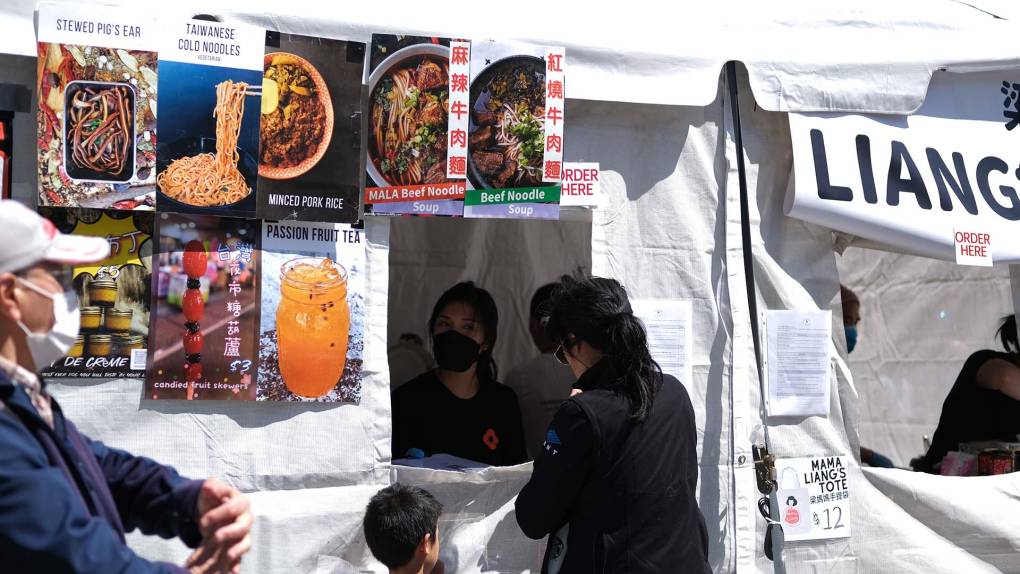
"caption": "Cupertino's Liang Village will be the main food vendor for this year's Taiwanese American Cultural Festival, which is returning to Union Square for its 30th year.",
"description": null,
"title": "taiwanese american culture fest_liangs",
"credit": "Courtesy of Taiwanese American Cultural Festival",
"status": "inherit",
"altTag": "A customer orders food from the Liang's Village food tent, which has pictures of beef noodle soup and other Taiwanese dishes displayed.",
"isLoading": false,
"fetchFailed": false
},
"arts_13928813": {
"type": "attachments",
"id": "arts_13928813",
"meta": {
"index": "attachments_1716263798",
"site": "arts",
"id": "13928813",
"found": true
},
"parent": 13928804,
"imgSizes": {
"twentyfourteen-full-width": {
"file": "https://ww2.kqed.org/app/uploads/sites/2/2023/05/hyphy_iceez_portrait_lead-1038x576.jpg",
"width": 1038,
"mimeType": "image/jpeg",
"height": 576
},
"thumbnail": {
"file": "https://ww2.kqed.org/app/uploads/sites/2/2023/05/hyphy_iceez_portrait_lead-160x100.jpg",
"width": 160,
"mimeType": "image/jpeg",
"height": 100
},
"post-thumbnail": {
"file": "https://ww2.kqed.org/app/uploads/sites/2/2023/05/hyphy_iceez_portrait_lead-672x372.jpg",
"width": 672,
"mimeType": "image/jpeg",
"height": 372
},
"kqedFullSize": {
"file": "https://ww2.kqed.org/app/uploads/sites/2/2023/05/hyphy_iceez_portrait_lead.jpg",
"width": 1920,
"height": 1200
},
"large": {
"file": "https://ww2.kqed.org/app/uploads/sites/2/2023/05/hyphy_iceez_portrait_lead-1020x638.jpg",
"width": 1020,
"mimeType": "image/jpeg",
"height": 638
},
"1536x1536": {
"file": "https://ww2.kqed.org/app/uploads/sites/2/2023/05/hyphy_iceez_portrait_lead-1536x960.jpg",
"width": 1536,
"mimeType": "image/jpeg",
"height": 960
},
"medium": {
"file": "https://ww2.kqed.org/app/uploads/sites/2/2023/05/hyphy_iceez_portrait_lead-800x500.jpg",
"width": 800,
"mimeType": "image/jpeg",
"height": 500
},
"medium_large": {
"file": "https://ww2.kqed.org/app/uploads/sites/2/2023/05/hyphy_iceez_portrait_lead-768x480.jpg",
"width": 768,
"mimeType": "image/jpeg",
"height": 480
}
},
"publishDate": 1683577351,
"modified": 1683577498,
"caption": "Jonathan Toledo, owner of Hyphy Iceez, serves cold slushies in his San Francisco neighborhood.",
"description": null,
"title": "hyphy_iceez_portrait_lead",
"credit": "Alan Chazaro",
"status": "inherit",
"altTag": "a foodmaker from San Francisco wears a Giants t-shirt and holds up a cup of his speciality beverage, Hyphy Iceez",
"isLoading": false,
"fetchFailed": false
},
"arts_13928658": {
"type": "attachments",
"id": "arts_13928658",
"meta": {
"index": "attachments_1716263798",
"site": "arts",
"id": "13928658",
"found": true
},
"parent": 13928650,
"imgSizes": {
"twentyfourteen-full-width": {
"file": "https://ww2.kqed.org/app/uploads/sites/2/2023/05/dsc05094-1038x576.jpg",
"width": 1038,
"mimeType": "image/jpeg",
"height": 576
},
"thumbnail": {
"file": "https://ww2.kqed.org/app/uploads/sites/2/2023/05/dsc05094-160x108.jpg",
"width": 160,
"mimeType": "image/jpeg",
"height": 108
},
"post-thumbnail": {
"file": "https://ww2.kqed.org/app/uploads/sites/2/2023/05/dsc05094-672x372.jpg",
"width": 672,
"mimeType": "image/jpeg",
"height": 372
},
"kqedFullSize": {
"file": "https://ww2.kqed.org/app/uploads/sites/2/2023/05/dsc05094.jpg",
"width": 1479,
"height": 998
},
"large": {
"file": "https://ww2.kqed.org/app/uploads/sites/2/2023/05/dsc05094-1020x688.jpg",
"width": 1020,
"mimeType": "image/jpeg",
"height": 688
},
"medium": {
"file": "https://ww2.kqed.org/app/uploads/sites/2/2023/05/dsc05094-800x540.jpg",
"width": 800,
"mimeType": "image/jpeg",
"height": 540
},
"medium_large": {
"file": "https://ww2.kqed.org/app/uploads/sites/2/2023/05/dsc05094-768x518.jpg",
"width": 768,
"mimeType": "image/jpeg",
"height": 518
}
},
"publishDate": 1683223239,
"modified": 1683223405,
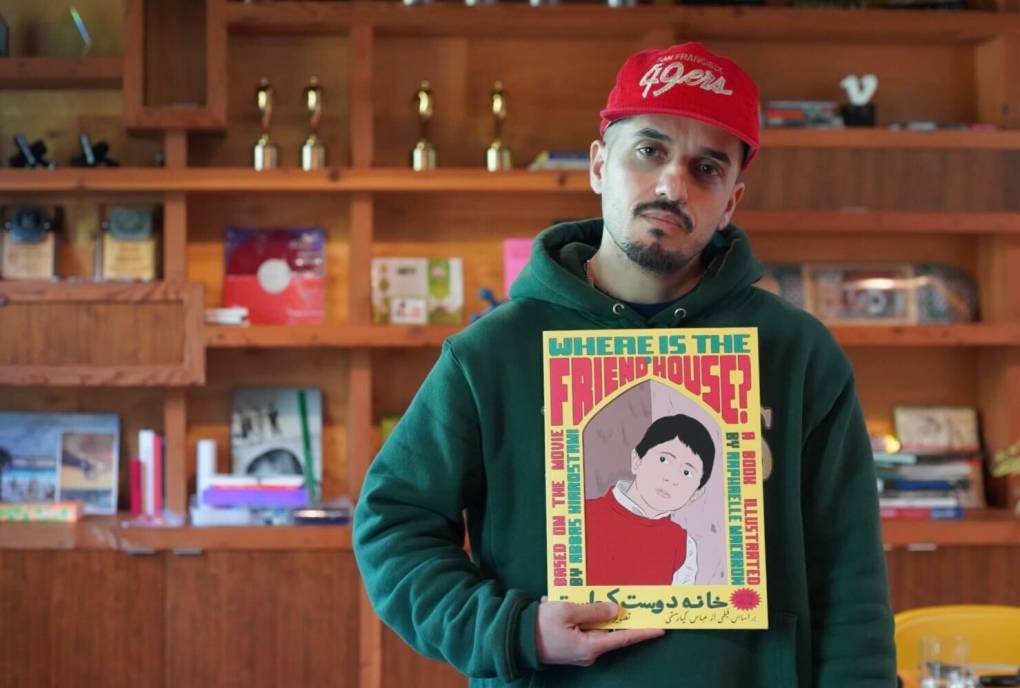
"caption": "Mohammad Gorjestani holding a copy of his \"Where Is The Friend's House?\" book.",
"description": "Mohammad Gorjestani holding a copy of his \"Where Is The Friend's House?\" book.",
"title": "Mohammad Gorjestani holding a copy of his \"Where Is The Friend's House?\" book.",
"credit": "Pendarvis Harshaw",
"status": "inherit",
"altTag": "Mohammad Gorjestani holding a copy of his \"Where Is The Friend's House?\" book.",
"isLoading": false,
"fetchFailed": false
},
"arts_13928592": {
"type": "attachments",
"id": "arts_13928592",
"meta": {
"index": "attachments_1716263798",
"site": "arts",
"id": "13928592",
"found": true
},
"parent": 13928571,
"imgSizes": {
"twentyfourteen-full-width": {
"file": "https://ww2.kqed.org/app/uploads/sites/2/2023/05/fred-ross-crop-1038x576.jpg",
"width": 1038,
"mimeType": "image/jpeg",
"height": 576
},
"thumbnail": {
"file": "https://ww2.kqed.org/app/uploads/sites/2/2023/05/fred-ross-crop-160x90.jpg",
"width": 160,
"mimeType": "image/jpeg",
"height": 90
},
"post-thumbnail": {
"file": "https://ww2.kqed.org/app/uploads/sites/2/2023/05/fred-ross-crop-672x372.jpg",
"width": 672,
"mimeType": "image/jpeg",
"height": 372
},
"kqedFullSize": {
"file": "https://ww2.kqed.org/app/uploads/sites/2/2023/05/fred-ross-crop.jpg",
"width": 1920,
"height": 1080
},
"large": {
"file": "https://ww2.kqed.org/app/uploads/sites/2/2023/05/fred-ross-crop-1020x574.jpg",
"width": 1020,
"mimeType": "image/jpeg",
"height": 574
},
"1536x1536": {
"file": "https://ww2.kqed.org/app/uploads/sites/2/2023/05/fred-ross-crop-1536x864.jpg",
"width": 1536,
"mimeType": "image/jpeg",
"height": 864
},
"medium": {
"file": "https://ww2.kqed.org/app/uploads/sites/2/2023/05/fred-ross-crop-800x450.jpg",
"width": 800,
"mimeType": "image/jpeg",
"height": 450
},
"medium_large": {
"file": "https://ww2.kqed.org/app/uploads/sites/2/2023/05/fred-ross-crop-768x432.jpg",
"width": 768,
"mimeType": "image/jpeg",
"height": 432
}
},
"publishDate": 1683072455,
"modified": 1683145285,
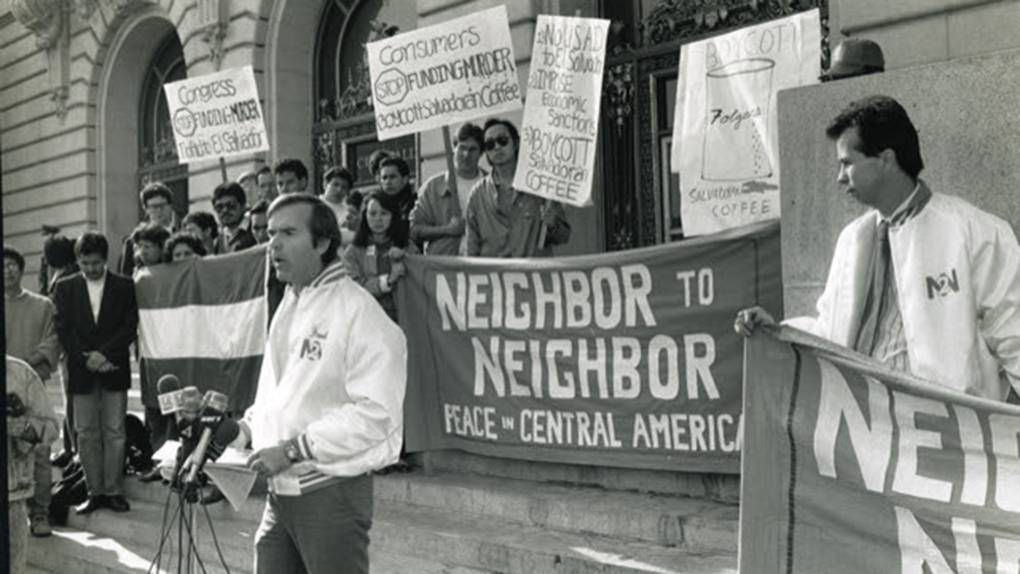
"caption": "Labor organizer Fred Ross Jr. (left) leads a rally in support of a boycott of Salvadoran coffee at San Francisco City Hall in 1990. The boycott targeted Folgers Coffee for purchasing Salvadoran coffee beans — activists argued that the money was helping to fund El Salvador's military regime during the country's ongoing civil war. ",
"description": null,
"title": "fred ross crop",
"credit": "Courtesy of Dennis Hearne / The Fred Ross Project",
"status": "inherit",
"altTag": "Man speaks at a rally at SF city hall. Protestors behind him hold a \"Neighbor to Neighbor\" banner and signs in support of a boycott of Folgers and Salvadoran coffee.",
"isLoading": false,
"fetchFailed": false
},
"arts_13928244": {
"type": "attachments",
"id": "arts_13928244",
"meta": {
"index": "attachments_1716263798",
"site": "arts",
"id": "13928244",
"found": true
},
"parent": 13928225,
"imgSizes": {
"thumbnail": {
"file": "https://ww2.kqed.org/app/uploads/sites/2/2023/04/SternGrove.2023.MAIN_-160x90.jpg",
"width": 160,
"mimeType": "image/jpeg",
"height": 90
},
"post-thumbnail": {
"file": "https://ww2.kqed.org/app/uploads/sites/2/2023/04/SternGrove.2023.MAIN_-672x372.jpg",
"width": 672,
"mimeType": "image/jpeg",
"height": 372
},
"kqedFullSize": {
"file": "https://ww2.kqed.org/app/uploads/sites/2/2023/04/SternGrove.2023.MAIN_.jpg",
"width": 948,
"height": 533
},
"medium": {
"file": "https://ww2.kqed.org/app/uploads/sites/2/2023/04/SternGrove.2023.MAIN_-800x450.jpg",
"width": 800,
"mimeType": "image/jpeg",
"height": 450
},
"medium_large": {
"file": "https://ww2.kqed.org/app/uploads/sites/2/2023/04/SternGrove.2023.MAIN_-768x432.jpg",
"width": 768,
"mimeType": "image/jpeg",
"height": 432
}
},
"publishDate": 1682439768,
"modified": 1682439847,
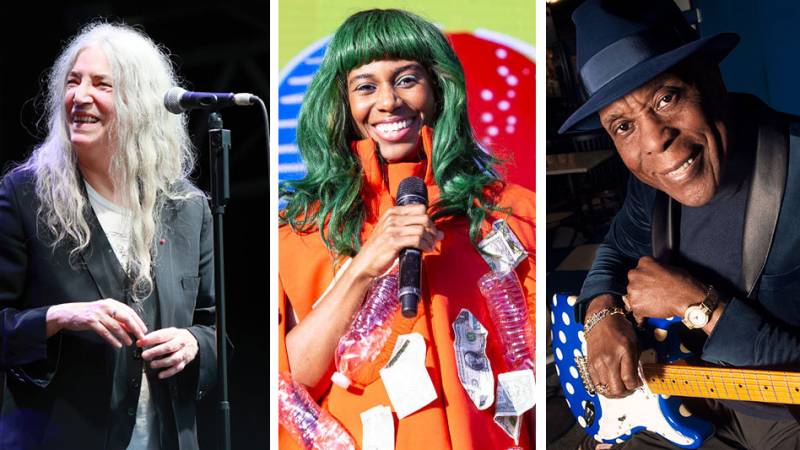
"caption": "(L–R) Patti Smith, Santigold and Buddy Guy are among this year's headlining acts at the 86th annual Stern Grove Festival in San Francisco. ",
"description": null,
"title": "SternGrove.2023.MAIN",
"credit": "WIki Commons; Estefeny Gonzales/KQED; RCA Records",
"status": "inherit",
"altTag": null,
"isLoading": false,
"fetchFailed": false
},
"arts_13926073": {
"type": "attachments",
"id": "arts_13926073",
"meta": {
"index": "attachments_1716263798",
"site": "arts",
"id": "13926073",
"found": true
},
"parent": 13926069,
"imgSizes": {
"twentyfourteen-full-width": {
"file": "https://ww2.kqed.org/app/uploads/sites/2/2023/03/Screen-Shot-2023-03-09-at-2.54.47-PM-1038x576.png",
"width": 1038,
"mimeType": "image/png",
"height": 576
},
"thumbnail": {
"file": "https://ww2.kqed.org/app/uploads/sites/2/2023/03/Screen-Shot-2023-03-09-at-2.54.47-PM-160x94.png",
"width": 160,
"mimeType": "image/png",
"height": 94
},
"post-thumbnail": {
"file": "https://ww2.kqed.org/app/uploads/sites/2/2023/03/Screen-Shot-2023-03-09-at-2.54.47-PM-672x372.png",
"width": 672,
"mimeType": "image/png",
"height": 372
},
"kqedFullSize": {
"file": "https://ww2.kqed.org/app/uploads/sites/2/2023/03/Screen-Shot-2023-03-09-at-2.54.47-PM.png",
"width": 2018,
"height": 1188
},
"large": {
"file": "https://ww2.kqed.org/app/uploads/sites/2/2023/03/Screen-Shot-2023-03-09-at-2.54.47-PM-1020x600.png",
"width": 1020,
"mimeType": "image/png",
"height": 600
},
"1536x1536": {
"file": "https://ww2.kqed.org/app/uploads/sites/2/2023/03/Screen-Shot-2023-03-09-at-2.54.47-PM-1536x904.png",
"width": 1536,
"mimeType": "image/png",
"height": 904
},
"full-width": {
"file": "https://ww2.kqed.org/app/uploads/sites/2/2023/03/Screen-Shot-2023-03-09-at-2.54.47-PM-1920x1130.png",
"width": 1920,
"mimeType": "image/png",
"height": 1130
},
"medium": {
"file": "https://ww2.kqed.org/app/uploads/sites/2/2023/03/Screen-Shot-2023-03-09-at-2.54.47-PM-800x471.png",
"width": 800,
"mimeType": "image/png",
"height": 471
},
"medium_large": {
"file": "https://ww2.kqed.org/app/uploads/sites/2/2023/03/Screen-Shot-2023-03-09-at-2.54.47-PM-768x452.png",
"width": 768,
"mimeType": "image/png",
"height": 452
}
},
"publishDate": 1678404566,
"modified": 1678404637,
"caption": "Isabella J. Martin, a truly crappy criminal.",
"description": null,
"title": "Isabella J. Martin, a truly crappy criminal.",
"credit": null,
"status": "inherit",
"altTag": "A white woman with ruddy features stands, wearing a hat, facing the camera.",
"isLoading": false,
"fetchFailed": false
},
"arts_13926351": {
"type": "attachments",
"id": "arts_13926351",
"meta": {
"index": "attachments_1716263798",
"site": "arts",
"id": "13926351",
"found": true
},
"parent": 13926349,
"imgSizes": {
"twentyfourteen-full-width": {
"file": "https://ww2.kqed.org/app/uploads/sites/2/2023/03/from_the_soil_at_project_280_720-546x576.jpg",
"width": 546,
"mimeType": "image/jpeg",
"height": 576
},
"thumbnail": {
"file": "https://ww2.kqed.org/app/uploads/sites/2/2023/03/from_the_soil_at_project_280_720-160x211.jpg",
"width": 160,
"mimeType": "image/jpeg",
"height": 211
},
"post-thumbnail": {
"file": "https://ww2.kqed.org/app/uploads/sites/2/2023/03/from_the_soil_at_project_280_720-546x372.jpg",
"width": 546,
"mimeType": "image/jpeg",
"height": 372
},
"kqedFullSize": {
"file": "https://ww2.kqed.org/app/uploads/sites/2/2023/03/from_the_soil_at_project_280_720.jpg",
"width": 546,
"height": 719
}
},
"publishDate": 1678982187,
"modified": 1678982295,
"caption": "Marisol Medina-Cadena holds a boom mic while Pendarvis Harshaw poses with his camera around his neck, as they stand on a hillside in San Francisco-- the site of the 280 Project's wine vineyard.",
"description": "Marisol Medina-Cadena holds a boom mic while Pendarvis Harshaw poses with his camera around his neck, as they stand on a hillside in San Francisco-- the site of the 280 Project's wine vineyard.",
"title": "Marisol Medina-Cadena holds a boom mic while Pendarvis Harshaw poses with his camera around his neck, as they stand on a hillside in San Francisco-- the site of the 280 Project's wine vineyard.",
"credit": "Christopher Renfro",
"status": "inherit",
"altTag": "Marisol Medina-Cadena holds a boom mic while Pendarvis Harshaw poses with his camera around his neck, as they stand on a hillside in San Francisco-- the site of the 280 Project's wine vineyard.",
"isLoading": false,
"fetchFailed": false
},
"arts_13925996": {
"type": "attachments",
"id": "arts_13925996",
"meta": {
"index": "attachments_1716263798",
"site": "arts",
"id": "13925996",
"found": true
},
"parent": 13925984,
"imgSizes": {
"twentyfourteen-full-width": {
"file": "https://ww2.kqed.org/app/uploads/sites/2/2023/03/kokak_featured-crop-1038x576.jpg",
"width": 1038,
"mimeType": "image/jpeg",
"height": 576
},
"thumbnail": {
"file": "https://ww2.kqed.org/app/uploads/sites/2/2023/03/kokak_featured-crop-160x110.jpg",
"width": 160,
"mimeType": "image/jpeg",
"height": 110
},
"post-thumbnail": {
"file": "https://ww2.kqed.org/app/uploads/sites/2/2023/03/kokak_featured-crop-672x372.jpg",
"width": 672,
"mimeType": "image/jpeg",
"height": 372
},
"kqedFullSize": {
"file": "https://ww2.kqed.org/app/uploads/sites/2/2023/03/kokak_featured-crop.jpg",
"width": 1920,
"height": 1320
},
"large": {
"file": "https://ww2.kqed.org/app/uploads/sites/2/2023/03/kokak_featured-crop-1020x701.jpg",
"width": 1020,
"mimeType": "image/jpeg",
"height": 701
},
"1536x1536": {
"file": "https://ww2.kqed.org/app/uploads/sites/2/2023/03/kokak_featured-crop-1536x1056.jpg",
"width": 1536,
"mimeType": "image/jpeg",
"height": 1056
},
"medium": {
"file": "https://ww2.kqed.org/app/uploads/sites/2/2023/03/kokak_featured-crop-800x550.jpg",
"width": 800,
"mimeType": "image/jpeg",
"height": 550
},
"medium_large": {
"file": "https://ww2.kqed.org/app/uploads/sites/2/2023/03/kokak_featured-crop-768x528.jpg",
"width": 768,
"mimeType": "image/jpeg",
"height": 528
}
},
"publishDate": 1678314450,
"modified": 1678323154,
"caption": "Self-taught chocolatier Carol Gancia opened Kokak Chocolates in 2020 in SF's Castro District.",
"description": null,
"title": "kokak_featured-crop",
"credit": "Courtesy of Kokak Chocolates",
"status": "inherit",
"altTag": "the Filipina chocolatier, Carol Gancia, stands inside her chocolate shop in San Francisco, holding a large tray of artfully decorated chocolates",
"isLoading": false,
"fetchFailed": false
},
"arts_13925914": {
"type": "attachments",
"id": "arts_13925914",
"meta": {
"index": "attachments_1716263798",
"site": "arts",
"id": "13925914",
"found": true
},
"parent": 13925835,
"imgSizes": {
"twentyfourteen-full-width": {
"file": "https://ww2.kqed.org/app/uploads/sites/2/2023/03/GettyImages-691141531-1038x576.jpg",
"width": 1038,
"mimeType": "image/jpeg",
"height": 576
},
"thumbnail": {
"file": "https://ww2.kqed.org/app/uploads/sites/2/2023/03/GettyImages-691141531-160x90.jpg",
"width": 160,
"mimeType": "image/jpeg",
"height": 90
},
"post-thumbnail": {
"file": "https://ww2.kqed.org/app/uploads/sites/2/2023/03/GettyImages-691141531-672x372.jpg",
"width": 672,
"mimeType": "image/jpeg",
"height": 372
},
"kqedFullSize": {
"file": "https://ww2.kqed.org/app/uploads/sites/2/2023/03/GettyImages-691141531.jpg",
"width": 2121,
"height": 1193
},
"2048x2048": {
"file": "https://ww2.kqed.org/app/uploads/sites/2/2023/03/GettyImages-691141531-2048x1152.jpg",
"width": 2048,
"mimeType": "image/jpeg",
"height": 1152
},
"large": {
"file": "https://ww2.kqed.org/app/uploads/sites/2/2023/03/GettyImages-691141531-1020x574.jpg",
"width": 1020,
"mimeType": "image/jpeg",
"height": 574
},
"1536x1536": {
"file": "https://ww2.kqed.org/app/uploads/sites/2/2023/03/GettyImages-691141531-1536x864.jpg",
"width": 1536,
"mimeType": "image/jpeg",
"height": 864
},
"full-width": {
"file": "https://ww2.kqed.org/app/uploads/sites/2/2023/03/GettyImages-691141531-1920x1080.jpg",
"width": 1920,
"mimeType": "image/jpeg",
"height": 1080
},
"medium": {
"file": "https://ww2.kqed.org/app/uploads/sites/2/2023/03/GettyImages-691141531-800x450.jpg",
"width": 800,
"mimeType": "image/jpeg",
"height": 450
},
"medium_large": {
"file": "https://ww2.kqed.org/app/uploads/sites/2/2023/03/GettyImages-691141531-768x432.jpg",
"width": 768,
"mimeType": "image/jpeg",
"height": 432
}
},
"publishDate": 1678215915,
"modified": 1678216142,
"caption": "Falling in love with durian — in all its complex pungency — helped the author feel more strongly connected to her father's Singaporean roots.",
"description": null,
"title": "GettyImages-691141531",
"credit": "Ekachai Chobphot / EyeEm",
"status": "inherit",
"altTag": "A hand holding a slice of durian still in its spiky green rind.",
"isLoading": false,
"fetchFailed": false
},
"arts_13924936": {
"type": "attachments",
"id": "arts_13924936",
"meta": {
"index": "attachments_1716263798",
"site": "arts",
"id": "13924936",
"found": true
},
"parent": 13924924,
"imgSizes": {
"twentyfourteen-full-width": {
"file": "https://ww2.kqed.org/app/uploads/sites/2/2023/02/Screenshot-2023-02-09-at-3.50.40-PM-1038x576.png",
"width": 1038,
"mimeType": "image/png",
"height": 576
},
"thumbnail": {
"file": "https://ww2.kqed.org/app/uploads/sites/2/2023/02/Screenshot-2023-02-09-at-3.50.40-PM-160x119.png",
"width": 160,
"mimeType": "image/png",
"height": 119
},
"post-thumbnail": {
"file": "https://ww2.kqed.org/app/uploads/sites/2/2023/02/Screenshot-2023-02-09-at-3.50.40-PM-672x372.png",
"width": 672,
"mimeType": "image/png",
"height": 372
},
"kqedFullSize": {
"file": "https://ww2.kqed.org/app/uploads/sites/2/2023/02/Screenshot-2023-02-09-at-3.50.40-PM.png",
"width": 2168,
"height": 1618
},
"2048x2048": {
"file": "https://ww2.kqed.org/app/uploads/sites/2/2023/02/Screenshot-2023-02-09-at-3.50.40-PM-2048x1528.png",
"width": 2048,
"mimeType": "image/png",
"height": 1528
},
"large": {
"file": "https://ww2.kqed.org/app/uploads/sites/2/2023/02/Screenshot-2023-02-09-at-3.50.40-PM-1020x761.png",
"width": 1020,
"mimeType": "image/png",
"height": 761
},
"1536x1536": {
"file": "https://ww2.kqed.org/app/uploads/sites/2/2023/02/Screenshot-2023-02-09-at-3.50.40-PM-1536x1146.png",
"width": 1536,
"mimeType": "image/png",
"height": 1146
},
"full-width": {
"file": "https://ww2.kqed.org/app/uploads/sites/2/2023/02/Screenshot-2023-02-09-at-3.50.40-PM-1920x1433.png",
"width": 1920,
"mimeType": "image/png",
"height": 1433
},
"medium": {
"file": "https://ww2.kqed.org/app/uploads/sites/2/2023/02/Screenshot-2023-02-09-at-3.50.40-PM-800x597.png",
"width": 800,
"mimeType": "image/png",
"height": 597
},
"medium_large": {
"file": "https://ww2.kqed.org/app/uploads/sites/2/2023/02/Screenshot-2023-02-09-at-3.50.40-PM-768x573.png",
"width": 768,
"mimeType": "image/png",
"height": 573
}
},
"publishDate": 1675986674,
"modified": 1675986889,
"caption": "Christopher Renfro, co-founder of The 280 Project, standing in front of the vineyard at Alemany Farm.",
"description": "Christopher Renfro, co-founder of The 280 Project, standing in front of the vineyard at Alemany Farm.",
"title": "Christopher Renfro, co-founder of The 280 Project, standing in front of the vineyard at Alemany Farm.",
"credit": "Pendarvis Harshaw",
"status": "inherit",
"altTag": "Christopher Renfro, co-founder of The 280 Project, standing in front of the vineyard at Alemany Farm.",
"isLoading": false,
"fetchFailed": false
},
"arts_13924999": {
"type": "attachments",
"id": "arts_13924999",
"meta": {
"index": "attachments_1716263798",
"site": "arts",
"id": "13924999",
"found": true
},
"parent": 13924997,
"imgSizes": {
"twentyfourteen-full-width": {
"file": "https://ww2.kqed.org/app/uploads/sites/2/2023/02/Leungs-Cooking-Together-cropped-1038x576.jpg",
"width": 1038,
"mimeType": "image/jpeg",
"height": 576
},
"thumbnail": {
"file": "https://ww2.kqed.org/app/uploads/sites/2/2023/02/Leungs-Cooking-Together-cropped-160x90.jpg",
"width": 160,
"mimeType": "image/jpeg",
"height": 90
},
"post-thumbnail": {
"file": "https://ww2.kqed.org/app/uploads/sites/2/2023/02/Leungs-Cooking-Together-cropped-672x372.jpg",
"width": 672,
"mimeType": "image/jpeg",
"height": 372
},
"kqedFullSize": {
"file": "https://ww2.kqed.org/app/uploads/sites/2/2023/02/Leungs-Cooking-Together-cropped.jpg",
"width": 1920,
"height": 1080
},
"large": {
"file": "https://ww2.kqed.org/app/uploads/sites/2/2023/02/Leungs-Cooking-Together-cropped-1020x574.jpg",
"width": 1020,
"mimeType": "image/jpeg",
"height": 574
},
"1536x1536": {
"file": "https://ww2.kqed.org/app/uploads/sites/2/2023/02/Leungs-Cooking-Together-cropped-1536x864.jpg",
"width": 1536,
"mimeType": "image/jpeg",
"height": 864
},
"medium": {
"file": "https://ww2.kqed.org/app/uploads/sites/2/2023/02/Leungs-Cooking-Together-cropped-800x450.jpg",
"width": 800,
"mimeType": "image/jpeg",
"height": 450
},
"medium_large": {
"file": "https://ww2.kqed.org/app/uploads/sites/2/2023/02/Leungs-Cooking-Together-cropped-768x432.jpg",
"width": 768,
"mimeType": "image/jpeg",
"height": 432
}
},
"publishDate": 1676056051,
"modified": 1676056216,
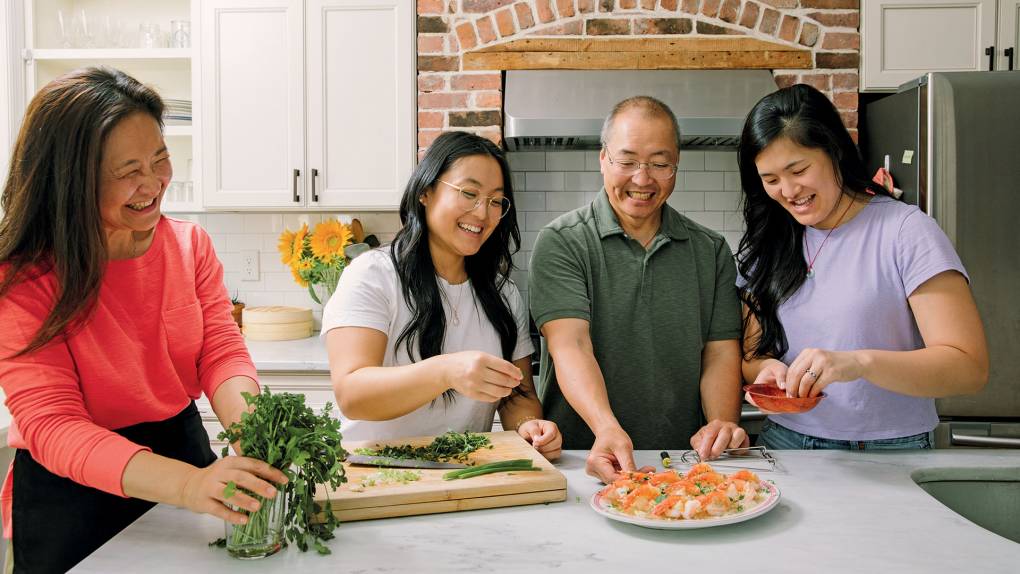
"caption": "The Woks of Life is the rare multi-generational food blog: It's written by Sarah and Kaitlin Leung along with their parents, Bill and Judy.",
"description": null,
"title": "Leungs Cooking Together-cropped",
"credit": "Courtesy of The Woks of Life",
"status": "inherit",
"altTag": "A Chinese American family prepares a shrimp dish on their kitchen counter.",
"isLoading": false,
"fetchFailed": false
},
"arts_13924932": {
"type": "attachments",
"id": "arts_13924932",
"meta": {
"index": "attachments_1716263798",
"site": "arts",
"id": "13924932",
"found": true
},
"parent": 13924924,
"imgSizes": {
"twentyfourteen-full-width": {
"file": "https://ww2.kqed.org/app/uploads/sites/2/2023/02/Champagne-Yellow-Modern-New-Outlet-Location-Announcement-Instagram-Post-1038x576.png",
"width": 1038,
"mimeType": "image/png",
"height": 576
},
"thumbnail": {
"file": "https://ww2.kqed.org/app/uploads/sites/2/2023/02/Champagne-Yellow-Modern-New-Outlet-Location-Announcement-Instagram-Post-160x160.png",
"width": 160,
"mimeType": "image/png",
"height": 160
},
"post-thumbnail": {
"file": "https://ww2.kqed.org/app/uploads/sites/2/2023/02/Champagne-Yellow-Modern-New-Outlet-Location-Announcement-Instagram-Post-672x372.png",
"width": 672,
"mimeType": "image/png",
"height": 372
},
"kqedFullSize": {
"file": "https://ww2.kqed.org/app/uploads/sites/2/2023/02/Champagne-Yellow-Modern-New-Outlet-Location-Announcement-Instagram-Post.png",
"width": 1080,
"height": 1080
},
"large": {
"file": "https://ww2.kqed.org/app/uploads/sites/2/2023/02/Champagne-Yellow-Modern-New-Outlet-Location-Announcement-Instagram-Post-1020x1020.png",
"width": 1020,
"mimeType": "image/png",
"height": 1020
},
"medium": {
"file": "https://ww2.kqed.org/app/uploads/sites/2/2023/02/Champagne-Yellow-Modern-New-Outlet-Location-Announcement-Instagram-Post-800x800.png",
"width": 800,
"mimeType": "image/png",
"height": 800
},
"medium_large": {
"file": "https://ww2.kqed.org/app/uploads/sites/2/2023/02/Champagne-Yellow-Modern-New-Outlet-Location-Announcement-Instagram-Post-768x768.png",
"width": 768,
"mimeType": "image/png",
"height": 768
}
},
"publishDate": 1675984880,
"modified": 1676038377,
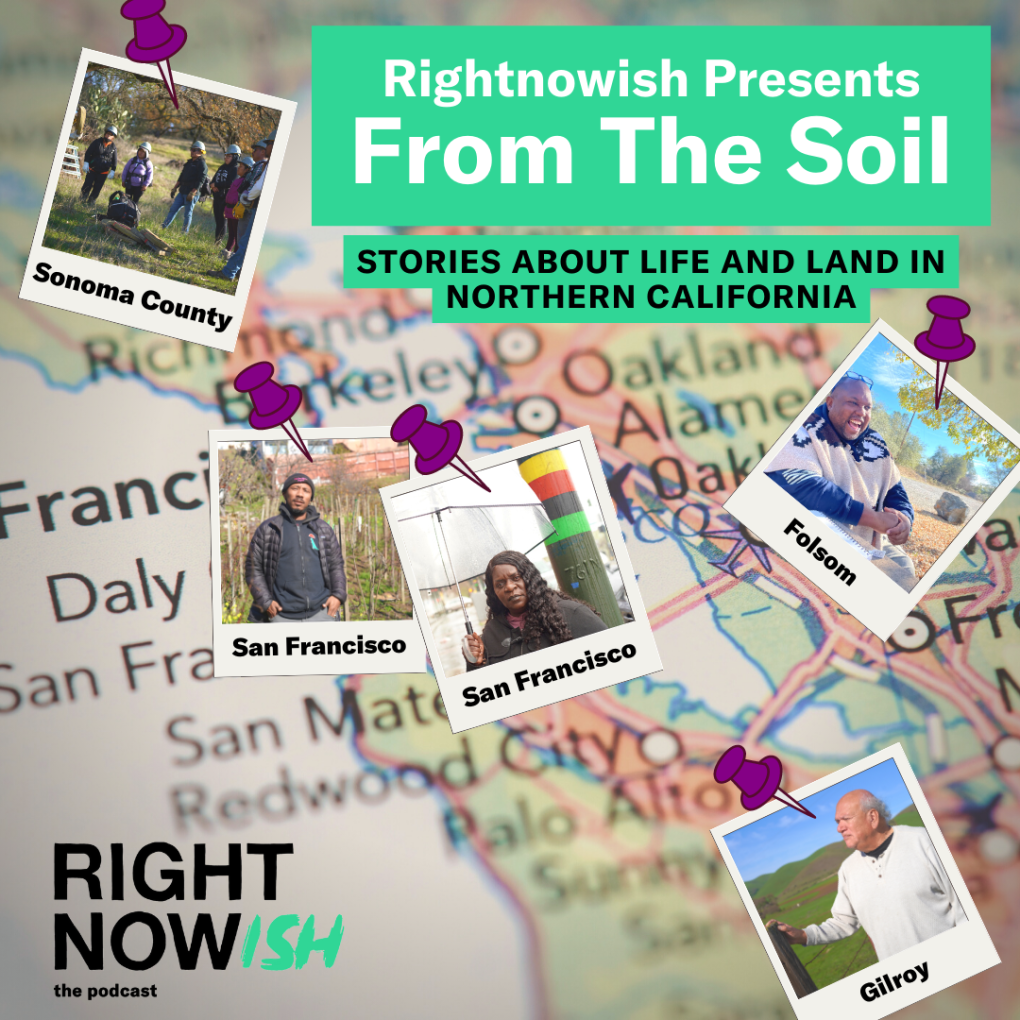
"caption": "Rightnowish Presents: From The Soil",
"description": "Rightnowish Presents: From The Soil",
"title": "Rightnowish Presents: From The Soil",
"credit": "Ria Garewal",
"status": "inherit",
"altTag": "Rightnowish Presents: From The Soil",
"isLoading": false,
"fetchFailed": false
}
},
"audioPlayerReducer": {
"postId": "stream_live",
"isPaused": true,
"isPlaying": false,
"pfsActive": false,
"pledgeModalIsOpen": true,
"playerDrawerIsOpen": false,
"liveAudioPlayStartedAt": 0,
"liveAudioPlayContext": ""
},
"authorsReducer": {
"byline_arts_13925835": {
"type": "authors",
"id": "byline_arts_13925835",
"meta": {
"override": true
},
"slug": "byline_arts_13925835",
"name": "Jennifer Wong",
"isLoading": false
},
"gmeline": {
"type": "authors",
"id": "185",
"meta": {
"index": "authors_1716337520",
"id": "185",
"found": true
},
"name": "Gabe Meline",
"firstName": "Gabe",
"lastName": "Meline",
"slug": "gmeline",
"email": "gmeline@kqed.org",
"display_author_email": true,
"staff_mastheads": [
"arts"
],
"title": "Senior Editor, KQED Arts & Culture",
"bio": "Gabe Meline entered journalism at age 15 making photocopied zines, and has since earned awards from the Edward R. Murrow Awards, the Society for Professional Journalists, the Online Journalism Awards, the Association of Alternative Newsweeklies and the California Newspaper Publishers Association. Prior to KQED, he was the editor of the \u003cem>North Bay Bohemian\u003c/em> and a touring musician. He lives with his wife and daughter in his hometown of Santa Rosa, CA.",
"avatar": "https://secure.gravatar.com/avatar/5bebe57be0d8bc2dd318934feb47299e2d2d10cba28d09d8d7afb389a2ce2bdd?s=600&d=blank&r=g",
"twitter": null,
"bluesky": null,
"facebook": null,
"instagram": null,
"linkedin": null,
"sites": [
{
"site": "",
"roles": [
"editor"
]
},
{
"site": "arts",
"roles": [
"administrator"
]
},
{
"site": "artschool",
"roles": [
"editor"
]
},
{
"site": "news",
"roles": [
"author"
]
},
{
"site": "pop",
"roles": [
"editor"
]
},
{
"site": "bayareabites",
"roles": [
"editor"
]
},
{
"site": "food",
"roles": [
"editor"
]
},
{
"site": "forum",
"roles": [
"administrator"
]
},
{
"site": "liveblog",
"roles": [
"editor"
]
},
{
"site": "hiphop",
"roles": [
"editor"
]
}
],
"headData": {
"title": "Gabe Meline | KQED",
"description": "Senior Editor, KQED Arts & Culture",
"ogImgSrc": "https://secure.gravatar.com/avatar/5bebe57be0d8bc2dd318934feb47299e2d2d10cba28d09d8d7afb389a2ce2bdd?s=600&d=blank&r=g",
"twImgSrc": "https://secure.gravatar.com/avatar/5bebe57be0d8bc2dd318934feb47299e2d2d10cba28d09d8d7afb389a2ce2bdd?s=600&d=blank&r=g"
},
"isLoading": false,
"link": "/author/gmeline"
},
"ralexandra": {
"type": "authors",
"id": "11242",
"meta": {
"index": "authors_1716337520",
"id": "11242",
"found": true
},
"name": "Rae Alexandra",
"firstName": "Rae",
"lastName": "Alexandra",
"slug": "ralexandra",
"email": "ralexandra@kqed.org",
"display_author_email": true,
"staff_mastheads": [],
"title": "Reporter/Producer",
"bio": "Rae Alexandra is a Reporter/Producer for KQED Arts & Culture, and the creator/author of the \u003ca href=\"https://www.kqed.org/arts/program/rebel-girls-from-bay-area-history\">Rebel Girls From Bay Area History\u003c/a> and \u003ca href=\"https://www.kqed.org/bizarrebayarea\">Bizarre Bay Area\u003c/a> series. Her debut book, \u003ca href=\"https://citylights.com/politics-current-events-history/unsung-heroines35-women-who-changed/\">Unsung Heroines: 35 Women Who Changed the Bay Area\u003c/a> was published by City Lights in March 2026. In 2023, Rae was awarded an SPJ Excellence in Journalism Award for Arts & Culture. Rae was born and raised in Wales and subsequently — even after two decades in Northern California — still uses phrases that regularly baffle her coworkers.",
"avatar": "https://secure.gravatar.com/avatar/edfee8176c80cc0a382b051190f5341997df378a934a5774dcb0977732dfd401?s=600&d=blank&r=g",
"twitter": null,
"bluesky": null,
"facebook": null,
"instagram": null,
"linkedin": null,
"sites": [
{
"site": "arts",
"roles": [
"subscriber"
]
},
{
"site": "news",
"roles": [
"subscriber"
]
},
{
"site": "pop",
"roles": [
"subscriber"
]
},
{
"site": "bayareabites",
"roles": [
"subscriber"
]
},
{
"site": "science",
"roles": [
"subscriber"
]
}
],
"headData": {
"title": "Rae Alexandra | KQED",
"description": "Reporter/Producer",
"ogImgSrc": "https://secure.gravatar.com/avatar/edfee8176c80cc0a382b051190f5341997df378a934a5774dcb0977732dfd401?s=600&d=blank&r=g",
"twImgSrc": "https://secure.gravatar.com/avatar/edfee8176c80cc0a382b051190f5341997df378a934a5774dcb0977732dfd401?s=600&d=blank&r=g"
},
"isLoading": false,
"link": "/author/ralexandra"
},
"ogpenn": {
"type": "authors",
"id": "11491",
"meta": {
"index": "authors_1716337520",
"id": "11491",
"found": true
},
"name": "Pendarvis Harshaw",
"firstName": "Pendarvis",
"lastName": "Harshaw",
"slug": "ogpenn",
"email": "ogpenn@gmail.com",
"display_author_email": false,
"staff_mastheads": [
"arts"
],
"title": "Community Engagement Reporter",
"bio": "Pendarvis Harshaw is an educator, host and writer with KQED Arts.",
"avatar": "https://secure.gravatar.com/avatar/972b77ee8e3f346ae2b00622661187fbfabd059b5693bbdc1475ea7a722fd4cd?s=600&d=blank&r=g",
"twitter": null,
"bluesky": null,
"facebook": null,
"instagram": "ogpenn",
"linkedin": null,
"sites": [
{
"site": "arts",
"roles": [
"administrator"
]
},
{
"site": "news",
"roles": [
"editor"
]
},
{
"site": "bayareabites",
"roles": [
"author"
]
},
{
"site": "hiphop",
"roles": [
"editor"
]
}
],
"headData": {
"title": "Pendarvis Harshaw | KQED",
"description": "Community Engagement Reporter",
"ogImgSrc": "https://secure.gravatar.com/avatar/972b77ee8e3f346ae2b00622661187fbfabd059b5693bbdc1475ea7a722fd4cd?s=600&d=blank&r=g",
"twImgSrc": "https://secure.gravatar.com/avatar/972b77ee8e3f346ae2b00622661187fbfabd059b5693bbdc1475ea7a722fd4cd?s=600&d=blank&r=g"
},
"isLoading": false,
"link": "/author/ogpenn"
},
"mmedina": {
"type": "authors",
"id": "11528",
"meta": {
"index": "authors_1716337520",
"id": "11528",
"found": true
},
"name": "Marisol Medina-Cadena",
"firstName": "Marisol",
"lastName": "Medina-Cadena",
"slug": "mmedina",
"email": "mmedina@KQED.org",
"display_author_email": true,
"staff_mastheads": [],
"title": "Producer, Rightnowish Podcast",
"bio": "Marisol Medina-Cadena is a radio reporter and podcast producer. Before working at KQED, she produced for PBS member station, KCET, in Los Angeles. In 2017, Marisol won an Emmy Award for her work on the televised documentary, \u003cem>City Rising\u003c/em>, examining California's affordable housing crisis and the historical roots of gentrification.",
"avatar": "https://secure.gravatar.com/avatar/6c3db46a1cabb5e1fe9a365b5f4e681e?s=600&d=blank&r=g",
"twitter": "marisolreports",
"facebook": null,
"instagram": null,
"linkedin": null,
"sites": [
{
"site": "arts",
"roles": []
},
{
"site": "news",
"roles": [
"edit_others_posts"
]
}
],
"headData": {
"title": "Marisol Medina-Cadena | KQED",
"description": "Producer, Rightnowish Podcast",
"ogImgSrc": "https://secure.gravatar.com/avatar/6c3db46a1cabb5e1fe9a365b5f4e681e?s=600&d=blank&r=g",
"twImgSrc": "https://secure.gravatar.com/avatar/6c3db46a1cabb5e1fe9a365b5f4e681e?s=600&d=blank&r=g"
},
"isLoading": false,
"link": "/author/mmedina"
},
"ltsai": {
"type": "authors",
"id": "11743",
"meta": {
"index": "authors_1716337520",
"id": "11743",
"found": true
},
"name": "Luke Tsai",
"firstName": "Luke",
"lastName": "Tsai",
"slug": "ltsai",
"email": "ltsai@kqed.org",
"display_author_email": true,
"staff_mastheads": [
"arts"
],
"title": "Food Editor",
"bio": "Luke Tsai is KQED's food editor and resident stinky tofu connoisseur. Prior to KQED, he was an editor at Eater SF, \u003cem>San Francisco \u003c/em>magazine, and the \u003cem>East Bay Express\u003c/em>, and his work has also appeared in TASTE, the \u003cem>San Francisco Chronicle\u003c/em>, and the \u003cem>Best Food Writing\u003c/em> anthology. When he isn't writing or editing, you'll find him eating most everything he can get his hands on.",
"avatar": "https://secure.gravatar.com/avatar/1e59b45bf191526e7339d6ba46e33a57b2030d25c27660ecc64ea3cb863e34f7?s=600&d=blank&r=g",
"twitter": "theluketsai",
"bluesky": null,
"facebook": null,
"instagram": null,
"linkedin": null,
"sites": [
{
"site": "",
"roles": [
"editor"
]
},
{
"site": "arts",
"roles": [
"administrator"
]
},
{
"site": "news",
"roles": [
"editor",
"contributor"
]
},
{
"site": "bayareabites",
"roles": [
"editor"
]
},
{
"site": "food",
"roles": [
"editor"
]
}
],
"headData": {
"title": "Luke Tsai | KQED",
"description": "Food Editor",
"ogImgSrc": "https://secure.gravatar.com/avatar/1e59b45bf191526e7339d6ba46e33a57b2030d25c27660ecc64ea3cb863e34f7?s=600&d=blank&r=g",
"twImgSrc": "https://secure.gravatar.com/avatar/1e59b45bf191526e7339d6ba46e33a57b2030d25c27660ecc64ea3cb863e34f7?s=600&d=blank&r=g"
},
"isLoading": false,
"link": "/author/ltsai"
},
"achazaro": {
"type": "authors",
"id": "11748",
"meta": {
"index": "authors_1716337520",
"id": "11748",
"found": true
},
"name": "Alan Chazaro",
"firstName": "Alan",
"lastName": "Chazaro",
"slug": "achazaro",
"email": "agchazaro@gmail.com",
"display_author_email": true,
"staff_mastheads": [],
"title": "Food Writer and Reporter",
"bio": "Alan Chazaro is the author of \u003cem>This Is Not a Frank Ocean Cover Album\u003c/em> (Black Lawrence Press, 2019), \u003cem>Piñata Theory\u003c/em> (Black Lawrence Press, 2020), and \u003cem>Notes from the Eastern Span of the Bay Bridge\u003c/em> (Ghost City Press, 2021). He is a graduate of June Jordan’s Poetry for the People program at UC Berkeley and a former Lawrence Ferlinghetti Fellow at the University of San Francisco. He writes about sports, food, art, music, education, and culture while repping the Bay on \u003ca href=\"https://twitter.com/alan_chazaro\">Twitter\u003c/a> and \u003ca href=\"https://www.instagram.com/alan_chazaro/?hl=en\">Instagram\u003c/a> at @alan_chazaro.",
"avatar": "https://secure.gravatar.com/avatar/ea8b6dd970fc5c29e7a188e7d5861df7?s=600&d=blank&r=g",
"twitter": "alan_chazaro",
"facebook": null,
"instagram": null,
"linkedin": null,
"sites": [
{
"site": "arts",
"roles": [
"contributor"
]
},
{
"site": "news",
"roles": [
"editor"
]
}
],
"headData": {
"title": "Alan Chazaro | KQED",
"description": "Food Writer and Reporter",
"ogImgSrc": "https://secure.gravatar.com/avatar/ea8b6dd970fc5c29e7a188e7d5861df7?s=600&d=blank&r=g",
"twImgSrc": "https://secure.gravatar.com/avatar/ea8b6dd970fc5c29e7a188e7d5861df7?s=600&d=blank&r=g"
},
"isLoading": false,
"link": "/author/achazaro"
},
"sminobucheli": {
"type": "authors",
"id": "11764",
"meta": {
"index": "authors_1716337520",
"id": "11764",
"found": true
},
"name": "Sebastian Miño-Bucheli",
"firstName": "Sebastian",
"lastName": "Miño-Bucheli",
"slug": "sminobucheli",
"email": "sminobucheli@kqed.org",
"display_author_email": false,
"staff_mastheads": [],
"title": "KQED Contributor",
"bio": "Sebastian Miño-Bucheli is a bilingual multimedia reporter and contributor to KQED Digital News. His reporting has been featured for Bay Curious, the California Report Magazine and KQED Arts. ",
"avatar": "https://secure.gravatar.com/avatar/4d433e33876cb631fbbe1ab7b9ddf7a1616f5e270c709b89ee147c0489875612?s=600&d=blank&r=g",
"twitter": "@BucheliMino",
"bluesky": null,
"facebook": null,
"instagram": null,
"linkedin": null,
"sites": [
{
"site": "arts",
"roles": [
"subscriber"
]
},
{
"site": "news",
"roles": [
"subscriber"
]
}
],
"headData": {
"title": "Sebastian Miño-Bucheli | KQED",
"description": "KQED Contributor",
"ogImgSrc": "https://secure.gravatar.com/avatar/4d433e33876cb631fbbe1ab7b9ddf7a1616f5e270c709b89ee147c0489875612?s=600&d=blank&r=g",
"twImgSrc": "https://secure.gravatar.com/avatar/4d433e33876cb631fbbe1ab7b9ddf7a1616f5e270c709b89ee147c0489875612?s=600&d=blank&r=g"
},
"isLoading": false,
"link": "/author/sminobucheli"
}
},
"pagesReducer": {
"arts_tag_san-francisco": {
"type": "terms",
"id": "arts_1146",
"meta": {
"index": "terms_1716263798",
"site": "arts",
"id": "1146",
"score": 6.722821
},
"featImg": null,
"name": "San Francisco",
"description": null,
"taxonomy": "tag",
"headData": {
"twImgId": null,
"twTitle": null,
"ogTitle": null,
"ogImgId": null,
"twDescription": null,
"description": null,
"title": "San Francisco Archives | KQED Arts",
"ogDescription": null
},
"ttid": 701,
"slug": "san-francisco",
"isLoading": false,
"title": "San Francisco",
"pageMeta": {
"site": "arts",
"WpPageTemplate": "page-topic-editorial",
"currentPage": 37
},
"blocks": [
{
"blockName": "kqed/post-list",
"attrs": {
"layout": "cardArticle2",
"query": "posts/arts?tag=san-francisco",
"seeMore": false,
"paginated": true,
"page": 37
}
},
{
"blockName": "kqed/ad"
}
]
}
},
"pfsSessionReducer": {},
"postsReducer": {
"stream_live": {
"type": "live",
"id": "stream_live",
"audioUrl": "https://streams.kqed.org/kqedradio",
"title": "Live Stream",
"excerpt": "Live Stream information currently unavailable.",
"link": "/radio",
"featImg": "",
"label": {
"name": "KQED Live",
"link": "/"
}
},
"stream_kqedNewscast": {
"type": "posts",
"id": "stream_kqedNewscast",
"audioUrl": "https://www.kqed.org/.stream/anon/radio/RDnews/newscast.mp3?_=1",
"title": "KQED Newscast",
"featImg": "",
"label": {
"name": "88.5 FM",
"link": "/"
}
},
"arts_13929007": {
"type": "posts",
"id": "arts_13929007",
"meta": {
"index": "posts_1716263798",
"site": "arts",
"id": "13929007",
"score": null,
"sort": [
1683833212000
]
},
"parent": 0,
"labelTerm": {},
"blocks": [],
"publishDate": 1683833212,
"format": "standard",
"title": "Taiwanese Food Is Taking Over Union Square — For One Day, Anyway",
"headTitle": "Taiwanese Food Is Taking Over Union Square — For One Day, Anyway | KQED",
"content": "\u003cp>Anyone who has ever \u003ca href=\"https://www.kqed.org/arts/13897498/mama-liu-lu-rou-fan-taiwanese-food-comic\">searched for Taiwanese food\u003c/a> in the Bay Area knows that this is mostly an exercise in wandering far-flung suburban strip malls, chasing some obscure tip about \u003ca href=\"https://www.kqed.org/arts/13897868/taiwanese-breakfast-bay-area\">savory soy milk\u003c/a> or \u003ca href=\"https://www.kqed.org/forum/2010101893028/all-you-can-eat-funky-foods-we-arent-supposed-to-love-but-do\">stinky tofu\u003c/a>. Where you don’t expect to find any noteworthy examples of the cuisine is in one of San Francisco’s most touristy neighborhoods: Union Square.\u003c/p>\n\u003cp>But at least for one day, that’s exactly what downtown San Francisco visitors will experience, as the annual \u003ca href=\"https://www.tap-sf.org/tacf\">Taiwanese American Cultural Festival\u003c/a> returns to Union Square for its 30th edition on Saturday, May 13. Organizers say it’s the largest festival of its kind on the West Coast, with upwards of 10,000 people expected to at least pass through — even if it’s just on their way to ride the cable car or browse the Apple Store.\u003c/p>\n\u003cp>And if you’re wandering through anyway, why \u003ci>wouldn’t\u003c/i> you take the opportunity to snag a plate of spicy noodles or \u003ca href=\"https://www.kqed.org/arts/13897498/mama-liu-lu-rou-fan-taiwanese-food-comic\">lu rou fan\u003c/a>?\u003c/p>\n\u003cp>That’s been the hope of the Bay Area chapter of \u003ca href=\"https://www.tap-sf.org/\">Taiwanese American Professionals\u003c/a> (TAP), the volunteer-run group that organizes the event. According to org president Jennifer Chen, one of the main functions of the festival is to raise public awareness about all aspects of Taiwanese culture — including, of course, the food. Even as \u003ca href=\"https://www.kqed.org/arts/13897272/bay-area-taiwanese-food-scene-nostalgia\">the cuisine’s profile has risen over the years\u003c/a> here on the West Coast, a lot of folks still don’t know much about it.\u003c/p>\n\u003cp>“People might only be able to think about bubble tea, and I think there’s so much more depth to that,” Chen says. “Showcasing the diverse set of food that’s related to Taiwan is really important to us.”\u003c/p>\n\u003cfigure id=\"attachment_13929017\" class=\"wp-caption alignnone\" style=\"max-width: 1920px\">\u003cimg loading=\"lazy\" decoding=\"async\" class=\"size-full wp-image-13929017\" src=\"https://ww2.kqed.org/app/uploads/sites/2/2023/05/taiwanese-american-culture-fest_eating.jpg\" alt=\"A crowd of people sit eating noodles from paper bowls on a set of stairs outside in Union Square, San Francisco.\" width=\"1920\" height=\"1280\" srcset=\"https://cdn.kqed.org/wp-content/uploads/sites/2/2023/05/taiwanese-american-culture-fest_eating.jpg 1920w, https://cdn.kqed.org/wp-content/uploads/sites/2/2023/05/taiwanese-american-culture-fest_eating-800x533.jpg 800w, https://cdn.kqed.org/wp-content/uploads/sites/2/2023/05/taiwanese-american-culture-fest_eating-1020x680.jpg 1020w, https://cdn.kqed.org/wp-content/uploads/sites/2/2023/05/taiwanese-american-culture-fest_eating-160x107.jpg 160w, https://cdn.kqed.org/wp-content/uploads/sites/2/2023/05/taiwanese-american-culture-fest_eating-768x512.jpg 768w, https://cdn.kqed.org/wp-content/uploads/sites/2/2023/05/taiwanese-american-culture-fest_eating-1536x1024.jpg 1536w\" sizes=\"(max-width: 1920px) 100vw, 1920px\">\u003cfigcaption class=\"wp-caption-text\">A scene from last year’s festival: Visitors sit and enjoy a bowl of noodles on the stairs outside in Union Square. \u003ccite>(Courtesy of Taiwanese American Cultural Festival)\u003c/cite>\u003c/figcaption>\u003c/figure>\n\u003cp>Somewhat controversially, perhaps, it turns out that bubble tea — or \u003ca href=\"https://www.youtube.com/watch?v=ip-MiwDgjCk\">boba\u003c/a>, as Californians tend to call it — will \u003ci>not\u003c/i> be part of this year’s food and beverage lineup. And because the venue doesn’t allow deep-fryers on site, classics like stinky tofu and Taiwanese popcorn chicken won’t make an appearance either.\u003c/p>\n\u003cp>[ad fullwidth]\u003c/p>\n\u003cp>But that’s not to say that there will be any shortage of deliciousness. The main food vendor will be \u003ca href=\"https://www.liangsvillage.com/\">Liang’s Village\u003c/a>, a beloved Cupertino institution currently run by three second-generation siblings who took over the business from their father, \u003ca href=\"https://www.kqed.org/arts/13897830/taiwanese-restaurants-silicon-valley-cupertino-tech\">pivoting into meal kits and frozen foods during the pandemic\u003c/a>. Their festival menu options will include spicy (and non-spicy) noodles that’ll be hand-pulled on-site, lu rou fan (aka braised pork over rice) and tanghulu — the candied fruit skewers that are ubiquitous at night markets in Taiwan.\u003c/p>\n\u003cp>Meanwhile, Hsin Tung Yang will sell its popular Taiwanese meat jerkies, and Cupertino-based wholesaler \u003ca href=\"https://shop.combo-market.com/\">Combo Market\u003c/a> will offer frozen treats. And Brooklyn’s \u003ca href=\"https://yunhai.shop/pages/yun-hai-shop-a-taiwanese-general-store\">Yun Hai\u003c/a> will be on hand to sell dried fruits and other Taiwanese pantry items, and to demonstrate its vision for what a modern day, \u003ca href=\"https://www.couriermedia.com/article/yun-hai-williamsburg-taiwanese-food/\">next-generation Taiwanese American general store\u003c/a> might look like.\u003c/p>\n\u003cp>Other aspects of the festival will present a similar juxtaposition of traditional and next-gen: There will be lion dance and Chinese yo-yo, but also performances by folks like \u003ca href=\"https://www.instagram.com/chance.s.emerson/?hl=en\">Chance Emerson\u003c/a>, a young Taiwanese American folk-rock singer-songwriter and self-described “half-Asian singin’ cowboy.”\u003c/p>\n\u003cfigure id=\"attachment_13929018\" class=\"wp-caption alignnone\" style=\"max-width: 1920px\">\u003cimg loading=\"lazy\" decoding=\"async\" class=\"size-full wp-image-13929018\" src=\"https://ww2.kqed.org/app/uploads/sites/2/2023/05/taiwanese-american-culture-fest_lion-dance.jpg\" alt=\"Three performers in colorful red and gold lion costumes perform a traditional lion dance.\" width=\"1920\" height=\"1282\" srcset=\"https://cdn.kqed.org/wp-content/uploads/sites/2/2023/05/taiwanese-american-culture-fest_lion-dance.jpg 1920w, https://cdn.kqed.org/wp-content/uploads/sites/2/2023/05/taiwanese-american-culture-fest_lion-dance-800x534.jpg 800w, https://cdn.kqed.org/wp-content/uploads/sites/2/2023/05/taiwanese-american-culture-fest_lion-dance-1020x681.jpg 1020w, https://cdn.kqed.org/wp-content/uploads/sites/2/2023/05/taiwanese-american-culture-fest_lion-dance-160x107.jpg 160w, https://cdn.kqed.org/wp-content/uploads/sites/2/2023/05/taiwanese-american-culture-fest_lion-dance-768x513.jpg 768w, https://cdn.kqed.org/wp-content/uploads/sites/2/2023/05/taiwanese-american-culture-fest_lion-dance-1536x1026.jpg 1536w\" sizes=\"(max-width: 1920px) 100vw, 1920px\">\u003cfigcaption class=\"wp-caption-text\">A traditional lion dance performance during last year’s Taiwanese American Cultural Festival. \u003ccite>(Courtesy of Taiwanese American Cultural Festival)\u003c/cite>\u003c/figcaption>\u003c/figure>\n\u003cp>“We’re trying to figure out, what does bringing the community together mean in this day and age?” explains Stephen Liu, the TAP board member tasked with curating the festival’s food offerings. “Because it’s definitely a little bit different than what it might mean for a previous generation of Taiwanese Americans.”\u003c/p>\n\u003cp>[aside postID='arts_13897936,arts_13897272,arts_13897410']The other goal is to show visitors that there’s more to Taiwan than just its capital, Taipei. Toward that end, the theme of this year’s festival is “Take Off to Taiwan,” with specific Taiwanese cities assigned to different areas of the event. The food vendor area will be designated as “Tainan,” since that’s arguably the Taiwanese city most famous for its food. The “Yilan” area, known for recreation, will be where the hands-on activities will take place; “Kaohsiung,” a famous shipping hub, will be where visitors can find local Taiwanese artists and other small business vendors.\u003c/p>\n\u003cp>In the future, Liu says, it would be great if the festival also offered specific regional dishes from those cities. “Every year we’re slowly trying to branch out,” he says.\u003c/p>\n\u003cp>\u003cimg loading=\"lazy\" decoding=\"async\" class=\"aligncenter size-full wp-image-12127869\" src=\"https://ww2.kqed.org/app/uploads/sites/2/2016/09/Q.Logo_.Break_.jpg\" alt=\"\" width=\"800\" height=\"78\" srcset=\"https://cdn.kqed.org/wp-content/uploads/sites/2/2016/09/Q.Logo_.Break_.jpg 800w, https://cdn.kqed.org/wp-content/uploads/sites/2/2016/09/Q.Logo_.Break_-400x39.jpg 400w, https://cdn.kqed.org/wp-content/uploads/sites/2/2016/09/Q.Logo_.Break_-768x75.jpg 768w\" sizes=\"(max-width: 800px) 100vw, 800px\">\u003c/p>\n\u003cp>\u003c/p>\n\u003cp>\u003ci>This year’s \u003ca href=\"https://www.tap-sf.org/tacf\">\u003ci>Taiwanese American Cultural Festival\u003c/i>\u003c/a> will take place on Saturday, May 13, 10 a.m.–4 p.m. at Union Square in San Francisco. Admission is free.\u003c/i>\u003c/p>\n\n",
"stats": {
"hasVideo": false,
"hasChartOrMap": false,
"hasAudio": false,
"hasPolis": false,
"wordCount": 859,
"hasGoogleForm": false,
"hasGallery": false,
"hasHearkenModule": false,
"iframeSrcs": [],
"paragraphCount": 16
},
"modified": 1714787879,
"excerpt": "The West Coast’s largest Taiwanese American culture fest returns for its 30th year.",
"headData": {
"twImgId": "",
"twTitle": "Taiwanese Food Is Taking Over Union Square — For One Day, Anyway",
"socialTitle": "Taiwanese Food Is Taking Over Union Square For One Day %%page%% %%sep%% KQED",
"ogTitle": "Taiwanese Food Is Taking Over Union Square — For One Day, Anyway",
"ogImgId": "",
"twDescription": "",
"description": "The West Coast’s largest Taiwanese American culture fest returns for its 30th year.",
"title": "Taiwanese Food Is Taking Over Union Square For One Day | KQED",
"ogDescription": "",
"schema": {
"@context": "https://schema.org",
"@type": "Article",
"headline": "Taiwanese Food Is Taking Over Union Square — For One Day, Anyway",
"datePublished": "2023-05-11T12:26:52-07:00",
"dateModified": "2024-05-03T18:57:59-07:00",
"image": "https://cdn.kqed.org/wp-content/uploads/2020/02/KQED-OG-Image@1x.png"
}
},
"guestAuthors": [],
"slug": "taiwanese-american-culture-festival-union-square-sf",
"status": "publish",
"sourceUrl": "https://www.kqed.org/food/",
"templateType": "standard",
"excludeFromSiteSearch": "Include",
"featuredImageType": "standard",
"sticky": false,
"source": "Food",
"articleAge": "0",
"nprStoryId": "kqed-13929007",
"path": "/arts/13929007/taiwanese-american-culture-festival-union-square-sf",
"audioTrackLength": null,
"parsedContent": [
{
"type": "contentString",
"content": "\u003cdiv class=\"post-body\">\u003cp>\u003cp>Anyone who has ever \u003ca href=\"https://www.kqed.org/arts/13897498/mama-liu-lu-rou-fan-taiwanese-food-comic\">searched for Taiwanese food\u003c/a> in the Bay Area knows that this is mostly an exercise in wandering far-flung suburban strip malls, chasing some obscure tip about \u003ca href=\"https://www.kqed.org/arts/13897868/taiwanese-breakfast-bay-area\">savory soy milk\u003c/a> or \u003ca href=\"https://www.kqed.org/forum/2010101893028/all-you-can-eat-funky-foods-we-arent-supposed-to-love-but-do\">stinky tofu\u003c/a>. Where you don’t expect to find any noteworthy examples of the cuisine is in one of San Francisco’s most touristy neighborhoods: Union Square.\u003c/p>\n\u003cp>But at least for one day, that’s exactly what downtown San Francisco visitors will experience, as the annual \u003ca href=\"https://www.tap-sf.org/tacf\">Taiwanese American Cultural Festival\u003c/a> returns to Union Square for its 30th edition on Saturday, May 13. Organizers say it’s the largest festival of its kind on the West Coast, with upwards of 10,000 people expected to at least pass through — even if it’s just on their way to ride the cable car or browse the Apple Store.\u003c/p>\n\u003cp>And if you’re wandering through anyway, why \u003ci>wouldn’t\u003c/i> you take the opportunity to snag a plate of spicy noodles or \u003ca href=\"https://www.kqed.org/arts/13897498/mama-liu-lu-rou-fan-taiwanese-food-comic\">lu rou fan\u003c/a>?\u003c/p>\n\u003cp>That’s been the hope of the Bay Area chapter of \u003ca href=\"https://www.tap-sf.org/\">Taiwanese American Professionals\u003c/a> (TAP), the volunteer-run group that organizes the event. According to org president Jennifer Chen, one of the main functions of the festival is to raise public awareness about all aspects of Taiwanese culture — including, of course, the food. Even as \u003ca href=\"https://www.kqed.org/arts/13897272/bay-area-taiwanese-food-scene-nostalgia\">the cuisine’s profile has risen over the years\u003c/a> here on the West Coast, a lot of folks still don’t know much about it.\u003c/p>\n\u003cp>“People might only be able to think about bubble tea, and I think there’s so much more depth to that,” Chen says. “Showcasing the diverse set of food that’s related to Taiwan is really important to us.”\u003c/p>\n\u003cfigure id=\"attachment_13929017\" class=\"wp-caption alignnone\" style=\"max-width: 1920px\">\u003cimg loading=\"lazy\" decoding=\"async\" class=\"size-full wp-image-13929017\" src=\"https://ww2.kqed.org/app/uploads/sites/2/2023/05/taiwanese-american-culture-fest_eating.jpg\" alt=\"A crowd of people sit eating noodles from paper bowls on a set of stairs outside in Union Square, San Francisco.\" width=\"1920\" height=\"1280\" srcset=\"https://cdn.kqed.org/wp-content/uploads/sites/2/2023/05/taiwanese-american-culture-fest_eating.jpg 1920w, https://cdn.kqed.org/wp-content/uploads/sites/2/2023/05/taiwanese-american-culture-fest_eating-800x533.jpg 800w, https://cdn.kqed.org/wp-content/uploads/sites/2/2023/05/taiwanese-american-culture-fest_eating-1020x680.jpg 1020w, https://cdn.kqed.org/wp-content/uploads/sites/2/2023/05/taiwanese-american-culture-fest_eating-160x107.jpg 160w, https://cdn.kqed.org/wp-content/uploads/sites/2/2023/05/taiwanese-american-culture-fest_eating-768x512.jpg 768w, https://cdn.kqed.org/wp-content/uploads/sites/2/2023/05/taiwanese-american-culture-fest_eating-1536x1024.jpg 1536w\" sizes=\"(max-width: 1920px) 100vw, 1920px\">\u003cfigcaption class=\"wp-caption-text\">A scene from last year’s festival: Visitors sit and enjoy a bowl of noodles on the stairs outside in Union Square. \u003ccite>(Courtesy of Taiwanese American Cultural Festival)\u003c/cite>\u003c/figcaption>\u003c/figure>\n\u003cp>Somewhat controversially, perhaps, it turns out that bubble tea — or \u003ca href=\"https://www.youtube.com/watch?v=ip-MiwDgjCk\">boba\u003c/a>, as Californians tend to call it — will \u003ci>not\u003c/i> be part of this year’s food and beverage lineup. And because the venue doesn’t allow deep-fryers on site, classics like stinky tofu and Taiwanese popcorn chicken won’t make an appearance either.\u003c/p>\n\u003cp>\u003c/p>\u003c/div>",
"attributes": {
"named": {},
"numeric": []
}
},
{
"type": "component",
"content": "",
"name": "ad",
"attributes": {
"named": {
"label": "fullwidth"
},
"numeric": [
"fullwidth"
]
}
},
{
"type": "contentString",
"content": "\u003cdiv class=\"post-body\">\u003cp>\u003c/p>\n\u003cp>But that’s not to say that there will be any shortage of deliciousness. The main food vendor will be \u003ca href=\"https://www.liangsvillage.com/\">Liang’s Village\u003c/a>, a beloved Cupertino institution currently run by three second-generation siblings who took over the business from their father, \u003ca href=\"https://www.kqed.org/arts/13897830/taiwanese-restaurants-silicon-valley-cupertino-tech\">pivoting into meal kits and frozen foods during the pandemic\u003c/a>. Their festival menu options will include spicy (and non-spicy) noodles that’ll be hand-pulled on-site, lu rou fan (aka braised pork over rice) and tanghulu — the candied fruit skewers that are ubiquitous at night markets in Taiwan.\u003c/p>\n\u003cp>Meanwhile, Hsin Tung Yang will sell its popular Taiwanese meat jerkies, and Cupertino-based wholesaler \u003ca href=\"https://shop.combo-market.com/\">Combo Market\u003c/a> will offer frozen treats. And Brooklyn’s \u003ca href=\"https://yunhai.shop/pages/yun-hai-shop-a-taiwanese-general-store\">Yun Hai\u003c/a> will be on hand to sell dried fruits and other Taiwanese pantry items, and to demonstrate its vision for what a modern day, \u003ca href=\"https://www.couriermedia.com/article/yun-hai-williamsburg-taiwanese-food/\">next-generation Taiwanese American general store\u003c/a> might look like.\u003c/p>\n\u003cp>Other aspects of the festival will present a similar juxtaposition of traditional and next-gen: There will be lion dance and Chinese yo-yo, but also performances by folks like \u003ca href=\"https://www.instagram.com/chance.s.emerson/?hl=en\">Chance Emerson\u003c/a>, a young Taiwanese American folk-rock singer-songwriter and self-described “half-Asian singin’ cowboy.”\u003c/p>\n\u003cfigure id=\"attachment_13929018\" class=\"wp-caption alignnone\" style=\"max-width: 1920px\">\u003cimg loading=\"lazy\" decoding=\"async\" class=\"size-full wp-image-13929018\" src=\"https://ww2.kqed.org/app/uploads/sites/2/2023/05/taiwanese-american-culture-fest_lion-dance.jpg\" alt=\"Three performers in colorful red and gold lion costumes perform a traditional lion dance.\" width=\"1920\" height=\"1282\" srcset=\"https://cdn.kqed.org/wp-content/uploads/sites/2/2023/05/taiwanese-american-culture-fest_lion-dance.jpg 1920w, https://cdn.kqed.org/wp-content/uploads/sites/2/2023/05/taiwanese-american-culture-fest_lion-dance-800x534.jpg 800w, https://cdn.kqed.org/wp-content/uploads/sites/2/2023/05/taiwanese-american-culture-fest_lion-dance-1020x681.jpg 1020w, https://cdn.kqed.org/wp-content/uploads/sites/2/2023/05/taiwanese-american-culture-fest_lion-dance-160x107.jpg 160w, https://cdn.kqed.org/wp-content/uploads/sites/2/2023/05/taiwanese-american-culture-fest_lion-dance-768x513.jpg 768w, https://cdn.kqed.org/wp-content/uploads/sites/2/2023/05/taiwanese-american-culture-fest_lion-dance-1536x1026.jpg 1536w\" sizes=\"(max-width: 1920px) 100vw, 1920px\">\u003cfigcaption class=\"wp-caption-text\">A traditional lion dance performance during last year’s Taiwanese American Cultural Festival. \u003ccite>(Courtesy of Taiwanese American Cultural Festival)\u003c/cite>\u003c/figcaption>\u003c/figure>\n\u003cp>“We’re trying to figure out, what does bringing the community together mean in this day and age?” explains Stephen Liu, the TAP board member tasked with curating the festival’s food offerings. “Because it’s definitely a little bit different than what it might mean for a previous generation of Taiwanese Americans.”\u003c/p>\n\u003cp>\u003c/p>\u003c/div>",
"attributes": {
"named": {},
"numeric": []
}
},
{
"type": "component",
"content": "",
"name": "aside",
"attributes": {
"named": {
"postid": "arts_13897936,arts_13897272,arts_13897410",
"label": ""
},
"numeric": []
}
},
{
"type": "contentString",
"content": "\u003cdiv class=\"post-body\">\u003cp>The other goal is to show visitors that there’s more to Taiwan than just its capital, Taipei. Toward that end, the theme of this year’s festival is “Take Off to Taiwan,” with specific Taiwanese cities assigned to different areas of the event. The food vendor area will be designated as “Tainan,” since that’s arguably the Taiwanese city most famous for its food. The “Yilan” area, known for recreation, will be where the hands-on activities will take place; “Kaohsiung,” a famous shipping hub, will be where visitors can find local Taiwanese artists and other small business vendors.\u003c/p>\n\u003cp>In the future, Liu says, it would be great if the festival also offered specific regional dishes from those cities. “Every year we’re slowly trying to branch out,” he says.\u003c/p>\n\u003cp>\u003cimg loading=\"lazy\" decoding=\"async\" class=\"aligncenter size-full wp-image-12127869\" src=\"https://ww2.kqed.org/app/uploads/sites/2/2016/09/Q.Logo_.Break_.jpg\" alt=\"\" width=\"800\" height=\"78\" srcset=\"https://cdn.kqed.org/wp-content/uploads/sites/2/2016/09/Q.Logo_.Break_.jpg 800w, https://cdn.kqed.org/wp-content/uploads/sites/2/2016/09/Q.Logo_.Break_-400x39.jpg 400w, https://cdn.kqed.org/wp-content/uploads/sites/2/2016/09/Q.Logo_.Break_-768x75.jpg 768w\" sizes=\"(max-width: 800px) 100vw, 800px\">\u003c/p>\n\u003cp>\u003c/p>\n\u003cp>\u003ci>This year’s \u003ca href=\"https://www.tap-sf.org/tacf\">\u003ci>Taiwanese American Cultural Festival\u003c/i>\u003c/a> will take place on Saturday, May 13, 10 a.m.–4 p.m. at Union Square in San Francisco. Admission is free.\u003c/i>\u003c/p>\n\n\u003c/div>\u003c/p>",
"attributes": {
"named": {},
"numeric": []
}
}
],
"link": "/arts/13929007/taiwanese-american-culture-festival-union-square-sf",
"authors": [
"11743"
],
"programs": [
"arts_140"
],
"categories": [
"arts_1",
"arts_12276"
],
"tags": [
"arts_10278",
"arts_1146",
"arts_14396",
"arts_15151",
"arts_585"
],
"featImg": "arts_13929016",
"label": "source_arts_13929007"
},
"arts_13928804": {
"type": "posts",
"id": "arts_13928804",
"meta": {
"index": "posts_1716263798",
"site": "arts",
"id": "13928804",
"score": null,
"sort": [
1683738040000
]
},
"guestAuthors": [],
"slug": "hyphy-iceez-icee-slushy-filipino-hip-hop-mission-district-sf",
"title": "\"Tell Me When To Mango\": Hyphy Iceez Pours Nostalgia in a Cup",
"publishDate": 1683738040,
"format": "standard",
"headTitle": "“Tell Me When To Mango”: Hyphy Iceez Pours Nostalgia in a Cup | KQED",
"labelTerm": {},
"content": "\u003cp>\u003cstrong>\u003ci>¡Hella Hungry! is a column about Bay Area foodmakers, exploring the region’s culinary cultures through the mouth of a first-generation local.\u003c/i>\u003c/strong>\u003c/p>\n\u003cp>I first heard the hyphy anthem “Tell Me When to Go” in 2006.\u003c/p>\n\u003cp>Back then, I was a freshman in community college and an active member of L.U.C.H.A., a student-led group for first-generation youth who organized protests and cultural events around campus and in surrounding Bay Area communities. After one late-night session, we all packed into the kitchen of a friend’s house in Redwood City for what quickly turned into a house party. \u003ca href=\"https://genius.com/E-40-tell-me-when-to-go-lyrics\">The moon was out with dark clouds\u003c/a>. One group member was wearing a luchador mask, shaking his skull and going wild to the bass, and somewhere there were bottles of \u003ca href=\"https://genius.com/E-40-tell-me-when-to-go-lyrics\">Jose Cuervo and 1800\u003c/a>.\u003c/p>\n\u003cp>Then, E-40’s ambassadorial voice: “I’m from the Bay where we hyphy and go dumb. From the soil where them rappers be getting their lingo from.”\u003c/p>\n\u003cp>https://www.youtube.com/watch?v=2GZbaXdK8Js\u003c/p>\n\u003cp>[ad fullwidth]\u003c/p>\n\u003cp>I wasn’t the same person after that. My generation was shaped by Keak da Sneak and 40 Water’s declarations of vices and partying on \u003ci>My Ghetto Report Card\u003c/i>. It defined an upbeat tempo for our region and instilled a pride we haven’t let go of since.\u003c/p>\n\u003cp>Very few Baydestrians represent that intersection in time more than Jonathan Toledo. Born in 1989, he is — in his own words — “the last of a dying breed.” A San Francisco-raised Filipino Mexican, the dude is a full-time father and Goodwill employee by day, and a creative foodmaker who supplies the vibes by night. Though I didn’t know Toledo growing up, he feels like a familiar soul — someone who could’ve been involved in my fledgling circle of friends.\u003c/p>\n\u003cp>Like so many of us during that time, Toledo grew up under the trunk-rattling guidance of the hyphy gods, learning how to maneuver his way through a ruthlessly gentrifying Bay Area landscape while still cultivating his roots. Now, he’s flipping his life experiences into a side business: \u003ca href=\"https://www.instagram.com/hyphyiceez/?hl=en\">Hyphy Iceez\u003c/a>.\u003c/p>\n\u003cp>With homemade flavors like “Tell Me When to Mango,” “Mainey Manzana” and “The Lemon Ayyyyye,” the bootstrap operation has been popping up at various rec centers, family events and markets around the 415, 510 and 408 with Toledo’s signature “Iceez.”\u003c/p>\n\u003cp>As warm weather (theoretically) approaches our foggy horizon, Toledo will be outside serving up cold, slushy treats for kids and adults alike. Catch him pouring up his own variation of 18 dummy juice and handing out life lessons about the only place he’s ever called home: The Bay.\u003c/p>\n\u003cp>\u003ci>This interview has been edited for length and clarity.\u003c/i>\u003c/p>\n\u003cp style=\"text-align: center\">\u003ci>********\u003c/i>\u003c/p>\n\u003cp>\u003cb>Alan Chazaro: Where did you get the idea for Hyphy Iceez, and when did it launch?\u003c/b>\u003c/p>\n\u003cp>\u003cb>Jonathan Toledo: \u003c/b>Really, I started my first business in 2018 — \u003ca href=\"https://www.instagram.com/thehiphopbouncehouse/\">The Hip Hop Bounce House\u003c/a>. It’s a jumper with a bluetooth speaker and disco lights, a turn-up jumper (laughs). My first year was just about learning everything, and my second year I had plans to grow. But the pandemic hit, and that put a stop to it all. Throughout that time I started thinking about what else I could do business-wise. One day, I was kicking it at Dolores Park with my girl. It was warm outside and vendors were walking around selling coconuts and hella other things, and I was thinking it could be dope to have Icees out here — you know, frozen drinks. From there I applied my experience [gained] from the first business. Within four months of that moment, I had my very first [Icee] machine.\u003c/p>\n\u003cfigure id=\"attachment_13928812\" class=\"wp-caption alignnone\" style=\"max-width: 800px\">\u003cimg loading=\"lazy\" decoding=\"async\" class=\"wp-image-13928812 size-medium\" src=\"https://ww2.kqed.org/app/uploads/sites/2/2023/05/hyphy_iceez_machine-800x1200.jpg\" alt='a slushy machine used for making \"Hyphy Iceez\" ' width=\"800\" height=\"1200\" srcset=\"https://cdn.kqed.org/wp-content/uploads/sites/2/2023/05/hyphy_iceez_machine-800x1200.jpg 800w, https://cdn.kqed.org/wp-content/uploads/sites/2/2023/05/hyphy_iceez_machine-1020x1530.jpg 1020w, https://cdn.kqed.org/wp-content/uploads/sites/2/2023/05/hyphy_iceez_machine-160x240.jpg 160w, https://cdn.kqed.org/wp-content/uploads/sites/2/2023/05/hyphy_iceez_machine-768x1152.jpg 768w, https://cdn.kqed.org/wp-content/uploads/sites/2/2023/05/hyphy_iceez_machine-1024x1536.jpg 1024w, https://cdn.kqed.org/wp-content/uploads/sites/2/2023/05/hyphy_iceez_machine-1365x2048.jpg 1365w, https://cdn.kqed.org/wp-content/uploads/sites/2/2023/05/hyphy_iceez_machine-scaled.jpg 1707w\" sizes=\"(max-width: 800px) 100vw, 800px\">\u003cfigcaption class=\"wp-caption-text\">Hyphy Iceez started in the summer of 2020 with nothing more than a slushy machine. \u003ccite>(Alan Chazaro)\u003c/cite>\u003c/figcaption>\u003c/figure>\n\u003cp>\u003cb>It sounds like you really had to pivot from your original plans. Where did it go from there, and how did you turn that into something bigger?\u003c/b>\u003c/p>\n\u003cp>Around that time I was really on the drawing board with coming up with my new business name. I had some ideas, but when I thought of Hyphy Iceez, that was it. For me, it’s nostalgic. It’s about putting my twist on a classic, making it my own by adding a childhood staple to Bay Area culture. That’s how I got the business running and started. Then it was really just putting myself out there, doing pop-ups. I wouldn’t always be able to set up at an event, but I would sell outside on the sidewalks. Sometimes, they would invite me in because they would see people coming in with my drinks. I was consistent and persistent. From there my connection really built with different community organizations in San Francisco. It’s the biggest blessing to have that resource.\u003c/p>\n\u003cp>There’s always a lot of love. It’s not always about the sales, but just about the experience and making the most out of it. It’s always well received. It’s the Bay. We know hyphy. It’s a household name. It’s just about building unity regardless of what city or area you’re from. We just know how to turn it into a good time and create a positive experience. With everything in close proximity and accessible around the Bay — you got AC Transit, MUNI, BART — it’s important to get out and realize we’re all the same and the culture is everywhere.\u003c/p>\n\u003cp>\u003cb>Are there any community orgs who were particularly influential?\u003c/b>\u003c/p>\n\u003cp>The \u003ca href=\"https://www.kidsclub.org/\">Boys and Girls Club of SF\u003c/a>. The \u003ca href=\"https://www.ltfrespuestalatina.com/\">Latino Task Force\u003c/a>. Those are the two that were consistently big supporters. I’m always trying to give back when I can. I’ve had other nonprofits reach out to me and ask me to donate my services. Bro, I’m a super small business. That would be breaking the bank for me, I can’t even do that (laughs). But when I can, I try to hook them up in other ways. I’m a Director of Operations at Goodwill, so I can connect them and create opportunities, help them set up tables, provide job resources, things like that. If it doesn’t work out with the Iceez, the bigger picture is still to support the community.\u003c/p>\n\u003cp>\u003cb>You grew up in the Mission. How has that shaped you and your business ideas?\u003c/b>\u003c/p>\n\u003cp>Growing up here, \u003ca href=\"https://www.kqed.org/arts/13907726/e-40-goon-with-the-spoon-bay-area-rappers-food-entrepreneurs-hustle\">it’s full of hustlers\u003c/a>. By hustlers I mean people who are going to go out and get it by any means, regardless. Find a way. Make it happen. Before I did any of this, when I was a teenager, I was stealing car radios, car speakers, and that was one of my first hustles. Selling bootleg CDs. Downloading everything off Limewire. If a CD came out, I’d write down the track list at Target and then go home and download it and sell it. That’s a hustler culture, a mentality. Seeing that in the Bay, and from my family, I had to find a way to apply that to something bigger. That was a large influence.\u003c/p>\n\u003cp>The other aspect is about remixing things and making it your own. The Bay been doing that. A lot of people have pulled inspiration out of Bay culture, right? Through that, you learn how to align yourself and keep it authentic. It’s how we grew up — being able to keep it going and lit for future generations. One of my ultimate goals, bro, is to open up a storefront with a whole hyphy theme. But realistically that might not happen in California.\u003c/p>\n\u003cfigure id=\"attachment_13928811\" class=\"wp-caption alignnone\" style=\"max-width: 800px\">\u003cimg loading=\"lazy\" decoding=\"async\" class=\"wp-image-13928811 size-medium\" src=\"https://ww2.kqed.org/app/uploads/sites/2/2023/05/hyphy_iceez_kids-800x533.jpg\" alt=\"A foodmaker serves cold slushies to a group of young children at an outdoor cultural event in San Francisco\" width=\"800\" height=\"533\" srcset=\"https://cdn.kqed.org/wp-content/uploads/sites/2/2023/05/hyphy_iceez_kids-800x533.jpg 800w, https://cdn.kqed.org/wp-content/uploads/sites/2/2023/05/hyphy_iceez_kids-1020x680.jpg 1020w, https://cdn.kqed.org/wp-content/uploads/sites/2/2023/05/hyphy_iceez_kids-160x107.jpg 160w, https://cdn.kqed.org/wp-content/uploads/sites/2/2023/05/hyphy_iceez_kids-768x512.jpg 768w, https://cdn.kqed.org/wp-content/uploads/sites/2/2023/05/hyphy_iceez_kids-1536x1024.jpg 1536w, https://cdn.kqed.org/wp-content/uploads/sites/2/2023/05/hyphy_iceez_kids.jpg 1920w\" sizes=\"(max-width: 800px) 100vw, 800px\">\u003cfigcaption class=\"wp-caption-text\">Toledo serves a group of children in the Mission District during a free cultural event in October. \u003ccite>(Alan Chazaro)\u003c/cite>\u003c/figcaption>\u003c/figure>\n\u003cp>\u003cb>You went from stealing car radios as a youth to becoming a regional director for Goodwill? That’s major. What’s your blueprint for success?\u003c/b>\u003c/p>\n\u003cp>Right now, I oversee the main warehouse and transportation fleets all over the Bay Area’s [nine] counties. That’s 169 employees who report to me. But I started with Goodwill in a program for at-risk youth 12 years ago and got an entry level position in the warehouse. At that time, the program was called RAMP, and it was a job readiness program. It was dope. They helped to prepare me how to apply for jobs, how to interview, stuff like that. They provided professional attire, mock interviews, the basic fundamentals of communication. They taught me the importance of accountability and punctuality.[pullquote size=\"large\" align=\"right\" citation=\"Jonathan Toledo\"]‘In the Bay, it’s all about making it your own … by creating your own remix.’[/pullquote]\u003c/p>\n\u003cp>If you weren’t brought up with those skill sets, you don’t really think about it. That’s kind of what helped me start up my first business, to be honest. Going through the program and learning about the store, becoming a manager. I realized if I can help run another person’s business, I can run my own.\u003c/p>\n\u003cp>\u003cb>What was your biggest challenge during that transition?\u003c/b>\u003c/p>\n\u003cp>Not really having that financial literacy. I’ve learned — over years — I’ve learned through lessons. Originally, I would self-fund everything out-of-pocket with cash and not really think about building up my credit or looking into business credit cards. Things like that. The other night I was checking my emails and I saw a deadline for a small business grant, and the deadline was the next day. So I said fuck that and stayed up all night to apply. I might not get it, but I [filled out the application].\u003c/p>\n\u003cp>Finding and knowing about those resources is important. Every event, I learn more about being efficient, about presentation. I’m always open to learning and adapting, making changes and improving.\u003c/p>\n\u003cfigure id=\"attachment_13928810\" class=\"wp-caption alignnone\" style=\"max-width: 800px\">\u003cimg loading=\"lazy\" decoding=\"async\" class=\"size-medium wp-image-13928810\" src=\"https://ww2.kqed.org/app/uploads/sites/2/2023/05/hyphy_iceez_close-up-800x1200.jpg\" alt=\"A close up photo of a green slushy treat in a cup\" width=\"800\" height=\"1200\" srcset=\"https://cdn.kqed.org/wp-content/uploads/sites/2/2023/05/hyphy_iceez_close-up-800x1200.jpg 800w, https://cdn.kqed.org/wp-content/uploads/sites/2/2023/05/hyphy_iceez_close-up-1020x1530.jpg 1020w, https://cdn.kqed.org/wp-content/uploads/sites/2/2023/05/hyphy_iceez_close-up-160x240.jpg 160w, https://cdn.kqed.org/wp-content/uploads/sites/2/2023/05/hyphy_iceez_close-up-768x1152.jpg 768w, https://cdn.kqed.org/wp-content/uploads/sites/2/2023/05/hyphy_iceez_close-up-1024x1536.jpg 1024w, https://cdn.kqed.org/wp-content/uploads/sites/2/2023/05/hyphy_iceez_close-up-1365x2048.jpg 1365w, https://cdn.kqed.org/wp-content/uploads/sites/2/2023/05/hyphy_iceez_close-up-scaled.jpg 1707w\" sizes=\"(max-width: 800px) 100vw, 800px\">\u003cfigcaption class=\"wp-caption-text\">Toledo takes his inspiration from a lifetime of Bay Area memories, including his mom’s graduation from UC Berkeley, which has a bear as a mascot. \u003ccite>(Alan Chazaro)\u003c/cite>\u003c/figcaption>\u003c/figure>\n\u003cp>\u003cb>I can’t end this interview without asking the main question: Who are your favorite hyphy rappers, and do you still listen to them? Why is it important to keep that alive?\u003c/b>\u003c/p>\n\u003cp>\u003cspan style=\"font-weight: 400\">[aside postID='arts_13907726,arts_13922141,arts_13913201']\u003c/span>Of course. Keak da Sneak, E-40, Too Short, Mistah F.A.B., Mac Dre. San Quinn, for sure, in that era especially. The 2000s, he was coming consistent, non-stop. Yaddamean. There’s so many rappers and Bay artists, the list goes on and on. My kids listen to it through me, but I got a wide range of music that I mess with. I can go from oldies to R&B to rap to hyphy. It’s old-school player shit. We’ll be listening to Spanish music, too.\u003c/p>\n\u003cp>Hyphy is still going on, but it’s not as prominent. Did you see Mistah F.A.B. and them are throwing \u003ca href=\"https://www.youtube.com/watch?v=86UW5FKUSDc\">The Hyphy Era Tour\u003c/a>? There’s also a cat on IG, \u003ca href=\"https://www.instagram.com/bigfolkspop/\">BigFolksPop\u003c/a>, we just chop it up, and I appreciate all his skits. They’re basically from the hyphy era, like waiting at the bus stop and seeing a Lightning McQueen backpack or [stoned] Spongebob shirt. The gangsta Spongebob. In the Bay, it’s all about making it your own. It goes back to that idea of making things unique by creating your own remix.\u003c/p>\n\u003cp>Have you looked at our logo for Hyphy Iceez? It’s made by my friend, a local graphic designer, \u003ca href=\"https://www.instagram.com/chrystianguillermo/\">Chrystian Guillermo\u003c/a>, but it’s inspired by Cal Berkeley. My mom is an alumni from UC Berkeley. That’s a big part of the Bay, just like hyphy. It’s about making those connections and keeping that representation. So people see it and they know.\u003c/p>\n\u003cp>\u003cimg loading=\"lazy\" decoding=\"async\" class=\"alignnone size-medium wp-image-12127869\" src=\"https://ww2.kqed.org/app/uploads/sites/2/2016/09/Q.Logo_.Break_-800x78.jpg\" alt=\"\" width=\"800\" height=\"78\" srcset=\"https://cdn.kqed.org/wp-content/uploads/sites/2/2016/09/Q.Logo_.Break_.jpg 800w, https://cdn.kqed.org/wp-content/uploads/sites/2/2016/09/Q.Logo_.Break_-400x39.jpg 400w, https://cdn.kqed.org/wp-content/uploads/sites/2/2016/09/Q.Logo_.Break_-768x75.jpg 768w\" sizes=\"(max-width: 800px) 100vw, 800px\">\u003c/p>\n\u003cp>[ad floatright]\u003c/p>\n\u003cp>\u003ca href=\"https://www.instagram.com/hyphyiceez/\">\u003ci>Hyphy Iceez\u003c/i>\u003c/a>\u003ci> is available for private events and can be found serving various community orgs around the Bay Area. Currently, they are part of Frisco Fridays in partnership with \u003c/i>\u003ca href=\"https://www.instagram.com/_city_chopped_/\">\u003ci>City Chopped\u003c/i>\u003c/a>\u003ci> and \u003c/i>\u003ca href=\"https://www.instagram.com/made.in.the.city/\">\u003ci>Made in the City\u003c/i>\u003c/a>\u003ci>. Check their pages for listings on where and when they will be serving food and hyphy-themed drinks one Friday per month.\u003c/i>\u003c/p>\n\n",
"blocks": [],
"excerpt": "Refreshing frozen drinks, remixed for the hyphy generation.",
"status": "publish",
"parent": 0,
"modified": 1727131865,
"stats": {
"hasAudio": false,
"hasVideo": true,
"hasChartOrMap": false,
"iframeSrcs": [],
"hasGoogleForm": false,
"hasGallery": false,
"hasHearkenModule": false,
"hasPolis": false,
"paragraphCount": 34,
"wordCount": 2096
},
"headData": {
"title": "Hyphy Iceez Pours Frozen Slushy Drinks Inspired by the Bay Area Hyphy Movement | KQED",
"description": "Refreshing frozen drinks, remixed for the hyphy generation.",
"ogTitle": "‘Tell Me When to Mango’: Hyphy Iceez Pours Nostalgia in a Cup",
"ogDescription": "",
"ogImgId": "",
"twTitle": "‘Tell Me When to Mango’: Hyphy Iceez Pours Nostalgia in a Cup",
"twDescription": "",
"twImgId": "",
"socialTitle": "Hyphy Iceez Pours Frozen Slushy Drinks Inspired by the Bay Area Hyphy Movement %%page%% %%sep%% KQED",
"schema": {
"@context": "https://schema.org",
"@type": "Article",
"headline": "\"Tell Me When To Mango\": Hyphy Iceez Pours Nostalgia in a Cup",
"datePublished": "2023-05-10T10:00:40-07:00",
"dateModified": "2024-09-23T15:51:05-07:00",
"image": "https://cdn.kqed.org/wp-content/uploads/2020/02/KQED-OG-Image@1x.png"
}
},
"source": "Food",
"sourceUrl": "https://www.kqed.org/food",
"sticky": false,
"templateType": "standard",
"featuredImageType": "standard",
"excludeFromSiteSearch": "Include",
"articleAge": "0",
"path": "/arts/13928804/hyphy-iceez-icee-slushy-filipino-hip-hop-mission-district-sf",
"audioTrackLength": null,
"parsedContent": [
{
"type": "contentString",
"content": "\u003cdiv class=\"post-body\">\u003cp>\u003cp>\u003cstrong>\u003ci>¡Hella Hungry! is a column about Bay Area foodmakers, exploring the region’s culinary cultures through the mouth of a first-generation local.\u003c/i>\u003c/strong>\u003c/p>\n\u003cp>I first heard the hyphy anthem “Tell Me When to Go” in 2006.\u003c/p>\n\u003cp>Back then, I was a freshman in community college and an active member of L.U.C.H.A., a student-led group for first-generation youth who organized protests and cultural events around campus and in surrounding Bay Area communities. After one late-night session, we all packed into the kitchen of a friend’s house in Redwood City for what quickly turned into a house party. \u003ca href=\"https://genius.com/E-40-tell-me-when-to-go-lyrics\">The moon was out with dark clouds\u003c/a>. One group member was wearing a luchador mask, shaking his skull and going wild to the bass, and somewhere there were bottles of \u003ca href=\"https://genius.com/E-40-tell-me-when-to-go-lyrics\">Jose Cuervo and 1800\u003c/a>.\u003c/p>\n\u003cp>Then, E-40’s ambassadorial voice: “I’m from the Bay where we hyphy and go dumb. From the soil where them rappers be getting their lingo from.”\u003c/p>\u003c/p>\u003cp>\u003cspan class='utils-parseShortcode-shortcodes-__youtubeShortcode__embedYoutube'>\n \u003cspan class='utils-parseShortcode-shortcodes-__youtubeShortcode__embedYoutubeInside'>\n \u003ciframe\n loading='lazy'\n class='utils-parseShortcode-shortcodes-__youtubeShortcode__youtubePlayer'\n type='text/html'\n src='//www.youtube.com/embed/2GZbaXdK8Js'\n title='//www.youtube.com/embed/2GZbaXdK8Js'\n allowfullscreen='true'\n style='border:0;'>\u003c/iframe>\n \u003c/span>\n \u003c/span>\u003c/p>\u003cp>\u003cp>\u003c/p>\u003c/div>",
"attributes": {
"named": {},
"numeric": []
}
},
{
"type": "component",
"content": "",
"name": "ad",
"attributes": {
"named": {
"label": "fullwidth"
},
"numeric": [
"fullwidth"
]
}
},
{
"type": "contentString",
"content": "\u003cdiv class=\"post-body\">\u003cp>\u003c/p>\n\u003cp>I wasn’t the same person after that. My generation was shaped by Keak da Sneak and 40 Water’s declarations of vices and partying on \u003ci>My Ghetto Report Card\u003c/i>. It defined an upbeat tempo for our region and instilled a pride we haven’t let go of since.\u003c/p>\n\u003cp>Very few Baydestrians represent that intersection in time more than Jonathan Toledo. Born in 1989, he is — in his own words — “the last of a dying breed.” A San Francisco-raised Filipino Mexican, the dude is a full-time father and Goodwill employee by day, and a creative foodmaker who supplies the vibes by night. Though I didn’t know Toledo growing up, he feels like a familiar soul — someone who could’ve been involved in my fledgling circle of friends.\u003c/p>\n\u003cp>Like so many of us during that time, Toledo grew up under the trunk-rattling guidance of the hyphy gods, learning how to maneuver his way through a ruthlessly gentrifying Bay Area landscape while still cultivating his roots. Now, he’s flipping his life experiences into a side business: \u003ca href=\"https://www.instagram.com/hyphyiceez/?hl=en\">Hyphy Iceez\u003c/a>.\u003c/p>\n\u003cp>With homemade flavors like “Tell Me When to Mango,” “Mainey Manzana” and “The Lemon Ayyyyye,” the bootstrap operation has been popping up at various rec centers, family events and markets around the 415, 510 and 408 with Toledo’s signature “Iceez.”\u003c/p>\n\u003cp>As warm weather (theoretically) approaches our foggy horizon, Toledo will be outside serving up cold, slushy treats for kids and adults alike. Catch him pouring up his own variation of 18 dummy juice and handing out life lessons about the only place he’s ever called home: The Bay.\u003c/p>\n\u003cp>\u003ci>This interview has been edited for length and clarity.\u003c/i>\u003c/p>\n\u003cp style=\"text-align: center\">\u003ci>********\u003c/i>\u003c/p>\n\u003cp>\u003cb>Alan Chazaro: Where did you get the idea for Hyphy Iceez, and when did it launch?\u003c/b>\u003c/p>\n\u003cp>\u003cb>Jonathan Toledo: \u003c/b>Really, I started my first business in 2018 — \u003ca href=\"https://www.instagram.com/thehiphopbouncehouse/\">The Hip Hop Bounce House\u003c/a>. It’s a jumper with a bluetooth speaker and disco lights, a turn-up jumper (laughs). My first year was just about learning everything, and my second year I had plans to grow. But the pandemic hit, and that put a stop to it all. Throughout that time I started thinking about what else I could do business-wise. One day, I was kicking it at Dolores Park with my girl. It was warm outside and vendors were walking around selling coconuts and hella other things, and I was thinking it could be dope to have Icees out here — you know, frozen drinks. From there I applied my experience [gained] from the first business. Within four months of that moment, I had my very first [Icee] machine.\u003c/p>\n\u003cfigure id=\"attachment_13928812\" class=\"wp-caption alignnone\" style=\"max-width: 800px\">\u003cimg loading=\"lazy\" decoding=\"async\" class=\"wp-image-13928812 size-medium\" src=\"https://ww2.kqed.org/app/uploads/sites/2/2023/05/hyphy_iceez_machine-800x1200.jpg\" alt='a slushy machine used for making \"Hyphy Iceez\" ' width=\"800\" height=\"1200\" srcset=\"https://cdn.kqed.org/wp-content/uploads/sites/2/2023/05/hyphy_iceez_machine-800x1200.jpg 800w, https://cdn.kqed.org/wp-content/uploads/sites/2/2023/05/hyphy_iceez_machine-1020x1530.jpg 1020w, https://cdn.kqed.org/wp-content/uploads/sites/2/2023/05/hyphy_iceez_machine-160x240.jpg 160w, https://cdn.kqed.org/wp-content/uploads/sites/2/2023/05/hyphy_iceez_machine-768x1152.jpg 768w, https://cdn.kqed.org/wp-content/uploads/sites/2/2023/05/hyphy_iceez_machine-1024x1536.jpg 1024w, https://cdn.kqed.org/wp-content/uploads/sites/2/2023/05/hyphy_iceez_machine-1365x2048.jpg 1365w, https://cdn.kqed.org/wp-content/uploads/sites/2/2023/05/hyphy_iceez_machine-scaled.jpg 1707w\" sizes=\"(max-width: 800px) 100vw, 800px\">\u003cfigcaption class=\"wp-caption-text\">Hyphy Iceez started in the summer of 2020 with nothing more than a slushy machine. \u003ccite>(Alan Chazaro)\u003c/cite>\u003c/figcaption>\u003c/figure>\n\u003cp>\u003cb>It sounds like you really had to pivot from your original plans. Where did it go from there, and how did you turn that into something bigger?\u003c/b>\u003c/p>\n\u003cp>Around that time I was really on the drawing board with coming up with my new business name. I had some ideas, but when I thought of Hyphy Iceez, that was it. For me, it’s nostalgic. It’s about putting my twist on a classic, making it my own by adding a childhood staple to Bay Area culture. That’s how I got the business running and started. Then it was really just putting myself out there, doing pop-ups. I wouldn’t always be able to set up at an event, but I would sell outside on the sidewalks. Sometimes, they would invite me in because they would see people coming in with my drinks. I was consistent and persistent. From there my connection really built with different community organizations in San Francisco. It’s the biggest blessing to have that resource.\u003c/p>\n\u003cp>There’s always a lot of love. It’s not always about the sales, but just about the experience and making the most out of it. It’s always well received. It’s the Bay. We know hyphy. It’s a household name. It’s just about building unity regardless of what city or area you’re from. We just know how to turn it into a good time and create a positive experience. With everything in close proximity and accessible around the Bay — you got AC Transit, MUNI, BART — it’s important to get out and realize we’re all the same and the culture is everywhere.\u003c/p>\n\u003cp>\u003cb>Are there any community orgs who were particularly influential?\u003c/b>\u003c/p>\n\u003cp>The \u003ca href=\"https://www.kidsclub.org/\">Boys and Girls Club of SF\u003c/a>. The \u003ca href=\"https://www.ltfrespuestalatina.com/\">Latino Task Force\u003c/a>. Those are the two that were consistently big supporters. I’m always trying to give back when I can. I’ve had other nonprofits reach out to me and ask me to donate my services. Bro, I’m a super small business. That would be breaking the bank for me, I can’t even do that (laughs). But when I can, I try to hook them up in other ways. I’m a Director of Operations at Goodwill, so I can connect them and create opportunities, help them set up tables, provide job resources, things like that. If it doesn’t work out with the Iceez, the bigger picture is still to support the community.\u003c/p>\n\u003cp>\u003cb>You grew up in the Mission. How has that shaped you and your business ideas?\u003c/b>\u003c/p>\n\u003cp>Growing up here, \u003ca href=\"https://www.kqed.org/arts/13907726/e-40-goon-with-the-spoon-bay-area-rappers-food-entrepreneurs-hustle\">it’s full of hustlers\u003c/a>. By hustlers I mean people who are going to go out and get it by any means, regardless. Find a way. Make it happen. Before I did any of this, when I was a teenager, I was stealing car radios, car speakers, and that was one of my first hustles. Selling bootleg CDs. Downloading everything off Limewire. If a CD came out, I’d write down the track list at Target and then go home and download it and sell it. That’s a hustler culture, a mentality. Seeing that in the Bay, and from my family, I had to find a way to apply that to something bigger. That was a large influence.\u003c/p>\n\u003cp>The other aspect is about remixing things and making it your own. The Bay been doing that. A lot of people have pulled inspiration out of Bay culture, right? Through that, you learn how to align yourself and keep it authentic. It’s how we grew up — being able to keep it going and lit for future generations. One of my ultimate goals, bro, is to open up a storefront with a whole hyphy theme. But realistically that might not happen in California.\u003c/p>\n\u003cfigure id=\"attachment_13928811\" class=\"wp-caption alignnone\" style=\"max-width: 800px\">\u003cimg loading=\"lazy\" decoding=\"async\" class=\"wp-image-13928811 size-medium\" src=\"https://ww2.kqed.org/app/uploads/sites/2/2023/05/hyphy_iceez_kids-800x533.jpg\" alt=\"A foodmaker serves cold slushies to a group of young children at an outdoor cultural event in San Francisco\" width=\"800\" height=\"533\" srcset=\"https://cdn.kqed.org/wp-content/uploads/sites/2/2023/05/hyphy_iceez_kids-800x533.jpg 800w, https://cdn.kqed.org/wp-content/uploads/sites/2/2023/05/hyphy_iceez_kids-1020x680.jpg 1020w, https://cdn.kqed.org/wp-content/uploads/sites/2/2023/05/hyphy_iceez_kids-160x107.jpg 160w, https://cdn.kqed.org/wp-content/uploads/sites/2/2023/05/hyphy_iceez_kids-768x512.jpg 768w, https://cdn.kqed.org/wp-content/uploads/sites/2/2023/05/hyphy_iceez_kids-1536x1024.jpg 1536w, https://cdn.kqed.org/wp-content/uploads/sites/2/2023/05/hyphy_iceez_kids.jpg 1920w\" sizes=\"(max-width: 800px) 100vw, 800px\">\u003cfigcaption class=\"wp-caption-text\">Toledo serves a group of children in the Mission District during a free cultural event in October. \u003ccite>(Alan Chazaro)\u003c/cite>\u003c/figcaption>\u003c/figure>\n\u003cp>\u003cb>You went from stealing car radios as a youth to becoming a regional director for Goodwill? That’s major. What’s your blueprint for success?\u003c/b>\u003c/p>\n\u003cp>Right now, I oversee the main warehouse and transportation fleets all over the Bay Area’s [nine] counties. That’s 169 employees who report to me. But I started with Goodwill in a program for at-risk youth 12 years ago and got an entry level position in the warehouse. At that time, the program was called RAMP, and it was a job readiness program. It was dope. They helped to prepare me how to apply for jobs, how to interview, stuff like that. They provided professional attire, mock interviews, the basic fundamentals of communication. They taught me the importance of accountability and punctuality.\u003c/p>\u003c/div>",
"attributes": {
"named": {},
"numeric": []
}
},
{
"type": "component",
"content": "‘In the Bay, it’s all about making it your own … by creating your own remix.’",
"name": "pullquote",
"attributes": {
"named": {
"size": "large",
"align": "right",
"citation": "Jonathan Toledo",
"label": ""
},
"numeric": []
}
},
{
"type": "contentString",
"content": "\u003cdiv class=\"post-body\">\u003cp>\u003c/p>\n\u003cp>If you weren’t brought up with those skill sets, you don’t really think about it. That’s kind of what helped me start up my first business, to be honest. Going through the program and learning about the store, becoming a manager. I realized if I can help run another person’s business, I can run my own.\u003c/p>\n\u003cp>\u003cb>What was your biggest challenge during that transition?\u003c/b>\u003c/p>\n\u003cp>Not really having that financial literacy. I’ve learned — over years — I’ve learned through lessons. Originally, I would self-fund everything out-of-pocket with cash and not really think about building up my credit or looking into business credit cards. Things like that. The other night I was checking my emails and I saw a deadline for a small business grant, and the deadline was the next day. So I said fuck that and stayed up all night to apply. I might not get it, but I [filled out the application].\u003c/p>\n\u003cp>Finding and knowing about those resources is important. Every event, I learn more about being efficient, about presentation. I’m always open to learning and adapting, making changes and improving.\u003c/p>\n\u003cfigure id=\"attachment_13928810\" class=\"wp-caption alignnone\" style=\"max-width: 800px\">\u003cimg loading=\"lazy\" decoding=\"async\" class=\"size-medium wp-image-13928810\" src=\"https://ww2.kqed.org/app/uploads/sites/2/2023/05/hyphy_iceez_close-up-800x1200.jpg\" alt=\"A close up photo of a green slushy treat in a cup\" width=\"800\" height=\"1200\" srcset=\"https://cdn.kqed.org/wp-content/uploads/sites/2/2023/05/hyphy_iceez_close-up-800x1200.jpg 800w, https://cdn.kqed.org/wp-content/uploads/sites/2/2023/05/hyphy_iceez_close-up-1020x1530.jpg 1020w, https://cdn.kqed.org/wp-content/uploads/sites/2/2023/05/hyphy_iceez_close-up-160x240.jpg 160w, https://cdn.kqed.org/wp-content/uploads/sites/2/2023/05/hyphy_iceez_close-up-768x1152.jpg 768w, https://cdn.kqed.org/wp-content/uploads/sites/2/2023/05/hyphy_iceez_close-up-1024x1536.jpg 1024w, https://cdn.kqed.org/wp-content/uploads/sites/2/2023/05/hyphy_iceez_close-up-1365x2048.jpg 1365w, https://cdn.kqed.org/wp-content/uploads/sites/2/2023/05/hyphy_iceez_close-up-scaled.jpg 1707w\" sizes=\"(max-width: 800px) 100vw, 800px\">\u003cfigcaption class=\"wp-caption-text\">Toledo takes his inspiration from a lifetime of Bay Area memories, including his mom’s graduation from UC Berkeley, which has a bear as a mascot. \u003ccite>(Alan Chazaro)\u003c/cite>\u003c/figcaption>\u003c/figure>\n\u003cp>\u003cb>I can’t end this interview without asking the main question: Who are your favorite hyphy rappers, and do you still listen to them? Why is it important to keep that alive?\u003c/b>\u003c/p>\n\u003cp>\u003cspan style=\"font-weight: 400\">\u003c/p>\u003c/div>",
"attributes": {
"named": {},
"numeric": []
}
},
{
"type": "component",
"content": "",
"name": "aside",
"attributes": {
"named": {
"postid": "arts_13907726,arts_13922141,arts_13913201",
"label": ""
},
"numeric": []
}
},
{
"type": "contentString",
"content": "\u003cdiv class=\"post-body\">\u003cp>\u003c/span>Of course. Keak da Sneak, E-40, Too Short, Mistah F.A.B., Mac Dre. San Quinn, for sure, in that era especially. The 2000s, he was coming consistent, non-stop. Yaddamean. There’s so many rappers and Bay artists, the list goes on and on. My kids listen to it through me, but I got a wide range of music that I mess with. I can go from oldies to R&B to rap to hyphy. It’s old-school player shit. We’ll be listening to Spanish music, too.\u003c/p>\n\u003cp>Hyphy is still going on, but it’s not as prominent. Did you see Mistah F.A.B. and them are throwing \u003ca href=\"https://www.youtube.com/watch?v=86UW5FKUSDc\">The Hyphy Era Tour\u003c/a>? There’s also a cat on IG, \u003ca href=\"https://www.instagram.com/bigfolkspop/\">BigFolksPop\u003c/a>, we just chop it up, and I appreciate all his skits. They’re basically from the hyphy era, like waiting at the bus stop and seeing a Lightning McQueen backpack or [stoned] Spongebob shirt. The gangsta Spongebob. In the Bay, it’s all about making it your own. It goes back to that idea of making things unique by creating your own remix.\u003c/p>\n\u003cp>Have you looked at our logo for Hyphy Iceez? It’s made by my friend, a local graphic designer, \u003ca href=\"https://www.instagram.com/chrystianguillermo/\">Chrystian Guillermo\u003c/a>, but it’s inspired by Cal Berkeley. My mom is an alumni from UC Berkeley. That’s a big part of the Bay, just like hyphy. It’s about making those connections and keeping that representation. So people see it and they know.\u003c/p>\n\u003cp>\u003cimg loading=\"lazy\" decoding=\"async\" class=\"alignnone size-medium wp-image-12127869\" src=\"https://ww2.kqed.org/app/uploads/sites/2/2016/09/Q.Logo_.Break_-800x78.jpg\" alt=\"\" width=\"800\" height=\"78\" srcset=\"https://cdn.kqed.org/wp-content/uploads/sites/2/2016/09/Q.Logo_.Break_.jpg 800w, https://cdn.kqed.org/wp-content/uploads/sites/2/2016/09/Q.Logo_.Break_-400x39.jpg 400w, https://cdn.kqed.org/wp-content/uploads/sites/2/2016/09/Q.Logo_.Break_-768x75.jpg 768w\" sizes=\"(max-width: 800px) 100vw, 800px\">\u003c/p>\n\u003cp>\u003c/p>\u003c/div>",
"attributes": {
"named": {},
"numeric": []
}
},
{
"type": "component",
"content": "",
"name": "ad",
"attributes": {
"named": {
"label": "floatright"
},
"numeric": [
"floatright"
]
}
},
{
"type": "contentString",
"content": "\u003cdiv class=\"post-body\">\u003cp>\u003c/p>\n\u003cp>\u003ca href=\"https://www.instagram.com/hyphyiceez/\">\u003ci>Hyphy Iceez\u003c/i>\u003c/a>\u003ci> is available for private events and can be found serving various community orgs around the Bay Area. Currently, they are part of Frisco Fridays in partnership with \u003c/i>\u003ca href=\"https://www.instagram.com/_city_chopped_/\">\u003ci>City Chopped\u003c/i>\u003c/a>\u003ci> and \u003c/i>\u003ca href=\"https://www.instagram.com/made.in.the.city/\">\u003ci>Made in the City\u003c/i>\u003c/a>\u003ci>. Check their pages for listings on where and when they will be serving food and hyphy-themed drinks one Friday per month.\u003c/i>\u003c/p>\n\n\u003c/div>\u003c/p>",
"attributes": {
"named": {},
"numeric": []
}
}
],
"link": "/arts/13928804/hyphy-iceez-icee-slushy-filipino-hip-hop-mission-district-sf",
"authors": [
"11748"
],
"series": [
"arts_22307"
],
"categories": [
"arts_1",
"arts_12276"
],
"tags": [
"arts_8505",
"arts_22144",
"arts_1601",
"arts_10278",
"arts_2855",
"arts_1297",
"arts_17573",
"arts_6975",
"arts_2173",
"arts_1256",
"arts_1257",
"arts_14089",
"arts_1146"
],
"featImg": "arts_13928813",
"label": "source_arts_13928804"
},
"arts_13928650": {
"type": "posts",
"id": "arts_13928650",
"meta": {
"index": "posts_1716263798",
"site": "arts",
"id": "13928650",
"score": null,
"sort": [
1683280821000
]
},
"guestAuthors": [],
"slug": "pens-pals-putting-on-for-tehran-in-the-bay",
"title": "Pen's Pals: Putting on for Tehran in the Bay",
"publishDate": 1683280821,
"format": "audio",
"headTitle": "Pen’s Pals: Putting on for Tehran in the Bay | KQED",
"labelTerm": {
"term": 8720,
"site": "arts"
},
"content": "\u003cp>Inside of \u003ca href=\"https://www.instagram.com/mohammadnonprophet/\" target=\"_blank\" rel=\"noopener\">Mohammad Gorjestani’s \u003c/a>office, there’s hella artwork. The filmmaker and co-founder of \u003ca href=\"https://evenodd.studio/\" target=\"_blank\" rel=\"noopener\">Even/Odd Studios\u003c/a> has painted collages of wrestlers from Iran mounted near photographed images of Bay Area sideshows. There’s stories embroidered on skateboard decks, family heirlooms in the form of pottery and even a tiny replica IranAir airplane.\u003c/p>\n\u003cfigure id=\"attachment_13928667\" class=\"wp-caption aligncenter\" style=\"max-width: 800px\">\u003cimg loading=\"lazy\" decoding=\"async\" class=\"wp-image-13928667 size-medium\" src=\"https://ww2.kqed.org/app/uploads/sites/2/2023/05/dsc05079-800x535.jpg\" alt=\"Mohammad Gorjestani showing one of the edited books he owns from Iran. \" width=\"800\" height=\"535\" srcset=\"https://cdn.kqed.org/wp-content/uploads/sites/2/2023/05/dsc05079-800x535.jpg 800w, https://cdn.kqed.org/wp-content/uploads/sites/2/2023/05/dsc05079-1020x682.jpg 1020w, https://cdn.kqed.org/wp-content/uploads/sites/2/2023/05/dsc05079-160x107.jpg 160w, https://cdn.kqed.org/wp-content/uploads/sites/2/2023/05/dsc05079-768x513.jpg 768w, https://cdn.kqed.org/wp-content/uploads/sites/2/2023/05/dsc05079-1536x1027.jpg 1536w, https://cdn.kqed.org/wp-content/uploads/sites/2/2023/05/dsc05079.jpg 1616w\" sizes=\"(max-width: 800px) 100vw, 800px\">\u003cfigcaption class=\"wp-caption-text\">Mohammad Gorjestani showing one of the edited books he owns from Iran. \u003ccite>(Pendarvis Harshaw)\u003c/cite>\u003c/figcaption>\u003c/figure>\n\u003cp>Books written in Farsi line the walls, and Persian carpets on the floor require you to change out of your footwear and into slippers, as is the custom in Iran.\u003c/p>\n\u003cp>\u003ca href=\"https://www.instagram.com/mohammadnonprophet/\" target=\"_blank\" rel=\"noopener\">Gorjestani\u003c/a> was raised on the west side of San Jose and has lived in San Francisco for two decades, but his heart remains tied to the place he was born, Tehran, Iran.\u003c/p>\n\u003cp>He has childhood memories from his homeland, the last of which are from when he and his family left the country during the Iran-Iraq War. He hasn’t visited home since moving to the United States, but he has never been severed from the culture. As he soaked up all of the game the Bay Area offers, he simultaneously held true to his roots. At the same time, he grew critical of the United States; now he uses his art to question the forces that cause oppression here and abroad.\u003c/p>\n\u003cfigure id=\"attachment_13928659\" class=\"wp-caption aligncenter\" style=\"max-width: 800px\">\u003cimg loading=\"lazy\" decoding=\"async\" class=\"size-medium wp-image-13928659\" src=\"https://ww2.kqed.org/app/uploads/sites/2/2023/05/dsc05076-800x535.jpg\" alt=\"Mohammad Gorjestani showing some of the artwork in his office.\" width=\"800\" height=\"535\" srcset=\"https://cdn.kqed.org/wp-content/uploads/sites/2/2023/05/dsc05076-800x535.jpg 800w, https://cdn.kqed.org/wp-content/uploads/sites/2/2023/05/dsc05076-1020x682.jpg 1020w, https://cdn.kqed.org/wp-content/uploads/sites/2/2023/05/dsc05076-160x107.jpg 160w, https://cdn.kqed.org/wp-content/uploads/sites/2/2023/05/dsc05076-768x513.jpg 768w, https://cdn.kqed.org/wp-content/uploads/sites/2/2023/05/dsc05076-1536x1027.jpg 1536w, https://cdn.kqed.org/wp-content/uploads/sites/2/2023/05/dsc05076.jpg 1616w\" sizes=\"(max-width: 800px) 100vw, 800px\">\u003cfigcaption class=\"wp-caption-text\">Mohammad Gorjestani showing some of the artwork in his office. \u003ccite>(Pendarvis Harshaw)\u003c/cite>\u003c/figcaption>\u003c/figure>\n\u003cp>Gorjestani’s work spans from an art installation honoring the victims of \u003ca href=\"https://1800happybirthday.com/\" target=\"_blank\" rel=\"noopener\">police brutality\u003c/a> to films highlighting the impacts of\u003ca href=\"https://www.youtube.com/watch?v=C6IFfcuddM0\" target=\"_blank\" rel=\"noopener\"> post-traumatic stress\u003c/a> on former soldiers. His production company recently teamed up with the \u003ca href=\"https://www.kiarostami.org/\" target=\"_blank\" rel=\"noopener\">Kiarostami Foundation\u003c/a>, an organization named after the late Iranian filmmaker Abbas Kiarostami, to produce a children’s book inspired by Kiarostami’s film, \u003cem>Where Is the Friend’s House?\u003c/em>\u003c/p>\n\u003cp>Gorjestani says that if given the chance, he’d write a letter to a version of himself that never left Iran. And in some ways, his work is the embodiment of that letter.\u003c/p>\n\u003cp>\u003c!-- iframe plugin v.4.3 wordpress.org/plugins/iframe/ -->\u003cbr>\n\u003ciframe loading=\"lazy\" frameborder=\"0\" height=\"200\" scrolling=\"no\" src=\"https://playlist.megaphone.fm/?e=KQINC3261423808&light=true\" width=\"100%\" class=\"iframe-class\">\u003c/iframe>\u003c/p>\n\u003cp>\u003ca href=\"https://bit.ly/3VOmqpH\">Read the transcript\u003c/a>\u003c/p>\n\u003cp>\u003cspan style=\"font-weight: 400\">Below are lightly edited excerpts from my conversation with Mohammad Gorjestani\u003c/span>\u003c/p>\n\u003cp>\u003cb>HARSHAW:\u003c/b>\u003cspan style=\"font-weight: 400\"> I see one of the pieces of art on your wall is a print of a wrestler. This piece, the skateboard, the sculptures. Why is it important to have these aspects of culture here? \u003c/span>\u003c/p>\n\u003cp>\u003cb>GORJESTANI\u003c/b>\u003cspan style=\"font-weight: 400\">: I wasn’t part of the wave of Iranians who left during the revolution. My family, my parents, we stayed. We’re more part of an unknown part of Iranian history, the Iran-Iraq war, and that was an eight year war. My parents stuck through all eight years. \u003c/span>\u003c/p>\n\u003cp>\u003cspan style=\"font-weight: 400\">As I’ve gotten older, I’ve just realized how much I have an affinity to not just my culture, but to trying to understand who I am and where I come from. So for me, having this space is a little bit of a reclaiming of your identity, a reclaiming of your culture. \u003c/span>\u003c/p>\n\u003cp>\u003cb>HARSHAW: \u003c/b>\u003cspan style=\"font-weight: 400\"> What’s your mission statement as a filmmaker? \u003c/span>\u003cb> \u003c/b>\u003c/p>\n\u003cp>\u003cb>GORJESTANI\u003c/b>\u003cspan style=\"font-weight: 400\">: I’m trying to basically create these artifacts that when they’re left behind, someone can understand what it was like for a kid who grew up in Tehran, who has the memories I do from that war. Man, I didn’t have a bad childhood, but there was struggle with it.\u003c/span>\u003c/p>\n\u003cp>\u003cspan style=\"font-weight: 400\">And as you get older, you understand that you’re existing in this system and this system that’s here, that’s oppressing the people you love and the culture you love and things you love, was the same thing that caused you to leave where you’re from. And then you have to think about all the things that are still affecting your ability to be a free person in the world. I’m trying to take that experience and put it through a filter that is as real to who I am as possible. \u003c/span>\u003c/p>\n\u003cp>\u003cb>HARSHAW:\u003c/b>\u003cspan style=\"font-weight: 400\"> I’m wondering if you were to write a letter home, what would be the contents of that letter?\u003c/span>\u003c/p>\n\u003cp>\u003cb>GORJESTANI\u003c/b>\u003cspan style=\"font-weight: 400\">: The thing that occupies my mind the most, when I think about my identity, which is like, who would Mohammad have been if he never left Iran? So I would probably write the letter to that person. Even though maybe that kid wishes that he might have experienced America and lived in the Bay Area and grown up like me, that this version of him also wishes that he never left. \u003c/span>\u003c/p>\n\u003cp>\u003cspan style=\"font-weight: 400\">Whether it’s your identity, whether it’s your convictions. You’re going to have to give something up. There is a transaction and what we know about America is how much of its economic mobility, how much of its foreign policy has been at the expense of people of color. \u003c/span>\u003c/p>\n\u003cp>\u003cspan style=\"font-weight: 400\">That’s the thing I struggle with the most is like, I still don’t know if it was the right thing to do to leave. The only way I can make it the right decision is if I’m able to express that experience in a way, artistically, that allows me to feel closure around it. \u003c/span>\u003cbr>\n\u003cimg loading=\"lazy\" decoding=\"async\" class=\"aligncenter size-full wp-image-12127869\" src=\"https://ww2.kqed.org/app/uploads/sites/2/2016/09/Q.Logo_.Break_.jpg\" alt=\"\" width=\"800\" height=\"78\" srcset=\"https://cdn.kqed.org/wp-content/uploads/sites/2/2016/09/Q.Logo_.Break_.jpg 800w, https://cdn.kqed.org/wp-content/uploads/sites/2/2016/09/Q.Logo_.Break_-400x39.jpg 400w, https://cdn.kqed.org/wp-content/uploads/sites/2/2016/09/Q.Logo_.Break_-768x75.jpg 768w\" sizes=\"(max-width: 800px) 100vw, 800px\">\u003c/p>\n\u003cp>\u003cstrong>\u003cem>Rightnowish is an arts and culture podcast produced at KQED. Listen to it wherever you get your podcasts or click the play button at the top of this page and subscribe to the show on \u003ca href=\"https://www.npr.org/podcasts/721590300/rightnowish\">NPR One\u003c/a>, \u003ca href=\"https://open.spotify.com/show/7kEJuafTzTVan7B78ttz1I\">Spotify\u003c/a>, \u003ca href=\"https://podcasts.apple.com/us/podcast/rightnowish/id1482187648\">Apple Podcasts\u003c/a>, \u003ca href=\"https://tunein.com/podcasts/Arts--Culture-Podcasts/Rightnowish-p1258245/\">TuneIn\u003c/a>, \u003ca href=\"https://www.stitcher.com/podcast/kqed/rightnowish\">Stitcher\u003c/a> or wherever you get your podcasts. \u003c/em>\u003c/strong>\u003c/p>\n\u003cp>[ad fullwidth]=\u003c/p>\n\u003cp>\u003c/p>\n",
"blocks": [],
"excerpt": "Filmmaker Mohammad Gorjestani on the value of community, art, and a quest to connect to the idea of home.",
"status": "publish",
"parent": 0,
"modified": 1726758708,
"stats": {
"hasAudio": true,
"hasVideo": false,
"hasChartOrMap": false,
"iframeSrcs": [],
"hasGoogleForm": false,
"hasGallery": false,
"hasHearkenModule": false,
"hasPolis": false,
"paragraphCount": 22,
"wordCount": 939
},
"headData": {
"title": "Pen's Pals: Putting on for Tehran in the Bay | KQED",
"description": "Filmmaker Mohammad Gorjestani on the value of community, art, and a quest to connect to the idea of home.",
"ogTitle": "",
"ogDescription": "",
"ogImgId": "",
"twTitle": "",
"twDescription": "",
"twImgId": "",
"socialDescription": "Filmmaker Mohammad Gorjestani on the value of community, art, and a quest to connect to the idea of home.",
"schema": {
"@context": "https://schema.org",
"@type": "Article",
"headline": "Pen's Pals: Putting on for Tehran in the Bay",
"datePublished": "2023-05-05T03:00:21-07:00",
"dateModified": "2024-09-19T08:11:48-07:00",
"image": "https://cdn.kqed.org/wp-content/uploads/2020/02/KQED-OG-Image@1x.png"
}
},
"audioUrl": "https://www.podtrac.com/pts/redirect.mp3/chrt.fm/track/A511B8/traffic.megaphone.fm/KQINC3261423808.mp3?updated=1683269855",
"sticky": false,
"excludeFromSiteSearch": "Include",
"articleAge": "0",
"path": "/arts/13928650/pens-pals-putting-on-for-tehran-in-the-bay",
"audioTrackLength": null,
"parsedContent": [
{
"type": "contentString",
"content": "\u003cdiv class=\"post-body\">\u003cp>\u003cp>Inside of \u003ca href=\"https://www.instagram.com/mohammadnonprophet/\" target=\"_blank\" rel=\"noopener\">Mohammad Gorjestani’s \u003c/a>office, there’s hella artwork. The filmmaker and co-founder of \u003ca href=\"https://evenodd.studio/\" target=\"_blank\" rel=\"noopener\">Even/Odd Studios\u003c/a> has painted collages of wrestlers from Iran mounted near photographed images of Bay Area sideshows. There’s stories embroidered on skateboard decks, family heirlooms in the form of pottery and even a tiny replica IranAir airplane.\u003c/p>\n\u003cfigure id=\"attachment_13928667\" class=\"wp-caption aligncenter\" style=\"max-width: 800px\">\u003cimg loading=\"lazy\" decoding=\"async\" class=\"wp-image-13928667 size-medium\" src=\"https://ww2.kqed.org/app/uploads/sites/2/2023/05/dsc05079-800x535.jpg\" alt=\"Mohammad Gorjestani showing one of the edited books he owns from Iran. \" width=\"800\" height=\"535\" srcset=\"https://cdn.kqed.org/wp-content/uploads/sites/2/2023/05/dsc05079-800x535.jpg 800w, https://cdn.kqed.org/wp-content/uploads/sites/2/2023/05/dsc05079-1020x682.jpg 1020w, https://cdn.kqed.org/wp-content/uploads/sites/2/2023/05/dsc05079-160x107.jpg 160w, https://cdn.kqed.org/wp-content/uploads/sites/2/2023/05/dsc05079-768x513.jpg 768w, https://cdn.kqed.org/wp-content/uploads/sites/2/2023/05/dsc05079-1536x1027.jpg 1536w, https://cdn.kqed.org/wp-content/uploads/sites/2/2023/05/dsc05079.jpg 1616w\" sizes=\"(max-width: 800px) 100vw, 800px\">\u003cfigcaption class=\"wp-caption-text\">Mohammad Gorjestani showing one of the edited books he owns from Iran. \u003ccite>(Pendarvis Harshaw)\u003c/cite>\u003c/figcaption>\u003c/figure>\n\u003cp>Books written in Farsi line the walls, and Persian carpets on the floor require you to change out of your footwear and into slippers, as is the custom in Iran.\u003c/p>\n\u003cp>\u003ca href=\"https://www.instagram.com/mohammadnonprophet/\" target=\"_blank\" rel=\"noopener\">Gorjestani\u003c/a> was raised on the west side of San Jose and has lived in San Francisco for two decades, but his heart remains tied to the place he was born, Tehran, Iran.\u003c/p>\n\u003cp>He has childhood memories from his homeland, the last of which are from when he and his family left the country during the Iran-Iraq War. He hasn’t visited home since moving to the United States, but he has never been severed from the culture. As he soaked up all of the game the Bay Area offers, he simultaneously held true to his roots. At the same time, he grew critical of the United States; now he uses his art to question the forces that cause oppression here and abroad.\u003c/p>\n\u003cfigure id=\"attachment_13928659\" class=\"wp-caption aligncenter\" style=\"max-width: 800px\">\u003cimg loading=\"lazy\" decoding=\"async\" class=\"size-medium wp-image-13928659\" src=\"https://ww2.kqed.org/app/uploads/sites/2/2023/05/dsc05076-800x535.jpg\" alt=\"Mohammad Gorjestani showing some of the artwork in his office.\" width=\"800\" height=\"535\" srcset=\"https://cdn.kqed.org/wp-content/uploads/sites/2/2023/05/dsc05076-800x535.jpg 800w, https://cdn.kqed.org/wp-content/uploads/sites/2/2023/05/dsc05076-1020x682.jpg 1020w, https://cdn.kqed.org/wp-content/uploads/sites/2/2023/05/dsc05076-160x107.jpg 160w, https://cdn.kqed.org/wp-content/uploads/sites/2/2023/05/dsc05076-768x513.jpg 768w, https://cdn.kqed.org/wp-content/uploads/sites/2/2023/05/dsc05076-1536x1027.jpg 1536w, https://cdn.kqed.org/wp-content/uploads/sites/2/2023/05/dsc05076.jpg 1616w\" sizes=\"(max-width: 800px) 100vw, 800px\">\u003cfigcaption class=\"wp-caption-text\">Mohammad Gorjestani showing some of the artwork in his office. \u003ccite>(Pendarvis Harshaw)\u003c/cite>\u003c/figcaption>\u003c/figure>\n\u003cp>Gorjestani’s work spans from an art installation honoring the victims of \u003ca href=\"https://1800happybirthday.com/\" target=\"_blank\" rel=\"noopener\">police brutality\u003c/a> to films highlighting the impacts of\u003ca href=\"https://www.youtube.com/watch?v=C6IFfcuddM0\" target=\"_blank\" rel=\"noopener\"> post-traumatic stress\u003c/a> on former soldiers. His production company recently teamed up with the \u003ca href=\"https://www.kiarostami.org/\" target=\"_blank\" rel=\"noopener\">Kiarostami Foundation\u003c/a>, an organization named after the late Iranian filmmaker Abbas Kiarostami, to produce a children’s book inspired by Kiarostami’s film, \u003cem>Where Is the Friend’s House?\u003c/em>\u003c/p>\n\u003cp>Gorjestani says that if given the chance, he’d write a letter to a version of himself that never left Iran. And in some ways, his work is the embodiment of that letter.\u003c/p>\n\u003cp>\u003c!-- iframe plugin v.4.3 wordpress.org/plugins/iframe/ -->\u003cbr>\n\u003ciframe loading=\"lazy\" frameborder=\"0\" height=\"200\" scrolling=\"no\" src=\"https://playlist.megaphone.fm/?e=KQINC3261423808&light=true\" width=\"100%\" class=\"iframe-class\">\u003c/iframe>\u003c/p>\n\u003cp>\u003ca href=\"https://bit.ly/3VOmqpH\">Read the transcript\u003c/a>\u003c/p>\n\u003cp>\u003cspan style=\"font-weight: 400\">Below are lightly edited excerpts from my conversation with Mohammad Gorjestani\u003c/span>\u003c/p>\n\u003cp>\u003cb>HARSHAW:\u003c/b>\u003cspan style=\"font-weight: 400\"> I see one of the pieces of art on your wall is a print of a wrestler. This piece, the skateboard, the sculptures. Why is it important to have these aspects of culture here? \u003c/span>\u003c/p>\n\u003cp>\u003cb>GORJESTANI\u003c/b>\u003cspan style=\"font-weight: 400\">: I wasn’t part of the wave of Iranians who left during the revolution. My family, my parents, we stayed. We’re more part of an unknown part of Iranian history, the Iran-Iraq war, and that was an eight year war. My parents stuck through all eight years. \u003c/span>\u003c/p>\n\u003cp>\u003cspan style=\"font-weight: 400\">As I’ve gotten older, I’ve just realized how much I have an affinity to not just my culture, but to trying to understand who I am and where I come from. So for me, having this space is a little bit of a reclaiming of your identity, a reclaiming of your culture. \u003c/span>\u003c/p>\n\u003cp>\u003cb>HARSHAW: \u003c/b>\u003cspan style=\"font-weight: 400\"> What’s your mission statement as a filmmaker? \u003c/span>\u003cb> \u003c/b>\u003c/p>\n\u003cp>\u003cb>GORJESTANI\u003c/b>\u003cspan style=\"font-weight: 400\">: I’m trying to basically create these artifacts that when they’re left behind, someone can understand what it was like for a kid who grew up in Tehran, who has the memories I do from that war. Man, I didn’t have a bad childhood, but there was struggle with it.\u003c/span>\u003c/p>\n\u003cp>\u003cspan style=\"font-weight: 400\">And as you get older, you understand that you’re existing in this system and this system that’s here, that’s oppressing the people you love and the culture you love and things you love, was the same thing that caused you to leave where you’re from. And then you have to think about all the things that are still affecting your ability to be a free person in the world. I’m trying to take that experience and put it through a filter that is as real to who I am as possible. \u003c/span>\u003c/p>\n\u003cp>\u003cb>HARSHAW:\u003c/b>\u003cspan style=\"font-weight: 400\"> I’m wondering if you were to write a letter home, what would be the contents of that letter?\u003c/span>\u003c/p>\n\u003cp>\u003cb>GORJESTANI\u003c/b>\u003cspan style=\"font-weight: 400\">: The thing that occupies my mind the most, when I think about my identity, which is like, who would Mohammad have been if he never left Iran? So I would probably write the letter to that person. Even though maybe that kid wishes that he might have experienced America and lived in the Bay Area and grown up like me, that this version of him also wishes that he never left. \u003c/span>\u003c/p>\n\u003cp>\u003cspan style=\"font-weight: 400\">Whether it’s your identity, whether it’s your convictions. You’re going to have to give something up. There is a transaction and what we know about America is how much of its economic mobility, how much of its foreign policy has been at the expense of people of color. \u003c/span>\u003c/p>\n\u003cp>\u003cspan style=\"font-weight: 400\">That’s the thing I struggle with the most is like, I still don’t know if it was the right thing to do to leave. The only way I can make it the right decision is if I’m able to express that experience in a way, artistically, that allows me to feel closure around it. \u003c/span>\u003cbr>\n\u003cimg loading=\"lazy\" decoding=\"async\" class=\"aligncenter size-full wp-image-12127869\" src=\"https://ww2.kqed.org/app/uploads/sites/2/2016/09/Q.Logo_.Break_.jpg\" alt=\"\" width=\"800\" height=\"78\" srcset=\"https://cdn.kqed.org/wp-content/uploads/sites/2/2016/09/Q.Logo_.Break_.jpg 800w, https://cdn.kqed.org/wp-content/uploads/sites/2/2016/09/Q.Logo_.Break_-400x39.jpg 400w, https://cdn.kqed.org/wp-content/uploads/sites/2/2016/09/Q.Logo_.Break_-768x75.jpg 768w\" sizes=\"(max-width: 800px) 100vw, 800px\">\u003c/p>\n\u003cp>\u003cstrong>\u003cem>Rightnowish is an arts and culture podcast produced at KQED. Listen to it wherever you get your podcasts or click the play button at the top of this page and subscribe to the show on \u003ca href=\"https://www.npr.org/podcasts/721590300/rightnowish\">NPR One\u003c/a>, \u003ca href=\"https://open.spotify.com/show/7kEJuafTzTVan7B78ttz1I\">Spotify\u003c/a>, \u003ca href=\"https://podcasts.apple.com/us/podcast/rightnowish/id1482187648\">Apple Podcasts\u003c/a>, \u003ca href=\"https://tunein.com/podcasts/Arts--Culture-Podcasts/Rightnowish-p1258245/\">TuneIn\u003c/a>, \u003ca href=\"https://www.stitcher.com/podcast/kqed/rightnowish\">Stitcher\u003c/a> or wherever you get your podcasts. \u003c/em>\u003c/strong>\u003c/p>\n\u003cp>\u003c/p>\u003c/div>",
"attributes": {
"named": {},
"numeric": []
}
},
{
"type": "component",
"content": "",
"name": "ad",
"attributes": {
"named": {
"label": "fullwidth"
},
"numeric": [
"fullwidth"
]
}
},
{
"type": "contentString",
"content": "\u003cdiv class=\"post-body\">\u003cp>=\u003c/p>\n\u003cp>\u003c/p>\n\u003c/div>\u003c/p>",
"attributes": {
"named": {},
"numeric": []
}
}
],
"link": "/arts/13928650/pens-pals-putting-on-for-tehran-in-the-bay",
"authors": [
"11491",
"11528"
],
"programs": [
"arts_8720"
],
"categories": [
"arts_1",
"arts_21759"
],
"tags": [
"arts_3852",
"arts_1494",
"arts_20223",
"arts_6764",
"arts_1146",
"arts_1084"
],
"featImg": "arts_13928658",
"label": "arts_8720"
},
"arts_13928571": {
"type": "posts",
"id": "arts_13928571",
"meta": {
"index": "posts_1716263798",
"site": "arts",
"id": "13928571",
"score": null,
"sort": [
1683147129000
]
},
"parent": 0,
"labelTerm": {},
"blocks": [],
"publishDate": 1683147129,
"format": "standard",
"title": "The Time a Bay Area Coffee Boycott Helped Stop a Civil War",
"headTitle": "The Time a Bay Area Coffee Boycott Helped Stop a Civil War | KQED",
"content": "\u003cp>When you spot the red Folgers tin in the coffee aisle at your local supermarket, you might think of the iconic tagline that says, “The best part of wakin’ up is Folgers in your cup.” But what many coffee lovers might not remember is the time in the early ‘90s when Folgers Coffee was the target of a nation-wide boycott that started right here in San Francisco. The goal? To help stop a civil war in El Salvador.\u003c/p>\n\u003cp>With all of the newer, trendier coffee brands that now dominate the Bay Area, it’s easy to forget that Folgers has a long history in San Francisco. It was one of the “Big Three” coffee companies, along with Hills Brothers and MJB, that was founded in San Francisco in the late 19th century. These days, the company is probably best known for the convenience of its instant coffee and ground coffee blends. But in the beginning, Folgers built up its reputation as one of America’s leading coffee brands on the basis of quality.\u003c/p>\n\u003cp>“Good quality beans, roasted properly, produce good quality coffee — and that was the name of the game,” says Monika Trobits, a coffee historian and the author of \u003ca href=\"https://www.goodreads.com/book/show/52771645-bay-area-coffee\">\u003ci>Bay Area Coffee\u003c/i>\u003c/a>.\u003c/p>\n\u003cp>In those early years, the highest-quality green, unroasted coffee beans arriving at the Port of San Francisco came from Central America — including a large quantity that was imported from El Salvador. \u003cb>\u003c/b>\u003c/p>\n\u003cp>Around the same time, in the late 19th century, coffee had become one of the main sources of income for El Salvador’s wealthy landowner class. These coffee plantation owners were oligarchs who, over the course of the next 100 years, took more and more land from the country’s indigenous people, got rich off the crop and used that wealth to exert influence over the country’s politics and military. By the 1970s, socioeconomic inequality in El Salvador had become even more stark, and the country began to experience widespread civil unrest.\u003c/p>\n\u003cp>[ad fullwidth]\u003c/p>\n\u003cp>“Salvadorans needed agrarian reform, immediate education and healthcare,” explains Felix Kury, a retired San Francisco State lecturer who taught mental health courses in the Latin American Studies Department.\u003c/p>\n\u003cfigure id=\"attachment_13928589\" class=\"wp-caption alignnone\" style=\"max-width: 1920px\">\u003cimg loading=\"lazy\" decoding=\"async\" class=\"size-full wp-image-13928589\" src=\"https://ww2.kqed.org/app/uploads/sites/2/2023/05/felix-kury.jpg\" alt=\"Man in glasses shows an article that he's loaded onto his iPad.\" width=\"1920\" height=\"2560\" srcset=\"https://cdn.kqed.org/wp-content/uploads/sites/2/2023/05/felix-kury.jpg 1920w, https://cdn.kqed.org/wp-content/uploads/sites/2/2023/05/felix-kury-800x1067.jpg 800w, https://cdn.kqed.org/wp-content/uploads/sites/2/2023/05/felix-kury-1020x1360.jpg 1020w, https://cdn.kqed.org/wp-content/uploads/sites/2/2023/05/felix-kury-160x213.jpg 160w, https://cdn.kqed.org/wp-content/uploads/sites/2/2023/05/felix-kury-768x1024.jpg 768w, https://cdn.kqed.org/wp-content/uploads/sites/2/2023/05/felix-kury-1152x1536.jpg 1152w, https://cdn.kqed.org/wp-content/uploads/sites/2/2023/05/felix-kury-1536x2048.jpg 1536w\" sizes=\"(max-width: 1920px) 100vw, 1920px\">\u003cfigcaption class=\"wp-caption-text\">Retired SF State lecturer Felix Kury was active in the grassroots movement advocating for political change in El Salvador. \u003ccite>(Sebastian Miño-Bucheli)\u003c/cite>\u003c/figcaption>\u003c/figure>\n\u003cp>Young Salvadorans like Kury began to leave their country to organize abroad, sending aid home or participating in direct protest actions such as occupying their local Salvadoran consulate. Back in El Salvador, left-leaning guerillas took to arms.\u003c/p>\n\u003cp>The 1980 \u003ca href=\"https://www.reuters.com/article/us-el-salvador-romero-idUSKCN1MY03P\">assassination of Archbishop Oscar Romero\u003c/a>, who was popular for denouncing violence and criticizing the Salvadoran military, proved to be the last straw that plunged the country into civil war.\u003c/p>\n\u003cp>“[A soldier] shot him right as he was lifting the hostia (communion bread)…en el momento más sagrada” — the most sacred moment, Kury recalls. “The murder of the bishop gave a signal to anyone that no one will be safe.”\u003c/p>\n\u003cp>https://www.youtube.com/watch?v=o15gEAdlMUQ\u003c/p>\n\u003cp> \u003c/p>\n\u003cp> \u003c/p>\n\u003cp>Meanwhile, in the U.S., Kury says, “All of us began to say, ‘What do we do? We have to go beyond working with Salvadorans to develop a movement.’”\u003c/p>\n\u003cp>Here in the Bay Area, Salvadorans like Kury joined other like-minded supporters to form the East Bay Interfaith Task Force on El Salvador. One day in November 1980, he recalls, Salvadoran port workers informed the task force that the U.S. government was bringing tanks and heavy artillery to the ports in Oakland — and that they planned to send those arms to support the military regime in El Salvador.\u003c/p>\n\u003cp>With the help of the International Longshore and Warehouse Union, the task force sprang into action, organizing a blockade that prevented ports all over the West Coast from sending arms to El Salvador. Similar to the United Farm Workers’ organizing efforts in the ‘60s, Salvadoran activists had begun to seek broad support for their movement. It was no longer just Salvadorans protesting the civil war — Chicanos and Americans showed up at the port too.\u003c/p>\n\u003cp>The blockade also set the stage for an even more ambitious protest action to hit El Salvador where it would hurt the most — the coffee industry that enabled the military regime’s most powerful members to build up their wealth.\u003c/p>\n\u003ch2>A Grassroots Movement\u003c/h2>\n\u003cp>Around this time, a media organization called the Central American Television Project was working to spread awareness about U.S. policy in Central America. In 1985, it hired Fred Ross Jr., a San Francisco-based labor organizer — who \u003ca href=\"https://www.berkeleyside.org/2022/12/01/fred-ross-jr-obituary\">passed away last year \u003c/a>— as its new executive director. The organization’s name changed to Neighbor to Neighbor, and under Ross’ direction, it took a grassroots approach to stopping U.S. aid to Nicaragua and El Salvador.\u003c/p>\n\u003cp>“This organization had people all over the country,” Ross’ widow, the labor attorney Margo Feinberg, recalls. “They impacted many congressional races to try to change the numbers in the legislature to cut back on the funding to El Salvador.”\u003c/p>\n\u003cfigure id=\"attachment_13928599\" class=\"wp-caption alignnone\" style=\"max-width: 1920px\">\u003cimg loading=\"lazy\" decoding=\"async\" class=\"size-full wp-image-13928599\" src=\"https://ww2.kqed.org/app/uploads/sites/2/2023/05/savadoran-coffee-boycott.jpg\" alt='A flyer reads, \"The Death Squad\" and \"Boycott Salvadoran Coffee.\"' width=\"1920\" height=\"2485\" srcset=\"https://cdn.kqed.org/wp-content/uploads/sites/2/2023/05/savadoran-coffee-boycott.jpg 1920w, https://cdn.kqed.org/wp-content/uploads/sites/2/2023/05/savadoran-coffee-boycott-800x1035.jpg 800w, https://cdn.kqed.org/wp-content/uploads/sites/2/2023/05/savadoran-coffee-boycott-1020x1320.jpg 1020w, https://cdn.kqed.org/wp-content/uploads/sites/2/2023/05/savadoran-coffee-boycott-160x207.jpg 160w, https://cdn.kqed.org/wp-content/uploads/sites/2/2023/05/savadoran-coffee-boycott-768x994.jpg 768w, https://cdn.kqed.org/wp-content/uploads/sites/2/2023/05/savadoran-coffee-boycott-1187x1536.jpg 1187w, https://cdn.kqed.org/wp-content/uploads/sites/2/2023/05/savadoran-coffee-boycott-1582x2048.jpg 1582w\" sizes=\"(max-width: 1920px) 100vw, 1920px\">\u003cfigcaption class=\"wp-caption-text\">One of Neighbor to Neighbor’s flyers in support of the Salvadoran coffee boycott. \u003ccite>(Courtesy of Neighbor to Neighbor)\u003c/cite>\u003c/figcaption>\u003c/figure>\n\u003cp>According to Feinberg, her late husband first witnessed the connection between what was happening to Salvadoran refugees and the U.S. role in the war when he worked as a public defender in San Francisco. Ross and his fellow organizers had already begun contemplating the idea of a coffee boycott when the murders of six Jesuit priests, a housekeeper and her daughter in 1989 \u003ca href=\"https://www.fredrossproject.org/fred-ross-jr-timeline\">propelled Neighbor to Neighbor to take immediate action\u003c/a>. The boycott’s main target was Folgers Coffee, for selling Salvadoran coffee beans.\u003c/p>\n\u003cp>At the time, around 60% of Salvadoran coffee harvests were shipped to the United States, the biggest buyer on the market. Neighbor to Neighbor argued that those coffee earnings were part of a vicious cycle of violence through which the wealthy plantation owners continued to finance the Salvadoran government and its death squads.\u003c/p>\n\u003cp>“Folgers claimed it only purchased 2% of its beans from El Salvador,” says Trobits, the coffee historian. “But Neighbor to Neighbor wanted them to not purchase any.”\u003c/p>\n\u003cfigure id=\"attachment_13928588\" class=\"wp-caption alignnone\" style=\"max-width: 1920px\">\u003cimg loading=\"lazy\" decoding=\"async\" class=\"size-full wp-image-13928588\" src=\"https://ww2.kqed.org/app/uploads/sites/2/2023/05/Monica-Trobits_CoffeeInterview03242023-2249.jpg\" alt=\"Woman wearing glasses sits in front of a wall covered in old newspaper clippings and coffee advertisements.\" width=\"1920\" height=\"1280\" srcset=\"https://cdn.kqed.org/wp-content/uploads/sites/2/2023/05/Monica-Trobits_CoffeeInterview03242023-2249.jpg 1920w, https://cdn.kqed.org/wp-content/uploads/sites/2/2023/05/Monica-Trobits_CoffeeInterview03242023-2249-800x533.jpg 800w, https://cdn.kqed.org/wp-content/uploads/sites/2/2023/05/Monica-Trobits_CoffeeInterview03242023-2249-1020x680.jpg 1020w, https://cdn.kqed.org/wp-content/uploads/sites/2/2023/05/Monica-Trobits_CoffeeInterview03242023-2249-160x107.jpg 160w, https://cdn.kqed.org/wp-content/uploads/sites/2/2023/05/Monica-Trobits_CoffeeInterview03242023-2249-768x512.jpg 768w, https://cdn.kqed.org/wp-content/uploads/sites/2/2023/05/Monica-Trobits_CoffeeInterview03242023-2249-1536x1024.jpg 1536w\" sizes=\"(max-width: 1920px) 100vw, 1920px\">\u003cfigcaption class=\"wp-caption-text\">Bay Area coffee historian Monika Trobits’ wall is decorated with old coffee advertisements. \u003ccite>(Sebastian Miño-Bucheli)\u003c/cite>\u003c/figcaption>\u003c/figure>\n\u003cp>Trobits says once the news came out that a freighter carrying 34 tons of Salvadoran coffee beans was due to dock in San Francisco in February 1990, about a hundred Neighbor to Neighbor protesters gathered at Pier 96 in the Bayview to establish a picket line, with the support of the longshoremen’s union. \u003ca href=\"https://www.latimes.com/archives/la-xpm-1990-02-17-me-515-story.html\">Agents of the shipping company convinced the terminal operators\u003c/a> to offload all of the Colombian and Costa Rican coffee – but nothing from El Salvador.\u003c/p>\n\u003cp>“So the captain decided to move on, sailed up to Vancouver and met the same kind of resistance,” Trobits says, detailing the ship’s journey up and down the Pacific coast. “This freighter — and every one of those beans — ended up going back to El Salvador.”\u003c/p>\n\u003cfigure id=\"attachment_13928594\" class=\"wp-caption alignnone\" style=\"max-width: 1920px\">\u003cimg loading=\"lazy\" decoding=\"async\" class=\"size-full wp-image-13928594\" src=\"https://ww2.kqed.org/app/uploads/sites/2/2023/05/boycottfolgers2_001.jpg\" alt='Black-and-white image of protestors taking a knee, holding signs that read, \"Boycott Folgers\" and \"U.S. Out of El Salvador.\"' width=\"1920\" height=\"1443\" srcset=\"https://cdn.kqed.org/wp-content/uploads/sites/2/2023/05/boycottfolgers2_001.jpg 1920w, https://cdn.kqed.org/wp-content/uploads/sites/2/2023/05/boycottfolgers2_001-800x601.jpg 800w, https://cdn.kqed.org/wp-content/uploads/sites/2/2023/05/boycottfolgers2_001-1020x767.jpg 1020w, https://cdn.kqed.org/wp-content/uploads/sites/2/2023/05/boycottfolgers2_001-160x120.jpg 160w, https://cdn.kqed.org/wp-content/uploads/sites/2/2023/05/boycottfolgers2_001-768x577.jpg 768w, https://cdn.kqed.org/wp-content/uploads/sites/2/2023/05/boycottfolgers2_001-1536x1154.jpg 1536w\" sizes=\"(max-width: 1920px) 100vw, 1920px\">\u003cfigcaption class=\"wp-caption-text\">Supporters of the Salvadoran coffee boycott form a picket line at Pier 80 in San Francisco in February 1990. \u003ccite>(Courtesy of Dennis Hearne / The Fred Ross Project)\u003c/cite>\u003c/figcaption>\u003c/figure>\n\u003cp>Neighbor to Neighbor kept its picket lines going for the next two years. Around the same time, the San Francisco Board of Supervisors also voted to boycott Salvadoran coffee beans, and the California state legislature formally protested the human rights violations against civilians by the Salvadoran military.\u003c/p>\n\u003cp>As a direct result of the boycotts, one of the grandsons from the Gamble family, which founded Procter & Gamble — Folgers’ parent company — pushed for the company to stop buying Salvadoran coffee. P&G, Nestlé and Kraft even took out ads in Salvadoran newspapers urging the government to negotiate a peace settlement.\u003c/p>\n\u003cp>https://www.youtube.com/watch?v=D8TZq_GLmR8&t=407s\u003c/p>\n\u003cp> \u003c/p>\n\u003cp>All of this pressure eventually paid off: Hours before the New Year rang in for 1992, the Salvadoran president and the rebels signed a \u003ca href=\"https://www.latimes.com/archives/la-xpm-1992-01-01-mn-1052-story.html\">United Nations–sponsored peace accord\u003c/a>. The 12-year war in which 75,000 civilians died finally came to an end. Months later, Neighbor to Neighbor ended its two-year boycott.\u003c/p>\n\u003ch2>A Legacy of Coffee Activism\u003c/h2>\n\u003cp>It’s been 30 years since the last shots were fired, but the Salvadoran coffee protest’s legacy hasn’t lost its relevance. Feinberg says the boycott’s success made it a model for all types of organizing that have taken place since then.\u003c/p>\n\u003cp>\u003cspan style=\"font-weight: 400\">[aside postID='arts_13918088,arts_13899379,arts_13887962']\u003c/span>Today, coffee accounts for a much smaller portion of the Salvadoran economy, and the industry is no longer exclusively dominated by huge plantations — there are \u003ca href=\"https://web.archive.org/web/20090907031039/http://www.usaid.gov/stories/elsalvador/cs_elsalvador_coffee.pdf\">also smaller, more sustainability-focused farms \u003c/a>that now supply beans to some of the Bay Area’s trendier third-wave coffee shops. At least one of those shops specifically identifies as Salvadoran — \u003ca href=\"https://sf.eater.com/2021/5/20/22445160/abanico-new-coffee-shop-opens-mission-san-francisco\">Abanico Coffee Roasters\u003c/a> in San Francisco’s Mission District.\u003c/p>\n\u003cp>Meanwhile, the coffee world continues to be fertile ground for progressive activism. There were, for instance, \u003ca href=\"https://www.nytimes.com/2020/06/12/business/starbucks-blm-ban-reversed.html\">calls to boycott Starbucks\u003c/a> when it initially banned its employees from wearing Black Lives Matter attire. More recently, \u003ca href=\"https://www.npr.org/2022/06/30/1106884406/coffee-shop-starbucks-baristas-union-election-cafe\">baristas across the nation have been pushing to unionize their local shops\u003c/a>.\u003c/p>\n\u003cp>And, just like during the Salvadoran coffee boycott, the ethics of where a coffee company sources its beans continues to be an important issue. In fact, Trobits says there’s a sort of “fourth wave” of coffee happening right now that’s defined by ethical sourcing, how coffee growers respond to climate change, and baristas and other workers organizing to better their working conditions.\u003c/p>\n\u003cp>“We’re not at the end,” Trobits says of the movement to make the coffee world more just. “It will probably not ever be over because I don’t see the coffee is going away.”\u003c/p>\n\u003cp>Trobits says we’re all in this game, those of us who buy, sell or even just appreciate coffee. Like it or not, we all are.\u003c/p>\n\u003cp>\u003cem>Correction: The article originally stated that Archbishop Romero was assassinated in 1979 instead of 1980; it has been updated to clarify the timeline of El Salvador’s left-wing guerrilla movement.\u003c/em>\u003c/p>\n\u003cp>[ad floatright]\u003c/p>\n\u003cp>\u003cimg loading=\"lazy\" decoding=\"async\" class=\"aligncenter size-full wp-image-12127869\" src=\"https://ww2.kqed.org/app/uploads/sites/2/2016/09/Q.Logo_.Break_.jpg\" alt=\"\" width=\"800\" height=\"78\" srcset=\"https://cdn.kqed.org/wp-content/uploads/sites/2/2016/09/Q.Logo_.Break_.jpg 800w, https://cdn.kqed.org/wp-content/uploads/sites/2/2016/09/Q.Logo_.Break_-400x39.jpg 400w, https://cdn.kqed.org/wp-content/uploads/sites/2/2016/09/Q.Logo_.Break_-768x75.jpg 768w\" sizes=\"(max-width: 800px) 100vw, 800px\">\u003c/p>\n\n",
"stats": {
"hasVideo": true,
"hasChartOrMap": false,
"hasAudio": false,
"hasPolis": false,
"wordCount": 1758,
"hasGoogleForm": false,
"hasGallery": false,
"hasHearkenModule": false,
"iframeSrcs": [],
"paragraphCount": 33
},
"modified": 1714508045,
"excerpt": "In the early '90s, San Francisco was at the center of grassroots protest that targeted Salvadoran coffee beans. ",
"headData": {
"twImgId": "",
"twTitle": "The Time a Bay Area Coffee Boycott Helped Stop a Civil War",
"socialTitle": "A Bay Area Coffee Boycott in the 1990s Helped Stop El Salvador's Civil War %%page%% %%sep%% KQED",
"ogTitle": "The Time a Bay Area Coffee Boycott Helped Stop a Civil War",
"ogImgId": "",
"twDescription": "",
"description": "In the early '90s, San Francisco was at the center of grassroots protest that targeted Salvadoran coffee beans. ",
"title": "A Bay Area Coffee Boycott in the 1990s Helped Stop El Salvador's Civil War | KQED",
"ogDescription": "",
"schema": {
"@context": "https://schema.org",
"@type": "Article",
"headline": "The Time a Bay Area Coffee Boycott Helped Stop a Civil War",
"datePublished": "2023-05-03T13:52:09-07:00",
"dateModified": "2024-04-30T13:14:05-07:00",
"image": "https://cdn.kqed.org/wp-content/uploads/2020/02/KQED-OG-Image@1x.png"
}
},
"guestAuthors": [],
"slug": "salvadoran-coffee-boycott-folgers-fred-ross-san-francisco",
"status": "publish",
"sourceUrl": "https://www.kqed.org/food/",
"templateType": "standard",
"excludeFromSiteSearch": "Include",
"featuredImageType": "standard",
"sticky": false,
"source": "Food",
"showOnAuthorArchivePages": "No",
"articleAge": "0",
"nprStoryId": "kqed-13928571",
"path": "/arts/13928571/salvadoran-coffee-boycott-folgers-fred-ross-san-francisco",
"audioTrackLength": null,
"parsedContent": [
{
"type": "contentString",
"content": "\u003cdiv class=\"post-body\">\u003cp>\u003cp>When you spot the red Folgers tin in the coffee aisle at your local supermarket, you might think of the iconic tagline that says, “The best part of wakin’ up is Folgers in your cup.” But what many coffee lovers might not remember is the time in the early ‘90s when Folgers Coffee was the target of a nation-wide boycott that started right here in San Francisco. The goal? To help stop a civil war in El Salvador.\u003c/p>\n\u003cp>With all of the newer, trendier coffee brands that now dominate the Bay Area, it’s easy to forget that Folgers has a long history in San Francisco. It was one of the “Big Three” coffee companies, along with Hills Brothers and MJB, that was founded in San Francisco in the late 19th century. These days, the company is probably best known for the convenience of its instant coffee and ground coffee blends. But in the beginning, Folgers built up its reputation as one of America’s leading coffee brands on the basis of quality.\u003c/p>\n\u003cp>“Good quality beans, roasted properly, produce good quality coffee — and that was the name of the game,” says Monika Trobits, a coffee historian and the author of \u003ca href=\"https://www.goodreads.com/book/show/52771645-bay-area-coffee\">\u003ci>Bay Area Coffee\u003c/i>\u003c/a>.\u003c/p>\n\u003cp>In those early years, the highest-quality green, unroasted coffee beans arriving at the Port of San Francisco came from Central America — including a large quantity that was imported from El Salvador. \u003cb>\u003c/b>\u003c/p>\n\u003cp>Around the same time, in the late 19th century, coffee had become one of the main sources of income for El Salvador’s wealthy landowner class. These coffee plantation owners were oligarchs who, over the course of the next 100 years, took more and more land from the country’s indigenous people, got rich off the crop and used that wealth to exert influence over the country’s politics and military. By the 1970s, socioeconomic inequality in El Salvador had become even more stark, and the country began to experience widespread civil unrest.\u003c/p>\n\u003cp>\u003c/p>\u003c/div>",
"attributes": {
"named": {},
"numeric": []
}
},
{
"type": "component",
"content": "",
"name": "ad",
"attributes": {
"named": {
"label": "fullwidth"
},
"numeric": [
"fullwidth"
]
}
},
{
"type": "contentString",
"content": "\u003cdiv class=\"post-body\">\u003cp>\u003c/p>\n\u003cp>“Salvadorans needed agrarian reform, immediate education and healthcare,” explains Felix Kury, a retired San Francisco State lecturer who taught mental health courses in the Latin American Studies Department.\u003c/p>\n\u003cfigure id=\"attachment_13928589\" class=\"wp-caption alignnone\" style=\"max-width: 1920px\">\u003cimg loading=\"lazy\" decoding=\"async\" class=\"size-full wp-image-13928589\" src=\"https://ww2.kqed.org/app/uploads/sites/2/2023/05/felix-kury.jpg\" alt=\"Man in glasses shows an article that he's loaded onto his iPad.\" width=\"1920\" height=\"2560\" srcset=\"https://cdn.kqed.org/wp-content/uploads/sites/2/2023/05/felix-kury.jpg 1920w, https://cdn.kqed.org/wp-content/uploads/sites/2/2023/05/felix-kury-800x1067.jpg 800w, https://cdn.kqed.org/wp-content/uploads/sites/2/2023/05/felix-kury-1020x1360.jpg 1020w, https://cdn.kqed.org/wp-content/uploads/sites/2/2023/05/felix-kury-160x213.jpg 160w, https://cdn.kqed.org/wp-content/uploads/sites/2/2023/05/felix-kury-768x1024.jpg 768w, https://cdn.kqed.org/wp-content/uploads/sites/2/2023/05/felix-kury-1152x1536.jpg 1152w, https://cdn.kqed.org/wp-content/uploads/sites/2/2023/05/felix-kury-1536x2048.jpg 1536w\" sizes=\"(max-width: 1920px) 100vw, 1920px\">\u003cfigcaption class=\"wp-caption-text\">Retired SF State lecturer Felix Kury was active in the grassroots movement advocating for political change in El Salvador. \u003ccite>(Sebastian Miño-Bucheli)\u003c/cite>\u003c/figcaption>\u003c/figure>\n\u003cp>Young Salvadorans like Kury began to leave their country to organize abroad, sending aid home or participating in direct protest actions such as occupying their local Salvadoran consulate. Back in El Salvador, left-leaning guerillas took to arms.\u003c/p>\n\u003cp>The 1980 \u003ca href=\"https://www.reuters.com/article/us-el-salvador-romero-idUSKCN1MY03P\">assassination of Archbishop Oscar Romero\u003c/a>, who was popular for denouncing violence and criticizing the Salvadoran military, proved to be the last straw that plunged the country into civil war.\u003c/p>\n\u003cp>“[A soldier] shot him right as he was lifting the hostia (communion bread)…en el momento más sagrada” — the most sacred moment, Kury recalls. “The murder of the bishop gave a signal to anyone that no one will be safe.”\u003c/p>\u003c/p>\u003cp>\u003cspan class='utils-parseShortcode-shortcodes-__youtubeShortcode__embedYoutube'>\n \u003cspan class='utils-parseShortcode-shortcodes-__youtubeShortcode__embedYoutubeInside'>\n \u003ciframe\n loading='lazy'\n class='utils-parseShortcode-shortcodes-__youtubeShortcode__youtubePlayer'\n type='text/html'\n src='//www.youtube.com/embed/o15gEAdlMUQ'\n title='//www.youtube.com/embed/o15gEAdlMUQ'\n allowfullscreen='true'\n style='border:0;'>\u003c/iframe>\n \u003c/span>\n \u003c/span>\u003c/p>\u003cp>\u003cp> \u003c/p>\n\u003cp> \u003c/p>\n\u003cp>Meanwhile, in the U.S., Kury says, “All of us began to say, ‘What do we do? We have to go beyond working with Salvadorans to develop a movement.’”\u003c/p>\n\u003cp>Here in the Bay Area, Salvadorans like Kury joined other like-minded supporters to form the East Bay Interfaith Task Force on El Salvador. One day in November 1980, he recalls, Salvadoran port workers informed the task force that the U.S. government was bringing tanks and heavy artillery to the ports in Oakland — and that they planned to send those arms to support the military regime in El Salvador.\u003c/p>\n\u003cp>With the help of the International Longshore and Warehouse Union, the task force sprang into action, organizing a blockade that prevented ports all over the West Coast from sending arms to El Salvador. Similar to the United Farm Workers’ organizing efforts in the ‘60s, Salvadoran activists had begun to seek broad support for their movement. It was no longer just Salvadorans protesting the civil war — Chicanos and Americans showed up at the port too.\u003c/p>\n\u003cp>The blockade also set the stage for an even more ambitious protest action to hit El Salvador where it would hurt the most — the coffee industry that enabled the military regime’s most powerful members to build up their wealth.\u003c/p>\n\u003ch2>A Grassroots Movement\u003c/h2>\n\u003cp>Around this time, a media organization called the Central American Television Project was working to spread awareness about U.S. policy in Central America. In 1985, it hired Fred Ross Jr., a San Francisco-based labor organizer — who \u003ca href=\"https://www.berkeleyside.org/2022/12/01/fred-ross-jr-obituary\">passed away last year \u003c/a>— as its new executive director. The organization’s name changed to Neighbor to Neighbor, and under Ross’ direction, it took a grassroots approach to stopping U.S. aid to Nicaragua and El Salvador.\u003c/p>\n\u003cp>“This organization had people all over the country,” Ross’ widow, the labor attorney Margo Feinberg, recalls. “They impacted many congressional races to try to change the numbers in the legislature to cut back on the funding to El Salvador.”\u003c/p>\n\u003cfigure id=\"attachment_13928599\" class=\"wp-caption alignnone\" style=\"max-width: 1920px\">\u003cimg loading=\"lazy\" decoding=\"async\" class=\"size-full wp-image-13928599\" src=\"https://ww2.kqed.org/app/uploads/sites/2/2023/05/savadoran-coffee-boycott.jpg\" alt='A flyer reads, \"The Death Squad\" and \"Boycott Salvadoran Coffee.\"' width=\"1920\" height=\"2485\" srcset=\"https://cdn.kqed.org/wp-content/uploads/sites/2/2023/05/savadoran-coffee-boycott.jpg 1920w, https://cdn.kqed.org/wp-content/uploads/sites/2/2023/05/savadoran-coffee-boycott-800x1035.jpg 800w, https://cdn.kqed.org/wp-content/uploads/sites/2/2023/05/savadoran-coffee-boycott-1020x1320.jpg 1020w, https://cdn.kqed.org/wp-content/uploads/sites/2/2023/05/savadoran-coffee-boycott-160x207.jpg 160w, https://cdn.kqed.org/wp-content/uploads/sites/2/2023/05/savadoran-coffee-boycott-768x994.jpg 768w, https://cdn.kqed.org/wp-content/uploads/sites/2/2023/05/savadoran-coffee-boycott-1187x1536.jpg 1187w, https://cdn.kqed.org/wp-content/uploads/sites/2/2023/05/savadoran-coffee-boycott-1582x2048.jpg 1582w\" sizes=\"(max-width: 1920px) 100vw, 1920px\">\u003cfigcaption class=\"wp-caption-text\">One of Neighbor to Neighbor’s flyers in support of the Salvadoran coffee boycott. \u003ccite>(Courtesy of Neighbor to Neighbor)\u003c/cite>\u003c/figcaption>\u003c/figure>\n\u003cp>According to Feinberg, her late husband first witnessed the connection between what was happening to Salvadoran refugees and the U.S. role in the war when he worked as a public defender in San Francisco. Ross and his fellow organizers had already begun contemplating the idea of a coffee boycott when the murders of six Jesuit priests, a housekeeper and her daughter in 1989 \u003ca href=\"https://www.fredrossproject.org/fred-ross-jr-timeline\">propelled Neighbor to Neighbor to take immediate action\u003c/a>. The boycott’s main target was Folgers Coffee, for selling Salvadoran coffee beans.\u003c/p>\n\u003cp>At the time, around 60% of Salvadoran coffee harvests were shipped to the United States, the biggest buyer on the market. Neighbor to Neighbor argued that those coffee earnings were part of a vicious cycle of violence through which the wealthy plantation owners continued to finance the Salvadoran government and its death squads.\u003c/p>\n\u003cp>“Folgers claimed it only purchased 2% of its beans from El Salvador,” says Trobits, the coffee historian. “But Neighbor to Neighbor wanted them to not purchase any.”\u003c/p>\n\u003cfigure id=\"attachment_13928588\" class=\"wp-caption alignnone\" style=\"max-width: 1920px\">\u003cimg loading=\"lazy\" decoding=\"async\" class=\"size-full wp-image-13928588\" src=\"https://ww2.kqed.org/app/uploads/sites/2/2023/05/Monica-Trobits_CoffeeInterview03242023-2249.jpg\" alt=\"Woman wearing glasses sits in front of a wall covered in old newspaper clippings and coffee advertisements.\" width=\"1920\" height=\"1280\" srcset=\"https://cdn.kqed.org/wp-content/uploads/sites/2/2023/05/Monica-Trobits_CoffeeInterview03242023-2249.jpg 1920w, https://cdn.kqed.org/wp-content/uploads/sites/2/2023/05/Monica-Trobits_CoffeeInterview03242023-2249-800x533.jpg 800w, https://cdn.kqed.org/wp-content/uploads/sites/2/2023/05/Monica-Trobits_CoffeeInterview03242023-2249-1020x680.jpg 1020w, https://cdn.kqed.org/wp-content/uploads/sites/2/2023/05/Monica-Trobits_CoffeeInterview03242023-2249-160x107.jpg 160w, https://cdn.kqed.org/wp-content/uploads/sites/2/2023/05/Monica-Trobits_CoffeeInterview03242023-2249-768x512.jpg 768w, https://cdn.kqed.org/wp-content/uploads/sites/2/2023/05/Monica-Trobits_CoffeeInterview03242023-2249-1536x1024.jpg 1536w\" sizes=\"(max-width: 1920px) 100vw, 1920px\">\u003cfigcaption class=\"wp-caption-text\">Bay Area coffee historian Monika Trobits’ wall is decorated with old coffee advertisements. \u003ccite>(Sebastian Miño-Bucheli)\u003c/cite>\u003c/figcaption>\u003c/figure>\n\u003cp>Trobits says once the news came out that a freighter carrying 34 tons of Salvadoran coffee beans was due to dock in San Francisco in February 1990, about a hundred Neighbor to Neighbor protesters gathered at Pier 96 in the Bayview to establish a picket line, with the support of the longshoremen’s union. \u003ca href=\"https://www.latimes.com/archives/la-xpm-1990-02-17-me-515-story.html\">Agents of the shipping company convinced the terminal operators\u003c/a> to offload all of the Colombian and Costa Rican coffee – but nothing from El Salvador.\u003c/p>\n\u003cp>“So the captain decided to move on, sailed up to Vancouver and met the same kind of resistance,” Trobits says, detailing the ship’s journey up and down the Pacific coast. “This freighter — and every one of those beans — ended up going back to El Salvador.”\u003c/p>\n\u003cfigure id=\"attachment_13928594\" class=\"wp-caption alignnone\" style=\"max-width: 1920px\">\u003cimg loading=\"lazy\" decoding=\"async\" class=\"size-full wp-image-13928594\" src=\"https://ww2.kqed.org/app/uploads/sites/2/2023/05/boycottfolgers2_001.jpg\" alt='Black-and-white image of protestors taking a knee, holding signs that read, \"Boycott Folgers\" and \"U.S. Out of El Salvador.\"' width=\"1920\" height=\"1443\" srcset=\"https://cdn.kqed.org/wp-content/uploads/sites/2/2023/05/boycottfolgers2_001.jpg 1920w, https://cdn.kqed.org/wp-content/uploads/sites/2/2023/05/boycottfolgers2_001-800x601.jpg 800w, https://cdn.kqed.org/wp-content/uploads/sites/2/2023/05/boycottfolgers2_001-1020x767.jpg 1020w, https://cdn.kqed.org/wp-content/uploads/sites/2/2023/05/boycottfolgers2_001-160x120.jpg 160w, https://cdn.kqed.org/wp-content/uploads/sites/2/2023/05/boycottfolgers2_001-768x577.jpg 768w, https://cdn.kqed.org/wp-content/uploads/sites/2/2023/05/boycottfolgers2_001-1536x1154.jpg 1536w\" sizes=\"(max-width: 1920px) 100vw, 1920px\">\u003cfigcaption class=\"wp-caption-text\">Supporters of the Salvadoran coffee boycott form a picket line at Pier 80 in San Francisco in February 1990. \u003ccite>(Courtesy of Dennis Hearne / The Fred Ross Project)\u003c/cite>\u003c/figcaption>\u003c/figure>\n\u003cp>Neighbor to Neighbor kept its picket lines going for the next two years. Around the same time, the San Francisco Board of Supervisors also voted to boycott Salvadoran coffee beans, and the California state legislature formally protested the human rights violations against civilians by the Salvadoran military.\u003c/p>\n\u003cp>As a direct result of the boycotts, one of the grandsons from the Gamble family, which founded Procter & Gamble — Folgers’ parent company — pushed for the company to stop buying Salvadoran coffee. P&G, Nestlé and Kraft even took out ads in Salvadoran newspapers urging the government to negotiate a peace settlement.\u003c/p>\u003c/p>\u003cp>\u003cspan class='utils-parseShortcode-shortcodes-__youtubeShortcode__embedYoutube'>\n \u003cspan class='utils-parseShortcode-shortcodes-__youtubeShortcode__embedYoutubeInside'>\n \u003ciframe\n loading='lazy'\n class='utils-parseShortcode-shortcodes-__youtubeShortcode__youtubePlayer'\n type='text/html'\n src='//www.youtube.com/embed/D8TZq_GLmR8'\n title='//www.youtube.com/embed/D8TZq_GLmR8'\n allowfullscreen='true'\n style='border:0;'>\u003c/iframe>\n \u003c/span>\n \u003c/span>\u003c/p>\u003cp>\u003cp> \u003c/p>\n\u003cp>All of this pressure eventually paid off: Hours before the New Year rang in for 1992, the Salvadoran president and the rebels signed a \u003ca href=\"https://www.latimes.com/archives/la-xpm-1992-01-01-mn-1052-story.html\">United Nations–sponsored peace accord\u003c/a>. The 12-year war in which 75,000 civilians died finally came to an end. Months later, Neighbor to Neighbor ended its two-year boycott.\u003c/p>\n\u003ch2>A Legacy of Coffee Activism\u003c/h2>\n\u003cp>It’s been 30 years since the last shots were fired, but the Salvadoran coffee protest’s legacy hasn’t lost its relevance. Feinberg says the boycott’s success made it a model for all types of organizing that have taken place since then.\u003c/p>\n\u003cp>\u003cspan style=\"font-weight: 400\">\u003c/p>\u003c/div>",
"attributes": {
"named": {},
"numeric": []
}
},
{
"type": "component",
"content": "",
"name": "aside",
"attributes": {
"named": {
"postid": "arts_13918088,arts_13899379,arts_13887962",
"label": ""
},
"numeric": []
}
},
{
"type": "contentString",
"content": "\u003cdiv class=\"post-body\">\u003cp>\u003c/span>Today, coffee accounts for a much smaller portion of the Salvadoran economy, and the industry is no longer exclusively dominated by huge plantations — there are \u003ca href=\"https://web.archive.org/web/20090907031039/http://www.usaid.gov/stories/elsalvador/cs_elsalvador_coffee.pdf\">also smaller, more sustainability-focused farms \u003c/a>that now supply beans to some of the Bay Area’s trendier third-wave coffee shops. At least one of those shops specifically identifies as Salvadoran — \u003ca href=\"https://sf.eater.com/2021/5/20/22445160/abanico-new-coffee-shop-opens-mission-san-francisco\">Abanico Coffee Roasters\u003c/a> in San Francisco’s Mission District.\u003c/p>\n\u003cp>Meanwhile, the coffee world continues to be fertile ground for progressive activism. There were, for instance, \u003ca href=\"https://www.nytimes.com/2020/06/12/business/starbucks-blm-ban-reversed.html\">calls to boycott Starbucks\u003c/a> when it initially banned its employees from wearing Black Lives Matter attire. More recently, \u003ca href=\"https://www.npr.org/2022/06/30/1106884406/coffee-shop-starbucks-baristas-union-election-cafe\">baristas across the nation have been pushing to unionize their local shops\u003c/a>.\u003c/p>\n\u003cp>And, just like during the Salvadoran coffee boycott, the ethics of where a coffee company sources its beans continues to be an important issue. In fact, Trobits says there’s a sort of “fourth wave” of coffee happening right now that’s defined by ethical sourcing, how coffee growers respond to climate change, and baristas and other workers organizing to better their working conditions.\u003c/p>\n\u003cp>“We’re not at the end,” Trobits says of the movement to make the coffee world more just. “It will probably not ever be over because I don’t see the coffee is going away.”\u003c/p>\n\u003cp>Trobits says we’re all in this game, those of us who buy, sell or even just appreciate coffee. Like it or not, we all are.\u003c/p>\n\u003cp>\u003cem>Correction: The article originally stated that Archbishop Romero was assassinated in 1979 instead of 1980; it has been updated to clarify the timeline of El Salvador’s left-wing guerrilla movement.\u003c/em>\u003c/p>\n\u003cp>\u003c/p>\u003c/div>",
"attributes": {
"named": {},
"numeric": []
}
},
{
"type": "component",
"content": "",
"name": "ad",
"attributes": {
"named": {
"label": "floatright"
},
"numeric": [
"floatright"
]
}
},
{
"type": "contentString",
"content": "\u003cdiv class=\"post-body\">\u003cp>\u003c/p>\n\u003cp>\u003cimg loading=\"lazy\" decoding=\"async\" class=\"aligncenter size-full wp-image-12127869\" src=\"https://ww2.kqed.org/app/uploads/sites/2/2016/09/Q.Logo_.Break_.jpg\" alt=\"\" width=\"800\" height=\"78\" srcset=\"https://cdn.kqed.org/wp-content/uploads/sites/2/2016/09/Q.Logo_.Break_.jpg 800w, https://cdn.kqed.org/wp-content/uploads/sites/2/2016/09/Q.Logo_.Break_-400x39.jpg 400w, https://cdn.kqed.org/wp-content/uploads/sites/2/2016/09/Q.Logo_.Break_-768x75.jpg 768w\" sizes=\"(max-width: 800px) 100vw, 800px\">\u003c/p>\n\n\u003c/div>\u003c/p>",
"attributes": {
"named": {},
"numeric": []
}
}
],
"link": "/arts/13928571/salvadoran-coffee-boycott-folgers-fred-ross-san-francisco",
"authors": [
"11764"
],
"categories": [
"arts_1",
"arts_12276",
"arts_7862"
],
"tags": [
"arts_6660",
"arts_10278",
"arts_1297",
"arts_14801",
"arts_1146"
],
"featImg": "arts_13928592",
"label": "source_arts_13928571"
},
"arts_13928225": {
"type": "posts",
"id": "arts_13928225",
"meta": {
"index": "posts_1716263798",
"site": "arts",
"id": "13928225",
"score": null,
"sort": [
1682442043000
]
},
"parent": 0,
"labelTerm": {
"site": "arts",
"term": 140
},
"blocks": [],
"publishDate": 1682442043,
"format": "standard",
"title": "Stern Grove Lineup: Patti Smith, Santigold, Flaming Lips, Neko Case, Buddy Guy, More",
"headTitle": "Stern Grove Lineup: Patti Smith, Santigold, Flaming Lips, Neko Case, Buddy Guy, More | KQED",
"content": "\u003cp>The \u003ca href=\"https://www.sterngrove.org/\">Stern Grove\u003c/a> lineup for 2023 has been announced, and includes legends both new and old performing free concerts in the festival’s outdoor setting. \u003c/p>\n\u003cp>Patti Smith, Santigold, Flaming Lips, Neko Case, Buddy Guy, Angélique Kidjo, the Indigo Girls, Snarky Puppy, Lyle Lovett with his Large Band, the San Francisco Symphony, and Bob Moses round out the headlining acts on Sunday afternoons throughout the summertime. Openers include Bob Mould, Isaiah Sharkey, Andrew St. James and more. \u003c/p>\n\u003cp>\u003cimg loading=\"lazy\" decoding=\"async\" src=\"https://ww2.kqed.org/app/uploads/sites/2/2023/04/230420_SternGrove_LineUp_LongBanner-800x419.jpg\" alt=\"\" width=\"800\" height=\"419\" class=\"aligncenter size-medium wp-image-13928226\" srcset=\"https://cdn.kqed.org/wp-content/uploads/sites/2/2023/04/230420_SternGrove_LineUp_LongBanner-800x419.jpg 800w, https://cdn.kqed.org/wp-content/uploads/sites/2/2023/04/230420_SternGrove_LineUp_LongBanner-1020x534.jpg 1020w, https://cdn.kqed.org/wp-content/uploads/sites/2/2023/04/230420_SternGrove_LineUp_LongBanner-160x84.jpg 160w, https://cdn.kqed.org/wp-content/uploads/sites/2/2023/04/230420_SternGrove_LineUp_LongBanner-768x402.jpg 768w, https://cdn.kqed.org/wp-content/uploads/sites/2/2023/04/230420_SternGrove_LineUp_LongBanner-1536x804.jpg 1536w, https://cdn.kqed.org/wp-content/uploads/sites/2/2023/04/230420_SternGrove_LineUp_LongBanner.jpg 1600w\" sizes=\"(max-width: 800px) 100vw, 800px\">\u003c/p>\n\u003cp>While the shows at Stern Grove are free, online reservations are required. \u003ca href=\"https://www.sterngrove.org/\">Reservations\u003c/a> may be made one month before each show.\u003c/p>\n\u003cp>This year marks a return for the festival after three years of disruptions from the Covid-19 pandemic and debilitating flooding. Still, last year’s series attracted 70,000 attendees, according to organizers, and the festival remains one of the most popular weekend activities in the summertime in San Francisco. \u003c/p>\n\u003cp>[ad fullwidth]\u003c/p>\n\u003cp>\u003ca href=\"https://www.sterngrove.org/\">Details here\u003c/a>, and full schedule below.\u003c/p>\n\u003cfigure id=\"attachment_13914703\" class=\"wp-caption aligncenter\" style=\"max-width: 800px\">\u003cimg loading=\"lazy\" decoding=\"async\" src=\"https://ww2.kqed.org/app/uploads/sites/2/2022/06/The-crowd-at-Stern-Grove-Festival-on-Sunday-June-12-2022.-Estefany-Gonzalez-03.jpg\" alt=\"\" width=\"800\" height=\"533\" class=\"size-full wp-image-13914703\" srcset=\"https://cdn.kqed.org/wp-content/uploads/sites/2/2022/06/The-crowd-at-Stern-Grove-Festival-on-Sunday-June-12-2022.-Estefany-Gonzalez-03.jpg 800w, https://cdn.kqed.org/wp-content/uploads/sites/2/2022/06/The-crowd-at-Stern-Grove-Festival-on-Sunday-June-12-2022.-Estefany-Gonzalez-03-160x107.jpg 160w, https://cdn.kqed.org/wp-content/uploads/sites/2/2022/06/The-crowd-at-Stern-Grove-Festival-on-Sunday-June-12-2022.-Estefany-Gonzalez-03-768x512.jpg 768w\" sizes=\"(max-width: 800px) 100vw, 800px\">\u003cfigcaption class=\"wp-caption-text\">The crowd at Stern Grove Festival on Sunday, June 12, 2022. \u003ccite>(Estefany Gonzalez)\u003c/cite>\u003c/figcaption>\u003c/figure>\n\u003cp>\u003c/p>\n\u003cp>\u003cem>\u003cstrong>June 18\u003c/strong>: Snarky Puppy, Isaiah Sharkey\u003cbr>\n\u003cstrong>June 25\u003c/strong>: Indigo Girls (with Full Band), Neko Case\u003cbr>\n\u003cstrong>July 2\u003c/strong>: Santigold, Ogi\u003cbr>\n\u003cstrong>July 9\u003c/strong>: Lyle Lovett and His Large Band, Andrew St. James\u003cbr>\n\u003cstrong>July 16\u003c/strong>: Angelique Kidjo, Jupiter & Okwess\u003cbr>\n\u003cstrong>July 23\u003c/strong>: SF Symphony with Special Guest Lettuce\u003cbr>\n\u003cstrong>July 30\u003c/strong>: Bob Moses, Neil Frances\u003cbr>\n\u003cstrong>Aug. 6\u003c/strong>: Buddy Guy Damn Right Farewell Tour, Eric Gales\u003cbr>\n\u003cstrong>Aug. 13\u003c/strong>: Patti Smith, Bob Mould\u003cbr>\n\u003cstrong>Aug. 20\u003c/strong>: The Big Picnic Featuring The Flaming Lips, Alan Palomo (Neon Indian DJ Set)\u003c/em>\u003c/p>\n\n",
"stats": {
"hasVideo": false,
"hasChartOrMap": false,
"hasAudio": false,
"hasPolis": false,
"wordCount": 254,
"hasGoogleForm": false,
"hasGallery": false,
"hasHearkenModule": false,
"iframeSrcs": [],
"paragraphCount": 9
},
"modified": 1705005586,
"excerpt": "The 2023 festival includes legends and new artists alike performing free outdoor concerts all summer.",
"headData": {
"twImgId": "",
"twTitle": "",
"ogTitle": "",
"ogImgId": "",
"twDescription": "",
"description": "The 2023 festival includes legends and new artists alike performing free outdoor concerts all summer.",
"title": "Stern Grove Lineup: Patti Smith, Santigold, Flaming Lips, Neko Case, Buddy Guy, More | KQED",
"ogDescription": "",
"schema": {
"@context": "https://schema.org",
"@type": "Article",
"headline": "Stern Grove Lineup: Patti Smith, Santigold, Flaming Lips, Neko Case, Buddy Guy, More",
"datePublished": "2023-04-25T10:00:43-07:00",
"dateModified": "2024-01-11T12:39:46-08:00",
"image": "https://cdn.kqed.org/wp-content/uploads/2020/02/KQED-OG-Image@1x.png"
}
},
"guestAuthors": [],
"slug": "stern-grove-lineup-2023-patti-smith-santigold-flaming-lips-neko-case-buddy-guy-more",
"status": "publish",
"templateType": "standard",
"excludeFromSiteSearch": "Include",
"featuredImageType": "standard",
"sticky": false,
"articleAge": "0",
"path": "/arts/13928225/stern-grove-lineup-2023-patti-smith-santigold-flaming-lips-neko-case-buddy-guy-more",
"audioTrackLength": null,
"parsedContent": [
{
"type": "contentString",
"content": "\u003cdiv class=\"post-body\">\u003cp>\u003cp>The \u003ca href=\"https://www.sterngrove.org/\">Stern Grove\u003c/a> lineup for 2023 has been announced, and includes legends both new and old performing free concerts in the festival’s outdoor setting. \u003c/p>\n\u003cp>Patti Smith, Santigold, Flaming Lips, Neko Case, Buddy Guy, Angélique Kidjo, the Indigo Girls, Snarky Puppy, Lyle Lovett with his Large Band, the San Francisco Symphony, and Bob Moses round out the headlining acts on Sunday afternoons throughout the summertime. Openers include Bob Mould, Isaiah Sharkey, Andrew St. James and more. \u003c/p>\n\u003cp>\u003cimg loading=\"lazy\" decoding=\"async\" src=\"https://ww2.kqed.org/app/uploads/sites/2/2023/04/230420_SternGrove_LineUp_LongBanner-800x419.jpg\" alt=\"\" width=\"800\" height=\"419\" class=\"aligncenter size-medium wp-image-13928226\" srcset=\"https://cdn.kqed.org/wp-content/uploads/sites/2/2023/04/230420_SternGrove_LineUp_LongBanner-800x419.jpg 800w, https://cdn.kqed.org/wp-content/uploads/sites/2/2023/04/230420_SternGrove_LineUp_LongBanner-1020x534.jpg 1020w, https://cdn.kqed.org/wp-content/uploads/sites/2/2023/04/230420_SternGrove_LineUp_LongBanner-160x84.jpg 160w, https://cdn.kqed.org/wp-content/uploads/sites/2/2023/04/230420_SternGrove_LineUp_LongBanner-768x402.jpg 768w, https://cdn.kqed.org/wp-content/uploads/sites/2/2023/04/230420_SternGrove_LineUp_LongBanner-1536x804.jpg 1536w, https://cdn.kqed.org/wp-content/uploads/sites/2/2023/04/230420_SternGrove_LineUp_LongBanner.jpg 1600w\" sizes=\"(max-width: 800px) 100vw, 800px\">\u003c/p>\n\u003cp>While the shows at Stern Grove are free, online reservations are required. \u003ca href=\"https://www.sterngrove.org/\">Reservations\u003c/a> may be made one month before each show.\u003c/p>\n\u003cp>This year marks a return for the festival after three years of disruptions from the Covid-19 pandemic and debilitating flooding. Still, last year’s series attracted 70,000 attendees, according to organizers, and the festival remains one of the most popular weekend activities in the summertime in San Francisco. \u003c/p>\n\u003cp>\u003c/p>\u003c/div>",
"attributes": {
"named": {},
"numeric": []
}
},
{
"type": "component",
"content": "",
"name": "ad",
"attributes": {
"named": {
"label": "fullwidth"
},
"numeric": [
"fullwidth"
]
}
},
{
"type": "contentString",
"content": "\u003cdiv class=\"post-body\">\u003cp>\u003c/p>\n\u003cp>\u003ca href=\"https://www.sterngrove.org/\">Details here\u003c/a>, and full schedule below.\u003c/p>\n\u003cfigure id=\"attachment_13914703\" class=\"wp-caption aligncenter\" style=\"max-width: 800px\">\u003cimg loading=\"lazy\" decoding=\"async\" src=\"https://ww2.kqed.org/app/uploads/sites/2/2022/06/The-crowd-at-Stern-Grove-Festival-on-Sunday-June-12-2022.-Estefany-Gonzalez-03.jpg\" alt=\"\" width=\"800\" height=\"533\" class=\"size-full wp-image-13914703\" srcset=\"https://cdn.kqed.org/wp-content/uploads/sites/2/2022/06/The-crowd-at-Stern-Grove-Festival-on-Sunday-June-12-2022.-Estefany-Gonzalez-03.jpg 800w, https://cdn.kqed.org/wp-content/uploads/sites/2/2022/06/The-crowd-at-Stern-Grove-Festival-on-Sunday-June-12-2022.-Estefany-Gonzalez-03-160x107.jpg 160w, https://cdn.kqed.org/wp-content/uploads/sites/2/2022/06/The-crowd-at-Stern-Grove-Festival-on-Sunday-June-12-2022.-Estefany-Gonzalez-03-768x512.jpg 768w\" sizes=\"(max-width: 800px) 100vw, 800px\">\u003cfigcaption class=\"wp-caption-text\">The crowd at Stern Grove Festival on Sunday, June 12, 2022. \u003ccite>(Estefany Gonzalez)\u003c/cite>\u003c/figcaption>\u003c/figure>\n\u003cp>\u003c/p>\n\u003cp>\u003cem>\u003cstrong>June 18\u003c/strong>: Snarky Puppy, Isaiah Sharkey\u003cbr>\n\u003cstrong>June 25\u003c/strong>: Indigo Girls (with Full Band), Neko Case\u003cbr>\n\u003cstrong>July 2\u003c/strong>: Santigold, Ogi\u003cbr>\n\u003cstrong>July 9\u003c/strong>: Lyle Lovett and His Large Band, Andrew St. James\u003cbr>\n\u003cstrong>July 16\u003c/strong>: Angelique Kidjo, Jupiter & Okwess\u003cbr>\n\u003cstrong>July 23\u003c/strong>: SF Symphony with Special Guest Lettuce\u003cbr>\n\u003cstrong>July 30\u003c/strong>: Bob Moses, Neil Frances\u003cbr>\n\u003cstrong>Aug. 6\u003c/strong>: Buddy Guy Damn Right Farewell Tour, Eric Gales\u003cbr>\n\u003cstrong>Aug. 13\u003c/strong>: Patti Smith, Bob Mould\u003cbr>\n\u003cstrong>Aug. 20\u003c/strong>: The Big Picnic Featuring The Flaming Lips, Alan Palomo (Neon Indian DJ Set)\u003c/em>\u003c/p>\n\n\u003c/div>\u003c/p>",
"attributes": {
"named": {},
"numeric": []
}
}
],
"link": "/arts/13928225/stern-grove-lineup-2023-patti-smith-santigold-flaming-lips-neko-case-buddy-guy-more",
"authors": [
"185"
],
"programs": [
"arts_140"
],
"categories": [
"arts_1",
"arts_69",
"arts_235"
],
"tags": [
"arts_1694",
"arts_905",
"arts_1146",
"arts_1788"
],
"featImg": "arts_13928244",
"label": "arts_140"
},
"arts_13926069": {
"type": "posts",
"id": "arts_13926069",
"meta": {
"index": "posts_1716263798",
"site": "arts",
"id": "13926069",
"score": null,
"sort": [
1680098412000
]
},
"guestAuthors": [],
"slug": "meet-isabella-j-martin-the-crappiest-criminal-in-bay-area-history",
"title": "Meet Isabella J. Martin, the Crappiest Criminal in Bay Area History",
"publishDate": 1680098412,
"format": "aside",
"headTitle": "Meet Isabella J. Martin, the Crappiest Criminal in Bay Area History | KQED",
"labelTerm": {
"site": "arts"
},
"content": "\u003cfigure id=\"attachment_13925406\" class=\"wp-caption aligncenter\" style=\"max-width: 800px\">\u003cimg loading=\"lazy\" decoding=\"async\" class=\"size-medium wp-image-13925406\" src=\"https://ww2.kqed.org/app/uploads/sites/2/2023/02/Screen-Shot-2023-02-22-at-4.11.31-PM-800x1048.png\" alt=\"A sour-faced white woman in high collared Victorian clothing and feathered hat stands with a numbered card attached to her chest.\" width=\"800\" height=\"1048\" srcset=\"https://cdn.kqed.org/wp-content/uploads/sites/2/2023/02/Screen-Shot-2023-02-22-at-4.11.31-PM-800x1048.png 800w, https://cdn.kqed.org/wp-content/uploads/sites/2/2023/02/Screen-Shot-2023-02-22-at-4.11.31-PM-160x210.png 160w, https://cdn.kqed.org/wp-content/uploads/sites/2/2023/02/Screen-Shot-2023-02-22-at-4.11.31-PM-768x1006.png 768w, https://cdn.kqed.org/wp-content/uploads/sites/2/2023/02/Screen-Shot-2023-02-22-at-4.11.31-PM.png 812w\" sizes=\"(max-width: 800px) 100vw, 800px\">\u003cfigcaption class=\"wp-caption-text\">Isabella J. Martin after her 1908 arrest.\u003c/figcaption>\u003c/figure>\n\u003cp>She was deceitful, she was depraved, and she might have been truly dangerous if she’d ever stopped being so dim.\u003c/p>\n\u003cp>This was Isabella J. Martin, a woman whose attempted crimes spanned locations from San Francisco and Oakland all the way up to Weaverville, a small Gold Rush town 200 miles north of Sacramento. In her lifetime, Isabella committed a lot of offenses. They just rarely gave her the result she’d been hoping for.\u003c/p>\n\u003cp>[aside postid='arts_13925848']A New Yorker by birth, Isabella became California’s problem in 1882, when she turned 21 and moved west to Weaverville. Four years later, Isabella married a wealthy mine owner named John Martin who was 30 years her senior. A year into their marriage, Isabella came home from a trip to New York with a baby son and claimed he was John’s. She even named the child after him. A year after that, John Sr. was dead in mysterious circumstances and his brother Henry suspected Isabella had poisoned him. No one ever proved the murder either way, but the accusation thoroughly infuriated Isabella. So much so that when Henry, a San Francisco resident with his own family, died in 1893, Isabella came up with a preposterous scheme to try and get her hands on some of his cash.\u003c/p>\n\u003cp>In 1894, Isabella sued Henry’s family, presenting them with a forged will that said Henry wanted to leave her and John Jr. a third of his estate. She did this despite Henry’s family already being in possession of his actual will — one that he had written alongside his wife. Isabella repeatedly insinuated that John Jr. was really Henry’s son, the result of an illicit affair. She made this claim despite the fact that Henry had openly despised, badmouthed and actively avoided Isabella when he was alive.\u003c/p>\n\u003cp>At this point, Isabella was no doubt spurred on by the fact that she had used a child to extort money out of someone before. In 1885, she’d managed to convince a former lover named Andrew Crawford that she’d given birth to his baby. He sent her $1,000 to disappear. It would appear to be the first and last time one of Isabella’s crimes went according to plan.\u003c/p>\n\u003cfigure id=\"attachment_13927045\" class=\"wp-caption aligncenter\" style=\"max-width: 568px\">\u003cimg loading=\"lazy\" decoding=\"async\" class=\"size-full wp-image-13927045\" src=\"https://ww2.kqed.org/app/uploads/sites/2/2023/03/Screen-Shot-2023-03-28-at-12.12.39-PM.png\" alt=\"A black and white courtroom sketch from the turn of the century depicting a stern looking woman, wearing dark suit and hat.\" width=\"568\" height=\"647\" srcset=\"https://cdn.kqed.org/wp-content/uploads/sites/2/2023/03/Screen-Shot-2023-03-28-at-12.12.39-PM.png 568w, https://cdn.kqed.org/wp-content/uploads/sites/2/2023/03/Screen-Shot-2023-03-28-at-12.12.39-PM-160x182.png 160w\" sizes=\"(max-width: 568px) 100vw, 568px\">\u003cfigcaption class=\"wp-caption-text\">Isabella J. Martin, as sketched in court. She reportedly wore a different outfit every day of her high profile trial against Henry Martin’s family.\u003c/figcaption>\u003c/figure>\n\u003cp>Isabella’s court case against Henry’s family dragged on for three months — and the public couldn’t have been happier about it. Hundreds of spectators packed the court daily and San Francisco newspapers had a field day reporting on every tiny detail. Isabella’s self-confidence remained steadfast throughout the trial, despite her reputation getting torn to shreds in both the courtroom and the press on a daily basis. She was prone to violent outbursts that disrupted testimony. She also insisted on bringing her three-year-old son to the court every day — at one point even suggesting that the judge might like to take care of John Jr.\u003c/p>\n\u003cp>[ad fullwidth]\u003c/p>\n\u003cp>“My goodness, no!” Judge Coffey exclaimed, according to a \u003cem>San Francisco Call\u003c/em> report at the time. “I’m too busy! I’ve got work to do! Take the child anywhere. Put him on the desk, put him on the roof, but don’t bring him to me.”\u003c/p>\n\u003cp>By the end of the case, Isabella was a laughingstock. Having learned absolutely nothing from any of it, in 1895 Isabella decided to go after Arthur Rodgers, the attorney who had exposed her lies in court. Isabella sued him for defamation of character because of Rodgers’ suggestion at the trial that John Jr. was, in fact, secretly adopted and was neither the biological son of John Sr. \u003cem>or\u003c/em> Henry.\u003c/p>\n\u003cp>[aside postid='arts_13924208']Isabella filed a second suit on behalf of John Jr. alleging that Rodgers had “defamed the child by attempting to bastardize him.” All told, she asked for $1 million in compensation — that’s almost $36 million in today’s money. While all of this was going on, Isabella was also sending Rodgers’ wife vaguely threatening letters. (“Arthur Rodgers can never, while life lasts, undertake or attempt anything that will not be closely followed by myself,” Isabella wrote in one.)\u003c/p>\n\u003cp>Needless to say, Isabella didn’t win a penny. Moreover, the suits against Rodgers took on a whole new level of absurdity in 1907 when Isabella began claiming that John Jr. was, in fact, the biological son of the \u003ca href=\"https://en.wikipedia.org/wiki/Clara_Ward,_Princesse_de_Caraman-Chimay\">Princess de Chimay\u003c/a>— a Detroit socialite named Clara Ward who’d married into Belgian royalty. Isabella of course, thought this assertion might entitle her to some of Ward’s money. It did not.\u003c/p>\n\u003cp>At that point, Martin could’ve cut her losses and given up on her life of failed schemes. But she wasn’t done. In 1901, she forced her son to burn down two Oakland cottages she owned so she could collect the insurance money. When the Westchester Fire Insurance company refused to pay out, rightfully suspecting arson, Isabella — the genius! — sued them. That case was dismissed four years later by a judge named Frank B. Ogden who also suspected Isabella of foul play.\u003c/p>\n\u003cp>It is at this point that Isabella left the neighborhood of money-hungry scam artist and flew headlong into unhinged maniac territory.\u003c/p>\n\u003cp>Two years after Judge Ogden threw her case out, Isabella hatched a plot to kill him and perhaps his family. One night, Isabella invited over a male admirer so she would have an alibi. She then gave John Jr. “an oil-skin coat and overalls” to wear, handed him a bomb she had made, and demanded he leave the device at Judge Ogden’s Alice Street home in Oakland. John Jr. lived in fear of his abusive mother, so did as he was told.\u003c/p>\n\u003cp>Not wishing to have blood on his hands, however, John Jr. did not put the bomb at the front of the house, as his mother had instructed. Seeing Ogden’s family gathered in the parlor there, John Jr. instead took the device around to the back of the house and left it on their veranda. When the bomb detonated, the veranda was destroyed and a portion of Judge Ogden’s house badly damaged, but nobody got hurt.\u003c/p>\n\u003cp>Isabella’s house of cards really started collapsing after John Jr. (now 16) was arrested after attempting to burn down a Weaverville barn on her behalf. He later told police that the man living in the barn had once failed to give Isabella “permission to stop in the New York Hotel on the ground that there was no room,” and that she still felt slighted by the incident.\u003c/p>\n\u003cp>[aside postid='arts_13863165']Once John Jr. was in police custody, he sang like a bird, relieved to finally be away from his domineering mother. He revealed that Isabella was in the process of building a bomb for another judge, George Samuels, because Samuels had once given Isabella what she considered bad legal advice. John Jr. even took the cops to his mom’s dynamite stashes to prove it.\u003c/p>\n\u003cp>John Jr. also revealed details about the time that he and his mom had poisoned a barrel of sugar with lead powder at Hansen’s, an Oakland grocery store. “She had no grievance against Hansen,” John Jr. later testified, “but she wanted to get every person in town; she wanted to poison every man, woman and child in this city.”\u003c/p>\n\u003cp>The lead-in-the-sugar incident wasn’t the first time Isabella had sought to murder an entire community either. At one point, she had also put a combination of acetate and arsenic into what she thought was Weaverville’s water supply. In classic Isabella style, she put the poison in the wrong water spring. No humans were harmed.\u003c/p>\n\u003cp>On another occasion, Isabella had forced John Jr. to throw phosphorus onto the home and property of some neighbors she was having a spat with.\u003c/p>\n\u003cp>In December 1908, a jury took just a few hours to convict Isabella of the bomb plot to kill Judge Ogden. Her defense during the trial was simply to blame her son for everything. Isabella testified against John Jr. at great length, emphasizing:\u003c/p>\n\u003cblockquote>\u003cp>He has been insane from his earlier youth. My life has been terrible watching him. I have seen him pin my canary to a fence and dance and clap his hands until the canary died… He has always played with fire… All his habits of life are those of a degenerate… He was born that way. I do not know to whom in heredity this reprehensible conduct is to be charged, but I do know it is not to me.\u003c/p>\u003c/blockquote>\n\u003cp>The jury believed none of it. Isabella was sentenced to life in prison, the latter half of which was served in a Napa mental institution — though, as far as records indicate, she never received a formal diagnosis. John Jr. went on to lead a good, law-abiding life once out of the clutches of his mother. Isabella wound up being one of the most ambitious but somehow least successful criminals in California history.\u003c/p>\n\u003cp>[ad floatright]\u003c/p>\n\u003cp>Isabella J. Martin spent her whole life wanting to watch the whole world burn. Fortunately, she never quite figured out how to light the match.\u003c/p>\n\n",
"blocks": [],
"excerpt": "Isabella J. Martin tried extortion, arson, poisoning and bomb plots — and she sucked at all of it.",
"status": "publish",
"parent": 0,
"modified": 1726771125,
"stats": {
"hasAudio": false,
"hasVideo": false,
"hasChartOrMap": false,
"iframeSrcs": [],
"hasGoogleForm": false,
"hasGallery": false,
"hasHearkenModule": false,
"hasPolis": false,
"paragraphCount": 25,
"wordCount": 1623
},
"headData": {
"title": "Bay Area True Crime: Isabella J. Martin Wished Death on Oakland | KQED",
"description": "Isabella J. Martin tried extortion, arson, poisoning and bomb plots — and she sucked at all of it.",
"ogTitle": "Introducing Isabella J. Martin: the Crappiest Criminal in Bay Area History",
"ogDescription": "",
"ogImgId": "",
"twTitle": "Introducing Isabella J. Martin: the Crappiest Criminal in Bay Area History",
"twDescription": "",
"twImgId": "",
"socialTitle": "Bay Area True Crime: Isabella J. Martin Wished Death on Oakland %%page%% %%sep%% KQED",
"schema": {
"@context": "https://schema.org",
"@type": "Article",
"headline": "Meet Isabella J. Martin, the Crappiest Criminal in Bay Area History",
"datePublished": "2023-03-29T07:00:12-07:00",
"dateModified": "2024-09-19T11:38:45-07:00",
"image": "https://cdn.kqed.org/wp-content/uploads/2020/02/KQED-OG-Image@1x.png"
}
},
"audioUrl": "https://traffic.omny.fm/d/clips/0af137ef-751e-4b19-a055-aaef00d2d578/ffca7e9f-6831-4[…]f-aaef00f5a073/b99544af-03bb-4bfa-83f0-afe9013fed12/audio.mp3",
"sticky": false,
"templateType": "standard",
"featuredImageType": "standard",
"excludeFromSiteSearch": "Include",
"articleAge": "0",
"path": "/arts/13926069/meet-isabella-j-martin-the-crappiest-criminal-in-bay-area-history",
"audioTrackLength": null,
"parsedContent": [
{
"type": "contentString",
"content": "\u003cdiv class=\"post-body\">\u003cp>\u003cfigure id=\"attachment_13925406\" class=\"wp-caption aligncenter\" style=\"max-width: 800px\">\u003cimg loading=\"lazy\" decoding=\"async\" class=\"size-medium wp-image-13925406\" src=\"https://ww2.kqed.org/app/uploads/sites/2/2023/02/Screen-Shot-2023-02-22-at-4.11.31-PM-800x1048.png\" alt=\"A sour-faced white woman in high collared Victorian clothing and feathered hat stands with a numbered card attached to her chest.\" width=\"800\" height=\"1048\" srcset=\"https://cdn.kqed.org/wp-content/uploads/sites/2/2023/02/Screen-Shot-2023-02-22-at-4.11.31-PM-800x1048.png 800w, https://cdn.kqed.org/wp-content/uploads/sites/2/2023/02/Screen-Shot-2023-02-22-at-4.11.31-PM-160x210.png 160w, https://cdn.kqed.org/wp-content/uploads/sites/2/2023/02/Screen-Shot-2023-02-22-at-4.11.31-PM-768x1006.png 768w, https://cdn.kqed.org/wp-content/uploads/sites/2/2023/02/Screen-Shot-2023-02-22-at-4.11.31-PM.png 812w\" sizes=\"(max-width: 800px) 100vw, 800px\">\u003cfigcaption class=\"wp-caption-text\">Isabella J. Martin after her 1908 arrest.\u003c/figcaption>\u003c/figure>\n\u003cp>She was deceitful, she was depraved, and she might have been truly dangerous if she’d ever stopped being so dim.\u003c/p>\n\u003cp>This was Isabella J. Martin, a woman whose attempted crimes spanned locations from San Francisco and Oakland all the way up to Weaverville, a small Gold Rush town 200 miles north of Sacramento. In her lifetime, Isabella committed a lot of offenses. They just rarely gave her the result she’d been hoping for.\u003c/p>\n\u003cp>\u003c/p>\u003c/div>",
"attributes": {
"named": {},
"numeric": []
}
},
{
"type": "component",
"content": "",
"name": "aside",
"attributes": {
"named": {
"postid": "arts_13925848",
"label": ""
},
"numeric": []
}
},
{
"type": "contentString",
"content": "\u003cdiv class=\"post-body\">\u003cp>A New Yorker by birth, Isabella became California’s problem in 1882, when she turned 21 and moved west to Weaverville. Four years later, Isabella married a wealthy mine owner named John Martin who was 30 years her senior. A year into their marriage, Isabella came home from a trip to New York with a baby son and claimed he was John’s. She even named the child after him. A year after that, John Sr. was dead in mysterious circumstances and his brother Henry suspected Isabella had poisoned him. No one ever proved the murder either way, but the accusation thoroughly infuriated Isabella. So much so that when Henry, a San Francisco resident with his own family, died in 1893, Isabella came up with a preposterous scheme to try and get her hands on some of his cash.\u003c/p>\n\u003cp>In 1894, Isabella sued Henry’s family, presenting them with a forged will that said Henry wanted to leave her and John Jr. a third of his estate. She did this despite Henry’s family already being in possession of his actual will — one that he had written alongside his wife. Isabella repeatedly insinuated that John Jr. was really Henry’s son, the result of an illicit affair. She made this claim despite the fact that Henry had openly despised, badmouthed and actively avoided Isabella when he was alive.\u003c/p>\n\u003cp>At this point, Isabella was no doubt spurred on by the fact that she had used a child to extort money out of someone before. In 1885, she’d managed to convince a former lover named Andrew Crawford that she’d given birth to his baby. He sent her $1,000 to disappear. It would appear to be the first and last time one of Isabella’s crimes went according to plan.\u003c/p>\n\u003cfigure id=\"attachment_13927045\" class=\"wp-caption aligncenter\" style=\"max-width: 568px\">\u003cimg loading=\"lazy\" decoding=\"async\" class=\"size-full wp-image-13927045\" src=\"https://ww2.kqed.org/app/uploads/sites/2/2023/03/Screen-Shot-2023-03-28-at-12.12.39-PM.png\" alt=\"A black and white courtroom sketch from the turn of the century depicting a stern looking woman, wearing dark suit and hat.\" width=\"568\" height=\"647\" srcset=\"https://cdn.kqed.org/wp-content/uploads/sites/2/2023/03/Screen-Shot-2023-03-28-at-12.12.39-PM.png 568w, https://cdn.kqed.org/wp-content/uploads/sites/2/2023/03/Screen-Shot-2023-03-28-at-12.12.39-PM-160x182.png 160w\" sizes=\"(max-width: 568px) 100vw, 568px\">\u003cfigcaption class=\"wp-caption-text\">Isabella J. Martin, as sketched in court. She reportedly wore a different outfit every day of her high profile trial against Henry Martin’s family.\u003c/figcaption>\u003c/figure>\n\u003cp>Isabella’s court case against Henry’s family dragged on for three months — and the public couldn’t have been happier about it. Hundreds of spectators packed the court daily and San Francisco newspapers had a field day reporting on every tiny detail. Isabella’s self-confidence remained steadfast throughout the trial, despite her reputation getting torn to shreds in both the courtroom and the press on a daily basis. She was prone to violent outbursts that disrupted testimony. She also insisted on bringing her three-year-old son to the court every day — at one point even suggesting that the judge might like to take care of John Jr.\u003c/p>\n\u003cp>\u003c/p>\u003c/div>",
"attributes": {
"named": {},
"numeric": []
}
},
{
"type": "component",
"content": "",
"name": "ad",
"attributes": {
"named": {
"label": "fullwidth"
},
"numeric": [
"fullwidth"
]
}
},
{
"type": "contentString",
"content": "\u003cdiv class=\"post-body\">\u003cp>\u003c/p>\n\u003cp>“My goodness, no!” Judge Coffey exclaimed, according to a \u003cem>San Francisco Call\u003c/em> report at the time. “I’m too busy! I’ve got work to do! Take the child anywhere. Put him on the desk, put him on the roof, but don’t bring him to me.”\u003c/p>\n\u003cp>By the end of the case, Isabella was a laughingstock. Having learned absolutely nothing from any of it, in 1895 Isabella decided to go after Arthur Rodgers, the attorney who had exposed her lies in court. Isabella sued him for defamation of character because of Rodgers’ suggestion at the trial that John Jr. was, in fact, secretly adopted and was neither the biological son of John Sr. \u003cem>or\u003c/em> Henry.\u003c/p>\n\u003cp>\u003c/p>\u003c/div>",
"attributes": {
"named": {},
"numeric": []
}
},
{
"type": "component",
"content": "",
"name": "aside",
"attributes": {
"named": {
"postid": "arts_13924208",
"label": ""
},
"numeric": []
}
},
{
"type": "contentString",
"content": "\u003cdiv class=\"post-body\">\u003cp>Isabella filed a second suit on behalf of John Jr. alleging that Rodgers had “defamed the child by attempting to bastardize him.” All told, she asked for $1 million in compensation — that’s almost $36 million in today’s money. While all of this was going on, Isabella was also sending Rodgers’ wife vaguely threatening letters. (“Arthur Rodgers can never, while life lasts, undertake or attempt anything that will not be closely followed by myself,” Isabella wrote in one.)\u003c/p>\n\u003cp>Needless to say, Isabella didn’t win a penny. Moreover, the suits against Rodgers took on a whole new level of absurdity in 1907 when Isabella began claiming that John Jr. was, in fact, the biological son of the \u003ca href=\"https://en.wikipedia.org/wiki/Clara_Ward,_Princesse_de_Caraman-Chimay\">Princess de Chimay\u003c/a>— a Detroit socialite named Clara Ward who’d married into Belgian royalty. Isabella of course, thought this assertion might entitle her to some of Ward’s money. It did not.\u003c/p>\n\u003cp>At that point, Martin could’ve cut her losses and given up on her life of failed schemes. But she wasn’t done. In 1901, she forced her son to burn down two Oakland cottages she owned so she could collect the insurance money. When the Westchester Fire Insurance company refused to pay out, rightfully suspecting arson, Isabella — the genius! — sued them. That case was dismissed four years later by a judge named Frank B. Ogden who also suspected Isabella of foul play.\u003c/p>\n\u003cp>It is at this point that Isabella left the neighborhood of money-hungry scam artist and flew headlong into unhinged maniac territory.\u003c/p>\n\u003cp>Two years after Judge Ogden threw her case out, Isabella hatched a plot to kill him and perhaps his family. One night, Isabella invited over a male admirer so she would have an alibi. She then gave John Jr. “an oil-skin coat and overalls” to wear, handed him a bomb she had made, and demanded he leave the device at Judge Ogden’s Alice Street home in Oakland. John Jr. lived in fear of his abusive mother, so did as he was told.\u003c/p>\n\u003cp>Not wishing to have blood on his hands, however, John Jr. did not put the bomb at the front of the house, as his mother had instructed. Seeing Ogden’s family gathered in the parlor there, John Jr. instead took the device around to the back of the house and left it on their veranda. When the bomb detonated, the veranda was destroyed and a portion of Judge Ogden’s house badly damaged, but nobody got hurt.\u003c/p>\n\u003cp>Isabella’s house of cards really started collapsing after John Jr. (now 16) was arrested after attempting to burn down a Weaverville barn on her behalf. He later told police that the man living in the barn had once failed to give Isabella “permission to stop in the New York Hotel on the ground that there was no room,” and that she still felt slighted by the incident.\u003c/p>\n\u003cp>\u003c/p>\u003c/div>",
"attributes": {
"named": {},
"numeric": []
}
},
{
"type": "component",
"content": "",
"name": "aside",
"attributes": {
"named": {
"postid": "arts_13863165",
"label": ""
},
"numeric": []
}
},
{
"type": "contentString",
"content": "\u003cdiv class=\"post-body\">\u003cp>Once John Jr. was in police custody, he sang like a bird, relieved to finally be away from his domineering mother. He revealed that Isabella was in the process of building a bomb for another judge, George Samuels, because Samuels had once given Isabella what she considered bad legal advice. John Jr. even took the cops to his mom’s dynamite stashes to prove it.\u003c/p>\n\u003cp>John Jr. also revealed details about the time that he and his mom had poisoned a barrel of sugar with lead powder at Hansen’s, an Oakland grocery store. “She had no grievance against Hansen,” John Jr. later testified, “but she wanted to get every person in town; she wanted to poison every man, woman and child in this city.”\u003c/p>\n\u003cp>The lead-in-the-sugar incident wasn’t the first time Isabella had sought to murder an entire community either. At one point, she had also put a combination of acetate and arsenic into what she thought was Weaverville’s water supply. In classic Isabella style, she put the poison in the wrong water spring. No humans were harmed.\u003c/p>\n\u003cp>On another occasion, Isabella had forced John Jr. to throw phosphorus onto the home and property of some neighbors she was having a spat with.\u003c/p>\n\u003cp>In December 1908, a jury took just a few hours to convict Isabella of the bomb plot to kill Judge Ogden. Her defense during the trial was simply to blame her son for everything. Isabella testified against John Jr. at great length, emphasizing:\u003c/p>\n\u003cblockquote>\u003cp>He has been insane from his earlier youth. My life has been terrible watching him. I have seen him pin my canary to a fence and dance and clap his hands until the canary died… He has always played with fire… All his habits of life are those of a degenerate… He was born that way. I do not know to whom in heredity this reprehensible conduct is to be charged, but I do know it is not to me.\u003c/p>\u003c/blockquote>\n\u003cp>The jury believed none of it. Isabella was sentenced to life in prison, the latter half of which was served in a Napa mental institution — though, as far as records indicate, she never received a formal diagnosis. John Jr. went on to lead a good, law-abiding life once out of the clutches of his mother. Isabella wound up being one of the most ambitious but somehow least successful criminals in California history.\u003c/p>\n\u003cp>\u003c/p>\u003c/div>",
"attributes": {
"named": {},
"numeric": []
}
},
{
"type": "component",
"content": "",
"name": "ad",
"attributes": {
"named": {
"label": "floatright"
},
"numeric": [
"floatright"
]
}
},
{
"type": "contentString",
"content": "\u003cdiv class=\"post-body\">\u003cp>\u003c/p>\n\u003cp>Isabella J. Martin spent her whole life wanting to watch the whole world burn. Fortunately, she never quite figured out how to light the match.\u003c/p>\n\n\u003c/div>\u003c/p>",
"attributes": {
"named": {},
"numeric": []
}
}
],
"link": "/arts/13926069/meet-isabella-j-martin-the-crappiest-criminal-in-bay-area-history",
"authors": [
"11242"
],
"categories": [
"arts_1",
"arts_7862"
],
"tags": [
"arts_6660",
"arts_14353",
"arts_10278",
"arts_1143",
"arts_1146",
"arts_8366"
],
"featImg": "arts_13926073",
"label": "arts"
},
"arts_13926349": {
"type": "posts",
"id": "arts_13926349",
"meta": {
"index": "posts_1716263798",
"site": "arts",
"id": "13926349",
"score": null,
"sort": [
1679047246000
]
},
"parent": 0,
"labelTerm": {
"site": "arts",
"term": 8720
},
"blocks": [],
"publishDate": 1679047246,
"format": "audio",
"title": "From the Soil: How the Seed Was Planted",
"headTitle": "From the Soil: How the Seed Was Planted | KQED",
"content": "\u003cp>Northern California is this beautiful piece of land where high mountains, deep valleys, and cold beaches can bring about a sense of peace. At the same time, the people who live here are constantly debating the land itself.\u003c/p>\n\u003cp>Homeownership isn’t possible for many of us and as James McMillan III famously said, the rent is too damn high. There are an extraordinary amount of people experiencing homelessness, while this place is home to the highest concentration of billionaires. From wildfires to walkable cities, NIMBYism to high speed rail, there’s a lot to be said about this terrain and the way we (try to) coexist with it.\u003c/p>\n\u003cfigure id=\"attachment_13926367\" class=\"wp-caption aligncenter\" style=\"max-width: 719px\">\u003cimg loading=\"lazy\" decoding=\"async\" class=\"wp-image-13926367 size-full\" src=\"https://ww2.kqed.org/app/uploads/sites/2/2023/03/a6f2525b-09ff-4278-b499-74a80c0d4884_720.jpg\" alt=\"A view across a valley of green hills.\" width=\"719\" height=\"378\" srcset=\"https://cdn.kqed.org/wp-content/uploads/sites/2/2023/03/a6f2525b-09ff-4278-b499-74a80c0d4884_720.jpg 719w, https://cdn.kqed.org/wp-content/uploads/sites/2/2023/03/a6f2525b-09ff-4278-b499-74a80c0d4884_720-160x84.jpg 160w\" sizes=\"(max-width: 719px) 100vw, 719px\">\u003cfigcaption class=\"wp-caption-text\">A view from Pacheco Pass Highway on the way to Gilroy, California. (Pendarvis Harshaw)\u003c/figcaption>\u003c/figure>\n\u003cp>So over the past five weeks we decided to focus on stories broadly about life and land in Northern California, as a part of our F\u003cem>rom The Soil\u003c/em> series. More specifically, we honed in on what people from communities directly impacted by climate change, polluted soil and the privatization of land are doing to right the wrongs of this piece of earth we call home.\u003c/p>\n\u003cp>After racking up over 1,000 miles reporting these audio stories, for the final episode in this series, Rightnowish producer Marisol Medina-Cadena and Rightnowish host Pendarvis Harshaw take a minute to sit down and discuss the behind-the-scenes of making the series. From herds of elk grazing near the 101 south bypass to the prevalence of people walking on freeways, this land tells so many stories, so we figured we’d share a few more with you all.\u003c/p>\n\u003cfigure id=\"attachment_13926365\" class=\"wp-caption aligncenter\" style=\"max-width: 800px\">\u003cimg loading=\"lazy\" decoding=\"async\" class=\"wp-image-13926365 size-medium\" src=\"https://ww2.kqed.org/app/uploads/sites/2/2023/03/DSC04814-800x533.jpg\" alt=\" An iron gate opens to a nature preserve. Hills and grass pasture are seen in the background.\" width=\"800\" height=\"533\" srcset=\"https://cdn.kqed.org/wp-content/uploads/sites/2/2023/03/DSC04814-800x533.jpg 800w, https://cdn.kqed.org/wp-content/uploads/sites/2/2023/03/DSC04814-1020x680.jpg 1020w, https://cdn.kqed.org/wp-content/uploads/sites/2/2023/03/DSC04814-160x107.jpg 160w, https://cdn.kqed.org/wp-content/uploads/sites/2/2023/03/DSC04814-768x512.jpg 768w, https://cdn.kqed.org/wp-content/uploads/sites/2/2023/03/DSC04814-1536x1024.jpg 1536w, https://cdn.kqed.org/wp-content/uploads/sites/2/2023/03/DSC04814-2048x1365.jpg 2048w, https://cdn.kqed.org/wp-content/uploads/sites/2/2023/03/DSC04814-1920x1280.jpg 1920w\" sizes=\"(max-width: 800px) 100vw, 800px\">\u003cfigcaption class=\"wp-caption-text\">In the Sonoma county town of Glen Ellen, farmworkers were hosted at the Bouverie Preserve for a training on prescribed burns supported by Audubon Canyon Ranch and North Bay Jobs with Justice. (Pendarvis Harshaw)\u003c/figcaption>\u003c/figure>\n\u003cp> \u003c/p>\n\u003cp>\u003c!-- iframe plugin v.4.3 wordpress.org/plugins/iframe/ -->\u003cbr>\n\u003ciframe loading=\"lazy\" frameborder=\"0\" height=\"200\" scrolling=\"no\" src=\"https://playlist.megaphone.fm/?e=KQINC1962288407&light=true\" width=\"100%\" class=\"iframe-class\">\u003c/iframe>\u003c/p>\n\u003cp>\u003ca href=\"https://drive.google.com/file/d/1ogM8c--7HpCap_kJgDzA4aal-mbJC0XZ/view?usp=sharing\">\u003cspan style=\"font-weight: 400\">Read the episode transcript \u003c/span>\u003c/a>\u003c/p>\n\u003cp>\u003cem>\u003cspan style=\"font-weight: 400\">Below are lightly edited excerpts of our conversation:\u003c/span>\u003c/em>\u003c/p>\n\u003cp>\u003cb>HARSHAW:\u003c/b>\u003cspan style=\"font-weight: 400\"> When we do this work with Rightnowish they’re small glimpses into time and place. So what are the real stories that happened on this land? If we could tell just one of the layers, I think we’re doing a benefit to the next generation. \u003c/span>\u003c/p>\n\u003cp>\u003cb>MEDINA-CADENA: \u003c/b>\u003cspan style=\"font-weight: 400\">Every neighborhood, every city or county that you find yourself in, every place has a story and it’s like taking the time to learn it. What I hope listeners start to think about is like the names of places; Why are places called certain things? \u003c/span>\u003c/p>\n\u003cp>\u003cspan style=\"font-weight: 400\">In a way, all of our stories were about people of color taking agency in their communities and doing something about these huge problems. I’m thinking about the farmworkers in Sonoma County. When I asked, like, “Do you ever think about moving?”, one of the women just responded like, “No.” Like, this is where I’ve come to know home. I can’t think about moving, so the only logical thing to do is work to make this place safe for us and working to make this place safe for us entails like, learning to do prescribed burns.\u003c/span>\u003c/p>\n\u003cp>\u003cspan style=\"font-weight: 400\">And that same sentiment was talked about by Arieann Harrison in the Bayview. She told us that people have often asked her like, “Well, why don’t you just leave the Bayview if it’s so toxic?”, and her response was like, “Where else am I gonna go?”\u003c/span>\u003c/p>\n\u003cp>\u003cb>HARSHAW: \u003c/b>\u003cspan style=\"font-weight: 400\">I can’t afford to move. She’s like, no, I’m getting active. \u003c/span>\u003c/p>\n\u003cp>\u003cb>MEDINA-CADENA:\u003c/b>\u003cspan style=\"font-weight: 400\"> There are people who are really tapped into our communities, not waiting for governments to say, oh, we need to do something about this. They’re like, we need to do it now, and I’m going to do what I can in my power. \u003c/span>\u003c/p>\n\u003cp>\u003cspan style=\"font-weight: 400\">Makes me reflect, okay, like, well, what are my skills? What can I contribute? And I think for us, it’s like, well, we’re storytellers. We can share the mic for these people who have all of this deep knowledge. \u003c/span>\u003c/p>\n\u003cp>\u003cb>HARSHAW: \u003c/b>\u003cspan style=\"font-weight: 400\">I agree with you fully on the note of in the face of climate change, disaster, catastrophe, seeing people of color take agency, aggressive agency, full-on take control of the situation is impressive. And I don’t want to just put all the weight on their shoulders and say that they have the answers to save us from what capitalism has created. I want to say that they have examples, and if I was to charge anything to the listeners, I would say look for other examples.\u003c/span>\u003c/p>\n\u003cp>\u003cimg loading=\"lazy\" decoding=\"async\" class=\"aligncenter size-full wp-image-12127869\" src=\"https://ww2.kqed.org/app/uploads/sites/2/2016/09/Q.Logo_.Break_.jpg\" alt=\"\" width=\"800\" height=\"78\" srcset=\"https://cdn.kqed.org/wp-content/uploads/sites/2/2016/09/Q.Logo_.Break_.jpg 800w, https://cdn.kqed.org/wp-content/uploads/sites/2/2016/09/Q.Logo_.Break_-400x39.jpg 400w, https://cdn.kqed.org/wp-content/uploads/sites/2/2016/09/Q.Logo_.Break_-768x75.jpg 768w\" sizes=\"(max-width: 800px) 100vw, 800px\">\u003c/p>\n\u003cp>\u003cstrong>\u003cem>Rightnowish is an arts and culture podcast produced at KQED. Listen to it wherever you get your podcasts or click the play button at the top of this page and subscribe to the show on \u003ca href=\"https://www.npr.org/podcasts/721590300/rightnowish\">NPR One\u003c/a>, \u003ca href=\"https://open.spotify.com/show/7kEJuafTzTVan7B78ttz1I\">Spotify\u003c/a>, \u003ca href=\"https://podcasts.apple.com/us/podcast/rightnowish/id1482187648\">Apple Podcasts\u003c/a>, \u003ca href=\"https://tunein.com/podcasts/Arts--Culture-Podcasts/Rightnowish-p1258245/\">TuneIn\u003c/a>, \u003ca href=\"https://www.stitcher.com/podcast/kqed/rightnowish\">Stitcher\u003c/a> or wherever you get your podcasts. \u003c/em>\u003c/strong>\u003c/p>\n\u003cp>[ad fullwidth]=\u003c/p>\n\u003cp>\u003c/p>\n",
"stats": {
"hasVideo": false,
"hasChartOrMap": false,
"hasAudio": true,
"hasPolis": false,
"wordCount": 836,
"hasGoogleForm": false,
"hasGallery": false,
"hasHearkenModule": false,
"iframeSrcs": [],
"paragraphCount": 19
},
"modified": 1705005728,
"excerpt": null,
"headData": {
"twImgId": "",
"twTitle": "",
"ogTitle": "",
"ogImgId": "",
"twDescription": "",
"description": "Northern California is this beautiful piece of land where high mountains, deep valleys, and cold beaches can bring about a sense of peace. At the same time, the people who live here are constantly debating the land itself. Homeownership isn't possible for many of us and as James McMillan III famously said, the rent is",
"title": "From the Soil: How the Seed Was Planted | KQED",
"ogDescription": "",
"schema": {
"@context": "https://schema.org",
"@type": "Article",
"headline": "From the Soil: How the Seed Was Planted",
"datePublished": "2023-03-17T03:00:46-07:00",
"dateModified": "2024-01-11T12:42:08-08:00",
"image": "https://cdn.kqed.org/wp-content/uploads/2020/02/KQED-OG-Image@1x.png"
}
},
"guestAuthors": [],
"slug": "from-the-soil-how-the-seed-was-planted",
"status": "publish",
"audioUrl": "https://www.podtrac.com/pts/redirect.mp3/chrt.fm/track/A511B8/traffic.megaphone.fm/KQINC1962288407.mp3?updated=1679010557",
"excludeFromSiteSearch": "Include",
"sticky": false,
"articleAge": "0",
"path": "/arts/13926349/from-the-soil-how-the-seed-was-planted",
"audioTrackLength": null,
"parsedContent": [
{
"type": "contentString",
"content": "\u003cdiv class=\"post-body\">\u003cp>\u003cp>Northern California is this beautiful piece of land where high mountains, deep valleys, and cold beaches can bring about a sense of peace. At the same time, the people who live here are constantly debating the land itself.\u003c/p>\n\u003cp>Homeownership isn’t possible for many of us and as James McMillan III famously said, the rent is too damn high. There are an extraordinary amount of people experiencing homelessness, while this place is home to the highest concentration of billionaires. From wildfires to walkable cities, NIMBYism to high speed rail, there’s a lot to be said about this terrain and the way we (try to) coexist with it.\u003c/p>\n\u003cfigure id=\"attachment_13926367\" class=\"wp-caption aligncenter\" style=\"max-width: 719px\">\u003cimg loading=\"lazy\" decoding=\"async\" class=\"wp-image-13926367 size-full\" src=\"https://ww2.kqed.org/app/uploads/sites/2/2023/03/a6f2525b-09ff-4278-b499-74a80c0d4884_720.jpg\" alt=\"A view across a valley of green hills.\" width=\"719\" height=\"378\" srcset=\"https://cdn.kqed.org/wp-content/uploads/sites/2/2023/03/a6f2525b-09ff-4278-b499-74a80c0d4884_720.jpg 719w, https://cdn.kqed.org/wp-content/uploads/sites/2/2023/03/a6f2525b-09ff-4278-b499-74a80c0d4884_720-160x84.jpg 160w\" sizes=\"(max-width: 719px) 100vw, 719px\">\u003cfigcaption class=\"wp-caption-text\">A view from Pacheco Pass Highway on the way to Gilroy, California. (Pendarvis Harshaw)\u003c/figcaption>\u003c/figure>\n\u003cp>So over the past five weeks we decided to focus on stories broadly about life and land in Northern California, as a part of our F\u003cem>rom The Soil\u003c/em> series. More specifically, we honed in on what people from communities directly impacted by climate change, polluted soil and the privatization of land are doing to right the wrongs of this piece of earth we call home.\u003c/p>\n\u003cp>After racking up over 1,000 miles reporting these audio stories, for the final episode in this series, Rightnowish producer Marisol Medina-Cadena and Rightnowish host Pendarvis Harshaw take a minute to sit down and discuss the behind-the-scenes of making the series. From herds of elk grazing near the 101 south bypass to the prevalence of people walking on freeways, this land tells so many stories, so we figured we’d share a few more with you all.\u003c/p>\n\u003cfigure id=\"attachment_13926365\" class=\"wp-caption aligncenter\" style=\"max-width: 800px\">\u003cimg loading=\"lazy\" decoding=\"async\" class=\"wp-image-13926365 size-medium\" src=\"https://ww2.kqed.org/app/uploads/sites/2/2023/03/DSC04814-800x533.jpg\" alt=\" An iron gate opens to a nature preserve. Hills and grass pasture are seen in the background.\" width=\"800\" height=\"533\" srcset=\"https://cdn.kqed.org/wp-content/uploads/sites/2/2023/03/DSC04814-800x533.jpg 800w, https://cdn.kqed.org/wp-content/uploads/sites/2/2023/03/DSC04814-1020x680.jpg 1020w, https://cdn.kqed.org/wp-content/uploads/sites/2/2023/03/DSC04814-160x107.jpg 160w, https://cdn.kqed.org/wp-content/uploads/sites/2/2023/03/DSC04814-768x512.jpg 768w, https://cdn.kqed.org/wp-content/uploads/sites/2/2023/03/DSC04814-1536x1024.jpg 1536w, https://cdn.kqed.org/wp-content/uploads/sites/2/2023/03/DSC04814-2048x1365.jpg 2048w, https://cdn.kqed.org/wp-content/uploads/sites/2/2023/03/DSC04814-1920x1280.jpg 1920w\" sizes=\"(max-width: 800px) 100vw, 800px\">\u003cfigcaption class=\"wp-caption-text\">In the Sonoma county town of Glen Ellen, farmworkers were hosted at the Bouverie Preserve for a training on prescribed burns supported by Audubon Canyon Ranch and North Bay Jobs with Justice. (Pendarvis Harshaw)\u003c/figcaption>\u003c/figure>\n\u003cp> \u003c/p>\n\u003cp>\u003c!-- iframe plugin v.4.3 wordpress.org/plugins/iframe/ -->\u003cbr>\n\u003ciframe loading=\"lazy\" frameborder=\"0\" height=\"200\" scrolling=\"no\" src=\"https://playlist.megaphone.fm/?e=KQINC1962288407&light=true\" width=\"100%\" class=\"iframe-class\">\u003c/iframe>\u003c/p>\n\u003cp>\u003ca href=\"https://drive.google.com/file/d/1ogM8c--7HpCap_kJgDzA4aal-mbJC0XZ/view?usp=sharing\">\u003cspan style=\"font-weight: 400\">Read the episode transcript \u003c/span>\u003c/a>\u003c/p>\n\u003cp>\u003cem>\u003cspan style=\"font-weight: 400\">Below are lightly edited excerpts of our conversation:\u003c/span>\u003c/em>\u003c/p>\n\u003cp>\u003cb>HARSHAW:\u003c/b>\u003cspan style=\"font-weight: 400\"> When we do this work with Rightnowish they’re small glimpses into time and place. So what are the real stories that happened on this land? If we could tell just one of the layers, I think we’re doing a benefit to the next generation. \u003c/span>\u003c/p>\n\u003cp>\u003cb>MEDINA-CADENA: \u003c/b>\u003cspan style=\"font-weight: 400\">Every neighborhood, every city or county that you find yourself in, every place has a story and it’s like taking the time to learn it. What I hope listeners start to think about is like the names of places; Why are places called certain things? \u003c/span>\u003c/p>\n\u003cp>\u003cspan style=\"font-weight: 400\">In a way, all of our stories were about people of color taking agency in their communities and doing something about these huge problems. I’m thinking about the farmworkers in Sonoma County. When I asked, like, “Do you ever think about moving?”, one of the women just responded like, “No.” Like, this is where I’ve come to know home. I can’t think about moving, so the only logical thing to do is work to make this place safe for us and working to make this place safe for us entails like, learning to do prescribed burns.\u003c/span>\u003c/p>\n\u003cp>\u003cspan style=\"font-weight: 400\">And that same sentiment was talked about by Arieann Harrison in the Bayview. She told us that people have often asked her like, “Well, why don’t you just leave the Bayview if it’s so toxic?”, and her response was like, “Where else am I gonna go?”\u003c/span>\u003c/p>\n\u003cp>\u003cb>HARSHAW: \u003c/b>\u003cspan style=\"font-weight: 400\">I can’t afford to move. She’s like, no, I’m getting active. \u003c/span>\u003c/p>\n\u003cp>\u003cb>MEDINA-CADENA:\u003c/b>\u003cspan style=\"font-weight: 400\"> There are people who are really tapped into our communities, not waiting for governments to say, oh, we need to do something about this. They’re like, we need to do it now, and I’m going to do what I can in my power. \u003c/span>\u003c/p>\n\u003cp>\u003cspan style=\"font-weight: 400\">Makes me reflect, okay, like, well, what are my skills? What can I contribute? And I think for us, it’s like, well, we’re storytellers. We can share the mic for these people who have all of this deep knowledge. \u003c/span>\u003c/p>\n\u003cp>\u003cb>HARSHAW: \u003c/b>\u003cspan style=\"font-weight: 400\">I agree with you fully on the note of in the face of climate change, disaster, catastrophe, seeing people of color take agency, aggressive agency, full-on take control of the situation is impressive. And I don’t want to just put all the weight on their shoulders and say that they have the answers to save us from what capitalism has created. I want to say that they have examples, and if I was to charge anything to the listeners, I would say look for other examples.\u003c/span>\u003c/p>\n\u003cp>\u003cimg loading=\"lazy\" decoding=\"async\" class=\"aligncenter size-full wp-image-12127869\" src=\"https://ww2.kqed.org/app/uploads/sites/2/2016/09/Q.Logo_.Break_.jpg\" alt=\"\" width=\"800\" height=\"78\" srcset=\"https://cdn.kqed.org/wp-content/uploads/sites/2/2016/09/Q.Logo_.Break_.jpg 800w, https://cdn.kqed.org/wp-content/uploads/sites/2/2016/09/Q.Logo_.Break_-400x39.jpg 400w, https://cdn.kqed.org/wp-content/uploads/sites/2/2016/09/Q.Logo_.Break_-768x75.jpg 768w\" sizes=\"(max-width: 800px) 100vw, 800px\">\u003c/p>\n\u003cp>\u003cstrong>\u003cem>Rightnowish is an arts and culture podcast produced at KQED. Listen to it wherever you get your podcasts or click the play button at the top of this page and subscribe to the show on \u003ca href=\"https://www.npr.org/podcasts/721590300/rightnowish\">NPR One\u003c/a>, \u003ca href=\"https://open.spotify.com/show/7kEJuafTzTVan7B78ttz1I\">Spotify\u003c/a>, \u003ca href=\"https://podcasts.apple.com/us/podcast/rightnowish/id1482187648\">Apple Podcasts\u003c/a>, \u003ca href=\"https://tunein.com/podcasts/Arts--Culture-Podcasts/Rightnowish-p1258245/\">TuneIn\u003c/a>, \u003ca href=\"https://www.stitcher.com/podcast/kqed/rightnowish\">Stitcher\u003c/a> or wherever you get your podcasts. \u003c/em>\u003c/strong>\u003c/p>\n\u003cp>\u003c/p>\u003c/div>",
"attributes": {
"named": {},
"numeric": []
}
},
{
"type": "component",
"content": "",
"name": "ad",
"attributes": {
"named": {
"label": "fullwidth"
},
"numeric": [
"fullwidth"
]
}
},
{
"type": "contentString",
"content": "\u003cdiv class=\"post-body\">\u003cp>=\u003c/p>\n\u003cp>\u003c/p>\n\u003c/div>\u003c/p>",
"attributes": {
"named": {},
"numeric": []
}
}
],
"link": "/arts/13926349/from-the-soil-how-the-seed-was-planted",
"authors": [
"11491",
"11528"
],
"programs": [
"arts_8720"
],
"categories": [
"arts_1",
"arts_21759"
],
"tags": [
"arts_19899",
"arts_1398",
"arts_8019",
"arts_3178",
"arts_7627",
"arts_6764",
"arts_1146",
"arts_2822"
],
"featImg": "arts_13926351",
"label": "arts_8720"
},
"arts_13925984": {
"type": "posts",
"id": "arts_13925984",
"meta": {
"index": "posts_1716263798",
"site": "arts",
"id": "13925984",
"score": null,
"sort": [
1678381216000
]
},
"guestAuthors": [],
"slug": "kokak-chocolates-filipino-lgbtq-castro-san-francisco",
"title": "SF's Queer, Filipina-Owned Chocolate Shop Celebrates Love Year-Round",
"publishDate": 1678381216,
"format": "audio",
"headTitle": "SF’s Queer, Filipina-Owned Chocolate Shop Celebrates Love Year-Round | KQED",
"labelTerm": {},
"content": "\u003cp>\u003ci>¡Hella Hungry! is a column about Bay Area foodmakers, exploring the region’s culinary cultures through the mouth of a first-generation local.\u003c/i>\u003c/p>\n\u003cp>I have a bite-sized confession to make: I originally planned to write about San Francisco’s \u003ca href=\"https://www.instagram.com/kokakchocolates/\">Kokak Chocolates\u003c/a> last month for Valentine’s Day.\u003c/p>\n\u003cp>At the time, the LGBTQ woman-owned chocolate business was preparing to debut a love-themed set of flavors, including “Heat of the Moment,” which is a combo of dark and white chocolates with Mexican Comapeño chiles sourced from the woman-owned \u003ca href=\"https://www.boonvillebarn.com/\">Boonville Barn Collective\u003c/a>. But I wasn’t able to make it happen.\u003c/p>\n\u003cp>To be fair, my first child was born just days ahead of my scheduled interview with Carol Gancia, the self-taught Filipina chocolatier who founded Kokak — so I spent the following weeks, including Valentine’s Day, with a small, heartwarming human in my arms instead.\u003c/p>\n\u003cp>But Kokak, it turns out, is just as good in March as it is in February — or any time of year, for that matter. In fact, having to wait that extra month infused me with even more desire to taste the premium Bay Area chocolates, which are filled with joy and spices in all their flavorful forms.\u003c/p>\n\u003cp>[ad fullwidth]\u003c/p>\n\u003cp>With creative options that defy the conventional notions of chocolate — Kokak’s seasonal flavors include pizza and ramen, for example — Gancia doesn’t play it safe. Instead, she enjoys challenging herself to push past her comfort zone, a trait she gained when she first immigrated to California from her native Philippine islands.\u003c/p>\n\u003cp>Rooted in her vibrant Asian Pacific heritage and driven by a passion to connect with ancestral flavors through rare, organic ingredients like \u003ca href=\"https://www.bbc.com/travel/article/20190916-the-worlds-most-exquisite-chocolate\">Ecuadorian Nacional cacao\u003c/a>, Kokak is more than just chocolates. It’s a way, Gancia says, to tell others, “I love you just the way you are.”\u003c/p>\n\u003cp>\u003ci>This interview has been edited for length and clarity.\u003c/i>\u003c/p>\n\u003cp style=\"text-align: center\">********\u003c/p>\n\u003cp>\u003cb>ALAN CHAZARO: When did your appreciation for chocolates first begin?\u003c/b>\u003c/p>\n\u003cp>\u003cb>CAROL GANCIA: \u003c/b>I grew up on the Philippine islands. I was lucky, being from a middle-class family, to have an uncle who was a sought-after engineer. He got contracts that had him travel abroad, around Western Europe, where they have quality chocolates. He would bring them back home — dark chocolate, mint, even liqueurs. I had a chance to taste those, not realizing my love of chocolate came from him. I [later] realized chocolate is a memory, a happy memory.\u003c/p>\n\u003cfigure id=\"attachment_13925997\" class=\"wp-caption alignnone\" style=\"max-width: 800px\">\u003cimg loading=\"lazy\" decoding=\"async\" class=\"size-medium wp-image-13925997\" src=\"https://ww2.kqed.org/app/uploads/sites/2/2023/03/kokak_mango-800x1200.jpg\" alt=\"dried mangoes dipped in chocolates\" width=\"800\" height=\"1200\" srcset=\"https://cdn.kqed.org/wp-content/uploads/sites/2/2023/03/kokak_mango-800x1200.jpg 800w, https://cdn.kqed.org/wp-content/uploads/sites/2/2023/03/kokak_mango-1020x1530.jpg 1020w, https://cdn.kqed.org/wp-content/uploads/sites/2/2023/03/kokak_mango-160x240.jpg 160w, https://cdn.kqed.org/wp-content/uploads/sites/2/2023/03/kokak_mango-768x1152.jpg 768w, https://cdn.kqed.org/wp-content/uploads/sites/2/2023/03/kokak_mango-1024x1536.jpg 1024w, https://cdn.kqed.org/wp-content/uploads/sites/2/2023/03/kokak_mango-1365x2048.jpg 1365w, https://cdn.kqed.org/wp-content/uploads/sites/2/2023/03/kokak_mango-scaled.jpg 1707w\" sizes=\"(max-width: 800px) 100vw, 800px\">\u003cfigcaption class=\"wp-caption-text\">Tropical flavors like these chocolate-dipped dried mangoes are inspired by Carol Gancia’s upbringing on the Philippine islands. \u003ccite>(Alan Chazaro)\u003c/cite>\u003c/figcaption>\u003c/figure>\n\u003cp>\u003cb>How did that translate into you becoming a professional chocolatier?\u003c/b>\u003c/p>\n\u003cp>I make chocolates in the form of truffles and bars. I do it every day with two other chocolatiers. The kind of shop we have is tropically inspired and based on my background. We’re a couple blocks from Castro Street on 18th and Sanchez.\u003c/p>\n\u003cp>When I was growing up, chocolate was in the background; I always had chocolate in my pockets. But I started out as a journalist broadcasting in the Philippines. I got involved in video production and continued that work in the U.S. [after moving here in 2004]. I even worked as a producer for “\u003ca href=\"https://www.kqed.org/checkplease\">Check, Please! Bay Area\u003c/a>” on KQED. I produced for Jacques Pépin, and that helped me improve my palette. You read the recipe, and plan it out with the executive producer. That’s how I learned informally about the culinary world.\u003c/p>\n\u003cp>I was still producing, and after 20 years — about five years ago — I was eager to do something different that I would be scared about. I was too complacent [as a video producer]. I wanted to feel what it was like to start something and be clueless. I decided to learn about chocolates and sell on the side until it became a full business [in 2020]. Sometimes I still don’t know what I’m doing. I’m still learning, and I still operate a video production business.\u003c/p>\n\u003cfigure id=\"attachment_13925999\" class=\"wp-caption alignnone\" style=\"max-width: 800px\">\u003cimg loading=\"lazy\" decoding=\"async\" class=\"size-medium wp-image-13925999\" src=\"https://ww2.kqed.org/app/uploads/sites/2/2023/03/kokak_truffles-800x533.jpg\" alt=\"A tray of colorfully decorated chocolates at Kokak in San Francisco\" width=\"800\" height=\"533\" srcset=\"https://cdn.kqed.org/wp-content/uploads/sites/2/2023/03/kokak_truffles-800x533.jpg 800w, https://cdn.kqed.org/wp-content/uploads/sites/2/2023/03/kokak_truffles-1020x680.jpg 1020w, https://cdn.kqed.org/wp-content/uploads/sites/2/2023/03/kokak_truffles-160x107.jpg 160w, https://cdn.kqed.org/wp-content/uploads/sites/2/2023/03/kokak_truffles-768x512.jpg 768w, https://cdn.kqed.org/wp-content/uploads/sites/2/2023/03/kokak_truffles-1536x1024.jpg 1536w, https://cdn.kqed.org/wp-content/uploads/sites/2/2023/03/kokak_truffles.jpg 1920w\" sizes=\"(max-width: 800px) 100vw, 800px\">\u003cfigcaption class=\"wp-caption-text\">A preview of the seasonal Easter chocolates that will be available at Kokak this month. \u003ccite>(Alan Chazaro)\u003c/cite>\u003c/figcaption>\u003c/figure>\n\u003cp>\u003cb>What does the word “kokak” represent for you?\u003c/b>\u003c/p>\n\u003cp>Kokak literally means “ribbit” in English. I was conceptualizing the name of my shop and noticing the [other] chocolate brands and names. It was usually last names or serious words. I wanted to make a splash, [since] I had no background in chocolate. I chose Kokak and added an exclamation point because I wanted to represent myself and who I am. I studied in the Philippines, and my campus had lily pads, beautiful flowers, ponds and frogs. Kokak reminds me of my home — the wonderful tropical life. It’s a conversation starter as well. Customers ask me what it means, and I can tell the story of the Philippine islands. My shop is more than selling chocolates. It’s an experience, a borrowed memory.\u003c/p>\n\u003cp>\u003cb>Your Filipina heritage is an important aspect of your identity. Tell us about how that emerges in your variety of chocolate flavors.\u003c/b>\u003c/p>\n\u003cp>I think of kalamansi — it’s a lime in the Philippines and is abundant there. My mom would make me hot kalamansi juice when I was sick. But in the summer, it was served cold, like lemonade. We included that as a popular flavor at Kokak.\u003c/p>\n\u003cp>[pullquote size=\"large\" align=\"right\" citation=\"Carol Gancia\"]“My shop is more than selling chocolates. It’s an experience, a borrowed memory.”[/pullquote]We opened our shop during the pandemic, and we had a lot of time to think. We had about 50 recipes I created from the start, and we rotate that throughout the year. My favorite is our guava truffle — all made from scratch. Coconut pie is another. There’s a place in the southern part of metro Manila where they make buko pies — coconut pies. They’re not sweet, they’re just full of coconut meat. That’s a memory and an inspiration for our truffles.\u003c/p>\n\u003cp>\u003cb>Do you serve anything besides chocolate?\u003c/b>\u003c/p>\n\u003cp>We also have our cacao porridge. Growing up in the Philippines, every Christmas season we make champurrado — it’s a [beverage] mix of chocolate and rice. A long time ago, in the 1500s, there was trade happening between the Philippines and Mexico. Mexico brought chocolates to us. Back then, most [Filipinos] were rice farmers. It’s a testament to the friendship between Mexicans and Filipinos — champurrado. That’s available year round, and we offer dine-in at our shop as well.\u003c/p>\n\u003cp>\u003cb>What’s your connection to the Bay Area, and how is that reflected in your business?\u003c/b>\u003c/p>\n\u003cp>As far as flavors, we have Earl Grey, which is a very San Francisco afternoon tea I enjoy with the ladies. I don’t always get to do that much these days (laughs). I looked for Earl Grey and infused it with berry and chocolate for the filling. The Earl Grey tea we use is organic, fair trade and local. We also have coffee truffles, and the coffee is local.\u003c/p>\n\u003cfigure id=\"attachment_13925998\" class=\"wp-caption alignleft\" style=\"max-width: 800px\">\u003cimg loading=\"lazy\" decoding=\"async\" class=\"size-medium wp-image-13925998\" src=\"https://ww2.kqed.org/app/uploads/sites/2/2023/03/kokak_shirt-800x1200.jpg\" alt='a t-shirt at Kokak reads: \"love is love is love is chocolate is love...\"' width=\"800\" height=\"1200\" srcset=\"https://cdn.kqed.org/wp-content/uploads/sites/2/2023/03/kokak_shirt-800x1200.jpg 800w, https://cdn.kqed.org/wp-content/uploads/sites/2/2023/03/kokak_shirt-1020x1530.jpg 1020w, https://cdn.kqed.org/wp-content/uploads/sites/2/2023/03/kokak_shirt-160x240.jpg 160w, https://cdn.kqed.org/wp-content/uploads/sites/2/2023/03/kokak_shirt-768x1152.jpg 768w, https://cdn.kqed.org/wp-content/uploads/sites/2/2023/03/kokak_shirt-1024x1536.jpg 1024w, https://cdn.kqed.org/wp-content/uploads/sites/2/2023/03/kokak_shirt-1365x2048.jpg 1365w, https://cdn.kqed.org/wp-content/uploads/sites/2/2023/03/kokak_shirt-scaled.jpg 1707w\" sizes=\"(max-width: 800px) 100vw, 800px\">\u003cfigcaption class=\"wp-caption-text\">“Love Is Chocolate Is Love” t-shirt at Kokak. \u003ccite>(Alan Chazaro)\u003c/cite>\u003c/figcaption>\u003c/figure>\n\u003cp>As much as we can, we keep our ingredients local. I can get tea from the grocery, but we find really premium teas from here. Same with our dairy. You don’t want your truffles to taste faint. Our truffles stay fresh, and the flavors are punchy.\u003c/p>\n\u003cp>We also identify as an LGBTQ shop and ship all over the country with our Pride-inspired chocolates. One of my favorite things is reading note cards that we write to ship for our customers. One customer wrote, “Dear [Anonymous], I love you just the way you are. From Mom.” It made me teary-eyed. And made me realize I was in the right place.\u003c/p>\n\u003cp>\u003cb>Who are some of your favorite chocolatiers right now in Northern California?\u003c/b>\u003c/p>\n\u003cp>I like chocolates not just for flavor but also meaning. I like to support female chocolatiers, too. The reality is that if you sum up all the chocolate makers, it’s still very male dominated. There are two [local chocolatiers] who are my competition but also my friends: \u003ca href=\"https://www.socolachocolates.com/\">Socola\u003c/a> and \u003ca href=\"https://www.jadechocolates.com/\">Jade Chocolates\u003c/a>. We meet up every once in a while. We’ve done events and have camaraderie. I love this industry because of that. In the video production business it’s competitive. But in chocolate, we help each other. We’re excited to see each other at the pop-up events. It’s supportive in a weird way. That’s motivating.\u003c/p>\n\u003cp>\u003cb>For someone like me, who doesn’t usually go out of their way for chocolates, what makes Kokak worthwhile?\u003c/b>\u003c/p>\n\u003cp>[aside postID='arts_13923127,arts_13919707,arts_13914042']I’m a small business owner. I never dreamed about earning billions of dollars and growing an empire. I enjoy the human-to-human touch. I want to connect with people. We’re already making less profit than a factory setting.\u003c/p>\n\u003cp>I made a tough decision that cut into our profitability [with] our biggest ingredient, which is a rare cacao. It’s the first domestically grown cacao tree [in the world] from several thousand years back. I let that melt slowly in my mouth and imagine what our ancestors were tasting years and years ago. This rare [Nacional] cacao in Ecuador is grown for flavor, not yield. A lot of chocolate growers sell ingredients for much cheaper, but they are from chocolate strains that were grown for volume production. Flavor is less of a priority.\u003c/p>\n\u003cp>Nacional wins over that. The genetics of the chocolate that we use is the same as our ancestors tasted.\u003c/p>\n\u003cp>\u003cimg loading=\"lazy\" decoding=\"async\" class=\"size-full wp-image-12904247 aligncenter\" src=\"https://ww2.kqed.org/app/uploads/sites/2/2017/03/Q.Logo_.Break_-400x39.jpg\" alt=\"\" width=\"400\" height=\"39\" srcset=\"https://cdn.kqed.org/wp-content/uploads/sites/2/2017/03/Q.Logo_.Break_-400x39.jpg 400w, https://cdn.kqed.org/wp-content/uploads/sites/2/2017/03/Q.Logo_.Break_-400x39-160x16.jpg 160w, https://cdn.kqed.org/wp-content/uploads/sites/2/2017/03/Q.Logo_.Break_-400x39-240x23.jpg 240w, https://cdn.kqed.org/wp-content/uploads/sites/2/2017/03/Q.Logo_.Break_-400x39-375x37.jpg 375w\" sizes=\"(max-width: 400px) 100vw, 400px\">\u003c/p>\n\u003cp>[ad floatright]\u003c/p>\n\u003cp>\u003ci>Kokak Chocolates (3901 18th St., San Francisco) is open Tues. 11:30 a.m. to 5 p.m. and Wed. through Sun. 11:30 a.m. to 6 p.m.\u003c/i>\u003c/p>\n\n",
"blocks": [],
"excerpt": "Kokak Chocolates makes organic truffles and bars that taste like kalamansi, pizza and even ramen.",
"status": "publish",
"parent": 0,
"modified": 1727131899,
"stats": {
"hasAudio": false,
"hasVideo": false,
"hasChartOrMap": false,
"iframeSrcs": [],
"hasGoogleForm": false,
"hasGallery": false,
"hasHearkenModule": false,
"hasPolis": false,
"paragraphCount": 35,
"wordCount": 1691
},
"headData": {
"title": "SF's Queer, Filipina-Owned Chocolate Shop Celebrates Love Year-Round in the Castro | KQED",
"description": "Kokak Chocolates makes organic truffles and bars that taste like kalamansi, pizza and even ramen.",
"ogTitle": "SF's Queer, Filipina-Owned Chocolate Shop Celebrates Love Year-Round",
"ogDescription": "",
"ogImgId": "",
"twTitle": "SF's Queer, Filipina-Owned Chocolate Shop Celebrates Love Year-Round",
"twDescription": "",
"twImgId": "",
"socialTitle": "SF's Queer, Filipina-Owned Chocolate Shop Celebrates Love Year-Round in the Castro %%page%% %%sep%% KQED",
"schema": {
"@context": "https://schema.org",
"@type": "Article",
"headline": "SF's Queer, Filipina-Owned Chocolate Shop Celebrates Love Year-Round",
"datePublished": "2023-03-09T09:00:16-08:00",
"dateModified": "2024-09-23T15:51:39-07:00",
"image": "https://cdn.kqed.org/wp-content/uploads/2020/02/KQED-OG-Image@1x.png"
}
},
"source": "Food",
"sourceUrl": "https://www.kqed.org/food",
"audioUrl": "https://traffic.omny.fm/d/clips/0af137ef-751e-4b19-a055-aaef00d2d578/ffca7e9f-6831-41c5-bcaf-aaef00f5a073/27939346-537f-4ec4-b43c-afce010b8f17/audio.mp3",
"sticky": false,
"templateType": "standard",
"featuredImageType": "standard",
"excludeFromSiteSearch": "Include",
"articleAge": "0",
"path": "/arts/13925984/kokak-chocolates-filipino-lgbtq-castro-san-francisco",
"audioTrackLength": null,
"parsedContent": [
{
"type": "contentString",
"content": "\u003cdiv class=\"post-body\">\u003cp>\u003cp>\u003ci>¡Hella Hungry! is a column about Bay Area foodmakers, exploring the region’s culinary cultures through the mouth of a first-generation local.\u003c/i>\u003c/p>\n\u003cp>I have a bite-sized confession to make: I originally planned to write about San Francisco’s \u003ca href=\"https://www.instagram.com/kokakchocolates/\">Kokak Chocolates\u003c/a> last month for Valentine’s Day.\u003c/p>\n\u003cp>At the time, the LGBTQ woman-owned chocolate business was preparing to debut a love-themed set of flavors, including “Heat of the Moment,” which is a combo of dark and white chocolates with Mexican Comapeño chiles sourced from the woman-owned \u003ca href=\"https://www.boonvillebarn.com/\">Boonville Barn Collective\u003c/a>. But I wasn’t able to make it happen.\u003c/p>\n\u003cp>To be fair, my first child was born just days ahead of my scheduled interview with Carol Gancia, the self-taught Filipina chocolatier who founded Kokak — so I spent the following weeks, including Valentine’s Day, with a small, heartwarming human in my arms instead.\u003c/p>\n\u003cp>But Kokak, it turns out, is just as good in March as it is in February — or any time of year, for that matter. In fact, having to wait that extra month infused me with even more desire to taste the premium Bay Area chocolates, which are filled with joy and spices in all their flavorful forms.\u003c/p>\n\u003cp>\u003c/p>\u003c/div>",
"attributes": {
"named": {},
"numeric": []
}
},
{
"type": "component",
"content": "",
"name": "ad",
"attributes": {
"named": {
"label": "fullwidth"
},
"numeric": [
"fullwidth"
]
}
},
{
"type": "contentString",
"content": "\u003cdiv class=\"post-body\">\u003cp>\u003c/p>\n\u003cp>With creative options that defy the conventional notions of chocolate — Kokak’s seasonal flavors include pizza and ramen, for example — Gancia doesn’t play it safe. Instead, she enjoys challenging herself to push past her comfort zone, a trait she gained when she first immigrated to California from her native Philippine islands.\u003c/p>\n\u003cp>Rooted in her vibrant Asian Pacific heritage and driven by a passion to connect with ancestral flavors through rare, organic ingredients like \u003ca href=\"https://www.bbc.com/travel/article/20190916-the-worlds-most-exquisite-chocolate\">Ecuadorian Nacional cacao\u003c/a>, Kokak is more than just chocolates. It’s a way, Gancia says, to tell others, “I love you just the way you are.”\u003c/p>\n\u003cp>\u003ci>This interview has been edited for length and clarity.\u003c/i>\u003c/p>\n\u003cp style=\"text-align: center\">********\u003c/p>\n\u003cp>\u003cb>ALAN CHAZARO: When did your appreciation for chocolates first begin?\u003c/b>\u003c/p>\n\u003cp>\u003cb>CAROL GANCIA: \u003c/b>I grew up on the Philippine islands. I was lucky, being from a middle-class family, to have an uncle who was a sought-after engineer. He got contracts that had him travel abroad, around Western Europe, where they have quality chocolates. He would bring them back home — dark chocolate, mint, even liqueurs. I had a chance to taste those, not realizing my love of chocolate came from him. I [later] realized chocolate is a memory, a happy memory.\u003c/p>\n\u003cfigure id=\"attachment_13925997\" class=\"wp-caption alignnone\" style=\"max-width: 800px\">\u003cimg loading=\"lazy\" decoding=\"async\" class=\"size-medium wp-image-13925997\" src=\"https://ww2.kqed.org/app/uploads/sites/2/2023/03/kokak_mango-800x1200.jpg\" alt=\"dried mangoes dipped in chocolates\" width=\"800\" height=\"1200\" srcset=\"https://cdn.kqed.org/wp-content/uploads/sites/2/2023/03/kokak_mango-800x1200.jpg 800w, https://cdn.kqed.org/wp-content/uploads/sites/2/2023/03/kokak_mango-1020x1530.jpg 1020w, https://cdn.kqed.org/wp-content/uploads/sites/2/2023/03/kokak_mango-160x240.jpg 160w, https://cdn.kqed.org/wp-content/uploads/sites/2/2023/03/kokak_mango-768x1152.jpg 768w, https://cdn.kqed.org/wp-content/uploads/sites/2/2023/03/kokak_mango-1024x1536.jpg 1024w, https://cdn.kqed.org/wp-content/uploads/sites/2/2023/03/kokak_mango-1365x2048.jpg 1365w, https://cdn.kqed.org/wp-content/uploads/sites/2/2023/03/kokak_mango-scaled.jpg 1707w\" sizes=\"(max-width: 800px) 100vw, 800px\">\u003cfigcaption class=\"wp-caption-text\">Tropical flavors like these chocolate-dipped dried mangoes are inspired by Carol Gancia’s upbringing on the Philippine islands. \u003ccite>(Alan Chazaro)\u003c/cite>\u003c/figcaption>\u003c/figure>\n\u003cp>\u003cb>How did that translate into you becoming a professional chocolatier?\u003c/b>\u003c/p>\n\u003cp>I make chocolates in the form of truffles and bars. I do it every day with two other chocolatiers. The kind of shop we have is tropically inspired and based on my background. We’re a couple blocks from Castro Street on 18th and Sanchez.\u003c/p>\n\u003cp>When I was growing up, chocolate was in the background; I always had chocolate in my pockets. But I started out as a journalist broadcasting in the Philippines. I got involved in video production and continued that work in the U.S. [after moving here in 2004]. I even worked as a producer for “\u003ca href=\"https://www.kqed.org/checkplease\">Check, Please! Bay Area\u003c/a>” on KQED. I produced for Jacques Pépin, and that helped me improve my palette. You read the recipe, and plan it out with the executive producer. That’s how I learned informally about the culinary world.\u003c/p>\n\u003cp>I was still producing, and after 20 years — about five years ago — I was eager to do something different that I would be scared about. I was too complacent [as a video producer]. I wanted to feel what it was like to start something and be clueless. I decided to learn about chocolates and sell on the side until it became a full business [in 2020]. Sometimes I still don’t know what I’m doing. I’m still learning, and I still operate a video production business.\u003c/p>\n\u003cfigure id=\"attachment_13925999\" class=\"wp-caption alignnone\" style=\"max-width: 800px\">\u003cimg loading=\"lazy\" decoding=\"async\" class=\"size-medium wp-image-13925999\" src=\"https://ww2.kqed.org/app/uploads/sites/2/2023/03/kokak_truffles-800x533.jpg\" alt=\"A tray of colorfully decorated chocolates at Kokak in San Francisco\" width=\"800\" height=\"533\" srcset=\"https://cdn.kqed.org/wp-content/uploads/sites/2/2023/03/kokak_truffles-800x533.jpg 800w, https://cdn.kqed.org/wp-content/uploads/sites/2/2023/03/kokak_truffles-1020x680.jpg 1020w, https://cdn.kqed.org/wp-content/uploads/sites/2/2023/03/kokak_truffles-160x107.jpg 160w, https://cdn.kqed.org/wp-content/uploads/sites/2/2023/03/kokak_truffles-768x512.jpg 768w, https://cdn.kqed.org/wp-content/uploads/sites/2/2023/03/kokak_truffles-1536x1024.jpg 1536w, https://cdn.kqed.org/wp-content/uploads/sites/2/2023/03/kokak_truffles.jpg 1920w\" sizes=\"(max-width: 800px) 100vw, 800px\">\u003cfigcaption class=\"wp-caption-text\">A preview of the seasonal Easter chocolates that will be available at Kokak this month. \u003ccite>(Alan Chazaro)\u003c/cite>\u003c/figcaption>\u003c/figure>\n\u003cp>\u003cb>What does the word “kokak” represent for you?\u003c/b>\u003c/p>\n\u003cp>Kokak literally means “ribbit” in English. I was conceptualizing the name of my shop and noticing the [other] chocolate brands and names. It was usually last names or serious words. I wanted to make a splash, [since] I had no background in chocolate. I chose Kokak and added an exclamation point because I wanted to represent myself and who I am. I studied in the Philippines, and my campus had lily pads, beautiful flowers, ponds and frogs. Kokak reminds me of my home — the wonderful tropical life. It’s a conversation starter as well. Customers ask me what it means, and I can tell the story of the Philippine islands. My shop is more than selling chocolates. It’s an experience, a borrowed memory.\u003c/p>\n\u003cp>\u003cb>Your Filipina heritage is an important aspect of your identity. Tell us about how that emerges in your variety of chocolate flavors.\u003c/b>\u003c/p>\n\u003cp>I think of kalamansi — it’s a lime in the Philippines and is abundant there. My mom would make me hot kalamansi juice when I was sick. But in the summer, it was served cold, like lemonade. We included that as a popular flavor at Kokak.\u003c/p>\n\u003cp>\u003c/p>\u003c/div>",
"attributes": {
"named": {},
"numeric": []
}
},
{
"type": "component",
"content": "“My shop is more than selling chocolates. It’s an experience, a borrowed memory.”",
"name": "pullquote",
"attributes": {
"named": {
"size": "large",
"align": "right",
"citation": "Carol Gancia",
"label": ""
},
"numeric": []
}
},
{
"type": "contentString",
"content": "\u003cdiv class=\"post-body\">\u003cp>We opened our shop during the pandemic, and we had a lot of time to think. We had about 50 recipes I created from the start, and we rotate that throughout the year. My favorite is our guava truffle — all made from scratch. Coconut pie is another. There’s a place in the southern part of metro Manila where they make buko pies — coconut pies. They’re not sweet, they’re just full of coconut meat. That’s a memory and an inspiration for our truffles.\u003c/p>\n\u003cp>\u003cb>Do you serve anything besides chocolate?\u003c/b>\u003c/p>\n\u003cp>We also have our cacao porridge. Growing up in the Philippines, every Christmas season we make champurrado — it’s a [beverage] mix of chocolate and rice. A long time ago, in the 1500s, there was trade happening between the Philippines and Mexico. Mexico brought chocolates to us. Back then, most [Filipinos] were rice farmers. It’s a testament to the friendship between Mexicans and Filipinos — champurrado. That’s available year round, and we offer dine-in at our shop as well.\u003c/p>\n\u003cp>\u003cb>What’s your connection to the Bay Area, and how is that reflected in your business?\u003c/b>\u003c/p>\n\u003cp>As far as flavors, we have Earl Grey, which is a very San Francisco afternoon tea I enjoy with the ladies. I don’t always get to do that much these days (laughs). I looked for Earl Grey and infused it with berry and chocolate for the filling. The Earl Grey tea we use is organic, fair trade and local. We also have coffee truffles, and the coffee is local.\u003c/p>\n\u003cfigure id=\"attachment_13925998\" class=\"wp-caption alignleft\" style=\"max-width: 800px\">\u003cimg loading=\"lazy\" decoding=\"async\" class=\"size-medium wp-image-13925998\" src=\"https://ww2.kqed.org/app/uploads/sites/2/2023/03/kokak_shirt-800x1200.jpg\" alt='a t-shirt at Kokak reads: \"love is love is love is chocolate is love...\"' width=\"800\" height=\"1200\" srcset=\"https://cdn.kqed.org/wp-content/uploads/sites/2/2023/03/kokak_shirt-800x1200.jpg 800w, https://cdn.kqed.org/wp-content/uploads/sites/2/2023/03/kokak_shirt-1020x1530.jpg 1020w, https://cdn.kqed.org/wp-content/uploads/sites/2/2023/03/kokak_shirt-160x240.jpg 160w, https://cdn.kqed.org/wp-content/uploads/sites/2/2023/03/kokak_shirt-768x1152.jpg 768w, https://cdn.kqed.org/wp-content/uploads/sites/2/2023/03/kokak_shirt-1024x1536.jpg 1024w, https://cdn.kqed.org/wp-content/uploads/sites/2/2023/03/kokak_shirt-1365x2048.jpg 1365w, https://cdn.kqed.org/wp-content/uploads/sites/2/2023/03/kokak_shirt-scaled.jpg 1707w\" sizes=\"(max-width: 800px) 100vw, 800px\">\u003cfigcaption class=\"wp-caption-text\">“Love Is Chocolate Is Love” t-shirt at Kokak. \u003ccite>(Alan Chazaro)\u003c/cite>\u003c/figcaption>\u003c/figure>\n\u003cp>As much as we can, we keep our ingredients local. I can get tea from the grocery, but we find really premium teas from here. Same with our dairy. You don’t want your truffles to taste faint. Our truffles stay fresh, and the flavors are punchy.\u003c/p>\n\u003cp>We also identify as an LGBTQ shop and ship all over the country with our Pride-inspired chocolates. One of my favorite things is reading note cards that we write to ship for our customers. One customer wrote, “Dear [Anonymous], I love you just the way you are. From Mom.” It made me teary-eyed. And made me realize I was in the right place.\u003c/p>\n\u003cp>\u003cb>Who are some of your favorite chocolatiers right now in Northern California?\u003c/b>\u003c/p>\n\u003cp>I like chocolates not just for flavor but also meaning. I like to support female chocolatiers, too. The reality is that if you sum up all the chocolate makers, it’s still very male dominated. There are two [local chocolatiers] who are my competition but also my friends: \u003ca href=\"https://www.socolachocolates.com/\">Socola\u003c/a> and \u003ca href=\"https://www.jadechocolates.com/\">Jade Chocolates\u003c/a>. We meet up every once in a while. We’ve done events and have camaraderie. I love this industry because of that. In the video production business it’s competitive. But in chocolate, we help each other. We’re excited to see each other at the pop-up events. It’s supportive in a weird way. That’s motivating.\u003c/p>\n\u003cp>\u003cb>For someone like me, who doesn’t usually go out of their way for chocolates, what makes Kokak worthwhile?\u003c/b>\u003c/p>\n\u003cp>\u003c/p>\u003c/div>",
"attributes": {
"named": {},
"numeric": []
}
},
{
"type": "component",
"content": "",
"name": "aside",
"attributes": {
"named": {
"postid": "arts_13923127,arts_13919707,arts_13914042",
"label": ""
},
"numeric": []
}
},
{
"type": "contentString",
"content": "\u003cdiv class=\"post-body\">\u003cp>I’m a small business owner. I never dreamed about earning billions of dollars and growing an empire. I enjoy the human-to-human touch. I want to connect with people. We’re already making less profit than a factory setting.\u003c/p>\n\u003cp>I made a tough decision that cut into our profitability [with] our biggest ingredient, which is a rare cacao. It’s the first domestically grown cacao tree [in the world] from several thousand years back. I let that melt slowly in my mouth and imagine what our ancestors were tasting years and years ago. This rare [Nacional] cacao in Ecuador is grown for flavor, not yield. A lot of chocolate growers sell ingredients for much cheaper, but they are from chocolate strains that were grown for volume production. Flavor is less of a priority.\u003c/p>\n\u003cp>Nacional wins over that. The genetics of the chocolate that we use is the same as our ancestors tasted.\u003c/p>\n\u003cp>\u003cimg loading=\"lazy\" decoding=\"async\" class=\"size-full wp-image-12904247 aligncenter\" src=\"https://ww2.kqed.org/app/uploads/sites/2/2017/03/Q.Logo_.Break_-400x39.jpg\" alt=\"\" width=\"400\" height=\"39\" srcset=\"https://cdn.kqed.org/wp-content/uploads/sites/2/2017/03/Q.Logo_.Break_-400x39.jpg 400w, https://cdn.kqed.org/wp-content/uploads/sites/2/2017/03/Q.Logo_.Break_-400x39-160x16.jpg 160w, https://cdn.kqed.org/wp-content/uploads/sites/2/2017/03/Q.Logo_.Break_-400x39-240x23.jpg 240w, https://cdn.kqed.org/wp-content/uploads/sites/2/2017/03/Q.Logo_.Break_-400x39-375x37.jpg 375w\" sizes=\"(max-width: 400px) 100vw, 400px\">\u003c/p>\n\u003cp>\u003c/p>\u003c/div>",
"attributes": {
"named": {},
"numeric": []
}
},
{
"type": "component",
"content": "",
"name": "ad",
"attributes": {
"named": {
"label": "floatright"
},
"numeric": [
"floatright"
]
}
},
{
"type": "contentString",
"content": "\u003cdiv class=\"post-body\">\u003cp>\u003c/p>\n\u003cp>\u003ci>Kokak Chocolates (3901 18th St., San Francisco) is open Tues. 11:30 a.m. to 5 p.m. and Wed. through Sun. 11:30 a.m. to 6 p.m.\u003c/i>\u003c/p>\n\n\u003c/div>\u003c/p>",
"attributes": {
"named": {},
"numeric": []
}
}
],
"link": "/arts/13925984/kokak-chocolates-filipino-lgbtq-castro-san-francisco",
"authors": [
"11748"
],
"series": [
"arts_22307"
],
"categories": [
"arts_1",
"arts_12276"
],
"tags": [
"arts_3547",
"arts_10278",
"arts_2855",
"arts_17573",
"arts_3226",
"arts_14730",
"arts_5158",
"arts_13915",
"arts_1146"
],
"featImg": "arts_13925996",
"label": "source_arts_13925984"
},
"arts_13925835": {
"type": "posts",
"id": "arts_13925835",
"meta": {
"index": "posts_1716263798",
"site": "arts",
"id": "13925835",
"score": null,
"sort": [
1678216356000
]
},
"guestAuthors": [],
"slug": "durian-bay-area-love-letter-singaporean-culture",
"title": "A Bay Area Love Letter to Durian",
"publishDate": 1678216356,
"format": "standard",
"headTitle": "A Bay Area Love Letter to Durian | KQED",
"labelTerm": {},
"content": "\u003cp>[dropcap]D[/dropcap]urian. The King of Fruits. 榴蓮. The heart of my Singaporean Chinese family and the gateway to knowledge of my father’s culture. I grew up with no true understanding of Singapore. For those living in the Bay Area of the ’80s and ’90s, it barely even registered as a country. My father’s vague stories of his Singaporean past always read as being about China in my immature mind.\u003c/p>\n\u003cp>But then he would bring home a durian. A spiky ball that looks like a medieval weapon, with a pungent, pale yellow, fleshy interior. Dad would find a soft spot between those spikes to stab the fruit’s bottom and wedge it open with a knife and rice paddle. The strong rind once fought back, breaking the tip off of his massive chef’s knife.\u003c/p>\n\u003cp>It was serious work, but Dad is serious about durian.\u003c/p>\n\u003cp>Durian may be nature’s most misunderstood fruit. It grows high up in trees from precariously thin stems — a falling durian can literally kill you. Searching for the word “durian” online will dredge up articles on the fruit’s “terrible smell” and videos of people eating under-ripe specimens and gagging on camera for the likes.\u003c/p>\n\u003cfigure id=\"attachment_13925895\" class=\"wp-caption alignnone\" style=\"max-width: 1920px\">\u003cimg loading=\"lazy\" decoding=\"async\" class=\"size-full wp-image-13925895\" src=\"https://ww2.kqed.org/app/uploads/sites/2/2023/03/2020-thanksgiving-durian.jpg\" alt=\"Woman holds up a piece of fresh durian, with the one of the fruit's large seeds on a plate in front of her.\" width=\"1920\" height=\"1440\" srcset=\"https://cdn.kqed.org/wp-content/uploads/sites/2/2023/03/2020-thanksgiving-durian.jpg 1920w, https://cdn.kqed.org/wp-content/uploads/sites/2/2023/03/2020-thanksgiving-durian-800x600.jpg 800w, https://cdn.kqed.org/wp-content/uploads/sites/2/2023/03/2020-thanksgiving-durian-1020x765.jpg 1020w, https://cdn.kqed.org/wp-content/uploads/sites/2/2023/03/2020-thanksgiving-durian-160x120.jpg 160w, https://cdn.kqed.org/wp-content/uploads/sites/2/2023/03/2020-thanksgiving-durian-768x576.jpg 768w, https://cdn.kqed.org/wp-content/uploads/sites/2/2023/03/2020-thanksgiving-durian-1536x1152.jpg 1536w\" sizes=\"auto, (max-width: 1920px) 100vw, 1920px\">\u003cfigcaption class=\"wp-caption-text\">The author enjoys a piece of Red Prawn durian purchased from the online company Year of Durian. \u003ccite>(Courtesy of Jennifer Wong)\u003c/cite>\u003c/figcaption>\u003c/figure>\n\u003cp>Admittedly, to the untrained nose, durian smells strange, even rank. But the fruit also has an unexpectedly custardy texture and — with hundreds of varieties — complex flavor profiles akin to wine, coffee and chocolate. For those of us who hail durian as our king of fruits, the smell elicits an undeniable longing — for both the fruit itself and the cultural remembrance it represents. That feeling sticks with you, sits deep within your bones. It stayed with my father even as he crossed an ocean to live in the Bay Area.\u003c/p>\n\u003cp>[ad fullwidth]\u003c/p>\n\u003cp>My father immigrated to San Francisco in the ’70s. While he and his siblings found camaraderie amongst other first- and second-generation Chinese here, they rarely encountered other Singaporeans. The Immigration and Nationality Act of 1965 had only just reversed the racist immigration policies codified by the Asian Exclusion Act. And Singapore had just gone through its own transformation, separating from Malaysia that same year.\u003c/p>\n\u003cp>\u003cspan style=\"font-weight: 400\">[pullquote size=\"large\" align=\"right\"]“For those of us who hail durian as our king of fruits, the smell elicits an undeniable longing.”[/pullquote]\u003c/span>In his first decades in the States, Dad also never encountered his favorite tropical fruits — jackfruit, rambutan and the infamous durian. He speculates that many Bay Area folks at the time hadn’t even heard of durian. Even if they had, shopkeepers probably wouldn’t have wanted it in their stores because of the smell.\u003c/p>\n\u003cfigure id=\"attachment_13925897\" class=\"wp-caption alignnone\" style=\"max-width: 1920px\">\u003cimg loading=\"lazy\" decoding=\"async\" class=\"size-full wp-image-13925897\" src=\"https://ww2.kqed.org/app/uploads/sites/2/2023/03/durian-dad.jpg\" alt=\"A man sits in his doorway wearing protective gloves as he prepares to open a durian.\" width=\"1920\" height=\"2560\" srcset=\"https://cdn.kqed.org/wp-content/uploads/sites/2/2023/03/durian-dad.jpg 1920w, https://cdn.kqed.org/wp-content/uploads/sites/2/2023/03/durian-dad-800x1067.jpg 800w, https://cdn.kqed.org/wp-content/uploads/sites/2/2023/03/durian-dad-1020x1360.jpg 1020w, https://cdn.kqed.org/wp-content/uploads/sites/2/2023/03/durian-dad-160x213.jpg 160w, https://cdn.kqed.org/wp-content/uploads/sites/2/2023/03/durian-dad-768x1024.jpg 768w, https://cdn.kqed.org/wp-content/uploads/sites/2/2023/03/durian-dad-1152x1536.jpg 1152w, https://cdn.kqed.org/wp-content/uploads/sites/2/2023/03/durian-dad-1536x2048.jpg 1536w\" sizes=\"auto, (max-width: 1920px) 100vw, 1920px\">\u003cfigcaption class=\"wp-caption-text\">The author’s father prepares to open a durian. \u003ccite>(Jennifer Wong)\u003c/cite>\u003c/figcaption>\u003c/figure>\n\u003cp>The first time Dad saw durian after he immigrated was on a road trip to Vancouver, Canada, in the early ’80s. He and his sister Patty spotted them at a market. Elated, they bought one quickly, not noticing that it was previously frozen.\u003c/p>\n\u003cp>Was this sad, unripe durian an indicator of progress?\u003c/p>\n\u003cp>Indeed it was! My father estimates that he first saw (or maybe smelled) frozen whole durians in San Francisco not long after, in the late ’80s or early ’90s, at a Chinese grocery on Clement Street. Seeing them brought back wistful memories of his own father bringing home durians by the basketful, and how he and his family would “eat it like crazy.” It was a different experience in Singapore, he explains. You would have a durian feast with family, opening several durians at once and pigging out. There were always mangosteens to balance out the durian’s 熱氣 — “yeet hay,” or build-up of internal heat, according to traditional Chinese medicine. Mangosteens are cooling by contrast.\u003c/p>\n\u003cp>Durian is too costly in the U.S. for it to have ever been an everyday occurrence for our family. But Dad would bring one home when he “got a craving,” he tells me. Whenever he did, my brother and I used to run away, hiding with my mom in our parents’ bedroom and leaving dad alone with his bounty. Eventually, we came around — first for a taste and now for handfuls of the delicious fruit.\u003c/p>\n\u003cp>What I love about durian is the tactile feeling of pulling out a seed, the luscious, custardy texture and the complex flavor. Whenever I take a bite, the room goes quiet while my mouth analyzes whether the durian is sweet or bitter, smooth or stringy, fruity or nutty. My fellow durian enthusiasts and I discuss which pieces are our favorites and trade bites — after all, it’s nearly always a social event.\u003c/p>\n\u003cfigure id=\"attachment_13925901\" class=\"wp-caption alignnone\" style=\"max-width: 1920px\">\u003cimg loading=\"lazy\" decoding=\"async\" class=\"size-full wp-image-13925901\" src=\"https://ww2.kqed.org/app/uploads/sites/2/2023/03/2009-durian-dad-auntie-geraldine-01.jpg\" alt=\"Durian eaters hold up sticky fingers at a durian stall in Singapore.\" width=\"1920\" height=\"1440\" srcset=\"https://cdn.kqed.org/wp-content/uploads/sites/2/2023/03/2009-durian-dad-auntie-geraldine-01.jpg 1920w, https://cdn.kqed.org/wp-content/uploads/sites/2/2023/03/2009-durian-dad-auntie-geraldine-01-800x600.jpg 800w, https://cdn.kqed.org/wp-content/uploads/sites/2/2023/03/2009-durian-dad-auntie-geraldine-01-1020x765.jpg 1020w, https://cdn.kqed.org/wp-content/uploads/sites/2/2023/03/2009-durian-dad-auntie-geraldine-01-160x120.jpg 160w, https://cdn.kqed.org/wp-content/uploads/sites/2/2023/03/2009-durian-dad-auntie-geraldine-01-768x576.jpg 768w, https://cdn.kqed.org/wp-content/uploads/sites/2/2023/03/2009-durian-dad-auntie-geraldine-01-1536x1152.jpg 1536w\" sizes=\"auto, (max-width: 1920px) 100vw, 1920px\">\u003cfigcaption class=\"wp-caption-text\">The author, her father and his cousin hold up sticky fingers at a durian stall in Singapore. \u003ccite>(Courtesy of Jennifer Wong)\u003c/cite>\u003c/figcaption>\u003c/figure>\n\u003ch2>A Newfound Appreciation\u003c/h2>\n\u003cp>My first trip to Singapore in 2007 was a massive eye-opener. I thought my one ethnic identity was Cantonese, which felt ordinary in San Francisco, where Chinese Americans make up 21% of the population. Singapore, on the other hand, is a melting pot of Chinese, Malay, Indian, and Eurasian. It’s a tropical island nation filled with exciting foods I’d never even heard of and rich cultures I barely recognized. How could this be part of my own identity?\u003c/p>\n\u003cp>Reality could not be further from how I had envisioned my father’s childhood. Government-subsidized public housing developments almost touching the clouds were nothing like the kampongs he described. I met dozens of family members that I’d never even heard of — great-aunts and uncles, first and second cousins. And instead of the simple choice of “durian or no durian” that I’d experienced in San Francisco, Singaporean durian came in endless, eye-popping varieties — D24, Musang King, XO and other names in Chinese that I couldn’t read.\u003c/p>\n\u003cp>What remained familiar were the family gatherings in the name of our king. On one of my first days there, we convened at a great-auntie’s flat to feast on durian and mangosteen. About a dozen of us across generations sat around in the summer heat with fans blasting. One of my dad’s cousins, Katherine, taught me how to open a mangosteen, which I quickly fell in love with. Each of us ate durian until we had our fill, then rested, satisfied, in the cool breeze of the fans.\u003c/p>\n\u003cp>Another of my dad’s cousins, Geraldine, brought us to a neighborhood durian stall, where she ordered more whole durians than there were people in our party because “each one has a different taste. You have to try many.” We had leftover durian for days.\u003c/p>\n\u003cfigure id=\"attachment_13925902\" class=\"wp-caption alignnone\" style=\"max-width: 1920px\">\u003cimg loading=\"lazy\" decoding=\"async\" class=\"size-full wp-image-13925902\" src=\"https://ww2.kqed.org/app/uploads/sites/2/2023/03/2007-durian-at-2nd-auntie.jpg\" alt=\"A spread of split durian, still in its spiky green rind, spread on top of sheets of newspaper.\" width=\"1920\" height=\"1440\" srcset=\"https://cdn.kqed.org/wp-content/uploads/sites/2/2023/03/2007-durian-at-2nd-auntie.jpg 1920w, https://cdn.kqed.org/wp-content/uploads/sites/2/2023/03/2007-durian-at-2nd-auntie-800x600.jpg 800w, https://cdn.kqed.org/wp-content/uploads/sites/2/2023/03/2007-durian-at-2nd-auntie-1020x765.jpg 1020w, https://cdn.kqed.org/wp-content/uploads/sites/2/2023/03/2007-durian-at-2nd-auntie-160x120.jpg 160w, https://cdn.kqed.org/wp-content/uploads/sites/2/2023/03/2007-durian-at-2nd-auntie-768x576.jpg 768w, https://cdn.kqed.org/wp-content/uploads/sites/2/2023/03/2007-durian-at-2nd-auntie-1536x1152.jpg 1536w\" sizes=\"auto, (max-width: 1920px) 100vw, 1920px\">\u003cfigcaption class=\"wp-caption-text\">A durian feast at the author’s great-auntie’s flat. \u003ccite>(Courtesy of Jennifer Wong)\u003c/cite>\u003c/figcaption>\u003c/figure>\n\u003cp>I came back to SF with a newfound appreciation for my Singaporean heritage. This understanding even put my grandmother’s accent into perspective — I had always thought of it as a Chinese accent, when in fact it was Singaporean. I was finally part of the inside joke when my grandmother purchased a durian for our white elephant gift exchange. I now sought out connections to Singaporean culture wherever I went, and a big part of that was trying to eat durian as often as I could.\u003c/p>\n\u003ch2>Durian Renaissance\u003c/h2>\n\u003cp>Thankfully, durian is widely available in the Bay these days, much to the delight of Dad and the rest of the family. You’ll find it everywhere from mom-and-pop Asian grocery stores to name-brand shops like H-Mart and even Costco. Tracy Goh, chef-owner of \u003ca href=\"https://damansarasf.com/\">Damansara\u003c/a>, a Malaysian restaurant in San Francisco, likes to buy hers through a specialty online ordering service called \u003ca href=\"https://www.yearofthedurian.com/\">Year of the Durian\u003c/a>.\u003c/p>\n\u003cp>“Compared to when I first arrived 10 years ago, the varieties have expanded beyond Thai Monthong and the occasional Malaysian Musang King,” Goh tells me. “And I am seeing more genuine appreciation for durian outside of the Southeast Asian community.”\u003c/p>\n\u003cp>\u003cspan style=\"font-weight: 400\">[pullquote size=\"large\" align=\"right\"]“My love of durian ties me back to my Singaporean culture. It’s a secret language that I use to find my people.”[/pullquote]\u003c/span>In San Francisco alone, you can now find durian in ice cream from \u003ca href=\"https://www.facebook.com/gelatoMP/\">Marco Polo\u003c/a>, chocolates from \u003ca href=\"https://www.instagram.com/socolachocs/\">Socola\u003c/a>, mooncakes from \u003ca href=\"https://www.instagram.com/pineapplekingbakery/\">Pineapple King\u003c/a> and desserts from \u003ca href=\"https://www.facebook.com/mangomedley/\">Mango Medley\u003c/a>. Socola even has a special mailing list for releases of their durian truffles. (Of course, I’m subscribed.) At the same time, a growing number of Singaporean and Malaysian restaurants have opened across the Bay to much fanfare, including Damansara, \u003ca href=\"https://www.dabaosingapore.com/\">Dabao Singapore\u003c/a>, \u003ca href=\"https://www.instagram.com/liondancecafe/\">Lion Dance Cafe\u003c/a> and \u003ca href=\"https://www.instagram.com/sataybythebaysf/\">Satay by the Bay\u003c/a>.\u003c/p>\n\u003cp>\u003cspan style=\"font-weight: 400\">[aside postID='arts_13923127,arts_13924997,arts_13915312']\u003c/span>The durian renaissance has been fueled in part by the 2004 U.S.-Singapore Free Trade Agreement and the fact that many more Singaporeans have come to this country to study in the past decade. Here in the Bay Area, where Asian Americans and Pacific Islanders are \u003ca href=\"https://bayareaequityatlas.org/BayArea-API-diversity\">the fastest growing demographic\u003c/a>, new immigration always leads to a mixing of cultures and exposure to new foods.\u003c/p>\n\u003cp>My love of durian ties me back to my Singaporean culture. It’s a secret language that I use to find my people. As Goh puts it, “I used to feel more compelled to give a whole crash course on my ‘complicated’ identity. I no longer feel the need to explain my existence in this country to someone who questions it.”\u003c/p>\n\u003cp>Instead, I might just offer you some durian. For me, the fruit is a litmus test for those who hope to understand the Singaporean part of my identity. If I introduce someone to durian and they’re not even willing to try it, they might never understand me.\u003c/p>\n\u003cp>Now, even my cat loves durian! And whenever I feel the tug of nostalgia, I know I don’t have to go far. If I’m lucky, Dad will call to say that he brought a durian home. He’s just waiting for me and my brother to come over.\u003c/p>\n\u003cfigure id=\"attachment_13925903\" class=\"wp-caption alignnone\" style=\"max-width: 1920px\">\u003cimg loading=\"lazy\" decoding=\"async\" class=\"size-full wp-image-13925903\" src=\"https://ww2.kqed.org/app/uploads/sites/2/2023/03/durian-cat.jpg\" alt=\"A cat reaches its paw out to snatch a piece of durian from its owner.\" width=\"1920\" height=\"1440\" srcset=\"https://cdn.kqed.org/wp-content/uploads/sites/2/2023/03/durian-cat.jpg 1920w, https://cdn.kqed.org/wp-content/uploads/sites/2/2023/03/durian-cat-800x600.jpg 800w, https://cdn.kqed.org/wp-content/uploads/sites/2/2023/03/durian-cat-1020x765.jpg 1020w, https://cdn.kqed.org/wp-content/uploads/sites/2/2023/03/durian-cat-160x120.jpg 160w, https://cdn.kqed.org/wp-content/uploads/sites/2/2023/03/durian-cat-768x576.jpg 768w, https://cdn.kqed.org/wp-content/uploads/sites/2/2023/03/durian-cat-1536x1152.jpg 1536w\" sizes=\"auto, (max-width: 1920px) 100vw, 1920px\">\u003cfigcaption class=\"wp-caption-text\">Even the cat loves durian. \u003ccite>(Courtesy of Jennifer Wong)\u003c/cite>\u003c/figcaption>\u003c/figure>\n\u003cp>[ad floatright]\u003c/p>\n\u003cp>\u003cimg loading=\"lazy\" decoding=\"async\" class=\"aligncenter size-full wp-image-12904247\" src=\"https://ww2.kqed.org/app/uploads/sites/2/2017/03/Q.Logo_.Break_-400x39.jpg\" alt=\"\" width=\"400\" height=\"39\" srcset=\"https://cdn.kqed.org/wp-content/uploads/sites/2/2017/03/Q.Logo_.Break_-400x39.jpg 400w, https://cdn.kqed.org/wp-content/uploads/sites/2/2017/03/Q.Logo_.Break_-400x39-160x16.jpg 160w, https://cdn.kqed.org/wp-content/uploads/sites/2/2017/03/Q.Logo_.Break_-400x39-240x23.jpg 240w, https://cdn.kqed.org/wp-content/uploads/sites/2/2017/03/Q.Logo_.Break_-400x39-375x37.jpg 375w\" sizes=\"auto, (max-width: 400px) 100vw, 400px\">\u003c/p>\n\n",
"blocks": [],
"excerpt": "How the King of Fruits helped one San Franciscan connect with her Singaporean heritage.",
"status": "publish",
"parent": 0,
"modified": 1780019095,
"stats": {
"hasAudio": false,
"hasVideo": false,
"hasChartOrMap": false,
"iframeSrcs": [],
"hasGoogleForm": false,
"hasGallery": false,
"hasHearkenModule": false,
"hasPolis": false,
"paragraphCount": 27,
"wordCount": 1757
},
"headData": {
"title": "How Durian Helped Me Connect With My Singaporean Heritage | KQED",
"description": "How the King of Fruits helped one San Franciscan connect with her Singaporean heritage.",
"ogTitle": "A Bay Area Love Letter to Durian",
"ogDescription": "",
"ogImgId": "",
"twTitle": "A Bay Area Love Letter to Durian",
"twDescription": "",
"twImgId": "",
"socialTitle": "How Durian Helped Me Connect With My Singaporean Heritage %%page%% %%sep%% KQED",
"schema": {
"@context": "https://schema.org",
"@type": "Article",
"headline": "A Bay Area Love Letter to Durian",
"datePublished": "2023-03-07T11:12:36-08:00",
"dateModified": "2026-05-28T18:44:55-07:00",
"image": "https://cdn.kqed.org/wp-content/uploads/2020/02/KQED-OG-Image@1x.png"
}
},
"primaryCategory": {
"termId": 12276,
"slug": "food",
"name": "Food"
},
"source": "Food",
"sourceUrl": "https://www.kqed.org/food",
"sticky": false,
"nprByline": "Jennifer Wong",
"templateType": "standard",
"featuredImageType": "standard",
"excludeFromSiteSearch": "Include",
"showOnAuthorArchivePages": "No",
"articleAge": "0",
"path": "/arts/13925835/durian-bay-area-love-letter-singaporean-culture",
"audioTrackLength": null,
"parsedContent": [
{
"type": "contentString",
"content": "\u003cdiv class=\"post-body\">\u003cp>\u003cp>\u003c/p>\u003cp>\u003cspan class=\"utils-parseShortcode-shortcodes-__dropcapShortcode__dropcap\">D\u003c/span>\u003c/p>\u003cp>urian. The King of Fruits. 榴蓮. The heart of my Singaporean Chinese family and the gateway to knowledge of my father’s culture. I grew up with no true understanding of Singapore. For those living in the Bay Area of the ’80s and ’90s, it barely even registered as a country. My father’s vague stories of his Singaporean past always read as being about China in my immature mind.\u003c/p>\n\u003cp>But then he would bring home a durian. A spiky ball that looks like a medieval weapon, with a pungent, pale yellow, fleshy interior. Dad would find a soft spot between those spikes to stab the fruit’s bottom and wedge it open with a knife and rice paddle. The strong rind once fought back, breaking the tip off of his massive chef’s knife.\u003c/p>\n\u003cp>It was serious work, but Dad is serious about durian.\u003c/p>\n\u003cp>Durian may be nature’s most misunderstood fruit. It grows high up in trees from precariously thin stems — a falling durian can literally kill you. Searching for the word “durian” online will dredge up articles on the fruit’s “terrible smell” and videos of people eating under-ripe specimens and gagging on camera for the likes.\u003c/p>\n\u003cfigure id=\"attachment_13925895\" class=\"wp-caption alignnone\" style=\"max-width: 1920px\">\u003cimg loading=\"lazy\" decoding=\"async\" class=\"size-full wp-image-13925895\" src=\"https://ww2.kqed.org/app/uploads/sites/2/2023/03/2020-thanksgiving-durian.jpg\" alt=\"Woman holds up a piece of fresh durian, with the one of the fruit's large seeds on a plate in front of her.\" width=\"1920\" height=\"1440\" srcset=\"https://cdn.kqed.org/wp-content/uploads/sites/2/2023/03/2020-thanksgiving-durian.jpg 1920w, https://cdn.kqed.org/wp-content/uploads/sites/2/2023/03/2020-thanksgiving-durian-800x600.jpg 800w, https://cdn.kqed.org/wp-content/uploads/sites/2/2023/03/2020-thanksgiving-durian-1020x765.jpg 1020w, https://cdn.kqed.org/wp-content/uploads/sites/2/2023/03/2020-thanksgiving-durian-160x120.jpg 160w, https://cdn.kqed.org/wp-content/uploads/sites/2/2023/03/2020-thanksgiving-durian-768x576.jpg 768w, https://cdn.kqed.org/wp-content/uploads/sites/2/2023/03/2020-thanksgiving-durian-1536x1152.jpg 1536w\" sizes=\"auto, (max-width: 1920px) 100vw, 1920px\">\u003cfigcaption class=\"wp-caption-text\">The author enjoys a piece of Red Prawn durian purchased from the online company Year of Durian. \u003ccite>(Courtesy of Jennifer Wong)\u003c/cite>\u003c/figcaption>\u003c/figure>\n\u003cp>Admittedly, to the untrained nose, durian smells strange, even rank. But the fruit also has an unexpectedly custardy texture and — with hundreds of varieties — complex flavor profiles akin to wine, coffee and chocolate. For those of us who hail durian as our king of fruits, the smell elicits an undeniable longing — for both the fruit itself and the cultural remembrance it represents. That feeling sticks with you, sits deep within your bones. It stayed with my father even as he crossed an ocean to live in the Bay Area.\u003c/p>\n\u003cp>\u003c/p>\u003c/div>",
"attributes": {
"named": {},
"numeric": []
}
},
{
"type": "component",
"content": "",
"name": "ad",
"attributes": {
"named": {
"label": "fullwidth"
},
"numeric": [
"fullwidth"
]
}
},
{
"type": "contentString",
"content": "\u003cdiv class=\"post-body\">\u003cp>\u003c/p>\n\u003cp>My father immigrated to San Francisco in the ’70s. While he and his siblings found camaraderie amongst other first- and second-generation Chinese here, they rarely encountered other Singaporeans. The Immigration and Nationality Act of 1965 had only just reversed the racist immigration policies codified by the Asian Exclusion Act. And Singapore had just gone through its own transformation, separating from Malaysia that same year.\u003c/p>\n\u003cp>\u003cspan style=\"font-weight: 400\">\u003c/p>\u003c/div>",
"attributes": {
"named": {},
"numeric": []
}
},
{
"type": "component",
"content": "“For those of us who hail durian as our king of fruits, the smell elicits an undeniable longing.”",
"name": "pullquote",
"attributes": {
"named": {
"size": "large",
"align": "right",
"label": ""
},
"numeric": []
}
},
{
"type": "contentString",
"content": "\u003cdiv class=\"post-body\">\u003cp>\u003c/span>In his first decades in the States, Dad also never encountered his favorite tropical fruits — jackfruit, rambutan and the infamous durian. He speculates that many Bay Area folks at the time hadn’t even heard of durian. Even if they had, shopkeepers probably wouldn’t have wanted it in their stores because of the smell.\u003c/p>\n\u003cfigure id=\"attachment_13925897\" class=\"wp-caption alignnone\" style=\"max-width: 1920px\">\u003cimg loading=\"lazy\" decoding=\"async\" class=\"size-full wp-image-13925897\" src=\"https://ww2.kqed.org/app/uploads/sites/2/2023/03/durian-dad.jpg\" alt=\"A man sits in his doorway wearing protective gloves as he prepares to open a durian.\" width=\"1920\" height=\"2560\" srcset=\"https://cdn.kqed.org/wp-content/uploads/sites/2/2023/03/durian-dad.jpg 1920w, https://cdn.kqed.org/wp-content/uploads/sites/2/2023/03/durian-dad-800x1067.jpg 800w, https://cdn.kqed.org/wp-content/uploads/sites/2/2023/03/durian-dad-1020x1360.jpg 1020w, https://cdn.kqed.org/wp-content/uploads/sites/2/2023/03/durian-dad-160x213.jpg 160w, https://cdn.kqed.org/wp-content/uploads/sites/2/2023/03/durian-dad-768x1024.jpg 768w, https://cdn.kqed.org/wp-content/uploads/sites/2/2023/03/durian-dad-1152x1536.jpg 1152w, https://cdn.kqed.org/wp-content/uploads/sites/2/2023/03/durian-dad-1536x2048.jpg 1536w\" sizes=\"auto, (max-width: 1920px) 100vw, 1920px\">\u003cfigcaption class=\"wp-caption-text\">The author’s father prepares to open a durian. \u003ccite>(Jennifer Wong)\u003c/cite>\u003c/figcaption>\u003c/figure>\n\u003cp>The first time Dad saw durian after he immigrated was on a road trip to Vancouver, Canada, in the early ’80s. He and his sister Patty spotted them at a market. Elated, they bought one quickly, not noticing that it was previously frozen.\u003c/p>\n\u003cp>Was this sad, unripe durian an indicator of progress?\u003c/p>\n\u003cp>Indeed it was! My father estimates that he first saw (or maybe smelled) frozen whole durians in San Francisco not long after, in the late ’80s or early ’90s, at a Chinese grocery on Clement Street. Seeing them brought back wistful memories of his own father bringing home durians by the basketful, and how he and his family would “eat it like crazy.” It was a different experience in Singapore, he explains. You would have a durian feast with family, opening several durians at once and pigging out. There were always mangosteens to balance out the durian’s 熱氣 — “yeet hay,” or build-up of internal heat, according to traditional Chinese medicine. Mangosteens are cooling by contrast.\u003c/p>\n\u003cp>Durian is too costly in the U.S. for it to have ever been an everyday occurrence for our family. But Dad would bring one home when he “got a craving,” he tells me. Whenever he did, my brother and I used to run away, hiding with my mom in our parents’ bedroom and leaving dad alone with his bounty. Eventually, we came around — first for a taste and now for handfuls of the delicious fruit.\u003c/p>\n\u003cp>What I love about durian is the tactile feeling of pulling out a seed, the luscious, custardy texture and the complex flavor. Whenever I take a bite, the room goes quiet while my mouth analyzes whether the durian is sweet or bitter, smooth or stringy, fruity or nutty. My fellow durian enthusiasts and I discuss which pieces are our favorites and trade bites — after all, it’s nearly always a social event.\u003c/p>\n\u003cfigure id=\"attachment_13925901\" class=\"wp-caption alignnone\" style=\"max-width: 1920px\">\u003cimg loading=\"lazy\" decoding=\"async\" class=\"size-full wp-image-13925901\" src=\"https://ww2.kqed.org/app/uploads/sites/2/2023/03/2009-durian-dad-auntie-geraldine-01.jpg\" alt=\"Durian eaters hold up sticky fingers at a durian stall in Singapore.\" width=\"1920\" height=\"1440\" srcset=\"https://cdn.kqed.org/wp-content/uploads/sites/2/2023/03/2009-durian-dad-auntie-geraldine-01.jpg 1920w, https://cdn.kqed.org/wp-content/uploads/sites/2/2023/03/2009-durian-dad-auntie-geraldine-01-800x600.jpg 800w, https://cdn.kqed.org/wp-content/uploads/sites/2/2023/03/2009-durian-dad-auntie-geraldine-01-1020x765.jpg 1020w, https://cdn.kqed.org/wp-content/uploads/sites/2/2023/03/2009-durian-dad-auntie-geraldine-01-160x120.jpg 160w, https://cdn.kqed.org/wp-content/uploads/sites/2/2023/03/2009-durian-dad-auntie-geraldine-01-768x576.jpg 768w, https://cdn.kqed.org/wp-content/uploads/sites/2/2023/03/2009-durian-dad-auntie-geraldine-01-1536x1152.jpg 1536w\" sizes=\"auto, (max-width: 1920px) 100vw, 1920px\">\u003cfigcaption class=\"wp-caption-text\">The author, her father and his cousin hold up sticky fingers at a durian stall in Singapore. \u003ccite>(Courtesy of Jennifer Wong)\u003c/cite>\u003c/figcaption>\u003c/figure>\n\u003ch2>A Newfound Appreciation\u003c/h2>\n\u003cp>My first trip to Singapore in 2007 was a massive eye-opener. I thought my one ethnic identity was Cantonese, which felt ordinary in San Francisco, where Chinese Americans make up 21% of the population. Singapore, on the other hand, is a melting pot of Chinese, Malay, Indian, and Eurasian. It’s a tropical island nation filled with exciting foods I’d never even heard of and rich cultures I barely recognized. How could this be part of my own identity?\u003c/p>\n\u003cp>Reality could not be further from how I had envisioned my father’s childhood. Government-subsidized public housing developments almost touching the clouds were nothing like the kampongs he described. I met dozens of family members that I’d never even heard of — great-aunts and uncles, first and second cousins. And instead of the simple choice of “durian or no durian” that I’d experienced in San Francisco, Singaporean durian came in endless, eye-popping varieties — D24, Musang King, XO and other names in Chinese that I couldn’t read.\u003c/p>\n\u003cp>What remained familiar were the family gatherings in the name of our king. On one of my first days there, we convened at a great-auntie’s flat to feast on durian and mangosteen. About a dozen of us across generations sat around in the summer heat with fans blasting. One of my dad’s cousins, Katherine, taught me how to open a mangosteen, which I quickly fell in love with. Each of us ate durian until we had our fill, then rested, satisfied, in the cool breeze of the fans.\u003c/p>\n\u003cp>Another of my dad’s cousins, Geraldine, brought us to a neighborhood durian stall, where she ordered more whole durians than there were people in our party because “each one has a different taste. You have to try many.” We had leftover durian for days.\u003c/p>\n\u003cfigure id=\"attachment_13925902\" class=\"wp-caption alignnone\" style=\"max-width: 1920px\">\u003cimg loading=\"lazy\" decoding=\"async\" class=\"size-full wp-image-13925902\" src=\"https://ww2.kqed.org/app/uploads/sites/2/2023/03/2007-durian-at-2nd-auntie.jpg\" alt=\"A spread of split durian, still in its spiky green rind, spread on top of sheets of newspaper.\" width=\"1920\" height=\"1440\" srcset=\"https://cdn.kqed.org/wp-content/uploads/sites/2/2023/03/2007-durian-at-2nd-auntie.jpg 1920w, https://cdn.kqed.org/wp-content/uploads/sites/2/2023/03/2007-durian-at-2nd-auntie-800x600.jpg 800w, https://cdn.kqed.org/wp-content/uploads/sites/2/2023/03/2007-durian-at-2nd-auntie-1020x765.jpg 1020w, https://cdn.kqed.org/wp-content/uploads/sites/2/2023/03/2007-durian-at-2nd-auntie-160x120.jpg 160w, https://cdn.kqed.org/wp-content/uploads/sites/2/2023/03/2007-durian-at-2nd-auntie-768x576.jpg 768w, https://cdn.kqed.org/wp-content/uploads/sites/2/2023/03/2007-durian-at-2nd-auntie-1536x1152.jpg 1536w\" sizes=\"auto, (max-width: 1920px) 100vw, 1920px\">\u003cfigcaption class=\"wp-caption-text\">A durian feast at the author’s great-auntie’s flat. \u003ccite>(Courtesy of Jennifer Wong)\u003c/cite>\u003c/figcaption>\u003c/figure>\n\u003cp>I came back to SF with a newfound appreciation for my Singaporean heritage. This understanding even put my grandmother’s accent into perspective — I had always thought of it as a Chinese accent, when in fact it was Singaporean. I was finally part of the inside joke when my grandmother purchased a durian for our white elephant gift exchange. I now sought out connections to Singaporean culture wherever I went, and a big part of that was trying to eat durian as often as I could.\u003c/p>\n\u003ch2>Durian Renaissance\u003c/h2>\n\u003cp>Thankfully, durian is widely available in the Bay these days, much to the delight of Dad and the rest of the family. You’ll find it everywhere from mom-and-pop Asian grocery stores to name-brand shops like H-Mart and even Costco. Tracy Goh, chef-owner of \u003ca href=\"https://damansarasf.com/\">Damansara\u003c/a>, a Malaysian restaurant in San Francisco, likes to buy hers through a specialty online ordering service called \u003ca href=\"https://www.yearofthedurian.com/\">Year of the Durian\u003c/a>.\u003c/p>\n\u003cp>“Compared to when I first arrived 10 years ago, the varieties have expanded beyond Thai Monthong and the occasional Malaysian Musang King,” Goh tells me. “And I am seeing more genuine appreciation for durian outside of the Southeast Asian community.”\u003c/p>\n\u003cp>\u003cspan style=\"font-weight: 400\">\u003c/p>\u003c/div>",
"attributes": {
"named": {},
"numeric": []
}
},
{
"type": "component",
"content": "“My love of durian ties me back to my Singaporean culture. It’s a secret language that I use to find my people.”",
"name": "pullquote",
"attributes": {
"named": {
"size": "large",
"align": "right",
"label": ""
},
"numeric": []
}
},
{
"type": "contentString",
"content": "\u003cdiv class=\"post-body\">\u003cp>\u003c/span>In San Francisco alone, you can now find durian in ice cream from \u003ca href=\"https://www.facebook.com/gelatoMP/\">Marco Polo\u003c/a>, chocolates from \u003ca href=\"https://www.instagram.com/socolachocs/\">Socola\u003c/a>, mooncakes from \u003ca href=\"https://www.instagram.com/pineapplekingbakery/\">Pineapple King\u003c/a> and desserts from \u003ca href=\"https://www.facebook.com/mangomedley/\">Mango Medley\u003c/a>. Socola even has a special mailing list for releases of their durian truffles. (Of course, I’m subscribed.) At the same time, a growing number of Singaporean and Malaysian restaurants have opened across the Bay to much fanfare, including Damansara, \u003ca href=\"https://www.dabaosingapore.com/\">Dabao Singapore\u003c/a>, \u003ca href=\"https://www.instagram.com/liondancecafe/\">Lion Dance Cafe\u003c/a> and \u003ca href=\"https://www.instagram.com/sataybythebaysf/\">Satay by the Bay\u003c/a>.\u003c/p>\n\u003cp>\u003cspan style=\"font-weight: 400\">\u003c/p>\u003c/div>",
"attributes": {
"named": {},
"numeric": []
}
},
{
"type": "component",
"content": "",
"name": "aside",
"attributes": {
"named": {
"postid": "arts_13923127,arts_13924997,arts_13915312",
"label": ""
},
"numeric": []
}
},
{
"type": "contentString",
"content": "\u003cdiv class=\"post-body\">\u003cp>\u003c/span>The durian renaissance has been fueled in part by the 2004 U.S.-Singapore Free Trade Agreement and the fact that many more Singaporeans have come to this country to study in the past decade. Here in the Bay Area, where Asian Americans and Pacific Islanders are \u003ca href=\"https://bayareaequityatlas.org/BayArea-API-diversity\">the fastest growing demographic\u003c/a>, new immigration always leads to a mixing of cultures and exposure to new foods.\u003c/p>\n\u003cp>My love of durian ties me back to my Singaporean culture. It’s a secret language that I use to find my people. As Goh puts it, “I used to feel more compelled to give a whole crash course on my ‘complicated’ identity. I no longer feel the need to explain my existence in this country to someone who questions it.”\u003c/p>\n\u003cp>Instead, I might just offer you some durian. For me, the fruit is a litmus test for those who hope to understand the Singaporean part of my identity. If I introduce someone to durian and they’re not even willing to try it, they might never understand me.\u003c/p>\n\u003cp>Now, even my cat loves durian! And whenever I feel the tug of nostalgia, I know I don’t have to go far. If I’m lucky, Dad will call to say that he brought a durian home. He’s just waiting for me and my brother to come over.\u003c/p>\n\u003cfigure id=\"attachment_13925903\" class=\"wp-caption alignnone\" style=\"max-width: 1920px\">\u003cimg loading=\"lazy\" decoding=\"async\" class=\"size-full wp-image-13925903\" src=\"https://ww2.kqed.org/app/uploads/sites/2/2023/03/durian-cat.jpg\" alt=\"A cat reaches its paw out to snatch a piece of durian from its owner.\" width=\"1920\" height=\"1440\" srcset=\"https://cdn.kqed.org/wp-content/uploads/sites/2/2023/03/durian-cat.jpg 1920w, https://cdn.kqed.org/wp-content/uploads/sites/2/2023/03/durian-cat-800x600.jpg 800w, https://cdn.kqed.org/wp-content/uploads/sites/2/2023/03/durian-cat-1020x765.jpg 1020w, https://cdn.kqed.org/wp-content/uploads/sites/2/2023/03/durian-cat-160x120.jpg 160w, https://cdn.kqed.org/wp-content/uploads/sites/2/2023/03/durian-cat-768x576.jpg 768w, https://cdn.kqed.org/wp-content/uploads/sites/2/2023/03/durian-cat-1536x1152.jpg 1536w\" sizes=\"auto, (max-width: 1920px) 100vw, 1920px\">\u003cfigcaption class=\"wp-caption-text\">Even the cat loves durian. \u003ccite>(Courtesy of Jennifer Wong)\u003c/cite>\u003c/figcaption>\u003c/figure>\n\u003cp>\u003c/p>\u003c/div>",
"attributes": {
"named": {},
"numeric": []
}
},
{
"type": "component",
"content": "",
"name": "ad",
"attributes": {
"named": {
"label": "floatright"
},
"numeric": [
"floatright"
]
}
},
{
"type": "contentString",
"content": "\u003cdiv class=\"post-body\">\u003cp>\u003c/p>\n\u003cp>\u003cimg loading=\"lazy\" decoding=\"async\" class=\"aligncenter size-full wp-image-12904247\" src=\"https://ww2.kqed.org/app/uploads/sites/2/2017/03/Q.Logo_.Break_-400x39.jpg\" alt=\"\" width=\"400\" height=\"39\" srcset=\"https://cdn.kqed.org/wp-content/uploads/sites/2/2017/03/Q.Logo_.Break_-400x39.jpg 400w, https://cdn.kqed.org/wp-content/uploads/sites/2/2017/03/Q.Logo_.Break_-400x39-160x16.jpg 160w, https://cdn.kqed.org/wp-content/uploads/sites/2/2017/03/Q.Logo_.Break_-400x39-240x23.jpg 240w, https://cdn.kqed.org/wp-content/uploads/sites/2/2017/03/Q.Logo_.Break_-400x39-375x37.jpg 375w\" sizes=\"auto, (max-width: 400px) 100vw, 400px\">\u003c/p>\n\n\u003c/div>\u003c/p>",
"attributes": {
"named": {},
"numeric": []
}
}
],
"link": "/arts/13925835/durian-bay-area-love-letter-singaporean-culture",
"authors": [
"byline_arts_13925835"
],
"categories": [
"arts_1",
"arts_12276"
],
"tags": [
"arts_4672",
"arts_10278",
"arts_1297",
"arts_10426",
"arts_1146"
],
"featImg": "arts_13925914",
"label": "source_arts_13925835"
},
"arts_13925351": {
"type": "posts",
"id": "arts_13925351",
"meta": {
"index": "posts_1716263798",
"site": "arts",
"id": "13925351",
"score": null,
"sort": [
1677236429000
]
},
"guestAuthors": [],
"slug": "from-the-soil-viticulture-for-the-culture",
"title": "From The Soil: Viticulture for the Culture",
"publishDate": 1677236429,
"format": "audio",
"headTitle": "From The Soil: Viticulture for the Culture | KQED",
"labelTerm": {},
"content": "\u003cp>On a steep hillside in San Francisco’s St. Mary’s Park, nestled between the Alemany Apartments, the 280 Freeway and the Bernal Heights Neighborhood, there’s a wine vineyard that doubles as a teaching tool.\u003c/p>\n\u003cp>A patch of land adjacent to \u003ca href=\"https://alemanyfarm.org/\">Alemany Farm\u003c/a> is being cultivated by Christopher Renfro and Jannea Tschirch, the co-founders of \u003ca href=\"https://www.280project.com/\">The 280 Project\u003c/a>.\u003c/p>\n\u003cp>Their aim is to use public land to grow crops and introduce people to the world of agriculture, with a specific focus on getting young African-American residents of San Francisco interested in viticulture.\u003c/p>\n\u003cp>On a chilly day in the dead of winter, the Rightnowish team got a tour of the farm, the vineyard and the view from the hillside.\u003c/p>\n\u003cp>This week we bring you a story that exemplifies a unique way to use public land– as a classroom and potential career pathway.\u003c/p>\n\u003cfigure id=\"attachment_13925352\" class=\"wp-caption alignnone\" style=\"max-width: 800px\">\u003cimg loading=\"lazy\" decoding=\"async\" class=\"wp-image-13925352 size-medium\" src=\"https://ww2.kqed.org/app/uploads/sites/2/2023/02/DSC04990-800x533.jpg\" alt=\"Christopher Renfro standing on a hill overlooking San Francisco's Alemany Farm.\" width=\"800\" height=\"533\" srcset=\"https://cdn.kqed.org/wp-content/uploads/sites/2/2023/02/DSC04990-800x533.jpg 800w, https://cdn.kqed.org/wp-content/uploads/sites/2/2023/02/DSC04990-1020x680.jpg 1020w, https://cdn.kqed.org/wp-content/uploads/sites/2/2023/02/DSC04990-160x107.jpg 160w, https://cdn.kqed.org/wp-content/uploads/sites/2/2023/02/DSC04990-768x512.jpg 768w, https://cdn.kqed.org/wp-content/uploads/sites/2/2023/02/DSC04990-1536x1024.jpg 1536w, https://cdn.kqed.org/wp-content/uploads/sites/2/2023/02/DSC04990-2048x1365.jpg 2048w, https://cdn.kqed.org/wp-content/uploads/sites/2/2023/02/DSC04990-1920x1280.jpg 1920w\" sizes=\"(max-width: 800px) 100vw, 800px\">\u003cfigcaption class=\"wp-caption-text\">Christopher Renfro stands on a hill overlooking San Francisco’s Alemany Farm. \u003ccite>(Pendarvis Harshaw)\u003c/cite>\u003c/figcaption>\u003c/figure>\n\u003cp>\u003c!-- iframe plugin v.4.3 wordpress.org/plugins/iframe/ -->\u003cbr>\n\u003ciframe loading=\"lazy\" frameborder=\"0\" height=\"200\" scrolling=\"no\" src=\"https://playlist.megaphone.fm/?e=KQINC5121346573&light=true\" width=\"100%\" class=\"iframe-class\">\u003c/iframe>\u003c/p>\n\u003cp>\u003ca href=\"http://bit.ly/3IvEH4C\">Read the transcript\u003c/a>\u003c/p>\n\u003cp>\u003cspan style=\"font-weight: 400\">Below are lightly edited excerpts of my conversation with Christopher Renfro.\u003c/span>\u003c/p>\n\u003cp>\u003cb>PENDARVIS HARSHAW:\u003c/b>\u003cspan style=\"font-weight: 400\"> I read that each row [in the vineyard] has a specific name. What are the names of the rows and what are the significance of the names? \u003c/span>\u003c/p>\n\u003cp>\u003cspan style=\"font-weight: 400\">\u003cb>CHRISTOPHER RENFRO\u003c/b>\u003c/span>\u003cb>:\u003c/b>\u003cspan style=\"font-weight: 400\"> Yeah. So first row is Carver, George Washington Carver. Then the second is the MLK row… Harriet Tubman, and then you have Huey P. So, Huey Newton of the Black Panthers. Each one of these people, I feel like, is a significant figure in Black history and should not be forgotten but each one of them had ties to the land. They all had ties to freedom, especially around the land. \u003c/span>\u003c/p>\n\u003cp>\u003cb>HARSHAW:\u003c/b>\u003cspan style=\"font-weight: 400\"> Inspired by these icons, Christopher’s goal with this small vineyard is to empower Black people by showing folks the benefits of being tapped into the land.\u003c/span>\u003c/p>\n\u003cp>\u003cspan style=\"font-weight: 400\">It’s less about commercial wine production and more about serving as an educational hub for folks of color– specifically, the young Black children from the neighboring housing complex.These vines are a tool to assist people in reconnecting with the land and learning agricultural skills that can open up doors for employment and entrepreneurial opportunities.\u003c/span>\u003c/p>\n\u003cp>\u003cb>RENFRO:\u003c/b>\u003cspan style=\"font-weight: 400\"> I think there is a lot of opportunity and if we look at this industry as a whole, we don’t see a lot of Black folks in it. The way I got to this was I worked in restaurants and I wanted to get further in the wine industry. I already have a horticulture background but Napa always seemed so far away. Napa seems so far and it seems so white. And I was just like, I don’t know if I’ll ever be able to get there. So when this popped up, I was like, this is my Napa. \u003c/span>\u003c/p>\n\u003cp>\u003cb>HARSHAW:\u003c/b> \u003cspan style=\"font-weight: 400\">What story does this land tell? \u003c/span>\u003c/p>\n\u003cp>\u003cb>RENFRO:\u003c/b>\u003cspan style=\"font-weight: 400\"> A beautiful glimpse into what I would say is like a nightmare in America. I think that we are battling telling the truth of how harmed African-American people have been from being robbed of their land, from being treated as second class citizens.\u003c/span>\u003c/p>\n\u003cp>\u003cspan style=\"font-weight: 400\">Like, why are young black men going to prison over and over again? Because they don’t have this connection that young white men just are born with this privilege of being like, Oh, we’ll just go camping, I’ll just go outside. I’ll just ride my bike, I’ll just go do these things. When we do it, it feels like we’re demonized.\u003c/span>\u003ci>\u003cspan style=\"font-weight: 400\"> \u003c/span>\u003c/i>\u003c/p>\n\u003cp>\u003cspan style=\"font-weight: 400\">The city needs to give back a lot to people that have been taken from, that have been redlined from, that have been, you know, treated horribly in school systems. Like, why are Black people leaving the city so fast? This place tells that same story. They don’t feel like they have the access or the safety. \u003c/span>\u003ci>\u003cspan style=\"font-weight: 400\"> \u003c/span>\u003c/i>\u003c/p>\n\u003cp>\u003cb>HARSHAW:\u003c/b> \u003cspan style=\"font-weight: 400\">So symbolic of second class citizenship.\u003c/span>\u003c/p>\n\u003cp>\u003cb>RENFRO:\u003c/b>\u003cspan style=\"font-weight: 400\"> I want this place to be a place where people of all different walks of life literally come together and respect each other and love each other and see each other as individuals and as a community. And I feel like that’s what we could do with farming.\u003c/span>\u003c/p>\n\u003cp>\u003cimg loading=\"lazy\" decoding=\"async\" class=\"aligncenter size-full wp-image-12127869\" src=\"https://ww2.kqed.org/app/uploads/sites/2/2016/09/Q.Logo_.Break_.jpg\" alt=\"\" width=\"800\" height=\"78\" srcset=\"https://cdn.kqed.org/wp-content/uploads/sites/2/2016/09/Q.Logo_.Break_.jpg 800w, https://cdn.kqed.org/wp-content/uploads/sites/2/2016/09/Q.Logo_.Break_-400x39.jpg 400w, https://cdn.kqed.org/wp-content/uploads/sites/2/2016/09/Q.Logo_.Break_-768x75.jpg 768w\" sizes=\"(max-width: 800px) 100vw, 800px\">\u003c/p>\n\u003cp>\u003cstrong>\u003cem>Rightnowish is an arts and culture podcast produced at KQED. Listen to it wherever you get your podcasts or click the play button at the top of this page and subscribe to the show on \u003ca href=\"https://www.npr.org/podcasts/721590300/rightnowish\">NPR One\u003c/a>, \u003ca href=\"https://open.spotify.com/show/7kEJuafTzTVan7B78ttz1I\">Spotify\u003c/a>, \u003ca href=\"https://podcasts.apple.com/us/podcast/rightnowish/id1482187648\">Apple Podcasts\u003c/a>, \u003ca href=\"https://tunein.com/podcasts/Arts--Culture-Podcasts/Rightnowish-p1258245/\">TuneIn\u003c/a>, \u003ca href=\"https://www.stitcher.com/podcast/kqed/rightnowish\">Stitcher\u003c/a> or wherever you get your podcasts. \u003c/em>\u003c/strong>\u003c/p>\n\u003cp>[ad fullwidth]=\u003c/p>\n\u003cp>\u003c/p>\n",
"blocks": [],
"excerpt": "Christopher Renfro of 280 Project uses public land to grow crops and introduce people to agriculture.",
"status": "publish",
"parent": 0,
"modified": 1726758896,
"stats": {
"hasAudio": true,
"hasVideo": false,
"hasChartOrMap": false,
"iframeSrcs": [],
"hasGoogleForm": false,
"hasGallery": false,
"hasHearkenModule": false,
"hasPolis": false,
"paragraphCount": 23,
"wordCount": 777
},
"headData": {
"title": "From The Soil: Viticulture for the Culture | KQED",
"description": "Christopher Renfro of 280 Project uses public land to grow crops and introduce people to agriculture.",
"ogTitle": "",
"ogDescription": "",
"ogImgId": "",
"twTitle": "",
"twDescription": "",
"twImgId": "",
"schema": {
"@context": "https://schema.org",
"@type": "Article",
"headline": "From The Soil: Viticulture for the Culture",
"datePublished": "2023-02-24T03:00:29-08:00",
"dateModified": "2024-09-19T08:14:56-07:00",
"image": "https://cdn.kqed.org/wp-content/uploads/2020/02/KQED-OG-Image@1x.png"
}
},
"source": "Food",
"sourceUrl": "/food/",
"audioUrl": "https://www.podtrac.com/pts/redirect.mp3/chrt.fm/track/A511B8/traffic.megaphone.fm/KQINC5121346573.mp3?updated=1677207844",
"sticky": false,
"excludeFromSiteSearch": "Include",
"articleAge": "0",
"path": "/arts/13925351/from-the-soil-viticulture-for-the-culture",
"audioTrackLength": null,
"parsedContent": [
{
"type": "contentString",
"content": "\u003cdiv class=\"post-body\">\u003cp>\u003cp>On a steep hillside in San Francisco’s St. Mary’s Park, nestled between the Alemany Apartments, the 280 Freeway and the Bernal Heights Neighborhood, there’s a wine vineyard that doubles as a teaching tool.\u003c/p>\n\u003cp>A patch of land adjacent to \u003ca href=\"https://alemanyfarm.org/\">Alemany Farm\u003c/a> is being cultivated by Christopher Renfro and Jannea Tschirch, the co-founders of \u003ca href=\"https://www.280project.com/\">The 280 Project\u003c/a>.\u003c/p>\n\u003cp>Their aim is to use public land to grow crops and introduce people to the world of agriculture, with a specific focus on getting young African-American residents of San Francisco interested in viticulture.\u003c/p>\n\u003cp>On a chilly day in the dead of winter, the Rightnowish team got a tour of the farm, the vineyard and the view from the hillside.\u003c/p>\n\u003cp>This week we bring you a story that exemplifies a unique way to use public land– as a classroom and potential career pathway.\u003c/p>\n\u003cfigure id=\"attachment_13925352\" class=\"wp-caption alignnone\" style=\"max-width: 800px\">\u003cimg loading=\"lazy\" decoding=\"async\" class=\"wp-image-13925352 size-medium\" src=\"https://ww2.kqed.org/app/uploads/sites/2/2023/02/DSC04990-800x533.jpg\" alt=\"Christopher Renfro standing on a hill overlooking San Francisco's Alemany Farm.\" width=\"800\" height=\"533\" srcset=\"https://cdn.kqed.org/wp-content/uploads/sites/2/2023/02/DSC04990-800x533.jpg 800w, https://cdn.kqed.org/wp-content/uploads/sites/2/2023/02/DSC04990-1020x680.jpg 1020w, https://cdn.kqed.org/wp-content/uploads/sites/2/2023/02/DSC04990-160x107.jpg 160w, https://cdn.kqed.org/wp-content/uploads/sites/2/2023/02/DSC04990-768x512.jpg 768w, https://cdn.kqed.org/wp-content/uploads/sites/2/2023/02/DSC04990-1536x1024.jpg 1536w, https://cdn.kqed.org/wp-content/uploads/sites/2/2023/02/DSC04990-2048x1365.jpg 2048w, https://cdn.kqed.org/wp-content/uploads/sites/2/2023/02/DSC04990-1920x1280.jpg 1920w\" sizes=\"(max-width: 800px) 100vw, 800px\">\u003cfigcaption class=\"wp-caption-text\">Christopher Renfro stands on a hill overlooking San Francisco’s Alemany Farm. \u003ccite>(Pendarvis Harshaw)\u003c/cite>\u003c/figcaption>\u003c/figure>\n\u003cp>\u003c!-- iframe plugin v.4.3 wordpress.org/plugins/iframe/ -->\u003cbr>\n\u003ciframe loading=\"lazy\" frameborder=\"0\" height=\"200\" scrolling=\"no\" src=\"https://playlist.megaphone.fm/?e=KQINC5121346573&light=true\" width=\"100%\" class=\"iframe-class\">\u003c/iframe>\u003c/p>\n\u003cp>\u003ca href=\"http://bit.ly/3IvEH4C\">Read the transcript\u003c/a>\u003c/p>\n\u003cp>\u003cspan style=\"font-weight: 400\">Below are lightly edited excerpts of my conversation with Christopher Renfro.\u003c/span>\u003c/p>\n\u003cp>\u003cb>PENDARVIS HARSHAW:\u003c/b>\u003cspan style=\"font-weight: 400\"> I read that each row [in the vineyard] has a specific name. What are the names of the rows and what are the significance of the names? \u003c/span>\u003c/p>\n\u003cp>\u003cspan style=\"font-weight: 400\">\u003cb>CHRISTOPHER RENFRO\u003c/b>\u003c/span>\u003cb>:\u003c/b>\u003cspan style=\"font-weight: 400\"> Yeah. So first row is Carver, George Washington Carver. Then the second is the MLK row… Harriet Tubman, and then you have Huey P. So, Huey Newton of the Black Panthers. Each one of these people, I feel like, is a significant figure in Black history and should not be forgotten but each one of them had ties to the land. They all had ties to freedom, especially around the land. \u003c/span>\u003c/p>\n\u003cp>\u003cb>HARSHAW:\u003c/b>\u003cspan style=\"font-weight: 400\"> Inspired by these icons, Christopher’s goal with this small vineyard is to empower Black people by showing folks the benefits of being tapped into the land.\u003c/span>\u003c/p>\n\u003cp>\u003cspan style=\"font-weight: 400\">It’s less about commercial wine production and more about serving as an educational hub for folks of color– specifically, the young Black children from the neighboring housing complex.These vines are a tool to assist people in reconnecting with the land and learning agricultural skills that can open up doors for employment and entrepreneurial opportunities.\u003c/span>\u003c/p>\n\u003cp>\u003cb>RENFRO:\u003c/b>\u003cspan style=\"font-weight: 400\"> I think there is a lot of opportunity and if we look at this industry as a whole, we don’t see a lot of Black folks in it. The way I got to this was I worked in restaurants and I wanted to get further in the wine industry. I already have a horticulture background but Napa always seemed so far away. Napa seems so far and it seems so white. And I was just like, I don’t know if I’ll ever be able to get there. So when this popped up, I was like, this is my Napa. \u003c/span>\u003c/p>\n\u003cp>\u003cb>HARSHAW:\u003c/b> \u003cspan style=\"font-weight: 400\">What story does this land tell? \u003c/span>\u003c/p>\n\u003cp>\u003cb>RENFRO:\u003c/b>\u003cspan style=\"font-weight: 400\"> A beautiful glimpse into what I would say is like a nightmare in America. I think that we are battling telling the truth of how harmed African-American people have been from being robbed of their land, from being treated as second class citizens.\u003c/span>\u003c/p>\n\u003cp>\u003cspan style=\"font-weight: 400\">Like, why are young black men going to prison over and over again? Because they don’t have this connection that young white men just are born with this privilege of being like, Oh, we’ll just go camping, I’ll just go outside. I’ll just ride my bike, I’ll just go do these things. When we do it, it feels like we’re demonized.\u003c/span>\u003ci>\u003cspan style=\"font-weight: 400\"> \u003c/span>\u003c/i>\u003c/p>\n\u003cp>\u003cspan style=\"font-weight: 400\">The city needs to give back a lot to people that have been taken from, that have been redlined from, that have been, you know, treated horribly in school systems. Like, why are Black people leaving the city so fast? This place tells that same story. They don’t feel like they have the access or the safety. \u003c/span>\u003ci>\u003cspan style=\"font-weight: 400\"> \u003c/span>\u003c/i>\u003c/p>\n\u003cp>\u003cb>HARSHAW:\u003c/b> \u003cspan style=\"font-weight: 400\">So symbolic of second class citizenship.\u003c/span>\u003c/p>\n\u003cp>\u003cb>RENFRO:\u003c/b>\u003cspan style=\"font-weight: 400\"> I want this place to be a place where people of all different walks of life literally come together and respect each other and love each other and see each other as individuals and as a community. And I feel like that’s what we could do with farming.\u003c/span>\u003c/p>\n\u003cp>\u003cimg loading=\"lazy\" decoding=\"async\" class=\"aligncenter size-full wp-image-12127869\" src=\"https://ww2.kqed.org/app/uploads/sites/2/2016/09/Q.Logo_.Break_.jpg\" alt=\"\" width=\"800\" height=\"78\" srcset=\"https://cdn.kqed.org/wp-content/uploads/sites/2/2016/09/Q.Logo_.Break_.jpg 800w, https://cdn.kqed.org/wp-content/uploads/sites/2/2016/09/Q.Logo_.Break_-400x39.jpg 400w, https://cdn.kqed.org/wp-content/uploads/sites/2/2016/09/Q.Logo_.Break_-768x75.jpg 768w\" sizes=\"(max-width: 800px) 100vw, 800px\">\u003c/p>\n\u003cp>\u003cstrong>\u003cem>Rightnowish is an arts and culture podcast produced at KQED. Listen to it wherever you get your podcasts or click the play button at the top of this page and subscribe to the show on \u003ca href=\"https://www.npr.org/podcasts/721590300/rightnowish\">NPR One\u003c/a>, \u003ca href=\"https://open.spotify.com/show/7kEJuafTzTVan7B78ttz1I\">Spotify\u003c/a>, \u003ca href=\"https://podcasts.apple.com/us/podcast/rightnowish/id1482187648\">Apple Podcasts\u003c/a>, \u003ca href=\"https://tunein.com/podcasts/Arts--Culture-Podcasts/Rightnowish-p1258245/\">TuneIn\u003c/a>, \u003ca href=\"https://www.stitcher.com/podcast/kqed/rightnowish\">Stitcher\u003c/a> or wherever you get your podcasts. \u003c/em>\u003c/strong>\u003c/p>\n\u003cp>\u003c/p>\u003c/div>",
"attributes": {
"named": {},
"numeric": []
}
},
{
"type": "component",
"content": "",
"name": "ad",
"attributes": {
"named": {
"label": "fullwidth"
},
"numeric": [
"fullwidth"
]
}
},
{
"type": "contentString",
"content": "\u003cdiv class=\"post-body\">\u003cp>=\u003c/p>\n\u003cp>\u003c/p>\n\u003c/div>\u003c/p>",
"attributes": {
"named": {},
"numeric": []
}
}
],
"link": "/arts/13925351/from-the-soil-viticulture-for-the-culture",
"authors": [
"11491",
"11528"
],
"programs": [
"arts_8720"
],
"categories": [
"arts_1",
"arts_12276",
"arts_21759"
],
"tags": [
"arts_19899",
"arts_4544",
"arts_6764",
"arts_1146"
],
"featImg": "arts_13924936",
"label": "source_arts_13925351"
},
"arts_13924997": {
"type": "posts",
"id": "arts_13924997",
"meta": {
"index": "posts_1716263798",
"site": "arts",
"id": "13924997",
"score": null,
"sort": [
1676057436000
]
},
"parent": 0,
"labelTerm": {},
"blocks": [],
"publishDate": 1676057436,
"format": "standard",
"title": "How The Woks of Life Helped a New Generation of Chinese Americans Learn to Cook",
"headTitle": "How The Woks of Life Helped a New Generation of Chinese Americans Learn to Cook | KQED",
"content": "\u003cp>[dropcap]F[/dropcap]or the first 18 years of my life, my mom cooked Chinese food every day — a couple of homey stir-fries, a whole steamed fish, a pot of white rice, all served family-style. She rarely even glanced at a recipe.\u003c/p>\n\u003cp>But when it came time for me to teach myself how to cook, I didn’t ask my mom for help. Instead, like so many young people who came of age in the ‘90s and early 2000s, I turned to the Food Network and the online recipes of the early internet. I bought three Jamie Oliver cookbooks. And by the time I started my own family, I was making coq au vin for fun on the weekends and could cook a mean risotto. What I didn’t really know how to cook at all, however, was Chinese food.\u003c/p>\n\u003cp>Part of the problem was that I only knew how to cook by following recipes. And up until maybe five or 10 years ago, the number of English-language recipes for Chinese dishes you could find in a cookbook or on the internet still felt extremely limited — at least when it came to homey, everyday recipes written with a younger Chinese American audience in mind.\u003c/p>\n\u003cp>That was the experience, too, for sisters Sarah and Kaitlin Leung, co-authors — along with their parents, Bill and Judy — of \u003ca href=\"https://thewoksoflife.com/the-woks-of-life-cookbook-now-available/\">\u003ci>The Woks of Life\u003c/i>\u003c/a>, a new Chinese American cookbook published this past November, based on the Leungs’ popular blog of the same name. Their book tour will arrive in the Bay Area on Saturday, Feb. 11, with the two sisters appearing at events at Omnivore Books in San Francisco and the main branch of the Berkeley Public Library.\u003c/p>\n\u003cfigure id=\"attachment_13925003\" class=\"wp-caption alignnone\" style=\"max-width: 1920px\">\u003cimg loading=\"lazy\" decoding=\"async\" class=\"size-full wp-image-13925003\" src=\"https://ww2.kqed.org/app/uploads/sites/2/2023/02/COVER_Woks-of-Life.jpg\" alt=\"Cover of The Woks of Life cookbook shows a bowl of spicy wontons against a red backdrop.\" width=\"1920\" height=\"2392\" srcset=\"https://cdn.kqed.org/wp-content/uploads/sites/2/2023/02/COVER_Woks-of-Life.jpg 1920w, https://cdn.kqed.org/wp-content/uploads/sites/2/2023/02/COVER_Woks-of-Life-800x997.jpg 800w, https://cdn.kqed.org/wp-content/uploads/sites/2/2023/02/COVER_Woks-of-Life-1020x1271.jpg 1020w, https://cdn.kqed.org/wp-content/uploads/sites/2/2023/02/COVER_Woks-of-Life-160x199.jpg 160w, https://cdn.kqed.org/wp-content/uploads/sites/2/2023/02/COVER_Woks-of-Life-768x957.jpg 768w, https://cdn.kqed.org/wp-content/uploads/sites/2/2023/02/COVER_Woks-of-Life-1233x1536.jpg 1233w, https://cdn.kqed.org/wp-content/uploads/sites/2/2023/02/COVER_Woks-of-Life-1644x2048.jpg 1644w\" sizes=\"(max-width: 1920px) 100vw, 1920px\">\u003cfigcaption class=\"wp-caption-text\">The cookbook version of the blog was published by Clarkson Potter this past November. \u003ccite>(Courtesy of Clarkson Potter/Penguin Random House)\u003c/cite>\u003c/figcaption>\u003c/figure>\n\u003cp>“We learned to cook from Rachael Ray and Ina Garten and Giada DeLaurentiis,” Sarah recalls. “But we learned to \u003ci>eat \u003c/i>from our parents.”\u003c/p>\n\u003cp>[ad fullwidth]\u003c/p>\n\u003cp>Like so many other ABCs (American-born Chinese) and younger first- and second-generation Chinese immigrants, the Leung sisters reached a point in their adult lives when they started to crave the food they’d grown up on, but found it really difficult to learn how to prepare it. There was such a “representation gap,” as Sarah puts it, in terms of what kinds of cuisines were prominently featured in those early days of TV celebrity chefs and the emerging food blogosphere.\u003c/p>\n\u003cp>\u003cspan style=\"font-weight: 400\">[pullquote size=\"large\" align=\"right\" citation=\"Sarah Leung\"]“We learned to cook from Rachael Ray and Ina Garten and Giada DeLaurentiis. But we learned to \u003ci>eat \u003c/i>from our parents.”[/pullquote]\u003c/span>As it turns out, though, the Leung sisters were uniquely positioned to do something about it: Bill, their father, had spent years cranking out beef and broccoli at his family’s Chinese American takeout restaurant in the Catskills in New York. Judy, their mom, was born and raised in Shanghai and had deep knowledge about traditional Shanghainese cooking. Meanwhile, the two sisters had grown up in the New Jersey suburbs, eating their parents’ food, but also immersed in America’s own food-obsessed culture.\u003c/p>\n\u003cp>So, in 2013, the Leungs did what so many young people did at that time: They started a food blog. What differentiated \u003ca href=\"https://thewoksoflife.com/\">The Woks of Life\u003c/a> from other blogs was that the intergenerational transfer of knowledge that the Leungs were so eager for was baked right into the concept: The four family members took turns posting recipes, each sharing their own favorites, tapping into their own areas of expertise. In that way, Sarah says, the blog reflected — and continues to reflect — the diversity of the Chinese diaspora.\u003c/p>\n\u003cfigure id=\"attachment_13925005\" class=\"wp-caption alignnone\" style=\"max-width: 1920px\">\u003cimg loading=\"lazy\" decoding=\"async\" class=\"size-full wp-image-13925005\" src=\"https://ww2.kqed.org/app/uploads/sites/2/2023/02/TWOL-90sFamilyPhoto2.jpg\" alt=\"A family photo of a Chinese American family taken during the 1990s. A father, mother and two daughters sit at the dinner table.\" width=\"1920\" height=\"1320\" srcset=\"https://cdn.kqed.org/wp-content/uploads/sites/2/2023/02/TWOL-90sFamilyPhoto2.jpg 1920w, https://cdn.kqed.org/wp-content/uploads/sites/2/2023/02/TWOL-90sFamilyPhoto2-800x550.jpg 800w, https://cdn.kqed.org/wp-content/uploads/sites/2/2023/02/TWOL-90sFamilyPhoto2-1020x701.jpg 1020w, https://cdn.kqed.org/wp-content/uploads/sites/2/2023/02/TWOL-90sFamilyPhoto2-160x110.jpg 160w, https://cdn.kqed.org/wp-content/uploads/sites/2/2023/02/TWOL-90sFamilyPhoto2-768x528.jpg 768w, https://cdn.kqed.org/wp-content/uploads/sites/2/2023/02/TWOL-90sFamilyPhoto2-1536x1056.jpg 1536w\" sizes=\"(max-width: 1920px) 100vw, 1920px\">\u003cfigcaption class=\"wp-caption-text\">The Leungs at dinner time in a family photo taken during the 1990s. \u003ccite>(Courtesy of The Woks of Life)\u003c/cite>\u003c/figcaption>\u003c/figure>\n\u003cp>The Woks of Life was one of the forerunners of a new generation of food blogs that started around that time — along with \u003ca href=\"https://www.maangchi.com/\">Maangchi\u003c/a> (for Korean food) and \u003ca href=\"https://www.kqed.org/arts/13920714/just-one-cookbook-japanese-recipe-food-blog-namiko-chen\">Just One Cookbook\u003c/a> (Japanese) — all geared, to a large extent, toward Asian Americans looking to reconnect with the food of their heritage.\u003c/p>\n\u003cp>I was in that exact target demographic: I wanted to learn how to cook Chinese food like my mom, but she was never in the habit of writing down recipes or giving precise measurements. Then, four or five years ago, I started coming across Woks of Life recipes on the regular. Their recipe for \u003ca href=\"https://thewoksoflife.com/steamed-pork-patty-preserved-vegetables/\">steamed pork patty\u003c/a> was the closest thing I found on the English-language internet to a dish my grandma always made for me when I was a kid. Their \u003ca href=\"https://thewoksoflife.com/taiwanese-beef-noodle-soup-instant-pot/\">Instant Pot Taiwanese beef noodle soup\u003c/a> recipe was such a resounding hit with my entire family, I basically gave up on trying to find an adequate restaurant version here in the Bay. (To show off the richness of regional Chinese cuisine, the blog has expanded far beyond just Shanghainese and Americanized Chinese dishes — and it now features dishes from Taiwan, Malaysia and Macau as well.)\u003c/p>\n\u003cp>Stories like mine are why the Leungs have kept the blog going for all these years. “We’re getting this incredible feedback,” Sarah says. “For us collectively, especially my mom, she feels like we’re doing this as a public service so that these recipes don’t get lost.”\u003c/p>\n\u003cfigure id=\"attachment_13925006\" class=\"wp-caption alignnone\" style=\"max-width: 1920px\">\u003cimg loading=\"lazy\" decoding=\"async\" class=\"size-full wp-image-13925006\" src=\"https://ww2.kqed.org/app/uploads/sites/2/2023/02/TWOL-Dumplings.jpg\" alt=\"A plate of boiled dumplings drizzled with red chili oil.\" width=\"1920\" height=\"2421\" srcset=\"https://cdn.kqed.org/wp-content/uploads/sites/2/2023/02/TWOL-Dumplings.jpg 1920w, https://cdn.kqed.org/wp-content/uploads/sites/2/2023/02/TWOL-Dumplings-800x1009.jpg 800w, https://cdn.kqed.org/wp-content/uploads/sites/2/2023/02/TWOL-Dumplings-1020x1286.jpg 1020w, https://cdn.kqed.org/wp-content/uploads/sites/2/2023/02/TWOL-Dumplings-160x202.jpg 160w, https://cdn.kqed.org/wp-content/uploads/sites/2/2023/02/TWOL-Dumplings-768x968.jpg 768w, https://cdn.kqed.org/wp-content/uploads/sites/2/2023/02/TWOL-Dumplings-1218x1536.jpg 1218w, https://cdn.kqed.org/wp-content/uploads/sites/2/2023/02/TWOL-Dumplings-1624x2048.jpg 1624w\" sizes=\"(max-width: 1920px) 100vw, 1920px\">\u003cfigcaption class=\"wp-caption-text\">Dumplings drizzled with the now-famous Woks of Life chili oil. \u003ccite>(Courtesy of The Woks of Life)\u003c/cite>\u003c/figcaption>\u003c/figure>\n\u003cp>Kaitlin stresses that The Woks of Life follows a long line of trailblazers — folks like Joyce Chen, Martin Yan and Ming Tsai, who first started to bring Chinese home cooking into the mainstream in the U.S. “We feel proud that we have made a meaningful mark over the past decade, shedding a light that there’s a huge demand for these recipes,” she says. “It’s about representation, yes, but there’s also a huge demand.”\u003c/p>\n\u003cp>[aside postID='arts_13920714,arts_13910817,arts_13904835']Five years ago, you wouldn’t have been able to find a ton of Chinese recipes in the \u003ci>New York Times \u003c/i>food section, Kaitlin notes. Now you can. She says the clearest example of that shift is the popularity of the Woks of Life recipe for Chinese-style \u003ca href=\"https://thewoksoflife.com/how-to-make-chili-oil/\">chili oil\u003c/a>. In 2015, when Kaitlin first posted that recipe, if you Googled “chili oil,” the top search result was a Giada De Laurentiis recipe for Calabrian chili oil. Now, the Woks of Life recipe is the top result. And more than that, she says, the American public’s idea of chili oil has changed to the point that now, for a lot of Americans — maybe even \u003ci>most \u003c/i>Americans — the first thing they think of is something you might use as a dipping sauce for dumplings.\u003c/p>\n\u003cp>“These dishes are becoming more part of the American consciousness,” Sarah says. “I think that’s a great thing. There’s a little bit more diversity out there on the internet.”\u003c/p>\n\u003cp>\u003cimg loading=\"lazy\" decoding=\"async\" class=\"aligncenter size-full wp-image-12904247\" src=\"https://ww2.kqed.org/app/uploads/sites/2/2017/03/Q.Logo_.Break_-400x39.jpg\" alt=\"\" width=\"400\" height=\"39\" srcset=\"https://cdn.kqed.org/wp-content/uploads/sites/2/2017/03/Q.Logo_.Break_-400x39.jpg 400w, https://cdn.kqed.org/wp-content/uploads/sites/2/2017/03/Q.Logo_.Break_-400x39-160x16.jpg 160w, https://cdn.kqed.org/wp-content/uploads/sites/2/2017/03/Q.Logo_.Break_-400x39-240x23.jpg 240w, https://cdn.kqed.org/wp-content/uploads/sites/2/2017/03/Q.Logo_.Break_-400x39-375x37.jpg 375w\" sizes=\"(max-width: 400px) 100vw, 400px\">\u003c/p>\n\u003cp>[ad floatright]\u003c/p>\n\u003cp>\u003ci>Kaitlin and Sarah Leung will give a presentation on the Woks of Life cookbook — and the blog’s role in cultivating Chinese cooking in America — at the \u003ca href=\"https://www.berkeleypubliclibrary.org/events/author-talk-woks-life-centralmr\">main branch of the Berkeley Public Library\u003c/a> (2090 Kittredge St.) on Saturday, Feb. 11, from 10:30 a.m.–12:30 p.m. On the same day, they’ll do a book talk and Q&A session at San Francisco’s \u003ca href=\"https://omnivorebooks.myshopify.com/collections/events/products/author-event-sat-feb-11-bill-leung-kaitlin-leung-judy-leung-sarah-leung-the-woks-of-life-recipes-to-know-and-love-from-a-chinese-american-family-3-00-p-m-free-to-attend-the-price-listed-is-for-the-book\">Omnivore Books on Food\u003c/a> (3885 Cesar Chavez St.) starting at 3 p.m. Both events are free and open to the public and will include book signings afterwards.\u003c/i>\u003c/p>\n\n",
"stats": {
"hasVideo": false,
"hasChartOrMap": false,
"hasAudio": false,
"hasPolis": false,
"wordCount": 1302,
"hasGoogleForm": false,
"hasGallery": false,
"hasHearkenModule": false,
"iframeSrcs": [],
"paragraphCount": 18
},
"modified": 1705005858,
"excerpt": "The influential food bloggers will appear in Berkeley and San Francisco on Feb. 11 to promote their new cookbook.",
"headData": {
"twImgId": "",
"twTitle": "How The Woks of Life Helped a New Generation of Chinese Americans Learn to Cook",
"socialTitle": "The Woks of Life Food Blog Helped a New Generation of Chinese Americans Learn to Cook %%page%% %%sep%% KQED",
"ogTitle": "How The Woks of Life Helped a New Generation of Chinese Americans Learn to Cook",
"ogImgId": "",
"twDescription": "",
"description": "The influential food bloggers will appear in Berkeley and San Francisco on Feb. 11 to promote their new cookbook.",
"title": "The Woks of Life Food Blog Helped a New Generation of Chinese Americans Learn to Cook | KQED",
"ogDescription": "",
"schema": {
"@context": "https://schema.org",
"@type": "Article",
"headline": "How The Woks of Life Helped a New Generation of Chinese Americans Learn to Cook",
"datePublished": "2023-02-10T11:30:36-08:00",
"dateModified": "2024-01-11T12:44:18-08:00",
"image": "https://cdn.kqed.org/wp-content/uploads/2020/02/KQED-OG-Image@1x.png"
}
},
"guestAuthors": [],
"slug": "the-woks-of-life-chinese-american-cookbook-berkeley-san-francisco-omnivore-books",
"status": "publish",
"sourceUrl": "https://www.kqed.org/food",
"excludeFromSiteSearch": "Include",
"sticky": false,
"source": "Food",
"articleAge": "0",
"path": "/arts/13924997/the-woks-of-life-chinese-american-cookbook-berkeley-san-francisco-omnivore-books",
"audioTrackLength": null,
"parsedContent": [
{
"type": "contentString",
"content": "\u003cdiv class=\"post-body\">\u003cp>\u003cp>\u003c/p>\u003cp>\u003cspan class=\"utils-parseShortcode-shortcodes-__dropcapShortcode__dropcap\">F\u003c/span>\u003c/p>\u003cp>or the first 18 years of my life, my mom cooked Chinese food every day — a couple of homey stir-fries, a whole steamed fish, a pot of white rice, all served family-style. She rarely even glanced at a recipe.\u003c/p>\n\u003cp>But when it came time for me to teach myself how to cook, I didn’t ask my mom for help. Instead, like so many young people who came of age in the ‘90s and early 2000s, I turned to the Food Network and the online recipes of the early internet. I bought three Jamie Oliver cookbooks. And by the time I started my own family, I was making coq au vin for fun on the weekends and could cook a mean risotto. What I didn’t really know how to cook at all, however, was Chinese food.\u003c/p>\n\u003cp>Part of the problem was that I only knew how to cook by following recipes. And up until maybe five or 10 years ago, the number of English-language recipes for Chinese dishes you could find in a cookbook or on the internet still felt extremely limited — at least when it came to homey, everyday recipes written with a younger Chinese American audience in mind.\u003c/p>\n\u003cp>That was the experience, too, for sisters Sarah and Kaitlin Leung, co-authors — along with their parents, Bill and Judy — of \u003ca href=\"https://thewoksoflife.com/the-woks-of-life-cookbook-now-available/\">\u003ci>The Woks of Life\u003c/i>\u003c/a>, a new Chinese American cookbook published this past November, based on the Leungs’ popular blog of the same name. Their book tour will arrive in the Bay Area on Saturday, Feb. 11, with the two sisters appearing at events at Omnivore Books in San Francisco and the main branch of the Berkeley Public Library.\u003c/p>\n\u003cfigure id=\"attachment_13925003\" class=\"wp-caption alignnone\" style=\"max-width: 1920px\">\u003cimg loading=\"lazy\" decoding=\"async\" class=\"size-full wp-image-13925003\" src=\"https://ww2.kqed.org/app/uploads/sites/2/2023/02/COVER_Woks-of-Life.jpg\" alt=\"Cover of The Woks of Life cookbook shows a bowl of spicy wontons against a red backdrop.\" width=\"1920\" height=\"2392\" srcset=\"https://cdn.kqed.org/wp-content/uploads/sites/2/2023/02/COVER_Woks-of-Life.jpg 1920w, https://cdn.kqed.org/wp-content/uploads/sites/2/2023/02/COVER_Woks-of-Life-800x997.jpg 800w, https://cdn.kqed.org/wp-content/uploads/sites/2/2023/02/COVER_Woks-of-Life-1020x1271.jpg 1020w, https://cdn.kqed.org/wp-content/uploads/sites/2/2023/02/COVER_Woks-of-Life-160x199.jpg 160w, https://cdn.kqed.org/wp-content/uploads/sites/2/2023/02/COVER_Woks-of-Life-768x957.jpg 768w, https://cdn.kqed.org/wp-content/uploads/sites/2/2023/02/COVER_Woks-of-Life-1233x1536.jpg 1233w, https://cdn.kqed.org/wp-content/uploads/sites/2/2023/02/COVER_Woks-of-Life-1644x2048.jpg 1644w\" sizes=\"(max-width: 1920px) 100vw, 1920px\">\u003cfigcaption class=\"wp-caption-text\">The cookbook version of the blog was published by Clarkson Potter this past November. \u003ccite>(Courtesy of Clarkson Potter/Penguin Random House)\u003c/cite>\u003c/figcaption>\u003c/figure>\n\u003cp>“We learned to cook from Rachael Ray and Ina Garten and Giada DeLaurentiis,” Sarah recalls. “But we learned to \u003ci>eat \u003c/i>from our parents.”\u003c/p>\n\u003cp>\u003c/p>\u003c/div>",
"attributes": {
"named": {},
"numeric": []
}
},
{
"type": "component",
"content": "",
"name": "ad",
"attributes": {
"named": {
"label": "fullwidth"
},
"numeric": [
"fullwidth"
]
}
},
{
"type": "contentString",
"content": "\u003cdiv class=\"post-body\">\u003cp>\u003c/p>\n\u003cp>Like so many other ABCs (American-born Chinese) and younger first- and second-generation Chinese immigrants, the Leung sisters reached a point in their adult lives when they started to crave the food they’d grown up on, but found it really difficult to learn how to prepare it. There was such a “representation gap,” as Sarah puts it, in terms of what kinds of cuisines were prominently featured in those early days of TV celebrity chefs and the emerging food blogosphere.\u003c/p>\n\u003cp>\u003cspan style=\"font-weight: 400\">\u003c/p>\u003c/div>",
"attributes": {
"named": {},
"numeric": []
}
},
{
"type": "component",
"content": "“We learned to cook from Rachael Ray and Ina Garten and Giada DeLaurentiis. But we learned to \u003ci>eat \u003c/i>from our parents.”",
"name": "pullquote",
"attributes": {
"named": {
"size": "large",
"align": "right",
"citation": "Sarah Leung",
"label": ""
},
"numeric": []
}
},
{
"type": "contentString",
"content": "\u003cdiv class=\"post-body\">\u003cp>\u003c/span>As it turns out, though, the Leung sisters were uniquely positioned to do something about it: Bill, their father, had spent years cranking out beef and broccoli at his family’s Chinese American takeout restaurant in the Catskills in New York. Judy, their mom, was born and raised in Shanghai and had deep knowledge about traditional Shanghainese cooking. Meanwhile, the two sisters had grown up in the New Jersey suburbs, eating their parents’ food, but also immersed in America’s own food-obsessed culture.\u003c/p>\n\u003cp>So, in 2013, the Leungs did what so many young people did at that time: They started a food blog. What differentiated \u003ca href=\"https://thewoksoflife.com/\">The Woks of Life\u003c/a> from other blogs was that the intergenerational transfer of knowledge that the Leungs were so eager for was baked right into the concept: The four family members took turns posting recipes, each sharing their own favorites, tapping into their own areas of expertise. In that way, Sarah says, the blog reflected — and continues to reflect — the diversity of the Chinese diaspora.\u003c/p>\n\u003cfigure id=\"attachment_13925005\" class=\"wp-caption alignnone\" style=\"max-width: 1920px\">\u003cimg loading=\"lazy\" decoding=\"async\" class=\"size-full wp-image-13925005\" src=\"https://ww2.kqed.org/app/uploads/sites/2/2023/02/TWOL-90sFamilyPhoto2.jpg\" alt=\"A family photo of a Chinese American family taken during the 1990s. A father, mother and two daughters sit at the dinner table.\" width=\"1920\" height=\"1320\" srcset=\"https://cdn.kqed.org/wp-content/uploads/sites/2/2023/02/TWOL-90sFamilyPhoto2.jpg 1920w, https://cdn.kqed.org/wp-content/uploads/sites/2/2023/02/TWOL-90sFamilyPhoto2-800x550.jpg 800w, https://cdn.kqed.org/wp-content/uploads/sites/2/2023/02/TWOL-90sFamilyPhoto2-1020x701.jpg 1020w, https://cdn.kqed.org/wp-content/uploads/sites/2/2023/02/TWOL-90sFamilyPhoto2-160x110.jpg 160w, https://cdn.kqed.org/wp-content/uploads/sites/2/2023/02/TWOL-90sFamilyPhoto2-768x528.jpg 768w, https://cdn.kqed.org/wp-content/uploads/sites/2/2023/02/TWOL-90sFamilyPhoto2-1536x1056.jpg 1536w\" sizes=\"(max-width: 1920px) 100vw, 1920px\">\u003cfigcaption class=\"wp-caption-text\">The Leungs at dinner time in a family photo taken during the 1990s. \u003ccite>(Courtesy of The Woks of Life)\u003c/cite>\u003c/figcaption>\u003c/figure>\n\u003cp>The Woks of Life was one of the forerunners of a new generation of food blogs that started around that time — along with \u003ca href=\"https://www.maangchi.com/\">Maangchi\u003c/a> (for Korean food) and \u003ca href=\"https://www.kqed.org/arts/13920714/just-one-cookbook-japanese-recipe-food-blog-namiko-chen\">Just One Cookbook\u003c/a> (Japanese) — all geared, to a large extent, toward Asian Americans looking to reconnect with the food of their heritage.\u003c/p>\n\u003cp>I was in that exact target demographic: I wanted to learn how to cook Chinese food like my mom, but she was never in the habit of writing down recipes or giving precise measurements. Then, four or five years ago, I started coming across Woks of Life recipes on the regular. Their recipe for \u003ca href=\"https://thewoksoflife.com/steamed-pork-patty-preserved-vegetables/\">steamed pork patty\u003c/a> was the closest thing I found on the English-language internet to a dish my grandma always made for me when I was a kid. Their \u003ca href=\"https://thewoksoflife.com/taiwanese-beef-noodle-soup-instant-pot/\">Instant Pot Taiwanese beef noodle soup\u003c/a> recipe was such a resounding hit with my entire family, I basically gave up on trying to find an adequate restaurant version here in the Bay. (To show off the richness of regional Chinese cuisine, the blog has expanded far beyond just Shanghainese and Americanized Chinese dishes — and it now features dishes from Taiwan, Malaysia and Macau as well.)\u003c/p>\n\u003cp>Stories like mine are why the Leungs have kept the blog going for all these years. “We’re getting this incredible feedback,” Sarah says. “For us collectively, especially my mom, she feels like we’re doing this as a public service so that these recipes don’t get lost.”\u003c/p>\n\u003cfigure id=\"attachment_13925006\" class=\"wp-caption alignnone\" style=\"max-width: 1920px\">\u003cimg loading=\"lazy\" decoding=\"async\" class=\"size-full wp-image-13925006\" src=\"https://ww2.kqed.org/app/uploads/sites/2/2023/02/TWOL-Dumplings.jpg\" alt=\"A plate of boiled dumplings drizzled with red chili oil.\" width=\"1920\" height=\"2421\" srcset=\"https://cdn.kqed.org/wp-content/uploads/sites/2/2023/02/TWOL-Dumplings.jpg 1920w, https://cdn.kqed.org/wp-content/uploads/sites/2/2023/02/TWOL-Dumplings-800x1009.jpg 800w, https://cdn.kqed.org/wp-content/uploads/sites/2/2023/02/TWOL-Dumplings-1020x1286.jpg 1020w, https://cdn.kqed.org/wp-content/uploads/sites/2/2023/02/TWOL-Dumplings-160x202.jpg 160w, https://cdn.kqed.org/wp-content/uploads/sites/2/2023/02/TWOL-Dumplings-768x968.jpg 768w, https://cdn.kqed.org/wp-content/uploads/sites/2/2023/02/TWOL-Dumplings-1218x1536.jpg 1218w, https://cdn.kqed.org/wp-content/uploads/sites/2/2023/02/TWOL-Dumplings-1624x2048.jpg 1624w\" sizes=\"(max-width: 1920px) 100vw, 1920px\">\u003cfigcaption class=\"wp-caption-text\">Dumplings drizzled with the now-famous Woks of Life chili oil. \u003ccite>(Courtesy of The Woks of Life)\u003c/cite>\u003c/figcaption>\u003c/figure>\n\u003cp>Kaitlin stresses that The Woks of Life follows a long line of trailblazers — folks like Joyce Chen, Martin Yan and Ming Tsai, who first started to bring Chinese home cooking into the mainstream in the U.S. “We feel proud that we have made a meaningful mark over the past decade, shedding a light that there’s a huge demand for these recipes,” she says. “It’s about representation, yes, but there’s also a huge demand.”\u003c/p>\n\u003cp>\u003c/p>\u003c/div>",
"attributes": {
"named": {},
"numeric": []
}
},
{
"type": "component",
"content": "",
"name": "aside",
"attributes": {
"named": {
"postid": "arts_13920714,arts_13910817,arts_13904835",
"label": ""
},
"numeric": []
}
},
{
"type": "contentString",
"content": "\u003cdiv class=\"post-body\">\u003cp>Five years ago, you wouldn’t have been able to find a ton of Chinese recipes in the \u003ci>New York Times \u003c/i>food section, Kaitlin notes. Now you can. She says the clearest example of that shift is the popularity of the Woks of Life recipe for Chinese-style \u003ca href=\"https://thewoksoflife.com/how-to-make-chili-oil/\">chili oil\u003c/a>. In 2015, when Kaitlin first posted that recipe, if you Googled “chili oil,” the top search result was a Giada De Laurentiis recipe for Calabrian chili oil. Now, the Woks of Life recipe is the top result. And more than that, she says, the American public’s idea of chili oil has changed to the point that now, for a lot of Americans — maybe even \u003ci>most \u003c/i>Americans — the first thing they think of is something you might use as a dipping sauce for dumplings.\u003c/p>\n\u003cp>“These dishes are becoming more part of the American consciousness,” Sarah says. “I think that’s a great thing. There’s a little bit more diversity out there on the internet.”\u003c/p>\n\u003cp>\u003cimg loading=\"lazy\" decoding=\"async\" class=\"aligncenter size-full wp-image-12904247\" src=\"https://ww2.kqed.org/app/uploads/sites/2/2017/03/Q.Logo_.Break_-400x39.jpg\" alt=\"\" width=\"400\" height=\"39\" srcset=\"https://cdn.kqed.org/wp-content/uploads/sites/2/2017/03/Q.Logo_.Break_-400x39.jpg 400w, https://cdn.kqed.org/wp-content/uploads/sites/2/2017/03/Q.Logo_.Break_-400x39-160x16.jpg 160w, https://cdn.kqed.org/wp-content/uploads/sites/2/2017/03/Q.Logo_.Break_-400x39-240x23.jpg 240w, https://cdn.kqed.org/wp-content/uploads/sites/2/2017/03/Q.Logo_.Break_-400x39-375x37.jpg 375w\" sizes=\"(max-width: 400px) 100vw, 400px\">\u003c/p>\n\u003cp>\u003c/p>\u003c/div>",
"attributes": {
"named": {},
"numeric": []
}
},
{
"type": "component",
"content": "",
"name": "ad",
"attributes": {
"named": {
"label": "floatright"
},
"numeric": [
"floatright"
]
}
},
{
"type": "contentString",
"content": "\u003cdiv class=\"post-body\">\u003cp>\u003c/p>\n\u003cp>\u003ci>Kaitlin and Sarah Leung will give a presentation on the Woks of Life cookbook — and the blog’s role in cultivating Chinese cooking in America — at the \u003ca href=\"https://www.berkeleypubliclibrary.org/events/author-talk-woks-life-centralmr\">main branch of the Berkeley Public Library\u003c/a> (2090 Kittredge St.) on Saturday, Feb. 11, from 10:30 a.m.–12:30 p.m. On the same day, they’ll do a book talk and Q&A session at San Francisco’s \u003ca href=\"https://omnivorebooks.myshopify.com/collections/events/products/author-event-sat-feb-11-bill-leung-kaitlin-leung-judy-leung-sarah-leung-the-woks-of-life-recipes-to-know-and-love-from-a-chinese-american-family-3-00-p-m-free-to-attend-the-price-listed-is-for-the-book\">Omnivore Books on Food\u003c/a> (3885 Cesar Chavez St.) starting at 3 p.m. Both events are free and open to the public and will include book signings afterwards.\u003c/i>\u003c/p>\n\n\u003c/div>\u003c/p>",
"attributes": {
"named": {},
"numeric": []
}
}
],
"link": "/arts/13924997/the-woks-of-life-chinese-american-cookbook-berkeley-san-francisco-omnivore-books",
"authors": [
"11743"
],
"programs": [
"arts_140"
],
"categories": [
"arts_1",
"arts_12276"
],
"tags": [
"arts_14125",
"arts_1270",
"arts_928",
"arts_21727",
"arts_16106",
"arts_10278",
"arts_1297",
"arts_1146"
],
"featImg": "arts_13924999",
"label": "source_arts_13924997"
},
"arts_13924924": {
"type": "posts",
"id": "arts_13924924",
"meta": {
"index": "posts_1716263798",
"site": "arts",
"id": "13924924",
"score": null,
"sort": [
1675076431000
]
},
"parent": 0,
"labelTerm": {
"site": "arts",
"term": 8720
},
"blocks": [],
"publishDate": 1675076431,
"format": "audio",
"title": "Rightnowish Presents: From The Soil",
"headTitle": "Rightnowish Presents: From The Soil | KQED",
"content": "\u003cp>\u003cspan style=\"font-weight: 400\">In California, land is often the subject of debate. The conversations range from the search for simple recreation to the complexities of land reclamation. This is where multimillion-dollar homes are erected around the corner from shelters occupied by a growing population of people experiencing homelessness. These fertile grounds are where crops are cultivated and redwoods reach skyward, the winds blow sands off of desert dunes, and the great ocean to the west provides a constant breeze. The threat of wildfires and earthquakes are ever present. This land is peaceful, but full of conflict. \u003c/span>\u003c/p>\n\u003cp>\u003cspan style=\"font-weight: 400\">Looking for a good story? Look at the ground. \u003c/span>\u003c/p>\n\u003cp>\u003cspan style=\"font-weight: 400\">Over the next six weeks the Rightnowish team will explore some of the tales that this soil holds. \u003c/span>\u003cspan style=\"font-weight: 400\"> \u003c/span>\u003c/p>\n\u003cfigure id=\"attachment_13924933\" class=\"wp-caption aligncenter\" style=\"max-width: 447px\">\u003cimg loading=\"lazy\" decoding=\"async\" class=\" wp-image-13924933\" src=\"https://ww2.kqed.org/app/uploads/sites/2/2023/02/IMG_5087-scaled-e1675986234132-800x1067.jpeg\" alt=\"Black Miners Bar sign painted in summer of 2022.\" width=\"447\" height=\"596\" srcset=\"https://cdn.kqed.org/wp-content/uploads/sites/2/2023/02/IMG_5087-scaled-e1675986234132-800x1067.jpeg 800w, https://cdn.kqed.org/wp-content/uploads/sites/2/2023/02/IMG_5087-scaled-e1675986234132-1020x1360.jpeg 1020w, https://cdn.kqed.org/wp-content/uploads/sites/2/2023/02/IMG_5087-scaled-e1675986234132-160x213.jpeg 160w, https://cdn.kqed.org/wp-content/uploads/sites/2/2023/02/IMG_5087-scaled-e1675986234132-768x1024.jpeg 768w, https://cdn.kqed.org/wp-content/uploads/sites/2/2023/02/IMG_5087-scaled-e1675986234132-1152x1536.jpeg 1152w, https://cdn.kqed.org/wp-content/uploads/sites/2/2023/02/IMG_5087-scaled-e1675986234132-1536x2048.jpeg 1536w, https://cdn.kqed.org/wp-content/uploads/sites/2/2023/02/IMG_5087-scaled-e1675986234132.jpeg 1920w\" sizes=\"(max-width: 447px) 100vw, 447px\">\u003cfigcaption class=\"wp-caption-text\">Black Miners Bar sign painted in summer of 2022. \u003ccite>(Dorean Raye)\u003c/cite>\u003c/figcaption>\u003c/figure>\n\u003cp>\u003c!-- iframe plugin v.4.3 wordpress.org/plugins/iframe/ -->\u003cbr>\n\u003ciframe loading=\"lazy\" frameborder=\"0\" height=\"200\" scrolling=\"no\" src=\"https://playlist.megaphone.fm/?e=KQINC1152334202&light=true\" width=\"100%\" class=\"iframe-class\">\u003c/iframe>\u003c/p>\n\u003cp>We start just a few miles northeast of the California state capital, in the city of Folsom. That’s where a public recreation area has been recently renamed \u003ca href=\"https://www.parks.ca.gov/?page_id=27866\">\u003cspan style=\"font-weight: 400\">Black Miners Bar\u003c/span>\u003c/a>\u003cspan style=\"font-weight: 400\">, after years of being called Negro Bar. Historically, the site is known as a place where African American miners were relegated to panning during California’s Gold Rush of the mid-1800s, but it wasn’t \u003ci data-stringify-type=\"italic\">just\u003c/i> miners who settled there.\u003cbr>\nThere were also people who worked in industries that supported the miners, and those stories are still being explored.\u003c/span>\u003c/p>\n\u003cp>\u003cspan style=\"font-weight: 400\">In the summer of 2022, California State Parks unanimously voted to change the name of Negro Bar to Black Miners Bar temporarily, while the department conducts more research into the true history of the area. \u003c/span>\u003c/p>\n\u003cp>\u003cspan style=\"font-weight: 400\">For more on what actually transpired on this piece of land we talk to one of the lead researchers on the project,\u003c/span>\u003ca href=\"https://caamuseum.org/content/9-about/2-press/caam_2020hires_pressrelease.pdf\">\u003cspan style=\"font-weight: 400\"> Susan D. Anderson\u003c/span>\u003c/a>\u003cspan style=\"font-weight: 400\">, History Curator and Program Manager at the California African American Museum. We also talk to Michael Harris, a historian and chair of the \u003c/span>\u003ca href=\"https://www.facebook.com/people/Friends-of-Negro-Bar-State-Historic-Park/100064839878968/?paipv=0&eav=Afb5Rwklt-QO2INsp5C4bESuCCnMzTvmVZ2568YQDbPh1pUmlu6cDVRk6kFhWHBU54w&_rdr\">\u003cspan style=\"font-weight: 400\">Friends of Negro Bar\u003c/span>\u003c/a>\u003cspan style=\"font-weight: 400\"> community group.\u003c/span>\u003c/p>\n\u003cfigure id=\"attachment_13924940\" class=\"wp-caption aligncenter\" style=\"max-width: 800px\">\u003cimg loading=\"lazy\" decoding=\"async\" class=\"size-medium wp-image-13924940\" src=\"https://ww2.kqed.org/app/uploads/sites/2/2023/02/Screenshot-2023-02-09-at-4.12.13-PM-800x598.png\" alt=\"People training to handle wildfires with North Bay Jobs with Justice \" width=\"800\" height=\"598\" srcset=\"https://cdn.kqed.org/wp-content/uploads/sites/2/2023/02/Screenshot-2023-02-09-at-4.12.13-PM-800x598.png 800w, https://cdn.kqed.org/wp-content/uploads/sites/2/2023/02/Screenshot-2023-02-09-at-4.12.13-PM-1020x762.png 1020w, https://cdn.kqed.org/wp-content/uploads/sites/2/2023/02/Screenshot-2023-02-09-at-4.12.13-PM-160x120.png 160w, https://cdn.kqed.org/wp-content/uploads/sites/2/2023/02/Screenshot-2023-02-09-at-4.12.13-PM-768x574.png 768w, https://cdn.kqed.org/wp-content/uploads/sites/2/2023/02/Screenshot-2023-02-09-at-4.12.13-PM-1536x1147.png 1536w, https://cdn.kqed.org/wp-content/uploads/sites/2/2023/02/Screenshot-2023-02-09-at-4.12.13-PM-2048x1530.png 2048w, https://cdn.kqed.org/wp-content/uploads/sites/2/2023/02/Screenshot-2023-02-09-at-4.12.13-PM-1920x1434.png 1920w\" sizes=\"(max-width: 800px) 100vw, 800px\">\u003cfigcaption class=\"wp-caption-text\">People training to handle wildfires with North Bay Jobs with Justice \u003ccite>(Pendarvis Harshaw)\u003c/cite>\u003c/figcaption>\u003c/figure>\n\u003cp>\u003cspan style=\"font-weight: 400\">\u003cbr>\n\u003c!-- iframe plugin v.4.3 wordpress.org/plugins/iframe/ -->\u003cbr>\n\u003ciframe loading=\"lazy\" frameborder=\"0\" height=\"200\" scrolling=\"no\" src=\"https://playlist.megaphone.fm/?e=KQINC7328567408&light=true\" width=\"100%\" class=\"iframe-class\">\u003c/iframe>\u003cbr>\n \u003c/span>\u003c/p>\n\u003cp>\u003cspan style=\"font-weight: 400\">Next we go to the scenic county of Sonoma, where \u003c/span>\u003ca href=\"https://www.northbayjobswithjustice.org/trabajadores-de-la-tierra\">\u003cspan style=\"font-weight: 400\">North Bay Jobs with Justice\u003c/span>\u003c/a>\u003cspan style=\"font-weight: 400\"> (NBJWJ) and a coalition of organizations are collaborating with immigrant and Indigenous farmworkers, who typically work in the wine fields. As wine harvesting jobs become more precarious in the face of the rampant drought and wildfires, these organizations are providing training to equip workers with climate resilient job skills. Indigenous wisdom isn’t often consulted when addressing our climate crisis, but María Salinas, Crispin López Cruz and Sandra de Leon tell us how they are bringing their ancestral ecological knowledge– such as prescribed burns– to help build a fire resilient landscape in Sonoma. \u003c/span>\u003c/p>\n\u003cfigure id=\"attachment_13924936\" class=\"wp-caption aligncenter\" style=\"max-width: 800px\">\u003cimg loading=\"lazy\" decoding=\"async\" class=\"size-medium wp-image-13924936\" src=\"https://ww2.kqed.org/app/uploads/sites/2/2023/02/Screenshot-2023-02-09-at-3.50.40-PM-800x597.png\" alt=\"Christopher Renfro, co-founder of The 280 Project, standing in front of the vineyard at Alemany Farm.\" width=\"800\" height=\"597\" srcset=\"https://cdn.kqed.org/wp-content/uploads/sites/2/2023/02/Screenshot-2023-02-09-at-3.50.40-PM-800x597.png 800w, https://cdn.kqed.org/wp-content/uploads/sites/2/2023/02/Screenshot-2023-02-09-at-3.50.40-PM-1020x761.png 1020w, https://cdn.kqed.org/wp-content/uploads/sites/2/2023/02/Screenshot-2023-02-09-at-3.50.40-PM-160x119.png 160w, https://cdn.kqed.org/wp-content/uploads/sites/2/2023/02/Screenshot-2023-02-09-at-3.50.40-PM-768x573.png 768w, https://cdn.kqed.org/wp-content/uploads/sites/2/2023/02/Screenshot-2023-02-09-at-3.50.40-PM-1536x1146.png 1536w, https://cdn.kqed.org/wp-content/uploads/sites/2/2023/02/Screenshot-2023-02-09-at-3.50.40-PM-2048x1528.png 2048w, https://cdn.kqed.org/wp-content/uploads/sites/2/2023/02/Screenshot-2023-02-09-at-3.50.40-PM-1920x1433.png 1920w\" sizes=\"(max-width: 800px) 100vw, 800px\">\u003cfigcaption class=\"wp-caption-text\">Christopher Renfro, co-founder of The 280 Project, standing in front of the vineyard at Alemany Farm. \u003ccite>(Pendarvis Harshaw)\u003c/cite>\u003c/figcaption>\u003c/figure>\n\u003cp>\u003c!-- iframe plugin v.4.3 wordpress.org/plugins/iframe/ -->\u003cbr>\n\u003ciframe loading=\"lazy\" frameborder=\"0\" height=\"200\" scrolling=\"no\" src=\"https://playlist.megaphone.fm/?e=KQINC5121346573&light=true\" width=\"100%\" class=\"iframe-class\">\u003c/iframe>\u003c/p>\n\u003cp>\u003cspan style=\"font-weight: 400\">We then go to a hillside in San Francisco’s St. Mary’s Park, where nestled between the Alemany Housing Projects, the 280 Freeway and the Bernal Heights Neighborhood there’s a wine vineyard being used as a teaching tool. A small patch of \u003c/span>\u003ca href=\"https://alemanyfarm.org/\">\u003cspan style=\"font-weight: 400\">Alemany Farm\u003c/span>\u003c/a>\u003cspan style=\"font-weight: 400\"> is being cultivated by Christopher Renfro and Jannea Tschirch, the co-founders of \u003c/span>\u003ca href=\"https://www.280project.com/\">\u003cspan style=\"font-weight: 400\">The 280 Project\u003c/span>\u003c/a>\u003cspan style=\"font-weight: 400\">. Their aim is to use public land to grow crops and introduce people to the world of agriculture, with a specific focus on getting young African-American residents of San Francisco interested in viticulture.\u003c/span>\u003c/p>\n\u003cp> \u003c/p>\n\u003cfigure id=\"attachment_13924941\" class=\"wp-caption aligncenter\" style=\"max-width: 800px\">\u003cimg loading=\"lazy\" decoding=\"async\" class=\"size-medium wp-image-13924941\" src=\"https://ww2.kqed.org/app/uploads/sites/2/2023/02/DSC05028-800x535.jpg\" alt=\"Arieann Harrison, CEO of The Marie Harrison Community Foundation, holds an umbrella in the rain while standing on Third Street in Bayview-Hunters Point. \" width=\"800\" height=\"535\" srcset=\"https://cdn.kqed.org/wp-content/uploads/sites/2/2023/02/DSC05028-800x535.jpg 800w, https://cdn.kqed.org/wp-content/uploads/sites/2/2023/02/DSC05028-1020x682.jpg 1020w, https://cdn.kqed.org/wp-content/uploads/sites/2/2023/02/DSC05028-160x107.jpg 160w, https://cdn.kqed.org/wp-content/uploads/sites/2/2023/02/DSC05028-768x513.jpg 768w, https://cdn.kqed.org/wp-content/uploads/sites/2/2023/02/DSC05028-1536x1027.jpg 1536w, https://cdn.kqed.org/wp-content/uploads/sites/2/2023/02/DSC05028.jpg 1616w\" sizes=\"(max-width: 800px) 100vw, 800px\">\u003cfigcaption class=\"wp-caption-text\">Arieann Harrison, CEO of The Marie Harrison Community Foundation, holds an umbrella in the rain while standing on Third Street in Bayview-Hunters Point. \u003ccite>(Pendarvis Harshaw)\u003c/cite>\u003c/figcaption>\u003c/figure>\n\u003cp>\u003c!-- iframe plugin v.4.3 wordpress.org/plugins/iframe/ -->\u003cbr>\n\u003ciframe loading=\"lazy\" frameborder=\"0\" height=\"200\" scrolling=\"no\" src=\"https://playlist.megaphone.fm/?e=KQINC2310204890&light=true\" width=\"100%\" class=\"iframe-class\">\u003c/iframe>\u003c/p>\n\u003cp>\u003cspan style=\"font-weight: 400\">And then we spend some time on Third Street in San Francisco’s Bayview-Hunters Point neighborhood. That’s where \u003c/span>\u003ca href=\"https://www.canwelive.org/\">\u003cspan style=\"font-weight: 400\">Arieann Harrison\u003c/span>\u003c/a>\u003cspan style=\"font-weight: 400\">, CEO of The Marie Harrison Community Foundation, has her organization headquartered. That same community has been home to her family for multiple generations. It’s also where toxins found in the air, water and soil have impacted a number of her neighbors, friends and family members– including her mother, well-known environmental justice advocate Marie Harrison. Arieann shares about her late mother and how she’s continuing her mother’s activist legacy. \u003c/span>\u003c/p>\n\u003cfigure id=\"attachment_13924944\" class=\"wp-caption aligncenter\" style=\"max-width: 800px\">\u003cimg loading=\"lazy\" decoding=\"async\" class=\"size-medium wp-image-13924944\" src=\"https://ww2.kqed.org/app/uploads/sites/2/2023/02/Screenshot-2023-02-09-at-4.19.22-PM-800x582.png\" alt=\"Valentin Lopez, Amah Mutsun Tribal Band leader, standing not too far from the sacred land of Juristac.\" width=\"800\" height=\"582\" srcset=\"https://cdn.kqed.org/wp-content/uploads/sites/2/2023/02/Screenshot-2023-02-09-at-4.19.22-PM-800x582.png 800w, https://cdn.kqed.org/wp-content/uploads/sites/2/2023/02/Screenshot-2023-02-09-at-4.19.22-PM-1020x742.png 1020w, https://cdn.kqed.org/wp-content/uploads/sites/2/2023/02/Screenshot-2023-02-09-at-4.19.22-PM-160x116.png 160w, https://cdn.kqed.org/wp-content/uploads/sites/2/2023/02/Screenshot-2023-02-09-at-4.19.22-PM-768x559.png 768w, https://cdn.kqed.org/wp-content/uploads/sites/2/2023/02/Screenshot-2023-02-09-at-4.19.22-PM-1536x1118.png 1536w, https://cdn.kqed.org/wp-content/uploads/sites/2/2023/02/Screenshot-2023-02-09-at-4.19.22-PM-2048x1490.png 2048w, https://cdn.kqed.org/wp-content/uploads/sites/2/2023/02/Screenshot-2023-02-09-at-4.19.22-PM-1920x1397.png 1920w\" sizes=\"(max-width: 800px) 100vw, 800px\">\u003cfigcaption class=\"wp-caption-text\">Valentin Lopez, Amah Mutsun Tribal Band leader, standing not too far from the sacred land of Juristac. \u003ccite>(Pendarvis Harshaw)\u003c/cite>\u003c/figcaption>\u003c/figure>\n\u003cp>\u003c!-- iframe plugin v.4.3 wordpress.org/plugins/iframe/ -->\u003cbr>\n\u003ciframe loading=\"lazy\" frameborder=\"0\" height=\"200\" scrolling=\"no\" src=\"https://playlist.megaphone.fm/?e=KQINC1911012959&light=true\" width=\"100%\" class=\"iframe-class\">\u003c/iframe>\u003c/p>\n\u003cp>\u003cspan style=\"font-weight: 400\">Later we make our way to Santa Clara County to visit the site of a proposed mining project, which is also the historic home of the Amah Mutsun Tribal Band. For over 200 years, the Amah Mutsun have not been able to access one of their most sacred sites that they call \u003c/span>\u003ca href=\"https://www.protectjuristac.org/about/\">\u003cspan style=\"font-weight: 400\">Juristac\u003c/span>\u003c/a>\u003cspan style=\"font-weight: 400\">. For the last seven years, the tribal band has organized support from the local community, religious leaders, conservation groups and nearby city councils to stand in support against the mining project. Currently the Santa Clara Board of Supervisors is reviewing the mining project’s \u003c/span>\u003cspan style=\"font-weight: 400\">planned\u003c/span>\u003cspan style=\"font-weight: 400\"> environmental impact report. We hear from tribal chair leader Valentin Lopez about the historical and spiritual significance of Juristac, and the movement to protect the land for the Amah Mutsun. \u003c/span>\u003c/p>\n\u003cp>\u003c!-- iframe plugin v.4.3 wordpress.org/plugins/iframe/ -->\u003cbr>\n\u003ciframe loading=\"lazy\" frameborder=\"0\" height=\"200\" scrolling=\"no\" src=\"https://playlist.megaphone.fm/?e=KQINC1962288407&light=true\" width=\"100%\" class=\"iframe-class\">\u003c/iframe>\u003c/p>\n\u003cp>\u003cspan style=\"font-weight: 400\">After racking up over 1,000 miles while reporting these stories, for the final episode in this series Marisol and Pen take a minute to sit down and discuss all that they’ve seen– from herds of elk grazing near the 101 south bypass to the prevalence of people walking on freeways. This land tells so many stories, so we figured we’d share a few more with you all. \u003c/span>\u003c/p>\n\u003cp>\u003cimg loading=\"lazy\" decoding=\"async\" class=\"aligncenter size-full wp-image-12127869\" src=\"https://ww2.kqed.org/app/uploads/sites/2/2016/09/Q.Logo_.Break_.jpg\" alt=\"\" width=\"800\" height=\"78\" srcset=\"https://cdn.kqed.org/wp-content/uploads/sites/2/2016/09/Q.Logo_.Break_.jpg 800w, https://cdn.kqed.org/wp-content/uploads/sites/2/2016/09/Q.Logo_.Break_-400x39.jpg 400w, https://cdn.kqed.org/wp-content/uploads/sites/2/2016/09/Q.Logo_.Break_-768x75.jpg 768w\" sizes=\"(max-width: 800px) 100vw, 800px\">\u003c/p>\n\u003cp>\u003cstrong>\u003cem>Rightnowish is an arts and culture podcast produced at KQED. Listen to it wherever you get your podcasts or click the play button at the top of this page and subscribe to the show on \u003ca href=\"https://www.npr.org/podcasts/721590300/rightnowish\">NPR One\u003c/a>, \u003ca href=\"https://open.spotify.com/show/7kEJuafTzTVan7B78ttz1I\">Spotify\u003c/a>, \u003ca href=\"https://podcasts.apple.com/us/podcast/rightnowish/id1482187648\">Apple Podcasts\u003c/a>, \u003ca href=\"https://tunein.com/podcasts/Arts--Culture-Podcasts/Rightnowish-p1258245/\">TuneIn\u003c/a>, \u003ca href=\"https://www.stitcher.com/podcast/kqed/rightnowish\">Stitcher\u003c/a> or wherever you get your podcasts. \u003c/em>\u003c/strong>\u003c/p>\n\u003cp>[ad fullwidth]=\u003c/p>\n\u003cp>\u003c/p>\n",
"stats": {
"hasVideo": false,
"hasChartOrMap": false,
"hasAudio": true,
"hasPolis": false,
"wordCount": 973,
"hasGoogleForm": false,
"hasGallery": false,
"hasHearkenModule": false,
"iframeSrcs": [],
"paragraphCount": 21
},
"modified": 1705005924,
"excerpt": "Rightnowish Presents a 6-part story series on how lives, and land are intertwined.",
"headData": {
"twImgId": "",
"twTitle": "",
"ogTitle": "",
"ogImgId": "",
"twDescription": "",
"description": "Rightnowish Presents a 6-part story series on how lives, and land are intertwined.",
"title": "Rightnowish Presents: From The Soil | KQED",
"ogDescription": "",
"schema": {
"@context": "https://schema.org",
"@type": "Article",
"headline": "Rightnowish Presents: From The Soil",
"datePublished": "2023-01-30T03:00:31-08:00",
"dateModified": "2024-01-11T12:45:24-08:00",
"image": "https://cdn.kqed.org/wp-content/uploads/2020/02/KQED-OG-Image@1x.png"
}
},
"guestAuthors": [],
"slug": "rightnowish-presents-from-the-soil",
"status": "publish",
"excludeFromSiteSearch": "Include",
"sticky": false,
"subhead": "Life & Land in Northern California",
"articleAge": "0",
"path": "/arts/13924924/rightnowish-presents-from-the-soil",
"audioTrackLength": null,
"parsedContent": [
{
"type": "contentString",
"content": "\u003cdiv class=\"post-body\">\u003cp>\u003cp>\u003cspan style=\"font-weight: 400\">In California, land is often the subject of debate. The conversations range from the search for simple recreation to the complexities of land reclamation. This is where multimillion-dollar homes are erected around the corner from shelters occupied by a growing population of people experiencing homelessness. These fertile grounds are where crops are cultivated and redwoods reach skyward, the winds blow sands off of desert dunes, and the great ocean to the west provides a constant breeze. The threat of wildfires and earthquakes are ever present. This land is peaceful, but full of conflict. \u003c/span>\u003c/p>\n\u003cp>\u003cspan style=\"font-weight: 400\">Looking for a good story? Look at the ground. \u003c/span>\u003c/p>\n\u003cp>\u003cspan style=\"font-weight: 400\">Over the next six weeks the Rightnowish team will explore some of the tales that this soil holds. \u003c/span>\u003cspan style=\"font-weight: 400\"> \u003c/span>\u003c/p>\n\u003cfigure id=\"attachment_13924933\" class=\"wp-caption aligncenter\" style=\"max-width: 447px\">\u003cimg loading=\"lazy\" decoding=\"async\" class=\" wp-image-13924933\" src=\"https://ww2.kqed.org/app/uploads/sites/2/2023/02/IMG_5087-scaled-e1675986234132-800x1067.jpeg\" alt=\"Black Miners Bar sign painted in summer of 2022.\" width=\"447\" height=\"596\" srcset=\"https://cdn.kqed.org/wp-content/uploads/sites/2/2023/02/IMG_5087-scaled-e1675986234132-800x1067.jpeg 800w, https://cdn.kqed.org/wp-content/uploads/sites/2/2023/02/IMG_5087-scaled-e1675986234132-1020x1360.jpeg 1020w, https://cdn.kqed.org/wp-content/uploads/sites/2/2023/02/IMG_5087-scaled-e1675986234132-160x213.jpeg 160w, https://cdn.kqed.org/wp-content/uploads/sites/2/2023/02/IMG_5087-scaled-e1675986234132-768x1024.jpeg 768w, https://cdn.kqed.org/wp-content/uploads/sites/2/2023/02/IMG_5087-scaled-e1675986234132-1152x1536.jpeg 1152w, https://cdn.kqed.org/wp-content/uploads/sites/2/2023/02/IMG_5087-scaled-e1675986234132-1536x2048.jpeg 1536w, https://cdn.kqed.org/wp-content/uploads/sites/2/2023/02/IMG_5087-scaled-e1675986234132.jpeg 1920w\" sizes=\"(max-width: 447px) 100vw, 447px\">\u003cfigcaption class=\"wp-caption-text\">Black Miners Bar sign painted in summer of 2022. \u003ccite>(Dorean Raye)\u003c/cite>\u003c/figcaption>\u003c/figure>\n\u003cp>\u003c!-- iframe plugin v.4.3 wordpress.org/plugins/iframe/ -->\u003cbr>\n\u003ciframe loading=\"lazy\" frameborder=\"0\" height=\"200\" scrolling=\"no\" src=\"https://playlist.megaphone.fm/?e=KQINC1152334202&light=true\" width=\"100%\" class=\"iframe-class\">\u003c/iframe>\u003c/p>\n\u003cp>We start just a few miles northeast of the California state capital, in the city of Folsom. That’s where a public recreation area has been recently renamed \u003ca href=\"https://www.parks.ca.gov/?page_id=27866\">\u003cspan style=\"font-weight: 400\">Black Miners Bar\u003c/span>\u003c/a>\u003cspan style=\"font-weight: 400\">, after years of being called Negro Bar. Historically, the site is known as a place where African American miners were relegated to panning during California’s Gold Rush of the mid-1800s, but it wasn’t \u003ci data-stringify-type=\"italic\">just\u003c/i> miners who settled there.\u003cbr>\nThere were also people who worked in industries that supported the miners, and those stories are still being explored.\u003c/span>\u003c/p>\n\u003cp>\u003cspan style=\"font-weight: 400\">In the summer of 2022, California State Parks unanimously voted to change the name of Negro Bar to Black Miners Bar temporarily, while the department conducts more research into the true history of the area. \u003c/span>\u003c/p>\n\u003cp>\u003cspan style=\"font-weight: 400\">For more on what actually transpired on this piece of land we talk to one of the lead researchers on the project,\u003c/span>\u003ca href=\"https://caamuseum.org/content/9-about/2-press/caam_2020hires_pressrelease.pdf\">\u003cspan style=\"font-weight: 400\"> Susan D. Anderson\u003c/span>\u003c/a>\u003cspan style=\"font-weight: 400\">, History Curator and Program Manager at the California African American Museum. We also talk to Michael Harris, a historian and chair of the \u003c/span>\u003ca href=\"https://www.facebook.com/people/Friends-of-Negro-Bar-State-Historic-Park/100064839878968/?paipv=0&eav=Afb5Rwklt-QO2INsp5C4bESuCCnMzTvmVZ2568YQDbPh1pUmlu6cDVRk6kFhWHBU54w&_rdr\">\u003cspan style=\"font-weight: 400\">Friends of Negro Bar\u003c/span>\u003c/a>\u003cspan style=\"font-weight: 400\"> community group.\u003c/span>\u003c/p>\n\u003cfigure id=\"attachment_13924940\" class=\"wp-caption aligncenter\" style=\"max-width: 800px\">\u003cimg loading=\"lazy\" decoding=\"async\" class=\"size-medium wp-image-13924940\" src=\"https://ww2.kqed.org/app/uploads/sites/2/2023/02/Screenshot-2023-02-09-at-4.12.13-PM-800x598.png\" alt=\"People training to handle wildfires with North Bay Jobs with Justice \" width=\"800\" height=\"598\" srcset=\"https://cdn.kqed.org/wp-content/uploads/sites/2/2023/02/Screenshot-2023-02-09-at-4.12.13-PM-800x598.png 800w, https://cdn.kqed.org/wp-content/uploads/sites/2/2023/02/Screenshot-2023-02-09-at-4.12.13-PM-1020x762.png 1020w, https://cdn.kqed.org/wp-content/uploads/sites/2/2023/02/Screenshot-2023-02-09-at-4.12.13-PM-160x120.png 160w, https://cdn.kqed.org/wp-content/uploads/sites/2/2023/02/Screenshot-2023-02-09-at-4.12.13-PM-768x574.png 768w, https://cdn.kqed.org/wp-content/uploads/sites/2/2023/02/Screenshot-2023-02-09-at-4.12.13-PM-1536x1147.png 1536w, https://cdn.kqed.org/wp-content/uploads/sites/2/2023/02/Screenshot-2023-02-09-at-4.12.13-PM-2048x1530.png 2048w, https://cdn.kqed.org/wp-content/uploads/sites/2/2023/02/Screenshot-2023-02-09-at-4.12.13-PM-1920x1434.png 1920w\" sizes=\"(max-width: 800px) 100vw, 800px\">\u003cfigcaption class=\"wp-caption-text\">People training to handle wildfires with North Bay Jobs with Justice \u003ccite>(Pendarvis Harshaw)\u003c/cite>\u003c/figcaption>\u003c/figure>\n\u003cp>\u003cspan style=\"font-weight: 400\">\u003cbr>\n\u003c!-- iframe plugin v.4.3 wordpress.org/plugins/iframe/ -->\u003cbr>\n\u003ciframe loading=\"lazy\" frameborder=\"0\" height=\"200\" scrolling=\"no\" src=\"https://playlist.megaphone.fm/?e=KQINC7328567408&light=true\" width=\"100%\" class=\"iframe-class\">\u003c/iframe>\u003cbr>\n \u003c/span>\u003c/p>\n\u003cp>\u003cspan style=\"font-weight: 400\">Next we go to the scenic county of Sonoma, where \u003c/span>\u003ca href=\"https://www.northbayjobswithjustice.org/trabajadores-de-la-tierra\">\u003cspan style=\"font-weight: 400\">North Bay Jobs with Justice\u003c/span>\u003c/a>\u003cspan style=\"font-weight: 400\"> (NBJWJ) and a coalition of organizations are collaborating with immigrant and Indigenous farmworkers, who typically work in the wine fields. As wine harvesting jobs become more precarious in the face of the rampant drought and wildfires, these organizations are providing training to equip workers with climate resilient job skills. Indigenous wisdom isn’t often consulted when addressing our climate crisis, but María Salinas, Crispin López Cruz and Sandra de Leon tell us how they are bringing their ancestral ecological knowledge– such as prescribed burns– to help build a fire resilient landscape in Sonoma. \u003c/span>\u003c/p>\n\u003cfigure id=\"attachment_13924936\" class=\"wp-caption aligncenter\" style=\"max-width: 800px\">\u003cimg loading=\"lazy\" decoding=\"async\" class=\"size-medium wp-image-13924936\" src=\"https://ww2.kqed.org/app/uploads/sites/2/2023/02/Screenshot-2023-02-09-at-3.50.40-PM-800x597.png\" alt=\"Christopher Renfro, co-founder of The 280 Project, standing in front of the vineyard at Alemany Farm.\" width=\"800\" height=\"597\" srcset=\"https://cdn.kqed.org/wp-content/uploads/sites/2/2023/02/Screenshot-2023-02-09-at-3.50.40-PM-800x597.png 800w, https://cdn.kqed.org/wp-content/uploads/sites/2/2023/02/Screenshot-2023-02-09-at-3.50.40-PM-1020x761.png 1020w, https://cdn.kqed.org/wp-content/uploads/sites/2/2023/02/Screenshot-2023-02-09-at-3.50.40-PM-160x119.png 160w, https://cdn.kqed.org/wp-content/uploads/sites/2/2023/02/Screenshot-2023-02-09-at-3.50.40-PM-768x573.png 768w, https://cdn.kqed.org/wp-content/uploads/sites/2/2023/02/Screenshot-2023-02-09-at-3.50.40-PM-1536x1146.png 1536w, https://cdn.kqed.org/wp-content/uploads/sites/2/2023/02/Screenshot-2023-02-09-at-3.50.40-PM-2048x1528.png 2048w, https://cdn.kqed.org/wp-content/uploads/sites/2/2023/02/Screenshot-2023-02-09-at-3.50.40-PM-1920x1433.png 1920w\" sizes=\"(max-width: 800px) 100vw, 800px\">\u003cfigcaption class=\"wp-caption-text\">Christopher Renfro, co-founder of The 280 Project, standing in front of the vineyard at Alemany Farm. \u003ccite>(Pendarvis Harshaw)\u003c/cite>\u003c/figcaption>\u003c/figure>\n\u003cp>\u003c!-- iframe plugin v.4.3 wordpress.org/plugins/iframe/ -->\u003cbr>\n\u003ciframe loading=\"lazy\" frameborder=\"0\" height=\"200\" scrolling=\"no\" src=\"https://playlist.megaphone.fm/?e=KQINC5121346573&light=true\" width=\"100%\" class=\"iframe-class\">\u003c/iframe>\u003c/p>\n\u003cp>\u003cspan style=\"font-weight: 400\">We then go to a hillside in San Francisco’s St. Mary’s Park, where nestled between the Alemany Housing Projects, the 280 Freeway and the Bernal Heights Neighborhood there’s a wine vineyard being used as a teaching tool. A small patch of \u003c/span>\u003ca href=\"https://alemanyfarm.org/\">\u003cspan style=\"font-weight: 400\">Alemany Farm\u003c/span>\u003c/a>\u003cspan style=\"font-weight: 400\"> is being cultivated by Christopher Renfro and Jannea Tschirch, the co-founders of \u003c/span>\u003ca href=\"https://www.280project.com/\">\u003cspan style=\"font-weight: 400\">The 280 Project\u003c/span>\u003c/a>\u003cspan style=\"font-weight: 400\">. Their aim is to use public land to grow crops and introduce people to the world of agriculture, with a specific focus on getting young African-American residents of San Francisco interested in viticulture.\u003c/span>\u003c/p>\n\u003cp> \u003c/p>\n\u003cfigure id=\"attachment_13924941\" class=\"wp-caption aligncenter\" style=\"max-width: 800px\">\u003cimg loading=\"lazy\" decoding=\"async\" class=\"size-medium wp-image-13924941\" src=\"https://ww2.kqed.org/app/uploads/sites/2/2023/02/DSC05028-800x535.jpg\" alt=\"Arieann Harrison, CEO of The Marie Harrison Community Foundation, holds an umbrella in the rain while standing on Third Street in Bayview-Hunters Point. \" width=\"800\" height=\"535\" srcset=\"https://cdn.kqed.org/wp-content/uploads/sites/2/2023/02/DSC05028-800x535.jpg 800w, https://cdn.kqed.org/wp-content/uploads/sites/2/2023/02/DSC05028-1020x682.jpg 1020w, https://cdn.kqed.org/wp-content/uploads/sites/2/2023/02/DSC05028-160x107.jpg 160w, https://cdn.kqed.org/wp-content/uploads/sites/2/2023/02/DSC05028-768x513.jpg 768w, https://cdn.kqed.org/wp-content/uploads/sites/2/2023/02/DSC05028-1536x1027.jpg 1536w, https://cdn.kqed.org/wp-content/uploads/sites/2/2023/02/DSC05028.jpg 1616w\" sizes=\"(max-width: 800px) 100vw, 800px\">\u003cfigcaption class=\"wp-caption-text\">Arieann Harrison, CEO of The Marie Harrison Community Foundation, holds an umbrella in the rain while standing on Third Street in Bayview-Hunters Point. \u003ccite>(Pendarvis Harshaw)\u003c/cite>\u003c/figcaption>\u003c/figure>\n\u003cp>\u003c!-- iframe plugin v.4.3 wordpress.org/plugins/iframe/ -->\u003cbr>\n\u003ciframe loading=\"lazy\" frameborder=\"0\" height=\"200\" scrolling=\"no\" src=\"https://playlist.megaphone.fm/?e=KQINC2310204890&light=true\" width=\"100%\" class=\"iframe-class\">\u003c/iframe>\u003c/p>\n\u003cp>\u003cspan style=\"font-weight: 400\">And then we spend some time on Third Street in San Francisco’s Bayview-Hunters Point neighborhood. That’s where \u003c/span>\u003ca href=\"https://www.canwelive.org/\">\u003cspan style=\"font-weight: 400\">Arieann Harrison\u003c/span>\u003c/a>\u003cspan style=\"font-weight: 400\">, CEO of The Marie Harrison Community Foundation, has her organization headquartered. That same community has been home to her family for multiple generations. It’s also where toxins found in the air, water and soil have impacted a number of her neighbors, friends and family members– including her mother, well-known environmental justice advocate Marie Harrison. Arieann shares about her late mother and how she’s continuing her mother’s activist legacy. \u003c/span>\u003c/p>\n\u003cfigure id=\"attachment_13924944\" class=\"wp-caption aligncenter\" style=\"max-width: 800px\">\u003cimg loading=\"lazy\" decoding=\"async\" class=\"size-medium wp-image-13924944\" src=\"https://ww2.kqed.org/app/uploads/sites/2/2023/02/Screenshot-2023-02-09-at-4.19.22-PM-800x582.png\" alt=\"Valentin Lopez, Amah Mutsun Tribal Band leader, standing not too far from the sacred land of Juristac.\" width=\"800\" height=\"582\" srcset=\"https://cdn.kqed.org/wp-content/uploads/sites/2/2023/02/Screenshot-2023-02-09-at-4.19.22-PM-800x582.png 800w, https://cdn.kqed.org/wp-content/uploads/sites/2/2023/02/Screenshot-2023-02-09-at-4.19.22-PM-1020x742.png 1020w, https://cdn.kqed.org/wp-content/uploads/sites/2/2023/02/Screenshot-2023-02-09-at-4.19.22-PM-160x116.png 160w, https://cdn.kqed.org/wp-content/uploads/sites/2/2023/02/Screenshot-2023-02-09-at-4.19.22-PM-768x559.png 768w, https://cdn.kqed.org/wp-content/uploads/sites/2/2023/02/Screenshot-2023-02-09-at-4.19.22-PM-1536x1118.png 1536w, https://cdn.kqed.org/wp-content/uploads/sites/2/2023/02/Screenshot-2023-02-09-at-4.19.22-PM-2048x1490.png 2048w, https://cdn.kqed.org/wp-content/uploads/sites/2/2023/02/Screenshot-2023-02-09-at-4.19.22-PM-1920x1397.png 1920w\" sizes=\"(max-width: 800px) 100vw, 800px\">\u003cfigcaption class=\"wp-caption-text\">Valentin Lopez, Amah Mutsun Tribal Band leader, standing not too far from the sacred land of Juristac. \u003ccite>(Pendarvis Harshaw)\u003c/cite>\u003c/figcaption>\u003c/figure>\n\u003cp>\u003c!-- iframe plugin v.4.3 wordpress.org/plugins/iframe/ -->\u003cbr>\n\u003ciframe loading=\"lazy\" frameborder=\"0\" height=\"200\" scrolling=\"no\" src=\"https://playlist.megaphone.fm/?e=KQINC1911012959&light=true\" width=\"100%\" class=\"iframe-class\">\u003c/iframe>\u003c/p>\n\u003cp>\u003cspan style=\"font-weight: 400\">Later we make our way to Santa Clara County to visit the site of a proposed mining project, which is also the historic home of the Amah Mutsun Tribal Band. For over 200 years, the Amah Mutsun have not been able to access one of their most sacred sites that they call \u003c/span>\u003ca href=\"https://www.protectjuristac.org/about/\">\u003cspan style=\"font-weight: 400\">Juristac\u003c/span>\u003c/a>\u003cspan style=\"font-weight: 400\">. For the last seven years, the tribal band has organized support from the local community, religious leaders, conservation groups and nearby city councils to stand in support against the mining project. Currently the Santa Clara Board of Supervisors is reviewing the mining project’s \u003c/span>\u003cspan style=\"font-weight: 400\">planned\u003c/span>\u003cspan style=\"font-weight: 400\"> environmental impact report. We hear from tribal chair leader Valentin Lopez about the historical and spiritual significance of Juristac, and the movement to protect the land for the Amah Mutsun. \u003c/span>\u003c/p>\n\u003cp>\u003c!-- iframe plugin v.4.3 wordpress.org/plugins/iframe/ -->\u003cbr>\n\u003ciframe loading=\"lazy\" frameborder=\"0\" height=\"200\" scrolling=\"no\" src=\"https://playlist.megaphone.fm/?e=KQINC1962288407&light=true\" width=\"100%\" class=\"iframe-class\">\u003c/iframe>\u003c/p>\n\u003cp>\u003cspan style=\"font-weight: 400\">After racking up over 1,000 miles while reporting these stories, for the final episode in this series Marisol and Pen take a minute to sit down and discuss all that they’ve seen– from herds of elk grazing near the 101 south bypass to the prevalence of people walking on freeways. This land tells so many stories, so we figured we’d share a few more with you all. \u003c/span>\u003c/p>\n\u003cp>\u003cimg loading=\"lazy\" decoding=\"async\" class=\"aligncenter size-full wp-image-12127869\" src=\"https://ww2.kqed.org/app/uploads/sites/2/2016/09/Q.Logo_.Break_.jpg\" alt=\"\" width=\"800\" height=\"78\" srcset=\"https://cdn.kqed.org/wp-content/uploads/sites/2/2016/09/Q.Logo_.Break_.jpg 800w, https://cdn.kqed.org/wp-content/uploads/sites/2/2016/09/Q.Logo_.Break_-400x39.jpg 400w, https://cdn.kqed.org/wp-content/uploads/sites/2/2016/09/Q.Logo_.Break_-768x75.jpg 768w\" sizes=\"(max-width: 800px) 100vw, 800px\">\u003c/p>\n\u003cp>\u003cstrong>\u003cem>Rightnowish is an arts and culture podcast produced at KQED. Listen to it wherever you get your podcasts or click the play button at the top of this page and subscribe to the show on \u003ca href=\"https://www.npr.org/podcasts/721590300/rightnowish\">NPR One\u003c/a>, \u003ca href=\"https://open.spotify.com/show/7kEJuafTzTVan7B78ttz1I\">Spotify\u003c/a>, \u003ca href=\"https://podcasts.apple.com/us/podcast/rightnowish/id1482187648\">Apple Podcasts\u003c/a>, \u003ca href=\"https://tunein.com/podcasts/Arts--Culture-Podcasts/Rightnowish-p1258245/\">TuneIn\u003c/a>, \u003ca href=\"https://www.stitcher.com/podcast/kqed/rightnowish\">Stitcher\u003c/a> or wherever you get your podcasts. \u003c/em>\u003c/strong>\u003c/p>\n\u003cp>\u003c/p>\u003c/div>",
"attributes": {
"named": {},
"numeric": []
}
},
{
"type": "component",
"content": "",
"name": "ad",
"attributes": {
"named": {
"label": "fullwidth"
},
"numeric": [
"fullwidth"
]
}
},
{
"type": "contentString",
"content": "\u003cdiv class=\"post-body\">\u003cp>=\u003c/p>\n\u003cp>\u003c/p>\n\u003c/div>\u003c/p>",
"attributes": {
"named": {},
"numeric": []
}
}
],
"link": "/arts/13924924/rightnowish-presents-from-the-soil",
"authors": [
"11491",
"11528"
],
"programs": [
"arts_8720"
],
"categories": [
"arts_1",
"arts_21759"
],
"tags": [
"arts_19899",
"arts_1398",
"arts_8700",
"arts_8019",
"arts_3178",
"arts_19685",
"arts_6764",
"arts_1146",
"arts_2822"
],
"featImg": "arts_13924932",
"label": "arts_8720"
}
},
"podcastsReducer": {
"isFetching": false,
"fetchFailed": false,
"hasFetched": false,
"podcasts": {}
},
"radioProgramsReducer": {
"isFetching": false,
"fetchFailed": false,
"hasFetched": false,
"radioPrograms": {}
},
"radioSearchSegmentsReducer": {},
"programsReducer": {
"all-things-considered": {
"id": "all-things-considered",
"title": "All Things Considered",
"info": "Every weekday, \u003cem>All Things Considered\u003c/em> hosts Robert Siegel, Audie Cornish, Ari Shapiro, and Kelly McEvers present the program's trademark mix of news, interviews, commentaries, reviews, and offbeat features. Michel Martin hosts on the weekends.",
"airtime": "MON-FRI 1pm-2pm, 4:30pm-6:30pm\u003cbr />SAT-SUN 5pm-6pm",
"imageSrc": "https://cdn.kqed.org/wp-content/uploads/2024/04/All-Things-Considered-Podcast-Tile-360x360-1.jpg",
"officialWebsiteLink": "https://www.npr.org/programs/all-things-considered/",
"meta": {
"site": "news",
"source": "npr"
},
"link": "/radio/program/all-things-considered"
},
"american-suburb-podcast": {
"id": "american-suburb-podcast",
"title": "American Suburb: The Podcast",
"tagline": "The flip side of gentrification, told through one town",
"info": "Gentrification is changing cities across America, forcing people from neighborhoods they have long called home. Call them the displaced. Now those priced out of the Bay Area are looking for a better life in an unlikely place. American Suburb follows this migration to one California town along the Delta, 45 miles from San Francisco. But is this once sleepy suburb ready for them?",
"imageSrc": "https://cdn.kqed.org/wp-content/uploads/2024/04/American-Suburb-Podcast-Tile-703x703-1.jpg",
"officialWebsiteLink": "/news/series/american-suburb-podcast",
"meta": {
"site": "news",
"source": "kqed",
"order": 19
},
"link": "/news/series/american-suburb-podcast/",
"subscribe": {
"npr": "https://rpb3r.app.goo.gl/RBrW",
"apple": "https://itunes.apple.com/WebObjects/MZStore.woa/wa/viewPodcast?mt=2&id=1287748328",
"tuneIn": "https://tunein.com/radio/American-Suburb-p1086805/",
"rss": "https://ww2.kqed.org/news/series/american-suburb-podcast/feed/podcast",
"google": "https://podcasts.google.com/feed/aHR0cHM6Ly9mZWVkcy5tZWdhcGhvbmUuZm0vS1FJTkMzMDExODgxNjA5"
}
},
"baycurious": {
"id": "baycurious",
"title": "Bay Curious",
"tagline": "Exploring the Bay Area, one question at a time",
"info": "KQED’s new podcast, Bay Curious, gets to the bottom of the mysteries — both profound and peculiar — that give the Bay Area its unique identity. And we’ll do it with your help! You ask the questions. You decide what Bay Curious investigates. And you join us on the journey to find the answers.",
"imageSrc": "https://cdn.kqed.org/wp-content/uploads/2024/04/Bay-Curious-Podcast-Tile-703x703-1.jpg",
"imageAlt": "KQED Bay Curious",
"officialWebsiteLink": "/news/series/baycurious",
"meta": {
"site": "news",
"source": "kqed",
"order": 3
},
"link": "/podcasts/baycurious",
"subscribe": {
"apple": "https://podcasts.apple.com/us/podcast/bay-curious/id1172473406",
"npr": "https://www.npr.org/podcasts/500557090/bay-curious",
"rss": "https://ww2.kqed.org/news/category/bay-curious-podcast/feed/podcast",
"amazon": "https://music.amazon.com/podcasts/9a90d476-aa04-455d-9a4c-0871ed6216d4/bay-curious",
"stitcher": "https://www.stitcher.com/podcast/kqed/bay-curious",
"spotify": "https://open.spotify.com/show/6O76IdmhixfijmhTZLIJ8k"
}
},
"bbc-world-service": {
"id": "bbc-world-service",
"title": "BBC World Service",
"info": "The day's top stories from BBC News compiled twice daily in the week, once at weekends.",
"airtime": "MON-FRI 9pm-10pm, TUE-FRI 1am-2am",
"imageSrc": "https://cdn.kqed.org/wp-content/uploads/2024/04/BBC-World-Service-Podcast-Tile-360x360-1.jpg",
"officialWebsiteLink": "https://www.bbc.co.uk/sounds/play/live:bbc_world_service",
"meta": {
"site": "news",
"source": "BBC World Service"
},
"link": "/radio/program/bbc-world-service",
"subscribe": {
"apple": "https://itunes.apple.com/us/podcast/global-news-podcast/id135067274?mt=2",
"tuneIn": "https://tunein.com/radio/BBC-World-Service-p455581/",
"rss": "https://podcasts.files.bbci.co.uk/p02nq0gn.rss"
}
},
"californiareport": {
"id": "californiareport",
"title": "The California Report",
"tagline": "California, day by day",
"info": "KQED’s statewide radio news program providing daily coverage of issues, trends and public policy decisions.",
"imageSrc": "https://cdn.kqed.org/wp-content/uploads/2024/04/The-California-Report-Podcast-Tile-703x703-1.jpg",
"imageAlt": "KQED The California Report",
"officialWebsiteLink": "/californiareport",
"meta": {
"site": "news",
"source": "kqed",
"order": 8
},
"link": "/californiareport",
"subscribe": {
"apple": "https://podcasts.apple.com/us/podcast/kqeds-the-california-report/id79681292",
"amazon": "https://music.amazon.com/podcasts/26099305-72af-4542-9dde-ac1807fe36d5/kqed-s-the-california-report",
"npr": "https://www.npr.org/podcasts/432285393/the-california-report",
"stitcher": "https://www.stitcher.com/podcast/kqedfm-kqeds-the-california-report-podcast-8838",
"rss": "https://ww2.kqed.org/news/tag/tcram/feed/podcast"
}
},
"californiareportmagazine": {
"id": "californiareportmagazine",
"title": "The California Report Magazine",
"tagline": "Your state, your stories",
"info": "Every week, The California Report Magazine takes you on a road trip for the ears: to visit the places and meet the people who make California unique. The in-depth storytelling podcast from the California Report.",
"airtime": "FRI 4:30pm-5pm, 6:30pm-7pm, 11pm-11:30pm",
"imageSrc": "https://cdn.kqed.org/wp-content/uploads/2024/04/The-California-Report-Magazine-Podcast-Tile-703x703-1.jpg",
"imageAlt": "KQED The California Report Magazine",
"officialWebsiteLink": "/californiareportmagazine",
"meta": {
"site": "news",
"source": "kqed",
"order": 10
},
"link": "/californiareportmagazine",
"subscribe": {
"apple": "https://podcasts.apple.com/us/podcast/the-california-report-magazine/id1314750545",
"google": "https://podcasts.google.com/feed/aHR0cHM6Ly9mZWVkcy5tZWdhcGhvbmUuZm0vS1FJTkM3NjkwNjk1OTAz",
"npr": "https://www.npr.org/podcasts/564733126/the-california-report-magazine",
"stitcher": "https://www.stitcher.com/podcast/kqed/the-california-report-magazine",
"rss": "https://ww2.kqed.org/news/tag/tcrmag/feed/podcast"
}
},
"city-arts": {
"id": "city-arts",
"title": "City Arts & Lectures",
"info": "A one-hour radio program to hear celebrated writers, artists and thinkers address contemporary ideas and values, often discussing the creative process. Please note: tapes or transcripts are not available",
"imageSrc": "https://ww2.kqed.org/radio/wp-content/uploads/sites/50/2018/05/cityartsandlecture-300x300.jpg",
"officialWebsiteLink": "https://www.cityarts.net/",
"airtime": "SUN 1pm-2pm, TUE 10pm, WED 1am",
"meta": {
"site": "news",
"source": "City Arts & Lectures"
},
"link": "https://www.cityarts.net",
"subscribe": {
"tuneIn": "https://tunein.com/radio/City-Arts-and-Lectures-p692/",
"rss": "https://www.cityarts.net/feed/"
}
},
"closealltabs": {
"id": "closealltabs",
"title": "Close All Tabs",
"tagline": "Your irreverent guide to the trends redefining our world",
"info": "Close All Tabs breaks down how digital culture shapes our world through thoughtful insights and irreverent humor.",
"imageSrc": "https://cdn.kqed.org/wp-content/uploads/2025/02/CAT_2_Tile-scaled.jpg",
"imageAlt": "KQED Close All Tabs",
"officialWebsiteLink": "/podcasts/closealltabs",
"meta": {
"site": "news",
"source": "kqed",
"order": 1
},
"link": "/podcasts/closealltabs",
"subscribe": {
"apple": "https://podcasts.apple.com/us/podcast/close-all-tabs/id214663465",
"rss": "https://feeds.megaphone.fm/KQINC6993880386",
"amazon": "https://music.amazon.com/podcasts/92d9d4ac-67a3-4eed-b10a-fb45d45b1ef2/close-all-tabs",
"spotify": "https://open.spotify.com/show/6LAJFHnGK1pYXYzv6SIol6?si=deb0cae19813417c"
}
},
"code-switch-life-kit": {
"id": "code-switch-life-kit",
"title": "Code Switch / Life Kit",
"info": "\u003cem>Code Switch\u003c/em>, which listeners will hear in the first part of the hour, has fearless and much-needed conversations about race. Hosted by journalists of color, the show tackles the subject of race head-on, exploring how it impacts every part of society — from politics and pop culture to history, sports and more.\u003cbr />\u003cbr />\u003cem>Life Kit\u003c/em>, which will be in the second part of the hour, guides you through spaces and feelings no one prepares you for — from finances to mental health, from workplace microaggressions to imposter syndrome, from relationships to parenting. The show features experts with real world experience and shares their knowledge. Because everyone needs a little help being human.\u003cbr />\u003cbr />\u003ca href=\"https://www.npr.org/podcasts/510312/codeswitch\">\u003cem>Code Switch\u003c/em> offical site and podcast\u003c/a>\u003cbr />\u003ca href=\"https://www.npr.org/lifekit\">\u003cem>Life Kit\u003c/em> offical site and podcast\u003c/a>\u003cbr />",
"airtime": "SUN 9pm-10pm",
"imageSrc": "https://cdn.kqed.org/wp-content/uploads/2024/04/Code-Switch-Life-Kit-Podcast-Tile-360x360-1.jpg",
"meta": {
"site": "radio",
"source": "npr"
},
"link": "/radio/program/code-switch-life-kit",
"subscribe": {
"apple": "https://podcasts.apple.com/podcast/1112190608?mt=2&at=11l79Y&ct=nprdirectory",
"google": "https://podcasts.google.com/feed/aHR0cHM6Ly93d3cubnByLm9yZy9yc3MvcG9kY2FzdC5waHA_aWQ9NTEwMzEy",
"spotify": "https://open.spotify.com/show/3bExJ9JQpkwNhoHvaIIuyV",
"rss": "https://feeds.npr.org/510312/podcast.xml"
}
},
"commonwealth-club": {
"id": "commonwealth-club",
"title": "Commonwealth Club of California Podcast",
"info": "The Commonwealth Club of California is the nation's oldest and largest public affairs forum. As a non-partisan forum, The Club brings to the public airwaves diverse viewpoints on important topics. The Club's weekly radio broadcast - the oldest in the U.S., dating back to 1924 - is carried across the nation on public radio stations and is now podcasting. Our website archive features audio of our recent programs, as well as selected speeches from our long and distinguished history. This podcast feed is usually updated twice a week and is always un-edited.",
"airtime": "THU 10pm, FRI 1am",
"imageSrc": "https://cdn.kqed.org/wp-content/uploads/2024/04/Commonwealth-Club-Podcast-Tile-360x360-1.jpg",
"officialWebsiteLink": "https://www.commonwealthclub.org/podcasts",
"meta": {
"site": "news",
"source": "Commonwealth Club of California"
},
"link": "/radio/program/commonwealth-club",
"subscribe": {
"apple": "https://itunes.apple.com/us/podcast/commonwealth-club-of-california-podcast/id976334034?mt=2",
"google": "https://podcasts.google.com/feed/aHR0cDovL3d3dy5jb21tb253ZWFsdGhjbHViLm9yZy9hdWRpby9wb2RjYXN0L3dlZWtseS54bWw",
"tuneIn": "https://tunein.com/radio/Commonwealth-Club-of-California-p1060/"
}
},
"forum": {
"id": "forum",
"title": "Forum",
"tagline": "The conversation starts here",
"info": "KQED’s live call-in program discussing local, state, national and international issues, as well as in-depth interviews.",
"airtime": "MON-FRI 9am-11am, 10pm-11pm",
"imageSrc": "https://cdn.kqed.org/wp-content/uploads/2024/04/Forum-Podcast-Tile-703x703-1.jpg",
"imageAlt": "KQED Forum with Mina Kim and Alexis Madrigal",
"officialWebsiteLink": "/forum",
"meta": {
"site": "news",
"source": "kqed",
"order": 9
},
"link": "/forum",
"subscribe": {
"apple": "https://podcasts.apple.com/us/podcast/kqeds-forum/id73329719",
"google": "https://podcasts.google.com/feed/aHR0cHM6Ly9mZWVkcy5tZWdhcGhvbmUuZm0vS1FJTkM5NTU3MzgxNjMz",
"npr": "https://www.npr.org/podcasts/432307980/forum",
"stitcher": "https://www.stitcher.com/podcast/kqedfm-kqeds-forum-podcast",
"rss": "https://feeds.megaphone.fm/KQINC9557381633"
}
},
"freakonomics-radio": {
"id": "freakonomics-radio",
"title": "Freakonomics Radio",
"info": "Freakonomics Radio is a one-hour award-winning podcast and public-radio project hosted by Stephen Dubner, with co-author Steve Levitt as a regular guest. It is produced in partnership with WNYC.",
"imageSrc": "https://ww2.kqed.org/news/wp-content/uploads/sites/10/2018/05/freakonomicsRadio.png",
"officialWebsiteLink": "http://freakonomics.com/",
"airtime": "SUN 1am-2am, SAT 3pm-4pm",
"meta": {
"site": "radio",
"source": "WNYC"
},
"link": "/radio/program/freakonomics-radio",
"subscribe": {
"npr": "https://rpb3r.app.goo.gl/4s8b",
"apple": "https://itunes.apple.com/us/podcast/freakonomics-radio/id354668519",
"tuneIn": "https://tunein.com/podcasts/WNYC-Podcasts/Freakonomics-Radio-p272293/",
"rss": "https://feeds.feedburner.com/freakonomicsradio"
}
},
"fresh-air": {
"id": "fresh-air",
"title": "Fresh Air",
"info": "Hosted by Terry Gross, \u003cem>Fresh Air from WHYY\u003c/em> is the Peabody Award-winning weekday magazine of contemporary arts and issues. One of public radio's most popular programs, Fresh Air features intimate conversations with today's biggest luminaries.",
"airtime": "MON-FRI 7pm-8pm",
"imageSrc": "https://cdn.kqed.org/wp-content/uploads/2024/04/Fresh-Air-Podcast-Tile-360x360-1.jpg",
"officialWebsiteLink": "https://www.npr.org/programs/fresh-air/",
"meta": {
"site": "radio",
"source": "npr"
},
"link": "/radio/program/fresh-air",
"subscribe": {
"npr": "https://rpb3r.app.goo.gl/4s8b",
"apple": "https://itunes.apple.com/WebObjects/MZStore.woa/wa/viewPodcast?s=143441&mt=2&id=214089682&at=11l79Y&ct=nprdirectory",
"tuneIn": "https://tunein.com/radio/Fresh-Air-p17/",
"rss": "https://feeds.npr.org/381444908/podcast.xml"
}
},
"here-and-now": {
"id": "here-and-now",
"title": "Here & Now",
"info": "A live production of NPR and WBUR Boston, in collaboration with stations across the country, Here & Now reflects the fluid world of news as it's happening in the middle of the day, with timely, in-depth news, interviews and conversation. Hosted by Robin Young, Jeremy Hobson and Tonya Mosley.",
"airtime": "MON-THU 11am-12pm",
"imageSrc": "https://cdn.kqed.org/wp-content/uploads/2024/04/Here-And-Now-Podcast-Tile-360x360-1.jpg",
"officialWebsiteLink": "http://www.wbur.org/hereandnow",
"meta": {
"site": "news",
"source": "npr"
},
"link": "/radio/program/here-and-now",
"subsdcribe": {
"apple": "https://itunes.apple.com/WebObjects/MZStore.woa/wa/viewPodcast?mt=2&id=426698661",
"tuneIn": "https://tunein.com/radio/Here--Now-p211/",
"rss": "https://feeds.npr.org/510051/podcast.xml"
}
},
"hidden-brain": {
"id": "hidden-brain",
"title": "Hidden Brain",
"info": "Shankar Vedantam uses science and storytelling to reveal the unconscious patterns that drive human behavior, shape our choices and direct our relationships.",
"imageSrc": "https://ww2.kqed.org/radio/wp-content/uploads/sites/50/2018/05/hiddenbrain.jpg",
"officialWebsiteLink": "https://www.npr.org/series/423302056/hidden-brain",
"airtime": "SUN 7pm-8pm",
"meta": {
"site": "news",
"source": "NPR"
},
"link": "/radio/program/hidden-brain",
"subscribe": {
"apple": "https://itunes.apple.com/us/podcast/hidden-brain/id1028908750?mt=2",
"tuneIn": "https://tunein.com/podcasts/Science-Podcasts/Hidden-Brain-p787503/",
"rss": "https://feeds.npr.org/510308/podcast.xml"
}
},
"how-i-built-this": {
"id": "how-i-built-this",
"title": "How I Built This with Guy Raz",
"info": "Guy Raz dives into the stories behind some of the world's best known companies. How I Built This weaves a narrative journey about innovators, entrepreneurs and idealists—and the movements they built.",
"imageSrc": "https://ww2.kqed.org/news/wp-content/uploads/sites/10/2018/05/howIBuiltThis.png",
"officialWebsiteLink": "https://www.npr.org/podcasts/510313/how-i-built-this",
"airtime": "SUN 7:30pm-8pm",
"meta": {
"site": "news",
"source": "npr"
},
"link": "/radio/program/how-i-built-this",
"subscribe": {
"npr": "https://rpb3r.app.goo.gl/3zxy",
"apple": "https://itunes.apple.com/us/podcast/how-i-built-this-with-guy-raz/id1150510297?mt=2",
"tuneIn": "https://tunein.com/podcasts/Arts--Culture-Podcasts/How-I-Built-This-p910896/",
"rss": "https://feeds.npr.org/510313/podcast.xml"
}
},
"hyphenacion": {
"id": "hyphenacion",
"title": "Hyphenación",
"tagline": "Where conversation and cultura meet",
"info": "What kind of no sabo word is Hyphenación? For us, it’s about living within a hyphenation. Like being a third-gen Mexican-American from the Texas border now living that Bay Area Chicano life. Like Xorje! Each week we bring together a couple of hyphenated Latinos to talk all about personal life choices: family, careers, relationships, belonging … everything is on the table. ",
"imageSrc": "https://cdn.kqed.org/wp-content/uploads/2025/03/Hyphenacion_FinalAssets_PodcastTile.png",
"imageAlt": "KQED Hyphenación",
"officialWebsiteLink": "/podcasts/hyphenacion",
"meta": {
"site": "news",
"source": "kqed",
"order": 15
},
"link": "/podcasts/hyphenacion",
"subscribe": {
"apple": "https://podcasts.apple.com/us/podcast/hyphenaci%C3%B3n/id1191591838",
"spotify": "https://open.spotify.com/show/2p3Fifq96nw9BPcmFdIq0o?si=39209f7b25774f38",
"youtube": "https://www.youtube.com/c/kqedarts",
"amazon": "https://music.amazon.com/podcasts/6c3dd23c-93fb-4aab-97ba-1725fa6315f1/hyphenaci%C3%B3n",
"rss": "https://feeds.megaphone.fm/KQINC2275451163"
}
},
"jerrybrown": {
"id": "jerrybrown",
"title": "The Political Mind of Jerry Brown",
"tagline": "Lessons from a lifetime in politics",
"info": "The Political Mind of Jerry Brown brings listeners the wisdom of the former Governor, Mayor, and presidential candidate. Scott Shafer interviewed Brown for more than 40 hours, covering the former governor's life and half-century in the political game – and Brown has some lessons he'd like to share. ",
"imageSrc": "https://cdn.kqed.org/wp-content/uploads/2024/04/The-Political-Mind-of-Jerry-Brown-Podcast-Tile-703x703-1.jpg",
"imageAlt": "KQED The Political Mind of Jerry Brown",
"officialWebsiteLink": "/podcasts/jerrybrown",
"meta": {
"site": "news",
"source": "kqed",
"order": 18
},
"link": "/podcasts/jerrybrown",
"subscribe": {
"npr": "https://www.npr.org/podcasts/790253322/the-political-mind-of-jerry-brown",
"apple": "https://itunes.apple.com/us/podcast/id1492194549",
"rss": "https://ww2.kqed.org/news/series/jerrybrown/feed/podcast/",
"tuneIn": "http://tun.in/pjGcK",
"stitcher": "https://www.stitcher.com/podcast/kqed/the-political-mind-of-jerry-brown",
"spotify": "https://open.spotify.com/show/54C1dmuyFyKMFttY6X2j6r?si=K8SgRCoISNK6ZbjpXrX5-w",
"amazon": "https://music.amazon.com/podcasts/44420f75-3b0e-4301-ab3b-16da6b09e543/the-political-mind-of-jerry-brown"
}
},
"latino-usa": {
"id": "latino-usa",
"title": "Latino USA",
"airtime": "MON 1am-2am, SUN 6pm-7pm",
"info": "Latino USA, the radio journal of news and culture, is the only national, English-language radio program produced from a Latino perspective.",
"imageSrc": "https://ww2.kqed.org/radio/wp-content/uploads/sites/50/2018/04/latinoUsa.jpg",
"officialWebsiteLink": "http://latinousa.org/",
"meta": {
"site": "news",
"source": "npr"
},
"link": "/radio/program/latino-usa",
"subscribe": {
"npr": "https://rpb3r.app.goo.gl/xtTd",
"apple": "https://itunes.apple.com/WebObjects/MZStore.woa/wa/viewPodcast?s=143441&mt=2&id=79681317&at=11l79Y&ct=nprdirectory",
"tuneIn": "https://tunein.com/radio/Latino-USA-p621/",
"rss": "https://feeds.npr.org/510016/podcast.xml"
}
},
"marketplace": {
"id": "marketplace",
"title": "Marketplace",
"info": "Our flagship program, helmed by Kai Ryssdal, examines what the day in money delivered, through stories, conversations, newsworthy numbers and more. Updated Monday through Friday at about 3:30 p.m. PT.",
"airtime": "MON-FRI 4pm-4:30pm, MON-WED 6:30pm-7pm",
"imageSrc": "https://cdn.kqed.org/wp-content/uploads/2024/04/Marketplace-Podcast-Tile-360x360-1.jpg",
"officialWebsiteLink": "https://www.marketplace.org/",
"meta": {
"site": "news",
"source": "American Public Media"
},
"link": "/radio/program/marketplace",
"subscribe": {
"apple": "https://itunes.apple.com/WebObjects/MZStore.woa/wa/viewPodcast?s=143441&mt=2&id=201853034&at=11l79Y&ct=nprdirectory",
"tuneIn": "https://tunein.com/radio/APM-Marketplace-p88/",
"rss": "https://feeds.publicradio.org/public_feeds/marketplace-pm/rss/rss"
}
},
"masters-of-scale": {
"id": "masters-of-scale",
"title": "Masters of Scale",
"info": "Masters of Scale is an original podcast in which LinkedIn co-founder and Greylock Partner Reid Hoffman sets out to describe and prove theories that explain how great entrepreneurs take their companies from zero to a gazillion in ingenious fashion.",
"airtime": "Every other Wednesday June 12 through October 16 at 8pm (repeats Thursdays at 2am)",
"imageSrc": "https://cdn.kqed.org/wp-content/uploads/2024/04/Masters-of-Scale-Podcast-Tile-360x360-1.jpg",
"officialWebsiteLink": "https://mastersofscale.com/",
"meta": {
"site": "radio",
"source": "WaitWhat"
},
"link": "/radio/program/masters-of-scale",
"subscribe": {
"apple": "http://mastersofscale.app.link/",
"rss": "https://rss.art19.com/masters-of-scale"
}
},
"mindshift": {
"id": "mindshift",
"title": "MindShift",
"tagline": "A podcast about the future of learning and how we raise our kids",
"info": "The MindShift podcast explores the innovations in education that are shaping how kids learn. Hosts Ki Sung and Katrina Schwartz introduce listeners to educators, researchers, parents and students who are developing effective ways to improve how kids learn. We cover topics like how fed-up administrators are developing surprising tactics to deal with classroom disruptions; how listening to podcasts are helping kids develop reading skills; the consequences of overparenting; and why interdisciplinary learning can engage students on all ends of the traditional achievement spectrum. This podcast is part of the MindShift education site, a division of KQED News. KQED is an NPR/PBS member station based in San Francisco. You can also visit the MindShift website for episodes and supplemental blog posts or tweet us \u003ca href=\"https://twitter.com/MindShiftKQED\">@MindShiftKQED\u003c/a> or visit us at \u003ca href=\"/mindshift\">MindShift.KQED.org\u003c/a>",
"imageSrc": "https://cdn.kqed.org/wp-content/uploads/2024/04/Mindshift-Podcast-Tile-703x703-1.jpg",
"imageAlt": "KQED MindShift: How We Will Learn",
"officialWebsiteLink": "/mindshift/",
"meta": {
"site": "news",
"source": "kqed",
"order": 12
},
"link": "/podcasts/mindshift",
"subscribe": {
"apple": "https://podcasts.apple.com/us/podcast/mindshift-podcast/id1078765985",
"google": "https://podcasts.google.com/feed/aHR0cHM6Ly9mZWVkcy5tZWdhcGhvbmUuZm0vS1FJTkM1NzY0NjAwNDI5",
"npr": "https://www.npr.org/podcasts/464615685/mind-shift-podcast",
"stitcher": "https://www.stitcher.com/podcast/kqed/stories-teachers-share",
"spotify": "https://open.spotify.com/show/0MxSpNYZKNprFLCl7eEtyx"
}
},
"morning-edition": {
"id": "morning-edition",
"title": "Morning Edition",
"info": "\u003cem>Morning Edition\u003c/em> takes listeners around the country and the world with multi-faceted stories and commentaries every weekday. Hosts Steve Inskeep, David Greene and Rachel Martin bring you the latest breaking news and features to prepare you for the day.",
"airtime": "MON-FRI 3am-9am",
"imageSrc": "https://cdn.kqed.org/wp-content/uploads/2024/04/Morning-Edition-Podcast-Tile-360x360-1.jpg",
"officialWebsiteLink": "https://www.npr.org/programs/morning-edition/",
"meta": {
"site": "news",
"source": "npr"
},
"link": "/radio/program/morning-edition"
},
"onourwatch": {
"id": "onourwatch",
"title": "On Our Watch",
"tagline": "Deeply-reported investigative journalism",
"info": "For decades, the process for how police police themselves has been inconsistent – if not opaque. In some states, like California, these proceedings were completely hidden. After a new police transparency law unsealed scores of internal affairs files, our reporters set out to examine these cases and the shadow world of police discipline. On Our Watch brings listeners into the rooms where officers are questioned and witnesses are interrogated to find out who this system is really protecting. Is it the officers, or the public they've sworn to serve?",
"imageSrc": "https://cdn.kqed.org/wp-content/uploads/2024/04/On-Our-Watch-Podcast-Tile-703x703-1.jpg",
"imageAlt": "On Our Watch from NPR and KQED",
"officialWebsiteLink": "/podcasts/onourwatch",
"meta": {
"site": "news",
"source": "kqed",
"order": 11
},
"link": "/podcasts/onourwatch",
"subscribe": {
"apple": "https://podcasts.apple.com/podcast/id1567098962",
"google": "https://podcasts.google.com/feed/aHR0cHM6Ly9mZWVkcy5ucHIub3JnLzUxMDM2MC9wb2RjYXN0LnhtbD9zYz1nb29nbGVwb2RjYXN0cw",
"npr": "https://rpb3r.app.goo.gl/onourwatch",
"spotify": "https://open.spotify.com/show/0OLWoyizopu6tY1XiuX70x",
"tuneIn": "https://tunein.com/radio/On-Our-Watch-p1436229/",
"stitcher": "https://www.stitcher.com/show/on-our-watch",
"rss": "https://feeds.npr.org/510360/podcast.xml"
}
},
"on-the-media": {
"id": "on-the-media",
"title": "On The Media",
"info": "Our weekly podcast explores how the media 'sausage' is made, casts an incisive eye on fluctuations in the marketplace of ideas, and examines threats to the freedom of information and expression in America and abroad. For one hour a week, the show tries to lift the veil from the process of \"making media,\" especially news media, because it's through that lens that we see the world and the world sees us",
"airtime": "SUN 2pm-3pm, MON 12am-1am",
"imageSrc": "https://ww2.kqed.org/radio/wp-content/uploads/sites/50/2018/04/onTheMedia.png",
"officialWebsiteLink": "https://www.wnycstudios.org/shows/otm",
"meta": {
"site": "news",
"source": "wnyc"
},
"link": "/radio/program/on-the-media",
"subscribe": {
"apple": "https://itunes.apple.com/us/podcast/on-the-media/id73330715?mt=2",
"tuneIn": "https://tunein.com/radio/On-the-Media-p69/",
"rss": "http://feeds.wnyc.org/onthemedia"
}
},
"pbs-newshour": {
"id": "pbs-newshour",
"title": "PBS NewsHour",
"info": "Analysis, background reports and updates from the PBS NewsHour putting today's news in context.",
"airtime": "MON-FRI 3pm-4pm",
"imageSrc": "https://cdn.kqed.org/wp-content/uploads/2024/04/PBS-News-Hour-Podcast-Tile-360x360-1.jpg",
"officialWebsiteLink": "https://www.pbs.org/newshour/",
"meta": {
"site": "news",
"source": "pbs"
},
"link": "/radio/program/pbs-newshour",
"subscribe": {
"apple": "https://itunes.apple.com/us/podcast/pbs-newshour-full-show/id394432287?mt=2",
"tuneIn": "https://tunein.com/radio/PBS-NewsHour---Full-Show-p425698/",
"rss": "https://www.pbs.org/newshour/feeds/rss/podcasts/show"
}
},
"perspectives": {
"id": "perspectives",
"title": "Perspectives",
"tagline": "KQED's series of daily listener commentaries since 1991",
"info": "KQED's series of daily listener commentaries since 1991.",
"imageSrc": "https://cdn.kqed.org/wp-content/uploads/2025/01/Perspectives_Tile_Final.jpg",
"imageAlt": "KQED Perspectives",
"officialWebsiteLink": "/perspectives/",
"meta": {
"site": "radio",
"source": "kqed",
"order": 14
},
"link": "/perspectives",
"subscribe": {
"apple": "https://podcasts.apple.com/us/podcast/id73801135",
"npr": "https://www.npr.org/podcasts/432309616/perspectives",
"rss": "https://ww2.kqed.org/perspectives/category/perspectives/feed/",
"google": "https://podcasts.google.com/feed/aHR0cHM6Ly93dzIua3FlZC5vcmcvcGVyc3BlY3RpdmVzL2NhdGVnb3J5L3BlcnNwZWN0aXZlcy9mZWVkLw"
}
},
"planet-money": {
"id": "planet-money",
"title": "Planet Money",
"info": "The economy explained. Imagine you could call up a friend and say, Meet me at the bar and tell me what's going on with the economy. Now imagine that's actually a fun evening.",
"airtime": "SUN 3pm-4pm",
"imageSrc": "https://ww2.kqed.org/radio/wp-content/uploads/sites/50/2018/04/planetmoney.jpg",
"officialWebsiteLink": "https://www.npr.org/sections/money/",
"meta": {
"site": "news",
"source": "npr"
},
"link": "/radio/program/planet-money",
"subscribe": {
"npr": "https://rpb3r.app.goo.gl/M4f5",
"apple": "https://itunes.apple.com/us/podcast/planet-money/id290783428?mt=2",
"tuneIn": "https://tunein.com/podcasts/Business--Economics-Podcasts/Planet-Money-p164680/",
"rss": "https://feeds.npr.org/510289/podcast.xml"
}
},
"politicalbreakdown": {
"id": "politicalbreakdown",
"title": "Political Breakdown",
"tagline": "Politics from a personal perspective",
"info": "Political Breakdown is a new series that explores the political intersection of California and the nation. Each week hosts Scott Shafer and Marisa Lagos are joined with a new special guest to unpack politics -- with personality — and offer an insider’s glimpse at how politics happens.",
"airtime": "THU 6:30pm-7pm",
"imageSrc": "https://cdn.kqed.org/wp-content/uploads/2024/04/Political-Breakdown-2024-Podcast-Tile-703x703-1.jpg",
"imageAlt": "KQED Political Breakdown",
"officialWebsiteLink": "/podcasts/politicalbreakdown",
"meta": {
"site": "radio",
"source": "kqed",
"order": 5
},
"link": "/podcasts/politicalbreakdown",
"subscribe": {
"apple": "https://podcasts.apple.com/us/podcast/political-breakdown/id1327641087",
"amazon": "https://music.amazon.com/podcasts/e0c2d153-ad36-4c8d-901d-f1da6a724824/political-breakdown",
"npr": "https://www.npr.org/podcasts/572155894/political-breakdown",
"stitcher": "https://www.stitcher.com/podcast/kqed/political-breakdown",
"spotify": "https://open.spotify.com/show/07RVyIjIdk2WDuVehvBMoN",
"rss": "https://ww2.kqed.org/news/tag/political-breakdown/feed/podcast"
}
},
"possible": {
"id": "possible",
"title": "Possible",
"info": "Possible is hosted by entrepreneur Reid Hoffman and writer Aria Finger. Together in Possible, Hoffman and Finger lead enlightening discussions about building a brighter collective future. The show features interviews with visionary guests like Trevor Noah, Sam Altman and Janette Sadik-Khan. Possible paints an optimistic portrait of the world we can create through science, policy, business, art and our shared humanity. It asks: What if everything goes right for once? How can we get there? Each episode also includes a short fiction story generated by advanced AI GPT-4, serving as a thought-provoking springboard to speculate how humanity could leverage technology for good.",
"airtime": "SUN 2pm",
"imageSrc": "https://cdn.kqed.org/wp-content/uploads/2024/04/Possible-Podcast-Tile-360x360-1.jpg",
"officialWebsiteLink": "https://www.possible.fm/",
"meta": {
"site": "news",
"source": "Possible"
},
"link": "/radio/program/possible",
"subscribe": {
"apple": "https://podcasts.apple.com/us/podcast/possible/id1677184070",
"spotify": "https://open.spotify.com/show/730YpdUSNlMyPQwNnyjp4k"
}
},
"pri-the-world": {
"id": "pri-the-world",
"title": "PRI's The World: Latest Edition",
"info": "Each weekday, host Marco Werman and his team of producers bring you the world's most interesting stories in an hour of radio that reminds us just how small our planet really is.",
"airtime": "MON-FRI 2pm-3pm",
"imageSrc": "https://cdn.kqed.org/wp-content/uploads/2024/04/The-World-Podcast-Tile-360x360-1.jpg",
"officialWebsiteLink": "https://www.pri.org/programs/the-world",
"meta": {
"site": "news",
"source": "PRI"
},
"link": "/radio/program/pri-the-world",
"subscribe": {
"apple": "https://itunes.apple.com/us/podcast/pris-the-world-latest-edition/id278196007?mt=2",
"tuneIn": "https://tunein.com/podcasts/News--Politics-Podcasts/PRIs-The-World-p24/",
"rss": "http://feeds.feedburner.com/pri/theworld"
}
},
"radiolab": {
"id": "radiolab",
"title": "Radiolab",
"info": "A two-time Peabody Award-winner, Radiolab is an investigation told through sounds and stories, and centered around one big idea. In the Radiolab world, information sounds like music and science and culture collide. Hosted by Jad Abumrad and Robert Krulwich, the show is designed for listeners who demand skepticism, but appreciate wonder. WNYC Studios is the producer of other leading podcasts including Freakonomics Radio, Death, Sex & Money, On the Media and many more.",
"airtime": "SUN 12am-1am, SAT 2pm-3pm",
"imageSrc": "https://ww2.kqed.org/radio/wp-content/uploads/sites/50/2018/04/radiolab1400.png",
"officialWebsiteLink": "https://www.wnycstudios.org/shows/radiolab/",
"meta": {
"site": "science",
"source": "WNYC"
},
"link": "/radio/program/radiolab",
"subscribe": {
"apple": "https://itunes.apple.com/us/podcast/radiolab/id152249110?mt=2",
"tuneIn": "https://tunein.com/radio/RadioLab-p68032/",
"rss": "https://feeds.wnyc.org/radiolab"
}
},
"reveal": {
"id": "reveal",
"title": "Reveal",
"info": "Created by The Center for Investigative Reporting and PRX, Reveal is public radios first one-hour weekly radio show and podcast dedicated to investigative reporting. Credible, fact based and without a partisan agenda, Reveal combines the power and artistry of driveway moment storytelling with data-rich reporting on critically important issues. The result is stories that inform and inspire, arming our listeners with information to right injustices, hold the powerful accountable and improve lives.Reveal is hosted by Al Letson and showcases the award-winning work of CIR and newsrooms large and small across the nation. In a radio and podcast market crowded with choices, Reveal focuses on important and often surprising stories that illuminate the world for our listeners.",
"airtime": "SAT 4pm-5pm",
"imageSrc": "https://ww2.kqed.org/radio/wp-content/uploads/sites/50/2018/04/reveal300px.png",
"officialWebsiteLink": "https://www.revealnews.org/episodes/",
"meta": {
"site": "news",
"source": "npr"
},
"link": "/radio/program/reveal",
"subscribe": {
"apple": "https://itunes.apple.com/us/podcast/reveal/id886009669",
"tuneIn": "https://tunein.com/radio/Reveal-p679597/",
"rss": "http://feeds.revealradio.org/revealpodcast"
}
},
"rightnowish": {
"id": "rightnowish",
"title": "Rightnowish",
"tagline": "Art is where you find it",
"info": "Rightnowish digs into life in the Bay Area right now… ish. Journalist Pendarvis Harshaw takes us to galleries painted on the sides of liquor stores in West Oakland. We'll dance in warehouses in the Bayview, make smoothies with kids in South Berkeley, and listen to classical music in a 1984 Cutlass Supreme in Richmond. Every week, Pen talks to movers and shakers about how the Bay Area shapes what they create, and how they shape the place we call home.",
"imageSrc": "https://cdn.kqed.org/wp-content/uploads/2024/04/Rightnowish-Podcast-Tile-500x500-1.jpg",
"imageAlt": "KQED Rightnowish with Pendarvis Harshaw",
"officialWebsiteLink": "/podcasts/rightnowish",
"meta": {
"site": "arts",
"source": "kqed",
"order": 16
},
"link": "/podcasts/rightnowish",
"subscribe": {
"npr": "https://www.npr.org/podcasts/721590300/rightnowish",
"rss": "https://ww2.kqed.org/arts/programs/rightnowish/feed/podcast",
"apple": "https://podcasts.apple.com/us/podcast/rightnowish/id1482187648",
"stitcher": "https://www.stitcher.com/podcast/kqed/rightnowish",
"google": "https://podcasts.google.com/feed/aHR0cHM6Ly9mZWVkcy5tZWdhcGhvbmUuZm0vS1FJTkMxMjU5MTY3NDc4",
"spotify": "https://open.spotify.com/show/7kEJuafTzTVan7B78ttz1I"
}
},
"science-friday": {
"id": "science-friday",
"title": "Science Friday",
"info": "Science Friday is a weekly science talk show, broadcast live over public radio stations nationwide. Each week, the show focuses on science topics that are in the news and tries to bring an educated, balanced discussion to bear on the scientific issues at hand. Panels of expert guests join host Ira Flatow, a veteran science journalist, to discuss science and to take questions from listeners during the call-in portion of the program.",
"airtime": "FRI 11am-1pm",
"imageSrc": "https://cdn.kqed.org/wp-content/uploads/2024/04/Science-Friday-Podcast-Tile-360x360-1.jpg",
"officialWebsiteLink": "https://www.wnycstudios.org/shows/science-friday",
"meta": {
"site": "news",
"source": "npr"
},
"link": "/radio/program/science-friday",
"subscribe": {
"apple": "https://itunes.apple.com/WebObjects/MZStore.woa/wa/viewPodcast?s=143441&mt=2&id=73329284&at=11l79Y&ct=nprdirectory",
"tuneIn": "https://tunein.com/radio/Science-Friday-p394/",
"rss": "http://feeds.wnyc.org/science-friday"
}
},
"snap-judgment": {
"id": "snap-judgment",
"title": "Snap Judgment",
"tagline": "Real stories with killer beats",
"info": "The Snap Judgment radio show and podcast mixes real stories with killer beats to produce cinematic, dramatic radio. Snap's musical brand of storytelling dares listeners to see the world through the eyes of another. This is storytelling... with a BEAT!! Snap first aired on public radio stations nationwide in July 2010. Today, Snap Judgment airs on over 450 public radio stations and is brought to the airwaves by KQED & PRX.",
"airtime": "SAT 1pm-2pm, 9pm-10pm",
"imageSrc": "https://cdn.kqed.org/wp-content/uploads/2024/05/Snap-Judgment-Podcast-Tile-703x703-1.jpg",
"imageAlt": "KQED Snap Judgment",
"officialWebsiteLink": "https://snapjudgment.org",
"meta": {
"site": "arts",
"source": "kqed",
"order": 4
},
"link": "https://snapjudgment.org",
"subscribe": {
"apple": "https://podcasts.apple.com/us/podcast/snap-judgment/id283657561",
"npr": "https://www.npr.org/podcasts/449018144/snap-judgment",
"stitcher": "https://www.pandora.com/podcast/snap-judgment/PC:241?source=stitcher-sunset",
"spotify": "https://open.spotify.com/show/3Cct7ZWmxHNAtLgBTqjC5v",
"rss": "https://snap.feed.snapjudgment.org/"
}
},
"soldout": {
"id": "soldout",
"title": "SOLD OUT: Rethinking Housing in America",
"tagline": "A new future for housing",
"info": "Sold Out: Rethinking Housing in America",
"imageSrc": "https://cdn.kqed.org/wp-content/uploads/2024/04/Sold-Out-Podcast-Tile-703x703-1.jpg",
"imageAlt": "KQED Sold Out: Rethinking Housing in America",
"officialWebsiteLink": "/podcasts/soldout",
"meta": {
"site": "news",
"source": "kqed",
"order": 13
},
"link": "/podcasts/soldout",
"subscribe": {
"npr": "https://www.npr.org/podcasts/911586047/s-o-l-d-o-u-t-a-new-future-for-housing",
"apple": "https://podcasts.apple.com/us/podcast/introducing-sold-out-rethinking-housing-in-america/id1531354937",
"rss": "https://feeds.megaphone.fm/soldout",
"spotify": "https://open.spotify.com/show/38dTBSk2ISFoPiyYNoKn1X",
"stitcher": "https://www.stitcher.com/podcast/kqed/sold-out-rethinking-housing-in-america",
"tunein": "https://tunein.com/radio/SOLD-OUT-Rethinking-Housing-in-America-p1365871/"
}
},
"spooked": {
"id": "spooked",
"title": "Spooked",
"tagline": "True-life supernatural stories",
"info": "",
"imageSrc": "https://cdn.kqed.org/wp-content/uploads/2024/10/Spooked-Podcast-Tile-703x703-1.jpg",
"imageAlt": "KQED Spooked",
"officialWebsiteLink": "https://spookedpodcast.org/",
"meta": {
"site": "news",
"source": "kqed",
"order": 7
},
"link": "https://spookedpodcast.org/",
"subscribe": {
"apple": "https://podcasts.apple.com/us/podcast/spooked/id1279361017",
"npr": "https://www.npr.org/podcasts/549547848/snap-judgment-presents-spooked",
"spotify": "https://open.spotify.com/show/76571Rfl3m7PLJQZKQIGCT",
"rss": "https://feeds.simplecast.com/TBotaapn"
}
},
"tech-nation": {
"id": "tech-nation",
"title": "Tech Nation Radio Podcast",
"info": "Tech Nation is a weekly public radio program, hosted by Dr. Moira Gunn. Founded in 1993, it has grown from a simple interview show to a multi-faceted production, featuring conversations with noted technology and science leaders, and a weekly science and technology-related commentary.",
"airtime": "FRI 10pm",
"imageSrc": "https://cdn.kqed.org/wp-content/uploads/2024/04/Tech-Nation-Radio-Podcast-Tile-360x360-1.jpg",
"officialWebsiteLink": "http://technation.podomatic.com/",
"meta": {
"site": "science",
"source": "Tech Nation Media"
},
"link": "/radio/program/tech-nation",
"subscribe": {
"rss": "https://technation.podomatic.com/rss2.xml"
}
},
"ted-radio-hour": {
"id": "ted-radio-hour",
"title": "TED Radio Hour",
"info": "The TED Radio Hour is a journey through fascinating ideas, astonishing inventions, fresh approaches to old problems, and new ways to think and create.",
"airtime": "SUN 3pm-4pm, SAT 10pm-11pm",
"imageSrc": "https://ww2.kqed.org/radio/wp-content/uploads/sites/50/2018/04/tedRadioHour.jpg",
"officialWebsiteLink": "https://www.npr.org/programs/ted-radio-hour/?showDate=2018-06-22",
"meta": {
"site": "news",
"source": "npr"
},
"link": "/radio/program/ted-radio-hour",
"subscribe": {
"npr": "https://rpb3r.app.goo.gl/8vsS",
"apple": "https://itunes.apple.com/WebObjects/MZStore.woa/wa/viewPodcast?s=143441&mt=2&id=523121474&at=11l79Y&ct=nprdirectory",
"tuneIn": "https://tunein.com/radio/TED-Radio-Hour-p418021/",
"rss": "https://feeds.npr.org/510298/podcast.xml"
}
},
"thebay": {
"id": "thebay",
"title": "The Bay",
"tagline": "Local news to keep you rooted",
"info": "Host Devin Katayama walks you through the biggest story of the day with reporters and newsmakers.",
"imageSrc": "https://cdn.kqed.org/wp-content/uploads/2024/04/The-Bay-Podcast-Tile-703x703-1.jpg",
"imageAlt": "KQED The Bay",
"officialWebsiteLink": "/podcasts/thebay",
"meta": {
"site": "radio",
"source": "kqed",
"order": 2
},
"link": "/podcasts/thebay",
"subscribe": {
"apple": "https://podcasts.apple.com/us/podcast/the-bay/id1350043452",
"amazon": "https://music.amazon.com/podcasts/d800ea4c-7a2c-42f2-b861-edaf78a5db0b/the-bay",
"npr": "https://www.npr.org/podcasts/586725995/the-bay",
"stitcher": "https://www.stitcher.com/podcast/kqed/the-bay",
"spotify": "https://open.spotify.com/show/4BIKBKIujizLHlIlBNaAqQ",
"rss": "https://feeds.megaphone.fm/KQINC8259786327"
}
},
"thelatest": {
"id": "thelatest",
"title": "The Latest",
"tagline": "Trusted local news in real time",
"info": "",
"imageSrc": "https://cdn.kqed.org/wp-content/uploads/2025/05/The-Latest-2025-Podcast-Tile-703x703-1.jpg",
"imageAlt": "KQED The Latest",
"officialWebsiteLink": "/thelatest",
"meta": {
"site": "news",
"source": "kqed",
"order": 6
},
"link": "/thelatest",
"subscribe": {
"apple": "https://podcasts.apple.com/us/podcast/the-latest-from-kqed/id1197721799",
"npr": "https://www.npr.org/podcasts/1257949365/the-latest-from-k-q-e-d",
"spotify": "https://open.spotify.com/show/5KIIXMgM9GTi5AepwOYvIZ?si=bd3053fec7244dba",
"rss": "https://feeds.megaphone.fm/KQINC9137121918"
}
},
"theleap": {
"id": "theleap",
"title": "The Leap",
"tagline": "What if you closed your eyes, and jumped?",
"info": "Stories about people making dramatic, risky changes, told by award-winning public radio reporter Judy Campbell.",
"imageSrc": "https://cdn.kqed.org/wp-content/uploads/2024/04/The-Leap-Podcast-Tile-703x703-1.jpg",
"imageAlt": "KQED The Leap",
"officialWebsiteLink": "/podcasts/theleap",
"meta": {
"site": "news",
"source": "kqed",
"order": 17
},
"link": "/podcasts/theleap",
"subscribe": {
"apple": "https://podcasts.apple.com/us/podcast/the-leap/id1046668171",
"npr": "https://www.npr.org/podcasts/447248267/the-leap",
"stitcher": "https://www.stitcher.com/podcast/kqed/the-leap",
"spotify": "https://open.spotify.com/show/3sSlVHHzU0ytLwuGs1SD1U",
"rss": "https://ww2.kqed.org/news/programs/the-leap/feed/podcast"
}
},
"the-moth-radio-hour": {
"id": "the-moth-radio-hour",
"title": "The Moth Radio Hour",
"info": "Since its launch in 1997, The Moth has presented thousands of true stories, told live and without notes, to standing-room-only crowds worldwide. Moth storytellers stand alone, under a spotlight, with only a microphone and a roomful of strangers. The storyteller and the audience embark on a high-wire act of shared experience which is both terrifying and exhilarating. Since 2008, The Moth podcast has featured many of our favorite stories told live on Moth stages around the country. For information on all of our programs and live events, visit themoth.org.",
"airtime": "SAT 8pm-9pm and SUN 11am-12pm",
"imageSrc": "https://ww2.kqed.org/radio/wp-content/uploads/sites/50/2018/04/theMoth.jpg",
"officialWebsiteLink": "https://themoth.org/",
"meta": {
"site": "arts",
"source": "prx"
},
"link": "/radio/program/the-moth-radio-hour",
"subscribe": {
"apple": "https://itunes.apple.com/us/podcast/the-moth-podcast/id275699983?mt=2",
"tuneIn": "https://tunein.com/radio/The-Moth-p273888/",
"rss": "http://feeds.themoth.org/themothpodcast"
}
},
"the-new-yorker-radio-hour": {
"id": "the-new-yorker-radio-hour",
"title": "The New Yorker Radio Hour",
"info": "The New Yorker Radio Hour is a weekly program presented by the magazine's editor, David Remnick, and produced by WNYC Studios and The New Yorker. Each episode features a diverse mix of interviews, profiles, storytelling, and an occasional burst of humor inspired by the magazine, and shaped by its writers, artists, and editors. This isn't a radio version of a magazine, but something all its own, reflecting the rich possibilities of audio storytelling and conversation. Theme music for the show was composed and performed by Merrill Garbus of tUnE-YArDs.",
"airtime": "SAT 10am-11am",
"imageSrc": "https://cdn.kqed.org/wp-content/uploads/2024/04/The-New-Yorker-Podcast-Tile-360x360-1.jpg",
"officialWebsiteLink": "https://www.wnycstudios.org/shows/tnyradiohour",
"meta": {
"site": "arts",
"source": "WNYC"
},
"link": "/radio/program/the-new-yorker-radio-hour",
"subscribe": {
"apple": "https://itunes.apple.com/us/podcast/id1050430296",
"tuneIn": "https://tunein.com/podcasts/WNYC-Podcasts/New-Yorker-Radio-Hour-p803804/",
"rss": "https://feeds.feedburner.com/newyorkerradiohour"
}
},
"the-sam-sanders-show": {
"id": "the-sam-sanders-show",
"title": "The Sam Sanders Show",
"info": "One of public radio's most dynamic voices, Sam Sanders helped launch The NPR Politics Podcast and hosted NPR's hit show It's Been A Minute. Now, the award-winning host returns with something brand new, The Sam Sanders Show. Every week, Sam Sanders and friends dig into the culture that shapes our lives: what's driving the biggest trends, how artists really think, and even the memes you can't stop scrolling past. Sam is beloved for his way of unpacking the world and bringing you up close to fresh currents and engaging conversations. The Sam Sanders Show is smart, funny and always a good time.",
"airtime": "FRI 12-1pm AND SAT 11am-12pm",
"imageSrc": "https://cdn.kqed.org/wp-content/uploads/2025/11/The-Sam-Sanders-Show-Podcast-Tile-400x400-1.jpg",
"officialWebsiteLink": "https://www.kcrw.com/shows/the-sam-sanders-show/latest",
"meta": {
"site": "arts",
"source": "KCRW"
},
"link": "https://www.kcrw.com/shows/the-sam-sanders-show/latest",
"subscribe": {
"rss": "https://feed.cdnstream1.com/zjb/feed/download/ac/28/59/ac28594c-e1d0-4231-8728-61865cdc80e8.xml"
}
},
"the-splendid-table": {
"id": "the-splendid-table",
"title": "The Splendid Table",
"info": "\u003cem>The Splendid Table\u003c/em> hosts our nation's conversations about cooking, sustainability and food culture.",
"imageSrc": "https://cdn.kqed.org/wp-content/uploads/2024/04/The-Splendid-Table-Podcast-Tile-360x360-1.jpg",
"officialWebsiteLink": "https://www.splendidtable.org/",
"airtime": "SUN 10-11 pm",
"meta": {
"site": "radio",
"source": "npr"
},
"link": "/radio/program/the-splendid-table"
},
"this-american-life": {
"id": "this-american-life",
"title": "This American Life",
"info": "This American Life is a weekly public radio show, heard by 2.2 million people on more than 500 stations. Another 2.5 million people download the weekly podcast. It is hosted by Ira Glass, produced in collaboration with Chicago Public Media, delivered to stations by PRX The Public Radio Exchange, and has won all of the major broadcasting awards.",
"airtime": "SAT 12pm-1pm, 7pm-8pm",
"imageSrc": "https://ww2.kqed.org/radio/wp-content/uploads/sites/50/2018/04/thisAmericanLife.png",
"officialWebsiteLink": "https://www.thisamericanlife.org/",
"meta": {
"site": "news",
"source": "wbez"
},
"link": "/radio/program/this-american-life",
"subscribe": {
"apple": "https://itunes.apple.com/WebObjects/MZStore.woa/wa/viewPodcast?s=143441&mt=2&id=201671138&at=11l79Y&ct=nprdirectory",
"rss": "https://www.thisamericanlife.org/podcast/rss.xml"
}
},
"tinydeskradio": {
"id": "tinydeskradio",
"title": "Tiny Desk Radio",
"info": "We're bringing the best of Tiny Desk to the airwaves, only on public radio.",
"airtime": "SUN 8pm and SAT 9pm",
"imageSrc": "https://cdn.kqed.org/wp-content/uploads/2025/04/300x300-For-Member-Station-Logo-Tiny-Desk-Radio-@2x.png",
"officialWebsiteLink": "https://www.npr.org/series/g-s1-52030/tiny-desk-radio",
"meta": {
"site": "news",
"source": "npr"
},
"link": "/radio/program/tinydeskradio",
"subscribe": {
"rss": "https://feeds.npr.org/g-s1-52030/rss.xml"
}
},
"wait-wait-dont-tell-me": {
"id": "wait-wait-dont-tell-me",
"title": "Wait Wait... Don't Tell Me!",
"info": "Peter Sagal and Bill Kurtis host the weekly NPR News quiz show alongside some of the best and brightest news and entertainment personalities.",
"airtime": "SUN 10am-11am, SAT 11am-12pm, SAT 6pm-7pm",
"imageSrc": "https://cdn.kqed.org/wp-content/uploads/2024/04/Wait-Wait-Podcast-Tile-300x300-1.jpg",
"officialWebsiteLink": "https://www.npr.org/programs/wait-wait-dont-tell-me/",
"meta": {
"site": "news",
"source": "npr"
},
"link": "/radio/program/wait-wait-dont-tell-me",
"subscribe": {
"npr": "https://rpb3r.app.goo.gl/Xogv",
"apple": "https://itunes.apple.com/WebObjects/MZStore.woa/wa/viewPodcast?s=143441&mt=2&id=121493804&at=11l79Y&ct=nprdirectory",
"tuneIn": "https://tunein.com/radio/Wait-Wait-Dont-Tell-Me-p46/",
"rss": "https://feeds.npr.org/344098539/podcast.xml"
}
},
"weekend-edition-saturday": {
"id": "weekend-edition-saturday",
"title": "Weekend Edition Saturday",
"info": "Weekend Edition Saturday wraps up the week's news and offers a mix of analysis and features on a wide range of topics, including arts, sports, entertainment, and human interest stories. The two-hour program is hosted by NPR's Peabody Award-winning Scott Simon.",
"airtime": "SAT 5am-10am",
"imageSrc": "https://cdn.kqed.org/wp-content/uploads/2024/04/Weekend-Edition-Podcast-Tile-360x360-1.jpg",
"officialWebsiteLink": "https://www.npr.org/programs/weekend-edition-saturday/",
"meta": {
"site": "news",
"source": "npr"
},
"link": "/radio/program/weekend-edition-saturday"
},
"weekend-edition-sunday": {
"id": "weekend-edition-sunday",
"title": "Weekend Edition Sunday",
"info": "Weekend Edition Sunday features interviews with newsmakers, artists, scientists, politicians, musicians, writers, theologians and historians. The program has covered news events from Nelson Mandela's 1990 release from a South African prison to the capture of Saddam Hussein.",
"airtime": "SUN 5am-10am",
"imageSrc": "https://cdn.kqed.org/wp-content/uploads/2024/04/Weekend-Edition-Podcast-Tile-360x360-1.jpg",
"officialWebsiteLink": "https://www.npr.org/programs/weekend-edition-sunday/",
"meta": {
"site": "news",
"source": "npr"
},
"link": "/radio/program/weekend-edition-sunday"
}
},
"racesReducer": {},
"racesGenElectionReducer": {},
"racesGenElection2026Reducer": {},
"radioSchedulesReducer": {},
"listsReducer": {
"posts/arts?tag=san-francisco": {
"isFetching": false,
"latestQuery": {
"from": 432,
"size": 12
},
"vitalsOnly": false,
"totalRequested": 12,
"isLoading": false,
"isLoadingMore": true,
"total": {
"value": 616,
"relation": "eq"
},
"items": [
"arts_13929007",
"arts_13928804",
"arts_13928650",
"arts_13928571",
"arts_13928225",
"arts_13926069",
"arts_13926349",
"arts_13925984",
"arts_13925835",
"arts_13925351",
"arts_13924997",
"arts_13924924"
],
"complete": true
}
},
"recallGuideReducer": {
"intros": {},
"policy": {},
"candidates": {}
},
"savedArticleReducer": {
"articles": [],
"status": {}
},
"newslettersReducer": {
"isFetching": false,
"fetchFailed": false,
"hasFetched": false,
"newsletters": {},
"isSubscribing": false,
"isUnsubscribing": false,
"subscribedNewsletters": {}
},
"termsReducer": {
"about": {
"name": "About",
"type": "terms",
"id": "about",
"slug": "about",
"link": "/about",
"taxonomy": "site"
},
"arts": {
"name": "Arts & Culture",
"grouping": [
"arts",
"pop",
"trulyca"
],
"description": "KQED Arts provides daily in-depth coverage of the Bay Area's music, art, film, performing arts, literature and arts news, as well as cultural commentary and criticism.",
"type": "terms",
"id": "arts",
"slug": "arts",
"link": "/arts",
"taxonomy": "site"
},
"artschool": {
"name": "Art School",
"parent": "arts",
"type": "terms",
"id": "artschool",
"slug": "artschool",
"link": "/artschool",
"taxonomy": "site"
},
"bayareabites": {
"name": "KQED food",
"grouping": [
"food",
"bayareabites",
"checkplease"
],
"parent": "food",
"type": "terms",
"id": "bayareabites",
"slug": "bayareabites",
"link": "/food",
"taxonomy": "site"
},
"bayareahiphop": {
"name": "Bay Area Hiphop",
"type": "terms",
"id": "bayareahiphop",
"slug": "bayareahiphop",
"link": "/bayareahiphop",
"taxonomy": "site"
},
"campaign21": {
"name": "Campaign 21",
"type": "terms",
"id": "campaign21",
"slug": "campaign21",
"link": "/campaign21",
"taxonomy": "site"
},
"careers": {
"name": "Careers",
"type": "terms",
"id": "careers",
"slug": "careers",
"link": "/careers",
"taxonomy": "site"
},
"checkplease": {
"name": "KQED food",
"grouping": [
"food",
"bayareabites",
"checkplease"
],
"parent": "food",
"type": "terms",
"id": "checkplease",
"slug": "checkplease",
"link": "/food",
"taxonomy": "site"
},
"education": {
"name": "Education",
"grouping": [
"education"
],
"type": "terms",
"id": "education",
"slug": "education",
"link": "/education",
"taxonomy": "site"
},
"elections": {
"name": "Elections",
"type": "terms",
"id": "elections",
"slug": "elections",
"link": "/elections",
"taxonomy": "site"
},
"events": {
"name": "Events",
"type": "terms",
"id": "events",
"slug": "events",
"link": "/events",
"taxonomy": "site"
},
"event": {
"name": "Event",
"alias": "events",
"type": "terms",
"id": "event",
"slug": "event",
"link": "/event",
"taxonomy": "site"
},
"filmschoolshorts": {
"name": "Film School Shorts",
"type": "terms",
"id": "filmschoolshorts",
"slug": "filmschoolshorts",
"link": "/filmschoolshorts",
"taxonomy": "site"
},
"food": {
"name": "KQED food",
"grouping": [
"food",
"bayareabites",
"checkplease"
],
"type": "terms",
"id": "food",
"slug": "food",
"link": "/food",
"taxonomy": "site"
},
"forum": {
"name": "Forum",
"relatedContentQuery": "posts/forum?",
"parent": "news",
"type": "terms",
"id": "forum",
"slug": "forum",
"link": "/forum",
"taxonomy": "site"
},
"futureofyou": {
"name": "Future of You",
"grouping": [
"science",
"futureofyou"
],
"parent": "science",
"type": "terms",
"id": "futureofyou",
"slug": "futureofyou",
"link": "/futureofyou",
"taxonomy": "site"
},
"jpepinheart": {
"name": "KQED food",
"relatedContentQuery": "posts/food,bayareabites,checkplease",
"parent": "food",
"type": "terms",
"id": "jpepinheart",
"slug": "jpepinheart",
"link": "/food",
"taxonomy": "site"
},
"liveblog": {
"name": "Live Blog",
"type": "terms",
"id": "liveblog",
"slug": "liveblog",
"link": "/liveblog",
"taxonomy": "site"
},
"livetv": {
"name": "Live TV",
"parent": "tv",
"type": "terms",
"id": "livetv",
"slug": "livetv",
"link": "/livetv",
"taxonomy": "site"
},
"lowdown": {
"name": "The Lowdown",
"relatedContentQuery": "posts/lowdown?",
"parent": "news",
"type": "terms",
"id": "lowdown",
"slug": "lowdown",
"link": "/lowdown",
"taxonomy": "site"
},
"mindshift": {
"name": "Mindshift",
"parent": "news",
"description": "MindShift explores the future of education by highlighting the innovative – and sometimes counterintuitive – ways educators and parents are helping all children succeed.",
"type": "terms",
"id": "mindshift",
"slug": "mindshift",
"link": "/mindshift",
"taxonomy": "site"
},
"news": {
"name": "News",
"grouping": [
"news",
"forum"
],
"type": "terms",
"id": "news",
"slug": "news",
"link": "/news",
"taxonomy": "site"
},
"newsletters": {
"name": "newsletters",
"type": "terms",
"id": "newsletters",
"slug": "newsletters",
"link": "/newsletters",
"taxonomy": "site"
},
"perspectives": {
"name": "Perspectives",
"parent": "radio",
"type": "terms",
"id": "perspectives",
"slug": "perspectives",
"link": "/perspectives",
"taxonomy": "site"
},
"podcasts": {
"name": "Podcasts",
"type": "terms",
"id": "podcasts",
"slug": "podcasts",
"link": "/podcasts",
"taxonomy": "site"
},
"pop": {
"name": "Pop",
"parent": "arts",
"type": "terms",
"id": "pop",
"slug": "pop",
"link": "/pop",
"taxonomy": "site"
},
"pressroom": {
"name": "Pressroom",
"type": "terms",
"id": "pressroom",
"slug": "pressroom",
"link": "/pressroom",
"taxonomy": "site"
},
"quest": {
"name": "Quest",
"parent": "science",
"type": "terms",
"id": "quest",
"slug": "quest",
"link": "/quest",
"taxonomy": "site"
},
"radio": {
"name": "Radio",
"grouping": [
"forum",
"perspectives"
],
"description": "Listen to KQED Public Radio – home of Forum and The California Report – on 88.5 FM in San Francisco, 89.3 FM in Sacramento, 88.3 FM in Santa Rosa and 88.1 FM in Martinez.",
"type": "terms",
"id": "radio",
"slug": "radio",
"link": "/radio",
"taxonomy": "site"
},
"root": {
"name": "KQED",
"image": "https://ww2.kqed.org/app/uploads/2020/02/KQED-OG-Image@1x.png",
"imageWidth": 1200,
"imageHeight": 630,
"headData": {
"title": "KQED | News, Radio, Podcasts, TV | Public Media for Northern California",
"description": "KQED provides public radio, television, and independent reporting on issues that matter to the Bay Area. We’re the NPR and PBS member station for Northern California."
},
"type": "terms",
"id": "root",
"slug": "root",
"link": "/root",
"taxonomy": "site"
},
"science": {
"name": "Science",
"grouping": [
"science",
"futureofyou"
],
"description": "KQED Science brings you award-winning science and environment coverage from the Bay Area and beyond.",
"type": "terms",
"id": "science",
"slug": "science",
"link": "/science",
"taxonomy": "site"
},
"stateofhealth": {
"name": "State of Health",
"parent": "science",
"type": "terms",
"id": "stateofhealth",
"slug": "stateofhealth",
"link": "/stateofhealth",
"taxonomy": "site"
},
"support": {
"name": "Support",
"type": "terms",
"id": "support",
"slug": "support",
"link": "/support",
"taxonomy": "site"
},
"thedolist": {
"name": "The Do List",
"parent": "arts",
"type": "terms",
"id": "thedolist",
"slug": "thedolist",
"link": "/thedolist",
"taxonomy": "site"
},
"trulyca": {
"name": "Truly CA",
"grouping": [
"arts",
"pop",
"trulyca"
],
"parent": "arts",
"type": "terms",
"id": "trulyca",
"slug": "trulyca",
"link": "/trulyca",
"taxonomy": "site"
},
"tv": {
"name": "TV",
"type": "terms",
"id": "tv",
"slug": "tv",
"link": "/tv",
"taxonomy": "site"
},
"voterguide": {
"name": "Voter Guide",
"parent": "elections",
"alias": "elections",
"type": "terms",
"id": "voterguide",
"slug": "voterguide",
"link": "/voterguide",
"taxonomy": "site"
},
"guiaelectoral": {
"name": "Guia Electoral",
"parent": "elections",
"alias": "elections",
"type": "terms",
"id": "guiaelectoral",
"slug": "guiaelectoral",
"link": "/guiaelectoral",
"taxonomy": "site"
},
"arts_tag_san-francisco": {
"isLoading": true
},
"arts_1146": {
"type": "terms",
"id": "arts_1146",
"meta": {
"index": "terms_1716263798",
"site": "arts",
"id": "1146",
"found": true
},
"relationships": {},
"featImg": null,
"name": "San Francisco",
"description": null,
"taxonomy": "tag",
"headData": {
"twImgId": null,
"twTitle": null,
"ogTitle": null,
"ogImgId": null,
"twDescription": null,
"description": null,
"title": "San Francisco Archives | KQED Arts",
"ogDescription": null
},
"ttid": 701,
"slug": "san-francisco",
"isLoading": false,
"link": "/arts/tag/san-francisco"
},
"source_arts_13929007": {
"type": "terms",
"id": "source_arts_13929007",
"meta": {
"override": true
},
"name": "Food",
"link": "https://www.kqed.org/food/",
"isLoading": false
},
"source_arts_13928804": {
"type": "terms",
"id": "source_arts_13928804",
"meta": {
"override": true
},
"name": "Food",
"link": "https://www.kqed.org/food",
"isLoading": false
},
"source_arts_13928571": {
"type": "terms",
"id": "source_arts_13928571",
"meta": {
"override": true
},
"name": "Food",
"link": "https://www.kqed.org/food/",
"isLoading": false
},
"source_arts_13925984": {
"type": "terms",
"id": "source_arts_13925984",
"meta": {
"override": true
},
"name": "Food",
"link": "https://www.kqed.org/food",
"isLoading": false
},
"source_arts_13925835": {
"type": "terms",
"id": "source_arts_13925835",
"meta": {
"override": true
},
"name": "Food",
"link": "https://www.kqed.org/food",
"isLoading": false
},
"source_arts_13925351": {
"type": "terms",
"id": "source_arts_13925351",
"meta": {
"override": true
},
"name": "Food",
"link": "/food/",
"isLoading": false
},
"source_arts_13924997": {
"type": "terms",
"id": "source_arts_13924997",
"meta": {
"override": true
},
"name": "Food",
"link": "https://www.kqed.org/food",
"isLoading": false
},
"arts_140": {
"type": "terms",
"id": "arts_140",
"meta": {
"index": "terms_1716263798",
"site": "arts",
"id": "140",
"found": true
},
"relationships": {},
"name": "The Do List",
"slug": "the-do-list",
"taxonomy": "program",
"description": null,
"featImg": "https://cdn.kqed.org/wp-content/uploads/sites/2/2015/11/The-Do-LIst-logo-2014-horizontal-015.png",
"headData": {
"title": "The Do List Archives | KQED Arts",
"description": null,
"ogTitle": null,
"ogDescription": null,
"ogImgId": null,
"twTitle": null,
"twDescription": null,
"twImgId": null
},
"ttid": 141,
"isLoading": false,
"link": "/arts/program/the-do-list"
},
"arts_1": {
"type": "terms",
"id": "arts_1",
"meta": {
"index": "terms_1716263798",
"site": "arts",
"id": "1",
"found": true
},
"relationships": {},
"featImg": null,
"name": "Arts",
"description": null,
"taxonomy": "category",
"headData": {
"twImgId": null,
"twTitle": null,
"ogTitle": null,
"ogImgId": null,
"twDescription": null,
"description": null,
"title": "Arts Archives | KQED Arts",
"ogDescription": null
},
"ttid": 1,
"slug": "arts",
"isLoading": false,
"link": "/arts/category/arts"
},
"arts_12276": {
"type": "terms",
"id": "arts_12276",
"meta": {
"index": "terms_1716263798",
"site": "arts",
"id": "12276",
"found": true
},
"relationships": {},
"featImg": null,
"name": "Food",
"description": null,
"taxonomy": "category",
"headData": {
"twImgId": null,
"twTitle": null,
"ogTitle": null,
"ogImgId": null,
"twDescription": null,
"description": "Explore the Bay Area culinary scene through KQED's food stories, recipes, dining experiences, and stories from the diverse tastemakers that define the Bay's cuisines.",
"title": "Bay Area Food Archives, Articles, News, and Reviews | KQED",
"ogDescription": null
},
"ttid": 12288,
"slug": "food",
"isLoading": false,
"link": "/arts/category/food"
},
"arts_10278": {
"type": "terms",
"id": "arts_10278",
"meta": {
"index": "terms_1716263798",
"site": "arts",
"id": "10278",
"found": true
},
"relationships": {},
"featImg": null,
"name": "featured-arts",
"description": null,
"taxonomy": "tag",
"headData": {
"twImgId": null,
"twTitle": null,
"ogTitle": null,
"ogImgId": null,
"twDescription": null,
"description": null,
"title": "featured-arts Archives | KQED Arts",
"ogDescription": null
},
"ttid": 10290,
"slug": "featured-arts",
"isLoading": false,
"link": "/arts/tag/featured-arts"
},
"arts_14396": {
"type": "terms",
"id": "arts_14396",
"meta": {
"index": "terms_1716263798",
"site": "arts",
"id": "14396",
"found": true
},
"relationships": {},
"featImg": null,
"name": "taiwanese",
"description": null,
"taxonomy": "tag",
"headData": {
"twImgId": null,
"twTitle": null,
"ogTitle": null,
"ogImgId": null,
"twDescription": null,
"description": null,
"title": "taiwanese Archives | KQED Arts",
"ogDescription": null
},
"ttid": 14408,
"slug": "taiwanese",
"isLoading": false,
"link": "/arts/tag/taiwanese"
},
"arts_15151": {
"type": "terms",
"id": "arts_15151",
"meta": {
"index": "terms_1716263798",
"site": "arts",
"id": "15151",
"found": true
},
"relationships": {},
"featImg": null,
"name": "taiwanese food",
"description": null,
"taxonomy": "tag",
"headData": {
"twImgId": null,
"twTitle": null,
"ogTitle": null,
"ogImgId": null,
"twDescription": null,
"description": null,
"title": "taiwanese food Archives | KQED Arts",
"ogDescription": null
},
"ttid": 15163,
"slug": "taiwanese-food",
"isLoading": false,
"link": "/arts/tag/taiwanese-food"
},
"arts_585": {
"type": "terms",
"id": "arts_585",
"meta": {
"index": "terms_1716263798",
"site": "arts",
"id": "585",
"found": true
},
"relationships": {},
"featImg": null,
"name": "thedolist",
"description": null,
"taxonomy": "tag",
"headData": {
"twImgId": null,
"twTitle": null,
"ogTitle": null,
"ogImgId": null,
"twDescription": null,
"description": null,
"title": "thedolist Archives | KQED Arts",
"ogDescription": null
},
"ttid": 590,
"slug": "thedolist",
"isLoading": false,
"link": "/arts/tag/thedolist"
},
"arts_22307": {
"type": "terms",
"id": "arts_22307",
"meta": {
"index": "terms_1716263798",
"site": "arts",
"id": "22307",
"found": true
},
"relationships": {},
"name": "¡Hella Hungry!",
"slug": "hella-hungry",
"taxonomy": "series",
"description": null,
"featImg": null,
"headData": {
"title": "¡Hella Hungry! | KQED Arts",
"description": null,
"ogTitle": null,
"ogDescription": null,
"ogImgId": null,
"twTitle": null,
"twDescription": null,
"twImgId": null
},
"ttid": 22319,
"isLoading": false,
"link": "/arts/series/hella-hungry"
},
"arts_8505": {
"type": "terms",
"id": "arts_8505",
"meta": {
"index": "terms_1716263798",
"site": "arts",
"id": "8505",
"found": true
},
"relationships": {},
"featImg": null,
"name": "bay area hip-hop",
"description": null,
"taxonomy": "tag",
"headData": {
"twImgId": null,
"twTitle": null,
"ogTitle": null,
"ogImgId": null,
"twDescription": null,
"description": null,
"title": "bay area hip-hop Archives | KQED Arts",
"ogDescription": null
},
"ttid": 8517,
"slug": "bay-area-hip-hop",
"isLoading": false,
"link": "/arts/tag/bay-area-hip-hop"
},
"arts_22144": {
"type": "terms",
"id": "arts_22144",
"meta": {
"index": "terms_1716263798",
"site": "arts",
"id": "22144",
"found": true
},
"relationships": {},
"featImg": null,
"name": "dessert",
"description": null,
"taxonomy": "tag",
"headData": {
"twImgId": null,
"twTitle": null,
"ogTitle": null,
"ogImgId": null,
"twDescription": null,
"description": null,
"title": "dessert Archives | KQED Arts",
"ogDescription": null
},
"ttid": 22156,
"slug": "dessert",
"isLoading": false,
"link": "/arts/tag/dessert"
},
"arts_1601": {
"type": "terms",
"id": "arts_1601",
"meta": {
"index": "terms_1716263798",
"site": "arts",
"id": "1601",
"found": true
},
"relationships": {},
"featImg": null,
"name": "E-40",
"description": null,
"taxonomy": "tag",
"headData": {
"twImgId": null,
"twTitle": null,
"ogTitle": null,
"ogImgId": null,
"twDescription": null,
"description": null,
"title": "E-40 Archives | KQED Arts",
"ogDescription": null
},
"ttid": 1613,
"slug": "e-40",
"isLoading": false,
"link": "/arts/tag/e-40"
},
"arts_2855": {
"type": "terms",
"id": "arts_2855",
"meta": {
"index": "terms_1716263798",
"site": "arts",
"id": "2855",
"found": true
},
"relationships": {},
"featImg": null,
"name": "Filipino",
"description": null,
"taxonomy": "tag",
"headData": {
"twImgId": null,
"twTitle": null,
"ogTitle": null,
"ogImgId": null,
"twDescription": null,
"description": null,
"title": "Filipino Archives | KQED Arts",
"ogDescription": null
},
"ttid": 2867,
"slug": "filipino",
"isLoading": false,
"link": "/arts/tag/filipino"
},
"arts_1297": {
"type": "terms",
"id": "arts_1297",
"meta": {
"index": "terms_1716263798",
"site": "arts",
"id": "1297",
"found": true
},
"relationships": {},
"featImg": null,
"name": "food",
"description": null,
"taxonomy": "tag",
"headData": {
"twImgId": null,
"twTitle": null,
"ogTitle": null,
"ogImgId": null,
"twDescription": null,
"description": null,
"title": "food Archives | KQED Arts",
"ogDescription": null
},
"ttid": 1309,
"slug": "food",
"isLoading": false,
"link": "/arts/tag/food"
},
"arts_17573": {
"type": "terms",
"id": "arts_17573",
"meta": {
"index": "terms_1716263798",
"site": "arts",
"id": "17573",
"found": true
},
"relationships": {},
"featImg": null,
"name": "hella hungry",
"description": null,
"taxonomy": "tag",
"headData": {
"twImgId": null,
"twTitle": null,
"socialTitle": "From Tamales to Trendy Toasts: Hella Hungry Tours Bay Area Flavors",
"ogTitle": null,
"ogImgId": null,
"twDescription": null,
"description": "KQED's food blog, Hella Hungry, dives into the Bay Area's diverse culinary scene. Discover hidden gems, meet passionate chefs, and explore the stories behind the flavors.",
"metaRobotsNoIndex": "index",
"title": "From Tamales to Trendy Toasts: Hella Hungry Tours Bay Area Flavors",
"ogDescription": null
},
"ttid": 17585,
"slug": "hella-hungry",
"isLoading": false,
"link": "/arts/tag/hella-hungry"
},
"arts_6975": {
"type": "terms",
"id": "arts_6975",
"meta": {
"index": "terms_1716263798",
"site": "arts",
"id": "6975",
"found": true
},
"relationships": {},
"featImg": null,
"name": "Hyphy",
"description": null,
"taxonomy": "tag",
"headData": {
"twImgId": null,
"twTitle": null,
"ogTitle": null,
"ogImgId": null,
"twDescription": null,
"description": null,
"title": "Hyphy Archives | KQED Arts",
"ogDescription": null
},
"ttid": 6987,
"slug": "hyphy",
"isLoading": false,
"link": "/arts/tag/hyphy"
},
"arts_2173": {
"type": "terms",
"id": "arts_2173",
"meta": {
"index": "terms_1716263798",
"site": "arts",
"id": "2173",
"found": true
},
"relationships": {},
"featImg": null,
"name": "keak da sneak",
"description": null,
"taxonomy": "tag",
"headData": {
"twImgId": null,
"twTitle": null,
"ogTitle": null,
"ogImgId": null,
"twDescription": null,
"description": null,
"title": "keak da sneak Archives | KQED Arts",
"ogDescription": null
},
"ttid": 2185,
"slug": "keak-da-sneak",
"isLoading": false,
"link": "/arts/tag/keak-da-sneak"
},
"arts_1256": {
"type": "terms",
"id": "arts_1256",
"meta": {
"index": "terms_1716263798",
"site": "arts",
"id": "1256",
"found": true
},
"relationships": {},
"featImg": null,
"name": "Latino",
"description": null,
"taxonomy": "tag",
"headData": {
"twImgId": null,
"twTitle": null,
"ogTitle": null,
"ogImgId": null,
"twDescription": null,
"description": null,
"title": "Latino Archives | KQED Arts",
"ogDescription": null
},
"ttid": 1268,
"slug": "latino",
"isLoading": false,
"link": "/arts/tag/latino"
},
"arts_1257": {
"type": "terms",
"id": "arts_1257",
"meta": {
"index": "terms_1716263798",
"site": "arts",
"id": "1257",
"found": true
},
"relationships": {},
"featImg": null,
"name": "Mission District",
"description": null,
"taxonomy": "tag",
"headData": {
"twImgId": null,
"twTitle": null,
"ogTitle": null,
"ogImgId": null,
"twDescription": null,
"description": null,
"title": "Mission District Archives | KQED Arts",
"ogDescription": null
},
"ttid": 1269,
"slug": "mission-district",
"isLoading": false,
"link": "/arts/tag/mission-district"
},
"arts_14089": {
"type": "terms",
"id": "arts_14089",
"meta": {
"index": "terms_1716263798",
"site": "arts",
"id": "14089",
"found": true
},
"relationships": {},
"featImg": null,
"name": "pop-up",
"description": null,
"taxonomy": "tag",
"headData": {
"twImgId": null,
"twTitle": null,
"ogTitle": null,
"ogImgId": null,
"twDescription": null,
"description": null,
"title": "pop-up Archives | KQED Arts",
"ogDescription": null
},
"ttid": 14101,
"slug": "pop-up",
"isLoading": false,
"link": "/arts/tag/pop-up"
},
"arts_8720": {
"type": "terms",
"id": "arts_8720",
"meta": {
"index": "terms_1716263798",
"site": "arts",
"id": "8720",
"found": true
},
"relationships": {},
"featImg": null,
"name": "Rightnowish",
"description": null,
"taxonomy": "program",
"headData": {
"twImgId": null,
"twTitle": null,
"ogTitle": null,
"ogImgId": null,
"twDescription": null,
"description": null,
"title": "Rightnowish Archives | KQED Arts",
"ogDescription": null
},
"ttid": 8732,
"slug": "rightnowish",
"isLoading": false,
"link": "/arts/program/rightnowish"
},
"arts_21759": {
"type": "terms",
"id": "arts_21759",
"meta": {
"index": "terms_1716263798",
"site": "arts",
"id": "21759",
"found": true
},
"relationships": {},
"featImg": null,
"name": "Podcast",
"description": null,
"taxonomy": "category",
"headData": {
"twImgId": null,
"twTitle": null,
"ogTitle": null,
"ogImgId": null,
"twDescription": null,
"description": null,
"title": "Podcast Archives | KQED Arts",
"ogDescription": null
},
"ttid": 21771,
"slug": "podcast",
"isLoading": false,
"link": "/arts/category/podcast"
},
"arts_3852": {
"type": "terms",
"id": "arts_3852",
"meta": {
"index": "terms_1716263798",
"site": "arts",
"id": "3852",
"found": true
},
"relationships": {},
"featImg": null,
"name": "filmmaking",
"description": null,
"taxonomy": "tag",
"headData": {
"twImgId": null,
"twTitle": null,
"ogTitle": null,
"ogImgId": null,
"twDescription": null,
"description": null,
"title": "filmmaking Archives | KQED Arts",
"ogDescription": null
},
"ttid": 3864,
"slug": "filmmaking",
"isLoading": false,
"link": "/arts/tag/filmmaking"
},
"arts_1494": {
"type": "terms",
"id": "arts_1494",
"meta": {
"index": "terms_1716263798",
"site": "arts",
"id": "1494",
"found": true
},
"relationships": {},
"featImg": null,
"name": "Iran",
"description": null,
"taxonomy": "tag",
"headData": {
"twImgId": null,
"twTitle": null,
"ogTitle": null,
"ogImgId": null,
"twDescription": null,
"description": null,
"title": "Iran Archives | KQED Arts",
"ogDescription": null
},
"ttid": 1506,
"slug": "iran",
"isLoading": false,
"link": "/arts/tag/iran"
},
"arts_20223": {
"type": "terms",
"id": "arts_20223",
"meta": {
"index": "terms_1716263798",
"site": "arts",
"id": "20223",
"found": true
},
"relationships": {},
"featImg": null,
"name": "Pen's Pals",
"description": null,
"taxonomy": "tag",
"headData": {
"twImgId": null,
"twTitle": null,
"ogTitle": null,
"ogImgId": null,
"twDescription": null,
"description": null,
"title": "Pen's Pals Archives | KQED Arts",
"ogDescription": null
},
"ttid": 20235,
"slug": "pens-pals",
"isLoading": false,
"link": "/arts/tag/pens-pals"
},
"arts_6764": {
"type": "terms",
"id": "arts_6764",
"meta": {
"index": "terms_1716263798",
"site": "arts",
"id": "6764",
"found": true
},
"relationships": {},
"featImg": "https://ww2.kqed.org/app/uploads/sites/2/2019/02/Rightnowish-Link-for-Social.jpg",
"name": "Rightnowish",
"description": "Art is where you find it. Each week, follow lifelong Oaklander, Pendarvis Harshaw, on a brief but memorable trip through the Bay Area’s creative hubs. ",
"taxonomy": "tag",
"headData": {
"twImgId": null,
"twTitle": null,
"ogTitle": null,
"ogImgId": null,
"twDescription": null,
"description": "Art is where you find it. Each week, follow lifelong Oaklander, Pendarvis Harshaw, on a brief but memorable trip through the Bay Area’s creative hubs.",
"title": "Rightnowish Archives | KQED Arts",
"ogDescription": null
},
"ttid": 6776,
"slug": "rightnowish",
"isLoading": false,
"link": "/arts/tag/rightnowish"
},
"arts_1084": {
"type": "terms",
"id": "arts_1084",
"meta": {
"index": "terms_1716263798",
"site": "arts",
"id": "1084",
"found": true
},
"relationships": {},
"featImg": null,
"name": "San Jose",
"description": null,
"taxonomy": "tag",
"headData": {
"twImgId": null,
"twTitle": null,
"ogTitle": null,
"ogImgId": null,
"twDescription": null,
"description": null,
"title": "San Jose Archives | KQED Arts",
"ogDescription": null
},
"ttid": 1101,
"slug": "san-jose",
"isLoading": false,
"link": "/arts/tag/san-jose"
},
"arts_7862": {
"type": "terms",
"id": "arts_7862",
"meta": {
"index": "terms_1716263798",
"site": "arts",
"id": "7862",
"found": true
},
"relationships": {},
"featImg": null,
"name": "History",
"description": null,
"taxonomy": "category",
"headData": {
"twImgId": null,
"twTitle": null,
"ogTitle": null,
"ogImgId": null,
"twDescription": null,
"description": null,
"title": "History Archives | KQED Arts",
"ogDescription": null
},
"ttid": 7874,
"slug": "history",
"isLoading": false,
"link": "/arts/category/history"
},
"arts_6660": {
"type": "terms",
"id": "arts_6660",
"meta": {
"index": "terms_1716263798",
"site": "arts",
"id": "6660",
"found": true
},
"relationships": {},
"featImg": null,
"name": "bay area history",
"description": null,
"taxonomy": "tag",
"headData": {
"twImgId": null,
"twTitle": null,
"ogTitle": null,
"ogImgId": null,
"twDescription": null,
"description": null,
"title": "bay area history Archives | KQED Arts",
"ogDescription": null
},
"ttid": 6672,
"slug": "bay-area-history",
"isLoading": false,
"link": "/arts/tag/bay-area-history"
},
"arts_14801": {
"type": "terms",
"id": "arts_14801",
"meta": {
"index": "terms_1716263798",
"site": "arts",
"id": "14801",
"found": true
},
"relationships": {},
"featImg": null,
"name": "latin america",
"description": null,
"taxonomy": "tag",
"headData": {
"twImgId": null,
"twTitle": null,
"ogTitle": null,
"ogImgId": null,
"twDescription": null,
"description": null,
"title": "latin america Archives | KQED Arts",
"ogDescription": null
},
"ttid": 14813,
"slug": "latin-america",
"isLoading": false,
"link": "/arts/tag/latin-america"
},
"arts_69": {
"type": "terms",
"id": "arts_69",
"meta": {
"index": "terms_1716263798",
"site": "arts",
"id": "69",
"found": true
},
"relationships": {},
"featImg": null,
"name": "Music",
"description": null,
"taxonomy": "category",
"headData": {
"twImgId": null,
"twTitle": null,
"ogTitle": null,
"ogImgId": null,
"twDescription": null,
"description": null,
"title": "Music Archives | KQED Arts",
"ogDescription": null
},
"ttid": 70,
"slug": "music",
"isLoading": false,
"link": "/arts/category/music"
},
"arts_235": {
"type": "terms",
"id": "arts_235",
"meta": {
"index": "terms_1716263798",
"site": "arts",
"id": "235",
"found": true
},
"relationships": {},
"featImg": null,
"name": "News",
"description": null,
"taxonomy": "category",
"headData": {
"twImgId": null,
"twTitle": null,
"ogTitle": null,
"ogImgId": null,
"twDescription": null,
"description": null,
"title": "News Archives | KQED Arts",
"ogDescription": null
},
"ttid": 236,
"slug": "news",
"isLoading": false,
"link": "/arts/category/news"
},
"arts_1694": {
"type": "terms",
"id": "arts_1694",
"meta": {
"index": "terms_1716263798",
"site": "arts",
"id": "1694",
"found": true
},
"relationships": {},
"featImg": null,
"name": "music festivals",
"description": null,
"taxonomy": "tag",
"headData": {
"twImgId": null,
"twTitle": null,
"ogTitle": null,
"ogImgId": null,
"twDescription": null,
"description": null,
"title": "music festivals Archives | KQED Arts",
"ogDescription": null
},
"ttid": 1706,
"slug": "music-festivals",
"isLoading": false,
"link": "/arts/tag/music-festivals"
},
"arts_905": {
"type": "terms",
"id": "arts_905",
"meta": {
"index": "terms_1716263798",
"site": "arts",
"id": "905",
"found": true
},
"relationships": {},
"featImg": null,
"name": "rock",
"description": null,
"taxonomy": "tag",
"headData": {
"twImgId": null,
"twTitle": null,
"ogTitle": null,
"ogImgId": null,
"twDescription": null,
"description": null,
"title": "rock Archives | KQED Arts",
"ogDescription": null
},
"ttid": 923,
"slug": "rock",
"isLoading": false,
"link": "/arts/tag/rock"
},
"arts_1788": {
"type": "terms",
"id": "arts_1788",
"meta": {
"index": "terms_1716263798",
"site": "arts",
"id": "1788",
"found": true
},
"relationships": {},
"featImg": null,
"name": "stern grove",
"description": null,
"taxonomy": "tag",
"headData": {
"twImgId": null,
"twTitle": null,
"ogTitle": null,
"ogImgId": null,
"twDescription": null,
"description": null,
"title": "stern grove Archives | KQED Arts",
"ogDescription": null
},
"ttid": 1800,
"slug": "stern-grove",
"isLoading": false,
"link": "/arts/tag/stern-grove"
},
"arts_14353": {
"type": "terms",
"id": "arts_14353",
"meta": {
"index": "terms_1716263798",
"site": "arts",
"id": "14353",
"found": true
},
"relationships": {},
"featImg": null,
"name": "bizarrebayarea",
"description": null,
"taxonomy": "tag",
"headData": {
"twImgId": null,
"twTitle": null,
"ogTitle": null,
"ogImgId": null,
"twDescription": null,
"description": null,
"title": "bizarrebayarea Archives | KQED Arts",
"ogDescription": null
},
"ttid": 14365,
"slug": "bizarrebayarea",
"isLoading": false,
"link": "/arts/tag/bizarrebayarea"
},
"arts_1143": {
"type": "terms",
"id": "arts_1143",
"meta": {
"index": "terms_1716263798",
"site": "arts",
"id": "1143",
"found": true
},
"relationships": {},
"featImg": null,
"name": "Oakland",
"description": null,
"taxonomy": "tag",
"headData": {
"twImgId": null,
"twTitle": null,
"ogTitle": null,
"ogImgId": null,
"twDescription": null,
"description": null,
"title": "Oakland Archives | KQED Arts",
"ogDescription": null
},
"ttid": 692,
"slug": "oakland",
"isLoading": false,
"link": "/arts/tag/oakland"
},
"arts_8366": {
"type": "terms",
"id": "arts_8366",
"meta": {
"index": "terms_1716263798",
"site": "arts",
"id": "8366",
"found": true
},
"relationships": {},
"featImg": null,
"name": "true crime",
"description": null,
"taxonomy": "tag",
"headData": {
"twImgId": null,
"twTitle": null,
"ogTitle": null,
"ogImgId": null,
"twDescription": null,
"description": null,
"title": "true crime Archives | KQED Arts",
"ogDescription": null
},
"ttid": 8378,
"slug": "true-crime",
"isLoading": false,
"link": "/arts/tag/true-crime"
},
"arts_19899": {
"type": "terms",
"id": "arts_19899",
"meta": {
"index": "terms_1716263798",
"site": "arts",
"id": "19899",
"found": true
},
"relationships": {},
"featImg": null,
"name": "#fromthesoil",
"description": null,
"taxonomy": "tag",
"headData": {
"twImgId": null,
"twTitle": null,
"ogTitle": null,
"ogImgId": null,
"twDescription": null,
"description": null,
"title": "#fromthesoil Archives | KQED Arts",
"ogDescription": null
},
"ttid": 19911,
"slug": "fromthesoil",
"isLoading": false,
"link": "/arts/tag/fromthesoil"
},
"arts_1398": {
"type": "terms",
"id": "arts_1398",
"meta": {
"index": "terms_1716263798",
"site": "arts",
"id": "1398",
"found": true
},
"relationships": {},
"featImg": null,
"name": "California",
"description": null,
"taxonomy": "tag",
"headData": {
"twImgId": null,
"twTitle": null,
"ogTitle": null,
"ogImgId": null,
"twDescription": null,
"description": null,
"title": "California Archives | KQED Arts",
"ogDescription": null
},
"ttid": 1410,
"slug": "california",
"isLoading": false,
"link": "/arts/tag/california"
},
"arts_8019": {
"type": "terms",
"id": "arts_8019",
"meta": {
"index": "terms_1716263798",
"site": "arts",
"id": "8019",
"found": true
},
"relationships": {},
"featImg": null,
"name": "Gilroy",
"description": null,
"taxonomy": "tag",
"headData": {
"twImgId": null,
"twTitle": null,
"ogTitle": null,
"ogImgId": null,
"twDescription": null,
"description": null,
"title": "Gilroy Archives | KQED Arts",
"ogDescription": null
},
"ttid": 8031,
"slug": "gilroy",
"isLoading": false,
"link": "/arts/tag/gilroy"
},
"arts_3178": {
"type": "terms",
"id": "arts_3178",
"meta": {
"index": "terms_1716263798",
"site": "arts",
"id": "3178",
"found": true
},
"relationships": {},
"featImg": null,
"name": "native american",
"description": null,
"taxonomy": "tag",
"headData": {
"twImgId": null,
"twTitle": null,
"ogTitle": null,
"ogImgId": null,
"twDescription": null,
"description": null,
"title": "native american Archives | KQED Arts",
"ogDescription": null
},
"ttid": 3190,
"slug": "native-american",
"isLoading": false,
"link": "/arts/tag/native-american"
},
"arts_7627": {
"type": "terms",
"id": "arts_7627",
"meta": {
"index": "terms_1716263798",
"site": "arts",
"id": "7627",
"found": true
},
"relationships": {},
"featImg": null,
"name": "reparations",
"description": null,
"taxonomy": "tag",
"headData": {
"twImgId": null,
"twTitle": null,
"ogTitle": null,
"ogImgId": null,
"twDescription": null,
"description": null,
"title": "reparations Archives | KQED Arts",
"ogDescription": null
},
"ttid": 7639,
"slug": "reparations",
"isLoading": false,
"link": "/arts/tag/reparations"
},
"arts_2822": {
"type": "terms",
"id": "arts_2822",
"meta": {
"index": "terms_1716263798",
"site": "arts",
"id": "2822",
"found": true
},
"relationships": {},
"featImg": null,
"name": "Sonoma",
"description": null,
"taxonomy": "tag",
"headData": {
"twImgId": null,
"twTitle": null,
"ogTitle": null,
"ogImgId": null,
"twDescription": null,
"description": null,
"title": "Sonoma Archives | KQED Arts",
"ogDescription": null
},
"ttid": 2834,
"slug": "sonoma",
"isLoading": false,
"link": "/arts/tag/sonoma"
},
"arts_3547": {
"type": "terms",
"id": "arts_3547",
"meta": {
"index": "terms_1716263798",
"site": "arts",
"id": "3547",
"found": true
},
"relationships": {},
"featImg": null,
"name": "castro",
"description": null,
"taxonomy": "tag",
"headData": {
"twImgId": null,
"twTitle": null,
"ogTitle": null,
"ogImgId": null,
"twDescription": null,
"description": null,
"title": "castro Archives | KQED Arts",
"ogDescription": null
},
"ttid": 3559,
"slug": "castro",
"isLoading": false,
"link": "/arts/tag/castro"
},
"arts_3226": {
"type": "terms",
"id": "arts_3226",
"meta": {
"index": "terms_1716263798",
"site": "arts",
"id": "3226",
"found": true
},
"relationships": {},
"name": "LGBTQ+",
"slug": "lgbtq",
"taxonomy": "tag",
"description": null,
"featImg": null,
"headData": {
"title": "LGBTQ+ | KQED Arts",
"description": null,
"ogTitle": null,
"ogDescription": null,
"ogImgId": null,
"twTitle": null,
"twDescription": null,
"twImgId": null
},
"ttid": 3238,
"isLoading": false,
"link": "/arts/tag/lgbtq"
},
"arts_14730": {
"type": "terms",
"id": "arts_14730",
"meta": {
"index": "terms_1716263798",
"site": "arts",
"id": "14730",
"found": true
},
"relationships": {},
"featImg": null,
"name": "pizza",
"description": null,
"taxonomy": "tag",
"headData": {
"twImgId": null,
"twTitle": null,
"ogTitle": null,
"ogImgId": null,
"twDescription": null,
"description": null,
"title": "pizza Archives | KQED Arts",
"ogDescription": null
},
"ttid": 14742,
"slug": "pizza",
"isLoading": false,
"link": "/arts/tag/pizza"
},
"arts_5158": {
"type": "terms",
"id": "arts_5158",
"meta": {
"index": "terms_1716263798",
"site": "arts",
"id": "5158",
"found": true
},
"relationships": {},
"name": "Pride",
"slug": "pride",
"taxonomy": "tag",
"description": null,
"featImg": null,
"headData": {
"title": "Pride | KQED Arts",
"description": null,
"ogTitle": null,
"ogDescription": null,
"ogImgId": null,
"twTitle": null,
"twDescription": null,
"twImgId": null
},
"ttid": 5170,
"isLoading": false,
"link": "/arts/tag/pride"
},
"arts_13915": {
"type": "terms",
"id": "arts_13915",
"meta": {
"index": "terms_1716263798",
"site": "arts",
"id": "13915",
"found": true
},
"relationships": {},
"featImg": null,
"name": "ramen",
"description": null,
"taxonomy": "tag",
"headData": {
"twImgId": null,
"twTitle": null,
"ogTitle": null,
"ogImgId": null,
"twDescription": null,
"description": null,
"title": "ramen Archives | KQED Arts",
"ogDescription": null
},
"ttid": 13927,
"slug": "ramen",
"isLoading": false,
"link": "/arts/tag/ramen"
},
"arts_4672": {
"type": "terms",
"id": "arts_4672",
"meta": {
"index": "terms_1716263798",
"site": "arts",
"id": "4672",
"found": true
},
"relationships": {},
"featImg": null,
"name": "Asian American",
"description": null,
"taxonomy": "tag",
"headData": {
"twImgId": null,
"twTitle": null,
"ogTitle": null,
"ogImgId": null,
"twDescription": null,
"description": null,
"title": "Asian American Archives | KQED Arts",
"ogDescription": null
},
"ttid": 4684,
"slug": "asian-american",
"isLoading": false,
"link": "/arts/tag/asian-american"
},
"arts_10426": {
"type": "terms",
"id": "arts_10426",
"meta": {
"index": "terms_1716263798",
"site": "arts",
"id": "10426",
"found": true
},
"relationships": {},
"featImg": null,
"name": "personal essay",
"description": null,
"taxonomy": "tag",
"headData": {
"twImgId": null,
"twTitle": null,
"ogTitle": null,
"ogImgId": null,
"twDescription": null,
"description": null,
"title": "personal essay Archives | KQED Arts",
"ogDescription": null
},
"ttid": 10438,
"slug": "personal-essay",
"isLoading": false,
"link": "/arts/tag/personal-essay"
},
"arts_4544": {
"type": "terms",
"id": "arts_4544",
"meta": {
"index": "terms_1716263798",
"site": "arts",
"id": "4544",
"found": true
},
"relationships": {},
"featImg": null,
"name": "Housing",
"description": null,
"taxonomy": "tag",
"headData": {
"twImgId": null,
"twTitle": null,
"ogTitle": null,
"ogImgId": null,
"twDescription": null,
"description": null,
"title": "Housing Archives | KQED Arts",
"ogDescription": null
},
"ttid": 4556,
"slug": "housing",
"isLoading": false,
"link": "/arts/tag/housing"
},
"arts_14125": {
"type": "terms",
"id": "arts_14125",
"meta": {
"index": "terms_1716263798",
"site": "arts",
"id": "14125",
"found": true
},
"relationships": {},
"featImg": null,
"name": "beef noodle soup",
"description": null,
"taxonomy": "tag",
"headData": {
"twImgId": null,
"twTitle": null,
"ogTitle": null,
"ogImgId": null,
"twDescription": null,
"description": null,
"title": "beef noodle soup Archives | KQED Arts",
"ogDescription": null
},
"ttid": 14137,
"slug": "beef-noodle-soup",
"isLoading": false,
"link": "/arts/tag/beef-noodle-soup"
},
"arts_1270": {
"type": "terms",
"id": "arts_1270",
"meta": {
"index": "terms_1716263798",
"site": "arts",
"id": "1270",
"found": true
},
"relationships": {},
"featImg": null,
"name": "Berkeley",
"description": null,
"taxonomy": "tag",
"headData": {
"twImgId": null,
"twTitle": null,
"ogTitle": null,
"ogImgId": null,
"twDescription": null,
"description": null,
"title": "Berkeley Archives | KQED Arts",
"ogDescription": null
},
"ttid": 1282,
"slug": "berkeley",
"isLoading": false,
"link": "/arts/tag/berkeley"
},
"arts_928": {
"type": "terms",
"id": "arts_928",
"meta": {
"index": "terms_1716263798",
"site": "arts",
"id": "928",
"found": true
},
"relationships": {},
"featImg": null,
"name": "books",
"description": null,
"taxonomy": "tag",
"headData": {
"twImgId": null,
"twTitle": null,
"ogTitle": null,
"ogImgId": null,
"twDescription": null,
"description": null,
"title": "books Archives | KQED Arts",
"ogDescription": null
},
"ttid": 946,
"slug": "books",
"isLoading": false,
"link": "/arts/tag/books"
},
"arts_21727": {
"type": "terms",
"id": "arts_21727",
"meta": {
"index": "terms_1716263798",
"site": "arts",
"id": "21727",
"found": true
},
"relationships": {},
"featImg": null,
"name": "chinese food",
"description": null,
"taxonomy": "tag",
"headData": {
"twImgId": null,
"twTitle": null,
"ogTitle": null,
"ogImgId": null,
"twDescription": null,
"description": null,
"title": "chinese food Archives | KQED Arts",
"ogDescription": null
},
"ttid": 21739,
"slug": "chinese-food",
"isLoading": false,
"link": "/arts/tag/chinese-food"
},
"arts_16106": {
"type": "terms",
"id": "arts_16106",
"meta": {
"index": "terms_1716263798",
"site": "arts",
"id": "16106",
"found": true
},
"relationships": {},
"featImg": null,
"name": "cookbook",
"description": null,
"taxonomy": "tag",
"headData": {
"twImgId": null,
"twTitle": null,
"ogTitle": null,
"ogImgId": null,
"twDescription": null,
"description": null,
"title": "cookbook Archives | KQED Arts",
"ogDescription": null
},
"ttid": 16118,
"slug": "cookbook",
"isLoading": false,
"link": "/arts/tag/cookbook"
},
"arts_8700": {
"type": "terms",
"id": "arts_8700",
"meta": {
"index": "terms_1716263798",
"site": "arts",
"id": "8700",
"found": true
},
"relationships": {},
"featImg": null,
"name": "environmentalism",
"description": null,
"taxonomy": "tag",
"headData": {
"twImgId": null,
"twTitle": null,
"ogTitle": null,
"ogImgId": null,
"twDescription": null,
"description": null,
"title": "environmentalism Archives | KQED Arts",
"ogDescription": null
},
"ttid": 8712,
"slug": "environmentalism",
"isLoading": false,
"link": "/arts/tag/environmentalism"
},
"arts_19685": {
"type": "terms",
"id": "arts_19685",
"meta": {
"index": "terms_1716263798",
"site": "arts",
"id": "19685",
"found": true
},
"relationships": {},
"featImg": null,
"name": "North Bay Jobs With Justice",
"description": null,
"taxonomy": "tag",
"headData": {
"twImgId": null,
"twTitle": null,
"ogTitle": null,
"ogImgId": null,
"twDescription": null,
"description": null,
"title": "North Bay Jobs With Justice Archives | KQED Arts",
"ogDescription": null
},
"ttid": 19697,
"slug": "north-bay-jobs-with-justice",
"isLoading": false,
"link": "/arts/tag/north-bay-jobs-with-justice"
}
},
"userPermissionsReducer": {
"wpLoggedIn": false
},
"eventsReducer": {},
"fssReducer": {},
"tvDailyScheduleReducer": {},
"tvWeeklyScheduleReducer": {},
"tvPrimetimeScheduleReducer": {},
"tvMonthlyScheduleReducer": {},
"userAccountReducer": {
"user": {
"email": null,
"emailStatus": "EMAIL_UNVALIDATED",
"loggedStatus": "LOGGED_OUT",
"loggingChecked": false,
"articles": [],
"firstName": null,
"lastName": null,
"phoneNumber": null,
"fetchingMembership": false,
"membershipError": false,
"memberships": [
{
"id": null,
"startDate": null,
"firstName": null,
"lastName": null,
"familyNumber": null,
"memberNumber": null,
"memberSince": null,
"expirationDate": null,
"pfsEligible": false,
"isSustaining": false,
"membershipLevel": "Prospect",
"membershipStatus": "Non Member",
"lastGiftDate": null,
"renewalDate": null,
"lastDonationAmount": null
}
]
},
"authModal": {
"isOpen": false,
"view": "LANDING_VIEW"
},
"error": null
},
"youthMediaReducer": {},
"checkPleaseReducer": {
"filterData": {
"region": {
"key": "Restaurant Region",
"filters": [
"Any Region"
]
},
"cuisine": {
"key": "Restaurant Cuisine",
"filters": [
"Any Cuisine"
]
}
},
"restaurantDataById": {},
"restaurantIdsSorted": [],
"error": null
},
"userAgentReducer": {
"userAgent": "Mozilla/5.0 AppleWebKit/537.36 (KHTML, like Gecko; compatible; ClaudeBot/1.0; +claudebot@anthropic.com)",
"isBot": true
},
"requestOutcomesReducer": {
"notFound": []
}
}