window.__IS_SSR__=true
window.__INITIAL_STATE__={
"attachmentsReducer": {
"audio_0": {
"type": "attachments",
"id": "audio_0",
"imgSizes": {
"kqedFullSize": {
"file": "https://ww2.kqed.org/news/wp-content/themes/KQED-unified/img/audio_bgs/background0.jpg"
}
}
},
"audio_1": {
"type": "attachments",
"id": "audio_1",
"imgSizes": {
"kqedFullSize": {
"file": "https://ww2.kqed.org/news/wp-content/themes/KQED-unified/img/audio_bgs/background1.jpg"
}
}
},
"audio_2": {
"type": "attachments",
"id": "audio_2",
"imgSizes": {
"kqedFullSize": {
"file": "https://ww2.kqed.org/news/wp-content/themes/KQED-unified/img/audio_bgs/background2.jpg"
}
}
},
"audio_3": {
"type": "attachments",
"id": "audio_3",
"imgSizes": {
"kqedFullSize": {
"file": "https://ww2.kqed.org/news/wp-content/themes/KQED-unified/img/audio_bgs/background3.jpg"
}
}
},
"audio_4": {
"type": "attachments",
"id": "audio_4",
"imgSizes": {
"kqedFullSize": {
"file": "https://ww2.kqed.org/news/wp-content/themes/KQED-unified/img/audio_bgs/background4.jpg"
}
}
},
"placeholder": {
"type": "attachments",
"id": "placeholder",
"imgSizes": {
"thumbnail": {
"file": "https://cdn.kqed.org/wp-content/uploads/2024/12/KQED-Default-Image-816638274-2000x1333-1-160x107.jpg",
"width": 160,
"height": 107,
"mimeType": "image/jpeg"
},
"medium": {
"file": "https://cdn.kqed.org/wp-content/uploads/2024/12/KQED-Default-Image-816638274-2000x1333-1-800x533.jpg",
"width": 800,
"height": 533,
"mimeType": "image/jpeg"
},
"medium_large": {
"file": "https://cdn.kqed.org/wp-content/uploads/2024/12/KQED-Default-Image-816638274-2000x1333-1-768x512.jpg",
"width": 768,
"height": 512,
"mimeType": "image/jpeg"
},
"large": {
"file": "https://cdn.kqed.org/wp-content/uploads/2024/12/KQED-Default-Image-816638274-2000x1333-1-1020x680.jpg",
"width": 1020,
"height": 680,
"mimeType": "image/jpeg"
},
"1536x1536": {
"file": "https://cdn.kqed.org/wp-content/uploads/2024/12/KQED-Default-Image-816638274-2000x1333-1-1536x1024.jpg",
"width": 1536,
"height": 1024,
"mimeType": "image/jpeg"
},
"fd-lrg": {
"file": "https://cdn.kqed.org/wp-content/uploads/2024/12/KQED-Default-Image-816638274-2000x1333-1-1536x1024.jpg",
"width": 1536,
"height": 1024,
"mimeType": "image/jpeg"
},
"fd-med": {
"file": "https://cdn.kqed.org/wp-content/uploads/2024/12/KQED-Default-Image-816638274-2000x1333-1-1020x680.jpg",
"width": 1020,
"height": 680,
"mimeType": "image/jpeg"
},
"fd-sm": {
"file": "https://cdn.kqed.org/wp-content/uploads/2024/12/KQED-Default-Image-816638274-2000x1333-1-800x533.jpg",
"width": 800,
"height": 533,
"mimeType": "image/jpeg"
},
"post-thumbnail": {
"file": "https://cdn.kqed.org/wp-content/uploads/2024/12/KQED-Default-Image-816638274-2000x1333-1-672x372.jpg",
"width": 672,
"height": 372,
"mimeType": "image/jpeg"
},
"twentyfourteen-full-width": {
"file": "https://cdn.kqed.org/wp-content/uploads/2024/12/KQED-Default-Image-816638274-2000x1333-1-1038x576.jpg",
"width": 1038,
"height": 576,
"mimeType": "image/jpeg"
},
"xxsmall": {
"file": "https://cdn.kqed.org/wp-content/uploads/2024/12/KQED-Default-Image-816638274-2000x1333-1-160x107.jpg",
"width": 160,
"height": 107,
"mimeType": "image/jpeg"
},
"xsmall": {
"file": "https://cdn.kqed.org/wp-content/uploads/2024/12/KQED-Default-Image-816638274-2000x1333-1-672x372.jpg",
"width": 672,
"height": 372,
"mimeType": "image/jpeg"
},
"small": {
"file": "https://cdn.kqed.org/wp-content/uploads/2024/12/KQED-Default-Image-816638274-2000x1333-1-672x372.jpg",
"width": 672,
"height": 372,
"mimeType": "image/jpeg"
},
"xlarge": {
"file": "https://cdn.kqed.org/wp-content/uploads/2024/12/KQED-Default-Image-816638274-2000x1333-1-1020x680.jpg",
"width": 1020,
"height": 680,
"mimeType": "image/jpeg"
},
"full-width": {
"file": "https://cdn.kqed.org/wp-content/uploads/2024/12/KQED-Default-Image-816638274-2000x1333-1-1920x1280.jpg",
"width": 1920,
"height": 1280,
"mimeType": "image/jpeg"
},
"guest-author-32": {
"file": "https://cdn.kqed.org/wp-content/uploads/2025/01/KQED-Default-Image-816638274-1333x1333-1-160x160.jpg",
"width": 32,
"height": 32,
"mimeType": "image/jpeg"
},
"guest-author-50": {
"file": "https://cdn.kqed.org/wp-content/uploads/2025/01/KQED-Default-Image-816638274-1333x1333-1-160x160.jpg",
"width": 50,
"height": 50,
"mimeType": "image/jpeg"
},
"guest-author-64": {
"file": "https://cdn.kqed.org/wp-content/uploads/2025/01/KQED-Default-Image-816638274-1333x1333-1-160x160.jpg",
"width": 64,
"height": 64,
"mimeType": "image/jpeg"
},
"guest-author-96": {
"file": "https://cdn.kqed.org/wp-content/uploads/2025/01/KQED-Default-Image-816638274-1333x1333-1-160x160.jpg",
"width": 96,
"height": 96,
"mimeType": "image/jpeg"
},
"guest-author-128": {
"file": "https://cdn.kqed.org/wp-content/uploads/2025/01/KQED-Default-Image-816638274-1333x1333-1-160x160.jpg",
"width": 128,
"height": 128,
"mimeType": "image/jpeg"
},
"detail": {
"file": "https://cdn.kqed.org/wp-content/uploads/2025/01/KQED-Default-Image-816638274-1333x1333-1-160x160.jpg",
"width": 160,
"height": 160,
"mimeType": "image/jpeg"
},
"kqedFullSize": {
"file": "https://cdn.kqed.org/wp-content/uploads/2024/12/KQED-Default-Image-816638274-2000x1333-1.jpg",
"width": 2000,
"height": 1333
}
}
},
"arts_13895777": {
"type": "attachments",
"id": "arts_13895777",
"meta": {
"index": "attachments_1716263798",
"site": "arts",
"id": "13895777",
"found": true
},
"parent": 13895771,
"imgSizes": {
"twentyfourteen-full-width": {
"file": "https://ww2.kqed.org/app/uploads/sites/2/2021/04/LakeMerritt_COVER-1038x576.jpg",
"width": 1038,
"mimeType": "image/jpeg",
"height": 576
},
"thumbnail": {
"file": "https://ww2.kqed.org/app/uploads/sites/2/2021/04/LakeMerritt_COVER-160x90.jpg",
"width": 160,
"mimeType": "image/jpeg",
"height": 90
},
"post-thumbnail": {
"file": "https://ww2.kqed.org/app/uploads/sites/2/2021/04/LakeMerritt_COVER-672x372.jpg",
"width": 672,
"mimeType": "image/jpeg",
"height": 372
},
"kqedFullSize": {
"file": "https://ww2.kqed.org/app/uploads/sites/2/2021/04/LakeMerritt_COVER.jpg",
"width": 1334,
"height": 750
},
"large": {
"file": "https://ww2.kqed.org/app/uploads/sites/2/2021/04/LakeMerritt_COVER-1020x573.jpg",
"width": 1020,
"mimeType": "image/jpeg",
"height": 573
},
"medium": {
"file": "https://ww2.kqed.org/app/uploads/sites/2/2021/04/LakeMerritt_COVER-800x450.jpg",
"width": 800,
"mimeType": "image/jpeg",
"height": 450
},
"medium_large": {
"file": "https://ww2.kqed.org/app/uploads/sites/2/2021/04/LakeMerritt_COVER-768x432.jpg",
"width": 768,
"mimeType": "image/jpeg",
"height": 432
}
},
"publishDate": 1618443904,
"modified": 1618443945,
"caption": "Oakland's new program is part of a national wave of interest and engagement with poetry.",
"description": "Oakland's new program is part of a national wave of interest and engagement with poetry.",
"title": "LakeMerritt_COVER",
"credit": "Greg Linhares, City of Oakland",
"status": "inherit",
"altTag": null,
"isLoading": false,
"fetchFailed": false
},
"arts_13896079": {
"type": "attachments",
"id": "arts_13896079",
"meta": {
"index": "attachments_1716263798",
"site": "arts",
"id": "13896079",
"found": true
},
"parent": 13896077,
"imgSizes": {
"twentyfourteen-full-width": {
"file": "https://ww2.kqed.org/app/uploads/sites/2/2021/04/Ddo7y-YU8AA43NK-1038x576.jpg",
"width": 1038,
"mimeType": "image/jpeg",
"height": 576
},
"thumbnail": {
"file": "https://ww2.kqed.org/app/uploads/sites/2/2021/04/Ddo7y-YU8AA43NK-160x91.jpg",
"width": 160,
"mimeType": "image/jpeg",
"height": 91
},
"post-thumbnail": {
"file": "https://ww2.kqed.org/app/uploads/sites/2/2021/04/Ddo7y-YU8AA43NK-672x372.jpg",
"width": 672,
"mimeType": "image/jpeg",
"height": 372
},
"kqedFullSize": {
"file": "https://ww2.kqed.org/app/uploads/sites/2/2021/04/Ddo7y-YU8AA43NK.jpg",
"width": 1286,
"height": 732
},
"large": {
"file": "https://ww2.kqed.org/app/uploads/sites/2/2021/04/Ddo7y-YU8AA43NK-1020x581.jpg",
"width": 1020,
"mimeType": "image/jpeg",
"height": 581
},
"medium": {
"file": "https://ww2.kqed.org/app/uploads/sites/2/2021/04/Ddo7y-YU8AA43NK-800x455.jpg",
"width": 800,
"mimeType": "image/jpeg",
"height": 455
},
"medium_large": {
"file": "https://ww2.kqed.org/app/uploads/sites/2/2021/04/Ddo7y-YU8AA43NK-768x437.jpg",
"width": 768,
"mimeType": "image/jpeg",
"height": 437
}
},
"publishDate": 1618961462,
"modified": 1618961462,
"caption": null,
"description": null,
"title": "Ddo7y-YU8AA43NK",
"credit": null,
"status": "inherit",
"altTag": null,
"isLoading": false,
"fetchFailed": false
},
"arts_13895868": {
"type": "attachments",
"id": "arts_13895868",
"meta": {
"index": "attachments_1716263798",
"site": "arts",
"id": "13895868",
"found": true
},
"parent": 13895854,
"imgSizes": {
"thumbnail": {
"file": "https://ww2.kqed.org/app/uploads/sites/2/2021/04/Alan-by-Briana-Chazaro-160x160.jpg",
"width": 160,
"mimeType": "image/jpeg",
"height": 160
},
"post-thumbnail": {
"file": "https://ww2.kqed.org/app/uploads/sites/2/2021/04/Alan-by-Briana-Chazaro-488x372.jpg",
"width": 488,
"mimeType": "image/jpeg",
"height": 372
},
"kqedFullSize": {
"file": "https://ww2.kqed.org/app/uploads/sites/2/2021/04/Alan-by-Briana-Chazaro.jpg",
"width": 488,
"height": 488
}
},
"publishDate": 1618534686,
"modified": 1618534776,
"caption": "Alan Chazaro",
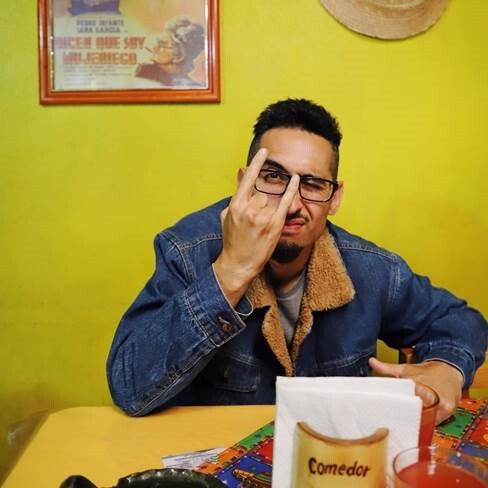
"description": "Alan Chazaro sits in front of a yellow wall at a yellow table. He wears a jean jacket and black rimmed glasses, one hand is in front of his face and he squints through his fingers at us.",
"title": "Alan Chazaro",
"credit": "Briana Chazaro",
"status": "inherit",
"altTag": "Alan Chazaro sits in front of a yellow wall at a yellow table. He wears a jean jacket and black rimmed glasses, one hand is in front of his face and he squints through his fingers at us.",
"isLoading": false,
"fetchFailed": false
},
"arts_13895173": {
"type": "attachments",
"id": "arts_13895173",
"meta": {
"index": "attachments_1716263798",
"site": "arts",
"id": "13895173",
"found": true
},
"parent": 13895169,
"imgSizes": {
"twentyfourteen-full-width": {
"file": "https://ww2.kqed.org/app/uploads/sites/2/2021/04/Screen-Shot-2021-04-04-at-10.48.13-AM-1038x576.png",
"width": 1038,
"mimeType": "image/png",
"height": 576
},
"thumbnail": {
"file": "https://ww2.kqed.org/app/uploads/sites/2/2021/04/Screen-Shot-2021-04-04-at-10.48.13-AM-160x101.png",
"width": 160,
"mimeType": "image/png",
"height": 101
},
"post-thumbnail": {
"file": "https://ww2.kqed.org/app/uploads/sites/2/2021/04/Screen-Shot-2021-04-04-at-10.48.13-AM-672x372.png",
"width": 672,
"mimeType": "image/png",
"height": 372
},
"kqedFullSize": {
"file": "https://ww2.kqed.org/app/uploads/sites/2/2021/04/Screen-Shot-2021-04-04-at-10.48.13-AM.png",
"width": 2088,
"height": 1314
},
"2048x2048": {
"file": "https://ww2.kqed.org/app/uploads/sites/2/2021/04/Screen-Shot-2021-04-04-at-10.48.13-AM-2048x1289.png",
"width": 2048,
"mimeType": "image/png",
"height": 1289
},
"large": {
"file": "https://ww2.kqed.org/app/uploads/sites/2/2021/04/Screen-Shot-2021-04-04-at-10.48.13-AM-1020x642.png",
"width": 1020,
"mimeType": "image/png",
"height": 642
},
"1536x1536": {
"file": "https://ww2.kqed.org/app/uploads/sites/2/2021/04/Screen-Shot-2021-04-04-at-10.48.13-AM-1536x967.png",
"width": 1536,
"mimeType": "image/png",
"height": 967
},
"full-width": {
"file": "https://ww2.kqed.org/app/uploads/sites/2/2021/04/Screen-Shot-2021-04-04-at-10.48.13-AM-1920x1208.png",
"width": 1920,
"mimeType": "image/png",
"height": 1208
},
"medium": {
"file": "https://ww2.kqed.org/app/uploads/sites/2/2021/04/Screen-Shot-2021-04-04-at-10.48.13-AM-800x503.png",
"width": 800,
"mimeType": "image/png",
"height": 503
},
"medium_large": {
"file": "https://ww2.kqed.org/app/uploads/sites/2/2021/04/Screen-Shot-2021-04-04-at-10.48.13-AM-768x483.png",
"width": 768,
"mimeType": "image/png",
"height": 483
}
},
"publishDate": 1617558537,
"modified": 1617642851,
"caption": "Chapter 510 invites Oakland writers of all ages to participate in a community poem. ",
"description": "Chapter 510 invites Oakland writers of all ages to participate in a community poem. ",
"title": "Chapter 510 invites Oakland writers of all ages to participate in a community poem.",
"credit": "Robbie Sweeny",
"status": "inherit",
"altTag": "A young reader wears glasses as they hold the book Light Made the Storm Blind up to their face.",
"isLoading": false,
"fetchFailed": false
},
"arts_13895136": {
"type": "attachments",
"id": "arts_13895136",
"meta": {
"index": "attachments_1716263798",
"site": "arts",
"id": "13895136",
"found": true
},
"parent": 13895040,
"imgSizes": {
"twentyfourteen-full-width": {
"file": "https://ww2.kqed.org/app/uploads/sites/2/2021/04/Writing.Poetry-1038x576.jpg",
"width": 1038,
"mimeType": "image/jpeg",
"height": 576
},
"thumbnail": {
"file": "https://ww2.kqed.org/app/uploads/sites/2/2021/04/Writing.Poetry-160x106.jpg",
"width": 160,
"mimeType": "image/jpeg",
"height": 106
},
"post-thumbnail": {
"file": "https://ww2.kqed.org/app/uploads/sites/2/2021/04/Writing.Poetry-672x372.jpg",
"width": 672,
"mimeType": "image/jpeg",
"height": 372
},
"kqedFullSize": {
"file": "https://ww2.kqed.org/app/uploads/sites/2/2021/04/Writing.Poetry.jpg",
"width": 1257,
"height": 835
},
"large": {
"file": "https://ww2.kqed.org/app/uploads/sites/2/2021/04/Writing.Poetry-1020x678.jpg",
"width": 1020,
"mimeType": "image/jpeg",
"height": 678
},
"medium": {
"file": "https://ww2.kqed.org/app/uploads/sites/2/2021/04/Writing.Poetry-800x531.jpg",
"width": 800,
"mimeType": "image/jpeg",
"height": 531
},
"medium_large": {
"file": "https://ww2.kqed.org/app/uploads/sites/2/2021/04/Writing.Poetry-768x510.jpg",
"width": 768,
"mimeType": "image/jpeg",
"height": 510
}
},
"publishDate": 1617391537,
"modified": 1617391618,
"caption": "Santa Clara County launches its Youth Poet Laureate Program this year.",
"description": "Santa Clara County launches its Youth Poet Laureate Program this year.",
"title": "A hand holding a pen writing in a notebook",
"credit": "iStock",
"status": "inherit",
"altTag": "Santa Clara County launches its Youth Poet Laureate Program this year.",
"isLoading": false,
"fetchFailed": false
},
"arts_13895002": {
"type": "attachments",
"id": "arts_13895002",
"meta": {
"index": "attachments_1716263798",
"site": "arts",
"id": "13895002",
"found": true
},
"parent": 13894990,
"imgSizes": {
"twentyfourteen-full-width": {
"file": "https://ww2.kqed.org/app/uploads/sites/2/2021/04/commissioned-artists-1-1038x576.png",
"width": 1038,
"mimeType": "image/png",
"height": 576
},
"thumbnail": {
"file": "https://ww2.kqed.org/app/uploads/sites/2/2021/04/commissioned-artists-1-160x90.png",
"width": 160,
"mimeType": "image/png",
"height": 90
},
"post-thumbnail": {
"file": "https://ww2.kqed.org/app/uploads/sites/2/2021/04/commissioned-artists-1-672x372.png",
"width": 672,
"mimeType": "image/png",
"height": 372
},
"kqedFullSize": {
"file": "https://ww2.kqed.org/app/uploads/sites/2/2021/04/commissioned-artists-1.png",
"width": 1920,
"height": 1080
},
"large": {
"file": "https://ww2.kqed.org/app/uploads/sites/2/2021/04/commissioned-artists-1-1020x574.png",
"width": 1020,
"mimeType": "image/png",
"height": 574
},
"1536x1536": {
"file": "https://ww2.kqed.org/app/uploads/sites/2/2021/04/commissioned-artists-1-1536x864.png",
"width": 1536,
"mimeType": "image/png",
"height": 864
},
"medium": {
"file": "https://ww2.kqed.org/app/uploads/sites/2/2021/04/commissioned-artists-1-800x450.png",
"width": 800,
"mimeType": "image/png",
"height": 450
},
"medium_large": {
"file": "https://ww2.kqed.org/app/uploads/sites/2/2021/04/commissioned-artists-1-768x432.png",
"width": 768,
"mimeType": "image/png",
"height": 432
}
},
"publishDate": 1617306070,
"modified": 1617306601,
"caption": "Portraits of featured artists (L-R) Flavia Elisa Mora, Micah Bazant and Eileen Sho Ji.",
"description": null,
"title": "Portraits of Flavia Elise Mora, Micah Bazant and Eileen Sho Ji",
"credit": "Courtesy of artists.",
"status": "inherit",
"altTag": "Portraits of Flavia Elise Mora, Micah Bazant and Eileen Sho Ji",
"isLoading": false,
"fetchFailed": false
},
"arts_13893309": {
"type": "attachments",
"id": "arts_13893309",
"meta": {
"index": "attachments_1716263798",
"site": "arts",
"id": "13893309",
"found": true
},
"parent": 13893308,
"imgSizes": {
"thumbnail": {
"file": "https://ww2.kqed.org/app/uploads/sites/2/2021/02/Tongo_02web-160x107.jpg",
"width": 160,
"mimeType": "image/jpeg",
"height": 107
},
"post-thumbnail": {
"file": "https://ww2.kqed.org/app/uploads/sites/2/2021/02/Tongo_02web-672x372.jpg",
"width": 672,
"mimeType": "image/jpeg",
"height": 372
},
"kqedFullSize": {
"file": "https://ww2.kqed.org/app/uploads/sites/2/2021/02/Tongo_02web.jpg",
"width": 864,
"height": 577
},
"medium": {
"file": "https://ww2.kqed.org/app/uploads/sites/2/2021/02/Tongo_02web-800x534.jpg",
"width": 800,
"mimeType": "image/jpeg",
"height": 534
},
"medium_large": {
"file": "https://ww2.kqed.org/app/uploads/sites/2/2021/02/Tongo_02web-768x513.jpg",
"width": 768,
"mimeType": "image/jpeg",
"height": 513
}
},
"publishDate": 1614230399,
"modified": 1614357498,
"caption": "Tongo Eisen-Martin",
"description": "Tongo Eisen-Martin",
"title": "Tongo Eisen-Martin",
"credit": "Kyler Knox, courtesy of El Tecolote",
"status": "inherit",
"altTag": "Tongo Eisen-Martin",
"isLoading": false,
"fetchFailed": false
},
"arts_13893239": {
"type": "attachments",
"id": "arts_13893239",
"meta": {
"index": "attachments_1716263798",
"site": "arts",
"id": "13893239",
"found": true
},
"parent": 0,
"imgSizes": {
"twentyfourteen-full-width": {
"file": "https://ww2.kqed.org/app/uploads/sites/2/2021/02/052_SanFrancisco_LawrenceFerllinghettiMemorial_02232021-1038x576.jpg",
"width": 1038,
"mimeType": "image/jpeg",
"height": 576
},
"thumbnail": {
"file": "https://ww2.kqed.org/app/uploads/sites/2/2021/02/052_SanFrancisco_LawrenceFerllinghettiMemorial_02232021-160x107.jpg",
"width": 160,
"mimeType": "image/jpeg",
"height": 107
},
"post-thumbnail": {
"file": "https://ww2.kqed.org/app/uploads/sites/2/2021/02/052_SanFrancisco_LawrenceFerllinghettiMemorial_02232021-672x372.jpg",
"width": 672,
"mimeType": "image/jpeg",
"height": 372
},
"kqedFullSize": {
"file": "https://ww2.kqed.org/app/uploads/sites/2/2021/02/052_SanFrancisco_LawrenceFerllinghettiMemorial_02232021.jpg",
"width": 1920,
"height": 1280
},
"large": {
"file": "https://ww2.kqed.org/app/uploads/sites/2/2021/02/052_SanFrancisco_LawrenceFerllinghettiMemorial_02232021-1020x680.jpg",
"width": 1020,
"mimeType": "image/jpeg",
"height": 680
},
"1536x1536": {
"file": "https://ww2.kqed.org/app/uploads/sites/2/2021/02/052_SanFrancisco_LawrenceFerllinghettiMemorial_02232021-1536x1024.jpg",
"width": 1536,
"mimeType": "image/jpeg",
"height": 1024
},
"medium": {
"file": "https://ww2.kqed.org/app/uploads/sites/2/2021/02/052_SanFrancisco_LawrenceFerllinghettiMemorial_02232021-800x533.jpg",
"width": 800,
"mimeType": "image/jpeg",
"height": 533
},
"medium_large": {
"file": "https://ww2.kqed.org/app/uploads/sites/2/2021/02/052_SanFrancisco_LawrenceFerllinghettiMemorial_02232021-768x512.jpg",
"width": 768,
"mimeType": "image/jpeg",
"height": 512
}
},
"publishDate": 1614190854,
"modified": 1614191752,
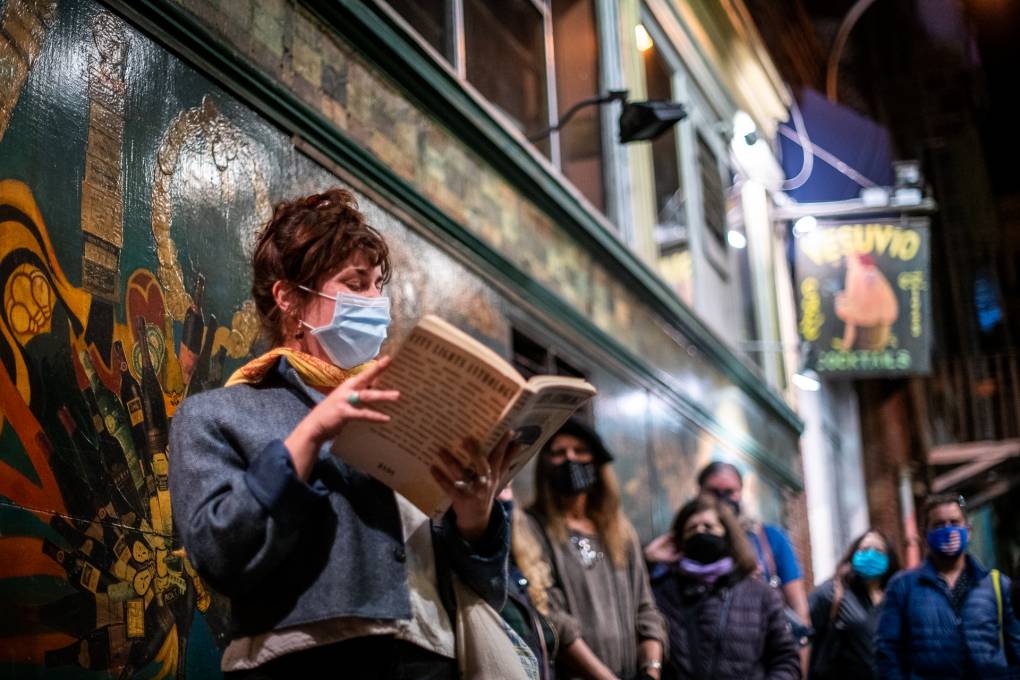
"caption": "Hannah Forrester reads from a 1974 City Lights Anthology during a vigil for Lawrence Ferlinghetti outside of City Lights Books on Feb. 23, 2021.",
"description": "Hannah Forrester reads from a 1974 City Lights Anthology during a vigil for Lawrence Ferlinghetti outside of City Lights Books on Feb. 23, 2021.",
"title": "Photojournalist",
"credit": "Beth LaBerge/KQED",
"status": "inherit",
"altTag": "Hannah Forrester reads from a 1974 City Lights Anthology during a vigil for Lawrence Ferlinghetti outside of City Lights Books on Feb. 23, 2021.",
"isLoading": false,
"fetchFailed": false
},
"arts_13893126": {
"type": "attachments",
"id": "arts_13893126",
"meta": {
"index": "attachments_1716263798",
"site": "arts",
"id": "13893126",
"found": true
},
"parent": 13893125,
"imgSizes": {
"twentyfourteen-full-width": {
"file": "https://ww2.kqed.org/app/uploads/sites/2/2021/02/ap60010101335-6499e5360e31a6cc56dca02798f180d2faf9dba9-1038x576.jpg",
"width": 1038,
"mimeType": "image/jpeg",
"height": 576
},
"thumbnail": {
"file": "https://ww2.kqed.org/app/uploads/sites/2/2021/02/ap60010101335-6499e5360e31a6cc56dca02798f180d2faf9dba9-160x120.jpg",
"width": 160,
"mimeType": "image/jpeg",
"height": 120
},
"post-thumbnail": {
"file": "https://ww2.kqed.org/app/uploads/sites/2/2021/02/ap60010101335-6499e5360e31a6cc56dca02798f180d2faf9dba9-672x372.jpg",
"width": 672,
"mimeType": "image/jpeg",
"height": 372
},
"kqedFullSize": {
"file": "https://ww2.kqed.org/app/uploads/sites/2/2021/02/ap60010101335-6499e5360e31a6cc56dca02798f180d2faf9dba9.jpg",
"width": 2236,
"height": 1677
},
"2048x2048": {
"file": "https://ww2.kqed.org/app/uploads/sites/2/2021/02/ap60010101335-6499e5360e31a6cc56dca02798f180d2faf9dba9-2048x1536.jpg",
"width": 2048,
"mimeType": "image/jpeg",
"height": 1536
},
"large": {
"file": "https://ww2.kqed.org/app/uploads/sites/2/2021/02/ap60010101335-6499e5360e31a6cc56dca02798f180d2faf9dba9-1020x765.jpg",
"width": 1020,
"mimeType": "image/jpeg",
"height": 765
},
"1536x1536": {
"file": "https://ww2.kqed.org/app/uploads/sites/2/2021/02/ap60010101335-6499e5360e31a6cc56dca02798f180d2faf9dba9-1536x1152.jpg",
"width": 1536,
"mimeType": "image/jpeg",
"height": 1152
},
"full-width": {
"file": "https://ww2.kqed.org/app/uploads/sites/2/2021/02/ap60010101335-6499e5360e31a6cc56dca02798f180d2faf9dba9-1920x1440.jpg",
"width": 1920,
"mimeType": "image/jpeg",
"height": 1440
},
"medium": {
"file": "https://ww2.kqed.org/app/uploads/sites/2/2021/02/ap60010101335-6499e5360e31a6cc56dca02798f180d2faf9dba9-800x600.jpg",
"width": 800,
"mimeType": "image/jpeg",
"height": 600
},
"medium_large": {
"file": "https://ww2.kqed.org/app/uploads/sites/2/2021/02/ap60010101335-6499e5360e31a6cc56dca02798f180d2faf9dba9-768x576.jpg",
"width": 768,
"mimeType": "image/jpeg",
"height": 576
}
},
"publishDate": 1614110905,
"modified": 1614111417,
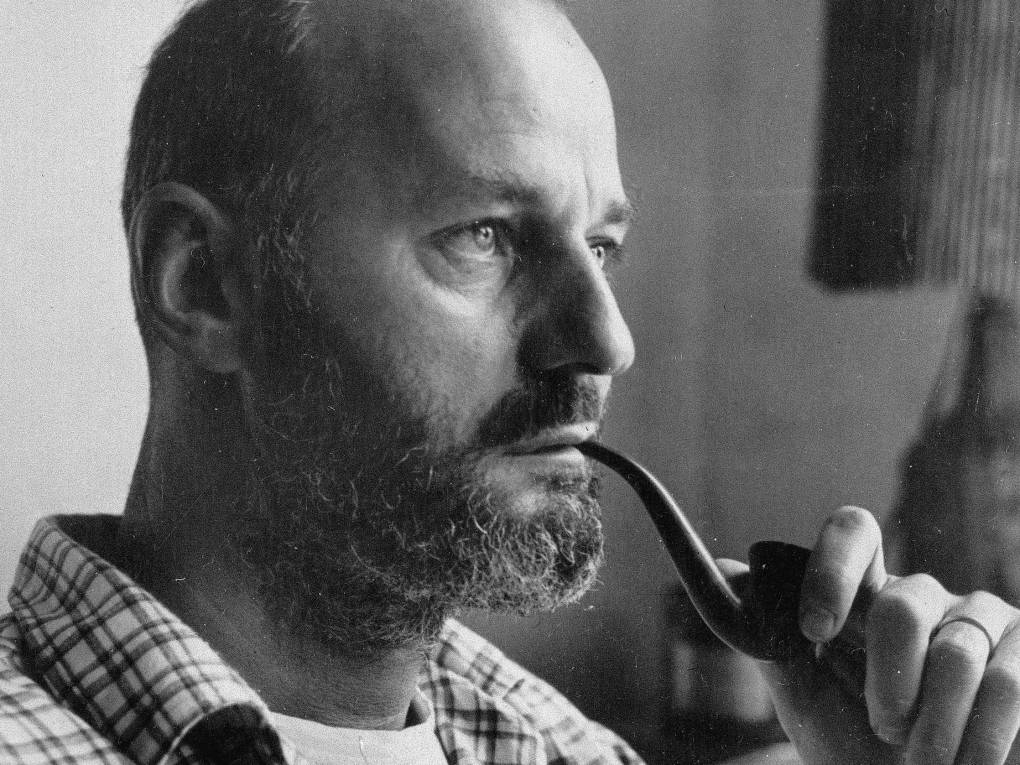
"caption": "Poet and author Lawrence Ferlinghetti, pictured in 1960, was born on March 24, 1919.",
"description": "Poet and author Lawrence Ferlinghetti, pictured in 1960, was born on March 24, 1919.",
"title": "Poet and author Lawrence Ferlinghetti, pictured above in 1960, was born on March 24, 1919.",
"credit": "AP",
"status": "inherit",
"altTag": null,
"isLoading": false,
"fetchFailed": false
},
"arts_13892947": {
"type": "attachments",
"id": "arts_13892947",
"meta": {
"index": "attachments_1716263798",
"site": "arts",
"id": "13892947",
"found": true
},
"parent": 13892908,
"imgSizes": {
"thumbnail": {
"file": "https://ww2.kqed.org/app/uploads/sites/2/2021/02/BetweenMyBody.YS_-160x100.jpg",
"width": 160,
"mimeType": "image/jpeg",
"height": 100
},
"post-thumbnail": {
"file": "https://ww2.kqed.org/app/uploads/sites/2/2021/02/BetweenMyBody.YS_-672x372.jpg",
"width": 672,
"mimeType": "image/jpeg",
"height": 372
},
"kqedFullSize": {
"file": "https://ww2.kqed.org/app/uploads/sites/2/2021/02/BetweenMyBody.YS_.jpg",
"width": 800,
"height": 500
},
"medium_large": {
"file": "https://ww2.kqed.org/app/uploads/sites/2/2021/02/BetweenMyBody.YS_-768x480.jpg",
"width": 768,
"mimeType": "image/jpeg",
"height": 480
}
},
"publishDate": 1613682336,
"modified": 1613682504,
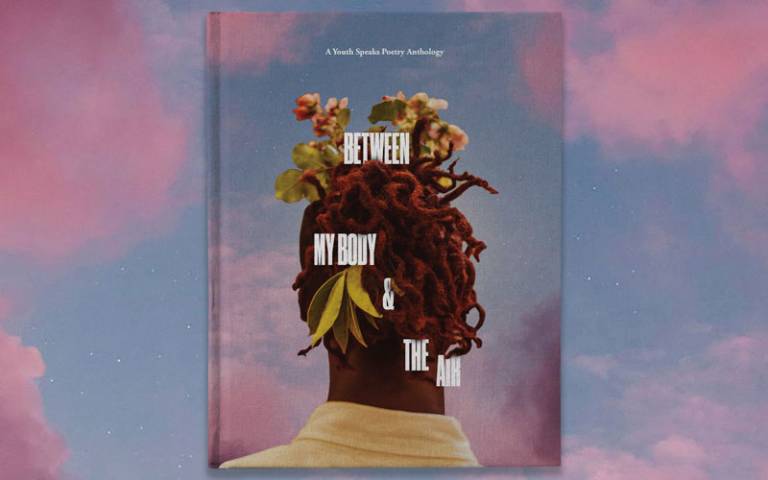
"caption": "'Between My Body and the Air.'",
"description": "'Between My Body and the Air.'",
"title": "BetweenMyBody.YS",
"credit": "Youth Speaks",
"status": "inherit",
"altTag": "'Between My Body and the Air.'",
"isLoading": false,
"fetchFailed": false
},
"arts_13891382": {
"type": "attachments",
"id": "arts_13891382",
"meta": {
"index": "attachments_1716263798",
"site": "arts",
"id": "13891382",
"found": true
},
"parent": 13891380,
"imgSizes": {
"twentyfourteen-full-width": {
"file": "https://ww2.kqed.org/app/uploads/sites/2/2021/01/TongoEisenMartin-1038x576.jpg",
"width": 1038,
"mimeType": "image/jpeg",
"height": 576
},
"thumbnail": {
"file": "https://ww2.kqed.org/app/uploads/sites/2/2021/01/TongoEisenMartin-160x100.jpg",
"width": 160,
"mimeType": "image/jpeg",
"height": 100
},
"post-thumbnail": {
"file": "https://ww2.kqed.org/app/uploads/sites/2/2021/01/TongoEisenMartin-672x372.jpg",
"width": 672,
"mimeType": "image/jpeg",
"height": 372
},
"kqedFullSize": {
"file": "https://ww2.kqed.org/app/uploads/sites/2/2021/01/TongoEisenMartin.jpg",
"width": 1920,
"height": 1200
},
"large": {
"file": "https://ww2.kqed.org/app/uploads/sites/2/2021/01/TongoEisenMartin-1020x638.jpg",
"width": 1020,
"mimeType": "image/jpeg",
"height": 638
},
"1536x1536": {
"file": "https://ww2.kqed.org/app/uploads/sites/2/2021/01/TongoEisenMartin-1536x960.jpg",
"width": 1536,
"mimeType": "image/jpeg",
"height": 960
},
"medium": {
"file": "https://ww2.kqed.org/app/uploads/sites/2/2021/01/TongoEisenMartin-800x500.jpg",
"width": 800,
"mimeType": "image/jpeg",
"height": 500
},
"medium_large": {
"file": "https://ww2.kqed.org/app/uploads/sites/2/2021/01/TongoEisenMartin-768x480.jpg",
"width": 768,
"mimeType": "image/jpeg",
"height": 480
}
},
"publishDate": 1610755377,
"modified": 1610755448,
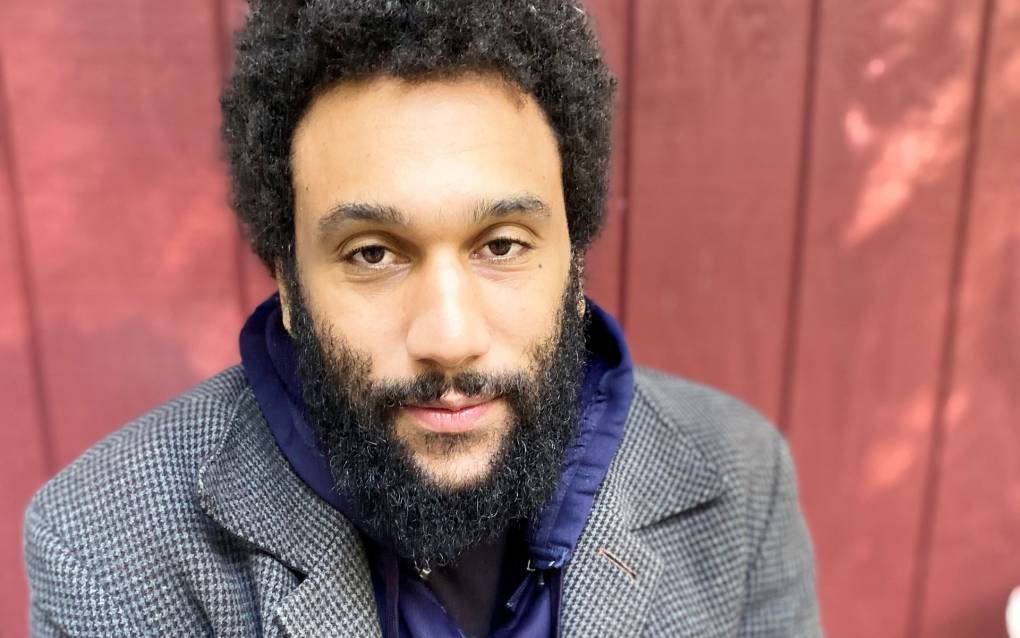
"caption": "Tongo Eisen-Martin has been named San Francisco's eighth Poet Laureate. ",
"description": "Tongo Eisen-Martin has been named San Francisco's eighth Poet Laureate. ",
"title": "TongoEisenMartin",
"credit": "Courtesy Photo",
"status": "inherit",
"altTag": "Tongo Eisen-Martin has been named San Francisco's eighth Poet Laureate.",
"isLoading": false,
"fetchFailed": false
},
"arts_13891734": {
"type": "attachments",
"id": "arts_13891734",
"meta": {
"index": "attachments_1716263798",
"site": "arts",
"id": "13891734",
"found": true
},
"parent": 13891732,
"imgSizes": {
"twentyfourteen-full-width": {
"file": "https://ww2.kqed.org/app/uploads/sites/2/2021/01/CDGBiKfJ-1038x576.jpg",
"width": 1038,
"mimeType": "image/jpeg",
"height": 576
},
"thumbnail": {
"file": "https://ww2.kqed.org/app/uploads/sites/2/2021/01/CDGBiKfJ-160x107.jpg",
"width": 160,
"mimeType": "image/jpeg",
"height": 107
},
"post-thumbnail": {
"file": "https://ww2.kqed.org/app/uploads/sites/2/2021/01/CDGBiKfJ-672x372.jpg",
"width": 672,
"mimeType": "image/jpeg",
"height": 372
},
"kqedFullSize": {
"file": "https://ww2.kqed.org/app/uploads/sites/2/2021/01/CDGBiKfJ.jpg",
"width": 2048,
"height": 1365
},
"large": {
"file": "https://ww2.kqed.org/app/uploads/sites/2/2021/01/CDGBiKfJ-1020x680.jpg",
"width": 1020,
"mimeType": "image/jpeg",
"height": 680
},
"1536x1536": {
"file": "https://ww2.kqed.org/app/uploads/sites/2/2021/01/CDGBiKfJ-1536x1024.jpg",
"width": 1536,
"mimeType": "image/jpeg",
"height": 1024
},
"full-width": {
"file": "https://ww2.kqed.org/app/uploads/sites/2/2021/01/CDGBiKfJ-1920x1280.jpg",
"width": 1920,
"mimeType": "image/jpeg",
"height": 1280
},
"medium": {
"file": "https://ww2.kqed.org/app/uploads/sites/2/2021/01/CDGBiKfJ-800x533.jpg",
"width": 800,
"mimeType": "image/jpeg",
"height": 533
},
"medium_large": {
"file": "https://ww2.kqed.org/app/uploads/sites/2/2021/01/CDGBiKfJ-768x512.jpg",
"width": 768,
"mimeType": "image/jpeg",
"height": 512
}
},
"publishDate": 1611556228,
"modified": 1611682094,
"caption": "Vallejo's LaRussell sitting in a dark room, slightly illuminated by green LED lights.",
"description": "Vallejo's LaRussell sitting in a dark room, slightly illuminated by green LED lights.",
"title": "Vallejo's LaRussell sitting in a dark room, slightly illuminated by neon green lights.",
"credit": "LaRussell",
"status": "inherit",
"altTag": "Vallejo's LaRussell sitting in a dark room, slightly illuminated by green LED lights.",
"isLoading": false,
"fetchFailed": false
}
},
"audioPlayerReducer": {
"postId": "stream_live",
"isPaused": true,
"isPlaying": false,
"pfsActive": false,
"pledgeModalIsOpen": true,
"playerDrawerIsOpen": false,
"liveAudioPlayStartedAt": 0,
"liveAudioPlayContext": ""
},
"authorsReducer": {
"byline_arts_13893125": {
"type": "authors",
"id": "byline_arts_13893125",
"meta": {
"override": true
},
"slug": "byline_arts_13893125",
"name": "Tom Vitale",
"isLoading": false
},
"byline_arts_13892018": {
"type": "authors",
"id": "byline_arts_13892018",
"meta": {
"override": true
},
"slug": "byline_arts_13892018",
"name": "Kate Wolffe",
"isLoading": false
},
"gmeline": {
"type": "authors",
"id": "185",
"meta": {
"index": "authors_1716337520",
"id": "185",
"found": true
},
"name": "Gabe Meline",
"firstName": "Gabe",
"lastName": "Meline",
"slug": "gmeline",
"email": "gmeline@kqed.org",
"display_author_email": true,
"staff_mastheads": [
"arts"
],
"title": "Senior Editor, KQED Arts & Culture",
"bio": "Gabe Meline entered journalism at age 15 making photocopied zines, and has since earned awards from the Edward R. Murrow Awards, the Society for Professional Journalists, the Online Journalism Awards, the Association of Alternative Newsweeklies and the California Newspaper Publishers Association. Prior to KQED, he was the editor of the \u003cem>North Bay Bohemian\u003c/em> and a touring musician. He lives with his wife and daughter in his hometown of Santa Rosa, CA.",
"avatar": "https://secure.gravatar.com/avatar/5bebe57be0d8bc2dd318934feb47299e2d2d10cba28d09d8d7afb389a2ce2bdd?s=600&d=blank&r=g",
"twitter": null,
"bluesky": null,
"facebook": null,
"instagram": null,
"linkedin": null,
"sites": [
{
"site": "",
"roles": [
"editor"
]
},
{
"site": "arts",
"roles": [
"administrator"
]
},
{
"site": "artschool",
"roles": [
"editor"
]
},
{
"site": "news",
"roles": [
"author"
]
},
{
"site": "pop",
"roles": [
"editor"
]
},
{
"site": "bayareabites",
"roles": [
"editor"
]
},
{
"site": "food",
"roles": [
"editor"
]
},
{
"site": "forum",
"roles": [
"administrator"
]
},
{
"site": "liveblog",
"roles": [
"editor"
]
},
{
"site": "hiphop",
"roles": [
"editor"
]
}
],
"headData": {
"title": "Gabe Meline | KQED",
"description": "Senior Editor, KQED Arts & Culture",
"ogImgSrc": "https://secure.gravatar.com/avatar/5bebe57be0d8bc2dd318934feb47299e2d2d10cba28d09d8d7afb389a2ce2bdd?s=600&d=blank&r=g",
"twImgSrc": "https://secure.gravatar.com/avatar/5bebe57be0d8bc2dd318934feb47299e2d2d10cba28d09d8d7afb389a2ce2bdd?s=600&d=blank&r=g"
},
"isLoading": false,
"link": "/author/gmeline"
},
"ogpenn": {
"type": "authors",
"id": "11491",
"meta": {
"index": "authors_1716337520",
"id": "11491",
"found": true
},
"name": "Pendarvis Harshaw",
"firstName": "Pendarvis",
"lastName": "Harshaw",
"slug": "ogpenn",
"email": "ogpenn@gmail.com",
"display_author_email": false,
"staff_mastheads": [
"arts"
],
"title": "Community Engagement Reporter",
"bio": "Pendarvis Harshaw is an educator, host and writer with KQED Arts.",
"avatar": "https://secure.gravatar.com/avatar/972b77ee8e3f346ae2b00622661187fbfabd059b5693bbdc1475ea7a722fd4cd?s=600&d=blank&r=g",
"twitter": null,
"bluesky": null,
"facebook": null,
"instagram": "ogpenn",
"linkedin": null,
"sites": [
{
"site": "arts",
"roles": [
"administrator"
]
},
{
"site": "news",
"roles": [
"editor"
]
},
{
"site": "bayareabites",
"roles": [
"author"
]
},
{
"site": "hiphop",
"roles": [
"editor"
]
}
],
"headData": {
"title": "Pendarvis Harshaw | KQED",
"description": "Community Engagement Reporter",
"ogImgSrc": "https://secure.gravatar.com/avatar/972b77ee8e3f346ae2b00622661187fbfabd059b5693bbdc1475ea7a722fd4cd?s=600&d=blank&r=g",
"twImgSrc": "https://secure.gravatar.com/avatar/972b77ee8e3f346ae2b00622661187fbfabd059b5693bbdc1475ea7a722fd4cd?s=600&d=blank&r=g"
},
"isLoading": false,
"link": "/author/ogpenn"
},
"mmedina": {
"type": "authors",
"id": "11528",
"meta": {
"index": "authors_1716337520",
"id": "11528",
"found": true
},
"name": "Marisol Medina-Cadena",
"firstName": "Marisol",
"lastName": "Medina-Cadena",
"slug": "mmedina",
"email": "mmedina@KQED.org",
"display_author_email": true,
"staff_mastheads": [],
"title": "Producer, Rightnowish Podcast",
"bio": "Marisol Medina-Cadena is a radio reporter and podcast producer. Before working at KQED, she produced for PBS member station, KCET, in Los Angeles. In 2017, Marisol won an Emmy Award for her work on the televised documentary, \u003cem>City Rising\u003c/em>, examining California's affordable housing crisis and the historical roots of gentrification.",
"avatar": "https://secure.gravatar.com/avatar/6c3db46a1cabb5e1fe9a365b5f4e681e?s=600&d=blank&r=g",
"twitter": "marisolreports",
"facebook": null,
"instagram": null,
"linkedin": null,
"sites": [
{
"site": "arts",
"roles": []
},
{
"site": "news",
"roles": [
"edit_others_posts"
]
}
],
"headData": {
"title": "Marisol Medina-Cadena | KQED",
"description": "Producer, Rightnowish Podcast",
"ogImgSrc": "https://secure.gravatar.com/avatar/6c3db46a1cabb5e1fe9a365b5f4e681e?s=600&d=blank&r=g",
"twImgSrc": "https://secure.gravatar.com/avatar/6c3db46a1cabb5e1fe9a365b5f4e681e?s=600&d=blank&r=g"
},
"isLoading": false,
"link": "/author/mmedina"
},
"spineda": {
"type": "authors",
"id": "11684",
"meta": {
"index": "authors_1716337520",
"id": "11684",
"found": true
},
"name": "Sarah Pineda",
"firstName": "Sarah",
"lastName": "Pineda",
"slug": "spineda",
"email": "spineda@kqed.org",
"display_author_email": true,
"staff_mastheads": [],
"title": "Engagement Producer",
"bio": "Sarah Pineda is a community engagement journalist working on building trust, deepening relationships and uplifting the work of community members for public media newsrooms. Before KQED, her engagement work contributions with Los Angeles' NPR-member station KPCC-LAist, was awarded ONA's 2019 Gather Award in Engaged Journalism.",
"avatar": "https://secure.gravatar.com/avatar/8213013f15f43594830671e7f557a820?s=600&d=blank&r=g",
"twitter": "sarahnpineda",
"facebook": null,
"instagram": null,
"linkedin": null,
"sites": [
{
"site": "arts",
"roles": [
"contributor"
]
},
{
"site": "pop",
"roles": [
"editor"
]
}
],
"headData": {
"title": "Sarah Pineda | KQED",
"description": "Engagement Producer",
"ogImgSrc": "https://secure.gravatar.com/avatar/8213013f15f43594830671e7f557a820?s=600&d=blank&r=g",
"twImgSrc": "https://secure.gravatar.com/avatar/8213013f15f43594830671e7f557a820?s=600&d=blank&r=g"
},
"isLoading": false,
"link": "/author/spineda"
},
"sgetachew": {
"type": "authors",
"id": "11734",
"meta": {
"index": "authors_1716337520",
"id": "11734",
"found": true
},
"name": "Samuel Getachew",
"firstName": "Samuel",
"lastName": "Getachew",
"slug": "sgetachew",
"email": "sgetachew@kqed.org",
"display_author_email": false,
"staff_mastheads": [],
"title": "KQED Contributor",
"bio": "\u003cspan style=\"font-weight: 400;\">Samuel Getachew is an 18-year-old poet and writer from Oakland, California. He is the 2019 Oakland Youth Poet Laureate, a 2020 Finalist for National Youth Poet Laureate, and a 4-time YoungArts Winner. His writing has been published in Teen Vogue, the New York Times, the Washington Post, and more. He will attend Yale University in the fall of 2021.\u003c/span>",
"avatar": "https://secure.gravatar.com/avatar/ebad3dcf2295975cfe77698fa670a089?s=600&d=blank&r=g",
"twitter": null,
"facebook": null,
"instagram": null,
"linkedin": null,
"sites": [
{
"site": "arts",
"roles": [
"subscriber"
]
}
],
"headData": {
"title": "Samuel Getachew | KQED",
"description": "KQED Contributor",
"ogImgSrc": "https://secure.gravatar.com/avatar/ebad3dcf2295975cfe77698fa670a089?s=600&d=blank&r=g",
"twImgSrc": "https://secure.gravatar.com/avatar/ebad3dcf2295975cfe77698fa670a089?s=600&d=blank&r=g"
},
"isLoading": false,
"link": "/author/sgetachew"
}
},
"pagesReducer": {
"arts_tag_poetry": {
"type": "terms",
"id": "arts_1496",
"meta": {
"index": "terms_1716263798",
"site": "arts",
"id": "1496",
"score": 8.457483
},
"featImg": null,
"name": "Poetry",
"description": null,
"taxonomy": "tag",
"headData": {
"twImgId": null,
"twTitle": null,
"ogTitle": null,
"ogImgId": null,
"twDescription": null,
"description": null,
"title": "Poetry Archives | KQED Arts",
"ogDescription": null
},
"ttid": 1508,
"slug": "poetry",
"isLoading": false,
"title": "Poetry",
"pageMeta": {
"site": "arts",
"WpPageTemplate": "page-topic-editorial",
"currentPage": 5
},
"blocks": [
{
"blockName": "kqed/post-list",
"attrs": {
"layout": "cardArticle2",
"query": "posts/arts?tag=poetry",
"seeMore": false,
"paginated": true,
"page": 5
}
},
{
"blockName": "kqed/ad"
}
]
}
},
"pfsSessionReducer": {},
"postsReducer": {
"stream_live": {
"type": "live",
"id": "stream_live",
"audioUrl": "https://streams.kqed.org/kqedradio",
"title": "Live Stream",
"excerpt": "Live Stream information currently unavailable.",
"link": "/radio",
"featImg": "",
"label": {
"name": "KQED Live",
"link": "/"
}
},
"stream_kqedNewscast": {
"type": "posts",
"id": "stream_kqedNewscast",
"audioUrl": "https://www.kqed.org/.stream/anon/radio/RDnews/newscast.mp3?_=1",
"title": "KQED Newscast",
"featImg": "",
"label": {
"name": "88.5 FM",
"link": "/"
}
},
"arts_13895771": {
"type": "posts",
"id": "arts_13895771",
"meta": {
"index": "posts_1716263798",
"site": "arts",
"id": "13895771",
"score": null,
"sort": [
1618963235000
]
},
"parent": 0,
"labelTerm": {
"site": "arts"
},
"blocks": [],
"publishDate": 1618963235,
"format": "standard",
"title": "Oakland Launches Search for First-Ever Poet Laureate",
"headTitle": "Oakland Launches Search for First-Ever Poet Laureate | KQED",
"content": "\u003cp>Oakland is now accepting nominations for its first-ever Oakland Poet Laureate Program. \u003c/p>\n\u003cp>Oakland’s Cultural Affairs Commission approved the creation of the Oakland Poet Laureate position at a Jan. 25 meeting, and the program will be modeled after similar ones in the Bay Area and across the nation. Uniquely, the city has had a Youth Poet Laureate since 2012 through a program run by the Oakland Public Library—but not a similar role for poets over 18. \u003c/p>\n\u003cp>The inaugural Oakland Poet Laureate will receive a $5,000 honorarium and serve a two-year term beginning in June 2021. During their tenure, the selected poet will deliver an inaugural address, partner with the Oakland Youth Poet Laureate on a collaborative reading series, write one poem commemorating the city, and deliver four readings at various city-owned locations throughout Oakland. \u003c/p>\n\u003cp>[aside postID='news_11856157']Oakland’s new program joins \u003ca href=\"https://aclibrary.org/blogs/post/calling-all-teen-poets/\" rel=\"noopener noreferrer\" target=\"_blank\">Alameda County\u003c/a> and \u003ca href=\"https://www.sccyouthlaureate.com/\" rel=\"noopener noreferrer\" target=\"_blank\">Santa Clara\u003c/a> County programs as the latest in a national wave of interest and engagement with poetry, in part sparked by inaugural National Youth Poet Laureate Amanda Gorman’s performance at the presidential inauguration in January.\u003c/p>\n\u003cp>To be eligible, nominees must be current Oakland residents who have lived in Oakland consistently for at least five years, and must be over the age of 18 with at least two previous works published. They also must have a track record of engagement with Oakland’s creative community. The program aims to “make poetry more accessible across Oakland, while promoting an understanding of the transformative power of this art form.”\u003c/p>\n\u003cp>[ad fullwidth]\u003c/p>\n\u003cp>The \u003ca href=\"https://docs.google.com/forms/d/e/1FAIpQLSehnOsW6lv39RnSI2EMJy4J7sWHR2jWu0aRayvyCMWVDw0C8A/viewform\" rel=\"noopener noreferrer\" target=\"_blank\">nomination form\u003c/a> is open through May 19, and nominees must submit a resume and writing sample. The oversight committee will evaluate nominees based on their command of craft, community engagement, understanding of Oakland’s distinctions and other criteria.\u003c/p>\n\u003cp>\u003c/p>\n\u003cp>\u003ci>To learn more about the program, visit \u003ca href=\"http://oaklandca.gov/poetlaureate\" rel=\"noopener noreferrer\" target=\"_blank\">oaklandca.gov/poetlaureate\u003c/a> or email \u003ca href=\"mailto:OakPoetLaureate@oaklandca.gov\">OakPoetLaureate@oaklandca.gov\u003c/a>. The nomination form can be found \u003ca href=\"https://docs.google.com/forms/d/e/1FAIpQLSehnOsW6lv39RnSI2EMJy4J7sWHR2jWu0aRayvyCMWVDw0C8A/viewform\" rel=\"noopener noreferrer\" target=\"_blank\">here\u003c/a>.\u003c/i> \u003c/p>\n\n",
"stats": {
"hasVideo": false,
"hasChartOrMap": false,
"hasAudio": false,
"hasPolis": false,
"wordCount": 328,
"hasGoogleForm": false,
"hasGallery": false,
"hasHearkenModule": false,
"iframeSrcs": [],
"paragraphCount": 9
},
"modified": 1705019144,
"excerpt": "The inaugural poet to hold the position will serve a two-year term and receive a $5,000 honorarium.",
"headData": {
"twImgId": "",
"twTitle": "",
"ogTitle": "",
"ogImgId": "",
"twDescription": "",
"description": "The inaugural poet to hold the position will serve a two-year term and receive a $5,000 honorarium.",
"title": "Oakland Launches Search for First-Ever Poet Laureate | KQED",
"ogDescription": "",
"schema": {
"@context": "https://schema.org",
"@type": "Article",
"headline": "Oakland Launches Search for First-Ever Poet Laureate",
"datePublished": "2021-04-20T17:00:35-07:00",
"dateModified": "2024-01-11T16:25:44-08:00",
"image": "https://cdn.kqed.org/wp-content/uploads/2020/02/KQED-OG-Image@1x.png"
}
},
"guestAuthors": [],
"slug": "oakland-launches-search-for-first-ever-poet-laureate",
"status": "publish",
"templateType": "standard",
"featuredImageType": "standard",
"sticky": false,
"path": "/arts/13895771/oakland-launches-search-for-first-ever-poet-laureate",
"audioTrackLength": null,
"parsedContent": [
{
"type": "contentString",
"content": "\u003cdiv class=\"post-body\">\u003cp>\u003cp>Oakland is now accepting nominations for its first-ever Oakland Poet Laureate Program. \u003c/p>\n\u003cp>Oakland’s Cultural Affairs Commission approved the creation of the Oakland Poet Laureate position at a Jan. 25 meeting, and the program will be modeled after similar ones in the Bay Area and across the nation. Uniquely, the city has had a Youth Poet Laureate since 2012 through a program run by the Oakland Public Library—but not a similar role for poets over 18. \u003c/p>\n\u003cp>The inaugural Oakland Poet Laureate will receive a $5,000 honorarium and serve a two-year term beginning in June 2021. During their tenure, the selected poet will deliver an inaugural address, partner with the Oakland Youth Poet Laureate on a collaborative reading series, write one poem commemorating the city, and deliver four readings at various city-owned locations throughout Oakland. \u003c/p>\n\u003cp>\u003c/p>\u003c/div>",
"attributes": {
"named": {},
"numeric": []
}
},
{
"type": "component",
"content": "",
"name": "aside",
"attributes": {
"named": {
"postid": "news_11856157",
"label": ""
},
"numeric": []
}
},
{
"type": "contentString",
"content": "\u003cdiv class=\"post-body\">\u003cp>Oakland’s new program joins \u003ca href=\"https://aclibrary.org/blogs/post/calling-all-teen-poets/\" rel=\"noopener noreferrer\" target=\"_blank\">Alameda County\u003c/a> and \u003ca href=\"https://www.sccyouthlaureate.com/\" rel=\"noopener noreferrer\" target=\"_blank\">Santa Clara\u003c/a> County programs as the latest in a national wave of interest and engagement with poetry, in part sparked by inaugural National Youth Poet Laureate Amanda Gorman’s performance at the presidential inauguration in January.\u003c/p>\n\u003cp>To be eligible, nominees must be current Oakland residents who have lived in Oakland consistently for at least five years, and must be over the age of 18 with at least two previous works published. They also must have a track record of engagement with Oakland’s creative community. The program aims to “make poetry more accessible across Oakland, while promoting an understanding of the transformative power of this art form.”\u003c/p>\n\u003cp>\u003c/p>\u003c/div>",
"attributes": {
"named": {},
"numeric": []
}
},
{
"type": "component",
"content": "",
"name": "ad",
"attributes": {
"named": {
"label": "fullwidth"
},
"numeric": [
"fullwidth"
]
}
},
{
"type": "contentString",
"content": "\u003cdiv class=\"post-body\">\u003cp>\u003c/p>\n\u003cp>The \u003ca href=\"https://docs.google.com/forms/d/e/1FAIpQLSehnOsW6lv39RnSI2EMJy4J7sWHR2jWu0aRayvyCMWVDw0C8A/viewform\" rel=\"noopener noreferrer\" target=\"_blank\">nomination form\u003c/a> is open through May 19, and nominees must submit a resume and writing sample. The oversight committee will evaluate nominees based on their command of craft, community engagement, understanding of Oakland’s distinctions and other criteria.\u003c/p>\n\u003cp>\u003c/p>\n\u003cp>\u003ci>To learn more about the program, visit \u003ca href=\"http://oaklandca.gov/poetlaureate\" rel=\"noopener noreferrer\" target=\"_blank\">oaklandca.gov/poetlaureate\u003c/a> or email \u003ca href=\"mailto:OakPoetLaureate@oaklandca.gov\">OakPoetLaureate@oaklandca.gov\u003c/a>. The nomination form can be found \u003ca href=\"https://docs.google.com/forms/d/e/1FAIpQLSehnOsW6lv39RnSI2EMJy4J7sWHR2jWu0aRayvyCMWVDw0C8A/viewform\" rel=\"noopener noreferrer\" target=\"_blank\">here\u003c/a>.\u003c/i> \u003c/p>\n\n\u003c/div>\u003c/p>",
"attributes": {
"named": {},
"numeric": []
}
}
],
"link": "/arts/13895771/oakland-launches-search-for-first-ever-poet-laureate",
"authors": [
"11734"
],
"categories": [
"arts_1",
"arts_73"
],
"tags": [
"arts_1143",
"arts_1496"
],
"featImg": "arts_13895777",
"label": "arts"
},
"arts_13896077": {
"type": "posts",
"id": "arts_13896077",
"meta": {
"index": "posts_1716263798",
"site": "arts",
"id": "13896077",
"score": null,
"sort": [
1618962166000
]
},
"parent": 0,
"labelTerm": {
"site": "arts"
},
"blocks": [],
"publishDate": 1618962166,
"format": "audio",
"title": "Al Young, Former California Poet Laureate, Dies at 81",
"headTitle": "Al Young, Former California Poet Laureate, Dies at 81 | KQED",
"content": "\u003cfigure id=\"attachment_13896078\" class=\"wp-caption alignright\" style=\"max-width: 400px\">\u003cimg loading=\"lazy\" decoding=\"async\" class=\"size-full wp-image-13896078\" src=\"https://ww2.kqed.org/app/uploads/sites/2/2021/04/AlYoung_0.jpg\" alt=\"Al Young.\" width=\"400\" height=\"600\">\u003cfigcaption class=\"wp-caption-text\">Al Young. \u003ccite>(Joseph Robinson)\u003c/cite>\u003c/figcaption>\u003c/figure>\n\u003cp>Celebrated poet and former California Poet Laureate Al Young has passed away at the age of 81, according to \u003ca href=\"https://bookhaven.stanford.edu/2021/04/al-young-is-dead-at-81/\" target=\"_blank\" rel=\"noopener noreferrer\">reports\u003c/a> from Stanford University. Young, known for his passion for jazz and his warm and friendly presence, lectured at the college for many years, and in 2005 was appointed the Poet Laureate of California by then-Governor Arnold Schwarznegger.\u003c/p>\n\u003cp>“Al Young represented the best in literary life. He was enormously talented in both fiction and poetry, though as he got older poetry came to be his natural means of expression,” Dana Gioia, the 2015–2019 California Poet Laureate, told \u003ca href=\"https://bookhaven.stanford.edu/2021/04/al-young-is-dead-at-81/\" target=\"_blank\" rel=\"noopener noreferrer\">The Book Haven\u003c/a>. “He was one of the most gracious writers I ever met… Not many writers have a gift for public service. The role came naturally for Al.”\u003c/p>\n\u003cp>Young was born in Ocean Springs, Miss., and raised in Detroit and throughout the rural South. He attended the University of Michigan before moving to the Bay Area in 1961 and graduating from U.C. Berkeley.\u003c/p>\n\u003cp>Young later taught poetry, American literature and fiction writing at U.C. Berkeley, U.C. Santa Cruz, and U.C. Davis, as well as Foothill College, Bowling Green State University, Rice University, the Colorado College, the University of Michigan, the University of Washington, and the University of Arkansas. Young became a lecturer in creative writing at Stanford University in 1969, and went on to live and work in Palo Alto for three decades.\u003c/p>\n\u003cp>In 2012, Young pitched KQED on the idea of airing a monthly poem on \u003cem>\u003ca href=\"https://www.kqed.org/news/7174/al-youngs-poem-of-the-month-says-goodbye-to-2012\" target=\"_blank\" rel=\"noopener noreferrer\">The California Report Magazine\u003c/a>\u003c/em>. For each month of the year, he wrote, recited and recorded a poem, often referencing California towns, figures and history, along with personal reflections.\u003c/p>\n\u003cp>[ad fullwidth]\u003c/p>\n\u003cp>“It was such a joy to work with Al on the poetry series for The California Report Magazine. He was just so warm and funny and absolute joy to work with,” said KQED Bay Curious producer Suzie Racho. “He was a poet whose voice was made for radio. Oftentimes he’d do two takes in the studio before heading backing to BART.”\u003c/p>\n\u003cp>\u003c/p>\n\u003cp>Young received two American Book Awards in 1982 and 2002, as well as Guggenheim, Fulbright, and Wallace Stegner fellowships, the Pushcart Prize, and others.\u003c/p>\n\n",
"stats": {
"hasVideo": false,
"hasChartOrMap": false,
"hasAudio": false,
"hasPolis": false,
"wordCount": 381,
"hasGoogleForm": false,
"hasGallery": false,
"hasHearkenModule": false,
"iframeSrcs": [],
"paragraphCount": 9
},
"modified": 1705019145,
"excerpt": "The Mississippi-born, Bay Area-based, jazz-loving poet had a long association with Stanford University. ",
"headData": {
"twImgId": "",
"twTitle": "",
"ogTitle": "",
"ogImgId": "",
"twDescription": "",
"description": "The Mississippi-born, Bay Area-based, jazz-loving poet had a long association with Stanford University. ",
"title": "Al Young, Former California Poet Laureate, Dies at 81 | KQED",
"ogDescription": "",
"schema": {
"@context": "https://schema.org",
"@type": "Article",
"headline": "Al Young, Former California Poet Laureate, Dies at 81",
"datePublished": "2021-04-20T16:42:46-07:00",
"dateModified": "2024-01-11T16:25:45-08:00",
"image": "https://cdn.kqed.org/wp-content/uploads/2020/02/KQED-OG-Image@1x.png"
}
},
"guestAuthors": [],
"slug": "al-young-former-california-poet-laureate-dies-at-81",
"status": "publish",
"templateType": "standard",
"audioUrl": "https://traffic.omny.fm/d/clips/0af137ef-751e-4b19-a055-aaef00d2d578/ffca7e9f-6831-4[…]f-aaef00f5a073/deccdd55-8e92-47c9-8e60-ad1301890cc0/audio.mp3",
"featuredImageType": "standard",
"sticky": false,
"path": "/arts/13896077/al-young-former-california-poet-laureate-dies-at-81",
"audioTrackLength": null,
"parsedContent": [
{
"type": "contentString",
"content": "\u003cdiv class=\"post-body\">\u003cp>\u003cfigure id=\"attachment_13896078\" class=\"wp-caption alignright\" style=\"max-width: 400px\">\u003cimg loading=\"lazy\" decoding=\"async\" class=\"size-full wp-image-13896078\" src=\"https://ww2.kqed.org/app/uploads/sites/2/2021/04/AlYoung_0.jpg\" alt=\"Al Young.\" width=\"400\" height=\"600\">\u003cfigcaption class=\"wp-caption-text\">Al Young. \u003ccite>(Joseph Robinson)\u003c/cite>\u003c/figcaption>\u003c/figure>\n\u003cp>Celebrated poet and former California Poet Laureate Al Young has passed away at the age of 81, according to \u003ca href=\"https://bookhaven.stanford.edu/2021/04/al-young-is-dead-at-81/\" target=\"_blank\" rel=\"noopener noreferrer\">reports\u003c/a> from Stanford University. Young, known for his passion for jazz and his warm and friendly presence, lectured at the college for many years, and in 2005 was appointed the Poet Laureate of California by then-Governor Arnold Schwarznegger.\u003c/p>\n\u003cp>“Al Young represented the best in literary life. He was enormously talented in both fiction and poetry, though as he got older poetry came to be his natural means of expression,” Dana Gioia, the 2015–2019 California Poet Laureate, told \u003ca href=\"https://bookhaven.stanford.edu/2021/04/al-young-is-dead-at-81/\" target=\"_blank\" rel=\"noopener noreferrer\">The Book Haven\u003c/a>. “He was one of the most gracious writers I ever met… Not many writers have a gift for public service. The role came naturally for Al.”\u003c/p>\n\u003cp>Young was born in Ocean Springs, Miss., and raised in Detroit and throughout the rural South. He attended the University of Michigan before moving to the Bay Area in 1961 and graduating from U.C. Berkeley.\u003c/p>\n\u003cp>Young later taught poetry, American literature and fiction writing at U.C. Berkeley, U.C. Santa Cruz, and U.C. Davis, as well as Foothill College, Bowling Green State University, Rice University, the Colorado College, the University of Michigan, the University of Washington, and the University of Arkansas. Young became a lecturer in creative writing at Stanford University in 1969, and went on to live and work in Palo Alto for three decades.\u003c/p>\n\u003cp>In 2012, Young pitched KQED on the idea of airing a monthly poem on \u003cem>\u003ca href=\"https://www.kqed.org/news/7174/al-youngs-poem-of-the-month-says-goodbye-to-2012\" target=\"_blank\" rel=\"noopener noreferrer\">The California Report Magazine\u003c/a>\u003c/em>. For each month of the year, he wrote, recited and recorded a poem, often referencing California towns, figures and history, along with personal reflections.\u003c/p>\n\u003cp>\u003c/p>\u003c/div>",
"attributes": {
"named": {},
"numeric": []
}
},
{
"type": "component",
"content": "",
"name": "ad",
"attributes": {
"named": {
"label": "fullwidth"
},
"numeric": [
"fullwidth"
]
}
},
{
"type": "contentString",
"content": "\u003cdiv class=\"post-body\">\u003cp>\u003c/p>\n\u003cp>“It was such a joy to work with Al on the poetry series for The California Report Magazine. He was just so warm and funny and absolute joy to work with,” said KQED Bay Curious producer Suzie Racho. “He was a poet whose voice was made for radio. Oftentimes he’d do two takes in the studio before heading backing to BART.”\u003c/p>\n\u003cp>\u003c/p>\n\u003cp>Young received two American Book Awards in 1982 and 2002, as well as Guggenheim, Fulbright, and Wallace Stegner fellowships, the Pushcart Prize, and others.\u003c/p>\n\n\u003c/div>\u003c/p>",
"attributes": {
"named": {},
"numeric": []
}
}
],
"link": "/arts/13896077/al-young-former-california-poet-laureate-dies-at-81",
"authors": [
"11734"
],
"categories": [
"arts_1",
"arts_73",
"arts_235",
"arts_1564"
],
"tags": [
"arts_7669",
"arts_1496",
"arts_2309"
],
"featImg": "arts_13896079",
"label": "arts"
},
"arts_13895854": {
"type": "posts",
"id": "arts_13895854",
"meta": {
"index": "posts_1716263798",
"site": "arts",
"id": "13895854",
"score": null,
"sort": [
1618567228000
]
},
"parent": 0,
"labelTerm": {},
"blocks": [],
"publishDate": 1618567228,
"format": "standard",
"title": "Poet Alan Chazaro, the Piñata Theorist",
"headTitle": "Poet Alan Chazaro, the Piñata Theorist | KQED",
"content": "\u003cp>\u003c!-- iframe plugin v.4.3 wordpress.org/plugins/iframe/ -->\u003cbr>\n\u003ciframe loading=\"lazy\" frameborder=\"0\" height=\"200\" scrolling=\"no\" src=\"https://playlist.megaphone.fm?e=KQINC7837936934&light=true\" width=\"100%\" class=\"iframe-class\">\u003c/iframe>\u003c/p>\n\u003cp>\u003ca href=\"https://twitter.com/alan_chazaro\">Alan Chazaro\u003c/a> uses poetry to explore Bay Area culture, his love for hip-hop, and machismo stereotypes.\u003c/p>\n\u003cp>We \u003ca href=\"https://www.kqed.org/arts/13864326/rightnowish-alan-chazaro-navigates-machismo-with-poetry\">first talked\u003c/a> in 2019 about his first poetry collection, \u003ca href=\"https://www.blacklawrence.com/this-is-not-a-frank-ocean-cover-album/\" target=\"_blank\" rel=\"noopener noreferrer\">\u003cem>This Is Not a Frank Ocean Cover Album. \u003c/em>\u003c/a>Since then, Chazaro moved to Mexico, travelled through Central and South America, and then, ultimately, returned to the Bay Area. Chazaro has also been dabbling in the journalism trade– with stories that range from \u003ca href=\"https://thebolditalic.com/the-forgotten-san-francisco-warrior-b746d01d6ac4\" target=\"_blank\" rel=\"noopener noreferrer\">the first woman to play\u003c/a> professional men’s basketball to the tale of a \u003ca href=\"https://www.sfgate.com/athletics/amp/hal-gordon-oakland-a-s-hot-dog-vendor-profile-16099242.php\" target=\"_blank\" rel=\"noopener noreferrer\">notable Oakland A’s hot dog vendor.\u003c/a> Chazaro has even freelanced \u003ca href=\"https://www.kqed.org/arts/13893070/on-his-solo-debut-the-seshens-kumar-butler-puts-activists-voices-front-and-center\" target=\"_blank\" rel=\"noopener noreferrer\">for KQED.\u003c/a>\u003c/p>\n\u003cp>In addition to all of that, Chazaro just published his second book, \u003ca href=\"https://blacklawrencepress.com/books/pinata-theory/\" target=\"_blank\" rel=\"noopener noreferrer\">\u003cem>Pińata Theory, \u003c/em>\u003c/a>which takes a deeper dive into his Mexican-American identity, hip-hop and deconstructing concepts of masculinity.\u003c/p>\n\u003cp>Since April is \u003ca href=\"https://poets.org/national-poetry-month\" target=\"_blank\" rel=\"noopener noreferrer\">National Poetry Month\u003c/a>, it seems like a good time to revisit our first conversation. And because so much has changed since then– traveling, book publication and more– we brought him back to give us a life update and a poem.\u003c/p>\n\u003cp>\u003c!-- iframe plugin v.4.3 wordpress.org/plugins/iframe/ -->\u003cbr>\n\u003ciframe loading=\"lazy\" src=\"https://open.spotify.com/embed/playlist/1a0EFQmuKDKXSoXl8CwTrt\" width=\"300\" height=\"380\" frameborder=\"0\" allowtransparency=\"true\" allow=\"encrypted-media\" scrolling=\"yes\" class=\"iframe-class\">\u003c/iframe>\u003c/p>\n\u003cp>\u003cem>\u003cstrong>Below are lightly edited excerpts of our conversation and the poem Alan Chazaro chose to recite for this episode.\u003c/strong>\u003c/em>\u003c/p>\n\u003ch2>Ode to Kendrick Lamar\u003c/h2>\n\u003cp>There are nights like tonight when it rains / biblical amounts of everything and music plays while I drive somewhere I usually don’t / go after dark because I get lost in my head / while my wife plans for next week and I try to decide where to park and when to / leave but instead I down / IPAs and smash In N Out burgers into my gut before the smallest / words crawl out / forced. Some days I feel the dark rushing / a tidal wave of fuck / you’s cresting my insides. / I double-knot my Tims and avert eye contact in a hoodie and baseball cap. / I am not this façade / have never sailed the fist into a stranger’s / skull but there is a thunderstorm / coming and I must know my way. Tomorrow / I’ll drive a pickup to the end / of the road on the other side of 880. I’ll park and read / poetry while 18-wheelers rumble within inches of my chest. It is what excites / and repels my attention while riding this / neighborhood. How the blood of sweet grass reminds me of something else.\u003c/p>\n\u003chr>\n\u003cp>\u003cem>Pen: Thank you. Thank you for sharing that.\u003c/em>\u003c/p>\n\u003cp>\u003cem>Pen: Bring us into your world, what was going on when you wrote that poem?\u003c/em>\u003c/p>\n\u003cp>Alan: That particular poem I wanna say was written in like 2015. I remember that because I was a graduate student at the University of San Francisco in the creative writing program. And at that time I was living in South Hayward and I used to have to take the bus to get to the BART and then the BART all the way to the city…Kendrick had just dropped his secret album called Untitled Unmastered… I was bumping it a lot because I was riding the BART, or I was on the bus to like occupy my mind… I wanted to kind of honor Kendrick as an artist who is unafraid to just put out raw art and be himself, present him and his community in a sort of different way, right. It’s not always a stereotypical narrative. And when he does tell his narratives, I feel a sense of fullness and humanity in his work.\u003c/p>\n\u003cp>Alan: That’s what I love about poetry and writing in general, because when I read that poem, it transports me back to that moment in my life, when I was this graduate student, that was just grinding… I had a full ride scholarship. My only thing was reading, consuming poetry, and sort of vibing with different art forms and just being present in the Bay Area as fully as I could.\u003c/p>\n\u003cp>\u003cem>Pen: Imagine if you could just be a grad student at all times, [laughs] like what you just described should be life, right?\u003c/em>\u003c/p>\n\u003cp>Alan: [laughs] yeah.. I know it sounds cliché, but I always tell my students, like, ‘how lucky we that our purpose in this space is that we’re trying to grow in our craft, in our sense of knowing the world, in our in our sense of voice and possibility,’\u003c/p>\n\u003cp>Alan: Ya know, I try not to do [tell them that] too much because then they’re going to be like, ‘man, shut up, dude.’ But I think when you understand that that’s not a given in the world, you start to really appreciate how beautiful it is that our job is to learn right now.\u003c/p>\n\u003cp>\u003cem>Pen: Since interviewing you the first time I’ve been keeping up with you writing, your growth and seeing your byline in 48 Hills and S.F. Gate and being shared through the newsletters with The Warriors. What type of growth have you experienced behind the scenes? What have you learned about poetry?\u003c/em>\u003c/p>\n\u003cp>Alan: It’s an art form of the interior. To me it’s like a meditative space. When I’m writing poems, I want to go inward and I want to reflect and I want to pick through the fragments of myself and sort of grapple with all of these layers of my identity.\u003c/p>\n\u003cp>Alan: But then there’s other days where I’m feeling very social and I want to talk to people and tell other people’s stories. So I’ve been doing a lot more journalism and I’ve found that I can apply my poetic sensibilities and my poetic craft to other forms of living, but particularly of writing.\u003c/p>\n\u003cp>\u003cem>Pen: Constant growth\u003c/em>\u003c/p>\n\u003cp>Alan: Mmhmm\u003c/p>\n\u003cp>\u003cimg loading=\"lazy\" decoding=\"async\" class=\"aligncenter size-full wp-image-12127869\" src=\"https://ww2.kqed.org/app/uploads/sites/2/2016/09/Q.Logo_.Break_.jpg\" alt=\"\" width=\"800\" height=\"78\" srcset=\"https://cdn.kqed.org/wp-content/uploads/sites/2/2016/09/Q.Logo_.Break_.jpg 800w, https://cdn.kqed.org/wp-content/uploads/sites/2/2016/09/Q.Logo_.Break_-400x39.jpg 400w, https://cdn.kqed.org/wp-content/uploads/sites/2/2016/09/Q.Logo_.Break_-768x75.jpg 768w\" sizes=\"(max-width: 800px) 100vw, 800px\">\u003c/p>\n\u003cp>\u003cstrong>\u003cem>Rightnowish is an arts and culture podcast produced at KQED. Listen to it wherever you get your podcasts or click the play button at the top of this page and subscribe to the show on \u003ca href=\"https://www.npr.org/podcasts/721590300/rightnowish\">NPR One\u003c/a>, \u003ca href=\"https://open.spotify.com/show/7kEJuafTzTVan7B78ttz1I\">Spotify\u003c/a>, \u003ca href=\"https://podcasts.apple.com/us/podcast/rightnowish/id1482187648\">Apple Podcasts\u003c/a>, \u003ca href=\"https://tunein.com/podcasts/Arts--Culture-Podcasts/Rightnowish-p1258245/\">TuneIn\u003c/a>, \u003ca href=\"https://www.stitcher.com/podcast/kqed/rightnowish\">Stitcher\u003c/a> or wherever you get your podcasts. \u003c/em>\u003c/strong>\u003c/p>\n\u003cp>[ad fullwidth]\u003c/p>\n\u003cp>\u003c/p>\n",
"stats": {
"hasVideo": false,
"hasChartOrMap": false,
"hasAudio": true,
"hasPolis": false,
"wordCount": 1023,
"hasGoogleForm": false,
"hasGallery": false,
"hasHearkenModule": false,
"iframeSrcs": [],
"paragraphCount": 24
},
"modified": 1705019162,
"excerpt": "Alan Chazaro uses poetry as a way of discussing his love for hip-hop, his affinity for Bay Area culture and breaking machismo stereotypes. ",
"headData": {
"twImgId": "",
"twTitle": "",
"ogTitle": "",
"ogImgId": "",
"twDescription": "",
"description": "Alan Chazaro uses poetry as a way of discussing his love for hip-hop, his affinity for Bay Area culture and breaking machismo stereotypes. ",
"title": "Poet Alan Chazaro, the Piñata Theorist | KQED",
"ogDescription": "",
"schema": {
"@context": "https://schema.org",
"@type": "Article",
"headline": "Poet Alan Chazaro, the Piñata Theorist",
"datePublished": "2021-04-16T03:00:28-07:00",
"dateModified": "2024-01-11T16:26:02-08:00",
"image": "https://cdn.kqed.org/wp-content/uploads/2020/02/KQED-OG-Image@1x.png"
}
},
"guestAuthors": [],
"slug": "rightnowish-alanchazaronewbook",
"status": "publish",
"sourceUrl": "https://www.kqed.org/podcasts/rightnowish",
"audioUrl": "https://www.podtrac.com/pts/redirect.mp3/traffic.megaphone.fm/KQINC7837936934.mp3",
"sticky": false,
"source": "Rightnowish",
"WpOldSlug": "poet-alan-chazaro-the-pinata-theorist",
"path": "/arts/13895854/rightnowish-alanchazaronewbook",
"audioTrackLength": null,
"parsedContent": [
{
"type": "contentString",
"content": "\u003cdiv class=\"post-body\">\u003cp>\u003cp>\u003c!-- iframe plugin v.4.3 wordpress.org/plugins/iframe/ -->\u003cbr>\n\u003ciframe loading=\"lazy\" frameborder=\"0\" height=\"200\" scrolling=\"no\" src=\"https://playlist.megaphone.fm?e=KQINC7837936934&light=true\" width=\"100%\" class=\"iframe-class\">\u003c/iframe>\u003c/p>\n\u003cp>\u003ca href=\"https://twitter.com/alan_chazaro\">Alan Chazaro\u003c/a> uses poetry to explore Bay Area culture, his love for hip-hop, and machismo stereotypes.\u003c/p>\n\u003cp>We \u003ca href=\"https://www.kqed.org/arts/13864326/rightnowish-alan-chazaro-navigates-machismo-with-poetry\">first talked\u003c/a> in 2019 about his first poetry collection, \u003ca href=\"https://www.blacklawrence.com/this-is-not-a-frank-ocean-cover-album/\" target=\"_blank\" rel=\"noopener noreferrer\">\u003cem>This Is Not a Frank Ocean Cover Album. \u003c/em>\u003c/a>Since then, Chazaro moved to Mexico, travelled through Central and South America, and then, ultimately, returned to the Bay Area. Chazaro has also been dabbling in the journalism trade– with stories that range from \u003ca href=\"https://thebolditalic.com/the-forgotten-san-francisco-warrior-b746d01d6ac4\" target=\"_blank\" rel=\"noopener noreferrer\">the first woman to play\u003c/a> professional men’s basketball to the tale of a \u003ca href=\"https://www.sfgate.com/athletics/amp/hal-gordon-oakland-a-s-hot-dog-vendor-profile-16099242.php\" target=\"_blank\" rel=\"noopener noreferrer\">notable Oakland A’s hot dog vendor.\u003c/a> Chazaro has even freelanced \u003ca href=\"https://www.kqed.org/arts/13893070/on-his-solo-debut-the-seshens-kumar-butler-puts-activists-voices-front-and-center\" target=\"_blank\" rel=\"noopener noreferrer\">for KQED.\u003c/a>\u003c/p>\n\u003cp>In addition to all of that, Chazaro just published his second book, \u003ca href=\"https://blacklawrencepress.com/books/pinata-theory/\" target=\"_blank\" rel=\"noopener noreferrer\">\u003cem>Pińata Theory, \u003c/em>\u003c/a>which takes a deeper dive into his Mexican-American identity, hip-hop and deconstructing concepts of masculinity.\u003c/p>\n\u003cp>Since April is \u003ca href=\"https://poets.org/national-poetry-month\" target=\"_blank\" rel=\"noopener noreferrer\">National Poetry Month\u003c/a>, it seems like a good time to revisit our first conversation. And because so much has changed since then– traveling, book publication and more– we brought him back to give us a life update and a poem.\u003c/p>\n\u003cp>\u003c!-- iframe plugin v.4.3 wordpress.org/plugins/iframe/ -->\u003cbr>\n\u003ciframe loading=\"lazy\" src=\"https://open.spotify.com/embed/playlist/1a0EFQmuKDKXSoXl8CwTrt\" width=\"300\" height=\"380\" frameborder=\"0\" allowtransparency=\"true\" allow=\"encrypted-media\" scrolling=\"yes\" class=\"iframe-class\">\u003c/iframe>\u003c/p>\n\u003cp>\u003cem>\u003cstrong>Below are lightly edited excerpts of our conversation and the poem Alan Chazaro chose to recite for this episode.\u003c/strong>\u003c/em>\u003c/p>\n\u003ch2>Ode to Kendrick Lamar\u003c/h2>\n\u003cp>There are nights like tonight when it rains / biblical amounts of everything and music plays while I drive somewhere I usually don’t / go after dark because I get lost in my head / while my wife plans for next week and I try to decide where to park and when to / leave but instead I down / IPAs and smash In N Out burgers into my gut before the smallest / words crawl out / forced. Some days I feel the dark rushing / a tidal wave of fuck / you’s cresting my insides. / I double-knot my Tims and avert eye contact in a hoodie and baseball cap. / I am not this façade / have never sailed the fist into a stranger’s / skull but there is a thunderstorm / coming and I must know my way. Tomorrow / I’ll drive a pickup to the end / of the road on the other side of 880. I’ll park and read / poetry while 18-wheelers rumble within inches of my chest. It is what excites / and repels my attention while riding this / neighborhood. How the blood of sweet grass reminds me of something else.\u003c/p>\n\u003chr>\n\u003cp>\u003cem>Pen: Thank you. Thank you for sharing that.\u003c/em>\u003c/p>\n\u003cp>\u003cem>Pen: Bring us into your world, what was going on when you wrote that poem?\u003c/em>\u003c/p>\n\u003cp>Alan: That particular poem I wanna say was written in like 2015. I remember that because I was a graduate student at the University of San Francisco in the creative writing program. And at that time I was living in South Hayward and I used to have to take the bus to get to the BART and then the BART all the way to the city…Kendrick had just dropped his secret album called Untitled Unmastered… I was bumping it a lot because I was riding the BART, or I was on the bus to like occupy my mind… I wanted to kind of honor Kendrick as an artist who is unafraid to just put out raw art and be himself, present him and his community in a sort of different way, right. It’s not always a stereotypical narrative. And when he does tell his narratives, I feel a sense of fullness and humanity in his work.\u003c/p>\n\u003cp>Alan: That’s what I love about poetry and writing in general, because when I read that poem, it transports me back to that moment in my life, when I was this graduate student, that was just grinding… I had a full ride scholarship. My only thing was reading, consuming poetry, and sort of vibing with different art forms and just being present in the Bay Area as fully as I could.\u003c/p>\n\u003cp>\u003cem>Pen: Imagine if you could just be a grad student at all times, [laughs] like what you just described should be life, right?\u003c/em>\u003c/p>\n\u003cp>Alan: [laughs] yeah.. I know it sounds cliché, but I always tell my students, like, ‘how lucky we that our purpose in this space is that we’re trying to grow in our craft, in our sense of knowing the world, in our in our sense of voice and possibility,’\u003c/p>\n\u003cp>Alan: Ya know, I try not to do [tell them that] too much because then they’re going to be like, ‘man, shut up, dude.’ But I think when you understand that that’s not a given in the world, you start to really appreciate how beautiful it is that our job is to learn right now.\u003c/p>\n\u003cp>\u003cem>Pen: Since interviewing you the first time I’ve been keeping up with you writing, your growth and seeing your byline in 48 Hills and S.F. Gate and being shared through the newsletters with The Warriors. What type of growth have you experienced behind the scenes? What have you learned about poetry?\u003c/em>\u003c/p>\n\u003cp>Alan: It’s an art form of the interior. To me it’s like a meditative space. When I’m writing poems, I want to go inward and I want to reflect and I want to pick through the fragments of myself and sort of grapple with all of these layers of my identity.\u003c/p>\n\u003cp>Alan: But then there’s other days where I’m feeling very social and I want to talk to people and tell other people’s stories. So I’ve been doing a lot more journalism and I’ve found that I can apply my poetic sensibilities and my poetic craft to other forms of living, but particularly of writing.\u003c/p>\n\u003cp>\u003cem>Pen: Constant growth\u003c/em>\u003c/p>\n\u003cp>Alan: Mmhmm\u003c/p>\n\u003cp>\u003cimg loading=\"lazy\" decoding=\"async\" class=\"aligncenter size-full wp-image-12127869\" src=\"https://ww2.kqed.org/app/uploads/sites/2/2016/09/Q.Logo_.Break_.jpg\" alt=\"\" width=\"800\" height=\"78\" srcset=\"https://cdn.kqed.org/wp-content/uploads/sites/2/2016/09/Q.Logo_.Break_.jpg 800w, https://cdn.kqed.org/wp-content/uploads/sites/2/2016/09/Q.Logo_.Break_-400x39.jpg 400w, https://cdn.kqed.org/wp-content/uploads/sites/2/2016/09/Q.Logo_.Break_-768x75.jpg 768w\" sizes=\"(max-width: 800px) 100vw, 800px\">\u003c/p>\n\u003cp>\u003cstrong>\u003cem>Rightnowish is an arts and culture podcast produced at KQED. Listen to it wherever you get your podcasts or click the play button at the top of this page and subscribe to the show on \u003ca href=\"https://www.npr.org/podcasts/721590300/rightnowish\">NPR One\u003c/a>, \u003ca href=\"https://open.spotify.com/show/7kEJuafTzTVan7B78ttz1I\">Spotify\u003c/a>, \u003ca href=\"https://podcasts.apple.com/us/podcast/rightnowish/id1482187648\">Apple Podcasts\u003c/a>, \u003ca href=\"https://tunein.com/podcasts/Arts--Culture-Podcasts/Rightnowish-p1258245/\">TuneIn\u003c/a>, \u003ca href=\"https://www.stitcher.com/podcast/kqed/rightnowish\">Stitcher\u003c/a> or wherever you get your podcasts. \u003c/em>\u003c/strong>\u003c/p>\n\u003cp>\u003c/p>\u003c/div>",
"attributes": {
"named": {},
"numeric": []
}
},
{
"type": "component",
"content": "",
"name": "ad",
"attributes": {
"named": {
"label": "fullwidth"
},
"numeric": [
"fullwidth"
]
}
},
{
"type": "contentString",
"content": "\u003cdiv class=\"post-body\">\u003cp>\u003c/p>\n\u003cp>\u003c/p>\n\u003c/div>\u003c/p>",
"attributes": {
"named": {},
"numeric": []
}
}
],
"link": "/arts/13895854/rightnowish-alanchazaronewbook",
"authors": [
"11491",
"11528"
],
"programs": [
"arts_8720"
],
"categories": [
"arts_1",
"arts_21759"
],
"tags": [
"arts_8329",
"arts_1118",
"arts_1774",
"arts_877",
"arts_1143",
"arts_1496",
"arts_6764"
],
"featImg": "arts_13895868",
"label": "source_arts_13895854"
},
"arts_13895169": {
"type": "posts",
"id": "arts_13895169",
"meta": {
"index": "posts_1716263798",
"site": "arts",
"id": "13895169",
"score": null,
"sort": [
1617642989000
]
},
"guestAuthors": [],
"slug": "a-collective-poem-written-by-oakland-residents-for-national-poetry-month",
"title": "A Collective Poem, Written by Oakland Residents, for National Poetry Month",
"publishDate": 1617642989,
"format": "standard",
"headTitle": "A Collective Poem, Written by Oakland Residents, for National Poetry Month | KQED",
"labelTerm": {
"term": 140,
"site": "arts"
},
"content": "\u003cp>On Sunday morning, I woke up, gathered my superpowers, and added a couple lines to what’s sure to be one of the most Oakland-centric poems ever created.\u003c/p>\n\u003cp>But in order to achieve that status, it’ll take your poetic superpowers as well.\u003c/p>\n\u003cp>Oakland’s \u003ca href=\"http://www.chapter510.org/\" target=\"_blank\" rel=\"noopener noreferrer\">Chapter 510\u003c/a>, an organization that champions literacy—especially for marginalized youth—has partnered with the \u003ca href=\"https://www.oaklandrootssc.com/\" target=\"_blank\" rel=\"noopener noreferrer\">Oakland Roots\u003c/a> soccer club for the second annual “Write Your Roots” event series. It’s a part of the larger \u003ca href=\"https://poets.org/national-poetry-month\" target=\"_blank\" rel=\"noopener noreferrer\">National Poetry Month\u003c/a> celebration.\u003c/p>\n\u003cp>Over the next four weeks, Oakland residents are invited to participate in the \u003ca href=\"https://docs.google.com/forms/d/e/1FAIpQLSc0jSuH8cychLCuA-R1KHVFMl9wyTR02ZxRDY3r9OEaA7cu9Q/viewform\" target=\"_blank\" rel=\"noopener noreferrer\">All-Town Poem\u003c/a> (Spanish version\u003ca href=\"https://docs.google.com/forms/d/e/1FAIpQLSejZkADhUaTJhjfcuUbIkj0QX_usAchhnEai4K0dWDXpX2i0g/viewform\" target=\"_blank\" rel=\"noopener noreferrer\"> here\u003c/a>), where writers can submit an entry on the theme of power at any time. The entries will then be edited and arranged into poem form, with all submissions getting credit by name—or superhero/supershero/supertheyro name, if they so choose.\u003c/p>\n\u003cp>This year’s entries should be a strong follow-up to last year’s effort, which produced the epic poem “\u003ca href=\"https://chapter510.medium.com/because-this-city-english-12579f5fa3a5\" target=\"_blank\" rel=\"noopener noreferrer\">Because This City\u003c/a>.”\u003c/p>\n\u003cp>[ad fullwidth]\u003c/p>\n\u003cp>Chapter 510 Program Manager and Teaching Artist Jahan Khalighi says the overall goal is to create a community-based exercise in creativity, imagination, and power-building. For Khalighi, it’s about looking at “access to inspiration as a basic human right.”\u003c/p>\n\u003cfigure id=\"attachment_13895177\" class=\"wp-caption alignnone\" style=\"max-width: 800px\">\u003cimg loading=\"lazy\" decoding=\"async\" class=\"size-medium wp-image-13895177\" src=\"https://ww2.kqed.org/app/uploads/sites/2/2021/04/Tongo-Elijah-800x533.jpg\" alt=\"San Francisco Poet Laureate Tongo Eisen-Martin stands in the middle of Elijah and Amaya at Oakland's Westlake Middle School\" width=\"800\" height=\"533\" srcset=\"https://cdn.kqed.org/wp-content/uploads/sites/2/2021/04/Tongo-Elijah-800x533.jpg 800w, https://cdn.kqed.org/wp-content/uploads/sites/2/2021/04/Tongo-Elijah-1020x680.jpg 1020w, https://cdn.kqed.org/wp-content/uploads/sites/2/2021/04/Tongo-Elijah-160x107.jpg 160w, https://cdn.kqed.org/wp-content/uploads/sites/2/2021/04/Tongo-Elijah-768x512.jpg 768w, https://cdn.kqed.org/wp-content/uploads/sites/2/2021/04/Tongo-Elijah-1536x1024.jpg 1536w, https://cdn.kqed.org/wp-content/uploads/sites/2/2021/04/Tongo-Elijah-2048x1365.jpg 2048w, https://cdn.kqed.org/wp-content/uploads/sites/2/2021/04/Tongo-Elijah-1920x1280.jpg 1920w\" sizes=\"auto, (max-width: 800px) 100vw, 800px\">\u003cfigcaption class=\"wp-caption-text\">San Francisco Poet Laureate Tongo Eisen-Martin stands between students Elijah and Amaya at Oakland’s Westlake Middle School. \u003ccite>(Robbie Sweeny)\u003c/cite>\u003c/figcaption>\u003c/figure>\n\u003cp>On top of that, each day in April Chapter 510 is posting writing prompts on \u003ca href=\"https://www.instagram.com/chapter510/\" target=\"_blank\" rel=\"noopener noreferrer\">Instagram\u003c/a>, \u003ca href=\"https://twitter.com/chptr510\" target=\"_blank\" rel=\"noopener noreferrer\">Twitter\u003c/a> and \u003ca href=\"https://www.facebook.com/chapter510\" target=\"_blank\" rel=\"noopener noreferrer\">Facebook\u003c/a>. If so moved to share a poem, Chapter 510 encourages people to use the hashtag “\u003ca href=\"https://www.instagram.com/explore/tags/peda2021/\" target=\"_blank\" rel=\"noopener noreferrer\">#Peda2021\u003c/a>” to keep track of all the submissions.\u003c/p>\n\u003cp>In addition, Chapter 510 offers a \u003ca href=\"https://static1.squarespace.com/static/580fe27615d5db24ca661579/t/606655a20a81c439ea07796c/1617319330909/Write+Your+Roos+Lesson+Plans+2021+%283%29.pdf\" target=\"_blank\" rel=\"noopener noreferrer\">poetry curriculum\u003c/a> for educators, optimized for both distanced and in-person classrooms.\u003c/p>\n\u003cp>Lastly, with entertainment venues and community gathering spaces around the Bay Area on the verge of reopening, Chapter 510’s newest location at Swan’s Market is scheduled for a grand opening on April 30.\u003c/p>\n\u003cp>Chapter 510 will culminate the month’s worth of writing with its first city-wide \u003ca href=\"https://www.instagram.com/p/CNGhWHuhgm7/?utm_source=ig_web_copy_link\" target=\"_blank\" rel=\"noopener noreferrer\">Write Your Roots Day\u003c/a>, which Mayor Libby Schaff officially proclaimed just last week.\u003c/p>\n\u003cp>\u003c/p>\n\u003cp>Chapter 510 celebrates Write Your Roots Day on Friday, April 30, at 546 9th Street (at Swan’s Market) from 12pm-6pm. \u003ca href=\"http://www.chapter510.org/events-1/2021/4/30/write-your-roots-all-town-epic-poetry-day\" target=\"_blank\" rel=\"noopener noreferrer\">Details here\u003c/a>.\u003c/p>\n\n",
"blocks": [],
"excerpt": "Chapter 510 invites all Oaklanders to contribute to the poem, focused on the theme of power. ",
"status": "publish",
"parent": 0,
"modified": 1742837930,
"stats": {
"hasAudio": false,
"hasVideo": false,
"hasChartOrMap": false,
"iframeSrcs": [],
"hasGoogleForm": false,
"hasGallery": false,
"hasHearkenModule": false,
"hasPolis": false,
"paragraphCount": 13,
"wordCount": 402
},
"headData": {
"title": "A Collective Poem, Written by Oakland Residents, for National Poetry Month | KQED",
"description": "Chapter 510 invites all Oaklanders to contribute to the poem, focused on the theme of power. ",
"ogTitle": "",
"ogDescription": "",
"ogImgId": "",
"twTitle": "",
"twDescription": "",
"twImgId": "",
"schema": {
"@context": "https://schema.org",
"@type": "Article",
"headline": "A Collective Poem, Written by Oakland Residents, for National Poetry Month",
"datePublished": "2021-04-05T10:16:29-07:00",
"dateModified": "2025-03-24T10:38:50-07:00",
"image": "https://cdn.kqed.org/wp-content/uploads/2020/02/KQED-OG-Image@1x.png"
}
},
"sticky": false,
"templateType": "standard",
"featuredImageType": "standard",
"excludeFromSiteSearch": "Include",
"articleAge": "0",
"path": "/arts/13895169/a-collective-poem-written-by-oakland-residents-for-national-poetry-month",
"audioTrackLength": null,
"parsedContent": [
{
"type": "contentString",
"content": "\u003cdiv class=\"post-body\">\u003cp>\u003cp>On Sunday morning, I woke up, gathered my superpowers, and added a couple lines to what’s sure to be one of the most Oakland-centric poems ever created.\u003c/p>\n\u003cp>But in order to achieve that status, it’ll take your poetic superpowers as well.\u003c/p>\n\u003cp>Oakland’s \u003ca href=\"http://www.chapter510.org/\" target=\"_blank\" rel=\"noopener noreferrer\">Chapter 510\u003c/a>, an organization that champions literacy—especially for marginalized youth—has partnered with the \u003ca href=\"https://www.oaklandrootssc.com/\" target=\"_blank\" rel=\"noopener noreferrer\">Oakland Roots\u003c/a> soccer club for the second annual “Write Your Roots” event series. It’s a part of the larger \u003ca href=\"https://poets.org/national-poetry-month\" target=\"_blank\" rel=\"noopener noreferrer\">National Poetry Month\u003c/a> celebration.\u003c/p>\n\u003cp>Over the next four weeks, Oakland residents are invited to participate in the \u003ca href=\"https://docs.google.com/forms/d/e/1FAIpQLSc0jSuH8cychLCuA-R1KHVFMl9wyTR02ZxRDY3r9OEaA7cu9Q/viewform\" target=\"_blank\" rel=\"noopener noreferrer\">All-Town Poem\u003c/a> (Spanish version\u003ca href=\"https://docs.google.com/forms/d/e/1FAIpQLSejZkADhUaTJhjfcuUbIkj0QX_usAchhnEai4K0dWDXpX2i0g/viewform\" target=\"_blank\" rel=\"noopener noreferrer\"> here\u003c/a>), where writers can submit an entry on the theme of power at any time. The entries will then be edited and arranged into poem form, with all submissions getting credit by name—or superhero/supershero/supertheyro name, if they so choose.\u003c/p>\n\u003cp>This year’s entries should be a strong follow-up to last year’s effort, which produced the epic poem “\u003ca href=\"https://chapter510.medium.com/because-this-city-english-12579f5fa3a5\" target=\"_blank\" rel=\"noopener noreferrer\">Because This City\u003c/a>.”\u003c/p>\n\u003cp>\u003c/p>\u003c/div>",
"attributes": {
"named": {},
"numeric": []
}
},
{
"type": "component",
"content": "",
"name": "ad",
"attributes": {
"named": {
"label": "fullwidth"
},
"numeric": [
"fullwidth"
]
}
},
{
"type": "contentString",
"content": "\u003cdiv class=\"post-body\">\u003cp>\u003c/p>\n\u003cp>Chapter 510 Program Manager and Teaching Artist Jahan Khalighi says the overall goal is to create a community-based exercise in creativity, imagination, and power-building. For Khalighi, it’s about looking at “access to inspiration as a basic human right.”\u003c/p>\n\u003cfigure id=\"attachment_13895177\" class=\"wp-caption alignnone\" style=\"max-width: 800px\">\u003cimg loading=\"lazy\" decoding=\"async\" class=\"size-medium wp-image-13895177\" src=\"https://ww2.kqed.org/app/uploads/sites/2/2021/04/Tongo-Elijah-800x533.jpg\" alt=\"San Francisco Poet Laureate Tongo Eisen-Martin stands in the middle of Elijah and Amaya at Oakland's Westlake Middle School\" width=\"800\" height=\"533\" srcset=\"https://cdn.kqed.org/wp-content/uploads/sites/2/2021/04/Tongo-Elijah-800x533.jpg 800w, https://cdn.kqed.org/wp-content/uploads/sites/2/2021/04/Tongo-Elijah-1020x680.jpg 1020w, https://cdn.kqed.org/wp-content/uploads/sites/2/2021/04/Tongo-Elijah-160x107.jpg 160w, https://cdn.kqed.org/wp-content/uploads/sites/2/2021/04/Tongo-Elijah-768x512.jpg 768w, https://cdn.kqed.org/wp-content/uploads/sites/2/2021/04/Tongo-Elijah-1536x1024.jpg 1536w, https://cdn.kqed.org/wp-content/uploads/sites/2/2021/04/Tongo-Elijah-2048x1365.jpg 2048w, https://cdn.kqed.org/wp-content/uploads/sites/2/2021/04/Tongo-Elijah-1920x1280.jpg 1920w\" sizes=\"auto, (max-width: 800px) 100vw, 800px\">\u003cfigcaption class=\"wp-caption-text\">San Francisco Poet Laureate Tongo Eisen-Martin stands between students Elijah and Amaya at Oakland’s Westlake Middle School. \u003ccite>(Robbie Sweeny)\u003c/cite>\u003c/figcaption>\u003c/figure>\n\u003cp>On top of that, each day in April Chapter 510 is posting writing prompts on \u003ca href=\"https://www.instagram.com/chapter510/\" target=\"_blank\" rel=\"noopener noreferrer\">Instagram\u003c/a>, \u003ca href=\"https://twitter.com/chptr510\" target=\"_blank\" rel=\"noopener noreferrer\">Twitter\u003c/a> and \u003ca href=\"https://www.facebook.com/chapter510\" target=\"_blank\" rel=\"noopener noreferrer\">Facebook\u003c/a>. If so moved to share a poem, Chapter 510 encourages people to use the hashtag “\u003ca href=\"https://www.instagram.com/explore/tags/peda2021/\" target=\"_blank\" rel=\"noopener noreferrer\">#Peda2021\u003c/a>” to keep track of all the submissions.\u003c/p>\n\u003cp>In addition, Chapter 510 offers a \u003ca href=\"https://static1.squarespace.com/static/580fe27615d5db24ca661579/t/606655a20a81c439ea07796c/1617319330909/Write+Your+Roos+Lesson+Plans+2021+%283%29.pdf\" target=\"_blank\" rel=\"noopener noreferrer\">poetry curriculum\u003c/a> for educators, optimized for both distanced and in-person classrooms.\u003c/p>\n\u003cp>Lastly, with entertainment venues and community gathering spaces around the Bay Area on the verge of reopening, Chapter 510’s newest location at Swan’s Market is scheduled for a grand opening on April 30.\u003c/p>\n\u003cp>Chapter 510 will culminate the month’s worth of writing with its first city-wide \u003ca href=\"https://www.instagram.com/p/CNGhWHuhgm7/?utm_source=ig_web_copy_link\" target=\"_blank\" rel=\"noopener noreferrer\">Write Your Roots Day\u003c/a>, which Mayor Libby Schaff officially proclaimed just last week.\u003c/p>\n\u003cp>\u003c/p>\n\u003cp>Chapter 510 celebrates Write Your Roots Day on Friday, April 30, at 546 9th Street (at Swan’s Market) from 12pm-6pm. \u003ca href=\"http://www.chapter510.org/events-1/2021/4/30/write-your-roots-all-town-epic-poetry-day\" target=\"_blank\" rel=\"noopener noreferrer\">Details here\u003c/a>.\u003c/p>\n\n\u003c/div>\u003c/p>",
"attributes": {
"named": {},
"numeric": []
}
}
],
"link": "/arts/13895169/a-collective-poem-written-by-oakland-residents-for-national-poetry-month",
"authors": [
"11491"
],
"programs": [
"arts_140"
],
"categories": [
"arts_1",
"arts_73"
],
"tags": [
"arts_1331",
"arts_10278",
"arts_1630",
"arts_1143",
"arts_22450",
"arts_1496",
"arts_4506"
],
"featImg": "arts_13895173",
"label": "arts_140"
},
"arts_13895040": {
"type": "posts",
"id": "arts_13895040",
"meta": {
"index": "posts_1716263798",
"site": "arts",
"id": "13895040",
"score": null,
"sort": [
1617391747000
]
},
"parent": 0,
"labelTerm": {
"site": "arts"
},
"blocks": [],
"publishDate": 1617391747,
"format": "standard",
"title": "Santa Clara County Announces Finalists for Youth Poet Laureate",
"headTitle": "Santa Clara County Announces Finalists for Youth Poet Laureate | KQED",
"content": "\u003cp>In the wake of national youth poet laureate Amanda Gorman making headlines at the Presidential Inauguration and the Super Bowl, Santa Clara County will announce its very first youth poet laureate on May 1st, 2021.\u003c/p>\n\u003cp>Current Santa Clara County Poet Laureate Janice Lobo Sapigao started the program last year as a chapter of Urban Word New York City. “The Santa Clara County Youth Poet Laureate program is honestly something I wished I had when I was growing up in San Jose and in the Bay Area,” says Sapigao, who was named one of the Bay Area’s “\u003ca href=\"https://www.kqed.org/arts/13661123/women-to-watch-janice-sapigao\" rel=\"noopener noreferrer\" target=\"_blank\">Women to Watch\u003c/a>” by KQED Arts in 2017. \u003c/p>\n\u003cp>The program kicked off last December with an event featuring local poets—including Oakland’s current Youth Poet Laureate, Greer Nakadagawa Lee—followed by the launch of five free youth writing workshops in January and February. “I was actually really surprised because I didn’t know how many youth would sign up, but we ended up having 25 students attending our first workshop, 40 students attending our second workshop, and we had 70 attending our third one,” Sapigao explains. “To me, that shows community interest and shows the necessity of youth poetry.” \u003c/p>\n\u003cp>This week, the ten finalists for Santa Clara County’s youth poet laureate were announced: Sarah Fathima Mohammed, Swasti Johri, Margaret Mei, Avalon Felice Lee, Trisha Iyer, Anouk Yeh, Mahder Aklilu, Anna Yang, Paula Escobar, and Jasmine Kapadia. Selected by a panel of \u003ca href=\"https://www.sccyouthlaureate.com/judges\" rel=\"noopener noreferrer\" target=\"_blank\">seven judges\u003c/a>, applicants were scored on the craft of their writing, the authenticity of their voice, their performance and their potential for leadership.\u003c/p>\n\u003cp>In addition to Urban Word, Sapigao and the Santa Clara County Youth Poet Laureate program are receiving support—and inspiration—from the San Jose Public Library, the Oakland Youth Poet Laureate program, and San Francisco-based poetry organization Youth Speaks. “Looking at the leadership and the work and the programs out of coming out of those organizations has definitely helped me formulate what our program could possibly look like,” says Sapigao. \u003c/p>\n\u003cp>[ad fullwidth]\u003c/p>\n\u003cp>The 10 finalists will appear at a reading with the San Jose Public Library on Tuesday, April 20, online from 5-6pm. Details and registration \u003ca href=\"https://www.sccyouthlaureate.com/\" rel=\"noopener noreferrer\" target=\"_blank\">here\u003c/a>.\u003c/p>\n\u003cp>A full list of finalists, with bios provided by the Santa Clara County Youth Poet Laureate program, can be found below.\u003c/p>\n\u003cp>\u003cstrong>Mahder Aklilu\u003c/strong>\u003c/p>\n\u003cp>\u003cimg loading=\"lazy\" decoding=\"async\" src=\"https://ww2.kqed.org/app/uploads/sites/2/2021/04/Mahder_Aklilu-160x222.jpg\" alt=\"\" width=\"160\" height=\"222\" class=\"alignright size-thumbnail wp-image-13895124\" srcset=\"https://cdn.kqed.org/wp-content/uploads/sites/2/2021/04/Mahder_Aklilu-160x222.jpg 160w, https://cdn.kqed.org/wp-content/uploads/sites/2/2021/04/Mahder_Aklilu-800x1108.jpg 800w, https://cdn.kqed.org/wp-content/uploads/sites/2/2021/04/Mahder_Aklilu-768x1064.jpg 768w, https://cdn.kqed.org/wp-content/uploads/sites/2/2021/04/Mahder_Aklilu.jpg 924w\" sizes=\"(max-width: 160px) 100vw, 160px\">I am the daughter of so many people who have struggled and communicated through art. I am the daughter of parents who protested dictatorship and carried on their activist spirit into me. I am proud of my black identity and my identity as an immigrant. I am on Ohlone land also known as San Jose and I have lived here for the past 12 years. I’m a junior in high school excited and energized to use my voice for good!\u003c/p>\n\u003cp>\u003cstrong>Paula Escobar\u003c/strong>\u003c/p>\n\u003cp>\u003cimg loading=\"lazy\" decoding=\"async\" src=\"https://ww2.kqed.org/app/uploads/sites/2/2021/04/Paula_Escobar-160x226.jpg\" alt=\"\" width=\"160\" height=\"226\" class=\"alignright size-thumbnail wp-image-13895126\" srcset=\"https://cdn.kqed.org/wp-content/uploads/sites/2/2021/04/Paula_Escobar-160x226.jpg 160w, https://cdn.kqed.org/wp-content/uploads/sites/2/2021/04/Paula_Escobar.jpg 335w\" sizes=\"(max-width: 160px) 100vw, 160px\">Born and raised in San Jose, Paula Escobar is a proud Bolivian-American and first generation student. Inspired by her mother and older sister, Paula is driven to catalyze change within her community and promote inclusivity. Seeing how impactful schooling has been to her family, she is an advocate for educational justice and wants all students to feel empowered in their communities. As secretary of the East Side Union High School District Student Governing Board and a Santa Clara County Juvenile Justice Commissioner, she hopes to amplify diverse student voices and advocate for restorative justice. Her current efforts involve planning the Ethnic Studies course in her school district and representing over 23,000 students on the ESUHSD Instructional Policy Committee. With poetry, Paula wants to carry forward the values that have inspired her and channel words of empowerment. As a candidate for the Youth Poet Laureate program, Paula hopes to explore different mediums of writing and create accessible outlets for youth to express themselves. When she is not writing, you can find her baking with her family, working on history homework, or listening to music. In the future, Paula hopes to attend law school and become a civil rights lawyer to protect the rights of youth of color.\u003c/p>\n\u003cp>\u003cstrong>Trisha Iyer\u003c/strong>\u003c/p>\n\u003cp>\u003cimg loading=\"lazy\" decoding=\"async\" src=\"https://ww2.kqed.org/app/uploads/sites/2/2021/04/Trisha_Iyer-160x177.jpg\" alt=\"\" width=\"160\" height=\"177\" class=\"alignright size-thumbnail wp-image-13895129\" srcset=\"https://cdn.kqed.org/wp-content/uploads/sites/2/2021/04/Trisha_Iyer-160x177.jpg 160w, https://cdn.kqed.org/wp-content/uploads/sites/2/2021/04/Trisha_Iyer-800x883.jpg 800w, https://cdn.kqed.org/wp-content/uploads/sites/2/2021/04/Trisha_Iyer-1020x1126.jpg 1020w, https://cdn.kqed.org/wp-content/uploads/sites/2/2021/04/Trisha_Iyer-768x848.jpg 768w, https://cdn.kqed.org/wp-content/uploads/sites/2/2021/04/Trisha_Iyer-1391x1536.jpg 1391w, https://cdn.kqed.org/wp-content/uploads/sites/2/2021/04/Trisha_Iyer.jpg 1739w\" sizes=\"(max-width: 160px) 100vw, 160px\">Hi, I’m Trisha Iyer and I live in Cupertino. My relationship with poetry began in first grade, when I wrote some questionably-rhymed odes to a future, imaginary pet in order to persuade my parents into adopting a dog. Since then, my work has evolved in skill and language, but has become no less purposeful. I draw inspiration from the carefully worded, stirring verses of Edna St. Vincent Millay, the sparse, precise language of William Blake, and the works of ancient poets like Catullus (e.g., his slyly-lampooning Carmen 9) and Horace. In my own poetry, I try to achieve what I so admire in the works of my favorite poets. Poetry is my chance to offer to my readers an unconventional, rarely-heard yet very necessary perspective—sometimes my own—on various topics in order to foster empathy. My poetry is very introspective, and I place special value on weaving rich word choice, strong sensory details, and notes of hope into my pieces. I delight, in particular, in writing meaning into everyday experiences in order to bridge the gap of understanding between my reader and myself—whether that analogy mentions how blurry the world looks to my nearsighted self sees without my glasses or why a chiffon dress imbues beauty and fearlessness on the wearer through its translucence. In my free time, I play with my dog (the poems I wrote at age seven were more effective than I expected), indulge my passion for fashion illustration, dance, and of course, read.\u003c/p>\n\u003cp>\u003cstrong>Swasti Johri\u003c/strong>\u003c/p>\n\u003cp>\u003cimg loading=\"lazy\" decoding=\"async\" src=\"https://ww2.kqed.org/app/uploads/sites/2/2021/04/Swasti_Johri-160x251.jpg\" alt=\"\" width=\"160\" height=\"251\" class=\"alignright size-thumbnail wp-image-13895128\" srcset=\"https://cdn.kqed.org/wp-content/uploads/sites/2/2021/04/Swasti_Johri-160x251.jpg 160w, https://cdn.kqed.org/wp-content/uploads/sites/2/2021/04/Swasti_Johri-800x1255.jpg 800w, https://cdn.kqed.org/wp-content/uploads/sites/2/2021/04/Swasti_Johri-768x1205.jpg 768w, https://cdn.kqed.org/wp-content/uploads/sites/2/2021/04/Swasti_Johri.jpg 828w\" sizes=\"(max-width: 160px) 100vw, 160px\">My name is Swasti Johri, and I’m currently a junior at Evergreen Valley High School. I love to explore my creativity through several different avenues, including drawing, pottery, and poetry. For the longest time, I didn’t think poetry was for me; I had no faith in my abilities as a writer, but over quarantine, my love for the art was reinvigorated after I expressed my frustration through it. Really, that’s what poetry is to me; relief from emotions difficult for me to comprehend. It’s something I use to cope with the anxiety I feel when I can’t control things, including my mental health and issues around the world. \u003c/p>\n\u003cp>I’ve now become passionate about spreading my new-found love for writing to others. Showing people that it’s more than just a boring class in school, and a mind-blowing, beautiful way to connect with others and buried parts of yourself. It’s a therapeutic coping mechanism that can save you from succumbing to societal pressures and problems. \u003c/p>\n\u003cp>\u003cstrong>Jasmine Kapadia\u003c/strong>\u003c/p>\n\u003cp>\u003cimg loading=\"lazy\" decoding=\"async\" src=\"https://ww2.kqed.org/app/uploads/sites/2/2021/04/Jasmine_Kapadia-160x240.jpg\" alt=\"\" width=\"160\" height=\"240\" class=\"alignright size-thumbnail wp-image-13895123\" srcset=\"https://cdn.kqed.org/wp-content/uploads/sites/2/2021/04/Jasmine_Kapadia-160x240.jpg 160w, https://cdn.kqed.org/wp-content/uploads/sites/2/2021/04/Jasmine_Kapadia-800x1202.jpg 800w, https://cdn.kqed.org/wp-content/uploads/sites/2/2021/04/Jasmine_Kapadia-1020x1532.jpg 1020w, https://cdn.kqed.org/wp-content/uploads/sites/2/2021/04/Jasmine_Kapadia-768x1154.jpg 768w, https://cdn.kqed.org/wp-content/uploads/sites/2/2021/04/Jasmine_Kapadia-1022x1536.jpg 1022w, https://cdn.kqed.org/wp-content/uploads/sites/2/2021/04/Jasmine_Kapadia.jpg 1278w\" sizes=\"(max-width: 160px) 100vw, 160px\">Jasmine Kapadia (she/her) is an Asian-American poet and activist. She is a 2021 Write the World Community Ambassador, the Mandarin Course Manager for Polyglot Perspectives and holds editorial roles with Indigo Lit and Polyphony Lit. Her poetry is unflinching in the face of a country that tells Asian-Americans to keep their heads down, to be quiet and not make trouble. She writes to claim back the labels that society has given her: Chinese-American, Indian-American, Girl. She writes to document the sacrifices of her elders and ancestors and to tell their stories. She has work in or forthcoming in Kissing Dynamite, The Bitchin’ Kitsch, the Eunoia Review, Malala Fund’s Assembly, All Guts No Glory, and elsewhere. When not writing, she can be found stanning Beyoncé, over-applying lipgloss, and (re)-binge-watching RuPaul’s Drag Race. Find her on Instagram: @jazzymoons\u003c/p>\n\u003cp>\u003cstrong>Avalon Felice Lee\u003c/strong>\u003c/p>\n\u003cp>\u003cimg loading=\"lazy\" decoding=\"async\" src=\"https://ww2.kqed.org/app/uploads/sites/2/2021/04/Avalon_Felice_Lee-160x189.jpg\" alt=\"\" width=\"160\" height=\"189\" class=\"alignright size-thumbnail wp-image-13895122\" srcset=\"https://cdn.kqed.org/wp-content/uploads/sites/2/2021/04/Avalon_Felice_Lee-160x189.jpg 160w, https://cdn.kqed.org/wp-content/uploads/sites/2/2021/04/Avalon_Felice_Lee-800x945.jpg 800w, https://cdn.kqed.org/wp-content/uploads/sites/2/2021/04/Avalon_Felice_Lee-1020x1205.jpg 1020w, https://cdn.kqed.org/wp-content/uploads/sites/2/2021/04/Avalon_Felice_Lee-768x907.jpg 768w, https://cdn.kqed.org/wp-content/uploads/sites/2/2021/04/Avalon_Felice_Lee-1300x1536.jpg 1300w, https://cdn.kqed.org/wp-content/uploads/sites/2/2021/04/Avalon_Felice_Lee.jpg 1625w\" sizes=\"(max-width: 160px) 100vw, 160px\">I am Avalon Felice Lee, an Asian American poet and proser. To me, poetry offers a way to live in the minutes that slip by, unnoticed. Simply the act of writing is a recipe of pointing out details that are felt but not explicitly seen, which is the difference between the atmosphere that we live in versus the planetary body we orbit. Perhaps this is why poetry is an art form necessary for progress, as necessary as galvanizing speeches and key legislation. Atrocity persists because they are not held at point-blank, not brought to light for all to witness. And what better way to expose our follies than by cocooning them in poetic verse? \u003c/p>\n\u003cp>\u003cstrong>Margaret Mei\u003c/strong>\u003c/p>\n\u003cp>\u003cimg loading=\"lazy\" decoding=\"async\" src=\"https://ww2.kqed.org/app/uploads/sites/2/2021/04/Margaret_Mei-160x208.jpg\" alt=\"\" width=\"160\" height=\"208\" class=\"alignright size-thumbnail wp-image-13895125\" srcset=\"https://cdn.kqed.org/wp-content/uploads/sites/2/2021/04/Margaret_Mei-160x208.jpg 160w, https://cdn.kqed.org/wp-content/uploads/sites/2/2021/04/Margaret_Mei.jpg 750w\" sizes=\"(max-width: 160px) 100vw, 160px\">My name is Margaret Mei, and poetry is where I throw together ideas, emotions, and events that I come across in life. Sometimes it’s turns out to be a comedic poem, and it brings a smile to my face. Other times it’s a sad poem, and I feel relief from being able to see what the sad in me looks like from afar. Or it’s a simple story that I come up with on the spot. Poetry is a place for my experiences and my ideas. It’s a junkyard, except that junk is precious.\u003c/p>\n\u003cp>\u003cstrong>Sarah Fathima Mohammed\u003c/strong>\u003c/p>\n\u003cp>\u003cimg loading=\"lazy\" decoding=\"async\" src=\"https://ww2.kqed.org/app/uploads/sites/2/2021/04/Sarah_Fathima_Mohammed-160x213.jpg\" alt=\"\" width=\"160\" height=\"213\" class=\"alignright size-thumbnail wp-image-13895127\" srcset=\"https://cdn.kqed.org/wp-content/uploads/sites/2/2021/04/Sarah_Fathima_Mohammed-160x213.jpg 160w, https://cdn.kqed.org/wp-content/uploads/sites/2/2021/04/Sarah_Fathima_Mohammed.jpg 360w\" sizes=\"(max-width: 160px) 100vw, 160px\">My name is Sarah Fathima Mohammed, and I am a first-generation Muslim-American and South-Asian poet from Santa Clara County. \u003c/p>\n\u003cp>As I navigated my identity over the years, I oscillated between inexplicable loneliness and grief: I felt so alone, surrounded by people who didn’t look like me. I struggled to find community in spaces where I was often the only Muslim girl. And as I scrolled through the New York Times and again caught sight of a headline detailing a mosque shooting, a heaviness washed over me, one that is deeper than the ground beneath us, a heaviness that, for so long, I kept lodged in the back of my throat. \u003c/p>\n\u003cp>When I began to foray into poetry, I found solace that there were poets who looked like me. I read Safia Elhillo, Aria Aber, and Fatimah Asghar at the library, I devoured them. They mentored me from a distance: through their books. I learned that literature was more than the Shakespeare I read in school. Poetry was dynamic, was full: my people belonged here. Yes, poetry was a space where I could bridge words and find solace in the space between them. \u003c/p>\n\u003cp>Poetry was a tradition I began to learn, one that was unabashed and heart-wrenching. I conversed with these poets as ancestors, inviting myself into this lineage in which I could be bold and unafraid in drawing from my emotions, from my grief. \u003c/p>\n\u003cp>I want my generation to understand poetry as a communal soil, as a ground for sharing. \u003c/p>\n\u003cp>\u003cstrong>Anna Yang\u003c/strong>\u003c/p>\n\u003cp>\u003cimg loading=\"lazy\" decoding=\"async\" src=\"https://ww2.kqed.org/app/uploads/sites/2/2021/04/Anna_Yang-160x192.jpg\" alt=\"\" width=\"160\" height=\"192\" class=\"alignright size-thumbnail wp-image-13895130\" srcset=\"https://cdn.kqed.org/wp-content/uploads/sites/2/2021/04/Anna_Yang-160x192.jpg 160w, https://cdn.kqed.org/wp-content/uploads/sites/2/2021/04/Anna_Yang-800x962.jpg 800w, https://cdn.kqed.org/wp-content/uploads/sites/2/2021/04/Anna_Yang-1020x1227.jpg 1020w, https://cdn.kqed.org/wp-content/uploads/sites/2/2021/04/Anna_Yang-768x924.jpg 768w, https://cdn.kqed.org/wp-content/uploads/sites/2/2021/04/Anna_Yang-1277x1536.jpg 1277w, https://cdn.kqed.org/wp-content/uploads/sites/2/2021/04/Anna_Yang.jpg 1596w\" sizes=\"(max-width: 160px) 100vw, 160px\">I originally found poetry in fourth grade, writing metaphors about owls and moons, lions and storms. Looking back on my first poem, I can feel the sparks in my fingers as I dragged a pink mechanical pencil across the paper, and the corners of my lips lifting up just thinking about a little girl in braids imagining a lion hunting in the rain. I can almost feel my legs, sore from standing on my toes for too long, trying to hang my poem up on my wall amongst the math certificates my mom had put up for me.\u003c/p>\n\u003cp>Growing up in Silicon Valley, I’ve always lived a fast-paced and structured life. When the world of 1’s and 0’s becomes overwhelming, I allow myself to be swallowed by poetry. My words form misshapen stanzas, engulf the page with spilling emotions, tell my stories that scream to be heard, create new paradises and dystopias.\u003c/p>\n\u003cp>Ever since my first poetry lesson, I continued to ponder the definition, the feeling, and the impact of each word in my writing. Not only does my poetry create a refuge for creative expression, it also yearns to incite thought within its readers. At times, my passion for social justice seeps between the lines, where it manifests as anger and hope for change. However, with six years of poetry experience, I’m still learning to tell the stories of other backgrounds and capture the pieces of myself that I have yet to express.\u003c/p>\n\u003cp>\u003cstrong>Anouk Yeh\u003c/strong>\u003c/p>\n\u003cp>[ad floatright]\u003c/p>\n\u003cp>\u003cimg loading=\"lazy\" decoding=\"async\" src=\"https://ww2.kqed.org/app/uploads/sites/2/2021/04/Anouk_Yeh-160x221.jpg\" alt=\"\" width=\"160\" height=\"221\" class=\"alignright size-thumbnail wp-image-13895121\" srcset=\"https://cdn.kqed.org/wp-content/uploads/sites/2/2021/04/Anouk_Yeh-160x221.jpg 160w, https://cdn.kqed.org/wp-content/uploads/sites/2/2021/04/Anouk_Yeh.jpg 561w\" sizes=\"(max-width: 160px) 100vw, 160px\">Anouk Yeh is a 17 year old spoken word poet from Saratoga, California. She is a firm believer in Toni Cade Cambarayou’s words: “The role of the artist is to make the revolution irresistible” and is always looking for inventive ways to tackle current events in her poetry. Especially in politically polarizing times where opposing sides seem reluctant to foster authentic conversations with one another, she believes that poetry has the power to heal, move and connect. Yeh was the 2018 Cupertino City Youth Poetry Slam Champion and a 2020 National Student Poet Program semifinalist. Her work has been featured by Stanford University, Planned Parenthood and the Los Angeles Review of Books. She has spoken after prominent figures including Congresswoman Anna Eshoo, California State Controller Betty Yee and peace activist Ela Gandhi. \u003c/p>\n\n",
"stats": {
"hasVideo": false,
"hasChartOrMap": false,
"hasAudio": false,
"hasPolis": false,
"wordCount": 2165,
"hasGoogleForm": false,
"hasGallery": false,
"hasHearkenModule": false,
"iframeSrcs": [],
"paragraphCount": 36
},
"modified": 1705019226,
"excerpt": "Meet the 10 finalists in the county's first-ever youth poet laureate program.",
"headData": {
"twImgId": "",
"twTitle": "",
"ogTitle": "",
"ogImgId": "",
"twDescription": "",
"description": "Meet the 10 finalists in the county's first-ever youth poet laureate program.",
"title": "Santa Clara County Announces Finalists for Youth Poet Laureate | KQED",
"ogDescription": "",
"schema": {
"@context": "https://schema.org",
"@type": "Article",
"headline": "Santa Clara County Announces Finalists for Youth Poet Laureate",
"datePublished": "2021-04-02T12:29:07-07:00",
"dateModified": "2024-01-11T16:27:06-08:00",
"image": "https://cdn.kqed.org/wp-content/uploads/2020/02/KQED-OG-Image@1x.png"
}
},
"guestAuthors": [],
"slug": "santa-clara-county-announces-finalists-for-youth-poet-laureate",
"status": "publish",
"templateType": "standard",
"featuredImageType": "standard",
"sticky": false,
"path": "/arts/13895040/santa-clara-county-announces-finalists-for-youth-poet-laureate",
"audioTrackLength": null,
"parsedContent": [
{
"type": "contentString",
"content": "\u003cdiv class=\"post-body\">\u003cp>\u003cp>In the wake of national youth poet laureate Amanda Gorman making headlines at the Presidential Inauguration and the Super Bowl, Santa Clara County will announce its very first youth poet laureate on May 1st, 2021.\u003c/p>\n\u003cp>Current Santa Clara County Poet Laureate Janice Lobo Sapigao started the program last year as a chapter of Urban Word New York City. “The Santa Clara County Youth Poet Laureate program is honestly something I wished I had when I was growing up in San Jose and in the Bay Area,” says Sapigao, who was named one of the Bay Area’s “\u003ca href=\"https://www.kqed.org/arts/13661123/women-to-watch-janice-sapigao\" rel=\"noopener noreferrer\" target=\"_blank\">Women to Watch\u003c/a>” by KQED Arts in 2017. \u003c/p>\n\u003cp>The program kicked off last December with an event featuring local poets—including Oakland’s current Youth Poet Laureate, Greer Nakadagawa Lee—followed by the launch of five free youth writing workshops in January and February. “I was actually really surprised because I didn’t know how many youth would sign up, but we ended up having 25 students attending our first workshop, 40 students attending our second workshop, and we had 70 attending our third one,” Sapigao explains. “To me, that shows community interest and shows the necessity of youth poetry.” \u003c/p>\n\u003cp>This week, the ten finalists for Santa Clara County’s youth poet laureate were announced: Sarah Fathima Mohammed, Swasti Johri, Margaret Mei, Avalon Felice Lee, Trisha Iyer, Anouk Yeh, Mahder Aklilu, Anna Yang, Paula Escobar, and Jasmine Kapadia. Selected by a panel of \u003ca href=\"https://www.sccyouthlaureate.com/judges\" rel=\"noopener noreferrer\" target=\"_blank\">seven judges\u003c/a>, applicants were scored on the craft of their writing, the authenticity of their voice, their performance and their potential for leadership.\u003c/p>\n\u003cp>In addition to Urban Word, Sapigao and the Santa Clara County Youth Poet Laureate program are receiving support—and inspiration—from the San Jose Public Library, the Oakland Youth Poet Laureate program, and San Francisco-based poetry organization Youth Speaks. “Looking at the leadership and the work and the programs out of coming out of those organizations has definitely helped me formulate what our program could possibly look like,” says Sapigao. \u003c/p>\n\u003cp>\u003c/p>\u003c/div>",
"attributes": {
"named": {},
"numeric": []
}
},
{
"type": "component",
"content": "",
"name": "ad",
"attributes": {
"named": {
"label": "fullwidth"
},
"numeric": [
"fullwidth"
]
}
},
{
"type": "contentString",
"content": "\u003cdiv class=\"post-body\">\u003cp>\u003c/p>\n\u003cp>The 10 finalists will appear at a reading with the San Jose Public Library on Tuesday, April 20, online from 5-6pm. Details and registration \u003ca href=\"https://www.sccyouthlaureate.com/\" rel=\"noopener noreferrer\" target=\"_blank\">here\u003c/a>.\u003c/p>\n\u003cp>A full list of finalists, with bios provided by the Santa Clara County Youth Poet Laureate program, can be found below.\u003c/p>\n\u003cp>\u003cstrong>Mahder Aklilu\u003c/strong>\u003c/p>\n\u003cp>\u003cimg loading=\"lazy\" decoding=\"async\" src=\"https://ww2.kqed.org/app/uploads/sites/2/2021/04/Mahder_Aklilu-160x222.jpg\" alt=\"\" width=\"160\" height=\"222\" class=\"alignright size-thumbnail wp-image-13895124\" srcset=\"https://cdn.kqed.org/wp-content/uploads/sites/2/2021/04/Mahder_Aklilu-160x222.jpg 160w, https://cdn.kqed.org/wp-content/uploads/sites/2/2021/04/Mahder_Aklilu-800x1108.jpg 800w, https://cdn.kqed.org/wp-content/uploads/sites/2/2021/04/Mahder_Aklilu-768x1064.jpg 768w, https://cdn.kqed.org/wp-content/uploads/sites/2/2021/04/Mahder_Aklilu.jpg 924w\" sizes=\"(max-width: 160px) 100vw, 160px\">I am the daughter of so many people who have struggled and communicated through art. I am the daughter of parents who protested dictatorship and carried on their activist spirit into me. I am proud of my black identity and my identity as an immigrant. I am on Ohlone land also known as San Jose and I have lived here for the past 12 years. I’m a junior in high school excited and energized to use my voice for good!\u003c/p>\n\u003cp>\u003cstrong>Paula Escobar\u003c/strong>\u003c/p>\n\u003cp>\u003cimg loading=\"lazy\" decoding=\"async\" src=\"https://ww2.kqed.org/app/uploads/sites/2/2021/04/Paula_Escobar-160x226.jpg\" alt=\"\" width=\"160\" height=\"226\" class=\"alignright size-thumbnail wp-image-13895126\" srcset=\"https://cdn.kqed.org/wp-content/uploads/sites/2/2021/04/Paula_Escobar-160x226.jpg 160w, https://cdn.kqed.org/wp-content/uploads/sites/2/2021/04/Paula_Escobar.jpg 335w\" sizes=\"(max-width: 160px) 100vw, 160px\">Born and raised in San Jose, Paula Escobar is a proud Bolivian-American and first generation student. Inspired by her mother and older sister, Paula is driven to catalyze change within her community and promote inclusivity. Seeing how impactful schooling has been to her family, she is an advocate for educational justice and wants all students to feel empowered in their communities. As secretary of the East Side Union High School District Student Governing Board and a Santa Clara County Juvenile Justice Commissioner, she hopes to amplify diverse student voices and advocate for restorative justice. Her current efforts involve planning the Ethnic Studies course in her school district and representing over 23,000 students on the ESUHSD Instructional Policy Committee. With poetry, Paula wants to carry forward the values that have inspired her and channel words of empowerment. As a candidate for the Youth Poet Laureate program, Paula hopes to explore different mediums of writing and create accessible outlets for youth to express themselves. When she is not writing, you can find her baking with her family, working on history homework, or listening to music. In the future, Paula hopes to attend law school and become a civil rights lawyer to protect the rights of youth of color.\u003c/p>\n\u003cp>\u003cstrong>Trisha Iyer\u003c/strong>\u003c/p>\n\u003cp>\u003cimg loading=\"lazy\" decoding=\"async\" src=\"https://ww2.kqed.org/app/uploads/sites/2/2021/04/Trisha_Iyer-160x177.jpg\" alt=\"\" width=\"160\" height=\"177\" class=\"alignright size-thumbnail wp-image-13895129\" srcset=\"https://cdn.kqed.org/wp-content/uploads/sites/2/2021/04/Trisha_Iyer-160x177.jpg 160w, https://cdn.kqed.org/wp-content/uploads/sites/2/2021/04/Trisha_Iyer-800x883.jpg 800w, https://cdn.kqed.org/wp-content/uploads/sites/2/2021/04/Trisha_Iyer-1020x1126.jpg 1020w, https://cdn.kqed.org/wp-content/uploads/sites/2/2021/04/Trisha_Iyer-768x848.jpg 768w, https://cdn.kqed.org/wp-content/uploads/sites/2/2021/04/Trisha_Iyer-1391x1536.jpg 1391w, https://cdn.kqed.org/wp-content/uploads/sites/2/2021/04/Trisha_Iyer.jpg 1739w\" sizes=\"(max-width: 160px) 100vw, 160px\">Hi, I’m Trisha Iyer and I live in Cupertino. My relationship with poetry began in first grade, when I wrote some questionably-rhymed odes to a future, imaginary pet in order to persuade my parents into adopting a dog. Since then, my work has evolved in skill and language, but has become no less purposeful. I draw inspiration from the carefully worded, stirring verses of Edna St. Vincent Millay, the sparse, precise language of William Blake, and the works of ancient poets like Catullus (e.g., his slyly-lampooning Carmen 9) and Horace. In my own poetry, I try to achieve what I so admire in the works of my favorite poets. Poetry is my chance to offer to my readers an unconventional, rarely-heard yet very necessary perspective—sometimes my own—on various topics in order to foster empathy. My poetry is very introspective, and I place special value on weaving rich word choice, strong sensory details, and notes of hope into my pieces. I delight, in particular, in writing meaning into everyday experiences in order to bridge the gap of understanding between my reader and myself—whether that analogy mentions how blurry the world looks to my nearsighted self sees without my glasses or why a chiffon dress imbues beauty and fearlessness on the wearer through its translucence. In my free time, I play with my dog (the poems I wrote at age seven were more effective than I expected), indulge my passion for fashion illustration, dance, and of course, read.\u003c/p>\n\u003cp>\u003cstrong>Swasti Johri\u003c/strong>\u003c/p>\n\u003cp>\u003cimg loading=\"lazy\" decoding=\"async\" src=\"https://ww2.kqed.org/app/uploads/sites/2/2021/04/Swasti_Johri-160x251.jpg\" alt=\"\" width=\"160\" height=\"251\" class=\"alignright size-thumbnail wp-image-13895128\" srcset=\"https://cdn.kqed.org/wp-content/uploads/sites/2/2021/04/Swasti_Johri-160x251.jpg 160w, https://cdn.kqed.org/wp-content/uploads/sites/2/2021/04/Swasti_Johri-800x1255.jpg 800w, https://cdn.kqed.org/wp-content/uploads/sites/2/2021/04/Swasti_Johri-768x1205.jpg 768w, https://cdn.kqed.org/wp-content/uploads/sites/2/2021/04/Swasti_Johri.jpg 828w\" sizes=\"(max-width: 160px) 100vw, 160px\">My name is Swasti Johri, and I’m currently a junior at Evergreen Valley High School. I love to explore my creativity through several different avenues, including drawing, pottery, and poetry. For the longest time, I didn’t think poetry was for me; I had no faith in my abilities as a writer, but over quarantine, my love for the art was reinvigorated after I expressed my frustration through it. Really, that’s what poetry is to me; relief from emotions difficult for me to comprehend. It’s something I use to cope with the anxiety I feel when I can’t control things, including my mental health and issues around the world. \u003c/p>\n\u003cp>I’ve now become passionate about spreading my new-found love for writing to others. Showing people that it’s more than just a boring class in school, and a mind-blowing, beautiful way to connect with others and buried parts of yourself. It’s a therapeutic coping mechanism that can save you from succumbing to societal pressures and problems. \u003c/p>\n\u003cp>\u003cstrong>Jasmine Kapadia\u003c/strong>\u003c/p>\n\u003cp>\u003cimg loading=\"lazy\" decoding=\"async\" src=\"https://ww2.kqed.org/app/uploads/sites/2/2021/04/Jasmine_Kapadia-160x240.jpg\" alt=\"\" width=\"160\" height=\"240\" class=\"alignright size-thumbnail wp-image-13895123\" srcset=\"https://cdn.kqed.org/wp-content/uploads/sites/2/2021/04/Jasmine_Kapadia-160x240.jpg 160w, https://cdn.kqed.org/wp-content/uploads/sites/2/2021/04/Jasmine_Kapadia-800x1202.jpg 800w, https://cdn.kqed.org/wp-content/uploads/sites/2/2021/04/Jasmine_Kapadia-1020x1532.jpg 1020w, https://cdn.kqed.org/wp-content/uploads/sites/2/2021/04/Jasmine_Kapadia-768x1154.jpg 768w, https://cdn.kqed.org/wp-content/uploads/sites/2/2021/04/Jasmine_Kapadia-1022x1536.jpg 1022w, https://cdn.kqed.org/wp-content/uploads/sites/2/2021/04/Jasmine_Kapadia.jpg 1278w\" sizes=\"(max-width: 160px) 100vw, 160px\">Jasmine Kapadia (she/her) is an Asian-American poet and activist. She is a 2021 Write the World Community Ambassador, the Mandarin Course Manager for Polyglot Perspectives and holds editorial roles with Indigo Lit and Polyphony Lit. Her poetry is unflinching in the face of a country that tells Asian-Americans to keep their heads down, to be quiet and not make trouble. She writes to claim back the labels that society has given her: Chinese-American, Indian-American, Girl. She writes to document the sacrifices of her elders and ancestors and to tell their stories. She has work in or forthcoming in Kissing Dynamite, The Bitchin’ Kitsch, the Eunoia Review, Malala Fund’s Assembly, All Guts No Glory, and elsewhere. When not writing, she can be found stanning Beyoncé, over-applying lipgloss, and (re)-binge-watching RuPaul’s Drag Race. Find her on Instagram: @jazzymoons\u003c/p>\n\u003cp>\u003cstrong>Avalon Felice Lee\u003c/strong>\u003c/p>\n\u003cp>\u003cimg loading=\"lazy\" decoding=\"async\" src=\"https://ww2.kqed.org/app/uploads/sites/2/2021/04/Avalon_Felice_Lee-160x189.jpg\" alt=\"\" width=\"160\" height=\"189\" class=\"alignright size-thumbnail wp-image-13895122\" srcset=\"https://cdn.kqed.org/wp-content/uploads/sites/2/2021/04/Avalon_Felice_Lee-160x189.jpg 160w, https://cdn.kqed.org/wp-content/uploads/sites/2/2021/04/Avalon_Felice_Lee-800x945.jpg 800w, https://cdn.kqed.org/wp-content/uploads/sites/2/2021/04/Avalon_Felice_Lee-1020x1205.jpg 1020w, https://cdn.kqed.org/wp-content/uploads/sites/2/2021/04/Avalon_Felice_Lee-768x907.jpg 768w, https://cdn.kqed.org/wp-content/uploads/sites/2/2021/04/Avalon_Felice_Lee-1300x1536.jpg 1300w, https://cdn.kqed.org/wp-content/uploads/sites/2/2021/04/Avalon_Felice_Lee.jpg 1625w\" sizes=\"(max-width: 160px) 100vw, 160px\">I am Avalon Felice Lee, an Asian American poet and proser. To me, poetry offers a way to live in the minutes that slip by, unnoticed. Simply the act of writing is a recipe of pointing out details that are felt but not explicitly seen, which is the difference between the atmosphere that we live in versus the planetary body we orbit. Perhaps this is why poetry is an art form necessary for progress, as necessary as galvanizing speeches and key legislation. Atrocity persists because they are not held at point-blank, not brought to light for all to witness. And what better way to expose our follies than by cocooning them in poetic verse? \u003c/p>\n\u003cp>\u003cstrong>Margaret Mei\u003c/strong>\u003c/p>\n\u003cp>\u003cimg loading=\"lazy\" decoding=\"async\" src=\"https://ww2.kqed.org/app/uploads/sites/2/2021/04/Margaret_Mei-160x208.jpg\" alt=\"\" width=\"160\" height=\"208\" class=\"alignright size-thumbnail wp-image-13895125\" srcset=\"https://cdn.kqed.org/wp-content/uploads/sites/2/2021/04/Margaret_Mei-160x208.jpg 160w, https://cdn.kqed.org/wp-content/uploads/sites/2/2021/04/Margaret_Mei.jpg 750w\" sizes=\"(max-width: 160px) 100vw, 160px\">My name is Margaret Mei, and poetry is where I throw together ideas, emotions, and events that I come across in life. Sometimes it’s turns out to be a comedic poem, and it brings a smile to my face. Other times it’s a sad poem, and I feel relief from being able to see what the sad in me looks like from afar. Or it’s a simple story that I come up with on the spot. Poetry is a place for my experiences and my ideas. It’s a junkyard, except that junk is precious.\u003c/p>\n\u003cp>\u003cstrong>Sarah Fathima Mohammed\u003c/strong>\u003c/p>\n\u003cp>\u003cimg loading=\"lazy\" decoding=\"async\" src=\"https://ww2.kqed.org/app/uploads/sites/2/2021/04/Sarah_Fathima_Mohammed-160x213.jpg\" alt=\"\" width=\"160\" height=\"213\" class=\"alignright size-thumbnail wp-image-13895127\" srcset=\"https://cdn.kqed.org/wp-content/uploads/sites/2/2021/04/Sarah_Fathima_Mohammed-160x213.jpg 160w, https://cdn.kqed.org/wp-content/uploads/sites/2/2021/04/Sarah_Fathima_Mohammed.jpg 360w\" sizes=\"(max-width: 160px) 100vw, 160px\">My name is Sarah Fathima Mohammed, and I am a first-generation Muslim-American and South-Asian poet from Santa Clara County. \u003c/p>\n\u003cp>As I navigated my identity over the years, I oscillated between inexplicable loneliness and grief: I felt so alone, surrounded by people who didn’t look like me. I struggled to find community in spaces where I was often the only Muslim girl. And as I scrolled through the New York Times and again caught sight of a headline detailing a mosque shooting, a heaviness washed over me, one that is deeper than the ground beneath us, a heaviness that, for so long, I kept lodged in the back of my throat. \u003c/p>\n\u003cp>When I began to foray into poetry, I found solace that there were poets who looked like me. I read Safia Elhillo, Aria Aber, and Fatimah Asghar at the library, I devoured them. They mentored me from a distance: through their books. I learned that literature was more than the Shakespeare I read in school. Poetry was dynamic, was full: my people belonged here. Yes, poetry was a space where I could bridge words and find solace in the space between them. \u003c/p>\n\u003cp>Poetry was a tradition I began to learn, one that was unabashed and heart-wrenching. I conversed with these poets as ancestors, inviting myself into this lineage in which I could be bold and unafraid in drawing from my emotions, from my grief. \u003c/p>\n\u003cp>I want my generation to understand poetry as a communal soil, as a ground for sharing. \u003c/p>\n\u003cp>\u003cstrong>Anna Yang\u003c/strong>\u003c/p>\n\u003cp>\u003cimg loading=\"lazy\" decoding=\"async\" src=\"https://ww2.kqed.org/app/uploads/sites/2/2021/04/Anna_Yang-160x192.jpg\" alt=\"\" width=\"160\" height=\"192\" class=\"alignright size-thumbnail wp-image-13895130\" srcset=\"https://cdn.kqed.org/wp-content/uploads/sites/2/2021/04/Anna_Yang-160x192.jpg 160w, https://cdn.kqed.org/wp-content/uploads/sites/2/2021/04/Anna_Yang-800x962.jpg 800w, https://cdn.kqed.org/wp-content/uploads/sites/2/2021/04/Anna_Yang-1020x1227.jpg 1020w, https://cdn.kqed.org/wp-content/uploads/sites/2/2021/04/Anna_Yang-768x924.jpg 768w, https://cdn.kqed.org/wp-content/uploads/sites/2/2021/04/Anna_Yang-1277x1536.jpg 1277w, https://cdn.kqed.org/wp-content/uploads/sites/2/2021/04/Anna_Yang.jpg 1596w\" sizes=\"(max-width: 160px) 100vw, 160px\">I originally found poetry in fourth grade, writing metaphors about owls and moons, lions and storms. Looking back on my first poem, I can feel the sparks in my fingers as I dragged a pink mechanical pencil across the paper, and the corners of my lips lifting up just thinking about a little girl in braids imagining a lion hunting in the rain. I can almost feel my legs, sore from standing on my toes for too long, trying to hang my poem up on my wall amongst the math certificates my mom had put up for me.\u003c/p>\n\u003cp>Growing up in Silicon Valley, I’ve always lived a fast-paced and structured life. When the world of 1’s and 0’s becomes overwhelming, I allow myself to be swallowed by poetry. My words form misshapen stanzas, engulf the page with spilling emotions, tell my stories that scream to be heard, create new paradises and dystopias.\u003c/p>\n\u003cp>Ever since my first poetry lesson, I continued to ponder the definition, the feeling, and the impact of each word in my writing. Not only does my poetry create a refuge for creative expression, it also yearns to incite thought within its readers. At times, my passion for social justice seeps between the lines, where it manifests as anger and hope for change. However, with six years of poetry experience, I’m still learning to tell the stories of other backgrounds and capture the pieces of myself that I have yet to express.\u003c/p>\n\u003cp>\u003cstrong>Anouk Yeh\u003c/strong>\u003c/p>\n\u003cp>\u003c/p>\u003c/div>",
"attributes": {
"named": {},
"numeric": []
}
},
{
"type": "component",
"content": "",
"name": "ad",
"attributes": {
"named": {
"label": "floatright"
},
"numeric": [
"floatright"
]
}
},
{
"type": "contentString",
"content": "\u003cdiv class=\"post-body\">\u003cp>\u003c/p>\n\u003cp>\u003cimg loading=\"lazy\" decoding=\"async\" src=\"https://ww2.kqed.org/app/uploads/sites/2/2021/04/Anouk_Yeh-160x221.jpg\" alt=\"\" width=\"160\" height=\"221\" class=\"alignright size-thumbnail wp-image-13895121\" srcset=\"https://cdn.kqed.org/wp-content/uploads/sites/2/2021/04/Anouk_Yeh-160x221.jpg 160w, https://cdn.kqed.org/wp-content/uploads/sites/2/2021/04/Anouk_Yeh.jpg 561w\" sizes=\"(max-width: 160px) 100vw, 160px\">Anouk Yeh is a 17 year old spoken word poet from Saratoga, California. She is a firm believer in Toni Cade Cambarayou’s words: “The role of the artist is to make the revolution irresistible” and is always looking for inventive ways to tackle current events in her poetry. Especially in politically polarizing times where opposing sides seem reluctant to foster authentic conversations with one another, she believes that poetry has the power to heal, move and connect. Yeh was the 2018 Cupertino City Youth Poetry Slam Champion and a 2020 National Student Poet Program semifinalist. Her work has been featured by Stanford University, Planned Parenthood and the Los Angeles Review of Books. She has spoken after prominent figures including Congresswoman Anna Eshoo, California State Controller Betty Yee and peace activist Ela Gandhi. \u003c/p>\n\n\u003c/div>\u003c/p>",
"attributes": {
"named": {},
"numeric": []
}
}
],
"link": "/arts/13895040/santa-clara-county-announces-finalists-for-youth-poet-laureate",
"authors": [
"11734"
],
"categories": [
"arts_1",
"arts_73"
],
"tags": [
"arts_7669",
"arts_1496"
],
"featImg": "arts_13895136",
"label": "arts"
},
"arts_13894990": {
"type": "posts",
"id": "arts_13894990",
"meta": {
"index": "posts_1716263798",
"site": "arts",
"id": "13894990",
"score": null,
"sort": [
1617306814000
]
},
"parent": 0,
"labelTerm": {
"site": "arts"
},
"blocks": [],
"publishDate": 1617306814,
"format": "standard",
"title": "Three Bay Area Artists Imagine a Post-COVID-19 World",
"headTitle": "Three Bay Area Artists Imagine a Post-COVID-19 World | KQED",
"content": "\u003cp>\u003cspan style=\"font-weight: 400\">A few months ago, the pandemic felt like it might never end. Folks took to Twitter to compare the return to “normal” to nearly impossible events like \u003c/span>\u003ca href=\"https://twitter.com/kiran_kaurrx/status/1351638739391545345?s=20\">\u003cspan style=\"font-weight: 400\">winning the lottery\u003c/span>\u003c/a>\u003cspan style=\"font-weight: 400\"> or a \u003c/span>\u003ca href=\"https://twitter.com/ClaryJessica/status/1353137347651641344?s=20\">\u003cspan style=\"font-weight: 400\">One Direction reunion.\u003c/span>\u003c/a>\u003c/p>\n\u003cp>\u003cspan style=\"font-weight: 400\">Throughout the past year, almost all of us have experienced loss, grief, isolation and hopelessness in a way we hadn’t before. Now that people are getting vaccinated and things are starting to reopen, we’re looking to artists to help us imagine a better world without the restraint of COVID-19. \u003c/span>\u003c/p>\n\u003cp>\u003cspan style=\"font-weight: 400\">KQED Arts & Culture commissioned three local, \u003c/span>\u003cspan style=\"font-weight: 400\">interdisciplinary\u003c/span>\u003cspan style=\"font-weight: 400\"> artists to create original artwork around a central theme of reimagining what the future could look like post-pandemic. They created a visual piece, a song and a poem that we first shared on our \u003c/span>\u003ca href=\"https://www.instagram.com/kqedarts/\">\u003cspan style=\"font-weight: 400\">Instagram\u003c/span>\u003c/a>\u003cspan style=\"font-weight: 400\">. People left heart emojis in the comments and said things like “Let’s make it real.”\u003c/span>\u003c/p>\n\u003cp>\u003cspan style=\"font-weight: 400\">We hope their artwork can help reignite hope, challenge aspirations and create comfort for 2021.\u003c/span>\u003c/p>\n\u003cp>https://www.instagram.com/p/CMlFLALh_nJ/\u003c/p>\n\u003ch2>\u003ca href=\"https://www.micahbazant.com/\" target=\"_blank\" rel=\"noopener noreferrer\">Micah Bazant\u003c/a>, visual artist\u003cbr>\n\u003ci>Everyone Housed on Ohlone Land\u003c/i>\u003c/h2>\n\u003cp>\u003cb>What are your hopes for a post-COVID-19 world?\u003c/b>\u003c/p>\n\u003cp>[ad fullwidth]\u003c/p>\n\u003cp>\u003cspan style=\"font-weight: 400\">As a national housing crisis unfolds, my hope is that the Bay Area transforms from a national disgrace to a model of housing for all rooted in Indigenous reparations and land return. \u003c/span>\u003c/p>\n\u003cp>\u003cb>How does your artwork translate that?\u003c/b>\u003c/p>\n\u003cp>\u003cspan style=\"font-weight: 400\">I imagined dense, beautiful, affordable co-housing that allows us to be interdependent and support each other through disability, illness and aging. In the foreground are the nopales/prickly pear catci/saber that are a symbol of Indigenous resistance and resilience from Mexico to Palestine.\u003c/span>\u003c/p>\n\u003cp>\u003cb>What’s a piece of encouragement you’d like to share with the Bay Area creative community as we cross the one year anniversary of COVID-19?\u003c/b>\u003c/p>\n\u003cp>\u003cspan style=\"font-weight: 400\">Let’s imagine together and build a world where housing is a human right.\u003c/span>\u003c/p>\n\u003cp>https://www.instagram.com/p/CM0XtXinQpN/\u003c/p>\n\u003ch2>\u003ca href=\"https://www.eileenshoji.com/\">Eileen Sho Ji\u003c/a>, singer-songwriter\u003cbr>\n“Better Days”\u003c/h2>\n\u003cp>\u003cb>What are your hopes for a post-COVID-19 world?\u003c/b>\u003c/p>\n\u003cp>\u003cspan style=\"font-weight: 400\">I hope for all of us to become more deeply connected to one another, especially since we’re all collectively isolated experiencing this phenomenon together at the same time. It would be nice to come together in a post-COVID-19 world with a shared sense of acceptance of one another, like, “Hey, you went through this thing too!”\u003c/span>\u003c/p>\n\u003cp>\u003cspan style=\"font-weight: 400\">In an “in-the-middle-of-COVID world,” as well as a post-COVID-19 one, it would be nice for the concept of “affording survival” to not be a thing, for housing and healthcare to be viewed as basic human rights and be free for all, for our government to stop valuing corporate profit over human life. Until that day comes though, I just hope we can all continue being there for each other as much as possible. \u003c/span>\u003c/p>\n\u003cp>\u003cb>How does your artwork translate that?\u003c/b>\u003c/p>\n\u003cp>\u003cspan style=\"font-weight: 400\">My artwork translates that hope by putting it into words in the lyrics. We get caught up in concrete survival trying to meet our basic needs. And then once those are met, we’re faced with this abstract idea of an additional productivity that’s used to determine our self-worth. Meanwhile, we’re literally just animals on a rock in space.\u003c/span>\u003c/p>\n\u003cp>\u003cb>What’s a piece of encouragement you’d like to share with the Bay Area creative community as we cross the one year anniversary of COVID-19?\u003c/b>\u003cspan style=\"font-weight: 400\"> \u003c/span>\u003c/p>\n\u003cp>\u003cspan style=\"font-weight: 400\">Keep doing what you’re doing! Whatever that looks like for you. So many people have been creative powerhouses during the pandemic, leveling up their craft, adapting their craft to the current conditions in really creative ways. And a lot of us are also just trying to get through each day and taking things slower. It takes a lot to just get out of bed some days and that’s OK—it’s all OK. Everything is enough. Pandemic or not, I would just like to encourage everyone to remember to be kind to themselves and not place too much pressure on themselves to create or to do anything. We’re so much more than what we do or make.\u003c/span>\u003c/p>\n\u003cp>https://www.instagram.com/p/CNGQOLMhFH2/\u003c/p>\n\u003ch2>\u003ca href=\"https://www.instagram.com/flavia_elisa_mora/?hl=en\" target=\"_blank\" rel=\"noopener noreferrer\">Flavia Elisa Mora\u003c/a>, poet and muralist\u003cbr>\n“Norte”\u003c/h2>\n\u003cp>\u003cb>What are your hopes for a post-COVID-19 world?\u003c/b>\u003c/p>\n\u003cp>\u003cspan style=\"font-weight: 400\">My hopes for a post-pandemic world are for certain communities and individuals, such as myself, to acknowledge and learn more about our privileges and the ways they can affect and harm others. This time has really highlighted inequity and its long history. Accountability is something the world really needs right now in order to begin doing the necessary repair work within marginalized communities.\u003c/span>\u003c/p>\n\u003cp>\u003cb>How does your artwork translate that?\u003c/b>\u003c/p>\n\u003cp>\u003cspan style=\"font-weight: 400\">I believe my poem translates both the privilege and the accountability piece in the ways I describe white supremacy affecting Black, Indigenous and immigrant communities, amongst many others. I think I also make a point about not relying on the government for change. My piece instead highlights the power of the individual, the power of community and the power of our ancestor’s guidance. When I say “The water of our actions shall feed the flowers we bring to the dead,” I really mean that our positive and conscious choices moving forward will in some ways honor what’s been lost.\u003c/span>\u003c/p>\n\u003cp>\u003cb>What’s a piece of encouragement you’d like to share with the Bay Area creative community as we cross the one year anniversary of COVID-19?\u003c/b>\u003c/p>\n\u003cp>\u003cspan style=\"font-weight: 400\">A piece of encouragement I’d like respectfully offer to the Bay Area community during these difficult times is to not be so hard on ourselves for not producing work at a certain rate. Creating art is much more sacred than that, and its value should not be in line with capitalism. We get to decide on our own beautiful creative journey.\u003c/span>\u003c/p>\n\u003cp>\u003cimg loading=\"lazy\" decoding=\"async\" class=\"aligncenter size-medium wp-image-12127869\" src=\"https://ww2.kqed.org/app/uploads/sites/2/2016/09/Q.Logo_.Break_-800x78.jpg\" alt=\"\" width=\"800\" height=\"78\" srcset=\"https://cdn.kqed.org/wp-content/uploads/sites/2/2016/09/Q.Logo_.Break_.jpg 800w, https://cdn.kqed.org/wp-content/uploads/sites/2/2016/09/Q.Logo_.Break_-400x39.jpg 400w, https://cdn.kqed.org/wp-content/uploads/sites/2/2016/09/Q.Logo_.Break_-768x75.jpg 768w\" sizes=\"(max-width: 800px) 100vw, 800px\">\u003c/p>\n\u003cp>\u003c/p>\n\u003cp>\u003ci>\u003cspan style=\"font-weight: 400\">We recognize this past year has been different for everyone. Here are some resources if you are \u003c/span>\u003c/i>\u003ca href=\"http://www.kqed.org/news/11859088/covid-19-and-personal-grief-advice-from-experts\">\u003ci>\u003cspan style=\"font-weight: 400\">grappling with grief\u003c/span>\u003c/i>\u003c/a>\u003ci>\u003cspan style=\"font-weight: 400\"> or struggling with \u003c/span>\u003c/i>\u003ca href=\"http://www.kqed.org/arts/13881725/where-to-find-affordable-culturally-competent-therapy-in-bay-area-and-beyond\">\u003ci>\u003cspan style=\"font-weight: 400\">mental health challenges\u003c/span>\u003c/i>\u003c/a>\u003ci>\u003cspan style=\"font-weight: 400\">.\u003c/span>\u003c/i>\u003c/p>\n\n",
"stats": {
"hasVideo": false,
"hasChartOrMap": false,
"hasAudio": false,
"hasPolis": false,
"wordCount": 1041,
"hasGoogleForm": false,
"hasGallery": false,
"hasHearkenModule": false,
"iframeSrcs": [],
"paragraphCount": 27
},
"modified": 1705019237,
"excerpt": "A musician, a visual artist and a poet show what our communities could look like after the pandemic.",
"headData": {
"twImgId": "",
"twTitle": "",
"ogTitle": "",
"ogImgId": "",
"twDescription": "",
"description": "A musician, visual artist and poet show what our communities could look like after the pandemic.",
"socialDescription": "A musician, visual artist and poet show what our communities could look like after the pandemic.",
"title": "Three Bay Area Artists Imagine a Post-COVID-19 World | KQED",
"ogDescription": "",
"schema": {
"@context": "https://schema.org",
"@type": "Article",
"headline": "Three Bay Area Artists Imagine a Post-COVID-19 World",
"datePublished": "2021-04-01T12:53:34-07:00",
"dateModified": "2024-01-11T16:27:17-08:00",
"image": "https://cdn.kqed.org/wp-content/uploads/2020/02/KQED-OG-Image@1x.png"
}
},
"guestAuthors": [],
"slug": "three-bay-area-artists-imagine-a-post-covid-19-world",
"status": "publish",
"templateType": "standard",
"featuredImageType": "standard",
"sticky": false,
"path": "/arts/13894990/three-bay-area-artists-imagine-a-post-covid-19-world",
"audioTrackLength": null,
"parsedContent": [
{
"type": "contentString",
"content": "\u003cdiv class=\"post-body\">\u003cp>\u003cp>\u003cspan style=\"font-weight: 400\">A few months ago, the pandemic felt like it might never end. Folks took to Twitter to compare the return to “normal” to nearly impossible events like \u003c/span>\u003ca href=\"https://twitter.com/kiran_kaurrx/status/1351638739391545345?s=20\">\u003cspan style=\"font-weight: 400\">winning the lottery\u003c/span>\u003c/a>\u003cspan style=\"font-weight: 400\"> or a \u003c/span>\u003ca href=\"https://twitter.com/ClaryJessica/status/1353137347651641344?s=20\">\u003cspan style=\"font-weight: 400\">One Direction reunion.\u003c/span>\u003c/a>\u003c/p>\n\u003cp>\u003cspan style=\"font-weight: 400\">Throughout the past year, almost all of us have experienced loss, grief, isolation and hopelessness in a way we hadn’t before. Now that people are getting vaccinated and things are starting to reopen, we’re looking to artists to help us imagine a better world without the restraint of COVID-19. \u003c/span>\u003c/p>\n\u003cp>\u003cspan style=\"font-weight: 400\">KQED Arts & Culture commissioned three local, \u003c/span>\u003cspan style=\"font-weight: 400\">interdisciplinary\u003c/span>\u003cspan style=\"font-weight: 400\"> artists to create original artwork around a central theme of reimagining what the future could look like post-pandemic. They created a visual piece, a song and a poem that we first shared on our \u003c/span>\u003ca href=\"https://www.instagram.com/kqedarts/\">\u003cspan style=\"font-weight: 400\">Instagram\u003c/span>\u003c/a>\u003cspan style=\"font-weight: 400\">. People left heart emojis in the comments and said things like “Let’s make it real.”\u003c/span>\u003c/p>\n\u003cp>\u003cspan style=\"font-weight: 400\">We hope their artwork can help reignite hope, challenge aspirations and create comfort for 2021.\u003c/span>\u003c/p>\u003c/p>\u003c/div>",
"attributes": {
"named": {},
"numeric": []
}
},
{
"type": "component",
"content": "",
"name": "instagramLink",
"attributes": {
"named": {
"instagramUrl": "https://www.instagram.com/p/CMlFLALh_nJ/"
},
"numeric": []
}
},
{
"type": "contentString",
"content": "\u003cdiv class=\"post-body\">\u003cp>\u003ch2>\u003ca href=\"https://www.micahbazant.com/\" target=\"_blank\" rel=\"noopener noreferrer\">Micah Bazant\u003c/a>, visual artist\u003cbr>\n\u003ci>Everyone Housed on Ohlone Land\u003c/i>\u003c/h2>\n\u003cp>\u003cb>What are your hopes for a post-COVID-19 world?\u003c/b>\u003c/p>\n\u003cp>\u003c/p>\u003c/div>",
"attributes": {
"named": {},
"numeric": []
}
},
{
"type": "component",
"content": "",
"name": "ad",
"attributes": {
"named": {
"label": "fullwidth"
},
"numeric": [
"fullwidth"
]
}
},
{
"type": "contentString",
"content": "\u003cdiv class=\"post-body\">\u003cp>\u003c/p>\n\u003cp>\u003cspan style=\"font-weight: 400\">As a national housing crisis unfolds, my hope is that the Bay Area transforms from a national disgrace to a model of housing for all rooted in Indigenous reparations and land return. \u003c/span>\u003c/p>\n\u003cp>\u003cb>How does your artwork translate that?\u003c/b>\u003c/p>\n\u003cp>\u003cspan style=\"font-weight: 400\">I imagined dense, beautiful, affordable co-housing that allows us to be interdependent and support each other through disability, illness and aging. In the foreground are the nopales/prickly pear catci/saber that are a symbol of Indigenous resistance and resilience from Mexico to Palestine.\u003c/span>\u003c/p>\n\u003cp>\u003cb>What’s a piece of encouragement you’d like to share with the Bay Area creative community as we cross the one year anniversary of COVID-19?\u003c/b>\u003c/p>\n\u003cp>\u003cspan style=\"font-weight: 400\">Let’s imagine together and build a world where housing is a human right.\u003c/span>\u003c/p>\u003c/p>\u003c/div>",
"attributes": {
"named": {},
"numeric": []
}
},
{
"type": "component",
"content": "",
"name": "instagramLink",
"attributes": {
"named": {
"instagramUrl": "https://www.instagram.com/p/CM0XtXinQpN/"
},
"numeric": []
}
},
{
"type": "contentString",
"content": "\u003cdiv class=\"post-body\">\u003cp>\u003ch2>\u003ca href=\"https://www.eileenshoji.com/\">Eileen Sho Ji\u003c/a>, singer-songwriter\u003cbr>\n“Better Days”\u003c/h2>\n\u003cp>\u003cb>What are your hopes for a post-COVID-19 world?\u003c/b>\u003c/p>\n\u003cp>\u003cspan style=\"font-weight: 400\">I hope for all of us to become more deeply connected to one another, especially since we’re all collectively isolated experiencing this phenomenon together at the same time. It would be nice to come together in a post-COVID-19 world with a shared sense of acceptance of one another, like, “Hey, you went through this thing too!”\u003c/span>\u003c/p>\n\u003cp>\u003cspan style=\"font-weight: 400\">In an “in-the-middle-of-COVID world,” as well as a post-COVID-19 one, it would be nice for the concept of “affording survival” to not be a thing, for housing and healthcare to be viewed as basic human rights and be free for all, for our government to stop valuing corporate profit over human life. Until that day comes though, I just hope we can all continue being there for each other as much as possible. \u003c/span>\u003c/p>\n\u003cp>\u003cb>How does your artwork translate that?\u003c/b>\u003c/p>\n\u003cp>\u003cspan style=\"font-weight: 400\">My artwork translates that hope by putting it into words in the lyrics. We get caught up in concrete survival trying to meet our basic needs. And then once those are met, we’re faced with this abstract idea of an additional productivity that’s used to determine our self-worth. Meanwhile, we’re literally just animals on a rock in space.\u003c/span>\u003c/p>\n\u003cp>\u003cb>What’s a piece of encouragement you’d like to share with the Bay Area creative community as we cross the one year anniversary of COVID-19?\u003c/b>\u003cspan style=\"font-weight: 400\"> \u003c/span>\u003c/p>\n\u003cp>\u003cspan style=\"font-weight: 400\">Keep doing what you’re doing! Whatever that looks like for you. So many people have been creative powerhouses during the pandemic, leveling up their craft, adapting their craft to the current conditions in really creative ways. And a lot of us are also just trying to get through each day and taking things slower. It takes a lot to just get out of bed some days and that’s OK—it’s all OK. Everything is enough. Pandemic or not, I would just like to encourage everyone to remember to be kind to themselves and not place too much pressure on themselves to create or to do anything. We’re so much more than what we do or make.\u003c/span>\u003c/p>\u003c/p>\u003c/div>",
"attributes": {
"named": {},
"numeric": []
}
},
{
"type": "component",
"content": "",
"name": "instagramLink",
"attributes": {
"named": {
"instagramUrl": "https://www.instagram.com/p/CNGQOLMhFH2/"
},
"numeric": []
}
},
{
"type": "contentString",
"content": "\u003cdiv class=\"post-body\">\u003cp>\u003ch2>\u003ca href=\"https://www.instagram.com/flavia_elisa_mora/?hl=en\" target=\"_blank\" rel=\"noopener noreferrer\">Flavia Elisa Mora\u003c/a>, poet and muralist\u003cbr>\n“Norte”\u003c/h2>\n\u003cp>\u003cb>What are your hopes for a post-COVID-19 world?\u003c/b>\u003c/p>\n\u003cp>\u003cspan style=\"font-weight: 400\">My hopes for a post-pandemic world are for certain communities and individuals, such as myself, to acknowledge and learn more about our privileges and the ways they can affect and harm others. This time has really highlighted inequity and its long history. Accountability is something the world really needs right now in order to begin doing the necessary repair work within marginalized communities.\u003c/span>\u003c/p>\n\u003cp>\u003cb>How does your artwork translate that?\u003c/b>\u003c/p>\n\u003cp>\u003cspan style=\"font-weight: 400\">I believe my poem translates both the privilege and the accountability piece in the ways I describe white supremacy affecting Black, Indigenous and immigrant communities, amongst many others. I think I also make a point about not relying on the government for change. My piece instead highlights the power of the individual, the power of community and the power of our ancestor’s guidance. When I say “The water of our actions shall feed the flowers we bring to the dead,” I really mean that our positive and conscious choices moving forward will in some ways honor what’s been lost.\u003c/span>\u003c/p>\n\u003cp>\u003cb>What’s a piece of encouragement you’d like to share with the Bay Area creative community as we cross the one year anniversary of COVID-19?\u003c/b>\u003c/p>\n\u003cp>\u003cspan style=\"font-weight: 400\">A piece of encouragement I’d like respectfully offer to the Bay Area community during these difficult times is to not be so hard on ourselves for not producing work at a certain rate. Creating art is much more sacred than that, and its value should not be in line with capitalism. We get to decide on our own beautiful creative journey.\u003c/span>\u003c/p>\n\u003cp>\u003cimg loading=\"lazy\" decoding=\"async\" class=\"aligncenter size-medium wp-image-12127869\" src=\"https://ww2.kqed.org/app/uploads/sites/2/2016/09/Q.Logo_.Break_-800x78.jpg\" alt=\"\" width=\"800\" height=\"78\" srcset=\"https://cdn.kqed.org/wp-content/uploads/sites/2/2016/09/Q.Logo_.Break_.jpg 800w, https://cdn.kqed.org/wp-content/uploads/sites/2/2016/09/Q.Logo_.Break_-400x39.jpg 400w, https://cdn.kqed.org/wp-content/uploads/sites/2/2016/09/Q.Logo_.Break_-768x75.jpg 768w\" sizes=\"(max-width: 800px) 100vw, 800px\">\u003c/p>\n\u003cp>\u003c/p>\n\u003cp>\u003ci>\u003cspan style=\"font-weight: 400\">We recognize this past year has been different for everyone. Here are some resources if you are \u003c/span>\u003c/i>\u003ca href=\"http://www.kqed.org/news/11859088/covid-19-and-personal-grief-advice-from-experts\">\u003ci>\u003cspan style=\"font-weight: 400\">grappling with grief\u003c/span>\u003c/i>\u003c/a>\u003ci>\u003cspan style=\"font-weight: 400\"> or struggling with \u003c/span>\u003c/i>\u003ca href=\"http://www.kqed.org/arts/13881725/where-to-find-affordable-culturally-competent-therapy-in-bay-area-and-beyond\">\u003ci>\u003cspan style=\"font-weight: 400\">mental health challenges\u003c/span>\u003c/i>\u003c/a>\u003ci>\u003cspan style=\"font-weight: 400\">.\u003c/span>\u003c/i>\u003c/p>\n\n\u003c/div>\u003c/p>",
"attributes": {
"named": {},
"numeric": []
}
}
],
"link": "/arts/13894990/three-bay-area-artists-imagine-a-post-covid-19-world",
"authors": [
"11684"
],
"categories": [
"arts_1"
],
"tags": [
"arts_10589",
"arts_820",
"arts_10127",
"arts_10278",
"arts_1496"
],
"featImg": "arts_13895002",
"label": "arts"
},
"arts_13893308": {
"type": "posts",
"id": "arts_13893308",
"meta": {
"index": "posts_1716263798",
"site": "arts",
"id": "13893308",
"score": null,
"sort": [
1614337211000
]
},
"guestAuthors": [],
"slug": "tongo-eisen-martin-on-a-poets-role-in-a-protest",
"title": "Tongo Eisen-Martin on a Poet's Role in a Protest",
"publishDate": 1614337211,
"format": "audio",
"headTitle": "Tongo Eisen-Martin on a Poet’s Role in a Protest | KQED",
"labelTerm": {
"term": 8720,
"site": "arts"
},
"content": "\u003cp>\u003c!-- iframe plugin v.4.3 wordpress.org/plugins/iframe/ -->\u003cbr>\n\u003ciframe loading=\"lazy\" frameborder=\"0\" height=\"200\" scrolling=\"no\" src=\"https://playlist.megaphone.fm?e=KQINC9241183697&light=true\" width=\"100%\" class=\"iframe-class\">\u003c/iframe>\u003c/p>\n\u003cp>\u003ca href=\"https://www.instagram.com/_tongogara_/\" target=\"_blank\" rel=\"noopener noreferrer\">Tongo Eisen-Martin\u003c/a>, San Francisco’s eighth poet laureate, says it’s not enough to simply be a poet.\u003c/p>\n\u003cp>“\u003cspan style=\"font-weight: 400\">The poet needs to just come on down to the trenches\u003c/span>,” he says. Eisen-Martin’s suggestion for writers out there is to get involved in the community, whether that’s passing out flyers or organizing a mutual aid program. “\u003cspan style=\"font-weight: 400\">That experience is what you synthesize good revolutionary poetry from.”\u003c/span>\u003c/p>\n\u003cp>As a lifelong San Franciscan, Eisen-Martin has developed a unique perspective on how racism manifests in a liberal bastion like the Bay Area. In this episode, he addresses American militarism, state-sanctioned violence, and mass incarceration– as well as what can be done about these issues.\u003c/p>\n\u003cp>Eisen-Martin joined me for a brief but powerful interview that includes a performance of his poem, “A Sketch of Genocide.” The piece was included in his book, \u003cspan id=\"productTitle\" class=\"a-size-extra-large\">\u003cem>Heaven Is All Goodbyes\u003c/em>, which won a 2018 American Book Award. \u003c/span>\u003c/p>\n\u003cp> \u003c/p>\n\u003ch3 class=\"p1\">A Sketch about Genocide\u003c/h3>\n\u003cp>\u003cstrong>\u003cem>A police chief says, “Yes, you poets make points. But they are all silly,” \u003c/em>\u003c/strong>\u003c/p>\n\u003cp>\u003cstrong>\u003cem>Police chief sowing a mouth onto a mouth\u003c/em>\u003c/strong>\u003cbr>\n\u003cstrong>\u003cem>Police chief looking straight through the poet\u003cbr>\n\u003c/em>\u003c/strong>\u003c/p>\n\u003cp>\u003cstrong>\u003cem>Flesh market both sides of the levy\u003cbr>\nChange of plans both sides of the nonviolence\u003c/em>\u003c/strong>\u003c/p>\n\u003cp class=\"p1\" style=\"text-align: left\">\u003cstrong>\u003cem> On no earth\u003cbr>\nJust an earth character \u003c/em>\u003c/strong>\u003c/p>\n\u003cp class=\"p1\">\u003cstrong>\u003cem>His subordinate says, “Awkward basketball moves look good on you, sir… Yes, we are everywhere, sir… yes, unfortunately for now, white people only have Black History … we will slide the wallpaper right into their cereal bowls, sir … Surveil the shuffle.” \u003c/em>\u003c/strong>\u003c/p>\n\u003cp style=\"text-align: left\">\u003cstrong>\u003cem>I am a beggar and all of this day is too easy \u003c/em>\u003c/strong>\u003cbr>\n\u003cstrong>\u003cem>I want to see all of the phases of a wall \u003c/em>\u003c/strong>\u003cbr>\n\u003cstrong>\u003cem>Every age it goes through\u003c/em>\u003c/strong>\u003cbr>\n\u003cstrong>\u003cem> Its humanity \u003c/em>\u003c/strong>\u003cbr>\n\u003cstrong>\u003cem> Its environmental racism \u003c/em>\u003c/strong>\u003c/p>\n\u003cp>\u003cstrong>\u003cem>We call this the ordeal blues \u003c/em>\u003c/strong>\u003cbr>\n\u003cstrong>\u003cem>Now crawl to the piano seat and make a blanket for your cell \u003c/em>\u003c/strong>\u003cbr>\n\u003cstrong>\u003cem>Paint scenes of a child dancing up to the court appearance\u003c/em>\u003c/strong>\u003cbr>\n\u003cstrong>\u003cem>And leaving a man,\u003cbr>\n\u003c/em>\u003c/strong>\u003cstrong>\u003cem> but not for home\u003c/em>\u003c/strong>\u003c/p>\n\u003cp>\u003cstrong>\u003cem>Atlantic ocean charts mixed in with parole papers \u003c/em>\u003c/strong>\u003cbr>\n\u003cstrong>\u003cem>Mainstream funding (the ruling class’s only pacifism) \u003c/em>\u003c/strong>\u003c/p>\n\u003cp>\u003cstrong>\u003cem>Ruling class printing judges (fiat kangaroos) \u003c/em>\u003c/strong>\u003cbr>\n\u003cstrong>\u003cem>Making judges hand over fist \u003c/em>\u003c/strong>\u003cbr>\n\u003cstrong>\u003cem>Rapture cop packs and opposition whites all above a thorny stem \u003c/em>\u003c/strong>\u003cbr>\n\u003cstrong>\u003cem>Caste plans picked out like vans for the murder show anglo‐saints addicting you to a power structure \u003c/em>\u003c/strong>\u003c/p>\n\u003cp>\u003cstrong>\u003cem>you want me to raise a little slave, don’t you? \u003c/em>\u003c/strong>\u003cbr>\n\u003cstrong>\u003cem>bash his little brain in \u003c/em>\u003c/strong>\u003cbr>\n\u003cstrong>\u003cem>and send him to your civil rights \u003c/em>\u003c/strong>\u003c/p>\n\u003cp>\u003cstrong>\u003cem>No pain \u003c/em>\u003c/strong>\u003cbr>\n\u003cstrong>\u003cem>Just a white pain \u003c/em>\u003c/strong>\u003c/p>\n\u003cp>\u003cstrong>\u003cem>Delicate bullets in a box next to a stack of monolith scriptures \u003c/em>\u003c/strong>\u003cbr>\n\u003cstrong>\u003cem> (makes these bullets look relevant, don’t it?)\u003c/em>\u003c/strong>\u003c/p>\n\u003cp style=\"text-align: right\">\u003cstrong>\u003cem>I remember you\u003c/em>\u003c/strong>\u003cbr>\n\u003cstrong>\u003cem>Everywhere you lay your hat is the capital of the south \u003c/em>\u003c/strong>\u003cbr>\n\u003cstrong>\u003cem>The posture you introduced to that fence \u003c/em>\u003c/strong>\u003cbr>\n\u003cstrong>\u003cem>The fence you introduced to political theory\u003c/em>\u003c/strong>\u003c/p>\n\u003cp style=\"text-align: right\">\u003cstrong>\u003cem>If you shred my dreams, son \u003c/em>\u003c/strong>\u003cbr>\n\u003cstrong>\u003cem>I will tack you to gun smoke\u003c/em>\u003c/strong>\u003c/p>\n\u003cp style=\"text-align: right\">\u003cstrong>\u003cem>The suburbs are finally offended\u003c/em>\u003c/strong>\u003c/p>\n\u003cp style=\"text-align: right\">\u003cstrong>\u003cem>this will be a meditation too\u003c/em>\u003c/strong>\u003c/p>\n\u003cp> \u003c/p>\n\u003cp>\u003cstrong>Below are lightly edited excerpts of my conversation with poet Tongo Eisen-Martin: \u003c/strong>\u003c/p>\n\u003cp>TONGO\u003cspan style=\"font-weight: 400\">: I feel like the primary generator of reality in the United States is military reality. It’s the organizations of violence or the monopolies of violence especially, wielded by the state. And a state wielded by a ruling class. Prison is evidence of this principle. \u003c/span>\u003cspan style=\"font-weight: 400\">To be clear, you are living in a reality of organized violence. Along with the blood comes the culture of just, confined, compartmentalized living. \u003c/span>\u003cspan style=\"font-weight: 400\">I don’t see how any of us walk around having normal days when the kids are still in cages. When you think about the individual adventure you’re on. How lovingly can I pat myself on the back when there’s some severe injustice going on.\u003c/span>\u003c/p>\n\u003cp>\u003cem>PEN\u003c/em>\u003cspan style=\"font-weight: 400\">: What can you do about that injustice as a poet?\u003c/span>\u003c/p>\n\u003cp>TONGO\u003cspan style=\"font-weight: 400\">: The poet needs to just come on down to the trenches, come on down to whatever political efforts are already going on. Do not be sad if nobody wants to hear a poem down there, ya know. \u003c/span>\u003c/p>\n\u003cp>\u003cem>PEN\u003c/em>\u003cspan style=\"font-weight: 400\">: [laughs]\u003c/span>\u003c/p>\n\u003cp>TONGO\u003cspan style=\"font-weight: 400\">: That’s primary. That experience is what you synthesize good revolutionary poetry from. \u003c/span>\u003c/p>\n\u003cp>\u003cem>This is the first in a series of shorter shows we’re doing this year, called “Pocket Poems Podcasts.” All of these Rightnowish episodes feature poets performing their work. Enjoy!\u003c/em>\u003c/p>\n\u003cp>Catch up on our music series with this Spotify playlist:\u003c/p>\n\u003cp>\u003c!-- iframe plugin v.4.3 wordpress.org/plugins/iframe/ -->\u003cbr>\n\u003ciframe loading=\"lazy\" src=\"https://open.spotify.com/embed/playlist/6ok3fmGwvwmuyGvuWxlv3Q\" width=\"100%\" height=\"380\" frameborder=\"0\" allowtransparency=\"true\" scrolling=\"yes\" class=\"iframe-class\">\u003c/iframe>\u003c/p>\n\u003cp>\u003cimg loading=\"lazy\" decoding=\"async\" class=\"aligncenter size-full wp-image-12127869\" src=\"https://ww2.kqed.org/app/uploads/sites/2/2016/09/Q.Logo_.Break_.jpg\" alt=\"\" width=\"800\" height=\"78\" srcset=\"https://cdn.kqed.org/wp-content/uploads/sites/2/2016/09/Q.Logo_.Break_.jpg 800w, https://cdn.kqed.org/wp-content/uploads/sites/2/2016/09/Q.Logo_.Break_-400x39.jpg 400w, https://cdn.kqed.org/wp-content/uploads/sites/2/2016/09/Q.Logo_.Break_-768x75.jpg 768w\" sizes=\"(max-width: 800px) 100vw, 800px\">\u003c/p>\n\u003cp>\u003cstrong>\u003cem>Rightnowish is an arts and culture podcast produced at KQED. Listen to it wherever you get your podcasts or click the play button at the top of this page and subscribe to the show on \u003ca href=\"https://www.npr.org/podcasts/721590300/rightnowish\">NPR One\u003c/a>, \u003ca href=\"https://open.spotify.com/show/7kEJuafTzTVan7B78ttz1I\">Spotify\u003c/a>, \u003ca href=\"https://podcasts.apple.com/us/podcast/rightnowish/id1482187648\">Apple Podcasts\u003c/a>, \u003ca href=\"https://tunein.com/podcasts/Arts--Culture-Podcasts/Rightnowish-p1258245/\">TuneIn\u003c/a>, \u003ca href=\"https://www.stitcher.com/podcast/kqed/rightnowish\">Stitcher\u003c/a> or wherever you get your podcasts. \u003c/em>\u003c/strong>\u003c/p>\n\u003cp>[ad fullwidth]\u003c/p>\n\u003cp>\u003c/p>\n",
"blocks": [],
"excerpt": "San Francisco's Poet Laureate, Tongo Eisen-Martin, has a call to action for poets out there: \r\nGet Active! ",
"status": "publish",
"parent": 0,
"modified": 1726761137,
"stats": {
"hasAudio": true,
"hasVideo": false,
"hasChartOrMap": false,
"iframeSrcs": [],
"hasGoogleForm": false,
"hasGallery": false,
"hasHearkenModule": false,
"hasPolis": false,
"paragraphCount": 27,
"wordCount": 924
},
"headData": {
"title": "Tongo Eisen-Martin on a Poet's Role in a Protest | KQED",
"description": "San Francisco's Poet Laureate, Tongo Eisen-Martin, has a call to action for poets out there: \r\nGet Active! ",
"ogTitle": "",
"ogDescription": "",
"ogImgId": "",
"twTitle": "",
"twDescription": "",
"twImgId": "",
"schema": {
"@context": "https://schema.org",
"@type": "Article",
"headline": "Tongo Eisen-Martin on a Poet's Role in a Protest",
"datePublished": "2021-02-26T03:00:11-08:00",
"dateModified": "2024-09-19T08:52:17-07:00",
"image": "https://cdn.kqed.org/wp-content/uploads/2020/02/KQED-OG-Image@1x.png"
}
},
"audioUrl": "https://www.podtrac.com/pts/redirect.mp3/traffic.megaphone.fm/KQINC9241183697.mp3?updated=1614201458",
"sticky": false,
"path": "/arts/13893308/tongo-eisen-martin-on-a-poets-role-in-a-protest",
"audioTrackLength": null,
"parsedContent": [
{
"type": "contentString",
"content": "\u003cdiv class=\"post-body\">\u003cp>\u003cp>\u003c!-- iframe plugin v.4.3 wordpress.org/plugins/iframe/ -->\u003cbr>\n\u003ciframe loading=\"lazy\" frameborder=\"0\" height=\"200\" scrolling=\"no\" src=\"https://playlist.megaphone.fm?e=KQINC9241183697&light=true\" width=\"100%\" class=\"iframe-class\">\u003c/iframe>\u003c/p>\n\u003cp>\u003ca href=\"https://www.instagram.com/_tongogara_/\" target=\"_blank\" rel=\"noopener noreferrer\">Tongo Eisen-Martin\u003c/a>, San Francisco’s eighth poet laureate, says it’s not enough to simply be a poet.\u003c/p>\n\u003cp>“\u003cspan style=\"font-weight: 400\">The poet needs to just come on down to the trenches\u003c/span>,” he says. Eisen-Martin’s suggestion for writers out there is to get involved in the community, whether that’s passing out flyers or organizing a mutual aid program. “\u003cspan style=\"font-weight: 400\">That experience is what you synthesize good revolutionary poetry from.”\u003c/span>\u003c/p>\n\u003cp>As a lifelong San Franciscan, Eisen-Martin has developed a unique perspective on how racism manifests in a liberal bastion like the Bay Area. In this episode, he addresses American militarism, state-sanctioned violence, and mass incarceration– as well as what can be done about these issues.\u003c/p>\n\u003cp>Eisen-Martin joined me for a brief but powerful interview that includes a performance of his poem, “A Sketch of Genocide.” The piece was included in his book, \u003cspan id=\"productTitle\" class=\"a-size-extra-large\">\u003cem>Heaven Is All Goodbyes\u003c/em>, which won a 2018 American Book Award. \u003c/span>\u003c/p>\n\u003cp> \u003c/p>\n\u003ch3 class=\"p1\">A Sketch about Genocide\u003c/h3>\n\u003cp>\u003cstrong>\u003cem>A police chief says, “Yes, you poets make points. But they are all silly,” \u003c/em>\u003c/strong>\u003c/p>\n\u003cp>\u003cstrong>\u003cem>Police chief sowing a mouth onto a mouth\u003c/em>\u003c/strong>\u003cbr>\n\u003cstrong>\u003cem>Police chief looking straight through the poet\u003cbr>\n\u003c/em>\u003c/strong>\u003c/p>\n\u003cp>\u003cstrong>\u003cem>Flesh market both sides of the levy\u003cbr>\nChange of plans both sides of the nonviolence\u003c/em>\u003c/strong>\u003c/p>\n\u003cp class=\"p1\" style=\"text-align: left\">\u003cstrong>\u003cem> On no earth\u003cbr>\nJust an earth character \u003c/em>\u003c/strong>\u003c/p>\n\u003cp class=\"p1\">\u003cstrong>\u003cem>His subordinate says, “Awkward basketball moves look good on you, sir… Yes, we are everywhere, sir… yes, unfortunately for now, white people only have Black History … we will slide the wallpaper right into their cereal bowls, sir … Surveil the shuffle.” \u003c/em>\u003c/strong>\u003c/p>\n\u003cp style=\"text-align: left\">\u003cstrong>\u003cem>I am a beggar and all of this day is too easy \u003c/em>\u003c/strong>\u003cbr>\n\u003cstrong>\u003cem>I want to see all of the phases of a wall \u003c/em>\u003c/strong>\u003cbr>\n\u003cstrong>\u003cem>Every age it goes through\u003c/em>\u003c/strong>\u003cbr>\n\u003cstrong>\u003cem> Its humanity \u003c/em>\u003c/strong>\u003cbr>\n\u003cstrong>\u003cem> Its environmental racism \u003c/em>\u003c/strong>\u003c/p>\n\u003cp>\u003cstrong>\u003cem>We call this the ordeal blues \u003c/em>\u003c/strong>\u003cbr>\n\u003cstrong>\u003cem>Now crawl to the piano seat and make a blanket for your cell \u003c/em>\u003c/strong>\u003cbr>\n\u003cstrong>\u003cem>Paint scenes of a child dancing up to the court appearance\u003c/em>\u003c/strong>\u003cbr>\n\u003cstrong>\u003cem>And leaving a man,\u003cbr>\n\u003c/em>\u003c/strong>\u003cstrong>\u003cem> but not for home\u003c/em>\u003c/strong>\u003c/p>\n\u003cp>\u003cstrong>\u003cem>Atlantic ocean charts mixed in with parole papers \u003c/em>\u003c/strong>\u003cbr>\n\u003cstrong>\u003cem>Mainstream funding (the ruling class’s only pacifism) \u003c/em>\u003c/strong>\u003c/p>\n\u003cp>\u003cstrong>\u003cem>Ruling class printing judges (fiat kangaroos) \u003c/em>\u003c/strong>\u003cbr>\n\u003cstrong>\u003cem>Making judges hand over fist \u003c/em>\u003c/strong>\u003cbr>\n\u003cstrong>\u003cem>Rapture cop packs and opposition whites all above a thorny stem \u003c/em>\u003c/strong>\u003cbr>\n\u003cstrong>\u003cem>Caste plans picked out like vans for the murder show anglo‐saints addicting you to a power structure \u003c/em>\u003c/strong>\u003c/p>\n\u003cp>\u003cstrong>\u003cem>you want me to raise a little slave, don’t you? \u003c/em>\u003c/strong>\u003cbr>\n\u003cstrong>\u003cem>bash his little brain in \u003c/em>\u003c/strong>\u003cbr>\n\u003cstrong>\u003cem>and send him to your civil rights \u003c/em>\u003c/strong>\u003c/p>\n\u003cp>\u003cstrong>\u003cem>No pain \u003c/em>\u003c/strong>\u003cbr>\n\u003cstrong>\u003cem>Just a white pain \u003c/em>\u003c/strong>\u003c/p>\n\u003cp>\u003cstrong>\u003cem>Delicate bullets in a box next to a stack of monolith scriptures \u003c/em>\u003c/strong>\u003cbr>\n\u003cstrong>\u003cem> (makes these bullets look relevant, don’t it?)\u003c/em>\u003c/strong>\u003c/p>\n\u003cp style=\"text-align: right\">\u003cstrong>\u003cem>I remember you\u003c/em>\u003c/strong>\u003cbr>\n\u003cstrong>\u003cem>Everywhere you lay your hat is the capital of the south \u003c/em>\u003c/strong>\u003cbr>\n\u003cstrong>\u003cem>The posture you introduced to that fence \u003c/em>\u003c/strong>\u003cbr>\n\u003cstrong>\u003cem>The fence you introduced to political theory\u003c/em>\u003c/strong>\u003c/p>\n\u003cp style=\"text-align: right\">\u003cstrong>\u003cem>If you shred my dreams, son \u003c/em>\u003c/strong>\u003cbr>\n\u003cstrong>\u003cem>I will tack you to gun smoke\u003c/em>\u003c/strong>\u003c/p>\n\u003cp style=\"text-align: right\">\u003cstrong>\u003cem>The suburbs are finally offended\u003c/em>\u003c/strong>\u003c/p>\n\u003cp style=\"text-align: right\">\u003cstrong>\u003cem>this will be a meditation too\u003c/em>\u003c/strong>\u003c/p>\n\u003cp> \u003c/p>\n\u003cp>\u003cstrong>Below are lightly edited excerpts of my conversation with poet Tongo Eisen-Martin: \u003c/strong>\u003c/p>\n\u003cp>TONGO\u003cspan style=\"font-weight: 400\">: I feel like the primary generator of reality in the United States is military reality. It’s the organizations of violence or the monopolies of violence especially, wielded by the state. And a state wielded by a ruling class. Prison is evidence of this principle. \u003c/span>\u003cspan style=\"font-weight: 400\">To be clear, you are living in a reality of organized violence. Along with the blood comes the culture of just, confined, compartmentalized living. \u003c/span>\u003cspan style=\"font-weight: 400\">I don’t see how any of us walk around having normal days when the kids are still in cages. When you think about the individual adventure you’re on. How lovingly can I pat myself on the back when there’s some severe injustice going on.\u003c/span>\u003c/p>\n\u003cp>\u003cem>PEN\u003c/em>\u003cspan style=\"font-weight: 400\">: What can you do about that injustice as a poet?\u003c/span>\u003c/p>\n\u003cp>TONGO\u003cspan style=\"font-weight: 400\">: The poet needs to just come on down to the trenches, come on down to whatever political efforts are already going on. Do not be sad if nobody wants to hear a poem down there, ya know. \u003c/span>\u003c/p>\n\u003cp>\u003cem>PEN\u003c/em>\u003cspan style=\"font-weight: 400\">: [laughs]\u003c/span>\u003c/p>\n\u003cp>TONGO\u003cspan style=\"font-weight: 400\">: That’s primary. That experience is what you synthesize good revolutionary poetry from. \u003c/span>\u003c/p>\n\u003cp>\u003cem>This is the first in a series of shorter shows we’re doing this year, called “Pocket Poems Podcasts.” All of these Rightnowish episodes feature poets performing their work. Enjoy!\u003c/em>\u003c/p>\n\u003cp>Catch up on our music series with this Spotify playlist:\u003c/p>\n\u003cp>\u003c!-- iframe plugin v.4.3 wordpress.org/plugins/iframe/ -->\u003cbr>\n\u003ciframe loading=\"lazy\" src=\"https://open.spotify.com/embed/playlist/6ok3fmGwvwmuyGvuWxlv3Q\" width=\"100%\" height=\"380\" frameborder=\"0\" allowtransparency=\"true\" scrolling=\"yes\" class=\"iframe-class\">\u003c/iframe>\u003c/p>\n\u003cp>\u003cimg loading=\"lazy\" decoding=\"async\" class=\"aligncenter size-full wp-image-12127869\" src=\"https://ww2.kqed.org/app/uploads/sites/2/2016/09/Q.Logo_.Break_.jpg\" alt=\"\" width=\"800\" height=\"78\" srcset=\"https://cdn.kqed.org/wp-content/uploads/sites/2/2016/09/Q.Logo_.Break_.jpg 800w, https://cdn.kqed.org/wp-content/uploads/sites/2/2016/09/Q.Logo_.Break_-400x39.jpg 400w, https://cdn.kqed.org/wp-content/uploads/sites/2/2016/09/Q.Logo_.Break_-768x75.jpg 768w\" sizes=\"(max-width: 800px) 100vw, 800px\">\u003c/p>\n\u003cp>\u003cstrong>\u003cem>Rightnowish is an arts and culture podcast produced at KQED. Listen to it wherever you get your podcasts or click the play button at the top of this page and subscribe to the show on \u003ca href=\"https://www.npr.org/podcasts/721590300/rightnowish\">NPR One\u003c/a>, \u003ca href=\"https://open.spotify.com/show/7kEJuafTzTVan7B78ttz1I\">Spotify\u003c/a>, \u003ca href=\"https://podcasts.apple.com/us/podcast/rightnowish/id1482187648\">Apple Podcasts\u003c/a>, \u003ca href=\"https://tunein.com/podcasts/Arts--Culture-Podcasts/Rightnowish-p1258245/\">TuneIn\u003c/a>, \u003ca href=\"https://www.stitcher.com/podcast/kqed/rightnowish\">Stitcher\u003c/a> or wherever you get your podcasts. \u003c/em>\u003c/strong>\u003c/p>\n\u003cp>\u003c/p>\u003c/div>",
"attributes": {
"named": {},
"numeric": []
}
},
{
"type": "component",
"content": "",
"name": "ad",
"attributes": {
"named": {
"label": "fullwidth"
},
"numeric": [
"fullwidth"
]
}
},
{
"type": "contentString",
"content": "\u003cdiv class=\"post-body\">\u003cp>\u003c/p>\n\u003cp>\u003c/p>\n\u003c/div>\u003c/p>",
"attributes": {
"named": {},
"numeric": []
}
}
],
"link": "/arts/13893308/tongo-eisen-martin-on-a-poets-role-in-a-protest",
"authors": [
"11491",
"11528"
],
"programs": [
"arts_8720"
],
"categories": [
"arts_1",
"arts_73",
"arts_21759"
],
"tags": [
"arts_1118",
"arts_10278",
"arts_5266",
"arts_7669",
"arts_1496",
"arts_4730",
"arts_1526",
"arts_5293",
"arts_6764",
"arts_1146",
"arts_2209"
],
"affiliates": [
"arts_9524"
],
"featImg": "arts_13893309",
"label": "arts_8720"
},
"arts_13893217": {
"type": "posts",
"id": "arts_13893217",
"meta": {
"index": "posts_1716263798",
"site": "arts",
"id": "13893217",
"score": null,
"sort": [
1614196972000
]
},
"parent": 0,
"labelTerm": {
"site": "arts"
},
"blocks": [],
"publishDate": 1614196972,
"format": "standard",
"title": "PHOTOS: Lawrence Ferlinghetti Sidewalk Memorial at City Lights Books",
"headTitle": "PHOTOS: Lawrence Ferlinghetti Sidewalk Memorial at City Lights Books | KQED",
"content": "\u003cp>On Tuesday, Feb. 23, a group of about 50 people gathered outside City Lights Books in San Francisco at an impromptu memorial for Lawrence Ferlinghetti, who \u003ca href=\"https://www.kqed.org/arts/13893125/lawrence-ferlinghetti-beat-poet-and-small-press-publisher-dies-at-101\" rel=\"noopener noreferrer\" target=\"_blank\">died on Monday\u003c/a> at age 101. \u003c/p>\n\u003cp>The crowd ranged from those close to Ferlinghetti—like Jack Hirschman, one of the famed poet and publisher’s oldest friends—to readers touched by his work. But all shared the impulse to gather and pay tribute to the City Lights founder in Jack Kerouac Alley—outside the bookstore where Ferlinghetti made his home, in the neighborhood and city that he loved.\u003c/p>\n\u003cp>While readings, anecdotes and testimonials to Ferlinghetti’s \u003ca href=\"https://www.kqed.org/news/10447892/at-95-lawrence-ferlinghetti-recounts-more-than-six-decades-of-life-in-san-francisco\" rel=\"noopener noreferrer\" target=\"_blank\">indomitable spirit\u003c/a> filled the sidewalk and alley, KQED photographer Beth LaBerge captured the scene in photos.\u003c/p>\n\u003cfigure id=\"attachment_13893247\" class=\"wp-caption aligncenter\" style=\"max-width: 800px\">\u003cimg loading=\"lazy\" decoding=\"async\" src=\"https://ww2.kqed.org/app/uploads/sites/2/2021/02/035_SanFrancisco_LawrenceFerllinghettiMemorial_02232021-800x533.jpg\" alt=\"Agneta Falk reads a poem while Jack Hirschman listens during a vigil for Lawrence Ferlinghetti outside of City Lights Books on Feb. 23, 2021.\" width=\"800\" height=\"533\" class=\"size-medium wp-image-13893247\" srcset=\"https://cdn.kqed.org/wp-content/uploads/sites/2/2021/02/035_SanFrancisco_LawrenceFerllinghettiMemorial_02232021-800x533.jpg 800w, https://cdn.kqed.org/wp-content/uploads/sites/2/2021/02/035_SanFrancisco_LawrenceFerllinghettiMemorial_02232021-1020x680.jpg 1020w, https://cdn.kqed.org/wp-content/uploads/sites/2/2021/02/035_SanFrancisco_LawrenceFerllinghettiMemorial_02232021-160x107.jpg 160w, https://cdn.kqed.org/wp-content/uploads/sites/2/2021/02/035_SanFrancisco_LawrenceFerllinghettiMemorial_02232021-768x512.jpg 768w, https://cdn.kqed.org/wp-content/uploads/sites/2/2021/02/035_SanFrancisco_LawrenceFerllinghettiMemorial_02232021-1536x1024.jpg 1536w, https://cdn.kqed.org/wp-content/uploads/sites/2/2021/02/035_SanFrancisco_LawrenceFerllinghettiMemorial_02232021.jpg 1920w\" sizes=\"(max-width: 800px) 100vw, 800px\">\u003cfigcaption class=\"wp-caption-text\">Agneta Falk reads a poem during a vigil for Lawrence Ferlinghetti outside of City Lights Books on Feb. 23, 2021. \u003ccite>(Beth LaBerge/KQED)\u003c/cite>\u003c/figcaption>\u003c/figure>\n\u003cfigure id=\"attachment_13893236\" class=\"wp-caption aligncenter\" style=\"max-width: 800px\">\u003cimg loading=\"lazy\" decoding=\"async\" src=\"https://ww2.kqed.org/app/uploads/sites/2/2021/02/055_SanFrancisco_LawrenceFerllinghettiMemorial_02232021-800x533.jpg\" alt=\"Deborah Drozd writes on a typewriter during a vigil for Lawrence Ferlinghetti at City Lights Books on Feb. 23, 2021.\" width=\"800\" height=\"533\" class=\"size-medium wp-image-13893236\" srcset=\"https://cdn.kqed.org/wp-content/uploads/sites/2/2021/02/055_SanFrancisco_LawrenceFerllinghettiMemorial_02232021-800x533.jpg 800w, https://cdn.kqed.org/wp-content/uploads/sites/2/2021/02/055_SanFrancisco_LawrenceFerllinghettiMemorial_02232021-1020x680.jpg 1020w, https://cdn.kqed.org/wp-content/uploads/sites/2/2021/02/055_SanFrancisco_LawrenceFerllinghettiMemorial_02232021-160x107.jpg 160w, https://cdn.kqed.org/wp-content/uploads/sites/2/2021/02/055_SanFrancisco_LawrenceFerllinghettiMemorial_02232021-768x512.jpg 768w, https://cdn.kqed.org/wp-content/uploads/sites/2/2021/02/055_SanFrancisco_LawrenceFerllinghettiMemorial_02232021-1536x1024.jpg 1536w, https://cdn.kqed.org/wp-content/uploads/sites/2/2021/02/055_SanFrancisco_LawrenceFerllinghettiMemorial_02232021.jpg 1920w\" sizes=\"(max-width: 800px) 100vw, 800px\">\u003cfigcaption class=\"wp-caption-text\">Deborah Drozd writes on a typewriter during a vigil for Lawrence Ferlinghetti at City Lights Books on Feb. 23, 2021. \u003ccite>(Beth LaBerge/KQED)\u003c/cite>\u003c/figcaption>\u003c/figure>\n\u003cfigure id=\"attachment_13893231\" class=\"wp-caption aligncenter\" style=\"max-width: 800px\">\u003cimg loading=\"lazy\" decoding=\"async\" src=\"https://ww2.kqed.org/app/uploads/sites/2/2021/02/066_SanFrancisco_LawrenceFerllinghettiMemorial_02232021-800x533.jpg\" alt=\"Bobby Coleman speaks during a vigil for Lawrence Ferlinghetti outside of City Lights Books on Feb. 23, 2021.\" width=\"800\" height=\"533\" class=\"size-medium wp-image-13893231\" srcset=\"https://cdn.kqed.org/wp-content/uploads/sites/2/2021/02/066_SanFrancisco_LawrenceFerllinghettiMemorial_02232021-800x533.jpg 800w, https://cdn.kqed.org/wp-content/uploads/sites/2/2021/02/066_SanFrancisco_LawrenceFerllinghettiMemorial_02232021-1020x680.jpg 1020w, https://cdn.kqed.org/wp-content/uploads/sites/2/2021/02/066_SanFrancisco_LawrenceFerllinghettiMemorial_02232021-160x107.jpg 160w, https://cdn.kqed.org/wp-content/uploads/sites/2/2021/02/066_SanFrancisco_LawrenceFerllinghettiMemorial_02232021-768x512.jpg 768w, https://cdn.kqed.org/wp-content/uploads/sites/2/2021/02/066_SanFrancisco_LawrenceFerllinghettiMemorial_02232021.jpg 1465w\" sizes=\"(max-width: 800px) 100vw, 800px\">\u003cfigcaption class=\"wp-caption-text\">Bobby Coleman speaks during a vigil for Lawrence Ferlinghetti outside of City Lights Books on Feb. 23, 2021. \u003ccite>(Beth LaBerge/KQED)\u003c/cite>\u003c/figcaption>\u003c/figure>\n\u003cfigure id=\"attachment_13893229\" class=\"wp-caption aligncenter\" style=\"max-width: 800px\">\u003cimg loading=\"lazy\" decoding=\"async\" src=\"https://ww2.kqed.org/app/uploads/sites/2/2021/02/072_SanFrancisco_LawrenceFerllinghettiMemorial_02232021-800x533.jpg\" alt=\"A woman lights a candle at a memorial for Lawrence Ferlinghetti outside of City Lights Books on Feb. 23, 2021.\" width=\"800\" height=\"533\" class=\"size-medium wp-image-13893229\" srcset=\"https://cdn.kqed.org/wp-content/uploads/sites/2/2021/02/072_SanFrancisco_LawrenceFerllinghettiMemorial_02232021-800x533.jpg 800w, https://cdn.kqed.org/wp-content/uploads/sites/2/2021/02/072_SanFrancisco_LawrenceFerllinghettiMemorial_02232021-1020x680.jpg 1020w, https://cdn.kqed.org/wp-content/uploads/sites/2/2021/02/072_SanFrancisco_LawrenceFerllinghettiMemorial_02232021-160x107.jpg 160w, https://cdn.kqed.org/wp-content/uploads/sites/2/2021/02/072_SanFrancisco_LawrenceFerllinghettiMemorial_02232021-768x512.jpg 768w, https://cdn.kqed.org/wp-content/uploads/sites/2/2021/02/072_SanFrancisco_LawrenceFerllinghettiMemorial_02232021-1536x1024.jpg 1536w, https://cdn.kqed.org/wp-content/uploads/sites/2/2021/02/072_SanFrancisco_LawrenceFerllinghettiMemorial_02232021.jpg 1920w\" sizes=\"(max-width: 800px) 100vw, 800px\">\u003cfigcaption class=\"wp-caption-text\">A woman lights a candle at a memorial for Lawrence Ferlinghetti outside of City Lights Books on Feb. 23, 2021. \u003ccite>(Beth LaBerge/KQED)\u003c/cite>\u003c/figcaption>\u003c/figure>\n\u003cfigure id=\"attachment_13893246\" class=\"wp-caption aligncenter\" style=\"max-width: 800px\">\u003cimg loading=\"lazy\" decoding=\"async\" src=\"https://ww2.kqed.org/app/uploads/sites/2/2021/02/036_SanFrancisco_LawrenceFerllinghettiMemorial_02232021-800x533.jpg\" alt=\"A crowd of people listen to speakers during a vigil for Lawrence Ferlinghetti outside of City Lights Books on Feb. 23, 2021.\" width=\"800\" height=\"533\" class=\"size-medium wp-image-13893246\" srcset=\"https://cdn.kqed.org/wp-content/uploads/sites/2/2021/02/036_SanFrancisco_LawrenceFerllinghettiMemorial_02232021-800x533.jpg 800w, https://cdn.kqed.org/wp-content/uploads/sites/2/2021/02/036_SanFrancisco_LawrenceFerllinghettiMemorial_02232021-1020x680.jpg 1020w, https://cdn.kqed.org/wp-content/uploads/sites/2/2021/02/036_SanFrancisco_LawrenceFerllinghettiMemorial_02232021-160x107.jpg 160w, https://cdn.kqed.org/wp-content/uploads/sites/2/2021/02/036_SanFrancisco_LawrenceFerllinghettiMemorial_02232021-768x512.jpg 768w, https://cdn.kqed.org/wp-content/uploads/sites/2/2021/02/036_SanFrancisco_LawrenceFerllinghettiMemorial_02232021-1536x1024.jpg 1536w, https://cdn.kqed.org/wp-content/uploads/sites/2/2021/02/036_SanFrancisco_LawrenceFerllinghettiMemorial_02232021.jpg 1920w\" sizes=\"(max-width: 800px) 100vw, 800px\">\u003cfigcaption class=\"wp-caption-text\">A crowd of people listen to speakers during a vigil for Lawrence Ferlinghetti outside of City Lights Books on Feb. 23, 2021. \u003ccite>(Beth LaBerge/KQED)\u003c/cite>\u003c/figcaption>\u003c/figure>\n\u003cfigure id=\"attachment_13893234\" class=\"wp-caption aligncenter\" style=\"max-width: 800px\">\u003cimg loading=\"lazy\" decoding=\"async\" src=\"https://ww2.kqed.org/app/uploads/sites/2/2021/02/060_SanFrancisco_LawrenceFerllinghettiMemorial_02232021-800x533.jpg\" alt=\"Patrick Monk speaks during a vigil for Lawrence Ferlinghetti outside of City Lights Books on Feb. 23, 2021.\" width=\"800\" height=\"533\" class=\"size-medium wp-image-13893234\" srcset=\"https://cdn.kqed.org/wp-content/uploads/sites/2/2021/02/060_SanFrancisco_LawrenceFerllinghettiMemorial_02232021-800x533.jpg 800w, https://cdn.kqed.org/wp-content/uploads/sites/2/2021/02/060_SanFrancisco_LawrenceFerllinghettiMemorial_02232021-1020x680.jpg 1020w, https://cdn.kqed.org/wp-content/uploads/sites/2/2021/02/060_SanFrancisco_LawrenceFerllinghettiMemorial_02232021-160x107.jpg 160w, https://cdn.kqed.org/wp-content/uploads/sites/2/2021/02/060_SanFrancisco_LawrenceFerllinghettiMemorial_02232021-768x512.jpg 768w, https://cdn.kqed.org/wp-content/uploads/sites/2/2021/02/060_SanFrancisco_LawrenceFerllinghettiMemorial_02232021-1536x1024.jpg 1536w, https://cdn.kqed.org/wp-content/uploads/sites/2/2021/02/060_SanFrancisco_LawrenceFerllinghettiMemorial_02232021.jpg 1920w\" sizes=\"(max-width: 800px) 100vw, 800px\">\u003cfigcaption class=\"wp-caption-text\">Patrick Monk speaks during a vigil for Lawrence Ferlinghetti outside of City Lights Books on Feb. 23, 2021. \u003ccite>(Beth LaBerge/KQED)\u003c/cite>\u003c/figcaption>\u003c/figure>\n\u003cfigure id=\"attachment_13893241\" class=\"wp-caption aligncenter\" style=\"max-width: 800px\">\u003cimg loading=\"lazy\" decoding=\"async\" src=\"https://ww2.kqed.org/app/uploads/sites/2/2021/02/049_SanFrancisco_LawrenceFerllinghettiMemorial_02232021-800x533.jpg\" alt=\"Flowers, candles and photos of Lawrence Ferlinghetti are left outside of City Lights Books on Feb. 23, 2021.\" width=\"800\" height=\"533\" class=\"size-medium wp-image-13893241\" srcset=\"https://cdn.kqed.org/wp-content/uploads/sites/2/2021/02/049_SanFrancisco_LawrenceFerllinghettiMemorial_02232021-800x533.jpg 800w, https://cdn.kqed.org/wp-content/uploads/sites/2/2021/02/049_SanFrancisco_LawrenceFerllinghettiMemorial_02232021-1020x680.jpg 1020w, https://cdn.kqed.org/wp-content/uploads/sites/2/2021/02/049_SanFrancisco_LawrenceFerllinghettiMemorial_02232021-160x107.jpg 160w, https://cdn.kqed.org/wp-content/uploads/sites/2/2021/02/049_SanFrancisco_LawrenceFerllinghettiMemorial_02232021-768x512.jpg 768w, https://cdn.kqed.org/wp-content/uploads/sites/2/2021/02/049_SanFrancisco_LawrenceFerllinghettiMemorial_02232021-1536x1024.jpg 1536w, https://cdn.kqed.org/wp-content/uploads/sites/2/2021/02/049_SanFrancisco_LawrenceFerllinghettiMemorial_02232021.jpg 1920w\" sizes=\"(max-width: 800px) 100vw, 800px\">\u003cfigcaption class=\"wp-caption-text\">Flowers, candles and photos of Lawrence Ferlinghetti are left outside of City Lights Books on Feb. 23, 2021. \u003ccite>(Beth LaBerge/KQED)\u003c/cite>\u003c/figcaption>\u003c/figure>\n\u003cfigure id=\"attachment_13893243\" class=\"wp-caption aligncenter\" style=\"max-width: 800px\">\u003cimg loading=\"lazy\" decoding=\"async\" src=\"https://ww2.kqed.org/app/uploads/sites/2/2021/02/046_SanFrancisco_LawrenceFerllinghettiMemorial_02232021-800x533.jpg\" alt=\"A vigil and poetry reading is held outside of City Lights Books in San Francisco for its founder Lawrence Ferlinghetti on Tuesday Feb. 23, 2021, who died on Monday at the age of 101. Friends and fellow poets shared remembrances, read his work and raised their glasses.\" width=\"800\" height=\"533\" class=\"size-medium wp-image-13893243\" srcset=\"https://cdn.kqed.org/wp-content/uploads/sites/2/2021/02/046_SanFrancisco_LawrenceFerllinghettiMemorial_02232021-800x533.jpg 800w, https://cdn.kqed.org/wp-content/uploads/sites/2/2021/02/046_SanFrancisco_LawrenceFerllinghettiMemorial_02232021-1020x680.jpg 1020w, https://cdn.kqed.org/wp-content/uploads/sites/2/2021/02/046_SanFrancisco_LawrenceFerllinghettiMemorial_02232021-160x107.jpg 160w, https://cdn.kqed.org/wp-content/uploads/sites/2/2021/02/046_SanFrancisco_LawrenceFerllinghettiMemorial_02232021-768x512.jpg 768w, https://cdn.kqed.org/wp-content/uploads/sites/2/2021/02/046_SanFrancisco_LawrenceFerllinghettiMemorial_02232021-1536x1024.jpg 1536w, https://cdn.kqed.org/wp-content/uploads/sites/2/2021/02/046_SanFrancisco_LawrenceFerllinghettiMemorial_02232021.jpg 1920w\" sizes=\"(max-width: 800px) 100vw, 800px\">\u003cfigcaption class=\"wp-caption-text\">A vigil and poetry reading is held outside of City Lights Books in San Francisco for its founder Lawrence Ferlinghetti on Tuesday Feb. 23, 2021, who died on Monday at the age of 101. Friends and fellow poets shared remembrances, read his work and raised their glasses. \u003ccite>(Beth LaBerge/KQED)\u003c/cite>\u003c/figcaption>\u003c/figure>\n\u003cfigure id=\"attachment_13893235\" class=\"wp-caption aligncenter\" style=\"max-width: 800px\">\u003cimg loading=\"lazy\" decoding=\"async\" src=\"https://ww2.kqed.org/app/uploads/sites/2/2021/02/056_SanFrancisco_LawrenceFerllinghettiMemorial_02232021-800x533.jpg\" alt=\"Scott Bird (right) during a vigil for Lawrence Ferlinghetti outside of City Lights Books on Feb. 23, 2021.\" width=\"800\" height=\"533\" class=\"size-medium wp-image-13893235\" srcset=\"https://cdn.kqed.org/wp-content/uploads/sites/2/2021/02/056_SanFrancisco_LawrenceFerllinghettiMemorial_02232021-800x533.jpg 800w, https://cdn.kqed.org/wp-content/uploads/sites/2/2021/02/056_SanFrancisco_LawrenceFerllinghettiMemorial_02232021-1020x680.jpg 1020w, https://cdn.kqed.org/wp-content/uploads/sites/2/2021/02/056_SanFrancisco_LawrenceFerllinghettiMemorial_02232021-160x107.jpg 160w, https://cdn.kqed.org/wp-content/uploads/sites/2/2021/02/056_SanFrancisco_LawrenceFerllinghettiMemorial_02232021-768x512.jpg 768w, https://cdn.kqed.org/wp-content/uploads/sites/2/2021/02/056_SanFrancisco_LawrenceFerllinghettiMemorial_02232021-1536x1024.jpg 1536w, https://cdn.kqed.org/wp-content/uploads/sites/2/2021/02/056_SanFrancisco_LawrenceFerllinghettiMemorial_02232021.jpg 1920w\" sizes=\"(max-width: 800px) 100vw, 800px\">\u003cfigcaption class=\"wp-caption-text\">Scott Bird (right) during a vigil for Lawrence Ferlinghetti outside of City Lights Books on Feb. 23, 2021. \u003ccite>(Beth LaBerge/KQED)\u003c/cite>\u003c/figcaption>\u003c/figure>\n\u003cfigure id=\"attachment_13893219\" class=\"wp-caption aligncenter\" style=\"max-width: 800px\">\u003cimg loading=\"lazy\" decoding=\"async\" src=\"https://ww2.kqed.org/app/uploads/sites/2/2021/02/026_SanFrancisco_LawrenceFerllinghettiMemorial_02232021-800x533.jpg\" alt=\"Poet Charlie Getter reads from Lawrence Ferlinghetti's book Coney Island of the Mind during a vigil outside of City Lights Books on Feb. 23, 2021.\" width=\"800\" height=\"533\" class=\"size-medium wp-image-13893219\" srcset=\"https://cdn.kqed.org/wp-content/uploads/sites/2/2021/02/026_SanFrancisco_LawrenceFerllinghettiMemorial_02232021-800x533.jpg 800w, https://cdn.kqed.org/wp-content/uploads/sites/2/2021/02/026_SanFrancisco_LawrenceFerllinghettiMemorial_02232021-1020x680.jpg 1020w, https://cdn.kqed.org/wp-content/uploads/sites/2/2021/02/026_SanFrancisco_LawrenceFerllinghettiMemorial_02232021-160x107.jpg 160w, https://cdn.kqed.org/wp-content/uploads/sites/2/2021/02/026_SanFrancisco_LawrenceFerllinghettiMemorial_02232021-768x512.jpg 768w, https://cdn.kqed.org/wp-content/uploads/sites/2/2021/02/026_SanFrancisco_LawrenceFerllinghettiMemorial_02232021-1536x1024.jpg 1536w, https://cdn.kqed.org/wp-content/uploads/sites/2/2021/02/026_SanFrancisco_LawrenceFerllinghettiMemorial_02232021.jpg 1920w\" sizes=\"(max-width: 800px) 100vw, 800px\">\u003cfigcaption class=\"wp-caption-text\">Poet Charlie Getter reads from Lawrence Ferlinghetti’s book Coney Island of the Mind during a vigil outside of City Lights Books on Feb. 23, 2021. \u003ccite>(Beth LaBerge/KQED)\u003c/cite>\u003c/figcaption>\u003c/figure>\n\u003cfigure id=\"attachment_13893230\" class=\"wp-caption aligncenter\" style=\"max-width: 800px\">\u003cimg loading=\"lazy\" decoding=\"async\" src=\"https://ww2.kqed.org/app/uploads/sites/2/2021/02/068_SanFrancisco_LawrenceFerllinghettiMemorial_02232021-800x533.jpg\" alt=\"Bottles of beer are raised in the air during a cheers for Lawrence Ferlinghetti outside of City Lights Books on Feb. 23, 2021.\" width=\"800\" height=\"533\" class=\"size-medium wp-image-13893230\" srcset=\"https://cdn.kqed.org/wp-content/uploads/sites/2/2021/02/068_SanFrancisco_LawrenceFerllinghettiMemorial_02232021-800x533.jpg 800w, https://cdn.kqed.org/wp-content/uploads/sites/2/2021/02/068_SanFrancisco_LawrenceFerllinghettiMemorial_02232021-1020x680.jpg 1020w, https://cdn.kqed.org/wp-content/uploads/sites/2/2021/02/068_SanFrancisco_LawrenceFerllinghettiMemorial_02232021-160x107.jpg 160w, https://cdn.kqed.org/wp-content/uploads/sites/2/2021/02/068_SanFrancisco_LawrenceFerllinghettiMemorial_02232021-768x512.jpg 768w, https://cdn.kqed.org/wp-content/uploads/sites/2/2021/02/068_SanFrancisco_LawrenceFerllinghettiMemorial_02232021-1536x1024.jpg 1536w, https://cdn.kqed.org/wp-content/uploads/sites/2/2021/02/068_SanFrancisco_LawrenceFerllinghettiMemorial_02232021.jpg 1920w\" sizes=\"(max-width: 800px) 100vw, 800px\">\u003cfigcaption class=\"wp-caption-text\">Bottles of beer are raised in the air during a cheers for Lawrence Ferlinghetti outside of City Lights Books on Feb. 23, 2021. \u003ccite>(Beth LaBerge/KQED)\u003c/cite>\u003c/figcaption>\u003c/figure>\n\u003cfigure id=\"attachment_13893240\" class=\"wp-caption aligncenter\" style=\"max-width: 800px\">\u003cimg loading=\"lazy\" decoding=\"async\" src=\"https://ww2.kqed.org/app/uploads/sites/2/2021/02/051_SanFrancisco_LawrenceFerllinghettiMemorial_02232021-800x533.jpg\" alt=\"Friends and fellow poets share remembrances and read poems during a vigil for Lawrence Ferlinghetti outside of City Lights Books on Feb. 23, 2021.\" width=\"800\" height=\"533\" class=\"size-medium wp-image-13893240\" srcset=\"https://cdn.kqed.org/wp-content/uploads/sites/2/2021/02/051_SanFrancisco_LawrenceFerllinghettiMemorial_02232021-800x533.jpg 800w, https://cdn.kqed.org/wp-content/uploads/sites/2/2021/02/051_SanFrancisco_LawrenceFerllinghettiMemorial_02232021-1020x680.jpg 1020w, https://cdn.kqed.org/wp-content/uploads/sites/2/2021/02/051_SanFrancisco_LawrenceFerllinghettiMemorial_02232021-160x107.jpg 160w, https://cdn.kqed.org/wp-content/uploads/sites/2/2021/02/051_SanFrancisco_LawrenceFerllinghettiMemorial_02232021-768x512.jpg 768w, https://cdn.kqed.org/wp-content/uploads/sites/2/2021/02/051_SanFrancisco_LawrenceFerllinghettiMemorial_02232021-1536x1024.jpg 1536w, https://cdn.kqed.org/wp-content/uploads/sites/2/2021/02/051_SanFrancisco_LawrenceFerllinghettiMemorial_02232021.jpg 1920w\" sizes=\"(max-width: 800px) 100vw, 800px\">\u003cfigcaption class=\"wp-caption-text\">Friends and fellow poets share remembrances and read poems during a vigil for Lawrence Ferlinghetti outside of City Lights Books on Feb. 23, 2021. \u003ccite>(Beth LaBerge/KQED)\u003c/cite>\u003c/figcaption>\u003c/figure>\n\u003cfigure id=\"attachment_13893227\" class=\"wp-caption aligncenter\" style=\"max-width: 800px\">\u003cimg loading=\"lazy\" decoding=\"async\" src=\"https://ww2.kqed.org/app/uploads/sites/2/2021/02/004_SanFrancisco_LawrenceFerllinghettiMemorial_02232021-800x533.jpg\" alt=\"Photos of Lawrence Ferlinghetti and his bowler hat in the City Lights Poetry Room on Feb. 23, 2021.\" width=\"800\" height=\"533\" class=\"size-medium wp-image-13893227\" srcset=\"https://cdn.kqed.org/wp-content/uploads/sites/2/2021/02/004_SanFrancisco_LawrenceFerllinghettiMemorial_02232021-800x533.jpg 800w, https://cdn.kqed.org/wp-content/uploads/sites/2/2021/02/004_SanFrancisco_LawrenceFerllinghettiMemorial_02232021-1020x680.jpg 1020w, https://cdn.kqed.org/wp-content/uploads/sites/2/2021/02/004_SanFrancisco_LawrenceFerllinghettiMemorial_02232021-160x107.jpg 160w, https://cdn.kqed.org/wp-content/uploads/sites/2/2021/02/004_SanFrancisco_LawrenceFerllinghettiMemorial_02232021-768x512.jpg 768w, https://cdn.kqed.org/wp-content/uploads/sites/2/2021/02/004_SanFrancisco_LawrenceFerllinghettiMemorial_02232021-1536x1024.jpg 1536w, https://cdn.kqed.org/wp-content/uploads/sites/2/2021/02/004_SanFrancisco_LawrenceFerllinghettiMemorial_02232021.jpg 1920w\" sizes=\"(max-width: 800px) 100vw, 800px\">\u003cfigcaption class=\"wp-caption-text\">Photos of Lawrence Ferlinghetti and his bowler hat in the City Lights Poetry Room on Feb. 23, 2021. \u003ccite>(Beth LaBerge/KQED)\u003c/cite>\u003c/figcaption>\u003c/figure>\n\u003cfigure id=\"attachment_13893237\" class=\"wp-caption aligncenter\" style=\"max-width: 600px\">\u003cimg loading=\"lazy\" decoding=\"async\" src=\"https://ww2.kqed.org/app/uploads/sites/2/2021/02/054_SanFrancisco_LawrenceFerllinghettiMemorial_02232021-800x1200.jpg\" alt=\"Leilani Chun listens to speakers during a vigil for Lawrence Ferlinghetti outside of City Lights Books on Feb. 23, 2021.\" width=\"600\" height=\"900\" class=\"size-medium wp-image-13893237\" srcset=\"https://cdn.kqed.org/wp-content/uploads/sites/2/2021/02/054_SanFrancisco_LawrenceFerllinghettiMemorial_02232021-800x1200.jpg 800w, https://cdn.kqed.org/wp-content/uploads/sites/2/2021/02/054_SanFrancisco_LawrenceFerllinghettiMemorial_02232021-1020x1530.jpg 1020w, https://cdn.kqed.org/wp-content/uploads/sites/2/2021/02/054_SanFrancisco_LawrenceFerllinghettiMemorial_02232021-160x240.jpg 160w, https://cdn.kqed.org/wp-content/uploads/sites/2/2021/02/054_SanFrancisco_LawrenceFerllinghettiMemorial_02232021-768x1152.jpg 768w, https://cdn.kqed.org/wp-content/uploads/sites/2/2021/02/054_SanFrancisco_LawrenceFerllinghettiMemorial_02232021-1024x1536.jpg 1024w, https://cdn.kqed.org/wp-content/uploads/sites/2/2021/02/054_SanFrancisco_LawrenceFerllinghettiMemorial_02232021.jpg 1280w\" sizes=\"(max-width: 600px) 100vw, 600px\">\u003cfigcaption class=\"wp-caption-text\">Leilani Chun listens to speakers during a vigil for Lawrence Ferlinghetti outside of City Lights Books on Feb. 23, 2021. \u003ccite>(Beth LaBerge/KQED)\u003c/cite>\u003c/figcaption>\u003c/figure>\n\u003cfigure id=\"attachment_13893220\" class=\"wp-caption aligncenter\" style=\"max-width: 800px\">\u003cimg loading=\"lazy\" decoding=\"async\" src=\"https://ww2.kqed.org/app/uploads/sites/2/2021/02/021_SanFrancisco_LawrenceFerllinghettiMemorial_02232021-800x533.jpg\" alt=\"Deborah Drozd writes on a typewriter during a vigil for Lawrence Ferlinghetti at City Lights Books on Feb. 23, 2021.\" width=\"800\" height=\"533\" class=\"size-medium wp-image-13893220\" srcset=\"https://cdn.kqed.org/wp-content/uploads/sites/2/2021/02/021_SanFrancisco_LawrenceFerllinghettiMemorial_02232021-800x533.jpg 800w, https://cdn.kqed.org/wp-content/uploads/sites/2/2021/02/021_SanFrancisco_LawrenceFerllinghettiMemorial_02232021-1020x680.jpg 1020w, https://cdn.kqed.org/wp-content/uploads/sites/2/2021/02/021_SanFrancisco_LawrenceFerllinghettiMemorial_02232021-160x107.jpg 160w, https://cdn.kqed.org/wp-content/uploads/sites/2/2021/02/021_SanFrancisco_LawrenceFerllinghettiMemorial_02232021-768x512.jpg 768w, https://cdn.kqed.org/wp-content/uploads/sites/2/2021/02/021_SanFrancisco_LawrenceFerllinghettiMemorial_02232021-1536x1024.jpg 1536w, https://cdn.kqed.org/wp-content/uploads/sites/2/2021/02/021_SanFrancisco_LawrenceFerllinghettiMemorial_02232021.jpg 1920w\" sizes=\"(max-width: 800px) 100vw, 800px\">\u003cfigcaption class=\"wp-caption-text\">Deborah Drozd writes on a typewriter during a vigil for Lawrence Ferlinghetti at City Lights Books on Feb. 23, 2021. \u003ccite>(Beth LaBerge/KQED)\u003c/cite>\u003c/figcaption>\u003c/figure>\n\u003cfigure id=\"attachment_13893223\" class=\"wp-caption aligncenter\" style=\"max-width: 800px\">\u003cimg loading=\"lazy\" decoding=\"async\" src=\"https://ww2.kqed.org/app/uploads/sites/2/2021/02/011_SanFrancisco_LawrenceFerllinghettiMemorial_02232021-800x533.jpg\" alt=\"An attendee at the memorial points to a photo of Ferlinghetti in a poetry book outside of City Lights Books on Feb. 23, 2021.\" width=\"800\" height=\"533\" class=\"size-medium wp-image-13893223\" srcset=\"https://cdn.kqed.org/wp-content/uploads/sites/2/2021/02/011_SanFrancisco_LawrenceFerllinghettiMemorial_02232021-800x533.jpg 800w, https://cdn.kqed.org/wp-content/uploads/sites/2/2021/02/011_SanFrancisco_LawrenceFerllinghettiMemorial_02232021-1020x680.jpg 1020w, https://cdn.kqed.org/wp-content/uploads/sites/2/2021/02/011_SanFrancisco_LawrenceFerllinghettiMemorial_02232021-160x107.jpg 160w, https://cdn.kqed.org/wp-content/uploads/sites/2/2021/02/011_SanFrancisco_LawrenceFerllinghettiMemorial_02232021-768x512.jpg 768w, https://cdn.kqed.org/wp-content/uploads/sites/2/2021/02/011_SanFrancisco_LawrenceFerllinghettiMemorial_02232021-1536x1024.jpg 1536w, https://cdn.kqed.org/wp-content/uploads/sites/2/2021/02/011_SanFrancisco_LawrenceFerllinghettiMemorial_02232021.jpg 1920w\" sizes=\"(max-width: 800px) 100vw, 800px\">\u003cfigcaption class=\"wp-caption-text\">An attendee at the memorial points to a photo of Ferlinghetti in a poetry book outside of City Lights Books on Feb. 23, 2021. \u003ccite>(Beth LaBerge/KQED)\u003c/cite>\u003c/figcaption>\u003c/figure>\n\u003cfigure id=\"attachment_13893242\" class=\"wp-caption aligncenter\" style=\"max-width: 800px\">\u003cimg loading=\"lazy\" decoding=\"async\" src=\"https://ww2.kqed.org/app/uploads/sites/2/2021/02/047_SanFrancisco_LawrenceFerllinghettiMemorial_02232021-800x533.jpg\" alt=\"Flowers, candles and photos of Lawrence Ferlinghetti are left outside of City Lights Books on Feb. 23, 2021.\" width=\"800\" height=\"533\" class=\"size-medium wp-image-13893242\" srcset=\"https://cdn.kqed.org/wp-content/uploads/sites/2/2021/02/047_SanFrancisco_LawrenceFerllinghettiMemorial_02232021-800x533.jpg 800w, https://cdn.kqed.org/wp-content/uploads/sites/2/2021/02/047_SanFrancisco_LawrenceFerllinghettiMemorial_02232021-1020x680.jpg 1020w, https://cdn.kqed.org/wp-content/uploads/sites/2/2021/02/047_SanFrancisco_LawrenceFerllinghettiMemorial_02232021-160x107.jpg 160w, https://cdn.kqed.org/wp-content/uploads/sites/2/2021/02/047_SanFrancisco_LawrenceFerllinghettiMemorial_02232021-768x512.jpg 768w, https://cdn.kqed.org/wp-content/uploads/sites/2/2021/02/047_SanFrancisco_LawrenceFerllinghettiMemorial_02232021-1536x1024.jpg 1536w, https://cdn.kqed.org/wp-content/uploads/sites/2/2021/02/047_SanFrancisco_LawrenceFerllinghettiMemorial_02232021.jpg 1920w\" sizes=\"(max-width: 800px) 100vw, 800px\">\u003cfigcaption class=\"wp-caption-text\">Flowers, candles and photos of Lawrence Ferlinghetti are left outside of City Lights Books on Feb. 23, 2021. \u003ccite>(Beth LaBerge/KQED)\u003c/cite>\u003c/figcaption>\u003c/figure>\n\u003cp>[ad fullwidth]\u003c/p>\u003cp>\u003c/p>\n",
"stats": {
"hasVideo": false,
"hasChartOrMap": false,
"hasAudio": false,
"hasPolis": false,
"wordCount": 551,
"hasGoogleForm": false,
"hasGallery": false,
"hasHearkenModule": false,
"iframeSrcs": [],
"paragraphCount": 5
},
"modified": 1705019429,
"excerpt": "A group of about 50 people gathered Tuesday night to pay tribute to the legendary poet and publisher.",
"headData": {
"twImgId": "",
"twTitle": "",
"ogTitle": "",
"ogImgId": "",
"twDescription": "",
"description": "A group of about 50 people gathered Tuesday night to pay tribute to the legendary poet and publisher.",
"title": "PHOTOS: Lawrence Ferlinghetti Sidewalk Memorial at City Lights Books | KQED",
"ogDescription": "",
"schema": {
"@context": "https://schema.org",
"@type": "Article",
"headline": "PHOTOS: Lawrence Ferlinghetti Sidewalk Memorial at City Lights Books",
"datePublished": "2021-02-24T12:02:52-08:00",
"dateModified": "2024-01-11T16:30:29-08:00",
"image": "https://cdn.kqed.org/wp-content/uploads/2020/02/KQED-OG-Image@1x.png"
}
},
"guestAuthors": [],
"slug": "photos-lawrence-ferlinghetti-sidewalk-memorial-at-city-lights-books",
"status": "publish",
"templateType": "standard",
"featuredImageType": "standard",
"sticky": false,
"path": "/arts/13893217/photos-lawrence-ferlinghetti-sidewalk-memorial-at-city-lights-books",
"audioTrackLength": null,
"parsedContent": [
{
"type": "contentString",
"content": "\u003cdiv class=\"post-body\">\u003cp>\u003cp>On Tuesday, Feb. 23, a group of about 50 people gathered outside City Lights Books in San Francisco at an impromptu memorial for Lawrence Ferlinghetti, who \u003ca href=\"https://www.kqed.org/arts/13893125/lawrence-ferlinghetti-beat-poet-and-small-press-publisher-dies-at-101\" rel=\"noopener noreferrer\" target=\"_blank\">died on Monday\u003c/a> at age 101. \u003c/p>\n\u003cp>The crowd ranged from those close to Ferlinghetti—like Jack Hirschman, one of the famed poet and publisher’s oldest friends—to readers touched by his work. But all shared the impulse to gather and pay tribute to the City Lights founder in Jack Kerouac Alley—outside the bookstore where Ferlinghetti made his home, in the neighborhood and city that he loved.\u003c/p>\n\u003cp>While readings, anecdotes and testimonials to Ferlinghetti’s \u003ca href=\"https://www.kqed.org/news/10447892/at-95-lawrence-ferlinghetti-recounts-more-than-six-decades-of-life-in-san-francisco\" rel=\"noopener noreferrer\" target=\"_blank\">indomitable spirit\u003c/a> filled the sidewalk and alley, KQED photographer Beth LaBerge captured the scene in photos.\u003c/p>\n\u003cfigure id=\"attachment_13893247\" class=\"wp-caption aligncenter\" style=\"max-width: 800px\">\u003cimg loading=\"lazy\" decoding=\"async\" src=\"https://ww2.kqed.org/app/uploads/sites/2/2021/02/035_SanFrancisco_LawrenceFerllinghettiMemorial_02232021-800x533.jpg\" alt=\"Agneta Falk reads a poem while Jack Hirschman listens during a vigil for Lawrence Ferlinghetti outside of City Lights Books on Feb. 23, 2021.\" width=\"800\" height=\"533\" class=\"size-medium wp-image-13893247\" srcset=\"https://cdn.kqed.org/wp-content/uploads/sites/2/2021/02/035_SanFrancisco_LawrenceFerllinghettiMemorial_02232021-800x533.jpg 800w, https://cdn.kqed.org/wp-content/uploads/sites/2/2021/02/035_SanFrancisco_LawrenceFerllinghettiMemorial_02232021-1020x680.jpg 1020w, https://cdn.kqed.org/wp-content/uploads/sites/2/2021/02/035_SanFrancisco_LawrenceFerllinghettiMemorial_02232021-160x107.jpg 160w, https://cdn.kqed.org/wp-content/uploads/sites/2/2021/02/035_SanFrancisco_LawrenceFerllinghettiMemorial_02232021-768x512.jpg 768w, https://cdn.kqed.org/wp-content/uploads/sites/2/2021/02/035_SanFrancisco_LawrenceFerllinghettiMemorial_02232021-1536x1024.jpg 1536w, https://cdn.kqed.org/wp-content/uploads/sites/2/2021/02/035_SanFrancisco_LawrenceFerllinghettiMemorial_02232021.jpg 1920w\" sizes=\"(max-width: 800px) 100vw, 800px\">\u003cfigcaption class=\"wp-caption-text\">Agneta Falk reads a poem during a vigil for Lawrence Ferlinghetti outside of City Lights Books on Feb. 23, 2021. \u003ccite>(Beth LaBerge/KQED)\u003c/cite>\u003c/figcaption>\u003c/figure>\n\u003cfigure id=\"attachment_13893236\" class=\"wp-caption aligncenter\" style=\"max-width: 800px\">\u003cimg loading=\"lazy\" decoding=\"async\" src=\"https://ww2.kqed.org/app/uploads/sites/2/2021/02/055_SanFrancisco_LawrenceFerllinghettiMemorial_02232021-800x533.jpg\" alt=\"Deborah Drozd writes on a typewriter during a vigil for Lawrence Ferlinghetti at City Lights Books on Feb. 23, 2021.\" width=\"800\" height=\"533\" class=\"size-medium wp-image-13893236\" srcset=\"https://cdn.kqed.org/wp-content/uploads/sites/2/2021/02/055_SanFrancisco_LawrenceFerllinghettiMemorial_02232021-800x533.jpg 800w, https://cdn.kqed.org/wp-content/uploads/sites/2/2021/02/055_SanFrancisco_LawrenceFerllinghettiMemorial_02232021-1020x680.jpg 1020w, https://cdn.kqed.org/wp-content/uploads/sites/2/2021/02/055_SanFrancisco_LawrenceFerllinghettiMemorial_02232021-160x107.jpg 160w, https://cdn.kqed.org/wp-content/uploads/sites/2/2021/02/055_SanFrancisco_LawrenceFerllinghettiMemorial_02232021-768x512.jpg 768w, https://cdn.kqed.org/wp-content/uploads/sites/2/2021/02/055_SanFrancisco_LawrenceFerllinghettiMemorial_02232021-1536x1024.jpg 1536w, https://cdn.kqed.org/wp-content/uploads/sites/2/2021/02/055_SanFrancisco_LawrenceFerllinghettiMemorial_02232021.jpg 1920w\" sizes=\"(max-width: 800px) 100vw, 800px\">\u003cfigcaption class=\"wp-caption-text\">Deborah Drozd writes on a typewriter during a vigil for Lawrence Ferlinghetti at City Lights Books on Feb. 23, 2021. \u003ccite>(Beth LaBerge/KQED)\u003c/cite>\u003c/figcaption>\u003c/figure>\n\u003cfigure id=\"attachment_13893231\" class=\"wp-caption aligncenter\" style=\"max-width: 800px\">\u003cimg loading=\"lazy\" decoding=\"async\" src=\"https://ww2.kqed.org/app/uploads/sites/2/2021/02/066_SanFrancisco_LawrenceFerllinghettiMemorial_02232021-800x533.jpg\" alt=\"Bobby Coleman speaks during a vigil for Lawrence Ferlinghetti outside of City Lights Books on Feb. 23, 2021.\" width=\"800\" height=\"533\" class=\"size-medium wp-image-13893231\" srcset=\"https://cdn.kqed.org/wp-content/uploads/sites/2/2021/02/066_SanFrancisco_LawrenceFerllinghettiMemorial_02232021-800x533.jpg 800w, https://cdn.kqed.org/wp-content/uploads/sites/2/2021/02/066_SanFrancisco_LawrenceFerllinghettiMemorial_02232021-1020x680.jpg 1020w, https://cdn.kqed.org/wp-content/uploads/sites/2/2021/02/066_SanFrancisco_LawrenceFerllinghettiMemorial_02232021-160x107.jpg 160w, https://cdn.kqed.org/wp-content/uploads/sites/2/2021/02/066_SanFrancisco_LawrenceFerllinghettiMemorial_02232021-768x512.jpg 768w, https://cdn.kqed.org/wp-content/uploads/sites/2/2021/02/066_SanFrancisco_LawrenceFerllinghettiMemorial_02232021.jpg 1465w\" sizes=\"(max-width: 800px) 100vw, 800px\">\u003cfigcaption class=\"wp-caption-text\">Bobby Coleman speaks during a vigil for Lawrence Ferlinghetti outside of City Lights Books on Feb. 23, 2021. \u003ccite>(Beth LaBerge/KQED)\u003c/cite>\u003c/figcaption>\u003c/figure>\n\u003cfigure id=\"attachment_13893229\" class=\"wp-caption aligncenter\" style=\"max-width: 800px\">\u003cimg loading=\"lazy\" decoding=\"async\" src=\"https://ww2.kqed.org/app/uploads/sites/2/2021/02/072_SanFrancisco_LawrenceFerllinghettiMemorial_02232021-800x533.jpg\" alt=\"A woman lights a candle at a memorial for Lawrence Ferlinghetti outside of City Lights Books on Feb. 23, 2021.\" width=\"800\" height=\"533\" class=\"size-medium wp-image-13893229\" srcset=\"https://cdn.kqed.org/wp-content/uploads/sites/2/2021/02/072_SanFrancisco_LawrenceFerllinghettiMemorial_02232021-800x533.jpg 800w, https://cdn.kqed.org/wp-content/uploads/sites/2/2021/02/072_SanFrancisco_LawrenceFerllinghettiMemorial_02232021-1020x680.jpg 1020w, https://cdn.kqed.org/wp-content/uploads/sites/2/2021/02/072_SanFrancisco_LawrenceFerllinghettiMemorial_02232021-160x107.jpg 160w, https://cdn.kqed.org/wp-content/uploads/sites/2/2021/02/072_SanFrancisco_LawrenceFerllinghettiMemorial_02232021-768x512.jpg 768w, https://cdn.kqed.org/wp-content/uploads/sites/2/2021/02/072_SanFrancisco_LawrenceFerllinghettiMemorial_02232021-1536x1024.jpg 1536w, https://cdn.kqed.org/wp-content/uploads/sites/2/2021/02/072_SanFrancisco_LawrenceFerllinghettiMemorial_02232021.jpg 1920w\" sizes=\"(max-width: 800px) 100vw, 800px\">\u003cfigcaption class=\"wp-caption-text\">A woman lights a candle at a memorial for Lawrence Ferlinghetti outside of City Lights Books on Feb. 23, 2021. \u003ccite>(Beth LaBerge/KQED)\u003c/cite>\u003c/figcaption>\u003c/figure>\n\u003cfigure id=\"attachment_13893246\" class=\"wp-caption aligncenter\" style=\"max-width: 800px\">\u003cimg loading=\"lazy\" decoding=\"async\" src=\"https://ww2.kqed.org/app/uploads/sites/2/2021/02/036_SanFrancisco_LawrenceFerllinghettiMemorial_02232021-800x533.jpg\" alt=\"A crowd of people listen to speakers during a vigil for Lawrence Ferlinghetti outside of City Lights Books on Feb. 23, 2021.\" width=\"800\" height=\"533\" class=\"size-medium wp-image-13893246\" srcset=\"https://cdn.kqed.org/wp-content/uploads/sites/2/2021/02/036_SanFrancisco_LawrenceFerllinghettiMemorial_02232021-800x533.jpg 800w, https://cdn.kqed.org/wp-content/uploads/sites/2/2021/02/036_SanFrancisco_LawrenceFerllinghettiMemorial_02232021-1020x680.jpg 1020w, https://cdn.kqed.org/wp-content/uploads/sites/2/2021/02/036_SanFrancisco_LawrenceFerllinghettiMemorial_02232021-160x107.jpg 160w, https://cdn.kqed.org/wp-content/uploads/sites/2/2021/02/036_SanFrancisco_LawrenceFerllinghettiMemorial_02232021-768x512.jpg 768w, https://cdn.kqed.org/wp-content/uploads/sites/2/2021/02/036_SanFrancisco_LawrenceFerllinghettiMemorial_02232021-1536x1024.jpg 1536w, https://cdn.kqed.org/wp-content/uploads/sites/2/2021/02/036_SanFrancisco_LawrenceFerllinghettiMemorial_02232021.jpg 1920w\" sizes=\"(max-width: 800px) 100vw, 800px\">\u003cfigcaption class=\"wp-caption-text\">A crowd of people listen to speakers during a vigil for Lawrence Ferlinghetti outside of City Lights Books on Feb. 23, 2021. \u003ccite>(Beth LaBerge/KQED)\u003c/cite>\u003c/figcaption>\u003c/figure>\n\u003cfigure id=\"attachment_13893234\" class=\"wp-caption aligncenter\" style=\"max-width: 800px\">\u003cimg loading=\"lazy\" decoding=\"async\" src=\"https://ww2.kqed.org/app/uploads/sites/2/2021/02/060_SanFrancisco_LawrenceFerllinghettiMemorial_02232021-800x533.jpg\" alt=\"Patrick Monk speaks during a vigil for Lawrence Ferlinghetti outside of City Lights Books on Feb. 23, 2021.\" width=\"800\" height=\"533\" class=\"size-medium wp-image-13893234\" srcset=\"https://cdn.kqed.org/wp-content/uploads/sites/2/2021/02/060_SanFrancisco_LawrenceFerllinghettiMemorial_02232021-800x533.jpg 800w, https://cdn.kqed.org/wp-content/uploads/sites/2/2021/02/060_SanFrancisco_LawrenceFerllinghettiMemorial_02232021-1020x680.jpg 1020w, https://cdn.kqed.org/wp-content/uploads/sites/2/2021/02/060_SanFrancisco_LawrenceFerllinghettiMemorial_02232021-160x107.jpg 160w, https://cdn.kqed.org/wp-content/uploads/sites/2/2021/02/060_SanFrancisco_LawrenceFerllinghettiMemorial_02232021-768x512.jpg 768w, https://cdn.kqed.org/wp-content/uploads/sites/2/2021/02/060_SanFrancisco_LawrenceFerllinghettiMemorial_02232021-1536x1024.jpg 1536w, https://cdn.kqed.org/wp-content/uploads/sites/2/2021/02/060_SanFrancisco_LawrenceFerllinghettiMemorial_02232021.jpg 1920w\" sizes=\"(max-width: 800px) 100vw, 800px\">\u003cfigcaption class=\"wp-caption-text\">Patrick Monk speaks during a vigil for Lawrence Ferlinghetti outside of City Lights Books on Feb. 23, 2021. \u003ccite>(Beth LaBerge/KQED)\u003c/cite>\u003c/figcaption>\u003c/figure>\n\u003cfigure id=\"attachment_13893241\" class=\"wp-caption aligncenter\" style=\"max-width: 800px\">\u003cimg loading=\"lazy\" decoding=\"async\" src=\"https://ww2.kqed.org/app/uploads/sites/2/2021/02/049_SanFrancisco_LawrenceFerllinghettiMemorial_02232021-800x533.jpg\" alt=\"Flowers, candles and photos of Lawrence Ferlinghetti are left outside of City Lights Books on Feb. 23, 2021.\" width=\"800\" height=\"533\" class=\"size-medium wp-image-13893241\" srcset=\"https://cdn.kqed.org/wp-content/uploads/sites/2/2021/02/049_SanFrancisco_LawrenceFerllinghettiMemorial_02232021-800x533.jpg 800w, https://cdn.kqed.org/wp-content/uploads/sites/2/2021/02/049_SanFrancisco_LawrenceFerllinghettiMemorial_02232021-1020x680.jpg 1020w, https://cdn.kqed.org/wp-content/uploads/sites/2/2021/02/049_SanFrancisco_LawrenceFerllinghettiMemorial_02232021-160x107.jpg 160w, https://cdn.kqed.org/wp-content/uploads/sites/2/2021/02/049_SanFrancisco_LawrenceFerllinghettiMemorial_02232021-768x512.jpg 768w, https://cdn.kqed.org/wp-content/uploads/sites/2/2021/02/049_SanFrancisco_LawrenceFerllinghettiMemorial_02232021-1536x1024.jpg 1536w, https://cdn.kqed.org/wp-content/uploads/sites/2/2021/02/049_SanFrancisco_LawrenceFerllinghettiMemorial_02232021.jpg 1920w\" sizes=\"(max-width: 800px) 100vw, 800px\">\u003cfigcaption class=\"wp-caption-text\">Flowers, candles and photos of Lawrence Ferlinghetti are left outside of City Lights Books on Feb. 23, 2021. \u003ccite>(Beth LaBerge/KQED)\u003c/cite>\u003c/figcaption>\u003c/figure>\n\u003cfigure id=\"attachment_13893243\" class=\"wp-caption aligncenter\" style=\"max-width: 800px\">\u003cimg loading=\"lazy\" decoding=\"async\" src=\"https://ww2.kqed.org/app/uploads/sites/2/2021/02/046_SanFrancisco_LawrenceFerllinghettiMemorial_02232021-800x533.jpg\" alt=\"A vigil and poetry reading is held outside of City Lights Books in San Francisco for its founder Lawrence Ferlinghetti on Tuesday Feb. 23, 2021, who died on Monday at the age of 101. Friends and fellow poets shared remembrances, read his work and raised their glasses.\" width=\"800\" height=\"533\" class=\"size-medium wp-image-13893243\" srcset=\"https://cdn.kqed.org/wp-content/uploads/sites/2/2021/02/046_SanFrancisco_LawrenceFerllinghettiMemorial_02232021-800x533.jpg 800w, https://cdn.kqed.org/wp-content/uploads/sites/2/2021/02/046_SanFrancisco_LawrenceFerllinghettiMemorial_02232021-1020x680.jpg 1020w, https://cdn.kqed.org/wp-content/uploads/sites/2/2021/02/046_SanFrancisco_LawrenceFerllinghettiMemorial_02232021-160x107.jpg 160w, https://cdn.kqed.org/wp-content/uploads/sites/2/2021/02/046_SanFrancisco_LawrenceFerllinghettiMemorial_02232021-768x512.jpg 768w, https://cdn.kqed.org/wp-content/uploads/sites/2/2021/02/046_SanFrancisco_LawrenceFerllinghettiMemorial_02232021-1536x1024.jpg 1536w, https://cdn.kqed.org/wp-content/uploads/sites/2/2021/02/046_SanFrancisco_LawrenceFerllinghettiMemorial_02232021.jpg 1920w\" sizes=\"(max-width: 800px) 100vw, 800px\">\u003cfigcaption class=\"wp-caption-text\">A vigil and poetry reading is held outside of City Lights Books in San Francisco for its founder Lawrence Ferlinghetti on Tuesday Feb. 23, 2021, who died on Monday at the age of 101. Friends and fellow poets shared remembrances, read his work and raised their glasses. \u003ccite>(Beth LaBerge/KQED)\u003c/cite>\u003c/figcaption>\u003c/figure>\n\u003cfigure id=\"attachment_13893235\" class=\"wp-caption aligncenter\" style=\"max-width: 800px\">\u003cimg loading=\"lazy\" decoding=\"async\" src=\"https://ww2.kqed.org/app/uploads/sites/2/2021/02/056_SanFrancisco_LawrenceFerllinghettiMemorial_02232021-800x533.jpg\" alt=\"Scott Bird (right) during a vigil for Lawrence Ferlinghetti outside of City Lights Books on Feb. 23, 2021.\" width=\"800\" height=\"533\" class=\"size-medium wp-image-13893235\" srcset=\"https://cdn.kqed.org/wp-content/uploads/sites/2/2021/02/056_SanFrancisco_LawrenceFerllinghettiMemorial_02232021-800x533.jpg 800w, https://cdn.kqed.org/wp-content/uploads/sites/2/2021/02/056_SanFrancisco_LawrenceFerllinghettiMemorial_02232021-1020x680.jpg 1020w, https://cdn.kqed.org/wp-content/uploads/sites/2/2021/02/056_SanFrancisco_LawrenceFerllinghettiMemorial_02232021-160x107.jpg 160w, https://cdn.kqed.org/wp-content/uploads/sites/2/2021/02/056_SanFrancisco_LawrenceFerllinghettiMemorial_02232021-768x512.jpg 768w, https://cdn.kqed.org/wp-content/uploads/sites/2/2021/02/056_SanFrancisco_LawrenceFerllinghettiMemorial_02232021-1536x1024.jpg 1536w, https://cdn.kqed.org/wp-content/uploads/sites/2/2021/02/056_SanFrancisco_LawrenceFerllinghettiMemorial_02232021.jpg 1920w\" sizes=\"(max-width: 800px) 100vw, 800px\">\u003cfigcaption class=\"wp-caption-text\">Scott Bird (right) during a vigil for Lawrence Ferlinghetti outside of City Lights Books on Feb. 23, 2021. \u003ccite>(Beth LaBerge/KQED)\u003c/cite>\u003c/figcaption>\u003c/figure>\n\u003cfigure id=\"attachment_13893219\" class=\"wp-caption aligncenter\" style=\"max-width: 800px\">\u003cimg loading=\"lazy\" decoding=\"async\" src=\"https://ww2.kqed.org/app/uploads/sites/2/2021/02/026_SanFrancisco_LawrenceFerllinghettiMemorial_02232021-800x533.jpg\" alt=\"Poet Charlie Getter reads from Lawrence Ferlinghetti's book Coney Island of the Mind during a vigil outside of City Lights Books on Feb. 23, 2021.\" width=\"800\" height=\"533\" class=\"size-medium wp-image-13893219\" srcset=\"https://cdn.kqed.org/wp-content/uploads/sites/2/2021/02/026_SanFrancisco_LawrenceFerllinghettiMemorial_02232021-800x533.jpg 800w, https://cdn.kqed.org/wp-content/uploads/sites/2/2021/02/026_SanFrancisco_LawrenceFerllinghettiMemorial_02232021-1020x680.jpg 1020w, https://cdn.kqed.org/wp-content/uploads/sites/2/2021/02/026_SanFrancisco_LawrenceFerllinghettiMemorial_02232021-160x107.jpg 160w, https://cdn.kqed.org/wp-content/uploads/sites/2/2021/02/026_SanFrancisco_LawrenceFerllinghettiMemorial_02232021-768x512.jpg 768w, https://cdn.kqed.org/wp-content/uploads/sites/2/2021/02/026_SanFrancisco_LawrenceFerllinghettiMemorial_02232021-1536x1024.jpg 1536w, https://cdn.kqed.org/wp-content/uploads/sites/2/2021/02/026_SanFrancisco_LawrenceFerllinghettiMemorial_02232021.jpg 1920w\" sizes=\"(max-width: 800px) 100vw, 800px\">\u003cfigcaption class=\"wp-caption-text\">Poet Charlie Getter reads from Lawrence Ferlinghetti’s book Coney Island of the Mind during a vigil outside of City Lights Books on Feb. 23, 2021. \u003ccite>(Beth LaBerge/KQED)\u003c/cite>\u003c/figcaption>\u003c/figure>\n\u003cfigure id=\"attachment_13893230\" class=\"wp-caption aligncenter\" style=\"max-width: 800px\">\u003cimg loading=\"lazy\" decoding=\"async\" src=\"https://ww2.kqed.org/app/uploads/sites/2/2021/02/068_SanFrancisco_LawrenceFerllinghettiMemorial_02232021-800x533.jpg\" alt=\"Bottles of beer are raised in the air during a cheers for Lawrence Ferlinghetti outside of City Lights Books on Feb. 23, 2021.\" width=\"800\" height=\"533\" class=\"size-medium wp-image-13893230\" srcset=\"https://cdn.kqed.org/wp-content/uploads/sites/2/2021/02/068_SanFrancisco_LawrenceFerllinghettiMemorial_02232021-800x533.jpg 800w, https://cdn.kqed.org/wp-content/uploads/sites/2/2021/02/068_SanFrancisco_LawrenceFerllinghettiMemorial_02232021-1020x680.jpg 1020w, https://cdn.kqed.org/wp-content/uploads/sites/2/2021/02/068_SanFrancisco_LawrenceFerllinghettiMemorial_02232021-160x107.jpg 160w, https://cdn.kqed.org/wp-content/uploads/sites/2/2021/02/068_SanFrancisco_LawrenceFerllinghettiMemorial_02232021-768x512.jpg 768w, https://cdn.kqed.org/wp-content/uploads/sites/2/2021/02/068_SanFrancisco_LawrenceFerllinghettiMemorial_02232021-1536x1024.jpg 1536w, https://cdn.kqed.org/wp-content/uploads/sites/2/2021/02/068_SanFrancisco_LawrenceFerllinghettiMemorial_02232021.jpg 1920w\" sizes=\"(max-width: 800px) 100vw, 800px\">\u003cfigcaption class=\"wp-caption-text\">Bottles of beer are raised in the air during a cheers for Lawrence Ferlinghetti outside of City Lights Books on Feb. 23, 2021. \u003ccite>(Beth LaBerge/KQED)\u003c/cite>\u003c/figcaption>\u003c/figure>\n\u003cfigure id=\"attachment_13893240\" class=\"wp-caption aligncenter\" style=\"max-width: 800px\">\u003cimg loading=\"lazy\" decoding=\"async\" src=\"https://ww2.kqed.org/app/uploads/sites/2/2021/02/051_SanFrancisco_LawrenceFerllinghettiMemorial_02232021-800x533.jpg\" alt=\"Friends and fellow poets share remembrances and read poems during a vigil for Lawrence Ferlinghetti outside of City Lights Books on Feb. 23, 2021.\" width=\"800\" height=\"533\" class=\"size-medium wp-image-13893240\" srcset=\"https://cdn.kqed.org/wp-content/uploads/sites/2/2021/02/051_SanFrancisco_LawrenceFerllinghettiMemorial_02232021-800x533.jpg 800w, https://cdn.kqed.org/wp-content/uploads/sites/2/2021/02/051_SanFrancisco_LawrenceFerllinghettiMemorial_02232021-1020x680.jpg 1020w, https://cdn.kqed.org/wp-content/uploads/sites/2/2021/02/051_SanFrancisco_LawrenceFerllinghettiMemorial_02232021-160x107.jpg 160w, https://cdn.kqed.org/wp-content/uploads/sites/2/2021/02/051_SanFrancisco_LawrenceFerllinghettiMemorial_02232021-768x512.jpg 768w, https://cdn.kqed.org/wp-content/uploads/sites/2/2021/02/051_SanFrancisco_LawrenceFerllinghettiMemorial_02232021-1536x1024.jpg 1536w, https://cdn.kqed.org/wp-content/uploads/sites/2/2021/02/051_SanFrancisco_LawrenceFerllinghettiMemorial_02232021.jpg 1920w\" sizes=\"(max-width: 800px) 100vw, 800px\">\u003cfigcaption class=\"wp-caption-text\">Friends and fellow poets share remembrances and read poems during a vigil for Lawrence Ferlinghetti outside of City Lights Books on Feb. 23, 2021. \u003ccite>(Beth LaBerge/KQED)\u003c/cite>\u003c/figcaption>\u003c/figure>\n\u003cfigure id=\"attachment_13893227\" class=\"wp-caption aligncenter\" style=\"max-width: 800px\">\u003cimg loading=\"lazy\" decoding=\"async\" src=\"https://ww2.kqed.org/app/uploads/sites/2/2021/02/004_SanFrancisco_LawrenceFerllinghettiMemorial_02232021-800x533.jpg\" alt=\"Photos of Lawrence Ferlinghetti and his bowler hat in the City Lights Poetry Room on Feb. 23, 2021.\" width=\"800\" height=\"533\" class=\"size-medium wp-image-13893227\" srcset=\"https://cdn.kqed.org/wp-content/uploads/sites/2/2021/02/004_SanFrancisco_LawrenceFerllinghettiMemorial_02232021-800x533.jpg 800w, https://cdn.kqed.org/wp-content/uploads/sites/2/2021/02/004_SanFrancisco_LawrenceFerllinghettiMemorial_02232021-1020x680.jpg 1020w, https://cdn.kqed.org/wp-content/uploads/sites/2/2021/02/004_SanFrancisco_LawrenceFerllinghettiMemorial_02232021-160x107.jpg 160w, https://cdn.kqed.org/wp-content/uploads/sites/2/2021/02/004_SanFrancisco_LawrenceFerllinghettiMemorial_02232021-768x512.jpg 768w, https://cdn.kqed.org/wp-content/uploads/sites/2/2021/02/004_SanFrancisco_LawrenceFerllinghettiMemorial_02232021-1536x1024.jpg 1536w, https://cdn.kqed.org/wp-content/uploads/sites/2/2021/02/004_SanFrancisco_LawrenceFerllinghettiMemorial_02232021.jpg 1920w\" sizes=\"(max-width: 800px) 100vw, 800px\">\u003cfigcaption class=\"wp-caption-text\">Photos of Lawrence Ferlinghetti and his bowler hat in the City Lights Poetry Room on Feb. 23, 2021. \u003ccite>(Beth LaBerge/KQED)\u003c/cite>\u003c/figcaption>\u003c/figure>\n\u003cfigure id=\"attachment_13893237\" class=\"wp-caption aligncenter\" style=\"max-width: 600px\">\u003cimg loading=\"lazy\" decoding=\"async\" src=\"https://ww2.kqed.org/app/uploads/sites/2/2021/02/054_SanFrancisco_LawrenceFerllinghettiMemorial_02232021-800x1200.jpg\" alt=\"Leilani Chun listens to speakers during a vigil for Lawrence Ferlinghetti outside of City Lights Books on Feb. 23, 2021.\" width=\"600\" height=\"900\" class=\"size-medium wp-image-13893237\" srcset=\"https://cdn.kqed.org/wp-content/uploads/sites/2/2021/02/054_SanFrancisco_LawrenceFerllinghettiMemorial_02232021-800x1200.jpg 800w, https://cdn.kqed.org/wp-content/uploads/sites/2/2021/02/054_SanFrancisco_LawrenceFerllinghettiMemorial_02232021-1020x1530.jpg 1020w, https://cdn.kqed.org/wp-content/uploads/sites/2/2021/02/054_SanFrancisco_LawrenceFerllinghettiMemorial_02232021-160x240.jpg 160w, https://cdn.kqed.org/wp-content/uploads/sites/2/2021/02/054_SanFrancisco_LawrenceFerllinghettiMemorial_02232021-768x1152.jpg 768w, https://cdn.kqed.org/wp-content/uploads/sites/2/2021/02/054_SanFrancisco_LawrenceFerllinghettiMemorial_02232021-1024x1536.jpg 1024w, https://cdn.kqed.org/wp-content/uploads/sites/2/2021/02/054_SanFrancisco_LawrenceFerllinghettiMemorial_02232021.jpg 1280w\" sizes=\"(max-width: 600px) 100vw, 600px\">\u003cfigcaption class=\"wp-caption-text\">Leilani Chun listens to speakers during a vigil for Lawrence Ferlinghetti outside of City Lights Books on Feb. 23, 2021. \u003ccite>(Beth LaBerge/KQED)\u003c/cite>\u003c/figcaption>\u003c/figure>\n\u003cfigure id=\"attachment_13893220\" class=\"wp-caption aligncenter\" style=\"max-width: 800px\">\u003cimg loading=\"lazy\" decoding=\"async\" src=\"https://ww2.kqed.org/app/uploads/sites/2/2021/02/021_SanFrancisco_LawrenceFerllinghettiMemorial_02232021-800x533.jpg\" alt=\"Deborah Drozd writes on a typewriter during a vigil for Lawrence Ferlinghetti at City Lights Books on Feb. 23, 2021.\" width=\"800\" height=\"533\" class=\"size-medium wp-image-13893220\" srcset=\"https://cdn.kqed.org/wp-content/uploads/sites/2/2021/02/021_SanFrancisco_LawrenceFerllinghettiMemorial_02232021-800x533.jpg 800w, https://cdn.kqed.org/wp-content/uploads/sites/2/2021/02/021_SanFrancisco_LawrenceFerllinghettiMemorial_02232021-1020x680.jpg 1020w, https://cdn.kqed.org/wp-content/uploads/sites/2/2021/02/021_SanFrancisco_LawrenceFerllinghettiMemorial_02232021-160x107.jpg 160w, https://cdn.kqed.org/wp-content/uploads/sites/2/2021/02/021_SanFrancisco_LawrenceFerllinghettiMemorial_02232021-768x512.jpg 768w, https://cdn.kqed.org/wp-content/uploads/sites/2/2021/02/021_SanFrancisco_LawrenceFerllinghettiMemorial_02232021-1536x1024.jpg 1536w, https://cdn.kqed.org/wp-content/uploads/sites/2/2021/02/021_SanFrancisco_LawrenceFerllinghettiMemorial_02232021.jpg 1920w\" sizes=\"(max-width: 800px) 100vw, 800px\">\u003cfigcaption class=\"wp-caption-text\">Deborah Drozd writes on a typewriter during a vigil for Lawrence Ferlinghetti at City Lights Books on Feb. 23, 2021. \u003ccite>(Beth LaBerge/KQED)\u003c/cite>\u003c/figcaption>\u003c/figure>\n\u003cfigure id=\"attachment_13893223\" class=\"wp-caption aligncenter\" style=\"max-width: 800px\">\u003cimg loading=\"lazy\" decoding=\"async\" src=\"https://ww2.kqed.org/app/uploads/sites/2/2021/02/011_SanFrancisco_LawrenceFerllinghettiMemorial_02232021-800x533.jpg\" alt=\"An attendee at the memorial points to a photo of Ferlinghetti in a poetry book outside of City Lights Books on Feb. 23, 2021.\" width=\"800\" height=\"533\" class=\"size-medium wp-image-13893223\" srcset=\"https://cdn.kqed.org/wp-content/uploads/sites/2/2021/02/011_SanFrancisco_LawrenceFerllinghettiMemorial_02232021-800x533.jpg 800w, https://cdn.kqed.org/wp-content/uploads/sites/2/2021/02/011_SanFrancisco_LawrenceFerllinghettiMemorial_02232021-1020x680.jpg 1020w, https://cdn.kqed.org/wp-content/uploads/sites/2/2021/02/011_SanFrancisco_LawrenceFerllinghettiMemorial_02232021-160x107.jpg 160w, https://cdn.kqed.org/wp-content/uploads/sites/2/2021/02/011_SanFrancisco_LawrenceFerllinghettiMemorial_02232021-768x512.jpg 768w, https://cdn.kqed.org/wp-content/uploads/sites/2/2021/02/011_SanFrancisco_LawrenceFerllinghettiMemorial_02232021-1536x1024.jpg 1536w, https://cdn.kqed.org/wp-content/uploads/sites/2/2021/02/011_SanFrancisco_LawrenceFerllinghettiMemorial_02232021.jpg 1920w\" sizes=\"(max-width: 800px) 100vw, 800px\">\u003cfigcaption class=\"wp-caption-text\">An attendee at the memorial points to a photo of Ferlinghetti in a poetry book outside of City Lights Books on Feb. 23, 2021. \u003ccite>(Beth LaBerge/KQED)\u003c/cite>\u003c/figcaption>\u003c/figure>\n\u003cfigure id=\"attachment_13893242\" class=\"wp-caption aligncenter\" style=\"max-width: 800px\">\u003cimg loading=\"lazy\" decoding=\"async\" src=\"https://ww2.kqed.org/app/uploads/sites/2/2021/02/047_SanFrancisco_LawrenceFerllinghettiMemorial_02232021-800x533.jpg\" alt=\"Flowers, candles and photos of Lawrence Ferlinghetti are left outside of City Lights Books on Feb. 23, 2021.\" width=\"800\" height=\"533\" class=\"size-medium wp-image-13893242\" srcset=\"https://cdn.kqed.org/wp-content/uploads/sites/2/2021/02/047_SanFrancisco_LawrenceFerllinghettiMemorial_02232021-800x533.jpg 800w, https://cdn.kqed.org/wp-content/uploads/sites/2/2021/02/047_SanFrancisco_LawrenceFerllinghettiMemorial_02232021-1020x680.jpg 1020w, https://cdn.kqed.org/wp-content/uploads/sites/2/2021/02/047_SanFrancisco_LawrenceFerllinghettiMemorial_02232021-160x107.jpg 160w, https://cdn.kqed.org/wp-content/uploads/sites/2/2021/02/047_SanFrancisco_LawrenceFerllinghettiMemorial_02232021-768x512.jpg 768w, https://cdn.kqed.org/wp-content/uploads/sites/2/2021/02/047_SanFrancisco_LawrenceFerllinghettiMemorial_02232021-1536x1024.jpg 1536w, https://cdn.kqed.org/wp-content/uploads/sites/2/2021/02/047_SanFrancisco_LawrenceFerllinghettiMemorial_02232021.jpg 1920w\" sizes=\"(max-width: 800px) 100vw, 800px\">\u003cfigcaption class=\"wp-caption-text\">Flowers, candles and photos of Lawrence Ferlinghetti are left outside of City Lights Books on Feb. 23, 2021. \u003ccite>(Beth LaBerge/KQED)\u003c/cite>\u003c/figcaption>\u003c/figure>\n\u003cp>\u003c/p>\u003c/div>",
"attributes": {
"named": {},
"numeric": []
}
},
{
"type": "component",
"content": "",
"name": "ad",
"attributes": {
"named": {
"label": "fullwidth"
},
"numeric": [
"fullwidth"
]
}
},
{
"type": "contentString",
"content": "\u003cdiv class=\"post-body\">\u003cp>\u003c/p>\u003cp>\u003c/p>\n\u003c/div>\u003c/p>",
"attributes": {
"named": {},
"numeric": []
}
}
],
"link": "/arts/13893217/photos-lawrence-ferlinghetti-sidewalk-memorial-at-city-lights-books",
"authors": [
"185"
],
"categories": [
"arts_1",
"arts_73",
"arts_235",
"arts_1564"
],
"tags": [
"arts_928",
"arts_2208",
"arts_10342",
"arts_10278",
"arts_4012",
"arts_5732",
"arts_1496",
"arts_1146"
],
"featImg": "arts_13893239",
"label": "arts"
},
"arts_13893125": {
"type": "posts",
"id": "arts_13893125",
"meta": {
"index": "posts_1716263798",
"site": "arts",
"id": "13893125",
"score": null,
"sort": [
1614111745000
]
},
"parent": 0,
"labelTerm": {
"site": "arts"
},
"blocks": [],
"publishDate": 1614111745,
"format": "standard",
"title": "Lawrence Ferlinghetti, Beat Poet And Small Press Publisher, Dies At 101",
"headTitle": "Lawrence Ferlinghetti, Beat Poet And Small Press Publisher, Dies At 101 | KQED",
"content": "\u003cp>Lawrence Ferlinghetti has died in San Francisco. He was 101. Ferlinghetti is probably best known for three things: his Beat poetry, his San Francisco bookstore and small press, and his defense of the First Amendment in a famous court case. \u003c/p>\n\u003cp>[aside postID=\"forum_2010101870098\"]His most famous work is a 1958 collection of poetry called \u003cem>A Coney Island of the Mind\u003c/em>. In it, \u003ca href=\"http://www.poetryfoundation.org/poem/171590\" target=\"_blank\" rel=\"noopener noreferrer\">he compares\u003c/a> the horrors depicted in Francisco Goya’s paintings of the Napoleonic Wars to scenes of post-World War II America.\u003c/p>\n\u003cp>\u003cem>A Coney Island of the Mind\u003c/em> was translated into nine languages and sold more than a million copies. Despite his popularity, Ferlinghetti was never considered on par with some of the other Beat writers he called his friends — Jack Kerouac, Gregory Corso and Allen Ginsberg.\u003c/p>\n\u003cp>Even though Ferlinghetti was raised in New York, he said he never met those East Coast writers until he moved to San Francisco and opened his bookstore, \u003ca href=\"http://www.citylights.com/\" rel=\"noopener noreferrer\" target=\"_blank\">City Lights\u003c/a>.\u003c/p>\n\u003cp>“A bookstore is a natural place for poets to hang out,” Ferlinghetti said in a 1994 interview. “And they started showing up there right from the beginning.”\u003c/p>\n\u003cfigure id=\"attachment_13893133\" class=\"wp-caption aligncenter\" style=\"max-width: 1920px\">\u003cimg loading=\"lazy\" decoding=\"async\" src=\"https://ww2.kqed.org/app/uploads/sites/2/2021/02/Ferlinghetti-office-1920x1440-1.jpg\" alt=\"\" width=\"1920\" height=\"1440\" class=\"size-full wp-image-13893133\" srcset=\"https://cdn.kqed.org/wp-content/uploads/sites/2/2021/02/Ferlinghetti-office-1920x1440-1.jpg 1920w, https://cdn.kqed.org/wp-content/uploads/sites/2/2021/02/Ferlinghetti-office-1920x1440-1-800x600.jpg 800w, https://cdn.kqed.org/wp-content/uploads/sites/2/2021/02/Ferlinghetti-office-1920x1440-1-1020x765.jpg 1020w, https://cdn.kqed.org/wp-content/uploads/sites/2/2021/02/Ferlinghetti-office-1920x1440-1-160x120.jpg 160w, https://cdn.kqed.org/wp-content/uploads/sites/2/2021/02/Ferlinghetti-office-1920x1440-1-768x576.jpg 768w, https://cdn.kqed.org/wp-content/uploads/sites/2/2021/02/Ferlinghetti-office-1920x1440-1-1536x1152.jpg 1536w\" sizes=\"(max-width: 1920px) 100vw, 1920px\">\u003cfigcaption class=\"wp-caption-text\">Inside Ferlinghetti’s office at City Lights. \u003ccite>(Chloe Veltman/KQED)\u003c/cite>\u003c/figcaption>\u003c/figure>\n\u003cp>City Lights became a magnet for West Coast intellectuals, and later a tourist destination.\u003c/p>\n\u003cp>Ferlinghetti also started a small press called City Lights Books. In the fall of 1956, he published a little 75-cent paperback, the first edition of \u003ca href=\"http://www.poets.org/poetsorg/poem/howl-parts-i-ii\" target=\"_blank\" rel=\"noopener noreferrer\">\u003cem>Howl\u003c/em>\u003c/a> by Allen Ginsberg.\u003c/p>\n\u003cp>\u003cem>Howl\u003c/em> was a new type of poetry that gave voice to an undercurrent of dissatisfaction in Eisenhower’s America. It became an anthem for the nascent counterculture.\u003c/p>\n\u003cp>“Before Allen Ginsberg’s \u003cem>Howl\u003c/em>, the state of poetry in America is a little bit like the way it is today: poetry about poetry,” Ferlinghetti said. “\u003cem>Howl\u003c/em> knocked the sides out of things. Just the way rock music in the ’60s knocked the sides out of the old music world.”\u003c/p>\n\u003cp>[ad fullwidth]\u003c/p>\n\u003cp>\u003cem>Howl\u003c/em> included passages of homosexual imagery, and Ferlinghetti was arrested in 1957 on charges of publishing obscene material. At the end of a long federal trial, the poem was found to have redeeming social importance, and therefore not obscene.\u003c/p>\n\u003cp>Literary critic Gerald Nicosia says Ferlinghetti’s two greatest accomplishments were fighting censorship, and inaugurating a small press revolution.\u003c/p>\n\u003cp>“Up until that point, getting published was a difficult thing,” Nicosia says. “If you were a radical, an innovative writer, you would be rebuffed by New York, by mainstream publishers. By creating this press out of nothing — City Lights Press — he said: Look, you don’t need these big publishers in New York. You can do it, and you can get the books out, and not only that, you can make waves.”\u003c/p>\n\u003cp>https://youtu.be/dr3G1Agw0xY\u003c/p>\n\u003cp>Ferlinghetti was always an advocate for the underdog, in part because of his own life story. He was born on March 24, 1919, in Yonkers. His father died shortly before he was he was born, and his mother was committed to a psychiatric hospital shortly after. He was raised by an aunt, and then by foster parents.\u003c/p>\n\u003cp>Ferlinghetti enlisted in the Navy after Pearl Harbor, and served as an officer at Normandy on D-Day and at Nagasaki after the atomic bomb. That experience turned him into a lifelong pacifist.\u003c/p>\n\u003cp>After the war, he got a master’s degree at Columbia University, and a doctorate at the Sorbonne. He began writing poetry about America in the 1950s.\u003c/p>\n\u003cp>Ferlinghetti began his career at a revolutionary time in arts and music. In 1994, he still believed art could make a difference. “I really believe that art is capable of the total transformation of the world, and of life itself,” he said. “And nothing less is really acceptable. So I mean if art is going to have any excuse for — beyond being a leisure class play thing — it has to transform life itself.”\u003c/p>\n\u003cp>Through more than half a century of writing and publishing, Lawrence Ferlinghetti did.\u003c/p>\n\u003cp>\u003ci>Copyright 2021 \u003ca href=\"https://www.npr.org\" target=\"_blank\" rel=\"noopener noreferrer\">NPR\u003c/a>.\u003c/i>\u003c/p>\n\u003cp>\u003c/p>\n",
"stats": {
"hasVideo": false,
"hasChartOrMap": false,
"hasAudio": false,
"hasPolis": false,
"wordCount": 687,
"hasGoogleForm": false,
"hasGallery": false,
"hasHearkenModule": false,
"iframeSrcs": [],
"paragraphCount": 20
},
"modified": 1705019441,
"excerpt": "In 1956, Ferlinghetti published the first edition of Allen Ginsberg‘s ‘Howl.’ According to one critic, his greatest accomplishments were fighting censorship and starting a small press revolution. ",
"headData": {
"twImgId": "",
"twTitle": "",
"ogTitle": "",
"ogImgId": "",
"twDescription": "",
"description": "In 1956, Ferlinghetti published the first edition of Allen Ginsberg‘s ‘Howl.’ According to one critic, his greatest accomplishments were fighting censorship and starting a small press revolution. ",
"title": "Lawrence Ferlinghetti, Beat Poet And Small Press Publisher, Dies At 101 | KQED",
"ogDescription": "",
"schema": {
"@context": "https://schema.org",
"@type": "Article",
"headline": "Lawrence Ferlinghetti, Beat Poet And Small Press Publisher, Dies At 101",
"datePublished": "2021-02-23T12:22:25-08:00",
"dateModified": "2024-01-11T16:30:41-08:00",
"image": "https://cdn.kqed.org/wp-content/uploads/2020/02/KQED-OG-Image@1x.png"
}
},
"guestAuthors": [],
"slug": "lawrence-ferlinghetti-beat-poet-and-small-press-publisher-dies-at-101",
"status": "publish",
"nprApiLink": "http://api.npr.org/query?id=375206219&apiKey=MDAxOTAwOTE4MDEyMTkxMDAzNjczZDljZA004",
"templateType": "standard",
"nprByline": "Tom Vitale",
"nprStoryDate": "Tue, 23 Feb 2021 14:40:08 -0500",
"nprLastModifiedDate": "Tue, 23 Feb 2021 14:45:00 -0500",
"featuredImageType": "standard",
"sticky": false,
"nprHtmlLink": "https://www.npr.org/2021/02/23/375206219/lawrence-ferlinghetti-beat-poet-and-small-press-publisher-dies-at-101?ft=nprml&f=375206219",
"nprImageAgency": "AP",
"nprStoryId": "375206219",
"nprRetrievedStory": "1",
"nprPubDate": "Tue, 23 Feb 2021 14:45:00 -0500",
"path": "/arts/13893125/lawrence-ferlinghetti-beat-poet-and-small-press-publisher-dies-at-101",
"audioTrackLength": null,
"parsedContent": [
{
"type": "contentString",
"content": "\u003cdiv class=\"post-body\">\u003cp>\u003cp>Lawrence Ferlinghetti has died in San Francisco. He was 101. Ferlinghetti is probably best known for three things: his Beat poetry, his San Francisco bookstore and small press, and his defense of the First Amendment in a famous court case. \u003c/p>\n\u003cp>\u003c/p>\u003c/div>",
"attributes": {
"named": {},
"numeric": []
}
},
{
"type": "component",
"content": "",
"name": "aside",
"attributes": {
"named": {
"postid": "forum_2010101870098",
"label": ""
},
"numeric": []
}
},
{
"type": "contentString",
"content": "\u003cdiv class=\"post-body\">\u003cp>His most famous work is a 1958 collection of poetry called \u003cem>A Coney Island of the Mind\u003c/em>. In it, \u003ca href=\"http://www.poetryfoundation.org/poem/171590\" target=\"_blank\" rel=\"noopener noreferrer\">he compares\u003c/a> the horrors depicted in Francisco Goya’s paintings of the Napoleonic Wars to scenes of post-World War II America.\u003c/p>\n\u003cp>\u003cem>A Coney Island of the Mind\u003c/em> was translated into nine languages and sold more than a million copies. Despite his popularity, Ferlinghetti was never considered on par with some of the other Beat writers he called his friends — Jack Kerouac, Gregory Corso and Allen Ginsberg.\u003c/p>\n\u003cp>Even though Ferlinghetti was raised in New York, he said he never met those East Coast writers until he moved to San Francisco and opened his bookstore, \u003ca href=\"http://www.citylights.com/\" rel=\"noopener noreferrer\" target=\"_blank\">City Lights\u003c/a>.\u003c/p>\n\u003cp>“A bookstore is a natural place for poets to hang out,” Ferlinghetti said in a 1994 interview. “And they started showing up there right from the beginning.”\u003c/p>\n\u003cfigure id=\"attachment_13893133\" class=\"wp-caption aligncenter\" style=\"max-width: 1920px\">\u003cimg loading=\"lazy\" decoding=\"async\" src=\"https://ww2.kqed.org/app/uploads/sites/2/2021/02/Ferlinghetti-office-1920x1440-1.jpg\" alt=\"\" width=\"1920\" height=\"1440\" class=\"size-full wp-image-13893133\" srcset=\"https://cdn.kqed.org/wp-content/uploads/sites/2/2021/02/Ferlinghetti-office-1920x1440-1.jpg 1920w, https://cdn.kqed.org/wp-content/uploads/sites/2/2021/02/Ferlinghetti-office-1920x1440-1-800x600.jpg 800w, https://cdn.kqed.org/wp-content/uploads/sites/2/2021/02/Ferlinghetti-office-1920x1440-1-1020x765.jpg 1020w, https://cdn.kqed.org/wp-content/uploads/sites/2/2021/02/Ferlinghetti-office-1920x1440-1-160x120.jpg 160w, https://cdn.kqed.org/wp-content/uploads/sites/2/2021/02/Ferlinghetti-office-1920x1440-1-768x576.jpg 768w, https://cdn.kqed.org/wp-content/uploads/sites/2/2021/02/Ferlinghetti-office-1920x1440-1-1536x1152.jpg 1536w\" sizes=\"(max-width: 1920px) 100vw, 1920px\">\u003cfigcaption class=\"wp-caption-text\">Inside Ferlinghetti’s office at City Lights. \u003ccite>(Chloe Veltman/KQED)\u003c/cite>\u003c/figcaption>\u003c/figure>\n\u003cp>City Lights became a magnet for West Coast intellectuals, and later a tourist destination.\u003c/p>\n\u003cp>Ferlinghetti also started a small press called City Lights Books. In the fall of 1956, he published a little 75-cent paperback, the first edition of \u003ca href=\"http://www.poets.org/poetsorg/poem/howl-parts-i-ii\" target=\"_blank\" rel=\"noopener noreferrer\">\u003cem>Howl\u003c/em>\u003c/a> by Allen Ginsberg.\u003c/p>\n\u003cp>\u003cem>Howl\u003c/em> was a new type of poetry that gave voice to an undercurrent of dissatisfaction in Eisenhower’s America. It became an anthem for the nascent counterculture.\u003c/p>\n\u003cp>“Before Allen Ginsberg’s \u003cem>Howl\u003c/em>, the state of poetry in America is a little bit like the way it is today: poetry about poetry,” Ferlinghetti said. “\u003cem>Howl\u003c/em> knocked the sides out of things. Just the way rock music in the ’60s knocked the sides out of the old music world.”\u003c/p>\n\u003cp>\u003c/p>\u003c/div>",
"attributes": {
"named": {},
"numeric": []
}
},
{
"type": "component",
"content": "",
"name": "ad",
"attributes": {
"named": {
"label": "fullwidth"
},
"numeric": [
"fullwidth"
]
}
},
{
"type": "contentString",
"content": "\u003cdiv class=\"post-body\">\u003cp>\u003c/p>\n\u003cp>\u003cem>Howl\u003c/em> included passages of homosexual imagery, and Ferlinghetti was arrested in 1957 on charges of publishing obscene material. At the end of a long federal trial, the poem was found to have redeeming social importance, and therefore not obscene.\u003c/p>\n\u003cp>Literary critic Gerald Nicosia says Ferlinghetti’s two greatest accomplishments were fighting censorship, and inaugurating a small press revolution.\u003c/p>\n\u003cp>“Up until that point, getting published was a difficult thing,” Nicosia says. “If you were a radical, an innovative writer, you would be rebuffed by New York, by mainstream publishers. By creating this press out of nothing — City Lights Press — he said: Look, you don’t need these big publishers in New York. You can do it, and you can get the books out, and not only that, you can make waves.”\u003c/p>\u003c/p>\u003cp>\u003cspan class='utils-parseShortcode-shortcodes-__youtubeShortcode__embedYoutube'>\n \u003cspan class='utils-parseShortcode-shortcodes-__youtubeShortcode__embedYoutubeInside'>\n \u003ciframe\n loading='lazy'\n class='utils-parseShortcode-shortcodes-__youtubeShortcode__youtubePlayer'\n type='text/html'\n src='//www.youtube.com/embed/dr3G1Agw0xY'\n title='//www.youtube.com/embed/dr3G1Agw0xY'\n allowfullscreen='true'\n style='border:0;'>\u003c/iframe>\n \u003c/span>\n \u003c/span>\u003c/p>\u003cp>\u003cp>Ferlinghetti was always an advocate for the underdog, in part because of his own life story. He was born on March 24, 1919, in Yonkers. His father died shortly before he was he was born, and his mother was committed to a psychiatric hospital shortly after. He was raised by an aunt, and then by foster parents.\u003c/p>\n\u003cp>Ferlinghetti enlisted in the Navy after Pearl Harbor, and served as an officer at Normandy on D-Day and at Nagasaki after the atomic bomb. That experience turned him into a lifelong pacifist.\u003c/p>\n\u003cp>After the war, he got a master’s degree at Columbia University, and a doctorate at the Sorbonne. He began writing poetry about America in the 1950s.\u003c/p>\n\u003cp>Ferlinghetti began his career at a revolutionary time in arts and music. In 1994, he still believed art could make a difference. “I really believe that art is capable of the total transformation of the world, and of life itself,” he said. “And nothing less is really acceptable. So I mean if art is going to have any excuse for — beyond being a leisure class play thing — it has to transform life itself.”\u003c/p>\n\u003cp>Through more than half a century of writing and publishing, Lawrence Ferlinghetti did.\u003c/p>\n\u003cp>\u003ci>Copyright 2021 \u003ca href=\"https://www.npr.org\" target=\"_blank\" rel=\"noopener noreferrer\">NPR\u003c/a>.\u003c/i>\u003c/p>\n\u003cp>\u003c/p>\n\u003c/div>\u003c/p>",
"attributes": {
"named": {},
"numeric": []
}
}
],
"link": "/arts/13893125/lawrence-ferlinghetti-beat-poet-and-small-press-publisher-dies-at-101",
"authors": [
"byline_arts_13893125"
],
"categories": [
"arts_1",
"arts_235"
],
"tags": [
"arts_2208",
"arts_10278",
"arts_10422",
"arts_4012",
"arts_1091",
"arts_1496"
],
"featImg": "arts_13893126",
"label": "arts"
},
"arts_13892908": {
"type": "posts",
"id": "arts_13892908",
"meta": {
"index": "posts_1716263798",
"site": "arts",
"id": "13892908",
"score": null,
"sort": [
1613683840000
]
},
"parent": 0,
"labelTerm": {
"site": "arts",
"term": 140
},
"blocks": [],
"publishDate": 1613683840,
"format": "standard",
"title": "Poetry for Pandemic-Related Inequity in 'Between My Body and the Air'",
"headTitle": "Poetry for Pandemic-Related Inequity in ‘Between My Body and the Air’ | KQED",
"content": "\u003cp>It’s no secret that the pandemic has made clear the very real inequity in America. Low-paid line cooks, factory workers and construction crews are \u003ca href=\"https://twitter.com/MeaghanThumath/status/1356523787265560576\" rel=\"noopener noreferrer\" target=\"_blank\">at the highest risk\u003c/a> of contracting COVID-19. Longstanding housing instability, \u003ca href=\"https://www.nejm.org/doi/full/10.1056/NEJMp2024897\" rel=\"noopener noreferrer\" target=\"_blank\">especially for immigrant families\u003c/a>, means cramped quarters and fast spread of the virus. Existing health care policies favor those employed full-time. And even the CDC recognizes that COVID-19 \u003ca href=\"https://www.cdc.gov/coronavirus/2019-ncov/community/health-equity/race-ethnicity.html\" rel=\"noopener noreferrer\" target=\"_blank\">disproportionately affects racial and ethnic minorities\u003c/a> due to existing structures. \u003c/p>\n\u003cp>These are big ideas to fit into poetry, but if anyone can do it, it’s the young. \u003cem>Between My Body and the Air\u003c/em> is a poetry anthology from Youth Speaks, the San Francisco nonprofit which for 25 years has worked to shape young writers’ and poets’ voices. Refreshingly, the book’s 60 poems don’t read like a series of nightly news reports, but rather, reflections of each poet’s experience before and during the pandemic. Take Elizabeth Joseph’s “Quarantine Cooking,” which reads in part:\u003c/p>\n\u003cblockquote>\u003cp>quarantine cooking calls for canned beans at the back of the shelf\u003cbr>\nyou brush dust off the top before opening\u003cbr>\nand spice it with the herbs three years older than that\u003cbr>\nknow this is all you have and it has to be enough\u003c/p>\n\u003cp>when you make cake to iron out stress,\u003cbr>\nyou’ll have to substitute applesauce for eggs,\u003cbr>\ndistance for love, and Twitter threads for healthcare.\u003c/p>\u003c/blockquote>\n\u003cp>On Feb. 19, the physical release of \u003cem>Between My Body and the Air\u003c/em> is celebrated in an \u003ca href=\"https://www.youtube.com/watch?v=66QVtlIuZkg\" rel=\"noopener noreferrer\" target=\"_blank\">hour-long online event\u003c/a> featuring several poets from the anthology (one of whom, in full disclosure, is Samuel Getachew, Oakland’s 2018 Youth Voice Poet Laureate and current KQED intern). For Black History Month, organizers have chosen an all-Black lineup, which also includes guest sets by Safia Elhillo and Imani Cezanne. The book is available \u003ca href=\"https://shop.youthspeaks.org/product/between-my-body-and-the-air-ebook/\" rel=\"noopener noreferrer\" target=\"_blank\">here\u003c/a>, and the event streams at 4:30pm Pacific Time on Youth Speaks’ YouTube channel, available to view \u003ca href=\"https://www.youtube.com/watch?v=66QVtlIuZkg\" rel=\"noopener noreferrer\" target=\"_blank\">here\u003c/a>. \u003c/p>\n\u003cp>[ad fullwidth]\u003c/p>\u003cp>\u003c/p>\n",
"stats": {
"hasVideo": false,
"hasChartOrMap": false,
"hasAudio": false,
"hasPolis": false,
"wordCount": 338,
"hasGoogleForm": false,
"hasGallery": false,
"hasHearkenModule": false,
"iframeSrcs": [],
"paragraphCount": 7
},
"modified": 1705019458,
"excerpt": "A new anthology from Youth Speaks collects poems themed around inequity, both COVID-related and longstanding.",
"headData": {
"twImgId": "",
"twTitle": "",
"ogTitle": "",
"ogImgId": "",
"twDescription": "",
"description": "A new anthology from Youth Speaks collects poems themed around inequity, both COVID-related and longstanding.",
"title": "Poetry for Pandemic-Related Inequity in 'Between My Body and the Air' | KQED",
"ogDescription": "",
"schema": {
"@context": "https://schema.org",
"@type": "Article",
"headline": "Poetry for Pandemic-Related Inequity in 'Between My Body and the Air'",
"datePublished": "2021-02-18T13:30:40-08:00",
"dateModified": "2024-01-11T16:30:58-08:00",
"image": "https://cdn.kqed.org/wp-content/uploads/2020/02/KQED-OG-Image@1x.png"
}
},
"guestAuthors": [],
"slug": "poetry-for-pandemic-related-inequity-in-between-my-body-and-the-air",
"status": "publish",
"templateType": "standard",
"featuredImageType": "standard",
"sticky": false,
"path": "/arts/13892908/poetry-for-pandemic-related-inequity-in-between-my-body-and-the-air",
"audioTrackLength": null,
"parsedContent": [
{
"type": "contentString",
"content": "\u003cdiv class=\"post-body\">\u003cp>\u003cp>It’s no secret that the pandemic has made clear the very real inequity in America. Low-paid line cooks, factory workers and construction crews are \u003ca href=\"https://twitter.com/MeaghanThumath/status/1356523787265560576\" rel=\"noopener noreferrer\" target=\"_blank\">at the highest risk\u003c/a> of contracting COVID-19. Longstanding housing instability, \u003ca href=\"https://www.nejm.org/doi/full/10.1056/NEJMp2024897\" rel=\"noopener noreferrer\" target=\"_blank\">especially for immigrant families\u003c/a>, means cramped quarters and fast spread of the virus. Existing health care policies favor those employed full-time. And even the CDC recognizes that COVID-19 \u003ca href=\"https://www.cdc.gov/coronavirus/2019-ncov/community/health-equity/race-ethnicity.html\" rel=\"noopener noreferrer\" target=\"_blank\">disproportionately affects racial and ethnic minorities\u003c/a> due to existing structures. \u003c/p>\n\u003cp>These are big ideas to fit into poetry, but if anyone can do it, it’s the young. \u003cem>Between My Body and the Air\u003c/em> is a poetry anthology from Youth Speaks, the San Francisco nonprofit which for 25 years has worked to shape young writers’ and poets’ voices. Refreshingly, the book’s 60 poems don’t read like a series of nightly news reports, but rather, reflections of each poet’s experience before and during the pandemic. Take Elizabeth Joseph’s “Quarantine Cooking,” which reads in part:\u003c/p>\n\u003cblockquote>\u003cp>quarantine cooking calls for canned beans at the back of the shelf\u003cbr>\nyou brush dust off the top before opening\u003cbr>\nand spice it with the herbs three years older than that\u003cbr>\nknow this is all you have and it has to be enough\u003c/p>\n\u003cp>when you make cake to iron out stress,\u003cbr>\nyou’ll have to substitute applesauce for eggs,\u003cbr>\ndistance for love, and Twitter threads for healthcare.\u003c/p>\u003c/blockquote>\n\u003cp>On Feb. 19, the physical release of \u003cem>Between My Body and the Air\u003c/em> is celebrated in an \u003ca href=\"https://www.youtube.com/watch?v=66QVtlIuZkg\" rel=\"noopener noreferrer\" target=\"_blank\">hour-long online event\u003c/a> featuring several poets from the anthology (one of whom, in full disclosure, is Samuel Getachew, Oakland’s 2018 Youth Voice Poet Laureate and current KQED intern). For Black History Month, organizers have chosen an all-Black lineup, which also includes guest sets by Safia Elhillo and Imani Cezanne. The book is available \u003ca href=\"https://shop.youthspeaks.org/product/between-my-body-and-the-air-ebook/\" rel=\"noopener noreferrer\" target=\"_blank\">here\u003c/a>, and the event streams at 4:30pm Pacific Time on Youth Speaks’ YouTube channel, available to view \u003ca href=\"https://www.youtube.com/watch?v=66QVtlIuZkg\" rel=\"noopener noreferrer\" target=\"_blank\">here\u003c/a>. \u003c/p>\n\u003cp>\u003c/p>\u003c/div>",
"attributes": {
"named": {},
"numeric": []
}
},
{
"type": "component",
"content": "",
"name": "ad",
"attributes": {
"named": {
"label": "fullwidth"
},
"numeric": [
"fullwidth"
]
}
},
{
"type": "contentString",
"content": "\u003cdiv class=\"post-body\">\u003cp>\u003c/p>\u003cp>\u003c/p>\n\u003c/div>\u003c/p>",
"attributes": {
"named": {},
"numeric": []
}
}
],
"link": "/arts/13892908/poetry-for-pandemic-related-inequity-in-between-my-body-and-the-air",
"authors": [
"185"
],
"programs": [
"arts_140"
],
"categories": [
"arts_1",
"arts_73"
],
"tags": [
"arts_1496",
"arts_585",
"arts_2672"
],
"featImg": "arts_13892947",
"label": "arts_140"
},
"arts_13892018": {
"type": "posts",
"id": "arts_13892018",
"meta": {
"index": "posts_1716263798",
"site": "arts",
"id": "13892018",
"score": null,
"sort": [
1612015200000
]
},
"parent": 0,
"labelTerm": {
"site": "arts"
},
"blocks": [],
"publishDate": 1612015200,
"format": "audio",
"title": "Q&A: San Francisco Poet Laureate Tongo Eisen-Martin on the City’s Pivotal Moment",
"headTitle": "Q&A: San Francisco Poet Laureate Tongo Eisen-Martin on the City’s Pivotal Moment | KQED",
"content": "\u003cp>When Mayor London Breed announced San Francisco poet \u003ca href=\"https://www.kqed.org/arts/13891380/tongo-eisen-martin-selected-as-san-franciscos-poet-laureate\" rel=\"noopener noreferrer\" target=\"_blank\">Tongo Eisen-Martin as the city’s eighth poet laureate\u003c/a> earlier this month, she praised his work uplifting the voices of black men and youth. “He will continue the work that our ancestors did as they fought for their own voices to be heard,” she said.\u003c/p>\n\u003cp>Some of that work appeared in Eisen-Martin’s two previous poetry collections, \u003cem>Someone’s Dead Already\u003c/em> and the multiple-award-wining \u003cem>Heaven is All Goodbyes Now\u003c/em>. Now, as he finds himself in an official city role, Eisen-Martin spoke with KQED to outline his vision for San Francisco, emphasize the importance of poetry in underserved communities, and explain why we need to revisit the urgency of last summer.\u003c/p>\n\u003cp> \u003c/p>\n\u003cp>\u003cstrong>Kate Wolffe: Hi Tongo, congratulations. You’ve said San Francisco, the Bay Area, is a dystopia. To me, a poet laureate feels like someone who engages with the city and inspires hope. How do you balance those two things? \u003c/strong>\u003c/p>\n\u003cp>Tongo Eisen-Martin: I think below inspiration and hope and a lot of various energies, there has to be awareness — social awareness, political awareness — and that’s where my efforts are skewed to.\u003c/p>\n\u003cp>[ad fullwidth]\u003c/p>\n\u003cp>How we react to it is how we react to it. But I think now is the time to, you know, really approach social life with a praxis, with an understanding of, “OK, well, how does oppression actually work? Who is actually benefiting? How do we resist this?”\u003c/p>\n\u003cp>If there’s any little boost in my craft, it really just comes from a perpetual inquiry. \u003c/p>\n\u003cp>\u003cstrong>In your inaugural address as Poet Laureate, you said “unity is the only thing” and “individualism at its core is about selective humanization.” Can you say more about that?\u003c/strong>[aside postID='arts_13806398']\u003c/p>\n\u003cp>Just to take our conversation, for example, I’m speaking as Poet Laureate: “Let us speak about these issues pertaining to poetry and application of some kind of public embrace of poetry.” Even my identity. I have this identity as a poet, or this or that, and not just a person that is actually talking to you live from unceded territory. If you think about it, there’s so much genocide, and so much slavery, there’s so much exploitation, that we psychically turn a blind eye just to go on about our daily business. \u003c/p>\n\u003cp>That’s the individualism that’s dangerous, because that ignoring — I mean, “ignoring” doesn’t even cover it — that delusion actually adds to the consent that makes all this oppression and repression possible. \u003c/p>\n\u003cp>I mean, even think about the kids in the cages. Are they still in the cages? The three-year-olds and the five-year-olds of the asylum seekers, are they still in the cages? \u003c/p>\n\u003cp>This has been in our face for three years now, at least. Right? We talk about a billion things other than the fact there are, within driving distance, there are kids in cages. This is that kind of individualism that oppression — that oppressors — thrive on. And that’s what we have to turn our attention to, or at least take our efforts, whatever our individual assertion is, whatever our talents, our interests, whatever our skills, and synthesize it with some kind of acknowledgment of the total social picture. \u003c/p>\n\u003cp>This is what I’m at the gate yelling. \u003c/p>\n\u003cp>\u003cstrong>Maybe people feel like they have to turn a blind eye in order to function in society.\u003c/strong>\u003c/p>\n\u003cp>Right, definitely. In order to fit your psyche in the structure, it requires you to take some of your mind and leave it at home. And this is how we’re socialized. This is what’s rewarded, right? \u003c/p>\n\u003cp>To not acknowledge the humanity of some is rewarded. And really it’s been rewarded since the settler colonial project began. And when you look at what’s not rewarded, nine times out of ten, it’s people who decide that what’s going to be the center of their day is the humanity of all. \u003c/p>\n\u003cp>Some might call them revolutionaries, but that’s really all it is, right? Someone who’s just entering everybody’s humanity. Because if I center everybody’s humanity, well, now my day looks different. I’m going to have to do something different with it. \u003c/p>\n\u003cp>\u003cstrong>Would you call yourself a revolutionary?\u003c/strong>[aside postID='arts_13810393']\u003c/p>\n\u003cp>I would, but a failing revolutionary. I wouldn’t pat myself on the back yet, until we had movements that are better organized, or organized more around a clear ideology and not just tactic, tactic, tactic. \u003c/p>\n\u003cp>What’s interesting about resistance is where it exists in the daily self-talk. Now for somebody who wants to stand on the identity of “revolutionary,” daily this is what you think about: “Where am I in relationship to revolutionary change?” \u003c/p>\n\u003cp>For those who don’t, that’s just not what we’re talking to ourselves about. We’re talking about all kinds of other stuff. No judgment, it’s just reality, that’s not what’s going through your mind. \u003c/p>\n\u003cp>Now in the summer, what the opportunity was, everybody was defining themselves according to this moment. That’s a huge amount of energy that movement doesn’t ordinarily have access to. \u003c/p>\n\u003cp>But it’s gone now, right? And it’s gone because there was no solid enough political organization to take that energy and clarify it for people and then give people something to do. \u003c/p>\n\u003cp>We see this dance and things are only going to get more and more frenetic because capitalism is in crisis, because climate catastrophe is only going to get more and more dramatic. \u003c/p>\n\u003cp>Revolutionary energy is not just a spontaneous reaction to dramatic conditions. We see how this kind of modern psyche will just adjust itself, will adjust its individualism, to whatever. We’re addicted to it. So it’s time to Black Panther up again. That’s really where transformation comes from. \u003c/p>\n\u003cp>\u003cstrong>Right. So what is your vision for yourself in this role?\u003c/strong> \u003c/p>\n\u003cp>There are so many beautiful artists, educators, curators, organizations [in San Francisco]. The art landscape of San Francisco is not missing anything — except maybe missing the people, because so many are gone. [laughing] You know, we might have to do some San Francisco extension workshops in Antioch or something like that. \u003c/p>\n\u003cp>What I want to add to the landscape or just support: I want workshops. Poetry programs that do center social analysis. Yes, we want to build insight into what language can do. But at the same time, the vehicle is insight into the content that language is exploring. I’ll work with anybody, anywhere, any any age. I love youth programming, but I think the whole village should get the opportunity to develop themselves in craft too. \u003c/p>\n\u003cp>\u003cstrong>Along those lines, how do you see poetry becoming more integrated into the community? \u003c/strong>\u003c/p>\n\u003cp>I love the prospects of the neighborhood libraries becoming centers of this almost political education. Really, I guess moving the poetry scene back into the proletariat a little bit. \u003c/p>\n\u003cp>This kind of “high art” really is a mass effort. It’s definitely a product of a mass effort. I did not get these poems, they did not cost me tens of thousands of dollars. You know, my poetry was developed in the trenches of mass culture. And so I want to bring it home. \u003c/p>\n\u003cp>\u003cimg loading=\"lazy\" decoding=\"async\" src=\"https://ww2.kqed.org/app/uploads/sites/2/2016/09/Q.Logo_.Break_.jpg\" alt=\"\" width=\"800\" height=\"78\" class=\"aligncenter size-full wp-image-12127869\" srcset=\"https://cdn.kqed.org/wp-content/uploads/sites/2/2016/09/Q.Logo_.Break_.jpg 800w, https://cdn.kqed.org/wp-content/uploads/sites/2/2016/09/Q.Logo_.Break_-400x39.jpg 400w, https://cdn.kqed.org/wp-content/uploads/sites/2/2016/09/Q.Logo_.Break_-768x75.jpg 768w\" sizes=\"(max-width: 800px) 100vw, 800px\">\u003c/p>\n\u003cp>[ad floatright]\u003c/p>\n\u003cp>\u003cem>Tongo Eisen-Martin is San Francisco’s eighth Poet Laureate and the author of the poetry collections ‘Someone’s Dead Already’ and ‘Heaven is All Goodbyes.’ He has a third poetry collection set to be published in the fall of this year.\u003c/em>\u003c/p>\n\n",
"stats": {
"hasVideo": false,
"hasChartOrMap": false,
"hasAudio": false,
"hasPolis": false,
"wordCount": 1339,
"hasGoogleForm": false,
"hasGallery": false,
"hasHearkenModule": false,
"iframeSrcs": [],
"paragraphCount": 34
},
"modified": 1705019561,
"excerpt": "The award-wining poet wants to transform underserved communities: ‘It’s time to Black Panther up again.’",
"headData": {
"twImgId": "",
"twTitle": "",
"ogTitle": "",
"ogImgId": "",
"twDescription": "",
"description": "The award-wining poet wants to transform underserved communities: ‘It’s time to Black Panther up again.’",
"title": "Q&A: San Francisco Poet Laureate Tongo Eisen-Martin on the City’s Pivotal Moment | KQED",
"ogDescription": "",
"schema": {
"@context": "https://schema.org",
"@type": "Article",
"headline": "Q&A: San Francisco Poet Laureate Tongo Eisen-Martin on the City’s Pivotal Moment",
"datePublished": "2021-01-30T06:00:00-08:00",
"dateModified": "2024-01-11T16:32:41-08:00",
"image": "https://cdn.kqed.org/wp-content/uploads/2020/02/KQED-OG-Image@1x.png"
}
},
"guestAuthors": [],
"slug": "qa-san-francisco-poet-laureate-tongo-eisen-martin-on-the-citys-pivotal-moment",
"status": "publish",
"templateType": "standard",
"audioUrl": "https://www.kqed.org/.stream/anon/radio//2021/01/TongoEisenMartin2way.mp3",
"nprByline": "Kate Wolffe",
"featuredImageType": "standard",
"sticky": false,
"path": "/arts/13892018/qa-san-francisco-poet-laureate-tongo-eisen-martin-on-the-citys-pivotal-moment",
"audioTrackLength": null,
"parsedContent": [
{
"type": "contentString",
"content": "\u003cdiv class=\"post-body\">\u003cp>\u003cp>When Mayor London Breed announced San Francisco poet \u003ca href=\"https://www.kqed.org/arts/13891380/tongo-eisen-martin-selected-as-san-franciscos-poet-laureate\" rel=\"noopener noreferrer\" target=\"_blank\">Tongo Eisen-Martin as the city’s eighth poet laureate\u003c/a> earlier this month, she praised his work uplifting the voices of black men and youth. “He will continue the work that our ancestors did as they fought for their own voices to be heard,” she said.\u003c/p>\n\u003cp>Some of that work appeared in Eisen-Martin’s two previous poetry collections, \u003cem>Someone’s Dead Already\u003c/em> and the multiple-award-wining \u003cem>Heaven is All Goodbyes Now\u003c/em>. Now, as he finds himself in an official city role, Eisen-Martin spoke with KQED to outline his vision for San Francisco, emphasize the importance of poetry in underserved communities, and explain why we need to revisit the urgency of last summer.\u003c/p>\n\u003cp> \u003c/p>\n\u003cp>\u003cstrong>Kate Wolffe: Hi Tongo, congratulations. You’ve said San Francisco, the Bay Area, is a dystopia. To me, a poet laureate feels like someone who engages with the city and inspires hope. How do you balance those two things? \u003c/strong>\u003c/p>\n\u003cp>Tongo Eisen-Martin: I think below inspiration and hope and a lot of various energies, there has to be awareness — social awareness, political awareness — and that’s where my efforts are skewed to.\u003c/p>\n\u003cp>\u003c/p>\u003c/div>",
"attributes": {
"named": {},
"numeric": []
}
},
{
"type": "component",
"content": "",
"name": "ad",
"attributes": {
"named": {
"label": "fullwidth"
},
"numeric": [
"fullwidth"
]
}
},
{
"type": "contentString",
"content": "\u003cdiv class=\"post-body\">\u003cp>\u003c/p>\n\u003cp>How we react to it is how we react to it. But I think now is the time to, you know, really approach social life with a praxis, with an understanding of, “OK, well, how does oppression actually work? Who is actually benefiting? How do we resist this?”\u003c/p>\n\u003cp>If there’s any little boost in my craft, it really just comes from a perpetual inquiry. \u003c/p>\n\u003cp>\u003cstrong>In your inaugural address as Poet Laureate, you said “unity is the only thing” and “individualism at its core is about selective humanization.” Can you say more about that?\u003c/strong>\u003c/p>\u003c/div>",
"attributes": {
"named": {},
"numeric": []
}
},
{
"type": "component",
"content": "",
"name": "aside",
"attributes": {
"named": {
"postid": "arts_13806398",
"label": ""
},
"numeric": []
}
},
{
"type": "contentString",
"content": "\u003cdiv class=\"post-body\">\u003cp>\u003c/p>\n\u003cp>Just to take our conversation, for example, I’m speaking as Poet Laureate: “Let us speak about these issues pertaining to poetry and application of some kind of public embrace of poetry.” Even my identity. I have this identity as a poet, or this or that, and not just a person that is actually talking to you live from unceded territory. If you think about it, there’s so much genocide, and so much slavery, there’s so much exploitation, that we psychically turn a blind eye just to go on about our daily business. \u003c/p>\n\u003cp>That’s the individualism that’s dangerous, because that ignoring — I mean, “ignoring” doesn’t even cover it — that delusion actually adds to the consent that makes all this oppression and repression possible. \u003c/p>\n\u003cp>I mean, even think about the kids in the cages. Are they still in the cages? The three-year-olds and the five-year-olds of the asylum seekers, are they still in the cages? \u003c/p>\n\u003cp>This has been in our face for three years now, at least. Right? We talk about a billion things other than the fact there are, within driving distance, there are kids in cages. This is that kind of individualism that oppression — that oppressors — thrive on. And that’s what we have to turn our attention to, or at least take our efforts, whatever our individual assertion is, whatever our talents, our interests, whatever our skills, and synthesize it with some kind of acknowledgment of the total social picture. \u003c/p>\n\u003cp>This is what I’m at the gate yelling. \u003c/p>\n\u003cp>\u003cstrong>Maybe people feel like they have to turn a blind eye in order to function in society.\u003c/strong>\u003c/p>\n\u003cp>Right, definitely. In order to fit your psyche in the structure, it requires you to take some of your mind and leave it at home. And this is how we’re socialized. This is what’s rewarded, right? \u003c/p>\n\u003cp>To not acknowledge the humanity of some is rewarded. And really it’s been rewarded since the settler colonial project began. And when you look at what’s not rewarded, nine times out of ten, it’s people who decide that what’s going to be the center of their day is the humanity of all. \u003c/p>\n\u003cp>Some might call them revolutionaries, but that’s really all it is, right? Someone who’s just entering everybody’s humanity. Because if I center everybody’s humanity, well, now my day looks different. I’m going to have to do something different with it. \u003c/p>\n\u003cp>\u003cstrong>Would you call yourself a revolutionary?\u003c/strong>\u003c/p>\u003c/div>",
"attributes": {
"named": {},
"numeric": []
}
},
{
"type": "component",
"content": "",
"name": "aside",
"attributes": {
"named": {
"postid": "arts_13810393",
"label": ""
},
"numeric": []
}
},
{
"type": "contentString",
"content": "\u003cdiv class=\"post-body\">\u003cp>\u003c/p>\n\u003cp>I would, but a failing revolutionary. I wouldn’t pat myself on the back yet, until we had movements that are better organized, or organized more around a clear ideology and not just tactic, tactic, tactic. \u003c/p>\n\u003cp>What’s interesting about resistance is where it exists in the daily self-talk. Now for somebody who wants to stand on the identity of “revolutionary,” daily this is what you think about: “Where am I in relationship to revolutionary change?” \u003c/p>\n\u003cp>For those who don’t, that’s just not what we’re talking to ourselves about. We’re talking about all kinds of other stuff. No judgment, it’s just reality, that’s not what’s going through your mind. \u003c/p>\n\u003cp>Now in the summer, what the opportunity was, everybody was defining themselves according to this moment. That’s a huge amount of energy that movement doesn’t ordinarily have access to. \u003c/p>\n\u003cp>But it’s gone now, right? And it’s gone because there was no solid enough political organization to take that energy and clarify it for people and then give people something to do. \u003c/p>\n\u003cp>We see this dance and things are only going to get more and more frenetic because capitalism is in crisis, because climate catastrophe is only going to get more and more dramatic. \u003c/p>\n\u003cp>Revolutionary energy is not just a spontaneous reaction to dramatic conditions. We see how this kind of modern psyche will just adjust itself, will adjust its individualism, to whatever. We’re addicted to it. So it’s time to Black Panther up again. That’s really where transformation comes from. \u003c/p>\n\u003cp>\u003cstrong>Right. So what is your vision for yourself in this role?\u003c/strong> \u003c/p>\n\u003cp>There are so many beautiful artists, educators, curators, organizations [in San Francisco]. The art landscape of San Francisco is not missing anything — except maybe missing the people, because so many are gone. [laughing] You know, we might have to do some San Francisco extension workshops in Antioch or something like that. \u003c/p>\n\u003cp>What I want to add to the landscape or just support: I want workshops. Poetry programs that do center social analysis. Yes, we want to build insight into what language can do. But at the same time, the vehicle is insight into the content that language is exploring. I’ll work with anybody, anywhere, any any age. I love youth programming, but I think the whole village should get the opportunity to develop themselves in craft too. \u003c/p>\n\u003cp>\u003cstrong>Along those lines, how do you see poetry becoming more integrated into the community? \u003c/strong>\u003c/p>\n\u003cp>I love the prospects of the neighborhood libraries becoming centers of this almost political education. Really, I guess moving the poetry scene back into the proletariat a little bit. \u003c/p>\n\u003cp>This kind of “high art” really is a mass effort. It’s definitely a product of a mass effort. I did not get these poems, they did not cost me tens of thousands of dollars. You know, my poetry was developed in the trenches of mass culture. And so I want to bring it home. \u003c/p>\n\u003cp>\u003cimg loading=\"lazy\" decoding=\"async\" src=\"https://ww2.kqed.org/app/uploads/sites/2/2016/09/Q.Logo_.Break_.jpg\" alt=\"\" width=\"800\" height=\"78\" class=\"aligncenter size-full wp-image-12127869\" srcset=\"https://cdn.kqed.org/wp-content/uploads/sites/2/2016/09/Q.Logo_.Break_.jpg 800w, https://cdn.kqed.org/wp-content/uploads/sites/2/2016/09/Q.Logo_.Break_-400x39.jpg 400w, https://cdn.kqed.org/wp-content/uploads/sites/2/2016/09/Q.Logo_.Break_-768x75.jpg 768w\" sizes=\"(max-width: 800px) 100vw, 800px\">\u003c/p>\n\u003cp>\u003c/p>\u003c/div>",
"attributes": {
"named": {},
"numeric": []
}
},
{
"type": "component",
"content": "",
"name": "ad",
"attributes": {
"named": {
"label": "floatright"
},
"numeric": [
"floatright"
]
}
},
{
"type": "contentString",
"content": "\u003cdiv class=\"post-body\">\u003cp>\u003c/p>\n\u003cp>\u003cem>Tongo Eisen-Martin is San Francisco’s eighth Poet Laureate and the author of the poetry collections ‘Someone’s Dead Already’ and ‘Heaven is All Goodbyes.’ He has a third poetry collection set to be published in the fall of this year.\u003c/em>\u003c/p>\n\n\u003c/div>\u003c/p>",
"attributes": {
"named": {},
"numeric": []
}
}
],
"link": "/arts/13892018/qa-san-francisco-poet-laureate-tongo-eisen-martin-on-the-citys-pivotal-moment",
"authors": [
"byline_arts_13892018"
],
"categories": [
"arts_1",
"arts_73"
],
"tags": [
"arts_10278",
"arts_7669",
"arts_1496",
"arts_1146",
"arts_2209"
],
"featImg": "arts_13891382",
"label": "arts"
},
"arts_13891732": {
"type": "posts",
"id": "arts_13891732",
"meta": {
"index": "posts_1716263798",
"site": "arts",
"id": "13891732",
"score": null,
"sort": [
1611683525000
]
},
"guestAuthors": [],
"slug": "from-vallejo-an-intimate-video-series-putting-on-for-the-bay",
"title": "From Vallejo, LaRussell Is Putting On for the Bay",
"publishDate": 1611683525,
"format": "standard",
"headTitle": "From Vallejo, LaRussell Is Putting On for the Bay | KQED",
"labelTerm": {
"site": "arts"
},
"content": "\u003cp>With live music venues shuttered due to the pandemic, alternate platforms have become more necessary than ever for fans seeking entertainment and artists itchy to perform.\u003c/p>\n\u003cp>Enter \u003ca href=\"https://www.youtube.com/c/GoodCompenny/videos\" rel=\"noopener noreferrer\" target=\"_blank\">Good Compenny\u003c/a>, the latest creation from 26-year-old Vallejo MC and media producer \u003ca href=\"https://www.instagram.com/larussell/\" target=\"_blank\" rel=\"noopener noreferrer\">LaRussell\u003c/a>. For over a year, he and his team have experimented with new approaches to filming musical performances—and with their latest iteration, they might’ve struck gold.\u003c/p>\n\u003cp>“Bruh, we got a hard one!” LaRussell exclaims during a phone call. As he tells me about his recent video with the L.A.-based artist \u003ca href=\"https://www.instagram.com/p/CJfMzFYg-a_/\" target=\"_blank\" rel=\"noopener noreferrer\">Iman Europe\u003c/a>, he’s clearly juiced: “She came in and went \u003cem>stupid\u003c/em>.”\u003c/p>\n\u003cp>https://www.youtube.com/watch?v=WwXsgUdJJIg\u003c/p>\n\u003cp>Posted \u003ca href=\"https://twitter.com/ImanEurope/status/1350188341153521664?s=20\" target=\"_blank\" rel=\"noopener noreferrer\">on Twitter\u003c/a> 10 days ago, the video has amassed 500 retweets and over 1,000 likes. It’s one 15 videos from LaRussell and crew in the past month or so, all filmed at the \u003ca href=\"https://www.instagram.com/shopes.vallejo/\" target=\"_blank\" rel=\"noopener noreferrer\">Esthedik boutique\u003c/a> in his hometown of Vallejo.\u003c/p>\n\u003cp>[ad fullwidth]\u003c/p>\n\u003cp>We’re a year into a whole pandemic, and I can’t think of too many artists who \u003cem>haven’t\u003c/em> done some sort of video performance. But there’s something that’s unique, refreshing, and kind of intimate about the clips coming from Good Compenny. It must be the way the LED lighting accents the pure talent of the artists who aren’t household names… yet. Yeah, that’s it.\u003c/p>\n\u003ch2>A Springboard for New Artists\u003c/h2>\n\u003cp>So far, LaRussell’s short videos feature mostly Bay Area artists. Fairfield’s \u003ca href=\"https://www.youtube.com/watch?v=_YRyb-_81ug\" target=\"_blank\" rel=\"noopener noreferrer\">Tah-Hir\u003c/a> spits a verse of life perspective over a sample of the classic Black Rob track “Whoa.” The Alameda-bred vocalist and model \u003ca href=\"https://www.instagram.com/zharmila/\" target=\"_blank\" rel=\"noopener noreferrer\">Zharmila\u003c/a> sends her soulful voice floating on a track named “Honey.” East Bay artist \u003ca href=\"https://www.instagram.com/jazsyaa_/\" target=\"_blank\" rel=\"noopener noreferrer\">Jazs\u003c/a> pleads with a partner to get out of the same old routine in the acoustic-soul track “Riot.”\u003c/p>\n\u003cp>https://www.youtube.com/watch?v=p3jcRH34Vjk\u003c/p>\n\u003cp>From the audience perspective, LaRussell looks at artists like they’re professional athletes. It’s one thing to hear them be interviewed, he says, but “we wanna see them ball.”\u003c/p>\n\u003cp>I feel him.\u003c/p>\n\u003cp>I grew up watching my favorite artists drop bars inside the booth on BET’s \u003cem>Rap City\u003c/em> and show vulnerability during live tapings of \u003cem>MTV Unplugged\u003c/em>. I’m a firm believer that while the concept of seeing an artist at work isn’t new, it doesn’t really get old—especially when done right.\u003c/p>\n\u003cp>A few platforms are doing pretty well: \u003ca href=\"https://www.youtube.com/channel/UC2Qw1dzXDBAZPwS7zm37g8g\" target=\"_blank\" rel=\"noopener noreferrer\">the COLORS series\u003c/a> is entertaining, and of course \u003ca href=\"https://www.npr.org/series/tiny-desk-concerts/\" target=\"_blank\" rel=\"noopener noreferrer\">NPR’s Tiny Desk\u003c/a> is good.\u003c/p>\n\u003cp>XXL’s \u003ca href=\"https://www.youtube.com/watch?v=RXpGypeg1HU\" target=\"_blank\" rel=\"noopener noreferrer\">Freshman Cypher\u003c/a> and BET’s \u003ca href=\"https://www.youtube.com/watch?v=SKsW0QK68OM\" target=\"_blank\" rel=\"noopener noreferrer\">Hip Hop Awards Cypher\u003c/a> are staples in the industry. Looking at local renditions, Thizzler’s “\u003ca href=\"https://www.youtube.com/watch?v=-oy4A6miB6A\" target=\"_blank\" rel=\"noopener noreferrer\">The Best of Thizzler\u003c/a>” filmed cyphers have been cracking for years. And recently, artists like \u003ca href=\"https://www.youtube.com/watch?v=-v1MxJLy8HY&feature=youtu.be\" target=\"_blank\" rel=\"noopener noreferrer\">Shy’an G\u003c/a> and the \u003ca href=\"https://www.instagram.com/grandnationxl_/\" target=\"_blank\" rel=\"noopener noreferrer\">Grand Nationxl\u003c/a> collective have released taped live performances on their own.\u003c/p>\n\u003cp>“Platforms like this,” says LaRussell, “are launch pads for the artists.”\u003c/p>\n\u003cp>They also fill a gap in the ways artists can get discovered. Given the lack of live events due to COVID-19, videos are the bridge. So now, LaRussell himself is in the latest batch of Good Compenny videos, performing a verse of his track “Do That Little Dance.”\u003c/p>\n\u003cp>https://www.youtube.com/watch?v=zk8L-CoNk2k\u003c/p>\n\u003cp>He shot it the night before he released his album \u003cem>The Field Effect 2\u003c/em>, simply as album promotion. “We dropped (the video) the very next day, and that shit took off,” LaRussell says with a laugh.\u003c/p>\n\u003cp>But the track is far from comical. “African nigga in a European whip / like we ain’t come here in a European ship,” LaRussell raps in the song’s opening lines. It’s the first track on the album, and serves as an introduction to what he’s about. An expression of pain and anger. Frustration and distrust of the government, specifically the police. And a push for self-accountability: “Unfamiliar, quite peculiar, do you know yourself? / Are you tending to your garden, do you grow yourself?” LaRussell raps.\u003c/p>\n\u003ch2>‘We’re Always on Edge’\u003c/h2>\n\u003cp>From there, \u003cem>The Field Effect 2\u003c/em> covers a lot of territory. With “Hidden Animosity,” LaRussell pens a piece about internal community issues. On the song “God Flow,” he celebrates his own lyrical ability. In the song “Soup and Cracks,” LaRussell mentions his maturation into using his real name in his music, and retiring his stage name, Tota. And then calls out the shortcomings of his childhood hero who introduced him to the concept of metaphor, Lil Wayne: “Looking at my idols that no longer wear a cape / Spewing they beliefs while I no longer can relate.”\u003c/p>\n\u003cp>A recent message from a childhood friend reminded LaRussell that he’s been rapping since he was in second grade at Vallejo’s Widenmann Elementary School. Now LaRussell has released five projects, plus a few ghostwriting placements and a bunch of singles, but he says \u003cem>The Field Effect 2\u003c/em> has gotten the most attention.\u003c/p>\n\u003cp>On the track “Proud Boys,” LaRussell lists off names of people who’ve been killed by state sponsored violence, and then raps, “It’s a couple things that you gotta understand / niggas getting killed for stealing on stolen land.” The track concludes with the poetry of \u003ca href=\"https://www.instagram.com/agrowinggirl333/\" target=\"_blank\" rel=\"noopener noreferrer\">Tee Speaks\u003c/a>, who’s also featured on “Second Hand Emotion,” a song in which LaRussell takes accountability for his role for past trauma in romantic relationships.\u003c/p>\n\u003cfigure id=\"attachment_13891735\" class=\"wp-caption alignnone\" style=\"max-width: 800px\">\u003cimg loading=\"lazy\" decoding=\"async\" class=\"size-medium wp-image-13891735\" src=\"https://ww2.kqed.org/app/uploads/sites/2/2021/01/Z6PECedj-800x533.jpg\" alt=\"LaRussell, seated, and co. on the set of a video shoot in Vallejo.\" width=\"800\" height=\"533\" srcset=\"https://cdn.kqed.org/wp-content/uploads/sites/2/2021/01/Z6PECedj-800x533.jpg 800w, https://cdn.kqed.org/wp-content/uploads/sites/2/2021/01/Z6PECedj-1020x680.jpg 1020w, https://cdn.kqed.org/wp-content/uploads/sites/2/2021/01/Z6PECedj-160x107.jpg 160w, https://cdn.kqed.org/wp-content/uploads/sites/2/2021/01/Z6PECedj-768x512.jpg 768w, https://cdn.kqed.org/wp-content/uploads/sites/2/2021/01/Z6PECedj-1536x1024.jpg 1536w, https://cdn.kqed.org/wp-content/uploads/sites/2/2021/01/Z6PECedj-1920x1280.jpg 1920w, https://cdn.kqed.org/wp-content/uploads/sites/2/2021/01/Z6PECedj.jpg 2048w\" sizes=\"auto, (max-width: 800px) 100vw, 800px\">\u003cfigcaption class=\"wp-caption-text\">LaRussell (seated) and his team on the set of a video shoot in Vallejo. \u003ccite>(LaRussell)\u003c/cite>\u003c/figcaption>\u003c/figure>\n\u003cp>After listening to the album, I dug deeper into his catalog. His music chronicles his efforts to be a good father to his daughter, as well as his strides toward veganism. But evident in his latest project project, and the majority of his other work, is his disdain for the police. And given \u003ca href=\"https://www.kqed.org/vallejopolicing\" target=\"_blank\" rel=\"noopener noreferrer\">all that we know about Vallejo police\u003c/a>, it’s no surprise.\u003c/p>\n\u003cp>“We’re always on edge,” says LaRussell, in reference to his city as a whole. “Lately, it’s gotten even worse.”\u003c/p>\n\u003cp>Along with what LaRussell calls “neighborhood politics”—such as festering Vallejo beefs—new conflicts have started to arise when incoming residents make their way to one of the \u003ca href=\"https://sf.curbed.com/2019/6/20/18691880/cheapest-cities-rent-bay-area-zumper-california-median\" target=\"_blank\" rel=\"noopener noreferrer\">least expensive\u003c/a> parts of the Bay Area. “And then you have the fucked-up-ass police force, on top of it,” says LaRussell, who’s never had a violent encounter with the department, but has been stopped on numerous occasions without being ticketed.\u003c/p>\n\u003ch2>The Theory of 1,000 Splits\u003c/h2>\n\u003cp>Volunteering with a local politician during the mayoral race last year allowed LaRussell to see firsthand just how bad things are. “The corruption we’re facing inside the city, it’s sick,” says LaRussell. “It’s like a Hollywood movie.”\u003c/p>\n\u003cp>As an artist, what can he do about it?\u003c/p>\n\u003cp>There isn’t much he can do as an individual, he says. The task is larger than one person can handle. But he’s a believer in working together to achieve a common goal.\u003c/p>\n\u003cp>“We’ve been on a quest,” says LaRussell. “I got this saying: 1,000 splits.”\u003c/p>\n\u003cp>He explains that every video he produces is free for the artists. His company makes sure the artists have ownership of the footage, and any profit that might come from it gets split among all parties that worked on it.\u003c/p>\n\u003cp>His ultimate goal for the year is to help people with 1,000 projects, be it videos, music, or otherwise.\u003c/p>\n\u003cp>[ad floatright]\u003c/p>\n\u003cp>He wrapped up his answer to my question of what he can do to better the situation in his hometown by simplifying things. “The more resources you provide to someone,” says LaRussell, “the better the chance they have of making it out of a situation.”\u003c/p>\n\n",
"blocks": [],
"excerpt": "LaRussell's Good Compenny video series is a no-gimmicks view into the Bay Area's untapped talent. ",
"status": "publish",
"parent": 0,
"modified": 1765568046,
"stats": {
"hasAudio": false,
"hasVideo": true,
"hasChartOrMap": false,
"iframeSrcs": [],
"hasGoogleForm": false,
"hasGallery": false,
"hasHearkenModule": false,
"hasPolis": false,
"paragraphCount": 30,
"wordCount": 1388
},
"headData": {
"title": "From Vallejo, LaRussell Is Putting On for the Bay | KQED",
"description": "LaRussell's Good Compenny video series is a no-gimmicks view into the Bay Area's untapped talent. ",
"ogTitle": "",
"ogDescription": "",
"ogImgId": "",
"twTitle": "",
"twDescription": "",
"twImgId": "",
"schema": {
"@context": "https://schema.org",
"@type": "Article",
"headline": "From Vallejo, LaRussell Is Putting On for the Bay",
"datePublished": "2021-01-26T09:52:05-08:00",
"dateModified": "2025-12-12T11:34:06-08:00",
"image": "https://cdn.kqed.org/wp-content/uploads/2020/02/KQED-OG-Image@1x.png"
}
},
"primaryCategory": {
"termId": 1,
"slug": "arts",
"name": "Arts"
},
"sticky": false,
"templateType": "standard",
"featuredImageType": "standard",
"excludeFromSiteSearch": "Include",
"articleAge": "0",
"path": "/arts/13891732/from-vallejo-an-intimate-video-series-putting-on-for-the-bay",
"audioTrackLength": null,
"parsedContent": [
{
"type": "contentString",
"content": "\u003cdiv class=\"post-body\">\u003cp>\u003cp>With live music venues shuttered due to the pandemic, alternate platforms have become more necessary than ever for fans seeking entertainment and artists itchy to perform.\u003c/p>\n\u003cp>Enter \u003ca href=\"https://www.youtube.com/c/GoodCompenny/videos\" rel=\"noopener noreferrer\" target=\"_blank\">Good Compenny\u003c/a>, the latest creation from 26-year-old Vallejo MC and media producer \u003ca href=\"https://www.instagram.com/larussell/\" target=\"_blank\" rel=\"noopener noreferrer\">LaRussell\u003c/a>. For over a year, he and his team have experimented with new approaches to filming musical performances—and with their latest iteration, they might’ve struck gold.\u003c/p>\n\u003cp>“Bruh, we got a hard one!” LaRussell exclaims during a phone call. As he tells me about his recent video with the L.A.-based artist \u003ca href=\"https://www.instagram.com/p/CJfMzFYg-a_/\" target=\"_blank\" rel=\"noopener noreferrer\">Iman Europe\u003c/a>, he’s clearly juiced: “She came in and went \u003cem>stupid\u003c/em>.”\u003c/p>\u003c/p>\u003cp>\u003cspan class='utils-parseShortcode-shortcodes-__youtubeShortcode__embedYoutube'>\n \u003cspan class='utils-parseShortcode-shortcodes-__youtubeShortcode__embedYoutubeInside'>\n \u003ciframe\n loading='lazy'\n class='utils-parseShortcode-shortcodes-__youtubeShortcode__youtubePlayer'\n type='text/html'\n src='//www.youtube.com/embed/WwXsgUdJJIg'\n title='//www.youtube.com/embed/WwXsgUdJJIg'\n allowfullscreen='true'\n style='border:0;'>\u003c/iframe>\n \u003c/span>\n \u003c/span>\u003c/p>\u003cp>\u003cp>Posted \u003ca href=\"https://twitter.com/ImanEurope/status/1350188341153521664?s=20\" target=\"_blank\" rel=\"noopener noreferrer\">on Twitter\u003c/a> 10 days ago, the video has amassed 500 retweets and over 1,000 likes. It’s one 15 videos from LaRussell and crew in the past month or so, all filmed at the \u003ca href=\"https://www.instagram.com/shopes.vallejo/\" target=\"_blank\" rel=\"noopener noreferrer\">Esthedik boutique\u003c/a> in his hometown of Vallejo.\u003c/p>\n\u003cp>\u003c/p>\u003c/div>",
"attributes": {
"named": {},
"numeric": []
}
},
{
"type": "component",
"content": "",
"name": "ad",
"attributes": {
"named": {
"label": "fullwidth"
},
"numeric": [
"fullwidth"
]
}
},
{
"type": "contentString",
"content": "\u003cdiv class=\"post-body\">\u003cp>\u003c/p>\n\u003cp>We’re a year into a whole pandemic, and I can’t think of too many artists who \u003cem>haven’t\u003c/em> done some sort of video performance. But there’s something that’s unique, refreshing, and kind of intimate about the clips coming from Good Compenny. It must be the way the LED lighting accents the pure talent of the artists who aren’t household names… yet. Yeah, that’s it.\u003c/p>\n\u003ch2>A Springboard for New Artists\u003c/h2>\n\u003cp>So far, LaRussell’s short videos feature mostly Bay Area artists. Fairfield’s \u003ca href=\"https://www.youtube.com/watch?v=_YRyb-_81ug\" target=\"_blank\" rel=\"noopener noreferrer\">Tah-Hir\u003c/a> spits a verse of life perspective over a sample of the classic Black Rob track “Whoa.” The Alameda-bred vocalist and model \u003ca href=\"https://www.instagram.com/zharmila/\" target=\"_blank\" rel=\"noopener noreferrer\">Zharmila\u003c/a> sends her soulful voice floating on a track named “Honey.” East Bay artist \u003ca href=\"https://www.instagram.com/jazsyaa_/\" target=\"_blank\" rel=\"noopener noreferrer\">Jazs\u003c/a> pleads with a partner to get out of the same old routine in the acoustic-soul track “Riot.”\u003c/p>\u003c/p>\u003cp>\u003cspan class='utils-parseShortcode-shortcodes-__youtubeShortcode__embedYoutube'>\n \u003cspan class='utils-parseShortcode-shortcodes-__youtubeShortcode__embedYoutubeInside'>\n \u003ciframe\n loading='lazy'\n class='utils-parseShortcode-shortcodes-__youtubeShortcode__youtubePlayer'\n type='text/html'\n src='//www.youtube.com/embed/p3jcRH34Vjk'\n title='//www.youtube.com/embed/p3jcRH34Vjk'\n allowfullscreen='true'\n style='border:0;'>\u003c/iframe>\n \u003c/span>\n \u003c/span>\u003c/p>\u003cp>\u003cp>From the audience perspective, LaRussell looks at artists like they’re professional athletes. It’s one thing to hear them be interviewed, he says, but “we wanna see them ball.”\u003c/p>\n\u003cp>I feel him.\u003c/p>\n\u003cp>I grew up watching my favorite artists drop bars inside the booth on BET’s \u003cem>Rap City\u003c/em> and show vulnerability during live tapings of \u003cem>MTV Unplugged\u003c/em>. I’m a firm believer that while the concept of seeing an artist at work isn’t new, it doesn’t really get old—especially when done right.\u003c/p>\n\u003cp>A few platforms are doing pretty well: \u003ca href=\"https://www.youtube.com/channel/UC2Qw1dzXDBAZPwS7zm37g8g\" target=\"_blank\" rel=\"noopener noreferrer\">the COLORS series\u003c/a> is entertaining, and of course \u003ca href=\"https://www.npr.org/series/tiny-desk-concerts/\" target=\"_blank\" rel=\"noopener noreferrer\">NPR’s Tiny Desk\u003c/a> is good.\u003c/p>\n\u003cp>XXL’s \u003ca href=\"https://www.youtube.com/watch?v=RXpGypeg1HU\" target=\"_blank\" rel=\"noopener noreferrer\">Freshman Cypher\u003c/a> and BET’s \u003ca href=\"https://www.youtube.com/watch?v=SKsW0QK68OM\" target=\"_blank\" rel=\"noopener noreferrer\">Hip Hop Awards Cypher\u003c/a> are staples in the industry. Looking at local renditions, Thizzler’s “\u003ca href=\"https://www.youtube.com/watch?v=-oy4A6miB6A\" target=\"_blank\" rel=\"noopener noreferrer\">The Best of Thizzler\u003c/a>” filmed cyphers have been cracking for years. And recently, artists like \u003ca href=\"https://www.youtube.com/watch?v=-v1MxJLy8HY&feature=youtu.be\" target=\"_blank\" rel=\"noopener noreferrer\">Shy’an G\u003c/a> and the \u003ca href=\"https://www.instagram.com/grandnationxl_/\" target=\"_blank\" rel=\"noopener noreferrer\">Grand Nationxl\u003c/a> collective have released taped live performances on their own.\u003c/p>\n\u003cp>“Platforms like this,” says LaRussell, “are launch pads for the artists.”\u003c/p>\n\u003cp>They also fill a gap in the ways artists can get discovered. Given the lack of live events due to COVID-19, videos are the bridge. So now, LaRussell himself is in the latest batch of Good Compenny videos, performing a verse of his track “Do That Little Dance.”\u003c/p>\u003c/p>\u003cp>\u003cspan class='utils-parseShortcode-shortcodes-__youtubeShortcode__embedYoutube'>\n \u003cspan class='utils-parseShortcode-shortcodes-__youtubeShortcode__embedYoutubeInside'>\n \u003ciframe\n loading='lazy'\n class='utils-parseShortcode-shortcodes-__youtubeShortcode__youtubePlayer'\n type='text/html'\n src='//www.youtube.com/embed/zk8L-CoNk2k'\n title='//www.youtube.com/embed/zk8L-CoNk2k'\n allowfullscreen='true'\n style='border:0;'>\u003c/iframe>\n \u003c/span>\n \u003c/span>\u003c/p>\u003cp>\u003cp>He shot it the night before he released his album \u003cem>The Field Effect 2\u003c/em>, simply as album promotion. “We dropped (the video) the very next day, and that shit took off,” LaRussell says with a laugh.\u003c/p>\n\u003cp>But the track is far from comical. “African nigga in a European whip / like we ain’t come here in a European ship,” LaRussell raps in the song’s opening lines. It’s the first track on the album, and serves as an introduction to what he’s about. An expression of pain and anger. Frustration and distrust of the government, specifically the police. And a push for self-accountability: “Unfamiliar, quite peculiar, do you know yourself? / Are you tending to your garden, do you grow yourself?” LaRussell raps.\u003c/p>\n\u003ch2>‘We’re Always on Edge’\u003c/h2>\n\u003cp>From there, \u003cem>The Field Effect 2\u003c/em> covers a lot of territory. With “Hidden Animosity,” LaRussell pens a piece about internal community issues. On the song “God Flow,” he celebrates his own lyrical ability. In the song “Soup and Cracks,” LaRussell mentions his maturation into using his real name in his music, and retiring his stage name, Tota. And then calls out the shortcomings of his childhood hero who introduced him to the concept of metaphor, Lil Wayne: “Looking at my idols that no longer wear a cape / Spewing they beliefs while I no longer can relate.”\u003c/p>\n\u003cp>A recent message from a childhood friend reminded LaRussell that he’s been rapping since he was in second grade at Vallejo’s Widenmann Elementary School. Now LaRussell has released five projects, plus a few ghostwriting placements and a bunch of singles, but he says \u003cem>The Field Effect 2\u003c/em> has gotten the most attention.\u003c/p>\n\u003cp>On the track “Proud Boys,” LaRussell lists off names of people who’ve been killed by state sponsored violence, and then raps, “It’s a couple things that you gotta understand / niggas getting killed for stealing on stolen land.” The track concludes with the poetry of \u003ca href=\"https://www.instagram.com/agrowinggirl333/\" target=\"_blank\" rel=\"noopener noreferrer\">Tee Speaks\u003c/a>, who’s also featured on “Second Hand Emotion,” a song in which LaRussell takes accountability for his role for past trauma in romantic relationships.\u003c/p>\n\u003cfigure id=\"attachment_13891735\" class=\"wp-caption alignnone\" style=\"max-width: 800px\">\u003cimg loading=\"lazy\" decoding=\"async\" class=\"size-medium wp-image-13891735\" src=\"https://ww2.kqed.org/app/uploads/sites/2/2021/01/Z6PECedj-800x533.jpg\" alt=\"LaRussell, seated, and co. on the set of a video shoot in Vallejo.\" width=\"800\" height=\"533\" srcset=\"https://cdn.kqed.org/wp-content/uploads/sites/2/2021/01/Z6PECedj-800x533.jpg 800w, https://cdn.kqed.org/wp-content/uploads/sites/2/2021/01/Z6PECedj-1020x680.jpg 1020w, https://cdn.kqed.org/wp-content/uploads/sites/2/2021/01/Z6PECedj-160x107.jpg 160w, https://cdn.kqed.org/wp-content/uploads/sites/2/2021/01/Z6PECedj-768x512.jpg 768w, https://cdn.kqed.org/wp-content/uploads/sites/2/2021/01/Z6PECedj-1536x1024.jpg 1536w, https://cdn.kqed.org/wp-content/uploads/sites/2/2021/01/Z6PECedj-1920x1280.jpg 1920w, https://cdn.kqed.org/wp-content/uploads/sites/2/2021/01/Z6PECedj.jpg 2048w\" sizes=\"auto, (max-width: 800px) 100vw, 800px\">\u003cfigcaption class=\"wp-caption-text\">LaRussell (seated) and his team on the set of a video shoot in Vallejo. \u003ccite>(LaRussell)\u003c/cite>\u003c/figcaption>\u003c/figure>\n\u003cp>After listening to the album, I dug deeper into his catalog. His music chronicles his efforts to be a good father to his daughter, as well as his strides toward veganism. But evident in his latest project project, and the majority of his other work, is his disdain for the police. And given \u003ca href=\"https://www.kqed.org/vallejopolicing\" target=\"_blank\" rel=\"noopener noreferrer\">all that we know about Vallejo police\u003c/a>, it’s no surprise.\u003c/p>\n\u003cp>“We’re always on edge,” says LaRussell, in reference to his city as a whole. “Lately, it’s gotten even worse.”\u003c/p>\n\u003cp>Along with what LaRussell calls “neighborhood politics”—such as festering Vallejo beefs—new conflicts have started to arise when incoming residents make their way to one of the \u003ca href=\"https://sf.curbed.com/2019/6/20/18691880/cheapest-cities-rent-bay-area-zumper-california-median\" target=\"_blank\" rel=\"noopener noreferrer\">least expensive\u003c/a> parts of the Bay Area. “And then you have the fucked-up-ass police force, on top of it,” says LaRussell, who’s never had a violent encounter with the department, but has been stopped on numerous occasions without being ticketed.\u003c/p>\n\u003ch2>The Theory of 1,000 Splits\u003c/h2>\n\u003cp>Volunteering with a local politician during the mayoral race last year allowed LaRussell to see firsthand just how bad things are. “The corruption we’re facing inside the city, it’s sick,” says LaRussell. “It’s like a Hollywood movie.”\u003c/p>\n\u003cp>As an artist, what can he do about it?\u003c/p>\n\u003cp>There isn’t much he can do as an individual, he says. The task is larger than one person can handle. But he’s a believer in working together to achieve a common goal.\u003c/p>\n\u003cp>“We’ve been on a quest,” says LaRussell. “I got this saying: 1,000 splits.”\u003c/p>\n\u003cp>He explains that every video he produces is free for the artists. His company makes sure the artists have ownership of the footage, and any profit that might come from it gets split among all parties that worked on it.\u003c/p>\n\u003cp>His ultimate goal for the year is to help people with 1,000 projects, be it videos, music, or otherwise.\u003c/p>\n\u003cp>\u003c/p>\u003c/div>",
"attributes": {
"named": {},
"numeric": []
}
},
{
"type": "component",
"content": "",
"name": "ad",
"attributes": {
"named": {
"label": "floatright"
},
"numeric": [
"floatright"
]
}
},
{
"type": "contentString",
"content": "\u003cdiv class=\"post-body\">\u003cp>\u003c/p>\n\u003cp>He wrapped up his answer to my question of what he can do to better the situation in his hometown by simplifying things. “The more resources you provide to someone,” says LaRussell, “the better the chance they have of making it out of a situation.”\u003c/p>\n\n\u003c/div>\u003c/p>",
"attributes": {
"named": {},
"numeric": []
}
}
],
"link": "/arts/13891732/from-vallejo-an-intimate-video-series-putting-on-for-the-bay",
"authors": [
"11491"
],
"categories": [
"arts_1",
"arts_74",
"arts_69"
],
"tags": [
"arts_1331",
"arts_10342",
"arts_10278",
"arts_831",
"arts_13246",
"arts_1496",
"arts_924",
"arts_974",
"arts_3800"
],
"featImg": "arts_13891734",
"label": "arts"
}
},
"podcastsReducer": {
"isFetching": false,
"fetchFailed": false,
"hasFetched": false,
"podcasts": {}
},
"radioProgramsReducer": {
"isFetching": false,
"fetchFailed": false,
"hasFetched": false,
"radioPrograms": {}
},
"radioSearchSegmentsReducer": {},
"programsReducer": {
"all-things-considered": {
"id": "all-things-considered",
"title": "All Things Considered",
"info": "Every weekday, \u003cem>All Things Considered\u003c/em> hosts Robert Siegel, Audie Cornish, Ari Shapiro, and Kelly McEvers present the program's trademark mix of news, interviews, commentaries, reviews, and offbeat features. Michel Martin hosts on the weekends.",
"airtime": "MON-FRI 1pm-2pm, 4:30pm-6:30pm\u003cbr />SAT-SUN 5pm-6pm",
"imageSrc": "https://cdn.kqed.org/wp-content/uploads/2024/04/All-Things-Considered-Podcast-Tile-360x360-1.jpg",
"officialWebsiteLink": "https://www.npr.org/programs/all-things-considered/",
"meta": {
"site": "news",
"source": "npr"
},
"link": "/radio/program/all-things-considered"
},
"american-suburb-podcast": {
"id": "american-suburb-podcast",
"title": "American Suburb: The Podcast",
"tagline": "The flip side of gentrification, told through one town",
"info": "Gentrification is changing cities across America, forcing people from neighborhoods they have long called home. Call them the displaced. Now those priced out of the Bay Area are looking for a better life in an unlikely place. American Suburb follows this migration to one California town along the Delta, 45 miles from San Francisco. But is this once sleepy suburb ready for them?",
"imageSrc": "https://cdn.kqed.org/wp-content/uploads/2024/04/American-Suburb-Podcast-Tile-703x703-1.jpg",
"officialWebsiteLink": "/news/series/american-suburb-podcast",
"meta": {
"site": "news",
"source": "kqed",
"order": 19
},
"link": "/news/series/american-suburb-podcast/",
"subscribe": {
"npr": "https://rpb3r.app.goo.gl/RBrW",
"apple": "https://itunes.apple.com/WebObjects/MZStore.woa/wa/viewPodcast?mt=2&id=1287748328",
"tuneIn": "https://tunein.com/radio/American-Suburb-p1086805/",
"rss": "https://ww2.kqed.org/news/series/american-suburb-podcast/feed/podcast",
"google": "https://podcasts.google.com/feed/aHR0cHM6Ly9mZWVkcy5tZWdhcGhvbmUuZm0vS1FJTkMzMDExODgxNjA5"
}
},
"baycurious": {
"id": "baycurious",
"title": "Bay Curious",
"tagline": "Exploring the Bay Area, one question at a time",
"info": "KQED’s new podcast, Bay Curious, gets to the bottom of the mysteries — both profound and peculiar — that give the Bay Area its unique identity. And we’ll do it with your help! You ask the questions. You decide what Bay Curious investigates. And you join us on the journey to find the answers.",
"imageSrc": "https://cdn.kqed.org/wp-content/uploads/2024/04/Bay-Curious-Podcast-Tile-703x703-1.jpg",
"imageAlt": "KQED Bay Curious",
"officialWebsiteLink": "/news/series/baycurious",
"meta": {
"site": "news",
"source": "kqed",
"order": 3
},
"link": "/podcasts/baycurious",
"subscribe": {
"apple": "https://podcasts.apple.com/us/podcast/bay-curious/id1172473406",
"npr": "https://www.npr.org/podcasts/500557090/bay-curious",
"rss": "https://ww2.kqed.org/news/category/bay-curious-podcast/feed/podcast",
"amazon": "https://music.amazon.com/podcasts/9a90d476-aa04-455d-9a4c-0871ed6216d4/bay-curious",
"stitcher": "https://www.stitcher.com/podcast/kqed/bay-curious",
"spotify": "https://open.spotify.com/show/6O76IdmhixfijmhTZLIJ8k"
}
},
"bbc-world-service": {
"id": "bbc-world-service",
"title": "BBC World Service",
"info": "The day's top stories from BBC News compiled twice daily in the week, once at weekends.",
"airtime": "MON-FRI 9pm-10pm, TUE-FRI 1am-2am",
"imageSrc": "https://cdn.kqed.org/wp-content/uploads/2024/04/BBC-World-Service-Podcast-Tile-360x360-1.jpg",
"officialWebsiteLink": "https://www.bbc.co.uk/sounds/play/live:bbc_world_service",
"meta": {
"site": "news",
"source": "BBC World Service"
},
"link": "/radio/program/bbc-world-service",
"subscribe": {
"apple": "https://itunes.apple.com/us/podcast/global-news-podcast/id135067274?mt=2",
"tuneIn": "https://tunein.com/radio/BBC-World-Service-p455581/",
"rss": "https://podcasts.files.bbci.co.uk/p02nq0gn.rss"
}
},
"californiareport": {
"id": "californiareport",
"title": "The California Report",
"tagline": "California, day by day",
"info": "KQED’s statewide radio news program providing daily coverage of issues, trends and public policy decisions.",
"imageSrc": "https://cdn.kqed.org/wp-content/uploads/2024/04/The-California-Report-Podcast-Tile-703x703-1.jpg",
"imageAlt": "KQED The California Report",
"officialWebsiteLink": "/californiareport",
"meta": {
"site": "news",
"source": "kqed",
"order": 8
},
"link": "/californiareport",
"subscribe": {
"apple": "https://podcasts.apple.com/us/podcast/kqeds-the-california-report/id79681292",
"amazon": "https://music.amazon.com/podcasts/26099305-72af-4542-9dde-ac1807fe36d5/kqed-s-the-california-report",
"npr": "https://www.npr.org/podcasts/432285393/the-california-report",
"stitcher": "https://www.stitcher.com/podcast/kqedfm-kqeds-the-california-report-podcast-8838",
"rss": "https://ww2.kqed.org/news/tag/tcram/feed/podcast"
}
},
"californiareportmagazine": {
"id": "californiareportmagazine",
"title": "The California Report Magazine",
"tagline": "Your state, your stories",
"info": "Every week, The California Report Magazine takes you on a road trip for the ears: to visit the places and meet the people who make California unique. The in-depth storytelling podcast from the California Report.",
"airtime": "FRI 4:30pm-5pm, 6:30pm-7pm, 11pm-11:30pm",
"imageSrc": "https://cdn.kqed.org/wp-content/uploads/2024/04/The-California-Report-Magazine-Podcast-Tile-703x703-1.jpg",
"imageAlt": "KQED The California Report Magazine",
"officialWebsiteLink": "/californiareportmagazine",
"meta": {
"site": "news",
"source": "kqed",
"order": 10
},
"link": "/californiareportmagazine",
"subscribe": {
"apple": "https://podcasts.apple.com/us/podcast/the-california-report-magazine/id1314750545",
"google": "https://podcasts.google.com/feed/aHR0cHM6Ly9mZWVkcy5tZWdhcGhvbmUuZm0vS1FJTkM3NjkwNjk1OTAz",
"npr": "https://www.npr.org/podcasts/564733126/the-california-report-magazine",
"stitcher": "https://www.stitcher.com/podcast/kqed/the-california-report-magazine",
"rss": "https://ww2.kqed.org/news/tag/tcrmag/feed/podcast"
}
},
"city-arts": {
"id": "city-arts",
"title": "City Arts & Lectures",
"info": "A one-hour radio program to hear celebrated writers, artists and thinkers address contemporary ideas and values, often discussing the creative process. Please note: tapes or transcripts are not available",
"imageSrc": "https://ww2.kqed.org/radio/wp-content/uploads/sites/50/2018/05/cityartsandlecture-300x300.jpg",
"officialWebsiteLink": "https://www.cityarts.net/",
"airtime": "SUN 1pm-2pm, TUE 10pm, WED 1am",
"meta": {
"site": "news",
"source": "City Arts & Lectures"
},
"link": "https://www.cityarts.net",
"subscribe": {
"tuneIn": "https://tunein.com/radio/City-Arts-and-Lectures-p692/",
"rss": "https://www.cityarts.net/feed/"
}
},
"closealltabs": {
"id": "closealltabs",
"title": "Close All Tabs",
"tagline": "Your irreverent guide to the trends redefining our world",
"info": "Close All Tabs breaks down how digital culture shapes our world through thoughtful insights and irreverent humor.",
"imageSrc": "https://cdn.kqed.org/wp-content/uploads/2025/02/CAT_2_Tile-scaled.jpg",
"imageAlt": "KQED Close All Tabs",
"officialWebsiteLink": "/podcasts/closealltabs",
"meta": {
"site": "news",
"source": "kqed",
"order": 1
},
"link": "/podcasts/closealltabs",
"subscribe": {
"apple": "https://podcasts.apple.com/us/podcast/close-all-tabs/id214663465",
"rss": "https://feeds.megaphone.fm/KQINC6993880386",
"amazon": "https://music.amazon.com/podcasts/92d9d4ac-67a3-4eed-b10a-fb45d45b1ef2/close-all-tabs",
"spotify": "https://open.spotify.com/show/6LAJFHnGK1pYXYzv6SIol6?si=deb0cae19813417c"
}
},
"code-switch-life-kit": {
"id": "code-switch-life-kit",
"title": "Code Switch / Life Kit",
"info": "\u003cem>Code Switch\u003c/em>, which listeners will hear in the first part of the hour, has fearless and much-needed conversations about race. Hosted by journalists of color, the show tackles the subject of race head-on, exploring how it impacts every part of society — from politics and pop culture to history, sports and more.\u003cbr />\u003cbr />\u003cem>Life Kit\u003c/em>, which will be in the second part of the hour, guides you through spaces and feelings no one prepares you for — from finances to mental health, from workplace microaggressions to imposter syndrome, from relationships to parenting. The show features experts with real world experience and shares their knowledge. Because everyone needs a little help being human.\u003cbr />\u003cbr />\u003ca href=\"https://www.npr.org/podcasts/510312/codeswitch\">\u003cem>Code Switch\u003c/em> offical site and podcast\u003c/a>\u003cbr />\u003ca href=\"https://www.npr.org/lifekit\">\u003cem>Life Kit\u003c/em> offical site and podcast\u003c/a>\u003cbr />",
"airtime": "SUN 9pm-10pm",
"imageSrc": "https://cdn.kqed.org/wp-content/uploads/2024/04/Code-Switch-Life-Kit-Podcast-Tile-360x360-1.jpg",
"meta": {
"site": "radio",
"source": "npr"
},
"link": "/radio/program/code-switch-life-kit",
"subscribe": {
"apple": "https://podcasts.apple.com/podcast/1112190608?mt=2&at=11l79Y&ct=nprdirectory",
"google": "https://podcasts.google.com/feed/aHR0cHM6Ly93d3cubnByLm9yZy9yc3MvcG9kY2FzdC5waHA_aWQ9NTEwMzEy",
"spotify": "https://open.spotify.com/show/3bExJ9JQpkwNhoHvaIIuyV",
"rss": "https://feeds.npr.org/510312/podcast.xml"
}
},
"commonwealth-club": {
"id": "commonwealth-club",
"title": "Commonwealth Club of California Podcast",
"info": "The Commonwealth Club of California is the nation's oldest and largest public affairs forum. As a non-partisan forum, The Club brings to the public airwaves diverse viewpoints on important topics. The Club's weekly radio broadcast - the oldest in the U.S., dating back to 1924 - is carried across the nation on public radio stations and is now podcasting. Our website archive features audio of our recent programs, as well as selected speeches from our long and distinguished history. This podcast feed is usually updated twice a week and is always un-edited.",
"airtime": "THU 10pm, FRI 1am",
"imageSrc": "https://cdn.kqed.org/wp-content/uploads/2024/04/Commonwealth-Club-Podcast-Tile-360x360-1.jpg",
"officialWebsiteLink": "https://www.commonwealthclub.org/podcasts",
"meta": {
"site": "news",
"source": "Commonwealth Club of California"
},
"link": "/radio/program/commonwealth-club",
"subscribe": {
"apple": "https://itunes.apple.com/us/podcast/commonwealth-club-of-california-podcast/id976334034?mt=2",
"google": "https://podcasts.google.com/feed/aHR0cDovL3d3dy5jb21tb253ZWFsdGhjbHViLm9yZy9hdWRpby9wb2RjYXN0L3dlZWtseS54bWw",
"tuneIn": "https://tunein.com/radio/Commonwealth-Club-of-California-p1060/"
}
},
"forum": {
"id": "forum",
"title": "Forum",
"tagline": "The conversation starts here",
"info": "KQED’s live call-in program discussing local, state, national and international issues, as well as in-depth interviews.",
"airtime": "MON-FRI 9am-11am, 10pm-11pm",
"imageSrc": "https://cdn.kqed.org/wp-content/uploads/2024/04/Forum-Podcast-Tile-703x703-1.jpg",
"imageAlt": "KQED Forum with Mina Kim and Alexis Madrigal",
"officialWebsiteLink": "/forum",
"meta": {
"site": "news",
"source": "kqed",
"order": 9
},
"link": "/forum",
"subscribe": {
"apple": "https://podcasts.apple.com/us/podcast/kqeds-forum/id73329719",
"google": "https://podcasts.google.com/feed/aHR0cHM6Ly9mZWVkcy5tZWdhcGhvbmUuZm0vS1FJTkM5NTU3MzgxNjMz",
"npr": "https://www.npr.org/podcasts/432307980/forum",
"stitcher": "https://www.stitcher.com/podcast/kqedfm-kqeds-forum-podcast",
"rss": "https://feeds.megaphone.fm/KQINC9557381633"
}
},
"freakonomics-radio": {
"id": "freakonomics-radio",
"title": "Freakonomics Radio",
"info": "Freakonomics Radio is a one-hour award-winning podcast and public-radio project hosted by Stephen Dubner, with co-author Steve Levitt as a regular guest. It is produced in partnership with WNYC.",
"imageSrc": "https://ww2.kqed.org/news/wp-content/uploads/sites/10/2018/05/freakonomicsRadio.png",
"officialWebsiteLink": "http://freakonomics.com/",
"airtime": "SUN 1am-2am, SAT 3pm-4pm",
"meta": {
"site": "radio",
"source": "WNYC"
},
"link": "/radio/program/freakonomics-radio",
"subscribe": {
"npr": "https://rpb3r.app.goo.gl/4s8b",
"apple": "https://itunes.apple.com/us/podcast/freakonomics-radio/id354668519",
"tuneIn": "https://tunein.com/podcasts/WNYC-Podcasts/Freakonomics-Radio-p272293/",
"rss": "https://feeds.feedburner.com/freakonomicsradio"
}
},
"fresh-air": {
"id": "fresh-air",
"title": "Fresh Air",
"info": "Hosted by Terry Gross, \u003cem>Fresh Air from WHYY\u003c/em> is the Peabody Award-winning weekday magazine of contemporary arts and issues. One of public radio's most popular programs, Fresh Air features intimate conversations with today's biggest luminaries.",
"airtime": "MON-FRI 7pm-8pm",
"imageSrc": "https://cdn.kqed.org/wp-content/uploads/2024/04/Fresh-Air-Podcast-Tile-360x360-1.jpg",
"officialWebsiteLink": "https://www.npr.org/programs/fresh-air/",
"meta": {
"site": "radio",
"source": "npr"
},
"link": "/radio/program/fresh-air",
"subscribe": {
"npr": "https://rpb3r.app.goo.gl/4s8b",
"apple": "https://itunes.apple.com/WebObjects/MZStore.woa/wa/viewPodcast?s=143441&mt=2&id=214089682&at=11l79Y&ct=nprdirectory",
"tuneIn": "https://tunein.com/radio/Fresh-Air-p17/",
"rss": "https://feeds.npr.org/381444908/podcast.xml"
}
},
"here-and-now": {
"id": "here-and-now",
"title": "Here & Now",
"info": "A live production of NPR and WBUR Boston, in collaboration with stations across the country, Here & Now reflects the fluid world of news as it's happening in the middle of the day, with timely, in-depth news, interviews and conversation. Hosted by Robin Young, Jeremy Hobson and Tonya Mosley.",
"airtime": "MON-THU 11am-12pm",
"imageSrc": "https://cdn.kqed.org/wp-content/uploads/2024/04/Here-And-Now-Podcast-Tile-360x360-1.jpg",
"officialWebsiteLink": "http://www.wbur.org/hereandnow",
"meta": {
"site": "news",
"source": "npr"
},
"link": "/radio/program/here-and-now",
"subsdcribe": {
"apple": "https://itunes.apple.com/WebObjects/MZStore.woa/wa/viewPodcast?mt=2&id=426698661",
"tuneIn": "https://tunein.com/radio/Here--Now-p211/",
"rss": "https://feeds.npr.org/510051/podcast.xml"
}
},
"hidden-brain": {
"id": "hidden-brain",
"title": "Hidden Brain",
"info": "Shankar Vedantam uses science and storytelling to reveal the unconscious patterns that drive human behavior, shape our choices and direct our relationships.",
"imageSrc": "https://ww2.kqed.org/radio/wp-content/uploads/sites/50/2018/05/hiddenbrain.jpg",
"officialWebsiteLink": "https://www.npr.org/series/423302056/hidden-brain",
"airtime": "SUN 7pm-8pm",
"meta": {
"site": "news",
"source": "NPR"
},
"link": "/radio/program/hidden-brain",
"subscribe": {
"apple": "https://itunes.apple.com/us/podcast/hidden-brain/id1028908750?mt=2",
"tuneIn": "https://tunein.com/podcasts/Science-Podcasts/Hidden-Brain-p787503/",
"rss": "https://feeds.npr.org/510308/podcast.xml"
}
},
"how-i-built-this": {
"id": "how-i-built-this",
"title": "How I Built This with Guy Raz",
"info": "Guy Raz dives into the stories behind some of the world's best known companies. How I Built This weaves a narrative journey about innovators, entrepreneurs and idealists—and the movements they built.",
"imageSrc": "https://ww2.kqed.org/news/wp-content/uploads/sites/10/2018/05/howIBuiltThis.png",
"officialWebsiteLink": "https://www.npr.org/podcasts/510313/how-i-built-this",
"airtime": "SUN 7:30pm-8pm",
"meta": {
"site": "news",
"source": "npr"
},
"link": "/radio/program/how-i-built-this",
"subscribe": {
"npr": "https://rpb3r.app.goo.gl/3zxy",
"apple": "https://itunes.apple.com/us/podcast/how-i-built-this-with-guy-raz/id1150510297?mt=2",
"tuneIn": "https://tunein.com/podcasts/Arts--Culture-Podcasts/How-I-Built-This-p910896/",
"rss": "https://feeds.npr.org/510313/podcast.xml"
}
},
"hyphenacion": {
"id": "hyphenacion",
"title": "Hyphenación",
"tagline": "Where conversation and cultura meet",
"info": "What kind of no sabo word is Hyphenación? For us, it’s about living within a hyphenation. Like being a third-gen Mexican-American from the Texas border now living that Bay Area Chicano life. Like Xorje! Each week we bring together a couple of hyphenated Latinos to talk all about personal life choices: family, careers, relationships, belonging … everything is on the table. ",
"imageSrc": "https://cdn.kqed.org/wp-content/uploads/2025/03/Hyphenacion_FinalAssets_PodcastTile.png",
"imageAlt": "KQED Hyphenación",
"officialWebsiteLink": "/podcasts/hyphenacion",
"meta": {
"site": "news",
"source": "kqed",
"order": 15
},
"link": "/podcasts/hyphenacion",
"subscribe": {
"apple": "https://podcasts.apple.com/us/podcast/hyphenaci%C3%B3n/id1191591838",
"spotify": "https://open.spotify.com/show/2p3Fifq96nw9BPcmFdIq0o?si=39209f7b25774f38",
"youtube": "https://www.youtube.com/c/kqedarts",
"amazon": "https://music.amazon.com/podcasts/6c3dd23c-93fb-4aab-97ba-1725fa6315f1/hyphenaci%C3%B3n",
"rss": "https://feeds.megaphone.fm/KQINC2275451163"
}
},
"jerrybrown": {
"id": "jerrybrown",
"title": "The Political Mind of Jerry Brown",
"tagline": "Lessons from a lifetime in politics",
"info": "The Political Mind of Jerry Brown brings listeners the wisdom of the former Governor, Mayor, and presidential candidate. Scott Shafer interviewed Brown for more than 40 hours, covering the former governor's life and half-century in the political game – and Brown has some lessons he'd like to share. ",
"imageSrc": "https://cdn.kqed.org/wp-content/uploads/2024/04/The-Political-Mind-of-Jerry-Brown-Podcast-Tile-703x703-1.jpg",
"imageAlt": "KQED The Political Mind of Jerry Brown",
"officialWebsiteLink": "/podcasts/jerrybrown",
"meta": {
"site": "news",
"source": "kqed",
"order": 18
},
"link": "/podcasts/jerrybrown",
"subscribe": {
"npr": "https://www.npr.org/podcasts/790253322/the-political-mind-of-jerry-brown",
"apple": "https://itunes.apple.com/us/podcast/id1492194549",
"rss": "https://ww2.kqed.org/news/series/jerrybrown/feed/podcast/",
"tuneIn": "http://tun.in/pjGcK",
"stitcher": "https://www.stitcher.com/podcast/kqed/the-political-mind-of-jerry-brown",
"spotify": "https://open.spotify.com/show/54C1dmuyFyKMFttY6X2j6r?si=K8SgRCoISNK6ZbjpXrX5-w",
"amazon": "https://music.amazon.com/podcasts/44420f75-3b0e-4301-ab3b-16da6b09e543/the-political-mind-of-jerry-brown"
}
},
"latino-usa": {
"id": "latino-usa",
"title": "Latino USA",
"airtime": "MON 1am-2am, SUN 6pm-7pm",
"info": "Latino USA, the radio journal of news and culture, is the only national, English-language radio program produced from a Latino perspective.",
"imageSrc": "https://ww2.kqed.org/radio/wp-content/uploads/sites/50/2018/04/latinoUsa.jpg",
"officialWebsiteLink": "http://latinousa.org/",
"meta": {
"site": "news",
"source": "npr"
},
"link": "/radio/program/latino-usa",
"subscribe": {
"npr": "https://rpb3r.app.goo.gl/xtTd",
"apple": "https://itunes.apple.com/WebObjects/MZStore.woa/wa/viewPodcast?s=143441&mt=2&id=79681317&at=11l79Y&ct=nprdirectory",
"tuneIn": "https://tunein.com/radio/Latino-USA-p621/",
"rss": "https://feeds.npr.org/510016/podcast.xml"
}
},
"marketplace": {
"id": "marketplace",
"title": "Marketplace",
"info": "Our flagship program, helmed by Kai Ryssdal, examines what the day in money delivered, through stories, conversations, newsworthy numbers and more. Updated Monday through Friday at about 3:30 p.m. PT.",
"airtime": "MON-FRI 4pm-4:30pm, MON-WED 6:30pm-7pm",
"imageSrc": "https://cdn.kqed.org/wp-content/uploads/2024/04/Marketplace-Podcast-Tile-360x360-1.jpg",
"officialWebsiteLink": "https://www.marketplace.org/",
"meta": {
"site": "news",
"source": "American Public Media"
},
"link": "/radio/program/marketplace",
"subscribe": {
"apple": "https://itunes.apple.com/WebObjects/MZStore.woa/wa/viewPodcast?s=143441&mt=2&id=201853034&at=11l79Y&ct=nprdirectory",
"tuneIn": "https://tunein.com/radio/APM-Marketplace-p88/",
"rss": "https://feeds.publicradio.org/public_feeds/marketplace-pm/rss/rss"
}
},
"masters-of-scale": {
"id": "masters-of-scale",
"title": "Masters of Scale",
"info": "Masters of Scale is an original podcast in which LinkedIn co-founder and Greylock Partner Reid Hoffman sets out to describe and prove theories that explain how great entrepreneurs take their companies from zero to a gazillion in ingenious fashion.",
"airtime": "Every other Wednesday June 12 through October 16 at 8pm (repeats Thursdays at 2am)",
"imageSrc": "https://cdn.kqed.org/wp-content/uploads/2024/04/Masters-of-Scale-Podcast-Tile-360x360-1.jpg",
"officialWebsiteLink": "https://mastersofscale.com/",
"meta": {
"site": "radio",
"source": "WaitWhat"
},
"link": "/radio/program/masters-of-scale",
"subscribe": {
"apple": "http://mastersofscale.app.link/",
"rss": "https://rss.art19.com/masters-of-scale"
}
},
"mindshift": {
"id": "mindshift",
"title": "MindShift",
"tagline": "A podcast about the future of learning and how we raise our kids",
"info": "The MindShift podcast explores the innovations in education that are shaping how kids learn. Hosts Ki Sung and Katrina Schwartz introduce listeners to educators, researchers, parents and students who are developing effective ways to improve how kids learn. We cover topics like how fed-up administrators are developing surprising tactics to deal with classroom disruptions; how listening to podcasts are helping kids develop reading skills; the consequences of overparenting; and why interdisciplinary learning can engage students on all ends of the traditional achievement spectrum. This podcast is part of the MindShift education site, a division of KQED News. KQED is an NPR/PBS member station based in San Francisco. You can also visit the MindShift website for episodes and supplemental blog posts or tweet us \u003ca href=\"https://twitter.com/MindShiftKQED\">@MindShiftKQED\u003c/a> or visit us at \u003ca href=\"/mindshift\">MindShift.KQED.org\u003c/a>",
"imageSrc": "https://cdn.kqed.org/wp-content/uploads/2024/04/Mindshift-Podcast-Tile-703x703-1.jpg",
"imageAlt": "KQED MindShift: How We Will Learn",
"officialWebsiteLink": "/mindshift/",
"meta": {
"site": "news",
"source": "kqed",
"order": 12
},
"link": "/podcasts/mindshift",
"subscribe": {
"apple": "https://podcasts.apple.com/us/podcast/mindshift-podcast/id1078765985",
"google": "https://podcasts.google.com/feed/aHR0cHM6Ly9mZWVkcy5tZWdhcGhvbmUuZm0vS1FJTkM1NzY0NjAwNDI5",
"npr": "https://www.npr.org/podcasts/464615685/mind-shift-podcast",
"stitcher": "https://www.stitcher.com/podcast/kqed/stories-teachers-share",
"spotify": "https://open.spotify.com/show/0MxSpNYZKNprFLCl7eEtyx"
}
},
"morning-edition": {
"id": "morning-edition",
"title": "Morning Edition",
"info": "\u003cem>Morning Edition\u003c/em> takes listeners around the country and the world with multi-faceted stories and commentaries every weekday. Hosts Steve Inskeep, David Greene and Rachel Martin bring you the latest breaking news and features to prepare you for the day.",
"airtime": "MON-FRI 3am-9am",
"imageSrc": "https://cdn.kqed.org/wp-content/uploads/2024/04/Morning-Edition-Podcast-Tile-360x360-1.jpg",
"officialWebsiteLink": "https://www.npr.org/programs/morning-edition/",
"meta": {
"site": "news",
"source": "npr"
},
"link": "/radio/program/morning-edition"
},
"onourwatch": {
"id": "onourwatch",
"title": "On Our Watch",
"tagline": "Deeply-reported investigative journalism",
"info": "For decades, the process for how police police themselves has been inconsistent – if not opaque. In some states, like California, these proceedings were completely hidden. After a new police transparency law unsealed scores of internal affairs files, our reporters set out to examine these cases and the shadow world of police discipline. On Our Watch brings listeners into the rooms where officers are questioned and witnesses are interrogated to find out who this system is really protecting. Is it the officers, or the public they've sworn to serve?",
"imageSrc": "https://cdn.kqed.org/wp-content/uploads/2024/04/On-Our-Watch-Podcast-Tile-703x703-1.jpg",
"imageAlt": "On Our Watch from NPR and KQED",
"officialWebsiteLink": "/podcasts/onourwatch",
"meta": {
"site": "news",
"source": "kqed",
"order": 11
},
"link": "/podcasts/onourwatch",
"subscribe": {
"apple": "https://podcasts.apple.com/podcast/id1567098962",
"google": "https://podcasts.google.com/feed/aHR0cHM6Ly9mZWVkcy5ucHIub3JnLzUxMDM2MC9wb2RjYXN0LnhtbD9zYz1nb29nbGVwb2RjYXN0cw",
"npr": "https://rpb3r.app.goo.gl/onourwatch",
"spotify": "https://open.spotify.com/show/0OLWoyizopu6tY1XiuX70x",
"tuneIn": "https://tunein.com/radio/On-Our-Watch-p1436229/",
"stitcher": "https://www.stitcher.com/show/on-our-watch",
"rss": "https://feeds.npr.org/510360/podcast.xml"
}
},
"on-the-media": {
"id": "on-the-media",
"title": "On The Media",
"info": "Our weekly podcast explores how the media 'sausage' is made, casts an incisive eye on fluctuations in the marketplace of ideas, and examines threats to the freedom of information and expression in America and abroad. For one hour a week, the show tries to lift the veil from the process of \"making media,\" especially news media, because it's through that lens that we see the world and the world sees us",
"airtime": "SUN 2pm-3pm, MON 12am-1am",
"imageSrc": "https://ww2.kqed.org/radio/wp-content/uploads/sites/50/2018/04/onTheMedia.png",
"officialWebsiteLink": "https://www.wnycstudios.org/shows/otm",
"meta": {
"site": "news",
"source": "wnyc"
},
"link": "/radio/program/on-the-media",
"subscribe": {
"apple": "https://itunes.apple.com/us/podcast/on-the-media/id73330715?mt=2",
"tuneIn": "https://tunein.com/radio/On-the-Media-p69/",
"rss": "http://feeds.wnyc.org/onthemedia"
}
},
"pbs-newshour": {
"id": "pbs-newshour",
"title": "PBS NewsHour",
"info": "Analysis, background reports and updates from the PBS NewsHour putting today's news in context.",
"airtime": "MON-FRI 3pm-4pm",
"imageSrc": "https://cdn.kqed.org/wp-content/uploads/2024/04/PBS-News-Hour-Podcast-Tile-360x360-1.jpg",
"officialWebsiteLink": "https://www.pbs.org/newshour/",
"meta": {
"site": "news",
"source": "pbs"
},
"link": "/radio/program/pbs-newshour",
"subscribe": {
"apple": "https://itunes.apple.com/us/podcast/pbs-newshour-full-show/id394432287?mt=2",
"tuneIn": "https://tunein.com/radio/PBS-NewsHour---Full-Show-p425698/",
"rss": "https://www.pbs.org/newshour/feeds/rss/podcasts/show"
}
},
"perspectives": {
"id": "perspectives",
"title": "Perspectives",
"tagline": "KQED's series of daily listener commentaries since 1991",
"info": "KQED's series of daily listener commentaries since 1991.",
"imageSrc": "https://cdn.kqed.org/wp-content/uploads/2025/01/Perspectives_Tile_Final.jpg",
"imageAlt": "KQED Perspectives",
"officialWebsiteLink": "/perspectives/",
"meta": {
"site": "radio",
"source": "kqed",
"order": 14
},
"link": "/perspectives",
"subscribe": {
"apple": "https://podcasts.apple.com/us/podcast/id73801135",
"npr": "https://www.npr.org/podcasts/432309616/perspectives",
"rss": "https://ww2.kqed.org/perspectives/category/perspectives/feed/",
"google": "https://podcasts.google.com/feed/aHR0cHM6Ly93dzIua3FlZC5vcmcvcGVyc3BlY3RpdmVzL2NhdGVnb3J5L3BlcnNwZWN0aXZlcy9mZWVkLw"
}
},
"planet-money": {
"id": "planet-money",
"title": "Planet Money",
"info": "The economy explained. Imagine you could call up a friend and say, Meet me at the bar and tell me what's going on with the economy. Now imagine that's actually a fun evening.",
"airtime": "SUN 3pm-4pm",
"imageSrc": "https://ww2.kqed.org/radio/wp-content/uploads/sites/50/2018/04/planetmoney.jpg",
"officialWebsiteLink": "https://www.npr.org/sections/money/",
"meta": {
"site": "news",
"source": "npr"
},
"link": "/radio/program/planet-money",
"subscribe": {
"npr": "https://rpb3r.app.goo.gl/M4f5",
"apple": "https://itunes.apple.com/us/podcast/planet-money/id290783428?mt=2",
"tuneIn": "https://tunein.com/podcasts/Business--Economics-Podcasts/Planet-Money-p164680/",
"rss": "https://feeds.npr.org/510289/podcast.xml"
}
},
"politicalbreakdown": {
"id": "politicalbreakdown",
"title": "Political Breakdown",
"tagline": "Politics from a personal perspective",
"info": "Political Breakdown is a new series that explores the political intersection of California and the nation. Each week hosts Scott Shafer and Marisa Lagos are joined with a new special guest to unpack politics -- with personality — and offer an insider’s glimpse at how politics happens.",
"airtime": "THU 6:30pm-7pm",
"imageSrc": "https://cdn.kqed.org/wp-content/uploads/2024/04/Political-Breakdown-2024-Podcast-Tile-703x703-1.jpg",
"imageAlt": "KQED Political Breakdown",
"officialWebsiteLink": "/podcasts/politicalbreakdown",
"meta": {
"site": "radio",
"source": "kqed",
"order": 5
},
"link": "/podcasts/politicalbreakdown",
"subscribe": {
"apple": "https://podcasts.apple.com/us/podcast/political-breakdown/id1327641087",
"amazon": "https://music.amazon.com/podcasts/e0c2d153-ad36-4c8d-901d-f1da6a724824/political-breakdown",
"npr": "https://www.npr.org/podcasts/572155894/political-breakdown",
"stitcher": "https://www.stitcher.com/podcast/kqed/political-breakdown",
"spotify": "https://open.spotify.com/show/07RVyIjIdk2WDuVehvBMoN",
"rss": "https://ww2.kqed.org/news/tag/political-breakdown/feed/podcast"
}
},
"possible": {
"id": "possible",
"title": "Possible",
"info": "Possible is hosted by entrepreneur Reid Hoffman and writer Aria Finger. Together in Possible, Hoffman and Finger lead enlightening discussions about building a brighter collective future. The show features interviews with visionary guests like Trevor Noah, Sam Altman and Janette Sadik-Khan. Possible paints an optimistic portrait of the world we can create through science, policy, business, art and our shared humanity. It asks: What if everything goes right for once? How can we get there? Each episode also includes a short fiction story generated by advanced AI GPT-4, serving as a thought-provoking springboard to speculate how humanity could leverage technology for good.",
"airtime": "SUN 2pm",
"imageSrc": "https://cdn.kqed.org/wp-content/uploads/2024/04/Possible-Podcast-Tile-360x360-1.jpg",
"officialWebsiteLink": "https://www.possible.fm/",
"meta": {
"site": "news",
"source": "Possible"
},
"link": "/radio/program/possible",
"subscribe": {
"apple": "https://podcasts.apple.com/us/podcast/possible/id1677184070",
"spotify": "https://open.spotify.com/show/730YpdUSNlMyPQwNnyjp4k"
}
},
"pri-the-world": {
"id": "pri-the-world",
"title": "PRI's The World: Latest Edition",
"info": "Each weekday, host Marco Werman and his team of producers bring you the world's most interesting stories in an hour of radio that reminds us just how small our planet really is.",
"airtime": "MON-FRI 2pm-3pm",
"imageSrc": "https://cdn.kqed.org/wp-content/uploads/2024/04/The-World-Podcast-Tile-360x360-1.jpg",
"officialWebsiteLink": "https://www.pri.org/programs/the-world",
"meta": {
"site": "news",
"source": "PRI"
},
"link": "/radio/program/pri-the-world",
"subscribe": {
"apple": "https://itunes.apple.com/us/podcast/pris-the-world-latest-edition/id278196007?mt=2",
"tuneIn": "https://tunein.com/podcasts/News--Politics-Podcasts/PRIs-The-World-p24/",
"rss": "http://feeds.feedburner.com/pri/theworld"
}
},
"radiolab": {
"id": "radiolab",
"title": "Radiolab",
"info": "A two-time Peabody Award-winner, Radiolab is an investigation told through sounds and stories, and centered around one big idea. In the Radiolab world, information sounds like music and science and culture collide. Hosted by Jad Abumrad and Robert Krulwich, the show is designed for listeners who demand skepticism, but appreciate wonder. WNYC Studios is the producer of other leading podcasts including Freakonomics Radio, Death, Sex & Money, On the Media and many more.",
"airtime": "SUN 12am-1am, SAT 2pm-3pm",
"imageSrc": "https://ww2.kqed.org/radio/wp-content/uploads/sites/50/2018/04/radiolab1400.png",
"officialWebsiteLink": "https://www.wnycstudios.org/shows/radiolab/",
"meta": {
"site": "science",
"source": "WNYC"
},
"link": "/radio/program/radiolab",
"subscribe": {
"apple": "https://itunes.apple.com/us/podcast/radiolab/id152249110?mt=2",
"tuneIn": "https://tunein.com/radio/RadioLab-p68032/",
"rss": "https://feeds.wnyc.org/radiolab"
}
},
"reveal": {
"id": "reveal",
"title": "Reveal",
"info": "Created by The Center for Investigative Reporting and PRX, Reveal is public radios first one-hour weekly radio show and podcast dedicated to investigative reporting. Credible, fact based and without a partisan agenda, Reveal combines the power and artistry of driveway moment storytelling with data-rich reporting on critically important issues. The result is stories that inform and inspire, arming our listeners with information to right injustices, hold the powerful accountable and improve lives.Reveal is hosted by Al Letson and showcases the award-winning work of CIR and newsrooms large and small across the nation. In a radio and podcast market crowded with choices, Reveal focuses on important and often surprising stories that illuminate the world for our listeners.",
"airtime": "SAT 4pm-5pm",
"imageSrc": "https://ww2.kqed.org/radio/wp-content/uploads/sites/50/2018/04/reveal300px.png",
"officialWebsiteLink": "https://www.revealnews.org/episodes/",
"meta": {
"site": "news",
"source": "npr"
},
"link": "/radio/program/reveal",
"subscribe": {
"apple": "https://itunes.apple.com/us/podcast/reveal/id886009669",
"tuneIn": "https://tunein.com/radio/Reveal-p679597/",
"rss": "http://feeds.revealradio.org/revealpodcast"
}
},
"rightnowish": {
"id": "rightnowish",
"title": "Rightnowish",
"tagline": "Art is where you find it",
"info": "Rightnowish digs into life in the Bay Area right now… ish. Journalist Pendarvis Harshaw takes us to galleries painted on the sides of liquor stores in West Oakland. We'll dance in warehouses in the Bayview, make smoothies with kids in South Berkeley, and listen to classical music in a 1984 Cutlass Supreme in Richmond. Every week, Pen talks to movers and shakers about how the Bay Area shapes what they create, and how they shape the place we call home.",
"imageSrc": "https://cdn.kqed.org/wp-content/uploads/2024/04/Rightnowish-Podcast-Tile-500x500-1.jpg",
"imageAlt": "KQED Rightnowish with Pendarvis Harshaw",
"officialWebsiteLink": "/podcasts/rightnowish",
"meta": {
"site": "arts",
"source": "kqed",
"order": 16
},
"link": "/podcasts/rightnowish",
"subscribe": {
"npr": "https://www.npr.org/podcasts/721590300/rightnowish",
"rss": "https://ww2.kqed.org/arts/programs/rightnowish/feed/podcast",
"apple": "https://podcasts.apple.com/us/podcast/rightnowish/id1482187648",
"stitcher": "https://www.stitcher.com/podcast/kqed/rightnowish",
"google": "https://podcasts.google.com/feed/aHR0cHM6Ly9mZWVkcy5tZWdhcGhvbmUuZm0vS1FJTkMxMjU5MTY3NDc4",
"spotify": "https://open.spotify.com/show/7kEJuafTzTVan7B78ttz1I"
}
},
"science-friday": {
"id": "science-friday",
"title": "Science Friday",
"info": "Science Friday is a weekly science talk show, broadcast live over public radio stations nationwide. Each week, the show focuses on science topics that are in the news and tries to bring an educated, balanced discussion to bear on the scientific issues at hand. Panels of expert guests join host Ira Flatow, a veteran science journalist, to discuss science and to take questions from listeners during the call-in portion of the program.",
"airtime": "FRI 11am-1pm",
"imageSrc": "https://cdn.kqed.org/wp-content/uploads/2024/04/Science-Friday-Podcast-Tile-360x360-1.jpg",
"officialWebsiteLink": "https://www.wnycstudios.org/shows/science-friday",
"meta": {
"site": "news",
"source": "npr"
},
"link": "/radio/program/science-friday",
"subscribe": {
"apple": "https://itunes.apple.com/WebObjects/MZStore.woa/wa/viewPodcast?s=143441&mt=2&id=73329284&at=11l79Y&ct=nprdirectory",
"tuneIn": "https://tunein.com/radio/Science-Friday-p394/",
"rss": "http://feeds.wnyc.org/science-friday"
}
},
"snap-judgment": {
"id": "snap-judgment",
"title": "Snap Judgment",
"tagline": "Real stories with killer beats",
"info": "The Snap Judgment radio show and podcast mixes real stories with killer beats to produce cinematic, dramatic radio. Snap's musical brand of storytelling dares listeners to see the world through the eyes of another. This is storytelling... with a BEAT!! Snap first aired on public radio stations nationwide in July 2010. Today, Snap Judgment airs on over 450 public radio stations and is brought to the airwaves by KQED & PRX.",
"airtime": "SAT 1pm-2pm, 9pm-10pm",
"imageSrc": "https://cdn.kqed.org/wp-content/uploads/2024/05/Snap-Judgment-Podcast-Tile-703x703-1.jpg",
"imageAlt": "KQED Snap Judgment",
"officialWebsiteLink": "https://snapjudgment.org",
"meta": {
"site": "arts",
"source": "kqed",
"order": 4
},
"link": "https://snapjudgment.org",
"subscribe": {
"apple": "https://podcasts.apple.com/us/podcast/snap-judgment/id283657561",
"npr": "https://www.npr.org/podcasts/449018144/snap-judgment",
"stitcher": "https://www.pandora.com/podcast/snap-judgment/PC:241?source=stitcher-sunset",
"spotify": "https://open.spotify.com/show/3Cct7ZWmxHNAtLgBTqjC5v",
"rss": "https://snap.feed.snapjudgment.org/"
}
},
"soldout": {
"id": "soldout",
"title": "SOLD OUT: Rethinking Housing in America",
"tagline": "A new future for housing",
"info": "Sold Out: Rethinking Housing in America",
"imageSrc": "https://cdn.kqed.org/wp-content/uploads/2024/04/Sold-Out-Podcast-Tile-703x703-1.jpg",
"imageAlt": "KQED Sold Out: Rethinking Housing in America",
"officialWebsiteLink": "/podcasts/soldout",
"meta": {
"site": "news",
"source": "kqed",
"order": 13
},
"link": "/podcasts/soldout",
"subscribe": {
"npr": "https://www.npr.org/podcasts/911586047/s-o-l-d-o-u-t-a-new-future-for-housing",
"apple": "https://podcasts.apple.com/us/podcast/introducing-sold-out-rethinking-housing-in-america/id1531354937",
"rss": "https://feeds.megaphone.fm/soldout",
"spotify": "https://open.spotify.com/show/38dTBSk2ISFoPiyYNoKn1X",
"stitcher": "https://www.stitcher.com/podcast/kqed/sold-out-rethinking-housing-in-america",
"tunein": "https://tunein.com/radio/SOLD-OUT-Rethinking-Housing-in-America-p1365871/"
}
},
"spooked": {
"id": "spooked",
"title": "Spooked",
"tagline": "True-life supernatural stories",
"info": "",
"imageSrc": "https://cdn.kqed.org/wp-content/uploads/2024/10/Spooked-Podcast-Tile-703x703-1.jpg",
"imageAlt": "KQED Spooked",
"officialWebsiteLink": "https://spookedpodcast.org/",
"meta": {
"site": "news",
"source": "kqed",
"order": 7
},
"link": "https://spookedpodcast.org/",
"subscribe": {
"apple": "https://podcasts.apple.com/us/podcast/spooked/id1279361017",
"npr": "https://www.npr.org/podcasts/549547848/snap-judgment-presents-spooked",
"spotify": "https://open.spotify.com/show/76571Rfl3m7PLJQZKQIGCT",
"rss": "https://feeds.simplecast.com/TBotaapn"
}
},
"tech-nation": {
"id": "tech-nation",
"title": "Tech Nation Radio Podcast",
"info": "Tech Nation is a weekly public radio program, hosted by Dr. Moira Gunn. Founded in 1993, it has grown from a simple interview show to a multi-faceted production, featuring conversations with noted technology and science leaders, and a weekly science and technology-related commentary.",
"airtime": "FRI 10pm",
"imageSrc": "https://cdn.kqed.org/wp-content/uploads/2024/04/Tech-Nation-Radio-Podcast-Tile-360x360-1.jpg",
"officialWebsiteLink": "http://technation.podomatic.com/",
"meta": {
"site": "science",
"source": "Tech Nation Media"
},
"link": "/radio/program/tech-nation",
"subscribe": {
"rss": "https://technation.podomatic.com/rss2.xml"
}
},
"ted-radio-hour": {
"id": "ted-radio-hour",
"title": "TED Radio Hour",
"info": "The TED Radio Hour is a journey through fascinating ideas, astonishing inventions, fresh approaches to old problems, and new ways to think and create.",
"airtime": "SUN 3pm-4pm, SAT 10pm-11pm",
"imageSrc": "https://ww2.kqed.org/radio/wp-content/uploads/sites/50/2018/04/tedRadioHour.jpg",
"officialWebsiteLink": "https://www.npr.org/programs/ted-radio-hour/?showDate=2018-06-22",
"meta": {
"site": "news",
"source": "npr"
},
"link": "/radio/program/ted-radio-hour",
"subscribe": {
"npr": "https://rpb3r.app.goo.gl/8vsS",
"apple": "https://itunes.apple.com/WebObjects/MZStore.woa/wa/viewPodcast?s=143441&mt=2&id=523121474&at=11l79Y&ct=nprdirectory",
"tuneIn": "https://tunein.com/radio/TED-Radio-Hour-p418021/",
"rss": "https://feeds.npr.org/510298/podcast.xml"
}
},
"thebay": {
"id": "thebay",
"title": "The Bay",
"tagline": "Local news to keep you rooted",
"info": "Host Devin Katayama walks you through the biggest story of the day with reporters and newsmakers.",
"imageSrc": "https://cdn.kqed.org/wp-content/uploads/2024/04/The-Bay-Podcast-Tile-703x703-1.jpg",
"imageAlt": "KQED The Bay",
"officialWebsiteLink": "/podcasts/thebay",
"meta": {
"site": "radio",
"source": "kqed",
"order": 2
},
"link": "/podcasts/thebay",
"subscribe": {
"apple": "https://podcasts.apple.com/us/podcast/the-bay/id1350043452",
"amazon": "https://music.amazon.com/podcasts/d800ea4c-7a2c-42f2-b861-edaf78a5db0b/the-bay",
"npr": "https://www.npr.org/podcasts/586725995/the-bay",
"stitcher": "https://www.stitcher.com/podcast/kqed/the-bay",
"spotify": "https://open.spotify.com/show/4BIKBKIujizLHlIlBNaAqQ",
"rss": "https://feeds.megaphone.fm/KQINC8259786327"
}
},
"thelatest": {
"id": "thelatest",
"title": "The Latest",
"tagline": "Trusted local news in real time",
"info": "",
"imageSrc": "https://cdn.kqed.org/wp-content/uploads/2025/05/The-Latest-2025-Podcast-Tile-703x703-1.jpg",
"imageAlt": "KQED The Latest",
"officialWebsiteLink": "/thelatest",
"meta": {
"site": "news",
"source": "kqed",
"order": 6
},
"link": "/thelatest",
"subscribe": {
"apple": "https://podcasts.apple.com/us/podcast/the-latest-from-kqed/id1197721799",
"npr": "https://www.npr.org/podcasts/1257949365/the-latest-from-k-q-e-d",
"spotify": "https://open.spotify.com/show/5KIIXMgM9GTi5AepwOYvIZ?si=bd3053fec7244dba",
"rss": "https://feeds.megaphone.fm/KQINC9137121918"
}
},
"theleap": {
"id": "theleap",
"title": "The Leap",
"tagline": "What if you closed your eyes, and jumped?",
"info": "Stories about people making dramatic, risky changes, told by award-winning public radio reporter Judy Campbell.",
"imageSrc": "https://cdn.kqed.org/wp-content/uploads/2024/04/The-Leap-Podcast-Tile-703x703-1.jpg",
"imageAlt": "KQED The Leap",
"officialWebsiteLink": "/podcasts/theleap",
"meta": {
"site": "news",
"source": "kqed",
"order": 17
},
"link": "/podcasts/theleap",
"subscribe": {
"apple": "https://podcasts.apple.com/us/podcast/the-leap/id1046668171",
"npr": "https://www.npr.org/podcasts/447248267/the-leap",
"stitcher": "https://www.stitcher.com/podcast/kqed/the-leap",
"spotify": "https://open.spotify.com/show/3sSlVHHzU0ytLwuGs1SD1U",
"rss": "https://ww2.kqed.org/news/programs/the-leap/feed/podcast"
}
},
"the-moth-radio-hour": {
"id": "the-moth-radio-hour",
"title": "The Moth Radio Hour",
"info": "Since its launch in 1997, The Moth has presented thousands of true stories, told live and without notes, to standing-room-only crowds worldwide. Moth storytellers stand alone, under a spotlight, with only a microphone and a roomful of strangers. The storyteller and the audience embark on a high-wire act of shared experience which is both terrifying and exhilarating. Since 2008, The Moth podcast has featured many of our favorite stories told live on Moth stages around the country. For information on all of our programs and live events, visit themoth.org.",
"airtime": "SAT 8pm-9pm and SUN 11am-12pm",
"imageSrc": "https://ww2.kqed.org/radio/wp-content/uploads/sites/50/2018/04/theMoth.jpg",
"officialWebsiteLink": "https://themoth.org/",
"meta": {
"site": "arts",
"source": "prx"
},
"link": "/radio/program/the-moth-radio-hour",
"subscribe": {
"apple": "https://itunes.apple.com/us/podcast/the-moth-podcast/id275699983?mt=2",
"tuneIn": "https://tunein.com/radio/The-Moth-p273888/",
"rss": "http://feeds.themoth.org/themothpodcast"
}
},
"the-new-yorker-radio-hour": {
"id": "the-new-yorker-radio-hour",
"title": "The New Yorker Radio Hour",
"info": "The New Yorker Radio Hour is a weekly program presented by the magazine's editor, David Remnick, and produced by WNYC Studios and The New Yorker. Each episode features a diverse mix of interviews, profiles, storytelling, and an occasional burst of humor inspired by the magazine, and shaped by its writers, artists, and editors. This isn't a radio version of a magazine, but something all its own, reflecting the rich possibilities of audio storytelling and conversation. Theme music for the show was composed and performed by Merrill Garbus of tUnE-YArDs.",
"airtime": "SAT 10am-11am",
"imageSrc": "https://cdn.kqed.org/wp-content/uploads/2024/04/The-New-Yorker-Podcast-Tile-360x360-1.jpg",
"officialWebsiteLink": "https://www.wnycstudios.org/shows/tnyradiohour",
"meta": {
"site": "arts",
"source": "WNYC"
},
"link": "/radio/program/the-new-yorker-radio-hour",
"subscribe": {
"apple": "https://itunes.apple.com/us/podcast/id1050430296",
"tuneIn": "https://tunein.com/podcasts/WNYC-Podcasts/New-Yorker-Radio-Hour-p803804/",
"rss": "https://feeds.feedburner.com/newyorkerradiohour"
}
},
"the-sam-sanders-show": {
"id": "the-sam-sanders-show",
"title": "The Sam Sanders Show",
"info": "One of public radio's most dynamic voices, Sam Sanders helped launch The NPR Politics Podcast and hosted NPR's hit show It's Been A Minute. Now, the award-winning host returns with something brand new, The Sam Sanders Show. Every week, Sam Sanders and friends dig into the culture that shapes our lives: what's driving the biggest trends, how artists really think, and even the memes you can't stop scrolling past. Sam is beloved for his way of unpacking the world and bringing you up close to fresh currents and engaging conversations. The Sam Sanders Show is smart, funny and always a good time.",
"airtime": "FRI 12-1pm AND SAT 11am-12pm",
"imageSrc": "https://cdn.kqed.org/wp-content/uploads/2025/11/The-Sam-Sanders-Show-Podcast-Tile-400x400-1.jpg",
"officialWebsiteLink": "https://www.kcrw.com/shows/the-sam-sanders-show/latest",
"meta": {
"site": "arts",
"source": "KCRW"
},
"link": "https://www.kcrw.com/shows/the-sam-sanders-show/latest",
"subscribe": {
"rss": "https://feed.cdnstream1.com/zjb/feed/download/ac/28/59/ac28594c-e1d0-4231-8728-61865cdc80e8.xml"
}
},
"the-splendid-table": {
"id": "the-splendid-table",
"title": "The Splendid Table",
"info": "\u003cem>The Splendid Table\u003c/em> hosts our nation's conversations about cooking, sustainability and food culture.",
"imageSrc": "https://cdn.kqed.org/wp-content/uploads/2024/04/The-Splendid-Table-Podcast-Tile-360x360-1.jpg",
"officialWebsiteLink": "https://www.splendidtable.org/",
"airtime": "SUN 10-11 pm",
"meta": {
"site": "radio",
"source": "npr"
},
"link": "/radio/program/the-splendid-table"
},
"this-american-life": {
"id": "this-american-life",
"title": "This American Life",
"info": "This American Life is a weekly public radio show, heard by 2.2 million people on more than 500 stations. Another 2.5 million people download the weekly podcast. It is hosted by Ira Glass, produced in collaboration with Chicago Public Media, delivered to stations by PRX The Public Radio Exchange, and has won all of the major broadcasting awards.",
"airtime": "SAT 12pm-1pm, 7pm-8pm",
"imageSrc": "https://ww2.kqed.org/radio/wp-content/uploads/sites/50/2018/04/thisAmericanLife.png",
"officialWebsiteLink": "https://www.thisamericanlife.org/",
"meta": {
"site": "news",
"source": "wbez"
},
"link": "/radio/program/this-american-life",
"subscribe": {
"apple": "https://itunes.apple.com/WebObjects/MZStore.woa/wa/viewPodcast?s=143441&mt=2&id=201671138&at=11l79Y&ct=nprdirectory",
"rss": "https://www.thisamericanlife.org/podcast/rss.xml"
}
},
"tinydeskradio": {
"id": "tinydeskradio",
"title": "Tiny Desk Radio",
"info": "We're bringing the best of Tiny Desk to the airwaves, only on public radio.",
"airtime": "SUN 8pm and SAT 9pm",
"imageSrc": "https://cdn.kqed.org/wp-content/uploads/2025/04/300x300-For-Member-Station-Logo-Tiny-Desk-Radio-@2x.png",
"officialWebsiteLink": "https://www.npr.org/series/g-s1-52030/tiny-desk-radio",
"meta": {
"site": "news",
"source": "npr"
},
"link": "/radio/program/tinydeskradio",
"subscribe": {
"rss": "https://feeds.npr.org/g-s1-52030/rss.xml"
}
},
"wait-wait-dont-tell-me": {
"id": "wait-wait-dont-tell-me",
"title": "Wait Wait... Don't Tell Me!",
"info": "Peter Sagal and Bill Kurtis host the weekly NPR News quiz show alongside some of the best and brightest news and entertainment personalities.",
"airtime": "SUN 10am-11am, SAT 11am-12pm, SAT 6pm-7pm",
"imageSrc": "https://cdn.kqed.org/wp-content/uploads/2024/04/Wait-Wait-Podcast-Tile-300x300-1.jpg",
"officialWebsiteLink": "https://www.npr.org/programs/wait-wait-dont-tell-me/",
"meta": {
"site": "news",
"source": "npr"
},
"link": "/radio/program/wait-wait-dont-tell-me",
"subscribe": {
"npr": "https://rpb3r.app.goo.gl/Xogv",
"apple": "https://itunes.apple.com/WebObjects/MZStore.woa/wa/viewPodcast?s=143441&mt=2&id=121493804&at=11l79Y&ct=nprdirectory",
"tuneIn": "https://tunein.com/radio/Wait-Wait-Dont-Tell-Me-p46/",
"rss": "https://feeds.npr.org/344098539/podcast.xml"
}
},
"weekend-edition-saturday": {
"id": "weekend-edition-saturday",
"title": "Weekend Edition Saturday",
"info": "Weekend Edition Saturday wraps up the week's news and offers a mix of analysis and features on a wide range of topics, including arts, sports, entertainment, and human interest stories. The two-hour program is hosted by NPR's Peabody Award-winning Scott Simon.",
"airtime": "SAT 5am-10am",
"imageSrc": "https://cdn.kqed.org/wp-content/uploads/2024/04/Weekend-Edition-Podcast-Tile-360x360-1.jpg",
"officialWebsiteLink": "https://www.npr.org/programs/weekend-edition-saturday/",
"meta": {
"site": "news",
"source": "npr"
},
"link": "/radio/program/weekend-edition-saturday"
},
"weekend-edition-sunday": {
"id": "weekend-edition-sunday",
"title": "Weekend Edition Sunday",
"info": "Weekend Edition Sunday features interviews with newsmakers, artists, scientists, politicians, musicians, writers, theologians and historians. The program has covered news events from Nelson Mandela's 1990 release from a South African prison to the capture of Saddam Hussein.",
"airtime": "SUN 5am-10am",
"imageSrc": "https://cdn.kqed.org/wp-content/uploads/2024/04/Weekend-Edition-Podcast-Tile-360x360-1.jpg",
"officialWebsiteLink": "https://www.npr.org/programs/weekend-edition-sunday/",
"meta": {
"site": "news",
"source": "npr"
},
"link": "/radio/program/weekend-edition-sunday"
}
},
"racesReducer": {},
"racesGenElectionReducer": {},
"racesGenElection2026Reducer": {},
"radioSchedulesReducer": {},
"listsReducer": {
"posts/arts?tag=poetry": {
"isFetching": false,
"latestQuery": {
"from": 48,
"size": 12
},
"vitalsOnly": false,
"totalRequested": 12,
"isLoading": false,
"isLoadingMore": true,
"total": {
"value": 97,
"relation": "eq"
},
"items": [
"arts_13895771",
"arts_13896077",
"arts_13895854",
"arts_13895169",
"arts_13895040",
"arts_13894990",
"arts_13893308",
"arts_13893217",
"arts_13893125",
"arts_13892908",
"arts_13892018",
"arts_13891732"
],
"complete": true
}
},
"recallGuideReducer": {
"intros": {},
"policy": {},
"candidates": {}
},
"savedArticleReducer": {
"articles": [],
"status": {}
},
"newslettersReducer": {
"isFetching": false,
"fetchFailed": false,
"hasFetched": false,
"newsletters": {},
"isSubscribing": false,
"isUnsubscribing": false,
"subscribedNewsletters": {}
},
"termsReducer": {
"about": {
"name": "About",
"type": "terms",
"id": "about",
"slug": "about",
"link": "/about",
"taxonomy": "site"
},
"arts": {
"name": "Arts & Culture",
"grouping": [
"arts",
"pop",
"trulyca"
],
"description": "KQED Arts provides daily in-depth coverage of the Bay Area's music, art, film, performing arts, literature and arts news, as well as cultural commentary and criticism.",
"type": "terms",
"id": "arts",
"slug": "arts",
"link": "/arts",
"taxonomy": "site"
},
"artschool": {
"name": "Art School",
"parent": "arts",
"type": "terms",
"id": "artschool",
"slug": "artschool",
"link": "/artschool",
"taxonomy": "site"
},
"bayareabites": {
"name": "KQED food",
"grouping": [
"food",
"bayareabites",
"checkplease"
],
"parent": "food",
"type": "terms",
"id": "bayareabites",
"slug": "bayareabites",
"link": "/food",
"taxonomy": "site"
},
"bayareahiphop": {
"name": "Bay Area Hiphop",
"type": "terms",
"id": "bayareahiphop",
"slug": "bayareahiphop",
"link": "/bayareahiphop",
"taxonomy": "site"
},
"campaign21": {
"name": "Campaign 21",
"type": "terms",
"id": "campaign21",
"slug": "campaign21",
"link": "/campaign21",
"taxonomy": "site"
},
"careers": {
"name": "Careers",
"type": "terms",
"id": "careers",
"slug": "careers",
"link": "/careers",
"taxonomy": "site"
},
"checkplease": {
"name": "KQED food",
"grouping": [
"food",
"bayareabites",
"checkplease"
],
"parent": "food",
"type": "terms",
"id": "checkplease",
"slug": "checkplease",
"link": "/food",
"taxonomy": "site"
},
"education": {
"name": "Education",
"grouping": [
"education"
],
"type": "terms",
"id": "education",
"slug": "education",
"link": "/education",
"taxonomy": "site"
},
"elections": {
"name": "Elections",
"type": "terms",
"id": "elections",
"slug": "elections",
"link": "/elections",
"taxonomy": "site"
},
"events": {
"name": "Events",
"type": "terms",
"id": "events",
"slug": "events",
"link": "/events",
"taxonomy": "site"
},
"event": {
"name": "Event",
"alias": "events",
"type": "terms",
"id": "event",
"slug": "event",
"link": "/event",
"taxonomy": "site"
},
"filmschoolshorts": {
"name": "Film School Shorts",
"type": "terms",
"id": "filmschoolshorts",
"slug": "filmschoolshorts",
"link": "/filmschoolshorts",
"taxonomy": "site"
},
"food": {
"name": "KQED food",
"grouping": [
"food",
"bayareabites",
"checkplease"
],
"type": "terms",
"id": "food",
"slug": "food",
"link": "/food",
"taxonomy": "site"
},
"forum": {
"name": "Forum",
"relatedContentQuery": "posts/forum?",
"parent": "news",
"type": "terms",
"id": "forum",
"slug": "forum",
"link": "/forum",
"taxonomy": "site"
},
"futureofyou": {
"name": "Future of You",
"grouping": [
"science",
"futureofyou"
],
"parent": "science",
"type": "terms",
"id": "futureofyou",
"slug": "futureofyou",
"link": "/futureofyou",
"taxonomy": "site"
},
"jpepinheart": {
"name": "KQED food",
"relatedContentQuery": "posts/food,bayareabites,checkplease",
"parent": "food",
"type": "terms",
"id": "jpepinheart",
"slug": "jpepinheart",
"link": "/food",
"taxonomy": "site"
},
"liveblog": {
"name": "Live Blog",
"type": "terms",
"id": "liveblog",
"slug": "liveblog",
"link": "/liveblog",
"taxonomy": "site"
},
"livetv": {
"name": "Live TV",
"parent": "tv",
"type": "terms",
"id": "livetv",
"slug": "livetv",
"link": "/livetv",
"taxonomy": "site"
},
"lowdown": {
"name": "The Lowdown",
"relatedContentQuery": "posts/lowdown?",
"parent": "news",
"type": "terms",
"id": "lowdown",
"slug": "lowdown",
"link": "/lowdown",
"taxonomy": "site"
},
"mindshift": {
"name": "Mindshift",
"parent": "news",
"description": "MindShift explores the future of education by highlighting the innovative – and sometimes counterintuitive – ways educators and parents are helping all children succeed.",
"type": "terms",
"id": "mindshift",
"slug": "mindshift",
"link": "/mindshift",
"taxonomy": "site"
},
"news": {
"name": "News",
"grouping": [
"news",
"forum"
],
"type": "terms",
"id": "news",
"slug": "news",
"link": "/news",
"taxonomy": "site"
},
"newsletters": {
"name": "newsletters",
"type": "terms",
"id": "newsletters",
"slug": "newsletters",
"link": "/newsletters",
"taxonomy": "site"
},
"perspectives": {
"name": "Perspectives",
"parent": "radio",
"type": "terms",
"id": "perspectives",
"slug": "perspectives",
"link": "/perspectives",
"taxonomy": "site"
},
"podcasts": {
"name": "Podcasts",
"type": "terms",
"id": "podcasts",
"slug": "podcasts",
"link": "/podcasts",
"taxonomy": "site"
},
"pop": {
"name": "Pop",
"parent": "arts",
"type": "terms",
"id": "pop",
"slug": "pop",
"link": "/pop",
"taxonomy": "site"
},
"pressroom": {
"name": "Pressroom",
"type": "terms",
"id": "pressroom",
"slug": "pressroom",
"link": "/pressroom",
"taxonomy": "site"
},
"quest": {
"name": "Quest",
"parent": "science",
"type": "terms",
"id": "quest",
"slug": "quest",
"link": "/quest",
"taxonomy": "site"
},
"radio": {
"name": "Radio",
"grouping": [
"forum",
"perspectives"
],
"description": "Listen to KQED Public Radio – home of Forum and The California Report – on 88.5 FM in San Francisco, 89.3 FM in Sacramento, 88.3 FM in Santa Rosa and 88.1 FM in Martinez.",
"type": "terms",
"id": "radio",
"slug": "radio",
"link": "/radio",
"taxonomy": "site"
},
"root": {
"name": "KQED",
"image": "https://ww2.kqed.org/app/uploads/2020/02/KQED-OG-Image@1x.png",
"imageWidth": 1200,
"imageHeight": 630,
"headData": {
"title": "KQED | News, Radio, Podcasts, TV | Public Media for Northern California",
"description": "KQED provides public radio, television, and independent reporting on issues that matter to the Bay Area. We’re the NPR and PBS member station for Northern California."
},
"type": "terms",
"id": "root",
"slug": "root",
"link": "/root",
"taxonomy": "site"
},
"science": {
"name": "Science",
"grouping": [
"science",
"futureofyou"
],
"description": "KQED Science brings you award-winning science and environment coverage from the Bay Area and beyond.",
"type": "terms",
"id": "science",
"slug": "science",
"link": "/science",
"taxonomy": "site"
},
"stateofhealth": {
"name": "State of Health",
"parent": "science",
"type": "terms",
"id": "stateofhealth",
"slug": "stateofhealth",
"link": "/stateofhealth",
"taxonomy": "site"
},
"support": {
"name": "Support",
"type": "terms",
"id": "support",
"slug": "support",
"link": "/support",
"taxonomy": "site"
},
"thedolist": {
"name": "The Do List",
"parent": "arts",
"type": "terms",
"id": "thedolist",
"slug": "thedolist",
"link": "/thedolist",
"taxonomy": "site"
},
"trulyca": {
"name": "Truly CA",
"grouping": [
"arts",
"pop",
"trulyca"
],
"parent": "arts",
"type": "terms",
"id": "trulyca",
"slug": "trulyca",
"link": "/trulyca",
"taxonomy": "site"
},
"tv": {
"name": "TV",
"type": "terms",
"id": "tv",
"slug": "tv",
"link": "/tv",
"taxonomy": "site"
},
"voterguide": {
"name": "Voter Guide",
"parent": "elections",
"alias": "elections",
"type": "terms",
"id": "voterguide",
"slug": "voterguide",
"link": "/voterguide",
"taxonomy": "site"
},
"guiaelectoral": {
"name": "Guia Electoral",
"parent": "elections",
"alias": "elections",
"type": "terms",
"id": "guiaelectoral",
"slug": "guiaelectoral",
"link": "/guiaelectoral",
"taxonomy": "site"
},
"arts_tag_poetry": {
"isLoading": true
},
"arts_1496": {
"type": "terms",
"id": "arts_1496",
"meta": {
"index": "terms_1716263798",
"site": "arts",
"id": "1496",
"found": true
},
"relationships": {},
"featImg": null,
"name": "Poetry",
"description": null,
"taxonomy": "tag",
"headData": {
"twImgId": null,
"twTitle": null,
"ogTitle": null,
"ogImgId": null,
"twDescription": null,
"description": null,
"title": "Poetry Archives | KQED Arts",
"ogDescription": null
},
"ttid": 1508,
"slug": "poetry",
"isLoading": false,
"link": "/arts/tag/poetry"
},
"source_arts_13895854": {
"type": "terms",
"id": "source_arts_13895854",
"meta": {
"override": true
},
"name": "Rightnowish",
"link": "https://www.kqed.org/podcasts/rightnowish",
"isLoading": false
},
"arts_1": {
"type": "terms",
"id": "arts_1",
"meta": {
"index": "terms_1716263798",
"site": "arts",
"id": "1",
"found": true
},
"relationships": {},
"featImg": null,
"name": "Arts",
"description": null,
"taxonomy": "category",
"headData": {
"twImgId": null,
"twTitle": null,
"ogTitle": null,
"ogImgId": null,
"twDescription": null,
"description": null,
"title": "Arts Archives | KQED Arts",
"ogDescription": null
},
"ttid": 1,
"slug": "arts",
"isLoading": false,
"link": "/arts/category/arts"
},
"arts_73": {
"type": "terms",
"id": "arts_73",
"meta": {
"index": "terms_1716263798",
"site": "arts",
"id": "73",
"found": true
},
"relationships": {},
"featImg": null,
"name": "Books",
"description": null,
"taxonomy": "category",
"headData": {
"twImgId": null,
"twTitle": null,
"ogTitle": null,
"ogImgId": null,
"twDescription": null,
"description": null,
"title": "Books Archives | KQED Arts",
"ogDescription": null
},
"ttid": 74,
"slug": "literature",
"isLoading": false,
"link": "/arts/category/literature"
},
"arts_1143": {
"type": "terms",
"id": "arts_1143",
"meta": {
"index": "terms_1716263798",
"site": "arts",
"id": "1143",
"found": true
},
"relationships": {},
"featImg": null,
"name": "Oakland",
"description": null,
"taxonomy": "tag",
"headData": {
"twImgId": null,
"twTitle": null,
"ogTitle": null,
"ogImgId": null,
"twDescription": null,
"description": null,
"title": "Oakland Archives | KQED Arts",
"ogDescription": null
},
"ttid": 692,
"slug": "oakland",
"isLoading": false,
"link": "/arts/tag/oakland"
},
"arts_235": {
"type": "terms",
"id": "arts_235",
"meta": {
"index": "terms_1716263798",
"site": "arts",
"id": "235",
"found": true
},
"relationships": {},
"featImg": null,
"name": "News",
"description": null,
"taxonomy": "category",
"headData": {
"twImgId": null,
"twTitle": null,
"ogTitle": null,
"ogImgId": null,
"twDescription": null,
"description": null,
"title": "News Archives | KQED Arts",
"ogDescription": null
},
"ttid": 236,
"slug": "news",
"isLoading": false,
"link": "/arts/category/news"
},
"arts_1564": {
"type": "terms",
"id": "arts_1564",
"meta": {
"index": "terms_1716263798",
"site": "arts",
"id": "1564",
"found": true
},
"relationships": {},
"featImg": null,
"name": "Remembrance",
"description": null,
"taxonomy": "category",
"headData": {
"twImgId": null,
"twTitle": null,
"ogTitle": null,
"ogImgId": null,
"twDescription": null,
"description": null,
"title": "Remembrance Archives | KQED Arts",
"ogDescription": null
},
"ttid": 1576,
"slug": "remembrance",
"isLoading": false,
"link": "/arts/category/remembrance"
},
"arts_7669": {
"type": "terms",
"id": "arts_7669",
"meta": {
"index": "terms_1716263798",
"site": "arts",
"id": "7669",
"found": true
},
"relationships": {},
"featImg": null,
"name": "poet laureate",
"description": null,
"taxonomy": "tag",
"headData": {
"twImgId": null,
"twTitle": null,
"ogTitle": null,
"ogImgId": null,
"twDescription": null,
"description": null,
"title": "poet laureate Archives | KQED Arts",
"ogDescription": null
},
"ttid": 7681,
"slug": "poet-laureate",
"isLoading": false,
"link": "/arts/tag/poet-laureate"
},
"arts_2309": {
"type": "terms",
"id": "arts_2309",
"meta": {
"index": "terms_1716263798",
"site": "arts",
"id": "2309",
"found": true
},
"relationships": {},
"featImg": null,
"name": "Stanford",
"description": null,
"taxonomy": "tag",
"headData": {
"twImgId": null,
"twTitle": null,
"ogTitle": null,
"ogImgId": null,
"twDescription": null,
"description": null,
"title": "Stanford Archives | KQED Arts",
"ogDescription": null
},
"ttid": 2321,
"slug": "stanford",
"isLoading": false,
"link": "/arts/tag/stanford"
},
"arts_8720": {
"type": "terms",
"id": "arts_8720",
"meta": {
"index": "terms_1716263798",
"site": "arts",
"id": "8720",
"found": true
},
"relationships": {},
"featImg": null,
"name": "Rightnowish",
"description": null,
"taxonomy": "program",
"headData": {
"twImgId": null,
"twTitle": null,
"ogTitle": null,
"ogImgId": null,
"twDescription": null,
"description": null,
"title": "Rightnowish Archives | KQED Arts",
"ogDescription": null
},
"ttid": 8732,
"slug": "rightnowish",
"isLoading": false,
"link": "/arts/program/rightnowish"
},
"arts_21759": {
"type": "terms",
"id": "arts_21759",
"meta": {
"index": "terms_1716263798",
"site": "arts",
"id": "21759",
"found": true
},
"relationships": {},
"featImg": null,
"name": "Podcast",
"description": null,
"taxonomy": "category",
"headData": {
"twImgId": null,
"twTitle": null,
"ogTitle": null,
"ogImgId": null,
"twDescription": null,
"description": null,
"title": "Podcast Archives | KQED Arts",
"ogDescription": null
},
"ttid": 21771,
"slug": "podcast",
"isLoading": false,
"link": "/arts/category/podcast"
},
"arts_8329": {
"type": "terms",
"id": "arts_8329",
"meta": {
"index": "terms_1716263798",
"site": "arts",
"id": "8329",
"found": true
},
"relationships": {},
"featImg": null,
"name": "Alan Chazaro",
"description": null,
"taxonomy": "tag",
"headData": {
"twImgId": null,
"twTitle": null,
"ogTitle": null,
"ogImgId": null,
"twDescription": null,
"description": null,
"title": "Alan Chazaro Archives | KQED Arts",
"ogDescription": null
},
"ttid": 8341,
"slug": "alan-chazaro",
"isLoading": false,
"link": "/arts/tag/alan-chazaro"
},
"arts_1118": {
"type": "terms",
"id": "arts_1118",
"meta": {
"index": "terms_1716263798",
"site": "arts",
"id": "1118",
"found": true
},
"relationships": {},
"featImg": null,
"name": "featured",
"description": null,
"taxonomy": "tag",
"headData": {
"twImgId": null,
"twTitle": null,
"ogTitle": null,
"ogImgId": null,
"twDescription": null,
"description": null,
"title": "featured Archives | KQED Arts",
"ogDescription": null
},
"ttid": 1135,
"slug": "featured",
"isLoading": false,
"link": "/arts/tag/featured"
},
"arts_1774": {
"type": "terms",
"id": "arts_1774",
"meta": {
"index": "terms_1716263798",
"site": "arts",
"id": "1774",
"found": true
},
"relationships": {},
"featImg": null,
"name": "kendrick lamar",
"description": null,
"taxonomy": "tag",
"headData": {
"twImgId": null,
"twTitle": null,
"ogTitle": null,
"ogImgId": null,
"twDescription": null,
"description": null,
"title": "kendrick lamar Archives | KQED Arts",
"ogDescription": null
},
"ttid": 1786,
"slug": "kendrick-lamar",
"isLoading": false,
"link": "/arts/tag/kendrick-lamar"
},
"arts_877": {
"type": "terms",
"id": "arts_877",
"meta": {
"index": "terms_1716263798",
"site": "arts",
"id": "877",
"found": true
},
"relationships": {},
"featImg": null,
"name": "Mexican American",
"description": null,
"taxonomy": "tag",
"headData": {
"twImgId": null,
"twTitle": null,
"ogTitle": null,
"ogImgId": null,
"twDescription": null,
"description": null,
"title": "Mexican American Archives | KQED Arts",
"ogDescription": null
},
"ttid": 895,
"slug": "mexican-american",
"isLoading": false,
"link": "/arts/tag/mexican-american"
},
"arts_6764": {
"type": "terms",
"id": "arts_6764",
"meta": {
"index": "terms_1716263798",
"site": "arts",
"id": "6764",
"found": true
},
"relationships": {},
"featImg": "https://ww2.kqed.org/app/uploads/sites/2/2019/02/Rightnowish-Link-for-Social.jpg",
"name": "Rightnowish",
"description": "Art is where you find it. Each week, follow lifelong Oaklander, Pendarvis Harshaw, on a brief but memorable trip through the Bay Area’s creative hubs. ",
"taxonomy": "tag",
"headData": {
"twImgId": null,
"twTitle": null,
"ogTitle": null,
"ogImgId": null,
"twDescription": null,
"description": "Art is where you find it. Each week, follow lifelong Oaklander, Pendarvis Harshaw, on a brief but memorable trip through the Bay Area’s creative hubs.",
"title": "Rightnowish Archives | KQED Arts",
"ogDescription": null
},
"ttid": 6776,
"slug": "rightnowish",
"isLoading": false,
"link": "/arts/tag/rightnowish"
},
"arts_140": {
"type": "terms",
"id": "arts_140",
"meta": {
"index": "terms_1716263798",
"site": "arts",
"id": "140",
"found": true
},
"relationships": {},
"name": "The Do List",
"slug": "the-do-list",
"taxonomy": "program",
"description": null,
"featImg": "https://cdn.kqed.org/wp-content/uploads/sites/2/2015/11/The-Do-LIst-logo-2014-horizontal-015.png",
"headData": {
"title": "The Do List Archives | KQED Arts",
"description": null,
"ogTitle": null,
"ogDescription": null,
"ogImgId": null,
"twTitle": null,
"twDescription": null,
"twImgId": null
},
"ttid": 141,
"isLoading": false,
"link": "/arts/program/the-do-list"
},
"arts_1331": {
"type": "terms",
"id": "arts_1331",
"meta": {
"index": "terms_1716263798",
"site": "arts",
"id": "1331",
"found": true
},
"relationships": {},
"featImg": null,
"name": "bay area",
"description": null,
"taxonomy": "tag",
"headData": {
"twImgId": null,
"twTitle": null,
"ogTitle": null,
"ogImgId": null,
"twDescription": null,
"description": null,
"title": "bay area Archives | KQED Arts",
"ogDescription": null
},
"ttid": 1343,
"slug": "bay-area",
"isLoading": false,
"link": "/arts/tag/bay-area"
},
"arts_10278": {
"type": "terms",
"id": "arts_10278",
"meta": {
"index": "terms_1716263798",
"site": "arts",
"id": "10278",
"found": true
},
"relationships": {},
"featImg": null,
"name": "featured-arts",
"description": null,
"taxonomy": "tag",
"headData": {
"twImgId": null,
"twTitle": null,
"ogTitle": null,
"ogImgId": null,
"twDescription": null,
"description": null,
"title": "featured-arts Archives | KQED Arts",
"ogDescription": null
},
"ttid": 10290,
"slug": "featured-arts",
"isLoading": false,
"link": "/arts/tag/featured-arts"
},
"arts_1630": {
"type": "terms",
"id": "arts_1630",
"meta": {
"index": "terms_1716263798",
"site": "arts",
"id": "1630",
"found": true
},
"relationships": {},
"featImg": null,
"name": "Libby Schaaf",
"description": null,
"taxonomy": "tag",
"headData": {
"twImgId": null,
"twTitle": null,
"ogTitle": null,
"ogImgId": null,
"twDescription": null,
"description": null,
"title": "Libby Schaaf Archives | KQED Arts",
"ogDescription": null
},
"ttid": 1642,
"slug": "libby-schaaf",
"isLoading": false,
"link": "/arts/tag/libby-schaaf"
},
"arts_22450": {
"type": "terms",
"id": "arts_22450",
"meta": {
"index": "terms_1716263798",
"site": "arts",
"id": "22450",
"found": true
},
"relationships": {},
"name": "Oakland Roots",
"slug": "oakland-roots",
"taxonomy": "tag",
"description": null,
"featImg": null,
"headData": {
"title": "Oakland Roots | KQED Arts",
"description": null,
"ogTitle": null,
"ogDescription": null,
"ogImgId": null,
"twTitle": null,
"twDescription": null,
"twImgId": null
},
"ttid": 22462,
"isLoading": false,
"link": "/arts/tag/oakland-roots"
},
"arts_4506": {
"type": "terms",
"id": "arts_4506",
"meta": {
"index": "terms_1716263798",
"site": "arts",
"id": "4506",
"found": true
},
"relationships": {},
"featImg": null,
"name": "Sports",
"description": null,
"taxonomy": "tag",
"headData": {
"twImgId": null,
"twTitle": null,
"ogTitle": null,
"ogImgId": null,
"twDescription": null,
"description": null,
"title": "Sports Archives | KQED Arts",
"ogDescription": null
},
"ttid": 4518,
"slug": "sports",
"isLoading": false,
"link": "/arts/tag/sports"
},
"arts_10589": {
"type": "terms",
"id": "arts_10589",
"meta": {
"index": "terms_1716263798",
"site": "arts",
"id": "10589",
"found": true
},
"relationships": {},
"featImg": null,
"name": "&Music",
"description": null,
"taxonomy": "tag",
"headData": {
"twImgId": null,
"twTitle": null,
"ogTitle": null,
"ogImgId": null,
"twDescription": null,
"description": null,
"title": "&Music Archives | KQED Arts",
"ogDescription": null
},
"ttid": 10601,
"slug": "music",
"isLoading": false,
"link": "/arts/tag/music"
},
"arts_820": {
"type": "terms",
"id": "arts_820",
"meta": {
"index": "terms_1716263798",
"site": "arts",
"id": "820",
"found": true
},
"relationships": {},
"featImg": null,
"name": "art",
"description": null,
"taxonomy": "tag",
"headData": {
"twImgId": null,
"twTitle": null,
"ogTitle": null,
"ogImgId": null,
"twDescription": null,
"description": null,
"title": "art Archives | KQED Arts",
"ogDescription": null
},
"ttid": 838,
"slug": "art",
"isLoading": false,
"link": "/arts/tag/art"
},
"arts_10127": {
"type": "terms",
"id": "arts_10127",
"meta": {
"index": "terms_1716263798",
"site": "arts",
"id": "10127",
"found": true
},
"relationships": {},
"featImg": null,
"name": "covid-19",
"description": null,
"taxonomy": "tag",
"headData": {
"twImgId": null,
"twTitle": null,
"ogTitle": null,
"ogImgId": null,
"twDescription": null,
"description": null,
"title": "covid-19 Archives | KQED Arts",
"ogDescription": null
},
"ttid": 10139,
"slug": "covid-19",
"isLoading": false,
"link": "/arts/tag/covid-19"
},
"arts_5266": {
"type": "terms",
"id": "arts_5266",
"meta": {
"index": "terms_1716263798",
"site": "arts",
"id": "5266",
"found": true
},
"relationships": {},
"featImg": null,
"name": "KQED Arts",
"description": null,
"taxonomy": "tag",
"headData": {
"twImgId": null,
"twTitle": null,
"ogTitle": null,
"ogImgId": null,
"twDescription": null,
"description": null,
"title": "KQED Arts Archives | KQED Arts",
"ogDescription": null
},
"ttid": 5278,
"slug": "kqed-arts",
"isLoading": false,
"link": "/arts/tag/kqed-arts"
},
"arts_4730": {
"type": "terms",
"id": "arts_4730",
"meta": {
"index": "terms_1716263798",
"site": "arts",
"id": "4730",
"found": true
},
"relationships": {},
"featImg": null,
"name": "police",
"description": null,
"taxonomy": "tag",
"headData": {
"twImgId": null,
"twTitle": null,
"ogTitle": null,
"ogImgId": null,
"twDescription": null,
"description": null,
"title": "police Archives | KQED Arts",
"ogDescription": null
},
"ttid": 4742,
"slug": "police",
"isLoading": false,
"link": "/arts/tag/police"
},
"arts_1526": {
"type": "terms",
"id": "arts_1526",
"meta": {
"index": "terms_1716263798",
"site": "arts",
"id": "1526",
"found": true
},
"relationships": {},
"featImg": null,
"name": "prison",
"description": null,
"taxonomy": "tag",
"headData": {
"twImgId": null,
"twTitle": null,
"ogTitle": null,
"ogImgId": null,
"twDescription": null,
"description": null,
"title": "prison Archives | KQED Arts",
"ogDescription": null
},
"ttid": 1538,
"slug": "prison",
"isLoading": false,
"link": "/arts/tag/prison"
},
"arts_5293": {
"type": "terms",
"id": "arts_5293",
"meta": {
"index": "terms_1716263798",
"site": "arts",
"id": "5293",
"found": true
},
"relationships": {},
"featImg": null,
"name": "protests",
"description": null,
"taxonomy": "tag",
"headData": {
"twImgId": null,
"twTitle": null,
"ogTitle": null,
"ogImgId": null,
"twDescription": null,
"description": null,
"title": "protests Archives | KQED Arts",
"ogDescription": null
},
"ttid": 5305,
"slug": "protests",
"isLoading": false,
"link": "/arts/tag/protests"
},
"arts_1146": {
"type": "terms",
"id": "arts_1146",
"meta": {
"index": "terms_1716263798",
"site": "arts",
"id": "1146",
"found": true
},
"relationships": {},
"featImg": null,
"name": "San Francisco",
"description": null,
"taxonomy": "tag",
"headData": {
"twImgId": null,
"twTitle": null,
"ogTitle": null,
"ogImgId": null,
"twDescription": null,
"description": null,
"title": "San Francisco Archives | KQED Arts",
"ogDescription": null
},
"ttid": 701,
"slug": "san-francisco",
"isLoading": false,
"link": "/arts/tag/san-francisco"
},
"arts_2209": {
"type": "terms",
"id": "arts_2209",
"meta": {
"index": "terms_1716263798",
"site": "arts",
"id": "2209",
"found": true
},
"relationships": {},
"featImg": null,
"name": "Tongo Eisen-Martin",
"description": null,
"taxonomy": "tag",
"headData": {
"twImgId": null,
"twTitle": null,
"ogTitle": null,
"ogImgId": null,
"twDescription": null,
"description": null,
"title": "Tongo Eisen-Martin Archives | KQED Arts",
"ogDescription": null
},
"ttid": 2221,
"slug": "tongo-eisen-martin",
"isLoading": false,
"link": "/arts/tag/tongo-eisen-martin"
},
"arts_9524": {
"type": "terms",
"id": "arts_9524",
"meta": {
"index": "terms_1716263798",
"site": "arts",
"id": "9524",
"found": true
},
"relationships": {},
"featImg": null,
"name": "ALL ARTS",
"description": "\u003cimg class=\"size-thumbnail wp-image-13872141 alignleft\" src=\"https://ww2.kqed.org/app/uploads/sites/2/2019/12/AllArts_1c_Black-600-1-160x46.jpg\" alt=\"\" width=\"160\" height=\"46\" /> ALL ARTS is breaking new ground as the premier destination for inspiration, creativity and art of all forms. This new arts and culture hub is created by WNET, the parent company of New York’s PBS stations.",
"taxonomy": "affiliate",
"headData": {
"twImgId": null,
"twTitle": null,
"ogTitle": null,
"ogImgId": null,
"twDescription": null,
"description": "ALL ARTS is breaking new ground as the premier destination for inspiration, creativity and art of all forms. This new arts and culture hub is created by WNET, the parent company of New York’s PBS stations.",
"title": "ALL ARTS Archives | KQED Arts",
"ogDescription": null
},
"ttid": 9536,
"slug": "all-arts",
"isLoading": false,
"link": "/arts/affiliate/all-arts"
},
"arts_928": {
"type": "terms",
"id": "arts_928",
"meta": {
"index": "terms_1716263798",
"site": "arts",
"id": "928",
"found": true
},
"relationships": {},
"featImg": null,
"name": "books",
"description": null,
"taxonomy": "tag",
"headData": {
"twImgId": null,
"twTitle": null,
"ogTitle": null,
"ogImgId": null,
"twDescription": null,
"description": null,
"title": "books Archives | KQED Arts",
"ogDescription": null
},
"ttid": 946,
"slug": "books",
"isLoading": false,
"link": "/arts/tag/books"
},
"arts_2208": {
"type": "terms",
"id": "arts_2208",
"meta": {
"index": "terms_1716263798",
"site": "arts",
"id": "2208",
"found": true
},
"relationships": {},
"featImg": null,
"name": "city lights",
"description": null,
"taxonomy": "tag",
"headData": {
"twImgId": null,
"twTitle": null,
"ogTitle": null,
"ogImgId": null,
"twDescription": null,
"description": null,
"title": "city lights Archives | KQED Arts",
"ogDescription": null
},
"ttid": 2220,
"slug": "city-lights",
"isLoading": false,
"link": "/arts/tag/city-lights"
},
"arts_10342": {
"type": "terms",
"id": "arts_10342",
"meta": {
"index": "terms_1716263798",
"site": "arts",
"id": "10342",
"found": true
},
"relationships": {},
"featImg": null,
"name": "editorspick",
"description": null,
"taxonomy": "tag",
"headData": {
"twImgId": null,
"twTitle": null,
"ogTitle": null,
"ogImgId": null,
"twDescription": null,
"description": null,
"title": "editorspick Archives | KQED Arts",
"ogDescription": null
},
"ttid": 10354,
"slug": "editorspick",
"isLoading": false,
"link": "/arts/tag/editorspick"
},
"arts_4012": {
"type": "terms",
"id": "arts_4012",
"meta": {
"index": "terms_1716263798",
"site": "arts",
"id": "4012",
"found": true
},
"relationships": {},
"featImg": null,
"name": "lawrence ferlinghetti",
"description": null,
"taxonomy": "tag",
"headData": {
"twImgId": null,
"twTitle": null,
"ogTitle": null,
"ogImgId": null,
"twDescription": null,
"description": null,
"title": "lawrence ferlinghetti Archives | KQED Arts",
"ogDescription": null
},
"ttid": 4024,
"slug": "lawrence-ferlinghetti",
"isLoading": false,
"link": "/arts/tag/lawrence-ferlinghetti"
},
"arts_5732": {
"type": "terms",
"id": "arts_5732",
"meta": {
"index": "terms_1716263798",
"site": "arts",
"id": "5732",
"found": true
},
"relationships": {},
"featImg": null,
"name": "north beach",
"description": null,
"taxonomy": "tag",
"headData": {
"twImgId": null,
"twTitle": null,
"ogTitle": null,
"ogImgId": null,
"twDescription": null,
"description": null,
"title": "north beach Archives | KQED Arts",
"ogDescription": null
},
"ttid": 5744,
"slug": "north-beach",
"isLoading": false,
"link": "/arts/tag/north-beach"
},
"arts_10422": {
"type": "terms",
"id": "arts_10422",
"meta": {
"index": "terms_1716263798",
"site": "arts",
"id": "10422",
"found": true
},
"relationships": {},
"featImg": null,
"name": "featured-news",
"description": null,
"taxonomy": "tag",
"headData": {
"twImgId": null,
"twTitle": null,
"ogTitle": null,
"ogImgId": null,
"twDescription": null,
"description": null,
"title": "featured-news Archives | KQED Arts",
"ogDescription": null
},
"ttid": 10434,
"slug": "featured-news",
"isLoading": false,
"link": "/arts/tag/featured-news"
},
"arts_1091": {
"type": "terms",
"id": "arts_1091",
"meta": {
"index": "terms_1716263798",
"site": "arts",
"id": "1091",
"found": true
},
"relationships": {},
"featImg": null,
"name": "obit",
"description": null,
"taxonomy": "tag",
"headData": {
"twImgId": null,
"twTitle": null,
"ogTitle": null,
"ogImgId": null,
"twDescription": null,
"description": null,
"title": "obit Archives | KQED Arts",
"ogDescription": null
},
"ttid": 1108,
"slug": "obit",
"isLoading": false,
"link": "/arts/tag/obit"
},
"arts_585": {
"type": "terms",
"id": "arts_585",
"meta": {
"index": "terms_1716263798",
"site": "arts",
"id": "585",
"found": true
},
"relationships": {},
"featImg": null,
"name": "thedolist",
"description": null,
"taxonomy": "tag",
"headData": {
"twImgId": null,
"twTitle": null,
"ogTitle": null,
"ogImgId": null,
"twDescription": null,
"description": null,
"title": "thedolist Archives | KQED Arts",
"ogDescription": null
},
"ttid": 590,
"slug": "thedolist",
"isLoading": false,
"link": "/arts/tag/thedolist"
},
"arts_2672": {
"type": "terms",
"id": "arts_2672",
"meta": {
"index": "terms_1716263798",
"site": "arts",
"id": "2672",
"found": true
},
"relationships": {},
"featImg": null,
"name": "Youth Speaks",
"description": null,
"taxonomy": "tag",
"headData": {
"twImgId": null,
"twTitle": null,
"ogTitle": null,
"ogImgId": null,
"twDescription": null,
"description": null,
"title": "Youth Speaks Archives | KQED Arts",
"ogDescription": null
},
"ttid": 2684,
"slug": "youth-speaks",
"isLoading": false,
"link": "/arts/tag/youth-speaks"
},
"arts_74": {
"type": "terms",
"id": "arts_74",
"meta": {
"index": "terms_1716263798",
"site": "arts",
"id": "74",
"found": true
},
"relationships": {},
"featImg": null,
"name": "Movies",
"description": null,
"taxonomy": "category",
"headData": {
"twImgId": null,
"twTitle": null,
"ogTitle": null,
"ogImgId": null,
"twDescription": null,
"description": null,
"title": "Movies Archives | KQED Arts",
"ogDescription": null
},
"ttid": 75,
"slug": "movies",
"isLoading": false,
"link": "/arts/category/movies"
},
"arts_69": {
"type": "terms",
"id": "arts_69",
"meta": {
"index": "terms_1716263798",
"site": "arts",
"id": "69",
"found": true
},
"relationships": {},
"featImg": null,
"name": "Music",
"description": null,
"taxonomy": "category",
"headData": {
"twImgId": null,
"twTitle": null,
"ogTitle": null,
"ogImgId": null,
"twDescription": null,
"description": null,
"title": "Music Archives | KQED Arts",
"ogDescription": null
},
"ttid": 70,
"slug": "music",
"isLoading": false,
"link": "/arts/category/music"
},
"arts_831": {
"type": "terms",
"id": "arts_831",
"meta": {
"index": "terms_1716263798",
"site": "arts",
"id": "831",
"found": true
},
"relationships": {},
"featImg": null,
"name": "Hip Hop",
"description": null,
"taxonomy": "tag",
"headData": {
"twImgId": null,
"twTitle": null,
"socialTitle": "Fresh Off the Streets: Get Amped by the Bay's Hottest Hip-Hop Stories",
"ogTitle": null,
"ogImgId": null,
"twDescription": null,
"description": "Discover rising stars, hidden gems, and live events that'll keep your head nodding. Find your next favorite local hip hop artist right here.",
"metaRobotsNoIndex": "index",
"title": "Fresh Off the Streets: Get Amped by the Bay's Hottest Hip-Hop Stories",
"ogDescription": null
},
"ttid": 849,
"slug": "hip-hop",
"isLoading": false,
"link": "/arts/tag/hip-hop"
},
"arts_13246": {
"type": "terms",
"id": "arts_13246",
"meta": {
"index": "terms_1716263798",
"site": "arts",
"id": "13246",
"found": true
},
"relationships": {},
"featImg": null,
"name": "LaRussell",
"description": null,
"taxonomy": "tag",
"headData": {
"twImgId": null,
"twTitle": null,
"ogTitle": null,
"ogImgId": null,
"twDescription": null,
"description": null,
"title": "LaRussell Archives | KQED Arts",
"ogDescription": null
},
"ttid": 13258,
"slug": "larussell",
"isLoading": false,
"link": "/arts/tag/larussell"
},
"arts_924": {
"type": "terms",
"id": "arts_924",
"meta": {
"index": "terms_1716263798",
"site": "arts",
"id": "924",
"found": true
},
"relationships": {},
"featImg": null,
"name": "R&B",
"description": null,
"taxonomy": "tag",
"headData": {
"twImgId": null,
"twTitle": null,
"ogTitle": null,
"ogImgId": null,
"twDescription": null,
"description": null,
"title": "R&B Archives | KQED Arts",
"ogDescription": null
},
"ttid": 942,
"slug": "rb",
"isLoading": false,
"link": "/arts/tag/rb"
},
"arts_974": {
"type": "terms",
"id": "arts_974",
"meta": {
"index": "terms_1716263798",
"site": "arts",
"id": "974",
"found": true
},
"relationships": {},
"featImg": null,
"name": "rap",
"description": null,
"taxonomy": "tag",
"headData": {
"twImgId": null,
"twTitle": null,
"ogTitle": null,
"ogImgId": null,
"twDescription": null,
"description": null,
"title": "rap Archives | KQED Arts",
"ogDescription": null
},
"ttid": 992,
"slug": "rap",
"isLoading": false,
"link": "/arts/tag/rap"
},
"arts_3800": {
"type": "terms",
"id": "arts_3800",
"meta": {
"index": "terms_1716263798",
"site": "arts",
"id": "3800",
"found": true
},
"relationships": {},
"featImg": null,
"name": "vallejo",
"description": null,
"taxonomy": "tag",
"headData": {
"twImgId": null,
"twTitle": null,
"ogTitle": null,
"ogImgId": null,
"twDescription": null,
"description": null,
"title": "vallejo Archives | KQED Arts",
"ogDescription": null
},
"ttid": 3812,
"slug": "vallejo",
"isLoading": false,
"link": "/arts/tag/vallejo"
}
},
"userPermissionsReducer": {
"wpLoggedIn": false
},
"eventsReducer": {},
"fssReducer": {},
"tvDailyScheduleReducer": {},
"tvWeeklyScheduleReducer": {},
"tvPrimetimeScheduleReducer": {},
"tvMonthlyScheduleReducer": {},
"userAccountReducer": {
"user": {
"email": null,
"emailStatus": "EMAIL_UNVALIDATED",
"loggedStatus": "LOGGED_OUT",
"loggingChecked": false,
"articles": [],
"firstName": null,
"lastName": null,
"phoneNumber": null,
"fetchingMembership": false,
"membershipError": false,
"memberships": [
{
"id": null,
"startDate": null,
"firstName": null,
"lastName": null,
"familyNumber": null,
"memberNumber": null,
"memberSince": null,
"expirationDate": null,
"pfsEligible": false,
"isSustaining": false,
"membershipLevel": "Prospect",
"membershipStatus": "Non Member",
"lastGiftDate": null,
"renewalDate": null,
"lastDonationAmount": null
}
]
},
"authModal": {
"isOpen": false,
"view": "LANDING_VIEW"
},
"error": null
},
"youthMediaReducer": {},
"checkPleaseReducer": {
"filterData": {
"region": {
"key": "Restaurant Region",
"filters": [
"Any Region"
]
},
"cuisine": {
"key": "Restaurant Cuisine",
"filters": [
"Any Cuisine"
]
}
},
"restaurantDataById": {},
"restaurantIdsSorted": [],
"error": null
},
"userAgentReducer": {
"userAgent": "Mozilla/5.0 AppleWebKit/537.36 (KHTML, like Gecko; compatible; ClaudeBot/1.0; +claudebot@anthropic.com)",
"isBot": true
},
"requestOutcomesReducer": {
"notFound": []
}
}