window.__IS_SSR__=true
window.__INITIAL_STATE__={
"attachmentsReducer": {
"audio_0": {
"type": "attachments",
"id": "audio_0",
"imgSizes": {
"kqedFullSize": {
"file": "https://ww2.kqed.org/news/wp-content/themes/KQED-unified/img/audio_bgs/background0.jpg"
}
}
},
"audio_1": {
"type": "attachments",
"id": "audio_1",
"imgSizes": {
"kqedFullSize": {
"file": "https://ww2.kqed.org/news/wp-content/themes/KQED-unified/img/audio_bgs/background1.jpg"
}
}
},
"audio_2": {
"type": "attachments",
"id": "audio_2",
"imgSizes": {
"kqedFullSize": {
"file": "https://ww2.kqed.org/news/wp-content/themes/KQED-unified/img/audio_bgs/background2.jpg"
}
}
},
"audio_3": {
"type": "attachments",
"id": "audio_3",
"imgSizes": {
"kqedFullSize": {
"file": "https://ww2.kqed.org/news/wp-content/themes/KQED-unified/img/audio_bgs/background3.jpg"
}
}
},
"audio_4": {
"type": "attachments",
"id": "audio_4",
"imgSizes": {
"kqedFullSize": {
"file": "https://ww2.kqed.org/news/wp-content/themes/KQED-unified/img/audio_bgs/background4.jpg"
}
}
},
"placeholder": {
"type": "attachments",
"id": "placeholder",
"imgSizes": {
"thumbnail": {
"file": "https://cdn.kqed.org/wp-content/uploads/2024/12/KQED-Default-Image-816638274-2000x1333-1-160x107.jpg",
"width": 160,
"height": 107,
"mimeType": "image/jpeg"
},
"medium": {
"file": "https://cdn.kqed.org/wp-content/uploads/2024/12/KQED-Default-Image-816638274-2000x1333-1-800x533.jpg",
"width": 800,
"height": 533,
"mimeType": "image/jpeg"
},
"medium_large": {
"file": "https://cdn.kqed.org/wp-content/uploads/2024/12/KQED-Default-Image-816638274-2000x1333-1-768x512.jpg",
"width": 768,
"height": 512,
"mimeType": "image/jpeg"
},
"large": {
"file": "https://cdn.kqed.org/wp-content/uploads/2024/12/KQED-Default-Image-816638274-2000x1333-1-1020x680.jpg",
"width": 1020,
"height": 680,
"mimeType": "image/jpeg"
},
"1536x1536": {
"file": "https://cdn.kqed.org/wp-content/uploads/2024/12/KQED-Default-Image-816638274-2000x1333-1-1536x1024.jpg",
"width": 1536,
"height": 1024,
"mimeType": "image/jpeg"
},
"fd-lrg": {
"file": "https://cdn.kqed.org/wp-content/uploads/2024/12/KQED-Default-Image-816638274-2000x1333-1-1536x1024.jpg",
"width": 1536,
"height": 1024,
"mimeType": "image/jpeg"
},
"fd-med": {
"file": "https://cdn.kqed.org/wp-content/uploads/2024/12/KQED-Default-Image-816638274-2000x1333-1-1020x680.jpg",
"width": 1020,
"height": 680,
"mimeType": "image/jpeg"
},
"fd-sm": {
"file": "https://cdn.kqed.org/wp-content/uploads/2024/12/KQED-Default-Image-816638274-2000x1333-1-800x533.jpg",
"width": 800,
"height": 533,
"mimeType": "image/jpeg"
},
"post-thumbnail": {
"file": "https://cdn.kqed.org/wp-content/uploads/2024/12/KQED-Default-Image-816638274-2000x1333-1-672x372.jpg",
"width": 672,
"height": 372,
"mimeType": "image/jpeg"
},
"twentyfourteen-full-width": {
"file": "https://cdn.kqed.org/wp-content/uploads/2024/12/KQED-Default-Image-816638274-2000x1333-1-1038x576.jpg",
"width": 1038,
"height": 576,
"mimeType": "image/jpeg"
},
"xxsmall": {
"file": "https://cdn.kqed.org/wp-content/uploads/2024/12/KQED-Default-Image-816638274-2000x1333-1-160x107.jpg",
"width": 160,
"height": 107,
"mimeType": "image/jpeg"
},
"xsmall": {
"file": "https://cdn.kqed.org/wp-content/uploads/2024/12/KQED-Default-Image-816638274-2000x1333-1-672x372.jpg",
"width": 672,
"height": 372,
"mimeType": "image/jpeg"
},
"small": {
"file": "https://cdn.kqed.org/wp-content/uploads/2024/12/KQED-Default-Image-816638274-2000x1333-1-672x372.jpg",
"width": 672,
"height": 372,
"mimeType": "image/jpeg"
},
"xlarge": {
"file": "https://cdn.kqed.org/wp-content/uploads/2024/12/KQED-Default-Image-816638274-2000x1333-1-1020x680.jpg",
"width": 1020,
"height": 680,
"mimeType": "image/jpeg"
},
"full-width": {
"file": "https://cdn.kqed.org/wp-content/uploads/2024/12/KQED-Default-Image-816638274-2000x1333-1-1920x1280.jpg",
"width": 1920,
"height": 1280,
"mimeType": "image/jpeg"
},
"guest-author-32": {
"file": "https://cdn.kqed.org/wp-content/uploads/2025/01/KQED-Default-Image-816638274-1333x1333-1-160x160.jpg",
"width": 32,
"height": 32,
"mimeType": "image/jpeg"
},
"guest-author-50": {
"file": "https://cdn.kqed.org/wp-content/uploads/2025/01/KQED-Default-Image-816638274-1333x1333-1-160x160.jpg",
"width": 50,
"height": 50,
"mimeType": "image/jpeg"
},
"guest-author-64": {
"file": "https://cdn.kqed.org/wp-content/uploads/2025/01/KQED-Default-Image-816638274-1333x1333-1-160x160.jpg",
"width": 64,
"height": 64,
"mimeType": "image/jpeg"
},
"guest-author-96": {
"file": "https://cdn.kqed.org/wp-content/uploads/2025/01/KQED-Default-Image-816638274-1333x1333-1-160x160.jpg",
"width": 96,
"height": 96,
"mimeType": "image/jpeg"
},
"guest-author-128": {
"file": "https://cdn.kqed.org/wp-content/uploads/2025/01/KQED-Default-Image-816638274-1333x1333-1-160x160.jpg",
"width": 128,
"height": 128,
"mimeType": "image/jpeg"
},
"detail": {
"file": "https://cdn.kqed.org/wp-content/uploads/2025/01/KQED-Default-Image-816638274-1333x1333-1-160x160.jpg",
"width": 160,
"height": 160,
"mimeType": "image/jpeg"
},
"kqedFullSize": {
"file": "https://cdn.kqed.org/wp-content/uploads/2024/12/KQED-Default-Image-816638274-2000x1333-1.jpg",
"width": 2000,
"height": 1333
}
}
},
"arts_13961524": {
"type": "attachments",
"id": "arts_13961524",
"meta": {
"index": "attachments_1716263798",
"site": "arts",
"id": "13961524",
"found": true
},
"title": "20240722_MINNASTESS_GC-3-KQED",
"publishDate": 1721852812,
"status": "inherit",
"parent": 0,
"modified": 1721927045,
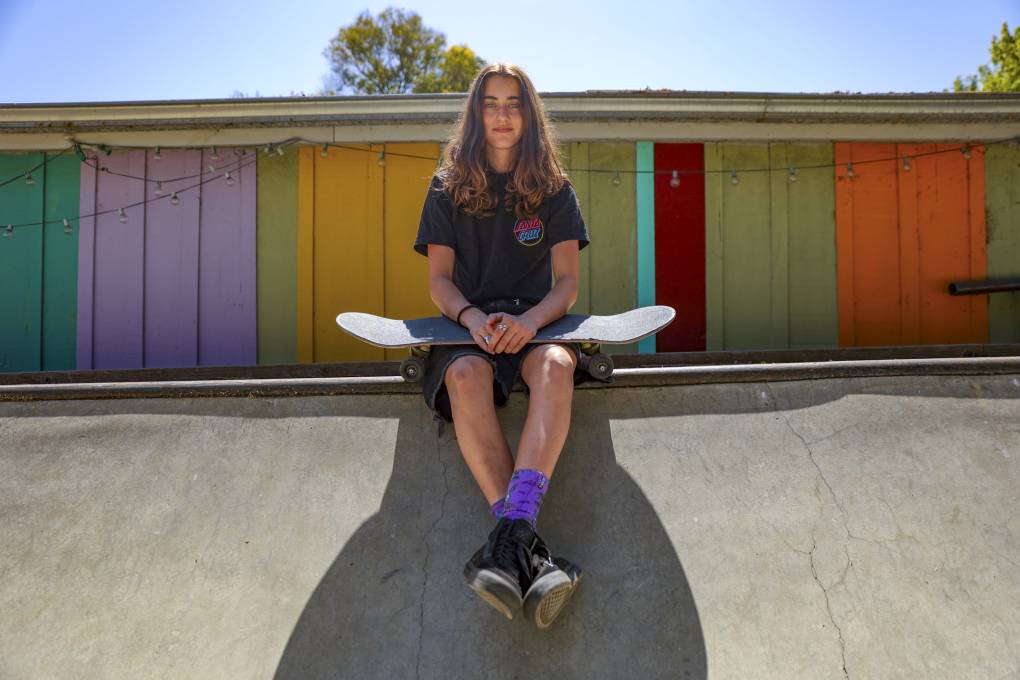
"caption": "Minna Stess in her backyard in Petaluma on July 22, 2024, before heading to the 2024 Summer Olympics to represent the U.S. in women’s skateboarding.",
"credit": "Gina Castro/KQED",
"altTag": null,
"description": null,
"imgSizes": {
"medium": {
"file": "https://cdn.kqed.org/wp-content/uploads/sites/2/2024/07/20240722_MINNASTESS_GC-3-KQED-800x533.jpg",
"width": 800,
"height": 533,
"mimeType": "image/jpeg"
},
"large": {
"file": "https://cdn.kqed.org/wp-content/uploads/sites/2/2024/07/20240722_MINNASTESS_GC-3-KQED-1020x680.jpg",
"width": 1020,
"height": 680,
"mimeType": "image/jpeg"
},
"thumbnail": {
"file": "https://cdn.kqed.org/wp-content/uploads/sites/2/2024/07/20240722_MINNASTESS_GC-3-KQED-160x107.jpg",
"width": 160,
"height": 107,
"mimeType": "image/jpeg"
},
"medium_large": {
"file": "https://cdn.kqed.org/wp-content/uploads/sites/2/2024/07/20240722_MINNASTESS_GC-3-KQED-768x512.jpg",
"width": 768,
"height": 512,
"mimeType": "image/jpeg"
},
"1536x1536": {
"file": "https://cdn.kqed.org/wp-content/uploads/sites/2/2024/07/20240722_MINNASTESS_GC-3-KQED-1536x1024.jpg",
"width": 1536,
"height": 1024,
"mimeType": "image/jpeg"
},
"post-thumbnail": {
"file": "https://cdn.kqed.org/wp-content/uploads/sites/2/2024/07/20240722_MINNASTESS_GC-3-KQED-672x372.jpg",
"width": 672,
"height": 372,
"mimeType": "image/jpeg"
},
"twentyfourteen-full-width": {
"file": "https://cdn.kqed.org/wp-content/uploads/sites/2/2024/07/20240722_MINNASTESS_GC-3-KQED-1038x576.jpg",
"width": 1038,
"height": 576,
"mimeType": "image/jpeg"
},
"full-width": {
"file": "https://cdn.kqed.org/wp-content/uploads/sites/2/2024/07/20240722_MINNASTESS_GC-3-KQED-1920x1280.jpg",
"width": 1920,
"height": 1280,
"mimeType": "image/jpeg"
},
"kqedFullSize": {
"file": "https://cdn.kqed.org/wp-content/uploads/sites/2/2024/07/20240722_MINNASTESS_GC-3-KQED.jpg",
"width": 2000,
"height": 1333
}
},
"isLoading": false,
"fetchFailed": false
},
"arts_13910587": {
"type": "attachments",
"id": "arts_13910587",
"meta": {
"index": "attachments_1716263798",
"site": "arts",
"id": "13910587",
"found": true
},
"parent": 13910584,
"imgSizes": {
"twentyfourteen-full-width": {
"file": "https://ww2.kqed.org/app/uploads/sites/2/2022/03/gettyimages-2027117_custom-2181d67add624f6397aacad0cc66dd5fd4073b11-1038x576.jpg",
"width": 1038,
"mimeType": "image/jpeg",
"height": 576
},
"thumbnail": {
"file": "https://ww2.kqed.org/app/uploads/sites/2/2022/03/gettyimages-2027117_custom-2181d67add624f6397aacad0cc66dd5fd4073b11-160x109.jpg",
"width": 160,
"mimeType": "image/jpeg",
"height": 109
},
"post-thumbnail": {
"file": "https://ww2.kqed.org/app/uploads/sites/2/2022/03/gettyimages-2027117_custom-2181d67add624f6397aacad0cc66dd5fd4073b11-672x372.jpg",
"width": 672,
"mimeType": "image/jpeg",
"height": 372
},
"kqedFullSize": {
"file": "https://ww2.kqed.org/app/uploads/sites/2/2022/03/gettyimages-2027117_custom-2181d67add624f6397aacad0cc66dd5fd4073b11-scaled.jpg",
"width": 2560,
"height": 1743
},
"2048x2048": {
"file": "https://ww2.kqed.org/app/uploads/sites/2/2022/03/gettyimages-2027117_custom-2181d67add624f6397aacad0cc66dd5fd4073b11-2048x1395.jpg",
"width": 2048,
"mimeType": "image/jpeg",
"height": 1395
},
"large": {
"file": "https://ww2.kqed.org/app/uploads/sites/2/2022/03/gettyimages-2027117_custom-2181d67add624f6397aacad0cc66dd5fd4073b11-1020x695.jpg",
"width": 1020,
"mimeType": "image/jpeg",
"height": 695
},
"1536x1536": {
"file": "https://ww2.kqed.org/app/uploads/sites/2/2022/03/gettyimages-2027117_custom-2181d67add624f6397aacad0cc66dd5fd4073b11-1536x1046.jpg",
"width": 1536,
"mimeType": "image/jpeg",
"height": 1046
},
"full-width": {
"file": "https://ww2.kqed.org/app/uploads/sites/2/2022/03/gettyimages-2027117_custom-2181d67add624f6397aacad0cc66dd5fd4073b11-1920x1308.jpg",
"width": 1920,
"mimeType": "image/jpeg",
"height": 1308
},
"medium": {
"file": "https://ww2.kqed.org/app/uploads/sites/2/2022/03/gettyimages-2027117_custom-2181d67add624f6397aacad0cc66dd5fd4073b11-800x545.jpg",
"width": 800,
"mimeType": "image/jpeg",
"height": 545
},
"medium_large": {
"file": "https://ww2.kqed.org/app/uploads/sites/2/2022/03/gettyimages-2027117_custom-2181d67add624f6397aacad0cc66dd5fd4073b11-768x523.jpg",
"width": 768,
"mimeType": "image/jpeg",
"height": 523
}
},
"publishDate": 1647363331,
"modified": 1647363984,
"caption": "Russian President Vladimir Putin meets with Paul McCartney during their meeting at the Kremlin on May 24, 2003 in Moscow.",
"description": null,
"title": "Russian President Vladimir Putin meets with Paul McCartney during their meeting at the Kremlin on May 24, 2003 in Moscow.",
"credit": "Getty Images",
"status": "inherit",
"altTag": null,
"isLoading": false,
"fetchFailed": false
},
"arts_13909461": {
"type": "attachments",
"id": "arts_13909461",
"meta": {
"index": "attachments_1716263798",
"site": "arts",
"id": "13909461",
"found": true
},
"parent": 13909460,
"imgSizes": {
"twentyfourteen-full-width": {
"file": "https://ww2.kqed.org/app/uploads/sites/2/2022/02/image-from-ios_custom-1492dcda346a8388d28a68ee002da7da6f11387e-1038x576.jpg",
"width": 1038,
"mimeType": "image/jpeg",
"height": 576
},
"thumbnail": {
"file": "https://ww2.kqed.org/app/uploads/sites/2/2022/02/image-from-ios_custom-1492dcda346a8388d28a68ee002da7da6f11387e-160x99.jpg",
"width": 160,
"mimeType": "image/jpeg",
"height": 99
},
"post-thumbnail": {
"file": "https://ww2.kqed.org/app/uploads/sites/2/2022/02/image-from-ios_custom-1492dcda346a8388d28a68ee002da7da6f11387e-672x372.jpg",
"width": 672,
"mimeType": "image/jpeg",
"height": 372
},
"kqedFullSize": {
"file": "https://ww2.kqed.org/app/uploads/sites/2/2022/02/image-from-ios_custom-1492dcda346a8388d28a68ee002da7da6f11387e-scaled-e1644957929301.jpg",
"width": 1920,
"height": 1192
},
"2048x2048": {
"file": "https://ww2.kqed.org/app/uploads/sites/2/2022/02/image-from-ios_custom-1492dcda346a8388d28a68ee002da7da6f11387e-2048x1271.jpg",
"width": 2048,
"mimeType": "image/jpeg",
"height": 1271
},
"large": {
"file": "https://ww2.kqed.org/app/uploads/sites/2/2022/02/image-from-ios_custom-1492dcda346a8388d28a68ee002da7da6f11387e-1020x633.jpg",
"width": 1020,
"mimeType": "image/jpeg",
"height": 633
},
"1536x1536": {
"file": "https://ww2.kqed.org/app/uploads/sites/2/2022/02/image-from-ios_custom-1492dcda346a8388d28a68ee002da7da6f11387e-1536x954.jpg",
"width": 1536,
"mimeType": "image/jpeg",
"height": 954
},
"full-width": {
"file": "https://ww2.kqed.org/app/uploads/sites/2/2022/02/image-from-ios_custom-1492dcda346a8388d28a68ee002da7da6f11387e-1920x1192.jpg",
"width": 1920,
"mimeType": "image/jpeg",
"height": 1192
},
"medium": {
"file": "https://ww2.kqed.org/app/uploads/sites/2/2022/02/image-from-ios_custom-1492dcda346a8388d28a68ee002da7da6f11387e-800x497.jpg",
"width": 800,
"mimeType": "image/jpeg",
"height": 497
},
"medium_large": {
"file": "https://ww2.kqed.org/app/uploads/sites/2/2022/02/image-from-ios_custom-1492dcda346a8388d28a68ee002da7da6f11387e-768x477.jpg",
"width": 768,
"mimeType": "image/jpeg",
"height": 477
}
},
"publishDate": 1644957187,
"modified": 1644957989,
"caption": "A positive drug test denied U.S. sprinter Sha'Carri Richardson a chance to compete in the Tokyo Games; Russian skater Kamila Valieva has had an entirely different experience.",
"description": null,
"title": "A positive drug test denied U.S. sprinter Sha'Carri Richardson a chance to compete in the Tokyo Games; Russian skater Kamila Valieva has had a different experience.",
"credit": "Jonathan Ferrey/Getty Images; Matthew Stockman/Getty Images",
"status": "inherit",
"altTag": null,
"isLoading": false,
"fetchFailed": false
},
"arts_13909206": {
"type": "attachments",
"id": "arts_13909206",
"meta": {
"index": "attachments_1716263798",
"site": "arts",
"id": "13909206",
"found": true
},
"parent": 13909205,
"imgSizes": {
"twentyfourteen-full-width": {
"file": "https://ww2.kqed.org/app/uploads/sites/2/2022/02/kamila-valieva-doping-test-figure-skating-olympics_wide-5c5bae30938c828faaa361acdc20556e1fa025c1-1038x576.jpg",
"width": 1038,
"mimeType": "image/jpeg",
"height": 576
},
"thumbnail": {
"file": "https://ww2.kqed.org/app/uploads/sites/2/2022/02/kamila-valieva-doping-test-figure-skating-olympics_wide-5c5bae30938c828faaa361acdc20556e1fa025c1-160x90.jpg",
"width": 160,
"mimeType": "image/jpeg",
"height": 90
},
"post-thumbnail": {
"file": "https://ww2.kqed.org/app/uploads/sites/2/2022/02/kamila-valieva-doping-test-figure-skating-olympics_wide-5c5bae30938c828faaa361acdc20556e1fa025c1-672x372.jpg",
"width": 672,
"mimeType": "image/jpeg",
"height": 372
},
"kqedFullSize": {
"file": "https://ww2.kqed.org/app/uploads/sites/2/2022/02/kamila-valieva-doping-test-figure-skating-olympics_wide-5c5bae30938c828faaa361acdc20556e1fa025c1-scaled-e1644518913336.jpg",
"width": 1920,
"height": 1080
},
"2048x2048": {
"file": "https://ww2.kqed.org/app/uploads/sites/2/2022/02/kamila-valieva-doping-test-figure-skating-olympics_wide-5c5bae30938c828faaa361acdc20556e1fa025c1-2048x1152.jpg",
"width": 2048,
"mimeType": "image/jpeg",
"height": 1152
},
"large": {
"file": "https://ww2.kqed.org/app/uploads/sites/2/2022/02/kamila-valieva-doping-test-figure-skating-olympics_wide-5c5bae30938c828faaa361acdc20556e1fa025c1-1020x574.jpg",
"width": 1020,
"mimeType": "image/jpeg",
"height": 574
},
"1536x1536": {
"file": "https://ww2.kqed.org/app/uploads/sites/2/2022/02/kamila-valieva-doping-test-figure-skating-olympics_wide-5c5bae30938c828faaa361acdc20556e1fa025c1-1536x864.jpg",
"width": 1536,
"mimeType": "image/jpeg",
"height": 864
},
"full-width": {
"file": "https://ww2.kqed.org/app/uploads/sites/2/2022/02/kamila-valieva-doping-test-figure-skating-olympics_wide-5c5bae30938c828faaa361acdc20556e1fa025c1-1920x1080.jpg",
"width": 1920,
"mimeType": "image/jpeg",
"height": 1080
},
"medium": {
"file": "https://ww2.kqed.org/app/uploads/sites/2/2022/02/kamila-valieva-doping-test-figure-skating-olympics_wide-5c5bae30938c828faaa361acdc20556e1fa025c1-800x450.jpg",
"width": 800,
"mimeType": "image/jpeg",
"height": 450
},
"medium_large": {
"file": "https://ww2.kqed.org/app/uploads/sites/2/2022/02/kamila-valieva-doping-test-figure-skating-olympics_wide-5c5bae30938c828faaa361acdc20556e1fa025c1-768x432.jpg",
"width": 768,
"mimeType": "image/jpeg",
"height": 432
}
},
"publishDate": 1644518303,
"modified": 1644518978,
"caption": "Kamila Valieva of Team ROC reacts during the free skating team event at the Beijing 2022 Winter Olympics. Despite finishing first, Valieva and her teammates have yet to receive their medals.",
"description": null,
"title": "Kamila Valieva of Team ROC reacts during the free skating team event at the Beijing 2022 Winter Olympics. Despite finishing first, Valieva and her teammates have yet to receive their medals.",
"credit": null,
"status": "inherit",
"altTag": "A figure skater, in black and red costume and red gloves pauses on the ice, one hand raised to her forehead.",
"isLoading": false,
"fetchFailed": false
},
"arts_13904011": {
"type": "attachments",
"id": "arts_13904011",
"meta": {
"index": "attachments_1716263798",
"site": "arts",
"id": "13904011",
"found": true
},
"parent": 13904009,
"imgSizes": {
"twentyfourteen-full-width": {
"file": "https://ww2.kqed.org/app/uploads/sites/2/2021/09/Image-from-iOS-15-1038x576.jpg",
"width": 1038,
"mimeType": "image/jpeg",
"height": 576
},
"thumbnail": {
"file": "https://ww2.kqed.org/app/uploads/sites/2/2021/09/Image-from-iOS-15-160x107.jpg",
"width": 160,
"mimeType": "image/jpeg",
"height": 107
},
"post-thumbnail": {
"file": "https://ww2.kqed.org/app/uploads/sites/2/2021/09/Image-from-iOS-15-672x372.jpg",
"width": 672,
"mimeType": "image/jpeg",
"height": 372
},
"kqedFullSize": {
"file": "https://ww2.kqed.org/app/uploads/sites/2/2021/09/Image-from-iOS-15.jpg",
"width": 1616,
"height": 1080
},
"large": {
"file": "https://ww2.kqed.org/app/uploads/sites/2/2021/09/Image-from-iOS-15-1020x682.jpg",
"width": 1020,
"mimeType": "image/jpeg",
"height": 682
},
"1536x1536": {
"file": "https://ww2.kqed.org/app/uploads/sites/2/2021/09/Image-from-iOS-15-1536x1027.jpg",
"width": 1536,
"mimeType": "image/jpeg",
"height": 1027
},
"medium": {
"file": "https://ww2.kqed.org/app/uploads/sites/2/2021/09/Image-from-iOS-15-800x535.jpg",
"width": 800,
"mimeType": "image/jpeg",
"height": 535
},
"medium_large": {
"file": "https://ww2.kqed.org/app/uploads/sites/2/2021/09/Image-from-iOS-15-768x513.jpg",
"width": 768,
"mimeType": "image/jpeg",
"height": 513
}
},
"publishDate": 1633035919,
"modified": 1633036190,
"caption": "\"Dynamite\" Daisy Bamberger looks directly into the camera as she drapes her arms over the boxing ring ropes while wearing boxing gloves. ",
"description": null,
"title": "\"Dynamite\" Daisy Bamberger looks directly into the camera as she drapes her arms over the boxing ring ropes while wearing boxing gloves.",
"credit": "Pendarvis Harshaw",
"status": "inherit",
"altTag": "\"Dynamite\" Daisy Bamberger looks directly into the camera as she drapes her arms over the boxing ring ropes while wearing boxing gloves.",
"isLoading": false,
"fetchFailed": false
},
"arts_13901752": {
"type": "attachments",
"id": "arts_13901752",
"meta": {
"index": "attachments_1716263798",
"site": "arts",
"id": "13901752",
"found": true
},
"parent": 13901751,
"imgSizes": {
"twentyfourteen-full-width": {
"file": "https://ww2.kqed.org/app/uploads/sites/2/2021/08/gettyimages-1336112145-0cdc939a1db5fa9fc52ca5207844cf4f62e91992-1038x576.jpg",
"width": 1038,
"mimeType": "image/jpeg",
"height": 576
},
"thumbnail": {
"file": "https://ww2.kqed.org/app/uploads/sites/2/2021/08/gettyimages-1336112145-0cdc939a1db5fa9fc52ca5207844cf4f62e91992-160x120.jpg",
"width": 160,
"mimeType": "image/jpeg",
"height": 120
},
"post-thumbnail": {
"file": "https://ww2.kqed.org/app/uploads/sites/2/2021/08/gettyimages-1336112145-0cdc939a1db5fa9fc52ca5207844cf4f62e91992-672x372.jpg",
"width": 672,
"mimeType": "image/jpeg",
"height": 372
},
"kqedFullSize": {
"file": "https://ww2.kqed.org/app/uploads/sites/2/2021/08/gettyimages-1336112145-0cdc939a1db5fa9fc52ca5207844cf4f62e91992-scaled-e1629834852182.jpg",
"width": 1920,
"height": 1440
},
"2048x2048": {
"file": "https://ww2.kqed.org/app/uploads/sites/2/2021/08/gettyimages-1336112145-0cdc939a1db5fa9fc52ca5207844cf4f62e91992-2048x1536.jpg",
"width": 2048,
"mimeType": "image/jpeg",
"height": 1536
},
"large": {
"file": "https://ww2.kqed.org/app/uploads/sites/2/2021/08/gettyimages-1336112145-0cdc939a1db5fa9fc52ca5207844cf4f62e91992-1020x765.jpg",
"width": 1020,
"mimeType": "image/jpeg",
"height": 765
},
"1536x1536": {
"file": "https://ww2.kqed.org/app/uploads/sites/2/2021/08/gettyimages-1336112145-0cdc939a1db5fa9fc52ca5207844cf4f62e91992-1536x1152.jpg",
"width": 1536,
"mimeType": "image/jpeg",
"height": 1152
},
"full-width": {
"file": "https://ww2.kqed.org/app/uploads/sites/2/2021/08/gettyimages-1336112145-0cdc939a1db5fa9fc52ca5207844cf4f62e91992-1920x1440.jpg",
"width": 1920,
"mimeType": "image/jpeg",
"height": 1440
},
"medium": {
"file": "https://ww2.kqed.org/app/uploads/sites/2/2021/08/gettyimages-1336112145-0cdc939a1db5fa9fc52ca5207844cf4f62e91992-800x600.jpg",
"width": 800,
"mimeType": "image/jpeg",
"height": 600
},
"medium_large": {
"file": "https://ww2.kqed.org/app/uploads/sites/2/2021/08/gettyimages-1336112145-0cdc939a1db5fa9fc52ca5207844cf4f62e91992-768x576.jpg",
"width": 768,
"mimeType": "image/jpeg",
"height": 576
}
},
"publishDate": 1629833444,
"modified": 1629834909,
"caption": "Flag bearers Melissa Stockwell and Charles Aoki of Team USA lead their delegation in the parade of athletes during the opening ceremony of the Tokyo 2020 Paralympic Games on August 24, 2021 in Tokyo, Japan.",
"description": "Flag bearers Melissa Stockwell and Charles Aoki of Team USA lead their delegation in the parade of athletes during the opening ceremony of the Tokyo 2020 Paralympic Games on August 24, 2021 in Tokyo, Japan.",
"title": "Flag bearers Melissa Stockwell and Charles Aoki of Team USA lead their delegation in the parade of athletes during the opening ceremony of the Tokyo 2020 Paralympic Games on August 24, 2021 in Tokyo, Japan.",
"credit": "Tasos Katopodis/Getty Images",
"status": "inherit",
"altTag": "Flag bearers Melissa Stockwell and Charles Aoki of Team USA lead their delegation in the parade of athletes during the opening ceremony of the Tokyo 2020 Paralympic Games on August 24, 2021 in Tokyo, Japan.",
"isLoading": false,
"fetchFailed": false
},
"arts_13901010": {
"type": "attachments",
"id": "arts_13901010",
"meta": {
"index": "attachments_1716263798",
"site": "arts",
"id": "13901010",
"found": true
},
"parent": 13901002,
"imgSizes": {
"twentyfourteen-full-width": {
"file": "https://ww2.kqed.org/app/uploads/sites/2/2021/08/GettyImages-1234425626-1038x576.jpg",
"width": 1038,
"mimeType": "image/jpeg",
"height": 576
},
"thumbnail": {
"file": "https://ww2.kqed.org/app/uploads/sites/2/2021/08/GettyImages-1234425626-160x108.jpg",
"width": 160,
"mimeType": "image/jpeg",
"height": 108
},
"post-thumbnail": {
"file": "https://ww2.kqed.org/app/uploads/sites/2/2021/08/GettyImages-1234425626-672x372.jpg",
"width": 672,
"mimeType": "image/jpeg",
"height": 372
},
"kqedFullSize": {
"file": "https://ww2.kqed.org/app/uploads/sites/2/2021/08/GettyImages-1234425626-scaled.jpg",
"width": 2560,
"height": 1733
},
"2048x2048": {
"file": "https://ww2.kqed.org/app/uploads/sites/2/2021/08/GettyImages-1234425626-2048x1387.jpg",
"width": 2048,
"mimeType": "image/jpeg",
"height": 1387
},
"large": {
"file": "https://ww2.kqed.org/app/uploads/sites/2/2021/08/GettyImages-1234425626-1020x691.jpg",
"width": 1020,
"mimeType": "image/jpeg",
"height": 691
},
"1536x1536": {
"file": "https://ww2.kqed.org/app/uploads/sites/2/2021/08/GettyImages-1234425626-1536x1040.jpg",
"width": 1536,
"mimeType": "image/jpeg",
"height": 1040
},
"full-width": {
"file": "https://ww2.kqed.org/app/uploads/sites/2/2021/08/GettyImages-1234425626-1920x1300.jpg",
"width": 1920,
"mimeType": "image/jpeg",
"height": 1300
},
"medium": {
"file": "https://ww2.kqed.org/app/uploads/sites/2/2021/08/GettyImages-1234425626-800x542.jpg",
"width": 800,
"mimeType": "image/jpeg",
"height": 542
},
"medium_large": {
"file": "https://ww2.kqed.org/app/uploads/sites/2/2021/08/GettyImages-1234425626-768x520.jpg",
"width": 768,
"mimeType": "image/jpeg",
"height": 520
}
},
"publishDate": 1628628741,
"modified": 1628628851,
"caption": "USA's Anita Alvarez and Lindi Schroeder compete in the women's artistic swimming event, Tokyo Olympics, 2021.",
"description": "USA's Anita Alvarez and Lindi Schroeder compete in the women's artistic swimming event, Tokyo Olympics, 2021.",
"title": "USA's Anita Alvarez and Lindi Schroeder compete in the women's artistic swimming event, Tokyo Olympics, 2021.",
"credit": "ATTILA KISBENEDEK/AFP via Getty Images",
"status": "inherit",
"altTag": "USA's Anita Alvarez and Lindi Schroeder compete in the women's artistic swimming event, Tokyo Olympics, 2021.",
"isLoading": false,
"fetchFailed": false
},
"arts_13900875": {
"type": "attachments",
"id": "arts_13900875",
"meta": {
"index": "attachments_1716263798",
"site": "arts",
"id": "13900875",
"found": true
},
"parent": 13900867,
"imgSizes": {
"twentyfourteen-full-width": {
"file": "https://ww2.kqed.org/app/uploads/sites/2/2021/08/GettyImages-1234334591-1038x576.jpg",
"width": 1038,
"mimeType": "image/jpeg",
"height": 576
},
"thumbnail": {
"file": "https://ww2.kqed.org/app/uploads/sites/2/2021/08/GettyImages-1234334591-160x107.jpg",
"width": 160,
"mimeType": "image/jpeg",
"height": 107
},
"post-thumbnail": {
"file": "https://ww2.kqed.org/app/uploads/sites/2/2021/08/GettyImages-1234334591-672x372.jpg",
"width": 672,
"mimeType": "image/jpeg",
"height": 372
},
"kqedFullSize": {
"file": "https://ww2.kqed.org/app/uploads/sites/2/2021/08/GettyImages-1234334591-scaled.jpg",
"width": 2560,
"height": 1707
},
"2048x2048": {
"file": "https://ww2.kqed.org/app/uploads/sites/2/2021/08/GettyImages-1234334591-2048x1365.jpg",
"width": 2048,
"mimeType": "image/jpeg",
"height": 1365
},
"large": {
"file": "https://ww2.kqed.org/app/uploads/sites/2/2021/08/GettyImages-1234334591-1020x680.jpg",
"width": 1020,
"mimeType": "image/jpeg",
"height": 680
},
"1536x1536": {
"file": "https://ww2.kqed.org/app/uploads/sites/2/2021/08/GettyImages-1234334591-1536x1024.jpg",
"width": 1536,
"mimeType": "image/jpeg",
"height": 1024
},
"full-width": {
"file": "https://ww2.kqed.org/app/uploads/sites/2/2021/08/GettyImages-1234334591-1920x1280.jpg",
"width": 1920,
"mimeType": "image/jpeg",
"height": 1280
},
"medium": {
"file": "https://ww2.kqed.org/app/uploads/sites/2/2021/08/GettyImages-1234334591-800x533.jpg",
"width": 800,
"mimeType": "image/jpeg",
"height": 533
},
"medium_large": {
"file": "https://ww2.kqed.org/app/uploads/sites/2/2021/08/GettyImages-1234334591-768x512.jpg",
"width": 768,
"mimeType": "image/jpeg",
"height": 512
}
},
"publishDate": 1628292642,
"modified": 1628292747,
"caption": "Britain's Tom McEwen riding Toledo de Kerser in the individual dressage competition at the Tokyo Olympics, July 31, 2021. ",
"description": "Britain's Tom McEwen riding Toledo de Kerser in the individual dressage competition at the Tokyo Olympics, July 31, 2021. ",
"title": "Britain's Tom McEwen riding Toledo de Kerser in the individual dressage competition at the Tokyo Olympics, July 31, 2021.",
"credit": "Behrouz MEHRI / AFP) (Photo by BEHROUZ MEHRI/AFP via Getty Images",
"status": "inherit",
"altTag": "Britain's Tom McEwen riding Toledo de Kerser in the individual dressage competition at the Tokyo Olympics, July 31, 2021.",
"isLoading": false,
"fetchFailed": false
},
"arts_13900481": {
"type": "attachments",
"id": "arts_13900481",
"meta": {
"index": "attachments_1716263798",
"site": "arts",
"id": "13900481",
"found": true
},
"parent": 13900480,
"imgSizes": {
"twentyfourteen-full-width": {
"file": "https://ww2.kqed.org/app/uploads/sites/2/2021/07/ZhangYufeiSwim-e2448ca9fc969a5ca6c2a7a3b97ca15aa6c4b5e5-1038x576.jpg",
"width": 1038,
"mimeType": "image/jpeg",
"height": 576
},
"thumbnail": {
"file": "https://ww2.kqed.org/app/uploads/sites/2/2021/07/ZhangYufeiSwim-e2448ca9fc969a5ca6c2a7a3b97ca15aa6c4b5e5-160x120.jpg",
"width": 160,
"mimeType": "image/jpeg",
"height": 120
},
"post-thumbnail": {
"file": "https://ww2.kqed.org/app/uploads/sites/2/2021/07/ZhangYufeiSwim-e2448ca9fc969a5ca6c2a7a3b97ca15aa6c4b5e5-672x372.jpg",
"width": 672,
"mimeType": "image/jpeg",
"height": 372
},
"kqedFullSize": {
"file": "https://ww2.kqed.org/app/uploads/sites/2/2021/07/ZhangYufeiSwim-e2448ca9fc969a5ca6c2a7a3b97ca15aa6c4b5e5-scaled-e1627668379646.jpg",
"width": 1920,
"height": 1439
},
"2048x2048": {
"file": "https://ww2.kqed.org/app/uploads/sites/2/2021/07/ZhangYufeiSwim-e2448ca9fc969a5ca6c2a7a3b97ca15aa6c4b5e5-2048x1536.jpg",
"width": 2048,
"mimeType": "image/jpeg",
"height": 1536
},
"large": {
"file": "https://ww2.kqed.org/app/uploads/sites/2/2021/07/ZhangYufeiSwim-e2448ca9fc969a5ca6c2a7a3b97ca15aa6c4b5e5-1020x765.jpg",
"width": 1020,
"mimeType": "image/jpeg",
"height": 765
},
"1536x1536": {
"file": "https://ww2.kqed.org/app/uploads/sites/2/2021/07/ZhangYufeiSwim-e2448ca9fc969a5ca6c2a7a3b97ca15aa6c4b5e5-1536x1152.jpg",
"width": 1536,
"mimeType": "image/jpeg",
"height": 1152
},
"full-width": {
"file": "https://ww2.kqed.org/app/uploads/sites/2/2021/07/ZhangYufeiSwim-e2448ca9fc969a5ca6c2a7a3b97ca15aa6c4b5e5-1920x1440.jpg",
"width": 1920,
"mimeType": "image/jpeg",
"height": 1440
},
"medium": {
"file": "https://ww2.kqed.org/app/uploads/sites/2/2021/07/ZhangYufeiSwim-e2448ca9fc969a5ca6c2a7a3b97ca15aa6c4b5e5-800x600.jpg",
"width": 800,
"mimeType": "image/jpeg",
"height": 600
},
"medium_large": {
"file": "https://ww2.kqed.org/app/uploads/sites/2/2021/07/ZhangYufeiSwim-e2448ca9fc969a5ca6c2a7a3b97ca15aa6c4b5e5-768x576.jpg",
"width": 768,
"mimeType": "image/jpeg",
"height": 576
}
},
"publishDate": 1627668096,
"modified": 1627668412,
"caption": "Zhang Yufei of China swims toward an Olympic record and gold medal in the women's 200-meter butterfly final at the Tokyo Olympics.",
"description": "Zhang Yufei of China swims toward an Olympic record and gold medal in the women's 200-meter butterfly final at the Tokyo Olympics.",
"title": "Zhang Yufei of China swims toward an Olympic record and gold medal in the women's 200-meter butterfly final at the Tokyo Olympics.",
"credit": "Charlie Riedel/AP",
"status": "inherit",
"altTag": "Zhang Yufei of China swims toward an Olympic record and gold medal in the women's 200-meter butterfly final at the Tokyo Olympics.",
"isLoading": false,
"fetchFailed": false
},
"arts_13900278": {
"type": "attachments",
"id": "arts_13900278",
"meta": {
"index": "attachments_1716263798",
"site": "arts",
"id": "13900278",
"found": true
},
"parent": 13900276,
"imgSizes": {
"twentyfourteen-full-width": {
"file": "https://ww2.kqed.org/app/uploads/sites/2/2021/07/gettyimages-1237540-e04381055b7f46f786259b83c9369dca3aa106ad-1038x576.jpg",
"width": 1038,
"mimeType": "image/jpeg",
"height": 576
},
"thumbnail": {
"file": "https://ww2.kqed.org/app/uploads/sites/2/2021/07/gettyimages-1237540-e04381055b7f46f786259b83c9369dca3aa106ad-160x120.jpg",
"width": 160,
"mimeType": "image/jpeg",
"height": 120
},
"post-thumbnail": {
"file": "https://ww2.kqed.org/app/uploads/sites/2/2021/07/gettyimages-1237540-e04381055b7f46f786259b83c9369dca3aa106ad-672x372.jpg",
"width": 672,
"mimeType": "image/jpeg",
"height": 372
},
"kqedFullSize": {
"file": "https://ww2.kqed.org/app/uploads/sites/2/2021/07/gettyimages-1237540-e04381055b7f46f786259b83c9369dca3aa106ad-scaled.jpg",
"width": 2560,
"height": 1920
},
"2048x2048": {
"file": "https://ww2.kqed.org/app/uploads/sites/2/2021/07/gettyimages-1237540-e04381055b7f46f786259b83c9369dca3aa106ad-2048x1536.jpg",
"width": 2048,
"mimeType": "image/jpeg",
"height": 1536
},
"large": {
"file": "https://ww2.kqed.org/app/uploads/sites/2/2021/07/gettyimages-1237540-e04381055b7f46f786259b83c9369dca3aa106ad-1020x765.jpg",
"width": 1020,
"mimeType": "image/jpeg",
"height": 765
},
"1536x1536": {
"file": "https://ww2.kqed.org/app/uploads/sites/2/2021/07/gettyimages-1237540-e04381055b7f46f786259b83c9369dca3aa106ad-1536x1152.jpg",
"width": 1536,
"mimeType": "image/jpeg",
"height": 1152
},
"full-width": {
"file": "https://ww2.kqed.org/app/uploads/sites/2/2021/07/gettyimages-1237540-e04381055b7f46f786259b83c9369dca3aa106ad-1920x1440.jpg",
"width": 1920,
"mimeType": "image/jpeg",
"height": 1440
},
"medium": {
"file": "https://ww2.kqed.org/app/uploads/sites/2/2021/07/gettyimages-1237540-e04381055b7f46f786259b83c9369dca3aa106ad-800x600.jpg",
"width": 800,
"mimeType": "image/jpeg",
"height": 600
},
"medium_large": {
"file": "https://ww2.kqed.org/app/uploads/sites/2/2021/07/gettyimages-1237540-e04381055b7f46f786259b83c9369dca3aa106ad-768x576.jpg",
"width": 768,
"mimeType": "image/jpeg",
"height": 576
}
},
"publishDate": 1627318036,
"modified": 1627318409,
"caption": "1960 Olympic decathlete gold medallist Rafer Johnson of the United States after climbing the stairs of the Memorial Coliseum prepares to light the Olympic flame during the opening ceremony for the XXIII Olympic Games on 28 July 1984 at the Los Angeles Memorial Coliseum in Los Angeles, California, United States. ",
"description": "1960 Olympic decathlete gold medallist Rafer Johnson of the United States after climbing the stairs of the Memorial Coliseum prepares to light the Olympic flame during the opening ceremony for the XXIII Olympic Games on 28 July 1984 at the Los Angeles Memorial Coliseum in Los Angeles, California, United States. (Photo by Tony Duffy/Allsport//Getty Images)",
"title": "The XXIII Olympic Games on 28 July 1984 at the Los Angeles Memorial Coliseum in Los Angeles.",
"credit": "Tony Duffy/Allsport//Getty Images",
"status": "inherit",
"altTag": "1960 Olympic decathlete gold medallist Rafer Johnson of the United States after climbing the stairs of the Memorial Coliseum prepares to light the Olympic flame during the opening ceremony for the XXIII Olympic Games on 28 July 1984 at the Los Angeles Memorial Coliseum in Los Angeles, California, United States.",
"isLoading": false,
"fetchFailed": false
},
"arts_13899841": {
"type": "attachments",
"id": "arts_13899841",
"meta": {
"index": "attachments_1716263798",
"site": "arts",
"id": "13899841",
"found": true
},
"parent": 13899840,
"imgSizes": {
"twentyfourteen-full-width": {
"file": "https://ww2.kqed.org/app/uploads/sites/2/2021/07/gettyimages-1325144528_custom-222fefa625e92c6de8d11dfc84cbf0ffdbae9102-1038x576.jpg",
"width": 1038,
"mimeType": "image/jpeg",
"height": 576
},
"thumbnail": {
"file": "https://ww2.kqed.org/app/uploads/sites/2/2021/07/gettyimages-1325144528_custom-222fefa625e92c6de8d11dfc84cbf0ffdbae9102-160x107.jpg",
"width": 160,
"mimeType": "image/jpeg",
"height": 107
},
"post-thumbnail": {
"file": "https://ww2.kqed.org/app/uploads/sites/2/2021/07/gettyimages-1325144528_custom-222fefa625e92c6de8d11dfc84cbf0ffdbae9102-672x372.jpg",
"width": 672,
"mimeType": "image/jpeg",
"height": 372
},
"kqedFullSize": {
"file": "https://ww2.kqed.org/app/uploads/sites/2/2021/07/gettyimages-1325144528_custom-222fefa625e92c6de8d11dfc84cbf0ffdbae9102-scaled.jpg",
"width": 2560,
"height": 1705
},
"2048x2048": {
"file": "https://ww2.kqed.org/app/uploads/sites/2/2021/07/gettyimages-1325144528_custom-222fefa625e92c6de8d11dfc84cbf0ffdbae9102-2048x1364.jpg",
"width": 2048,
"mimeType": "image/jpeg",
"height": 1364
},
"large": {
"file": "https://ww2.kqed.org/app/uploads/sites/2/2021/07/gettyimages-1325144528_custom-222fefa625e92c6de8d11dfc84cbf0ffdbae9102-1020x679.jpg",
"width": 1020,
"mimeType": "image/jpeg",
"height": 679
},
"1536x1536": {
"file": "https://ww2.kqed.org/app/uploads/sites/2/2021/07/gettyimages-1325144528_custom-222fefa625e92c6de8d11dfc84cbf0ffdbae9102-1536x1023.jpg",
"width": 1536,
"mimeType": "image/jpeg",
"height": 1023
},
"full-width": {
"file": "https://ww2.kqed.org/app/uploads/sites/2/2021/07/gettyimages-1325144528_custom-222fefa625e92c6de8d11dfc84cbf0ffdbae9102-1920x1279.jpg",
"width": 1920,
"mimeType": "image/jpeg",
"height": 1279
},
"medium": {
"file": "https://ww2.kqed.org/app/uploads/sites/2/2021/07/gettyimages-1325144528_custom-222fefa625e92c6de8d11dfc84cbf0ffdbae9102-800x533.jpg",
"width": 800,
"mimeType": "image/jpeg",
"height": 533
},
"medium_large": {
"file": "https://ww2.kqed.org/app/uploads/sites/2/2021/07/gettyimages-1325144528_custom-222fefa625e92c6de8d11dfc84cbf0ffdbae9102-768x511.jpg",
"width": 768,
"mimeType": "image/jpeg",
"height": 511
}
},
"publishDate": 1625242385,
"modified": 1625242557,
"caption": "Sha'Carri Richardson runs and celebrates in the Women's 100 Meter semifinal on day 2 of the 2020 U.S. Olympic Track & Field Team Trials at Hayward Field on June 19, 2021 in Eugene, Oregon.",
"description": "EUGENE, OREGON - JUNE 19: Sha'Carri Richardson runs and celebrates in the Women's 100 Meter semifinal on day 2 of the 2020 U.S. Olympic Track & Field Team Trials at Hayward Field on June 19, 2021 in Eugene, Oregon. (Photo by Patrick Smith/Getty Images)",
"title": "Sha'Carri Richardson celebrates in the 100-meter semifinal last month at the U.S. Olympic Track & Field Team Trials in Eugene, Ore. However, a positive drug test disqualified her result at the trials.",
"credit": "(Patrick Smith/Getty Images)",
"status": "inherit",
"altTag": "Sha'Carri Richardson runs and celebrates in the Women's 100 Meter semifinal on day 2 of the 2020 U.S. Olympic Track & Field Team Trials at Hayward Field on June 19, 2021 in Eugene, Oregon.",
"isLoading": false,
"fetchFailed": false
},
"arts_13824148": {
"type": "attachments",
"id": "arts_13824148",
"meta": {
"index": "attachments_1716263798",
"site": "arts",
"id": "13824148",
"found": true
},
"parent": 13824147,
"imgSizes": {
"small": {
"file": "https://ww2.kqed.org/app/uploads/sites/2/2018/02/DUzrGotVQAAkU4T-e1518253648827-520x293.jpg",
"width": 520,
"mimeType": "image/jpeg",
"height": 293
},
"twentyfourteen-full-width": {
"file": "https://ww2.kqed.org/app/uploads/sites/2/2018/02/DUzrGotVQAAkU4T-e1518253648827-1038x576.jpg",
"width": 1038,
"mimeType": "image/jpeg",
"height": 576
},
"thumbnail": {
"file": "https://ww2.kqed.org/app/uploads/sites/2/2018/02/DUzrGotVQAAkU4T-e1518253648827-160x90.jpg",
"width": 160,
"mimeType": "image/jpeg",
"height": 90
},
"fd-sm": {
"file": "https://ww2.kqed.org/app/uploads/sites/2/2018/02/DUzrGotVQAAkU4T-e1518253648827-960x540.jpg",
"width": 960,
"mimeType": "image/jpeg",
"height": 540
},
"post-thumbnail": {
"file": "https://ww2.kqed.org/app/uploads/sites/2/2018/02/DUzrGotVQAAkU4T-e1518253648827-672x372.jpg",
"width": 672,
"mimeType": "image/jpeg",
"height": 372
},
"xsmall": {
"file": "https://ww2.kqed.org/app/uploads/sites/2/2018/02/DUzrGotVQAAkU4T-e1518253648827-375x211.jpg",
"width": 375,
"mimeType": "image/jpeg",
"height": 211
},
"kqedFullSize": {
"file": "https://ww2.kqed.org/app/uploads/sites/2/2018/02/DUzrGotVQAAkU4T-e1518253648827.jpg",
"width": 1200,
"height": 675
},
"large": {
"file": "https://ww2.kqed.org/app/uploads/sites/2/2018/02/DUzrGotVQAAkU4T-e1518253648827-1020x574.jpg",
"width": 1020,
"mimeType": "image/jpeg",
"height": 574
},
"xlarge": {
"file": "https://ww2.kqed.org/app/uploads/sites/2/2018/02/DUzrGotVQAAkU4T-e1518253648827-1180x664.jpg",
"width": 1180,
"mimeType": "image/jpeg",
"height": 664
},
"guest-author-50": {
"file": "https://ww2.kqed.org/app/uploads/sites/2/2018/02/DUzrGotVQAAkU4T-e1518253648827-50x50.jpg",
"width": 50,
"mimeType": "image/jpeg",
"height": 50
},
"guest-author-96": {
"file": "https://ww2.kqed.org/app/uploads/sites/2/2018/02/DUzrGotVQAAkU4T-e1518253648827-96x96.jpg",
"width": 96,
"mimeType": "image/jpeg",
"height": 96
},
"medium": {
"file": "https://ww2.kqed.org/app/uploads/sites/2/2018/02/DUzrGotVQAAkU4T-e1518253648827-800x450.jpg",
"width": 800,
"mimeType": "image/jpeg",
"height": 450
},
"guest-author-64": {
"file": "https://ww2.kqed.org/app/uploads/sites/2/2018/02/DUzrGotVQAAkU4T-e1518253648827-64x64.jpg",
"width": 64,
"mimeType": "image/jpeg",
"height": 64
},
"guest-author-32": {
"file": "https://ww2.kqed.org/app/uploads/sites/2/2018/02/DUzrGotVQAAkU4T-e1518253648827-32x32.jpg",
"width": 32,
"mimeType": "image/jpeg",
"height": 32
},
"fd-med": {
"file": "https://ww2.kqed.org/app/uploads/sites/2/2018/02/DUzrGotVQAAkU4T-e1518253648827-1180x664.jpg",
"width": 1180,
"mimeType": "image/jpeg",
"height": 664
},
"detail": {
"file": "https://ww2.kqed.org/app/uploads/sites/2/2018/02/DUzrGotVQAAkU4T-e1518253648827-150x150.jpg",
"width": 150,
"mimeType": "image/jpeg",
"height": 150
},
"medium_large": {
"file": "https://ww2.kqed.org/app/uploads/sites/2/2018/02/DUzrGotVQAAkU4T-e1518253648827-768x432.jpg",
"width": 768,
"mimeType": "image/jpeg",
"height": 432
},
"guest-author-128": {
"file": "https://ww2.kqed.org/app/uploads/sites/2/2018/02/DUzrGotVQAAkU4T-e1518253648827-128x128.jpg",
"width": 128,
"mimeType": "image/jpeg",
"height": 128
},
"xxsmall": {
"file": "https://ww2.kqed.org/app/uploads/sites/2/2018/02/DUzrGotVQAAkU4T-e1518253648827-240x135.jpg",
"width": 240,
"mimeType": "image/jpeg",
"height": 135
}
},
"publishDate": 1518253497,
"modified": 1518253778,
"caption": "(L to R) Brothers Ray (Max Carpenter) and Peter (Gabriel Martin) share a disappointing moment in 'Red Speedo' by Lucas Hnath.",
"description": "(L to R) Brothers Ray (Max Carpenter) and Peter (Gabriel Martin) share a disappointing moment in 'Red Speedo' by Lucas Hnath.",
"title": "DUzrGotVQAAkU4T",
"credit": "Photo: Kevin Berne",
"status": "inherit",
"isLoading": false,
"fetchFailed": false
}
},
"audioPlayerReducer": {
"postId": "stream_live",
"isPaused": true,
"isPlaying": false,
"pfsActive": false,
"pledgeModalIsOpen": true,
"playerDrawerIsOpen": false,
"liveAudioPlayStartedAt": 0,
"liveAudioPlayContext": ""
},
"authorsReducer": {
"byline_arts_13910584": {
"type": "authors",
"id": "byline_arts_13910584",
"meta": {
"override": true
},
"slug": "byline_arts_13910584",
"name": "Linda Holmes",
"isLoading": false
},
"byline_arts_13909460": {
"type": "authors",
"id": "byline_arts_13909460",
"meta": {
"override": true
},
"slug": "byline_arts_13909460",
"name": "Bill Chappell",
"isLoading": false
},
"byline_arts_13909205": {
"type": "authors",
"id": "byline_arts_13909205",
"meta": {
"override": true
},
"slug": "byline_arts_13909205",
"name": "Bill Chappell",
"isLoading": false
},
"byline_arts_13904009": {
"type": "authors",
"id": "byline_arts_13904009",
"meta": {
"override": true
},
"slug": "byline_arts_13904009",
"name": "Pendarvis Harshaw, Marisol Medina-Cadena, Gary Baca",
"isLoading": false
},
"byline_arts_13901751": {
"type": "authors",
"id": "byline_arts_13901751",
"meta": {
"override": true
},
"slug": "byline_arts_13901751",
"name": "Rachel Treisman",
"isLoading": false
},
"byline_arts_13901002": {
"type": "authors",
"id": "byline_arts_13901002",
"meta": {
"override": true
},
"slug": "byline_arts_13901002",
"name": "Eric Deggans",
"isLoading": false
},
"byline_arts_13900867": {
"type": "authors",
"id": "byline_arts_13900867",
"meta": {
"override": true
},
"slug": "byline_arts_13900867",
"name": "Merrit Kennedy",
"isLoading": false
},
"byline_arts_13900480": {
"type": "authors",
"id": "byline_arts_13900480",
"meta": {
"override": true
},
"slug": "byline_arts_13900480",
"name": "Jonathan Franklin",
"isLoading": false
},
"byline_arts_13900276": {
"type": "authors",
"id": "byline_arts_13900276",
"meta": {
"override": true
},
"slug": "byline_arts_13900276",
"name": "Trevor Smith",
"isLoading": false
},
"byline_arts_13899840": {
"type": "authors",
"id": "byline_arts_13899840",
"meta": {
"override": true
},
"slug": "byline_arts_13899840",
"name": "Joe Hernandez",
"isLoading": false
},
"jwilkins": {
"type": "authors",
"id": "8668",
"meta": {
"index": "authors_1716337520",
"id": "8668",
"found": true
},
"name": "John Wilkins",
"firstName": "John",
"lastName": "Wilkins",
"slug": "jwilkins",
"email": "Johnrwilkins@aol.com",
"display_author_email": false,
"staff_mastheads": [],
"title": null,
"bio": "John Wilkins is the theater critic for KQED Arts. He was the Artistic Director of Last Planet Theatre for ten years and teaches in the Writing and Literature program at CCA. Follow him on Twitter @johnrwilkins2",
"avatar": "https://secure.gravatar.com/avatar/7798fcc8a10bee0e04387b724b492df7?s=600&d=blank&r=g",
"twitter": null,
"facebook": null,
"instagram": null,
"linkedin": null,
"sites": [
{
"site": "arts",
"roles": [
"subscriber"
]
}
],
"headData": {
"title": "John Wilkins | KQED",
"description": null,
"ogImgSrc": "https://secure.gravatar.com/avatar/7798fcc8a10bee0e04387b724b492df7?s=600&d=blank&r=g",
"twImgSrc": "https://secure.gravatar.com/avatar/7798fcc8a10bee0e04387b724b492df7?s=600&d=blank&r=g"
},
"isLoading": false,
"link": "/author/jwilkins"
},
"sfaulise": {
"type": "authors",
"id": "11919",
"meta": {
"index": "authors_1716337520",
"id": "11919",
"found": true
},
"name": "Shannon Faulise",
"firstName": "Shannon",
"lastName": "Faulise",
"slug": "sfaulise",
"email": "sfaulise@kqed.org",
"display_author_email": false,
"staff_mastheads": [],
"title": "Contributor, KQED Arts & Culture",
"bio": "Shannon Faulise is a graduate of the UC Berkeley Graduate School of Journalism, where she concentrated on photojournalism and feature writing. Shannon's photos, audio pieces and written stories have appeared in The Oaklandside, The Redwood City Pulse and KALX. Outside of reporting, Shannon loves kpop, women's sports and concerts. She served as an intern for KQED Arts & Culture in 2024–25.",
"avatar": "https://secure.gravatar.com/avatar/76449df2627a603d6b02f0534ec3c913007029bff4f1c0572071401f9a293a02?s=600&d=blank&r=g",
"twitter": null,
"bluesky": null,
"facebook": null,
"instagram": null,
"linkedin": null,
"sites": [
{
"site": "arts",
"roles": [
"subscriber"
]
}
],
"headData": {
"title": "Shannon Faulise | KQED",
"description": "Contributor, KQED Arts & Culture",
"ogImgSrc": "https://secure.gravatar.com/avatar/76449df2627a603d6b02f0534ec3c913007029bff4f1c0572071401f9a293a02?s=600&d=blank&r=g",
"twImgSrc": "https://secure.gravatar.com/avatar/76449df2627a603d6b02f0534ec3c913007029bff4f1c0572071401f9a293a02?s=600&d=blank&r=g"
},
"isLoading": false,
"link": "/author/sfaulise"
}
},
"pagesReducer": {
"arts_tag_olympics": {
"type": "terms",
"id": "arts_3920",
"meta": {
"index": "terms_1716263798",
"site": "arts",
"id": "3920",
"score": 8.795069
},
"featImg": null,
"name": "Olympics",
"description": null,
"taxonomy": "tag",
"headData": {
"twImgId": null,
"twTitle": null,
"ogTitle": null,
"ogImgId": null,
"twDescription": null,
"description": null,
"title": "Olympics Archives | KQED Arts",
"ogDescription": null
},
"ttid": 3932,
"slug": "olympics",
"isLoading": false,
"title": "Olympics",
"pageMeta": {
"site": "arts",
"WpPageTemplate": "page-topic-editorial",
"currentPage": 2
},
"blocks": [
{
"blockName": "kqed/post-list",
"attrs": {
"layout": "cardArticle2",
"query": "posts/arts?tag=olympics",
"seeMore": false,
"paginated": true,
"page": 2
}
},
{
"blockName": "kqed/ad"
}
]
}
},
"pfsSessionReducer": {},
"postsReducer": {
"stream_live": {
"type": "live",
"id": "stream_live",
"audioUrl": "https://streams.kqed.org/kqedradio",
"title": "Live Stream",
"excerpt": "Live Stream information currently unavailable.",
"link": "/radio",
"featImg": "",
"label": {
"name": "KQED Live",
"link": "/"
}
},
"stream_kqedNewscast": {
"type": "posts",
"id": "stream_kqedNewscast",
"audioUrl": "https://www.kqed.org/.stream/anon/radio/RDnews/newscast.mp3?_=1",
"title": "KQED Newscast",
"featImg": "",
"label": {
"name": "88.5 FM",
"link": "/"
}
},
"arts_13961542": {
"type": "posts",
"id": "arts_13961542",
"meta": {
"index": "posts_1716263798",
"site": "arts",
"id": "13961542",
"score": null,
"sort": [
1721931967000
]
},
"guestAuthors": [],
"slug": "minna-stess-skateboarding-petaluma-paris-olympics",
"title": "For This 18-Year-Old Skater, the Paris Olympics Are Just the Beginning",
"publishDate": 1721931967,
"format": "standard",
"headTitle": "For This 18-Year-Old Skater, the Paris Olympics Are Just the Beginning | KQED",
"labelTerm": {
"site": "arts"
},
"content": "\u003cp>From the street, Minna Stess’ Petaluma home fits right in with the other houses on the block. Sitting in her backyard on a sunny Monday afternoon, dressed in a black T-shirt and shorts, purple socks and Vans, the 18-year-old looks like almost any other suburban skate kid.\u003c/p>\n\u003cp>There’s just one difference: Stess is about to fly to Paris to compete in \u003ca href=\"https://www.kqed.org/news/11993783/paris-2024-olympic-games-san-francisco-bay-area-athletes-competing\">the 2024 Olympics\u003c/a>.\u003c/p>\n\u003cp>In Paris, Stess will represent the United States in skateboarding, which became an Olympic sport just four years ago. To vie for the gold on the U.S. women’s team on a relatively new Olympic field, and on a global stage no less, the stakes couldn’t be higher.\u003c/p>\n\u003cfigure id=\"attachment_13961525\" class=\"wp-caption aligncenter\" style=\"max-width: 2000px\">\u003cimg loading=\"lazy\" decoding=\"async\" class=\"size-full wp-image-13961525\" src=\"https://cdn.kqed.org/wp-content/uploads/sites/2/2024/07/20240722_MINNASTESS_GC-13-KQED.jpg\" alt=\"\" width=\"2000\" height=\"1333\" srcset=\"https://cdn.kqed.org/wp-content/uploads/sites/2/2024/07/20240722_MINNASTESS_GC-13-KQED.jpg 2000w, https://cdn.kqed.org/wp-content/uploads/sites/2/2024/07/20240722_MINNASTESS_GC-13-KQED-800x533.jpg 800w, https://cdn.kqed.org/wp-content/uploads/sites/2/2024/07/20240722_MINNASTESS_GC-13-KQED-1020x680.jpg 1020w, https://cdn.kqed.org/wp-content/uploads/sites/2/2024/07/20240722_MINNASTESS_GC-13-KQED-160x107.jpg 160w, https://cdn.kqed.org/wp-content/uploads/sites/2/2024/07/20240722_MINNASTESS_GC-13-KQED-768x512.jpg 768w, https://cdn.kqed.org/wp-content/uploads/sites/2/2024/07/20240722_MINNASTESS_GC-13-KQED-1536x1024.jpg 1536w, https://cdn.kqed.org/wp-content/uploads/sites/2/2024/07/20240722_MINNASTESS_GC-13-KQED-1920x1280.jpg 1920w\" sizes=\"auto, (max-width: 2000px) 100vw, 2000px\">\u003cfigcaption class=\"wp-caption-text\">U.S Olympic Skateboarder Minna Stess, 18, skates in her Petaluma backyard on July 22, 2024. \u003ccite>(Gina Castro/KQED)\u003c/cite>\u003c/figcaption>\u003c/figure>\n\u003cp>And yet when I meet with her, 24 hours before she gets on an airplane for the biggest competition of her young career, Stess remains easygoing and calm. Nonchalant, even. After all, she says, no matter how hard she tries, she can’t remember a time when she didn’t skate.\u003c/p>\n\u003ch2>Turning Pro at 11\u003c/h2>\n\u003cp>Stess’ backyard is no ordinary backyard. The majority of it is taken up by a custom-built mini-skatepark, built in 2012. Back then, its three-foot transitions were plenty high for six-year-old Stess. Wanting to copy her older brother Finnley, she’d gotten into skating four years earlier, around age 2.\u003c/p>\n\u003cp>[ad fullwidth]\u003c/p>\n\u003cp>Sitting on a bench seat on the backyard deck, Stess tells me her parents had a wooden ramp put in before the concrete park, but they got tired of throwing tarps over it every time it rained. The family celebrated the new concrete park’s completion by stepping their feet into the wet concrete before it dried. You can still see Stess’ tiny, classic Vans imprint.\u003c/p>\n\u003cfigure id=\"attachment_13961550\" class=\"wp-caption aligncenter\" style=\"max-width: 2000px\">\u003cimg loading=\"lazy\" decoding=\"async\" class=\"size-full wp-image-13961550\" src=\"https://cdn.kqed.org/wp-content/uploads/sites/2/2024/07/20240722_MinnaStess_GC-40_qed.jpg\" alt=\"\" width=\"2000\" height=\"1333\" srcset=\"https://cdn.kqed.org/wp-content/uploads/sites/2/2024/07/20240722_MinnaStess_GC-40_qed.jpg 2000w, https://cdn.kqed.org/wp-content/uploads/sites/2/2024/07/20240722_MinnaStess_GC-40_qed-800x533.jpg 800w, https://cdn.kqed.org/wp-content/uploads/sites/2/2024/07/20240722_MinnaStess_GC-40_qed-1020x680.jpg 1020w, https://cdn.kqed.org/wp-content/uploads/sites/2/2024/07/20240722_MinnaStess_GC-40_qed-160x107.jpg 160w, https://cdn.kqed.org/wp-content/uploads/sites/2/2024/07/20240722_MinnaStess_GC-40_qed-768x512.jpg 768w, https://cdn.kqed.org/wp-content/uploads/sites/2/2024/07/20240722_MinnaStess_GC-40_qed-1536x1024.jpg 1536w, https://cdn.kqed.org/wp-content/uploads/sites/2/2024/07/20240722_MinnaStess_GC-40_qed-1920x1280.jpg 1920w\" sizes=\"auto, (max-width: 2000px) 100vw, 2000px\">\u003cfigcaption class=\"wp-caption-text\">U.S Olympic Skateboarder Minna Stess’s shoe imprints (at left) at her home in Petaluma on July 22, 2024. \u003ccite>(Gina Castro/KQED)\u003c/cite>\u003c/figcaption>\u003c/figure>\n\u003cp>Having her own backyard park was an asset in a city that didn’t have many skateparks while Stess was growing up. She skated the ramps at the \u003ca href=\"https://www.kqed.org/news/11954041/teens-helped-save-this-historic-bay-area-theater-by-making-it-their-own\">Phoenix Theater\u003c/a>, a downtown music venue and teen hangout, and got involved with skate contests put on by the California Amateur Skateboard League, even though they required long car rides.\u003c/p>\n\u003cp>An admirer of Brazilian-American skater Bob Burnquist and his skating style, Stess entered more amateur contests, winning her first by the time she turned eight. She turned pro around age 11, and soon started making appearances at some of the biggest contests around: the Dew Tour, the X Games and the USA National Championships. Along the way, she found herself drawn to park skating, a discipline which combines multiple styles like bowl, street and vert.\u003c/p>\n\u003cp>“I like airing out of things and flying high,” Stess says. “Park is definitely my favorite. I prefer it to literally everything.”\u003c/p>\n\u003cfigure id=\"attachment_13961546\" class=\"wp-caption aligncenter\" style=\"max-width: 2000px\">\u003cimg loading=\"lazy\" decoding=\"async\" class=\"size-full wp-image-13961546\" src=\"https://cdn.kqed.org/wp-content/uploads/sites/2/2024/07/20240722_MinnaStess_GC-7_qed.jpg\" alt=\"\" width=\"2000\" height=\"1331\" srcset=\"https://cdn.kqed.org/wp-content/uploads/sites/2/2024/07/20240722_MinnaStess_GC-7_qed.jpg 2000w, https://cdn.kqed.org/wp-content/uploads/sites/2/2024/07/20240722_MinnaStess_GC-7_qed-800x532.jpg 800w, https://cdn.kqed.org/wp-content/uploads/sites/2/2024/07/20240722_MinnaStess_GC-7_qed-1020x679.jpg 1020w, https://cdn.kqed.org/wp-content/uploads/sites/2/2024/07/20240722_MinnaStess_GC-7_qed-160x106.jpg 160w, https://cdn.kqed.org/wp-content/uploads/sites/2/2024/07/20240722_MinnaStess_GC-7_qed-768x511.jpg 768w, https://cdn.kqed.org/wp-content/uploads/sites/2/2024/07/20240722_MinnaStess_GC-7_qed-1536x1022.jpg 1536w, https://cdn.kqed.org/wp-content/uploads/sites/2/2024/07/20240722_MinnaStess_GC-7_qed-1920x1278.jpg 1920w\" sizes=\"auto, (max-width: 2000px) 100vw, 2000px\">\u003cfigcaption class=\"wp-caption-text\">Minna Stess, 18, poses for a portrait at her home in Petaluma on July 22, 2024. Stess is headed to the 2024 Summer Olympics to represent the U.S in women’s skateboarding. \u003ccite>(Gina Castro/KQED)\u003c/cite>\u003c/figcaption>\u003c/figure>\n\u003ch2>Kickflipping Her Way to the Olympics\u003c/h2>\n\u003cp>Her career continued to take flight, too, as Stess was chosen for the USA Skateboarding Women’s Park National Team in 2019. In 2021, she won the USA National Championships’ Women’s Park competition, becoming its youngest champion at age 15. And though she didn’t get to compete, Stess was named as an alternate for Team USA in the 2021 Olympic games.\u003c/p>\n\u003cp>Stess’ path to the Olympics has been one filled with epic highs and lows. One of the lows came in May, when she entered an Olympic qualifier in Shanghai, China, and fell during all three of her runs. It was something she’d never done before, she tells me.\u003c/p>\n\u003cp>“I was like, ‘Okay, I can’t do that again,’” says Stess. “I kind of like, cracked under pressure, I guess.”\u003c/p>\n\u003cfigure id=\"attachment_13961527\" class=\"wp-caption aligncenter\" style=\"max-width: 2000px\">\u003cimg loading=\"lazy\" decoding=\"async\" class=\"size-full wp-image-13961527\" src=\"https://cdn.kqed.org/wp-content/uploads/sites/2/2024/07/20240722_MINNASTESS_GC-41-KQED.jpg\" alt=\"\" width=\"2000\" height=\"1333\" srcset=\"https://cdn.kqed.org/wp-content/uploads/sites/2/2024/07/20240722_MINNASTESS_GC-41-KQED.jpg 2000w, https://cdn.kqed.org/wp-content/uploads/sites/2/2024/07/20240722_MINNASTESS_GC-41-KQED-800x533.jpg 800w, https://cdn.kqed.org/wp-content/uploads/sites/2/2024/07/20240722_MINNASTESS_GC-41-KQED-1020x680.jpg 1020w, https://cdn.kqed.org/wp-content/uploads/sites/2/2024/07/20240722_MINNASTESS_GC-41-KQED-160x107.jpg 160w, https://cdn.kqed.org/wp-content/uploads/sites/2/2024/07/20240722_MINNASTESS_GC-41-KQED-768x512.jpg 768w, https://cdn.kqed.org/wp-content/uploads/sites/2/2024/07/20240722_MINNASTESS_GC-41-KQED-1536x1024.jpg 1536w, https://cdn.kqed.org/wp-content/uploads/sites/2/2024/07/20240722_MINNASTESS_GC-41-KQED-1920x1280.jpg 1920w\" sizes=\"auto, (max-width: 2000px) 100vw, 2000px\">\u003cfigcaption class=\"wp-caption-text\">U.S Olympic Skateboarder Minna Stess holds up her skateboard with slide marks in Petaluma on July 22, 2024. \u003ccite>(Gina Castro/KQED)\u003c/cite>\u003c/figcaption>\u003c/figure>\n\u003cp>Her final Olympic Qualifier Series contest was held last month in Budapest, Hungary, and it quickly became just as nerve-wracking as her experience in Shanghai. She fell during her first two runs, and was feeling the pressure with just one run left. “I couldn’t watch anyone skate. I was like, pacing in circles,” reflecting back on her runs, she says. She had the support of the crowd and her competitors, though, who cheered loudly for her right before that fateful final run.\u003c/p>\n\u003cp>“Even the Brazilians were hyped,” she says. “And if the Brazilians are cheering for you, you know you did something right.”\u003c/p>\n\u003cp>She made it through her final run without falling, and even though her score wasn’t as high as she’d hoped, it was enough. Stess had punched her ticket to Paris.\u003c/p>\n\u003cfigure id=\"attachment_13961547\" class=\"wp-caption aligncenter\" style=\"max-width: 2000px\">\u003cimg loading=\"lazy\" decoding=\"async\" class=\"size-full wp-image-13961547\" src=\"https://cdn.kqed.org/wp-content/uploads/sites/2/2024/07/20240722_MinnaStess_GC-12_qed.jpg\" alt=\"\" width=\"2000\" height=\"1322\" srcset=\"https://cdn.kqed.org/wp-content/uploads/sites/2/2024/07/20240722_MinnaStess_GC-12_qed.jpg 2000w, https://cdn.kqed.org/wp-content/uploads/sites/2/2024/07/20240722_MinnaStess_GC-12_qed-800x529.jpg 800w, https://cdn.kqed.org/wp-content/uploads/sites/2/2024/07/20240722_MinnaStess_GC-12_qed-1020x674.jpg 1020w, https://cdn.kqed.org/wp-content/uploads/sites/2/2024/07/20240722_MinnaStess_GC-12_qed-160x106.jpg 160w, https://cdn.kqed.org/wp-content/uploads/sites/2/2024/07/20240722_MinnaStess_GC-12_qed-768x508.jpg 768w, https://cdn.kqed.org/wp-content/uploads/sites/2/2024/07/20240722_MinnaStess_GC-12_qed-1536x1015.jpg 1536w, https://cdn.kqed.org/wp-content/uploads/sites/2/2024/07/20240722_MinnaStess_GC-12_qed-1920x1269.jpg 1920w\" sizes=\"auto, (max-width: 2000px) 100vw, 2000px\">\u003cfigcaption class=\"wp-caption-text\">U.S Olympic Skateboarder Minna Stess poses for a photo with her parents Andrew and Moniz at their home in Petaluma on July 22, 2024. \u003ccite>(Gina Castro/KQED)\u003c/cite>\u003c/figcaption>\u003c/figure>\n\u003ch2>A Family Affair\u003c/h2>\n\u003cp>For the duration of the Games, Stess will stay at the Olympic Village, sharing a room with a member of the street skating team. Her family will be close by in case she needs an escape; her parents, thinking ahead, booked a four-bedroom Paris home eight months ago for themselves, Stess’ brother, her uncle, her aunt and even her 87-year-old grandma.\u003c/p>\n\u003cp>“We never plan this far ahead for anything,” says her mother, Moniz Stess. Due to skateboarding’s very on-the-fly nature, she explains, it’s hard to plan lodging and plane tickets in advance. They waited to book their plane tickets until Stess knew whether or not she was Olympics-bound, but they still booked the house, just in case.\u003c/p>\n\u003cp>[aside postID='arts_13899344']It was a hunch that paid off, and Stess’ parents couldn’t be more proud.\u003c/p>\n\u003cp>“I drive Minna crazy using the word ‘journey,’ but it has been just that,” says her father, Andrew Stess. “It–” his voice breaks a little. “I can’t talk about it without getting teary-eyed. You see your kid loves something, and you want to–”\u003c/p>\n\u003cp>Just then, his face suddenly softens as he spots Stess, who’s been half-tuned in from the other side of the skatepark. “She’s laughing at me,” he smiles.\u003c/p>\n\u003cfigure id=\"attachment_13961545\" class=\"wp-caption aligncenter\" style=\"max-width: 2000px\">\u003cimg loading=\"lazy\" decoding=\"async\" class=\"size-full wp-image-13961545\" src=\"https://cdn.kqed.org/wp-content/uploads/sites/2/2024/07/20240722_MinnaStess_GC-2_qed.jpg\" alt=\"\" width=\"2000\" height=\"1333\" srcset=\"https://cdn.kqed.org/wp-content/uploads/sites/2/2024/07/20240722_MinnaStess_GC-2_qed.jpg 2000w, https://cdn.kqed.org/wp-content/uploads/sites/2/2024/07/20240722_MinnaStess_GC-2_qed-800x533.jpg 800w, https://cdn.kqed.org/wp-content/uploads/sites/2/2024/07/20240722_MinnaStess_GC-2_qed-1020x680.jpg 1020w, https://cdn.kqed.org/wp-content/uploads/sites/2/2024/07/20240722_MinnaStess_GC-2_qed-160x107.jpg 160w, https://cdn.kqed.org/wp-content/uploads/sites/2/2024/07/20240722_MinnaStess_GC-2_qed-768x512.jpg 768w, https://cdn.kqed.org/wp-content/uploads/sites/2/2024/07/20240722_MinnaStess_GC-2_qed-1536x1024.jpg 1536w, https://cdn.kqed.org/wp-content/uploads/sites/2/2024/07/20240722_MinnaStess_GC-2_qed-1920x1280.jpg 1920w\" sizes=\"auto, (max-width: 2000px) 100vw, 2000px\">\u003cfigcaption class=\"wp-caption-text\">Minna Stess, 18, takes a break from skating at her home in Petaluma on July 22, 2024. Stess will compete in the 2024 Summer Olympics, representing the U.S in women’s skateboarding. \u003ccite>(Gina Castro/KQED)\u003c/cite>\u003c/figcaption>\u003c/figure>\n\u003ch2>Staying ‘In the Moment’\u003c/h2>\n\u003cp>Stess’ family has always been extremely supportive of her career, and have managed to find routine amidst the hectic nature of pro contest skating. “People probably thought we were nuts with, you know, us hopping in the car on weekends and driving the kids wherever, to go to whatever contest,” says Moniz. “But skateboarding for us is just normal.”\u003c/p>\n\u003cp>Stess, too, has learned to balance staying competitive while also avoiding burnout. “I’m lucky, because I live in Petaluma, and most of the skating stuff is down in Southern California,” she says. “It’s kind of like going back and forth between two worlds.” Her friends, too, are a big source of support. Some are skaters like her, others don’t skate at all. “Being with them is kind of like a refresher,” she says.\u003c/p>\n\u003cp>[aside postID='arts_13931352']With the days counting down to her Olympic preliminary contest, the skater feels confident both mentally and physically. “I definitely feel better than I did when I got back from Budapest,” she says. “I’m excited to go.” As for how she processes all the emotions that come from being a pro athlete on the world stage, “I try not to think of the consequences of things and just like, be in the moment,” she tells me. “You want to land your run, but sometimes you gotta realize like, not everything’s going to go right.”\u003c/p>\n\u003cp>I ask if she’s prepared her runs yet, but she knows anything she plans on paper will likely have to be tweaked once she gets a feel for the park firsthand. For now, she’s looking forward to watching the street skaters practice and doing a bit of \u003ca href=\"https://olympics.com/en/news/paris-2024-olympics-i-traded-pins-with-simone-biles\">Olympic pin trading\u003c/a>.\u003c/p>\n\u003cp>She has one other hope, too. Her Olympic Village roommate had to buy blinds for their dorm, and they apparently keep falling down.\u003c/p>\n\u003cp>“So I hope they stay up,” Stess says, “so I can get a good night’s sleep.”\u003c/p>\n\u003chr>\n\u003cp>[ad floatright]\u003c/p>\n\u003cp>\u003cem>Minna Stess competes in the \u003ca href=\"https://olympics.com/en/paris-2024/schedule/skateboarding/women-s-park?day=6-august\">Olympic Skateboarding Women’s Park Preliminaries on Tuesday, Aug. 6\u003c/a>. The event will be broadcast at 3:30 a.m. Pacific Time. The Women’s Final airs at 8:30 a.m. \u003c/em>\u003c/p>\n\n",
"blocks": [],
"excerpt": "Petaluma's Minna Stess has been skating since she was two. Now she's competing for the gold.",
"status": "publish",
"parent": 0,
"modified": 1741726088,
"stats": {
"hasAudio": false,
"hasVideo": false,
"hasChartOrMap": false,
"iframeSrcs": [],
"hasGoogleForm": false,
"hasGallery": false,
"hasHearkenModule": false,
"hasPolis": false,
"paragraphCount": 29,
"wordCount": 1578
},
"headData": {
"title": "Meet Minna Stess, the 18-Year-Old Skater Going to the Olympics | KQED",
"description": "Petaluma's Minna Stess has been skating since she was two. Now she's competing for the gold.",
"ogTitle": "Meet Minna Stess, the 18-Year-Old Petaluma Skater Going to the Olympics",
"ogDescription": "",
"ogImgId": "",
"twTitle": "Meet Minna Stess, the 18-Year-Old Skater Going to the Olympics",
"twDescription": "",
"twImgId": "",
"socialTitle": "Meet Minna Stess, the 18-Year-Old Skater Going to the Olympics %%page%% %%sep%% KQED",
"schema": {
"@context": "https://schema.org",
"@type": "Article",
"headline": "For This 18-Year-Old Skater, the Paris Olympics Are Just the Beginning",
"datePublished": "2024-07-25T11:26:07-07:00",
"dateModified": "2025-03-11T13:48:08-07:00",
"image": "https://cdn.kqed.org/wp-content/uploads/2020/02/KQED-OG-Image@1x.png"
}
},
"audioUrl": "https://traffic.omny.fm/d/clips/0af137ef-751e-4b19-a055-aaef00d2d578/ffca7e9f-6831-41c5-bcaf-aaef00f5a073/d82b561c-2c5b-426a-aba8-b1c3010c5772/audio.mp3",
"sticky": false,
"nprStoryId": "kqed-13961542",
"templateType": "standard",
"featuredImageType": "standard",
"excludeFromSiteSearch": "Include",
"showOnAuthorArchivePages": "Yes",
"articleAge": "0",
"path": "/arts/13961542/minna-stess-skateboarding-petaluma-paris-olympics",
"audioTrackLength": null,
"parsedContent": [
{
"type": "contentString",
"content": "\u003cdiv class=\"post-body\">\u003cp>\u003cp>From the street, Minna Stess’ Petaluma home fits right in with the other houses on the block. Sitting in her backyard on a sunny Monday afternoon, dressed in a black T-shirt and shorts, purple socks and Vans, the 18-year-old looks like almost any other suburban skate kid.\u003c/p>\n\u003cp>There’s just one difference: Stess is about to fly to Paris to compete in \u003ca href=\"https://www.kqed.org/news/11993783/paris-2024-olympic-games-san-francisco-bay-area-athletes-competing\">the 2024 Olympics\u003c/a>.\u003c/p>\n\u003cp>In Paris, Stess will represent the United States in skateboarding, which became an Olympic sport just four years ago. To vie for the gold on the U.S. women’s team on a relatively new Olympic field, and on a global stage no less, the stakes couldn’t be higher.\u003c/p>\n\u003cfigure id=\"attachment_13961525\" class=\"wp-caption aligncenter\" style=\"max-width: 2000px\">\u003cimg loading=\"lazy\" decoding=\"async\" class=\"size-full wp-image-13961525\" src=\"https://cdn.kqed.org/wp-content/uploads/sites/2/2024/07/20240722_MINNASTESS_GC-13-KQED.jpg\" alt=\"\" width=\"2000\" height=\"1333\" srcset=\"https://cdn.kqed.org/wp-content/uploads/sites/2/2024/07/20240722_MINNASTESS_GC-13-KQED.jpg 2000w, https://cdn.kqed.org/wp-content/uploads/sites/2/2024/07/20240722_MINNASTESS_GC-13-KQED-800x533.jpg 800w, https://cdn.kqed.org/wp-content/uploads/sites/2/2024/07/20240722_MINNASTESS_GC-13-KQED-1020x680.jpg 1020w, https://cdn.kqed.org/wp-content/uploads/sites/2/2024/07/20240722_MINNASTESS_GC-13-KQED-160x107.jpg 160w, https://cdn.kqed.org/wp-content/uploads/sites/2/2024/07/20240722_MINNASTESS_GC-13-KQED-768x512.jpg 768w, https://cdn.kqed.org/wp-content/uploads/sites/2/2024/07/20240722_MINNASTESS_GC-13-KQED-1536x1024.jpg 1536w, https://cdn.kqed.org/wp-content/uploads/sites/2/2024/07/20240722_MINNASTESS_GC-13-KQED-1920x1280.jpg 1920w\" sizes=\"auto, (max-width: 2000px) 100vw, 2000px\">\u003cfigcaption class=\"wp-caption-text\">U.S Olympic Skateboarder Minna Stess, 18, skates in her Petaluma backyard on July 22, 2024. \u003ccite>(Gina Castro/KQED)\u003c/cite>\u003c/figcaption>\u003c/figure>\n\u003cp>And yet when I meet with her, 24 hours before she gets on an airplane for the biggest competition of her young career, Stess remains easygoing and calm. Nonchalant, even. After all, she says, no matter how hard she tries, she can’t remember a time when she didn’t skate.\u003c/p>\n\u003ch2>Turning Pro at 11\u003c/h2>\n\u003cp>Stess’ backyard is no ordinary backyard. The majority of it is taken up by a custom-built mini-skatepark, built in 2012. Back then, its three-foot transitions were plenty high for six-year-old Stess. Wanting to copy her older brother Finnley, she’d gotten into skating four years earlier, around age 2.\u003c/p>\n\u003cp>\u003c/p>\u003c/div>",
"attributes": {
"named": {},
"numeric": []
}
},
{
"type": "component",
"content": "",
"name": "ad",
"attributes": {
"named": {
"label": "fullwidth"
},
"numeric": [
"fullwidth"
]
}
},
{
"type": "contentString",
"content": "\u003cdiv class=\"post-body\">\u003cp>\u003c/p>\n\u003cp>Sitting on a bench seat on the backyard deck, Stess tells me her parents had a wooden ramp put in before the concrete park, but they got tired of throwing tarps over it every time it rained. The family celebrated the new concrete park’s completion by stepping their feet into the wet concrete before it dried. You can still see Stess’ tiny, classic Vans imprint.\u003c/p>\n\u003cfigure id=\"attachment_13961550\" class=\"wp-caption aligncenter\" style=\"max-width: 2000px\">\u003cimg loading=\"lazy\" decoding=\"async\" class=\"size-full wp-image-13961550\" src=\"https://cdn.kqed.org/wp-content/uploads/sites/2/2024/07/20240722_MinnaStess_GC-40_qed.jpg\" alt=\"\" width=\"2000\" height=\"1333\" srcset=\"https://cdn.kqed.org/wp-content/uploads/sites/2/2024/07/20240722_MinnaStess_GC-40_qed.jpg 2000w, https://cdn.kqed.org/wp-content/uploads/sites/2/2024/07/20240722_MinnaStess_GC-40_qed-800x533.jpg 800w, https://cdn.kqed.org/wp-content/uploads/sites/2/2024/07/20240722_MinnaStess_GC-40_qed-1020x680.jpg 1020w, https://cdn.kqed.org/wp-content/uploads/sites/2/2024/07/20240722_MinnaStess_GC-40_qed-160x107.jpg 160w, https://cdn.kqed.org/wp-content/uploads/sites/2/2024/07/20240722_MinnaStess_GC-40_qed-768x512.jpg 768w, https://cdn.kqed.org/wp-content/uploads/sites/2/2024/07/20240722_MinnaStess_GC-40_qed-1536x1024.jpg 1536w, https://cdn.kqed.org/wp-content/uploads/sites/2/2024/07/20240722_MinnaStess_GC-40_qed-1920x1280.jpg 1920w\" sizes=\"auto, (max-width: 2000px) 100vw, 2000px\">\u003cfigcaption class=\"wp-caption-text\">U.S Olympic Skateboarder Minna Stess’s shoe imprints (at left) at her home in Petaluma on July 22, 2024. \u003ccite>(Gina Castro/KQED)\u003c/cite>\u003c/figcaption>\u003c/figure>\n\u003cp>Having her own backyard park was an asset in a city that didn’t have many skateparks while Stess was growing up. She skated the ramps at the \u003ca href=\"https://www.kqed.org/news/11954041/teens-helped-save-this-historic-bay-area-theater-by-making-it-their-own\">Phoenix Theater\u003c/a>, a downtown music venue and teen hangout, and got involved with skate contests put on by the California Amateur Skateboard League, even though they required long car rides.\u003c/p>\n\u003cp>An admirer of Brazilian-American skater Bob Burnquist and his skating style, Stess entered more amateur contests, winning her first by the time she turned eight. She turned pro around age 11, and soon started making appearances at some of the biggest contests around: the Dew Tour, the X Games and the USA National Championships. Along the way, she found herself drawn to park skating, a discipline which combines multiple styles like bowl, street and vert.\u003c/p>\n\u003cp>“I like airing out of things and flying high,” Stess says. “Park is definitely my favorite. I prefer it to literally everything.”\u003c/p>\n\u003cfigure id=\"attachment_13961546\" class=\"wp-caption aligncenter\" style=\"max-width: 2000px\">\u003cimg loading=\"lazy\" decoding=\"async\" class=\"size-full wp-image-13961546\" src=\"https://cdn.kqed.org/wp-content/uploads/sites/2/2024/07/20240722_MinnaStess_GC-7_qed.jpg\" alt=\"\" width=\"2000\" height=\"1331\" srcset=\"https://cdn.kqed.org/wp-content/uploads/sites/2/2024/07/20240722_MinnaStess_GC-7_qed.jpg 2000w, https://cdn.kqed.org/wp-content/uploads/sites/2/2024/07/20240722_MinnaStess_GC-7_qed-800x532.jpg 800w, https://cdn.kqed.org/wp-content/uploads/sites/2/2024/07/20240722_MinnaStess_GC-7_qed-1020x679.jpg 1020w, https://cdn.kqed.org/wp-content/uploads/sites/2/2024/07/20240722_MinnaStess_GC-7_qed-160x106.jpg 160w, https://cdn.kqed.org/wp-content/uploads/sites/2/2024/07/20240722_MinnaStess_GC-7_qed-768x511.jpg 768w, https://cdn.kqed.org/wp-content/uploads/sites/2/2024/07/20240722_MinnaStess_GC-7_qed-1536x1022.jpg 1536w, https://cdn.kqed.org/wp-content/uploads/sites/2/2024/07/20240722_MinnaStess_GC-7_qed-1920x1278.jpg 1920w\" sizes=\"auto, (max-width: 2000px) 100vw, 2000px\">\u003cfigcaption class=\"wp-caption-text\">Minna Stess, 18, poses for a portrait at her home in Petaluma on July 22, 2024. Stess is headed to the 2024 Summer Olympics to represent the U.S in women’s skateboarding. \u003ccite>(Gina Castro/KQED)\u003c/cite>\u003c/figcaption>\u003c/figure>\n\u003ch2>Kickflipping Her Way to the Olympics\u003c/h2>\n\u003cp>Her career continued to take flight, too, as Stess was chosen for the USA Skateboarding Women’s Park National Team in 2019. In 2021, she won the USA National Championships’ Women’s Park competition, becoming its youngest champion at age 15. And though she didn’t get to compete, Stess was named as an alternate for Team USA in the 2021 Olympic games.\u003c/p>\n\u003cp>Stess’ path to the Olympics has been one filled with epic highs and lows. One of the lows came in May, when she entered an Olympic qualifier in Shanghai, China, and fell during all three of her runs. It was something she’d never done before, she tells me.\u003c/p>\n\u003cp>“I was like, ‘Okay, I can’t do that again,’” says Stess. “I kind of like, cracked under pressure, I guess.”\u003c/p>\n\u003cfigure id=\"attachment_13961527\" class=\"wp-caption aligncenter\" style=\"max-width: 2000px\">\u003cimg loading=\"lazy\" decoding=\"async\" class=\"size-full wp-image-13961527\" src=\"https://cdn.kqed.org/wp-content/uploads/sites/2/2024/07/20240722_MINNASTESS_GC-41-KQED.jpg\" alt=\"\" width=\"2000\" height=\"1333\" srcset=\"https://cdn.kqed.org/wp-content/uploads/sites/2/2024/07/20240722_MINNASTESS_GC-41-KQED.jpg 2000w, https://cdn.kqed.org/wp-content/uploads/sites/2/2024/07/20240722_MINNASTESS_GC-41-KQED-800x533.jpg 800w, https://cdn.kqed.org/wp-content/uploads/sites/2/2024/07/20240722_MINNASTESS_GC-41-KQED-1020x680.jpg 1020w, https://cdn.kqed.org/wp-content/uploads/sites/2/2024/07/20240722_MINNASTESS_GC-41-KQED-160x107.jpg 160w, https://cdn.kqed.org/wp-content/uploads/sites/2/2024/07/20240722_MINNASTESS_GC-41-KQED-768x512.jpg 768w, https://cdn.kqed.org/wp-content/uploads/sites/2/2024/07/20240722_MINNASTESS_GC-41-KQED-1536x1024.jpg 1536w, https://cdn.kqed.org/wp-content/uploads/sites/2/2024/07/20240722_MINNASTESS_GC-41-KQED-1920x1280.jpg 1920w\" sizes=\"auto, (max-width: 2000px) 100vw, 2000px\">\u003cfigcaption class=\"wp-caption-text\">U.S Olympic Skateboarder Minna Stess holds up her skateboard with slide marks in Petaluma on July 22, 2024. \u003ccite>(Gina Castro/KQED)\u003c/cite>\u003c/figcaption>\u003c/figure>\n\u003cp>Her final Olympic Qualifier Series contest was held last month in Budapest, Hungary, and it quickly became just as nerve-wracking as her experience in Shanghai. She fell during her first two runs, and was feeling the pressure with just one run left. “I couldn’t watch anyone skate. I was like, pacing in circles,” reflecting back on her runs, she says. She had the support of the crowd and her competitors, though, who cheered loudly for her right before that fateful final run.\u003c/p>\n\u003cp>“Even the Brazilians were hyped,” she says. “And if the Brazilians are cheering for you, you know you did something right.”\u003c/p>\n\u003cp>She made it through her final run without falling, and even though her score wasn’t as high as she’d hoped, it was enough. Stess had punched her ticket to Paris.\u003c/p>\n\u003cfigure id=\"attachment_13961547\" class=\"wp-caption aligncenter\" style=\"max-width: 2000px\">\u003cimg loading=\"lazy\" decoding=\"async\" class=\"size-full wp-image-13961547\" src=\"https://cdn.kqed.org/wp-content/uploads/sites/2/2024/07/20240722_MinnaStess_GC-12_qed.jpg\" alt=\"\" width=\"2000\" height=\"1322\" srcset=\"https://cdn.kqed.org/wp-content/uploads/sites/2/2024/07/20240722_MinnaStess_GC-12_qed.jpg 2000w, https://cdn.kqed.org/wp-content/uploads/sites/2/2024/07/20240722_MinnaStess_GC-12_qed-800x529.jpg 800w, https://cdn.kqed.org/wp-content/uploads/sites/2/2024/07/20240722_MinnaStess_GC-12_qed-1020x674.jpg 1020w, https://cdn.kqed.org/wp-content/uploads/sites/2/2024/07/20240722_MinnaStess_GC-12_qed-160x106.jpg 160w, https://cdn.kqed.org/wp-content/uploads/sites/2/2024/07/20240722_MinnaStess_GC-12_qed-768x508.jpg 768w, https://cdn.kqed.org/wp-content/uploads/sites/2/2024/07/20240722_MinnaStess_GC-12_qed-1536x1015.jpg 1536w, https://cdn.kqed.org/wp-content/uploads/sites/2/2024/07/20240722_MinnaStess_GC-12_qed-1920x1269.jpg 1920w\" sizes=\"auto, (max-width: 2000px) 100vw, 2000px\">\u003cfigcaption class=\"wp-caption-text\">U.S Olympic Skateboarder Minna Stess poses for a photo with her parents Andrew and Moniz at their home in Petaluma on July 22, 2024. \u003ccite>(Gina Castro/KQED)\u003c/cite>\u003c/figcaption>\u003c/figure>\n\u003ch2>A Family Affair\u003c/h2>\n\u003cp>For the duration of the Games, Stess will stay at the Olympic Village, sharing a room with a member of the street skating team. Her family will be close by in case she needs an escape; her parents, thinking ahead, booked a four-bedroom Paris home eight months ago for themselves, Stess’ brother, her uncle, her aunt and even her 87-year-old grandma.\u003c/p>\n\u003cp>“We never plan this far ahead for anything,” says her mother, Moniz Stess. Due to skateboarding’s very on-the-fly nature, she explains, it’s hard to plan lodging and plane tickets in advance. They waited to book their plane tickets until Stess knew whether or not she was Olympics-bound, but they still booked the house, just in case.\u003c/p>\n\u003cp>\u003c/p>\u003c/div>",
"attributes": {
"named": {},
"numeric": []
}
},
{
"type": "component",
"content": "",
"name": "aside",
"attributes": {
"named": {
"postid": "arts_13899344",
"label": ""
},
"numeric": []
}
},
{
"type": "contentString",
"content": "\u003cdiv class=\"post-body\">\u003cp>It was a hunch that paid off, and Stess’ parents couldn’t be more proud.\u003c/p>\n\u003cp>“I drive Minna crazy using the word ‘journey,’ but it has been just that,” says her father, Andrew Stess. “It–” his voice breaks a little. “I can’t talk about it without getting teary-eyed. You see your kid loves something, and you want to–”\u003c/p>\n\u003cp>Just then, his face suddenly softens as he spots Stess, who’s been half-tuned in from the other side of the skatepark. “She’s laughing at me,” he smiles.\u003c/p>\n\u003cfigure id=\"attachment_13961545\" class=\"wp-caption aligncenter\" style=\"max-width: 2000px\">\u003cimg loading=\"lazy\" decoding=\"async\" class=\"size-full wp-image-13961545\" src=\"https://cdn.kqed.org/wp-content/uploads/sites/2/2024/07/20240722_MinnaStess_GC-2_qed.jpg\" alt=\"\" width=\"2000\" height=\"1333\" srcset=\"https://cdn.kqed.org/wp-content/uploads/sites/2/2024/07/20240722_MinnaStess_GC-2_qed.jpg 2000w, https://cdn.kqed.org/wp-content/uploads/sites/2/2024/07/20240722_MinnaStess_GC-2_qed-800x533.jpg 800w, https://cdn.kqed.org/wp-content/uploads/sites/2/2024/07/20240722_MinnaStess_GC-2_qed-1020x680.jpg 1020w, https://cdn.kqed.org/wp-content/uploads/sites/2/2024/07/20240722_MinnaStess_GC-2_qed-160x107.jpg 160w, https://cdn.kqed.org/wp-content/uploads/sites/2/2024/07/20240722_MinnaStess_GC-2_qed-768x512.jpg 768w, https://cdn.kqed.org/wp-content/uploads/sites/2/2024/07/20240722_MinnaStess_GC-2_qed-1536x1024.jpg 1536w, https://cdn.kqed.org/wp-content/uploads/sites/2/2024/07/20240722_MinnaStess_GC-2_qed-1920x1280.jpg 1920w\" sizes=\"auto, (max-width: 2000px) 100vw, 2000px\">\u003cfigcaption class=\"wp-caption-text\">Minna Stess, 18, takes a break from skating at her home in Petaluma on July 22, 2024. Stess will compete in the 2024 Summer Olympics, representing the U.S in women’s skateboarding. \u003ccite>(Gina Castro/KQED)\u003c/cite>\u003c/figcaption>\u003c/figure>\n\u003ch2>Staying ‘In the Moment’\u003c/h2>\n\u003cp>Stess’ family has always been extremely supportive of her career, and have managed to find routine amidst the hectic nature of pro contest skating. “People probably thought we were nuts with, you know, us hopping in the car on weekends and driving the kids wherever, to go to whatever contest,” says Moniz. “But skateboarding for us is just normal.”\u003c/p>\n\u003cp>Stess, too, has learned to balance staying competitive while also avoiding burnout. “I’m lucky, because I live in Petaluma, and most of the skating stuff is down in Southern California,” she says. “It’s kind of like going back and forth between two worlds.” Her friends, too, are a big source of support. Some are skaters like her, others don’t skate at all. “Being with them is kind of like a refresher,” she says.\u003c/p>\n\u003cp>\u003c/p>\u003c/div>",
"attributes": {
"named": {},
"numeric": []
}
},
{
"type": "component",
"content": "",
"name": "aside",
"attributes": {
"named": {
"postid": "arts_13931352",
"label": ""
},
"numeric": []
}
},
{
"type": "contentString",
"content": "\u003cdiv class=\"post-body\">\u003cp>With the days counting down to her Olympic preliminary contest, the skater feels confident both mentally and physically. “I definitely feel better than I did when I got back from Budapest,” she says. “I’m excited to go.” As for how she processes all the emotions that come from being a pro athlete on the world stage, “I try not to think of the consequences of things and just like, be in the moment,” she tells me. “You want to land your run, but sometimes you gotta realize like, not everything’s going to go right.”\u003c/p>\n\u003cp>I ask if she’s prepared her runs yet, but she knows anything she plans on paper will likely have to be tweaked once she gets a feel for the park firsthand. For now, she’s looking forward to watching the street skaters practice and doing a bit of \u003ca href=\"https://olympics.com/en/news/paris-2024-olympics-i-traded-pins-with-simone-biles\">Olympic pin trading\u003c/a>.\u003c/p>\n\u003cp>She has one other hope, too. Her Olympic Village roommate had to buy blinds for their dorm, and they apparently keep falling down.\u003c/p>\n\u003cp>“So I hope they stay up,” Stess says, “so I can get a good night’s sleep.”\u003c/p>\n\u003chr>\n\u003cp>\u003c/p>\u003c/div>",
"attributes": {
"named": {},
"numeric": []
}
},
{
"type": "component",
"content": "",
"name": "ad",
"attributes": {
"named": {
"label": "floatright"
},
"numeric": [
"floatright"
]
}
},
{
"type": "contentString",
"content": "\u003cdiv class=\"post-body\">\u003cp>\u003c/p>\n\u003cp>\u003cem>Minna Stess competes in the \u003ca href=\"https://olympics.com/en/paris-2024/schedule/skateboarding/women-s-park?day=6-august\">Olympic Skateboarding Women’s Park Preliminaries on Tuesday, Aug. 6\u003c/a>. The event will be broadcast at 3:30 a.m. Pacific Time. The Women’s Final airs at 8:30 a.m. \u003c/em>\u003c/p>\n\n\u003c/div>\u003c/p>",
"attributes": {
"named": {},
"numeric": []
}
}
],
"link": "/arts/13961542/minna-stess-skateboarding-petaluma-paris-olympics",
"authors": [
"11919"
],
"categories": [
"arts_1",
"arts_235",
"arts_13238"
],
"tags": [
"arts_10342",
"arts_10278",
"arts_10422",
"arts_3920",
"arts_3231",
"arts_1442"
],
"featImg": "arts_13961524",
"label": "arts"
},
"arts_13910584": {
"type": "posts",
"id": "arts_13910584",
"meta": {
"index": "posts_1716263798",
"site": "arts",
"id": "13910584",
"score": null,
"sort": [
1647367716000
]
},
"parent": 0,
"labelTerm": {
"site": "arts",
"term": 137
},
"blocks": [],
"publishDate": 1647367716,
"format": "standard",
"title": "Gen-X Cultural Ties to Russia Were Deliberate and Hopeful. Now, That's Eroding",
"headTitle": "Gen-X Cultural Ties to Russia Were Deliberate and Hopeful. Now, That’s Eroding | KQED",
"content": "\u003cp>As a Gen-X kid, I have to admit there was particular poignancy to the news that, following the Russian invasion of Ukraine,\u003ca href=\"https://www.npr.org/2022/03/03/1084303033/hollywood-refuses-to-open-biggest-films-in-russia\" target=\"_blank\" rel=\"noopener noreferrer\"> Russia isn’t getting \u003cem>The Batman\u003c/em>\u003c/a>.\u003c/p>\n\u003cp>It’s part of a much, much bigger and more important story, of course—several much, much bigger, much more important stories. NPR’s Anastasia Tsioulcas has reported on many \u003ca href=\"https://www.npr.org/sections/deceptivecadence/2022/03/03/1084246378/arts-organizations-putin-supporters\" target=\"_blank\" rel=\"noopener noreferrer\">severed relationships in arts\u003c/a> in recent weeks.\u003c/p>\n\u003cp>[aside postid='arts_13909903']Most of these have been attributed not simply to being Russian in and of itself, but to ties to Putin, or to a refusal to repudiate him—and to funding that comes from the Russian government. Some artists have\u003ca href=\"https://www.npr.org/2022/02/28/1083496491/russian-performers-speak-out-putin-ukraine\" target=\"_blank\" rel=\"noopener noreferrer\"> actively spoken against him\u003c/a> and against the invasion, but many have not. It’s in opera, it’s in classical concerts, but it’s affecting other things, too: Russia is \u003ca href=\"https://www.npr.org/2022/02/25/1083095335/eurovision-russia-banned\" target=\"_blank\" rel=\"noopener noreferrer\">not being permitted to participate in \u003cem>Eurovision\u003c/em>\u003c/a>, where it debuted in 1994. Western musicians have been\u003ca href=\"https://www.npr.org/2022/03/02/1083981946/live-nation-entertainment-is-ceasing-business-with-russia-and-acts-cancel-dates-\" target=\"_blank\" rel=\"noopener noreferrer\"> canceling Russian dates\u003c/a> ever since the war started. As Elizabeth Blair has reported,\u003ca href=\"https://www.npr.org/2022/03/01/1083694731/u-s-russian-cultural-organizations-ukraine\" target=\"_blank\" rel=\"noopener noreferrer\"> Russian cultural organizations inside the U.S.\u003c/a> are anxious about possible effects on their own work.\u003c/p>\n\u003ch3>Connections to Russia were once optimistic\u003c/h3>\n\u003cp>These boycotts are perhaps even more jarring if you remember past periods in which pop culture tried to paint a picture of deliberate, optimistic, post-Cold-War thaw. In the 1980s, particularly in the wake of the policies of glasnost and perestroika in the former Soviet Union—which encouraged openness and reform—artists went to places they wouldn’t have gone ten or even five years before. It was in 1987, 35 years ago this July, that Billy Joel brought a big pop-rock show to Leningrad and Moscow; 1989 when Billy Crystal traveled to find his Russian relatives in an HBO special called \u003cem>Midnight Train to Moscow\u003c/em>. That year also brought the Moscow Music Peace Festival, with Ozzy Osbourne, Motley Crue, and Bon Jovi among the performers.\u003c/p>\n\u003cfigure id=\"attachment_13910586\" class=\"wp-caption aligncenter\" style=\"max-width: 800px\">\u003cimg loading=\"lazy\" decoding=\"async\" class=\"size-medium wp-image-13910586\" src=\"https://ww2.kqed.org/app/uploads/sites/2/2022/03/ap8908120226_custom-6b2dd48ee765ba6851550e657cdf4d6ea52753b6-800x563.jpg\" alt=\"An enthusiastic crowd sings along at a stadium concert, including one young woman on someone's shoulders, arms raised in joy.\" width=\"800\" height=\"563\">\u003cfigcaption class=\"wp-caption-text\">Bon Jovi, Motley Crue, and Ozzy Osbourne played at the Moscow Music Peace Festival in August, 1989. \u003ccite>(AP Photo/Robert Toning)\u003c/cite>\u003c/figcaption>\u003c/figure>\n\u003cp>At the time, all these things were presented through a lens of, for lack of a better word, a goal of international—and intentional—\u003cem>friendship\u003c/em>. Joel’s bond with an enthusiastic fan and circus clown named Viktor became one of the centerpieces of the\u003ca href=\"https://www.imdb.com/title/tt0392424/\" target=\"_blank\" rel=\"noopener noreferrer\"> documentary\u003c/a> about his trip and the basis for a later song called “Leningrad.” (“We never knew what friends we had until we came to Leningrad.”)\u003c/p>\n\u003cp>[ad fullwidth]\u003c/p>\n\u003cp>After Putin became president in 2000, some of these events continued. Paul McCartney played in Red Square in 2003 and met with Putin personally. Putin\u003ca href=\"https://www.theguardian.com/music/2003/dec/14/popandrock.paulmccartney\" target=\"_blank\" rel=\"noopener noreferrer\"> came to the show\u003c/a>. Even the popularity of the FX drama series \u003cem>The Americans\u003c/em>, which portrayed the Cold War through the eyes of KGB spies who felt just as righteous in their cause as Americans did in theirs, arguably continued this tradition of pop culture as pushing back against simplistic and antagonistic narratives of decades past.\u003c/p>\n\u003cp>And now all this.\u003c/p>\n\u003ch3>Even Levi’s has halted sales in Russia\u003c/h3>\n\u003cp>This severance of sometimes longstanding relationships isn’t only happening in the arts. It’s happening just as rapidly in sports, both in the real world and virtually. Russian athletes were barred from the Paralympic Games by the International Olympic Committee. FIFA has banned Russian teams from participating in its soccer matches. Russian teams have even been removed from the popular FIFA 22 video game, and may be removed from other games, too. President Vladimir Putin is seeing symbolic ties to sports withdrawn:\u003ca href=\"https://www.npr.org/live-updates/2022/03/07/ukraine-russia-nuclear-plants-humanitarian#international-judo-federation-strips-putin-of-his-honorary-titles\" target=\"_blank\" rel=\"noopener noreferrer\"> The International Judo Federation\u003c/a> stripped Putin of honorary titles in that sport, and World Taekwondo withdrew an honorary black belt.\u003c/p>\n\u003cp>[aside postid='arts_13909675']Businesses that one might paint into a mural representing American consumerism have been suspending business in Russia: McDonald’s, Coke, Pepsi, Starbucks, Disney. Wall Street saw its first big withdrawal when\u003ca href=\"https://www.npr.org/live-updates/morning-edition-2022-03-10#goldman-sachs-is-the-1st-major-wall-street-bank-to-pull-out-of-russia\" target=\"_blank\" rel=\"noopener noreferrer\"> Goldman Sachs\u003c/a> stopped operating there, and while that’s an economic move, it feels culturally significant, too. Hollywood studios, major music companies, all ceasing business in Russia—there are even ramifications for sales of one of the items that has often been referenced as a go-to symbol of American cultural presence in other countries:\u003ca href=\"https://www.npr.org/live-updates/2022/03/07/ukraine-russia-nuclear-plants-humanitarian#levis-halts-sales-in-russia-evoking-cold-war-scrambles-for-blue-jeans\" target=\"_blank\" rel=\"noopener noreferrer\"> blue jeans\u003c/a>.\u003c/p>\n\u003ch3>The impact of cultural boycotts\u003c/h3>\n\u003cp>Does all this matter? It probably depends on what you mean by “matter.” \u003ca href=\"https://www.theatlantic.com/international/archive/2022/03/ukraine-russia-culture-boycott-putin/623873/\" target=\"_blank\" rel=\"noopener noreferrer\">As Yasmeen Serhan wrote in \u003cem>The Atlantic\u003c/em> earlier this month:\u003c/a>\u003c/p>\n\u003cblockquote>\u003cp>“It’s easy to see cultural boycotts as more of a symbolic act than a serious threat to Moscow’s geopolitical standing. But by suspending Russia from the world’s largest sporting and cultural arenas, these institutions are sending a clear—and, for Putin, potentially damaging—message: If Russia acts beyond the bounds of the rules-based international order in Ukraine, it will be treated as an outsider by the rest of the world.”\u003c/p>\u003c/blockquote>\n\u003cp>The idea of culture and sports as stand-ins for the current political climate is obviously not new. I was an enthusiastic Olympics-watching kid during the boycott by the United States of the Moscow Summer Olympics in 1980 and the Soviet Union’s boycott of the Los Angeles Summer Olympics in 1984, both of which\u003ca href=\"https://www.npr.org/templates/story/story.php?storyId=93334099\" target=\"_blank\" rel=\"noopener noreferrer\"> cost athletes dearly\u003c/a>, and both of which carried a heaviness, a sense of a hostile closed door that was consistent with the political rhetoric of the time. And in the last couple of years, the controversies around Russian athletes in the Olympics and the workaround under which sanctions for doping meant they couldn’t compete for Russia but only for the “Russian Olympic Committee” brought out some of the grumbling that has soured international competition in the past.\u003c/p>\n\u003cp>And it goes back much farther than that: In the documentary about his trip to Russia, Billy Joel says he was inspired to go partly because he remembered how important it felt to him when he was young and American pianist\u003ca href=\"https://www.npr.org/templates/story/story.php?storyId=87807262\" target=\"_blank\" rel=\"noopener noreferrer\"> Van Cliburn won\u003c/a> the International Tchaikovsky Competition in Moscow in 1958. Joel says in the film that the event, and Russia’s embrace of Cliburn, changed his own sense of the country and its people, whom he felt he’d been taught to fear.\u003c/p>\n\u003cfigure id=\"attachment_13910588\" class=\"wp-caption aligncenter\" style=\"max-width: 800px\">\u003cimg loading=\"lazy\" decoding=\"async\" class=\"size-medium wp-image-13910588\" src=\"https://ww2.kqed.org/app/uploads/sites/2/2022/03/ap290362078513_custom-4d83bf923b7ffd8c62022f550410d56d0a804b43-800x637.jpg\" alt=\"A young man, wearing a tuxedo, sits at a grand Steinway piano.\" width=\"800\" height=\"637\">\u003cfigcaption class=\"wp-caption-text\">Pianist Van Cliburn performing in the final round of Tchaikovsky International Competition in Moscow in 1958. Cliburn’s triumph helped thaw the Cold War. \u003ccite>(AP Photo, file)\u003c/cite>\u003c/figcaption>\u003c/figure>\n\u003cp>These crossovers of diplomacy and art can be fortuitous or commercial, but they can also be fully orchestrated by governments, and they can be complicated for the artists involved: the U.S. State Department\u003ca href=\"https://www.npr.org/2018/05/05/608802931/-the-jazz-ambassadors-cold-war-diplomacy-and-civil-rights-in-conflict\" target=\"_blank\" rel=\"noopener noreferrer\"> sent jazz musicians, including Dizzy Gillespie and Louis Armstrong\u003c/a>, around the world in the 1950s to present a positive image of the United States, even as the country utterly failed to treat them equally.\u003c/p>\n\u003cp>The world has always done this—used culture and sports to communicate over and past and through and around politics and aggression—and the question of how important that is, and how productive it is, recurs.\u003c/p>\n\u003cp>The efficacy of cultural sanctions certainly remains an open question; Serhan argues that because of the particular shape of his chosen image, Putin will be far more personally bothered and functionally threatened by sports sanctions than by ones in the arts. But she says this, too: “If ordinary Russians can no longer enjoy many of the activities they love, including things as quotidian as watching their soccer teams play in international matches, seeing the latest films, and enjoying live concerts, their tolerance for their government’s isolationist policies will diminish.”\u003c/p>\n\u003ch3>By now, Russians have gotten used to global connections\u003c/h3>\n\u003cp>If that’s so, it may turn out that openness—not just concerts in the 1980s, but the growing presence of Hollywood films and the vibrancy of international competition in sports—is not just a cyclical opposite of this period of retraction we’ve so rapidly entered, but a logical predecessor to it. The idea of depriving ordinary Russians, as Serhan says, of sports and Hollywood films and live concerts by international performers would not be a potent threat had they not come to expect access to those things in the first place.\u003c/p>\n\u003cp>[aside postid='arts_13910742']In other words, if bands weren’t going to Russia, if world sports leagues weren’t thriving, if Hollywood movies weren’t earning big money from big audiences in Russia, these arts and sports sanctions would be empty. If you’re not part of\u003cem> Eurovision\u003c/em>, you can’t be excluded from \u003cem>Eurovision\u003c/em>. If people don’t have expectations of a relatively open cultural and sports world, they can’t be disappointed.\u003c/p>\n\u003cp>But this is not the way this openness was pitched in the pop culture of the 1980s and 1990s, as something that might be withdrawn later as a result of an invasion; it was pitched as hope, as comity, and as perhaps a permanent realignment. And as a wildly naive teenager, I did find the idea that anyone could rock out at a concert transformative, capable of papering over what remained deep and troubling problems in world affairs that existed in both my own country and others. Even in 1987, Joel was asked whether he was afraid that his visit would be used as cover for human rights issues. His response, so familiar to people who have watched artists navigate these issues, was that he was not a politician.\u003c/p>\n\u003cp>https://www.youtube.com/watch?v=br1Ddw0tNAM\u003c/p>\n\u003cp>[ad floatright]\u003c/p>\n\u003cp>There will likely be—there will hopefully be—at some time in the future, brought about by different conditions and an end to the war, another newsworthy return to Moscow for an American pop artist. There will be another reopening, another thaw in this cycle. The Gen-X kid in me, the one who remembers being sold hope in that way, anticipates this and will lean toward music and sports for signs of peace, even knowing it’s foolish. It isn’t that arts or sports are the important ties; it is that they are buoys that bob on the surface of world affairs, and when they move, in response to much greater forces underneath them, we notice.\u003c/p>\n\u003cdiv class=\"fullattribution\">\u003cem>Copyright 2022 NPR. To see more, \u003ca href=\"https://www.npr.org\">visit NPR\u003c/a>.\u003cimg decoding=\"async\" src=\"https://www.google-analytics.com/__utm.gif?utmac=UA-5828686-4&utmdt=Once%2C+cultural+ties+to+Russia+were+deliberate+and+hopeful.+Now%2C+they%27re+eroding&utme=8(APIKey)9(MDAxOTAwOTE4MDEyMTkxMDAzNjczZDljZA004)\">\u003c/em>\u003c/div>\n\n",
"stats": {
"hasVideo": true,
"hasChartOrMap": false,
"hasAudio": false,
"hasPolis": false,
"wordCount": 1738,
"hasGoogleForm": false,
"hasGallery": false,
"hasHearkenModule": false,
"iframeSrcs": [],
"paragraphCount": 22
},
"modified": 1705007091,
"excerpt": "Russia's growing isolation in the cultural world is poignant for those who remember optimistic outreach of the '80s and '90s.",
"headData": {
"twImgId": "",
"twTitle": "",
"ogTitle": "",
"ogImgId": "",
"twDescription": "",
"description": "Russia's growing isolation in the cultural world is poignant for those who remember optimistic outreach of the '80s and '90s.",
"title": "Gen-X Cultural Ties to Russia Were Deliberate and Hopeful. Now, That's Eroding | KQED",
"ogDescription": "",
"schema": {
"@context": "https://schema.org",
"@type": "Article",
"headline": "Gen-X Cultural Ties to Russia Were Deliberate and Hopeful. Now, That's Eroding",
"datePublished": "2022-03-15T11:08:36-07:00",
"dateModified": "2024-01-11T13:04:51-08:00",
"image": "https://cdn.kqed.org/wp-content/uploads/2020/02/KQED-OG-Image@1x.png"
}
},
"guestAuthors": [],
"slug": "gen-x-cultural-ties-to-russia-were-deliberate-and-hopeful-now-thats-eroding",
"status": "publish",
"nprApiLink": "http://api.npr.org/query?id=1085398208&apiKey=MDAxOTAwOTE4MDEyMTkxMDAzNjczZDljZA004",
"templateType": "standard",
"nprStoryDate": "Sun, 13 Mar 2022 06:00:52 -0400",
"excludeFromSiteSearch": "Include",
"nprLastModifiedDate": "Mon, 14 Mar 2022 09:44:23 -0400",
"featuredImageType": "standard",
"nprHtmlLink": "https://www.npr.org/2022/03/13/1085398208/russia-ukraine-war-invasion-cultural-connections-hollywood-fifa-billy-joel?ft=nprml&f=1085398208",
"nprImageAgency": "Disney General Entertainment Content/Getty Images",
"nprStoryId": "1085398208",
"nprByline": "Linda Holmes",
"sticky": false,
"nprImageCredit": "ABC Photo Archives",
"showOnAuthorArchivePages": "No",
"nprRetrievedStory": "1",
"nprPubDate": "Mon, 14 Mar 2022 09:44:00 -0400",
"path": "/arts/13910584/gen-x-cultural-ties-to-russia-were-deliberate-and-hopeful-now-thats-eroding",
"audioTrackLength": null,
"parsedContent": [
{
"type": "contentString",
"content": "\u003cdiv class=\"post-body\">\u003cp>\u003cp>As a Gen-X kid, I have to admit there was particular poignancy to the news that, following the Russian invasion of Ukraine,\u003ca href=\"https://www.npr.org/2022/03/03/1084303033/hollywood-refuses-to-open-biggest-films-in-russia\" target=\"_blank\" rel=\"noopener noreferrer\"> Russia isn’t getting \u003cem>The Batman\u003c/em>\u003c/a>.\u003c/p>\n\u003cp>It’s part of a much, much bigger and more important story, of course—several much, much bigger, much more important stories. NPR’s Anastasia Tsioulcas has reported on many \u003ca href=\"https://www.npr.org/sections/deceptivecadence/2022/03/03/1084246378/arts-organizations-putin-supporters\" target=\"_blank\" rel=\"noopener noreferrer\">severed relationships in arts\u003c/a> in recent weeks.\u003c/p>\n\u003cp>\u003c/p>\u003c/div>",
"attributes": {
"named": {},
"numeric": []
}
},
{
"type": "component",
"content": "",
"name": "aside",
"attributes": {
"named": {
"postid": "arts_13909903",
"label": ""
},
"numeric": []
}
},
{
"type": "contentString",
"content": "\u003cdiv class=\"post-body\">\u003cp>Most of these have been attributed not simply to being Russian in and of itself, but to ties to Putin, or to a refusal to repudiate him—and to funding that comes from the Russian government. Some artists have\u003ca href=\"https://www.npr.org/2022/02/28/1083496491/russian-performers-speak-out-putin-ukraine\" target=\"_blank\" rel=\"noopener noreferrer\"> actively spoken against him\u003c/a> and against the invasion, but many have not. It’s in opera, it’s in classical concerts, but it’s affecting other things, too: Russia is \u003ca href=\"https://www.npr.org/2022/02/25/1083095335/eurovision-russia-banned\" target=\"_blank\" rel=\"noopener noreferrer\">not being permitted to participate in \u003cem>Eurovision\u003c/em>\u003c/a>, where it debuted in 1994. Western musicians have been\u003ca href=\"https://www.npr.org/2022/03/02/1083981946/live-nation-entertainment-is-ceasing-business-with-russia-and-acts-cancel-dates-\" target=\"_blank\" rel=\"noopener noreferrer\"> canceling Russian dates\u003c/a> ever since the war started. As Elizabeth Blair has reported,\u003ca href=\"https://www.npr.org/2022/03/01/1083694731/u-s-russian-cultural-organizations-ukraine\" target=\"_blank\" rel=\"noopener noreferrer\"> Russian cultural organizations inside the U.S.\u003c/a> are anxious about possible effects on their own work.\u003c/p>\n\u003ch3>Connections to Russia were once optimistic\u003c/h3>\n\u003cp>These boycotts are perhaps even more jarring if you remember past periods in which pop culture tried to paint a picture of deliberate, optimistic, post-Cold-War thaw. In the 1980s, particularly in the wake of the policies of glasnost and perestroika in the former Soviet Union—which encouraged openness and reform—artists went to places they wouldn’t have gone ten or even five years before. It was in 1987, 35 years ago this July, that Billy Joel brought a big pop-rock show to Leningrad and Moscow; 1989 when Billy Crystal traveled to find his Russian relatives in an HBO special called \u003cem>Midnight Train to Moscow\u003c/em>. That year also brought the Moscow Music Peace Festival, with Ozzy Osbourne, Motley Crue, and Bon Jovi among the performers.\u003c/p>\n\u003cfigure id=\"attachment_13910586\" class=\"wp-caption aligncenter\" style=\"max-width: 800px\">\u003cimg loading=\"lazy\" decoding=\"async\" class=\"size-medium wp-image-13910586\" src=\"https://ww2.kqed.org/app/uploads/sites/2/2022/03/ap8908120226_custom-6b2dd48ee765ba6851550e657cdf4d6ea52753b6-800x563.jpg\" alt=\"An enthusiastic crowd sings along at a stadium concert, including one young woman on someone's shoulders, arms raised in joy.\" width=\"800\" height=\"563\">\u003cfigcaption class=\"wp-caption-text\">Bon Jovi, Motley Crue, and Ozzy Osbourne played at the Moscow Music Peace Festival in August, 1989. \u003ccite>(AP Photo/Robert Toning)\u003c/cite>\u003c/figcaption>\u003c/figure>\n\u003cp>At the time, all these things were presented through a lens of, for lack of a better word, a goal of international—and intentional—\u003cem>friendship\u003c/em>. Joel’s bond with an enthusiastic fan and circus clown named Viktor became one of the centerpieces of the\u003ca href=\"https://www.imdb.com/title/tt0392424/\" target=\"_blank\" rel=\"noopener noreferrer\"> documentary\u003c/a> about his trip and the basis for a later song called “Leningrad.” (“We never knew what friends we had until we came to Leningrad.”)\u003c/p>\n\u003cp>\u003c/p>\u003c/div>",
"attributes": {
"named": {},
"numeric": []
}
},
{
"type": "component",
"content": "",
"name": "ad",
"attributes": {
"named": {
"label": "fullwidth"
},
"numeric": [
"fullwidth"
]
}
},
{
"type": "contentString",
"content": "\u003cdiv class=\"post-body\">\u003cp>\u003c/p>\n\u003cp>After Putin became president in 2000, some of these events continued. Paul McCartney played in Red Square in 2003 and met with Putin personally. Putin\u003ca href=\"https://www.theguardian.com/music/2003/dec/14/popandrock.paulmccartney\" target=\"_blank\" rel=\"noopener noreferrer\"> came to the show\u003c/a>. Even the popularity of the FX drama series \u003cem>The Americans\u003c/em>, which portrayed the Cold War through the eyes of KGB spies who felt just as righteous in their cause as Americans did in theirs, arguably continued this tradition of pop culture as pushing back against simplistic and antagonistic narratives of decades past.\u003c/p>\n\u003cp>And now all this.\u003c/p>\n\u003ch3>Even Levi’s has halted sales in Russia\u003c/h3>\n\u003cp>This severance of sometimes longstanding relationships isn’t only happening in the arts. It’s happening just as rapidly in sports, both in the real world and virtually. Russian athletes were barred from the Paralympic Games by the International Olympic Committee. FIFA has banned Russian teams from participating in its soccer matches. Russian teams have even been removed from the popular FIFA 22 video game, and may be removed from other games, too. President Vladimir Putin is seeing symbolic ties to sports withdrawn:\u003ca href=\"https://www.npr.org/live-updates/2022/03/07/ukraine-russia-nuclear-plants-humanitarian#international-judo-federation-strips-putin-of-his-honorary-titles\" target=\"_blank\" rel=\"noopener noreferrer\"> The International Judo Federation\u003c/a> stripped Putin of honorary titles in that sport, and World Taekwondo withdrew an honorary black belt.\u003c/p>\n\u003cp>\u003c/p>\u003c/div>",
"attributes": {
"named": {},
"numeric": []
}
},
{
"type": "component",
"content": "",
"name": "aside",
"attributes": {
"named": {
"postid": "arts_13909675",
"label": ""
},
"numeric": []
}
},
{
"type": "contentString",
"content": "\u003cdiv class=\"post-body\">\u003cp>Businesses that one might paint into a mural representing American consumerism have been suspending business in Russia: McDonald’s, Coke, Pepsi, Starbucks, Disney. Wall Street saw its first big withdrawal when\u003ca href=\"https://www.npr.org/live-updates/morning-edition-2022-03-10#goldman-sachs-is-the-1st-major-wall-street-bank-to-pull-out-of-russia\" target=\"_blank\" rel=\"noopener noreferrer\"> Goldman Sachs\u003c/a> stopped operating there, and while that’s an economic move, it feels culturally significant, too. Hollywood studios, major music companies, all ceasing business in Russia—there are even ramifications for sales of one of the items that has often been referenced as a go-to symbol of American cultural presence in other countries:\u003ca href=\"https://www.npr.org/live-updates/2022/03/07/ukraine-russia-nuclear-plants-humanitarian#levis-halts-sales-in-russia-evoking-cold-war-scrambles-for-blue-jeans\" target=\"_blank\" rel=\"noopener noreferrer\"> blue jeans\u003c/a>.\u003c/p>\n\u003ch3>The impact of cultural boycotts\u003c/h3>\n\u003cp>Does all this matter? It probably depends on what you mean by “matter.” \u003ca href=\"https://www.theatlantic.com/international/archive/2022/03/ukraine-russia-culture-boycott-putin/623873/\" target=\"_blank\" rel=\"noopener noreferrer\">As Yasmeen Serhan wrote in \u003cem>The Atlantic\u003c/em> earlier this month:\u003c/a>\u003c/p>\n\u003cblockquote>\u003cp>“It’s easy to see cultural boycotts as more of a symbolic act than a serious threat to Moscow’s geopolitical standing. But by suspending Russia from the world’s largest sporting and cultural arenas, these institutions are sending a clear—and, for Putin, potentially damaging—message: If Russia acts beyond the bounds of the rules-based international order in Ukraine, it will be treated as an outsider by the rest of the world.”\u003c/p>\u003c/blockquote>\n\u003cp>The idea of culture and sports as stand-ins for the current political climate is obviously not new. I was an enthusiastic Olympics-watching kid during the boycott by the United States of the Moscow Summer Olympics in 1980 and the Soviet Union’s boycott of the Los Angeles Summer Olympics in 1984, both of which\u003ca href=\"https://www.npr.org/templates/story/story.php?storyId=93334099\" target=\"_blank\" rel=\"noopener noreferrer\"> cost athletes dearly\u003c/a>, and both of which carried a heaviness, a sense of a hostile closed door that was consistent with the political rhetoric of the time. And in the last couple of years, the controversies around Russian athletes in the Olympics and the workaround under which sanctions for doping meant they couldn’t compete for Russia but only for the “Russian Olympic Committee” brought out some of the grumbling that has soured international competition in the past.\u003c/p>\n\u003cp>And it goes back much farther than that: In the documentary about his trip to Russia, Billy Joel says he was inspired to go partly because he remembered how important it felt to him when he was young and American pianist\u003ca href=\"https://www.npr.org/templates/story/story.php?storyId=87807262\" target=\"_blank\" rel=\"noopener noreferrer\"> Van Cliburn won\u003c/a> the International Tchaikovsky Competition in Moscow in 1958. Joel says in the film that the event, and Russia’s embrace of Cliburn, changed his own sense of the country and its people, whom he felt he’d been taught to fear.\u003c/p>\n\u003cfigure id=\"attachment_13910588\" class=\"wp-caption aligncenter\" style=\"max-width: 800px\">\u003cimg loading=\"lazy\" decoding=\"async\" class=\"size-medium wp-image-13910588\" src=\"https://ww2.kqed.org/app/uploads/sites/2/2022/03/ap290362078513_custom-4d83bf923b7ffd8c62022f550410d56d0a804b43-800x637.jpg\" alt=\"A young man, wearing a tuxedo, sits at a grand Steinway piano.\" width=\"800\" height=\"637\">\u003cfigcaption class=\"wp-caption-text\">Pianist Van Cliburn performing in the final round of Tchaikovsky International Competition in Moscow in 1958. Cliburn’s triumph helped thaw the Cold War. \u003ccite>(AP Photo, file)\u003c/cite>\u003c/figcaption>\u003c/figure>\n\u003cp>These crossovers of diplomacy and art can be fortuitous or commercial, but they can also be fully orchestrated by governments, and they can be complicated for the artists involved: the U.S. State Department\u003ca href=\"https://www.npr.org/2018/05/05/608802931/-the-jazz-ambassadors-cold-war-diplomacy-and-civil-rights-in-conflict\" target=\"_blank\" rel=\"noopener noreferrer\"> sent jazz musicians, including Dizzy Gillespie and Louis Armstrong\u003c/a>, around the world in the 1950s to present a positive image of the United States, even as the country utterly failed to treat them equally.\u003c/p>\n\u003cp>The world has always done this—used culture and sports to communicate over and past and through and around politics and aggression—and the question of how important that is, and how productive it is, recurs.\u003c/p>\n\u003cp>The efficacy of cultural sanctions certainly remains an open question; Serhan argues that because of the particular shape of his chosen image, Putin will be far more personally bothered and functionally threatened by sports sanctions than by ones in the arts. But she says this, too: “If ordinary Russians can no longer enjoy many of the activities they love, including things as quotidian as watching their soccer teams play in international matches, seeing the latest films, and enjoying live concerts, their tolerance for their government’s isolationist policies will diminish.”\u003c/p>\n\u003ch3>By now, Russians have gotten used to global connections\u003c/h3>\n\u003cp>If that’s so, it may turn out that openness—not just concerts in the 1980s, but the growing presence of Hollywood films and the vibrancy of international competition in sports—is not just a cyclical opposite of this period of retraction we’ve so rapidly entered, but a logical predecessor to it. The idea of depriving ordinary Russians, as Serhan says, of sports and Hollywood films and live concerts by international performers would not be a potent threat had they not come to expect access to those things in the first place.\u003c/p>\n\u003cp>\u003c/p>\u003c/div>",
"attributes": {
"named": {},
"numeric": []
}
},
{
"type": "component",
"content": "",
"name": "aside",
"attributes": {
"named": {
"postid": "arts_13910742",
"label": ""
},
"numeric": []
}
},
{
"type": "contentString",
"content": "\u003cdiv class=\"post-body\">\u003cp>In other words, if bands weren’t going to Russia, if world sports leagues weren’t thriving, if Hollywood movies weren’t earning big money from big audiences in Russia, these arts and sports sanctions would be empty. If you’re not part of\u003cem> Eurovision\u003c/em>, you can’t be excluded from \u003cem>Eurovision\u003c/em>. If people don’t have expectations of a relatively open cultural and sports world, they can’t be disappointed.\u003c/p>\n\u003cp>But this is not the way this openness was pitched in the pop culture of the 1980s and 1990s, as something that might be withdrawn later as a result of an invasion; it was pitched as hope, as comity, and as perhaps a permanent realignment. And as a wildly naive teenager, I did find the idea that anyone could rock out at a concert transformative, capable of papering over what remained deep and troubling problems in world affairs that existed in both my own country and others. Even in 1987, Joel was asked whether he was afraid that his visit would be used as cover for human rights issues. His response, so familiar to people who have watched artists navigate these issues, was that he was not a politician.\u003c/p>\u003c/p>\u003cp>\u003cspan class='utils-parseShortcode-shortcodes-__youtubeShortcode__embedYoutube'>\n \u003cspan class='utils-parseShortcode-shortcodes-__youtubeShortcode__embedYoutubeInside'>\n \u003ciframe\n loading='lazy'\n class='utils-parseShortcode-shortcodes-__youtubeShortcode__youtubePlayer'\n type='text/html'\n src='//www.youtube.com/embed/br1Ddw0tNAM'\n title='//www.youtube.com/embed/br1Ddw0tNAM'\n allowfullscreen='true'\n style='border:0;'>\u003c/iframe>\n \u003c/span>\n \u003c/span>\u003c/p>\u003cp>\u003cp>\u003c/p>\u003c/div>",
"attributes": {
"named": {},
"numeric": []
}
},
{
"type": "component",
"content": "",
"name": "ad",
"attributes": {
"named": {
"label": "floatright"
},
"numeric": [
"floatright"
]
}
},
{
"type": "contentString",
"content": "\u003cdiv class=\"post-body\">\u003cp>\u003c/p>\n\u003cp>There will likely be—there will hopefully be—at some time in the future, brought about by different conditions and an end to the war, another newsworthy return to Moscow for an American pop artist. There will be another reopening, another thaw in this cycle. The Gen-X kid in me, the one who remembers being sold hope in that way, anticipates this and will lean toward music and sports for signs of peace, even knowing it’s foolish. It isn’t that arts or sports are the important ties; it is that they are buoys that bob on the surface of world affairs, and when they move, in response to much greater forces underneath them, we notice.\u003c/p>\n\u003cdiv class=\"fullattribution\">\u003cem>Copyright 2022 NPR. To see more, \u003ca href=\"https://www.npr.org\">visit NPR\u003c/a>.\u003cimg decoding=\"async\" src=\"https://www.google-analytics.com/__utm.gif?utmac=UA-5828686-4&utmdt=Once%2C+cultural+ties+to+Russia+were+deliberate+and+hopeful.+Now%2C+they%27re+eroding&utme=8(APIKey)9(MDAxOTAwOTE4MDEyMTkxMDAzNjczZDljZA004)\">\u003c/em>\u003c/div>\n\n\u003c/div>\u003c/p>",
"attributes": {
"named": {},
"numeric": []
}
}
],
"link": "/arts/13910584/gen-x-cultural-ties-to-russia-were-deliberate-and-hopeful-now-thats-eroding",
"authors": [
"byline_arts_13910584"
],
"categories": [
"arts_1",
"arts_75"
],
"tags": [
"arts_2640",
"arts_3920",
"arts_925",
"arts_4090",
"arts_16761"
],
"affiliates": [
"arts_137"
],
"featImg": "arts_13910587",
"label": "arts_137"
},
"arts_13909460": {
"type": "posts",
"id": "arts_13909460",
"meta": {
"index": "posts_1716263798",
"site": "arts",
"id": "13909460",
"score": null,
"sort": [
1644958087000
]
},
"parent": 0,
"labelTerm": {
"site": "arts",
"term": 137
},
"blocks": [],
"publishDate": 1644958087,
"format": "standard",
"title": "Sha'Carri Richardson Sees a Double Standard in Allowing Kamila Valieva to Compete",
"headTitle": "Sha’Carri Richardson Sees a Double Standard in Allowing Kamila Valieva to Compete | KQED",
"content": "\u003cp>U.S. sprinter Sha’Carri Richardson is calling out Olympic and anti-doping officials, after Russian skater Kamila Valieva was \u003ca href=\"https://www.npr.org/2022/02/14/1080501383/russian-figure-skater-kamila-valieva-olympics-2022\" target=\"_blank\" rel=\"noopener noreferrer\">allowed to compete\u003c/a> despite testing positive for a banned drug.\u003c/p>\n\u003cp>[aside postid='arts_13909205']“Can we get a solid answer on the difference” between their situations? Richardson \u003ca href=\"https://twitter.com/itskerrii/status/1493209274457153536\" target=\"_blank\" rel=\"noopener noreferrer\">asked on Twitter\u003c/a>, after mediators ruled that Valieva should be allowed to skate in the women’s individual competition in Beijing.\u003c/p>\n\u003cp>“The only difference I see is I’m a Black young lady,” Richardson said.\u003c/p>\n\u003cp>“It’s all in the skin,” she added.\u003c/p>\n\u003cp>https://twitter.com/itskerrii/status/1493209274457153536\u003c/p>\n\u003cp>[ad fullwidth]\u003c/p>\n\u003cp>Richardson won the 100-meter race at the U.S. Olympic trials early last summer, but after it was revealed that she had tested positive for THC, the intoxicant in marijuana, she was denied a chance to compete at the Tokyo Olympics.\u003c/p>\n\u003cp>THC is on the World Anti-Doping Agency’s \u003ca href=\"https://www.wada-ama.org/en/prohibited-list?q=cannabis\" target=\"_blank\" rel=\"noopener noreferrer\">list of prohibited substances\u003c/a>—but so is trimetazidine, the drug that was found in Valieva’s test sample. The heart drug is believed to be able to boost athletes’ endurance and blood efficiency. In other words, it can boost athletic performance, while THC does not.\u003c/p>\n\u003cp>Richardson pointed out that difference \u003ca href=\"https://twitter.com/itskerrii/status/1493243694266396674\" target=\"_blank\" rel=\"noopener noreferrer\">in her tweets\u003c/a> responding to the ruling on Valieva’s eligibility at the Winter Olympics.\u003c/p>\n\u003cp>[aside postid='arts_13899840']Richardson, who like Valieva was favored to win a medal in her sport, also noted a stark difference in how their positive tests were handled. While the Russian star failed a test that was submitted in December, she somehow avoided a suspension.\u003c/p>\n\u003cp>News of the positive test only began to trickle out after Valieva helped her team win a gold medal in Beijing. In contrast, Richardson said, her drug test result quickly became public knowledge. “My name & talent was slaughtered to the people,” she added.\u003c/p>\n\u003cp>Valieva is being allowed to compete in Beijing under a cloud of suspicion—and in an extraordinary move, the International Olympic Committee\u003ca href=\"https://olympics.com/ioc/news/ioc-eb-decides-no-medal-ceremonies-following-cas-decision-on-the-case-of-roc-skater\" target=\"_blank\" rel=\"noopener noreferrer\"> says that \u003c/a>if the Russian star wins, a medal ceremony won’t take place until a doping investigation is completed. That could thrust the singles competition into the same limbo that has \u003ca href=\"https://www.npr.org/2022/02/10/1079829894/doping-scandal-olympics-russian-skater\" target=\"_blank\" rel=\"noopener noreferrer\">held up medals for the team event\u003c/a>, in which Russia took gold and the U.S. silver.\u003c/p>\n\u003cp>Richardson’s suspension just before the Tokyo Olympics triggered an outpouring of support for her and criticism for anti-doping rules, particularly because cannabis has shed much of the stigma it once carried. Dozens of U.S. states have legalized its use to some degree.\u003c/p>\n\u003cp>Dr. Michael Joyner, a physician and researcher on exercise physiology at the Mayo Clinic in Minnesota, \u003ca href=\"https://www.npr.org/2021/07/03/1012907963/what-to-know-about-olympic-marijuana-bans\" target=\"_blank\" rel=\"noopener noreferrer\">told NPR last July\u003c/a> that he was surprised at how weak the scientific evidence is for banning cannabis in athletes.\u003c/p>\n\u003cp>[aside postid='pop_97017']“I think this is a legacy of just kind of poor regulation in terms of not specifically saying what drug is banned for which event,” he said, “and also this sort of reefer madness sort of holdover.”\u003c/p>\n\u003cp>Cannabis remains on the list of banned substances that the World Anti-Doping Agency released shortly after the Tokyo Olympics. But the agency \u003ca href=\"https://www.npr.org/2021/09/15/1037286650/wada-world-anti-doping-review-ban-cannabis-shacarri-richardson\" target=\"_blank\" rel=\"noopener noreferrer\">said in September\u003c/a> that it will review the ban, citing “requests from a number of stakeholders” in international athletics.\u003c/p>\n\u003chr>\n\u003cp>\u003c/p>\n\u003cp>This story originally appeared in the \u003ca href=\"https://www.npr.org/live-updates/russia-troops-ukraine-border#shacarri-richardson-would-like-a-word-after-valieva-is-allowed-to-compete-at-the-olympics\" target=\"_blank\" rel=\"noopener noreferrer\">\u003cem>Morning Edition\u003c/em> live blog\u003c/a>.\u003c/p>\n\u003cdiv class=\"fullattribution\">\u003cem>Copyright 2022 NPR. To see more, \u003ca href=\"https://www.npr.org\" target=\"_blank\" rel=\"noopener noreferrer\">visit NPR\u003c/a>.\u003cimg decoding=\"async\" src=\"https://www.google-analytics.com/__utm.gif?utmac=UA-5828686-4&utmdt=Sha%27Carri+Richardson+sees+a+double+standard+in+allowing+Kamila+Valieva+to+compete&utme=8(APIKey)9(MDAxOTAwOTE4MDEyMTkxMDAzNjczZDljZA004)\">\u003c/em>\u003c/div>\n\n",
"stats": {
"hasVideo": false,
"hasChartOrMap": false,
"hasAudio": false,
"hasPolis": false,
"wordCount": 580,
"hasGoogleForm": false,
"hasGallery": false,
"hasHearkenModule": false,
"iframeSrcs": [],
"paragraphCount": 17
},
"modified": 1705007189,
"excerpt": "Valieva is still competing in Beijing despite testing positive for trimetazidine. THC got Richardson excluded.",
"headData": {
"twImgId": "",
"twTitle": "",
"ogTitle": "",
"ogImgId": "",
"twDescription": "",
"description": "Valieva is still competing in Beijing despite testing positive for trimetazidine. THC got Richardson excluded.",
"title": "Sha'Carri Richardson Sees a Double Standard in Allowing Kamila Valieva to Compete | KQED",
"ogDescription": "",
"schema": {
"@context": "https://schema.org",
"@type": "Article",
"headline": "Sha'Carri Richardson Sees a Double Standard in Allowing Kamila Valieva to Compete",
"datePublished": "2022-02-15T12:48:07-08:00",
"dateModified": "2024-01-11T13:06:29-08:00",
"image": "https://cdn.kqed.org/wp-content/uploads/2020/02/KQED-OG-Image@1x.png"
}
},
"guestAuthors": [],
"slug": "shacarri-richardson-sees-a-double-standard-in-allowing-kamila-valieva-to-compete",
"status": "publish",
"nprApiLink": "http://api.npr.org/query?id=1080694770&apiKey=MDAxOTAwOTE4MDEyMTkxMDAzNjczZDljZA004",
"templateType": "standard",
"nprStoryDate": "Tue, 15 Feb 2022 08:44:10 -0500",
"excludeFromSiteSearch": "Include",
"nprLastModifiedDate": "Tue, 15 Feb 2022 11:11:35 -0500",
"featuredImageType": "standard",
"nprHtmlLink": "https://www.npr.org/2022/02/15/1080694770/shacarri-richardson-kamila-valieva-doping?ft=nprml&f=1080694770",
"nprImageAgency": "Jonathan Ferrey/Getty Images; Matthew Stockman/Getty Images",
"nprStoryId": "1080694770",
"nprByline": "Bill Chappell",
"sticky": false,
"showOnAuthorArchivePages": "No",
"nprRetrievedStory": "1",
"nprPubDate": "Tue, 15 Feb 2022 11:02:00 -0500",
"path": "/arts/13909460/shacarri-richardson-sees-a-double-standard-in-allowing-kamila-valieva-to-compete",
"audioTrackLength": null,
"parsedContent": [
{
"type": "contentString",
"content": "\u003cdiv class=\"post-body\">\u003cp>\u003cp>U.S. sprinter Sha’Carri Richardson is calling out Olympic and anti-doping officials, after Russian skater Kamila Valieva was \u003ca href=\"https://www.npr.org/2022/02/14/1080501383/russian-figure-skater-kamila-valieva-olympics-2022\" target=\"_blank\" rel=\"noopener noreferrer\">allowed to compete\u003c/a> despite testing positive for a banned drug.\u003c/p>\n\u003cp>\u003c/p>\u003c/div>",
"attributes": {
"named": {},
"numeric": []
}
},
{
"type": "component",
"content": "",
"name": "aside",
"attributes": {
"named": {
"postid": "arts_13909205",
"label": ""
},
"numeric": []
}
},
{
"type": "contentString",
"content": "\u003cdiv class=\"post-body\">\u003cp>“Can we get a solid answer on the difference” between their situations? Richardson \u003ca href=\"https://twitter.com/itskerrii/status/1493209274457153536\" target=\"_blank\" rel=\"noopener noreferrer\">asked on Twitter\u003c/a>, after mediators ruled that Valieva should be allowed to skate in the women’s individual competition in Beijing.\u003c/p>\n\u003cp>“The only difference I see is I’m a Black young lady,” Richardson said.\u003c/p>\n\u003cp>“It’s all in the skin,” she added.\u003c/p>\u003c/p>\u003c/div>",
"attributes": {
"named": {},
"numeric": []
}
},
{
"type": "component",
"content": "",
"name": "singleTwitterStatus",
"attributes": {
"named": {
"id": "1493209274457153536"
},
"numeric": []
}
},
{
"type": "contentString",
"content": "\u003cdiv class=\"post-body\">\u003cp>\n\u003cp>\u003c/p>\u003c/div>",
"attributes": {
"named": {},
"numeric": []
}
},
{
"type": "component",
"content": "",
"name": "ad",
"attributes": {
"named": {
"label": "fullwidth"
},
"numeric": [
"fullwidth"
]
}
},
{
"type": "contentString",
"content": "\u003cdiv class=\"post-body\">\u003cp>\u003c/p>\n\u003cp>Richardson won the 100-meter race at the U.S. Olympic trials early last summer, but after it was revealed that she had tested positive for THC, the intoxicant in marijuana, she was denied a chance to compete at the Tokyo Olympics.\u003c/p>\n\u003cp>THC is on the World Anti-Doping Agency’s \u003ca href=\"https://www.wada-ama.org/en/prohibited-list?q=cannabis\" target=\"_blank\" rel=\"noopener noreferrer\">list of prohibited substances\u003c/a>—but so is trimetazidine, the drug that was found in Valieva’s test sample. The heart drug is believed to be able to boost athletes’ endurance and blood efficiency. In other words, it can boost athletic performance, while THC does not.\u003c/p>\n\u003cp>Richardson pointed out that difference \u003ca href=\"https://twitter.com/itskerrii/status/1493243694266396674\" target=\"_blank\" rel=\"noopener noreferrer\">in her tweets\u003c/a> responding to the ruling on Valieva’s eligibility at the Winter Olympics.\u003c/p>\n\u003cp>\u003c/p>\u003c/div>",
"attributes": {
"named": {},
"numeric": []
}
},
{
"type": "component",
"content": "",
"name": "aside",
"attributes": {
"named": {
"postid": "arts_13899840",
"label": ""
},
"numeric": []
}
},
{
"type": "contentString",
"content": "\u003cdiv class=\"post-body\">\u003cp>Richardson, who like Valieva was favored to win a medal in her sport, also noted a stark difference in how their positive tests were handled. While the Russian star failed a test that was submitted in December, she somehow avoided a suspension.\u003c/p>\n\u003cp>News of the positive test only began to trickle out after Valieva helped her team win a gold medal in Beijing. In contrast, Richardson said, her drug test result quickly became public knowledge. “My name & talent was slaughtered to the people,” she added.\u003c/p>\n\u003cp>Valieva is being allowed to compete in Beijing under a cloud of suspicion—and in an extraordinary move, the International Olympic Committee\u003ca href=\"https://olympics.com/ioc/news/ioc-eb-decides-no-medal-ceremonies-following-cas-decision-on-the-case-of-roc-skater\" target=\"_blank\" rel=\"noopener noreferrer\"> says that \u003c/a>if the Russian star wins, a medal ceremony won’t take place until a doping investigation is completed. That could thrust the singles competition into the same limbo that has \u003ca href=\"https://www.npr.org/2022/02/10/1079829894/doping-scandal-olympics-russian-skater\" target=\"_blank\" rel=\"noopener noreferrer\">held up medals for the team event\u003c/a>, in which Russia took gold and the U.S. silver.\u003c/p>\n\u003cp>Richardson’s suspension just before the Tokyo Olympics triggered an outpouring of support for her and criticism for anti-doping rules, particularly because cannabis has shed much of the stigma it once carried. Dozens of U.S. states have legalized its use to some degree.\u003c/p>\n\u003cp>Dr. Michael Joyner, a physician and researcher on exercise physiology at the Mayo Clinic in Minnesota, \u003ca href=\"https://www.npr.org/2021/07/03/1012907963/what-to-know-about-olympic-marijuana-bans\" target=\"_blank\" rel=\"noopener noreferrer\">told NPR last July\u003c/a> that he was surprised at how weak the scientific evidence is for banning cannabis in athletes.\u003c/p>\n\u003cp>\u003c/p>\u003c/div>",
"attributes": {
"named": {},
"numeric": []
}
},
{
"type": "component",
"content": "",
"name": "aside",
"attributes": {
"named": {
"postid": "pop_97017",
"label": ""
},
"numeric": []
}
},
{
"type": "contentString",
"content": "\u003cdiv class=\"post-body\">\u003cp>“I think this is a legacy of just kind of poor regulation in terms of not specifically saying what drug is banned for which event,” he said, “and also this sort of reefer madness sort of holdover.”\u003c/p>\n\u003cp>Cannabis remains on the list of banned substances that the World Anti-Doping Agency released shortly after the Tokyo Olympics. But the agency \u003ca href=\"https://www.npr.org/2021/09/15/1037286650/wada-world-anti-doping-review-ban-cannabis-shacarri-richardson\" target=\"_blank\" rel=\"noopener noreferrer\">said in September\u003c/a> that it will review the ban, citing “requests from a number of stakeholders” in international athletics.\u003c/p>\n\u003chr>\n\u003cp>\u003c/p>\n\u003cp>This story originally appeared in the \u003ca href=\"https://www.npr.org/live-updates/russia-troops-ukraine-border#shacarri-richardson-would-like-a-word-after-valieva-is-allowed-to-compete-at-the-olympics\" target=\"_blank\" rel=\"noopener noreferrer\">\u003cem>Morning Edition\u003c/em> live blog\u003c/a>.\u003c/p>\n\u003cdiv class=\"fullattribution\">\u003cem>Copyright 2022 NPR. To see more, \u003ca href=\"https://www.npr.org\" target=\"_blank\" rel=\"noopener noreferrer\">visit NPR\u003c/a>.\u003cimg decoding=\"async\" src=\"https://www.google-analytics.com/__utm.gif?utmac=UA-5828686-4&utmdt=Sha%27Carri+Richardson+sees+a+double+standard+in+allowing+Kamila+Valieva+to+compete&utme=8(APIKey)9(MDAxOTAwOTE4MDEyMTkxMDAzNjczZDljZA004)\">\u003c/em>\u003c/div>\n\n\u003c/div>\u003c/p>",
"attributes": {
"named": {},
"numeric": []
}
}
],
"link": "/arts/13909460/shacarri-richardson-sees-a-double-standard-in-allowing-kamila-valieva-to-compete",
"authors": [
"byline_arts_13909460"
],
"categories": [
"arts_1",
"arts_13238"
],
"tags": [
"arts_3077",
"arts_3920",
"arts_4506"
],
"affiliates": [
"arts_137"
],
"featImg": "arts_13909461",
"label": "arts_137"
},
"arts_13909205": {
"type": "posts",
"id": "arts_13909205",
"meta": {
"index": "posts_1716263798",
"site": "arts",
"id": "13909205",
"score": null,
"sort": [
1644519216000
]
},
"parent": 0,
"labelTerm": {
"site": "arts",
"term": 137
},
"blocks": [],
"publishDate": 1644519216,
"format": "standard",
"title": "Olympic Figure Skaters' Medals Are in Limbo Over a (New) Russian Doping Scandal",
"headTitle": "Olympic Figure Skaters’ Medals Are in Limbo Over a (New) Russian Doping Scandal | KQED",
"content": "\u003cp>Medalists in team figure skating still haven’t received their prizes at the Beijing Olympics, because of an apparent failed doping test. Russian media report that the athlete in question is Kamila Valieva, who made history by landing two quadruple jumps.\u003c/p>\n\u003cp>Reports surfaced on Wednesday that Valieva, 15, tested positive for a heart drug called trimetazidine, which can boost athletes’ endurance and blood efficiency. Russian media outlets report that Valieva submitted the sample in question before winning last month’s European championship.\u003c/p>\n\u003cp>[aside postid='arts_13909079']Valieva returned to the ice Thursday after missing practice on Wednesday. Her absence had led to speculation that she might have been suspended—but Olga Ermolina, a press officer of the Russian Figure Skating Federation, told media outlets that Valieva is not under an Olympic suspension. That implies Valieva will compete in the women’s single competition, which begins on Tuesday.\u003c/p>\n\u003cp>The teams’ medal ceremony for the Russian Olympic Committee (who won gold), the U.S. (silver) and Japan (bronze) was called off on Tuesday because of what officials describe as a “legal issue.” As of Thursday, the medals remain in limbo. If Russia’s win is thrown out, fourth-place Canada would gain a spot on the podium and the U.S. would rise to take the gold.\u003c/p>\n\u003cp>The high-profile case is a test of the Olympics’ ideals of the fairness and integrity of sport, according to USOPC board chairwoman Susanne Lyons.\u003c/p>\n\u003cp>[ad fullwidth]\u003c/p>\n\u003cp>“While we don’t have all the information on this situation, the reality is that the whole credibility of the Olympic Movement and the Paralympic Movement stands teetering on the edge,” Lyons said in a statement sent to NPR.\u003c/p>\n\u003cp>Aside from the timing of the test, another complication could be Valieva’s age. At 15, she is a “protected person,” as defined by the \u003ca href=\"https://www.wada-ama.org/sites/default/files/resources/files/2021_wada_code.pdf\" target=\"_blank\" rel=\"noopener noreferrer\">World Anti-Doping Code\u003c/a>. That lowers the potential punishment for minor athletes who are confirmed to be doping to a minimum of a reprimand and a maximum of a two-year ban. And under the code, officials are not required to publicly identify such athletes.\u003c/p>\n\u003cp>[aside postid='news_11651348']The \u003ca href=\"https://www.usada.org/spirit-of-sport/education/pl-major-changes-sos-winter-2013-2014/\" target=\"_blank\" rel=\"noopener noreferrer\">U.S. Anti-Doping Agency\u003c/a> says trimetazidine was added to the WADA Prohibited List in 2014—initially as a stimulant banned only during competition. But for 2015, \u003ca href=\"https://www.usada.org/wp-content/uploads/wada-2015-prohibited-list-en.pdf\" target=\"_blank\" rel=\"noopener noreferrer\">it was classified\u003c/a> as a metabolic modulator and banned both during and outside of competition.\u003c/p>\n\u003cp>Trimetazidine has previously been linked to athletes from Russia, which remains under sanctions stemming from its \u003ca href=\"https://www.npr.org/sections/thetorch/2016/07/18/486481634/russia-should-be-barred-from-rio-olympics-world-anti-doping-agency-says\" target=\"_blank\" rel=\"noopener noreferrer\">state-sanctioned program\u003c/a> of using drugs to cheat in sports.\u003c/p>\n\u003cp>At the Winter Olympics in Pyeongchang, trimetazidine was detected in Russian bobsledder Nadezhda Sergeeva. In that case, \u003ca href=\"https://www.npr.org/sections/thetorch/2018/02/24/588486348/russian-bobsledder-disqualified-for-doping-court-says\" target=\"_blank\" rel=\"noopener noreferrer\">Sergeeva was disqualified\u003c/a> and her two-person team’s results were thrown out.\u003c/p>\n\u003cp>Also in 2018, Russian curler Alexander Krushelnitsky’s team was stripped of its bronze medal after he tested positive for meldonium—another drug that increases blood flow. It’s banned under the same section of the WADA \u003ca href=\"https://www.wada-ama.org/sites/default/files/resources/files/2022list_final_en.pdf\" target=\"_blank\" rel=\"noopener noreferrer\">prohibited list\u003c/a> as trimetazidine.\u003c/p>\n\u003cp>\u003c/p>\n\u003cp>Krushelnitsky received a four-year ban. Sergeeva was initially hit with the same punishment, but the Court of Arbitration for Sport reduced her ban to two years, despite her previously testing positive for meldonium. Sergeeva is \u003ca href=\"https://olympics.com/beijing-2022/olympic-games/en/results/bobsleigh/athlete-profile-n1056098-nadezhda-sergeeva.htm\" target=\"_blank\" rel=\"noopener noreferrer\">competing in the Beijing Games\u003c/a>; she took her first training runs on Thursday.\u003c/p>\n\u003cdiv class=\"fullattribution\">\u003cem>Copyright 2022 NPR. To see more, \u003ca href=\"https://www.npr.org\" target=\"_blank\" rel=\"noopener noreferrer\">visit NPR\u003c/a>.\u003cimg decoding=\"async\" src=\"https://www.google-analytics.com/__utm.gif?utmac=UA-5828686-4&utmdt=Olympic+figure+skaters%27+medals+are+in+limbo+over+a+%28new%29+Russian+doping+scandal&utme=8(APIKey)9(MDAxOTAwOTE4MDEyMTkxMDAzNjczZDljZA004)\">\u003c/em>\u003c/div>\n\n",
"stats": {
"hasVideo": false,
"hasChartOrMap": false,
"hasAudio": false,
"hasPolis": false,
"wordCount": 571,
"hasGoogleForm": false,
"hasGallery": false,
"hasHearkenModule": false,
"iframeSrcs": [],
"paragraphCount": 14
},
"modified": 1705007212,
"excerpt": "Reports have surfaced that Kamila Valieva, 15, tested positive for a heart drug called trimetazidine.",
"headData": {
"twImgId": "",
"twTitle": "",
"ogTitle": "",
"ogImgId": "",
"twDescription": "",
"description": "Reports have surfaced that Kamila Valieva, 15, tested positive for a heart drug called trimetazidine.",
"title": "Olympic Figure Skaters' Medals Are in Limbo Over a (New) Russian Doping Scandal | KQED",
"ogDescription": "",
"schema": {
"@context": "https://schema.org",
"@type": "Article",
"headline": "Olympic Figure Skaters' Medals Are in Limbo Over a (New) Russian Doping Scandal",
"datePublished": "2022-02-10T10:53:36-08:00",
"dateModified": "2024-01-11T13:06:52-08:00",
"image": "https://cdn.kqed.org/wp-content/uploads/2020/02/KQED-OG-Image@1x.png"
}
},
"guestAuthors": [],
"slug": "olympic-figure-skaters-medals-are-in-limbo-over-a-new-russian-doping-scandal",
"status": "publish",
"nprApiLink": "http://api.npr.org/query?id=1079829894&apiKey=MDAxOTAwOTE4MDEyMTkxMDAzNjczZDljZA004",
"templateType": "standard",
"nprStoryDate": "Thu, 10 Feb 2022 10:23:58 -0500",
"excludeFromSiteSearch": "Include",
"nprLastModifiedDate": "Thu, 10 Feb 2022 10:53:02 -0500",
"featuredImageType": "standard",
"nprHtmlLink": "https://www.npr.org/2022/02/10/1079829894/doping-scandal-olympics-russian-skater?ft=nprml&f=1079829894",
"nprImageAgency": "Getty Images",
"nprStoryId": "1079829894",
"nprByline": "Bill Chappell",
"sticky": false,
"nprImageCredit": "Lintao Zhang",
"showOnAuthorArchivePages": "No",
"nprRetrievedStory": "1",
"nprPubDate": "Thu, 10 Feb 2022 10:33:00 -0500",
"path": "/arts/13909205/olympic-figure-skaters-medals-are-in-limbo-over-a-new-russian-doping-scandal",
"audioTrackLength": null,
"parsedContent": [
{
"type": "contentString",
"content": "\u003cdiv class=\"post-body\">\u003cp>\u003cp>Medalists in team figure skating still haven’t received their prizes at the Beijing Olympics, because of an apparent failed doping test. Russian media report that the athlete in question is Kamila Valieva, who made history by landing two quadruple jumps.\u003c/p>\n\u003cp>Reports surfaced on Wednesday that Valieva, 15, tested positive for a heart drug called trimetazidine, which can boost athletes’ endurance and blood efficiency. Russian media outlets report that Valieva submitted the sample in question before winning last month’s European championship.\u003c/p>\n\u003cp>\u003c/p>\u003c/div>",
"attributes": {
"named": {},
"numeric": []
}
},
{
"type": "component",
"content": "",
"name": "aside",
"attributes": {
"named": {
"postid": "arts_13909079",
"label": ""
},
"numeric": []
}
},
{
"type": "contentString",
"content": "\u003cdiv class=\"post-body\">\u003cp>Valieva returned to the ice Thursday after missing practice on Wednesday. Her absence had led to speculation that she might have been suspended—but Olga Ermolina, a press officer of the Russian Figure Skating Federation, told media outlets that Valieva is not under an Olympic suspension. That implies Valieva will compete in the women’s single competition, which begins on Tuesday.\u003c/p>\n\u003cp>The teams’ medal ceremony for the Russian Olympic Committee (who won gold), the U.S. (silver) and Japan (bronze) was called off on Tuesday because of what officials describe as a “legal issue.” As of Thursday, the medals remain in limbo. If Russia’s win is thrown out, fourth-place Canada would gain a spot on the podium and the U.S. would rise to take the gold.\u003c/p>\n\u003cp>The high-profile case is a test of the Olympics’ ideals of the fairness and integrity of sport, according to USOPC board chairwoman Susanne Lyons.\u003c/p>\n\u003cp>\u003c/p>\u003c/div>",
"attributes": {
"named": {},
"numeric": []
}
},
{
"type": "component",
"content": "",
"name": "ad",
"attributes": {
"named": {
"label": "fullwidth"
},
"numeric": [
"fullwidth"
]
}
},
{
"type": "contentString",
"content": "\u003cdiv class=\"post-body\">\u003cp>\u003c/p>\n\u003cp>“While we don’t have all the information on this situation, the reality is that the whole credibility of the Olympic Movement and the Paralympic Movement stands teetering on the edge,” Lyons said in a statement sent to NPR.\u003c/p>\n\u003cp>Aside from the timing of the test, another complication could be Valieva’s age. At 15, she is a “protected person,” as defined by the \u003ca href=\"https://www.wada-ama.org/sites/default/files/resources/files/2021_wada_code.pdf\" target=\"_blank\" rel=\"noopener noreferrer\">World Anti-Doping Code\u003c/a>. That lowers the potential punishment for minor athletes who are confirmed to be doping to a minimum of a reprimand and a maximum of a two-year ban. And under the code, officials are not required to publicly identify such athletes.\u003c/p>\n\u003cp>\u003c/p>\u003c/div>",
"attributes": {
"named": {},
"numeric": []
}
},
{
"type": "component",
"content": "",
"name": "aside",
"attributes": {
"named": {
"postid": "news_11651348",
"label": ""
},
"numeric": []
}
},
{
"type": "contentString",
"content": "\u003cdiv class=\"post-body\">\u003cp>The \u003ca href=\"https://www.usada.org/spirit-of-sport/education/pl-major-changes-sos-winter-2013-2014/\" target=\"_blank\" rel=\"noopener noreferrer\">U.S. Anti-Doping Agency\u003c/a> says trimetazidine was added to the WADA Prohibited List in 2014—initially as a stimulant banned only during competition. But for 2015, \u003ca href=\"https://www.usada.org/wp-content/uploads/wada-2015-prohibited-list-en.pdf\" target=\"_blank\" rel=\"noopener noreferrer\">it was classified\u003c/a> as a metabolic modulator and banned both during and outside of competition.\u003c/p>\n\u003cp>Trimetazidine has previously been linked to athletes from Russia, which remains under sanctions stemming from its \u003ca href=\"https://www.npr.org/sections/thetorch/2016/07/18/486481634/russia-should-be-barred-from-rio-olympics-world-anti-doping-agency-says\" target=\"_blank\" rel=\"noopener noreferrer\">state-sanctioned program\u003c/a> of using drugs to cheat in sports.\u003c/p>\n\u003cp>At the Winter Olympics in Pyeongchang, trimetazidine was detected in Russian bobsledder Nadezhda Sergeeva. In that case, \u003ca href=\"https://www.npr.org/sections/thetorch/2018/02/24/588486348/russian-bobsledder-disqualified-for-doping-court-says\" target=\"_blank\" rel=\"noopener noreferrer\">Sergeeva was disqualified\u003c/a> and her two-person team’s results were thrown out.\u003c/p>\n\u003cp>Also in 2018, Russian curler Alexander Krushelnitsky’s team was stripped of its bronze medal after he tested positive for meldonium—another drug that increases blood flow. It’s banned under the same section of the WADA \u003ca href=\"https://www.wada-ama.org/sites/default/files/resources/files/2022list_final_en.pdf\" target=\"_blank\" rel=\"noopener noreferrer\">prohibited list\u003c/a> as trimetazidine.\u003c/p>\n\u003cp>\u003c/p>\n\u003cp>Krushelnitsky received a four-year ban. Sergeeva was initially hit with the same punishment, but the Court of Arbitration for Sport reduced her ban to two years, despite her previously testing positive for meldonium. Sergeeva is \u003ca href=\"https://olympics.com/beijing-2022/olympic-games/en/results/bobsleigh/athlete-profile-n1056098-nadezhda-sergeeva.htm\" target=\"_blank\" rel=\"noopener noreferrer\">competing in the Beijing Games\u003c/a>; she took her first training runs on Thursday.\u003c/p>\n\u003cdiv class=\"fullattribution\">\u003cem>Copyright 2022 NPR. To see more, \u003ca href=\"https://www.npr.org\" target=\"_blank\" rel=\"noopener noreferrer\">visit NPR\u003c/a>.\u003cimg decoding=\"async\" src=\"https://www.google-analytics.com/__utm.gif?utmac=UA-5828686-4&utmdt=Olympic+figure+skaters%27+medals+are+in+limbo+over+a+%28new%29+Russian+doping+scandal&utme=8(APIKey)9(MDAxOTAwOTE4MDEyMTkxMDAzNjczZDljZA004)\">\u003c/em>\u003c/div>\n\n\u003c/div>\u003c/p>",
"attributes": {
"named": {},
"numeric": []
}
}
],
"link": "/arts/13909205/olympic-figure-skaters-medals-are-in-limbo-over-a-new-russian-doping-scandal",
"authors": [
"byline_arts_13909205"
],
"categories": [
"arts_1",
"arts_13238"
],
"tags": [
"arts_3920",
"arts_4506"
],
"affiliates": [
"arts_137"
],
"featImg": "arts_13909206",
"label": "arts_137"
},
"arts_13904009": {
"type": "posts",
"id": "arts_13904009",
"meta": {
"index": "posts_1716263798",
"site": "arts",
"id": "13904009",
"score": null,
"sort": [
1633082419000
]
},
"parent": 0,
"labelTerm": {},
"blocks": [],
"publishDate": 1633082419,
"format": "standard",
"title": "A ‘Dynamite’ Young Boxer From Hayward With Olympic Dreams",
"headTitle": "A ‘Dynamite’ Young Boxer From Hayward With Olympic Dreams | KQED",
"content": "\u003cp>\u003c!-- iframe plugin v.4.3 wordpress.org/plugins/iframe/ -->\u003cbr>\n\u003ciframe loading=\"lazy\" frameborder=\"0\" height=\"200\" scrolling=\"no\" src=\"https://playlist.megaphone.fm?e=KQINC5540227396\" width=\"100%\" class=\"iframe-class\">\u003c/iframe>\u003c/p>\n\u003cp>\u003ca href=\"https://www.instagram.com/daisybamberger/\" target=\"_blank\" rel=\"noopener noreferrer\">“Dynamite” Daisy Bamberger\u003c/a> stands inside the boxing ring by herself, shadowboxing. The ring is surrounded by free weights, kettle balls, punching bags and framed photos from old tournaments. Daisy continues to go through her routine. It’s a routine that’s obviously working for her.\u003c/p>\n\u003cp>Daisy is 19, from Hayward and a highly decorated boxer. After winning 10 national championships and ranking number one in the country, she’s setting her sights on competing in the 2024 Olympics.\u003c/p>\n\u003cp>And the dream started right here, at \u003ca href=\"https://www.lightningsboxingclub.com/\">Lightning’s Boxing Club\u003c/a>. She’s been punching these bags since she was in elementary school when her father, Mario Bamberger, used to bring her to the gym while pursuing his own boxing career.\u003c/p>\n\u003cp>“The gym was like my babysitter,” says Daisy.\u003c/p>\n\u003cp>Now her father is passing the torch and training her to become the next big champion. As a product of Hayward High School, the same school that birthed legendary boxer \u003ca href=\"https://andresogward.com/\" target=\"_blank\" rel=\"noopener noreferrer\">Andre Ward\u003c/a>, Daisy looks to carry on the East Bay Boxing legacy.\u003cbr>\n\u003cimg loading=\"lazy\" decoding=\"async\" class=\"size-medium wp-image-13904010\" src=\"https://ww2.kqed.org/app/uploads/sites/2/2021/09/Image-from-iOS-15-copy-800x535.jpg\" alt=\"Outside of Lightning's Boxing Club in East Oakland Mario Bamberger and Daisy Bamberger pose for a photo in front of a mural of boxing legends. \" width=\"800\" height=\"535\" srcset=\"https://cdn.kqed.org/wp-content/uploads/sites/2/2021/09/Image-from-iOS-15-copy-800x535.jpg 800w, https://cdn.kqed.org/wp-content/uploads/sites/2/2021/09/Image-from-iOS-15-copy-1020x682.jpg 1020w, https://cdn.kqed.org/wp-content/uploads/sites/2/2021/09/Image-from-iOS-15-copy-160x107.jpg 160w, https://cdn.kqed.org/wp-content/uploads/sites/2/2021/09/Image-from-iOS-15-copy-768x513.jpg 768w, https://cdn.kqed.org/wp-content/uploads/sites/2/2021/09/Image-from-iOS-15-copy-1536x1027.jpg 1536w, https://cdn.kqed.org/wp-content/uploads/sites/2/2021/09/Image-from-iOS-15-copy.jpg 1616w\" sizes=\"(max-width: 800px) 100vw, 800px\">\u003c/p>\n\u003cp>This week on the podcast we hear how Daisy went from being teased in elementary school for being “overweight,” to laying the foundation for a run at Olympic gold and representing her town and her people.\u003c/p>\n\u003cp>\u003cimg loading=\"lazy\" decoding=\"async\" class=\"aligncenter size-full wp-image-12127869\" src=\"https://ww2.kqed.org/app/uploads/sites/2/2016/09/Q.Logo_.Break_.jpg\" alt=\"\" width=\"800\" height=\"78\" srcset=\"https://cdn.kqed.org/wp-content/uploads/sites/2/2016/09/Q.Logo_.Break_.jpg 800w, https://cdn.kqed.org/wp-content/uploads/sites/2/2016/09/Q.Logo_.Break_-400x39.jpg 400w, https://cdn.kqed.org/wp-content/uploads/sites/2/2016/09/Q.Logo_.Break_-768x75.jpg 768w\" sizes=\"(max-width: 800px) 100vw, 800px\">\u003c/p>\n\u003cp>\u003cstrong>\u003cem>Rightnowish is an arts and culture podcast produced at KQED. Listen to it wherever you get your podcasts or click the play button at the top of this page and subscribe to the show on \u003ca href=\"https://www.npr.org/podcasts/721590300/rightnowish\">NPR One\u003c/a>, \u003ca href=\"https://open.spotify.com/show/7kEJuafTzTVan7B78ttz1I\">Spotify\u003c/a>, \u003ca href=\"https://podcasts.apple.com/us/podcast/rightnowish/id1482187648\">Apple Podcasts\u003c/a>, \u003ca href=\"https://tunein.com/podcasts/Arts--Culture-Podcasts/Rightnowish-p1258245/\">TuneIn\u003c/a>, \u003ca href=\"https://www.stitcher.com/podcast/kqed/rightnowish\">Stitcher\u003c/a> or wherever you get your podcasts. \u003c/em>\u003c/strong>\u003c/p>\n\u003cp>[ad fullwidth]\u003c/p>\n\u003cp>\u003c/p>\n",
"stats": {
"hasVideo": false,
"hasChartOrMap": false,
"hasAudio": true,
"hasPolis": false,
"wordCount": 267,
"hasGoogleForm": false,
"hasGallery": false,
"hasHearkenModule": false,
"iframeSrcs": [],
"paragraphCount": 11
},
"modified": 1705007671,
"excerpt": "\"Dynamite\" Daisy Bamberger has big dreams in the boxing ring. ",
"headData": {
"twImgId": "",
"twTitle": "",
"ogTitle": "",
"ogImgId": "",
"twDescription": "",
"description": ""Dynamite" Daisy Bamberger has big dreams in the boxing ring. ",
"title": "A ‘Dynamite’ Young Boxer From Hayward With Olympic Dreams | KQED",
"ogDescription": "",
"schema": {
"@context": "https://schema.org",
"@type": "Article",
"headline": "A ‘Dynamite’ Young Boxer From Hayward With Olympic Dreams",
"datePublished": "2021-10-01T03:00:19-07:00",
"dateModified": "2024-01-11T13:14:31-08:00",
"image": "https://cdn.kqed.org/wp-content/uploads/2020/02/KQED-OG-Image@1x.png"
}
},
"guestAuthors": [],
"slug": "a-dynamite-young-boxer-from-hayward-with-olympic-dream",
"status": "publish",
"sourceUrl": "https://www.kqed.org/podcasts/rightnowish",
"audioUrl": "https://www.podtrac.com/pts/redirect.mp3/traffic.megaphone.fm/KQINC5540227396.mp3?updated=1633042889",
"nprByline": "Pendarvis Harshaw, Marisol Medina-Cadena, Gary Baca",
"sticky": false,
"source": "Rightnowish",
"path": "/arts/13904009/a-dynamite-young-boxer-from-hayward-with-olympic-dream",
"audioTrackLength": null,
"parsedContent": [
{
"type": "contentString",
"content": "\u003cdiv class=\"post-body\">\u003cp>\u003cp>\u003c!-- iframe plugin v.4.3 wordpress.org/plugins/iframe/ -->\u003cbr>\n\u003ciframe loading=\"lazy\" frameborder=\"0\" height=\"200\" scrolling=\"no\" src=\"https://playlist.megaphone.fm?e=KQINC5540227396\" width=\"100%\" class=\"iframe-class\">\u003c/iframe>\u003c/p>\n\u003cp>\u003ca href=\"https://www.instagram.com/daisybamberger/\" target=\"_blank\" rel=\"noopener noreferrer\">“Dynamite” Daisy Bamberger\u003c/a> stands inside the boxing ring by herself, shadowboxing. The ring is surrounded by free weights, kettle balls, punching bags and framed photos from old tournaments. Daisy continues to go through her routine. It’s a routine that’s obviously working for her.\u003c/p>\n\u003cp>Daisy is 19, from Hayward and a highly decorated boxer. After winning 10 national championships and ranking number one in the country, she’s setting her sights on competing in the 2024 Olympics.\u003c/p>\n\u003cp>And the dream started right here, at \u003ca href=\"https://www.lightningsboxingclub.com/\">Lightning’s Boxing Club\u003c/a>. She’s been punching these bags since she was in elementary school when her father, Mario Bamberger, used to bring her to the gym while pursuing his own boxing career.\u003c/p>\n\u003cp>“The gym was like my babysitter,” says Daisy.\u003c/p>\n\u003cp>Now her father is passing the torch and training her to become the next big champion. As a product of Hayward High School, the same school that birthed legendary boxer \u003ca href=\"https://andresogward.com/\" target=\"_blank\" rel=\"noopener noreferrer\">Andre Ward\u003c/a>, Daisy looks to carry on the East Bay Boxing legacy.\u003cbr>\n\u003cimg loading=\"lazy\" decoding=\"async\" class=\"size-medium wp-image-13904010\" src=\"https://ww2.kqed.org/app/uploads/sites/2/2021/09/Image-from-iOS-15-copy-800x535.jpg\" alt=\"Outside of Lightning's Boxing Club in East Oakland Mario Bamberger and Daisy Bamberger pose for a photo in front of a mural of boxing legends. \" width=\"800\" height=\"535\" srcset=\"https://cdn.kqed.org/wp-content/uploads/sites/2/2021/09/Image-from-iOS-15-copy-800x535.jpg 800w, https://cdn.kqed.org/wp-content/uploads/sites/2/2021/09/Image-from-iOS-15-copy-1020x682.jpg 1020w, https://cdn.kqed.org/wp-content/uploads/sites/2/2021/09/Image-from-iOS-15-copy-160x107.jpg 160w, https://cdn.kqed.org/wp-content/uploads/sites/2/2021/09/Image-from-iOS-15-copy-768x513.jpg 768w, https://cdn.kqed.org/wp-content/uploads/sites/2/2021/09/Image-from-iOS-15-copy-1536x1027.jpg 1536w, https://cdn.kqed.org/wp-content/uploads/sites/2/2021/09/Image-from-iOS-15-copy.jpg 1616w\" sizes=\"(max-width: 800px) 100vw, 800px\">\u003c/p>\n\u003cp>This week on the podcast we hear how Daisy went from being teased in elementary school for being “overweight,” to laying the foundation for a run at Olympic gold and representing her town and her people.\u003c/p>\n\u003cp>\u003cimg loading=\"lazy\" decoding=\"async\" class=\"aligncenter size-full wp-image-12127869\" src=\"https://ww2.kqed.org/app/uploads/sites/2/2016/09/Q.Logo_.Break_.jpg\" alt=\"\" width=\"800\" height=\"78\" srcset=\"https://cdn.kqed.org/wp-content/uploads/sites/2/2016/09/Q.Logo_.Break_.jpg 800w, https://cdn.kqed.org/wp-content/uploads/sites/2/2016/09/Q.Logo_.Break_-400x39.jpg 400w, https://cdn.kqed.org/wp-content/uploads/sites/2/2016/09/Q.Logo_.Break_-768x75.jpg 768w\" sizes=\"(max-width: 800px) 100vw, 800px\">\u003c/p>\n\u003cp>\u003cstrong>\u003cem>Rightnowish is an arts and culture podcast produced at KQED. Listen to it wherever you get your podcasts or click the play button at the top of this page and subscribe to the show on \u003ca href=\"https://www.npr.org/podcasts/721590300/rightnowish\">NPR One\u003c/a>, \u003ca href=\"https://open.spotify.com/show/7kEJuafTzTVan7B78ttz1I\">Spotify\u003c/a>, \u003ca href=\"https://podcasts.apple.com/us/podcast/rightnowish/id1482187648\">Apple Podcasts\u003c/a>, \u003ca href=\"https://tunein.com/podcasts/Arts--Culture-Podcasts/Rightnowish-p1258245/\">TuneIn\u003c/a>, \u003ca href=\"https://www.stitcher.com/podcast/kqed/rightnowish\">Stitcher\u003c/a> or wherever you get your podcasts. \u003c/em>\u003c/strong>\u003c/p>\n\u003cp>\u003c/p>\u003c/div>",
"attributes": {
"named": {},
"numeric": []
}
},
{
"type": "component",
"content": "",
"name": "ad",
"attributes": {
"named": {
"label": "fullwidth"
},
"numeric": [
"fullwidth"
]
}
},
{
"type": "contentString",
"content": "\u003cdiv class=\"post-body\">\u003cp>\u003c/p>\n\u003cp>\u003c/p>\n\u003c/div>\u003c/p>",
"attributes": {
"named": {},
"numeric": []
}
}
],
"link": "/arts/13904009/a-dynamite-young-boxer-from-hayward-with-olympic-dream",
"authors": [
"byline_arts_13904009"
],
"programs": [
"arts_8720"
],
"categories": [
"arts_1",
"arts_21759"
],
"tags": [
"arts_5569",
"arts_5016",
"arts_1118",
"arts_3920",
"arts_6764"
],
"featImg": "arts_13904011",
"label": "source_arts_13904009"
},
"arts_13901751": {
"type": "posts",
"id": "arts_13901751",
"meta": {
"index": "posts_1716263798",
"site": "arts",
"id": "13901751",
"score": null,
"sort": [
1629835004000
]
},
"parent": 0,
"labelTerm": {
"site": "arts",
"term": 137
},
"blocks": [],
"publishDate": 1629835004,
"format": "standard",
"title": "The Tokyo Paralympics are Here. Some of the Sports and Athletes to Watch",
"headTitle": "The Tokyo Paralympics are Here. Some of the Sports and Athletes to Watch | KQED",
"content": "\u003cp>The Tokyo Paralympic Games are officially underway, and will run until Sept. 5.\u003c/p>\n\u003cp>Hopefully you’ve gotten a glimpse of the opening ceremony—and if not, you can catch it again at 7 p.m. Tuesday on NBCSN, which will lead into live event coverage. All told, the Games will feature 539 events across 22 sports.\u003c/p>\n\u003cp>So what should you be tuning into over the next dozen days? \u003ca href=\"https://olympics.com/tokyo-2020/paralympic-games/en/results/all-sports/paralympic-schedule.htm\" target=\"_blank\" rel=\"noopener noreferrer\">Here’s the full schedule\u003c/a>, and a couple suggestions of events and athletes to watch:\u003c/p>\n\u003ch3>Badminton and Taekwondo make their Paralympic debut\u003c/h3>\n\u003cp>These are the first Games to include \u003ca href=\"https://www.npr.org/live-updates/morning-edition-2021-08-24#badminton-and-taekwondo-make-their-paralympic-debut-in-tokyo\" target=\"_blank\" rel=\"noopener noreferrer\">badminton and taekwondo\u003c/a>, which is the Paralympics’ first full-contact sport ever. Badminton events start on Sept. 1, with medal events beginning Sept. 4. You can catch taekwondo starting on Sept. 2.\u003c/p>\n\u003ch3>Six-time Paralympian Tatyana McFadden will hit the track\u003c/h3>\n\u003cfigure id=\"attachment_13901753\" class=\"wp-caption aligncenter\" style=\"max-width: 800px\">\u003cimg loading=\"lazy\" decoding=\"async\" class=\"size-medium wp-image-13901753\" src=\"https://ww2.kqed.org/app/uploads/sites/2/2021/08/gettyimages-1233527051-8c9477941cad6336ca1331ad0561cad832c82bce-800x600.jpg\" alt=\"Tatyana McFadden, center, and Jenna Fesemyer of the United States compete in the Women's 5000 Meter Run T53/54 Wheelchair final during the 2021 U.S. Paralympic Trials at Breck High School on June 18, 2021 in Minneapolis, Minnesota.\" width=\"800\" height=\"600\">\u003cfigcaption class=\"wp-caption-text\">Tatyana McFadden, center, and Jenna Fesemyer of the United States compete in the Women’s 5000 Meter Run T53/54 Wheelchair final during the 2021 U.S. Paralympic Trials at Breck High School on June 18, 2021 in Minneapolis, Minnesota. \u003ccite>( David Berding/Getty Images)\u003c/cite>\u003c/figcaption>\u003c/figure>\n\u003cp>Team USA calls McFadden its “undisputed queen of the track.” The wheelchair racer is a 17-time medalist in several events, including Nordic skiing in 2014.\u003c/p>\n\u003cp>[ad fullwidth]\u003c/p>\n\u003cp>And while she’s won many of the world’s Marathon Major races, she hasn’t yet claimed a Paralympic gold medal. She’ll be trying for it on Sept. 5.\u003c/p>\n\u003ch3>Highly-decorated U.S. swimmer Jessica Long looks to medal again\u003c/h3>\n\u003cp>Long has racked up 23 career medals since her Paralympic debut in 2004 (at age 12), \u003ca href=\"https://www.teamusa.org/News/2021/August/23/What-To-Watch-For-And-How-To-Watch-The-Paralympic-Games-Tokyo-2020\" target=\"_blank\" rel=\"noopener noreferrer\">Team USA notes\u003c/a>. She took home gold in the 400-meter freestyle in her first three Games, and is looking to medal again in that event on Aug. 31.\u003c/p>\n\u003cp>https://www.youtube.com/watch?v=0TTCIZjA8qc\u003c/p>\n\u003ch3>The six athletes responsible for legendary podium sweeps in Rio are back\u003c/h3>\n\u003cp>U.S. athletes swept the podium three times in 2016: track stars McFadden, Amanda McGrory and Chelsea McClammer did twice, and Allysa Seely, Hailey Danz (nee Danisewicz) and Melissa Stockwell took all the medals in the inaugural paratriathlon event.\u003c/p>\n\u003cp>All six are gearing up again for competition in Tokyo.\u003c/p>\n\u003cfigure id=\"attachment_13901754\" class=\"wp-caption aligncenter\" style=\"max-width: 800px\">\u003cimg loading=\"lazy\" decoding=\"async\" class=\"size-medium wp-image-13901754\" src=\"https://ww2.kqed.org/app/uploads/sites/2/2021/08/gettyimages-602404478-2a0112d2b49257cbfa72b33770e72e913d4240a9-800x600.jpg\" alt=\"Hailey Danz (nee Danisewicz), Allysa Seely and Melissa Stockwell pose for photographers after sweeping the first three places in the women's triathlon PT2 at Fort Copacabana during the Rio 2016 Paralympic Games on Sept. 11, 2016, in Brazil.\" width=\"800\" height=\"600\" srcset=\"https://cdn.kqed.org/wp-content/uploads/sites/2/2021/08/gettyimages-602404478-2a0112d2b49257cbfa72b33770e72e913d4240a9-800x600.jpg 800w, https://cdn.kqed.org/wp-content/uploads/sites/2/2021/08/gettyimages-602404478-2a0112d2b49257cbfa72b33770e72e913d4240a9-1020x765.jpg 1020w, https://cdn.kqed.org/wp-content/uploads/sites/2/2021/08/gettyimages-602404478-2a0112d2b49257cbfa72b33770e72e913d4240a9-160x120.jpg 160w, https://cdn.kqed.org/wp-content/uploads/sites/2/2021/08/gettyimages-602404478-2a0112d2b49257cbfa72b33770e72e913d4240a9-768x576.jpg 768w, https://cdn.kqed.org/wp-content/uploads/sites/2/2021/08/gettyimages-602404478-2a0112d2b49257cbfa72b33770e72e913d4240a9-1536x1152.jpg 1536w, https://cdn.kqed.org/wp-content/uploads/sites/2/2021/08/gettyimages-602404478-2a0112d2b49257cbfa72b33770e72e913d4240a9-2048x1536.jpg 2048w, https://cdn.kqed.org/wp-content/uploads/sites/2/2021/08/gettyimages-602404478-2a0112d2b49257cbfa72b33770e72e913d4240a9-1920x1440.jpg 1920w\" sizes=\"(max-width: 800px) 100vw, 800px\">\u003cfigcaption class=\"wp-caption-text\">Hailey Danz (nee Danisewicz), Allysa Seely and Melissa Stockwell pose for photographers after sweeping the first three places in the women’s triathlon PT2 at Fort Copacabana during the Rio 2016 Paralympic Games on Sept. 11, 2016, in Brazil. \u003ccite>(Matthew Stockman/Getty Images)\u003c/cite>\u003c/figcaption>\u003c/figure>\n\u003ch3>Seasoned athletes are competing in new events this summer\u003c/h3>\n\u003cp>\u003ca href=\"https://www.teamusa.org/News/2021/August/21/History-Milestones-And-Medals-The-Team-USA-Paralympians-Leading-The-Way\" target=\"_blank\" rel=\"noopener noreferrer\">Twelve U.S. athletes\u003c/a> have competed in more than one Paralympic sport. Several are competing in new events this year.\u003c/p>\n\u003cp>Kendall Gretsch, a two-time Paralympic gold medalist in Nordic skiing, will compete with the U.S. paratriathlon team in Tokyo—alongside Brad Snyder, the legendary swimmer with five Paralympic gold medals in that sport. Snyder’s race is Aug. 28 and Gretsch’s is the following day.\u003c/p>\n\u003cp>Oksana Masters won a bronze medal in rowing in 2012, then seven more medals as a cross-country skier and biathlete. These are her second games as a handcyclist, and she hopes it will be her first medal in the sport. (Team USA notes that the only other U.S. athlete with three sports to their name is cross-country skier, biathlete and marathoner Aaron Pike—who is also her boyfriend.) \u003ca href=\"https://www.npr.org/live-updates/morning-edition-2021-08-24#meet-olympic-power-couple-hunter-woodhall-and-tara-davis\" target=\"_blank\" rel=\"noopener noreferrer\">There’s more than one power couple at this Olympics\u003c/a>!\u003c/p>\n\u003cp>Plus, U.S. athlete Blake Haxton will compete in two sports: rowing (as he did in Rio 2016) and sprint canoe.\u003c/p>\n\u003cp>\u003ca href=\"https://www.npr.org/live-updates/morning-edition-2021-08-24#what-you-need-to-know-about-team-usa\" target=\"_blank\" rel=\"noopener noreferrer\">Learn more about Team USA here\u003c/a>.\u003c/p>\n\u003chr>\n\u003cp>\u003c/p>\n\u003cp>This story originally appeared on \u003ca href=\"https://www.npr.org/live-updates/morning-edition-2021-08-24#some-of-the-paralympic-events-and-athletes-to-watch\" target=\"_blank\" rel=\"noopener noreferrer\">the \u003cem>Morning Edition\u003c/em> live blog\u003c/a>.\u003c/p>\n\u003cdiv class=\"fullattribution\">Copyright 2021 NPR. To see more, visit \u003ca href=\"https://www.npr.org\" target=\"_blank\" rel=\"noopener noreferrer\">NPR\u003c/a>.\u003cimg decoding=\"async\" src=\"https://www.google-analytics.com/__utm.gif?utmac=UA-5828686-4&utmdt=The+Tokyo+Paralympics+Are+Here.+These+Are+Some+Of+The+Sports+And+Athletes+To+Watch&utme=8(APIKey)9(MDAxOTAwOTE4MDEyMTkxMDAzNjczZDljZA004)\">\u003c/div>\n\n",
"stats": {
"hasVideo": true,
"hasChartOrMap": false,
"hasAudio": false,
"hasPolis": false,
"wordCount": 628,
"hasGoogleForm": false,
"hasGallery": false,
"hasHearkenModule": false,
"iframeSrcs": [],
"paragraphCount": 17
},
"modified": 1705007913,
"excerpt": "Mark your calendars: The Games will feature 539 events across 22 sports before the closing ceremony on Sept. 5. ",
"headData": {
"twImgId": "",
"twTitle": "",
"ogTitle": "",
"ogImgId": "",
"twDescription": "",
"description": "Mark your calendars: The Games will feature 539 events across 22 sports before the closing ceremony on Sept. 5. ",
"title": "The Tokyo Paralympics are Here. Some of the Sports and Athletes to Watch | KQED",
"ogDescription": "",
"schema": {
"@context": "https://schema.org",
"@type": "Article",
"headline": "The Tokyo Paralympics are Here. Some of the Sports and Athletes to Watch",
"datePublished": "2021-08-24T12:56:44-07:00",
"dateModified": "2024-01-11T13:18:33-08:00",
"image": "https://cdn.kqed.org/wp-content/uploads/2020/02/KQED-OG-Image@1x.png"
}
},
"guestAuthors": [],
"slug": "the-tokyo-paralympics-are-here-some-of-the-sports-and-athletes-to-watch",
"status": "publish",
"nprApiLink": "http://api.npr.org/query?id=1030632463&apiKey=MDAxOTAwOTE4MDEyMTkxMDAzNjczZDljZA004",
"templateType": "standard",
"nprStoryDate": "Tue, 24 Aug 2021 12:20:00 -0400",
"nprLastModifiedDate": "Tue, 24 Aug 2021 12:20:33 -0400",
"featuredImageType": "standard",
"nprHtmlLink": "https://www.npr.org/2021/08/24/1030632463/tokyo-paralympic-sports-athletes-to-watch?ft=nprml&f=1030632463",
"nprImageAgency": "Getty Images",
"nprStoryId": "1030632463",
"nprByline": "Rachel Treisman",
"sticky": false,
"nprImageCredit": "Tasos Katopodis",
"nprRetrievedStory": "1",
"nprPubDate": "Tue, 24 Aug 2021 12:20:00 -0400",
"path": "/arts/13901751/the-tokyo-paralympics-are-here-some-of-the-sports-and-athletes-to-watch",
"audioTrackLength": null,
"parsedContent": [
{
"type": "contentString",
"content": "\u003cdiv class=\"post-body\">\u003cp>\u003cp>The Tokyo Paralympic Games are officially underway, and will run until Sept. 5.\u003c/p>\n\u003cp>Hopefully you’ve gotten a glimpse of the opening ceremony—and if not, you can catch it again at 7 p.m. Tuesday on NBCSN, which will lead into live event coverage. All told, the Games will feature 539 events across 22 sports.\u003c/p>\n\u003cp>So what should you be tuning into over the next dozen days? \u003ca href=\"https://olympics.com/tokyo-2020/paralympic-games/en/results/all-sports/paralympic-schedule.htm\" target=\"_blank\" rel=\"noopener noreferrer\">Here’s the full schedule\u003c/a>, and a couple suggestions of events and athletes to watch:\u003c/p>\n\u003ch3>Badminton and Taekwondo make their Paralympic debut\u003c/h3>\n\u003cp>These are the first Games to include \u003ca href=\"https://www.npr.org/live-updates/morning-edition-2021-08-24#badminton-and-taekwondo-make-their-paralympic-debut-in-tokyo\" target=\"_blank\" rel=\"noopener noreferrer\">badminton and taekwondo\u003c/a>, which is the Paralympics’ first full-contact sport ever. Badminton events start on Sept. 1, with medal events beginning Sept. 4. You can catch taekwondo starting on Sept. 2.\u003c/p>\n\u003ch3>Six-time Paralympian Tatyana McFadden will hit the track\u003c/h3>\n\u003cfigure id=\"attachment_13901753\" class=\"wp-caption aligncenter\" style=\"max-width: 800px\">\u003cimg loading=\"lazy\" decoding=\"async\" class=\"size-medium wp-image-13901753\" src=\"https://ww2.kqed.org/app/uploads/sites/2/2021/08/gettyimages-1233527051-8c9477941cad6336ca1331ad0561cad832c82bce-800x600.jpg\" alt=\"Tatyana McFadden, center, and Jenna Fesemyer of the United States compete in the Women's 5000 Meter Run T53/54 Wheelchair final during the 2021 U.S. Paralympic Trials at Breck High School on June 18, 2021 in Minneapolis, Minnesota.\" width=\"800\" height=\"600\">\u003cfigcaption class=\"wp-caption-text\">Tatyana McFadden, center, and Jenna Fesemyer of the United States compete in the Women’s 5000 Meter Run T53/54 Wheelchair final during the 2021 U.S. Paralympic Trials at Breck High School on June 18, 2021 in Minneapolis, Minnesota. \u003ccite>( David Berding/Getty Images)\u003c/cite>\u003c/figcaption>\u003c/figure>\n\u003cp>Team USA calls McFadden its “undisputed queen of the track.” The wheelchair racer is a 17-time medalist in several events, including Nordic skiing in 2014.\u003c/p>\n\u003cp>\u003c/p>\u003c/div>",
"attributes": {
"named": {},
"numeric": []
}
},
{
"type": "component",
"content": "",
"name": "ad",
"attributes": {
"named": {
"label": "fullwidth"
},
"numeric": [
"fullwidth"
]
}
},
{
"type": "contentString",
"content": "\u003cdiv class=\"post-body\">\u003cp>\u003c/p>\n\u003cp>And while she’s won many of the world’s Marathon Major races, she hasn’t yet claimed a Paralympic gold medal. She’ll be trying for it on Sept. 5.\u003c/p>\n\u003ch3>Highly-decorated U.S. swimmer Jessica Long looks to medal again\u003c/h3>\n\u003cp>Long has racked up 23 career medals since her Paralympic debut in 2004 (at age 12), \u003ca href=\"https://www.teamusa.org/News/2021/August/23/What-To-Watch-For-And-How-To-Watch-The-Paralympic-Games-Tokyo-2020\" target=\"_blank\" rel=\"noopener noreferrer\">Team USA notes\u003c/a>. She took home gold in the 400-meter freestyle in her first three Games, and is looking to medal again in that event on Aug. 31.\u003c/p>\u003c/p>\u003cp>\u003cspan class='utils-parseShortcode-shortcodes-__youtubeShortcode__embedYoutube'>\n \u003cspan class='utils-parseShortcode-shortcodes-__youtubeShortcode__embedYoutubeInside'>\n \u003ciframe\n loading='lazy'\n class='utils-parseShortcode-shortcodes-__youtubeShortcode__youtubePlayer'\n type='text/html'\n src='//www.youtube.com/embed/0TTCIZjA8qc'\n title='//www.youtube.com/embed/0TTCIZjA8qc'\n allowfullscreen='true'\n style='border:0;'>\u003c/iframe>\n \u003c/span>\n \u003c/span>\u003c/p>\u003cp>\u003ch3>The six athletes responsible for legendary podium sweeps in Rio are back\u003c/h3>\n\u003cp>U.S. athletes swept the podium three times in 2016: track stars McFadden, Amanda McGrory and Chelsea McClammer did twice, and Allysa Seely, Hailey Danz (nee Danisewicz) and Melissa Stockwell took all the medals in the inaugural paratriathlon event.\u003c/p>\n\u003cp>All six are gearing up again for competition in Tokyo.\u003c/p>\n\u003cfigure id=\"attachment_13901754\" class=\"wp-caption aligncenter\" style=\"max-width: 800px\">\u003cimg loading=\"lazy\" decoding=\"async\" class=\"size-medium wp-image-13901754\" src=\"https://ww2.kqed.org/app/uploads/sites/2/2021/08/gettyimages-602404478-2a0112d2b49257cbfa72b33770e72e913d4240a9-800x600.jpg\" alt=\"Hailey Danz (nee Danisewicz), Allysa Seely and Melissa Stockwell pose for photographers after sweeping the first three places in the women's triathlon PT2 at Fort Copacabana during the Rio 2016 Paralympic Games on Sept. 11, 2016, in Brazil.\" width=\"800\" height=\"600\" srcset=\"https://cdn.kqed.org/wp-content/uploads/sites/2/2021/08/gettyimages-602404478-2a0112d2b49257cbfa72b33770e72e913d4240a9-800x600.jpg 800w, https://cdn.kqed.org/wp-content/uploads/sites/2/2021/08/gettyimages-602404478-2a0112d2b49257cbfa72b33770e72e913d4240a9-1020x765.jpg 1020w, https://cdn.kqed.org/wp-content/uploads/sites/2/2021/08/gettyimages-602404478-2a0112d2b49257cbfa72b33770e72e913d4240a9-160x120.jpg 160w, https://cdn.kqed.org/wp-content/uploads/sites/2/2021/08/gettyimages-602404478-2a0112d2b49257cbfa72b33770e72e913d4240a9-768x576.jpg 768w, https://cdn.kqed.org/wp-content/uploads/sites/2/2021/08/gettyimages-602404478-2a0112d2b49257cbfa72b33770e72e913d4240a9-1536x1152.jpg 1536w, https://cdn.kqed.org/wp-content/uploads/sites/2/2021/08/gettyimages-602404478-2a0112d2b49257cbfa72b33770e72e913d4240a9-2048x1536.jpg 2048w, https://cdn.kqed.org/wp-content/uploads/sites/2/2021/08/gettyimages-602404478-2a0112d2b49257cbfa72b33770e72e913d4240a9-1920x1440.jpg 1920w\" sizes=\"(max-width: 800px) 100vw, 800px\">\u003cfigcaption class=\"wp-caption-text\">Hailey Danz (nee Danisewicz), Allysa Seely and Melissa Stockwell pose for photographers after sweeping the first three places in the women’s triathlon PT2 at Fort Copacabana during the Rio 2016 Paralympic Games on Sept. 11, 2016, in Brazil. \u003ccite>(Matthew Stockman/Getty Images)\u003c/cite>\u003c/figcaption>\u003c/figure>\n\u003ch3>Seasoned athletes are competing in new events this summer\u003c/h3>\n\u003cp>\u003ca href=\"https://www.teamusa.org/News/2021/August/21/History-Milestones-And-Medals-The-Team-USA-Paralympians-Leading-The-Way\" target=\"_blank\" rel=\"noopener noreferrer\">Twelve U.S. athletes\u003c/a> have competed in more than one Paralympic sport. Several are competing in new events this year.\u003c/p>\n\u003cp>Kendall Gretsch, a two-time Paralympic gold medalist in Nordic skiing, will compete with the U.S. paratriathlon team in Tokyo—alongside Brad Snyder, the legendary swimmer with five Paralympic gold medals in that sport. Snyder’s race is Aug. 28 and Gretsch’s is the following day.\u003c/p>\n\u003cp>Oksana Masters won a bronze medal in rowing in 2012, then seven more medals as a cross-country skier and biathlete. These are her second games as a handcyclist, and she hopes it will be her first medal in the sport. (Team USA notes that the only other U.S. athlete with three sports to their name is cross-country skier, biathlete and marathoner Aaron Pike—who is also her boyfriend.) \u003ca href=\"https://www.npr.org/live-updates/morning-edition-2021-08-24#meet-olympic-power-couple-hunter-woodhall-and-tara-davis\" target=\"_blank\" rel=\"noopener noreferrer\">There’s more than one power couple at this Olympics\u003c/a>!\u003c/p>\n\u003cp>Plus, U.S. athlete Blake Haxton will compete in two sports: rowing (as he did in Rio 2016) and sprint canoe.\u003c/p>\n\u003cp>\u003ca href=\"https://www.npr.org/live-updates/morning-edition-2021-08-24#what-you-need-to-know-about-team-usa\" target=\"_blank\" rel=\"noopener noreferrer\">Learn more about Team USA here\u003c/a>.\u003c/p>\n\u003chr>\n\u003cp>\u003c/p>\n\u003cp>This story originally appeared on \u003ca href=\"https://www.npr.org/live-updates/morning-edition-2021-08-24#some-of-the-paralympic-events-and-athletes-to-watch\" target=\"_blank\" rel=\"noopener noreferrer\">the \u003cem>Morning Edition\u003c/em> live blog\u003c/a>.\u003c/p>\n\u003cdiv class=\"fullattribution\">Copyright 2021 NPR. To see more, visit \u003ca href=\"https://www.npr.org\" target=\"_blank\" rel=\"noopener noreferrer\">NPR\u003c/a>.\u003cimg decoding=\"async\" src=\"https://www.google-analytics.com/__utm.gif?utmac=UA-5828686-4&utmdt=The+Tokyo+Paralympics+Are+Here.+These+Are+Some+Of+The+Sports+And+Athletes+To+Watch&utme=8(APIKey)9(MDAxOTAwOTE4MDEyMTkxMDAzNjczZDljZA004)\">\u003c/div>\n\n\u003c/div>\u003c/p>",
"attributes": {
"named": {},
"numeric": []
}
}
],
"link": "/arts/13901751/the-tokyo-paralympics-are-here-some-of-the-sports-and-athletes-to-watch",
"authors": [
"byline_arts_13901751"
],
"categories": [
"arts_1",
"arts_13238"
],
"tags": [
"arts_3920",
"arts_4506"
],
"affiliates": [
"arts_137"
],
"featImg": "arts_13901752",
"label": "arts_137"
},
"arts_13901002": {
"type": "posts",
"id": "arts_13901002",
"meta": {
"index": "posts_1716263798",
"site": "arts",
"id": "13901002",
"score": null,
"sort": [
1628628920000
]
},
"parent": 0,
"labelTerm": {
"site": "arts",
"term": 137
},
"blocks": [],
"publishDate": 1628628920,
"format": "standard",
"title": "NBC Touts a Silver Lining in Historically Low Viewership for the Tokyo Olympics",
"headTitle": "NBC Touts a Silver Lining in Historically Low Viewership for the Tokyo Olympics | KQED",
"content": "\u003cp>Like so many things connected to this year’s often-troubled Tokyo Olympics, NBCUniversal’s final viewership figures for its TV and streaming coverage have a definite good news/bad news quality.\u003c/p>\n\u003cp>The good news trumpeted by NBC: 17 nights of prime time coverage on the broadcast network ranked just behind \u003cem>Sunday Night Football\u003c/em> as the second-most-watched show of the 2020-21 TV season. Viewers streamed a record 5.5 billion minutes of events across social media and online platforms such as NBCOlympics.com, the NBC Sports app and the streaming service Peacock. Those figures make the Tokyo Games the most-streamed Olympics ever, giving Peacock its best two weeks of use since it debuted in April 2020.\u003c/p>\n\u003cp>[aside postid='arts_13900276']But there’s also bad news. The average prime time viewership each night across all of its platforms—online, cable and network—was just 15.5 million people, down from an average 26.7 million viewers for the Rio Games in 2016. That’s a 42% plunge. Similarly, just 150 million Americans watched the Games, compared with 198 million \u003ca href=\"https://www.npr.org/sections/thetorch/2016/08/23/491024790/nbc-declares-rio-a-media-success-though-tv-ratings-were-down\" target=\"_blank\" rel=\"noopener noreferrer\">who saw the events in Rio\u003c/a>. It was the lowest average primetime viewership for the Games on NBC, which began broadcasting the Summer Olympics in 1988.\u003c/p>\n\u003cp>Figures show the uptick in viewing online doesn’t match the loss in audience on more traditional outlets such as cable TV and the broadcast network, though it does mirror the overall ratings drop for broadcast and cable TV in general over the past five years.\u003c/p>\n\u003cp>Still, NBC insists in its press materials that the Tokyo Olympics represent the largest media event in history. That’s largely due to the amount of material NBCUniversal presented across its assorted platforms—a record 7,000 hours of coverage across the broadcast network, cable channels like USA and Telemundo Deportes, and online.\u003c/p>\n\u003cp>[ad fullwidth]\u003c/p>\n\u003cp>“No single property has a greater positive effect on our company,” says Mark Lazarus, chairman of NBCUniversal television and streaming, in a statement. “Our Olympic presentation has provided unmatched promotion.”\u003c/p>\n\u003ch3>Historic amount of coverage leads to confusion\u003c/h3>\n\u003cp>But \u003ca href=\"https://www.latimes.com/entertainment-arts/tv/story/2021-08-06/tokyo-olympics-2021-nbc-peacock-how-to-fix\" target=\"_blank\" rel=\"noopener noreferrer\">critics complained\u003c/a> that the company didn’t do a great job helping viewers sort through the sometimes-overwhelming amount of coverage, especially regarding live events. The streaming service Peacock, in particular, took a lot of barbs for a confusing design and coverage of men’s basketball that was placed behind a paywall.\u003c/p>\n\u003cp>And one of the most attention-getting elements of NBC’s coverage—an irreverent, \u003ca href=\"https://www.youtube.com/watch?v=NDqDMLtF10U\" target=\"_blank\" rel=\"noopener noreferrer\">sometimes-profane stream of commentary\u003c/a> on Olympics highlights offered by comic Kevin Hart and rapper Snoop Dogg—was also based on Peacock, where the wider audience likely didn’t see it. (Be warned: The YouTube clip below does not bleep the salty language.)\u003c/p>\n\u003cp>https://www.youtube.com/watch?v=uK5AIJQ2tlA\u003c/p>\n\u003cp>NBC was already facing an uphill battle, negotiating a 13-hour time difference that ensured many sports fans would already know the outcome of key contests before they were shown in prime time on the network. Several competitors NBC had hyped for months leading into the Games, from tennis star Naomi Osaka to gymnastics legend Simone Biles and the U.S. women’s soccer team, struggled in competition.\u003c/p>\n\u003cp>And there was the biggest challenge: presenting the Games during a pandemic. Besides the decision to ban most spectators and some athletes dropping out after positive coronavirus tests, the world’s ongoing struggles with COVID-19 dampened an event that could have been a triumphant showcase of the globe’s emergence from lockdown.\u003c/p>\n\u003cp>[aside postid='pop_112542']Instead, the Olympics too often felt burdened by the long shadow of the coronavirus threat, from finding camera angles that didn’t emphasize the rows of empty stands to providing footage of family and friends celebrating star athletes’ accomplishments from their stateside hometowns instead of in Tokyo.\u003c/p>\n\u003cp>NBC says its coverage of the Games boosted everything from podcasts to broadcast programs such as the \u003cem>Today \u003c/em>show and \u003cem>NBC Nightly News\u003c/em>.\u003c/p>\n\u003cp>\u003c/p>\n\u003cp>But the days when the Olympics were appointment television for most TV viewers seem to be ending. The pressing question for NBC—which has spent billions for rights to air the Games until at least 2032—is how to handle a media world where the hours of coverage are increasing while audience numbers are heading in the opposite direction.\u003c/p>\n\u003cdiv class=\"fullattribution\">\u003cem>Copyright 2021 NPR. To see more, visit \u003ca href=\"https://www.npr.org\" target=\"_blank\" rel=\"noopener noreferrer\">NPR\u003c/a>.\u003cimg decoding=\"async\" src=\"https://www.google-analytics.com/__utm.gif?utmac=UA-5828686-4&utmdt=NBC+Touts+A+Silver+Lining+In+Historically+Low+Viewership+For+The+Tokyo+Olympics+&utme=8(APIKey)9(MDAxOTAwOTE4MDEyMTkxMDAzNjczZDljZA004)\">\u003c/em>\u003c/div>\n\n",
"stats": {
"hasVideo": true,
"hasChartOrMap": false,
"hasAudio": false,
"hasPolis": false,
"wordCount": 750,
"hasGoogleForm": false,
"hasGallery": false,
"hasHearkenModule": false,
"iframeSrcs": [],
"paragraphCount": 15
},
"modified": 1705007989,
"excerpt": "Average prime time viewership was just 15.5 million people, down from an average 26.7 million for the Rio Games in 2016.",
"headData": {
"twImgId": "",
"twTitle": "",
"ogTitle": "",
"ogImgId": "",
"twDescription": "",
"description": "Average prime time viewership was just 15.5 million people, down from an average 26.7 million for the Rio Games in 2016.",
"title": "NBC Touts a Silver Lining in Historically Low Viewership for the Tokyo Olympics | KQED",
"ogDescription": "",
"schema": {
"@context": "https://schema.org",
"@type": "Article",
"headline": "NBC Touts a Silver Lining in Historically Low Viewership for the Tokyo Olympics",
"datePublished": "2021-08-10T13:55:20-07:00",
"dateModified": "2024-01-11T13:19:49-08:00",
"image": "https://cdn.kqed.org/wp-content/uploads/2020/02/KQED-OG-Image@1x.png"
}
},
"guestAuthors": [],
"slug": "nbc-touts-a-silver-lining-in-historically-low-viewership-for-the-tokyo-olympics",
"status": "publish",
"nprApiLink": "http://api.npr.org/query?id=1026282820&apiKey=MDAxOTAwOTE4MDEyMTkxMDAzNjczZDljZA004",
"templateType": "standard",
"nprStoryDate": "Mon, 09 Aug 2021 21:40:22 -0400",
"nprLastModifiedDate": "Tue, 10 Aug 2021 11:09:11 -0400",
"featuredImageType": "standard",
"nprHtmlLink": "https://www.npr.org/2021/08/09/1026282820/nbc-tokyo-olympics-low-viewership-ratings?ft=nprml&f=1026282820",
"nprImageAgency": "Getty Images",
"nprStoryId": "1026282820",
"nprByline": "Eric Deggans",
"sticky": false,
"nprImageCredit": "Leon Neal",
"nprRetrievedStory": "1",
"nprPubDate": "Tue, 10 Aug 2021 11:09:00 -0400",
"path": "/arts/13901002/nbc-touts-a-silver-lining-in-historically-low-viewership-for-the-tokyo-olympics",
"audioTrackLength": null,
"parsedContent": [
{
"type": "contentString",
"content": "\u003cdiv class=\"post-body\">\u003cp>\u003cp>Like so many things connected to this year’s often-troubled Tokyo Olympics, NBCUniversal’s final viewership figures for its TV and streaming coverage have a definite good news/bad news quality.\u003c/p>\n\u003cp>The good news trumpeted by NBC: 17 nights of prime time coverage on the broadcast network ranked just behind \u003cem>Sunday Night Football\u003c/em> as the second-most-watched show of the 2020-21 TV season. Viewers streamed a record 5.5 billion minutes of events across social media and online platforms such as NBCOlympics.com, the NBC Sports app and the streaming service Peacock. Those figures make the Tokyo Games the most-streamed Olympics ever, giving Peacock its best two weeks of use since it debuted in April 2020.\u003c/p>\n\u003cp>\u003c/p>\u003c/div>",
"attributes": {
"named": {},
"numeric": []
}
},
{
"type": "component",
"content": "",
"name": "aside",
"attributes": {
"named": {
"postid": "arts_13900276",
"label": ""
},
"numeric": []
}
},
{
"type": "contentString",
"content": "\u003cdiv class=\"post-body\">\u003cp>But there’s also bad news. The average prime time viewership each night across all of its platforms—online, cable and network—was just 15.5 million people, down from an average 26.7 million viewers for the Rio Games in 2016. That’s a 42% plunge. Similarly, just 150 million Americans watched the Games, compared with 198 million \u003ca href=\"https://www.npr.org/sections/thetorch/2016/08/23/491024790/nbc-declares-rio-a-media-success-though-tv-ratings-were-down\" target=\"_blank\" rel=\"noopener noreferrer\">who saw the events in Rio\u003c/a>. It was the lowest average primetime viewership for the Games on NBC, which began broadcasting the Summer Olympics in 1988.\u003c/p>\n\u003cp>Figures show the uptick in viewing online doesn’t match the loss in audience on more traditional outlets such as cable TV and the broadcast network, though it does mirror the overall ratings drop for broadcast and cable TV in general over the past five years.\u003c/p>\n\u003cp>Still, NBC insists in its press materials that the Tokyo Olympics represent the largest media event in history. That’s largely due to the amount of material NBCUniversal presented across its assorted platforms—a record 7,000 hours of coverage across the broadcast network, cable channels like USA and Telemundo Deportes, and online.\u003c/p>\n\u003cp>\u003c/p>\u003c/div>",
"attributes": {
"named": {},
"numeric": []
}
},
{
"type": "component",
"content": "",
"name": "ad",
"attributes": {
"named": {
"label": "fullwidth"
},
"numeric": [
"fullwidth"
]
}
},
{
"type": "contentString",
"content": "\u003cdiv class=\"post-body\">\u003cp>\u003c/p>\n\u003cp>“No single property has a greater positive effect on our company,” says Mark Lazarus, chairman of NBCUniversal television and streaming, in a statement. “Our Olympic presentation has provided unmatched promotion.”\u003c/p>\n\u003ch3>Historic amount of coverage leads to confusion\u003c/h3>\n\u003cp>But \u003ca href=\"https://www.latimes.com/entertainment-arts/tv/story/2021-08-06/tokyo-olympics-2021-nbc-peacock-how-to-fix\" target=\"_blank\" rel=\"noopener noreferrer\">critics complained\u003c/a> that the company didn’t do a great job helping viewers sort through the sometimes-overwhelming amount of coverage, especially regarding live events. The streaming service Peacock, in particular, took a lot of barbs for a confusing design and coverage of men’s basketball that was placed behind a paywall.\u003c/p>\n\u003cp>And one of the most attention-getting elements of NBC’s coverage—an irreverent, \u003ca href=\"https://www.youtube.com/watch?v=NDqDMLtF10U\" target=\"_blank\" rel=\"noopener noreferrer\">sometimes-profane stream of commentary\u003c/a> on Olympics highlights offered by comic Kevin Hart and rapper Snoop Dogg—was also based on Peacock, where the wider audience likely didn’t see it. (Be warned: The YouTube clip below does not bleep the salty language.)\u003c/p>\u003c/p>\u003cp>\u003cspan class='utils-parseShortcode-shortcodes-__youtubeShortcode__embedYoutube'>\n \u003cspan class='utils-parseShortcode-shortcodes-__youtubeShortcode__embedYoutubeInside'>\n \u003ciframe\n loading='lazy'\n class='utils-parseShortcode-shortcodes-__youtubeShortcode__youtubePlayer'\n type='text/html'\n src='//www.youtube.com/embed/uK5AIJQ2tlA'\n title='//www.youtube.com/embed/uK5AIJQ2tlA'\n allowfullscreen='true'\n style='border:0;'>\u003c/iframe>\n \u003c/span>\n \u003c/span>\u003c/p>\u003cp>\u003cp>NBC was already facing an uphill battle, negotiating a 13-hour time difference that ensured many sports fans would already know the outcome of key contests before they were shown in prime time on the network. Several competitors NBC had hyped for months leading into the Games, from tennis star Naomi Osaka to gymnastics legend Simone Biles and the U.S. women’s soccer team, struggled in competition.\u003c/p>\n\u003cp>And there was the biggest challenge: presenting the Games during a pandemic. Besides the decision to ban most spectators and some athletes dropping out after positive coronavirus tests, the world’s ongoing struggles with COVID-19 dampened an event that could have been a triumphant showcase of the globe’s emergence from lockdown.\u003c/p>\n\u003cp>\u003c/p>\u003c/div>",
"attributes": {
"named": {},
"numeric": []
}
},
{
"type": "component",
"content": "",
"name": "aside",
"attributes": {
"named": {
"postid": "pop_112542",
"label": ""
},
"numeric": []
}
},
{
"type": "contentString",
"content": "\u003cdiv class=\"post-body\">\u003cp>Instead, the Olympics too often felt burdened by the long shadow of the coronavirus threat, from finding camera angles that didn’t emphasize the rows of empty stands to providing footage of family and friends celebrating star athletes’ accomplishments from their stateside hometowns instead of in Tokyo.\u003c/p>\n\u003cp>NBC says its coverage of the Games boosted everything from podcasts to broadcast programs such as the \u003cem>Today \u003c/em>show and \u003cem>NBC Nightly News\u003c/em>.\u003c/p>\n\u003cp>\u003c/p>\n\u003cp>But the days when the Olympics were appointment television for most TV viewers seem to be ending. The pressing question for NBC—which has spent billions for rights to air the Games until at least 2032—is how to handle a media world where the hours of coverage are increasing while audience numbers are heading in the opposite direction.\u003c/p>\n\u003cdiv class=\"fullattribution\">\u003cem>Copyright 2021 NPR. To see more, visit \u003ca href=\"https://www.npr.org\" target=\"_blank\" rel=\"noopener noreferrer\">NPR\u003c/a>.\u003cimg decoding=\"async\" src=\"https://www.google-analytics.com/__utm.gif?utmac=UA-5828686-4&utmdt=NBC+Touts+A+Silver+Lining+In+Historically+Low+Viewership+For+The+Tokyo+Olympics+&utme=8(APIKey)9(MDAxOTAwOTE4MDEyMTkxMDAzNjczZDljZA004)\">\u003c/em>\u003c/div>\n\n\u003c/div>\u003c/p>",
"attributes": {
"named": {},
"numeric": []
}
}
],
"link": "/arts/13901002/nbc-touts-a-silver-lining-in-historically-low-viewership-for-the-tokyo-olympics",
"authors": [
"byline_arts_13901002"
],
"categories": [
"arts_1",
"arts_13238",
"arts_990"
],
"tags": [
"arts_549",
"arts_831",
"arts_8480",
"arts_3920",
"arts_4506",
"arts_4554"
],
"affiliates": [
"arts_137"
],
"featImg": "arts_13901010",
"label": "arts_137"
},
"arts_13900867": {
"type": "posts",
"id": "arts_13900867",
"meta": {
"index": "posts_1716263798",
"site": "arts",
"id": "13900867",
"score": null,
"sort": [
1628343189000
]
},
"parent": 0,
"labelTerm": {
"site": "arts",
"term": 137
},
"blocks": [],
"publishDate": 1628343189,
"format": "standard",
"title": "How a Composer Puts a Horse's Movements to Music For the Tokyo Olympics",
"headTitle": "How a Composer Puts a Horse’s Movements to Music For the Tokyo Olympics | KQED",
"content": "\u003cp>TOKYO — In equestrian dressage, horses maneuver through complicated, dance-like choreography. The animals pirouette, step high, extend their legs long, and side step to music, signaled by an expert rider.\u003c/p>\n\u003cp>Olympic teams are turning to special composers to put together music tailored to highlight the best qualities of the horse and the routine.\u003c/p>\n\u003cp>“The music side of it really brought our sport to life,” said Winnie Murphy, a spokesperson for British Equestrian. That’s particularly true for spectators who aren’t already attuned to the highly technical aspects of equestrian.\u003c/p>\n\u003cp>The Grand Prix Freestyle event, where riders can choose their own music and moves rather than go through a pre-set test, is the blockbuster event of Olympic dressage.\u003c/p>\n\u003cp>https://www.youtube.com/watch?v=8V5RVZa-cbo\u003c/p>\n\u003ch3>Horses move to electronic music, disco and classical\u003c/h3>\n\u003cp>On a hot night last week, a huge range of tunes blasted through the nearly empty arena.\u003c/p>\n\u003cp>[ad fullwidth]\u003c/p>\n\u003cp>U.S. rider Steffen Peters rode Suppenkasper, nicknamed Mopsi, to a bumping electronic mix. That earned him the nickname “rave horse.” Germany’s Isabell Werth looked to the majesty of Beethoven’s Ode to Joy for her performance.\u003c/p>\n\u003cp>Norway’s Carina Cassoe Kruth went for an 80s medley including “I Want To Know What Love Is” by Foreigner and “Footloose” by Kenny Loggins.\u003c/p>\n\u003cp>Kruth said she wanted to bring out her girly and fun qualities of her horse, nicknamed “Dancer,” and get the judges to tap their toes to the beat. “It’s fun to ride, and yeah, I’m actually singing a bit along in my head when I ride it.”\u003c/p>\n\u003cp>The U.K.’s Carl Hester rode his horse, En Vogue, to groovy disco music that channeled the Bee Gees.\u003c/p>\n\u003cp>“That’s a funky beat,” Hester said of the composition. “He’s got such a good rhythm himself”\u003c/p>\n\u003cp>“I didn’t want any background stuff. I wanted a beat that I could really ride to because he’s so powerful,” he added. “I loved all of that music, actually. I thought it was really, really suited to him.”\u003c/p>\n\u003cp>https://www.youtube.com/watch?v=K-7eyINuPD8\u003c/p>\n\u003ch3>A composer matches a horse’s routine and personality to music\u003c/h3>\n\u003cp>Tom Hunt, who composes the music for the U.K. team, is in charge of making sure the tunes suit the horses. He wrote that funky beat that Hester rode to.\u003c/p>\n\u003cp>Hunt said that years ago, music used to be more of an afterthought in dressage. “In some cases that I used to listen to, the music would just stop and something else would kick in.”\u003c/p>\n\u003cp>Now, it’s highly customized and carefully thought out.\u003c/p>\n\u003cp>The riders figure out what moves they’ll do—and then Hunt will put together a composition to fit.\u003c/p>\n\u003cp>[aside postid='arts_13900276']“The music is orchestrated and produced specifically to the transitions that the horse is doing and the tempos that the horse has,” he said. “Every horse has highlights that the rider wants to show off, and you can use the music to really enforce that. So if you have a really good extended trot, you want the extended trot music to really kick in and emphasize what’s going on.”\u003c/p>\n\u003cp>There are also things he tries to avoid—like putting really powerful music with a small, delicate horse. “It would overpower the movement of the horse,” he explained.\u003c/p>\n\u003cp>The music is especially important because it goes into a rider’s artistic score at the freestyle event.\u003c/p>\n\u003cp>Besides Hester, Hunt composed for U.K. riders Charlotte Fry (upbeat, and inspired by tropical dance music) and Charlotte Dujardin (orchestral, fun and emotive). Dujardin took the bronze medal in individual dressage in Tokyo.\u003c/p>\n\u003cp>https://www.youtube.com/watch?v=k2V87VPzgQg\u003c/p>\n\u003ch3>The range of acceptable music is expanding\u003c/h3>\n\u003cp>Hunt said that dressage riders have traditionally gravitated to classical and orchestral music—but that’s changing.\u003c/p>\n\u003cp>“I think there’s no question that the music that was probably preferred or considered to be dressage music has definitely evolved in the last 10, 11 years,” Hunt said. “We’re doing tropical house music and disco and all these different styles of music.”\u003c/p>\n\u003cp>Music is also becoming more tailored in other dressage competitions. For the \u003ca href=\"https://inside.fei.org/system/files/EQUESTRIAN%20MEDIA%20TOOL%20KIT_TOKYO2020.pdf\" target=\"_blank\" rel=\"noopener noreferrer\">first time\u003c/a> at the Olympics, riders could also choose their own music during the Grand Prix Special, where all athletes go through the same movements.\u003c/p>\n\u003cp>\u003c/p>\n\u003cp>Riders want to push the limits of what is accepted in their sport, Hunt said—and “the sport has had to adapt to modern times.”\u003c/p>\n\u003cdiv class=\"fullattribution\">\u003cem>Copyright 2021 NPR. To see more, visit \u003ca href=\"https://www.npr.org\" target=\"_blank\" rel=\"noopener noreferrer\">NPR.\u003c/a>\u003cimg decoding=\"async\" src=\"https://www.google-analytics.com/__utm.gif?utmac=UA-5828686-4&utmdt=How+A+Composer+Puts+A+Horse%27s+Movements+To+Music+For+The+Tokyo+Olympics&utme=8(APIKey)9(MDAxOTAwOTE4MDEyMTkxMDAzNjczZDljZA004)\">\u003c/em>\u003c/div>\n\n",
"stats": {
"hasVideo": true,
"hasChartOrMap": false,
"hasAudio": false,
"hasPolis": false,
"wordCount": 815,
"hasGoogleForm": false,
"hasGallery": false,
"hasHearkenModule": false,
"iframeSrcs": [],
"paragraphCount": 25
},
"modified": 1705008002,
"excerpt": "At the Olympics, dressage riders have been leading horses through routines set to '80s jams, classical and everything in between.",
"headData": {
"twImgId": "",
"twTitle": "",
"ogTitle": "",
"ogImgId": "",
"twDescription": "",
"description": "At the Olympics, dressage riders have been leading horses through routines set to '80s jams, classical and everything in between.",
"title": "How a Composer Puts a Horse's Movements to Music For the Tokyo Olympics | KQED",
"ogDescription": "",
"schema": {
"@context": "https://schema.org",
"@type": "Article",
"headline": "How a Composer Puts a Horse's Movements to Music For the Tokyo Olympics",
"datePublished": "2021-08-07T06:33:09-07:00",
"dateModified": "2024-01-11T13:20:02-08:00",
"image": "https://cdn.kqed.org/wp-content/uploads/2020/02/KQED-OG-Image@1x.png"
}
},
"guestAuthors": [],
"slug": "how-a-composer-puts-a-horses-movements-to-music-for-the-tokyo-olympics",
"status": "publish",
"nprApiLink": "http://api.npr.org/query?id=1024994162&apiKey=MDAxOTAwOTE4MDEyMTkxMDAzNjczZDljZA004",
"templateType": "standard",
"nprStoryDate": "Thu, 05 Aug 2021 06:00:26 -0400",
"nprLastModifiedDate": "Fri, 06 Aug 2021 08:52:48 -0400",
"featuredImageType": "standard",
"nprHtmlLink": "https://www.npr.org/sections/tokyo-olympics-live-updates/2021/08/05/1024994162/equestrian-dressage-composer-music-dancing-charlotte-dujardin?ft=nprml&f=1024994162",
"nprImageAgency": "Getty Images",
"nprStoryId": "1024994162",
"nprByline": "Merrit Kennedy",
"sticky": false,
"nprImageCredit": "Julian Finney",
"nprRetrievedStory": "1",
"nprPubDate": "Fri, 06 Aug 2021 08:52:00 -0400",
"path": "/arts/13900867/how-a-composer-puts-a-horses-movements-to-music-for-the-tokyo-olympics",
"audioTrackLength": null,
"parsedContent": [
{
"type": "contentString",
"content": "\u003cdiv class=\"post-body\">\u003cp>\u003cp>TOKYO — In equestrian dressage, horses maneuver through complicated, dance-like choreography. The animals pirouette, step high, extend their legs long, and side step to music, signaled by an expert rider.\u003c/p>\n\u003cp>Olympic teams are turning to special composers to put together music tailored to highlight the best qualities of the horse and the routine.\u003c/p>\n\u003cp>“The music side of it really brought our sport to life,” said Winnie Murphy, a spokesperson for British Equestrian. That’s particularly true for spectators who aren’t already attuned to the highly technical aspects of equestrian.\u003c/p>\n\u003cp>The Grand Prix Freestyle event, where riders can choose their own music and moves rather than go through a pre-set test, is the blockbuster event of Olympic dressage.\u003c/p>\u003c/p>\u003cp>\u003cspan class='utils-parseShortcode-shortcodes-__youtubeShortcode__embedYoutube'>\n \u003cspan class='utils-parseShortcode-shortcodes-__youtubeShortcode__embedYoutubeInside'>\n \u003ciframe\n loading='lazy'\n class='utils-parseShortcode-shortcodes-__youtubeShortcode__youtubePlayer'\n type='text/html'\n src='//www.youtube.com/embed/8V5RVZa-cbo'\n title='//www.youtube.com/embed/8V5RVZa-cbo'\n allowfullscreen='true'\n style='border:0;'>\u003c/iframe>\n \u003c/span>\n \u003c/span>\u003c/p>\u003cp>\u003ch3>Horses move to electronic music, disco and classical\u003c/h3>\n\u003cp>On a hot night last week, a huge range of tunes blasted through the nearly empty arena.\u003c/p>\n\u003cp>\u003c/p>\u003c/div>",
"attributes": {
"named": {},
"numeric": []
}
},
{
"type": "component",
"content": "",
"name": "ad",
"attributes": {
"named": {
"label": "fullwidth"
},
"numeric": [
"fullwidth"
]
}
},
{
"type": "contentString",
"content": "\u003cdiv class=\"post-body\">\u003cp>\u003c/p>\n\u003cp>U.S. rider Steffen Peters rode Suppenkasper, nicknamed Mopsi, to a bumping electronic mix. That earned him the nickname “rave horse.” Germany’s Isabell Werth looked to the majesty of Beethoven’s Ode to Joy for her performance.\u003c/p>\n\u003cp>Norway’s Carina Cassoe Kruth went for an 80s medley including “I Want To Know What Love Is” by Foreigner and “Footloose” by Kenny Loggins.\u003c/p>\n\u003cp>Kruth said she wanted to bring out her girly and fun qualities of her horse, nicknamed “Dancer,” and get the judges to tap their toes to the beat. “It’s fun to ride, and yeah, I’m actually singing a bit along in my head when I ride it.”\u003c/p>\n\u003cp>The U.K.’s Carl Hester rode his horse, En Vogue, to groovy disco music that channeled the Bee Gees.\u003c/p>\n\u003cp>“That’s a funky beat,” Hester said of the composition. “He’s got such a good rhythm himself”\u003c/p>\n\u003cp>“I didn’t want any background stuff. I wanted a beat that I could really ride to because he’s so powerful,” he added. “I loved all of that music, actually. I thought it was really, really suited to him.”\u003c/p>\u003c/p>\u003cp>\u003cspan class='utils-parseShortcode-shortcodes-__youtubeShortcode__embedYoutube'>\n \u003cspan class='utils-parseShortcode-shortcodes-__youtubeShortcode__embedYoutubeInside'>\n \u003ciframe\n loading='lazy'\n class='utils-parseShortcode-shortcodes-__youtubeShortcode__youtubePlayer'\n type='text/html'\n src='//www.youtube.com/embed/K-7eyINuPD8'\n title='//www.youtube.com/embed/K-7eyINuPD8'\n allowfullscreen='true'\n style='border:0;'>\u003c/iframe>\n \u003c/span>\n \u003c/span>\u003c/p>\u003cp>\u003ch3>A composer matches a horse’s routine and personality to music\u003c/h3>\n\u003cp>Tom Hunt, who composes the music for the U.K. team, is in charge of making sure the tunes suit the horses. He wrote that funky beat that Hester rode to.\u003c/p>\n\u003cp>Hunt said that years ago, music used to be more of an afterthought in dressage. “In some cases that I used to listen to, the music would just stop and something else would kick in.”\u003c/p>\n\u003cp>Now, it’s highly customized and carefully thought out.\u003c/p>\n\u003cp>The riders figure out what moves they’ll do—and then Hunt will put together a composition to fit.\u003c/p>\n\u003cp>\u003c/p>\u003c/div>",
"attributes": {
"named": {},
"numeric": []
}
},
{
"type": "component",
"content": "",
"name": "aside",
"attributes": {
"named": {
"postid": "arts_13900276",
"label": ""
},
"numeric": []
}
},
{
"type": "contentString",
"content": "\u003cdiv class=\"post-body\">\u003cp>“The music is orchestrated and produced specifically to the transitions that the horse is doing and the tempos that the horse has,” he said. “Every horse has highlights that the rider wants to show off, and you can use the music to really enforce that. So if you have a really good extended trot, you want the extended trot music to really kick in and emphasize what’s going on.”\u003c/p>\n\u003cp>There are also things he tries to avoid—like putting really powerful music with a small, delicate horse. “It would overpower the movement of the horse,” he explained.\u003c/p>\n\u003cp>The music is especially important because it goes into a rider’s artistic score at the freestyle event.\u003c/p>\n\u003cp>Besides Hester, Hunt composed for U.K. riders Charlotte Fry (upbeat, and inspired by tropical dance music) and Charlotte Dujardin (orchestral, fun and emotive). Dujardin took the bronze medal in individual dressage in Tokyo.\u003c/p>\u003c/p>\u003cp>\u003cspan class='utils-parseShortcode-shortcodes-__youtubeShortcode__embedYoutube'>\n \u003cspan class='utils-parseShortcode-shortcodes-__youtubeShortcode__embedYoutubeInside'>\n \u003ciframe\n loading='lazy'\n class='utils-parseShortcode-shortcodes-__youtubeShortcode__youtubePlayer'\n type='text/html'\n src='//www.youtube.com/embed/k2V87VPzgQg'\n title='//www.youtube.com/embed/k2V87VPzgQg'\n allowfullscreen='true'\n style='border:0;'>\u003c/iframe>\n \u003c/span>\n \u003c/span>\u003c/p>\u003cp>\u003ch3>The range of acceptable music is expanding\u003c/h3>\n\u003cp>Hunt said that dressage riders have traditionally gravitated to classical and orchestral music—but that’s changing.\u003c/p>\n\u003cp>“I think there’s no question that the music that was probably preferred or considered to be dressage music has definitely evolved in the last 10, 11 years,” Hunt said. “We’re doing tropical house music and disco and all these different styles of music.”\u003c/p>\n\u003cp>Music is also becoming more tailored in other dressage competitions. For the \u003ca href=\"https://inside.fei.org/system/files/EQUESTRIAN%20MEDIA%20TOOL%20KIT_TOKYO2020.pdf\" target=\"_blank\" rel=\"noopener noreferrer\">first time\u003c/a> at the Olympics, riders could also choose their own music during the Grand Prix Special, where all athletes go through the same movements.\u003c/p>\n\u003cp>\u003c/p>\n\u003cp>Riders want to push the limits of what is accepted in their sport, Hunt said—and “the sport has had to adapt to modern times.”\u003c/p>\n\u003cdiv class=\"fullattribution\">\u003cem>Copyright 2021 NPR. To see more, visit \u003ca href=\"https://www.npr.org\" target=\"_blank\" rel=\"noopener noreferrer\">NPR.\u003c/a>\u003cimg decoding=\"async\" src=\"https://www.google-analytics.com/__utm.gif?utmac=UA-5828686-4&utmdt=How+A+Composer+Puts+A+Horse%27s+Movements+To+Music+For+The+Tokyo+Olympics&utme=8(APIKey)9(MDAxOTAwOTE4MDEyMTkxMDAzNjczZDljZA004)\">\u003c/em>\u003c/div>\n\n\u003c/div>\u003c/p>",
"attributes": {
"named": {},
"numeric": []
}
}
],
"link": "/arts/13900867/how-a-composer-puts-a-horses-movements-to-music-for-the-tokyo-olympics",
"authors": [
"byline_arts_13900867"
],
"categories": [
"arts_1",
"arts_69"
],
"tags": [
"arts_3920",
"arts_4506"
],
"affiliates": [
"arts_137"
],
"featImg": "arts_13900875",
"label": "arts_137"
},
"arts_13900480": {
"type": "posts",
"id": "arts_13900480",
"meta": {
"index": "posts_1716263798",
"site": "arts",
"id": "13900480",
"score": null,
"sort": [
1627668971000
]
},
"parent": 0,
"labelTerm": {
"site": "arts",
"term": 137
},
"blocks": [],
"publishDate": 1627668971,
"format": "standard",
"title": "Olympics Spoilers Are Frustrating. Here's How You Can Avoid Them",
"headTitle": "Olympics Spoilers Are Frustrating. Here’s How You Can Avoid Them | KQED",
"content": "\u003cp>Let’s face it: Nobody likes spoilers.\u003c/p>\n\u003cp>Whether it’s with sports, \u003ca href=\"https://www.npr.org/2016/03/13/470280414/spoiler-alert-reality-steve-calls-the-bachelor-winner\" target=\"_blank\" rel=\"noopener noreferrer\">reality TV\u003c/a>, \u003ca href=\"https://www.npr.org/sections/publiceditor/2019/06/04/729719972/ill-take-spoilers-for-2-000-alex\" target=\"_blank\" rel=\"noopener noreferrer\">\u003cem>Jeopardy \u003c/em>\u003c/a>or \u003ca href=\"https://www.npr.org/2009/11/11/114392902/the-spoiler-problem-contains-spoilers\" target=\"_blank\" rel=\"noopener noreferrer\">that series you’ve been watching\u003c/a> since season one, something so simple as a tweet or a Facebook post from a family member can ruin it for you in less than 30 seconds.\u003c/p>\n\u003cp>[aside postid='arts_13900276']We’ve been trying our best to avoid spoilers about (spoiler alert:) \u003ca href=\"https://www.npr.org/sections/live-updates-the-tokyo-olympics\" target=\"_blank\" rel=\"noopener noreferrer\">the Olympics\u003c/a>. But, despite the numerous attempts to duck and dodge, there are many ways to learn the results—even before you see them on TV.\u003c/p>\n\u003cp>With Tokyo being 13 hours ahead of the U.S. East Coast, it’s a bit difficult to catch the games live unless you’re staying up and pulling an all-nighter.\u003c/p>\n\u003cp>“It’s so hard. It’s almost impossible to avoid spoilers—especially with the Olympics,” says \u003ca href=\"https://www.kent.edu/mdj/tang-tang\" target=\"_blank\" rel=\"noopener noreferrer\">Tang Tang\u003c/a>, a media professor at Kent State University. “There’s social media and all types of media platforms reporting on it, including international media, so it’s almost impossible to stay away.”\u003c/p>\n\u003cp>[ad fullwidth]\u003c/p>\n\u003cp>https://twitter.com/etspencer/status/1419995436635590667\u003c/p>\n\u003cp>So, how can you avoid spoilers during the Olympic Games? Simple. Here are a few tips and tricks.\u003c/p>\n\u003ch3>Limit your timeline on Twitter\u003c/h3>\n\u003cp>… or at least, try to. While this may be easy for some, it may be a challenge for others.\u003c/p>\n\u003cp>Twitter is a \u003cem>huge\u003c/em> source for spoilers, and not just for sporting events. However, the social media platform has some cool features on how you can avoid the risk of spoilers.\u003c/p>\n\u003cp>Using the platform’s muting feature allows you to mute or hide certain phrases or hashtags from your timeline. Try using the following phrases as a head start to avoid the risk:\u003c/p>\n\u003cul>\n\u003cli>Gold\u003c/li>\n\u003cli>Olympics\u003c/li>\n\u003cli>Tokyo\u003c/li>\n\u003cli>Tokyo Olympics\u003c/li>\n\u003c/ul>\n\u003cp>To access the feature, it’s simple: Go to more > Settings and Privacy > Privacy and Safety tab > then click Mute and Block.\u003c/p>\n\u003ch3>Limit those Facebook accounts, too\u003c/h3>\n\u003cp>Yes, you also have to finesse your settings on here, as well.\u003c/p>\n\u003cp>Good news: In terms of Facebook, you can target those specific accounts that may be the source of spoiling the games for you.\u003c/p>\n\u003cp>To limit on Facebook, click on the three dots on a post and you’ll come across the option to snooze that account for 30 days. \u003cem>(Side note: You can also use this feature for any official pages you follow or even for someone you’re friends with that you know is always posting about the Olympics.)\u003c/em>\u003c/p>\n\u003ch3>Modifying your push notifications\u003c/h3>\n\u003cp>OK, so with this trick it may be a tad bit difficult.\u003c/p>\n\u003cp>Depending on the news organization, some apps have specific categories in which you can get certain alerts to your phone.\u003c/p>\n\u003cp>https://twitter.com/grovesprof/status/1420732550822207491\u003c/p>\n\u003cp>The best trick would be to open up the specific app that’s driving you crazy with spoilers and check to see if there’s a sports or breaking news tab that you can easily turn off temporarily until the games are over.\u003c/p>\n\u003cp>\u003c/p>\n\u003cp>But be sure to turn them back on later so you won’t miss any important breaking or sports news.\u003c/p>\n\u003cdiv class=\"fullattribution\">\u003cem>Copyright 2021 NPR. To see more, visit \u003ca href=\"https://www.npr.org\" target=\"_blank\" rel=\"noopener noreferrer\">NPR\u003c/a>.\u003cimg decoding=\"async\" src=\"https://www.google-analytics.com/__utm.gif?utmac=UA-5828686-4&utmdt=Olympics+Spoilers+Are+Frustrating.+Here%27s+How+You+Can+Avoid+Them&utme=8(APIKey)9(MDAxOTAwOTE4MDEyMTkxMDAzNjczZDljZA004)\">\u003c/em>\u003c/div>\n\n",
"stats": {
"hasVideo": false,
"hasChartOrMap": false,
"hasAudio": false,
"hasPolis": false,
"wordCount": 548,
"hasGoogleForm": false,
"hasGallery": false,
"hasHearkenModule": false,
"iframeSrcs": [],
"paragraphCount": 19
},
"modified": 1705008039,
"excerpt": "Tokyo is 16 hours ahead of California, allowing spoilers to slip through online. Here are some ways to block the news. ",
"headData": {
"twImgId": "",
"twTitle": "",
"ogTitle": "",
"ogImgId": "",
"twDescription": "",
"description": "Tokyo is 16 hours ahead of California, allowing spoilers to slip through online. Here are some ways to block the news. ",
"title": "Olympics Spoilers Are Frustrating. Here's How You Can Avoid Them | KQED",
"ogDescription": "",
"schema": {
"@context": "https://schema.org",
"@type": "Article",
"headline": "Olympics Spoilers Are Frustrating. Here's How You Can Avoid Them",
"datePublished": "2021-07-30T11:16:11-07:00",
"dateModified": "2024-01-11T13:20:39-08:00",
"image": "https://cdn.kqed.org/wp-content/uploads/2020/02/KQED-OG-Image@1x.png"
}
},
"guestAuthors": [],
"slug": "olympics-spoilers-are-frustrating-heres-how-you-can-avoid-them",
"status": "publish",
"nprApiLink": "http://api.npr.org/query?id=1022237637&apiKey=MDAxOTAwOTE4MDEyMTkxMDAzNjczZDljZA004",
"templateType": "standard",
"nprStoryDate": "Thu, 29 Jul 2021 20:30:22 -0400",
"nprLastModifiedDate": "Thu, 29 Jul 2021 20:30:22 -0400",
"featuredImageType": "standard",
"nprHtmlLink": "https://www.npr.org/sections/tokyo-olympics-live-updates/2021/07/29/1022237637/tokyo-olympics-spoilers-watch-social-notifications?ft=nprml&f=1022237637",
"nprImageAgency": "AP",
"nprStoryId": "1022237637",
"nprByline": "Jonathan Franklin",
"sticky": false,
"nprImageCredit": "Charlie Riedel",
"nprRetrievedStory": "1",
"nprPubDate": "Thu, 29 Jul 2021 20:30:00 -0400",
"path": "/arts/13900480/olympics-spoilers-are-frustrating-heres-how-you-can-avoid-them",
"audioTrackLength": null,
"parsedContent": [
{
"type": "contentString",
"content": "\u003cdiv class=\"post-body\">\u003cp>\u003cp>Let’s face it: Nobody likes spoilers.\u003c/p>\n\u003cp>Whether it’s with sports, \u003ca href=\"https://www.npr.org/2016/03/13/470280414/spoiler-alert-reality-steve-calls-the-bachelor-winner\" target=\"_blank\" rel=\"noopener noreferrer\">reality TV\u003c/a>, \u003ca href=\"https://www.npr.org/sections/publiceditor/2019/06/04/729719972/ill-take-spoilers-for-2-000-alex\" target=\"_blank\" rel=\"noopener noreferrer\">\u003cem>Jeopardy \u003c/em>\u003c/a>or \u003ca href=\"https://www.npr.org/2009/11/11/114392902/the-spoiler-problem-contains-spoilers\" target=\"_blank\" rel=\"noopener noreferrer\">that series you’ve been watching\u003c/a> since season one, something so simple as a tweet or a Facebook post from a family member can ruin it for you in less than 30 seconds.\u003c/p>\n\u003cp>\u003c/p>\u003c/div>",
"attributes": {
"named": {},
"numeric": []
}
},
{
"type": "component",
"content": "",
"name": "aside",
"attributes": {
"named": {
"postid": "arts_13900276",
"label": ""
},
"numeric": []
}
},
{
"type": "contentString",
"content": "\u003cdiv class=\"post-body\">\u003cp>We’ve been trying our best to avoid spoilers about (spoiler alert:) \u003ca href=\"https://www.npr.org/sections/live-updates-the-tokyo-olympics\" target=\"_blank\" rel=\"noopener noreferrer\">the Olympics\u003c/a>. But, despite the numerous attempts to duck and dodge, there are many ways to learn the results—even before you see them on TV.\u003c/p>\n\u003cp>With Tokyo being 13 hours ahead of the U.S. East Coast, it’s a bit difficult to catch the games live unless you’re staying up and pulling an all-nighter.\u003c/p>\n\u003cp>“It’s so hard. It’s almost impossible to avoid spoilers—especially with the Olympics,” says \u003ca href=\"https://www.kent.edu/mdj/tang-tang\" target=\"_blank\" rel=\"noopener noreferrer\">Tang Tang\u003c/a>, a media professor at Kent State University. “There’s social media and all types of media platforms reporting on it, including international media, so it’s almost impossible to stay away.”\u003c/p>\n\u003cp>\u003c/p>\u003c/div>",
"attributes": {
"named": {},
"numeric": []
}
},
{
"type": "component",
"content": "",
"name": "ad",
"attributes": {
"named": {
"label": "fullwidth"
},
"numeric": [
"fullwidth"
]
}
},
{
"type": "contentString",
"content": "\u003cdiv class=\"post-body\">\u003cp>\u003c/p>\u003c/p>\u003c/div>",
"attributes": {
"named": {},
"numeric": []
}
},
{
"type": "component",
"content": "",
"name": "singleTwitterStatus",
"attributes": {
"named": {
"id": "1419995436635590667"
},
"numeric": []
}
},
{
"type": "contentString",
"content": "\u003cdiv class=\"post-body\">\u003cp>\n\u003cp>So, how can you avoid spoilers during the Olympic Games? Simple. Here are a few tips and tricks.\u003c/p>\n\u003ch3>Limit your timeline on Twitter\u003c/h3>\n\u003cp>… or at least, try to. While this may be easy for some, it may be a challenge for others.\u003c/p>\n\u003cp>Twitter is a \u003cem>huge\u003c/em> source for spoilers, and not just for sporting events. However, the social media platform has some cool features on how you can avoid the risk of spoilers.\u003c/p>\n\u003cp>Using the platform’s muting feature allows you to mute or hide certain phrases or hashtags from your timeline. Try using the following phrases as a head start to avoid the risk:\u003c/p>\n\u003cul>\n\u003cli>Gold\u003c/li>\n\u003cli>Olympics\u003c/li>\n\u003cli>Tokyo\u003c/li>\n\u003cli>Tokyo Olympics\u003c/li>\n\u003c/ul>\n\u003cp>To access the feature, it’s simple: Go to more > Settings and Privacy > Privacy and Safety tab > then click Mute and Block.\u003c/p>\n\u003ch3>Limit those Facebook accounts, too\u003c/h3>\n\u003cp>Yes, you also have to finesse your settings on here, as well.\u003c/p>\n\u003cp>Good news: In terms of Facebook, you can target those specific accounts that may be the source of spoiling the games for you.\u003c/p>\n\u003cp>To limit on Facebook, click on the three dots on a post and you’ll come across the option to snooze that account for 30 days. \u003cem>(Side note: You can also use this feature for any official pages you follow or even for someone you’re friends with that you know is always posting about the Olympics.)\u003c/em>\u003c/p>\n\u003ch3>Modifying your push notifications\u003c/h3>\n\u003cp>OK, so with this trick it may be a tad bit difficult.\u003c/p>\n\u003cp>Depending on the news organization, some apps have specific categories in which you can get certain alerts to your phone.\u003c/p>\u003c/p>\u003c/div>",
"attributes": {
"named": {},
"numeric": []
}
},
{
"type": "component",
"content": "",
"name": "singleTwitterStatus",
"attributes": {
"named": {
"id": "1420732550822207491"
},
"numeric": []
}
},
{
"type": "contentString",
"content": "\u003cdiv class=\"post-body\">\u003cp>\n\u003cp>The best trick would be to open up the specific app that’s driving you crazy with spoilers and check to see if there’s a sports or breaking news tab that you can easily turn off temporarily until the games are over.\u003c/p>\n\u003cp>\u003c/p>\n\u003cp>But be sure to turn them back on later so you won’t miss any important breaking or sports news.\u003c/p>\n\u003cdiv class=\"fullattribution\">\u003cem>Copyright 2021 NPR. To see more, visit \u003ca href=\"https://www.npr.org\" target=\"_blank\" rel=\"noopener noreferrer\">NPR\u003c/a>.\u003cimg decoding=\"async\" src=\"https://www.google-analytics.com/__utm.gif?utmac=UA-5828686-4&utmdt=Olympics+Spoilers+Are+Frustrating.+Here%27s+How+You+Can+Avoid+Them&utme=8(APIKey)9(MDAxOTAwOTE4MDEyMTkxMDAzNjczZDljZA004)\">\u003c/em>\u003c/div>\n\n\u003c/div>\u003c/p>",
"attributes": {
"named": {},
"numeric": []
}
}
],
"link": "/arts/13900480/olympics-spoilers-are-frustrating-heres-how-you-can-avoid-them",
"authors": [
"byline_arts_13900480"
],
"categories": [
"arts_1",
"arts_13238"
],
"tags": [
"arts_3920",
"arts_2137",
"arts_4506"
],
"affiliates": [
"arts_137"
],
"featImg": "arts_13900481",
"label": "arts_137"
},
"arts_13900276": {
"type": "posts",
"id": "arts_13900276",
"meta": {
"index": "posts_1716263798",
"site": "arts",
"id": "13900276",
"score": null,
"sort": [
1627318594000
]
},
"parent": 0,
"labelTerm": {
"site": "arts"
},
"blocks": [],
"publishDate": 1627318594,
"format": "standard",
"title": "Don't Forget the Timeless Soundtrack to Los Angeles' 1984 Summer Games",
"headTitle": "Don’t Forget the Timeless Soundtrack to Los Angeles’ 1984 Summer Games | KQED",
"content": "\u003cp>\u003cem>Chariots of Fire\u003c/em>, the drama depicting two British Olympian runners, was released in 1981—40 years ago this spring—and left us with an enduring cultural treasure: its musical \u003ca href=\"https://urldefense.com/v3/__https://www.youtube.com/watch?v=8a-HfNE3EIo__;!!Iwwt!CzTQJ0XYowDzIsT6mo3jVOxG37P1wMdKYkOXJZjLdRUuCqd_ysT1H-J16RiUUw%24\" target=\"_blank\" rel=\"noopener noreferrer\">theme\u003c/a>. The pulsing, instrumental anthem summoned the will to accomplish our dreams and served as the soundtrack for the world’s fake-slow-motion running activities for a generation.\u003c/p>\n\u003cp>The 1980s also gave the world \u003cem>another\u003c/em> musical gift of Olympic proportions—this time for the real-life Summer games: \u003cem>The Official Music of the XXIIIrd Olympiad Los Angeles 1984. \u003c/em>The lesser-known \u003ca href=\"https://www.discogs.com/Various-The-Official-Music-Of-The-XXIIIrd-Olympiad-Los-Angeles-1984/release/544704\" target=\"_blank\" rel=\"noopener noreferrer\">album\u003c/a> served, and serves, not only as an historical souvenir but as the definitive collection of athletic event and ceremony themes crafted for the occasion—including the debut of John William’s beloved and perennial composition, “\u003ca href=\"https://urldefense.com/v3/__https://www.youtube.com/watch?v=YWdOFgDQIn0__;!!Iwwt!CzTQJ0XYowDzIsT6mo3jVOxG37P1wMdKYkOXJZjLdRUuCqd_ysT1H-LOdu8hBw%24\" target=\"_blank\" rel=\"noopener noreferrer\">Olympic Fanfare and Theme\u003c/a>.”\u003c/p>\n\u003cp>https://www.youtube.com/watch?v=YWdOFgDQIn0\u003c/p>\n\u003cp>Lost to the vagaries of time and digitization and only available through piecemealed tracks and YouTube links, \u003cem>The Official Music\u003c/em> was an ambitious undertaking, led by Hollywood all-star producers Peter Guber and Jon Peters, who played off the glossy, neon-clad excess that the world of 1980s entertainment had in piles.\u003c/p>\n\u003cp>The top of the album leads off with the traditional “Bugler’s Dream (From Charge Suite)” by Arnaud, followed by a moody synthesizer swell. Then, a male vocalist gets on the mic: “You know you paid the price / you made every sacrifice” and bam, “Nothing’s Gonna Stop You Now (Team Sports Theme).”\u003c/p>\n\u003cp>[ad fullwidth]\u003c/p>\n\u003cp>https://www.youtube.com/watch?v=rDYh1b9fiZ0\u003c/p>\n\u003cp>The artist lineup was a who’s-who of ’80s musical legends and also Loverboy, each in turn contributing to a string of montage-worthy anthems: Toto’s “\u003ca href=\"https://www.youtube.com/watch?v=_BycQ-s4nZA\" target=\"_blank\" rel=\"noopener noreferrer\">Moodido (The Match) (Boxing Theme)\u003c/a>,” Foreigner’s marathon theme “\u003ca href=\"https://urldefense.com/v3/__https://www.youtube.com/watch?v=sjIakKdfBas__;!!Iwwt!CzTQJ0XYowDzIsT6mo3jVOxG37P1wMdKYkOXJZjLdRUuCqd_ysT1H-LRtv9P_g%24\" target=\"_blank\" rel=\"noopener noreferrer\">Street Thunder (Marathon Theme)\u003c/a>,” Bill Conti’s “\u003ca href=\"https://www.youtube.com/watch?v=DT-RlgbBj4Q\" target=\"_blank\" rel=\"noopener noreferrer\">Power (Power Sports Theme)\u003c/a>” and montage hall-of-famer Giorgio Moroder’s “Reach Out (Track Theme).” What would equate, in 2021 terms? Mike Dean’s skateboarding theme? Lizzo on a flute solo in the middle of the artistic swimming theme?\u003c/p>\n\u003cp>https://www.youtube.com/watch?v=vmlZGBikjgU\u003c/p>\n\u003cp>\u003cem>Music of the XXIIIrd Olympiad \u003c/em>wasn’t just wall-to-wall rock numbers—there are some notable genre-hopping curiosities, too. Keyboardist and composer Bob James scored extra points for the sampling of basketball dribbles on the bouncing “\u003ca href=\"https://www.youtube.com/watch?v=vpwX33_6BHo\" target=\"_blank\" rel=\"noopener noreferrer\">Courtship (Basketball Theme)\u003c/a>“; Herbie Hancock mixes international instruments and rhythms into a post-“Rockit” composition of pure synthesizer bliss for “Junku (Field Theme)”; Christopher Cross and Burt Bacharach teamed up to write “\u003ca href=\"https://www.youtube.com/watch?v=NlQtWljHBz0\" target=\"_blank\" rel=\"noopener noreferrer\">A Chance For Heaven (Swimming Theme)\u003c/a>,” which rocks as soft as water and, oddly, is mostly concerned with the climbing of mountains in its lyrics.\u003c/p>\n\u003cp>https://www.youtube.com/watch?v=DgwuFQSCORY\u003c/p>\n\u003cp>But it wouldn’t be an ’80s production without a contribution from Quincy Jones, whose digitally orchestral “Grace (Gymnastics Theme)” evokes the athletes’ nimble, sweeping movements. (The track also appeared as the B-Side to 1985’s “We Are The World,” in case the Summer Olympics wasn’t a global enough event for Quincy.)\u003c/p>\n\u003cp>https://www.youtube.com/watch?v=Q9JZY0Db8zQ\u003c/p>\n\u003cp>\u003c/p>\n\u003cp>The concept of unity was strong throughout, both musically and within the liner notes from the artists printed on the verso of the record sleeve. “I can think of no event to compare with the Olympic Games which makes us so conscious of our shared humanity, our common fate” wrote Philip Glass, who composed “\u003ca href=\"https://urldefense.com/v3/__https://www.youtube.com/watch?v=PMWkTGdvY1k__;!!Iwwt!CzTQJ0XYowDzIsT6mo3jVOxG37P1wMdKYkOXJZjLdRUuCqd_ysT1H-J8NQ-s5A%24\" target=\"_blank\" rel=\"noopener noreferrer\">The Olympian—Lighting Of The Torch\u003c/a>,” the closing track of the album. And he’s right. The Olympics offer an opportunity for the world to come together in competition and celebration—but there’s one thing I hope we can all be united on: This album slaps.\u003c/p>\n\u003cdiv class=\"fullattribution\">\u003cem>Copyright 2021 WBGO. To see more, visit \u003ca href=\"http://www.wbgo.org\">WBGO\u003c/a>.\u003c/em>\u003cimg decoding=\"async\" src=\"https://www.google-analytics.com/__utm.gif?utmac=UA-5828686-4&utmdt=Don%27t+Forget+The+Timeless+Soundtrack+To+Los+Angeles%27+1984+Summer+Games&utme=8(APIKey)9(MDAxOTAwOTE4MDEyMTkxMDAzNjczZDljZA004)\">\u003c/div>\n\n",
"stats": {
"hasVideo": true,
"hasChartOrMap": false,
"hasAudio": false,
"hasPolis": false,
"wordCount": 673,
"hasGoogleForm": false,
"hasGallery": false,
"hasHearkenModule": false,
"iframeSrcs": [],
"paragraphCount": 10
},
"modified": 1705008056,
"excerpt": "The official soundtrack to 'Los Angeles 1984' remains as slick and deliciously dramatic as the old games' host city.",
"headData": {
"twImgId": "",
"twTitle": "",
"ogTitle": "",
"ogImgId": "",
"twDescription": "",
"description": "The official soundtrack to 'Los Angeles 1984' remains as slick and deliciously dramatic as the old games' host city.",
"title": "Don't Forget the Timeless Soundtrack to Los Angeles' 1984 Summer Games | KQED",
"ogDescription": "",
"schema": {
"@context": "https://schema.org",
"@type": "Article",
"headline": "Don't Forget the Timeless Soundtrack to Los Angeles' 1984 Summer Games",
"datePublished": "2021-07-26T09:56:34-07:00",
"dateModified": "2024-01-11T13:20:56-08:00",
"image": "https://cdn.kqed.org/wp-content/uploads/2020/02/KQED-OG-Image@1x.png"
}
},
"guestAuthors": [],
"slug": "dont-forget-the-timeless-soundtrack-to-los-angeles-1984-summer-games",
"status": "publish",
"nprApiLink": "http://api.npr.org/query?id=1019422309&apiKey=MDAxOTAwOTE4MDEyMTkxMDAzNjczZDljZA004",
"templateType": "standard",
"nprStoryDate": "Fri, 23 Jul 2021 16:01:05 -0400",
"nprLastModifiedDate": "Fri, 23 Jul 2021 16:01:05 -0400",
"featuredImageType": "standard",
"nprHtmlLink": "https://www.npr.org/2021/07/23/1019422309/dont-forget-the-timeless-soundtrack-to-los-angeles-1984-summer-games?ft=nprml&f=1019422309",
"nprImageAgency": "Getty Images",
"nprStoryId": "1019422309",
"nprByline": "Trevor Smith",
"sticky": false,
"nprImageCredit": "Tony Duffy",
"nprRetrievedStory": "1",
"nprPubDate": "Fri, 23 Jul 2021 16:01:00 -0400",
"path": "/arts/13900276/dont-forget-the-timeless-soundtrack-to-los-angeles-1984-summer-games",
"audioTrackLength": null,
"parsedContent": [
{
"type": "contentString",
"content": "\u003cdiv class=\"post-body\">\u003cp>\u003cp>\u003cem>Chariots of Fire\u003c/em>, the drama depicting two British Olympian runners, was released in 1981—40 years ago this spring—and left us with an enduring cultural treasure: its musical \u003ca href=\"https://urldefense.com/v3/__https://www.youtube.com/watch?v=8a-HfNE3EIo__;!!Iwwt!CzTQJ0XYowDzIsT6mo3jVOxG37P1wMdKYkOXJZjLdRUuCqd_ysT1H-J16RiUUw%24\" target=\"_blank\" rel=\"noopener noreferrer\">theme\u003c/a>. The pulsing, instrumental anthem summoned the will to accomplish our dreams and served as the soundtrack for the world’s fake-slow-motion running activities for a generation.\u003c/p>\n\u003cp>The 1980s also gave the world \u003cem>another\u003c/em> musical gift of Olympic proportions—this time for the real-life Summer games: \u003cem>The Official Music of the XXIIIrd Olympiad Los Angeles 1984. \u003c/em>The lesser-known \u003ca href=\"https://www.discogs.com/Various-The-Official-Music-Of-The-XXIIIrd-Olympiad-Los-Angeles-1984/release/544704\" target=\"_blank\" rel=\"noopener noreferrer\">album\u003c/a> served, and serves, not only as an historical souvenir but as the definitive collection of athletic event and ceremony themes crafted for the occasion—including the debut of John William’s beloved and perennial composition, “\u003ca href=\"https://urldefense.com/v3/__https://www.youtube.com/watch?v=YWdOFgDQIn0__;!!Iwwt!CzTQJ0XYowDzIsT6mo3jVOxG37P1wMdKYkOXJZjLdRUuCqd_ysT1H-LOdu8hBw%24\" target=\"_blank\" rel=\"noopener noreferrer\">Olympic Fanfare and Theme\u003c/a>.”\u003c/p>\u003c/p>\u003cp>\u003cspan class='utils-parseShortcode-shortcodes-__youtubeShortcode__embedYoutube'>\n \u003cspan class='utils-parseShortcode-shortcodes-__youtubeShortcode__embedYoutubeInside'>\n \u003ciframe\n loading='lazy'\n class='utils-parseShortcode-shortcodes-__youtubeShortcode__youtubePlayer'\n type='text/html'\n src='//www.youtube.com/embed/YWdOFgDQIn0'\n title='//www.youtube.com/embed/YWdOFgDQIn0'\n allowfullscreen='true'\n style='border:0;'>\u003c/iframe>\n \u003c/span>\n \u003c/span>\u003c/p>\u003cp>\u003cp>Lost to the vagaries of time and digitization and only available through piecemealed tracks and YouTube links, \u003cem>The Official Music\u003c/em> was an ambitious undertaking, led by Hollywood all-star producers Peter Guber and Jon Peters, who played off the glossy, neon-clad excess that the world of 1980s entertainment had in piles.\u003c/p>\n\u003cp>The top of the album leads off with the traditional “Bugler’s Dream (From Charge Suite)” by Arnaud, followed by a moody synthesizer swell. Then, a male vocalist gets on the mic: “You know you paid the price / you made every sacrifice” and bam, “Nothing’s Gonna Stop You Now (Team Sports Theme).”\u003c/p>\n\u003cp>\u003c/p>\u003c/div>",
"attributes": {
"named": {},
"numeric": []
}
},
{
"type": "component",
"content": "",
"name": "ad",
"attributes": {
"named": {
"label": "fullwidth"
},
"numeric": [
"fullwidth"
]
}
},
{
"type": "contentString",
"content": "\u003cdiv class=\"post-body\">\u003cp>\u003c/p>\u003c/p>\u003cp>\u003cspan class='utils-parseShortcode-shortcodes-__youtubeShortcode__embedYoutube'>\n \u003cspan class='utils-parseShortcode-shortcodes-__youtubeShortcode__embedYoutubeInside'>\n \u003ciframe\n loading='lazy'\n class='utils-parseShortcode-shortcodes-__youtubeShortcode__youtubePlayer'\n type='text/html'\n src='//www.youtube.com/embed/rDYh1b9fiZ0'\n title='//www.youtube.com/embed/rDYh1b9fiZ0'\n allowfullscreen='true'\n style='border:0;'>\u003c/iframe>\n \u003c/span>\n \u003c/span>\u003c/p>\u003cp>\u003cp>The artist lineup was a who’s-who of ’80s musical legends and also Loverboy, each in turn contributing to a string of montage-worthy anthems: Toto’s “\u003ca href=\"https://www.youtube.com/watch?v=_BycQ-s4nZA\" target=\"_blank\" rel=\"noopener noreferrer\">Moodido (The Match) (Boxing Theme)\u003c/a>,” Foreigner’s marathon theme “\u003ca href=\"https://urldefense.com/v3/__https://www.youtube.com/watch?v=sjIakKdfBas__;!!Iwwt!CzTQJ0XYowDzIsT6mo3jVOxG37P1wMdKYkOXJZjLdRUuCqd_ysT1H-LRtv9P_g%24\" target=\"_blank\" rel=\"noopener noreferrer\">Street Thunder (Marathon Theme)\u003c/a>,” Bill Conti’s “\u003ca href=\"https://www.youtube.com/watch?v=DT-RlgbBj4Q\" target=\"_blank\" rel=\"noopener noreferrer\">Power (Power Sports Theme)\u003c/a>” and montage hall-of-famer Giorgio Moroder’s “Reach Out (Track Theme).” What would equate, in 2021 terms? Mike Dean’s skateboarding theme? Lizzo on a flute solo in the middle of the artistic swimming theme?\u003c/p>\u003c/p>\u003cp>\u003cspan class='utils-parseShortcode-shortcodes-__youtubeShortcode__embedYoutube'>\n \u003cspan class='utils-parseShortcode-shortcodes-__youtubeShortcode__embedYoutubeInside'>\n \u003ciframe\n loading='lazy'\n class='utils-parseShortcode-shortcodes-__youtubeShortcode__youtubePlayer'\n type='text/html'\n src='//www.youtube.com/embed/vmlZGBikjgU'\n title='//www.youtube.com/embed/vmlZGBikjgU'\n allowfullscreen='true'\n style='border:0;'>\u003c/iframe>\n \u003c/span>\n \u003c/span>\u003c/p>\u003cp>\u003cp>\u003cem>Music of the XXIIIrd Olympiad \u003c/em>wasn’t just wall-to-wall rock numbers—there are some notable genre-hopping curiosities, too. Keyboardist and composer Bob James scored extra points for the sampling of basketball dribbles on the bouncing “\u003ca href=\"https://www.youtube.com/watch?v=vpwX33_6BHo\" target=\"_blank\" rel=\"noopener noreferrer\">Courtship (Basketball Theme)\u003c/a>“; Herbie Hancock mixes international instruments and rhythms into a post-“Rockit” composition of pure synthesizer bliss for “Junku (Field Theme)”; Christopher Cross and Burt Bacharach teamed up to write “\u003ca href=\"https://www.youtube.com/watch?v=NlQtWljHBz0\" target=\"_blank\" rel=\"noopener noreferrer\">A Chance For Heaven (Swimming Theme)\u003c/a>,” which rocks as soft as water and, oddly, is mostly concerned with the climbing of mountains in its lyrics.\u003c/p>\u003c/p>\u003cp>\u003cspan class='utils-parseShortcode-shortcodes-__youtubeShortcode__embedYoutube'>\n \u003cspan class='utils-parseShortcode-shortcodes-__youtubeShortcode__embedYoutubeInside'>\n \u003ciframe\n loading='lazy'\n class='utils-parseShortcode-shortcodes-__youtubeShortcode__youtubePlayer'\n type='text/html'\n src='//www.youtube.com/embed/DgwuFQSCORY'\n title='//www.youtube.com/embed/DgwuFQSCORY'\n allowfullscreen='true'\n style='border:0;'>\u003c/iframe>\n \u003c/span>\n \u003c/span>\u003c/p>\u003cp>\u003cp>But it wouldn’t be an ’80s production without a contribution from Quincy Jones, whose digitally orchestral “Grace (Gymnastics Theme)” evokes the athletes’ nimble, sweeping movements. (The track also appeared as the B-Side to 1985’s “We Are The World,” in case the Summer Olympics wasn’t a global enough event for Quincy.)\u003c/p>\u003c/p>\u003cp>\u003cspan class='utils-parseShortcode-shortcodes-__youtubeShortcode__embedYoutube'>\n \u003cspan class='utils-parseShortcode-shortcodes-__youtubeShortcode__embedYoutubeInside'>\n \u003ciframe\n loading='lazy'\n class='utils-parseShortcode-shortcodes-__youtubeShortcode__youtubePlayer'\n type='text/html'\n src='//www.youtube.com/embed/Q9JZY0Db8zQ'\n title='//www.youtube.com/embed/Q9JZY0Db8zQ'\n allowfullscreen='true'\n style='border:0;'>\u003c/iframe>\n \u003c/span>\n \u003c/span>\u003c/p>\u003cp>\u003cp>\u003c/p>\n\u003cp>The concept of unity was strong throughout, both musically and within the liner notes from the artists printed on the verso of the record sleeve. “I can think of no event to compare with the Olympic Games which makes us so conscious of our shared humanity, our common fate” wrote Philip Glass, who composed “\u003ca href=\"https://urldefense.com/v3/__https://www.youtube.com/watch?v=PMWkTGdvY1k__;!!Iwwt!CzTQJ0XYowDzIsT6mo3jVOxG37P1wMdKYkOXJZjLdRUuCqd_ysT1H-J8NQ-s5A%24\" target=\"_blank\" rel=\"noopener noreferrer\">The Olympian—Lighting Of The Torch\u003c/a>,” the closing track of the album. And he’s right. The Olympics offer an opportunity for the world to come together in competition and celebration—but there’s one thing I hope we can all be united on: This album slaps.\u003c/p>\n\u003cdiv class=\"fullattribution\">\u003cem>Copyright 2021 WBGO. To see more, visit \u003ca href=\"http://www.wbgo.org\">WBGO\u003c/a>.\u003c/em>\u003cimg decoding=\"async\" src=\"https://www.google-analytics.com/__utm.gif?utmac=UA-5828686-4&utmdt=Don%27t+Forget+The+Timeless+Soundtrack+To+Los+Angeles%27+1984+Summer+Games&utme=8(APIKey)9(MDAxOTAwOTE4MDEyMTkxMDAzNjczZDljZA004)\">\u003c/div>\n\n\u003c/div>\u003c/p>",
"attributes": {
"named": {},
"numeric": []
}
}
],
"link": "/arts/13900276/dont-forget-the-timeless-soundtrack-to-los-angeles-1984-summer-games",
"authors": [
"byline_arts_13900276"
],
"categories": [
"arts_1",
"arts_7862",
"arts_69"
],
"tags": [
"arts_10278",
"arts_977",
"arts_4681",
"arts_3920"
],
"featImg": "arts_13900278",
"label": "arts"
},
"arts_13899840": {
"type": "posts",
"id": "arts_13899840",
"meta": {
"index": "posts_1716263798",
"site": "arts",
"id": "13899840",
"score": null,
"sort": [
1625242563000
]
},
"parent": 0,
"labelTerm": {
"site": "arts"
},
"blocks": [],
"publishDate": 1625242563,
"format": "standard",
"title": "U.S. Sprinter Sha'Carri Richardson Suspended After Positive Marijuana Test",
"headTitle": "U.S. Sprinter Sha’Carri Richardson Suspended After Positive Marijuana Test | KQED",
"content": "\u003cp>U.S. track and field star Sha’Carri Richardson will be suspended for one month after testing positive for THC, the main psychoactive component of marijuana.\u003c/p>\n\u003cp>The result means she cannot compete in the 100-meter race at the Tokyo Olympics. She was seen as the U.S.’s best contender for a gold medal in the event.\u003c/p>\n\u003cp>“Don’t judge me, because I am human,” Richardson said in \u003ca href=\"https://twitter.com/TODAYshow/status/1410939050677215234?s=20\">an interview with NBC’s Today show\u003c/a>. “I’m you. I just happen to run a little faster.”\u003c/p>\n\u003cp>The 21-year-old accepted the monthlong period of ineligibility for the failed drug test beginning on June 28, \u003ca href=\"https://www.usada.org/sanction/shacarri-richardson-accepts-doping-sanction/\">according to the U.S. Anti-Doping Agency\u003c/a>. \u003c/p>\n\u003cp>“The rules are clear, but this is heartbreaking on many levels; hopefully, her acceptance of responsibility and apology will be an important example to us all that we can successfully overcome our regrettable decisions, despite the costly consequences of this one to her,” said USADA CEO Travis T. Tygart in a statement.\u003c/p>\n\u003cp>[ad fullwidth]\u003c/p>\n\u003cp>The USADA said it reduced Richardson’s suspension to one month, the minimum allowed by the rules, because her marijuana use was unrelated to her athletic performance and occurred outside of competition and also because she successfully completed a related counseling program.\u003c/p>\n\u003cp>Richardson cannot run the 100-meter race at the Olympics, because the positive test disqualified her result clocked at team trials. USA Track & Field has not clarified whether she might still be allowed to run the 4×100-meter relay, which is scheduled after her suspension ends.\u003c/p>\n\u003cp>In a statement, USATF said Richardson’s suspension was “incredibly unfortunate and devastating for everyone involved” and added that it would ensure she had “ample resources to overcome any mental health challenges now and in the future.”\u003c/p>\n\u003cp>The national governing body did not immediately respond to NPR’s request for comment on her potential eligibility for the relay. \u003c/p>\n\u003cp>\u003c/p>\n\u003cp>\u003cem>NPR’s Merrit Kennedy contributed to this report.\u003c/em> \u003c/p>\n\u003cdiv class=\"fullattribution\">Copyright 2021 NPR. To see more, visit \u003ca href=\"https://www.npr.org\" rel=\"noopener noreferrer\" target=\"_blank\">NPR\u003c/a>.\u003cimg decoding=\"async\" src=\"https://www.google-analytics.com/__utm.gif?utmac=UA-5828686-4&utmdt=U.S.+Sprinter+Sha%27Carri+Richardson+Suspended+After+Positive+Marijuana+Test&utme=8(APIKey)9(MDAxOTAwOTE4MDEyMTkxMDAzNjczZDljZA004)\">\u003c/div>\n\n",
"stats": {
"hasVideo": false,
"hasChartOrMap": false,
"hasAudio": false,
"hasPolis": false,
"wordCount": 352,
"hasGoogleForm": false,
"hasGallery": false,
"hasHearkenModule": false,
"iframeSrcs": [],
"paragraphCount": 12
},
"modified": 1705008105,
"excerpt": "Richardson has accepted a one-month suspension after testing positive for THC.",
"headData": {
"twImgId": "",
"twTitle": "",
"ogTitle": "",
"ogImgId": "",
"twDescription": "",
"description": "Richardson has accepted a one-month suspension after testing positive for THC.",
"title": "U.S. Sprinter Sha'Carri Richardson Suspended After Positive Marijuana Test | KQED",
"ogDescription": "",
"schema": {
"@context": "https://schema.org",
"@type": "Article",
"headline": "U.S. Sprinter Sha'Carri Richardson Suspended After Positive Marijuana Test",
"datePublished": "2021-07-02T09:16:03-07:00",
"dateModified": "2024-01-11T13:21:45-08:00",
"image": "https://cdn.kqed.org/wp-content/uploads/2020/02/KQED-OG-Image@1x.png"
}
},
"guestAuthors": [],
"slug": "u-s-sprinter-shacarri-richardson-suspended-after-positive-marijuana-test",
"status": "publish",
"nprApiLink": "http://api.npr.org/query?id=1012490073&apiKey=MDAxOTAwOTE4MDEyMTkxMDAzNjczZDljZA004",
"templateType": "standard",
"nprStoryDate": "Fri, 02 Jul 2021 10:09:33 -0400",
"nprLastModifiedDate": "Fri, 02 Jul 2021 11:28:57 -0400",
"featuredImageType": "standard",
"nprHtmlLink": "https://www.npr.org/2021/07/02/1012490073/u-s-sprinter-shacarri-richardson-suspended-after-positive-marijuana-test?ft=nprml&f=1012490073",
"nprImageAgency": "Getty Images",
"nprStoryId": "1012490073",
"nprByline": "Joe Hernandez",
"sticky": false,
"nprImageCredit": "Patrick Smith",
"nprRetrievedStory": "1",
"nprPubDate": "Fri, 02 Jul 2021 11:28:00 -0400",
"path": "/arts/13899840/u-s-sprinter-shacarri-richardson-suspended-after-positive-marijuana-test",
"audioTrackLength": null,
"parsedContent": [
{
"type": "contentString",
"content": "\u003cdiv class=\"post-body\">\u003cp>\u003cp>U.S. track and field star Sha’Carri Richardson will be suspended for one month after testing positive for THC, the main psychoactive component of marijuana.\u003c/p>\n\u003cp>The result means she cannot compete in the 100-meter race at the Tokyo Olympics. She was seen as the U.S.’s best contender for a gold medal in the event.\u003c/p>\n\u003cp>“Don’t judge me, because I am human,” Richardson said in \u003ca href=\"https://twitter.com/TODAYshow/status/1410939050677215234?s=20\">an interview with NBC’s Today show\u003c/a>. “I’m you. I just happen to run a little faster.”\u003c/p>\n\u003cp>The 21-year-old accepted the monthlong period of ineligibility for the failed drug test beginning on June 28, \u003ca href=\"https://www.usada.org/sanction/shacarri-richardson-accepts-doping-sanction/\">according to the U.S. Anti-Doping Agency\u003c/a>. \u003c/p>\n\u003cp>“The rules are clear, but this is heartbreaking on many levels; hopefully, her acceptance of responsibility and apology will be an important example to us all that we can successfully overcome our regrettable decisions, despite the costly consequences of this one to her,” said USADA CEO Travis T. Tygart in a statement.\u003c/p>\n\u003cp>\u003c/p>\u003c/div>",
"attributes": {
"named": {},
"numeric": []
}
},
{
"type": "component",
"content": "",
"name": "ad",
"attributes": {
"named": {
"label": "fullwidth"
},
"numeric": [
"fullwidth"
]
}
},
{
"type": "contentString",
"content": "\u003cdiv class=\"post-body\">\u003cp>\u003c/p>\n\u003cp>The USADA said it reduced Richardson’s suspension to one month, the minimum allowed by the rules, because her marijuana use was unrelated to her athletic performance and occurred outside of competition and also because she successfully completed a related counseling program.\u003c/p>\n\u003cp>Richardson cannot run the 100-meter race at the Olympics, because the positive test disqualified her result clocked at team trials. USA Track & Field has not clarified whether she might still be allowed to run the 4×100-meter relay, which is scheduled after her suspension ends.\u003c/p>\n\u003cp>In a statement, USATF said Richardson’s suspension was “incredibly unfortunate and devastating for everyone involved” and added that it would ensure she had “ample resources to overcome any mental health challenges now and in the future.”\u003c/p>\n\u003cp>The national governing body did not immediately respond to NPR’s request for comment on her potential eligibility for the relay. \u003c/p>\n\u003cp>\u003c/p>\n\u003cp>\u003cem>NPR’s Merrit Kennedy contributed to this report.\u003c/em> \u003c/p>\n\u003cdiv class=\"fullattribution\">Copyright 2021 NPR. To see more, visit \u003ca href=\"https://www.npr.org\" rel=\"noopener noreferrer\" target=\"_blank\">NPR\u003c/a>.\u003cimg decoding=\"async\" src=\"https://www.google-analytics.com/__utm.gif?utmac=UA-5828686-4&utmdt=U.S.+Sprinter+Sha%27Carri+Richardson+Suspended+After+Positive+Marijuana+Test&utme=8(APIKey)9(MDAxOTAwOTE4MDEyMTkxMDAzNjczZDljZA004)\">\u003c/div>\n\n\u003c/div>\u003c/p>",
"attributes": {
"named": {},
"numeric": []
}
}
],
"link": "/arts/13899840/u-s-sprinter-shacarri-richardson-suspended-after-positive-marijuana-test",
"authors": [
"byline_arts_13899840"
],
"categories": [
"arts_1",
"arts_235",
"arts_13238"
],
"tags": [
"arts_3078",
"arts_3920",
"arts_3652"
],
"featImg": "arts_13899841",
"label": "arts"
},
"arts_13824147": {
"type": "posts",
"id": "arts_13824147",
"meta": {
"index": "posts_1716263798",
"site": "arts",
"id": "13824147",
"score": null,
"sort": [
1518724827000
]
},
"parent": 0,
"labelTerm": {
"site": "arts"
},
"blocks": [],
"publishDate": 1518724827,
"format": "standard",
"title": "At Center Rep, 'Red Speedo' is a Terrifying Mask for Our Unethical Age",
"headTitle": "At Center Rep, ‘Red Speedo’ is a Terrifying Mask for Our Unethical Age | KQED",
"content": "\u003cp>The fascinating American playwright Lucas Hnath’s \u003cem>Red Speedo\u003c/em>, receiving its Bay Area premiere at Center Rep in Walnut Creek under Markus Potter’s scalpel-sharp direction, captures a strange quality about ethical thinking — it helps to not have any. Ethics, that is.\u003c/p>\n\u003cp>It’s an awful proposition, and one we resist throughout the play’s lurid, 80-minute sprint to hell, even as scene after scene unfolds to demonstrate otherwise. In that, \u003cem>Red Speedo\u003c/em> is of the moment.\u003c/p>\n\u003cp>Hnath has a gift for burrowing into experiences containing an electric sense of reality. There’s a vivid stickiness to his characters and the situations that he puts them through. In \u003ca href=\"https://ww2.kqed.org/arts/2017/02/14/the-christians-isnt-so-much-a-play-as-a-strange-brilliant-sermon/\">\u003cem>The Christians\u003c/em>\u003c/a> (at the SF Playhouse last year), a sedate, Protestant church service becomes the unlikely scene for a rueful accounting of a pastor’s troubled marriage. Here, it’s a swimming club’s locker room on the eve of the Olympic trials that serves as the springboard for a brutal disquisition on the nature of sacrifice and identity.\u003c/p>\n\u003cfigure id=\"attachment_13824150\" class=\"wp-caption aligncenter\" style=\"max-width: 800px\">\u003cimg loading=\"lazy\" decoding=\"async\" class=\"size-medium wp-image-13824150\" src=\"https://ww2.kqed.org/arts/wp-content/uploads/sites/2/2018/02/1024x1024-e1518254294953-800x444.jpg\" alt=\"(L to R) Ray listens to his older brother Peter explain the complexities of the swimming business to him in 'Red Speedo' by Lucas Hnath.\" width=\"800\" height=\"444\" srcset=\"https://cdn.kqed.org/wp-content/uploads/sites/2/2018/02/1024x1024-e1518254294953-800x444.jpg 800w, https://cdn.kqed.org/wp-content/uploads/sites/2/2018/02/1024x1024-e1518254294953-160x89.jpg 160w, https://cdn.kqed.org/wp-content/uploads/sites/2/2018/02/1024x1024-e1518254294953-768x426.jpg 768w, https://cdn.kqed.org/wp-content/uploads/sites/2/2018/02/1024x1024-e1518254294953-1020x566.jpg 1020w, https://cdn.kqed.org/wp-content/uploads/sites/2/2018/02/1024x1024-e1518254294953-960x533.jpg 960w, https://cdn.kqed.org/wp-content/uploads/sites/2/2018/02/1024x1024-e1518254294953-672x372.jpg 672w, https://cdn.kqed.org/wp-content/uploads/sites/2/2018/02/1024x1024-e1518254294953-240x133.jpg 240w, https://cdn.kqed.org/wp-content/uploads/sites/2/2018/02/1024x1024-e1518254294953-375x208.jpg 375w, https://cdn.kqed.org/wp-content/uploads/sites/2/2018/02/1024x1024-e1518254294953-520x288.jpg 520w, https://cdn.kqed.org/wp-content/uploads/sites/2/2018/02/1024x1024-e1518254294953.jpg 1024w\" sizes=\"(max-width: 800px) 100vw, 800px\">\u003cfigcaption class=\"wp-caption-text\">(L to R) Ray listens to his older brother Peter explain the complexities of the swimming business to him in ‘Red Speedo’ by Lucas Hnath. \u003ccite>(Photo: Kevin Berne)\u003c/cite>\u003c/figcaption>\u003c/figure>\n\u003cp>Ray, a swimmer with serious Olympic aspirations, sits on a bench incessantly eating carrots, while his older brother Peter, a lawyer and his kind of manager, begs Ray’s coach to take a mysterious stash of drugs and flush them down the toilet: “People hear that one of your swimmers has been doing performance enhancing drugs, and people start to think that the whole team, and then Ray, who’s always been clean… gets implicated.”\u003c/p>\n\u003cp>It’s a classic setup, so clear that a child could parse it: Ray is dumb but talented, Peter is sleazy but compelling, and Coach holds his ground for the good of the sport. Hnath has a keen sense of ritual, the way some situations demand that we take on certain qualities or behave in ways that have nothing to do with our actual beliefs and commitments. The stakes are real, but the players are detached — outside observers to their own dramas.\u003c/p>\n\u003cfigure id=\"attachment_13824152\" class=\"wp-caption aligncenter\" style=\"max-width: 800px\">\u003cimg loading=\"lazy\" decoding=\"async\" class=\"size-medium wp-image-13824152\" src=\"https://ww2.kqed.org/arts/wp-content/uploads/sites/2/2018/02/RSO_108-e1518254650671-800x448.jpg\" alt=\"Ray tries to talk his ex-girlfriend Lydia into getting him some PED's for an important race in 'Red Speedo' by Lucas Hnath.\" width=\"800\" height=\"448\" srcset=\"https://cdn.kqed.org/wp-content/uploads/sites/2/2018/02/RSO_108-e1518254650671-800x448.jpg 800w, https://cdn.kqed.org/wp-content/uploads/sites/2/2018/02/RSO_108-e1518254650671-160x90.jpg 160w, https://cdn.kqed.org/wp-content/uploads/sites/2/2018/02/RSO_108-e1518254650671-768x430.jpg 768w, https://cdn.kqed.org/wp-content/uploads/sites/2/2018/02/RSO_108-e1518254650671-1020x571.jpg 1020w, https://cdn.kqed.org/wp-content/uploads/sites/2/2018/02/RSO_108-e1518254650671-1180x660.jpg 1180w, https://cdn.kqed.org/wp-content/uploads/sites/2/2018/02/RSO_108-e1518254650671-960x537.jpg 960w, https://cdn.kqed.org/wp-content/uploads/sites/2/2018/02/RSO_108-e1518254650671-240x134.jpg 240w, https://cdn.kqed.org/wp-content/uploads/sites/2/2018/02/RSO_108-e1518254650671-375x210.jpg 375w, https://cdn.kqed.org/wp-content/uploads/sites/2/2018/02/RSO_108-e1518254650671-520x291.jpg 520w, https://cdn.kqed.org/wp-content/uploads/sites/2/2018/02/RSO_108-e1518254650671.jpg 1444w\" sizes=\"(max-width: 800px) 100vw, 800px\">\u003cfigcaption class=\"wp-caption-text\">Ray tries to talk his ex-girlfriend Lydia into getting him some PED’s for an important race in ‘Red Speedo’ by Lucas Hnath. \u003ccite>(Photo: Kevin Berne)\u003c/cite>\u003c/figcaption>\u003c/figure>\n\u003cp>Peter’s frantic harangues have their own special geometry and life, while Ray is a canny cipher whose goals shift with jack-rabbit quickness, and Coach digs the privileges of playing and saying coach-like things, whether they make sense or not. And then there’s Ray’s ex-girlfriend, sports therapist and one-time drug connection (he is of course using PEDs) Lydia. By the time she enters the scene, you realize how stunning these stock characters can be when infused with actual, human desires.\u003c/p>\n\u003cp>[ad fullwidth]\u003c/p>\n\u003cp>Fans of Kabuki Theater love the emotion that its elaborate masks and makeup both contain and release. \u003cem>Red Speedo\u003c/em> has a similar jolt. Everyone is perfectly what he or she is, and that allows for a freedom of spirit and a rather loose, amoral sense of ethics. Ray’s spiked blond hair, toned body and red speedo scream “Olympic swimmer.” His image is as controlled and defined as any Hollywood casting agent could ever hope for, and yet his soul is something else.\u003c/p>\n\u003cp>Confessing to his brother that he’s been using PEDs, Ray equates them to “affirmative action” for lesser athletes. He claims that he isn’t breaking the rules because the rules state that the drugs will harm him and he’s just fine, and then he tries to cap off that bit of argumentative jiu-jitsu with some Buddhist philosophy. And that’s just the start.\u003c/p>\n\u003cfigure id=\"attachment_13824155\" class=\"wp-caption aligncenter\" style=\"max-width: 611px\">\u003cimg loading=\"lazy\" decoding=\"async\" class=\"size-full wp-image-13824155\" src=\"https://ww2.kqed.org/arts/wp-content/uploads/sites/2/2018/02/920x920-1-e1518255261661.jpg\" alt=\"(L to R) Brothers Ray (Max Carpenter) and Peter (Gabriel Marin) share a moment of joy in 'Red Speedo' by Lucas Hnath.\" width=\"611\" height=\"351\" srcset=\"https://cdn.kqed.org/wp-content/uploads/sites/2/2018/02/920x920-1-e1518255261661.jpg 611w, https://cdn.kqed.org/wp-content/uploads/sites/2/2018/02/920x920-1-e1518255261661-160x92.jpg 160w, https://cdn.kqed.org/wp-content/uploads/sites/2/2018/02/920x920-1-e1518255261661-240x138.jpg 240w, https://cdn.kqed.org/wp-content/uploads/sites/2/2018/02/920x920-1-e1518255261661-375x215.jpg 375w, https://cdn.kqed.org/wp-content/uploads/sites/2/2018/02/920x920-1-e1518255261661-520x299.jpg 520w\" sizes=\"(max-width: 611px) 100vw, 611px\">\u003cfigcaption class=\"wp-caption-text\">(L to R) Brothers Ray (Max Carpenter) and Peter (Gabriel Marin) share a moment of joy in ‘Red Speedo’ by Lucas Hnath. \u003ccite>(Photo: Kevin Berne)\u003c/cite>\u003c/figcaption>\u003c/figure>\n\u003cp>It’s an idiot’s performance, exactly what we would expect of Ray, and yet it works. By the time he finishes explaining the difficulty of his situation — he has to dope up to have any chance of winning the next day’s race — Peter has essentially thrown his life over to him. And this is the beauty of \u003cem>Red Speedo\u003c/em>: that the fantasy of the most hackneyed clichés is more alluring than ethics, sense, or the actual living of a life.\u003c/p>\n\u003cp>I have to say one more thing: Center Rep is not known for producing daring plays, and I couldn’t help wonder after this sharp, smart production of \u003cem>Red Speedo\u003c/em> why they would fill their schedule with \u003cem>Shirley Valentine\u003c/em> and Disney’s \u003cem>Freaky Friday\u003c/em>. If you’re capable of fun and complexity and excellence, as Center Rep clearly is with \u003cem>Red Speedo\u003c/em>, it should be fought for and embraced.\u003c/p>\n\u003cp>\u003cimg loading=\"lazy\" decoding=\"async\" src=\"https://ww2.kqed.org/arts/wp-content/uploads/sites/2/2016/09/Q.Logo_.Break_-800x78.jpg\" alt=\"\" width=\"800\" height=\"78\" class=\"aligncenter size-medium wp-image-12127869\" srcset=\"https://cdn.kqed.org/wp-content/uploads/sites/2/2016/09/Q.Logo_.Break_.jpg 800w, https://cdn.kqed.org/wp-content/uploads/sites/2/2016/09/Q.Logo_.Break_-400x39.jpg 400w, https://cdn.kqed.org/wp-content/uploads/sites/2/2016/09/Q.Logo_.Break_-768x75.jpg 768w\" sizes=\"(max-width: 800px) 100vw, 800px\">\u003c/p>\n\u003cp>\u003c/p>\n\u003cp>\u003cem>‘Red Speedo’ runs through Sunday, Feb. 18, at the Dean Lesher Center in downtown Walnut Creek. For tickets and information \u003ca href=\"http://www.centerrep.org/season1718/theliar.php\">click here\u003c/a>.\u003c/em>\u003c/p>\n\n",
"stats": {
"hasVideo": false,
"hasChartOrMap": false,
"hasAudio": false,
"hasPolis": false,
"wordCount": 863,
"hasGoogleForm": false,
"hasGallery": false,
"hasHearkenModule": false,
"iframeSrcs": [],
"paragraphCount": 14
},
"modified": 1705028484,
"excerpt": "An Olympics-hopeful swimmer, a stash of performance-enhancing drugs, and a complete lack of ethics mark this daring production in Walnut Creek.",
"headData": {
"twImgId": "",
"twTitle": "",
"ogTitle": "",
"ogImgId": "",
"twDescription": "",
"description": "An Olympics-hopeful swimmer, a stash of performance-enhancing drugs, and a complete lack of ethics mark this daring production in Walnut Creek.",
"title": "At Center Rep, 'Red Speedo' is a Terrifying Mask for Our Unethical Age | KQED",
"ogDescription": "",
"schema": {
"@context": "https://schema.org",
"@type": "Article",
"headline": "At Center Rep, 'Red Speedo' is a Terrifying Mask for Our Unethical Age",
"datePublished": "2018-02-15T12:00:27-08:00",
"dateModified": "2024-01-11T19:01:24-08:00",
"image": "https://cdn.kqed.org/wp-content/uploads/2020/02/KQED-OG-Image@1x.png"
}
},
"guestAuthors": [],
"slug": "red-speedo-is-a-terrifying-mask-of-despair-for-our-unethical-age",
"status": "publish",
"sticky": false,
"path": "/arts/13824147/red-speedo-is-a-terrifying-mask-of-despair-for-our-unethical-age",
"audioTrackLength": null,
"parsedContent": [
{
"type": "contentString",
"content": "\u003cdiv class=\"post-body\">\u003cp>\u003cp>The fascinating American playwright Lucas Hnath’s \u003cem>Red Speedo\u003c/em>, receiving its Bay Area premiere at Center Rep in Walnut Creek under Markus Potter’s scalpel-sharp direction, captures a strange quality about ethical thinking — it helps to not have any. Ethics, that is.\u003c/p>\n\u003cp>It’s an awful proposition, and one we resist throughout the play’s lurid, 80-minute sprint to hell, even as scene after scene unfolds to demonstrate otherwise. In that, \u003cem>Red Speedo\u003c/em> is of the moment.\u003c/p>\n\u003cp>Hnath has a gift for burrowing into experiences containing an electric sense of reality. There’s a vivid stickiness to his characters and the situations that he puts them through. In \u003ca href=\"https://ww2.kqed.org/arts/2017/02/14/the-christians-isnt-so-much-a-play-as-a-strange-brilliant-sermon/\">\u003cem>The Christians\u003c/em>\u003c/a> (at the SF Playhouse last year), a sedate, Protestant church service becomes the unlikely scene for a rueful accounting of a pastor’s troubled marriage. Here, it’s a swimming club’s locker room on the eve of the Olympic trials that serves as the springboard for a brutal disquisition on the nature of sacrifice and identity.\u003c/p>\n\u003cfigure id=\"attachment_13824150\" class=\"wp-caption aligncenter\" style=\"max-width: 800px\">\u003cimg loading=\"lazy\" decoding=\"async\" class=\"size-medium wp-image-13824150\" src=\"https://ww2.kqed.org/arts/wp-content/uploads/sites/2/2018/02/1024x1024-e1518254294953-800x444.jpg\" alt=\"(L to R) Ray listens to his older brother Peter explain the complexities of the swimming business to him in 'Red Speedo' by Lucas Hnath.\" width=\"800\" height=\"444\" srcset=\"https://cdn.kqed.org/wp-content/uploads/sites/2/2018/02/1024x1024-e1518254294953-800x444.jpg 800w, https://cdn.kqed.org/wp-content/uploads/sites/2/2018/02/1024x1024-e1518254294953-160x89.jpg 160w, https://cdn.kqed.org/wp-content/uploads/sites/2/2018/02/1024x1024-e1518254294953-768x426.jpg 768w, https://cdn.kqed.org/wp-content/uploads/sites/2/2018/02/1024x1024-e1518254294953-1020x566.jpg 1020w, https://cdn.kqed.org/wp-content/uploads/sites/2/2018/02/1024x1024-e1518254294953-960x533.jpg 960w, https://cdn.kqed.org/wp-content/uploads/sites/2/2018/02/1024x1024-e1518254294953-672x372.jpg 672w, https://cdn.kqed.org/wp-content/uploads/sites/2/2018/02/1024x1024-e1518254294953-240x133.jpg 240w, https://cdn.kqed.org/wp-content/uploads/sites/2/2018/02/1024x1024-e1518254294953-375x208.jpg 375w, https://cdn.kqed.org/wp-content/uploads/sites/2/2018/02/1024x1024-e1518254294953-520x288.jpg 520w, https://cdn.kqed.org/wp-content/uploads/sites/2/2018/02/1024x1024-e1518254294953.jpg 1024w\" sizes=\"(max-width: 800px) 100vw, 800px\">\u003cfigcaption class=\"wp-caption-text\">(L to R) Ray listens to his older brother Peter explain the complexities of the swimming business to him in ‘Red Speedo’ by Lucas Hnath. \u003ccite>(Photo: Kevin Berne)\u003c/cite>\u003c/figcaption>\u003c/figure>\n\u003cp>Ray, a swimmer with serious Olympic aspirations, sits on a bench incessantly eating carrots, while his older brother Peter, a lawyer and his kind of manager, begs Ray’s coach to take a mysterious stash of drugs and flush them down the toilet: “People hear that one of your swimmers has been doing performance enhancing drugs, and people start to think that the whole team, and then Ray, who’s always been clean… gets implicated.”\u003c/p>\n\u003cp>It’s a classic setup, so clear that a child could parse it: Ray is dumb but talented, Peter is sleazy but compelling, and Coach holds his ground for the good of the sport. Hnath has a keen sense of ritual, the way some situations demand that we take on certain qualities or behave in ways that have nothing to do with our actual beliefs and commitments. The stakes are real, but the players are detached — outside observers to their own dramas.\u003c/p>\n\u003cfigure id=\"attachment_13824152\" class=\"wp-caption aligncenter\" style=\"max-width: 800px\">\u003cimg loading=\"lazy\" decoding=\"async\" class=\"size-medium wp-image-13824152\" src=\"https://ww2.kqed.org/arts/wp-content/uploads/sites/2/2018/02/RSO_108-e1518254650671-800x448.jpg\" alt=\"Ray tries to talk his ex-girlfriend Lydia into getting him some PED's for an important race in 'Red Speedo' by Lucas Hnath.\" width=\"800\" height=\"448\" srcset=\"https://cdn.kqed.org/wp-content/uploads/sites/2/2018/02/RSO_108-e1518254650671-800x448.jpg 800w, https://cdn.kqed.org/wp-content/uploads/sites/2/2018/02/RSO_108-e1518254650671-160x90.jpg 160w, https://cdn.kqed.org/wp-content/uploads/sites/2/2018/02/RSO_108-e1518254650671-768x430.jpg 768w, https://cdn.kqed.org/wp-content/uploads/sites/2/2018/02/RSO_108-e1518254650671-1020x571.jpg 1020w, https://cdn.kqed.org/wp-content/uploads/sites/2/2018/02/RSO_108-e1518254650671-1180x660.jpg 1180w, https://cdn.kqed.org/wp-content/uploads/sites/2/2018/02/RSO_108-e1518254650671-960x537.jpg 960w, https://cdn.kqed.org/wp-content/uploads/sites/2/2018/02/RSO_108-e1518254650671-240x134.jpg 240w, https://cdn.kqed.org/wp-content/uploads/sites/2/2018/02/RSO_108-e1518254650671-375x210.jpg 375w, https://cdn.kqed.org/wp-content/uploads/sites/2/2018/02/RSO_108-e1518254650671-520x291.jpg 520w, https://cdn.kqed.org/wp-content/uploads/sites/2/2018/02/RSO_108-e1518254650671.jpg 1444w\" sizes=\"(max-width: 800px) 100vw, 800px\">\u003cfigcaption class=\"wp-caption-text\">Ray tries to talk his ex-girlfriend Lydia into getting him some PED’s for an important race in ‘Red Speedo’ by Lucas Hnath. \u003ccite>(Photo: Kevin Berne)\u003c/cite>\u003c/figcaption>\u003c/figure>\n\u003cp>Peter’s frantic harangues have their own special geometry and life, while Ray is a canny cipher whose goals shift with jack-rabbit quickness, and Coach digs the privileges of playing and saying coach-like things, whether they make sense or not. And then there’s Ray’s ex-girlfriend, sports therapist and one-time drug connection (he is of course using PEDs) Lydia. By the time she enters the scene, you realize how stunning these stock characters can be when infused with actual, human desires.\u003c/p>\n\u003cp>\u003c/p>\u003c/div>",
"attributes": {
"named": {},
"numeric": []
}
},
{
"type": "component",
"content": "",
"name": "ad",
"attributes": {
"named": {
"label": "fullwidth"
},
"numeric": [
"fullwidth"
]
}
},
{
"type": "contentString",
"content": "\u003cdiv class=\"post-body\">\u003cp>\u003c/p>\n\u003cp>Fans of Kabuki Theater love the emotion that its elaborate masks and makeup both contain and release. \u003cem>Red Speedo\u003c/em> has a similar jolt. Everyone is perfectly what he or she is, and that allows for a freedom of spirit and a rather loose, amoral sense of ethics. Ray’s spiked blond hair, toned body and red speedo scream “Olympic swimmer.” His image is as controlled and defined as any Hollywood casting agent could ever hope for, and yet his soul is something else.\u003c/p>\n\u003cp>Confessing to his brother that he’s been using PEDs, Ray equates them to “affirmative action” for lesser athletes. He claims that he isn’t breaking the rules because the rules state that the drugs will harm him and he’s just fine, and then he tries to cap off that bit of argumentative jiu-jitsu with some Buddhist philosophy. And that’s just the start.\u003c/p>\n\u003cfigure id=\"attachment_13824155\" class=\"wp-caption aligncenter\" style=\"max-width: 611px\">\u003cimg loading=\"lazy\" decoding=\"async\" class=\"size-full wp-image-13824155\" src=\"https://ww2.kqed.org/arts/wp-content/uploads/sites/2/2018/02/920x920-1-e1518255261661.jpg\" alt=\"(L to R) Brothers Ray (Max Carpenter) and Peter (Gabriel Marin) share a moment of joy in 'Red Speedo' by Lucas Hnath.\" width=\"611\" height=\"351\" srcset=\"https://cdn.kqed.org/wp-content/uploads/sites/2/2018/02/920x920-1-e1518255261661.jpg 611w, https://cdn.kqed.org/wp-content/uploads/sites/2/2018/02/920x920-1-e1518255261661-160x92.jpg 160w, https://cdn.kqed.org/wp-content/uploads/sites/2/2018/02/920x920-1-e1518255261661-240x138.jpg 240w, https://cdn.kqed.org/wp-content/uploads/sites/2/2018/02/920x920-1-e1518255261661-375x215.jpg 375w, https://cdn.kqed.org/wp-content/uploads/sites/2/2018/02/920x920-1-e1518255261661-520x299.jpg 520w\" sizes=\"(max-width: 611px) 100vw, 611px\">\u003cfigcaption class=\"wp-caption-text\">(L to R) Brothers Ray (Max Carpenter) and Peter (Gabriel Marin) share a moment of joy in ‘Red Speedo’ by Lucas Hnath. \u003ccite>(Photo: Kevin Berne)\u003c/cite>\u003c/figcaption>\u003c/figure>\n\u003cp>It’s an idiot’s performance, exactly what we would expect of Ray, and yet it works. By the time he finishes explaining the difficulty of his situation — he has to dope up to have any chance of winning the next day’s race — Peter has essentially thrown his life over to him. And this is the beauty of \u003cem>Red Speedo\u003c/em>: that the fantasy of the most hackneyed clichés is more alluring than ethics, sense, or the actual living of a life.\u003c/p>\n\u003cp>I have to say one more thing: Center Rep is not known for producing daring plays, and I couldn’t help wonder after this sharp, smart production of \u003cem>Red Speedo\u003c/em> why they would fill their schedule with \u003cem>Shirley Valentine\u003c/em> and Disney’s \u003cem>Freaky Friday\u003c/em>. If you’re capable of fun and complexity and excellence, as Center Rep clearly is with \u003cem>Red Speedo\u003c/em>, it should be fought for and embraced.\u003c/p>\n\u003cp>\u003cimg loading=\"lazy\" decoding=\"async\" src=\"https://ww2.kqed.org/arts/wp-content/uploads/sites/2/2016/09/Q.Logo_.Break_-800x78.jpg\" alt=\"\" width=\"800\" height=\"78\" class=\"aligncenter size-medium wp-image-12127869\" srcset=\"https://cdn.kqed.org/wp-content/uploads/sites/2/2016/09/Q.Logo_.Break_.jpg 800w, https://cdn.kqed.org/wp-content/uploads/sites/2/2016/09/Q.Logo_.Break_-400x39.jpg 400w, https://cdn.kqed.org/wp-content/uploads/sites/2/2016/09/Q.Logo_.Break_-768x75.jpg 768w\" sizes=\"(max-width: 800px) 100vw, 800px\">\u003c/p>\n\u003cp>\u003c/p>\n\u003cp>\u003cem>‘Red Speedo’ runs through Sunday, Feb. 18, at the Dean Lesher Center in downtown Walnut Creek. For tickets and information \u003ca href=\"http://www.centerrep.org/season1718/theliar.php\">click here\u003c/a>.\u003c/em>\u003c/p>\n\n\u003c/div>\u003c/p>",
"attributes": {
"named": {},
"numeric": []
}
}
],
"link": "/arts/13824147/red-speedo-is-a-terrifying-mask-of-despair-for-our-unethical-age",
"authors": [
"8668"
],
"categories": [
"arts_967"
],
"tags": [
"arts_1118",
"arts_3920",
"arts_4506"
],
"featImg": "arts_13824148",
"label": "arts"
}
},
"podcastsReducer": {
"isFetching": false,
"fetchFailed": false,
"hasFetched": false,
"podcasts": {}
},
"radioProgramsReducer": {
"isFetching": false,
"fetchFailed": false,
"hasFetched": false,
"radioPrograms": {}
},
"radioSearchSegmentsReducer": {},
"programsReducer": {
"all-things-considered": {
"id": "all-things-considered",
"title": "All Things Considered",
"info": "Every weekday, \u003cem>All Things Considered\u003c/em> hosts Robert Siegel, Audie Cornish, Ari Shapiro, and Kelly McEvers present the program's trademark mix of news, interviews, commentaries, reviews, and offbeat features. Michel Martin hosts on the weekends.",
"airtime": "MON-FRI 1pm-2pm, 4:30pm-6:30pm\u003cbr />SAT-SUN 5pm-6pm",
"imageSrc": "https://cdn.kqed.org/wp-content/uploads/2024/04/All-Things-Considered-Podcast-Tile-360x360-1.jpg",
"officialWebsiteLink": "https://www.npr.org/programs/all-things-considered/",
"meta": {
"site": "news",
"source": "npr"
},
"link": "/radio/program/all-things-considered"
},
"american-suburb-podcast": {
"id": "american-suburb-podcast",
"title": "American Suburb: The Podcast",
"tagline": "The flip side of gentrification, told through one town",
"info": "Gentrification is changing cities across America, forcing people from neighborhoods they have long called home. Call them the displaced. Now those priced out of the Bay Area are looking for a better life in an unlikely place. American Suburb follows this migration to one California town along the Delta, 45 miles from San Francisco. But is this once sleepy suburb ready for them?",
"imageSrc": "https://cdn.kqed.org/wp-content/uploads/2024/04/American-Suburb-Podcast-Tile-703x703-1.jpg",
"officialWebsiteLink": "/news/series/american-suburb-podcast",
"meta": {
"site": "news",
"source": "kqed",
"order": 19
},
"link": "/news/series/american-suburb-podcast/",
"subscribe": {
"npr": "https://rpb3r.app.goo.gl/RBrW",
"apple": "https://itunes.apple.com/WebObjects/MZStore.woa/wa/viewPodcast?mt=2&id=1287748328",
"tuneIn": "https://tunein.com/radio/American-Suburb-p1086805/",
"rss": "https://ww2.kqed.org/news/series/american-suburb-podcast/feed/podcast",
"google": "https://podcasts.google.com/feed/aHR0cHM6Ly9mZWVkcy5tZWdhcGhvbmUuZm0vS1FJTkMzMDExODgxNjA5"
}
},
"baycurious": {
"id": "baycurious",
"title": "Bay Curious",
"tagline": "Exploring the Bay Area, one question at a time",
"info": "KQED’s new podcast, Bay Curious, gets to the bottom of the mysteries — both profound and peculiar — that give the Bay Area its unique identity. And we’ll do it with your help! You ask the questions. You decide what Bay Curious investigates. And you join us on the journey to find the answers.",
"imageSrc": "https://cdn.kqed.org/wp-content/uploads/2024/04/Bay-Curious-Podcast-Tile-703x703-1.jpg",
"imageAlt": "KQED Bay Curious",
"officialWebsiteLink": "/news/series/baycurious",
"meta": {
"site": "news",
"source": "kqed",
"order": 3
},
"link": "/podcasts/baycurious",
"subscribe": {
"apple": "https://podcasts.apple.com/us/podcast/bay-curious/id1172473406",
"npr": "https://www.npr.org/podcasts/500557090/bay-curious",
"rss": "https://ww2.kqed.org/news/category/bay-curious-podcast/feed/podcast",
"amazon": "https://music.amazon.com/podcasts/9a90d476-aa04-455d-9a4c-0871ed6216d4/bay-curious",
"stitcher": "https://www.stitcher.com/podcast/kqed/bay-curious",
"spotify": "https://open.spotify.com/show/6O76IdmhixfijmhTZLIJ8k"
}
},
"bbc-world-service": {
"id": "bbc-world-service",
"title": "BBC World Service",
"info": "The day's top stories from BBC News compiled twice daily in the week, once at weekends.",
"airtime": "MON-FRI 9pm-10pm, TUE-FRI 1am-2am",
"imageSrc": "https://cdn.kqed.org/wp-content/uploads/2024/04/BBC-World-Service-Podcast-Tile-360x360-1.jpg",
"officialWebsiteLink": "https://www.bbc.co.uk/sounds/play/live:bbc_world_service",
"meta": {
"site": "news",
"source": "BBC World Service"
},
"link": "/radio/program/bbc-world-service",
"subscribe": {
"apple": "https://itunes.apple.com/us/podcast/global-news-podcast/id135067274?mt=2",
"tuneIn": "https://tunein.com/radio/BBC-World-Service-p455581/",
"rss": "https://podcasts.files.bbci.co.uk/p02nq0gn.rss"
}
},
"californiareport": {
"id": "californiareport",
"title": "The California Report",
"tagline": "California, day by day",
"info": "KQED’s statewide radio news program providing daily coverage of issues, trends and public policy decisions.",
"imageSrc": "https://cdn.kqed.org/wp-content/uploads/2024/04/The-California-Report-Podcast-Tile-703x703-1.jpg",
"imageAlt": "KQED The California Report",
"officialWebsiteLink": "/californiareport",
"meta": {
"site": "news",
"source": "kqed",
"order": 8
},
"link": "/californiareport",
"subscribe": {
"apple": "https://podcasts.apple.com/us/podcast/kqeds-the-california-report/id79681292",
"amazon": "https://music.amazon.com/podcasts/26099305-72af-4542-9dde-ac1807fe36d5/kqed-s-the-california-report",
"npr": "https://www.npr.org/podcasts/432285393/the-california-report",
"stitcher": "https://www.stitcher.com/podcast/kqedfm-kqeds-the-california-report-podcast-8838",
"rss": "https://ww2.kqed.org/news/tag/tcram/feed/podcast"
}
},
"californiareportmagazine": {
"id": "californiareportmagazine",
"title": "The California Report Magazine",
"tagline": "Your state, your stories",
"info": "Every week, The California Report Magazine takes you on a road trip for the ears: to visit the places and meet the people who make California unique. The in-depth storytelling podcast from the California Report.",
"airtime": "FRI 4:30pm-5pm, 6:30pm-7pm, 11pm-11:30pm",
"imageSrc": "https://cdn.kqed.org/wp-content/uploads/2024/04/The-California-Report-Magazine-Podcast-Tile-703x703-1.jpg",
"imageAlt": "KQED The California Report Magazine",
"officialWebsiteLink": "/californiareportmagazine",
"meta": {
"site": "news",
"source": "kqed",
"order": 10
},
"link": "/californiareportmagazine",
"subscribe": {
"apple": "https://podcasts.apple.com/us/podcast/the-california-report-magazine/id1314750545",
"google": "https://podcasts.google.com/feed/aHR0cHM6Ly9mZWVkcy5tZWdhcGhvbmUuZm0vS1FJTkM3NjkwNjk1OTAz",
"npr": "https://www.npr.org/podcasts/564733126/the-california-report-magazine",
"stitcher": "https://www.stitcher.com/podcast/kqed/the-california-report-magazine",
"rss": "https://ww2.kqed.org/news/tag/tcrmag/feed/podcast"
}
},
"city-arts": {
"id": "city-arts",
"title": "City Arts & Lectures",
"info": "A one-hour radio program to hear celebrated writers, artists and thinkers address contemporary ideas and values, often discussing the creative process. Please note: tapes or transcripts are not available",
"imageSrc": "https://ww2.kqed.org/radio/wp-content/uploads/sites/50/2018/05/cityartsandlecture-300x300.jpg",
"officialWebsiteLink": "https://www.cityarts.net/",
"airtime": "SUN 1pm-2pm, TUE 10pm, WED 1am",
"meta": {
"site": "news",
"source": "City Arts & Lectures"
},
"link": "https://www.cityarts.net",
"subscribe": {
"tuneIn": "https://tunein.com/radio/City-Arts-and-Lectures-p692/",
"rss": "https://www.cityarts.net/feed/"
}
},
"closealltabs": {
"id": "closealltabs",
"title": "Close All Tabs",
"tagline": "Your irreverent guide to the trends redefining our world",
"info": "Close All Tabs breaks down how digital culture shapes our world through thoughtful insights and irreverent humor.",
"imageSrc": "https://cdn.kqed.org/wp-content/uploads/2025/02/CAT_2_Tile-scaled.jpg",
"imageAlt": "KQED Close All Tabs",
"officialWebsiteLink": "/podcasts/closealltabs",
"meta": {
"site": "news",
"source": "kqed",
"order": 1
},
"link": "/podcasts/closealltabs",
"subscribe": {
"apple": "https://podcasts.apple.com/us/podcast/close-all-tabs/id214663465",
"rss": "https://feeds.megaphone.fm/KQINC6993880386",
"amazon": "https://music.amazon.com/podcasts/92d9d4ac-67a3-4eed-b10a-fb45d45b1ef2/close-all-tabs",
"spotify": "https://open.spotify.com/show/6LAJFHnGK1pYXYzv6SIol6?si=deb0cae19813417c"
}
},
"code-switch-life-kit": {
"id": "code-switch-life-kit",
"title": "Code Switch / Life Kit",
"info": "\u003cem>Code Switch\u003c/em>, which listeners will hear in the first part of the hour, has fearless and much-needed conversations about race. Hosted by journalists of color, the show tackles the subject of race head-on, exploring how it impacts every part of society — from politics and pop culture to history, sports and more.\u003cbr />\u003cbr />\u003cem>Life Kit\u003c/em>, which will be in the second part of the hour, guides you through spaces and feelings no one prepares you for — from finances to mental health, from workplace microaggressions to imposter syndrome, from relationships to parenting. The show features experts with real world experience and shares their knowledge. Because everyone needs a little help being human.\u003cbr />\u003cbr />\u003ca href=\"https://www.npr.org/podcasts/510312/codeswitch\">\u003cem>Code Switch\u003c/em> offical site and podcast\u003c/a>\u003cbr />\u003ca href=\"https://www.npr.org/lifekit\">\u003cem>Life Kit\u003c/em> offical site and podcast\u003c/a>\u003cbr />",
"airtime": "SUN 9pm-10pm",
"imageSrc": "https://cdn.kqed.org/wp-content/uploads/2024/04/Code-Switch-Life-Kit-Podcast-Tile-360x360-1.jpg",
"meta": {
"site": "radio",
"source": "npr"
},
"link": "/radio/program/code-switch-life-kit",
"subscribe": {
"apple": "https://podcasts.apple.com/podcast/1112190608?mt=2&at=11l79Y&ct=nprdirectory",
"google": "https://podcasts.google.com/feed/aHR0cHM6Ly93d3cubnByLm9yZy9yc3MvcG9kY2FzdC5waHA_aWQ9NTEwMzEy",
"spotify": "https://open.spotify.com/show/3bExJ9JQpkwNhoHvaIIuyV",
"rss": "https://feeds.npr.org/510312/podcast.xml"
}
},
"commonwealth-club": {
"id": "commonwealth-club",
"title": "Commonwealth Club of California Podcast",
"info": "The Commonwealth Club of California is the nation's oldest and largest public affairs forum. As a non-partisan forum, The Club brings to the public airwaves diverse viewpoints on important topics. The Club's weekly radio broadcast - the oldest in the U.S., dating back to 1924 - is carried across the nation on public radio stations and is now podcasting. Our website archive features audio of our recent programs, as well as selected speeches from our long and distinguished history. This podcast feed is usually updated twice a week and is always un-edited.",
"airtime": "THU 10pm, FRI 1am",
"imageSrc": "https://cdn.kqed.org/wp-content/uploads/2024/04/Commonwealth-Club-Podcast-Tile-360x360-1.jpg",
"officialWebsiteLink": "https://www.commonwealthclub.org/podcasts",
"meta": {
"site": "news",
"source": "Commonwealth Club of California"
},
"link": "/radio/program/commonwealth-club",
"subscribe": {
"apple": "https://itunes.apple.com/us/podcast/commonwealth-club-of-california-podcast/id976334034?mt=2",
"google": "https://podcasts.google.com/feed/aHR0cDovL3d3dy5jb21tb253ZWFsdGhjbHViLm9yZy9hdWRpby9wb2RjYXN0L3dlZWtseS54bWw",
"tuneIn": "https://tunein.com/radio/Commonwealth-Club-of-California-p1060/"
}
},
"forum": {
"id": "forum",
"title": "Forum",
"tagline": "The conversation starts here",
"info": "KQED’s live call-in program discussing local, state, national and international issues, as well as in-depth interviews.",
"airtime": "MON-FRI 9am-11am, 10pm-11pm",
"imageSrc": "https://cdn.kqed.org/wp-content/uploads/2024/04/Forum-Podcast-Tile-703x703-1.jpg",
"imageAlt": "KQED Forum with Mina Kim and Alexis Madrigal",
"officialWebsiteLink": "/forum",
"meta": {
"site": "news",
"source": "kqed",
"order": 9
},
"link": "/forum",
"subscribe": {
"apple": "https://podcasts.apple.com/us/podcast/kqeds-forum/id73329719",
"google": "https://podcasts.google.com/feed/aHR0cHM6Ly9mZWVkcy5tZWdhcGhvbmUuZm0vS1FJTkM5NTU3MzgxNjMz",
"npr": "https://www.npr.org/podcasts/432307980/forum",
"stitcher": "https://www.stitcher.com/podcast/kqedfm-kqeds-forum-podcast",
"rss": "https://feeds.megaphone.fm/KQINC9557381633"
}
},
"freakonomics-radio": {
"id": "freakonomics-radio",
"title": "Freakonomics Radio",
"info": "Freakonomics Radio is a one-hour award-winning podcast and public-radio project hosted by Stephen Dubner, with co-author Steve Levitt as a regular guest. It is produced in partnership with WNYC.",
"imageSrc": "https://ww2.kqed.org/news/wp-content/uploads/sites/10/2018/05/freakonomicsRadio.png",
"officialWebsiteLink": "http://freakonomics.com/",
"airtime": "SUN 1am-2am, SAT 3pm-4pm",
"meta": {
"site": "radio",
"source": "WNYC"
},
"link": "/radio/program/freakonomics-radio",
"subscribe": {
"npr": "https://rpb3r.app.goo.gl/4s8b",
"apple": "https://itunes.apple.com/us/podcast/freakonomics-radio/id354668519",
"tuneIn": "https://tunein.com/podcasts/WNYC-Podcasts/Freakonomics-Radio-p272293/",
"rss": "https://feeds.feedburner.com/freakonomicsradio"
}
},
"fresh-air": {
"id": "fresh-air",
"title": "Fresh Air",
"info": "Hosted by Terry Gross, \u003cem>Fresh Air from WHYY\u003c/em> is the Peabody Award-winning weekday magazine of contemporary arts and issues. One of public radio's most popular programs, Fresh Air features intimate conversations with today's biggest luminaries.",
"airtime": "MON-FRI 7pm-8pm",
"imageSrc": "https://cdn.kqed.org/wp-content/uploads/2024/04/Fresh-Air-Podcast-Tile-360x360-1.jpg",
"officialWebsiteLink": "https://www.npr.org/programs/fresh-air/",
"meta": {
"site": "radio",
"source": "npr"
},
"link": "/radio/program/fresh-air",
"subscribe": {
"npr": "https://rpb3r.app.goo.gl/4s8b",
"apple": "https://itunes.apple.com/WebObjects/MZStore.woa/wa/viewPodcast?s=143441&mt=2&id=214089682&at=11l79Y&ct=nprdirectory",
"tuneIn": "https://tunein.com/radio/Fresh-Air-p17/",
"rss": "https://feeds.npr.org/381444908/podcast.xml"
}
},
"here-and-now": {
"id": "here-and-now",
"title": "Here & Now",
"info": "A live production of NPR and WBUR Boston, in collaboration with stations across the country, Here & Now reflects the fluid world of news as it's happening in the middle of the day, with timely, in-depth news, interviews and conversation. Hosted by Robin Young, Jeremy Hobson and Tonya Mosley.",
"airtime": "MON-THU 11am-12pm",
"imageSrc": "https://cdn.kqed.org/wp-content/uploads/2024/04/Here-And-Now-Podcast-Tile-360x360-1.jpg",
"officialWebsiteLink": "http://www.wbur.org/hereandnow",
"meta": {
"site": "news",
"source": "npr"
},
"link": "/radio/program/here-and-now",
"subsdcribe": {
"apple": "https://itunes.apple.com/WebObjects/MZStore.woa/wa/viewPodcast?mt=2&id=426698661",
"tuneIn": "https://tunein.com/radio/Here--Now-p211/",
"rss": "https://feeds.npr.org/510051/podcast.xml"
}
},
"hidden-brain": {
"id": "hidden-brain",
"title": "Hidden Brain",
"info": "Shankar Vedantam uses science and storytelling to reveal the unconscious patterns that drive human behavior, shape our choices and direct our relationships.",
"imageSrc": "https://ww2.kqed.org/radio/wp-content/uploads/sites/50/2018/05/hiddenbrain.jpg",
"officialWebsiteLink": "https://www.npr.org/series/423302056/hidden-brain",
"airtime": "SUN 7pm-8pm",
"meta": {
"site": "news",
"source": "NPR"
},
"link": "/radio/program/hidden-brain",
"subscribe": {
"apple": "https://itunes.apple.com/us/podcast/hidden-brain/id1028908750?mt=2",
"tuneIn": "https://tunein.com/podcasts/Science-Podcasts/Hidden-Brain-p787503/",
"rss": "https://feeds.npr.org/510308/podcast.xml"
}
},
"how-i-built-this": {
"id": "how-i-built-this",
"title": "How I Built This with Guy Raz",
"info": "Guy Raz dives into the stories behind some of the world's best known companies. How I Built This weaves a narrative journey about innovators, entrepreneurs and idealists—and the movements they built.",
"imageSrc": "https://ww2.kqed.org/news/wp-content/uploads/sites/10/2018/05/howIBuiltThis.png",
"officialWebsiteLink": "https://www.npr.org/podcasts/510313/how-i-built-this",
"airtime": "SUN 7:30pm-8pm",
"meta": {
"site": "news",
"source": "npr"
},
"link": "/radio/program/how-i-built-this",
"subscribe": {
"npr": "https://rpb3r.app.goo.gl/3zxy",
"apple": "https://itunes.apple.com/us/podcast/how-i-built-this-with-guy-raz/id1150510297?mt=2",
"tuneIn": "https://tunein.com/podcasts/Arts--Culture-Podcasts/How-I-Built-This-p910896/",
"rss": "https://feeds.npr.org/510313/podcast.xml"
}
},
"hyphenacion": {
"id": "hyphenacion",
"title": "Hyphenación",
"tagline": "Where conversation and cultura meet",
"info": "What kind of no sabo word is Hyphenación? For us, it’s about living within a hyphenation. Like being a third-gen Mexican-American from the Texas border now living that Bay Area Chicano life. Like Xorje! Each week we bring together a couple of hyphenated Latinos to talk all about personal life choices: family, careers, relationships, belonging … everything is on the table. ",
"imageSrc": "https://cdn.kqed.org/wp-content/uploads/2025/03/Hyphenacion_FinalAssets_PodcastTile.png",
"imageAlt": "KQED Hyphenación",
"officialWebsiteLink": "/podcasts/hyphenacion",
"meta": {
"site": "news",
"source": "kqed",
"order": 15
},
"link": "/podcasts/hyphenacion",
"subscribe": {
"apple": "https://podcasts.apple.com/us/podcast/hyphenaci%C3%B3n/id1191591838",
"spotify": "https://open.spotify.com/show/2p3Fifq96nw9BPcmFdIq0o?si=39209f7b25774f38",
"youtube": "https://www.youtube.com/c/kqedarts",
"amazon": "https://music.amazon.com/podcasts/6c3dd23c-93fb-4aab-97ba-1725fa6315f1/hyphenaci%C3%B3n",
"rss": "https://feeds.megaphone.fm/KQINC2275451163"
}
},
"jerrybrown": {
"id": "jerrybrown",
"title": "The Political Mind of Jerry Brown",
"tagline": "Lessons from a lifetime in politics",
"info": "The Political Mind of Jerry Brown brings listeners the wisdom of the former Governor, Mayor, and presidential candidate. Scott Shafer interviewed Brown for more than 40 hours, covering the former governor's life and half-century in the political game – and Brown has some lessons he'd like to share. ",
"imageSrc": "https://cdn.kqed.org/wp-content/uploads/2024/04/The-Political-Mind-of-Jerry-Brown-Podcast-Tile-703x703-1.jpg",
"imageAlt": "KQED The Political Mind of Jerry Brown",
"officialWebsiteLink": "/podcasts/jerrybrown",
"meta": {
"site": "news",
"source": "kqed",
"order": 18
},
"link": "/podcasts/jerrybrown",
"subscribe": {
"npr": "https://www.npr.org/podcasts/790253322/the-political-mind-of-jerry-brown",
"apple": "https://itunes.apple.com/us/podcast/id1492194549",
"rss": "https://ww2.kqed.org/news/series/jerrybrown/feed/podcast/",
"tuneIn": "http://tun.in/pjGcK",
"stitcher": "https://www.stitcher.com/podcast/kqed/the-political-mind-of-jerry-brown",
"spotify": "https://open.spotify.com/show/54C1dmuyFyKMFttY6X2j6r?si=K8SgRCoISNK6ZbjpXrX5-w",
"amazon": "https://music.amazon.com/podcasts/44420f75-3b0e-4301-ab3b-16da6b09e543/the-political-mind-of-jerry-brown"
}
},
"latino-usa": {
"id": "latino-usa",
"title": "Latino USA",
"airtime": "MON 1am-2am, SUN 6pm-7pm",
"info": "Latino USA, the radio journal of news and culture, is the only national, English-language radio program produced from a Latino perspective.",
"imageSrc": "https://ww2.kqed.org/radio/wp-content/uploads/sites/50/2018/04/latinoUsa.jpg",
"officialWebsiteLink": "http://latinousa.org/",
"meta": {
"site": "news",
"source": "npr"
},
"link": "/radio/program/latino-usa",
"subscribe": {
"npr": "https://rpb3r.app.goo.gl/xtTd",
"apple": "https://itunes.apple.com/WebObjects/MZStore.woa/wa/viewPodcast?s=143441&mt=2&id=79681317&at=11l79Y&ct=nprdirectory",
"tuneIn": "https://tunein.com/radio/Latino-USA-p621/",
"rss": "https://feeds.npr.org/510016/podcast.xml"
}
},
"marketplace": {
"id": "marketplace",
"title": "Marketplace",
"info": "Our flagship program, helmed by Kai Ryssdal, examines what the day in money delivered, through stories, conversations, newsworthy numbers and more. Updated Monday through Friday at about 3:30 p.m. PT.",
"airtime": "MON-FRI 4pm-4:30pm, MON-WED 6:30pm-7pm",
"imageSrc": "https://cdn.kqed.org/wp-content/uploads/2024/04/Marketplace-Podcast-Tile-360x360-1.jpg",
"officialWebsiteLink": "https://www.marketplace.org/",
"meta": {
"site": "news",
"source": "American Public Media"
},
"link": "/radio/program/marketplace",
"subscribe": {
"apple": "https://itunes.apple.com/WebObjects/MZStore.woa/wa/viewPodcast?s=143441&mt=2&id=201853034&at=11l79Y&ct=nprdirectory",
"tuneIn": "https://tunein.com/radio/APM-Marketplace-p88/",
"rss": "https://feeds.publicradio.org/public_feeds/marketplace-pm/rss/rss"
}
},
"masters-of-scale": {
"id": "masters-of-scale",
"title": "Masters of Scale",
"info": "Masters of Scale is an original podcast in which LinkedIn co-founder and Greylock Partner Reid Hoffman sets out to describe and prove theories that explain how great entrepreneurs take their companies from zero to a gazillion in ingenious fashion.",
"airtime": "Every other Wednesday June 12 through October 16 at 8pm (repeats Thursdays at 2am)",
"imageSrc": "https://cdn.kqed.org/wp-content/uploads/2024/04/Masters-of-Scale-Podcast-Tile-360x360-1.jpg",
"officialWebsiteLink": "https://mastersofscale.com/",
"meta": {
"site": "radio",
"source": "WaitWhat"
},
"link": "/radio/program/masters-of-scale",
"subscribe": {
"apple": "http://mastersofscale.app.link/",
"rss": "https://rss.art19.com/masters-of-scale"
}
},
"mindshift": {
"id": "mindshift",
"title": "MindShift",
"tagline": "A podcast about the future of learning and how we raise our kids",
"info": "The MindShift podcast explores the innovations in education that are shaping how kids learn. Hosts Ki Sung and Katrina Schwartz introduce listeners to educators, researchers, parents and students who are developing effective ways to improve how kids learn. We cover topics like how fed-up administrators are developing surprising tactics to deal with classroom disruptions; how listening to podcasts are helping kids develop reading skills; the consequences of overparenting; and why interdisciplinary learning can engage students on all ends of the traditional achievement spectrum. This podcast is part of the MindShift education site, a division of KQED News. KQED is an NPR/PBS member station based in San Francisco. You can also visit the MindShift website for episodes and supplemental blog posts or tweet us \u003ca href=\"https://twitter.com/MindShiftKQED\">@MindShiftKQED\u003c/a> or visit us at \u003ca href=\"/mindshift\">MindShift.KQED.org\u003c/a>",
"imageSrc": "https://cdn.kqed.org/wp-content/uploads/2024/04/Mindshift-Podcast-Tile-703x703-1.jpg",
"imageAlt": "KQED MindShift: How We Will Learn",
"officialWebsiteLink": "/mindshift/",
"meta": {
"site": "news",
"source": "kqed",
"order": 12
},
"link": "/podcasts/mindshift",
"subscribe": {
"apple": "https://podcasts.apple.com/us/podcast/mindshift-podcast/id1078765985",
"google": "https://podcasts.google.com/feed/aHR0cHM6Ly9mZWVkcy5tZWdhcGhvbmUuZm0vS1FJTkM1NzY0NjAwNDI5",
"npr": "https://www.npr.org/podcasts/464615685/mind-shift-podcast",
"stitcher": "https://www.stitcher.com/podcast/kqed/stories-teachers-share",
"spotify": "https://open.spotify.com/show/0MxSpNYZKNprFLCl7eEtyx"
}
},
"morning-edition": {
"id": "morning-edition",
"title": "Morning Edition",
"info": "\u003cem>Morning Edition\u003c/em> takes listeners around the country and the world with multi-faceted stories and commentaries every weekday. Hosts Steve Inskeep, David Greene and Rachel Martin bring you the latest breaking news and features to prepare you for the day.",
"airtime": "MON-FRI 3am-9am",
"imageSrc": "https://cdn.kqed.org/wp-content/uploads/2024/04/Morning-Edition-Podcast-Tile-360x360-1.jpg",
"officialWebsiteLink": "https://www.npr.org/programs/morning-edition/",
"meta": {
"site": "news",
"source": "npr"
},
"link": "/radio/program/morning-edition"
},
"onourwatch": {
"id": "onourwatch",
"title": "On Our Watch",
"tagline": "Deeply-reported investigative journalism",
"info": "For decades, the process for how police police themselves has been inconsistent – if not opaque. In some states, like California, these proceedings were completely hidden. After a new police transparency law unsealed scores of internal affairs files, our reporters set out to examine these cases and the shadow world of police discipline. On Our Watch brings listeners into the rooms where officers are questioned and witnesses are interrogated to find out who this system is really protecting. Is it the officers, or the public they've sworn to serve?",
"imageSrc": "https://cdn.kqed.org/wp-content/uploads/2024/04/On-Our-Watch-Podcast-Tile-703x703-1.jpg",
"imageAlt": "On Our Watch from NPR and KQED",
"officialWebsiteLink": "/podcasts/onourwatch",
"meta": {
"site": "news",
"source": "kqed",
"order": 11
},
"link": "/podcasts/onourwatch",
"subscribe": {
"apple": "https://podcasts.apple.com/podcast/id1567098962",
"google": "https://podcasts.google.com/feed/aHR0cHM6Ly9mZWVkcy5ucHIub3JnLzUxMDM2MC9wb2RjYXN0LnhtbD9zYz1nb29nbGVwb2RjYXN0cw",
"npr": "https://rpb3r.app.goo.gl/onourwatch",
"spotify": "https://open.spotify.com/show/0OLWoyizopu6tY1XiuX70x",
"tuneIn": "https://tunein.com/radio/On-Our-Watch-p1436229/",
"stitcher": "https://www.stitcher.com/show/on-our-watch",
"rss": "https://feeds.npr.org/510360/podcast.xml"
}
},
"on-the-media": {
"id": "on-the-media",
"title": "On The Media",
"info": "Our weekly podcast explores how the media 'sausage' is made, casts an incisive eye on fluctuations in the marketplace of ideas, and examines threats to the freedom of information and expression in America and abroad. For one hour a week, the show tries to lift the veil from the process of \"making media,\" especially news media, because it's through that lens that we see the world and the world sees us",
"airtime": "SUN 2pm-3pm, MON 12am-1am",
"imageSrc": "https://ww2.kqed.org/radio/wp-content/uploads/sites/50/2018/04/onTheMedia.png",
"officialWebsiteLink": "https://www.wnycstudios.org/shows/otm",
"meta": {
"site": "news",
"source": "wnyc"
},
"link": "/radio/program/on-the-media",
"subscribe": {
"apple": "https://itunes.apple.com/us/podcast/on-the-media/id73330715?mt=2",
"tuneIn": "https://tunein.com/radio/On-the-Media-p69/",
"rss": "http://feeds.wnyc.org/onthemedia"
}
},
"pbs-newshour": {
"id": "pbs-newshour",
"title": "PBS NewsHour",
"info": "Analysis, background reports and updates from the PBS NewsHour putting today's news in context.",
"airtime": "MON-FRI 3pm-4pm",
"imageSrc": "https://cdn.kqed.org/wp-content/uploads/2024/04/PBS-News-Hour-Podcast-Tile-360x360-1.jpg",
"officialWebsiteLink": "https://www.pbs.org/newshour/",
"meta": {
"site": "news",
"source": "pbs"
},
"link": "/radio/program/pbs-newshour",
"subscribe": {
"apple": "https://itunes.apple.com/us/podcast/pbs-newshour-full-show/id394432287?mt=2",
"tuneIn": "https://tunein.com/radio/PBS-NewsHour---Full-Show-p425698/",
"rss": "https://www.pbs.org/newshour/feeds/rss/podcasts/show"
}
},
"perspectives": {
"id": "perspectives",
"title": "Perspectives",
"tagline": "KQED's series of daily listener commentaries since 1991",
"info": "KQED's series of daily listener commentaries since 1991.",
"imageSrc": "https://cdn.kqed.org/wp-content/uploads/2025/01/Perspectives_Tile_Final.jpg",
"imageAlt": "KQED Perspectives",
"officialWebsiteLink": "/perspectives/",
"meta": {
"site": "radio",
"source": "kqed",
"order": 14
},
"link": "/perspectives",
"subscribe": {
"apple": "https://podcasts.apple.com/us/podcast/id73801135",
"npr": "https://www.npr.org/podcasts/432309616/perspectives",
"rss": "https://ww2.kqed.org/perspectives/category/perspectives/feed/",
"google": "https://podcasts.google.com/feed/aHR0cHM6Ly93dzIua3FlZC5vcmcvcGVyc3BlY3RpdmVzL2NhdGVnb3J5L3BlcnNwZWN0aXZlcy9mZWVkLw"
}
},
"planet-money": {
"id": "planet-money",
"title": "Planet Money",
"info": "The economy explained. Imagine you could call up a friend and say, Meet me at the bar and tell me what's going on with the economy. Now imagine that's actually a fun evening.",
"airtime": "SUN 3pm-4pm",
"imageSrc": "https://ww2.kqed.org/radio/wp-content/uploads/sites/50/2018/04/planetmoney.jpg",
"officialWebsiteLink": "https://www.npr.org/sections/money/",
"meta": {
"site": "news",
"source": "npr"
},
"link": "/radio/program/planet-money",
"subscribe": {
"npr": "https://rpb3r.app.goo.gl/M4f5",
"apple": "https://itunes.apple.com/us/podcast/planet-money/id290783428?mt=2",
"tuneIn": "https://tunein.com/podcasts/Business--Economics-Podcasts/Planet-Money-p164680/",
"rss": "https://feeds.npr.org/510289/podcast.xml"
}
},
"politicalbreakdown": {
"id": "politicalbreakdown",
"title": "Political Breakdown",
"tagline": "Politics from a personal perspective",
"info": "Political Breakdown is a new series that explores the political intersection of California and the nation. Each week hosts Scott Shafer and Marisa Lagos are joined with a new special guest to unpack politics -- with personality — and offer an insider’s glimpse at how politics happens.",
"airtime": "THU 6:30pm-7pm",
"imageSrc": "https://cdn.kqed.org/wp-content/uploads/2024/04/Political-Breakdown-2024-Podcast-Tile-703x703-1.jpg",
"imageAlt": "KQED Political Breakdown",
"officialWebsiteLink": "/podcasts/politicalbreakdown",
"meta": {
"site": "radio",
"source": "kqed",
"order": 5
},
"link": "/podcasts/politicalbreakdown",
"subscribe": {
"apple": "https://podcasts.apple.com/us/podcast/political-breakdown/id1327641087",
"amazon": "https://music.amazon.com/podcasts/e0c2d153-ad36-4c8d-901d-f1da6a724824/political-breakdown",
"npr": "https://www.npr.org/podcasts/572155894/political-breakdown",
"stitcher": "https://www.stitcher.com/podcast/kqed/political-breakdown",
"spotify": "https://open.spotify.com/show/07RVyIjIdk2WDuVehvBMoN",
"rss": "https://ww2.kqed.org/news/tag/political-breakdown/feed/podcast"
}
},
"possible": {
"id": "possible",
"title": "Possible",
"info": "Possible is hosted by entrepreneur Reid Hoffman and writer Aria Finger. Together in Possible, Hoffman and Finger lead enlightening discussions about building a brighter collective future. The show features interviews with visionary guests like Trevor Noah, Sam Altman and Janette Sadik-Khan. Possible paints an optimistic portrait of the world we can create through science, policy, business, art and our shared humanity. It asks: What if everything goes right for once? How can we get there? Each episode also includes a short fiction story generated by advanced AI GPT-4, serving as a thought-provoking springboard to speculate how humanity could leverage technology for good.",
"airtime": "SUN 2pm",
"imageSrc": "https://cdn.kqed.org/wp-content/uploads/2024/04/Possible-Podcast-Tile-360x360-1.jpg",
"officialWebsiteLink": "https://www.possible.fm/",
"meta": {
"site": "news",
"source": "Possible"
},
"link": "/radio/program/possible",
"subscribe": {
"apple": "https://podcasts.apple.com/us/podcast/possible/id1677184070",
"spotify": "https://open.spotify.com/show/730YpdUSNlMyPQwNnyjp4k"
}
},
"pri-the-world": {
"id": "pri-the-world",
"title": "PRI's The World: Latest Edition",
"info": "Each weekday, host Marco Werman and his team of producers bring you the world's most interesting stories in an hour of radio that reminds us just how small our planet really is.",
"airtime": "MON-FRI 2pm-3pm",
"imageSrc": "https://cdn.kqed.org/wp-content/uploads/2024/04/The-World-Podcast-Tile-360x360-1.jpg",
"officialWebsiteLink": "https://www.pri.org/programs/the-world",
"meta": {
"site": "news",
"source": "PRI"
},
"link": "/radio/program/pri-the-world",
"subscribe": {
"apple": "https://itunes.apple.com/us/podcast/pris-the-world-latest-edition/id278196007?mt=2",
"tuneIn": "https://tunein.com/podcasts/News--Politics-Podcasts/PRIs-The-World-p24/",
"rss": "http://feeds.feedburner.com/pri/theworld"
}
},
"radiolab": {
"id": "radiolab",
"title": "Radiolab",
"info": "A two-time Peabody Award-winner, Radiolab is an investigation told through sounds and stories, and centered around one big idea. In the Radiolab world, information sounds like music and science and culture collide. Hosted by Jad Abumrad and Robert Krulwich, the show is designed for listeners who demand skepticism, but appreciate wonder. WNYC Studios is the producer of other leading podcasts including Freakonomics Radio, Death, Sex & Money, On the Media and many more.",
"airtime": "SUN 12am-1am, SAT 2pm-3pm",
"imageSrc": "https://ww2.kqed.org/radio/wp-content/uploads/sites/50/2018/04/radiolab1400.png",
"officialWebsiteLink": "https://www.wnycstudios.org/shows/radiolab/",
"meta": {
"site": "science",
"source": "WNYC"
},
"link": "/radio/program/radiolab",
"subscribe": {
"apple": "https://itunes.apple.com/us/podcast/radiolab/id152249110?mt=2",
"tuneIn": "https://tunein.com/radio/RadioLab-p68032/",
"rss": "https://feeds.wnyc.org/radiolab"
}
},
"reveal": {
"id": "reveal",
"title": "Reveal",
"info": "Created by The Center for Investigative Reporting and PRX, Reveal is public radios first one-hour weekly radio show and podcast dedicated to investigative reporting. Credible, fact based and without a partisan agenda, Reveal combines the power and artistry of driveway moment storytelling with data-rich reporting on critically important issues. The result is stories that inform and inspire, arming our listeners with information to right injustices, hold the powerful accountable and improve lives.Reveal is hosted by Al Letson and showcases the award-winning work of CIR and newsrooms large and small across the nation. In a radio and podcast market crowded with choices, Reveal focuses on important and often surprising stories that illuminate the world for our listeners.",
"airtime": "SAT 4pm-5pm",
"imageSrc": "https://ww2.kqed.org/radio/wp-content/uploads/sites/50/2018/04/reveal300px.png",
"officialWebsiteLink": "https://www.revealnews.org/episodes/",
"meta": {
"site": "news",
"source": "npr"
},
"link": "/radio/program/reveal",
"subscribe": {
"apple": "https://itunes.apple.com/us/podcast/reveal/id886009669",
"tuneIn": "https://tunein.com/radio/Reveal-p679597/",
"rss": "http://feeds.revealradio.org/revealpodcast"
}
},
"rightnowish": {
"id": "rightnowish",
"title": "Rightnowish",
"tagline": "Art is where you find it",
"info": "Rightnowish digs into life in the Bay Area right now… ish. Journalist Pendarvis Harshaw takes us to galleries painted on the sides of liquor stores in West Oakland. We'll dance in warehouses in the Bayview, make smoothies with kids in South Berkeley, and listen to classical music in a 1984 Cutlass Supreme in Richmond. Every week, Pen talks to movers and shakers about how the Bay Area shapes what they create, and how they shape the place we call home.",
"imageSrc": "https://cdn.kqed.org/wp-content/uploads/2024/04/Rightnowish-Podcast-Tile-500x500-1.jpg",
"imageAlt": "KQED Rightnowish with Pendarvis Harshaw",
"officialWebsiteLink": "/podcasts/rightnowish",
"meta": {
"site": "arts",
"source": "kqed",
"order": 16
},
"link": "/podcasts/rightnowish",
"subscribe": {
"npr": "https://www.npr.org/podcasts/721590300/rightnowish",
"rss": "https://ww2.kqed.org/arts/programs/rightnowish/feed/podcast",
"apple": "https://podcasts.apple.com/us/podcast/rightnowish/id1482187648",
"stitcher": "https://www.stitcher.com/podcast/kqed/rightnowish",
"google": "https://podcasts.google.com/feed/aHR0cHM6Ly9mZWVkcy5tZWdhcGhvbmUuZm0vS1FJTkMxMjU5MTY3NDc4",
"spotify": "https://open.spotify.com/show/7kEJuafTzTVan7B78ttz1I"
}
},
"science-friday": {
"id": "science-friday",
"title": "Science Friday",
"info": "Science Friday is a weekly science talk show, broadcast live over public radio stations nationwide. Each week, the show focuses on science topics that are in the news and tries to bring an educated, balanced discussion to bear on the scientific issues at hand. Panels of expert guests join host Ira Flatow, a veteran science journalist, to discuss science and to take questions from listeners during the call-in portion of the program.",
"airtime": "FRI 11am-1pm",
"imageSrc": "https://cdn.kqed.org/wp-content/uploads/2024/04/Science-Friday-Podcast-Tile-360x360-1.jpg",
"officialWebsiteLink": "https://www.wnycstudios.org/shows/science-friday",
"meta": {
"site": "news",
"source": "npr"
},
"link": "/radio/program/science-friday",
"subscribe": {
"apple": "https://itunes.apple.com/WebObjects/MZStore.woa/wa/viewPodcast?s=143441&mt=2&id=73329284&at=11l79Y&ct=nprdirectory",
"tuneIn": "https://tunein.com/radio/Science-Friday-p394/",
"rss": "http://feeds.wnyc.org/science-friday"
}
},
"snap-judgment": {
"id": "snap-judgment",
"title": "Snap Judgment",
"tagline": "Real stories with killer beats",
"info": "The Snap Judgment radio show and podcast mixes real stories with killer beats to produce cinematic, dramatic radio. Snap's musical brand of storytelling dares listeners to see the world through the eyes of another. This is storytelling... with a BEAT!! Snap first aired on public radio stations nationwide in July 2010. Today, Snap Judgment airs on over 450 public radio stations and is brought to the airwaves by KQED & PRX.",
"airtime": "SAT 1pm-2pm, 9pm-10pm",
"imageSrc": "https://cdn.kqed.org/wp-content/uploads/2024/05/Snap-Judgment-Podcast-Tile-703x703-1.jpg",
"imageAlt": "KQED Snap Judgment",
"officialWebsiteLink": "https://snapjudgment.org",
"meta": {
"site": "arts",
"source": "kqed",
"order": 4
},
"link": "https://snapjudgment.org",
"subscribe": {
"apple": "https://podcasts.apple.com/us/podcast/snap-judgment/id283657561",
"npr": "https://www.npr.org/podcasts/449018144/snap-judgment",
"stitcher": "https://www.pandora.com/podcast/snap-judgment/PC:241?source=stitcher-sunset",
"spotify": "https://open.spotify.com/show/3Cct7ZWmxHNAtLgBTqjC5v",
"rss": "https://snap.feed.snapjudgment.org/"
}
},
"soldout": {
"id": "soldout",
"title": "SOLD OUT: Rethinking Housing in America",
"tagline": "A new future for housing",
"info": "Sold Out: Rethinking Housing in America",
"imageSrc": "https://cdn.kqed.org/wp-content/uploads/2024/04/Sold-Out-Podcast-Tile-703x703-1.jpg",
"imageAlt": "KQED Sold Out: Rethinking Housing in America",
"officialWebsiteLink": "/podcasts/soldout",
"meta": {
"site": "news",
"source": "kqed",
"order": 13
},
"link": "/podcasts/soldout",
"subscribe": {
"npr": "https://www.npr.org/podcasts/911586047/s-o-l-d-o-u-t-a-new-future-for-housing",
"apple": "https://podcasts.apple.com/us/podcast/introducing-sold-out-rethinking-housing-in-america/id1531354937",
"rss": "https://feeds.megaphone.fm/soldout",
"spotify": "https://open.spotify.com/show/38dTBSk2ISFoPiyYNoKn1X",
"stitcher": "https://www.stitcher.com/podcast/kqed/sold-out-rethinking-housing-in-america",
"tunein": "https://tunein.com/radio/SOLD-OUT-Rethinking-Housing-in-America-p1365871/"
}
},
"spooked": {
"id": "spooked",
"title": "Spooked",
"tagline": "True-life supernatural stories",
"info": "",
"imageSrc": "https://cdn.kqed.org/wp-content/uploads/2024/10/Spooked-Podcast-Tile-703x703-1.jpg",
"imageAlt": "KQED Spooked",
"officialWebsiteLink": "https://spookedpodcast.org/",
"meta": {
"site": "news",
"source": "kqed",
"order": 7
},
"link": "https://spookedpodcast.org/",
"subscribe": {
"apple": "https://podcasts.apple.com/us/podcast/spooked/id1279361017",
"npr": "https://www.npr.org/podcasts/549547848/snap-judgment-presents-spooked",
"spotify": "https://open.spotify.com/show/76571Rfl3m7PLJQZKQIGCT",
"rss": "https://feeds.simplecast.com/TBotaapn"
}
},
"tech-nation": {
"id": "tech-nation",
"title": "Tech Nation Radio Podcast",
"info": "Tech Nation is a weekly public radio program, hosted by Dr. Moira Gunn. Founded in 1993, it has grown from a simple interview show to a multi-faceted production, featuring conversations with noted technology and science leaders, and a weekly science and technology-related commentary.",
"airtime": "FRI 10pm",
"imageSrc": "https://cdn.kqed.org/wp-content/uploads/2024/04/Tech-Nation-Radio-Podcast-Tile-360x360-1.jpg",
"officialWebsiteLink": "http://technation.podomatic.com/",
"meta": {
"site": "science",
"source": "Tech Nation Media"
},
"link": "/radio/program/tech-nation",
"subscribe": {
"rss": "https://technation.podomatic.com/rss2.xml"
}
},
"ted-radio-hour": {
"id": "ted-radio-hour",
"title": "TED Radio Hour",
"info": "The TED Radio Hour is a journey through fascinating ideas, astonishing inventions, fresh approaches to old problems, and new ways to think and create.",
"airtime": "SUN 3pm-4pm, SAT 10pm-11pm",
"imageSrc": "https://ww2.kqed.org/radio/wp-content/uploads/sites/50/2018/04/tedRadioHour.jpg",
"officialWebsiteLink": "https://www.npr.org/programs/ted-radio-hour/?showDate=2018-06-22",
"meta": {
"site": "news",
"source": "npr"
},
"link": "/radio/program/ted-radio-hour",
"subscribe": {
"npr": "https://rpb3r.app.goo.gl/8vsS",
"apple": "https://itunes.apple.com/WebObjects/MZStore.woa/wa/viewPodcast?s=143441&mt=2&id=523121474&at=11l79Y&ct=nprdirectory",
"tuneIn": "https://tunein.com/radio/TED-Radio-Hour-p418021/",
"rss": "https://feeds.npr.org/510298/podcast.xml"
}
},
"thebay": {
"id": "thebay",
"title": "The Bay",
"tagline": "Local news to keep you rooted",
"info": "Host Devin Katayama walks you through the biggest story of the day with reporters and newsmakers.",
"imageSrc": "https://cdn.kqed.org/wp-content/uploads/2024/04/The-Bay-Podcast-Tile-703x703-1.jpg",
"imageAlt": "KQED The Bay",
"officialWebsiteLink": "/podcasts/thebay",
"meta": {
"site": "radio",
"source": "kqed",
"order": 2
},
"link": "/podcasts/thebay",
"subscribe": {
"apple": "https://podcasts.apple.com/us/podcast/the-bay/id1350043452",
"amazon": "https://music.amazon.com/podcasts/d800ea4c-7a2c-42f2-b861-edaf78a5db0b/the-bay",
"npr": "https://www.npr.org/podcasts/586725995/the-bay",
"stitcher": "https://www.stitcher.com/podcast/kqed/the-bay",
"spotify": "https://open.spotify.com/show/4BIKBKIujizLHlIlBNaAqQ",
"rss": "https://feeds.megaphone.fm/KQINC8259786327"
}
},
"thelatest": {
"id": "thelatest",
"title": "The Latest",
"tagline": "Trusted local news in real time",
"info": "",
"imageSrc": "https://cdn.kqed.org/wp-content/uploads/2025/05/The-Latest-2025-Podcast-Tile-703x703-1.jpg",
"imageAlt": "KQED The Latest",
"officialWebsiteLink": "/thelatest",
"meta": {
"site": "news",
"source": "kqed",
"order": 6
},
"link": "/thelatest",
"subscribe": {
"apple": "https://podcasts.apple.com/us/podcast/the-latest-from-kqed/id1197721799",
"npr": "https://www.npr.org/podcasts/1257949365/the-latest-from-k-q-e-d",
"spotify": "https://open.spotify.com/show/5KIIXMgM9GTi5AepwOYvIZ?si=bd3053fec7244dba",
"rss": "https://feeds.megaphone.fm/KQINC9137121918"
}
},
"theleap": {
"id": "theleap",
"title": "The Leap",
"tagline": "What if you closed your eyes, and jumped?",
"info": "Stories about people making dramatic, risky changes, told by award-winning public radio reporter Judy Campbell.",
"imageSrc": "https://cdn.kqed.org/wp-content/uploads/2024/04/The-Leap-Podcast-Tile-703x703-1.jpg",
"imageAlt": "KQED The Leap",
"officialWebsiteLink": "/podcasts/theleap",
"meta": {
"site": "news",
"source": "kqed",
"order": 17
},
"link": "/podcasts/theleap",
"subscribe": {
"apple": "https://podcasts.apple.com/us/podcast/the-leap/id1046668171",
"npr": "https://www.npr.org/podcasts/447248267/the-leap",
"stitcher": "https://www.stitcher.com/podcast/kqed/the-leap",
"spotify": "https://open.spotify.com/show/3sSlVHHzU0ytLwuGs1SD1U",
"rss": "https://ww2.kqed.org/news/programs/the-leap/feed/podcast"
}
},
"the-moth-radio-hour": {
"id": "the-moth-radio-hour",
"title": "The Moth Radio Hour",
"info": "Since its launch in 1997, The Moth has presented thousands of true stories, told live and without notes, to standing-room-only crowds worldwide. Moth storytellers stand alone, under a spotlight, with only a microphone and a roomful of strangers. The storyteller and the audience embark on a high-wire act of shared experience which is both terrifying and exhilarating. Since 2008, The Moth podcast has featured many of our favorite stories told live on Moth stages around the country. For information on all of our programs and live events, visit themoth.org.",
"airtime": "SAT 8pm-9pm and SUN 11am-12pm",
"imageSrc": "https://ww2.kqed.org/radio/wp-content/uploads/sites/50/2018/04/theMoth.jpg",
"officialWebsiteLink": "https://themoth.org/",
"meta": {
"site": "arts",
"source": "prx"
},
"link": "/radio/program/the-moth-radio-hour",
"subscribe": {
"apple": "https://itunes.apple.com/us/podcast/the-moth-podcast/id275699983?mt=2",
"tuneIn": "https://tunein.com/radio/The-Moth-p273888/",
"rss": "http://feeds.themoth.org/themothpodcast"
}
},
"the-new-yorker-radio-hour": {
"id": "the-new-yorker-radio-hour",
"title": "The New Yorker Radio Hour",
"info": "The New Yorker Radio Hour is a weekly program presented by the magazine's editor, David Remnick, and produced by WNYC Studios and The New Yorker. Each episode features a diverse mix of interviews, profiles, storytelling, and an occasional burst of humor inspired by the magazine, and shaped by its writers, artists, and editors. This isn't a radio version of a magazine, but something all its own, reflecting the rich possibilities of audio storytelling and conversation. Theme music for the show was composed and performed by Merrill Garbus of tUnE-YArDs.",
"airtime": "SAT 10am-11am",
"imageSrc": "https://cdn.kqed.org/wp-content/uploads/2024/04/The-New-Yorker-Podcast-Tile-360x360-1.jpg",
"officialWebsiteLink": "https://www.wnycstudios.org/shows/tnyradiohour",
"meta": {
"site": "arts",
"source": "WNYC"
},
"link": "/radio/program/the-new-yorker-radio-hour",
"subscribe": {
"apple": "https://itunes.apple.com/us/podcast/id1050430296",
"tuneIn": "https://tunein.com/podcasts/WNYC-Podcasts/New-Yorker-Radio-Hour-p803804/",
"rss": "https://feeds.feedburner.com/newyorkerradiohour"
}
},
"the-sam-sanders-show": {
"id": "the-sam-sanders-show",
"title": "The Sam Sanders Show",
"info": "One of public radio's most dynamic voices, Sam Sanders helped launch The NPR Politics Podcast and hosted NPR's hit show It's Been A Minute. Now, the award-winning host returns with something brand new, The Sam Sanders Show. Every week, Sam Sanders and friends dig into the culture that shapes our lives: what's driving the biggest trends, how artists really think, and even the memes you can't stop scrolling past. Sam is beloved for his way of unpacking the world and bringing you up close to fresh currents and engaging conversations. The Sam Sanders Show is smart, funny and always a good time.",
"airtime": "FRI 12-1pm AND SAT 11am-12pm",
"imageSrc": "https://cdn.kqed.org/wp-content/uploads/2025/11/The-Sam-Sanders-Show-Podcast-Tile-400x400-1.jpg",
"officialWebsiteLink": "https://www.kcrw.com/shows/the-sam-sanders-show/latest",
"meta": {
"site": "arts",
"source": "KCRW"
},
"link": "https://www.kcrw.com/shows/the-sam-sanders-show/latest",
"subscribe": {
"rss": "https://feed.cdnstream1.com/zjb/feed/download/ac/28/59/ac28594c-e1d0-4231-8728-61865cdc80e8.xml"
}
},
"the-splendid-table": {
"id": "the-splendid-table",
"title": "The Splendid Table",
"info": "\u003cem>The Splendid Table\u003c/em> hosts our nation's conversations about cooking, sustainability and food culture.",
"imageSrc": "https://cdn.kqed.org/wp-content/uploads/2024/04/The-Splendid-Table-Podcast-Tile-360x360-1.jpg",
"officialWebsiteLink": "https://www.splendidtable.org/",
"airtime": "SUN 10-11 pm",
"meta": {
"site": "radio",
"source": "npr"
},
"link": "/radio/program/the-splendid-table"
},
"this-american-life": {
"id": "this-american-life",
"title": "This American Life",
"info": "This American Life is a weekly public radio show, heard by 2.2 million people on more than 500 stations. Another 2.5 million people download the weekly podcast. It is hosted by Ira Glass, produced in collaboration with Chicago Public Media, delivered to stations by PRX The Public Radio Exchange, and has won all of the major broadcasting awards.",
"airtime": "SAT 12pm-1pm, 7pm-8pm",
"imageSrc": "https://ww2.kqed.org/radio/wp-content/uploads/sites/50/2018/04/thisAmericanLife.png",
"officialWebsiteLink": "https://www.thisamericanlife.org/",
"meta": {
"site": "news",
"source": "wbez"
},
"link": "/radio/program/this-american-life",
"subscribe": {
"apple": "https://itunes.apple.com/WebObjects/MZStore.woa/wa/viewPodcast?s=143441&mt=2&id=201671138&at=11l79Y&ct=nprdirectory",
"rss": "https://www.thisamericanlife.org/podcast/rss.xml"
}
},
"tinydeskradio": {
"id": "tinydeskradio",
"title": "Tiny Desk Radio",
"info": "We're bringing the best of Tiny Desk to the airwaves, only on public radio.",
"airtime": "SUN 8pm and SAT 9pm",
"imageSrc": "https://cdn.kqed.org/wp-content/uploads/2025/04/300x300-For-Member-Station-Logo-Tiny-Desk-Radio-@2x.png",
"officialWebsiteLink": "https://www.npr.org/series/g-s1-52030/tiny-desk-radio",
"meta": {
"site": "news",
"source": "npr"
},
"link": "/radio/program/tinydeskradio",
"subscribe": {
"rss": "https://feeds.npr.org/g-s1-52030/rss.xml"
}
},
"wait-wait-dont-tell-me": {
"id": "wait-wait-dont-tell-me",
"title": "Wait Wait... Don't Tell Me!",
"info": "Peter Sagal and Bill Kurtis host the weekly NPR News quiz show alongside some of the best and brightest news and entertainment personalities.",
"airtime": "SUN 10am-11am, SAT 11am-12pm, SAT 6pm-7pm",
"imageSrc": "https://cdn.kqed.org/wp-content/uploads/2024/04/Wait-Wait-Podcast-Tile-300x300-1.jpg",
"officialWebsiteLink": "https://www.npr.org/programs/wait-wait-dont-tell-me/",
"meta": {
"site": "news",
"source": "npr"
},
"link": "/radio/program/wait-wait-dont-tell-me",
"subscribe": {
"npr": "https://rpb3r.app.goo.gl/Xogv",
"apple": "https://itunes.apple.com/WebObjects/MZStore.woa/wa/viewPodcast?s=143441&mt=2&id=121493804&at=11l79Y&ct=nprdirectory",
"tuneIn": "https://tunein.com/radio/Wait-Wait-Dont-Tell-Me-p46/",
"rss": "https://feeds.npr.org/344098539/podcast.xml"
}
},
"weekend-edition-saturday": {
"id": "weekend-edition-saturday",
"title": "Weekend Edition Saturday",
"info": "Weekend Edition Saturday wraps up the week's news and offers a mix of analysis and features on a wide range of topics, including arts, sports, entertainment, and human interest stories. The two-hour program is hosted by NPR's Peabody Award-winning Scott Simon.",
"airtime": "SAT 5am-10am",
"imageSrc": "https://cdn.kqed.org/wp-content/uploads/2024/04/Weekend-Edition-Podcast-Tile-360x360-1.jpg",
"officialWebsiteLink": "https://www.npr.org/programs/weekend-edition-saturday/",
"meta": {
"site": "news",
"source": "npr"
},
"link": "/radio/program/weekend-edition-saturday"
},
"weekend-edition-sunday": {
"id": "weekend-edition-sunday",
"title": "Weekend Edition Sunday",
"info": "Weekend Edition Sunday features interviews with newsmakers, artists, scientists, politicians, musicians, writers, theologians and historians. The program has covered news events from Nelson Mandela's 1990 release from a South African prison to the capture of Saddam Hussein.",
"airtime": "SUN 5am-10am",
"imageSrc": "https://cdn.kqed.org/wp-content/uploads/2024/04/Weekend-Edition-Podcast-Tile-360x360-1.jpg",
"officialWebsiteLink": "https://www.npr.org/programs/weekend-edition-sunday/",
"meta": {
"site": "news",
"source": "npr"
},
"link": "/radio/program/weekend-edition-sunday"
}
},
"racesReducer": {},
"racesGenElectionReducer": {},
"racesGenElection2026Reducer": {},
"racesGenElection2026PresidentialReducer": {},
"radioSchedulesReducer": {},
"listsReducer": {
"posts/arts?tag=olympics": {
"isFetching": false,
"latestQuery": {
"from": 12,
"size": 12
},
"vitalsOnly": false,
"totalRequested": 12,
"isLoading": false,
"isLoadingMore": true,
"total": {
"value": 24,
"relation": "eq"
},
"items": [
"arts_13961542",
"arts_13910584",
"arts_13909460",
"arts_13909205",
"arts_13904009",
"arts_13901751",
"arts_13901002",
"arts_13900867",
"arts_13900480",
"arts_13900276",
"arts_13899840",
"arts_13824147"
],
"complete": true
}
},
"recallGuideReducer": {
"intros": {},
"policy": {},
"candidates": {}
},
"savedArticleReducer": {
"articles": [],
"status": {}
},
"newslettersReducer": {
"isFetching": false,
"fetchFailed": false,
"hasFetched": false,
"newsletters": {},
"isSubscribing": false,
"isUnsubscribing": false,
"subscribedNewsletters": {}
},
"termsReducer": {
"about": {
"name": "About",
"type": "terms",
"id": "about",
"slug": "about",
"link": "/about",
"taxonomy": "site"
},
"arts": {
"name": "Arts & Culture",
"grouping": [
"arts",
"pop",
"trulyca"
],
"description": "KQED Arts provides daily in-depth coverage of the Bay Area's music, art, film, performing arts, literature and arts news, as well as cultural commentary and criticism.",
"type": "terms",
"id": "arts",
"slug": "arts",
"link": "/arts",
"taxonomy": "site"
},
"artschool": {
"name": "Art School",
"parent": "arts",
"type": "terms",
"id": "artschool",
"slug": "artschool",
"link": "/artschool",
"taxonomy": "site"
},
"bayareabites": {
"name": "KQED food",
"grouping": [
"food",
"bayareabites",
"checkplease"
],
"parent": "food",
"type": "terms",
"id": "bayareabites",
"slug": "bayareabites",
"link": "/food",
"taxonomy": "site"
},
"bayareahiphop": {
"name": "Bay Area Hiphop",
"type": "terms",
"id": "bayareahiphop",
"slug": "bayareahiphop",
"link": "/bayareahiphop",
"taxonomy": "site"
},
"campaign21": {
"name": "Campaign 21",
"type": "terms",
"id": "campaign21",
"slug": "campaign21",
"link": "/campaign21",
"taxonomy": "site"
},
"careers": {
"name": "Careers",
"type": "terms",
"id": "careers",
"slug": "careers",
"link": "/careers",
"taxonomy": "site"
},
"checkplease": {
"name": "KQED food",
"grouping": [
"food",
"bayareabites",
"checkplease"
],
"parent": "food",
"type": "terms",
"id": "checkplease",
"slug": "checkplease",
"link": "/food",
"taxonomy": "site"
},
"education": {
"name": "Education",
"grouping": [
"education"
],
"type": "terms",
"id": "education",
"slug": "education",
"link": "/education",
"taxonomy": "site"
},
"elections": {
"name": "Elections",
"type": "terms",
"id": "elections",
"slug": "elections",
"link": "/elections",
"taxonomy": "site"
},
"events": {
"name": "Events",
"type": "terms",
"id": "events",
"slug": "events",
"link": "/events",
"taxonomy": "site"
},
"event": {
"name": "Event",
"alias": "events",
"type": "terms",
"id": "event",
"slug": "event",
"link": "/event",
"taxonomy": "site"
},
"filmschoolshorts": {
"name": "Film School Shorts",
"type": "terms",
"id": "filmschoolshorts",
"slug": "filmschoolshorts",
"link": "/filmschoolshorts",
"taxonomy": "site"
},
"food": {
"name": "KQED food",
"grouping": [
"food",
"bayareabites",
"checkplease"
],
"type": "terms",
"id": "food",
"slug": "food",
"link": "/food",
"taxonomy": "site"
},
"forum": {
"name": "Forum",
"relatedContentQuery": "posts/forum?",
"parent": "news",
"type": "terms",
"id": "forum",
"slug": "forum",
"link": "/forum",
"taxonomy": "site"
},
"futureofyou": {
"name": "Future of You",
"grouping": [
"science",
"futureofyou"
],
"parent": "science",
"type": "terms",
"id": "futureofyou",
"slug": "futureofyou",
"link": "/futureofyou",
"taxonomy": "site"
},
"jpepinheart": {
"name": "KQED food",
"relatedContentQuery": "posts/food,bayareabites,checkplease",
"parent": "food",
"type": "terms",
"id": "jpepinheart",
"slug": "jpepinheart",
"link": "/food",
"taxonomy": "site"
},
"liveblog": {
"name": "Live Blog",
"type": "terms",
"id": "liveblog",
"slug": "liveblog",
"link": "/liveblog",
"taxonomy": "site"
},
"livetv": {
"name": "Live TV",
"parent": "tv",
"type": "terms",
"id": "livetv",
"slug": "livetv",
"link": "/livetv",
"taxonomy": "site"
},
"lowdown": {
"name": "The Lowdown",
"relatedContentQuery": "posts/lowdown?",
"parent": "news",
"type": "terms",
"id": "lowdown",
"slug": "lowdown",
"link": "/lowdown",
"taxonomy": "site"
},
"mindshift": {
"name": "Mindshift",
"parent": "news",
"description": "MindShift explores the future of education by highlighting the innovative – and sometimes counterintuitive – ways educators and parents are helping all children succeed.",
"type": "terms",
"id": "mindshift",
"slug": "mindshift",
"link": "/mindshift",
"taxonomy": "site"
},
"news": {
"name": "News",
"grouping": [
"news",
"forum"
],
"type": "terms",
"id": "news",
"slug": "news",
"link": "/news",
"taxonomy": "site"
},
"newsletters": {
"name": "newsletters",
"type": "terms",
"id": "newsletters",
"slug": "newsletters",
"link": "/newsletters",
"taxonomy": "site"
},
"perspectives": {
"name": "Perspectives",
"parent": "radio",
"type": "terms",
"id": "perspectives",
"slug": "perspectives",
"link": "/perspectives",
"taxonomy": "site"
},
"podcasts": {
"name": "Podcasts",
"type": "terms",
"id": "podcasts",
"slug": "podcasts",
"link": "/podcasts",
"taxonomy": "site"
},
"pop": {
"name": "Pop",
"parent": "arts",
"type": "terms",
"id": "pop",
"slug": "pop",
"link": "/pop",
"taxonomy": "site"
},
"pressroom": {
"name": "Pressroom",
"type": "terms",
"id": "pressroom",
"slug": "pressroom",
"link": "/pressroom",
"taxonomy": "site"
},
"quest": {
"name": "Quest",
"parent": "science",
"type": "terms",
"id": "quest",
"slug": "quest",
"link": "/quest",
"taxonomy": "site"
},
"radio": {
"name": "Radio",
"grouping": [
"forum",
"perspectives"
],
"description": "Listen to KQED Public Radio – home of Forum and The California Report – on 88.5 FM in San Francisco, 89.3 FM in Sacramento, 88.3 FM in Santa Rosa and 88.1 FM in Martinez.",
"type": "terms",
"id": "radio",
"slug": "radio",
"link": "/radio",
"taxonomy": "site"
},
"root": {
"name": "KQED",
"image": "https://ww2.kqed.org/app/uploads/2020/02/KQED-OG-Image@1x.png",
"imageWidth": 1200,
"imageHeight": 630,
"headData": {
"title": "KQED | News, Radio, Podcasts, TV | Public Media for Northern California",
"description": "KQED provides public radio, television, and independent reporting on issues that matter to the Bay Area. We’re the NPR and PBS member station for Northern California."
},
"type": "terms",
"id": "root",
"slug": "root",
"link": "/root",
"taxonomy": "site"
},
"science": {
"name": "Science",
"grouping": [
"science",
"futureofyou"
],
"description": "KQED Science brings you award-winning science and environment coverage from the Bay Area and beyond.",
"type": "terms",
"id": "science",
"slug": "science",
"link": "/science",
"taxonomy": "site"
},
"stateofhealth": {
"name": "State of Health",
"parent": "science",
"type": "terms",
"id": "stateofhealth",
"slug": "stateofhealth",
"link": "/stateofhealth",
"taxonomy": "site"
},
"support": {
"name": "Support",
"type": "terms",
"id": "support",
"slug": "support",
"link": "/support",
"taxonomy": "site"
},
"thedolist": {
"name": "The Do List",
"parent": "arts",
"type": "terms",
"id": "thedolist",
"slug": "thedolist",
"link": "/thedolist",
"taxonomy": "site"
},
"trulyca": {
"name": "Truly CA",
"grouping": [
"arts",
"pop",
"trulyca"
],
"parent": "arts",
"type": "terms",
"id": "trulyca",
"slug": "trulyca",
"link": "/trulyca",
"taxonomy": "site"
},
"tv": {
"name": "TV",
"type": "terms",
"id": "tv",
"slug": "tv",
"link": "/tv",
"taxonomy": "site"
},
"voterguide": {
"name": "Voter Guide",
"parent": "elections",
"alias": "elections",
"type": "terms",
"id": "voterguide",
"slug": "voterguide",
"link": "/voterguide",
"taxonomy": "site"
},
"guiaelectoral": {
"name": "Guia Electoral",
"parent": "elections",
"alias": "elections",
"type": "terms",
"id": "guiaelectoral",
"slug": "guiaelectoral",
"link": "/guiaelectoral",
"taxonomy": "site"
},
"arts_tag_olympics": {
"isLoading": true
},
"arts_3920": {
"type": "terms",
"id": "arts_3920",
"meta": {
"index": "terms_1716263798",
"site": "arts",
"id": "3920",
"found": true
},
"relationships": {},
"featImg": null,
"name": "Olympics",
"description": null,
"taxonomy": "tag",
"headData": {
"twImgId": null,
"twTitle": null,
"ogTitle": null,
"ogImgId": null,
"twDescription": null,
"description": null,
"title": "Olympics Archives | KQED Arts",
"ogDescription": null
},
"ttid": 3932,
"slug": "olympics",
"isLoading": false,
"link": "/arts/tag/olympics"
},
"source_arts_13904009": {
"type": "terms",
"id": "source_arts_13904009",
"meta": {
"override": true
},
"name": "Rightnowish",
"link": "https://www.kqed.org/podcasts/rightnowish",
"isLoading": false
},
"arts_1": {
"type": "terms",
"id": "arts_1",
"meta": {
"index": "terms_1716263798",
"site": "arts",
"id": "1",
"found": true
},
"relationships": {},
"featImg": null,
"name": "Arts",
"description": null,
"taxonomy": "category",
"headData": {
"twImgId": null,
"twTitle": null,
"ogTitle": null,
"ogImgId": null,
"twDescription": null,
"description": null,
"title": "Arts Archives | KQED Arts",
"ogDescription": null
},
"ttid": 1,
"slug": "arts",
"isLoading": false,
"link": "/arts/category/arts"
},
"arts_235": {
"type": "terms",
"id": "arts_235",
"meta": {
"index": "terms_1716263798",
"site": "arts",
"id": "235",
"found": true
},
"relationships": {},
"featImg": null,
"name": "News",
"description": null,
"taxonomy": "category",
"headData": {
"twImgId": null,
"twTitle": null,
"ogTitle": null,
"ogImgId": null,
"twDescription": null,
"description": null,
"title": "News Archives | KQED Arts",
"ogDescription": null
},
"ttid": 236,
"slug": "news",
"isLoading": false,
"link": "/arts/category/news"
},
"arts_13238": {
"type": "terms",
"id": "arts_13238",
"meta": {
"index": "terms_1716263798",
"site": "arts",
"id": "13238",
"found": true
},
"relationships": {},
"featImg": null,
"name": "Sports",
"description": null,
"taxonomy": "category",
"headData": {
"twImgId": null,
"twTitle": null,
"ogTitle": null,
"ogImgId": null,
"twDescription": null,
"description": null,
"title": "Sports Archives | KQED Arts",
"ogDescription": null
},
"ttid": 13250,
"slug": "sports",
"isLoading": false,
"link": "/arts/category/sports"
},
"arts_10342": {
"type": "terms",
"id": "arts_10342",
"meta": {
"index": "terms_1716263798",
"site": "arts",
"id": "10342",
"found": true
},
"relationships": {},
"featImg": null,
"name": "editorspick",
"description": null,
"taxonomy": "tag",
"headData": {
"twImgId": null,
"twTitle": null,
"ogTitle": null,
"ogImgId": null,
"twDescription": null,
"description": null,
"title": "editorspick Archives | KQED Arts",
"ogDescription": null
},
"ttid": 10354,
"slug": "editorspick",
"isLoading": false,
"link": "/arts/tag/editorspick"
},
"arts_10278": {
"type": "terms",
"id": "arts_10278",
"meta": {
"index": "terms_1716263798",
"site": "arts",
"id": "10278",
"found": true
},
"relationships": {},
"featImg": null,
"name": "featured-arts",
"description": null,
"taxonomy": "tag",
"headData": {
"twImgId": null,
"twTitle": null,
"ogTitle": null,
"ogImgId": null,
"twDescription": null,
"description": null,
"title": "featured-arts Archives | KQED Arts",
"ogDescription": null
},
"ttid": 10290,
"slug": "featured-arts",
"isLoading": false,
"link": "/arts/tag/featured-arts"
},
"arts_10422": {
"type": "terms",
"id": "arts_10422",
"meta": {
"index": "terms_1716263798",
"site": "arts",
"id": "10422",
"found": true
},
"relationships": {},
"featImg": null,
"name": "featured-news",
"description": null,
"taxonomy": "tag",
"headData": {
"twImgId": null,
"twTitle": null,
"ogTitle": null,
"ogImgId": null,
"twDescription": null,
"description": null,
"title": "featured-news Archives | KQED Arts",
"ogDescription": null
},
"ttid": 10434,
"slug": "featured-news",
"isLoading": false,
"link": "/arts/tag/featured-news"
},
"arts_3231": {
"type": "terms",
"id": "arts_3231",
"meta": {
"index": "terms_1716263798",
"site": "arts",
"id": "3231",
"found": true
},
"relationships": {},
"featImg": null,
"name": "Petaluma",
"description": null,
"taxonomy": "tag",
"headData": {
"twImgId": null,
"twTitle": null,
"ogTitle": null,
"ogImgId": null,
"twDescription": null,
"description": null,
"title": "Petaluma Archives | KQED Arts",
"ogDescription": null
},
"ttid": 3243,
"slug": "petaluma",
"isLoading": false,
"link": "/arts/tag/petaluma"
},
"arts_1442": {
"type": "terms",
"id": "arts_1442",
"meta": {
"index": "terms_1716263798",
"site": "arts",
"id": "1442",
"found": true
},
"relationships": {},
"featImg": null,
"name": "skateboarding",
"description": null,
"taxonomy": "tag",
"headData": {
"twImgId": null,
"twTitle": null,
"ogTitle": null,
"ogImgId": null,
"twDescription": null,
"description": null,
"title": "skateboarding Archives | KQED Arts",
"ogDescription": null
},
"ttid": 1454,
"slug": "skateboarding",
"isLoading": false,
"link": "/arts/tag/skateboarding"
},
"arts_21866": {
"type": "terms",
"id": "arts_21866",
"meta": {
"index": "terms_1716263798",
"site": "arts",
"id": "21866",
"found": true
},
"relationships": {},
"featImg": null,
"name": "Arts and Culture",
"description": null,
"taxonomy": "interest",
"headData": {
"twImgId": null,
"twTitle": null,
"ogTitle": null,
"ogImgId": null,
"twDescription": null,
"description": null,
"title": "Arts and Culture Archives | KQED Arts",
"ogDescription": null
},
"ttid": 21878,
"slug": "arts-and-culture",
"isLoading": false,
"link": "/arts/interest/arts-and-culture"
},
"arts_21873": {
"type": "terms",
"id": "arts_21873",
"meta": {
"index": "terms_1716263798",
"site": "arts",
"id": "21873",
"found": true
},
"relationships": {},
"featImg": null,
"name": "North Bay",
"description": null,
"taxonomy": "interest",
"headData": {
"twImgId": null,
"twTitle": null,
"ogTitle": null,
"ogImgId": null,
"twDescription": null,
"description": null,
"title": "North Bay Archives | KQED Arts",
"ogDescription": null
},
"ttid": 21885,
"slug": "north-bay",
"isLoading": false,
"link": "/arts/interest/north-bay"
},
"arts_75": {
"type": "terms",
"id": "arts_75",
"meta": {
"index": "terms_1716263798",
"site": "arts",
"id": "75",
"found": true
},
"relationships": {},
"featImg": null,
"name": "Pop Culture",
"description": null,
"taxonomy": "category",
"headData": {
"twImgId": null,
"twTitle": null,
"ogTitle": null,
"ogImgId": null,
"twDescription": null,
"description": null,
"title": "Pop Culture Archives | KQED Arts",
"ogDescription": null
},
"ttid": 76,
"slug": "popculture",
"isLoading": false,
"link": "/arts/category/popculture"
},
"arts_2640": {
"type": "terms",
"id": "arts_2640",
"meta": {
"index": "terms_1716263798",
"site": "arts",
"id": "2640",
"found": true
},
"relationships": {},
"featImg": null,
"name": "history",
"description": null,
"taxonomy": "tag",
"headData": {
"twImgId": null,
"twTitle": null,
"ogTitle": null,
"ogImgId": null,
"twDescription": null,
"description": null,
"title": "history Archives | KQED Arts",
"ogDescription": null
},
"ttid": 2652,
"slug": "history",
"isLoading": false,
"link": "/arts/tag/history"
},
"arts_925": {
"type": "terms",
"id": "arts_925",
"meta": {
"index": "terms_1716263798",
"site": "arts",
"id": "925",
"found": true
},
"relationships": {},
"featImg": null,
"name": "pop",
"description": null,
"taxonomy": "tag",
"headData": {
"twImgId": null,
"twTitle": null,
"ogTitle": null,
"ogImgId": null,
"twDescription": null,
"description": null,
"title": "pop Archives | KQED Arts",
"ogDescription": null
},
"ttid": 943,
"slug": "pop",
"isLoading": false,
"link": "/arts/tag/pop"
},
"arts_4090": {
"type": "terms",
"id": "arts_4090",
"meta": {
"index": "terms_1716263798",
"site": "arts",
"id": "4090",
"found": true
},
"relationships": {},
"featImg": null,
"name": "russia",
"description": null,
"taxonomy": "tag",
"headData": {
"twImgId": null,
"twTitle": null,
"ogTitle": null,
"ogImgId": null,
"twDescription": null,
"description": null,
"title": "russia Archives | KQED Arts",
"ogDescription": null
},
"ttid": 4102,
"slug": "russia",
"isLoading": false,
"link": "/arts/tag/russia"
},
"arts_16761": {
"type": "terms",
"id": "arts_16761",
"meta": {
"index": "terms_1716263798",
"site": "arts",
"id": "16761",
"found": true
},
"relationships": {},
"featImg": null,
"name": "Ukraine",
"description": null,
"taxonomy": "tag",
"headData": {
"twImgId": null,
"twTitle": null,
"ogTitle": null,
"ogImgId": null,
"twDescription": null,
"description": null,
"title": "Ukraine Archives | KQED Arts",
"ogDescription": null
},
"ttid": 16773,
"slug": "ukraine",
"isLoading": false,
"link": "/arts/tag/ukraine"
},
"arts_137": {
"type": "terms",
"id": "arts_137",
"meta": {
"index": "terms_1716263798",
"site": "arts",
"id": "137",
"found": true
},
"relationships": {},
"featImg": "https://ww2.kqed.org/app/uploads/sites/2/2014/04/logo-npr-lg1.png",
"name": "NPR",
"description": null,
"taxonomy": "affiliate",
"headData": {
"twImgId": null,
"twTitle": null,
"ogTitle": null,
"ogImgId": null,
"twDescription": null,
"description": null,
"title": "NPR Archives | KQED Arts",
"ogDescription": null
},
"ttid": 138,
"slug": "npr",
"isLoading": false,
"link": "/arts/affiliate/npr"
},
"arts_3077": {
"type": "terms",
"id": "arts_3077",
"meta": {
"index": "terms_1716263798",
"site": "arts",
"id": "3077",
"found": true
},
"relationships": {},
"featImg": null,
"name": "cannabis",
"description": null,
"taxonomy": "tag",
"headData": {
"twImgId": null,
"twTitle": null,
"ogTitle": null,
"ogImgId": null,
"twDescription": null,
"description": null,
"title": "cannabis Archives | KQED Arts",
"ogDescription": null
},
"ttid": 3089,
"slug": "cannabis",
"isLoading": false,
"link": "/arts/tag/cannabis"
},
"arts_4506": {
"type": "terms",
"id": "arts_4506",
"meta": {
"index": "terms_1716263798",
"site": "arts",
"id": "4506",
"found": true
},
"relationships": {},
"featImg": null,
"name": "Sports",
"description": null,
"taxonomy": "tag",
"headData": {
"twImgId": null,
"twTitle": null,
"ogTitle": null,
"ogImgId": null,
"twDescription": null,
"description": null,
"title": "Sports Archives | KQED Arts",
"ogDescription": null
},
"ttid": 4518,
"slug": "sports",
"isLoading": false,
"link": "/arts/tag/sports"
},
"arts_8720": {
"type": "terms",
"id": "arts_8720",
"meta": {
"index": "terms_1716263798",
"site": "arts",
"id": "8720",
"found": true
},
"relationships": {},
"featImg": null,
"name": "Rightnowish",
"description": null,
"taxonomy": "program",
"headData": {
"twImgId": null,
"twTitle": null,
"ogTitle": null,
"ogImgId": null,
"twDescription": null,
"description": null,
"title": "Rightnowish Archives | KQED Arts",
"ogDescription": null
},
"ttid": 8732,
"slug": "rightnowish",
"isLoading": false,
"link": "/arts/program/rightnowish"
},
"arts_21759": {
"type": "terms",
"id": "arts_21759",
"meta": {
"index": "terms_1716263798",
"site": "arts",
"id": "21759",
"found": true
},
"relationships": {},
"featImg": null,
"name": "Podcast",
"description": null,
"taxonomy": "category",
"headData": {
"twImgId": null,
"twTitle": null,
"ogTitle": null,
"ogImgId": null,
"twDescription": null,
"description": null,
"title": "Podcast Archives | KQED Arts",
"ogDescription": null
},
"ttid": 21771,
"slug": "podcast",
"isLoading": false,
"link": "/arts/category/podcast"
},
"arts_5569": {
"type": "terms",
"id": "arts_5569",
"meta": {
"index": "terms_1716263798",
"site": "arts",
"id": "5569",
"found": true
},
"relationships": {},
"featImg": null,
"name": "east bay",
"description": null,
"taxonomy": "tag",
"headData": {
"twImgId": null,
"twTitle": null,
"ogTitle": null,
"ogImgId": null,
"twDescription": null,
"description": null,
"title": "east bay Archives | KQED Arts",
"ogDescription": null
},
"ttid": 5581,
"slug": "east-bay",
"isLoading": false,
"link": "/arts/tag/east-bay"
},
"arts_5016": {
"type": "terms",
"id": "arts_5016",
"meta": {
"index": "terms_1716263798",
"site": "arts",
"id": "5016",
"found": true
},
"relationships": {},
"featImg": null,
"name": "east oakland",
"description": null,
"taxonomy": "tag",
"headData": {
"twImgId": null,
"twTitle": null,
"ogTitle": null,
"ogImgId": null,
"twDescription": null,
"description": null,
"title": "east oakland Archives | KQED Arts",
"ogDescription": null
},
"ttid": 5028,
"slug": "east-oakland",
"isLoading": false,
"link": "/arts/tag/east-oakland"
},
"arts_1118": {
"type": "terms",
"id": "arts_1118",
"meta": {
"index": "terms_1716263798",
"site": "arts",
"id": "1118",
"found": true
},
"relationships": {},
"featImg": null,
"name": "featured",
"description": null,
"taxonomy": "tag",
"headData": {
"twImgId": null,
"twTitle": null,
"ogTitle": null,
"ogImgId": null,
"twDescription": null,
"description": null,
"title": "featured Archives | KQED Arts",
"ogDescription": null
},
"ttid": 1135,
"slug": "featured",
"isLoading": false,
"link": "/arts/tag/featured"
},
"arts_6764": {
"type": "terms",
"id": "arts_6764",
"meta": {
"index": "terms_1716263798",
"site": "arts",
"id": "6764",
"found": true
},
"relationships": {},
"featImg": "https://ww2.kqed.org/app/uploads/sites/2/2019/02/Rightnowish-Link-for-Social.jpg",
"name": "Rightnowish",
"description": "Art is where you find it. Each week, follow lifelong Oaklander, Pendarvis Harshaw, on a brief but memorable trip through the Bay Area’s creative hubs. ",
"taxonomy": "tag",
"headData": {
"twImgId": null,
"twTitle": null,
"ogTitle": null,
"ogImgId": null,
"twDescription": null,
"description": "Art is where you find it. Each week, follow lifelong Oaklander, Pendarvis Harshaw, on a brief but memorable trip through the Bay Area’s creative hubs.",
"title": "Rightnowish Archives | KQED Arts",
"ogDescription": null
},
"ttid": 6776,
"slug": "rightnowish",
"isLoading": false,
"link": "/arts/tag/rightnowish"
},
"arts_990": {
"type": "terms",
"id": "arts_990",
"meta": {
"index": "terms_1716263798",
"site": "arts",
"id": "990",
"found": true
},
"relationships": {},
"featImg": null,
"name": "TV",
"description": null,
"taxonomy": "category",
"headData": {
"twImgId": null,
"twTitle": null,
"ogTitle": null,
"ogImgId": null,
"twDescription": null,
"description": null,
"title": "TV Archives | KQED Arts",
"ogDescription": null
},
"ttid": 1008,
"slug": "tv",
"isLoading": false,
"link": "/arts/category/tv"
},
"arts_549": {
"type": "terms",
"id": "arts_549",
"meta": {
"index": "terms_1716263798",
"site": "arts",
"id": "549",
"found": true
},
"relationships": {},
"featImg": null,
"name": "comedy",
"description": null,
"taxonomy": "tag",
"headData": {
"twImgId": null,
"twTitle": null,
"ogTitle": null,
"ogImgId": null,
"twDescription": null,
"description": null,
"title": "comedy Archives | KQED Arts",
"ogDescription": null
},
"ttid": 550,
"slug": "comedy",
"isLoading": false,
"link": "/arts/tag/comedy"
},
"arts_831": {
"type": "terms",
"id": "arts_831",
"meta": {
"index": "terms_1716263798",
"site": "arts",
"id": "831",
"found": true
},
"relationships": {},
"featImg": null,
"name": "Hip Hop",
"description": null,
"taxonomy": "tag",
"headData": {
"twImgId": null,
"twTitle": null,
"socialTitle": "Fresh Off the Streets: Get Amped by the Bay's Hottest Hip-Hop Stories",
"ogTitle": null,
"ogImgId": null,
"twDescription": null,
"description": "Discover rising stars, hidden gems, and live events that'll keep your head nodding. Find your next favorite local hip hop artist right here.",
"metaRobotsNoIndex": "index",
"title": "Fresh Off the Streets: Get Amped by the Bay's Hottest Hip-Hop Stories",
"ogDescription": null
},
"ttid": 849,
"slug": "hip-hop",
"isLoading": false,
"link": "/arts/tag/hip-hop"
},
"arts_8480": {
"type": "terms",
"id": "arts_8480",
"meta": {
"index": "terms_1716263798",
"site": "arts",
"id": "8480",
"found": true
},
"relationships": {},
"featImg": null,
"name": "NBC",
"description": null,
"taxonomy": "tag",
"headData": {
"twImgId": null,
"twTitle": null,
"ogTitle": null,
"ogImgId": null,
"twDescription": null,
"description": null,
"title": "NBC Archives | KQED Arts",
"ogDescription": null
},
"ttid": 8492,
"slug": "nbc",
"isLoading": false,
"link": "/arts/tag/nbc"
},
"arts_4554": {
"type": "terms",
"id": "arts_4554",
"meta": {
"index": "terms_1716263798",
"site": "arts",
"id": "4554",
"found": true
},
"relationships": {},
"featImg": null,
"name": "youtube",
"description": null,
"taxonomy": "tag",
"headData": {
"twImgId": null,
"twTitle": null,
"ogTitle": null,
"ogImgId": null,
"twDescription": null,
"description": null,
"title": "youtube Archives | KQED Arts",
"ogDescription": null
},
"ttid": 4566,
"slug": "youtube",
"isLoading": false,
"link": "/arts/tag/youtube"
},
"arts_69": {
"type": "terms",
"id": "arts_69",
"meta": {
"index": "terms_1716263798",
"site": "arts",
"id": "69",
"found": true
},
"relationships": {},
"featImg": null,
"name": "Music",
"description": null,
"taxonomy": "category",
"headData": {
"twImgId": null,
"twTitle": null,
"ogTitle": null,
"ogImgId": null,
"twDescription": null,
"description": null,
"title": "Music Archives | KQED Arts",
"ogDescription": null
},
"ttid": 70,
"slug": "music",
"isLoading": false,
"link": "/arts/category/music"
},
"arts_2137": {
"type": "terms",
"id": "arts_2137",
"meta": {
"index": "terms_1716263798",
"site": "arts",
"id": "2137",
"found": true
},
"relationships": {},
"featImg": null,
"name": "social media",
"description": null,
"taxonomy": "tag",
"headData": {
"twImgId": null,
"twTitle": null,
"ogTitle": null,
"ogImgId": null,
"twDescription": null,
"description": null,
"title": "social media Archives | KQED Arts",
"ogDescription": null
},
"ttid": 2149,
"slug": "social-media",
"isLoading": false,
"link": "/arts/tag/social-media"
},
"arts_7862": {
"type": "terms",
"id": "arts_7862",
"meta": {
"index": "terms_1716263798",
"site": "arts",
"id": "7862",
"found": true
},
"relationships": {},
"featImg": null,
"name": "History",
"description": null,
"taxonomy": "category",
"headData": {
"twImgId": null,
"twTitle": null,
"ogTitle": null,
"ogImgId": null,
"twDescription": null,
"description": null,
"title": "History Archives | KQED Arts",
"ogDescription": null
},
"ttid": 7874,
"slug": "history",
"isLoading": false,
"link": "/arts/category/history"
},
"arts_977": {
"type": "terms",
"id": "arts_977",
"meta": {
"index": "terms_1716263798",
"site": "arts",
"id": "977",
"found": true
},
"relationships": {},
"name": "Film",
"slug": "film",
"taxonomy": "tag",
"description": null,
"featImg": null,
"headData": {
"title": "Film Archives | KQED Arts",
"description": null,
"ogTitle": null,
"ogDescription": null,
"ogImgId": null,
"twTitle": null,
"twDescription": null,
"twImgId": null
},
"ttid": 995,
"isLoading": false,
"link": "/arts/tag/film"
},
"arts_4681": {
"type": "terms",
"id": "arts_4681",
"meta": {
"index": "terms_1716263798",
"site": "arts",
"id": "4681",
"found": true
},
"relationships": {},
"featImg": null,
"name": "los angeles",
"description": null,
"taxonomy": "tag",
"headData": {
"twImgId": null,
"twTitle": null,
"ogTitle": null,
"ogImgId": null,
"twDescription": null,
"description": null,
"title": "los angeles Archives | KQED Arts",
"ogDescription": null
},
"ttid": 4693,
"slug": "los-angeles",
"isLoading": false,
"link": "/arts/tag/los-angeles"
},
"arts_3078": {
"type": "terms",
"id": "arts_3078",
"meta": {
"index": "terms_1716263798",
"site": "arts",
"id": "3078",
"found": true
},
"relationships": {},
"featImg": null,
"name": "marijuana",
"description": null,
"taxonomy": "tag",
"headData": {
"twImgId": null,
"twTitle": null,
"ogTitle": null,
"ogImgId": null,
"twDescription": null,
"description": null,
"title": "marijuana Archives | KQED Arts",
"ogDescription": null
},
"ttid": 3090,
"slug": "marijuana",
"isLoading": false,
"link": "/arts/tag/marijuana"
},
"arts_3652": {
"type": "terms",
"id": "arts_3652",
"meta": {
"index": "terms_1716263798",
"site": "arts",
"id": "3652",
"found": true
},
"relationships": {},
"featImg": null,
"name": "racism",
"description": null,
"taxonomy": "tag",
"headData": {
"twImgId": null,
"twTitle": null,
"ogTitle": null,
"ogImgId": null,
"twDescription": null,
"description": null,
"title": "racism Archives | KQED Arts",
"ogDescription": null
},
"ttid": 3664,
"slug": "racism",
"isLoading": false,
"link": "/arts/tag/racism"
},
"arts_967": {
"type": "terms",
"id": "arts_967",
"meta": {
"index": "terms_1716263798",
"site": "arts",
"id": "967",
"found": true
},
"relationships": {},
"featImg": null,
"name": "Theater",
"description": null,
"taxonomy": "category",
"headData": {
"twImgId": null,
"twTitle": null,
"ogTitle": null,
"ogImgId": null,
"twDescription": null,
"description": null,
"title": "Theater Archives | KQED Arts",
"ogDescription": null
},
"ttid": 985,
"slug": "theater",
"isLoading": false,
"link": "/arts/category/theater"
}
},
"userPermissionsReducer": {
"wpLoggedIn": false
},
"eventsReducer": {},
"fssReducer": {},
"tvDailyScheduleReducer": {},
"tvWeeklyScheduleReducer": {},
"tvPrimetimeScheduleReducer": {},
"tvMonthlyScheduleReducer": {},
"userAccountReducer": {
"user": {
"email": null,
"emailStatus": "EMAIL_UNVALIDATED",
"loggedStatus": "LOGGED_OUT",
"loggingChecked": false,
"articles": [],
"firstName": null,
"lastName": null,
"phoneNumber": null,
"fetchingMembership": false,
"membershipError": false,
"memberships": [
{
"id": null,
"startDate": null,
"firstName": null,
"lastName": null,
"familyNumber": null,
"memberNumber": null,
"memberSince": null,
"expirationDate": null,
"pfsEligible": false,
"isSustaining": false,
"membershipLevel": "Prospect",
"membershipStatus": "Non Member",
"lastGiftDate": null,
"renewalDate": null,
"lastDonationAmount": null
}
]
},
"authModal": {
"isOpen": false,
"view": "LANDING_VIEW"
},
"error": null
},
"youthMediaReducer": {},
"checkPleaseReducer": {
"filterData": {
"region": {
"key": "Restaurant Region",
"filters": [
"Any Region"
]
},
"cuisine": {
"key": "Restaurant Cuisine",
"filters": [
"Any Cuisine"
]
}
},
"restaurantDataById": {},
"restaurantIdsSorted": [],
"error": null
},
"userAgentReducer": {
"userAgent": "Mozilla/5.0 AppleWebKit/537.36 (KHTML, like Gecko; compatible; ClaudeBot/1.0; +claudebot@anthropic.com)",
"isBot": true
},
"requestOutcomesReducer": {
"notFound": []
}
}