window.__IS_SSR__=true
window.__INITIAL_STATE__={
"attachmentsReducer": {
"audio_0": {
"type": "attachments",
"id": "audio_0",
"imgSizes": {
"kqedFullSize": {
"file": "https://ww2.kqed.org/news/wp-content/themes/KQED-unified/img/audio_bgs/background0.jpg"
}
}
},
"audio_1": {
"type": "attachments",
"id": "audio_1",
"imgSizes": {
"kqedFullSize": {
"file": "https://ww2.kqed.org/news/wp-content/themes/KQED-unified/img/audio_bgs/background1.jpg"
}
}
},
"audio_2": {
"type": "attachments",
"id": "audio_2",
"imgSizes": {
"kqedFullSize": {
"file": "https://ww2.kqed.org/news/wp-content/themes/KQED-unified/img/audio_bgs/background2.jpg"
}
}
},
"audio_3": {
"type": "attachments",
"id": "audio_3",
"imgSizes": {
"kqedFullSize": {
"file": "https://ww2.kqed.org/news/wp-content/themes/KQED-unified/img/audio_bgs/background3.jpg"
}
}
},
"audio_4": {
"type": "attachments",
"id": "audio_4",
"imgSizes": {
"kqedFullSize": {
"file": "https://ww2.kqed.org/news/wp-content/themes/KQED-unified/img/audio_bgs/background4.jpg"
}
}
},
"placeholder": {
"type": "attachments",
"id": "placeholder",
"imgSizes": {
"thumbnail": {
"file": "https://cdn.kqed.org/wp-content/uploads/2024/12/KQED-Default-Image-816638274-2000x1333-1-160x107.jpg",
"width": 160,
"height": 107,
"mimeType": "image/jpeg"
},
"medium": {
"file": "https://cdn.kqed.org/wp-content/uploads/2024/12/KQED-Default-Image-816638274-2000x1333-1-800x533.jpg",
"width": 800,
"height": 533,
"mimeType": "image/jpeg"
},
"medium_large": {
"file": "https://cdn.kqed.org/wp-content/uploads/2024/12/KQED-Default-Image-816638274-2000x1333-1-768x512.jpg",
"width": 768,
"height": 512,
"mimeType": "image/jpeg"
},
"large": {
"file": "https://cdn.kqed.org/wp-content/uploads/2024/12/KQED-Default-Image-816638274-2000x1333-1-1020x680.jpg",
"width": 1020,
"height": 680,
"mimeType": "image/jpeg"
},
"1536x1536": {
"file": "https://cdn.kqed.org/wp-content/uploads/2024/12/KQED-Default-Image-816638274-2000x1333-1-1536x1024.jpg",
"width": 1536,
"height": 1024,
"mimeType": "image/jpeg"
},
"fd-lrg": {
"file": "https://cdn.kqed.org/wp-content/uploads/2024/12/KQED-Default-Image-816638274-2000x1333-1-1536x1024.jpg",
"width": 1536,
"height": 1024,
"mimeType": "image/jpeg"
},
"fd-med": {
"file": "https://cdn.kqed.org/wp-content/uploads/2024/12/KQED-Default-Image-816638274-2000x1333-1-1020x680.jpg",
"width": 1020,
"height": 680,
"mimeType": "image/jpeg"
},
"fd-sm": {
"file": "https://cdn.kqed.org/wp-content/uploads/2024/12/KQED-Default-Image-816638274-2000x1333-1-800x533.jpg",
"width": 800,
"height": 533,
"mimeType": "image/jpeg"
},
"post-thumbnail": {
"file": "https://cdn.kqed.org/wp-content/uploads/2024/12/KQED-Default-Image-816638274-2000x1333-1-672x372.jpg",
"width": 672,
"height": 372,
"mimeType": "image/jpeg"
},
"twentyfourteen-full-width": {
"file": "https://cdn.kqed.org/wp-content/uploads/2024/12/KQED-Default-Image-816638274-2000x1333-1-1038x576.jpg",
"width": 1038,
"height": 576,
"mimeType": "image/jpeg"
},
"xxsmall": {
"file": "https://cdn.kqed.org/wp-content/uploads/2024/12/KQED-Default-Image-816638274-2000x1333-1-160x107.jpg",
"width": 160,
"height": 107,
"mimeType": "image/jpeg"
},
"xsmall": {
"file": "https://cdn.kqed.org/wp-content/uploads/2024/12/KQED-Default-Image-816638274-2000x1333-1-672x372.jpg",
"width": 672,
"height": 372,
"mimeType": "image/jpeg"
},
"small": {
"file": "https://cdn.kqed.org/wp-content/uploads/2024/12/KQED-Default-Image-816638274-2000x1333-1-672x372.jpg",
"width": 672,
"height": 372,
"mimeType": "image/jpeg"
},
"xlarge": {
"file": "https://cdn.kqed.org/wp-content/uploads/2024/12/KQED-Default-Image-816638274-2000x1333-1-1020x680.jpg",
"width": 1020,
"height": 680,
"mimeType": "image/jpeg"
},
"full-width": {
"file": "https://cdn.kqed.org/wp-content/uploads/2024/12/KQED-Default-Image-816638274-2000x1333-1-1920x1280.jpg",
"width": 1920,
"height": 1280,
"mimeType": "image/jpeg"
},
"guest-author-32": {
"file": "https://cdn.kqed.org/wp-content/uploads/2025/01/KQED-Default-Image-816638274-1333x1333-1-160x160.jpg",
"width": 32,
"height": 32,
"mimeType": "image/jpeg"
},
"guest-author-50": {
"file": "https://cdn.kqed.org/wp-content/uploads/2025/01/KQED-Default-Image-816638274-1333x1333-1-160x160.jpg",
"width": 50,
"height": 50,
"mimeType": "image/jpeg"
},
"guest-author-64": {
"file": "https://cdn.kqed.org/wp-content/uploads/2025/01/KQED-Default-Image-816638274-1333x1333-1-160x160.jpg",
"width": 64,
"height": 64,
"mimeType": "image/jpeg"
},
"guest-author-96": {
"file": "https://cdn.kqed.org/wp-content/uploads/2025/01/KQED-Default-Image-816638274-1333x1333-1-160x160.jpg",
"width": 96,
"height": 96,
"mimeType": "image/jpeg"
},
"guest-author-128": {
"file": "https://cdn.kqed.org/wp-content/uploads/2025/01/KQED-Default-Image-816638274-1333x1333-1-160x160.jpg",
"width": 128,
"height": 128,
"mimeType": "image/jpeg"
},
"detail": {
"file": "https://cdn.kqed.org/wp-content/uploads/2025/01/KQED-Default-Image-816638274-1333x1333-1-160x160.jpg",
"width": 160,
"height": 160,
"mimeType": "image/jpeg"
},
"kqedFullSize": {
"file": "https://cdn.kqed.org/wp-content/uploads/2024/12/KQED-Default-Image-816638274-2000x1333-1.jpg",
"width": 2000,
"height": 1333
}
}
},
"arts_13924750": {
"type": "attachments",
"id": "arts_13924750",
"meta": {
"index": "attachments_1716263798",
"site": "arts",
"id": "13924750",
"found": true
},
"parent": 13924749,
"imgSizes": {
"twentyfourteen-full-width": {
"file": "https://ww2.kqed.org/app/uploads/sites/2/2023/02/gettyimages-1463293152_wide-27571b905131c015193e1e0d8a409c183d2b7821-scaled-e1675661399606-1038x576.jpg",
"width": 1038,
"mimeType": "image/jpeg",
"height": 576
},
"thumbnail": {
"file": "https://ww2.kqed.org/app/uploads/sites/2/2023/02/gettyimages-1463293152_wide-27571b905131c015193e1e0d8a409c183d2b7821-scaled-e1675661399606-160x90.jpg",
"width": 160,
"mimeType": "image/jpeg",
"height": 90
},
"post-thumbnail": {
"file": "https://ww2.kqed.org/app/uploads/sites/2/2023/02/gettyimages-1463293152_wide-27571b905131c015193e1e0d8a409c183d2b7821-scaled-e1675661399606-672x372.jpg",
"width": 672,
"mimeType": "image/jpeg",
"height": 372
},
"kqedFullSize": {
"file": "https://ww2.kqed.org/app/uploads/sites/2/2023/02/gettyimages-1463293152_wide-27571b905131c015193e1e0d8a409c183d2b7821-scaled-e1675661399606.jpg",
"width": 1920,
"height": 1080
},
"2048x2048": {
"file": "https://ww2.kqed.org/app/uploads/sites/2/2023/02/gettyimages-1463293152_wide-27571b905131c015193e1e0d8a409c183d2b7821-2048x1152.jpg",
"width": 2048,
"mimeType": "image/jpeg",
"height": 1152
},
"large": {
"file": "https://ww2.kqed.org/app/uploads/sites/2/2023/02/gettyimages-1463293152_wide-27571b905131c015193e1e0d8a409c183d2b7821-scaled-e1675661399606-1020x574.jpg",
"width": 1020,
"mimeType": "image/jpeg",
"height": 574
},
"1536x1536": {
"file": "https://ww2.kqed.org/app/uploads/sites/2/2023/02/gettyimages-1463293152_wide-27571b905131c015193e1e0d8a409c183d2b7821-scaled-e1675661399606-1536x864.jpg",
"width": 1536,
"mimeType": "image/jpeg",
"height": 864
},
"full-width": {
"file": "https://ww2.kqed.org/app/uploads/sites/2/2023/02/gettyimages-1463293152_wide-27571b905131c015193e1e0d8a409c183d2b7821-1920x1080.jpg",
"width": 1920,
"mimeType": "image/jpeg",
"height": 1080
},
"medium": {
"file": "https://ww2.kqed.org/app/uploads/sites/2/2023/02/gettyimages-1463293152_wide-27571b905131c015193e1e0d8a409c183d2b7821-scaled-e1675661399606-800x450.jpg",
"width": 800,
"mimeType": "image/jpeg",
"height": 450
},
"medium_large": {
"file": "https://ww2.kqed.org/app/uploads/sites/2/2023/02/gettyimages-1463293152_wide-27571b905131c015193e1e0d8a409c183d2b7821-scaled-e1675661399606-768x432.jpg",
"width": 768,
"mimeType": "image/jpeg",
"height": 432
}
},
"publishDate": 1675660690,
"modified": 1675661496,
"caption": "Beyoncé accepts best dance/electronic music album for ‘RENAISSANCE’ during the 65th Grammy Awards in Los Angeles Sunday. The prize gave her 32 Grammys, the most of any artist in the awards' history.",
"description": null,
"title": "Beyoncé accepts best dance/electronic music album for ‘RENAISSANCE’ during the 65th Grammy Awards in Los Angeles Sunday. The prize gave her 32 Grammys, the most of any artist in the awards' history.",
"credit": "Emma McIntyre/Getty Images for The Recording Academy",
"status": "inherit",
"altTag": "A beautiful Black woman with long wavy hair smiles broadly behind a podium microphone, award in hand.",
"isLoading": false,
"fetchFailed": false
},
"arts_13921643": {
"type": "attachments",
"id": "arts_13921643",
"meta": {
"index": "attachments_1716263798",
"site": "arts",
"id": "13921643",
"found": true
},
"parent": 13921642,
"imgSizes": {
"twentyfourteen-full-width": {
"file": "https://ww2.kqed.org/app/uploads/sites/2/2022/11/beyonce_custom-0ba9487f84a1f8027738bb1ed1f646278d74f109-1038x576.jpg",
"width": 1038,
"mimeType": "image/jpeg",
"height": 576
},
"thumbnail": {
"file": "https://ww2.kqed.org/app/uploads/sites/2/2022/11/beyonce_custom-0ba9487f84a1f8027738bb1ed1f646278d74f109-160x107.jpg",
"width": 160,
"mimeType": "image/jpeg",
"height": 107
},
"post-thumbnail": {
"file": "https://ww2.kqed.org/app/uploads/sites/2/2022/11/beyonce_custom-0ba9487f84a1f8027738bb1ed1f646278d74f109-672x372.jpg",
"width": 672,
"mimeType": "image/jpeg",
"height": 372
},
"kqedFullSize": {
"file": "https://ww2.kqed.org/app/uploads/sites/2/2022/11/beyonce_custom-0ba9487f84a1f8027738bb1ed1f646278d74f109.jpg",
"width": 1280,
"height": 852
},
"large": {
"file": "https://ww2.kqed.org/app/uploads/sites/2/2022/11/beyonce_custom-0ba9487f84a1f8027738bb1ed1f646278d74f109-1020x679.jpg",
"width": 1020,
"mimeType": "image/jpeg",
"height": 679
},
"medium": {
"file": "https://ww2.kqed.org/app/uploads/sites/2/2022/11/beyonce_custom-0ba9487f84a1f8027738bb1ed1f646278d74f109-800x533.jpg",
"width": 800,
"mimeType": "image/jpeg",
"height": 533
},
"medium_large": {
"file": "https://ww2.kqed.org/app/uploads/sites/2/2022/11/beyonce_custom-0ba9487f84a1f8027738bb1ed1f646278d74f109-768x511.jpg",
"width": 768,
"mimeType": "image/jpeg",
"height": 511
}
},
"publishDate": 1668556871,
"modified": 1668557206,
"caption": "Beyoncé performs \"Be Alive\" during the Oscars last March. The song, written for the film 'King Richard' received one of her nine Grammy nominations.",
"description": null,
"title": "Beyoncé performs \"Be Alive\" during the Oscars last March. The song, written for the film 'King Richard' received one of her nine Grammy nominations.",
"credit": "Mason Poole/A.M.P.A.S. via Getty Images",
"status": "inherit",
"altTag": "A beautiful Black woman stands in formation with other Black women. They are all wearing flourescent yellow skirts and dresses.",
"isLoading": false,
"fetchFailed": false
},
"arts_13829540": {
"type": "attachments",
"id": "arts_13829540",
"meta": {
"index": "attachments_1716263798",
"site": "arts",
"id": "13829540",
"found": true
},
"parent": 13829539,
"imgSizes": {
"small": {
"file": "https://ww2.kqed.org/app/uploads/sites/2/2018/04/gettyimages-922462102_custom-62c989e150c595ced4e24feb8de7a9f219abcd09-520x346.jpg",
"width": 520,
"mimeType": "image/jpeg",
"height": 346
},
"twentyfourteen-full-width": {
"file": "https://ww2.kqed.org/app/uploads/sites/2/2018/04/gettyimages-922462102_custom-62c989e150c595ced4e24feb8de7a9f219abcd09-1038x576.jpg",
"width": 1038,
"mimeType": "image/jpeg",
"height": 576
},
"thumbnail": {
"file": "https://ww2.kqed.org/app/uploads/sites/2/2018/04/gettyimages-922462102_custom-62c989e150c595ced4e24feb8de7a9f219abcd09-160x107.jpg",
"width": 160,
"mimeType": "image/jpeg",
"height": 107
},
"fd-sm": {
"file": "https://ww2.kqed.org/app/uploads/sites/2/2018/04/gettyimages-922462102_custom-62c989e150c595ced4e24feb8de7a9f219abcd09-960x639.jpg",
"width": 960,
"mimeType": "image/jpeg",
"height": 639
},
"post-thumbnail": {
"file": "https://ww2.kqed.org/app/uploads/sites/2/2018/04/gettyimages-922462102_custom-62c989e150c595ced4e24feb8de7a9f219abcd09-672x372.jpg",
"width": 672,
"mimeType": "image/jpeg",
"height": 372
},
"xsmall": {
"file": "https://ww2.kqed.org/app/uploads/sites/2/2018/04/gettyimages-922462102_custom-62c989e150c595ced4e24feb8de7a9f219abcd09-375x250.jpg",
"width": 375,
"mimeType": "image/jpeg",
"height": 250
},
"kqedFullSize": {
"file": "https://ww2.kqed.org/app/uploads/sites/2/2018/04/gettyimages-922462102_custom-62c989e150c595ced4e24feb8de7a9f219abcd09.jpg",
"width": 2048,
"height": 1364
},
"large": {
"file": "https://ww2.kqed.org/app/uploads/sites/2/2018/04/gettyimages-922462102_custom-62c989e150c595ced4e24feb8de7a9f219abcd09-1020x679.jpg",
"width": 1020,
"mimeType": "image/jpeg",
"height": 679
},
"xlarge": {
"file": "https://ww2.kqed.org/app/uploads/sites/2/2018/04/gettyimages-922462102_custom-62c989e150c595ced4e24feb8de7a9f219abcd09-1180x786.jpg",
"width": 1180,
"mimeType": "image/jpeg",
"height": 786
},
"complete_open_graph": {
"file": "https://ww2.kqed.org/app/uploads/sites/2/2018/04/gettyimages-922462102_custom-62c989e150c595ced4e24feb8de7a9f219abcd09-1200x799.jpg",
"width": 1200,
"mimeType": "image/jpeg",
"height": 799
},
"guest-author-50": {
"file": "https://ww2.kqed.org/app/uploads/sites/2/2018/04/gettyimages-922462102_custom-62c989e150c595ced4e24feb8de7a9f219abcd09-50x50.jpg",
"width": 50,
"mimeType": "image/jpeg",
"height": 50
},
"guest-author-96": {
"file": "https://ww2.kqed.org/app/uploads/sites/2/2018/04/gettyimages-922462102_custom-62c989e150c595ced4e24feb8de7a9f219abcd09-96x96.jpg",
"width": 96,
"mimeType": "image/jpeg",
"height": 96
},
"medium": {
"file": "https://ww2.kqed.org/app/uploads/sites/2/2018/04/gettyimages-922462102_custom-62c989e150c595ced4e24feb8de7a9f219abcd09-800x533.jpg",
"width": 800,
"mimeType": "image/jpeg",
"height": 533
},
"guest-author-64": {
"file": "https://ww2.kqed.org/app/uploads/sites/2/2018/04/gettyimages-922462102_custom-62c989e150c595ced4e24feb8de7a9f219abcd09-64x64.jpg",
"width": 64,
"mimeType": "image/jpeg",
"height": 64
},
"guest-author-32": {
"file": "https://ww2.kqed.org/app/uploads/sites/2/2018/04/gettyimages-922462102_custom-62c989e150c595ced4e24feb8de7a9f219abcd09-32x32.jpg",
"width": 32,
"mimeType": "image/jpeg",
"height": 32
},
"fd-lrg": {
"file": "https://ww2.kqed.org/app/uploads/sites/2/2018/04/gettyimages-922462102_custom-62c989e150c595ced4e24feb8de7a9f219abcd09-1920x1278.jpg",
"width": 1920,
"mimeType": "image/jpeg",
"height": 1278
},
"fd-med": {
"file": "https://ww2.kqed.org/app/uploads/sites/2/2018/04/gettyimages-922462102_custom-62c989e150c595ced4e24feb8de7a9f219abcd09-1180x786.jpg",
"width": 1180,
"mimeType": "image/jpeg",
"height": 786
},
"full-width": {
"file": "https://ww2.kqed.org/app/uploads/sites/2/2018/04/gettyimages-922462102_custom-62c989e150c595ced4e24feb8de7a9f219abcd09-1920x1278.jpg",
"width": 1920,
"mimeType": "image/jpeg",
"height": 1278
},
"detail": {
"file": "https://ww2.kqed.org/app/uploads/sites/2/2018/04/gettyimages-922462102_custom-62c989e150c595ced4e24feb8de7a9f219abcd09-150x150.jpg",
"width": 150,
"mimeType": "image/jpeg",
"height": 150
},
"medium_large": {
"file": "https://ww2.kqed.org/app/uploads/sites/2/2018/04/gettyimages-922462102_custom-62c989e150c595ced4e24feb8de7a9f219abcd09-768x511.jpg",
"width": 768,
"mimeType": "image/jpeg",
"height": 511
},
"guest-author-128": {
"file": "https://ww2.kqed.org/app/uploads/sites/2/2018/04/gettyimages-922462102_custom-62c989e150c595ced4e24feb8de7a9f219abcd09-128x128.jpg",
"width": 128,
"mimeType": "image/jpeg",
"height": 128
},
"xxsmall": {
"file": "https://ww2.kqed.org/app/uploads/sites/2/2018/04/gettyimages-922462102_custom-62c989e150c595ced4e24feb8de7a9f219abcd09-240x160.jpg",
"width": 240,
"mimeType": "image/jpeg",
"height": 160
}
},
"publishDate": 1523917797,
"modified": 1652465023,
"caption": "Kendrick Lamar live in London in 2018.",
"description": "Kendrick Lamar, whose album DAMN. won this year's Pulitzer Prize for music, performs in London earlier this year.",
"title": "Kendrick Lamar, whose album DAMN. won this year's Pulitzer Prize for music, performs in London earlier this year.",
"credit": "Daniel Leal-Olivas/AFP/Getty Images",
"status": "inherit",
"altTag": "Kendrick Lamar, whose album DAMN. won this year's Pulitzer Prize for music, performs in London earlier this year.",
"isLoading": false,
"fetchFailed": false
},
"arts_13913176": {
"type": "attachments",
"id": "arts_13913176",
"meta": {
"index": "attachments_1716263798",
"site": "arts",
"id": "13913176",
"found": true
},
"parent": 13912853,
"imgSizes": {
"thumbnail": {
"file": "https://ww2.kqed.org/app/uploads/sites/2/2022/05/Kendrick.Silhouette.REV_-160x100.jpg",
"width": 160,
"mimeType": "image/jpeg",
"height": 100
},
"post-thumbnail": {
"file": "https://ww2.kqed.org/app/uploads/sites/2/2022/05/Kendrick.Silhouette.REV_-672x372.jpg",
"width": 672,
"mimeType": "image/jpeg",
"height": 372
},
"kqedFullSize": {
"file": "https://ww2.kqed.org/app/uploads/sites/2/2022/05/Kendrick.Silhouette.REV_.jpg",
"width": 800,
"height": 500
},
"medium_large": {
"file": "https://ww2.kqed.org/app/uploads/sites/2/2022/05/Kendrick.Silhouette.REV_-768x480.jpg",
"width": 768,
"mimeType": "image/jpeg",
"height": 480
}
},
"publishDate": 1652285953,
"modified": 1652286002,
"caption": "Kendrick Lamar performs onstage during the 60th Annual GRAMMY Awards at Madison Square Garden on Jan. 28, 2018, in New York City. ",
"description": null,
"title": "Kendrick.Silhouette.REV",
"credit": "Theo Wargo/WireImage",
"status": "inherit",
"altTag": "Kendrick Lamar, a young Black man, raps into a microphone in silhouette in the dark.",
"isLoading": false,
"fetchFailed": false
},
"arts_11057865": {
"type": "attachments",
"id": "arts_11057865",
"meta": {
"index": "attachments_1716263798",
"site": "arts",
"id": "11057865",
"found": true
},
"parent": 11057514,
"imgSizes": {
"twentyfourteen-full-width": {
"file": "https://ww2.kqed.org/app/uploads/sites/2/2015/11/Kendrick.Meline-1038x576.jpg",
"width": 1038,
"mimeType": "image/jpeg",
"height": 576
},
"thumbnail": {
"file": "https://ww2.kqed.org/app/uploads/sites/2/2015/11/Kendrick.Meline-400x267.jpg",
"width": 400,
"mimeType": "image/jpeg",
"height": 267
},
"fd-sm": {
"file": "https://ww2.kqed.org/app/uploads/sites/2/2015/11/Kendrick.Meline-960x640.jpg",
"width": 960,
"mimeType": "image/jpeg",
"height": 640
},
"post-thumbnail": {
"file": "https://ww2.kqed.org/app/uploads/sites/2/2015/11/Kendrick.Meline-672x372.jpg",
"width": 672,
"mimeType": "image/jpeg",
"height": 372
},
"kqedFullSize": {
"file": "https://ww2.kqed.org/app/uploads/sites/2/2015/11/Kendrick.Meline.jpg",
"width": 1920,
"height": 1280
},
"large": {
"file": "https://ww2.kqed.org/app/uploads/sites/2/2015/11/Kendrick.Meline-1180x787.jpg",
"width": 1180,
"mimeType": "image/jpeg",
"height": 787
},
"guest-author-96": {
"file": "https://ww2.kqed.org/app/uploads/sites/2/2015/11/Kendrick.Meline-96x96.jpg",
"width": 96,
"mimeType": "image/jpeg",
"height": 96
},
"medium": {
"file": "https://ww2.kqed.org/app/uploads/sites/2/2015/11/Kendrick.Meline-800x533.jpg",
"width": 800,
"mimeType": "image/jpeg",
"height": 533
},
"guest-author-64": {
"file": "https://ww2.kqed.org/app/uploads/sites/2/2015/11/Kendrick.Meline-64x64.jpg",
"width": 64,
"mimeType": "image/jpeg",
"height": 64
},
"guest-author-32": {
"file": "https://ww2.kqed.org/app/uploads/sites/2/2015/11/Kendrick.Meline-32x32.jpg",
"width": 32,
"mimeType": "image/jpeg",
"height": 32
},
"fd-lrg": {
"file": "https://ww2.kqed.org/app/uploads/sites/2/2015/11/Kendrick.Meline-1920x1280.jpg",
"width": 1920,
"mimeType": "image/jpeg",
"height": 1280
},
"fd-med": {
"file": "https://ww2.kqed.org/app/uploads/sites/2/2015/11/Kendrick.Meline-1180x787.jpg",
"width": 1180,
"mimeType": "image/jpeg",
"height": 787
},
"detail": {
"file": "https://ww2.kqed.org/app/uploads/sites/2/2015/11/Kendrick.Meline-75x75.jpg",
"width": 75,
"mimeType": "image/jpeg",
"height": 75
},
"guest-author-128": {
"file": "https://ww2.kqed.org/app/uploads/sites/2/2015/11/Kendrick.Meline-128x128.jpg",
"width": 128,
"mimeType": "image/jpeg",
"height": 128
}
},
"publishDate": 1446686363,
"modified": 1652249408,
"caption": "Kendrick Lamar.",
"description": null,
"title": "Kendrick.Meline",
"credit": "Gabe Meline/KQED",
"status": "inherit",
"altTag": "Kendrick Lamar performs at Outside Lands, Aug. 8, 2015. (Photo: Gabe Meline/KQED)",
"isLoading": false,
"fetchFailed": false
},
"arts_13895868": {
"type": "attachments",
"id": "arts_13895868",
"meta": {
"index": "attachments_1716263798",
"site": "arts",
"id": "13895868",
"found": true
},
"parent": 13895854,
"imgSizes": {
"thumbnail": {
"file": "https://ww2.kqed.org/app/uploads/sites/2/2021/04/Alan-by-Briana-Chazaro-160x160.jpg",
"width": 160,
"mimeType": "image/jpeg",
"height": 160
},
"post-thumbnail": {
"file": "https://ww2.kqed.org/app/uploads/sites/2/2021/04/Alan-by-Briana-Chazaro-488x372.jpg",
"width": 488,
"mimeType": "image/jpeg",
"height": 372
},
"kqedFullSize": {
"file": "https://ww2.kqed.org/app/uploads/sites/2/2021/04/Alan-by-Briana-Chazaro.jpg",
"width": 488,
"height": 488
}
},
"publishDate": 1618534686,
"modified": 1618534776,
"caption": "Alan Chazaro",
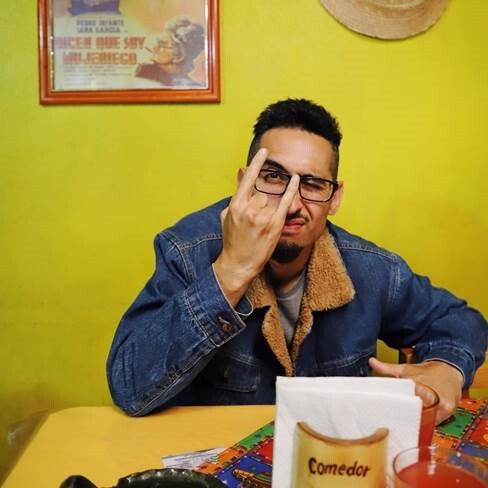
"description": "Alan Chazaro sits in front of a yellow wall at a yellow table. He wears a jean jacket and black rimmed glasses, one hand is in front of his face and he squints through his fingers at us.",
"title": "Alan Chazaro",
"credit": "Briana Chazaro",
"status": "inherit",
"altTag": "Alan Chazaro sits in front of a yellow wall at a yellow table. He wears a jean jacket and black rimmed glasses, one hand is in front of his face and he squints through his fingers at us.",
"isLoading": false,
"fetchFailed": false
},
"arts_13891777": {
"type": "attachments",
"id": "arts_13891777",
"meta": {
"index": "attachments_1716263798",
"site": "arts",
"id": "13891777",
"found": true
},
"parent": 13891766,
"imgSizes": {
"twentyfourteen-full-width": {
"file": "https://ww2.kqed.org/app/uploads/sites/2/2021/01/nia-1038x576.png",
"width": 1038,
"mimeType": "image/png",
"height": 576
},
"thumbnail": {
"file": "https://ww2.kqed.org/app/uploads/sites/2/2021/01/nia-160x90.png",
"width": 160,
"mimeType": "image/png",
"height": 90
},
"post-thumbnail": {
"file": "https://ww2.kqed.org/app/uploads/sites/2/2021/01/nia-672x372.png",
"width": 672,
"mimeType": "image/png",
"height": 372
},
"kqedFullSize": {
"file": "https://ww2.kqed.org/app/uploads/sites/2/2021/01/nia.png",
"width": 1366,
"height": 768
},
"large": {
"file": "https://ww2.kqed.org/app/uploads/sites/2/2021/01/nia-1020x573.png",
"width": 1020,
"mimeType": "image/png",
"height": 573
},
"medium": {
"file": "https://ww2.kqed.org/app/uploads/sites/2/2021/01/nia-800x450.png",
"width": 800,
"mimeType": "image/png",
"height": 450
},
"medium_large": {
"file": "https://ww2.kqed.org/app/uploads/sites/2/2021/01/nia-768x432.png",
"width": 768,
"mimeType": "image/png",
"height": 432
}
},
"publishDate": 1611608266,
"modified": 1611608351,
"caption": "UCLA gymnast Nia Dennis proudly holds her fist aloft at the start of her now-viral 'Black Excellence' floor routine.",
"description": "UCLA gymnast Nia Dennis proudly holds her fist aloft at the start of her now-viral 'Black Excellence' floor routine.",
"title": "UCLA gymnast Nia Dennis proudly holds her fist aloft at the start of her now-viral 'Black Excellence' floor routine.",
"credit": "YouTube/ UCLA Athletics",
"status": "inherit",
"altTag": "UCLA gymnast Nia Dennis proudly holds her fist aloft at the start of her now-viral 'Black Excellence' floor routine.",
"isLoading": false,
"fetchFailed": false
},
"arts_13865027": {
"type": "attachments",
"id": "arts_13865027",
"meta": {
"index": "attachments_1716263798",
"site": "arts",
"id": "13865027",
"found": true
},
"parent": 13865026,
"imgSizes": {
"twentyfourteen-full-width": {
"file": "https://ww2.kqed.org/app/uploads/sites/2/2019/08/gettyimages-478920136_custom-246236ac58056dd18e0ae106f108c5c71c44101e-1038x576.jpg",
"width": 1038,
"mimeType": "image/jpeg",
"height": 576
},
"thumbnail": {
"file": "https://ww2.kqed.org/app/uploads/sites/2/2019/08/gettyimages-478920136_custom-246236ac58056dd18e0ae106f108c5c71c44101e-160x109.jpg",
"width": 160,
"mimeType": "image/jpeg",
"height": 109
},
"post-thumbnail": {
"file": "https://ww2.kqed.org/app/uploads/sites/2/2019/08/gettyimages-478920136_custom-246236ac58056dd18e0ae106f108c5c71c44101e-672x372.jpg",
"width": 672,
"mimeType": "image/jpeg",
"height": 372
},
"kqedFullSize": {
"file": "https://ww2.kqed.org/app/uploads/sites/2/2019/08/gettyimages-478920136_custom-246236ac58056dd18e0ae106f108c5c71c44101e.jpg",
"width": 2048,
"height": 1392
},
"large": {
"file": "https://ww2.kqed.org/app/uploads/sites/2/2019/08/gettyimages-478920136_custom-246236ac58056dd18e0ae106f108c5c71c44101e-1020x693.jpg",
"width": 1020,
"mimeType": "image/jpeg",
"height": 693
},
"complete_open_graph": {
"file": "https://ww2.kqed.org/app/uploads/sites/2/2019/08/gettyimages-478920136_custom-246236ac58056dd18e0ae106f108c5c71c44101e-1200x816.jpg",
"width": 1200,
"mimeType": "image/jpeg",
"height": 816
},
"full-width": {
"file": "https://ww2.kqed.org/app/uploads/sites/2/2019/08/gettyimages-478920136_custom-246236ac58056dd18e0ae106f108c5c71c44101e-1920x1305.jpg",
"width": 1920,
"mimeType": "image/jpeg",
"height": 1305
},
"medium": {
"file": "https://ww2.kqed.org/app/uploads/sites/2/2019/08/gettyimages-478920136_custom-246236ac58056dd18e0ae106f108c5c71c44101e-800x544.jpg",
"width": 800,
"mimeType": "image/jpeg",
"height": 544
},
"medium_large": {
"file": "https://ww2.kqed.org/app/uploads/sites/2/2019/08/gettyimages-478920136_custom-246236ac58056dd18e0ae106f108c5c71c44101e-768x522.jpg",
"width": 768,
"mimeType": "image/jpeg",
"height": 522
}
},
"publishDate": 1566932363,
"modified": 1566933248,
"caption": "Kendrick Lamar performs at the 2015 BET Awards in Los Angeles.\n",
"description": "Kendrick Lamar performs at the 2015 BET Awards in Los Angeles.",
"title": "Kendrick Lamar performs at the 2015 BET Awards in Los Angeles.",
"credit": "Christopher Polk/Getty Images for BET",
"status": "inherit",
"isLoading": false,
"fetchFailed": false
},
"arts_13863065": {
"type": "attachments",
"id": "arts_13863065",
"meta": {
"index": "attachments_1716263798",
"site": "arts",
"id": "13863065",
"found": true
},
"parent": 13863049,
"imgSizes": {
"twentyfourteen-full-width": {
"file": "https://ww2.kqed.org/app/uploads/sites/2/2019/08/RS38403_2016SummerFest-FunkyMetersAudience-JeromeBrunet-qut-1038x576.jpg",
"width": 1038,
"mimeType": "image/jpeg",
"height": 576
},
"thumbnail": {
"file": "https://ww2.kqed.org/app/uploads/sites/2/2019/08/RS38403_2016SummerFest-FunkyMetersAudience-JeromeBrunet-qut-160x104.jpg",
"width": 160,
"mimeType": "image/jpeg",
"height": 104
},
"post-thumbnail": {
"file": "https://ww2.kqed.org/app/uploads/sites/2/2019/08/RS38403_2016SummerFest-FunkyMetersAudience-JeromeBrunet-qut-672x372.jpg",
"width": 672,
"mimeType": "image/jpeg",
"height": 372
},
"kqedFullSize": {
"file": "https://ww2.kqed.org/app/uploads/sites/2/2019/08/RS38403_2016SummerFest-FunkyMetersAudience-JeromeBrunet-qut.jpg",
"width": 1920,
"height": 1242
},
"large": {
"file": "https://ww2.kqed.org/app/uploads/sites/2/2019/08/RS38403_2016SummerFest-FunkyMetersAudience-JeromeBrunet-qut-1020x660.jpg",
"width": 1020,
"mimeType": "image/jpeg",
"height": 660
},
"complete_open_graph": {
"file": "https://ww2.kqed.org/app/uploads/sites/2/2019/08/RS38403_2016SummerFest-FunkyMetersAudience-JeromeBrunet-qut-1200x776.jpg",
"width": 1200,
"mimeType": "image/jpeg",
"height": 776
},
"full-width": {
"file": "https://ww2.kqed.org/app/uploads/sites/2/2019/08/RS38403_2016SummerFest-FunkyMetersAudience-JeromeBrunet-qut-1920x1242.jpg",
"width": 1920,
"mimeType": "image/jpeg",
"height": 1242
},
"medium": {
"file": "https://ww2.kqed.org/app/uploads/sites/2/2019/08/RS38403_2016SummerFest-FunkyMetersAudience-JeromeBrunet-qut-800x518.jpg",
"width": 800,
"mimeType": "image/jpeg",
"height": 518
},
"medium_large": {
"file": "https://ww2.kqed.org/app/uploads/sites/2/2019/08/RS38403_2016SummerFest-FunkyMetersAudience-JeromeBrunet-qut-768x497.jpg",
"width": 768,
"mimeType": "image/jpeg",
"height": 497
}
},
"publishDate": 1565048821,
"modified": 1565048862,
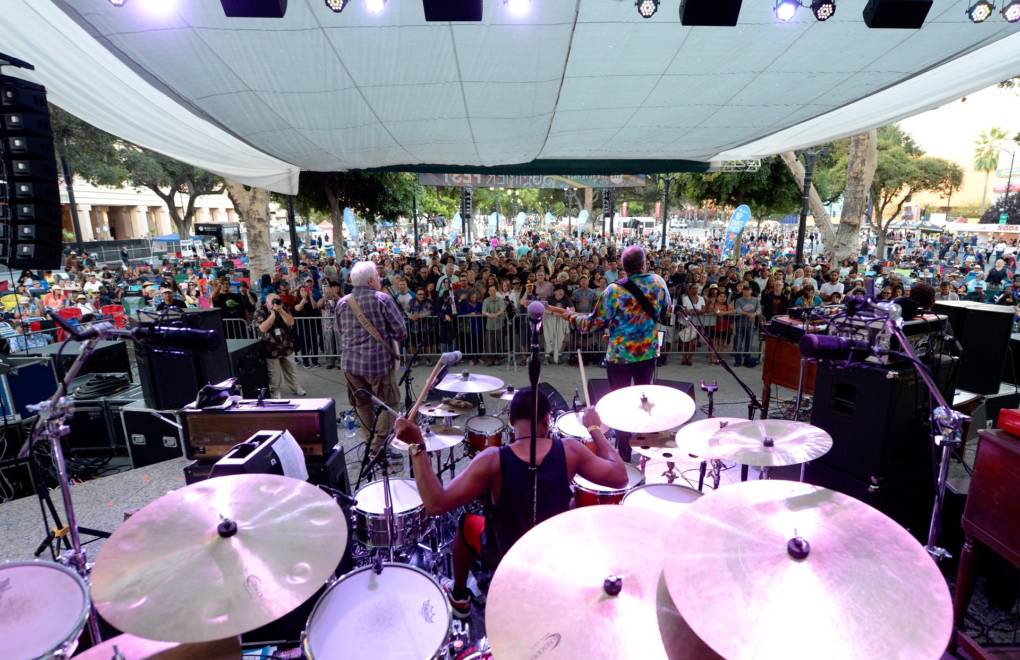
"caption": "Funky Meters perform for a packed Main Stage audience during the 2016 San Jose Jazz Summer Fest.",
"description": "Funky Meters perform for a packed Main Stage audience during the 2016 San Jose Jazz Summer Fest.",
"title": "RS38403_2016SummerFest-FunkyMetersAudience-JeromeBrunet-qut",
"credit": "Photo: Courtesy of Jerome Brunet",
"status": "inherit",
"isLoading": false,
"fetchFailed": false
},
"arts_13842298": {
"type": "attachments",
"id": "arts_13842298",
"meta": {
"index": "attachments_1716263798",
"site": "arts",
"id": "13842298",
"found": true
},
"parent": 0,
"imgSizes": {
"small": {
"file": "https://ww2.kqed.org/app/uploads/sites/2/2018/10/MG_0732-2-520x347.jpg",
"width": 520,
"mimeType": "image/jpeg",
"height": 347
},
"twentyfourteen-full-width": {
"file": "https://ww2.kqed.org/app/uploads/sites/2/2018/10/MG_0732-2-1038x576.jpg",
"width": 1038,
"mimeType": "image/jpeg",
"height": 576
},
"thumbnail": {
"file": "https://ww2.kqed.org/app/uploads/sites/2/2018/10/MG_0732-2-160x107.jpg",
"width": 160,
"mimeType": "image/jpeg",
"height": 107
},
"fd-sm": {
"file": "https://ww2.kqed.org/app/uploads/sites/2/2018/10/MG_0732-2-960x640.jpg",
"width": 960,
"mimeType": "image/jpeg",
"height": 640
},
"post-thumbnail": {
"file": "https://ww2.kqed.org/app/uploads/sites/2/2018/10/MG_0732-2-672x372.jpg",
"width": 672,
"mimeType": "image/jpeg",
"height": 372
},
"xsmall": {
"file": "https://ww2.kqed.org/app/uploads/sites/2/2018/10/MG_0732-2-375x250.jpg",
"width": 375,
"mimeType": "image/jpeg",
"height": 250
},
"kqedFullSize": {
"file": "https://ww2.kqed.org/app/uploads/sites/2/2018/10/MG_0732-2.jpg",
"width": 1920,
"height": 1280
},
"large": {
"file": "https://ww2.kqed.org/app/uploads/sites/2/2018/10/MG_0732-2-1020x680.jpg",
"width": 1020,
"mimeType": "image/jpeg",
"height": 680
},
"xlarge": {
"file": "https://ww2.kqed.org/app/uploads/sites/2/2018/10/MG_0732-2-1180x787.jpg",
"width": 1180,
"mimeType": "image/jpeg",
"height": 787
},
"complete_open_graph": {
"file": "https://ww2.kqed.org/app/uploads/sites/2/2018/10/MG_0732-2-1200x800.jpg",
"width": 1200,
"mimeType": "image/jpeg",
"height": 800
},
"guest-author-50": {
"file": "https://ww2.kqed.org/app/uploads/sites/2/2018/10/MG_0732-2-50x50.jpg",
"width": 50,
"mimeType": "image/jpeg",
"height": 50
},
"guest-author-96": {
"file": "https://ww2.kqed.org/app/uploads/sites/2/2018/10/MG_0732-2-96x96.jpg",
"width": 96,
"mimeType": "image/jpeg",
"height": 96
},
"medium": {
"file": "https://ww2.kqed.org/app/uploads/sites/2/2018/10/MG_0732-2-800x533.jpg",
"width": 800,
"mimeType": "image/jpeg",
"height": 533
},
"guest-author-64": {
"file": "https://ww2.kqed.org/app/uploads/sites/2/2018/10/MG_0732-2-64x64.jpg",
"width": 64,
"mimeType": "image/jpeg",
"height": 64
},
"guest-author-32": {
"file": "https://ww2.kqed.org/app/uploads/sites/2/2018/10/MG_0732-2-32x32.jpg",
"width": 32,
"mimeType": "image/jpeg",
"height": 32
},
"fd-lrg": {
"file": "https://ww2.kqed.org/app/uploads/sites/2/2018/10/MG_0732-2-1920x1280.jpg",
"width": 1920,
"mimeType": "image/jpeg",
"height": 1280
},
"fd-med": {
"file": "https://ww2.kqed.org/app/uploads/sites/2/2018/10/MG_0732-2-1180x787.jpg",
"width": 1180,
"mimeType": "image/jpeg",
"height": 787
},
"full-width": {
"file": "https://ww2.kqed.org/app/uploads/sites/2/2018/10/MG_0732-2-1920x1280.jpg",
"width": 1920,
"mimeType": "image/jpeg",
"height": 1280
},
"detail": {
"file": "https://ww2.kqed.org/app/uploads/sites/2/2018/10/MG_0732-2-150x150.jpg",
"width": 150,
"mimeType": "image/jpeg",
"height": 150
},
"medium_large": {
"file": "https://ww2.kqed.org/app/uploads/sites/2/2018/10/MG_0732-2-768x512.jpg",
"width": 768,
"mimeType": "image/jpeg",
"height": 512
},
"guest-author-128": {
"file": "https://ww2.kqed.org/app/uploads/sites/2/2018/10/MG_0732-2-128x128.jpg",
"width": 128,
"mimeType": "image/jpeg",
"height": 128
},
"xxsmall": {
"file": "https://ww2.kqed.org/app/uploads/sites/2/2018/10/MG_0732-2-240x160.jpg",
"width": 240,
"mimeType": "image/jpeg",
"height": 160
}
},
"publishDate": 1539054226,
"modified": 1539106374,
"caption": "Mozzy plays Rolling Loud Bay Area on Sunday, September 16, 2018.",
"description": "Mozzy plays Rolling Loud Bay Area on Sunday, September 16, 2018.",
"title": "Mozzy plays Rolling Loud Bay Area on Sunday, September 16, 2018.",
"credit": "Estefany Gonzalez ",
"status": "inherit",
"isLoading": false,
"fetchFailed": false
},
"arts_13823353": {
"type": "attachments",
"id": "arts_13823353",
"meta": {
"index": "attachments_1716263798",
"site": "arts",
"id": "13823353",
"found": true
},
"parent": 13823286,
"imgSizes": {
"small": {
"file": "https://ww2.kqed.org/app/uploads/sites/2/2018/01/mozzy-520x293.jpg",
"width": 520,
"mimeType": "image/jpeg",
"height": 293
},
"twentyfourteen-full-width": {
"file": "https://ww2.kqed.org/app/uploads/sites/2/2018/01/mozzy-1038x576.jpg",
"width": 1038,
"mimeType": "image/jpeg",
"height": 576
},
"thumbnail": {
"file": "https://ww2.kqed.org/app/uploads/sites/2/2018/01/mozzy-160x90.jpg",
"width": 160,
"mimeType": "image/jpeg",
"height": 90
},
"fd-sm": {
"file": "https://ww2.kqed.org/app/uploads/sites/2/2018/01/mozzy-960x540.jpg",
"width": 960,
"mimeType": "image/jpeg",
"height": 540
},
"post-thumbnail": {
"file": "https://ww2.kqed.org/app/uploads/sites/2/2018/01/mozzy-672x372.jpg",
"width": 672,
"mimeType": "image/jpeg",
"height": 372
},
"xsmall": {
"file": "https://ww2.kqed.org/app/uploads/sites/2/2018/01/mozzy-375x211.jpg",
"width": 375,
"mimeType": "image/jpeg",
"height": 211
},
"kqedFullSize": {
"file": "https://ww2.kqed.org/app/uploads/sites/2/2018/01/mozzy.jpg",
"width": 1198,
"height": 674
},
"large": {
"file": "https://ww2.kqed.org/app/uploads/sites/2/2018/01/mozzy-1020x574.jpg",
"width": 1020,
"mimeType": "image/jpeg",
"height": 574
},
"xlarge": {
"file": "https://ww2.kqed.org/app/uploads/sites/2/2018/01/mozzy-1180x664.jpg",
"width": 1180,
"mimeType": "image/jpeg",
"height": 664
},
"guest-author-50": {
"file": "https://ww2.kqed.org/app/uploads/sites/2/2018/01/mozzy-50x50.jpg",
"width": 50,
"mimeType": "image/jpeg",
"height": 50
},
"guest-author-96": {
"file": "https://ww2.kqed.org/app/uploads/sites/2/2018/01/mozzy-96x96.jpg",
"width": 96,
"mimeType": "image/jpeg",
"height": 96
},
"medium": {
"file": "https://ww2.kqed.org/app/uploads/sites/2/2018/01/mozzy-800x450.jpg",
"width": 800,
"mimeType": "image/jpeg",
"height": 450
},
"guest-author-64": {
"file": "https://ww2.kqed.org/app/uploads/sites/2/2018/01/mozzy-64x64.jpg",
"width": 64,
"mimeType": "image/jpeg",
"height": 64
},
"guest-author-32": {
"file": "https://ww2.kqed.org/app/uploads/sites/2/2018/01/mozzy-32x32.jpg",
"width": 32,
"mimeType": "image/jpeg",
"height": 32
},
"fd-med": {
"file": "https://ww2.kqed.org/app/uploads/sites/2/2018/01/mozzy-1180x664.jpg",
"width": 1180,
"mimeType": "image/jpeg",
"height": 664
},
"detail": {
"file": "https://ww2.kqed.org/app/uploads/sites/2/2018/01/mozzy-150x150.jpg",
"width": 150,
"mimeType": "image/jpeg",
"height": 150
},
"medium_large": {
"file": "https://ww2.kqed.org/app/uploads/sites/2/2018/01/mozzy-768x432.jpg",
"width": 768,
"mimeType": "image/jpeg",
"height": 432
},
"guest-author-128": {
"file": "https://ww2.kqed.org/app/uploads/sites/2/2018/01/mozzy-128x128.jpg",
"width": 128,
"mimeType": "image/jpeg",
"height": 128
},
"xxsmall": {
"file": "https://ww2.kqed.org/app/uploads/sites/2/2018/01/mozzy-240x135.jpg",
"width": 240,
"mimeType": "image/jpeg",
"height": 135
}
},
"publishDate": 1517431184,
"modified": 1517431227,
"caption": "After shouting him out at the Grammys, Kendrick Lamar also announced that Sacramento rapper Mozzy would be featured on the 'Black Panther' soundtrack.",
"description": "After shouting him out at the Grammys, Kendrick Lamar also announced that Sacramento rapper Mozzy would be featured on the 'Black Panther' soundtrack.",
"title": "mozzy",
"credit": "YouTube",
"status": "inherit",
"isLoading": false,
"fetchFailed": false
},
"arts_13823085": {
"type": "attachments",
"id": "arts_13823085",
"meta": {
"index": "attachments_1716263798",
"site": "arts",
"id": "13823085",
"found": true
},
"parent": 13823084,
"imgSizes": {
"small": {
"file": "https://ww2.kqed.org/app/uploads/sites/2/2018/01/gettyimages-911565474-f4c91e1ee0f28065c53381f9e74327ddf014c514-520x390.jpg",
"width": 520,
"mimeType": "image/jpeg",
"height": 390
},
"twentyfourteen-full-width": {
"file": "https://ww2.kqed.org/app/uploads/sites/2/2018/01/gettyimages-911565474-f4c91e1ee0f28065c53381f9e74327ddf014c514-1038x576.jpg",
"width": 1038,
"mimeType": "image/jpeg",
"height": 576
},
"thumbnail": {
"file": "https://ww2.kqed.org/app/uploads/sites/2/2018/01/gettyimages-911565474-f4c91e1ee0f28065c53381f9e74327ddf014c514-160x120.jpg",
"width": 160,
"mimeType": "image/jpeg",
"height": 120
},
"fd-sm": {
"file": "https://ww2.kqed.org/app/uploads/sites/2/2018/01/gettyimages-911565474-f4c91e1ee0f28065c53381f9e74327ddf014c514-960x720.jpg",
"width": 960,
"mimeType": "image/jpeg",
"height": 720
},
"post-thumbnail": {
"file": "https://ww2.kqed.org/app/uploads/sites/2/2018/01/gettyimages-911565474-f4c91e1ee0f28065c53381f9e74327ddf014c514-672x372.jpg",
"width": 672,
"mimeType": "image/jpeg",
"height": 372
},
"xsmall": {
"file": "https://ww2.kqed.org/app/uploads/sites/2/2018/01/gettyimages-911565474-f4c91e1ee0f28065c53381f9e74327ddf014c514-375x281.jpg",
"width": 375,
"mimeType": "image/jpeg",
"height": 281
},
"kqedFullSize": {
"file": "https://ww2.kqed.org/app/uploads/sites/2/2018/01/gettyimages-911565474-f4c91e1ee0f28065c53381f9e74327ddf014c514.jpg",
"width": 2048,
"height": 1536
},
"large": {
"file": "https://ww2.kqed.org/app/uploads/sites/2/2018/01/gettyimages-911565474-f4c91e1ee0f28065c53381f9e74327ddf014c514-1020x765.jpg",
"width": 1020,
"mimeType": "image/jpeg",
"height": 765
},
"xlarge": {
"file": "https://ww2.kqed.org/app/uploads/sites/2/2018/01/gettyimages-911565474-f4c91e1ee0f28065c53381f9e74327ddf014c514-1180x885.jpg",
"width": 1180,
"mimeType": "image/jpeg",
"height": 885
},
"guest-author-50": {
"file": "https://ww2.kqed.org/app/uploads/sites/2/2018/01/gettyimages-911565474-f4c91e1ee0f28065c53381f9e74327ddf014c514-50x50.jpg",
"width": 50,
"mimeType": "image/jpeg",
"height": 50
},
"guest-author-96": {
"file": "https://ww2.kqed.org/app/uploads/sites/2/2018/01/gettyimages-911565474-f4c91e1ee0f28065c53381f9e74327ddf014c514-96x96.jpg",
"width": 96,
"mimeType": "image/jpeg",
"height": 96
},
"medium": {
"file": "https://ww2.kqed.org/app/uploads/sites/2/2018/01/gettyimages-911565474-f4c91e1ee0f28065c53381f9e74327ddf014c514-800x600.jpg",
"width": 800,
"mimeType": "image/jpeg",
"height": 600
},
"guest-author-64": {
"file": "https://ww2.kqed.org/app/uploads/sites/2/2018/01/gettyimages-911565474-f4c91e1ee0f28065c53381f9e74327ddf014c514-64x64.jpg",
"width": 64,
"mimeType": "image/jpeg",
"height": 64
},
"guest-author-32": {
"file": "https://ww2.kqed.org/app/uploads/sites/2/2018/01/gettyimages-911565474-f4c91e1ee0f28065c53381f9e74327ddf014c514-32x32.jpg",
"width": 32,
"mimeType": "image/jpeg",
"height": 32
},
"fd-lrg": {
"file": "https://ww2.kqed.org/app/uploads/sites/2/2018/01/gettyimages-911565474-f4c91e1ee0f28065c53381f9e74327ddf014c514-1920x1440.jpg",
"width": 1920,
"mimeType": "image/jpeg",
"height": 1440
},
"fd-med": {
"file": "https://ww2.kqed.org/app/uploads/sites/2/2018/01/gettyimages-911565474-f4c91e1ee0f28065c53381f9e74327ddf014c514-1180x885.jpg",
"width": 1180,
"mimeType": "image/jpeg",
"height": 885
},
"full-width": {
"file": "https://ww2.kqed.org/app/uploads/sites/2/2018/01/gettyimages-911565474-f4c91e1ee0f28065c53381f9e74327ddf014c514-1920x1440.jpg",
"width": 1920,
"mimeType": "image/jpeg",
"height": 1440
},
"detail": {
"file": "https://ww2.kqed.org/app/uploads/sites/2/2018/01/gettyimages-911565474-f4c91e1ee0f28065c53381f9e74327ddf014c514-150x150.jpg",
"width": 150,
"mimeType": "image/jpeg",
"height": 150
},
"medium_large": {
"file": "https://ww2.kqed.org/app/uploads/sites/2/2018/01/gettyimages-911565474-f4c91e1ee0f28065c53381f9e74327ddf014c514-768x576.jpg",
"width": 768,
"mimeType": "image/jpeg",
"height": 576
},
"guest-author-128": {
"file": "https://ww2.kqed.org/app/uploads/sites/2/2018/01/gettyimages-911565474-f4c91e1ee0f28065c53381f9e74327ddf014c514-128x128.jpg",
"width": 128,
"mimeType": "image/jpeg",
"height": 128
},
"xxsmall": {
"file": "https://ww2.kqed.org/app/uploads/sites/2/2018/01/gettyimages-911565474-f4c91e1ee0f28065c53381f9e74327ddf014c514-240x180.jpg",
"width": 240,
"mimeType": "image/jpeg",
"height": 180
}
},
"publishDate": 1517267839,
"modified": 1517267839,
"caption": null,
"description": "Jay-Z (center), who was nominated for eight Grammys but won no awards Sunday, with his wife, Beyoncé (left) and daughter, Blue Ivy Carter, during the ceremony on Sunda",
"title": "Jay-Z (center), who was nominated for eight Grammys but won no awards Sunday, with his wife, Beyoncé (left) and daughter, Blue Ivy Carter, during the ceremony on Sunday.",
"credit": null,
"status": "inherit",
"isLoading": false,
"fetchFailed": false
}
},
"audioPlayerReducer": {
"postId": "stream_live",
"isPaused": true,
"isPlaying": false,
"pfsActive": false,
"pledgeModalIsOpen": true,
"playerDrawerIsOpen": false,
"liveAudioPlayStartedAt": 0,
"liveAudioPlayContext": ""
},
"authorsReducer": {
"byline_arts_13924749": {
"type": "authors",
"id": "byline_arts_13924749",
"meta": {
"override": true
},
"slug": "byline_arts_13924749",
"name": "Hazel Cills",
"isLoading": false
},
"byline_arts_13921642": {
"type": "authors",
"id": "byline_arts_13921642",
"meta": {
"override": true
},
"slug": "byline_arts_13921642",
"name": "Mandalit del Barco",
"isLoading": false
},
"byline_arts_13865026": {
"type": "authors",
"id": "byline_arts_13865026",
"meta": {
"override": true
},
"slug": "byline_arts_13865026",
"name": "Andrew Limbong",
"isLoading": false
},
"byline_arts_13823084": {
"type": "authors",
"id": "byline_arts_13823084",
"meta": {
"override": true
},
"slug": "byline_arts_13823084",
"name": "Rodney Carmichael",
"isLoading": false
},
"gmeline": {
"type": "authors",
"id": "185",
"meta": {
"index": "authors_1716337520",
"id": "185",
"found": true
},
"name": "Gabe Meline",
"firstName": "Gabe",
"lastName": "Meline",
"slug": "gmeline",
"email": "gmeline@kqed.org",
"display_author_email": true,
"staff_mastheads": [
"arts"
],
"title": "Senior Editor, KQED Arts & Culture",
"bio": "Gabe Meline entered journalism at age 15 making photocopied zines, and has since earned awards from the Edward R. Murrow Awards, the Society for Professional Journalists, the Online Journalism Awards, the Association of Alternative Newsweeklies and the California Newspaper Publishers Association. Prior to KQED, he was the editor of the \u003cem>North Bay Bohemian\u003c/em> and a touring musician. He lives with his wife and daughter in his hometown of Santa Rosa, CA.",
"avatar": "https://secure.gravatar.com/avatar/5bebe57be0d8bc2dd318934feb47299e2d2d10cba28d09d8d7afb389a2ce2bdd?s=600&d=blank&r=g",
"twitter": null,
"bluesky": null,
"facebook": null,
"instagram": null,
"linkedin": null,
"sites": [
{
"site": "",
"roles": [
"editor"
]
},
{
"site": "arts",
"roles": [
"administrator"
]
},
{
"site": "artschool",
"roles": [
"editor"
]
},
{
"site": "news",
"roles": [
"author"
]
},
{
"site": "pop",
"roles": [
"editor"
]
},
{
"site": "bayareabites",
"roles": [
"editor"
]
},
{
"site": "food",
"roles": [
"editor"
]
},
{
"site": "forum",
"roles": [
"administrator"
]
},
{
"site": "liveblog",
"roles": [
"editor"
]
},
{
"site": "hiphop",
"roles": [
"editor"
]
}
],
"headData": {
"title": "Gabe Meline | KQED",
"description": "Senior Editor, KQED Arts & Culture",
"ogImgSrc": "https://secure.gravatar.com/avatar/5bebe57be0d8bc2dd318934feb47299e2d2d10cba28d09d8d7afb389a2ce2bdd?s=600&d=blank&r=g",
"twImgSrc": "https://secure.gravatar.com/avatar/5bebe57be0d8bc2dd318934feb47299e2d2d10cba28d09d8d7afb389a2ce2bdd?s=600&d=blank&r=g"
},
"isLoading": false,
"link": "/author/gmeline"
},
"rachael-myrow": {
"type": "authors",
"id": "251",
"meta": {
"index": "authors_1716337520",
"id": "251",
"found": true
},
"name": "Rachael Myrow",
"firstName": "Rachael",
"lastName": "Myrow",
"slug": "rachael-myrow",
"email": "rmyrow@kqed.org",
"display_author_email": true,
"staff_mastheads": [
"news"
],
"title": "Senior Editor of KQED's Silicon Valley News Desk",
"bio": "• I write and edit stories about how Silicon Valley power and policies shape everyday life in California. I’m also passionate about making Bay Area history and culture more accessible to a broad public. • I’ve been a journalist for most of my life, starting in high school with The Franklin Press in Los Angeles, where I grew up. While earning my first degree in English at UC Berkeley, I got my start in public radio at KALX-FM. After completing a second degree in journalism at Cal, I landed my first professional job at Marketplace, then moved on to KPCC (now LAist), and then KQED, where I hosted The California Report for more than seven years. • My reporting has appeared on NPR, The World, WBUR’s \u003ci>Here & Now\u003c/i>, and the BBC. I also guest host for KQED’s \u003ci>Forum\u003c/i>, as well as the Commonwealth Club in San Francisco. • I speak periodically on media, democracy and technology issues, and do voiceover work for documentaries and educational video projects. • Outside of the studio, you'll find me hiking Bay Area trails and whipping up Insta-ready meals in my kitchen. • I do not accept gifts, money, or favors from anyone connected to my reporting, I don't pay people for information, and I do not support or donate to political causes. • I strive to treat the people I report on with fairness, honesty, and respect. I also recognize there are often multiple sides to a story and work to verify information through multiple sources and documentation. If I get something wrong, I correct it.",
"avatar": "https://secure.gravatar.com/avatar/3ed8a3c5f26025e4a805ba634cda8cd764906b97438a6d9ce216b044e340da4e?s=600&d=blank&r=g",
"twitter": "rachaelmyrow",
"bluesky": null,
"facebook": null,
"instagram": null,
"linkedin": "https://www.linkedin.com/in/rachaelmyrow/",
"sites": [
{
"site": "arts",
"roles": [
"administrator"
]
},
{
"site": "news",
"roles": [
"edit_others_posts",
"editor"
]
},
{
"site": "futureofyou",
"roles": [
"editor"
]
},
{
"site": "bayareabites",
"roles": [
"editor"
]
},
{
"site": "stateofhealth",
"roles": [
"editor"
]
},
{
"site": "science",
"roles": [
"editor"
]
},
{
"site": "food",
"roles": [
"editor"
]
},
{
"site": "forum",
"roles": [
"editor"
]
},
{
"site": "liveblog",
"roles": [
"author"
]
}
],
"headData": {
"title": "Rachael Myrow | KQED",
"description": "Senior Editor of KQED's Silicon Valley News Desk",
"ogImgSrc": "https://secure.gravatar.com/avatar/3ed8a3c5f26025e4a805ba634cda8cd764906b97438a6d9ce216b044e340da4e?s=600&d=blank&r=g",
"twImgSrc": "https://secure.gravatar.com/avatar/3ed8a3c5f26025e4a805ba634cda8cd764906b97438a6d9ce216b044e340da4e?s=600&d=blank&r=g"
},
"isLoading": false,
"link": "/author/rachael-myrow"
},
"ralexandra": {
"type": "authors",
"id": "11242",
"meta": {
"index": "authors_1716337520",
"id": "11242",
"found": true
},
"name": "Rae Alexandra",
"firstName": "Rae",
"lastName": "Alexandra",
"slug": "ralexandra",
"email": "ralexandra@kqed.org",
"display_author_email": true,
"staff_mastheads": [],
"title": "Reporter/Producer",
"bio": "Rae Alexandra is a Reporter/Producer for KQED Arts & Culture, and the creator/author of the \u003ca href=\"https://www.kqed.org/arts/program/rebel-girls-from-bay-area-history\">Rebel Girls From Bay Area History\u003c/a> and \u003ca href=\"https://www.kqed.org/bizarrebayarea\">Bizarre Bay Area\u003c/a> series. Her debut book, \u003ca href=\"https://citylights.com/politics-current-events-history/unsung-heroines35-women-who-changed/\">Unsung Heroines: 35 Women Who Changed the Bay Area\u003c/a> was published by City Lights in March 2026. In 2023, Rae was awarded an SPJ Excellence in Journalism Award for Arts & Culture. Rae was born and raised in Wales and subsequently — even after two decades in Northern California — still uses phrases that regularly baffle her coworkers.",
"avatar": "https://secure.gravatar.com/avatar/edfee8176c80cc0a382b051190f5341997df378a934a5774dcb0977732dfd401?s=600&d=blank&r=g",
"twitter": null,
"bluesky": null,
"facebook": null,
"instagram": null,
"linkedin": null,
"sites": [
{
"site": "arts",
"roles": [
"subscriber"
]
},
{
"site": "news",
"roles": [
"subscriber"
]
},
{
"site": "pop",
"roles": [
"subscriber"
]
},
{
"site": "bayareabites",
"roles": [
"subscriber"
]
},
{
"site": "science",
"roles": [
"subscriber"
]
}
],
"headData": {
"title": "Rae Alexandra | KQED",
"description": "Reporter/Producer",
"ogImgSrc": "https://secure.gravatar.com/avatar/edfee8176c80cc0a382b051190f5341997df378a934a5774dcb0977732dfd401?s=600&d=blank&r=g",
"twImgSrc": "https://secure.gravatar.com/avatar/edfee8176c80cc0a382b051190f5341997df378a934a5774dcb0977732dfd401?s=600&d=blank&r=g"
},
"isLoading": false,
"link": "/author/ralexandra"
},
"nvoynovskaya": {
"type": "authors",
"id": "11387",
"meta": {
"index": "authors_1716337520",
"id": "11387",
"found": true
},
"name": "Nastia Voynovskaya",
"firstName": "Nastia",
"lastName": "Voynovskaya",
"slug": "nvoynovskaya",
"email": "nvoynovskaya@kqed.org",
"display_author_email": false,
"staff_mastheads": [
"arts"
],
"title": "Editor and reporter",
"bio": "Nastia Voynovskaya is a reporter, editor and host at KQED Arts & Culture. She's been covering the arts in the Bay Area for over a decade, with a focus on music, queer culture, labor issues and grassroots organizing. She has edited KQED story series such as Trans Bay: A History of San Francisco's Gender-Diverse Community, and co-created KQED's Bay Area hip-hop history project, That's My Word. Nastia's work has been recognized by the Society of Professional Journalists and San Francisco Press Club. She regularly appears on podcasts and radio programs, including NPR's All Songs Considered, and hosts live events where music, culture and conversation meet.",
"avatar": "https://secure.gravatar.com/avatar/5025ee460e5a85d69ca20ea6c6f2f80d7e17795c828f61ea3aecfcd924e9042e?s=600&d=blank&r=g",
"twitter": null,
"bluesky": null,
"facebook": null,
"instagram": "https://www.instagram.com/nananastia/",
"linkedin": null,
"sites": [
{
"site": "",
"roles": [
"editor"
]
},
{
"site": "arts",
"roles": [
"administrator"
]
},
{
"site": "news",
"roles": [
"editor"
]
},
{
"site": "pop",
"roles": [
"administrator"
]
},
{
"site": "bayareabites",
"roles": [
"editor"
]
},
{
"site": "podcasts",
"roles": [
"editor"
]
},
{
"site": "hiphop",
"roles": [
"editor"
]
}
],
"headData": {
"title": "Nastia Voynovskaya | KQED",
"description": "Editor and reporter",
"ogImgSrc": "https://secure.gravatar.com/avatar/5025ee460e5a85d69ca20ea6c6f2f80d7e17795c828f61ea3aecfcd924e9042e?s=600&d=blank&r=g",
"twImgSrc": "https://secure.gravatar.com/avatar/5025ee460e5a85d69ca20ea6c6f2f80d7e17795c828f61ea3aecfcd924e9042e?s=600&d=blank&r=g"
},
"isLoading": false,
"link": "/author/nvoynovskaya"
},
"ogpenn": {
"type": "authors",
"id": "11491",
"meta": {
"index": "authors_1716337520",
"id": "11491",
"found": true
},
"name": "Pendarvis Harshaw",
"firstName": "Pendarvis",
"lastName": "Harshaw",
"slug": "ogpenn",
"email": "ogpenn@gmail.com",
"display_author_email": false,
"staff_mastheads": [
"arts"
],
"title": "Community Engagement Reporter",
"bio": "Pendarvis Harshaw is an educator, host and writer with KQED Arts.",
"avatar": "https://secure.gravatar.com/avatar/972b77ee8e3f346ae2b00622661187fbfabd059b5693bbdc1475ea7a722fd4cd?s=600&d=blank&r=g",
"twitter": null,
"bluesky": null,
"facebook": null,
"instagram": "ogpenn",
"linkedin": null,
"sites": [
{
"site": "arts",
"roles": [
"administrator"
]
},
{
"site": "news",
"roles": [
"editor"
]
},
{
"site": "bayareabites",
"roles": [
"author"
]
},
{
"site": "hiphop",
"roles": [
"editor"
]
}
],
"headData": {
"title": "Pendarvis Harshaw | KQED",
"description": "Community Engagement Reporter",
"ogImgSrc": "https://secure.gravatar.com/avatar/972b77ee8e3f346ae2b00622661187fbfabd059b5693bbdc1475ea7a722fd4cd?s=600&d=blank&r=g",
"twImgSrc": "https://secure.gravatar.com/avatar/972b77ee8e3f346ae2b00622661187fbfabd059b5693bbdc1475ea7a722fd4cd?s=600&d=blank&r=g"
},
"isLoading": false,
"link": "/author/ogpenn"
},
"mmedina": {
"type": "authors",
"id": "11528",
"meta": {
"index": "authors_1716337520",
"id": "11528",
"found": true
},
"name": "Marisol Medina-Cadena",
"firstName": "Marisol",
"lastName": "Medina-Cadena",
"slug": "mmedina",
"email": "mmedina@KQED.org",
"display_author_email": true,
"staff_mastheads": [],
"title": "Producer, Rightnowish Podcast",
"bio": "Marisol Medina-Cadena is a radio reporter and podcast producer. Before working at KQED, she produced for PBS member station, KCET, in Los Angeles. In 2017, Marisol won an Emmy Award for her work on the televised documentary, \u003cem>City Rising\u003c/em>, examining California's affordable housing crisis and the historical roots of gentrification.",
"avatar": "https://secure.gravatar.com/avatar/6c3db46a1cabb5e1fe9a365b5f4e681e?s=600&d=blank&r=g",
"twitter": "marisolreports",
"facebook": null,
"instagram": null,
"linkedin": null,
"sites": [
{
"site": "arts",
"roles": []
},
{
"site": "news",
"roles": [
"edit_others_posts"
]
}
],
"headData": {
"title": "Marisol Medina-Cadena | KQED",
"description": "Producer, Rightnowish Podcast",
"ogImgSrc": "https://secure.gravatar.com/avatar/6c3db46a1cabb5e1fe9a365b5f4e681e?s=600&d=blank&r=g",
"twImgSrc": "https://secure.gravatar.com/avatar/6c3db46a1cabb5e1fe9a365b5f4e681e?s=600&d=blank&r=g"
},
"isLoading": false,
"link": "/author/mmedina"
}
},
"pagesReducer": {
"arts_tag_kendrick-lamar": {
"type": "terms",
"id": "arts_1774",
"meta": {
"index": "terms_1716263798",
"site": "arts",
"id": "1774",
"score": 9.556763
},
"featImg": null,
"name": "kendrick lamar",
"description": null,
"taxonomy": "tag",
"headData": {
"twImgId": null,
"twTitle": null,
"ogTitle": null,
"ogImgId": null,
"twDescription": null,
"description": null,
"title": "kendrick lamar Archives | KQED Arts",
"ogDescription": null
},
"ttid": 1786,
"slug": "kendrick-lamar",
"isLoading": false,
"title": "kendrick lamar",
"pageMeta": {
"site": "arts",
"WpPageTemplate": "page-topic-editorial",
"currentPage": 2
},
"blocks": [
{
"blockName": "kqed/post-list",
"attrs": {
"layout": "cardArticle2",
"query": "posts/arts?tag=kendrick-lamar",
"seeMore": false,
"paginated": true,
"page": 2
}
},
{
"blockName": "kqed/ad"
}
]
}
},
"pfsSessionReducer": {},
"postsReducer": {
"stream_live": {
"type": "live",
"id": "stream_live",
"audioUrl": "https://streams.kqed.org/kqedradio",
"title": "Live Stream",
"excerpt": "Live Stream information currently unavailable.",
"link": "/radio",
"featImg": "",
"label": {
"name": "KQED Live",
"link": "/"
}
},
"stream_kqedNewscast": {
"type": "posts",
"id": "stream_kqedNewscast",
"audioUrl": "https://www.kqed.org/.stream/anon/radio/RDnews/newscast.mp3?_=1",
"title": "KQED Newscast",
"featImg": "",
"label": {
"name": "88.5 FM",
"link": "/"
}
},
"arts_13924749": {
"type": "posts",
"id": "arts_13924749",
"meta": {
"index": "posts_1716263798",
"site": "arts",
"id": "13924749",
"score": null,
"sort": [
1675665840000
]
},
"parent": 0,
"labelTerm": {
"site": "arts",
"term": 137
},
"blocks": [],
"publishDate": 1675665840,
"format": "standard",
"title": "Beyoncé Sets a New Grammy Record, While Harry Styles Wins Album of the Year",
"headTitle": "Beyoncé Sets a New Grammy Record, While Harry Styles Wins Album of the Year | KQED",
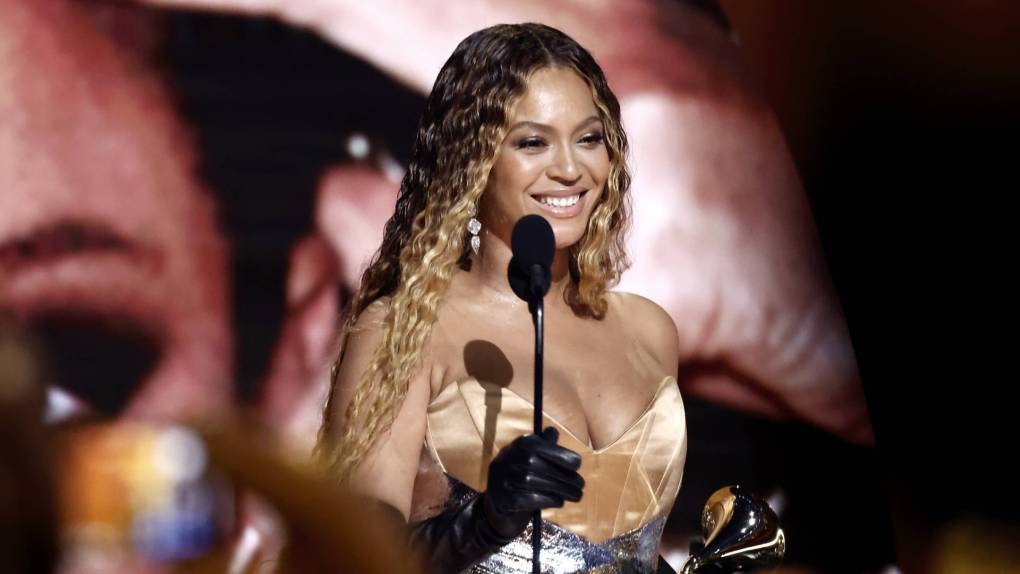
"content": "\u003cdiv class=\"storyMajorUpdateDate\"> \u003cstrong>Updated February 6, 2023 at 12:53 AM ET\u003c/strong>\u003c/div>\n\u003cp>Beyoncé has now captured more Grammy awards than any other artist, thanks to a quartet of trophies for her album \u003cem>RENAISSANCE\u003c/em>. Two-thirds of the way into the evening’s live telecast, she won her fourth award of the year for a total of 32 in her career, shattering the record for the most Grammys of any artist in the prize’s 65-year history.\u003c/p>\n\u003cp>However, she failed to collect any of the evening’s biggest prizes. Instead, the Grammys divided the general categories in a typical voting split. Bonnie Raitt won the song of the year prize for “Just Like That.” Lizzo took record of the year for “About Damn Time.” Album of the year went to \u003ca href=\"https://www.npr.org/artists/531040090/harry-styles\">Harry Styles\u003c/a> for his album \u003cem>Harry’s House\u003c/em>. He also won best pop vocal album. “This is so kind,” Styles said of the album of the year award, as Beyoncé gave him a standing ovation.\u003c/p>\n\u003cp>Coming into this year’s awards, Beyoncé already owned 28 Grammys as a lead artist, though only one in the one of the awards’ general categories. She had nine nominations this year, and hit the new record just after 7 p.m. PT, when she won best electronic/dance music album. She cried upon taking the stage, saying, “I’m just trying to receive this night.” Later, she gave credit to her forebears and inspiration, adding: “I would like to thank the queer community for your love, and for inventing the genre,” referring to the house music that grounded \u003cem>RENAISSANCE\u003c/em>.\u003c/p>\n\u003cp>Faced with \u003ca href=\"https://www.npr.org/2022/01/06/1070849471/the-omicron-surge-forces-the-grammys-to-be-postponed-sundance-to-move-online\">years\u003c/a> of \u003ca href=\"https://variety.com/2022/tv/news/grammy-awards-ratings-2022-grammys-1235221012/\">declining and middling \u003c/a>viewership, the Grammys hoped to amp up the dazzle this year via this bit of history-making. What the Record Academy had clearly hoped would be an earlier, big live television moment was foiled by urban sprawl. Half an hour into the show, Beyoncé — who was reportedly late to the awards thanks to LA traffic — tied the all-time record for most Grammys won when she and a team of co-writers won best R&B song for “Cuff It.” The iconic musician and composer Nile Rogers, one of the co-writers on “Cuff It,” accepted the award for best R&B song on the team’s behalf along with another of its co-writers, The-Dream. The previous Grammy record of 31 wins was a feat set by the late Hungarian-born classical conductor Georg Solti.\u003c/p>\n\u003cp>Several of the other nine contenders for album of the year had to be satisfied with other awards. At the beginning of her acceptance speech for her win for record of the year for “About Damn Time,” Lizzo said, “Let me tell you something, Adele and I are just having a great time here.” (Adele took home took home best pop solo performance for her song “Easy on Me.”) Lizzo also paid tribute to Beyoncé, noting that she had skipped school in fifth grade to go hear the megastar perform.\u003c/p>\n\u003cp>[ad fullwidth]\u003c/p>\n\u003cp>\u003ca href=\"https://www.npr.org/artists/166009689/kendrick-lamar\">Kendrick Lamar\u003c/a> took home the Grammy for best rap album for his \u003cem>Mr. Morale & The Big Steppers\u003c/em>; during the afternoon ceremony, Lamar also picked up Grammys for best rap performance and best rap song, both for “The Heart Part 5.” “I would like to thank the culture for allowing me to evolve,” he said in an acceptance speech in which he also thanked his family and fans. “I finally found imperfection with this album.” \u003c/p>\n\u003cp>Another artist up for album of the year, Puerto Rican rapper \u003ca href=\"https://www.npr.org/artists/656561349/bad-bunny\">Bad Bunny\u003c/a>, opened the show with a colorful performance of songs from his album \u003cem>Un Verano Sin Ti\u003c/em>, weaving in and out of the seated audience alongside brass band members before making his way to a dance party on stage for a medley that captured the vibrant, infectious energy of the hit album. \u003cem>Un Verano Sin Ti\u003c/em> dominated streaming services last year and won the rapper the prize for best música urbana album. “I made this album with love and passion and when you do things with love and passion, everything is easier — life is easier,” he said in English while accepting his award.\u003c/p>\n\u003cp>In a throwback to a very particular kind of Grammy-voter favorite, the gifted young jazz vocalist \u003ca href=\"https://www.npr.org/artists/1120541975/samara-joy\">Samara Joy\u003c/a> won the award for best new artist. The 23-year-old cried through her whole acceptance speech, marveling that she won one of the Grammy’s biggest prizes “just by being myself.”\u003c/p>\n\u003cp>One of the strongest performances of the night came in the form of a star-studded, comprehensive tribute to the history of hip-hop that followed a new “Dr. Dre Global Impact award,” given to the namesake artist himself by rapper LL Cool J. Organized by Questlove, the performance brought together some of the greatest names in hip-hop to honor the genre’s 50th anniversary this year. The set chronicled the entire history of rap, featuring early pioneers like Run-DMC, Rakim, Public Enemy and Salt-N-Pepa, all the way up to current viral stars like GloRilla. \u003c/p>\n\u003cp>“We wish we could have included every single hip-hop artist from 1973 to 2023,” LL Cool J said.\u003c/p>\n\u003cp>The show’s “In Memoriam” segment, honoring musicians and industry professionals who died in the last year, featured performances by Kacey Musgraves, Migos’ Quavo and Mick Fleetwood. The night featured multiple tributes, including Stevie Wonder honoring Berry Gordy and Smokey Robinson by playing Motown hits including The Temptations’ “The Way You Do The Things You Do” and “Tears of a Clown” alongside Robinson. \u003c/p>\n\u003cp>The night was filled with a number of excellent live performances, from longtime Grammy favorites to newcomers to the stage. Brandi Carlile, who took home three awards for best Americana album, best rock performance and best rock song, returned to the Academy’s stage for a stirring rendition of “Broken Horses,” introduced to viewers by her wife and two daughters. \u003c/p>\n\u003cp>Steve Lacy, who took home his first Grammy award earlier in the evening for best progressive R&B album for \u003cem>Gemini Rights\u003c/em>, proved his TikTok hit “Bad Habit” as magnetic a live performance as it has become in viral videos, performing the funky hit in heels alongside Thundercat on bass. \u003c/p>\n\u003cp>A brand-new honor called best song for social change was given to Iranian musician Shervin Hajipour for his protest song “Baraye,” which was written in solidarity with Iran’s \u003ca href=\"https://www.npr.org/2022/10/27/1131436766/kurdish-roots-iran-protest-slogan\">“Woman, life, freedom”\u003c/a> movement, and gained worldwide fans on social media. Hajipour was unable to attend the ceremony, as \u003ca href=\"https://variety.com/2023/global/news/iran-protest-song-baraye-grammy-amnesty-jailed-activists-1235514072/\">he has been banned from leaving Iran\u003c/a> while he awaits trial; the award was presented by First Lady Jill Biden.\u003c/p>\n\u003cp>Biden also presented the award for song of the year to Bonnie Raitt, who looked shellshocked to win this year’s prize for songwriting; she had been up against other writers such as Beyoncé, Lizzo, \u003ca href=\"https://www.npr.org/artists/728755923/steve-lacy\">Steve Lacy\u003c/a>, Kendrick Lamar and Adele. “I don’t write a lot of songs,” said Raitt.\u003c/p>\n\u003cp>In another history-making moment, 2023 marked the first time that either an openly non-binary person or an openly transgender woman won a Grammy. Both glass ceilings were smashed when Sam Smith and Kim Petras were awarded best pop duo/group performance for their song “Unholy.” (Musician Wendy Carlos won three Grammys in 1970 for her album \u003cem>Switched-On Bach\u003c/em>, but she was not yet living publicly as a woman at that point.)\u003cstrong> \u003c/strong>\u003c/p>\n\u003cp>“Sam graciously wanted me to accept this award because I’m the first transgender woman to win this award,” Petras said in her speech. “I want to thank all the incredible transgender legends before me so I could be here tonight,” she added, shouting out the late trans pop artist SOPHIE in her speech, as well as Madonna and her mother for inspiration. After winning the award, the pair put on a fiery, provocative performance with Smith dressed up as a horned devil, playing off of the sinful imagery of their hit single.\u003cstrong> \u003c/strong>\u003c/p>\n\u003cp>[ad floatright]\u003c/p>\n\u003cp>At the so-called Grammy “premiere” show, or pre-telecast ceremony, the Recording Academy handed out nearly 80 awards. Among that sprawling array of prizes, actress Viola Davis \u003ca href=\"https://www.npr.org/2023/02/05/1154671624/viola-davis-egot-grammys\">became an EGOT\u003c/a> — the proud possessor of Emmy, Grammy, Oscar and Tony awards — Sunday afternoon when she won a Grammy for the audiobook version of her memoir, \u003cem>Finding Me\u003c/em>. \u003c/p>\n\u003cdiv class=\"fullattribution\">Copyright 2023 NPR. To see more, visit https://www.npr.org.\u003cimg decoding=\"async\" src=\"https://www.google-analytics.com/__utm.gif?utmac=UA-5828686-4&utmdt=Beyonc%C3%A9+sets+a+new+Grammy+record%2C+while+Harry+Styles+wins+album+of+the+year&utme=8(APIKey)9(MDAxOTAwOTE4MDEyMTkxMDAzNjczZDljZA004)\">\u003c/div>\n\n",
"stats": {
"hasVideo": false,
"hasChartOrMap": false,
"hasAudio": false,
"hasPolis": false,
"wordCount": 1479,
"hasGoogleForm": false,
"hasGallery": false,
"hasHearkenModule": false,
"iframeSrcs": [],
"paragraphCount": 20
},
"modified": 1705005879,
"excerpt": "With four new prizes tonight, the megastar has now won more Grammys than any other artist in the awards' 65-year history. But Harry Styles took home the evening's biggest prize.",
"headData": {
"twImgId": "",
"twTitle": "",
"socialTitle": "Grammys Roundup: Beyoncé, Lizzo and Harry Styles Win %%page%% %%sep%% KQED",
"ogTitle": "",
"ogImgId": "",
"twDescription": "",
"description": "With four new prizes tonight, the megastar has now won more Grammys than any other artist in the awards' 65-year history. But Harry Styles took home the evening's biggest prize.",
"title": "Grammys Roundup: Beyoncé, Lizzo and Harry Styles Win | KQED",
"ogDescription": "",
"schema": {
"@context": "https://schema.org",
"@type": "Article",
"headline": "Beyoncé Sets a New Grammy Record, While Harry Styles Wins Album of the Year",
"datePublished": "2023-02-05T22:44:00-08:00",
"dateModified": "2024-01-11T12:44:39-08:00",
"image": "https://cdn.kqed.org/wp-content/uploads/2020/02/KQED-OG-Image@1x.png"
}
},
"guestAuthors": [],
"slug": "beyonce-sets-a-new-grammy-record-while-harry-styles-wins-album-of-the-year",
"status": "publish",
"nprApiLink": "http://api.npr.org/query?id=1152837932&apiKey=MDAxOTAwOTE4MDEyMTkxMDAzNjczZDljZA004",
"templateType": "standard",
"nprStoryDate": "Sun, 05 Feb 2023 22:44:00 -0500",
"excludeFromSiteSearch": "Include",
"nprLastModifiedDate": "Mon, 06 Feb 2023 09:59:52 -0500",
"featuredImageType": "standard",
"nprHtmlLink": "https://www.npr.org/2023/02/05/1152837932/2023-grammy-awards-winners-beyonce?ft=nprml&f=1152837932",
"nprImageAgency": "Getty Images for The Recording Academy",
"nprStoryId": "1152837932",
"nprByline": "Hazel Cills",
"sticky": false,
"nprImageCredit": "Emma McIntyre",
"showOnAuthorArchivePages": "No",
"articleAge": "0",
"nprRetrievedStory": "1",
"nprPubDate": "Mon, 06 Feb 2023 09:59:00 -0500",
"path": "/arts/13924749/beyonce-sets-a-new-grammy-record-while-harry-styles-wins-album-of-the-year",
"audioTrackLength": null,
"parsedContent": [
{
"type": "contentString",
"content": "\u003cdiv class=\"post-body\">\u003cp>\u003cdiv class=\"storyMajorUpdateDate\"> \u003cstrong>Updated February 6, 2023 at 12:53 AM ET\u003c/strong>\u003c/div>\n\u003cp>Beyoncé has now captured more Grammy awards than any other artist, thanks to a quartet of trophies for her album \u003cem>RENAISSANCE\u003c/em>. Two-thirds of the way into the evening’s live telecast, she won her fourth award of the year for a total of 32 in her career, shattering the record for the most Grammys of any artist in the prize’s 65-year history.\u003c/p>\n\u003cp>However, she failed to collect any of the evening’s biggest prizes. Instead, the Grammys divided the general categories in a typical voting split. Bonnie Raitt won the song of the year prize for “Just Like That.” Lizzo took record of the year for “About Damn Time.” Album of the year went to \u003ca href=\"https://www.npr.org/artists/531040090/harry-styles\">Harry Styles\u003c/a> for his album \u003cem>Harry’s House\u003c/em>. He also won best pop vocal album. “This is so kind,” Styles said of the album of the year award, as Beyoncé gave him a standing ovation.\u003c/p>\n\u003cp>Coming into this year’s awards, Beyoncé already owned 28 Grammys as a lead artist, though only one in the one of the awards’ general categories. She had nine nominations this year, and hit the new record just after 7 p.m. PT, when she won best electronic/dance music album. She cried upon taking the stage, saying, “I’m just trying to receive this night.” Later, she gave credit to her forebears and inspiration, adding: “I would like to thank the queer community for your love, and for inventing the genre,” referring to the house music that grounded \u003cem>RENAISSANCE\u003c/em>.\u003c/p>\n\u003cp>Faced with \u003ca href=\"https://www.npr.org/2022/01/06/1070849471/the-omicron-surge-forces-the-grammys-to-be-postponed-sundance-to-move-online\">years\u003c/a> of \u003ca href=\"https://variety.com/2022/tv/news/grammy-awards-ratings-2022-grammys-1235221012/\">declining and middling \u003c/a>viewership, the Grammys hoped to amp up the dazzle this year via this bit of history-making. What the Record Academy had clearly hoped would be an earlier, big live television moment was foiled by urban sprawl. Half an hour into the show, Beyoncé — who was reportedly late to the awards thanks to LA traffic — tied the all-time record for most Grammys won when she and a team of co-writers won best R&B song for “Cuff It.” The iconic musician and composer Nile Rogers, one of the co-writers on “Cuff It,” accepted the award for best R&B song on the team’s behalf along with another of its co-writers, The-Dream. The previous Grammy record of 31 wins was a feat set by the late Hungarian-born classical conductor Georg Solti.\u003c/p>\n\u003cp>Several of the other nine contenders for album of the year had to be satisfied with other awards. At the beginning of her acceptance speech for her win for record of the year for “About Damn Time,” Lizzo said, “Let me tell you something, Adele and I are just having a great time here.” (Adele took home took home best pop solo performance for her song “Easy on Me.”) Lizzo also paid tribute to Beyoncé, noting that she had skipped school in fifth grade to go hear the megastar perform.\u003c/p>\n\u003cp>\u003c/p>\u003c/div>",
"attributes": {
"named": {},
"numeric": []
}
},
{
"type": "component",
"content": "",
"name": "ad",
"attributes": {
"named": {
"label": "fullwidth"
},
"numeric": [
"fullwidth"
]
}
},
{
"type": "contentString",
"content": "\u003cdiv class=\"post-body\">\u003cp>\u003c/p>\n\u003cp>\u003ca href=\"https://www.npr.org/artists/166009689/kendrick-lamar\">Kendrick Lamar\u003c/a> took home the Grammy for best rap album for his \u003cem>Mr. Morale & The Big Steppers\u003c/em>; during the afternoon ceremony, Lamar also picked up Grammys for best rap performance and best rap song, both for “The Heart Part 5.” “I would like to thank the culture for allowing me to evolve,” he said in an acceptance speech in which he also thanked his family and fans. “I finally found imperfection with this album.” \u003c/p>\n\u003cp>Another artist up for album of the year, Puerto Rican rapper \u003ca href=\"https://www.npr.org/artists/656561349/bad-bunny\">Bad Bunny\u003c/a>, opened the show with a colorful performance of songs from his album \u003cem>Un Verano Sin Ti\u003c/em>, weaving in and out of the seated audience alongside brass band members before making his way to a dance party on stage for a medley that captured the vibrant, infectious energy of the hit album. \u003cem>Un Verano Sin Ti\u003c/em> dominated streaming services last year and won the rapper the prize for best música urbana album. “I made this album with love and passion and when you do things with love and passion, everything is easier — life is easier,” he said in English while accepting his award.\u003c/p>\n\u003cp>In a throwback to a very particular kind of Grammy-voter favorite, the gifted young jazz vocalist \u003ca href=\"https://www.npr.org/artists/1120541975/samara-joy\">Samara Joy\u003c/a> won the award for best new artist. The 23-year-old cried through her whole acceptance speech, marveling that she won one of the Grammy’s biggest prizes “just by being myself.”\u003c/p>\n\u003cp>One of the strongest performances of the night came in the form of a star-studded, comprehensive tribute to the history of hip-hop that followed a new “Dr. Dre Global Impact award,” given to the namesake artist himself by rapper LL Cool J. Organized by Questlove, the performance brought together some of the greatest names in hip-hop to honor the genre’s 50th anniversary this year. The set chronicled the entire history of rap, featuring early pioneers like Run-DMC, Rakim, Public Enemy and Salt-N-Pepa, all the way up to current viral stars like GloRilla. \u003c/p>\n\u003cp>“We wish we could have included every single hip-hop artist from 1973 to 2023,” LL Cool J said.\u003c/p>\n\u003cp>The show’s “In Memoriam” segment, honoring musicians and industry professionals who died in the last year, featured performances by Kacey Musgraves, Migos’ Quavo and Mick Fleetwood. The night featured multiple tributes, including Stevie Wonder honoring Berry Gordy and Smokey Robinson by playing Motown hits including The Temptations’ “The Way You Do The Things You Do” and “Tears of a Clown” alongside Robinson. \u003c/p>\n\u003cp>The night was filled with a number of excellent live performances, from longtime Grammy favorites to newcomers to the stage. Brandi Carlile, who took home three awards for best Americana album, best rock performance and best rock song, returned to the Academy’s stage for a stirring rendition of “Broken Horses,” introduced to viewers by her wife and two daughters. \u003c/p>\n\u003cp>Steve Lacy, who took home his first Grammy award earlier in the evening for best progressive R&B album for \u003cem>Gemini Rights\u003c/em>, proved his TikTok hit “Bad Habit” as magnetic a live performance as it has become in viral videos, performing the funky hit in heels alongside Thundercat on bass. \u003c/p>\n\u003cp>A brand-new honor called best song for social change was given to Iranian musician Shervin Hajipour for his protest song “Baraye,” which was written in solidarity with Iran’s \u003ca href=\"https://www.npr.org/2022/10/27/1131436766/kurdish-roots-iran-protest-slogan\">“Woman, life, freedom”\u003c/a> movement, and gained worldwide fans on social media. Hajipour was unable to attend the ceremony, as \u003ca href=\"https://variety.com/2023/global/news/iran-protest-song-baraye-grammy-amnesty-jailed-activists-1235514072/\">he has been banned from leaving Iran\u003c/a> while he awaits trial; the award was presented by First Lady Jill Biden.\u003c/p>\n\u003cp>Biden also presented the award for song of the year to Bonnie Raitt, who looked shellshocked to win this year’s prize for songwriting; she had been up against other writers such as Beyoncé, Lizzo, \u003ca href=\"https://www.npr.org/artists/728755923/steve-lacy\">Steve Lacy\u003c/a>, Kendrick Lamar and Adele. “I don’t write a lot of songs,” said Raitt.\u003c/p>\n\u003cp>In another history-making moment, 2023 marked the first time that either an openly non-binary person or an openly transgender woman won a Grammy. Both glass ceilings were smashed when Sam Smith and Kim Petras were awarded best pop duo/group performance for their song “Unholy.” (Musician Wendy Carlos won three Grammys in 1970 for her album \u003cem>Switched-On Bach\u003c/em>, but she was not yet living publicly as a woman at that point.)\u003cstrong> \u003c/strong>\u003c/p>\n\u003cp>“Sam graciously wanted me to accept this award because I’m the first transgender woman to win this award,” Petras said in her speech. “I want to thank all the incredible transgender legends before me so I could be here tonight,” she added, shouting out the late trans pop artist SOPHIE in her speech, as well as Madonna and her mother for inspiration. After winning the award, the pair put on a fiery, provocative performance with Smith dressed up as a horned devil, playing off of the sinful imagery of their hit single.\u003cstrong> \u003c/strong>\u003c/p>\n\u003cp>\u003c/p>\u003c/div>",
"attributes": {
"named": {},
"numeric": []
}
},
{
"type": "component",
"content": "",
"name": "ad",
"attributes": {
"named": {
"label": "floatright"
},
"numeric": [
"floatright"
]
}
},
{
"type": "contentString",
"content": "\u003cdiv class=\"post-body\">\u003cp>\u003c/p>\n\u003cp>At the so-called Grammy “premiere” show, or pre-telecast ceremony, the Recording Academy handed out nearly 80 awards. Among that sprawling array of prizes, actress Viola Davis \u003ca href=\"https://www.npr.org/2023/02/05/1154671624/viola-davis-egot-grammys\">became an EGOT\u003c/a> — the proud possessor of Emmy, Grammy, Oscar and Tony awards — Sunday afternoon when she won a Grammy for the audiobook version of her memoir, \u003cem>Finding Me\u003c/em>. \u003c/p>\n\u003cdiv class=\"fullattribution\">Copyright 2023 NPR. To see more, visit https://www.npr.org.\u003cimg decoding=\"async\" src=\"https://www.google-analytics.com/__utm.gif?utmac=UA-5828686-4&utmdt=Beyonc%C3%A9+sets+a+new+Grammy+record%2C+while+Harry+Styles+wins+album+of+the+year&utme=8(APIKey)9(MDAxOTAwOTE4MDEyMTkxMDAzNjczZDljZA004)\">\u003c/div>\n\n\u003c/div>\u003c/p>",
"attributes": {
"named": {},
"numeric": []
}
}
],
"link": "/arts/13924749/beyonce-sets-a-new-grammy-record-while-harry-styles-wins-album-of-the-year",
"authors": [
"byline_arts_13924749"
],
"categories": [
"arts_1",
"arts_69",
"arts_75"
],
"tags": [
"arts_10589",
"arts_9943",
"arts_8417",
"arts_1686",
"arts_1501",
"arts_977",
"arts_1685",
"arts_9669",
"arts_1774",
"arts_2519",
"arts_2968"
],
"affiliates": [
"arts_137"
],
"featImg": "arts_13924750",
"label": "arts_137"
},
"arts_13921642": {
"type": "posts",
"id": "arts_13921642",
"meta": {
"index": "posts_1716263798",
"site": "arts",
"id": "13921642",
"score": null,
"sort": [
1668557358000
]
},
"parent": 0,
"labelTerm": {
"site": "arts",
"term": 137
},
"blocks": [],
"publishDate": 1668557358,
"format": "standard",
"title": "Beyoncé Leads Nominations for the 2023 Grammy Awards",
"headTitle": "Beyoncé Leads Nominations for the 2023 Grammy Awards | KQED",
"content": "\u003cp>Beyoncé is the top artist nominated in the 65th annual Grammy Awards, set for Feb. 5 at the Crypto.com center in Los Angeles. The full list of nominees is on \u003ca href=\"https://www.grammy.com/news/2023-grammy-nominations-complete-winners-nominees-list\">Grammy.com\u003c/a>.\u003c/p>\n\u003cp>She is now tied with her husband Jay-Z for the most Grammy nominations by any musician. If she wins three more awards, she will match \u003ca href=\"https://www.npr.org/2012/10/19/163224678/recordings-reissued-on-soltis-100th-birthday\">classical conductor Georg Solti \u003c/a>for the most Grammy wins.\u003c/p>\n\u003cp>[aside postid='arts_13916796']Beyoncé’s nine nominations were scattered across several different categories. One is for “Be Alive,” from the film \u003cem>King Richard\u003c/em>, in the Best Song Written For Visual Media category, and the rest are for tracks from \u003ca href=\"https://www.npr.org/2022/08/01/1114499960/revolutionary-fun-beyonce-renaissance-review-roundtable\">\u003cem>Renaissance\u003c/em>\u003c/a>, which is up for album of the year. “Break My Soul” is a nominee for Song of the Year, Record of the Year and Best Dance/ Electronic Recording; “Virgo’s Groove” is up for Best R&B Performance; and “Plastic Off the Sofa” is up for Best Traditional R&B Performance.\u003c/p>\n\u003cp>Other notable Grammy contenders are \u003ca href=\"https://www.npr.org/2022/05/31/1101485755/kendrick-lamar-looks-inward-on-mr-morale-the-big-steppers\">Kendrick Lamar\u003c/a>, with eight nominations; \u003ca href=\"https://www.npr.org/2021/11/24/1058848231/with-30-adele-unleashes-another-blockbuster\">Adele\u003c/a> and \u003ca href=\"https://www.npr.org/2021/10/08/1044006453/for-brandi-carlile-band-and-family-are-one-and-the-same\">Brandi Carlile\u003c/a>, each with seven; as well as \u003ca href=\"https://www.npr.org/2022/05/16/1099120341/harry-styles-sinks-into-summer-vibes-on-harrys-house\">Harry Styles\u003c/a>, Mary J. Blige, Future, DJ Khaled and the producer and songwriter The-Dream, each with six Grammy nominations.\u003c/p>\n\u003cp>The Best New Artist category has entries from a mix of genres: 22-year-old \u003ca href=\"https://www.npr.org/2022/09/20/1124142705/at-age-22-samara-joy-is-a-classic-jazz-singer-from-a-new-generation\">TikTok phenomenon Samara Joy\u003c/a>, bluegrass singer \u003ca href=\"https://www.npr.org/2022/03/30/1089523329/maren-morris-and-molly-tuttle-tell-their-origin-stories-anew\">Molly Tuttle\u003c/a>, jazz duo \u003ca href=\"https://www.npr.org/2022/08/10/1116353580/domi-jd-beck-tiny-desk-concert\">Domi & JD Beck\u003c/a>, rapper \u003ca href=\"https://www.npr.org/sections/now-playing/2022/07/15/1111794554/latto-p\">Latto\u003c/a>, conceptual artist \u003ca href=\"https://www.youtube.com/watch?v=V71cl130ARg\">Tobe Nwigwe\u003c/a>, R&B singer \u003ca href=\"https://www.npr.org/sections/altlatino/2022/10/03/1126590920/omar-apollo-talks-music-queer-latinx\">Omar Apollo\u003c/a>, Brazilian singer \u003ca href=\"https://www.harpersbazaar.com/culture/art-books-music/a41012543/anitta-makes-history-for-brazil-vmas-2022/\">Anitta\u003c/a>, British indie rock band \u003ca href=\"https://www.youtube.com/watch?v=bJUUnXZVIfY\">Wet Leg\u003c/a>, Italian rock band \u003ca href=\"https://www.npr.org/transcripts/1098170515\">Maneskin\u003c/a>, and singer \u003ca href=\"https://www.youtube.com/watch?v=doL8DaaTYD4\">Muni Long\u003c/a>, who formerly went by the name Priscilla Renae.\u003c/p>\n\u003cp>[ad fullwidth]\u003c/p>\n\u003cp>\u003c/p>\n\u003cp>The 2023 Grammys will feature several new awards categories, including Best Spoken Word Poetry Album and Best Score Soundtrack for Video Games.\u003c/p>\n\u003cdiv class=\"fullattribution\">\u003cem>Copyright 2022 NPR. To see more, \u003ca href=\"https://www.npr.org\" target=\"_blank\" rel=\"noopener noreferrer\">visit NPR\u003c/a>.\u003cimg decoding=\"async\" src=\"https://www.google-analytics.com/__utm.gif?utmac=UA-5828686-4&utmdt=Beyonc%C3%A9+leads+nominations+for+the+2023+Grammy+Awards&utme=8(APIKey)9(MDAxOTAwOTE4MDEyMTkxMDAzNjczZDljZA004)\">\u003c/em>\u003c/div>\n\n",
"stats": {
"hasVideo": false,
"hasChartOrMap": false,
"hasAudio": false,
"hasPolis": false,
"wordCount": 311,
"hasGoogleForm": false,
"hasGallery": false,
"hasHearkenModule": false,
"iframeSrcs": [],
"paragraphCount": 8
},
"modified": 1705006157,
"excerpt": "This year's nominations are in and there are few surprises.",
"headData": {
"twImgId": "",
"twTitle": "",
"ogTitle": "",
"ogImgId": "",
"twDescription": "",
"description": "This year's nominations are in and there are few surprises.",
"title": "Beyoncé Leads Nominations for the 2023 Grammy Awards | KQED",
"ogDescription": "",
"schema": {
"@context": "https://schema.org",
"@type": "Article",
"headline": "Beyoncé Leads Nominations for the 2023 Grammy Awards",
"datePublished": "2022-11-15T16:09:18-08:00",
"dateModified": "2024-01-11T12:49:17-08:00",
"image": "https://cdn.kqed.org/wp-content/uploads/2020/02/KQED-OG-Image@1x.png"
}
},
"guestAuthors": [],
"slug": "beyonce-leads-nominations-for-the-2023-grammy-awards",
"status": "publish",
"nprApiLink": "http://api.npr.org/query?id=1136765793&apiKey=MDAxOTAwOTE4MDEyMTkxMDAzNjczZDljZA004",
"templateType": "standard",
"nprStoryDate": "Tue, 15 Nov 2022 15:26:06 -0500",
"excludeFromSiteSearch": "Include",
"nprLastModifiedDate": "Tue, 15 Nov 2022 16:27:13 -0500",
"featuredImageType": "standard",
"nprHtmlLink": "https://www.npr.org/2022/11/15/1136765793/beyonce-leads-2023-grammy-award-nominations?ft=nprml&f=1136765793",
"nprImageAgency": "A.M.P.A.S. via Getty Images",
"nprStoryId": "1136765793",
"nprByline": "Mandalit del Barco",
"sticky": false,
"nprImageCredit": "Mason Poole",
"showOnAuthorArchivePages": "No",
"nprRetrievedStory": "1",
"nprPubDate": "Tue, 15 Nov 2022 16:27:00 -0500",
"path": "/arts/13921642/beyonce-leads-nominations-for-the-2023-grammy-awards",
"audioTrackLength": null,
"parsedContent": [
{
"type": "contentString",
"content": "\u003cdiv class=\"post-body\">\u003cp>\u003cp>Beyoncé is the top artist nominated in the 65th annual Grammy Awards, set for Feb. 5 at the Crypto.com center in Los Angeles. The full list of nominees is on \u003ca href=\"https://www.grammy.com/news/2023-grammy-nominations-complete-winners-nominees-list\">Grammy.com\u003c/a>.\u003c/p>\n\u003cp>She is now tied with her husband Jay-Z for the most Grammy nominations by any musician. If she wins three more awards, she will match \u003ca href=\"https://www.npr.org/2012/10/19/163224678/recordings-reissued-on-soltis-100th-birthday\">classical conductor Georg Solti \u003c/a>for the most Grammy wins.\u003c/p>\n\u003cp>\u003c/p>\u003c/div>",
"attributes": {
"named": {},
"numeric": []
}
},
{
"type": "component",
"content": "",
"name": "aside",
"attributes": {
"named": {
"postid": "arts_13916796",
"label": ""
},
"numeric": []
}
},
{
"type": "contentString",
"content": "\u003cdiv class=\"post-body\">\u003cp>Beyoncé’s nine nominations were scattered across several different categories. One is for “Be Alive,” from the film \u003cem>King Richard\u003c/em>, in the Best Song Written For Visual Media category, and the rest are for tracks from \u003ca href=\"https://www.npr.org/2022/08/01/1114499960/revolutionary-fun-beyonce-renaissance-review-roundtable\">\u003cem>Renaissance\u003c/em>\u003c/a>, which is up for album of the year. “Break My Soul” is a nominee for Song of the Year, Record of the Year and Best Dance/ Electronic Recording; “Virgo’s Groove” is up for Best R&B Performance; and “Plastic Off the Sofa” is up for Best Traditional R&B Performance.\u003c/p>\n\u003cp>Other notable Grammy contenders are \u003ca href=\"https://www.npr.org/2022/05/31/1101485755/kendrick-lamar-looks-inward-on-mr-morale-the-big-steppers\">Kendrick Lamar\u003c/a>, with eight nominations; \u003ca href=\"https://www.npr.org/2021/11/24/1058848231/with-30-adele-unleashes-another-blockbuster\">Adele\u003c/a> and \u003ca href=\"https://www.npr.org/2021/10/08/1044006453/for-brandi-carlile-band-and-family-are-one-and-the-same\">Brandi Carlile\u003c/a>, each with seven; as well as \u003ca href=\"https://www.npr.org/2022/05/16/1099120341/harry-styles-sinks-into-summer-vibes-on-harrys-house\">Harry Styles\u003c/a>, Mary J. Blige, Future, DJ Khaled and the producer and songwriter The-Dream, each with six Grammy nominations.\u003c/p>\n\u003cp>The Best New Artist category has entries from a mix of genres: 22-year-old \u003ca href=\"https://www.npr.org/2022/09/20/1124142705/at-age-22-samara-joy-is-a-classic-jazz-singer-from-a-new-generation\">TikTok phenomenon Samara Joy\u003c/a>, bluegrass singer \u003ca href=\"https://www.npr.org/2022/03/30/1089523329/maren-morris-and-molly-tuttle-tell-their-origin-stories-anew\">Molly Tuttle\u003c/a>, jazz duo \u003ca href=\"https://www.npr.org/2022/08/10/1116353580/domi-jd-beck-tiny-desk-concert\">Domi & JD Beck\u003c/a>, rapper \u003ca href=\"https://www.npr.org/sections/now-playing/2022/07/15/1111794554/latto-p\">Latto\u003c/a>, conceptual artist \u003ca href=\"https://www.youtube.com/watch?v=V71cl130ARg\">Tobe Nwigwe\u003c/a>, R&B singer \u003ca href=\"https://www.npr.org/sections/altlatino/2022/10/03/1126590920/omar-apollo-talks-music-queer-latinx\">Omar Apollo\u003c/a>, Brazilian singer \u003ca href=\"https://www.harpersbazaar.com/culture/art-books-music/a41012543/anitta-makes-history-for-brazil-vmas-2022/\">Anitta\u003c/a>, British indie rock band \u003ca href=\"https://www.youtube.com/watch?v=bJUUnXZVIfY\">Wet Leg\u003c/a>, Italian rock band \u003ca href=\"https://www.npr.org/transcripts/1098170515\">Maneskin\u003c/a>, and singer \u003ca href=\"https://www.youtube.com/watch?v=doL8DaaTYD4\">Muni Long\u003c/a>, who formerly went by the name Priscilla Renae.\u003c/p>\n\u003cp>\u003c/p>\u003c/div>",
"attributes": {
"named": {},
"numeric": []
}
},
{
"type": "component",
"content": "",
"name": "ad",
"attributes": {
"named": {
"label": "fullwidth"
},
"numeric": [
"fullwidth"
]
}
},
{
"type": "contentString",
"content": "\u003cdiv class=\"post-body\">\u003cp>\u003c/p>\n\u003cp>\u003c/p>\n\u003cp>The 2023 Grammys will feature several new awards categories, including Best Spoken Word Poetry Album and Best Score Soundtrack for Video Games.\u003c/p>\n\u003cdiv class=\"fullattribution\">\u003cem>Copyright 2022 NPR. To see more, \u003ca href=\"https://www.npr.org\" target=\"_blank\" rel=\"noopener noreferrer\">visit NPR\u003c/a>.\u003cimg decoding=\"async\" src=\"https://www.google-analytics.com/__utm.gif?utmac=UA-5828686-4&utmdt=Beyonc%C3%A9+leads+nominations+for+the+2023+Grammy+Awards&utme=8(APIKey)9(MDAxOTAwOTE4MDEyMTkxMDAzNjczZDljZA004)\">\u003c/em>\u003c/div>\n\n\u003c/div>\u003c/p>",
"attributes": {
"named": {},
"numeric": []
}
}
],
"link": "/arts/13921642/beyonce-leads-nominations-for-the-2023-grammy-awards",
"authors": [
"byline_arts_13921642"
],
"categories": [
"arts_1",
"arts_69",
"arts_75"
],
"tags": [
"arts_1686",
"arts_977",
"arts_1685",
"arts_9669",
"arts_3070",
"arts_1774",
"arts_19073"
],
"affiliates": [
"arts_137"
],
"featImg": "arts_13921643",
"label": "arts_137"
},
"arts_13913362": {
"type": "posts",
"id": "arts_13913362",
"meta": {
"index": "posts_1716263798",
"site": "arts",
"id": "13913362",
"score": null,
"sort": [
1652465099000
]
},
"parent": 0,
"labelTerm": {
"site": "arts",
"term": 140
},
"blocks": [],
"publishDate": 1652465099,
"format": "standard",
"title": "Ticket Alert: Kendrick Lamar Comes to Oakland Arena in August",
"headTitle": "Ticket Alert: Kendrick Lamar Comes to Oakland Arena in August | KQED",
"content": "\u003cp>It’s been less than 24 hours since Kendrick Lamar dropped \u003ci>Mr. Morale & The Big Steppers\u003c/i>, his highly anticipated first solo release since 2017’s \u003ci>DAMN.\u003c/i> And he gave listeners a lot to process.\u003c/p>\n\u003cp>The 18-track double album delves deep into generational trauma; grapples with homophobia and transphobia; and examines toxic relationship dynamics. Everyone who hears it will have a different reaction. True to life, the lyrics are messy, and the sonic tapestry is unpredictable. It’s an album that defies today’s hot–take-driven information economy—a fitting approach for the first rapper to win a Pulitzer Prize. [aside postid='arts_13912853']\u003c/p>\n\u003cp>As fans continue to digest what they just heard, Lamar has announced a tour. The Big Steppers Tour arrives at the Oakland Arena on Aug. 31 and Sept. 1, with Baby Keem and Tanna Leone as openers.\u003c/p>\n\u003cp>Tickets go on sale to the general public on Friday, May 20, at noon on the album’s website, \u003ca href=\"https://oklama.com/\" target=\"_blank\" rel=\"noopener noreferrer\">oklama.com\u003c/a>. But you may want to bookmark \u003ca href=\"https://www.ticketmaster.com/Kendrick-Lamar-tickets/artist/1480454/\" target=\"_blank\" rel=\"noopener noreferrer\">this Ticketmaster page\u003c/a> for faster access to the purchase link.\u003c/p>\n\u003cp>Cash App Cash Card holders will have access to a presale that begins Thursday, May 19, at 10am. A Live Nation presale begins on the same day, May 19, at the same time, 10am; to get access to the presale code, download the Live Nation app and enable notifications and updates.\u003c/p>\n\u003cp>[ad fullwidth]\u003c/p>\n\u003cp>\u003c/p>\n\u003cp>Whatever you do, if you hope to snag tickets, make sure you’re logged into your accounts, and be there early. Tickets to Kendrick’s last tour stop in the Bay Area were gone in a split second.\u003c/p>\n\n",
"stats": {
"hasVideo": false,
"hasChartOrMap": false,
"hasAudio": false,
"hasPolis": false,
"wordCount": 279,
"hasGoogleForm": false,
"hasGallery": false,
"hasHearkenModule": false,
"iframeSrcs": [],
"paragraphCount": 8
},
"modified": 1705006850,
"excerpt": "How to score presale tickets for Kendrick's 'Mr. Morale & The Big Steppers' tour at the Oakland Arena. ",
"headData": {
"twImgId": "",
"twTitle": "",
"ogTitle": "",
"ogImgId": "",
"twDescription": "",
"description": "How to score presale tickets for Kendrick's 'Mr. Morale & The Big Steppers' tour at the Oakland Arena. ",
"title": "Ticket Alert: Kendrick Lamar Comes to Oakland Arena in August | KQED",
"ogDescription": "",
"schema": {
"@context": "https://schema.org",
"@type": "Article",
"headline": "Ticket Alert: Kendrick Lamar Comes to Oakland Arena in August",
"datePublished": "2022-05-13T11:04:59-07:00",
"dateModified": "2024-01-11T13:00:50-08:00",
"image": "https://cdn.kqed.org/wp-content/uploads/2020/02/KQED-OG-Image@1x.png"
}
},
"guestAuthors": [],
"slug": "ticket-alert-kendrick-lamar-comes-to-oakland-arena-in-august",
"status": "publish",
"templateType": "standard",
"excludeFromSiteSearch": "Include",
"featuredImageType": "standard",
"sticky": false,
"path": "/arts/13913362/ticket-alert-kendrick-lamar-comes-to-oakland-arena-in-august",
"audioTrackLength": null,
"parsedContent": [
{
"type": "contentString",
"content": "\u003cdiv class=\"post-body\">\u003cp>\u003cp>It’s been less than 24 hours since Kendrick Lamar dropped \u003ci>Mr. Morale & The Big Steppers\u003c/i>, his highly anticipated first solo release since 2017’s \u003ci>DAMN.\u003c/i> And he gave listeners a lot to process.\u003c/p>\n\u003cp>The 18-track double album delves deep into generational trauma; grapples with homophobia and transphobia; and examines toxic relationship dynamics. Everyone who hears it will have a different reaction. True to life, the lyrics are messy, and the sonic tapestry is unpredictable. It’s an album that defies today’s hot–take-driven information economy—a fitting approach for the first rapper to win a Pulitzer Prize. \u003c/p>\u003c/div>",
"attributes": {
"named": {},
"numeric": []
}
},
{
"type": "component",
"content": "",
"name": "aside",
"attributes": {
"named": {
"postid": "arts_13912853",
"label": ""
},
"numeric": []
}
},
{
"type": "contentString",
"content": "\u003cdiv class=\"post-body\">\u003cp>\u003c/p>\n\u003cp>As fans continue to digest what they just heard, Lamar has announced a tour. The Big Steppers Tour arrives at the Oakland Arena on Aug. 31 and Sept. 1, with Baby Keem and Tanna Leone as openers.\u003c/p>\n\u003cp>Tickets go on sale to the general public on Friday, May 20, at noon on the album’s website, \u003ca href=\"https://oklama.com/\" target=\"_blank\" rel=\"noopener noreferrer\">oklama.com\u003c/a>. But you may want to bookmark \u003ca href=\"https://www.ticketmaster.com/Kendrick-Lamar-tickets/artist/1480454/\" target=\"_blank\" rel=\"noopener noreferrer\">this Ticketmaster page\u003c/a> for faster access to the purchase link.\u003c/p>\n\u003cp>Cash App Cash Card holders will have access to a presale that begins Thursday, May 19, at 10am. A Live Nation presale begins on the same day, May 19, at the same time, 10am; to get access to the presale code, download the Live Nation app and enable notifications and updates.\u003c/p>\n\u003cp>\u003c/p>\u003c/div>",
"attributes": {
"named": {},
"numeric": []
}
},
{
"type": "component",
"content": "",
"name": "ad",
"attributes": {
"named": {
"label": "fullwidth"
},
"numeric": [
"fullwidth"
]
}
},
{
"type": "contentString",
"content": "\u003cdiv class=\"post-body\">\u003cp>\u003c/p>\n\u003cp>\u003c/p>\n\u003cp>Whatever you do, if you hope to snag tickets, make sure you’re logged into your accounts, and be there early. Tickets to Kendrick’s last tour stop in the Bay Area were gone in a split second.\u003c/p>\n\n\u003c/div>\u003c/p>",
"attributes": {
"named": {},
"numeric": []
}
}
],
"link": "/arts/13913362/ticket-alert-kendrick-lamar-comes-to-oakland-arena-in-august",
"authors": [
"11387"
],
"programs": [
"arts_140"
],
"categories": [
"arts_1",
"arts_69"
],
"tags": [
"arts_10278",
"arts_1774",
"arts_585",
"arts_700"
],
"featImg": "arts_13829540",
"label": "arts_140"
},
"arts_13912853": {
"type": "posts",
"id": "arts_13912853",
"meta": {
"index": "posts_1716263798",
"site": "arts",
"id": "13912853",
"score": null,
"sort": [
1652286488000
]
},
"parent": 0,
"labelTerm": {
"site": "arts"
},
"blocks": [],
"publishDate": 1652286488,
"format": "standard",
"title": "Kendrick's Most Important Song That No One's Talking About",
"headTitle": "Kendrick’s Most Important Song That No One’s Talking About | KQED",
"content": "\u003cp>\u003cspan style=\"font-size: 4.6875em;float: left;line-height: 0.733em;padding: 0.05em 0.1em 0 0;font-family: times, serif, georgia\">W\u003c/span>ith Kendrick Lamar about to drop his fifth studio album, \u003ci>Mr. Morale and the Big Steppers\u003c/i>, it’s the perfect time to argue about his most significant song.\u003c/p>\n\u003cp>In the half decade since Kendrick dropped \u003cem>Damn\u003c/em>, fans have been left to revisit old tracks repeatedly during his hiatus. Which is fitting, because one of Kendrick Lamar’s greatest gifts is going back and revisiting—or rather, revising—his earlier music.\u003c/p>\n\u003cp>\u003cimg loading=\"lazy\" decoding=\"async\" class=\"alignright size-thumbnail wp-image-13833985\" src=\"https://ww2.kqed.org/arts/wp-content/uploads/sites/2/2018/05/OGPenn.Cap_-160x184.jpg\" alt=\"\" width=\"160\" height=\"184\" srcset=\"https://cdn.kqed.org/wp-content/uploads/sites/2/2018/05/OGPenn.Cap_-160x184.jpg 160w, https://cdn.kqed.org/wp-content/uploads/sites/2/2018/05/OGPenn.Cap_.jpg 180w\" sizes=\"(max-width: 160px) 100vw, 160px\">\u003c/p>\n\u003cp>K-dot is a master of retelling the same story again and again, but on a larger level each time. If you listen closely, the arc of his musical output shows that refining and retelling your story, over and over, is an important aspect of growth, both as an artist and a human.\u003c/p>\n\u003cp>The king MC from Compton has done it with his “The Heart” series, often using that title as a jumpoff to spaz and let loose on the issues he’s dealing with at the time of recording. He dropped the fifth entry in this series this past Sunday just days before his full album release, as he’s done in the past. (In the video, he uses deepfake technology to morph into the likeness of Kobe, Nipsey and more.)\u003c/p>\n\u003cp>[ad fullwidth]\u003c/p>\n\u003cp>https://youtu.be/uAPUkgeiFVY\u003c/p>\n\u003cp>He’s also revisited, or remixed, “She Needs Me,” “P&P,” and “Vanity Slaves,” among others. Which in art, especially in hip-hop, isn’t new, revolutionary, deep, or profound. Old art gets remixed everyday, B.\u003c/p>\n\u003cp>But the act of revising and revisiting, expanding and expounding on a piece of art—it’s seen more often in other mediums. Poets famously revisit concepts, as do comedians. Thelonious Monk reportedly wrote the jazz standard “\u003ca href=\"https://www.npr.org/2000/11/20/1114262/npr-100-i-round-midnight-i\" target=\"_blank\" rel=\"noopener noreferrer\">Round Midnight\u003c/a>” as a teen, and played thousands of renditions of it his whole life. Issa Rae created her idea of an awkward Black girl first as \u003ca href=\"https://youtu.be/nIVa9lxkbus\" target=\"_blank\" rel=\"noopener noreferrer\">a YouTube series\u003c/a>, and from that came \u003ca href=\"https://www.simonandschuster.com/books/The-Misadventures-of-Awkward-Black-Girl/Issa-Rae/9781476749099\" target=\"_blank\" rel=\"noopener noreferrer\">a bestselling memoir\u003c/a>, the hit show \u003cem>\u003ca href=\"https://www.kqed.org/pop/40693/how-issa-raes-insecure-is-leading-a-quiet-revolution-in-television\" target=\"_blank\" rel=\"noopener noreferrer\">Insecure\u003c/a>\u003c/em> and more.\u003c/p>\n\u003cp>Kendrick, too, has managed to work and rework one specific concept, and we’ve watched it grow from a couple of lines, to a song, to a concept album and signature aspect of his artwork.\u003c/p>\n\u003cp>So let’s be clear: I’m here to tell you why the track “Average Joe,” from Kendrick Lamar’s 2010 \u003cem>Overly Dedicated\u003c/em> \u003cem>EP\u003c/em>, is his most important song.\u003c/p>\n\u003cfigure id=\"attachment_13913174\" class=\"wp-caption aligncenter\" style=\"max-width: 800px\">\u003cimg loading=\"lazy\" decoding=\"async\" class=\"size-medium wp-image-13913174\" src=\"https://ww2.kqed.org/app/uploads/sites/2/2022/05/Kendrick.2-800x534.jpg\" alt=\"A young Black man holds an analog camera in the photo pit of a large arena event.\" width=\"800\" height=\"534\" srcset=\"https://cdn.kqed.org/wp-content/uploads/sites/2/2022/05/Kendrick.2-800x534.jpg 800w, https://cdn.kqed.org/wp-content/uploads/sites/2/2022/05/Kendrick.2-1020x680.jpg 1020w, https://cdn.kqed.org/wp-content/uploads/sites/2/2022/05/Kendrick.2-160x107.jpg 160w, https://cdn.kqed.org/wp-content/uploads/sites/2/2022/05/Kendrick.2-768x512.jpg 768w, https://cdn.kqed.org/wp-content/uploads/sites/2/2022/05/Kendrick.2.jpg 1024w\" sizes=\"(max-width: 800px) 100vw, 800px\">\u003cfigcaption class=\"wp-caption-text\">Kendrick Lamar attends the 2018 BET Experience Concert at L.A. Live on June 22, 2018 in Los Angeles, California. \u003ccite>(Ser Baffo/Getty Images)\u003c/cite>\u003c/figcaption>\u003c/figure>\n\u003cp>\u003cspan style=\"font-size: 4.6875em;float: left;line-height: 0.733em;padding: 0.05em 0.1em 0 0;font-family: times, serif, georgia\">N\u003c/span>o, it’s not his highest charting song (“Humble”), nor his most famous (“Alright”). It’s not the one that gets the party turnt (“Michael Jordan”). I’m not taking away from his collaborations with Bono or Beyoncé, and definitely not the voice of Tupac Shakur (“Mortal Man”) or the song that President Obama said was the best song of 2015 (“How Much a Dollar Cost”).\u003c/p>\n\u003cp>Kenny’s catalog boasts songs with Travis and Drake that have been played so many times it’d be torture to hear them again. The Black Hippy tracks are dope, and despite his impending departure from their shared record label, Top Dawg Entertainment, I hope we get more collaborations from him and Ab-Soul, Jay Rock and Schoolboy Q. (Hell, even if we just get \u003ca href=\"https://youtu.be/Z-48u_uWMHY?t=130\" target=\"_blank\" rel=\"noopener noreferrer\">that song from the opening of the “Alright” video\u003c/a>, I’d be happy.)\u003c/p>\n\u003cp>Kendrick’s career is decorated with honors and accolades, from executive-producing the \u003cem>Black Panther\u003c/em> soundtrack to performing at this year’s Dr. Dre-led Super Bowl halftime performance. I mean, the guy won a freaking Pulitzer for \u003cem>DAMN\u003c/em>—a Pulitzer for \u003cem>spitting rhymes\u003c/em>—did we even know that was possible?\u003c/p>\n\u003cp>[aside postID='arts_13865026']And even in failure, like losing a Grammy to \u003ca href=\"https://www.gawker.com/macklemore-is-a-ho-bag-1509862810\" target=\"_blank\" rel=\"noopener noreferrer\">some white guy from Seattle\u003c/a>, Kendrick won our hearts—and proved why the act of reworking your craft is important.\u003c/p>\n\u003cp>On the novel-like album \u003cem>Good Kid, M.A.A.D City\u003c/em>, Kendrick is a bystander exploring the dichotomy of good and evil in his community, using clever lyrics recited over drums that punch like Kimbo Slice.\u003c/p>\n\u003cp>He describes his transformation as an outside observer on the track “m.A.A.D City”:\u003c/p>\n\u003cp>\u003cem>Seen a light-skinned nigga with his brains blown out\u003cbr>\nAt the same burger stand where (redacted) hangs out\u003cbr>\nNow, this is not a tape recorder saying that he did it\u003cbr>\nBut ever since that day, I was lookin’ at him different\u003c/em>\u003c/p>\n\u003cp>And then, later in the song, he gets pulled into this world of sinister behavior:\u003c/p>\n\u003cp>\u003cem>My pops said I needed a job, I thought I believed him\u003cbr>\nSecurity guard for a month and ended up leavin’\u003cbr>\nIn fact, I got fired, ’cause I was inspired by all of my friends\u003cbr>\nTo stage a robbery the third Saturday I clocked in\u003c/em>\u003c/p>\n\u003cp>Kendrick, a neutral narrator who gets influenced by his associates, has been this guy for some time.\u003c/p>\n\u003cp>https://www.youtube.com/watch?v=EjKlzdnoBGg\u003c/p>\n\u003cp>In his self-titled song “Kendrick Lamar,” a 2012 track where he drops the moniker K-Dot to go by his given name, he says:\u003c/p>\n\u003cp>\u003cem>I’m just a good kid from Compton that want to rap\u003cbr>\nWeighing my options, pick up a Bible or a strap?\u003cbr>\nI never killed a man, never sold any crack\u003cbr>\nAll I ever did was try to keep my city on the map\u003c/em>\u003c/p>\n\u003cp>It’s these four bars, above, that underscore a philosophy further explored in 2012’s \u003cem>Good Kid m.A.A.D City\u003c/em>, and brought to visual life in \u003ca href=\"https://i.discogs.com/IisP10nUmJmiyxaAtenOChe3Ng5Q56YzMneN6GopVQQ/rs:fit/g:sm/q:90/h:600/w:600/czM6Ly9kaXNjb2dz/LWRhdGFiYXNlLWlt/YWdlcy9SLTMzNjkw/NDItMTU4NjA5MTUx/OC03NzYyLmpwZWc.jpeg\" target=\"_blank\" rel=\"noopener noreferrer\">the cover art for his \u003cem>Section 80\u003c/em> mixtape\u003c/a>. But before the idea shows up in album form, it’s “\u003ca href=\"https://www.youtube.com/watch?v=0jHV0HxQQGw\" target=\"_blank\" rel=\"noopener noreferrer\">Average Joe\u003c/a>” where Mr. Duckworth explains the same concept in the earliest, most vivid colors.\u003c/p>\n\u003cp>Kendrick opens the song by saying “The hardest thing for me to do / Is to get you to know me within 16 bars.” He then does just that, illustrating his position of being gang-adjacent, a good kid who’s just trying to rap but is still getting caught up in the life:\u003c/p>\n\u003cp>[aside postID='arts_10886808']\u003cem>Everyone I knew was either Crip or Piru\u003c/em>\u003cbr>\n\u003cem>Cousins in elementary, relatives in high school\u003c/em>\u003cbr>\n\u003cem>With that being said, each one of their rivals\u003c/em>\u003cbr>\n\u003cem>Was aiming something at my head, I needed survival\u003c/em>\u003cbr>\n\u003cem>Got jumped, got jacked, shot at, shot back\u003c/em>\u003cbr>\n\u003cem>And I don’t even push a line, I’m just tryna push these rhymes\u003c/em>\u003cbr>\n\u003cem>In the midst of staying neutral and discreet\u003c/em>\u003cbr>\n\u003cem>My momma said you’re judged by the company you keep\u003c/em>\u003c/p>\n\u003cp>In a nutshell, this is Kendrick’s story; the premise of his entire career.\u003c/p>\n\u003cp>“This is why they fuck with me,” goes the chorus, twice, before Kendrick says, “I’m no gangster, no killer, I’m just your average Joe (know that) / But one thing you should consider, I’m the realest you know.”\u003c/p>\n\u003cp>Boom. That’s it. He’s an authentic person who’s telling his story, and growing as he does. He hones this theme through poetically energetic slick storytelling, a mix of Iceberg Slim, Gil Scott-Heron, DMX and Rass Kass, but yeah: Kendrick’s formula really is that simple.\u003c/p>\n\u003cfigure id=\"attachment_11057865\" class=\"wp-caption aligncenter\" style=\"max-width: 1920px\">\u003cimg loading=\"lazy\" decoding=\"async\" class=\"size-full wp-image-11057865\" src=\"https://ww2.kqed.org/app/uploads/sites/2/2015/11/Kendrick.Meline.jpg\" alt=\"Kendrick Lamar performs at Outside Lands, Aug. 8, 2015. (Photo: Gabe Meline/KQED)\" width=\"1920\" height=\"1280\" srcset=\"https://cdn.kqed.org/wp-content/uploads/sites/2/2015/11/Kendrick.Meline.jpg 1920w, https://cdn.kqed.org/wp-content/uploads/sites/2/2015/11/Kendrick.Meline-400x267.jpg 400w, https://cdn.kqed.org/wp-content/uploads/sites/2/2015/11/Kendrick.Meline-800x533.jpg 800w, https://cdn.kqed.org/wp-content/uploads/sites/2/2015/11/Kendrick.Meline-1180x787.jpg 1180w, https://cdn.kqed.org/wp-content/uploads/sites/2/2015/11/Kendrick.Meline-960x640.jpg 960w\" sizes=\"(max-width: 1920px) 100vw, 1920px\">\u003cfigcaption class=\"wp-caption-text\">Kendrick Lamar. \u003ccite>(Gabe Meline/KQED)\u003c/cite>\u003c/figcaption>\u003c/figure>\n\u003cp>\u003cspan style=\"font-size: 4.6875em;float: left;line-height: 0.733em;padding: 0.05em 0.1em 0 0;font-family: times, serif, georgia\">I\u003c/span>‘ve followed Kendrick’s work since before 2011, when he \u003ca href=\"https://www.youtube.com/watch?v=-cIQe2iaQRk\" target=\"_blank\" rel=\"noopener noreferrer\">performed at the New Parish in Oakland\u003c/a>—still the only time I’ve seen him perform. The first song I ever heard from him was “Heaven or Hell,” a track about the drastic dichotomies in life. Again, the same theme of good and evil, and him standing as an honest observer in the midst of it all.\u003c/p>\n\u003cp>Now on the verge of releasing \u003cem>Mr. Morale & the Big Steppers,\u003c/em> the Gemini MC is bracing us for more stories about the polarizing aspects of life.\u003c/p>\n\u003cp>[ad floatright]\u003c/p>\n\u003cp>Looking at his catalog, there’s a lesson on the importance of revising, reworking and retelling our stories of growth. No, I’m not saying you too can be Kendrick Lamar—there’s only one big-eared Pulitzer Prize winning lyricist from Hub City. But we can all work and rework ourselves, and our stories. Word to Average Joe.\u003c/p>\n\n",
"stats": {
"hasVideo": true,
"hasChartOrMap": false,
"hasAudio": false,
"hasPolis": false,
"wordCount": 1438,
"hasGoogleForm": false,
"hasGallery": false,
"hasHearkenModule": false,
"iframeSrcs": [],
"paragraphCount": 32
},
"modified": 1705006868,
"excerpt": "An early track by Kendrick Lamar provides the secret origin for his gift of revisiting familiar themes, writes Pendarvis Harshaw.",
"headData": {
"twImgId": "",
"twTitle": "",
"ogTitle": "",
"ogImgId": "",
"twDescription": "",
"description": "An early track by Kendrick Lamar provides the secret origin for his gift of revisiting familiar themes, writes Pendarvis Harshaw.",
"title": "Kendrick's Most Important Song That No One's Talking About | KQED",
"ogDescription": "",
"schema": {
"@context": "https://schema.org",
"@type": "Article",
"headline": "Kendrick's Most Important Song That No One's Talking About",
"datePublished": "2022-05-11T09:28:08-07:00",
"dateModified": "2024-01-11T13:01:08-08:00",
"image": "https://cdn.kqed.org/wp-content/uploads/2020/02/KQED-OG-Image@1x.png"
}
},
"guestAuthors": [],
"slug": "kendrick-lamar-morale-big-steppers-artistic-revision",
"status": "publish",
"templateType": "standard",
"excludeFromSiteSearch": "Include",
"featuredImageType": "standard",
"sticky": false,
"path": "/arts/13912853/kendrick-lamar-morale-big-steppers-artistic-revision",
"audioTrackLength": null,
"parsedContent": [
{
"type": "contentString",
"content": "\u003cdiv class=\"post-body\">\u003cp>\u003cp>\u003cspan style=\"font-size: 4.6875em;float: left;line-height: 0.733em;padding: 0.05em 0.1em 0 0;font-family: times, serif, georgia\">W\u003c/span>ith Kendrick Lamar about to drop his fifth studio album, \u003ci>Mr. Morale and the Big Steppers\u003c/i>, it’s the perfect time to argue about his most significant song.\u003c/p>\n\u003cp>In the half decade since Kendrick dropped \u003cem>Damn\u003c/em>, fans have been left to revisit old tracks repeatedly during his hiatus. Which is fitting, because one of Kendrick Lamar’s greatest gifts is going back and revisiting—or rather, revising—his earlier music.\u003c/p>\n\u003cp>\u003cimg loading=\"lazy\" decoding=\"async\" class=\"alignright size-thumbnail wp-image-13833985\" src=\"https://ww2.kqed.org/arts/wp-content/uploads/sites/2/2018/05/OGPenn.Cap_-160x184.jpg\" alt=\"\" width=\"160\" height=\"184\" srcset=\"https://cdn.kqed.org/wp-content/uploads/sites/2/2018/05/OGPenn.Cap_-160x184.jpg 160w, https://cdn.kqed.org/wp-content/uploads/sites/2/2018/05/OGPenn.Cap_.jpg 180w\" sizes=\"(max-width: 160px) 100vw, 160px\">\u003c/p>\n\u003cp>K-dot is a master of retelling the same story again and again, but on a larger level each time. If you listen closely, the arc of his musical output shows that refining and retelling your story, over and over, is an important aspect of growth, both as an artist and a human.\u003c/p>\n\u003cp>The king MC from Compton has done it with his “The Heart” series, often using that title as a jumpoff to spaz and let loose on the issues he’s dealing with at the time of recording. He dropped the fifth entry in this series this past Sunday just days before his full album release, as he’s done in the past. (In the video, he uses deepfake technology to morph into the likeness of Kobe, Nipsey and more.)\u003c/p>\n\u003cp>\u003c/p>\u003c/div>",
"attributes": {
"named": {},
"numeric": []
}
},
{
"type": "component",
"content": "",
"name": "ad",
"attributes": {
"named": {
"label": "fullwidth"
},
"numeric": [
"fullwidth"
]
}
},
{
"type": "contentString",
"content": "\u003cdiv class=\"post-body\">\u003cp>\u003c/p>\u003c/p>\u003cp>\u003cspan class='utils-parseShortcode-shortcodes-__youtubeShortcode__embedYoutube'>\n \u003cspan class='utils-parseShortcode-shortcodes-__youtubeShortcode__embedYoutubeInside'>\n \u003ciframe\n loading='lazy'\n class='utils-parseShortcode-shortcodes-__youtubeShortcode__youtubePlayer'\n type='text/html'\n src='//www.youtube.com/embed/uAPUkgeiFVY'\n title='//www.youtube.com/embed/uAPUkgeiFVY'\n allowfullscreen='true'\n style='border:0;'>\u003c/iframe>\n \u003c/span>\n \u003c/span>\u003c/p>\u003cp>\u003cp>He’s also revisited, or remixed, “She Needs Me,” “P&P,” and “Vanity Slaves,” among others. Which in art, especially in hip-hop, isn’t new, revolutionary, deep, or profound. Old art gets remixed everyday, B.\u003c/p>\n\u003cp>But the act of revising and revisiting, expanding and expounding on a piece of art—it’s seen more often in other mediums. Poets famously revisit concepts, as do comedians. Thelonious Monk reportedly wrote the jazz standard “\u003ca href=\"https://www.npr.org/2000/11/20/1114262/npr-100-i-round-midnight-i\" target=\"_blank\" rel=\"noopener noreferrer\">Round Midnight\u003c/a>” as a teen, and played thousands of renditions of it his whole life. Issa Rae created her idea of an awkward Black girl first as \u003ca href=\"https://youtu.be/nIVa9lxkbus\" target=\"_blank\" rel=\"noopener noreferrer\">a YouTube series\u003c/a>, and from that came \u003ca href=\"https://www.simonandschuster.com/books/The-Misadventures-of-Awkward-Black-Girl/Issa-Rae/9781476749099\" target=\"_blank\" rel=\"noopener noreferrer\">a bestselling memoir\u003c/a>, the hit show \u003cem>\u003ca href=\"https://www.kqed.org/pop/40693/how-issa-raes-insecure-is-leading-a-quiet-revolution-in-television\" target=\"_blank\" rel=\"noopener noreferrer\">Insecure\u003c/a>\u003c/em> and more.\u003c/p>\n\u003cp>Kendrick, too, has managed to work and rework one specific concept, and we’ve watched it grow from a couple of lines, to a song, to a concept album and signature aspect of his artwork.\u003c/p>\n\u003cp>So let’s be clear: I’m here to tell you why the track “Average Joe,” from Kendrick Lamar’s 2010 \u003cem>Overly Dedicated\u003c/em> \u003cem>EP\u003c/em>, is his most important song.\u003c/p>\n\u003cfigure id=\"attachment_13913174\" class=\"wp-caption aligncenter\" style=\"max-width: 800px\">\u003cimg loading=\"lazy\" decoding=\"async\" class=\"size-medium wp-image-13913174\" src=\"https://ww2.kqed.org/app/uploads/sites/2/2022/05/Kendrick.2-800x534.jpg\" alt=\"A young Black man holds an analog camera in the photo pit of a large arena event.\" width=\"800\" height=\"534\" srcset=\"https://cdn.kqed.org/wp-content/uploads/sites/2/2022/05/Kendrick.2-800x534.jpg 800w, https://cdn.kqed.org/wp-content/uploads/sites/2/2022/05/Kendrick.2-1020x680.jpg 1020w, https://cdn.kqed.org/wp-content/uploads/sites/2/2022/05/Kendrick.2-160x107.jpg 160w, https://cdn.kqed.org/wp-content/uploads/sites/2/2022/05/Kendrick.2-768x512.jpg 768w, https://cdn.kqed.org/wp-content/uploads/sites/2/2022/05/Kendrick.2.jpg 1024w\" sizes=\"(max-width: 800px) 100vw, 800px\">\u003cfigcaption class=\"wp-caption-text\">Kendrick Lamar attends the 2018 BET Experience Concert at L.A. Live on June 22, 2018 in Los Angeles, California. \u003ccite>(Ser Baffo/Getty Images)\u003c/cite>\u003c/figcaption>\u003c/figure>\n\u003cp>\u003cspan style=\"font-size: 4.6875em;float: left;line-height: 0.733em;padding: 0.05em 0.1em 0 0;font-family: times, serif, georgia\">N\u003c/span>o, it’s not his highest charting song (“Humble”), nor his most famous (“Alright”). It’s not the one that gets the party turnt (“Michael Jordan”). I’m not taking away from his collaborations with Bono or Beyoncé, and definitely not the voice of Tupac Shakur (“Mortal Man”) or the song that President Obama said was the best song of 2015 (“How Much a Dollar Cost”).\u003c/p>\n\u003cp>Kenny’s catalog boasts songs with Travis and Drake that have been played so many times it’d be torture to hear them again. The Black Hippy tracks are dope, and despite his impending departure from their shared record label, Top Dawg Entertainment, I hope we get more collaborations from him and Ab-Soul, Jay Rock and Schoolboy Q. (Hell, even if we just get \u003ca href=\"https://youtu.be/Z-48u_uWMHY?t=130\" target=\"_blank\" rel=\"noopener noreferrer\">that song from the opening of the “Alright” video\u003c/a>, I’d be happy.)\u003c/p>\n\u003cp>Kendrick’s career is decorated with honors and accolades, from executive-producing the \u003cem>Black Panther\u003c/em> soundtrack to performing at this year’s Dr. Dre-led Super Bowl halftime performance. I mean, the guy won a freaking Pulitzer for \u003cem>DAMN\u003c/em>—a Pulitzer for \u003cem>spitting rhymes\u003c/em>—did we even know that was possible?\u003c/p>\n\u003cp>\u003c/p>\u003c/div>",
"attributes": {
"named": {},
"numeric": []
}
},
{
"type": "component",
"content": "",
"name": "aside",
"attributes": {
"named": {
"postid": "arts_13865026",
"label": ""
},
"numeric": []
}
},
{
"type": "contentString",
"content": "\u003cdiv class=\"post-body\">\u003cp>And even in failure, like losing a Grammy to \u003ca href=\"https://www.gawker.com/macklemore-is-a-ho-bag-1509862810\" target=\"_blank\" rel=\"noopener noreferrer\">some white guy from Seattle\u003c/a>, Kendrick won our hearts—and proved why the act of reworking your craft is important.\u003c/p>\n\u003cp>On the novel-like album \u003cem>Good Kid, M.A.A.D City\u003c/em>, Kendrick is a bystander exploring the dichotomy of good and evil in his community, using clever lyrics recited over drums that punch like Kimbo Slice.\u003c/p>\n\u003cp>He describes his transformation as an outside observer on the track “m.A.A.D City”:\u003c/p>\n\u003cp>\u003cem>Seen a light-skinned nigga with his brains blown out\u003cbr>\nAt the same burger stand where (redacted) hangs out\u003cbr>\nNow, this is not a tape recorder saying that he did it\u003cbr>\nBut ever since that day, I was lookin’ at him different\u003c/em>\u003c/p>\n\u003cp>And then, later in the song, he gets pulled into this world of sinister behavior:\u003c/p>\n\u003cp>\u003cem>My pops said I needed a job, I thought I believed him\u003cbr>\nSecurity guard for a month and ended up leavin’\u003cbr>\nIn fact, I got fired, ’cause I was inspired by all of my friends\u003cbr>\nTo stage a robbery the third Saturday I clocked in\u003c/em>\u003c/p>\n\u003cp>Kendrick, a neutral narrator who gets influenced by his associates, has been this guy for some time.\u003c/p>\u003c/p>\u003cp>\u003cspan class='utils-parseShortcode-shortcodes-__youtubeShortcode__embedYoutube'>\n \u003cspan class='utils-parseShortcode-shortcodes-__youtubeShortcode__embedYoutubeInside'>\n \u003ciframe\n loading='lazy'\n class='utils-parseShortcode-shortcodes-__youtubeShortcode__youtubePlayer'\n type='text/html'\n src='//www.youtube.com/embed/EjKlzdnoBGg'\n title='//www.youtube.com/embed/EjKlzdnoBGg'\n allowfullscreen='true'\n style='border:0;'>\u003c/iframe>\n \u003c/span>\n \u003c/span>\u003c/p>\u003cp>\u003cp>In his self-titled song “Kendrick Lamar,” a 2012 track where he drops the moniker K-Dot to go by his given name, he says:\u003c/p>\n\u003cp>\u003cem>I’m just a good kid from Compton that want to rap\u003cbr>\nWeighing my options, pick up a Bible or a strap?\u003cbr>\nI never killed a man, never sold any crack\u003cbr>\nAll I ever did was try to keep my city on the map\u003c/em>\u003c/p>\n\u003cp>It’s these four bars, above, that underscore a philosophy further explored in 2012’s \u003cem>Good Kid m.A.A.D City\u003c/em>, and brought to visual life in \u003ca href=\"https://i.discogs.com/IisP10nUmJmiyxaAtenOChe3Ng5Q56YzMneN6GopVQQ/rs:fit/g:sm/q:90/h:600/w:600/czM6Ly9kaXNjb2dz/LWRhdGFiYXNlLWlt/YWdlcy9SLTMzNjkw/NDItMTU4NjA5MTUx/OC03NzYyLmpwZWc.jpeg\" target=\"_blank\" rel=\"noopener noreferrer\">the cover art for his \u003cem>Section 80\u003c/em> mixtape\u003c/a>. But before the idea shows up in album form, it’s “\u003ca href=\"https://www.youtube.com/watch?v=0jHV0HxQQGw\" target=\"_blank\" rel=\"noopener noreferrer\">Average Joe\u003c/a>” where Mr. Duckworth explains the same concept in the earliest, most vivid colors.\u003c/p>\n\u003cp>Kendrick opens the song by saying “The hardest thing for me to do / Is to get you to know me within 16 bars.” He then does just that, illustrating his position of being gang-adjacent, a good kid who’s just trying to rap but is still getting caught up in the life:\u003c/p>\n\u003cp>\u003c/p>\u003c/div>",
"attributes": {
"named": {},
"numeric": []
}
},
{
"type": "component",
"content": "",
"name": "aside",
"attributes": {
"named": {
"postid": "arts_10886808",
"label": ""
},
"numeric": []
}
},
{
"type": "contentString",
"content": "\u003cdiv class=\"post-body\">\u003cp>\u003cem>Everyone I knew was either Crip or Piru\u003c/em>\u003cbr>\n\u003cem>Cousins in elementary, relatives in high school\u003c/em>\u003cbr>\n\u003cem>With that being said, each one of their rivals\u003c/em>\u003cbr>\n\u003cem>Was aiming something at my head, I needed survival\u003c/em>\u003cbr>\n\u003cem>Got jumped, got jacked, shot at, shot back\u003c/em>\u003cbr>\n\u003cem>And I don’t even push a line, I’m just tryna push these rhymes\u003c/em>\u003cbr>\n\u003cem>In the midst of staying neutral and discreet\u003c/em>\u003cbr>\n\u003cem>My momma said you’re judged by the company you keep\u003c/em>\u003c/p>\n\u003cp>In a nutshell, this is Kendrick’s story; the premise of his entire career.\u003c/p>\n\u003cp>“This is why they fuck with me,” goes the chorus, twice, before Kendrick says, “I’m no gangster, no killer, I’m just your average Joe (know that) / But one thing you should consider, I’m the realest you know.”\u003c/p>\n\u003cp>Boom. That’s it. He’s an authentic person who’s telling his story, and growing as he does. He hones this theme through poetically energetic slick storytelling, a mix of Iceberg Slim, Gil Scott-Heron, DMX and Rass Kass, but yeah: Kendrick’s formula really is that simple.\u003c/p>\n\u003cfigure id=\"attachment_11057865\" class=\"wp-caption aligncenter\" style=\"max-width: 1920px\">\u003cimg loading=\"lazy\" decoding=\"async\" class=\"size-full wp-image-11057865\" src=\"https://ww2.kqed.org/app/uploads/sites/2/2015/11/Kendrick.Meline.jpg\" alt=\"Kendrick Lamar performs at Outside Lands, Aug. 8, 2015. (Photo: Gabe Meline/KQED)\" width=\"1920\" height=\"1280\" srcset=\"https://cdn.kqed.org/wp-content/uploads/sites/2/2015/11/Kendrick.Meline.jpg 1920w, https://cdn.kqed.org/wp-content/uploads/sites/2/2015/11/Kendrick.Meline-400x267.jpg 400w, https://cdn.kqed.org/wp-content/uploads/sites/2/2015/11/Kendrick.Meline-800x533.jpg 800w, https://cdn.kqed.org/wp-content/uploads/sites/2/2015/11/Kendrick.Meline-1180x787.jpg 1180w, https://cdn.kqed.org/wp-content/uploads/sites/2/2015/11/Kendrick.Meline-960x640.jpg 960w\" sizes=\"(max-width: 1920px) 100vw, 1920px\">\u003cfigcaption class=\"wp-caption-text\">Kendrick Lamar. \u003ccite>(Gabe Meline/KQED)\u003c/cite>\u003c/figcaption>\u003c/figure>\n\u003cp>\u003cspan style=\"font-size: 4.6875em;float: left;line-height: 0.733em;padding: 0.05em 0.1em 0 0;font-family: times, serif, georgia\">I\u003c/span>‘ve followed Kendrick’s work since before 2011, when he \u003ca href=\"https://www.youtube.com/watch?v=-cIQe2iaQRk\" target=\"_blank\" rel=\"noopener noreferrer\">performed at the New Parish in Oakland\u003c/a>—still the only time I’ve seen him perform. The first song I ever heard from him was “Heaven or Hell,” a track about the drastic dichotomies in life. Again, the same theme of good and evil, and him standing as an honest observer in the midst of it all.\u003c/p>\n\u003cp>Now on the verge of releasing \u003cem>Mr. Morale & the Big Steppers,\u003c/em> the Gemini MC is bracing us for more stories about the polarizing aspects of life.\u003c/p>\n\u003cp>\u003c/p>\u003c/div>",
"attributes": {
"named": {},
"numeric": []
}
},
{
"type": "component",
"content": "",
"name": "ad",
"attributes": {
"named": {
"label": "floatright"
},
"numeric": [
"floatright"
]
}
},
{
"type": "contentString",
"content": "\u003cdiv class=\"post-body\">\u003cp>\u003c/p>\n\u003cp>Looking at his catalog, there’s a lesson on the importance of revising, reworking and retelling our stories of growth. No, I’m not saying you too can be Kendrick Lamar—there’s only one big-eared Pulitzer Prize winning lyricist from Hub City. But we can all work and rework ourselves, and our stories. Word to Average Joe.\u003c/p>\n\n\u003c/div>\u003c/p>",
"attributes": {
"named": {},
"numeric": []
}
}
],
"link": "/arts/13912853/kendrick-lamar-morale-big-steppers-artistic-revision",
"authors": [
"11491"
],
"categories": [
"arts_1",
"arts_2303",
"arts_69"
],
"tags": [
"arts_14452",
"arts_2767",
"arts_10342",
"arts_10278",
"arts_831",
"arts_1774"
],
"featImg": "arts_13913176",
"label": "arts"
},
"arts_13912062": {
"type": "posts",
"id": "arts_13912062",
"meta": {
"index": "posts_1716263798",
"site": "arts",
"id": "13912062",
"score": null,
"sort": [
1650306273000
]
},
"parent": 0,
"labelTerm": {
"site": "arts"
},
"blocks": [],
"publishDate": 1650306273,
"format": "standard",
"title": "Kendrick Lamar to Release New Album in May, 'Mr. Morale & the Big Steppers'",
"headTitle": "Kendrick Lamar to Release New Album in May, ‘Mr. Morale & the Big Steppers’ | KQED",
"content": "\u003cp>Kendrick Lamar will release a new album on May 13—the follow-up to ‘DAMN,’ the rapper announced today. \u003c/p>\n\u003cp>\u003cem>Mr. Morale & the Big Steppers\u003c/em> will be out next month, according to a tweet and a website announcement by Kendrick Lamar.\u003c/p>\n\u003cp>No tracklist or features were announced, nor further details, only \u003ca href=\"https://oklama.com/step\" rel=\"noopener noreferrer\" target=\"_blank\">a message\u003c/a> that read: “All factual information for this release will come directly from this source only.”\u003c/p>\n\u003cp>[aside postID='arts_10886808']The website also includes \u003ca href=\"https://oklama.com/nuthoughts\" rel=\"noopener noreferrer\" target=\"_blank\">Kendrick’s message from August 2021\u003c/a>, announcing this next album as his last for TDE, his label.\u003c/p>\n\u003cp>It reads, in part:\u003c/p>\n\u003cblockquote>\u003cp>I spend most of my days with fleeting thoughts. Writing. Listening. And collecting old Beach cruisers. The morning rides keep me on a hill of silence.\u003c/p>\n\u003cp>I go months without a phone.\u003c/p>\n\u003cp>Love, loss, and grief have disturbed my comfort zone, but the glimmers of God speak through my music and family.\u003c/p>\u003c/blockquote>\n\u003cp>Read Kendrick Lamar’s message from August 2021 \u003ca href=\"https://oklama.com/nuthoughts\" rel=\"noopener noreferrer\" target=\"_blank\">here\u003c/a>, and more coverage related to Kendrick Lamar \u003ca href=\"https://www.kqed.org/arts/tag/kendrick-lamar\" rel=\"noopener noreferrer\" target=\"_blank\">here\u003c/a>.\u003c/p>\n",
"stats": {
"hasVideo": false,
"hasChartOrMap": false,
"hasAudio": false,
"hasPolis": false,
"wordCount": 171,
"hasGoogleForm": false,
"hasGallery": false,
"hasHearkenModule": false,
"iframeSrcs": [],
"paragraphCount": 9
},
"modified": 1705006964,
"excerpt": "Kendrick Lamar's final album for TDE will be out next month.",
"headData": {
"twImgId": "",
"twTitle": "",
"ogTitle": "",
"ogImgId": "",
"twDescription": "",
"description": "Kendrick Lamar's final album for TDE will be out next month.",
"title": "Kendrick Lamar to Release New Album in May, 'Mr. Morale & the Big Steppers' | KQED",
"ogDescription": "",
"schema": {
"@context": "https://schema.org",
"@type": "Article",
"headline": "Kendrick Lamar to Release New Album in May, 'Mr. Morale & the Big Steppers'",
"datePublished": "2022-04-18T11:24:33-07:00",
"dateModified": "2024-01-11T13:02:44-08:00",
"image": "https://cdn.kqed.org/wp-content/uploads/2020/02/KQED-OG-Image@1x.png"
}
},
"guestAuthors": [],
"slug": "kendrick-lamar-new-album-release-date-may-mr-morale-the-big-steppers",
"status": "publish",
"templateType": "standard",
"excludeFromSiteSearch": "Include",
"featuredImageType": "standard",
"sticky": false,
"path": "/arts/13912062/kendrick-lamar-new-album-release-date-may-mr-morale-the-big-steppers",
"audioTrackLength": null,
"parsedContent": [
{
"type": "contentString",
"content": "\u003cdiv class=\"post-body\">\u003cp>\u003cp>Kendrick Lamar will release a new album on May 13—the follow-up to ‘DAMN,’ the rapper announced today. \u003c/p>\n\u003cp>\u003cem>Mr. Morale & the Big Steppers\u003c/em> will be out next month, according to a tweet and a website announcement by Kendrick Lamar.\u003c/p>\n\u003cp>No tracklist or features were announced, nor further details, only \u003ca href=\"https://oklama.com/step\" rel=\"noopener noreferrer\" target=\"_blank\">a message\u003c/a> that read: “All factual information for this release will come directly from this source only.”\u003c/p>\n\u003cp>\u003c/p>\u003c/div>",
"attributes": {
"named": {},
"numeric": []
}
},
{
"type": "component",
"content": "",
"name": "aside",
"attributes": {
"named": {
"postid": "arts_10886808",
"label": ""
},
"numeric": []
}
},
{
"type": "contentString",
"content": "\u003cdiv class=\"post-body\">\u003cp>The website also includes \u003ca href=\"https://oklama.com/nuthoughts\" rel=\"noopener noreferrer\" target=\"_blank\">Kendrick’s message from August 2021\u003c/a>, announcing this next album as his last for TDE, his label.\u003c/p>\n\u003cp>It reads, in part:\u003c/p>\n\u003cblockquote>\u003cp>I spend most of my days with fleeting thoughts. Writing. Listening. And collecting old Beach cruisers. The morning rides keep me on a hill of silence.\u003c/p>\n\u003cp>I go months without a phone.\u003c/p>\n\u003cp>Love, loss, and grief have disturbed my comfort zone, but the glimmers of God speak through my music and family.\u003c/p>\u003c/blockquote>\n\u003cp>Read Kendrick Lamar’s message from August 2021 \u003ca href=\"https://oklama.com/nuthoughts\" rel=\"noopener noreferrer\" target=\"_blank\">here\u003c/a>, and more coverage related to Kendrick Lamar \u003ca href=\"https://www.kqed.org/arts/tag/kendrick-lamar\" rel=\"noopener noreferrer\" target=\"_blank\">here\u003c/a>.\u003c/p>\n\u003c/div>\u003c/p>",
"attributes": {
"named": {},
"numeric": []
}
}
],
"link": "/arts/13912062/kendrick-lamar-new-album-release-date-may-mr-morale-the-big-steppers",
"authors": [
"185"
],
"categories": [
"arts_1",
"arts_69"
],
"tags": [
"arts_1774"
],
"featImg": "arts_11057865",
"label": "arts"
},
"arts_13895854": {
"type": "posts",
"id": "arts_13895854",
"meta": {
"index": "posts_1716263798",
"site": "arts",
"id": "13895854",
"score": null,
"sort": [
1618567228000
]
},
"parent": 0,
"labelTerm": {},
"blocks": [],
"publishDate": 1618567228,
"format": "standard",
"title": "Poet Alan Chazaro, the Piñata Theorist",
"headTitle": "Poet Alan Chazaro, the Piñata Theorist | KQED",
"content": "\u003cp>\u003c!-- iframe plugin v.4.3 wordpress.org/plugins/iframe/ -->\u003cbr>\n\u003ciframe loading=\"lazy\" frameborder=\"0\" height=\"200\" scrolling=\"no\" src=\"https://playlist.megaphone.fm?e=KQINC7837936934&light=true\" width=\"100%\" class=\"iframe-class\">\u003c/iframe>\u003c/p>\n\u003cp>\u003ca href=\"https://twitter.com/alan_chazaro\">Alan Chazaro\u003c/a> uses poetry to explore Bay Area culture, his love for hip-hop, and machismo stereotypes.\u003c/p>\n\u003cp>We \u003ca href=\"https://www.kqed.org/arts/13864326/rightnowish-alan-chazaro-navigates-machismo-with-poetry\">first talked\u003c/a> in 2019 about his first poetry collection, \u003ca href=\"https://www.blacklawrence.com/this-is-not-a-frank-ocean-cover-album/\" target=\"_blank\" rel=\"noopener noreferrer\">\u003cem>This Is Not a Frank Ocean Cover Album. \u003c/em>\u003c/a>Since then, Chazaro moved to Mexico, travelled through Central and South America, and then, ultimately, returned to the Bay Area. Chazaro has also been dabbling in the journalism trade– with stories that range from \u003ca href=\"https://thebolditalic.com/the-forgotten-san-francisco-warrior-b746d01d6ac4\" target=\"_blank\" rel=\"noopener noreferrer\">the first woman to play\u003c/a> professional men’s basketball to the tale of a \u003ca href=\"https://www.sfgate.com/athletics/amp/hal-gordon-oakland-a-s-hot-dog-vendor-profile-16099242.php\" target=\"_blank\" rel=\"noopener noreferrer\">notable Oakland A’s hot dog vendor.\u003c/a> Chazaro has even freelanced \u003ca href=\"https://www.kqed.org/arts/13893070/on-his-solo-debut-the-seshens-kumar-butler-puts-activists-voices-front-and-center\" target=\"_blank\" rel=\"noopener noreferrer\">for KQED.\u003c/a>\u003c/p>\n\u003cp>In addition to all of that, Chazaro just published his second book, \u003ca href=\"https://blacklawrencepress.com/books/pinata-theory/\" target=\"_blank\" rel=\"noopener noreferrer\">\u003cem>Pińata Theory, \u003c/em>\u003c/a>which takes a deeper dive into his Mexican-American identity, hip-hop and deconstructing concepts of masculinity.\u003c/p>\n\u003cp>Since April is \u003ca href=\"https://poets.org/national-poetry-month\" target=\"_blank\" rel=\"noopener noreferrer\">National Poetry Month\u003c/a>, it seems like a good time to revisit our first conversation. And because so much has changed since then– traveling, book publication and more– we brought him back to give us a life update and a poem.\u003c/p>\n\u003cp>\u003c!-- iframe plugin v.4.3 wordpress.org/plugins/iframe/ -->\u003cbr>\n\u003ciframe loading=\"lazy\" src=\"https://open.spotify.com/embed/playlist/1a0EFQmuKDKXSoXl8CwTrt\" width=\"300\" height=\"380\" frameborder=\"0\" allowtransparency=\"true\" allow=\"encrypted-media\" scrolling=\"yes\" class=\"iframe-class\">\u003c/iframe>\u003c/p>\n\u003cp>\u003cem>\u003cstrong>Below are lightly edited excerpts of our conversation and the poem Alan Chazaro chose to recite for this episode.\u003c/strong>\u003c/em>\u003c/p>\n\u003ch2>Ode to Kendrick Lamar\u003c/h2>\n\u003cp>There are nights like tonight when it rains / biblical amounts of everything and music plays while I drive somewhere I usually don’t / go after dark because I get lost in my head / while my wife plans for next week and I try to decide where to park and when to / leave but instead I down / IPAs and smash In N Out burgers into my gut before the smallest / words crawl out / forced. Some days I feel the dark rushing / a tidal wave of fuck / you’s cresting my insides. / I double-knot my Tims and avert eye contact in a hoodie and baseball cap. / I am not this façade / have never sailed the fist into a stranger’s / skull but there is a thunderstorm / coming and I must know my way. Tomorrow / I’ll drive a pickup to the end / of the road on the other side of 880. I’ll park and read / poetry while 18-wheelers rumble within inches of my chest. It is what excites / and repels my attention while riding this / neighborhood. How the blood of sweet grass reminds me of something else.\u003c/p>\n\u003chr>\n\u003cp>\u003cem>Pen: Thank you. Thank you for sharing that.\u003c/em>\u003c/p>\n\u003cp>\u003cem>Pen: Bring us into your world, what was going on when you wrote that poem?\u003c/em>\u003c/p>\n\u003cp>Alan: That particular poem I wanna say was written in like 2015. I remember that because I was a graduate student at the University of San Francisco in the creative writing program. And at that time I was living in South Hayward and I used to have to take the bus to get to the BART and then the BART all the way to the city…Kendrick had just dropped his secret album called Untitled Unmastered… I was bumping it a lot because I was riding the BART, or I was on the bus to like occupy my mind… I wanted to kind of honor Kendrick as an artist who is unafraid to just put out raw art and be himself, present him and his community in a sort of different way, right. It’s not always a stereotypical narrative. And when he does tell his narratives, I feel a sense of fullness and humanity in his work.\u003c/p>\n\u003cp>Alan: That’s what I love about poetry and writing in general, because when I read that poem, it transports me back to that moment in my life, when I was this graduate student, that was just grinding… I had a full ride scholarship. My only thing was reading, consuming poetry, and sort of vibing with different art forms and just being present in the Bay Area as fully as I could.\u003c/p>\n\u003cp>\u003cem>Pen: Imagine if you could just be a grad student at all times, [laughs] like what you just described should be life, right?\u003c/em>\u003c/p>\n\u003cp>Alan: [laughs] yeah.. I know it sounds cliché, but I always tell my students, like, ‘how lucky we that our purpose in this space is that we’re trying to grow in our craft, in our sense of knowing the world, in our in our sense of voice and possibility,’\u003c/p>\n\u003cp>Alan: Ya know, I try not to do [tell them that] too much because then they’re going to be like, ‘man, shut up, dude.’ But I think when you understand that that’s not a given in the world, you start to really appreciate how beautiful it is that our job is to learn right now.\u003c/p>\n\u003cp>\u003cem>Pen: Since interviewing you the first time I’ve been keeping up with you writing, your growth and seeing your byline in 48 Hills and S.F. Gate and being shared through the newsletters with The Warriors. What type of growth have you experienced behind the scenes? What have you learned about poetry?\u003c/em>\u003c/p>\n\u003cp>Alan: It’s an art form of the interior. To me it’s like a meditative space. When I’m writing poems, I want to go inward and I want to reflect and I want to pick through the fragments of myself and sort of grapple with all of these layers of my identity.\u003c/p>\n\u003cp>Alan: But then there’s other days where I’m feeling very social and I want to talk to people and tell other people’s stories. So I’ve been doing a lot more journalism and I’ve found that I can apply my poetic sensibilities and my poetic craft to other forms of living, but particularly of writing.\u003c/p>\n\u003cp>\u003cem>Pen: Constant growth\u003c/em>\u003c/p>\n\u003cp>Alan: Mmhmm\u003c/p>\n\u003cp>\u003cimg loading=\"lazy\" decoding=\"async\" class=\"aligncenter size-full wp-image-12127869\" src=\"https://ww2.kqed.org/app/uploads/sites/2/2016/09/Q.Logo_.Break_.jpg\" alt=\"\" width=\"800\" height=\"78\" srcset=\"https://cdn.kqed.org/wp-content/uploads/sites/2/2016/09/Q.Logo_.Break_.jpg 800w, https://cdn.kqed.org/wp-content/uploads/sites/2/2016/09/Q.Logo_.Break_-400x39.jpg 400w, https://cdn.kqed.org/wp-content/uploads/sites/2/2016/09/Q.Logo_.Break_-768x75.jpg 768w\" sizes=\"(max-width: 800px) 100vw, 800px\">\u003c/p>\n\u003cp>\u003cstrong>\u003cem>Rightnowish is an arts and culture podcast produced at KQED. Listen to it wherever you get your podcasts or click the play button at the top of this page and subscribe to the show on \u003ca href=\"https://www.npr.org/podcasts/721590300/rightnowish\">NPR One\u003c/a>, \u003ca href=\"https://open.spotify.com/show/7kEJuafTzTVan7B78ttz1I\">Spotify\u003c/a>, \u003ca href=\"https://podcasts.apple.com/us/podcast/rightnowish/id1482187648\">Apple Podcasts\u003c/a>, \u003ca href=\"https://tunein.com/podcasts/Arts--Culture-Podcasts/Rightnowish-p1258245/\">TuneIn\u003c/a>, \u003ca href=\"https://www.stitcher.com/podcast/kqed/rightnowish\">Stitcher\u003c/a> or wherever you get your podcasts. \u003c/em>\u003c/strong>\u003c/p>\n\u003cp>[ad fullwidth]\u003c/p>\n\u003cp>\u003c/p>\n",
"stats": {
"hasVideo": false,
"hasChartOrMap": false,
"hasAudio": true,
"hasPolis": false,
"wordCount": 1023,
"hasGoogleForm": false,
"hasGallery": false,
"hasHearkenModule": false,
"iframeSrcs": [],
"paragraphCount": 24
},
"modified": 1705019162,
"excerpt": "Alan Chazaro uses poetry as a way of discussing his love for hip-hop, his affinity for Bay Area culture and breaking machismo stereotypes. ",
"headData": {
"twImgId": "",
"twTitle": "",
"ogTitle": "",
"ogImgId": "",
"twDescription": "",
"description": "Alan Chazaro uses poetry as a way of discussing his love for hip-hop, his affinity for Bay Area culture and breaking machismo stereotypes. ",
"title": "Poet Alan Chazaro, the Piñata Theorist | KQED",
"ogDescription": "",
"schema": {
"@context": "https://schema.org",
"@type": "Article",
"headline": "Poet Alan Chazaro, the Piñata Theorist",
"datePublished": "2021-04-16T03:00:28-07:00",
"dateModified": "2024-01-11T16:26:02-08:00",
"image": "https://cdn.kqed.org/wp-content/uploads/2020/02/KQED-OG-Image@1x.png"
}
},
"guestAuthors": [],
"slug": "rightnowish-alanchazaronewbook",
"status": "publish",
"sourceUrl": "https://www.kqed.org/podcasts/rightnowish",
"audioUrl": "https://www.podtrac.com/pts/redirect.mp3/traffic.megaphone.fm/KQINC7837936934.mp3",
"sticky": false,
"source": "Rightnowish",
"WpOldSlug": "poet-alan-chazaro-the-pinata-theorist",
"path": "/arts/13895854/rightnowish-alanchazaronewbook",
"audioTrackLength": null,
"parsedContent": [
{
"type": "contentString",
"content": "\u003cdiv class=\"post-body\">\u003cp>\u003cp>\u003c!-- iframe plugin v.4.3 wordpress.org/plugins/iframe/ -->\u003cbr>\n\u003ciframe loading=\"lazy\" frameborder=\"0\" height=\"200\" scrolling=\"no\" src=\"https://playlist.megaphone.fm?e=KQINC7837936934&light=true\" width=\"100%\" class=\"iframe-class\">\u003c/iframe>\u003c/p>\n\u003cp>\u003ca href=\"https://twitter.com/alan_chazaro\">Alan Chazaro\u003c/a> uses poetry to explore Bay Area culture, his love for hip-hop, and machismo stereotypes.\u003c/p>\n\u003cp>We \u003ca href=\"https://www.kqed.org/arts/13864326/rightnowish-alan-chazaro-navigates-machismo-with-poetry\">first talked\u003c/a> in 2019 about his first poetry collection, \u003ca href=\"https://www.blacklawrence.com/this-is-not-a-frank-ocean-cover-album/\" target=\"_blank\" rel=\"noopener noreferrer\">\u003cem>This Is Not a Frank Ocean Cover Album. \u003c/em>\u003c/a>Since then, Chazaro moved to Mexico, travelled through Central and South America, and then, ultimately, returned to the Bay Area. Chazaro has also been dabbling in the journalism trade– with stories that range from \u003ca href=\"https://thebolditalic.com/the-forgotten-san-francisco-warrior-b746d01d6ac4\" target=\"_blank\" rel=\"noopener noreferrer\">the first woman to play\u003c/a> professional men’s basketball to the tale of a \u003ca href=\"https://www.sfgate.com/athletics/amp/hal-gordon-oakland-a-s-hot-dog-vendor-profile-16099242.php\" target=\"_blank\" rel=\"noopener noreferrer\">notable Oakland A’s hot dog vendor.\u003c/a> Chazaro has even freelanced \u003ca href=\"https://www.kqed.org/arts/13893070/on-his-solo-debut-the-seshens-kumar-butler-puts-activists-voices-front-and-center\" target=\"_blank\" rel=\"noopener noreferrer\">for KQED.\u003c/a>\u003c/p>\n\u003cp>In addition to all of that, Chazaro just published his second book, \u003ca href=\"https://blacklawrencepress.com/books/pinata-theory/\" target=\"_blank\" rel=\"noopener noreferrer\">\u003cem>Pińata Theory, \u003c/em>\u003c/a>which takes a deeper dive into his Mexican-American identity, hip-hop and deconstructing concepts of masculinity.\u003c/p>\n\u003cp>Since April is \u003ca href=\"https://poets.org/national-poetry-month\" target=\"_blank\" rel=\"noopener noreferrer\">National Poetry Month\u003c/a>, it seems like a good time to revisit our first conversation. And because so much has changed since then– traveling, book publication and more– we brought him back to give us a life update and a poem.\u003c/p>\n\u003cp>\u003c!-- iframe plugin v.4.3 wordpress.org/plugins/iframe/ -->\u003cbr>\n\u003ciframe loading=\"lazy\" src=\"https://open.spotify.com/embed/playlist/1a0EFQmuKDKXSoXl8CwTrt\" width=\"300\" height=\"380\" frameborder=\"0\" allowtransparency=\"true\" allow=\"encrypted-media\" scrolling=\"yes\" class=\"iframe-class\">\u003c/iframe>\u003c/p>\n\u003cp>\u003cem>\u003cstrong>Below are lightly edited excerpts of our conversation and the poem Alan Chazaro chose to recite for this episode.\u003c/strong>\u003c/em>\u003c/p>\n\u003ch2>Ode to Kendrick Lamar\u003c/h2>\n\u003cp>There are nights like tonight when it rains / biblical amounts of everything and music plays while I drive somewhere I usually don’t / go after dark because I get lost in my head / while my wife plans for next week and I try to decide where to park and when to / leave but instead I down / IPAs and smash In N Out burgers into my gut before the smallest / words crawl out / forced. Some days I feel the dark rushing / a tidal wave of fuck / you’s cresting my insides. / I double-knot my Tims and avert eye contact in a hoodie and baseball cap. / I am not this façade / have never sailed the fist into a stranger’s / skull but there is a thunderstorm / coming and I must know my way. Tomorrow / I’ll drive a pickup to the end / of the road on the other side of 880. I’ll park and read / poetry while 18-wheelers rumble within inches of my chest. It is what excites / and repels my attention while riding this / neighborhood. How the blood of sweet grass reminds me of something else.\u003c/p>\n\u003chr>\n\u003cp>\u003cem>Pen: Thank you. Thank you for sharing that.\u003c/em>\u003c/p>\n\u003cp>\u003cem>Pen: Bring us into your world, what was going on when you wrote that poem?\u003c/em>\u003c/p>\n\u003cp>Alan: That particular poem I wanna say was written in like 2015. I remember that because I was a graduate student at the University of San Francisco in the creative writing program. And at that time I was living in South Hayward and I used to have to take the bus to get to the BART and then the BART all the way to the city…Kendrick had just dropped his secret album called Untitled Unmastered… I was bumping it a lot because I was riding the BART, or I was on the bus to like occupy my mind… I wanted to kind of honor Kendrick as an artist who is unafraid to just put out raw art and be himself, present him and his community in a sort of different way, right. It’s not always a stereotypical narrative. And when he does tell his narratives, I feel a sense of fullness and humanity in his work.\u003c/p>\n\u003cp>Alan: That’s what I love about poetry and writing in general, because when I read that poem, it transports me back to that moment in my life, when I was this graduate student, that was just grinding… I had a full ride scholarship. My only thing was reading, consuming poetry, and sort of vibing with different art forms and just being present in the Bay Area as fully as I could.\u003c/p>\n\u003cp>\u003cem>Pen: Imagine if you could just be a grad student at all times, [laughs] like what you just described should be life, right?\u003c/em>\u003c/p>\n\u003cp>Alan: [laughs] yeah.. I know it sounds cliché, but I always tell my students, like, ‘how lucky we that our purpose in this space is that we’re trying to grow in our craft, in our sense of knowing the world, in our in our sense of voice and possibility,’\u003c/p>\n\u003cp>Alan: Ya know, I try not to do [tell them that] too much because then they’re going to be like, ‘man, shut up, dude.’ But I think when you understand that that’s not a given in the world, you start to really appreciate how beautiful it is that our job is to learn right now.\u003c/p>\n\u003cp>\u003cem>Pen: Since interviewing you the first time I’ve been keeping up with you writing, your growth and seeing your byline in 48 Hills and S.F. Gate and being shared through the newsletters with The Warriors. What type of growth have you experienced behind the scenes? What have you learned about poetry?\u003c/em>\u003c/p>\n\u003cp>Alan: It’s an art form of the interior. To me it’s like a meditative space. When I’m writing poems, I want to go inward and I want to reflect and I want to pick through the fragments of myself and sort of grapple with all of these layers of my identity.\u003c/p>\n\u003cp>Alan: But then there’s other days where I’m feeling very social and I want to talk to people and tell other people’s stories. So I’ve been doing a lot more journalism and I’ve found that I can apply my poetic sensibilities and my poetic craft to other forms of living, but particularly of writing.\u003c/p>\n\u003cp>\u003cem>Pen: Constant growth\u003c/em>\u003c/p>\n\u003cp>Alan: Mmhmm\u003c/p>\n\u003cp>\u003cimg loading=\"lazy\" decoding=\"async\" class=\"aligncenter size-full wp-image-12127869\" src=\"https://ww2.kqed.org/app/uploads/sites/2/2016/09/Q.Logo_.Break_.jpg\" alt=\"\" width=\"800\" height=\"78\" srcset=\"https://cdn.kqed.org/wp-content/uploads/sites/2/2016/09/Q.Logo_.Break_.jpg 800w, https://cdn.kqed.org/wp-content/uploads/sites/2/2016/09/Q.Logo_.Break_-400x39.jpg 400w, https://cdn.kqed.org/wp-content/uploads/sites/2/2016/09/Q.Logo_.Break_-768x75.jpg 768w\" sizes=\"(max-width: 800px) 100vw, 800px\">\u003c/p>\n\u003cp>\u003cstrong>\u003cem>Rightnowish is an arts and culture podcast produced at KQED. Listen to it wherever you get your podcasts or click the play button at the top of this page and subscribe to the show on \u003ca href=\"https://www.npr.org/podcasts/721590300/rightnowish\">NPR One\u003c/a>, \u003ca href=\"https://open.spotify.com/show/7kEJuafTzTVan7B78ttz1I\">Spotify\u003c/a>, \u003ca href=\"https://podcasts.apple.com/us/podcast/rightnowish/id1482187648\">Apple Podcasts\u003c/a>, \u003ca href=\"https://tunein.com/podcasts/Arts--Culture-Podcasts/Rightnowish-p1258245/\">TuneIn\u003c/a>, \u003ca href=\"https://www.stitcher.com/podcast/kqed/rightnowish\">Stitcher\u003c/a> or wherever you get your podcasts. \u003c/em>\u003c/strong>\u003c/p>\n\u003cp>\u003c/p>\u003c/div>",
"attributes": {
"named": {},
"numeric": []
}
},
{
"type": "component",
"content": "",
"name": "ad",
"attributes": {
"named": {
"label": "fullwidth"
},
"numeric": [
"fullwidth"
]
}
},
{
"type": "contentString",
"content": "\u003cdiv class=\"post-body\">\u003cp>\u003c/p>\n\u003cp>\u003c/p>\n\u003c/div>\u003c/p>",
"attributes": {
"named": {},
"numeric": []
}
}
],
"link": "/arts/13895854/rightnowish-alanchazaronewbook",
"authors": [
"11491",
"11528"
],
"programs": [
"arts_8720"
],
"categories": [
"arts_1",
"arts_21759"
],
"tags": [
"arts_8329",
"arts_1118",
"arts_1774",
"arts_877",
"arts_1143",
"arts_1496",
"arts_6764"
],
"featImg": "arts_13895868",
"label": "source_arts_13895854"
},
"arts_13891766": {
"type": "posts",
"id": "arts_13891766",
"meta": {
"index": "posts_1716263798",
"site": "arts",
"id": "13891766",
"score": null,
"sort": [
1611611204000
]
},
"parent": 0,
"labelTerm": {
"site": "arts"
},
"blocks": [],
"publishDate": 1611611204,
"format": "standard",
"title": "Watch: UCLA’s Nia Dennis Go Viral With ‘Black Excellence’ Gymnastics Routine",
"headTitle": "Watch: UCLA’s Nia Dennis Go Viral With ‘Black Excellence’ Gymnastics Routine | KQED",
"content": "\u003cp>“I wanted to have a dance party because that’s my personality. And of course I had to shout out L.A. because we out here, UCLA.” So said gymnast Nia Dennis over the weekend, after performing a floor routine that has since gone viral. “This routine definitely reflects everything that I am today as a woman and of course I had to incorporate a lot of parts of my culture,” she told the \u003cem>\u003ca href=\"https://www.dailynews.com/2021/01/23/new-stars-emerge-as-ucla-gymnastics-defeats-arizona-state-in-opener/\" target=\"_blank\" rel=\"noopener noreferrer\">Los Angeles Daily News\u003c/a>. \u003c/em>[aside postid='pop_108600']\u003c/p>\n\u003cp>The 21-year-old senior scored a near-perfect 9.95, and helped her team beat Arizona State with her powerful but consistently joyful performance. And the soundtrack she chose for the routine helped her pack even more of a punch on the floor. Beyoncé and Megan Thee Stallion were featured, alongside Kendrick Lamar’s “\u003ca href=\"https://www.youtube.com/watch?v=H4RELGc9su8\" target=\"_blank\" rel=\"noopener noreferrer\">HUMBLE\u003c/a>,” Missy Elliott’s “\u003ca href=\"https://www.youtube.com/watch?v=cjIvu7e6Wq8\" target=\"_blank\" rel=\"noopener noreferrer\">Work It\u003c/a>,” Soulja Boy’s “\u003ca href=\"https://www.youtube.com/watch?v=8UFIYGkROII\" target=\"_blank\" rel=\"noopener noreferrer\">Crank That\u003c/a>” and Tupac and Dr. Dre’s “\u003ca href=\"https://www.youtube.com/watch?v=5wBTdfAkqGU\" target=\"_blank\" rel=\"noopener noreferrer\">California Love\u003c/a>.”\u003c/p>\n\u003cp>Dennis’ performance, in which she raised her fist in a Black Power salute and stepped in honor of her father, has since been dubbed the Black Excellence routine.\u003c/p>\n\u003cp>Since going viral, Dennis has received shout-outs on social media from the likes of \u003ca href=\"https://twitter.com/Simone_Biles/status/1353423196754595841\" target=\"_blank\" rel=\"noopener noreferrer\">Simone Biles\u003c/a>, \u003cem>Queer Eye\u003c/em>’s \u003ca href=\"https://twitter.com/Karamo/status/1353454885958639616\" target=\"_blank\" rel=\"noopener noreferrer\">Karamo\u003c/a>, and \u003ca href=\"https://twitter.com/MissyElliott/status/1353434461548015617\" target=\"_blank\" rel=\"noopener noreferrer\">Missy Elliott\u003c/a> herself. You can see exactly why in the video below.\u003c/p>\n\u003cp>https://twitter.com/uclagymnastics/status/1353398409038680065\u003c/p>\n\u003cp>[ad fullwidth]\u003c/p>\n\u003cp>This time last year, Dennis went viral for an equally impressive floor routine that was inspired by Beyoncé’s \u003cem>Homecoming\u003c/em>. That one prompted actual \u003cem>screams\u003c/em> of delight from the audience.\u003c/p>\n\u003cp>https://www.youtube.com/watch?v=b4ZuPBi2bJQ\u003c/p>\n\u003cp>If, after all that, you feel the need for a little more gymnastics in your life, the UCLA alum below has some suggestions…\u003c/p>\n\u003cp>\u003c/p>\n\u003cp>https://twitter.com/rizzayfoshizzay/status/1353475475432120320\u003c/p>\n\n",
"stats": {
"hasVideo": true,
"hasChartOrMap": false,
"hasAudio": false,
"hasPolis": false,
"wordCount": 314,
"hasGoogleForm": false,
"hasGallery": false,
"hasHearkenModule": false,
"iframeSrcs": [],
"paragraphCount": 8
},
"modified": 1705019594,
"excerpt": "Dennis Nia went viral in 2020 for a Beyoncé-inspired floor routine. The UCLA gymnast just did it again—this time with more hip-hop.",
"headData": {
"twImgId": "",
"twTitle": "",
"ogTitle": "",
"ogImgId": "",
"twDescription": "",
"description": "Dennis Nia went viral in 2020 for a Beyoncé-inspired floor routine. The UCLA gymnast just did it again—this time with more hip-hop.",
"title": "Watch: UCLA’s Nia Dennis Go Viral With ‘Black Excellence’ Gymnastics Routine | KQED",
"ogDescription": "",
"schema": {
"@context": "https://schema.org",
"@type": "Article",
"headline": "Watch: UCLA’s Nia Dennis Go Viral With ‘Black Excellence’ Gymnastics Routine",
"datePublished": "2021-01-25T13:46:44-08:00",
"dateModified": "2024-01-11T16:33:14-08:00",
"image": "https://cdn.kqed.org/wp-content/uploads/2020/02/KQED-OG-Image@1x.png"
}
},
"guestAuthors": [],
"slug": "watch-uclas-nia-dennis-go-viral-with-black-excellence-gymnastics-routine",
"status": "publish",
"templateType": "standard",
"featuredImageType": "standard",
"sticky": false,
"path": "/arts/13891766/watch-uclas-nia-dennis-go-viral-with-black-excellence-gymnastics-routine",
"audioTrackLength": null,
"parsedContent": [
{
"type": "contentString",
"content": "\u003cdiv class=\"post-body\">\u003cp>\u003cp>“I wanted to have a dance party because that’s my personality. And of course I had to shout out L.A. because we out here, UCLA.” So said gymnast Nia Dennis over the weekend, after performing a floor routine that has since gone viral. “This routine definitely reflects everything that I am today as a woman and of course I had to incorporate a lot of parts of my culture,” she told the \u003cem>\u003ca href=\"https://www.dailynews.com/2021/01/23/new-stars-emerge-as-ucla-gymnastics-defeats-arizona-state-in-opener/\" target=\"_blank\" rel=\"noopener noreferrer\">Los Angeles Daily News\u003c/a>. \u003c/em>\u003c/p>\u003c/div>",
"attributes": {
"named": {},
"numeric": []
}
},
{
"type": "component",
"content": "",
"name": "aside",
"attributes": {
"named": {
"postid": "pop_108600",
"label": ""
},
"numeric": []
}
},
{
"type": "contentString",
"content": "\u003cdiv class=\"post-body\">\u003cp>\u003c/p>\n\u003cp>The 21-year-old senior scored a near-perfect 9.95, and helped her team beat Arizona State with her powerful but consistently joyful performance. And the soundtrack she chose for the routine helped her pack even more of a punch on the floor. Beyoncé and Megan Thee Stallion were featured, alongside Kendrick Lamar’s “\u003ca href=\"https://www.youtube.com/watch?v=H4RELGc9su8\" target=\"_blank\" rel=\"noopener noreferrer\">HUMBLE\u003c/a>,” Missy Elliott’s “\u003ca href=\"https://www.youtube.com/watch?v=cjIvu7e6Wq8\" target=\"_blank\" rel=\"noopener noreferrer\">Work It\u003c/a>,” Soulja Boy’s “\u003ca href=\"https://www.youtube.com/watch?v=8UFIYGkROII\" target=\"_blank\" rel=\"noopener noreferrer\">Crank That\u003c/a>” and Tupac and Dr. Dre’s “\u003ca href=\"https://www.youtube.com/watch?v=5wBTdfAkqGU\" target=\"_blank\" rel=\"noopener noreferrer\">California Love\u003c/a>.”\u003c/p>\n\u003cp>Dennis’ performance, in which she raised her fist in a Black Power salute and stepped in honor of her father, has since been dubbed the Black Excellence routine.\u003c/p>\n\u003cp>Since going viral, Dennis has received shout-outs on social media from the likes of \u003ca href=\"https://twitter.com/Simone_Biles/status/1353423196754595841\" target=\"_blank\" rel=\"noopener noreferrer\">Simone Biles\u003c/a>, \u003cem>Queer Eye\u003c/em>’s \u003ca href=\"https://twitter.com/Karamo/status/1353454885958639616\" target=\"_blank\" rel=\"noopener noreferrer\">Karamo\u003c/a>, and \u003ca href=\"https://twitter.com/MissyElliott/status/1353434461548015617\" target=\"_blank\" rel=\"noopener noreferrer\">Missy Elliott\u003c/a> herself. You can see exactly why in the video below.\u003c/p>\u003c/p>\u003c/div>",
"attributes": {
"named": {},
"numeric": []
}
},
{
"type": "component",
"content": "",
"name": "singleTwitterStatus",
"attributes": {
"named": {
"id": "1353398409038680065"
},
"numeric": []
}
},
{
"type": "contentString",
"content": "\u003cdiv class=\"post-body\">\u003cp>\n\u003cp>\u003c/p>\u003c/div>",
"attributes": {
"named": {},
"numeric": []
}
},
{
"type": "component",
"content": "",
"name": "ad",
"attributes": {
"named": {
"label": "fullwidth"
},
"numeric": [
"fullwidth"
]
}
},
{
"type": "contentString",
"content": "\u003cdiv class=\"post-body\">\u003cp>\u003c/p>\n\u003cp>This time last year, Dennis went viral for an equally impressive floor routine that was inspired by Beyoncé’s \u003cem>Homecoming\u003c/em>. That one prompted actual \u003cem>screams\u003c/em> of delight from the audience.\u003c/p>\u003c/p>\u003cp>\u003cspan class='utils-parseShortcode-shortcodes-__youtubeShortcode__embedYoutube'>\n \u003cspan class='utils-parseShortcode-shortcodes-__youtubeShortcode__embedYoutubeInside'>\n \u003ciframe\n loading='lazy'\n class='utils-parseShortcode-shortcodes-__youtubeShortcode__youtubePlayer'\n type='text/html'\n src='//www.youtube.com/embed/b4ZuPBi2bJQ'\n title='//www.youtube.com/embed/b4ZuPBi2bJQ'\n allowfullscreen='true'\n style='border:0;'>\u003c/iframe>\n \u003c/span>\n \u003c/span>\u003c/p>\u003cp>\u003cp>If, after all that, you feel the need for a little more gymnastics in your life, the UCLA alum below has some suggestions…\u003c/p>\n\u003cp>\u003c/p>\u003c/p>\u003c/div>",
"attributes": {
"named": {},
"numeric": []
}
},
{
"type": "component",
"content": "",
"name": "singleTwitterStatus",
"attributes": {
"named": {
"id": "1353475475432120320"
},
"numeric": []
}
},
{
"type": "contentString",
"content": "\u003cdiv class=\"post-body\">\u003cp>\n\n\u003c/div>\u003c/p>",
"attributes": {
"named": {},
"numeric": []
}
}
],
"link": "/arts/13891766/watch-uclas-nia-dennis-go-viral-with-black-excellence-gymnastics-routine",
"authors": [
"11242"
],
"categories": [
"arts_1",
"arts_75"
],
"tags": [
"arts_1686",
"arts_10278",
"arts_1774",
"arts_7957",
"arts_6903",
"arts_8491"
],
"featImg": "arts_13891777",
"label": "arts"
},
"arts_13865026": {
"type": "posts",
"id": "arts_13865026",
"meta": {
"index": "posts_1716263798",
"site": "arts",
"id": "13865026",
"score": null,
"sort": [
1566933336000
]
},
"parent": 0,
"labelTerm": {
"site": "arts",
"term": 137
},
"blocks": [],
"publishDate": 1566933336,
"format": "standard",
"title": "Both Party and Protest, 'Alright' is the Sound of Black Life's Duality",
"headTitle": "Both Party and Protest, ‘Alright’ is the Sound of Black Life’s Duality | KQED",
"content": "\u003cp>\u003cem>This story is part of American Anthem, a yearlong series on songs that rouse, unite, celebrate and call to action. Find more at\u003c/em> \u003ca href=\"https://www.npr.org/series/622671774/american-anthem\">NPR.org/Anthem\u003c/a>.\u003c/p>\n\u003chr>\n\u003cp>It was a coincidence that the police were there.\u003c/p>\n\u003cp>In the summer of 2015, hundreds of black activists and organizers from across the country gathered on the campus of Cleveland State University for a three-day conference called the Movement for Black Lives. This was an opportunity to get together and share best practices and plan future actions, and was the first time many of them were meeting face to face.\u003c/p>\n\u003cp>It was a heavy moment. News was spreading about Sandra Bland—a black woman who was found dead in a Texas jail cell after being arrested at a traffic stop, and just the latest in a long list of names that had become synonymous with police violence against black people. But there were moments of joy, too. During a break, someone put on the song “\u003ca href=\"https://www.youtube.com/watch?v=Z-48u_uWMHY\">Alright\u003c/a>” by \u003ca href=\"https://www.npr.org/artists/166009689/kendrick-lamar\">Kendrick Lamar\u003c/a>, and a whole auditorium of people broke loose.\u003c/p>\n\u003cp>https://www.youtube.com/watch?time_continue=1&v=Z-48u_uWMHY\u003c/p>\n\u003cp>[ad fullwidth]\u003c/p>\n\u003cp>“It was a celebratory moment of black love,” says Waltrina Midleton. She’s a youth reverend, then based in Cleveland, who helped set up the event.\u003c/p>\n\u003cp>The conference ended on a Sunday afternoon. At the same time people were saying their goodbyes with hugs and kisses, a bus was coming across campus. Inside, a police officer was detaining a black 14-year-old suspected of drinking alcohol. \u003ca href=\"https://www.youtube.com/watch?v=PivXg7xp2F0\">In surveillance and body cam tape\u003c/a> released by the Greater Cleveland Authority Regional Transit Police, you can see the cop take the kid off the bus and handcuff him inside a sheltered bus stop.\u003c/p>\n\u003cp>Middleton could make out that something was going on. “I’m standing on the steps,” she says, “and all of a sudden, the crowd went from of folks saying goodbye to, ‘Oh, something’s happening.’ ” It had been less than a year since police shot and killed Tamir Rice, a 12-year-old who was playing with an Airsoft gun outside a rec center, in the very same city. People started gathering at the scene, holding up their phones to record.\u003c/p>\n\u003cp>According to the incident report, officers asked the 14-year-old for his mother’s name and address, which he gave to them. One of the bystanders also asked for this information. From the report:\u003c/p>\n\u003cblockquote>\u003cp>“That unknown female was informed by us that we will handle calling a parent or guardian. [REDACTED] blurted out to her his mother’s phone number. Ptl. Horton and Ptl. Dorko were blocking the crowd from entering the shelter and the ability for them to have any communication with [REDACTED] (for his safety).”\u003c/p>\u003c/blockquote>\n\u003cp>“Our ultimate goal was to make sure that this young child was not criminalized,” Middleton says. “That this child left the situation alive, and also that an adult who was accountable for that child was present.”\u003c/p>\n\u003cp>The crowd grew, more police showed up, and bystanders became protesters. Some of them linked arms around the police cars. An officer pepper sprayed them. The scene continued to intensify until, finally, the teen’s mother arrived. The police escorted mom and son to an ambulance, and then let them go.\u003c/p>\n\u003cp>For a story involving a young black male, escalating tensions, police in riot gear and people getting pepper sprayed, this is a happy ending. Some of the protesters begin to shout a familiar refrain: “\u003ca href=\"https://www.youtube.com/watch?v=VUC_DOhfzwQ\">We gon’ be alright\u003c/a>.”\u003c/p>\n\u003chr>\n\u003cp>Kendrick Lamar’s \u003cem>To Pimp a Butterfly\u003c/em> was released in the spring of 2015. “Alright” was the fourth single off the record. It’s hard to say exactly when the song was first used at a protest, but the story in Cleveland touched on many of the issues of the moment concerning police relations with black people. At \u003ca href=\"https://twitter.com/TheHilltopHU/status/652838787492519936\">similar\u003c/a> \u003ca href=\"https://www.youtube.com/watch?v=c2hKKT7JWcA&t=2s\">demonstrations\u003c/a>, the chanted hook quickly became a fixture.\u003c/p>\n\u003cp>\u003ca href=\"https://www.youtube.com/watch?v=4lPD5PtqMiE&t=1554s\">In a 2016 interview\u003c/a> with super-producer Rick Rubin hosted by \u003cem>GQ\u003c/em>, Lamar said he sat on the beat—dreamed up by another super-producer, \u003ca href=\"https://www.npr.org/artists/122029835/pharrell-williams\">Pharrell Williams\u003c/a>—for six months before figuring out what he wanted to say. “The beat sounds fun,” he said. “But it’s something else inside the chords that Pharrell put down.”\u003c/p>\n\u003cp>https://www.youtube.com/watch?time_continue=1554&v=4lPD5PtqMiE\u003c/p>\n\u003cp>The \u003cem>dah dah dah\u003c/em>s that make up those chords are Williams’ own disembodied voice, running constantly through the song. They’re haunting, in a way. “Maybe it’s the ancestors who never received the justice they deserved,” says Miles Marshall Lewis.\u003c/p>\n\u003cp>The author of the upcoming book \u003cem>Promise That You Will Sing About Me: The Power and Poetry of Kendrick Lamar\u003c/em>, Lewis interviewed Lamar after the release of \u003cem>To Pimp a Butterfly\u003c/em> and learned the artist was inspired to write “Alright” by a trip to South Africa—specifically the cell on Robben Island where Nelson Mandela was imprisoned. Similarly, Lamar told NPR in a 2015 interview that he was thinking about the history of chattel slavery in America.\u003c/p>\n\u003cp>“Four hundred years ago, as slaves, we prayed and sung joyful songs to keep our heads level-headed with what was going on,” Lamar said. “Four hundred years later, we still need that music to heal. And I think that ‘Alright’ is definitely one of those records that makes you feel good no matter what the times are.”\u003c/p>\n\u003cp>In the song’s prechorus, Lamar lays this feeling out succinctly. He begins in the past:\u003c/p>\n\u003cblockquote>\u003cp>\u003cem>Wouldn’t you know, we been hurt, been down before\u003cbr>\nWhen our pride was low\u003cbr>\nLooking at the world like “Where do we go?”\u003c/em>\u003c/p>\u003c/blockquote>\n\u003cp>The emotional payoff of the chorus isn’t complete without this lead-in, acknowledging the long history of black oppression. Then he brings us back to the present, where things are different, but not different enough:\u003c/p>\n\u003cblockquote>\u003cp>\u003cem>And we hate po-po\u003cbr>\nWanna kill us dead in the streets for sure\u003cbr>\nI’m at the preacher’s door\u003cbr>\nMy knees getting weak, and my gun might blow,\u003cbr>\nBut we gon’ be alright\u003c/em>\u003c/p>\u003c/blockquote>\n\u003cp>When the narrator shows up at a preacher’s door, reeling in the face of police violence and oppression, he’s holding a gun. Lewis says the moment reflects the old duality of the civil rights struggle: “He might trade in the Martin hat for the Malcolm hat, and have to defend himself.”\u003c/p>\n\u003cp>But it’s up to the listener to decide which way the gun is pointed: at the police, at the preacher, at someone else, or back at the artist himself.\u003c/p>\n\u003chr>\n\u003cp>On June 17, 2015, a white nationalist shot and killed nine black people inside Emanuel AME Church in Charleston, S. C.—including Reverend DePayne Middleton Doctor, Waltrina Middleton’s cousin. In the aftermath, Middleton said she wanted to leave her work, her ministry, her activism, shut the door to the world and people around her. “It’s so easy to say ‘my cousin was murdered, I’m done. Eff all this. This isn’t going to change anything.’ And walk away,” she said.\u003c/p>\n\u003cp>This sentiment is reflected in “Alright,” too — particularly the contrast of the bright, optimistic, communal chorus against the dark, self-critical and solitary verses: “I can see the evil, I can tell it, I know it’s illegal / I don’t think about it, I deposit every other zero.” There’s a powerlessness here, as even Lamar, who at this point in his career was positioned as \u003cem>the\u003c/em> rapper, succumbs to apathy and greed.\u003c/p>\n\u003cp>“He’s not denying that we’re in a protracted state of trauma,” Middleton says. “He’s saying, ‘I know that we may have all of these things around us that will allow us to escape, but the movement is still there, the fight is still there.’ And I think it’s important to recognize that—because sometimes we don’t think about the psychological impact and trauma of fighting for your life every single day.”\u003c/p>\n\u003cp>“After the death of Freddie Gray, a lot of us was just stuck and lost,” says Devin Allen. He’s a photographer from Baltimore, who documented many of the protests, prayers, riots and marches that took place in 2015 when Freddie Gray, a 25-year-old black man, died after injuries he sustained while being transported by police.\u003c/p>\n\u003cp>When we spoke, Allen talked about the curfew that followed, the occupation, the black people shot by police who, for better or worse, haven’t become household names. He said that protesters in Baltimore weren’t singing “Alright” in the streets like in other cities. Instead, the song had a more private presence: something you listened to in the car by yourself, at home with your family, at the club with your friends.\u003c/p>\n\u003cp>Allen’s photos these days deal with softer subject matter: Friends, neighbors, random kids living their lives in Baltimore. It’s cautiously optimistic work that he says is inspired by Lamar. And he sometimes posts videos of his daughter dancing along to “Alright,” or mugging for the camera, rapping along.\u003c/p>\n\u003cp>“One day we will be all right,” he says. “Gotta keep fighting for that. The moment I don’t believe it’s gonna be all right, what am I fighting for?”\u003c/p>\n\u003cp>[ad floatright]\u003c/p>\n\u003cp>You can read the phrase “We gon’ be alright” as indicative of some distant future, where white supremacy and oppression are no longer a major concern — \u003cem>one day\u003c/em>, as Allen puts it. But maybe it can also mean something simpler, sooner. Something as small as coming home to your family.\u003c/p>\n\u003cdiv class=\"fullattribution\">\u003cem>Copyright 2019 NPR. To see more, visit \u003ca href=\"https://www.npr.org\" target=\"_blank\" rel=\"noopener noreferrer\">NPR\u003c/a>.\u003cimg decoding=\"async\" src=\"https://www.google-analytics.com/__utm.gif?utmac=UA-5828686-4&utmdt=Both+Party+And+Protest%2C+%27Alright%27+Is+The+Sound+Of+Black+Life%27s+Duality&utme=8(APIKey)9(MDAxOTAwOTE4MDEyMTkxMDAzNjczZDljZA004)\">\u003c/em>\u003c/div>\n\n",
"stats": {
"hasVideo": true,
"hasChartOrMap": false,
"hasAudio": false,
"hasPolis": false,
"wordCount": 1704,
"hasGoogleForm": false,
"hasGallery": false,
"hasHearkenModule": false,
"iframeSrcs": [],
"paragraphCount": 33
},
"modified": 1705022249,
"excerpt": "The Kendrick Lamar song turned protest chant against police violence identifies a daily balancing act: There is hope, and there is despair. There's the ideal world, and there's the real one.",
"headData": {
"twImgId": "",
"twTitle": "",
"ogTitle": "",
"ogImgId": "",
"twDescription": "",
"description": "The Kendrick Lamar song turned protest chant against police violence identifies a daily balancing act: There is hope, and there is despair. There's the ideal world, and there's the real one.",
"title": "Both Party and Protest, 'Alright' is the Sound of Black Life's Duality | KQED",
"ogDescription": "",
"schema": {
"@context": "https://schema.org",
"@type": "Article",
"headline": "Both Party and Protest, 'Alright' is the Sound of Black Life's Duality",
"datePublished": "2019-08-27T12:15:36-07:00",
"dateModified": "2024-01-11T17:17:29-08:00",
"image": "https://cdn.kqed.org/wp-content/uploads/2020/02/KQED-OG-Image@1x.png"
}
},
"guestAuthors": [],
"slug": "both-party-and-protest-alright-is-the-sound-of-black-lifes-duality",
"status": "publish",
"nprApiLink": "http://api.npr.org/query?id=753511135&apiKey=MDAxOTAwOTE4MDEyMTkxMDAzNjczZDljZA004",
"templateType": "standard",
"nprStoryDate": "Mon, 26 Aug 2019 05:06:00 -0400",
"excludeFromSiteSearch": "Include",
"nprLastModifiedDate": "Mon, 26 Aug 2019 21:34:01 -0400",
"featuredImageType": "standard",
"nprHtmlLink": "https://www.npr.org/2019/08/26/753511135/kendrick-lamar-alright-american-anthem-party-protest?ft=nprml&f=753511135",
"nprAudio": "https://ondemand.npr.org/anon.npr-mp3/npr/me/2019/08/20190826_me_both_party_and_protest_alright_is_the_sound_of_black_lifes_duality.mp3?orgId=1&topicId=613820055&aggIds=622671774&d=439&p=3&story=753511135&ft=nprml&f=753511135",
"nprImageAgency": "Getty Images for BET",
"nprAudioM3u": "http://api.npr.org/m3u/1754266286-7dcf19.m3u?orgId=1&topicId=613820055&aggIds=622671774&d=439&p=3&story=753511135&ft=nprml&f=753511135",
"nprStoryId": "753511135",
"nprByline": "Andrew Limbong",
"sticky": false,
"audioTrackLength": 439,
"nprImageCredit": "Christopher Polk",
"showOnAuthorArchivePages": "No",
"articleAge": "0",
"nprRetrievedStory": "1",
"nprPubDate": "Mon, 26 Aug 2019 21:34:00 -0400",
"path": "/arts/13865026/both-party-and-protest-alright-is-the-sound-of-black-lifes-duality",
"audioUrl": "https://ondemand.npr.org/anon.npr-mp3/npr/me/2019/08/20190826_me_both_party_and_protest_alright_is_the_sound_of_black_lifes_duality.mp3?orgId=1&topicId=613820055&aggIds=622671774&d=439&p=3&story=753511135&ft=nprml&f=753511135",
"parsedContent": [
{
"type": "contentString",
"content": "\u003cdiv class=\"post-body\">\u003cp>\u003cp>\u003cem>This story is part of American Anthem, a yearlong series on songs that rouse, unite, celebrate and call to action. Find more at\u003c/em> \u003ca href=\"https://www.npr.org/series/622671774/american-anthem\">NPR.org/Anthem\u003c/a>.\u003c/p>\n\u003chr>\n\u003cp>It was a coincidence that the police were there.\u003c/p>\n\u003cp>In the summer of 2015, hundreds of black activists and organizers from across the country gathered on the campus of Cleveland State University for a three-day conference called the Movement for Black Lives. This was an opportunity to get together and share best practices and plan future actions, and was the first time many of them were meeting face to face.\u003c/p>\n\u003cp>It was a heavy moment. News was spreading about Sandra Bland—a black woman who was found dead in a Texas jail cell after being arrested at a traffic stop, and just the latest in a long list of names that had become synonymous with police violence against black people. But there were moments of joy, too. During a break, someone put on the song “\u003ca href=\"https://www.youtube.com/watch?v=Z-48u_uWMHY\">Alright\u003c/a>” by \u003ca href=\"https://www.npr.org/artists/166009689/kendrick-lamar\">Kendrick Lamar\u003c/a>, and a whole auditorium of people broke loose.\u003c/p>\u003c/p>\u003cp>\u003cspan class='utils-parseShortcode-shortcodes-__youtubeShortcode__embedYoutube'>\n \u003cspan class='utils-parseShortcode-shortcodes-__youtubeShortcode__embedYoutubeInside'>\n \u003ciframe\n loading='lazy'\n class='utils-parseShortcode-shortcodes-__youtubeShortcode__youtubePlayer'\n type='text/html'\n src='//www.youtube.com/embed/Z-48u_uWMHY'\n title='//www.youtube.com/embed/Z-48u_uWMHY'\n allowfullscreen='true'\n style='border:0;'>\u003c/iframe>\n \u003c/span>\n \u003c/span>\u003c/p>\u003cp>\u003cp>\u003c/p>\u003c/div>",
"attributes": {
"named": {},
"numeric": []
}
},
{
"type": "component",
"content": "",
"name": "ad",
"attributes": {
"named": {
"label": "fullwidth"
},
"numeric": [
"fullwidth"
]
}
},
{
"type": "contentString",
"content": "\u003cdiv class=\"post-body\">\u003cp>\u003c/p>\n\u003cp>“It was a celebratory moment of black love,” says Waltrina Midleton. She’s a youth reverend, then based in Cleveland, who helped set up the event.\u003c/p>\n\u003cp>The conference ended on a Sunday afternoon. At the same time people were saying their goodbyes with hugs and kisses, a bus was coming across campus. Inside, a police officer was detaining a black 14-year-old suspected of drinking alcohol. \u003ca href=\"https://www.youtube.com/watch?v=PivXg7xp2F0\">In surveillance and body cam tape\u003c/a> released by the Greater Cleveland Authority Regional Transit Police, you can see the cop take the kid off the bus and handcuff him inside a sheltered bus stop.\u003c/p>\n\u003cp>Middleton could make out that something was going on. “I’m standing on the steps,” she says, “and all of a sudden, the crowd went from of folks saying goodbye to, ‘Oh, something’s happening.’ ” It had been less than a year since police shot and killed Tamir Rice, a 12-year-old who was playing with an Airsoft gun outside a rec center, in the very same city. People started gathering at the scene, holding up their phones to record.\u003c/p>\n\u003cp>According to the incident report, officers asked the 14-year-old for his mother’s name and address, which he gave to them. One of the bystanders also asked for this information. From the report:\u003c/p>\n\u003cblockquote>\u003cp>“That unknown female was informed by us that we will handle calling a parent or guardian. [REDACTED] blurted out to her his mother’s phone number. Ptl. Horton and Ptl. Dorko were blocking the crowd from entering the shelter and the ability for them to have any communication with [REDACTED] (for his safety).”\u003c/p>\u003c/blockquote>\n\u003cp>“Our ultimate goal was to make sure that this young child was not criminalized,” Middleton says. “That this child left the situation alive, and also that an adult who was accountable for that child was present.”\u003c/p>\n\u003cp>The crowd grew, more police showed up, and bystanders became protesters. Some of them linked arms around the police cars. An officer pepper sprayed them. The scene continued to intensify until, finally, the teen’s mother arrived. The police escorted mom and son to an ambulance, and then let them go.\u003c/p>\n\u003cp>For a story involving a young black male, escalating tensions, police in riot gear and people getting pepper sprayed, this is a happy ending. Some of the protesters begin to shout a familiar refrain: “\u003ca href=\"https://www.youtube.com/watch?v=VUC_DOhfzwQ\">We gon’ be alright\u003c/a>.”\u003c/p>\n\u003chr>\n\u003cp>Kendrick Lamar’s \u003cem>To Pimp a Butterfly\u003c/em> was released in the spring of 2015. “Alright” was the fourth single off the record. It’s hard to say exactly when the song was first used at a protest, but the story in Cleveland touched on many of the issues of the moment concerning police relations with black people. At \u003ca href=\"https://twitter.com/TheHilltopHU/status/652838787492519936\">similar\u003c/a> \u003ca href=\"https://www.youtube.com/watch?v=c2hKKT7JWcA&t=2s\">demonstrations\u003c/a>, the chanted hook quickly became a fixture.\u003c/p>\n\u003cp>\u003ca href=\"https://www.youtube.com/watch?v=4lPD5PtqMiE&t=1554s\">In a 2016 interview\u003c/a> with super-producer Rick Rubin hosted by \u003cem>GQ\u003c/em>, Lamar said he sat on the beat—dreamed up by another super-producer, \u003ca href=\"https://www.npr.org/artists/122029835/pharrell-williams\">Pharrell Williams\u003c/a>—for six months before figuring out what he wanted to say. “The beat sounds fun,” he said. “But it’s something else inside the chords that Pharrell put down.”\u003c/p>\u003c/p>\u003cp>\u003cspan class='utils-parseShortcode-shortcodes-__youtubeShortcode__embedYoutube'>\n \u003cspan class='utils-parseShortcode-shortcodes-__youtubeShortcode__embedYoutubeInside'>\n \u003ciframe\n loading='lazy'\n class='utils-parseShortcode-shortcodes-__youtubeShortcode__youtubePlayer'\n type='text/html'\n src='//www.youtube.com/embed/4lPD5PtqMiE'\n title='//www.youtube.com/embed/4lPD5PtqMiE'\n allowfullscreen='true'\n style='border:0;'>\u003c/iframe>\n \u003c/span>\n \u003c/span>\u003c/p>\u003cp>\u003cp>The \u003cem>dah dah dah\u003c/em>s that make up those chords are Williams’ own disembodied voice, running constantly through the song. They’re haunting, in a way. “Maybe it’s the ancestors who never received the justice they deserved,” says Miles Marshall Lewis.\u003c/p>\n\u003cp>The author of the upcoming book \u003cem>Promise That You Will Sing About Me: The Power and Poetry of Kendrick Lamar\u003c/em>, Lewis interviewed Lamar after the release of \u003cem>To Pimp a Butterfly\u003c/em> and learned the artist was inspired to write “Alright” by a trip to South Africa—specifically the cell on Robben Island where Nelson Mandela was imprisoned. Similarly, Lamar told NPR in a 2015 interview that he was thinking about the history of chattel slavery in America.\u003c/p>\n\u003cp>“Four hundred years ago, as slaves, we prayed and sung joyful songs to keep our heads level-headed with what was going on,” Lamar said. “Four hundred years later, we still need that music to heal. And I think that ‘Alright’ is definitely one of those records that makes you feel good no matter what the times are.”\u003c/p>\n\u003cp>In the song’s prechorus, Lamar lays this feeling out succinctly. He begins in the past:\u003c/p>\n\u003cblockquote>\u003cp>\u003cem>Wouldn’t you know, we been hurt, been down before\u003cbr>\nWhen our pride was low\u003cbr>\nLooking at the world like “Where do we go?”\u003c/em>\u003c/p>\u003c/blockquote>\n\u003cp>The emotional payoff of the chorus isn’t complete without this lead-in, acknowledging the long history of black oppression. Then he brings us back to the present, where things are different, but not different enough:\u003c/p>\n\u003cblockquote>\u003cp>\u003cem>And we hate po-po\u003cbr>\nWanna kill us dead in the streets for sure\u003cbr>\nI’m at the preacher’s door\u003cbr>\nMy knees getting weak, and my gun might blow,\u003cbr>\nBut we gon’ be alright\u003c/em>\u003c/p>\u003c/blockquote>\n\u003cp>When the narrator shows up at a preacher’s door, reeling in the face of police violence and oppression, he’s holding a gun. Lewis says the moment reflects the old duality of the civil rights struggle: “He might trade in the Martin hat for the Malcolm hat, and have to defend himself.”\u003c/p>\n\u003cp>But it’s up to the listener to decide which way the gun is pointed: at the police, at the preacher, at someone else, or back at the artist himself.\u003c/p>\n\u003chr>\n\u003cp>On June 17, 2015, a white nationalist shot and killed nine black people inside Emanuel AME Church in Charleston, S. C.—including Reverend DePayne Middleton Doctor, Waltrina Middleton’s cousin. In the aftermath, Middleton said she wanted to leave her work, her ministry, her activism, shut the door to the world and people around her. “It’s so easy to say ‘my cousin was murdered, I’m done. Eff all this. This isn’t going to change anything.’ And walk away,” she said.\u003c/p>\n\u003cp>This sentiment is reflected in “Alright,” too — particularly the contrast of the bright, optimistic, communal chorus against the dark, self-critical and solitary verses: “I can see the evil, I can tell it, I know it’s illegal / I don’t think about it, I deposit every other zero.” There’s a powerlessness here, as even Lamar, who at this point in his career was positioned as \u003cem>the\u003c/em> rapper, succumbs to apathy and greed.\u003c/p>\n\u003cp>“He’s not denying that we’re in a protracted state of trauma,” Middleton says. “He’s saying, ‘I know that we may have all of these things around us that will allow us to escape, but the movement is still there, the fight is still there.’ And I think it’s important to recognize that—because sometimes we don’t think about the psychological impact and trauma of fighting for your life every single day.”\u003c/p>\n\u003cp>“After the death of Freddie Gray, a lot of us was just stuck and lost,” says Devin Allen. He’s a photographer from Baltimore, who documented many of the protests, prayers, riots and marches that took place in 2015 when Freddie Gray, a 25-year-old black man, died after injuries he sustained while being transported by police.\u003c/p>\n\u003cp>When we spoke, Allen talked about the curfew that followed, the occupation, the black people shot by police who, for better or worse, haven’t become household names. He said that protesters in Baltimore weren’t singing “Alright” in the streets like in other cities. Instead, the song had a more private presence: something you listened to in the car by yourself, at home with your family, at the club with your friends.\u003c/p>\n\u003cp>Allen’s photos these days deal with softer subject matter: Friends, neighbors, random kids living their lives in Baltimore. It’s cautiously optimistic work that he says is inspired by Lamar. And he sometimes posts videos of his daughter dancing along to “Alright,” or mugging for the camera, rapping along.\u003c/p>\n\u003cp>“One day we will be all right,” he says. “Gotta keep fighting for that. The moment I don’t believe it’s gonna be all right, what am I fighting for?”\u003c/p>\n\u003cp>\u003c/p>\u003c/div>",
"attributes": {
"named": {},
"numeric": []
}
},
{
"type": "component",
"content": "",
"name": "ad",
"attributes": {
"named": {
"label": "floatright"
},
"numeric": [
"floatright"
]
}
},
{
"type": "contentString",
"content": "\u003cdiv class=\"post-body\">\u003cp>\u003c/p>\n\u003cp>You can read the phrase “We gon’ be alright” as indicative of some distant future, where white supremacy and oppression are no longer a major concern — \u003cem>one day\u003c/em>, as Allen puts it. But maybe it can also mean something simpler, sooner. Something as small as coming home to your family.\u003c/p>\n\u003cdiv class=\"fullattribution\">\u003cem>Copyright 2019 NPR. To see more, visit \u003ca href=\"https://www.npr.org\" target=\"_blank\" rel=\"noopener noreferrer\">NPR\u003c/a>.\u003cimg decoding=\"async\" src=\"https://www.google-analytics.com/__utm.gif?utmac=UA-5828686-4&utmdt=Both+Party+And+Protest%2C+%27Alright%27+Is+The+Sound+Of+Black+Life%27s+Duality&utme=8(APIKey)9(MDAxOTAwOTE4MDEyMTkxMDAzNjczZDljZA004)\">\u003c/em>\u003c/div>\n\n\u003c/div>\u003c/p>",
"attributes": {
"named": {},
"numeric": []
}
}
],
"link": "/arts/13865026/both-party-and-protest-alright-is-the-sound-of-black-lifes-duality",
"authors": [
"byline_arts_13865026"
],
"categories": [
"arts_2303",
"arts_69",
"arts_75"
],
"tags": [
"arts_3156",
"arts_2767",
"arts_1774"
],
"affiliates": [
"arts_137"
],
"featImg": "arts_13865027",
"label": "arts_137"
},
"arts_13863049": {
"type": "posts",
"id": "arts_13863049",
"meta": {
"index": "posts_1716263798",
"site": "arts",
"id": "13863049",
"score": null,
"sort": [
1565097343000
]
},
"parent": 0,
"labelTerm": {
"site": "arts"
},
"blocks": [],
"publishDate": 1565097343,
"format": "audio",
"title": "San Jose Jazz Summer Fest: In the Pocket at 30",
"headTitle": "San Jose Jazz Summer Fest: In the Pocket at 30 | KQED",
"content": "\u003cp>This weekend, an estimated 40,000 people will descend on downtown San Jose for the 30th anniversary of the \u003ca href=\"https://summerfest.sanjosejazz.org\" target=\"_blank\" rel=\"noopener\">San Jose Jazz Summer Fest\u003c/a>. (And yes, extra security is expected.)\u003c/p>\n\u003cp>As you might expect, the original ambition was decidedly more modest in 1990. So says Artistic & Festival Director Bruce Labadie, there at the creation: “We decided to have it free and outdoors and, basically, was going to be made successful by selling beer.”\u003c/p>\n\u003cp>Of course, a few sponsorship deals helped, as did careful selection of eight headliners, including Bobby Hutcherson, Freddie Hubbard, and Poncho Sánchez. “10,000 people showed up over two days. It was amazing. So we knew it was going to be successful from the beginning.”\u003c/p>\n\u003cp>30 years later, the Summer Fest is much bigger: 14 stages instead of two, 150 acts, or so, instead of eight. But also, the organization itself is much bigger than its annual summer fest.\u003c/p>\n\u003cp>“There’s really nothing else like it in the Bay Area,” says jazz writer Andy Gilbert, who’s covered the organization for KQED over many years. “This takes over downtown San Jose, around the Plaza de Cesar Chavez. You’ve got outdoor stages. It’s a huge street party, with fantastic music.”\u003c/p>\n\u003cfigure id=\"attachment_13863066\" class=\"wp-caption aligncenter\" style=\"max-width: 1600px\">\u003cimg loading=\"lazy\" decoding=\"async\" class=\"size-full wp-image-13863066\" src=\"https://ww2.kqed.org/arts/wp-content/uploads/sites/2/2019/08/RS38405_Yes_2001deedeebridgewaterandy-qut.jpg\" alt=\"Dee Dee Bridgewater headlined the 2001 San Jose Jazz Summer Fest.\" width=\"1600\" height=\"1194\" srcset=\"https://cdn.kqed.org/wp-content/uploads/sites/2/2019/08/RS38405_Yes_2001deedeebridgewaterandy-qut.jpg 1600w, https://cdn.kqed.org/wp-content/uploads/sites/2/2019/08/RS38405_Yes_2001deedeebridgewaterandy-qut-160x119.jpg 160w, https://cdn.kqed.org/wp-content/uploads/sites/2/2019/08/RS38405_Yes_2001deedeebridgewaterandy-qut-800x597.jpg 800w, https://cdn.kqed.org/wp-content/uploads/sites/2/2019/08/RS38405_Yes_2001deedeebridgewaterandy-qut-768x573.jpg 768w, https://cdn.kqed.org/wp-content/uploads/sites/2/2019/08/RS38405_Yes_2001deedeebridgewaterandy-qut-1020x761.jpg 1020w, https://cdn.kqed.org/wp-content/uploads/sites/2/2019/08/RS38405_Yes_2001deedeebridgewaterandy-qut-1200x896.jpg 1200w\" sizes=\"(max-width: 1600px) 100vw, 1600px\">\u003cfigcaption class=\"wp-caption-text\">Dee Dee Bridgewater headlined the 2001 San Jose Jazz Summer Fest. \u003ccite>(Photo: Courtesy of Andy Nozaka)\u003c/cite>\u003c/figcaption>\u003c/figure>\n\u003cp>“We’re also active year round. We do a couple hundred performances throughout all of San Jose throughout the year. We also do a Winter Fest and then we’re active in a lot of San Jose schools with different music education programs,” said Executive Director Brendan Rawson.\u003c/p>\n\u003cp>[ad fullwidth]\u003c/p>\n\u003cp>Marketing Director Massimo Chisessi adds, “San Jose Jazz has nurtured a local ecology of musicians here, through jams year-round. We also bring them work, gigs at local restaurants. One of the results is there’s a lot more interest now in live music (in downtown San Jose) than there was 30 years ago.”\u003c/p>\n\u003cp>[aside postID='arts_13857655,arts_13804037,arts_10885260' label='More San Jose Jazz']Rawson estimates half of the Summer Fest’s audience is local to Silicon Valley. The other half is split between the greater Bay Area and the world beyond, stretching as far afield as Los Angeles, Chicago and Atlanta.\u003c/p>\n\u003cp>Full disclosure: I grew up in a family full of talented jazz composers, and I love jazz. But like a lot of musical traditions, jazz’s audience is growing frailer and paler, and it’s dropped off the radio dial in many cities.\u003c/p>\n\u003cp>So I had to ask, how has San Jose Jazz survived and thrived? Short answer: like most jazz festivals, with a definition of jazz much more expansive than what insiders call “straight-ahead.” That, along with smooth jazz, makes up only 20 percent of what’s on the roster of San Jose Jazz today. The rest represents gospel, blues, funk, soul, hip hop, R&B, and of course, lots of salsa.\u003c/p>\n\u003cfigure id=\"attachment_13863068\" class=\"wp-caption aligncenter\" style=\"max-width: 1920px\">\u003cimg loading=\"lazy\" decoding=\"async\" class=\"size-full wp-image-13863068\" src=\"https://ww2.kqed.org/arts/wp-content/uploads/sites/2/2019/08/RS38408_SJJSummerfest_TromboneShortyandOrleansAvenue6_creditBruceFram-qut.jpg\" alt=\"Trombone Shorty and Orleans Avenue during the 2011 San Jose Jazz Summer Fest.\" width=\"1920\" height=\"1272\" srcset=\"https://cdn.kqed.org/wp-content/uploads/sites/2/2019/08/RS38408_SJJSummerfest_TromboneShortyandOrleansAvenue6_creditBruceFram-qut.jpg 1920w, https://cdn.kqed.org/wp-content/uploads/sites/2/2019/08/RS38408_SJJSummerfest_TromboneShortyandOrleansAvenue6_creditBruceFram-qut-160x106.jpg 160w, https://cdn.kqed.org/wp-content/uploads/sites/2/2019/08/RS38408_SJJSummerfest_TromboneShortyandOrleansAvenue6_creditBruceFram-qut-800x530.jpg 800w, https://cdn.kqed.org/wp-content/uploads/sites/2/2019/08/RS38408_SJJSummerfest_TromboneShortyandOrleansAvenue6_creditBruceFram-qut-768x509.jpg 768w, https://cdn.kqed.org/wp-content/uploads/sites/2/2019/08/RS38408_SJJSummerfest_TromboneShortyandOrleansAvenue6_creditBruceFram-qut-1020x676.jpg 1020w, https://cdn.kqed.org/wp-content/uploads/sites/2/2019/08/RS38408_SJJSummerfest_TromboneShortyandOrleansAvenue6_creditBruceFram-qut-1200x795.jpg 1200w\" sizes=\"(max-width: 1920px) 100vw, 1920px\">\u003cfigcaption class=\"wp-caption-text\">Trombone Shorty and Orleans Avenue during the 2011 San Jose Jazz Summer Fest. \u003ccite>(Photo: Courtesy of Bruce Fram)\u003c/cite>\u003c/figcaption>\u003c/figure>\n\u003cp>“There’s nothing like seeing a band live onstage, because it’s infectious, it’s contagious, it’s … it’s music that you want to dance to!” said Betto Arcos of KPCC in Los Angeles, one of a host of curators who bring specialized rolodexes with them, along with bigger, broader audiences from the Bay Area and beyond.\u003c/p>\n\u003cp>“This year we’re bringing a band from Columbia (\u003ca href=\"http://www.la-33.com\" target=\"_blank\" rel=\"noopener\">Orquesta La 33\u003c/a>). This is like the top salsa band from Colombia has come into perform to the Jazz Fest,” Arcos adds.\u003c/p>\n\u003cp>Gilbert says San Jose Jazz’s commitment to Latin music has been genuine since the beginning. “Showing how that is woven in to the fabric of jazz. This year is no different.”\u003c/p>\n\u003cp>Labadie say the audiences who come to San Jose Jazz come with big, broad musical appetites, keen to take in the unfamiliar and cheer on the young and the local. Why not, when about 40 percent of music is free?\u003c/p>\n\u003ch2>Jazz is roots music\u003c/h2>\n\u003cp>“There’s a lot of these young artists that come of age in a hip hop generation, but they’re incredibly well-trained jazz artists, and you’re seeing them sort of in sort of informing and shaping a lot of popular music today,” Rawson says.\u003c/p>\n\u003cp>It’s fair to say San Jose Jazz has helped to “inform and shape” by giving an early chance to musicians coming up. Labadie has a lot of stories along these lines…\u003c/p>\n\u003cfigure id=\"attachment_13863069\" class=\"wp-caption aligncenter\" style=\"max-width: 1543px\">\u003cimg loading=\"lazy\" decoding=\"async\" class=\"size-full wp-image-13863069\" src=\"https://ww2.kqed.org/arts/wp-content/uploads/sites/2/2019/08/RS38406_Yes_2002johnsantosandy-qut.jpg\" alt=\"John Santos with the Machete Ensemble at the 2002 San Jose Jazz Summer Fest.\" width=\"1543\" height=\"1200\" srcset=\"https://cdn.kqed.org/wp-content/uploads/sites/2/2019/08/RS38406_Yes_2002johnsantosandy-qut.jpg 1543w, https://cdn.kqed.org/wp-content/uploads/sites/2/2019/08/RS38406_Yes_2002johnsantosandy-qut-160x124.jpg 160w, https://cdn.kqed.org/wp-content/uploads/sites/2/2019/08/RS38406_Yes_2002johnsantosandy-qut-800x622.jpg 800w, https://cdn.kqed.org/wp-content/uploads/sites/2/2019/08/RS38406_Yes_2002johnsantosandy-qut-768x597.jpg 768w, https://cdn.kqed.org/wp-content/uploads/sites/2/2019/08/RS38406_Yes_2002johnsantosandy-qut-1020x793.jpg 1020w, https://cdn.kqed.org/wp-content/uploads/sites/2/2019/08/RS38406_Yes_2002johnsantosandy-qut-1200x933.jpg 1200w\" sizes=\"(max-width: 1543px) 100vw, 1543px\">\u003cfigcaption class=\"wp-caption-text\">John Santos with the Machete Ensemble at the 2002 San Jose Jazz Summer Fest. \u003ccite>(Photo: Courtesy of Andy Nozaka)\u003c/cite>\u003c/figcaption>\u003c/figure>\n\u003cp>“Years ago, we had the \u003ca href=\"https://www.lulawashington.org\" target=\"_blank\" rel=\"noopener\">Lulu Washington Dance Company\u003c/a>, and the guy that promotes it, the husband of Lulu Washington, said, ‘Oh, my nephew is really a good player!’ I go, ‘Okay, whatever.’ Then I open \u003cem>Rolling Stone\u003c/em> and there he was. \u003ca href=\"https://www.kamasiwashington.com\" target=\"_blank\" rel=\"noopener\">Kamasi Washington\u003c/a>. He didn’t have an agent. We paid him a little bit of money, and then he was charging $50,000 right after that.”\u003c/p>\n\u003cp>“Same with Trombone Shorty, who we found. You know, played at the main stage, and became unaffordable a couple of years after we had him.”\u003c/p>\n\u003cp>Like anybody else, the organizers are partial to headliners. Rawson’s favorite? “I’m really excited that we’re having \u003ca href=\"http://diannereeves.com\" target=\"_blank\" rel=\"noopener\">Dianne Reeves\u003c/a> back. She was named an \u003ca href=\"https://www.arts.gov/honors/jazz/dianne-reeves\" target=\"_blank\" rel=\"noopener\">NEA Jazz Master\u003c/a> last year. She was with us in our second year of the festival. She’s this will be her fourth time appearing with us, and it’s always there’s really a sense of almost homecoming for a lot of our folks that come each year, and she’s just outstanding.”\u003c/p>\n\u003cp>San Jose Jazz doesn’t typically have performance recording rights. The local radio station \u003ca href=\"https://www.kcsm.org\" target=\"_blank\" rel=\"noopener\">KCSM\u003c/a> broadcasts some of the music live, and they do run a highlight show the following spring. There’s also some live streaming. But generally, you have to be in San Jose to experience Summer Fest in all its multi-faceted, musical glory.\u003c/p>\n\u003cp>\u003cem>\u003cimg loading=\"lazy\" decoding=\"async\" class=\"aligncenter size-full wp-image-12127869\" src=\"https://ww2.kqed.org/arts/wp-content/uploads/sites/2/2016/09/Q.Logo_.Break_.jpg\" alt=\"\" width=\"800\" height=\"78\" srcset=\"https://cdn.kqed.org/wp-content/uploads/sites/2/2016/09/Q.Logo_.Break_.jpg 800w, https://cdn.kqed.org/wp-content/uploads/sites/2/2016/09/Q.Logo_.Break_-400x39.jpg 400w, https://cdn.kqed.org/wp-content/uploads/sites/2/2016/09/Q.Logo_.Break_-768x75.jpg 768w\" sizes=\"(max-width: 800px) 100vw, 800px\">\u003c/em>\u003c/p>\n\u003cp>\u003c/p>\n\u003cp>\u003cem>The \u003cstrong>San Jose Jazz Summer Fest\u003c/strong> runs August 9-11, 2019. For more information, click \u003ca href=\"https://summerfest.sanjosejazz.org/artists/7th-street-big-band\" target=\"_blank\" rel=\"noopener\">\u003cstrong>here\u003c/strong>\u003c/a>.\u003c/em>\u003c/p>\n\n",
"stats": {
"hasVideo": false,
"hasChartOrMap": false,
"hasAudio": false,
"hasPolis": false,
"wordCount": 1094,
"hasGoogleForm": false,
"hasGallery": false,
"hasHearkenModule": false,
"iframeSrcs": [],
"paragraphCount": 24
},
"modified": 1705022401,
"excerpt": "How the venerable South Bay institution San Jose Jazz got from 1990 to today.",
"headData": {
"twImgId": "",
"twTitle": "",
"ogTitle": "",
"ogImgId": "",
"twDescription": "",
"description": "How the venerable South Bay institution San Jose Jazz got from 1990 to today.",
"title": "San Jose Jazz Summer Fest: In the Pocket at 30 | KQED",
"ogDescription": "",
"schema": {
"@context": "https://schema.org",
"@type": "Article",
"headline": "San Jose Jazz Summer Fest: In the Pocket at 30",
"datePublished": "2019-08-06T06:15:43-07:00",
"dateModified": "2024-01-11T17:20:01-08:00",
"image": "https://cdn.kqed.org/wp-content/uploads/2020/02/KQED-OG-Image@1x.png"
}
},
"guestAuthors": [],
"slug": "san-jose-jazz-summer-fest-in-the-pocket-at-30",
"status": "publish",
"audioUrl": "https://www.kqed.org/.stream/anon/radio/RDnews/2019/08/MyrowSanJoseJazz.mp3",
"sticky": false,
"audioTrackLength": 283,
"path": "/arts/13863049/san-jose-jazz-summer-fest-in-the-pocket-at-30",
"audioDuration": 283000,
"parsedContent": [
{
"type": "contentString",
"content": "\u003cdiv class=\"post-body\">\u003cp>\u003cp>This weekend, an estimated 40,000 people will descend on downtown San Jose for the 30th anniversary of the \u003ca href=\"https://summerfest.sanjosejazz.org\" target=\"_blank\" rel=\"noopener\">San Jose Jazz Summer Fest\u003c/a>. (And yes, extra security is expected.)\u003c/p>\n\u003cp>As you might expect, the original ambition was decidedly more modest in 1990. So says Artistic & Festival Director Bruce Labadie, there at the creation: “We decided to have it free and outdoors and, basically, was going to be made successful by selling beer.”\u003c/p>\n\u003cp>Of course, a few sponsorship deals helped, as did careful selection of eight headliners, including Bobby Hutcherson, Freddie Hubbard, and Poncho Sánchez. “10,000 people showed up over two days. It was amazing. So we knew it was going to be successful from the beginning.”\u003c/p>\n\u003cp>30 years later, the Summer Fest is much bigger: 14 stages instead of two, 150 acts, or so, instead of eight. But also, the organization itself is much bigger than its annual summer fest.\u003c/p>\n\u003cp>“There’s really nothing else like it in the Bay Area,” says jazz writer Andy Gilbert, who’s covered the organization for KQED over many years. “This takes over downtown San Jose, around the Plaza de Cesar Chavez. You’ve got outdoor stages. It’s a huge street party, with fantastic music.”\u003c/p>\n\u003cfigure id=\"attachment_13863066\" class=\"wp-caption aligncenter\" style=\"max-width: 1600px\">\u003cimg loading=\"lazy\" decoding=\"async\" class=\"size-full wp-image-13863066\" src=\"https://ww2.kqed.org/arts/wp-content/uploads/sites/2/2019/08/RS38405_Yes_2001deedeebridgewaterandy-qut.jpg\" alt=\"Dee Dee Bridgewater headlined the 2001 San Jose Jazz Summer Fest.\" width=\"1600\" height=\"1194\" srcset=\"https://cdn.kqed.org/wp-content/uploads/sites/2/2019/08/RS38405_Yes_2001deedeebridgewaterandy-qut.jpg 1600w, https://cdn.kqed.org/wp-content/uploads/sites/2/2019/08/RS38405_Yes_2001deedeebridgewaterandy-qut-160x119.jpg 160w, https://cdn.kqed.org/wp-content/uploads/sites/2/2019/08/RS38405_Yes_2001deedeebridgewaterandy-qut-800x597.jpg 800w, https://cdn.kqed.org/wp-content/uploads/sites/2/2019/08/RS38405_Yes_2001deedeebridgewaterandy-qut-768x573.jpg 768w, https://cdn.kqed.org/wp-content/uploads/sites/2/2019/08/RS38405_Yes_2001deedeebridgewaterandy-qut-1020x761.jpg 1020w, https://cdn.kqed.org/wp-content/uploads/sites/2/2019/08/RS38405_Yes_2001deedeebridgewaterandy-qut-1200x896.jpg 1200w\" sizes=\"(max-width: 1600px) 100vw, 1600px\">\u003cfigcaption class=\"wp-caption-text\">Dee Dee Bridgewater headlined the 2001 San Jose Jazz Summer Fest. \u003ccite>(Photo: Courtesy of Andy Nozaka)\u003c/cite>\u003c/figcaption>\u003c/figure>\n\u003cp>“We’re also active year round. We do a couple hundred performances throughout all of San Jose throughout the year. We also do a Winter Fest and then we’re active in a lot of San Jose schools with different music education programs,” said Executive Director Brendan Rawson.\u003c/p>\n\u003cp>\u003c/p>\u003c/div>",
"attributes": {
"named": {},
"numeric": []
}
},
{
"type": "component",
"content": "",
"name": "ad",
"attributes": {
"named": {
"label": "fullwidth"
},
"numeric": [
"fullwidth"
]
}
},
{
"type": "contentString",
"content": "\u003cdiv class=\"post-body\">\u003cp>\u003c/p>\n\u003cp>Marketing Director Massimo Chisessi adds, “San Jose Jazz has nurtured a local ecology of musicians here, through jams year-round. We also bring them work, gigs at local restaurants. One of the results is there’s a lot more interest now in live music (in downtown San Jose) than there was 30 years ago.”\u003c/p>\n\u003cp>\u003c/p>\u003c/div>",
"attributes": {
"named": {},
"numeric": []
}
},
{
"type": "component",
"content": "",
"name": "aside",
"attributes": {
"named": {
"postid": "arts_13857655,arts_13804037,arts_10885260",
"label": "More San Jose Jazz "
},
"numeric": []
}
},
{
"type": "contentString",
"content": "\u003cdiv class=\"post-body\">\u003cp>Rawson estimates half of the Summer Fest’s audience is local to Silicon Valley. The other half is split between the greater Bay Area and the world beyond, stretching as far afield as Los Angeles, Chicago and Atlanta.\u003c/p>\n\u003cp>Full disclosure: I grew up in a family full of talented jazz composers, and I love jazz. But like a lot of musical traditions, jazz’s audience is growing frailer and paler, and it’s dropped off the radio dial in many cities.\u003c/p>\n\u003cp>So I had to ask, how has San Jose Jazz survived and thrived? Short answer: like most jazz festivals, with a definition of jazz much more expansive than what insiders call “straight-ahead.” That, along with smooth jazz, makes up only 20 percent of what’s on the roster of San Jose Jazz today. The rest represents gospel, blues, funk, soul, hip hop, R&B, and of course, lots of salsa.\u003c/p>\n\u003cfigure id=\"attachment_13863068\" class=\"wp-caption aligncenter\" style=\"max-width: 1920px\">\u003cimg loading=\"lazy\" decoding=\"async\" class=\"size-full wp-image-13863068\" src=\"https://ww2.kqed.org/arts/wp-content/uploads/sites/2/2019/08/RS38408_SJJSummerfest_TromboneShortyandOrleansAvenue6_creditBruceFram-qut.jpg\" alt=\"Trombone Shorty and Orleans Avenue during the 2011 San Jose Jazz Summer Fest.\" width=\"1920\" height=\"1272\" srcset=\"https://cdn.kqed.org/wp-content/uploads/sites/2/2019/08/RS38408_SJJSummerfest_TromboneShortyandOrleansAvenue6_creditBruceFram-qut.jpg 1920w, https://cdn.kqed.org/wp-content/uploads/sites/2/2019/08/RS38408_SJJSummerfest_TromboneShortyandOrleansAvenue6_creditBruceFram-qut-160x106.jpg 160w, https://cdn.kqed.org/wp-content/uploads/sites/2/2019/08/RS38408_SJJSummerfest_TromboneShortyandOrleansAvenue6_creditBruceFram-qut-800x530.jpg 800w, https://cdn.kqed.org/wp-content/uploads/sites/2/2019/08/RS38408_SJJSummerfest_TromboneShortyandOrleansAvenue6_creditBruceFram-qut-768x509.jpg 768w, https://cdn.kqed.org/wp-content/uploads/sites/2/2019/08/RS38408_SJJSummerfest_TromboneShortyandOrleansAvenue6_creditBruceFram-qut-1020x676.jpg 1020w, https://cdn.kqed.org/wp-content/uploads/sites/2/2019/08/RS38408_SJJSummerfest_TromboneShortyandOrleansAvenue6_creditBruceFram-qut-1200x795.jpg 1200w\" sizes=\"(max-width: 1920px) 100vw, 1920px\">\u003cfigcaption class=\"wp-caption-text\">Trombone Shorty and Orleans Avenue during the 2011 San Jose Jazz Summer Fest. \u003ccite>(Photo: Courtesy of Bruce Fram)\u003c/cite>\u003c/figcaption>\u003c/figure>\n\u003cp>“There’s nothing like seeing a band live onstage, because it’s infectious, it’s contagious, it’s … it’s music that you want to dance to!” said Betto Arcos of KPCC in Los Angeles, one of a host of curators who bring specialized rolodexes with them, along with bigger, broader audiences from the Bay Area and beyond.\u003c/p>\n\u003cp>“This year we’re bringing a band from Columbia (\u003ca href=\"http://www.la-33.com\" target=\"_blank\" rel=\"noopener\">Orquesta La 33\u003c/a>). This is like the top salsa band from Colombia has come into perform to the Jazz Fest,” Arcos adds.\u003c/p>\n\u003cp>Gilbert says San Jose Jazz’s commitment to Latin music has been genuine since the beginning. “Showing how that is woven in to the fabric of jazz. This year is no different.”\u003c/p>\n\u003cp>Labadie say the audiences who come to San Jose Jazz come with big, broad musical appetites, keen to take in the unfamiliar and cheer on the young and the local. Why not, when about 40 percent of music is free?\u003c/p>\n\u003ch2>Jazz is roots music\u003c/h2>\n\u003cp>“There’s a lot of these young artists that come of age in a hip hop generation, but they’re incredibly well-trained jazz artists, and you’re seeing them sort of in sort of informing and shaping a lot of popular music today,” Rawson says.\u003c/p>\n\u003cp>It’s fair to say San Jose Jazz has helped to “inform and shape” by giving an early chance to musicians coming up. Labadie has a lot of stories along these lines…\u003c/p>\n\u003cfigure id=\"attachment_13863069\" class=\"wp-caption aligncenter\" style=\"max-width: 1543px\">\u003cimg loading=\"lazy\" decoding=\"async\" class=\"size-full wp-image-13863069\" src=\"https://ww2.kqed.org/arts/wp-content/uploads/sites/2/2019/08/RS38406_Yes_2002johnsantosandy-qut.jpg\" alt=\"John Santos with the Machete Ensemble at the 2002 San Jose Jazz Summer Fest.\" width=\"1543\" height=\"1200\" srcset=\"https://cdn.kqed.org/wp-content/uploads/sites/2/2019/08/RS38406_Yes_2002johnsantosandy-qut.jpg 1543w, https://cdn.kqed.org/wp-content/uploads/sites/2/2019/08/RS38406_Yes_2002johnsantosandy-qut-160x124.jpg 160w, https://cdn.kqed.org/wp-content/uploads/sites/2/2019/08/RS38406_Yes_2002johnsantosandy-qut-800x622.jpg 800w, https://cdn.kqed.org/wp-content/uploads/sites/2/2019/08/RS38406_Yes_2002johnsantosandy-qut-768x597.jpg 768w, https://cdn.kqed.org/wp-content/uploads/sites/2/2019/08/RS38406_Yes_2002johnsantosandy-qut-1020x793.jpg 1020w, https://cdn.kqed.org/wp-content/uploads/sites/2/2019/08/RS38406_Yes_2002johnsantosandy-qut-1200x933.jpg 1200w\" sizes=\"(max-width: 1543px) 100vw, 1543px\">\u003cfigcaption class=\"wp-caption-text\">John Santos with the Machete Ensemble at the 2002 San Jose Jazz Summer Fest. \u003ccite>(Photo: Courtesy of Andy Nozaka)\u003c/cite>\u003c/figcaption>\u003c/figure>\n\u003cp>“Years ago, we had the \u003ca href=\"https://www.lulawashington.org\" target=\"_blank\" rel=\"noopener\">Lulu Washington Dance Company\u003c/a>, and the guy that promotes it, the husband of Lulu Washington, said, ‘Oh, my nephew is really a good player!’ I go, ‘Okay, whatever.’ Then I open \u003cem>Rolling Stone\u003c/em> and there he was. \u003ca href=\"https://www.kamasiwashington.com\" target=\"_blank\" rel=\"noopener\">Kamasi Washington\u003c/a>. He didn’t have an agent. We paid him a little bit of money, and then he was charging $50,000 right after that.”\u003c/p>\n\u003cp>“Same with Trombone Shorty, who we found. You know, played at the main stage, and became unaffordable a couple of years after we had him.”\u003c/p>\n\u003cp>Like anybody else, the organizers are partial to headliners. Rawson’s favorite? “I’m really excited that we’re having \u003ca href=\"http://diannereeves.com\" target=\"_blank\" rel=\"noopener\">Dianne Reeves\u003c/a> back. She was named an \u003ca href=\"https://www.arts.gov/honors/jazz/dianne-reeves\" target=\"_blank\" rel=\"noopener\">NEA Jazz Master\u003c/a> last year. She was with us in our second year of the festival. She’s this will be her fourth time appearing with us, and it’s always there’s really a sense of almost homecoming for a lot of our folks that come each year, and she’s just outstanding.”\u003c/p>\n\u003cp>San Jose Jazz doesn’t typically have performance recording rights. The local radio station \u003ca href=\"https://www.kcsm.org\" target=\"_blank\" rel=\"noopener\">KCSM\u003c/a> broadcasts some of the music live, and they do run a highlight show the following spring. There’s also some live streaming. But generally, you have to be in San Jose to experience Summer Fest in all its multi-faceted, musical glory.\u003c/p>\n\u003cp>\u003cem>\u003cimg loading=\"lazy\" decoding=\"async\" class=\"aligncenter size-full wp-image-12127869\" src=\"https://ww2.kqed.org/arts/wp-content/uploads/sites/2/2016/09/Q.Logo_.Break_.jpg\" alt=\"\" width=\"800\" height=\"78\" srcset=\"https://cdn.kqed.org/wp-content/uploads/sites/2/2016/09/Q.Logo_.Break_.jpg 800w, https://cdn.kqed.org/wp-content/uploads/sites/2/2016/09/Q.Logo_.Break_-400x39.jpg 400w, https://cdn.kqed.org/wp-content/uploads/sites/2/2016/09/Q.Logo_.Break_-768x75.jpg 768w\" sizes=\"(max-width: 800px) 100vw, 800px\">\u003c/em>\u003c/p>\n\u003cp>\u003c/p>\n\u003cp>\u003cem>The \u003cstrong>San Jose Jazz Summer Fest\u003c/strong> runs August 9-11, 2019. For more information, click \u003ca href=\"https://summerfest.sanjosejazz.org/artists/7th-street-big-band\" target=\"_blank\" rel=\"noopener\">\u003cstrong>here\u003c/strong>\u003c/a>.\u003c/em>\u003c/p>\n\n\u003c/div>\u003c/p>",
"attributes": {
"named": {},
"numeric": []
}
}
],
"link": "/arts/13863049/san-jose-jazz-summer-fest-in-the-pocket-at-30",
"authors": [
"251"
],
"categories": [
"arts_1",
"arts_69",
"arts_235"
],
"tags": [
"arts_638",
"arts_879",
"arts_1118",
"arts_1923",
"arts_3277",
"arts_831",
"arts_1420",
"arts_1774",
"arts_1694",
"arts_596",
"arts_924",
"arts_4642",
"arts_1084",
"arts_2078",
"arts_956"
],
"featImg": "arts_13863065",
"label": "arts"
},
"arts_13842545": {
"type": "posts",
"id": "arts_13842545",
"meta": {
"index": "posts_1716263798",
"site": "arts",
"id": "13842545",
"score": null,
"sort": [
1539717113000
]
},
"parent": 0,
"labelTerm": {
"site": "arts"
},
"blocks": [],
"publishDate": 1539717113,
"format": "image",
"title": "Mozzy On 'Gangland Landlord,' Kendrick and How a Persistent Grind Pays Off",
"headTitle": "Mozzy On ‘Gangland Landlord,’ Kendrick and How a Persistent Grind Pays Off | KQED",
"content": "\u003cp>\u003cspan style=\"font-size: 4.6875em;float: left;line-height: 0.733em;padding: 0.05em 0.1em 0 0;font-family: times, serif, georgia\">S\u003c/span>ix years ago, Mozzy thought his rap career was almost over.\u003c/p>\n\u003cp>The artist was 25 and had already served several stints behind bars on drug and weapons charges. His first child was on the way, and his mixtapes and music videos depicting Sacramento’s hardscrabble gang lifestyle hadn’t attracted much of an audience outside of his Oak Park neighborhood.\u003c/p>\n\u003cp>Flash forward to February 2018, when Kendrick Lamar accepted his Grammy for Best Rap Album. The first words out of his mouth to 19.8 million viewers at home and an auditorium of celebrities? “This is special, man. Like my guy Mozzy say, ‘God up top all the time,’ real talk.”\u003c/p>\n\u003cp>Upon hearing the unexpected Grammys shout out, West Coast rap fans exploded with excitement on \u003ca href=\"https://twitter.com/search?q=kendrick%20mozzy%20grammy%27s&src=typd\" target=\"_blank\" rel=\"noopener\">Twitter\u003c/a> and national publications \u003ca href=\"http://www.vulture.com/2018/02/a-guide-to-mozzy-the-sacramento-rapper-kendrick-lamar-loves.html\" target=\"_blank\" rel=\"noopener\">clued readers in\u003c/a> to the identity of the little-known artist who just received Lamar’s ultimate cosign.\u003c/p>\n\u003cp>Things only sped up from there. Less than a week after the Grammys, Ryan Coogler’s record-shattering \u003cem>Black Panther\u003c/em> came out in theaters. During the last scene, when T’Challa and Shuri visit the Oakland park that once contained a milk-crate basketball hoop, millions of viewers in sold-out theaters across the country heard Mozzy’s song “Sleep Walkin'” from his 2017 album \u003cem>1 Up Top Ahk\u003c/em>. Mozzy’s was the voice that symbolized that moment of returning to one’s roots to take care of those who are still struggling.\u003c/p>\n\u003cp>[ad fullwidth]\u003c/p>\n\u003cp>https://youtu.be/cAgRk2rBhlg\u003c/p>\n\u003cp>“I felt like, ‘Mama, we made it.’ After all the work we put in underground, they started to pay attention and recognize us on a national level,” says the 31-year-old Mozzy in a recent phone interview. “This is what we were shootin’ for. If I was to stop right now, I lived a dream.”\u003c/p>\n\u003cp>Mozzy’s autobiographical new album, \u003ca href=\"https://itunes.apple.com/us/album/gangland-landlord/1438263477?app=itunes&ign-mpt=uo%3D4\" target=\"_blank\" rel=\"noopener\">\u003cem>Gangland Landlord\u003c/em>\u003c/a>, released Oct. 5 on San Francisco distribution label Empire, is his first offering with the national spotlight on him. And although he recorded it knowing the industry was watching, the project comes across as an un-self-conscious, genuine self-portrait.\u003c/p>\n\u003cp>\u003cem>Gangland Landlord\u003c/em> weighs heavy with traumatic memories, with tense violins, pensive piano and ominous church bells underscoring narratives of Mozzy clawing himself out of poverty. It’s Mozzy’s most cleanly executed release since \u003cem>Bladadah\u003c/em>, the 2015 album that expanded his reach beyond Sacramento and made him a star of Northern California’s underground scene.\u003c/p>\n\u003cp>“The big dog, I’m the fella-fella,” says Mozzy, explaining that the album’s title is a reflection of his new stature. “I’m the one the people come to. I’m the people’s champ.”\u003c/p>\n\u003cfigure id=\"attachment_13842714\" class=\"wp-caption alignright\" style=\"max-width: 600px\">\u003cimg loading=\"lazy\" decoding=\"async\" class=\"wp-image-13842714 size-full\" src=\"https://ww2.kqed.org/arts/wp-content/uploads/sites/2/2018/10/mozzy-gangland-landlord-stream.jpg\" alt=\"\" width=\"600\" height=\"600\" srcset=\"https://cdn.kqed.org/wp-content/uploads/sites/2/2018/10/mozzy-gangland-landlord-stream.jpg 600w, https://cdn.kqed.org/wp-content/uploads/sites/2/2018/10/mozzy-gangland-landlord-stream-160x160.jpg 160w, https://cdn.kqed.org/wp-content/uploads/sites/2/2018/10/mozzy-gangland-landlord-stream-240x240.jpg 240w, https://cdn.kqed.org/wp-content/uploads/sites/2/2018/10/mozzy-gangland-landlord-stream-375x375.jpg 375w, https://cdn.kqed.org/wp-content/uploads/sites/2/2018/10/mozzy-gangland-landlord-stream-520x520.jpg 520w, https://cdn.kqed.org/wp-content/uploads/sites/2/2018/10/mozzy-gangland-landlord-stream-32x32.jpg 32w, https://cdn.kqed.org/wp-content/uploads/sites/2/2018/10/mozzy-gangland-landlord-stream-50x50.jpg 50w, https://cdn.kqed.org/wp-content/uploads/sites/2/2018/10/mozzy-gangland-landlord-stream-64x64.jpg 64w, https://cdn.kqed.org/wp-content/uploads/sites/2/2018/10/mozzy-gangland-landlord-stream-96x96.jpg 96w, https://cdn.kqed.org/wp-content/uploads/sites/2/2018/10/mozzy-gangland-landlord-stream-128x128.jpg 128w, https://cdn.kqed.org/wp-content/uploads/sites/2/2018/10/mozzy-gangland-landlord-stream-150x150.jpg 150w\" sizes=\"(max-width: 600px) 100vw, 600px\">\u003cfigcaption class=\"wp-caption-text\">Cover art for Mozzy’s ‘Gangland Landlord.’\u003c/figcaption>\u003c/figure>\n\u003cp>\u003cspan style=\"font-size: 4.6875em;float: left;line-height: 0.733em;padding: 0.05em 0.1em 0 0;font-family: times, serif, georgia\">I\u003c/span>t’s easy to call oneself a people’s champ; acting on it is the hard part. Amid a whirlwind press tour, Mozzy recently made time to go back to Sacramento (he currently lives in Los Angeles). He threw a charity event at a local park where he gave away backpacks, school supplies, haircut vouchers and $7,000 in cash to his old neighbors and friends.\u003c/p>\n\u003cp>“Provide for your people—I’m just looking out for mine,” says Mozzy, whose real name is Tim Patterson. “I’m the ‘landlord’ of this region, so I’m responsible. I don’t want no cookie, I don’t want no applause from nobody. No matter what I’m doing in life, if I have the means to look out for ’em, that’s what I’ma do, because these are the same people who was rooting for me when it was ugly, when it was spunky, when I only had seven listeners and 10 views on YouTube.”\u003c/p>\n\u003cp>Mozzy’s rise to the national stage is particularly remarkable because his subject matter, even on an album he knew would reach beyond his regional audience, is decidedly niche. He raps devotedly—militantly—about a gang lifestyle that’s far removed from anything Middle America could relate to, in a notorious neighborhood in a city whose culture is little-known to outsiders.\u003c/p>\n\u003cp>There’s no sugarcoating or sanitizing on \u003cem>Gangland Landlord\u003c/em>, either. Unlike Migos or Future, who depict shoot-outs in trap houses as minor detours on the way to innumerable rap-money riches, Mozzy is deeply reflective about his street activities and time behind bars, and how both of those things have affected his mental health and development as a man.\u003c/p>\n\u003cp>“Smile now, cry later when I’m by myself / More chains for the gang than I buy myself / Misled by the blind, tryna find myself,” he raps in a gravelly voice over low piano notes and a bass-heavy knock on “Not Impressive.” Later in the verse, he breaks from his growly cadence, trailing off into a whisper with the last word of every bar, betraying the pain behind his tough exterior.\u003c/p>\n\u003cp>https://youtu.be/KOVLJdPRlZE\u003c/p>\n\u003cp>Mozzy is a keen storyteller whose snapshots of life in inner-city America are as brutally realistic as they are vulnerable. “Perhaps his core talent is to convey violence in a way that feels honest, which makes his competition seem mediated, dishonest, even exploitative,” wrote \u003ca href=\"https://www.rollingstone.com/music/music-lists/40-best-rap-albums-of-2015-40015/mozzy-bladadah-26234/\" target=\"_blank\" rel=\"noopener\">\u003cem>Rolling Stone\u003c/em>\u003c/a>‘s David Drake when the magazine named Mozzy’s \u003cem>Bladadah\u003c/em> the 22nd best rap album of 2015.\u003c/p>\n\u003cp>“Mozzy’s music slaps, but the gruff lyricist is a bard,” asserted \u003cem>The Atlantic\u003c/em>‘s Hannah Giorgis in her \u003ca href=\"https://www.theatlantic.com/entertainment/archive/2018/10/mozzy-sacramento-gangland-landlord-rap-album/572281/\" target=\"_blank\" rel=\"noopener\">recent profile\u003c/a> of the rapper.\u003c/p>\n\u003cp>“I ain’t afraid to cry in my music,” Mozzy tells me. “I ain’t afraid to cry out for help. I ain’t afraid to let you know I don’t know, I don’t got all the answers. I ain’t afraid to let you know my faults, to let you know I was hurt, I was broke, I was starving.”\u003c/p>\n\u003cp>\u003cspan style=\"font-size: 4.6875em;float: left;line-height: 0.733em;padding: 0.05em 0.1em 0 0;font-family: times, serif, georgia\">W\u003c/span>hile Bay Area rappers often complain that national labels and publications pass over them in favor of championing artists from Los Angeles, getting national recognition is even more of an uphill battle for a rapper from Sacramento, a city whose culture rarely makes a blip on the national radar beyond movies like \u003cem>Lady Bird\u003c/em>, which depicts a much whiter, safer version of the city Mozzy raps about.\u003c/p>\n\u003cp>When I ask how it feels to represent Sacramento and Oak Park on the national stage, Mozzy replies with a long, resounding, “HAAAAAAAAANH!”\u003c/p>\n\u003cp>“For sure we the underdogs, but I ain’t gon’ lie, we movin’ mountains right now,” he says.\u003c/p>\n\u003cp>Mozzy was raised in Oak Park by his grandmother, a former Black Panther, practicing Muslim and strict disciplinarian. His father was often in and out of jail, his mother struggled with addiction and many of his aunts and uncles were affiliated with the Bloods. Outside of the confines of his grandmother’s orderly home, Mozzy began getting in trouble at an early age and was selling drugs and breaking into houses by the time he was in middle school.\u003c/p>\n\u003cp>“I was raised in a respectful manner. There were other households that were less fortunate,” he reflects. “But the streets shaped me a lot. I was stuck in the streets for a long time. It got a lot to do with my character: I’d say the aggressive push, the way I bite down with my music.”\u003c/p>\n\u003cfigure id=\"attachment_13842297\" class=\"wp-caption aligncenter\" style=\"max-width: 800px\">\u003cimg loading=\"lazy\" decoding=\"async\" class=\"size-medium wp-image-13842297\" src=\"https://ww2.kqed.org/arts/wp-content/uploads/sites/2/2018/10/MG_0741-800x533.jpg\" alt=\"Mozzy plays Rolling Loud Bay Area on Sunday, September 16, 2018.\" width=\"800\" height=\"533\" srcset=\"https://cdn.kqed.org/wp-content/uploads/sites/2/2018/10/MG_0741-800x533.jpg 800w, https://cdn.kqed.org/wp-content/uploads/sites/2/2018/10/MG_0741-160x107.jpg 160w, https://cdn.kqed.org/wp-content/uploads/sites/2/2018/10/MG_0741-768x512.jpg 768w, https://cdn.kqed.org/wp-content/uploads/sites/2/2018/10/MG_0741-1020x680.jpg 1020w, https://cdn.kqed.org/wp-content/uploads/sites/2/2018/10/MG_0741-1200x800.jpg 1200w, https://cdn.kqed.org/wp-content/uploads/sites/2/2018/10/MG_0741.jpg 1920w, https://cdn.kqed.org/wp-content/uploads/sites/2/2018/10/MG_0741-1180x787.jpg 1180w, https://cdn.kqed.org/wp-content/uploads/sites/2/2018/10/MG_0741-960x640.jpg 960w, https://cdn.kqed.org/wp-content/uploads/sites/2/2018/10/MG_0741-240x160.jpg 240w, https://cdn.kqed.org/wp-content/uploads/sites/2/2018/10/MG_0741-375x250.jpg 375w, https://cdn.kqed.org/wp-content/uploads/sites/2/2018/10/MG_0741-520x347.jpg 520w\" sizes=\"(max-width: 800px) 100vw, 800px\">\u003cfigcaption class=\"wp-caption-text\">Mozzy plays Rolling Loud Bay Area on Sunday, September 16, 2018. \u003ccite>(Estefany Gonzalez )\u003c/cite>\u003c/figcaption>\u003c/figure>\n\u003cp>Around the same time, Mozzy realized he wanted to be a rapper like his uncle, GP the Beast, who recorded Mozzy for the first time when he was just 11 and going by Lil Tim. In the years that followed, rapping and making quick money in the streets began to consume Mozzy. He ended up dropping out of high school to pursue music, but music only overtook his street activities much later, when his star began to rise after \u003cem>Bladadah\u003c/em>.\u003c/p>\n\u003cp>“In 2015, fresh out of jail, that’s when people started offering me thousands for projects. That’s when I knew—ain’t never made this type of money,” he says, still in disbelief. “First time I touched $50,000, legitimately—I could ride around with this 50 and the police can’t take it from me because I have proof of where I got it from—that’s when I was like, it’s real. When I gave my grandmother $100,000, that’s when I was like, ‘Yeah, this is what we doin’, f-ck all that other sh-t.'”\u003c/p>\n\u003cp>Between 2005 and 2008, Mozzy went to Sacramento County Jail on a variety of charges, including evading police and possessing marijuana with intent to sell. The repercussions of those convictions from his late teens and early ’20s follow him to this day. He was barred from owning a gun as a convicted felon, but, as he explains it, life in Oak Park required the protection of a weapon. In 2014, he served a year in San Quentin State Prison on firearms charges. (Mozzy says that, nowadays, his prior convictions still sometimes affect his ability to perform abroad.)\u003c/p>\n\u003cp>Mozzy’s stint at San Quentin was a wake-up call. “My dad was in jail when I was my daughter’s age,” he says, referring to his eldest, Ariana-Dooterz, who is now five. “We was in the same prison, though. So you know, I’m walking the same yard he was walking, history repeating itself. I couldn’t wait to get out so I could bite down, so I could get it together, so I could be a man. I had responsibilities and I didn’t want to put that burden on my family.”\u003c/p>\n\u003cp>Around the same time, Mozzy’s music started gaining traction outside of Sacramento. In 2013, he recorded a \u003cem>Tonite Show\u003c/em> album with Oakland’s DJ Fresh, the producer responsible for hyphy-era regional hits like D-Lo’s “No Hoe” and Mistah F.A.B.’s “We Go Stupid in the Bay.” Oakland’s Philthy Rich tapped Mozzy for the downcast, piano-heavy “\u003ca href=\"https://www.youtube.com/watch?v=7kBMDZGnhQs\" target=\"_blank\" rel=\"noopener\">I’m Just Being Honest\u003c/a>“; Joe Blow, another Oakland rapper with local clout, invited him to feature on the nostalgically soulful “\u003ca href=\"https://www.youtube.com/watch?v=7iC65U0DK9Q\" target=\"_blank\" rel=\"noopener\">Locked In\u003c/a>.” Mozzy’s name began to circulate in Bay Area rap circles, and in 2015, he cemented himself into the local scene with \u003cem>Down to the Wire: 4th Ave Edition \u003c/em>on J. Stalin’s Livewire Records, a household name for anyone who followed the Oakland street rap scene of the 2000s.\u003c/p>\n\u003cp>“It just took off from me from right there. The whole Bay started f-ckin’ with me,” he says. “They embraced me.”\u003c/p>\n\u003cp>\u003cspan style=\"font-size: 4.6875em;float: left;line-height: 0.733em;padding: 0.05em 0.1em 0 0;font-family: times, serif, georgia\">A\u003c/span>s Mozzy’s reputation as a searingly honest wordsmith grew, he remained on probation through 2017 and was barred from leaving the state of California without permission from his officer. This posed an inconvenience to his career: his 2016 and 2017 albums \u003cem>Mandatory Check\u003c/em> and \u003cem>1 Up Top Ahk\u003c/em> reached No. 11 and No. 36 on Billboard’s top R&B/hip-hop albums chart, and he began getting requests to perform out of state. Fortunately, his probation officer usually obliged.\u003c/p>\n\u003cfigure id=\"attachment_13842718\" class=\"wp-caption alignright\" style=\"max-width: 800px\">\u003cimg loading=\"lazy\" decoding=\"async\" class=\"size-medium wp-image-13842718\" src=\"https://ww2.kqed.org/arts/wp-content/uploads/sites/2/2018/10/1-up-top-ahk-800x800.jpg\" alt=\"Cover art for Mozzy's '1 Up Top Ahk.'\" width=\"800\" height=\"800\" srcset=\"https://cdn.kqed.org/wp-content/uploads/sites/2/2018/10/1-up-top-ahk-800x800.jpg 800w, https://cdn.kqed.org/wp-content/uploads/sites/2/2018/10/1-up-top-ahk-160x160.jpg 160w, https://cdn.kqed.org/wp-content/uploads/sites/2/2018/10/1-up-top-ahk-768x768.jpg 768w, https://cdn.kqed.org/wp-content/uploads/sites/2/2018/10/1-up-top-ahk-960x960.jpg 960w, https://cdn.kqed.org/wp-content/uploads/sites/2/2018/10/1-up-top-ahk-240x240.jpg 240w, https://cdn.kqed.org/wp-content/uploads/sites/2/2018/10/1-up-top-ahk-375x375.jpg 375w, https://cdn.kqed.org/wp-content/uploads/sites/2/2018/10/1-up-top-ahk-520x520.jpg 520w, https://cdn.kqed.org/wp-content/uploads/sites/2/2018/10/1-up-top-ahk-32x32.jpg 32w, https://cdn.kqed.org/wp-content/uploads/sites/2/2018/10/1-up-top-ahk-50x50.jpg 50w, https://cdn.kqed.org/wp-content/uploads/sites/2/2018/10/1-up-top-ahk-64x64.jpg 64w, https://cdn.kqed.org/wp-content/uploads/sites/2/2018/10/1-up-top-ahk-96x96.jpg 96w, https://cdn.kqed.org/wp-content/uploads/sites/2/2018/10/1-up-top-ahk-128x128.jpg 128w, https://cdn.kqed.org/wp-content/uploads/sites/2/2018/10/1-up-top-ahk-150x150.jpg 150w, https://cdn.kqed.org/wp-content/uploads/sites/2/2018/10/1-up-top-ahk.jpg 980w\" sizes=\"(max-width: 800px) 100vw, 800px\">\u003cfigcaption class=\"wp-caption-text\">Cover art for Mozzy’s ‘1 Up Top Ahk.’\u003c/figcaption>\u003c/figure>\n\u003cp>Without these hindrances, Mozzy might be farther along in his career. But he still doesn’t regret his past. “It do put a damper on some things, it threw a lot of things off,” he says. “But I don’t regret nothing. If I hadn’t went through the beautiful struggles I went through, I think it would have minimized my hunger.”\u003c/p>\n\u003cp>Though his criminal past is key to understanding him as a person and artist, \u003ca href=\"https://www.newsreview.com/sacramento/sacramento-gangster-rapper-mozzy-is/content?oid=20363358\" target=\"_blank\" rel=\"noopener\">early stories\u003c/a> about Mozzy sometimes read more like crime reports than profiles of an exciting new artist. And indeed, if Mozzy’s career continues to progress the way it has the past three years, he’s about to be scrutinized by a lot more label heads, journalists, streaming service execs and listeners who may harbor stereotypes and misconceptions about his background or previous way of life.\u003c/p>\n\u003cfigure id=\"attachment_13842296\" class=\"wp-caption aligncenter\" style=\"max-width: 800px\">\u003cimg loading=\"lazy\" decoding=\"async\" class=\"size-medium wp-image-13842296\" src=\"https://ww2.kqed.org/arts/wp-content/uploads/sites/2/2018/10/MG_0740-800x533.jpg\" alt=\"Mozzy plays Rolling Loud Bay Area on Sunday, September 16, 2018.\" width=\"800\" height=\"533\" srcset=\"https://cdn.kqed.org/wp-content/uploads/sites/2/2018/10/MG_0740-800x533.jpg 800w, https://cdn.kqed.org/wp-content/uploads/sites/2/2018/10/MG_0740-160x107.jpg 160w, https://cdn.kqed.org/wp-content/uploads/sites/2/2018/10/MG_0740-768x512.jpg 768w, https://cdn.kqed.org/wp-content/uploads/sites/2/2018/10/MG_0740-1020x680.jpg 1020w, https://cdn.kqed.org/wp-content/uploads/sites/2/2018/10/MG_0740-1200x800.jpg 1200w, https://cdn.kqed.org/wp-content/uploads/sites/2/2018/10/MG_0740.jpg 1920w, https://cdn.kqed.org/wp-content/uploads/sites/2/2018/10/MG_0740-1180x787.jpg 1180w, https://cdn.kqed.org/wp-content/uploads/sites/2/2018/10/MG_0740-960x640.jpg 960w, https://cdn.kqed.org/wp-content/uploads/sites/2/2018/10/MG_0740-240x160.jpg 240w, https://cdn.kqed.org/wp-content/uploads/sites/2/2018/10/MG_0740-375x250.jpg 375w, https://cdn.kqed.org/wp-content/uploads/sites/2/2018/10/MG_0740-520x347.jpg 520w\" sizes=\"(max-width: 800px) 100vw, 800px\">\u003cfigcaption class=\"wp-caption-text\">Mozzy plays Rolling Loud Bay Area on Sunday, September 16, 2018. \u003ccite>(Estefany Gonzalez )\u003c/cite>\u003c/figcaption>\u003c/figure>\n\u003cp>Still, Mozzy says he’d sooner fall off than censor himself. “I ain’t in it for the money,” he says, defiant. “If I decline financially, it wouldn’t hurt me as much as changing and tweaking my music for someone else. That would do more damage to my inner self than financial problems.”\u003c/p>\n\u003cp>Mozzy is living a new lifestyle now, far away from the trenches he raps about. He’s a family man with a girlfriend and two daughters (seven-month-old Zayda was born earlier this year). They’re living in L.A. in a safe neighborhood, in a building with an elevator, far away from the dangers of Oak Park. “I gotta make sure they don’t go through the same beautiful struggles I went through,” Mozzy says, adding that his daughters are his biggest motivation. “I want them to be 10 times doper than me. No matter what career choice, no matter what they’re doing in life, I want to provide them with that head start and that healthy household with a mother and father present, unlike the majority of our community.”\u003c/p>\n\u003cp>[ad floatright]\u003c/p>\n\u003cp>“It’s no room for f-ckin’ up.”\u003c/p>\n\n",
"stats": {
"hasVideo": false,
"hasChartOrMap": false,
"hasAudio": false,
"hasPolis": false,
"wordCount": 2380,
"hasGoogleForm": false,
"hasGallery": false,
"hasHearkenModule": false,
"iframeSrcs": [],
"paragraphCount": 36
},
"modified": 1705027129,
"excerpt": "The Sacramento rapper talks life since 'Black Panther,' his new album and leaving the streets behind. ",
"headData": {
"twImgId": "",
"twTitle": "",
"ogTitle": "",
"ogImgId": "",
"twDescription": "",
"description": "The Sacramento rapper talks life since 'Black Panther,' his new album and leaving the streets behind. ",
"title": "Mozzy On 'Gangland Landlord,' Kendrick and How a Persistent Grind Pays Off | KQED",
"ogDescription": "",
"schema": {
"@context": "https://schema.org",
"@type": "Article",
"headline": "Mozzy On 'Gangland Landlord,' Kendrick and How a Persistent Grind Pays Off",
"datePublished": "2018-10-16T12:11:53-07:00",
"dateModified": "2024-01-11T18:38:49-08:00",
"image": "https://cdn.kqed.org/wp-content/uploads/2020/02/KQED-OG-Image@1x.png"
}
},
"guestAuthors": [],
"slug": "mozzy-on-gangland-landlord-kendrick-and-how-a-persistent-grind-pays-off",
"status": "publish",
"sticky": false,
"path": "/arts/13842545/mozzy-on-gangland-landlord-kendrick-and-how-a-persistent-grind-pays-off",
"audioTrackLength": null,
"parsedContent": [
{
"type": "contentString",
"content": "\u003cdiv class=\"post-body\">\u003cp>\u003cp>\u003cspan style=\"font-size: 4.6875em;float: left;line-height: 0.733em;padding: 0.05em 0.1em 0 0;font-family: times, serif, georgia\">S\u003c/span>ix years ago, Mozzy thought his rap career was almost over.\u003c/p>\n\u003cp>The artist was 25 and had already served several stints behind bars on drug and weapons charges. His first child was on the way, and his mixtapes and music videos depicting Sacramento’s hardscrabble gang lifestyle hadn’t attracted much of an audience outside of his Oak Park neighborhood.\u003c/p>\n\u003cp>Flash forward to February 2018, when Kendrick Lamar accepted his Grammy for Best Rap Album. The first words out of his mouth to 19.8 million viewers at home and an auditorium of celebrities? “This is special, man. Like my guy Mozzy say, ‘God up top all the time,’ real talk.”\u003c/p>\n\u003cp>Upon hearing the unexpected Grammys shout out, West Coast rap fans exploded with excitement on \u003ca href=\"https://twitter.com/search?q=kendrick%20mozzy%20grammy%27s&src=typd\" target=\"_blank\" rel=\"noopener\">Twitter\u003c/a> and national publications \u003ca href=\"http://www.vulture.com/2018/02/a-guide-to-mozzy-the-sacramento-rapper-kendrick-lamar-loves.html\" target=\"_blank\" rel=\"noopener\">clued readers in\u003c/a> to the identity of the little-known artist who just received Lamar’s ultimate cosign.\u003c/p>\n\u003cp>Things only sped up from there. Less than a week after the Grammys, Ryan Coogler’s record-shattering \u003cem>Black Panther\u003c/em> came out in theaters. During the last scene, when T’Challa and Shuri visit the Oakland park that once contained a milk-crate basketball hoop, millions of viewers in sold-out theaters across the country heard Mozzy’s song “Sleep Walkin'” from his 2017 album \u003cem>1 Up Top Ahk\u003c/em>. Mozzy’s was the voice that symbolized that moment of returning to one’s roots to take care of those who are still struggling.\u003c/p>\n\u003cp>\u003c/p>\u003c/div>",
"attributes": {
"named": {},
"numeric": []
}
},
{
"type": "component",
"content": "",
"name": "ad",
"attributes": {
"named": {
"label": "fullwidth"
},
"numeric": [
"fullwidth"
]
}
},
{
"type": "contentString",
"content": "\u003cdiv class=\"post-body\">\u003cp>\u003c/p>\u003c/p>\u003cp>\u003cspan class='utils-parseShortcode-shortcodes-__youtubeShortcode__embedYoutube'>\n \u003cspan class='utils-parseShortcode-shortcodes-__youtubeShortcode__embedYoutubeInside'>\n \u003ciframe\n loading='lazy'\n class='utils-parseShortcode-shortcodes-__youtubeShortcode__youtubePlayer'\n type='text/html'\n src='//www.youtube.com/embed/cAgRk2rBhlg'\n title='//www.youtube.com/embed/cAgRk2rBhlg'\n allowfullscreen='true'\n style='border:0;'>\u003c/iframe>\n \u003c/span>\n \u003c/span>\u003c/p>\u003cp>\u003cp>“I felt like, ‘Mama, we made it.’ After all the work we put in underground, they started to pay attention and recognize us on a national level,” says the 31-year-old Mozzy in a recent phone interview. “This is what we were shootin’ for. If I was to stop right now, I lived a dream.”\u003c/p>\n\u003cp>Mozzy’s autobiographical new album, \u003ca href=\"https://itunes.apple.com/us/album/gangland-landlord/1438263477?app=itunes&ign-mpt=uo%3D4\" target=\"_blank\" rel=\"noopener\">\u003cem>Gangland Landlord\u003c/em>\u003c/a>, released Oct. 5 on San Francisco distribution label Empire, is his first offering with the national spotlight on him. And although he recorded it knowing the industry was watching, the project comes across as an un-self-conscious, genuine self-portrait.\u003c/p>\n\u003cp>\u003cem>Gangland Landlord\u003c/em> weighs heavy with traumatic memories, with tense violins, pensive piano and ominous church bells underscoring narratives of Mozzy clawing himself out of poverty. It’s Mozzy’s most cleanly executed release since \u003cem>Bladadah\u003c/em>, the 2015 album that expanded his reach beyond Sacramento and made him a star of Northern California’s underground scene.\u003c/p>\n\u003cp>“The big dog, I’m the fella-fella,” says Mozzy, explaining that the album’s title is a reflection of his new stature. “I’m the one the people come to. I’m the people’s champ.”\u003c/p>\n\u003cfigure id=\"attachment_13842714\" class=\"wp-caption alignright\" style=\"max-width: 600px\">\u003cimg loading=\"lazy\" decoding=\"async\" class=\"wp-image-13842714 size-full\" src=\"https://ww2.kqed.org/arts/wp-content/uploads/sites/2/2018/10/mozzy-gangland-landlord-stream.jpg\" alt=\"\" width=\"600\" height=\"600\" srcset=\"https://cdn.kqed.org/wp-content/uploads/sites/2/2018/10/mozzy-gangland-landlord-stream.jpg 600w, https://cdn.kqed.org/wp-content/uploads/sites/2/2018/10/mozzy-gangland-landlord-stream-160x160.jpg 160w, https://cdn.kqed.org/wp-content/uploads/sites/2/2018/10/mozzy-gangland-landlord-stream-240x240.jpg 240w, https://cdn.kqed.org/wp-content/uploads/sites/2/2018/10/mozzy-gangland-landlord-stream-375x375.jpg 375w, https://cdn.kqed.org/wp-content/uploads/sites/2/2018/10/mozzy-gangland-landlord-stream-520x520.jpg 520w, https://cdn.kqed.org/wp-content/uploads/sites/2/2018/10/mozzy-gangland-landlord-stream-32x32.jpg 32w, https://cdn.kqed.org/wp-content/uploads/sites/2/2018/10/mozzy-gangland-landlord-stream-50x50.jpg 50w, https://cdn.kqed.org/wp-content/uploads/sites/2/2018/10/mozzy-gangland-landlord-stream-64x64.jpg 64w, https://cdn.kqed.org/wp-content/uploads/sites/2/2018/10/mozzy-gangland-landlord-stream-96x96.jpg 96w, https://cdn.kqed.org/wp-content/uploads/sites/2/2018/10/mozzy-gangland-landlord-stream-128x128.jpg 128w, https://cdn.kqed.org/wp-content/uploads/sites/2/2018/10/mozzy-gangland-landlord-stream-150x150.jpg 150w\" sizes=\"(max-width: 600px) 100vw, 600px\">\u003cfigcaption class=\"wp-caption-text\">Cover art for Mozzy’s ‘Gangland Landlord.’\u003c/figcaption>\u003c/figure>\n\u003cp>\u003cspan style=\"font-size: 4.6875em;float: left;line-height: 0.733em;padding: 0.05em 0.1em 0 0;font-family: times, serif, georgia\">I\u003c/span>t’s easy to call oneself a people’s champ; acting on it is the hard part. Amid a whirlwind press tour, Mozzy recently made time to go back to Sacramento (he currently lives in Los Angeles). He threw a charity event at a local park where he gave away backpacks, school supplies, haircut vouchers and $7,000 in cash to his old neighbors and friends.\u003c/p>\n\u003cp>“Provide for your people—I’m just looking out for mine,” says Mozzy, whose real name is Tim Patterson. “I’m the ‘landlord’ of this region, so I’m responsible. I don’t want no cookie, I don’t want no applause from nobody. No matter what I’m doing in life, if I have the means to look out for ’em, that’s what I’ma do, because these are the same people who was rooting for me when it was ugly, when it was spunky, when I only had seven listeners and 10 views on YouTube.”\u003c/p>\n\u003cp>Mozzy’s rise to the national stage is particularly remarkable because his subject matter, even on an album he knew would reach beyond his regional audience, is decidedly niche. He raps devotedly—militantly—about a gang lifestyle that’s far removed from anything Middle America could relate to, in a notorious neighborhood in a city whose culture is little-known to outsiders.\u003c/p>\n\u003cp>There’s no sugarcoating or sanitizing on \u003cem>Gangland Landlord\u003c/em>, either. Unlike Migos or Future, who depict shoot-outs in trap houses as minor detours on the way to innumerable rap-money riches, Mozzy is deeply reflective about his street activities and time behind bars, and how both of those things have affected his mental health and development as a man.\u003c/p>\n\u003cp>“Smile now, cry later when I’m by myself / More chains for the gang than I buy myself / Misled by the blind, tryna find myself,” he raps in a gravelly voice over low piano notes and a bass-heavy knock on “Not Impressive.” Later in the verse, he breaks from his growly cadence, trailing off into a whisper with the last word of every bar, betraying the pain behind his tough exterior.\u003c/p>\u003c/p>\u003cp>\u003cspan class='utils-parseShortcode-shortcodes-__youtubeShortcode__embedYoutube'>\n \u003cspan class='utils-parseShortcode-shortcodes-__youtubeShortcode__embedYoutubeInside'>\n \u003ciframe\n loading='lazy'\n class='utils-parseShortcode-shortcodes-__youtubeShortcode__youtubePlayer'\n type='text/html'\n src='//www.youtube.com/embed/KOVLJdPRlZE'\n title='//www.youtube.com/embed/KOVLJdPRlZE'\n allowfullscreen='true'\n style='border:0;'>\u003c/iframe>\n \u003c/span>\n \u003c/span>\u003c/p>\u003cp>\u003cp>Mozzy is a keen storyteller whose snapshots of life in inner-city America are as brutally realistic as they are vulnerable. “Perhaps his core talent is to convey violence in a way that feels honest, which makes his competition seem mediated, dishonest, even exploitative,” wrote \u003ca href=\"https://www.rollingstone.com/music/music-lists/40-best-rap-albums-of-2015-40015/mozzy-bladadah-26234/\" target=\"_blank\" rel=\"noopener\">\u003cem>Rolling Stone\u003c/em>\u003c/a>‘s David Drake when the magazine named Mozzy’s \u003cem>Bladadah\u003c/em> the 22nd best rap album of 2015.\u003c/p>\n\u003cp>“Mozzy’s music slaps, but the gruff lyricist is a bard,” asserted \u003cem>The Atlantic\u003c/em>‘s Hannah Giorgis in her \u003ca href=\"https://www.theatlantic.com/entertainment/archive/2018/10/mozzy-sacramento-gangland-landlord-rap-album/572281/\" target=\"_blank\" rel=\"noopener\">recent profile\u003c/a> of the rapper.\u003c/p>\n\u003cp>“I ain’t afraid to cry in my music,” Mozzy tells me. “I ain’t afraid to cry out for help. I ain’t afraid to let you know I don’t know, I don’t got all the answers. I ain’t afraid to let you know my faults, to let you know I was hurt, I was broke, I was starving.”\u003c/p>\n\u003cp>\u003cspan style=\"font-size: 4.6875em;float: left;line-height: 0.733em;padding: 0.05em 0.1em 0 0;font-family: times, serif, georgia\">W\u003c/span>hile Bay Area rappers often complain that national labels and publications pass over them in favor of championing artists from Los Angeles, getting national recognition is even more of an uphill battle for a rapper from Sacramento, a city whose culture rarely makes a blip on the national radar beyond movies like \u003cem>Lady Bird\u003c/em>, which depicts a much whiter, safer version of the city Mozzy raps about.\u003c/p>\n\u003cp>When I ask how it feels to represent Sacramento and Oak Park on the national stage, Mozzy replies with a long, resounding, “HAAAAAAAAANH!”\u003c/p>\n\u003cp>“For sure we the underdogs, but I ain’t gon’ lie, we movin’ mountains right now,” he says.\u003c/p>\n\u003cp>Mozzy was raised in Oak Park by his grandmother, a former Black Panther, practicing Muslim and strict disciplinarian. His father was often in and out of jail, his mother struggled with addiction and many of his aunts and uncles were affiliated with the Bloods. Outside of the confines of his grandmother’s orderly home, Mozzy began getting in trouble at an early age and was selling drugs and breaking into houses by the time he was in middle school.\u003c/p>\n\u003cp>“I was raised in a respectful manner. There were other households that were less fortunate,” he reflects. “But the streets shaped me a lot. I was stuck in the streets for a long time. It got a lot to do with my character: I’d say the aggressive push, the way I bite down with my music.”\u003c/p>\n\u003cfigure id=\"attachment_13842297\" class=\"wp-caption aligncenter\" style=\"max-width: 800px\">\u003cimg loading=\"lazy\" decoding=\"async\" class=\"size-medium wp-image-13842297\" src=\"https://ww2.kqed.org/arts/wp-content/uploads/sites/2/2018/10/MG_0741-800x533.jpg\" alt=\"Mozzy plays Rolling Loud Bay Area on Sunday, September 16, 2018.\" width=\"800\" height=\"533\" srcset=\"https://cdn.kqed.org/wp-content/uploads/sites/2/2018/10/MG_0741-800x533.jpg 800w, https://cdn.kqed.org/wp-content/uploads/sites/2/2018/10/MG_0741-160x107.jpg 160w, https://cdn.kqed.org/wp-content/uploads/sites/2/2018/10/MG_0741-768x512.jpg 768w, https://cdn.kqed.org/wp-content/uploads/sites/2/2018/10/MG_0741-1020x680.jpg 1020w, https://cdn.kqed.org/wp-content/uploads/sites/2/2018/10/MG_0741-1200x800.jpg 1200w, https://cdn.kqed.org/wp-content/uploads/sites/2/2018/10/MG_0741.jpg 1920w, https://cdn.kqed.org/wp-content/uploads/sites/2/2018/10/MG_0741-1180x787.jpg 1180w, https://cdn.kqed.org/wp-content/uploads/sites/2/2018/10/MG_0741-960x640.jpg 960w, https://cdn.kqed.org/wp-content/uploads/sites/2/2018/10/MG_0741-240x160.jpg 240w, https://cdn.kqed.org/wp-content/uploads/sites/2/2018/10/MG_0741-375x250.jpg 375w, https://cdn.kqed.org/wp-content/uploads/sites/2/2018/10/MG_0741-520x347.jpg 520w\" sizes=\"(max-width: 800px) 100vw, 800px\">\u003cfigcaption class=\"wp-caption-text\">Mozzy plays Rolling Loud Bay Area on Sunday, September 16, 2018. \u003ccite>(Estefany Gonzalez )\u003c/cite>\u003c/figcaption>\u003c/figure>\n\u003cp>Around the same time, Mozzy realized he wanted to be a rapper like his uncle, GP the Beast, who recorded Mozzy for the first time when he was just 11 and going by Lil Tim. In the years that followed, rapping and making quick money in the streets began to consume Mozzy. He ended up dropping out of high school to pursue music, but music only overtook his street activities much later, when his star began to rise after \u003cem>Bladadah\u003c/em>.\u003c/p>\n\u003cp>“In 2015, fresh out of jail, that’s when people started offering me thousands for projects. That’s when I knew—ain’t never made this type of money,” he says, still in disbelief. “First time I touched $50,000, legitimately—I could ride around with this 50 and the police can’t take it from me because I have proof of where I got it from—that’s when I was like, it’s real. When I gave my grandmother $100,000, that’s when I was like, ‘Yeah, this is what we doin’, f-ck all that other sh-t.'”\u003c/p>\n\u003cp>Between 2005 and 2008, Mozzy went to Sacramento County Jail on a variety of charges, including evading police and possessing marijuana with intent to sell. The repercussions of those convictions from his late teens and early ’20s follow him to this day. He was barred from owning a gun as a convicted felon, but, as he explains it, life in Oak Park required the protection of a weapon. In 2014, he served a year in San Quentin State Prison on firearms charges. (Mozzy says that, nowadays, his prior convictions still sometimes affect his ability to perform abroad.)\u003c/p>\n\u003cp>Mozzy’s stint at San Quentin was a wake-up call. “My dad was in jail when I was my daughter’s age,” he says, referring to his eldest, Ariana-Dooterz, who is now five. “We was in the same prison, though. So you know, I’m walking the same yard he was walking, history repeating itself. I couldn’t wait to get out so I could bite down, so I could get it together, so I could be a man. I had responsibilities and I didn’t want to put that burden on my family.”\u003c/p>\n\u003cp>Around the same time, Mozzy’s music started gaining traction outside of Sacramento. In 2013, he recorded a \u003cem>Tonite Show\u003c/em> album with Oakland’s DJ Fresh, the producer responsible for hyphy-era regional hits like D-Lo’s “No Hoe” and Mistah F.A.B.’s “We Go Stupid in the Bay.” Oakland’s Philthy Rich tapped Mozzy for the downcast, piano-heavy “\u003ca href=\"https://www.youtube.com/watch?v=7kBMDZGnhQs\" target=\"_blank\" rel=\"noopener\">I’m Just Being Honest\u003c/a>“; Joe Blow, another Oakland rapper with local clout, invited him to feature on the nostalgically soulful “\u003ca href=\"https://www.youtube.com/watch?v=7iC65U0DK9Q\" target=\"_blank\" rel=\"noopener\">Locked In\u003c/a>.” Mozzy’s name began to circulate in Bay Area rap circles, and in 2015, he cemented himself into the local scene with \u003cem>Down to the Wire: 4th Ave Edition \u003c/em>on J. Stalin’s Livewire Records, a household name for anyone who followed the Oakland street rap scene of the 2000s.\u003c/p>\n\u003cp>“It just took off from me from right there. The whole Bay started f-ckin’ with me,” he says. “They embraced me.”\u003c/p>\n\u003cp>\u003cspan style=\"font-size: 4.6875em;float: left;line-height: 0.733em;padding: 0.05em 0.1em 0 0;font-family: times, serif, georgia\">A\u003c/span>s Mozzy’s reputation as a searingly honest wordsmith grew, he remained on probation through 2017 and was barred from leaving the state of California without permission from his officer. This posed an inconvenience to his career: his 2016 and 2017 albums \u003cem>Mandatory Check\u003c/em> and \u003cem>1 Up Top Ahk\u003c/em> reached No. 11 and No. 36 on Billboard’s top R&B/hip-hop albums chart, and he began getting requests to perform out of state. Fortunately, his probation officer usually obliged.\u003c/p>\n\u003cfigure id=\"attachment_13842718\" class=\"wp-caption alignright\" style=\"max-width: 800px\">\u003cimg loading=\"lazy\" decoding=\"async\" class=\"size-medium wp-image-13842718\" src=\"https://ww2.kqed.org/arts/wp-content/uploads/sites/2/2018/10/1-up-top-ahk-800x800.jpg\" alt=\"Cover art for Mozzy's '1 Up Top Ahk.'\" width=\"800\" height=\"800\" srcset=\"https://cdn.kqed.org/wp-content/uploads/sites/2/2018/10/1-up-top-ahk-800x800.jpg 800w, https://cdn.kqed.org/wp-content/uploads/sites/2/2018/10/1-up-top-ahk-160x160.jpg 160w, https://cdn.kqed.org/wp-content/uploads/sites/2/2018/10/1-up-top-ahk-768x768.jpg 768w, https://cdn.kqed.org/wp-content/uploads/sites/2/2018/10/1-up-top-ahk-960x960.jpg 960w, https://cdn.kqed.org/wp-content/uploads/sites/2/2018/10/1-up-top-ahk-240x240.jpg 240w, https://cdn.kqed.org/wp-content/uploads/sites/2/2018/10/1-up-top-ahk-375x375.jpg 375w, https://cdn.kqed.org/wp-content/uploads/sites/2/2018/10/1-up-top-ahk-520x520.jpg 520w, https://cdn.kqed.org/wp-content/uploads/sites/2/2018/10/1-up-top-ahk-32x32.jpg 32w, https://cdn.kqed.org/wp-content/uploads/sites/2/2018/10/1-up-top-ahk-50x50.jpg 50w, https://cdn.kqed.org/wp-content/uploads/sites/2/2018/10/1-up-top-ahk-64x64.jpg 64w, https://cdn.kqed.org/wp-content/uploads/sites/2/2018/10/1-up-top-ahk-96x96.jpg 96w, https://cdn.kqed.org/wp-content/uploads/sites/2/2018/10/1-up-top-ahk-128x128.jpg 128w, https://cdn.kqed.org/wp-content/uploads/sites/2/2018/10/1-up-top-ahk-150x150.jpg 150w, https://cdn.kqed.org/wp-content/uploads/sites/2/2018/10/1-up-top-ahk.jpg 980w\" sizes=\"(max-width: 800px) 100vw, 800px\">\u003cfigcaption class=\"wp-caption-text\">Cover art for Mozzy’s ‘1 Up Top Ahk.’\u003c/figcaption>\u003c/figure>\n\u003cp>Without these hindrances, Mozzy might be farther along in his career. But he still doesn’t regret his past. “It do put a damper on some things, it threw a lot of things off,” he says. “But I don’t regret nothing. If I hadn’t went through the beautiful struggles I went through, I think it would have minimized my hunger.”\u003c/p>\n\u003cp>Though his criminal past is key to understanding him as a person and artist, \u003ca href=\"https://www.newsreview.com/sacramento/sacramento-gangster-rapper-mozzy-is/content?oid=20363358\" target=\"_blank\" rel=\"noopener\">early stories\u003c/a> about Mozzy sometimes read more like crime reports than profiles of an exciting new artist. And indeed, if Mozzy’s career continues to progress the way it has the past three years, he’s about to be scrutinized by a lot more label heads, journalists, streaming service execs and listeners who may harbor stereotypes and misconceptions about his background or previous way of life.\u003c/p>\n\u003cfigure id=\"attachment_13842296\" class=\"wp-caption aligncenter\" style=\"max-width: 800px\">\u003cimg loading=\"lazy\" decoding=\"async\" class=\"size-medium wp-image-13842296\" src=\"https://ww2.kqed.org/arts/wp-content/uploads/sites/2/2018/10/MG_0740-800x533.jpg\" alt=\"Mozzy plays Rolling Loud Bay Area on Sunday, September 16, 2018.\" width=\"800\" height=\"533\" srcset=\"https://cdn.kqed.org/wp-content/uploads/sites/2/2018/10/MG_0740-800x533.jpg 800w, https://cdn.kqed.org/wp-content/uploads/sites/2/2018/10/MG_0740-160x107.jpg 160w, https://cdn.kqed.org/wp-content/uploads/sites/2/2018/10/MG_0740-768x512.jpg 768w, https://cdn.kqed.org/wp-content/uploads/sites/2/2018/10/MG_0740-1020x680.jpg 1020w, https://cdn.kqed.org/wp-content/uploads/sites/2/2018/10/MG_0740-1200x800.jpg 1200w, https://cdn.kqed.org/wp-content/uploads/sites/2/2018/10/MG_0740.jpg 1920w, https://cdn.kqed.org/wp-content/uploads/sites/2/2018/10/MG_0740-1180x787.jpg 1180w, https://cdn.kqed.org/wp-content/uploads/sites/2/2018/10/MG_0740-960x640.jpg 960w, https://cdn.kqed.org/wp-content/uploads/sites/2/2018/10/MG_0740-240x160.jpg 240w, https://cdn.kqed.org/wp-content/uploads/sites/2/2018/10/MG_0740-375x250.jpg 375w, https://cdn.kqed.org/wp-content/uploads/sites/2/2018/10/MG_0740-520x347.jpg 520w\" sizes=\"(max-width: 800px) 100vw, 800px\">\u003cfigcaption class=\"wp-caption-text\">Mozzy plays Rolling Loud Bay Area on Sunday, September 16, 2018. \u003ccite>(Estefany Gonzalez )\u003c/cite>\u003c/figcaption>\u003c/figure>\n\u003cp>Still, Mozzy says he’d sooner fall off than censor himself. “I ain’t in it for the money,” he says, defiant. “If I decline financially, it wouldn’t hurt me as much as changing and tweaking my music for someone else. That would do more damage to my inner self than financial problems.”\u003c/p>\n\u003cp>Mozzy is living a new lifestyle now, far away from the trenches he raps about. He’s a family man with a girlfriend and two daughters (seven-month-old Zayda was born earlier this year). They’re living in L.A. in a safe neighborhood, in a building with an elevator, far away from the dangers of Oak Park. “I gotta make sure they don’t go through the same beautiful struggles I went through,” Mozzy says, adding that his daughters are his biggest motivation. “I want them to be 10 times doper than me. No matter what career choice, no matter what they’re doing in life, I want to provide them with that head start and that healthy household with a mother and father present, unlike the majority of our community.”\u003c/p>\n\u003cp>\u003c/p>\u003c/div>",
"attributes": {
"named": {},
"numeric": []
}
},
{
"type": "component",
"content": "",
"name": "ad",
"attributes": {
"named": {
"label": "floatright"
},
"numeric": [
"floatright"
]
}
},
{
"type": "contentString",
"content": "\u003cdiv class=\"post-body\">\u003cp>\u003c/p>\n\u003cp>“It’s no room for f-ckin’ up.”\u003c/p>\n\n\u003c/div>\u003c/p>",
"attributes": {
"named": {},
"numeric": []
}
}
],
"link": "/arts/13842545/mozzy-on-gangland-landlord-kendrick-and-how-a-persistent-grind-pays-off",
"authors": [
"11387"
],
"categories": [
"arts_69",
"arts_235"
],
"tags": [
"arts_3563",
"arts_1118",
"arts_831",
"arts_1774",
"arts_5849",
"arts_3798",
"arts_596",
"arts_974",
"arts_5779"
],
"featImg": "arts_13842298",
"label": "arts"
},
"arts_13823286": {
"type": "posts",
"id": "arts_13823286",
"meta": {
"index": "posts_1716263798",
"site": "arts",
"id": "13823286",
"score": null,
"sort": [
1517432182000
]
},
"parent": 0,
"labelTerm": {
"site": "arts"
},
"blocks": [],
"publishDate": 1517432182,
"format": "standard",
"title": "Local Rap Artists Mozzy, SOB x RBE on 'Black Panther' Soundtrack",
"headTitle": "Local Rap Artists Mozzy, SOB x RBE on ‘Black Panther’ Soundtrack | KQED",
"content": "\u003cp>If hip-hop fans were wondering if Kendrick Lamar and Sacramento rapper Mozzy had a collaboration in the works after K.Dot \u003ca href=\"http://www.sacbee.com/news/local/article197178319.html\" target=\"_blank\" rel=\"noopener\">quoted Mozzy\u003c/a> during his Grammys acceptance speech, we now have our answer. Earlier today, Lamar tweeted the highly anticipated tracklist for \u003cem>Black Panther\u003c/em>, the reportedly groundbreaking Marvel film directed by Ryan Coogler.\u003c/p>\n\u003cp>Coogler, who also directed \u003cem>Fruitvale Station\u003c/em> and \u003cem>Creed\u003c/em>, is originally from Oakland, so it makes sense that \u003cem>Black Panther’s\u003c/em> soundtrack shows Northern California some love. In addition to “Seasons” by Mozzy (also featuring South African artists Sjava and Reason), it includes a new song by Vallejo upstarts SOBxRBE called “Paramedic!”\u003c/p>\n\u003cp>The rest of the soundtrack, curated by Lamar, features heavy-hitters like Future, Swae Lee, the Weeknd, Travis Scott, SZA, and James Blake. Ab-Soul and Jay Rock from Lamar’s Top Dawg Entertainment also make appearances and notable newcomers like Jorja Smith, Zacari, and Khalid are on the soundtrack as well.\u003c/p>\n\u003cp>https://twitter.com/kendricklamar/status/958788331420069888\u003c/p>\n\u003cp>\u003cstrong>Tracklist\u003c/strong>\u003c/p>\n\u003cp>[ad fullwidth]\u003c/p>\n\u003cp>“Black Panther,” Kendrick Lamar\u003cbr>\n“All The Stars,” Kendrick Lamar, SZA\u003cbr>\n“X,” ScHoolboy Q, 2 Chainz, Saudi\u003cbr>\n“The Ways,” Khalid, Swae Lee\u003cbr>\n“Opps,” Vince Staples, Yugen Blakrok\u003cbr>\n“I Am,” Jorja Smith\u003cbr>\n“Paramedic!” SOB X RBE\u003cbr>\n“Bloody Waters,” Ab-Soul, Anderson .Paak, James Blake\u003cbr>\n“King’s Dead,” Jay Rock, Kendrick Lamar, Future, James Blake\u003cbr>\n“Redemption Interlude”\u003cbr>\n“Redemption,” Zacari, Babes Wodumo\u003cbr>\n“Seasons,” Mozzy, Sjava, Reason\u003cbr>\n“Big Shot,” Kendrick Lamar, Travis Scott\u003cbr>\n“Pray For Me,” The Weeknd, Kendrick Lamar\u003c/p>\n\u003cp>So far, only the rap scorcher “\u003ca href=\"https://soundcloud.com/topdawgent/kings-dead\" target=\"_blank\" rel=\"noopener\">King’s Dead\u003c/a>” and soaring electro-R&B track “\u003ca href=\"https://youtu.be/GfCqMv--ncA\" target=\"_blank\" rel=\"noopener\">All the Stars\u003c/a>” are out; we’ll have to wait ’til the soundtrack’s Feb. 9 release to hear more. \u003cem>Black Panther\u003c/em> hits theaters on Feb. 16.\u003c/p>\n\u003cp>[soundcloud url=”https://api.soundcloud.com/tracks/382202108″ params=”color=#ff5500&auto_play=false&hide_related=false&show_comments=true&show_user=true&show_reposts=false&show_teaser=true” width=”100%” height=”166″ iframe=”true” /]\u003c/p>\n\u003cp>\u003c/p>\n\u003cp>\u003cimg loading=\"lazy\" decoding=\"async\" class=\"alignright size-medium wp-image-12127869\" src=\"https://ww2.kqed.org/arts/wp-content/uploads/sites/2/2016/09/Q.Logo_.Break_-800x78.jpg\" alt=\"\" width=\"800\" height=\"78\" srcset=\"https://cdn.kqed.org/wp-content/uploads/sites/2/2016/09/Q.Logo_.Break_.jpg 800w, https://cdn.kqed.org/wp-content/uploads/sites/2/2016/09/Q.Logo_.Break_-400x39.jpg 400w, https://cdn.kqed.org/wp-content/uploads/sites/2/2016/09/Q.Logo_.Break_-768x75.jpg 768w\" sizes=\"(max-width: 800px) 100vw, 800px\">\u003c/p>\n\n",
"stats": {
"hasVideo": false,
"hasChartOrMap": false,
"hasAudio": false,
"hasPolis": false,
"wordCount": 372,
"hasGoogleForm": false,
"hasGallery": false,
"hasHearkenModule": false,
"iframeSrcs": [],
"paragraphCount": 10
},
"modified": 1705028637,
"excerpt": "Vallejo and Sacramento get some shine on the hotly anticipated soundtrack curated by Kendrick Lamar.",
"headData": {
"twImgId": "",
"twTitle": "",
"ogTitle": "",
"ogImgId": "",
"twDescription": "",
"description": "Vallejo and Sacramento get some shine on the hotly anticipated soundtrack curated by Kendrick Lamar.",
"title": "Local Rap Artists Mozzy, SOB x RBE on 'Black Panther' Soundtrack | KQED",
"ogDescription": "",
"schema": {
"@context": "https://schema.org",
"@type": "Article",
"headline": "Local Rap Artists Mozzy, SOB x RBE on 'Black Panther' Soundtrack",
"datePublished": "2018-01-31T12:56:22-08:00",
"dateModified": "2024-01-11T19:03:57-08:00",
"image": "https://cdn.kqed.org/wp-content/uploads/2020/02/KQED-OG-Image@1x.png"
}
},
"guestAuthors": [],
"slug": "local-rap-artists-mozzy-sob-x-rbe-on-black-panther-soundtrack",
"status": "publish",
"sticky": false,
"path": "/arts/13823286/local-rap-artists-mozzy-sob-x-rbe-on-black-panther-soundtrack",
"audioTrackLength": null,
"parsedContent": [
{
"type": "contentString",
"content": "\u003cdiv class=\"post-body\">\u003cp>\u003cp>If hip-hop fans were wondering if Kendrick Lamar and Sacramento rapper Mozzy had a collaboration in the works after K.Dot \u003ca href=\"http://www.sacbee.com/news/local/article197178319.html\" target=\"_blank\" rel=\"noopener\">quoted Mozzy\u003c/a> during his Grammys acceptance speech, we now have our answer. Earlier today, Lamar tweeted the highly anticipated tracklist for \u003cem>Black Panther\u003c/em>, the reportedly groundbreaking Marvel film directed by Ryan Coogler.\u003c/p>\n\u003cp>Coogler, who also directed \u003cem>Fruitvale Station\u003c/em> and \u003cem>Creed\u003c/em>, is originally from Oakland, so it makes sense that \u003cem>Black Panther’s\u003c/em> soundtrack shows Northern California some love. In addition to “Seasons” by Mozzy (also featuring South African artists Sjava and Reason), it includes a new song by Vallejo upstarts SOBxRBE called “Paramedic!”\u003c/p>\n\u003cp>The rest of the soundtrack, curated by Lamar, features heavy-hitters like Future, Swae Lee, the Weeknd, Travis Scott, SZA, and James Blake. Ab-Soul and Jay Rock from Lamar’s Top Dawg Entertainment also make appearances and notable newcomers like Jorja Smith, Zacari, and Khalid are on the soundtrack as well.\u003c/p>\u003c/p>\u003c/div>",
"attributes": {
"named": {},
"numeric": []
}
},
{
"type": "component",
"content": "",
"name": "singleTwitterStatus",
"attributes": {
"named": {
"id": "958788331420069888"
},
"numeric": []
}
},
{
"type": "contentString",
"content": "\u003cdiv class=\"post-body\">\u003cp>\n\u003cp>\u003cstrong>Tracklist\u003c/strong>\u003c/p>\n\u003cp>\u003c/p>\u003c/div>",
"attributes": {
"named": {},
"numeric": []
}
},
{
"type": "component",
"content": "",
"name": "ad",
"attributes": {
"named": {
"label": "fullwidth"
},
"numeric": [
"fullwidth"
]
}
},
{
"type": "contentString",
"content": "\u003cdiv class=\"post-body\">\u003cp>\u003c/p>\n\u003cp>“Black Panther,” Kendrick Lamar\u003cbr>\n“All The Stars,” Kendrick Lamar, SZA\u003cbr>\n“X,” ScHoolboy Q, 2 Chainz, Saudi\u003cbr>\n“The Ways,” Khalid, Swae Lee\u003cbr>\n“Opps,” Vince Staples, Yugen Blakrok\u003cbr>\n“I Am,” Jorja Smith\u003cbr>\n“Paramedic!” SOB X RBE\u003cbr>\n“Bloody Waters,” Ab-Soul, Anderson .Paak, James Blake\u003cbr>\n“King’s Dead,” Jay Rock, Kendrick Lamar, Future, James Blake\u003cbr>\n“Redemption Interlude”\u003cbr>\n“Redemption,” Zacari, Babes Wodumo\u003cbr>\n“Seasons,” Mozzy, Sjava, Reason\u003cbr>\n“Big Shot,” Kendrick Lamar, Travis Scott\u003cbr>\n“Pray For Me,” The Weeknd, Kendrick Lamar\u003c/p>\n\u003cp>So far, only the rap scorcher “\u003ca href=\"https://soundcloud.com/topdawgent/kings-dead\" target=\"_blank\" rel=\"noopener\">King’s Dead\u003c/a>” and soaring electro-R&B track “\u003ca href=\"https://youtu.be/GfCqMv--ncA\" target=\"_blank\" rel=\"noopener\">All the Stars\u003c/a>” are out; we’ll have to wait ’til the soundtrack’s Feb. 9 release to hear more. \u003cem>Black Panther\u003c/em> hits theaters on Feb. 16.\u003c/p>\n\u003cp>\u003c/p>\u003cp>\u003cdiv class='utils-parseShortcode-shortcodes-__shortcodes__shortcodeWrapper'>\n \u003ciframe width='”100%”' height='”166″'\n scrolling='no' frameborder='no'\n src='https://w.soundcloud.com/player/?url=”https://api.soundcloud.com/tracks/382202108″&visual=true&”color=#ff5500&auto_play=false&hide_related=false&show_comments=true&show_user=true&show_reposts=false&show_teaser=true”'\n title='”https://api.soundcloud.com/tracks/382202108″'>\n \u003c/iframe>\n \u003c/div>\u003c/p>\u003cp>\u003c/p>\n\u003cp>\u003c/p>\n\u003cp>\u003cimg loading=\"lazy\" decoding=\"async\" class=\"alignright size-medium wp-image-12127869\" src=\"https://ww2.kqed.org/arts/wp-content/uploads/sites/2/2016/09/Q.Logo_.Break_-800x78.jpg\" alt=\"\" width=\"800\" height=\"78\" srcset=\"https://cdn.kqed.org/wp-content/uploads/sites/2/2016/09/Q.Logo_.Break_.jpg 800w, https://cdn.kqed.org/wp-content/uploads/sites/2/2016/09/Q.Logo_.Break_-400x39.jpg 400w, https://cdn.kqed.org/wp-content/uploads/sites/2/2016/09/Q.Logo_.Break_-768x75.jpg 768w\" sizes=\"(max-width: 800px) 100vw, 800px\">\u003c/p>\n\n\u003c/div>\u003c/p>",
"attributes": {
"named": {},
"numeric": []
}
}
],
"link": "/arts/13823286/local-rap-artists-mozzy-sob-x-rbe-on-black-panther-soundtrack",
"authors": [
"11387"
],
"categories": [
"arts_74",
"arts_69"
],
"tags": [
"arts_3563",
"arts_1118",
"arts_1774",
"arts_3798",
"arts_596",
"arts_3800"
],
"featImg": "arts_13823353",
"label": "arts"
},
"arts_13823084": {
"type": "posts",
"id": "arts_13823084",
"meta": {
"index": "posts_1716263798",
"site": "arts",
"id": "13823084",
"score": null,
"sort": [
1517268523000
]
},
"guestAuthors": [],
"slug": "same-old-rap-the-grammys-race-toward-irrelevance",
"title": "Same Old Rap: The Grammys' Race Toward Irrelevance",
"publishDate": 1517268523,
"format": "image",
"headTitle": "Same Old Rap: The Grammys’ Race Toward Irrelevance | KQED",
"labelTerm": {
"term": 137,
"site": "arts"
},
"content": "\u003cp>It’s time to acknowledge that the Grammy Awards has a real race problem on its hands: It’s racing toward total irrelevance.\u003c/p>\n\u003cp>Well before the night reached its disappointing apex, viewers were already feeling let down. “[S]till mad as hell that I kept watching the Grammys after Best New Artist,” Nadeska Alexis, the moderator of Complex’s \u003cem>Everyday Struggle\u003c/em> hip-hop commentary show, tweeted during her morning-after commute today, echoing the sentiments of most hip-hop fans. She was referring to the loss by R&B darling SZA in the Best New Artist category, despite the breakout success of her debut album \u003cem>Ctrl\u003c/em> in 2017. The loss by Kendrick Lamar’s Top Dawg Entertainment labelmate foreshadowed the rest of the 60th Annual Grammy Awards.\u003c/p>\n\u003cp>[contextly_sidebar id=”7FctIg3iAu3HXUgtXuItolE9k4067uR6″]\u003c/p>\n\u003cp>This happened despite the Academy’s attempt to make up for its history of snubs where hip-hop, and black music in general, are concerned. The main event of November’s nominations was the record number of rap artists nominated outside the hip-hop categories. For those keeping score, it signaled that the Academy might finally be ready to acknowledge that the genre’s impact is much broader than the narrow confines to which it has historically been relegated. The recognition seemed to coincide with the rise of hip-hop/R&B — i.e. black music — as the \u003ca href=\"https://www.billboard.com/articles/columns/chart-beat/8085975/us-music-consumption-up-2017-rb-hip-hop-most-popular-genre\">most-consumed genre\u003c/a> in 2017.\u003c/p>\n\u003cp>Two of 2017’s most resonant albums, Kendrick Lamar’s \u003cem>DAMN.\u003c/em> and Jay-Z’s \u003cem>4:44\u003c/em>, competed against rapper Childish Gambino’s funk-inspired departure \u003cem>“Awaken, My Love!”\u003c/em> in a category rounded out by Lorde (\u003cem>Melodrama\u003c/em>) and ultimate upsetter Bruno Mars (\u003cem>24K Magic\u003c/em>), who also took home respective trophies for Song and Record of the Year (“That’s What I Like,” “24K Magic”).\u003c/p>\n\u003cp>[ad fullwidth]\u003c/p>\n\u003cp>Even with the deck stacked in hip-hop’s favor, the genre came up short yet again in the coveted Album of the Year category. But the real loss is for the Recording Academy, which continues to prove how out of step it has become. If the story of 2017 is hip-hop’s takeover, the Grammys, by failing to reflect rap’s urgency, have settled deeper into an age-old narrative.\u003c/p>\n\u003cp>Oddly enough, Jay made a record as close to Grammy bait as any, a veteran performer releasing his most mature album to date, wrapped in a vulnerable narrative that features everything from him apologizing for celebrity infidelity to his mother’s personal coming out on record. And Lamar released a record deemed consensus album of the year, a critical and commercial success, by toeing the line between heady conceptual arc and rare pop triumph.\u003c/p>\n\u003cp>The snub makes it explicit that the Grammys is not here for hip-hop. And that’s no surprise. As is often the case, there are plenty of other problems we could discuss regarding Sunday night’s Grammy Awards. The lack of women nominees, in a year when the industry’s complicit silence around sexism speaks louder than the resulting #metoo movement, is a travesty. And there’s no excusing how the Spanish-language “Despacito,” which tied for longest-running \u003cem>Billboard \u003c/em>100 No. 1, failed to pick up a single award.\u003c/p>\n\u003cp>These are the results of a flawed voting process that increasingly fails to reflect the will of the majority in pop or politics. The electorate, in this case, is an aging academy membership in dire need of hip replacement surgery. But there’s a bigger takeaway regarding the Academy’s record on hip-hop that’s easy to miss. Despite celebrated Album of the Year wins by Lauryn Hill (\u003cem>The Miseducation of Lauryn Hill\u003c/em>, 1999) and OutKast (\u003cem>Speakerboxxx/The Love Below\u003c/em>, 2004), a pure rap album has never won the Grammy’s most esteemed category. Without the R&B-heavy stylings Lauryn offered on \u003cem>Miseducation\u003c/em> or Andre 3000’s pop-inflected melodies, a la “Hey Ya,” on \u003cem>The Love Below\u003c/em>, neither of those projects would’ve been primed for the award. Not even Eminem, the genre’s great white hope and one of the best emcees of all time, has won in the coveted AOY category; nominated for \u003cem>The Marshall Mathers LP\u003c/em> in 2001, he lost to Steely Dan.\u003c/p>\n\u003cp>So, what does it mean? Are the Grammys woefully out of touch, or do these chronic missteps mirror a deeper reflection of America’s inbred racism?\u003c/p>\n\u003cp>[contextly_sidebar id=”m3uVq5Jn241snf2khW8w9JVA4MGP65SS”]\u003c/p>\n\u003cp>That, in no way, erases the impact of Bruno Mars’ album win. Being a man of color himself, he acknowledges R&B predecessors from Jimmy Jam & Terry Lewis to Teddy Riley among his greatest influences. But in 2018, he’s also a safe Grammy pick who echoes the sounds of the past with performances that recall an era of black music more palatable to the mainstream now that it’s two decades in the recycled past. His chops may be rooted within the realm of hip-hop, as \u003cem>The New York Times Magazine’s \u003c/em>Jody Rosen \u003ca href=\"https://twitter.com/jodyrosen/status/958013399937495042\">argued today\u003c/a>, but it’s the fact that his music is also pop-friendly, drawing from many genres, that makes him easy for Grammy voters to embrace.\u003c/p>\n\u003cp>Meanwhile, artists pushing the envelope in 2017 are forced to watch from the sidelines or fight like crabs over the rap categories. Hip-hop’s relationship with the award show began with a boycott back in 1989. Since then the debate has continued to rage on about whether such recognition matters. From frequent Grammy-winner Kanye West to the never-nominated Vince Staples, rap artists have pointed to the significance of rap being segregated from the general categories. While November’s list of nominees looked hopeful, it was only a reminder of the inherent bias that remains built into the system in the end.\u003c/p>\n\u003cp>An artist would be stupid at this point to believe in change. Jay-Z reportedly declined the Academy’s invitation to perform last night. A performance on the Grammy stage works wonders for most young artists, but at this point in Jay-Z’s career he’d only be putting on a spectacle for ratings. The most successful rap artist in the history of the genre might not require our sympathies, but just imagine what it must be like for Jay-Z to walk away empty-handed in the general award categories, just as his wife Beyoncé did one year ago. When Adele won Album of the Year over \u003cem>Lemonade\u003c/em>, even she admittedly struggled to accept the award.\u003c/p>\n\u003cp>[contextly_sidebar id=”21FhlAhmAEBYUxUYVzNVElaY5edakSjO”]\u003c/p>\n\u003cp>But I don’t know if the Academy deserves all the blame. Maybe the award show is a scapegoat for a greater ill. The Grammys’ continued ghettoization of hip-hop is a distillation of America’s longstanding record on race. It’s a woefully offbeat record that black artists continue to remix and subvert. But if the rough and real noise heard in voices that dare to challenge that record — like those voices employed by Lamar throughout \u003cem>DAMN. \u003c/em>or the ones Jay exorcises on such \u003cem>4:44\u003c/em> songs as “Story of O.J.” — continue to fall on deaf Academy ears, those voices will only grow louder. And the Grammy’s will mute its own self-importance.\u003c/p>\n\u003cp>[ad floatright]\u003c/p>\n\u003cp>In the end, a show of some sort will go on — whether onstage or off. Because “the only thing more frightening than watching a black man be honest in America,” as comedian Dave Chappelle interjected last night during Kendrick Lamar’s opening performance, is \u003cem>being \u003c/em>black in America.\u003c/p>\n\u003cdiv class=\"fullattribution\">Copyright 2018 NPR. To see more, visit http://www.npr.org/.\u003cimg decoding=\"async\" src=\"https://www.google-analytics.com/__utm.gif?utmac=UA-5828686-4&utmdt=Same+Old+Rap%3A+The+Grammys%27+Race+Toward+Irrelevance+&utme=8(APIKey)9(MDAxOTAwOTE4MDEyMTkxMDAzNjczZDljZA004)\">\u003c/div>\n\n",
"blocks": [],
"excerpt": "With hip-hop shut out of top categories in a year defined by the genre's most urgent voices, the Recording Academy mirrors America's racialized politics.",
"status": "publish",
"parent": 0,
"modified": 1726781895,
"stats": {
"hasAudio": false,
"hasVideo": false,
"hasChartOrMap": false,
"iframeSrcs": [],
"hasGoogleForm": false,
"hasGallery": false,
"hasHearkenModule": false,
"hasPolis": false,
"paragraphCount": 19,
"wordCount": 1336
},
"headData": {
"title": "Same Old Rap: The Grammys' Race Toward Irrelevance | KQED",
"description": "With hip-hop shut out of top categories in a year defined by the genre's most urgent voices, the Recording Academy mirrors America's racialized politics.",
"ogTitle": "",
"ogDescription": "",
"ogImgId": "",
"twTitle": "",
"twDescription": "",
"twImgId": "",
"schema": {
"@context": "https://schema.org",
"@type": "Article",
"headline": "Same Old Rap: The Grammys' Race Toward Irrelevance",
"datePublished": "2018-01-29T15:28:43-08:00",
"dateModified": "2024-09-19T14:38:15-07:00",
"image": "https://cdn.kqed.org/wp-content/uploads/2020/02/KQED-OG-Image@1x.png"
}
},
"sticky": false,
"nprImageCredit": "Christopher Polk",
"nprByline": "Rodney Carmichael",
"nprImageAgency": "Getty Images for NARAS",
"nprStoryId": "581529319",
"nprApiLink": "http://api.npr.org/query?id=581529319&apiKey=MDAxOTAwOTE4MDEyMTkxMDAzNjczZDljZA004",
"nprHtmlLink": "https://www.npr.org/sections/therecord/2018/01/29/581529319/same-old-rap-the-grammys-race-toward-irrelevance?ft=nprml&f=581529319",
"nprRetrievedStory": "1",
"nprPubDate": "Mon, 29 Jan 2018 16:14:00 -0500",
"nprStoryDate": "Mon, 29 Jan 2018 12:55:00 -0500",
"nprLastModifiedDate": "Mon, 29 Jan 2018 16:14:57 -0500",
"excludeFromSiteSearch": "Include",
"showOnAuthorArchivePages": "No",
"articleAge": "0",
"path": "/arts/13823084/same-old-rap-the-grammys-race-toward-irrelevance",
"audioTrackLength": null,
"parsedContent": [
{
"type": "contentString",
"content": "\u003cdiv class=\"post-body\">\u003cp>\u003cp>It’s time to acknowledge that the Grammy Awards has a real race problem on its hands: It’s racing toward total irrelevance.\u003c/p>\n\u003cp>Well before the night reached its disappointing apex, viewers were already feeling let down. “[S]till mad as hell that I kept watching the Grammys after Best New Artist,” Nadeska Alexis, the moderator of Complex’s \u003cem>Everyday Struggle\u003c/em> hip-hop commentary show, tweeted during her morning-after commute today, echoing the sentiments of most hip-hop fans. She was referring to the loss by R&B darling SZA in the Best New Artist category, despite the breakout success of her debut album \u003cem>Ctrl\u003c/em> in 2017. The loss by Kendrick Lamar’s Top Dawg Entertainment labelmate foreshadowed the rest of the 60th Annual Grammy Awards.\u003c/p>\n\u003cp>\u003c/p>\u003cp>\u003c/p>\u003cp>\u003c/p>\n\u003cp>This happened despite the Academy’s attempt to make up for its history of snubs where hip-hop, and black music in general, are concerned. The main event of November’s nominations was the record number of rap artists nominated outside the hip-hop categories. For those keeping score, it signaled that the Academy might finally be ready to acknowledge that the genre’s impact is much broader than the narrow confines to which it has historically been relegated. The recognition seemed to coincide with the rise of hip-hop/R&B — i.e. black music — as the \u003ca href=\"https://www.billboard.com/articles/columns/chart-beat/8085975/us-music-consumption-up-2017-rb-hip-hop-most-popular-genre\">most-consumed genre\u003c/a> in 2017.\u003c/p>\n\u003cp>Two of 2017’s most resonant albums, Kendrick Lamar’s \u003cem>DAMN.\u003c/em> and Jay-Z’s \u003cem>4:44\u003c/em>, competed against rapper Childish Gambino’s funk-inspired departure \u003cem>“Awaken, My Love!”\u003c/em> in a category rounded out by Lorde (\u003cem>Melodrama\u003c/em>) and ultimate upsetter Bruno Mars (\u003cem>24K Magic\u003c/em>), who also took home respective trophies for Song and Record of the Year (“That’s What I Like,” “24K Magic”).\u003c/p>\n\u003cp>\u003c/p>\u003c/div>",
"attributes": {
"named": {},
"numeric": []
}
},
{
"type": "component",
"content": "",
"name": "ad",
"attributes": {
"named": {
"label": "fullwidth"
},
"numeric": [
"fullwidth"
]
}
},
{
"type": "contentString",
"content": "\u003cdiv class=\"post-body\">\u003cp>\u003c/p>\n\u003cp>Even with the deck stacked in hip-hop’s favor, the genre came up short yet again in the coveted Album of the Year category. But the real loss is for the Recording Academy, which continues to prove how out of step it has become. If the story of 2017 is hip-hop’s takeover, the Grammys, by failing to reflect rap’s urgency, have settled deeper into an age-old narrative.\u003c/p>\n\u003cp>Oddly enough, Jay made a record as close to Grammy bait as any, a veteran performer releasing his most mature album to date, wrapped in a vulnerable narrative that features everything from him apologizing for celebrity infidelity to his mother’s personal coming out on record. And Lamar released a record deemed consensus album of the year, a critical and commercial success, by toeing the line between heady conceptual arc and rare pop triumph.\u003c/p>\n\u003cp>The snub makes it explicit that the Grammys is not here for hip-hop. And that’s no surprise. As is often the case, there are plenty of other problems we could discuss regarding Sunday night’s Grammy Awards. The lack of women nominees, in a year when the industry’s complicit silence around sexism speaks louder than the resulting #metoo movement, is a travesty. And there’s no excusing how the Spanish-language “Despacito,” which tied for longest-running \u003cem>Billboard \u003c/em>100 No. 1, failed to pick up a single award.\u003c/p>\n\u003cp>These are the results of a flawed voting process that increasingly fails to reflect the will of the majority in pop or politics. The electorate, in this case, is an aging academy membership in dire need of hip replacement surgery. But there’s a bigger takeaway regarding the Academy’s record on hip-hop that’s easy to miss. Despite celebrated Album of the Year wins by Lauryn Hill (\u003cem>The Miseducation of Lauryn Hill\u003c/em>, 1999) and OutKast (\u003cem>Speakerboxxx/The Love Below\u003c/em>, 2004), a pure rap album has never won the Grammy’s most esteemed category. Without the R&B-heavy stylings Lauryn offered on \u003cem>Miseducation\u003c/em> or Andre 3000’s pop-inflected melodies, a la “Hey Ya,” on \u003cem>The Love Below\u003c/em>, neither of those projects would’ve been primed for the award. Not even Eminem, the genre’s great white hope and one of the best emcees of all time, has won in the coveted AOY category; nominated for \u003cem>The Marshall Mathers LP\u003c/em> in 2001, he lost to Steely Dan.\u003c/p>\n\u003cp>So, what does it mean? Are the Grammys woefully out of touch, or do these chronic missteps mirror a deeper reflection of America’s inbred racism?\u003c/p>\n\u003cp>\u003c/p>\u003cp>\u003c/p>\u003cp>\u003c/p>\n\u003cp>That, in no way, erases the impact of Bruno Mars’ album win. Being a man of color himself, he acknowledges R&B predecessors from Jimmy Jam & Terry Lewis to Teddy Riley among his greatest influences. But in 2018, he’s also a safe Grammy pick who echoes the sounds of the past with performances that recall an era of black music more palatable to the mainstream now that it’s two decades in the recycled past. His chops may be rooted within the realm of hip-hop, as \u003cem>The New York Times Magazine’s \u003c/em>Jody Rosen \u003ca href=\"https://twitter.com/jodyrosen/status/958013399937495042\">argued today\u003c/a>, but it’s the fact that his music is also pop-friendly, drawing from many genres, that makes him easy for Grammy voters to embrace.\u003c/p>\n\u003cp>Meanwhile, artists pushing the envelope in 2017 are forced to watch from the sidelines or fight like crabs over the rap categories. Hip-hop’s relationship with the award show began with a boycott back in 1989. Since then the debate has continued to rage on about whether such recognition matters. From frequent Grammy-winner Kanye West to the never-nominated Vince Staples, rap artists have pointed to the significance of rap being segregated from the general categories. While November’s list of nominees looked hopeful, it was only a reminder of the inherent bias that remains built into the system in the end.\u003c/p>\n\u003cp>An artist would be stupid at this point to believe in change. Jay-Z reportedly declined the Academy’s invitation to perform last night. A performance on the Grammy stage works wonders for most young artists, but at this point in Jay-Z’s career he’d only be putting on a spectacle for ratings. The most successful rap artist in the history of the genre might not require our sympathies, but just imagine what it must be like for Jay-Z to walk away empty-handed in the general award categories, just as his wife Beyoncé did one year ago. When Adele won Album of the Year over \u003cem>Lemonade\u003c/em>, even she admittedly struggled to accept the award.\u003c/p>\n\u003cp>\u003c/p>\u003cp>\u003c/p>\u003cp>\u003c/p>\n\u003cp>But I don’t know if the Academy deserves all the blame. Maybe the award show is a scapegoat for a greater ill. The Grammys’ continued ghettoization of hip-hop is a distillation of America’s longstanding record on race. It’s a woefully offbeat record that black artists continue to remix and subvert. But if the rough and real noise heard in voices that dare to challenge that record — like those voices employed by Lamar throughout \u003cem>DAMN. \u003c/em>or the ones Jay exorcises on such \u003cem>4:44\u003c/em> songs as “Story of O.J.” — continue to fall on deaf Academy ears, those voices will only grow louder. And the Grammy’s will mute its own self-importance.\u003c/p>\n\u003cp>\u003c/p>\u003c/div>",
"attributes": {
"named": {},
"numeric": []
}
},
{
"type": "component",
"content": "",
"name": "ad",
"attributes": {
"named": {
"label": "floatright"
},
"numeric": [
"floatright"
]
}
},
{
"type": "contentString",
"content": "\u003cdiv class=\"post-body\">\u003cp>\u003c/p>\n\u003cp>In the end, a show of some sort will go on — whether onstage or off. Because “the only thing more frightening than watching a black man be honest in America,” as comedian Dave Chappelle interjected last night during Kendrick Lamar’s opening performance, is \u003cem>being \u003c/em>black in America.\u003c/p>\n\u003cdiv class=\"fullattribution\">Copyright 2018 NPR. To see more, visit http://www.npr.org/.\u003cimg decoding=\"async\" src=\"https://www.google-analytics.com/__utm.gif?utmac=UA-5828686-4&utmdt=Same+Old+Rap%3A+The+Grammys%27+Race+Toward+Irrelevance+&utme=8(APIKey)9(MDAxOTAwOTE4MDEyMTkxMDAzNjczZDljZA004)\">\u003c/div>\n\n\u003c/div>\u003c/p>",
"attributes": {
"named": {},
"numeric": []
}
}
],
"link": "/arts/13823084/same-old-rap-the-grammys-race-toward-irrelevance",
"authors": [
"byline_arts_13823084"
],
"categories": [
"arts_2303",
"arts_69",
"arts_235",
"arts_75"
],
"tags": [
"arts_2767",
"arts_1118",
"arts_1685",
"arts_3070",
"arts_1774",
"arts_925",
"arts_924"
],
"affiliates": [
"arts_137"
],
"featImg": "arts_13823085",
"label": "arts_137"
}
},
"podcastsReducer": {
"isFetching": false,
"fetchFailed": false,
"hasFetched": false,
"podcasts": {}
},
"radioProgramsReducer": {
"isFetching": false,
"fetchFailed": false,
"hasFetched": false,
"radioPrograms": {}
},
"radioSearchSegmentsReducer": {},
"programsReducer": {
"all-things-considered": {
"id": "all-things-considered",
"title": "All Things Considered",
"info": "Every weekday, \u003cem>All Things Considered\u003c/em> hosts Robert Siegel, Audie Cornish, Ari Shapiro, and Kelly McEvers present the program's trademark mix of news, interviews, commentaries, reviews, and offbeat features. Michel Martin hosts on the weekends.",
"airtime": "MON-FRI 1pm-2pm, 4:30pm-6:30pm\u003cbr />SAT-SUN 5pm-6pm",
"imageSrc": "https://cdn.kqed.org/wp-content/uploads/2024/04/All-Things-Considered-Podcast-Tile-360x360-1.jpg",
"officialWebsiteLink": "https://www.npr.org/programs/all-things-considered/",
"meta": {
"site": "news",
"source": "npr"
},
"link": "/radio/program/all-things-considered"
},
"american-suburb-podcast": {
"id": "american-suburb-podcast",
"title": "American Suburb: The Podcast",
"tagline": "The flip side of gentrification, told through one town",
"info": "Gentrification is changing cities across America, forcing people from neighborhoods they have long called home. Call them the displaced. Now those priced out of the Bay Area are looking for a better life in an unlikely place. American Suburb follows this migration to one California town along the Delta, 45 miles from San Francisco. But is this once sleepy suburb ready for them?",
"imageSrc": "https://cdn.kqed.org/wp-content/uploads/2024/04/American-Suburb-Podcast-Tile-703x703-1.jpg",
"officialWebsiteLink": "/news/series/american-suburb-podcast",
"meta": {
"site": "news",
"source": "kqed",
"order": 19
},
"link": "/news/series/american-suburb-podcast/",
"subscribe": {
"npr": "https://rpb3r.app.goo.gl/RBrW",
"apple": "https://itunes.apple.com/WebObjects/MZStore.woa/wa/viewPodcast?mt=2&id=1287748328",
"tuneIn": "https://tunein.com/radio/American-Suburb-p1086805/",
"rss": "https://ww2.kqed.org/news/series/american-suburb-podcast/feed/podcast",
"google": "https://podcasts.google.com/feed/aHR0cHM6Ly9mZWVkcy5tZWdhcGhvbmUuZm0vS1FJTkMzMDExODgxNjA5"
}
},
"baycurious": {
"id": "baycurious",
"title": "Bay Curious",
"tagline": "Exploring the Bay Area, one question at a time",
"info": "KQED’s new podcast, Bay Curious, gets to the bottom of the mysteries — both profound and peculiar — that give the Bay Area its unique identity. And we’ll do it with your help! You ask the questions. You decide what Bay Curious investigates. And you join us on the journey to find the answers.",
"imageSrc": "https://cdn.kqed.org/wp-content/uploads/2024/04/Bay-Curious-Podcast-Tile-703x703-1.jpg",
"imageAlt": "KQED Bay Curious",
"officialWebsiteLink": "/news/series/baycurious",
"meta": {
"site": "news",
"source": "kqed",
"order": 3
},
"link": "/podcasts/baycurious",
"subscribe": {
"apple": "https://podcasts.apple.com/us/podcast/bay-curious/id1172473406",
"npr": "https://www.npr.org/podcasts/500557090/bay-curious",
"rss": "https://ww2.kqed.org/news/category/bay-curious-podcast/feed/podcast",
"amazon": "https://music.amazon.com/podcasts/9a90d476-aa04-455d-9a4c-0871ed6216d4/bay-curious",
"stitcher": "https://www.stitcher.com/podcast/kqed/bay-curious",
"spotify": "https://open.spotify.com/show/6O76IdmhixfijmhTZLIJ8k"
}
},
"bbc-world-service": {
"id": "bbc-world-service",
"title": "BBC World Service",
"info": "The day's top stories from BBC News compiled twice daily in the week, once at weekends.",
"airtime": "MON-FRI 9pm-10pm, TUE-FRI 1am-2am",
"imageSrc": "https://cdn.kqed.org/wp-content/uploads/2024/04/BBC-World-Service-Podcast-Tile-360x360-1.jpg",
"officialWebsiteLink": "https://www.bbc.co.uk/sounds/play/live:bbc_world_service",
"meta": {
"site": "news",
"source": "BBC World Service"
},
"link": "/radio/program/bbc-world-service",
"subscribe": {
"apple": "https://itunes.apple.com/us/podcast/global-news-podcast/id135067274?mt=2",
"tuneIn": "https://tunein.com/radio/BBC-World-Service-p455581/",
"rss": "https://podcasts.files.bbci.co.uk/p02nq0gn.rss"
}
},
"californiareport": {
"id": "californiareport",
"title": "The California Report",
"tagline": "California, day by day",
"info": "KQED’s statewide radio news program providing daily coverage of issues, trends and public policy decisions.",
"imageSrc": "https://cdn.kqed.org/wp-content/uploads/2024/04/The-California-Report-Podcast-Tile-703x703-1.jpg",
"imageAlt": "KQED The California Report",
"officialWebsiteLink": "/californiareport",
"meta": {
"site": "news",
"source": "kqed",
"order": 8
},
"link": "/californiareport",
"subscribe": {
"apple": "https://podcasts.apple.com/us/podcast/kqeds-the-california-report/id79681292",
"amazon": "https://music.amazon.com/podcasts/26099305-72af-4542-9dde-ac1807fe36d5/kqed-s-the-california-report",
"npr": "https://www.npr.org/podcasts/432285393/the-california-report",
"stitcher": "https://www.stitcher.com/podcast/kqedfm-kqeds-the-california-report-podcast-8838",
"rss": "https://ww2.kqed.org/news/tag/tcram/feed/podcast"
}
},
"californiareportmagazine": {
"id": "californiareportmagazine",
"title": "The California Report Magazine",
"tagline": "Your state, your stories",
"info": "Every week, The California Report Magazine takes you on a road trip for the ears: to visit the places and meet the people who make California unique. The in-depth storytelling podcast from the California Report.",
"airtime": "FRI 4:30pm-5pm, 6:30pm-7pm, 11pm-11:30pm",
"imageSrc": "https://cdn.kqed.org/wp-content/uploads/2024/04/The-California-Report-Magazine-Podcast-Tile-703x703-1.jpg",
"imageAlt": "KQED The California Report Magazine",
"officialWebsiteLink": "/californiareportmagazine",
"meta": {
"site": "news",
"source": "kqed",
"order": 10
},
"link": "/californiareportmagazine",
"subscribe": {
"apple": "https://podcasts.apple.com/us/podcast/the-california-report-magazine/id1314750545",
"google": "https://podcasts.google.com/feed/aHR0cHM6Ly9mZWVkcy5tZWdhcGhvbmUuZm0vS1FJTkM3NjkwNjk1OTAz",
"npr": "https://www.npr.org/podcasts/564733126/the-california-report-magazine",
"stitcher": "https://www.stitcher.com/podcast/kqed/the-california-report-magazine",
"rss": "https://ww2.kqed.org/news/tag/tcrmag/feed/podcast"
}
},
"city-arts": {
"id": "city-arts",
"title": "City Arts & Lectures",
"info": "A one-hour radio program to hear celebrated writers, artists and thinkers address contemporary ideas and values, often discussing the creative process. Please note: tapes or transcripts are not available",
"imageSrc": "https://ww2.kqed.org/radio/wp-content/uploads/sites/50/2018/05/cityartsandlecture-300x300.jpg",
"officialWebsiteLink": "https://www.cityarts.net/",
"airtime": "SUN 1pm-2pm, TUE 10pm, WED 1am",
"meta": {
"site": "news",
"source": "City Arts & Lectures"
},
"link": "https://www.cityarts.net",
"subscribe": {
"tuneIn": "https://tunein.com/radio/City-Arts-and-Lectures-p692/",
"rss": "https://www.cityarts.net/feed/"
}
},
"closealltabs": {
"id": "closealltabs",
"title": "Close All Tabs",
"tagline": "Your irreverent guide to the trends redefining our world",
"info": "Close All Tabs breaks down how digital culture shapes our world through thoughtful insights and irreverent humor.",
"imageSrc": "https://cdn.kqed.org/wp-content/uploads/2025/02/CAT_2_Tile-scaled.jpg",
"imageAlt": "KQED Close All Tabs",
"officialWebsiteLink": "/podcasts/closealltabs",
"meta": {
"site": "news",
"source": "kqed",
"order": 1
},
"link": "/podcasts/closealltabs",
"subscribe": {
"apple": "https://podcasts.apple.com/us/podcast/close-all-tabs/id214663465",
"rss": "https://feeds.megaphone.fm/KQINC6993880386",
"amazon": "https://music.amazon.com/podcasts/92d9d4ac-67a3-4eed-b10a-fb45d45b1ef2/close-all-tabs",
"spotify": "https://open.spotify.com/show/6LAJFHnGK1pYXYzv6SIol6?si=deb0cae19813417c"
}
},
"code-switch-life-kit": {
"id": "code-switch-life-kit",
"title": "Code Switch / Life Kit",
"info": "\u003cem>Code Switch\u003c/em>, which listeners will hear in the first part of the hour, has fearless and much-needed conversations about race. Hosted by journalists of color, the show tackles the subject of race head-on, exploring how it impacts every part of society — from politics and pop culture to history, sports and more.\u003cbr />\u003cbr />\u003cem>Life Kit\u003c/em>, which will be in the second part of the hour, guides you through spaces and feelings no one prepares you for — from finances to mental health, from workplace microaggressions to imposter syndrome, from relationships to parenting. The show features experts with real world experience and shares their knowledge. Because everyone needs a little help being human.\u003cbr />\u003cbr />\u003ca href=\"https://www.npr.org/podcasts/510312/codeswitch\">\u003cem>Code Switch\u003c/em> offical site and podcast\u003c/a>\u003cbr />\u003ca href=\"https://www.npr.org/lifekit\">\u003cem>Life Kit\u003c/em> offical site and podcast\u003c/a>\u003cbr />",
"airtime": "SUN 9pm-10pm",
"imageSrc": "https://cdn.kqed.org/wp-content/uploads/2024/04/Code-Switch-Life-Kit-Podcast-Tile-360x360-1.jpg",
"meta": {
"site": "radio",
"source": "npr"
},
"link": "/radio/program/code-switch-life-kit",
"subscribe": {
"apple": "https://podcasts.apple.com/podcast/1112190608?mt=2&at=11l79Y&ct=nprdirectory",
"google": "https://podcasts.google.com/feed/aHR0cHM6Ly93d3cubnByLm9yZy9yc3MvcG9kY2FzdC5waHA_aWQ9NTEwMzEy",
"spotify": "https://open.spotify.com/show/3bExJ9JQpkwNhoHvaIIuyV",
"rss": "https://feeds.npr.org/510312/podcast.xml"
}
},
"commonwealth-club": {
"id": "commonwealth-club",
"title": "Commonwealth Club of California Podcast",
"info": "The Commonwealth Club of California is the nation's oldest and largest public affairs forum. As a non-partisan forum, The Club brings to the public airwaves diverse viewpoints on important topics. The Club's weekly radio broadcast - the oldest in the U.S., dating back to 1924 - is carried across the nation on public radio stations and is now podcasting. Our website archive features audio of our recent programs, as well as selected speeches from our long and distinguished history. This podcast feed is usually updated twice a week and is always un-edited.",
"airtime": "THU 10pm, FRI 1am",
"imageSrc": "https://cdn.kqed.org/wp-content/uploads/2024/04/Commonwealth-Club-Podcast-Tile-360x360-1.jpg",
"officialWebsiteLink": "https://www.commonwealthclub.org/podcasts",
"meta": {
"site": "news",
"source": "Commonwealth Club of California"
},
"link": "/radio/program/commonwealth-club",
"subscribe": {
"apple": "https://itunes.apple.com/us/podcast/commonwealth-club-of-california-podcast/id976334034?mt=2",
"google": "https://podcasts.google.com/feed/aHR0cDovL3d3dy5jb21tb253ZWFsdGhjbHViLm9yZy9hdWRpby9wb2RjYXN0L3dlZWtseS54bWw",
"tuneIn": "https://tunein.com/radio/Commonwealth-Club-of-California-p1060/"
}
},
"forum": {
"id": "forum",
"title": "Forum",
"tagline": "The conversation starts here",
"info": "KQED’s live call-in program discussing local, state, national and international issues, as well as in-depth interviews.",
"airtime": "MON-FRI 9am-11am, 10pm-11pm",
"imageSrc": "https://cdn.kqed.org/wp-content/uploads/2024/04/Forum-Podcast-Tile-703x703-1.jpg",
"imageAlt": "KQED Forum with Mina Kim and Alexis Madrigal",
"officialWebsiteLink": "/forum",
"meta": {
"site": "news",
"source": "kqed",
"order": 9
},
"link": "/forum",
"subscribe": {
"apple": "https://podcasts.apple.com/us/podcast/kqeds-forum/id73329719",
"google": "https://podcasts.google.com/feed/aHR0cHM6Ly9mZWVkcy5tZWdhcGhvbmUuZm0vS1FJTkM5NTU3MzgxNjMz",
"npr": "https://www.npr.org/podcasts/432307980/forum",
"stitcher": "https://www.stitcher.com/podcast/kqedfm-kqeds-forum-podcast",
"rss": "https://feeds.megaphone.fm/KQINC9557381633"
}
},
"freakonomics-radio": {
"id": "freakonomics-radio",
"title": "Freakonomics Radio",
"info": "Freakonomics Radio is a one-hour award-winning podcast and public-radio project hosted by Stephen Dubner, with co-author Steve Levitt as a regular guest. It is produced in partnership with WNYC.",
"imageSrc": "https://ww2.kqed.org/news/wp-content/uploads/sites/10/2018/05/freakonomicsRadio.png",
"officialWebsiteLink": "http://freakonomics.com/",
"airtime": "SUN 1am-2am, SAT 3pm-4pm",
"meta": {
"site": "radio",
"source": "WNYC"
},
"link": "/radio/program/freakonomics-radio",
"subscribe": {
"npr": "https://rpb3r.app.goo.gl/4s8b",
"apple": "https://itunes.apple.com/us/podcast/freakonomics-radio/id354668519",
"tuneIn": "https://tunein.com/podcasts/WNYC-Podcasts/Freakonomics-Radio-p272293/",
"rss": "https://feeds.feedburner.com/freakonomicsradio"
}
},
"fresh-air": {
"id": "fresh-air",
"title": "Fresh Air",
"info": "Hosted by Terry Gross, \u003cem>Fresh Air from WHYY\u003c/em> is the Peabody Award-winning weekday magazine of contemporary arts and issues. One of public radio's most popular programs, Fresh Air features intimate conversations with today's biggest luminaries.",
"airtime": "MON-FRI 7pm-8pm",
"imageSrc": "https://cdn.kqed.org/wp-content/uploads/2024/04/Fresh-Air-Podcast-Tile-360x360-1.jpg",
"officialWebsiteLink": "https://www.npr.org/programs/fresh-air/",
"meta": {
"site": "radio",
"source": "npr"
},
"link": "/radio/program/fresh-air",
"subscribe": {
"npr": "https://rpb3r.app.goo.gl/4s8b",
"apple": "https://itunes.apple.com/WebObjects/MZStore.woa/wa/viewPodcast?s=143441&mt=2&id=214089682&at=11l79Y&ct=nprdirectory",
"tuneIn": "https://tunein.com/radio/Fresh-Air-p17/",
"rss": "https://feeds.npr.org/381444908/podcast.xml"
}
},
"here-and-now": {
"id": "here-and-now",
"title": "Here & Now",
"info": "A live production of NPR and WBUR Boston, in collaboration with stations across the country, Here & Now reflects the fluid world of news as it's happening in the middle of the day, with timely, in-depth news, interviews and conversation. Hosted by Robin Young, Jeremy Hobson and Tonya Mosley.",
"airtime": "MON-THU 11am-12pm",
"imageSrc": "https://cdn.kqed.org/wp-content/uploads/2024/04/Here-And-Now-Podcast-Tile-360x360-1.jpg",
"officialWebsiteLink": "http://www.wbur.org/hereandnow",
"meta": {
"site": "news",
"source": "npr"
},
"link": "/radio/program/here-and-now",
"subsdcribe": {
"apple": "https://itunes.apple.com/WebObjects/MZStore.woa/wa/viewPodcast?mt=2&id=426698661",
"tuneIn": "https://tunein.com/radio/Here--Now-p211/",
"rss": "https://feeds.npr.org/510051/podcast.xml"
}
},
"hidden-brain": {
"id": "hidden-brain",
"title": "Hidden Brain",
"info": "Shankar Vedantam uses science and storytelling to reveal the unconscious patterns that drive human behavior, shape our choices and direct our relationships.",
"imageSrc": "https://ww2.kqed.org/radio/wp-content/uploads/sites/50/2018/05/hiddenbrain.jpg",
"officialWebsiteLink": "https://www.npr.org/series/423302056/hidden-brain",
"airtime": "SUN 7pm-8pm",
"meta": {
"site": "news",
"source": "NPR"
},
"link": "/radio/program/hidden-brain",
"subscribe": {
"apple": "https://itunes.apple.com/us/podcast/hidden-brain/id1028908750?mt=2",
"tuneIn": "https://tunein.com/podcasts/Science-Podcasts/Hidden-Brain-p787503/",
"rss": "https://feeds.npr.org/510308/podcast.xml"
}
},
"how-i-built-this": {
"id": "how-i-built-this",
"title": "How I Built This with Guy Raz",
"info": "Guy Raz dives into the stories behind some of the world's best known companies. How I Built This weaves a narrative journey about innovators, entrepreneurs and idealists—and the movements they built.",
"imageSrc": "https://ww2.kqed.org/news/wp-content/uploads/sites/10/2018/05/howIBuiltThis.png",
"officialWebsiteLink": "https://www.npr.org/podcasts/510313/how-i-built-this",
"airtime": "SUN 7:30pm-8pm",
"meta": {
"site": "news",
"source": "npr"
},
"link": "/radio/program/how-i-built-this",
"subscribe": {
"npr": "https://rpb3r.app.goo.gl/3zxy",
"apple": "https://itunes.apple.com/us/podcast/how-i-built-this-with-guy-raz/id1150510297?mt=2",
"tuneIn": "https://tunein.com/podcasts/Arts--Culture-Podcasts/How-I-Built-This-p910896/",
"rss": "https://feeds.npr.org/510313/podcast.xml"
}
},
"hyphenacion": {
"id": "hyphenacion",
"title": "Hyphenación",
"tagline": "Where conversation and cultura meet",
"info": "What kind of no sabo word is Hyphenación? For us, it’s about living within a hyphenation. Like being a third-gen Mexican-American from the Texas border now living that Bay Area Chicano life. Like Xorje! Each week we bring together a couple of hyphenated Latinos to talk all about personal life choices: family, careers, relationships, belonging … everything is on the table. ",
"imageSrc": "https://cdn.kqed.org/wp-content/uploads/2025/03/Hyphenacion_FinalAssets_PodcastTile.png",
"imageAlt": "KQED Hyphenación",
"officialWebsiteLink": "/podcasts/hyphenacion",
"meta": {
"site": "news",
"source": "kqed",
"order": 15
},
"link": "/podcasts/hyphenacion",
"subscribe": {
"apple": "https://podcasts.apple.com/us/podcast/hyphenaci%C3%B3n/id1191591838",
"spotify": "https://open.spotify.com/show/2p3Fifq96nw9BPcmFdIq0o?si=39209f7b25774f38",
"youtube": "https://www.youtube.com/c/kqedarts",
"amazon": "https://music.amazon.com/podcasts/6c3dd23c-93fb-4aab-97ba-1725fa6315f1/hyphenaci%C3%B3n",
"rss": "https://feeds.megaphone.fm/KQINC2275451163"
}
},
"jerrybrown": {
"id": "jerrybrown",
"title": "The Political Mind of Jerry Brown",
"tagline": "Lessons from a lifetime in politics",
"info": "The Political Mind of Jerry Brown brings listeners the wisdom of the former Governor, Mayor, and presidential candidate. Scott Shafer interviewed Brown for more than 40 hours, covering the former governor's life and half-century in the political game – and Brown has some lessons he'd like to share. ",
"imageSrc": "https://cdn.kqed.org/wp-content/uploads/2024/04/The-Political-Mind-of-Jerry-Brown-Podcast-Tile-703x703-1.jpg",
"imageAlt": "KQED The Political Mind of Jerry Brown",
"officialWebsiteLink": "/podcasts/jerrybrown",
"meta": {
"site": "news",
"source": "kqed",
"order": 18
},
"link": "/podcasts/jerrybrown",
"subscribe": {
"npr": "https://www.npr.org/podcasts/790253322/the-political-mind-of-jerry-brown",
"apple": "https://itunes.apple.com/us/podcast/id1492194549",
"rss": "https://ww2.kqed.org/news/series/jerrybrown/feed/podcast/",
"tuneIn": "http://tun.in/pjGcK",
"stitcher": "https://www.stitcher.com/podcast/kqed/the-political-mind-of-jerry-brown",
"spotify": "https://open.spotify.com/show/54C1dmuyFyKMFttY6X2j6r?si=K8SgRCoISNK6ZbjpXrX5-w",
"amazon": "https://music.amazon.com/podcasts/44420f75-3b0e-4301-ab3b-16da6b09e543/the-political-mind-of-jerry-brown"
}
},
"latino-usa": {
"id": "latino-usa",
"title": "Latino USA",
"airtime": "MON 1am-2am, SUN 6pm-7pm",
"info": "Latino USA, the radio journal of news and culture, is the only national, English-language radio program produced from a Latino perspective.",
"imageSrc": "https://ww2.kqed.org/radio/wp-content/uploads/sites/50/2018/04/latinoUsa.jpg",
"officialWebsiteLink": "http://latinousa.org/",
"meta": {
"site": "news",
"source": "npr"
},
"link": "/radio/program/latino-usa",
"subscribe": {
"npr": "https://rpb3r.app.goo.gl/xtTd",
"apple": "https://itunes.apple.com/WebObjects/MZStore.woa/wa/viewPodcast?s=143441&mt=2&id=79681317&at=11l79Y&ct=nprdirectory",
"tuneIn": "https://tunein.com/radio/Latino-USA-p621/",
"rss": "https://feeds.npr.org/510016/podcast.xml"
}
},
"marketplace": {
"id": "marketplace",
"title": "Marketplace",
"info": "Our flagship program, helmed by Kai Ryssdal, examines what the day in money delivered, through stories, conversations, newsworthy numbers and more. Updated Monday through Friday at about 3:30 p.m. PT.",
"airtime": "MON-FRI 4pm-4:30pm, MON-WED 6:30pm-7pm",
"imageSrc": "https://cdn.kqed.org/wp-content/uploads/2024/04/Marketplace-Podcast-Tile-360x360-1.jpg",
"officialWebsiteLink": "https://www.marketplace.org/",
"meta": {
"site": "news",
"source": "American Public Media"
},
"link": "/radio/program/marketplace",
"subscribe": {
"apple": "https://itunes.apple.com/WebObjects/MZStore.woa/wa/viewPodcast?s=143441&mt=2&id=201853034&at=11l79Y&ct=nprdirectory",
"tuneIn": "https://tunein.com/radio/APM-Marketplace-p88/",
"rss": "https://feeds.publicradio.org/public_feeds/marketplace-pm/rss/rss"
}
},
"masters-of-scale": {
"id": "masters-of-scale",
"title": "Masters of Scale",
"info": "Masters of Scale is an original podcast in which LinkedIn co-founder and Greylock Partner Reid Hoffman sets out to describe and prove theories that explain how great entrepreneurs take their companies from zero to a gazillion in ingenious fashion.",
"airtime": "Every other Wednesday June 12 through October 16 at 8pm (repeats Thursdays at 2am)",
"imageSrc": "https://cdn.kqed.org/wp-content/uploads/2024/04/Masters-of-Scale-Podcast-Tile-360x360-1.jpg",
"officialWebsiteLink": "https://mastersofscale.com/",
"meta": {
"site": "radio",
"source": "WaitWhat"
},
"link": "/radio/program/masters-of-scale",
"subscribe": {
"apple": "http://mastersofscale.app.link/",
"rss": "https://rss.art19.com/masters-of-scale"
}
},
"mindshift": {
"id": "mindshift",
"title": "MindShift",
"tagline": "A podcast about the future of learning and how we raise our kids",
"info": "The MindShift podcast explores the innovations in education that are shaping how kids learn. Hosts Ki Sung and Katrina Schwartz introduce listeners to educators, researchers, parents and students who are developing effective ways to improve how kids learn. We cover topics like how fed-up administrators are developing surprising tactics to deal with classroom disruptions; how listening to podcasts are helping kids develop reading skills; the consequences of overparenting; and why interdisciplinary learning can engage students on all ends of the traditional achievement spectrum. This podcast is part of the MindShift education site, a division of KQED News. KQED is an NPR/PBS member station based in San Francisco. You can also visit the MindShift website for episodes and supplemental blog posts or tweet us \u003ca href=\"https://twitter.com/MindShiftKQED\">@MindShiftKQED\u003c/a> or visit us at \u003ca href=\"/mindshift\">MindShift.KQED.org\u003c/a>",
"imageSrc": "https://cdn.kqed.org/wp-content/uploads/2024/04/Mindshift-Podcast-Tile-703x703-1.jpg",
"imageAlt": "KQED MindShift: How We Will Learn",
"officialWebsiteLink": "/mindshift/",
"meta": {
"site": "news",
"source": "kqed",
"order": 12
},
"link": "/podcasts/mindshift",
"subscribe": {
"apple": "https://podcasts.apple.com/us/podcast/mindshift-podcast/id1078765985",
"google": "https://podcasts.google.com/feed/aHR0cHM6Ly9mZWVkcy5tZWdhcGhvbmUuZm0vS1FJTkM1NzY0NjAwNDI5",
"npr": "https://www.npr.org/podcasts/464615685/mind-shift-podcast",
"stitcher": "https://www.stitcher.com/podcast/kqed/stories-teachers-share",
"spotify": "https://open.spotify.com/show/0MxSpNYZKNprFLCl7eEtyx"
}
},
"morning-edition": {
"id": "morning-edition",
"title": "Morning Edition",
"info": "\u003cem>Morning Edition\u003c/em> takes listeners around the country and the world with multi-faceted stories and commentaries every weekday. Hosts Steve Inskeep, David Greene and Rachel Martin bring you the latest breaking news and features to prepare you for the day.",
"airtime": "MON-FRI 3am-9am",
"imageSrc": "https://cdn.kqed.org/wp-content/uploads/2024/04/Morning-Edition-Podcast-Tile-360x360-1.jpg",
"officialWebsiteLink": "https://www.npr.org/programs/morning-edition/",
"meta": {
"site": "news",
"source": "npr"
},
"link": "/radio/program/morning-edition"
},
"onourwatch": {
"id": "onourwatch",
"title": "On Our Watch",
"tagline": "Deeply-reported investigative journalism",
"info": "For decades, the process for how police police themselves has been inconsistent – if not opaque. In some states, like California, these proceedings were completely hidden. After a new police transparency law unsealed scores of internal affairs files, our reporters set out to examine these cases and the shadow world of police discipline. On Our Watch brings listeners into the rooms where officers are questioned and witnesses are interrogated to find out who this system is really protecting. Is it the officers, or the public they've sworn to serve?",
"imageSrc": "https://cdn.kqed.org/wp-content/uploads/2024/04/On-Our-Watch-Podcast-Tile-703x703-1.jpg",
"imageAlt": "On Our Watch from NPR and KQED",
"officialWebsiteLink": "/podcasts/onourwatch",
"meta": {
"site": "news",
"source": "kqed",
"order": 11
},
"link": "/podcasts/onourwatch",
"subscribe": {
"apple": "https://podcasts.apple.com/podcast/id1567098962",
"google": "https://podcasts.google.com/feed/aHR0cHM6Ly9mZWVkcy5ucHIub3JnLzUxMDM2MC9wb2RjYXN0LnhtbD9zYz1nb29nbGVwb2RjYXN0cw",
"npr": "https://rpb3r.app.goo.gl/onourwatch",
"spotify": "https://open.spotify.com/show/0OLWoyizopu6tY1XiuX70x",
"tuneIn": "https://tunein.com/radio/On-Our-Watch-p1436229/",
"stitcher": "https://www.stitcher.com/show/on-our-watch",
"rss": "https://feeds.npr.org/510360/podcast.xml"
}
},
"on-the-media": {
"id": "on-the-media",
"title": "On The Media",
"info": "Our weekly podcast explores how the media 'sausage' is made, casts an incisive eye on fluctuations in the marketplace of ideas, and examines threats to the freedom of information and expression in America and abroad. For one hour a week, the show tries to lift the veil from the process of \"making media,\" especially news media, because it's through that lens that we see the world and the world sees us",
"airtime": "SUN 2pm-3pm, MON 12am-1am",
"imageSrc": "https://ww2.kqed.org/radio/wp-content/uploads/sites/50/2018/04/onTheMedia.png",
"officialWebsiteLink": "https://www.wnycstudios.org/shows/otm",
"meta": {
"site": "news",
"source": "wnyc"
},
"link": "/radio/program/on-the-media",
"subscribe": {
"apple": "https://itunes.apple.com/us/podcast/on-the-media/id73330715?mt=2",
"tuneIn": "https://tunein.com/radio/On-the-Media-p69/",
"rss": "http://feeds.wnyc.org/onthemedia"
}
},
"pbs-newshour": {
"id": "pbs-newshour",
"title": "PBS NewsHour",
"info": "Analysis, background reports and updates from the PBS NewsHour putting today's news in context.",
"airtime": "MON-FRI 3pm-4pm",
"imageSrc": "https://cdn.kqed.org/wp-content/uploads/2024/04/PBS-News-Hour-Podcast-Tile-360x360-1.jpg",
"officialWebsiteLink": "https://www.pbs.org/newshour/",
"meta": {
"site": "news",
"source": "pbs"
},
"link": "/radio/program/pbs-newshour",
"subscribe": {
"apple": "https://itunes.apple.com/us/podcast/pbs-newshour-full-show/id394432287?mt=2",
"tuneIn": "https://tunein.com/radio/PBS-NewsHour---Full-Show-p425698/",
"rss": "https://www.pbs.org/newshour/feeds/rss/podcasts/show"
}
},
"perspectives": {
"id": "perspectives",
"title": "Perspectives",
"tagline": "KQED's series of daily listener commentaries since 1991",
"info": "KQED's series of daily listener commentaries since 1991.",
"imageSrc": "https://cdn.kqed.org/wp-content/uploads/2025/01/Perspectives_Tile_Final.jpg",
"imageAlt": "KQED Perspectives",
"officialWebsiteLink": "/perspectives/",
"meta": {
"site": "radio",
"source": "kqed",
"order": 14
},
"link": "/perspectives",
"subscribe": {
"apple": "https://podcasts.apple.com/us/podcast/id73801135",
"npr": "https://www.npr.org/podcasts/432309616/perspectives",
"rss": "https://ww2.kqed.org/perspectives/category/perspectives/feed/",
"google": "https://podcasts.google.com/feed/aHR0cHM6Ly93dzIua3FlZC5vcmcvcGVyc3BlY3RpdmVzL2NhdGVnb3J5L3BlcnNwZWN0aXZlcy9mZWVkLw"
}
},
"planet-money": {
"id": "planet-money",
"title": "Planet Money",
"info": "The economy explained. Imagine you could call up a friend and say, Meet me at the bar and tell me what's going on with the economy. Now imagine that's actually a fun evening.",
"airtime": "SUN 3pm-4pm",
"imageSrc": "https://ww2.kqed.org/radio/wp-content/uploads/sites/50/2018/04/planetmoney.jpg",
"officialWebsiteLink": "https://www.npr.org/sections/money/",
"meta": {
"site": "news",
"source": "npr"
},
"link": "/radio/program/planet-money",
"subscribe": {
"npr": "https://rpb3r.app.goo.gl/M4f5",
"apple": "https://itunes.apple.com/us/podcast/planet-money/id290783428?mt=2",
"tuneIn": "https://tunein.com/podcasts/Business--Economics-Podcasts/Planet-Money-p164680/",
"rss": "https://feeds.npr.org/510289/podcast.xml"
}
},
"politicalbreakdown": {
"id": "politicalbreakdown",
"title": "Political Breakdown",
"tagline": "Politics from a personal perspective",
"info": "Political Breakdown is a new series that explores the political intersection of California and the nation. Each week hosts Scott Shafer and Marisa Lagos are joined with a new special guest to unpack politics -- with personality — and offer an insider’s glimpse at how politics happens.",
"airtime": "THU 6:30pm-7pm",
"imageSrc": "https://cdn.kqed.org/wp-content/uploads/2024/04/Political-Breakdown-2024-Podcast-Tile-703x703-1.jpg",
"imageAlt": "KQED Political Breakdown",
"officialWebsiteLink": "/podcasts/politicalbreakdown",
"meta": {
"site": "radio",
"source": "kqed",
"order": 5
},
"link": "/podcasts/politicalbreakdown",
"subscribe": {
"apple": "https://podcasts.apple.com/us/podcast/political-breakdown/id1327641087",
"amazon": "https://music.amazon.com/podcasts/e0c2d153-ad36-4c8d-901d-f1da6a724824/political-breakdown",
"npr": "https://www.npr.org/podcasts/572155894/political-breakdown",
"stitcher": "https://www.stitcher.com/podcast/kqed/political-breakdown",
"spotify": "https://open.spotify.com/show/07RVyIjIdk2WDuVehvBMoN",
"rss": "https://ww2.kqed.org/news/tag/political-breakdown/feed/podcast"
}
},
"possible": {
"id": "possible",
"title": "Possible",
"info": "Possible is hosted by entrepreneur Reid Hoffman and writer Aria Finger. Together in Possible, Hoffman and Finger lead enlightening discussions about building a brighter collective future. The show features interviews with visionary guests like Trevor Noah, Sam Altman and Janette Sadik-Khan. Possible paints an optimistic portrait of the world we can create through science, policy, business, art and our shared humanity. It asks: What if everything goes right for once? How can we get there? Each episode also includes a short fiction story generated by advanced AI GPT-4, serving as a thought-provoking springboard to speculate how humanity could leverage technology for good.",
"airtime": "SUN 2pm",
"imageSrc": "https://cdn.kqed.org/wp-content/uploads/2024/04/Possible-Podcast-Tile-360x360-1.jpg",
"officialWebsiteLink": "https://www.possible.fm/",
"meta": {
"site": "news",
"source": "Possible"
},
"link": "/radio/program/possible",
"subscribe": {
"apple": "https://podcasts.apple.com/us/podcast/possible/id1677184070",
"spotify": "https://open.spotify.com/show/730YpdUSNlMyPQwNnyjp4k"
}
},
"pri-the-world": {
"id": "pri-the-world",
"title": "PRI's The World: Latest Edition",
"info": "Each weekday, host Marco Werman and his team of producers bring you the world's most interesting stories in an hour of radio that reminds us just how small our planet really is.",
"airtime": "MON-FRI 2pm-3pm",
"imageSrc": "https://cdn.kqed.org/wp-content/uploads/2024/04/The-World-Podcast-Tile-360x360-1.jpg",
"officialWebsiteLink": "https://www.pri.org/programs/the-world",
"meta": {
"site": "news",
"source": "PRI"
},
"link": "/radio/program/pri-the-world",
"subscribe": {
"apple": "https://itunes.apple.com/us/podcast/pris-the-world-latest-edition/id278196007?mt=2",
"tuneIn": "https://tunein.com/podcasts/News--Politics-Podcasts/PRIs-The-World-p24/",
"rss": "http://feeds.feedburner.com/pri/theworld"
}
},
"radiolab": {
"id": "radiolab",
"title": "Radiolab",
"info": "A two-time Peabody Award-winner, Radiolab is an investigation told through sounds and stories, and centered around one big idea. In the Radiolab world, information sounds like music and science and culture collide. Hosted by Jad Abumrad and Robert Krulwich, the show is designed for listeners who demand skepticism, but appreciate wonder. WNYC Studios is the producer of other leading podcasts including Freakonomics Radio, Death, Sex & Money, On the Media and many more.",
"airtime": "SUN 12am-1am, SAT 2pm-3pm",
"imageSrc": "https://ww2.kqed.org/radio/wp-content/uploads/sites/50/2018/04/radiolab1400.png",
"officialWebsiteLink": "https://www.wnycstudios.org/shows/radiolab/",
"meta": {
"site": "science",
"source": "WNYC"
},
"link": "/radio/program/radiolab",
"subscribe": {
"apple": "https://itunes.apple.com/us/podcast/radiolab/id152249110?mt=2",
"tuneIn": "https://tunein.com/radio/RadioLab-p68032/",
"rss": "https://feeds.wnyc.org/radiolab"
}
},
"reveal": {
"id": "reveal",
"title": "Reveal",
"info": "Created by The Center for Investigative Reporting and PRX, Reveal is public radios first one-hour weekly radio show and podcast dedicated to investigative reporting. Credible, fact based and without a partisan agenda, Reveal combines the power and artistry of driveway moment storytelling with data-rich reporting on critically important issues. The result is stories that inform and inspire, arming our listeners with information to right injustices, hold the powerful accountable and improve lives.Reveal is hosted by Al Letson and showcases the award-winning work of CIR and newsrooms large and small across the nation. In a radio and podcast market crowded with choices, Reveal focuses on important and often surprising stories that illuminate the world for our listeners.",
"airtime": "SAT 4pm-5pm",
"imageSrc": "https://ww2.kqed.org/radio/wp-content/uploads/sites/50/2018/04/reveal300px.png",
"officialWebsiteLink": "https://www.revealnews.org/episodes/",
"meta": {
"site": "news",
"source": "npr"
},
"link": "/radio/program/reveal",
"subscribe": {
"apple": "https://itunes.apple.com/us/podcast/reveal/id886009669",
"tuneIn": "https://tunein.com/radio/Reveal-p679597/",
"rss": "http://feeds.revealradio.org/revealpodcast"
}
},
"rightnowish": {
"id": "rightnowish",
"title": "Rightnowish",
"tagline": "Art is where you find it",
"info": "Rightnowish digs into life in the Bay Area right now… ish. Journalist Pendarvis Harshaw takes us to galleries painted on the sides of liquor stores in West Oakland. We'll dance in warehouses in the Bayview, make smoothies with kids in South Berkeley, and listen to classical music in a 1984 Cutlass Supreme in Richmond. Every week, Pen talks to movers and shakers about how the Bay Area shapes what they create, and how they shape the place we call home.",
"imageSrc": "https://cdn.kqed.org/wp-content/uploads/2024/04/Rightnowish-Podcast-Tile-500x500-1.jpg",
"imageAlt": "KQED Rightnowish with Pendarvis Harshaw",
"officialWebsiteLink": "/podcasts/rightnowish",
"meta": {
"site": "arts",
"source": "kqed",
"order": 16
},
"link": "/podcasts/rightnowish",
"subscribe": {
"npr": "https://www.npr.org/podcasts/721590300/rightnowish",
"rss": "https://ww2.kqed.org/arts/programs/rightnowish/feed/podcast",
"apple": "https://podcasts.apple.com/us/podcast/rightnowish/id1482187648",
"stitcher": "https://www.stitcher.com/podcast/kqed/rightnowish",
"google": "https://podcasts.google.com/feed/aHR0cHM6Ly9mZWVkcy5tZWdhcGhvbmUuZm0vS1FJTkMxMjU5MTY3NDc4",
"spotify": "https://open.spotify.com/show/7kEJuafTzTVan7B78ttz1I"
}
},
"science-friday": {
"id": "science-friday",
"title": "Science Friday",
"info": "Science Friday is a weekly science talk show, broadcast live over public radio stations nationwide. Each week, the show focuses on science topics that are in the news and tries to bring an educated, balanced discussion to bear on the scientific issues at hand. Panels of expert guests join host Ira Flatow, a veteran science journalist, to discuss science and to take questions from listeners during the call-in portion of the program.",
"airtime": "FRI 11am-1pm",
"imageSrc": "https://cdn.kqed.org/wp-content/uploads/2024/04/Science-Friday-Podcast-Tile-360x360-1.jpg",
"officialWebsiteLink": "https://www.wnycstudios.org/shows/science-friday",
"meta": {
"site": "news",
"source": "npr"
},
"link": "/radio/program/science-friday",
"subscribe": {
"apple": "https://itunes.apple.com/WebObjects/MZStore.woa/wa/viewPodcast?s=143441&mt=2&id=73329284&at=11l79Y&ct=nprdirectory",
"tuneIn": "https://tunein.com/radio/Science-Friday-p394/",
"rss": "http://feeds.wnyc.org/science-friday"
}
},
"snap-judgment": {
"id": "snap-judgment",
"title": "Snap Judgment",
"tagline": "Real stories with killer beats",
"info": "The Snap Judgment radio show and podcast mixes real stories with killer beats to produce cinematic, dramatic radio. Snap's musical brand of storytelling dares listeners to see the world through the eyes of another. This is storytelling... with a BEAT!! Snap first aired on public radio stations nationwide in July 2010. Today, Snap Judgment airs on over 450 public radio stations and is brought to the airwaves by KQED & PRX.",
"airtime": "SAT 1pm-2pm, 9pm-10pm",
"imageSrc": "https://cdn.kqed.org/wp-content/uploads/2024/05/Snap-Judgment-Podcast-Tile-703x703-1.jpg",
"imageAlt": "KQED Snap Judgment",
"officialWebsiteLink": "https://snapjudgment.org",
"meta": {
"site": "arts",
"source": "kqed",
"order": 4
},
"link": "https://snapjudgment.org",
"subscribe": {
"apple": "https://podcasts.apple.com/us/podcast/snap-judgment/id283657561",
"npr": "https://www.npr.org/podcasts/449018144/snap-judgment",
"stitcher": "https://www.pandora.com/podcast/snap-judgment/PC:241?source=stitcher-sunset",
"spotify": "https://open.spotify.com/show/3Cct7ZWmxHNAtLgBTqjC5v",
"rss": "https://snap.feed.snapjudgment.org/"
}
},
"soldout": {
"id": "soldout",
"title": "SOLD OUT: Rethinking Housing in America",
"tagline": "A new future for housing",
"info": "Sold Out: Rethinking Housing in America",
"imageSrc": "https://cdn.kqed.org/wp-content/uploads/2024/04/Sold-Out-Podcast-Tile-703x703-1.jpg",
"imageAlt": "KQED Sold Out: Rethinking Housing in America",
"officialWebsiteLink": "/podcasts/soldout",
"meta": {
"site": "news",
"source": "kqed",
"order": 13
},
"link": "/podcasts/soldout",
"subscribe": {
"npr": "https://www.npr.org/podcasts/911586047/s-o-l-d-o-u-t-a-new-future-for-housing",
"apple": "https://podcasts.apple.com/us/podcast/introducing-sold-out-rethinking-housing-in-america/id1531354937",
"rss": "https://feeds.megaphone.fm/soldout",
"spotify": "https://open.spotify.com/show/38dTBSk2ISFoPiyYNoKn1X",
"stitcher": "https://www.stitcher.com/podcast/kqed/sold-out-rethinking-housing-in-america",
"tunein": "https://tunein.com/radio/SOLD-OUT-Rethinking-Housing-in-America-p1365871/"
}
},
"spooked": {
"id": "spooked",
"title": "Spooked",
"tagline": "True-life supernatural stories",
"info": "",
"imageSrc": "https://cdn.kqed.org/wp-content/uploads/2024/10/Spooked-Podcast-Tile-703x703-1.jpg",
"imageAlt": "KQED Spooked",
"officialWebsiteLink": "https://spookedpodcast.org/",
"meta": {
"site": "news",
"source": "kqed",
"order": 7
},
"link": "https://spookedpodcast.org/",
"subscribe": {
"apple": "https://podcasts.apple.com/us/podcast/spooked/id1279361017",
"npr": "https://www.npr.org/podcasts/549547848/snap-judgment-presents-spooked",
"spotify": "https://open.spotify.com/show/76571Rfl3m7PLJQZKQIGCT",
"rss": "https://feeds.simplecast.com/TBotaapn"
}
},
"tech-nation": {
"id": "tech-nation",
"title": "Tech Nation Radio Podcast",
"info": "Tech Nation is a weekly public radio program, hosted by Dr. Moira Gunn. Founded in 1993, it has grown from a simple interview show to a multi-faceted production, featuring conversations with noted technology and science leaders, and a weekly science and technology-related commentary.",
"airtime": "FRI 10pm",
"imageSrc": "https://cdn.kqed.org/wp-content/uploads/2024/04/Tech-Nation-Radio-Podcast-Tile-360x360-1.jpg",
"officialWebsiteLink": "http://technation.podomatic.com/",
"meta": {
"site": "science",
"source": "Tech Nation Media"
},
"link": "/radio/program/tech-nation",
"subscribe": {
"rss": "https://technation.podomatic.com/rss2.xml"
}
},
"ted-radio-hour": {
"id": "ted-radio-hour",
"title": "TED Radio Hour",
"info": "The TED Radio Hour is a journey through fascinating ideas, astonishing inventions, fresh approaches to old problems, and new ways to think and create.",
"airtime": "SUN 3pm-4pm, SAT 10pm-11pm",
"imageSrc": "https://ww2.kqed.org/radio/wp-content/uploads/sites/50/2018/04/tedRadioHour.jpg",
"officialWebsiteLink": "https://www.npr.org/programs/ted-radio-hour/?showDate=2018-06-22",
"meta": {
"site": "news",
"source": "npr"
},
"link": "/radio/program/ted-radio-hour",
"subscribe": {
"npr": "https://rpb3r.app.goo.gl/8vsS",
"apple": "https://itunes.apple.com/WebObjects/MZStore.woa/wa/viewPodcast?s=143441&mt=2&id=523121474&at=11l79Y&ct=nprdirectory",
"tuneIn": "https://tunein.com/radio/TED-Radio-Hour-p418021/",
"rss": "https://feeds.npr.org/510298/podcast.xml"
}
},
"thebay": {
"id": "thebay",
"title": "The Bay",
"tagline": "Local news to keep you rooted",
"info": "Host Devin Katayama walks you through the biggest story of the day with reporters and newsmakers.",
"imageSrc": "https://cdn.kqed.org/wp-content/uploads/2024/04/The-Bay-Podcast-Tile-703x703-1.jpg",
"imageAlt": "KQED The Bay",
"officialWebsiteLink": "/podcasts/thebay",
"meta": {
"site": "radio",
"source": "kqed",
"order": 2
},
"link": "/podcasts/thebay",
"subscribe": {
"apple": "https://podcasts.apple.com/us/podcast/the-bay/id1350043452",
"amazon": "https://music.amazon.com/podcasts/d800ea4c-7a2c-42f2-b861-edaf78a5db0b/the-bay",
"npr": "https://www.npr.org/podcasts/586725995/the-bay",
"stitcher": "https://www.stitcher.com/podcast/kqed/the-bay",
"spotify": "https://open.spotify.com/show/4BIKBKIujizLHlIlBNaAqQ",
"rss": "https://feeds.megaphone.fm/KQINC8259786327"
}
},
"thelatest": {
"id": "thelatest",
"title": "The Latest",
"tagline": "Trusted local news in real time",
"info": "",
"imageSrc": "https://cdn.kqed.org/wp-content/uploads/2025/05/The-Latest-2025-Podcast-Tile-703x703-1.jpg",
"imageAlt": "KQED The Latest",
"officialWebsiteLink": "/thelatest",
"meta": {
"site": "news",
"source": "kqed",
"order": 6
},
"link": "/thelatest",
"subscribe": {
"apple": "https://podcasts.apple.com/us/podcast/the-latest-from-kqed/id1197721799",
"npr": "https://www.npr.org/podcasts/1257949365/the-latest-from-k-q-e-d",
"spotify": "https://open.spotify.com/show/5KIIXMgM9GTi5AepwOYvIZ?si=bd3053fec7244dba",
"rss": "https://feeds.megaphone.fm/KQINC9137121918"
}
},
"theleap": {
"id": "theleap",
"title": "The Leap",
"tagline": "What if you closed your eyes, and jumped?",
"info": "Stories about people making dramatic, risky changes, told by award-winning public radio reporter Judy Campbell.",
"imageSrc": "https://cdn.kqed.org/wp-content/uploads/2024/04/The-Leap-Podcast-Tile-703x703-1.jpg",
"imageAlt": "KQED The Leap",
"officialWebsiteLink": "/podcasts/theleap",
"meta": {
"site": "news",
"source": "kqed",
"order": 17
},
"link": "/podcasts/theleap",
"subscribe": {
"apple": "https://podcasts.apple.com/us/podcast/the-leap/id1046668171",
"npr": "https://www.npr.org/podcasts/447248267/the-leap",
"stitcher": "https://www.stitcher.com/podcast/kqed/the-leap",
"spotify": "https://open.spotify.com/show/3sSlVHHzU0ytLwuGs1SD1U",
"rss": "https://ww2.kqed.org/news/programs/the-leap/feed/podcast"
}
},
"the-moth-radio-hour": {
"id": "the-moth-radio-hour",
"title": "The Moth Radio Hour",
"info": "Since its launch in 1997, The Moth has presented thousands of true stories, told live and without notes, to standing-room-only crowds worldwide. Moth storytellers stand alone, under a spotlight, with only a microphone and a roomful of strangers. The storyteller and the audience embark on a high-wire act of shared experience which is both terrifying and exhilarating. Since 2008, The Moth podcast has featured many of our favorite stories told live on Moth stages around the country. For information on all of our programs and live events, visit themoth.org.",
"airtime": "SAT 8pm-9pm and SUN 11am-12pm",
"imageSrc": "https://ww2.kqed.org/radio/wp-content/uploads/sites/50/2018/04/theMoth.jpg",
"officialWebsiteLink": "https://themoth.org/",
"meta": {
"site": "arts",
"source": "prx"
},
"link": "/radio/program/the-moth-radio-hour",
"subscribe": {
"apple": "https://itunes.apple.com/us/podcast/the-moth-podcast/id275699983?mt=2",
"tuneIn": "https://tunein.com/radio/The-Moth-p273888/",
"rss": "http://feeds.themoth.org/themothpodcast"
}
},
"the-new-yorker-radio-hour": {
"id": "the-new-yorker-radio-hour",
"title": "The New Yorker Radio Hour",
"info": "The New Yorker Radio Hour is a weekly program presented by the magazine's editor, David Remnick, and produced by WNYC Studios and The New Yorker. Each episode features a diverse mix of interviews, profiles, storytelling, and an occasional burst of humor inspired by the magazine, and shaped by its writers, artists, and editors. This isn't a radio version of a magazine, but something all its own, reflecting the rich possibilities of audio storytelling and conversation. Theme music for the show was composed and performed by Merrill Garbus of tUnE-YArDs.",
"airtime": "SAT 10am-11am",
"imageSrc": "https://cdn.kqed.org/wp-content/uploads/2024/04/The-New-Yorker-Podcast-Tile-360x360-1.jpg",
"officialWebsiteLink": "https://www.wnycstudios.org/shows/tnyradiohour",
"meta": {
"site": "arts",
"source": "WNYC"
},
"link": "/radio/program/the-new-yorker-radio-hour",
"subscribe": {
"apple": "https://itunes.apple.com/us/podcast/id1050430296",
"tuneIn": "https://tunein.com/podcasts/WNYC-Podcasts/New-Yorker-Radio-Hour-p803804/",
"rss": "https://feeds.feedburner.com/newyorkerradiohour"
}
},
"the-sam-sanders-show": {
"id": "the-sam-sanders-show",
"title": "The Sam Sanders Show",
"info": "One of public radio's most dynamic voices, Sam Sanders helped launch The NPR Politics Podcast and hosted NPR's hit show It's Been A Minute. Now, the award-winning host returns with something brand new, The Sam Sanders Show. Every week, Sam Sanders and friends dig into the culture that shapes our lives: what's driving the biggest trends, how artists really think, and even the memes you can't stop scrolling past. Sam is beloved for his way of unpacking the world and bringing you up close to fresh currents and engaging conversations. The Sam Sanders Show is smart, funny and always a good time.",
"airtime": "FRI 12-1pm AND SAT 11am-12pm",
"imageSrc": "https://cdn.kqed.org/wp-content/uploads/2025/11/The-Sam-Sanders-Show-Podcast-Tile-400x400-1.jpg",
"officialWebsiteLink": "https://www.kcrw.com/shows/the-sam-sanders-show/latest",
"meta": {
"site": "arts",
"source": "KCRW"
},
"link": "https://www.kcrw.com/shows/the-sam-sanders-show/latest",
"subscribe": {
"rss": "https://feed.cdnstream1.com/zjb/feed/download/ac/28/59/ac28594c-e1d0-4231-8728-61865cdc80e8.xml"
}
},
"the-splendid-table": {
"id": "the-splendid-table",
"title": "The Splendid Table",
"info": "\u003cem>The Splendid Table\u003c/em> hosts our nation's conversations about cooking, sustainability and food culture.",
"imageSrc": "https://cdn.kqed.org/wp-content/uploads/2024/04/The-Splendid-Table-Podcast-Tile-360x360-1.jpg",
"officialWebsiteLink": "https://www.splendidtable.org/",
"airtime": "SUN 10-11 pm",
"meta": {
"site": "radio",
"source": "npr"
},
"link": "/radio/program/the-splendid-table"
},
"this-american-life": {
"id": "this-american-life",
"title": "This American Life",
"info": "This American Life is a weekly public radio show, heard by 2.2 million people on more than 500 stations. Another 2.5 million people download the weekly podcast. It is hosted by Ira Glass, produced in collaboration with Chicago Public Media, delivered to stations by PRX The Public Radio Exchange, and has won all of the major broadcasting awards.",
"airtime": "SAT 12pm-1pm, 7pm-8pm",
"imageSrc": "https://ww2.kqed.org/radio/wp-content/uploads/sites/50/2018/04/thisAmericanLife.png",
"officialWebsiteLink": "https://www.thisamericanlife.org/",
"meta": {
"site": "news",
"source": "wbez"
},
"link": "/radio/program/this-american-life",
"subscribe": {
"apple": "https://itunes.apple.com/WebObjects/MZStore.woa/wa/viewPodcast?s=143441&mt=2&id=201671138&at=11l79Y&ct=nprdirectory",
"rss": "https://www.thisamericanlife.org/podcast/rss.xml"
}
},
"tinydeskradio": {
"id": "tinydeskradio",
"title": "Tiny Desk Radio",
"info": "We're bringing the best of Tiny Desk to the airwaves, only on public radio.",
"airtime": "SUN 8pm and SAT 9pm",
"imageSrc": "https://cdn.kqed.org/wp-content/uploads/2025/04/300x300-For-Member-Station-Logo-Tiny-Desk-Radio-@2x.png",
"officialWebsiteLink": "https://www.npr.org/series/g-s1-52030/tiny-desk-radio",
"meta": {
"site": "news",
"source": "npr"
},
"link": "/radio/program/tinydeskradio",
"subscribe": {
"rss": "https://feeds.npr.org/g-s1-52030/rss.xml"
}
},
"wait-wait-dont-tell-me": {
"id": "wait-wait-dont-tell-me",
"title": "Wait Wait... Don't Tell Me!",
"info": "Peter Sagal and Bill Kurtis host the weekly NPR News quiz show alongside some of the best and brightest news and entertainment personalities.",
"airtime": "SUN 10am-11am, SAT 11am-12pm, SAT 6pm-7pm",
"imageSrc": "https://cdn.kqed.org/wp-content/uploads/2024/04/Wait-Wait-Podcast-Tile-300x300-1.jpg",
"officialWebsiteLink": "https://www.npr.org/programs/wait-wait-dont-tell-me/",
"meta": {
"site": "news",
"source": "npr"
},
"link": "/radio/program/wait-wait-dont-tell-me",
"subscribe": {
"npr": "https://rpb3r.app.goo.gl/Xogv",
"apple": "https://itunes.apple.com/WebObjects/MZStore.woa/wa/viewPodcast?s=143441&mt=2&id=121493804&at=11l79Y&ct=nprdirectory",
"tuneIn": "https://tunein.com/radio/Wait-Wait-Dont-Tell-Me-p46/",
"rss": "https://feeds.npr.org/344098539/podcast.xml"
}
},
"weekend-edition-saturday": {
"id": "weekend-edition-saturday",
"title": "Weekend Edition Saturday",
"info": "Weekend Edition Saturday wraps up the week's news and offers a mix of analysis and features on a wide range of topics, including arts, sports, entertainment, and human interest stories. The two-hour program is hosted by NPR's Peabody Award-winning Scott Simon.",
"airtime": "SAT 5am-10am",
"imageSrc": "https://cdn.kqed.org/wp-content/uploads/2024/04/Weekend-Edition-Podcast-Tile-360x360-1.jpg",
"officialWebsiteLink": "https://www.npr.org/programs/weekend-edition-saturday/",
"meta": {
"site": "news",
"source": "npr"
},
"link": "/radio/program/weekend-edition-saturday"
},
"weekend-edition-sunday": {
"id": "weekend-edition-sunday",
"title": "Weekend Edition Sunday",
"info": "Weekend Edition Sunday features interviews with newsmakers, artists, scientists, politicians, musicians, writers, theologians and historians. The program has covered news events from Nelson Mandela's 1990 release from a South African prison to the capture of Saddam Hussein.",
"airtime": "SUN 5am-10am",
"imageSrc": "https://cdn.kqed.org/wp-content/uploads/2024/04/Weekend-Edition-Podcast-Tile-360x360-1.jpg",
"officialWebsiteLink": "https://www.npr.org/programs/weekend-edition-sunday/",
"meta": {
"site": "news",
"source": "npr"
},
"link": "/radio/program/weekend-edition-sunday"
}
},
"racesReducer": {},
"racesGenElectionReducer": {},
"racesGenElection2026Reducer": {},
"radioSchedulesReducer": {},
"listsReducer": {
"posts/arts?tag=kendrick-lamar": {
"isFetching": false,
"latestQuery": {
"from": 12,
"size": 12
},
"vitalsOnly": false,
"totalRequested": 12,
"isLoading": false,
"isLoadingMore": true,
"total": {
"value": 27,
"relation": "eq"
},
"items": [
"arts_13924749",
"arts_13921642",
"arts_13913362",
"arts_13912853",
"arts_13912062",
"arts_13895854",
"arts_13891766",
"arts_13865026",
"arts_13863049",
"arts_13842545",
"arts_13823286",
"arts_13823084"
],
"complete": true
}
},
"recallGuideReducer": {
"intros": {},
"policy": {},
"candidates": {}
},
"savedArticleReducer": {
"articles": [],
"status": {}
},
"newslettersReducer": {
"isFetching": false,
"fetchFailed": false,
"hasFetched": false,
"newsletters": {},
"isSubscribing": false,
"isUnsubscribing": false,
"subscribedNewsletters": {}
},
"termsReducer": {
"about": {
"name": "About",
"type": "terms",
"id": "about",
"slug": "about",
"link": "/about",
"taxonomy": "site"
},
"arts": {
"name": "Arts & Culture",
"grouping": [
"arts",
"pop",
"trulyca"
],
"description": "KQED Arts provides daily in-depth coverage of the Bay Area's music, art, film, performing arts, literature and arts news, as well as cultural commentary and criticism.",
"type": "terms",
"id": "arts",
"slug": "arts",
"link": "/arts",
"taxonomy": "site"
},
"artschool": {
"name": "Art School",
"parent": "arts",
"type": "terms",
"id": "artschool",
"slug": "artschool",
"link": "/artschool",
"taxonomy": "site"
},
"bayareabites": {
"name": "KQED food",
"grouping": [
"food",
"bayareabites",
"checkplease"
],
"parent": "food",
"type": "terms",
"id": "bayareabites",
"slug": "bayareabites",
"link": "/food",
"taxonomy": "site"
},
"bayareahiphop": {
"name": "Bay Area Hiphop",
"type": "terms",
"id": "bayareahiphop",
"slug": "bayareahiphop",
"link": "/bayareahiphop",
"taxonomy": "site"
},
"campaign21": {
"name": "Campaign 21",
"type": "terms",
"id": "campaign21",
"slug": "campaign21",
"link": "/campaign21",
"taxonomy": "site"
},
"careers": {
"name": "Careers",
"type": "terms",
"id": "careers",
"slug": "careers",
"link": "/careers",
"taxonomy": "site"
},
"checkplease": {
"name": "KQED food",
"grouping": [
"food",
"bayareabites",
"checkplease"
],
"parent": "food",
"type": "terms",
"id": "checkplease",
"slug": "checkplease",
"link": "/food",
"taxonomy": "site"
},
"education": {
"name": "Education",
"grouping": [
"education"
],
"type": "terms",
"id": "education",
"slug": "education",
"link": "/education",
"taxonomy": "site"
},
"elections": {
"name": "Elections",
"type": "terms",
"id": "elections",
"slug": "elections",
"link": "/elections",
"taxonomy": "site"
},
"events": {
"name": "Events",
"type": "terms",
"id": "events",
"slug": "events",
"link": "/events",
"taxonomy": "site"
},
"event": {
"name": "Event",
"alias": "events",
"type": "terms",
"id": "event",
"slug": "event",
"link": "/event",
"taxonomy": "site"
},
"filmschoolshorts": {
"name": "Film School Shorts",
"type": "terms",
"id": "filmschoolshorts",
"slug": "filmschoolshorts",
"link": "/filmschoolshorts",
"taxonomy": "site"
},
"food": {
"name": "KQED food",
"grouping": [
"food",
"bayareabites",
"checkplease"
],
"type": "terms",
"id": "food",
"slug": "food",
"link": "/food",
"taxonomy": "site"
},
"forum": {
"name": "Forum",
"relatedContentQuery": "posts/forum?",
"parent": "news",
"type": "terms",
"id": "forum",
"slug": "forum",
"link": "/forum",
"taxonomy": "site"
},
"futureofyou": {
"name": "Future of You",
"grouping": [
"science",
"futureofyou"
],
"parent": "science",
"type": "terms",
"id": "futureofyou",
"slug": "futureofyou",
"link": "/futureofyou",
"taxonomy": "site"
},
"jpepinheart": {
"name": "KQED food",
"relatedContentQuery": "posts/food,bayareabites,checkplease",
"parent": "food",
"type": "terms",
"id": "jpepinheart",
"slug": "jpepinheart",
"link": "/food",
"taxonomy": "site"
},
"liveblog": {
"name": "Live Blog",
"type": "terms",
"id": "liveblog",
"slug": "liveblog",
"link": "/liveblog",
"taxonomy": "site"
},
"livetv": {
"name": "Live TV",
"parent": "tv",
"type": "terms",
"id": "livetv",
"slug": "livetv",
"link": "/livetv",
"taxonomy": "site"
},
"lowdown": {
"name": "The Lowdown",
"relatedContentQuery": "posts/lowdown?",
"parent": "news",
"type": "terms",
"id": "lowdown",
"slug": "lowdown",
"link": "/lowdown",
"taxonomy": "site"
},
"mindshift": {
"name": "Mindshift",
"parent": "news",
"description": "MindShift explores the future of education by highlighting the innovative – and sometimes counterintuitive – ways educators and parents are helping all children succeed.",
"type": "terms",
"id": "mindshift",
"slug": "mindshift",
"link": "/mindshift",
"taxonomy": "site"
},
"news": {
"name": "News",
"grouping": [
"news",
"forum"
],
"type": "terms",
"id": "news",
"slug": "news",
"link": "/news",
"taxonomy": "site"
},
"newsletters": {
"name": "newsletters",
"type": "terms",
"id": "newsletters",
"slug": "newsletters",
"link": "/newsletters",
"taxonomy": "site"
},
"perspectives": {
"name": "Perspectives",
"parent": "radio",
"type": "terms",
"id": "perspectives",
"slug": "perspectives",
"link": "/perspectives",
"taxonomy": "site"
},
"podcasts": {
"name": "Podcasts",
"type": "terms",
"id": "podcasts",
"slug": "podcasts",
"link": "/podcasts",
"taxonomy": "site"
},
"pop": {
"name": "Pop",
"parent": "arts",
"type": "terms",
"id": "pop",
"slug": "pop",
"link": "/pop",
"taxonomy": "site"
},
"pressroom": {
"name": "Pressroom",
"type": "terms",
"id": "pressroom",
"slug": "pressroom",
"link": "/pressroom",
"taxonomy": "site"
},
"quest": {
"name": "Quest",
"parent": "science",
"type": "terms",
"id": "quest",
"slug": "quest",
"link": "/quest",
"taxonomy": "site"
},
"radio": {
"name": "Radio",
"grouping": [
"forum",
"perspectives"
],
"description": "Listen to KQED Public Radio – home of Forum and The California Report – on 88.5 FM in San Francisco, 89.3 FM in Sacramento, 88.3 FM in Santa Rosa and 88.1 FM in Martinez.",
"type": "terms",
"id": "radio",
"slug": "radio",
"link": "/radio",
"taxonomy": "site"
},
"root": {
"name": "KQED",
"image": "https://ww2.kqed.org/app/uploads/2020/02/KQED-OG-Image@1x.png",
"imageWidth": 1200,
"imageHeight": 630,
"headData": {
"title": "KQED | News, Radio, Podcasts, TV | Public Media for Northern California",
"description": "KQED provides public radio, television, and independent reporting on issues that matter to the Bay Area. We’re the NPR and PBS member station for Northern California."
},
"type": "terms",
"id": "root",
"slug": "root",
"link": "/root",
"taxonomy": "site"
},
"science": {
"name": "Science",
"grouping": [
"science",
"futureofyou"
],
"description": "KQED Science brings you award-winning science and environment coverage from the Bay Area and beyond.",
"type": "terms",
"id": "science",
"slug": "science",
"link": "/science",
"taxonomy": "site"
},
"stateofhealth": {
"name": "State of Health",
"parent": "science",
"type": "terms",
"id": "stateofhealth",
"slug": "stateofhealth",
"link": "/stateofhealth",
"taxonomy": "site"
},
"support": {
"name": "Support",
"type": "terms",
"id": "support",
"slug": "support",
"link": "/support",
"taxonomy": "site"
},
"thedolist": {
"name": "The Do List",
"parent": "arts",
"type": "terms",
"id": "thedolist",
"slug": "thedolist",
"link": "/thedolist",
"taxonomy": "site"
},
"trulyca": {
"name": "Truly CA",
"grouping": [
"arts",
"pop",
"trulyca"
],
"parent": "arts",
"type": "terms",
"id": "trulyca",
"slug": "trulyca",
"link": "/trulyca",
"taxonomy": "site"
},
"tv": {
"name": "TV",
"type": "terms",
"id": "tv",
"slug": "tv",
"link": "/tv",
"taxonomy": "site"
},
"voterguide": {
"name": "Voter Guide",
"parent": "elections",
"alias": "elections",
"type": "terms",
"id": "voterguide",
"slug": "voterguide",
"link": "/voterguide",
"taxonomy": "site"
},
"guiaelectoral": {
"name": "Guia Electoral",
"parent": "elections",
"alias": "elections",
"type": "terms",
"id": "guiaelectoral",
"slug": "guiaelectoral",
"link": "/guiaelectoral",
"taxonomy": "site"
},
"arts_tag_kendrick-lamar": {
"isLoading": true
},
"arts_1774": {
"type": "terms",
"id": "arts_1774",
"meta": {
"index": "terms_1716263798",
"site": "arts",
"id": "1774",
"found": true
},
"relationships": {},
"featImg": null,
"name": "kendrick lamar",
"description": null,
"taxonomy": "tag",
"headData": {
"twImgId": null,
"twTitle": null,
"ogTitle": null,
"ogImgId": null,
"twDescription": null,
"description": null,
"title": "kendrick lamar Archives | KQED Arts",
"ogDescription": null
},
"ttid": 1786,
"slug": "kendrick-lamar",
"isLoading": false,
"link": "/arts/tag/kendrick-lamar"
},
"source_arts_13895854": {
"type": "terms",
"id": "source_arts_13895854",
"meta": {
"override": true
},
"name": "Rightnowish",
"link": "https://www.kqed.org/podcasts/rightnowish",
"isLoading": false
},
"arts_1": {
"type": "terms",
"id": "arts_1",
"meta": {
"index": "terms_1716263798",
"site": "arts",
"id": "1",
"found": true
},
"relationships": {},
"featImg": null,
"name": "Arts",
"description": null,
"taxonomy": "category",
"headData": {
"twImgId": null,
"twTitle": null,
"ogTitle": null,
"ogImgId": null,
"twDescription": null,
"description": null,
"title": "Arts Archives | KQED Arts",
"ogDescription": null
},
"ttid": 1,
"slug": "arts",
"isLoading": false,
"link": "/arts/category/arts"
},
"arts_69": {
"type": "terms",
"id": "arts_69",
"meta": {
"index": "terms_1716263798",
"site": "arts",
"id": "69",
"found": true
},
"relationships": {},
"featImg": null,
"name": "Music",
"description": null,
"taxonomy": "category",
"headData": {
"twImgId": null,
"twTitle": null,
"ogTitle": null,
"ogImgId": null,
"twDescription": null,
"description": null,
"title": "Music Archives | KQED Arts",
"ogDescription": null
},
"ttid": 70,
"slug": "music",
"isLoading": false,
"link": "/arts/category/music"
},
"arts_75": {
"type": "terms",
"id": "arts_75",
"meta": {
"index": "terms_1716263798",
"site": "arts",
"id": "75",
"found": true
},
"relationships": {},
"featImg": null,
"name": "Pop Culture",
"description": null,
"taxonomy": "category",
"headData": {
"twImgId": null,
"twTitle": null,
"ogTitle": null,
"ogImgId": null,
"twDescription": null,
"description": null,
"title": "Pop Culture Archives | KQED Arts",
"ogDescription": null
},
"ttid": 76,
"slug": "popculture",
"isLoading": false,
"link": "/arts/category/popculture"
},
"arts_10589": {
"type": "terms",
"id": "arts_10589",
"meta": {
"index": "terms_1716263798",
"site": "arts",
"id": "10589",
"found": true
},
"relationships": {},
"featImg": null,
"name": "&Music",
"description": null,
"taxonomy": "tag",
"headData": {
"twImgId": null,
"twTitle": null,
"ogTitle": null,
"ogImgId": null,
"twDescription": null,
"description": null,
"title": "&Music Archives | KQED Arts",
"ogDescription": null
},
"ttid": 10601,
"slug": "music",
"isLoading": false,
"link": "/arts/tag/music"
},
"arts_9943": {
"type": "terms",
"id": "arts_9943",
"meta": {
"index": "terms_1716263798",
"site": "arts",
"id": "9943",
"found": true
},
"relationships": {},
"featImg": null,
"name": "Awards",
"description": null,
"taxonomy": "tag",
"headData": {
"twImgId": null,
"twTitle": null,
"ogTitle": null,
"ogImgId": null,
"twDescription": null,
"description": null,
"title": "Awards Archives | KQED Arts",
"ogDescription": null
},
"ttid": 9955,
"slug": "awards",
"isLoading": false,
"link": "/arts/tag/awards"
},
"arts_8417": {
"type": "terms",
"id": "arts_8417",
"meta": {
"index": "terms_1716263798",
"site": "arts",
"id": "8417",
"found": true
},
"relationships": {},
"featImg": null,
"name": "awards shows",
"description": null,
"taxonomy": "tag",
"headData": {
"twImgId": null,
"twTitle": null,
"ogTitle": null,
"ogImgId": null,
"twDescription": null,
"description": null,
"title": "awards shows Archives | KQED Arts",
"ogDescription": null
},
"ttid": 8429,
"slug": "awards-shows",
"isLoading": false,
"link": "/arts/tag/awards-shows"
},
"arts_1686": {
"type": "terms",
"id": "arts_1686",
"meta": {
"index": "terms_1716263798",
"site": "arts",
"id": "1686",
"found": true
},
"relationships": {},
"featImg": null,
"name": "beyonce",
"description": null,
"taxonomy": "tag",
"headData": {
"twImgId": null,
"twTitle": null,
"ogTitle": null,
"ogImgId": null,
"twDescription": null,
"description": null,
"title": "beyonce Archives | KQED Arts",
"ogDescription": null
},
"ttid": 1698,
"slug": "beyonce",
"isLoading": false,
"link": "/arts/tag/beyonce"
},
"arts_1501": {
"type": "terms",
"id": "arts_1501",
"meta": {
"index": "terms_1716263798",
"site": "arts",
"id": "1501",
"found": true
},
"relationships": {},
"featImg": null,
"name": "electronic music",
"description": null,
"taxonomy": "tag",
"headData": {
"twImgId": null,
"twTitle": null,
"ogTitle": null,
"ogImgId": null,
"twDescription": null,
"description": null,
"title": "electronic music Archives | KQED Arts",
"ogDescription": null
},
"ttid": 1513,
"slug": "electronic-music",
"isLoading": false,
"link": "/arts/tag/electronic-music"
},
"arts_977": {
"type": "terms",
"id": "arts_977",
"meta": {
"index": "terms_1716263798",
"site": "arts",
"id": "977",
"found": true
},
"relationships": {},
"name": "Film",
"slug": "film",
"taxonomy": "tag",
"description": null,
"featImg": null,
"headData": {
"title": "Film Archives | KQED Arts",
"description": null,
"ogTitle": null,
"ogDescription": null,
"ogImgId": null,
"twTitle": null,
"twDescription": null,
"twImgId": null
},
"ttid": 995,
"isLoading": false,
"link": "/arts/tag/film"
},
"arts_1685": {
"type": "terms",
"id": "arts_1685",
"meta": {
"index": "terms_1716263798",
"site": "arts",
"id": "1685",
"found": true
},
"relationships": {},
"featImg": null,
"name": "grammys",
"description": null,
"taxonomy": "tag",
"headData": {
"twImgId": null,
"twTitle": null,
"ogTitle": null,
"ogImgId": null,
"twDescription": null,
"description": null,
"title": "grammys Archives | KQED Arts",
"ogDescription": null
},
"ttid": 1697,
"slug": "grammys",
"isLoading": false,
"link": "/arts/tag/grammys"
},
"arts_9669": {
"type": "terms",
"id": "arts_9669",
"meta": {
"index": "terms_1716263798",
"site": "arts",
"id": "9669",
"found": true
},
"relationships": {},
"featImg": null,
"name": "Harry Styles",
"description": null,
"taxonomy": "tag",
"headData": {
"twImgId": null,
"twTitle": null,
"ogTitle": null,
"ogImgId": null,
"twDescription": null,
"description": null,
"title": "Harry Styles Archives | KQED Arts",
"ogDescription": null
},
"ttid": 9681,
"slug": "harry-styles",
"isLoading": false,
"link": "/arts/tag/harry-styles"
},
"arts_2519": {
"type": "terms",
"id": "arts_2519",
"meta": {
"index": "terms_1716263798",
"site": "arts",
"id": "2519",
"found": true
},
"relationships": {},
"featImg": null,
"name": "Latin music",
"description": null,
"taxonomy": "tag",
"headData": {
"twImgId": null,
"twTitle": null,
"ogTitle": null,
"ogImgId": null,
"twDescription": null,
"description": null,
"title": "Latin music Archives | KQED Arts",
"ogDescription": null
},
"ttid": 2531,
"slug": "latin-music",
"isLoading": false,
"link": "/arts/tag/latin-music"
},
"arts_2968": {
"type": "terms",
"id": "arts_2968",
"meta": {
"index": "terms_1716263798",
"site": "arts",
"id": "2968",
"found": true
},
"relationships": {},
"featImg": null,
"name": "Lizzo",
"description": null,
"taxonomy": "tag",
"headData": {
"twImgId": null,
"twTitle": null,
"ogTitle": null,
"ogImgId": null,
"twDescription": null,
"description": null,
"title": "Lizzo Archives | KQED Arts",
"ogDescription": null
},
"ttid": 2980,
"slug": "lizzo",
"isLoading": false,
"link": "/arts/tag/lizzo"
},
"arts_137": {
"type": "terms",
"id": "arts_137",
"meta": {
"index": "terms_1716263798",
"site": "arts",
"id": "137",
"found": true
},
"relationships": {},
"featImg": "https://ww2.kqed.org/app/uploads/sites/2/2014/04/logo-npr-lg1.png",
"name": "NPR",
"description": null,
"taxonomy": "affiliate",
"headData": {
"twImgId": null,
"twTitle": null,
"ogTitle": null,
"ogImgId": null,
"twDescription": null,
"description": null,
"title": "NPR Archives | KQED Arts",
"ogDescription": null
},
"ttid": 138,
"slug": "npr",
"isLoading": false,
"link": "/arts/affiliate/npr"
},
"arts_3070": {
"type": "terms",
"id": "arts_3070",
"meta": {
"index": "terms_1716263798",
"site": "arts",
"id": "3070",
"found": true
},
"relationships": {},
"featImg": null,
"name": "Jay Z",
"description": null,
"taxonomy": "tag",
"headData": {
"twImgId": null,
"twTitle": null,
"ogTitle": null,
"ogImgId": null,
"twDescription": null,
"description": null,
"title": "Jay Z Archives | KQED Arts",
"ogDescription": null
},
"ttid": 3082,
"slug": "jay-z",
"isLoading": false,
"link": "/arts/tag/jay-z"
},
"arts_19073": {
"type": "terms",
"id": "arts_19073",
"meta": {
"index": "terms_1716263798",
"site": "arts",
"id": "19073",
"found": true
},
"relationships": {},
"featImg": null,
"name": "Mary J Blige",
"description": null,
"taxonomy": "tag",
"headData": {
"twImgId": null,
"twTitle": null,
"ogTitle": null,
"ogImgId": null,
"twDescription": null,
"description": null,
"title": "Mary J Blige Archives | KQED Arts",
"ogDescription": null
},
"ttid": 19085,
"slug": "mary-j-blige",
"isLoading": false,
"link": "/arts/tag/mary-j-blige"
},
"arts_140": {
"type": "terms",
"id": "arts_140",
"meta": {
"index": "terms_1716263798",
"site": "arts",
"id": "140",
"found": true
},
"relationships": {},
"name": "The Do List",
"slug": "the-do-list",
"taxonomy": "program",
"description": null,
"featImg": "https://cdn.kqed.org/wp-content/uploads/sites/2/2015/11/The-Do-LIst-logo-2014-horizontal-015.png",
"headData": {
"title": "The Do List Archives | KQED Arts",
"description": null,
"ogTitle": null,
"ogDescription": null,
"ogImgId": null,
"twTitle": null,
"twDescription": null,
"twImgId": null
},
"ttid": 141,
"isLoading": false,
"link": "/arts/program/the-do-list"
},
"arts_10278": {
"type": "terms",
"id": "arts_10278",
"meta": {
"index": "terms_1716263798",
"site": "arts",
"id": "10278",
"found": true
},
"relationships": {},
"featImg": null,
"name": "featured-arts",
"description": null,
"taxonomy": "tag",
"headData": {
"twImgId": null,
"twTitle": null,
"ogTitle": null,
"ogImgId": null,
"twDescription": null,
"description": null,
"title": "featured-arts Archives | KQED Arts",
"ogDescription": null
},
"ttid": 10290,
"slug": "featured-arts",
"isLoading": false,
"link": "/arts/tag/featured-arts"
},
"arts_585": {
"type": "terms",
"id": "arts_585",
"meta": {
"index": "terms_1716263798",
"site": "arts",
"id": "585",
"found": true
},
"relationships": {},
"featImg": null,
"name": "thedolist",
"description": null,
"taxonomy": "tag",
"headData": {
"twImgId": null,
"twTitle": null,
"ogTitle": null,
"ogImgId": null,
"twDescription": null,
"description": null,
"title": "thedolist Archives | KQED Arts",
"ogDescription": null
},
"ttid": 590,
"slug": "thedolist",
"isLoading": false,
"link": "/arts/tag/thedolist"
},
"arts_700": {
"type": "terms",
"id": "arts_700",
"meta": {
"index": "terms_1716263798",
"site": "arts",
"id": "700",
"found": true
},
"relationships": {},
"featImg": null,
"name": "ticket alert",
"description": null,
"taxonomy": "tag",
"headData": {
"twImgId": null,
"twTitle": null,
"ogTitle": null,
"ogImgId": null,
"twDescription": null,
"description": null,
"title": "ticket alert Archives | KQED Arts",
"ogDescription": null
},
"ttid": 711,
"slug": "ticket-alert",
"isLoading": false,
"link": "/arts/tag/ticket-alert"
},
"arts_2303": {
"type": "terms",
"id": "arts_2303",
"meta": {
"index": "terms_1716263798",
"site": "arts",
"id": "2303",
"found": true
},
"relationships": {},
"featImg": null,
"name": "Commentary",
"description": null,
"taxonomy": "category",
"headData": {
"twImgId": null,
"twTitle": null,
"ogTitle": null,
"ogImgId": null,
"twDescription": null,
"description": null,
"title": "Commentary Archives | KQED Arts",
"ogDescription": null
},
"ttid": 2315,
"slug": "commentary",
"isLoading": false,
"link": "/arts/category/commentary"
},
"arts_14452": {
"type": "terms",
"id": "arts_14452",
"meta": {
"index": "terms_1716263798",
"site": "arts",
"id": "14452",
"found": true
},
"relationships": {},
"featImg": null,
"name": "artscommentary",
"description": null,
"taxonomy": "tag",
"headData": {
"twImgId": null,
"twTitle": null,
"ogTitle": null,
"ogImgId": null,
"twDescription": null,
"description": null,
"title": "artscommentary Archives | KQED Arts",
"ogDescription": null
},
"ttid": 14464,
"slug": "artscommentary",
"isLoading": false,
"link": "/arts/tag/artscommentary"
},
"arts_2767": {
"type": "terms",
"id": "arts_2767",
"meta": {
"index": "terms_1716263798",
"site": "arts",
"id": "2767",
"found": true
},
"relationships": {},
"featImg": null,
"name": "commentary",
"description": null,
"taxonomy": "tag",
"headData": {
"twImgId": null,
"twTitle": null,
"ogTitle": null,
"ogImgId": null,
"twDescription": null,
"description": null,
"title": "commentary Archives | KQED Arts",
"ogDescription": null
},
"ttid": 2779,
"slug": "commentary",
"isLoading": false,
"link": "/arts/tag/commentary"
},
"arts_10342": {
"type": "terms",
"id": "arts_10342",
"meta": {
"index": "terms_1716263798",
"site": "arts",
"id": "10342",
"found": true
},
"relationships": {},
"featImg": null,
"name": "editorspick",
"description": null,
"taxonomy": "tag",
"headData": {
"twImgId": null,
"twTitle": null,
"ogTitle": null,
"ogImgId": null,
"twDescription": null,
"description": null,
"title": "editorspick Archives | KQED Arts",
"ogDescription": null
},
"ttid": 10354,
"slug": "editorspick",
"isLoading": false,
"link": "/arts/tag/editorspick"
},
"arts_831": {
"type": "terms",
"id": "arts_831",
"meta": {
"index": "terms_1716263798",
"site": "arts",
"id": "831",
"found": true
},
"relationships": {},
"featImg": null,
"name": "Hip Hop",
"description": null,
"taxonomy": "tag",
"headData": {
"twImgId": null,
"twTitle": null,
"socialTitle": "Fresh Off the Streets: Get Amped by the Bay's Hottest Hip-Hop Stories",
"ogTitle": null,
"ogImgId": null,
"twDescription": null,
"description": "Discover rising stars, hidden gems, and live events that'll keep your head nodding. Find your next favorite local hip hop artist right here.",
"metaRobotsNoIndex": "index",
"title": "Fresh Off the Streets: Get Amped by the Bay's Hottest Hip-Hop Stories",
"ogDescription": null
},
"ttid": 849,
"slug": "hip-hop",
"isLoading": false,
"link": "/arts/tag/hip-hop"
},
"arts_8720": {
"type": "terms",
"id": "arts_8720",
"meta": {
"index": "terms_1716263798",
"site": "arts",
"id": "8720",
"found": true
},
"relationships": {},
"featImg": null,
"name": "Rightnowish",
"description": null,
"taxonomy": "program",
"headData": {
"twImgId": null,
"twTitle": null,
"ogTitle": null,
"ogImgId": null,
"twDescription": null,
"description": null,
"title": "Rightnowish Archives | KQED Arts",
"ogDescription": null
},
"ttid": 8732,
"slug": "rightnowish",
"isLoading": false,
"link": "/arts/program/rightnowish"
},
"arts_21759": {
"type": "terms",
"id": "arts_21759",
"meta": {
"index": "terms_1716263798",
"site": "arts",
"id": "21759",
"found": true
},
"relationships": {},
"featImg": null,
"name": "Podcast",
"description": null,
"taxonomy": "category",
"headData": {
"twImgId": null,
"twTitle": null,
"ogTitle": null,
"ogImgId": null,
"twDescription": null,
"description": null,
"title": "Podcast Archives | KQED Arts",
"ogDescription": null
},
"ttid": 21771,
"slug": "podcast",
"isLoading": false,
"link": "/arts/category/podcast"
},
"arts_8329": {
"type": "terms",
"id": "arts_8329",
"meta": {
"index": "terms_1716263798",
"site": "arts",
"id": "8329",
"found": true
},
"relationships": {},
"featImg": null,
"name": "Alan Chazaro",
"description": null,
"taxonomy": "tag",
"headData": {
"twImgId": null,
"twTitle": null,
"ogTitle": null,
"ogImgId": null,
"twDescription": null,
"description": null,
"title": "Alan Chazaro Archives | KQED Arts",
"ogDescription": null
},
"ttid": 8341,
"slug": "alan-chazaro",
"isLoading": false,
"link": "/arts/tag/alan-chazaro"
},
"arts_1118": {
"type": "terms",
"id": "arts_1118",
"meta": {
"index": "terms_1716263798",
"site": "arts",
"id": "1118",
"found": true
},
"relationships": {},
"featImg": null,
"name": "featured",
"description": null,
"taxonomy": "tag",
"headData": {
"twImgId": null,
"twTitle": null,
"ogTitle": null,
"ogImgId": null,
"twDescription": null,
"description": null,
"title": "featured Archives | KQED Arts",
"ogDescription": null
},
"ttid": 1135,
"slug": "featured",
"isLoading": false,
"link": "/arts/tag/featured"
},
"arts_877": {
"type": "terms",
"id": "arts_877",
"meta": {
"index": "terms_1716263798",
"site": "arts",
"id": "877",
"found": true
},
"relationships": {},
"featImg": null,
"name": "Mexican American",
"description": null,
"taxonomy": "tag",
"headData": {
"twImgId": null,
"twTitle": null,
"ogTitle": null,
"ogImgId": null,
"twDescription": null,
"description": null,
"title": "Mexican American Archives | KQED Arts",
"ogDescription": null
},
"ttid": 895,
"slug": "mexican-american",
"isLoading": false,
"link": "/arts/tag/mexican-american"
},
"arts_1143": {
"type": "terms",
"id": "arts_1143",
"meta": {
"index": "terms_1716263798",
"site": "arts",
"id": "1143",
"found": true
},
"relationships": {},
"featImg": null,
"name": "Oakland",
"description": null,
"taxonomy": "tag",
"headData": {
"twImgId": null,
"twTitle": null,
"ogTitle": null,
"ogImgId": null,
"twDescription": null,
"description": null,
"title": "Oakland Archives | KQED Arts",
"ogDescription": null
},
"ttid": 692,
"slug": "oakland",
"isLoading": false,
"link": "/arts/tag/oakland"
},
"arts_1496": {
"type": "terms",
"id": "arts_1496",
"meta": {
"index": "terms_1716263798",
"site": "arts",
"id": "1496",
"found": true
},
"relationships": {},
"featImg": null,
"name": "Poetry",
"description": null,
"taxonomy": "tag",
"headData": {
"twImgId": null,
"twTitle": null,
"ogTitle": null,
"ogImgId": null,
"twDescription": null,
"description": null,
"title": "Poetry Archives | KQED Arts",
"ogDescription": null
},
"ttid": 1508,
"slug": "poetry",
"isLoading": false,
"link": "/arts/tag/poetry"
},
"arts_6764": {
"type": "terms",
"id": "arts_6764",
"meta": {
"index": "terms_1716263798",
"site": "arts",
"id": "6764",
"found": true
},
"relationships": {},
"featImg": "https://ww2.kqed.org/app/uploads/sites/2/2019/02/Rightnowish-Link-for-Social.jpg",
"name": "Rightnowish",
"description": "Art is where you find it. Each week, follow lifelong Oaklander, Pendarvis Harshaw, on a brief but memorable trip through the Bay Area’s creative hubs. ",
"taxonomy": "tag",
"headData": {
"twImgId": null,
"twTitle": null,
"ogTitle": null,
"ogImgId": null,
"twDescription": null,
"description": "Art is where you find it. Each week, follow lifelong Oaklander, Pendarvis Harshaw, on a brief but memorable trip through the Bay Area’s creative hubs.",
"title": "Rightnowish Archives | KQED Arts",
"ogDescription": null
},
"ttid": 6776,
"slug": "rightnowish",
"isLoading": false,
"link": "/arts/tag/rightnowish"
},
"arts_7957": {
"type": "terms",
"id": "arts_7957",
"meta": {
"index": "terms_1716263798",
"site": "arts",
"id": "7957",
"found": true
},
"relationships": {},
"featImg": null,
"name": "megan thee stallion",
"description": null,
"taxonomy": "tag",
"headData": {
"twImgId": null,
"twTitle": null,
"ogTitle": null,
"ogImgId": null,
"twDescription": null,
"description": null,
"title": "megan thee stallion Archives | KQED Arts",
"ogDescription": null
},
"ttid": 7969,
"slug": "megan-thee-stallion",
"isLoading": false,
"link": "/arts/tag/megan-thee-stallion"
},
"arts_6903": {
"type": "terms",
"id": "arts_6903",
"meta": {
"index": "terms_1716263798",
"site": "arts",
"id": "6903",
"found": true
},
"relationships": {},
"featImg": null,
"name": "Tupac",
"description": null,
"taxonomy": "tag",
"headData": {
"twImgId": null,
"twTitle": null,
"ogTitle": null,
"ogImgId": null,
"twDescription": null,
"description": null,
"title": "Tupac Archives | KQED Arts",
"ogDescription": null
},
"ttid": 6915,
"slug": "tupac",
"isLoading": false,
"link": "/arts/tag/tupac"
},
"arts_8491": {
"type": "terms",
"id": "arts_8491",
"meta": {
"index": "terms_1716263798",
"site": "arts",
"id": "8491",
"found": true
},
"relationships": {},
"featImg": null,
"name": "viral video",
"description": null,
"taxonomy": "tag",
"headData": {
"twImgId": null,
"twTitle": null,
"ogTitle": null,
"ogImgId": null,
"twDescription": null,
"description": null,
"title": "viral video Archives | KQED Arts",
"ogDescription": null
},
"ttid": 8503,
"slug": "viral-video",
"isLoading": false,
"link": "/arts/tag/viral-video"
},
"arts_3156": {
"type": "terms",
"id": "arts_3156",
"meta": {
"index": "terms_1716263798",
"site": "arts",
"id": "3156",
"found": true
},
"relationships": {},
"featImg": null,
"name": "Black Lives Matter",
"description": null,
"taxonomy": "tag",
"headData": {
"twImgId": null,
"twTitle": null,
"ogTitle": null,
"ogImgId": null,
"twDescription": null,
"description": null,
"title": "Black Lives Matter Archives | KQED Arts",
"ogDescription": null
},
"ttid": 3168,
"slug": "black-lives-matter",
"isLoading": false,
"link": "/arts/tag/black-lives-matter"
},
"arts_235": {
"type": "terms",
"id": "arts_235",
"meta": {
"index": "terms_1716263798",
"site": "arts",
"id": "235",
"found": true
},
"relationships": {},
"featImg": null,
"name": "News",
"description": null,
"taxonomy": "category",
"headData": {
"twImgId": null,
"twTitle": null,
"ogTitle": null,
"ogImgId": null,
"twDescription": null,
"description": null,
"title": "News Archives | KQED Arts",
"ogDescription": null
},
"ttid": 236,
"slug": "news",
"isLoading": false,
"link": "/arts/category/news"
},
"arts_638": {
"type": "terms",
"id": "arts_638",
"meta": {
"index": "terms_1716263798",
"site": "arts",
"id": "638",
"found": true
},
"relationships": {},
"featImg": null,
"name": "blues",
"description": null,
"taxonomy": "tag",
"headData": {
"twImgId": null,
"twTitle": null,
"ogTitle": null,
"ogImgId": null,
"twDescription": null,
"description": null,
"title": "blues Archives | KQED Arts",
"ogDescription": null
},
"ttid": 647,
"slug": "blues",
"isLoading": false,
"link": "/arts/tag/blues"
},
"arts_879": {
"type": "terms",
"id": "arts_879",
"meta": {
"index": "terms_1716263798",
"site": "arts",
"id": "879",
"found": true
},
"relationships": {},
"featImg": null,
"name": "dance",
"description": "Covering dance events in the Bay Area and more.",
"taxonomy": "tag",
"headData": {
"twImgId": null,
"twTitle": null,
"ogTitle": null,
"ogImgId": null,
"twDescription": null,
"description": "Covering dance events in the Bay Area and more.",
"title": "dance Archives | KQED Arts",
"ogDescription": null
},
"ttid": 897,
"slug": "dance",
"isLoading": false,
"link": "/arts/tag/dance"
},
"arts_1923": {
"type": "terms",
"id": "arts_1923",
"meta": {
"index": "terms_1716263798",
"site": "arts",
"id": "1923",
"found": true
},
"relationships": {},
"featImg": null,
"name": "Funk",
"description": null,
"taxonomy": "tag",
"headData": {
"twImgId": null,
"twTitle": null,
"ogTitle": null,
"ogImgId": null,
"twDescription": null,
"description": null,
"title": "Funk Archives | KQED Arts",
"ogDescription": null
},
"ttid": 1935,
"slug": "funk",
"isLoading": false,
"link": "/arts/tag/funk"
},
"arts_3277": {
"type": "terms",
"id": "arts_3277",
"meta": {
"index": "terms_1716263798",
"site": "arts",
"id": "3277",
"found": true
},
"relationships": {},
"featImg": null,
"name": "Gospel",
"description": null,
"taxonomy": "tag",
"headData": {
"twImgId": null,
"twTitle": null,
"ogTitle": null,
"ogImgId": null,
"twDescription": null,
"description": null,
"title": "Gospel Archives | KQED Arts",
"ogDescription": null
},
"ttid": 3289,
"slug": "gospel",
"isLoading": false,
"link": "/arts/tag/gospel"
},
"arts_1420": {
"type": "terms",
"id": "arts_1420",
"meta": {
"index": "terms_1716263798",
"site": "arts",
"id": "1420",
"found": true
},
"relationships": {},
"featImg": null,
"name": "jazz",
"description": null,
"taxonomy": "tag",
"headData": {
"twImgId": null,
"twTitle": null,
"ogTitle": null,
"ogImgId": null,
"twDescription": null,
"description": null,
"title": "jazz Archives | KQED Arts",
"ogDescription": null
},
"ttid": 1432,
"slug": "jazz",
"isLoading": false,
"link": "/arts/tag/jazz"
},
"arts_1694": {
"type": "terms",
"id": "arts_1694",
"meta": {
"index": "terms_1716263798",
"site": "arts",
"id": "1694",
"found": true
},
"relationships": {},
"featImg": null,
"name": "music festivals",
"description": null,
"taxonomy": "tag",
"headData": {
"twImgId": null,
"twTitle": null,
"ogTitle": null,
"ogImgId": null,
"twDescription": null,
"description": null,
"title": "music festivals Archives | KQED Arts",
"ogDescription": null
},
"ttid": 1706,
"slug": "music-festivals",
"isLoading": false,
"link": "/arts/tag/music-festivals"
},
"arts_596": {
"type": "terms",
"id": "arts_596",
"meta": {
"index": "terms_1716263798",
"site": "arts",
"id": "596",
"found": true
},
"relationships": {},
"featImg": null,
"name": "ntv",
"description": null,
"taxonomy": "tag",
"headData": {
"twImgId": null,
"twTitle": null,
"ogTitle": null,
"ogImgId": null,
"twDescription": null,
"description": null,
"title": "ntv Archives | KQED Arts",
"ogDescription": null
},
"ttid": 602,
"slug": "ntv",
"isLoading": false,
"link": "/arts/tag/ntv"
},
"arts_924": {
"type": "terms",
"id": "arts_924",
"meta": {
"index": "terms_1716263798",
"site": "arts",
"id": "924",
"found": true
},
"relationships": {},
"featImg": null,
"name": "R&B",
"description": null,
"taxonomy": "tag",
"headData": {
"twImgId": null,
"twTitle": null,
"ogTitle": null,
"ogImgId": null,
"twDescription": null,
"description": null,
"title": "R&B Archives | KQED Arts",
"ogDescription": null
},
"ttid": 942,
"slug": "rb",
"isLoading": false,
"link": "/arts/tag/rb"
},
"arts_4642": {
"type": "terms",
"id": "arts_4642",
"meta": {
"index": "terms_1716263798",
"site": "arts",
"id": "4642",
"found": true
},
"relationships": {},
"featImg": null,
"name": "Rachael Myrow",
"description": null,
"taxonomy": "tag",
"headData": {
"twImgId": null,
"twTitle": null,
"ogTitle": null,
"ogImgId": null,
"twDescription": null,
"description": null,
"title": "Rachael Myrow Archives | KQED Arts",
"ogDescription": null
},
"ttid": 4654,
"slug": "rachael-myrow",
"isLoading": false,
"link": "/arts/tag/rachael-myrow"
},
"arts_1084": {
"type": "terms",
"id": "arts_1084",
"meta": {
"index": "terms_1716263798",
"site": "arts",
"id": "1084",
"found": true
},
"relationships": {},
"featImg": null,
"name": "San Jose",
"description": null,
"taxonomy": "tag",
"headData": {
"twImgId": null,
"twTitle": null,
"ogTitle": null,
"ogImgId": null,
"twDescription": null,
"description": null,
"title": "San Jose Archives | KQED Arts",
"ogDescription": null
},
"ttid": 1101,
"slug": "san-jose",
"isLoading": false,
"link": "/arts/tag/san-jose"
},
"arts_2078": {
"type": "terms",
"id": "arts_2078",
"meta": {
"index": "terms_1716263798",
"site": "arts",
"id": "2078",
"found": true
},
"relationships": {},
"featImg": null,
"name": "san jose jazz",
"description": null,
"taxonomy": "tag",
"headData": {
"twImgId": null,
"twTitle": null,
"ogTitle": null,
"ogImgId": null,
"twDescription": null,
"description": null,
"title": "san jose jazz Archives | KQED Arts",
"ogDescription": null
},
"ttid": 2090,
"slug": "san-jose-jazz",
"isLoading": false,
"link": "/arts/tag/san-jose-jazz"
},
"arts_956": {
"type": "terms",
"id": "arts_956",
"meta": {
"index": "terms_1716263798",
"site": "arts",
"id": "956",
"found": true
},
"relationships": {},
"featImg": null,
"name": "Soul",
"description": null,
"taxonomy": "tag",
"headData": {
"twImgId": null,
"twTitle": null,
"ogTitle": null,
"ogImgId": null,
"twDescription": null,
"description": null,
"title": "Soul Archives | KQED Arts",
"ogDescription": null
},
"ttid": 974,
"slug": "soul",
"isLoading": false,
"link": "/arts/tag/soul"
},
"arts_3563": {
"type": "terms",
"id": "arts_3563",
"meta": {
"index": "terms_1716263798",
"site": "arts",
"id": "3563",
"found": true
},
"relationships": {},
"featImg": null,
"name": "Black Panther",
"description": null,
"taxonomy": "tag",
"headData": {
"twImgId": null,
"twTitle": null,
"ogTitle": null,
"ogImgId": null,
"twDescription": null,
"description": null,
"title": "Black Panther Archives | KQED Arts",
"ogDescription": null
},
"ttid": 3575,
"slug": "black-panther",
"isLoading": false,
"link": "/arts/tag/black-panther"
},
"arts_5849": {
"type": "terms",
"id": "arts_5849",
"meta": {
"index": "terms_1716263798",
"site": "arts",
"id": "5849",
"found": true
},
"relationships": {},
"featImg": null,
"name": "long",
"description": null,
"taxonomy": "tag",
"headData": {
"twImgId": null,
"twTitle": null,
"ogTitle": null,
"ogImgId": null,
"twDescription": null,
"description": null,
"title": "long Archives | KQED Arts",
"ogDescription": null
},
"ttid": 5861,
"slug": "long",
"isLoading": false,
"link": "/arts/tag/long"
},
"arts_3798": {
"type": "terms",
"id": "arts_3798",
"meta": {
"index": "terms_1716263798",
"site": "arts",
"id": "3798",
"found": true
},
"relationships": {},
"featImg": null,
"name": "mozzy",
"description": null,
"taxonomy": "tag",
"headData": {
"twImgId": null,
"twTitle": null,
"ogTitle": null,
"ogImgId": null,
"twDescription": null,
"description": null,
"title": "mozzy Archives | KQED Arts",
"ogDescription": null
},
"ttid": 3810,
"slug": "mozzy",
"isLoading": false,
"link": "/arts/tag/mozzy"
},
"arts_974": {
"type": "terms",
"id": "arts_974",
"meta": {
"index": "terms_1716263798",
"site": "arts",
"id": "974",
"found": true
},
"relationships": {},
"featImg": null,
"name": "rap",
"description": null,
"taxonomy": "tag",
"headData": {
"twImgId": null,
"twTitle": null,
"ogTitle": null,
"ogImgId": null,
"twDescription": null,
"description": null,
"title": "rap Archives | KQED Arts",
"ogDescription": null
},
"ttid": 992,
"slug": "rap",
"isLoading": false,
"link": "/arts/tag/rap"
},
"arts_5779": {
"type": "terms",
"id": "arts_5779",
"meta": {
"index": "terms_1716263798",
"site": "arts",
"id": "5779",
"found": true
},
"relationships": {},
"featImg": null,
"name": "sacramento",
"description": null,
"taxonomy": "tag",
"headData": {
"twImgId": null,
"twTitle": null,
"ogTitle": null,
"ogImgId": null,
"twDescription": null,
"description": null,
"title": "sacramento Archives | KQED Arts",
"ogDescription": null
},
"ttid": 5791,
"slug": "sacramento",
"isLoading": false,
"link": "/arts/tag/sacramento"
},
"arts_74": {
"type": "terms",
"id": "arts_74",
"meta": {
"index": "terms_1716263798",
"site": "arts",
"id": "74",
"found": true
},
"relationships": {},
"featImg": null,
"name": "Movies",
"description": null,
"taxonomy": "category",
"headData": {
"twImgId": null,
"twTitle": null,
"ogTitle": null,
"ogImgId": null,
"twDescription": null,
"description": null,
"title": "Movies Archives | KQED Arts",
"ogDescription": null
},
"ttid": 75,
"slug": "movies",
"isLoading": false,
"link": "/arts/category/movies"
},
"arts_3800": {
"type": "terms",
"id": "arts_3800",
"meta": {
"index": "terms_1716263798",
"site": "arts",
"id": "3800",
"found": true
},
"relationships": {},
"featImg": null,
"name": "vallejo",
"description": null,
"taxonomy": "tag",
"headData": {
"twImgId": null,
"twTitle": null,
"ogTitle": null,
"ogImgId": null,
"twDescription": null,
"description": null,
"title": "vallejo Archives | KQED Arts",
"ogDescription": null
},
"ttid": 3812,
"slug": "vallejo",
"isLoading": false,
"link": "/arts/tag/vallejo"
},
"arts_925": {
"type": "terms",
"id": "arts_925",
"meta": {
"index": "terms_1716263798",
"site": "arts",
"id": "925",
"found": true
},
"relationships": {},
"featImg": null,
"name": "pop",
"description": null,
"taxonomy": "tag",
"headData": {
"twImgId": null,
"twTitle": null,
"ogTitle": null,
"ogImgId": null,
"twDescription": null,
"description": null,
"title": "pop Archives | KQED Arts",
"ogDescription": null
},
"ttid": 943,
"slug": "pop",
"isLoading": false,
"link": "/arts/tag/pop"
}
},
"userPermissionsReducer": {
"wpLoggedIn": false
},
"eventsReducer": {},
"fssReducer": {},
"tvDailyScheduleReducer": {},
"tvWeeklyScheduleReducer": {},
"tvPrimetimeScheduleReducer": {},
"tvMonthlyScheduleReducer": {},
"userAccountReducer": {
"user": {
"email": null,
"emailStatus": "EMAIL_UNVALIDATED",
"loggedStatus": "LOGGED_OUT",
"loggingChecked": false,
"articles": [],
"firstName": null,
"lastName": null,
"phoneNumber": null,
"fetchingMembership": false,
"membershipError": false,
"memberships": [
{
"id": null,
"startDate": null,
"firstName": null,
"lastName": null,
"familyNumber": null,
"memberNumber": null,
"memberSince": null,
"expirationDate": null,
"pfsEligible": false,
"isSustaining": false,
"membershipLevel": "Prospect",
"membershipStatus": "Non Member",
"lastGiftDate": null,
"renewalDate": null,
"lastDonationAmount": null
}
]
},
"authModal": {
"isOpen": false,
"view": "LANDING_VIEW"
},
"error": null
},
"youthMediaReducer": {},
"checkPleaseReducer": {
"filterData": {
"region": {
"key": "Restaurant Region",
"filters": [
"Any Region"
]
},
"cuisine": {
"key": "Restaurant Cuisine",
"filters": [
"Any Cuisine"
]
}
},
"restaurantDataById": {},
"restaurantIdsSorted": [],
"error": null
},
"userAgentReducer": {
"userAgent": "Mozilla/5.0 AppleWebKit/537.36 (KHTML, like Gecko; compatible; ClaudeBot/1.0; +claudebot@anthropic.com)",
"isBot": true
},
"requestOutcomesReducer": {
"notFound": []
}
}