window.__IS_SSR__=true
window.__INITIAL_STATE__={
"attachmentsReducer": {
"audio_0": {
"type": "attachments",
"id": "audio_0",
"imgSizes": {
"kqedFullSize": {
"file": "https://ww2.kqed.org/news/wp-content/themes/KQED-unified/img/audio_bgs/background0.jpg"
}
}
},
"audio_1": {
"type": "attachments",
"id": "audio_1",
"imgSizes": {
"kqedFullSize": {
"file": "https://ww2.kqed.org/news/wp-content/themes/KQED-unified/img/audio_bgs/background1.jpg"
}
}
},
"audio_2": {
"type": "attachments",
"id": "audio_2",
"imgSizes": {
"kqedFullSize": {
"file": "https://ww2.kqed.org/news/wp-content/themes/KQED-unified/img/audio_bgs/background2.jpg"
}
}
},
"audio_3": {
"type": "attachments",
"id": "audio_3",
"imgSizes": {
"kqedFullSize": {
"file": "https://ww2.kqed.org/news/wp-content/themes/KQED-unified/img/audio_bgs/background3.jpg"
}
}
},
"audio_4": {
"type": "attachments",
"id": "audio_4",
"imgSizes": {
"kqedFullSize": {
"file": "https://ww2.kqed.org/news/wp-content/themes/KQED-unified/img/audio_bgs/background4.jpg"
}
}
},
"placeholder": {
"type": "attachments",
"id": "placeholder",
"imgSizes": {
"thumbnail": {
"file": "https://cdn.kqed.org/wp-content/uploads/2024/12/KQED-Default-Image-816638274-2000x1333-1-160x107.jpg",
"width": 160,
"height": 107,
"mimeType": "image/jpeg"
},
"medium": {
"file": "https://cdn.kqed.org/wp-content/uploads/2024/12/KQED-Default-Image-816638274-2000x1333-1-800x533.jpg",
"width": 800,
"height": 533,
"mimeType": "image/jpeg"
},
"medium_large": {
"file": "https://cdn.kqed.org/wp-content/uploads/2024/12/KQED-Default-Image-816638274-2000x1333-1-768x512.jpg",
"width": 768,
"height": 512,
"mimeType": "image/jpeg"
},
"large": {
"file": "https://cdn.kqed.org/wp-content/uploads/2024/12/KQED-Default-Image-816638274-2000x1333-1-1020x680.jpg",
"width": 1020,
"height": 680,
"mimeType": "image/jpeg"
},
"1536x1536": {
"file": "https://cdn.kqed.org/wp-content/uploads/2024/12/KQED-Default-Image-816638274-2000x1333-1-1536x1024.jpg",
"width": 1536,
"height": 1024,
"mimeType": "image/jpeg"
},
"fd-lrg": {
"file": "https://cdn.kqed.org/wp-content/uploads/2024/12/KQED-Default-Image-816638274-2000x1333-1-1536x1024.jpg",
"width": 1536,
"height": 1024,
"mimeType": "image/jpeg"
},
"fd-med": {
"file": "https://cdn.kqed.org/wp-content/uploads/2024/12/KQED-Default-Image-816638274-2000x1333-1-1020x680.jpg",
"width": 1020,
"height": 680,
"mimeType": "image/jpeg"
},
"fd-sm": {
"file": "https://cdn.kqed.org/wp-content/uploads/2024/12/KQED-Default-Image-816638274-2000x1333-1-800x533.jpg",
"width": 800,
"height": 533,
"mimeType": "image/jpeg"
},
"post-thumbnail": {
"file": "https://cdn.kqed.org/wp-content/uploads/2024/12/KQED-Default-Image-816638274-2000x1333-1-672x372.jpg",
"width": 672,
"height": 372,
"mimeType": "image/jpeg"
},
"twentyfourteen-full-width": {
"file": "https://cdn.kqed.org/wp-content/uploads/2024/12/KQED-Default-Image-816638274-2000x1333-1-1038x576.jpg",
"width": 1038,
"height": 576,
"mimeType": "image/jpeg"
},
"xxsmall": {
"file": "https://cdn.kqed.org/wp-content/uploads/2024/12/KQED-Default-Image-816638274-2000x1333-1-160x107.jpg",
"width": 160,
"height": 107,
"mimeType": "image/jpeg"
},
"xsmall": {
"file": "https://cdn.kqed.org/wp-content/uploads/2024/12/KQED-Default-Image-816638274-2000x1333-1-672x372.jpg",
"width": 672,
"height": 372,
"mimeType": "image/jpeg"
},
"small": {
"file": "https://cdn.kqed.org/wp-content/uploads/2024/12/KQED-Default-Image-816638274-2000x1333-1-672x372.jpg",
"width": 672,
"height": 372,
"mimeType": "image/jpeg"
},
"xlarge": {
"file": "https://cdn.kqed.org/wp-content/uploads/2024/12/KQED-Default-Image-816638274-2000x1333-1-1020x680.jpg",
"width": 1020,
"height": 680,
"mimeType": "image/jpeg"
},
"full-width": {
"file": "https://cdn.kqed.org/wp-content/uploads/2024/12/KQED-Default-Image-816638274-2000x1333-1-1920x1280.jpg",
"width": 1920,
"height": 1280,
"mimeType": "image/jpeg"
},
"guest-author-32": {
"file": "https://cdn.kqed.org/wp-content/uploads/2025/01/KQED-Default-Image-816638274-1333x1333-1-160x160.jpg",
"width": 32,
"height": 32,
"mimeType": "image/jpeg"
},
"guest-author-50": {
"file": "https://cdn.kqed.org/wp-content/uploads/2025/01/KQED-Default-Image-816638274-1333x1333-1-160x160.jpg",
"width": 50,
"height": 50,
"mimeType": "image/jpeg"
},
"guest-author-64": {
"file": "https://cdn.kqed.org/wp-content/uploads/2025/01/KQED-Default-Image-816638274-1333x1333-1-160x160.jpg",
"width": 64,
"height": 64,
"mimeType": "image/jpeg"
},
"guest-author-96": {
"file": "https://cdn.kqed.org/wp-content/uploads/2025/01/KQED-Default-Image-816638274-1333x1333-1-160x160.jpg",
"width": 96,
"height": 96,
"mimeType": "image/jpeg"
},
"guest-author-128": {
"file": "https://cdn.kqed.org/wp-content/uploads/2025/01/KQED-Default-Image-816638274-1333x1333-1-160x160.jpg",
"width": 128,
"height": 128,
"mimeType": "image/jpeg"
},
"detail": {
"file": "https://cdn.kqed.org/wp-content/uploads/2025/01/KQED-Default-Image-816638274-1333x1333-1-160x160.jpg",
"width": 160,
"height": 160,
"mimeType": "image/jpeg"
},
"kqedFullSize": {
"file": "https://cdn.kqed.org/wp-content/uploads/2024/12/KQED-Default-Image-816638274-2000x1333-1.jpg",
"width": 2000,
"height": 1333
}
}
},
"arts_13913018": {
"type": "attachments",
"id": "arts_13913018",
"meta": {
"index": "attachments_1716263798",
"site": "arts",
"id": "13913018",
"found": true
},
"parent": 13913017,
"imgSizes": {
"twentyfourteen-full-width": {
"file": "https://ww2.kqed.org/app/uploads/sites/2/2022/05/headshot-3620c50990bc51ec24553387b49927903d72e6d6-1038x576.jpg",
"width": 1038,
"mimeType": "image/jpeg",
"height": 576
},
"thumbnail": {
"file": "https://ww2.kqed.org/app/uploads/sites/2/2022/05/headshot-3620c50990bc51ec24553387b49927903d72e6d6-160x120.jpg",
"width": 160,
"mimeType": "image/jpeg",
"height": 120
},
"post-thumbnail": {
"file": "https://ww2.kqed.org/app/uploads/sites/2/2022/05/headshot-3620c50990bc51ec24553387b49927903d72e6d6-672x372.jpg",
"width": 672,
"mimeType": "image/jpeg",
"height": 372
},
"kqedFullSize": {
"file": "https://ww2.kqed.org/app/uploads/sites/2/2022/05/headshot-3620c50990bc51ec24553387b49927903d72e6d6-scaled-e1651863212767.jpg",
"width": 1920,
"height": 1438
},
"2048x2048": {
"file": "https://ww2.kqed.org/app/uploads/sites/2/2022/05/headshot-3620c50990bc51ec24553387b49927903d72e6d6-2048x1534.jpg",
"width": 2048,
"mimeType": "image/jpeg",
"height": 1534
},
"large": {
"file": "https://ww2.kqed.org/app/uploads/sites/2/2022/05/headshot-3620c50990bc51ec24553387b49927903d72e6d6-1020x764.jpg",
"width": 1020,
"mimeType": "image/jpeg",
"height": 764
},
"1536x1536": {
"file": "https://ww2.kqed.org/app/uploads/sites/2/2022/05/headshot-3620c50990bc51ec24553387b49927903d72e6d6-1536x1150.jpg",
"width": 1536,
"mimeType": "image/jpeg",
"height": 1150
},
"full-width": {
"file": "https://ww2.kqed.org/app/uploads/sites/2/2022/05/headshot-3620c50990bc51ec24553387b49927903d72e6d6-1920x1438.jpg",
"width": 1920,
"mimeType": "image/jpeg",
"height": 1438
},
"medium": {
"file": "https://ww2.kqed.org/app/uploads/sites/2/2022/05/headshot-3620c50990bc51ec24553387b49927903d72e6d6-800x599.jpg",
"width": 800,
"mimeType": "image/jpeg",
"height": 599
},
"medium_large": {
"file": "https://ww2.kqed.org/app/uploads/sites/2/2022/05/headshot-3620c50990bc51ec24553387b49927903d72e6d6-768x575.jpg",
"width": 768,
"mimeType": "image/jpeg",
"height": 575
}
},
"publishDate": 1651862411,
"modified": 1651863361,
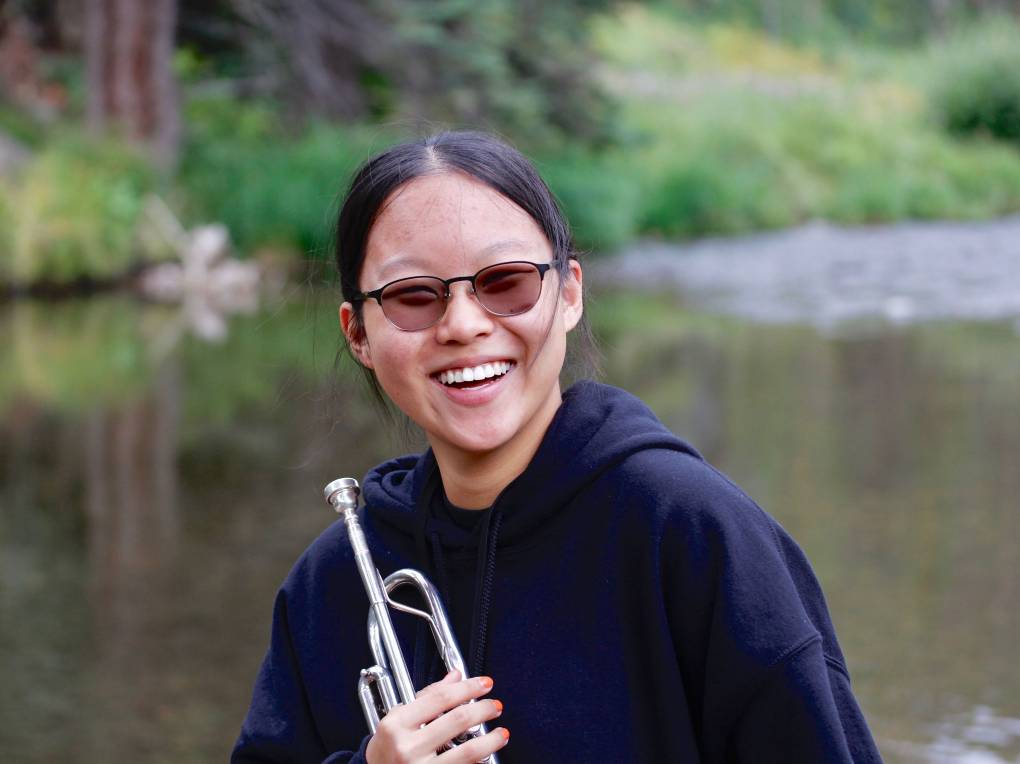
"caption": "Skylar Tang, a 16-year-old multi-talented Bay Area musician, is the winner of the Dr. J. Douglas White Composing & Arranging Contest in New York.",
"description": null,
"title": "Skylar Tang, a 16-year-old multi-talented Bay Area musician, is the winner of the Dr. J. Douglas White Composing & Arranging Contest in New York.",
"credit": "John Clayton/ Skylar Tang",
"status": "inherit",
"altTag": "A young Asian woman wearing dark glasses and a black hoodie, stands smiling and clutching a trumpet close to her chest, in front of a lake.",
"isLoading": false,
"fetchFailed": false
},
"arts_13912569": {
"type": "attachments",
"id": "arts_13912569",
"meta": {
"index": "attachments_1716263798",
"site": "arts",
"id": "13912569",
"found": true
},
"parent": 13912562,
"imgSizes": {
"twentyfourteen-full-width": {
"file": "https://ww2.kqed.org/app/uploads/sites/2/2022/04/FF-20-1038x576.jpg",
"width": 1038,
"mimeType": "image/jpeg",
"height": 576
},
"thumbnail": {
"file": "https://ww2.kqed.org/app/uploads/sites/2/2022/04/FF-20-160x107.jpg",
"width": 160,
"mimeType": "image/jpeg",
"height": 107
},
"post-thumbnail": {
"file": "https://ww2.kqed.org/app/uploads/sites/2/2022/04/FF-20-672x372.jpg",
"width": 672,
"mimeType": "image/jpeg",
"height": 372
},
"kqedFullSize": {
"file": "https://ww2.kqed.org/app/uploads/sites/2/2022/04/FF-20.jpg",
"width": 1600,
"height": 1067
},
"large": {
"file": "https://ww2.kqed.org/app/uploads/sites/2/2022/04/FF-20-1020x680.jpg",
"width": 1020,
"mimeType": "image/jpeg",
"height": 680
},
"1536x1536": {
"file": "https://ww2.kqed.org/app/uploads/sites/2/2022/04/FF-20-1536x1024.jpg",
"width": 1536,
"mimeType": "image/jpeg",
"height": 1024
},
"medium": {
"file": "https://ww2.kqed.org/app/uploads/sites/2/2022/04/FF-20-800x534.jpg",
"width": 800,
"mimeType": "image/jpeg",
"height": 534
},
"medium_large": {
"file": "https://ww2.kqed.org/app/uploads/sites/2/2022/04/FF-20-768x512.jpg",
"width": 768,
"mimeType": "image/jpeg",
"height": 512
}
},
"publishDate": 1651089853,
"modified": 1651162729,
"caption": "The Flannels with guest keyboardist Johnny. Back row, left to right: Miles Blackwell, \nJohnny, Miles Turk, Vincent MacLauchlan. Front row, left to right: Malcolm, Yaya, Kazeem, Iona Kambouridis. ",
"description": null,
"title": "FF-20",
"credit": "Julian Currier",
"status": "inherit",
"altTag": null,
"isLoading": false,
"fetchFailed": false
},
"arts_13912310": {
"type": "attachments",
"id": "arts_13912310",
"meta": {
"index": "attachments_1716263798",
"site": "arts",
"id": "13912310",
"found": true
},
"parent": 13912307,
"imgSizes": {
"twentyfourteen-full-width": {
"file": "https://ww2.kqed.org/app/uploads/sites/2/2022/04/BlueNoteJazzFestival.Collage-1038x576.jpg",
"width": 1038,
"mimeType": "image/jpeg",
"height": 576
},
"thumbnail": {
"file": "https://ww2.kqed.org/app/uploads/sites/2/2022/04/BlueNoteJazzFestival.Collage-160x90.jpg",
"width": 160,
"mimeType": "image/jpeg",
"height": 90
},
"post-thumbnail": {
"file": "https://ww2.kqed.org/app/uploads/sites/2/2022/04/BlueNoteJazzFestival.Collage-672x372.jpg",
"width": 672,
"mimeType": "image/jpeg",
"height": 372
},
"kqedFullSize": {
"file": "https://ww2.kqed.org/app/uploads/sites/2/2022/04/BlueNoteJazzFestival.Collage.jpg",
"width": 1920,
"height": 1080
},
"large": {
"file": "https://ww2.kqed.org/app/uploads/sites/2/2022/04/BlueNoteJazzFestival.Collage-1020x574.jpg",
"width": 1020,
"mimeType": "image/jpeg",
"height": 574
},
"1536x1536": {
"file": "https://ww2.kqed.org/app/uploads/sites/2/2022/04/BlueNoteJazzFestival.Collage-1536x864.jpg",
"width": 1536,
"mimeType": "image/jpeg",
"height": 864
},
"medium": {
"file": "https://ww2.kqed.org/app/uploads/sites/2/2022/04/BlueNoteJazzFestival.Collage-800x450.jpg",
"width": 800,
"mimeType": "image/jpeg",
"height": 450
},
"medium_large": {
"file": "https://ww2.kqed.org/app/uploads/sites/2/2022/04/BlueNoteJazzFestival.Collage-768x432.jpg",
"width": 768,
"mimeType": "image/jpeg",
"height": 432
}
},
"publishDate": 1650615448,
"modified": 1650615614,
"caption": "Artists at the Blue Note Jazz festival in Napa include Robert Glasper, Thundercat, Flying Lotus, Erykah Badu, Maxwell and many other stars, pushing face-value ticket fees up to $385 for general admission for the two-day event at Charles Krug Winery.",
"description": null,
"title": "BlueNoteJazzFestival.Collage",
"credit": "Blue Note Jazz Festival",
"status": "inherit",
"altTag": "A collage of headliners' headshots",
"isLoading": false,
"fetchFailed": false
},
"arts_13912258": {
"type": "attachments",
"id": "arts_13912258",
"meta": {
"index": "attachments_1716263798",
"site": "arts",
"id": "13912258",
"found": true
},
"parent": 0,
"imgSizes": {
"twentyfourteen-full-width": {
"file": "https://ww2.kqed.org/app/uploads/sites/2/2022/04/MingusSmiling.color_-1038x576.jpg",
"width": 1038,
"mimeType": "image/jpeg",
"height": 576
},
"thumbnail": {
"file": "https://ww2.kqed.org/app/uploads/sites/2/2022/04/MingusSmiling.color_-160x117.jpg",
"width": 160,
"mimeType": "image/jpeg",
"height": 117
},
"post-thumbnail": {
"file": "https://ww2.kqed.org/app/uploads/sites/2/2022/04/MingusSmiling.color_-672x372.jpg",
"width": 672,
"mimeType": "image/jpeg",
"height": 372
},
"kqedFullSize": {
"file": "https://ww2.kqed.org/app/uploads/sites/2/2022/04/MingusSmiling.color_.jpg",
"width": 1920,
"height": 1399
},
"large": {
"file": "https://ww2.kqed.org/app/uploads/sites/2/2022/04/MingusSmiling.color_-1020x743.jpg",
"width": 1020,
"mimeType": "image/jpeg",
"height": 743
},
"1536x1536": {
"file": "https://ww2.kqed.org/app/uploads/sites/2/2022/04/MingusSmiling.color_-1536x1119.jpg",
"width": 1536,
"mimeType": "image/jpeg",
"height": 1119
},
"medium": {
"file": "https://ww2.kqed.org/app/uploads/sites/2/2022/04/MingusSmiling.color_-800x583.jpg",
"width": 800,
"mimeType": "image/jpeg",
"height": 583
},
"medium_large": {
"file": "https://ww2.kqed.org/app/uploads/sites/2/2022/04/MingusSmiling.color_-768x560.jpg",
"width": 768,
"mimeType": "image/jpeg",
"height": 560
}
},
"publishDate": 1650565172,
"modified": 1650566053,
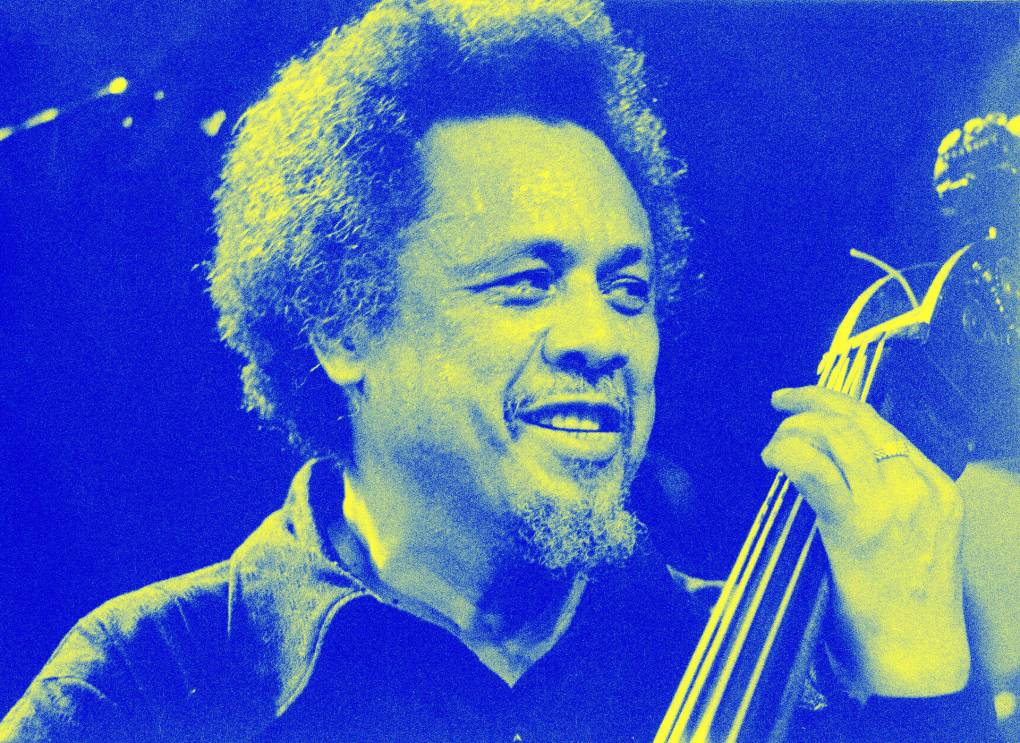
"caption": "Mingus' ties to the Bay Area—and his music's political overtones—presaged many of our activist movements of today. ",
"description": null,
"title": "MingusSmiling.color",
"credit": "Tom Copi/Michael Ochs Archives/Getty Images/Illustration by Becca Kao ",
"status": "inherit",
"altTag": "Charles Mingus playing the bass, looking to the right and smiling knowingly",
"isLoading": false,
"fetchFailed": false
},
"arts_13912037": {
"type": "attachments",
"id": "arts_13912037",
"meta": {
"index": "attachments_1716263798",
"site": "arts",
"id": "13912037",
"found": true
},
"parent": 13911905,
"imgSizes": {
"twentyfourteen-full-width": {
"file": "https://ww2.kqed.org/app/uploads/sites/2/2022/04/AnthonyBraxton1987-1024x576.jpg",
"width": 1024,
"mimeType": "image/jpeg",
"height": 576
},
"thumbnail": {
"file": "https://ww2.kqed.org/app/uploads/sites/2/2022/04/AnthonyBraxton1987-160x108.jpg",
"width": 160,
"mimeType": "image/jpeg",
"height": 108
},
"post-thumbnail": {
"file": "https://ww2.kqed.org/app/uploads/sites/2/2022/04/AnthonyBraxton1987-672x372.jpg",
"width": 672,
"mimeType": "image/jpeg",
"height": 372
},
"kqedFullSize": {
"file": "https://ww2.kqed.org/app/uploads/sites/2/2022/04/AnthonyBraxton1987.jpg",
"width": 1024,
"height": 690
},
"large": {
"file": "https://ww2.kqed.org/app/uploads/sites/2/2022/04/AnthonyBraxton1987-1020x687.jpg",
"width": 1020,
"mimeType": "image/jpeg",
"height": 687
},
"medium": {
"file": "https://ww2.kqed.org/app/uploads/sites/2/2022/04/AnthonyBraxton1987-800x539.jpg",
"width": 800,
"mimeType": "image/jpeg",
"height": 539
},
"medium_large": {
"file": "https://ww2.kqed.org/app/uploads/sites/2/2022/04/AnthonyBraxton1987-768x518.jpg",
"width": 768,
"mimeType": "image/jpeg",
"height": 518
}
},
"publishDate": 1650271858,
"modified": 1650271977,
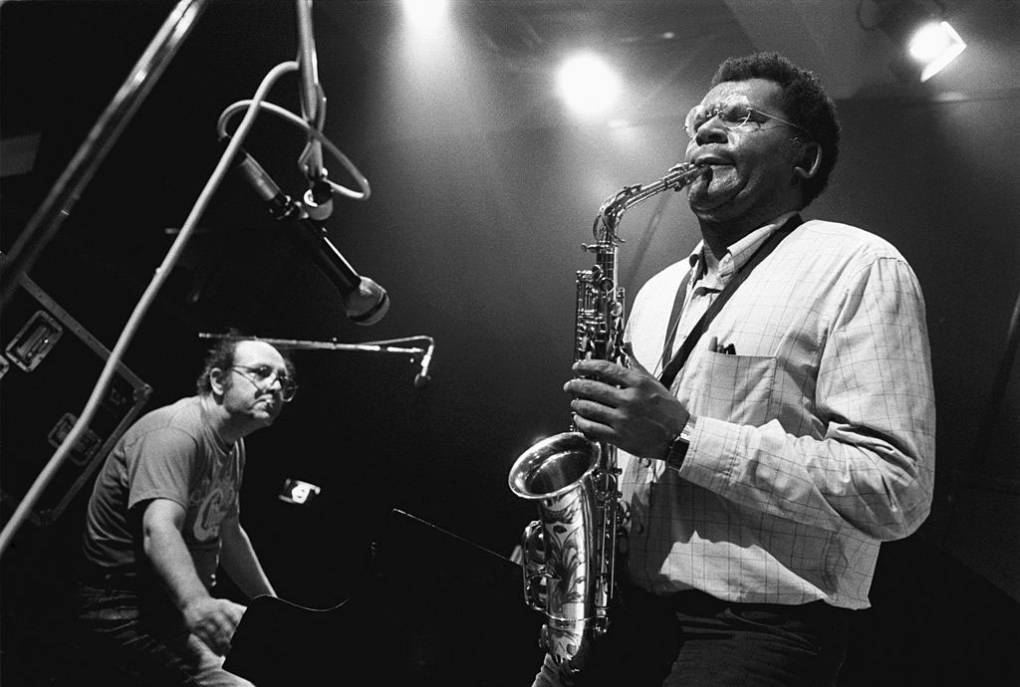
"caption": "Amidst his time teaching at Mills College, jazz musician Anthony Braxton performs with Misha Mengelberg and the ICP Orchestra in Amsterdam, Netherlands, in 1987.",
"description": null,
"title": "Anthony Braxton 1987",
"credit": "Frans Schellekens/Redferns",
"status": "inherit",
"altTag": "A middle-aged Black man plays the alto saxophone on a dimly lit stage",
"isLoading": false,
"fetchFailed": false
},
"arts_13911619": {
"type": "attachments",
"id": "arts_13911619",
"meta": {
"index": "attachments_1716263798",
"site": "arts",
"id": "13911619",
"found": true
},
"parent": 13911606,
"imgSizes": {
"twentyfourteen-full-width": {
"file": "https://ww2.kqed.org/app/uploads/sites/2/2022/04/SonsOfKemet-1038x576.jpg",
"width": 1038,
"mimeType": "image/jpeg",
"height": 576
},
"thumbnail": {
"file": "https://ww2.kqed.org/app/uploads/sites/2/2022/04/SonsOfKemet-160x107.jpg",
"width": 160,
"mimeType": "image/jpeg",
"height": 107
},
"post-thumbnail": {
"file": "https://ww2.kqed.org/app/uploads/sites/2/2022/04/SonsOfKemet-672x372.jpg",
"width": 672,
"mimeType": "image/jpeg",
"height": 372
},
"kqedFullSize": {
"file": "https://ww2.kqed.org/app/uploads/sites/2/2022/04/SonsOfKemet.jpg",
"width": 1920,
"height": 1280
},
"large": {
"file": "https://ww2.kqed.org/app/uploads/sites/2/2022/04/SonsOfKemet-1020x680.jpg",
"width": 1020,
"mimeType": "image/jpeg",
"height": 680
},
"1536x1536": {
"file": "https://ww2.kqed.org/app/uploads/sites/2/2022/04/SonsOfKemet-1536x1024.jpg",
"width": 1536,
"mimeType": "image/jpeg",
"height": 1024
},
"medium": {
"file": "https://ww2.kqed.org/app/uploads/sites/2/2022/04/SonsOfKemet-800x533.jpg",
"width": 800,
"mimeType": "image/jpeg",
"height": 533
},
"medium_large": {
"file": "https://ww2.kqed.org/app/uploads/sites/2/2022/04/SonsOfKemet-768x512.jpg",
"width": 768,
"mimeType": "image/jpeg",
"height": 512
}
},
"publishDate": 1649360264,
"modified": 1649360319,
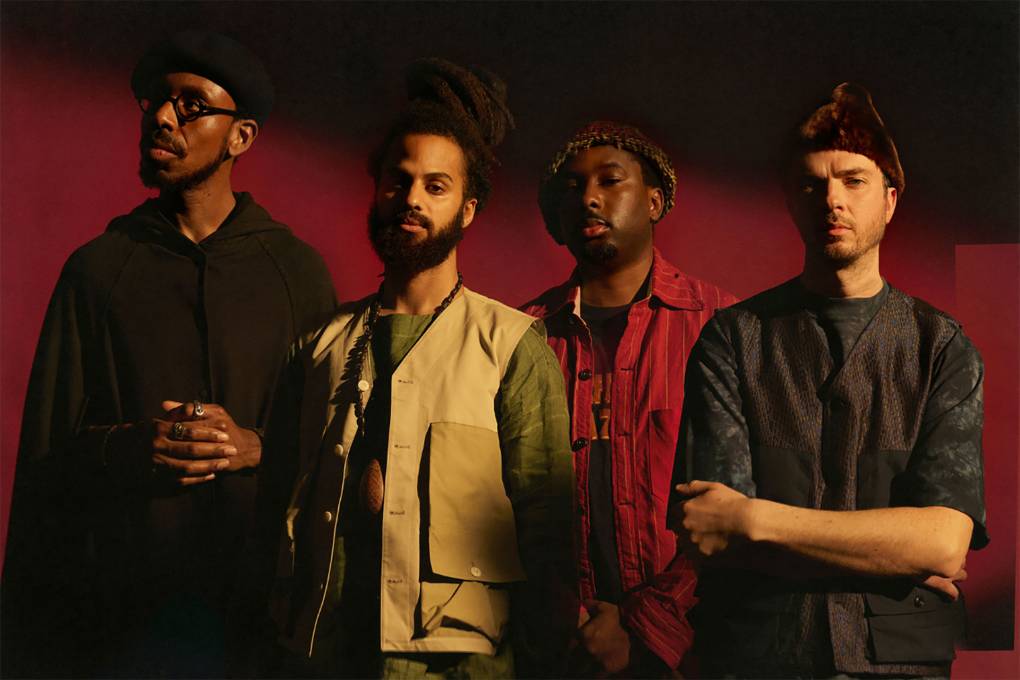
"caption": "Sons of Kemet, led by Shabaka Hutchings, left.",
"description": null,
"title": "SonsOfKemet",
"credit": "Artist Photo",
"status": "inherit",
"altTag": "Four men in elaborate wardrobe, lined against a red background",
"isLoading": false,
"fetchFailed": false
},
"arts_13911261": {
"type": "attachments",
"id": "arts_13911261",
"meta": {
"index": "attachments_1716263798",
"site": "arts",
"id": "13911261",
"found": true
},
"parent": 13911226,
"imgSizes": {
"twentyfourteen-full-width": {
"file": "https://ww2.kqed.org/app/uploads/sites/2/2022/03/SamoraPinderhughes.CRED_.ChloeVeltman-1038x576.jpg",
"width": 1038,
"mimeType": "image/jpeg",
"height": 576
},
"thumbnail": {
"file": "https://ww2.kqed.org/app/uploads/sites/2/2022/03/SamoraPinderhughes.CRED_.ChloeVeltman-160x90.jpg",
"width": 160,
"mimeType": "image/jpeg",
"height": 90
},
"post-thumbnail": {
"file": "https://ww2.kqed.org/app/uploads/sites/2/2022/03/SamoraPinderhughes.CRED_.ChloeVeltman-672x372.jpg",
"width": 672,
"mimeType": "image/jpeg",
"height": 372
},
"kqedFullSize": {
"file": "https://ww2.kqed.org/app/uploads/sites/2/2022/03/SamoraPinderhughes.CRED_.ChloeVeltman.jpg",
"width": 1920,
"height": 1080
},
"large": {
"file": "https://ww2.kqed.org/app/uploads/sites/2/2022/03/SamoraPinderhughes.CRED_.ChloeVeltman-1020x574.jpg",
"width": 1020,
"mimeType": "image/jpeg",
"height": 574
},
"1536x1536": {
"file": "https://ww2.kqed.org/app/uploads/sites/2/2022/03/SamoraPinderhughes.CRED_.ChloeVeltman-1536x864.jpg",
"width": 1536,
"mimeType": "image/jpeg",
"height": 864
},
"medium": {
"file": "https://ww2.kqed.org/app/uploads/sites/2/2022/03/SamoraPinderhughes.CRED_.ChloeVeltman-800x450.jpg",
"width": 800,
"mimeType": "image/jpeg",
"height": 450
},
"medium_large": {
"file": "https://ww2.kqed.org/app/uploads/sites/2/2022/03/SamoraPinderhughes.CRED_.ChloeVeltman-768x432.jpg",
"width": 768,
"mimeType": "image/jpeg",
"height": 432
}
},
"publishDate": 1648534923,
"modified": 1648534976,
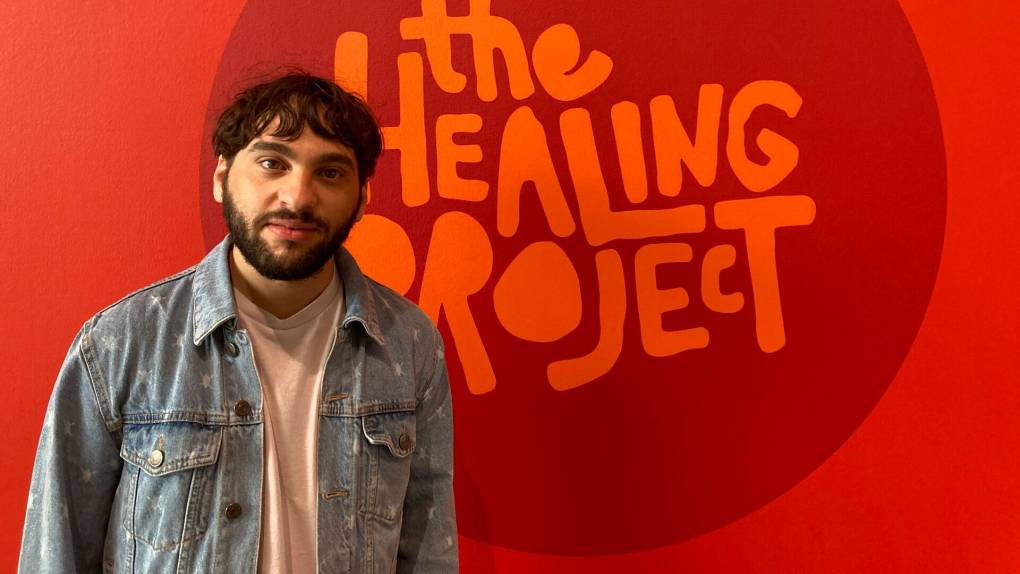
"caption": "Artist and activist Samora Pinderhughes is the force behind 'The Healing Project', a multidisciplinary art project about survival and healing. ",
"description": null,
"title": "SamoraPinderhughes.CRED.ChloeVeltman",
"credit": "Chloe Veltman/KQED",
"status": "inherit",
"altTag": "Man with dark hair and beard in denim jacket and white t-shirt standing in front of red wall art that says \"The Healing Project\" in a circle",
"isLoading": false,
"fetchFailed": false
},
"arts_13910955": {
"type": "attachments",
"id": "arts_13910955",
"meta": {
"index": "attachments_1716263798",
"site": "arts",
"id": "13910955",
"found": true
},
"parent": 13910893,
"imgSizes": {
"twentyfourteen-full-width": {
"file": "https://ww2.kqed.org/app/uploads/sites/2/2022/03/PhotoCredit_Briene_Lermitte_Schneider-2020-5-1038x576.jpg",
"width": 1038,
"mimeType": "image/jpeg",
"height": 576
},
"thumbnail": {
"file": "https://ww2.kqed.org/app/uploads/sites/2/2022/03/PhotoCredit_Briene_Lermitte_Schneider-2020-5-160x90.jpg",
"width": 160,
"mimeType": "image/jpeg",
"height": 90
},
"post-thumbnail": {
"file": "https://ww2.kqed.org/app/uploads/sites/2/2022/03/PhotoCredit_Briene_Lermitte_Schneider-2020-5-672x372.jpg",
"width": 672,
"mimeType": "image/jpeg",
"height": 372
},
"kqedFullSize": {
"file": "https://ww2.kqed.org/app/uploads/sites/2/2022/03/PhotoCredit_Briene_Lermitte_Schneider-2020-5-scaled.jpg",
"width": 2560,
"height": 1440
},
"2048x2048": {
"file": "https://ww2.kqed.org/app/uploads/sites/2/2022/03/PhotoCredit_Briene_Lermitte_Schneider-2020-5-2048x1152.jpg",
"width": 2048,
"mimeType": "image/jpeg",
"height": 1152
},
"large": {
"file": "https://ww2.kqed.org/app/uploads/sites/2/2022/03/PhotoCredit_Briene_Lermitte_Schneider-2020-5-1020x574.jpg",
"width": 1020,
"mimeType": "image/jpeg",
"height": 574
},
"1536x1536": {
"file": "https://ww2.kqed.org/app/uploads/sites/2/2022/03/PhotoCredit_Briene_Lermitte_Schneider-2020-5-1536x864.jpg",
"width": 1536,
"mimeType": "image/jpeg",
"height": 864
},
"full-width": {
"file": "https://ww2.kqed.org/app/uploads/sites/2/2022/03/PhotoCredit_Briene_Lermitte_Schneider-2020-5-1920x1080.jpg",
"width": 1920,
"mimeType": "image/jpeg",
"height": 1080
},
"medium": {
"file": "https://ww2.kqed.org/app/uploads/sites/2/2022/03/PhotoCredit_Briene_Lermitte_Schneider-2020-5-800x450.jpg",
"width": 800,
"mimeType": "image/jpeg",
"height": 450
},
"medium_large": {
"file": "https://ww2.kqed.org/app/uploads/sites/2/2022/03/PhotoCredit_Briene_Lermitte_Schneider-2020-5-768x432.jpg",
"width": 768,
"mimeType": "image/jpeg",
"height": 432
}
},
"publishDate": 1647985429,
"modified": 1647985572,
"caption": "Maria Schneider, Pulitzer Prize nominee and NEA Jazz Master, is a renowned bandleader and advocate for artists' rights in the digital age. ",
"description": null,
"title": "PhotoCredit_Briene_Lermitte_Schneider 2020 5",
"credit": "Briene Lermitte",
"status": "inherit",
"altTag": null,
"isLoading": false,
"fetchFailed": false
},
"arts_13910917": {
"type": "attachments",
"id": "arts_13910917",
"meta": {
"index": "attachments_1716263798",
"site": "arts",
"id": "13910917",
"found": true
},
"parent": 0,
"imgSizes": {
"thumbnail": {
"file": "https://ww2.kqed.org/app/uploads/sites/2/2022/03/Wayne.Randall.SFJAZZ.Thumbnail-160x90.jpg",
"width": 160,
"mimeType": "image/jpeg",
"height": 90
},
"post-thumbnail": {
"file": "https://ww2.kqed.org/app/uploads/sites/2/2022/03/Wayne.Randall.SFJAZZ.Thumbnail-672x372.jpg",
"width": 672,
"mimeType": "image/jpeg",
"height": 372
},
"kqedFullSize": {
"file": "https://ww2.kqed.org/app/uploads/sites/2/2022/03/Wayne.Randall.SFJAZZ.Thumbnail.jpg",
"width": 954,
"height": 537
},
"medium": {
"file": "https://ww2.kqed.org/app/uploads/sites/2/2022/03/Wayne.Randall.SFJAZZ.Thumbnail-800x450.jpg",
"width": 800,
"mimeType": "image/jpeg",
"height": 450
},
"medium_large": {
"file": "https://ww2.kqed.org/app/uploads/sites/2/2022/03/Wayne.Randall.SFJAZZ.Thumbnail-768x432.jpg",
"width": 768,
"mimeType": "image/jpeg",
"height": 432
}
},
"publishDate": 1647967327,
"modified": 1647967591,
"caption": "Wayne Shorter accepts the lifetime achievement award on behalf of Joni Mitchell from SFJAZZ founder and artistic director Randall Kline, in 2015.",
"description": null,
"title": "Wayne.Randall.SFJAZZ.Thumbnail",
"credit": "Drew Altizer Photography/KQED File Photo",
"status": "inherit",
"altTag": null,
"isLoading": false,
"fetchFailed": false
},
"arts_13893684": {
"type": "attachments",
"id": "arts_13893684",
"meta": {
"index": "attachments_1716263798",
"site": "arts",
"id": "13893684",
"found": true
},
"parent": 13893674,
"imgSizes": {
"twentyfourteen-full-width": {
"file": "https://ww2.kqed.org/app/uploads/sites/2/2021/03/Photo-Credit-Ariel-Nava-2-1038x576.jpg",
"width": 1038,
"mimeType": "image/jpeg",
"height": 576
},
"thumbnail": {
"file": "https://ww2.kqed.org/app/uploads/sites/2/2021/03/Photo-Credit-Ariel-Nava-2-160x107.jpg",
"width": 160,
"mimeType": "image/jpeg",
"height": 107
},
"post-thumbnail": {
"file": "https://ww2.kqed.org/app/uploads/sites/2/2021/03/Photo-Credit-Ariel-Nava-2-672x372.jpg",
"width": 672,
"mimeType": "image/jpeg",
"height": 372
},
"kqedFullSize": {
"file": "https://ww2.kqed.org/app/uploads/sites/2/2021/03/Photo-Credit-Ariel-Nava-2-e1614971774468.jpg",
"width": 1200,
"height": 800
},
"large": {
"file": "https://ww2.kqed.org/app/uploads/sites/2/2021/03/Photo-Credit-Ariel-Nava-2-1020x680.jpg",
"width": 1020,
"mimeType": "image/jpeg",
"height": 680
},
"1536x1536": {
"file": "https://ww2.kqed.org/app/uploads/sites/2/2021/03/Photo-Credit-Ariel-Nava-2-1536x1024.jpg",
"width": 1536,
"mimeType": "image/jpeg",
"height": 1024
},
"full-width": {
"file": "https://ww2.kqed.org/app/uploads/sites/2/2021/03/Photo-Credit-Ariel-Nava-2-1920x1280.jpg",
"width": 1920,
"mimeType": "image/jpeg",
"height": 1280
},
"medium": {
"file": "https://ww2.kqed.org/app/uploads/sites/2/2021/03/Photo-Credit-Ariel-Nava-2-800x533.jpg",
"width": 800,
"mimeType": "image/jpeg",
"height": 533
},
"medium_large": {
"file": "https://ww2.kqed.org/app/uploads/sites/2/2021/03/Photo-Credit-Ariel-Nava-2-768x512.jpg",
"width": 768,
"mimeType": "image/jpeg",
"height": 512
}
},
"publishDate": 1614971719,
"modified": 1614971826,
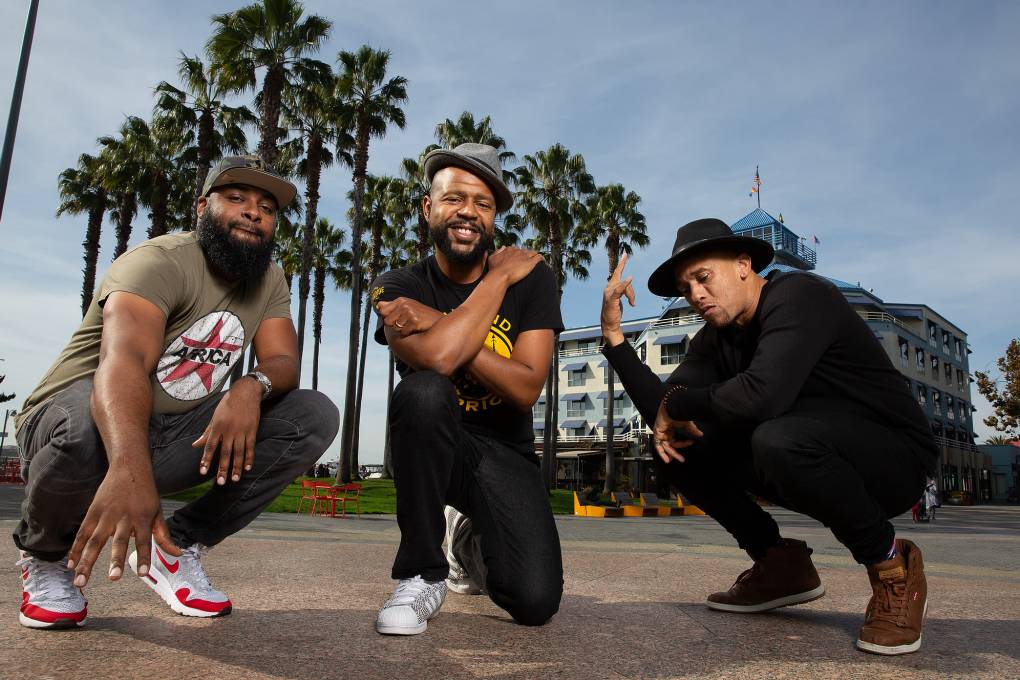
"caption": "Oakland's Black London collective features musicians and bandleaders Howard Wiley, Mike Blankenship and Kev Choice.",
"description": "Oakland's Black London collective features musicians and bandleaders Howard Wiley, Mike Blankenship and Kev Choice.",
"title": "Photo Credit Ariel Nava 2",
"credit": "Ariel Nava",
"status": "inherit",
"altTag": "Three musicians smile and pose in front of palm trees.",
"isLoading": false,
"fetchFailed": false
},
"arts_13909624": {
"type": "attachments",
"id": "arts_13909624",
"meta": {
"index": "attachments_1716263798",
"site": "arts",
"id": "13909624",
"found": true
},
"parent": 13909587,
"imgSizes": {
"thumbnail": {
"file": "https://ww2.kqed.org/app/uploads/sites/2/2022/02/GettyImages-1046583758-1-160x90.jpg",
"width": 160,
"mimeType": "image/jpeg",
"height": 90
},
"post-thumbnail": {
"file": "https://ww2.kqed.org/app/uploads/sites/2/2022/02/GettyImages-1046583758-1-672x372.jpg",
"width": 672,
"mimeType": "image/jpeg",
"height": 372
},
"kqedFullSize": {
"file": "https://ww2.kqed.org/app/uploads/sites/2/2022/02/GettyImages-1046583758-1.jpg",
"width": 1024,
"height": 576
},
"large": {
"file": "https://ww2.kqed.org/app/uploads/sites/2/2022/02/GettyImages-1046583758-1-1020x574.jpg",
"width": 1020,
"mimeType": "image/jpeg",
"height": 574
},
"medium": {
"file": "https://ww2.kqed.org/app/uploads/sites/2/2022/02/GettyImages-1046583758-1-800x450.jpg",
"width": 800,
"mimeType": "image/jpeg",
"height": 450
},
"medium_large": {
"file": "https://ww2.kqed.org/app/uploads/sites/2/2022/02/GettyImages-1046583758-1-768x432.jpg",
"width": 768,
"mimeType": "image/jpeg",
"height": 432
}
},
"publishDate": 1645212313,
"modified": 1645212346,
"caption": "Topaz Jones performs during the 2018 Austin City Limits Music Festival at Zilker Park on October 5, 2018 in Austin, Texas. ",
"description": null,
"title": "2018 Austin City Limits Music Festival - Weekend 1",
"credit": "Tim Mosenfelder/Getty Images",
"status": "inherit",
"altTag": null,
"isLoading": false,
"fetchFailed": false
},
"arts_13909508": {
"type": "attachments",
"id": "arts_13909508",
"meta": {
"index": "attachments_1716263798",
"site": "arts",
"id": "13909508",
"found": true
},
"parent": 13909444,
"imgSizes": {
"twentyfourteen-full-width": {
"file": "https://ww2.kqed.org/app/uploads/sites/2/2022/02/jason-moran-alicia-hall-moran-two-wings-1038x576.jpg",
"width": 1038,
"mimeType": "image/jpeg",
"height": 576
},
"thumbnail": {
"file": "https://ww2.kqed.org/app/uploads/sites/2/2022/02/jason-moran-alicia-hall-moran-two-wings-160x90.jpg",
"width": 160,
"mimeType": "image/jpeg",
"height": 90
},
"post-thumbnail": {
"file": "https://ww2.kqed.org/app/uploads/sites/2/2022/02/jason-moran-alicia-hall-moran-two-wings-672x372.jpg",
"width": 672,
"mimeType": "image/jpeg",
"height": 372
},
"kqedFullSize": {
"file": "https://ww2.kqed.org/app/uploads/sites/2/2022/02/jason-moran-alicia-hall-moran-two-wings.jpg",
"width": 1250,
"height": 703
},
"large": {
"file": "https://ww2.kqed.org/app/uploads/sites/2/2022/02/jason-moran-alicia-hall-moran-two-wings-1020x574.jpg",
"width": 1020,
"mimeType": "image/jpeg",
"height": 574
},
"medium": {
"file": "https://ww2.kqed.org/app/uploads/sites/2/2022/02/jason-moran-alicia-hall-moran-two-wings-800x450.jpg",
"width": 800,
"mimeType": "image/jpeg",
"height": 450
},
"medium_large": {
"file": "https://ww2.kqed.org/app/uploads/sites/2/2022/02/jason-moran-alicia-hall-moran-two-wings-768x432.jpg",
"width": 768,
"mimeType": "image/jpeg",
"height": 432
}
},
"publishDate": 1645037627,
"modified": 1645037705,
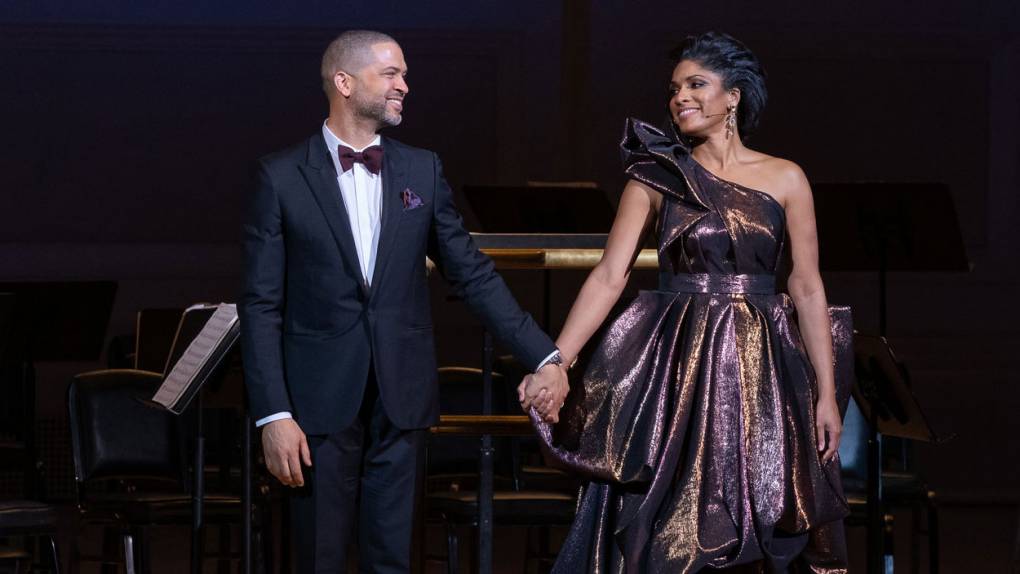
"caption": "Jason Moran and Alicia Hall-Moran bring their concert dedicated to the Great Migration to Berkeley's Zellerbach Hall on Feb. 17.",
"description": null,
"title": "jason-moran-alicia-hall-moran-two-wings",
"credit": "Fadi Kheir",
"status": "inherit",
"altTag": "A man in a suit and bowtie holds the hand of a woman in an opulent dress, on stage, in front of a piano",
"isLoading": false,
"fetchFailed": false
}
},
"audioPlayerReducer": {
"postId": "stream_live",
"isPaused": true,
"isPlaying": false,
"pfsActive": false,
"pledgeModalIsOpen": true,
"playerDrawerIsOpen": false,
"liveAudioPlayStartedAt": 0,
"liveAudioPlayContext": ""
},
"authorsReducer": {
"byline_arts_13913017": {
"type": "authors",
"id": "byline_arts_13913017",
"meta": {
"override": true
},
"slug": "byline_arts_13913017",
"name": "Elizabeth Blair",
"isLoading": false
},
"byline_arts_13912562": {
"type": "authors",
"id": "byline_arts_13912562",
"meta": {
"override": true
},
"slug": "byline_arts_13912562",
"name": "Morris Hayes",
"isLoading": false
},
"agilbert": {
"type": "authors",
"id": "86",
"meta": {
"index": "authors_1716337520",
"id": "86",
"found": true
},
"name": "Andrew Gilbert",
"firstName": "Andrew",
"lastName": "Gilbert",
"slug": "agilbert",
"email": "jazzscribe@aol.com",
"display_author_email": false,
"staff_mastheads": [],
"title": "KQED Contributor",
"bio": "A Los Angeles native based in the Berkeley area since 1996, Andrew Gilbert covers jazz, international music and dance for KQED's \u003ci>California Report, \u003c/i>the\u003ci> Mercury News\u003c/i>, \u003ci>San Francisco Chronicle\u003c/i>, \u003ci>Berkeleyside.com\u003c/i>, and other publications. He is available for weddings and bar and bat mitzvahs. #jazzscribe",
"avatar": "https://secure.gravatar.com/avatar/d7bcafdbefdd39e9a68f88724ca616eb4e7a5a6bff9cdfb62de652a1e1751471?s=600&d=blank&r=g",
"twitter": null,
"bluesky": null,
"facebook": null,
"instagram": null,
"linkedin": null,
"sites": [
{
"site": "arts",
"roles": [
"Contributor",
"author"
]
},
{
"site": "news",
"roles": [
"author"
]
}
],
"headData": {
"title": "Andrew Gilbert | KQED",
"description": "KQED Contributor",
"ogImgSrc": "https://secure.gravatar.com/avatar/d7bcafdbefdd39e9a68f88724ca616eb4e7a5a6bff9cdfb62de652a1e1751471?s=600&d=blank&r=g",
"twImgSrc": "https://secure.gravatar.com/avatar/d7bcafdbefdd39e9a68f88724ca616eb4e7a5a6bff9cdfb62de652a1e1751471?s=600&d=blank&r=g"
},
"isLoading": false,
"link": "/author/agilbert"
},
"gmeline": {
"type": "authors",
"id": "185",
"meta": {
"index": "authors_1716337520",
"id": "185",
"found": true
},
"name": "Gabe Meline",
"firstName": "Gabe",
"lastName": "Meline",
"slug": "gmeline",
"email": "gmeline@kqed.org",
"display_author_email": true,
"staff_mastheads": [
"arts"
],
"title": "Senior Editor, KQED Arts & Culture",
"bio": "Gabe Meline entered journalism at age 15 making photocopied zines, and has since earned awards from the Edward R. Murrow Awards, the Society for Professional Journalists, the Online Journalism Awards, the Association of Alternative Newsweeklies and the California Newspaper Publishers Association. Prior to KQED, he was the editor of the \u003cem>North Bay Bohemian\u003c/em> and a touring musician. He lives with his wife and daughter in his hometown of Santa Rosa, CA.",
"avatar": "https://secure.gravatar.com/avatar/5bebe57be0d8bc2dd318934feb47299e2d2d10cba28d09d8d7afb389a2ce2bdd?s=600&d=blank&r=g",
"twitter": null,
"bluesky": null,
"facebook": null,
"instagram": null,
"linkedin": null,
"sites": [
{
"site": "",
"roles": [
"editor"
]
},
{
"site": "arts",
"roles": [
"administrator"
]
},
{
"site": "artschool",
"roles": [
"editor"
]
},
{
"site": "news",
"roles": [
"author"
]
},
{
"site": "pop",
"roles": [
"editor"
]
},
{
"site": "bayareabites",
"roles": [
"editor"
]
},
{
"site": "food",
"roles": [
"editor"
]
},
{
"site": "forum",
"roles": [
"administrator"
]
},
{
"site": "liveblog",
"roles": [
"editor"
]
},
{
"site": "hiphop",
"roles": [
"editor"
]
}
],
"headData": {
"title": "Gabe Meline | KQED",
"description": "Senior Editor, KQED Arts & Culture",
"ogImgSrc": "https://secure.gravatar.com/avatar/5bebe57be0d8bc2dd318934feb47299e2d2d10cba28d09d8d7afb389a2ce2bdd?s=600&d=blank&r=g",
"twImgSrc": "https://secure.gravatar.com/avatar/5bebe57be0d8bc2dd318934feb47299e2d2d10cba28d09d8d7afb389a2ce2bdd?s=600&d=blank&r=g"
},
"isLoading": false,
"link": "/author/gmeline"
},
"cveltman": {
"type": "authors",
"id": "8608",
"meta": {
"index": "authors_1716337520",
"id": "8608",
"found": true
},
"name": "Chloe Veltman",
"firstName": "Chloe",
"lastName": "Veltman",
"slug": "cveltman",
"email": "cveltman@kqed.org",
"display_author_email": true,
"staff_mastheads": [],
"title": "Arts and Culture Reporter",
"bio": "Chloe Veltman is a former arts and culture reporter for KQED. Prior to joining the organization, she launched and led the arts bureau at Colorado Public Radio, served as the Bay Area's culture columnist for the New York Times, and was the founder, host and executive producer of VoiceBox, a national award-winning weekly podcast/radio show and live events series all about the human voice. Chloe is the recipient of numerous prizes, grants and fellowships including a Webby Award for her work on interactive storytelling, both the John S Knight Journalism Fellowship and Humanities Center Fellowship at Stanford University, the Sundance Arts Writing Fellowship and a Library of Congress Research Fellowship. She is the author of the book \"On Acting\" and has appeared as a guest lecturer at Yale University and the San Francisco Conservatory of Music among other institutions. She holds a BA in english literature from King's College, Cambridge, and a Masters in Dramaturgy from the Central School of Speech and Drama/Harvard Institute for Advanced Theater Training.\r\n\u003ca href=\"https://www.chloeveltman.com\">www.chloeveltman.com\u003c/a>",
"avatar": "https://secure.gravatar.com/avatar/55403394b00a1ddab683952c2eb2cf85?s=600&d=blank&r=g",
"twitter": "chloeveltman",
"facebook": null,
"instagram": null,
"linkedin": null,
"sites": [
{
"site": "arts",
"roles": []
},
{
"site": "news",
"roles": [
"author"
]
},
{
"site": "pop",
"roles": [
"editor"
]
},
{
"site": "science",
"roles": []
}
],
"headData": {
"title": "Chloe Veltman | KQED",
"description": "Arts and Culture Reporter",
"ogImgSrc": "https://secure.gravatar.com/avatar/55403394b00a1ddab683952c2eb2cf85?s=600&d=blank&r=g",
"twImgSrc": "https://secure.gravatar.com/avatar/55403394b00a1ddab683952c2eb2cf85?s=600&d=blank&r=g"
},
"isLoading": false,
"link": "/author/cveltman"
},
"nvoynovskaya": {
"type": "authors",
"id": "11387",
"meta": {
"index": "authors_1716337520",
"id": "11387",
"found": true
},
"name": "Nastia Voynovskaya",
"firstName": "Nastia",
"lastName": "Voynovskaya",
"slug": "nvoynovskaya",
"email": "nvoynovskaya@kqed.org",
"display_author_email": false,
"staff_mastheads": [
"arts"
],
"title": "Editor and reporter",
"bio": "Nastia Voynovskaya is a reporter, editor and host at KQED Arts & Culture. She's been covering the arts in the Bay Area for over a decade, with a focus on music, queer culture, labor issues and grassroots organizing. She has edited KQED story series such as Trans Bay: A History of San Francisco's Gender-Diverse Community, and co-created KQED's Bay Area hip-hop history project, That's My Word. Nastia's work has been recognized by the Society of Professional Journalists and San Francisco Press Club. She regularly appears on podcasts and radio programs, including NPR's All Songs Considered, and hosts live events where music, culture and conversation meet.",
"avatar": "https://secure.gravatar.com/avatar/5025ee460e5a85d69ca20ea6c6f2f80d7e17795c828f61ea3aecfcd924e9042e?s=600&d=blank&r=g",
"twitter": null,
"bluesky": null,
"facebook": null,
"instagram": "https://www.instagram.com/nananastia/",
"linkedin": null,
"sites": [
{
"site": "",
"roles": [
"editor"
]
},
{
"site": "arts",
"roles": [
"administrator"
]
},
{
"site": "news",
"roles": [
"editor"
]
},
{
"site": "pop",
"roles": [
"administrator"
]
},
{
"site": "bayareabites",
"roles": [
"editor"
]
},
{
"site": "podcasts",
"roles": [
"editor"
]
},
{
"site": "hiphop",
"roles": [
"editor"
]
}
],
"headData": {
"title": "Nastia Voynovskaya | KQED",
"description": "Editor and reporter",
"ogImgSrc": "https://secure.gravatar.com/avatar/5025ee460e5a85d69ca20ea6c6f2f80d7e17795c828f61ea3aecfcd924e9042e?s=600&d=blank&r=g",
"twImgSrc": "https://secure.gravatar.com/avatar/5025ee460e5a85d69ca20ea6c6f2f80d7e17795c828f61ea3aecfcd924e9042e?s=600&d=blank&r=g"
},
"isLoading": false,
"link": "/author/nvoynovskaya"
}
},
"pagesReducer": {
"arts_tag_jazz": {
"type": "terms",
"id": "arts_1420",
"meta": {
"index": "terms_1716263798",
"site": "arts",
"id": "1420",
"score": 9.104757
},
"featImg": null,
"name": "jazz",
"description": null,
"taxonomy": "tag",
"headData": {
"twImgId": null,
"twTitle": null,
"ogTitle": null,
"ogImgId": null,
"twDescription": null,
"description": null,
"title": "jazz Archives | KQED Arts",
"ogDescription": null
},
"ttid": 1432,
"slug": "jazz",
"isLoading": false,
"title": "jazz",
"pageMeta": {
"site": "arts",
"WpPageTemplate": "page-topic-editorial",
"currentPage": 9
},
"blocks": [
{
"blockName": "kqed/post-list",
"attrs": {
"layout": "cardArticle2",
"query": "posts/arts?tag=jazz",
"seeMore": false,
"paginated": true,
"page": 9
}
},
{
"blockName": "kqed/ad"
}
]
}
},
"pfsSessionReducer": {},
"postsReducer": {
"stream_live": {
"type": "live",
"id": "stream_live",
"audioUrl": "https://streams.kqed.org/kqedradio",
"title": "Live Stream",
"excerpt": "Live Stream information currently unavailable.",
"link": "/radio",
"featImg": "",
"label": {
"name": "KQED Live",
"link": "/"
}
},
"stream_kqedNewscast": {
"type": "posts",
"id": "stream_kqedNewscast",
"audioUrl": "https://www.kqed.org/.stream/anon/radio/RDnews/newscast.mp3?_=1",
"title": "KQED Newscast",
"featImg": "",
"label": {
"name": "88.5 FM",
"link": "/"
}
},
"arts_13913017": {
"type": "posts",
"id": "arts_13913017",
"meta": {
"index": "posts_1716263798",
"site": "arts",
"id": "13913017",
"score": null,
"sort": [
1651865045000
]
},
"guestAuthors": [],
"slug": "who-says-big-band-jazz-is-for-old-people-not-this-teen-composer",
"title": "Who Says Big Band Jazz is for Old People? Not This Teen Composer",
"publishDate": 1651865045,
"format": "standard",
"headTitle": "Who Says Big Band Jazz is for Old People? Not This Teen Composer | KQED",
"labelTerm": {
"term": 137,
"site": "arts"
},
"content": "\u003cp>Some 300 young musicians from around the country are in New York for Jazz at Lincoln Center’s annual \u003ca href=\"https://2022.jazz.org/essentially-ellington\" target=\"_blank\" rel=\"noopener noreferrer\">Essentially Ellington High School Jazz Band Competition and Festival\u003c/a>. They’re attending workshops and jam sessions, meeting professional musicians and competing.\u003c/p>\n\u003cp>\u003ca href=\"https://www.instagram.com/skylartang_/\" target=\"_blank\" rel=\"noopener noreferrer\">Skylar Tang\u003c/a>, 16, has already won her award. The Bay Area trumpet player is the winner of the Dr. J. Douglas White Composition and Arranging Contest, an honor bestowed on an original composition written and arranged for big bands by a high school student.\u003c/p>\n\u003cp>https://www.instagram.com/p/CWsM-YLpVz2/\u003c/p>\n\u003cp>Tang said the vibe of her winning piece, \u003cem>Kaleidoscope,\u003c/em> is kind of “frantic,” a bit like her life right now. “There’s a lot of stress in the tune. I go to school. I have assessments and tests. Maybe that has something to do with it,” she said.\u003c/p>\n\u003cp>It took her about seven months to create her work. Composing for big band is “quite a process,” Tang said. As a result of her win, she’ll receive $1,000 and a composing and arranging lesson with Grammy winner and longtime Jazz at Lincoln Center Orchestra member, Ted Nash. The orchestra also recorded Tang’s piece.\u003c/p>\n\u003cp>[ad fullwidth]\u003c/p>\n\u003cp>To determine the winner, Nash listened for “several factors like the strength of their thematic material, their harmony, their use of the instruments, the overall feeling of the music.”\u003c/p>\n\u003cp>[aside postID='arts_13912562,arts_13912656,arts_13912364']Tang’s entry was remarkable for its maturity, Nash said. “You have the melody, you have solos, you have backgrounds, you have a development, sometimes we call it a ‘shout chorus,'” he said. “She has all of these important elements in the piece, but it’s deeply personal as well.”\u003c/p>\n\u003cp>Nash is thrilled that students have come from all over the country to participate in the Essentially Ellington Festival. “We’ve gone through a period where people weren’t that interested in big bands,” he said.\u003c/p>\n\u003cp>Nash credited Wynton Marsalis, managing and artistic Director of Jazz at Lincoln Center, with reversing that trend by “understanding the importance of having an orchestral vision and orchestral voice in jazz.”\u003c/p>\n\u003cp>Tang said she’s inspired by all kinds of music from different time periods, videos of which she devours on the internet. Her training began with classical piano when she was a little girl; she started playing in her school jazz bands in sixth grade. She said she “absolutely loves” trumpet player Roy Hargrove and admires contemporary artists like pianist Aaron Parks and drummers and composers Terri Lynne Carrington and Kendrick Scott Oracle.\u003c/p>\n\u003cp>https://www.instagram.com/p/CLUztcrhQRh/\u003c/p>\n\u003cp>During quarantine, Tang learned how to make split screen videos to share her cover arrangements online. In her \u003ca href=\"https://www.youtube.com/watch?v=ol6qzbhEEic\" target=\"_blank\" rel=\"noopener noreferrer\">cover\u003c/a> of \u003cem>Do You Wanna Do Nothing With Me\u003c/em> by Lawrence, she plays trumpet, guitar, drums and keyboards.\u003c/p>\n\u003cp>\u003c/p>\n\u003cp>“That’s what I love about music. It’s about creating. It’s about expressing yourself and it’s about innovation,” she said.\u003c/p>\n\u003cdiv class=\"fullattribution\">\u003cem>Copyright 2022 NPR. To see more, \u003ca href=\"https://www.npr.org\" target=\"_blank\" rel=\"noopener noreferrer\">visit NPR\u003c/a>.\u003cimg decoding=\"async\" src=\"https://www.google-analytics.com/__utm.gif?utmac=UA-5828686-4&utmdt=Who+says+big+band+jazz+is+for+old+people%3F+Not+this+teenage+composer.&utme=8(APIKey)9(MDAxOTAwOTE4MDEyMTkxMDAzNjczZDljZA004)\">\u003c/em>\u003c/div>\n\n",
"blocks": [],
"excerpt": "Bay Area composer Skylar Tang, 16, just won a Jazz at Lincoln Center contest. She'll accept the award in New York this weekend.",
"status": "publish",
"parent": 0,
"modified": 1726771207,
"stats": {
"hasAudio": false,
"hasVideo": false,
"hasChartOrMap": false,
"iframeSrcs": [],
"hasGoogleForm": false,
"hasGallery": false,
"hasHearkenModule": false,
"hasPolis": false,
"paragraphCount": 13,
"wordCount": 530
},
"headData": {
"title": "Who Says Big Band Jazz is for Old People? Not This Teen Composer | KQED",
"description": "Bay Area composer Skylar Tang, 16, just won a Jazz at Lincoln Center contest. She'll accept the award in New York this weekend.",
"ogTitle": "",
"ogDescription": "",
"ogImgId": "",
"twTitle": "",
"twDescription": "",
"twImgId": "",
"schema": {
"@context": "https://schema.org",
"@type": "Article",
"headline": "Who Says Big Band Jazz is for Old People? Not This Teen Composer",
"datePublished": "2022-05-06T12:24:05-07:00",
"dateModified": "2024-09-19T11:40:07-07:00",
"image": "https://cdn.kqed.org/wp-content/uploads/2020/02/KQED-OG-Image@1x.png"
}
},
"sticky": false,
"nprImageCredit": "John Clayton",
"nprByline": "Elizabeth Blair",
"nprImageAgency": " Skylar Tang",
"nprStoryId": "1096885184",
"nprApiLink": "http://api.npr.org/query?id=1096885184&apiKey=MDAxOTAwOTE4MDEyMTkxMDAzNjczZDljZA004",
"nprHtmlLink": "https://www.npr.org/2022/05/06/1096885184/who-says-big-band-jazz-is-for-old-people-not-this-teenage-composer?ft=nprml&f=1096885184",
"nprRetrievedStory": "1",
"nprPubDate": "Fri, 06 May 2022 08:07:00 -0400",
"nprStoryDate": "Fri, 06 May 2022 05:00:48 -0400",
"nprLastModifiedDate": "Fri, 06 May 2022 08:07:07 -0400",
"nprAudio": "https://ondemand.npr.org/anon.npr-mp3/npr/me/2022/05/20220506_me_who_says_big_band_jazz_is_for_old_people_not_this_teenage_composer.mp3?orgId=1&topicId=613820055&d=161&p=3&story=1096885184&ft=nprml&f=1096885184",
"nprAudioM3u": "http://api.npr.org/m3u/11097065477-13c0e3.m3u?orgId=1&topicId=613820055&d=161&p=3&story=1096885184&ft=nprml&f=1096885184",
"templateType": "standard",
"featuredImageType": "standard",
"excludeFromSiteSearch": "Include",
"showOnAuthorArchivePages": "No",
"path": "/arts/13913017/who-says-big-band-jazz-is-for-old-people-not-this-teen-composer",
"audioUrl": "https://ondemand.npr.org/anon.npr-mp3/npr/me/2022/05/20220506_me_who_says_big_band_jazz_is_for_old_people_not_this_teenage_composer.mp3?orgId=1&topicId=613820055&d=161&p=3&story=1096885184&ft=nprml&f=1096885184",
"audioTrackLength": null,
"parsedContent": [
{
"type": "contentString",
"content": "\u003cdiv class=\"post-body\">\u003cp>\u003cp>Some 300 young musicians from around the country are in New York for Jazz at Lincoln Center’s annual \u003ca href=\"https://2022.jazz.org/essentially-ellington\" target=\"_blank\" rel=\"noopener noreferrer\">Essentially Ellington High School Jazz Band Competition and Festival\u003c/a>. They’re attending workshops and jam sessions, meeting professional musicians and competing.\u003c/p>\n\u003cp>\u003ca href=\"https://www.instagram.com/skylartang_/\" target=\"_blank\" rel=\"noopener noreferrer\">Skylar Tang\u003c/a>, 16, has already won her award. The Bay Area trumpet player is the winner of the Dr. J. Douglas White Composition and Arranging Contest, an honor bestowed on an original composition written and arranged for big bands by a high school student.\u003c/p>\u003c/p>\u003c/div>",
"attributes": {
"named": {},
"numeric": []
}
},
{
"type": "component",
"content": "",
"name": "instagramLink",
"attributes": {
"named": {
"instagramUrl": "https://www.instagram.com/p/CWsM-YLpVz2/"
},
"numeric": []
}
},
{
"type": "contentString",
"content": "\u003cdiv class=\"post-body\">\u003cp>\u003cp>Tang said the vibe of her winning piece, \u003cem>Kaleidoscope,\u003c/em> is kind of “frantic,” a bit like her life right now. “There’s a lot of stress in the tune. I go to school. I have assessments and tests. Maybe that has something to do with it,” she said.\u003c/p>\n\u003cp>It took her about seven months to create her work. Composing for big band is “quite a process,” Tang said. As a result of her win, she’ll receive $1,000 and a composing and arranging lesson with Grammy winner and longtime Jazz at Lincoln Center Orchestra member, Ted Nash. The orchestra also recorded Tang’s piece.\u003c/p>\n\u003cp>\u003c/p>\u003c/div>",
"attributes": {
"named": {},
"numeric": []
}
},
{
"type": "component",
"content": "",
"name": "ad",
"attributes": {
"named": {
"label": "fullwidth"
},
"numeric": [
"fullwidth"
]
}
},
{
"type": "contentString",
"content": "\u003cdiv class=\"post-body\">\u003cp>\u003c/p>\n\u003cp>To determine the winner, Nash listened for “several factors like the strength of their thematic material, their harmony, their use of the instruments, the overall feeling of the music.”\u003c/p>\n\u003cp>\u003c/p>\u003c/div>",
"attributes": {
"named": {},
"numeric": []
}
},
{
"type": "component",
"content": "",
"name": "aside",
"attributes": {
"named": {
"postid": "arts_13912562,arts_13912656,arts_13912364",
"label": ""
},
"numeric": []
}
},
{
"type": "contentString",
"content": "\u003cdiv class=\"post-body\">\u003cp>Tang’s entry was remarkable for its maturity, Nash said. “You have the melody, you have solos, you have backgrounds, you have a development, sometimes we call it a ‘shout chorus,'” he said. “She has all of these important elements in the piece, but it’s deeply personal as well.”\u003c/p>\n\u003cp>Nash is thrilled that students have come from all over the country to participate in the Essentially Ellington Festival. “We’ve gone through a period where people weren’t that interested in big bands,” he said.\u003c/p>\n\u003cp>Nash credited Wynton Marsalis, managing and artistic Director of Jazz at Lincoln Center, with reversing that trend by “understanding the importance of having an orchestral vision and orchestral voice in jazz.”\u003c/p>\n\u003cp>Tang said she’s inspired by all kinds of music from different time periods, videos of which she devours on the internet. Her training began with classical piano when she was a little girl; she started playing in her school jazz bands in sixth grade. She said she “absolutely loves” trumpet player Roy Hargrove and admires contemporary artists like pianist Aaron Parks and drummers and composers Terri Lynne Carrington and Kendrick Scott Oracle.\u003c/p>\u003c/p>\u003c/div>",
"attributes": {
"named": {},
"numeric": []
}
},
{
"type": "component",
"content": "",
"name": "instagramLink",
"attributes": {
"named": {
"instagramUrl": "https://www.instagram.com/p/CLUztcrhQRh/"
},
"numeric": []
}
},
{
"type": "contentString",
"content": "\u003cdiv class=\"post-body\">\u003cp>\u003cp>During quarantine, Tang learned how to make split screen videos to share her cover arrangements online. In her \u003ca href=\"https://www.youtube.com/watch?v=ol6qzbhEEic\" target=\"_blank\" rel=\"noopener noreferrer\">cover\u003c/a> of \u003cem>Do You Wanna Do Nothing With Me\u003c/em> by Lawrence, she plays trumpet, guitar, drums and keyboards.\u003c/p>\n\u003cp>\u003c/p>\n\u003cp>“That’s what I love about music. It’s about creating. It’s about expressing yourself and it’s about innovation,” she said.\u003c/p>\n\u003cdiv class=\"fullattribution\">\u003cem>Copyright 2022 NPR. To see more, \u003ca href=\"https://www.npr.org\" target=\"_blank\" rel=\"noopener noreferrer\">visit NPR\u003c/a>.\u003cimg decoding=\"async\" src=\"https://www.google-analytics.com/__utm.gif?utmac=UA-5828686-4&utmdt=Who+says+big+band+jazz+is+for+old+people%3F+Not+this+teenage+composer.&utme=8(APIKey)9(MDAxOTAwOTE4MDEyMTkxMDAzNjczZDljZA004)\">\u003c/em>\u003c/div>\n\n\u003c/div>\u003c/p>",
"attributes": {
"named": {},
"numeric": []
}
}
],
"link": "/arts/13913017/who-says-big-band-jazz-is-for-old-people-not-this-teen-composer",
"authors": [
"byline_arts_13913017"
],
"categories": [
"arts_1",
"arts_69"
],
"tags": [
"arts_12735",
"arts_1420",
"arts_7131",
"arts_931"
],
"affiliates": [
"arts_137"
],
"featImg": "arts_13913018",
"label": "arts_137"
},
"arts_13912562": {
"type": "posts",
"id": "arts_13912562",
"meta": {
"index": "posts_1716263798",
"site": "arts",
"id": "13912562",
"score": null,
"sort": [
1651091279000
]
},
"parent": 0,
"labelTerm": {},
"blocks": [],
"publishDate": 1651091279,
"format": "standard",
"title": "Meet The Flannels, a Teenage Band Making Jazz Feel Like a Party",
"headTitle": "Meet The Flannels, a Teenage Band Making Jazz Feel Like a Party | KQED",
"content": "\u003cp>\u003cem>\u003cstrong>Editor’s note:\u003c/strong> It’s \u003ca href=\"https://www.kqed.org/youthtakeover\" target=\"_blank\" rel=\"noopener noreferrer\">KQED Youth Takeover week\u003c/a>. From April 25-29, we’re featuring stories by high school students from around the Bay Area.\u003c/em>\u003c/p>\n\u003cp>Squeezing through a crowd of high school students at one of \u003ca href=\"https://www.instagram.com/theffflannels/\" target=\"_blank\" rel=\"noopener noreferrer\">The Flannels\u003c/a>’ backyard shows, listeners are in for a multi-medium artistic treat.\u003c/p>\n\u003cp>Here, an attendee might dance the night away, invigorated by the band’s buoyant, bouncy jazz-funk sound, or comb through the curated collection of art for sale, all in the same backyard.\u003cimg loading=\"lazy\" decoding=\"async\" class=\"alignright size-full wp-image-13912576\" src=\"https://ww2.kqed.org/app/uploads/sites/2/2022/04/morris-photo-small-1.jpg\" alt=\"\" width=\"180\" height=\"199\" srcset=\"https://cdn.kqed.org/wp-content/uploads/sites/2/2022/04/morris-photo-small-1.jpg 180w, https://cdn.kqed.org/wp-content/uploads/sites/2/2022/04/morris-photo-small-1-160x177.jpg 160w\" sizes=\"(max-width: 180px) 100vw, 180px\">\u003c/p>\n\u003cp>Whether it’s the handmade jackets, the oil paintings, the music or simply the chance to be a part of something fun, there’s something for everybody at a Flannels show.\u003c/p>\n\u003cp>To me, jazz has always had an enigmatic aura of inaccessibility. The genre conjures up memories of having to put on a nice shirt to go to Yoshi’s in Jack London Square with my dad, sipping a watery Shirley Temple and trying to understand the appeal of music with no words.\u003c/p>\n\u003cp>[ad fullwidth]\u003c/p>\n\u003cp>That’s not the case with The Flannels.\u003c/p>\n\u003cfigure id=\"attachment_13912570\" class=\"wp-caption aligncenter\" style=\"max-width: 800px\">\u003cimg loading=\"lazy\" decoding=\"async\" class=\"size-medium wp-image-13912570\" src=\"https://ww2.kqed.org/app/uploads/sites/2/2022/04/FF-28-800x533.jpg\" alt=\"\" width=\"800\" height=\"533\" srcset=\"https://cdn.kqed.org/wp-content/uploads/sites/2/2022/04/FF-28-800x533.jpg 800w, https://cdn.kqed.org/wp-content/uploads/sites/2/2022/04/FF-28-1020x680.jpg 1020w, https://cdn.kqed.org/wp-content/uploads/sites/2/2022/04/FF-28-160x107.jpg 160w, https://cdn.kqed.org/wp-content/uploads/sites/2/2022/04/FF-28-768x512.jpg 768w, https://cdn.kqed.org/wp-content/uploads/sites/2/2022/04/FF-28-1536x1024.jpg 1536w, https://cdn.kqed.org/wp-content/uploads/sites/2/2022/04/FF-28-2048x1365.jpg 2048w, https://cdn.kqed.org/wp-content/uploads/sites/2/2022/04/FF-28-1920x1280.jpg 1920w\" sizes=\"(max-width: 800px) 100vw, 800px\">\u003cfigcaption class=\"wp-caption-text\">The Flannels have goals of playing bigger stages, but for now they’re having fun throwing DIY events like their backyard party on March 25. \u003ccite>(Julian Currier)\u003c/cite>\u003c/figcaption>\u003c/figure>\n\u003cp>The Flannels are an ensemble mostly made up of students from Oakland School for the Arts. They’ve played shows at \u003ca href=\"https://www.instagram.com/oaklandstylelab/\" target=\"_blank\" rel=\"noopener noreferrer\">Oakland Style Lab\u003c/a>, a creative hub for youth artists in downtown Oakland, as well as in band members’ backyards. Most recently, they made their club debut when they opened for Tatiana & Treetop Band at \u003ca href=\"http://www.amadossf.com/\" target=\"_blank\" rel=\"noopener noreferrer\">Amado’s\u003c/a> in San Francisco on April 16. These welcoming, everyone’s-invited kinds of events help make jazz less intimidating and more appealing to the entry-level listener.\u003c/p>\n\u003cp>“It really just felt like a high school party,” says The Flannels’ trumpet player, Iona Kambouridis, about the band’s backyard show on March 25. Not in the sense of a movie-esque rager, she explains, but more like a kickback in the park.\u003c/p>\n\u003cp>While most folks in attendance seemed to be between 15 and 18 years old, concertgoers ranged in age from preteens to the host’s senior-citizen neighbors who happened to stop by.\u003c/p>\n\u003cp>The group began playing summer gigs together, and after clicking, they decided to make it official by forming The Flannels. Coming from similar musical backgrounds, each member was introduced to music early in life by passionate parents. Miles Turk, the band’s drummer, recalls falling in love with live music while watching his father, the pianist \u003ca href=\"https://talent.entireproductions.com/talent/john-turk\" target=\"_blank\" rel=\"noopener noreferrer\">John Turk\u003c/a>, perform.\u003c/p>\n\u003cp>“I would go with him to gigs,” Turk says. “I would see him do what he do. Seeing someone in their element, for real, they love it.”\u003c/p>\n\u003cp>Turk acknowledges the importance, too, of having dedicated music teachers and mentors. “Those people that really love you, and put in that effort for you, they believe in you—that’s huge for any kid,” he says.\u003c/p>\n\u003cp>As for what’s next, the band is looking to expand—both eccentrically and exponentially. Guitarist Vincent Maclauchlan breaks down the group’s goals: “We want to play bigger venues, that’s definitely the goal. You know, just bigger and better things. A backyard is cool, but how about 400 in an established venue?” [aside postid='arts_13912364']\u003c/p>\n\u003cp>But even as the band pursues lofty goals like playing bigger stages and hitting the recording studio, The Flannels are still committed to the kinds of community events that make their performances so fun and free-spirited. “An idea I had was getting together a skate jam, and having a skating competition,” Blackwell says, “as well as selling art and having a music show.”\u003c/p>\n\u003cp>It’s all in concordance with the Flannels’ unpretentious approach to jazz. After all, the band has a successful track record of turning seemingly fanciful ideas into reality.\u003c/p>\n\u003cp>As Blackwell puts it, “I’m like, ‘Bro, what if I could throw this crazy party where there are two bands playing, and five artists selling art?’… And then it actually happens.”\u003c/p>\n\u003cp>The Flannels came up with their band name on a whim, and deny that it holds any profound significance. But their name perfectly encapsulates their do-it-yourself, down-to-earth vibe synonymous with an oversized plaid flannel shirt. And it’s a vibe that is not always associated with jazz music.\u003c/p>\n\u003cp>The Flannels’ laid-back atmosphere is definitely intentional. “I want to build community with music,” says Blackwell. “And as much as I think the black-tie thing is sort of cool, I think it’s more important to bring a group of people together.”\u003c/p>\n\u003cp>Presuming the Flannels continue on their upward trend—hosting shows that break triple-digit audience numbers and congregating young artists—then Blackwell may be onto something. In fact, the group’s approachable vibe could lay the foundations for a whole new generation to make its mark on jazz.\u003c/p>\n\u003cp>\u003cimg loading=\"lazy\" decoding=\"async\" class=\"aligncenter size-medium wp-image-12127869\" src=\"https://ww2.kqed.org/app/uploads/sites/2/2016/09/Q.Logo_.Break_-800x78.jpg\" alt=\"\" width=\"800\" height=\"78\" srcset=\"https://cdn.kqed.org/wp-content/uploads/sites/2/2016/09/Q.Logo_.Break_.jpg 800w, https://cdn.kqed.org/wp-content/uploads/sites/2/2016/09/Q.Logo_.Break_-400x39.jpg 400w, https://cdn.kqed.org/wp-content/uploads/sites/2/2016/09/Q.Logo_.Break_-768x75.jpg 768w\" sizes=\"(max-width: 800px) 100vw, 800px\">\u003c/p>\n\u003cp>\u003c/p>\n\u003cp>\u003cem>Morris Hayes is a student journalist born and raised in Oakland, California. He attends Skyline High School.\u003c/em>\u003c/p>\n\n",
"stats": {
"hasVideo": false,
"hasChartOrMap": false,
"hasAudio": false,
"hasPolis": false,
"wordCount": 887,
"hasGoogleForm": false,
"hasGallery": false,
"hasHearkenModule": false,
"iframeSrcs": [],
"paragraphCount": 23
},
"modified": 1705006923,
"excerpt": "The Oakland high school students are throwing backyard shows and playing some of their first club gigs. ",
"headData": {
"twImgId": "",
"twTitle": "",
"ogTitle": "",
"ogImgId": "",
"twDescription": "",
"description": "The Oakland high school students are throwing backyard shows and playing some of their first club gigs. ",
"title": "Meet The Flannels, a Teenage Band Making Jazz Feel Like a Party | KQED",
"ogDescription": "",
"schema": {
"@context": "https://schema.org",
"@type": "Article",
"headline": "Meet The Flannels, a Teenage Band Making Jazz Feel Like a Party",
"datePublished": "2022-04-27T13:27:59-07:00",
"dateModified": "2024-01-11T13:02:03-08:00",
"image": "https://cdn.kqed.org/wp-content/uploads/2020/02/KQED-OG-Image@1x.png"
}
},
"guestAuthors": [],
"slug": "meet-the-flannels-a-teenage-band-making-jazz-feel-like-a-party",
"status": "publish",
"sourceUrl": "https://www.kqed.org/youthtakeover",
"templateType": "standard",
"nprByline": "Morris Hayes",
"excludeFromSiteSearch": "Include",
"featuredImageType": "standard",
"sticky": false,
"source": "Youth Takeover",
"showOnAuthorArchivePages": "No",
"path": "/arts/13912562/meet-the-flannels-a-teenage-band-making-jazz-feel-like-a-party",
"audioTrackLength": null,
"parsedContent": [
{
"type": "contentString",
"content": "\u003cdiv class=\"post-body\">\u003cp>\u003cp>\u003cem>\u003cstrong>Editor’s note:\u003c/strong> It’s \u003ca href=\"https://www.kqed.org/youthtakeover\" target=\"_blank\" rel=\"noopener noreferrer\">KQED Youth Takeover week\u003c/a>. From April 25-29, we’re featuring stories by high school students from around the Bay Area.\u003c/em>\u003c/p>\n\u003cp>Squeezing through a crowd of high school students at one of \u003ca href=\"https://www.instagram.com/theffflannels/\" target=\"_blank\" rel=\"noopener noreferrer\">The Flannels\u003c/a>’ backyard shows, listeners are in for a multi-medium artistic treat.\u003c/p>\n\u003cp>Here, an attendee might dance the night away, invigorated by the band’s buoyant, bouncy jazz-funk sound, or comb through the curated collection of art for sale, all in the same backyard.\u003cimg loading=\"lazy\" decoding=\"async\" class=\"alignright size-full wp-image-13912576\" src=\"https://ww2.kqed.org/app/uploads/sites/2/2022/04/morris-photo-small-1.jpg\" alt=\"\" width=\"180\" height=\"199\" srcset=\"https://cdn.kqed.org/wp-content/uploads/sites/2/2022/04/morris-photo-small-1.jpg 180w, https://cdn.kqed.org/wp-content/uploads/sites/2/2022/04/morris-photo-small-1-160x177.jpg 160w\" sizes=\"(max-width: 180px) 100vw, 180px\">\u003c/p>\n\u003cp>Whether it’s the handmade jackets, the oil paintings, the music or simply the chance to be a part of something fun, there’s something for everybody at a Flannels show.\u003c/p>\n\u003cp>To me, jazz has always had an enigmatic aura of inaccessibility. The genre conjures up memories of having to put on a nice shirt to go to Yoshi’s in Jack London Square with my dad, sipping a watery Shirley Temple and trying to understand the appeal of music with no words.\u003c/p>\n\u003cp>\u003c/p>\u003c/div>",
"attributes": {
"named": {},
"numeric": []
}
},
{
"type": "component",
"content": "",
"name": "ad",
"attributes": {
"named": {
"label": "fullwidth"
},
"numeric": [
"fullwidth"
]
}
},
{
"type": "contentString",
"content": "\u003cdiv class=\"post-body\">\u003cp>\u003c/p>\n\u003cp>That’s not the case with The Flannels.\u003c/p>\n\u003cfigure id=\"attachment_13912570\" class=\"wp-caption aligncenter\" style=\"max-width: 800px\">\u003cimg loading=\"lazy\" decoding=\"async\" class=\"size-medium wp-image-13912570\" src=\"https://ww2.kqed.org/app/uploads/sites/2/2022/04/FF-28-800x533.jpg\" alt=\"\" width=\"800\" height=\"533\" srcset=\"https://cdn.kqed.org/wp-content/uploads/sites/2/2022/04/FF-28-800x533.jpg 800w, https://cdn.kqed.org/wp-content/uploads/sites/2/2022/04/FF-28-1020x680.jpg 1020w, https://cdn.kqed.org/wp-content/uploads/sites/2/2022/04/FF-28-160x107.jpg 160w, https://cdn.kqed.org/wp-content/uploads/sites/2/2022/04/FF-28-768x512.jpg 768w, https://cdn.kqed.org/wp-content/uploads/sites/2/2022/04/FF-28-1536x1024.jpg 1536w, https://cdn.kqed.org/wp-content/uploads/sites/2/2022/04/FF-28-2048x1365.jpg 2048w, https://cdn.kqed.org/wp-content/uploads/sites/2/2022/04/FF-28-1920x1280.jpg 1920w\" sizes=\"(max-width: 800px) 100vw, 800px\">\u003cfigcaption class=\"wp-caption-text\">The Flannels have goals of playing bigger stages, but for now they’re having fun throwing DIY events like their backyard party on March 25. \u003ccite>(Julian Currier)\u003c/cite>\u003c/figcaption>\u003c/figure>\n\u003cp>The Flannels are an ensemble mostly made up of students from Oakland School for the Arts. They’ve played shows at \u003ca href=\"https://www.instagram.com/oaklandstylelab/\" target=\"_blank\" rel=\"noopener noreferrer\">Oakland Style Lab\u003c/a>, a creative hub for youth artists in downtown Oakland, as well as in band members’ backyards. Most recently, they made their club debut when they opened for Tatiana & Treetop Band at \u003ca href=\"http://www.amadossf.com/\" target=\"_blank\" rel=\"noopener noreferrer\">Amado’s\u003c/a> in San Francisco on April 16. These welcoming, everyone’s-invited kinds of events help make jazz less intimidating and more appealing to the entry-level listener.\u003c/p>\n\u003cp>“It really just felt like a high school party,” says The Flannels’ trumpet player, Iona Kambouridis, about the band’s backyard show on March 25. Not in the sense of a movie-esque rager, she explains, but more like a kickback in the park.\u003c/p>\n\u003cp>While most folks in attendance seemed to be between 15 and 18 years old, concertgoers ranged in age from preteens to the host’s senior-citizen neighbors who happened to stop by.\u003c/p>\n\u003cp>The group began playing summer gigs together, and after clicking, they decided to make it official by forming The Flannels. Coming from similar musical backgrounds, each member was introduced to music early in life by passionate parents. Miles Turk, the band’s drummer, recalls falling in love with live music while watching his father, the pianist \u003ca href=\"https://talent.entireproductions.com/talent/john-turk\" target=\"_blank\" rel=\"noopener noreferrer\">John Turk\u003c/a>, perform.\u003c/p>\n\u003cp>“I would go with him to gigs,” Turk says. “I would see him do what he do. Seeing someone in their element, for real, they love it.”\u003c/p>\n\u003cp>Turk acknowledges the importance, too, of having dedicated music teachers and mentors. “Those people that really love you, and put in that effort for you, they believe in you—that’s huge for any kid,” he says.\u003c/p>\n\u003cp>As for what’s next, the band is looking to expand—both eccentrically and exponentially. Guitarist Vincent Maclauchlan breaks down the group’s goals: “We want to play bigger venues, that’s definitely the goal. You know, just bigger and better things. A backyard is cool, but how about 400 in an established venue?” \u003c/p>\u003c/div>",
"attributes": {
"named": {},
"numeric": []
}
},
{
"type": "component",
"content": "",
"name": "aside",
"attributes": {
"named": {
"postid": "arts_13912364",
"label": ""
},
"numeric": []
}
},
{
"type": "contentString",
"content": "\u003cdiv class=\"post-body\">\u003cp>\u003c/p>\n\u003cp>But even as the band pursues lofty goals like playing bigger stages and hitting the recording studio, The Flannels are still committed to the kinds of community events that make their performances so fun and free-spirited. “An idea I had was getting together a skate jam, and having a skating competition,” Blackwell says, “as well as selling art and having a music show.”\u003c/p>\n\u003cp>It’s all in concordance with the Flannels’ unpretentious approach to jazz. After all, the band has a successful track record of turning seemingly fanciful ideas into reality.\u003c/p>\n\u003cp>As Blackwell puts it, “I’m like, ‘Bro, what if I could throw this crazy party where there are two bands playing, and five artists selling art?’… And then it actually happens.”\u003c/p>\n\u003cp>The Flannels came up with their band name on a whim, and deny that it holds any profound significance. But their name perfectly encapsulates their do-it-yourself, down-to-earth vibe synonymous with an oversized plaid flannel shirt. And it’s a vibe that is not always associated with jazz music.\u003c/p>\n\u003cp>The Flannels’ laid-back atmosphere is definitely intentional. “I want to build community with music,” says Blackwell. “And as much as I think the black-tie thing is sort of cool, I think it’s more important to bring a group of people together.”\u003c/p>\n\u003cp>Presuming the Flannels continue on their upward trend—hosting shows that break triple-digit audience numbers and congregating young artists—then Blackwell may be onto something. In fact, the group’s approachable vibe could lay the foundations for a whole new generation to make its mark on jazz.\u003c/p>\n\u003cp>\u003cimg loading=\"lazy\" decoding=\"async\" class=\"aligncenter size-medium wp-image-12127869\" src=\"https://ww2.kqed.org/app/uploads/sites/2/2016/09/Q.Logo_.Break_-800x78.jpg\" alt=\"\" width=\"800\" height=\"78\" srcset=\"https://cdn.kqed.org/wp-content/uploads/sites/2/2016/09/Q.Logo_.Break_.jpg 800w, https://cdn.kqed.org/wp-content/uploads/sites/2/2016/09/Q.Logo_.Break_-400x39.jpg 400w, https://cdn.kqed.org/wp-content/uploads/sites/2/2016/09/Q.Logo_.Break_-768x75.jpg 768w\" sizes=\"(max-width: 800px) 100vw, 800px\">\u003c/p>\n\u003cp>\u003c/p>\n\u003cp>\u003cem>Morris Hayes is a student journalist born and raised in Oakland, California. He attends Skyline High School.\u003c/em>\u003c/p>\n\n\u003c/div>\u003c/p>",
"attributes": {
"named": {},
"numeric": []
}
}
],
"link": "/arts/13912562/meet-the-flannels-a-teenage-band-making-jazz-feel-like-a-party",
"authors": [
"byline_arts_13912562"
],
"categories": [
"arts_1",
"arts_69"
],
"tags": [
"arts_1420",
"arts_4533"
],
"featImg": "arts_13912569",
"label": "source_arts_13912562"
},
"arts_13912307": {
"type": "posts",
"id": "arts_13912307",
"meta": {
"index": "posts_1716263798",
"site": "arts",
"id": "13912307",
"score": null,
"sort": [
1650643216000
]
},
"parent": 0,
"labelTerm": {},
"blocks": [],
"publishDate": 1650643216,
"format": "standard",
"title": "Is The $385 Blue Note Festival in Napa Worth It? Yeah, Probably—But Reluctantly.",
"headTitle": "Is The $385 Blue Note Festival in Napa Worth It? Yeah, Probably—But Reluctantly. | KQED",
"content": "\u003cp>The first-ever \u003ca href=\"https://bluenotejazzfestival.com/napa/\" target=\"_blank\" rel=\"noopener noreferrer\">Blue Note Jazz Festival in Napa\u003c/a> was announced Thursday, and two things happened: my eyes widened at the incredible lineup, and then my brain fell out at the ticket price.\u003c/p>\n\u003cp>The two-day festival on July 30 and 31 hosts so many all-stars that to list just half is like a first draft for a Jazz and Hip-Hop Hall of Fame. It’s got resident artist Robert Glasper, Maxwell, Erykah Badu, Yasiin Bey & Talib Kweli as Black Star, Thundercat, Anderson .Paak, Flying Lotus, the Wu-Tang Clan’s GZA, Christian Scott, Pharaohe Monch, Ledisi, Terrace Martin, BJ the Chicago Kid and plenty more, including \u003ca href=\"https://www.youtube.com/watch?v=cxLpHCDhsTQ\" target=\"_blank\" rel=\"noopener noreferrer\">DJ Jazzy Jeff\u003c/a>, all playing solo or in different configurations.\u003c/p>\n\u003cp>Did I mention Dave Chappelle is hosting?\u003c/p>\n\u003cp>Here’s the thing: Tickets for this festival are $385 each. In line with nationwide trends in festival ticket pricing, that’s \u003cem>three hundred and eighty-five dollars\u003c/em> for one two-day, general-admission ticket, and that’s before “convenience” fees, which have \u003ca href=\"https://www.vox.com/the-goods/2019/6/12/18662992/ticket-fees-ticketmaster-stubhub-ftc-regulation\" target=\"_blank\" rel=\"noopener noreferrer\">soared astronomically\u003c/a> in recent years.\u003c/p>\n\u003cp>[aside postID='arts_13831858']For reference, the last time I bought tickets from Ticketmaster, to see Paul McCartney, my charges included a 23% service fee, a 5% facility charge, and a 3% order processing fee. Our $189.50 tickets suddenly became $250 tickets. (Because my daughter saves ticket stubs, I also willfully opted to pay an extra $10 to send them in the mail at a time when first-class postage costs 58¢).\u003c/p>\n\u003cp>[ad fullwidth]\u003c/p>\n\u003cp>If equal percentages get charged on top of this Napa festival’s face value of $385, you’re looking at possibly paying $504.35 per ticket to the Blue Note Jazz Festival at Charles Krug Winery, to sip Cabernet Sauvignon while watching Black Star do “\u003ca href=\"https://www.youtube.com/watch?v=EuJaStSL0xM\" target=\"_blank\" rel=\"noopener noreferrer\">Redefinition\u003c/a>” among the vineyards, in the upscale, chi-chi confines of Napa Valley.\u003c/p>\n\u003cp>Is this really what we are doing, people?\u003c/p>\n\u003cp>If the answer’s yes—if you’ve been in this festival-pricing dilemma before, either with Outside Lands (\u003ca href=\"https://sfoutsidelands.com/tickets\" target=\"_blank\" rel=\"noopener noreferrer\">more expensive\u003c/a> than the Blue Note festival) or Coachella (\u003ca href=\"https://www.coachella.com/passes\" target=\"_blank\" rel=\"noopener noreferrer\">much more expensive\u003c/a> than the Blue Note festival)—then you’re probably used to “festival math.” You’ve already added up the acts you want to see, calculated roughly how much it would cost to catch each playing separately, in a club, theater or arena, added up all \u003cem>those\u003c/em> costs, and realized: hey, even at $385, that’s a lot of bang for my buck to see so many of my favorites in one weekend.\u003c/p>\n\u003cp>Add the cruel reality that \u003ca href=\"https://www.digitalmusicnews.com/2018/09/27/spotify-declining-royalty-payouts/\" target=\"_blank\" rel=\"noopener noreferrer\">artists’ album royalties have evaporated\u003c/a> in order to \u003ca href=\"https://www.nme.com/news/music/artists-criticise-spotify-ceo-daniel-eks-investment-in-ai-defence-tech-3107864\" target=\"_blank\" rel=\"noopener noreferrer\">make Spotify CEO Daniel Ek a multibillionaire who invests in defense technology\u003c/a>, or the \u003ca href=\"https://theconversation.com/denying-black-musicians-their-royalties-has-a-history-emerging-out-of-slavery-144397\" target=\"_blank\" rel=\"noopener noreferrer\">historic exploitation of Black musicians in America\u003c/a> which substantial festival guarantees can help repair, or the possibility that you’ve just gotten a huge tax return (just kidding, you probably didn’t—thanks, Paul Ryan!), or just that you haven’t taken your loved one out on a nice weekend getaway for the past two years, you start to say to yourself, “You know what? Why not? Let’s do it up.”\u003c/p>\n\u003cfigure id=\"attachment_13903425\" class=\"wp-caption aligncenter\" style=\"max-width: 800px\">\u003cimg loading=\"lazy\" decoding=\"async\" class=\"size-full wp-image-13903425\" src=\"https://ww2.kqed.org/app/uploads/sites/2/2021/09/D7A5194.jpg\" alt=\"\" width=\"800\" height=\"533\" srcset=\"https://cdn.kqed.org/wp-content/uploads/sites/2/2021/09/D7A5194.jpg 800w, https://cdn.kqed.org/wp-content/uploads/sites/2/2021/09/D7A5194-160x107.jpg 160w, https://cdn.kqed.org/wp-content/uploads/sites/2/2021/09/D7A5194-768x512.jpg 768w\" sizes=\"(max-width: 800px) 100vw, 800px\">\u003cfigcaption class=\"wp-caption-text\">Erykah Badu performs at Lights On Festival at Concord Pavilion on Saturday, Sept. 18, 2021. \u003ccite>(Estefany Gonzalez)\u003c/cite>\u003c/figcaption>\u003c/figure>\n\u003cp>Not everyone is in that position, though, and certainly not your average rap fan, and certainly not the surge of younger people getting into jazz \u003ca href=\"https://lnwy.co/read/new-golden-age-jazz/\" target=\"_blank\" rel=\"noopener noreferrer\">thanks to some of the very acts on this bill\u003c/a>. Unless they were born into privilege or have a trust fund, they definitely wouldn’t throw down for VIP tickets ($850), or VIP parking (an additional $150). Having lived in Sonoma County my whole life, and for decades \u003ca href=\"https://www.kqed.org/arts/11625922/bottlerock-finds-it-footing-on-louboutin-heels-in-wine-country\" target=\"_blank\" rel=\"noopener noreferrer\">covered the region’s wine country-branded lifestyle experiences thinly veiled as music festivals\u003c/a>, I can tell you that weekend hotel and Airbnb rates are excessively high for these weekends, and concessions at festivals up here ain’t exactly $6 ballgame hot dogs, either.\u003c/p>\n\u003cp>(It’s worthy to note that there \u003cem>is\u003c/em> a free shuttle to this festival, but from an as-yet-determined parking area with an as-yet-determined parking fee, while \u003ca href=\"https://www.valleymusictravel.com/events/coachella/shuttles/\" target=\"_blank\" rel=\"noopener noreferrer\">Coachella shuttles are $75–$84\u003c/a>. And technically, public transportation to the festival exists, sort of, in the form of the Napa Valley Wine Train, which changed ownership several years ago after \u003ca href=\"https://www.theguardian.com/us-news/2015/sep/13/napa-wine-train-laughing-while-black\" target=\"_blank\" rel=\"noopener noreferrer\">kicking 10 Black women off the train mid-excursion\u003c/a> for “laughing while Black.”)\u003c/p>\n\u003cp>[aside postID='arts_11625922']If I sound like a hater, let me remind you: I hereby place my hand on a stack of Blue Note LPs and vow under oath that this festival has an incredible, historic lineup. But I’ll also remind you that the \u003ca href=\"https://www.billboard.com/music/music-news/blue-note-entertainment-group-sony-hall-new-era-8224741/\" target=\"_blank\" rel=\"noopener noreferrer\">Blue Note Entertainment Group\u003c/a> is not associated at all with the famed jazz label \u003ca href=\"https://www.bluenote.com/\" target=\"_blank\" rel=\"noopener noreferrer\">Blue Note Records\u003c/a>, and books rock, smooth jazz, funk, fusion and folk acts at its seven Blue Note venues and other clubs and theaters around the world, aided in part by \u003ca href=\"https://www.forbes.com/sites/rebeccalerner/2017/06/15/all-that-jazz-inside-over-35-years-at-the-blue-note-jazz-club/?sh=6ab8b31e2c30\" target=\"_blank\" rel=\"noopener noreferrer\">sponsorships with corporate giants Intel, Seagram\u003c/a> and \u003ca href=\"https://www.billboard.com/music/music-news/blue-note-entertainment-group-sony-hall-new-era-8224741/\" target=\"_blank\" rel=\"noopener noreferrer\">Sony\u003c/a>.\u003c/p>\n\u003cp>And look, I accept there’s no going back to the days of events like the \u003ca href=\"https://en.wikipedia.org/wiki/Harlem_Cultural_Festival\" target=\"_blank\" rel=\"noopener noreferrer\">Harlem Cultural Festival\u003c/a>, made famous by the Oscar-wining documentary \u003cem>\u003ca href=\"https://www.kqed.org/arts/13899714/summer-of-soul-celebrates-a-1969-black-cultural-festival-eclipsed-by-woodstock\" target=\"_blank\" rel=\"noopener noreferrer\">Summer of Soul\u003c/a>\u003c/em>, where daily admission was completely free. (Unless you’re talking about an anomaly like the Hardly Strictly Bluegrass festival, which is \u003ca href=\"https://bohemian.com/banjo-banker-1/\" target=\"_blank\" rel=\"noopener noreferrer\">paid for by a finance-sector billionaire’s estate\u003c/a>). The problems inherent with today’s festival prices are not unique to the Blue Note Jazz Festival. And I firmly believe that music is a source of joy like no other, and musicians who create that joy should be paid.\u003c/p>\n\u003cp>But with festival ticket prices already out of reach for so many, especially in the communities from which jazz and hip-hop grew, and with bot-enabled instant ticket scalping an epidemic not only \u003ca href=\"https://www.theatlantic.com/technology/archive/2019/11/discord-scalpers-harry-styles-ticket-resale-verified-fan/602647/\" target=\"_blank\" rel=\"noopener noreferrer\">rampant\u003c/a> but \u003ca href=\"https://www.aei.org/carpe-diem/ticket-scalping-a-market-that-only-exists-because-musicians-under-supply-and-under-price-tickets-to-their-concerts/\" target=\"_blank\" rel=\"noopener noreferrer\">encouraged\u003c/a> and \u003ca href=\"https://www.thestar.com/news/investigations/2018/09/19/we-went-undercover-as-ticket-scalpers-and-ticketmaster-offered-to-help-us-do-business.html\" target=\"_blank\" rel=\"noopener noreferrer\">systemically enabled\u003c/a> in 2022, I have to wonder: should joy really be for sale to the highest bidder?\u003c/p>\n\u003cp>\u003cimg loading=\"lazy\" decoding=\"async\" class=\"aligncenter size-full wp-image-12904247\" src=\"https://ww2.kqed.org/app/uploads/sites/2/2017/03/Q.Logo_.Break_-400x39.jpg\" alt=\"\" width=\"400\" height=\"39\" srcset=\"https://cdn.kqed.org/wp-content/uploads/sites/2/2017/03/Q.Logo_.Break_-400x39.jpg 400w, https://cdn.kqed.org/wp-content/uploads/sites/2/2017/03/Q.Logo_.Break_-400x39-160x16.jpg 160w, https://cdn.kqed.org/wp-content/uploads/sites/2/2017/03/Q.Logo_.Break_-400x39-240x23.jpg 240w, https://cdn.kqed.org/wp-content/uploads/sites/2/2017/03/Q.Logo_.Break_-400x39-375x37.jpg 375w\" sizes=\"(max-width: 400px) 100vw, 400px\">\u003c/p>\n\u003cp>\u003c/p>\n\u003cp>\u003cem>The \u003ca href=\"https://bluenotejazzfestival.com/napa/\" target=\"_blank\" rel=\"noopener noreferrer\">Blue Note Jazz Festival\u003c/a> runs July 30 and 31 at Charles Krug Winery in Napa. Tickets go on sale April 26; \u003ca href=\"https://bluenotejazzfestival.com/napa-tickets/\" target=\"_blank\" rel=\"noopener noreferrer\">details here\u003c/a>. \u003c/em>\u003c/p>\n\n",
"stats": {
"hasVideo": false,
"hasChartOrMap": false,
"hasAudio": false,
"hasPolis": false,
"wordCount": 1043,
"hasGoogleForm": false,
"hasGallery": false,
"hasHearkenModule": false,
"iframeSrcs": [],
"paragraphCount": 18
},
"modified": 1705006946,
"excerpt": "The Blue Note Jazz Festival in Napa is stacked with greats, but continues a trend of soaring ticket prices.",
"headData": {
"twImgId": "",
"twTitle": "",
"socialTitle": "Is This $385 Jazz and Hip-Hop Festival in Napa Worth It? Yeah, Probably—But Reluctantly.%%page%% %%sep%% KQED",
"ogTitle": "",
"ogImgId": "",
"twDescription": "",
"description": "The Blue Note Jazz Festival in Napa is stacked with greats, but continues a trend of soaring ticket prices.",
"title": "Is This $385 Jazz and Hip-Hop Festival in Napa Worth It? Yeah, Probably—But Reluctantly. | KQED",
"ogDescription": "",
"schema": {
"@context": "https://schema.org",
"@type": "Article",
"headline": "Is The $385 Blue Note Festival in Napa Worth It? Yeah, Probably—But Reluctantly.",
"datePublished": "2022-04-22T09:00:16-07:00",
"dateModified": "2024-01-11T13:02:26-08:00",
"image": "https://cdn.kqed.org/wp-content/uploads/2020/02/KQED-OG-Image@1x.png"
}
},
"guestAuthors": [],
"slug": "blue-note-festival-napa-tickets-jazz-hip-hop",
"status": "publish",
"sourceUrl": "https://www.kqed.org/artscommentary",
"templateType": "standard",
"excludeFromSiteSearch": "Include",
"featuredImageType": "standard",
"sticky": false,
"source": "Commentary",
"path": "/arts/13912307/blue-note-festival-napa-tickets-jazz-hip-hop",
"audioTrackLength": null,
"parsedContent": [
{
"type": "contentString",
"content": "\u003cdiv class=\"post-body\">\u003cp>\u003cp>The first-ever \u003ca href=\"https://bluenotejazzfestival.com/napa/\" target=\"_blank\" rel=\"noopener noreferrer\">Blue Note Jazz Festival in Napa\u003c/a> was announced Thursday, and two things happened: my eyes widened at the incredible lineup, and then my brain fell out at the ticket price.\u003c/p>\n\u003cp>The two-day festival on July 30 and 31 hosts so many all-stars that to list just half is like a first draft for a Jazz and Hip-Hop Hall of Fame. It’s got resident artist Robert Glasper, Maxwell, Erykah Badu, Yasiin Bey & Talib Kweli as Black Star, Thundercat, Anderson .Paak, Flying Lotus, the Wu-Tang Clan’s GZA, Christian Scott, Pharaohe Monch, Ledisi, Terrace Martin, BJ the Chicago Kid and plenty more, including \u003ca href=\"https://www.youtube.com/watch?v=cxLpHCDhsTQ\" target=\"_blank\" rel=\"noopener noreferrer\">DJ Jazzy Jeff\u003c/a>, all playing solo or in different configurations.\u003c/p>\n\u003cp>Did I mention Dave Chappelle is hosting?\u003c/p>\n\u003cp>Here’s the thing: Tickets for this festival are $385 each. In line with nationwide trends in festival ticket pricing, that’s \u003cem>three hundred and eighty-five dollars\u003c/em> for one two-day, general-admission ticket, and that’s before “convenience” fees, which have \u003ca href=\"https://www.vox.com/the-goods/2019/6/12/18662992/ticket-fees-ticketmaster-stubhub-ftc-regulation\" target=\"_blank\" rel=\"noopener noreferrer\">soared astronomically\u003c/a> in recent years.\u003c/p>\n\u003cp>\u003c/p>\u003c/div>",
"attributes": {
"named": {},
"numeric": []
}
},
{
"type": "component",
"content": "",
"name": "aside",
"attributes": {
"named": {
"postid": "arts_13831858",
"label": ""
},
"numeric": []
}
},
{
"type": "contentString",
"content": "\u003cdiv class=\"post-body\">\u003cp>For reference, the last time I bought tickets from Ticketmaster, to see Paul McCartney, my charges included a 23% service fee, a 5% facility charge, and a 3% order processing fee. Our $189.50 tickets suddenly became $250 tickets. (Because my daughter saves ticket stubs, I also willfully opted to pay an extra $10 to send them in the mail at a time when first-class postage costs 58¢).\u003c/p>\n\u003cp>\u003c/p>\u003c/div>",
"attributes": {
"named": {},
"numeric": []
}
},
{
"type": "component",
"content": "",
"name": "ad",
"attributes": {
"named": {
"label": "fullwidth"
},
"numeric": [
"fullwidth"
]
}
},
{
"type": "contentString",
"content": "\u003cdiv class=\"post-body\">\u003cp>\u003c/p>\n\u003cp>If equal percentages get charged on top of this Napa festival’s face value of $385, you’re looking at possibly paying $504.35 per ticket to the Blue Note Jazz Festival at Charles Krug Winery, to sip Cabernet Sauvignon while watching Black Star do “\u003ca href=\"https://www.youtube.com/watch?v=EuJaStSL0xM\" target=\"_blank\" rel=\"noopener noreferrer\">Redefinition\u003c/a>” among the vineyards, in the upscale, chi-chi confines of Napa Valley.\u003c/p>\n\u003cp>Is this really what we are doing, people?\u003c/p>\n\u003cp>If the answer’s yes—if you’ve been in this festival-pricing dilemma before, either with Outside Lands (\u003ca href=\"https://sfoutsidelands.com/tickets\" target=\"_blank\" rel=\"noopener noreferrer\">more expensive\u003c/a> than the Blue Note festival) or Coachella (\u003ca href=\"https://www.coachella.com/passes\" target=\"_blank\" rel=\"noopener noreferrer\">much more expensive\u003c/a> than the Blue Note festival)—then you’re probably used to “festival math.” You’ve already added up the acts you want to see, calculated roughly how much it would cost to catch each playing separately, in a club, theater or arena, added up all \u003cem>those\u003c/em> costs, and realized: hey, even at $385, that’s a lot of bang for my buck to see so many of my favorites in one weekend.\u003c/p>\n\u003cp>Add the cruel reality that \u003ca href=\"https://www.digitalmusicnews.com/2018/09/27/spotify-declining-royalty-payouts/\" target=\"_blank\" rel=\"noopener noreferrer\">artists’ album royalties have evaporated\u003c/a> in order to \u003ca href=\"https://www.nme.com/news/music/artists-criticise-spotify-ceo-daniel-eks-investment-in-ai-defence-tech-3107864\" target=\"_blank\" rel=\"noopener noreferrer\">make Spotify CEO Daniel Ek a multibillionaire who invests in defense technology\u003c/a>, or the \u003ca href=\"https://theconversation.com/denying-black-musicians-their-royalties-has-a-history-emerging-out-of-slavery-144397\" target=\"_blank\" rel=\"noopener noreferrer\">historic exploitation of Black musicians in America\u003c/a> which substantial festival guarantees can help repair, or the possibility that you’ve just gotten a huge tax return (just kidding, you probably didn’t—thanks, Paul Ryan!), or just that you haven’t taken your loved one out on a nice weekend getaway for the past two years, you start to say to yourself, “You know what? Why not? Let’s do it up.”\u003c/p>\n\u003cfigure id=\"attachment_13903425\" class=\"wp-caption aligncenter\" style=\"max-width: 800px\">\u003cimg loading=\"lazy\" decoding=\"async\" class=\"size-full wp-image-13903425\" src=\"https://ww2.kqed.org/app/uploads/sites/2/2021/09/D7A5194.jpg\" alt=\"\" width=\"800\" height=\"533\" srcset=\"https://cdn.kqed.org/wp-content/uploads/sites/2/2021/09/D7A5194.jpg 800w, https://cdn.kqed.org/wp-content/uploads/sites/2/2021/09/D7A5194-160x107.jpg 160w, https://cdn.kqed.org/wp-content/uploads/sites/2/2021/09/D7A5194-768x512.jpg 768w\" sizes=\"(max-width: 800px) 100vw, 800px\">\u003cfigcaption class=\"wp-caption-text\">Erykah Badu performs at Lights On Festival at Concord Pavilion on Saturday, Sept. 18, 2021. \u003ccite>(Estefany Gonzalez)\u003c/cite>\u003c/figcaption>\u003c/figure>\n\u003cp>Not everyone is in that position, though, and certainly not your average rap fan, and certainly not the surge of younger people getting into jazz \u003ca href=\"https://lnwy.co/read/new-golden-age-jazz/\" target=\"_blank\" rel=\"noopener noreferrer\">thanks to some of the very acts on this bill\u003c/a>. Unless they were born into privilege or have a trust fund, they definitely wouldn’t throw down for VIP tickets ($850), or VIP parking (an additional $150). Having lived in Sonoma County my whole life, and for decades \u003ca href=\"https://www.kqed.org/arts/11625922/bottlerock-finds-it-footing-on-louboutin-heels-in-wine-country\" target=\"_blank\" rel=\"noopener noreferrer\">covered the region’s wine country-branded lifestyle experiences thinly veiled as music festivals\u003c/a>, I can tell you that weekend hotel and Airbnb rates are excessively high for these weekends, and concessions at festivals up here ain’t exactly $6 ballgame hot dogs, either.\u003c/p>\n\u003cp>(It’s worthy to note that there \u003cem>is\u003c/em> a free shuttle to this festival, but from an as-yet-determined parking area with an as-yet-determined parking fee, while \u003ca href=\"https://www.valleymusictravel.com/events/coachella/shuttles/\" target=\"_blank\" rel=\"noopener noreferrer\">Coachella shuttles are $75–$84\u003c/a>. And technically, public transportation to the festival exists, sort of, in the form of the Napa Valley Wine Train, which changed ownership several years ago after \u003ca href=\"https://www.theguardian.com/us-news/2015/sep/13/napa-wine-train-laughing-while-black\" target=\"_blank\" rel=\"noopener noreferrer\">kicking 10 Black women off the train mid-excursion\u003c/a> for “laughing while Black.”)\u003c/p>\n\u003cp>\u003c/p>\u003c/div>",
"attributes": {
"named": {},
"numeric": []
}
},
{
"type": "component",
"content": "",
"name": "aside",
"attributes": {
"named": {
"postid": "arts_11625922",
"label": ""
},
"numeric": []
}
},
{
"type": "contentString",
"content": "\u003cdiv class=\"post-body\">\u003cp>If I sound like a hater, let me remind you: I hereby place my hand on a stack of Blue Note LPs and vow under oath that this festival has an incredible, historic lineup. But I’ll also remind you that the \u003ca href=\"https://www.billboard.com/music/music-news/blue-note-entertainment-group-sony-hall-new-era-8224741/\" target=\"_blank\" rel=\"noopener noreferrer\">Blue Note Entertainment Group\u003c/a> is not associated at all with the famed jazz label \u003ca href=\"https://www.bluenote.com/\" target=\"_blank\" rel=\"noopener noreferrer\">Blue Note Records\u003c/a>, and books rock, smooth jazz, funk, fusion and folk acts at its seven Blue Note venues and other clubs and theaters around the world, aided in part by \u003ca href=\"https://www.forbes.com/sites/rebeccalerner/2017/06/15/all-that-jazz-inside-over-35-years-at-the-blue-note-jazz-club/?sh=6ab8b31e2c30\" target=\"_blank\" rel=\"noopener noreferrer\">sponsorships with corporate giants Intel, Seagram\u003c/a> and \u003ca href=\"https://www.billboard.com/music/music-news/blue-note-entertainment-group-sony-hall-new-era-8224741/\" target=\"_blank\" rel=\"noopener noreferrer\">Sony\u003c/a>.\u003c/p>\n\u003cp>And look, I accept there’s no going back to the days of events like the \u003ca href=\"https://en.wikipedia.org/wiki/Harlem_Cultural_Festival\" target=\"_blank\" rel=\"noopener noreferrer\">Harlem Cultural Festival\u003c/a>, made famous by the Oscar-wining documentary \u003cem>\u003ca href=\"https://www.kqed.org/arts/13899714/summer-of-soul-celebrates-a-1969-black-cultural-festival-eclipsed-by-woodstock\" target=\"_blank\" rel=\"noopener noreferrer\">Summer of Soul\u003c/a>\u003c/em>, where daily admission was completely free. (Unless you’re talking about an anomaly like the Hardly Strictly Bluegrass festival, which is \u003ca href=\"https://bohemian.com/banjo-banker-1/\" target=\"_blank\" rel=\"noopener noreferrer\">paid for by a finance-sector billionaire’s estate\u003c/a>). The problems inherent with today’s festival prices are not unique to the Blue Note Jazz Festival. And I firmly believe that music is a source of joy like no other, and musicians who create that joy should be paid.\u003c/p>\n\u003cp>But with festival ticket prices already out of reach for so many, especially in the communities from which jazz and hip-hop grew, and with bot-enabled instant ticket scalping an epidemic not only \u003ca href=\"https://www.theatlantic.com/technology/archive/2019/11/discord-scalpers-harry-styles-ticket-resale-verified-fan/602647/\" target=\"_blank\" rel=\"noopener noreferrer\">rampant\u003c/a> but \u003ca href=\"https://www.aei.org/carpe-diem/ticket-scalping-a-market-that-only-exists-because-musicians-under-supply-and-under-price-tickets-to-their-concerts/\" target=\"_blank\" rel=\"noopener noreferrer\">encouraged\u003c/a> and \u003ca href=\"https://www.thestar.com/news/investigations/2018/09/19/we-went-undercover-as-ticket-scalpers-and-ticketmaster-offered-to-help-us-do-business.html\" target=\"_blank\" rel=\"noopener noreferrer\">systemically enabled\u003c/a> in 2022, I have to wonder: should joy really be for sale to the highest bidder?\u003c/p>\n\u003cp>\u003cimg loading=\"lazy\" decoding=\"async\" class=\"aligncenter size-full wp-image-12904247\" src=\"https://ww2.kqed.org/app/uploads/sites/2/2017/03/Q.Logo_.Break_-400x39.jpg\" alt=\"\" width=\"400\" height=\"39\" srcset=\"https://cdn.kqed.org/wp-content/uploads/sites/2/2017/03/Q.Logo_.Break_-400x39.jpg 400w, https://cdn.kqed.org/wp-content/uploads/sites/2/2017/03/Q.Logo_.Break_-400x39-160x16.jpg 160w, https://cdn.kqed.org/wp-content/uploads/sites/2/2017/03/Q.Logo_.Break_-400x39-240x23.jpg 240w, https://cdn.kqed.org/wp-content/uploads/sites/2/2017/03/Q.Logo_.Break_-400x39-375x37.jpg 375w\" sizes=\"(max-width: 400px) 100vw, 400px\">\u003c/p>\n\u003cp>\u003c/p>\n\u003cp>\u003cem>The \u003ca href=\"https://bluenotejazzfestival.com/napa/\" target=\"_blank\" rel=\"noopener noreferrer\">Blue Note Jazz Festival\u003c/a> runs July 30 and 31 at Charles Krug Winery in Napa. Tickets go on sale April 26; \u003ca href=\"https://bluenotejazzfestival.com/napa-tickets/\" target=\"_blank\" rel=\"noopener noreferrer\">details here\u003c/a>. \u003c/em>\u003c/p>\n\n\u003c/div>\u003c/p>",
"attributes": {
"named": {},
"numeric": []
}
}
],
"link": "/arts/13912307/blue-note-festival-napa-tickets-jazz-hip-hop",
"authors": [
"185"
],
"categories": [
"arts_1",
"arts_2303",
"arts_69"
],
"tags": [
"arts_4822",
"arts_2767",
"arts_10342",
"arts_1501",
"arts_1420",
"arts_17317",
"arts_1694",
"arts_6387"
],
"featImg": "arts_13912310",
"label": "source_arts_13912307"
},
"arts_13912108": {
"type": "posts",
"id": "arts_13912108",
"meta": {
"index": "posts_1716263798",
"site": "arts",
"id": "13912108",
"score": null,
"sort": [
1650570419000
]
},
"guestAuthors": [],
"slug": "charles-mingus-100-centennial-bay-area-political-jazz",
"title": "Charles Mingus at 100: A Roiling, Political Jazz Figure Made for the 21st Century",
"publishDate": 1650570419,
"format": "standard",
"headTitle": "Charles Mingus at 100: A Roiling, Political Jazz Figure Made for the 21st Century | KQED",
"labelTerm": {
"site": "arts"
},
"content": "\u003cp>\u003cspan style=\"font-size: 4.6875em;float: left;line-height: 0.733em;padding: 0.05em 0.1em 0 0;font-family: times, serif, georgia\">I\u003c/span>n the summer of 1939, a 17-year-old bassist named Charles Mingus made a fateful trip to the Bay Area.\u003c/p>\n\u003cp>While already possessed by extraordinary ambition—a racially ambiguous jazz artist drawn to Stravinsky and Ellington, the blues, and church call-and-response worship—the protean bassist had felt misaligned for every path that presented itself. That included his 1939 gigs which brought him to Oakland and San Francisco with the Floyd Ray Orchestra, a now-forgotten Los Angeles-based dance band.\u003c/p>\n\u003cp>An encounter with North Beach artist Farwell Taylor, however, changed the course of Mingus’s life, and initiated a decades-long connection to the Bay Area. Their fast friendship introduced the teenager to a world of poets and painters, philosophers and novelists. Providing the young bassist and composer with refuge whenever money was thin and moral support when depression closed in, Taylor opened up an infinite vista into which the bassist gradually expanded. And expanded. And \u003cem>expanded\u003c/em>.\u003c/p>\n\u003cp>On April 22, 2022, Charles Mingus would have been 100 years old. A singular composer, volatile bandleader, outspoken activist and virtuosic improviser, Mingus created a body of music as profound, diverse and emotionally unbridled as any in American music. And his centennial coincides with a moment in American history, and in the Bay Area especially, uncannily primed for his prescient music and its social and political overtones.\u003c/p>\n\u003cfigure id=\"attachment_13912262\" class=\"wp-caption aligncenter\" style=\"max-width: 800px\">\u003cimg loading=\"lazy\" decoding=\"async\" src=\"https://ww2.kqed.org/app/uploads/sites/2/2022/04/Mingus.3pix-800x300.jpg\" alt=\"Mingus smiling, scowling, and musing\" width=\"800\" height=\"300\" class=\"size-medium wp-image-13912262\" srcset=\"https://cdn.kqed.org/wp-content/uploads/sites/2/2022/04/Mingus.3pix-800x300.jpg 800w, https://cdn.kqed.org/wp-content/uploads/sites/2/2022/04/Mingus.3pix-1020x382.jpg 1020w, https://cdn.kqed.org/wp-content/uploads/sites/2/2022/04/Mingus.3pix-160x60.jpg 160w, https://cdn.kqed.org/wp-content/uploads/sites/2/2022/04/Mingus.3pix-768x288.jpg 768w, https://cdn.kqed.org/wp-content/uploads/sites/2/2022/04/Mingus.3pix-1536x575.jpg 1536w, https://cdn.kqed.org/wp-content/uploads/sites/2/2022/04/Mingus.3pix.jpg 1920w\" sizes=\"(max-width: 800px) 100vw, 800px\">\u003cfigcaption class=\"wp-caption-text\">Mingus was a musician of many emotions, reflected in his evocative compositions. \u003ccite>(Courtesy Sue Mingus, Jazz Workshop Inc.; Tom Copi/Michael Ochs Archives/Getty Images; Jean-Pierre Leloir)\u003c/cite>\u003c/figcaption>\u003c/figure>\n\u003ch2>‘Mingus Dealt With All the Muses’\u003c/h2>\n\u003cp>Within jazz, Mingus intersected on stage and in the studio with artists spanning the entire 20th century, from Louis Armstrong and Charlie Parker to Randy Brecker and John Scofield. Beyond jazz, his breadth remains just as imposing. Collaborating with leading figures across numerous disciplines, including Langston Hughes and Alvin Ailey, Joni Mitchell and Dimitri Tiomkin, Jean Shepherd and John Cassavetes, “Mingus dealt with all the muses,” alto saxophonist Charles McPherson says today.\u003c/p>\n\u003cp>https://www.youtube.com/watch?v=tTwluCOgq5w&feature=share&fbclid=IwAR0CJOihWAyIzoeiV1byGGINvDubmxuWYRL_LW1ywJ1gQeIVVrFsFIth6TY\u003c/p>\n\u003cp>McPherson played and recorded intermittently with Mingus from 1960-72, and decades later, he continues to sound awed when discussing the scope of the composer’s creative realm.\u003c/p>\n\u003cp>“He wrote pieces protesting social injustice,” McPherson says. “He wrote love songs dealing with \u003cem>eros\u003c/em>, romantic love, and sometimes he wrote love songs with reverence dealing with \u003cem>agape\u003c/em>, love of God. He wrote from different angles. Sometimes it was dance, like ‘\u003ca href=\"https://www.youtube.com/watch?v=Kw1BWwiPJCY\" rel=\"noopener noreferrer\" target=\"_blank\">Ysabel’s Table Dance\u003c/a>,’ or blues and folk music and bebop. He loved Charlie Parker. He was very knowledgable about Western classical music: Stravinsky, Hindemith, Prokofiev. More than anything, he revered Duke Ellington. You stir all that up, that’s how you get a Charles Mingus.”\u003c/p>\n\u003cfigure id=\"attachment_13912235\" class=\"wp-caption aligncenter\" style=\"max-width: 800px\">\u003cimg loading=\"lazy\" decoding=\"async\" src=\"https://ww2.kqed.org/app/uploads/sites/2/2022/04/Mingus.McPherson-800x533.jpg\" alt=\"Mingus with goatee and hat and glasses, and McPherson, holding a saxophone, in a beanie\" width=\"800\" height=\"533\" class=\"size-medium wp-image-13912235\" srcset=\"https://cdn.kqed.org/wp-content/uploads/sites/2/2022/04/Mingus.McPherson-800x533.jpg 800w, https://cdn.kqed.org/wp-content/uploads/sites/2/2022/04/Mingus.McPherson-1020x680.jpg 1020w, https://cdn.kqed.org/wp-content/uploads/sites/2/2022/04/Mingus.McPherson-160x107.jpg 160w, https://cdn.kqed.org/wp-content/uploads/sites/2/2022/04/Mingus.McPherson-768x512.jpg 768w, https://cdn.kqed.org/wp-content/uploads/sites/2/2022/04/Mingus.McPherson-1536x1024.jpg 1536w, https://cdn.kqed.org/wp-content/uploads/sites/2/2022/04/Mingus.McPherson.jpg 1920w\" sizes=\"(max-width: 800px) 100vw, 800px\">\u003cfigcaption class=\"wp-caption-text\">Charles Mingus with Charles McPherson. “He wrote from different angles,” McPherson says of the jazz titan. \u003ccite>(Courtesy Sue Mingus/Jazz Workshop, Inc.)\u003c/cite>\u003c/figcaption>\u003c/figure>\n\u003ch2>A Distinct Bay Area Ingredient\u003c/h2>\n\u003cp>Mingus absorbed plenty from his Los Angeles upbringing, including several disillusioned years delivering mail, or ghostwriting Hollywood film scores for Dimitri Tiomkin. But he seemed most in tune in San Francisco’s bohemian circles.\u003c/p>\n\u003cp>Even after he moved to New York City in 1951, the Bay Area served as Mingus’ second home. He returned repeatedly to settle into its clubs for extended residencies, and to commune with Farwell Taylor. It’s no coincidence that some of his signature artistic triumphs took place here. (Certain Bay Area markers found their way into his recordings, also: cable car bells and foghorns in his version of “\u003ca href=\"https://www.youtube.com/watch?v=QUo5gD6WlyA\" rel=\"noopener noreferrer\" target=\"_blank\">A Foggy Day\u003c/a>,” or an ode to Taylor titled “\u003ca href=\"https://www.youtube.com/watch?v=Q2HnleSPNYw\" rel=\"noopener noreferrer\" target=\"_blank\">Far Wells, Mill Valley\u003c/a>.”)\u003c/p>\n\u003cp>Rather than presenting polished compositions, Mingus treated performance as an in-progress process, often billing his confederation of musicians the “Mingus Jazz Workshop.” It was a moniker picked up by the North Beach nightclub that became one of his primary San Francisco outlets, where he recorded the thrilling 1964 album \u003cem>\u003ca href=\"https://www.youtube.com/watch?v=F2DzPmJkFFw\" rel=\"noopener noreferrer\" target=\"_blank\">Right Now: Live at the Jazz Workshop\u003c/a>\u003c/em> for Berkeley label Fantasy Records. Just a few months later, he made an epochal appearance at the Monterey Jazz Festival with a big band, premiering his roiling, political opus “\u003ca href=\"https://www.youtube.com/watch?v=fECCAOpVCR4\" rel=\"noopener noreferrer\" target=\"_blank\">Meditations on Integration\u003c/a>” (as well as an extended medley of Ellingtonia), released on \u003cem>Mingus at Monterey\u003c/em>.\u003c/p>\n\u003cfigure id=\"attachment_13912250\" class=\"wp-caption aligncenter\" style=\"max-width: 800px\">\u003cimg loading=\"lazy\" decoding=\"async\" src=\"https://ww2.kqed.org/app/uploads/sites/2/2022/04/Mingus.Jordan.Paris_.60s-800x528.jpg\" alt=\"A saxophonist and bassist share the stage in deep concentration\" width=\"800\" height=\"528\" class=\"size-medium wp-image-13912250\" srcset=\"https://cdn.kqed.org/wp-content/uploads/sites/2/2022/04/Mingus.Jordan.Paris_.60s-800x528.jpg 800w, https://cdn.kqed.org/wp-content/uploads/sites/2/2022/04/Mingus.Jordan.Paris_.60s-1020x673.jpg 1020w, https://cdn.kqed.org/wp-content/uploads/sites/2/2022/04/Mingus.Jordan.Paris_.60s-160x106.jpg 160w, https://cdn.kqed.org/wp-content/uploads/sites/2/2022/04/Mingus.Jordan.Paris_.60s-768x506.jpg 768w, https://cdn.kqed.org/wp-content/uploads/sites/2/2022/04/Mingus.Jordan.Paris_.60s-1536x1013.jpg 1536w, https://cdn.kqed.org/wp-content/uploads/sites/2/2022/04/Mingus.Jordan.Paris_.60s.jpg 1920w\" sizes=\"(max-width: 800px) 100vw, 800px\">\u003cfigcaption class=\"wp-caption-text\">Clifford Jordan and Charles Mingus on stage in Paris, 1964. \u003ccite>(Charles Edridge/Getty Images)\u003c/cite>\u003c/figcaption>\u003c/figure>\n\u003ch2>Social and Political Overtones Ahead of Their Time\u003c/h2>\n\u003cp>In 2022, the scope of Mingus’ legacy is enduring and, indeed, increasing. He was a pioneering entrepreneur who was among the first jazz musicians to launch his own label, Debut Records, independently releasing a catalog eventually acquired by Fantasy in Berkeley. His DIY efforts rippled across the music business, connecting to future Bay Area independent labels like \u003ca href=\"https://www.kqed.org/arts/13910091/how-415-records-made-san-francisco-a-punk-and-new-wave-powerhouse\" rel=\"noopener noreferrer\" target=\"_blank\">415 Records\u003c/a>, \u003ca href=\"https://www.kqed.org/arts/13845645/how-san-francisco-punk-reacted-to-harvey-milk-and-george-moscones-deaths\" rel=\"noopener noreferrer\" target=\"_blank\">Alternative Tentacles\u003c/a> and \u003ca href=\"https://www.kqed.org/arts/13807461/hiero-day-2017-music-highlights-and-photo-gallery\" rel=\"noopener noreferrer\" target=\"_blank\">Hieroglyphics Imperium\u003c/a>.\u003c/p>\n\u003cp>In much the same way, Mingus’s experimental bent as an artist often intersected with his radical opposition to white supremacy and prejudice. The felicitous marriage of activism and aesthetics has also resonated deeply in the Bay Area, across the decades.\u003c/p>\n\u003cp>“He started using mixed media and prerecorded sounds in his recordings, all this stuff you start to see incredible young composers like \u003ca href=\"https://www.kqed.org/arts/13911226/samora-pinderhughes-ybca-the-healing-project\" rel=\"noopener noreferrer\" target=\"_blank\">Samora Pinderhughes\u003c/a> and \u003ca href=\"https://www.kqed.org/arts/13887363/ambrose-akinmusire-soundtracks-black-resistance-from-oakland-to-the-world\" rel=\"noopener noreferrer\" target=\"_blank\">Ambrose Akinmusire\u003c/a> doing today,” notes San Francisco bassist Marcus Shelby.\u003c/p>\n\u003cp>[ad fullwidth]\u003c/p>\n\u003cp>At a time when taking a political stance could end a Black musician’s career, Mingus explicitly connected the struggle for civil rights in America with Black resistance to oppression abroad. Sometimes he christened a tune with a title that amplified its impact, like the insistently pugnacious “Haitian Fight Song,” also recorded as “\u003ca href=\"https://www.youtube.com/watch?v=w0E1XTqUlCc\" rel=\"noopener noreferrer\" target=\"_blank\">II B.S.\u003c/a>,” which Barack Obama selected in 2016 for one his famous playlists.\u003c/p>\n\u003cp>In the liner notes to the 1957 album \u003cem>The Clown\u003c/em> that introduced “Haitian Fight Song,” Mingus wrote that “my solo in it is a deeply concentrated one. I can’t play it right unless I’m thinking about prejudice and hate and persecution, and how unfair it is. There’s sadness and cries in it, but also determination. And it usually ends with my feeling: ‘I told them! I hope somebody heard me.’”\u003c/p>\n\u003cp>Other times, a provocative title seemed to have little relationship to the music itself. His outrage at the massacre that ended the 1971 Attica Prison riot manifested on his late career masterpiece \u003cem>Changes Two\u003c/em> with “\u003ca href=\"https://www.youtube.com/watch?v=OTRf9Ef6nuA\" rel=\"noopener noreferrer\" target=\"_blank\">Free Cell Block F, ‘Tis Nazi USA\u003c/a>,” a beautiful piece that evokes a much more pleasant scenario than its title implies.\u003c/p>\n\u003cfigure id=\"attachment_13912245\" class=\"wp-caption aligncenter\" style=\"max-width: 600px\">\u003cimg loading=\"lazy\" decoding=\"async\" src=\"https://ww2.kqed.org/app/uploads/sites/2/2022/04/Mingus.JazzWorkshop.jpg\" alt=\"\" width=\"600\" height=\"699\" class=\"size-full wp-image-13912245\" srcset=\"https://cdn.kqed.org/wp-content/uploads/sites/2/2022/04/Mingus.JazzWorkshop.jpg 600w, https://cdn.kqed.org/wp-content/uploads/sites/2/2022/04/Mingus.JazzWorkshop-160x186.jpg 160w\" sizes=\"(max-width: 600px) 100vw, 600px\">\u003cfigcaption class=\"wp-caption-text\">Cover detail from ‘Right Now! Live at the Jazz Workshop,’ recorded in San Francisco in 1964. \u003ccite>(Fantasy Records)\u003c/cite>\u003c/figcaption>\u003c/figure>\n\u003ch2>Presaging the Bay Area’s Activist Movements\u003c/h2>\n\u003cp>Mingus’s gift for transforming news of the day and historical events into deeply personal and cutting edge musical expression is another legacy that has rippled through the Bay Area music scene in the work of composers and bandleaders like \u003ca href=\"https://www.kqed.org/arts/13214017/celebrating-30-years-of-challenging-music-from-asian-improv\" rel=\"noopener noreferrer\" target=\"_blank\">Jon Jang\u003c/a>, \u003ca href=\"https://www.kqed.org/arts/13214017/celebrating-30-years-of-challenging-music-from-asian-improv\" rel=\"noopener noreferrer\" target=\"_blank\">Francis Wong\u003c/a> and \u003ca href=\"https://www.kqed.org/arts/13832643/jazz-is-protest-music-in-angela-davis-anthony-brown-collaboration\" rel=\"noopener noreferrer\" target=\"_blank\">Anthony Brown\u003c/a>.\u003c/p>\n\u003cp>“He inspired me to create music about the world around me and really use music as a way to highlight issues,” says Shelby, who across his career has composed and recorded a series of suites inspired by abolitionists, civil rights leaders, and Negro League baseball. “That came straight from Mingus and Nina Simone.”\u003c/p>\n\u003cp>In an era when prison abolition had far less public purchase than at today’s organizations like Oakland’s \u003ca href=\"https://www.kqed.org/arts/13863810/critical-resistance-prison-abolition-oakland-temescal-baby-world\" rel=\"noopener noreferrer\" target=\"_blank\">Critical Resistance\u003c/a>, Mingus released “\u003ca href=\"https://www.youtube.com/watch?v=IM6vIURo5OI\" rel=\"noopener noreferrer\" target=\"_blank\">Remember Rockefeller at Attica\u003c/a>,” pointing a finger at the New York governor who ordered guards and police to retake the prison.\u003c/p>\n\u003cp>Mingus knew Black uplift as well as Black suffering; his “\u003ca href=\"https://www.youtube.com/watch?v=E7hoX7golZI\" rel=\"noopener noreferrer\" target=\"_blank\">Better Git It It Your Soul\u003c/a>” could be the de facto soundtrack to Oakland’s annual \u003ca href=\"https://www.kqed.org/arts/13909853/black-joy-parade-2022-oakland-photos\" rel=\"noopener noreferrer\" target=\"_blank\">Black Joy Parade\u003c/a>. As for groups like \u003ca href=\"https://www.kqed.org/news/11842392/how-moms-4-housing-changed-laws-and-inspired-a-movement\" rel=\"noopener noreferrer\" target=\"_blank\">Moms 4 Housing fighting the eviction crisis\u003c/a> in the Bay Area, look no further than the 1966 film \u003cem>Mingus\u003c/em>. In one scene, \u003ca href=\"https://www.openculture.com/2012/08/charles_mingus_evicted_in_1966_film.html\" rel=\"noopener noreferrer\" target=\"_blank\">to protest his impending eviction\u003c/a>, Mingus \u003ca href=\"https://www.youtube.com/watch?v=hqb_QUsnKbg\" rel=\"noopener noreferrer\" target=\"_blank\">loads and fires a rifle\u003c/a> into his apartment ceiling.\u003c/p>\n\u003cp>After chuckling, Mingus begins singing under his breath: “My country ’tis of thee / Sweet land of slavery.”\u003c/p>\n\u003cfigure id=\"attachment_13912242\" class=\"wp-caption aligncenter\" style=\"max-width: 800px\">\u003cimg loading=\"lazy\" decoding=\"async\" src=\"https://ww2.kqed.org/app/uploads/sites/2/2022/04/Mingus.Albums-800x264.jpg\" alt=\"Three album covers showing Mingus smoking, an open sea, and an abstract painting\" width=\"800\" height=\"264\" class=\"size-medium wp-image-13912242\" srcset=\"https://cdn.kqed.org/wp-content/uploads/sites/2/2022/04/Mingus.Albums-800x264.jpg 800w, https://cdn.kqed.org/wp-content/uploads/sites/2/2022/04/Mingus.Albums-1020x337.jpg 1020w, https://cdn.kqed.org/wp-content/uploads/sites/2/2022/04/Mingus.Albums-160x53.jpg 160w, https://cdn.kqed.org/wp-content/uploads/sites/2/2022/04/Mingus.Albums-768x254.jpg 768w, https://cdn.kqed.org/wp-content/uploads/sites/2/2022/04/Mingus.Albums-1536x507.jpg 1536w, https://cdn.kqed.org/wp-content/uploads/sites/2/2022/04/Mingus.Albums.jpg 1920w\" sizes=\"(max-width: 800px) 100vw, 800px\">\u003cfigcaption class=\"wp-caption-text\">Three of many essential Mingus titles: ‘The Black Saint and the Sinner Lady,’ ‘Mingus at Monterey,’ and ‘Mingus Ah Um.’ \u003ccite>(Impulse Records/Fantasy Records/Columbia Records)\u003c/cite>\u003c/figcaption>\u003c/figure>\n\u003ch2>Essential Recordings\u003c/h2>\n\u003cp>For the uninitiated, a short list of essential Mingus albums cluster within the decade between 1955-1965, and include Mingus’s first extended programmatic work on the 1956 Atlantic album \u003cem>Pithecanthropus Erectus\u003c/em>. Especially crucial is his popular breakthrough and Columbia Records bestseller \u003cem>Mingus Ah Um\u003c/em>, from 1959. \u003cem>Ah Um\u003c/em> features his oft-played tribute to Lester Young, “\u003ca href=\"https://www.youtube.com/watch?v=CWWO_VcdnHY\" rel=\"noopener noreferrer\" target=\"_blank\">Goodbye Pork Pie Hat\u003c/a>,” as well as “\u003ca href=\"https://www.youtube.com/watch?v=CutrIZzTJl0\" rel=\"noopener noreferrer\" target=\"_blank\">Fables of Faubus\u003c/a>,” his anthem mocking the Arkansas governor who called in the Arkansas National Guard to prevent the desegregation of Little Rock Central High School.\u003c/p>\n\u003cp>https://www.youtube.com/watch?v=xPWvA1EiezI\u003c/p>\n\u003cp>His elemental 1960 nonet session for Atlantic, \u003cem>Blues & Roots\u003c/em>, is a personal favorite, and, like \u003cem>Ah Um\u003c/em>, it prominently features Oakland-raised saxophonist John Handy, an essential part of Mingus’ musical world during his most celebrated period. The 1962 RCA release \u003cem>Tijuana Moods\u003c/em> is another classic, a wild, border-town dispatch unlike anything else in his discography (recorded in 1957, it was one of several Mingus masterpieces that took years to surface, delaying recognition of his genius).\u003c/p>\n\u003cp>Just last week, the historic jazz label Candid relaunched by reissuing five albums, including 1960’s \u003cem>Charles Mingus Presents Charles Mingus\u003c/em>. It’s a spectacular quartet session with Eric Dolphy that includes “\u003ca href=\"https://www.youtube.com/watch?v=K4WSwtM7nyI\" rel=\"noopener noreferrer\" target=\"_blank\">Original Faubus Fables\u003c/a>,” with the chanted lyrics about the governor that had been repressed by Columbia (“Oh, Lord, don’t let ’em shoot us … 2-4-6-8/Brainwash and teach you hate”) as well as quintessentially Mingusian contrafact “\u003ca href=\"https://www.youtube.com/watch?v=aYbpAkOKLmU\" rel=\"noopener noreferrer\" target=\"_blank\">All the Things You Could Be by Now If Sigmund Freud’s Wife Was Your Mother\u003c/a>.”\u003c/p>\n\u003cp>https://www.youtube.com/watch?v=vFpuizHSkjY\u003c/p>\n\u003cp>And for sheer immersive pleasure, \u003cem>\u003ca href=\"https://www.youtube.com/watch?v=zFA0FYQo0Gg\" rel=\"noopener noreferrer\" target=\"_blank\">The Black Saint and the Sinner Lady\u003c/a>\u003c/em>, his 1963 ballet score for Impulse Records, is another \u003cem>sui generis\u003c/em> project. Combining the ecstatic release of flamenco with the earthy heft of the blues, it’s a fantastical longform journey, seething with fire and beauty. (Mingus wrote the liner notes with his psychotherapist).\u003c/p>\n\u003cp>The list could go on and on; Mingus recorded at least a half dozen other bona fide masterpieces in this period. But he created some of his most vivid and visceral music in his final decade. \u003c/p>\n\u003cfigure id=\"attachment_13912249\" class=\"wp-caption aligncenter\" style=\"max-width: 622px\">\u003cimg loading=\"lazy\" decoding=\"async\" src=\"https://ww2.kqed.org/app/uploads/sites/2/2022/04/Mingus.WHiteHouse.jpg\" alt=\"Mingus, in a wheelchair, surrounded by\" width=\"622\" height=\"424\" class=\"size-full wp-image-13912249\" srcset=\"https://cdn.kqed.org/wp-content/uploads/sites/2/2022/04/Mingus.WHiteHouse.jpg 622w, https://cdn.kqed.org/wp-content/uploads/sites/2/2022/04/Mingus.WHiteHouse-160x109.jpg 160w\" sizes=\"(max-width: 622px) 100vw, 622px\">\u003cfigcaption class=\"wp-caption-text\">Mingus appeared the White House jazz festival of 1978, hosted by President Jimmy Carter. Traditionally unbreakable, Mingus broke into tears when the president, placing his arm around Mingus, paid his life and achievements due respect. \u003ccite>(Tom Copi/Michael Ochs Archives/Getty Images)\u003c/cite>\u003c/figcaption>\u003c/figure>\n\u003ch2>Inhabiting a Singular Vision\u003c/h2>\n\u003cp>Mingus’ band often featured rising stars and established veterans, but Mingus didn’t seem to care about a player’s name recognition. More than anything, he valued a musician’s ability to inhabit his music without relying on jazz clichés.\u003c/p>\n\u003cp>In fact, Mingus’ discography is dotted with obscure players, such as \u003ca href=\"https://www.discogs.com/artist/253067-Shafi-Hadi\" rel=\"noopener noreferrer\" target=\"_blank\">Shafi Hadi\u003c/a>, remembered only for their work with him. This is exemplified by \u003cem>\u003ca href=\"https://resonancerecords.org/product/charles-mingus-the-lost-album-from-ronnie-scotts-cd/\" target=\"_blank\" rel=\"noopener noreferrer\">The Lost Album from Ronnie Scott’s\u003c/a>\u003c/em>, due out on April 29 from Resonance Records.\u003c/p>\n\u003cp>[aside postID='arts_13850922']\u003cem>The Lost Album\u003c/em> was originally intended to be an official release for Columbia. Instead, this searing three-disc live session from a short-lived incarnation of Mingus’s sextet was recorded in the summer of 1972, just before the label infamously dropped its entire jazz roster (except for Miles Davis) in what historian Ted Gioia called \u003ca href=\"https://tedgioia.substack.com/p/the-worst-day-in-jazz-history?s=r\">the worst day in jazz history\u003c/a>.\u003c/p>\n\u003cp>Detroit-raised altoist Charles McPherson, who by 1972 was nearing the end of his intermittent 12-year association with Mingus, anchored the band, which also featured tenor saxophonist Bobby Jones (a fluent improviser who made his only significant mark with Mingus from 1970-74). Mingus’s longtime drummer Dannie Richmond had decamped to join the pop band Mark-Almond (he returned to the fold in 1973), and was replaced by Roy Brooks, a stellar Detroit musician who augmented his drums with an eerie-sounding musical saw on several tracks.\u003c/p>\n\u003cp>The obscure pianist John Foster makes a powerful impression on \u003cem>The Lost Album\u003c/em>, though the album’s standout surprise is 19-year-old Oakland trumpet phenomenon Jon Faddis, perhaps best known now to younger listeners as \u003ca href=\"https://www.gqindia.com/content/jazz-for-hip-hop-heads\" target=\"_blank\" rel=\"noopener noreferrer\">the uncle of hip-hop producer Madlib\u003c/a>.\u003c/p>\n\u003cp>https://www.youtube.com/watch?v=vAn_gyNcvN4\u003c/p>\n\u003ch2>‘He Lived, Breathed and Embodied the Music’\u003c/h2>\n\u003cp>For a taste of Mingus’ music in person, saxophonist David Slusser’s band \u003ca href=\"https://davidslusser.com/stray-horns\" rel=\"noopener noreferrer\" target=\"_blank\">The Stray Horns\u003c/a> celebrate Mingus’ centennial on Saturday, April 23, at the California Jazz Conservatory. A repertory group that’s presented Slusser’s arrangements of music by Duke Ellington, Sun Ra, and band namesake Billy Strayhorn, the piano-less septet includes heavyweight saxophonists David Boyce and Sheldon Brown. The CJC show includes a new excerpt from “Meditations on Integration,” based more on an album of Mingus \u003ca href=\"https://youtu.be/GjCR3jVjsH4?t=42\" target=\"_blank\" rel=\"noopener noreferrer\">rehearsing the band at UCLA\u003c/a> than the famous \u003cem>Mingus at Monterey\u003c/em> version recorded a few days later.\u003c/p>\n\u003cp>“That’s the biggest challenge doing a Mingus tribute,” Slusser says. “He’s one of a kind, and he’s directing everything from the bass. Whatever he does, it’s the bottom note. He controls the harmony and the band in an almost stream-of-consciousness way. It’s hard to capture for a written ensemble the way he lived and breathed and embodied the music. We’ll play the main themes and have duos explore these breakout themes in tandem, so it’s like a conversation between two soloists that reflects the process of integration. People have to occupy a musical space and have a dialogue. It’s a great challenge.”\u003c/p>\n\u003cp>As for Farwell Taylor, who at his Bay Area home introduced Mingus to the Vedanta Hindu faith, he left his mark on Mingus right up until the end: the aging composer requested that his ashes be scattered in the Ganges, a task fulfilled by his widow, Sue Mingus, after his death in 1979 at the age of 56 from Lou Gehrig’s disease.\u003c/p>\n\u003cp>In the world of Charles Mingus, nothing came easy. But in striving to express his entire outsized soul, he created music so dauntingly beautiful and nakedly human, it sounds as powerful today as when it was recorded.\u003c/p>\n\u003cp>\u003cimg loading=\"lazy\" decoding=\"async\" src=\"https://ww2.kqed.org/app/uploads/sites/2/2016/09/Q.Logo_.Break_-800x78.jpg\" alt=\"\" width=\"800\" height=\"78\" class=\"aligncenter size-medium wp-image-12127869\" srcset=\"https://cdn.kqed.org/wp-content/uploads/sites/2/2016/09/Q.Logo_.Break_.jpg 800w, https://cdn.kqed.org/wp-content/uploads/sites/2/2016/09/Q.Logo_.Break_-400x39.jpg 400w, https://cdn.kqed.org/wp-content/uploads/sites/2/2016/09/Q.Logo_.Break_-768x75.jpg 768w\" sizes=\"(max-width: 800px) 100vw, 800px\">\u003c/p>\n\u003cp>[ad floatright]\u003c/p>\n",
"blocks": [],
"excerpt": "Charles Mingus’ ties to the Bay Area—and his music's political overtones—presaged many of our activist movements today.",
"status": "publish",
"parent": 0,
"modified": 1726759537,
"stats": {
"hasAudio": false,
"hasVideo": true,
"hasChartOrMap": false,
"iframeSrcs": [],
"hasGoogleForm": false,
"hasGallery": false,
"hasHearkenModule": false,
"hasPolis": false,
"paragraphCount": 38,
"wordCount": 2483
},
"headData": {
"title": "Charles Mingus at 100: A Roiling, Political Jazz Figure Made for the 21st Century | KQED",
"description": "Charles Mingus’ ties to the Bay Area—and his music's political overtones—presaged many of our activist movements today.",
"ogTitle": "",
"ogDescription": "",
"ogImgId": "",
"twTitle": "",
"twDescription": "",
"twImgId": "",
"schema": {
"@context": "https://schema.org",
"@type": "Article",
"headline": "Charles Mingus at 100: A Roiling, Political Jazz Figure Made for the 21st Century",
"datePublished": "2022-04-21T12:46:59-07:00",
"dateModified": "2024-09-19T08:25:37-07:00",
"image": "https://cdn.kqed.org/wp-content/uploads/2020/02/KQED-OG-Image@1x.png"
}
},
"sticky": false,
"WpOldSlug": "charles-mingus-at-100-a-roiling-political-jazz-figure-made-for-the-21st-century",
"templateType": "standard",
"featuredImageType": "standard",
"excludeFromSiteSearch": "Include",
"path": "/arts/13912108/charles-mingus-100-centennial-bay-area-political-jazz",
"audioTrackLength": null,
"parsedContent": [
{
"type": "contentString",
"content": "\u003cdiv class=\"post-body\">\u003cp>\u003cp>\u003cspan style=\"font-size: 4.6875em;float: left;line-height: 0.733em;padding: 0.05em 0.1em 0 0;font-family: times, serif, georgia\">I\u003c/span>n the summer of 1939, a 17-year-old bassist named Charles Mingus made a fateful trip to the Bay Area.\u003c/p>\n\u003cp>While already possessed by extraordinary ambition—a racially ambiguous jazz artist drawn to Stravinsky and Ellington, the blues, and church call-and-response worship—the protean bassist had felt misaligned for every path that presented itself. That included his 1939 gigs which brought him to Oakland and San Francisco with the Floyd Ray Orchestra, a now-forgotten Los Angeles-based dance band.\u003c/p>\n\u003cp>An encounter with North Beach artist Farwell Taylor, however, changed the course of Mingus’s life, and initiated a decades-long connection to the Bay Area. Their fast friendship introduced the teenager to a world of poets and painters, philosophers and novelists. Providing the young bassist and composer with refuge whenever money was thin and moral support when depression closed in, Taylor opened up an infinite vista into which the bassist gradually expanded. And expanded. And \u003cem>expanded\u003c/em>.\u003c/p>\n\u003cp>On April 22, 2022, Charles Mingus would have been 100 years old. A singular composer, volatile bandleader, outspoken activist and virtuosic improviser, Mingus created a body of music as profound, diverse and emotionally unbridled as any in American music. And his centennial coincides with a moment in American history, and in the Bay Area especially, uncannily primed for his prescient music and its social and political overtones.\u003c/p>\n\u003cfigure id=\"attachment_13912262\" class=\"wp-caption aligncenter\" style=\"max-width: 800px\">\u003cimg loading=\"lazy\" decoding=\"async\" src=\"https://ww2.kqed.org/app/uploads/sites/2/2022/04/Mingus.3pix-800x300.jpg\" alt=\"Mingus smiling, scowling, and musing\" width=\"800\" height=\"300\" class=\"size-medium wp-image-13912262\" srcset=\"https://cdn.kqed.org/wp-content/uploads/sites/2/2022/04/Mingus.3pix-800x300.jpg 800w, https://cdn.kqed.org/wp-content/uploads/sites/2/2022/04/Mingus.3pix-1020x382.jpg 1020w, https://cdn.kqed.org/wp-content/uploads/sites/2/2022/04/Mingus.3pix-160x60.jpg 160w, https://cdn.kqed.org/wp-content/uploads/sites/2/2022/04/Mingus.3pix-768x288.jpg 768w, https://cdn.kqed.org/wp-content/uploads/sites/2/2022/04/Mingus.3pix-1536x575.jpg 1536w, https://cdn.kqed.org/wp-content/uploads/sites/2/2022/04/Mingus.3pix.jpg 1920w\" sizes=\"(max-width: 800px) 100vw, 800px\">\u003cfigcaption class=\"wp-caption-text\">Mingus was a musician of many emotions, reflected in his evocative compositions. \u003ccite>(Courtesy Sue Mingus, Jazz Workshop Inc.; Tom Copi/Michael Ochs Archives/Getty Images; Jean-Pierre Leloir)\u003c/cite>\u003c/figcaption>\u003c/figure>\n\u003ch2>‘Mingus Dealt With All the Muses’\u003c/h2>\n\u003cp>Within jazz, Mingus intersected on stage and in the studio with artists spanning the entire 20th century, from Louis Armstrong and Charlie Parker to Randy Brecker and John Scofield. Beyond jazz, his breadth remains just as imposing. Collaborating with leading figures across numerous disciplines, including Langston Hughes and Alvin Ailey, Joni Mitchell and Dimitri Tiomkin, Jean Shepherd and John Cassavetes, “Mingus dealt with all the muses,” alto saxophonist Charles McPherson says today.\u003c/p>\u003c/p>\u003cp>\u003cspan class='utils-parseShortcode-shortcodes-__youtubeShortcode__embedYoutube'>\n \u003cspan class='utils-parseShortcode-shortcodes-__youtubeShortcode__embedYoutubeInside'>\n \u003ciframe\n loading='lazy'\n class='utils-parseShortcode-shortcodes-__youtubeShortcode__youtubePlayer'\n type='text/html'\n src='//www.youtube.com/embed/tTwluCOgq5w'\n title='//www.youtube.com/embed/tTwluCOgq5w'\n allowfullscreen='true'\n style='border:0;'>\u003c/iframe>\n \u003c/span>\n \u003c/span>\u003c/p>\u003cp>\u003cp>McPherson played and recorded intermittently with Mingus from 1960-72, and decades later, he continues to sound awed when discussing the scope of the composer’s creative realm.\u003c/p>\n\u003cp>“He wrote pieces protesting social injustice,” McPherson says. “He wrote love songs dealing with \u003cem>eros\u003c/em>, romantic love, and sometimes he wrote love songs with reverence dealing with \u003cem>agape\u003c/em>, love of God. He wrote from different angles. Sometimes it was dance, like ‘\u003ca href=\"https://www.youtube.com/watch?v=Kw1BWwiPJCY\" rel=\"noopener noreferrer\" target=\"_blank\">Ysabel’s Table Dance\u003c/a>,’ or blues and folk music and bebop. He loved Charlie Parker. He was very knowledgable about Western classical music: Stravinsky, Hindemith, Prokofiev. More than anything, he revered Duke Ellington. You stir all that up, that’s how you get a Charles Mingus.”\u003c/p>\n\u003cfigure id=\"attachment_13912235\" class=\"wp-caption aligncenter\" style=\"max-width: 800px\">\u003cimg loading=\"lazy\" decoding=\"async\" src=\"https://ww2.kqed.org/app/uploads/sites/2/2022/04/Mingus.McPherson-800x533.jpg\" alt=\"Mingus with goatee and hat and glasses, and McPherson, holding a saxophone, in a beanie\" width=\"800\" height=\"533\" class=\"size-medium wp-image-13912235\" srcset=\"https://cdn.kqed.org/wp-content/uploads/sites/2/2022/04/Mingus.McPherson-800x533.jpg 800w, https://cdn.kqed.org/wp-content/uploads/sites/2/2022/04/Mingus.McPherson-1020x680.jpg 1020w, https://cdn.kqed.org/wp-content/uploads/sites/2/2022/04/Mingus.McPherson-160x107.jpg 160w, https://cdn.kqed.org/wp-content/uploads/sites/2/2022/04/Mingus.McPherson-768x512.jpg 768w, https://cdn.kqed.org/wp-content/uploads/sites/2/2022/04/Mingus.McPherson-1536x1024.jpg 1536w, https://cdn.kqed.org/wp-content/uploads/sites/2/2022/04/Mingus.McPherson.jpg 1920w\" sizes=\"(max-width: 800px) 100vw, 800px\">\u003cfigcaption class=\"wp-caption-text\">Charles Mingus with Charles McPherson. “He wrote from different angles,” McPherson says of the jazz titan. \u003ccite>(Courtesy Sue Mingus/Jazz Workshop, Inc.)\u003c/cite>\u003c/figcaption>\u003c/figure>\n\u003ch2>A Distinct Bay Area Ingredient\u003c/h2>\n\u003cp>Mingus absorbed plenty from his Los Angeles upbringing, including several disillusioned years delivering mail, or ghostwriting Hollywood film scores for Dimitri Tiomkin. But he seemed most in tune in San Francisco’s bohemian circles.\u003c/p>\n\u003cp>Even after he moved to New York City in 1951, the Bay Area served as Mingus’ second home. He returned repeatedly to settle into its clubs for extended residencies, and to commune with Farwell Taylor. It’s no coincidence that some of his signature artistic triumphs took place here. (Certain Bay Area markers found their way into his recordings, also: cable car bells and foghorns in his version of “\u003ca href=\"https://www.youtube.com/watch?v=QUo5gD6WlyA\" rel=\"noopener noreferrer\" target=\"_blank\">A Foggy Day\u003c/a>,” or an ode to Taylor titled “\u003ca href=\"https://www.youtube.com/watch?v=Q2HnleSPNYw\" rel=\"noopener noreferrer\" target=\"_blank\">Far Wells, Mill Valley\u003c/a>.”)\u003c/p>\n\u003cp>Rather than presenting polished compositions, Mingus treated performance as an in-progress process, often billing his confederation of musicians the “Mingus Jazz Workshop.” It was a moniker picked up by the North Beach nightclub that became one of his primary San Francisco outlets, where he recorded the thrilling 1964 album \u003cem>\u003ca href=\"https://www.youtube.com/watch?v=F2DzPmJkFFw\" rel=\"noopener noreferrer\" target=\"_blank\">Right Now: Live at the Jazz Workshop\u003c/a>\u003c/em> for Berkeley label Fantasy Records. Just a few months later, he made an epochal appearance at the Monterey Jazz Festival with a big band, premiering his roiling, political opus “\u003ca href=\"https://www.youtube.com/watch?v=fECCAOpVCR4\" rel=\"noopener noreferrer\" target=\"_blank\">Meditations on Integration\u003c/a>” (as well as an extended medley of Ellingtonia), released on \u003cem>Mingus at Monterey\u003c/em>.\u003c/p>\n\u003cfigure id=\"attachment_13912250\" class=\"wp-caption aligncenter\" style=\"max-width: 800px\">\u003cimg loading=\"lazy\" decoding=\"async\" src=\"https://ww2.kqed.org/app/uploads/sites/2/2022/04/Mingus.Jordan.Paris_.60s-800x528.jpg\" alt=\"A saxophonist and bassist share the stage in deep concentration\" width=\"800\" height=\"528\" class=\"size-medium wp-image-13912250\" srcset=\"https://cdn.kqed.org/wp-content/uploads/sites/2/2022/04/Mingus.Jordan.Paris_.60s-800x528.jpg 800w, https://cdn.kqed.org/wp-content/uploads/sites/2/2022/04/Mingus.Jordan.Paris_.60s-1020x673.jpg 1020w, https://cdn.kqed.org/wp-content/uploads/sites/2/2022/04/Mingus.Jordan.Paris_.60s-160x106.jpg 160w, https://cdn.kqed.org/wp-content/uploads/sites/2/2022/04/Mingus.Jordan.Paris_.60s-768x506.jpg 768w, https://cdn.kqed.org/wp-content/uploads/sites/2/2022/04/Mingus.Jordan.Paris_.60s-1536x1013.jpg 1536w, https://cdn.kqed.org/wp-content/uploads/sites/2/2022/04/Mingus.Jordan.Paris_.60s.jpg 1920w\" sizes=\"(max-width: 800px) 100vw, 800px\">\u003cfigcaption class=\"wp-caption-text\">Clifford Jordan and Charles Mingus on stage in Paris, 1964. \u003ccite>(Charles Edridge/Getty Images)\u003c/cite>\u003c/figcaption>\u003c/figure>\n\u003ch2>Social and Political Overtones Ahead of Their Time\u003c/h2>\n\u003cp>In 2022, the scope of Mingus’ legacy is enduring and, indeed, increasing. He was a pioneering entrepreneur who was among the first jazz musicians to launch his own label, Debut Records, independently releasing a catalog eventually acquired by Fantasy in Berkeley. His DIY efforts rippled across the music business, connecting to future Bay Area independent labels like \u003ca href=\"https://www.kqed.org/arts/13910091/how-415-records-made-san-francisco-a-punk-and-new-wave-powerhouse\" rel=\"noopener noreferrer\" target=\"_blank\">415 Records\u003c/a>, \u003ca href=\"https://www.kqed.org/arts/13845645/how-san-francisco-punk-reacted-to-harvey-milk-and-george-moscones-deaths\" rel=\"noopener noreferrer\" target=\"_blank\">Alternative Tentacles\u003c/a> and \u003ca href=\"https://www.kqed.org/arts/13807461/hiero-day-2017-music-highlights-and-photo-gallery\" rel=\"noopener noreferrer\" target=\"_blank\">Hieroglyphics Imperium\u003c/a>.\u003c/p>\n\u003cp>In much the same way, Mingus’s experimental bent as an artist often intersected with his radical opposition to white supremacy and prejudice. The felicitous marriage of activism and aesthetics has also resonated deeply in the Bay Area, across the decades.\u003c/p>\n\u003cp>“He started using mixed media and prerecorded sounds in his recordings, all this stuff you start to see incredible young composers like \u003ca href=\"https://www.kqed.org/arts/13911226/samora-pinderhughes-ybca-the-healing-project\" rel=\"noopener noreferrer\" target=\"_blank\">Samora Pinderhughes\u003c/a> and \u003ca href=\"https://www.kqed.org/arts/13887363/ambrose-akinmusire-soundtracks-black-resistance-from-oakland-to-the-world\" rel=\"noopener noreferrer\" target=\"_blank\">Ambrose Akinmusire\u003c/a> doing today,” notes San Francisco bassist Marcus Shelby.\u003c/p>\n\u003cp>\u003c/p>\u003c/div>",
"attributes": {
"named": {},
"numeric": []
}
},
{
"type": "component",
"content": "",
"name": "ad",
"attributes": {
"named": {
"label": "fullwidth"
},
"numeric": [
"fullwidth"
]
}
},
{
"type": "contentString",
"content": "\u003cdiv class=\"post-body\">\u003cp>\u003c/p>\n\u003cp>At a time when taking a political stance could end a Black musician’s career, Mingus explicitly connected the struggle for civil rights in America with Black resistance to oppression abroad. Sometimes he christened a tune with a title that amplified its impact, like the insistently pugnacious “Haitian Fight Song,” also recorded as “\u003ca href=\"https://www.youtube.com/watch?v=w0E1XTqUlCc\" rel=\"noopener noreferrer\" target=\"_blank\">II B.S.\u003c/a>,” which Barack Obama selected in 2016 for one his famous playlists.\u003c/p>\n\u003cp>In the liner notes to the 1957 album \u003cem>The Clown\u003c/em> that introduced “Haitian Fight Song,” Mingus wrote that “my solo in it is a deeply concentrated one. I can’t play it right unless I’m thinking about prejudice and hate and persecution, and how unfair it is. There’s sadness and cries in it, but also determination. And it usually ends with my feeling: ‘I told them! I hope somebody heard me.’”\u003c/p>\n\u003cp>Other times, a provocative title seemed to have little relationship to the music itself. His outrage at the massacre that ended the 1971 Attica Prison riot manifested on his late career masterpiece \u003cem>Changes Two\u003c/em> with “\u003ca href=\"https://www.youtube.com/watch?v=OTRf9Ef6nuA\" rel=\"noopener noreferrer\" target=\"_blank\">Free Cell Block F, ‘Tis Nazi USA\u003c/a>,” a beautiful piece that evokes a much more pleasant scenario than its title implies.\u003c/p>\n\u003cfigure id=\"attachment_13912245\" class=\"wp-caption aligncenter\" style=\"max-width: 600px\">\u003cimg loading=\"lazy\" decoding=\"async\" src=\"https://ww2.kqed.org/app/uploads/sites/2/2022/04/Mingus.JazzWorkshop.jpg\" alt=\"\" width=\"600\" height=\"699\" class=\"size-full wp-image-13912245\" srcset=\"https://cdn.kqed.org/wp-content/uploads/sites/2/2022/04/Mingus.JazzWorkshop.jpg 600w, https://cdn.kqed.org/wp-content/uploads/sites/2/2022/04/Mingus.JazzWorkshop-160x186.jpg 160w\" sizes=\"(max-width: 600px) 100vw, 600px\">\u003cfigcaption class=\"wp-caption-text\">Cover detail from ‘Right Now! Live at the Jazz Workshop,’ recorded in San Francisco in 1964. \u003ccite>(Fantasy Records)\u003c/cite>\u003c/figcaption>\u003c/figure>\n\u003ch2>Presaging the Bay Area’s Activist Movements\u003c/h2>\n\u003cp>Mingus’s gift for transforming news of the day and historical events into deeply personal and cutting edge musical expression is another legacy that has rippled through the Bay Area music scene in the work of composers and bandleaders like \u003ca href=\"https://www.kqed.org/arts/13214017/celebrating-30-years-of-challenging-music-from-asian-improv\" rel=\"noopener noreferrer\" target=\"_blank\">Jon Jang\u003c/a>, \u003ca href=\"https://www.kqed.org/arts/13214017/celebrating-30-years-of-challenging-music-from-asian-improv\" rel=\"noopener noreferrer\" target=\"_blank\">Francis Wong\u003c/a> and \u003ca href=\"https://www.kqed.org/arts/13832643/jazz-is-protest-music-in-angela-davis-anthony-brown-collaboration\" rel=\"noopener noreferrer\" target=\"_blank\">Anthony Brown\u003c/a>.\u003c/p>\n\u003cp>“He inspired me to create music about the world around me and really use music as a way to highlight issues,” says Shelby, who across his career has composed and recorded a series of suites inspired by abolitionists, civil rights leaders, and Negro League baseball. “That came straight from Mingus and Nina Simone.”\u003c/p>\n\u003cp>In an era when prison abolition had far less public purchase than at today’s organizations like Oakland’s \u003ca href=\"https://www.kqed.org/arts/13863810/critical-resistance-prison-abolition-oakland-temescal-baby-world\" rel=\"noopener noreferrer\" target=\"_blank\">Critical Resistance\u003c/a>, Mingus released “\u003ca href=\"https://www.youtube.com/watch?v=IM6vIURo5OI\" rel=\"noopener noreferrer\" target=\"_blank\">Remember Rockefeller at Attica\u003c/a>,” pointing a finger at the New York governor who ordered guards and police to retake the prison.\u003c/p>\n\u003cp>Mingus knew Black uplift as well as Black suffering; his “\u003ca href=\"https://www.youtube.com/watch?v=E7hoX7golZI\" rel=\"noopener noreferrer\" target=\"_blank\">Better Git It It Your Soul\u003c/a>” could be the de facto soundtrack to Oakland’s annual \u003ca href=\"https://www.kqed.org/arts/13909853/black-joy-parade-2022-oakland-photos\" rel=\"noopener noreferrer\" target=\"_blank\">Black Joy Parade\u003c/a>. As for groups like \u003ca href=\"https://www.kqed.org/news/11842392/how-moms-4-housing-changed-laws-and-inspired-a-movement\" rel=\"noopener noreferrer\" target=\"_blank\">Moms 4 Housing fighting the eviction crisis\u003c/a> in the Bay Area, look no further than the 1966 film \u003cem>Mingus\u003c/em>. In one scene, \u003ca href=\"https://www.openculture.com/2012/08/charles_mingus_evicted_in_1966_film.html\" rel=\"noopener noreferrer\" target=\"_blank\">to protest his impending eviction\u003c/a>, Mingus \u003ca href=\"https://www.youtube.com/watch?v=hqb_QUsnKbg\" rel=\"noopener noreferrer\" target=\"_blank\">loads and fires a rifle\u003c/a> into his apartment ceiling.\u003c/p>\n\u003cp>After chuckling, Mingus begins singing under his breath: “My country ’tis of thee / Sweet land of slavery.”\u003c/p>\n\u003cfigure id=\"attachment_13912242\" class=\"wp-caption aligncenter\" style=\"max-width: 800px\">\u003cimg loading=\"lazy\" decoding=\"async\" src=\"https://ww2.kqed.org/app/uploads/sites/2/2022/04/Mingus.Albums-800x264.jpg\" alt=\"Three album covers showing Mingus smoking, an open sea, and an abstract painting\" width=\"800\" height=\"264\" class=\"size-medium wp-image-13912242\" srcset=\"https://cdn.kqed.org/wp-content/uploads/sites/2/2022/04/Mingus.Albums-800x264.jpg 800w, https://cdn.kqed.org/wp-content/uploads/sites/2/2022/04/Mingus.Albums-1020x337.jpg 1020w, https://cdn.kqed.org/wp-content/uploads/sites/2/2022/04/Mingus.Albums-160x53.jpg 160w, https://cdn.kqed.org/wp-content/uploads/sites/2/2022/04/Mingus.Albums-768x254.jpg 768w, https://cdn.kqed.org/wp-content/uploads/sites/2/2022/04/Mingus.Albums-1536x507.jpg 1536w, https://cdn.kqed.org/wp-content/uploads/sites/2/2022/04/Mingus.Albums.jpg 1920w\" sizes=\"(max-width: 800px) 100vw, 800px\">\u003cfigcaption class=\"wp-caption-text\">Three of many essential Mingus titles: ‘The Black Saint and the Sinner Lady,’ ‘Mingus at Monterey,’ and ‘Mingus Ah Um.’ \u003ccite>(Impulse Records/Fantasy Records/Columbia Records)\u003c/cite>\u003c/figcaption>\u003c/figure>\n\u003ch2>Essential Recordings\u003c/h2>\n\u003cp>For the uninitiated, a short list of essential Mingus albums cluster within the decade between 1955-1965, and include Mingus’s first extended programmatic work on the 1956 Atlantic album \u003cem>Pithecanthropus Erectus\u003c/em>. Especially crucial is his popular breakthrough and Columbia Records bestseller \u003cem>Mingus Ah Um\u003c/em>, from 1959. \u003cem>Ah Um\u003c/em> features his oft-played tribute to Lester Young, “\u003ca href=\"https://www.youtube.com/watch?v=CWWO_VcdnHY\" rel=\"noopener noreferrer\" target=\"_blank\">Goodbye Pork Pie Hat\u003c/a>,” as well as “\u003ca href=\"https://www.youtube.com/watch?v=CutrIZzTJl0\" rel=\"noopener noreferrer\" target=\"_blank\">Fables of Faubus\u003c/a>,” his anthem mocking the Arkansas governor who called in the Arkansas National Guard to prevent the desegregation of Little Rock Central High School.\u003c/p>\u003c/p>\u003cp>\u003cspan class='utils-parseShortcode-shortcodes-__youtubeShortcode__embedYoutube'>\n \u003cspan class='utils-parseShortcode-shortcodes-__youtubeShortcode__embedYoutubeInside'>\n \u003ciframe\n loading='lazy'\n class='utils-parseShortcode-shortcodes-__youtubeShortcode__youtubePlayer'\n type='text/html'\n src='//www.youtube.com/embed/xPWvA1EiezI'\n title='//www.youtube.com/embed/xPWvA1EiezI'\n allowfullscreen='true'\n style='border:0;'>\u003c/iframe>\n \u003c/span>\n \u003c/span>\u003c/p>\u003cp>\u003cp>His elemental 1960 nonet session for Atlantic, \u003cem>Blues & Roots\u003c/em>, is a personal favorite, and, like \u003cem>Ah Um\u003c/em>, it prominently features Oakland-raised saxophonist John Handy, an essential part of Mingus’ musical world during his most celebrated period. The 1962 RCA release \u003cem>Tijuana Moods\u003c/em> is another classic, a wild, border-town dispatch unlike anything else in his discography (recorded in 1957, it was one of several Mingus masterpieces that took years to surface, delaying recognition of his genius).\u003c/p>\n\u003cp>Just last week, the historic jazz label Candid relaunched by reissuing five albums, including 1960’s \u003cem>Charles Mingus Presents Charles Mingus\u003c/em>. It’s a spectacular quartet session with Eric Dolphy that includes “\u003ca href=\"https://www.youtube.com/watch?v=K4WSwtM7nyI\" rel=\"noopener noreferrer\" target=\"_blank\">Original Faubus Fables\u003c/a>,” with the chanted lyrics about the governor that had been repressed by Columbia (“Oh, Lord, don’t let ’em shoot us … 2-4-6-8/Brainwash and teach you hate”) as well as quintessentially Mingusian contrafact “\u003ca href=\"https://www.youtube.com/watch?v=aYbpAkOKLmU\" rel=\"noopener noreferrer\" target=\"_blank\">All the Things You Could Be by Now If Sigmund Freud’s Wife Was Your Mother\u003c/a>.”\u003c/p>\u003c/p>\u003cp>\u003cspan class='utils-parseShortcode-shortcodes-__youtubeShortcode__embedYoutube'>\n \u003cspan class='utils-parseShortcode-shortcodes-__youtubeShortcode__embedYoutubeInside'>\n \u003ciframe\n loading='lazy'\n class='utils-parseShortcode-shortcodes-__youtubeShortcode__youtubePlayer'\n type='text/html'\n src='//www.youtube.com/embed/vFpuizHSkjY'\n title='//www.youtube.com/embed/vFpuizHSkjY'\n allowfullscreen='true'\n style='border:0;'>\u003c/iframe>\n \u003c/span>\n \u003c/span>\u003c/p>\u003cp>\u003cp>And for sheer immersive pleasure, \u003cem>\u003ca href=\"https://www.youtube.com/watch?v=zFA0FYQo0Gg\" rel=\"noopener noreferrer\" target=\"_blank\">The Black Saint and the Sinner Lady\u003c/a>\u003c/em>, his 1963 ballet score for Impulse Records, is another \u003cem>sui generis\u003c/em> project. Combining the ecstatic release of flamenco with the earthy heft of the blues, it’s a fantastical longform journey, seething with fire and beauty. (Mingus wrote the liner notes with his psychotherapist).\u003c/p>\n\u003cp>The list could go on and on; Mingus recorded at least a half dozen other bona fide masterpieces in this period. But he created some of his most vivid and visceral music in his final decade. \u003c/p>\n\u003cfigure id=\"attachment_13912249\" class=\"wp-caption aligncenter\" style=\"max-width: 622px\">\u003cimg loading=\"lazy\" decoding=\"async\" src=\"https://ww2.kqed.org/app/uploads/sites/2/2022/04/Mingus.WHiteHouse.jpg\" alt=\"Mingus, in a wheelchair, surrounded by\" width=\"622\" height=\"424\" class=\"size-full wp-image-13912249\" srcset=\"https://cdn.kqed.org/wp-content/uploads/sites/2/2022/04/Mingus.WHiteHouse.jpg 622w, https://cdn.kqed.org/wp-content/uploads/sites/2/2022/04/Mingus.WHiteHouse-160x109.jpg 160w\" sizes=\"(max-width: 622px) 100vw, 622px\">\u003cfigcaption class=\"wp-caption-text\">Mingus appeared the White House jazz festival of 1978, hosted by President Jimmy Carter. Traditionally unbreakable, Mingus broke into tears when the president, placing his arm around Mingus, paid his life and achievements due respect. \u003ccite>(Tom Copi/Michael Ochs Archives/Getty Images)\u003c/cite>\u003c/figcaption>\u003c/figure>\n\u003ch2>Inhabiting a Singular Vision\u003c/h2>\n\u003cp>Mingus’ band often featured rising stars and established veterans, but Mingus didn’t seem to care about a player’s name recognition. More than anything, he valued a musician’s ability to inhabit his music without relying on jazz clichés.\u003c/p>\n\u003cp>In fact, Mingus’ discography is dotted with obscure players, such as \u003ca href=\"https://www.discogs.com/artist/253067-Shafi-Hadi\" rel=\"noopener noreferrer\" target=\"_blank\">Shafi Hadi\u003c/a>, remembered only for their work with him. This is exemplified by \u003cem>\u003ca href=\"https://resonancerecords.org/product/charles-mingus-the-lost-album-from-ronnie-scotts-cd/\" target=\"_blank\" rel=\"noopener noreferrer\">The Lost Album from Ronnie Scott’s\u003c/a>\u003c/em>, due out on April 29 from Resonance Records.\u003c/p>\n\u003cp>\u003c/p>\u003c/div>",
"attributes": {
"named": {},
"numeric": []
}
},
{
"type": "component",
"content": "",
"name": "aside",
"attributes": {
"named": {
"postid": "arts_13850922",
"label": ""
},
"numeric": []
}
},
{
"type": "contentString",
"content": "\u003cdiv class=\"post-body\">\u003cp>\u003cem>The Lost Album\u003c/em> was originally intended to be an official release for Columbia. Instead, this searing three-disc live session from a short-lived incarnation of Mingus’s sextet was recorded in the summer of 1972, just before the label infamously dropped its entire jazz roster (except for Miles Davis) in what historian Ted Gioia called \u003ca href=\"https://tedgioia.substack.com/p/the-worst-day-in-jazz-history?s=r\">the worst day in jazz history\u003c/a>.\u003c/p>\n\u003cp>Detroit-raised altoist Charles McPherson, who by 1972 was nearing the end of his intermittent 12-year association with Mingus, anchored the band, which also featured tenor saxophonist Bobby Jones (a fluent improviser who made his only significant mark with Mingus from 1970-74). Mingus’s longtime drummer Dannie Richmond had decamped to join the pop band Mark-Almond (he returned to the fold in 1973), and was replaced by Roy Brooks, a stellar Detroit musician who augmented his drums with an eerie-sounding musical saw on several tracks.\u003c/p>\n\u003cp>The obscure pianist John Foster makes a powerful impression on \u003cem>The Lost Album\u003c/em>, though the album’s standout surprise is 19-year-old Oakland trumpet phenomenon Jon Faddis, perhaps best known now to younger listeners as \u003ca href=\"https://www.gqindia.com/content/jazz-for-hip-hop-heads\" target=\"_blank\" rel=\"noopener noreferrer\">the uncle of hip-hop producer Madlib\u003c/a>.\u003c/p>\u003c/p>\u003cp>\u003cspan class='utils-parseShortcode-shortcodes-__youtubeShortcode__embedYoutube'>\n \u003cspan class='utils-parseShortcode-shortcodes-__youtubeShortcode__embedYoutubeInside'>\n \u003ciframe\n loading='lazy'\n class='utils-parseShortcode-shortcodes-__youtubeShortcode__youtubePlayer'\n type='text/html'\n src='//www.youtube.com/embed/vAn_gyNcvN4'\n title='//www.youtube.com/embed/vAn_gyNcvN4'\n allowfullscreen='true'\n style='border:0;'>\u003c/iframe>\n \u003c/span>\n \u003c/span>\u003c/p>\u003cp>\u003ch2>‘He Lived, Breathed and Embodied the Music’\u003c/h2>\n\u003cp>For a taste of Mingus’ music in person, saxophonist David Slusser’s band \u003ca href=\"https://davidslusser.com/stray-horns\" rel=\"noopener noreferrer\" target=\"_blank\">The Stray Horns\u003c/a> celebrate Mingus’ centennial on Saturday, April 23, at the California Jazz Conservatory. A repertory group that’s presented Slusser’s arrangements of music by Duke Ellington, Sun Ra, and band namesake Billy Strayhorn, the piano-less septet includes heavyweight saxophonists David Boyce and Sheldon Brown. The CJC show includes a new excerpt from “Meditations on Integration,” based more on an album of Mingus \u003ca href=\"https://youtu.be/GjCR3jVjsH4?t=42\" target=\"_blank\" rel=\"noopener noreferrer\">rehearsing the band at UCLA\u003c/a> than the famous \u003cem>Mingus at Monterey\u003c/em> version recorded a few days later.\u003c/p>\n\u003cp>“That’s the biggest challenge doing a Mingus tribute,” Slusser says. “He’s one of a kind, and he’s directing everything from the bass. Whatever he does, it’s the bottom note. He controls the harmony and the band in an almost stream-of-consciousness way. It’s hard to capture for a written ensemble the way he lived and breathed and embodied the music. We’ll play the main themes and have duos explore these breakout themes in tandem, so it’s like a conversation between two soloists that reflects the process of integration. People have to occupy a musical space and have a dialogue. It’s a great challenge.”\u003c/p>\n\u003cp>As for Farwell Taylor, who at his Bay Area home introduced Mingus to the Vedanta Hindu faith, he left his mark on Mingus right up until the end: the aging composer requested that his ashes be scattered in the Ganges, a task fulfilled by his widow, Sue Mingus, after his death in 1979 at the age of 56 from Lou Gehrig’s disease.\u003c/p>\n\u003cp>In the world of Charles Mingus, nothing came easy. But in striving to express his entire outsized soul, he created music so dauntingly beautiful and nakedly human, it sounds as powerful today as when it was recorded.\u003c/p>\n\u003cp>\u003cimg loading=\"lazy\" decoding=\"async\" src=\"https://ww2.kqed.org/app/uploads/sites/2/2016/09/Q.Logo_.Break_-800x78.jpg\" alt=\"\" width=\"800\" height=\"78\" class=\"aligncenter size-medium wp-image-12127869\" srcset=\"https://cdn.kqed.org/wp-content/uploads/sites/2/2016/09/Q.Logo_.Break_.jpg 800w, https://cdn.kqed.org/wp-content/uploads/sites/2/2016/09/Q.Logo_.Break_-400x39.jpg 400w, https://cdn.kqed.org/wp-content/uploads/sites/2/2016/09/Q.Logo_.Break_-768x75.jpg 768w\" sizes=\"(max-width: 800px) 100vw, 800px\">\u003c/p>\n\u003cp>\u003c/p>\u003c/div>",
"attributes": {
"named": {},
"numeric": []
}
},
{
"type": "component",
"content": "",
"name": "ad",
"attributes": {
"named": {
"label": "floatright"
},
"numeric": [
"floatright"
]
}
},
{
"type": "contentString",
"content": "\u003cdiv class=\"post-body\">\u003cp>\u003c/p>\n\u003c/div>\u003c/p>",
"attributes": {
"named": {},
"numeric": []
}
}
],
"link": "/arts/13912108/charles-mingus-100-centennial-bay-area-political-jazz",
"authors": [
"86"
],
"categories": [
"arts_1",
"arts_69"
],
"tags": [
"arts_10342",
"arts_10278",
"arts_1420",
"arts_5732"
],
"featImg": "arts_13912258",
"label": "arts"
},
"arts_13911905": {
"type": "posts",
"id": "arts_13911905",
"meta": {
"index": "posts_1716263798",
"site": "arts",
"id": "13911905",
"score": null,
"sort": [
1650319219000
]
},
"guestAuthors": [],
"slug": "mills-college-music-department-experimental-avant-garde-northeastern",
"title": "With the Future Uncertain, Mills' Experimental 'Music in the Fault Zone' is Feted in Four-Day Fest",
"publishDate": 1650319219,
"format": "standard",
"headTitle": "With the Future Uncertain, Mills’ Experimental ‘Music in the Fault Zone’ is Feted in Four-Day Fest | KQED",
"labelTerm": {
"site": "arts"
},
"content": "\u003cp>The festival’s name wasn’t intended to evoke the increasingly precarious status of the Bay Area’s most celebrated outpost for new music. But it’s hard not to read a double meaning into \u003cem>\u003ca href=\"https://performingarts.mills.edu/programs/mills-music-now/fault-zone/index.php\">Music in the Fault Zone\u003c/a>: Experimental Music at Mills College (1939 to the present)\u003c/em>.\u003c/p>\n\u003cp>A program of eight concerts that runs over four days, April 21-24, \u003cem>Music in the Fault Zone\u003c/em> brings together a broad swath of the world’s most venturesome musicians, many of whom studied at Mills. Together, they’ll perform works by epochal Mills-associated composers, including Pauline Oliveros, Darius Milhaud, John Cage, Lou Harrison, Roscoe Mitchell, Robert Ashley, Anthony Braxton, Terry Riley and Henry Cowell.\u003c/p>\n\u003cp>Presented by the Mills College Music Department and the \u003ca href=\"https://www.mills.edu/academics/graduate-programs/music/center-contemporary-music/index.php\">Center for Contemporary Music\u003c/a>, the festival showcases a priceless legacy—and one that’s at risk, as seismic forces threaten to swallow a music program that’s long served as a proving ground for the future of music the world over.\u003c/p>\n\u003cfigure id=\"attachment_13912032\" class=\"wp-caption aligncenter\" style=\"max-width: 800px\">\u003cimg loading=\"lazy\" decoding=\"async\" class=\"size-medium wp-image-13912032\" src=\"https://ww2.kqed.org/app/uploads/sites/2/2022/04/MortonSubtonick-800x547.jpg\" alt=\"An elderly man at a string of laptops on stage.\" width=\"800\" height=\"547\" srcset=\"https://cdn.kqed.org/wp-content/uploads/sites/2/2022/04/MortonSubtonick-800x547.jpg 800w, https://cdn.kqed.org/wp-content/uploads/sites/2/2022/04/MortonSubtonick-1020x697.jpg 1020w, https://cdn.kqed.org/wp-content/uploads/sites/2/2022/04/MortonSubtonick-160x109.jpg 160w, https://cdn.kqed.org/wp-content/uploads/sites/2/2022/04/MortonSubtonick-768x525.jpg 768w, https://cdn.kqed.org/wp-content/uploads/sites/2/2022/04/MortonSubtonick.jpg 1024w\" sizes=\"(max-width: 800px) 100vw, 800px\">\u003cfigcaption class=\"wp-caption-text\">Morton Subotnick, perhaps best known for his late-1960s album ‘Silver Apples of the Moon,’ co-founded the San Francisco Tape Music Center at Mills College in 1961. He is shown here in New York City in 2004. \u003ccite>(Jack Vartoogian/Getty Images)\u003c/cite>\u003c/figcaption>\u003c/figure>\n\u003cp>Acquired last year by \u003ca href=\"https://www.kqed.org/news/11888178/mills-college-to-merge-with-northeastern-university-after-months-long-court-battle\">Northeastern University\u003c/a>, Mills is “merging” with the non-profit Boston school in a deal that’s slated for completion on July 1. Efforts by Mills alumni to halt the process haven’t gained legal traction, and much of their campaign has focused on the loss of yet another all-women undergraduate institution. (The loss of Mills leaves just under three dozen of them across the United States.)\u003c/p>\n\u003cp>While the graduate music program has always accepted men, women figured prominently in the Center for Contemporary Music long before they were welcomed at other music schools.\u003c/p>\n\u003cp>[ad fullwidth]\u003c/p>\n\u003cp>[aside postID='arts_12248119']“When I first moved to the Bay Area from Fresno in 1967, I spent a lot of time there because that’s where the action was,” says composer Charles Amirkhanian, who has collaborated with, commissioned and presented dozens of musicians associated with Mills as music director at KPFA from 1969-1992 and as founder of the new music organization and festival \u003ca href=\"https://www.otherminds.org/team/charles-amirkhanian/\">Other Minds\u003c/a>.\u003c/p>\n\u003cp>Pauline Oliveros, who co-founded the San Francisco Tape Music Center in 1961 with composers Ramon Sender and Morton Subotnick, became director of the pioneering electronic music laboratory (later re-named the Center for Contemporary Music) when it moved to Mills in the fall of 1966, “which inspired a bunch of woman,” Amirkhanian says.\u003c/p>\n\u003cp>“It was a way station for people like Laurie Anderson. I remember seeing a concert she gave in the Mills cafeteria for about 10 people. We were so stunned by what she did. She couldn’t get a gig anywhere else, but Mills welcomed her. It’s sad to think such a big piece of music history is evaporating.”\u003c/p>\n\u003cp>https://www.youtube.com/watch?v=Gcl6dS4_HnU\u003c/p>\n\u003cp>Northeastern has revealed few details about what the campus will look like after the merger establishes what’s to be known as Mills College at Northeastern University and the overlapping Mills Institute, which is slated to focus on “advancing women’s leadership and to empowering BIPOC and first-generation students,” according to Northeastern.\u003c/p>\n\u003cp>“Mills and Northeastern are working closely together to create new programs that leverage each institution’s unique strengths,” a representative from Northeastern told KQED, when asked about plans regarding the Center for Contemporary Music and its extensive, historically important archive, which contains scores of recordings and cutting-edge instruments dating back 60 years. “Mills’ world-renowned music program remains a high priority for both institutions, and so is the preservation of the program’s historical archives. ”\u003c/p>\n\u003cp>https://www.youtube.com/watch?v=oUfd6KI90gQ\u003c/p>\n\u003cp>Featuring two concerts per day with intimate afternoon sessions in Lisser Hall, followed by evening performances in the gorgeous Littlefield Concert Hall, \u003cem>Music in the Fault Zone \u003c/em>conveys a proper sense of what’s at stake. The festival kicks off Thursday, April 21, with a celebration of the late Oliveros, titled “Pauline Dreams,” by her partner, the playwright, poet and sound artist Ione, joined by Anne Hege, Brenda Hutchinson and Jennifer Wilsey.\u003c/p>\n\u003cfigure id=\"attachment_13912040\" class=\"wp-caption aligncenter\" style=\"max-width: 800px\">\u003cimg loading=\"lazy\" decoding=\"async\" class=\"size-medium wp-image-13912040\" src=\"https://ww2.kqed.org/app/uploads/sites/2/2022/04/Oliveros_tape.Ione_-800x345.jpg\" alt=\"A young woman with glasses sits at a tape machine; An African-American woman in her 60s or 70s smiles at the camera, wearing a black and blue patterned shirt.\" width=\"800\" height=\"345\" srcset=\"https://cdn.kqed.org/wp-content/uploads/sites/2/2022/04/Oliveros_tape.Ione_-800x345.jpg 800w, https://cdn.kqed.org/wp-content/uploads/sites/2/2022/04/Oliveros_tape.Ione_-1020x440.jpg 1020w, https://cdn.kqed.org/wp-content/uploads/sites/2/2022/04/Oliveros_tape.Ione_-160x69.jpg 160w, https://cdn.kqed.org/wp-content/uploads/sites/2/2022/04/Oliveros_tape.Ione_-768x331.jpg 768w, https://cdn.kqed.org/wp-content/uploads/sites/2/2022/04/Oliveros_tape.Ione_.jpg 1240w\" sizes=\"(max-width: 800px) 100vw, 800px\">\u003cfigcaption class=\"wp-caption-text\">Pauline Oliveros (left) was a professor at Mills College and director of what came to be called its Center for Contemporary Music; Oliveros’ partner Ione (right) will perform a tribute to Oliveros with Anne Hege, Brenda Hutchinson and Jennifer Wilsey on April 21 as part of ‘Music in the Fault Zone.’ \u003ccite>(Oliveros Courtesy the CCM Archive, Mills College; Ione courtesy the artist)\u003c/cite>\u003c/figcaption>\u003c/figure>\n\u003cp>The opening-night program also includes the ambient Americana of Saariselka, a project by Mills graduates Marielle Jakobson and Chuck Johnson; Gamelan Encinal performing works by John Cage, Lou Harrison and Daniel Schmidt; and a closing set by feminist noise reggaeton duo Las Sucias featuring Mills alumni Danishta Rivero and Alexandra Buschman. Like all \u003cem>Fault Zone \u003c/em>concerts, it will be available for viewing via livestream.\u003c/p>\n\u003cp>https://www.youtube.com/watch?v=RDlTgY5n5_c\u003c/p>\n\u003cp>Thursday’s evening concert includes Opera Parallèle’s Nicole Paiement conducting “La création du monde” and “L’homme et son désir” by French composer Darius Milhaud, who taught at Mills from 1940-71 after fleeing the Nazis (among his many students was the future jazz star Dave Brubeck).\u003c/p>\n\u003cp>The other half of Thursday’s program features works by Art Ensemble of Chicago co-founder Roscoe Mitchell, whose influence still reverberates widely in the Bay Area after his 12-year stint as a Mills professor holding the Darius Milhaud Chair of Composition. Pianist Sarah Cahill and violinist Kate Stenberg perform the world premiere of Mitchell’s “Cards in 3D Colors,” and Steed Cowart conducts “Distant Radio Transmission” for improvisers and orchestra along with “Sustain and Run” for orchestra and solo improvisers (including Mitchell himself).\u003c/p>\n\u003cfigure id=\"attachment_13885086\" class=\"wp-caption aligncenter\" style=\"max-width: 800px\">\u003cimg loading=\"lazy\" decoding=\"async\" class=\"size-medium wp-image-13885086\" src=\"https://ww2.kqed.org/app/uploads/sites/2/2020/08/Roscoe-Mitchell-by-Ken-Weiss-800x535.jpg\" alt=\"\" width=\"800\" height=\"535\" srcset=\"https://cdn.kqed.org/wp-content/uploads/sites/2/2020/08/Roscoe-Mitchell-by-Ken-Weiss-800x535.jpg 800w, https://cdn.kqed.org/wp-content/uploads/sites/2/2020/08/Roscoe-Mitchell-by-Ken-Weiss-1020x683.jpg 1020w, https://cdn.kqed.org/wp-content/uploads/sites/2/2020/08/Roscoe-Mitchell-by-Ken-Weiss-160x107.jpg 160w, https://cdn.kqed.org/wp-content/uploads/sites/2/2020/08/Roscoe-Mitchell-by-Ken-Weiss-768x514.jpg 768w, https://cdn.kqed.org/wp-content/uploads/sites/2/2020/08/Roscoe-Mitchell-by-Ken-Weiss-1536x1028.jpg 1536w, https://cdn.kqed.org/wp-content/uploads/sites/2/2020/08/Roscoe-Mitchell-by-Ken-Weiss.jpg 1920w\" sizes=\"(max-width: 800px) 100vw, 800px\">\u003cfigcaption class=\"wp-caption-text\">Longtime Mills College professor Roscoe Mitchell. \u003ccite>(Ken Weiss)\u003c/cite>\u003c/figcaption>\u003c/figure>\n\u003cp>The sheer density of musicians and composers brought together on the festival’s stage echoes the creative frisson sparked at Mills over the decades, as adventurous musicians regularly flew into each other’s orbit. For percussionist William Winant, going to work in the Mills music building was a daily sojourn into the unknown. For some four decades, the his studio door stayed open to sonic adventures with protean artists who’d then go on to compose music for him.\u003c/p>\n\u003cp>On Friday night at \u003cem>Fault Zone\u003c/em>, as part of an improvisational trio with James Fei and David Rosenboom, Winant performs the music of the legendary composer/multi-instrumentalist Anthony Braxton, who taught at Mills from 1985 to 1990. Saturday evening’s concert concludes with a duo improvisation featuring Winant and French bass virtuoso Joëlle Léandre, who served as Milhaud Professor for several years in the aughts.\u003c/p>\n\u003cp>https://www.youtube.com/watch?v=vcBhXjCb8R8\u003c/p>\n\u003cp>“That was one of the incredible things, I never knew who would be across the hall,” Winant said. “Roscoe, Braxton, Lou Harrison, Joëlle Léandre.\u003c/p>\n\u003cp>“She would hear me practicing for hour after hour, and she would be doing her thing. We got to be good friends. When she was invited to come play the festival she asked to do a duo with me, and I was very touched. She’s one of the great artists of all time, one of the best bassists I’ve ever heard.”\u003c/p>\n\u003cp>Winant performs in two different settings Saturday. The concert opens with a work by David Behrman performed by a trio with Winant, computer music pioneer John Bischoff, and harpist Zeena Parkins, the current Darius Milhaud Chair in Composition. The final concert concludes with a performance by the William Winant Percussion Ensemble playing music by John Cage, Lou Harrison, and Steed Cowart.\u003c/p>\n\u003cp>The future of music at Mills is uncertain at best. Winant worries that \u003cem>Fault Lines\u003c/em> will bring down the boom upon an astonishing legacy.\u003c/p>\n\u003cfigure id=\"attachment_13912022\" class=\"wp-caption aligncenter\" style=\"max-width: 800px\">\u003ca href=\"https://ww2.kqed.org/app/uploads/sites/2/2022/04/William-Winant.jpeg\">\u003cimg loading=\"lazy\" decoding=\"async\" class=\"size-medium wp-image-13912022\" src=\"https://ww2.kqed.org/app/uploads/sites/2/2022/04/William-Winant-800x533.jpeg\" alt=\"A white man plays a variety of drums as a seated audience looks on.\" width=\"800\" height=\"533\" srcset=\"https://cdn.kqed.org/wp-content/uploads/sites/2/2022/04/William-Winant-800x533.jpeg 800w, https://cdn.kqed.org/wp-content/uploads/sites/2/2022/04/William-Winant-160x107.jpeg 160w, https://cdn.kqed.org/wp-content/uploads/sites/2/2022/04/William-Winant-768x512.jpeg 768w, https://cdn.kqed.org/wp-content/uploads/sites/2/2022/04/William-Winant.jpeg 960w\" sizes=\"(max-width: 800px) 100vw, 800px\">\u003c/a>\u003cfigcaption class=\"wp-caption-text\">William Winant performs as part of ‘Music in the Fault Zone’ at Mills on April 24. \u003ccite>(Courtesy of the artist)\u003c/cite>\u003c/figcaption>\u003c/figure>\n\u003cp>“I have a feeling it’s the end of an era,” he said. “It would be good if Northeastern keeps the program going, but I’m not sure if they’re aware of the incredible history over the last 100 years, in terms of supporting innovative and creative music. For a small little college, it’s incredible. And it continues in the 21st century. Mills is still producing amazing students all the time.”\u003c/p>\n\u003cp>\u003cimg loading=\"lazy\" decoding=\"async\" class=\"aligncenter size-full wp-image-12904247\" src=\"https://ww2.kqed.org/app/uploads/sites/2/2017/03/Q.Logo_.Break_-400x39.jpg\" alt=\"\" width=\"400\" height=\"39\" srcset=\"https://cdn.kqed.org/wp-content/uploads/sites/2/2017/03/Q.Logo_.Break_-400x39.jpg 400w, https://cdn.kqed.org/wp-content/uploads/sites/2/2017/03/Q.Logo_.Break_-400x39-160x16.jpg 160w, https://cdn.kqed.org/wp-content/uploads/sites/2/2017/03/Q.Logo_.Break_-400x39-240x23.jpg 240w, https://cdn.kqed.org/wp-content/uploads/sites/2/2017/03/Q.Logo_.Break_-400x39-375x37.jpg 375w\" sizes=\"(max-width: 400px) 100vw, 400px\">\u003cem>‘Music In the Fault Zone’ runs April 21–24 at Mills College in Oakland. \u003ca href=\"https://performingarts.mills.edu/programs/mills-music-now/fault-zone/index.php\" target=\"_blank\" rel=\"noopener noreferrer\">Details here\u003c/a>. \u003c/em>\u003c/p>\n\u003cp>\u003cem>\u003cstrong>Correction\u003c/strong>: A previous version of this article classified Northeastern University as a for-profit college. It is a 501(c)(3), a non-profit university, and not a for-profit college. KQED regrets the error. \u003c/em>\u003c/p>\n\u003cp>\u003cem>Watch a KQED ‘Spark’ episode about Pauline Oliveros from 2004 below:\u003c/em>\u003c/p>\n\u003cp>https://www.youtube.com/watch?v=eQ2W42bOQxY\u003c/p>\n\u003cp>[ad floatright]\u003c/p>\n\u003cp> \u003c/p>\n\n",
"blocks": [],
"excerpt": "Mills College celebrates—and perhaps eulogizes—its influential avant-garde musical legacy at an April 21–24 festival.",
"status": "publish",
"parent": 0,
"modified": 1726700658,
"stats": {
"hasAudio": false,
"hasVideo": true,
"hasChartOrMap": false,
"iframeSrcs": [],
"hasGoogleForm": false,
"hasGallery": false,
"hasHearkenModule": false,
"hasPolis": false,
"paragraphCount": 26,
"wordCount": 1562
},
"headData": {
"title": "With the Future Uncertain, Mills' Experimental 'Music in the Fault Zone' is Feted in Four-Day Fest | KQED",
"description": "Mills College celebrates—and perhaps eulogizes—its influential avant-garde musical legacy at an April 21–24 festival.",
"ogTitle": "",
"ogDescription": "",
"ogImgId": "",
"twTitle": "",
"twDescription": "",
"twImgId": "",
"schema": {
"@context": "https://schema.org",
"@type": "Article",
"headline": "With the Future Uncertain, Mills' Experimental 'Music in the Fault Zone' is Feted in Four-Day Fest",
"datePublished": "2022-04-18T15:00:19-07:00",
"dateModified": "2024-09-18T16:04:18-07:00",
"image": "https://cdn.kqed.org/wp-content/uploads/2020/02/KQED-OG-Image@1x.png"
}
},
"sticky": false,
"templateType": "standard",
"featuredImageType": "standard",
"excludeFromSiteSearch": "Include",
"path": "/arts/13911905/mills-college-music-department-experimental-avant-garde-northeastern",
"audioTrackLength": null,
"parsedContent": [
{
"type": "contentString",
"content": "\u003cdiv class=\"post-body\">\u003cp>\u003cp>The festival’s name wasn’t intended to evoke the increasingly precarious status of the Bay Area’s most celebrated outpost for new music. But it’s hard not to read a double meaning into \u003cem>\u003ca href=\"https://performingarts.mills.edu/programs/mills-music-now/fault-zone/index.php\">Music in the Fault Zone\u003c/a>: Experimental Music at Mills College (1939 to the present)\u003c/em>.\u003c/p>\n\u003cp>A program of eight concerts that runs over four days, April 21-24, \u003cem>Music in the Fault Zone\u003c/em> brings together a broad swath of the world’s most venturesome musicians, many of whom studied at Mills. Together, they’ll perform works by epochal Mills-associated composers, including Pauline Oliveros, Darius Milhaud, John Cage, Lou Harrison, Roscoe Mitchell, Robert Ashley, Anthony Braxton, Terry Riley and Henry Cowell.\u003c/p>\n\u003cp>Presented by the Mills College Music Department and the \u003ca href=\"https://www.mills.edu/academics/graduate-programs/music/center-contemporary-music/index.php\">Center for Contemporary Music\u003c/a>, the festival showcases a priceless legacy—and one that’s at risk, as seismic forces threaten to swallow a music program that’s long served as a proving ground for the future of music the world over.\u003c/p>\n\u003cfigure id=\"attachment_13912032\" class=\"wp-caption aligncenter\" style=\"max-width: 800px\">\u003cimg loading=\"lazy\" decoding=\"async\" class=\"size-medium wp-image-13912032\" src=\"https://ww2.kqed.org/app/uploads/sites/2/2022/04/MortonSubtonick-800x547.jpg\" alt=\"An elderly man at a string of laptops on stage.\" width=\"800\" height=\"547\" srcset=\"https://cdn.kqed.org/wp-content/uploads/sites/2/2022/04/MortonSubtonick-800x547.jpg 800w, https://cdn.kqed.org/wp-content/uploads/sites/2/2022/04/MortonSubtonick-1020x697.jpg 1020w, https://cdn.kqed.org/wp-content/uploads/sites/2/2022/04/MortonSubtonick-160x109.jpg 160w, https://cdn.kqed.org/wp-content/uploads/sites/2/2022/04/MortonSubtonick-768x525.jpg 768w, https://cdn.kqed.org/wp-content/uploads/sites/2/2022/04/MortonSubtonick.jpg 1024w\" sizes=\"(max-width: 800px) 100vw, 800px\">\u003cfigcaption class=\"wp-caption-text\">Morton Subotnick, perhaps best known for his late-1960s album ‘Silver Apples of the Moon,’ co-founded the San Francisco Tape Music Center at Mills College in 1961. He is shown here in New York City in 2004. \u003ccite>(Jack Vartoogian/Getty Images)\u003c/cite>\u003c/figcaption>\u003c/figure>\n\u003cp>Acquired last year by \u003ca href=\"https://www.kqed.org/news/11888178/mills-college-to-merge-with-northeastern-university-after-months-long-court-battle\">Northeastern University\u003c/a>, Mills is “merging” with the non-profit Boston school in a deal that’s slated for completion on July 1. Efforts by Mills alumni to halt the process haven’t gained legal traction, and much of their campaign has focused on the loss of yet another all-women undergraduate institution. (The loss of Mills leaves just under three dozen of them across the United States.)\u003c/p>\n\u003cp>While the graduate music program has always accepted men, women figured prominently in the Center for Contemporary Music long before they were welcomed at other music schools.\u003c/p>\n\u003cp>\u003c/p>\u003c/div>",
"attributes": {
"named": {},
"numeric": []
}
},
{
"type": "component",
"content": "",
"name": "ad",
"attributes": {
"named": {
"label": "fullwidth"
},
"numeric": [
"fullwidth"
]
}
},
{
"type": "contentString",
"content": "\u003cdiv class=\"post-body\">\u003cp>\u003c/p>\n\u003cp>\u003c/p>\u003c/div>",
"attributes": {
"named": {},
"numeric": []
}
},
{
"type": "component",
"content": "",
"name": "aside",
"attributes": {
"named": {
"postid": "arts_12248119",
"label": ""
},
"numeric": []
}
},
{
"type": "contentString",
"content": "\u003cdiv class=\"post-body\">\u003cp>“When I first moved to the Bay Area from Fresno in 1967, I spent a lot of time there because that’s where the action was,” says composer Charles Amirkhanian, who has collaborated with, commissioned and presented dozens of musicians associated with Mills as music director at KPFA from 1969-1992 and as founder of the new music organization and festival \u003ca href=\"https://www.otherminds.org/team/charles-amirkhanian/\">Other Minds\u003c/a>.\u003c/p>\n\u003cp>Pauline Oliveros, who co-founded the San Francisco Tape Music Center in 1961 with composers Ramon Sender and Morton Subotnick, became director of the pioneering electronic music laboratory (later re-named the Center for Contemporary Music) when it moved to Mills in the fall of 1966, “which inspired a bunch of woman,” Amirkhanian says.\u003c/p>\n\u003cp>“It was a way station for people like Laurie Anderson. I remember seeing a concert she gave in the Mills cafeteria for about 10 people. We were so stunned by what she did. She couldn’t get a gig anywhere else, but Mills welcomed her. It’s sad to think such a big piece of music history is evaporating.”\u003c/p>\u003c/p>\u003cp>\u003cspan class='utils-parseShortcode-shortcodes-__youtubeShortcode__embedYoutube'>\n \u003cspan class='utils-parseShortcode-shortcodes-__youtubeShortcode__embedYoutubeInside'>\n \u003ciframe\n loading='lazy'\n class='utils-parseShortcode-shortcodes-__youtubeShortcode__youtubePlayer'\n type='text/html'\n src='//www.youtube.com/embed/Gcl6dS4_HnU'\n title='//www.youtube.com/embed/Gcl6dS4_HnU'\n allowfullscreen='true'\n style='border:0;'>\u003c/iframe>\n \u003c/span>\n \u003c/span>\u003c/p>\u003cp>\u003cp>Northeastern has revealed few details about what the campus will look like after the merger establishes what’s to be known as Mills College at Northeastern University and the overlapping Mills Institute, which is slated to focus on “advancing women’s leadership and to empowering BIPOC and first-generation students,” according to Northeastern.\u003c/p>\n\u003cp>“Mills and Northeastern are working closely together to create new programs that leverage each institution’s unique strengths,” a representative from Northeastern told KQED, when asked about plans regarding the Center for Contemporary Music and its extensive, historically important archive, which contains scores of recordings and cutting-edge instruments dating back 60 years. “Mills’ world-renowned music program remains a high priority for both institutions, and so is the preservation of the program’s historical archives. ”\u003c/p>\u003c/p>\u003cp>\u003cspan class='utils-parseShortcode-shortcodes-__youtubeShortcode__embedYoutube'>\n \u003cspan class='utils-parseShortcode-shortcodes-__youtubeShortcode__embedYoutubeInside'>\n \u003ciframe\n loading='lazy'\n class='utils-parseShortcode-shortcodes-__youtubeShortcode__youtubePlayer'\n type='text/html'\n src='//www.youtube.com/embed/oUfd6KI90gQ'\n title='//www.youtube.com/embed/oUfd6KI90gQ'\n allowfullscreen='true'\n style='border:0;'>\u003c/iframe>\n \u003c/span>\n \u003c/span>\u003c/p>\u003cp>\u003cp>Featuring two concerts per day with intimate afternoon sessions in Lisser Hall, followed by evening performances in the gorgeous Littlefield Concert Hall, \u003cem>Music in the Fault Zone \u003c/em>conveys a proper sense of what’s at stake. The festival kicks off Thursday, April 21, with a celebration of the late Oliveros, titled “Pauline Dreams,” by her partner, the playwright, poet and sound artist Ione, joined by Anne Hege, Brenda Hutchinson and Jennifer Wilsey.\u003c/p>\n\u003cfigure id=\"attachment_13912040\" class=\"wp-caption aligncenter\" style=\"max-width: 800px\">\u003cimg loading=\"lazy\" decoding=\"async\" class=\"size-medium wp-image-13912040\" src=\"https://ww2.kqed.org/app/uploads/sites/2/2022/04/Oliveros_tape.Ione_-800x345.jpg\" alt=\"A young woman with glasses sits at a tape machine; An African-American woman in her 60s or 70s smiles at the camera, wearing a black and blue patterned shirt.\" width=\"800\" height=\"345\" srcset=\"https://cdn.kqed.org/wp-content/uploads/sites/2/2022/04/Oliveros_tape.Ione_-800x345.jpg 800w, https://cdn.kqed.org/wp-content/uploads/sites/2/2022/04/Oliveros_tape.Ione_-1020x440.jpg 1020w, https://cdn.kqed.org/wp-content/uploads/sites/2/2022/04/Oliveros_tape.Ione_-160x69.jpg 160w, https://cdn.kqed.org/wp-content/uploads/sites/2/2022/04/Oliveros_tape.Ione_-768x331.jpg 768w, https://cdn.kqed.org/wp-content/uploads/sites/2/2022/04/Oliveros_tape.Ione_.jpg 1240w\" sizes=\"(max-width: 800px) 100vw, 800px\">\u003cfigcaption class=\"wp-caption-text\">Pauline Oliveros (left) was a professor at Mills College and director of what came to be called its Center for Contemporary Music; Oliveros’ partner Ione (right) will perform a tribute to Oliveros with Anne Hege, Brenda Hutchinson and Jennifer Wilsey on April 21 as part of ‘Music in the Fault Zone.’ \u003ccite>(Oliveros Courtesy the CCM Archive, Mills College; Ione courtesy the artist)\u003c/cite>\u003c/figcaption>\u003c/figure>\n\u003cp>The opening-night program also includes the ambient Americana of Saariselka, a project by Mills graduates Marielle Jakobson and Chuck Johnson; Gamelan Encinal performing works by John Cage, Lou Harrison and Daniel Schmidt; and a closing set by feminist noise reggaeton duo Las Sucias featuring Mills alumni Danishta Rivero and Alexandra Buschman. Like all \u003cem>Fault Zone \u003c/em>concerts, it will be available for viewing via livestream.\u003c/p>\u003c/p>\u003cp>\u003cspan class='utils-parseShortcode-shortcodes-__youtubeShortcode__embedYoutube'>\n \u003cspan class='utils-parseShortcode-shortcodes-__youtubeShortcode__embedYoutubeInside'>\n \u003ciframe\n loading='lazy'\n class='utils-parseShortcode-shortcodes-__youtubeShortcode__youtubePlayer'\n type='text/html'\n src='//www.youtube.com/embed/RDlTgY5n5_c'\n title='//www.youtube.com/embed/RDlTgY5n5_c'\n allowfullscreen='true'\n style='border:0;'>\u003c/iframe>\n \u003c/span>\n \u003c/span>\u003c/p>\u003cp>\u003cp>Thursday’s evening concert includes Opera Parallèle’s Nicole Paiement conducting “La création du monde” and “L’homme et son désir” by French composer Darius Milhaud, who taught at Mills from 1940-71 after fleeing the Nazis (among his many students was the future jazz star Dave Brubeck).\u003c/p>\n\u003cp>The other half of Thursday’s program features works by Art Ensemble of Chicago co-founder Roscoe Mitchell, whose influence still reverberates widely in the Bay Area after his 12-year stint as a Mills professor holding the Darius Milhaud Chair of Composition. Pianist Sarah Cahill and violinist Kate Stenberg perform the world premiere of Mitchell’s “Cards in 3D Colors,” and Steed Cowart conducts “Distant Radio Transmission” for improvisers and orchestra along with “Sustain and Run” for orchestra and solo improvisers (including Mitchell himself).\u003c/p>\n\u003cfigure id=\"attachment_13885086\" class=\"wp-caption aligncenter\" style=\"max-width: 800px\">\u003cimg loading=\"lazy\" decoding=\"async\" class=\"size-medium wp-image-13885086\" src=\"https://ww2.kqed.org/app/uploads/sites/2/2020/08/Roscoe-Mitchell-by-Ken-Weiss-800x535.jpg\" alt=\"\" width=\"800\" height=\"535\" srcset=\"https://cdn.kqed.org/wp-content/uploads/sites/2/2020/08/Roscoe-Mitchell-by-Ken-Weiss-800x535.jpg 800w, https://cdn.kqed.org/wp-content/uploads/sites/2/2020/08/Roscoe-Mitchell-by-Ken-Weiss-1020x683.jpg 1020w, https://cdn.kqed.org/wp-content/uploads/sites/2/2020/08/Roscoe-Mitchell-by-Ken-Weiss-160x107.jpg 160w, https://cdn.kqed.org/wp-content/uploads/sites/2/2020/08/Roscoe-Mitchell-by-Ken-Weiss-768x514.jpg 768w, https://cdn.kqed.org/wp-content/uploads/sites/2/2020/08/Roscoe-Mitchell-by-Ken-Weiss-1536x1028.jpg 1536w, https://cdn.kqed.org/wp-content/uploads/sites/2/2020/08/Roscoe-Mitchell-by-Ken-Weiss.jpg 1920w\" sizes=\"(max-width: 800px) 100vw, 800px\">\u003cfigcaption class=\"wp-caption-text\">Longtime Mills College professor Roscoe Mitchell. \u003ccite>(Ken Weiss)\u003c/cite>\u003c/figcaption>\u003c/figure>\n\u003cp>The sheer density of musicians and composers brought together on the festival’s stage echoes the creative frisson sparked at Mills over the decades, as adventurous musicians regularly flew into each other’s orbit. For percussionist William Winant, going to work in the Mills music building was a daily sojourn into the unknown. For some four decades, the his studio door stayed open to sonic adventures with protean artists who’d then go on to compose music for him.\u003c/p>\n\u003cp>On Friday night at \u003cem>Fault Zone\u003c/em>, as part of an improvisational trio with James Fei and David Rosenboom, Winant performs the music of the legendary composer/multi-instrumentalist Anthony Braxton, who taught at Mills from 1985 to 1990. Saturday evening’s concert concludes with a duo improvisation featuring Winant and French bass virtuoso Joëlle Léandre, who served as Milhaud Professor for several years in the aughts.\u003c/p>\u003c/p>\u003cp>\u003cspan class='utils-parseShortcode-shortcodes-__youtubeShortcode__embedYoutube'>\n \u003cspan class='utils-parseShortcode-shortcodes-__youtubeShortcode__embedYoutubeInside'>\n \u003ciframe\n loading='lazy'\n class='utils-parseShortcode-shortcodes-__youtubeShortcode__youtubePlayer'\n type='text/html'\n src='//www.youtube.com/embed/vcBhXjCb8R8'\n title='//www.youtube.com/embed/vcBhXjCb8R8'\n allowfullscreen='true'\n style='border:0;'>\u003c/iframe>\n \u003c/span>\n \u003c/span>\u003c/p>\u003cp>\u003cp>“That was one of the incredible things, I never knew who would be across the hall,” Winant said. “Roscoe, Braxton, Lou Harrison, Joëlle Léandre.\u003c/p>\n\u003cp>“She would hear me practicing for hour after hour, and she would be doing her thing. We got to be good friends. When she was invited to come play the festival she asked to do a duo with me, and I was very touched. She’s one of the great artists of all time, one of the best bassists I’ve ever heard.”\u003c/p>\n\u003cp>Winant performs in two different settings Saturday. The concert opens with a work by David Behrman performed by a trio with Winant, computer music pioneer John Bischoff, and harpist Zeena Parkins, the current Darius Milhaud Chair in Composition. The final concert concludes with a performance by the William Winant Percussion Ensemble playing music by John Cage, Lou Harrison, and Steed Cowart.\u003c/p>\n\u003cp>The future of music at Mills is uncertain at best. Winant worries that \u003cem>Fault Lines\u003c/em> will bring down the boom upon an astonishing legacy.\u003c/p>\n\u003cfigure id=\"attachment_13912022\" class=\"wp-caption aligncenter\" style=\"max-width: 800px\">\u003ca href=\"https://ww2.kqed.org/app/uploads/sites/2/2022/04/William-Winant.jpeg\">\u003cimg loading=\"lazy\" decoding=\"async\" class=\"size-medium wp-image-13912022\" src=\"https://ww2.kqed.org/app/uploads/sites/2/2022/04/William-Winant-800x533.jpeg\" alt=\"A white man plays a variety of drums as a seated audience looks on.\" width=\"800\" height=\"533\" srcset=\"https://cdn.kqed.org/wp-content/uploads/sites/2/2022/04/William-Winant-800x533.jpeg 800w, https://cdn.kqed.org/wp-content/uploads/sites/2/2022/04/William-Winant-160x107.jpeg 160w, https://cdn.kqed.org/wp-content/uploads/sites/2/2022/04/William-Winant-768x512.jpeg 768w, https://cdn.kqed.org/wp-content/uploads/sites/2/2022/04/William-Winant.jpeg 960w\" sizes=\"(max-width: 800px) 100vw, 800px\">\u003c/a>\u003cfigcaption class=\"wp-caption-text\">William Winant performs as part of ‘Music in the Fault Zone’ at Mills on April 24. \u003ccite>(Courtesy of the artist)\u003c/cite>\u003c/figcaption>\u003c/figure>\n\u003cp>“I have a feeling it’s the end of an era,” he said. “It would be good if Northeastern keeps the program going, but I’m not sure if they’re aware of the incredible history over the last 100 years, in terms of supporting innovative and creative music. For a small little college, it’s incredible. And it continues in the 21st century. Mills is still producing amazing students all the time.”\u003c/p>\n\u003cp>\u003cimg loading=\"lazy\" decoding=\"async\" class=\"aligncenter size-full wp-image-12904247\" src=\"https://ww2.kqed.org/app/uploads/sites/2/2017/03/Q.Logo_.Break_-400x39.jpg\" alt=\"\" width=\"400\" height=\"39\" srcset=\"https://cdn.kqed.org/wp-content/uploads/sites/2/2017/03/Q.Logo_.Break_-400x39.jpg 400w, https://cdn.kqed.org/wp-content/uploads/sites/2/2017/03/Q.Logo_.Break_-400x39-160x16.jpg 160w, https://cdn.kqed.org/wp-content/uploads/sites/2/2017/03/Q.Logo_.Break_-400x39-240x23.jpg 240w, https://cdn.kqed.org/wp-content/uploads/sites/2/2017/03/Q.Logo_.Break_-400x39-375x37.jpg 375w\" sizes=\"(max-width: 400px) 100vw, 400px\">\u003cem>‘Music In the Fault Zone’ runs April 21–24 at Mills College in Oakland. \u003ca href=\"https://performingarts.mills.edu/programs/mills-music-now/fault-zone/index.php\" target=\"_blank\" rel=\"noopener noreferrer\">Details here\u003c/a>. \u003c/em>\u003c/p>\n\u003cp>\u003cem>\u003cstrong>Correction\u003c/strong>: A previous version of this article classified Northeastern University as a for-profit college. It is a 501(c)(3), a non-profit university, and not a for-profit college. KQED regrets the error. \u003c/em>\u003c/p>\n\u003cp>\u003cem>Watch a KQED ‘Spark’ episode about Pauline Oliveros from 2004 below:\u003c/em>\u003c/p>\u003c/p>\u003cp>\u003cspan class='utils-parseShortcode-shortcodes-__youtubeShortcode__embedYoutube'>\n \u003cspan class='utils-parseShortcode-shortcodes-__youtubeShortcode__embedYoutubeInside'>\n \u003ciframe\n loading='lazy'\n class='utils-parseShortcode-shortcodes-__youtubeShortcode__youtubePlayer'\n type='text/html'\n src='//www.youtube.com/embed/eQ2W42bOQxY'\n title='//www.youtube.com/embed/eQ2W42bOQxY'\n allowfullscreen='true'\n style='border:0;'>\u003c/iframe>\n \u003c/span>\n \u003c/span>\u003c/p>\u003cp>\u003cp>\u003c/p>\u003c/div>",
"attributes": {
"named": {},
"numeric": []
}
},
{
"type": "component",
"content": "",
"name": "ad",
"attributes": {
"named": {
"label": "floatright"
},
"numeric": [
"floatright"
]
}
},
{
"type": "contentString",
"content": "\u003cdiv class=\"post-body\">\u003cp>\u003c/p>\n\u003cp> \u003c/p>\n\n\u003c/div>\u003c/p>",
"attributes": {
"named": {},
"numeric": []
}
}
],
"link": "/arts/13911905/mills-college-music-department-experimental-avant-garde-northeastern",
"authors": [
"86"
],
"categories": [
"arts_1",
"arts_69"
],
"tags": [
"arts_15393",
"arts_10342",
"arts_1501",
"arts_3607",
"arts_10278",
"arts_6583",
"arts_1420",
"arts_2299",
"arts_585"
],
"featImg": "arts_13912037",
"label": "arts"
},
"arts_13911606": {
"type": "posts",
"id": "arts_13911606",
"meta": {
"index": "posts_1716263798",
"site": "arts",
"id": "13911606",
"score": null,
"sort": [
1649362451000
]
},
"parent": 0,
"labelTerm": {
"site": "arts",
"term": 140
},
"blocks": [],
"publishDate": 1649362451,
"format": "standard",
"title": "Sons of Kemet, a Danceable Force of Jazz, Play Two-Night Stand in SF",
"headTitle": "Sons of Kemet, a Danceable Force of Jazz, Play Two-Night Stand in SF | KQED",
"content": "\u003cp>Ten years ago, if you’d have told me that one of the most exciting jazz groups in the world would be made up of two drummers, a saxophonist, and a tuba player, I’d probably have said, “Yeah, right. If that happens, I’ll eat my John Coltrane records.”\u003c/p>\n\u003cp>I’m glad I never made such a bet. (Not just because my stomach would hurt.) And not just because Sons of Kemet, led by fiery British tenor saxophonist phenomenon Shabaka Hutchings, have made four exploratory albums that treat improvisation as a savior and rhythm as a deity. But because in a live setting, they’re a revelation, filling a dance floor as few jazz bands can. The first time I saw them, in 2018, at the side room of the SFJAZZ Center, nearly every single body moved in time, nonstop.\u003c/p>\n\u003cp>https://www.instagram.com/p/Boxun1blIs2/\u003c/p>\n\u003cp>Which is part of why Sons of Kemet’s two-night stand at the Independent is a perfect pairing of band and venue. Jazz can suffer from a staid, stuffy atmosphere when presented at performing arts centers. But when it’s on stage at a nightclub, with no seats or tables, and with dancing and beer bottles and sweat and laughter, it brings back the original joy and interaction of jazz, what Miles Davis routinely called “social music.”\u003c/p>\n\u003cp>I witnessed this joyful spirit at the Independent once before, in 2016, when \u003ca href=\"https://www.kqed.org/arts/11369970/carly-vince-and-kamasi-a-tale-of-three-noise-pop-shows\" target=\"_blank\" rel=\"noopener noreferrer\">Kamasi Washington brought his group there as part of the Noise Pop festival\u003c/a>. “Take away all stuffiness, all rules, all two-drink minimums. Play this music loud and proud to a room of people beaming, dancing, soaking in a new experience, a room that’s housed Mos Def and Major Lazer and DJ Shadow and Wilco and M.I.A.,” I \u003ca href=\"https://www.kqed.org/arts/11369970/carly-vince-and-kamasi-a-tale-of-three-noise-pop-shows\" target=\"_blank\" rel=\"noopener noreferrer\">wrote at the time\u003c/a>.\u003c/p>\n\u003cp>[ad fullwidth]\u003c/p>\n\u003cp>\u003c/p>\n\u003cp>Expect the same when Sons of Kemet, that unlikely quartet with, yes, a tuba, brings the crowd to life over two nights, April 11 and 12, at the Independent in San Francisco. \u003ca href=\"http://theindependentsf.com/event/11760155/sons-of-kemet/\" target=\"_blank\" rel=\"noopener noreferrer\">Details here\u003c/a>.\u003c/p>\n\n",
"stats": {
"hasVideo": false,
"hasChartOrMap": false,
"hasAudio": false,
"hasPolis": false,
"wordCount": 353,
"hasGoogleForm": false,
"hasGallery": false,
"hasHearkenModule": false,
"iframeSrcs": [],
"paragraphCount": 7
},
"modified": 1705007000,
"excerpt": "In a standing-room nightclub setting, the quartet is guaranteed to fill the dance floor. ",
"headData": {
"twImgId": "",
"twTitle": "",
"ogTitle": "",
"ogImgId": "",
"twDescription": "",
"description": "In a standing-room nightclub setting, the quartet is guaranteed to fill the dance floor. ",
"title": "Sons of Kemet, a Danceable Force of Jazz, Play Two-Night Stand in SF | KQED",
"ogDescription": "",
"schema": {
"@context": "https://schema.org",
"@type": "Article",
"headline": "Sons of Kemet, a Danceable Force of Jazz, Play Two-Night Stand in SF",
"datePublished": "2022-04-07T13:14:11-07:00",
"dateModified": "2024-01-11T13:03:20-08:00",
"image": "https://cdn.kqed.org/wp-content/uploads/2020/02/KQED-OG-Image@1x.png"
}
},
"guestAuthors": [],
"slug": "sons-of-kemet-a-danceable-force-of-jazz-play-two-night-stand-in-sf",
"status": "publish",
"templateType": "standard",
"excludeFromSiteSearch": "Include",
"featuredImageType": "standard",
"sticky": false,
"startTime": 1649732400,
"endTime": 1649743200,
"path": "/arts/13911606/sons-of-kemet-a-danceable-force-of-jazz-play-two-night-stand-in-sf",
"audioTrackLength": null,
"parsedContent": [
{
"type": "contentString",
"content": "\u003cdiv class=\"post-body\">\u003cp>\u003cp>Ten years ago, if you’d have told me that one of the most exciting jazz groups in the world would be made up of two drummers, a saxophonist, and a tuba player, I’d probably have said, “Yeah, right. If that happens, I’ll eat my John Coltrane records.”\u003c/p>\n\u003cp>I’m glad I never made such a bet. (Not just because my stomach would hurt.) And not just because Sons of Kemet, led by fiery British tenor saxophonist phenomenon Shabaka Hutchings, have made four exploratory albums that treat improvisation as a savior and rhythm as a deity. But because in a live setting, they’re a revelation, filling a dance floor as few jazz bands can. The first time I saw them, in 2018, at the side room of the SFJAZZ Center, nearly every single body moved in time, nonstop.\u003c/p>\u003c/p>\u003c/div>",
"attributes": {
"named": {},
"numeric": []
}
},
{
"type": "component",
"content": "",
"name": "instagramLink",
"attributes": {
"named": {
"instagramUrl": "https://www.instagram.com/p/Boxun1blIs2/"
},
"numeric": []
}
},
{
"type": "contentString",
"content": "\u003cdiv class=\"post-body\">\u003cp>\u003cp>Which is part of why Sons of Kemet’s two-night stand at the Independent is a perfect pairing of band and venue. Jazz can suffer from a staid, stuffy atmosphere when presented at performing arts centers. But when it’s on stage at a nightclub, with no seats or tables, and with dancing and beer bottles and sweat and laughter, it brings back the original joy and interaction of jazz, what Miles Davis routinely called “social music.”\u003c/p>\n\u003cp>I witnessed this joyful spirit at the Independent once before, in 2016, when \u003ca href=\"https://www.kqed.org/arts/11369970/carly-vince-and-kamasi-a-tale-of-three-noise-pop-shows\" target=\"_blank\" rel=\"noopener noreferrer\">Kamasi Washington brought his group there as part of the Noise Pop festival\u003c/a>. “Take away all stuffiness, all rules, all two-drink minimums. Play this music loud and proud to a room of people beaming, dancing, soaking in a new experience, a room that’s housed Mos Def and Major Lazer and DJ Shadow and Wilco and M.I.A.,” I \u003ca href=\"https://www.kqed.org/arts/11369970/carly-vince-and-kamasi-a-tale-of-three-noise-pop-shows\" target=\"_blank\" rel=\"noopener noreferrer\">wrote at the time\u003c/a>.\u003c/p>\n\u003cp>\u003c/p>\u003c/div>",
"attributes": {
"named": {},
"numeric": []
}
},
{
"type": "component",
"content": "",
"name": "ad",
"attributes": {
"named": {
"label": "fullwidth"
},
"numeric": [
"fullwidth"
]
}
},
{
"type": "contentString",
"content": "\u003cdiv class=\"post-body\">\u003cp>\u003c/p>\n\u003cp>\u003c/p>\n\u003cp>Expect the same when Sons of Kemet, that unlikely quartet with, yes, a tuba, brings the crowd to life over two nights, April 11 and 12, at the Independent in San Francisco. \u003ca href=\"http://theindependentsf.com/event/11760155/sons-of-kemet/\" target=\"_blank\" rel=\"noopener noreferrer\">Details here\u003c/a>.\u003c/p>\n\n\u003c/div>\u003c/p>",
"attributes": {
"named": {},
"numeric": []
}
}
],
"link": "/arts/13911606/sons-of-kemet-a-danceable-force-of-jazz-play-two-night-stand-in-sf",
"authors": [
"185"
],
"programs": [
"arts_140"
],
"categories": [
"arts_1",
"arts_69"
],
"tags": [
"arts_10278",
"arts_1420",
"arts_1111",
"arts_585"
],
"featImg": "arts_13911619",
"label": "arts_140"
},
"arts_13911226": {
"type": "posts",
"id": "arts_13911226",
"meta": {
"index": "posts_1716263798",
"site": "arts",
"id": "13911226",
"score": null,
"sort": [
1648580459000
]
},
"guestAuthors": [],
"slug": "samora-pinderhughes-ybca-the-healing-project",
"title": "'The Healing Project' Asks: How Do We Survive in America? And How Do We Heal?",
"publishDate": 1648580459,
"format": "audio",
"headTitle": "‘The Healing Project’ Asks: How Do We Survive in America? And How Do We Heal? | KQED",
"labelTerm": {
"term": 140,
"site": "arts"
},
"content": "\u003cp>\u003ca href=\"https://www.samorapinderhughes.com/\" target=\"_blank\" rel=\"noopener noreferrer\">Samora Pinderhughes\u003c/a> spent the past eight years exploring two questions.\u003c/p>\n\u003cp>“One is, how do we survive in America? And the other is how do we heal on a daily basis?” says the Bay Area-raised composer, pianist, filmmaker, singer and activist in an interview with KQED.\u003c/p>\n\u003cp>The result of his investigation is \u003ca href=\"https://ybca.org/event/the-healing-project/\" target=\"_blank\" rel=\"noopener noreferrer\">\u003cem>The Healing Project\u003c/em>,\u003c/a> a kaleidoscopic, highly collaborative creative endeavor comprised of a \u003ca href=\"https://www.last.fm/music/Samora+Pinderhughes/GRIEF\" target=\"_blank\" rel=\"noopener noreferrer\">15-track album\u003c/a>; an exhibition at San Francisco’s \u003ca href=\"https://ybca.org/event/the-healing-project/\" target=\"_blank\" rel=\"noopener noreferrer\">Yerba Buena Center for the Arts\u003c/a> (YBCA); an audio archive of interviews with more than 100 people across 15 states who’ve encountered structural violence like incarceration, detention or community shootings in their daily lives; and a concert series, including a performance \u003ca href=\"https://live.stanford.edu/calendar/april-2022/samora-pinderhughes\" target=\"_blank\" rel=\"noopener noreferrer\">on Saturday, April 2, at Stanford Live\u003c/a>.\u003c/p>\n\u003cp>“The project as a whole is about the experience of dealing with American institutions that create poverty,” says Pinderhughes. “Because I think a lot of times, we don’t ask people about their experiences with these systems, like, ‘What’s your day to day reality? What are you facing? How do you heal yourself?'”\u003c/p>\n\u003cp>https://www.youtube.com/watch?v=jJvoxZpFavo\u003c/p>\n\u003cp>[ad fullwidth]\u003c/p>\n\u003cp>Pinderhughes’ album, \u003cem>Grief\u003c/em>, is at the core of the project. The song “Holding Cell,” which vividly explores the two questions, imagines letters written by three inmates. One is on death row. Another is an undocumented immigrant in a detention center, and a third is in prison awaiting trial. While the chorus highlights the failures of the prison industrial complex across the spectrum (“Holding cell, holding cell / I can’t get well while you hold me”), the second verse points to a more healing future:\u003c/p>\n\u003cp>\u003cem>I want a quiet\u003cbr>\nlife In a flat\u003cbr>\nwith Church on a Sunday I got a voice\u003cbr>\nAnd I got a laugh\u003cbr>\nAnd I’ll use it one day\u003c/em>\u003c/p>\n\u003cp>[aside postID='arts_12059349']\u003cem>The Healing Project\u003c/em> involves dozens of collaborators, among them Pinderhughes’ own sister, the renowned flautist and vocalist \u003ca href=\"https://nyphil.org/about-us/artists/elena-pinderhughes\" target=\"_blank\" rel=\"noopener noreferrer\">Elena Pinderhughes\u003c/a>. Elena is featured on the album and will appear in live performances alongside her brother; filmmaker \u003ca href=\"https://christianpadron.com/\" target=\"_blank\" rel=\"noopener noreferrer\">Christian Padron\u003c/a> collaborated on several music videos based on songs from the new album and additional films; and weaving/fiber artist \u003ca href=\"https://ybca.org/artist/nnaemeka-emeka-ekwelum/\" target=\"_blank\" rel=\"noopener noreferrer\">Nnaemeka Ekwelum\u003c/a>‘s series of brilliantly-colored, intricate “Grief Cloths” adorn the walls of the YBCA exhibition.\u003c/p>\n\u003cp>\u003cb>\u003c/b>“When I was weaving the ‘Grief Cloths,’ I wasn’t just thinking through my own personal grief,” says Ekwelum, who started making the flowing sculptures from plastic lacing, yarn and other materials in response to his father’s death in March 2021. “I was also thinking about the collective grief of this moment we’re all living through, with so much despair, dysfunction and structural damage.”\u003c/p>\n\u003cp>Ekwelum says the “Grief Cloths” not only embody personal and systemic grief, but also point towards healing.\u003c/p>\n\u003cp>“I’m coming into weaving from a place of anxiety or a deep sadness. And then by the end of the weaving process, I have this beautiful object that I’ve created from these difficult feelings being reflected back at me,” he says. “I’m modeling a way to transform pain into something beautiful that doesn’t eclipse the significance of what you’re feeling, but can memorialize it in a way where you can look at it and accept the lessons from it without feeling totally deflated or intimidated by what it is.”\u003c/p>\n\u003cfigure id=\"attachment_13911249\" class=\"wp-caption aligncenter\" style=\"max-width: 800px\">\u003cimg loading=\"lazy\" decoding=\"async\" class=\"size-medium wp-image-13911249\" src=\"https://ww2.kqed.org/app/uploads/sites/2/2022/03/RS54838_grief-cloths-qut-800x600.jpg\" alt=\"\" width=\"800\" height=\"600\" srcset=\"https://cdn.kqed.org/wp-content/uploads/sites/2/2022/03/RS54838_grief-cloths-qut-800x600.jpg 800w, https://cdn.kqed.org/wp-content/uploads/sites/2/2022/03/RS54838_grief-cloths-qut-1020x765.jpg 1020w, https://cdn.kqed.org/wp-content/uploads/sites/2/2022/03/RS54838_grief-cloths-qut-160x120.jpg 160w, https://cdn.kqed.org/wp-content/uploads/sites/2/2022/03/RS54838_grief-cloths-qut-768x576.jpg 768w, https://cdn.kqed.org/wp-content/uploads/sites/2/2022/03/RS54838_grief-cloths-qut-1536x1152.jpg 1536w, https://cdn.kqed.org/wp-content/uploads/sites/2/2022/03/RS54838_grief-cloths-qut.jpg 1920w\" sizes=\"auto, (max-width: 800px) 100vw, 800px\">\u003cfigcaption class=\"wp-caption-text\">‘Grief Cloths’ by fiber artist Nnaemeka Ekwelum. Left-hand wall. ‘The Healing Project,’ installation view, Yerba Buena Center for the Arts, 2022. \u003ccite>(Courtesy Yerba Buena Center for the Arts. Photographs by Charlie Villyard. )\u003c/cite>\u003c/figcaption>\u003c/figure>\n\u003cp>\u003cem>The Healing Project\u003c/em> also includes significant contributions from incarcerated people.\u003c/p>\n\u003cp>A small, blue-colored room in the corner of YBCA’s galleries is devoted to select voices of the many people Pinderhughes interviewed for the project, heard via a looped audio feed. One is activist and artist \u003ca href=\"https://www.keithlamar.org/\" target=\"_blank\" rel=\"noopener noreferrer\">Keith LaMar\u003c/a>, a death row inmate in Ohio, who’s been in solitary confinement for the past three decades. He is scheduled to be executed next year.\u003c/p>\n\u003cp>“The truly tragic element of my situation is that it’s not personal,” says LaMar (whose meditations can also be heard in a series of videos on social media featuring a sparse musical tracks by Pinderhughes). “This could happen to anybody.”\u003c/p>\n\u003cfigure id=\"attachment_13911248\" class=\"wp-caption aligncenter\" style=\"max-width: 800px\">\u003cimg loading=\"lazy\" decoding=\"async\" class=\"wp-image-13911248 size-medium\" src=\"https://ww2.kqed.org/app/uploads/sites/2/2022/03/RS54839_pitt-panther-2-qut-800x600.jpg\" alt=\"\" width=\"800\" height=\"600\" srcset=\"https://cdn.kqed.org/wp-content/uploads/sites/2/2022/03/RS54839_pitt-panther-2-qut-800x600.jpg 800w, https://cdn.kqed.org/wp-content/uploads/sites/2/2022/03/RS54839_pitt-panther-2-qut-1020x765.jpg 1020w, https://cdn.kqed.org/wp-content/uploads/sites/2/2022/03/RS54839_pitt-panther-2-qut-160x120.jpg 160w, https://cdn.kqed.org/wp-content/uploads/sites/2/2022/03/RS54839_pitt-panther-2-qut-768x576.jpg 768w, https://cdn.kqed.org/wp-content/uploads/sites/2/2022/03/RS54839_pitt-panther-2-qut-1536x1152.jpg 1536w, https://cdn.kqed.org/wp-content/uploads/sites/2/2022/03/RS54839_pitt-panther-2-qut.jpg 1920w\" sizes=\"auto, (max-width: 800px) 100vw, 800px\">\u003cfigcaption class=\"wp-caption-text\">A selection of images by Pitt Panther. \u003ccite>(Courtesy Pitt Panther)\u003c/cite>\u003c/figcaption>\u003c/figure>\n\u003cp>Then there are the hand-drawn, black-and-white works on paper by Pitt Panther, such as representations of George Floyd and Black Power symbols. Panther is currently serving a prison sentence in Virginia.\u003c/p>\n\u003cp>“Pitt Panther sends me these pieces through the mail,” says Pinderhughes. “He’s one of my favorite artists in the world.”\u003c/p>\n\u003cp>YBCA’s Chief of Program Meklit Hadero says one of the powerful things about \u003cem>The Healing Project\u003c/em> is that it centers real human lived experiences at the same time as exploring massive and seemingly intractable societal problems.\u003c/p>\n\u003cp>“A lot of times when we talk about these big systems, we talk about them from places of statistics or numbers or ways that feel so impersonal that things can get brushed aside,” Hadero says. “It becomes real when it’s about people.”\u003cem> \u003c/em>\u003c/p>\n\u003cp>Pinderhughes hopes \u003cem>The Healing Project\u003c/em> will create space for people to come together to grieve, and mend, and ultimately imagine a more equitable future.\u003c/p>\n\u003cp>“It’s my attempt,” he says, “to communicate an abolitionist vision.”\u003c/p>\n\u003cp>\u003cimg loading=\"lazy\" decoding=\"async\" class=\"aligncenter size-full wp-image-12904247\" src=\"https://ww2.kqed.org/app/uploads/sites/2/2017/03/Q.Logo_.Break_-400x39.jpg\" alt=\"\" width=\"400\" height=\"39\" srcset=\"https://cdn.kqed.org/wp-content/uploads/sites/2/2017/03/Q.Logo_.Break_-400x39.jpg 400w, https://cdn.kqed.org/wp-content/uploads/sites/2/2017/03/Q.Logo_.Break_-400x39-160x16.jpg 160w, https://cdn.kqed.org/wp-content/uploads/sites/2/2017/03/Q.Logo_.Break_-400x39-240x23.jpg 240w, https://cdn.kqed.org/wp-content/uploads/sites/2/2017/03/Q.Logo_.Break_-400x39-375x37.jpg 375w\" sizes=\"auto, (max-width: 400px) 100vw, 400px\">\u003c/p>\n\u003cp>\u003cem>‘The Healing Project’ runs through June 19 at Yerba Buena Center for the Arts. \u003ca href=\"https://ybca.org/event/the-healing-project/\" target=\"_blank\" rel=\"noopener noreferrer\">More information here\u003c/a>.\u003c/em>\u003c/p>\n\u003cp>\u003c/p>\n\u003cp>\u003cem>Samora Pinderhughes performs with Elena Pinderhughes, Howard Wiley, Marcus Shelby, and Bobby Gonz at the Bing Studio at Stanford on Saturday, April 2. \u003ca href=\"https://live.stanford.edu/calendar/april-2022/samora-pinderhughes\" target=\"_blank\" rel=\"noopener noreferrer\">Details here\u003c/a>.\u003c/em>\u003c/p>\n\n",
"blocks": [],
"excerpt": "Samora Pinderhughes uses music, visual art and interviews to explore the damage caused by incarceration, policing and violence.",
"status": "publish",
"parent": 0,
"modified": 1777324314,
"stats": {
"hasAudio": false,
"hasVideo": true,
"hasChartOrMap": false,
"iframeSrcs": [],
"hasGoogleForm": false,
"hasGallery": false,
"hasHearkenModule": false,
"hasPolis": false,
"paragraphCount": 24,
"wordCount": 997
},
"headData": {
"title": "'The Healing Project' Asks: How Do We Survive in America? And How Do We Heal? | KQED",
"description": "Samora Pinderhughes uses music, visual art and interviews to explore the damage caused by incarceration, policing and violence.",
"ogTitle": "",
"ogDescription": "",
"ogImgId": "",
"twTitle": "",
"twDescription": "",
"twImgId": "",
"schema": {
"@context": "https://schema.org",
"@type": "Article",
"headline": "'The Healing Project' Asks: How Do We Survive in America? And How Do We Heal?",
"datePublished": "2022-03-29T12:00:59-07:00",
"dateModified": "2026-04-27T14:11:54-07:00",
"image": "https://cdn.kqed.org/wp-content/uploads/2020/02/KQED-OG-Image@1x.png"
}
},
"primaryCategory": {
"termId": 1,
"slug": "arts",
"name": "Arts"
},
"audioUrl": "https://traffic.omny.fm/d/clips/0af137ef-751e-4b19-a055-aaef00d2d578/ffca7e9f-6831-4[…]f-aaef00f5a073/99ae4467-d380-4cd4-9c9a-ae6a012a4a0d/audio.mp3",
"sticky": false,
"templateType": "standard",
"featuredImageType": "standard",
"excludeFromSiteSearch": "Include",
"path": "/arts/13911226/samora-pinderhughes-ybca-the-healing-project",
"audioTrackLength": null,
"parsedContent": [
{
"type": "contentString",
"content": "\u003cdiv class=\"post-body\">\u003cp>\u003cp>\u003ca href=\"https://www.samorapinderhughes.com/\" target=\"_blank\" rel=\"noopener noreferrer\">Samora Pinderhughes\u003c/a> spent the past eight years exploring two questions.\u003c/p>\n\u003cp>“One is, how do we survive in America? And the other is how do we heal on a daily basis?” says the Bay Area-raised composer, pianist, filmmaker, singer and activist in an interview with KQED.\u003c/p>\n\u003cp>The result of his investigation is \u003ca href=\"https://ybca.org/event/the-healing-project/\" target=\"_blank\" rel=\"noopener noreferrer\">\u003cem>The Healing Project\u003c/em>,\u003c/a> a kaleidoscopic, highly collaborative creative endeavor comprised of a \u003ca href=\"https://www.last.fm/music/Samora+Pinderhughes/GRIEF\" target=\"_blank\" rel=\"noopener noreferrer\">15-track album\u003c/a>; an exhibition at San Francisco’s \u003ca href=\"https://ybca.org/event/the-healing-project/\" target=\"_blank\" rel=\"noopener noreferrer\">Yerba Buena Center for the Arts\u003c/a> (YBCA); an audio archive of interviews with more than 100 people across 15 states who’ve encountered structural violence like incarceration, detention or community shootings in their daily lives; and a concert series, including a performance \u003ca href=\"https://live.stanford.edu/calendar/april-2022/samora-pinderhughes\" target=\"_blank\" rel=\"noopener noreferrer\">on Saturday, April 2, at Stanford Live\u003c/a>.\u003c/p>\n\u003cp>“The project as a whole is about the experience of dealing with American institutions that create poverty,” says Pinderhughes. “Because I think a lot of times, we don’t ask people about their experiences with these systems, like, ‘What’s your day to day reality? What are you facing? How do you heal yourself?'”\u003c/p>\u003c/p>\u003cp>\u003cspan class='utils-parseShortcode-shortcodes-__youtubeShortcode__embedYoutube'>\n \u003cspan class='utils-parseShortcode-shortcodes-__youtubeShortcode__embedYoutubeInside'>\n \u003ciframe\n loading='lazy'\n class='utils-parseShortcode-shortcodes-__youtubeShortcode__youtubePlayer'\n type='text/html'\n src='//www.youtube.com/embed/jJvoxZpFavo'\n title='//www.youtube.com/embed/jJvoxZpFavo'\n allowfullscreen='true'\n style='border:0;'>\u003c/iframe>\n \u003c/span>\n \u003c/span>\u003c/p>\u003cp>\u003cp>\u003c/p>\u003c/div>",
"attributes": {
"named": {},
"numeric": []
}
},
{
"type": "component",
"content": "",
"name": "ad",
"attributes": {
"named": {
"label": "fullwidth"
},
"numeric": [
"fullwidth"
]
}
},
{
"type": "contentString",
"content": "\u003cdiv class=\"post-body\">\u003cp>\u003c/p>\n\u003cp>Pinderhughes’ album, \u003cem>Grief\u003c/em>, is at the core of the project. The song “Holding Cell,” which vividly explores the two questions, imagines letters written by three inmates. One is on death row. Another is an undocumented immigrant in a detention center, and a third is in prison awaiting trial. While the chorus highlights the failures of the prison industrial complex across the spectrum (“Holding cell, holding cell / I can’t get well while you hold me”), the second verse points to a more healing future:\u003c/p>\n\u003cp>\u003cem>I want a quiet\u003cbr>\nlife In a flat\u003cbr>\nwith Church on a Sunday I got a voice\u003cbr>\nAnd I got a laugh\u003cbr>\nAnd I’ll use it one day\u003c/em>\u003c/p>\n\u003cp>\u003c/p>\u003c/div>",
"attributes": {
"named": {},
"numeric": []
}
},
{
"type": "component",
"content": "",
"name": "aside",
"attributes": {
"named": {
"postid": "arts_12059349",
"label": ""
},
"numeric": []
}
},
{
"type": "contentString",
"content": "\u003cdiv class=\"post-body\">\u003cp>\u003cem>The Healing Project\u003c/em> involves dozens of collaborators, among them Pinderhughes’ own sister, the renowned flautist and vocalist \u003ca href=\"https://nyphil.org/about-us/artists/elena-pinderhughes\" target=\"_blank\" rel=\"noopener noreferrer\">Elena Pinderhughes\u003c/a>. Elena is featured on the album and will appear in live performances alongside her brother; filmmaker \u003ca href=\"https://christianpadron.com/\" target=\"_blank\" rel=\"noopener noreferrer\">Christian Padron\u003c/a> collaborated on several music videos based on songs from the new album and additional films; and weaving/fiber artist \u003ca href=\"https://ybca.org/artist/nnaemeka-emeka-ekwelum/\" target=\"_blank\" rel=\"noopener noreferrer\">Nnaemeka Ekwelum\u003c/a>‘s series of brilliantly-colored, intricate “Grief Cloths” adorn the walls of the YBCA exhibition.\u003c/p>\n\u003cp>\u003cb>\u003c/b>“When I was weaving the ‘Grief Cloths,’ I wasn’t just thinking through my own personal grief,” says Ekwelum, who started making the flowing sculptures from plastic lacing, yarn and other materials in response to his father’s death in March 2021. “I was also thinking about the collective grief of this moment we’re all living through, with so much despair, dysfunction and structural damage.”\u003c/p>\n\u003cp>Ekwelum says the “Grief Cloths” not only embody personal and systemic grief, but also point towards healing.\u003c/p>\n\u003cp>“I’m coming into weaving from a place of anxiety or a deep sadness. And then by the end of the weaving process, I have this beautiful object that I’ve created from these difficult feelings being reflected back at me,” he says. “I’m modeling a way to transform pain into something beautiful that doesn’t eclipse the significance of what you’re feeling, but can memorialize it in a way where you can look at it and accept the lessons from it without feeling totally deflated or intimidated by what it is.”\u003c/p>\n\u003cfigure id=\"attachment_13911249\" class=\"wp-caption aligncenter\" style=\"max-width: 800px\">\u003cimg loading=\"lazy\" decoding=\"async\" class=\"size-medium wp-image-13911249\" src=\"https://ww2.kqed.org/app/uploads/sites/2/2022/03/RS54838_grief-cloths-qut-800x600.jpg\" alt=\"\" width=\"800\" height=\"600\" srcset=\"https://cdn.kqed.org/wp-content/uploads/sites/2/2022/03/RS54838_grief-cloths-qut-800x600.jpg 800w, https://cdn.kqed.org/wp-content/uploads/sites/2/2022/03/RS54838_grief-cloths-qut-1020x765.jpg 1020w, https://cdn.kqed.org/wp-content/uploads/sites/2/2022/03/RS54838_grief-cloths-qut-160x120.jpg 160w, https://cdn.kqed.org/wp-content/uploads/sites/2/2022/03/RS54838_grief-cloths-qut-768x576.jpg 768w, https://cdn.kqed.org/wp-content/uploads/sites/2/2022/03/RS54838_grief-cloths-qut-1536x1152.jpg 1536w, https://cdn.kqed.org/wp-content/uploads/sites/2/2022/03/RS54838_grief-cloths-qut.jpg 1920w\" sizes=\"auto, (max-width: 800px) 100vw, 800px\">\u003cfigcaption class=\"wp-caption-text\">‘Grief Cloths’ by fiber artist Nnaemeka Ekwelum. Left-hand wall. ‘The Healing Project,’ installation view, Yerba Buena Center for the Arts, 2022. \u003ccite>(Courtesy Yerba Buena Center for the Arts. Photographs by Charlie Villyard. )\u003c/cite>\u003c/figcaption>\u003c/figure>\n\u003cp>\u003cem>The Healing Project\u003c/em> also includes significant contributions from incarcerated people.\u003c/p>\n\u003cp>A small, blue-colored room in the corner of YBCA’s galleries is devoted to select voices of the many people Pinderhughes interviewed for the project, heard via a looped audio feed. One is activist and artist \u003ca href=\"https://www.keithlamar.org/\" target=\"_blank\" rel=\"noopener noreferrer\">Keith LaMar\u003c/a>, a death row inmate in Ohio, who’s been in solitary confinement for the past three decades. He is scheduled to be executed next year.\u003c/p>\n\u003cp>“The truly tragic element of my situation is that it’s not personal,” says LaMar (whose meditations can also be heard in a series of videos on social media featuring a sparse musical tracks by Pinderhughes). “This could happen to anybody.”\u003c/p>\n\u003cfigure id=\"attachment_13911248\" class=\"wp-caption aligncenter\" style=\"max-width: 800px\">\u003cimg loading=\"lazy\" decoding=\"async\" class=\"wp-image-13911248 size-medium\" src=\"https://ww2.kqed.org/app/uploads/sites/2/2022/03/RS54839_pitt-panther-2-qut-800x600.jpg\" alt=\"\" width=\"800\" height=\"600\" srcset=\"https://cdn.kqed.org/wp-content/uploads/sites/2/2022/03/RS54839_pitt-panther-2-qut-800x600.jpg 800w, https://cdn.kqed.org/wp-content/uploads/sites/2/2022/03/RS54839_pitt-panther-2-qut-1020x765.jpg 1020w, https://cdn.kqed.org/wp-content/uploads/sites/2/2022/03/RS54839_pitt-panther-2-qut-160x120.jpg 160w, https://cdn.kqed.org/wp-content/uploads/sites/2/2022/03/RS54839_pitt-panther-2-qut-768x576.jpg 768w, https://cdn.kqed.org/wp-content/uploads/sites/2/2022/03/RS54839_pitt-panther-2-qut-1536x1152.jpg 1536w, https://cdn.kqed.org/wp-content/uploads/sites/2/2022/03/RS54839_pitt-panther-2-qut.jpg 1920w\" sizes=\"auto, (max-width: 800px) 100vw, 800px\">\u003cfigcaption class=\"wp-caption-text\">A selection of images by Pitt Panther. \u003ccite>(Courtesy Pitt Panther)\u003c/cite>\u003c/figcaption>\u003c/figure>\n\u003cp>Then there are the hand-drawn, black-and-white works on paper by Pitt Panther, such as representations of George Floyd and Black Power symbols. Panther is currently serving a prison sentence in Virginia.\u003c/p>\n\u003cp>“Pitt Panther sends me these pieces through the mail,” says Pinderhughes. “He’s one of my favorite artists in the world.”\u003c/p>\n\u003cp>YBCA’s Chief of Program Meklit Hadero says one of the powerful things about \u003cem>The Healing Project\u003c/em> is that it centers real human lived experiences at the same time as exploring massive and seemingly intractable societal problems.\u003c/p>\n\u003cp>“A lot of times when we talk about these big systems, we talk about them from places of statistics or numbers or ways that feel so impersonal that things can get brushed aside,” Hadero says. “It becomes real when it’s about people.”\u003cem> \u003c/em>\u003c/p>\n\u003cp>Pinderhughes hopes \u003cem>The Healing Project\u003c/em> will create space for people to come together to grieve, and mend, and ultimately imagine a more equitable future.\u003c/p>\n\u003cp>“It’s my attempt,” he says, “to communicate an abolitionist vision.”\u003c/p>\n\u003cp>\u003cimg loading=\"lazy\" decoding=\"async\" class=\"aligncenter size-full wp-image-12904247\" src=\"https://ww2.kqed.org/app/uploads/sites/2/2017/03/Q.Logo_.Break_-400x39.jpg\" alt=\"\" width=\"400\" height=\"39\" srcset=\"https://cdn.kqed.org/wp-content/uploads/sites/2/2017/03/Q.Logo_.Break_-400x39.jpg 400w, https://cdn.kqed.org/wp-content/uploads/sites/2/2017/03/Q.Logo_.Break_-400x39-160x16.jpg 160w, https://cdn.kqed.org/wp-content/uploads/sites/2/2017/03/Q.Logo_.Break_-400x39-240x23.jpg 240w, https://cdn.kqed.org/wp-content/uploads/sites/2/2017/03/Q.Logo_.Break_-400x39-375x37.jpg 375w\" sizes=\"auto, (max-width: 400px) 100vw, 400px\">\u003c/p>\n\u003cp>\u003cem>‘The Healing Project’ runs through June 19 at Yerba Buena Center for the Arts. \u003ca href=\"https://ybca.org/event/the-healing-project/\" target=\"_blank\" rel=\"noopener noreferrer\">More information here\u003c/a>.\u003c/em>\u003c/p>\n\u003cp>\u003c/p>\n\u003cp>\u003cem>Samora Pinderhughes performs with Elena Pinderhughes, Howard Wiley, Marcus Shelby, and Bobby Gonz at the Bing Studio at Stanford on Saturday, April 2. \u003ca href=\"https://live.stanford.edu/calendar/april-2022/samora-pinderhughes\" target=\"_blank\" rel=\"noopener noreferrer\">Details here\u003c/a>.\u003c/em>\u003c/p>\n\n\u003c/div>\u003c/p>",
"attributes": {
"named": {},
"numeric": []
}
}
],
"link": "/arts/13911226/samora-pinderhughes-ybca-the-healing-project",
"authors": [
"8608"
],
"programs": [
"arts_140"
],
"categories": [
"arts_1",
"arts_69",
"arts_70"
],
"tags": [
"arts_10342",
"arts_10278",
"arts_2683",
"arts_1420",
"arts_3584",
"arts_1526",
"arts_1146",
"arts_2265",
"arts_585",
"arts_1040",
"arts_1955"
],
"featImg": "arts_13911261",
"label": "arts_140"
},
"arts_13910893": {
"type": "posts",
"id": "arts_13910893",
"meta": {
"index": "posts_1716263798",
"site": "arts",
"id": "13910893",
"score": null,
"sort": [
1647987651000
]
},
"parent": 0,
"labelTerm": {
"site": "arts"
},
"blocks": [],
"publishDate": 1647987651,
"format": "standard",
"title": "NEA Jazz Master Maria Schneider Takes on Big Tech in Her Music and Advocacy",
"headTitle": "NEA Jazz Master Maria Schneider Takes on Big Tech in Her Music and Advocacy | KQED",
"content": "\u003cp>Think of Maria Schneider as a renegade botanist who’s spent more than three decades patiently cultivating a plant that bursts into spectacular bloom when placed in just the right environment.\u003c/p>\n\u003cp>A composer who often draws inspiration from the natural world, particularly the avian realm, she leads the \u003ca href=\"https://www.mariaschneider.com/\" target=\"_blank\" rel=\"noopener noreferrer\">Maria Schneider Orchestra\u003c/a>, one of the era’s most subtle, resourceful and celebrated improvising ensembles. When transplanted to theaters and concert halls around the world, her 18-piece group produces a palette of luxuriantly lapidary textures unlike any other in the world.\u003c/p>\n\u003cp>Dormant for most of the past two years, Schneider’s orchestra arrives in the Bay Area for performances Saturday, March 26, at Stanford’s \u003ca href=\"https://live.stanford.edu/calendar/march-2022/maria-schneider-orchestra\" target=\"_blank\" rel=\"noopener noreferrer\">Bing Concert Hall\u003c/a> and Sunday, March 27, at Sonoma State’s \u003ca href=\"https://gmc.sonoma.edu/maria-schneider-orchestra/\" target=\"_blank\" rel=\"noopener noreferrer\">Green Music Center\u003c/a>. The ensemble is fresh off of a revivifying run at New York City’s Birdland, “our first chance to play for a whole week since the pandemic,” she says, noting that the orchestra is still adjusting to the loss of pianist Frank Kimbrough, a 25-year member “and a foundation of the band.”\u003c/p>\n\u003cp>Kimbrough’s unexpected death in 2020 led to the orchestra’s accordion player, Gary Versace, switching to piano, while Schneider brought in French-born Julien Labro, a master of jazz, tango and classical music, as a new accordionist. Keeping the piano chair in the family, she knows that Versace is deeply versed in the band’s aesthetic, “listening, risk taking and supporting one another, allowing the music to change in the moment and respecting the composition,” Schneider says.\u003c/p>\n\u003cp>https://www.youtube.com/watch?v=uhl1ZvTPrCk\u003c/p>\n\u003cp>[ad fullwidth]\u003c/p>\n\u003cp>Schneider received an NEA Jazz Masters fellowship in 2019 at the age of 58, making her one of the youngest artists ever to receive the nation’s top jazz honor. She got her start apprenticing with Bob Brookmeyer and Gil Evans (who gained fame in the 1950s for a series of landmark orchestral collaborations with Miles Davis, including 1957’s \u003cem>Miles Ahead\u003c/em> and 1959’s \u003cem>Porgy & Bess\u003c/em>). She’s racked up seven Grammy Awards, including two for the orchestra’s latest album, 2020’s \u003ca href=\"https://mariaschneider.bandcamp.com/\" target=\"_blank\" rel=\"noopener noreferrer\">\u003cem>Data Lords\u003c/em>\u003c/a>, which was also a finalist for a Pulitzer Prize and album of the year in the \u003ca href=\"https://www.npr.org/2021/01/14/956649529/2020-best-jazz-albums-critics-poll\" target=\"_blank\" rel=\"noopener noreferrer\">NPR Music Jazz Critics Poll\u003c/a>.\u003c/p>\n\u003cp>Several key members have been in the ranks since the orchestra was a seedling, though Schneider isn’t averse to making major changes, like bringing in drummer Johnathan Blake to take over from Clarence Penn, “who left so much space and changed my writing in such a beautiful way,” Schneider says. “Johnathan came in with such a different energy, and I’m still finding out what that’s doing to my sound. Drums change the whole trajectory.”\u003c/p>\n\u003cp>https://www.youtube.com/watch?v=IEJebihIJt0\u003c/p>\n\u003cp>While Schneider doesn’t often explicitly evoke Duke Ellington, she is the maestro’s most direct descendent on the contemporary scene in the way she writes specifically for her orchestra’s idiosyncratic musical personalities. Guitarist Ben Monder (a recent addition to The Bad Plus), trumpeter Greg Gisbert and tenor saxophonist Donny McCaslin (who gained widespread notice outside of jazz for his work on David Bowie’s valedictory album \u003cem>Blackstar\u003c/em>) are a some of the singular improvisers who have spent decades playing Schneider’s music.\u003c/p>\n\u003cp>Multi-instrumentalist Scott Robinson, who’s been with Schneider from the very beginning, has gained further renown in recent years as a magisterial tenor saxophonist. But he’s essential to the orchestra’s rich tonality via his work on baritone sax. It’s a role reminiscent of Harry Carney, whose bari anchored the Ellington Orchestra for 47 years.\u003c/p>\n\u003cp>In the same way that the Ellington sound is unimaginable without Carney, Robinson defines the shading and contours of Schneider’s music, “which is all about sound and shape,” says Robinson, who also leads his own quartet with piano star Helen Sung at \u003ca href=\"https://yoshis.com/events/buy-tickets/scott-robinson-quartet-w-helen-sung/detail\" target=\"_blank\" rel=\"noopener noreferrer\">Yoshi’s on March 29\u003c/a>.\u003c/p>\n\u003cp>“You have to shape everything. You can never just play the notes,” he explains. “She demands that everything be shaped and sculpted so everything belongs in the music at that moment in time. It’s like a landscape, and everything sits in the music like it just grew there.” [aside postid='arts_13893952']\u003c/p>\n\u003cp>If nature often serves as the protagonist in her soundscapes, technology’s baleful impact on the music scene has increasingly come into focus as Schneider’s antagonist. Over the past decade she’s been one of the boldest voices in music challenging the business practices of streaming services, testifying before Congress, writing essays and even filing a \u003ca href=\"https://www.digitalmusicnews.com/2021/04/05/youtube-maria-schneider-lawsuit/\" target=\"_blank\" rel=\"noopener noreferrer\">class action lawsuit\u003c/a> against YouTube for not protecting the copyrights of indie artists. She wouldn’t comment directly on the suit’s status, but Schneider argued that exploitation of musicians was foundational to the internet’s rise.\u003c/p>\n\u003cp>“We were being used to get the eyeballs,” she says. “We’re still one of the biggest draws to get people onto the internet. And nobody wanted to be hindered by respecting our property. That would ruin their party.”\u003c/p>\n\u003cp>“Our Natural World,” the second disc of her double album \u003cem>Data Lords\u003c/em>, fully captures the way her music flows from her reverence for the biosphere. The cycle culminates with “Bluebird,” an 11-minute piece featuring Versace’s accordion and Steve Wilson’s alto sax gliding, swooping and soaring through pillowy gusts of brass.\u003c/p>\n\u003cp>In contrast, with its eerie electronic effects, the album’s first disc, “The Digital World,” explores the damage done by the technology, and not just to the bottom line of musicians. [aside postid='arts_13910312']\u003c/p>\n\u003cp>While her orchestra can fill a venue with waves of sound so palpable it feels like an immersive environment, Schneider worries that our attention is being strip mined by algorithms. Strange as it might sound from an artist known for providing singular thrills, she’s worried we’re losing our capacity for boredom.\u003c/p>\n\u003cp>“Just like tobacco companies, these tech companies make things that are addictive,” she says. “In the end, the thing that’s sad about it is that the internet has so much potential. But the way it’s evolved, at the core it’s about making money from the data. And to get the data they keep us glued to their services sucking our souls, manipulating us so we keep giving them our data, which they use to keep us engaged. It’s a scary loop.”\u003c/p>\n\u003cp>[ad floatright]\u003c/p>\n\u003cp>Fortunately, Schneider has an antidote for the tech that ails us, medicine that she’s grown at home.\u003c/p>\n\n",
"stats": {
"hasVideo": true,
"hasChartOrMap": false,
"hasAudio": false,
"hasPolis": false,
"wordCount": 1159,
"hasGoogleForm": false,
"hasGallery": false,
"hasHearkenModule": false,
"iframeSrcs": [],
"paragraphCount": 19
},
"modified": 1705007062,
"excerpt": "The Grammy-winning, Pulitzer-nominated bandleader returns to the Bay Area for two concerts at Bing Concert Hall and Green Music Center. ",
"headData": {
"twImgId": "",
"twTitle": "",
"ogTitle": "",
"ogImgId": "",
"twDescription": "",
"description": "The Grammy-winning, Pulitzer-nominated bandleader returns to the Bay Area for two concerts at Bing Concert Hall and Green Music Center. ",
"title": "NEA Jazz Master Maria Schneider Takes on Big Tech in Her Music and Advocacy | KQED",
"ogDescription": "",
"schema": {
"@context": "https://schema.org",
"@type": "Article",
"headline": "NEA Jazz Master Maria Schneider Takes on Big Tech in Her Music and Advocacy",
"datePublished": "2022-03-22T15:20:51-07:00",
"dateModified": "2024-01-11T13:04:22-08:00",
"image": "https://cdn.kqed.org/wp-content/uploads/2020/02/KQED-OG-Image@1x.png"
}
},
"guestAuthors": [],
"slug": "nea-jazz-master-maria-schneider-takes-on-big-tech-in-her-music-and-advocacy",
"status": "publish",
"templateType": "standard",
"excludeFromSiteSearch": "Include",
"featuredImageType": "standard",
"sticky": false,
"path": "/arts/13910893/nea-jazz-master-maria-schneider-takes-on-big-tech-in-her-music-and-advocacy",
"audioTrackLength": null,
"parsedContent": [
{
"type": "contentString",
"content": "\u003cdiv class=\"post-body\">\u003cp>\u003cp>Think of Maria Schneider as a renegade botanist who’s spent more than three decades patiently cultivating a plant that bursts into spectacular bloom when placed in just the right environment.\u003c/p>\n\u003cp>A composer who often draws inspiration from the natural world, particularly the avian realm, she leads the \u003ca href=\"https://www.mariaschneider.com/\" target=\"_blank\" rel=\"noopener noreferrer\">Maria Schneider Orchestra\u003c/a>, one of the era’s most subtle, resourceful and celebrated improvising ensembles. When transplanted to theaters and concert halls around the world, her 18-piece group produces a palette of luxuriantly lapidary textures unlike any other in the world.\u003c/p>\n\u003cp>Dormant for most of the past two years, Schneider’s orchestra arrives in the Bay Area for performances Saturday, March 26, at Stanford’s \u003ca href=\"https://live.stanford.edu/calendar/march-2022/maria-schneider-orchestra\" target=\"_blank\" rel=\"noopener noreferrer\">Bing Concert Hall\u003c/a> and Sunday, March 27, at Sonoma State’s \u003ca href=\"https://gmc.sonoma.edu/maria-schneider-orchestra/\" target=\"_blank\" rel=\"noopener noreferrer\">Green Music Center\u003c/a>. The ensemble is fresh off of a revivifying run at New York City’s Birdland, “our first chance to play for a whole week since the pandemic,” she says, noting that the orchestra is still adjusting to the loss of pianist Frank Kimbrough, a 25-year member “and a foundation of the band.”\u003c/p>\n\u003cp>Kimbrough’s unexpected death in 2020 led to the orchestra’s accordion player, Gary Versace, switching to piano, while Schneider brought in French-born Julien Labro, a master of jazz, tango and classical music, as a new accordionist. Keeping the piano chair in the family, she knows that Versace is deeply versed in the band’s aesthetic, “listening, risk taking and supporting one another, allowing the music to change in the moment and respecting the composition,” Schneider says.\u003c/p>\u003c/p>\u003cp>\u003cspan class='utils-parseShortcode-shortcodes-__youtubeShortcode__embedYoutube'>\n \u003cspan class='utils-parseShortcode-shortcodes-__youtubeShortcode__embedYoutubeInside'>\n \u003ciframe\n loading='lazy'\n class='utils-parseShortcode-shortcodes-__youtubeShortcode__youtubePlayer'\n type='text/html'\n src='//www.youtube.com/embed/uhl1ZvTPrCk'\n title='//www.youtube.com/embed/uhl1ZvTPrCk'\n allowfullscreen='true'\n style='border:0;'>\u003c/iframe>\n \u003c/span>\n \u003c/span>\u003c/p>\u003cp>\u003cp>\u003c/p>\u003c/div>",
"attributes": {
"named": {},
"numeric": []
}
},
{
"type": "component",
"content": "",
"name": "ad",
"attributes": {
"named": {
"label": "fullwidth"
},
"numeric": [
"fullwidth"
]
}
},
{
"type": "contentString",
"content": "\u003cdiv class=\"post-body\">\u003cp>\u003c/p>\n\u003cp>Schneider received an NEA Jazz Masters fellowship in 2019 at the age of 58, making her one of the youngest artists ever to receive the nation’s top jazz honor. She got her start apprenticing with Bob Brookmeyer and Gil Evans (who gained fame in the 1950s for a series of landmark orchestral collaborations with Miles Davis, including 1957’s \u003cem>Miles Ahead\u003c/em> and 1959’s \u003cem>Porgy & Bess\u003c/em>). She’s racked up seven Grammy Awards, including two for the orchestra’s latest album, 2020’s \u003ca href=\"https://mariaschneider.bandcamp.com/\" target=\"_blank\" rel=\"noopener noreferrer\">\u003cem>Data Lords\u003c/em>\u003c/a>, which was also a finalist for a Pulitzer Prize and album of the year in the \u003ca href=\"https://www.npr.org/2021/01/14/956649529/2020-best-jazz-albums-critics-poll\" target=\"_blank\" rel=\"noopener noreferrer\">NPR Music Jazz Critics Poll\u003c/a>.\u003c/p>\n\u003cp>Several key members have been in the ranks since the orchestra was a seedling, though Schneider isn’t averse to making major changes, like bringing in drummer Johnathan Blake to take over from Clarence Penn, “who left so much space and changed my writing in such a beautiful way,” Schneider says. “Johnathan came in with such a different energy, and I’m still finding out what that’s doing to my sound. Drums change the whole trajectory.”\u003c/p>\u003c/p>\u003cp>\u003cspan class='utils-parseShortcode-shortcodes-__youtubeShortcode__embedYoutube'>\n \u003cspan class='utils-parseShortcode-shortcodes-__youtubeShortcode__embedYoutubeInside'>\n \u003ciframe\n loading='lazy'\n class='utils-parseShortcode-shortcodes-__youtubeShortcode__youtubePlayer'\n type='text/html'\n src='//www.youtube.com/embed/IEJebihIJt0'\n title='//www.youtube.com/embed/IEJebihIJt0'\n allowfullscreen='true'\n style='border:0;'>\u003c/iframe>\n \u003c/span>\n \u003c/span>\u003c/p>\u003cp>\u003cp>While Schneider doesn’t often explicitly evoke Duke Ellington, she is the maestro’s most direct descendent on the contemporary scene in the way she writes specifically for her orchestra’s idiosyncratic musical personalities. Guitarist Ben Monder (a recent addition to The Bad Plus), trumpeter Greg Gisbert and tenor saxophonist Donny McCaslin (who gained widespread notice outside of jazz for his work on David Bowie’s valedictory album \u003cem>Blackstar\u003c/em>) are a some of the singular improvisers who have spent decades playing Schneider’s music.\u003c/p>\n\u003cp>Multi-instrumentalist Scott Robinson, who’s been with Schneider from the very beginning, has gained further renown in recent years as a magisterial tenor saxophonist. But he’s essential to the orchestra’s rich tonality via his work on baritone sax. It’s a role reminiscent of Harry Carney, whose bari anchored the Ellington Orchestra for 47 years.\u003c/p>\n\u003cp>In the same way that the Ellington sound is unimaginable without Carney, Robinson defines the shading and contours of Schneider’s music, “which is all about sound and shape,” says Robinson, who also leads his own quartet with piano star Helen Sung at \u003ca href=\"https://yoshis.com/events/buy-tickets/scott-robinson-quartet-w-helen-sung/detail\" target=\"_blank\" rel=\"noopener noreferrer\">Yoshi’s on March 29\u003c/a>.\u003c/p>\n\u003cp>“You have to shape everything. You can never just play the notes,” he explains. “She demands that everything be shaped and sculpted so everything belongs in the music at that moment in time. It’s like a landscape, and everything sits in the music like it just grew there.” \u003c/p>\u003c/div>",
"attributes": {
"named": {},
"numeric": []
}
},
{
"type": "component",
"content": "",
"name": "aside",
"attributes": {
"named": {
"postid": "arts_13893952",
"label": ""
},
"numeric": []
}
},
{
"type": "contentString",
"content": "\u003cdiv class=\"post-body\">\u003cp>\u003c/p>\n\u003cp>If nature often serves as the protagonist in her soundscapes, technology’s baleful impact on the music scene has increasingly come into focus as Schneider’s antagonist. Over the past decade she’s been one of the boldest voices in music challenging the business practices of streaming services, testifying before Congress, writing essays and even filing a \u003ca href=\"https://www.digitalmusicnews.com/2021/04/05/youtube-maria-schneider-lawsuit/\" target=\"_blank\" rel=\"noopener noreferrer\">class action lawsuit\u003c/a> against YouTube for not protecting the copyrights of indie artists. She wouldn’t comment directly on the suit’s status, but Schneider argued that exploitation of musicians was foundational to the internet’s rise.\u003c/p>\n\u003cp>“We were being used to get the eyeballs,” she says. “We’re still one of the biggest draws to get people onto the internet. And nobody wanted to be hindered by respecting our property. That would ruin their party.”\u003c/p>\n\u003cp>“Our Natural World,” the second disc of her double album \u003cem>Data Lords\u003c/em>, fully captures the way her music flows from her reverence for the biosphere. The cycle culminates with “Bluebird,” an 11-minute piece featuring Versace’s accordion and Steve Wilson’s alto sax gliding, swooping and soaring through pillowy gusts of brass.\u003c/p>\n\u003cp>In contrast, with its eerie electronic effects, the album’s first disc, “The Digital World,” explores the damage done by the technology, and not just to the bottom line of musicians. \u003c/p>\u003c/div>",
"attributes": {
"named": {},
"numeric": []
}
},
{
"type": "component",
"content": "",
"name": "aside",
"attributes": {
"named": {
"postid": "arts_13910312",
"label": ""
},
"numeric": []
}
},
{
"type": "contentString",
"content": "\u003cdiv class=\"post-body\">\u003cp>\u003c/p>\n\u003cp>While her orchestra can fill a venue with waves of sound so palpable it feels like an immersive environment, Schneider worries that our attention is being strip mined by algorithms. Strange as it might sound from an artist known for providing singular thrills, she’s worried we’re losing our capacity for boredom.\u003c/p>\n\u003cp>“Just like tobacco companies, these tech companies make things that are addictive,” she says. “In the end, the thing that’s sad about it is that the internet has so much potential. But the way it’s evolved, at the core it’s about making money from the data. And to get the data they keep us glued to their services sucking our souls, manipulating us so we keep giving them our data, which they use to keep us engaged. It’s a scary loop.”\u003c/p>\n\u003cp>\u003c/p>\u003c/div>",
"attributes": {
"named": {},
"numeric": []
}
},
{
"type": "component",
"content": "",
"name": "ad",
"attributes": {
"named": {
"label": "floatright"
},
"numeric": [
"floatright"
]
}
},
{
"type": "contentString",
"content": "\u003cdiv class=\"post-body\">\u003cp>\u003c/p>\n\u003cp>Fortunately, Schneider has an antidote for the tech that ails us, medicine that she’s grown at home.\u003c/p>\n\n\u003c/div>\u003c/p>",
"attributes": {
"named": {},
"numeric": []
}
}
],
"link": "/arts/13910893/nea-jazz-master-maria-schneider-takes-on-big-tech-in-her-music-and-advocacy",
"authors": [
"86"
],
"categories": [
"arts_1",
"arts_69"
],
"tags": [
"arts_10278",
"arts_1420",
"arts_6427"
],
"featImg": "arts_13910955",
"label": "arts"
},
"arts_13910898": {
"type": "posts",
"id": "arts_13910898",
"meta": {
"index": "posts_1716263798",
"site": "arts",
"id": "13910898",
"score": null,
"sort": [
1647968401000
]
},
"parent": 0,
"labelTerm": {
"site": "arts"
},
"blocks": [],
"publishDate": 1647968401,
"format": "aside",
"title": "Randall Kline, Stepping Down from SFJAZZ, Reflects on 40 Years of Music",
"headTitle": "Randall Kline, Stepping Down from SFJAZZ, Reflects on 40 Years of Music | KQED",
"content": "\u003cfigure id=\"attachment_13910918\" class=\"wp-caption aligncenter\" style=\"max-width: 800px\">\u003cimg loading=\"lazy\" decoding=\"async\" src=\"https://ww2.kqed.org/app/uploads/sites/2/2022/03/Wayne.Randall.SFJAZZ.MAIN_-800x533.jpg\" alt=\"\" width=\"800\" height=\"533\" class=\"size-medium wp-image-13910918\" srcset=\"https://cdn.kqed.org/wp-content/uploads/sites/2/2022/03/Wayne.Randall.SFJAZZ.MAIN_-800x533.jpg 800w, https://cdn.kqed.org/wp-content/uploads/sites/2/2022/03/Wayne.Randall.SFJAZZ.MAIN_-160x107.jpg 160w, https://cdn.kqed.org/wp-content/uploads/sites/2/2022/03/Wayne.Randall.SFJAZZ.MAIN_-768x512.jpg 768w, https://cdn.kqed.org/wp-content/uploads/sites/2/2022/03/Wayne.Randall.SFJAZZ.MAIN_.jpg 954w\" sizes=\"(max-width: 800px) 100vw, 800px\">\u003cfigcaption class=\"wp-caption-text\">Wayne Shorter accepts the lifetime achievement award on behalf of Joni Mitchell from SFJAZZ founder and artistic director Randall Kline, in 2015. \u003ccite>(Drew Altizer Photography/KQED File Photo)\u003c/cite>\u003c/figcaption>\u003c/figure>\n\u003cp>Randall Kline, SFJAZZ’s executive artistic director who founded the organization nearly 40 years ago, will step down from his role in November of 2023, the organization has announced.\u003c/p>\n\u003cp>Kline, the public face of SFJAZZ, assured in a statement that “SFJAZZ is in a position of strength, with a great board, management team, and staff. It has been an extraordinary journey and I’m proud to have been a part of it.”\u003c/p>\n\u003cp>In a conversation last week over Zoom, when I ask why he’s made the decision, he warns me he’s “going to be long-winded here,” and gives me a 15-minute answer that basically boils down to “the time is right.”\u003c/p>\n\u003cfigure id=\"attachment_13910919\" class=\"wp-caption aligncenter\" style=\"max-width: 640px\">\u003cimg loading=\"lazy\" decoding=\"async\" src=\"https://ww2.kqed.org/app/uploads/sites/2/2022/03/Randall-Kline.headshot.square-1020x1020.jpg\" alt=\"\" width=\"640\" height=\"640\" class=\"size-large wp-image-13910919\" srcset=\"https://cdn.kqed.org/wp-content/uploads/sites/2/2022/03/Randall-Kline.headshot.square-1020x1020.jpg 1020w, https://cdn.kqed.org/wp-content/uploads/sites/2/2022/03/Randall-Kline.headshot.square-800x800.jpg 800w, https://cdn.kqed.org/wp-content/uploads/sites/2/2022/03/Randall-Kline.headshot.square-160x160.jpg 160w, https://cdn.kqed.org/wp-content/uploads/sites/2/2022/03/Randall-Kline.headshot.square-768x768.jpg 768w, https://cdn.kqed.org/wp-content/uploads/sites/2/2022/03/Randall-Kline.headshot.square-1536x1536.jpg 1536w, https://cdn.kqed.org/wp-content/uploads/sites/2/2022/03/Randall-Kline.headshot.square.jpg 1920w\" sizes=\"(max-width: 640px) 100vw, 640px\">\u003cfigcaption class=\"wp-caption-text\">Randall Kline, who founded SFJAZZ in 1983, will step down from his role next year. \u003ccite>(Ross Eustis)\u003c/cite>\u003c/figcaption>\u003c/figure>\n\u003cp>Kline, 68, loves to tell good stories. He also loves numbers, and notes that SFJAZZ has moved in 10-year cycles. He founded it as Jazz in the City in 1983; it became the San Francisco Jazz Festival, and then went year-round 1993; around 2003 it expanded into SFJAZZ; and the SFJAZZ Center opened in 2013.\u003c/p>\n\u003cp>As for stepping down, “Obviously, I’m getting older,” he tells me. “You think about these things as you get older. But this has been a very intimate relationship, like a family kind of thing… and inevitably, I’m going to leave at some point.”\u003c/p>\n\u003cp>[ad fullwidth]\u003c/p>\n\u003cp>The year 2023, SFJAZZ’s next 10-year mark, was all the evidence he needed. (He doesn’t say it, but I suspect this fixation on the number 10 may have something to do with Thelonius Monk’s birthdate, Oct. 10, which SFJAZZ celebrates every year.) A search for his replacement will start this summer.\u003c/p>\n\u003cp>“It’s very hard for me to separate the organization from myself at this point,” Kline says, adding, “If anyone wants to hear an opinion, I’ll be there after. It’s not like I’m cutting off here. This is a place I hope to come back a lot to, and enjoy, and do what I can.”\u003c/p>\n\u003cfigure id=\"attachment_13910901\" class=\"wp-caption aligncenter\" style=\"max-width: 800px\">\u003cimg loading=\"lazy\" decoding=\"async\" class=\"size-full wp-image-13910901\" src=\"https://ww2.kqed.org/app/uploads/sites/2/2022/03/SFJAZZ.programs.jpg\" alt=\"Two covers of programs, one from SFJAZZ's 10th annual festival, one from the 25th\" width=\"800\" height=\"533\" srcset=\"https://cdn.kqed.org/wp-content/uploads/sites/2/2022/03/SFJAZZ.programs.jpg 800w, https://cdn.kqed.org/wp-content/uploads/sites/2/2022/03/SFJAZZ.programs-160x107.jpg 160w, https://cdn.kqed.org/wp-content/uploads/sites/2/2022/03/SFJAZZ.programs-768x512.jpg 768w\" sizes=\"(max-width: 800px) 100vw, 800px\">\u003cfigcaption class=\"wp-caption-text\">Just two of the many programs for SFJAZZ’s annual offerings. \u003ccite>(SFJAZZ)\u003c/cite>\u003c/figcaption>\u003c/figure>\n\u003ch2>Hitchhiking to San Francisco in 1974\u003c/h2>\n\u003cp>It’s been quite a ride for the college football player-turned-bassist who first hitchhiked to San Francisco in 1974. Kline moved to the city shortly afterward with $600, a motorcycle, a bass and an amp, and “no fucking clue what I was gonna do.” One day, after knocking on the door of the legendary nightclub the Boarding House a few times during his bike messenger rounds, Kline got a job working the side door for a Manhattan Transfer show.\u003c/p>\n\u003cp>Kline stayed at the Boarding House for two years, osmosing the music from the stage—“Bob Marley and the Wailers, Willie Nelson, Crystal Gayle, Emmylou Harris with an amazing band, Stan Getz”—and learning the live music business. Steve Martin’s residencies provided him with another insight: that performing on stage, “if you want to be really great at, it’s \u003cem>work\u003c/em>.” (Kline will often tell people he has the easy job: “It’s the musicians who have the hard gig.”)\u003c/p>\n\u003cp>Kline booked his first jazz show in 1981, with Kenny Burrell headlining at the Gold Rush, a cowboy bar in San Jose. Two years later, with $10,000 from Grants for the Arts and a soundman from the Boarding House named Clint Gilbert, Kline booked a two-night slate of Bay Area artists and launched Jazz in the City.\u003c/p>\n\u003cp>It may seem like hyperbole, but San Francisco’s cultural landscape has not been the same since.\u003c/p>\n\u003cfigure id=\"attachment_13910902\" class=\"wp-caption aligncenter\" style=\"max-width: 800px\">\u003cimg loading=\"lazy\" decoding=\"async\" class=\"size-medium wp-image-13910902\" src=\"https://ww2.kqed.org/app/uploads/sites/2/2022/03/sf-jazz-center-directions-1920x810-1-800x338.jpg\" alt=\"A corner-lot building with windows lit up\" width=\"800\" height=\"338\" srcset=\"https://cdn.kqed.org/wp-content/uploads/sites/2/2022/03/sf-jazz-center-directions-1920x810-1-800x338.jpg 800w, https://cdn.kqed.org/wp-content/uploads/sites/2/2022/03/sf-jazz-center-directions-1920x810-1-1020x430.jpg 1020w, https://cdn.kqed.org/wp-content/uploads/sites/2/2022/03/sf-jazz-center-directions-1920x810-1-160x68.jpg 160w, https://cdn.kqed.org/wp-content/uploads/sites/2/2022/03/sf-jazz-center-directions-1920x810-1-768x324.jpg 768w, https://cdn.kqed.org/wp-content/uploads/sites/2/2022/03/sf-jazz-center-directions-1920x810-1-1536x648.jpg 1536w, https://cdn.kqed.org/wp-content/uploads/sites/2/2022/03/sf-jazz-center-directions-1920x810-1.jpg 1920w\" sizes=\"(max-width: 800px) 100vw, 800px\">\u003cfigcaption class=\"wp-caption-text\">The SFJAZZ Center at Franklin and Fell Streets was completed in 2013. \u003ccite>(SFJAZZ)\u003c/cite>\u003c/figcaption>\u003c/figure>\n\u003ch2>Full Seats, Great Staff: ‘What Could Be Better?’\u003c/h2>\n\u003cp>At the opening in 2013 of the $64 million, 3,500-square-foot SFJAZZ Center, Kline says, he was occasionally asked how proud he felt. His answer at the time, cribbed from an aside in then-Mayor Gavin Newsom’s speech at the grand opening of the ill-fated San Francisco Yoshi’s, was “ask me in three years.”\u003c/p>\n\u003cp>Kline was concerned about sustainability. “And I didn’t feel a lot better at three years. Then it got to five years and I still had the same kind of anxiety in a certain kind of way, how we’ve got to make sure this thing really works,” he says. “And so I realized at some point, I \u003cem>do\u003c/em> have to cut out of this, because the organization, number one, doesn’t need the worry-wart constantly around, trying to figure it out. It can stand on its own.”\u003c/p>\n\u003cp>Indeed, SFJAZZ has been successful, with over 90% attendance, doing 500 shows a year, Kline says. “We’ve got this great touring band, and great staff, and great board, and what could be better?”\u003c/p>\n\u003cp>So, Kline says, “Starting the fifth decade, I thought, ‘Well, this seems like such a natural thing.’”\u003c/p>\n\u003cfigure id=\"attachment_13910920\" class=\"wp-caption aligncenter\" style=\"max-width: 800px\">\u003cimg loading=\"lazy\" decoding=\"async\" src=\"https://ww2.kqed.org/app/uploads/sites/2/2022/03/RandallKline.2003-800x803.jpg\" alt=\"\" width=\"800\" height=\"803\" class=\"size-medium wp-image-13910920\" srcset=\"https://cdn.kqed.org/wp-content/uploads/sites/2/2022/03/RandallKline.2003-800x803.jpg 800w, https://cdn.kqed.org/wp-content/uploads/sites/2/2022/03/RandallKline.2003-1020x1024.jpg 1020w, https://cdn.kqed.org/wp-content/uploads/sites/2/2022/03/RandallKline.2003-160x161.jpg 160w, https://cdn.kqed.org/wp-content/uploads/sites/2/2022/03/RandallKline.2003-768x771.jpg 768w, https://cdn.kqed.org/wp-content/uploads/sites/2/2022/03/RandallKline.2003-1530x1536.jpg 1530w, https://cdn.kqed.org/wp-content/uploads/sites/2/2022/03/RandallKline.2003.jpg 1920w\" sizes=\"(max-width: 800px) 100vw, 800px\">\u003cfigcaption class=\"wp-caption-text\">Randall Kline in 2003. \u003ccite>(Courtesy SFJAZZ)\u003c/cite>\u003c/figcaption>\u003c/figure>\n\u003ch3>Kline’s Five Most Memorable SFJAZZ Shows\u003c/h3>\n\u003cp>To break the fourth wall a little bit: I have met Kline in person exactly once, and briefly, before a site-specific SFJAZZ performance of John Luther Adams’ \u003cem>Inuksuit\u003c/em> at Sutro Baths. But as I’ve observed him over the past 15 years, sometimes as a journalist but primarily as a jazz fan, he’s struck me as a person who does it because he truly loves the music, and the musicians who create it. Think Hardly Strictly Bluegrass founder Warren Hellman, minus the billion dollars.\u003c/p>\n\u003cp>So to mark the news of his stepping down, I wanted to ask Kline to pick his five most memorable shows out of the thousands he’s presented over the past four decades.\u003c/p>\n\u003cp>“This is the hardest question to answer,” he says. But he’s game.\u003c/p>\n\u003cp>Read on for Randall Kline’s five top picks—in his own words, edited for length and clarity.\u003c/p>\n\u003cfigure id=\"attachment_13910904\" class=\"wp-caption aligncenter\" style=\"max-width: 800px\">\u003cimg loading=\"lazy\" decoding=\"async\" class=\"size-full wp-image-13910904\" src=\"https://ww2.kqed.org/app/uploads/sites/2/2022/03/BraxtonGrace.jpg\" alt=\"A man stands before a historic gothic cathedral\" width=\"800\" height=\"800\" srcset=\"https://cdn.kqed.org/wp-content/uploads/sites/2/2022/03/BraxtonGrace.jpg 800w, https://cdn.kqed.org/wp-content/uploads/sites/2/2022/03/BraxtonGrace-160x160.jpg 160w, https://cdn.kqed.org/wp-content/uploads/sites/2/2022/03/BraxtonGrace-768x768.jpg 768w\" sizes=\"(max-width: 800px) 100vw, 800px\">\u003cfigcaption class=\"wp-caption-text\">Anthony Braxton at Grace Cathedral in 1986. \u003ccite>(Courtesy SFJAZZ)\u003c/cite>\u003c/figcaption>\u003c/figure>\n\u003ch2>Anthony Braxton at Grace Cathedral, 1986\u003c/h2>\n\u003cp>I approached Anthony. I remember going to his house in Oakland. He had this great model train set, and I can’t believe I’m sitting here with Anthony Braxton, asking, “What do you want to do at Grace Cathedral?” He came with me there one day, we walked around, and he came up with this idea: two orchestras, one on one altar, one on the font at the other end of the aisle. Kent Nagano conducted one of the orchestras. Anthony wanted six soprano saxophone players to walk up and down the aisle between the two orchestras, and they had to be dressed in these white space suits. June Watanabe, the modern dancer, was on the other stage. It was this outrageous thing.\u003c/p>\n\u003cp>What happened that was so great about it was Phil Elwood, the esteemed critic, came up to me after that performance and just read me the riot act. “How can you waste the National Endowment”—we had just got our first NEA money—”you waste it on this awful… you call this music? This has nothing to do with jazz. This is just terrible!” And I thought, like, “This is great!” I liked Phil, but it was just great that you could do art, Anthony could write something beautiful, that could push the boundaries a little bit. That’s one big memory about allowing artists to do things.\u003c/p>\n\u003cfigure id=\"attachment_13910905\" class=\"wp-caption aligncenter\" style=\"max-width: 800px\">\u003cimg loading=\"lazy\" decoding=\"async\" class=\"size-full wp-image-13910905\" src=\"https://ww2.kqed.org/app/uploads/sites/2/2022/03/Ornette.1993.jpg\" alt=\"A man plays a saxophone, slightly hunched over\" width=\"800\" height=\"800\" srcset=\"https://cdn.kqed.org/wp-content/uploads/sites/2/2022/03/Ornette.1993.jpg 800w, https://cdn.kqed.org/wp-content/uploads/sites/2/2022/03/Ornette.1993-160x160.jpg 160w, https://cdn.kqed.org/wp-content/uploads/sites/2/2022/03/Ornette.1993-768x768.jpg 768w\" sizes=\"(max-width: 800px) 100vw, 800px\">\u003cfigcaption class=\"wp-caption-text\">Ornette Coleman at the Vienne Jazz Festival in France, 1994, the same year of his notorious ‘Tone Dialing’ premiere at SFJAZZ. \u003ccite>(David Redfern/Redferns/Getty Images)\u003c/cite>\u003c/figcaption>\u003c/figure>\n\u003ch2>Ornette Coleman at Masonic Auditorium, 1994\u003c/h2>\n\u003cp>We had done an Ornette concert before and it went great. I approached him again and he said, “I want to have some Harmolodic speakers, and maybe I want to maybe involve a fakir.” He also wanted to come back to playing with a piano. Great. And then it’s, “Oh, I’ve got a friend who wants to do some video stuff. He has worked with Peter Gabriel.” This was the beginning of these live graphics happening with cameras.\u003c/p>\n\u003cp>The day of the show, I got a call from our stage manager: “I’ve seen the rehearsal here going on and… there might be some piercing happening on stage.” I said, “Well, look, if this is Ornette’s intent here…” I just didn’t think anything of it. I’ve got full trust in what he was going to do.\u003c/p>\n\u003cp>The \u003ca href=\"https://vimeo.com/476913223\" target=\"_blank\" rel=\"noopener noreferrer\">quartet plays and it’s fantastic\u003c/a>. Then the speaker introduces the fakir, and the guy walks out and he looks like an accountant to me; it doesn’t look like my idea of a fakir. And he starts talking about body mutilation. Then he calls two assistants, this beautiful young woman and a beautiful young guy, and he starts piercing her cheek. The camera’s closing in, you can see a little drop of blood coming down. Nobody saw this coming. The audience starts getting very uncomfortable, and at some point people start yelling at the stage. It was like \u003cem>The Rites of Spring\u003c/em> starting to happen.\u003c/p>\n\u003cp>They’re piercing cheeks and ears. And then at some point the woman drops her robe and he’s going to pierce her breasts. And at that point, people are shouting, “Get this misogynist off the stage.” And eventually, the culmination was—this guy pierces with swords—he actually did one horizontal and two vertical down each of her breasts.\u003c/p>\n\u003cp>At intermission, all our sponsors are there, and this guy named Russ Campbell, who had given us cash on behalf of Embarcadero Center, he comes towards me in a beeline. “Randall, that was amazing! What a happening! This is so great, this is so San Francisco. It’s this fantastic thing.” Then I see Phil Elwood again, and this time it’s not just wasting the NEA’s money; it’s blasphemous.\u003c/p>\n\u003cp>That concert became legendary. I think maybe two dozen people got refunds at intermission. The second half was much tamer than the first half, but that was like, “Okay, this is as memorable as it gets.”\u003c/p>\n\u003cfigure id=\"attachment_13910906\" class=\"wp-caption aligncenter\" style=\"max-width: 800px\">\u003cimg loading=\"lazy\" decoding=\"async\" class=\"size-full wp-image-13910906\" src=\"https://ww2.kqed.org/app/uploads/sites/2/2022/03/SonnySImmons.jpg\" alt=\"A man plays a saxophone, eyes closed\" width=\"800\" height=\"800\" srcset=\"https://cdn.kqed.org/wp-content/uploads/sites/2/2022/03/SonnySImmons.jpg 800w, https://cdn.kqed.org/wp-content/uploads/sites/2/2022/03/SonnySImmons-160x160.jpg 160w, https://cdn.kqed.org/wp-content/uploads/sites/2/2022/03/SonnySImmons-768x768.jpg 768w\" sizes=\"(max-width: 800px) 100vw, 800px\">\u003cfigcaption class=\"wp-caption-text\">Sonny Simmons opening for Branford Marsalis at the Masonic Auditorium, 1994. \u003ccite>(Courtesy SFJAZZ)\u003c/cite>\u003c/figcaption>\u003c/figure>\n\u003ch2>Sonny Simmons at Masonic Auditorium, 1994\u003c/h2>\n\u003cp>I was riding my bike home from work at night, in the summer. And as I’m turning off of Market crossing Post Street, I hear this incredible saxophone player playing. Not just some street musician, but some unbelievable music. It’s eight o’clock. There’s no one out for a street musician to be playing for, to make money. I ride past it and I go two blocks. And I just say, “I can’t. I’ve got to turn around.” I go back, and I get a listen, and I drop a dollar in his saxophone case. And say, “Hi, who are you?” He says, “Oh, well, my name’s Sonny Simmons.”\u003c/p>\n\u003cp>And my jaw drops. I think, “Oh my God. I can’t believe this.” I start getting in this conversation with him. “What are you doing?” “Oh, I’m coming back, and this is just a great place to practice.” I asked: “Can you give me a way to contact you?”\u003c/p>\n\u003cp>Branford Marsalis was playing for us at the Masonic a month or two later. I called Branford, and I said, “Look, the most beautiful thing just happened. I ran into Sonny Simmons on the street, he’s got a band together. What do you think about him opening for you at the Masonic?” And Branford said sure, yeah, without hesitation.\u003c/p>\n\u003cp>They sounded great, and Sonny had a bit of a revival—he was playing around a lot and had a bit of a resurgence. There’s \u003ca href=\"https://www.youtube.com/watch?v=6Pi5dNG4snQ\" target=\"_blank\" rel=\"noopener noreferrer\">a documentary\u003c/a> that was made about it. It was just a beautiful, beautiful moment.\u003c/p>\n\u003cfigure id=\"attachment_13910907\" class=\"wp-caption aligncenter\" style=\"max-width: 800px\">\u003cimg loading=\"lazy\" decoding=\"async\" class=\"size-medium wp-image-13910907\" src=\"https://ww2.kqed.org/app/uploads/sites/2/2022/03/Ravi-Coltrane-with-Nicholas-Payton-Matthew-Garrison-Ravi-Coltrane-Marcus-Gilmore-Adam-Rogers-credit-Scott-Chernis-800x533.jpg\" alt=\"A quartet performs on stage\" width=\"800\" height=\"533\" srcset=\"https://cdn.kqed.org/wp-content/uploads/sites/2/2022/03/Ravi-Coltrane-with-Nicholas-Payton-Matthew-Garrison-Ravi-Coltrane-Marcus-Gilmore-Adam-Rogers-credit-Scott-Chernis-800x533.jpg 800w, https://cdn.kqed.org/wp-content/uploads/sites/2/2022/03/Ravi-Coltrane-with-Nicholas-Payton-Matthew-Garrison-Ravi-Coltrane-Marcus-Gilmore-Adam-Rogers-credit-Scott-Chernis-1020x680.jpg 1020w, https://cdn.kqed.org/wp-content/uploads/sites/2/2022/03/Ravi-Coltrane-with-Nicholas-Payton-Matthew-Garrison-Ravi-Coltrane-Marcus-Gilmore-Adam-Rogers-credit-Scott-Chernis-160x107.jpg 160w, https://cdn.kqed.org/wp-content/uploads/sites/2/2022/03/Ravi-Coltrane-with-Nicholas-Payton-Matthew-Garrison-Ravi-Coltrane-Marcus-Gilmore-Adam-Rogers-credit-Scott-Chernis-768x512.jpg 768w, https://cdn.kqed.org/wp-content/uploads/sites/2/2022/03/Ravi-Coltrane-with-Nicholas-Payton-Matthew-Garrison-Ravi-Coltrane-Marcus-Gilmore-Adam-Rogers-credit-Scott-Chernis-1536x1024.jpg 1536w, https://cdn.kqed.org/wp-content/uploads/sites/2/2022/03/Ravi-Coltrane-with-Nicholas-Payton-Matthew-Garrison-Ravi-Coltrane-Marcus-Gilmore-Adam-Rogers-credit-Scott-Chernis.jpg 1800w\" sizes=\"(max-width: 800px) 100vw, 800px\">\u003cfigcaption class=\"wp-caption-text\">(L–R) Nicholas Payton, Matthew Garrison, Ravi Coltrane, Marcus Gilmore and Adam Rogers play ‘ Love Supreme’ at the SFJAZZ Center in 2014. \u003ccite>(Scott Chernis)\u003c/cite>\u003c/figcaption>\u003c/figure>\n\u003ch2>50th Anniversary of ‘A Love Supreme’ at SFJAZZ Center, 2014\u003c/h2>\n\u003cp>Ravi Coltrane put together these four nights for the 50th anniversary of \u003cem>A Love Supreme\u003c/em>. I’ve never had a better musical experience, I can say, than the night with Nicholas Payton, Roy Haynes’s grandson Marcus Gilmore on drums, Jimmy Garrison’s son Matt Garrison on bass, and Adam Rogers on guitar. Recreating \u003cem>A Love Supreme\u003c/em>. No musician likes to play \u003cem>A Love Supreme\u003c/em>, because this is the untouchable thing. It is sacred.\u003c/p>\n\u003cp>Everything about it, the lights, the sound, it was like magic from the first note. They did two performances that night. I was there sitting with my wife, and she’s a music fan, but she’s not this diehard kind of fan. I said to her, “Do you want to stay for the second show?” She said: “What are you even \u003cem>asking\u003c/em> me?”\u003c/p>\n\u003cp>Everything about it, the respect for the music, how seriously they took it, how heartfelt it was, it was just gorgeous. Absolutely gorgeous. I can almost remember every note of it.\u003c/p>\n\u003cfigure id=\"attachment_13910908\" class=\"wp-caption aligncenter\" style=\"max-width: 800px\">\u003cimg loading=\"lazy\" decoding=\"async\" class=\"size-full wp-image-13910908\" src=\"https://ww2.kqed.org/app/uploads/sites/2/2022/03/JoeH.jpg\" alt=\"A man plays saxophone\" width=\"800\" height=\"800\" srcset=\"https://cdn.kqed.org/wp-content/uploads/sites/2/2022/03/JoeH.jpg 800w, https://cdn.kqed.org/wp-content/uploads/sites/2/2022/03/JoeH-160x160.jpg 160w, https://cdn.kqed.org/wp-content/uploads/sites/2/2022/03/JoeH-768x768.jpg 768w\" sizes=\"(max-width: 800px) 100vw, 800px\">\u003cfigcaption class=\"wp-caption-text\">Joe Henderson in 1989, one year before his concert at Grace Cathedral with Zakir Hussain. \u003ccite>(David Redfern/Redferns)\u003c/cite>\u003c/figcaption>\u003c/figure>\n\u003ch2>Joe Henderson and Zakir Hussain at Grace Cathedral, 1990\u003c/h2>\n\u003cp>I’ve got to go back to Grace Cathedral. Two great, great masters. Joe played such an unbelievably important role in this organization’s growth, and it was before his big revival. We had been figuring out how to make things work at Grace, with its six-second reverberation, and I approached Joe, “What do you think about Zakir?” And, “Zakir, what do you think about Joe?” “Count me in and we’ll do it.”\u003c/p>\n\u003cp>Both rehearsals get canceled; they just kind of show up to the thing. We added drama to it with these lights we had hung up in the top of the thing, and our lighting designer wanted to bring a smoke machine so you get those rock-like effects. And the verger said, “You don’t need to bring a smoke machine. Let’s do it God’s way, and let’s cense the place.”\u003c/p>\n\u003cp>So he pulls out the censers with the Frankincense, they walk up and down the aisles, and they get it filled with this incredible smell of the Frankincense and these beautiful shafts of light. And Joe started the concert in the organ loft at the back of the cathedral by the font, so that all you could do was hear him. You couldn’t see him.\u003c/p>\n\u003cp>Then Zakir starts on the altar. Joe takes this elevator down to the floor. They eventually meet in the center in the aisle. It was very dramatic, and it was just pure magic.\u003c/p>\n\u003cp>[ad floatright]\u003c/p>\n\u003cp>\u003cimg loading=\"lazy\" decoding=\"async\" class=\"aligncenter size-medium wp-image-12127869\" src=\"https://ww2.kqed.org/app/uploads/sites/2/2016/09/Q.Logo_.Break_-800x78.jpg\" alt=\"\" width=\"800\" height=\"78\" srcset=\"https://cdn.kqed.org/wp-content/uploads/sites/2/2016/09/Q.Logo_.Break_.jpg 800w, https://cdn.kqed.org/wp-content/uploads/sites/2/2016/09/Q.Logo_.Break_-400x39.jpg 400w, https://cdn.kqed.org/wp-content/uploads/sites/2/2016/09/Q.Logo_.Break_-768x75.jpg 768w\" sizes=\"(max-width: 800px) 100vw, 800px\">\u003c/p>\n\n",
"stats": {
"hasVideo": false,
"hasChartOrMap": false,
"hasAudio": false,
"hasPolis": false,
"wordCount": 2658,
"hasGoogleForm": false,
"hasGallery": false,
"hasHearkenModule": false,
"iframeSrcs": [],
"paragraphCount": 41
},
"modified": 1705007065,
"excerpt": "The founder of SFJAZZ will step down in 2023; meanwhile, he looks back at his five most memorable shows.",
"headData": {
"twImgId": "",
"twTitle": "",
"ogTitle": "",
"ogImgId": "",
"twDescription": "",
"description": "The founder of SFJAZZ will step down in 2023; meanwhile, he looks back at his five most memorable shows.",
"title": "Randall Kline, Stepping Down from SFJAZZ, Reflects on 40 Years of Music | KQED",
"ogDescription": "",
"schema": {
"@context": "https://schema.org",
"@type": "Article",
"headline": "Randall Kline, Stepping Down from SFJAZZ, Reflects on 40 Years of Music",
"datePublished": "2022-03-22T10:00:01-07:00",
"dateModified": "2024-01-11T13:04:25-08:00",
"image": "https://cdn.kqed.org/wp-content/uploads/2020/02/KQED-OG-Image@1x.png"
}
},
"guestAuthors": [],
"slug": "randall-kline-stepping-down-from-sfjazz",
"status": "publish",
"templateType": "standard",
"excludeFromSiteSearch": "Include",
"featuredImageType": "standard",
"sticky": false,
"path": "/arts/13910898/randall-kline-stepping-down-from-sfjazz",
"audioTrackLength": null,
"parsedContent": [
{
"type": "contentString",
"content": "\u003cdiv class=\"post-body\">\u003cp>\u003cfigure id=\"attachment_13910918\" class=\"wp-caption aligncenter\" style=\"max-width: 800px\">\u003cimg loading=\"lazy\" decoding=\"async\" src=\"https://ww2.kqed.org/app/uploads/sites/2/2022/03/Wayne.Randall.SFJAZZ.MAIN_-800x533.jpg\" alt=\"\" width=\"800\" height=\"533\" class=\"size-medium wp-image-13910918\" srcset=\"https://cdn.kqed.org/wp-content/uploads/sites/2/2022/03/Wayne.Randall.SFJAZZ.MAIN_-800x533.jpg 800w, https://cdn.kqed.org/wp-content/uploads/sites/2/2022/03/Wayne.Randall.SFJAZZ.MAIN_-160x107.jpg 160w, https://cdn.kqed.org/wp-content/uploads/sites/2/2022/03/Wayne.Randall.SFJAZZ.MAIN_-768x512.jpg 768w, https://cdn.kqed.org/wp-content/uploads/sites/2/2022/03/Wayne.Randall.SFJAZZ.MAIN_.jpg 954w\" sizes=\"(max-width: 800px) 100vw, 800px\">\u003cfigcaption class=\"wp-caption-text\">Wayne Shorter accepts the lifetime achievement award on behalf of Joni Mitchell from SFJAZZ founder and artistic director Randall Kline, in 2015. \u003ccite>(Drew Altizer Photography/KQED File Photo)\u003c/cite>\u003c/figcaption>\u003c/figure>\n\u003cp>Randall Kline, SFJAZZ’s executive artistic director who founded the organization nearly 40 years ago, will step down from his role in November of 2023, the organization has announced.\u003c/p>\n\u003cp>Kline, the public face of SFJAZZ, assured in a statement that “SFJAZZ is in a position of strength, with a great board, management team, and staff. It has been an extraordinary journey and I’m proud to have been a part of it.”\u003c/p>\n\u003cp>In a conversation last week over Zoom, when I ask why he’s made the decision, he warns me he’s “going to be long-winded here,” and gives me a 15-minute answer that basically boils down to “the time is right.”\u003c/p>\n\u003cfigure id=\"attachment_13910919\" class=\"wp-caption aligncenter\" style=\"max-width: 640px\">\u003cimg loading=\"lazy\" decoding=\"async\" src=\"https://ww2.kqed.org/app/uploads/sites/2/2022/03/Randall-Kline.headshot.square-1020x1020.jpg\" alt=\"\" width=\"640\" height=\"640\" class=\"size-large wp-image-13910919\" srcset=\"https://cdn.kqed.org/wp-content/uploads/sites/2/2022/03/Randall-Kline.headshot.square-1020x1020.jpg 1020w, https://cdn.kqed.org/wp-content/uploads/sites/2/2022/03/Randall-Kline.headshot.square-800x800.jpg 800w, https://cdn.kqed.org/wp-content/uploads/sites/2/2022/03/Randall-Kline.headshot.square-160x160.jpg 160w, https://cdn.kqed.org/wp-content/uploads/sites/2/2022/03/Randall-Kline.headshot.square-768x768.jpg 768w, https://cdn.kqed.org/wp-content/uploads/sites/2/2022/03/Randall-Kline.headshot.square-1536x1536.jpg 1536w, https://cdn.kqed.org/wp-content/uploads/sites/2/2022/03/Randall-Kline.headshot.square.jpg 1920w\" sizes=\"(max-width: 640px) 100vw, 640px\">\u003cfigcaption class=\"wp-caption-text\">Randall Kline, who founded SFJAZZ in 1983, will step down from his role next year. \u003ccite>(Ross Eustis)\u003c/cite>\u003c/figcaption>\u003c/figure>\n\u003cp>Kline, 68, loves to tell good stories. He also loves numbers, and notes that SFJAZZ has moved in 10-year cycles. He founded it as Jazz in the City in 1983; it became the San Francisco Jazz Festival, and then went year-round 1993; around 2003 it expanded into SFJAZZ; and the SFJAZZ Center opened in 2013.\u003c/p>\n\u003cp>As for stepping down, “Obviously, I’m getting older,” he tells me. “You think about these things as you get older. But this has been a very intimate relationship, like a family kind of thing… and inevitably, I’m going to leave at some point.”\u003c/p>\n\u003cp>\u003c/p>\u003c/div>",
"attributes": {
"named": {},
"numeric": []
}
},
{
"type": "component",
"content": "",
"name": "ad",
"attributes": {
"named": {
"label": "fullwidth"
},
"numeric": [
"fullwidth"
]
}
},
{
"type": "contentString",
"content": "\u003cdiv class=\"post-body\">\u003cp>\u003c/p>\n\u003cp>The year 2023, SFJAZZ’s next 10-year mark, was all the evidence he needed. (He doesn’t say it, but I suspect this fixation on the number 10 may have something to do with Thelonius Monk’s birthdate, Oct. 10, which SFJAZZ celebrates every year.) A search for his replacement will start this summer.\u003c/p>\n\u003cp>“It’s very hard for me to separate the organization from myself at this point,” Kline says, adding, “If anyone wants to hear an opinion, I’ll be there after. It’s not like I’m cutting off here. This is a place I hope to come back a lot to, and enjoy, and do what I can.”\u003c/p>\n\u003cfigure id=\"attachment_13910901\" class=\"wp-caption aligncenter\" style=\"max-width: 800px\">\u003cimg loading=\"lazy\" decoding=\"async\" class=\"size-full wp-image-13910901\" src=\"https://ww2.kqed.org/app/uploads/sites/2/2022/03/SFJAZZ.programs.jpg\" alt=\"Two covers of programs, one from SFJAZZ's 10th annual festival, one from the 25th\" width=\"800\" height=\"533\" srcset=\"https://cdn.kqed.org/wp-content/uploads/sites/2/2022/03/SFJAZZ.programs.jpg 800w, https://cdn.kqed.org/wp-content/uploads/sites/2/2022/03/SFJAZZ.programs-160x107.jpg 160w, https://cdn.kqed.org/wp-content/uploads/sites/2/2022/03/SFJAZZ.programs-768x512.jpg 768w\" sizes=\"(max-width: 800px) 100vw, 800px\">\u003cfigcaption class=\"wp-caption-text\">Just two of the many programs for SFJAZZ’s annual offerings. \u003ccite>(SFJAZZ)\u003c/cite>\u003c/figcaption>\u003c/figure>\n\u003ch2>Hitchhiking to San Francisco in 1974\u003c/h2>\n\u003cp>It’s been quite a ride for the college football player-turned-bassist who first hitchhiked to San Francisco in 1974. Kline moved to the city shortly afterward with $600, a motorcycle, a bass and an amp, and “no fucking clue what I was gonna do.” One day, after knocking on the door of the legendary nightclub the Boarding House a few times during his bike messenger rounds, Kline got a job working the side door for a Manhattan Transfer show.\u003c/p>\n\u003cp>Kline stayed at the Boarding House for two years, osmosing the music from the stage—“Bob Marley and the Wailers, Willie Nelson, Crystal Gayle, Emmylou Harris with an amazing band, Stan Getz”—and learning the live music business. Steve Martin’s residencies provided him with another insight: that performing on stage, “if you want to be really great at, it’s \u003cem>work\u003c/em>.” (Kline will often tell people he has the easy job: “It’s the musicians who have the hard gig.”)\u003c/p>\n\u003cp>Kline booked his first jazz show in 1981, with Kenny Burrell headlining at the Gold Rush, a cowboy bar in San Jose. Two years later, with $10,000 from Grants for the Arts and a soundman from the Boarding House named Clint Gilbert, Kline booked a two-night slate of Bay Area artists and launched Jazz in the City.\u003c/p>\n\u003cp>It may seem like hyperbole, but San Francisco’s cultural landscape has not been the same since.\u003c/p>\n\u003cfigure id=\"attachment_13910902\" class=\"wp-caption aligncenter\" style=\"max-width: 800px\">\u003cimg loading=\"lazy\" decoding=\"async\" class=\"size-medium wp-image-13910902\" src=\"https://ww2.kqed.org/app/uploads/sites/2/2022/03/sf-jazz-center-directions-1920x810-1-800x338.jpg\" alt=\"A corner-lot building with windows lit up\" width=\"800\" height=\"338\" srcset=\"https://cdn.kqed.org/wp-content/uploads/sites/2/2022/03/sf-jazz-center-directions-1920x810-1-800x338.jpg 800w, https://cdn.kqed.org/wp-content/uploads/sites/2/2022/03/sf-jazz-center-directions-1920x810-1-1020x430.jpg 1020w, https://cdn.kqed.org/wp-content/uploads/sites/2/2022/03/sf-jazz-center-directions-1920x810-1-160x68.jpg 160w, https://cdn.kqed.org/wp-content/uploads/sites/2/2022/03/sf-jazz-center-directions-1920x810-1-768x324.jpg 768w, https://cdn.kqed.org/wp-content/uploads/sites/2/2022/03/sf-jazz-center-directions-1920x810-1-1536x648.jpg 1536w, https://cdn.kqed.org/wp-content/uploads/sites/2/2022/03/sf-jazz-center-directions-1920x810-1.jpg 1920w\" sizes=\"(max-width: 800px) 100vw, 800px\">\u003cfigcaption class=\"wp-caption-text\">The SFJAZZ Center at Franklin and Fell Streets was completed in 2013. \u003ccite>(SFJAZZ)\u003c/cite>\u003c/figcaption>\u003c/figure>\n\u003ch2>Full Seats, Great Staff: ‘What Could Be Better?’\u003c/h2>\n\u003cp>At the opening in 2013 of the $64 million, 3,500-square-foot SFJAZZ Center, Kline says, he was occasionally asked how proud he felt. His answer at the time, cribbed from an aside in then-Mayor Gavin Newsom’s speech at the grand opening of the ill-fated San Francisco Yoshi’s, was “ask me in three years.”\u003c/p>\n\u003cp>Kline was concerned about sustainability. “And I didn’t feel a lot better at three years. Then it got to five years and I still had the same kind of anxiety in a certain kind of way, how we’ve got to make sure this thing really works,” he says. “And so I realized at some point, I \u003cem>do\u003c/em> have to cut out of this, because the organization, number one, doesn’t need the worry-wart constantly around, trying to figure it out. It can stand on its own.”\u003c/p>\n\u003cp>Indeed, SFJAZZ has been successful, with over 90% attendance, doing 500 shows a year, Kline says. “We’ve got this great touring band, and great staff, and great board, and what could be better?”\u003c/p>\n\u003cp>So, Kline says, “Starting the fifth decade, I thought, ‘Well, this seems like such a natural thing.’”\u003c/p>\n\u003cfigure id=\"attachment_13910920\" class=\"wp-caption aligncenter\" style=\"max-width: 800px\">\u003cimg loading=\"lazy\" decoding=\"async\" src=\"https://ww2.kqed.org/app/uploads/sites/2/2022/03/RandallKline.2003-800x803.jpg\" alt=\"\" width=\"800\" height=\"803\" class=\"size-medium wp-image-13910920\" srcset=\"https://cdn.kqed.org/wp-content/uploads/sites/2/2022/03/RandallKline.2003-800x803.jpg 800w, https://cdn.kqed.org/wp-content/uploads/sites/2/2022/03/RandallKline.2003-1020x1024.jpg 1020w, https://cdn.kqed.org/wp-content/uploads/sites/2/2022/03/RandallKline.2003-160x161.jpg 160w, https://cdn.kqed.org/wp-content/uploads/sites/2/2022/03/RandallKline.2003-768x771.jpg 768w, https://cdn.kqed.org/wp-content/uploads/sites/2/2022/03/RandallKline.2003-1530x1536.jpg 1530w, https://cdn.kqed.org/wp-content/uploads/sites/2/2022/03/RandallKline.2003.jpg 1920w\" sizes=\"(max-width: 800px) 100vw, 800px\">\u003cfigcaption class=\"wp-caption-text\">Randall Kline in 2003. \u003ccite>(Courtesy SFJAZZ)\u003c/cite>\u003c/figcaption>\u003c/figure>\n\u003ch3>Kline’s Five Most Memorable SFJAZZ Shows\u003c/h3>\n\u003cp>To break the fourth wall a little bit: I have met Kline in person exactly once, and briefly, before a site-specific SFJAZZ performance of John Luther Adams’ \u003cem>Inuksuit\u003c/em> at Sutro Baths. But as I’ve observed him over the past 15 years, sometimes as a journalist but primarily as a jazz fan, he’s struck me as a person who does it because he truly loves the music, and the musicians who create it. Think Hardly Strictly Bluegrass founder Warren Hellman, minus the billion dollars.\u003c/p>\n\u003cp>So to mark the news of his stepping down, I wanted to ask Kline to pick his five most memorable shows out of the thousands he’s presented over the past four decades.\u003c/p>\n\u003cp>“This is the hardest question to answer,” he says. But he’s game.\u003c/p>\n\u003cp>Read on for Randall Kline’s five top picks—in his own words, edited for length and clarity.\u003c/p>\n\u003cfigure id=\"attachment_13910904\" class=\"wp-caption aligncenter\" style=\"max-width: 800px\">\u003cimg loading=\"lazy\" decoding=\"async\" class=\"size-full wp-image-13910904\" src=\"https://ww2.kqed.org/app/uploads/sites/2/2022/03/BraxtonGrace.jpg\" alt=\"A man stands before a historic gothic cathedral\" width=\"800\" height=\"800\" srcset=\"https://cdn.kqed.org/wp-content/uploads/sites/2/2022/03/BraxtonGrace.jpg 800w, https://cdn.kqed.org/wp-content/uploads/sites/2/2022/03/BraxtonGrace-160x160.jpg 160w, https://cdn.kqed.org/wp-content/uploads/sites/2/2022/03/BraxtonGrace-768x768.jpg 768w\" sizes=\"(max-width: 800px) 100vw, 800px\">\u003cfigcaption class=\"wp-caption-text\">Anthony Braxton at Grace Cathedral in 1986. \u003ccite>(Courtesy SFJAZZ)\u003c/cite>\u003c/figcaption>\u003c/figure>\n\u003ch2>Anthony Braxton at Grace Cathedral, 1986\u003c/h2>\n\u003cp>I approached Anthony. I remember going to his house in Oakland. He had this great model train set, and I can’t believe I’m sitting here with Anthony Braxton, asking, “What do you want to do at Grace Cathedral?” He came with me there one day, we walked around, and he came up with this idea: two orchestras, one on one altar, one on the font at the other end of the aisle. Kent Nagano conducted one of the orchestras. Anthony wanted six soprano saxophone players to walk up and down the aisle between the two orchestras, and they had to be dressed in these white space suits. June Watanabe, the modern dancer, was on the other stage. It was this outrageous thing.\u003c/p>\n\u003cp>What happened that was so great about it was Phil Elwood, the esteemed critic, came up to me after that performance and just read me the riot act. “How can you waste the National Endowment”—we had just got our first NEA money—”you waste it on this awful… you call this music? This has nothing to do with jazz. This is just terrible!” And I thought, like, “This is great!” I liked Phil, but it was just great that you could do art, Anthony could write something beautiful, that could push the boundaries a little bit. That’s one big memory about allowing artists to do things.\u003c/p>\n\u003cfigure id=\"attachment_13910905\" class=\"wp-caption aligncenter\" style=\"max-width: 800px\">\u003cimg loading=\"lazy\" decoding=\"async\" class=\"size-full wp-image-13910905\" src=\"https://ww2.kqed.org/app/uploads/sites/2/2022/03/Ornette.1993.jpg\" alt=\"A man plays a saxophone, slightly hunched over\" width=\"800\" height=\"800\" srcset=\"https://cdn.kqed.org/wp-content/uploads/sites/2/2022/03/Ornette.1993.jpg 800w, https://cdn.kqed.org/wp-content/uploads/sites/2/2022/03/Ornette.1993-160x160.jpg 160w, https://cdn.kqed.org/wp-content/uploads/sites/2/2022/03/Ornette.1993-768x768.jpg 768w\" sizes=\"(max-width: 800px) 100vw, 800px\">\u003cfigcaption class=\"wp-caption-text\">Ornette Coleman at the Vienne Jazz Festival in France, 1994, the same year of his notorious ‘Tone Dialing’ premiere at SFJAZZ. \u003ccite>(David Redfern/Redferns/Getty Images)\u003c/cite>\u003c/figcaption>\u003c/figure>\n\u003ch2>Ornette Coleman at Masonic Auditorium, 1994\u003c/h2>\n\u003cp>We had done an Ornette concert before and it went great. I approached him again and he said, “I want to have some Harmolodic speakers, and maybe I want to maybe involve a fakir.” He also wanted to come back to playing with a piano. Great. And then it’s, “Oh, I’ve got a friend who wants to do some video stuff. He has worked with Peter Gabriel.” This was the beginning of these live graphics happening with cameras.\u003c/p>\n\u003cp>The day of the show, I got a call from our stage manager: “I’ve seen the rehearsal here going on and… there might be some piercing happening on stage.” I said, “Well, look, if this is Ornette’s intent here…” I just didn’t think anything of it. I’ve got full trust in what he was going to do.\u003c/p>\n\u003cp>The \u003ca href=\"https://vimeo.com/476913223\" target=\"_blank\" rel=\"noopener noreferrer\">quartet plays and it’s fantastic\u003c/a>. Then the speaker introduces the fakir, and the guy walks out and he looks like an accountant to me; it doesn’t look like my idea of a fakir. And he starts talking about body mutilation. Then he calls two assistants, this beautiful young woman and a beautiful young guy, and he starts piercing her cheek. The camera’s closing in, you can see a little drop of blood coming down. Nobody saw this coming. The audience starts getting very uncomfortable, and at some point people start yelling at the stage. It was like \u003cem>The Rites of Spring\u003c/em> starting to happen.\u003c/p>\n\u003cp>They’re piercing cheeks and ears. And then at some point the woman drops her robe and he’s going to pierce her breasts. And at that point, people are shouting, “Get this misogynist off the stage.” And eventually, the culmination was—this guy pierces with swords—he actually did one horizontal and two vertical down each of her breasts.\u003c/p>\n\u003cp>At intermission, all our sponsors are there, and this guy named Russ Campbell, who had given us cash on behalf of Embarcadero Center, he comes towards me in a beeline. “Randall, that was amazing! What a happening! This is so great, this is so San Francisco. It’s this fantastic thing.” Then I see Phil Elwood again, and this time it’s not just wasting the NEA’s money; it’s blasphemous.\u003c/p>\n\u003cp>That concert became legendary. I think maybe two dozen people got refunds at intermission. The second half was much tamer than the first half, but that was like, “Okay, this is as memorable as it gets.”\u003c/p>\n\u003cfigure id=\"attachment_13910906\" class=\"wp-caption aligncenter\" style=\"max-width: 800px\">\u003cimg loading=\"lazy\" decoding=\"async\" class=\"size-full wp-image-13910906\" src=\"https://ww2.kqed.org/app/uploads/sites/2/2022/03/SonnySImmons.jpg\" alt=\"A man plays a saxophone, eyes closed\" width=\"800\" height=\"800\" srcset=\"https://cdn.kqed.org/wp-content/uploads/sites/2/2022/03/SonnySImmons.jpg 800w, https://cdn.kqed.org/wp-content/uploads/sites/2/2022/03/SonnySImmons-160x160.jpg 160w, https://cdn.kqed.org/wp-content/uploads/sites/2/2022/03/SonnySImmons-768x768.jpg 768w\" sizes=\"(max-width: 800px) 100vw, 800px\">\u003cfigcaption class=\"wp-caption-text\">Sonny Simmons opening for Branford Marsalis at the Masonic Auditorium, 1994. \u003ccite>(Courtesy SFJAZZ)\u003c/cite>\u003c/figcaption>\u003c/figure>\n\u003ch2>Sonny Simmons at Masonic Auditorium, 1994\u003c/h2>\n\u003cp>I was riding my bike home from work at night, in the summer. And as I’m turning off of Market crossing Post Street, I hear this incredible saxophone player playing. Not just some street musician, but some unbelievable music. It’s eight o’clock. There’s no one out for a street musician to be playing for, to make money. I ride past it and I go two blocks. And I just say, “I can’t. I’ve got to turn around.” I go back, and I get a listen, and I drop a dollar in his saxophone case. And say, “Hi, who are you?” He says, “Oh, well, my name’s Sonny Simmons.”\u003c/p>\n\u003cp>And my jaw drops. I think, “Oh my God. I can’t believe this.” I start getting in this conversation with him. “What are you doing?” “Oh, I’m coming back, and this is just a great place to practice.” I asked: “Can you give me a way to contact you?”\u003c/p>\n\u003cp>Branford Marsalis was playing for us at the Masonic a month or two later. I called Branford, and I said, “Look, the most beautiful thing just happened. I ran into Sonny Simmons on the street, he’s got a band together. What do you think about him opening for you at the Masonic?” And Branford said sure, yeah, without hesitation.\u003c/p>\n\u003cp>They sounded great, and Sonny had a bit of a revival—he was playing around a lot and had a bit of a resurgence. There’s \u003ca href=\"https://www.youtube.com/watch?v=6Pi5dNG4snQ\" target=\"_blank\" rel=\"noopener noreferrer\">a documentary\u003c/a> that was made about it. It was just a beautiful, beautiful moment.\u003c/p>\n\u003cfigure id=\"attachment_13910907\" class=\"wp-caption aligncenter\" style=\"max-width: 800px\">\u003cimg loading=\"lazy\" decoding=\"async\" class=\"size-medium wp-image-13910907\" src=\"https://ww2.kqed.org/app/uploads/sites/2/2022/03/Ravi-Coltrane-with-Nicholas-Payton-Matthew-Garrison-Ravi-Coltrane-Marcus-Gilmore-Adam-Rogers-credit-Scott-Chernis-800x533.jpg\" alt=\"A quartet performs on stage\" width=\"800\" height=\"533\" srcset=\"https://cdn.kqed.org/wp-content/uploads/sites/2/2022/03/Ravi-Coltrane-with-Nicholas-Payton-Matthew-Garrison-Ravi-Coltrane-Marcus-Gilmore-Adam-Rogers-credit-Scott-Chernis-800x533.jpg 800w, https://cdn.kqed.org/wp-content/uploads/sites/2/2022/03/Ravi-Coltrane-with-Nicholas-Payton-Matthew-Garrison-Ravi-Coltrane-Marcus-Gilmore-Adam-Rogers-credit-Scott-Chernis-1020x680.jpg 1020w, https://cdn.kqed.org/wp-content/uploads/sites/2/2022/03/Ravi-Coltrane-with-Nicholas-Payton-Matthew-Garrison-Ravi-Coltrane-Marcus-Gilmore-Adam-Rogers-credit-Scott-Chernis-160x107.jpg 160w, https://cdn.kqed.org/wp-content/uploads/sites/2/2022/03/Ravi-Coltrane-with-Nicholas-Payton-Matthew-Garrison-Ravi-Coltrane-Marcus-Gilmore-Adam-Rogers-credit-Scott-Chernis-768x512.jpg 768w, https://cdn.kqed.org/wp-content/uploads/sites/2/2022/03/Ravi-Coltrane-with-Nicholas-Payton-Matthew-Garrison-Ravi-Coltrane-Marcus-Gilmore-Adam-Rogers-credit-Scott-Chernis-1536x1024.jpg 1536w, https://cdn.kqed.org/wp-content/uploads/sites/2/2022/03/Ravi-Coltrane-with-Nicholas-Payton-Matthew-Garrison-Ravi-Coltrane-Marcus-Gilmore-Adam-Rogers-credit-Scott-Chernis.jpg 1800w\" sizes=\"(max-width: 800px) 100vw, 800px\">\u003cfigcaption class=\"wp-caption-text\">(L–R) Nicholas Payton, Matthew Garrison, Ravi Coltrane, Marcus Gilmore and Adam Rogers play ‘ Love Supreme’ at the SFJAZZ Center in 2014. \u003ccite>(Scott Chernis)\u003c/cite>\u003c/figcaption>\u003c/figure>\n\u003ch2>50th Anniversary of ‘A Love Supreme’ at SFJAZZ Center, 2014\u003c/h2>\n\u003cp>Ravi Coltrane put together these four nights for the 50th anniversary of \u003cem>A Love Supreme\u003c/em>. I’ve never had a better musical experience, I can say, than the night with Nicholas Payton, Roy Haynes’s grandson Marcus Gilmore on drums, Jimmy Garrison’s son Matt Garrison on bass, and Adam Rogers on guitar. Recreating \u003cem>A Love Supreme\u003c/em>. No musician likes to play \u003cem>A Love Supreme\u003c/em>, because this is the untouchable thing. It is sacred.\u003c/p>\n\u003cp>Everything about it, the lights, the sound, it was like magic from the first note. They did two performances that night. I was there sitting with my wife, and she’s a music fan, but she’s not this diehard kind of fan. I said to her, “Do you want to stay for the second show?” She said: “What are you even \u003cem>asking\u003c/em> me?”\u003c/p>\n\u003cp>Everything about it, the respect for the music, how seriously they took it, how heartfelt it was, it was just gorgeous. Absolutely gorgeous. I can almost remember every note of it.\u003c/p>\n\u003cfigure id=\"attachment_13910908\" class=\"wp-caption aligncenter\" style=\"max-width: 800px\">\u003cimg loading=\"lazy\" decoding=\"async\" class=\"size-full wp-image-13910908\" src=\"https://ww2.kqed.org/app/uploads/sites/2/2022/03/JoeH.jpg\" alt=\"A man plays saxophone\" width=\"800\" height=\"800\" srcset=\"https://cdn.kqed.org/wp-content/uploads/sites/2/2022/03/JoeH.jpg 800w, https://cdn.kqed.org/wp-content/uploads/sites/2/2022/03/JoeH-160x160.jpg 160w, https://cdn.kqed.org/wp-content/uploads/sites/2/2022/03/JoeH-768x768.jpg 768w\" sizes=\"(max-width: 800px) 100vw, 800px\">\u003cfigcaption class=\"wp-caption-text\">Joe Henderson in 1989, one year before his concert at Grace Cathedral with Zakir Hussain. \u003ccite>(David Redfern/Redferns)\u003c/cite>\u003c/figcaption>\u003c/figure>\n\u003ch2>Joe Henderson and Zakir Hussain at Grace Cathedral, 1990\u003c/h2>\n\u003cp>I’ve got to go back to Grace Cathedral. Two great, great masters. Joe played such an unbelievably important role in this organization’s growth, and it was before his big revival. We had been figuring out how to make things work at Grace, with its six-second reverberation, and I approached Joe, “What do you think about Zakir?” And, “Zakir, what do you think about Joe?” “Count me in and we’ll do it.”\u003c/p>\n\u003cp>Both rehearsals get canceled; they just kind of show up to the thing. We added drama to it with these lights we had hung up in the top of the thing, and our lighting designer wanted to bring a smoke machine so you get those rock-like effects. And the verger said, “You don’t need to bring a smoke machine. Let’s do it God’s way, and let’s cense the place.”\u003c/p>\n\u003cp>So he pulls out the censers with the Frankincense, they walk up and down the aisles, and they get it filled with this incredible smell of the Frankincense and these beautiful shafts of light. And Joe started the concert in the organ loft at the back of the cathedral by the font, so that all you could do was hear him. You couldn’t see him.\u003c/p>\n\u003cp>Then Zakir starts on the altar. Joe takes this elevator down to the floor. They eventually meet in the center in the aisle. It was very dramatic, and it was just pure magic.\u003c/p>\n\u003cp>\u003c/p>\u003c/div>",
"attributes": {
"named": {},
"numeric": []
}
},
{
"type": "component",
"content": "",
"name": "ad",
"attributes": {
"named": {
"label": "floatright"
},
"numeric": [
"floatright"
]
}
},
{
"type": "contentString",
"content": "\u003cdiv class=\"post-body\">\u003cp>\u003c/p>\n\u003cp>\u003cimg loading=\"lazy\" decoding=\"async\" class=\"aligncenter size-medium wp-image-12127869\" src=\"https://ww2.kqed.org/app/uploads/sites/2/2016/09/Q.Logo_.Break_-800x78.jpg\" alt=\"\" width=\"800\" height=\"78\" srcset=\"https://cdn.kqed.org/wp-content/uploads/sites/2/2016/09/Q.Logo_.Break_.jpg 800w, https://cdn.kqed.org/wp-content/uploads/sites/2/2016/09/Q.Logo_.Break_-400x39.jpg 400w, https://cdn.kqed.org/wp-content/uploads/sites/2/2016/09/Q.Logo_.Break_-768x75.jpg 768w\" sizes=\"(max-width: 800px) 100vw, 800px\">\u003c/p>\n\n\u003c/div>\u003c/p>",
"attributes": {
"named": {},
"numeric": []
}
}
],
"link": "/arts/13910898/randall-kline-stepping-down-from-sfjazz",
"authors": [
"185"
],
"categories": [
"arts_1",
"arts_69"
],
"tags": [
"arts_10278",
"arts_1420",
"arts_2048"
],
"featImg": "arts_13910917",
"label": "arts"
},
"arts_13910787": {
"type": "posts",
"id": "arts_13910787",
"meta": {
"index": "posts_1716263798",
"site": "arts",
"id": "13910787",
"score": null,
"sort": [
1647562114000
]
},
"parent": 0,
"labelTerm": {
"site": "arts",
"term": 140
},
"blocks": [],
"publishDate": 1647562114,
"format": "standard",
"title": "Marcus Shelby, Black London Headline a Day of Free Concerts in SF",
"headTitle": "Marcus Shelby, Black London Headline a Day of Free Concerts in SF | KQED",
"content": "\u003cp>Even though California’s economy has technically been open since last year, a lot of people are still experiencing their firsts since COVID hit—their first night back to the theater, their favorite club or a concert hall. And if you’ve missed live music over the past two years, \u003ca href=\"https://intermusicsf.org/sf-music-day/\" rel=\"noopener noreferrer\" target=\"_blank\">SF Music Day\u003c/a> is a chance to get your fill and then some.\u003c/p>\n\u003cp>The free, all-day event takes place 12–7pm on Sunday, March 20, at the \u003ca href=\"https://sfwarmemorial.org/veterans-building-tenants\" rel=\"noopener noreferrer\" target=\"_blank\">War Memorial Veterans Building\u003c/a> in San Francisco. It functions like a mini music festival with four stages: the stately Herbst Theatre and Taube Atrium, the green room and the educational studio. And within these rooms both large and small, listeners will have an opportunity to check out the latest in Bay Area classical music, jazz, world music, new music and more. \u003c/p>\n\u003cp>One of the headliners is \u003ca href=\"https://marcusshelby.com/home\" rel=\"noopener noreferrer\" target=\"_blank\">Marcus Shelby\u003c/a>, the celebrated composer and bassist who makes music about pivotal moments in Black history. His latest album, \u003ci>Harriet Tubman: Through the Eyes of Children\u003c/i>, is a collaboration with singer \u003ca href=\"https://www.tiffanyaustin.com/\" rel=\"noopener noreferrer\" target=\"_blank\">Tiffany Austin\u003c/a>. She also performs at SF Music Day and similarly uses music to tell stories and pay homage to the powerful lineage of Black musical traditions. \u003c/p>\n\u003cp>While Shelby performs inside Herbst, \u003ca href=\"https://blacklondonmusic.bandcamp.com/\" rel=\"noopener noreferrer\" target=\"_blank\">Black London\u003c/a>, a jazz trio led by rapper and classically trained pianist Kev Choice, saxophonist Howard Wiley and keyboardist Mike Blankenship, will take the stage in the Taube Auditorium. Other highlights from the lineup include performances by members of Philharmonia Baroque, Lisa Mezzacappa and Jason Levis’ Duo B. Experimental Band, Jeremy Cohen’s violin jazz and new music ensemble Del Sol Quartet. \u003c/p>\n\u003cp>The full lineup can be found on \u003ca href=\"https://intermusicsf.org/sf-music-day/\" rel=\"noopener noreferrer\" target=\"_blank\">SF Music Day’s website\u003c/a>. \u003c/p>\n\u003cp>[ad fullwidth]\u003c/p>\u003cp>\u003c/p>\n",
"stats": {
"hasVideo": false,
"hasChartOrMap": false,
"hasAudio": false,
"hasPolis": false,
"wordCount": 290,
"hasGoogleForm": false,
"hasGallery": false,
"hasHearkenModule": false,
"iframeSrcs": [],
"paragraphCount": 7
},
"modified": 1705007078,
"excerpt": "SF Music Day brings together top-tier jazz and classical musicians on March 20.",
"headData": {
"twImgId": "",
"twTitle": "",
"ogTitle": "",
"ogImgId": "",
"twDescription": "",
"description": "SF Music Day brings together top-tier jazz and classical musicians on March 20.",
"title": "Marcus Shelby, Black London Headline a Day of Free Concerts in SF | KQED",
"ogDescription": "",
"schema": {
"@context": "https://schema.org",
"@type": "Article",
"headline": "Marcus Shelby, Black London Headline a Day of Free Concerts in SF",
"datePublished": "2022-03-17T17:08:34-07:00",
"dateModified": "2024-01-11T13:04:38-08:00",
"image": "https://cdn.kqed.org/wp-content/uploads/2020/02/KQED-OG-Image@1x.png"
}
},
"guestAuthors": [],
"slug": "marcus-shelby-black-london-headline-a-day-of-free-concerts-in-sf",
"status": "publish",
"templateType": "standard",
"excludeFromSiteSearch": "Include",
"featuredImageType": "standard",
"sticky": false,
"path": "/arts/13910787/marcus-shelby-black-london-headline-a-day-of-free-concerts-in-sf",
"audioTrackLength": null,
"parsedContent": [
{
"type": "contentString",
"content": "\u003cdiv class=\"post-body\">\u003cp>\u003cp>Even though California’s economy has technically been open since last year, a lot of people are still experiencing their firsts since COVID hit—their first night back to the theater, their favorite club or a concert hall. And if you’ve missed live music over the past two years, \u003ca href=\"https://intermusicsf.org/sf-music-day/\" rel=\"noopener noreferrer\" target=\"_blank\">SF Music Day\u003c/a> is a chance to get your fill and then some.\u003c/p>\n\u003cp>The free, all-day event takes place 12–7pm on Sunday, March 20, at the \u003ca href=\"https://sfwarmemorial.org/veterans-building-tenants\" rel=\"noopener noreferrer\" target=\"_blank\">War Memorial Veterans Building\u003c/a> in San Francisco. It functions like a mini music festival with four stages: the stately Herbst Theatre and Taube Atrium, the green room and the educational studio. And within these rooms both large and small, listeners will have an opportunity to check out the latest in Bay Area classical music, jazz, world music, new music and more. \u003c/p>\n\u003cp>One of the headliners is \u003ca href=\"https://marcusshelby.com/home\" rel=\"noopener noreferrer\" target=\"_blank\">Marcus Shelby\u003c/a>, the celebrated composer and bassist who makes music about pivotal moments in Black history. His latest album, \u003ci>Harriet Tubman: Through the Eyes of Children\u003c/i>, is a collaboration with singer \u003ca href=\"https://www.tiffanyaustin.com/\" rel=\"noopener noreferrer\" target=\"_blank\">Tiffany Austin\u003c/a>. She also performs at SF Music Day and similarly uses music to tell stories and pay homage to the powerful lineage of Black musical traditions. \u003c/p>\n\u003cp>While Shelby performs inside Herbst, \u003ca href=\"https://blacklondonmusic.bandcamp.com/\" rel=\"noopener noreferrer\" target=\"_blank\">Black London\u003c/a>, a jazz trio led by rapper and classically trained pianist Kev Choice, saxophonist Howard Wiley and keyboardist Mike Blankenship, will take the stage in the Taube Auditorium. Other highlights from the lineup include performances by members of Philharmonia Baroque, Lisa Mezzacappa and Jason Levis’ Duo B. Experimental Band, Jeremy Cohen’s violin jazz and new music ensemble Del Sol Quartet. \u003c/p>\n\u003cp>The full lineup can be found on \u003ca href=\"https://intermusicsf.org/sf-music-day/\" rel=\"noopener noreferrer\" target=\"_blank\">SF Music Day’s website\u003c/a>. \u003c/p>\n\u003cp>\u003c/p>\u003c/div>",
"attributes": {
"named": {},
"numeric": []
}
},
{
"type": "component",
"content": "",
"name": "ad",
"attributes": {
"named": {
"label": "fullwidth"
},
"numeric": [
"fullwidth"
]
}
},
{
"type": "contentString",
"content": "\u003cdiv class=\"post-body\">\u003cp>\u003c/p>\u003cp>\u003c/p>\n\u003c/div>\u003c/p>",
"attributes": {
"named": {},
"numeric": []
}
}
],
"link": "/arts/13910787/marcus-shelby-black-london-headline-a-day-of-free-concerts-in-sf",
"authors": [
"11387"
],
"programs": [
"arts_140"
],
"categories": [
"arts_1"
],
"tags": [
"arts_10589",
"arts_1420",
"arts_3584",
"arts_585"
],
"featImg": "arts_13893684",
"label": "arts_140"
},
"arts_13909587": {
"type": "posts",
"id": "arts_13909587",
"meta": {
"index": "posts_1716263798",
"site": "arts",
"id": "13909587",
"score": null,
"sort": [
1645213583000
]
},
"parent": 0,
"labelTerm": {
"site": "arts",
"term": 140
},
"blocks": [],
"publishDate": 1645213583,
"format": "standard",
"title": "6 Artists You Shouldn't Miss At Noise Pop 2022",
"headTitle": "6 Artists You Shouldn’t Miss At Noise Pop 2022 | KQED",
"content": "\u003cp>At Thursday’s \u003ca href=\"http://noisepop.com\" target=\"_blank\" rel=\"noopener noreferrer\">Noise Pop\u003c/a> kickoff party at the California Academy of Sciences, an eager, standing-room crowd gathered around \u003ca href=\"https://kamaalwilliams.bandcamp.com/\" target=\"_blank\" rel=\"noopener noreferrer\">Kamaal Williams\u003c/a> as he jammed out on his vintage Rhodes piano with his quartet. This wasn’t the sort of jazz you normally see in a theater—it felt raw and alive. West Oakland battle rapper \u003ca href=\"https://www.instagram.com/nanfiero/\" target=\"_blank\" rel=\"noopener noreferrer\">Nan Fiero\u003c/a> joined them for a song, freestyling on stage with his eyes closed (he said he’d only found out about the gig at 1am the night before).\u003c/p>\n\u003cp>If the upbeat energy was indicative of anything, it’s that Bay Area music lovers have a lot to look forward to at the week-long Noise Pop festival, which gets underway Feb. 21–27 at a variety of venues both large and small in San Francisco and Oakland.\u003c/p>\n\u003cfigure id=\"attachment_13909601\" class=\"wp-caption aligncenter\" style=\"max-width: 800px\">\u003cimg loading=\"lazy\" decoding=\"async\" class=\"size-full wp-image-13909601\" src=\"https://ww2.kqed.org/app/uploads/sites/2/2022/02/D7A9361.jpg\" alt=\"\" width=\"800\" height=\"533\" srcset=\"https://cdn.kqed.org/wp-content/uploads/sites/2/2022/02/D7A9361.jpg 800w, https://cdn.kqed.org/wp-content/uploads/sites/2/2022/02/D7A9361-160x107.jpg 160w, https://cdn.kqed.org/wp-content/uploads/sites/2/2022/02/D7A9361-768x512.jpg 768w\" sizes=\"(max-width: 800px) 100vw, 800px\">\u003cfigcaption class=\"wp-caption-text\">Kamaal Williams performs at the NightLife pre-party for the Noise Pop Music and Arts Festival on Tuesday, Feb. 17, 2022. \u003ccite>(Estefany Gonzalez)\u003c/cite>\u003c/figcaption>\u003c/figure>\n\u003cp>Noise Pop, which started off as an indie rock festival in 1993, has in recent years steadily expanded its purview to include hip-hop and electronic music. This year, the lineup is even more eclectic: some of the big names include Wilco frontman \u003ca href=\"https://concerts.livenation.com/jeff-tweedy-san-francisco-california-01-06-2022/event/1C005B512D797BCF?irgwc=1&clickid=Q-7Q9Ey8PxyIUPkzIH1IWSTvUkGRi5SNuXMFRQ0&camefrom=CFC_BUYAT_253185&impradid=253185&REFERRAL_ID=tmfeedbuyat253185&wt.mc_id=aff_BUYAT_253185&utm_source=253185-DoStuff%20Media&impradname=DoStuff%20Media&utm_medium=affiliate\" target=\"_blank\" rel=\"noopener noreferrer\">Jeff Tweedy\u003c/a>, skateboarding icon-turned-psychedelic guitarist \u003ca href=\"http://www.stubmatic.com/bottomofthehill/event/10360\" target=\"_blank\" rel=\"noopener noreferrer\">Tommy Guerrero\u003c/a> and ever-controversial rapper \u003ca href=\"https://www.eventbrite.com/e/azealia-banks-tickets-240696629097\" target=\"_blank\" rel=\"noopener noreferrer\">Azealia Banks\u003c/a>. There are international acts like classical Sufi singer \u003ca href=\"https://grayarea.org/event/noise-pop-presents-arooj-aftab/\" target=\"_blank\" rel=\"noopener noreferrer\">Arooj Aftab\u003c/a>; a first-time partnership with SFJAZZ; and a lot more queer-centric events, like the \u003ca href=\"http://events.noisepop.com/events/2022/2/26/vtss-tickets\" target=\"_blank\" rel=\"noopener noreferrer\">HE.SHE.THEY dance party\u003c/a> with DJs VTSS, LSDXOXO, Club Chai’s Lara Sarkissian and more.\u003c/p>\n\u003cp>Noise Pop always brings an opportunity to fall in love with new music. Below you’ll find our recommendations of artists not to miss.\u003c/p>\n\u003cp>https://youtu.be/TgGWi6xXVm8\u003c/p>\n\u003ch2>\u003ca href=\"http://events.noisepop.com/events/2022/2/22/topaz-jones-tickets\" target=\"_blank\" rel=\"noopener noreferrer\">Topaz Jones\u003c/a>\u003c/h2>\n\u003cp>\u003cem>\u003cb>With Swish and Ozer\u003cbr>\nThe New Parish, Oakland\u003cbr>\nFeb. 22\u003c/b>\u003c/em>\u003c/p>\n\u003cp>[ad fullwidth]\u003c/p>\n\u003cp>\u003ca href=\"https://www.topazjones.com/\" target=\"_blank\" rel=\"noopener noreferrer\">Topaz Jones\u003c/a> is more than a talented hip-hop artist—he’s well on his way to becoming an auteur. Along with his 2021 album \u003ci>Don’t Go Tellin’ Your Momma\u003c/i>, he co-directed a short film of the same name which won a Sundance Award and got a wide release via \u003ci>The New York Times\u003c/i>. Inspired by the \u003ca href=\"https://abc7chicago.com/gallery-black-abcs-50th-anniversary-abc-s-is-for-soul-sister/5895869/\" target=\"_blank\" rel=\"noopener noreferrer\">Black ABCs flashcards\u003c/a> two teachers developed in Chicago in the ’70s, the film uses the alphabet as a storytelling device that stitches together vignettes about Black family life, educational pursuits, activism, artistry and friendships. In Topaz Jones’ world, C is for code switching and V is for valuable. It’s perfect for the modern-day, TikTok-addled attention span, but that doesn’t mean it lacks substance or soul. If anything, it proves that Jones’ ingenuity deserves a lot more recognition.\u003c/p>\n\u003cp>\u003c!-- iframe plugin v.4.3 wordpress.org/plugins/iframe/ -->\u003cbr>\n\u003ciframe loading=\"lazy\" style=\"border: 0; width: 100%; height: 120px;\" src=\"https://bandcamp.com/EmbeddedPlayer/album=3194111502/size=large/bgcol=ffffff/linkcol=0687f5/tracklist=false/artwork=small/transparent=true/\" width=\"100%\" height=\"500\" scrolling=\"yes\" class=\"iframe-class\" frameborder=\"0\">\u003c/iframe>\u003c/p>\n\u003ch2>\u003ca href=\"http://events.noisepop.com/events/2022/2/23/moor-mother-irreversible-entanglements-tickets\" target=\"_blank\" rel=\"noopener noreferrer\">Tyler Homes\u003c/a>\u003c/h2>\n\u003cp>\u003cem>\u003cb>Opening for Moor Mother and Irreversible Entanglements\u003cbr>\nThe New Parish, Oakland\u003cbr>\nFeb. 23\u003c/b>\u003c/em>\u003c/p>\n\u003cp>Before the term “hyperpop” entered mainstream vocabulary, \u003ca href=\"https://ratskinrecords.bandcamp.com/album/nightmare-in-paradise\" target=\"_blank\" rel=\"noopener noreferrer\">Tyler Holmes\u003c/a> was singing and rapping over their self-produced chaotic, glitchy beats and industrial noise. But over the past couple of years, the artist has leaned into their singer-songwriter side. Their 2021 album, \u003ci>Nightmare in Paradise\u003c/i>, gives space for processing trauma with stripped-down tracks that combine gorgeous acoustic guitars, cellos and woodwinds, delicate singing and experimental electronics. Holmes wrote it in the aftermath of caring for a friend who was shot and survived a random attack while they were together on tour in Puerto Rico. Ever the one to make beauty from tragedy, Holmes makes space for our collective grief.\u003c/p>\n\u003cp>https://youtu.be/ckQsqGYfTYc\u003c/p>\n\u003ch2>\u003ca href=\"http://events.noisepop.com/events/2022/2/25/king-woman-tickets\" target=\"_blank\" rel=\"noopener noreferrer\">King Woman\u003c/a>\u003c/h2>\n\u003cp>\u003cem>\u003cb>With Spiritual Cramp and Provoker\u003cbr>\nDNA Lounge, San Francisco\u003cbr>\nFeb. 25\u003c/b>\u003c/em>\u003c/p>\n\u003cp>There’s something special about the way Kris Esfandiari’s droning voice can lull you into a peaceful daydream one minute and break you open with rage and catharsis the next. The frontwoman of the Oakland doom metal outfit \u003ca href=\"https://kingwoman.bandcamp.com/album/celestial-blues\" target=\"_blank\" rel=\"noopener noreferrer\">King Woman\u003c/a> is one of the most compelling artists of her genre. Her earlier work was rooted in processing a religious upbringing she’s described as “cult”-like, and on King Woman’s 2021 album, \u003ci>Celestial Blues\u003c/i>, she leans on Biblical archetypes to create a gothic drama of her own design. Esfandiari’s involvement with scenes and creative communities outside of metal means that her work isn’t just relegated to one niche. She last performed at Bottom of the Hill at Noise Pop 2019 with her other project, Miserable, and with King Woman, she’s taking the helm of a much larger stage at DNA Lounge.\u003c/p>\n\u003cp>https://youtu.be/IFR6kGytCsI\u003c/p>\n\u003ch2>\u003ca href=\"http://events.noisepop.com/events/2022/2/25/makaya-mccraven-tickets\" target=\"_blank\" rel=\"noopener noreferrer\">Makaya McCraven\u003c/a>\u003c/h2>\n\u003cp>\u003cem>\u003cstrong>With Cheflee\u003cbr>\nThe New Parish, Oakland\u003cbr>\nFeb. 25\u003c/strong>\u003c/em>\u003c/p>\n\u003cp>In some circles, jazz and hip-hop are in constant dialogue, and Chicago drummer, producer and “beat scientist” Makaya McCraven is one of the conduits of that creative conversation. McCraven looks into the past and future to create new possibilities: just look at his last album, \u003ci>Deciphering the Message\u003c/i>, where—like a true crate digger in the tradition of J Dilla—he mines the legendary Blue Note Records catalog for interesting sounds that came out before the 1960s, blending them with modern recordings by top-tier instrumentalists in his band and blurring the lines of time and space in the process.\u003c/p>\n\u003cp>https://youtu.be/N2HzhXNi4mc\u003c/p>\n\u003ch2>\u003ca href=\"http://events.noisepop.com/events/2022/2/25/valerie-troutt-tickets\" target=\"_blank\" rel=\"noopener noreferrer\">Valerie Troutt\u003c/a>\u003c/h2>\n\u003cp>\u003cem>\u003cstrong>Joe Henderson Lab at SFJAZZ Center, San Francisco\u003cbr>\nFeb. 25\u003c/strong>\u003c/em>\u003c/p>\n\u003cp>Valerie Troutt’s big, gorgeous voice and high-energy house beats come together with divine synergy: together they can move your body and your mind towards a brief moment of spiritual enlightenment on the dance floor. The Oakland singer brings gospel-trained skill to the microphone, and she uses her voice with powerful intention. In addition to self-producing and writing her music, she’s a longtime community activist who uses music a source of healing and strength, particularly for Black women.\u003c/p>\n\u003cp>https://youtu.be/BDb1oTfcmCI\u003c/p>\n\u003ch2>\u003ca href=\"http://events.noisepop.com/events/2022/2/25/dorian-electra-my-agenda-world-tour-tickets\" target=\"_blank\" rel=\"noopener noreferrer\">Dorian Electra\u003c/a>\u003c/h2>\n\u003cp>\u003cem>\u003cstrong>With Lil Mariko and Death Tour\u003cbr>\nAugust Hall\u003cbr>\nFeb. 25\u003c/strong>\u003c/em>\u003c/p>\n\u003cp>[ad floatright]\u003c/p>\n\u003cp>Dorian Electra won me over with the music video for “Flamboyant,” a personal manifesto of living life with panache. Instead of playing it cool, Electra commits to every experiment and every over-the-top fashion look. That willingness to be weird and sense of humor have earned the genderfluid artist a growing acclaim. On their debut album, \u003cem>My Agenda\u003c/em>, they poke fun at different types of masculine roles and tropes. It’s entertaining, it’s sexual—the opposite of subtle, which is why Electra’s listeners come back for more.\u003c/p>\n\n",
"stats": {
"hasVideo": false,
"hasChartOrMap": true,
"hasAudio": false,
"hasPolis": false,
"wordCount": 1087,
"hasGoogleForm": false,
"hasGallery": false,
"hasHearkenModule": false,
"iframeSrcs": [
"https://bandcamp.com/EmbeddedPlayer/album=3194111502/size=large/bgcol=ffffff/linkcol=0687f5/tracklist=false/artwork=small/transparent=true/"
],
"paragraphCount": 19
},
"modified": 1705007172,
"excerpt": "With headliners Jeff Tweedy and Azealia Banks, this year's festival features a stacked, eclectic lineup.",
"headData": {
"twImgId": "",
"twTitle": "",
"ogTitle": "",
"ogImgId": "",
"twDescription": "",
"description": "With headliners Jeff Tweedy and Azealia Banks, this year's festival features a stacked, eclectic lineup.",
"title": "6 Artists You Shouldn't Miss At Noise Pop 2022 | KQED",
"ogDescription": "",
"schema": {
"@context": "https://schema.org",
"@type": "Article",
"headline": "6 Artists You Shouldn't Miss At Noise Pop 2022",
"datePublished": "2022-02-18T11:46:23-08:00",
"dateModified": "2024-01-11T13:06:12-08:00",
"image": "https://cdn.kqed.org/wp-content/uploads/2020/02/KQED-OG-Image@1x.png"
}
},
"guestAuthors": [],
"slug": "noise-pop-2022-preview-guide",
"status": "publish",
"templateType": "standard",
"excludeFromSiteSearch": "Include",
"featuredImageType": "standard",
"sticky": false,
"path": "/arts/13909587/noise-pop-2022-preview-guide",
"audioTrackLength": null,
"parsedContent": [
{
"type": "contentString",
"content": "\u003cdiv class=\"post-body\">\u003cp>\u003cp>At Thursday’s \u003ca href=\"http://noisepop.com\" target=\"_blank\" rel=\"noopener noreferrer\">Noise Pop\u003c/a> kickoff party at the California Academy of Sciences, an eager, standing-room crowd gathered around \u003ca href=\"https://kamaalwilliams.bandcamp.com/\" target=\"_blank\" rel=\"noopener noreferrer\">Kamaal Williams\u003c/a> as he jammed out on his vintage Rhodes piano with his quartet. This wasn’t the sort of jazz you normally see in a theater—it felt raw and alive. West Oakland battle rapper \u003ca href=\"https://www.instagram.com/nanfiero/\" target=\"_blank\" rel=\"noopener noreferrer\">Nan Fiero\u003c/a> joined them for a song, freestyling on stage with his eyes closed (he said he’d only found out about the gig at 1am the night before).\u003c/p>\n\u003cp>If the upbeat energy was indicative of anything, it’s that Bay Area music lovers have a lot to look forward to at the week-long Noise Pop festival, which gets underway Feb. 21–27 at a variety of venues both large and small in San Francisco and Oakland.\u003c/p>\n\u003cfigure id=\"attachment_13909601\" class=\"wp-caption aligncenter\" style=\"max-width: 800px\">\u003cimg loading=\"lazy\" decoding=\"async\" class=\"size-full wp-image-13909601\" src=\"https://ww2.kqed.org/app/uploads/sites/2/2022/02/D7A9361.jpg\" alt=\"\" width=\"800\" height=\"533\" srcset=\"https://cdn.kqed.org/wp-content/uploads/sites/2/2022/02/D7A9361.jpg 800w, https://cdn.kqed.org/wp-content/uploads/sites/2/2022/02/D7A9361-160x107.jpg 160w, https://cdn.kqed.org/wp-content/uploads/sites/2/2022/02/D7A9361-768x512.jpg 768w\" sizes=\"(max-width: 800px) 100vw, 800px\">\u003cfigcaption class=\"wp-caption-text\">Kamaal Williams performs at the NightLife pre-party for the Noise Pop Music and Arts Festival on Tuesday, Feb. 17, 2022. \u003ccite>(Estefany Gonzalez)\u003c/cite>\u003c/figcaption>\u003c/figure>\n\u003cp>Noise Pop, which started off as an indie rock festival in 1993, has in recent years steadily expanded its purview to include hip-hop and electronic music. This year, the lineup is even more eclectic: some of the big names include Wilco frontman \u003ca href=\"https://concerts.livenation.com/jeff-tweedy-san-francisco-california-01-06-2022/event/1C005B512D797BCF?irgwc=1&clickid=Q-7Q9Ey8PxyIUPkzIH1IWSTvUkGRi5SNuXMFRQ0&camefrom=CFC_BUYAT_253185&impradid=253185&REFERRAL_ID=tmfeedbuyat253185&wt.mc_id=aff_BUYAT_253185&utm_source=253185-DoStuff%20Media&impradname=DoStuff%20Media&utm_medium=affiliate\" target=\"_blank\" rel=\"noopener noreferrer\">Jeff Tweedy\u003c/a>, skateboarding icon-turned-psychedelic guitarist \u003ca href=\"http://www.stubmatic.com/bottomofthehill/event/10360\" target=\"_blank\" rel=\"noopener noreferrer\">Tommy Guerrero\u003c/a> and ever-controversial rapper \u003ca href=\"https://www.eventbrite.com/e/azealia-banks-tickets-240696629097\" target=\"_blank\" rel=\"noopener noreferrer\">Azealia Banks\u003c/a>. There are international acts like classical Sufi singer \u003ca href=\"https://grayarea.org/event/noise-pop-presents-arooj-aftab/\" target=\"_blank\" rel=\"noopener noreferrer\">Arooj Aftab\u003c/a>; a first-time partnership with SFJAZZ; and a lot more queer-centric events, like the \u003ca href=\"http://events.noisepop.com/events/2022/2/26/vtss-tickets\" target=\"_blank\" rel=\"noopener noreferrer\">HE.SHE.THEY dance party\u003c/a> with DJs VTSS, LSDXOXO, Club Chai’s Lara Sarkissian and more.\u003c/p>\n\u003cp>Noise Pop always brings an opportunity to fall in love with new music. Below you’ll find our recommendations of artists not to miss.\u003c/p>\u003c/p>\u003cp>\u003cspan class='utils-parseShortcode-shortcodes-__youtubeShortcode__embedYoutube'>\n \u003cspan class='utils-parseShortcode-shortcodes-__youtubeShortcode__embedYoutubeInside'>\n \u003ciframe\n loading='lazy'\n class='utils-parseShortcode-shortcodes-__youtubeShortcode__youtubePlayer'\n type='text/html'\n src='//www.youtube.com/embed/TgGWi6xXVm8'\n title='//www.youtube.com/embed/TgGWi6xXVm8'\n allowfullscreen='true'\n style='border:0;'>\u003c/iframe>\n \u003c/span>\n \u003c/span>\u003c/p>\u003cp>\u003ch2>\u003ca href=\"http://events.noisepop.com/events/2022/2/22/topaz-jones-tickets\" target=\"_blank\" rel=\"noopener noreferrer\">Topaz Jones\u003c/a>\u003c/h2>\n\u003cp>\u003cem>\u003cb>With Swish and Ozer\u003cbr>\nThe New Parish, Oakland\u003cbr>\nFeb. 22\u003c/b>\u003c/em>\u003c/p>\n\u003cp>\u003c/p>\u003c/div>",
"attributes": {
"named": {},
"numeric": []
}
},
{
"type": "component",
"content": "",
"name": "ad",
"attributes": {
"named": {
"label": "fullwidth"
},
"numeric": [
"fullwidth"
]
}
},
{
"type": "contentString",
"content": "\u003cdiv class=\"post-body\">\u003cp>\u003c/p>\n\u003cp>\u003ca href=\"https://www.topazjones.com/\" target=\"_blank\" rel=\"noopener noreferrer\">Topaz Jones\u003c/a> is more than a talented hip-hop artist—he’s well on his way to becoming an auteur. Along with his 2021 album \u003ci>Don’t Go Tellin’ Your Momma\u003c/i>, he co-directed a short film of the same name which won a Sundance Award and got a wide release via \u003ci>The New York Times\u003c/i>. Inspired by the \u003ca href=\"https://abc7chicago.com/gallery-black-abcs-50th-anniversary-abc-s-is-for-soul-sister/5895869/\" target=\"_blank\" rel=\"noopener noreferrer\">Black ABCs flashcards\u003c/a> two teachers developed in Chicago in the ’70s, the film uses the alphabet as a storytelling device that stitches together vignettes about Black family life, educational pursuits, activism, artistry and friendships. In Topaz Jones’ world, C is for code switching and V is for valuable. It’s perfect for the modern-day, TikTok-addled attention span, but that doesn’t mean it lacks substance or soul. If anything, it proves that Jones’ ingenuity deserves a lot more recognition.\u003c/p>\n\u003cp>\u003c!-- iframe plugin v.4.3 wordpress.org/plugins/iframe/ -->\u003cbr>\n\u003ciframe loading=\"lazy\" style=\"border: 0; width: 100%; height: 120px;\" src=\"https://bandcamp.com/EmbeddedPlayer/album=3194111502/size=large/bgcol=ffffff/linkcol=0687f5/tracklist=false/artwork=small/transparent=true/\" width=\"100%\" height=\"500\" scrolling=\"yes\" class=\"iframe-class\" frameborder=\"0\">\u003c/iframe>\u003c/p>\n\u003ch2>\u003ca href=\"http://events.noisepop.com/events/2022/2/23/moor-mother-irreversible-entanglements-tickets\" target=\"_blank\" rel=\"noopener noreferrer\">Tyler Homes\u003c/a>\u003c/h2>\n\u003cp>\u003cem>\u003cb>Opening for Moor Mother and Irreversible Entanglements\u003cbr>\nThe New Parish, Oakland\u003cbr>\nFeb. 23\u003c/b>\u003c/em>\u003c/p>\n\u003cp>Before the term “hyperpop” entered mainstream vocabulary, \u003ca href=\"https://ratskinrecords.bandcamp.com/album/nightmare-in-paradise\" target=\"_blank\" rel=\"noopener noreferrer\">Tyler Holmes\u003c/a> was singing and rapping over their self-produced chaotic, glitchy beats and industrial noise. But over the past couple of years, the artist has leaned into their singer-songwriter side. Their 2021 album, \u003ci>Nightmare in Paradise\u003c/i>, gives space for processing trauma with stripped-down tracks that combine gorgeous acoustic guitars, cellos and woodwinds, delicate singing and experimental electronics. Holmes wrote it in the aftermath of caring for a friend who was shot and survived a random attack while they were together on tour in Puerto Rico. Ever the one to make beauty from tragedy, Holmes makes space for our collective grief.\u003c/p>\u003c/p>\u003cp>\u003cspan class='utils-parseShortcode-shortcodes-__youtubeShortcode__embedYoutube'>\n \u003cspan class='utils-parseShortcode-shortcodes-__youtubeShortcode__embedYoutubeInside'>\n \u003ciframe\n loading='lazy'\n class='utils-parseShortcode-shortcodes-__youtubeShortcode__youtubePlayer'\n type='text/html'\n src='//www.youtube.com/embed/ckQsqGYfTYc'\n title='//www.youtube.com/embed/ckQsqGYfTYc'\n allowfullscreen='true'\n style='border:0;'>\u003c/iframe>\n \u003c/span>\n \u003c/span>\u003c/p>\u003cp>\u003ch2>\u003ca href=\"http://events.noisepop.com/events/2022/2/25/king-woman-tickets\" target=\"_blank\" rel=\"noopener noreferrer\">King Woman\u003c/a>\u003c/h2>\n\u003cp>\u003cem>\u003cb>With Spiritual Cramp and Provoker\u003cbr>\nDNA Lounge, San Francisco\u003cbr>\nFeb. 25\u003c/b>\u003c/em>\u003c/p>\n\u003cp>There’s something special about the way Kris Esfandiari’s droning voice can lull you into a peaceful daydream one minute and break you open with rage and catharsis the next. The frontwoman of the Oakland doom metal outfit \u003ca href=\"https://kingwoman.bandcamp.com/album/celestial-blues\" target=\"_blank\" rel=\"noopener noreferrer\">King Woman\u003c/a> is one of the most compelling artists of her genre. Her earlier work was rooted in processing a religious upbringing she’s described as “cult”-like, and on King Woman’s 2021 album, \u003ci>Celestial Blues\u003c/i>, she leans on Biblical archetypes to create a gothic drama of her own design. Esfandiari’s involvement with scenes and creative communities outside of metal means that her work isn’t just relegated to one niche. She last performed at Bottom of the Hill at Noise Pop 2019 with her other project, Miserable, and with King Woman, she’s taking the helm of a much larger stage at DNA Lounge.\u003c/p>\u003c/p>\u003cp>\u003cspan class='utils-parseShortcode-shortcodes-__youtubeShortcode__embedYoutube'>\n \u003cspan class='utils-parseShortcode-shortcodes-__youtubeShortcode__embedYoutubeInside'>\n \u003ciframe\n loading='lazy'\n class='utils-parseShortcode-shortcodes-__youtubeShortcode__youtubePlayer'\n type='text/html'\n src='//www.youtube.com/embed/IFR6kGytCsI'\n title='//www.youtube.com/embed/IFR6kGytCsI'\n allowfullscreen='true'\n style='border:0;'>\u003c/iframe>\n \u003c/span>\n \u003c/span>\u003c/p>\u003cp>\u003ch2>\u003ca href=\"http://events.noisepop.com/events/2022/2/25/makaya-mccraven-tickets\" target=\"_blank\" rel=\"noopener noreferrer\">Makaya McCraven\u003c/a>\u003c/h2>\n\u003cp>\u003cem>\u003cstrong>With Cheflee\u003cbr>\nThe New Parish, Oakland\u003cbr>\nFeb. 25\u003c/strong>\u003c/em>\u003c/p>\n\u003cp>In some circles, jazz and hip-hop are in constant dialogue, and Chicago drummer, producer and “beat scientist” Makaya McCraven is one of the conduits of that creative conversation. McCraven looks into the past and future to create new possibilities: just look at his last album, \u003ci>Deciphering the Message\u003c/i>, where—like a true crate digger in the tradition of J Dilla—he mines the legendary Blue Note Records catalog for interesting sounds that came out before the 1960s, blending them with modern recordings by top-tier instrumentalists in his band and blurring the lines of time and space in the process.\u003c/p>\u003c/p>\u003cp>\u003cspan class='utils-parseShortcode-shortcodes-__youtubeShortcode__embedYoutube'>\n \u003cspan class='utils-parseShortcode-shortcodes-__youtubeShortcode__embedYoutubeInside'>\n \u003ciframe\n loading='lazy'\n class='utils-parseShortcode-shortcodes-__youtubeShortcode__youtubePlayer'\n type='text/html'\n src='//www.youtube.com/embed/N2HzhXNi4mc'\n title='//www.youtube.com/embed/N2HzhXNi4mc'\n allowfullscreen='true'\n style='border:0;'>\u003c/iframe>\n \u003c/span>\n \u003c/span>\u003c/p>\u003cp>\u003ch2>\u003ca href=\"http://events.noisepop.com/events/2022/2/25/valerie-troutt-tickets\" target=\"_blank\" rel=\"noopener noreferrer\">Valerie Troutt\u003c/a>\u003c/h2>\n\u003cp>\u003cem>\u003cstrong>Joe Henderson Lab at SFJAZZ Center, San Francisco\u003cbr>\nFeb. 25\u003c/strong>\u003c/em>\u003c/p>\n\u003cp>Valerie Troutt’s big, gorgeous voice and high-energy house beats come together with divine synergy: together they can move your body and your mind towards a brief moment of spiritual enlightenment on the dance floor. The Oakland singer brings gospel-trained skill to the microphone, and she uses her voice with powerful intention. In addition to self-producing and writing her music, she’s a longtime community activist who uses music a source of healing and strength, particularly for Black women.\u003c/p>\u003c/p>\u003cp>\u003cspan class='utils-parseShortcode-shortcodes-__youtubeShortcode__embedYoutube'>\n \u003cspan class='utils-parseShortcode-shortcodes-__youtubeShortcode__embedYoutubeInside'>\n \u003ciframe\n loading='lazy'\n class='utils-parseShortcode-shortcodes-__youtubeShortcode__youtubePlayer'\n type='text/html'\n src='//www.youtube.com/embed/BDb1oTfcmCI'\n title='//www.youtube.com/embed/BDb1oTfcmCI'\n allowfullscreen='true'\n style='border:0;'>\u003c/iframe>\n \u003c/span>\n \u003c/span>\u003c/p>\u003cp>\u003ch2>\u003ca href=\"http://events.noisepop.com/events/2022/2/25/dorian-electra-my-agenda-world-tour-tickets\" target=\"_blank\" rel=\"noopener noreferrer\">Dorian Electra\u003c/a>\u003c/h2>\n\u003cp>\u003cem>\u003cstrong>With Lil Mariko and Death Tour\u003cbr>\nAugust Hall\u003cbr>\nFeb. 25\u003c/strong>\u003c/em>\u003c/p>\n\u003cp>\u003c/p>\u003c/div>",
"attributes": {
"named": {},
"numeric": []
}
},
{
"type": "component",
"content": "",
"name": "ad",
"attributes": {
"named": {
"label": "floatright"
},
"numeric": [
"floatright"
]
}
},
{
"type": "contentString",
"content": "\u003cdiv class=\"post-body\">\u003cp>\u003c/p>\n\u003cp>Dorian Electra won me over with the music video for “Flamboyant,” a personal manifesto of living life with panache. Instead of playing it cool, Electra commits to every experiment and every over-the-top fashion look. That willingness to be weird and sense of humor have earned the genderfluid artist a growing acclaim. On their debut album, \u003cem>My Agenda\u003c/em>, they poke fun at different types of masculine roles and tropes. It’s entertaining, it’s sexual—the opposite of subtle, which is why Electra’s listeners come back for more.\u003c/p>\n\n\u003c/div>\u003c/p>",
"attributes": {
"named": {},
"numeric": []
}
}
],
"link": "/arts/13909587/noise-pop-2022-preview-guide",
"authors": [
"11387"
],
"programs": [
"arts_140"
],
"categories": [
"arts_1",
"arts_69"
],
"tags": [
"arts_10278",
"arts_1420",
"arts_1694",
"arts_1022",
"arts_585",
"arts_3139"
],
"featImg": "arts_13909624",
"label": "arts_140"
},
"arts_13909444": {
"type": "posts",
"id": "arts_13909444",
"meta": {
"index": "posts_1716263798",
"site": "arts",
"id": "13909444",
"score": null,
"sort": [
1645042822000
]
},
"guestAuthors": [],
"slug": "jason-moran-two-wings-jazz-great-migration",
"title": "An All-Star Jazz Lineup Explores the Great Migration in Berkeley",
"publishDate": 1645042822,
"format": "standard",
"headTitle": "An All-Star Jazz Lineup Explores the Great Migration in Berkeley | KQED",
"labelTerm": {
"term": 140,
"site": "arts"
},
"content": "\u003cp>Jason Moran is no stranger to incorporating his personal interests into his concerts. In the past decade, the 47-year-old jazz pianist has collaborated with skateboarders on a halfpipe, held open-floor dance parties and dabbled in hip-hop improvisation with rapper Q-Tip.\u003c/p>\n\u003cp>Now, Moran is exploring his personal family history in a concert called \u003cem>Two Wings: The Music of Black America in Migration\u003c/em>, coming to Berkeley’s Zellerbach Hall on Thursday, Feb. 17.\u003c/p>\n\u003cp>The concert is a musical exploration of the Great Migration, the decades-long period in the 20th century when Black families fled the racism and lynching of the Jim Crow South. It’s co-led by Moran’s wife, the acclaimed mezzo-soprano Alicia Hall Moran, and the stacked program, organized specially for the Bay Area, includes trumpeter Ambrose Akinsmure, saxophonist Howard Wiley and the St. John Coltrane African Orthodox Church Ensemble.\u003c/p>\n\u003cp>It’s hard to overestimate the Great Migration’s effect on Black culture, and, by extension, American culture, Moran says.\u003c/p>\n\u003cp>“Six million African Americans departing the South for places North, Northeast, and to the West from 1910 to 1970 reshapes the way the country sounds,” Jason explains, in a joint phone interview with Alicia. “The songs that they make, and the stories they write, and the dances they dance, and the poems they recite, the prayers they lift up, the ceremonies they create.”\u003c/p>\n\u003cfigure id=\"attachment_13909511\" class=\"wp-caption aligncenter\" style=\"max-width: 800px\">\u003cimg loading=\"lazy\" decoding=\"async\" src=\"https://ww2.kqed.org/app/uploads/sites/2/2022/02/ambrose-about-04.jpg\" alt=\"A man in a suit plays the trumpet, in side view\" width=\"800\" height=\"460\" class=\"size-full wp-image-13909511\" srcset=\"https://cdn.kqed.org/wp-content/uploads/sites/2/2022/02/ambrose-about-04.jpg 800w, https://cdn.kqed.org/wp-content/uploads/sites/2/2022/02/ambrose-about-04-160x92.jpg 160w, https://cdn.kqed.org/wp-content/uploads/sites/2/2022/02/ambrose-about-04-768x442.jpg 768w\" sizes=\"(max-width: 800px) 100vw, 800px\">\u003cfigcaption class=\"wp-caption-text\">Oakland-based trumpeter Ambrose Akinsmure, whose latest album ‘on the tender spot of every calloused moment’ was nominated for a Grammy Award, is a performer at ‘Two Wings.’ \u003ccite>(Artist Photo)\u003c/cite>\u003c/figcaption>\u003c/figure>\n\u003cp>The songs performed in \u003cem>Two Wings\u003c/em> span the Great Migration era, and include the jazz of the Harlem Renaissance, show tunes, gospel hymns, classical music and the Moran’s own compositions.\u003c/p>\n\u003cp>[ad fullwidth]\u003c/p>\n\u003cp>The concert premiered at Carnegie Hall in 2019 and has traveled from city to city, but Alicia feels a special resonance in bringing it to the Bay Area. Alicia’s ancestors moved from Georgia to Philadelphia after emancipation, and her grandparents came to Pasadena after World War II for work. Her mother met her father at Stanford University, and she herself was born in Redwood City. \u003c/p>\n\u003cp>Alicia points out that along with employment opportunities, California offered education for her ancestors, who went “where they had to go to get the level that matched their intellectual and philosophical capacities.”\u003c/p>\n\u003cp>One song from the show, “Believe Me,” addresses the state directly. “You don’t need me to tell you / All the things that one can do / In sunny California,” she sings.\u003c/p>\n\u003cp>Those things include tennis, riding horses, surfing, scuba diving. “But really the subtext of that is also one can be in a non-segregated classroom in California,” Alicia says. “One can work at a tech firm in California. That’s what my parents did, and that’s what the song is about.”\u003c/p>\n\u003cp>https://www.youtube.com/watch?v=3Pq_u3F7xdo\u003c/p>\n\u003cp>Conducted by Tania León and including the chamber ensemble Imani Winds and the New York jazz trio Harriet Tubman, the concert also includes narration by professor Donna Jean Murch, whose book \u003cem>Living for the City\u003c/em> traces the formation of the Black Panther Party in Oakland—and the ways the Great Migration brought its founders together. \u003c/p>\n\u003cp>The Bay Area, as many know, is now experiencing a Great Exodus, as rents skyrocket and new development pushes out the very same Black families that settled here during the Great Migration. The Morans, who’ve seen the same changes in their neighborhood in Harlem, are sympathetic to the challenges. \u003c/p>\n\u003cp>The best practical protection against gentrification for the working middle class is to “buy your house and don’t sell it,” Alicia says. “But you have to stay working and you have to stay middle class, and those things, for all Americans … they’re under attack all the time.”\u003c/p>\n\u003cp>Jason offers a reminder that older people—people in power—are the ones to be held accountable. “I’m loathe to say it, but we often try to lop it onto the youth. But the youth are the last to need the education. It’s the grownups. The grownups have hardened into a thinking that their way is right.”\u003c/p>\n\u003cp>At \u003cem>Two Wings\u003c/em>, Jason says, the hope is to span that divide, as the concert brings different ages and backgrounds under one roof for a musical conversation. \u003c/p>\n\u003cp>“There are multiple languages spoken at many times,” he says, “and we \u003cem>must\u003c/em> get better at how to translate it all.”\u003c/p>\n\u003cp>\u003cimg loading=\"lazy\" decoding=\"async\" src=\"https://ww2.kqed.org/app/uploads/sites/2/2016/09/Q.Logo_.Break_.jpg\" alt=\"\" width=\"800\" height=\"78\" class=\"aligncenter size-full wp-image-12127869\" srcset=\"https://cdn.kqed.org/wp-content/uploads/sites/2/2016/09/Q.Logo_.Break_.jpg 800w, https://cdn.kqed.org/wp-content/uploads/sites/2/2016/09/Q.Logo_.Break_-400x39.jpg 400w, https://cdn.kqed.org/wp-content/uploads/sites/2/2016/09/Q.Logo_.Break_-768x75.jpg 768w\" sizes=\"(max-width: 800px) 100vw, 800px\">\u003c/p>\n\u003cp>\u003c/p>\n\u003cp>\u003cem>‘Two Wings: The Music of Black America in Migration’ is presented on Thursday, Feb. 17, at Zellerbach Hall in Berkeley. \u003ca href=\"https://calperformances.org/events/2021-22/jazz/two-wings-2122/\" rel=\"noopener noreferrer\" target=\"_blank\">Details here\u003c/a>. \u003c/em>\u003c/p>\n\n",
"blocks": [],
"excerpt": "Jason and Alicia Hall Moran discuss the upcoming concert with Ambrose Akinsmure, Howard Wiley, the Church of John Coltrane and more. ",
"status": "publish",
"parent": 0,
"modified": 1726759662,
"stats": {
"hasAudio": false,
"hasVideo": true,
"hasChartOrMap": false,
"iframeSrcs": [],
"hasGoogleForm": false,
"hasGallery": false,
"hasHearkenModule": false,
"hasPolis": false,
"paragraphCount": 20,
"wordCount": 816
},
"headData": {
"title": "An All-Star Jazz Lineup Explores the Great Migration in Berkeley | KQED",
"description": "Jason and Alicia Hall Moran discuss the upcoming concert with Ambrose Akinsmure, Howard Wiley, the Church of John Coltrane and more. ",
"ogTitle": "",
"ogDescription": "",
"ogImgId": "",
"twTitle": "",
"twDescription": "",
"twImgId": "",
"schema": {
"@context": "https://schema.org",
"@type": "Article",
"headline": "An All-Star Jazz Lineup Explores the Great Migration in Berkeley",
"datePublished": "2022-02-16T12:20:22-08:00",
"dateModified": "2024-09-19T08:27:42-07:00",
"image": "https://cdn.kqed.org/wp-content/uploads/2020/02/KQED-OG-Image@1x.png"
}
},
"sticky": false,
"templateType": "standard",
"featuredImageType": "standard",
"excludeFromSiteSearch": "Include",
"path": "/arts/13909444/jason-moran-two-wings-jazz-great-migration",
"audioTrackLength": null,
"parsedContent": [
{
"type": "contentString",
"content": "\u003cdiv class=\"post-body\">\u003cp>\u003cp>Jason Moran is no stranger to incorporating his personal interests into his concerts. In the past decade, the 47-year-old jazz pianist has collaborated with skateboarders on a halfpipe, held open-floor dance parties and dabbled in hip-hop improvisation with rapper Q-Tip.\u003c/p>\n\u003cp>Now, Moran is exploring his personal family history in a concert called \u003cem>Two Wings: The Music of Black America in Migration\u003c/em>, coming to Berkeley’s Zellerbach Hall on Thursday, Feb. 17.\u003c/p>\n\u003cp>The concert is a musical exploration of the Great Migration, the decades-long period in the 20th century when Black families fled the racism and lynching of the Jim Crow South. It’s co-led by Moran’s wife, the acclaimed mezzo-soprano Alicia Hall Moran, and the stacked program, organized specially for the Bay Area, includes trumpeter Ambrose Akinsmure, saxophonist Howard Wiley and the St. John Coltrane African Orthodox Church Ensemble.\u003c/p>\n\u003cp>It’s hard to overestimate the Great Migration’s effect on Black culture, and, by extension, American culture, Moran says.\u003c/p>\n\u003cp>“Six million African Americans departing the South for places North, Northeast, and to the West from 1910 to 1970 reshapes the way the country sounds,” Jason explains, in a joint phone interview with Alicia. “The songs that they make, and the stories they write, and the dances they dance, and the poems they recite, the prayers they lift up, the ceremonies they create.”\u003c/p>\n\u003cfigure id=\"attachment_13909511\" class=\"wp-caption aligncenter\" style=\"max-width: 800px\">\u003cimg loading=\"lazy\" decoding=\"async\" src=\"https://ww2.kqed.org/app/uploads/sites/2/2022/02/ambrose-about-04.jpg\" alt=\"A man in a suit plays the trumpet, in side view\" width=\"800\" height=\"460\" class=\"size-full wp-image-13909511\" srcset=\"https://cdn.kqed.org/wp-content/uploads/sites/2/2022/02/ambrose-about-04.jpg 800w, https://cdn.kqed.org/wp-content/uploads/sites/2/2022/02/ambrose-about-04-160x92.jpg 160w, https://cdn.kqed.org/wp-content/uploads/sites/2/2022/02/ambrose-about-04-768x442.jpg 768w\" sizes=\"(max-width: 800px) 100vw, 800px\">\u003cfigcaption class=\"wp-caption-text\">Oakland-based trumpeter Ambrose Akinsmure, whose latest album ‘on the tender spot of every calloused moment’ was nominated for a Grammy Award, is a performer at ‘Two Wings.’ \u003ccite>(Artist Photo)\u003c/cite>\u003c/figcaption>\u003c/figure>\n\u003cp>The songs performed in \u003cem>Two Wings\u003c/em> span the Great Migration era, and include the jazz of the Harlem Renaissance, show tunes, gospel hymns, classical music and the Moran’s own compositions.\u003c/p>\n\u003cp>\u003c/p>\u003c/div>",
"attributes": {
"named": {},
"numeric": []
}
},
{
"type": "component",
"content": "",
"name": "ad",
"attributes": {
"named": {
"label": "fullwidth"
},
"numeric": [
"fullwidth"
]
}
},
{
"type": "contentString",
"content": "\u003cdiv class=\"post-body\">\u003cp>\u003c/p>\n\u003cp>The concert premiered at Carnegie Hall in 2019 and has traveled from city to city, but Alicia feels a special resonance in bringing it to the Bay Area. Alicia’s ancestors moved from Georgia to Philadelphia after emancipation, and her grandparents came to Pasadena after World War II for work. Her mother met her father at Stanford University, and she herself was born in Redwood City. \u003c/p>\n\u003cp>Alicia points out that along with employment opportunities, California offered education for her ancestors, who went “where they had to go to get the level that matched their intellectual and philosophical capacities.”\u003c/p>\n\u003cp>One song from the show, “Believe Me,” addresses the state directly. “You don’t need me to tell you / All the things that one can do / In sunny California,” she sings.\u003c/p>\n\u003cp>Those things include tennis, riding horses, surfing, scuba diving. “But really the subtext of that is also one can be in a non-segregated classroom in California,” Alicia says. “One can work at a tech firm in California. That’s what my parents did, and that’s what the song is about.”\u003c/p>\u003c/p>\u003cp>\u003cspan class='utils-parseShortcode-shortcodes-__youtubeShortcode__embedYoutube'>\n \u003cspan class='utils-parseShortcode-shortcodes-__youtubeShortcode__embedYoutubeInside'>\n \u003ciframe\n loading='lazy'\n class='utils-parseShortcode-shortcodes-__youtubeShortcode__youtubePlayer'\n type='text/html'\n src='//www.youtube.com/embed/3Pq_u3F7xdo'\n title='//www.youtube.com/embed/3Pq_u3F7xdo'\n allowfullscreen='true'\n style='border:0;'>\u003c/iframe>\n \u003c/span>\n \u003c/span>\u003c/p>\u003cp>\u003cp>Conducted by Tania León and including the chamber ensemble Imani Winds and the New York jazz trio Harriet Tubman, the concert also includes narration by professor Donna Jean Murch, whose book \u003cem>Living for the City\u003c/em> traces the formation of the Black Panther Party in Oakland—and the ways the Great Migration brought its founders together. \u003c/p>\n\u003cp>The Bay Area, as many know, is now experiencing a Great Exodus, as rents skyrocket and new development pushes out the very same Black families that settled here during the Great Migration. The Morans, who’ve seen the same changes in their neighborhood in Harlem, are sympathetic to the challenges. \u003c/p>\n\u003cp>The best practical protection against gentrification for the working middle class is to “buy your house and don’t sell it,” Alicia says. “But you have to stay working and you have to stay middle class, and those things, for all Americans … they’re under attack all the time.”\u003c/p>\n\u003cp>Jason offers a reminder that older people—people in power—are the ones to be held accountable. “I’m loathe to say it, but we often try to lop it onto the youth. But the youth are the last to need the education. It’s the grownups. The grownups have hardened into a thinking that their way is right.”\u003c/p>\n\u003cp>At \u003cem>Two Wings\u003c/em>, Jason says, the hope is to span that divide, as the concert brings different ages and backgrounds under one roof for a musical conversation. \u003c/p>\n\u003cp>“There are multiple languages spoken at many times,” he says, “and we \u003cem>must\u003c/em> get better at how to translate it all.”\u003c/p>\n\u003cp>\u003cimg loading=\"lazy\" decoding=\"async\" src=\"https://ww2.kqed.org/app/uploads/sites/2/2016/09/Q.Logo_.Break_.jpg\" alt=\"\" width=\"800\" height=\"78\" class=\"aligncenter size-full wp-image-12127869\" srcset=\"https://cdn.kqed.org/wp-content/uploads/sites/2/2016/09/Q.Logo_.Break_.jpg 800w, https://cdn.kqed.org/wp-content/uploads/sites/2/2016/09/Q.Logo_.Break_-400x39.jpg 400w, https://cdn.kqed.org/wp-content/uploads/sites/2/2016/09/Q.Logo_.Break_-768x75.jpg 768w\" sizes=\"(max-width: 800px) 100vw, 800px\">\u003c/p>\n\u003cp>\u003c/p>\n\u003cp>\u003cem>‘Two Wings: The Music of Black America in Migration’ is presented on Thursday, Feb. 17, at Zellerbach Hall in Berkeley. \u003ca href=\"https://calperformances.org/events/2021-22/jazz/two-wings-2122/\" rel=\"noopener noreferrer\" target=\"_blank\">Details here\u003c/a>. \u003c/em>\u003c/p>\n\n\u003c/div>\u003c/p>",
"attributes": {
"named": {},
"numeric": []
}
}
],
"link": "/arts/13909444/jason-moran-two-wings-jazz-great-migration",
"authors": [
"185"
],
"programs": [
"arts_140"
],
"categories": [
"arts_1",
"arts_69"
],
"tags": [
"arts_2435",
"arts_15393",
"arts_13952",
"arts_2683",
"arts_1420",
"arts_585",
"arts_2880"
],
"featImg": "arts_13909508",
"label": "arts_140"
}
},
"podcastsReducer": {
"isFetching": false,
"fetchFailed": false,
"hasFetched": false,
"podcasts": {}
},
"radioProgramsReducer": {
"isFetching": false,
"fetchFailed": false,
"hasFetched": false,
"radioPrograms": {}
},
"radioSearchSegmentsReducer": {},
"programsReducer": {
"all-things-considered": {
"id": "all-things-considered",
"title": "All Things Considered",
"info": "Every weekday, \u003cem>All Things Considered\u003c/em> hosts Robert Siegel, Audie Cornish, Ari Shapiro, and Kelly McEvers present the program's trademark mix of news, interviews, commentaries, reviews, and offbeat features. Michel Martin hosts on the weekends.",
"airtime": "MON-FRI 1pm-2pm, 4:30pm-6:30pm\u003cbr />SAT-SUN 5pm-6pm",
"imageSrc": "https://cdn.kqed.org/wp-content/uploads/2024/04/All-Things-Considered-Podcast-Tile-360x360-1.jpg",
"officialWebsiteLink": "https://www.npr.org/programs/all-things-considered/",
"meta": {
"site": "news",
"source": "npr"
},
"link": "/radio/program/all-things-considered"
},
"american-suburb-podcast": {
"id": "american-suburb-podcast",
"title": "American Suburb: The Podcast",
"tagline": "The flip side of gentrification, told through one town",
"info": "Gentrification is changing cities across America, forcing people from neighborhoods they have long called home. Call them the displaced. Now those priced out of the Bay Area are looking for a better life in an unlikely place. American Suburb follows this migration to one California town along the Delta, 45 miles from San Francisco. But is this once sleepy suburb ready for them?",
"imageSrc": "https://cdn.kqed.org/wp-content/uploads/2024/04/American-Suburb-Podcast-Tile-703x703-1.jpg",
"officialWebsiteLink": "/news/series/american-suburb-podcast",
"meta": {
"site": "news",
"source": "kqed",
"order": 19
},
"link": "/news/series/american-suburb-podcast/",
"subscribe": {
"npr": "https://rpb3r.app.goo.gl/RBrW",
"apple": "https://itunes.apple.com/WebObjects/MZStore.woa/wa/viewPodcast?mt=2&id=1287748328",
"tuneIn": "https://tunein.com/radio/American-Suburb-p1086805/",
"rss": "https://ww2.kqed.org/news/series/american-suburb-podcast/feed/podcast",
"google": "https://podcasts.google.com/feed/aHR0cHM6Ly9mZWVkcy5tZWdhcGhvbmUuZm0vS1FJTkMzMDExODgxNjA5"
}
},
"baycurious": {
"id": "baycurious",
"title": "Bay Curious",
"tagline": "Exploring the Bay Area, one question at a time",
"info": "KQED’s new podcast, Bay Curious, gets to the bottom of the mysteries — both profound and peculiar — that give the Bay Area its unique identity. And we’ll do it with your help! You ask the questions. You decide what Bay Curious investigates. And you join us on the journey to find the answers.",
"imageSrc": "https://cdn.kqed.org/wp-content/uploads/2024/04/Bay-Curious-Podcast-Tile-703x703-1.jpg",
"imageAlt": "KQED Bay Curious",
"officialWebsiteLink": "/news/series/baycurious",
"meta": {
"site": "news",
"source": "kqed",
"order": 3
},
"link": "/podcasts/baycurious",
"subscribe": {
"apple": "https://podcasts.apple.com/us/podcast/bay-curious/id1172473406",
"npr": "https://www.npr.org/podcasts/500557090/bay-curious",
"rss": "https://ww2.kqed.org/news/category/bay-curious-podcast/feed/podcast",
"amazon": "https://music.amazon.com/podcasts/9a90d476-aa04-455d-9a4c-0871ed6216d4/bay-curious",
"stitcher": "https://www.stitcher.com/podcast/kqed/bay-curious",
"spotify": "https://open.spotify.com/show/6O76IdmhixfijmhTZLIJ8k"
}
},
"bbc-world-service": {
"id": "bbc-world-service",
"title": "BBC World Service",
"info": "The day's top stories from BBC News compiled twice daily in the week, once at weekends.",
"airtime": "MON-FRI 9pm-10pm, TUE-FRI 1am-2am",
"imageSrc": "https://cdn.kqed.org/wp-content/uploads/2024/04/BBC-World-Service-Podcast-Tile-360x360-1.jpg",
"officialWebsiteLink": "https://www.bbc.co.uk/sounds/play/live:bbc_world_service",
"meta": {
"site": "news",
"source": "BBC World Service"
},
"link": "/radio/program/bbc-world-service",
"subscribe": {
"apple": "https://itunes.apple.com/us/podcast/global-news-podcast/id135067274?mt=2",
"tuneIn": "https://tunein.com/radio/BBC-World-Service-p455581/",
"rss": "https://podcasts.files.bbci.co.uk/p02nq0gn.rss"
}
},
"californiareport": {
"id": "californiareport",
"title": "The California Report",
"tagline": "California, day by day",
"info": "KQED’s statewide radio news program providing daily coverage of issues, trends and public policy decisions.",
"imageSrc": "https://cdn.kqed.org/wp-content/uploads/2024/04/The-California-Report-Podcast-Tile-703x703-1.jpg",
"imageAlt": "KQED The California Report",
"officialWebsiteLink": "/californiareport",
"meta": {
"site": "news",
"source": "kqed",
"order": 8
},
"link": "/californiareport",
"subscribe": {
"apple": "https://podcasts.apple.com/us/podcast/kqeds-the-california-report/id79681292",
"amazon": "https://music.amazon.com/podcasts/26099305-72af-4542-9dde-ac1807fe36d5/kqed-s-the-california-report",
"npr": "https://www.npr.org/podcasts/432285393/the-california-report",
"stitcher": "https://www.stitcher.com/podcast/kqedfm-kqeds-the-california-report-podcast-8838",
"rss": "https://ww2.kqed.org/news/tag/tcram/feed/podcast"
}
},
"californiareportmagazine": {
"id": "californiareportmagazine",
"title": "The California Report Magazine",
"tagline": "Your state, your stories",
"info": "Every week, The California Report Magazine takes you on a road trip for the ears: to visit the places and meet the people who make California unique. The in-depth storytelling podcast from the California Report.",
"airtime": "FRI 4:30pm-5pm, 6:30pm-7pm, 11pm-11:30pm",
"imageSrc": "https://cdn.kqed.org/wp-content/uploads/2024/04/The-California-Report-Magazine-Podcast-Tile-703x703-1.jpg",
"imageAlt": "KQED The California Report Magazine",
"officialWebsiteLink": "/californiareportmagazine",
"meta": {
"site": "news",
"source": "kqed",
"order": 10
},
"link": "/californiareportmagazine",
"subscribe": {
"apple": "https://podcasts.apple.com/us/podcast/the-california-report-magazine/id1314750545",
"google": "https://podcasts.google.com/feed/aHR0cHM6Ly9mZWVkcy5tZWdhcGhvbmUuZm0vS1FJTkM3NjkwNjk1OTAz",
"npr": "https://www.npr.org/podcasts/564733126/the-california-report-magazine",
"stitcher": "https://www.stitcher.com/podcast/kqed/the-california-report-magazine",
"rss": "https://ww2.kqed.org/news/tag/tcrmag/feed/podcast"
}
},
"city-arts": {
"id": "city-arts",
"title": "City Arts & Lectures",
"info": "A one-hour radio program to hear celebrated writers, artists and thinkers address contemporary ideas and values, often discussing the creative process. Please note: tapes or transcripts are not available",
"imageSrc": "https://ww2.kqed.org/radio/wp-content/uploads/sites/50/2018/05/cityartsandlecture-300x300.jpg",
"officialWebsiteLink": "https://www.cityarts.net/",
"airtime": "SUN 1pm-2pm, TUE 10pm, WED 1am",
"meta": {
"site": "news",
"source": "City Arts & Lectures"
},
"link": "https://www.cityarts.net",
"subscribe": {
"tuneIn": "https://tunein.com/radio/City-Arts-and-Lectures-p692/",
"rss": "https://www.cityarts.net/feed/"
}
},
"closealltabs": {
"id": "closealltabs",
"title": "Close All Tabs",
"tagline": "Your irreverent guide to the trends redefining our world",
"info": "Close All Tabs breaks down how digital culture shapes our world through thoughtful insights and irreverent humor.",
"imageSrc": "https://cdn.kqed.org/wp-content/uploads/2025/02/CAT_2_Tile-scaled.jpg",
"imageAlt": "KQED Close All Tabs",
"officialWebsiteLink": "/podcasts/closealltabs",
"meta": {
"site": "news",
"source": "kqed",
"order": 1
},
"link": "/podcasts/closealltabs",
"subscribe": {
"apple": "https://podcasts.apple.com/us/podcast/close-all-tabs/id214663465",
"rss": "https://feeds.megaphone.fm/KQINC6993880386",
"amazon": "https://music.amazon.com/podcasts/92d9d4ac-67a3-4eed-b10a-fb45d45b1ef2/close-all-tabs",
"spotify": "https://open.spotify.com/show/6LAJFHnGK1pYXYzv6SIol6?si=deb0cae19813417c"
}
},
"code-switch-life-kit": {
"id": "code-switch-life-kit",
"title": "Code Switch / Life Kit",
"info": "\u003cem>Code Switch\u003c/em>, which listeners will hear in the first part of the hour, has fearless and much-needed conversations about race. Hosted by journalists of color, the show tackles the subject of race head-on, exploring how it impacts every part of society — from politics and pop culture to history, sports and more.\u003cbr />\u003cbr />\u003cem>Life Kit\u003c/em>, which will be in the second part of the hour, guides you through spaces and feelings no one prepares you for — from finances to mental health, from workplace microaggressions to imposter syndrome, from relationships to parenting. The show features experts with real world experience and shares their knowledge. Because everyone needs a little help being human.\u003cbr />\u003cbr />\u003ca href=\"https://www.npr.org/podcasts/510312/codeswitch\">\u003cem>Code Switch\u003c/em> offical site and podcast\u003c/a>\u003cbr />\u003ca href=\"https://www.npr.org/lifekit\">\u003cem>Life Kit\u003c/em> offical site and podcast\u003c/a>\u003cbr />",
"airtime": "SUN 9pm-10pm",
"imageSrc": "https://cdn.kqed.org/wp-content/uploads/2024/04/Code-Switch-Life-Kit-Podcast-Tile-360x360-1.jpg",
"meta": {
"site": "radio",
"source": "npr"
},
"link": "/radio/program/code-switch-life-kit",
"subscribe": {
"apple": "https://podcasts.apple.com/podcast/1112190608?mt=2&at=11l79Y&ct=nprdirectory",
"google": "https://podcasts.google.com/feed/aHR0cHM6Ly93d3cubnByLm9yZy9yc3MvcG9kY2FzdC5waHA_aWQ9NTEwMzEy",
"spotify": "https://open.spotify.com/show/3bExJ9JQpkwNhoHvaIIuyV",
"rss": "https://feeds.npr.org/510312/podcast.xml"
}
},
"commonwealth-club": {
"id": "commonwealth-club",
"title": "Commonwealth Club of California Podcast",
"info": "The Commonwealth Club of California is the nation's oldest and largest public affairs forum. As a non-partisan forum, The Club brings to the public airwaves diverse viewpoints on important topics. The Club's weekly radio broadcast - the oldest in the U.S., dating back to 1924 - is carried across the nation on public radio stations and is now podcasting. Our website archive features audio of our recent programs, as well as selected speeches from our long and distinguished history. This podcast feed is usually updated twice a week and is always un-edited.",
"airtime": "THU 10pm, FRI 1am",
"imageSrc": "https://cdn.kqed.org/wp-content/uploads/2024/04/Commonwealth-Club-Podcast-Tile-360x360-1.jpg",
"officialWebsiteLink": "https://www.commonwealthclub.org/podcasts",
"meta": {
"site": "news",
"source": "Commonwealth Club of California"
},
"link": "/radio/program/commonwealth-club",
"subscribe": {
"apple": "https://itunes.apple.com/us/podcast/commonwealth-club-of-california-podcast/id976334034?mt=2",
"google": "https://podcasts.google.com/feed/aHR0cDovL3d3dy5jb21tb253ZWFsdGhjbHViLm9yZy9hdWRpby9wb2RjYXN0L3dlZWtseS54bWw",
"tuneIn": "https://tunein.com/radio/Commonwealth-Club-of-California-p1060/"
}
},
"forum": {
"id": "forum",
"title": "Forum",
"tagline": "The conversation starts here",
"info": "KQED’s live call-in program discussing local, state, national and international issues, as well as in-depth interviews.",
"airtime": "MON-FRI 9am-11am, 10pm-11pm",
"imageSrc": "https://cdn.kqed.org/wp-content/uploads/2024/04/Forum-Podcast-Tile-703x703-1.jpg",
"imageAlt": "KQED Forum with Mina Kim and Alexis Madrigal",
"officialWebsiteLink": "/forum",
"meta": {
"site": "news",
"source": "kqed",
"order": 9
},
"link": "/forum",
"subscribe": {
"apple": "https://podcasts.apple.com/us/podcast/kqeds-forum/id73329719",
"google": "https://podcasts.google.com/feed/aHR0cHM6Ly9mZWVkcy5tZWdhcGhvbmUuZm0vS1FJTkM5NTU3MzgxNjMz",
"npr": "https://www.npr.org/podcasts/432307980/forum",
"stitcher": "https://www.stitcher.com/podcast/kqedfm-kqeds-forum-podcast",
"rss": "https://feeds.megaphone.fm/KQINC9557381633"
}
},
"freakonomics-radio": {
"id": "freakonomics-radio",
"title": "Freakonomics Radio",
"info": "Freakonomics Radio is a one-hour award-winning podcast and public-radio project hosted by Stephen Dubner, with co-author Steve Levitt as a regular guest. It is produced in partnership with WNYC.",
"imageSrc": "https://ww2.kqed.org/news/wp-content/uploads/sites/10/2018/05/freakonomicsRadio.png",
"officialWebsiteLink": "http://freakonomics.com/",
"airtime": "SUN 1am-2am, SAT 3pm-4pm",
"meta": {
"site": "radio",
"source": "WNYC"
},
"link": "/radio/program/freakonomics-radio",
"subscribe": {
"npr": "https://rpb3r.app.goo.gl/4s8b",
"apple": "https://itunes.apple.com/us/podcast/freakonomics-radio/id354668519",
"tuneIn": "https://tunein.com/podcasts/WNYC-Podcasts/Freakonomics-Radio-p272293/",
"rss": "https://feeds.feedburner.com/freakonomicsradio"
}
},
"fresh-air": {
"id": "fresh-air",
"title": "Fresh Air",
"info": "Hosted by Terry Gross, \u003cem>Fresh Air from WHYY\u003c/em> is the Peabody Award-winning weekday magazine of contemporary arts and issues. One of public radio's most popular programs, Fresh Air features intimate conversations with today's biggest luminaries.",
"airtime": "MON-FRI 7pm-8pm",
"imageSrc": "https://cdn.kqed.org/wp-content/uploads/2024/04/Fresh-Air-Podcast-Tile-360x360-1.jpg",
"officialWebsiteLink": "https://www.npr.org/programs/fresh-air/",
"meta": {
"site": "radio",
"source": "npr"
},
"link": "/radio/program/fresh-air",
"subscribe": {
"npr": "https://rpb3r.app.goo.gl/4s8b",
"apple": "https://itunes.apple.com/WebObjects/MZStore.woa/wa/viewPodcast?s=143441&mt=2&id=214089682&at=11l79Y&ct=nprdirectory",
"tuneIn": "https://tunein.com/radio/Fresh-Air-p17/",
"rss": "https://feeds.npr.org/381444908/podcast.xml"
}
},
"here-and-now": {
"id": "here-and-now",
"title": "Here & Now",
"info": "A live production of NPR and WBUR Boston, in collaboration with stations across the country, Here & Now reflects the fluid world of news as it's happening in the middle of the day, with timely, in-depth news, interviews and conversation. Hosted by Robin Young, Jeremy Hobson and Tonya Mosley.",
"airtime": "MON-THU 11am-12pm",
"imageSrc": "https://cdn.kqed.org/wp-content/uploads/2024/04/Here-And-Now-Podcast-Tile-360x360-1.jpg",
"officialWebsiteLink": "http://www.wbur.org/hereandnow",
"meta": {
"site": "news",
"source": "npr"
},
"link": "/radio/program/here-and-now",
"subsdcribe": {
"apple": "https://itunes.apple.com/WebObjects/MZStore.woa/wa/viewPodcast?mt=2&id=426698661",
"tuneIn": "https://tunein.com/radio/Here--Now-p211/",
"rss": "https://feeds.npr.org/510051/podcast.xml"
}
},
"hidden-brain": {
"id": "hidden-brain",
"title": "Hidden Brain",
"info": "Shankar Vedantam uses science and storytelling to reveal the unconscious patterns that drive human behavior, shape our choices and direct our relationships.",
"imageSrc": "https://ww2.kqed.org/radio/wp-content/uploads/sites/50/2018/05/hiddenbrain.jpg",
"officialWebsiteLink": "https://www.npr.org/series/423302056/hidden-brain",
"airtime": "SUN 7pm-8pm",
"meta": {
"site": "news",
"source": "NPR"
},
"link": "/radio/program/hidden-brain",
"subscribe": {
"apple": "https://itunes.apple.com/us/podcast/hidden-brain/id1028908750?mt=2",
"tuneIn": "https://tunein.com/podcasts/Science-Podcasts/Hidden-Brain-p787503/",
"rss": "https://feeds.npr.org/510308/podcast.xml"
}
},
"how-i-built-this": {
"id": "how-i-built-this",
"title": "How I Built This with Guy Raz",
"info": "Guy Raz dives into the stories behind some of the world's best known companies. How I Built This weaves a narrative journey about innovators, entrepreneurs and idealists—and the movements they built.",
"imageSrc": "https://ww2.kqed.org/news/wp-content/uploads/sites/10/2018/05/howIBuiltThis.png",
"officialWebsiteLink": "https://www.npr.org/podcasts/510313/how-i-built-this",
"airtime": "SUN 7:30pm-8pm",
"meta": {
"site": "news",
"source": "npr"
},
"link": "/radio/program/how-i-built-this",
"subscribe": {
"npr": "https://rpb3r.app.goo.gl/3zxy",
"apple": "https://itunes.apple.com/us/podcast/how-i-built-this-with-guy-raz/id1150510297?mt=2",
"tuneIn": "https://tunein.com/podcasts/Arts--Culture-Podcasts/How-I-Built-This-p910896/",
"rss": "https://feeds.npr.org/510313/podcast.xml"
}
},
"hyphenacion": {
"id": "hyphenacion",
"title": "Hyphenación",
"tagline": "Where conversation and cultura meet",
"info": "What kind of no sabo word is Hyphenación? For us, it’s about living within a hyphenation. Like being a third-gen Mexican-American from the Texas border now living that Bay Area Chicano life. Like Xorje! Each week we bring together a couple of hyphenated Latinos to talk all about personal life choices: family, careers, relationships, belonging … everything is on the table. ",
"imageSrc": "https://cdn.kqed.org/wp-content/uploads/2025/03/Hyphenacion_FinalAssets_PodcastTile.png",
"imageAlt": "KQED Hyphenación",
"officialWebsiteLink": "/podcasts/hyphenacion",
"meta": {
"site": "news",
"source": "kqed",
"order": 15
},
"link": "/podcasts/hyphenacion",
"subscribe": {
"apple": "https://podcasts.apple.com/us/podcast/hyphenaci%C3%B3n/id1191591838",
"spotify": "https://open.spotify.com/show/2p3Fifq96nw9BPcmFdIq0o?si=39209f7b25774f38",
"youtube": "https://www.youtube.com/c/kqedarts",
"amazon": "https://music.amazon.com/podcasts/6c3dd23c-93fb-4aab-97ba-1725fa6315f1/hyphenaci%C3%B3n",
"rss": "https://feeds.megaphone.fm/KQINC2275451163"
}
},
"jerrybrown": {
"id": "jerrybrown",
"title": "The Political Mind of Jerry Brown",
"tagline": "Lessons from a lifetime in politics",
"info": "The Political Mind of Jerry Brown brings listeners the wisdom of the former Governor, Mayor, and presidential candidate. Scott Shafer interviewed Brown for more than 40 hours, covering the former governor's life and half-century in the political game – and Brown has some lessons he'd like to share. ",
"imageSrc": "https://cdn.kqed.org/wp-content/uploads/2024/04/The-Political-Mind-of-Jerry-Brown-Podcast-Tile-703x703-1.jpg",
"imageAlt": "KQED The Political Mind of Jerry Brown",
"officialWebsiteLink": "/podcasts/jerrybrown",
"meta": {
"site": "news",
"source": "kqed",
"order": 18
},
"link": "/podcasts/jerrybrown",
"subscribe": {
"npr": "https://www.npr.org/podcasts/790253322/the-political-mind-of-jerry-brown",
"apple": "https://itunes.apple.com/us/podcast/id1492194549",
"rss": "https://ww2.kqed.org/news/series/jerrybrown/feed/podcast/",
"tuneIn": "http://tun.in/pjGcK",
"stitcher": "https://www.stitcher.com/podcast/kqed/the-political-mind-of-jerry-brown",
"spotify": "https://open.spotify.com/show/54C1dmuyFyKMFttY6X2j6r?si=K8SgRCoISNK6ZbjpXrX5-w",
"amazon": "https://music.amazon.com/podcasts/44420f75-3b0e-4301-ab3b-16da6b09e543/the-political-mind-of-jerry-brown"
}
},
"latino-usa": {
"id": "latino-usa",
"title": "Latino USA",
"airtime": "MON 1am-2am, SUN 6pm-7pm",
"info": "Latino USA, the radio journal of news and culture, is the only national, English-language radio program produced from a Latino perspective.",
"imageSrc": "https://ww2.kqed.org/radio/wp-content/uploads/sites/50/2018/04/latinoUsa.jpg",
"officialWebsiteLink": "http://latinousa.org/",
"meta": {
"site": "news",
"source": "npr"
},
"link": "/radio/program/latino-usa",
"subscribe": {
"npr": "https://rpb3r.app.goo.gl/xtTd",
"apple": "https://itunes.apple.com/WebObjects/MZStore.woa/wa/viewPodcast?s=143441&mt=2&id=79681317&at=11l79Y&ct=nprdirectory",
"tuneIn": "https://tunein.com/radio/Latino-USA-p621/",
"rss": "https://feeds.npr.org/510016/podcast.xml"
}
},
"marketplace": {
"id": "marketplace",
"title": "Marketplace",
"info": "Our flagship program, helmed by Kai Ryssdal, examines what the day in money delivered, through stories, conversations, newsworthy numbers and more. Updated Monday through Friday at about 3:30 p.m. PT.",
"airtime": "MON-FRI 4pm-4:30pm, MON-WED 6:30pm-7pm",
"imageSrc": "https://cdn.kqed.org/wp-content/uploads/2024/04/Marketplace-Podcast-Tile-360x360-1.jpg",
"officialWebsiteLink": "https://www.marketplace.org/",
"meta": {
"site": "news",
"source": "American Public Media"
},
"link": "/radio/program/marketplace",
"subscribe": {
"apple": "https://itunes.apple.com/WebObjects/MZStore.woa/wa/viewPodcast?s=143441&mt=2&id=201853034&at=11l79Y&ct=nprdirectory",
"tuneIn": "https://tunein.com/radio/APM-Marketplace-p88/",
"rss": "https://feeds.publicradio.org/public_feeds/marketplace-pm/rss/rss"
}
},
"masters-of-scale": {
"id": "masters-of-scale",
"title": "Masters of Scale",
"info": "Masters of Scale is an original podcast in which LinkedIn co-founder and Greylock Partner Reid Hoffman sets out to describe and prove theories that explain how great entrepreneurs take their companies from zero to a gazillion in ingenious fashion.",
"airtime": "Every other Wednesday June 12 through October 16 at 8pm (repeats Thursdays at 2am)",
"imageSrc": "https://cdn.kqed.org/wp-content/uploads/2024/04/Masters-of-Scale-Podcast-Tile-360x360-1.jpg",
"officialWebsiteLink": "https://mastersofscale.com/",
"meta": {
"site": "radio",
"source": "WaitWhat"
},
"link": "/radio/program/masters-of-scale",
"subscribe": {
"apple": "http://mastersofscale.app.link/",
"rss": "https://rss.art19.com/masters-of-scale"
}
},
"mindshift": {
"id": "mindshift",
"title": "MindShift",
"tagline": "A podcast about the future of learning and how we raise our kids",
"info": "The MindShift podcast explores the innovations in education that are shaping how kids learn. Hosts Ki Sung and Katrina Schwartz introduce listeners to educators, researchers, parents and students who are developing effective ways to improve how kids learn. We cover topics like how fed-up administrators are developing surprising tactics to deal with classroom disruptions; how listening to podcasts are helping kids develop reading skills; the consequences of overparenting; and why interdisciplinary learning can engage students on all ends of the traditional achievement spectrum. This podcast is part of the MindShift education site, a division of KQED News. KQED is an NPR/PBS member station based in San Francisco. You can also visit the MindShift website for episodes and supplemental blog posts or tweet us \u003ca href=\"https://twitter.com/MindShiftKQED\">@MindShiftKQED\u003c/a> or visit us at \u003ca href=\"/mindshift\">MindShift.KQED.org\u003c/a>",
"imageSrc": "https://cdn.kqed.org/wp-content/uploads/2024/04/Mindshift-Podcast-Tile-703x703-1.jpg",
"imageAlt": "KQED MindShift: How We Will Learn",
"officialWebsiteLink": "/mindshift/",
"meta": {
"site": "news",
"source": "kqed",
"order": 12
},
"link": "/podcasts/mindshift",
"subscribe": {
"apple": "https://podcasts.apple.com/us/podcast/mindshift-podcast/id1078765985",
"google": "https://podcasts.google.com/feed/aHR0cHM6Ly9mZWVkcy5tZWdhcGhvbmUuZm0vS1FJTkM1NzY0NjAwNDI5",
"npr": "https://www.npr.org/podcasts/464615685/mind-shift-podcast",
"stitcher": "https://www.stitcher.com/podcast/kqed/stories-teachers-share",
"spotify": "https://open.spotify.com/show/0MxSpNYZKNprFLCl7eEtyx"
}
},
"morning-edition": {
"id": "morning-edition",
"title": "Morning Edition",
"info": "\u003cem>Morning Edition\u003c/em> takes listeners around the country and the world with multi-faceted stories and commentaries every weekday. Hosts Steve Inskeep, David Greene and Rachel Martin bring you the latest breaking news and features to prepare you for the day.",
"airtime": "MON-FRI 3am-9am",
"imageSrc": "https://cdn.kqed.org/wp-content/uploads/2024/04/Morning-Edition-Podcast-Tile-360x360-1.jpg",
"officialWebsiteLink": "https://www.npr.org/programs/morning-edition/",
"meta": {
"site": "news",
"source": "npr"
},
"link": "/radio/program/morning-edition"
},
"onourwatch": {
"id": "onourwatch",
"title": "On Our Watch",
"tagline": "Deeply-reported investigative journalism",
"info": "For decades, the process for how police police themselves has been inconsistent – if not opaque. In some states, like California, these proceedings were completely hidden. After a new police transparency law unsealed scores of internal affairs files, our reporters set out to examine these cases and the shadow world of police discipline. On Our Watch brings listeners into the rooms where officers are questioned and witnesses are interrogated to find out who this system is really protecting. Is it the officers, or the public they've sworn to serve?",
"imageSrc": "https://cdn.kqed.org/wp-content/uploads/2024/04/On-Our-Watch-Podcast-Tile-703x703-1.jpg",
"imageAlt": "On Our Watch from NPR and KQED",
"officialWebsiteLink": "/podcasts/onourwatch",
"meta": {
"site": "news",
"source": "kqed",
"order": 11
},
"link": "/podcasts/onourwatch",
"subscribe": {
"apple": "https://podcasts.apple.com/podcast/id1567098962",
"google": "https://podcasts.google.com/feed/aHR0cHM6Ly9mZWVkcy5ucHIub3JnLzUxMDM2MC9wb2RjYXN0LnhtbD9zYz1nb29nbGVwb2RjYXN0cw",
"npr": "https://rpb3r.app.goo.gl/onourwatch",
"spotify": "https://open.spotify.com/show/0OLWoyizopu6tY1XiuX70x",
"tuneIn": "https://tunein.com/radio/On-Our-Watch-p1436229/",
"stitcher": "https://www.stitcher.com/show/on-our-watch",
"rss": "https://feeds.npr.org/510360/podcast.xml"
}
},
"on-the-media": {
"id": "on-the-media",
"title": "On The Media",
"info": "Our weekly podcast explores how the media 'sausage' is made, casts an incisive eye on fluctuations in the marketplace of ideas, and examines threats to the freedom of information and expression in America and abroad. For one hour a week, the show tries to lift the veil from the process of \"making media,\" especially news media, because it's through that lens that we see the world and the world sees us",
"airtime": "SUN 2pm-3pm, MON 12am-1am",
"imageSrc": "https://ww2.kqed.org/radio/wp-content/uploads/sites/50/2018/04/onTheMedia.png",
"officialWebsiteLink": "https://www.wnycstudios.org/shows/otm",
"meta": {
"site": "news",
"source": "wnyc"
},
"link": "/radio/program/on-the-media",
"subscribe": {
"apple": "https://itunes.apple.com/us/podcast/on-the-media/id73330715?mt=2",
"tuneIn": "https://tunein.com/radio/On-the-Media-p69/",
"rss": "http://feeds.wnyc.org/onthemedia"
}
},
"pbs-newshour": {
"id": "pbs-newshour",
"title": "PBS NewsHour",
"info": "Analysis, background reports and updates from the PBS NewsHour putting today's news in context.",
"airtime": "MON-FRI 3pm-4pm",
"imageSrc": "https://cdn.kqed.org/wp-content/uploads/2024/04/PBS-News-Hour-Podcast-Tile-360x360-1.jpg",
"officialWebsiteLink": "https://www.pbs.org/newshour/",
"meta": {
"site": "news",
"source": "pbs"
},
"link": "/radio/program/pbs-newshour",
"subscribe": {
"apple": "https://itunes.apple.com/us/podcast/pbs-newshour-full-show/id394432287?mt=2",
"tuneIn": "https://tunein.com/radio/PBS-NewsHour---Full-Show-p425698/",
"rss": "https://www.pbs.org/newshour/feeds/rss/podcasts/show"
}
},
"perspectives": {
"id": "perspectives",
"title": "Perspectives",
"tagline": "KQED's series of daily listener commentaries since 1991",
"info": "KQED's series of daily listener commentaries since 1991.",
"imageSrc": "https://cdn.kqed.org/wp-content/uploads/2025/01/Perspectives_Tile_Final.jpg",
"imageAlt": "KQED Perspectives",
"officialWebsiteLink": "/perspectives/",
"meta": {
"site": "radio",
"source": "kqed",
"order": 14
},
"link": "/perspectives",
"subscribe": {
"apple": "https://podcasts.apple.com/us/podcast/id73801135",
"npr": "https://www.npr.org/podcasts/432309616/perspectives",
"rss": "https://ww2.kqed.org/perspectives/category/perspectives/feed/",
"google": "https://podcasts.google.com/feed/aHR0cHM6Ly93dzIua3FlZC5vcmcvcGVyc3BlY3RpdmVzL2NhdGVnb3J5L3BlcnNwZWN0aXZlcy9mZWVkLw"
}
},
"planet-money": {
"id": "planet-money",
"title": "Planet Money",
"info": "The economy explained. Imagine you could call up a friend and say, Meet me at the bar and tell me what's going on with the economy. Now imagine that's actually a fun evening.",
"airtime": "SUN 3pm-4pm",
"imageSrc": "https://ww2.kqed.org/radio/wp-content/uploads/sites/50/2018/04/planetmoney.jpg",
"officialWebsiteLink": "https://www.npr.org/sections/money/",
"meta": {
"site": "news",
"source": "npr"
},
"link": "/radio/program/planet-money",
"subscribe": {
"npr": "https://rpb3r.app.goo.gl/M4f5",
"apple": "https://itunes.apple.com/us/podcast/planet-money/id290783428?mt=2",
"tuneIn": "https://tunein.com/podcasts/Business--Economics-Podcasts/Planet-Money-p164680/",
"rss": "https://feeds.npr.org/510289/podcast.xml"
}
},
"politicalbreakdown": {
"id": "politicalbreakdown",
"title": "Political Breakdown",
"tagline": "Politics from a personal perspective",
"info": "Political Breakdown is a new series that explores the political intersection of California and the nation. Each week hosts Scott Shafer and Marisa Lagos are joined with a new special guest to unpack politics -- with personality — and offer an insider’s glimpse at how politics happens.",
"airtime": "THU 6:30pm-7pm",
"imageSrc": "https://cdn.kqed.org/wp-content/uploads/2024/04/Political-Breakdown-2024-Podcast-Tile-703x703-1.jpg",
"imageAlt": "KQED Political Breakdown",
"officialWebsiteLink": "/podcasts/politicalbreakdown",
"meta": {
"site": "radio",
"source": "kqed",
"order": 5
},
"link": "/podcasts/politicalbreakdown",
"subscribe": {
"apple": "https://podcasts.apple.com/us/podcast/political-breakdown/id1327641087",
"amazon": "https://music.amazon.com/podcasts/e0c2d153-ad36-4c8d-901d-f1da6a724824/political-breakdown",
"npr": "https://www.npr.org/podcasts/572155894/political-breakdown",
"stitcher": "https://www.stitcher.com/podcast/kqed/political-breakdown",
"spotify": "https://open.spotify.com/show/07RVyIjIdk2WDuVehvBMoN",
"rss": "https://ww2.kqed.org/news/tag/political-breakdown/feed/podcast"
}
},
"possible": {
"id": "possible",
"title": "Possible",
"info": "Possible is hosted by entrepreneur Reid Hoffman and writer Aria Finger. Together in Possible, Hoffman and Finger lead enlightening discussions about building a brighter collective future. The show features interviews with visionary guests like Trevor Noah, Sam Altman and Janette Sadik-Khan. Possible paints an optimistic portrait of the world we can create through science, policy, business, art and our shared humanity. It asks: What if everything goes right for once? How can we get there? Each episode also includes a short fiction story generated by advanced AI GPT-4, serving as a thought-provoking springboard to speculate how humanity could leverage technology for good.",
"airtime": "SUN 2pm",
"imageSrc": "https://cdn.kqed.org/wp-content/uploads/2024/04/Possible-Podcast-Tile-360x360-1.jpg",
"officialWebsiteLink": "https://www.possible.fm/",
"meta": {
"site": "news",
"source": "Possible"
},
"link": "/radio/program/possible",
"subscribe": {
"apple": "https://podcasts.apple.com/us/podcast/possible/id1677184070",
"spotify": "https://open.spotify.com/show/730YpdUSNlMyPQwNnyjp4k"
}
},
"pri-the-world": {
"id": "pri-the-world",
"title": "PRI's The World: Latest Edition",
"info": "Each weekday, host Marco Werman and his team of producers bring you the world's most interesting stories in an hour of radio that reminds us just how small our planet really is.",
"airtime": "MON-FRI 2pm-3pm",
"imageSrc": "https://cdn.kqed.org/wp-content/uploads/2024/04/The-World-Podcast-Tile-360x360-1.jpg",
"officialWebsiteLink": "https://www.pri.org/programs/the-world",
"meta": {
"site": "news",
"source": "PRI"
},
"link": "/radio/program/pri-the-world",
"subscribe": {
"apple": "https://itunes.apple.com/us/podcast/pris-the-world-latest-edition/id278196007?mt=2",
"tuneIn": "https://tunein.com/podcasts/News--Politics-Podcasts/PRIs-The-World-p24/",
"rss": "http://feeds.feedburner.com/pri/theworld"
}
},
"radiolab": {
"id": "radiolab",
"title": "Radiolab",
"info": "A two-time Peabody Award-winner, Radiolab is an investigation told through sounds and stories, and centered around one big idea. In the Radiolab world, information sounds like music and science and culture collide. Hosted by Jad Abumrad and Robert Krulwich, the show is designed for listeners who demand skepticism, but appreciate wonder. WNYC Studios is the producer of other leading podcasts including Freakonomics Radio, Death, Sex & Money, On the Media and many more.",
"airtime": "SUN 12am-1am, SAT 2pm-3pm",
"imageSrc": "https://ww2.kqed.org/radio/wp-content/uploads/sites/50/2018/04/radiolab1400.png",
"officialWebsiteLink": "https://www.wnycstudios.org/shows/radiolab/",
"meta": {
"site": "science",
"source": "WNYC"
},
"link": "/radio/program/radiolab",
"subscribe": {
"apple": "https://itunes.apple.com/us/podcast/radiolab/id152249110?mt=2",
"tuneIn": "https://tunein.com/radio/RadioLab-p68032/",
"rss": "https://feeds.wnyc.org/radiolab"
}
},
"reveal": {
"id": "reveal",
"title": "Reveal",
"info": "Created by The Center for Investigative Reporting and PRX, Reveal is public radios first one-hour weekly radio show and podcast dedicated to investigative reporting. Credible, fact based and without a partisan agenda, Reveal combines the power and artistry of driveway moment storytelling with data-rich reporting on critically important issues. The result is stories that inform and inspire, arming our listeners with information to right injustices, hold the powerful accountable and improve lives.Reveal is hosted by Al Letson and showcases the award-winning work of CIR and newsrooms large and small across the nation. In a radio and podcast market crowded with choices, Reveal focuses on important and often surprising stories that illuminate the world for our listeners.",
"airtime": "SAT 4pm-5pm",
"imageSrc": "https://ww2.kqed.org/radio/wp-content/uploads/sites/50/2018/04/reveal300px.png",
"officialWebsiteLink": "https://www.revealnews.org/episodes/",
"meta": {
"site": "news",
"source": "npr"
},
"link": "/radio/program/reveal",
"subscribe": {
"apple": "https://itunes.apple.com/us/podcast/reveal/id886009669",
"tuneIn": "https://tunein.com/radio/Reveal-p679597/",
"rss": "http://feeds.revealradio.org/revealpodcast"
}
},
"rightnowish": {
"id": "rightnowish",
"title": "Rightnowish",
"tagline": "Art is where you find it",
"info": "Rightnowish digs into life in the Bay Area right now… ish. Journalist Pendarvis Harshaw takes us to galleries painted on the sides of liquor stores in West Oakland. We'll dance in warehouses in the Bayview, make smoothies with kids in South Berkeley, and listen to classical music in a 1984 Cutlass Supreme in Richmond. Every week, Pen talks to movers and shakers about how the Bay Area shapes what they create, and how they shape the place we call home.",
"imageSrc": "https://cdn.kqed.org/wp-content/uploads/2024/04/Rightnowish-Podcast-Tile-500x500-1.jpg",
"imageAlt": "KQED Rightnowish with Pendarvis Harshaw",
"officialWebsiteLink": "/podcasts/rightnowish",
"meta": {
"site": "arts",
"source": "kqed",
"order": 16
},
"link": "/podcasts/rightnowish",
"subscribe": {
"npr": "https://www.npr.org/podcasts/721590300/rightnowish",
"rss": "https://ww2.kqed.org/arts/programs/rightnowish/feed/podcast",
"apple": "https://podcasts.apple.com/us/podcast/rightnowish/id1482187648",
"stitcher": "https://www.stitcher.com/podcast/kqed/rightnowish",
"google": "https://podcasts.google.com/feed/aHR0cHM6Ly9mZWVkcy5tZWdhcGhvbmUuZm0vS1FJTkMxMjU5MTY3NDc4",
"spotify": "https://open.spotify.com/show/7kEJuafTzTVan7B78ttz1I"
}
},
"science-friday": {
"id": "science-friday",
"title": "Science Friday",
"info": "Science Friday is a weekly science talk show, broadcast live over public radio stations nationwide. Each week, the show focuses on science topics that are in the news and tries to bring an educated, balanced discussion to bear on the scientific issues at hand. Panels of expert guests join host Ira Flatow, a veteran science journalist, to discuss science and to take questions from listeners during the call-in portion of the program.",
"airtime": "FRI 11am-1pm",
"imageSrc": "https://cdn.kqed.org/wp-content/uploads/2024/04/Science-Friday-Podcast-Tile-360x360-1.jpg",
"officialWebsiteLink": "https://www.wnycstudios.org/shows/science-friday",
"meta": {
"site": "news",
"source": "npr"
},
"link": "/radio/program/science-friday",
"subscribe": {
"apple": "https://itunes.apple.com/WebObjects/MZStore.woa/wa/viewPodcast?s=143441&mt=2&id=73329284&at=11l79Y&ct=nprdirectory",
"tuneIn": "https://tunein.com/radio/Science-Friday-p394/",
"rss": "http://feeds.wnyc.org/science-friday"
}
},
"snap-judgment": {
"id": "snap-judgment",
"title": "Snap Judgment",
"tagline": "Real stories with killer beats",
"info": "The Snap Judgment radio show and podcast mixes real stories with killer beats to produce cinematic, dramatic radio. Snap's musical brand of storytelling dares listeners to see the world through the eyes of another. This is storytelling... with a BEAT!! Snap first aired on public radio stations nationwide in July 2010. Today, Snap Judgment airs on over 450 public radio stations and is brought to the airwaves by KQED & PRX.",
"airtime": "SAT 1pm-2pm, 9pm-10pm",
"imageSrc": "https://cdn.kqed.org/wp-content/uploads/2024/05/Snap-Judgment-Podcast-Tile-703x703-1.jpg",
"imageAlt": "KQED Snap Judgment",
"officialWebsiteLink": "https://snapjudgment.org",
"meta": {
"site": "arts",
"source": "kqed",
"order": 4
},
"link": "https://snapjudgment.org",
"subscribe": {
"apple": "https://podcasts.apple.com/us/podcast/snap-judgment/id283657561",
"npr": "https://www.npr.org/podcasts/449018144/snap-judgment",
"stitcher": "https://www.pandora.com/podcast/snap-judgment/PC:241?source=stitcher-sunset",
"spotify": "https://open.spotify.com/show/3Cct7ZWmxHNAtLgBTqjC5v",
"rss": "https://snap.feed.snapjudgment.org/"
}
},
"soldout": {
"id": "soldout",
"title": "SOLD OUT: Rethinking Housing in America",
"tagline": "A new future for housing",
"info": "Sold Out: Rethinking Housing in America",
"imageSrc": "https://cdn.kqed.org/wp-content/uploads/2024/04/Sold-Out-Podcast-Tile-703x703-1.jpg",
"imageAlt": "KQED Sold Out: Rethinking Housing in America",
"officialWebsiteLink": "/podcasts/soldout",
"meta": {
"site": "news",
"source": "kqed",
"order": 13
},
"link": "/podcasts/soldout",
"subscribe": {
"npr": "https://www.npr.org/podcasts/911586047/s-o-l-d-o-u-t-a-new-future-for-housing",
"apple": "https://podcasts.apple.com/us/podcast/introducing-sold-out-rethinking-housing-in-america/id1531354937",
"rss": "https://feeds.megaphone.fm/soldout",
"spotify": "https://open.spotify.com/show/38dTBSk2ISFoPiyYNoKn1X",
"stitcher": "https://www.stitcher.com/podcast/kqed/sold-out-rethinking-housing-in-america",
"tunein": "https://tunein.com/radio/SOLD-OUT-Rethinking-Housing-in-America-p1365871/"
}
},
"spooked": {
"id": "spooked",
"title": "Spooked",
"tagline": "True-life supernatural stories",
"info": "",
"imageSrc": "https://cdn.kqed.org/wp-content/uploads/2024/10/Spooked-Podcast-Tile-703x703-1.jpg",
"imageAlt": "KQED Spooked",
"officialWebsiteLink": "https://spookedpodcast.org/",
"meta": {
"site": "news",
"source": "kqed",
"order": 7
},
"link": "https://spookedpodcast.org/",
"subscribe": {
"apple": "https://podcasts.apple.com/us/podcast/spooked/id1279361017",
"npr": "https://www.npr.org/podcasts/549547848/snap-judgment-presents-spooked",
"spotify": "https://open.spotify.com/show/76571Rfl3m7PLJQZKQIGCT",
"rss": "https://feeds.simplecast.com/TBotaapn"
}
},
"tech-nation": {
"id": "tech-nation",
"title": "Tech Nation Radio Podcast",
"info": "Tech Nation is a weekly public radio program, hosted by Dr. Moira Gunn. Founded in 1993, it has grown from a simple interview show to a multi-faceted production, featuring conversations with noted technology and science leaders, and a weekly science and technology-related commentary.",
"airtime": "FRI 10pm",
"imageSrc": "https://cdn.kqed.org/wp-content/uploads/2024/04/Tech-Nation-Radio-Podcast-Tile-360x360-1.jpg",
"officialWebsiteLink": "http://technation.podomatic.com/",
"meta": {
"site": "science",
"source": "Tech Nation Media"
},
"link": "/radio/program/tech-nation",
"subscribe": {
"rss": "https://technation.podomatic.com/rss2.xml"
}
},
"ted-radio-hour": {
"id": "ted-radio-hour",
"title": "TED Radio Hour",
"info": "The TED Radio Hour is a journey through fascinating ideas, astonishing inventions, fresh approaches to old problems, and new ways to think and create.",
"airtime": "SUN 3pm-4pm, SAT 10pm-11pm",
"imageSrc": "https://ww2.kqed.org/radio/wp-content/uploads/sites/50/2018/04/tedRadioHour.jpg",
"officialWebsiteLink": "https://www.npr.org/programs/ted-radio-hour/?showDate=2018-06-22",
"meta": {
"site": "news",
"source": "npr"
},
"link": "/radio/program/ted-radio-hour",
"subscribe": {
"npr": "https://rpb3r.app.goo.gl/8vsS",
"apple": "https://itunes.apple.com/WebObjects/MZStore.woa/wa/viewPodcast?s=143441&mt=2&id=523121474&at=11l79Y&ct=nprdirectory",
"tuneIn": "https://tunein.com/radio/TED-Radio-Hour-p418021/",
"rss": "https://feeds.npr.org/510298/podcast.xml"
}
},
"thebay": {
"id": "thebay",
"title": "The Bay",
"tagline": "Local news to keep you rooted",
"info": "Host Devin Katayama walks you through the biggest story of the day with reporters and newsmakers.",
"imageSrc": "https://cdn.kqed.org/wp-content/uploads/2024/04/The-Bay-Podcast-Tile-703x703-1.jpg",
"imageAlt": "KQED The Bay",
"officialWebsiteLink": "/podcasts/thebay",
"meta": {
"site": "radio",
"source": "kqed",
"order": 2
},
"link": "/podcasts/thebay",
"subscribe": {
"apple": "https://podcasts.apple.com/us/podcast/the-bay/id1350043452",
"amazon": "https://music.amazon.com/podcasts/d800ea4c-7a2c-42f2-b861-edaf78a5db0b/the-bay",
"npr": "https://www.npr.org/podcasts/586725995/the-bay",
"stitcher": "https://www.stitcher.com/podcast/kqed/the-bay",
"spotify": "https://open.spotify.com/show/4BIKBKIujizLHlIlBNaAqQ",
"rss": "https://feeds.megaphone.fm/KQINC8259786327"
}
},
"thelatest": {
"id": "thelatest",
"title": "The Latest",
"tagline": "Trusted local news in real time",
"info": "",
"imageSrc": "https://cdn.kqed.org/wp-content/uploads/2025/05/The-Latest-2025-Podcast-Tile-703x703-1.jpg",
"imageAlt": "KQED The Latest",
"officialWebsiteLink": "/thelatest",
"meta": {
"site": "news",
"source": "kqed",
"order": 6
},
"link": "/thelatest",
"subscribe": {
"apple": "https://podcasts.apple.com/us/podcast/the-latest-from-kqed/id1197721799",
"npr": "https://www.npr.org/podcasts/1257949365/the-latest-from-k-q-e-d",
"spotify": "https://open.spotify.com/show/5KIIXMgM9GTi5AepwOYvIZ?si=bd3053fec7244dba",
"rss": "https://feeds.megaphone.fm/KQINC9137121918"
}
},
"theleap": {
"id": "theleap",
"title": "The Leap",
"tagline": "What if you closed your eyes, and jumped?",
"info": "Stories about people making dramatic, risky changes, told by award-winning public radio reporter Judy Campbell.",
"imageSrc": "https://cdn.kqed.org/wp-content/uploads/2024/04/The-Leap-Podcast-Tile-703x703-1.jpg",
"imageAlt": "KQED The Leap",
"officialWebsiteLink": "/podcasts/theleap",
"meta": {
"site": "news",
"source": "kqed",
"order": 17
},
"link": "/podcasts/theleap",
"subscribe": {
"apple": "https://podcasts.apple.com/us/podcast/the-leap/id1046668171",
"npr": "https://www.npr.org/podcasts/447248267/the-leap",
"stitcher": "https://www.stitcher.com/podcast/kqed/the-leap",
"spotify": "https://open.spotify.com/show/3sSlVHHzU0ytLwuGs1SD1U",
"rss": "https://ww2.kqed.org/news/programs/the-leap/feed/podcast"
}
},
"the-moth-radio-hour": {
"id": "the-moth-radio-hour",
"title": "The Moth Radio Hour",
"info": "Since its launch in 1997, The Moth has presented thousands of true stories, told live and without notes, to standing-room-only crowds worldwide. Moth storytellers stand alone, under a spotlight, with only a microphone and a roomful of strangers. The storyteller and the audience embark on a high-wire act of shared experience which is both terrifying and exhilarating. Since 2008, The Moth podcast has featured many of our favorite stories told live on Moth stages around the country. For information on all of our programs and live events, visit themoth.org.",
"airtime": "SAT 8pm-9pm and SUN 11am-12pm",
"imageSrc": "https://ww2.kqed.org/radio/wp-content/uploads/sites/50/2018/04/theMoth.jpg",
"officialWebsiteLink": "https://themoth.org/",
"meta": {
"site": "arts",
"source": "prx"
},
"link": "/radio/program/the-moth-radio-hour",
"subscribe": {
"apple": "https://itunes.apple.com/us/podcast/the-moth-podcast/id275699983?mt=2",
"tuneIn": "https://tunein.com/radio/The-Moth-p273888/",
"rss": "http://feeds.themoth.org/themothpodcast"
}
},
"the-new-yorker-radio-hour": {
"id": "the-new-yorker-radio-hour",
"title": "The New Yorker Radio Hour",
"info": "The New Yorker Radio Hour is a weekly program presented by the magazine's editor, David Remnick, and produced by WNYC Studios and The New Yorker. Each episode features a diverse mix of interviews, profiles, storytelling, and an occasional burst of humor inspired by the magazine, and shaped by its writers, artists, and editors. This isn't a radio version of a magazine, but something all its own, reflecting the rich possibilities of audio storytelling and conversation. Theme music for the show was composed and performed by Merrill Garbus of tUnE-YArDs.",
"airtime": "SAT 10am-11am",
"imageSrc": "https://cdn.kqed.org/wp-content/uploads/2024/04/The-New-Yorker-Podcast-Tile-360x360-1.jpg",
"officialWebsiteLink": "https://www.wnycstudios.org/shows/tnyradiohour",
"meta": {
"site": "arts",
"source": "WNYC"
},
"link": "/radio/program/the-new-yorker-radio-hour",
"subscribe": {
"apple": "https://itunes.apple.com/us/podcast/id1050430296",
"tuneIn": "https://tunein.com/podcasts/WNYC-Podcasts/New-Yorker-Radio-Hour-p803804/",
"rss": "https://feeds.feedburner.com/newyorkerradiohour"
}
},
"the-sam-sanders-show": {
"id": "the-sam-sanders-show",
"title": "The Sam Sanders Show",
"info": "One of public radio's most dynamic voices, Sam Sanders helped launch The NPR Politics Podcast and hosted NPR's hit show It's Been A Minute. Now, the award-winning host returns with something brand new, The Sam Sanders Show. Every week, Sam Sanders and friends dig into the culture that shapes our lives: what's driving the biggest trends, how artists really think, and even the memes you can't stop scrolling past. Sam is beloved for his way of unpacking the world and bringing you up close to fresh currents and engaging conversations. The Sam Sanders Show is smart, funny and always a good time.",
"airtime": "FRI 12-1pm AND SAT 11am-12pm",
"imageSrc": "https://cdn.kqed.org/wp-content/uploads/2025/11/The-Sam-Sanders-Show-Podcast-Tile-400x400-1.jpg",
"officialWebsiteLink": "https://www.kcrw.com/shows/the-sam-sanders-show/latest",
"meta": {
"site": "arts",
"source": "KCRW"
},
"link": "https://www.kcrw.com/shows/the-sam-sanders-show/latest",
"subscribe": {
"rss": "https://feed.cdnstream1.com/zjb/feed/download/ac/28/59/ac28594c-e1d0-4231-8728-61865cdc80e8.xml"
}
},
"the-splendid-table": {
"id": "the-splendid-table",
"title": "The Splendid Table",
"info": "\u003cem>The Splendid Table\u003c/em> hosts our nation's conversations about cooking, sustainability and food culture.",
"imageSrc": "https://cdn.kqed.org/wp-content/uploads/2024/04/The-Splendid-Table-Podcast-Tile-360x360-1.jpg",
"officialWebsiteLink": "https://www.splendidtable.org/",
"airtime": "SUN 10-11 pm",
"meta": {
"site": "radio",
"source": "npr"
},
"link": "/radio/program/the-splendid-table"
},
"this-american-life": {
"id": "this-american-life",
"title": "This American Life",
"info": "This American Life is a weekly public radio show, heard by 2.2 million people on more than 500 stations. Another 2.5 million people download the weekly podcast. It is hosted by Ira Glass, produced in collaboration with Chicago Public Media, delivered to stations by PRX The Public Radio Exchange, and has won all of the major broadcasting awards.",
"airtime": "SAT 12pm-1pm, 7pm-8pm",
"imageSrc": "https://ww2.kqed.org/radio/wp-content/uploads/sites/50/2018/04/thisAmericanLife.png",
"officialWebsiteLink": "https://www.thisamericanlife.org/",
"meta": {
"site": "news",
"source": "wbez"
},
"link": "/radio/program/this-american-life",
"subscribe": {
"apple": "https://itunes.apple.com/WebObjects/MZStore.woa/wa/viewPodcast?s=143441&mt=2&id=201671138&at=11l79Y&ct=nprdirectory",
"rss": "https://www.thisamericanlife.org/podcast/rss.xml"
}
},
"tinydeskradio": {
"id": "tinydeskradio",
"title": "Tiny Desk Radio",
"info": "We're bringing the best of Tiny Desk to the airwaves, only on public radio.",
"airtime": "SUN 8pm and SAT 9pm",
"imageSrc": "https://cdn.kqed.org/wp-content/uploads/2025/04/300x300-For-Member-Station-Logo-Tiny-Desk-Radio-@2x.png",
"officialWebsiteLink": "https://www.npr.org/series/g-s1-52030/tiny-desk-radio",
"meta": {
"site": "news",
"source": "npr"
},
"link": "/radio/program/tinydeskradio",
"subscribe": {
"rss": "https://feeds.npr.org/g-s1-52030/rss.xml"
}
},
"wait-wait-dont-tell-me": {
"id": "wait-wait-dont-tell-me",
"title": "Wait Wait... Don't Tell Me!",
"info": "Peter Sagal and Bill Kurtis host the weekly NPR News quiz show alongside some of the best and brightest news and entertainment personalities.",
"airtime": "SUN 10am-11am, SAT 11am-12pm, SAT 6pm-7pm",
"imageSrc": "https://cdn.kqed.org/wp-content/uploads/2024/04/Wait-Wait-Podcast-Tile-300x300-1.jpg",
"officialWebsiteLink": "https://www.npr.org/programs/wait-wait-dont-tell-me/",
"meta": {
"site": "news",
"source": "npr"
},
"link": "/radio/program/wait-wait-dont-tell-me",
"subscribe": {
"npr": "https://rpb3r.app.goo.gl/Xogv",
"apple": "https://itunes.apple.com/WebObjects/MZStore.woa/wa/viewPodcast?s=143441&mt=2&id=121493804&at=11l79Y&ct=nprdirectory",
"tuneIn": "https://tunein.com/radio/Wait-Wait-Dont-Tell-Me-p46/",
"rss": "https://feeds.npr.org/344098539/podcast.xml"
}
},
"weekend-edition-saturday": {
"id": "weekend-edition-saturday",
"title": "Weekend Edition Saturday",
"info": "Weekend Edition Saturday wraps up the week's news and offers a mix of analysis and features on a wide range of topics, including arts, sports, entertainment, and human interest stories. The two-hour program is hosted by NPR's Peabody Award-winning Scott Simon.",
"airtime": "SAT 5am-10am",
"imageSrc": "https://cdn.kqed.org/wp-content/uploads/2024/04/Weekend-Edition-Podcast-Tile-360x360-1.jpg",
"officialWebsiteLink": "https://www.npr.org/programs/weekend-edition-saturday/",
"meta": {
"site": "news",
"source": "npr"
},
"link": "/radio/program/weekend-edition-saturday"
},
"weekend-edition-sunday": {
"id": "weekend-edition-sunday",
"title": "Weekend Edition Sunday",
"info": "Weekend Edition Sunday features interviews with newsmakers, artists, scientists, politicians, musicians, writers, theologians and historians. The program has covered news events from Nelson Mandela's 1990 release from a South African prison to the capture of Saddam Hussein.",
"airtime": "SUN 5am-10am",
"imageSrc": "https://cdn.kqed.org/wp-content/uploads/2024/04/Weekend-Edition-Podcast-Tile-360x360-1.jpg",
"officialWebsiteLink": "https://www.npr.org/programs/weekend-edition-sunday/",
"meta": {
"site": "news",
"source": "npr"
},
"link": "/radio/program/weekend-edition-sunday"
}
},
"racesReducer": {},
"racesGenElectionReducer": {},
"racesGenElection2026Reducer": {},
"radioSchedulesReducer": {},
"listsReducer": {
"posts/arts?tag=jazz": {
"isFetching": false,
"latestQuery": {
"from": 96,
"size": 12
},
"vitalsOnly": false,
"totalRequested": 12,
"isLoading": false,
"isLoadingMore": true,
"total": {
"value": 236,
"relation": "eq"
},
"items": [
"arts_13913017",
"arts_13912562",
"arts_13912307",
"arts_13912108",
"arts_13911905",
"arts_13911606",
"arts_13911226",
"arts_13910893",
"arts_13910898",
"arts_13910787",
"arts_13909587",
"arts_13909444"
],
"complete": true
}
},
"recallGuideReducer": {
"intros": {},
"policy": {},
"candidates": {}
},
"savedArticleReducer": {
"articles": [],
"status": {}
},
"newslettersReducer": {
"isFetching": false,
"fetchFailed": false,
"hasFetched": false,
"newsletters": {},
"isSubscribing": false,
"isUnsubscribing": false,
"subscribedNewsletters": {}
},
"termsReducer": {
"about": {
"name": "About",
"type": "terms",
"id": "about",
"slug": "about",
"link": "/about",
"taxonomy": "site"
},
"arts": {
"name": "Arts & Culture",
"grouping": [
"arts",
"pop",
"trulyca"
],
"description": "KQED Arts provides daily in-depth coverage of the Bay Area's music, art, film, performing arts, literature and arts news, as well as cultural commentary and criticism.",
"type": "terms",
"id": "arts",
"slug": "arts",
"link": "/arts",
"taxonomy": "site"
},
"artschool": {
"name": "Art School",
"parent": "arts",
"type": "terms",
"id": "artschool",
"slug": "artschool",
"link": "/artschool",
"taxonomy": "site"
},
"bayareabites": {
"name": "KQED food",
"grouping": [
"food",
"bayareabites",
"checkplease"
],
"parent": "food",
"type": "terms",
"id": "bayareabites",
"slug": "bayareabites",
"link": "/food",
"taxonomy": "site"
},
"bayareahiphop": {
"name": "Bay Area Hiphop",
"type": "terms",
"id": "bayareahiphop",
"slug": "bayareahiphop",
"link": "/bayareahiphop",
"taxonomy": "site"
},
"campaign21": {
"name": "Campaign 21",
"type": "terms",
"id": "campaign21",
"slug": "campaign21",
"link": "/campaign21",
"taxonomy": "site"
},
"careers": {
"name": "Careers",
"type": "terms",
"id": "careers",
"slug": "careers",
"link": "/careers",
"taxonomy": "site"
},
"checkplease": {
"name": "KQED food",
"grouping": [
"food",
"bayareabites",
"checkplease"
],
"parent": "food",
"type": "terms",
"id": "checkplease",
"slug": "checkplease",
"link": "/food",
"taxonomy": "site"
},
"education": {
"name": "Education",
"grouping": [
"education"
],
"type": "terms",
"id": "education",
"slug": "education",
"link": "/education",
"taxonomy": "site"
},
"elections": {
"name": "Elections",
"type": "terms",
"id": "elections",
"slug": "elections",
"link": "/elections",
"taxonomy": "site"
},
"events": {
"name": "Events",
"type": "terms",
"id": "events",
"slug": "events",
"link": "/events",
"taxonomy": "site"
},
"event": {
"name": "Event",
"alias": "events",
"type": "terms",
"id": "event",
"slug": "event",
"link": "/event",
"taxonomy": "site"
},
"filmschoolshorts": {
"name": "Film School Shorts",
"type": "terms",
"id": "filmschoolshorts",
"slug": "filmschoolshorts",
"link": "/filmschoolshorts",
"taxonomy": "site"
},
"food": {
"name": "KQED food",
"grouping": [
"food",
"bayareabites",
"checkplease"
],
"type": "terms",
"id": "food",
"slug": "food",
"link": "/food",
"taxonomy": "site"
},
"forum": {
"name": "Forum",
"relatedContentQuery": "posts/forum?",
"parent": "news",
"type": "terms",
"id": "forum",
"slug": "forum",
"link": "/forum",
"taxonomy": "site"
},
"futureofyou": {
"name": "Future of You",
"grouping": [
"science",
"futureofyou"
],
"parent": "science",
"type": "terms",
"id": "futureofyou",
"slug": "futureofyou",
"link": "/futureofyou",
"taxonomy": "site"
},
"jpepinheart": {
"name": "KQED food",
"relatedContentQuery": "posts/food,bayareabites,checkplease",
"parent": "food",
"type": "terms",
"id": "jpepinheart",
"slug": "jpepinheart",
"link": "/food",
"taxonomy": "site"
},
"liveblog": {
"name": "Live Blog",
"type": "terms",
"id": "liveblog",
"slug": "liveblog",
"link": "/liveblog",
"taxonomy": "site"
},
"livetv": {
"name": "Live TV",
"parent": "tv",
"type": "terms",
"id": "livetv",
"slug": "livetv",
"link": "/livetv",
"taxonomy": "site"
},
"lowdown": {
"name": "The Lowdown",
"relatedContentQuery": "posts/lowdown?",
"parent": "news",
"type": "terms",
"id": "lowdown",
"slug": "lowdown",
"link": "/lowdown",
"taxonomy": "site"
},
"mindshift": {
"name": "Mindshift",
"parent": "news",
"description": "MindShift explores the future of education by highlighting the innovative – and sometimes counterintuitive – ways educators and parents are helping all children succeed.",
"type": "terms",
"id": "mindshift",
"slug": "mindshift",
"link": "/mindshift",
"taxonomy": "site"
},
"news": {
"name": "News",
"grouping": [
"news",
"forum"
],
"type": "terms",
"id": "news",
"slug": "news",
"link": "/news",
"taxonomy": "site"
},
"newsletters": {
"name": "newsletters",
"type": "terms",
"id": "newsletters",
"slug": "newsletters",
"link": "/newsletters",
"taxonomy": "site"
},
"perspectives": {
"name": "Perspectives",
"parent": "radio",
"type": "terms",
"id": "perspectives",
"slug": "perspectives",
"link": "/perspectives",
"taxonomy": "site"
},
"podcasts": {
"name": "Podcasts",
"type": "terms",
"id": "podcasts",
"slug": "podcasts",
"link": "/podcasts",
"taxonomy": "site"
},
"pop": {
"name": "Pop",
"parent": "arts",
"type": "terms",
"id": "pop",
"slug": "pop",
"link": "/pop",
"taxonomy": "site"
},
"pressroom": {
"name": "Pressroom",
"type": "terms",
"id": "pressroom",
"slug": "pressroom",
"link": "/pressroom",
"taxonomy": "site"
},
"quest": {
"name": "Quest",
"parent": "science",
"type": "terms",
"id": "quest",
"slug": "quest",
"link": "/quest",
"taxonomy": "site"
},
"radio": {
"name": "Radio",
"grouping": [
"forum",
"perspectives"
],
"description": "Listen to KQED Public Radio – home of Forum and The California Report – on 88.5 FM in San Francisco, 89.3 FM in Sacramento, 88.3 FM in Santa Rosa and 88.1 FM in Martinez.",
"type": "terms",
"id": "radio",
"slug": "radio",
"link": "/radio",
"taxonomy": "site"
},
"root": {
"name": "KQED",
"image": "https://ww2.kqed.org/app/uploads/2020/02/KQED-OG-Image@1x.png",
"imageWidth": 1200,
"imageHeight": 630,
"headData": {
"title": "KQED | News, Radio, Podcasts, TV | Public Media for Northern California",
"description": "KQED provides public radio, television, and independent reporting on issues that matter to the Bay Area. We’re the NPR and PBS member station for Northern California."
},
"type": "terms",
"id": "root",
"slug": "root",
"link": "/root",
"taxonomy": "site"
},
"science": {
"name": "Science",
"grouping": [
"science",
"futureofyou"
],
"description": "KQED Science brings you award-winning science and environment coverage from the Bay Area and beyond.",
"type": "terms",
"id": "science",
"slug": "science",
"link": "/science",
"taxonomy": "site"
},
"stateofhealth": {
"name": "State of Health",
"parent": "science",
"type": "terms",
"id": "stateofhealth",
"slug": "stateofhealth",
"link": "/stateofhealth",
"taxonomy": "site"
},
"support": {
"name": "Support",
"type": "terms",
"id": "support",
"slug": "support",
"link": "/support",
"taxonomy": "site"
},
"thedolist": {
"name": "The Do List",
"parent": "arts",
"type": "terms",
"id": "thedolist",
"slug": "thedolist",
"link": "/thedolist",
"taxonomy": "site"
},
"trulyca": {
"name": "Truly CA",
"grouping": [
"arts",
"pop",
"trulyca"
],
"parent": "arts",
"type": "terms",
"id": "trulyca",
"slug": "trulyca",
"link": "/trulyca",
"taxonomy": "site"
},
"tv": {
"name": "TV",
"type": "terms",
"id": "tv",
"slug": "tv",
"link": "/tv",
"taxonomy": "site"
},
"voterguide": {
"name": "Voter Guide",
"parent": "elections",
"alias": "elections",
"type": "terms",
"id": "voterguide",
"slug": "voterguide",
"link": "/voterguide",
"taxonomy": "site"
},
"guiaelectoral": {
"name": "Guia Electoral",
"parent": "elections",
"alias": "elections",
"type": "terms",
"id": "guiaelectoral",
"slug": "guiaelectoral",
"link": "/guiaelectoral",
"taxonomy": "site"
},
"arts_tag_jazz": {
"isLoading": true
},
"arts_1420": {
"type": "terms",
"id": "arts_1420",
"meta": {
"index": "terms_1716263798",
"site": "arts",
"id": "1420",
"found": true
},
"relationships": {},
"featImg": null,
"name": "jazz",
"description": null,
"taxonomy": "tag",
"headData": {
"twImgId": null,
"twTitle": null,
"ogTitle": null,
"ogImgId": null,
"twDescription": null,
"description": null,
"title": "jazz Archives | KQED Arts",
"ogDescription": null
},
"ttid": 1432,
"slug": "jazz",
"isLoading": false,
"link": "/arts/tag/jazz"
},
"source_arts_13912562": {
"type": "terms",
"id": "source_arts_13912562",
"meta": {
"override": true
},
"name": "Youth Takeover",
"link": "https://www.kqed.org/youthtakeover",
"isLoading": false
},
"source_arts_13912307": {
"type": "terms",
"id": "source_arts_13912307",
"meta": {
"override": true
},
"name": "Commentary",
"link": "https://www.kqed.org/artscommentary",
"isLoading": false
},
"arts_1": {
"type": "terms",
"id": "arts_1",
"meta": {
"index": "terms_1716263798",
"site": "arts",
"id": "1",
"found": true
},
"relationships": {},
"featImg": null,
"name": "Arts",
"description": null,
"taxonomy": "category",
"headData": {
"twImgId": null,
"twTitle": null,
"ogTitle": null,
"ogImgId": null,
"twDescription": null,
"description": null,
"title": "Arts Archives | KQED Arts",
"ogDescription": null
},
"ttid": 1,
"slug": "arts",
"isLoading": false,
"link": "/arts/category/arts"
},
"arts_69": {
"type": "terms",
"id": "arts_69",
"meta": {
"index": "terms_1716263798",
"site": "arts",
"id": "69",
"found": true
},
"relationships": {},
"featImg": null,
"name": "Music",
"description": null,
"taxonomy": "category",
"headData": {
"twImgId": null,
"twTitle": null,
"ogTitle": null,
"ogImgId": null,
"twDescription": null,
"description": null,
"title": "Music Archives | KQED Arts",
"ogDescription": null
},
"ttid": 70,
"slug": "music",
"isLoading": false,
"link": "/arts/category/music"
},
"arts_12735": {
"type": "terms",
"id": "arts_12735",
"meta": {
"index": "terms_1716263798",
"site": "arts",
"id": "12735",
"found": true
},
"relationships": {},
"featImg": null,
"name": "Gen Z",
"description": null,
"taxonomy": "tag",
"headData": {
"twImgId": null,
"twTitle": null,
"ogTitle": null,
"ogImgId": null,
"twDescription": null,
"description": null,
"title": "Gen Z Archives | KQED Arts",
"ogDescription": null
},
"ttid": 12747,
"slug": "gen-z",
"isLoading": false,
"link": "/arts/tag/gen-z"
},
"arts_7131": {
"type": "terms",
"id": "arts_7131",
"meta": {
"index": "terms_1716263798",
"site": "arts",
"id": "7131",
"found": true
},
"relationships": {},
"featImg": null,
"name": "new york",
"description": null,
"taxonomy": "tag",
"headData": {
"twImgId": null,
"twTitle": null,
"ogTitle": null,
"ogImgId": null,
"twDescription": null,
"description": null,
"title": "new york Archives | KQED Arts",
"ogDescription": null
},
"ttid": 7143,
"slug": "new-york",
"isLoading": false,
"link": "/arts/tag/new-york"
},
"arts_931": {
"type": "terms",
"id": "arts_931",
"meta": {
"index": "terms_1716263798",
"site": "arts",
"id": "931",
"found": true
},
"relationships": {},
"featImg": null,
"name": "teens",
"description": null,
"taxonomy": "tag",
"headData": {
"twImgId": null,
"twTitle": null,
"ogTitle": null,
"ogImgId": null,
"twDescription": null,
"description": null,
"title": "teens Archives | KQED Arts",
"ogDescription": null
},
"ttid": 949,
"slug": "teens",
"isLoading": false,
"link": "/arts/tag/teens"
},
"arts_137": {
"type": "terms",
"id": "arts_137",
"meta": {
"index": "terms_1716263798",
"site": "arts",
"id": "137",
"found": true
},
"relationships": {},
"featImg": "https://ww2.kqed.org/app/uploads/sites/2/2014/04/logo-npr-lg1.png",
"name": "NPR",
"description": null,
"taxonomy": "affiliate",
"headData": {
"twImgId": null,
"twTitle": null,
"ogTitle": null,
"ogImgId": null,
"twDescription": null,
"description": null,
"title": "NPR Archives | KQED Arts",
"ogDescription": null
},
"ttid": 138,
"slug": "npr",
"isLoading": false,
"link": "/arts/affiliate/npr"
},
"arts_4533": {
"type": "terms",
"id": "arts_4533",
"meta": {
"index": "terms_1716263798",
"site": "arts",
"id": "4533",
"found": true
},
"relationships": {},
"featImg": null,
"name": "Youth Takeover",
"description": null,
"taxonomy": "tag",
"headData": {
"twImgId": null,
"twTitle": null,
"ogTitle": null,
"ogImgId": null,
"twDescription": null,
"description": null,
"title": "Youth Takeover Archives | KQED Arts",
"ogDescription": null
},
"ttid": 4545,
"slug": "youth-takeover",
"isLoading": false,
"link": "/arts/tag/youth-takeover"
},
"arts_2303": {
"type": "terms",
"id": "arts_2303",
"meta": {
"index": "terms_1716263798",
"site": "arts",
"id": "2303",
"found": true
},
"relationships": {},
"featImg": null,
"name": "Commentary",
"description": null,
"taxonomy": "category",
"headData": {
"twImgId": null,
"twTitle": null,
"ogTitle": null,
"ogImgId": null,
"twDescription": null,
"description": null,
"title": "Commentary Archives | KQED Arts",
"ogDescription": null
},
"ttid": 2315,
"slug": "commentary",
"isLoading": false,
"link": "/arts/category/commentary"
},
"arts_4822": {
"type": "terms",
"id": "arts_4822",
"meta": {
"index": "terms_1716263798",
"site": "arts",
"id": "4822",
"found": true
},
"relationships": {},
"featImg": null,
"name": "anderson .paak",
"description": null,
"taxonomy": "tag",
"headData": {
"twImgId": null,
"twTitle": null,
"ogTitle": null,
"ogImgId": null,
"twDescription": null,
"description": null,
"title": "anderson .paak Archives | KQED Arts",
"ogDescription": null
},
"ttid": 4834,
"slug": "anderson-paak",
"isLoading": false,
"link": "/arts/tag/anderson-paak"
},
"arts_2767": {
"type": "terms",
"id": "arts_2767",
"meta": {
"index": "terms_1716263798",
"site": "arts",
"id": "2767",
"found": true
},
"relationships": {},
"featImg": null,
"name": "commentary",
"description": null,
"taxonomy": "tag",
"headData": {
"twImgId": null,
"twTitle": null,
"ogTitle": null,
"ogImgId": null,
"twDescription": null,
"description": null,
"title": "commentary Archives | KQED Arts",
"ogDescription": null
},
"ttid": 2779,
"slug": "commentary",
"isLoading": false,
"link": "/arts/tag/commentary"
},
"arts_10342": {
"type": "terms",
"id": "arts_10342",
"meta": {
"index": "terms_1716263798",
"site": "arts",
"id": "10342",
"found": true
},
"relationships": {},
"featImg": null,
"name": "editorspick",
"description": null,
"taxonomy": "tag",
"headData": {
"twImgId": null,
"twTitle": null,
"ogTitle": null,
"ogImgId": null,
"twDescription": null,
"description": null,
"title": "editorspick Archives | KQED Arts",
"ogDescription": null
},
"ttid": 10354,
"slug": "editorspick",
"isLoading": false,
"link": "/arts/tag/editorspick"
},
"arts_1501": {
"type": "terms",
"id": "arts_1501",
"meta": {
"index": "terms_1716263798",
"site": "arts",
"id": "1501",
"found": true
},
"relationships": {},
"featImg": null,
"name": "electronic music",
"description": null,
"taxonomy": "tag",
"headData": {
"twImgId": null,
"twTitle": null,
"ogTitle": null,
"ogImgId": null,
"twDescription": null,
"description": null,
"title": "electronic music Archives | KQED Arts",
"ogDescription": null
},
"ttid": 1513,
"slug": "electronic-music",
"isLoading": false,
"link": "/arts/tag/electronic-music"
},
"arts_17317": {
"type": "terms",
"id": "arts_17317",
"meta": {
"index": "terms_1716263798",
"site": "arts",
"id": "17317",
"found": true
},
"relationships": {},
"featImg": null,
"name": "maxwell",
"description": null,
"taxonomy": "tag",
"headData": {
"twImgId": null,
"twTitle": null,
"ogTitle": null,
"ogImgId": null,
"twDescription": null,
"description": null,
"title": "maxwell Archives | KQED Arts",
"ogDescription": null
},
"ttid": 17329,
"slug": "maxwell",
"isLoading": false,
"link": "/arts/tag/maxwell"
},
"arts_1694": {
"type": "terms",
"id": "arts_1694",
"meta": {
"index": "terms_1716263798",
"site": "arts",
"id": "1694",
"found": true
},
"relationships": {},
"featImg": null,
"name": "music festivals",
"description": null,
"taxonomy": "tag",
"headData": {
"twImgId": null,
"twTitle": null,
"ogTitle": null,
"ogImgId": null,
"twDescription": null,
"description": null,
"title": "music festivals Archives | KQED Arts",
"ogDescription": null
},
"ttid": 1706,
"slug": "music-festivals",
"isLoading": false,
"link": "/arts/tag/music-festivals"
},
"arts_6387": {
"type": "terms",
"id": "arts_6387",
"meta": {
"index": "terms_1716263798",
"site": "arts",
"id": "6387",
"found": true
},
"relationships": {},
"featImg": null,
"name": "music venues",
"description": null,
"taxonomy": "tag",
"headData": {
"twImgId": null,
"twTitle": null,
"ogTitle": null,
"ogImgId": null,
"twDescription": null,
"description": null,
"title": "music venues Archives | KQED Arts",
"ogDescription": null
},
"ttid": 6399,
"slug": "music-venues",
"isLoading": false,
"link": "/arts/tag/music-venues"
},
"arts_10278": {
"type": "terms",
"id": "arts_10278",
"meta": {
"index": "terms_1716263798",
"site": "arts",
"id": "10278",
"found": true
},
"relationships": {},
"featImg": null,
"name": "featured-arts",
"description": null,
"taxonomy": "tag",
"headData": {
"twImgId": null,
"twTitle": null,
"ogTitle": null,
"ogImgId": null,
"twDescription": null,
"description": null,
"title": "featured-arts Archives | KQED Arts",
"ogDescription": null
},
"ttid": 10290,
"slug": "featured-arts",
"isLoading": false,
"link": "/arts/tag/featured-arts"
},
"arts_5732": {
"type": "terms",
"id": "arts_5732",
"meta": {
"index": "terms_1716263798",
"site": "arts",
"id": "5732",
"found": true
},
"relationships": {},
"featImg": null,
"name": "north beach",
"description": null,
"taxonomy": "tag",
"headData": {
"twImgId": null,
"twTitle": null,
"ogTitle": null,
"ogImgId": null,
"twDescription": null,
"description": null,
"title": "north beach Archives | KQED Arts",
"ogDescription": null
},
"ttid": 5744,
"slug": "north-beach",
"isLoading": false,
"link": "/arts/tag/north-beach"
},
"arts_15393": {
"type": "terms",
"id": "arts_15393",
"meta": {
"index": "terms_1716263798",
"site": "arts",
"id": "15393",
"found": true
},
"relationships": {},
"featImg": null,
"name": "classical",
"description": null,
"taxonomy": "tag",
"headData": {
"twImgId": null,
"twTitle": null,
"ogTitle": null,
"ogImgId": null,
"twDescription": null,
"description": null,
"title": "classical Archives | KQED Arts",
"ogDescription": null
},
"ttid": 15405,
"slug": "classical",
"isLoading": false,
"link": "/arts/tag/classical"
},
"arts_3607": {
"type": "terms",
"id": "arts_3607",
"meta": {
"index": "terms_1716263798",
"site": "arts",
"id": "3607",
"found": true
},
"relationships": {},
"featImg": null,
"name": "experimental music",
"description": null,
"taxonomy": "tag",
"headData": {
"twImgId": null,
"twTitle": null,
"ogTitle": null,
"ogImgId": null,
"twDescription": null,
"description": null,
"title": "experimental music Archives | KQED Arts",
"ogDescription": null
},
"ttid": 3619,
"slug": "experimental-music",
"isLoading": false,
"link": "/arts/tag/experimental-music"
},
"arts_6583": {
"type": "terms",
"id": "arts_6583",
"meta": {
"index": "terms_1716263798",
"site": "arts",
"id": "6583",
"found": true
},
"relationships": {},
"featImg": null,
"name": "fred frith",
"description": null,
"taxonomy": "tag",
"headData": {
"twImgId": null,
"twTitle": null,
"ogTitle": null,
"ogImgId": null,
"twDescription": null,
"description": null,
"title": "fred frith Archives | KQED Arts",
"ogDescription": null
},
"ttid": 6595,
"slug": "fred-frith",
"isLoading": false,
"link": "/arts/tag/fred-frith"
},
"arts_2299": {
"type": "terms",
"id": "arts_2299",
"meta": {
"index": "terms_1716263798",
"site": "arts",
"id": "2299",
"found": true
},
"relationships": {},
"featImg": null,
"name": "Mills College",
"description": null,
"taxonomy": "tag",
"headData": {
"twImgId": null,
"twTitle": null,
"ogTitle": null,
"ogImgId": null,
"twDescription": null,
"description": null,
"title": "Mills College Archives | KQED Arts",
"ogDescription": null
},
"ttid": 2311,
"slug": "mills-college",
"isLoading": false,
"link": "/arts/tag/mills-college"
},
"arts_585": {
"type": "terms",
"id": "arts_585",
"meta": {
"index": "terms_1716263798",
"site": "arts",
"id": "585",
"found": true
},
"relationships": {},
"featImg": null,
"name": "thedolist",
"description": null,
"taxonomy": "tag",
"headData": {
"twImgId": null,
"twTitle": null,
"ogTitle": null,
"ogImgId": null,
"twDescription": null,
"description": null,
"title": "thedolist Archives | KQED Arts",
"ogDescription": null
},
"ttid": 590,
"slug": "thedolist",
"isLoading": false,
"link": "/arts/tag/thedolist"
},
"arts_140": {
"type": "terms",
"id": "arts_140",
"meta": {
"index": "terms_1716263798",
"site": "arts",
"id": "140",
"found": true
},
"relationships": {},
"name": "The Do List",
"slug": "the-do-list",
"taxonomy": "program",
"description": null,
"featImg": "https://cdn.kqed.org/wp-content/uploads/sites/2/2015/11/The-Do-LIst-logo-2014-horizontal-015.png",
"headData": {
"title": "The Do List Archives | KQED Arts",
"description": null,
"ogTitle": null,
"ogDescription": null,
"ogImgId": null,
"twTitle": null,
"twDescription": null,
"twImgId": null
},
"ttid": 141,
"isLoading": false,
"link": "/arts/program/the-do-list"
},
"arts_1111": {
"type": "terms",
"id": "arts_1111",
"meta": {
"index": "terms_1716263798",
"site": "arts",
"id": "1111",
"found": true
},
"relationships": {},
"featImg": null,
"name": "The Independent",
"description": null,
"taxonomy": "tag",
"headData": {
"twImgId": null,
"twTitle": null,
"ogTitle": null,
"ogImgId": null,
"twDescription": null,
"description": null,
"title": "The Independent Archives | KQED Arts",
"ogDescription": null
},
"ttid": 1128,
"slug": "the-independent",
"isLoading": false,
"link": "/arts/tag/the-independent"
},
"arts_70": {
"type": "terms",
"id": "arts_70",
"meta": {
"index": "terms_1716263798",
"site": "arts",
"id": "70",
"found": true
},
"relationships": {},
"featImg": null,
"name": "Visual Arts",
"description": null,
"taxonomy": "category",
"headData": {
"twImgId": null,
"twTitle": null,
"ogTitle": null,
"ogImgId": null,
"twDescription": null,
"description": null,
"title": "Visual Arts Archives | KQED Arts",
"ogDescription": null
},
"ttid": 71,
"slug": "visualarts",
"isLoading": false,
"link": "/arts/category/visualarts"
},
"arts_2683": {
"type": "terms",
"id": "arts_2683",
"meta": {
"index": "terms_1716263798",
"site": "arts",
"id": "2683",
"found": true
},
"relationships": {},
"featImg": null,
"name": "Howard Wiley",
"description": null,
"taxonomy": "tag",
"headData": {
"twImgId": null,
"twTitle": null,
"ogTitle": null,
"ogImgId": null,
"twDescription": null,
"description": null,
"title": "Howard Wiley Archives | KQED Arts",
"ogDescription": null
},
"ttid": 2695,
"slug": "howard-wiley",
"isLoading": false,
"link": "/arts/tag/howard-wiley"
},
"arts_3584": {
"type": "terms",
"id": "arts_3584",
"meta": {
"index": "terms_1716263798",
"site": "arts",
"id": "3584",
"found": true
},
"relationships": {},
"featImg": null,
"name": "Marcus Shelby",
"description": null,
"taxonomy": "tag",
"headData": {
"twImgId": null,
"twTitle": null,
"ogTitle": null,
"ogImgId": null,
"twDescription": null,
"description": null,
"title": "Marcus Shelby Archives | KQED Arts",
"ogDescription": null
},
"ttid": 3596,
"slug": "marcus-shelby",
"isLoading": false,
"link": "/arts/tag/marcus-shelby"
},
"arts_1526": {
"type": "terms",
"id": "arts_1526",
"meta": {
"index": "terms_1716263798",
"site": "arts",
"id": "1526",
"found": true
},
"relationships": {},
"featImg": null,
"name": "prison",
"description": null,
"taxonomy": "tag",
"headData": {
"twImgId": null,
"twTitle": null,
"ogTitle": null,
"ogImgId": null,
"twDescription": null,
"description": null,
"title": "prison Archives | KQED Arts",
"ogDescription": null
},
"ttid": 1538,
"slug": "prison",
"isLoading": false,
"link": "/arts/tag/prison"
},
"arts_1146": {
"type": "terms",
"id": "arts_1146",
"meta": {
"index": "terms_1716263798",
"site": "arts",
"id": "1146",
"found": true
},
"relationships": {},
"featImg": null,
"name": "San Francisco",
"description": null,
"taxonomy": "tag",
"headData": {
"twImgId": null,
"twTitle": null,
"ogTitle": null,
"ogImgId": null,
"twDescription": null,
"description": null,
"title": "San Francisco Archives | KQED Arts",
"ogDescription": null
},
"ttid": 701,
"slug": "san-francisco",
"isLoading": false,
"link": "/arts/tag/san-francisco"
},
"arts_2265": {
"type": "terms",
"id": "arts_2265",
"meta": {
"index": "terms_1716263798",
"site": "arts",
"id": "2265",
"found": true
},
"relationships": {},
"featImg": null,
"name": "Stanford Live",
"description": null,
"taxonomy": "tag",
"headData": {
"twImgId": null,
"twTitle": null,
"ogTitle": null,
"ogImgId": null,
"twDescription": null,
"description": null,
"title": "Stanford Live Archives | KQED Arts",
"ogDescription": null
},
"ttid": 2277,
"slug": "stanford-live",
"isLoading": false,
"link": "/arts/tag/stanford-live"
},
"arts_1040": {
"type": "terms",
"id": "arts_1040",
"meta": {
"index": "terms_1716263798",
"site": "arts",
"id": "1040",
"found": true
},
"relationships": {},
"featImg": null,
"name": "YBCA",
"description": null,
"taxonomy": "tag",
"headData": {
"twImgId": null,
"twTitle": null,
"ogTitle": null,
"ogImgId": null,
"twDescription": null,
"description": null,
"title": "YBCA Archives | KQED Arts",
"ogDescription": null
},
"ttid": 1057,
"slug": "ybca",
"isLoading": false,
"link": "/arts/tag/ybca"
},
"arts_1955": {
"type": "terms",
"id": "arts_1955",
"meta": {
"index": "terms_1716263798",
"site": "arts",
"id": "1955",
"found": true
},
"relationships": {},
"featImg": null,
"name": "Yerba Buena Center for the Arts",
"description": null,
"taxonomy": "tag",
"headData": {
"twImgId": null,
"twTitle": null,
"ogTitle": null,
"ogImgId": null,
"twDescription": null,
"description": null,
"title": "Yerba Buena Center for the Arts Archives | KQED Arts",
"ogDescription": null
},
"ttid": 1967,
"slug": "yerba-buena-center-for-the-arts",
"isLoading": false,
"link": "/arts/tag/yerba-buena-center-for-the-arts"
},
"arts_6427": {
"type": "terms",
"id": "arts_6427",
"meta": {
"index": "terms_1716263798",
"site": "arts",
"id": "6427",
"found": true
},
"relationships": {},
"featImg": null,
"name": "streaming",
"description": null,
"taxonomy": "tag",
"headData": {
"twImgId": null,
"twTitle": null,
"ogTitle": null,
"ogImgId": null,
"twDescription": null,
"description": null,
"title": "streaming Archives | KQED Arts",
"ogDescription": null
},
"ttid": 6439,
"slug": "streaming",
"isLoading": false,
"link": "/arts/tag/streaming"
},
"arts_2048": {
"type": "terms",
"id": "arts_2048",
"meta": {
"index": "terms_1716263798",
"site": "arts",
"id": "2048",
"found": true
},
"relationships": {},
"featImg": null,
"name": "SFJAZZ",
"description": null,
"taxonomy": "tag",
"headData": {
"twImgId": null,
"twTitle": null,
"ogTitle": null,
"ogImgId": null,
"twDescription": null,
"description": null,
"title": "SFJAZZ Archives | KQED Arts",
"ogDescription": null
},
"ttid": 2060,
"slug": "sfjazz",
"isLoading": false,
"link": "/arts/tag/sfjazz"
},
"arts_10589": {
"type": "terms",
"id": "arts_10589",
"meta": {
"index": "terms_1716263798",
"site": "arts",
"id": "10589",
"found": true
},
"relationships": {},
"featImg": null,
"name": "&Music",
"description": null,
"taxonomy": "tag",
"headData": {
"twImgId": null,
"twTitle": null,
"ogTitle": null,
"ogImgId": null,
"twDescription": null,
"description": null,
"title": "&Music Archives | KQED Arts",
"ogDescription": null
},
"ttid": 10601,
"slug": "music",
"isLoading": false,
"link": "/arts/tag/music"
},
"arts_1022": {
"type": "terms",
"id": "arts_1022",
"meta": {
"index": "terms_1716263798",
"site": "arts",
"id": "1022",
"found": true
},
"relationships": {},
"featImg": null,
"name": "noise pop",
"description": null,
"taxonomy": "tag",
"headData": {
"twImgId": null,
"twTitle": null,
"ogTitle": null,
"ogImgId": null,
"twDescription": null,
"description": null,
"title": "noise pop Archives | KQED Arts",
"ogDescription": null
},
"ttid": 1039,
"slug": "noise-pop",
"isLoading": false,
"link": "/arts/tag/noise-pop"
},
"arts_3139": {
"type": "terms",
"id": "arts_3139",
"meta": {
"index": "terms_1716263798",
"site": "arts",
"id": "3139",
"found": true
},
"relationships": {},
"featImg": null,
"name": "Tyler Holmes",
"description": null,
"taxonomy": "tag",
"headData": {
"twImgId": null,
"twTitle": null,
"ogTitle": null,
"ogImgId": null,
"twDescription": null,
"description": null,
"title": "Tyler Holmes Archives | KQED Arts",
"ogDescription": null
},
"ttid": 3151,
"slug": "tyler-holmes",
"isLoading": false,
"link": "/arts/tag/tyler-holmes"
},
"arts_2435": {
"type": "terms",
"id": "arts_2435",
"meta": {
"index": "terms_1716263798",
"site": "arts",
"id": "2435",
"found": true
},
"relationships": {},
"featImg": null,
"name": "Cal Performances",
"description": null,
"taxonomy": "tag",
"headData": {
"twImgId": null,
"twTitle": null,
"ogTitle": null,
"ogImgId": null,
"twDescription": null,
"description": null,
"title": "Cal Performances Archives | KQED Arts",
"ogDescription": null
},
"ttid": 2447,
"slug": "cal-performances",
"isLoading": false,
"link": "/arts/tag/cal-performances"
},
"arts_13952": {
"type": "terms",
"id": "arts_13952",
"meta": {
"index": "terms_1716263798",
"site": "arts",
"id": "13952",
"found": true
},
"relationships": {},
"featImg": null,
"name": "great migration",
"description": null,
"taxonomy": "tag",
"headData": {
"twImgId": null,
"twTitle": null,
"ogTitle": null,
"ogImgId": null,
"twDescription": null,
"description": null,
"title": "great migration Archives | KQED Arts",
"ogDescription": null
},
"ttid": 13964,
"slug": "great-migration",
"isLoading": false,
"link": "/arts/tag/great-migration"
},
"arts_2880": {
"type": "terms",
"id": "arts_2880",
"meta": {
"index": "terms_1716263798",
"site": "arts",
"id": "2880",
"found": true
},
"relationships": {},
"featImg": null,
"name": "Zellerbach Hall",
"description": null,
"taxonomy": "tag",
"headData": {
"twImgId": null,
"twTitle": null,
"ogTitle": null,
"ogImgId": null,
"twDescription": null,
"description": null,
"title": "Zellerbach Hall Archives | KQED Arts",
"ogDescription": null
},
"ttid": 2892,
"slug": "zellerbach-hall",
"isLoading": false,
"link": "/arts/tag/zellerbach-hall"
}
},
"userPermissionsReducer": {
"wpLoggedIn": false
},
"eventsReducer": {},
"fssReducer": {},
"tvDailyScheduleReducer": {},
"tvWeeklyScheduleReducer": {},
"tvPrimetimeScheduleReducer": {},
"tvMonthlyScheduleReducer": {},
"userAccountReducer": {
"user": {
"email": null,
"emailStatus": "EMAIL_UNVALIDATED",
"loggedStatus": "LOGGED_OUT",
"loggingChecked": false,
"articles": [],
"firstName": null,
"lastName": null,
"phoneNumber": null,
"fetchingMembership": false,
"membershipError": false,
"memberships": [
{
"id": null,
"startDate": null,
"firstName": null,
"lastName": null,
"familyNumber": null,
"memberNumber": null,
"memberSince": null,
"expirationDate": null,
"pfsEligible": false,
"isSustaining": false,
"membershipLevel": "Prospect",
"membershipStatus": "Non Member",
"lastGiftDate": null,
"renewalDate": null,
"lastDonationAmount": null
}
]
},
"authModal": {
"isOpen": false,
"view": "LANDING_VIEW"
},
"error": null
},
"youthMediaReducer": {},
"checkPleaseReducer": {
"filterData": {
"region": {
"key": "Restaurant Region",
"filters": [
"Any Region"
]
},
"cuisine": {
"key": "Restaurant Cuisine",
"filters": [
"Any Cuisine"
]
}
},
"restaurantDataById": {},
"restaurantIdsSorted": [],
"error": null
},
"userAgentReducer": {
"userAgent": "Mozilla/5.0 AppleWebKit/537.36 (KHTML, like Gecko; compatible; ClaudeBot/1.0; +claudebot@anthropic.com)",
"isBot": true
},
"requestOutcomesReducer": {
"notFound": []
}
}