window.__IS_SSR__=true
window.__INITIAL_STATE__={
"attachmentsReducer": {
"audio_0": {
"type": "attachments",
"id": "audio_0",
"imgSizes": {
"kqedFullSize": {
"file": "https://ww2.kqed.org/news/wp-content/themes/KQED-unified/img/audio_bgs/background0.jpg"
}
}
},
"audio_1": {
"type": "attachments",
"id": "audio_1",
"imgSizes": {
"kqedFullSize": {
"file": "https://ww2.kqed.org/news/wp-content/themes/KQED-unified/img/audio_bgs/background1.jpg"
}
}
},
"audio_2": {
"type": "attachments",
"id": "audio_2",
"imgSizes": {
"kqedFullSize": {
"file": "https://ww2.kqed.org/news/wp-content/themes/KQED-unified/img/audio_bgs/background2.jpg"
}
}
},
"audio_3": {
"type": "attachments",
"id": "audio_3",
"imgSizes": {
"kqedFullSize": {
"file": "https://ww2.kqed.org/news/wp-content/themes/KQED-unified/img/audio_bgs/background3.jpg"
}
}
},
"audio_4": {
"type": "attachments",
"id": "audio_4",
"imgSizes": {
"kqedFullSize": {
"file": "https://ww2.kqed.org/news/wp-content/themes/KQED-unified/img/audio_bgs/background4.jpg"
}
}
},
"placeholder": {
"type": "attachments",
"id": "placeholder",
"imgSizes": {
"thumbnail": {
"file": "https://cdn.kqed.org/wp-content/uploads/2024/12/KQED-Default-Image-816638274-2000x1333-1-160x107.jpg",
"width": 160,
"height": 107,
"mimeType": "image/jpeg"
},
"medium": {
"file": "https://cdn.kqed.org/wp-content/uploads/2024/12/KQED-Default-Image-816638274-2000x1333-1-800x533.jpg",
"width": 800,
"height": 533,
"mimeType": "image/jpeg"
},
"medium_large": {
"file": "https://cdn.kqed.org/wp-content/uploads/2024/12/KQED-Default-Image-816638274-2000x1333-1-768x512.jpg",
"width": 768,
"height": 512,
"mimeType": "image/jpeg"
},
"large": {
"file": "https://cdn.kqed.org/wp-content/uploads/2024/12/KQED-Default-Image-816638274-2000x1333-1-1020x680.jpg",
"width": 1020,
"height": 680,
"mimeType": "image/jpeg"
},
"1536x1536": {
"file": "https://cdn.kqed.org/wp-content/uploads/2024/12/KQED-Default-Image-816638274-2000x1333-1-1536x1024.jpg",
"width": 1536,
"height": 1024,
"mimeType": "image/jpeg"
},
"fd-lrg": {
"file": "https://cdn.kqed.org/wp-content/uploads/2024/12/KQED-Default-Image-816638274-2000x1333-1-1536x1024.jpg",
"width": 1536,
"height": 1024,
"mimeType": "image/jpeg"
},
"fd-med": {
"file": "https://cdn.kqed.org/wp-content/uploads/2024/12/KQED-Default-Image-816638274-2000x1333-1-1020x680.jpg",
"width": 1020,
"height": 680,
"mimeType": "image/jpeg"
},
"fd-sm": {
"file": "https://cdn.kqed.org/wp-content/uploads/2024/12/KQED-Default-Image-816638274-2000x1333-1-800x533.jpg",
"width": 800,
"height": 533,
"mimeType": "image/jpeg"
},
"post-thumbnail": {
"file": "https://cdn.kqed.org/wp-content/uploads/2024/12/KQED-Default-Image-816638274-2000x1333-1-672x372.jpg",
"width": 672,
"height": 372,
"mimeType": "image/jpeg"
},
"twentyfourteen-full-width": {
"file": "https://cdn.kqed.org/wp-content/uploads/2024/12/KQED-Default-Image-816638274-2000x1333-1-1038x576.jpg",
"width": 1038,
"height": 576,
"mimeType": "image/jpeg"
},
"xxsmall": {
"file": "https://cdn.kqed.org/wp-content/uploads/2024/12/KQED-Default-Image-816638274-2000x1333-1-160x107.jpg",
"width": 160,
"height": 107,
"mimeType": "image/jpeg"
},
"xsmall": {
"file": "https://cdn.kqed.org/wp-content/uploads/2024/12/KQED-Default-Image-816638274-2000x1333-1-672x372.jpg",
"width": 672,
"height": 372,
"mimeType": "image/jpeg"
},
"small": {
"file": "https://cdn.kqed.org/wp-content/uploads/2024/12/KQED-Default-Image-816638274-2000x1333-1-672x372.jpg",
"width": 672,
"height": 372,
"mimeType": "image/jpeg"
},
"xlarge": {
"file": "https://cdn.kqed.org/wp-content/uploads/2024/12/KQED-Default-Image-816638274-2000x1333-1-1020x680.jpg",
"width": 1020,
"height": 680,
"mimeType": "image/jpeg"
},
"full-width": {
"file": "https://cdn.kqed.org/wp-content/uploads/2024/12/KQED-Default-Image-816638274-2000x1333-1-1920x1280.jpg",
"width": 1920,
"height": 1280,
"mimeType": "image/jpeg"
},
"guest-author-32": {
"file": "https://cdn.kqed.org/wp-content/uploads/2025/01/KQED-Default-Image-816638274-1333x1333-1-160x160.jpg",
"width": 32,
"height": 32,
"mimeType": "image/jpeg"
},
"guest-author-50": {
"file": "https://cdn.kqed.org/wp-content/uploads/2025/01/KQED-Default-Image-816638274-1333x1333-1-160x160.jpg",
"width": 50,
"height": 50,
"mimeType": "image/jpeg"
},
"guest-author-64": {
"file": "https://cdn.kqed.org/wp-content/uploads/2025/01/KQED-Default-Image-816638274-1333x1333-1-160x160.jpg",
"width": 64,
"height": 64,
"mimeType": "image/jpeg"
},
"guest-author-96": {
"file": "https://cdn.kqed.org/wp-content/uploads/2025/01/KQED-Default-Image-816638274-1333x1333-1-160x160.jpg",
"width": 96,
"height": 96,
"mimeType": "image/jpeg"
},
"guest-author-128": {
"file": "https://cdn.kqed.org/wp-content/uploads/2025/01/KQED-Default-Image-816638274-1333x1333-1-160x160.jpg",
"width": 128,
"height": 128,
"mimeType": "image/jpeg"
},
"detail": {
"file": "https://cdn.kqed.org/wp-content/uploads/2025/01/KQED-Default-Image-816638274-1333x1333-1-160x160.jpg",
"width": 160,
"height": 160,
"mimeType": "image/jpeg"
},
"kqedFullSize": {
"file": "https://cdn.kqed.org/wp-content/uploads/2024/12/KQED-Default-Image-816638274-2000x1333-1.jpg",
"width": 2000,
"height": 1333
}
}
},
"arts_13924461": {
"type": "attachments",
"id": "arts_13924461",
"meta": {
"index": "attachments_1716263798",
"site": "arts",
"id": "13924461",
"found": true
},
"parent": 13924375,
"imgSizes": {
"twentyfourteen-full-width": {
"file": "https://ww2.kqed.org/app/uploads/sites/2/2023/01/GettyImages-1169733361-1038x576.jpg",
"width": 1038,
"mimeType": "image/jpeg",
"height": 576
},
"thumbnail": {
"file": "https://ww2.kqed.org/app/uploads/sites/2/2023/01/GettyImages-1169733361-160x90.jpg",
"width": 160,
"mimeType": "image/jpeg",
"height": 90
},
"post-thumbnail": {
"file": "https://ww2.kqed.org/app/uploads/sites/2/2023/01/GettyImages-1169733361-672x372.jpg",
"width": 672,
"mimeType": "image/jpeg",
"height": 372
},
"kqedFullSize": {
"file": "https://ww2.kqed.org/app/uploads/sites/2/2023/01/GettyImages-1169733361.jpg",
"width": 1920,
"height": 1080
},
"large": {
"file": "https://ww2.kqed.org/app/uploads/sites/2/2023/01/GettyImages-1169733361-1020x574.jpg",
"width": 1020,
"mimeType": "image/jpeg",
"height": 574
},
"1536x1536": {
"file": "https://ww2.kqed.org/app/uploads/sites/2/2023/01/GettyImages-1169733361-1536x864.jpg",
"width": 1536,
"mimeType": "image/jpeg",
"height": 864
},
"medium": {
"file": "https://ww2.kqed.org/app/uploads/sites/2/2023/01/GettyImages-1169733361-800x450.jpg",
"width": 800,
"mimeType": "image/jpeg",
"height": 450
},
"medium_large": {
"file": "https://ww2.kqed.org/app/uploads/sites/2/2023/01/GettyImages-1169733361-768x432.jpg",
"width": 768,
"mimeType": "image/jpeg",
"height": 432
}
},
"publishDate": 1675121182,
"modified": 1675121269,
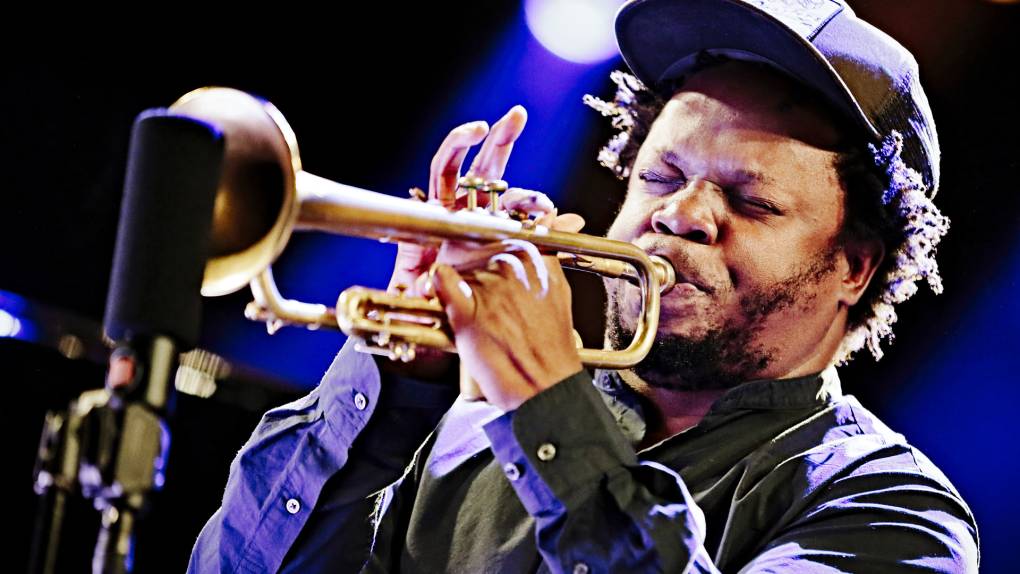
"caption": "Ambrose Akinmusire pictured in 2019. Akinmusire, who received his second Grammy nomination in November, will be skipping the award show in favor of his own residency at SFJAZZ, Feb. 3–5 and Feb. 9 at Grace Cathedral in San Francisco.",
"description": null,
"title": "GettyImages-1169733361",
"credit": "Peter Van Breukelen/Redferns/Getty Images",
"status": "inherit",
"altTag": "Black man in baseball cap plays trumpet with eyes closed",
"isLoading": false,
"fetchFailed": false
},
"arts_13923695": {
"type": "attachments",
"id": "arts_13923695",
"meta": {
"index": "attachments_1716263798",
"site": "arts",
"id": "13923695",
"found": true
},
"parent": 13923694,
"imgSizes": {
"twentyfourteen-full-width": {
"file": "https://ww2.kqed.org/app/uploads/sites/2/2023/01/SFJAZZ.10thAnniv-1038x576.jpg",
"width": 1038,
"mimeType": "image/jpeg",
"height": 576
},
"thumbnail": {
"file": "https://ww2.kqed.org/app/uploads/sites/2/2023/01/SFJAZZ.10thAnniv-160x96.jpg",
"width": 160,
"mimeType": "image/jpeg",
"height": 96
},
"post-thumbnail": {
"file": "https://ww2.kqed.org/app/uploads/sites/2/2023/01/SFJAZZ.10thAnniv-672x372.jpg",
"width": 672,
"mimeType": "image/jpeg",
"height": 372
},
"kqedFullSize": {
"file": "https://ww2.kqed.org/app/uploads/sites/2/2023/01/SFJAZZ.10thAnniv.jpg",
"width": 1920,
"height": 1151
},
"large": {
"file": "https://ww2.kqed.org/app/uploads/sites/2/2023/01/SFJAZZ.10thAnniv-1020x611.jpg",
"width": 1020,
"mimeType": "image/jpeg",
"height": 611
},
"1536x1536": {
"file": "https://ww2.kqed.org/app/uploads/sites/2/2023/01/SFJAZZ.10thAnniv-1536x921.jpg",
"width": 1536,
"mimeType": "image/jpeg",
"height": 921
},
"medium": {
"file": "https://ww2.kqed.org/app/uploads/sites/2/2023/01/SFJAZZ.10thAnniv-800x480.jpg",
"width": 800,
"mimeType": "image/jpeg",
"height": 480
},
"medium_large": {
"file": "https://ww2.kqed.org/app/uploads/sites/2/2023/01/SFJAZZ.10thAnniv-768x460.jpg",
"width": 768,
"mimeType": "image/jpeg",
"height": 460
}
},
"publishDate": 1673632981,
"modified": 1673633077,
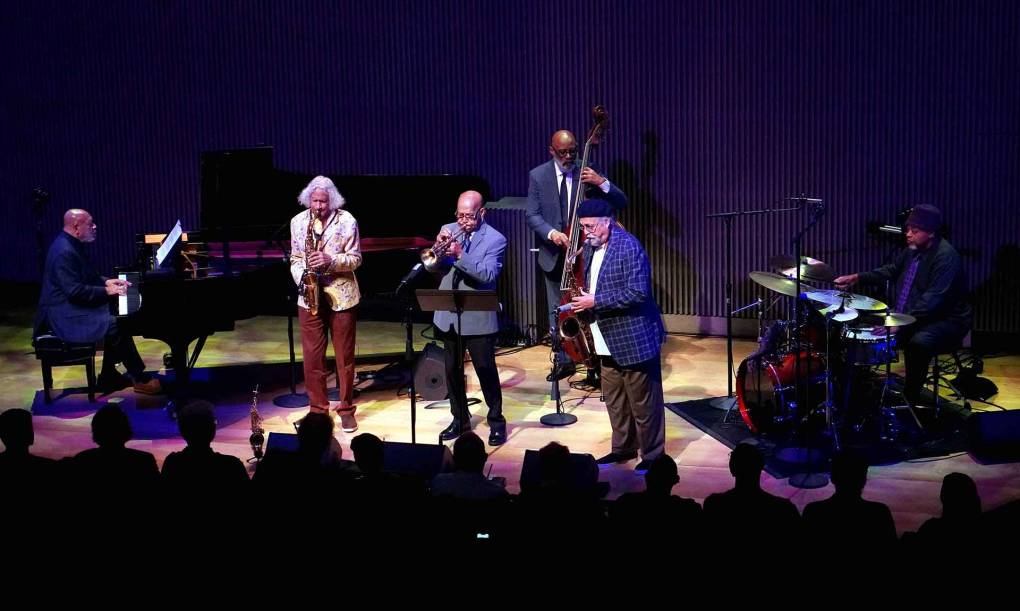
"caption": "(L–R) Kenny Barron, Gary Bartz, Eddie Henderson, Gerald Cannon, Joe Lovano and Jeff 'Tain' Watts celebrate the music of McCoy Tyner as part of SFJAZZ's 10th anniversary weekend on Jan. 12, 2023.",
"description": null,
"title": "SFJAZZ.10thAnniv",
"credit": "Rick Swig/SFJAZZ",
"status": "inherit",
"altTag": "Six men, playing piano, horns, bass and drums, perform on a dimly lit stage.",
"isLoading": false,
"fetchFailed": false
},
"arts_13923223": {
"type": "attachments",
"id": "arts_13923223",
"meta": {
"index": "attachments_1716263798",
"site": "arts",
"id": "13923223",
"found": true
},
"parent": 13923222,
"imgSizes": {
"twentyfourteen-full-width": {
"file": "https://ww2.kqed.org/app/uploads/sites/2/2023/01/bmf_0981_wide-aac9dfe34bf5b9ebf991710bd58e3f00e046765f-1038x576.jpg",
"width": 1038,
"mimeType": "image/jpeg",
"height": 576
},
"thumbnail": {
"file": "https://ww2.kqed.org/app/uploads/sites/2/2023/01/bmf_0981_wide-aac9dfe34bf5b9ebf991710bd58e3f00e046765f-160x90.jpg",
"width": 160,
"mimeType": "image/jpeg",
"height": 90
},
"post-thumbnail": {
"file": "https://ww2.kqed.org/app/uploads/sites/2/2023/01/bmf_0981_wide-aac9dfe34bf5b9ebf991710bd58e3f00e046765f-672x372.jpg",
"width": 672,
"mimeType": "image/jpeg",
"height": 372
},
"kqedFullSize": {
"file": "https://ww2.kqed.org/app/uploads/sites/2/2023/01/bmf_0981_wide-aac9dfe34bf5b9ebf991710bd58e3f00e046765f-scaled-e1672774369393.jpg",
"width": 1920,
"height": 1080
},
"2048x2048": {
"file": "https://ww2.kqed.org/app/uploads/sites/2/2023/01/bmf_0981_wide-aac9dfe34bf5b9ebf991710bd58e3f00e046765f-2048x1152.jpg",
"width": 2048,
"mimeType": "image/jpeg",
"height": 1152
},
"large": {
"file": "https://ww2.kqed.org/app/uploads/sites/2/2023/01/bmf_0981_wide-aac9dfe34bf5b9ebf991710bd58e3f00e046765f-1020x574.jpg",
"width": 1020,
"mimeType": "image/jpeg",
"height": 574
},
"1536x1536": {
"file": "https://ww2.kqed.org/app/uploads/sites/2/2023/01/bmf_0981_wide-aac9dfe34bf5b9ebf991710bd58e3f00e046765f-1536x864.jpg",
"width": 1536,
"mimeType": "image/jpeg",
"height": 864
},
"full-width": {
"file": "https://ww2.kqed.org/app/uploads/sites/2/2023/01/bmf_0981_wide-aac9dfe34bf5b9ebf991710bd58e3f00e046765f-1920x1080.jpg",
"width": 1920,
"mimeType": "image/jpeg",
"height": 1080
},
"medium": {
"file": "https://ww2.kqed.org/app/uploads/sites/2/2023/01/bmf_0981_wide-aac9dfe34bf5b9ebf991710bd58e3f00e046765f-800x450.jpg",
"width": 800,
"mimeType": "image/jpeg",
"height": 450
},
"medium_large": {
"file": "https://ww2.kqed.org/app/uploads/sites/2/2023/01/bmf_0981_wide-aac9dfe34bf5b9ebf991710bd58e3f00e046765f-768x432.jpg",
"width": 768,
"mimeType": "image/jpeg",
"height": 432
}
},
"publishDate": 1672773066,
"modified": 1672774438,
"caption": "Jason Moran performs at the 2022 Newport Jazz Festival.",
"description": null,
"title": "Jason Moran performs at the 2022 Newport Jazz Festival.",
"credit": "Courtesy of Newport Jazz Festival",
"status": "inherit",
"altTag": "A Black man with neatly cropped beard stares down at a piano intently, as he plays on stage.",
"isLoading": false,
"fetchFailed": false
},
"arts_13922538": {
"type": "attachments",
"id": "arts_13922538",
"meta": {
"index": "attachments_1716263798",
"site": "arts",
"id": "13922538",
"found": true
},
"parent": 13922511,
"imgSizes": {
"twentyfourteen-full-width": {
"file": "https://ww2.kqed.org/app/uploads/sites/2/2022/12/best-bay-area-albums-2022-1038x576.jpg",
"width": 1038,
"mimeType": "image/jpeg",
"height": 576
},
"thumbnail": {
"file": "https://ww2.kqed.org/app/uploads/sites/2/2022/12/best-bay-area-albums-2022-160x83.jpg",
"width": 160,
"mimeType": "image/jpeg",
"height": 83
},
"post-thumbnail": {
"file": "https://ww2.kqed.org/app/uploads/sites/2/2022/12/best-bay-area-albums-2022-672x372.jpg",
"width": 672,
"mimeType": "image/jpeg",
"height": 372
},
"kqedFullSize": {
"file": "https://ww2.kqed.org/app/uploads/sites/2/2022/12/best-bay-area-albums-2022.jpg",
"width": 1920,
"height": 1000
},
"large": {
"file": "https://ww2.kqed.org/app/uploads/sites/2/2022/12/best-bay-area-albums-2022-1020x531.jpg",
"width": 1020,
"mimeType": "image/jpeg",
"height": 531
},
"1536x1536": {
"file": "https://ww2.kqed.org/app/uploads/sites/2/2022/12/best-bay-area-albums-2022-1536x800.jpg",
"width": 1536,
"mimeType": "image/jpeg",
"height": 800
},
"medium": {
"file": "https://ww2.kqed.org/app/uploads/sites/2/2022/12/best-bay-area-albums-2022-800x417.jpg",
"width": 800,
"mimeType": "image/jpeg",
"height": 417
},
"medium_large": {
"file": "https://ww2.kqed.org/app/uploads/sites/2/2022/12/best-bay-area-albums-2022-768x400.jpg",
"width": 768,
"mimeType": "image/jpeg",
"height": 400
}
},
"publishDate": 1670539041,
"modified": 1670539214,
"caption": "Rexx Life Raj's 'The Blue Hour,' Toro Y Moi's 'MAHAL,' mxmtoon's 'rising' and Zyah Belle's 'Yam Grier' are four of our top 20 favorite Bay Area albums of the year.",
"description": null,
"title": "best bay area albums 2022",
"credit": "EMPIRE/Dead Oceans/AWAL Recordings America/Guin Records",
"status": "inherit",
"altTag": null,
"isLoading": false,
"fetchFailed": false
},
"arts_13921592": {
"type": "attachments",
"id": "arts_13921592",
"meta": {
"index": "attachments_1716263798",
"site": "arts",
"id": "13921592",
"found": true
},
"parent": 13921584,
"imgSizes": {
"twentyfourteen-full-width": {
"file": "https://ww2.kqed.org/app/uploads/sites/2/2022/11/Jean-Fineberg-poto-by-Sandy-Morris-cropped-1038x576.jpg",
"width": 1038,
"mimeType": "image/jpeg",
"height": 576
},
"thumbnail": {
"file": "https://ww2.kqed.org/app/uploads/sites/2/2022/11/Jean-Fineberg-poto-by-Sandy-Morris-cropped-160x90.jpg",
"width": 160,
"mimeType": "image/jpeg",
"height": 90
},
"post-thumbnail": {
"file": "https://ww2.kqed.org/app/uploads/sites/2/2022/11/Jean-Fineberg-poto-by-Sandy-Morris-cropped-672x372.jpg",
"width": 672,
"mimeType": "image/jpeg",
"height": 372
},
"kqedFullSize": {
"file": "https://ww2.kqed.org/app/uploads/sites/2/2022/11/Jean-Fineberg-poto-by-Sandy-Morris-cropped.jpg",
"width": 1920,
"height": 1080
},
"large": {
"file": "https://ww2.kqed.org/app/uploads/sites/2/2022/11/Jean-Fineberg-poto-by-Sandy-Morris-cropped-1020x574.jpg",
"width": 1020,
"mimeType": "image/jpeg",
"height": 574
},
"1536x1536": {
"file": "https://ww2.kqed.org/app/uploads/sites/2/2022/11/Jean-Fineberg-poto-by-Sandy-Morris-cropped-1536x864.jpg",
"width": 1536,
"mimeType": "image/jpeg",
"height": 864
},
"medium": {
"file": "https://ww2.kqed.org/app/uploads/sites/2/2022/11/Jean-Fineberg-poto-by-Sandy-Morris-cropped-800x450.jpg",
"width": 800,
"mimeType": "image/jpeg",
"height": 450
},
"medium_large": {
"file": "https://ww2.kqed.org/app/uploads/sites/2/2022/11/Jean-Fineberg-poto-by-Sandy-Morris-cropped-768x432.jpg",
"width": 768,
"mimeType": "image/jpeg",
"height": 432
}
},
"publishDate": 1668474354,
"modified": 1668474945,
"caption": "In the 1970s, Jean Fineberg recorded with all-time greats like David Bowie and Chic. And in more recent years, she's been a force in the East Bay's jazz scene, connecting and creating opportunities for women players.",
"description": null,
"title": "Jean-Fineberg poto by Sandy Morris cropped",
"credit": "Sandy Morris",
"status": "inherit",
"altTag": "Saxophonist Jean Fineberg plays a solo.",
"isLoading": false,
"fetchFailed": false
},
"arts_13921381": {
"type": "attachments",
"id": "arts_13921381",
"meta": {
"index": "attachments_1716263798",
"site": "arts",
"id": "13921381",
"found": true
},
"parent": 13921373,
"imgSizes": {
"twentyfourteen-full-width": {
"file": "https://ww2.kqed.org/app/uploads/sites/2/2022/11/DSC_4439-1038x576.jpg",
"width": 1038,
"mimeType": "image/jpeg",
"height": 576
},
"thumbnail": {
"file": "https://ww2.kqed.org/app/uploads/sites/2/2022/11/DSC_4439-160x106.jpg",
"width": 160,
"mimeType": "image/jpeg",
"height": 106
},
"post-thumbnail": {
"file": "https://ww2.kqed.org/app/uploads/sites/2/2022/11/DSC_4439-672x372.jpg",
"width": 672,
"mimeType": "image/jpeg",
"height": 372
},
"kqedFullSize": {
"file": "https://ww2.kqed.org/app/uploads/sites/2/2022/11/DSC_4439-scaled-e1667849825570.jpg",
"width": 1920,
"height": 1277
},
"2048x2048": {
"file": "https://ww2.kqed.org/app/uploads/sites/2/2022/11/DSC_4439-2048x1363.jpg",
"width": 2048,
"mimeType": "image/jpeg",
"height": 1363
},
"large": {
"file": "https://ww2.kqed.org/app/uploads/sites/2/2022/11/DSC_4439-1020x679.jpg",
"width": 1020,
"mimeType": "image/jpeg",
"height": 679
},
"1536x1536": {
"file": "https://ww2.kqed.org/app/uploads/sites/2/2022/11/DSC_4439-1536x1022.jpg",
"width": 1536,
"mimeType": "image/jpeg",
"height": 1022
},
"full-width": {
"file": "https://ww2.kqed.org/app/uploads/sites/2/2022/11/DSC_4439-1920x1277.jpg",
"width": 1920,
"mimeType": "image/jpeg",
"height": 1277
},
"medium": {
"file": "https://ww2.kqed.org/app/uploads/sites/2/2022/11/DSC_4439-800x532.jpg",
"width": 800,
"mimeType": "image/jpeg",
"height": 532
},
"medium_large": {
"file": "https://ww2.kqed.org/app/uploads/sites/2/2022/11/DSC_4439-768x511.jpg",
"width": 768,
"mimeType": "image/jpeg",
"height": 511
}
},
"publishDate": 1667849809,
"modified": 1667855326,
"caption": "Ensemble Mik Nawooj's resident MC Unity Lewis and composer-pianist and artistic director JooWan Kim (left to right).",
"description": null,
"title": "Joowan and Unity",
"credit": "Pat Mazzera",
"status": "inherit",
"altTag": "Two men in dark clothes back-to-back agains black backgorund",
"isLoading": false,
"fetchFailed": false
},
"arts_13921053": {
"type": "attachments",
"id": "arts_13921053",
"meta": {
"index": "attachments_1716263798",
"site": "arts",
"id": "13921053",
"found": true
},
"parent": 13921052,
"imgSizes": {
"twentyfourteen-full-width": {
"file": "https://ww2.kqed.org/app/uploads/sites/2/2022/10/louis_armstrongs_black_blues_photo_0101_wide-9ba5957735181ab158fd39010358105acb5d4e54-1038x576.jpg",
"width": 1038,
"mimeType": "image/jpeg",
"height": 576
},
"thumbnail": {
"file": "https://ww2.kqed.org/app/uploads/sites/2/2022/10/louis_armstrongs_black_blues_photo_0101_wide-9ba5957735181ab158fd39010358105acb5d4e54-160x90.jpg",
"width": 160,
"mimeType": "image/jpeg",
"height": 90
},
"post-thumbnail": {
"file": "https://ww2.kqed.org/app/uploads/sites/2/2022/10/louis_armstrongs_black_blues_photo_0101_wide-9ba5957735181ab158fd39010358105acb5d4e54-672x372.jpg",
"width": 672,
"mimeType": "image/jpeg",
"height": 372
},
"kqedFullSize": {
"file": "https://ww2.kqed.org/app/uploads/sites/2/2022/10/louis_armstrongs_black_blues_photo_0101_wide-9ba5957735181ab158fd39010358105acb5d4e54-scaled-e1666985477597.jpg",
"width": 1920,
"height": 1080
},
"2048x2048": {
"file": "https://ww2.kqed.org/app/uploads/sites/2/2022/10/louis_armstrongs_black_blues_photo_0101_wide-9ba5957735181ab158fd39010358105acb5d4e54-2048x1152.jpg",
"width": 2048,
"mimeType": "image/jpeg",
"height": 1152
},
"large": {
"file": "https://ww2.kqed.org/app/uploads/sites/2/2022/10/louis_armstrongs_black_blues_photo_0101_wide-9ba5957735181ab158fd39010358105acb5d4e54-1020x574.jpg",
"width": 1020,
"mimeType": "image/jpeg",
"height": 574
},
"1536x1536": {
"file": "https://ww2.kqed.org/app/uploads/sites/2/2022/10/louis_armstrongs_black_blues_photo_0101_wide-9ba5957735181ab158fd39010358105acb5d4e54-1536x864.jpg",
"width": 1536,
"mimeType": "image/jpeg",
"height": 864
},
"full-width": {
"file": "https://ww2.kqed.org/app/uploads/sites/2/2022/10/louis_armstrongs_black_blues_photo_0101_wide-9ba5957735181ab158fd39010358105acb5d4e54-1920x1080.jpg",
"width": 1920,
"mimeType": "image/jpeg",
"height": 1080
},
"medium": {
"file": "https://ww2.kqed.org/app/uploads/sites/2/2022/10/louis_armstrongs_black_blues_photo_0101_wide-9ba5957735181ab158fd39010358105acb5d4e54-800x450.jpg",
"width": 800,
"mimeType": "image/jpeg",
"height": 450
},
"medium_large": {
"file": "https://ww2.kqed.org/app/uploads/sites/2/2022/10/louis_armstrongs_black_blues_photo_0101_wide-9ba5957735181ab158fd39010358105acb5d4e54-768x432.jpg",
"width": 768,
"mimeType": "image/jpeg",
"height": 432
}
},
"publishDate": 1666984446,
"modified": 1666985530,
"caption": "Louis Armstrong was a titan who never forgot his humble upbringings, and also a public figure who carefully assessed his own weight in the world.",
"description": null,
"title": "Louis Armstrong was a titan who never forgot his humble upbringings, and also a public figure who carefully assessed his own weight in the world.",
"credit": "Courtesy of Apple TV+",
"status": "inherit",
"altTag": "A Black man deep in concentration while playing the trumpet on stage.",
"isLoading": false,
"fetchFailed": false
},
"arts_13919592": {
"type": "attachments",
"id": "arts_13919592",
"meta": {
"index": "attachments_1716263798",
"site": "arts",
"id": "13919592",
"found": true
},
"parent": 13919591,
"imgSizes": {
"twentyfourteen-full-width": {
"file": "https://ww2.kqed.org/app/uploads/sites/2/2022/09/gettyimages-997732148_custom-dae471da5499794cb8a39312368def4d19f8a5eb-1038x576.jpg",
"width": 1038,
"mimeType": "image/jpeg",
"height": 576
},
"thumbnail": {
"file": "https://ww2.kqed.org/app/uploads/sites/2/2022/09/gettyimages-997732148_custom-dae471da5499794cb8a39312368def4d19f8a5eb-160x106.jpg",
"width": 160,
"mimeType": "image/jpeg",
"height": 106
},
"post-thumbnail": {
"file": "https://ww2.kqed.org/app/uploads/sites/2/2022/09/gettyimages-997732148_custom-dae471da5499794cb8a39312368def4d19f8a5eb-672x372.jpg",
"width": 672,
"mimeType": "image/jpeg",
"height": 372
},
"kqedFullSize": {
"file": "https://ww2.kqed.org/app/uploads/sites/2/2022/09/gettyimages-997732148_custom-dae471da5499794cb8a39312368def4d19f8a5eb-scaled.jpg",
"width": 2560,
"height": 1704
},
"2048x2048": {
"file": "https://ww2.kqed.org/app/uploads/sites/2/2022/09/gettyimages-997732148_custom-dae471da5499794cb8a39312368def4d19f8a5eb-2048x1363.jpg",
"width": 2048,
"mimeType": "image/jpeg",
"height": 1363
},
"large": {
"file": "https://ww2.kqed.org/app/uploads/sites/2/2022/09/gettyimages-997732148_custom-dae471da5499794cb8a39312368def4d19f8a5eb-1020x679.jpg",
"width": 1020,
"mimeType": "image/jpeg",
"height": 679
},
"1536x1536": {
"file": "https://ww2.kqed.org/app/uploads/sites/2/2022/09/gettyimages-997732148_custom-dae471da5499794cb8a39312368def4d19f8a5eb-1536x1022.jpg",
"width": 1536,
"mimeType": "image/jpeg",
"height": 1022
},
"full-width": {
"file": "https://ww2.kqed.org/app/uploads/sites/2/2022/09/gettyimages-997732148_custom-dae471da5499794cb8a39312368def4d19f8a5eb-1920x1278.jpg",
"width": 1920,
"mimeType": "image/jpeg",
"height": 1278
},
"medium": {
"file": "https://ww2.kqed.org/app/uploads/sites/2/2022/09/gettyimages-997732148_custom-dae471da5499794cb8a39312368def4d19f8a5eb-800x532.jpg",
"width": 800,
"mimeType": "image/jpeg",
"height": 532
},
"medium_large": {
"file": "https://ww2.kqed.org/app/uploads/sites/2/2022/09/gettyimages-997732148_custom-dae471da5499794cb8a39312368def4d19f8a5eb-768x511.jpg",
"width": 768,
"mimeType": "image/jpeg",
"height": 511
}
},
"publishDate": 1664034188,
"modified": 1664034277,
"caption": "Pharoah Sanders performs at the Krakow Jazz Festival in Poland in 2018.",
"description": "KRAKOW, POLAND - 2018/07/12: American jazz saxophonist, Pharoah Sanders performs at the Krakow Jazz Festival. (Photo by Omar Marques/SOPA Images/LightRocket via Getty Images)",
"title": "Pharoah Sanders performs at the Krakow Jazz Festival in Poland in 2018.",
"credit": "Omar Marques/Getty Images",
"status": "inherit",
"altTag": "An elderly African American man in a blue shirt and long white beard plays the tenor saxophone",
"isLoading": false,
"fetchFailed": false
},
"arts_13919319": {
"type": "attachments",
"id": "arts_13919319",
"meta": {
"index": "attachments_1716263798",
"site": "arts",
"id": "13919319",
"found": true
},
"parent": 13919318,
"imgSizes": {
"twentyfourteen-full-width": {
"file": "https://ww2.kqed.org/app/uploads/sites/2/2022/09/touringmusicians1c_custom-20a6ed7e81330ba9f402f7daa4a4585c551d6106-1038x576.jpg",
"width": 1038,
"mimeType": "image/jpeg",
"height": 576
},
"thumbnail": {
"file": "https://ww2.kqed.org/app/uploads/sites/2/2022/09/touringmusicians1c_custom-20a6ed7e81330ba9f402f7daa4a4585c551d6106-160x105.jpg",
"width": 160,
"mimeType": "image/jpeg",
"height": 105
},
"post-thumbnail": {
"file": "https://ww2.kqed.org/app/uploads/sites/2/2022/09/touringmusicians1c_custom-20a6ed7e81330ba9f402f7daa4a4585c551d6106-672x372.jpg",
"width": 672,
"mimeType": "image/jpeg",
"height": 372
},
"kqedFullSize": {
"file": "https://ww2.kqed.org/app/uploads/sites/2/2022/09/touringmusicians1c_custom-20a6ed7e81330ba9f402f7daa4a4585c551d6106-scaled.jpg",
"width": 2560,
"height": 1687
},
"2048x2048": {
"file": "https://ww2.kqed.org/app/uploads/sites/2/2022/09/touringmusicians1c_custom-20a6ed7e81330ba9f402f7daa4a4585c551d6106-2048x1350.jpg",
"width": 2048,
"mimeType": "image/jpeg",
"height": 1350
},
"large": {
"file": "https://ww2.kqed.org/app/uploads/sites/2/2022/09/touringmusicians1c_custom-20a6ed7e81330ba9f402f7daa4a4585c551d6106-1020x672.jpg",
"width": 1020,
"mimeType": "image/jpeg",
"height": 672
},
"1536x1536": {
"file": "https://ww2.kqed.org/app/uploads/sites/2/2022/09/touringmusicians1c_custom-20a6ed7e81330ba9f402f7daa4a4585c551d6106-1536x1012.jpg",
"width": 1536,
"mimeType": "image/jpeg",
"height": 1012
},
"full-width": {
"file": "https://ww2.kqed.org/app/uploads/sites/2/2022/09/touringmusicians1c_custom-20a6ed7e81330ba9f402f7daa4a4585c551d6106-1920x1265.jpg",
"width": 1920,
"mimeType": "image/jpeg",
"height": 1265
},
"medium": {
"file": "https://ww2.kqed.org/app/uploads/sites/2/2022/09/touringmusicians1c_custom-20a6ed7e81330ba9f402f7daa4a4585c551d6106-800x527.jpg",
"width": 800,
"mimeType": "image/jpeg",
"height": 527
},
"medium_large": {
"file": "https://ww2.kqed.org/app/uploads/sites/2/2022/09/touringmusicians1c_custom-20a6ed7e81330ba9f402f7daa4a4585c551d6106-768x506.jpg",
"width": 768,
"mimeType": "image/jpeg",
"height": 506
}
},
"publishDate": 1663692051,
"modified": 1663692051,
"caption": null,
"description": null,
"title": "The Oakland artist Spellling is one of countless musicians this year to have tours disrupted by a band member catching COVID-19, with costly and draining consequences.",
"credit": null,
"status": "inherit",
"altTag": null,
"isLoading": false,
"fetchFailed": false
},
"arts_13918643": {
"type": "attachments",
"id": "arts_13918643",
"meta": {
"index": "attachments_1716263798",
"site": "arts",
"id": "13918643",
"found": true
},
"parent": 13918575,
"imgSizes": {
"twentyfourteen-full-width": {
"file": "https://ww2.kqed.org/app/uploads/sites/2/2022/09/Redman-1038x576.jpg",
"width": 1038,
"mimeType": "image/jpeg",
"height": 576
},
"thumbnail": {
"file": "https://ww2.kqed.org/app/uploads/sites/2/2022/09/Redman-160x107.jpg",
"width": 160,
"mimeType": "image/jpeg",
"height": 107
},
"post-thumbnail": {
"file": "https://ww2.kqed.org/app/uploads/sites/2/2022/09/Redman-672x372.jpg",
"width": 672,
"mimeType": "image/jpeg",
"height": 372
},
"kqedFullSize": {
"file": "https://ww2.kqed.org/app/uploads/sites/2/2022/09/Redman.jpg",
"width": 2048,
"height": 1365
},
"large": {
"file": "https://ww2.kqed.org/app/uploads/sites/2/2022/09/Redman-1020x680.jpg",
"width": 1020,
"mimeType": "image/jpeg",
"height": 680
},
"1536x1536": {
"file": "https://ww2.kqed.org/app/uploads/sites/2/2022/09/Redman-1536x1024.jpg",
"width": 1536,
"mimeType": "image/jpeg",
"height": 1024
},
"full-width": {
"file": "https://ww2.kqed.org/app/uploads/sites/2/2022/09/Redman-1920x1280.jpg",
"width": 1920,
"mimeType": "image/jpeg",
"height": 1280
},
"medium": {
"file": "https://ww2.kqed.org/app/uploads/sites/2/2022/09/Redman-800x533.jpg",
"width": 800,
"mimeType": "image/jpeg",
"height": 533
},
"medium_large": {
"file": "https://ww2.kqed.org/app/uploads/sites/2/2022/09/Redman-768x512.jpg",
"width": 768,
"mimeType": "image/jpeg",
"height": 512
}
},
"publishDate": 1662094051,
"modified": 1662094138,
"caption": "Joshua Redman's classic 'Moodswings' quartet, with Brian Blade, Christian McBride, Redman and Brad Mehldau (L–R), perform at both SFJAZZ's Miner Auditorium and the Monterey Jazz Festival this fall.",
"description": null,
"title": "Redman",
"credit": "Michael Wilson/Nonesuch Records",
"status": "inherit",
"altTag": "four men posing in front of a white wall",
"isLoading": false,
"fetchFailed": false
},
"arts_13917667": {
"type": "attachments",
"id": "arts_13917667",
"meta": {
"index": "attachments_1716263798",
"site": "arts",
"id": "13917667",
"found": true
},
"title": "Lil Kayla holding court during a performance at The Chapel on Friday August 12, 2022.",
"publishDate": 1660627521,
"status": "inherit",
"parent": 13917611,
"modified": 1787085919,
"caption": "Lil Kayla holding court during a performance at The Chapel on Friday August 12, 2022.",
"credit": "Pendarvis Harshaw",
"altTag": "Lil Kayla holding court during a performance at The Chapel on Friday August 12, 2022.",
"description": "Lil Kayla holds court during a performance at The Chapel on Friday August 12, 2022.",
"imgSizes": {
"medium": {
"file": "https://cdn.kqed.org/wp-content/uploads/sites/2/2022/08/DBCDF006-A71C-4C63-AECE-36723CC08E8C-800x535.jpg",
"width": 800,
"height": 535,
"mimeType": "image/jpeg"
},
"large": {
"file": "https://cdn.kqed.org/wp-content/uploads/sites/2/2022/08/DBCDF006-A71C-4C63-AECE-36723CC08E8C-1020x683.jpg",
"width": 1020,
"height": 683,
"mimeType": "image/jpeg"
},
"thumbnail": {
"file": "https://cdn.kqed.org/wp-content/uploads/sites/2/2022/08/DBCDF006-A71C-4C63-AECE-36723CC08E8C-160x107.jpg",
"width": 160,
"height": 107,
"mimeType": "image/jpeg"
},
"medium_large": {
"file": "https://cdn.kqed.org/wp-content/uploads/sites/2/2022/08/DBCDF006-A71C-4C63-AECE-36723CC08E8C-768x514.jpg",
"width": 768,
"height": 514,
"mimeType": "image/jpeg"
},
"post-thumbnail": {
"file": "https://cdn.kqed.org/wp-content/uploads/sites/2/2022/08/DBCDF006-A71C-4C63-AECE-36723CC08E8C-672x372.jpg",
"width": 672,
"height": 372,
"mimeType": "image/jpeg"
},
"twentyfourteen-full-width": {
"file": "https://cdn.kqed.org/wp-content/uploads/sites/2/2022/08/DBCDF006-A71C-4C63-AECE-36723CC08E8C-1038x576.jpg",
"width": 1038,
"height": 576,
"mimeType": "image/jpeg"
},
"kqedFullSize": {
"file": "https://cdn.kqed.org/wp-content/uploads/sites/2/2022/08/DBCDF006-A71C-4C63-AECE-36723CC08E8C.jpg",
"width": 1082,
"height": 724
}
},
"isLoading": false,
"fetchFailed": false
},
"arts_13917382": {
"type": "attachments",
"id": "arts_13917382",
"meta": {
"index": "attachments_1716263798",
"site": "arts",
"id": "13917382",
"found": true
},
"parent": 0,
"imgSizes": {
"twentyfourteen-full-width": {
"file": "https://ww2.kqed.org/app/uploads/sites/2/2022/08/DonaldHarrison1-1038x576.jpg",
"width": 1038,
"mimeType": "image/jpeg",
"height": 576
},
"thumbnail": {
"file": "https://ww2.kqed.org/app/uploads/sites/2/2022/08/DonaldHarrison1-160x90.jpg",
"width": 160,
"mimeType": "image/jpeg",
"height": 90
},
"post-thumbnail": {
"file": "https://ww2.kqed.org/app/uploads/sites/2/2022/08/DonaldHarrison1-672x372.jpg",
"width": 672,
"mimeType": "image/jpeg",
"height": 372
},
"kqedFullSize": {
"file": "https://ww2.kqed.org/app/uploads/sites/2/2022/08/DonaldHarrison1.jpg",
"width": 1920,
"height": 1080
},
"large": {
"file": "https://ww2.kqed.org/app/uploads/sites/2/2022/08/DonaldHarrison1-1020x574.jpg",
"width": 1020,
"mimeType": "image/jpeg",
"height": 574
},
"1536x1536": {
"file": "https://ww2.kqed.org/app/uploads/sites/2/2022/08/DonaldHarrison1-1536x864.jpg",
"width": 1536,
"mimeType": "image/jpeg",
"height": 864
},
"medium": {
"file": "https://ww2.kqed.org/app/uploads/sites/2/2022/08/DonaldHarrison1-800x450.jpg",
"width": 800,
"mimeType": "image/jpeg",
"height": 450
},
"medium_large": {
"file": "https://ww2.kqed.org/app/uploads/sites/2/2022/08/DonaldHarrison1-768x432.jpg",
"width": 768,
"mimeType": "image/jpeg",
"height": 432
}
},
"publishDate": 1660151372,
"modified": 1660151486,
"caption": "Donald Harrison Jr. leads an all-star tribute to Charlie Parker at this year's San Jose Jazz Summer Fest.",
"description": null,
"title": "DonaldHarrison1",
"credit": "Courtesy San Jose Jazz",
"status": "inherit",
"altTag": "A man in a beige top holds an alto saxophone",
"isLoading": false,
"fetchFailed": false
}
},
"audioPlayerReducer": {
"postId": "stream_live",
"isPaused": true,
"isPlaying": false,
"pfsActive": false,
"pledgeModalIsOpen": true,
"playerDrawerIsOpen": false,
"liveAudioPlayStartedAt": 0,
"liveAudioPlayContext": ""
},
"authorsReducer": {
"byline_arts_13923222": {
"type": "authors",
"id": "byline_arts_13923222",
"meta": {
"override": true
},
"slug": "byline_arts_13923222",
"name": "Nate Chinen",
"isLoading": false
},
"byline_arts_13922511": {
"type": "authors",
"id": "byline_arts_13922511",
"meta": {
"override": true
},
"slug": "byline_arts_13922511",
"name": "KQED Arts & Culture",
"isLoading": false
},
"byline_arts_13921052": {
"type": "authors",
"id": "byline_arts_13921052",
"meta": {
"override": true
},
"slug": "byline_arts_13921052",
"name": "Nate Chinen",
"isLoading": false
},
"byline_arts_13919591": {
"type": "authors",
"id": "byline_arts_13919591",
"meta": {
"override": true
},
"slug": "byline_arts_13919591",
"name": "Nate Chinen",
"isLoading": false
},
"agilbert": {
"type": "authors",
"id": "86",
"meta": {
"index": "authors_1716337520",
"id": "86",
"found": true
},
"name": "Andrew Gilbert",
"firstName": "Andrew",
"lastName": "Gilbert",
"slug": "agilbert",
"email": "jazzscribe@aol.com",
"display_author_email": false,
"staff_mastheads": [],
"title": "KQED Contributor",
"bio": "A Los Angeles native based in the Berkeley area since 1996, Andrew Gilbert covers jazz, international music and dance for KQED's \u003ci>California Report, \u003c/i>the\u003ci> Mercury News\u003c/i>, \u003ci>San Francisco Chronicle\u003c/i>, \u003ci>Berkeleyside.com\u003c/i>, and other publications. He is available for weddings and bar and bat mitzvahs. #jazzscribe",
"avatar": "https://secure.gravatar.com/avatar/d7bcafdbefdd39e9a68f88724ca616eb4e7a5a6bff9cdfb62de652a1e1751471?s=600&d=blank&r=g",
"twitter": null,
"bluesky": null,
"facebook": null,
"instagram": null,
"linkedin": null,
"sites": [
{
"site": "arts",
"roles": [
"Contributor",
"author"
]
},
{
"site": "news",
"roles": [
"author"
]
}
],
"headData": {
"title": "Andrew Gilbert | KQED",
"description": "KQED Contributor",
"ogImgSrc": "https://secure.gravatar.com/avatar/d7bcafdbefdd39e9a68f88724ca616eb4e7a5a6bff9cdfb62de652a1e1751471?s=600&d=blank&r=g",
"twImgSrc": "https://secure.gravatar.com/avatar/d7bcafdbefdd39e9a68f88724ca616eb4e7a5a6bff9cdfb62de652a1e1751471?s=600&d=blank&r=g"
},
"isLoading": false,
"link": "/author/agilbert"
},
"gmeline": {
"type": "authors",
"id": "185",
"meta": {
"index": "authors_1716337520",
"id": "185",
"found": true
},
"name": "Gabe Meline",
"firstName": "Gabe",
"lastName": "Meline",
"slug": "gmeline",
"email": "gmeline@kqed.org",
"display_author_email": true,
"staff_mastheads": [
"arts"
],
"title": "Senior Editor, KQED Arts & Culture",
"bio": "Gabe Meline entered journalism at age 15 making photocopied zines, and has since earned awards from the Edward R. Murrow Awards, the Society for Professional Journalists, the Online Journalism Awards, the Association of Alternative Newsweeklies and the California Newspaper Publishers Association. Prior to KQED, he was the editor of the \u003cem>North Bay Bohemian\u003c/em> and a touring musician. He lives with his wife and daughter in his hometown of Santa Rosa, CA.",
"avatar": "https://secure.gravatar.com/avatar/5bebe57be0d8bc2dd318934feb47299e2d2d10cba28d09d8d7afb389a2ce2bdd?s=600&d=blank&r=g",
"twitter": null,
"bluesky": null,
"facebook": null,
"instagram": null,
"linkedin": null,
"sites": [
{
"site": "",
"roles": [
"editor"
]
},
{
"site": "arts",
"roles": [
"administrator"
]
},
{
"site": "artschool",
"roles": [
"editor"
]
},
{
"site": "news",
"roles": [
"author"
]
},
{
"site": "pop",
"roles": [
"editor"
]
},
{
"site": "bayareabites",
"roles": [
"editor"
]
},
{
"site": "food",
"roles": [
"editor"
]
},
{
"site": "forum",
"roles": [
"administrator"
]
},
{
"site": "liveblog",
"roles": [
"editor"
]
},
{
"site": "hiphop",
"roles": [
"editor"
]
}
],
"headData": {
"title": "Gabe Meline | KQED",
"description": "Senior Editor, KQED Arts & Culture",
"ogImgSrc": "https://secure.gravatar.com/avatar/5bebe57be0d8bc2dd318934feb47299e2d2d10cba28d09d8d7afb389a2ce2bdd?s=600&d=blank&r=g",
"twImgSrc": "https://secure.gravatar.com/avatar/5bebe57be0d8bc2dd318934feb47299e2d2d10cba28d09d8d7afb389a2ce2bdd?s=600&d=blank&r=g"
},
"isLoading": false,
"link": "/author/gmeline"
},
"aproehl": {
"type": "authors",
"id": "11296",
"meta": {
"index": "authors_1716337520",
"id": "11296",
"found": true
},
"name": "Ariana Proehl",
"firstName": "Ariana",
"lastName": "Proehl",
"slug": "aproehl",
"email": "aproehl@KQED.org",
"display_author_email": true,
"staff_mastheads": [
"news"
],
"title": "Culture Reporter, KQED",
"bio": "Ariana Proehl is a Culture Reporter and Host.",
"avatar": "https://secure.gravatar.com/avatar/c96b24567eb5bb3a4f8bb295ed53e232?s=600&d=blank&r=g",
"twitter": "ArianaProehl",
"facebook": null,
"instagram": null,
"linkedin": null,
"sites": [
{
"site": "arts",
"roles": []
},
{
"site": "news",
"roles": []
},
{
"site": "education",
"roles": []
},
{
"site": "forum",
"roles": []
}
],
"headData": {
"title": "Ariana Proehl | KQED",
"description": "Culture Reporter, KQED",
"ogImgSrc": "https://secure.gravatar.com/avatar/c96b24567eb5bb3a4f8bb295ed53e232?s=600&d=blank&r=g",
"twImgSrc": "https://secure.gravatar.com/avatar/c96b24567eb5bb3a4f8bb295ed53e232?s=600&d=blank&r=g"
},
"isLoading": false,
"link": "/author/aproehl"
},
"nvoynovskaya": {
"type": "authors",
"id": "11387",
"meta": {
"index": "authors_1716337520",
"id": "11387",
"found": true
},
"name": "Nastia Voynovskaya",
"firstName": "Nastia",
"lastName": "Voynovskaya",
"slug": "nvoynovskaya",
"email": "nvoynovskaya@kqed.org",
"display_author_email": false,
"staff_mastheads": [
"arts"
],
"title": "Editor and reporter",
"bio": "Nastia Voynovskaya is a reporter, editor and host at KQED Arts & Culture. She's been covering the arts in the Bay Area for over a decade, with a focus on music, queer culture, labor issues and grassroots organizing. She has edited KQED story series such as Trans Bay: A History of San Francisco's Gender-Diverse Community, and co-created KQED's Bay Area hip-hop history project, That's My Word. Nastia's work has been recognized by the Society of Professional Journalists and San Francisco Press Club. She regularly appears on podcasts and radio programs, including NPR's All Songs Considered, and hosts live events where music, culture and conversation meet.",
"avatar": "https://secure.gravatar.com/avatar/5025ee460e5a85d69ca20ea6c6f2f80d7e17795c828f61ea3aecfcd924e9042e?s=600&d=blank&r=g",
"twitter": null,
"bluesky": null,
"facebook": null,
"instagram": "https://www.instagram.com/nananastia/",
"linkedin": null,
"sites": [
{
"site": "",
"roles": [
"editor"
]
},
{
"site": "arts",
"roles": [
"administrator"
]
},
{
"site": "news",
"roles": [
"editor"
]
},
{
"site": "pop",
"roles": [
"administrator"
]
},
{
"site": "bayareabites",
"roles": [
"editor"
]
},
{
"site": "podcasts",
"roles": [
"editor"
]
},
{
"site": "hiphop",
"roles": [
"editor"
]
}
],
"headData": {
"title": "Nastia Voynovskaya | KQED",
"description": "Editor and reporter",
"ogImgSrc": "https://secure.gravatar.com/avatar/5025ee460e5a85d69ca20ea6c6f2f80d7e17795c828f61ea3aecfcd924e9042e?s=600&d=blank&r=g",
"twImgSrc": "https://secure.gravatar.com/avatar/5025ee460e5a85d69ca20ea6c6f2f80d7e17795c828f61ea3aecfcd924e9042e?s=600&d=blank&r=g"
},
"isLoading": false,
"link": "/author/nvoynovskaya"
},
"ogpenn": {
"type": "authors",
"id": "11491",
"meta": {
"index": "authors_1716337520",
"id": "11491",
"found": true
},
"name": "Pendarvis Harshaw",
"firstName": "Pendarvis",
"lastName": "Harshaw",
"slug": "ogpenn",
"email": "ogpenn@gmail.com",
"display_author_email": false,
"staff_mastheads": [
"arts"
],
"title": "Community Engagement Reporter",
"bio": "Pendarvis Harshaw is an educator, host and writer with KQED Arts.",
"avatar": "https://secure.gravatar.com/avatar/972b77ee8e3f346ae2b00622661187fbfabd059b5693bbdc1475ea7a722fd4cd?s=600&d=blank&r=g",
"twitter": null,
"bluesky": null,
"facebook": null,
"instagram": "ogpenn",
"linkedin": null,
"sites": [
{
"site": "arts",
"roles": [
"administrator"
]
},
{
"site": "news",
"roles": [
"editor"
]
},
{
"site": "bayareabites",
"roles": [
"author"
]
},
{
"site": "hiphop",
"roles": [
"editor"
]
}
],
"headData": {
"title": "Pendarvis Harshaw | KQED",
"description": "Community Engagement Reporter",
"ogImgSrc": "https://secure.gravatar.com/avatar/972b77ee8e3f346ae2b00622661187fbfabd059b5693bbdc1475ea7a722fd4cd?s=600&d=blank&r=g",
"twImgSrc": "https://secure.gravatar.com/avatar/972b77ee8e3f346ae2b00622661187fbfabd059b5693bbdc1475ea7a722fd4cd?s=600&d=blank&r=g"
},
"isLoading": false,
"link": "/author/ogpenn"
}
},
"pagesReducer": {
"arts_tag_jazz": {
"type": "terms",
"id": "arts_1420",
"meta": {
"index": "terms_1716263798",
"site": "arts",
"id": "1420",
"score": 9.108904
},
"featImg": null,
"name": "jazz",
"description": null,
"taxonomy": "tag",
"headData": {
"twImgId": null,
"twTitle": null,
"ogTitle": null,
"ogImgId": null,
"twDescription": null,
"description": null,
"title": "jazz Archives | KQED Arts",
"ogDescription": null
},
"ttid": 1432,
"slug": "jazz",
"isLoading": false,
"title": "jazz",
"pageMeta": {
"site": "arts",
"WpPageTemplate": "page-topic-editorial",
"currentPage": 8
},
"blocks": [
{
"blockName": "kqed/post-list",
"attrs": {
"layout": "cardArticle2",
"query": "posts/arts?tag=jazz",
"seeMore": false,
"paginated": true,
"page": 8
}
},
{
"blockName": "kqed/ad"
}
]
}
},
"pfsSessionReducer": {},
"postsReducer": {
"stream_live": {
"type": "live",
"id": "stream_live",
"audioUrl": "https://hls.kqed.org/hls/kqed_app/playlist.m3u8",
"title": "Live Stream",
"excerpt": "Live Stream information currently unavailable.",
"link": "/radio",
"featImg": "",
"label": {
"name": "KQED Live",
"link": "/"
}
},
"stream_kqedNewscast": {
"type": "posts",
"id": "stream_kqedNewscast",
"audioUrl": "https://www.kqed.org/.stream/anon/radio/RDnews/newscast.mp3?_=1",
"title": "KQED Newscast",
"featImg": "",
"label": {
"name": "88.5 FM",
"link": "/"
}
},
"arts_13924375": {
"type": "posts",
"id": "arts_13924375",
"meta": {
"index": "posts_1716263798",
"site": "arts",
"id": "13924375",
"score": null,
"sort": [
1675121290000
]
},
"guestAuthors": [],
"slug": "ambrose-akinmusire-jazz-trumpet-grammys-oakland-music",
"title": "Ambrose Akinmusire Is Skipping the Grammys to Honor His Music Heroes",
"publishDate": 1675121290,
"format": "standard",
"headTitle": "Ambrose Akinmusire Is Skipping the Grammys to Honor His Music Heroes | KQED",
"labelTerm": {
"term": 140,
"site": "arts"
},
"content": "\u003cp>Oakland-born jazz trumpeter \u003ca href=\"https://www.ambroseakinmusire.com/\">Ambrose Akinmusire\u003c/a> received the second Grammy nomination of his career in November. It was for Best Improvised Jazz Solo, with the song “Rounds (Live)” on Terri Lynne Carrington’s pivotal \u003cem>\u003ca href=\"https://www.npr.org/2022/09/21/1124362063/terri-lyne-carrington-addresses-womens-omission-from-jazz-canon-with-new-standar\">New Standards, Vol. 1\u003c/a>.\u003c/em>\u003c/p>\n\u003cp>But Akinmusire won’t be in Los Angeles on Feb. 5 for this year’s awards ceremony. Instead, the acclaimed musician will be in the Bay — where he’s based — paying tribute to his musical mentors, with a new residency Feb. 3–9 at SFJAZZ.\u003c/p>\n\u003cp>[aside label=\"Related Stories\" postID=\"arts_13887363\"]Described as possibly “the most distinctive, elusive and ultimately satisfying trumpeter of his generation,” by \u003ca href=\"https://www.nytimes.com/2018/10/10/arts/music/ambrose-akinmusire-origami-harvest-review.html\">the \u003ci>New York Times\u003c/i>\u003c/a>, Akinmusire is a master improviser whose original compositions blend influences beyond classical jazz, including poetry, blues and hip-hop. And while his talent and accomplishments regularly send him to venues all over the world, there’s still no place like home.\u003c/p>\n\u003cp>“I believe that Oakland, specifically, is sacred ground,” says Akinmusire. “I think it’s a place where you can come and replenish yourself. And that’s something that I see in the culture. It’s something I hear in the music. It’s something that I hear in the way we talk.”\u003c/p>\n\u003cp>The series of four performances will cap off his role as one of SFJAZZ’s 2022-23 resident artistic directors. “I told [SFJAZZ] I just wanted to find creative ways of saying ‘thank you.’ Showing gratitude,” says the musician of the opportunity.\u003c/p>\n\u003cp>https://www.youtube.com/watch?v=Dm2eK__EbUw\u003c/p>\n\u003cp>He kicked off the role last March with a residency titled “Porter,” after his first jazz trumpet teacher, the late Robert Porter, and featured guest performances by some of the Bay Area musicians and mentors who shaped him as an artist, like bassist \u003ca href=\"https://www.kqed.org/arts/tag/marcus-shelby\">Marcus Shelby\u003c/a>.\u003c/p>\n\u003cp>“There was a lot of older cats that were here that mentored me that nobody knows of. Like \u003ca href=\"https://www.eastbaytimes.com/2005/02/06/local-jazz-great-ed-kelly-69-dies/\">Ed Kelly\u003c/a> or Robert Porter or \u003ca href=\"https://www.sfgate.com/music/article/Khalil-Shaheed-noted-jazz-trumpet-player-dies-3439622.php\">Khalil Shaheed\u003c/a> … a drummer named Hi Fi — all these old-school cats who were just around,” says Akinmusire, who played in the jazz ensemble at Berkeley High School. “And some of them were ex-Black Panthers and all these other things. But they played jazz and they were really instrumental in developing me and a lot of the younger musicians.”\u003c/p>\n\u003cp>The tribute to his musical heroes continues with this new run of performances, which will feature artists like drummer Thomas Pridgen, formerly of the group Mars Volta, and saxophonist Joshua Redman, a fellow Berkeley High alum.\u003c/p>\n\u003cp>Akinmusire will perform as part of a quartet, trio and duo at the SFJAZZ Center’s Miner Auditorium and then conclude with a solo performance at San Francisco’s Grace Cathedral, giving a cool “countdown” structure to the performances — 4, 3, 2, 1 — for which Akinmusire gives credit to outgoing SFJAZZ founder and executive artistic director Randall Kline.\u003c/p>\n\u003cp>For the duo performance, Akinmusire will be joined by legendary double bassist Ron Carter — which is a dream come true for the trumpeter. “At a young age, I wanted to — and I still want to — be Ron Carter. I want to grow up and have the integrity that he has. I mean everything he says, every note he plays has so much integrity and beauty in it,” says the musician, pointing out that Carter doesn’t typically perform with artists of Akinmusire’s generation.\u003c/p>\n\u003cp>https://www.youtube.com/watch?v=86PPN1zVdZw\u003c/p>\n\u003cp>The final, solo performance at Grace Cathedral carries special meaning, says the musician, who notes that he recorded a solo album about a year and a half ago that has yet to be released.\u003c/p>\n\u003cp>“Playing solo has just been something that’s been in the back of my head,” he says. The appeal, he adds, is the beauty that lives in sitting with oneself — and that being enough.\u003c/p>\n\u003cp>“I think when you have a lot of technique and you can play almost everything that’s in your head, it’s hard to commit to beauty. It’s hard to not do the flashy stuff,” says Akinmusire. “So I wanted to do a solo project that is just about sitting in the center of the beauty. The center of self, which is, for me, beauty. And so that’s why I’m doing the Grace Cathedral [show].”\u003c/p>\n\u003cp>And that’s likely why so many music lovers will relish the opportunity to experience it with him.\u003c/p>\n\u003cp>\u003cimg loading=\"lazy\" decoding=\"async\" class=\"aligncenter size-full wp-image-12127869\" src=\"https://ww2.kqed.org/app/uploads/sites/2/2016/09/Q.Logo_.Break_.jpg\" alt=\"\" width=\"800\" height=\"78\" srcset=\"https://cdn.kqed.org/wp-content/uploads/sites/2/2016/09/Q.Logo_.Break_.jpg 800w, https://cdn.kqed.org/wp-content/uploads/sites/2/2016/09/Q.Logo_.Break_-400x39.jpg 400w, https://cdn.kqed.org/wp-content/uploads/sites/2/2016/09/Q.Logo_.Break_-768x75.jpg 768w\" sizes=\"(max-width: 800px) 100vw, 800px\">\u003c/p>\n\u003cp>\u003ci>Ambrose Akinmusire performs nightly from Feb. 3–5 at the SFJAZZ Center and Feb. 9 at Grace Cathedral in San Francisco. \u003ca href=\"https://www.sfjazz.org/calendar/?month=2.2023&series=50876\">Details here\u003c/a>.\u003c/i>\u003c/p>\n\u003cp>[ad fullwidth]\u003c/p>\n\u003cp>\u003c/p>\n",
"blocks": [],
"excerpt": "The acclaimed jazz trumpeter, who received his second nomination in November, performs at an SFJAZZ residency Feb. 3–9.",
"status": "publish",
"parent": 0,
"modified": 1726759056,
"stats": {
"hasAudio": false,
"hasVideo": true,
"hasChartOrMap": false,
"iframeSrcs": [],
"hasGoogleForm": false,
"hasGallery": false,
"hasHearkenModule": false,
"hasPolis": false,
"paragraphCount": 18,
"wordCount": 814
},
"headData": {
"title": "Ambrose Akinmusire Is Skipping the Grammys for Bay Area Shows | KQED",
"description": "The acclaimed jazz trumpeter, who received his second nomination in November, performs at an SFJAZZ residency Feb. 3–9.",
"ogTitle": "Ambrose Akinmusire Is Skipping the Grammys to Honor His Oakland Music Heroes",
"ogDescription": "",
"ogImgId": "",
"twTitle": "Ambrose Akinmusire Is Skipping the Grammys to Honor His Oakland Music Heroes",
"twDescription": "",
"twImgId": "",
"socialTitle": "Ambrose Akinmusire Is Skipping the Grammys for Bay Area Shows %%page%% %%sep%% KQED",
"schema": {
"@context": "https://schema.org",
"@type": "Article",
"headline": "Ambrose Akinmusire Is Skipping the Grammys to Honor His Music Heroes",
"datePublished": "2023-01-30T15:28:10-08:00",
"dateModified": "2024-09-19T08:17:36-07:00",
"image": "https://cdn.kqed.org/wp-content/uploads/2020/02/KQED-OG-Image@1x.png"
}
},
"audioUrl": "https://traffic.omny.fm/d/clips/0af137ef-751e-4b19-a055-aaef00d2d578/ffca7e9f-6831-4[…]f-aaef00f5a073/72b58c58-d7f5-4320-bb30-af9e014a1191/audio.mp3",
"sticky": false,
"templateType": "standard",
"featuredImageType": "standard",
"excludeFromSiteSearch": "Include",
"articleAge": "0",
"path": "/arts/13924375/ambrose-akinmusire-jazz-trumpet-grammys-oakland-music",
"audioTrackLength": null,
"parsedContent": [
{
"type": "contentString",
"content": "\u003cdiv class=\"post-body\">\u003cp>\u003cp>Oakland-born jazz trumpeter \u003ca href=\"https://www.ambroseakinmusire.com/\">Ambrose Akinmusire\u003c/a> received the second Grammy nomination of his career in November. It was for Best Improvised Jazz Solo, with the song “Rounds (Live)” on Terri Lynne Carrington’s pivotal \u003cem>\u003ca href=\"https://www.npr.org/2022/09/21/1124362063/terri-lyne-carrington-addresses-womens-omission-from-jazz-canon-with-new-standar\">New Standards, Vol. 1\u003c/a>.\u003c/em>\u003c/p>\n\u003cp>But Akinmusire won’t be in Los Angeles on Feb. 5 for this year’s awards ceremony. Instead, the acclaimed musician will be in the Bay — where he’s based — paying tribute to his musical mentors, with a new residency Feb. 3–9 at SFJAZZ.\u003c/p>\n\u003cp>\u003c/p>\u003c/div>",
"attributes": {
"named": {},
"numeric": []
}
},
{
"type": "component",
"content": "",
"name": "aside",
"attributes": {
"named": {
"label": "Related Stories ",
"postid": "arts_13887363"
},
"numeric": []
}
},
{
"type": "contentString",
"content": "\u003cdiv class=\"post-body\">\u003cp>Described as possibly “the most distinctive, elusive and ultimately satisfying trumpeter of his generation,” by \u003ca href=\"https://www.nytimes.com/2018/10/10/arts/music/ambrose-akinmusire-origami-harvest-review.html\">the \u003ci>New York Times\u003c/i>\u003c/a>, Akinmusire is a master improviser whose original compositions blend influences beyond classical jazz, including poetry, blues and hip-hop. And while his talent and accomplishments regularly send him to venues all over the world, there’s still no place like home.\u003c/p>\n\u003cp>“I believe that Oakland, specifically, is sacred ground,” says Akinmusire. “I think it’s a place where you can come and replenish yourself. And that’s something that I see in the culture. It’s something I hear in the music. It’s something that I hear in the way we talk.”\u003c/p>\n\u003cp>The series of four performances will cap off his role as one of SFJAZZ’s 2022-23 resident artistic directors. “I told [SFJAZZ] I just wanted to find creative ways of saying ‘thank you.’ Showing gratitude,” says the musician of the opportunity.\u003c/p>\u003c/p>\u003cp>\u003cspan class='utils-parseShortcode-shortcodes-__youtubeShortcode__embedYoutube'>\n \u003cspan class='utils-parseShortcode-shortcodes-__youtubeShortcode__embedYoutubeInside'>\n \u003ciframe\n loading='lazy'\n class='utils-parseShortcode-shortcodes-__youtubeShortcode__youtubePlayer'\n type='text/html'\n src='//www.youtube.com/embed/Dm2eK__EbUw'\n title='//www.youtube.com/embed/Dm2eK__EbUw'\n allowfullscreen='true'\n style='border:0;'>\u003c/iframe>\n \u003c/span>\n \u003c/span>\u003c/p>\u003cp>\u003cp>He kicked off the role last March with a residency titled “Porter,” after his first jazz trumpet teacher, the late Robert Porter, and featured guest performances by some of the Bay Area musicians and mentors who shaped him as an artist, like bassist \u003ca href=\"https://www.kqed.org/arts/tag/marcus-shelby\">Marcus Shelby\u003c/a>.\u003c/p>\n\u003cp>“There was a lot of older cats that were here that mentored me that nobody knows of. Like \u003ca href=\"https://www.eastbaytimes.com/2005/02/06/local-jazz-great-ed-kelly-69-dies/\">Ed Kelly\u003c/a> or Robert Porter or \u003ca href=\"https://www.sfgate.com/music/article/Khalil-Shaheed-noted-jazz-trumpet-player-dies-3439622.php\">Khalil Shaheed\u003c/a> … a drummer named Hi Fi — all these old-school cats who were just around,” says Akinmusire, who played in the jazz ensemble at Berkeley High School. “And some of them were ex-Black Panthers and all these other things. But they played jazz and they were really instrumental in developing me and a lot of the younger musicians.”\u003c/p>\n\u003cp>The tribute to his musical heroes continues with this new run of performances, which will feature artists like drummer Thomas Pridgen, formerly of the group Mars Volta, and saxophonist Joshua Redman, a fellow Berkeley High alum.\u003c/p>\n\u003cp>Akinmusire will perform as part of a quartet, trio and duo at the SFJAZZ Center’s Miner Auditorium and then conclude with a solo performance at San Francisco’s Grace Cathedral, giving a cool “countdown” structure to the performances — 4, 3, 2, 1 — for which Akinmusire gives credit to outgoing SFJAZZ founder and executive artistic director Randall Kline.\u003c/p>\n\u003cp>For the duo performance, Akinmusire will be joined by legendary double bassist Ron Carter — which is a dream come true for the trumpeter. “At a young age, I wanted to — and I still want to — be Ron Carter. I want to grow up and have the integrity that he has. I mean everything he says, every note he plays has so much integrity and beauty in it,” says the musician, pointing out that Carter doesn’t typically perform with artists of Akinmusire’s generation.\u003c/p>\u003c/p>\u003cp>\u003cspan class='utils-parseShortcode-shortcodes-__youtubeShortcode__embedYoutube'>\n \u003cspan class='utils-parseShortcode-shortcodes-__youtubeShortcode__embedYoutubeInside'>\n \u003ciframe\n loading='lazy'\n class='utils-parseShortcode-shortcodes-__youtubeShortcode__youtubePlayer'\n type='text/html'\n src='//www.youtube.com/embed/86PPN1zVdZw'\n title='//www.youtube.com/embed/86PPN1zVdZw'\n allowfullscreen='true'\n style='border:0;'>\u003c/iframe>\n \u003c/span>\n \u003c/span>\u003c/p>\u003cp>\u003cp>The final, solo performance at Grace Cathedral carries special meaning, says the musician, who notes that he recorded a solo album about a year and a half ago that has yet to be released.\u003c/p>\n\u003cp>“Playing solo has just been something that’s been in the back of my head,” he says. The appeal, he adds, is the beauty that lives in sitting with oneself — and that being enough.\u003c/p>\n\u003cp>“I think when you have a lot of technique and you can play almost everything that’s in your head, it’s hard to commit to beauty. It’s hard to not do the flashy stuff,” says Akinmusire. “So I wanted to do a solo project that is just about sitting in the center of the beauty. The center of self, which is, for me, beauty. And so that’s why I’m doing the Grace Cathedral [show].”\u003c/p>\n\u003cp>And that’s likely why so many music lovers will relish the opportunity to experience it with him.\u003c/p>\n\u003cp>\u003cimg loading=\"lazy\" decoding=\"async\" class=\"aligncenter size-full wp-image-12127869\" src=\"https://ww2.kqed.org/app/uploads/sites/2/2016/09/Q.Logo_.Break_.jpg\" alt=\"\" width=\"800\" height=\"78\" srcset=\"https://cdn.kqed.org/wp-content/uploads/sites/2/2016/09/Q.Logo_.Break_.jpg 800w, https://cdn.kqed.org/wp-content/uploads/sites/2/2016/09/Q.Logo_.Break_-400x39.jpg 400w, https://cdn.kqed.org/wp-content/uploads/sites/2/2016/09/Q.Logo_.Break_-768x75.jpg 768w\" sizes=\"(max-width: 800px) 100vw, 800px\">\u003c/p>\n\u003cp>\u003ci>Ambrose Akinmusire performs nightly from Feb. 3–5 at the SFJAZZ Center and Feb. 9 at Grace Cathedral in San Francisco. \u003ca href=\"https://www.sfjazz.org/calendar/?month=2.2023&series=50876\">Details here\u003c/a>.\u003c/i>\u003c/p>\n\u003cp>\u003c/p>\u003c/div>",
"attributes": {
"named": {},
"numeric": []
}
},
{
"type": "component",
"content": "",
"name": "ad",
"attributes": {
"named": {
"label": "fullwidth"
},
"numeric": [
"fullwidth"
]
}
},
{
"type": "contentString",
"content": "\u003cdiv class=\"post-body\">\u003cp>\u003c/p>\n\u003cp>\u003c/p>\n\u003c/div>\u003c/p>",
"attributes": {
"named": {},
"numeric": []
}
}
],
"link": "/arts/13924375/ambrose-akinmusire-jazz-trumpet-grammys-oakland-music",
"authors": [
"11296"
],
"programs": [
"arts_140"
],
"categories": [
"arts_1",
"arts_69"
],
"tags": [
"arts_4516",
"arts_8355",
"arts_1270",
"arts_1626",
"arts_1420",
"arts_1720",
"arts_1143",
"arts_2048",
"arts_585"
],
"featImg": "arts_13924461",
"label": "arts_140"
},
"arts_13923694": {
"type": "posts",
"id": "arts_13923694",
"meta": {
"index": "posts_1716263798",
"site": "arts",
"id": "13923694",
"score": null,
"sort": [
1673640284000
]
},
"parent": 0,
"labelTerm": {
"site": "arts",
"term": 140
},
"blocks": [],
"publishDate": 1673640284,
"format": "standard",
"title": "A 10th Anniversary Weekend for the SFJAZZ Center",
"headTitle": "A 10th Anniversary Weekend for the SFJAZZ Center | KQED",
"content": "\u003cp>“I went to the school of McCoy Tyner. I graduated from his university,” said Gary Bartz, reflecting on the celebrated pianist onstage at the SFJAZZ center Thursday night. “I miss him, but I don’t miss him, because he’s still with me.”\u003c/p>\n\u003cp>Later, in a searching, quick-paced solo on the composition “Hope,” Bartz, who first joined Tyner’s group in 1968, showed the strength of his diploma. Bartz also proved that, at 82, age hasn’t slowed his imagination. \u003c/p>\n\u003cp>“Imagination” is a good starting point for both the music of McCoy Tyner, celebrated onstage Thursday night, and the SFJAZZ Center, which \u003ca href=\"https://www.sfjazz.org/10th-anniversary/\">marks its 10-year anniversary this weekend\u003c/a>. Performers over the next three days include Stanley Clarke, Laurie Anderson, Bill Frisell, Jason Moran, Mary Stallings, Miguel Zenon, Terri Lyne Carrington and more.\u003c/p>\n\u003cp>[aside postID='arts_13910898']During the two-hour performance from Bartz, Joe Lovano, Eddie Henderson, Jeff “Tain” Watts, Kenny Barron and Gerald Cannon, I couldn’t help but reflect on the imagination I’d seen on the same stage since \u003ca href=\"https://bohemian.com/live-review-the-sfjazz-center-opens-with-style-intimacy-and-stars-in-san-francisco/\">covering its opening week\u003c/a> in 2013. Jason Moran \u003ca href=\"https://bohemian.com/live-review-jason-moran-and-live-skateboarding-at-sfjazz-center/\">performing alongside live skateboarders on a halfpipe\u003c/a>, Herbie Hancock \u003ca href=\"https://www.kqed.org/arts/13848102/all-star-tributes-to-jazz-legend-wayne-shorter-this-weekend\">continuing to explore new sounds\u003c/a>, Shabaka Hutchings \u003ca href=\"https://www.instagram.com/p/Boxun1blIs2/\">pushing jazz’s boundaries\u003c/a> and a \u003ca href=\"https://www.kqed.org/arts/10642747/live-review-joni-mitchell-gala-tribute-at-sfjazz\">stunning tribute to Joni Mitchell\u003c/a>, among others.\u003c/p>\n\u003cp>Onstage, extended solos by Lovano and Watts reached points of no return, with Henderson providing a counterpoint of gossamer subtleties. Barron had the unenviable task of filling the McCoy Tyner role, which he did adroitly save for the fact that, unlike Tyner, he was not born with seven left hands. It was a thrill to witness the polar opposite of Barron’s ballad side — his solo on “Walk Spirit Talk Spirit” Thursday night was a fiery, prodding excursion.\u003c/p>\n\u003cp>[ad fullwidth]\u003c/p>\n\u003cp>Before “Contemplation” and “Fly Like the Wind” closed the main set, Bartz reflected on the changing expectations of jazz at the end of the 1960s. “We didn’t follow the Blue Note rules,” he said of recording for the famed record label. “They didn’t know what to do with it.”\u003c/p>\n\u003cp>After last night, I can only say: Here’s to breaking the rules.\u003c/p>\n\u003cp>\u003cimg loading=\"lazy\" decoding=\"async\" src=\"https://ww2.kqed.org/app/uploads/sites/2/2017/03/Q.Logo_.Break_-400x39.jpg\" alt=\"\" width=\"400\" height=\"39\" class=\"aligncenter size-full wp-image-12904247\" srcset=\"https://cdn.kqed.org/wp-content/uploads/sites/2/2017/03/Q.Logo_.Break_-400x39.jpg 400w, https://cdn.kqed.org/wp-content/uploads/sites/2/2017/03/Q.Logo_.Break_-400x39-160x16.jpg 160w, https://cdn.kqed.org/wp-content/uploads/sites/2/2017/03/Q.Logo_.Break_-400x39-240x23.jpg 240w, https://cdn.kqed.org/wp-content/uploads/sites/2/2017/03/Q.Logo_.Break_-400x39-375x37.jpg 375w\" sizes=\"(max-width: 400px) 100vw, 400px\">\u003c/p>\n\u003cp>\u003c/p>\n\u003cp>\u003cem>SFJAZZ’s 10th Anniversary Weekend continues through Jan. 15 at the SFJAZZ Center in San Francisco. \u003ca href=\"https://www.sfjazz.org/10th-anniversary/\">Details here\u003c/a>.\u003c/em>\u003c/p>\n\n",
"stats": {
"hasVideo": false,
"hasChartOrMap": false,
"hasAudio": false,
"hasPolis": false,
"wordCount": 405,
"hasGoogleForm": false,
"hasGallery": false,
"hasHearkenModule": false,
"iframeSrcs": [],
"paragraphCount": 11
},
"modified": 1705005975,
"excerpt": "A McCoy Tyner tribute on Thursday night kicked off the series in thrilling fashion.",
"headData": {
"twImgId": "",
"twTitle": "",
"ogTitle": "",
"ogImgId": "",
"twDescription": "",
"description": "A McCoy Tyner tribute on Thursday night kicked off the series in thrilling fashion.",
"title": "A 10th Anniversary Weekend for the SFJAZZ Center | KQED",
"ogDescription": "",
"schema": {
"@context": "https://schema.org",
"@type": "Article",
"headline": "A 10th Anniversary Weekend for the SFJAZZ Center",
"datePublished": "2023-01-13T12:04:44-08:00",
"dateModified": "2024-01-11T12:46:15-08:00",
"image": "https://cdn.kqed.org/wp-content/uploads/2020/02/KQED-OG-Image@1x.png"
}
},
"guestAuthors": [],
"slug": "sfjazz-gary-bartz-10th-anniversary-mccoy-tyner",
"status": "publish",
"templateType": "standard",
"excludeFromSiteSearch": "Include",
"featuredImageType": "standard",
"sticky": false,
"WpOldSlug": "a-10th-anniversary-weekend-for-the-sfjazz-center",
"articleAge": "0",
"path": "/arts/13923694/sfjazz-gary-bartz-10th-anniversary-mccoy-tyner",
"audioTrackLength": null,
"parsedContent": [
{
"type": "contentString",
"content": "\u003cdiv class=\"post-body\">\u003cp>\u003cp>“I went to the school of McCoy Tyner. I graduated from his university,” said Gary Bartz, reflecting on the celebrated pianist onstage at the SFJAZZ center Thursday night. “I miss him, but I don’t miss him, because he’s still with me.”\u003c/p>\n\u003cp>Later, in a searching, quick-paced solo on the composition “Hope,” Bartz, who first joined Tyner’s group in 1968, showed the strength of his diploma. Bartz also proved that, at 82, age hasn’t slowed his imagination. \u003c/p>\n\u003cp>“Imagination” is a good starting point for both the music of McCoy Tyner, celebrated onstage Thursday night, and the SFJAZZ Center, which \u003ca href=\"https://www.sfjazz.org/10th-anniversary/\">marks its 10-year anniversary this weekend\u003c/a>. Performers over the next three days include Stanley Clarke, Laurie Anderson, Bill Frisell, Jason Moran, Mary Stallings, Miguel Zenon, Terri Lyne Carrington and more.\u003c/p>\n\u003cp>\u003c/p>\u003c/div>",
"attributes": {
"named": {},
"numeric": []
}
},
{
"type": "component",
"content": "",
"name": "aside",
"attributes": {
"named": {
"postid": "arts_13910898",
"label": ""
},
"numeric": []
}
},
{
"type": "contentString",
"content": "\u003cdiv class=\"post-body\">\u003cp>During the two-hour performance from Bartz, Joe Lovano, Eddie Henderson, Jeff “Tain” Watts, Kenny Barron and Gerald Cannon, I couldn’t help but reflect on the imagination I’d seen on the same stage since \u003ca href=\"https://bohemian.com/live-review-the-sfjazz-center-opens-with-style-intimacy-and-stars-in-san-francisco/\">covering its opening week\u003c/a> in 2013. Jason Moran \u003ca href=\"https://bohemian.com/live-review-jason-moran-and-live-skateboarding-at-sfjazz-center/\">performing alongside live skateboarders on a halfpipe\u003c/a>, Herbie Hancock \u003ca href=\"https://www.kqed.org/arts/13848102/all-star-tributes-to-jazz-legend-wayne-shorter-this-weekend\">continuing to explore new sounds\u003c/a>, Shabaka Hutchings \u003ca href=\"https://www.instagram.com/p/Boxun1blIs2/\">pushing jazz’s boundaries\u003c/a> and a \u003ca href=\"https://www.kqed.org/arts/10642747/live-review-joni-mitchell-gala-tribute-at-sfjazz\">stunning tribute to Joni Mitchell\u003c/a>, among others.\u003c/p>\n\u003cp>Onstage, extended solos by Lovano and Watts reached points of no return, with Henderson providing a counterpoint of gossamer subtleties. Barron had the unenviable task of filling the McCoy Tyner role, which he did adroitly save for the fact that, unlike Tyner, he was not born with seven left hands. It was a thrill to witness the polar opposite of Barron’s ballad side — his solo on “Walk Spirit Talk Spirit” Thursday night was a fiery, prodding excursion.\u003c/p>\n\u003cp>\u003c/p>\u003c/div>",
"attributes": {
"named": {},
"numeric": []
}
},
{
"type": "component",
"content": "",
"name": "ad",
"attributes": {
"named": {
"label": "fullwidth"
},
"numeric": [
"fullwidth"
]
}
},
{
"type": "contentString",
"content": "\u003cdiv class=\"post-body\">\u003cp>\u003c/p>\n\u003cp>Before “Contemplation” and “Fly Like the Wind” closed the main set, Bartz reflected on the changing expectations of jazz at the end of the 1960s. “We didn’t follow the Blue Note rules,” he said of recording for the famed record label. “They didn’t know what to do with it.”\u003c/p>\n\u003cp>After last night, I can only say: Here’s to breaking the rules.\u003c/p>\n\u003cp>\u003cimg loading=\"lazy\" decoding=\"async\" src=\"https://ww2.kqed.org/app/uploads/sites/2/2017/03/Q.Logo_.Break_-400x39.jpg\" alt=\"\" width=\"400\" height=\"39\" class=\"aligncenter size-full wp-image-12904247\" srcset=\"https://cdn.kqed.org/wp-content/uploads/sites/2/2017/03/Q.Logo_.Break_-400x39.jpg 400w, https://cdn.kqed.org/wp-content/uploads/sites/2/2017/03/Q.Logo_.Break_-400x39-160x16.jpg 160w, https://cdn.kqed.org/wp-content/uploads/sites/2/2017/03/Q.Logo_.Break_-400x39-240x23.jpg 240w, https://cdn.kqed.org/wp-content/uploads/sites/2/2017/03/Q.Logo_.Break_-400x39-375x37.jpg 375w\" sizes=\"(max-width: 400px) 100vw, 400px\">\u003c/p>\n\u003cp>\u003c/p>\n\u003cp>\u003cem>SFJAZZ’s 10th Anniversary Weekend continues through Jan. 15 at the SFJAZZ Center in San Francisco. \u003ca href=\"https://www.sfjazz.org/10th-anniversary/\">Details here\u003c/a>.\u003c/em>\u003c/p>\n\n\u003c/div>\u003c/p>",
"attributes": {
"named": {},
"numeric": []
}
}
],
"link": "/arts/13923694/sfjazz-gary-bartz-10th-anniversary-mccoy-tyner",
"authors": [
"185"
],
"programs": [
"arts_140"
],
"categories": [
"arts_1",
"arts_69"
],
"tags": [
"arts_1420",
"arts_2048",
"arts_585"
],
"featImg": "arts_13923695",
"label": "arts_140"
},
"arts_13923222": {
"type": "posts",
"id": "arts_13923222",
"meta": {
"index": "posts_1716263798",
"site": "arts",
"id": "13923222",
"score": null,
"sort": [
1672775109000
]
},
"parent": 0,
"labelTerm": {
"site": "arts",
"term": 137
},
"blocks": [],
"publishDate": 1672775109,
"format": "standard",
"title": "Jason Moran’s New Album Pays Tribute to Black Jazz Pioneer James Reese Europe",
"headTitle": "Jason Moran’s New Album Pays Tribute to Black Jazz Pioneer James Reese Europe | KQED",
"content": "\u003cp>The inspiration for Jason Moran’s new album, \u003cem>From the Dancehall to the Battlefield,\u003c/em> came from a distinguished source, who passed it down like a family heirloom. Randy Weston, a fellow pianist-composer in the jazz tradition, was still performing in his mid-80s a decade or so ago, when he welcomed Moran to his home in Brooklyn with an admonishment: \u003cem>You need to know about James Reese Europe.\u003c/em> (Weston, an NEA Jazz Master,\u003ca href=\"https://www.nytimes.com/2018/09/01/obituaries/randy-weston-dead.html\"> died in 2018\u003c/a> at 92.)\u003c/p>\n\u003cp>“He literally sat me down in his apartment with his wife, Fatoumata,” Moran tells NPR. “They gave me a five-hour history lesson about James Reese Europe. And Randy Weston has a way of talking about history, and especially diasporic Black history, in relationship to the music we make here in America; he’s always trying to find these ties. He locates James Reese Europe as kind of a seminal knot-maker in the line. It’s like, ‘You’ve got to know the guy who invented the Big Knot.’ And that was really where it started for me.”\u003c/p>\n\u003cp>James Reese Europe was a fearless pioneer in African-American history: a bandleader, composer and organizer who laid the groundwork for jazz in the early 20th century. He also founded and incorporated The Clef Club — a first-of-its-kind musicians’ union, contracting agency and social organization whose resident orchestra he brought to Carnegie Hall in 1912. (The ‘\u003ca href=\"https://www.carnegiehall.org/Explore/Articles/2021/03/31/When-Jazz-Arrived-at-Carnegie-Hall\">Concert of Negro Music\u003c/a>,’ as it was billed, is often remembered today as the first jazz concert in the prestigious concert hall, though “jazz” wasn’t a word Europe ever used.)\u003c/p>\n\u003cp>[aside postid='arts_13909444']America’s engagement in World War I plunged James Reese Europe into a different theater of operations. Commissioned as a lieutenant in the 369th Infantry, known as the Harlem Hellfighters, he formed a regimental band that garnered acclaim for its originality and syncopated fire. Europe’s friend Noble Sissle served as his drum major and the lyricist on a number of gripping songs from the front, like “\u003ca href=\"https://youtu.be/YeIET9ZIkGk\">On Patrol in No Man’s Land\u003c/a>,” composed in a field hospital after a gas attack. When the war was over, the 369th Infantry returned as heroes — marching up Fifth Avenue in a victory parade, with Europe’s band providing the beat.\u003c/p>\n\u003cp>For this and other reasons, Europe was a progenitor and pacesetter for American popular music, and for African-American culture; one of his contemporaries, pianist-composer Eubie Blake, later remembered him as “the Martin Luther King of music.” Scholars and historians in our time — like Dr. Tammy Kernodle, the University Distinguished Professor of Music at Miami University in Ohio, hold analogous views. “He’s such a pivotal figure,” Dr. Kernodle tells NPR, “and his influence crosses all types of spheres — social, intellectual, musical, cultural, political — so it’s unfortunate that he has not received the kind of attention that he deserves, because there’s so much that can be gleaned from his life and his career.”\u003c/p>\n\u003cp>[ad fullwidth]\u003c/p>\n\u003cp>Moran has been doing some of that gleaning, delving into research about Europe’s story and music, and considering what he means in the greater scheme of Black life. Several years ago he put together a multimedia tribute titled \u003cem>Harlem Hellfighters: James Reese Europe and The Absence Of Ruin, \u003c/em>presenting it at festivals abroad and the Kennedy Center.\u003ca href=\"https://www.npr.org/2018/12/07/674440715/a-century-later-an-illuminated-eulogy-for-a-jazz-pioneer\"> Covering that project for NPR Music\u003c/a> in 2018, Michelle Mercer wrote: “There’s more purposeful meaning in Moran’s song adaptations than a team of the most avid musicologists could hope to find.”\u003c/p>\n\u003cp>https://www.youtube.com/watch?v=2Y_0Fhg7G3c\u003c/p>\n\u003cp>The same is now true of \u003cem>From the Dancehall to the Battlefield, \u003c/em>which Moran has\u003ca href=\"https://jasonmoran.bandcamp.com/album/from-the-dancehall-to-the-battlefield\"> released digitally\u003c/a> through his own YES Records. A brilliant and often startling listen, it’s the latest act of radical reimagining from Moran, whose previous forays into Black music history include celebrated tributes to\u003ca href=\"https://www.npr.org/2014/09/13/347664601/modern-misbehavin-jason-moran-gets-into-the-mind-of-fats-waller\"> Fats Waller\u003c/a> and\u003ca href=\"https://www.npr.org/2015/10/08/446866440/jason-moran-plays-thelonious-monks-town-hall-concert\"> Thelonious Monk\u003c/a>. At the album’s center strides The Bandwagon, his flagship trio with bassist Tarus Mateen and drummer Nasheet Waits, who bring a headlong urgency to some of the songs, like Europe’s “Castle House Rag.” Elsewhere, Moran expands the frame to include collaborators like alto saxophonist Logan Richardson, clarinetist Darryl Harper and trumpeter David Adewumi.\u003c/p>\n\u003cp>[aside postid='arts_13914579']One elegiac track, “Flee as a Bird to your Mountain,” comes linked via interpretive segue to the Albert Ayler free-jazz anthem “Ghosts,” soulfully performed by tenor saxophonist Brian Settles. In his liner notes, Moran explains that “Flee as a Bird” was “a piece the 369th Infantry band played when a soldier did not return from the battlefield. Brian represents the restless soul fighting for his last breath before the last shovel full of dirt covers his body.”\u003c/p>\n\u003cp>The album’s overture and title track, “From the Dancehall to the Battlefield,” features a voiceover by Moran, putting the facts of the case in an urgent and poetic light. He notes that as a boy in Washington, D.C., James Reese Europe studied with violinist Joseph Douglass, grandson of the abolitionist Frederick Douglass — “because Douglass innately knew that liberation not only speaks from the mind, but also from instrument.” And he muses about the implications of Europe’s syncopated beat — “because syncopation is about urgency, pushing the beat ahead to apply the anticipation of the oncoming downbeat, an outlook that is inherently futuristic.”\u003c/p>\n\u003cp>Retrofitting the notion of Afrofuturism, as Moran explains, was part of the mission for the album. It’s one reason that his voiceover concludes with a bequest: “From to the dance hall to the battlefield,” he says, “and back home to you.” It’s why he has incorporated a sing-along into many of his performances over the last several years: using his composition “For James” as a means of activating his audiences, co-implicating them in Europe’s historical narrative. I’ve witnessed this a few times, in settings as intimate as The Village Vanguard and as grand as the Newport Jazz Festival — where, as Moran pointed out from the stage, the stone ramparts and cast-iron cannons at Fort Adams brought a layer of resonance to the music.\u003c/p>\n\u003cp>[ad floatright]\u003c/p>\n\u003cp>“For James” is the natural endpoint on Moran’s new album, and he decided to splice a couple of different recordings together. One includes the singing of an audience in Germany; another features the\u003ca href=\"https://www.369experience.com/\"> 369 Experience\u003c/a>, a band made up of HBCU students, playing the music of the Harlem Hellfighters. The track’s final seconds capture Moran addressing these students —invoking Randy Weston, with the understanding that just as the torch was handed over at that moment, it awaits a new generation to keep it moving forward.\u003c/p>\n\u003cdiv class=\"fullattribution\">\u003cem>Copyright 2023 NPR. To see more, \u003ca href=\"https://www.npr.org\" target=\"_blank\" rel=\"noopener noreferrer\">visit NPR\u003c/a>.\u003cimg decoding=\"async\" src=\"https://www.google-analytics.com/__utm.gif?utmac=UA-5828686-4&utmdt=Jason+Moran%27s+new+album+pays+tribute+to+Black+jazz+pioneer+James+Reese+Europe&utme=8(APIKey)9(MDAxOTAwOTE4MDEyMTkxMDAzNjczZDljZA004)\">\u003c/em>\u003c/div>\n\n",
"stats": {
"hasVideo": true,
"hasChartOrMap": false,
"hasAudio": false,
"hasPolis": false,
"wordCount": 1196,
"hasGoogleForm": false,
"hasGallery": false,
"hasHearkenModule": false,
"iframeSrcs": [],
"paragraphCount": 13
},
"modified": 1705006017,
"excerpt": "SFJAZZ Center's former resident artistic director honors Reese Europe on ‘From the Dancehall to the Battlefield.’",
"headData": {
"twImgId": "",
"twTitle": "",
"ogTitle": "",
"ogImgId": "",
"twDescription": "",
"description": "SFJAZZ Center's former resident artistic director honors Reese Europe on ‘From the Dancehall to the Battlefield.’",
"title": "Jason Moran’s New Album Pays Tribute to Black Jazz Pioneer James Reese Europe | KQED",
"ogDescription": "",
"schema": {
"@context": "https://schema.org",
"@type": "Article",
"headline": "Jason Moran’s New Album Pays Tribute to Black Jazz Pioneer James Reese Europe",
"datePublished": "2023-01-03T11:45:09-08:00",
"dateModified": "2024-01-11T12:46:57-08:00",
"image": "https://cdn.kqed.org/wp-content/uploads/2020/02/KQED-OG-Image@1x.png"
}
},
"guestAuthors": [],
"slug": "jason-morans-new-album-pays-tribute-to-black-jazz-pioneer-james-reese-europe",
"status": "publish",
"nprApiLink": "http://api.npr.org/query?id=1146543136&apiKey=MDAxOTAwOTE4MDEyMTkxMDAzNjczZDljZA004",
"templateType": "standard",
"nprStoryDate": "Mon, 02 Jan 2023 05:01:16 -0500",
"excludeFromSiteSearch": "Include",
"nprLastModifiedDate": "Tue, 03 Jan 2023 06:19:19 -0500",
"featuredImageType": "standard",
"nprHtmlLink": "https://www.npr.org/2023/01/02/1146543136/jason-morans-new-album-pays-tribute-to-black-jazz-pioneer-james-reese?ft=nprml&f=1146543136",
"nprAudio": "https://ondemand.npr.org/anon.npr-mp3/npr/me/2023/01/20230102_me_jason_morans_new_album_pays_tribute_to_black_jazz_pioneer_james_reese.mp3?orgId=1&topicId=1104&d=318&p=3&story=1146543136&ft=nprml&f=1146543136",
"nprImageAgency": "Courtesy of Newport Jazz Festival",
"nprAudioM3u": "http://api.npr.org/m3u/11146543137-178374.m3u?orgId=1&topicId=1104&d=318&p=3&story=1146543136&ft=nprml&f=1146543136",
"nprStoryId": "1146543136",
"nprByline": "Nate Chinen",
"sticky": false,
"showOnAuthorArchivePages": "No",
"articleAge": "0",
"nprRetrievedStory": "1",
"nprPubDate": "Tue, 03 Jan 2023 06:19:00 -0500",
"path": "/arts/13923222/jason-morans-new-album-pays-tribute-to-black-jazz-pioneer-james-reese-europe",
"audioUrl": "https://ondemand.npr.org/anon.npr-mp3/npr/me/2023/01/20230102_me_jason_morans_new_album_pays_tribute_to_black_jazz_pioneer_james_reese.mp3?orgId=1&topicId=1104&d=318&p=3&story=1146543136&ft=nprml&f=1146543136",
"audioTrackLength": null,
"parsedContent": [
{
"type": "contentString",
"content": "\u003cdiv class=\"post-body\">\u003cp>\u003cp>The inspiration for Jason Moran’s new album, \u003cem>From the Dancehall to the Battlefield,\u003c/em> came from a distinguished source, who passed it down like a family heirloom. Randy Weston, a fellow pianist-composer in the jazz tradition, was still performing in his mid-80s a decade or so ago, when he welcomed Moran to his home in Brooklyn with an admonishment: \u003cem>You need to know about James Reese Europe.\u003c/em> (Weston, an NEA Jazz Master,\u003ca href=\"https://www.nytimes.com/2018/09/01/obituaries/randy-weston-dead.html\"> died in 2018\u003c/a> at 92.)\u003c/p>\n\u003cp>“He literally sat me down in his apartment with his wife, Fatoumata,” Moran tells NPR. “They gave me a five-hour history lesson about James Reese Europe. And Randy Weston has a way of talking about history, and especially diasporic Black history, in relationship to the music we make here in America; he’s always trying to find these ties. He locates James Reese Europe as kind of a seminal knot-maker in the line. It’s like, ‘You’ve got to know the guy who invented the Big Knot.’ And that was really where it started for me.”\u003c/p>\n\u003cp>James Reese Europe was a fearless pioneer in African-American history: a bandleader, composer and organizer who laid the groundwork for jazz in the early 20th century. He also founded and incorporated The Clef Club — a first-of-its-kind musicians’ union, contracting agency and social organization whose resident orchestra he brought to Carnegie Hall in 1912. (The ‘\u003ca href=\"https://www.carnegiehall.org/Explore/Articles/2021/03/31/When-Jazz-Arrived-at-Carnegie-Hall\">Concert of Negro Music\u003c/a>,’ as it was billed, is often remembered today as the first jazz concert in the prestigious concert hall, though “jazz” wasn’t a word Europe ever used.)\u003c/p>\n\u003cp>\u003c/p>\u003c/div>",
"attributes": {
"named": {},
"numeric": []
}
},
{
"type": "component",
"content": "",
"name": "aside",
"attributes": {
"named": {
"postid": "arts_13909444",
"label": ""
},
"numeric": []
}
},
{
"type": "contentString",
"content": "\u003cdiv class=\"post-body\">\u003cp>America’s engagement in World War I plunged James Reese Europe into a different theater of operations. Commissioned as a lieutenant in the 369th Infantry, known as the Harlem Hellfighters, he formed a regimental band that garnered acclaim for its originality and syncopated fire. Europe’s friend Noble Sissle served as his drum major and the lyricist on a number of gripping songs from the front, like “\u003ca href=\"https://youtu.be/YeIET9ZIkGk\">On Patrol in No Man’s Land\u003c/a>,” composed in a field hospital after a gas attack. When the war was over, the 369th Infantry returned as heroes — marching up Fifth Avenue in a victory parade, with Europe’s band providing the beat.\u003c/p>\n\u003cp>For this and other reasons, Europe was a progenitor and pacesetter for American popular music, and for African-American culture; one of his contemporaries, pianist-composer Eubie Blake, later remembered him as “the Martin Luther King of music.” Scholars and historians in our time — like Dr. Tammy Kernodle, the University Distinguished Professor of Music at Miami University in Ohio, hold analogous views. “He’s such a pivotal figure,” Dr. Kernodle tells NPR, “and his influence crosses all types of spheres — social, intellectual, musical, cultural, political — so it’s unfortunate that he has not received the kind of attention that he deserves, because there’s so much that can be gleaned from his life and his career.”\u003c/p>\n\u003cp>\u003c/p>\u003c/div>",
"attributes": {
"named": {},
"numeric": []
}
},
{
"type": "component",
"content": "",
"name": "ad",
"attributes": {
"named": {
"label": "fullwidth"
},
"numeric": [
"fullwidth"
]
}
},
{
"type": "contentString",
"content": "\u003cdiv class=\"post-body\">\u003cp>\u003c/p>\n\u003cp>Moran has been doing some of that gleaning, delving into research about Europe’s story and music, and considering what he means in the greater scheme of Black life. Several years ago he put together a multimedia tribute titled \u003cem>Harlem Hellfighters: James Reese Europe and The Absence Of Ruin, \u003c/em>presenting it at festivals abroad and the Kennedy Center.\u003ca href=\"https://www.npr.org/2018/12/07/674440715/a-century-later-an-illuminated-eulogy-for-a-jazz-pioneer\"> Covering that project for NPR Music\u003c/a> in 2018, Michelle Mercer wrote: “There’s more purposeful meaning in Moran’s song adaptations than a team of the most avid musicologists could hope to find.”\u003c/p>\u003c/p>\u003cp>\u003cspan class='utils-parseShortcode-shortcodes-__youtubeShortcode__embedYoutube'>\n \u003cspan class='utils-parseShortcode-shortcodes-__youtubeShortcode__embedYoutubeInside'>\n \u003ciframe\n loading='lazy'\n class='utils-parseShortcode-shortcodes-__youtubeShortcode__youtubePlayer'\n type='text/html'\n src='//www.youtube.com/embed/2Y_0Fhg7G3c'\n title='//www.youtube.com/embed/2Y_0Fhg7G3c'\n allowfullscreen='true'\n style='border:0;'>\u003c/iframe>\n \u003c/span>\n \u003c/span>\u003c/p>\u003cp>\u003cp>The same is now true of \u003cem>From the Dancehall to the Battlefield, \u003c/em>which Moran has\u003ca href=\"https://jasonmoran.bandcamp.com/album/from-the-dancehall-to-the-battlefield\"> released digitally\u003c/a> through his own YES Records. A brilliant and often startling listen, it’s the latest act of radical reimagining from Moran, whose previous forays into Black music history include celebrated tributes to\u003ca href=\"https://www.npr.org/2014/09/13/347664601/modern-misbehavin-jason-moran-gets-into-the-mind-of-fats-waller\"> Fats Waller\u003c/a> and\u003ca href=\"https://www.npr.org/2015/10/08/446866440/jason-moran-plays-thelonious-monks-town-hall-concert\"> Thelonious Monk\u003c/a>. At the album’s center strides The Bandwagon, his flagship trio with bassist Tarus Mateen and drummer Nasheet Waits, who bring a headlong urgency to some of the songs, like Europe’s “Castle House Rag.” Elsewhere, Moran expands the frame to include collaborators like alto saxophonist Logan Richardson, clarinetist Darryl Harper and trumpeter David Adewumi.\u003c/p>\n\u003cp>\u003c/p>\u003c/div>",
"attributes": {
"named": {},
"numeric": []
}
},
{
"type": "component",
"content": "",
"name": "aside",
"attributes": {
"named": {
"postid": "arts_13914579",
"label": ""
},
"numeric": []
}
},
{
"type": "contentString",
"content": "\u003cdiv class=\"post-body\">\u003cp>One elegiac track, “Flee as a Bird to your Mountain,” comes linked via interpretive segue to the Albert Ayler free-jazz anthem “Ghosts,” soulfully performed by tenor saxophonist Brian Settles. In his liner notes, Moran explains that “Flee as a Bird” was “a piece the 369th Infantry band played when a soldier did not return from the battlefield. Brian represents the restless soul fighting for his last breath before the last shovel full of dirt covers his body.”\u003c/p>\n\u003cp>The album’s overture and title track, “From the Dancehall to the Battlefield,” features a voiceover by Moran, putting the facts of the case in an urgent and poetic light. He notes that as a boy in Washington, D.C., James Reese Europe studied with violinist Joseph Douglass, grandson of the abolitionist Frederick Douglass — “because Douglass innately knew that liberation not only speaks from the mind, but also from instrument.” And he muses about the implications of Europe’s syncopated beat — “because syncopation is about urgency, pushing the beat ahead to apply the anticipation of the oncoming downbeat, an outlook that is inherently futuristic.”\u003c/p>\n\u003cp>Retrofitting the notion of Afrofuturism, as Moran explains, was part of the mission for the album. It’s one reason that his voiceover concludes with a bequest: “From to the dance hall to the battlefield,” he says, “and back home to you.” It’s why he has incorporated a sing-along into many of his performances over the last several years: using his composition “For James” as a means of activating his audiences, co-implicating them in Europe’s historical narrative. I’ve witnessed this a few times, in settings as intimate as The Village Vanguard and as grand as the Newport Jazz Festival — where, as Moran pointed out from the stage, the stone ramparts and cast-iron cannons at Fort Adams brought a layer of resonance to the music.\u003c/p>\n\u003cp>\u003c/p>\u003c/div>",
"attributes": {
"named": {},
"numeric": []
}
},
{
"type": "component",
"content": "",
"name": "ad",
"attributes": {
"named": {
"label": "floatright"
},
"numeric": [
"floatright"
]
}
},
{
"type": "contentString",
"content": "\u003cdiv class=\"post-body\">\u003cp>\u003c/p>\n\u003cp>“For James” is the natural endpoint on Moran’s new album, and he decided to splice a couple of different recordings together. One includes the singing of an audience in Germany; another features the\u003ca href=\"https://www.369experience.com/\"> 369 Experience\u003c/a>, a band made up of HBCU students, playing the music of the Harlem Hellfighters. The track’s final seconds capture Moran addressing these students —invoking Randy Weston, with the understanding that just as the torch was handed over at that moment, it awaits a new generation to keep it moving forward.\u003c/p>\n\u003cdiv class=\"fullattribution\">\u003cem>Copyright 2023 NPR. To see more, \u003ca href=\"https://www.npr.org\" target=\"_blank\" rel=\"noopener noreferrer\">visit NPR\u003c/a>.\u003cimg decoding=\"async\" src=\"https://www.google-analytics.com/__utm.gif?utmac=UA-5828686-4&utmdt=Jason+Moran%27s+new+album+pays+tribute+to+Black+jazz+pioneer+James+Reese+Europe&utme=8(APIKey)9(MDAxOTAwOTE4MDEyMTkxMDAzNjczZDljZA004)\">\u003c/em>\u003c/div>\n\n\u003c/div>\u003c/p>",
"attributes": {
"named": {},
"numeric": []
}
}
],
"link": "/arts/13923222/jason-morans-new-album-pays-tribute-to-black-jazz-pioneer-james-reese-europe",
"authors": [
"byline_arts_13923222"
],
"categories": [
"arts_1",
"arts_7862",
"arts_69"
],
"tags": [
"arts_4003",
"arts_1420"
],
"affiliates": [
"arts_137"
],
"featImg": "arts_13923223",
"label": "arts_137"
},
"arts_13922511": {
"type": "posts",
"id": "arts_13922511",
"meta": {
"index": "posts_1716263798",
"site": "arts",
"id": "13922511",
"score": null,
"sort": [
1670539313000
]
},
"parent": 0,
"labelTerm": {
"site": "arts"
},
"blocks": [],
"publishDate": 1670539313,
"format": "standard",
"title": "The 20 Best Bay Area Albums of 2022",
"headTitle": "The 20 Best Bay Area Albums of 2022 | KQED",
"content": "\u003cp>Though the music industry has been \u003ca href=\"https://www.npr.org/2022/09/19/1122947022/tour-canceled-covid-safety-concerts-masks\">incredibly challenging for independent artists\u003c/a> since the start of the pandemic, the Bay Area brought it in 2022. Throughout the year, veteran artists and newcomers alike set new bars for ingenuity and excellence. They invited us to have fun and get inspired, but they also offered opportunities for catharsis, for processing global events and personal challenges.\u003c/p>\n\u003cp>Without further ado, these are KQED Arts & Culture’s favorite albums of the year, in no particular order. \u003cem>— Nastia Voynovskaya\u003c/em>\u003c/p>\n\u003cp>\u003c!-- iframe plugin v.4.3 wordpress.org/plugins/iframe/ -->\u003cbr>\n\u003ciframe style=\"border-radius:12px\" src=\"https://open.spotify.com/embed/album/2KvfsMy0IQ2XRd5Rh7Ur2Q?utm_source=generator\" width=\"100%\" height=\"80\" frameborder=\"0\" allowfullscreen allow=\"autoplay; clipboard-write; encrypted-media; fullscreen; picture-in-picture\" loading=\"lazy\" scrolling=\"yes\" class=\"iframe-class\">\u003c/iframe>\u003c/p>\n\u003ch2>Zyah Belle, \u003cem>Yam Grier\u003c/em> (Guin Records)\u003c/h2>\n\u003cp>Zyah Belle has range. On her most confident album yet, the Vallejo-raised singer delves into the many emotional shades of love, using them as a catalyst for growth and self-mastery. On the opening track, “Ready Or Not,” Belle arrives, heart bursting, approaching a new love as if it were a magical gateway to another realm. Her silky mezzo-soprano voice, honed in church choir, makes her rapture contagious. But passions cool on “Holding On,” a low-key disco track with lyrics about not wanting to accept that a relationship is past its expiration date.\u003c/p>\n\u003cp>We see Belle embrace her sexuality on “Back to Back,” a smoldering duet with Jordan Hawkins, where the singers yearn for a hookup too good not to pursue. And with standout track “Cold Blooded,” Belle shifts beyond pretty and embodies a darker persona — one who learned the game from Too $hort, who gets name-dropped in the track. The minimalist guitar strum of “Healing” offers a tender moment of reprieve, offering affirmations for anyone recovering from a setback. A solid companion piece to grown-woman R&B albums like Jazmine Sullivan’s \u003cem>Heaux Tales\u003c/em> and Ari Lennox’s \u003cem>Shea Butter Baby\u003c/em>, Belle’s \u003cem>Yam Grier\u003c/em> is emotionally honest, and full of sumptuous textures and smart storytelling. \u003cem>— Nastia Voynovskaya\u003c/em>\u003c/p>\n\u003cp>[ad fullwidth]\u003c/p>\n\u003cp>\u003c!-- iframe plugin v.4.3 wordpress.org/plugins/iframe/ -->\u003cbr>\n\u003ciframe style=\"border-radius:12px\" src=\"https://open.spotify.com/embed/album/5E5phS3ZeUFwzrDMqqQiwx?utm_source=generator\" width=\"100%\" height=\"80\" frameborder=\"0\" allowfullscreen allow=\"autoplay; clipboard-write; encrypted-media; fullscreen; picture-in-picture\" loading=\"lazy\" scrolling=\"yes\" class=\"iframe-class\">\u003c/iframe>\u003c/p>\n\u003ch2>Mistah F.A.B., \u003cem>Black Designer\u003c/em> (Faeva Afta)\u003c/h2>\n\u003cp>It doesn’t take long for Oakland rapper Mistah F.A.B. to articulate why \u003cem>Black Designer\u003c/em> is being called his “mature” album: just 22 seconds into its eponymous kickoff track, he raps, “Busy as hell but always answer when my daughter calls / Present when my son took his first steps.” Other song titles reference Black cultural icons — among them Duke Ellington, Dorothy Dandridge, Mansa Musa, and W.E.B. Du Bois. “George Washington Carver” could have easily been titled “Flower Shop” — it’s more about props than crops — but artistic license appears to be a by-product of F.A.B. owning his own masters.\u003c/p>\n\u003cp>F.A.B. has added adulting to a skillset that already included evocative imagery and nimble, punchline-laden flows. High-flying tales of lavish international trips fluidly contrast with socially conscious and inspirational messages: “I grew up poor, who ashamed of that? Not me / It’s just evidence that can’t nothing in life stop me,” he raps. \u003cem>Black Designer\u003c/em>’s 22 tracks, spanning over 80 minutes, run lyrical circles around 95% of rappers alive. Though rooted in boastfulness, the use of patterns, alliteration, slang and metaphors overflow with creative mojo and a newfound sense of purpose. The album eschews trap or drill beats, instead offering up lush beds of jazzy, soulful loops more consistent with hip-hop’s history than its present state. The result is one of the best Bay Area hip-hop albums in recent memory, one that knows the world is bigger than the block. \u003cem>—\u003c/em>\u003cem> Eric Arnold\u003c/em>\u003c/p>\n\u003cp>\u003c!-- iframe plugin v.4.3 wordpress.org/plugins/iframe/ -->\u003cbr>\n\u003ciframe style=\"border-radius:12px\" src=\"https://open.spotify.com/embed/album/4DTVVsFW3Jhi4Jw8flTAGR?utm_source=generator\" width=\"100%\" height=\"80\" frameborder=\"0\" allowfullscreen allow=\"autoplay; clipboard-write; encrypted-media; fullscreen; picture-in-picture\" loading=\"lazy\" scrolling=\"yes\" class=\"iframe-class\">\u003c/iframe>\u003c/p>\n\u003ch2>Rexx Life Raj, \u003cem>The Blue Hour\u003c/em> (Rexx Life/EMPIRE)\u003c/h2>\n\u003cp>After the recent passing of his mother and father, Berkeley’s Rexx Life Raj took time to pour his pain into a work of art, \u003cem>The Blue Hour\u003c/em>.\u003c/p>\n\u003cp>The 12-track album, named after the time of the day just before dawn, takes listeners through some of the darkest moments in Raj’s life. And still, between intimate details of grief, he finds space to slide in slices of levity, clever lyrics and a player lifestyle.\u003c/p>\n\u003cp>“Beauty in The Madness,” featuring Wale and Fireboy DML, is a club-ready track for those who like to dance. “Scared Money” is a raw display of real rapper bars over a beat that’s an audible punch in the face. “Jerry Curl,” featuring Larry June, is the soundtrack to smoke and ride to.\u003c/p>\n\u003cp>But it’s the song “Save Yourself” that’s arguably the most important song to come out of the region this year. Raj opens his first verse by rapping, “When I was down bad / Looked in the mirror and realized I was all that I had / Had fam and the gang is the landing pad / But if I don’t steer the plane, then it’ll still crash.”\u003c/p>\n\u003cp>He delivers a Sunday morning sermon about self-reliance while riding a bass-heavy beat. It taps directly into the cerebral cortex and pushes listeners to enter a transcendent state where pain and love merge in this thing we know as music.\u003c/p>\n\u003cp>It’s art at its highest form.\u003c/p>\n\u003cp>To mourn in public is to show the world your full humanity. To create art and invite others to share in the grieving process pushes all of us to be more fully human. \u003cem>— Pendarvis Harshaw\u003c/em>\u003c/p>\n\u003cp>\u003c!-- iframe plugin v.4.3 wordpress.org/plugins/iframe/ -->\u003cbr>\n\u003ciframe style=\"border-radius:12px\" src=\"https://open.spotify.com/embed/album/4C87UAmhJ3nhATyp9nCI4i?utm_source=generator\" width=\"100%\" height=\"80\" frameborder=\"0\" allowfullscreen allow=\"autoplay; clipboard-write; encrypted-media; fullscreen; picture-in-picture\" loading=\"lazy\" scrolling=\"yes\" class=\"iframe-class\">\u003c/iframe>\u003c/p>\n\u003ch2>Fantastic Negrito, \u003cem>White Jesus Black Problems\u003c/em> (Storefront Records)\u003c/h2>\n\u003cp>Liberated from the show-business pressures he encountered in the 1990s, when he was a young R&B singer with a major-label deal, Oakland’s Fantastic Negrito has earned a national following in recent years. The inaugural winner of NPR’s Tiny Desk Contest, and a three-time Grammy winner for Best Contemporary Blues Album, he’s emphasized honesty and a pursuit of self that honors his roots.\u003c/p>\n\u003cp>On Fantastic Negrito’s latest album, \u003cem>White Jesus Black Problems\u003c/em>, the angelically psychedelic chorus of opening track “Venomous Dogma” enraptures you and doesn’t let go. Another track, “You Don’t Belong Here,” is a sound-rich window into the realities of oppression and otherness.\u003c/p>\n\u003cp>Fantastic Negrito released \u003cem>White Jesus Black Problems\u003c/em> with a \u003ca href=\"https://www.youtube.com/watch?v=BGOBdCscvgo\" target=\"_blank\" rel=\"noopener noreferrer\">short film of the same title\u003c/a>. As he narrates in the introduction, it’s “a love story” — one that he lays bare on “Virginia Soil,” the last track on the album. It situates the listener in Oakland and Virginia at the same time, and honors Fantastic Negrito’s 18th-century ancestors. His white Scottish grandmother, Gallamore, and his enslaved African American grandfather — whom Negrito calls Courage — lived in defiance of the racist social order of their time. “Freedom will come,” Fantastic Negrito sings triumphantly on the track. As listeners, we’re better for his prophetic nudges towards liberty. \u003cem>— Camilo Garzón\u003c/em>\u003c/p>\n\u003cp>\u003c!-- iframe plugin v.4.3 wordpress.org/plugins/iframe/ -->\u003cbr>\n\u003ciframe style=\"border-radius:12px\" src=\"https://open.spotify.com/embed/album/3iIQrRl8NG7AgSJlStJdQw?utm_source=generator\" width=\"100%\" height=\"80\" frameborder=\"0\" allowfullscreen allow=\"autoplay; clipboard-write; encrypted-media; fullscreen; picture-in-picture\" loading=\"lazy\" scrolling=\"yes\" class=\"iframe-class\">\u003c/iframe>\u003c/p>\n\u003ch2>mxmtoon, \u003cem>rising\u003c/em> (AWAL Recordings America)\u003c/h2>\n\u003cp>When Maia — known as mxmtoon — was 17, she wrote “prom dress,” a sad yet upbeat anthem for lost teenagers overwhelmed by doubt and confusion. Now, four years later, the Oakland-born singer-songwriter reflects on how life has changed and her evolution in her latest album, \u003cem>rising\u003c/em>.\u003c/p>\n\u003cp>Like much of mxmtoon’s discography, \u003cem>rising\u003c/em> features tender, heartfelt lyrics and dreamy pop instrumentals delivered with high, soft vocals. Many songs on the album tackle aging, nostalgia, the pressures of societal expectations and what it means to look forward as you let go of your younger self. In “victim of nostalgia,” a track fit for a coming-of-age film, mxmtoon sings: “It’s the panic of growing up / It’s the fear of fallin’ down,” illustrating her unsteadiness as she enters her early 20s.\u003c/p>\n\u003cp>But this doubt is balanced by songs like “kaleidoscope,” where she accepts that the chaos the unknown is where she can truly grow. “Count all of my colors, but you’ll never know,” she sings, boldly accepting that this new era she enters is one of many to come. \u003cem>— Kristie Song\u003c/em>\u003c/p>\n\u003cp>\u003c!-- iframe plugin v.4.3 wordpress.org/plugins/iframe/ -->\u003cbr>\n\u003ciframe loading=\"lazy\" style=\"border: 0; width: 100%; height: 120px;\" src=\"https://bandcamp.com/EmbeddedPlayer/album=2855467910/size=large/bgcol=ffffff/linkcol=0687f5/tracklist=false/artwork=small/transparent=true/\" width=\"100%\" height=\"500\" scrolling=\"yes\" class=\"iframe-class\" frameborder=\"0\">\u003c/iframe>\u003c/p>\n\u003ch2>Toro Y Moi, \u003cem>Mahal\u003c/em> (Dead Oceans)\u003c/h2>\n\u003cp>Every single one of my teenage years was spent in the 1990s. While a lot of people look back on their formative years and cringe, I never have. I loved everything about that decade — the fashion, the music, the creative communities, the attitude. The current ’90s revival then, has been filling me with joy all year — and Toro Y Moi’s chillwave has proven to be the perfect soundtrack.\u003c/p>\n\u003cp>On \u003cem>Mahal\u003c/em>, the Oakland artist and producer (real name: Chaz Bear) mashes a plethora of ’90s trends seamlessly into one expansive, alluring mirage. Combining dreamy soundscapes, fuzzy indie-rock guitars, hip-hop beats (that occasionally nod in the direction of drum and bass) and the same ’70s funk sensibilities we embraced in the ’90s, Toro Y Moi is so retro, he’s entirely of the moment.\u003c/p>\n\u003cp>To me, \u003cem>Mahal\u003c/em> sounds like seven people smoking weed in a tiny dorm room, backpacks and skateboards piled up in the corner. It sounds like making out under the stars on the walk home. It sounds like dancing with your friends in a sweaty basement. It sounds like living, and it’s beautiful. \u003cem>— Rae Alexandra\u003c/em>\u003c/p>\n\u003cp>\u003c!-- iframe plugin v.4.3 wordpress.org/plugins/iframe/ -->\u003cbr>\n\u003ciframe style=\"border-radius:12px\" src=\"https://open.spotify.com/embed/album/3I7zgqesHxrk9YQ5ZrHz3v?utm_source=generator\" width=\"100%\" height=\"80\" frameborder=\"0\" allowfullscreen allow=\"autoplay; clipboard-write; encrypted-media; fullscreen; picture-in-picture\" loading=\"lazy\" scrolling=\"yes\" class=\"iframe-class\">\u003c/iframe>\u003c/p>\n\u003ch2>Various Artists, \u003cem>Tales of the Town\u003c/em> (Tales of the Town)\u003c/h2>\n\u003cp>It’s been a tremendously exciting year for Bay Area rap and R&B, and \u003cem>Tales of the Town\u003c/em> is the natural culmination. With a who’s-who of the region’s rich talent (including Guap, ShooterGang Kony, G-Eazy, P-Lo, Jane Handcock, Koran Streets, Pallaví, Shy’An G, Ian Kelly, ALLBLACK, Kevin Allen and others), the compilation isn’t a sampler so much as a statement of purpose. Concurrent with the \u003ca href=\"https://www.kqed.org/arts/13921254/introducing-tales-of-the-town-by-hella-black-podcast\" target=\"_blank\" rel=\"noopener noreferrer\">podcast of the same name\u003c/a> (presented by activist organization People’s Programs), \u003cem>Tales of the Town\u003c/em> addresses Oakland history, sports, police brutality, gentrification and the housing crisis — all while proving the case for Oakland as a center of Black Excellence.\u003c/p>\n\u003cp>The multigenerational result is verses from veterans like J Stalin, who addresses Oscar Grant (“Three years for a Black life / And they want you to praise Christ?”), and newcomers like LaRussell, who takes on police and environmental racism (“How they build a hood and a power plant adjacent?”). With spoken-word segues from Town figures like Tupac Shakur and an overarching trajectory toward making Oakland a more equitable city, \u003cem>Tales of the Town\u003c/em> is 2022’s sharpest musical snapshot of the Bay Area right now. \u003cem>— Gabe Meline\u003c/em>\u003c/p>\n\u003cp>\u003c!-- iframe plugin v.4.3 wordpress.org/plugins/iframe/ -->\u003cbr>\n\u003ciframe loading=\"lazy\" style=\"border: 0; width: 100%; height: 120px;\" src=\"https://bandcamp.com/EmbeddedPlayer/album=370607175/size=large/bgcol=ffffff/linkcol=0687f5/tracklist=false/artwork=small/transparent=true/\" width=\"100%\" height=\"500\" scrolling=\"yes\" class=\"iframe-class\" frameborder=\"0\">\u003c/iframe>\u003c/p>\n\u003ch2>Samora Pinderhughes, \u003cem>GRIEF\u003c/em> (Stretch Music/Ropeadope)\u003c/h2>\n\u003cp>The Bay Area got a deep look into the research that inspired Berkeley-reared pianist, songwriter and vocalist Samora Pinderhughes’ album \u003cem>GRIEF\u003c/em> last spring with \u003cem>The Healing Project\u003c/em>, a multimedia installation at Yerba Buena Center for the Arts produced by Anna Deavere Smith, Glenn Ligon and Vijay Iyer. A cool-toned but scorching \u003cem>cri de coeur\u003c/em> revealing the costs of mass incarceration, \u003cem>GRIEF\u003c/em> peels back the mounting losses one devastating track at a time.\u003c/p>\n\u003cp>Like on the title song, with its sinuous, whispered refrain of “death is much worse for the ones left behind,” the project’s inviting melodic hooks and luscious production generate crackling tension with the abject content. Spiritually charged but utterly grounded, the songs don’t attempt to put pieces back together as much as honor the wounds, hinting at avenues toward healing. Joined by a superlative ensemble featuring drummer Marcus Gilmore, electric bassist Boom Bishop, double bassist Clovis Nicolas, alto saxophonist Immanuel Wilkins, tenor saxophonist Lucas Pino and vocalists Nio Levon and Jehbreal Jackson — as well Samora’s younger sister Elena Pinderhughes on flute — \u003cem>GRIEF\u003c/em> marks Pinderhughes’ transformation from promising jazz pianist to visionary songwriter and producer with a rarified skillset and prophetic agenda. \u003cem>— Andrew Gilbert\u003c/em>\u003c/p>\n\u003cp>\u003c!-- iframe plugin v.4.3 wordpress.org/plugins/iframe/ -->\u003cbr>\n\u003ciframe loading=\"lazy\" width=\"100%\" height=\"300\" scrolling=\"no\" frameborder=\"no\" allow=\"autoplay\" src=\"https://w.soundcloud.com/player/?url=https%3A//api.soundcloud.com/playlists/1475871226&color=%23ff5500&auto_play=false&hide_related=false&show_comments=true&show_user=true&show_reposts=false&show_teaser=true&visual=true\" class=\"iframe-class\">\u003c/iframe>\u003c/p>\n\u003ch2>Hokage Simon, \u003cem>Neon Noir\u003c/em> (self-released)\u003c/h2>\n\u003cp>Vallejo artist Hokage Simon has had an eventful year. He’s been handling his business, playing keys for rising artists like LaRussell and Elujay, and even walking in the 2022 TOMBOGO fashion show. He dropped his seven-song album \u003cem>Neon Noir\u003c/em> this summer, following up on the joint album he released with LaRussell, \u003cem>For What It’s Worth\u003c/em>, in March. Simon wrote \u003cem>Neon Noir\u003c/em> while battling cancer, and he released it on the one-year anniversary of his recovery. On the summery song “Enough,” featuring Tomas Jordan, Simon fuses an R&B two-step with a funky undertone and light vocals. This album spotlights Simon’s expansive synth playing, traversing R&B, psychedelic pop, jazz and boogie. On another standout song, “Gullible,” Simon sings about being sprung over someone, taking the listener back to the nostalgia of early crushes. With \u003cem>Neon Noir\u003c/em>, Simon took a dark moment in his life and made something luminous. \u003cem>— Nia Coats\u003c/em>\u003c/p>\n\u003cp>\u003c!-- iframe plugin v.4.3 wordpress.org/plugins/iframe/ -->\u003cbr>\n\u003ciframe style=\"border-radius:12px\" src=\"https://open.spotify.com/embed/album/13EB3cUBrQNqkBZCUgCawi?utm_source=generator\" width=\"100%\" height=\"80\" frameborder=\"0\" allowfullscreen allow=\"autoplay; clipboard-write; encrypted-media; fullscreen; picture-in-picture\" loading=\"lazy\" scrolling=\"yes\" class=\"iframe-class\">\u003c/iframe>\u003c/p>\n\u003ch2>Kamaiyah, \u003cem>DIVINE TIMING (DELUXE)\u003c/em> (KEEP IT LIT ENT.)\u003c/h2>\n\u003cp>Since her 2016 debut, \u003cem>A Good Night in the Ghetto\u003c/em>, Kamaiyah has asserted her way to the top of the hip-hop food chain, claiming a 2017 \u003ci>XXL\u003c/i> Freshman title and collabing with rap’s biggest trendsetters, including Drake, YG, Lil Yachty and G-Eazy. This year, the Oakland star returned with a refined version of her trademark vibe on \u003cem>DIVINE TIMING (DELUXE)\u003c/em>. Her second studio album, this project is made for the slappaholics, hustlers and smooth talkers. It’s a soundtrack for those who yearn for G-funk’s synth and bass on songs like “WHEN I SWANG.” Then there are the drippy bells and relentless tales of braggadocio on “Play Too Much,” featuring Cash Kidd.\u003c/p>\n\u003cp>For Oakland’s rap queen, it’s not just about flexing lyrical muscle over West Coast house party beats. She’s also here to share knowledge and intimate memories from her journey. On the album’s only interlude, “Brenda Talks From Heaven,” an audio recording plays a distorted voice message from a departed loved one. The humanity of the artist sharing a tender moment in a time of pain provides a moment of transcendence.\u003c/p>\n\u003cp>\u003cem>DIVINE TIMING (DELUXE)\u003c/em> is laced with a generous but not-overly-saturated number of guest features, including Vallejo’s Da Boii, Detroit’s Sada Baby and Dej Loaf, and the late Stockton rapper Young Slo-Be. With twice as many tracks included on this deluxe version as the original release, Kamaiyah reminds us why her flow is limitless — and divinely timed for Bay Area fans. \u003cem>— Alan Chazaro\u003c/em>\u003c/p>\n\u003cp>\u003c!-- iframe plugin v.4.3 wordpress.org/plugins/iframe/ -->\u003cbr>\n\u003ciframe loading=\"lazy\" style=\"border: 0; width: 100%; height: 120px;\" src=\"https://bandcamp.com/EmbeddedPlayer/album=3201079726/size=large/bgcol=ffffff/linkcol=0687f5/tracklist=false/artwork=small/transparent=true/\" width=\"100%\" height=\"500\" scrolling=\"yes\" class=\"iframe-class\" frameborder=\"0\">\u003c/iframe>\u003c/p>\n\u003ch2>Brijean, \u003cem>Angelo\u003c/em> (Ghostly International)\u003c/h2>\n\u003cp>On the dance floor, we typically hear songs about love and desire, but disco-house duo Brijean offers an invitation to move our bodies as a form of release from pain. Their EP \u003ci>Angelo\u003c/i> opens with the echoes of singer-percussionist Brijean Murphy beckoning, “Which way to the club?” as if inviting us down an enchanted rabbit hole. But subtly and masterfully, the project weaves in themes of grief. Murphy and her musical and life partner, bassist-producer Doug Stuart, both lost parents over the past two years. The memory of Brijean’s father, Latin jazz percussionist Patrick Murphy, is embedded in \u003ci>Angelo\u003c/i>’s DNA through her dexterous conga rhythms, which the bandleader has referred to as family heirlooms.\u003c/p>\n\u003cp>“Shy Guy” and “Ooh La La” conjure a technicolor party somewhere balmy and tropical. But \u003ci>Angelo\u003c/i> comes to a more contemplative moment on the title track, named after the car in which Murphy and Stuart drove away from the Bay Area, first to care for ailing family members, and then to relocate to Los Angeles. That feeling of longing for loved ones, whether separated by distance or on another plane, comes into full view on “Caldwell’s Way,” a wistful, downtempo pop track with a keyboard solo that invites you to stare out the window in contemplation. \u003cem>— Nastia Voynovskaya\u003c/em>\u003c/p>\n\u003cp>\u003c!-- iframe plugin v.4.3 wordpress.org/plugins/iframe/ -->\u003cbr>\n\u003ciframe style=\"border-radius:12px\" src=\"https://open.spotify.com/embed/album/2eR6L5nfTqjp97Kty4fCgs?utm_source=generator\" width=\"100%\" height=\"80\" frameborder=\"0\" allowfullscreen allow=\"autoplay; clipboard-write; encrypted-media; fullscreen; picture-in-picture\" loading=\"lazy\" scrolling=\"yes\" class=\"iframe-class\">\u003c/iframe>\u003c/p>\n\u003ch2>Elujay, \u003cem>Circmvnt\u003c/em> (OneTime!)\u003c/h2>\n\u003cp>Elujay’s track “Ratrace” set the tone for 2022. The refreshing percussion, light keys and bright synths combine to create a head-nodding beat, over which the Oakland-raised artist floats lyrics about yearning to be removed from our fast-paced society.\u003c/p>\n\u003cp>“It is easier to disassociate / Forget the race, rat race/ I’d risk it for you,” sings Elujay over production by Chris Palowitch, Hokage Simon and Anthony Shogun.\u003c/p>\n\u003cp>“Ratrace” is the first single off Elujay’s January 2022 release, \u003cem>Circmvnt\u003c/em>, a project full of delightful harmonies and heavy lyrics. On “Pandemia,” for example, he writes about the dangers of overconsumption and critiques the notion of sending children to school in the middle of the pandemic. But the song is so chill that the magnitude of the lyrics might escape you if you don’t read along as Elujay sings.\u003c/p>\n\u003cp>The album isn’t solely deep meditations about existential crises and the ills of society. On “Luvaroq,” which features serpantwithfeet, Elujay brings fans into his version of a lovers’ rock track. And on “1080p” (with HXNS), Elujay gives listeners music to break a sweat on the dancefloor.\u003c/p>\n\u003cp>\u003cem>Circmvnt\u003c/em> is both a soundtrack for the cool kids who have 1980s nostalgia and the philosophers who contemplate the future of humankind. \u003cem>— Pendarvis Harshaw\u003c/em>\u003c/p>\n\u003cp>\u003c!-- iframe plugin v.4.3 wordpress.org/plugins/iframe/ -->\u003cbr>\n\u003ciframe loading=\"lazy\" style=\"border: 0; width: 100%; height: 120px;\" src=\"https://bandcamp.com/EmbeddedPlayer/album=2944541219/size=large/bgcol=ffffff/linkcol=0687f5/tracklist=false/artwork=small/transparent=true/\" width=\"100%\" height=\"500\" scrolling=\"yes\" class=\"iframe-class\" frameborder=\"0\">\u003c/iframe>\u003c/p>\n\u003ch2>Dregs One, \u003cem>Sucka Repellent\u003c/em> (Audio Vandals)\u003c/h2>\n\u003cp>Anyone who follows Dregs One on TikTok already knows: the man is a well of Bay Area hip-hop culture, broadcasting his mini-histories of legends like Mac Dre, Ill Mannered Playas, Hieroglyphics and RBL Posse to 41,000 followers. What’s not so widely known is Dregs’ own deep rap career — the latest installment of which, \u003cem>Sucka Repellent\u003c/em>, rolls up 30-plus years of Bay Area hip-hop history into 16 streetwise tracks.\u003c/p>\n\u003cp>Dregs nods to the bassline of Too Short’s “Blow the Whistle” in “28 Dubs”; the DJ Fresh-produced “Bobby Brown” calls for unity and blessings from “Frisco to San Jo, represent the Town bizness / Vallejo, Sacramento, Palo Alto, Richmond”; and guests like Husalah (“Geeked Up”), Cellski (“City Life”) and add an indelible Bay Area stamp.\u003c/p>\n\u003cp>But perhaps the most vivid encapsulation of Dregs’ own story comes on “Rap Cats.” In one succinct verse, Dregs recounts his aspirations as a hungry kid growing up in Lakeview: listening to \u003cem>The Wake Up Show\u003c/em>, wanting to sound like Tupac, digging in the crates, watching graffiti in the tunnels from the bus, selling albums on consignment and rocking house parties. With a guest verse from the one and only Spice 1, \u003cem>Sucka Repellent\u003c/em> comes full circle to an abiding truth: Frisco dreams really can come true. \u003cem>— Gabe Meline\u003c/em>\u003c/p>\n\u003cp>\u003c!-- iframe plugin v.4.3 wordpress.org/plugins/iframe/ -->\u003cbr>\n\u003ciframe loading=\"lazy\" style=\"border: 0; width: 100%; height: 120px;\" src=\"https://bandcamp.com/EmbeddedPlayer/album=306833697/size=large/bgcol=ffffff/linkcol=0687f5/tracklist=false/artwork=small/transparent=true/\" width=\"100%\" height=\"500\" scrolling=\"yes\" class=\"iframe-class\" frameborder=\"0\">\u003c/iframe>\u003c/p>\n\u003ch2>spacemoth, \u003cem>No Past No Future\u003c/em> (Wax Nine/Carpark Records)\u003c/h2>\n\u003cp>It’s an album that opens with an unflinching question — “When is this shit gonna end?” — and closes with a wholly depressing answer: “No future here.”\u003c/p>\n\u003cp>\u003cem>No Past No Future\u003c/em> is the disillusioned brainchild of Maryam Qudus, a studio engineer and producer that Bay Area locals might recognize from Women’s Audio Mission or Tiny Telephone studios. Qudus sounds like Stereolab’s cooler sister after spending an evening with Kathleen Hanna’s \u003cem>Julie Ruin\u003c/em> album, combining dreamy soundscapes, thoroughly dystopian lyrics and irresistibly lo-fi dance moments. (“Pipe and Pistol” and “Noise of Everyday Life” are upbeat highlights.) In between, Qudus touches on the racism she deals with because of her Afghan heritage (“L.O.T.F”) and offers a cleverly constructed critique of sexual harassment (“Asking for You”) that would’ve been at home on the \u003cem>Promising Young Woman\u003c/em> soundtrack.\u003c/p>\n\u003cp>Seamlessly combining sounds of the future with the persistent idea that there won’t be one isn’t a recipe that should work, but it is surprisingly satisfying in Qudus’ capable hands. Stash a copy in your doomsday bunker immediately. —\u003cem> Rae Alexandra\u003c/em>\u003c/p>\n\u003cp>\u003c!-- iframe plugin v.4.3 wordpress.org/plugins/iframe/ -->\u003cbr>\n\u003ciframe loading=\"lazy\" style=\"border: 0; width: 100%; height: 120px;\" src=\"https://bandcamp.com/EmbeddedPlayer/album=1909652176/size=large/bgcol=ffffff/linkcol=0687f5/tracklist=false/artwork=small/transparent=true/\" width=\"100%\" height=\"500\" scrolling=\"yes\" class=\"iframe-class\" frameborder=\"0\">\u003c/iframe>\u003c/p>\n\u003ch2>Mystic, \u003cem>Dreaming In Cursive: The Girl Who Loved Sparklers\u003c/em> (Beautifull Soundworks)\u003c/h2>\n\u003cp>Mystic’s long-awaited third album arrived in August, two decades after her now-classic \u003cem>Cuts For Luck and Scars For Freedom\u003c/em>. In that time, she’s become an educator and healer, working in youth development. The Oakland MC brings that perspective to \u003cem>Dreaming In Cursive\u003c/em>, along with her own lived experiences, resulting in that rare hip-hop album that grounds itself in love and revels in wisdom. The album overflows with positive affirmations, cognizant of human struggle, but aspirational in nature and spiritual in tone. Mystic promises to “show you magic,” yet her invocations have more to do with uplifting souls than occult sorcery.\u003c/p>\n\u003cp>Mystic has always been a unicorn, talented at rapping, singing and spoken word, while being both socially conscious and street-savvy. \u003cem>Dreaming In Cursive\u003c/em> trades some of the edginess of her debut for a mellower overall vibe, complete with tasteful keyboards and poetic interludes. Boom-bap beats don’t dominate every track, but when they do surface, as on the anthemic single “We Are the People,” they bring a strident urgency without overshadowing her lyrical message. Which is, simply, that love is a revolutionary, transformative act that is foundational to liberation. Loving unapologetically — the album’s preeminent theme — requires having faith, vulnerability and intentional openness. This isn’t what we normally hear from rappers, but it’s perhaps what we need to hear more often. \u003cem>— Eric Arnold\u003c/em>\u003c/p>\n\u003cp>\u003c!-- iframe plugin v.4.3 wordpress.org/plugins/iframe/ -->\u003cbr>\n\u003ciframe loading=\"lazy\" style=\"border: 0; width: 100%; height: 120px;\" src=\"https://bandcamp.com/EmbeddedPlayer/album=670857443/size=large/bgcol=ffffff/linkcol=0687f5/tracklist=false/artwork=small/transparent=true/\" width=\"100%\" height=\"500\" scrolling=\"yes\" class=\"iframe-class\" frameborder=\"0\">\u003c/iframe>\u003c/p>\n\u003ch2>Try the Pie, \u003cem>A Widening Burst of Forever\u003c/em> (Get Better Records)\u003c/h2>\n\u003cp>Equal parts cathartic and tender, Try the Pie’s \u003cem>A Widening Burst of Forever\u003c/em> features nine tracks that bounce between wistful and slow, loud and grungy. In “Asleep on the Lawn,” San Jose-raised singer-songwriter Bean Tupou’s clear and high vocals pierce the heavy reverberations of a simple guitar melody. “I didn’t see it like you,” they sing, soft and melancholic. Then, in “Last of You,” Tupou pivots into something grittier — with a more urgent vocal delivery and faster, cranked-up guitar riffs that collide into something worth headbanging to.\u003c/p>\n\u003cp>The album’s raw instrumentals are often paired with heartfelt lyrics. In “Awful Moon,” Tupou sings, “I’m just a fern below the dirt / unemerged,” confessing to an unnamed person that they are still delicate, still burgeoning, still growing into an unknown. \u003cem>— Kristie Song\u003c/em>\u003c/p>\n\u003cp>\u003c!-- iframe plugin v.4.3 wordpress.org/plugins/iframe/ -->\u003cbr>\n\u003ciframe loading=\"lazy\" style=\"border: 0; width: 100%; height: 120px;\" src=\"https://bandcamp.com/EmbeddedPlayer/album=1815539143/size=large/bgcol=ffffff/linkcol=0687f5/tracklist=false/artwork=small/transparent=true/\" width=\"100%\" height=\"500\" scrolling=\"yes\" class=\"iframe-class\" frameborder=\"0\">\u003c/iframe>\u003c/p>\n\u003ch2>Spote Breeze, \u003cem>Cascade Viewing\u003c/em> (Hot Record Societe)\u003c/h2>\n\u003cp>Spote Breeze is one the best-kept secrets of the Bay Area’s hip-hop scene. He’s usually hiding behind glasses and a hoodie, and rarely does he promote himself. But his music for self-described introverts shows that the quiet ones, the people who sit back and observe, often have the wisest things to say. On \u003ci>Cascade Viewing\u003c/i>, airy jazz- and soul-inflected beats by OG Jarin crackle with the sound of a vintage record player. With this vibe of an intimate listening session, the production gives the Oakland MC space to explore his inner world, as if writing diary entries in the blank pages of a notebook.\u003c/p>\n\u003cp>Spote’s story-rich verses ruminate on hard life experiences, eventually pulling out kernels of wisdom about friendship, personal growth and spirituality. Like the title \u003ci>Cascade Viewing\u003c/i> suggests (it’s an almost-homonym for “casket viewing”), brushes with death haunt the album’s 13 tracks. But even amid grim reminders of our mortality, Spote builds a more hopeful future, and his intricate rhymes are the foundation. \u003cem>— Nastia Voynovskaya\u003c/em>\u003c/p>\n\u003cp>\u003c!-- iframe plugin v.4.3 wordpress.org/plugins/iframe/ -->\u003cbr>\n\u003ciframe style=\"border-radius:12px\" src=\"https://open.spotify.com/embed/album/0BAcSuVdtXejNW6zQsIlJa?utm_source=generator\" width=\"100%\" height=\"80\" frameborder=\"0\" allowfullscreen allow=\"autoplay; clipboard-write; encrypted-media; fullscreen; picture-in-picture\" loading=\"lazy\" scrolling=\"yes\" class=\"iframe-class\">\u003c/iframe>\u003c/p>\n\u003ch2>Nate Curry and YMTK, \u003cem>By Design\u003c/em> (Self-Released)\u003c/h2>\n\u003cp>In February, Oakland’s YMTK and Sacramento’s Nate Curry dropped \u003cem>By Design\u003c/em>, a nine-track project that fuses modern R&B with touches of trip-hop, heavy basslines and a dash pop flare. It’s the definition of eclectic.\u003c/p>\n\u003cp>The album begins with a mellow title track, about the perseverance it takes to achieve your goals, and takes listeners through a journey of physical attraction, the pursuit of love and the process of healing from love lost.\u003c/p>\n\u003cp>The house-influenced “Miss That” is a feel-good song about a relationship ending — somewhat of a contradictory notion, but it works really well for the healing process. It’s followed by “Silence,” where Jay Anthony joins YMTK and Nate Curry on a beat with a blappin’, mobb music bassline. The album features Bay Area standouts Guap, P-Lo and Symba — and a rare verse from Lil B — as well as Los Angeles’ Iman Europe and Phabo.\u003c/p>\n\u003cp>The sonic diversity in this album is a nod to the talent of Nate Curry and YMTK, who’ve figured out ways to work with a wide range of artists from the region. When Northern Californian artists join to create quality work, it does wonders for all of us. \u003cem>— Pendarvis Harshaw\u003c/em>\u003c/p>\n\u003cp>\u003c!-- iframe plugin v.4.3 wordpress.org/plugins/iframe/ -->\u003cbr>\n\u003ciframe style=\"border-radius:12px\" src=\"https://open.spotify.com/embed/album/3Z9uDO0cSfAgKDhwHHh2mQ?utm_source=generator\" width=\"100%\" height=\"80\" frameborder=\"0\" allowfullscreen allow=\"autoplay; clipboard-write; encrypted-media; fullscreen; picture-in-picture\" loading=\"lazy\" scrolling=\"yes\" class=\"iframe-class\">\u003c/iframe>\u003c/p>\n\u003ch2>Calvin Keys, \u003cem>Blue Keys\u003c/em> (Wide Hive Records)\u003c/h2>\n\u003cp>On the cusp of his 80th birthday, Calvin Keys sounds as lean and potent as ever. The Oakland guitarist has been at the center of the Bay Area jazz since the mid-1970s, and his new album \u003cem>Blue Keys\u003c/em> finds him keeping company with a bevy of similarly distinguished masters, including former Bay Area-based percussionist Babatunde Lea, bassist Henry “The Skipper” Franklin, alto saxophonist Gary Bartz and trombonist Steve Turre (who also contributes on conch shells). As with many releases on Berkeley’s Wide Hive Records, label owner Gregory Howe is in the thick of the action as a pianist, organist, composer and overall sound designer. Rather than a late-career valedictory statement, Keys’ fourth release on Wide Hive is the work of an artist who still sounds hungry to extend his creative purview.\u003c/p>\n\u003cp>Keys is best known for his understated eloquence in straight-ahead jazz settings, placing each note for maximum rhythmic and emotional impact. Blue Keys surrounds him with thickly textured horns, kicking off with “Peregrines Dive.” Laced with the woozily surging opening refrain from Horace Silver’s hard-bop classic “Nutville,” the tune gains momentum and heft until the horns give way, and Keys resets the stage with a sharply etched, telegraphic solo. Turre’s gorgeous conch solo on “Ck 22” provides a striking tonal contrast to Keys’ stinging phrasing while the second half “At Arrival” opens up into a delicate Keys and Bartz duet that’s worth the price of admission alone. Smart, soulful and pleasingly concise, Keys is an improviser in his prime. \u003cem>— Andrew Gilbert\u003c/em>\u003c/p>\n\u003cp>\u003c!-- iframe plugin v.4.3 wordpress.org/plugins/iframe/ -->\u003cbr>\n\u003ciframe loading=\"lazy\" style=\"border: 0; width: 100%; height: 120px;\" src=\"https://bandcamp.com/EmbeddedPlayer/album=1280115653/size=large/bgcol=ffffff/linkcol=0687f5/tracklist=false/artwork=small/transparent=true/\" width=\"100%\" height=\"500\" scrolling=\"yes\" class=\"iframe-class\" frameborder=\"0\">\u003c/iframe>\u003c/p>\n\u003ch2>Richie Cunning, \u003cem>Big Deal\u003c/em> (Son of the City)\u003c/h2>\n\u003cp>Rappers often shout out Frank Sinatra for his style, his underworld ties and his attitude. But let’s face it: musically, the two are worlds apart. Pop-vocal easy listening from the 1950s mixed with today’s hip-hop? The idea sounds preposterous.\u003c/p>\n\u003cp>Enter San Francisco rapper Richie Cunning and his latest album, \u003cem>Big Deal\u003c/em>, filled with lush strings, muted trumpet, walking bass and tinkling piano. While Cunning raps with smooth ease, the voices of Sammy Davis Jr. and Bobby Darin weave in and out, and the whole thing is structured and paced to resemble a boom-bap microphone fiend time-traveling to a midnight set at an Eisenhower-era supper club.\u003c/p>\n\u003cp>[ad floatright]\u003c/p>\n\u003cp>Weirdly, it works. Cunning obviously cares about his source material and hip-hop in equal measure, and even seems to acknowledge the illusory myth that the 1950s provided (“Here’s to everybody hopin’ to escape their ghosts”). Each time I hear \u003cem>Big Deal\u003c/em>, I think the same thing: someone better book him at Yoshi’s soon. \u003cem>— Gabe Meline\u003c/em>\u003c/p>\n\n",
"stats": {
"hasVideo": false,
"hasChartOrMap": true,
"hasAudio": true,
"hasPolis": false,
"wordCount": 4730,
"hasGoogleForm": false,
"hasGallery": false,
"hasHearkenModule": false,
"iframeSrcs": [
"https://bandcamp.com/EmbeddedPlayer/album=2855467910/size=large/bgcol=ffffff/linkcol=0687f5/tracklist=false/artwork=small/transparent=true/",
"https://bandcamp.com/EmbeddedPlayer/album=370607175/size=large/bgcol=ffffff/linkcol=0687f5/tracklist=false/artwork=small/transparent=true/",
"https://bandcamp.com/EmbeddedPlayer/album=3201079726/size=large/bgcol=ffffff/linkcol=0687f5/tracklist=false/artwork=small/transparent=true/",
"https://bandcamp.com/EmbeddedPlayer/album=2944541219/size=large/bgcol=ffffff/linkcol=0687f5/tracklist=false/artwork=small/transparent=true/",
"https://bandcamp.com/EmbeddedPlayer/album=306833697/size=large/bgcol=ffffff/linkcol=0687f5/tracklist=false/artwork=small/transparent=true/",
"https://bandcamp.com/EmbeddedPlayer/album=1909652176/size=large/bgcol=ffffff/linkcol=0687f5/tracklist=false/artwork=small/transparent=true/",
"https://bandcamp.com/EmbeddedPlayer/album=670857443/size=large/bgcol=ffffff/linkcol=0687f5/tracklist=false/artwork=small/transparent=true/",
"https://bandcamp.com/EmbeddedPlayer/album=1815539143/size=large/bgcol=ffffff/linkcol=0687f5/tracklist=false/artwork=small/transparent=true/",
"https://bandcamp.com/EmbeddedPlayer/album=1280115653/size=large/bgcol=ffffff/linkcol=0687f5/tracklist=false/artwork=small/transparent=true/"
],
"paragraphCount": 80
},
"modified": 1705006078,
"excerpt": "KQED Arts & Culture highlights our favorite releases in rap, synth pop, jazz, R&B, indie rock and more.",
"headData": {
"twImgId": "",
"twTitle": "",
"ogTitle": "",
"ogImgId": "",
"twDescription": "",
"description": "KQED Arts & Culture highlights our favorite releases in rap, synth pop, jazz, R&B, indie rock and more.",
"title": "The 20 Best Bay Area Albums of 2022 | KQED",
"ogDescription": "",
"schema": {
"@context": "https://schema.org",
"@type": "Article",
"headline": "The 20 Best Bay Area Albums of 2022",
"datePublished": "2022-12-08T14:41:53-08:00",
"dateModified": "2024-01-11T12:47:58-08:00",
"image": "https://cdn.kqed.org/wp-content/uploads/2020/02/KQED-OG-Image@1x.png"
}
},
"guestAuthors": [],
"slug": "the-20-best-bay-area-albums-of-2022",
"status": "publish",
"templateType": "standard",
"nprByline": "KQED Arts & Culture",
"excludeFromSiteSearch": "Include",
"featuredImageType": "standard",
"sticky": false,
"showOnAuthorArchivePages": "No",
"path": "/arts/13922511/the-20-best-bay-area-albums-of-2022",
"audioTrackLength": null,
"parsedContent": [
{
"type": "contentString",
"content": "\u003cdiv class=\"post-body\">\u003cp>\u003cp>Though the music industry has been \u003ca href=\"https://www.npr.org/2022/09/19/1122947022/tour-canceled-covid-safety-concerts-masks\">incredibly challenging for independent artists\u003c/a> since the start of the pandemic, the Bay Area brought it in 2022. Throughout the year, veteran artists and newcomers alike set new bars for ingenuity and excellence. They invited us to have fun and get inspired, but they also offered opportunities for catharsis, for processing global events and personal challenges.\u003c/p>\n\u003cp>Without further ado, these are KQED Arts & Culture’s favorite albums of the year, in no particular order. \u003cem>— Nastia Voynovskaya\u003c/em>\u003c/p>\n\u003cp>\u003c!-- iframe plugin v.4.3 wordpress.org/plugins/iframe/ -->\u003cbr>\n\u003ciframe style=\"border-radius:12px\" src=\"https://open.spotify.com/embed/album/2KvfsMy0IQ2XRd5Rh7Ur2Q?utm_source=generator\" width=\"100%\" height=\"80\" frameborder=\"0\" allowfullscreen allow=\"autoplay; clipboard-write; encrypted-media; fullscreen; picture-in-picture\" loading=\"lazy\" scrolling=\"yes\" class=\"iframe-class\">\u003c/iframe>\u003c/p>\n\u003ch2>Zyah Belle, \u003cem>Yam Grier\u003c/em> (Guin Records)\u003c/h2>\n\u003cp>Zyah Belle has range. On her most confident album yet, the Vallejo-raised singer delves into the many emotional shades of love, using them as a catalyst for growth and self-mastery. On the opening track, “Ready Or Not,” Belle arrives, heart bursting, approaching a new love as if it were a magical gateway to another realm. Her silky mezzo-soprano voice, honed in church choir, makes her rapture contagious. But passions cool on “Holding On,” a low-key disco track with lyrics about not wanting to accept that a relationship is past its expiration date.\u003c/p>\n\u003cp>We see Belle embrace her sexuality on “Back to Back,” a smoldering duet with Jordan Hawkins, where the singers yearn for a hookup too good not to pursue. And with standout track “Cold Blooded,” Belle shifts beyond pretty and embodies a darker persona — one who learned the game from Too $hort, who gets name-dropped in the track. The minimalist guitar strum of “Healing” offers a tender moment of reprieve, offering affirmations for anyone recovering from a setback. A solid companion piece to grown-woman R&B albums like Jazmine Sullivan’s \u003cem>Heaux Tales\u003c/em> and Ari Lennox’s \u003cem>Shea Butter Baby\u003c/em>, Belle’s \u003cem>Yam Grier\u003c/em> is emotionally honest, and full of sumptuous textures and smart storytelling. \u003cem>— Nastia Voynovskaya\u003c/em>\u003c/p>\n\u003cp>\u003c/p>\u003c/div>",
"attributes": {
"named": {},
"numeric": []
}
},
{
"type": "component",
"content": "",
"name": "ad",
"attributes": {
"named": {
"label": "fullwidth"
},
"numeric": [
"fullwidth"
]
}
},
{
"type": "contentString",
"content": "\u003cdiv class=\"post-body\">\u003cp>\u003c/p>\n\u003cp>\u003c!-- iframe plugin v.4.3 wordpress.org/plugins/iframe/ -->\u003cbr>\n\u003ciframe style=\"border-radius:12px\" src=\"https://open.spotify.com/embed/album/5E5phS3ZeUFwzrDMqqQiwx?utm_source=generator\" width=\"100%\" height=\"80\" frameborder=\"0\" allowfullscreen allow=\"autoplay; clipboard-write; encrypted-media; fullscreen; picture-in-picture\" loading=\"lazy\" scrolling=\"yes\" class=\"iframe-class\">\u003c/iframe>\u003c/p>\n\u003ch2>Mistah F.A.B., \u003cem>Black Designer\u003c/em> (Faeva Afta)\u003c/h2>\n\u003cp>It doesn’t take long for Oakland rapper Mistah F.A.B. to articulate why \u003cem>Black Designer\u003c/em> is being called his “mature” album: just 22 seconds into its eponymous kickoff track, he raps, “Busy as hell but always answer when my daughter calls / Present when my son took his first steps.” Other song titles reference Black cultural icons — among them Duke Ellington, Dorothy Dandridge, Mansa Musa, and W.E.B. Du Bois. “George Washington Carver” could have easily been titled “Flower Shop” — it’s more about props than crops — but artistic license appears to be a by-product of F.A.B. owning his own masters.\u003c/p>\n\u003cp>F.A.B. has added adulting to a skillset that already included evocative imagery and nimble, punchline-laden flows. High-flying tales of lavish international trips fluidly contrast with socially conscious and inspirational messages: “I grew up poor, who ashamed of that? Not me / It’s just evidence that can’t nothing in life stop me,” he raps. \u003cem>Black Designer\u003c/em>’s 22 tracks, spanning over 80 minutes, run lyrical circles around 95% of rappers alive. Though rooted in boastfulness, the use of patterns, alliteration, slang and metaphors overflow with creative mojo and a newfound sense of purpose. The album eschews trap or drill beats, instead offering up lush beds of jazzy, soulful loops more consistent with hip-hop’s history than its present state. The result is one of the best Bay Area hip-hop albums in recent memory, one that knows the world is bigger than the block. \u003cem>—\u003c/em>\u003cem> Eric Arnold\u003c/em>\u003c/p>\n\u003cp>\u003c!-- iframe plugin v.4.3 wordpress.org/plugins/iframe/ -->\u003cbr>\n\u003ciframe style=\"border-radius:12px\" src=\"https://open.spotify.com/embed/album/4DTVVsFW3Jhi4Jw8flTAGR?utm_source=generator\" width=\"100%\" height=\"80\" frameborder=\"0\" allowfullscreen allow=\"autoplay; clipboard-write; encrypted-media; fullscreen; picture-in-picture\" loading=\"lazy\" scrolling=\"yes\" class=\"iframe-class\">\u003c/iframe>\u003c/p>\n\u003ch2>Rexx Life Raj, \u003cem>The Blue Hour\u003c/em> (Rexx Life/EMPIRE)\u003c/h2>\n\u003cp>After the recent passing of his mother and father, Berkeley’s Rexx Life Raj took time to pour his pain into a work of art, \u003cem>The Blue Hour\u003c/em>.\u003c/p>\n\u003cp>The 12-track album, named after the time of the day just before dawn, takes listeners through some of the darkest moments in Raj’s life. And still, between intimate details of grief, he finds space to slide in slices of levity, clever lyrics and a player lifestyle.\u003c/p>\n\u003cp>“Beauty in The Madness,” featuring Wale and Fireboy DML, is a club-ready track for those who like to dance. “Scared Money” is a raw display of real rapper bars over a beat that’s an audible punch in the face. “Jerry Curl,” featuring Larry June, is the soundtrack to smoke and ride to.\u003c/p>\n\u003cp>But it’s the song “Save Yourself” that’s arguably the most important song to come out of the region this year. Raj opens his first verse by rapping, “When I was down bad / Looked in the mirror and realized I was all that I had / Had fam and the gang is the landing pad / But if I don’t steer the plane, then it’ll still crash.”\u003c/p>\n\u003cp>He delivers a Sunday morning sermon about self-reliance while riding a bass-heavy beat. It taps directly into the cerebral cortex and pushes listeners to enter a transcendent state where pain and love merge in this thing we know as music.\u003c/p>\n\u003cp>It’s art at its highest form.\u003c/p>\n\u003cp>To mourn in public is to show the world your full humanity. To create art and invite others to share in the grieving process pushes all of us to be more fully human. \u003cem>— Pendarvis Harshaw\u003c/em>\u003c/p>\n\u003cp>\u003c!-- iframe plugin v.4.3 wordpress.org/plugins/iframe/ -->\u003cbr>\n\u003ciframe style=\"border-radius:12px\" src=\"https://open.spotify.com/embed/album/4C87UAmhJ3nhATyp9nCI4i?utm_source=generator\" width=\"100%\" height=\"80\" frameborder=\"0\" allowfullscreen allow=\"autoplay; clipboard-write; encrypted-media; fullscreen; picture-in-picture\" loading=\"lazy\" scrolling=\"yes\" class=\"iframe-class\">\u003c/iframe>\u003c/p>\n\u003ch2>Fantastic Negrito, \u003cem>White Jesus Black Problems\u003c/em> (Storefront Records)\u003c/h2>\n\u003cp>Liberated from the show-business pressures he encountered in the 1990s, when he was a young R&B singer with a major-label deal, Oakland’s Fantastic Negrito has earned a national following in recent years. The inaugural winner of NPR’s Tiny Desk Contest, and a three-time Grammy winner for Best Contemporary Blues Album, he’s emphasized honesty and a pursuit of self that honors his roots.\u003c/p>\n\u003cp>On Fantastic Negrito’s latest album, \u003cem>White Jesus Black Problems\u003c/em>, the angelically psychedelic chorus of opening track “Venomous Dogma” enraptures you and doesn’t let go. Another track, “You Don’t Belong Here,” is a sound-rich window into the realities of oppression and otherness.\u003c/p>\n\u003cp>Fantastic Negrito released \u003cem>White Jesus Black Problems\u003c/em> with a \u003ca href=\"https://www.youtube.com/watch?v=BGOBdCscvgo\" target=\"_blank\" rel=\"noopener noreferrer\">short film of the same title\u003c/a>. As he narrates in the introduction, it’s “a love story” — one that he lays bare on “Virginia Soil,” the last track on the album. It situates the listener in Oakland and Virginia at the same time, and honors Fantastic Negrito’s 18th-century ancestors. His white Scottish grandmother, Gallamore, and his enslaved African American grandfather — whom Negrito calls Courage — lived in defiance of the racist social order of their time. “Freedom will come,” Fantastic Negrito sings triumphantly on the track. As listeners, we’re better for his prophetic nudges towards liberty. \u003cem>— Camilo Garzón\u003c/em>\u003c/p>\n\u003cp>\u003c!-- iframe plugin v.4.3 wordpress.org/plugins/iframe/ -->\u003cbr>\n\u003ciframe style=\"border-radius:12px\" src=\"https://open.spotify.com/embed/album/3iIQrRl8NG7AgSJlStJdQw?utm_source=generator\" width=\"100%\" height=\"80\" frameborder=\"0\" allowfullscreen allow=\"autoplay; clipboard-write; encrypted-media; fullscreen; picture-in-picture\" loading=\"lazy\" scrolling=\"yes\" class=\"iframe-class\">\u003c/iframe>\u003c/p>\n\u003ch2>mxmtoon, \u003cem>rising\u003c/em> (AWAL Recordings America)\u003c/h2>\n\u003cp>When Maia — known as mxmtoon — was 17, she wrote “prom dress,” a sad yet upbeat anthem for lost teenagers overwhelmed by doubt and confusion. Now, four years later, the Oakland-born singer-songwriter reflects on how life has changed and her evolution in her latest album, \u003cem>rising\u003c/em>.\u003c/p>\n\u003cp>Like much of mxmtoon’s discography, \u003cem>rising\u003c/em> features tender, heartfelt lyrics and dreamy pop instrumentals delivered with high, soft vocals. Many songs on the album tackle aging, nostalgia, the pressures of societal expectations and what it means to look forward as you let go of your younger self. In “victim of nostalgia,” a track fit for a coming-of-age film, mxmtoon sings: “It’s the panic of growing up / It’s the fear of fallin’ down,” illustrating her unsteadiness as she enters her early 20s.\u003c/p>\n\u003cp>But this doubt is balanced by songs like “kaleidoscope,” where she accepts that the chaos the unknown is where she can truly grow. “Count all of my colors, but you’ll never know,” she sings, boldly accepting that this new era she enters is one of many to come. \u003cem>— Kristie Song\u003c/em>\u003c/p>\n\u003cp>\u003c!-- iframe plugin v.4.3 wordpress.org/plugins/iframe/ -->\u003cbr>\n\u003ciframe loading=\"lazy\" style=\"border: 0; width: 100%; height: 120px;\" src=\"https://bandcamp.com/EmbeddedPlayer/album=2855467910/size=large/bgcol=ffffff/linkcol=0687f5/tracklist=false/artwork=small/transparent=true/\" width=\"100%\" height=\"500\" scrolling=\"yes\" class=\"iframe-class\" frameborder=\"0\">\u003c/iframe>\u003c/p>\n\u003ch2>Toro Y Moi, \u003cem>Mahal\u003c/em> (Dead Oceans)\u003c/h2>\n\u003cp>Every single one of my teenage years was spent in the 1990s. While a lot of people look back on their formative years and cringe, I never have. I loved everything about that decade — the fashion, the music, the creative communities, the attitude. The current ’90s revival then, has been filling me with joy all year — and Toro Y Moi’s chillwave has proven to be the perfect soundtrack.\u003c/p>\n\u003cp>On \u003cem>Mahal\u003c/em>, the Oakland artist and producer (real name: Chaz Bear) mashes a plethora of ’90s trends seamlessly into one expansive, alluring mirage. Combining dreamy soundscapes, fuzzy indie-rock guitars, hip-hop beats (that occasionally nod in the direction of drum and bass) and the same ’70s funk sensibilities we embraced in the ’90s, Toro Y Moi is so retro, he’s entirely of the moment.\u003c/p>\n\u003cp>To me, \u003cem>Mahal\u003c/em> sounds like seven people smoking weed in a tiny dorm room, backpacks and skateboards piled up in the corner. It sounds like making out under the stars on the walk home. It sounds like dancing with your friends in a sweaty basement. It sounds like living, and it’s beautiful. \u003cem>— Rae Alexandra\u003c/em>\u003c/p>\n\u003cp>\u003c!-- iframe plugin v.4.3 wordpress.org/plugins/iframe/ -->\u003cbr>\n\u003ciframe style=\"border-radius:12px\" src=\"https://open.spotify.com/embed/album/3I7zgqesHxrk9YQ5ZrHz3v?utm_source=generator\" width=\"100%\" height=\"80\" frameborder=\"0\" allowfullscreen allow=\"autoplay; clipboard-write; encrypted-media; fullscreen; picture-in-picture\" loading=\"lazy\" scrolling=\"yes\" class=\"iframe-class\">\u003c/iframe>\u003c/p>\n\u003ch2>Various Artists, \u003cem>Tales of the Town\u003c/em> (Tales of the Town)\u003c/h2>\n\u003cp>It’s been a tremendously exciting year for Bay Area rap and R&B, and \u003cem>Tales of the Town\u003c/em> is the natural culmination. With a who’s-who of the region’s rich talent (including Guap, ShooterGang Kony, G-Eazy, P-Lo, Jane Handcock, Koran Streets, Pallaví, Shy’An G, Ian Kelly, ALLBLACK, Kevin Allen and others), the compilation isn’t a sampler so much as a statement of purpose. Concurrent with the \u003ca href=\"https://www.kqed.org/arts/13921254/introducing-tales-of-the-town-by-hella-black-podcast\" target=\"_blank\" rel=\"noopener noreferrer\">podcast of the same name\u003c/a> (presented by activist organization People’s Programs), \u003cem>Tales of the Town\u003c/em> addresses Oakland history, sports, police brutality, gentrification and the housing crisis — all while proving the case for Oakland as a center of Black Excellence.\u003c/p>\n\u003cp>The multigenerational result is verses from veterans like J Stalin, who addresses Oscar Grant (“Three years for a Black life / And they want you to praise Christ?”), and newcomers like LaRussell, who takes on police and environmental racism (“How they build a hood and a power plant adjacent?”). With spoken-word segues from Town figures like Tupac Shakur and an overarching trajectory toward making Oakland a more equitable city, \u003cem>Tales of the Town\u003c/em> is 2022’s sharpest musical snapshot of the Bay Area right now. \u003cem>— Gabe Meline\u003c/em>\u003c/p>\n\u003cp>\u003c!-- iframe plugin v.4.3 wordpress.org/plugins/iframe/ -->\u003cbr>\n\u003ciframe loading=\"lazy\" style=\"border: 0; width: 100%; height: 120px;\" src=\"https://bandcamp.com/EmbeddedPlayer/album=370607175/size=large/bgcol=ffffff/linkcol=0687f5/tracklist=false/artwork=small/transparent=true/\" width=\"100%\" height=\"500\" scrolling=\"yes\" class=\"iframe-class\" frameborder=\"0\">\u003c/iframe>\u003c/p>\n\u003ch2>Samora Pinderhughes, \u003cem>GRIEF\u003c/em> (Stretch Music/Ropeadope)\u003c/h2>\n\u003cp>The Bay Area got a deep look into the research that inspired Berkeley-reared pianist, songwriter and vocalist Samora Pinderhughes’ album \u003cem>GRIEF\u003c/em> last spring with \u003cem>The Healing Project\u003c/em>, a multimedia installation at Yerba Buena Center for the Arts produced by Anna Deavere Smith, Glenn Ligon and Vijay Iyer. A cool-toned but scorching \u003cem>cri de coeur\u003c/em> revealing the costs of mass incarceration, \u003cem>GRIEF\u003c/em> peels back the mounting losses one devastating track at a time.\u003c/p>\n\u003cp>Like on the title song, with its sinuous, whispered refrain of “death is much worse for the ones left behind,” the project’s inviting melodic hooks and luscious production generate crackling tension with the abject content. Spiritually charged but utterly grounded, the songs don’t attempt to put pieces back together as much as honor the wounds, hinting at avenues toward healing. Joined by a superlative ensemble featuring drummer Marcus Gilmore, electric bassist Boom Bishop, double bassist Clovis Nicolas, alto saxophonist Immanuel Wilkins, tenor saxophonist Lucas Pino and vocalists Nio Levon and Jehbreal Jackson — as well Samora’s younger sister Elena Pinderhughes on flute — \u003cem>GRIEF\u003c/em> marks Pinderhughes’ transformation from promising jazz pianist to visionary songwriter and producer with a rarified skillset and prophetic agenda. \u003cem>— Andrew Gilbert\u003c/em>\u003c/p>\n\u003cp>\u003c!-- iframe plugin v.4.3 wordpress.org/plugins/iframe/ -->\u003cbr>\n\u003ciframe loading=\"lazy\" width=\"100%\" height=\"300\" scrolling=\"no\" frameborder=\"no\" allow=\"autoplay\" src=\"https://w.soundcloud.com/player/?url=https%3A//api.soundcloud.com/playlists/1475871226&color=%23ff5500&auto_play=false&hide_related=false&show_comments=true&show_user=true&show_reposts=false&show_teaser=true&visual=true\" class=\"iframe-class\">\u003c/iframe>\u003c/p>\n\u003ch2>Hokage Simon, \u003cem>Neon Noir\u003c/em> (self-released)\u003c/h2>\n\u003cp>Vallejo artist Hokage Simon has had an eventful year. He’s been handling his business, playing keys for rising artists like LaRussell and Elujay, and even walking in the 2022 TOMBOGO fashion show. He dropped his seven-song album \u003cem>Neon Noir\u003c/em> this summer, following up on the joint album he released with LaRussell, \u003cem>For What It’s Worth\u003c/em>, in March. Simon wrote \u003cem>Neon Noir\u003c/em> while battling cancer, and he released it on the one-year anniversary of his recovery. On the summery song “Enough,” featuring Tomas Jordan, Simon fuses an R&B two-step with a funky undertone and light vocals. This album spotlights Simon’s expansive synth playing, traversing R&B, psychedelic pop, jazz and boogie. On another standout song, “Gullible,” Simon sings about being sprung over someone, taking the listener back to the nostalgia of early crushes. With \u003cem>Neon Noir\u003c/em>, Simon took a dark moment in his life and made something luminous. \u003cem>— Nia Coats\u003c/em>\u003c/p>\n\u003cp>\u003c!-- iframe plugin v.4.3 wordpress.org/plugins/iframe/ -->\u003cbr>\n\u003ciframe style=\"border-radius:12px\" src=\"https://open.spotify.com/embed/album/13EB3cUBrQNqkBZCUgCawi?utm_source=generator\" width=\"100%\" height=\"80\" frameborder=\"0\" allowfullscreen allow=\"autoplay; clipboard-write; encrypted-media; fullscreen; picture-in-picture\" loading=\"lazy\" scrolling=\"yes\" class=\"iframe-class\">\u003c/iframe>\u003c/p>\n\u003ch2>Kamaiyah, \u003cem>DIVINE TIMING (DELUXE)\u003c/em> (KEEP IT LIT ENT.)\u003c/h2>\n\u003cp>Since her 2016 debut, \u003cem>A Good Night in the Ghetto\u003c/em>, Kamaiyah has asserted her way to the top of the hip-hop food chain, claiming a 2017 \u003ci>XXL\u003c/i> Freshman title and collabing with rap’s biggest trendsetters, including Drake, YG, Lil Yachty and G-Eazy. This year, the Oakland star returned with a refined version of her trademark vibe on \u003cem>DIVINE TIMING (DELUXE)\u003c/em>. Her second studio album, this project is made for the slappaholics, hustlers and smooth talkers. It’s a soundtrack for those who yearn for G-funk’s synth and bass on songs like “WHEN I SWANG.” Then there are the drippy bells and relentless tales of braggadocio on “Play Too Much,” featuring Cash Kidd.\u003c/p>\n\u003cp>For Oakland’s rap queen, it’s not just about flexing lyrical muscle over West Coast house party beats. She’s also here to share knowledge and intimate memories from her journey. On the album’s only interlude, “Brenda Talks From Heaven,” an audio recording plays a distorted voice message from a departed loved one. The humanity of the artist sharing a tender moment in a time of pain provides a moment of transcendence.\u003c/p>\n\u003cp>\u003cem>DIVINE TIMING (DELUXE)\u003c/em> is laced with a generous but not-overly-saturated number of guest features, including Vallejo’s Da Boii, Detroit’s Sada Baby and Dej Loaf, and the late Stockton rapper Young Slo-Be. With twice as many tracks included on this deluxe version as the original release, Kamaiyah reminds us why her flow is limitless — and divinely timed for Bay Area fans. \u003cem>— Alan Chazaro\u003c/em>\u003c/p>\n\u003cp>\u003c!-- iframe plugin v.4.3 wordpress.org/plugins/iframe/ -->\u003cbr>\n\u003ciframe loading=\"lazy\" style=\"border: 0; width: 100%; height: 120px;\" src=\"https://bandcamp.com/EmbeddedPlayer/album=3201079726/size=large/bgcol=ffffff/linkcol=0687f5/tracklist=false/artwork=small/transparent=true/\" width=\"100%\" height=\"500\" scrolling=\"yes\" class=\"iframe-class\" frameborder=\"0\">\u003c/iframe>\u003c/p>\n\u003ch2>Brijean, \u003cem>Angelo\u003c/em> (Ghostly International)\u003c/h2>\n\u003cp>On the dance floor, we typically hear songs about love and desire, but disco-house duo Brijean offers an invitation to move our bodies as a form of release from pain. Their EP \u003ci>Angelo\u003c/i> opens with the echoes of singer-percussionist Brijean Murphy beckoning, “Which way to the club?” as if inviting us down an enchanted rabbit hole. But subtly and masterfully, the project weaves in themes of grief. Murphy and her musical and life partner, bassist-producer Doug Stuart, both lost parents over the past two years. The memory of Brijean’s father, Latin jazz percussionist Patrick Murphy, is embedded in \u003ci>Angelo\u003c/i>’s DNA through her dexterous conga rhythms, which the bandleader has referred to as family heirlooms.\u003c/p>\n\u003cp>“Shy Guy” and “Ooh La La” conjure a technicolor party somewhere balmy and tropical. But \u003ci>Angelo\u003c/i> comes to a more contemplative moment on the title track, named after the car in which Murphy and Stuart drove away from the Bay Area, first to care for ailing family members, and then to relocate to Los Angeles. That feeling of longing for loved ones, whether separated by distance or on another plane, comes into full view on “Caldwell’s Way,” a wistful, downtempo pop track with a keyboard solo that invites you to stare out the window in contemplation. \u003cem>— Nastia Voynovskaya\u003c/em>\u003c/p>\n\u003cp>\u003c!-- iframe plugin v.4.3 wordpress.org/plugins/iframe/ -->\u003cbr>\n\u003ciframe style=\"border-radius:12px\" src=\"https://open.spotify.com/embed/album/2eR6L5nfTqjp97Kty4fCgs?utm_source=generator\" width=\"100%\" height=\"80\" frameborder=\"0\" allowfullscreen allow=\"autoplay; clipboard-write; encrypted-media; fullscreen; picture-in-picture\" loading=\"lazy\" scrolling=\"yes\" class=\"iframe-class\">\u003c/iframe>\u003c/p>\n\u003ch2>Elujay, \u003cem>Circmvnt\u003c/em> (OneTime!)\u003c/h2>\n\u003cp>Elujay’s track “Ratrace” set the tone for 2022. The refreshing percussion, light keys and bright synths combine to create a head-nodding beat, over which the Oakland-raised artist floats lyrics about yearning to be removed from our fast-paced society.\u003c/p>\n\u003cp>“It is easier to disassociate / Forget the race, rat race/ I’d risk it for you,” sings Elujay over production by Chris Palowitch, Hokage Simon and Anthony Shogun.\u003c/p>\n\u003cp>“Ratrace” is the first single off Elujay’s January 2022 release, \u003cem>Circmvnt\u003c/em>, a project full of delightful harmonies and heavy lyrics. On “Pandemia,” for example, he writes about the dangers of overconsumption and critiques the notion of sending children to school in the middle of the pandemic. But the song is so chill that the magnitude of the lyrics might escape you if you don’t read along as Elujay sings.\u003c/p>\n\u003cp>The album isn’t solely deep meditations about existential crises and the ills of society. On “Luvaroq,” which features serpantwithfeet, Elujay brings fans into his version of a lovers’ rock track. And on “1080p” (with HXNS), Elujay gives listeners music to break a sweat on the dancefloor.\u003c/p>\n\u003cp>\u003cem>Circmvnt\u003c/em> is both a soundtrack for the cool kids who have 1980s nostalgia and the philosophers who contemplate the future of humankind. \u003cem>— Pendarvis Harshaw\u003c/em>\u003c/p>\n\u003cp>\u003c!-- iframe plugin v.4.3 wordpress.org/plugins/iframe/ -->\u003cbr>\n\u003ciframe loading=\"lazy\" style=\"border: 0; width: 100%; height: 120px;\" src=\"https://bandcamp.com/EmbeddedPlayer/album=2944541219/size=large/bgcol=ffffff/linkcol=0687f5/tracklist=false/artwork=small/transparent=true/\" width=\"100%\" height=\"500\" scrolling=\"yes\" class=\"iframe-class\" frameborder=\"0\">\u003c/iframe>\u003c/p>\n\u003ch2>Dregs One, \u003cem>Sucka Repellent\u003c/em> (Audio Vandals)\u003c/h2>\n\u003cp>Anyone who follows Dregs One on TikTok already knows: the man is a well of Bay Area hip-hop culture, broadcasting his mini-histories of legends like Mac Dre, Ill Mannered Playas, Hieroglyphics and RBL Posse to 41,000 followers. What’s not so widely known is Dregs’ own deep rap career — the latest installment of which, \u003cem>Sucka Repellent\u003c/em>, rolls up 30-plus years of Bay Area hip-hop history into 16 streetwise tracks.\u003c/p>\n\u003cp>Dregs nods to the bassline of Too Short’s “Blow the Whistle” in “28 Dubs”; the DJ Fresh-produced “Bobby Brown” calls for unity and blessings from “Frisco to San Jo, represent the Town bizness / Vallejo, Sacramento, Palo Alto, Richmond”; and guests like Husalah (“Geeked Up”), Cellski (“City Life”) and add an indelible Bay Area stamp.\u003c/p>\n\u003cp>But perhaps the most vivid encapsulation of Dregs’ own story comes on “Rap Cats.” In one succinct verse, Dregs recounts his aspirations as a hungry kid growing up in Lakeview: listening to \u003cem>The Wake Up Show\u003c/em>, wanting to sound like Tupac, digging in the crates, watching graffiti in the tunnels from the bus, selling albums on consignment and rocking house parties. With a guest verse from the one and only Spice 1, \u003cem>Sucka Repellent\u003c/em> comes full circle to an abiding truth: Frisco dreams really can come true. \u003cem>— Gabe Meline\u003c/em>\u003c/p>\n\u003cp>\u003c!-- iframe plugin v.4.3 wordpress.org/plugins/iframe/ -->\u003cbr>\n\u003ciframe loading=\"lazy\" style=\"border: 0; width: 100%; height: 120px;\" src=\"https://bandcamp.com/EmbeddedPlayer/album=306833697/size=large/bgcol=ffffff/linkcol=0687f5/tracklist=false/artwork=small/transparent=true/\" width=\"100%\" height=\"500\" scrolling=\"yes\" class=\"iframe-class\" frameborder=\"0\">\u003c/iframe>\u003c/p>\n\u003ch2>spacemoth, \u003cem>No Past No Future\u003c/em> (Wax Nine/Carpark Records)\u003c/h2>\n\u003cp>It’s an album that opens with an unflinching question — “When is this shit gonna end?” — and closes with a wholly depressing answer: “No future here.”\u003c/p>\n\u003cp>\u003cem>No Past No Future\u003c/em> is the disillusioned brainchild of Maryam Qudus, a studio engineer and producer that Bay Area locals might recognize from Women’s Audio Mission or Tiny Telephone studios. Qudus sounds like Stereolab’s cooler sister after spending an evening with Kathleen Hanna’s \u003cem>Julie Ruin\u003c/em> album, combining dreamy soundscapes, thoroughly dystopian lyrics and irresistibly lo-fi dance moments. (“Pipe and Pistol” and “Noise of Everyday Life” are upbeat highlights.) In between, Qudus touches on the racism she deals with because of her Afghan heritage (“L.O.T.F”) and offers a cleverly constructed critique of sexual harassment (“Asking for You”) that would’ve been at home on the \u003cem>Promising Young Woman\u003c/em> soundtrack.\u003c/p>\n\u003cp>Seamlessly combining sounds of the future with the persistent idea that there won’t be one isn’t a recipe that should work, but it is surprisingly satisfying in Qudus’ capable hands. Stash a copy in your doomsday bunker immediately. —\u003cem> Rae Alexandra\u003c/em>\u003c/p>\n\u003cp>\u003c!-- iframe plugin v.4.3 wordpress.org/plugins/iframe/ -->\u003cbr>\n\u003ciframe loading=\"lazy\" style=\"border: 0; width: 100%; height: 120px;\" src=\"https://bandcamp.com/EmbeddedPlayer/album=1909652176/size=large/bgcol=ffffff/linkcol=0687f5/tracklist=false/artwork=small/transparent=true/\" width=\"100%\" height=\"500\" scrolling=\"yes\" class=\"iframe-class\" frameborder=\"0\">\u003c/iframe>\u003c/p>\n\u003ch2>Mystic, \u003cem>Dreaming In Cursive: The Girl Who Loved Sparklers\u003c/em> (Beautifull Soundworks)\u003c/h2>\n\u003cp>Mystic’s long-awaited third album arrived in August, two decades after her now-classic \u003cem>Cuts For Luck and Scars For Freedom\u003c/em>. In that time, she’s become an educator and healer, working in youth development. The Oakland MC brings that perspective to \u003cem>Dreaming In Cursive\u003c/em>, along with her own lived experiences, resulting in that rare hip-hop album that grounds itself in love and revels in wisdom. The album overflows with positive affirmations, cognizant of human struggle, but aspirational in nature and spiritual in tone. Mystic promises to “show you magic,” yet her invocations have more to do with uplifting souls than occult sorcery.\u003c/p>\n\u003cp>Mystic has always been a unicorn, talented at rapping, singing and spoken word, while being both socially conscious and street-savvy. \u003cem>Dreaming In Cursive\u003c/em> trades some of the edginess of her debut for a mellower overall vibe, complete with tasteful keyboards and poetic interludes. Boom-bap beats don’t dominate every track, but when they do surface, as on the anthemic single “We Are the People,” they bring a strident urgency without overshadowing her lyrical message. Which is, simply, that love is a revolutionary, transformative act that is foundational to liberation. Loving unapologetically — the album’s preeminent theme — requires having faith, vulnerability and intentional openness. This isn’t what we normally hear from rappers, but it’s perhaps what we need to hear more often. \u003cem>— Eric Arnold\u003c/em>\u003c/p>\n\u003cp>\u003c!-- iframe plugin v.4.3 wordpress.org/plugins/iframe/ -->\u003cbr>\n\u003ciframe loading=\"lazy\" style=\"border: 0; width: 100%; height: 120px;\" src=\"https://bandcamp.com/EmbeddedPlayer/album=670857443/size=large/bgcol=ffffff/linkcol=0687f5/tracklist=false/artwork=small/transparent=true/\" width=\"100%\" height=\"500\" scrolling=\"yes\" class=\"iframe-class\" frameborder=\"0\">\u003c/iframe>\u003c/p>\n\u003ch2>Try the Pie, \u003cem>A Widening Burst of Forever\u003c/em> (Get Better Records)\u003c/h2>\n\u003cp>Equal parts cathartic and tender, Try the Pie’s \u003cem>A Widening Burst of Forever\u003c/em> features nine tracks that bounce between wistful and slow, loud and grungy. In “Asleep on the Lawn,” San Jose-raised singer-songwriter Bean Tupou’s clear and high vocals pierce the heavy reverberations of a simple guitar melody. “I didn’t see it like you,” they sing, soft and melancholic. Then, in “Last of You,” Tupou pivots into something grittier — with a more urgent vocal delivery and faster, cranked-up guitar riffs that collide into something worth headbanging to.\u003c/p>\n\u003cp>The album’s raw instrumentals are often paired with heartfelt lyrics. In “Awful Moon,” Tupou sings, “I’m just a fern below the dirt / unemerged,” confessing to an unnamed person that they are still delicate, still burgeoning, still growing into an unknown. \u003cem>— Kristie Song\u003c/em>\u003c/p>\n\u003cp>\u003c!-- iframe plugin v.4.3 wordpress.org/plugins/iframe/ -->\u003cbr>\n\u003ciframe loading=\"lazy\" style=\"border: 0; width: 100%; height: 120px;\" src=\"https://bandcamp.com/EmbeddedPlayer/album=1815539143/size=large/bgcol=ffffff/linkcol=0687f5/tracklist=false/artwork=small/transparent=true/\" width=\"100%\" height=\"500\" scrolling=\"yes\" class=\"iframe-class\" frameborder=\"0\">\u003c/iframe>\u003c/p>\n\u003ch2>Spote Breeze, \u003cem>Cascade Viewing\u003c/em> (Hot Record Societe)\u003c/h2>\n\u003cp>Spote Breeze is one the best-kept secrets of the Bay Area’s hip-hop scene. He’s usually hiding behind glasses and a hoodie, and rarely does he promote himself. But his music for self-described introverts shows that the quiet ones, the people who sit back and observe, often have the wisest things to say. On \u003ci>Cascade Viewing\u003c/i>, airy jazz- and soul-inflected beats by OG Jarin crackle with the sound of a vintage record player. With this vibe of an intimate listening session, the production gives the Oakland MC space to explore his inner world, as if writing diary entries in the blank pages of a notebook.\u003c/p>\n\u003cp>Spote’s story-rich verses ruminate on hard life experiences, eventually pulling out kernels of wisdom about friendship, personal growth and spirituality. Like the title \u003ci>Cascade Viewing\u003c/i> suggests (it’s an almost-homonym for “casket viewing”), brushes with death haunt the album’s 13 tracks. But even amid grim reminders of our mortality, Spote builds a more hopeful future, and his intricate rhymes are the foundation. \u003cem>— Nastia Voynovskaya\u003c/em>\u003c/p>\n\u003cp>\u003c!-- iframe plugin v.4.3 wordpress.org/plugins/iframe/ -->\u003cbr>\n\u003ciframe style=\"border-radius:12px\" src=\"https://open.spotify.com/embed/album/0BAcSuVdtXejNW6zQsIlJa?utm_source=generator\" width=\"100%\" height=\"80\" frameborder=\"0\" allowfullscreen allow=\"autoplay; clipboard-write; encrypted-media; fullscreen; picture-in-picture\" loading=\"lazy\" scrolling=\"yes\" class=\"iframe-class\">\u003c/iframe>\u003c/p>\n\u003ch2>Nate Curry and YMTK, \u003cem>By Design\u003c/em> (Self-Released)\u003c/h2>\n\u003cp>In February, Oakland’s YMTK and Sacramento’s Nate Curry dropped \u003cem>By Design\u003c/em>, a nine-track project that fuses modern R&B with touches of trip-hop, heavy basslines and a dash pop flare. It’s the definition of eclectic.\u003c/p>\n\u003cp>The album begins with a mellow title track, about the perseverance it takes to achieve your goals, and takes listeners through a journey of physical attraction, the pursuit of love and the process of healing from love lost.\u003c/p>\n\u003cp>The house-influenced “Miss That” is a feel-good song about a relationship ending — somewhat of a contradictory notion, but it works really well for the healing process. It’s followed by “Silence,” where Jay Anthony joins YMTK and Nate Curry on a beat with a blappin’, mobb music bassline. The album features Bay Area standouts Guap, P-Lo and Symba — and a rare verse from Lil B — as well as Los Angeles’ Iman Europe and Phabo.\u003c/p>\n\u003cp>The sonic diversity in this album is a nod to the talent of Nate Curry and YMTK, who’ve figured out ways to work with a wide range of artists from the region. When Northern Californian artists join to create quality work, it does wonders for all of us. \u003cem>— Pendarvis Harshaw\u003c/em>\u003c/p>\n\u003cp>\u003c!-- iframe plugin v.4.3 wordpress.org/plugins/iframe/ -->\u003cbr>\n\u003ciframe style=\"border-radius:12px\" src=\"https://open.spotify.com/embed/album/3Z9uDO0cSfAgKDhwHHh2mQ?utm_source=generator\" width=\"100%\" height=\"80\" frameborder=\"0\" allowfullscreen allow=\"autoplay; clipboard-write; encrypted-media; fullscreen; picture-in-picture\" loading=\"lazy\" scrolling=\"yes\" class=\"iframe-class\">\u003c/iframe>\u003c/p>\n\u003ch2>Calvin Keys, \u003cem>Blue Keys\u003c/em> (Wide Hive Records)\u003c/h2>\n\u003cp>On the cusp of his 80th birthday, Calvin Keys sounds as lean and potent as ever. The Oakland guitarist has been at the center of the Bay Area jazz since the mid-1970s, and his new album \u003cem>Blue Keys\u003c/em> finds him keeping company with a bevy of similarly distinguished masters, including former Bay Area-based percussionist Babatunde Lea, bassist Henry “The Skipper” Franklin, alto saxophonist Gary Bartz and trombonist Steve Turre (who also contributes on conch shells). As with many releases on Berkeley’s Wide Hive Records, label owner Gregory Howe is in the thick of the action as a pianist, organist, composer and overall sound designer. Rather than a late-career valedictory statement, Keys’ fourth release on Wide Hive is the work of an artist who still sounds hungry to extend his creative purview.\u003c/p>\n\u003cp>Keys is best known for his understated eloquence in straight-ahead jazz settings, placing each note for maximum rhythmic and emotional impact. Blue Keys surrounds him with thickly textured horns, kicking off with “Peregrines Dive.” Laced with the woozily surging opening refrain from Horace Silver’s hard-bop classic “Nutville,” the tune gains momentum and heft until the horns give way, and Keys resets the stage with a sharply etched, telegraphic solo. Turre’s gorgeous conch solo on “Ck 22” provides a striking tonal contrast to Keys’ stinging phrasing while the second half “At Arrival” opens up into a delicate Keys and Bartz duet that’s worth the price of admission alone. Smart, soulful and pleasingly concise, Keys is an improviser in his prime. \u003cem>— Andrew Gilbert\u003c/em>\u003c/p>\n\u003cp>\u003c!-- iframe plugin v.4.3 wordpress.org/plugins/iframe/ -->\u003cbr>\n\u003ciframe loading=\"lazy\" style=\"border: 0; width: 100%; height: 120px;\" src=\"https://bandcamp.com/EmbeddedPlayer/album=1280115653/size=large/bgcol=ffffff/linkcol=0687f5/tracklist=false/artwork=small/transparent=true/\" width=\"100%\" height=\"500\" scrolling=\"yes\" class=\"iframe-class\" frameborder=\"0\">\u003c/iframe>\u003c/p>\n\u003ch2>Richie Cunning, \u003cem>Big Deal\u003c/em> (Son of the City)\u003c/h2>\n\u003cp>Rappers often shout out Frank Sinatra for his style, his underworld ties and his attitude. But let’s face it: musically, the two are worlds apart. Pop-vocal easy listening from the 1950s mixed with today’s hip-hop? The idea sounds preposterous.\u003c/p>\n\u003cp>Enter San Francisco rapper Richie Cunning and his latest album, \u003cem>Big Deal\u003c/em>, filled with lush strings, muted trumpet, walking bass and tinkling piano. While Cunning raps with smooth ease, the voices of Sammy Davis Jr. and Bobby Darin weave in and out, and the whole thing is structured and paced to resemble a boom-bap microphone fiend time-traveling to a midnight set at an Eisenhower-era supper club.\u003c/p>\n\u003cp>\u003c/p>\u003c/div>",
"attributes": {
"named": {},
"numeric": []
}
},
{
"type": "component",
"content": "",
"name": "ad",
"attributes": {
"named": {
"label": "floatright"
},
"numeric": [
"floatright"
]
}
},
{
"type": "contentString",
"content": "\u003cdiv class=\"post-body\">\u003cp>\u003c/p>\n\u003cp>Weirdly, it works. Cunning obviously cares about his source material and hip-hop in equal measure, and even seems to acknowledge the illusory myth that the 1950s provided (“Here’s to everybody hopin’ to escape their ghosts”). Each time I hear \u003cem>Big Deal\u003c/em>, I think the same thing: someone better book him at Yoshi’s soon. \u003cem>— Gabe Meline\u003c/em>\u003c/p>\n\n\u003c/div>\u003c/p>",
"attributes": {
"named": {},
"numeric": []
}
}
],
"link": "/arts/13922511/the-20-best-bay-area-albums-of-2022",
"authors": [
"byline_arts_13922511"
],
"categories": [
"arts_1",
"arts_69"
],
"tags": [
"arts_10342",
"arts_1588",
"arts_10278",
"arts_831",
"arts_21788",
"arts_1420",
"arts_1558",
"arts_13352",
"arts_3477",
"arts_1983"
],
"featImg": "arts_13922538",
"label": "arts"
},
"arts_13921584": {
"type": "posts",
"id": "arts_13921584",
"meta": {
"index": "posts_1716263798",
"site": "arts",
"id": "13921584",
"score": null,
"sort": [
1668535580000
]
},
"parent": 0,
"labelTerm": {
"site": "arts"
},
"blocks": [],
"publishDate": 1668535580,
"format": "standard",
"title": "Since Bowie’s ‘Fame,’ Jean Fineberg Has Written Her Own Musical Rules",
"headTitle": "Since Bowie’s ‘Fame,’ Jean Fineberg Has Written Her Own Musical Rules | KQED",
"content": "\u003cp>Carry your horn with you and you never know where you might end up. For East Bay saxophonist and flutist \u003ca href=\"https://jeanfineberg.com/\" target=\"_blank\" rel=\"noopener noreferrer\">Jean Fineberg\u003c/a>, toting an instrument around has led to some memorable encounters, like the time she ended up at a drug-fueled Electric Ladyland Studios recording session with David Bowie and John Lennon, contributing backup vocals on the 1975 hit “Fame.”\u003c/p>\n\u003cp>A Bronx native who spent more than a decade on the New York music scene playing R&B, pop, jazz and fusion, Fineberg has been a creative force in the Bay Area since moving west in 1989 with trumpeter Ellen Seeling, her partner in music and life. A versatile and well-traveled performer with more than 50 albums to her credit, including recordings by Patti LaBelle, Bo Diddley and Laura Nyro, Fineberg also played on Sister Sledge’s iconic hit “We Are Family” and anchored the horn section on Chic’s influential albums \u003cem>C’est Chic\u003c/em> and \u003cem>Risqué\u003c/em>.\u003c/p>\n\u003cp>In the Bay Area she and Seeling have long co-led the \u003ca href=\"https://www.montclairwomensbigband.com/\" target=\"_blank\" rel=\"noopener noreferrer\">Montclair Women’s Big Band\u003c/a>, but in April of this year the saxophonist released her first album under her own name, \u003cem>Jean Fineberg & JAZZphoria. \u003c/em>Drawing from the Montclair band’s deep pool of talent, the eight-piece combo makes its \u003ca href=\"https://secure.thefreight.org/11707/jean-feinberg-and-jazzphoria\">Freight & Salvage debut Sunday, Nov. 20\u003c/a>. Featuring her original tunes and arrangements, the album reflects Fineberg’s love of improvisation and her conviction that music should be inextricably tied to dance and communal celebration, both of which served her well in her session with Bowie.\u003c/p>\n\u003cp>https://www.youtube.com/watch?v=VWjucGsfzg4\u003c/p>\n\u003cp>Fineberg drifted into Bowie’s orbit because a friend was dating him at the time, and she invited Fineberg to the studio. “I happened to have my flute with me and he asked if I wanted to play,” she recalls. “I ended up taking a solo on ‘Fame.’ And I sang on that too, and I’m not a singer! We all spent the night at his brownstone all coked up listening back to all the tracks. Philip Glass was there too, though I don’t know if he was doing coke. Two weeks later Bowie’s people called and asked for my info. I was in a 20-something daze and didn’t grasp the import. I was credited for vocals, but he cut most of the flute solo, which was totally fine. It’s an amazing song.”\u003c/p>\n\u003cp>[ad fullwidth]\u003c/p>\n\u003cp>Many years later, the track with \u003ca href=\"https://www.youtube.com/watch?v=BGbWQn7cXxc\">Fineberg’s flute work\u003c/a> surfaced online.\u003c/p>\n\u003cp>https://youtu.be/BGbWQn7cXxc\u003c/p>\n\u003cp>In making her own musical statement, Fineberg wanted to document a diverse program of her originals exploring a variety of forms and grooves. While her burly tenor sax guides the proceedings, she gives plenty of space to top-shelf players like trumpeter Marina Garza, guitarist Nancy Wenstrom and low-reed expert Carolyn Walter on baritone sax and bass clarinet\u003c/p>\n\u003cp>They’re all well-traveled veterans, but Fineberg always has her eye out for young talent. Handling acoustic and electric bass duties is Jodi Durst, a recent graduate of the California Jazz Conservatory. And \u003ca href=\"https://erikaoba.com/bio\" target=\"_blank\" rel=\"noopener noreferrer\">Erika Oba\u003c/a> is a rising composer with an Oberlin Conservatory jazz piano degree who serves as resident YouthStage musical director at Berkeley Playhouse. She holds down the JAZZphoria keyboard bench while also contributing on flute and piccolo.\u003c/p>\n\u003cp>Oba credits Fineberg and Seeling, who are devoted to championing rising female musicians, with hiring her for some of her first gigs when she moved back to the East Bay, starting with a faculty spot on the summer \u003ca href=\"https://cjc.edu/jazzschool/camps-and-intensives/summer-youth-programs/girls-jazz-blues-camp/\" target=\"_blank\" rel=\"noopener noreferrer\">Girls’ Jazz & Blues Camp\u003c/a> they’ve produced at the California Jazz Conservatory since 2011. Before long she was subbing in the Montclair Women’s Big Band for pianist \u003ca href=\"https://www.kqed.org/arts/13875256/a-solution-for-musicians-suffering-from-exposure-labor-organizing\" target=\"_blank\" rel=\"noopener noreferrer\">Tammy Hall\u003c/a>, “who was a great mentor for me,” says Oba. She also connected so well with new JAZZphoria drummer Jeremy Steinkoler that they’ve started performing in another trio (including a \u003ca href=\"https://erikaoba.com/calendar/erika-oba-trio-at-the-back-room-8a35j-jyklw\">Dec. 11 Outsound date\u003c/a> at Musicians Union in San Francisco). [aside postid='arts_13921184']\u003c/p>\n\u003cp>“Jeanie’s band is always a really good time,” Oba says. “All of her concerts feel like a party. Her music is really fun, and while a lot of it is pretty complicated with shifting meters, it still feels like party music. We love it when people dance.”\u003c/p>\n\u003cp>Fineberg also plays drums in \u003ca href=\"https://www.youtube.com/watch?v=a_vTKBxT8bk\">Party Monsters\u003c/a>, a five-women cover band that often gets booked at county fairs. She’s worked in lots of mixed-gender combos, and has found that she prefers the camaraderie of all- or majority-women ensembles, which is what she was looking for in JAZZphoria. As a composer and arranger, she puts a premium on good readers and multi-instrumentalists, “because the bigger the palette the better,” she says. “And I wanted team players, people who were into the music, not hired guns. If I found two players who met those criteria and one was a man and one was a woman, I went with the woman. I wanted these underrecognized to players to have more visibility, and it turned out to be seven women and one man.”\u003c/p>\n\u003cfigure id=\"attachment_13921593\" class=\"wp-caption aligncenter\" style=\"max-width: 800px\">\u003cimg loading=\"lazy\" decoding=\"async\" class=\"size-medium wp-image-13921593\" src=\"https://ww2.kqed.org/app/uploads/sites/2/2022/11/Jean-Fineberg-JAZZphoria-PHOTO-LoRes-Horizontal_Credit-Irene-Young-Copy-800x600.jpg\" alt=\"\" width=\"800\" height=\"600\" srcset=\"https://cdn.kqed.org/wp-content/uploads/sites/2/2022/11/Jean-Fineberg-JAZZphoria-PHOTO-LoRes-Horizontal_Credit-Irene-Young-Copy-800x600.jpg 800w, https://cdn.kqed.org/wp-content/uploads/sites/2/2022/11/Jean-Fineberg-JAZZphoria-PHOTO-LoRes-Horizontal_Credit-Irene-Young-Copy-1020x765.jpg 1020w, https://cdn.kqed.org/wp-content/uploads/sites/2/2022/11/Jean-Fineberg-JAZZphoria-PHOTO-LoRes-Horizontal_Credit-Irene-Young-Copy-160x120.jpg 160w, https://cdn.kqed.org/wp-content/uploads/sites/2/2022/11/Jean-Fineberg-JAZZphoria-PHOTO-LoRes-Horizontal_Credit-Irene-Young-Copy-768x576.jpg 768w, https://cdn.kqed.org/wp-content/uploads/sites/2/2022/11/Jean-Fineberg-JAZZphoria-PHOTO-LoRes-Horizontal_Credit-Irene-Young-Copy.jpg 1200w\" sizes=\"(max-width: 800px) 100vw, 800px\">\u003cfigcaption class=\"wp-caption-text\">Jean Fineberg & JAZZphoria. \u003ccite>(Irene Young)\u003c/cite>\u003c/figcaption>\u003c/figure>\n\u003cp>If Hollywood ever makes a film about women horn players, Fineberg and Seeling’s story could serve as a model for the romantic subplot. They met via the all-women band Isis, which Carol MacDonald and Ginger Bianco launched in 1972 when horn-driven bands like Chicago and Blood, Sweat and Tears were juggernauts. Fineberg was a founding member, and Seeling connected with the group several years later during the making of the third Isis album \u003cem>Breaking Through\u003c/em> “in Allen Toussaint’s studio in New Orleans,” Fineberg says.\u003c/p>\n\u003cp>Recommended by the great multi-instrumentalist Howard Johnson, Seeling arrived at the session “and we did \u003cem>not\u003c/em> get along at all,” Fineberg says. “I was a wild rock ‘n’ roll player, so here we were, me and trombonist Lolly Bienenfeld, and Ellen starts instructing us that the trumpet always leads the horn section. That’s what she learned in school.”\u003c/p>\n\u003cp>Whatever the tensions, Seeling joined the band for an East Coast tour, and somewhere along the Atlantic seaboard, their relationship changed. They both went on to tour and record with Laura Nyro, becoming close friends with her while the women in the band joined Nyro in the RV and the men flew to the next gig. Playing horn parts they created behind her vocals, they’re featured throughout her 1977 live album \u003cem>Season of Lights \u003c/em>(in a band that included jazz bass legend Richard Davis, vibraphonist Mike Mainieri and drummer Andy Newmark). [aside postid='arts_13921373']\u003c/p>\n\u003cp>“‘\u003ca href=\"https://www.youtube.com/watch?v=GBCfJ0MqqVY\">Upstairs By A Chinese Lamp\u003c/a>’ has some of my best flute work on record, and ‘I Am the Blues’ is some of Ellen’s best trumpet playing,” Fineberg says. “Laura didn’t have any charts and couldn’t tell you what chords you were playing. She’d say, ‘I want you to play palm trees on this section, or ocean waves.’”\u003c/p>\n\u003cp>Looking for an outlet for her songwriting, Fineberg and Seeling launched the Brecker Brothers-inspired fusion band \u003ca href=\"https://www.youtube.com/watch?v=xvvOAo1Z5qE\">DEUCE\u003c/a>, which performed at jazz festivals and clubs around the world in the 1980s while releasing several well-received albums. The band continued to tour and perform after they relocated to the East Bay in 1989, but when the opportunity arose to create the Montclair Women’s Big Band in 1997, they quickly established the 17-piece orchestra. Over the past decade or so Seeling has often taken a more visible role as an activist demanding equal opportunities for women instrumentalists, who are still often overlooked when it comes to major festivals. With JAZZphoria, Fineberg is making a potent musical statement that draws on her wealth of accumulated experience.\u003c/p>\n\u003cp>https://youtu.be/xvvOAo1Z5qE\u003c/p>\n\u003cp>“I’m coming from the blues essentially in everything I do,” she says. “I’m coming from rhythm. That’s how I start a tune, whether it’s blues, R&B or Latin music. I thought long and hard about calling it JAZZphoria because I didn’t want to typecast the group, that we’d be swinging all the time. But it is all improvised music. The tunes are vehicles for the soloists, but it’s very eclectic because I like so many different things. I’m tired of going to concerts where everything sounds the same.”\u003c/p>\n\u003cp>If there’s one thing that doesn’t seem to have changed much over the years it’s the predictable reaction to a woman with a horn. Fineberg recently posted on Facebook about a random encounter at a hotel in Wisconsin where “a 77-year-old lawyer and university professor, upon hearing that I’m a sax player, said ‘That’s a big instrument for a little girl.’” The post elicited more than 250 comments, with women bassists, drummers, saxophonists, percussionists and trombonists all describing similarly witless comments.\u003c/p>\n\u003cp>Fineberg has no time for fogies of any age. She’s looking to carry her horn into all the best places, bringing JAZZphoria to “the Monterey Jazz Festival, San Jose, Healdsburg, SFJAZZ, Yoshi’s. What everybody wants.”\u003c/p>\n\u003cp>\u003cimg loading=\"lazy\" decoding=\"async\" class=\"aligncenter size-medium wp-image-12127869\" src=\"https://ww2.kqed.org/app/uploads/sites/2/2016/09/Q.Logo_.Break_-800x78.jpg\" alt=\"\" width=\"800\" height=\"78\" srcset=\"https://cdn.kqed.org/wp-content/uploads/sites/2/2016/09/Q.Logo_.Break_.jpg 800w, https://cdn.kqed.org/wp-content/uploads/sites/2/2016/09/Q.Logo_.Break_-400x39.jpg 400w, https://cdn.kqed.org/wp-content/uploads/sites/2/2016/09/Q.Logo_.Break_-768x75.jpg 768w\" sizes=\"(max-width: 800px) 100vw, 800px\">\u003c/p>\n\u003cp>[ad floatright]\u003c/p>\n\u003cp>\u003cem>Jean Fineberg & JAZZphoria perform at \u003ca href=\"https://secure.thefreight.org/11707/jean-feinberg-and-jazzphoria\" target=\"_blank\" rel=\"noopener noreferrer\">Freight & Salvage in Berkeley on Nov. 20\u003c/a> at 7 p.m.\u003c/em>\u003c/p>\n\n",
"stats": {
"hasVideo": true,
"hasChartOrMap": false,
"hasAudio": false,
"hasPolis": false,
"wordCount": 1624,
"hasGoogleForm": false,
"hasGallery": false,
"hasHearkenModule": false,
"iframeSrcs": [],
"paragraphCount": 22
},
"modified": 1705006160,
"excerpt": "The esteemed saxophonist and flutist has dedicated much of her career to building up women musicians.",
"headData": {
"twImgId": "",
"twTitle": "",
"ogTitle": "",
"ogImgId": "",
"twDescription": "",
"description": "The esteemed saxophonist and flutist has dedicated much of her career to building up women musicians.",
"title": "Since Bowie’s ‘Fame,’ Jean Fineberg Has Written Her Own Musical Rules | KQED",
"ogDescription": "",
"schema": {
"@context": "https://schema.org",
"@type": "Article",
"headline": "Since Bowie’s ‘Fame,’ Jean Fineberg Has Written Her Own Musical Rules",
"datePublished": "2022-11-15T10:06:20-08:00",
"dateModified": "2024-01-11T12:49:20-08:00",
"image": "https://cdn.kqed.org/wp-content/uploads/2020/02/KQED-OG-Image@1x.png"
}
},
"guestAuthors": [],
"slug": "jean-fineberg-jazzphoria-montclair-womens-big-band-jazz",
"status": "publish",
"templateType": "standard",
"excludeFromSiteSearch": "Include",
"featuredImageType": "standard",
"sticky": false,
"path": "/arts/13921584/jean-fineberg-jazzphoria-montclair-womens-big-band-jazz",
"audioTrackLength": null,
"parsedContent": [
{
"type": "contentString",
"content": "\u003cdiv class=\"post-body\">\u003cp>\u003cp>Carry your horn with you and you never know where you might end up. For East Bay saxophonist and flutist \u003ca href=\"https://jeanfineberg.com/\" target=\"_blank\" rel=\"noopener noreferrer\">Jean Fineberg\u003c/a>, toting an instrument around has led to some memorable encounters, like the time she ended up at a drug-fueled Electric Ladyland Studios recording session with David Bowie and John Lennon, contributing backup vocals on the 1975 hit “Fame.”\u003c/p>\n\u003cp>A Bronx native who spent more than a decade on the New York music scene playing R&B, pop, jazz and fusion, Fineberg has been a creative force in the Bay Area since moving west in 1989 with trumpeter Ellen Seeling, her partner in music and life. A versatile and well-traveled performer with more than 50 albums to her credit, including recordings by Patti LaBelle, Bo Diddley and Laura Nyro, Fineberg also played on Sister Sledge’s iconic hit “We Are Family” and anchored the horn section on Chic’s influential albums \u003cem>C’est Chic\u003c/em> and \u003cem>Risqué\u003c/em>.\u003c/p>\n\u003cp>In the Bay Area she and Seeling have long co-led the \u003ca href=\"https://www.montclairwomensbigband.com/\" target=\"_blank\" rel=\"noopener noreferrer\">Montclair Women’s Big Band\u003c/a>, but in April of this year the saxophonist released her first album under her own name, \u003cem>Jean Fineberg & JAZZphoria. \u003c/em>Drawing from the Montclair band’s deep pool of talent, the eight-piece combo makes its \u003ca href=\"https://secure.thefreight.org/11707/jean-feinberg-and-jazzphoria\">Freight & Salvage debut Sunday, Nov. 20\u003c/a>. Featuring her original tunes and arrangements, the album reflects Fineberg’s love of improvisation and her conviction that music should be inextricably tied to dance and communal celebration, both of which served her well in her session with Bowie.\u003c/p>\u003c/p>\u003cp>\u003cspan class='utils-parseShortcode-shortcodes-__youtubeShortcode__embedYoutube'>\n \u003cspan class='utils-parseShortcode-shortcodes-__youtubeShortcode__embedYoutubeInside'>\n \u003ciframe\n loading='lazy'\n class='utils-parseShortcode-shortcodes-__youtubeShortcode__youtubePlayer'\n type='text/html'\n src='//www.youtube.com/embed/VWjucGsfzg4'\n title='//www.youtube.com/embed/VWjucGsfzg4'\n allowfullscreen='true'\n style='border:0;'>\u003c/iframe>\n \u003c/span>\n \u003c/span>\u003c/p>\u003cp>\u003cp>Fineberg drifted into Bowie’s orbit because a friend was dating him at the time, and she invited Fineberg to the studio. “I happened to have my flute with me and he asked if I wanted to play,” she recalls. “I ended up taking a solo on ‘Fame.’ And I sang on that too, and I’m not a singer! We all spent the night at his brownstone all coked up listening back to all the tracks. Philip Glass was there too, though I don’t know if he was doing coke. Two weeks later Bowie’s people called and asked for my info. I was in a 20-something daze and didn’t grasp the import. I was credited for vocals, but he cut most of the flute solo, which was totally fine. It’s an amazing song.”\u003c/p>\n\u003cp>\u003c/p>\u003c/div>",
"attributes": {
"named": {},
"numeric": []
}
},
{
"type": "component",
"content": "",
"name": "ad",
"attributes": {
"named": {
"label": "fullwidth"
},
"numeric": [
"fullwidth"
]
}
},
{
"type": "contentString",
"content": "\u003cdiv class=\"post-body\">\u003cp>\u003c/p>\n\u003cp>Many years later, the track with \u003ca href=\"https://www.youtube.com/watch?v=BGbWQn7cXxc\">Fineberg’s flute work\u003c/a> surfaced online.\u003c/p>\u003c/p>\u003cp>\u003cspan class='utils-parseShortcode-shortcodes-__youtubeShortcode__embedYoutube'>\n \u003cspan class='utils-parseShortcode-shortcodes-__youtubeShortcode__embedYoutubeInside'>\n \u003ciframe\n loading='lazy'\n class='utils-parseShortcode-shortcodes-__youtubeShortcode__youtubePlayer'\n type='text/html'\n src='//www.youtube.com/embed/BGbWQn7cXxc'\n title='//www.youtube.com/embed/BGbWQn7cXxc'\n allowfullscreen='true'\n style='border:0;'>\u003c/iframe>\n \u003c/span>\n \u003c/span>\u003c/p>\u003cp>\u003cp>In making her own musical statement, Fineberg wanted to document a diverse program of her originals exploring a variety of forms and grooves. While her burly tenor sax guides the proceedings, she gives plenty of space to top-shelf players like trumpeter Marina Garza, guitarist Nancy Wenstrom and low-reed expert Carolyn Walter on baritone sax and bass clarinet\u003c/p>\n\u003cp>They’re all well-traveled veterans, but Fineberg always has her eye out for young talent. Handling acoustic and electric bass duties is Jodi Durst, a recent graduate of the California Jazz Conservatory. And \u003ca href=\"https://erikaoba.com/bio\" target=\"_blank\" rel=\"noopener noreferrer\">Erika Oba\u003c/a> is a rising composer with an Oberlin Conservatory jazz piano degree who serves as resident YouthStage musical director at Berkeley Playhouse. She holds down the JAZZphoria keyboard bench while also contributing on flute and piccolo.\u003c/p>\n\u003cp>Oba credits Fineberg and Seeling, who are devoted to championing rising female musicians, with hiring her for some of her first gigs when she moved back to the East Bay, starting with a faculty spot on the summer \u003ca href=\"https://cjc.edu/jazzschool/camps-and-intensives/summer-youth-programs/girls-jazz-blues-camp/\" target=\"_blank\" rel=\"noopener noreferrer\">Girls’ Jazz & Blues Camp\u003c/a> they’ve produced at the California Jazz Conservatory since 2011. Before long she was subbing in the Montclair Women’s Big Band for pianist \u003ca href=\"https://www.kqed.org/arts/13875256/a-solution-for-musicians-suffering-from-exposure-labor-organizing\" target=\"_blank\" rel=\"noopener noreferrer\">Tammy Hall\u003c/a>, “who was a great mentor for me,” says Oba. She also connected so well with new JAZZphoria drummer Jeremy Steinkoler that they’ve started performing in another trio (including a \u003ca href=\"https://erikaoba.com/calendar/erika-oba-trio-at-the-back-room-8a35j-jyklw\">Dec. 11 Outsound date\u003c/a> at Musicians Union in San Francisco). \u003c/p>\u003c/div>",
"attributes": {
"named": {},
"numeric": []
}
},
{
"type": "component",
"content": "",
"name": "aside",
"attributes": {
"named": {
"postid": "arts_13921184",
"label": ""
},
"numeric": []
}
},
{
"type": "contentString",
"content": "\u003cdiv class=\"post-body\">\u003cp>\u003c/p>\n\u003cp>“Jeanie’s band is always a really good time,” Oba says. “All of her concerts feel like a party. Her music is really fun, and while a lot of it is pretty complicated with shifting meters, it still feels like party music. We love it when people dance.”\u003c/p>\n\u003cp>Fineberg also plays drums in \u003ca href=\"https://www.youtube.com/watch?v=a_vTKBxT8bk\">Party Monsters\u003c/a>, a five-women cover band that often gets booked at county fairs. She’s worked in lots of mixed-gender combos, and has found that she prefers the camaraderie of all- or majority-women ensembles, which is what she was looking for in JAZZphoria. As a composer and arranger, she puts a premium on good readers and multi-instrumentalists, “because the bigger the palette the better,” she says. “And I wanted team players, people who were into the music, not hired guns. If I found two players who met those criteria and one was a man and one was a woman, I went with the woman. I wanted these underrecognized to players to have more visibility, and it turned out to be seven women and one man.”\u003c/p>\n\u003cfigure id=\"attachment_13921593\" class=\"wp-caption aligncenter\" style=\"max-width: 800px\">\u003cimg loading=\"lazy\" decoding=\"async\" class=\"size-medium wp-image-13921593\" src=\"https://ww2.kqed.org/app/uploads/sites/2/2022/11/Jean-Fineberg-JAZZphoria-PHOTO-LoRes-Horizontal_Credit-Irene-Young-Copy-800x600.jpg\" alt=\"\" width=\"800\" height=\"600\" srcset=\"https://cdn.kqed.org/wp-content/uploads/sites/2/2022/11/Jean-Fineberg-JAZZphoria-PHOTO-LoRes-Horizontal_Credit-Irene-Young-Copy-800x600.jpg 800w, https://cdn.kqed.org/wp-content/uploads/sites/2/2022/11/Jean-Fineberg-JAZZphoria-PHOTO-LoRes-Horizontal_Credit-Irene-Young-Copy-1020x765.jpg 1020w, https://cdn.kqed.org/wp-content/uploads/sites/2/2022/11/Jean-Fineberg-JAZZphoria-PHOTO-LoRes-Horizontal_Credit-Irene-Young-Copy-160x120.jpg 160w, https://cdn.kqed.org/wp-content/uploads/sites/2/2022/11/Jean-Fineberg-JAZZphoria-PHOTO-LoRes-Horizontal_Credit-Irene-Young-Copy-768x576.jpg 768w, https://cdn.kqed.org/wp-content/uploads/sites/2/2022/11/Jean-Fineberg-JAZZphoria-PHOTO-LoRes-Horizontal_Credit-Irene-Young-Copy.jpg 1200w\" sizes=\"(max-width: 800px) 100vw, 800px\">\u003cfigcaption class=\"wp-caption-text\">Jean Fineberg & JAZZphoria. \u003ccite>(Irene Young)\u003c/cite>\u003c/figcaption>\u003c/figure>\n\u003cp>If Hollywood ever makes a film about women horn players, Fineberg and Seeling’s story could serve as a model for the romantic subplot. They met via the all-women band Isis, which Carol MacDonald and Ginger Bianco launched in 1972 when horn-driven bands like Chicago and Blood, Sweat and Tears were juggernauts. Fineberg was a founding member, and Seeling connected with the group several years later during the making of the third Isis album \u003cem>Breaking Through\u003c/em> “in Allen Toussaint’s studio in New Orleans,” Fineberg says.\u003c/p>\n\u003cp>Recommended by the great multi-instrumentalist Howard Johnson, Seeling arrived at the session “and we did \u003cem>not\u003c/em> get along at all,” Fineberg says. “I was a wild rock ‘n’ roll player, so here we were, me and trombonist Lolly Bienenfeld, and Ellen starts instructing us that the trumpet always leads the horn section. That’s what she learned in school.”\u003c/p>\n\u003cp>Whatever the tensions, Seeling joined the band for an East Coast tour, and somewhere along the Atlantic seaboard, their relationship changed. They both went on to tour and record with Laura Nyro, becoming close friends with her while the women in the band joined Nyro in the RV and the men flew to the next gig. Playing horn parts they created behind her vocals, they’re featured throughout her 1977 live album \u003cem>Season of Lights \u003c/em>(in a band that included jazz bass legend Richard Davis, vibraphonist Mike Mainieri and drummer Andy Newmark). \u003c/p>\u003c/div>",
"attributes": {
"named": {},
"numeric": []
}
},
{
"type": "component",
"content": "",
"name": "aside",
"attributes": {
"named": {
"postid": "arts_13921373",
"label": ""
},
"numeric": []
}
},
{
"type": "contentString",
"content": "\u003cdiv class=\"post-body\">\u003cp>\u003c/p>\n\u003cp>“‘\u003ca href=\"https://www.youtube.com/watch?v=GBCfJ0MqqVY\">Upstairs By A Chinese Lamp\u003c/a>’ has some of my best flute work on record, and ‘I Am the Blues’ is some of Ellen’s best trumpet playing,” Fineberg says. “Laura didn’t have any charts and couldn’t tell you what chords you were playing. She’d say, ‘I want you to play palm trees on this section, or ocean waves.’”\u003c/p>\n\u003cp>Looking for an outlet for her songwriting, Fineberg and Seeling launched the Brecker Brothers-inspired fusion band \u003ca href=\"https://www.youtube.com/watch?v=xvvOAo1Z5qE\">DEUCE\u003c/a>, which performed at jazz festivals and clubs around the world in the 1980s while releasing several well-received albums. The band continued to tour and perform after they relocated to the East Bay in 1989, but when the opportunity arose to create the Montclair Women’s Big Band in 1997, they quickly established the 17-piece orchestra. Over the past decade or so Seeling has often taken a more visible role as an activist demanding equal opportunities for women instrumentalists, who are still often overlooked when it comes to major festivals. With JAZZphoria, Fineberg is making a potent musical statement that draws on her wealth of accumulated experience.\u003c/p>\u003c/p>\u003cp>\u003cspan class='utils-parseShortcode-shortcodes-__youtubeShortcode__embedYoutube'>\n \u003cspan class='utils-parseShortcode-shortcodes-__youtubeShortcode__embedYoutubeInside'>\n \u003ciframe\n loading='lazy'\n class='utils-parseShortcode-shortcodes-__youtubeShortcode__youtubePlayer'\n type='text/html'\n src='//www.youtube.com/embed/xvvOAo1Z5qE'\n title='//www.youtube.com/embed/xvvOAo1Z5qE'\n allowfullscreen='true'\n style='border:0;'>\u003c/iframe>\n \u003c/span>\n \u003c/span>\u003c/p>\u003cp>\u003cp>“I’m coming from the blues essentially in everything I do,” she says. “I’m coming from rhythm. That’s how I start a tune, whether it’s blues, R&B or Latin music. I thought long and hard about calling it JAZZphoria because I didn’t want to typecast the group, that we’d be swinging all the time. But it is all improvised music. The tunes are vehicles for the soloists, but it’s very eclectic because I like so many different things. I’m tired of going to concerts where everything sounds the same.”\u003c/p>\n\u003cp>If there’s one thing that doesn’t seem to have changed much over the years it’s the predictable reaction to a woman with a horn. Fineberg recently posted on Facebook about a random encounter at a hotel in Wisconsin where “a 77-year-old lawyer and university professor, upon hearing that I’m a sax player, said ‘That’s a big instrument for a little girl.’” The post elicited more than 250 comments, with women bassists, drummers, saxophonists, percussionists and trombonists all describing similarly witless comments.\u003c/p>\n\u003cp>Fineberg has no time for fogies of any age. She’s looking to carry her horn into all the best places, bringing JAZZphoria to “the Monterey Jazz Festival, San Jose, Healdsburg, SFJAZZ, Yoshi’s. What everybody wants.”\u003c/p>\n\u003cp>\u003cimg loading=\"lazy\" decoding=\"async\" class=\"aligncenter size-medium wp-image-12127869\" src=\"https://ww2.kqed.org/app/uploads/sites/2/2016/09/Q.Logo_.Break_-800x78.jpg\" alt=\"\" width=\"800\" height=\"78\" srcset=\"https://cdn.kqed.org/wp-content/uploads/sites/2/2016/09/Q.Logo_.Break_.jpg 800w, https://cdn.kqed.org/wp-content/uploads/sites/2/2016/09/Q.Logo_.Break_-400x39.jpg 400w, https://cdn.kqed.org/wp-content/uploads/sites/2/2016/09/Q.Logo_.Break_-768x75.jpg 768w\" sizes=\"(max-width: 800px) 100vw, 800px\">\u003c/p>\n\u003cp>\u003c/p>\u003c/div>",
"attributes": {
"named": {},
"numeric": []
}
},
{
"type": "component",
"content": "",
"name": "ad",
"attributes": {
"named": {
"label": "floatright"
},
"numeric": [
"floatright"
]
}
},
{
"type": "contentString",
"content": "\u003cdiv class=\"post-body\">\u003cp>\u003c/p>\n\u003cp>\u003cem>Jean Fineberg & JAZZphoria perform at \u003ca href=\"https://secure.thefreight.org/11707/jean-feinberg-and-jazzphoria\" target=\"_blank\" rel=\"noopener noreferrer\">Freight & Salvage in Berkeley on Nov. 20\u003c/a> at 7 p.m.\u003c/em>\u003c/p>\n\n\u003c/div>\u003c/p>",
"attributes": {
"named": {},
"numeric": []
}
}
],
"link": "/arts/13921584/jean-fineberg-jazzphoria-montclair-womens-big-band-jazz",
"authors": [
"86"
],
"categories": [
"arts_1",
"arts_69"
],
"tags": [
"arts_8355",
"arts_1341",
"arts_10278",
"arts_1420",
"arts_585"
],
"featImg": "arts_13921592",
"label": "arts"
},
"arts_13921373": {
"type": "posts",
"id": "arts_13921373",
"meta": {
"index": "posts_1716263798",
"site": "arts",
"id": "13921373",
"score": null,
"sort": [
1667859849000
]
},
"parent": 0,
"labelTerm": {
"site": "arts",
"term": 140
},
"blocks": [],
"publishDate": 1667859849,
"format": "standard",
"title": "Ensemble Mik Nawooj Remixes Classical Music at the Asian Art Museum",
"headTitle": "Ensemble Mik Nawooj Remixes Classical Music at the Asian Art Museum | KQED",
"content": "\u003cp>Hip-hop and classical music don’t cross paths too often, but when they do, their alchemy is powerful. The rising tension of a string section or a timpani’s thunderclap can lend a larger-than-life gravitas to a rapper’s storytelling about struggle and triumph. Just take \u003ca href=\"https://www.rollingstone.com/music/music-features/rick-ross-red-bull-orchestra-noir-1234624686/\">Rick Ross’ emotional performance with Orchestra Noir\u003c/a> in Atlanta this past weekend, or Nas’ landmark National Symphony Orchestra concert celebrating the \u003ca href=\"https://www.okayplayer.com/music/nas-pbs-illmatic-performance.html\">20th anniversary of \u003ci>Illmatic\u003c/i>\u003c/a>.\u003c/p>\n\u003cp>Here in the Bay Area, \u003ca href=\"https://www.ensemblemiknawooj.com/\">Ensemble Mik Nawooj\u003c/a> has been holding down the hip-hop and classical connection since 2010. Led by composer-pianist and artistic director JooWan Kim, executive director Christopher Nicholas and rapper Unity Lewis, the genre-bending orchestra has attracted an international following, most recently at the \u003ca href=\"https://youtu.be/l0rDIIIKWVM\" target=\"_blank\" rel=\"noopener noreferrer\">Fringe Festival in Edinburgh, Scotland\u003c/a> in August.\u003c/p>\n\u003cp>Ensemble Mik Nawooj’s sound bridges cultures and time periods, remixing Bach and Mozart with dexterous verses and contemporary drum beats. And in the dark time of the pandemic, the brooding, original compositions their 2021 album \u003ca href=\"https://miknawooj.bandcamp.com/album/death-become-life-2\">\u003ci>Death Become Life\u003c/i>\u003c/a> offered catharsis and hope, transmuting the pain of grief into a prayer.\u003c/p>\n\u003cp>After their time abroad in Scotland, \u003ca href=\"https://calendar.asianart.org/event/hip-hop-orchestra-experience-premiere-with-ensemble-mik-nawooj/\">Ensemble Mik Nawooj\u003c/a> returns for a hometown show in San Francisco this Thursday, Nov. 10, at the Asian Art Museum. The concert will feature rhymes from Lewis and Kirby Dominant; a dance accompaniment from \u003ca href=\"https://www.youtube.com/watch?v=x2rYCB-DszM\">turf dancer Yung Phil\u003c/a>; and a full string section, woodwinds, French horn and other instruments. Fans are invited to stroll the exhibition halls before the show, where a retrospective of \u003ca href=\"https://exhibitions.asianart.org/exhibitions/into-view-bernice-bing/\">San Francisco abstract painter Bernice Bing\u003c/a>’s work is currently on view. And on Nov. 19, the group has an East Bay concert at the \u003ca href=\"https://app.arts-people.com/index.php?actions=16&p=1\">Diablo Valley College Performing Arts Center\u003c/a> in Pleasant Hill.\u003c/p>\n\u003cp>https://youtu.be/B73lg1bcGE4\u003c/p>\n\u003cp>[ad fullwidth]\u003c/p>\n\u003cp>\u003cimg loading=\"lazy\" decoding=\"async\" class=\"aligncenter size-medium wp-image-12127869\" src=\"https://ww2.kqed.org/app/uploads/sites/2/2016/09/Q.Logo_.Break_-800x78.jpg\" alt=\"\" width=\"800\" height=\"78\" srcset=\"https://cdn.kqed.org/wp-content/uploads/sites/2/2016/09/Q.Logo_.Break_.jpg 800w, https://cdn.kqed.org/wp-content/uploads/sites/2/2016/09/Q.Logo_.Break_-400x39.jpg 400w, https://cdn.kqed.org/wp-content/uploads/sites/2/2016/09/Q.Logo_.Break_-768x75.jpg 768w\" sizes=\"(max-width: 800px) 100vw, 800px\">\u003c/p>\n\u003cp>\u003c/p>\n\u003cp>\u003cem>Ensemble Mik Nawooj performs at the \u003ca href=\"https://calendar.asianart.org/event/hip-hop-orchestra-experience-premiere-with-ensemble-mik-nawooj/\">Asian Art Museum in San Francisco on Nov. 10 at 7 p.m.\u003c/a> and at the \u003ca href=\"https://www.dvc.edu/academics/departments/music/events.html#event=73570712;instance=20221119200000?popup=1\">DVC Performing Arts Center in Pleasant Hill on Nov. 19 at 8 p.m.\u003c/a>.\u003c/em>\u003c/p>\n\n",
"stats": {
"hasVideo": false,
"hasChartOrMap": false,
"hasAudio": false,
"hasPolis": false,
"wordCount": 335,
"hasGoogleForm": false,
"hasGallery": false,
"hasHearkenModule": false,
"iframeSrcs": [],
"paragraphCount": 8
},
"modified": 1705006177,
"excerpt": "The Bay Area’s premier hip-hop orchestra creates an alchemy that bridges cultures and traditions.",
"headData": {
"twImgId": "",
"twTitle": "Ensemble Mik Nawooj Remixes Classical Music at the Asian Art Museum",
"socialTitle": "Ensemble Mik Nawooj Brings its Remixes to the Asian Art Museum %%page%% %%sep%% KQED",
"ogTitle": "Ensemble Mik Nawooj Remixes Classical Music at the Asian Art Museum",
"ogImgId": "",
"twDescription": "",
"description": "The Bay Area’s premier hip-hop orchestra creates an alchemy that bridges cultures and traditions.",
"title": "Ensemble Mik Nawooj Brings its Remixes to the Asian Art Museum | KQED",
"ogDescription": "",
"schema": {
"@context": "https://schema.org",
"@type": "Article",
"headline": "Ensemble Mik Nawooj Remixes Classical Music at the Asian Art Museum",
"datePublished": "2022-11-07T14:24:09-08:00",
"dateModified": "2024-01-11T12:49:37-08:00",
"image": "https://cdn.kqed.org/wp-content/uploads/2020/02/KQED-OG-Image@1x.png"
}
},
"guestAuthors": [],
"slug": "ensemble-mik-nawooj-hip-hop-orchestra-classical-asian-art-museum",
"status": "publish",
"templateType": "standard",
"excludeFromSiteSearch": "Include",
"featuredImageType": "standard",
"sticky": false,
"path": "/arts/13921373/ensemble-mik-nawooj-hip-hop-orchestra-classical-asian-art-museum",
"audioTrackLength": null,
"parsedContent": [
{
"type": "contentString",
"content": "\u003cdiv class=\"post-body\">\u003cp>\u003cp>Hip-hop and classical music don’t cross paths too often, but when they do, their alchemy is powerful. The rising tension of a string section or a timpani’s thunderclap can lend a larger-than-life gravitas to a rapper’s storytelling about struggle and triumph. Just take \u003ca href=\"https://www.rollingstone.com/music/music-features/rick-ross-red-bull-orchestra-noir-1234624686/\">Rick Ross’ emotional performance with Orchestra Noir\u003c/a> in Atlanta this past weekend, or Nas’ landmark National Symphony Orchestra concert celebrating the \u003ca href=\"https://www.okayplayer.com/music/nas-pbs-illmatic-performance.html\">20th anniversary of \u003ci>Illmatic\u003c/i>\u003c/a>.\u003c/p>\n\u003cp>Here in the Bay Area, \u003ca href=\"https://www.ensemblemiknawooj.com/\">Ensemble Mik Nawooj\u003c/a> has been holding down the hip-hop and classical connection since 2010. Led by composer-pianist and artistic director JooWan Kim, executive director Christopher Nicholas and rapper Unity Lewis, the genre-bending orchestra has attracted an international following, most recently at the \u003ca href=\"https://youtu.be/l0rDIIIKWVM\" target=\"_blank\" rel=\"noopener noreferrer\">Fringe Festival in Edinburgh, Scotland\u003c/a> in August.\u003c/p>\n\u003cp>Ensemble Mik Nawooj’s sound bridges cultures and time periods, remixing Bach and Mozart with dexterous verses and contemporary drum beats. And in the dark time of the pandemic, the brooding, original compositions their 2021 album \u003ca href=\"https://miknawooj.bandcamp.com/album/death-become-life-2\">\u003ci>Death Become Life\u003c/i>\u003c/a> offered catharsis and hope, transmuting the pain of grief into a prayer.\u003c/p>\n\u003cp>After their time abroad in Scotland, \u003ca href=\"https://calendar.asianart.org/event/hip-hop-orchestra-experience-premiere-with-ensemble-mik-nawooj/\">Ensemble Mik Nawooj\u003c/a> returns for a hometown show in San Francisco this Thursday, Nov. 10, at the Asian Art Museum. The concert will feature rhymes from Lewis and Kirby Dominant; a dance accompaniment from \u003ca href=\"https://www.youtube.com/watch?v=x2rYCB-DszM\">turf dancer Yung Phil\u003c/a>; and a full string section, woodwinds, French horn and other instruments. Fans are invited to stroll the exhibition halls before the show, where a retrospective of \u003ca href=\"https://exhibitions.asianart.org/exhibitions/into-view-bernice-bing/\">San Francisco abstract painter Bernice Bing\u003c/a>’s work is currently on view. And on Nov. 19, the group has an East Bay concert at the \u003ca href=\"https://app.arts-people.com/index.php?actions=16&p=1\">Diablo Valley College Performing Arts Center\u003c/a> in Pleasant Hill.\u003c/p>\u003c/p>\u003cp>\u003cspan class='utils-parseShortcode-shortcodes-__youtubeShortcode__embedYoutube'>\n \u003cspan class='utils-parseShortcode-shortcodes-__youtubeShortcode__embedYoutubeInside'>\n \u003ciframe\n loading='lazy'\n class='utils-parseShortcode-shortcodes-__youtubeShortcode__youtubePlayer'\n type='text/html'\n src='//www.youtube.com/embed/B73lg1bcGE4'\n title='//www.youtube.com/embed/B73lg1bcGE4'\n allowfullscreen='true'\n style='border:0;'>\u003c/iframe>\n \u003c/span>\n \u003c/span>\u003c/p>\u003cp>\u003cp>\u003c/p>\u003c/div>",
"attributes": {
"named": {},
"numeric": []
}
},
{
"type": "component",
"content": "",
"name": "ad",
"attributes": {
"named": {
"label": "fullwidth"
},
"numeric": [
"fullwidth"
]
}
},
{
"type": "contentString",
"content": "\u003cdiv class=\"post-body\">\u003cp>\u003c/p>\n\u003cp>\u003cimg loading=\"lazy\" decoding=\"async\" class=\"aligncenter size-medium wp-image-12127869\" src=\"https://ww2.kqed.org/app/uploads/sites/2/2016/09/Q.Logo_.Break_-800x78.jpg\" alt=\"\" width=\"800\" height=\"78\" srcset=\"https://cdn.kqed.org/wp-content/uploads/sites/2/2016/09/Q.Logo_.Break_.jpg 800w, https://cdn.kqed.org/wp-content/uploads/sites/2/2016/09/Q.Logo_.Break_-400x39.jpg 400w, https://cdn.kqed.org/wp-content/uploads/sites/2/2016/09/Q.Logo_.Break_-768x75.jpg 768w\" sizes=\"(max-width: 800px) 100vw, 800px\">\u003c/p>\n\u003cp>\u003c/p>\n\u003cp>\u003cem>Ensemble Mik Nawooj performs at the \u003ca href=\"https://calendar.asianart.org/event/hip-hop-orchestra-experience-premiere-with-ensemble-mik-nawooj/\">Asian Art Museum in San Francisco on Nov. 10 at 7 p.m.\u003c/a> and at the \u003ca href=\"https://www.dvc.edu/academics/departments/music/events.html#event=73570712;instance=20221119200000?popup=1\">DVC Performing Arts Center in Pleasant Hill on Nov. 19 at 8 p.m.\u003c/a>.\u003c/em>\u003c/p>\n\n\u003c/div>\u003c/p>",
"attributes": {
"named": {},
"numeric": []
}
}
],
"link": "/arts/13921373/ensemble-mik-nawooj-hip-hop-orchestra-classical-asian-art-museum",
"authors": [
"11387"
],
"programs": [
"arts_140"
],
"categories": [
"arts_1",
"arts_69"
],
"tags": [
"arts_1312",
"arts_10278",
"arts_831",
"arts_1420",
"arts_585"
],
"featImg": "arts_13921381",
"label": "arts_140"
},
"arts_13921052": {
"type": "posts",
"id": "arts_13921052",
"meta": {
"index": "posts_1716263798",
"site": "arts",
"id": "13921052",
"score": null,
"sort": [
1666986693000
]
},
"parent": 0,
"labelTerm": {
"site": "arts",
"term": 137
},
"blocks": [],
"publishDate": 1666986693,
"format": "standard",
"title": "The Gripping ‘Louis Armstrong’s Black & Blues’ Confronts the Artist’s Complexities",
"headTitle": "The Gripping ‘Louis Armstrong’s Black & Blues’ Confronts the Artist’s Complexities | KQED",
"content": "\u003cp>Louis Armstrong made his first transatlantic voyage in July of 1932, sailing from New York City to Plymouth, England, aboard the ocean liner RMS Majestic. This was a triumphant visit for Armstrong, whose bravura feats as a trumpeter and rugged ebullience as a singer had already made him a sensation on both sides of the pond. But while the British tour is one of many pivotal events in\u003ca href=\"https://www.apple.com/tv-pr/originals/louis-armstrongs-black-blues/\"> \u003cem>Louis Armstrong’s Black & Blues\u003c/em>\u003c/a>\u003cem>, \u003c/em>a revelatory new documentary out Friday on Apple TV+, its inclusion is most striking for the glimpse we get \u003cem>behind\u003c/em> the curtain, where Satchmo allows his famous grin to constrict into a scowl.\u003c/p>\n\u003cp>[aside postid='arts_13912108']His manager at the time was a potbellied white gangster named Johnny Collins, who wasted little on social niceties. The exploitative tilt of their working relationship was never a matter of public record — but the film, drawing extensively from Armstrong’s private recordings, shares audio of Armstrong recalling a furious confrontation on the ship, with language that’s jarring to hear in his iconic gravel-drawl. “I said, ‘Listen, c*********. You might be my manager, and you might be the biggest s***, and book me in the biggest places in the world,’” he says. ““But when I get out on that f***** stage with that horn and get in trouble, you can’t save me.’” When Collins retorts by invoking the N-word, Armstrong fights the urge to break a wine bottle over his head, in order to kill him. “But the first thing I thought,” he says, “[was] all them Black c********** in Harlem who’d say: \u003cem>I knew he would blow his top someday\u003c/em>.”\u003c/p>\n\u003cp>There’s so much straining beneath the surface of this moment: the stark indignity and mortal risk faced by even the elite African American entertainers of the day; the fraught prospect of a white protector, with all the attendant imbalances of power; the notion of a mask, and what it means to vent freely without one; the sporting interest of a community, or at least a constituency, taking their bets as the pressure builds.\u003c/p>\n\u003cp>https://www.youtube.com/watch?v=o5jbSeBHVTQ&t=80s\u003c/p>\n\u003cp>\u003cem>Louis Armstrong’s Black & Blues \u003c/em>is brilliantly steeped in these considerations — tracing them from the artist’s rough childhood in New Orleans to his pop culture transcendence, to his life as a neighborhood fixture in Corona, Queens. His modest brick home three is now the\u003ca href=\"https://www.louisarmstronghouse.org/\"> Louis Armstrong House Museum\u003c/a>, which maintains a trove of scrapbooks, home recordings and other archival treasures that made this film possible. (Ricky Riccardi, Director of Research Collections at the museum, is credited as a consulting producer.)\u003c/p>\n\u003cp>[ad fullwidth]\u003c/p>\n\u003cp>Sacha Jenkins, the film’s director, hails from Queens himself. So does the narrator he enlists to portray Armstrong in voiceover, the rapper Nas. Hip-hop is the cultural frame through which Jenkins approached this project — he’s the CCO of\u003ca href=\"https://massappeal.com/\"> Mass Appeal\u003c/a> and has made previous documentaries about \u003ca href=\"https://www.npr.org/artists/16318054/rick-james\">Rick James\u003c/a> and the \u003ca href=\"https://www.npr.org/artists/15769897/wu-tang-clan\">Wu-Tang Clan\u003c/a> — and that influence can be felt in the film’s stylish visual flow as well as the frankness of its racial disquisition.\u003c/p>\n\u003cp>\u003cem>Louis Armstrong’s Black & Blues \u003c/em>isn’t the film to unpack what made Armstrong such an incandescent jazz pioneer, though it allows a few noted experts, like Wynton Marsalis, to rhapsodize about his music. What the documentary does instead, with focus and flair, is explore Armstrong’s multifaceted experience as a Black American musician who came of age right along with the 20th century, enduring the worst and somehow embodying the best.\u003c/p>\n\u003cp>[aside postid='arts_13916363']The academic field of jazz studies has long apprehended Armstrong as a richly layered subject, possessed of more agency and ambiguity than his popular reputation would suggest. More than any other film that addresses his legacy, this one manages a similar depth of field. “Pops, he faced a lot of challenges, and he always faced them with style and maintained his sanity and his joy and his embrace of life,” attests Marsalis in the film. “And it was not a simpleminded happiness. It was a transcendent joy.”\u003c/p>\n\u003cp>So much of the archival material assembled by Jenkins and his team — notably the vibrant footage of Armstrong with his wife Lucille, in the harbor of their home or as far afield as Ghana (on a 1956 tour) — aligns with this characterization. But there’s also a strong subtext of critique that the film addresses in earnest, by revisiting a common complaint that Satchmo’s style reeked of “Uncle Tom” subservience.\u003c/p>\n\u003cp>It’s a perspective birthed out of the civil rights movement and an ensuing era of Black pride, though the film demonstrates how engaged Armstrong was in the cause — often from a pragmatic position behind the scenes but sometimes in an utterly exposed position along its front lines. We get to witness the dissonance of a time when Armstrong is being sent across the world by the U.S. State Department, even as white supremacy is rearing its head back home. Time and again, we see his guarded composure in the company of white interviewers, set against the exasperation of candid moments among friends or in the solitude of his study.\u003c/p>\n\u003cp>Hardly any of the film’s insightful commentators — old Armstrong associates like guitarist and banjoist Danny Barker, trusted advocates like journalist Dan Morgenstern and photographer Jack Bradley, Black cultural critics as ideologically distinct as Amiri Baraka and Stanley Crouch — ever appear on screen. That decision sharpens the focus on the archival photographs and scrapbook collages that Jenkins chooses to feature. It also heightens the power of the footage he does include, whether from concert films, home movies or clips from \u003cem>The Mike Douglas Show, The Danny Kaye Show\u003c/em> and the 1980s PBS series \u003cem>With Ossie and Ruby.\u003c/em>\u003c/p>\n\u003cp>https://www.youtube.com/watch?v=ILFTWqYSMxg\u003c/p>\n\u003cp>In that last scrap of footage, actor Ossie Davis recalls his own youthful ridicule of Armstrong’s onstage image — “sweat poppin’, eyes buggin’, mouth wide open, grinnin’ oh my Lord from ear to ear” — and then describes the moment he came around. He’d been cast alongside Armstrong in the 1966 Sammy Davis Jr. vehicle \u003cem>A Man Called Adam, \u003c/em>and spotted Pops in an unguarded moment on set, with a lonesome and faraway look on his face. “I never laughed at Louis after that,” Ossie Davis says gravely. “For beneath that gravel voice and that shuffle — under all that mouth, with more teeth than a piano had keys — was a horn that could kill a man.”\u003c/p>\n\u003cp>[ad floatright]\u003c/p>\n\u003cp>The admission lands with force, because of the way that Jenkins has set the stakes in the film. Armstrong was a titan who never forgot his humble upbringings, and also a public figure who carefully assessed his own weight in the world. He kept a history of slights and injustices in his back pocket, like anybody else. He strove toward a universal message with his music, while preserving the particularities that shaped his language. \u003cem>Louis Armstrong’s Black & Blues \u003c/em>isn’t the only valuable resource for those looking to understand him and it certainly won’t be the last. But it’s a gripping and essential addition to the historical record, precisely because it creates a space for Armstrong that can only ever be as complex and unresolved as America itself.\u003c/p>\n\u003cdiv class=\"fullattribution\">\u003cem>Copyright 2022 NPR. To see more, \u003ca href=\"https://www.npr.org\" target=\"_blank\" rel=\"noopener noreferrer\">visit NPR\u003c/a>.\u003cimg decoding=\"async\" src=\"https://www.google-analytics.com/__utm.gif?utmac=UA-5828686-4&utmdt=The+gripping+%27Louis+Armstrong%27s+Black+%26+Blues%27+confronts+the+artist%27s+complexities&utme=8(APIKey)9(MDAxOTAwOTE4MDEyMTkxMDAzNjczZDljZA004)\">\u003c/em>\u003c/div>\n\n",
"stats": {
"hasVideo": true,
"hasChartOrMap": false,
"hasAudio": false,
"hasPolis": false,
"wordCount": 1294,
"hasGoogleForm": false,
"hasGallery": false,
"hasHearkenModule": false,
"iframeSrcs": [],
"paragraphCount": 14
},
"modified": 1705006208,
"excerpt": "A new documentary explores Armstrong's experience as a Black American musician coming of age right along with the 20th century.",
"headData": {
"twImgId": "",
"twTitle": "",
"ogTitle": "",
"ogImgId": "",
"twDescription": "",
"description": "A new documentary explores Armstrong's experience as a Black American musician coming of age right along with the 20th century.",
"title": "The Gripping ‘Louis Armstrong’s Black & Blues’ Confronts the Artist’s Complexities | KQED",
"ogDescription": "",
"schema": {
"@context": "https://schema.org",
"@type": "Article",
"headline": "The Gripping ‘Louis Armstrong’s Black & Blues’ Confronts the Artist’s Complexities",
"datePublished": "2022-10-28T12:51:33-07:00",
"dateModified": "2024-01-11T12:50:08-08:00",
"image": "https://cdn.kqed.org/wp-content/uploads/2020/02/KQED-OG-Image@1x.png"
}
},
"guestAuthors": [],
"slug": "the-gripping-louis-armstrongs-black-blues-confronts-the-artists-complexities",
"status": "publish",
"nprApiLink": "http://api.npr.org/query?id=1131918094&apiKey=MDAxOTAwOTE4MDEyMTkxMDAzNjczZDljZA004",
"templateType": "standard",
"nprStoryDate": "Fri, 28 Oct 2022 06:00:52 -0400",
"excludeFromSiteSearch": "Include",
"nprLastModifiedDate": "Fri, 28 Oct 2022 09:57:11 -0400",
"featuredImageType": "standard",
"nprHtmlLink": "https://www.npr.org/2022/10/28/1131918094/louis-armstrongs-black-blues-apple-tv-documentary-review?ft=nprml&f=1131918094",
"nprImageAgency": "Courtesy of Apple TV+",
"nprStoryId": "1131918094",
"nprByline": "Nate Chinen",
"sticky": false,
"showOnAuthorArchivePages": "No",
"nprRetrievedStory": "1",
"nprPubDate": "Fri, 28 Oct 2022 09:57:00 -0400",
"path": "/arts/13921052/the-gripping-louis-armstrongs-black-blues-confronts-the-artists-complexities",
"audioTrackLength": null,
"parsedContent": [
{
"type": "contentString",
"content": "\u003cdiv class=\"post-body\">\u003cp>\u003cp>Louis Armstrong made his first transatlantic voyage in July of 1932, sailing from New York City to Plymouth, England, aboard the ocean liner RMS Majestic. This was a triumphant visit for Armstrong, whose bravura feats as a trumpeter and rugged ebullience as a singer had already made him a sensation on both sides of the pond. But while the British tour is one of many pivotal events in\u003ca href=\"https://www.apple.com/tv-pr/originals/louis-armstrongs-black-blues/\"> \u003cem>Louis Armstrong’s Black & Blues\u003c/em>\u003c/a>\u003cem>, \u003c/em>a revelatory new documentary out Friday on Apple TV+, its inclusion is most striking for the glimpse we get \u003cem>behind\u003c/em> the curtain, where Satchmo allows his famous grin to constrict into a scowl.\u003c/p>\n\u003cp>\u003c/p>\u003c/div>",
"attributes": {
"named": {},
"numeric": []
}
},
{
"type": "component",
"content": "",
"name": "aside",
"attributes": {
"named": {
"postid": "arts_13912108",
"label": ""
},
"numeric": []
}
},
{
"type": "contentString",
"content": "\u003cdiv class=\"post-body\">\u003cp>His manager at the time was a potbellied white gangster named Johnny Collins, who wasted little on social niceties. The exploitative tilt of their working relationship was never a matter of public record — but the film, drawing extensively from Armstrong’s private recordings, shares audio of Armstrong recalling a furious confrontation on the ship, with language that’s jarring to hear in his iconic gravel-drawl. “I said, ‘Listen, c*********. You might be my manager, and you might be the biggest s***, and book me in the biggest places in the world,’” he says. ““But when I get out on that f***** stage with that horn and get in trouble, you can’t save me.’” When Collins retorts by invoking the N-word, Armstrong fights the urge to break a wine bottle over his head, in order to kill him. “But the first thing I thought,” he says, “[was] all them Black c********** in Harlem who’d say: \u003cem>I knew he would blow his top someday\u003c/em>.”\u003c/p>\n\u003cp>There’s so much straining beneath the surface of this moment: the stark indignity and mortal risk faced by even the elite African American entertainers of the day; the fraught prospect of a white protector, with all the attendant imbalances of power; the notion of a mask, and what it means to vent freely without one; the sporting interest of a community, or at least a constituency, taking their bets as the pressure builds.\u003c/p>\u003c/p>\u003cp>\u003cspan class='utils-parseShortcode-shortcodes-__youtubeShortcode__embedYoutube'>\n \u003cspan class='utils-parseShortcode-shortcodes-__youtubeShortcode__embedYoutubeInside'>\n \u003ciframe\n loading='lazy'\n class='utils-parseShortcode-shortcodes-__youtubeShortcode__youtubePlayer'\n type='text/html'\n src='//www.youtube.com/embed/o5jbSeBHVTQ'\n title='//www.youtube.com/embed/o5jbSeBHVTQ'\n allowfullscreen='true'\n style='border:0;'>\u003c/iframe>\n \u003c/span>\n \u003c/span>\u003c/p>\u003cp>\u003cp>\u003cem>Louis Armstrong’s Black & Blues \u003c/em>is brilliantly steeped in these considerations — tracing them from the artist’s rough childhood in New Orleans to his pop culture transcendence, to his life as a neighborhood fixture in Corona, Queens. His modest brick home three is now the\u003ca href=\"https://www.louisarmstronghouse.org/\"> Louis Armstrong House Museum\u003c/a>, which maintains a trove of scrapbooks, home recordings and other archival treasures that made this film possible. (Ricky Riccardi, Director of Research Collections at the museum, is credited as a consulting producer.)\u003c/p>\n\u003cp>\u003c/p>\u003c/div>",
"attributes": {
"named": {},
"numeric": []
}
},
{
"type": "component",
"content": "",
"name": "ad",
"attributes": {
"named": {
"label": "fullwidth"
},
"numeric": [
"fullwidth"
]
}
},
{
"type": "contentString",
"content": "\u003cdiv class=\"post-body\">\u003cp>\u003c/p>\n\u003cp>Sacha Jenkins, the film’s director, hails from Queens himself. So does the narrator he enlists to portray Armstrong in voiceover, the rapper Nas. Hip-hop is the cultural frame through which Jenkins approached this project — he’s the CCO of\u003ca href=\"https://massappeal.com/\"> Mass Appeal\u003c/a> and has made previous documentaries about \u003ca href=\"https://www.npr.org/artists/16318054/rick-james\">Rick James\u003c/a> and the \u003ca href=\"https://www.npr.org/artists/15769897/wu-tang-clan\">Wu-Tang Clan\u003c/a> — and that influence can be felt in the film’s stylish visual flow as well as the frankness of its racial disquisition.\u003c/p>\n\u003cp>\u003cem>Louis Armstrong’s Black & Blues \u003c/em>isn’t the film to unpack what made Armstrong such an incandescent jazz pioneer, though it allows a few noted experts, like Wynton Marsalis, to rhapsodize about his music. What the documentary does instead, with focus and flair, is explore Armstrong’s multifaceted experience as a Black American musician who came of age right along with the 20th century, enduring the worst and somehow embodying the best.\u003c/p>\n\u003cp>\u003c/p>\u003c/div>",
"attributes": {
"named": {},
"numeric": []
}
},
{
"type": "component",
"content": "",
"name": "aside",
"attributes": {
"named": {
"postid": "arts_13916363",
"label": ""
},
"numeric": []
}
},
{
"type": "contentString",
"content": "\u003cdiv class=\"post-body\">\u003cp>The academic field of jazz studies has long apprehended Armstrong as a richly layered subject, possessed of more agency and ambiguity than his popular reputation would suggest. More than any other film that addresses his legacy, this one manages a similar depth of field. “Pops, he faced a lot of challenges, and he always faced them with style and maintained his sanity and his joy and his embrace of life,” attests Marsalis in the film. “And it was not a simpleminded happiness. It was a transcendent joy.”\u003c/p>\n\u003cp>So much of the archival material assembled by Jenkins and his team — notably the vibrant footage of Armstrong with his wife Lucille, in the harbor of their home or as far afield as Ghana (on a 1956 tour) — aligns with this characterization. But there’s also a strong subtext of critique that the film addresses in earnest, by revisiting a common complaint that Satchmo’s style reeked of “Uncle Tom” subservience.\u003c/p>\n\u003cp>It’s a perspective birthed out of the civil rights movement and an ensuing era of Black pride, though the film demonstrates how engaged Armstrong was in the cause — often from a pragmatic position behind the scenes but sometimes in an utterly exposed position along its front lines. We get to witness the dissonance of a time when Armstrong is being sent across the world by the U.S. State Department, even as white supremacy is rearing its head back home. Time and again, we see his guarded composure in the company of white interviewers, set against the exasperation of candid moments among friends or in the solitude of his study.\u003c/p>\n\u003cp>Hardly any of the film’s insightful commentators — old Armstrong associates like guitarist and banjoist Danny Barker, trusted advocates like journalist Dan Morgenstern and photographer Jack Bradley, Black cultural critics as ideologically distinct as Amiri Baraka and Stanley Crouch — ever appear on screen. That decision sharpens the focus on the archival photographs and scrapbook collages that Jenkins chooses to feature. It also heightens the power of the footage he does include, whether from concert films, home movies or clips from \u003cem>The Mike Douglas Show, The Danny Kaye Show\u003c/em> and the 1980s PBS series \u003cem>With Ossie and Ruby.\u003c/em>\u003c/p>\u003c/p>\u003cp>\u003cspan class='utils-parseShortcode-shortcodes-__youtubeShortcode__embedYoutube'>\n \u003cspan class='utils-parseShortcode-shortcodes-__youtubeShortcode__embedYoutubeInside'>\n \u003ciframe\n loading='lazy'\n class='utils-parseShortcode-shortcodes-__youtubeShortcode__youtubePlayer'\n type='text/html'\n src='//www.youtube.com/embed/ILFTWqYSMxg'\n title='//www.youtube.com/embed/ILFTWqYSMxg'\n allowfullscreen='true'\n style='border:0;'>\u003c/iframe>\n \u003c/span>\n \u003c/span>\u003c/p>\u003cp>\u003cp>In that last scrap of footage, actor Ossie Davis recalls his own youthful ridicule of Armstrong’s onstage image — “sweat poppin’, eyes buggin’, mouth wide open, grinnin’ oh my Lord from ear to ear” — and then describes the moment he came around. He’d been cast alongside Armstrong in the 1966 Sammy Davis Jr. vehicle \u003cem>A Man Called Adam, \u003c/em>and spotted Pops in an unguarded moment on set, with a lonesome and faraway look on his face. “I never laughed at Louis after that,” Ossie Davis says gravely. “For beneath that gravel voice and that shuffle — under all that mouth, with more teeth than a piano had keys — was a horn that could kill a man.”\u003c/p>\n\u003cp>\u003c/p>\u003c/div>",
"attributes": {
"named": {},
"numeric": []
}
},
{
"type": "component",
"content": "",
"name": "ad",
"attributes": {
"named": {
"label": "floatright"
},
"numeric": [
"floatright"
]
}
},
{
"type": "contentString",
"content": "\u003cdiv class=\"post-body\">\u003cp>\u003c/p>\n\u003cp>The admission lands with force, because of the way that Jenkins has set the stakes in the film. Armstrong was a titan who never forgot his humble upbringings, and also a public figure who carefully assessed his own weight in the world. He kept a history of slights and injustices in his back pocket, like anybody else. He strove toward a universal message with his music, while preserving the particularities that shaped his language. \u003cem>Louis Armstrong’s Black & Blues \u003c/em>isn’t the only valuable resource for those looking to understand him and it certainly won’t be the last. But it’s a gripping and essential addition to the historical record, precisely because it creates a space for Armstrong that can only ever be as complex and unresolved as America itself.\u003c/p>\n\u003cdiv class=\"fullattribution\">\u003cem>Copyright 2022 NPR. To see more, \u003ca href=\"https://www.npr.org\" target=\"_blank\" rel=\"noopener noreferrer\">visit NPR\u003c/a>.\u003cimg decoding=\"async\" src=\"https://www.google-analytics.com/__utm.gif?utmac=UA-5828686-4&utmdt=The+gripping+%27Louis+Armstrong%27s+Black+%26+Blues%27+confronts+the+artist%27s+complexities&utme=8(APIKey)9(MDAxOTAwOTE4MDEyMTkxMDAzNjczZDljZA004)\">\u003c/em>\u003c/div>\n\n\u003c/div>\u003c/p>",
"attributes": {
"named": {},
"numeric": []
}
}
],
"link": "/arts/13921052/the-gripping-louis-armstrongs-black-blues-confronts-the-artists-complexities",
"authors": [
"byline_arts_13921052"
],
"categories": [
"arts_1",
"arts_74",
"arts_69",
"arts_75"
],
"tags": [
"arts_13672",
"arts_831",
"arts_1420"
],
"affiliates": [
"arts_137"
],
"featImg": "arts_13921053",
"label": "arts_137"
},
"arts_13919591": {
"type": "posts",
"id": "arts_13919591",
"meta": {
"index": "posts_1716263798",
"site": "arts",
"id": "13919591",
"score": null,
"sort": [
1664034621000
]
},
"parent": 0,
"labelTerm": {
"site": "arts"
},
"blocks": [],
"publishDate": 1664034621,
"format": "standard",
"title": "Pharoah Sanders, a Giant of Spirit-Driven Jazz, Dies at 81",
"headTitle": "Pharoah Sanders, a Giant of Spirit-Driven Jazz, Dies at 81 | KQED",
"content": "\u003cp>Pharoah Sanders, the revered and influential tenor saxophonist who explored and extended the boundaries of his instrument, notably alongside John Coltrane in the 1960s, died on Saturday morning in Los Angeles. His death was announced in a post on social media by the record label Luaka Bop, which had released his celebrated 2021 album \u003cem>Promises\u003c/em> and confirmed by a publicist who worked on the release. Sanders was 81 years old. \u003c/p>\n\u003cp>Spirit was the overwhelming force in Sanders’ music: It emanated from his tenor and soprano saxophones in fiery blasts or a murmuring flicker, and it suffused his ensembles, which featured several generations of improvisers equally willing to dig in or soar free. “Sanders has consistently had bands that could not only create a lyrical near-mystical Afro-Eastern world,” wrote one champion, the poet-critic Amiri Baraka, “but [also] sweat hot fire music in continuing display of the so-called ‘energy music’ of the ’60s.”\u003c/p>\n\u003cp>That combination of traits characterized Sanders’ defining solo work of the ’70s on Impulse! Records, which had been Coltrane’s label home, and was still a welcoming harbor for experimentalism. Among these albums are \u003cem>Black Unity\u003c/em>, consisting of one album-length improvisation, and \u003cem>Thembi\u003c/em>, which nudges a post-Coltrane language into the realm of Afrocentric groove. \u003c/p>\n\u003cp>Sanders’ single best-known piece of music is “The Creator Has a Master Plan,” an expansive performance from 1969 that peaks in wailing cacophony but ends with a buoyant, soulful vocal refrain. Originally split across two sides of the 1969 LP \u003cem>Karma\u003c/em>, the track was later issued on CD as a single track, nearly 33 minutes long.\u003c/p>\n\u003cp>https://www.youtube.com/watch?v=ViweO33oo2Y\u003c/p>\n\u003cp>[ad fullwidth]\u003c/p>\n\u003cp>Pharoah was born Ferrell Sanders on Oct. 13, 1940, in Little Rock, Ark. His love of music began at home, through his choir-leading grandfather. After high school — and a switch from the clarinet to the alto saxophone, before finally settling into the tenor sax — Sanders moved to the West Coast around 1959, attending Oakland Junior College, expanding his musical palette and pursuing the horizon, sitting in with avant-garde saxophonists like Sonny Simmons and Dewey Redman. While there, Sanders first met and befriended John Coltrane, though they wouldn’t work together until many years later.\u003c/p>\n\u003cp>In 1961, Sanders relocated to New York, looking to join the city’s fecund jazz scene, where Coltrane was a reigning figure. Sanders’ landing in New York was rocky, however, resulting in intermittent homelessness as he practiced, sporadically, with Sun Ra and his Arkestra. (Sun Ra, it’s said, was the one who encouraged him to take the name Pharoah.) Eventually, he was forced to pawn his horn.\u003c/p>\n\u003cp>Sanders’ fortunes in New York slowly but surely turned around as he established a solo career, and by 1965 he was a member of what would be Coltrane’s final quartet. \u003cem>Ascension\u003c/em>, recorded in 1965 and released the following year, was a late-in-life turning point for Coltrane and, by extension, Sanders, who would become known for using his instrument in novel — anarchic and atonal — ways. Last year, Impulse! released the archival recording \u003ca href=\"https://www.npr.org/2021/08/26/1031013271/john-coltranes-masterpiece-breathes-new-life-with-a-love-supreme-live-in-seattle\">\u003cem>A Love Supreme: Live in Seattle\u003c/em>\u003c/a>\u003cem>, \u003c/em>recorded a few months after \u003cem>Ascension; \u003c/em>it features Sanders as a vital addition to Coltrane’s quartet, expanding on his most heralded musical statement. (\u003cem>Live in Seattle,\u003c/em> a separate album recorded during the same engagement, had long been a touchstone for an avant-garde left to forge the path ahead after Coltrane’s death in ’67.)\u003c/p>\n\u003cp>Even given his pioneering work, Sanders downplayed his technical achievements in favor of the emotional resonance he was seeking. “I’m not so much of a technical player myself,” Sanders explained in \u003ca href=\"https://www.youtube.com/watch?v=uAzuLV00DOk\">a 1995 interview\u003c/a>. “I’m probably not that much of an intellectual player, as some other musicians. What I do is… express. That’s what I do.”\u003c/p>\n\u003cp>\u003cstrong>\u003cem>Watch Pharaoh Sanders perform inside a tunnel at the Marin Headlands:\u003c/em>\u003c/strong>\u003cbr>\nhttps://www.youtube.com/watch?v=Y7EGQzn8e1k\u003c/p>\n\u003cp>Sanders’ stature grew beyond the jazz avant-garde space as he became something of a spiritual elder, and his expressiveness survived in new contexts. In 2021, he released the album \u003cem>Promises\u003c/em> in collaboration with the electronic musician Sam Shepherd, who records as Floating Points, and the London Symphony Orchestra that was widely and immediately hailed as one of the year’s best. A patient and meditative album, it sometimes feels like a structure built for the sole purpose of allowing Sanders’ voice and saxophone to levitate.\u003c/p>\n\u003cp>For many years, the jazz establishment lagged behind the African American community in appreciating Sanders’ work, especially apart from his affiliation with Coltrane. But the power of his example and the sweep of his music helped set the framework for an ascendant class of artists like tenor saxophonists Kamasi Washington, James Brandon Lewis and Nubya Garcia, and multi-reedist Shabaka Hutchings. \u003c/p>\n\u003cp>\u003c/p>\n\u003cp>“I find it difficult to regard Pharoah Sanders as an individual,” wrote Hutchings in an \u003ca href=\"https://thevinylfactory.com/features/the-spiritual-power-of-pharoah-sanders/\">appreciation of \u003cem>Black Unity\u003c/em>\u003c/a> for The Vinyl Factory. “I intuitively consider him as representational of a creative principle that centers communalism as the driving force from which spirit is manifested through sound.” \u003c/p>\n\u003cdiv class=\"fullattribution\">Copyright 2022 NPR. To see more, visit \u003ca href=\"https://www.npr.org\" rel=\"noopener noreferrer\" target=\"_blank\">NPR\u003c/a>.\u003cimg decoding=\"async\" src=\"https://www.google-analytics.com/__utm.gif?utmac=UA-5828686-4&utmdt=Pharoah+Sanders%2C+giant+of+spirit-driven+jazz%2C+dies+at+81&utme=8(APIKey)9(MDAxOTAwOTE4MDEyMTkxMDAzNjczZDljZA004)\">\u003c/div>\n\n",
"stats": {
"hasVideo": true,
"hasChartOrMap": false,
"hasAudio": false,
"hasPolis": false,
"wordCount": 899,
"hasGoogleForm": false,
"hasGallery": false,
"hasHearkenModule": false,
"iframeSrcs": [],
"paragraphCount": 14
},
"modified": 1705006339,
"excerpt": "Sanders, one of jazz's greatest tenor saxophonists, was a member of John Coltrane's final quartet. His expressive playing laid a path for generations of musicians.",
"headData": {
"twImgId": "",
"twTitle": "",
"ogTitle": "",
"ogImgId": "",
"twDescription": "",
"description": "Sanders, one of jazz's greatest tenor saxophonists, was a member of John Coltrane's final quartet. His expressive playing laid a path for generations of musicians.",
"title": "Pharoah Sanders, a Giant of Spirit-Driven Jazz, Dies at 81 | KQED",
"ogDescription": "",
"schema": {
"@context": "https://schema.org",
"@type": "Article",
"headline": "Pharoah Sanders, a Giant of Spirit-Driven Jazz, Dies at 81",
"datePublished": "2022-09-24T08:50:21-07:00",
"dateModified": "2024-01-11T12:52:19-08:00",
"image": "https://cdn.kqed.org/wp-content/uploads/2020/02/KQED-OG-Image@1x.png"
}
},
"guestAuthors": [],
"slug": "pharoah-sanders-dies-at-81",
"status": "publish",
"nprApiLink": "http://api.npr.org/query?id=1124925662&apiKey=MDAxOTAwOTE4MDEyMTkxMDAzNjczZDljZA004",
"templateType": "standard",
"nprStoryDate": "Sat, 24 Sep 2022 11:15:23 -0400",
"excludeFromSiteSearch": "Include",
"nprLastModifiedDate": "Sat, 24 Sep 2022 11:24:43 -0400",
"featuredImageType": "standard",
"nprHtmlLink": "https://www.npr.org/2022/09/24/1124925662/pharoah-sanders-dies-at-81-obituary?ft=nprml&f=1124925662",
"nprImageAgency": "Getty Images",
"nprStoryId": "1124925662",
"nprByline": "Nate Chinen",
"sticky": false,
"nprImageCredit": "Omar Marques",
"showOnAuthorArchivePages": "No",
"nprRetrievedStory": "1",
"nprPubDate": "Sat, 24 Sep 2022 11:24:00 -0400",
"path": "/arts/13919591/pharoah-sanders-dies-at-81",
"audioTrackLength": null,
"parsedContent": [
{
"type": "contentString",
"content": "\u003cdiv class=\"post-body\">\u003cp>\u003cp>Pharoah Sanders, the revered and influential tenor saxophonist who explored and extended the boundaries of his instrument, notably alongside John Coltrane in the 1960s, died on Saturday morning in Los Angeles. His death was announced in a post on social media by the record label Luaka Bop, which had released his celebrated 2021 album \u003cem>Promises\u003c/em> and confirmed by a publicist who worked on the release. Sanders was 81 years old. \u003c/p>\n\u003cp>Spirit was the overwhelming force in Sanders’ music: It emanated from his tenor and soprano saxophones in fiery blasts or a murmuring flicker, and it suffused his ensembles, which featured several generations of improvisers equally willing to dig in or soar free. “Sanders has consistently had bands that could not only create a lyrical near-mystical Afro-Eastern world,” wrote one champion, the poet-critic Amiri Baraka, “but [also] sweat hot fire music in continuing display of the so-called ‘energy music’ of the ’60s.”\u003c/p>\n\u003cp>That combination of traits characterized Sanders’ defining solo work of the ’70s on Impulse! Records, which had been Coltrane’s label home, and was still a welcoming harbor for experimentalism. Among these albums are \u003cem>Black Unity\u003c/em>, consisting of one album-length improvisation, and \u003cem>Thembi\u003c/em>, which nudges a post-Coltrane language into the realm of Afrocentric groove. \u003c/p>\n\u003cp>Sanders’ single best-known piece of music is “The Creator Has a Master Plan,” an expansive performance from 1969 that peaks in wailing cacophony but ends with a buoyant, soulful vocal refrain. Originally split across two sides of the 1969 LP \u003cem>Karma\u003c/em>, the track was later issued on CD as a single track, nearly 33 minutes long.\u003c/p>\u003c/p>\u003cp>\u003cspan class='utils-parseShortcode-shortcodes-__youtubeShortcode__embedYoutube'>\n \u003cspan class='utils-parseShortcode-shortcodes-__youtubeShortcode__embedYoutubeInside'>\n \u003ciframe\n loading='lazy'\n class='utils-parseShortcode-shortcodes-__youtubeShortcode__youtubePlayer'\n type='text/html'\n src='//www.youtube.com/embed/ViweO33oo2Y'\n title='//www.youtube.com/embed/ViweO33oo2Y'\n allowfullscreen='true'\n style='border:0;'>\u003c/iframe>\n \u003c/span>\n \u003c/span>\u003c/p>\u003cp>\u003cp>\u003c/p>\u003c/div>",
"attributes": {
"named": {},
"numeric": []
}
},
{
"type": "component",
"content": "",
"name": "ad",
"attributes": {
"named": {
"label": "fullwidth"
},
"numeric": [
"fullwidth"
]
}
},
{
"type": "contentString",
"content": "\u003cdiv class=\"post-body\">\u003cp>\u003c/p>\n\u003cp>Pharoah was born Ferrell Sanders on Oct. 13, 1940, in Little Rock, Ark. His love of music began at home, through his choir-leading grandfather. After high school — and a switch from the clarinet to the alto saxophone, before finally settling into the tenor sax — Sanders moved to the West Coast around 1959, attending Oakland Junior College, expanding his musical palette and pursuing the horizon, sitting in with avant-garde saxophonists like Sonny Simmons and Dewey Redman. While there, Sanders first met and befriended John Coltrane, though they wouldn’t work together until many years later.\u003c/p>\n\u003cp>In 1961, Sanders relocated to New York, looking to join the city’s fecund jazz scene, where Coltrane was a reigning figure. Sanders’ landing in New York was rocky, however, resulting in intermittent homelessness as he practiced, sporadically, with Sun Ra and his Arkestra. (Sun Ra, it’s said, was the one who encouraged him to take the name Pharoah.) Eventually, he was forced to pawn his horn.\u003c/p>\n\u003cp>Sanders’ fortunes in New York slowly but surely turned around as he established a solo career, and by 1965 he was a member of what would be Coltrane’s final quartet. \u003cem>Ascension\u003c/em>, recorded in 1965 and released the following year, was a late-in-life turning point for Coltrane and, by extension, Sanders, who would become known for using his instrument in novel — anarchic and atonal — ways. Last year, Impulse! released the archival recording \u003ca href=\"https://www.npr.org/2021/08/26/1031013271/john-coltranes-masterpiece-breathes-new-life-with-a-love-supreme-live-in-seattle\">\u003cem>A Love Supreme: Live in Seattle\u003c/em>\u003c/a>\u003cem>, \u003c/em>recorded a few months after \u003cem>Ascension; \u003c/em>it features Sanders as a vital addition to Coltrane’s quartet, expanding on his most heralded musical statement. (\u003cem>Live in Seattle,\u003c/em> a separate album recorded during the same engagement, had long been a touchstone for an avant-garde left to forge the path ahead after Coltrane’s death in ’67.)\u003c/p>\n\u003cp>Even given his pioneering work, Sanders downplayed his technical achievements in favor of the emotional resonance he was seeking. “I’m not so much of a technical player myself,” Sanders explained in \u003ca href=\"https://www.youtube.com/watch?v=uAzuLV00DOk\">a 1995 interview\u003c/a>. “I’m probably not that much of an intellectual player, as some other musicians. What I do is… express. That’s what I do.”\u003c/p>\n\u003cp>\u003cstrong>\u003cem>Watch Pharaoh Sanders perform inside a tunnel at the Marin Headlands:\u003c/em>\u003c/strong>\u003cbr>\u003c/p>\u003cp>\u003cspan class='utils-parseShortcode-shortcodes-__youtubeShortcode__embedYoutube'>\n \u003cspan class='utils-parseShortcode-shortcodes-__youtubeShortcode__embedYoutubeInside'>\n \u003ciframe\n loading='lazy'\n class='utils-parseShortcode-shortcodes-__youtubeShortcode__youtubePlayer'\n type='text/html'\n src='//www.youtube.com/embed/Y7EGQzn8e1k'\n title='//www.youtube.com/embed/Y7EGQzn8e1k'\n allowfullscreen='true'\n style='border:0;'>\u003c/iframe>\n \u003c/span>\n \u003c/span>\u003c/p>\u003cp>\u003cp>Sanders’ stature grew beyond the jazz avant-garde space as he became something of a spiritual elder, and his expressiveness survived in new contexts. In 2021, he released the album \u003cem>Promises\u003c/em> in collaboration with the electronic musician Sam Shepherd, who records as Floating Points, and the London Symphony Orchestra that was widely and immediately hailed as one of the year’s best. A patient and meditative album, it sometimes feels like a structure built for the sole purpose of allowing Sanders’ voice and saxophone to levitate.\u003c/p>\n\u003cp>For many years, the jazz establishment lagged behind the African American community in appreciating Sanders’ work, especially apart from his affiliation with Coltrane. But the power of his example and the sweep of his music helped set the framework for an ascendant class of artists like tenor saxophonists Kamasi Washington, James Brandon Lewis and Nubya Garcia, and multi-reedist Shabaka Hutchings. \u003c/p>\n\u003cp>\u003c/p>\n\u003cp>“I find it difficult to regard Pharoah Sanders as an individual,” wrote Hutchings in an \u003ca href=\"https://thevinylfactory.com/features/the-spiritual-power-of-pharoah-sanders/\">appreciation of \u003cem>Black Unity\u003c/em>\u003c/a> for The Vinyl Factory. “I intuitively consider him as representational of a creative principle that centers communalism as the driving force from which spirit is manifested through sound.” \u003c/p>\n\u003cdiv class=\"fullattribution\">Copyright 2022 NPR. To see more, visit \u003ca href=\"https://www.npr.org\" rel=\"noopener noreferrer\" target=\"_blank\">NPR\u003c/a>.\u003cimg decoding=\"async\" src=\"https://www.google-analytics.com/__utm.gif?utmac=UA-5828686-4&utmdt=Pharoah+Sanders%2C+giant+of+spirit-driven+jazz%2C+dies+at+81&utme=8(APIKey)9(MDAxOTAwOTE4MDEyMTkxMDAzNjczZDljZA004)\">\u003c/div>\n\n\u003c/div>\u003c/p>",
"attributes": {
"named": {},
"numeric": []
}
}
],
"link": "/arts/13919591/pharoah-sanders-dies-at-81",
"authors": [
"byline_arts_13919591"
],
"categories": [
"arts_1",
"arts_69",
"arts_1564"
],
"tags": [
"arts_10278",
"arts_1420",
"arts_2269",
"arts_1091",
"arts_2271"
],
"featImg": "arts_13919592",
"label": "arts"
},
"arts_13919318": {
"type": "posts",
"id": "arts_13919318",
"meta": {
"index": "posts_1716263798",
"site": "arts",
"id": "13919318",
"score": null,
"sort": [
1663693539000
]
},
"parent": 0,
"labelTerm": {
"site": "arts",
"term": 137
},
"blocks": [],
"publishDate": 1663693539,
"format": "standard",
"title": "Musicians Are Back On the Road, But Every Day Is a Gamble",
"headTitle": "Musicians Are Back On the Road, But Every Day Is a Gamble | KQED",
"content": "\u003cp>Last year was a career-defining one for Tia Cabral, the experimental singer-songwriter known as \u003ca href=\"https://www.spelllingmusic.com/\" target=\"_blank\" rel=\"noopener noreferrer\">Spellling\u003c/a>. With her 2021 album \u003cem>The Turning Wheel\u003c/em>, she evolved from bedroom artist to maximalist composer, enlisting over two dozen instrumentalists to execute her surreal vision. It caught on: The album got rave reviews, and by the end of the year, new fans from across the world had begun asking when they would see her in concert.\u003c/p>\n\u003cp>Cabral had hesitations about pandemic-era touring. The infection rates for COVID-19 had returned with a force after receding that summer, and she knew that indoor gatherings of strangers are the exact setting where risk of exposure to the virus multiplies. But she also sensed a moment of hard-won opportunity that would not last forever. “It was too hard to turn it down [because of] my eagerness to share the music that I spent so long writing,” the Oakland artist says. “I’m like, I just want to do it.” She booked a short European trip for May and June 2022 consisting of outdoor festival gigs, which she figured would be safer than playing clubs.\u003c/p>\n\u003cp>Things went well at first: Cabral and her band kept interactions outside their bubble to a minimum, wore masks as much as possible and agreed to test for COVID immediately if anyone felt unwell. But the mood changed in early June, when they arrived in Barcelona for the sprawling Primavera Sound festival. “It’s called Primavera in the City—it’s literally all over the city. There are so many people everywhere you go,” Cabral says. “So it became really hard to avoid, and stick to our regimen.” Finally, at a stop in Portugal, a bandmate tested positive. Cabral made the tough call to cancel her remaining shows, and paid for her collaborator’s quarantine in a hotel. “It just isn’t right to move forward into the unknown and into this risk for ourselves and other people,” she says.\u003c/p>\n\u003cp>Obstacles like the ones Cabral encountered are now features of life on the road. COVID rates in the U.S. stayed relatively high this spring and summer, and have only recently begun to dip (though the official stats don’t account for unreported home tests). But beyond the numbers, many musicians have found a set of complex and wearying tradeoffs await them on tour lately. The maze-like logistics of COVID safety are theirs to navigate, with little support from governments or their industry. Mask mandates and similar risk-reduction policies have evaporated. And audiences, perhaps starved for social connection and a sense of normalcy, have largely reverted to pre-pandemic behavior. For those operating below the very highest levels of success and infrastructure, the increased health and financial risks of mounting live music—and the burden of trying to avoid them—tend to fall hardest on the individual performers.\u003c/p>\n\u003cp>“We’re not health officials or experts,” says \u003ca href=\"https://www.panacherock.com/\" target=\"_blank\" rel=\"noopener noreferrer\">Panache Booking\u003c/a>‘s Michelle Cable, who manages Spellling, Ty Segall, Mac DeMarco and others, and books tours for artists such as Bikini Kill and Ezra Furman. “It’s added a whole other extra layer of complication and stress to touring, which is already stressful without what’s happened in the last two to three years.” [aside postid='arts_13918908']\u003c/p>\n\u003ch3>A domino effect of financial losses\u003c/h3>\n\u003cp>Brijean Murphy is one half of the Los Angeles disco-house duo Brijean and a touring percussionist with the bands Poolside and Toro y Moi. Prior to the pandemic, Murphy toured six months out of the year, and was well-acquainted with the job’s common headaches: the busy travel schedules, cramped conditions and missed sleep, often without a huge financial payoff at the end. But lately, she says even the more mundane parts of road life—like flying on planes, where masks are no longer required—now come with “financial, personal and spiritual repercussions.”\u003c/p>\n\u003cp>[ad fullwidth]\u003c/p>\n\u003cp>This year, the bands Murphy works with have avoided going on long runs like they used to; she’s played a few Brijean shows and some one-offs with Poolside. Despite masking and regular testing, she came down with COVID-19 in May after a string of European concerts, and had to quarantine on the East Coast. As if it weren’t enough to be sick, alone and burning money while stranded far from home, healing time from COVID can be unpredictable—the CDC estimates that nearly one in five U.S. adults experiences \u003ca href=\"https://www.cdc.gov/nchs/pressroom/nchs_press_releases/2022/20220622.htm\" target=\"_blank\" rel=\"noopener noreferrer\">symptoms lasting more than three months\u003c/a>—which can delay a musician’s return to the stage well after they’ve ceased to be contagious.\u003c/p>\n\u003cp>“There are just so many moving parts,” Brijean says, describing her stress. “And I think on top of everybody being worked so hard, your dollar doesn’t go as far as it used to.”\u003c/p>\n\u003cp>Indeed, inflation hit a 40-year high in June and has come down only slightly, adding more financial pressure as musicians attempt to bounce back from two years without performance income. And as the BA.5 variant spread, show cancellations due to COVID were commonplace throughout the summer. Bikini Kill called off nearly two dozen shows when several members got sick. Blondie, touring in support of a career-spanning box set, canceled or postponed dates in Boston, New York and Connecticut. Rakim canceled his European tour, which was supposed to take place in August.\u003c/p>\n\u003cp>“After a month in which we have had several COVID cases in our crew and even more close contacts requiring quarantine, it is our sad consensus that extensive foreign travel (in my case by cruise ship) is neither safe nor logistically possible,” the \u003ca href=\"https://rockthebells.com/articles/rakim-cancels-his-2022-european-tour-amid-covid-concerns/\" target=\"_blank\" rel=\"noopener noreferrer\">rap veteran wrote\u003c/a> in a statement.\u003c/p>\n\u003cp>So what happens when shows are canceled due to COVID? If they aren’t able to reschedule lost dates, artists are obligated to refund tickets and, if applicable, give venues back their deposits. Cable says musicians who travel with a crew typically have agreements for how to compensate them in the event of cancellations; these vary, but a typical one might require paying everyone half their wages. Travel may need to be rebooked, and quarantine hotels secured. Any money already spent on promotion is likely non-refundable. Additionally, if a show doesn’t happen, a booking agent like Cable doesn’t collect her commission after putting in as much as three years of work to make a concert happen. [aside postid='arts_13918796']\u003c/p>\n\u003cp>If only to avoid these headaches, many artists take extra pains to keep themselves safe from COVID on the road as much as possible—although Cable says that even among musicians, that vigilance has waned. When we spoke in June, she shared that it was common for artists to request that venues require proof of vaccination or a negative PCR test at the door, whether or not the local government had a mandate in place. As the summer progressed, she says, fewer clubs made this a regular practice, and performers began to follow suit. Some of her artists still ask for signage requesting that showgoers wear masks, and may even provide face coverings for audiences—but she says few patrons actually wear them, and those who do often shed them while eating, drinking, dancing or moshing.\u003c/p>\n\u003cp>Artists with bigger budgets may hire COVID compliance officers to ensure that health measures are observed, or travel separately from the rest of the touring party to further minimize exposure. These added precautions, of course, all come at a price.\u003c/p>\n\u003cp>“COVID tests are expensive, masks are expensive, extra hotel rooms are expensive,” Cable says. “When you’re checking at the door, it’s an extra expense of having extra people hired. … That comes out of the show settlement, meaning it ultimately comes out of the band’s payments.”\u003c/p>\n\u003cp>And there’s another, less obvious cost to these arrangements: Musicians who close off backstage areas and stay away from the merch table miss out on potential networking and connections that could lead to future work. “A big part of being a freelancer and being in this field, like many fields probably, is that you can meet up with people, have social interactions, connect with people and then follow that connection,” Murphy says, “[whether] it’s working on an album together later or getting hired to go on their tour or collaborate on a different session.”\u003c/p>\n\u003cfigure id=\"attachment_13905554\" class=\"wp-caption aligncenter\" style=\"max-width: 800px\">\u003cimg loading=\"lazy\" decoding=\"async\" class=\"size-full wp-image-13905554\" src=\"https://ww2.kqed.org/app/uploads/sites/2/2021/10/Brijean-Performs-at-Outside-Lands-on-Saturday-Oct.-30.jpg\" alt=\"\" width=\"800\" height=\"533\" srcset=\"https://cdn.kqed.org/wp-content/uploads/sites/2/2021/10/Brijean-Performs-at-Outside-Lands-on-Saturday-Oct.-30.jpg 800w, https://cdn.kqed.org/wp-content/uploads/sites/2/2021/10/Brijean-Performs-at-Outside-Lands-on-Saturday-Oct.-30-160x107.jpg 160w, https://cdn.kqed.org/wp-content/uploads/sites/2/2021/10/Brijean-Performs-at-Outside-Lands-on-Saturday-Oct.-30-768x512.jpg 768w\" sizes=\"(max-width: 800px) 100vw, 800px\">\u003cfigcaption class=\"wp-caption-text\">Brijean performs at Outside Lands in San Francisco’s Golden Gate Park on Saturday, Oct. 30, 2021. \u003ccite>(Estefany Gonzalez)\u003c/cite>\u003c/figcaption>\u003c/figure>\n\u003ch3>Independent venues struggle, too\u003c/h3>\n\u003cp>Cultural attitudes toward the virus vary widely from place to place, and even in cases where the artist and venue are in total agreement on enforcing COVID safety, the social and political climate of the surrounding area can create its own hurdles.\u003c/p>\n\u003cp>In April 2021, Florida Governor Ron DeSantis issued an \u003ca href=\"https://www.flgov.com/wp-content/uploads/2021/04/EO-21-81.pdf\">executive order\u003c/a> making it illegal for businesses in his state to ask for proof of vaccination. In response, Tom DeGeorge, owner of the 300-capacity Tampa club Crowbar, got together with venue owners from his state and Texas—where there are similar restrictions—and discovered a legal loophole that enables them to request negative PCR tests from customers. “We had to be very careful with the wording because if we screwed up, it was a $5,000 fine per infraction. So it was a risk in and of itself,” DeGeorge says. “But it did definitely help me get certain artists for shows that wanted a special requirement.” (Still, as cultural tides have turned, DeGeorge says he hasn’t had any artist ask him to check COVID tests since spring.)\u003c/p>\n\u003cp>In 2020, DeGeorge led a coalition called \u003ca href=\"https://www.cltampa.com/music/here-are-the-tampa-bay-music-venues-whove-joined-the-safe-sound-responsible-concert-coalition-12213333\" target=\"_blank\" rel=\"noopener noreferrer\">Safe & Sound\u003c/a>, where Tampa music venues banded together to enforce masking and social distancing at their businesses. From about October 2020 to February 2022, DeGeorge says, he and his staff dealt with extensive backlash. “My place was tagged up. I had my beer garden destroyed. One day I had a woman spit in my face at a concert,” DeGeorge says. “I would regularly come in to work and have voicemails on the phone telling me I was a Nazi and they were going to burn my club down. I mean, it was relentless.”\u003c/p>\n\u003cp>Steven Severin says he’s found the prevailing attitude to be more cautious in Seattle, where he owns the 650-capacity concert hall \u003ca href=\"https://www.neumos.com/\" target=\"_blank\" rel=\"noopener noreferrer\">Neumos\u003c/a>. Still, like the musicians they host, venues like his have to prepare for the unpredictable: “People keep pushing tours back or canceling them,” he says. “I can’t imagine being an artist and having to navigate this stuff.”\u003c/p>\n\u003cp>Although governments and private funders created some grants to help the live music industry at the beginning of the pandemic, most relief funding has dried up—even as professionals across the industry say it still needs institutional support.\u003c/p>\n\u003cp>DeGeorge and Severin are both members of the National Independent Venue Association, which lobbied for the Shuttered Venue Operators Grant (SVOG), through which eligible venues could apply for emergency assistance. Throughout 2021, the \u003ca href=\"https://www.kqed.org/arts/13898639/further-federal-grant-delays-put-independent-venues-in-dire-straits\" target=\"_blank\" rel=\"noopener noreferrer\">SVOG rollout hit numerous delays\u003c/a>, and venue owners took on debt to keep their operations going or simply closed their doors. In June, a national coalition of mayors led by San Francisco’s London Breed and Chicago’s Lori Lightfoot \u003ca href=\"https://legacy.usmayors.org/resolutions/90th_Conference/proposed-review-list-full-print-committee-individual.asp?resid=a0F4N00000QhBotUAF\" target=\"_blank\" rel=\"noopener noreferrer\">called on Congress to support the arts and culture sector’s recovery\u003c/a>, recommending that the U.S. Small Business Administration expand the time allowed for venues to use SVOG funding to cover costs incurred through March 2023.\u003c/p>\n\u003cp>“It will be at least till the beginning of 2023 before we get back to some type of normal,” Severin says. “That’s what I was saying like three months ago. And now I’m starting to worry that that’s going to push out even further.”\u003c/p>\n\u003cfigure id=\"attachment_13919324\" class=\"wp-caption aligncenter\" style=\"max-width: 800px\">\u003cimg loading=\"lazy\" decoding=\"async\" class=\"size-medium wp-image-13919324\" src=\"https://ww2.kqed.org/app/uploads/sites/2/2022/09/SPELLLING-Razzmatazz-1-Sharon-Lopez11-800x533.jpg\" alt=\"\" width=\"800\" height=\"533\" srcset=\"https://cdn.kqed.org/wp-content/uploads/sites/2/2022/09/SPELLLING-Razzmatazz-1-Sharon-Lopez11-800x533.jpg 800w, https://cdn.kqed.org/wp-content/uploads/sites/2/2022/09/SPELLLING-Razzmatazz-1-Sharon-Lopez11-1020x680.jpg 1020w, https://cdn.kqed.org/wp-content/uploads/sites/2/2022/09/SPELLLING-Razzmatazz-1-Sharon-Lopez11-160x107.jpg 160w, https://cdn.kqed.org/wp-content/uploads/sites/2/2022/09/SPELLLING-Razzmatazz-1-Sharon-Lopez11-768x512.jpg 768w, https://cdn.kqed.org/wp-content/uploads/sites/2/2022/09/SPELLLING-Razzmatazz-1-Sharon-Lopez11-1536x1024.jpg 1536w, https://cdn.kqed.org/wp-content/uploads/sites/2/2022/09/SPELLLING-Razzmatazz-1-Sharon-Lopez11-2048x1365.jpg 2048w, https://cdn.kqed.org/wp-content/uploads/sites/2/2022/09/SPELLLING-Razzmatazz-1-Sharon-Lopez11-1920x1280.jpg 1920w\" sizes=\"(max-width: 800px) 100vw, 800px\">\u003cfigcaption class=\"wp-caption-text\">Spellling performs at Primavera Sounds in Barcelona in June 2022. \u003ccite>(Sharon Lopez)\u003c/cite>\u003c/figcaption>\u003c/figure>\n\u003ch3>Musicians fend for themselves\u003c/h3>\n\u003cp>As much as venues have struggled, there’s no comparable federal relief funding for individual artists, who are the engines driving the live music economy. Many grants from state and local governments and foundations are no longer taking applications. “I think there’s more of this attitude of like, ‘You have to deal with it. You took on this risk,’ ” Tia Cabral says. “That’s disappointing.”\u003c/p>\n\u003cp>For now, artists and their teams are left to figure things out on their own.\u003c/p>\n\u003cp>Brijean Murphy is still pursuing her musical aspirations while also leaning into her second, more pandemic-friendly career as an illustrator and visual artist, a job she can do without stepping foot into a crowd. “I feel like I’m still just watching [the situation] unfold and seeing how people, bands, companies, venues are reacting to this wave that we’re in, this phase of what it is to be in entertainment today,” she says.\u003c/p>\n\u003cp>Being a live musician in 2022 “can be challenging, can be a grind, can be soul-crushing at times,” Murphy adds. But there are also moments of transcendence. “We played in San Diego, and it was this outdoor venue on the beach. It was sunset and it was sold out, and everyone was having the best time. So I feel like there are a lot of highs and lows still.” [aside postid='arts_13919062']\u003c/p>\n\u003cp>Despite the lows, musicians are finding ways to stay motivated and push forward. Spellling is embarking on a headlining U.S. tour in late September that will take Cabral and her band to 15 venues from North Carolina to Oregon. This time, she knows that the liberatory feeling of performing must be tempered with constant risk assessment and caution. But she plans to make the best of the situation by using what would have been social time for introspection and songwriting on the road.\u003c/p>\n\u003cp>“I just have to accept that there isn’t any cutting loose, and that’s OK,” she says. “And try to turn that into a creative meditation, instead of this other picture of tour that is about dancing with strangers, crashing in people’s houses and, you know, sharing drinks and making new friends.”\u003c/p>\n\u003cp>[ad floatright]\u003c/p>\n\u003cp>\u003cem>Copyright 2022 NPR. To see more, \u003ca href=\"https://www.npr.org/\" target=\"_blank\" rel=\"noopener noreferrer\">visit NPR\u003c/a>.\u003c/em>\u003c/p>\n\n",
"stats": {
"hasVideo": false,
"hasChartOrMap": false,
"hasAudio": false,
"hasPolis": false,
"wordCount": 2458,
"hasGoogleForm": false,
"hasGallery": false,
"hasHearkenModule": false,
"iframeSrcs": [],
"paragraphCount": 31
},
"modified": 1705006363,
"excerpt": "Although President Biden declared the pandemic over, COVID can still derail musicians' careers and health. ",
"headData": {
"twImgId": "",
"twTitle": "",
"socialTitle": "The Daily Crisis Facing Touring Musicians Right Now %%page%% %%sep%% KQED",
"ogTitle": "",
"ogImgId": "",
"twDescription": "",
"description": "Although President Biden declared the pandemic over, COVID can still derail musicians' careers and health. ",
"title": "The Daily Crisis Facing Touring Musicians Right Now | KQED",
"ogDescription": "",
"schema": {
"@context": "https://schema.org",
"@type": "Article",
"headline": "Musicians Are Back On the Road, But Every Day Is a Gamble",
"datePublished": "2022-09-20T10:05:39-07:00",
"dateModified": "2024-01-11T12:52:43-08:00",
"image": "https://cdn.kqed.org/wp-content/uploads/2020/02/KQED-OG-Image@1x.png"
}
},
"guestAuthors": [],
"slug": "musicians-are-back-on-the-road-but-every-day-is-a-gamble",
"status": "publish",
"nprApiLink": "http://api.npr.org/query?id=1122947022&apiKey=MDAxOTAwOTE4MDEyMTkxMDAzNjczZDljZA004",
"templateType": "standard",
"nprStoryDate": "Mon, 19 Sep 2022 09:30:30 -0400",
"excludeFromSiteSearch": "Include",
"nprLastModifiedDate": "Mon, 19 Sep 2022 10:37:29 -0400",
"featuredImageType": "standard",
"nprHtmlLink": "https://www.npr.org/2022/09/19/1122947022/tour-canceled-covid-safety-concerts-masks?ft=nprml&f=1122947022",
"nprImageAgency": "NPR/Courtesy of the artist",
"nprStoryId": "1122947022",
"sticky": false,
"nprImageCredit": "Illustration by Jackie Lay/Photo by Sharon Lopez",
"nprRetrievedStory": "1",
"nprPubDate": "Mon, 19 Sep 2022 10:37:00 -0400",
"path": "/arts/13919318/musicians-are-back-on-the-road-but-every-day-is-a-gamble",
"audioTrackLength": null,
"parsedContent": [
{
"type": "contentString",
"content": "\u003cdiv class=\"post-body\">\u003cp>\u003cp>Last year was a career-defining one for Tia Cabral, the experimental singer-songwriter known as \u003ca href=\"https://www.spelllingmusic.com/\" target=\"_blank\" rel=\"noopener noreferrer\">Spellling\u003c/a>. With her 2021 album \u003cem>The Turning Wheel\u003c/em>, she evolved from bedroom artist to maximalist composer, enlisting over two dozen instrumentalists to execute her surreal vision. It caught on: The album got rave reviews, and by the end of the year, new fans from across the world had begun asking when they would see her in concert.\u003c/p>\n\u003cp>Cabral had hesitations about pandemic-era touring. The infection rates for COVID-19 had returned with a force after receding that summer, and she knew that indoor gatherings of strangers are the exact setting where risk of exposure to the virus multiplies. But she also sensed a moment of hard-won opportunity that would not last forever. “It was too hard to turn it down [because of] my eagerness to share the music that I spent so long writing,” the Oakland artist says. “I’m like, I just want to do it.” She booked a short European trip for May and June 2022 consisting of outdoor festival gigs, which she figured would be safer than playing clubs.\u003c/p>\n\u003cp>Things went well at first: Cabral and her band kept interactions outside their bubble to a minimum, wore masks as much as possible and agreed to test for COVID immediately if anyone felt unwell. But the mood changed in early June, when they arrived in Barcelona for the sprawling Primavera Sound festival. “It’s called Primavera in the City—it’s literally all over the city. There are so many people everywhere you go,” Cabral says. “So it became really hard to avoid, and stick to our regimen.” Finally, at a stop in Portugal, a bandmate tested positive. Cabral made the tough call to cancel her remaining shows, and paid for her collaborator’s quarantine in a hotel. “It just isn’t right to move forward into the unknown and into this risk for ourselves and other people,” she says.\u003c/p>\n\u003cp>Obstacles like the ones Cabral encountered are now features of life on the road. COVID rates in the U.S. stayed relatively high this spring and summer, and have only recently begun to dip (though the official stats don’t account for unreported home tests). But beyond the numbers, many musicians have found a set of complex and wearying tradeoffs await them on tour lately. The maze-like logistics of COVID safety are theirs to navigate, with little support from governments or their industry. Mask mandates and similar risk-reduction policies have evaporated. And audiences, perhaps starved for social connection and a sense of normalcy, have largely reverted to pre-pandemic behavior. For those operating below the very highest levels of success and infrastructure, the increased health and financial risks of mounting live music—and the burden of trying to avoid them—tend to fall hardest on the individual performers.\u003c/p>\n\u003cp>“We’re not health officials or experts,” says \u003ca href=\"https://www.panacherock.com/\" target=\"_blank\" rel=\"noopener noreferrer\">Panache Booking\u003c/a>‘s Michelle Cable, who manages Spellling, Ty Segall, Mac DeMarco and others, and books tours for artists such as Bikini Kill and Ezra Furman. “It’s added a whole other extra layer of complication and stress to touring, which is already stressful without what’s happened in the last two to three years.” \u003c/p>\u003c/div>",
"attributes": {
"named": {},
"numeric": []
}
},
{
"type": "component",
"content": "",
"name": "aside",
"attributes": {
"named": {
"postid": "arts_13918908",
"label": ""
},
"numeric": []
}
},
{
"type": "contentString",
"content": "\u003cdiv class=\"post-body\">\u003cp>\u003c/p>\n\u003ch3>A domino effect of financial losses\u003c/h3>\n\u003cp>Brijean Murphy is one half of the Los Angeles disco-house duo Brijean and a touring percussionist with the bands Poolside and Toro y Moi. Prior to the pandemic, Murphy toured six months out of the year, and was well-acquainted with the job’s common headaches: the busy travel schedules, cramped conditions and missed sleep, often without a huge financial payoff at the end. But lately, she says even the more mundane parts of road life—like flying on planes, where masks are no longer required—now come with “financial, personal and spiritual repercussions.”\u003c/p>\n\u003cp>\u003c/p>\u003c/div>",
"attributes": {
"named": {},
"numeric": []
}
},
{
"type": "component",
"content": "",
"name": "ad",
"attributes": {
"named": {
"label": "fullwidth"
},
"numeric": [
"fullwidth"
]
}
},
{
"type": "contentString",
"content": "\u003cdiv class=\"post-body\">\u003cp>\u003c/p>\n\u003cp>This year, the bands Murphy works with have avoided going on long runs like they used to; she’s played a few Brijean shows and some one-offs with Poolside. Despite masking and regular testing, she came down with COVID-19 in May after a string of European concerts, and had to quarantine on the East Coast. As if it weren’t enough to be sick, alone and burning money while stranded far from home, healing time from COVID can be unpredictable—the CDC estimates that nearly one in five U.S. adults experiences \u003ca href=\"https://www.cdc.gov/nchs/pressroom/nchs_press_releases/2022/20220622.htm\" target=\"_blank\" rel=\"noopener noreferrer\">symptoms lasting more than three months\u003c/a>—which can delay a musician’s return to the stage well after they’ve ceased to be contagious.\u003c/p>\n\u003cp>“There are just so many moving parts,” Brijean says, describing her stress. “And I think on top of everybody being worked so hard, your dollar doesn’t go as far as it used to.”\u003c/p>\n\u003cp>Indeed, inflation hit a 40-year high in June and has come down only slightly, adding more financial pressure as musicians attempt to bounce back from two years without performance income. And as the BA.5 variant spread, show cancellations due to COVID were commonplace throughout the summer. Bikini Kill called off nearly two dozen shows when several members got sick. Blondie, touring in support of a career-spanning box set, canceled or postponed dates in Boston, New York and Connecticut. Rakim canceled his European tour, which was supposed to take place in August.\u003c/p>\n\u003cp>“After a month in which we have had several COVID cases in our crew and even more close contacts requiring quarantine, it is our sad consensus that extensive foreign travel (in my case by cruise ship) is neither safe nor logistically possible,” the \u003ca href=\"https://rockthebells.com/articles/rakim-cancels-his-2022-european-tour-amid-covid-concerns/\" target=\"_blank\" rel=\"noopener noreferrer\">rap veteran wrote\u003c/a> in a statement.\u003c/p>\n\u003cp>So what happens when shows are canceled due to COVID? If they aren’t able to reschedule lost dates, artists are obligated to refund tickets and, if applicable, give venues back their deposits. Cable says musicians who travel with a crew typically have agreements for how to compensate them in the event of cancellations; these vary, but a typical one might require paying everyone half their wages. Travel may need to be rebooked, and quarantine hotels secured. Any money already spent on promotion is likely non-refundable. Additionally, if a show doesn’t happen, a booking agent like Cable doesn’t collect her commission after putting in as much as three years of work to make a concert happen. \u003c/p>\u003c/div>",
"attributes": {
"named": {},
"numeric": []
}
},
{
"type": "component",
"content": "",
"name": "aside",
"attributes": {
"named": {
"postid": "arts_13918796",
"label": ""
},
"numeric": []
}
},
{
"type": "contentString",
"content": "\u003cdiv class=\"post-body\">\u003cp>\u003c/p>\n\u003cp>If only to avoid these headaches, many artists take extra pains to keep themselves safe from COVID on the road as much as possible—although Cable says that even among musicians, that vigilance has waned. When we spoke in June, she shared that it was common for artists to request that venues require proof of vaccination or a negative PCR test at the door, whether or not the local government had a mandate in place. As the summer progressed, she says, fewer clubs made this a regular practice, and performers began to follow suit. Some of her artists still ask for signage requesting that showgoers wear masks, and may even provide face coverings for audiences—but she says few patrons actually wear them, and those who do often shed them while eating, drinking, dancing or moshing.\u003c/p>\n\u003cp>Artists with bigger budgets may hire COVID compliance officers to ensure that health measures are observed, or travel separately from the rest of the touring party to further minimize exposure. These added precautions, of course, all come at a price.\u003c/p>\n\u003cp>“COVID tests are expensive, masks are expensive, extra hotel rooms are expensive,” Cable says. “When you’re checking at the door, it’s an extra expense of having extra people hired. … That comes out of the show settlement, meaning it ultimately comes out of the band’s payments.”\u003c/p>\n\u003cp>And there’s another, less obvious cost to these arrangements: Musicians who close off backstage areas and stay away from the merch table miss out on potential networking and connections that could lead to future work. “A big part of being a freelancer and being in this field, like many fields probably, is that you can meet up with people, have social interactions, connect with people and then follow that connection,” Murphy says, “[whether] it’s working on an album together later or getting hired to go on their tour or collaborate on a different session.”\u003c/p>\n\u003cfigure id=\"attachment_13905554\" class=\"wp-caption aligncenter\" style=\"max-width: 800px\">\u003cimg loading=\"lazy\" decoding=\"async\" class=\"size-full wp-image-13905554\" src=\"https://ww2.kqed.org/app/uploads/sites/2/2021/10/Brijean-Performs-at-Outside-Lands-on-Saturday-Oct.-30.jpg\" alt=\"\" width=\"800\" height=\"533\" srcset=\"https://cdn.kqed.org/wp-content/uploads/sites/2/2021/10/Brijean-Performs-at-Outside-Lands-on-Saturday-Oct.-30.jpg 800w, https://cdn.kqed.org/wp-content/uploads/sites/2/2021/10/Brijean-Performs-at-Outside-Lands-on-Saturday-Oct.-30-160x107.jpg 160w, https://cdn.kqed.org/wp-content/uploads/sites/2/2021/10/Brijean-Performs-at-Outside-Lands-on-Saturday-Oct.-30-768x512.jpg 768w\" sizes=\"(max-width: 800px) 100vw, 800px\">\u003cfigcaption class=\"wp-caption-text\">Brijean performs at Outside Lands in San Francisco’s Golden Gate Park on Saturday, Oct. 30, 2021. \u003ccite>(Estefany Gonzalez)\u003c/cite>\u003c/figcaption>\u003c/figure>\n\u003ch3>Independent venues struggle, too\u003c/h3>\n\u003cp>Cultural attitudes toward the virus vary widely from place to place, and even in cases where the artist and venue are in total agreement on enforcing COVID safety, the social and political climate of the surrounding area can create its own hurdles.\u003c/p>\n\u003cp>In April 2021, Florida Governor Ron DeSantis issued an \u003ca href=\"https://www.flgov.com/wp-content/uploads/2021/04/EO-21-81.pdf\">executive order\u003c/a> making it illegal for businesses in his state to ask for proof of vaccination. In response, Tom DeGeorge, owner of the 300-capacity Tampa club Crowbar, got together with venue owners from his state and Texas—where there are similar restrictions—and discovered a legal loophole that enables them to request negative PCR tests from customers. “We had to be very careful with the wording because if we screwed up, it was a $5,000 fine per infraction. So it was a risk in and of itself,” DeGeorge says. “But it did definitely help me get certain artists for shows that wanted a special requirement.” (Still, as cultural tides have turned, DeGeorge says he hasn’t had any artist ask him to check COVID tests since spring.)\u003c/p>\n\u003cp>In 2020, DeGeorge led a coalition called \u003ca href=\"https://www.cltampa.com/music/here-are-the-tampa-bay-music-venues-whove-joined-the-safe-sound-responsible-concert-coalition-12213333\" target=\"_blank\" rel=\"noopener noreferrer\">Safe & Sound\u003c/a>, where Tampa music venues banded together to enforce masking and social distancing at their businesses. From about October 2020 to February 2022, DeGeorge says, he and his staff dealt with extensive backlash. “My place was tagged up. I had my beer garden destroyed. One day I had a woman spit in my face at a concert,” DeGeorge says. “I would regularly come in to work and have voicemails on the phone telling me I was a Nazi and they were going to burn my club down. I mean, it was relentless.”\u003c/p>\n\u003cp>Steven Severin says he’s found the prevailing attitude to be more cautious in Seattle, where he owns the 650-capacity concert hall \u003ca href=\"https://www.neumos.com/\" target=\"_blank\" rel=\"noopener noreferrer\">Neumos\u003c/a>. Still, like the musicians they host, venues like his have to prepare for the unpredictable: “People keep pushing tours back or canceling them,” he says. “I can’t imagine being an artist and having to navigate this stuff.”\u003c/p>\n\u003cp>Although governments and private funders created some grants to help the live music industry at the beginning of the pandemic, most relief funding has dried up—even as professionals across the industry say it still needs institutional support.\u003c/p>\n\u003cp>DeGeorge and Severin are both members of the National Independent Venue Association, which lobbied for the Shuttered Venue Operators Grant (SVOG), through which eligible venues could apply for emergency assistance. Throughout 2021, the \u003ca href=\"https://www.kqed.org/arts/13898639/further-federal-grant-delays-put-independent-venues-in-dire-straits\" target=\"_blank\" rel=\"noopener noreferrer\">SVOG rollout hit numerous delays\u003c/a>, and venue owners took on debt to keep their operations going or simply closed their doors. In June, a national coalition of mayors led by San Francisco’s London Breed and Chicago’s Lori Lightfoot \u003ca href=\"https://legacy.usmayors.org/resolutions/90th_Conference/proposed-review-list-full-print-committee-individual.asp?resid=a0F4N00000QhBotUAF\" target=\"_blank\" rel=\"noopener noreferrer\">called on Congress to support the arts and culture sector’s recovery\u003c/a>, recommending that the U.S. Small Business Administration expand the time allowed for venues to use SVOG funding to cover costs incurred through March 2023.\u003c/p>\n\u003cp>“It will be at least till the beginning of 2023 before we get back to some type of normal,” Severin says. “That’s what I was saying like three months ago. And now I’m starting to worry that that’s going to push out even further.”\u003c/p>\n\u003cfigure id=\"attachment_13919324\" class=\"wp-caption aligncenter\" style=\"max-width: 800px\">\u003cimg loading=\"lazy\" decoding=\"async\" class=\"size-medium wp-image-13919324\" src=\"https://ww2.kqed.org/app/uploads/sites/2/2022/09/SPELLLING-Razzmatazz-1-Sharon-Lopez11-800x533.jpg\" alt=\"\" width=\"800\" height=\"533\" srcset=\"https://cdn.kqed.org/wp-content/uploads/sites/2/2022/09/SPELLLING-Razzmatazz-1-Sharon-Lopez11-800x533.jpg 800w, https://cdn.kqed.org/wp-content/uploads/sites/2/2022/09/SPELLLING-Razzmatazz-1-Sharon-Lopez11-1020x680.jpg 1020w, https://cdn.kqed.org/wp-content/uploads/sites/2/2022/09/SPELLLING-Razzmatazz-1-Sharon-Lopez11-160x107.jpg 160w, https://cdn.kqed.org/wp-content/uploads/sites/2/2022/09/SPELLLING-Razzmatazz-1-Sharon-Lopez11-768x512.jpg 768w, https://cdn.kqed.org/wp-content/uploads/sites/2/2022/09/SPELLLING-Razzmatazz-1-Sharon-Lopez11-1536x1024.jpg 1536w, https://cdn.kqed.org/wp-content/uploads/sites/2/2022/09/SPELLLING-Razzmatazz-1-Sharon-Lopez11-2048x1365.jpg 2048w, https://cdn.kqed.org/wp-content/uploads/sites/2/2022/09/SPELLLING-Razzmatazz-1-Sharon-Lopez11-1920x1280.jpg 1920w\" sizes=\"(max-width: 800px) 100vw, 800px\">\u003cfigcaption class=\"wp-caption-text\">Spellling performs at Primavera Sounds in Barcelona in June 2022. \u003ccite>(Sharon Lopez)\u003c/cite>\u003c/figcaption>\u003c/figure>\n\u003ch3>Musicians fend for themselves\u003c/h3>\n\u003cp>As much as venues have struggled, there’s no comparable federal relief funding for individual artists, who are the engines driving the live music economy. Many grants from state and local governments and foundations are no longer taking applications. “I think there’s more of this attitude of like, ‘You have to deal with it. You took on this risk,’ ” Tia Cabral says. “That’s disappointing.”\u003c/p>\n\u003cp>For now, artists and their teams are left to figure things out on their own.\u003c/p>\n\u003cp>Brijean Murphy is still pursuing her musical aspirations while also leaning into her second, more pandemic-friendly career as an illustrator and visual artist, a job she can do without stepping foot into a crowd. “I feel like I’m still just watching [the situation] unfold and seeing how people, bands, companies, venues are reacting to this wave that we’re in, this phase of what it is to be in entertainment today,” she says.\u003c/p>\n\u003cp>Being a live musician in 2022 “can be challenging, can be a grind, can be soul-crushing at times,” Murphy adds. But there are also moments of transcendence. “We played in San Diego, and it was this outdoor venue on the beach. It was sunset and it was sold out, and everyone was having the best time. So I feel like there are a lot of highs and lows still.” \u003c/p>\u003c/div>",
"attributes": {
"named": {},
"numeric": []
}
},
{
"type": "component",
"content": "",
"name": "aside",
"attributes": {
"named": {
"postid": "arts_13919062",
"label": ""
},
"numeric": []
}
},
{
"type": "contentString",
"content": "\u003cdiv class=\"post-body\">\u003cp>\u003c/p>\n\u003cp>Despite the lows, musicians are finding ways to stay motivated and push forward. Spellling is embarking on a headlining U.S. tour in late September that will take Cabral and her band to 15 venues from North Carolina to Oregon. This time, she knows that the liberatory feeling of performing must be tempered with constant risk assessment and caution. But she plans to make the best of the situation by using what would have been social time for introspection and songwriting on the road.\u003c/p>\n\u003cp>“I just have to accept that there isn’t any cutting loose, and that’s OK,” she says. “And try to turn that into a creative meditation, instead of this other picture of tour that is about dancing with strangers, crashing in people’s houses and, you know, sharing drinks and making new friends.”\u003c/p>\n\u003cp>\u003c/p>\u003c/div>",
"attributes": {
"named": {},
"numeric": []
}
},
{
"type": "component",
"content": "",
"name": "ad",
"attributes": {
"named": {
"label": "floatright"
},
"numeric": [
"floatright"
]
}
},
{
"type": "contentString",
"content": "\u003cdiv class=\"post-body\">\u003cp>\u003c/p>\n\u003cp>\u003cem>Copyright 2022 NPR. To see more, \u003ca href=\"https://www.npr.org/\" target=\"_blank\" rel=\"noopener noreferrer\">visit NPR\u003c/a>.\u003c/em>\u003c/p>\n\n\u003c/div>\u003c/p>",
"attributes": {
"named": {},
"numeric": []
}
}
],
"link": "/arts/13919318/musicians-are-back-on-the-road-but-every-day-is-a-gamble",
"authors": [
"11387"
],
"categories": [
"arts_1",
"arts_69",
"arts_235"
],
"tags": [
"arts_10589",
"arts_11014",
"arts_10342",
"arts_10278",
"arts_11080",
"arts_1420",
"arts_6387",
"arts_11031",
"arts_2021",
"arts_18635"
],
"affiliates": [
"arts_137"
],
"featImg": "arts_13919319",
"label": "arts_137"
},
"arts_13918575": {
"type": "posts",
"id": "arts_13918575",
"meta": {
"index": "posts_1716263798",
"site": "arts",
"id": "13918575",
"score": null,
"sort": [
1662134408000
]
},
"parent": 0,
"labelTerm": {},
"blocks": [],
"publishDate": 1662134408,
"format": "standard",
"title": "Your Best Bets for Jazz and Classical in the Bay Area This Fall",
"headTitle": "Your Best Bets for Jazz and Classical in the Bay Area This Fall | KQED",
"content": "\u003cp>\u003cstrong>\u003ca href=\"https://www.kqed.org/fallarts2022\">\u003cem>Find more of KQED’s picks for the best Fall 2022 events here.\u003c/em>\u003c/a>\u003c/strong>\u003c/p>\n\u003cp>The leaves turn, the days shorten and, each fall, performing arts groups ready their new seasons. While my colleague Nastia Voynovskaya brings you \u003ca href=\"https://www.kqed.org/arts/13917837/fall-arts-2022-concerts-clubs\" rel=\"noopener noreferrer\" target=\"_blank\">the top concerts, festivals and nightclub dates this fall\u003c/a>, here are KQED’s picks for the grown-and-seasoned lovers of jazz and classical. \u003c/p>\n\u003cfigure id=\"attachment_13918615\" class=\"wp-caption aligncenter\" style=\"max-width: 800px\">\u003ca href=\"https://ww2.kqed.org/app/uploads/sites/2/2022/09/antonycleopatra.jpg\">\u003cimg loading=\"lazy\" decoding=\"async\" class=\"size-medium wp-image-13918615\" src=\"https://ww2.kqed.org/app/uploads/sites/2/2022/09/antonycleopatra-800x532.jpg\" alt=\"a woman in an orange dress and a man in a green robe embrace against a black backdrop on stage\" width=\"800\" height=\"532\" srcset=\"https://cdn.kqed.org/wp-content/uploads/sites/2/2022/09/antonycleopatra-800x532.jpg 800w, https://cdn.kqed.org/wp-content/uploads/sites/2/2022/09/antonycleopatra-1020x679.jpg 1020w, https://cdn.kqed.org/wp-content/uploads/sites/2/2022/09/antonycleopatra-160x106.jpg 160w, https://cdn.kqed.org/wp-content/uploads/sites/2/2022/09/antonycleopatra-768x511.jpg 768w, https://cdn.kqed.org/wp-content/uploads/sites/2/2022/09/antonycleopatra.jpg 1440w\" sizes=\"(max-width: 800px) 100vw, 800px\">\u003c/a>\u003cfigcaption class=\"wp-caption-text\">Amina Edris as Cleopatra and Gerald Finley as Antony in a rehearsal still from SF Opera’s ‘Antony and Cleopatra.’ \u003ccite>(Cory Weaver/San Francisco Opera)\u003c/cite>\u003c/figcaption>\u003c/figure>\n\u003ch2>‘\u003ca href=\"https://www.sfopera.com/operas/antony-and-cleopatra/\">Antony and Cleopatra\u003c/a>’\u003c/h2>\n\u003cp>\u003cem>Sept. 10–Oct. 5\u003cbr>\nWar Memorial Opera House, San Francisco\u003c/em>\u003c/p>\n\u003cp>The last time John Adams premiered an opera at the War Memorial Opera House, he dug back into California history for \u003cem>Girls of the Golden West\u003c/em>, a gold-rush story that KQED Arts & Culture’s Nastia Voynovskaya called “\u003ca href=\"https://www.kqed.org/arts/13815647/girls-of-the-golden-west-is-nothing-like-your-high-school-history-book\" rel=\"noopener noreferrer\" target=\"_blank\">a timely dialogue about our state history that helps us better understand the present\u003c/a>.” This time around, Adams travels back even further, to one of the world’s most famous love stories, as composer and librettist. Any new work by Adams is cause for celebration, and under the direction of Elkhanah Pulitzer, \u003cem>Antony and Cleopatra\u003c/em> stars Gerald Finley and Amina Edris in the title roles.\u003c/p>\n\u003cfigure id=\"attachment_13918636\" class=\"wp-caption aligncenter\" style=\"max-width: 800px\">\u003cimg loading=\"lazy\" decoding=\"async\" src=\"https://ww2.kqed.org/app/uploads/sites/2/2022/09/billy-cobham-copy-800x533.jpg\" alt=\"a Black man in a Converse All-Stars t-shirt stands on front of a drum set\" width=\"800\" height=\"533\" class=\"size-medium wp-image-13918636\" srcset=\"https://cdn.kqed.org/wp-content/uploads/sites/2/2022/09/billy-cobham-copy-800x533.jpg 800w, https://cdn.kqed.org/wp-content/uploads/sites/2/2022/09/billy-cobham-copy-1020x680.jpg 1020w, https://cdn.kqed.org/wp-content/uploads/sites/2/2022/09/billy-cobham-copy-160x107.jpg 160w, https://cdn.kqed.org/wp-content/uploads/sites/2/2022/09/billy-cobham-copy-768x512.jpg 768w, https://cdn.kqed.org/wp-content/uploads/sites/2/2022/09/billy-cobham-copy-1536x1024.jpg 1536w, https://cdn.kqed.org/wp-content/uploads/sites/2/2022/09/billy-cobham-copy-1920x1280.jpg 1920w, https://cdn.kqed.org/wp-content/uploads/sites/2/2022/09/billy-cobham-copy.jpg 2000w\" sizes=\"(max-width: 800px) 100vw, 800px\">\u003cfigcaption class=\"wp-caption-text\">Billy Cobham celebrates his second album, Crosswinds, at Yoshi’s in September. \u003ccite>(Yoshi's)\u003c/cite>\u003c/figcaption>\u003c/figure>\n\u003ch2>\u003ca href=\"https://yoshis.com/events/buy-tickets/billy-cobham-1/detail\" rel=\"noopener noreferrer\" target=\"_blank\">Billy Cobham’s Crosswinds Project\u003c/a>\u003c/h2>\n\u003cp>\u003cem>Sept. 20–21\u003cbr>\nYoshi’s, Oakland\u003c/em>\u003c/p>\n\u003cp>The venerable Oakland jazz club Yoshi’s has a sampladelic fall coming up. Bob James, who has been sampled so many times in hip-hop songs that he’s devoted \u003ca href=\"https://www.youtube.com/watch?v=1NI5Nl4XvXM\" rel=\"noopener noreferrer\" target=\"_blank\">a whole YouTube reaction series\u003c/a> to them, hits the Yoshi’s stage Oct. 23. But drummers will rejoice at the booking of Billy Cobham, who plays Yoshi’s Sept. 20–21. Of course, here in the Bay Area, we know Cobham’s “\u003ca href=\"https://youtu.be/e3E9vx5vVck?t=258\" rel=\"noopener noreferrer\" target=\"_blank\">Heather\u003c/a>” as the sample source for one of our bona fide anthems: “\u003ca href=\"https://www.youtube.com/watch?v=fXJc2NYwHjw\" rel=\"noopener noreferrer\" target=\"_blank\">93 Til Infinity\u003c/a>.” It’s serendipity, then, that he brings to Oakland his Crossroads Project, a group formed to celebrate \u003cem>Crossroads\u003c/em>, the album containing “Heather”—and the inadvertent seed of a Bay Area hip-hop hit.\u003c/p>\n\u003cfigure id=\"attachment_13918637\" class=\"wp-caption aligncenter\" style=\"max-width: 800px\">\u003cimg loading=\"lazy\" decoding=\"async\" src=\"https://ww2.kqed.org/app/uploads/sites/2/2022/09/s10_web_natesmithkinfolkimmanuelwilkins_hero-800x338.jpg\" alt=\"a man at the drums and a man playing saxophone, in diptych\" width=\"800\" height=\"338\" class=\"size-medium wp-image-13918637\" srcset=\"https://cdn.kqed.org/wp-content/uploads/sites/2/2022/09/s10_web_natesmithkinfolkimmanuelwilkins_hero-800x338.jpg 800w, https://cdn.kqed.org/wp-content/uploads/sites/2/2022/09/s10_web_natesmithkinfolkimmanuelwilkins_hero-1020x430.jpg 1020w, https://cdn.kqed.org/wp-content/uploads/sites/2/2022/09/s10_web_natesmithkinfolkimmanuelwilkins_hero-160x68.jpg 160w, https://cdn.kqed.org/wp-content/uploads/sites/2/2022/09/s10_web_natesmithkinfolkimmanuelwilkins_hero-768x324.jpg 768w, https://cdn.kqed.org/wp-content/uploads/sites/2/2022/09/s10_web_natesmithkinfolkimmanuelwilkins_hero-1536x648.jpg 1536w, https://cdn.kqed.org/wp-content/uploads/sites/2/2022/09/s10_web_natesmithkinfolkimmanuelwilkins_hero.jpg 1920w\" sizes=\"(max-width: 800px) 100vw, 800px\">\u003cfigcaption class=\"wp-caption-text\">Nate Smith (left) and Immanuel Wilkins (right) come to SFJAZZ as part of the ‘Traditions in Transition’ series. \u003ccite>(SFJAZZ)\u003c/cite>\u003c/figcaption>\u003c/figure>\n\u003ch2>\u003ca href=\"https://www.sfjazz.org/tickets/productions/nate-smith-immanuel-wilkins/\">Nate Smith + Kinfolk / Immanuel Wilkins Quartet\u003c/a>\u003c/h2>\n\u003cp>\u003cem>Sept. 22\u003cbr>\nSFJAZZ Miner Auditorium, San Francisco\u003c/em>\u003c/p>\n\u003cp>With SFJAZZ’s upcoming ‘\u003ca href=\"https://www.sfjazz.org/calendar/?month=9.2022&event-type=3&series=50850\" rel=\"noopener noreferrer\" target=\"_blank\">Traditions in Transition\u003c/a>’ series, no jazz fan should miss out on the chance to see Joshua Redman, Christian McBride, Brad Mehldau and Brian Blade (Sept. 23), Julian Lage (Sept. 24) or Orquesta Akokan (Sept. 25). But I’m gonna give it up for the new breed here with drummer Nate Smith and alto saxophonist Immanuel Wilkins. Wilkins’ latest album for Blue Note, \u003cem>The 7th Hand\u003c/em>, is a rich entry to the modern spiritual jazz canon, and Grammy-nominated Smith is a dazzling player in a live setting.\u003c/p>\n\u003cfigure id=\"attachment_13918589\" class=\"wp-caption aligncenter\" style=\"max-width: 800px\">\u003ca href=\"https://ww2.kqed.org/app/uploads/sites/2/2022/09/Lubomyr-melnyk_DSC08011.jpg\">\u003cimg loading=\"lazy\" decoding=\"async\" class=\"size-full wp-image-13918589\" src=\"https://ww2.kqed.org/app/uploads/sites/2/2022/09/Lubomyr-melnyk_DSC08011.jpg\" alt=\"a black and white photo of a man sitting at a piano\" width=\"800\" height=\"533\" srcset=\"https://cdn.kqed.org/wp-content/uploads/sites/2/2022/09/Lubomyr-melnyk_DSC08011.jpg 800w, https://cdn.kqed.org/wp-content/uploads/sites/2/2022/09/Lubomyr-melnyk_DSC08011-160x107.jpg 160w, https://cdn.kqed.org/wp-content/uploads/sites/2/2022/09/Lubomyr-melnyk_DSC08011-768x512.jpg 768w\" sizes=\"(max-width: 800px) 100vw, 800px\">\u003c/a>\u003cfigcaption class=\"wp-caption-text\">Lubomyr Melnyk at the Aarhus Festival in Denmark, 2018. Melnyk performs at The Lab in San Francisco Sept. 23. \u003ccite>(Hreinn Gudlaugsson)\u003c/cite>\u003c/figcaption>\u003c/figure>\n\u003ch2>\u003ca href=\"https://www.thelab.org/projects/2022/9/23/lubomyr-melnyk\">Lubomyr Melnyk\u003c/a>\u003c/h2>\n\u003cp>\u003cem>Sept. 23\u003cbr>\nThe Lab, San Francisco\u003c/em>\u003c/p>\n\u003cp>Ukrainian composer Lubomyr Melnyk is getting a little more notice this year, and it’s overdue: his prolific output of experimental minimalism stretches back to the 1970s. Unlike other minimalists like Philip Glass or Steve Reich, Malnyk veers into the eerie, the noisy, the tense. What’s probably now his best-known work, “\u003ca href=\"https://www.youtube.com/watch?v=1z5gu2hhpAk\" rel=\"noopener noreferrer\" target=\"_blank\">Pockets of Light\u003c/a>,” features the vocals of multi-instrumentalist Peter Broderick, and he’s even performed \u003ca href=\"https://www.youtube.com/watch?v=SWc1MZoQvqQ\" rel=\"noopener noreferrer\" target=\"_blank\">a set for Boiler Room\u003c/a>, the well-known DJ series. In the intimate upstairs confines of The Lab, a treasured arts space in the Mission District, his trance-like music should be especially resonant.\u003c/p>\n\u003cfigure id=\"attachment_13918638\" class=\"wp-caption aligncenter\" style=\"max-width: 800px\">\u003cimg loading=\"lazy\" decoding=\"async\" src=\"https://ww2.kqed.org/app/uploads/sites/2/2022/09/Gregory_Porter_Kongsberg_Jazzfestival_2018_191917-800x626.jpg\" alt=\"a Black man sings, wearing a white suit and bowtie\" width=\"800\" height=\"626\" class=\"size-medium wp-image-13918638\" srcset=\"https://cdn.kqed.org/wp-content/uploads/sites/2/2022/09/Gregory_Porter_Kongsberg_Jazzfestival_2018_191917-800x626.jpg 800w, https://cdn.kqed.org/wp-content/uploads/sites/2/2022/09/Gregory_Porter_Kongsberg_Jazzfestival_2018_191917-160x125.jpg 160w, https://cdn.kqed.org/wp-content/uploads/sites/2/2022/09/Gregory_Porter_Kongsberg_Jazzfestival_2018_191917-768x601.jpg 768w, https://cdn.kqed.org/wp-content/uploads/sites/2/2022/09/Gregory_Porter_Kongsberg_Jazzfestival_2018_191917.jpg 900w\" sizes=\"(max-width: 800px) 100vw, 800px\">\u003cfigcaption class=\"wp-caption-text\">Gregory Porter at the Kongsberg Jazzfestival in Norway in 2018. Porter performs at this year’s Monterey Jazz Festival. \u003ccite>(Tore Sætre / Wikimedia)\u003c/cite>\u003c/figcaption>\u003c/figure>\n\u003ch2>\u003ca href=\"https://montereyjazzfestival.org/\">Monterey Jazz Festival\u003c/a>\u003c/h2>\n\u003cp>\u003cem>Sept. 23–Sept. 25\u003c/em>\u003cbr>\n\u003cem>Monterey County Fairgrounds\u003c/em>\u003c/p>\n\u003cp>The Monterey Jazz Festival is technically outside of the Bay Area, but it’s a bona fide institution. In its 65th year this September, the festival is still in semi-scaled-back mode, with fewer stages and performers. But the heavy hitters are still on the bill: Ravi Coltrane, Gregory Porter, Chucho Valdés, Joshua Redman’s classic \u003cem>Moodswings\u003c/em> quartet, Gerald Clayton, Julian Lage and many others. Always worth the drive, the festival’s setting is serene and the music top-notch.\u003c/p>\n\u003cp>[ad fullwidth]\u003c/p>\n\u003cfigure id=\"attachment_13849055\" class=\"wp-caption aligncenter\" style=\"max-width: 800px\">\u003ca href=\"https://ww2.kqed.org/app/uploads/sites/2/2019/01/EsaPekkaSalonenSymphonyDebu.jpg\">\u003cimg loading=\"lazy\" decoding=\"async\" class=\"size-medium wp-image-13849055\" src=\"https://ww2.kqed.org/app/uploads/sites/2/2019/01/EsaPekkaSalonenSymphonyDebu-800x450.jpg\" alt=\"Esa-Pekka Salonen conducts the San Francisco Symphony on Jan. 18.\" width=\"800\" height=\"450\" srcset=\"https://cdn.kqed.org/wp-content/uploads/sites/2/2019/01/EsaPekkaSalonenSymphonyDebu-800x450.jpg 800w, https://cdn.kqed.org/wp-content/uploads/sites/2/2019/01/EsaPekkaSalonenSymphonyDebu-160x90.jpg 160w, https://cdn.kqed.org/wp-content/uploads/sites/2/2019/01/EsaPekkaSalonenSymphonyDebu-768x432.jpg 768w, https://cdn.kqed.org/wp-content/uploads/sites/2/2019/01/EsaPekkaSalonenSymphonyDebu-1020x574.jpg 1020w, https://cdn.kqed.org/wp-content/uploads/sites/2/2019/01/EsaPekkaSalonenSymphonyDebu-1200x675.jpg 1200w, https://cdn.kqed.org/wp-content/uploads/sites/2/2019/01/EsaPekkaSalonenSymphonyDebu.jpg 1920w\" sizes=\"(max-width: 800px) 100vw, 800px\">\u003c/a>\u003cfigcaption class=\"wp-caption-text\">Esa-Pekka Salonen conducts the San Francisco Symphony in 2019. \u003ccite>(Brandon Patoc/San Francisco Symphony)\u003c/cite>\u003c/figcaption>\u003c/figure>\n\u003ch2>\u003ca href=\"https://www.sfsymphony.org/Buy-Tickets/2022-23/Salonen-Conducts-Mahler-2\">Salonen Conducts Mahler\u003c/a>\u003c/h2>\n\u003cp>\u003cem>Sept. 29–Oct. 2\u003cbr>\nDavies Symphony Hall, San Francisco\u003c/em>\u003c/p>\n\u003cp>Those who know the San Francisco Symphony might be looking at this program and thinking, “Hey, who does the new guy think he is, anyway?” That’s because Music Director Emeritus Michael Tilson Thomas all but synonymized himself with Mahler in his 25 years with the symphony, performing and recording \u003ca href=\"https://michaeltilsonthomas.com/2004/10/05/the-mahler-project-complete-cd-box-set/\" rel=\"noopener noreferrer\" target=\"_blank\">an award-winning cycle of Mahler’s symphonies\u003c/a>. But here in San Francisco, Esa-Pekka Salonen has been pulling off a remarkable Joe Montana-to-Steve Young-esque transition. With Salonen frequently equalling (and, in his willingness to take risks, outpacing) his predecessor, it’s thrilling to imagine what he’ll do with Mahler’s second.\u003c/p>\n\u003cfigure id=\"attachment_13918647\" class=\"wp-caption aligncenter\" style=\"max-width: 800px\">\u003cimg loading=\"lazy\" decoding=\"async\" src=\"https://ww2.kqed.org/app/uploads/sites/2/2022/09/Awadin-800x500.jpg\" alt=\"A Black man leans against a grand piano\" width=\"800\" height=\"500\" class=\"size-medium wp-image-13918647\" srcset=\"https://cdn.kqed.org/wp-content/uploads/sites/2/2022/09/Awadin-800x500.jpg 800w, https://cdn.kqed.org/wp-content/uploads/sites/2/2022/09/Awadin-1020x638.jpg 1020w, https://cdn.kqed.org/wp-content/uploads/sites/2/2022/09/Awadin-160x100.jpg 160w, https://cdn.kqed.org/wp-content/uploads/sites/2/2022/09/Awadin-768x480.jpg 768w, https://cdn.kqed.org/wp-content/uploads/sites/2/2022/09/Awadin.jpg 1200w\" sizes=\"(max-width: 800px) 100vw, 800px\">\u003cfigcaption class=\"wp-caption-text\">Awadagin Pratt plays Mozart with the Santa Rosa Symphony this October. \u003ccite>(Cramer/Marder Artists)\u003c/cite>\u003c/figcaption>\u003c/figure>\n\u003ch2>\u003ca href=\"https://www.srsymphony.org/EventDetail/232\">Awadagin Pratt with the Santa Rosa Symphony\u003c/a>\u003c/h2>\n\u003cp>\u003cem>Oct. 1–3\u003cbr>\nGreen Music Center, Rohnert Park\u003c/em>\u003c/p>\n\u003cp>Since his appointment in 2018, Santa Rosa Symphony Music Director \u003ca href=\"https://www.pressdemocrat.com/article/lifestyle/get-to-know-francesco-lecce-chong-music-director-of-the-santa-rosa-symphon/\" rel=\"noopener noreferrer\" target=\"_blank\">Francesco Lecce-Chong\u003c/a> has been an absolute delight on the podium: he explains pieces, he makes jokes; he even once hired an actor to dress up in disguise and wander through the audience. (Long story.) Energetic, affable and serious about using his talent for good, he’s also pushing classical music in all the right directions. This season’s kickoff is a good example, by performing new work (\u003cem>Me he perdido\u003c/em>, by Angélica Negrón) as well as inviting a Black pianist as the program’s guest soloist (Awadagin Pratt, playing Mozart’s Piano Concerto No. 23). In the exquisite main hall of the Green Music Center, this is a program not to miss.\u003c/p>\n\u003cfigure id=\"attachment_11565818\" class=\"wp-caption aligncenter\" style=\"max-width: 800px\">\u003cimg loading=\"lazy\" decoding=\"async\" src=\"https://ww2.kqed.org/app/uploads/sites/2/2016/05/Herbst-Theatre-Exterior_sm-e1462839627428-800x533.jpg\" alt=\"\" width=\"800\" height=\"533\" class=\"size-medium wp-image-11565818\" srcset=\"https://cdn.kqed.org/wp-content/uploads/sites/2/2016/05/Herbst-Theatre-Exterior_sm-e1462839627428-800x533.jpg 800w, https://cdn.kqed.org/wp-content/uploads/sites/2/2016/05/Herbst-Theatre-Exterior_sm-e1462839627428-400x266.jpg 400w, https://cdn.kqed.org/wp-content/uploads/sites/2/2016/05/Herbst-Theatre-Exterior_sm-e1462839627428-768x511.jpg 768w, https://cdn.kqed.org/wp-content/uploads/sites/2/2016/05/Herbst-Theatre-Exterior_sm-e1462839627428-1180x786.jpg 1180w, https://cdn.kqed.org/wp-content/uploads/sites/2/2016/05/Herbst-Theatre-Exterior_sm-e1462839627428-1920x1279.jpg 1920w, https://cdn.kqed.org/wp-content/uploads/sites/2/2016/05/Herbst-Theatre-Exterior_sm-e1462839627428-960x639.jpg 960w\" sizes=\"(max-width: 800px) 100vw, 800px\">\u003cfigcaption class=\"wp-caption-text\">SF Music Day takes place inside the War Memorial Veterans Building, across from City Hall.\u003c/figcaption>\u003c/figure>\n\u003ch2>\u003ca href=\"https://intermusicsf.org/sf-music-day/\" rel=\"noopener noreferrer\" target=\"_blank\">SF Music Day\u003c/a>\u003c/h2>\n\u003cp>\u003cem>Oct. 9\u003cbr>\nWar Memorial Veterans Building, San Francisco\u003c/em>\u003c/p>\n\u003cp>You simply cannot go wrong with a day of free music experienced by wandering around a historic building. That’s what SF Music Day offers the Bay Area each year at the Herbst Theatre and various surrounding spaces inside the War Memorial Veterans Building, across from City Hall. From noon to 7pm, visitors can drop in on classical, jazz, blues, Greek, chamber music, brass music and experimental sets from 27 different groups. It’s perfect for bringing kids or visitors from out of town.\u003c/p>\n\u003cfigure id=\"attachment_13918645\" class=\"wp-caption aligncenter\" style=\"max-width: 800px\">\u003cimg loading=\"lazy\" decoding=\"async\" src=\"https://ww2.kqed.org/app/uploads/sites/2/2022/09/YING_FANG.cred-Dario-Acosta-800x533.jpg\" alt=\"A CHinese woman in a red dress, backlit through a window\" width=\"800\" height=\"533\" class=\"size-medium wp-image-13918645\" srcset=\"https://cdn.kqed.org/wp-content/uploads/sites/2/2022/09/YING_FANG.cred-Dario-Acosta-800x533.jpg 800w, https://cdn.kqed.org/wp-content/uploads/sites/2/2022/09/YING_FANG.cred-Dario-Acosta-1020x680.jpg 1020w, https://cdn.kqed.org/wp-content/uploads/sites/2/2022/09/YING_FANG.cred-Dario-Acosta-160x107.jpg 160w, https://cdn.kqed.org/wp-content/uploads/sites/2/2022/09/YING_FANG.cred-Dario-Acosta-768x512.jpg 768w, https://cdn.kqed.org/wp-content/uploads/sites/2/2022/09/YING_FANG.cred-Dario-Acosta-1536x1024.jpg 1536w, https://cdn.kqed.org/wp-content/uploads/sites/2/2022/09/YING_FANG.cred-Dario-Acosta.jpg 1920w\" sizes=\"(max-width: 800px) 100vw, 800px\">\u003cfigcaption class=\"wp-caption-text\">Ying Fang performs in recital on Nov. 6 in Berkeley. \u003ccite>(Dario Acosta)\u003c/cite>\u003c/figcaption>\u003c/figure>\n\u003ch2>\u003ca href=\"https://calperformances.org/events/2022-23/recital/ying-fang-soprano-ken-noda-piano/\" rel=\"noopener noreferrer\" target=\"_blank\">Ying Fang\u003c/a>\u003c/h2>\n\u003cp>\u003cem>Nov. 6\u003cbr>\nHertz Hall, Berkeley\u003c/em>\u003c/p>\n\u003cp>The Chinese-born soprano Ying Fang has had a busy past few years, having appeared on stage as Susanna in \u003cem>The Marriage of Figaro\u003c/em>, Pamina in \u003cem>The Magic Flute\u003c/em>, and Ännchen in \u003cem>Der Freischütz\u003c/em>. Add to that her appearances in Mahler’s symphonies No. 2 and 8 at the Mahler Festival in Leipzig, and it’s clear that a rising star is on her way to Berkeley. At Hertz Hall, her much-anticipated recital includes songs by Mahler, Richard Strauss, Schubert, Schumann and others, with piano accompaniment by Ken Noda.\u003c/p>\n\u003cfigure id=\"attachment_13918621\" class=\"wp-caption aligncenter\" style=\"max-width: 800px\">\u003ca href=\"https://ww2.kqed.org/app/uploads/sites/2/2022/09/Keyon7.jpg\">\u003cimg loading=\"lazy\" decoding=\"async\" class=\"size-medium wp-image-13918621\" src=\"https://ww2.kqed.org/app/uploads/sites/2/2022/09/Keyon7-800x533.jpg\" alt=\"a Black man in a suit jacket plays the trumpet in a dimly lit club\" width=\"800\" height=\"533\" srcset=\"https://cdn.kqed.org/wp-content/uploads/sites/2/2022/09/Keyon7-800x533.jpg 800w, https://cdn.kqed.org/wp-content/uploads/sites/2/2022/09/Keyon7-1020x680.jpg 1020w, https://cdn.kqed.org/wp-content/uploads/sites/2/2022/09/Keyon7-160x107.jpg 160w, https://cdn.kqed.org/wp-content/uploads/sites/2/2022/09/Keyon7-768x512.jpg 768w, https://cdn.kqed.org/wp-content/uploads/sites/2/2022/09/Keyon7.jpg 1500w\" sizes=\"(max-width: 800px) 100vw, 800px\">\u003c/a>\u003cfigcaption class=\"wp-caption-text\">Keyon Harrold performs Nov. 18 at the Black Cat in San Francisco. \u003ccite>(Courtesy of the artist)\u003c/cite>\u003c/figcaption>\u003c/figure>\n\u003ch2>\u003ca href=\"https://blackcatsf.com/event/keyon-harrold-2022-11-18/\">Keyon Harrold\u003c/a>\u003c/h2>\n\u003cp>\u003cem>Nov. 17–19\u003cbr>\nBlack Cat, San Francisco\u003c/em>\u003c/p>\n\u003cp>Born and raised in Ferguson, Missouri, Keyon Harrold is no stranger to jazz’s long tradition of incorporating themes of Black equality and racial justice into his music. He’s also no stranger to sharing the stage with stars like Beyoncé, Rihanna and Jay-Z, or hearing his music used in movies like the Miles Davis biopic \u003cem>Miles Ahead\u003c/em>. Last seen around these parts \u003ca href=\"https://www.youtube.com/watch?v=MIlBU0FtKr8\" rel=\"noopener noreferrer\" target=\"_blank\">playing with the rapper Pharoahe Monch\u003c/a> at the Blue Note Jazz Festival in Napa, the trumpeter returns for a small-club basement gig at the uber-hip Tenderloin outpost the Black Cat.\u003c/p>\n\u003cp> \u003c/p>\n\u003cp>\u003cem>Correction: A previous version of this article stated that Santa Rosa Symphony Music Director Francesco Lecce-Chong had once dressed in disguise and roamed through the audience. The man was an actor that Lecce-Chong had hired, not Lecce-Chong himself. \u003c/em>\u003c/p>\n\u003cp>[ad floatright]\u003c/p>\n",
"stats": {
"hasVideo": false,
"hasChartOrMap": false,
"hasAudio": false,
"hasPolis": false,
"wordCount": 1465,
"hasGoogleForm": false,
"hasGallery": false,
"hasHearkenModule": false,
"iframeSrcs": [],
"paragraphCount": 25
},
"modified": 1705006418,
"excerpt": "Legendary saxophonists, thrilling new works, classic festivals and a world premiere at SF Opera—there's a full slate of options this fall.",
"headData": {
"twImgId": "",
"twTitle": "",
"ogTitle": "",
"ogImgId": "",
"twDescription": "",
"description": "Legendary saxophonists, thrilling new works, classic festivals and a world premiere at SF Opera—there's a full slate of options this fall.",
"title": "Your Best Bets for Jazz and Classical in the Bay Area This Fall | KQED",
"ogDescription": "",
"schema": {
"@context": "https://schema.org",
"@type": "Article",
"headline": "Your Best Bets for Jazz and Classical in the Bay Area This Fall",
"datePublished": "2022-09-02T09:00:08-07:00",
"dateModified": "2024-01-11T12:53:38-08:00",
"image": "https://cdn.kqed.org/wp-content/uploads/2020/02/KQED-OG-Image@1x.png"
}
},
"guestAuthors": [],
"slug": "jazz-classical-bay-area-concerts-performances-best-fall-2022",
"status": "publish",
"sourceUrl": "https://www.kqed.org/fallarts2022",
"templateType": "standard",
"excludeFromSiteSearch": "Include",
"featuredImageType": "standard",
"sticky": false,
"source": "Fall Arts Guide 2022",
"path": "/arts/13918575/jazz-classical-bay-area-concerts-performances-best-fall-2022",
"audioTrackLength": null,
"parsedContent": [
{
"type": "contentString",
"content": "\u003cdiv class=\"post-body\">\u003cp>\u003cp>\u003cstrong>\u003ca href=\"https://www.kqed.org/fallarts2022\">\u003cem>Find more of KQED’s picks for the best Fall 2022 events here.\u003c/em>\u003c/a>\u003c/strong>\u003c/p>\n\u003cp>The leaves turn, the days shorten and, each fall, performing arts groups ready their new seasons. While my colleague Nastia Voynovskaya brings you \u003ca href=\"https://www.kqed.org/arts/13917837/fall-arts-2022-concerts-clubs\" rel=\"noopener noreferrer\" target=\"_blank\">the top concerts, festivals and nightclub dates this fall\u003c/a>, here are KQED’s picks for the grown-and-seasoned lovers of jazz and classical. \u003c/p>\n\u003cfigure id=\"attachment_13918615\" class=\"wp-caption aligncenter\" style=\"max-width: 800px\">\u003ca href=\"https://ww2.kqed.org/app/uploads/sites/2/2022/09/antonycleopatra.jpg\">\u003cimg loading=\"lazy\" decoding=\"async\" class=\"size-medium wp-image-13918615\" src=\"https://ww2.kqed.org/app/uploads/sites/2/2022/09/antonycleopatra-800x532.jpg\" alt=\"a woman in an orange dress and a man in a green robe embrace against a black backdrop on stage\" width=\"800\" height=\"532\" srcset=\"https://cdn.kqed.org/wp-content/uploads/sites/2/2022/09/antonycleopatra-800x532.jpg 800w, https://cdn.kqed.org/wp-content/uploads/sites/2/2022/09/antonycleopatra-1020x679.jpg 1020w, https://cdn.kqed.org/wp-content/uploads/sites/2/2022/09/antonycleopatra-160x106.jpg 160w, https://cdn.kqed.org/wp-content/uploads/sites/2/2022/09/antonycleopatra-768x511.jpg 768w, https://cdn.kqed.org/wp-content/uploads/sites/2/2022/09/antonycleopatra.jpg 1440w\" sizes=\"(max-width: 800px) 100vw, 800px\">\u003c/a>\u003cfigcaption class=\"wp-caption-text\">Amina Edris as Cleopatra and Gerald Finley as Antony in a rehearsal still from SF Opera’s ‘Antony and Cleopatra.’ \u003ccite>(Cory Weaver/San Francisco Opera)\u003c/cite>\u003c/figcaption>\u003c/figure>\n\u003ch2>‘\u003ca href=\"https://www.sfopera.com/operas/antony-and-cleopatra/\">Antony and Cleopatra\u003c/a>’\u003c/h2>\n\u003cp>\u003cem>Sept. 10–Oct. 5\u003cbr>\nWar Memorial Opera House, San Francisco\u003c/em>\u003c/p>\n\u003cp>The last time John Adams premiered an opera at the War Memorial Opera House, he dug back into California history for \u003cem>Girls of the Golden West\u003c/em>, a gold-rush story that KQED Arts & Culture’s Nastia Voynovskaya called “\u003ca href=\"https://www.kqed.org/arts/13815647/girls-of-the-golden-west-is-nothing-like-your-high-school-history-book\" rel=\"noopener noreferrer\" target=\"_blank\">a timely dialogue about our state history that helps us better understand the present\u003c/a>.” This time around, Adams travels back even further, to one of the world’s most famous love stories, as composer and librettist. Any new work by Adams is cause for celebration, and under the direction of Elkhanah Pulitzer, \u003cem>Antony and Cleopatra\u003c/em> stars Gerald Finley and Amina Edris in the title roles.\u003c/p>\n\u003cfigure id=\"attachment_13918636\" class=\"wp-caption aligncenter\" style=\"max-width: 800px\">\u003cimg loading=\"lazy\" decoding=\"async\" src=\"https://ww2.kqed.org/app/uploads/sites/2/2022/09/billy-cobham-copy-800x533.jpg\" alt=\"a Black man in a Converse All-Stars t-shirt stands on front of a drum set\" width=\"800\" height=\"533\" class=\"size-medium wp-image-13918636\" srcset=\"https://cdn.kqed.org/wp-content/uploads/sites/2/2022/09/billy-cobham-copy-800x533.jpg 800w, https://cdn.kqed.org/wp-content/uploads/sites/2/2022/09/billy-cobham-copy-1020x680.jpg 1020w, https://cdn.kqed.org/wp-content/uploads/sites/2/2022/09/billy-cobham-copy-160x107.jpg 160w, https://cdn.kqed.org/wp-content/uploads/sites/2/2022/09/billy-cobham-copy-768x512.jpg 768w, https://cdn.kqed.org/wp-content/uploads/sites/2/2022/09/billy-cobham-copy-1536x1024.jpg 1536w, https://cdn.kqed.org/wp-content/uploads/sites/2/2022/09/billy-cobham-copy-1920x1280.jpg 1920w, https://cdn.kqed.org/wp-content/uploads/sites/2/2022/09/billy-cobham-copy.jpg 2000w\" sizes=\"(max-width: 800px) 100vw, 800px\">\u003cfigcaption class=\"wp-caption-text\">Billy Cobham celebrates his second album, Crosswinds, at Yoshi’s in September. \u003ccite>(Yoshi's)\u003c/cite>\u003c/figcaption>\u003c/figure>\n\u003ch2>\u003ca href=\"https://yoshis.com/events/buy-tickets/billy-cobham-1/detail\" rel=\"noopener noreferrer\" target=\"_blank\">Billy Cobham’s Crosswinds Project\u003c/a>\u003c/h2>\n\u003cp>\u003cem>Sept. 20–21\u003cbr>\nYoshi’s, Oakland\u003c/em>\u003c/p>\n\u003cp>The venerable Oakland jazz club Yoshi’s has a sampladelic fall coming up. Bob James, who has been sampled so many times in hip-hop songs that he’s devoted \u003ca href=\"https://www.youtube.com/watch?v=1NI5Nl4XvXM\" rel=\"noopener noreferrer\" target=\"_blank\">a whole YouTube reaction series\u003c/a> to them, hits the Yoshi’s stage Oct. 23. But drummers will rejoice at the booking of Billy Cobham, who plays Yoshi’s Sept. 20–21. Of course, here in the Bay Area, we know Cobham’s “\u003ca href=\"https://youtu.be/e3E9vx5vVck?t=258\" rel=\"noopener noreferrer\" target=\"_blank\">Heather\u003c/a>” as the sample source for one of our bona fide anthems: “\u003ca href=\"https://www.youtube.com/watch?v=fXJc2NYwHjw\" rel=\"noopener noreferrer\" target=\"_blank\">93 Til Infinity\u003c/a>.” It’s serendipity, then, that he brings to Oakland his Crossroads Project, a group formed to celebrate \u003cem>Crossroads\u003c/em>, the album containing “Heather”—and the inadvertent seed of a Bay Area hip-hop hit.\u003c/p>\n\u003cfigure id=\"attachment_13918637\" class=\"wp-caption aligncenter\" style=\"max-width: 800px\">\u003cimg loading=\"lazy\" decoding=\"async\" src=\"https://ww2.kqed.org/app/uploads/sites/2/2022/09/s10_web_natesmithkinfolkimmanuelwilkins_hero-800x338.jpg\" alt=\"a man at the drums and a man playing saxophone, in diptych\" width=\"800\" height=\"338\" class=\"size-medium wp-image-13918637\" srcset=\"https://cdn.kqed.org/wp-content/uploads/sites/2/2022/09/s10_web_natesmithkinfolkimmanuelwilkins_hero-800x338.jpg 800w, https://cdn.kqed.org/wp-content/uploads/sites/2/2022/09/s10_web_natesmithkinfolkimmanuelwilkins_hero-1020x430.jpg 1020w, https://cdn.kqed.org/wp-content/uploads/sites/2/2022/09/s10_web_natesmithkinfolkimmanuelwilkins_hero-160x68.jpg 160w, https://cdn.kqed.org/wp-content/uploads/sites/2/2022/09/s10_web_natesmithkinfolkimmanuelwilkins_hero-768x324.jpg 768w, https://cdn.kqed.org/wp-content/uploads/sites/2/2022/09/s10_web_natesmithkinfolkimmanuelwilkins_hero-1536x648.jpg 1536w, https://cdn.kqed.org/wp-content/uploads/sites/2/2022/09/s10_web_natesmithkinfolkimmanuelwilkins_hero.jpg 1920w\" sizes=\"(max-width: 800px) 100vw, 800px\">\u003cfigcaption class=\"wp-caption-text\">Nate Smith (left) and Immanuel Wilkins (right) come to SFJAZZ as part of the ‘Traditions in Transition’ series. \u003ccite>(SFJAZZ)\u003c/cite>\u003c/figcaption>\u003c/figure>\n\u003ch2>\u003ca href=\"https://www.sfjazz.org/tickets/productions/nate-smith-immanuel-wilkins/\">Nate Smith + Kinfolk / Immanuel Wilkins Quartet\u003c/a>\u003c/h2>\n\u003cp>\u003cem>Sept. 22\u003cbr>\nSFJAZZ Miner Auditorium, San Francisco\u003c/em>\u003c/p>\n\u003cp>With SFJAZZ’s upcoming ‘\u003ca href=\"https://www.sfjazz.org/calendar/?month=9.2022&event-type=3&series=50850\" rel=\"noopener noreferrer\" target=\"_blank\">Traditions in Transition\u003c/a>’ series, no jazz fan should miss out on the chance to see Joshua Redman, Christian McBride, Brad Mehldau and Brian Blade (Sept. 23), Julian Lage (Sept. 24) or Orquesta Akokan (Sept. 25). But I’m gonna give it up for the new breed here with drummer Nate Smith and alto saxophonist Immanuel Wilkins. Wilkins’ latest album for Blue Note, \u003cem>The 7th Hand\u003c/em>, is a rich entry to the modern spiritual jazz canon, and Grammy-nominated Smith is a dazzling player in a live setting.\u003c/p>\n\u003cfigure id=\"attachment_13918589\" class=\"wp-caption aligncenter\" style=\"max-width: 800px\">\u003ca href=\"https://ww2.kqed.org/app/uploads/sites/2/2022/09/Lubomyr-melnyk_DSC08011.jpg\">\u003cimg loading=\"lazy\" decoding=\"async\" class=\"size-full wp-image-13918589\" src=\"https://ww2.kqed.org/app/uploads/sites/2/2022/09/Lubomyr-melnyk_DSC08011.jpg\" alt=\"a black and white photo of a man sitting at a piano\" width=\"800\" height=\"533\" srcset=\"https://cdn.kqed.org/wp-content/uploads/sites/2/2022/09/Lubomyr-melnyk_DSC08011.jpg 800w, https://cdn.kqed.org/wp-content/uploads/sites/2/2022/09/Lubomyr-melnyk_DSC08011-160x107.jpg 160w, https://cdn.kqed.org/wp-content/uploads/sites/2/2022/09/Lubomyr-melnyk_DSC08011-768x512.jpg 768w\" sizes=\"(max-width: 800px) 100vw, 800px\">\u003c/a>\u003cfigcaption class=\"wp-caption-text\">Lubomyr Melnyk at the Aarhus Festival in Denmark, 2018. Melnyk performs at The Lab in San Francisco Sept. 23. \u003ccite>(Hreinn Gudlaugsson)\u003c/cite>\u003c/figcaption>\u003c/figure>\n\u003ch2>\u003ca href=\"https://www.thelab.org/projects/2022/9/23/lubomyr-melnyk\">Lubomyr Melnyk\u003c/a>\u003c/h2>\n\u003cp>\u003cem>Sept. 23\u003cbr>\nThe Lab, San Francisco\u003c/em>\u003c/p>\n\u003cp>Ukrainian composer Lubomyr Melnyk is getting a little more notice this year, and it’s overdue: his prolific output of experimental minimalism stretches back to the 1970s. Unlike other minimalists like Philip Glass or Steve Reich, Malnyk veers into the eerie, the noisy, the tense. What’s probably now his best-known work, “\u003ca href=\"https://www.youtube.com/watch?v=1z5gu2hhpAk\" rel=\"noopener noreferrer\" target=\"_blank\">Pockets of Light\u003c/a>,” features the vocals of multi-instrumentalist Peter Broderick, and he’s even performed \u003ca href=\"https://www.youtube.com/watch?v=SWc1MZoQvqQ\" rel=\"noopener noreferrer\" target=\"_blank\">a set for Boiler Room\u003c/a>, the well-known DJ series. In the intimate upstairs confines of The Lab, a treasured arts space in the Mission District, his trance-like music should be especially resonant.\u003c/p>\n\u003cfigure id=\"attachment_13918638\" class=\"wp-caption aligncenter\" style=\"max-width: 800px\">\u003cimg loading=\"lazy\" decoding=\"async\" src=\"https://ww2.kqed.org/app/uploads/sites/2/2022/09/Gregory_Porter_Kongsberg_Jazzfestival_2018_191917-800x626.jpg\" alt=\"a Black man sings, wearing a white suit and bowtie\" width=\"800\" height=\"626\" class=\"size-medium wp-image-13918638\" srcset=\"https://cdn.kqed.org/wp-content/uploads/sites/2/2022/09/Gregory_Porter_Kongsberg_Jazzfestival_2018_191917-800x626.jpg 800w, https://cdn.kqed.org/wp-content/uploads/sites/2/2022/09/Gregory_Porter_Kongsberg_Jazzfestival_2018_191917-160x125.jpg 160w, https://cdn.kqed.org/wp-content/uploads/sites/2/2022/09/Gregory_Porter_Kongsberg_Jazzfestival_2018_191917-768x601.jpg 768w, https://cdn.kqed.org/wp-content/uploads/sites/2/2022/09/Gregory_Porter_Kongsberg_Jazzfestival_2018_191917.jpg 900w\" sizes=\"(max-width: 800px) 100vw, 800px\">\u003cfigcaption class=\"wp-caption-text\">Gregory Porter at the Kongsberg Jazzfestival in Norway in 2018. Porter performs at this year’s Monterey Jazz Festival. \u003ccite>(Tore Sætre / Wikimedia)\u003c/cite>\u003c/figcaption>\u003c/figure>\n\u003ch2>\u003ca href=\"https://montereyjazzfestival.org/\">Monterey Jazz Festival\u003c/a>\u003c/h2>\n\u003cp>\u003cem>Sept. 23–Sept. 25\u003c/em>\u003cbr>\n\u003cem>Monterey County Fairgrounds\u003c/em>\u003c/p>\n\u003cp>The Monterey Jazz Festival is technically outside of the Bay Area, but it’s a bona fide institution. In its 65th year this September, the festival is still in semi-scaled-back mode, with fewer stages and performers. But the heavy hitters are still on the bill: Ravi Coltrane, Gregory Porter, Chucho Valdés, Joshua Redman’s classic \u003cem>Moodswings\u003c/em> quartet, Gerald Clayton, Julian Lage and many others. Always worth the drive, the festival’s setting is serene and the music top-notch.\u003c/p>\n\u003cp>\u003c/p>\u003c/div>",
"attributes": {
"named": {},
"numeric": []
}
},
{
"type": "component",
"content": "",
"name": "ad",
"attributes": {
"named": {
"label": "fullwidth"
},
"numeric": [
"fullwidth"
]
}
},
{
"type": "contentString",
"content": "\u003cdiv class=\"post-body\">\u003cp>\u003c/p>\n\u003cfigure id=\"attachment_13849055\" class=\"wp-caption aligncenter\" style=\"max-width: 800px\">\u003ca href=\"https://ww2.kqed.org/app/uploads/sites/2/2019/01/EsaPekkaSalonenSymphonyDebu.jpg\">\u003cimg loading=\"lazy\" decoding=\"async\" class=\"size-medium wp-image-13849055\" src=\"https://ww2.kqed.org/app/uploads/sites/2/2019/01/EsaPekkaSalonenSymphonyDebu-800x450.jpg\" alt=\"Esa-Pekka Salonen conducts the San Francisco Symphony on Jan. 18.\" width=\"800\" height=\"450\" srcset=\"https://cdn.kqed.org/wp-content/uploads/sites/2/2019/01/EsaPekkaSalonenSymphonyDebu-800x450.jpg 800w, https://cdn.kqed.org/wp-content/uploads/sites/2/2019/01/EsaPekkaSalonenSymphonyDebu-160x90.jpg 160w, https://cdn.kqed.org/wp-content/uploads/sites/2/2019/01/EsaPekkaSalonenSymphonyDebu-768x432.jpg 768w, https://cdn.kqed.org/wp-content/uploads/sites/2/2019/01/EsaPekkaSalonenSymphonyDebu-1020x574.jpg 1020w, https://cdn.kqed.org/wp-content/uploads/sites/2/2019/01/EsaPekkaSalonenSymphonyDebu-1200x675.jpg 1200w, https://cdn.kqed.org/wp-content/uploads/sites/2/2019/01/EsaPekkaSalonenSymphonyDebu.jpg 1920w\" sizes=\"(max-width: 800px) 100vw, 800px\">\u003c/a>\u003cfigcaption class=\"wp-caption-text\">Esa-Pekka Salonen conducts the San Francisco Symphony in 2019. \u003ccite>(Brandon Patoc/San Francisco Symphony)\u003c/cite>\u003c/figcaption>\u003c/figure>\n\u003ch2>\u003ca href=\"https://www.sfsymphony.org/Buy-Tickets/2022-23/Salonen-Conducts-Mahler-2\">Salonen Conducts Mahler\u003c/a>\u003c/h2>\n\u003cp>\u003cem>Sept. 29–Oct. 2\u003cbr>\nDavies Symphony Hall, San Francisco\u003c/em>\u003c/p>\n\u003cp>Those who know the San Francisco Symphony might be looking at this program and thinking, “Hey, who does the new guy think he is, anyway?” That’s because Music Director Emeritus Michael Tilson Thomas all but synonymized himself with Mahler in his 25 years with the symphony, performing and recording \u003ca href=\"https://michaeltilsonthomas.com/2004/10/05/the-mahler-project-complete-cd-box-set/\" rel=\"noopener noreferrer\" target=\"_blank\">an award-winning cycle of Mahler’s symphonies\u003c/a>. But here in San Francisco, Esa-Pekka Salonen has been pulling off a remarkable Joe Montana-to-Steve Young-esque transition. With Salonen frequently equalling (and, in his willingness to take risks, outpacing) his predecessor, it’s thrilling to imagine what he’ll do with Mahler’s second.\u003c/p>\n\u003cfigure id=\"attachment_13918647\" class=\"wp-caption aligncenter\" style=\"max-width: 800px\">\u003cimg loading=\"lazy\" decoding=\"async\" src=\"https://ww2.kqed.org/app/uploads/sites/2/2022/09/Awadin-800x500.jpg\" alt=\"A Black man leans against a grand piano\" width=\"800\" height=\"500\" class=\"size-medium wp-image-13918647\" srcset=\"https://cdn.kqed.org/wp-content/uploads/sites/2/2022/09/Awadin-800x500.jpg 800w, https://cdn.kqed.org/wp-content/uploads/sites/2/2022/09/Awadin-1020x638.jpg 1020w, https://cdn.kqed.org/wp-content/uploads/sites/2/2022/09/Awadin-160x100.jpg 160w, https://cdn.kqed.org/wp-content/uploads/sites/2/2022/09/Awadin-768x480.jpg 768w, https://cdn.kqed.org/wp-content/uploads/sites/2/2022/09/Awadin.jpg 1200w\" sizes=\"(max-width: 800px) 100vw, 800px\">\u003cfigcaption class=\"wp-caption-text\">Awadagin Pratt plays Mozart with the Santa Rosa Symphony this October. \u003ccite>(Cramer/Marder Artists)\u003c/cite>\u003c/figcaption>\u003c/figure>\n\u003ch2>\u003ca href=\"https://www.srsymphony.org/EventDetail/232\">Awadagin Pratt with the Santa Rosa Symphony\u003c/a>\u003c/h2>\n\u003cp>\u003cem>Oct. 1–3\u003cbr>\nGreen Music Center, Rohnert Park\u003c/em>\u003c/p>\n\u003cp>Since his appointment in 2018, Santa Rosa Symphony Music Director \u003ca href=\"https://www.pressdemocrat.com/article/lifestyle/get-to-know-francesco-lecce-chong-music-director-of-the-santa-rosa-symphon/\" rel=\"noopener noreferrer\" target=\"_blank\">Francesco Lecce-Chong\u003c/a> has been an absolute delight on the podium: he explains pieces, he makes jokes; he even once hired an actor to dress up in disguise and wander through the audience. (Long story.) Energetic, affable and serious about using his talent for good, he’s also pushing classical music in all the right directions. This season’s kickoff is a good example, by performing new work (\u003cem>Me he perdido\u003c/em>, by Angélica Negrón) as well as inviting a Black pianist as the program’s guest soloist (Awadagin Pratt, playing Mozart’s Piano Concerto No. 23). In the exquisite main hall of the Green Music Center, this is a program not to miss.\u003c/p>\n\u003cfigure id=\"attachment_11565818\" class=\"wp-caption aligncenter\" style=\"max-width: 800px\">\u003cimg loading=\"lazy\" decoding=\"async\" src=\"https://ww2.kqed.org/app/uploads/sites/2/2016/05/Herbst-Theatre-Exterior_sm-e1462839627428-800x533.jpg\" alt=\"\" width=\"800\" height=\"533\" class=\"size-medium wp-image-11565818\" srcset=\"https://cdn.kqed.org/wp-content/uploads/sites/2/2016/05/Herbst-Theatre-Exterior_sm-e1462839627428-800x533.jpg 800w, https://cdn.kqed.org/wp-content/uploads/sites/2/2016/05/Herbst-Theatre-Exterior_sm-e1462839627428-400x266.jpg 400w, https://cdn.kqed.org/wp-content/uploads/sites/2/2016/05/Herbst-Theatre-Exterior_sm-e1462839627428-768x511.jpg 768w, https://cdn.kqed.org/wp-content/uploads/sites/2/2016/05/Herbst-Theatre-Exterior_sm-e1462839627428-1180x786.jpg 1180w, https://cdn.kqed.org/wp-content/uploads/sites/2/2016/05/Herbst-Theatre-Exterior_sm-e1462839627428-1920x1279.jpg 1920w, https://cdn.kqed.org/wp-content/uploads/sites/2/2016/05/Herbst-Theatre-Exterior_sm-e1462839627428-960x639.jpg 960w\" sizes=\"(max-width: 800px) 100vw, 800px\">\u003cfigcaption class=\"wp-caption-text\">SF Music Day takes place inside the War Memorial Veterans Building, across from City Hall.\u003c/figcaption>\u003c/figure>\n\u003ch2>\u003ca href=\"https://intermusicsf.org/sf-music-day/\" rel=\"noopener noreferrer\" target=\"_blank\">SF Music Day\u003c/a>\u003c/h2>\n\u003cp>\u003cem>Oct. 9\u003cbr>\nWar Memorial Veterans Building, San Francisco\u003c/em>\u003c/p>\n\u003cp>You simply cannot go wrong with a day of free music experienced by wandering around a historic building. That’s what SF Music Day offers the Bay Area each year at the Herbst Theatre and various surrounding spaces inside the War Memorial Veterans Building, across from City Hall. From noon to 7pm, visitors can drop in on classical, jazz, blues, Greek, chamber music, brass music and experimental sets from 27 different groups. It’s perfect for bringing kids or visitors from out of town.\u003c/p>\n\u003cfigure id=\"attachment_13918645\" class=\"wp-caption aligncenter\" style=\"max-width: 800px\">\u003cimg loading=\"lazy\" decoding=\"async\" src=\"https://ww2.kqed.org/app/uploads/sites/2/2022/09/YING_FANG.cred-Dario-Acosta-800x533.jpg\" alt=\"A CHinese woman in a red dress, backlit through a window\" width=\"800\" height=\"533\" class=\"size-medium wp-image-13918645\" srcset=\"https://cdn.kqed.org/wp-content/uploads/sites/2/2022/09/YING_FANG.cred-Dario-Acosta-800x533.jpg 800w, https://cdn.kqed.org/wp-content/uploads/sites/2/2022/09/YING_FANG.cred-Dario-Acosta-1020x680.jpg 1020w, https://cdn.kqed.org/wp-content/uploads/sites/2/2022/09/YING_FANG.cred-Dario-Acosta-160x107.jpg 160w, https://cdn.kqed.org/wp-content/uploads/sites/2/2022/09/YING_FANG.cred-Dario-Acosta-768x512.jpg 768w, https://cdn.kqed.org/wp-content/uploads/sites/2/2022/09/YING_FANG.cred-Dario-Acosta-1536x1024.jpg 1536w, https://cdn.kqed.org/wp-content/uploads/sites/2/2022/09/YING_FANG.cred-Dario-Acosta.jpg 1920w\" sizes=\"(max-width: 800px) 100vw, 800px\">\u003cfigcaption class=\"wp-caption-text\">Ying Fang performs in recital on Nov. 6 in Berkeley. \u003ccite>(Dario Acosta)\u003c/cite>\u003c/figcaption>\u003c/figure>\n\u003ch2>\u003ca href=\"https://calperformances.org/events/2022-23/recital/ying-fang-soprano-ken-noda-piano/\" rel=\"noopener noreferrer\" target=\"_blank\">Ying Fang\u003c/a>\u003c/h2>\n\u003cp>\u003cem>Nov. 6\u003cbr>\nHertz Hall, Berkeley\u003c/em>\u003c/p>\n\u003cp>The Chinese-born soprano Ying Fang has had a busy past few years, having appeared on stage as Susanna in \u003cem>The Marriage of Figaro\u003c/em>, Pamina in \u003cem>The Magic Flute\u003c/em>, and Ännchen in \u003cem>Der Freischütz\u003c/em>. Add to that her appearances in Mahler’s symphonies No. 2 and 8 at the Mahler Festival in Leipzig, and it’s clear that a rising star is on her way to Berkeley. At Hertz Hall, her much-anticipated recital includes songs by Mahler, Richard Strauss, Schubert, Schumann and others, with piano accompaniment by Ken Noda.\u003c/p>\n\u003cfigure id=\"attachment_13918621\" class=\"wp-caption aligncenter\" style=\"max-width: 800px\">\u003ca href=\"https://ww2.kqed.org/app/uploads/sites/2/2022/09/Keyon7.jpg\">\u003cimg loading=\"lazy\" decoding=\"async\" class=\"size-medium wp-image-13918621\" src=\"https://ww2.kqed.org/app/uploads/sites/2/2022/09/Keyon7-800x533.jpg\" alt=\"a Black man in a suit jacket plays the trumpet in a dimly lit club\" width=\"800\" height=\"533\" srcset=\"https://cdn.kqed.org/wp-content/uploads/sites/2/2022/09/Keyon7-800x533.jpg 800w, https://cdn.kqed.org/wp-content/uploads/sites/2/2022/09/Keyon7-1020x680.jpg 1020w, https://cdn.kqed.org/wp-content/uploads/sites/2/2022/09/Keyon7-160x107.jpg 160w, https://cdn.kqed.org/wp-content/uploads/sites/2/2022/09/Keyon7-768x512.jpg 768w, https://cdn.kqed.org/wp-content/uploads/sites/2/2022/09/Keyon7.jpg 1500w\" sizes=\"(max-width: 800px) 100vw, 800px\">\u003c/a>\u003cfigcaption class=\"wp-caption-text\">Keyon Harrold performs Nov. 18 at the Black Cat in San Francisco. \u003ccite>(Courtesy of the artist)\u003c/cite>\u003c/figcaption>\u003c/figure>\n\u003ch2>\u003ca href=\"https://blackcatsf.com/event/keyon-harrold-2022-11-18/\">Keyon Harrold\u003c/a>\u003c/h2>\n\u003cp>\u003cem>Nov. 17–19\u003cbr>\nBlack Cat, San Francisco\u003c/em>\u003c/p>\n\u003cp>Born and raised in Ferguson, Missouri, Keyon Harrold is no stranger to jazz’s long tradition of incorporating themes of Black equality and racial justice into his music. He’s also no stranger to sharing the stage with stars like Beyoncé, Rihanna and Jay-Z, or hearing his music used in movies like the Miles Davis biopic \u003cem>Miles Ahead\u003c/em>. Last seen around these parts \u003ca href=\"https://www.youtube.com/watch?v=MIlBU0FtKr8\" rel=\"noopener noreferrer\" target=\"_blank\">playing with the rapper Pharoahe Monch\u003c/a> at the Blue Note Jazz Festival in Napa, the trumpeter returns for a small-club basement gig at the uber-hip Tenderloin outpost the Black Cat.\u003c/p>\n\u003cp> \u003c/p>\n\u003cp>\u003cem>Correction: A previous version of this article stated that Santa Rosa Symphony Music Director Francesco Lecce-Chong had once dressed in disguise and roamed through the audience. The man was an actor that Lecce-Chong had hired, not Lecce-Chong himself. \u003c/em>\u003c/p>\n\u003cp>\u003c/p>\u003c/div>",
"attributes": {
"named": {},
"numeric": []
}
},
{
"type": "component",
"content": "",
"name": "ad",
"attributes": {
"named": {
"label": "floatright"
},
"numeric": [
"floatright"
]
}
},
{
"type": "contentString",
"content": "\u003cdiv class=\"post-body\">\u003cp>\u003c/p>\n\u003c/div>\u003c/p>",
"attributes": {
"named": {},
"numeric": []
}
}
],
"link": "/arts/13918575/jazz-classical-bay-area-concerts-performances-best-fall-2022",
"authors": [
"185"
],
"categories": [
"arts_1",
"arts_69"
],
"tags": [
"arts_10589",
"arts_4058",
"arts_18294",
"arts_18457",
"arts_10278",
"arts_2520",
"arts_1420",
"arts_6387",
"arts_1367",
"arts_2048",
"arts_4109",
"arts_585",
"arts_4107"
],
"featImg": "arts_13918643",
"label": "source_arts_13918575"
},
"arts_13917611": {
"type": "posts",
"id": "arts_13917611",
"meta": {
"index": "posts_1716263798",
"site": "arts",
"id": "13917611",
"score": null,
"sort": [
1660672873000
]
},
"guestAuthors": [],
"slug": "life-between-the-stages-lil-kayla-and-san-jose-jazz",
"title": "Life Between the Stages: Lil Kayla and San Jose Jazz",
"publishDate": 1660672873,
"format": "standard",
"headTitle": "Life Between the Stages: Lil Kayla and San Jose Jazz | KQED",
"labelTerm": {
"site": "arts"
},
"content": "\u003cp>Mentally I’m somewhere between a Lil Kayla show and the San Jose Jazz Summer Festival. Yup, that’s where I’m at in this stage in life. It clicked this weekend after attending both.\u003c/p>\n\u003cp>I’m an old head at the Lil Kayla show, and a youngsta at the jazz fest. A position that grants me a unique view on the culture around me. I had a moment of gratitude this weekend for being where I am; I like this stage, the in-between stage.\u003c/p>\n\u003cfigure id=\"attachment_13917669\" class=\"wp-caption aligncenter\" style=\"max-width: 800px\">\u003cimg loading=\"lazy\" decoding=\"async\" class=\"wp-image-13917669 size-medium\" src=\"https://ww2.kqed.org/app/uploads/sites/2/2022/08/DSC04034-e1660629307215-800x617.jpg\" alt=\"Fans capture footage as Lil Kayla performs at The Chapel in San Francisco on Friday August 12, 2022.\" width=\"800\" height=\"617\" srcset=\"https://cdn.kqed.org/wp-content/uploads/sites/2/2022/08/DSC04034-e1660629307215-800x617.jpg 800w, https://cdn.kqed.org/wp-content/uploads/sites/2/2022/08/DSC04034-e1660629307215-1020x786.jpg 1020w, https://cdn.kqed.org/wp-content/uploads/sites/2/2022/08/DSC04034-e1660629307215-160x123.jpg 160w, https://cdn.kqed.org/wp-content/uploads/sites/2/2022/08/DSC04034-e1660629307215-768x592.jpg 768w, https://cdn.kqed.org/wp-content/uploads/sites/2/2022/08/DSC04034-e1660629307215.jpg 1288w\" sizes=\"(max-width: 800px) 100vw, 800px\">\u003cfigcaption class=\"wp-caption-text\">Fans capture footage as Lil Kayla performs at The Chapel in San Francisco on Friday, Aug. 12, 2022. \u003ccite>(Pendarvis Harshaw)\u003c/cite>\u003c/figcaption>\u003c/figure>\n\u003cp>\u003ca href=\"https://www.instagram.com/thereal_lilkayla/\" target=\"_blank\" rel=\"noopener noreferrer\">Lil Kayla\u003c/a>, a young lyricist with a big personality and a larger following, is the pride of San Francisco’s Sunnydale projects.\u003c/p>\n\u003cp>On Friday night she brought out the neighborhood, devoted fans and her grandmother. A large portion of the audience inside The Chapel were young women with Xs marked on their hands, a sign of being under the legal drinking age.\u003c/p>\n\u003cp>Girls with big eyelashes passed Backwoods back and forth, others revealed braces on their teeth as they smiled. I saw a person with a ring light attached to the back of their phone—a handheld personal stage, ready for her to show out.\u003c/p>\n\u003cfigure id=\"attachment_13917676\" class=\"wp-caption aligncenter\" style=\"max-width: 800px\">\u003cimg loading=\"lazy\" decoding=\"async\" class=\"size-medium wp-image-13917676\" src=\"https://ww2.kqed.org/app/uploads/sites/2/2022/08/6DDFD960-B179-4C3C-A6AE-00090D35D650-800x535.jpg\" alt=\"A portion of the crowd at the Lil Kayla show at The Chapel in San Francisco on August 12, 2022. \" width=\"800\" height=\"535\" srcset=\"https://cdn.kqed.org/wp-content/uploads/sites/2/2022/08/6DDFD960-B179-4C3C-A6AE-00090D35D650-800x535.jpg 800w, https://cdn.kqed.org/wp-content/uploads/sites/2/2022/08/6DDFD960-B179-4C3C-A6AE-00090D35D650-1020x683.jpg 1020w, https://cdn.kqed.org/wp-content/uploads/sites/2/2022/08/6DDFD960-B179-4C3C-A6AE-00090D35D650-160x107.jpg 160w, https://cdn.kqed.org/wp-content/uploads/sites/2/2022/08/6DDFD960-B179-4C3C-A6AE-00090D35D650-768x514.jpg 768w, https://cdn.kqed.org/wp-content/uploads/sites/2/2022/08/6DDFD960-B179-4C3C-A6AE-00090D35D650.jpg 1082w\" sizes=\"(max-width: 800px) 100vw, 800px\">\u003cfigcaption class=\"wp-caption-text\">A portion of the crowd at the Lil Kayla show at The Chapel in San Francisco on Aug. 12, 2022. \u003ccite>(Pendarvis Harshaw)\u003c/cite>\u003c/figcaption>\u003c/figure>\n\u003cp>Opening acts from San Francisco’s \u003ca href=\"https://www.instagram.com/loafyprincesss/\" target=\"_blank\" rel=\"noopener noreferrer\">Mya’Mya\u003c/a> and East Oakland’s “hyphy princess” \u003ca href=\"https://www.instagram.com/princessjourney_/\" target=\"_blank\" rel=\"noopener noreferrer\">Journey B. The Reason\u003c/a> were interspersed with sets from \u003ca href=\"https://www.instagram.com/djshellheart/\" target=\"_blank\" rel=\"noopener noreferrer\">DJ ShellHeart\u003c/a> and \u003ca href=\"https://www.instagram.com/drewwwbanga/\" target=\"_blank\" rel=\"noopener noreferrer\">Drew Banga\u003c/a>. The crowd was already going when event host \u003ca href=\"https://www.instagram.com/troyllf/\" target=\"_blank\" rel=\"noopener noreferrer\">Troy LLF \u003c/a>announced Lil Kayla was up next.\u003c/p>\n\u003cp>[ad fullwidth]\u003c/p>\n\u003cp>[aside postID='arts_13910972']Phones came out, camera lights came on, arms went skyward, and the from the moment she walked on the stage the crowd recited Lil Kayla’s lyrics bar for bar.\u003c/p>\n\u003cp>About two-thirds of the way into her set, Lil Kayla invited a few audience members to come on stage and spit her rhymes without skipping a word. Three out of four of the women who participated did so without an issue. Crowd participation on another level. Everyone was Lil Kayla that night.\u003c/p>\n\u003cp>\u003ciframe loading=\"lazy\" title=\"Lil Kayla - One More Chance (OFFICIAL MUSIC VIDEO) dir. by KIING FILMZ\" width=\"640\" height=\"360\" src=\"https://www.youtube.com/embed/7ngL8H5yRQw?feature=oembed\" frameborder=\"0\" allow=\"accelerometer; autoplay; clipboard-write; encrypted-media; gyroscope; picture-in-picture; web-share\" referrerpolicy=\"strict-origin-when-cross-origin\" allowfullscreen>\u003c/iframe>\u003c/p>\n\u003cp>While standing directly next to the stage taking photos of Lil Kayla, I got a tap on my shoulder. It was a younger brother who was wearing a ski mask, despite the Tucson-like temperatures. Before asking if he could get past me to get on stage, he said, “Excuse me, sir.”\u003c/p>\n\u003cp>That’s where I’m at in life!? “Sir,” in the middle of a Bay Area hip-hop function? Well I’ll be damned. Let me take my geriatric ass to a jazz festival.\u003c/p>\n\u003cfigure id=\"attachment_13917662\" class=\"wp-caption aligncenter\" style=\"max-width: 800px\">\u003cimg loading=\"lazy\" decoding=\"async\" class=\"size-medium wp-image-13917662\" src=\"https://ww2.kqed.org/app/uploads/sites/2/2022/08/6A7B1855-B118-4476-9279-C911868C6F05-800x535.jpg\" alt=\"Radio host Greg Bridges and photographer Robert Birnbach engage in a conversation about jazz, photography and more during the 2022 San Jose Jazz Summer Fest on Saturday August 13, 2022. \" width=\"800\" height=\"535\" srcset=\"https://cdn.kqed.org/wp-content/uploads/sites/2/2022/08/6A7B1855-B118-4476-9279-C911868C6F05-800x535.jpg 800w, https://cdn.kqed.org/wp-content/uploads/sites/2/2022/08/6A7B1855-B118-4476-9279-C911868C6F05-1020x683.jpg 1020w, https://cdn.kqed.org/wp-content/uploads/sites/2/2022/08/6A7B1855-B118-4476-9279-C911868C6F05-160x107.jpg 160w, https://cdn.kqed.org/wp-content/uploads/sites/2/2022/08/6A7B1855-B118-4476-9279-C911868C6F05-768x514.jpg 768w, https://cdn.kqed.org/wp-content/uploads/sites/2/2022/08/6A7B1855-B118-4476-9279-C911868C6F05.jpg 1082w\" sizes=\"(max-width: 800px) 100vw, 800px\">\u003cfigcaption class=\"wp-caption-text\">Radio host Greg Bridges and photographer Robert Birnbach engage in a conversation about jazz, photography and more during the 2022 San Jose Jazz Summer Fest on Saturday, Aug. 13, 2022. \u003ccite>(Pendarvis Harshaw)\u003c/cite>\u003c/figcaption>\u003c/figure>\n\u003cp>The next morning I drove to the San Jose Jazz Summer Fest, and posted in the back of the Tech Interactive’s New Venture Hall. On stage sat jazz scholar and radio show host \u003ca href=\"https://www.instagram.com/g1rhythm/\" target=\"_blank\" rel=\"noopener noreferrer\">Greg Bridges\u003c/a> and photographer \u003ca href=\"https://www.instagram.com/rbsphoto/\" target=\"_blank\" rel=\"noopener noreferrer\">Robert Birnbach\u003c/a>.\u003c/p>\n\u003cp>“Photographers have a way of adding to the story that the music is telling,” Bridges said at the onset of the conversation. Birnbach discussed best practices for photographing musicians and their instruments from different angles on stage, among other topics.\u003c/p>\n\u003cp>Jumping around from photographic example to photographic example as he talked, Birnbach told the audience his preselected collection of images had gotten out of order. As Birnbach fished for a specific picture, Bridges reminded the audience, “This is jazz, we improvise.”\u003c/p>\n\u003cfigure id=\"attachment_13917674\" class=\"wp-caption aligncenter\" style=\"max-width: 800px\">\u003cimg loading=\"lazy\" decoding=\"async\" class=\"size-medium wp-image-13917674\" src=\"https://ww2.kqed.org/app/uploads/sites/2/2022/08/DSC04134-1-800x535.jpg\" alt=\"Alabama Mike poses for a photo after performing at the at the 2022 San José Jazz Summer Festival.\" width=\"800\" height=\"535\" srcset=\"https://cdn.kqed.org/wp-content/uploads/sites/2/2022/08/DSC04134-1-800x535.jpg 800w, https://cdn.kqed.org/wp-content/uploads/sites/2/2022/08/DSC04134-1-1020x682.jpg 1020w, https://cdn.kqed.org/wp-content/uploads/sites/2/2022/08/DSC04134-1-160x107.jpg 160w, https://cdn.kqed.org/wp-content/uploads/sites/2/2022/08/DSC04134-1-768x513.jpg 768w, https://cdn.kqed.org/wp-content/uploads/sites/2/2022/08/DSC04134-1-1536x1027.jpg 1536w, https://cdn.kqed.org/wp-content/uploads/sites/2/2022/08/DSC04134-1.jpg 1616w\" sizes=\"(max-width: 800px) 100vw, 800px\">\u003cfigcaption class=\"wp-caption-text\">Alabama Mike poses for a photo after performing at the 2022 San Jose Jazz Summer Fest. \u003ccite>(Pendarvis Harshaw)\u003c/cite>\u003c/figcaption>\u003c/figure>\n\u003cp>I went into the jazz fest not knowing what to expect. Improvisation was my entire game plan.\u003c/p>\n\u003cp>After the August sun bounced off of \u003ca href=\"https://www.instagram.com/alabama_mike_blues/?hl=en\" target=\"_blank\" rel=\"noopener noreferrer\">Alabama Mike\u003c/a>‘s gold teeth as he ran through his set, next up was \u003ca href=\"https://diunna.com/\" target=\"_blank\" rel=\"noopener noreferrer\">Diunna Greenleaf\u003c/a>. As she settled into a chair on stage, she said that sitting on stage isn’t her normal forte, but if she were to fall no one in the audience would be strong enough to pick her up.\u003c/p>\n\u003cp>A big woman with an even larger voice, she held the crowd down from her perch. That is, until she deemed that the crowd wasn’t giving back what she was putting out.\u003c/p>\n\u003cp>During Greenleaf’s rendition of Ray Charles’ “Hard Times,” she got out of the chair and slowly walked down the stage’s steps to join the crowd. The grass where people were sprawled on blankets chillin’ became an impromptu stage. With no microphone, standing in the middle of the crowd and nearly wailing, Greenleaf pushed audience members’ emotional buttons. One person in a white dress was in tears. Another in an orange shirt clasped their hands together, as if in prayer.\u003c/p>\n\u003cfigure id=\"attachment_13917663\" class=\"wp-caption aligncenter\" style=\"max-width: 800px\">\u003cimg loading=\"lazy\" decoding=\"async\" class=\"size-medium wp-image-13917663\" src=\"https://ww2.kqed.org/app/uploads/sites/2/2022/08/DSC04162-e1660627054394-800x561.jpg\" alt='Diunna Greenleaf performs \"Hard Times\" in front of a captive audience at the 2022 San José Jazz Summer Festival.' width=\"800\" height=\"561\" srcset=\"https://cdn.kqed.org/wp-content/uploads/sites/2/2022/08/DSC04162-e1660627054394-800x561.jpg 800w, https://cdn.kqed.org/wp-content/uploads/sites/2/2022/08/DSC04162-e1660627054394-1020x715.jpg 1020w, https://cdn.kqed.org/wp-content/uploads/sites/2/2022/08/DSC04162-e1660627054394-160x112.jpg 160w, https://cdn.kqed.org/wp-content/uploads/sites/2/2022/08/DSC04162-e1660627054394-768x538.jpg 768w, https://cdn.kqed.org/wp-content/uploads/sites/2/2022/08/DSC04162-e1660627054394.jpg 1422w\" sizes=\"(max-width: 800px) 100vw, 800px\">\u003cfigcaption class=\"wp-caption-text\">Diunna Greenleaf performs “Hard Times” in front of a captive audience at the 2022 San Jose Jazz Summer Fest. \u003ccite>(Pendarvis Harshaw)\u003c/cite>\u003c/figcaption>\u003c/figure>\n\u003cp>What stage of grief produces this kind of art?\u003c/p>\n\u003cp>After Greenleaf’s performance, came \u003ca href=\"https://ragman.org/tribal-gold\" target=\"_blank\" rel=\"noopener noreferrer\">Tribal Gold\u003c/a>, a combination of the New Orleans Suspects and Big Chief Juan Pardo & the Golden Comanche. They hit the stage and it was instantly Mardi Gras, with the area in front of the stage becoming a dance floor—a sub-stage, if you will.\u003c/p>\n\u003cfigure id=\"attachment_13917668\" class=\"wp-caption aligncenter\" style=\"max-width: 800px\">\u003cimg loading=\"lazy\" decoding=\"async\" class=\"size-medium wp-image-13917668\" src=\"https://ww2.kqed.org/app/uploads/sites/2/2022/08/DSC04203-800x535.jpg\" alt=\"Big Chief Juan Pardo & the Golden Comanche of Tribal Gold perform at the San José Jazz Summer Festival on Saturday August 13, 2022.\" width=\"800\" height=\"535\" srcset=\"https://cdn.kqed.org/wp-content/uploads/sites/2/2022/08/DSC04203-800x535.jpg 800w, https://cdn.kqed.org/wp-content/uploads/sites/2/2022/08/DSC04203-1020x682.jpg 1020w, https://cdn.kqed.org/wp-content/uploads/sites/2/2022/08/DSC04203-160x107.jpg 160w, https://cdn.kqed.org/wp-content/uploads/sites/2/2022/08/DSC04203-768x513.jpg 768w, https://cdn.kqed.org/wp-content/uploads/sites/2/2022/08/DSC04203-1536x1027.jpg 1536w, https://cdn.kqed.org/wp-content/uploads/sites/2/2022/08/DSC04203.jpg 1616w\" sizes=\"(max-width: 800px) 100vw, 800px\">\u003cfigcaption class=\"wp-caption-text\">Big Chief Juan Pardo & the Golden Comanche of Tribal Gold perform at the San Jose Jazz Summer Fest on Saturday, Aug. 13, 2022. \u003ccite>(Pendarvis Harshaw)\u003c/cite>\u003c/figcaption>\u003c/figure>\n\u003cp>A toddler dancing to the the jazz and blues got me thinking about the stages of life: how it’s less about age, and more about where your spirit is at that place and time. I’m clearly at that stage between hyphy and swinging jazz. But I still have questions.\u003c/p>\n\u003cp>How much say do we have in choosing what stage we’re on? Is the stage between stages a stage in itself? What differentiates those who love the limelight from those disabled by stage fright? If life is a series of stages, is it real or is it… staged?\u003c/p>\n\u003cfigure id=\"attachment_13917665\" class=\"wp-caption aligncenter\" style=\"max-width: 800px\">\u003cimg loading=\"lazy\" decoding=\"async\" class=\"size-medium wp-image-13917665\" src=\"https://ww2.kqed.org/app/uploads/sites/2/2022/08/044A8378-0B30-4725-B697-E7F08469AFF4-800x535.jpg\" alt=\"Rapper Pallaví aka Fijiana watching friend and fellow rapper Stoni perform in the Regulars Only backyard on Saturday August 13, 2022.\" width=\"800\" height=\"535\" srcset=\"https://cdn.kqed.org/wp-content/uploads/sites/2/2022/08/044A8378-0B30-4725-B697-E7F08469AFF4-800x535.jpg 800w, https://cdn.kqed.org/wp-content/uploads/sites/2/2022/08/044A8378-0B30-4725-B697-E7F08469AFF4-1020x683.jpg 1020w, https://cdn.kqed.org/wp-content/uploads/sites/2/2022/08/044A8378-0B30-4725-B697-E7F08469AFF4-160x107.jpg 160w, https://cdn.kqed.org/wp-content/uploads/sites/2/2022/08/044A8378-0B30-4725-B697-E7F08469AFF4-768x514.jpg 768w, https://cdn.kqed.org/wp-content/uploads/sites/2/2022/08/044A8378-0B30-4725-B697-E7F08469AFF4.jpg 1082w\" sizes=\"(max-width: 800px) 100vw, 800px\">\u003cfigcaption class=\"wp-caption-text\">Rapper Pallaví aka Fijiana watching friend and fellow rapper Stoni perform in the Regulars Only backyard on Saturday, Aug. 13, 2022. \u003ccite>(Pendarvis Harshaw)\u003c/cite>\u003c/figcaption>\u003c/figure>\n\u003cp>These thoughts ran through my head as I pushed north, up 880 to the final event of the evening: a backyard bonfire and performance at the Regulars Only house.\u003c/p>\n\u003cp>A long list of artists, including \u003ca href=\"https://www.instagram.com/pass510/?hl=en\" target=\"_blank\" rel=\"noopener noreferrer\">Passwurdz\u003c/a>, \u003ca href=\"https://www.instagram.com/iamfijiana/?hl=en\" target=\"_blank\" rel=\"noopener noreferrer\">Fijiana\u003c/a>, \u003ca href=\"https://www.instagram.com/mksmth_/?hl=en\" target=\"_blank\" rel=\"noopener noreferrer\">Mksmth\u003c/a>, \u003ca href=\"https://www.instagram.com/thedakotawytefoxx/?hl=en\" target=\"_blank\" rel=\"noopener noreferrer\">The Dakota Wytefoxx\u003c/a>, \u003ca href=\"https://www.instagram.com/popit4gee/?hl=en\" target=\"_blank\" rel=\"noopener noreferrer\">Gee Pop\u003c/a>, \u003ca href=\"https://www.instagram.com/wantmoren8/?hl=en\" target=\"_blank\" rel=\"noopener noreferrer\">WantMoren8\u003c/a>, \u003ca href=\"https://www.instagram.com/tia.nomore/?hl=en\" target=\"_blank\" rel=\"noopener noreferrer\">Tia Nomore\u003c/a>, \u003ca href=\"https://www.instagram.com/poosie_apex/?hl=en\" target=\"_blank\" rel=\"noopener noreferrer\">Poo$ie,\u003c/a> \u003ca href=\"https://www.instagram.com/princessjourney_/?hl=en\" target=\"_blank\" rel=\"noopener noreferrer\">JourneyB tha Reason\u003c/a>, \u003ca href=\"https://www.instagram.com/kvnalln/?hl=en\" target=\"_blank\" rel=\"noopener noreferrer\">Kevin Allen\u003c/a>, \u003ca href=\"https://www.instagram.com/callherstoni/?hl=en\" target=\"_blank\" rel=\"noopener noreferrer\">Stoni\u003c/a> and more graced the stage.\u003c/p>\n\u003cp>The audience itself was full of talented individuals who could’ve easily rocked the mic with the scheduled performers. Folks like \u003ca href=\"https://www.instagram.com/mad.lines/\" target=\"_blank\" rel=\"noopener noreferrer\">MADlines\u003c/a> and \u003ca href=\"https://www.instagram.com/firstnameian/\" target=\"_blank\" rel=\"noopener noreferrer\">Ian Kelly\u003c/a>, \u003ca href=\"https://www.instagram.com/kingtahoe/\" target=\"_blank\" rel=\"noopener noreferrer\">King Tahoe \u003c/a>and \u003ca href=\"https://www.instagram.com/guapdad4000/\" target=\"_blank\" rel=\"noopener noreferrer\">Guapdad 4000\u003c/a>. \u003ca href=\"https://www.instagram.com/champgreen/\" target=\"_blank\" rel=\"noopener noreferrer\">Champ Green\u003c/a> held down the grill, while \u003ca href=\"https://www.instagram.com/rexxliferaj/\" target=\"_blank\" rel=\"noopener noreferrer\">Rexx Life Raj\u003c/a> was in full photographer mode.\u003c/p>\n\u003cfigure id=\"attachment_13917666\" class=\"wp-caption aligncenter\" style=\"max-width: 800px\">\u003cimg loading=\"lazy\" decoding=\"async\" class=\"size-medium wp-image-13917666\" src=\"https://ww2.kqed.org/app/uploads/sites/2/2022/08/5491A041-12A5-452B-9767-0DA68D518390-800x535.jpg\" alt=\"Wantmoren8 spitting rhymes during a performance in the Regulars Only backyard on Saturday August 13, 2022.\" width=\"800\" height=\"535\" srcset=\"https://cdn.kqed.org/wp-content/uploads/sites/2/2022/08/5491A041-12A5-452B-9767-0DA68D518390-800x535.jpg 800w, https://cdn.kqed.org/wp-content/uploads/sites/2/2022/08/5491A041-12A5-452B-9767-0DA68D518390-1020x682.jpg 1020w, https://cdn.kqed.org/wp-content/uploads/sites/2/2022/08/5491A041-12A5-452B-9767-0DA68D518390-160x107.jpg 160w, https://cdn.kqed.org/wp-content/uploads/sites/2/2022/08/5491A041-12A5-452B-9767-0DA68D518390-768x513.jpg 768w, https://cdn.kqed.org/wp-content/uploads/sites/2/2022/08/5491A041-12A5-452B-9767-0DA68D518390.jpg 1079w\" sizes=\"(max-width: 800px) 100vw, 800px\">\u003cfigcaption class=\"wp-caption-text\">Wantmoren8 spitting rhymes during a performance in the Regulars Only backyard on Saturday, Aug. 13, 2022. \u003ccite>(Pendarvis Harshaw)\u003c/cite>\u003c/figcaption>\u003c/figure>\n\u003cp>At one point Raj hit the stage and grabbed the mic, just to take an orchestrated photo of the crowd. A sea of who’s-who. Smiles and peace signs. Only a portion of the full list of attendees that evening, but it captured the sentiment.\u003c/p>\n\u003cp>The view from the stage shows people at the function, and it shows a house in the background, one that’s being remodeled.\u003c/p>\n\u003cp>https://www.instagram.com/p/ChTIrgOvexd/?utm_source=ig_web_copy_link\u003c/p>\n\u003cp>[ad floatright]\u003c/p>\n\u003cp>This weekend was a reminder that it’s not always about reaching a new level or getting to that next platform, it’s more about appreciating the stage you’re on—even if you’re in between stages.\u003c/p>\n\n",
"blocks": [],
"excerpt": "If you're one part hip-hop function and one part jazz festival, you're not alone, writes Pendarvis Harshaw.",
"status": "publish",
"parent": 0,
"modified": 1726759334,
"stats": {
"hasAudio": false,
"hasVideo": true,
"hasChartOrMap": false,
"iframeSrcs": [],
"hasGoogleForm": false,
"hasGallery": false,
"hasHearkenModule": false,
"hasPolis": false,
"paragraphCount": 30,
"wordCount": 1337
},
"headData": {
"title": "Life Between the Stages: Lil Kayla and San Jose Jazz | KQED",
"description": "If you're one part hip-hop function and one part jazz festival, you're not alone, writes Pendarvis Harshaw.",
"ogTitle": "",
"ogDescription": "",
"ogImgId": "",
"twTitle": "",
"twDescription": "",
"twImgId": "",
"schema": {
"@context": "https://schema.org",
"@type": "Article",
"headline": "Life Between the Stages: Lil Kayla and San Jose Jazz",
"datePublished": "2022-08-16T11:01:13-07:00",
"dateModified": "2024-09-19T08:22:14-07:00",
"image": "https://cdn.kqed.org/wp-content/uploads/2020/02/KQED-OG-Image@1x.png"
}
},
"sticky": false,
"templateType": "standard",
"featuredImageType": "standard",
"subhead": "Lil Kayla, The San Jose Jazz ",
"excludeFromSiteSearch": "Include",
"path": "/arts/13917611/life-between-the-stages-lil-kayla-and-san-jose-jazz",
"audioTrackLength": null,
"parsedContent": [
{
"type": "contentString",
"content": "\u003cdiv class=\"post-body\">\u003cp>\u003cp>Mentally I’m somewhere between a Lil Kayla show and the San Jose Jazz Summer Festival. Yup, that’s where I’m at in this stage in life. It clicked this weekend after attending both.\u003c/p>\n\u003cp>I’m an old head at the Lil Kayla show, and a youngsta at the jazz fest. A position that grants me a unique view on the culture around me. I had a moment of gratitude this weekend for being where I am; I like this stage, the in-between stage.\u003c/p>\n\u003cfigure id=\"attachment_13917669\" class=\"wp-caption aligncenter\" style=\"max-width: 800px\">\u003cimg loading=\"lazy\" decoding=\"async\" class=\"wp-image-13917669 size-medium\" src=\"https://ww2.kqed.org/app/uploads/sites/2/2022/08/DSC04034-e1660629307215-800x617.jpg\" alt=\"Fans capture footage as Lil Kayla performs at The Chapel in San Francisco on Friday August 12, 2022.\" width=\"800\" height=\"617\" srcset=\"https://cdn.kqed.org/wp-content/uploads/sites/2/2022/08/DSC04034-e1660629307215-800x617.jpg 800w, https://cdn.kqed.org/wp-content/uploads/sites/2/2022/08/DSC04034-e1660629307215-1020x786.jpg 1020w, https://cdn.kqed.org/wp-content/uploads/sites/2/2022/08/DSC04034-e1660629307215-160x123.jpg 160w, https://cdn.kqed.org/wp-content/uploads/sites/2/2022/08/DSC04034-e1660629307215-768x592.jpg 768w, https://cdn.kqed.org/wp-content/uploads/sites/2/2022/08/DSC04034-e1660629307215.jpg 1288w\" sizes=\"(max-width: 800px) 100vw, 800px\">\u003cfigcaption class=\"wp-caption-text\">Fans capture footage as Lil Kayla performs at The Chapel in San Francisco on Friday, Aug. 12, 2022. \u003ccite>(Pendarvis Harshaw)\u003c/cite>\u003c/figcaption>\u003c/figure>\n\u003cp>\u003ca href=\"https://www.instagram.com/thereal_lilkayla/\" target=\"_blank\" rel=\"noopener noreferrer\">Lil Kayla\u003c/a>, a young lyricist with a big personality and a larger following, is the pride of San Francisco’s Sunnydale projects.\u003c/p>\n\u003cp>On Friday night she brought out the neighborhood, devoted fans and her grandmother. A large portion of the audience inside The Chapel were young women with Xs marked on their hands, a sign of being under the legal drinking age.\u003c/p>\n\u003cp>Girls with big eyelashes passed Backwoods back and forth, others revealed braces on their teeth as they smiled. I saw a person with a ring light attached to the back of their phone—a handheld personal stage, ready for her to show out.\u003c/p>\n\u003cfigure id=\"attachment_13917676\" class=\"wp-caption aligncenter\" style=\"max-width: 800px\">\u003cimg loading=\"lazy\" decoding=\"async\" class=\"size-medium wp-image-13917676\" src=\"https://ww2.kqed.org/app/uploads/sites/2/2022/08/6DDFD960-B179-4C3C-A6AE-00090D35D650-800x535.jpg\" alt=\"A portion of the crowd at the Lil Kayla show at The Chapel in San Francisco on August 12, 2022. \" width=\"800\" height=\"535\" srcset=\"https://cdn.kqed.org/wp-content/uploads/sites/2/2022/08/6DDFD960-B179-4C3C-A6AE-00090D35D650-800x535.jpg 800w, https://cdn.kqed.org/wp-content/uploads/sites/2/2022/08/6DDFD960-B179-4C3C-A6AE-00090D35D650-1020x683.jpg 1020w, https://cdn.kqed.org/wp-content/uploads/sites/2/2022/08/6DDFD960-B179-4C3C-A6AE-00090D35D650-160x107.jpg 160w, https://cdn.kqed.org/wp-content/uploads/sites/2/2022/08/6DDFD960-B179-4C3C-A6AE-00090D35D650-768x514.jpg 768w, https://cdn.kqed.org/wp-content/uploads/sites/2/2022/08/6DDFD960-B179-4C3C-A6AE-00090D35D650.jpg 1082w\" sizes=\"(max-width: 800px) 100vw, 800px\">\u003cfigcaption class=\"wp-caption-text\">A portion of the crowd at the Lil Kayla show at The Chapel in San Francisco on Aug. 12, 2022. \u003ccite>(Pendarvis Harshaw)\u003c/cite>\u003c/figcaption>\u003c/figure>\n\u003cp>Opening acts from San Francisco’s \u003ca href=\"https://www.instagram.com/loafyprincesss/\" target=\"_blank\" rel=\"noopener noreferrer\">Mya’Mya\u003c/a> and East Oakland’s “hyphy princess” \u003ca href=\"https://www.instagram.com/princessjourney_/\" target=\"_blank\" rel=\"noopener noreferrer\">Journey B. The Reason\u003c/a> were interspersed with sets from \u003ca href=\"https://www.instagram.com/djshellheart/\" target=\"_blank\" rel=\"noopener noreferrer\">DJ ShellHeart\u003c/a> and \u003ca href=\"https://www.instagram.com/drewwwbanga/\" target=\"_blank\" rel=\"noopener noreferrer\">Drew Banga\u003c/a>. The crowd was already going when event host \u003ca href=\"https://www.instagram.com/troyllf/\" target=\"_blank\" rel=\"noopener noreferrer\">Troy LLF \u003c/a>announced Lil Kayla was up next.\u003c/p>\n\u003cp>\u003c/p>\u003c/div>",
"attributes": {
"named": {},
"numeric": []
}
},
{
"type": "component",
"content": "",
"name": "ad",
"attributes": {
"named": {
"label": "fullwidth"
},
"numeric": [
"fullwidth"
]
}
},
{
"type": "contentString",
"content": "\u003cdiv class=\"post-body\">\u003cp>\u003c/p>\n\u003cp>\u003c/p>\u003c/div>",
"attributes": {
"named": {},
"numeric": []
}
},
{
"type": "component",
"content": "",
"name": "aside",
"attributes": {
"named": {
"postid": "arts_13910972",
"label": ""
},
"numeric": []
}
},
{
"type": "contentString",
"content": "\u003cdiv class=\"post-body\">\u003cp>Phones came out, camera lights came on, arms went skyward, and the from the moment she walked on the stage the crowd recited Lil Kayla’s lyrics bar for bar.\u003c/p>\n\u003cp>About two-thirds of the way into her set, Lil Kayla invited a few audience members to come on stage and spit her rhymes without skipping a word. Three out of four of the women who participated did so without an issue. Crowd participation on another level. Everyone was Lil Kayla that night.\u003c/p>\n\u003cp>\u003ciframe loading=\"lazy\" title=\"Lil Kayla - One More Chance (OFFICIAL MUSIC VIDEO) dir. by KIING FILMZ\" width=\"640\" height=\"360\" src=\"https://www.youtube.com/embed/7ngL8H5yRQw?feature=oembed\" frameborder=\"0\" allow=\"accelerometer; autoplay; clipboard-write; encrypted-media; gyroscope; picture-in-picture; web-share\" referrerpolicy=\"strict-origin-when-cross-origin\" allowfullscreen>\u003c/iframe>\u003c/p>\n\u003cp>While standing directly next to the stage taking photos of Lil Kayla, I got a tap on my shoulder. It was a younger brother who was wearing a ski mask, despite the Tucson-like temperatures. Before asking if he could get past me to get on stage, he said, “Excuse me, sir.”\u003c/p>\n\u003cp>That’s where I’m at in life!? “Sir,” in the middle of a Bay Area hip-hop function? Well I’ll be damned. Let me take my geriatric ass to a jazz festival.\u003c/p>\n\u003cfigure id=\"attachment_13917662\" class=\"wp-caption aligncenter\" style=\"max-width: 800px\">\u003cimg loading=\"lazy\" decoding=\"async\" class=\"size-medium wp-image-13917662\" src=\"https://ww2.kqed.org/app/uploads/sites/2/2022/08/6A7B1855-B118-4476-9279-C911868C6F05-800x535.jpg\" alt=\"Radio host Greg Bridges and photographer Robert Birnbach engage in a conversation about jazz, photography and more during the 2022 San Jose Jazz Summer Fest on Saturday August 13, 2022. \" width=\"800\" height=\"535\" srcset=\"https://cdn.kqed.org/wp-content/uploads/sites/2/2022/08/6A7B1855-B118-4476-9279-C911868C6F05-800x535.jpg 800w, https://cdn.kqed.org/wp-content/uploads/sites/2/2022/08/6A7B1855-B118-4476-9279-C911868C6F05-1020x683.jpg 1020w, https://cdn.kqed.org/wp-content/uploads/sites/2/2022/08/6A7B1855-B118-4476-9279-C911868C6F05-160x107.jpg 160w, https://cdn.kqed.org/wp-content/uploads/sites/2/2022/08/6A7B1855-B118-4476-9279-C911868C6F05-768x514.jpg 768w, https://cdn.kqed.org/wp-content/uploads/sites/2/2022/08/6A7B1855-B118-4476-9279-C911868C6F05.jpg 1082w\" sizes=\"(max-width: 800px) 100vw, 800px\">\u003cfigcaption class=\"wp-caption-text\">Radio host Greg Bridges and photographer Robert Birnbach engage in a conversation about jazz, photography and more during the 2022 San Jose Jazz Summer Fest on Saturday, Aug. 13, 2022. \u003ccite>(Pendarvis Harshaw)\u003c/cite>\u003c/figcaption>\u003c/figure>\n\u003cp>The next morning I drove to the San Jose Jazz Summer Fest, and posted in the back of the Tech Interactive’s New Venture Hall. On stage sat jazz scholar and radio show host \u003ca href=\"https://www.instagram.com/g1rhythm/\" target=\"_blank\" rel=\"noopener noreferrer\">Greg Bridges\u003c/a> and photographer \u003ca href=\"https://www.instagram.com/rbsphoto/\" target=\"_blank\" rel=\"noopener noreferrer\">Robert Birnbach\u003c/a>.\u003c/p>\n\u003cp>“Photographers have a way of adding to the story that the music is telling,” Bridges said at the onset of the conversation. Birnbach discussed best practices for photographing musicians and their instruments from different angles on stage, among other topics.\u003c/p>\n\u003cp>Jumping around from photographic example to photographic example as he talked, Birnbach told the audience his preselected collection of images had gotten out of order. As Birnbach fished for a specific picture, Bridges reminded the audience, “This is jazz, we improvise.”\u003c/p>\n\u003cfigure id=\"attachment_13917674\" class=\"wp-caption aligncenter\" style=\"max-width: 800px\">\u003cimg loading=\"lazy\" decoding=\"async\" class=\"size-medium wp-image-13917674\" src=\"https://ww2.kqed.org/app/uploads/sites/2/2022/08/DSC04134-1-800x535.jpg\" alt=\"Alabama Mike poses for a photo after performing at the at the 2022 San José Jazz Summer Festival.\" width=\"800\" height=\"535\" srcset=\"https://cdn.kqed.org/wp-content/uploads/sites/2/2022/08/DSC04134-1-800x535.jpg 800w, https://cdn.kqed.org/wp-content/uploads/sites/2/2022/08/DSC04134-1-1020x682.jpg 1020w, https://cdn.kqed.org/wp-content/uploads/sites/2/2022/08/DSC04134-1-160x107.jpg 160w, https://cdn.kqed.org/wp-content/uploads/sites/2/2022/08/DSC04134-1-768x513.jpg 768w, https://cdn.kqed.org/wp-content/uploads/sites/2/2022/08/DSC04134-1-1536x1027.jpg 1536w, https://cdn.kqed.org/wp-content/uploads/sites/2/2022/08/DSC04134-1.jpg 1616w\" sizes=\"(max-width: 800px) 100vw, 800px\">\u003cfigcaption class=\"wp-caption-text\">Alabama Mike poses for a photo after performing at the 2022 San Jose Jazz Summer Fest. \u003ccite>(Pendarvis Harshaw)\u003c/cite>\u003c/figcaption>\u003c/figure>\n\u003cp>I went into the jazz fest not knowing what to expect. Improvisation was my entire game plan.\u003c/p>\n\u003cp>After the August sun bounced off of \u003ca href=\"https://www.instagram.com/alabama_mike_blues/?hl=en\" target=\"_blank\" rel=\"noopener noreferrer\">Alabama Mike\u003c/a>‘s gold teeth as he ran through his set, next up was \u003ca href=\"https://diunna.com/\" target=\"_blank\" rel=\"noopener noreferrer\">Diunna Greenleaf\u003c/a>. As she settled into a chair on stage, she said that sitting on stage isn’t her normal forte, but if she were to fall no one in the audience would be strong enough to pick her up.\u003c/p>\n\u003cp>A big woman with an even larger voice, she held the crowd down from her perch. That is, until she deemed that the crowd wasn’t giving back what she was putting out.\u003c/p>\n\u003cp>During Greenleaf’s rendition of Ray Charles’ “Hard Times,” she got out of the chair and slowly walked down the stage’s steps to join the crowd. The grass where people were sprawled on blankets chillin’ became an impromptu stage. With no microphone, standing in the middle of the crowd and nearly wailing, Greenleaf pushed audience members’ emotional buttons. One person in a white dress was in tears. Another in an orange shirt clasped their hands together, as if in prayer.\u003c/p>\n\u003cfigure id=\"attachment_13917663\" class=\"wp-caption aligncenter\" style=\"max-width: 800px\">\u003cimg loading=\"lazy\" decoding=\"async\" class=\"size-medium wp-image-13917663\" src=\"https://ww2.kqed.org/app/uploads/sites/2/2022/08/DSC04162-e1660627054394-800x561.jpg\" alt='Diunna Greenleaf performs \"Hard Times\" in front of a captive audience at the 2022 San José Jazz Summer Festival.' width=\"800\" height=\"561\" srcset=\"https://cdn.kqed.org/wp-content/uploads/sites/2/2022/08/DSC04162-e1660627054394-800x561.jpg 800w, https://cdn.kqed.org/wp-content/uploads/sites/2/2022/08/DSC04162-e1660627054394-1020x715.jpg 1020w, https://cdn.kqed.org/wp-content/uploads/sites/2/2022/08/DSC04162-e1660627054394-160x112.jpg 160w, https://cdn.kqed.org/wp-content/uploads/sites/2/2022/08/DSC04162-e1660627054394-768x538.jpg 768w, https://cdn.kqed.org/wp-content/uploads/sites/2/2022/08/DSC04162-e1660627054394.jpg 1422w\" sizes=\"(max-width: 800px) 100vw, 800px\">\u003cfigcaption class=\"wp-caption-text\">Diunna Greenleaf performs “Hard Times” in front of a captive audience at the 2022 San Jose Jazz Summer Fest. \u003ccite>(Pendarvis Harshaw)\u003c/cite>\u003c/figcaption>\u003c/figure>\n\u003cp>What stage of grief produces this kind of art?\u003c/p>\n\u003cp>After Greenleaf’s performance, came \u003ca href=\"https://ragman.org/tribal-gold\" target=\"_blank\" rel=\"noopener noreferrer\">Tribal Gold\u003c/a>, a combination of the New Orleans Suspects and Big Chief Juan Pardo & the Golden Comanche. They hit the stage and it was instantly Mardi Gras, with the area in front of the stage becoming a dance floor—a sub-stage, if you will.\u003c/p>\n\u003cfigure id=\"attachment_13917668\" class=\"wp-caption aligncenter\" style=\"max-width: 800px\">\u003cimg loading=\"lazy\" decoding=\"async\" class=\"size-medium wp-image-13917668\" src=\"https://ww2.kqed.org/app/uploads/sites/2/2022/08/DSC04203-800x535.jpg\" alt=\"Big Chief Juan Pardo & the Golden Comanche of Tribal Gold perform at the San José Jazz Summer Festival on Saturday August 13, 2022.\" width=\"800\" height=\"535\" srcset=\"https://cdn.kqed.org/wp-content/uploads/sites/2/2022/08/DSC04203-800x535.jpg 800w, https://cdn.kqed.org/wp-content/uploads/sites/2/2022/08/DSC04203-1020x682.jpg 1020w, https://cdn.kqed.org/wp-content/uploads/sites/2/2022/08/DSC04203-160x107.jpg 160w, https://cdn.kqed.org/wp-content/uploads/sites/2/2022/08/DSC04203-768x513.jpg 768w, https://cdn.kqed.org/wp-content/uploads/sites/2/2022/08/DSC04203-1536x1027.jpg 1536w, https://cdn.kqed.org/wp-content/uploads/sites/2/2022/08/DSC04203.jpg 1616w\" sizes=\"(max-width: 800px) 100vw, 800px\">\u003cfigcaption class=\"wp-caption-text\">Big Chief Juan Pardo & the Golden Comanche of Tribal Gold perform at the San Jose Jazz Summer Fest on Saturday, Aug. 13, 2022. \u003ccite>(Pendarvis Harshaw)\u003c/cite>\u003c/figcaption>\u003c/figure>\n\u003cp>A toddler dancing to the the jazz and blues got me thinking about the stages of life: how it’s less about age, and more about where your spirit is at that place and time. I’m clearly at that stage between hyphy and swinging jazz. But I still have questions.\u003c/p>\n\u003cp>How much say do we have in choosing what stage we’re on? Is the stage between stages a stage in itself? What differentiates those who love the limelight from those disabled by stage fright? If life is a series of stages, is it real or is it… staged?\u003c/p>\n\u003cfigure id=\"attachment_13917665\" class=\"wp-caption aligncenter\" style=\"max-width: 800px\">\u003cimg loading=\"lazy\" decoding=\"async\" class=\"size-medium wp-image-13917665\" src=\"https://ww2.kqed.org/app/uploads/sites/2/2022/08/044A8378-0B30-4725-B697-E7F08469AFF4-800x535.jpg\" alt=\"Rapper Pallaví aka Fijiana watching friend and fellow rapper Stoni perform in the Regulars Only backyard on Saturday August 13, 2022.\" width=\"800\" height=\"535\" srcset=\"https://cdn.kqed.org/wp-content/uploads/sites/2/2022/08/044A8378-0B30-4725-B697-E7F08469AFF4-800x535.jpg 800w, https://cdn.kqed.org/wp-content/uploads/sites/2/2022/08/044A8378-0B30-4725-B697-E7F08469AFF4-1020x683.jpg 1020w, https://cdn.kqed.org/wp-content/uploads/sites/2/2022/08/044A8378-0B30-4725-B697-E7F08469AFF4-160x107.jpg 160w, https://cdn.kqed.org/wp-content/uploads/sites/2/2022/08/044A8378-0B30-4725-B697-E7F08469AFF4-768x514.jpg 768w, https://cdn.kqed.org/wp-content/uploads/sites/2/2022/08/044A8378-0B30-4725-B697-E7F08469AFF4.jpg 1082w\" sizes=\"(max-width: 800px) 100vw, 800px\">\u003cfigcaption class=\"wp-caption-text\">Rapper Pallaví aka Fijiana watching friend and fellow rapper Stoni perform in the Regulars Only backyard on Saturday, Aug. 13, 2022. \u003ccite>(Pendarvis Harshaw)\u003c/cite>\u003c/figcaption>\u003c/figure>\n\u003cp>These thoughts ran through my head as I pushed north, up 880 to the final event of the evening: a backyard bonfire and performance at the Regulars Only house.\u003c/p>\n\u003cp>A long list of artists, including \u003ca href=\"https://www.instagram.com/pass510/?hl=en\" target=\"_blank\" rel=\"noopener noreferrer\">Passwurdz\u003c/a>, \u003ca href=\"https://www.instagram.com/iamfijiana/?hl=en\" target=\"_blank\" rel=\"noopener noreferrer\">Fijiana\u003c/a>, \u003ca href=\"https://www.instagram.com/mksmth_/?hl=en\" target=\"_blank\" rel=\"noopener noreferrer\">Mksmth\u003c/a>, \u003ca href=\"https://www.instagram.com/thedakotawytefoxx/?hl=en\" target=\"_blank\" rel=\"noopener noreferrer\">The Dakota Wytefoxx\u003c/a>, \u003ca href=\"https://www.instagram.com/popit4gee/?hl=en\" target=\"_blank\" rel=\"noopener noreferrer\">Gee Pop\u003c/a>, \u003ca href=\"https://www.instagram.com/wantmoren8/?hl=en\" target=\"_blank\" rel=\"noopener noreferrer\">WantMoren8\u003c/a>, \u003ca href=\"https://www.instagram.com/tia.nomore/?hl=en\" target=\"_blank\" rel=\"noopener noreferrer\">Tia Nomore\u003c/a>, \u003ca href=\"https://www.instagram.com/poosie_apex/?hl=en\" target=\"_blank\" rel=\"noopener noreferrer\">Poo$ie,\u003c/a> \u003ca href=\"https://www.instagram.com/princessjourney_/?hl=en\" target=\"_blank\" rel=\"noopener noreferrer\">JourneyB tha Reason\u003c/a>, \u003ca href=\"https://www.instagram.com/kvnalln/?hl=en\" target=\"_blank\" rel=\"noopener noreferrer\">Kevin Allen\u003c/a>, \u003ca href=\"https://www.instagram.com/callherstoni/?hl=en\" target=\"_blank\" rel=\"noopener noreferrer\">Stoni\u003c/a> and more graced the stage.\u003c/p>\n\u003cp>The audience itself was full of talented individuals who could’ve easily rocked the mic with the scheduled performers. Folks like \u003ca href=\"https://www.instagram.com/mad.lines/\" target=\"_blank\" rel=\"noopener noreferrer\">MADlines\u003c/a> and \u003ca href=\"https://www.instagram.com/firstnameian/\" target=\"_blank\" rel=\"noopener noreferrer\">Ian Kelly\u003c/a>, \u003ca href=\"https://www.instagram.com/kingtahoe/\" target=\"_blank\" rel=\"noopener noreferrer\">King Tahoe \u003c/a>and \u003ca href=\"https://www.instagram.com/guapdad4000/\" target=\"_blank\" rel=\"noopener noreferrer\">Guapdad 4000\u003c/a>. \u003ca href=\"https://www.instagram.com/champgreen/\" target=\"_blank\" rel=\"noopener noreferrer\">Champ Green\u003c/a> held down the grill, while \u003ca href=\"https://www.instagram.com/rexxliferaj/\" target=\"_blank\" rel=\"noopener noreferrer\">Rexx Life Raj\u003c/a> was in full photographer mode.\u003c/p>\n\u003cfigure id=\"attachment_13917666\" class=\"wp-caption aligncenter\" style=\"max-width: 800px\">\u003cimg loading=\"lazy\" decoding=\"async\" class=\"size-medium wp-image-13917666\" src=\"https://ww2.kqed.org/app/uploads/sites/2/2022/08/5491A041-12A5-452B-9767-0DA68D518390-800x535.jpg\" alt=\"Wantmoren8 spitting rhymes during a performance in the Regulars Only backyard on Saturday August 13, 2022.\" width=\"800\" height=\"535\" srcset=\"https://cdn.kqed.org/wp-content/uploads/sites/2/2022/08/5491A041-12A5-452B-9767-0DA68D518390-800x535.jpg 800w, https://cdn.kqed.org/wp-content/uploads/sites/2/2022/08/5491A041-12A5-452B-9767-0DA68D518390-1020x682.jpg 1020w, https://cdn.kqed.org/wp-content/uploads/sites/2/2022/08/5491A041-12A5-452B-9767-0DA68D518390-160x107.jpg 160w, https://cdn.kqed.org/wp-content/uploads/sites/2/2022/08/5491A041-12A5-452B-9767-0DA68D518390-768x513.jpg 768w, https://cdn.kqed.org/wp-content/uploads/sites/2/2022/08/5491A041-12A5-452B-9767-0DA68D518390.jpg 1079w\" sizes=\"(max-width: 800px) 100vw, 800px\">\u003cfigcaption class=\"wp-caption-text\">Wantmoren8 spitting rhymes during a performance in the Regulars Only backyard on Saturday, Aug. 13, 2022. \u003ccite>(Pendarvis Harshaw)\u003c/cite>\u003c/figcaption>\u003c/figure>\n\u003cp>At one point Raj hit the stage and grabbed the mic, just to take an orchestrated photo of the crowd. A sea of who’s-who. Smiles and peace signs. Only a portion of the full list of attendees that evening, but it captured the sentiment.\u003c/p>\n\u003cp>The view from the stage shows people at the function, and it shows a house in the background, one that’s being remodeled.\u003c/p>\u003c/p>\u003c/div>",
"attributes": {
"named": {},
"numeric": []
}
},
{
"type": "component",
"content": "",
"name": "instagramLink",
"attributes": {
"named": {
"instagramUrl": "https://www.instagram.com/p/ChTIrgOvexd/?utm_source=ig_web_copy_link"
},
"numeric": []
}
},
{
"type": "contentString",
"content": "\u003cdiv class=\"post-body\">\u003cp>\u003cp>\u003c/p>\u003c/div>",
"attributes": {
"named": {},
"numeric": []
}
},
{
"type": "component",
"content": "",
"name": "ad",
"attributes": {
"named": {
"label": "floatright"
},
"numeric": [
"floatright"
]
}
},
{
"type": "contentString",
"content": "\u003cdiv class=\"post-body\">\u003cp>\u003c/p>\n\u003cp>This weekend was a reminder that it’s not always about reaching a new level or getting to that next platform, it’s more about appreciating the stage you’re on—even if you’re in between stages.\u003c/p>\n\n\u003c/div>\u003c/p>",
"attributes": {
"named": {},
"numeric": []
}
}
],
"link": "/arts/13917611/life-between-the-stages-lil-kayla-and-san-jose-jazz",
"authors": [
"11491"
],
"categories": [
"arts_1",
"arts_69"
],
"tags": [
"arts_1331",
"arts_10278",
"arts_831",
"arts_1420",
"arts_1143",
"arts_1146",
"arts_1084",
"arts_2078"
],
"featImg": "arts_13917667",
"label": "arts"
},
"arts_13917346": {
"type": "posts",
"id": "arts_13917346",
"meta": {
"index": "posts_1716263798",
"site": "arts",
"id": "13917346",
"score": null,
"sort": [
1660153142000
]
},
"parent": 0,
"labelTerm": {
"site": "arts",
"term": 140
},
"blocks": [],
"publishDate": 1660153142,
"format": "standard",
"title": "At San Jose Jazz Summer Fest, Bird Still Lives",
"headTitle": "At San Jose Jazz Summer Fest, Bird Still Lives | KQED",
"content": "\u003cp>Alto saxophonist Charlie Parker hadn’t even been buried yet when graffiti started appearing around New York City proclaiming “Bird Lives.” Like the ichthys symbol carved into walls by early Christians, the cryptic message spoke to the almost messianic power of Parker’s music and the eternal spirit of the central creative force behind the modern jazz movement known as bebop. Initially the handiwork of \u003ca href=\"https://www.nytimes.com/2003/05/18/nyregion/ted-joans-74-jazzy-beat-poet-known-for-bird-lives-graffiti.html\" rel=\"noopener noreferrer\" target=\"_blank\">Beat poet Ted Joans\u003c/a>, the tag “Bird Lives” quickly became a watchword for the countless bebop disciples who continued to spread Parker’s gospel after his death in 1955 at the age of 34.\u003c/p>\n\u003cp>While aspects of Bird’s famously shambolic life off-stage may have led many young musicians down a treacherous path, Parker also embodied a Platonic ideal as a relentlessly curious artist who found something to feed his improvisational flights wherever he listened. Drawing sustenance from his blues-steeped upbringing in Kansas City, he forged a rhythmic and harmonic idiom that’s no less awe-inspiring today despite its wholesale absorption into jazz’s mainstream. \u003c/p>\n\u003cp>“We all pay homage to the Bird,” says New Orleans saxophonist Donald Harrison Jr., speaking by video call from Berlin. Awarded the A.B. Spellman \u003ca href=\"https://www.youtube.com/watch?v=tkBzAI4CZhQ&t=1s\" rel=\"noopener noreferrer\" target=\"_blank\">NEA Jazz Masters Fellowship\u003c/a> for Jazz Advocacy this year, Harrison returns to the Bay Area on Sunday, Aug. 14, for “Charlie Parker at 100,” a pandemic-delayed celebration of the centennial of Bird’s birth on Aug. 29, 1920. \u003c/p>\n\u003cfigure id=\"attachment_13917381\" class=\"wp-caption aligncenter\" style=\"max-width: 800px\">\u003cimg loading=\"lazy\" decoding=\"async\" src=\"https://ww2.kqed.org/app/uploads/sites/2/2022/08/Javon.Bartz_-800x496.jpg\" alt=\"Two photos side by side of men in suits holding saxophones\" width=\"800\" height=\"496\" class=\"size-medium wp-image-13917381\" srcset=\"https://cdn.kqed.org/wp-content/uploads/sites/2/2022/08/Javon.Bartz_-800x496.jpg 800w, https://cdn.kqed.org/wp-content/uploads/sites/2/2022/08/Javon.Bartz_-160x99.jpg 160w, https://cdn.kqed.org/wp-content/uploads/sites/2/2022/08/Javon.Bartz_-768x476.jpg 768w, https://cdn.kqed.org/wp-content/uploads/sites/2/2022/08/Javon.Bartz_.jpg 804w\" sizes=\"(max-width: 800px) 100vw, 800px\">\u003cfigcaption class=\"wp-caption-text\">Javon Jackson and Gary Bartz (L–R) perform a tribute to Charlie Parker at this year’s San Jose Jazz Summer Fest. \u003ccite>(Courtesy San Jose Jazz)\u003c/cite>\u003c/figcaption>\u003c/figure>\n\u003cp>Assembled and led by tenor saxophonist Javon Jackson, the all-star aggregation is one of the headlining events at the \u003ca href=\"https://summerfest.sanjosejazz.org/lineup\" rel=\"noopener noreferrer\" target=\"_blank\">San Jose Jazz Summer Fest\u003c/a>, which runs Aug. 12–14 at outdoor stages and venues around downtown’s Plaza de Cesar Chavez. Encompassing blues and R&B, salsa and soul, various Latin American traditions, and of course an array of jazz styles, Summer Fest presents a deep roster of top acts, including Charlie Wilson, Durand Jones, Ledisi, Lee Fields, and Ladysmith Black Mambazo.\u003c/p>\n\u003cp>For sheer improvisational wattage, “Charlie Parker at 100” lights up the jazz side of the roster, bringing together three of the music’s most prodigious altoists with Charles McPherson, 83, and Gary Bartz, 81, joining Harrison, a relatively young lion at 62. “Everybody is coming from Bird,” said Jackson, who noted his deep ties to his fellow saxophonists. “Charles grew up with my dad in Joplin, Missouri and he’s kind of like my uncle. We’ve got some arrangements that feature us in different configurations, and we’re going to celebrate the legacy of Bird, an incredible artist by every measure.”\u003c/p>\n\u003cp>[ad fullwidth]\u003c/p>\n\u003cp>Parker’s footprint at Summer Fest extends far beyond the main stage on Sunday. With Kansas City-reared \u003ca href=\"https://summerfest.sanjosejazz.org/artists/bobby-watson-curtis-lundy-quartet-with-cyrus-chestnut-and-victor-jones\" rel=\"noopener noreferrer\" target=\"_blank\">Bobby Watson\u003c/a>’s Saturday afternoon and evening sets paving the way for the “Parker at 100” triumvirate, San Jose Jazz has booked a majority of the alto saxophone’s half-dozen greatest practitioners. (Watson and Bartz played together on the 2020 album \u003cem>Bird at 100\u003c/em> (Smoke Sessions Records), and he could have easily been part of Sunday’s confab if he wasn’t co-leading an all-star quartet with bassist Curtis Lundy featuring pianist Cyrus Chestnut and drummer Victor Jones.) \u003c/p>\n\u003cp>https://www.youtube.com/watch?v=gsycKtvHp7U\u003c/p>\n\u003cp>“Charles and Gary are my heroes,” said Watson, 68. “They’re both poets. Charles is bebop from head to toe, but it’s his own bebop. He’s a master chef and he’s created his own recipes. I try to see him and listen to him whenever I can. And Gary Bartz, he’s got his sound, which is what we’re all after.”\u003c/p>\n\u003cp>Harrison describes McPherson and Bartz as mentors. It’s no coincidence that he and Bartz and Watson all had formative experiences in the hard bop crucible of Art Blakey’s Jazz Messengers, an essential proving ground for rising young players for more than three decades. One of the rhythmic architects of bebop, the drummer was a dedicated evangelist when it came to spreading knowledge about the art form. “Blakey was able to tell you things that Bird told him, which was priceless,” Harrison said. “I don’t have to read a book. I got it straight from the horse’s mouth.”\u003c/p>\n\u003cp>No album better captures Blakey’s connection to Parker than the classic 1950 set recorded at the club named in the altoist’s honor, \u003cem>\u003ca href=\"https://www.youtube.com/watch?v=7ZASRGepLjc\" rel=\"noopener noreferrer\" target=\"_blank\">One Night In Birdland\u003c/a>\u003c/em>, featuring Blakey, bebop piano fountainhead Bud Powell, short-lived trumpet great Fats Navarro and bassist Curly Russell, which Harrison describes as “a treasure of priceless ideas. Just relentless invention. I liken it to doing quantum mechanics, but on the saxophone. Bird is playing fully formulated ideas. Every song and idea is a masterpiece, perfectly constructed. It’s one of the reasons I decided to include everything I heard in my lifetime in my music.”\u003c/p>\n\u003cp>https://www.youtube.com/watch?v=kAMWKcOtn0Y\u003c/p>\n\u003cp>For Harrison, who ascended to the Big Chief leadership role in the New Orleans Mardi Gras Indians once held by his father, the key to understanding Parker isn’t found in his unprecedented virtuosity. It’s in the emotional depth of his playing and breadth of his vision. He credits Bird’s observation that “if you don’t live it, it won’t come out your horn” with fundamentally shaping his mentality as an artist, “playing blues with the blues player, funk with the funk players, orchestral music with symphonies, Afro-Cuban and Afro-Brazilian music with the greatest from the tradition, and tribal music from New Orleans. I’ve been around people at the forefront, because Charlie Parker told me.” \u003c/p>\n\u003cp>The Beats celebrated Parker and his fellow bebop explorers for their passion and improvisational in-the-moment ethos, but the praise was often couched as if Black artists somehow embodied pure and instinctual expression, rather than intellectual discipline. It’s a racial trope that surfaces again and again when it comes to jazz, but Harrison is hardly the only jazz master who imbibed the studious imperative of Bird’s legacy. \u003c/p>\n\u003cp>Coming up on the Detroit jazz scene in the wake of bebop, McPherson was shaped by his early exposure to Parker’s pervasive influence. Like Harrison, he embraced Bird’s insight that engagement with all manner of creative pursuits feeds an improviser’s consciousness. He only met the polymathic modern jazz patriarch briefly as a teenager, but McPherson learned about his expansive intellectual purview from fellow Detroiters like vocalist Sheila Jordan, still going strong at 93, and the late pianist Barry Harris.\u003c/p>\n\u003cfigure id=\"attachment_13917383\" class=\"wp-caption aligncenter\" style=\"max-width: 800px\">\u003cimg loading=\"lazy\" decoding=\"async\" src=\"https://ww2.kqed.org/app/uploads/sites/2/2022/08/CharlesMcPherson1-800x582.jpg\" alt=\"A man in a suit holds an alto saxophone against yellow and orange lighting\" width=\"800\" height=\"582\" class=\"size-medium wp-image-13917383\" srcset=\"https://cdn.kqed.org/wp-content/uploads/sites/2/2022/08/CharlesMcPherson1-800x582.jpg 800w, https://cdn.kqed.org/wp-content/uploads/sites/2/2022/08/CharlesMcPherson1-1020x742.jpg 1020w, https://cdn.kqed.org/wp-content/uploads/sites/2/2022/08/CharlesMcPherson1-160x116.jpg 160w, https://cdn.kqed.org/wp-content/uploads/sites/2/2022/08/CharlesMcPherson1-768x559.jpg 768w, https://cdn.kqed.org/wp-content/uploads/sites/2/2022/08/CharlesMcPherson1-1536x1118.jpg 1536w, https://cdn.kqed.org/wp-content/uploads/sites/2/2022/08/CharlesMcPherson1.jpg 1920w\" sizes=\"(max-width: 800px) 100vw, 800px\">\u003cfigcaption class=\"wp-caption-text\">Charles McPherson. \u003ccite>(Courtesy San Jose Jazz)\u003c/cite>\u003c/figcaption>\u003c/figure>\n\u003cp>“Sheila said Bird was very much aware of modern classical music and modern painting, Chagall and Miro,” said McPherson, a longtime San Diego resident. “He would tell them, there’s a connection between all the arts and you’re supposed to know these things too.”\u003c/p>\n\u003cp>When McPherson describes his musical upbringing, he makes it clear that curiosity about the world was considered part and parcel of a jazz musician’s creative life. He vividly recalls a time when he showed his decidedly mediocre report card to Harris, who let him know that his artistic ambition couldn’t be separated from intellectual discipline. “He said that if you really want to play this music well, you can’t be average, and that just hit home,” McPherson said. \u003c/p>\n\u003cp>“For the first time somebody I admired was saying that, and it changed my whole life. The little group I hung out with, in order to be hip, you also needed to know about Bertrand Russell, Nietzsche, Spinoza. Bird could sit down and talk about quantum mechanics. Our notion of hip was a broad thing, and Bird’s the guy who started to make it that way.” \u003c/p>\n\u003cp>Discussions with heavyweights like Harrison, Watson, Bartz and McPherson aren’t dorm-room bong sessions. San Diego-raised pianist Rob Schneiderman, who spent two decades as a top New York accompanist for jazz giants like Chet Baker, J.J. Johnson, and James Moody, credits his early-career conversations with McPherson about Einstein’s theory of spacetime with setting him on a path that eventually led to a PhD in mathematics from UC Berkeley. He’s now a professor of mathematics at City University of New York’s Lehman College.\u003c/p>\n\u003cp>“Bartz says all music is the same,” Harrison said. “We all play the same notes and rhythms, but different versions of it. I was realizing that we often think of music in a two-dimensional way, getting from Point A to Point B. But when I look at the quantum aspect, I could see that I could make music four-dimensionally using the idea that the entity making the move from Point A to B can go through every permutation.”\u003c/p>\n\u003cp>More than a century after his birth, Bird is still word, and bebop is the music of the future. \u003c/p>\n\u003cp>\u003cimg loading=\"lazy\" decoding=\"async\" src=\"https://ww2.kqed.org/app/uploads/sites/2/2017/03/Q.Logo_.Break_-400x39.jpg\" alt=\"\" width=\"400\" height=\"39\" class=\"aligncenter size-full wp-image-12904247\" srcset=\"https://cdn.kqed.org/wp-content/uploads/sites/2/2017/03/Q.Logo_.Break_-400x39.jpg 400w, https://cdn.kqed.org/wp-content/uploads/sites/2/2017/03/Q.Logo_.Break_-400x39-160x16.jpg 160w, https://cdn.kqed.org/wp-content/uploads/sites/2/2017/03/Q.Logo_.Break_-400x39-240x23.jpg 240w, https://cdn.kqed.org/wp-content/uploads/sites/2/2017/03/Q.Logo_.Break_-400x39-375x37.jpg 375w\" sizes=\"(max-width: 400px) 100vw, 400px\">\u003c/p>\n\u003cp>[ad floatright]\u003c/p>\n\u003cp>\u003cem>Gary Bartz, Charles McPherson, Javon Jackson and Donald Harrison Jr. perform on Sunday, Aug. 14, at the San Jose Jazz Summer Fest. \u003ca href=\"https://summerfest.sanjosejazz.org/\" rel=\"noopener noreferrer\" target=\"_blank\">Details here\u003c/a>.\u003c/em> \u003c/p>\n\n",
"stats": {
"hasVideo": true,
"hasChartOrMap": false,
"hasAudio": false,
"hasPolis": false,
"wordCount": 1614,
"hasGoogleForm": false,
"hasGallery": false,
"hasHearkenModule": false,
"iframeSrcs": [],
"paragraphCount": 22
},
"modified": 1705006513,
"excerpt": "On Aug. 14, alto all-stars Gary Bartz, Charles McPherson, Javon Jackson and Donald Harrison Jr. honor Charlie Parker in a saxophone summit.",
"headData": {
"twImgId": "",
"twTitle": "",
"ogTitle": "",
"ogImgId": "",
"twDescription": "",
"description": "On Aug. 14, alto all-stars Gary Bartz, Charles McPherson, Javon Jackson and Donald Harrison Jr. honor Charlie Parker in a saxophone summit.",
"title": "At San Jose Jazz Summer Fest, Bird Still Lives | KQED",
"ogDescription": "",
"schema": {
"@context": "https://schema.org",
"@type": "Article",
"headline": "At San Jose Jazz Summer Fest, Bird Still Lives",
"datePublished": "2022-08-10T10:39:02-07:00",
"dateModified": "2024-01-11T12:55:13-08:00",
"image": "https://cdn.kqed.org/wp-content/uploads/2020/02/KQED-OG-Image@1x.png"
}
},
"guestAuthors": [],
"slug": "san-jose-jazz-charlie-parker-gary-bartz-charles-mcpherson",
"status": "publish",
"templateType": "standard",
"excludeFromSiteSearch": "Include",
"featuredImageType": "standard",
"sticky": false,
"WpOldSlug": "at-san-jose-jazz-summer-fest-bird-still-lives",
"path": "/arts/13917346/san-jose-jazz-charlie-parker-gary-bartz-charles-mcpherson",
"audioTrackLength": null,
"parsedContent": [
{
"type": "contentString",
"content": "\u003cdiv class=\"post-body\">\u003cp>\u003cp>Alto saxophonist Charlie Parker hadn’t even been buried yet when graffiti started appearing around New York City proclaiming “Bird Lives.” Like the ichthys symbol carved into walls by early Christians, the cryptic message spoke to the almost messianic power of Parker’s music and the eternal spirit of the central creative force behind the modern jazz movement known as bebop. Initially the handiwork of \u003ca href=\"https://www.nytimes.com/2003/05/18/nyregion/ted-joans-74-jazzy-beat-poet-known-for-bird-lives-graffiti.html\" rel=\"noopener noreferrer\" target=\"_blank\">Beat poet Ted Joans\u003c/a>, the tag “Bird Lives” quickly became a watchword for the countless bebop disciples who continued to spread Parker’s gospel after his death in 1955 at the age of 34.\u003c/p>\n\u003cp>While aspects of Bird’s famously shambolic life off-stage may have led many young musicians down a treacherous path, Parker also embodied a Platonic ideal as a relentlessly curious artist who found something to feed his improvisational flights wherever he listened. Drawing sustenance from his blues-steeped upbringing in Kansas City, he forged a rhythmic and harmonic idiom that’s no less awe-inspiring today despite its wholesale absorption into jazz’s mainstream. \u003c/p>\n\u003cp>“We all pay homage to the Bird,” says New Orleans saxophonist Donald Harrison Jr., speaking by video call from Berlin. Awarded the A.B. Spellman \u003ca href=\"https://www.youtube.com/watch?v=tkBzAI4CZhQ&t=1s\" rel=\"noopener noreferrer\" target=\"_blank\">NEA Jazz Masters Fellowship\u003c/a> for Jazz Advocacy this year, Harrison returns to the Bay Area on Sunday, Aug. 14, for “Charlie Parker at 100,” a pandemic-delayed celebration of the centennial of Bird’s birth on Aug. 29, 1920. \u003c/p>\n\u003cfigure id=\"attachment_13917381\" class=\"wp-caption aligncenter\" style=\"max-width: 800px\">\u003cimg loading=\"lazy\" decoding=\"async\" src=\"https://ww2.kqed.org/app/uploads/sites/2/2022/08/Javon.Bartz_-800x496.jpg\" alt=\"Two photos side by side of men in suits holding saxophones\" width=\"800\" height=\"496\" class=\"size-medium wp-image-13917381\" srcset=\"https://cdn.kqed.org/wp-content/uploads/sites/2/2022/08/Javon.Bartz_-800x496.jpg 800w, https://cdn.kqed.org/wp-content/uploads/sites/2/2022/08/Javon.Bartz_-160x99.jpg 160w, https://cdn.kqed.org/wp-content/uploads/sites/2/2022/08/Javon.Bartz_-768x476.jpg 768w, https://cdn.kqed.org/wp-content/uploads/sites/2/2022/08/Javon.Bartz_.jpg 804w\" sizes=\"(max-width: 800px) 100vw, 800px\">\u003cfigcaption class=\"wp-caption-text\">Javon Jackson and Gary Bartz (L–R) perform a tribute to Charlie Parker at this year’s San Jose Jazz Summer Fest. \u003ccite>(Courtesy San Jose Jazz)\u003c/cite>\u003c/figcaption>\u003c/figure>\n\u003cp>Assembled and led by tenor saxophonist Javon Jackson, the all-star aggregation is one of the headlining events at the \u003ca href=\"https://summerfest.sanjosejazz.org/lineup\" rel=\"noopener noreferrer\" target=\"_blank\">San Jose Jazz Summer Fest\u003c/a>, which runs Aug. 12–14 at outdoor stages and venues around downtown’s Plaza de Cesar Chavez. Encompassing blues and R&B, salsa and soul, various Latin American traditions, and of course an array of jazz styles, Summer Fest presents a deep roster of top acts, including Charlie Wilson, Durand Jones, Ledisi, Lee Fields, and Ladysmith Black Mambazo.\u003c/p>\n\u003cp>For sheer improvisational wattage, “Charlie Parker at 100” lights up the jazz side of the roster, bringing together three of the music’s most prodigious altoists with Charles McPherson, 83, and Gary Bartz, 81, joining Harrison, a relatively young lion at 62. “Everybody is coming from Bird,” said Jackson, who noted his deep ties to his fellow saxophonists. “Charles grew up with my dad in Joplin, Missouri and he’s kind of like my uncle. We’ve got some arrangements that feature us in different configurations, and we’re going to celebrate the legacy of Bird, an incredible artist by every measure.”\u003c/p>\n\u003cp>\u003c/p>\u003c/div>",
"attributes": {
"named": {},
"numeric": []
}
},
{
"type": "component",
"content": "",
"name": "ad",
"attributes": {
"named": {
"label": "fullwidth"
},
"numeric": [
"fullwidth"
]
}
},
{
"type": "contentString",
"content": "\u003cdiv class=\"post-body\">\u003cp>\u003c/p>\n\u003cp>Parker’s footprint at Summer Fest extends far beyond the main stage on Sunday. With Kansas City-reared \u003ca href=\"https://summerfest.sanjosejazz.org/artists/bobby-watson-curtis-lundy-quartet-with-cyrus-chestnut-and-victor-jones\" rel=\"noopener noreferrer\" target=\"_blank\">Bobby Watson\u003c/a>’s Saturday afternoon and evening sets paving the way for the “Parker at 100” triumvirate, San Jose Jazz has booked a majority of the alto saxophone’s half-dozen greatest practitioners. (Watson and Bartz played together on the 2020 album \u003cem>Bird at 100\u003c/em> (Smoke Sessions Records), and he could have easily been part of Sunday’s confab if he wasn’t co-leading an all-star quartet with bassist Curtis Lundy featuring pianist Cyrus Chestnut and drummer Victor Jones.) \u003c/p>\u003c/p>\u003cp>\u003cspan class='utils-parseShortcode-shortcodes-__youtubeShortcode__embedYoutube'>\n \u003cspan class='utils-parseShortcode-shortcodes-__youtubeShortcode__embedYoutubeInside'>\n \u003ciframe\n loading='lazy'\n class='utils-parseShortcode-shortcodes-__youtubeShortcode__youtubePlayer'\n type='text/html'\n src='//www.youtube.com/embed/gsycKtvHp7U'\n title='//www.youtube.com/embed/gsycKtvHp7U'\n allowfullscreen='true'\n style='border:0;'>\u003c/iframe>\n \u003c/span>\n \u003c/span>\u003c/p>\u003cp>\u003cp>“Charles and Gary are my heroes,” said Watson, 68. “They’re both poets. Charles is bebop from head to toe, but it’s his own bebop. He’s a master chef and he’s created his own recipes. I try to see him and listen to him whenever I can. And Gary Bartz, he’s got his sound, which is what we’re all after.”\u003c/p>\n\u003cp>Harrison describes McPherson and Bartz as mentors. It’s no coincidence that he and Bartz and Watson all had formative experiences in the hard bop crucible of Art Blakey’s Jazz Messengers, an essential proving ground for rising young players for more than three decades. One of the rhythmic architects of bebop, the drummer was a dedicated evangelist when it came to spreading knowledge about the art form. “Blakey was able to tell you things that Bird told him, which was priceless,” Harrison said. “I don’t have to read a book. I got it straight from the horse’s mouth.”\u003c/p>\n\u003cp>No album better captures Blakey’s connection to Parker than the classic 1950 set recorded at the club named in the altoist’s honor, \u003cem>\u003ca href=\"https://www.youtube.com/watch?v=7ZASRGepLjc\" rel=\"noopener noreferrer\" target=\"_blank\">One Night In Birdland\u003c/a>\u003c/em>, featuring Blakey, bebop piano fountainhead Bud Powell, short-lived trumpet great Fats Navarro and bassist Curly Russell, which Harrison describes as “a treasure of priceless ideas. Just relentless invention. I liken it to doing quantum mechanics, but on the saxophone. Bird is playing fully formulated ideas. Every song and idea is a masterpiece, perfectly constructed. It’s one of the reasons I decided to include everything I heard in my lifetime in my music.”\u003c/p>\u003c/p>\u003cp>\u003cspan class='utils-parseShortcode-shortcodes-__youtubeShortcode__embedYoutube'>\n \u003cspan class='utils-parseShortcode-shortcodes-__youtubeShortcode__embedYoutubeInside'>\n \u003ciframe\n loading='lazy'\n class='utils-parseShortcode-shortcodes-__youtubeShortcode__youtubePlayer'\n type='text/html'\n src='//www.youtube.com/embed/kAMWKcOtn0Y'\n title='//www.youtube.com/embed/kAMWKcOtn0Y'\n allowfullscreen='true'\n style='border:0;'>\u003c/iframe>\n \u003c/span>\n \u003c/span>\u003c/p>\u003cp>\u003cp>For Harrison, who ascended to the Big Chief leadership role in the New Orleans Mardi Gras Indians once held by his father, the key to understanding Parker isn’t found in his unprecedented virtuosity. It’s in the emotional depth of his playing and breadth of his vision. He credits Bird’s observation that “if you don’t live it, it won’t come out your horn” with fundamentally shaping his mentality as an artist, “playing blues with the blues player, funk with the funk players, orchestral music with symphonies, Afro-Cuban and Afro-Brazilian music with the greatest from the tradition, and tribal music from New Orleans. I’ve been around people at the forefront, because Charlie Parker told me.” \u003c/p>\n\u003cp>The Beats celebrated Parker and his fellow bebop explorers for their passion and improvisational in-the-moment ethos, but the praise was often couched as if Black artists somehow embodied pure and instinctual expression, rather than intellectual discipline. It’s a racial trope that surfaces again and again when it comes to jazz, but Harrison is hardly the only jazz master who imbibed the studious imperative of Bird’s legacy. \u003c/p>\n\u003cp>Coming up on the Detroit jazz scene in the wake of bebop, McPherson was shaped by his early exposure to Parker’s pervasive influence. Like Harrison, he embraced Bird’s insight that engagement with all manner of creative pursuits feeds an improviser’s consciousness. He only met the polymathic modern jazz patriarch briefly as a teenager, but McPherson learned about his expansive intellectual purview from fellow Detroiters like vocalist Sheila Jordan, still going strong at 93, and the late pianist Barry Harris.\u003c/p>\n\u003cfigure id=\"attachment_13917383\" class=\"wp-caption aligncenter\" style=\"max-width: 800px\">\u003cimg loading=\"lazy\" decoding=\"async\" src=\"https://ww2.kqed.org/app/uploads/sites/2/2022/08/CharlesMcPherson1-800x582.jpg\" alt=\"A man in a suit holds an alto saxophone against yellow and orange lighting\" width=\"800\" height=\"582\" class=\"size-medium wp-image-13917383\" srcset=\"https://cdn.kqed.org/wp-content/uploads/sites/2/2022/08/CharlesMcPherson1-800x582.jpg 800w, https://cdn.kqed.org/wp-content/uploads/sites/2/2022/08/CharlesMcPherson1-1020x742.jpg 1020w, https://cdn.kqed.org/wp-content/uploads/sites/2/2022/08/CharlesMcPherson1-160x116.jpg 160w, https://cdn.kqed.org/wp-content/uploads/sites/2/2022/08/CharlesMcPherson1-768x559.jpg 768w, https://cdn.kqed.org/wp-content/uploads/sites/2/2022/08/CharlesMcPherson1-1536x1118.jpg 1536w, https://cdn.kqed.org/wp-content/uploads/sites/2/2022/08/CharlesMcPherson1.jpg 1920w\" sizes=\"(max-width: 800px) 100vw, 800px\">\u003cfigcaption class=\"wp-caption-text\">Charles McPherson. \u003ccite>(Courtesy San Jose Jazz)\u003c/cite>\u003c/figcaption>\u003c/figure>\n\u003cp>“Sheila said Bird was very much aware of modern classical music and modern painting, Chagall and Miro,” said McPherson, a longtime San Diego resident. “He would tell them, there’s a connection between all the arts and you’re supposed to know these things too.”\u003c/p>\n\u003cp>When McPherson describes his musical upbringing, he makes it clear that curiosity about the world was considered part and parcel of a jazz musician’s creative life. He vividly recalls a time when he showed his decidedly mediocre report card to Harris, who let him know that his artistic ambition couldn’t be separated from intellectual discipline. “He said that if you really want to play this music well, you can’t be average, and that just hit home,” McPherson said. \u003c/p>\n\u003cp>“For the first time somebody I admired was saying that, and it changed my whole life. The little group I hung out with, in order to be hip, you also needed to know about Bertrand Russell, Nietzsche, Spinoza. Bird could sit down and talk about quantum mechanics. Our notion of hip was a broad thing, and Bird’s the guy who started to make it that way.” \u003c/p>\n\u003cp>Discussions with heavyweights like Harrison, Watson, Bartz and McPherson aren’t dorm-room bong sessions. San Diego-raised pianist Rob Schneiderman, who spent two decades as a top New York accompanist for jazz giants like Chet Baker, J.J. Johnson, and James Moody, credits his early-career conversations with McPherson about Einstein’s theory of spacetime with setting him on a path that eventually led to a PhD in mathematics from UC Berkeley. He’s now a professor of mathematics at City University of New York’s Lehman College.\u003c/p>\n\u003cp>“Bartz says all music is the same,” Harrison said. “We all play the same notes and rhythms, but different versions of it. I was realizing that we often think of music in a two-dimensional way, getting from Point A to Point B. But when I look at the quantum aspect, I could see that I could make music four-dimensionally using the idea that the entity making the move from Point A to B can go through every permutation.”\u003c/p>\n\u003cp>More than a century after his birth, Bird is still word, and bebop is the music of the future. \u003c/p>\n\u003cp>\u003cimg loading=\"lazy\" decoding=\"async\" src=\"https://ww2.kqed.org/app/uploads/sites/2/2017/03/Q.Logo_.Break_-400x39.jpg\" alt=\"\" width=\"400\" height=\"39\" class=\"aligncenter size-full wp-image-12904247\" srcset=\"https://cdn.kqed.org/wp-content/uploads/sites/2/2017/03/Q.Logo_.Break_-400x39.jpg 400w, https://cdn.kqed.org/wp-content/uploads/sites/2/2017/03/Q.Logo_.Break_-400x39-160x16.jpg 160w, https://cdn.kqed.org/wp-content/uploads/sites/2/2017/03/Q.Logo_.Break_-400x39-240x23.jpg 240w, https://cdn.kqed.org/wp-content/uploads/sites/2/2017/03/Q.Logo_.Break_-400x39-375x37.jpg 375w\" sizes=\"(max-width: 400px) 100vw, 400px\">\u003c/p>\n\u003cp>\u003c/p>\u003c/div>",
"attributes": {
"named": {},
"numeric": []
}
},
{
"type": "component",
"content": "",
"name": "ad",
"attributes": {
"named": {
"label": "floatright"
},
"numeric": [
"floatright"
]
}
},
{
"type": "contentString",
"content": "\u003cdiv class=\"post-body\">\u003cp>\u003c/p>\n\u003cp>\u003cem>Gary Bartz, Charles McPherson, Javon Jackson and Donald Harrison Jr. perform on Sunday, Aug. 14, at the San Jose Jazz Summer Fest. \u003ca href=\"https://summerfest.sanjosejazz.org/\" rel=\"noopener noreferrer\" target=\"_blank\">Details here\u003c/a>.\u003c/em> \u003c/p>\n\n\u003c/div>\u003c/p>",
"attributes": {
"named": {},
"numeric": []
}
}
],
"link": "/arts/13917346/san-jose-jazz-charlie-parker-gary-bartz-charles-mcpherson",
"authors": [
"86"
],
"programs": [
"arts_140"
],
"categories": [
"arts_1",
"arts_69"
],
"tags": [
"arts_1420",
"arts_1694",
"arts_1084",
"arts_2078"
],
"featImg": "arts_13917382",
"label": "arts_140"
}
},
"podcastsReducer": {
"isFetching": false,
"fetchFailed": false,
"hasFetched": false,
"podcasts": {}
},
"radioProgramsReducer": {
"isFetching": false,
"fetchFailed": false,
"hasFetched": false,
"radioPrograms": {}
},
"radioSearchSegmentsReducer": {},
"programsReducer": {
"all-things-considered": {
"id": "all-things-considered",
"title": "All Things Considered",
"info": "Every weekday, \u003cem>All Things Considered\u003c/em> hosts Robert Siegel, Audie Cornish, Ari Shapiro, and Kelly McEvers present the program's trademark mix of news, interviews, commentaries, reviews, and offbeat features. Michel Martin hosts on the weekends.",
"airtime": "MON-FRI 1pm-2pm, 4:30pm-6:30pm\u003cbr />SAT-SUN 5pm-6pm",
"imageSrc": "https://cdn.kqed.org/wp-content/uploads/2024/04/All-Things-Considered-Podcast-Tile-360x360-1.jpg",
"officialWebsiteLink": "https://www.npr.org/programs/all-things-considered/",
"meta": {
"site": "news",
"source": "npr"
},
"link": "/radio/program/all-things-considered"
},
"american-suburb-podcast": {
"id": "american-suburb-podcast",
"title": "American Suburb: The Podcast",
"tagline": "The flip side of gentrification, told through one town",
"info": "Gentrification is changing cities across America, forcing people from neighborhoods they have long called home. Call them the displaced. Now those priced out of the Bay Area are looking for a better life in an unlikely place. American Suburb follows this migration to one California town along the Delta, 45 miles from San Francisco. But is this once sleepy suburb ready for them?",
"imageSrc": "https://cdn.kqed.org/wp-content/uploads/2024/04/American-Suburb-Podcast-Tile-703x703-1.jpg",
"officialWebsiteLink": "/news/series/american-suburb-podcast",
"meta": {
"site": "news",
"source": "kqed",
"order": 19
},
"link": "/news/series/american-suburb-podcast/",
"subscribe": {
"npr": "https://rpb3r.app.goo.gl/RBrW",
"apple": "https://itunes.apple.com/WebObjects/MZStore.woa/wa/viewPodcast?mt=2&id=1287748328",
"tuneIn": "https://tunein.com/radio/American-Suburb-p1086805/",
"rss": "https://ww2.kqed.org/news/series/american-suburb-podcast/feed/podcast",
"google": "https://podcasts.google.com/feed/aHR0cHM6Ly9mZWVkcy5tZWdhcGhvbmUuZm0vS1FJTkMzMDExODgxNjA5"
}
},
"baycurious": {
"id": "baycurious",
"title": "Bay Curious",
"tagline": "Exploring the Bay Area, one question at a time",
"info": "KQED’s new podcast, Bay Curious, gets to the bottom of the mysteries — both profound and peculiar — that give the Bay Area its unique identity. And we’ll do it with your help! You ask the questions. You decide what Bay Curious investigates. And you join us on the journey to find the answers.",
"imageSrc": "https://cdn.kqed.org/wp-content/uploads/2024/04/Bay-Curious-Podcast-Tile-703x703-1.jpg",
"imageAlt": "KQED Bay Curious",
"officialWebsiteLink": "/news/series/baycurious",
"meta": {
"site": "news",
"source": "kqed",
"order": 3
},
"link": "/podcasts/baycurious",
"subscribe": {
"apple": "https://podcasts.apple.com/us/podcast/bay-curious/id1172473406",
"npr": "https://www.npr.org/podcasts/500557090/bay-curious",
"rss": "https://ww2.kqed.org/news/category/bay-curious-podcast/feed/podcast",
"amazon": "https://music.amazon.com/podcasts/9a90d476-aa04-455d-9a4c-0871ed6216d4/bay-curious",
"stitcher": "https://www.stitcher.com/podcast/kqed/bay-curious",
"spotify": "https://open.spotify.com/show/6O76IdmhixfijmhTZLIJ8k"
}
},
"bbc-world-service": {
"id": "bbc-world-service",
"title": "BBC World Service",
"info": "The day's top stories from BBC News compiled twice daily in the week, once at weekends.",
"airtime": "MON-FRI 9pm-10pm, TUE-FRI 1am-2am",
"imageSrc": "https://cdn.kqed.org/wp-content/uploads/2024/04/BBC-World-Service-Podcast-Tile-360x360-1.jpg",
"officialWebsiteLink": "https://www.bbc.co.uk/sounds/play/live:bbc_world_service",
"meta": {
"site": "news",
"source": "BBC World Service"
},
"link": "/radio/program/bbc-world-service",
"subscribe": {
"apple": "https://itunes.apple.com/us/podcast/global-news-podcast/id135067274?mt=2",
"tuneIn": "https://tunein.com/radio/BBC-World-Service-p455581/",
"rss": "https://podcasts.files.bbci.co.uk/p02nq0gn.rss"
}
},
"californiareport": {
"id": "californiareport",
"title": "The California Report",
"tagline": "California, day by day",
"info": "KQED’s statewide radio news program providing daily coverage of issues, trends and public policy decisions.",
"imageSrc": "https://cdn.kqed.org/wp-content/uploads/2024/04/The-California-Report-Podcast-Tile-703x703-1.jpg",
"imageAlt": "KQED The California Report",
"officialWebsiteLink": "/californiareport",
"meta": {
"site": "news",
"source": "kqed",
"order": 8
},
"link": "/californiareport",
"subscribe": {
"apple": "https://podcasts.apple.com/us/podcast/kqeds-the-california-report/id79681292",
"amazon": "https://music.amazon.com/podcasts/26099305-72af-4542-9dde-ac1807fe36d5/kqed-s-the-california-report",
"npr": "https://www.npr.org/podcasts/432285393/the-california-report",
"stitcher": "https://www.stitcher.com/podcast/kqedfm-kqeds-the-california-report-podcast-8838",
"rss": "https://ww2.kqed.org/news/tag/tcram/feed/podcast"
}
},
"californiareportmagazine": {
"id": "californiareportmagazine",
"title": "The California Report Magazine",
"tagline": "Your state, your stories",
"info": "Every week, The California Report Magazine takes you on a road trip for the ears: to visit the places and meet the people who make California unique. The in-depth storytelling podcast from the California Report.",
"airtime": "FRI 4:30pm-5pm, 6:30pm-7pm, 11pm-11:30pm",
"imageSrc": "https://cdn.kqed.org/wp-content/uploads/2024/04/The-California-Report-Magazine-Podcast-Tile-703x703-1.jpg",
"imageAlt": "KQED The California Report Magazine",
"officialWebsiteLink": "/californiareportmagazine",
"meta": {
"site": "news",
"source": "kqed",
"order": 10
},
"link": "/californiareportmagazine",
"subscribe": {
"apple": "https://podcasts.apple.com/us/podcast/the-california-report-magazine/id1314750545",
"google": "https://podcasts.google.com/feed/aHR0cHM6Ly9mZWVkcy5tZWdhcGhvbmUuZm0vS1FJTkM3NjkwNjk1OTAz",
"npr": "https://www.npr.org/podcasts/564733126/the-california-report-magazine",
"stitcher": "https://www.stitcher.com/podcast/kqed/the-california-report-magazine",
"rss": "https://ww2.kqed.org/news/tag/tcrmag/feed/podcast"
}
},
"city-arts": {
"id": "city-arts",
"title": "City Arts & Lectures",
"info": "A one-hour radio program to hear celebrated writers, artists and thinkers address contemporary ideas and values, often discussing the creative process. Please note: tapes or transcripts are not available",
"imageSrc": "https://ww2.kqed.org/radio/wp-content/uploads/sites/50/2018/05/cityartsandlecture-300x300.jpg",
"officialWebsiteLink": "https://www.cityarts.net/",
"airtime": "SUN 1pm-2pm, TUE 10pm, WED 1am",
"meta": {
"site": "news",
"source": "City Arts & Lectures"
},
"link": "https://www.cityarts.net",
"subscribe": {
"tuneIn": "https://tunein.com/radio/City-Arts-and-Lectures-p692/",
"rss": "https://www.cityarts.net/feed/"
}
},
"closealltabs": {
"id": "closealltabs",
"title": "Close All Tabs",
"tagline": "Your irreverent guide to the trends redefining our world",
"info": "Close All Tabs breaks down how digital culture shapes our world through thoughtful insights and irreverent humor.",
"imageSrc": "https://cdn.kqed.org/wp-content/uploads/2025/02/CAT_2_Tile-scaled.jpg",
"imageAlt": "KQED Close All Tabs",
"officialWebsiteLink": "/podcasts/closealltabs",
"meta": {
"site": "news",
"source": "kqed",
"order": 1
},
"link": "/podcasts/closealltabs",
"subscribe": {
"apple": "https://podcasts.apple.com/us/podcast/close-all-tabs/id214663465",
"rss": "https://feeds.megaphone.fm/KQINC6993880386",
"amazon": "https://music.amazon.com/podcasts/92d9d4ac-67a3-4eed-b10a-fb45d45b1ef2/close-all-tabs",
"spotify": "https://open.spotify.com/show/6LAJFHnGK1pYXYzv6SIol6?si=deb0cae19813417c"
}
},
"code-switch-life-kit": {
"id": "code-switch-life-kit",
"title": "Code Switch / Life Kit",
"info": "\u003cem>Code Switch\u003c/em>, which listeners will hear in the first part of the hour, has fearless and much-needed conversations about race. Hosted by journalists of color, the show tackles the subject of race head-on, exploring how it impacts every part of society — from politics and pop culture to history, sports and more.\u003cbr />\u003cbr />\u003cem>Life Kit\u003c/em>, which will be in the second part of the hour, guides you through spaces and feelings no one prepares you for — from finances to mental health, from workplace microaggressions to imposter syndrome, from relationships to parenting. The show features experts with real world experience and shares their knowledge. Because everyone needs a little help being human.\u003cbr />\u003cbr />\u003ca href=\"https://www.npr.org/podcasts/510312/codeswitch\">\u003cem>Code Switch\u003c/em> offical site and podcast\u003c/a>\u003cbr />\u003ca href=\"https://www.npr.org/lifekit\">\u003cem>Life Kit\u003c/em> offical site and podcast\u003c/a>\u003cbr />",
"airtime": "SUN 9pm-10pm",
"imageSrc": "https://cdn.kqed.org/wp-content/uploads/2024/04/Code-Switch-Life-Kit-Podcast-Tile-360x360-1.jpg",
"meta": {
"site": "radio",
"source": "npr"
},
"link": "/radio/program/code-switch-life-kit",
"subscribe": {
"apple": "https://podcasts.apple.com/podcast/1112190608?mt=2&at=11l79Y&ct=nprdirectory",
"google": "https://podcasts.google.com/feed/aHR0cHM6Ly93d3cubnByLm9yZy9yc3MvcG9kY2FzdC5waHA_aWQ9NTEwMzEy",
"spotify": "https://open.spotify.com/show/3bExJ9JQpkwNhoHvaIIuyV",
"rss": "https://feeds.npr.org/510312/podcast.xml"
}
},
"commonwealth-club": {
"id": "commonwealth-club",
"title": "Commonwealth Club of California Podcast",
"info": "The Commonwealth Club of California is the nation's oldest and largest public affairs forum. As a non-partisan forum, The Club brings to the public airwaves diverse viewpoints on important topics. The Club's weekly radio broadcast - the oldest in the U.S., dating back to 1924 - is carried across the nation on public radio stations and is now podcasting. Our website archive features audio of our recent programs, as well as selected speeches from our long and distinguished history. This podcast feed is usually updated twice a week and is always un-edited.",
"airtime": "THU 10pm, FRI 1am",
"imageSrc": "https://cdn.kqed.org/wp-content/uploads/2024/04/Commonwealth-Club-Podcast-Tile-360x360-1.jpg",
"officialWebsiteLink": "https://www.commonwealthclub.org/podcasts",
"meta": {
"site": "news",
"source": "Commonwealth Club of California"
},
"link": "/radio/program/commonwealth-club",
"subscribe": {
"apple": "https://itunes.apple.com/us/podcast/commonwealth-club-of-california-podcast/id976334034?mt=2",
"google": "https://podcasts.google.com/feed/aHR0cDovL3d3dy5jb21tb253ZWFsdGhjbHViLm9yZy9hdWRpby9wb2RjYXN0L3dlZWtseS54bWw",
"tuneIn": "https://tunein.com/radio/Commonwealth-Club-of-California-p1060/"
}
},
"forum": {
"id": "forum",
"title": "Forum",
"tagline": "The conversation starts here",
"info": "KQED’s live call-in program discussing local, state, national and international issues, as well as in-depth interviews.",
"airtime": "MON-FRI 9am-11am, 10pm-11pm",
"imageSrc": "https://cdn.kqed.org/wp-content/uploads/2024/04/Forum-Podcast-Tile-703x703-1.jpg",
"imageAlt": "KQED Forum with Mina Kim and Alexis Madrigal",
"officialWebsiteLink": "/forum",
"meta": {
"site": "news",
"source": "kqed",
"order": 9
},
"link": "/forum",
"subscribe": {
"apple": "https://podcasts.apple.com/us/podcast/kqeds-forum/id73329719",
"google": "https://podcasts.google.com/feed/aHR0cHM6Ly9mZWVkcy5tZWdhcGhvbmUuZm0vS1FJTkM5NTU3MzgxNjMz",
"npr": "https://www.npr.org/podcasts/432307980/forum",
"stitcher": "https://www.stitcher.com/podcast/kqedfm-kqeds-forum-podcast",
"rss": "https://feeds.megaphone.fm/KQINC9557381633"
}
},
"freakonomics-radio": {
"id": "freakonomics-radio",
"title": "Freakonomics Radio",
"info": "Freakonomics Radio is a one-hour award-winning podcast and public-radio project hosted by Stephen Dubner, with co-author Steve Levitt as a regular guest. It is produced in partnership with WNYC.",
"imageSrc": "https://ww2.kqed.org/news/wp-content/uploads/sites/10/2018/05/freakonomicsRadio.png",
"officialWebsiteLink": "http://freakonomics.com/",
"airtime": "SUN 1am-2am, SAT 3pm-4pm",
"meta": {
"site": "radio",
"source": "WNYC"
},
"link": "/radio/program/freakonomics-radio",
"subscribe": {
"npr": "https://rpb3r.app.goo.gl/4s8b",
"apple": "https://itunes.apple.com/us/podcast/freakonomics-radio/id354668519",
"tuneIn": "https://tunein.com/podcasts/WNYC-Podcasts/Freakonomics-Radio-p272293/",
"rss": "https://feeds.feedburner.com/freakonomicsradio"
}
},
"fresh-air": {
"id": "fresh-air",
"title": "Fresh Air",
"info": "Hosted by Terry Gross, \u003cem>Fresh Air from WHYY\u003c/em> is the Peabody Award-winning weekday magazine of contemporary arts and issues. One of public radio's most popular programs, Fresh Air features intimate conversations with today's biggest luminaries.",
"airtime": "MON-FRI 7pm-8pm",
"imageSrc": "https://cdn.kqed.org/wp-content/uploads/2024/04/Fresh-Air-Podcast-Tile-360x360-1.jpg",
"officialWebsiteLink": "https://www.npr.org/programs/fresh-air/",
"meta": {
"site": "radio",
"source": "npr"
},
"link": "/radio/program/fresh-air",
"subscribe": {
"npr": "https://rpb3r.app.goo.gl/4s8b",
"apple": "https://itunes.apple.com/WebObjects/MZStore.woa/wa/viewPodcast?s=143441&mt=2&id=214089682&at=11l79Y&ct=nprdirectory",
"tuneIn": "https://tunein.com/radio/Fresh-Air-p17/",
"rss": "https://feeds.npr.org/381444908/podcast.xml"
}
},
"here-and-now": {
"id": "here-and-now",
"title": "Here & Now",
"info": "A live production of NPR and WBUR Boston, in collaboration with stations across the country, Here & Now reflects the fluid world of news as it's happening in the middle of the day, with timely, in-depth news, interviews and conversation. Hosted by Robin Young, Jeremy Hobson and Tonya Mosley.",
"airtime": "MON-THU 11am-12pm",
"imageSrc": "https://cdn.kqed.org/wp-content/uploads/2024/04/Here-And-Now-Podcast-Tile-360x360-1.jpg",
"officialWebsiteLink": "http://www.wbur.org/hereandnow",
"meta": {
"site": "news",
"source": "npr"
},
"link": "/radio/program/here-and-now",
"subsdcribe": {
"apple": "https://itunes.apple.com/WebObjects/MZStore.woa/wa/viewPodcast?mt=2&id=426698661",
"tuneIn": "https://tunein.com/radio/Here--Now-p211/",
"rss": "https://feeds.npr.org/510051/podcast.xml"
}
},
"hidden-brain": {
"id": "hidden-brain",
"title": "Hidden Brain",
"info": "Shankar Vedantam uses science and storytelling to reveal the unconscious patterns that drive human behavior, shape our choices and direct our relationships.",
"imageSrc": "https://ww2.kqed.org/radio/wp-content/uploads/sites/50/2018/05/hiddenbrain.jpg",
"officialWebsiteLink": "https://www.npr.org/series/423302056/hidden-brain",
"airtime": "SUN 7pm-8pm",
"meta": {
"site": "news",
"source": "NPR"
},
"link": "/radio/program/hidden-brain",
"subscribe": {
"apple": "https://itunes.apple.com/us/podcast/hidden-brain/id1028908750?mt=2",
"tuneIn": "https://tunein.com/podcasts/Science-Podcasts/Hidden-Brain-p787503/",
"rss": "https://feeds.npr.org/510308/podcast.xml"
}
},
"how-i-built-this": {
"id": "how-i-built-this",
"title": "How I Built This with Guy Raz",
"info": "Guy Raz dives into the stories behind some of the world's best known companies. How I Built This weaves a narrative journey about innovators, entrepreneurs and idealists—and the movements they built.",
"imageSrc": "https://ww2.kqed.org/news/wp-content/uploads/sites/10/2018/05/howIBuiltThis.png",
"officialWebsiteLink": "https://www.npr.org/podcasts/510313/how-i-built-this",
"airtime": "SUN 7:30pm-8pm",
"meta": {
"site": "news",
"source": "npr"
},
"link": "/radio/program/how-i-built-this",
"subscribe": {
"npr": "https://rpb3r.app.goo.gl/3zxy",
"apple": "https://itunes.apple.com/us/podcast/how-i-built-this-with-guy-raz/id1150510297?mt=2",
"tuneIn": "https://tunein.com/podcasts/Arts--Culture-Podcasts/How-I-Built-This-p910896/",
"rss": "https://feeds.npr.org/510313/podcast.xml"
}
},
"hyphenacion": {
"id": "hyphenacion",
"title": "Hyphenación",
"tagline": "Where conversation and cultura meet",
"info": "What kind of no sabo word is Hyphenación? For us, it’s about living within a hyphenation. Like being a third-gen Mexican-American from the Texas border now living that Bay Area Chicano life. Like Xorje! Each week we bring together a couple of hyphenated Latinos to talk all about personal life choices: family, careers, relationships, belonging … everything is on the table. ",
"imageSrc": "https://cdn.kqed.org/wp-content/uploads/2025/03/Hyphenacion_FinalAssets_PodcastTile.png",
"imageAlt": "KQED Hyphenación",
"officialWebsiteLink": "/podcasts/hyphenacion",
"meta": {
"site": "news",
"source": "kqed",
"order": 15
},
"link": "/podcasts/hyphenacion",
"subscribe": {
"apple": "https://podcasts.apple.com/us/podcast/hyphenaci%C3%B3n/id1191591838",
"spotify": "https://open.spotify.com/show/2p3Fifq96nw9BPcmFdIq0o?si=39209f7b25774f38",
"youtube": "https://www.youtube.com/c/kqedarts",
"amazon": "https://music.amazon.com/podcasts/6c3dd23c-93fb-4aab-97ba-1725fa6315f1/hyphenaci%C3%B3n",
"rss": "https://feeds.megaphone.fm/KQINC2275451163"
}
},
"jerrybrown": {
"id": "jerrybrown",
"title": "The Political Mind of Jerry Brown",
"tagline": "Lessons from a lifetime in politics",
"info": "The Political Mind of Jerry Brown brings listeners the wisdom of the former Governor, Mayor, and presidential candidate. Scott Shafer interviewed Brown for more than 40 hours, covering the former governor's life and half-century in the political game – and Brown has some lessons he'd like to share. ",
"imageSrc": "https://cdn.kqed.org/wp-content/uploads/2024/04/The-Political-Mind-of-Jerry-Brown-Podcast-Tile-703x703-1.jpg",
"imageAlt": "KQED The Political Mind of Jerry Brown",
"officialWebsiteLink": "/podcasts/jerrybrown",
"meta": {
"site": "news",
"source": "kqed",
"order": 18
},
"link": "/podcasts/jerrybrown",
"subscribe": {
"npr": "https://www.npr.org/podcasts/790253322/the-political-mind-of-jerry-brown",
"apple": "https://itunes.apple.com/us/podcast/id1492194549",
"rss": "https://ww2.kqed.org/news/series/jerrybrown/feed/podcast/",
"tuneIn": "http://tun.in/pjGcK",
"stitcher": "https://www.stitcher.com/podcast/kqed/the-political-mind-of-jerry-brown",
"spotify": "https://open.spotify.com/show/54C1dmuyFyKMFttY6X2j6r?si=K8SgRCoISNK6ZbjpXrX5-w",
"amazon": "https://music.amazon.com/podcasts/44420f75-3b0e-4301-ab3b-16da6b09e543/the-political-mind-of-jerry-brown"
}
},
"latino-usa": {
"id": "latino-usa",
"title": "Latino USA",
"airtime": "MON 1am-2am, SUN 6pm-7pm",
"info": "Latino USA, the radio journal of news and culture, is the only national, English-language radio program produced from a Latino perspective.",
"imageSrc": "https://ww2.kqed.org/radio/wp-content/uploads/sites/50/2018/04/latinoUsa.jpg",
"officialWebsiteLink": "http://latinousa.org/",
"meta": {
"site": "news",
"source": "npr"
},
"link": "/radio/program/latino-usa",
"subscribe": {
"npr": "https://rpb3r.app.goo.gl/xtTd",
"apple": "https://itunes.apple.com/WebObjects/MZStore.woa/wa/viewPodcast?s=143441&mt=2&id=79681317&at=11l79Y&ct=nprdirectory",
"tuneIn": "https://tunein.com/radio/Latino-USA-p621/",
"rss": "https://feeds.npr.org/510016/podcast.xml"
}
},
"marketplace": {
"id": "marketplace",
"title": "Marketplace",
"info": "Our flagship program, helmed by Kai Ryssdal, examines what the day in money delivered, through stories, conversations, newsworthy numbers and more. Updated Monday through Friday at about 3:30 p.m. PT.",
"airtime": "MON-FRI 4pm-4:30pm, MON-WED 6:30pm-7pm",
"imageSrc": "https://cdn.kqed.org/wp-content/uploads/2024/04/Marketplace-Podcast-Tile-360x360-1.jpg",
"officialWebsiteLink": "https://www.marketplace.org/",
"meta": {
"site": "news",
"source": "American Public Media"
},
"link": "/radio/program/marketplace",
"subscribe": {
"apple": "https://itunes.apple.com/WebObjects/MZStore.woa/wa/viewPodcast?s=143441&mt=2&id=201853034&at=11l79Y&ct=nprdirectory",
"tuneIn": "https://tunein.com/radio/APM-Marketplace-p88/",
"rss": "https://feeds.publicradio.org/public_feeds/marketplace-pm/rss/rss"
}
},
"masters-of-scale": {
"id": "masters-of-scale",
"title": "Masters of Scale",
"info": "Masters of Scale is an original podcast in which LinkedIn co-founder and Greylock Partner Reid Hoffman sets out to describe and prove theories that explain how great entrepreneurs take their companies from zero to a gazillion in ingenious fashion.",
"airtime": "Every other Wednesday June 12 through October 16 at 8pm (repeats Thursdays at 2am)",
"imageSrc": "https://cdn.kqed.org/wp-content/uploads/2024/04/Masters-of-Scale-Podcast-Tile-360x360-1.jpg",
"officialWebsiteLink": "https://mastersofscale.com/",
"meta": {
"site": "radio",
"source": "WaitWhat"
},
"link": "/radio/program/masters-of-scale",
"subscribe": {
"apple": "http://mastersofscale.app.link/",
"rss": "https://rss.art19.com/masters-of-scale"
}
},
"mindshift": {
"id": "mindshift",
"title": "MindShift",
"tagline": "A podcast about the future of learning and how we raise our kids",
"info": "The MindShift podcast explores the innovations in education that are shaping how kids learn. Hosts Ki Sung and Katrina Schwartz introduce listeners to educators, researchers, parents and students who are developing effective ways to improve how kids learn. We cover topics like how fed-up administrators are developing surprising tactics to deal with classroom disruptions; how listening to podcasts are helping kids develop reading skills; the consequences of overparenting; and why interdisciplinary learning can engage students on all ends of the traditional achievement spectrum. This podcast is part of the MindShift education site, a division of KQED News. KQED is an NPR/PBS member station based in San Francisco. You can also visit the MindShift website for episodes and supplemental blog posts or tweet us \u003ca href=\"https://twitter.com/MindShiftKQED\">@MindShiftKQED\u003c/a> or visit us at \u003ca href=\"/mindshift\">MindShift.KQED.org\u003c/a>",
"imageSrc": "https://cdn.kqed.org/wp-content/uploads/2024/04/Mindshift-Podcast-Tile-703x703-1.jpg",
"imageAlt": "KQED MindShift: How We Will Learn",
"officialWebsiteLink": "/mindshift/",
"meta": {
"site": "news",
"source": "kqed",
"order": 12
},
"link": "/podcasts/mindshift",
"subscribe": {
"apple": "https://podcasts.apple.com/us/podcast/mindshift-podcast/id1078765985",
"google": "https://podcasts.google.com/feed/aHR0cHM6Ly9mZWVkcy5tZWdhcGhvbmUuZm0vS1FJTkM1NzY0NjAwNDI5",
"npr": "https://www.npr.org/podcasts/464615685/mind-shift-podcast",
"stitcher": "https://www.stitcher.com/podcast/kqed/stories-teachers-share",
"spotify": "https://open.spotify.com/show/0MxSpNYZKNprFLCl7eEtyx"
}
},
"morning-edition": {
"id": "morning-edition",
"title": "Morning Edition",
"info": "\u003cem>Morning Edition\u003c/em> takes listeners around the country and the world with multi-faceted stories and commentaries every weekday. Hosts Steve Inskeep, David Greene and Rachel Martin bring you the latest breaking news and features to prepare you for the day.",
"airtime": "MON-FRI 3am-9am",
"imageSrc": "https://cdn.kqed.org/wp-content/uploads/2024/04/Morning-Edition-Podcast-Tile-360x360-1.jpg",
"officialWebsiteLink": "https://www.npr.org/programs/morning-edition/",
"meta": {
"site": "news",
"source": "npr"
},
"link": "/radio/program/morning-edition"
},
"onourwatch": {
"id": "onourwatch",
"title": "On Our Watch",
"tagline": "Deeply-reported investigative journalism",
"info": "For decades, the process for how police police themselves has been inconsistent – if not opaque. In some states, like California, these proceedings were completely hidden. After a new police transparency law unsealed scores of internal affairs files, our reporters set out to examine these cases and the shadow world of police discipline. On Our Watch brings listeners into the rooms where officers are questioned and witnesses are interrogated to find out who this system is really protecting. Is it the officers, or the public they've sworn to serve?",
"imageSrc": "https://cdn.kqed.org/wp-content/uploads/2024/04/On-Our-Watch-Podcast-Tile-703x703-1.jpg",
"imageAlt": "On Our Watch from NPR and KQED",
"officialWebsiteLink": "/podcasts/onourwatch",
"meta": {
"site": "news",
"source": "kqed",
"order": 11
},
"link": "/podcasts/onourwatch",
"subscribe": {
"apple": "https://podcasts.apple.com/podcast/id1567098962",
"google": "https://podcasts.google.com/feed/aHR0cHM6Ly9mZWVkcy5ucHIub3JnLzUxMDM2MC9wb2RjYXN0LnhtbD9zYz1nb29nbGVwb2RjYXN0cw",
"npr": "https://rpb3r.app.goo.gl/onourwatch",
"spotify": "https://open.spotify.com/show/0OLWoyizopu6tY1XiuX70x",
"tuneIn": "https://tunein.com/radio/On-Our-Watch-p1436229/",
"stitcher": "https://www.stitcher.com/show/on-our-watch",
"rss": "https://feeds.npr.org/510360/podcast.xml"
}
},
"on-the-media": {
"id": "on-the-media",
"title": "On The Media",
"info": "Our weekly podcast explores how the media 'sausage' is made, casts an incisive eye on fluctuations in the marketplace of ideas, and examines threats to the freedom of information and expression in America and abroad. For one hour a week, the show tries to lift the veil from the process of \"making media,\" especially news media, because it's through that lens that we see the world and the world sees us",
"airtime": "SUN 2pm-3pm, MON 12am-1am",
"imageSrc": "https://ww2.kqed.org/radio/wp-content/uploads/sites/50/2018/04/onTheMedia.png",
"officialWebsiteLink": "https://www.wnycstudios.org/shows/otm",
"meta": {
"site": "news",
"source": "wnyc"
},
"link": "/radio/program/on-the-media",
"subscribe": {
"apple": "https://itunes.apple.com/us/podcast/on-the-media/id73330715?mt=2",
"tuneIn": "https://tunein.com/radio/On-the-Media-p69/",
"rss": "http://feeds.wnyc.org/onthemedia"
}
},
"pbs-newshour": {
"id": "pbs-newshour",
"title": "PBS NewsHour",
"info": "Analysis, background reports and updates from the PBS NewsHour putting today's news in context.",
"airtime": "MON-FRI 3pm-4pm",
"imageSrc": "https://cdn.kqed.org/wp-content/uploads/2024/04/PBS-News-Hour-Podcast-Tile-360x360-1.jpg",
"officialWebsiteLink": "https://www.pbs.org/newshour/",
"meta": {
"site": "news",
"source": "pbs"
},
"link": "/radio/program/pbs-newshour",
"subscribe": {
"apple": "https://itunes.apple.com/us/podcast/pbs-newshour-full-show/id394432287?mt=2",
"tuneIn": "https://tunein.com/radio/PBS-NewsHour---Full-Show-p425698/",
"rss": "https://www.pbs.org/newshour/feeds/rss/podcasts/show"
}
},
"perspectives": {
"id": "perspectives",
"title": "Perspectives",
"tagline": "KQED's series of daily listener commentaries since 1991",
"info": "KQED's series of daily listener commentaries since 1991.",
"imageSrc": "https://cdn.kqed.org/wp-content/uploads/2025/01/Perspectives_Tile_Final.jpg",
"imageAlt": "KQED Perspectives",
"officialWebsiteLink": "/perspectives/",
"meta": {
"site": "radio",
"source": "kqed",
"order": 14
},
"link": "/perspectives",
"subscribe": {
"apple": "https://podcasts.apple.com/us/podcast/id73801135",
"npr": "https://www.npr.org/podcasts/432309616/perspectives",
"rss": "https://ww2.kqed.org/perspectives/category/perspectives/feed/",
"google": "https://podcasts.google.com/feed/aHR0cHM6Ly93dzIua3FlZC5vcmcvcGVyc3BlY3RpdmVzL2NhdGVnb3J5L3BlcnNwZWN0aXZlcy9mZWVkLw"
}
},
"planet-money": {
"id": "planet-money",
"title": "Planet Money",
"info": "The economy explained. Imagine you could call up a friend and say, Meet me at the bar and tell me what's going on with the economy. Now imagine that's actually a fun evening.",
"airtime": "SUN 3pm-4pm",
"imageSrc": "https://ww2.kqed.org/radio/wp-content/uploads/sites/50/2018/04/planetmoney.jpg",
"officialWebsiteLink": "https://www.npr.org/sections/money/",
"meta": {
"site": "news",
"source": "npr"
},
"link": "/radio/program/planet-money",
"subscribe": {
"npr": "https://rpb3r.app.goo.gl/M4f5",
"apple": "https://itunes.apple.com/us/podcast/planet-money/id290783428?mt=2",
"tuneIn": "https://tunein.com/podcasts/Business--Economics-Podcasts/Planet-Money-p164680/",
"rss": "https://feeds.npr.org/510289/podcast.xml"
}
},
"politicalbreakdown": {
"id": "politicalbreakdown",
"title": "Political Breakdown",
"tagline": "Politics from a personal perspective",
"info": "Political Breakdown is a new series that explores the political intersection of California and the nation. Each week hosts Scott Shafer and Marisa Lagos are joined with a new special guest to unpack politics -- with personality — and offer an insider’s glimpse at how politics happens.",
"airtime": "THU 6:30pm-7pm",
"imageSrc": "https://cdn.kqed.org/wp-content/uploads/2024/04/Political-Breakdown-2024-Podcast-Tile-703x703-1.jpg",
"imageAlt": "KQED Political Breakdown",
"officialWebsiteLink": "/podcasts/politicalbreakdown",
"meta": {
"site": "radio",
"source": "kqed",
"order": 5
},
"link": "/podcasts/politicalbreakdown",
"subscribe": {
"apple": "https://podcasts.apple.com/us/podcast/political-breakdown/id1327641087",
"amazon": "https://music.amazon.com/podcasts/e0c2d153-ad36-4c8d-901d-f1da6a724824/political-breakdown",
"npr": "https://www.npr.org/podcasts/572155894/political-breakdown",
"stitcher": "https://www.stitcher.com/podcast/kqed/political-breakdown",
"spotify": "https://open.spotify.com/show/07RVyIjIdk2WDuVehvBMoN",
"rss": "https://ww2.kqed.org/news/tag/political-breakdown/feed/podcast"
}
},
"possible": {
"id": "possible",
"title": "Possible",
"info": "Possible is hosted by entrepreneur Reid Hoffman and writer Aria Finger. Together in Possible, Hoffman and Finger lead enlightening discussions about building a brighter collective future. The show features interviews with visionary guests like Trevor Noah, Sam Altman and Janette Sadik-Khan. Possible paints an optimistic portrait of the world we can create through science, policy, business, art and our shared humanity. It asks: What if everything goes right for once? How can we get there? Each episode also includes a short fiction story generated by advanced AI GPT-4, serving as a thought-provoking springboard to speculate how humanity could leverage technology for good.",
"airtime": "SUN 2pm",
"imageSrc": "https://cdn.kqed.org/wp-content/uploads/2024/04/Possible-Podcast-Tile-360x360-1.jpg",
"officialWebsiteLink": "https://www.possible.fm/",
"meta": {
"site": "news",
"source": "Possible"
},
"link": "/radio/program/possible",
"subscribe": {
"apple": "https://podcasts.apple.com/us/podcast/possible/id1677184070",
"spotify": "https://open.spotify.com/show/730YpdUSNlMyPQwNnyjp4k"
}
},
"pri-the-world": {
"id": "pri-the-world",
"title": "PRI's The World: Latest Edition",
"info": "Each weekday, host Marco Werman and his team of producers bring you the world's most interesting stories in an hour of radio that reminds us just how small our planet really is.",
"airtime": "MON-FRI 2pm-3pm",
"imageSrc": "https://cdn.kqed.org/wp-content/uploads/2024/04/The-World-Podcast-Tile-360x360-1.jpg",
"officialWebsiteLink": "https://www.pri.org/programs/the-world",
"meta": {
"site": "news",
"source": "PRI"
},
"link": "/radio/program/pri-the-world",
"subscribe": {
"apple": "https://itunes.apple.com/us/podcast/pris-the-world-latest-edition/id278196007?mt=2",
"tuneIn": "https://tunein.com/podcasts/News--Politics-Podcasts/PRIs-The-World-p24/",
"rss": "http://feeds.feedburner.com/pri/theworld"
}
},
"radiolab": {
"id": "radiolab",
"title": "Radiolab",
"info": "A two-time Peabody Award-winner, Radiolab is an investigation told through sounds and stories, and centered around one big idea. In the Radiolab world, information sounds like music and science and culture collide. Hosted by Jad Abumrad and Robert Krulwich, the show is designed for listeners who demand skepticism, but appreciate wonder. WNYC Studios is the producer of other leading podcasts including Freakonomics Radio, Death, Sex & Money, On the Media and many more.",
"airtime": "SUN 12am-1am, SAT 2pm-3pm",
"imageSrc": "https://ww2.kqed.org/radio/wp-content/uploads/sites/50/2018/04/radiolab1400.png",
"officialWebsiteLink": "https://www.wnycstudios.org/shows/radiolab/",
"meta": {
"site": "science",
"source": "WNYC"
},
"link": "/radio/program/radiolab",
"subscribe": {
"apple": "https://itunes.apple.com/us/podcast/radiolab/id152249110?mt=2",
"tuneIn": "https://tunein.com/radio/RadioLab-p68032/",
"rss": "https://feeds.wnyc.org/radiolab"
}
},
"reveal": {
"id": "reveal",
"title": "Reveal",
"info": "Created by The Center for Investigative Reporting and PRX, Reveal is public radios first one-hour weekly radio show and podcast dedicated to investigative reporting. Credible, fact based and without a partisan agenda, Reveal combines the power and artistry of driveway moment storytelling with data-rich reporting on critically important issues. The result is stories that inform and inspire, arming our listeners with information to right injustices, hold the powerful accountable and improve lives.Reveal is hosted by Al Letson and showcases the award-winning work of CIR and newsrooms large and small across the nation. In a radio and podcast market crowded with choices, Reveal focuses on important and often surprising stories that illuminate the world for our listeners.",
"airtime": "SAT 4pm-5pm",
"imageSrc": "https://ww2.kqed.org/radio/wp-content/uploads/sites/50/2018/04/reveal300px.png",
"officialWebsiteLink": "https://www.revealnews.org/episodes/",
"meta": {
"site": "news",
"source": "npr"
},
"link": "/radio/program/reveal",
"subscribe": {
"apple": "https://itunes.apple.com/us/podcast/reveal/id886009669",
"tuneIn": "https://tunein.com/radio/Reveal-p679597/",
"rss": "http://feeds.revealradio.org/revealpodcast"
}
},
"rightnowish": {
"id": "rightnowish",
"title": "Rightnowish",
"tagline": "Art is where you find it",
"info": "Rightnowish digs into life in the Bay Area right now… ish. Journalist Pendarvis Harshaw takes us to galleries painted on the sides of liquor stores in West Oakland. We'll dance in warehouses in the Bayview, make smoothies with kids in South Berkeley, and listen to classical music in a 1984 Cutlass Supreme in Richmond. Every week, Pen talks to movers and shakers about how the Bay Area shapes what they create, and how they shape the place we call home.",
"imageSrc": "https://cdn.kqed.org/wp-content/uploads/2024/04/Rightnowish-Podcast-Tile-500x500-1.jpg",
"imageAlt": "KQED Rightnowish with Pendarvis Harshaw",
"officialWebsiteLink": "/podcasts/rightnowish",
"meta": {
"site": "arts",
"source": "kqed",
"order": 16
},
"link": "/podcasts/rightnowish",
"subscribe": {
"npr": "https://www.npr.org/podcasts/721590300/rightnowish",
"rss": "https://ww2.kqed.org/arts/programs/rightnowish/feed/podcast",
"apple": "https://podcasts.apple.com/us/podcast/rightnowish/id1482187648",
"stitcher": "https://www.stitcher.com/podcast/kqed/rightnowish",
"google": "https://podcasts.google.com/feed/aHR0cHM6Ly9mZWVkcy5tZWdhcGhvbmUuZm0vS1FJTkMxMjU5MTY3NDc4",
"spotify": "https://open.spotify.com/show/7kEJuafTzTVan7B78ttz1I"
}
},
"science-friday": {
"id": "science-friday",
"title": "Science Friday",
"info": "Science Friday is a weekly science talk show, broadcast live over public radio stations nationwide. Each week, the show focuses on science topics that are in the news and tries to bring an educated, balanced discussion to bear on the scientific issues at hand. Panels of expert guests join host Ira Flatow, a veteran science journalist, to discuss science and to take questions from listeners during the call-in portion of the program.",
"airtime": "FRI 11am-1pm",
"imageSrc": "https://cdn.kqed.org/wp-content/uploads/2024/04/Science-Friday-Podcast-Tile-360x360-1.jpg",
"officialWebsiteLink": "https://www.wnycstudios.org/shows/science-friday",
"meta": {
"site": "news",
"source": "npr"
},
"link": "/radio/program/science-friday",
"subscribe": {
"apple": "https://itunes.apple.com/WebObjects/MZStore.woa/wa/viewPodcast?s=143441&mt=2&id=73329284&at=11l79Y&ct=nprdirectory",
"tuneIn": "https://tunein.com/radio/Science-Friday-p394/",
"rss": "http://feeds.wnyc.org/science-friday"
}
},
"snap-judgment": {
"id": "snap-judgment",
"title": "Snap Judgment",
"tagline": "Real stories with killer beats",
"info": "The Snap Judgment radio show and podcast mixes real stories with killer beats to produce cinematic, dramatic radio. Snap's musical brand of storytelling dares listeners to see the world through the eyes of another. This is storytelling... with a BEAT!! Snap first aired on public radio stations nationwide in July 2010. Today, Snap Judgment airs on over 450 public radio stations and is brought to the airwaves by KQED & PRX.",
"airtime": "SAT 1pm-2pm, 9pm-10pm",
"imageSrc": "https://cdn.kqed.org/wp-content/uploads/2024/05/Snap-Judgment-Podcast-Tile-703x703-1.jpg",
"imageAlt": "KQED Snap Judgment",
"officialWebsiteLink": "https://snapjudgment.org",
"meta": {
"site": "arts",
"source": "kqed",
"order": 4
},
"link": "https://snapjudgment.org",
"subscribe": {
"apple": "https://podcasts.apple.com/us/podcast/snap-judgment/id283657561",
"npr": "https://www.npr.org/podcasts/449018144/snap-judgment",
"stitcher": "https://www.pandora.com/podcast/snap-judgment/PC:241?source=stitcher-sunset",
"spotify": "https://open.spotify.com/show/3Cct7ZWmxHNAtLgBTqjC5v",
"rss": "https://snap.feed.snapjudgment.org/"
}
},
"soldout": {
"id": "soldout",
"title": "SOLD OUT: Rethinking Housing in America",
"tagline": "A new future for housing",
"info": "Sold Out: Rethinking Housing in America",
"imageSrc": "https://cdn.kqed.org/wp-content/uploads/2024/04/Sold-Out-Podcast-Tile-703x703-1.jpg",
"imageAlt": "KQED Sold Out: Rethinking Housing in America",
"officialWebsiteLink": "/podcasts/soldout",
"meta": {
"site": "news",
"source": "kqed",
"order": 13
},
"link": "/podcasts/soldout",
"subscribe": {
"npr": "https://www.npr.org/podcasts/911586047/s-o-l-d-o-u-t-a-new-future-for-housing",
"apple": "https://podcasts.apple.com/us/podcast/introducing-sold-out-rethinking-housing-in-america/id1531354937",
"rss": "https://feeds.megaphone.fm/soldout",
"spotify": "https://open.spotify.com/show/38dTBSk2ISFoPiyYNoKn1X",
"stitcher": "https://www.stitcher.com/podcast/kqed/sold-out-rethinking-housing-in-america",
"tunein": "https://tunein.com/radio/SOLD-OUT-Rethinking-Housing-in-America-p1365871/"
}
},
"spooked": {
"id": "spooked",
"title": "Spooked",
"tagline": "True-life supernatural stories",
"info": "",
"imageSrc": "https://cdn.kqed.org/wp-content/uploads/2024/10/Spooked-Podcast-Tile-703x703-1.jpg",
"imageAlt": "KQED Spooked",
"officialWebsiteLink": "https://spookedpodcast.org/",
"meta": {
"site": "news",
"source": "kqed",
"order": 7
},
"link": "https://spookedpodcast.org/",
"subscribe": {
"apple": "https://podcasts.apple.com/us/podcast/spooked/id1279361017",
"npr": "https://www.npr.org/podcasts/549547848/snap-judgment-presents-spooked",
"spotify": "https://open.spotify.com/show/76571Rfl3m7PLJQZKQIGCT",
"rss": "https://feeds.simplecast.com/TBotaapn"
}
},
"tech-nation": {
"id": "tech-nation",
"title": "Tech Nation Radio Podcast",
"info": "Tech Nation is a weekly public radio program, hosted by Dr. Moira Gunn. Founded in 1993, it has grown from a simple interview show to a multi-faceted production, featuring conversations with noted technology and science leaders, and a weekly science and technology-related commentary.",
"airtime": "FRI 10pm",
"imageSrc": "https://cdn.kqed.org/wp-content/uploads/2024/04/Tech-Nation-Radio-Podcast-Tile-360x360-1.jpg",
"officialWebsiteLink": "http://technation.podomatic.com/",
"meta": {
"site": "science",
"source": "Tech Nation Media"
},
"link": "/radio/program/tech-nation",
"subscribe": {
"rss": "https://technation.podomatic.com/rss2.xml"
}
},
"ted-radio-hour": {
"id": "ted-radio-hour",
"title": "TED Radio Hour",
"info": "The TED Radio Hour is a journey through fascinating ideas, astonishing inventions, fresh approaches to old problems, and new ways to think and create.",
"airtime": "SUN 3pm-4pm, SAT 10pm-11pm",
"imageSrc": "https://ww2.kqed.org/radio/wp-content/uploads/sites/50/2018/04/tedRadioHour.jpg",
"officialWebsiteLink": "https://www.npr.org/programs/ted-radio-hour/?showDate=2018-06-22",
"meta": {
"site": "news",
"source": "npr"
},
"link": "/radio/program/ted-radio-hour",
"subscribe": {
"npr": "https://rpb3r.app.goo.gl/8vsS",
"apple": "https://itunes.apple.com/WebObjects/MZStore.woa/wa/viewPodcast?s=143441&mt=2&id=523121474&at=11l79Y&ct=nprdirectory",
"tuneIn": "https://tunein.com/radio/TED-Radio-Hour-p418021/",
"rss": "https://feeds.npr.org/510298/podcast.xml"
}
},
"thebay": {
"id": "thebay",
"title": "The Bay",
"tagline": "Local news to keep you rooted",
"info": "Host Devin Katayama walks you through the biggest story of the day with reporters and newsmakers.",
"imageSrc": "https://cdn.kqed.org/wp-content/uploads/2024/04/The-Bay-Podcast-Tile-703x703-1.jpg",
"imageAlt": "KQED The Bay",
"officialWebsiteLink": "/podcasts/thebay",
"meta": {
"site": "radio",
"source": "kqed",
"order": 2
},
"link": "/podcasts/thebay",
"subscribe": {
"apple": "https://podcasts.apple.com/us/podcast/the-bay/id1350043452",
"amazon": "https://music.amazon.com/podcasts/d800ea4c-7a2c-42f2-b861-edaf78a5db0b/the-bay",
"npr": "https://www.npr.org/podcasts/586725995/the-bay",
"stitcher": "https://www.stitcher.com/podcast/kqed/the-bay",
"spotify": "https://open.spotify.com/show/4BIKBKIujizLHlIlBNaAqQ",
"rss": "https://feeds.megaphone.fm/KQINC8259786327"
}
},
"thelatest": {
"id": "thelatest",
"title": "The Latest",
"tagline": "Trusted local news in real time",
"info": "",
"imageSrc": "https://cdn.kqed.org/wp-content/uploads/2025/05/The-Latest-2025-Podcast-Tile-703x703-1.jpg",
"imageAlt": "KQED The Latest",
"officialWebsiteLink": "/thelatest",
"meta": {
"site": "news",
"source": "kqed",
"order": 6
},
"link": "/thelatest",
"subscribe": {
"apple": "https://podcasts.apple.com/us/podcast/the-latest-from-kqed/id1197721799",
"npr": "https://www.npr.org/podcasts/1257949365/the-latest-from-k-q-e-d",
"spotify": "https://open.spotify.com/show/5KIIXMgM9GTi5AepwOYvIZ?si=bd3053fec7244dba",
"rss": "https://feeds.megaphone.fm/KQINC9137121918"
}
},
"theleap": {
"id": "theleap",
"title": "The Leap",
"tagline": "What if you closed your eyes, and jumped?",
"info": "Stories about people making dramatic, risky changes, told by award-winning public radio reporter Judy Campbell.",
"imageSrc": "https://cdn.kqed.org/wp-content/uploads/2024/04/The-Leap-Podcast-Tile-703x703-1.jpg",
"imageAlt": "KQED The Leap",
"officialWebsiteLink": "/podcasts/theleap",
"meta": {
"site": "news",
"source": "kqed",
"order": 17
},
"link": "/podcasts/theleap",
"subscribe": {
"apple": "https://podcasts.apple.com/us/podcast/the-leap/id1046668171",
"npr": "https://www.npr.org/podcasts/447248267/the-leap",
"stitcher": "https://www.stitcher.com/podcast/kqed/the-leap",
"spotify": "https://open.spotify.com/show/3sSlVHHzU0ytLwuGs1SD1U",
"rss": "https://ww2.kqed.org/news/programs/the-leap/feed/podcast"
}
},
"the-moth-radio-hour": {
"id": "the-moth-radio-hour",
"title": "The Moth Radio Hour",
"info": "Since its launch in 1997, The Moth has presented thousands of true stories, told live and without notes, to standing-room-only crowds worldwide. Moth storytellers stand alone, under a spotlight, with only a microphone and a roomful of strangers. The storyteller and the audience embark on a high-wire act of shared experience which is both terrifying and exhilarating. Since 2008, The Moth podcast has featured many of our favorite stories told live on Moth stages around the country. For information on all of our programs and live events, visit themoth.org.",
"airtime": "SAT 8pm-9pm and SUN 11am-12pm",
"imageSrc": "https://ww2.kqed.org/radio/wp-content/uploads/sites/50/2018/04/theMoth.jpg",
"officialWebsiteLink": "https://themoth.org/",
"meta": {
"site": "arts",
"source": "prx"
},
"link": "/radio/program/the-moth-radio-hour",
"subscribe": {
"apple": "https://itunes.apple.com/us/podcast/the-moth-podcast/id275699983?mt=2",
"tuneIn": "https://tunein.com/radio/The-Moth-p273888/",
"rss": "http://feeds.themoth.org/themothpodcast"
}
},
"the-new-yorker-radio-hour": {
"id": "the-new-yorker-radio-hour",
"title": "The New Yorker Radio Hour",
"info": "The New Yorker Radio Hour is a weekly program presented by the magazine's editor, David Remnick, and produced by WNYC Studios and The New Yorker. Each episode features a diverse mix of interviews, profiles, storytelling, and an occasional burst of humor inspired by the magazine, and shaped by its writers, artists, and editors. This isn't a radio version of a magazine, but something all its own, reflecting the rich possibilities of audio storytelling and conversation. Theme music for the show was composed and performed by Merrill Garbus of tUnE-YArDs.",
"airtime": "SAT 10am-11am",
"imageSrc": "https://cdn.kqed.org/wp-content/uploads/2024/04/The-New-Yorker-Podcast-Tile-360x360-1.jpg",
"officialWebsiteLink": "https://www.wnycstudios.org/shows/tnyradiohour",
"meta": {
"site": "arts",
"source": "WNYC"
},
"link": "/radio/program/the-new-yorker-radio-hour",
"subscribe": {
"apple": "https://itunes.apple.com/us/podcast/id1050430296",
"tuneIn": "https://tunein.com/podcasts/WNYC-Podcasts/New-Yorker-Radio-Hour-p803804/",
"rss": "https://feeds.feedburner.com/newyorkerradiohour"
}
},
"the-sam-sanders-show": {
"id": "the-sam-sanders-show",
"title": "The Sam Sanders Show",
"info": "One of public radio's most dynamic voices, Sam Sanders helped launch The NPR Politics Podcast and hosted NPR's hit show It's Been A Minute. Now, the award-winning host returns with something brand new, The Sam Sanders Show. Every week, Sam Sanders and friends dig into the culture that shapes our lives: what's driving the biggest trends, how artists really think, and even the memes you can't stop scrolling past. Sam is beloved for his way of unpacking the world and bringing you up close to fresh currents and engaging conversations. The Sam Sanders Show is smart, funny and always a good time.",
"airtime": "FRI 12-1pm AND SAT 11am-12pm",
"imageSrc": "https://cdn.kqed.org/wp-content/uploads/2025/11/The-Sam-Sanders-Show-Podcast-Tile-400x400-1.jpg",
"officialWebsiteLink": "https://www.kcrw.com/shows/the-sam-sanders-show/latest",
"meta": {
"site": "arts",
"source": "KCRW"
},
"link": "https://www.kcrw.com/shows/the-sam-sanders-show/latest",
"subscribe": {
"rss": "https://feed.cdnstream1.com/zjb/feed/download/ac/28/59/ac28594c-e1d0-4231-8728-61865cdc80e8.xml"
}
},
"the-splendid-table": {
"id": "the-splendid-table",
"title": "The Splendid Table",
"info": "\u003cem>The Splendid Table\u003c/em> hosts our nation's conversations about cooking, sustainability and food culture.",
"imageSrc": "https://cdn.kqed.org/wp-content/uploads/2024/04/The-Splendid-Table-Podcast-Tile-360x360-1.jpg",
"officialWebsiteLink": "https://www.splendidtable.org/",
"airtime": "SUN 10-11 pm",
"meta": {
"site": "radio",
"source": "npr"
},
"link": "/radio/program/the-splendid-table"
},
"this-american-life": {
"id": "this-american-life",
"title": "This American Life",
"info": "This American Life is a weekly public radio show, heard by 2.2 million people on more than 500 stations. Another 2.5 million people download the weekly podcast. It is hosted by Ira Glass, produced in collaboration with Chicago Public Media, delivered to stations by PRX The Public Radio Exchange, and has won all of the major broadcasting awards.",
"airtime": "SAT 12pm-1pm, 7pm-8pm",
"imageSrc": "https://ww2.kqed.org/radio/wp-content/uploads/sites/50/2018/04/thisAmericanLife.png",
"officialWebsiteLink": "https://www.thisamericanlife.org/",
"meta": {
"site": "news",
"source": "wbez"
},
"link": "/radio/program/this-american-life",
"subscribe": {
"apple": "https://itunes.apple.com/WebObjects/MZStore.woa/wa/viewPodcast?s=143441&mt=2&id=201671138&at=11l79Y&ct=nprdirectory",
"rss": "https://www.thisamericanlife.org/podcast/rss.xml"
}
},
"tinydeskradio": {
"id": "tinydeskradio",
"title": "Tiny Desk Radio",
"info": "We're bringing the best of Tiny Desk to the airwaves, only on public radio.",
"airtime": "SUN 8pm and SAT 9pm",
"imageSrc": "https://cdn.kqed.org/wp-content/uploads/2025/04/300x300-For-Member-Station-Logo-Tiny-Desk-Radio-@2x.png",
"officialWebsiteLink": "https://www.npr.org/series/g-s1-52030/tiny-desk-radio",
"meta": {
"site": "news",
"source": "npr"
},
"link": "/radio/program/tinydeskradio",
"subscribe": {
"rss": "https://feeds.npr.org/g-s1-52030/rss.xml"
}
},
"wait-wait-dont-tell-me": {
"id": "wait-wait-dont-tell-me",
"title": "Wait Wait... Don't Tell Me!",
"info": "Peter Sagal and Bill Kurtis host the weekly NPR News quiz show alongside some of the best and brightest news and entertainment personalities.",
"airtime": "SUN 10am-11am, SAT 11am-12pm, SAT 6pm-7pm",
"imageSrc": "https://cdn.kqed.org/wp-content/uploads/2024/04/Wait-Wait-Podcast-Tile-300x300-1.jpg",
"officialWebsiteLink": "https://www.npr.org/programs/wait-wait-dont-tell-me/",
"meta": {
"site": "news",
"source": "npr"
},
"link": "/radio/program/wait-wait-dont-tell-me",
"subscribe": {
"npr": "https://rpb3r.app.goo.gl/Xogv",
"apple": "https://itunes.apple.com/WebObjects/MZStore.woa/wa/viewPodcast?s=143441&mt=2&id=121493804&at=11l79Y&ct=nprdirectory",
"tuneIn": "https://tunein.com/radio/Wait-Wait-Dont-Tell-Me-p46/",
"rss": "https://feeds.npr.org/344098539/podcast.xml"
}
},
"weekend-edition-saturday": {
"id": "weekend-edition-saturday",
"title": "Weekend Edition Saturday",
"info": "Weekend Edition Saturday wraps up the week's news and offers a mix of analysis and features on a wide range of topics, including arts, sports, entertainment, and human interest stories. The two-hour program is hosted by NPR's Peabody Award-winning Scott Simon.",
"airtime": "SAT 5am-10am",
"imageSrc": "https://cdn.kqed.org/wp-content/uploads/2024/04/Weekend-Edition-Podcast-Tile-360x360-1.jpg",
"officialWebsiteLink": "https://www.npr.org/programs/weekend-edition-saturday/",
"meta": {
"site": "news",
"source": "npr"
},
"link": "/radio/program/weekend-edition-saturday"
},
"weekend-edition-sunday": {
"id": "weekend-edition-sunday",
"title": "Weekend Edition Sunday",
"info": "Weekend Edition Sunday features interviews with newsmakers, artists, scientists, politicians, musicians, writers, theologians and historians. The program has covered news events from Nelson Mandela's 1990 release from a South African prison to the capture of Saddam Hussein.",
"airtime": "SUN 5am-10am",
"imageSrc": "https://cdn.kqed.org/wp-content/uploads/2024/04/Weekend-Edition-Podcast-Tile-360x360-1.jpg",
"officialWebsiteLink": "https://www.npr.org/programs/weekend-edition-sunday/",
"meta": {
"site": "news",
"source": "npr"
},
"link": "/radio/program/weekend-edition-sunday"
}
},
"racesReducer": {},
"racesGenElectionReducer": {},
"racesGenElection2026Reducer": {},
"racesGeneralEl2026Reducer": {},
"radioSchedulesReducer": {},
"listsReducer": {
"posts/arts?tag=jazz": {
"isFetching": false,
"latestQuery": {
"from": 84,
"size": 12
},
"vitalsOnly": false,
"totalRequested": 12,
"isLoading": false,
"isLoadingMore": true,
"total": {
"value": 243,
"relation": "eq"
},
"items": [
"arts_13924375",
"arts_13923694",
"arts_13923222",
"arts_13922511",
"arts_13921584",
"arts_13921373",
"arts_13921052",
"arts_13919591",
"arts_13919318",
"arts_13918575",
"arts_13917611",
"arts_13917346"
],
"complete": true
}
},
"recallGuideReducer": {
"intros": {},
"policy": {},
"candidates": {}
},
"savedArticleReducer": {
"articles": [],
"status": {}
},
"newslettersReducer": {
"isFetching": false,
"fetchFailed": false,
"hasFetched": false,
"newsletters": {},
"isSubscribing": false,
"isUnsubscribing": false,
"subscribedNewsletters": {}
},
"termsReducer": {
"about": {
"name": "About",
"type": "terms",
"id": "about",
"slug": "about",
"link": "/about",
"taxonomy": "site"
},
"arts": {
"name": "Arts & Culture",
"grouping": [
"arts",
"pop",
"trulyca"
],
"description": "KQED Arts provides daily in-depth coverage of the Bay Area's music, art, film, performing arts, literature and arts news, as well as cultural commentary and criticism.",
"type": "terms",
"id": "arts",
"slug": "arts",
"link": "/arts",
"taxonomy": "site"
},
"artschool": {
"name": "Art School",
"parent": "arts",
"type": "terms",
"id": "artschool",
"slug": "artschool",
"link": "/artschool",
"taxonomy": "site"
},
"bayareabites": {
"name": "KQED food",
"grouping": [
"food",
"bayareabites",
"checkplease"
],
"parent": "food",
"type": "terms",
"id": "bayareabites",
"slug": "bayareabites",
"link": "/food",
"taxonomy": "site"
},
"bayareahiphop": {
"name": "Bay Area Hiphop",
"type": "terms",
"id": "bayareahiphop",
"slug": "bayareahiphop",
"link": "/bayareahiphop",
"taxonomy": "site"
},
"campaign21": {
"name": "Campaign 21",
"type": "terms",
"id": "campaign21",
"slug": "campaign21",
"link": "/campaign21",
"taxonomy": "site"
},
"careers": {
"name": "Careers",
"type": "terms",
"id": "careers",
"slug": "careers",
"link": "/careers",
"taxonomy": "site"
},
"checkplease": {
"name": "KQED food",
"grouping": [
"food",
"bayareabites",
"checkplease"
],
"parent": "food",
"type": "terms",
"id": "checkplease",
"slug": "checkplease",
"link": "/food",
"taxonomy": "site"
},
"education": {
"name": "Education",
"grouping": [
"education"
],
"type": "terms",
"id": "education",
"slug": "education",
"link": "/education",
"taxonomy": "site"
},
"elections": {
"name": "Elections",
"type": "terms",
"id": "elections",
"slug": "elections",
"link": "/elections",
"taxonomy": "site"
},
"events": {
"name": "Events",
"type": "terms",
"id": "events",
"slug": "events",
"link": "/events",
"taxonomy": "site"
},
"event": {
"name": "Event",
"alias": "events",
"type": "terms",
"id": "event",
"slug": "event",
"link": "/event",
"taxonomy": "site"
},
"filmschoolshorts": {
"name": "Film School Shorts",
"type": "terms",
"id": "filmschoolshorts",
"slug": "filmschoolshorts",
"link": "/filmschoolshorts",
"taxonomy": "site"
},
"food": {
"name": "KQED food",
"grouping": [
"food",
"bayareabites",
"checkplease"
],
"type": "terms",
"id": "food",
"slug": "food",
"link": "/food",
"taxonomy": "site"
},
"forum": {
"name": "Forum",
"relatedContentQuery": "posts/forum?",
"parent": "news",
"type": "terms",
"id": "forum",
"slug": "forum",
"link": "/forum",
"taxonomy": "site"
},
"futureofyou": {
"name": "Future of You",
"grouping": [
"science",
"futureofyou"
],
"parent": "science",
"type": "terms",
"id": "futureofyou",
"slug": "futureofyou",
"link": "/futureofyou",
"taxonomy": "site"
},
"jpepinheart": {
"name": "KQED food",
"relatedContentQuery": "posts/food,bayareabites,checkplease",
"parent": "food",
"type": "terms",
"id": "jpepinheart",
"slug": "jpepinheart",
"link": "/food",
"taxonomy": "site"
},
"liveblog": {
"name": "Live Blog",
"type": "terms",
"id": "liveblog",
"slug": "liveblog",
"link": "/liveblog",
"taxonomy": "site"
},
"livetv": {
"name": "Live TV",
"parent": "tv",
"type": "terms",
"id": "livetv",
"slug": "livetv",
"link": "/livetv",
"taxonomy": "site"
},
"lowdown": {
"name": "The Lowdown",
"relatedContentQuery": "posts/lowdown?",
"parent": "news",
"type": "terms",
"id": "lowdown",
"slug": "lowdown",
"link": "/lowdown",
"taxonomy": "site"
},
"mindshift": {
"name": "Mindshift",
"parent": "news",
"description": "MindShift explores the future of education by highlighting the innovative – and sometimes counterintuitive – ways educators and parents are helping all children succeed.",
"type": "terms",
"id": "mindshift",
"slug": "mindshift",
"link": "/mindshift",
"taxonomy": "site"
},
"news": {
"name": "News",
"grouping": [
"news",
"forum"
],
"type": "terms",
"id": "news",
"slug": "news",
"link": "/news",
"taxonomy": "site"
},
"newsletters": {
"name": "newsletters",
"type": "terms",
"id": "newsletters",
"slug": "newsletters",
"link": "/newsletters",
"taxonomy": "site"
},
"perspectives": {
"name": "Perspectives",
"parent": "radio",
"type": "terms",
"id": "perspectives",
"slug": "perspectives",
"link": "/perspectives",
"taxonomy": "site"
},
"podcasts": {
"name": "Podcasts",
"type": "terms",
"id": "podcasts",
"slug": "podcasts",
"link": "/podcasts",
"taxonomy": "site"
},
"pop": {
"name": "Pop",
"parent": "arts",
"type": "terms",
"id": "pop",
"slug": "pop",
"link": "/pop",
"taxonomy": "site"
},
"pressroom": {
"name": "Pressroom",
"type": "terms",
"id": "pressroom",
"slug": "pressroom",
"link": "/pressroom",
"taxonomy": "site"
},
"quest": {
"name": "Quest",
"parent": "science",
"type": "terms",
"id": "quest",
"slug": "quest",
"link": "/quest",
"taxonomy": "site"
},
"radio": {
"name": "Radio",
"grouping": [
"forum",
"perspectives"
],
"description": "Listen to KQED Public Radio – home of Forum and The California Report – on 88.5 FM in San Francisco, 89.3 FM in Sacramento, 88.3 FM in Santa Rosa and 88.1 FM in Martinez.",
"type": "terms",
"id": "radio",
"slug": "radio",
"link": "/radio",
"taxonomy": "site"
},
"root": {
"name": "KQED",
"image": "https://ww2.kqed.org/app/uploads/2020/02/KQED-OG-Image@1x.png",
"imageWidth": 1200,
"imageHeight": 630,
"headData": {
"title": "KQED | News, Radio, Podcasts, TV | Public Media for Northern California",
"description": "KQED provides public radio, television, and independent reporting on issues that matter to the Bay Area. We’re the NPR and PBS member station for Northern California."
},
"type": "terms",
"id": "root",
"slug": "root",
"link": "/root",
"taxonomy": "site"
},
"science": {
"name": "Science",
"grouping": [
"science",
"futureofyou"
],
"description": "KQED Science brings you award-winning science and environment coverage from the Bay Area and beyond.",
"type": "terms",
"id": "science",
"slug": "science",
"link": "/science",
"taxonomy": "site"
},
"stateofhealth": {
"name": "State of Health",
"parent": "science",
"type": "terms",
"id": "stateofhealth",
"slug": "stateofhealth",
"link": "/stateofhealth",
"taxonomy": "site"
},
"support": {
"name": "Support",
"type": "terms",
"id": "support",
"slug": "support",
"link": "/support",
"taxonomy": "site"
},
"thedolist": {
"name": "The Do List",
"parent": "arts",
"type": "terms",
"id": "thedolist",
"slug": "thedolist",
"link": "/thedolist",
"taxonomy": "site"
},
"trulyca": {
"name": "Truly CA",
"grouping": [
"arts",
"pop",
"trulyca"
],
"parent": "arts",
"type": "terms",
"id": "trulyca",
"slug": "trulyca",
"link": "/trulyca",
"taxonomy": "site"
},
"tv": {
"name": "TV",
"type": "terms",
"id": "tv",
"slug": "tv",
"link": "/tv",
"taxonomy": "site"
},
"voterguide": {
"name": "Voter Guide",
"parent": "elections",
"alias": "elections",
"type": "terms",
"id": "voterguide",
"slug": "voterguide",
"link": "/voterguide",
"taxonomy": "site"
},
"guiaelectoral": {
"name": "Guia Electoral",
"parent": "elections",
"alias": "elections",
"type": "terms",
"id": "guiaelectoral",
"slug": "guiaelectoral",
"link": "/guiaelectoral",
"taxonomy": "site"
},
"arts_tag_jazz": {
"isLoading": true
},
"arts_1420": {
"type": "terms",
"id": "arts_1420",
"meta": {
"index": "terms_1716263798",
"site": "arts",
"id": "1420",
"found": true
},
"relationships": {},
"featImg": null,
"name": "jazz",
"description": null,
"taxonomy": "tag",
"headData": {
"twImgId": null,
"twTitle": null,
"ogTitle": null,
"ogImgId": null,
"twDescription": null,
"description": null,
"title": "jazz Archives | KQED Arts",
"ogDescription": null
},
"ttid": 1432,
"slug": "jazz",
"isLoading": false,
"link": "/arts/tag/jazz"
},
"source_arts_13918575": {
"type": "terms",
"id": "source_arts_13918575",
"meta": {
"override": true
},
"name": "Fall Arts Guide 2022",
"link": "https://www.kqed.org/fallarts2022",
"isLoading": false
},
"arts_140": {
"type": "terms",
"id": "arts_140",
"meta": {
"index": "terms_1716263798",
"site": "arts",
"id": "140",
"found": true
},
"relationships": {},
"name": "The Do List",
"slug": "the-do-list",
"taxonomy": "program",
"description": null,
"featImg": "https://cdn.kqed.org/wp-content/uploads/sites/2/2015/11/The-Do-LIst-logo-2014-horizontal-015.png",
"headData": {
"title": "The Do List Archives | KQED Arts",
"description": null,
"ogTitle": null,
"ogDescription": null,
"ogImgId": null,
"twTitle": null,
"twDescription": null,
"twImgId": null
},
"ttid": 141,
"isLoading": false,
"link": "/arts/program/the-do-list"
},
"arts_1": {
"type": "terms",
"id": "arts_1",
"meta": {
"index": "terms_1716263798",
"site": "arts",
"id": "1",
"found": true
},
"relationships": {},
"featImg": null,
"name": "Arts",
"description": null,
"taxonomy": "category",
"headData": {
"twImgId": null,
"twTitle": null,
"ogTitle": null,
"ogImgId": null,
"twDescription": null,
"description": null,
"title": "Arts Archives | KQED Arts",
"ogDescription": null
},
"ttid": 1,
"slug": "arts",
"isLoading": false,
"link": "/arts/category/arts"
},
"arts_69": {
"type": "terms",
"id": "arts_69",
"meta": {
"index": "terms_1716263798",
"site": "arts",
"id": "69",
"found": true
},
"relationships": {},
"featImg": null,
"name": "Music",
"description": null,
"taxonomy": "category",
"headData": {
"twImgId": null,
"twTitle": null,
"ogTitle": null,
"ogImgId": null,
"twDescription": null,
"description": null,
"title": "Music Archives | KQED Arts",
"ogDescription": null
},
"ttid": 70,
"slug": "music",
"isLoading": false,
"link": "/arts/category/music"
},
"arts_4516": {
"type": "terms",
"id": "arts_4516",
"meta": {
"index": "terms_1716263798",
"site": "arts",
"id": "4516",
"found": true
},
"relationships": {},
"featImg": null,
"name": "bay area artists",
"description": null,
"taxonomy": "tag",
"headData": {
"twImgId": null,
"twTitle": null,
"ogTitle": null,
"ogImgId": null,
"twDescription": null,
"description": null,
"title": "bay area artists Archives | KQED Arts",
"ogDescription": null
},
"ttid": 4528,
"slug": "bay-area-artists",
"isLoading": false,
"link": "/arts/tag/bay-area-artists"
},
"arts_8355": {
"type": "terms",
"id": "arts_8355",
"meta": {
"index": "terms_1716263798",
"site": "arts",
"id": "8355",
"found": true
},
"relationships": {},
"featImg": null,
"name": "bay area jazz",
"description": null,
"taxonomy": "tag",
"headData": {
"twImgId": null,
"twTitle": null,
"ogTitle": null,
"ogImgId": null,
"twDescription": null,
"description": null,
"title": "bay area jazz Archives | KQED Arts",
"ogDescription": null
},
"ttid": 8367,
"slug": "bay-area-jazz",
"isLoading": false,
"link": "/arts/tag/bay-area-jazz"
},
"arts_1270": {
"type": "terms",
"id": "arts_1270",
"meta": {
"index": "terms_1716263798",
"site": "arts",
"id": "1270",
"found": true
},
"relationships": {},
"featImg": null,
"name": "Berkeley",
"description": null,
"taxonomy": "tag",
"headData": {
"twImgId": null,
"twTitle": null,
"ogTitle": null,
"ogImgId": null,
"twDescription": null,
"description": null,
"title": "Berkeley Archives | KQED Arts",
"ogDescription": null
},
"ttid": 1282,
"slug": "berkeley",
"isLoading": false,
"link": "/arts/tag/berkeley"
},
"arts_1626": {
"type": "terms",
"id": "arts_1626",
"meta": {
"index": "terms_1716263798",
"site": "arts",
"id": "1626",
"found": true
},
"relationships": {},
"featImg": null,
"name": "Grace Cathedral",
"description": null,
"taxonomy": "tag",
"headData": {
"twImgId": null,
"twTitle": null,
"ogTitle": null,
"ogImgId": null,
"twDescription": null,
"description": null,
"title": "Grace Cathedral Archives | KQED Arts",
"ogDescription": null
},
"ttid": 1638,
"slug": "grace-cathedral",
"isLoading": false,
"link": "/arts/tag/grace-cathedral"
},
"arts_1720": {
"type": "terms",
"id": "arts_1720",
"meta": {
"index": "terms_1716263798",
"site": "arts",
"id": "1720",
"found": true
},
"relationships": {},
"featImg": null,
"name": "local music",
"description": null,
"taxonomy": "tag",
"headData": {
"twImgId": null,
"twTitle": null,
"ogTitle": null,
"ogImgId": null,
"twDescription": null,
"description": null,
"title": "local music Archives | KQED Arts",
"ogDescription": null
},
"ttid": 1732,
"slug": "local-music",
"isLoading": false,
"link": "/arts/tag/local-music"
},
"arts_1143": {
"type": "terms",
"id": "arts_1143",
"meta": {
"index": "terms_1716263798",
"site": "arts",
"id": "1143",
"found": true
},
"relationships": {},
"featImg": null,
"name": "Oakland",
"description": null,
"taxonomy": "tag",
"headData": {
"twImgId": null,
"twTitle": null,
"ogTitle": null,
"ogImgId": null,
"twDescription": null,
"description": null,
"title": "Oakland Archives | KQED Arts",
"ogDescription": null
},
"ttid": 692,
"slug": "oakland",
"isLoading": false,
"link": "/arts/tag/oakland"
},
"arts_2048": {
"type": "terms",
"id": "arts_2048",
"meta": {
"index": "terms_1716263798",
"site": "arts",
"id": "2048",
"found": true
},
"relationships": {},
"featImg": null,
"name": "SFJAZZ",
"description": null,
"taxonomy": "tag",
"headData": {
"twImgId": null,
"twTitle": null,
"ogTitle": null,
"ogImgId": null,
"twDescription": null,
"description": null,
"title": "SFJAZZ Archives | KQED Arts",
"ogDescription": null
},
"ttid": 2060,
"slug": "sfjazz",
"isLoading": false,
"link": "/arts/tag/sfjazz"
},
"arts_585": {
"type": "terms",
"id": "arts_585",
"meta": {
"index": "terms_1716263798",
"site": "arts",
"id": "585",
"found": true
},
"relationships": {},
"featImg": null,
"name": "thedolist",
"description": null,
"taxonomy": "tag",
"headData": {
"twImgId": null,
"twTitle": null,
"ogTitle": null,
"ogImgId": null,
"twDescription": null,
"description": null,
"title": "thedolist Archives | KQED Arts",
"ogDescription": null
},
"ttid": 590,
"slug": "thedolist",
"isLoading": false,
"link": "/arts/tag/thedolist"
},
"arts_7862": {
"type": "terms",
"id": "arts_7862",
"meta": {
"index": "terms_1716263798",
"site": "arts",
"id": "7862",
"found": true
},
"relationships": {},
"featImg": null,
"name": "History",
"description": null,
"taxonomy": "category",
"headData": {
"twImgId": null,
"twTitle": null,
"ogTitle": null,
"ogImgId": null,
"twDescription": null,
"description": null,
"title": "History Archives | KQED Arts",
"ogDescription": null
},
"ttid": 7874,
"slug": "history",
"isLoading": false,
"link": "/arts/category/history"
},
"arts_4003": {
"type": "terms",
"id": "arts_4003",
"meta": {
"index": "terms_1716263798",
"site": "arts",
"id": "4003",
"found": true
},
"relationships": {},
"featImg": null,
"name": "afrofuturism",
"description": null,
"taxonomy": "tag",
"headData": {
"twImgId": null,
"twTitle": null,
"ogTitle": null,
"ogImgId": null,
"twDescription": null,
"description": null,
"title": "afrofuturism Archives | KQED Arts",
"ogDescription": null
},
"ttid": 4015,
"slug": "afrofuturism",
"isLoading": false,
"link": "/arts/tag/afrofuturism"
},
"arts_137": {
"type": "terms",
"id": "arts_137",
"meta": {
"index": "terms_1716263798",
"site": "arts",
"id": "137",
"found": true
},
"relationships": {},
"featImg": "https://ww2.kqed.org/app/uploads/sites/2/2014/04/logo-npr-lg1.png",
"name": "NPR",
"description": null,
"taxonomy": "affiliate",
"headData": {
"twImgId": null,
"twTitle": null,
"ogTitle": null,
"ogImgId": null,
"twDescription": null,
"description": null,
"title": "NPR Archives | KQED Arts",
"ogDescription": null
},
"ttid": 138,
"slug": "npr",
"isLoading": false,
"link": "/arts/affiliate/npr"
},
"arts_10342": {
"type": "terms",
"id": "arts_10342",
"meta": {
"index": "terms_1716263798",
"site": "arts",
"id": "10342",
"found": true
},
"relationships": {},
"featImg": null,
"name": "editorspick",
"description": null,
"taxonomy": "tag",
"headData": {
"twImgId": null,
"twTitle": null,
"ogTitle": null,
"ogImgId": null,
"twDescription": null,
"description": null,
"title": "editorspick Archives | KQED Arts",
"ogDescription": null
},
"ttid": 10354,
"slug": "editorspick",
"isLoading": false,
"link": "/arts/tag/editorspick"
},
"arts_1588": {
"type": "terms",
"id": "arts_1588",
"meta": {
"index": "terms_1716263798",
"site": "arts",
"id": "1588",
"found": true
},
"relationships": {},
"name": "Fantastic Negrito",
"slug": "fantastic-negrito",
"taxonomy": "tag",
"description": null,
"featImg": null,
"headData": {
"title": "Fantastic Negrito | KQED Arts",
"description": null,
"ogTitle": null,
"ogDescription": null,
"ogImgId": null,
"twTitle": null,
"twDescription": null,
"twImgId": null
},
"ttid": 1600,
"isLoading": false,
"link": "/arts/tag/fantastic-negrito"
},
"arts_10278": {
"type": "terms",
"id": "arts_10278",
"meta": {
"index": "terms_1716263798",
"site": "arts",
"id": "10278",
"found": true
},
"relationships": {},
"featImg": null,
"name": "featured-arts",
"description": null,
"taxonomy": "tag",
"headData": {
"twImgId": null,
"twTitle": null,
"ogTitle": null,
"ogImgId": null,
"twDescription": null,
"description": null,
"title": "featured-arts Archives | KQED Arts",
"ogDescription": null
},
"ttid": 10290,
"slug": "featured-arts",
"isLoading": false,
"link": "/arts/tag/featured-arts"
},
"arts_831": {
"type": "terms",
"id": "arts_831",
"meta": {
"index": "terms_1716263798",
"site": "arts",
"id": "831",
"found": true
},
"relationships": {},
"featImg": null,
"name": "Hip Hop",
"description": null,
"taxonomy": "tag",
"headData": {
"twImgId": null,
"twTitle": null,
"socialTitle": "Fresh Off the Streets: Get Amped by the Bay's Hottest Hip-Hop Stories",
"ogTitle": null,
"ogImgId": null,
"twDescription": null,
"description": "Discover rising stars, hidden gems, and live events that'll keep your head nodding. Find your next favorite local hip hop artist right here.",
"metaRobotsNoIndex": "index",
"title": "Fresh Off the Streets: Get Amped by the Bay's Hottest Hip-Hop Stories",
"ogDescription": null
},
"ttid": 849,
"slug": "hip-hop",
"isLoading": false,
"link": "/arts/tag/hip-hop"
},
"arts_21788": {
"type": "terms",
"id": "arts_21788",
"meta": {
"index": "terms_1716263798",
"site": "arts",
"id": "21788",
"found": true
},
"relationships": {},
"featImg": null,
"name": "indie rock",
"description": null,
"taxonomy": "tag",
"headData": {
"twImgId": null,
"twTitle": null,
"ogTitle": null,
"ogImgId": null,
"twDescription": null,
"description": null,
"title": "indie rock Archives | KQED Arts",
"ogDescription": null
},
"ttid": 21800,
"slug": "indie-rock",
"isLoading": false,
"link": "/arts/tag/indie-rock"
},
"arts_1558": {
"type": "terms",
"id": "arts_1558",
"meta": {
"index": "terms_1716263798",
"site": "arts",
"id": "1558",
"found": true
},
"relationships": {},
"featImg": null,
"name": "kamaiyah",
"description": null,
"taxonomy": "tag",
"headData": {
"twImgId": null,
"twTitle": null,
"ogTitle": null,
"ogImgId": null,
"twDescription": null,
"description": null,
"title": "kamaiyah Archives | KQED Arts",
"ogDescription": null
},
"ttid": 1570,
"slug": "kamaiyah",
"isLoading": false,
"link": "/arts/tag/kamaiyah"
},
"arts_13352": {
"type": "terms",
"id": "arts_13352",
"meta": {
"index": "terms_1716263798",
"site": "arts",
"id": "13352",
"found": true
},
"relationships": {},
"featImg": null,
"name": "Mistah F.A.B.",
"description": null,
"taxonomy": "tag",
"headData": {
"twImgId": null,
"twTitle": null,
"ogTitle": null,
"ogImgId": null,
"twDescription": null,
"description": null,
"title": "Mistah F.A.B. Archives | KQED Arts",
"ogDescription": null
},
"ttid": 13364,
"slug": "mistah-f-a-b",
"isLoading": false,
"link": "/arts/tag/mistah-f-a-b"
},
"arts_3477": {
"type": "terms",
"id": "arts_3477",
"meta": {
"index": "terms_1716263798",
"site": "arts",
"id": "3477",
"found": true
},
"relationships": {},
"featImg": null,
"name": "Mystic",
"description": null,
"taxonomy": "tag",
"headData": {
"twImgId": null,
"twTitle": null,
"ogTitle": null,
"ogImgId": null,
"twDescription": null,
"description": null,
"title": "Mystic Archives | KQED Arts",
"ogDescription": null
},
"ttid": 3489,
"slug": "mystic",
"isLoading": false,
"link": "/arts/tag/mystic"
},
"arts_1983": {
"type": "terms",
"id": "arts_1983",
"meta": {
"index": "terms_1716263798",
"site": "arts",
"id": "1983",
"found": true
},
"relationships": {},
"featImg": null,
"name": "rexx life raj",
"description": null,
"taxonomy": "tag",
"headData": {
"twImgId": null,
"twTitle": null,
"ogTitle": null,
"ogImgId": null,
"twDescription": null,
"description": null,
"title": "rexx life raj Archives | KQED Arts",
"ogDescription": null
},
"ttid": 1995,
"slug": "rexx-life-raj",
"isLoading": false,
"link": "/arts/tag/rexx-life-raj"
},
"arts_1341": {
"type": "terms",
"id": "arts_1341",
"meta": {
"index": "terms_1716263798",
"site": "arts",
"id": "1341",
"found": true
},
"relationships": {},
"featImg": null,
"name": "David Bowie",
"description": null,
"taxonomy": "tag",
"headData": {
"twImgId": null,
"twTitle": null,
"ogTitle": null,
"ogImgId": null,
"twDescription": null,
"description": null,
"title": "David Bowie Archives | KQED Arts",
"ogDescription": null
},
"ttid": 1353,
"slug": "david-bowie",
"isLoading": false,
"link": "/arts/tag/david-bowie"
},
"arts_1312": {
"type": "terms",
"id": "arts_1312",
"meta": {
"index": "terms_1716263798",
"site": "arts",
"id": "1312",
"found": true
},
"relationships": {},
"featImg": null,
"name": "classical music",
"description": null,
"taxonomy": "tag",
"headData": {
"twImgId": null,
"twTitle": null,
"socialTitle": "From Symphony Hall to Hidden Gems: Bay Area's Classical Music Stories",
"ogTitle": null,
"ogImgId": null,
"twDescription": null,
"description": "Immerse yourself in the Bay Area's rich classical music world! KQED brings you news, educational resources, and event listings.",
"metaRobotsNoIndex": "index",
"title": "From Symphony Hall to Hidden Gems: Bay Area's Classical Music Stories",
"ogDescription": null
},
"ttid": 1324,
"slug": "classical-music",
"isLoading": false,
"link": "/arts/tag/classical-music"
},
"arts_74": {
"type": "terms",
"id": "arts_74",
"meta": {
"index": "terms_1716263798",
"site": "arts",
"id": "74",
"found": true
},
"relationships": {},
"featImg": null,
"name": "Movies",
"description": null,
"taxonomy": "category",
"headData": {
"twImgId": null,
"twTitle": null,
"ogTitle": null,
"ogImgId": null,
"twDescription": null,
"description": null,
"title": "Movies Archives | KQED Arts",
"ogDescription": null
},
"ttid": 75,
"slug": "movies",
"isLoading": false,
"link": "/arts/category/movies"
},
"arts_75": {
"type": "terms",
"id": "arts_75",
"meta": {
"index": "terms_1716263798",
"site": "arts",
"id": "75",
"found": true
},
"relationships": {},
"featImg": null,
"name": "Pop Culture",
"description": null,
"taxonomy": "category",
"headData": {
"twImgId": null,
"twTitle": null,
"ogTitle": null,
"ogImgId": null,
"twDescription": null,
"description": null,
"title": "Pop Culture Archives | KQED Arts",
"ogDescription": null
},
"ttid": 76,
"slug": "popculture",
"isLoading": false,
"link": "/arts/category/popculture"
},
"arts_13672": {
"type": "terms",
"id": "arts_13672",
"meta": {
"index": "terms_1716263798",
"site": "arts",
"id": "13672",
"found": true
},
"relationships": {},
"name": "Documentaries",
"slug": "documentaries",
"taxonomy": "tag",
"description": null,
"featImg": null,
"headData": {
"title": "Documentaries | KQED Arts",
"description": null,
"ogTitle": null,
"ogDescription": null,
"ogImgId": null,
"twTitle": null,
"twDescription": null,
"twImgId": null
},
"ttid": 13684,
"isLoading": false,
"link": "/arts/tag/documentaries"
},
"arts_1564": {
"type": "terms",
"id": "arts_1564",
"meta": {
"index": "terms_1716263798",
"site": "arts",
"id": "1564",
"found": true
},
"relationships": {},
"featImg": null,
"name": "Remembrance",
"description": null,
"taxonomy": "category",
"headData": {
"twImgId": null,
"twTitle": null,
"ogTitle": null,
"ogImgId": null,
"twDescription": null,
"description": null,
"title": "Remembrance Archives | KQED Arts",
"ogDescription": null
},
"ttid": 1576,
"slug": "remembrance",
"isLoading": false,
"link": "/arts/category/remembrance"
},
"arts_2269": {
"type": "terms",
"id": "arts_2269",
"meta": {
"index": "terms_1716263798",
"site": "arts",
"id": "2269",
"found": true
},
"relationships": {},
"featImg": null,
"name": "john coltrane",
"description": null,
"taxonomy": "tag",
"headData": {
"twImgId": null,
"twTitle": null,
"ogTitle": null,
"ogImgId": null,
"twDescription": null,
"description": null,
"title": "john coltrane Archives | KQED Arts",
"ogDescription": null
},
"ttid": 2281,
"slug": "john-coltrane",
"isLoading": false,
"link": "/arts/tag/john-coltrane"
},
"arts_1091": {
"type": "terms",
"id": "arts_1091",
"meta": {
"index": "terms_1716263798",
"site": "arts",
"id": "1091",
"found": true
},
"relationships": {},
"featImg": null,
"name": "obit",
"description": null,
"taxonomy": "tag",
"headData": {
"twImgId": null,
"twTitle": null,
"ogTitle": null,
"ogImgId": null,
"twDescription": null,
"description": null,
"title": "obit Archives | KQED Arts",
"ogDescription": null
},
"ttid": 1108,
"slug": "obit",
"isLoading": false,
"link": "/arts/tag/obit"
},
"arts_2271": {
"type": "terms",
"id": "arts_2271",
"meta": {
"index": "terms_1716263798",
"site": "arts",
"id": "2271",
"found": true
},
"relationships": {},
"featImg": null,
"name": "pharaoh sanders",
"description": null,
"taxonomy": "tag",
"headData": {
"twImgId": null,
"twTitle": null,
"ogTitle": null,
"ogImgId": null,
"twDescription": null,
"description": null,
"title": "pharaoh sanders Archives | KQED Arts",
"ogDescription": null
},
"ttid": 2283,
"slug": "pharaoh-sanders",
"isLoading": false,
"link": "/arts/tag/pharaoh-sanders"
},
"arts_235": {
"type": "terms",
"id": "arts_235",
"meta": {
"index": "terms_1716263798",
"site": "arts",
"id": "235",
"found": true
},
"relationships": {},
"featImg": null,
"name": "News",
"description": null,
"taxonomy": "category",
"headData": {
"twImgId": null,
"twTitle": null,
"ogTitle": null,
"ogImgId": null,
"twDescription": null,
"description": null,
"title": "News Archives | KQED Arts",
"ogDescription": null
},
"ttid": 236,
"slug": "news",
"isLoading": false,
"link": "/arts/category/news"
},
"arts_10589": {
"type": "terms",
"id": "arts_10589",
"meta": {
"index": "terms_1716263798",
"site": "arts",
"id": "10589",
"found": true
},
"relationships": {},
"featImg": null,
"name": "&Music",
"description": null,
"taxonomy": "tag",
"headData": {
"twImgId": null,
"twTitle": null,
"ogTitle": null,
"ogImgId": null,
"twDescription": null,
"description": null,
"title": "&Music Archives | KQED Arts",
"ogDescription": null
},
"ttid": 10601,
"slug": "music",
"isLoading": false,
"link": "/arts/tag/music"
},
"arts_11014": {
"type": "terms",
"id": "arts_11014",
"meta": {
"index": "terms_1716263798",
"site": "arts",
"id": "11014",
"found": true
},
"relationships": {},
"featImg": null,
"name": "COVID",
"description": null,
"taxonomy": "tag",
"headData": {
"twImgId": null,
"twTitle": null,
"ogTitle": null,
"ogImgId": null,
"twDescription": null,
"description": null,
"title": "COVID Archives | KQED Arts",
"ogDescription": null
},
"ttid": 11026,
"slug": "covid",
"isLoading": false,
"link": "/arts/tag/covid"
},
"arts_11080": {
"type": "terms",
"id": "arts_11080",
"meta": {
"index": "terms_1716263798",
"site": "arts",
"id": "11080",
"found": true
},
"relationships": {},
"featImg": null,
"name": "independent venues",
"description": null,
"taxonomy": "tag",
"headData": {
"twImgId": null,
"twTitle": null,
"ogTitle": null,
"ogImgId": null,
"twDescription": null,
"description": null,
"title": "independent venues Archives | KQED Arts",
"ogDescription": null
},
"ttid": 11092,
"slug": "independent-venues",
"isLoading": false,
"link": "/arts/tag/independent-venues"
},
"arts_6387": {
"type": "terms",
"id": "arts_6387",
"meta": {
"index": "terms_1716263798",
"site": "arts",
"id": "6387",
"found": true
},
"relationships": {},
"featImg": null,
"name": "music venues",
"description": null,
"taxonomy": "tag",
"headData": {
"twImgId": null,
"twTitle": null,
"ogTitle": null,
"ogImgId": null,
"twDescription": null,
"description": null,
"title": "music venues Archives | KQED Arts",
"ogDescription": null
},
"ttid": 6399,
"slug": "music-venues",
"isLoading": false,
"link": "/arts/tag/music-venues"
},
"arts_11031": {
"type": "terms",
"id": "arts_11031",
"meta": {
"index": "terms_1716263798",
"site": "arts",
"id": "11031",
"found": true
},
"relationships": {},
"featImg": null,
"name": "national independent venue association",
"description": null,
"taxonomy": "tag",
"headData": {
"twImgId": null,
"twTitle": null,
"ogTitle": null,
"ogImgId": null,
"twDescription": null,
"description": null,
"title": "national independent venue association Archives | KQED Arts",
"ogDescription": null
},
"ttid": 11043,
"slug": "national-independent-venue-association",
"isLoading": false,
"link": "/arts/tag/national-independent-venue-association"
},
"arts_2021": {
"type": "terms",
"id": "arts_2021",
"meta": {
"index": "terms_1716263798",
"site": "arts",
"id": "2021",
"found": true
},
"relationships": {},
"featImg": null,
"name": "spellling",
"description": null,
"taxonomy": "tag",
"headData": {
"twImgId": null,
"twTitle": null,
"ogTitle": null,
"ogImgId": null,
"twDescription": null,
"description": null,
"title": "spellling Archives | KQED Arts",
"ogDescription": null
},
"ttid": 2033,
"slug": "spellling",
"isLoading": false,
"link": "/arts/tag/spellling"
},
"arts_18635": {
"type": "terms",
"id": "arts_18635",
"meta": {
"index": "terms_1716263798",
"site": "arts",
"id": "18635",
"found": true
},
"relationships": {},
"featImg": null,
"name": "touring",
"description": null,
"taxonomy": "tag",
"headData": {
"twImgId": null,
"twTitle": null,
"ogTitle": null,
"ogImgId": null,
"twDescription": null,
"description": null,
"title": "touring Archives | KQED Arts",
"ogDescription": null
},
"ttid": 18647,
"slug": "touring",
"isLoading": false,
"link": "/arts/tag/touring"
},
"arts_4058": {
"type": "terms",
"id": "arts_4058",
"meta": {
"index": "terms_1716263798",
"site": "arts",
"id": "4058",
"found": true
},
"relationships": {},
"featImg": null,
"name": "davies symphony hall",
"description": null,
"taxonomy": "tag",
"headData": {
"twImgId": null,
"twTitle": null,
"ogTitle": null,
"ogImgId": null,
"twDescription": null,
"description": null,
"title": "davies symphony hall Archives | KQED Arts",
"ogDescription": null
},
"ttid": 4070,
"slug": "davies-symphony-hall",
"isLoading": false,
"link": "/arts/tag/davies-symphony-hall"
},
"arts_18294": {
"type": "terms",
"id": "arts_18294",
"meta": {
"index": "terms_1716263798",
"site": "arts",
"id": "18294",
"found": true
},
"relationships": {},
"featImg": null,
"name": "fall arts 2022",
"description": null,
"taxonomy": "tag",
"headData": {
"twImgId": null,
"twTitle": null,
"ogTitle": null,
"ogImgId": null,
"twDescription": null,
"description": null,
"title": "fall arts 2022 Archives | KQED Arts",
"ogDescription": null
},
"ttid": 18306,
"slug": "fall-arts-2022",
"isLoading": false,
"link": "/arts/tag/fall-arts-2022"
},
"arts_18457": {
"type": "terms",
"id": "arts_18457",
"meta": {
"index": "terms_1716263798",
"site": "arts",
"id": "18457",
"found": true
},
"relationships": {},
"featImg": null,
"name": "fallarts2022",
"description": null,
"taxonomy": "tag",
"headData": {
"twImgId": null,
"twTitle": null,
"ogTitle": null,
"ogImgId": null,
"twDescription": null,
"description": null,
"title": "fallarts2022 Archives | KQED Arts",
"ogDescription": null
},
"ttid": 18469,
"slug": "fallarts2022",
"isLoading": false,
"link": "/arts/tag/fallarts2022"
},
"arts_2520": {
"type": "terms",
"id": "arts_2520",
"meta": {
"index": "terms_1716263798",
"site": "arts",
"id": "2520",
"found": true
},
"relationships": {},
"featImg": null,
"name": "green music center",
"description": null,
"taxonomy": "tag",
"headData": {
"twImgId": null,
"twTitle": null,
"ogTitle": null,
"ogImgId": null,
"twDescription": null,
"description": null,
"title": "green music center Archives | KQED Arts",
"ogDescription": null
},
"ttid": 2532,
"slug": "green-music-center",
"isLoading": false,
"link": "/arts/tag/green-music-center"
},
"arts_1367": {
"type": "terms",
"id": "arts_1367",
"meta": {
"index": "terms_1716263798",
"site": "arts",
"id": "1367",
"found": true
},
"relationships": {},
"featImg": null,
"name": "San Francisco Symphony",
"description": null,
"taxonomy": "tag",
"headData": {
"twImgId": null,
"twTitle": null,
"ogTitle": null,
"ogImgId": null,
"twDescription": null,
"description": null,
"title": "San Francisco Symphony Archives | KQED Arts",
"ogDescription": null
},
"ttid": 1379,
"slug": "san-francisco-symphony",
"isLoading": false,
"link": "/arts/tag/san-francisco-symphony"
},
"arts_4109": {
"type": "terms",
"id": "arts_4109",
"meta": {
"index": "terms_1716263798",
"site": "arts",
"id": "4109",
"found": true
},
"relationships": {},
"featImg": null,
"name": "The Lab",
"description": null,
"taxonomy": "tag",
"headData": {
"twImgId": null,
"twTitle": null,
"ogTitle": null,
"ogImgId": null,
"twDescription": null,
"description": null,
"title": "The Lab Archives | KQED Arts",
"ogDescription": null
},
"ttid": 4121,
"slug": "the-lab",
"isLoading": false,
"link": "/arts/tag/the-lab"
},
"arts_4107": {
"type": "terms",
"id": "arts_4107",
"meta": {
"index": "terms_1716263798",
"site": "arts",
"id": "4107",
"found": true
},
"relationships": {},
"featImg": null,
"name": "Yoshis",
"description": null,
"taxonomy": "tag",
"headData": {
"twImgId": null,
"twTitle": null,
"ogTitle": null,
"ogImgId": null,
"twDescription": null,
"description": null,
"title": "Yoshis Archives | KQED Arts",
"ogDescription": null
},
"ttid": 4119,
"slug": "yoshis",
"isLoading": false,
"link": "/arts/tag/yoshis"
},
"arts_1331": {
"type": "terms",
"id": "arts_1331",
"meta": {
"index": "terms_1716263798",
"site": "arts",
"id": "1331",
"found": true
},
"relationships": {},
"featImg": null,
"name": "bay area",
"description": null,
"taxonomy": "tag",
"headData": {
"twImgId": null,
"twTitle": null,
"ogTitle": null,
"ogImgId": null,
"twDescription": null,
"description": null,
"title": "bay area Archives | KQED Arts",
"ogDescription": null
},
"ttid": 1343,
"slug": "bay-area",
"isLoading": false,
"link": "/arts/tag/bay-area"
},
"arts_1146": {
"type": "terms",
"id": "arts_1146",
"meta": {
"index": "terms_1716263798",
"site": "arts",
"id": "1146",
"found": true
},
"relationships": {},
"featImg": null,
"name": "San Francisco",
"description": null,
"taxonomy": "tag",
"headData": {
"twImgId": null,
"twTitle": null,
"ogTitle": null,
"ogImgId": null,
"twDescription": null,
"description": null,
"title": "San Francisco Archives | KQED Arts",
"ogDescription": null
},
"ttid": 701,
"slug": "san-francisco",
"isLoading": false,
"link": "/arts/tag/san-francisco"
},
"arts_1084": {
"type": "terms",
"id": "arts_1084",
"meta": {
"index": "terms_1716263798",
"site": "arts",
"id": "1084",
"found": true
},
"relationships": {},
"featImg": null,
"name": "San Jose",
"description": null,
"taxonomy": "tag",
"headData": {
"twImgId": null,
"twTitle": null,
"ogTitle": null,
"ogImgId": null,
"twDescription": null,
"description": null,
"title": "San Jose Archives | KQED Arts",
"ogDescription": null
},
"ttid": 1101,
"slug": "san-jose",
"isLoading": false,
"link": "/arts/tag/san-jose"
},
"arts_2078": {
"type": "terms",
"id": "arts_2078",
"meta": {
"index": "terms_1716263798",
"site": "arts",
"id": "2078",
"found": true
},
"relationships": {},
"featImg": null,
"name": "san jose jazz",
"description": null,
"taxonomy": "tag",
"headData": {
"twImgId": null,
"twTitle": null,
"ogTitle": null,
"ogImgId": null,
"twDescription": null,
"description": null,
"title": "san jose jazz Archives | KQED Arts",
"ogDescription": null
},
"ttid": 2090,
"slug": "san-jose-jazz",
"isLoading": false,
"link": "/arts/tag/san-jose-jazz"
},
"arts_1694": {
"type": "terms",
"id": "arts_1694",
"meta": {
"index": "terms_1716263798",
"site": "arts",
"id": "1694",
"found": true
},
"relationships": {},
"featImg": null,
"name": "music festivals",
"description": null,
"taxonomy": "tag",
"headData": {
"twImgId": null,
"twTitle": null,
"ogTitle": null,
"ogImgId": null,
"twDescription": null,
"description": null,
"title": "music festivals Archives | KQED Arts",
"ogDescription": null
},
"ttid": 1706,
"slug": "music-festivals",
"isLoading": false,
"link": "/arts/tag/music-festivals"
}
},
"userPermissionsReducer": {
"wpLoggedIn": false
},
"eventsReducer": {},
"fssReducer": {},
"tvDailyScheduleReducer": {},
"tvWeeklyScheduleReducer": {},
"tvPrimetimeScheduleReducer": {},
"tvMonthlyScheduleReducer": {},
"userAccountReducer": {
"user": {
"email": null,
"emailStatus": "EMAIL_UNVALIDATED",
"loggedStatus": "LOGGED_OUT",
"loggingChecked": false,
"articles": [],
"firstName": null,
"lastName": null,
"phoneNumber": null,
"fetchingMembership": false,
"membershipError": false,
"memberships": [
{
"id": null,
"startDate": null,
"firstName": null,
"lastName": null,
"familyNumber": null,
"memberNumber": null,
"memberSince": null,
"expirationDate": null,
"pfsEligible": false,
"isSustaining": false,
"membershipLevel": "Prospect",
"membershipStatus": "Non Member",
"lastGiftDate": null,
"renewalDate": null,
"lastDonationAmount": null
}
]
},
"authModal": {
"isOpen": false,
"view": "LANDING_VIEW"
},
"error": null
},
"youthMediaReducer": {},
"checkPleaseReducer": {
"filterData": {
"region": {
"key": "Restaurant Region",
"filters": [
"Any Region"
]
},
"cuisine": {
"key": "Restaurant Cuisine",
"filters": [
"Any Cuisine"
]
}
},
"restaurantDataById": {},
"restaurantIdsSorted": [],
"error": null
},
"userAgentReducer": {
"userAgent": "Mozilla/5.0 AppleWebKit/537.36 (KHTML, like Gecko; compatible; ClaudeBot/1.0; +claudebot@anthropic.com)",
"isBot": true
},
"requestOutcomesReducer": {
"notFound": []
},
"navPromosReducer": {
"isFetching": false,
"fetchFailed": false,
"hasFetched": true,
"promos": {
"news": {},
"podcasts-radio": {},
"video-tv": {},
"events": {},
"support": {
"name": "Shop exclusive Bay Area offers",
"link": "https://shop.kqed.org/",
"imageURL": "https://cdn.kqed.org/wp-content/uploads/2026/11/Nav-Support-KQED-Marketplace@2x-e29b8111.png",
"description": "100% of net proceeds go to support KQED’s mission."
}
}
}
}