window.__IS_SSR__=true
window.__INITIAL_STATE__={
"attachmentsReducer": {
"audio_0": {
"type": "attachments",
"id": "audio_0",
"imgSizes": {
"kqedFullSize": {
"file": "https://ww2.kqed.org/news/wp-content/themes/KQED-unified/img/audio_bgs/background0.jpg"
}
}
},
"audio_1": {
"type": "attachments",
"id": "audio_1",
"imgSizes": {
"kqedFullSize": {
"file": "https://ww2.kqed.org/news/wp-content/themes/KQED-unified/img/audio_bgs/background1.jpg"
}
}
},
"audio_2": {
"type": "attachments",
"id": "audio_2",
"imgSizes": {
"kqedFullSize": {
"file": "https://ww2.kqed.org/news/wp-content/themes/KQED-unified/img/audio_bgs/background2.jpg"
}
}
},
"audio_3": {
"type": "attachments",
"id": "audio_3",
"imgSizes": {
"kqedFullSize": {
"file": "https://ww2.kqed.org/news/wp-content/themes/KQED-unified/img/audio_bgs/background3.jpg"
}
}
},
"audio_4": {
"type": "attachments",
"id": "audio_4",
"imgSizes": {
"kqedFullSize": {
"file": "https://ww2.kqed.org/news/wp-content/themes/KQED-unified/img/audio_bgs/background4.jpg"
}
}
},
"placeholder": {
"type": "attachments",
"id": "placeholder",
"imgSizes": {
"thumbnail": {
"file": "https://cdn.kqed.org/wp-content/uploads/2024/12/KQED-Default-Image-816638274-2000x1333-1-160x107.jpg",
"width": 160,
"height": 107,
"mimeType": "image/jpeg"
},
"medium": {
"file": "https://cdn.kqed.org/wp-content/uploads/2024/12/KQED-Default-Image-816638274-2000x1333-1-800x533.jpg",
"width": 800,
"height": 533,
"mimeType": "image/jpeg"
},
"medium_large": {
"file": "https://cdn.kqed.org/wp-content/uploads/2024/12/KQED-Default-Image-816638274-2000x1333-1-768x512.jpg",
"width": 768,
"height": 512,
"mimeType": "image/jpeg"
},
"large": {
"file": "https://cdn.kqed.org/wp-content/uploads/2024/12/KQED-Default-Image-816638274-2000x1333-1-1020x680.jpg",
"width": 1020,
"height": 680,
"mimeType": "image/jpeg"
},
"1536x1536": {
"file": "https://cdn.kqed.org/wp-content/uploads/2024/12/KQED-Default-Image-816638274-2000x1333-1-1536x1024.jpg",
"width": 1536,
"height": 1024,
"mimeType": "image/jpeg"
},
"fd-lrg": {
"file": "https://cdn.kqed.org/wp-content/uploads/2024/12/KQED-Default-Image-816638274-2000x1333-1-1536x1024.jpg",
"width": 1536,
"height": 1024,
"mimeType": "image/jpeg"
},
"fd-med": {
"file": "https://cdn.kqed.org/wp-content/uploads/2024/12/KQED-Default-Image-816638274-2000x1333-1-1020x680.jpg",
"width": 1020,
"height": 680,
"mimeType": "image/jpeg"
},
"fd-sm": {
"file": "https://cdn.kqed.org/wp-content/uploads/2024/12/KQED-Default-Image-816638274-2000x1333-1-800x533.jpg",
"width": 800,
"height": 533,
"mimeType": "image/jpeg"
},
"post-thumbnail": {
"file": "https://cdn.kqed.org/wp-content/uploads/2024/12/KQED-Default-Image-816638274-2000x1333-1-672x372.jpg",
"width": 672,
"height": 372,
"mimeType": "image/jpeg"
},
"twentyfourteen-full-width": {
"file": "https://cdn.kqed.org/wp-content/uploads/2024/12/KQED-Default-Image-816638274-2000x1333-1-1038x576.jpg",
"width": 1038,
"height": 576,
"mimeType": "image/jpeg"
},
"xxsmall": {
"file": "https://cdn.kqed.org/wp-content/uploads/2024/12/KQED-Default-Image-816638274-2000x1333-1-160x107.jpg",
"width": 160,
"height": 107,
"mimeType": "image/jpeg"
},
"xsmall": {
"file": "https://cdn.kqed.org/wp-content/uploads/2024/12/KQED-Default-Image-816638274-2000x1333-1-672x372.jpg",
"width": 672,
"height": 372,
"mimeType": "image/jpeg"
},
"small": {
"file": "https://cdn.kqed.org/wp-content/uploads/2024/12/KQED-Default-Image-816638274-2000x1333-1-672x372.jpg",
"width": 672,
"height": 372,
"mimeType": "image/jpeg"
},
"xlarge": {
"file": "https://cdn.kqed.org/wp-content/uploads/2024/12/KQED-Default-Image-816638274-2000x1333-1-1020x680.jpg",
"width": 1020,
"height": 680,
"mimeType": "image/jpeg"
},
"full-width": {
"file": "https://cdn.kqed.org/wp-content/uploads/2024/12/KQED-Default-Image-816638274-2000x1333-1-1920x1280.jpg",
"width": 1920,
"height": 1280,
"mimeType": "image/jpeg"
},
"guest-author-32": {
"file": "https://cdn.kqed.org/wp-content/uploads/2025/01/KQED-Default-Image-816638274-1333x1333-1-160x160.jpg",
"width": 32,
"height": 32,
"mimeType": "image/jpeg"
},
"guest-author-50": {
"file": "https://cdn.kqed.org/wp-content/uploads/2025/01/KQED-Default-Image-816638274-1333x1333-1-160x160.jpg",
"width": 50,
"height": 50,
"mimeType": "image/jpeg"
},
"guest-author-64": {
"file": "https://cdn.kqed.org/wp-content/uploads/2025/01/KQED-Default-Image-816638274-1333x1333-1-160x160.jpg",
"width": 64,
"height": 64,
"mimeType": "image/jpeg"
},
"guest-author-96": {
"file": "https://cdn.kqed.org/wp-content/uploads/2025/01/KQED-Default-Image-816638274-1333x1333-1-160x160.jpg",
"width": 96,
"height": 96,
"mimeType": "image/jpeg"
},
"guest-author-128": {
"file": "https://cdn.kqed.org/wp-content/uploads/2025/01/KQED-Default-Image-816638274-1333x1333-1-160x160.jpg",
"width": 128,
"height": 128,
"mimeType": "image/jpeg"
},
"detail": {
"file": "https://cdn.kqed.org/wp-content/uploads/2025/01/KQED-Default-Image-816638274-1333x1333-1-160x160.jpg",
"width": 160,
"height": 160,
"mimeType": "image/jpeg"
},
"kqedFullSize": {
"file": "https://cdn.kqed.org/wp-content/uploads/2024/12/KQED-Default-Image-816638274-2000x1333-1.jpg",
"width": 2000,
"height": 1333
}
}
},
"arts_13925727": {
"type": "attachments",
"id": "arts_13925727",
"meta": {
"index": "attachments_1716263798",
"site": "arts",
"id": "13925727",
"found": true
},
"parent": 13925710,
"imgSizes": {
"twentyfourteen-full-width": {
"file": "https://ww2.kqed.org/app/uploads/sites/2/2023/02/DSC05113-1038x576.jpg",
"width": 1038,
"mimeType": "image/jpeg",
"height": 576
},
"thumbnail": {
"file": "https://ww2.kqed.org/app/uploads/sites/2/2023/02/DSC05113-160x107.jpg",
"width": 160,
"mimeType": "image/jpeg",
"height": 107
},
"post-thumbnail": {
"file": "https://ww2.kqed.org/app/uploads/sites/2/2023/02/DSC05113-672x372.jpg",
"width": 672,
"mimeType": "image/jpeg",
"height": 372
},
"kqedFullSize": {
"file": "https://ww2.kqed.org/app/uploads/sites/2/2023/02/DSC05113.jpg",
"width": 1616,
"height": 1080
},
"large": {
"file": "https://ww2.kqed.org/app/uploads/sites/2/2023/02/DSC05113-1020x682.jpg",
"width": 1020,
"mimeType": "image/jpeg",
"height": 682
},
"1536x1536": {
"file": "https://ww2.kqed.org/app/uploads/sites/2/2023/02/DSC05113-1536x1027.jpg",
"width": 1536,
"mimeType": "image/jpeg",
"height": 1027
},
"medium": {
"file": "https://ww2.kqed.org/app/uploads/sites/2/2023/02/DSC05113-800x535.jpg",
"width": 800,
"mimeType": "image/jpeg",
"height": 535
},
"medium_large": {
"file": "https://ww2.kqed.org/app/uploads/sites/2/2023/02/DSC05113-768x513.jpg",
"width": 768,
"mimeType": "image/jpeg",
"height": 513
}
},
"publishDate": 1677547172,
"modified": 1677547487,
"caption": "Shomari Smith and Viviana Rodriguez-Smith at the opening reception for Oakland's Black Modern Arts Renaissance.",
"description": "Shomari Smith and Viviana Rodriguez-Smith at the opening reception for Oakland's Black Modern Arts Renaissance.",
"title": "Shomari Smith and Viviana Rodriguez-Smith at the opening reception for Oakland's Black Modern Arts Renaissance.",
"credit": "Pendarvis Harshaw",
"status": "inherit",
"altTag": "Shomari Smith and Viviana Rodriguez-Smith at the opening reception for Oakland's Black Modern Arts Renaissance.",
"isLoading": false,
"fetchFailed": false
},
"arts_13925001": {
"type": "attachments",
"id": "arts_13925001",
"meta": {
"index": "attachments_1716263798",
"site": "arts",
"id": "13925001",
"found": true
},
"parent": 13925000,
"imgSizes": {
"twentyfourteen-full-width": {
"file": "https://ww2.kqed.org/app/uploads/sites/2/2023/02/samora-2cf85681b434c0c67b2aeec3bc82d7a9fc130e1b-1038x576.jpg",
"width": 1038,
"mimeType": "image/jpeg",
"height": 576
},
"thumbnail": {
"file": "https://ww2.kqed.org/app/uploads/sites/2/2023/02/samora-2cf85681b434c0c67b2aeec3bc82d7a9fc130e1b-160x120.jpg",
"width": 160,
"mimeType": "image/jpeg",
"height": 120
},
"post-thumbnail": {
"file": "https://ww2.kqed.org/app/uploads/sites/2/2023/02/samora-2cf85681b434c0c67b2aeec3bc82d7a9fc130e1b-672x372.jpg",
"width": 672,
"mimeType": "image/jpeg",
"height": 372
},
"kqedFullSize": {
"file": "https://ww2.kqed.org/app/uploads/sites/2/2023/02/samora-2cf85681b434c0c67b2aeec3bc82d7a9fc130e1b.jpg",
"width": 1325,
"height": 993
},
"large": {
"file": "https://ww2.kqed.org/app/uploads/sites/2/2023/02/samora-2cf85681b434c0c67b2aeec3bc82d7a9fc130e1b-1020x764.jpg",
"width": 1020,
"mimeType": "image/jpeg",
"height": 764
},
"medium": {
"file": "https://ww2.kqed.org/app/uploads/sites/2/2023/02/samora-2cf85681b434c0c67b2aeec3bc82d7a9fc130e1b-800x600.jpg",
"width": 800,
"mimeType": "image/jpeg",
"height": 600
},
"medium_large": {
"file": "https://ww2.kqed.org/app/uploads/sites/2/2023/02/samora-2cf85681b434c0c67b2aeec3bc82d7a9fc130e1b-768x576.jpg",
"width": 768,
"mimeType": "image/jpeg",
"height": 576
}
},
"publishDate": 1676056253,
"modified": 1676057960,
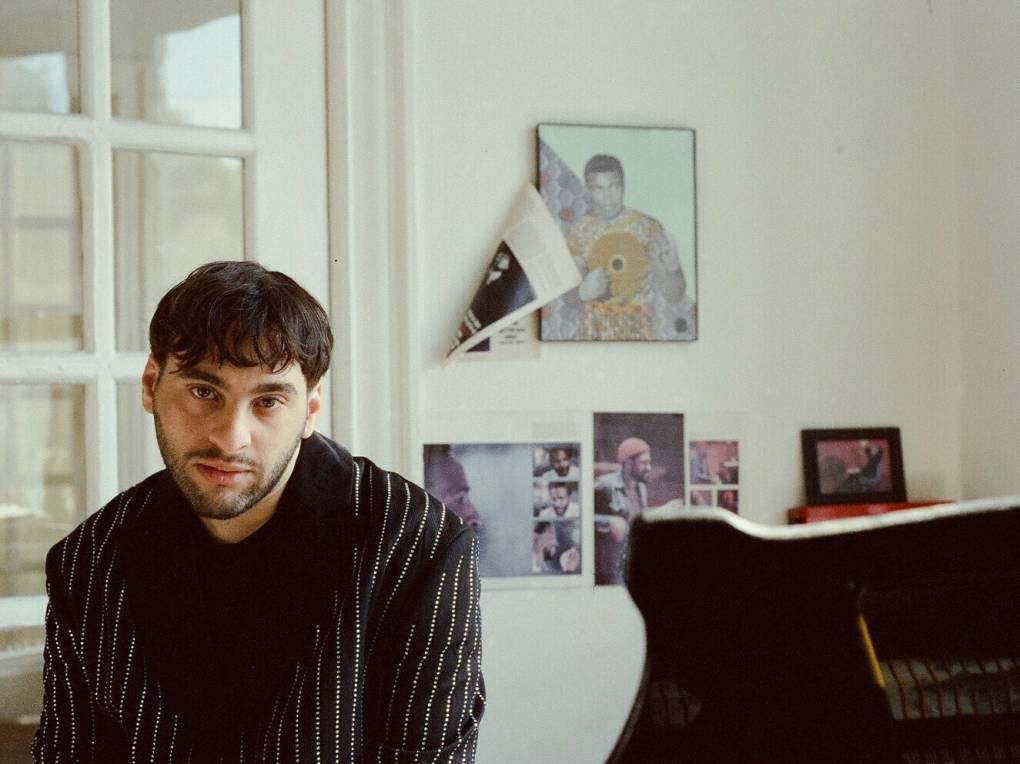
"caption": "The multidisciplinary artist Samora Pinderhughes, whose ‘Healing Project’ has won a $1 million grant from the Mellon Foundation.",
"description": null,
"title": "The multidisciplinary artist Samora Pinderhughes, whose ‘Healing Project’ has won a $1 million grant from the Mellon Foundation.",
"credit": "Ray Neutron/Courtesy of the artist",
"status": "inherit",
"altTag": "A young mixed race man sits at a piano in an apartment with white walls that has magazine clippings stuck to a wall. He is wearing an oversized black jacket with silver dotted lines on it.",
"isLoading": false,
"fetchFailed": false
},
"arts_13924635": {
"type": "attachments",
"id": "arts_13924635",
"meta": {
"index": "attachments_1716263798",
"site": "arts",
"id": "13924635",
"found": true
},
"parent": 13924370,
"imgSizes": {
"twentyfourteen-full-width": {
"file": "https://ww2.kqed.org/app/uploads/sites/2/2023/02/DSC_0758-1038x576.jpg",
"width": 1038,
"mimeType": "image/jpeg",
"height": 576
},
"thumbnail": {
"file": "https://ww2.kqed.org/app/uploads/sites/2/2023/02/DSC_0758-160x93.jpg",
"width": 160,
"mimeType": "image/jpeg",
"height": 93
},
"post-thumbnail": {
"file": "https://ww2.kqed.org/app/uploads/sites/2/2023/02/DSC_0758-672x372.jpg",
"width": 672,
"mimeType": "image/jpeg",
"height": 372
},
"kqedFullSize": {
"file": "https://ww2.kqed.org/app/uploads/sites/2/2023/02/DSC_0758-scaled.jpg",
"width": 2560,
"height": 1486
},
"2048x2048": {
"file": "https://ww2.kqed.org/app/uploads/sites/2/2023/02/DSC_0758-2048x1189.jpg",
"width": 2048,
"mimeType": "image/jpeg",
"height": 1189
},
"large": {
"file": "https://ww2.kqed.org/app/uploads/sites/2/2023/02/DSC_0758-1020x592.jpg",
"width": 1020,
"mimeType": "image/jpeg",
"height": 592
},
"1536x1536": {
"file": "https://ww2.kqed.org/app/uploads/sites/2/2023/02/DSC_0758-1536x892.jpg",
"width": 1536,
"mimeType": "image/jpeg",
"height": 892
},
"full-width": {
"file": "https://ww2.kqed.org/app/uploads/sites/2/2023/02/DSC_0758-1920x1115.jpg",
"width": 1920,
"mimeType": "image/jpeg",
"height": 1115
},
"medium": {
"file": "https://ww2.kqed.org/app/uploads/sites/2/2023/02/DSC_0758-800x464.jpg",
"width": 800,
"mimeType": "image/jpeg",
"height": 464
},
"medium_large": {
"file": "https://ww2.kqed.org/app/uploads/sites/2/2023/02/DSC_0758-768x446.jpg",
"width": 768,
"mimeType": "image/jpeg",
"height": 446
}
},
"publishDate": 1675364191,
"modified": 1675364386,
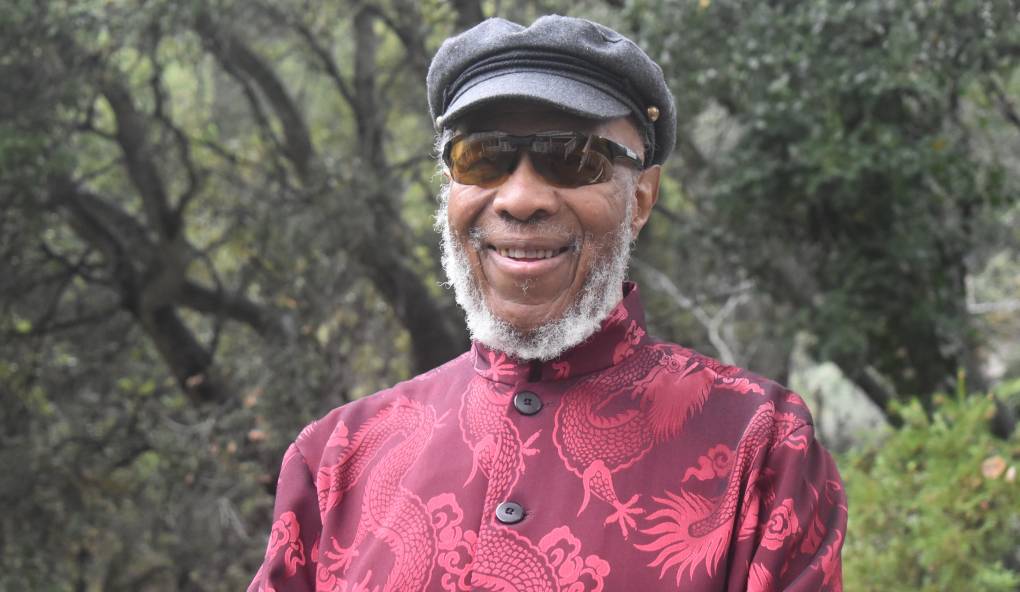
"caption": "Bay Area sax legend John Handy, at the cusp of 90, is sharp as ever.",
"description": null,
"title": "DSC_0758",
"credit": "Andrew Gilbert",
"status": "inherit",
"altTag": "an older Black man with a gray beard dressed in a colorful red shirt and a hat smiles in an outdoor portrait with a large tree behind him",
"isLoading": false,
"fetchFailed": false
},
"arts_13924128": {
"type": "attachments",
"id": "arts_13924128",
"meta": {
"index": "attachments_1716263798",
"site": "arts",
"id": "13924128",
"found": true
},
"parent": 13924126,
"imgSizes": {
"twentyfourteen-full-width": {
"file": "https://ww2.kqed.org/app/uploads/sites/2/2023/01/HipHopPreschool.SQ_-1038x576.jpg",
"width": 1038,
"mimeType": "image/jpeg",
"height": 576
},
"thumbnail": {
"file": "https://ww2.kqed.org/app/uploads/sites/2/2023/01/HipHopPreschool.SQ_-160x160.jpg",
"width": 160,
"mimeType": "image/jpeg",
"height": 160
},
"post-thumbnail": {
"file": "https://ww2.kqed.org/app/uploads/sites/2/2023/01/HipHopPreschool.SQ_-672x372.jpg",
"width": 672,
"mimeType": "image/jpeg",
"height": 372
},
"kqedFullSize": {
"file": "https://ww2.kqed.org/app/uploads/sites/2/2023/01/HipHopPreschool.SQ_.jpg",
"width": 1920,
"height": 1920
},
"large": {
"file": "https://ww2.kqed.org/app/uploads/sites/2/2023/01/HipHopPreschool.SQ_-1020x1020.jpg",
"width": 1020,
"mimeType": "image/jpeg",
"height": 1020
},
"1536x1536": {
"file": "https://ww2.kqed.org/app/uploads/sites/2/2023/01/HipHopPreschool.SQ_-1536x1536.jpg",
"width": 1536,
"mimeType": "image/jpeg",
"height": 1536
},
"medium": {
"file": "https://ww2.kqed.org/app/uploads/sites/2/2023/01/HipHopPreschool.SQ_-800x800.jpg",
"width": 800,
"mimeType": "image/jpeg",
"height": 800
},
"medium_large": {
"file": "https://ww2.kqed.org/app/uploads/sites/2/2023/01/HipHopPreschool.SQ_-768x768.jpg",
"width": 768,
"mimeType": "image/jpeg",
"height": 768
}
},
"publishDate": 1674596688,
"modified": 1674596688,
"caption": null,
"description": null,
"title": "HipHopPreschool.SQ",
"credit": null,
"status": "inherit",
"altTag": null,
"isLoading": false,
"fetchFailed": false
},
"arts_13924461": {
"type": "attachments",
"id": "arts_13924461",
"meta": {
"index": "attachments_1716263798",
"site": "arts",
"id": "13924461",
"found": true
},
"parent": 13924375,
"imgSizes": {
"twentyfourteen-full-width": {
"file": "https://ww2.kqed.org/app/uploads/sites/2/2023/01/GettyImages-1169733361-1038x576.jpg",
"width": 1038,
"mimeType": "image/jpeg",
"height": 576
},
"thumbnail": {
"file": "https://ww2.kqed.org/app/uploads/sites/2/2023/01/GettyImages-1169733361-160x90.jpg",
"width": 160,
"mimeType": "image/jpeg",
"height": 90
},
"post-thumbnail": {
"file": "https://ww2.kqed.org/app/uploads/sites/2/2023/01/GettyImages-1169733361-672x372.jpg",
"width": 672,
"mimeType": "image/jpeg",
"height": 372
},
"kqedFullSize": {
"file": "https://ww2.kqed.org/app/uploads/sites/2/2023/01/GettyImages-1169733361.jpg",
"width": 1920,
"height": 1080
},
"large": {
"file": "https://ww2.kqed.org/app/uploads/sites/2/2023/01/GettyImages-1169733361-1020x574.jpg",
"width": 1020,
"mimeType": "image/jpeg",
"height": 574
},
"1536x1536": {
"file": "https://ww2.kqed.org/app/uploads/sites/2/2023/01/GettyImages-1169733361-1536x864.jpg",
"width": 1536,
"mimeType": "image/jpeg",
"height": 864
},
"medium": {
"file": "https://ww2.kqed.org/app/uploads/sites/2/2023/01/GettyImages-1169733361-800x450.jpg",
"width": 800,
"mimeType": "image/jpeg",
"height": 450
},
"medium_large": {
"file": "https://ww2.kqed.org/app/uploads/sites/2/2023/01/GettyImages-1169733361-768x432.jpg",
"width": 768,
"mimeType": "image/jpeg",
"height": 432
}
},
"publishDate": 1675121182,
"modified": 1675121269,
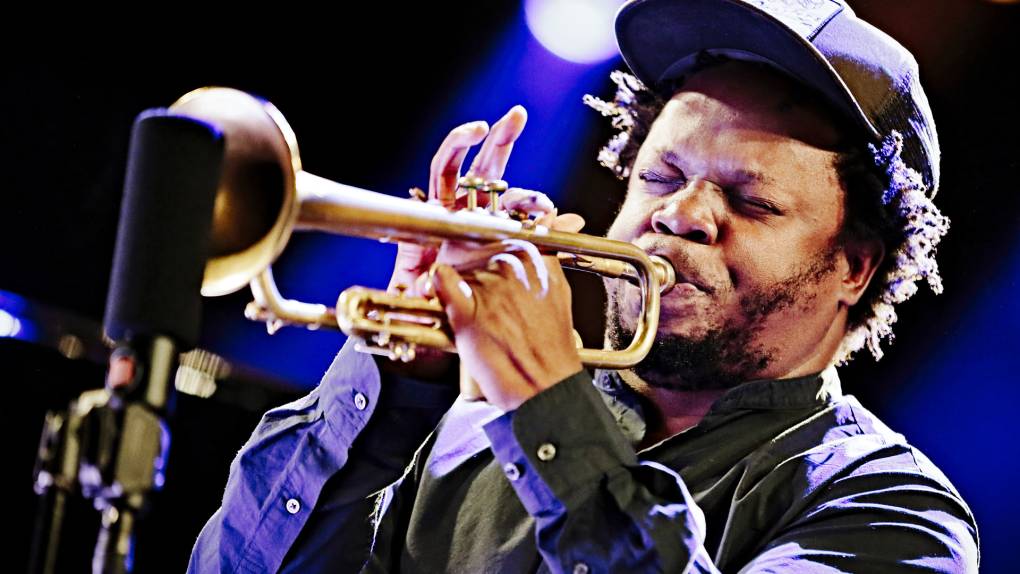
"caption": "Ambrose Akinmusire pictured in 2019. Akinmusire, who received his second Grammy nomination in November, will be skipping the award show in favor of his own residency at SFJAZZ, Feb. 3–5 and Feb. 9 at Grace Cathedral in San Francisco.",
"description": null,
"title": "GettyImages-1169733361",
"credit": "Peter Van Breukelen/Redferns/Getty Images",
"status": "inherit",
"altTag": "Black man in baseball cap plays trumpet with eyes closed",
"isLoading": false,
"fetchFailed": false
},
"arts_13923695": {
"type": "attachments",
"id": "arts_13923695",
"meta": {
"index": "attachments_1716263798",
"site": "arts",
"id": "13923695",
"found": true
},
"parent": 13923694,
"imgSizes": {
"twentyfourteen-full-width": {
"file": "https://ww2.kqed.org/app/uploads/sites/2/2023/01/SFJAZZ.10thAnniv-1038x576.jpg",
"width": 1038,
"mimeType": "image/jpeg",
"height": 576
},
"thumbnail": {
"file": "https://ww2.kqed.org/app/uploads/sites/2/2023/01/SFJAZZ.10thAnniv-160x96.jpg",
"width": 160,
"mimeType": "image/jpeg",
"height": 96
},
"post-thumbnail": {
"file": "https://ww2.kqed.org/app/uploads/sites/2/2023/01/SFJAZZ.10thAnniv-672x372.jpg",
"width": 672,
"mimeType": "image/jpeg",
"height": 372
},
"kqedFullSize": {
"file": "https://ww2.kqed.org/app/uploads/sites/2/2023/01/SFJAZZ.10thAnniv.jpg",
"width": 1920,
"height": 1151
},
"large": {
"file": "https://ww2.kqed.org/app/uploads/sites/2/2023/01/SFJAZZ.10thAnniv-1020x611.jpg",
"width": 1020,
"mimeType": "image/jpeg",
"height": 611
},
"1536x1536": {
"file": "https://ww2.kqed.org/app/uploads/sites/2/2023/01/SFJAZZ.10thAnniv-1536x921.jpg",
"width": 1536,
"mimeType": "image/jpeg",
"height": 921
},
"medium": {
"file": "https://ww2.kqed.org/app/uploads/sites/2/2023/01/SFJAZZ.10thAnniv-800x480.jpg",
"width": 800,
"mimeType": "image/jpeg",
"height": 480
},
"medium_large": {
"file": "https://ww2.kqed.org/app/uploads/sites/2/2023/01/SFJAZZ.10thAnniv-768x460.jpg",
"width": 768,
"mimeType": "image/jpeg",
"height": 460
}
},
"publishDate": 1673632981,
"modified": 1673633077,
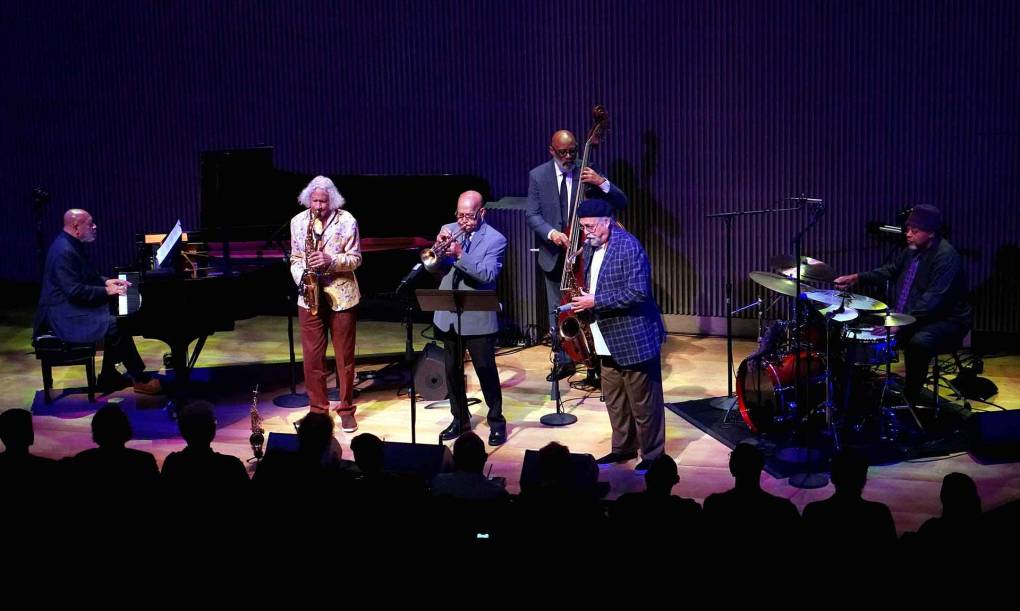
"caption": "(L–R) Kenny Barron, Gary Bartz, Eddie Henderson, Gerald Cannon, Joe Lovano and Jeff 'Tain' Watts celebrate the music of McCoy Tyner as part of SFJAZZ's 10th anniversary weekend on Jan. 12, 2023.",
"description": null,
"title": "SFJAZZ.10thAnniv",
"credit": "Rick Swig/SFJAZZ",
"status": "inherit",
"altTag": "Six men, playing piano, horns, bass and drums, perform on a dimly lit stage.",
"isLoading": false,
"fetchFailed": false
},
"arts_13923223": {
"type": "attachments",
"id": "arts_13923223",
"meta": {
"index": "attachments_1716263798",
"site": "arts",
"id": "13923223",
"found": true
},
"parent": 13923222,
"imgSizes": {
"twentyfourteen-full-width": {
"file": "https://ww2.kqed.org/app/uploads/sites/2/2023/01/bmf_0981_wide-aac9dfe34bf5b9ebf991710bd58e3f00e046765f-1038x576.jpg",
"width": 1038,
"mimeType": "image/jpeg",
"height": 576
},
"thumbnail": {
"file": "https://ww2.kqed.org/app/uploads/sites/2/2023/01/bmf_0981_wide-aac9dfe34bf5b9ebf991710bd58e3f00e046765f-160x90.jpg",
"width": 160,
"mimeType": "image/jpeg",
"height": 90
},
"post-thumbnail": {
"file": "https://ww2.kqed.org/app/uploads/sites/2/2023/01/bmf_0981_wide-aac9dfe34bf5b9ebf991710bd58e3f00e046765f-672x372.jpg",
"width": 672,
"mimeType": "image/jpeg",
"height": 372
},
"kqedFullSize": {
"file": "https://ww2.kqed.org/app/uploads/sites/2/2023/01/bmf_0981_wide-aac9dfe34bf5b9ebf991710bd58e3f00e046765f-scaled-e1672774369393.jpg",
"width": 1920,
"height": 1080
},
"2048x2048": {
"file": "https://ww2.kqed.org/app/uploads/sites/2/2023/01/bmf_0981_wide-aac9dfe34bf5b9ebf991710bd58e3f00e046765f-2048x1152.jpg",
"width": 2048,
"mimeType": "image/jpeg",
"height": 1152
},
"large": {
"file": "https://ww2.kqed.org/app/uploads/sites/2/2023/01/bmf_0981_wide-aac9dfe34bf5b9ebf991710bd58e3f00e046765f-1020x574.jpg",
"width": 1020,
"mimeType": "image/jpeg",
"height": 574
},
"1536x1536": {
"file": "https://ww2.kqed.org/app/uploads/sites/2/2023/01/bmf_0981_wide-aac9dfe34bf5b9ebf991710bd58e3f00e046765f-1536x864.jpg",
"width": 1536,
"mimeType": "image/jpeg",
"height": 864
},
"full-width": {
"file": "https://ww2.kqed.org/app/uploads/sites/2/2023/01/bmf_0981_wide-aac9dfe34bf5b9ebf991710bd58e3f00e046765f-1920x1080.jpg",
"width": 1920,
"mimeType": "image/jpeg",
"height": 1080
},
"medium": {
"file": "https://ww2.kqed.org/app/uploads/sites/2/2023/01/bmf_0981_wide-aac9dfe34bf5b9ebf991710bd58e3f00e046765f-800x450.jpg",
"width": 800,
"mimeType": "image/jpeg",
"height": 450
},
"medium_large": {
"file": "https://ww2.kqed.org/app/uploads/sites/2/2023/01/bmf_0981_wide-aac9dfe34bf5b9ebf991710bd58e3f00e046765f-768x432.jpg",
"width": 768,
"mimeType": "image/jpeg",
"height": 432
}
},
"publishDate": 1672773066,
"modified": 1672774438,
"caption": "Jason Moran performs at the 2022 Newport Jazz Festival.",
"description": null,
"title": "Jason Moran performs at the 2022 Newport Jazz Festival.",
"credit": "Courtesy of Newport Jazz Festival",
"status": "inherit",
"altTag": "A Black man with neatly cropped beard stares down at a piano intently, as he plays on stage.",
"isLoading": false,
"fetchFailed": false
},
"arts_13922538": {
"type": "attachments",
"id": "arts_13922538",
"meta": {
"index": "attachments_1716263798",
"site": "arts",
"id": "13922538",
"found": true
},
"parent": 13922511,
"imgSizes": {
"twentyfourteen-full-width": {
"file": "https://ww2.kqed.org/app/uploads/sites/2/2022/12/best-bay-area-albums-2022-1038x576.jpg",
"width": 1038,
"mimeType": "image/jpeg",
"height": 576
},
"thumbnail": {
"file": "https://ww2.kqed.org/app/uploads/sites/2/2022/12/best-bay-area-albums-2022-160x83.jpg",
"width": 160,
"mimeType": "image/jpeg",
"height": 83
},
"post-thumbnail": {
"file": "https://ww2.kqed.org/app/uploads/sites/2/2022/12/best-bay-area-albums-2022-672x372.jpg",
"width": 672,
"mimeType": "image/jpeg",
"height": 372
},
"kqedFullSize": {
"file": "https://ww2.kqed.org/app/uploads/sites/2/2022/12/best-bay-area-albums-2022.jpg",
"width": 1920,
"height": 1000
},
"large": {
"file": "https://ww2.kqed.org/app/uploads/sites/2/2022/12/best-bay-area-albums-2022-1020x531.jpg",
"width": 1020,
"mimeType": "image/jpeg",
"height": 531
},
"1536x1536": {
"file": "https://ww2.kqed.org/app/uploads/sites/2/2022/12/best-bay-area-albums-2022-1536x800.jpg",
"width": 1536,
"mimeType": "image/jpeg",
"height": 800
},
"medium": {
"file": "https://ww2.kqed.org/app/uploads/sites/2/2022/12/best-bay-area-albums-2022-800x417.jpg",
"width": 800,
"mimeType": "image/jpeg",
"height": 417
},
"medium_large": {
"file": "https://ww2.kqed.org/app/uploads/sites/2/2022/12/best-bay-area-albums-2022-768x400.jpg",
"width": 768,
"mimeType": "image/jpeg",
"height": 400
}
},
"publishDate": 1670539041,
"modified": 1670539214,
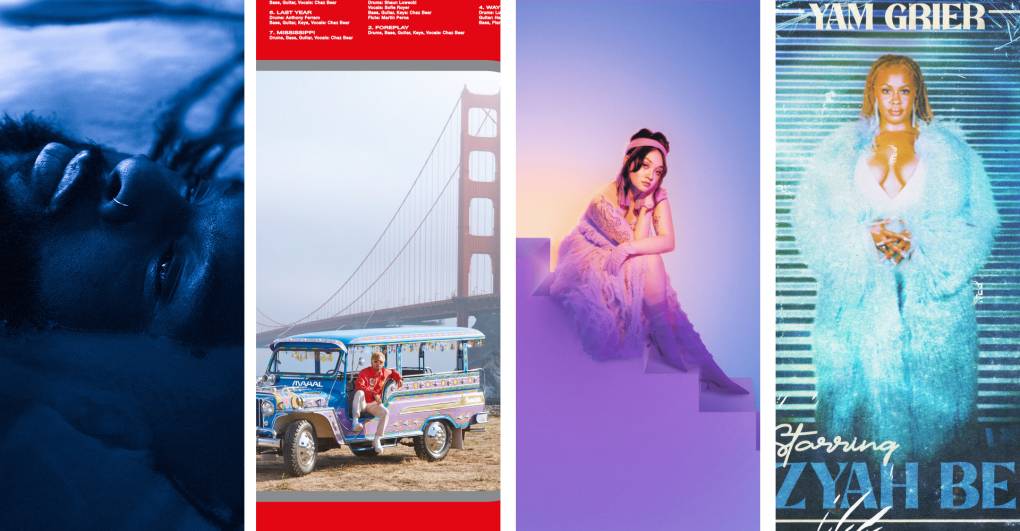
"caption": "Rexx Life Raj's 'The Blue Hour,' Toro Y Moi's 'MAHAL,' mxmtoon's 'rising' and Zyah Belle's 'Yam Grier' are four of our top 20 favorite Bay Area albums of the year.",
"description": null,
"title": "best bay area albums 2022",
"credit": "EMPIRE/Dead Oceans/AWAL Recordings America/Guin Records",
"status": "inherit",
"altTag": null,
"isLoading": false,
"fetchFailed": false
},
"arts_13921592": {
"type": "attachments",
"id": "arts_13921592",
"meta": {
"index": "attachments_1716263798",
"site": "arts",
"id": "13921592",
"found": true
},
"parent": 13921584,
"imgSizes": {
"twentyfourteen-full-width": {
"file": "https://ww2.kqed.org/app/uploads/sites/2/2022/11/Jean-Fineberg-poto-by-Sandy-Morris-cropped-1038x576.jpg",
"width": 1038,
"mimeType": "image/jpeg",
"height": 576
},
"thumbnail": {
"file": "https://ww2.kqed.org/app/uploads/sites/2/2022/11/Jean-Fineberg-poto-by-Sandy-Morris-cropped-160x90.jpg",
"width": 160,
"mimeType": "image/jpeg",
"height": 90
},
"post-thumbnail": {
"file": "https://ww2.kqed.org/app/uploads/sites/2/2022/11/Jean-Fineberg-poto-by-Sandy-Morris-cropped-672x372.jpg",
"width": 672,
"mimeType": "image/jpeg",
"height": 372
},
"kqedFullSize": {
"file": "https://ww2.kqed.org/app/uploads/sites/2/2022/11/Jean-Fineberg-poto-by-Sandy-Morris-cropped.jpg",
"width": 1920,
"height": 1080
},
"large": {
"file": "https://ww2.kqed.org/app/uploads/sites/2/2022/11/Jean-Fineberg-poto-by-Sandy-Morris-cropped-1020x574.jpg",
"width": 1020,
"mimeType": "image/jpeg",
"height": 574
},
"1536x1536": {
"file": "https://ww2.kqed.org/app/uploads/sites/2/2022/11/Jean-Fineberg-poto-by-Sandy-Morris-cropped-1536x864.jpg",
"width": 1536,
"mimeType": "image/jpeg",
"height": 864
},
"medium": {
"file": "https://ww2.kqed.org/app/uploads/sites/2/2022/11/Jean-Fineberg-poto-by-Sandy-Morris-cropped-800x450.jpg",
"width": 800,
"mimeType": "image/jpeg",
"height": 450
},
"medium_large": {
"file": "https://ww2.kqed.org/app/uploads/sites/2/2022/11/Jean-Fineberg-poto-by-Sandy-Morris-cropped-768x432.jpg",
"width": 768,
"mimeType": "image/jpeg",
"height": 432
}
},
"publishDate": 1668474354,
"modified": 1668474945,
"caption": "In the 1970s, Jean Fineberg recorded with all-time greats like David Bowie and Chic. And in more recent years, she's been a force in the East Bay's jazz scene, connecting and creating opportunities for women players.",
"description": null,
"title": "Jean-Fineberg poto by Sandy Morris cropped",
"credit": "Sandy Morris",
"status": "inherit",
"altTag": "Saxophonist Jean Fineberg plays a solo.",
"isLoading": false,
"fetchFailed": false
},
"arts_13921381": {
"type": "attachments",
"id": "arts_13921381",
"meta": {
"index": "attachments_1716263798",
"site": "arts",
"id": "13921381",
"found": true
},
"parent": 13921373,
"imgSizes": {
"twentyfourteen-full-width": {
"file": "https://ww2.kqed.org/app/uploads/sites/2/2022/11/DSC_4439-1038x576.jpg",
"width": 1038,
"mimeType": "image/jpeg",
"height": 576
},
"thumbnail": {
"file": "https://ww2.kqed.org/app/uploads/sites/2/2022/11/DSC_4439-160x106.jpg",
"width": 160,
"mimeType": "image/jpeg",
"height": 106
},
"post-thumbnail": {
"file": "https://ww2.kqed.org/app/uploads/sites/2/2022/11/DSC_4439-672x372.jpg",
"width": 672,
"mimeType": "image/jpeg",
"height": 372
},
"kqedFullSize": {
"file": "https://ww2.kqed.org/app/uploads/sites/2/2022/11/DSC_4439-scaled-e1667849825570.jpg",
"width": 1920,
"height": 1277
},
"2048x2048": {
"file": "https://ww2.kqed.org/app/uploads/sites/2/2022/11/DSC_4439-2048x1363.jpg",
"width": 2048,
"mimeType": "image/jpeg",
"height": 1363
},
"large": {
"file": "https://ww2.kqed.org/app/uploads/sites/2/2022/11/DSC_4439-1020x679.jpg",
"width": 1020,
"mimeType": "image/jpeg",
"height": 679
},
"1536x1536": {
"file": "https://ww2.kqed.org/app/uploads/sites/2/2022/11/DSC_4439-1536x1022.jpg",
"width": 1536,
"mimeType": "image/jpeg",
"height": 1022
},
"full-width": {
"file": "https://ww2.kqed.org/app/uploads/sites/2/2022/11/DSC_4439-1920x1277.jpg",
"width": 1920,
"mimeType": "image/jpeg",
"height": 1277
},
"medium": {
"file": "https://ww2.kqed.org/app/uploads/sites/2/2022/11/DSC_4439-800x532.jpg",
"width": 800,
"mimeType": "image/jpeg",
"height": 532
},
"medium_large": {
"file": "https://ww2.kqed.org/app/uploads/sites/2/2022/11/DSC_4439-768x511.jpg",
"width": 768,
"mimeType": "image/jpeg",
"height": 511
}
},
"publishDate": 1667849809,
"modified": 1667855326,
"caption": "Ensemble Mik Nawooj's resident MC Unity Lewis and composer-pianist and artistic director JooWan Kim (left to right).",
"description": null,
"title": "Joowan and Unity",
"credit": "Pat Mazzera",
"status": "inherit",
"altTag": "Two men in dark clothes back-to-back agains black backgorund",
"isLoading": false,
"fetchFailed": false
},
"arts_13921053": {
"type": "attachments",
"id": "arts_13921053",
"meta": {
"index": "attachments_1716263798",
"site": "arts",
"id": "13921053",
"found": true
},
"parent": 13921052,
"imgSizes": {
"twentyfourteen-full-width": {
"file": "https://ww2.kqed.org/app/uploads/sites/2/2022/10/louis_armstrongs_black_blues_photo_0101_wide-9ba5957735181ab158fd39010358105acb5d4e54-1038x576.jpg",
"width": 1038,
"mimeType": "image/jpeg",
"height": 576
},
"thumbnail": {
"file": "https://ww2.kqed.org/app/uploads/sites/2/2022/10/louis_armstrongs_black_blues_photo_0101_wide-9ba5957735181ab158fd39010358105acb5d4e54-160x90.jpg",
"width": 160,
"mimeType": "image/jpeg",
"height": 90
},
"post-thumbnail": {
"file": "https://ww2.kqed.org/app/uploads/sites/2/2022/10/louis_armstrongs_black_blues_photo_0101_wide-9ba5957735181ab158fd39010358105acb5d4e54-672x372.jpg",
"width": 672,
"mimeType": "image/jpeg",
"height": 372
},
"kqedFullSize": {
"file": "https://ww2.kqed.org/app/uploads/sites/2/2022/10/louis_armstrongs_black_blues_photo_0101_wide-9ba5957735181ab158fd39010358105acb5d4e54-scaled-e1666985477597.jpg",
"width": 1920,
"height": 1080
},
"2048x2048": {
"file": "https://ww2.kqed.org/app/uploads/sites/2/2022/10/louis_armstrongs_black_blues_photo_0101_wide-9ba5957735181ab158fd39010358105acb5d4e54-2048x1152.jpg",
"width": 2048,
"mimeType": "image/jpeg",
"height": 1152
},
"large": {
"file": "https://ww2.kqed.org/app/uploads/sites/2/2022/10/louis_armstrongs_black_blues_photo_0101_wide-9ba5957735181ab158fd39010358105acb5d4e54-1020x574.jpg",
"width": 1020,
"mimeType": "image/jpeg",
"height": 574
},
"1536x1536": {
"file": "https://ww2.kqed.org/app/uploads/sites/2/2022/10/louis_armstrongs_black_blues_photo_0101_wide-9ba5957735181ab158fd39010358105acb5d4e54-1536x864.jpg",
"width": 1536,
"mimeType": "image/jpeg",
"height": 864
},
"full-width": {
"file": "https://ww2.kqed.org/app/uploads/sites/2/2022/10/louis_armstrongs_black_blues_photo_0101_wide-9ba5957735181ab158fd39010358105acb5d4e54-1920x1080.jpg",
"width": 1920,
"mimeType": "image/jpeg",
"height": 1080
},
"medium": {
"file": "https://ww2.kqed.org/app/uploads/sites/2/2022/10/louis_armstrongs_black_blues_photo_0101_wide-9ba5957735181ab158fd39010358105acb5d4e54-800x450.jpg",
"width": 800,
"mimeType": "image/jpeg",
"height": 450
},
"medium_large": {
"file": "https://ww2.kqed.org/app/uploads/sites/2/2022/10/louis_armstrongs_black_blues_photo_0101_wide-9ba5957735181ab158fd39010358105acb5d4e54-768x432.jpg",
"width": 768,
"mimeType": "image/jpeg",
"height": 432
}
},
"publishDate": 1666984446,
"modified": 1666985530,
"caption": "Louis Armstrong was a titan who never forgot his humble upbringings, and also a public figure who carefully assessed his own weight in the world.",
"description": null,
"title": "Louis Armstrong was a titan who never forgot his humble upbringings, and also a public figure who carefully assessed his own weight in the world.",
"credit": "Courtesy of Apple TV+",
"status": "inherit",
"altTag": "A Black man deep in concentration while playing the trumpet on stage.",
"isLoading": false,
"fetchFailed": false
},
"arts_13919592": {
"type": "attachments",
"id": "arts_13919592",
"meta": {
"index": "attachments_1716263798",
"site": "arts",
"id": "13919592",
"found": true
},
"parent": 13919591,
"imgSizes": {
"twentyfourteen-full-width": {
"file": "https://ww2.kqed.org/app/uploads/sites/2/2022/09/gettyimages-997732148_custom-dae471da5499794cb8a39312368def4d19f8a5eb-1038x576.jpg",
"width": 1038,
"mimeType": "image/jpeg",
"height": 576
},
"thumbnail": {
"file": "https://ww2.kqed.org/app/uploads/sites/2/2022/09/gettyimages-997732148_custom-dae471da5499794cb8a39312368def4d19f8a5eb-160x106.jpg",
"width": 160,
"mimeType": "image/jpeg",
"height": 106
},
"post-thumbnail": {
"file": "https://ww2.kqed.org/app/uploads/sites/2/2022/09/gettyimages-997732148_custom-dae471da5499794cb8a39312368def4d19f8a5eb-672x372.jpg",
"width": 672,
"mimeType": "image/jpeg",
"height": 372
},
"kqedFullSize": {
"file": "https://ww2.kqed.org/app/uploads/sites/2/2022/09/gettyimages-997732148_custom-dae471da5499794cb8a39312368def4d19f8a5eb-scaled.jpg",
"width": 2560,
"height": 1704
},
"2048x2048": {
"file": "https://ww2.kqed.org/app/uploads/sites/2/2022/09/gettyimages-997732148_custom-dae471da5499794cb8a39312368def4d19f8a5eb-2048x1363.jpg",
"width": 2048,
"mimeType": "image/jpeg",
"height": 1363
},
"large": {
"file": "https://ww2.kqed.org/app/uploads/sites/2/2022/09/gettyimages-997732148_custom-dae471da5499794cb8a39312368def4d19f8a5eb-1020x679.jpg",
"width": 1020,
"mimeType": "image/jpeg",
"height": 679
},
"1536x1536": {
"file": "https://ww2.kqed.org/app/uploads/sites/2/2022/09/gettyimages-997732148_custom-dae471da5499794cb8a39312368def4d19f8a5eb-1536x1022.jpg",
"width": 1536,
"mimeType": "image/jpeg",
"height": 1022
},
"full-width": {
"file": "https://ww2.kqed.org/app/uploads/sites/2/2022/09/gettyimages-997732148_custom-dae471da5499794cb8a39312368def4d19f8a5eb-1920x1278.jpg",
"width": 1920,
"mimeType": "image/jpeg",
"height": 1278
},
"medium": {
"file": "https://ww2.kqed.org/app/uploads/sites/2/2022/09/gettyimages-997732148_custom-dae471da5499794cb8a39312368def4d19f8a5eb-800x532.jpg",
"width": 800,
"mimeType": "image/jpeg",
"height": 532
},
"medium_large": {
"file": "https://ww2.kqed.org/app/uploads/sites/2/2022/09/gettyimages-997732148_custom-dae471da5499794cb8a39312368def4d19f8a5eb-768x511.jpg",
"width": 768,
"mimeType": "image/jpeg",
"height": 511
}
},
"publishDate": 1664034188,
"modified": 1664034277,
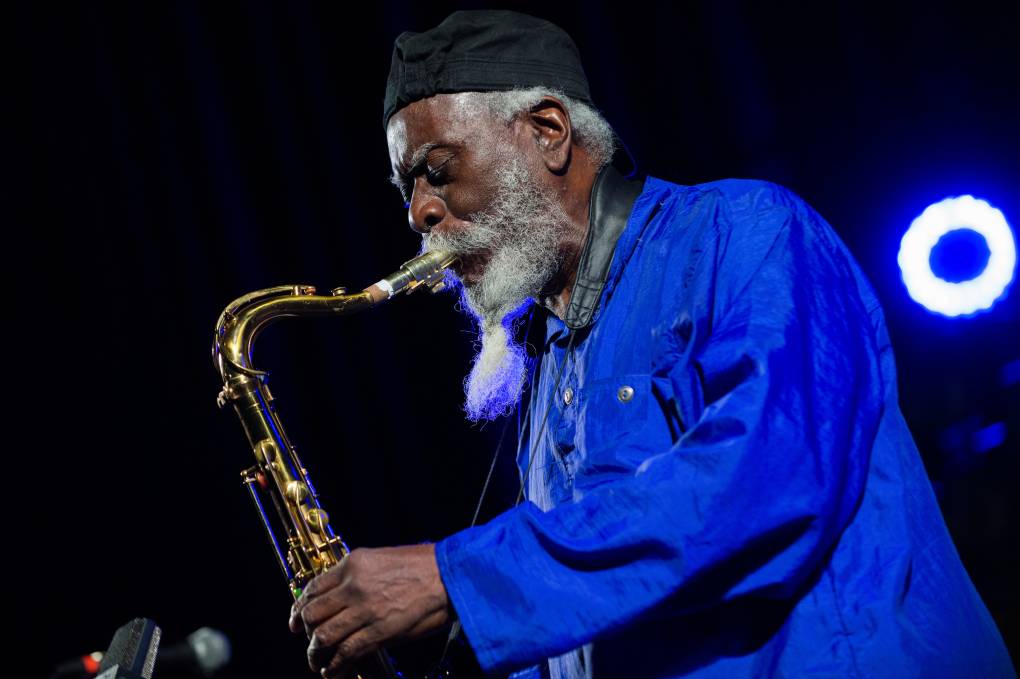
"caption": "Pharoah Sanders performs at the Krakow Jazz Festival in Poland in 2018.",
"description": "KRAKOW, POLAND - 2018/07/12: American jazz saxophonist, Pharoah Sanders performs at the Krakow Jazz Festival. (Photo by Omar Marques/SOPA Images/LightRocket via Getty Images)",
"title": "Pharoah Sanders performs at the Krakow Jazz Festival in Poland in 2018.",
"credit": "Omar Marques/Getty Images",
"status": "inherit",
"altTag": "An elderly African American man in a blue shirt and long white beard plays the tenor saxophone",
"isLoading": false,
"fetchFailed": false
}
},
"audioPlayerReducer": {
"postId": "stream_live",
"isPaused": true,
"isPlaying": false,
"pfsActive": false,
"pledgeModalIsOpen": true,
"playerDrawerIsOpen": false,
"liveAudioPlayStartedAt": 0,
"liveAudioPlayContext": ""
},
"authorsReducer": {
"byline_arts_13925000": {
"type": "authors",
"id": "byline_arts_13925000",
"meta": {
"override": true
},
"slug": "byline_arts_13925000",
"name": "Anastasia Tsioulcas",
"isLoading": false
},
"byline_arts_13923222": {
"type": "authors",
"id": "byline_arts_13923222",
"meta": {
"override": true
},
"slug": "byline_arts_13923222",
"name": "Nate Chinen",
"isLoading": false
},
"byline_arts_13922511": {
"type": "authors",
"id": "byline_arts_13922511",
"meta": {
"override": true
},
"slug": "byline_arts_13922511",
"name": "KQED Arts & Culture",
"isLoading": false
},
"byline_arts_13921052": {
"type": "authors",
"id": "byline_arts_13921052",
"meta": {
"override": true
},
"slug": "byline_arts_13921052",
"name": "Nate Chinen",
"isLoading": false
},
"byline_arts_13919591": {
"type": "authors",
"id": "byline_arts_13919591",
"meta": {
"override": true
},
"slug": "byline_arts_13919591",
"name": "Nate Chinen",
"isLoading": false
},
"agilbert": {
"type": "authors",
"id": "86",
"meta": {
"index": "authors_1716337520",
"id": "86",
"found": true
},
"name": "Andrew Gilbert",
"firstName": "Andrew",
"lastName": "Gilbert",
"slug": "agilbert",
"email": "jazzscribe@aol.com",
"display_author_email": false,
"staff_mastheads": [],
"title": "KQED Contributor",
"bio": "A Los Angeles native based in the Berkeley area since 1996, Andrew Gilbert covers jazz, international music and dance for KQED's \u003ci>California Report, \u003c/i>the\u003ci> Mercury News\u003c/i>, \u003ci>San Francisco Chronicle\u003c/i>, \u003ci>Berkeleyside.com\u003c/i>, and other publications. He is available for weddings and bar and bat mitzvahs. #jazzscribe",
"avatar": "https://secure.gravatar.com/avatar/d7bcafdbefdd39e9a68f88724ca616eb4e7a5a6bff9cdfb62de652a1e1751471?s=600&d=blank&r=g",
"twitter": null,
"bluesky": null,
"facebook": null,
"instagram": null,
"linkedin": null,
"sites": [
{
"site": "arts",
"roles": [
"Contributor",
"author"
]
},
{
"site": "news",
"roles": [
"author"
]
}
],
"headData": {
"title": "Andrew Gilbert | KQED",
"description": "KQED Contributor",
"ogImgSrc": "https://secure.gravatar.com/avatar/d7bcafdbefdd39e9a68f88724ca616eb4e7a5a6bff9cdfb62de652a1e1751471?s=600&d=blank&r=g",
"twImgSrc": "https://secure.gravatar.com/avatar/d7bcafdbefdd39e9a68f88724ca616eb4e7a5a6bff9cdfb62de652a1e1751471?s=600&d=blank&r=g"
},
"isLoading": false,
"link": "/author/agilbert"
},
"gmeline": {
"type": "authors",
"id": "185",
"meta": {
"index": "authors_1716337520",
"id": "185",
"found": true
},
"name": "Gabe Meline",
"firstName": "Gabe",
"lastName": "Meline",
"slug": "gmeline",
"email": "gmeline@kqed.org",
"display_author_email": true,
"staff_mastheads": [
"arts"
],
"title": "Senior Editor, KQED Arts & Culture",
"bio": "Gabe Meline entered journalism at age 15 making photocopied zines, and has since earned awards from the Edward R. Murrow Awards, the Society for Professional Journalists, the Online Journalism Awards, the Association of Alternative Newsweeklies and the California Newspaper Publishers Association. Prior to KQED, he was the editor of the \u003cem>North Bay Bohemian\u003c/em> and a touring musician. He lives with his wife and daughter in his hometown of Santa Rosa, CA.",
"avatar": "https://secure.gravatar.com/avatar/5bebe57be0d8bc2dd318934feb47299e2d2d10cba28d09d8d7afb389a2ce2bdd?s=600&d=blank&r=g",
"twitter": null,
"bluesky": null,
"facebook": null,
"instagram": null,
"linkedin": null,
"sites": [
{
"site": "",
"roles": [
"editor"
]
},
{
"site": "arts",
"roles": [
"administrator"
]
},
{
"site": "artschool",
"roles": [
"editor"
]
},
{
"site": "news",
"roles": [
"author"
]
},
{
"site": "pop",
"roles": [
"editor"
]
},
{
"site": "bayareabites",
"roles": [
"editor"
]
},
{
"site": "food",
"roles": [
"editor"
]
},
{
"site": "forum",
"roles": [
"administrator"
]
},
{
"site": "liveblog",
"roles": [
"editor"
]
},
{
"site": "hiphop",
"roles": [
"editor"
]
}
],
"headData": {
"title": "Gabe Meline | KQED",
"description": "Senior Editor, KQED Arts & Culture",
"ogImgSrc": "https://secure.gravatar.com/avatar/5bebe57be0d8bc2dd318934feb47299e2d2d10cba28d09d8d7afb389a2ce2bdd?s=600&d=blank&r=g",
"twImgSrc": "https://secure.gravatar.com/avatar/5bebe57be0d8bc2dd318934feb47299e2d2d10cba28d09d8d7afb389a2ce2bdd?s=600&d=blank&r=g"
},
"isLoading": false,
"link": "/author/gmeline"
},
"aproehl": {
"type": "authors",
"id": "11296",
"meta": {
"index": "authors_1716337520",
"id": "11296",
"found": true
},
"name": "Ariana Proehl",
"firstName": "Ariana",
"lastName": "Proehl",
"slug": "aproehl",
"email": "aproehl@KQED.org",
"display_author_email": true,
"staff_mastheads": [
"news"
],
"title": "Culture Reporter, KQED",
"bio": "Ariana Proehl is a Culture Reporter and Host.",
"avatar": "https://secure.gravatar.com/avatar/c96b24567eb5bb3a4f8bb295ed53e232?s=600&d=blank&r=g",
"twitter": "ArianaProehl",
"facebook": null,
"instagram": null,
"linkedin": null,
"sites": [
{
"site": "arts",
"roles": []
},
{
"site": "news",
"roles": []
},
{
"site": "education",
"roles": []
},
{
"site": "forum",
"roles": []
}
],
"headData": {
"title": "Ariana Proehl | KQED",
"description": "Culture Reporter, KQED",
"ogImgSrc": "https://secure.gravatar.com/avatar/c96b24567eb5bb3a4f8bb295ed53e232?s=600&d=blank&r=g",
"twImgSrc": "https://secure.gravatar.com/avatar/c96b24567eb5bb3a4f8bb295ed53e232?s=600&d=blank&r=g"
},
"isLoading": false,
"link": "/author/aproehl"
},
"nvoynovskaya": {
"type": "authors",
"id": "11387",
"meta": {
"index": "authors_1716337520",
"id": "11387",
"found": true
},
"name": "Nastia Voynovskaya",
"firstName": "Nastia",
"lastName": "Voynovskaya",
"slug": "nvoynovskaya",
"email": "nvoynovskaya@kqed.org",
"display_author_email": false,
"staff_mastheads": [
"arts"
],
"title": "Editor and reporter",
"bio": "Nastia Voynovskaya is a reporter, editor and host at KQED Arts & Culture. She's been covering the arts in the Bay Area for over a decade, with a focus on music, queer culture, labor issues and grassroots organizing. She has edited KQED story series such as Trans Bay: A History of San Francisco's Gender-Diverse Community, and co-created KQED's Bay Area hip-hop history project, That's My Word. Nastia's work has been recognized by the Society of Professional Journalists and San Francisco Press Club. She regularly appears on podcasts and radio programs, including NPR's All Songs Considered, and hosts live events where music, culture and conversation meet.",
"avatar": "https://secure.gravatar.com/avatar/5025ee460e5a85d69ca20ea6c6f2f80d7e17795c828f61ea3aecfcd924e9042e?s=600&d=blank&r=g",
"twitter": null,
"bluesky": null,
"facebook": null,
"instagram": "https://www.instagram.com/nananastia/",
"linkedin": null,
"sites": [
{
"site": "",
"roles": [
"editor"
]
},
{
"site": "arts",
"roles": [
"administrator"
]
},
{
"site": "news",
"roles": [
"editor"
]
},
{
"site": "pop",
"roles": [
"administrator"
]
},
{
"site": "bayareabites",
"roles": [
"editor"
]
},
{
"site": "podcasts",
"roles": [
"editor"
]
},
{
"site": "hiphop",
"roles": [
"editor"
]
}
],
"headData": {
"title": "Nastia Voynovskaya | KQED",
"description": "Editor and reporter",
"ogImgSrc": "https://secure.gravatar.com/avatar/5025ee460e5a85d69ca20ea6c6f2f80d7e17795c828f61ea3aecfcd924e9042e?s=600&d=blank&r=g",
"twImgSrc": "https://secure.gravatar.com/avatar/5025ee460e5a85d69ca20ea6c6f2f80d7e17795c828f61ea3aecfcd924e9042e?s=600&d=blank&r=g"
},
"isLoading": false,
"link": "/author/nvoynovskaya"
},
"ogpenn": {
"type": "authors",
"id": "11491",
"meta": {
"index": "authors_1716337520",
"id": "11491",
"found": true
},
"name": "Pendarvis Harshaw",
"firstName": "Pendarvis",
"lastName": "Harshaw",
"slug": "ogpenn",
"email": "ogpenn@gmail.com",
"display_author_email": false,
"staff_mastheads": [
"arts"
],
"title": "Community Engagement Reporter",
"bio": "Pendarvis Harshaw is an educator, host and writer with KQED Arts.",
"avatar": "https://secure.gravatar.com/avatar/972b77ee8e3f346ae2b00622661187fbfabd059b5693bbdc1475ea7a722fd4cd?s=600&d=blank&r=g",
"twitter": null,
"bluesky": null,
"facebook": null,
"instagram": "ogpenn",
"linkedin": null,
"sites": [
{
"site": "arts",
"roles": [
"administrator"
]
},
{
"site": "news",
"roles": [
"editor"
]
},
{
"site": "bayareabites",
"roles": [
"author"
]
},
{
"site": "hiphop",
"roles": [
"editor"
]
}
],
"headData": {
"title": "Pendarvis Harshaw | KQED",
"description": "Community Engagement Reporter",
"ogImgSrc": "https://secure.gravatar.com/avatar/972b77ee8e3f346ae2b00622661187fbfabd059b5693bbdc1475ea7a722fd4cd?s=600&d=blank&r=g",
"twImgSrc": "https://secure.gravatar.com/avatar/972b77ee8e3f346ae2b00622661187fbfabd059b5693bbdc1475ea7a722fd4cd?s=600&d=blank&r=g"
},
"isLoading": false,
"link": "/author/ogpenn"
},
"earnold": {
"type": "authors",
"id": "11839",
"meta": {
"index": "authors_1716337520",
"id": "11839",
"found": true
},
"name": "Eric Arnold",
"firstName": "Eric",
"lastName": "Arnold",
"slug": "earnold",
"email": "earnold@kqed.org",
"display_author_email": false,
"staff_mastheads": [],
"title": "Contributing Editor, 'That's My Word'",
"bio": "Eric Arnold has covered hip-hop locally and nationally for over 30 years. Formerly the managing editor of \u003cem>4080\u003c/em> and columnist for \u003cem>The Source\u003c/em>, he chronicled hyphy’s rise and fall, co-curated the Oakland Museum of California’s first hip-hop exhibit in 2018 and won a 2022 Northern California Emmy Award for a mini-documentary on Oakland’s Boogaloo dance culture. He is a contributing editor for \u003cem>That’s My Word\u003c/em>, KQED's series on the history of Bay Area hip-hop.",
"avatar": "https://secure.gravatar.com/avatar/ede45b04898456ad0893a2811e78b0a2?s=600&d=blank&r=g",
"twitter": null,
"facebook": null,
"instagram": null,
"linkedin": null,
"sites": [
{
"site": "arts",
"roles": [
"contributor"
]
},
{
"site": "news",
"roles": [
"contributor"
]
},
{
"site": "hiphop",
"roles": [
"contributor"
]
}
],
"headData": {
"title": "Eric Arnold | KQED",
"description": "Contributing Editor, 'That's My Word'",
"ogImgSrc": "https://secure.gravatar.com/avatar/ede45b04898456ad0893a2811e78b0a2?s=600&d=blank&r=g",
"twImgSrc": "https://secure.gravatar.com/avatar/ede45b04898456ad0893a2811e78b0a2?s=600&d=blank&r=g"
},
"isLoading": false,
"link": "/author/earnold"
}
},
"pagesReducer": {
"arts_tag_jazz": {
"type": "terms",
"id": "arts_1420",
"meta": {
"index": "terms_1716263798",
"site": "arts",
"id": "1420",
"score": 9.104757
},
"featImg": null,
"name": "jazz",
"description": null,
"taxonomy": "tag",
"headData": {
"twImgId": null,
"twTitle": null,
"ogTitle": null,
"ogImgId": null,
"twDescription": null,
"description": null,
"title": "jazz Archives | KQED Arts",
"ogDescription": null
},
"ttid": 1432,
"slug": "jazz",
"isLoading": false,
"title": "jazz",
"pageMeta": {
"site": "arts",
"WpPageTemplate": "page-topic-editorial",
"currentPage": 7
},
"blocks": [
{
"blockName": "kqed/post-list",
"attrs": {
"layout": "cardArticle2",
"query": "posts/arts?tag=jazz",
"seeMore": false,
"paginated": true,
"page": 7
}
},
{
"blockName": "kqed/ad"
}
]
}
},
"pfsSessionReducer": {},
"postsReducer": {
"stream_live": {
"type": "live",
"id": "stream_live",
"audioUrl": "https://streams.kqed.org/kqedradio",
"title": "Live Stream",
"excerpt": "Live Stream information currently unavailable.",
"link": "/radio",
"featImg": "",
"label": {
"name": "KQED Live",
"link": "/"
}
},
"stream_kqedNewscast": {
"type": "posts",
"id": "stream_kqedNewscast",
"audioUrl": "https://www.kqed.org/.stream/anon/radio/RDnews/newscast.mp3?_=1",
"title": "KQED Newscast",
"featImg": "",
"label": {
"name": "88.5 FM",
"link": "/"
}
},
"arts_13925710": {
"type": "posts",
"id": "arts_13925710",
"meta": {
"index": "posts_1716263798",
"site": "arts",
"id": "13925710",
"score": null,
"sort": [
1677625469000
]
},
"parent": 0,
"labelTerm": {
"site": "arts",
"term": 140
},
"blocks": [],
"publishDate": 1677625469,
"format": "standard",
"title": "A Celebration of Oakland's Black Cultural Figures, in Portraiture",
"headTitle": "A Celebration of Oakland’s Black Cultural Figures, in Portraiture | KQED",
"content": "\u003cp>Inside a lobby off Frank H. Ogawa Plaza in Oakland is a series of illustrations of educators and MCs, as well as photographers, poets and Black Panther Party members.\u003c/p>\n\u003cp>The portraits — all comprised of black jigsaw-puzzle-like images on top of yellow backgrounds with a vertical red line through the face — are a part of the \u003cem>Oakland’s Black Modern Arts Renaissance\u003c/em> exhibition by \u003ca href=\"https://www.instagram.com/shomari7382/\" target=\"_blank\" rel=\"noopener\">Shomari Smith\u003c/a>.\u003c/p>\n\u003cfigure id=\"attachment_13925728\" class=\"wp-caption aligncenter\" style=\"max-width: 800px\">\u003cimg loading=\"lazy\" decoding=\"async\" class=\"size-medium wp-image-13925728\" src=\"https://ww2.kqed.org/app/uploads/sites/2/2023/02/DSC05106-800x535.jpg\" alt=\"Famed visual artist and Black Panther Party Newspaper illustrator Emory Douglas takes in Shomari Smith's Oakland's Black Modern Arts Renaissance exhibit. \" width=\"800\" height=\"535\" srcset=\"https://cdn.kqed.org/wp-content/uploads/sites/2/2023/02/DSC05106-800x535.jpg 800w, https://cdn.kqed.org/wp-content/uploads/sites/2/2023/02/DSC05106-1020x682.jpg 1020w, https://cdn.kqed.org/wp-content/uploads/sites/2/2023/02/DSC05106-160x107.jpg 160w, https://cdn.kqed.org/wp-content/uploads/sites/2/2023/02/DSC05106-768x513.jpg 768w, https://cdn.kqed.org/wp-content/uploads/sites/2/2023/02/DSC05106-1536x1027.jpg 1536w, https://cdn.kqed.org/wp-content/uploads/sites/2/2023/02/DSC05106.jpg 1616w\" sizes=\"(max-width: 800px) 100vw, 800px\">\u003cfigcaption class=\"wp-caption-text\">Famed visual artist and Black Panther Party newspaper illustrator Emory Douglas takes in Shomari Smith’s ‘Oakland’s Black Modern Arts Renaissance’ exhibit. \u003ccite>(Pendarvis Harshaw)\u003c/cite>\u003c/figcaption>\u003c/figure>\n\u003cp>“These are all of my people,” said Smith, a visual artist and \u003ca href=\"https://www.kqed.org/arts/13924170/hieroglyphics-hobo-junction-battle-documentary\" target=\"_blank\" rel=\"noopener\">documentary filmmaker\u003c/a>, at an opening reception with guests, portrait subjects and Oakland Mayor Sheng Thao. “These are people who taught me, people I’ve worked with, people I admire and people I’ve been inspired by.”\u003c/p>\n\u003cp>The images include portraits of \u003ca href=\"http://www.theblackwomanisgod.com/artists/jtlewis\" target=\"_blank\" rel=\"noopener\">Joan Tarika Lewis\u003c/a>, the first woman to join the Black Panther Party, as well as \u003ca href=\"https://sambafunk.com/about-us/\" target=\"_blank\" rel=\"noopener\">Theo Aytchan Williams\u003c/a> of SambaFunk!, OUSD educator Jasmene Miranda and jazz radio show host \u003ca href=\"https://www.instagram.com/g1rhythm/\" target=\"_blank\" rel=\"noopener\">Greg Bridges\u003c/a>, to name a few. (Full disclosure: there’s even a portrait of me.)\u003c/p>\n\u003cfigure id=\"attachment_13925748\" class=\"wp-caption aligncenter\" style=\"max-width: 600px\">\u003cimg loading=\"lazy\" decoding=\"async\" src=\"https://ww2.kqed.org/app/uploads/sites/2/2023/02/Screen-Shot-2023-02-28-at-2.27.48-PM-800x1006.png\" alt=\"An illustration of a man with a healthy beard and big smile, with a yellow background and a thick red line running vertically over the face\" width=\"600\" height=\"802\" class=\"size-medium wp-image-13925748\">\u003cfigcaption class=\"wp-caption-text\">A portrait of long-running jazz DJ Greg Bridges is one of many featured in ‘Oakland’s Black Modern Arts Renaissance,’ on view near Oakland City Hall. \u003ccite>(Shomari Smith)\u003c/cite>\u003c/figcaption>\u003c/figure>\n\u003cp>As the wall text explains, the yellow backgrounds of Smith’s portraits represent creativity, while the red line represents a shared African bloodline. \u003c/p>\n\u003cp>[ad fullwidth]\u003c/p>\n\u003cp>“Look these people up and find out more about their work,” encouraged Smith, while explaining that creating these images is his way of giving a little love back to the community — and making sure others recognize their work as well.\u003c/p>\n\u003cfigure id=\"attachment_13925729\" class=\"wp-caption aligncenter\" style=\"max-width: 800px\">\u003cimg loading=\"lazy\" decoding=\"async\" src=\"https://ww2.kqed.org/app/uploads/sites/2/2023/02/DSC05124-800x535.jpg\" alt=\"Artists, educators and more gather to celebrate the opening reception of Shomari Smith's Oakland's Black Modern Arts Renaissance exhibit.\" width=\"800\" height=\"535\" class=\"size-medium wp-image-13925729\" srcset=\"https://cdn.kqed.org/wp-content/uploads/sites/2/2023/02/DSC05124-800x535.jpg 800w, https://cdn.kqed.org/wp-content/uploads/sites/2/2023/02/DSC05124-1020x682.jpg 1020w, https://cdn.kqed.org/wp-content/uploads/sites/2/2023/02/DSC05124-160x107.jpg 160w, https://cdn.kqed.org/wp-content/uploads/sites/2/2023/02/DSC05124-768x513.jpg 768w, https://cdn.kqed.org/wp-content/uploads/sites/2/2023/02/DSC05124-1536x1027.jpg 1536w, https://cdn.kqed.org/wp-content/uploads/sites/2/2023/02/DSC05124.jpg 1616w\" sizes=\"(max-width: 800px) 100vw, 800px\">\u003cfigcaption class=\"wp-caption-text\">Artists, educators and more gather to celebrate the opening reception of Shomari Smith’s ‘Oakland’s Black Modern Arts Renaissance’ exhibit. \u003ccite>(Amir Aziz)\u003c/cite>\u003c/figcaption>\u003c/figure>\n\u003cp>\u003c/p>\n\u003cp>\u003cem>‘Oakland’s Black Modern Arts Renaissance’ is free and open to the public during business hours, through the month of March, at the City of Oakland building at 250 Frank Ogawa Plaza in Oakland. \u003ca href=\"https://www.instagram.com/shomari7382/\">Details here\u003c/a>. \u003c/em>\u003c/p>\n\n",
"stats": {
"hasVideo": false,
"hasChartOrMap": false,
"hasAudio": false,
"hasPolis": false,
"wordCount": 373,
"hasGoogleForm": false,
"hasGallery": false,
"hasHearkenModule": false,
"iframeSrcs": [],
"paragraphCount": 9
},
"modified": 1705005791,
"excerpt": "'These are all of my people,' said artist Shomari Smith of his portraits, currently on view near City Hall.",
"headData": {
"twImgId": "",
"twTitle": "",
"ogTitle": "",
"ogImgId": "",
"twDescription": "",
"description": "'These are all of my people,' said artist Shomari Smith of his portraits, currently on view near City Hall.",
"title": "A Celebration of Oakland's Black Cultural Figures, in Portraiture | KQED",
"ogDescription": "",
"schema": {
"@context": "https://schema.org",
"@type": "Article",
"headline": "A Celebration of Oakland's Black Cultural Figures, in Portraiture",
"datePublished": "2023-02-28T15:04:29-08:00",
"dateModified": "2024-01-11T12:43:11-08:00",
"image": "https://cdn.kqed.org/wp-content/uploads/2020/02/KQED-OG-Image@1x.png"
}
},
"guestAuthors": [],
"slug": "shomari-smith-portraits-oakland",
"status": "publish",
"templateType": "standard",
"excludeFromSiteSearch": "Include",
"featuredImageType": "standard",
"sticky": false,
"subhead": "Honoring a Few of the Town's People Through Art",
"WpOldSlug": "a-celebration-of-oaklands-black-cultural-figures-in-portraiture",
"articleAge": "0",
"path": "/arts/13925710/shomari-smith-portraits-oakland",
"audioTrackLength": null,
"parsedContent": [
{
"type": "contentString",
"content": "\u003cdiv class=\"post-body\">\u003cp>\u003cp>Inside a lobby off Frank H. Ogawa Plaza in Oakland is a series of illustrations of educators and MCs, as well as photographers, poets and Black Panther Party members.\u003c/p>\n\u003cp>The portraits — all comprised of black jigsaw-puzzle-like images on top of yellow backgrounds with a vertical red line through the face — are a part of the \u003cem>Oakland’s Black Modern Arts Renaissance\u003c/em> exhibition by \u003ca href=\"https://www.instagram.com/shomari7382/\" target=\"_blank\" rel=\"noopener\">Shomari Smith\u003c/a>.\u003c/p>\n\u003cfigure id=\"attachment_13925728\" class=\"wp-caption aligncenter\" style=\"max-width: 800px\">\u003cimg loading=\"lazy\" decoding=\"async\" class=\"size-medium wp-image-13925728\" src=\"https://ww2.kqed.org/app/uploads/sites/2/2023/02/DSC05106-800x535.jpg\" alt=\"Famed visual artist and Black Panther Party Newspaper illustrator Emory Douglas takes in Shomari Smith's Oakland's Black Modern Arts Renaissance exhibit. \" width=\"800\" height=\"535\" srcset=\"https://cdn.kqed.org/wp-content/uploads/sites/2/2023/02/DSC05106-800x535.jpg 800w, https://cdn.kqed.org/wp-content/uploads/sites/2/2023/02/DSC05106-1020x682.jpg 1020w, https://cdn.kqed.org/wp-content/uploads/sites/2/2023/02/DSC05106-160x107.jpg 160w, https://cdn.kqed.org/wp-content/uploads/sites/2/2023/02/DSC05106-768x513.jpg 768w, https://cdn.kqed.org/wp-content/uploads/sites/2/2023/02/DSC05106-1536x1027.jpg 1536w, https://cdn.kqed.org/wp-content/uploads/sites/2/2023/02/DSC05106.jpg 1616w\" sizes=\"(max-width: 800px) 100vw, 800px\">\u003cfigcaption class=\"wp-caption-text\">Famed visual artist and Black Panther Party newspaper illustrator Emory Douglas takes in Shomari Smith’s ‘Oakland’s Black Modern Arts Renaissance’ exhibit. \u003ccite>(Pendarvis Harshaw)\u003c/cite>\u003c/figcaption>\u003c/figure>\n\u003cp>“These are all of my people,” said Smith, a visual artist and \u003ca href=\"https://www.kqed.org/arts/13924170/hieroglyphics-hobo-junction-battle-documentary\" target=\"_blank\" rel=\"noopener\">documentary filmmaker\u003c/a>, at an opening reception with guests, portrait subjects and Oakland Mayor Sheng Thao. “These are people who taught me, people I’ve worked with, people I admire and people I’ve been inspired by.”\u003c/p>\n\u003cp>The images include portraits of \u003ca href=\"http://www.theblackwomanisgod.com/artists/jtlewis\" target=\"_blank\" rel=\"noopener\">Joan Tarika Lewis\u003c/a>, the first woman to join the Black Panther Party, as well as \u003ca href=\"https://sambafunk.com/about-us/\" target=\"_blank\" rel=\"noopener\">Theo Aytchan Williams\u003c/a> of SambaFunk!, OUSD educator Jasmene Miranda and jazz radio show host \u003ca href=\"https://www.instagram.com/g1rhythm/\" target=\"_blank\" rel=\"noopener\">Greg Bridges\u003c/a>, to name a few. (Full disclosure: there’s even a portrait of me.)\u003c/p>\n\u003cfigure id=\"attachment_13925748\" class=\"wp-caption aligncenter\" style=\"max-width: 600px\">\u003cimg loading=\"lazy\" decoding=\"async\" src=\"https://ww2.kqed.org/app/uploads/sites/2/2023/02/Screen-Shot-2023-02-28-at-2.27.48-PM-800x1006.png\" alt=\"An illustration of a man with a healthy beard and big smile, with a yellow background and a thick red line running vertically over the face\" width=\"600\" height=\"802\" class=\"size-medium wp-image-13925748\">\u003cfigcaption class=\"wp-caption-text\">A portrait of long-running jazz DJ Greg Bridges is one of many featured in ‘Oakland’s Black Modern Arts Renaissance,’ on view near Oakland City Hall. \u003ccite>(Shomari Smith)\u003c/cite>\u003c/figcaption>\u003c/figure>\n\u003cp>As the wall text explains, the yellow backgrounds of Smith’s portraits represent creativity, while the red line represents a shared African bloodline. \u003c/p>\n\u003cp>\u003c/p>\u003c/div>",
"attributes": {
"named": {},
"numeric": []
}
},
{
"type": "component",
"content": "",
"name": "ad",
"attributes": {
"named": {
"label": "fullwidth"
},
"numeric": [
"fullwidth"
]
}
},
{
"type": "contentString",
"content": "\u003cdiv class=\"post-body\">\u003cp>\u003c/p>\n\u003cp>“Look these people up and find out more about their work,” encouraged Smith, while explaining that creating these images is his way of giving a little love back to the community — and making sure others recognize their work as well.\u003c/p>\n\u003cfigure id=\"attachment_13925729\" class=\"wp-caption aligncenter\" style=\"max-width: 800px\">\u003cimg loading=\"lazy\" decoding=\"async\" src=\"https://ww2.kqed.org/app/uploads/sites/2/2023/02/DSC05124-800x535.jpg\" alt=\"Artists, educators and more gather to celebrate the opening reception of Shomari Smith's Oakland's Black Modern Arts Renaissance exhibit.\" width=\"800\" height=\"535\" class=\"size-medium wp-image-13925729\" srcset=\"https://cdn.kqed.org/wp-content/uploads/sites/2/2023/02/DSC05124-800x535.jpg 800w, https://cdn.kqed.org/wp-content/uploads/sites/2/2023/02/DSC05124-1020x682.jpg 1020w, https://cdn.kqed.org/wp-content/uploads/sites/2/2023/02/DSC05124-160x107.jpg 160w, https://cdn.kqed.org/wp-content/uploads/sites/2/2023/02/DSC05124-768x513.jpg 768w, https://cdn.kqed.org/wp-content/uploads/sites/2/2023/02/DSC05124-1536x1027.jpg 1536w, https://cdn.kqed.org/wp-content/uploads/sites/2/2023/02/DSC05124.jpg 1616w\" sizes=\"(max-width: 800px) 100vw, 800px\">\u003cfigcaption class=\"wp-caption-text\">Artists, educators and more gather to celebrate the opening reception of Shomari Smith’s ‘Oakland’s Black Modern Arts Renaissance’ exhibit. \u003ccite>(Amir Aziz)\u003c/cite>\u003c/figcaption>\u003c/figure>\n\u003cp>\u003c/p>\n\u003cp>\u003cem>‘Oakland’s Black Modern Arts Renaissance’ is free and open to the public during business hours, through the month of March, at the City of Oakland building at 250 Frank Ogawa Plaza in Oakland. \u003ca href=\"https://www.instagram.com/shomari7382/\">Details here\u003c/a>. \u003c/em>\u003c/p>\n\n\u003c/div>\u003c/p>",
"attributes": {
"named": {},
"numeric": []
}
}
],
"link": "/arts/13925710/shomari-smith-portraits-oakland",
"authors": [
"11491"
],
"programs": [
"arts_140"
],
"categories": [
"arts_1",
"arts_70"
],
"tags": [
"arts_5471",
"arts_10278",
"arts_1420",
"arts_1143",
"arts_585"
],
"featImg": "arts_13925727",
"label": "arts_140"
},
"arts_13925000": {
"type": "posts",
"id": "arts_13925000",
"meta": {
"index": "posts_1716263798",
"site": "arts",
"id": "13925000",
"score": null,
"sort": [
1676058303000
]
},
"guestAuthors": [],
"slug": "artist-from-berkeley-wins-1-million-for-healing-project-focused-on-incarceration",
"title": "Artist From Berkeley Wins $1 Million for ‘Healing Project,’ Focused on Incarceration",
"publishDate": 1676058303,
"format": "standard",
"headTitle": "Artist From Berkeley Wins $1 Million for ‘Healing Project,’ Focused on Incarceration | KQED",
"labelTerm": {
"term": 137,
"site": "arts"
},
"content": "\u003cp>There’s a multidisciplinary artist who is so remarkable that although he is just 31 years old, he’s just been awarded a rare $1 million grant from the Andrew W. Mellon Foundation to fund his work: \u003ca href=\"https://www.samorapinderhughes.com/\">Samora Pinderhughes.\u003c/a>\u003c/p>\n\u003cp>Pinderhughes does many things. He’s a vocalist, pianist, composer and filmmaker. He’s also very much an activist against mass incarceration. For the past eight years, he’s been working on something called \u003ca href=\"https://www.samorapinderhughes.com/healingproject/\">The Healing Project\u003c/a>. As the name suggests, it’s about healing and leaving yourself emotionally open — to your own feelings, to the experiences of others, to generosity. That openness to vulnerability is also clear in Pinderhughes’ sweet, warm voice and in his wide vision for his work.\u003c/p>\n\u003cp>[aside postid='arts_13924661']He was inspired by the plays of one of his mentors, the playwright and actress \u003ca href=\"https://www.npr.org/2015/12/07/458742076/anna-deavere-smith-wants-playgoers-to-do-what-they-can-to-counter-violence\">Anna Deavere Smith\u003c/a>, who often bases her work on documentary interviews she’s conducted; she asked him if he was interested in exploring something similar. It led Pinderhughes — originally from the Bay Area, and now based in New York City — on a journey to conduct conversations with people across the U.S. about incarceration and structural violence.\u003c/p>\n\u003cp>Pinderhughes has always been involved in activism: his parents are professors and community activists. “It was very natural for me to start creating things that had a message,” he observes.\u003c/p>\n\u003cp>He later attended Juilliard as a jazz student. “I was there for piano performance,” he says. “I think off the top it was probably not the right place for me — but I just didn’t know that at the time that composing was a job! I wasn’t like, ‘Oh, OK, I could be like my own artist and make my own work.’ I found amazing teachers there — Frank Kimbrough, Kendall Briggs and \u003ca href=\"https://www.npr.org/2023/01/16/1149021094/nea-jazz-master-kenny-barron-shines-playing-solo-on-the-source\">Kenny Barron\u003c/a> in particular — who allowed me to be myself.” At the same time, he says, he felt he was surrounded by fellow students who were more interested in being the strongest possible technical players.\u003c/p>\n\u003cp>[ad fullwidth]\u003c/p>\n\u003cp>https://www.youtube.com/watch?v=ICUoG54pIW0\u003c/p>\n\u003cp>“Meanwhile,” he adds, “I was very concerned with what was happening in the world, and how to say something about that through the music, and how to collaborate with different disciplines. I wanted to make things with the actors and make things with the string players. I was a little bit lost in the sauce there.”\u003c/p>\n\u003cp>One particular inflection point sparked Pinderhughes into using his music to address racial violence directly. “I think what really happened was \u003ca href=\"https://www.npr.org/sections/codeswitch/2016/08/11/489494015/the-butterfly-effects-of-ferguson\">the Ferguson uprising\u003c/a> and Mike Brown’s murder, it just really charged something,” he observes. Ultimately, that led to the creation of Pinderhughes’ ambitious 2016 work \u003ca href=\"https://www.npr.org/2017/01/19/510578539/radical-imagination-jazz-and-social-justice\">\u003cem>The Transformations Suite\u003c/em>\u003c/a>, which melded jazz, spoken-word poetry and visuals into a plea for social justice.\u003c/p>\n\u003cp>In its current form, The Healing Project is also made up of many elements, including music, films and visual art. It’s meant to be performed and experienced in many different ways and in different places. Pinderhughes, who is of mixed-race and Black ancestry, says that there is one central question at its core.\u003c/p>\n\u003cp>https://www.youtube.com/watch?v=iFppyjwHcd4\u003c/p>\n\u003cp>“That ended up being the question of healing from structural violence,” he says. “By structural violence, I mean just basically any type of trauma that could come from violences that are created by the society. So that could be imprisonment, that could be police brutality. It could even just be something like poverty and just like the circumstances of one’s upbringing and environment. It brought me on a journey of talking to hundreds of people around the country about their experiences and their ideas, most importantly, about healing and what they’ve been through, how they’ve come through it.”\u003c/p>\n\u003cp>Those hundreds of conversations included people who are currently incarcerated; many of them contributed their own art to the project. Pinderhughes worked with a constellation of professional artists and musicians to make meditations on those conversations, including the album \u003cem>Grief\u003c/em>. Other parts of the project include live performances and a visual art exhibition on display last year at San Francisco’s \u003ca href=\"https://www.kqed.org/arts/13911226/samora-pinderhughes-ybca-the-healing-project\">Yerba Buena Center for the Arts\u003c/a>.\u003c/p>\n\u003cp>https://www.youtube.com/watch?v=WFIjSW8HqMI\u003c/p>\n\u003cp>“I didn’t really want to limit it,” Pinderhughes says. “So I basically did everything that each person asked me to do. If they wanted to send me pieces that they had drawn through the mail if they were incarcerated, those go up in the exhibition. If they wanted to talk about the realities and experiences of loss and grieving, we would make a film about that. If they wanted to talk about the process of healing from long periods of incarceration, we’re going to make a composition about that.”\u003c/p>\n\u003cp>[aside postid='arts_13924934']The expansiveness of The Healing Project — part creative vessel, part catalyst for activism and part new collaborative model — is so dynamic that it attracted the attention of the Mellon Foundation. \u003ca href=\"https://mellon.org/about/staff/emil-kang/\">Emil Kang\u003c/a> directs its arts and culture program. He was blown away by Pinderhughes’ vision.\u003c/p>\n\u003cp>“I started asking him about his own artistic practice and he started to in some ways bifurcate his work: to talk about his music over here, his lived experience over here and his commitment to abolition work over there. And how he longed for the day of a time when he could actually bring all of this together.”\u003c/p>\n\u003cp>“To be frank,” Kang continues, “I was saddened by what he was saying to me, but yet I understood exactly what he was saying — that the ecosystem that we have now, especially in the performing arts, still exists in a transactional way, where an artist just puts out their work and hopes people get it somehow. At the Mellon Foundation, as we are trying to push forward our own work and what the future of the performing arts looks like, we really do believe it’s in the guise of contemporary performance — in a way that allows artists to be able to show the totality of their humanity in their work, and not just the virtuosity of their skill.”\u003c/p>\n\u003cp>https://www.youtube.com/watch?v=aa9FmZN3NLg\u003c/p>\n\u003cp>It is extremely rare for a single performer to get a million dollars from a grant; that’s about the same sum as a Nobel Prize. That money is going to allow The Healing Project to be manifested into even more forms, Pinderhughes says. He also avers that this is very much a collaborative effort: “Everybody that was a part of the project had a stake in the project, so everybody that has ever been a part of this project co-owns this project with me. Everybody that has been a part of the project has just as much say over what is in it as I do.”\u003c/p>\n\u003cp>“I’m really honored and humbled to receive this opportunity to just take this project into the stratosphere,” Pinderhughes continues. “It’s only the beginning, really, of what we have planned. I am an artist and I believe deeply in the power of art, but I also want to materially create change in the lives of the people that are a part of it and also in the communities that it wants to serve.”\u003c/p>\n\u003cp>[aside postid='arts_13924571']For example, Pinderhughes plans to make a printed book version of The Healing Project, because so many participants are incarcerated. They’re not able to access the collaboration otherwise.\u003c/p>\n\u003cp>When he asked participants what they would need to create a space for their healing, spiritually or materially, some interviewees said that they needed things as basic as access to healthy food and jobs — which, for those formerly incarcerated, can be very hard to secure.\u003c/p>\n\u003cp>“We’re also starting an initiative called The Healing Project Transformative Impact Fund,” Pinderhughes notes, “where we’re going to be using the project as a container to actually start to support the dreams and hopes and projects of the actual people who participated in the project — folks particularly who are formerly and currently incarcerated.”\u003c/p>\n\u003cp>At the same time, he says, “We’re going to continue to do that art, that narrative work, we’re going to make the book, we’re going to make more albums, we’re going to make more exhibitions, we’re going to make more films.”\u003c/p>\n\u003cp>https://www.youtube.com/watch?v=agCTXovPYp8\u003c/p>\n\u003cp>In the meantime, he hopes that the music of The Healing Project, and the power of its art, helps both creators and audiences chart their own paths to healing. He recalls a man coming up to him after a recent performance.\u003c/p>\n\u003cp>“He was like, I feel like you should make a shirt that says, ‘I make grown men cry,’ ” Pinderhughes recounts. “And I was like, ‘That’s not a bad idea.’ So now, just kind of jokingly, that’s the tagline of what the energy is.”\u003c/p>\n\u003cp>Friday evening, Pinderhughes and some of his musical collaborators will be performing \u003ca href=\"https://www.carnegiehall.org/calendar/2023/02/10/samora-pinderhughes-and-friends-0900pm\">a concert version\u003c/a> of The Healing Project at New York’s Zankel Hall at Carnegie Hall. Almost inevitably, people will cry. And that’s a big part of healing.\u003c/p>\n\u003cp>\u003cem>Edited by: \u003c/em>\u003ca href=\"https://www.npr.org/people/3850482/neda-ulaby\">\u003cem>Neda Ulaby\u003c/em>\u003c/a>\u003c/p>\n\u003cp>\u003cem>Produced by: \u003c/em>\u003ca href=\"https://www.npr.org/people/182335974/anastasia-tsioulcas\">\u003cem>Anastasia Tsioulcas\u003c/em>\u003c/a>\u003c/p>\n\u003cp>\u003cem>Audio story produced by: \u003c/em>\u003ca href=\"https://www.npr.org/people/766798576/isabella-gomez-sarmiento\">\u003cem>Isabella Gomez Sarmiento\u003c/em>\u003c/a>\u003c/p>\n\u003cp>[ad floatright]\u003c/p>\n\u003cp>\u003cem>Audio story edited by: Neda Ulaby\u003c/em>\u003c/p>\n\u003cdiv class=\"fullattribution\">\u003cem>Copyright 2023 NPR. To see more, \u003ca href=\"https://www.npr.org\" target=\"_blank\" rel=\"noopener\">visit NPR\u003c/a>.\u003cimg decoding=\"async\" src=\"https://www.google-analytics.com/__utm.gif?utmac=UA-5828686-4&utmdt=An+artist%27s+%27Healing+Project%2C%27+focused+on+incarceration+and+violence%2C+wins+%241+million&utme=8(APIKey)9(MDAxOTAwOTE4MDEyMTkxMDAzNjczZDljZA004)\">\u003c/em>\u003c/div>\n\n",
"blocks": [],
"excerpt": "Multidisciplinary artist Samora Pinderhughes has been exploring mass incarceration for the last eight years.",
"status": "publish",
"parent": 0,
"modified": 1726758946,
"stats": {
"hasAudio": false,
"hasVideo": true,
"hasChartOrMap": false,
"iframeSrcs": [],
"hasGoogleForm": false,
"hasGallery": false,
"hasHearkenModule": false,
"hasPolis": false,
"paragraphCount": 29,
"wordCount": 1643
},
"headData": {
"title": "Samora Pinderhughes’ ‘Healing Project’ Wins $1 Million Grant | KQED",
"description": "Multidisciplinary artist Samora Pinderhughes has been exploring mass incarceration for the last eight years.",
"ogTitle": "Artist From Berkeley Wins $1 Million for ‘Healing Project,’ Focused on Incarceration",
"ogDescription": "",
"ogImgId": "",
"twTitle": "Artist From Berkeley Wins $1 Million for ‘Healing Project,’ Focused on Incarceration",
"twDescription": "",
"twImgId": "",
"socialTitle": "Samora Pinderhughes’ ‘Healing Project’ Wins $1 Million Grant%%page%% %%sep%% KQED",
"schema": {
"@context": "https://schema.org",
"@type": "Article",
"headline": "Artist From Berkeley Wins $1 Million for ‘Healing Project,’ Focused on Incarceration",
"datePublished": "2023-02-10T11:45:03-08:00",
"dateModified": "2024-09-19T08:15:46-07:00",
"image": "https://cdn.kqed.org/wp-content/uploads/2020/02/KQED-OG-Image@1x.png"
}
},
"sticky": false,
"nprImageCredit": "Ray Neutron",
"nprByline": "Anastasia Tsioulcas",
"nprImageAgency": "Courtesy of the artist",
"nprStoryId": "1155783321",
"nprApiLink": "http://api.npr.org/query?id=1155783321&apiKey=MDAxOTAwOTE4MDEyMTkxMDAzNjczZDljZA004",
"nprHtmlLink": "https://www.npr.org/2023/02/10/1155783321/an-artists-healing-project-focused-on-incarceration-and-violence-wins-1-million?ft=nprml&f=1155783321",
"nprRetrievedStory": "1",
"nprPubDate": "Fri, 10 Feb 2023 08:04:00 -0500",
"nprStoryDate": "Fri, 10 Feb 2023 05:01:20 -0500",
"nprLastModifiedDate": "Fri, 10 Feb 2023 05:01:20 -0500",
"nprAudio": "https://ondemand.npr.org/anon.npr-mp3/npr/me/2023/02/20230210_me_an_artists_healing_project_focused_on_incarceration_and_violence_wins_1_million.mp3?orgId=1&topicId=1008&d=325&p=3&story=1155783321&ft=nprml&f=1155783321",
"nprAudioM3u": "http://api.npr.org/m3u/11155927125-16d893.m3u?orgId=1&topicId=1008&d=325&p=3&story=1155783321&ft=nprml&f=1155783321",
"templateType": "standard",
"featuredImageType": "standard",
"excludeFromSiteSearch": "Include",
"showOnAuthorArchivePages": "No",
"articleAge": "0",
"path": "/arts/13925000/artist-from-berkeley-wins-1-million-for-healing-project-focused-on-incarceration",
"audioUrl": "https://ondemand.npr.org/anon.npr-mp3/npr/me/2023/02/20230210_me_an_artists_healing_project_focused_on_incarceration_and_violence_wins_1_million.mp3?orgId=1&topicId=1008&d=325&p=3&story=1155783321&ft=nprml&f=1155783321",
"audioTrackLength": null,
"parsedContent": [
{
"type": "contentString",
"content": "\u003cdiv class=\"post-body\">\u003cp>\u003cp>There’s a multidisciplinary artist who is so remarkable that although he is just 31 years old, he’s just been awarded a rare $1 million grant from the Andrew W. Mellon Foundation to fund his work: \u003ca href=\"https://www.samorapinderhughes.com/\">Samora Pinderhughes.\u003c/a>\u003c/p>\n\u003cp>Pinderhughes does many things. He’s a vocalist, pianist, composer and filmmaker. He’s also very much an activist against mass incarceration. For the past eight years, he’s been working on something called \u003ca href=\"https://www.samorapinderhughes.com/healingproject/\">The Healing Project\u003c/a>. As the name suggests, it’s about healing and leaving yourself emotionally open — to your own feelings, to the experiences of others, to generosity. That openness to vulnerability is also clear in Pinderhughes’ sweet, warm voice and in his wide vision for his work.\u003c/p>\n\u003cp>\u003c/p>\u003c/div>",
"attributes": {
"named": {},
"numeric": []
}
},
{
"type": "component",
"content": "",
"name": "aside",
"attributes": {
"named": {
"postid": "arts_13924661",
"label": ""
},
"numeric": []
}
},
{
"type": "contentString",
"content": "\u003cdiv class=\"post-body\">\u003cp>He was inspired by the plays of one of his mentors, the playwright and actress \u003ca href=\"https://www.npr.org/2015/12/07/458742076/anna-deavere-smith-wants-playgoers-to-do-what-they-can-to-counter-violence\">Anna Deavere Smith\u003c/a>, who often bases her work on documentary interviews she’s conducted; she asked him if he was interested in exploring something similar. It led Pinderhughes — originally from the Bay Area, and now based in New York City — on a journey to conduct conversations with people across the U.S. about incarceration and structural violence.\u003c/p>\n\u003cp>Pinderhughes has always been involved in activism: his parents are professors and community activists. “It was very natural for me to start creating things that had a message,” he observes.\u003c/p>\n\u003cp>He later attended Juilliard as a jazz student. “I was there for piano performance,” he says. “I think off the top it was probably not the right place for me — but I just didn’t know that at the time that composing was a job! I wasn’t like, ‘Oh, OK, I could be like my own artist and make my own work.’ I found amazing teachers there — Frank Kimbrough, Kendall Briggs and \u003ca href=\"https://www.npr.org/2023/01/16/1149021094/nea-jazz-master-kenny-barron-shines-playing-solo-on-the-source\">Kenny Barron\u003c/a> in particular — who allowed me to be myself.” At the same time, he says, he felt he was surrounded by fellow students who were more interested in being the strongest possible technical players.\u003c/p>\n\u003cp>\u003c/p>\u003c/div>",
"attributes": {
"named": {},
"numeric": []
}
},
{
"type": "component",
"content": "",
"name": "ad",
"attributes": {
"named": {
"label": "fullwidth"
},
"numeric": [
"fullwidth"
]
}
},
{
"type": "contentString",
"content": "\u003cdiv class=\"post-body\">\u003cp>\u003c/p>\u003c/p>\u003cp>\u003cspan class='utils-parseShortcode-shortcodes-__youtubeShortcode__embedYoutube'>\n \u003cspan class='utils-parseShortcode-shortcodes-__youtubeShortcode__embedYoutubeInside'>\n \u003ciframe\n loading='lazy'\n class='utils-parseShortcode-shortcodes-__youtubeShortcode__youtubePlayer'\n type='text/html'\n src='//www.youtube.com/embed/ICUoG54pIW0'\n title='//www.youtube.com/embed/ICUoG54pIW0'\n allowfullscreen='true'\n style='border:0;'>\u003c/iframe>\n \u003c/span>\n \u003c/span>\u003c/p>\u003cp>\u003cp>“Meanwhile,” he adds, “I was very concerned with what was happening in the world, and how to say something about that through the music, and how to collaborate with different disciplines. I wanted to make things with the actors and make things with the string players. I was a little bit lost in the sauce there.”\u003c/p>\n\u003cp>One particular inflection point sparked Pinderhughes into using his music to address racial violence directly. “I think what really happened was \u003ca href=\"https://www.npr.org/sections/codeswitch/2016/08/11/489494015/the-butterfly-effects-of-ferguson\">the Ferguson uprising\u003c/a> and Mike Brown’s murder, it just really charged something,” he observes. Ultimately, that led to the creation of Pinderhughes’ ambitious 2016 work \u003ca href=\"https://www.npr.org/2017/01/19/510578539/radical-imagination-jazz-and-social-justice\">\u003cem>The Transformations Suite\u003c/em>\u003c/a>, which melded jazz, spoken-word poetry and visuals into a plea for social justice.\u003c/p>\n\u003cp>In its current form, The Healing Project is also made up of many elements, including music, films and visual art. It’s meant to be performed and experienced in many different ways and in different places. Pinderhughes, who is of mixed-race and Black ancestry, says that there is one central question at its core.\u003c/p>\u003c/p>\u003cp>\u003cspan class='utils-parseShortcode-shortcodes-__youtubeShortcode__embedYoutube'>\n \u003cspan class='utils-parseShortcode-shortcodes-__youtubeShortcode__embedYoutubeInside'>\n \u003ciframe\n loading='lazy'\n class='utils-parseShortcode-shortcodes-__youtubeShortcode__youtubePlayer'\n type='text/html'\n src='//www.youtube.com/embed/iFppyjwHcd4'\n title='//www.youtube.com/embed/iFppyjwHcd4'\n allowfullscreen='true'\n style='border:0;'>\u003c/iframe>\n \u003c/span>\n \u003c/span>\u003c/p>\u003cp>\u003cp>“That ended up being the question of healing from structural violence,” he says. “By structural violence, I mean just basically any type of trauma that could come from violences that are created by the society. So that could be imprisonment, that could be police brutality. It could even just be something like poverty and just like the circumstances of one’s upbringing and environment. It brought me on a journey of talking to hundreds of people around the country about their experiences and their ideas, most importantly, about healing and what they’ve been through, how they’ve come through it.”\u003c/p>\n\u003cp>Those hundreds of conversations included people who are currently incarcerated; many of them contributed their own art to the project. Pinderhughes worked with a constellation of professional artists and musicians to make meditations on those conversations, including the album \u003cem>Grief\u003c/em>. Other parts of the project include live performances and a visual art exhibition on display last year at San Francisco’s \u003ca href=\"https://www.kqed.org/arts/13911226/samora-pinderhughes-ybca-the-healing-project\">Yerba Buena Center for the Arts\u003c/a>.\u003c/p>\u003c/p>\u003cp>\u003cspan class='utils-parseShortcode-shortcodes-__youtubeShortcode__embedYoutube'>\n \u003cspan class='utils-parseShortcode-shortcodes-__youtubeShortcode__embedYoutubeInside'>\n \u003ciframe\n loading='lazy'\n class='utils-parseShortcode-shortcodes-__youtubeShortcode__youtubePlayer'\n type='text/html'\n src='//www.youtube.com/embed/WFIjSW8HqMI'\n title='//www.youtube.com/embed/WFIjSW8HqMI'\n allowfullscreen='true'\n style='border:0;'>\u003c/iframe>\n \u003c/span>\n \u003c/span>\u003c/p>\u003cp>\u003cp>“I didn’t really want to limit it,” Pinderhughes says. “So I basically did everything that each person asked me to do. If they wanted to send me pieces that they had drawn through the mail if they were incarcerated, those go up in the exhibition. If they wanted to talk about the realities and experiences of loss and grieving, we would make a film about that. If they wanted to talk about the process of healing from long periods of incarceration, we’re going to make a composition about that.”\u003c/p>\n\u003cp>\u003c/p>\u003c/div>",
"attributes": {
"named": {},
"numeric": []
}
},
{
"type": "component",
"content": "",
"name": "aside",
"attributes": {
"named": {
"postid": "arts_13924934",
"label": ""
},
"numeric": []
}
},
{
"type": "contentString",
"content": "\u003cdiv class=\"post-body\">\u003cp>The expansiveness of The Healing Project — part creative vessel, part catalyst for activism and part new collaborative model — is so dynamic that it attracted the attention of the Mellon Foundation. \u003ca href=\"https://mellon.org/about/staff/emil-kang/\">Emil Kang\u003c/a> directs its arts and culture program. He was blown away by Pinderhughes’ vision.\u003c/p>\n\u003cp>“I started asking him about his own artistic practice and he started to in some ways bifurcate his work: to talk about his music over here, his lived experience over here and his commitment to abolition work over there. And how he longed for the day of a time when he could actually bring all of this together.”\u003c/p>\n\u003cp>“To be frank,” Kang continues, “I was saddened by what he was saying to me, but yet I understood exactly what he was saying — that the ecosystem that we have now, especially in the performing arts, still exists in a transactional way, where an artist just puts out their work and hopes people get it somehow. At the Mellon Foundation, as we are trying to push forward our own work and what the future of the performing arts looks like, we really do believe it’s in the guise of contemporary performance — in a way that allows artists to be able to show the totality of their humanity in their work, and not just the virtuosity of their skill.”\u003c/p>\u003c/p>\u003cp>\u003cspan class='utils-parseShortcode-shortcodes-__youtubeShortcode__embedYoutube'>\n \u003cspan class='utils-parseShortcode-shortcodes-__youtubeShortcode__embedYoutubeInside'>\n \u003ciframe\n loading='lazy'\n class='utils-parseShortcode-shortcodes-__youtubeShortcode__youtubePlayer'\n type='text/html'\n src='//www.youtube.com/embed/aa9FmZN3NLg'\n title='//www.youtube.com/embed/aa9FmZN3NLg'\n allowfullscreen='true'\n style='border:0;'>\u003c/iframe>\n \u003c/span>\n \u003c/span>\u003c/p>\u003cp>\u003cp>It is extremely rare for a single performer to get a million dollars from a grant; that’s about the same sum as a Nobel Prize. That money is going to allow The Healing Project to be manifested into even more forms, Pinderhughes says. He also avers that this is very much a collaborative effort: “Everybody that was a part of the project had a stake in the project, so everybody that has ever been a part of this project co-owns this project with me. Everybody that has been a part of the project has just as much say over what is in it as I do.”\u003c/p>\n\u003cp>“I’m really honored and humbled to receive this opportunity to just take this project into the stratosphere,” Pinderhughes continues. “It’s only the beginning, really, of what we have planned. I am an artist and I believe deeply in the power of art, but I also want to materially create change in the lives of the people that are a part of it and also in the communities that it wants to serve.”\u003c/p>\n\u003cp>\u003c/p>\u003c/div>",
"attributes": {
"named": {},
"numeric": []
}
},
{
"type": "component",
"content": "",
"name": "aside",
"attributes": {
"named": {
"postid": "arts_13924571",
"label": ""
},
"numeric": []
}
},
{
"type": "contentString",
"content": "\u003cdiv class=\"post-body\">\u003cp>For example, Pinderhughes plans to make a printed book version of The Healing Project, because so many participants are incarcerated. They’re not able to access the collaboration otherwise.\u003c/p>\n\u003cp>When he asked participants what they would need to create a space for their healing, spiritually or materially, some interviewees said that they needed things as basic as access to healthy food and jobs — which, for those formerly incarcerated, can be very hard to secure.\u003c/p>\n\u003cp>“We’re also starting an initiative called The Healing Project Transformative Impact Fund,” Pinderhughes notes, “where we’re going to be using the project as a container to actually start to support the dreams and hopes and projects of the actual people who participated in the project — folks particularly who are formerly and currently incarcerated.”\u003c/p>\n\u003cp>At the same time, he says, “We’re going to continue to do that art, that narrative work, we’re going to make the book, we’re going to make more albums, we’re going to make more exhibitions, we’re going to make more films.”\u003c/p>\u003c/p>\u003cp>\u003cspan class='utils-parseShortcode-shortcodes-__youtubeShortcode__embedYoutube'>\n \u003cspan class='utils-parseShortcode-shortcodes-__youtubeShortcode__embedYoutubeInside'>\n \u003ciframe\n loading='lazy'\n class='utils-parseShortcode-shortcodes-__youtubeShortcode__youtubePlayer'\n type='text/html'\n src='//www.youtube.com/embed/agCTXovPYp8'\n title='//www.youtube.com/embed/agCTXovPYp8'\n allowfullscreen='true'\n style='border:0;'>\u003c/iframe>\n \u003c/span>\n \u003c/span>\u003c/p>\u003cp>\u003cp>In the meantime, he hopes that the music of The Healing Project, and the power of its art, helps both creators and audiences chart their own paths to healing. He recalls a man coming up to him after a recent performance.\u003c/p>\n\u003cp>“He was like, I feel like you should make a shirt that says, ‘I make grown men cry,’ ” Pinderhughes recounts. “And I was like, ‘That’s not a bad idea.’ So now, just kind of jokingly, that’s the tagline of what the energy is.”\u003c/p>\n\u003cp>Friday evening, Pinderhughes and some of his musical collaborators will be performing \u003ca href=\"https://www.carnegiehall.org/calendar/2023/02/10/samora-pinderhughes-and-friends-0900pm\">a concert version\u003c/a> of The Healing Project at New York’s Zankel Hall at Carnegie Hall. Almost inevitably, people will cry. And that’s a big part of healing.\u003c/p>\n\u003cp>\u003cem>Edited by: \u003c/em>\u003ca href=\"https://www.npr.org/people/3850482/neda-ulaby\">\u003cem>Neda Ulaby\u003c/em>\u003c/a>\u003c/p>\n\u003cp>\u003cem>Produced by: \u003c/em>\u003ca href=\"https://www.npr.org/people/182335974/anastasia-tsioulcas\">\u003cem>Anastasia Tsioulcas\u003c/em>\u003c/a>\u003c/p>\n\u003cp>\u003cem>Audio story produced by: \u003c/em>\u003ca href=\"https://www.npr.org/people/766798576/isabella-gomez-sarmiento\">\u003cem>Isabella Gomez Sarmiento\u003c/em>\u003c/a>\u003c/p>\n\u003cp>\u003c/p>\u003c/div>",
"attributes": {
"named": {},
"numeric": []
}
},
{
"type": "component",
"content": "",
"name": "ad",
"attributes": {
"named": {
"label": "floatright"
},
"numeric": [
"floatright"
]
}
},
{
"type": "contentString",
"content": "\u003cdiv class=\"post-body\">\u003cp>\u003c/p>\n\u003cp>\u003cem>Audio story edited by: Neda Ulaby\u003c/em>\u003c/p>\n\u003cdiv class=\"fullattribution\">\u003cem>Copyright 2023 NPR. To see more, \u003ca href=\"https://www.npr.org\" target=\"_blank\" rel=\"noopener\">visit NPR\u003c/a>.\u003cimg decoding=\"async\" src=\"https://www.google-analytics.com/__utm.gif?utmac=UA-5828686-4&utmdt=An+artist%27s+%27Healing+Project%2C%27+focused+on+incarceration+and+violence%2C+wins+%241+million&utme=8(APIKey)9(MDAxOTAwOTE4MDEyMTkxMDAzNjczZDljZA004)\">\u003c/em>\u003c/div>\n\n\u003c/div>\u003c/p>",
"attributes": {
"named": {},
"numeric": []
}
}
],
"link": "/arts/13925000/artist-from-berkeley-wins-1-million-for-healing-project-focused-on-incarceration",
"authors": [
"byline_arts_13925000"
],
"categories": [
"arts_1"
],
"tags": [
"arts_3590",
"arts_2838",
"arts_1420",
"arts_14679"
],
"affiliates": [
"arts_137"
],
"featImg": "arts_13925001",
"label": "arts_137"
},
"arts_13924370": {
"type": "posts",
"id": "arts_13924370",
"meta": {
"index": "posts_1716263798",
"site": "arts",
"id": "13924370",
"score": null,
"sort": [
1675367865000
]
},
"guestAuthors": [],
"slug": "at-90-bay-area-sax-great-john-handy-is-still-composing-his-legacy",
"title": "At 90, Bay Area Sax Great John Handy Is Still Composing His Legacy",
"publishDate": 1675367865,
"format": "standard",
"headTitle": "At 90, Bay Area Sax Great John Handy Is Still Composing His Legacy | KQED",
"labelTerm": {
"site": "arts"
},
"content": "\u003cp>John Handy doesn’t need anyone to stick up for him.\u003c/p>\n\u003cp>A boxer as a young man, he still looks fit enough on the cusp of his 90th birthday to go a few rounds. But the alto and tenor saxophonist has never been one to blow his own horn, despite a body of work that bounds from one landmark recording to another.\u003c/p>\n\u003cp>An improviser, composer, bandleader and educator, Handy is a genre-defying musician of the highest order — yet his achievements are arguably underrecognized. The National Endowment for the Arts, for example, has yet to bestow upon Handy a Jazz Masters Fellowship, the nation’s highest honor for its quintessential art form. He’s not losing any sleep over it, but as he embarks on his 10th\u003csup> \u003c/sup>decade on Feb. 3, the time seemed ripe to take stock of one of American music’s most original minds.[aside label=\"Related Stories\" postID=\"arts_13912108,arts_13884458\"]\u003c/p>\n\u003cp>Handy has spent almost his entire adult life in the Bay Area — aside from being born and raised in Dallas until the age of 15, as well as a crucial late-1950s stint in New York City, when he contributed to a series of classic modern jazz recordings. Some have chalked up Handy’s lower profile to East Coast chauvinism, and it’s true if he’d stayed in New York he’d probably get name-checked more frequently in discussions about epochal improvisers.\u003c/p>\n\u003cp>But another factor is that Handy contains multitudes. His compositional concepts and unorthodox instrumentation, his pioneering collaborations with classical Hindustani masters and his 1976 R&B hit “Hard Work” make it impossible to sum up his creative pursuits in a neat package. In other words, he’s a quintessential Bay Area artist who has never paid much heed to prevailing fashions.\u003c/p>\n\u003cp>A recent visit to the sylvan Oakland Hills house that he shares with his wife Del Handy — the former City College of San Francisco chancellor, among other leadership positions in academia — found Handy looking regal and relaxed, despite some flooding in the garage from recent rains. They’ve been hunkered down since the advent of the pandemic, and Handy hasn’t played in public for several years, though he maintains his night-owl discipline, practicing in the wee hours while sitting in bed.\u003c/p>\n\u003cfigure id=\"attachment_13924640\" class=\"wp-caption aligncenter\" style=\"max-width: 800px\">\u003ca href=\"https://ww2.kqed.org/app/uploads/sites/2/2023/02/GettyImages-1408451603.jpg\">\u003cimg loading=\"lazy\" decoding=\"async\" class=\"size-medium wp-image-13924640\" src=\"https://ww2.kqed.org/app/uploads/sites/2/2023/02/GettyImages-1408451603-800x528.jpg\" alt=\"an older Black woman in a red shirt and an older Black man in a blue shirt and white ball cap smile while sitting on a beige couch; he is holding a saxophone and has his hand affectionately on her leg\" width=\"800\" height=\"528\" srcset=\"https://cdn.kqed.org/wp-content/uploads/sites/2/2023/02/GettyImages-1408451603-800x528.jpg 800w, https://cdn.kqed.org/wp-content/uploads/sites/2/2023/02/GettyImages-1408451603-1020x673.jpg 1020w, https://cdn.kqed.org/wp-content/uploads/sites/2/2023/02/GettyImages-1408451603-160x106.jpg 160w, https://cdn.kqed.org/wp-content/uploads/sites/2/2023/02/GettyImages-1408451603-768x507.jpg 768w, https://cdn.kqed.org/wp-content/uploads/sites/2/2023/02/GettyImages-1408451603.jpg 1024w\" sizes=\"(max-width: 800px) 100vw, 800px\">\u003c/a>\u003cfigcaption class=\"wp-caption-text\">Saxophonist John Handy (right) relaxes on the couch with his wife Del Anderson Handy in their home in Oakland in 2008. \u003ccite>(Paul Chinn/The San Francisco Chronicle via Getty Images)\u003c/cite>\u003c/figcaption>\u003c/figure>\n\u003cp>A minor stroke two years ago slowed him down a bit, but he’s steady on his feet and his mind is X-Acto sharp. Recalling a cryptic conversation more than 60 years ago with Thelonious Monk, Handy described in detail the ballet of the encounter as it unfolded within the tight confines of the Five Spot, the storied Bowery jazz club where he was working with piano great Randy Weston. It started with a summons from Baroness Pannonica de Koenigswarter, Monk’s boon patron and companion.\u003c/p>\n\u003cp>“She said, ‘Monk would like to speak to you’ as I’m coming off the bandstand, so I follow him into to kitchen, and Monk was a big man, his hat is almost touching the roof, and he kept walking, never turned around,” Handy recalled. “He kind of looks up, not at me, and says, ‘You play your motherfucking ass off. You think,’ or maybe, ‘You play your motherfucking ass off, you think.’ I’m not sure which one he meant. And then he walked around me and out. I’m still scratching my head.”\u003c/p>\n\u003cp>It’s entirely possible that Monk meant both versions. The intellectually exacting Handy was playing his ass off and he knew it. It wasn’t long after the chat with Monk that Charles Mingus heard him at the Five Spot sitting in with a band led by saxophonist Frank Foster and trumpeter Thad Jones, stars of the Count Basie Orchestra. The excitable bassist and composer was so moved by Handy’s alto solo on “There Will Never Be Another You” that he ran out of the club hollering “Bird’s back! Bird’s back!” likening the saxophonist to bebop legend Charlie Parker, who’d died about three years earlier. Mingus had a gig coming up at the Five Spot in a couple weeks, and when he’d calmed down a bit he hired Handy at the bar.\u003c/p>\n\u003cfigure id=\"attachment_13924642\" class=\"wp-caption aligncenter\" style=\"max-width: 800px\">\u003ca href=\"https://ww2.kqed.org/app/uploads/sites/2/2023/02/GettyImages-166983088.jpg\">\u003cimg loading=\"lazy\" decoding=\"async\" class=\"size-medium wp-image-13924642\" src=\"https://ww2.kqed.org/app/uploads/sites/2/2023/02/GettyImages-166983088-800x544.jpg\" alt=\"a young Black man in a suit plays the saxophone in the foreground while a white man in a dark suit plays the trumpet behind him in a black and white photo from 1987\" width=\"800\" height=\"544\" srcset=\"https://cdn.kqed.org/wp-content/uploads/sites/2/2023/02/GettyImages-166983088-800x544.jpg 800w, https://cdn.kqed.org/wp-content/uploads/sites/2/2023/02/GettyImages-166983088-1020x693.jpg 1020w, https://cdn.kqed.org/wp-content/uploads/sites/2/2023/02/GettyImages-166983088-160x109.jpg 160w, https://cdn.kqed.org/wp-content/uploads/sites/2/2023/02/GettyImages-166983088-768x522.jpg 768w, https://cdn.kqed.org/wp-content/uploads/sites/2/2023/02/GettyImages-166983088.jpg 1024w\" sizes=\"(max-width: 800px) 100vw, 800px\">\u003c/a>\u003cfigcaption class=\"wp-caption-text\">John Handy (right) performs live on stage with trombone player Jimmy Knepper and the Mingus Dynasty at the BIM Huis in Amsterdam, Netherlands in June 1987. \u003ccite>(Frans Schellekens/Redferns via Getty Images)\u003c/cite>\u003c/figcaption>\u003c/figure>\n\u003cp>He didn’t stay with Mingus long, but Handy’s 1959 stint in the bassist’s roiling workshop helped change the course of American music. On the companion Columbia albums \u003cem>Mingus Ah Um\u003c/em> and \u003cem>Mingus Dynasty\u003c/em>, he rides Mingus’s febrile emotional current, Holy Roller shouting on “\u003ca href=\"https://www.youtube.com/watch?v=J0FcKOfRgvE\">Better Git It in Your Soul\u003c/a>,” mourning the departure of beloved tenor saxophonist Lester Young on “\u003ca href=\"https://www.youtube.com/watch?v=CWWO_VcdnHY\">Goodbye Pork Pie Hat\u003c/a>,” and scorning Arkansas’s segregationist governor on “\u003ca href=\"https://www.youtube.com/watch?v=48eAYnfgrAo\">Fables of Faubus\u003c/a>.” The Atlantic album \u003cem>Blues and Roots\u003c/em> was equally epochal, an earthy, thickly textured nonet project entwining Handy’s bright-toned alto with the sweat-and-sour wail of Jackie McLean’s.\u003c/p>\n\u003cp>While those albums were recognized as classics upon their release, Handy’s best work was on the lesser known United Artists album \u003cem>Jazz Portraits: Mingus in Wonderland\u003c/em>, a live session with East Bay-reared pianist Richard Wyands. After playing a set at the Five Spot, Mingus led the quintet down the street to the Nonagon Art Gallery where they tore through a four-tune 45-minute show pairing Handy’s soaring alto in tandem with the huge Texas tenor of Booker Ervin (the only other musician featured on all of Handy’s Mingus albums). Upon finishing they returned to the Five Spot to relieve Sonny Rollins, who was playing the alternating set.\u003c/p>\n\u003cp>After recording four essential albums with Mingus in one year, Handy headed back to the Bay Area, where he’d started making a name for himself in the early 1950s at the Fillmore afterhours spot Jimbo’s Bop City. There, he shared the bandstand with leading modernists like tenor saxophonists Teddy Edwards, Frank Foster and Dexter Gordon. He was delving into modal improvisation, a stark contrast to the harmonic steeplechase of bebop, at a time when few of his peers understood the concept.\u003c/p>\n\u003cp>https://www.youtube.com/watch?v=PKnaCouBBUU\u003c/p>\n\u003cp>Nearly a decade later, those ideas fully flowered in 1965 when he became a star in his own right his Columbia album \u003cem>Recorded Live at the Monterey Jazz Festival\u003c/em>, which introduced his quintet with violinist Michael White, guitarist Jerry Hahn, and the Canadian rhythm section tandem of bassist Don Thompson and drummer Terry Clarke. Interestingly, Berkeley drummer Scott Amendola first gained renown about 35 years later leading a quintet with the same unusual instrumentation.\u003c/p>\n\u003cp>Handy went on to pioneer Indo-jazz collaborations in the late 1960s via his concerts with sarod legend Ali Akbar Khan, performances that marked the teenage tabla scion Zakir Hussain’s first stage encounters with a jazz artist. Their partnership was best captured on the 1975 album \u003cem>Karuna Supreme\u003c/em>. Handy had spent time with sitar star Ravi Shankar, and he connected the classical North Indian forms with music he grew hearing while attending the Church of God In Christ as a child with his grandmother.\u003c/p>\n\u003cp>“I could relate it to the stuff I’d been exposed to in the African American church,” Handy said. “At the first rehearsal with Ali Akbar Khan he said ‘Let’s just play,’ and I just understood it. I had met Ravi Shankar. He invited me to a concert in LA and gave me a couple of lessons. I did learn something from it, but I could always play it with my background in the blues.”\u003c/p>\n\u003cp>https://www.youtube.com/watch?v=zankM-vxag4\u003c/p>\n\u003cp>There’s definitely some Texas in Handy’s tenor sound, but his career was unmistakenly shaped by Oakland, where he moved with his family at 15; he graduated from McClymonds High School. He went on to study music at San Francisco State College (now San Francisco State University), though those studies were interrupted when he was drafted near the end of the Korean War. Returning to San Francisco in 1960 after his stint in New York, he said he found that his pursuit of a degree was being sabotaged from within.\u003c/p>\n\u003cp>“I had ‘incompletes’ on my transcript that I had already completed and they never gave me the grade,” Handy said. “This particular guy said in essence ‘You’re too raw.’ I took every took every course they had to get a B.A. and I finally graduated at 30.”\u003c/p>\n\u003cp>[ad fullwidth]\u003c/p>\n\u003cp>In a bittersweet twist, Handy ended up teaching the university’s first course on jazz (a result of the 1968 Black Student Union and Third World Liberation Front strike). As a longtime member of the faculty, he nurtured several generations of Bay Area jazz musicians, and not just students. When saxophonist Hafez Modirzadeh was hired to teach at SF State, Handy became a mentor whose embrace of non-Western musical traditions helped plant seeds that are just coming into fruition at the school now. Modirzadeh talks about Handy’s innovative composing and arranging, and his unparalleled command of his horn, particularly his control in the altisimo range.\u003c/p>\n\u003cp>But more than anything, he sees Handy as part of a tradition that requires first-hand experience to absorb. “It’s something that really connects him to jazz history, to Buddy Bolden and Louis Armstrong,” Modirzadeh said. “You had to be there to see these people play. There won’t be a technical book by John Handy describing how he does what he does, that fingering and embouchure. It’s mystical, completely John Handy’s, and we’ll never know how he did it.\u003c/p>\n\u003cp>“I’ve asked him once or twice, ‘Can I come over and you show me how to do something?’ Very graciously, he’ll say, ‘I’m still working out some things that Charlie Parker did.’”\u003c/p>\n\u003cp>[ad floatright]\u003c/p>\n",
"blocks": [],
"excerpt": "From his home in Oakland, the improviser, composer, bandleader and educator looks back at his multifaceted, rule-breaking career. ",
"status": "publish",
"parent": 0,
"modified": 1726758989,
"stats": {
"hasAudio": false,
"hasVideo": true,
"hasChartOrMap": false,
"iframeSrcs": [],
"hasGoogleForm": false,
"hasGallery": false,
"hasHearkenModule": false,
"hasPolis": false,
"paragraphCount": 22,
"wordCount": 1789
},
"headData": {
"title": "At 90, Bay Area Sax Great John Handy Is Still Composing His Legacy | KQED",
"description": "From his home in Oakland, the improviser, composer, bandleader and educator looks back at his multifaceted, rule-breaking career. ",
"ogTitle": "",
"ogDescription": "",
"ogImgId": "",
"twTitle": "",
"twDescription": "",
"twImgId": "",
"schema": {
"@context": "https://schema.org",
"@type": "Article",
"headline": "At 90, Bay Area Sax Great John Handy Is Still Composing His Legacy",
"datePublished": "2023-02-02T11:57:45-08:00",
"dateModified": "2024-09-19T08:16:29-07:00",
"image": "https://cdn.kqed.org/wp-content/uploads/2020/02/KQED-OG-Image@1x.png"
}
},
"sticky": false,
"templateType": "standard",
"featuredImageType": "standard",
"excludeFromSiteSearch": "Include",
"articleAge": "0",
"path": "/arts/13924370/at-90-bay-area-sax-great-john-handy-is-still-composing-his-legacy",
"audioTrackLength": null,
"parsedContent": [
{
"type": "contentString",
"content": "\u003cdiv class=\"post-body\">\u003cp>\u003cp>John Handy doesn’t need anyone to stick up for him.\u003c/p>\n\u003cp>A boxer as a young man, he still looks fit enough on the cusp of his 90th birthday to go a few rounds. But the alto and tenor saxophonist has never been one to blow his own horn, despite a body of work that bounds from one landmark recording to another.\u003c/p>\n\u003cp>An improviser, composer, bandleader and educator, Handy is a genre-defying musician of the highest order — yet his achievements are arguably underrecognized. The National Endowment for the Arts, for example, has yet to bestow upon Handy a Jazz Masters Fellowship, the nation’s highest honor for its quintessential art form. He’s not losing any sleep over it, but as he embarks on his 10th\u003csup> \u003c/sup>decade on Feb. 3, the time seemed ripe to take stock of one of American music’s most original minds.\u003c/p>\u003c/div>",
"attributes": {
"named": {},
"numeric": []
}
},
{
"type": "component",
"content": "",
"name": "aside",
"attributes": {
"named": {
"label": "Related Stories ",
"postid": "arts_13912108,arts_13884458"
},
"numeric": []
}
},
{
"type": "contentString",
"content": "\u003cdiv class=\"post-body\">\u003cp>\u003c/p>\n\u003cp>Handy has spent almost his entire adult life in the Bay Area — aside from being born and raised in Dallas until the age of 15, as well as a crucial late-1950s stint in New York City, when he contributed to a series of classic modern jazz recordings. Some have chalked up Handy’s lower profile to East Coast chauvinism, and it’s true if he’d stayed in New York he’d probably get name-checked more frequently in discussions about epochal improvisers.\u003c/p>\n\u003cp>But another factor is that Handy contains multitudes. His compositional concepts and unorthodox instrumentation, his pioneering collaborations with classical Hindustani masters and his 1976 R&B hit “Hard Work” make it impossible to sum up his creative pursuits in a neat package. In other words, he’s a quintessential Bay Area artist who has never paid much heed to prevailing fashions.\u003c/p>\n\u003cp>A recent visit to the sylvan Oakland Hills house that he shares with his wife Del Handy — the former City College of San Francisco chancellor, among other leadership positions in academia — found Handy looking regal and relaxed, despite some flooding in the garage from recent rains. They’ve been hunkered down since the advent of the pandemic, and Handy hasn’t played in public for several years, though he maintains his night-owl discipline, practicing in the wee hours while sitting in bed.\u003c/p>\n\u003cfigure id=\"attachment_13924640\" class=\"wp-caption aligncenter\" style=\"max-width: 800px\">\u003ca href=\"https://ww2.kqed.org/app/uploads/sites/2/2023/02/GettyImages-1408451603.jpg\">\u003cimg loading=\"lazy\" decoding=\"async\" class=\"size-medium wp-image-13924640\" src=\"https://ww2.kqed.org/app/uploads/sites/2/2023/02/GettyImages-1408451603-800x528.jpg\" alt=\"an older Black woman in a red shirt and an older Black man in a blue shirt and white ball cap smile while sitting on a beige couch; he is holding a saxophone and has his hand affectionately on her leg\" width=\"800\" height=\"528\" srcset=\"https://cdn.kqed.org/wp-content/uploads/sites/2/2023/02/GettyImages-1408451603-800x528.jpg 800w, https://cdn.kqed.org/wp-content/uploads/sites/2/2023/02/GettyImages-1408451603-1020x673.jpg 1020w, https://cdn.kqed.org/wp-content/uploads/sites/2/2023/02/GettyImages-1408451603-160x106.jpg 160w, https://cdn.kqed.org/wp-content/uploads/sites/2/2023/02/GettyImages-1408451603-768x507.jpg 768w, https://cdn.kqed.org/wp-content/uploads/sites/2/2023/02/GettyImages-1408451603.jpg 1024w\" sizes=\"(max-width: 800px) 100vw, 800px\">\u003c/a>\u003cfigcaption class=\"wp-caption-text\">Saxophonist John Handy (right) relaxes on the couch with his wife Del Anderson Handy in their home in Oakland in 2008. \u003ccite>(Paul Chinn/The San Francisco Chronicle via Getty Images)\u003c/cite>\u003c/figcaption>\u003c/figure>\n\u003cp>A minor stroke two years ago slowed him down a bit, but he’s steady on his feet and his mind is X-Acto sharp. Recalling a cryptic conversation more than 60 years ago with Thelonious Monk, Handy described in detail the ballet of the encounter as it unfolded within the tight confines of the Five Spot, the storied Bowery jazz club where he was working with piano great Randy Weston. It started with a summons from Baroness Pannonica de Koenigswarter, Monk’s boon patron and companion.\u003c/p>\n\u003cp>“She said, ‘Monk would like to speak to you’ as I’m coming off the bandstand, so I follow him into to kitchen, and Monk was a big man, his hat is almost touching the roof, and he kept walking, never turned around,” Handy recalled. “He kind of looks up, not at me, and says, ‘You play your motherfucking ass off. You think,’ or maybe, ‘You play your motherfucking ass off, you think.’ I’m not sure which one he meant. And then he walked around me and out. I’m still scratching my head.”\u003c/p>\n\u003cp>It’s entirely possible that Monk meant both versions. The intellectually exacting Handy was playing his ass off and he knew it. It wasn’t long after the chat with Monk that Charles Mingus heard him at the Five Spot sitting in with a band led by saxophonist Frank Foster and trumpeter Thad Jones, stars of the Count Basie Orchestra. The excitable bassist and composer was so moved by Handy’s alto solo on “There Will Never Be Another You” that he ran out of the club hollering “Bird’s back! Bird’s back!” likening the saxophonist to bebop legend Charlie Parker, who’d died about three years earlier. Mingus had a gig coming up at the Five Spot in a couple weeks, and when he’d calmed down a bit he hired Handy at the bar.\u003c/p>\n\u003cfigure id=\"attachment_13924642\" class=\"wp-caption aligncenter\" style=\"max-width: 800px\">\u003ca href=\"https://ww2.kqed.org/app/uploads/sites/2/2023/02/GettyImages-166983088.jpg\">\u003cimg loading=\"lazy\" decoding=\"async\" class=\"size-medium wp-image-13924642\" src=\"https://ww2.kqed.org/app/uploads/sites/2/2023/02/GettyImages-166983088-800x544.jpg\" alt=\"a young Black man in a suit plays the saxophone in the foreground while a white man in a dark suit plays the trumpet behind him in a black and white photo from 1987\" width=\"800\" height=\"544\" srcset=\"https://cdn.kqed.org/wp-content/uploads/sites/2/2023/02/GettyImages-166983088-800x544.jpg 800w, https://cdn.kqed.org/wp-content/uploads/sites/2/2023/02/GettyImages-166983088-1020x693.jpg 1020w, https://cdn.kqed.org/wp-content/uploads/sites/2/2023/02/GettyImages-166983088-160x109.jpg 160w, https://cdn.kqed.org/wp-content/uploads/sites/2/2023/02/GettyImages-166983088-768x522.jpg 768w, https://cdn.kqed.org/wp-content/uploads/sites/2/2023/02/GettyImages-166983088.jpg 1024w\" sizes=\"(max-width: 800px) 100vw, 800px\">\u003c/a>\u003cfigcaption class=\"wp-caption-text\">John Handy (right) performs live on stage with trombone player Jimmy Knepper and the Mingus Dynasty at the BIM Huis in Amsterdam, Netherlands in June 1987. \u003ccite>(Frans Schellekens/Redferns via Getty Images)\u003c/cite>\u003c/figcaption>\u003c/figure>\n\u003cp>He didn’t stay with Mingus long, but Handy’s 1959 stint in the bassist’s roiling workshop helped change the course of American music. On the companion Columbia albums \u003cem>Mingus Ah Um\u003c/em> and \u003cem>Mingus Dynasty\u003c/em>, he rides Mingus’s febrile emotional current, Holy Roller shouting on “\u003ca href=\"https://www.youtube.com/watch?v=J0FcKOfRgvE\">Better Git It in Your Soul\u003c/a>,” mourning the departure of beloved tenor saxophonist Lester Young on “\u003ca href=\"https://www.youtube.com/watch?v=CWWO_VcdnHY\">Goodbye Pork Pie Hat\u003c/a>,” and scorning Arkansas’s segregationist governor on “\u003ca href=\"https://www.youtube.com/watch?v=48eAYnfgrAo\">Fables of Faubus\u003c/a>.” The Atlantic album \u003cem>Blues and Roots\u003c/em> was equally epochal, an earthy, thickly textured nonet project entwining Handy’s bright-toned alto with the sweat-and-sour wail of Jackie McLean’s.\u003c/p>\n\u003cp>While those albums were recognized as classics upon their release, Handy’s best work was on the lesser known United Artists album \u003cem>Jazz Portraits: Mingus in Wonderland\u003c/em>, a live session with East Bay-reared pianist Richard Wyands. After playing a set at the Five Spot, Mingus led the quintet down the street to the Nonagon Art Gallery where they tore through a four-tune 45-minute show pairing Handy’s soaring alto in tandem with the huge Texas tenor of Booker Ervin (the only other musician featured on all of Handy’s Mingus albums). Upon finishing they returned to the Five Spot to relieve Sonny Rollins, who was playing the alternating set.\u003c/p>\n\u003cp>After recording four essential albums with Mingus in one year, Handy headed back to the Bay Area, where he’d started making a name for himself in the early 1950s at the Fillmore afterhours spot Jimbo’s Bop City. There, he shared the bandstand with leading modernists like tenor saxophonists Teddy Edwards, Frank Foster and Dexter Gordon. He was delving into modal improvisation, a stark contrast to the harmonic steeplechase of bebop, at a time when few of his peers understood the concept.\u003c/p>\u003c/p>\u003cp>\u003cspan class='utils-parseShortcode-shortcodes-__youtubeShortcode__embedYoutube'>\n \u003cspan class='utils-parseShortcode-shortcodes-__youtubeShortcode__embedYoutubeInside'>\n \u003ciframe\n loading='lazy'\n class='utils-parseShortcode-shortcodes-__youtubeShortcode__youtubePlayer'\n type='text/html'\n src='//www.youtube.com/embed/PKnaCouBBUU'\n title='//www.youtube.com/embed/PKnaCouBBUU'\n allowfullscreen='true'\n style='border:0;'>\u003c/iframe>\n \u003c/span>\n \u003c/span>\u003c/p>\u003cp>\u003cp>Nearly a decade later, those ideas fully flowered in 1965 when he became a star in his own right his Columbia album \u003cem>Recorded Live at the Monterey Jazz Festival\u003c/em>, which introduced his quintet with violinist Michael White, guitarist Jerry Hahn, and the Canadian rhythm section tandem of bassist Don Thompson and drummer Terry Clarke. Interestingly, Berkeley drummer Scott Amendola first gained renown about 35 years later leading a quintet with the same unusual instrumentation.\u003c/p>\n\u003cp>Handy went on to pioneer Indo-jazz collaborations in the late 1960s via his concerts with sarod legend Ali Akbar Khan, performances that marked the teenage tabla scion Zakir Hussain’s first stage encounters with a jazz artist. Their partnership was best captured on the 1975 album \u003cem>Karuna Supreme\u003c/em>. Handy had spent time with sitar star Ravi Shankar, and he connected the classical North Indian forms with music he grew hearing while attending the Church of God In Christ as a child with his grandmother.\u003c/p>\n\u003cp>“I could relate it to the stuff I’d been exposed to in the African American church,” Handy said. “At the first rehearsal with Ali Akbar Khan he said ‘Let’s just play,’ and I just understood it. I had met Ravi Shankar. He invited me to a concert in LA and gave me a couple of lessons. I did learn something from it, but I could always play it with my background in the blues.”\u003c/p>\u003c/p>\u003cp>\u003cspan class='utils-parseShortcode-shortcodes-__youtubeShortcode__embedYoutube'>\n \u003cspan class='utils-parseShortcode-shortcodes-__youtubeShortcode__embedYoutubeInside'>\n \u003ciframe\n loading='lazy'\n class='utils-parseShortcode-shortcodes-__youtubeShortcode__youtubePlayer'\n type='text/html'\n src='//www.youtube.com/embed/zankM-vxag4'\n title='//www.youtube.com/embed/zankM-vxag4'\n allowfullscreen='true'\n style='border:0;'>\u003c/iframe>\n \u003c/span>\n \u003c/span>\u003c/p>\u003cp>\u003cp>There’s definitely some Texas in Handy’s tenor sound, but his career was unmistakenly shaped by Oakland, where he moved with his family at 15; he graduated from McClymonds High School. He went on to study music at San Francisco State College (now San Francisco State University), though those studies were interrupted when he was drafted near the end of the Korean War. Returning to San Francisco in 1960 after his stint in New York, he said he found that his pursuit of a degree was being sabotaged from within.\u003c/p>\n\u003cp>“I had ‘incompletes’ on my transcript that I had already completed and they never gave me the grade,” Handy said. “This particular guy said in essence ‘You’re too raw.’ I took every took every course they had to get a B.A. and I finally graduated at 30.”\u003c/p>\n\u003cp>\u003c/p>\u003c/div>",
"attributes": {
"named": {},
"numeric": []
}
},
{
"type": "component",
"content": "",
"name": "ad",
"attributes": {
"named": {
"label": "fullwidth"
},
"numeric": [
"fullwidth"
]
}
},
{
"type": "contentString",
"content": "\u003cdiv class=\"post-body\">\u003cp>\u003c/p>\n\u003cp>In a bittersweet twist, Handy ended up teaching the university’s first course on jazz (a result of the 1968 Black Student Union and Third World Liberation Front strike). As a longtime member of the faculty, he nurtured several generations of Bay Area jazz musicians, and not just students. When saxophonist Hafez Modirzadeh was hired to teach at SF State, Handy became a mentor whose embrace of non-Western musical traditions helped plant seeds that are just coming into fruition at the school now. Modirzadeh talks about Handy’s innovative composing and arranging, and his unparalleled command of his horn, particularly his control in the altisimo range.\u003c/p>\n\u003cp>But more than anything, he sees Handy as part of a tradition that requires first-hand experience to absorb. “It’s something that really connects him to jazz history, to Buddy Bolden and Louis Armstrong,” Modirzadeh said. “You had to be there to see these people play. There won’t be a technical book by John Handy describing how he does what he does, that fingering and embouchure. It’s mystical, completely John Handy’s, and we’ll never know how he did it.\u003c/p>\n\u003cp>“I’ve asked him once or twice, ‘Can I come over and you show me how to do something?’ Very graciously, he’ll say, ‘I’m still working out some things that Charlie Parker did.’”\u003c/p>\n\u003cp>\u003c/p>\u003c/div>",
"attributes": {
"named": {},
"numeric": []
}
},
{
"type": "component",
"content": "",
"name": "ad",
"attributes": {
"named": {
"label": "floatright"
},
"numeric": [
"floatright"
]
}
},
{
"type": "contentString",
"content": "\u003cdiv class=\"post-body\">\u003cp>\u003c/p>\n\u003c/div>\u003c/p>",
"attributes": {
"named": {},
"numeric": []
}
}
],
"link": "/arts/13924370/at-90-bay-area-sax-great-john-handy-is-still-composing-his-legacy",
"authors": [
"86"
],
"categories": [
"arts_1",
"arts_69"
],
"tags": [
"arts_8355",
"arts_10342",
"arts_1420",
"arts_1401"
],
"featImg": "arts_13924635",
"label": "arts"
},
"arts_13924126": {
"type": "posts",
"id": "arts_13924126",
"meta": {
"index": "posts_1716263798",
"site": "arts",
"id": "13924126",
"score": null,
"sort": [
1675282142000
]
},
"guestAuthors": [],
"slug": "the-bay-area-was-hip-hop-before-there-was-hip-hop",
"title": "The Bay Area Was Hip-Hop Before There Was Hip-Hop",
"publishDate": 1675282142,
"format": "aside",
"headTitle": "The Bay Area Was Hip-Hop Before There Was Hip-Hop | KQED",
"labelTerm": {},
"content": "\u003cfigure id=\"attachment_13924127\" class=\"wp-caption aligncenter\" style=\"max-width: 800px\">\u003cimg loading=\"lazy\" decoding=\"async\" class=\"size-medium wp-image-13924127\" src=\"https://ww2.kqed.org/app/uploads/sites/2/2023/01/HipHopPreschool.16.9-800x450.jpg\" alt=\"\" width=\"800\" height=\"450\" srcset=\"https://cdn.kqed.org/wp-content/uploads/sites/2/2023/01/HipHopPreschool.16.9-800x450.jpg 800w, https://cdn.kqed.org/wp-content/uploads/sites/2/2023/01/HipHopPreschool.16.9-1020x574.jpg 1020w, https://cdn.kqed.org/wp-content/uploads/sites/2/2023/01/HipHopPreschool.16.9-160x90.jpg 160w, https://cdn.kqed.org/wp-content/uploads/sites/2/2023/01/HipHopPreschool.16.9-768x432.jpg 768w, https://cdn.kqed.org/wp-content/uploads/sites/2/2023/01/HipHopPreschool.16.9-1536x864.jpg 1536w, https://cdn.kqed.org/wp-content/uploads/sites/2/2023/01/HipHopPreschool.16.9.jpg 1920w\" sizes=\"auto, (max-width: 800px) 100vw, 800px\">\u003cfigcaption class=\"wp-caption-text\">Clockwise from upper left: Women of the Black Panther Party (BAMPFA/Pirkle Jones Foundation); the Black Resurgents (artist photo); Ntozake Shange (John Kisch Archive/Getty Images); Sun Ra in ‘Space is the Place’ (Harte Recordings); Sly Stone (CBS Records).\u003c/figcaption>\u003c/figure>\n\u003cp>\u003cb>\u003ci>Editor’s note:\u003c/i>\u003c/b>\u003ci>\u003cspan style=\"font-weight: 400\"> This story is part of\u003c/span>\u003c/i>\u003ca href=\"http://kqed.org/bayareahiphop\"> \u003cspan style=\"font-weight: 400\">That’s My Word\u003c/span>\u003c/a>\u003ci>\u003cspan style=\"font-weight: 400\">, KQED’s year-long exploration of \u003ca href=\"https://www.kqed.org/bayareahiphop\">Bay Area hip-hop\u003c/a> history, with new content dropping all throughout 2023.\u003c/span>\u003c/i>\u003c/p>\n\u003cp>\u003cem>“People in the house, this is just for you/ A little rap to make you boogaloo”\u003c/em>\u003cbr>\n—The Sugarhill Gang, 1979\u003c/p>\n\u003cp>Grandmaster Caz, the Bronx pioneer who ghostwrote the Sugarhill Gang’s groundbreaking 1979 single “\u003ca href=\"https://www.youtube.com/watch?v=rKTUAESacQM\">Rapper’s Delight\u003c/a>,” once said, “Hip-hop didn’t invent anything. Hop-hop reinvented everything.”\u003c/p>\n\u003cp>That statement rings truer than ever as we approach the 50th anniversary of Kool Herc’s first party in the Bronx, where the globally influential music and culture were born. And it especially rings true here in the Bay Area.\u003c/p>\n\u003cp>Hip-hop wasn’t fully formed in 1973. In fact, it didn’t have an official name until 1982, the year the \u003ci>Village Voice\u003c/i> published a \u003ca href=\"https://digital.library.cornell.edu/catalog/ss:16057641\">profile of Zulu Nation founder Afrika Bambaataa\u003c/a>. Before Bambaataa joined the Black Spades street gang as a teenager, he hung out at the local Black Panther Information Center, and “his political leanings were encouraged by the appearance of songs like ‘Say It Loud, I’m Black and I’m Proud’ by James Brown and ‘Stand!’ by Sly and the Family Stone,” Steven Hager wrote.\u003c/p>\n\u003cp>[ad fullwidth]\u003c/p>\n\u003cp>In other words, two of the three cultural influences cited in one of the earliest known print references to hip-hop are from the Bay Area. Oh word? Say that then.\u003c/p>\n\u003cp>No one would dispute that hip-hop emerged from the Bronx, or that James Brown was one of its godfathers. But the impact the Bay Area had on hip-hop’s early sound, aesthetic and ideology is less widely recognized. A thorough exploration of the Bay’s cultural and political movements of the 1960s and ’70s strongly suggests the Bay was hip-hop before there was hip-hop.\u003c/p>\n\u003cfigure id=\"attachment_13924550\" class=\"wp-caption aligncenter\" style=\"max-width: 800px\">\u003cimg loading=\"lazy\" decoding=\"async\" class=\"size-medium wp-image-13924550\" src=\"https://ww2.kqed.org/app/uploads/sites/2/2023/01/HueyNewton.SlyStone.ShomariSmith-800x426.jpg\" alt=\"illustrations of huey newton and sly stone\" width=\"800\" height=\"426\" srcset=\"https://cdn.kqed.org/wp-content/uploads/sites/2/2023/01/HueyNewton.SlyStone.ShomariSmith-800x426.jpg 800w, https://cdn.kqed.org/wp-content/uploads/sites/2/2023/01/HueyNewton.SlyStone.ShomariSmith-1020x543.jpg 1020w, https://cdn.kqed.org/wp-content/uploads/sites/2/2023/01/HueyNewton.SlyStone.ShomariSmith-160x85.jpg 160w, https://cdn.kqed.org/wp-content/uploads/sites/2/2023/01/HueyNewton.SlyStone.ShomariSmith-768x409.jpg 768w, https://cdn.kqed.org/wp-content/uploads/sites/2/2023/01/HueyNewton.SlyStone.ShomariSmith-1536x818.jpg 1536w, https://cdn.kqed.org/wp-content/uploads/sites/2/2023/01/HueyNewton.SlyStone.ShomariSmith.jpg 1920w\" sizes=\"auto, (max-width: 800px) 100vw, 800px\">\u003cfigcaption class=\"wp-caption-text\">In the Bay Area, both Huey Newton and Sly Stone (L–R) helped sow the seeds of what would later be referred to as hip-hop. \u003ccite>(Illustrations by Shomari Smith)\u003c/cite>\u003c/figcaption>\u003c/figure>\n\u003cp>Consider this: Before he became a funk superstar, Sly Stone was a fast-talking radio personality whose \u003ca href=\"https://soundcloud.com/djstef415/sly-stone-on-ksol-1967\">on-air patter\u003c/a>, laden with hep phrases, took the form of rapping before rap music. When it came to dance, the Bay Area had boogaloo, robotting and strutting, whose innovative moves preceded b-boying by almost 10 years. (There’s even evidence of breakdancing crews at local talent shows prior to nationwide releases of \u003cem>Breakin’\u003c/em> and \u003cem>Beat Street\u003c/em>.)\u003c/p>\n\u003cp>The \u003ca href=\"https://en.wikipedia.org/wiki/Wall_of_Respect\">community mural movement\u003c/a>, which parallels the \u003ca href=\"https://blogs.cuit.columbia.edu/ijt2106/moment-of-departure/the-emergence-of-modern-graffiti/\">modern graffiti movement\u003c/a>, took root in the Bay before wildstyle frescoes appeared on New York subway trains. The Bay Area’s \u003ca href=\"https://legionsofboom.com/\">Filipino American mobile DJ scene\u003c/a> dates back to garage parties in the 1970s in South San Francisco and Daly City.\u003c/p>\n\u003cp>Consider also that the iconography of hip-hop was shaped by Bay Area activists, as well as street-level archetypes of badmen and tricksters whose legend became \u003ca href=\"https://www.youtube.com/watch?v=CsXK4_D6ByA\">urban folklore\u003c/a>. A key reason the Bay Area became an early adopter of hip-hop was because its culture not only anticipated its arrival, but contributed to its essence during its developmental stages.\u003c/p>\n\u003cfigure id=\"attachment_13924289\" class=\"wp-caption aligncenter\" style=\"max-width: 615px\">\u003cimg loading=\"lazy\" decoding=\"async\" class=\"size-full wp-image-13924289\" src=\"https://ww2.kqed.org/app/uploads/sites/2/2023/01/BPP2.png\" alt=\"\" width=\"615\" height=\"829\" srcset=\"https://cdn.kqed.org/wp-content/uploads/sites/2/2023/01/BPP2.png 615w, https://cdn.kqed.org/wp-content/uploads/sites/2/2023/01/BPP2-160x216.png 160w\" sizes=\"auto, (max-width: 615px) 100vw, 615px\">\u003cfigcaption class=\"wp-caption-text\">A 1971 flyer for a Black Panther Party rally calling for Bobby Seale, Ericka Huggins, Angela Davis and Ruchell Magee to be freed from prison. \u003ccite>(Courtesy of Black Panther Party Alumni Legacy Network)\u003c/cite>\u003c/figcaption>\u003c/figure>\n\u003ch2>The Black Panthers lay hip-hop’s ideological foundation\u003c/h2>\n\u003cp>Hip-hop began as an underground artform created by inner city youth with few resources, who were dynamic in how they expressed their style and identity. Much of its ideology and political viewpoints were shaped by the Black Panthers, who were founded in Oakland in 1966 and grew to 38 national chapters within two years.\u003c/p>\n\u003cp>The Black Panthers had a distinct influence on people like dancer Will “Mr. Penguin” Randolph, an early practitioner of boogaloo and co-founder of the dance crew the \u003ca href=\"https://www.blackresurgents.com/\">Black Resurgents.\u003c/a> Randolph, who grew up in East Oakland, remembers how the Panthers used culture to engage young people and push their revolutionary message.\u003c/p>\n\u003cp>“They had all these rallies with Elaine Brown and different people, and the Black Resurgents were the unofficial official dance group,” Randolph says. “And they would use us to draw the adults in to talk about the city’s plight politically. It was just phenomenal.” [aside postid='arts_13923938']\u003c/p>\n\u003cp>\u003ca href=\"https://www.kqed.org/arts/13851531/a-brief-history-of-the-lumpen-the-black-panthers-revolutionary-funk-band\" target=\"_blank\" rel=\"noopener\">The Lumpen\u003c/a>, a Black Panther-affiliated touring funk band, spread the party’s message around the country. It’s no coincidence that groups like the Chi-Lites, the O’Jays and the Isley Brothers began to reference Panther talking points on songs like “\u003ca href=\"https://youtu.be/qEwMaeN2x-c\" target=\"_blank\" rel=\"noopener\">Give More Power to the People\u003c/a>,” “\u003ca href=\"https://youtu.be/uebYua_vdPc\" target=\"_blank\" rel=\"noopener\">Give the People What They Want\u003c/a>” and “\u003ca href=\"https://youtu.be/8QZvoOqUkqw\" target=\"_blank\" rel=\"noopener\">Fight the Power\u003c/a>.”\u003c/p>\n\u003cp>“You have to consider that the Black Panther ideology was steeped in, as are most cultural ideas, in the music of the day,” Randolph says. “The grittiness of the blue collar town of Oakland, and the rise of the ideology of the Black Panther Party, and the rise of the funk music of the town all came together.”\u003c/p>\n\u003cp>In the hip-hop era, children of Black Panthers like Tupac Shakur and Digital Underground’s Money B — known as “Panther cubs” — would be the ones to carry the Panthers’ vision for Black liberation forward. There’s no “\u003ca href=\"https://youtu.be/zfuF2jOeUx8\" target=\"_blank\" rel=\"noopener\">Rebel of the Underground\u003c/a>,” an early agitprop Tupac song, without the Black Panthers. No “Break the Grip of Shame,” the classic 1990 single by San Francisco rapper Paris, either.\u003c/p>\n\u003cp>https://youtu.be/HJ96GPtnH70\u003c/p>\n\u003cp>Hip-hop activism’s cornerstone issues, police reform and the prison-industrial complex, contain obvious through-lines back to the Black Panthers. In 1966, the Panthers’ manifesto, the Ten-Point Program, stated, “We Want An Immediate End to Police Brutality and the Murder of Black People,” followed by a call for “all Black People (to) be released from the many jails and prisons.”\u003c/p>\n\u003cp>N.W.A’s “Fuck Tha Police” seemed outrageous in 1989, but became prescient three years later, when LAPD officers were caught on video beating Rodney King. Political rappers like Public Enemy and KRS-One often harbored strong anti-police views, which were shared by such less-likely sources as New York’s L.L. Cool J and Houston’s UGK, on down to Vallejo’s The Mac.\u003c/p>\n\u003cp>Before the NYPD killing of Amadou Diallo inspired the Hip Hop for Respect project in 2000, the 1995 death of Aaron Williams in SFPD custody led to hip-hop activist organization Third Eye Movement protesting the SF Police Commission, and later resisting California’s Juvenile Crime initiative, Prop. 21. In 2009, Mistah F.A.B., Boots Riley and other local hip-hop artists took part in \u003ca href=\"https://www.kqed.org/arts/13847704/after-oscar-grant-oakland-artists-inspired-a-new-generation-of-activists\" target=\"_blank\" rel=\"noopener\">protests against Oscar Grant’s killing\u003c/a> by BART police.\u003c/p>\n\u003cp>More recently, the 2016 \u003ca href=\"https://www.kqed.org/arts/11537324/equiptos-hunger-strike-the-importance-of-art-in-social-change\" target=\"_blank\" rel=\"noopener\">Frisco Five\u003c/a> hunger strike, spearheaded by rapper Equipto, resulted in SFPD reform. In 2020, \u003ca href=\"https://www.kqed.org/arts/13881529/photos-black-lives-matter-murals-call-for-justice-on-oaklands-walls\" target=\"_blank\" rel=\"noopener\">graffiti artists and muralists took to the Oakland streets\u003c/a> in response to George Floyd’s murder.\u003c/p>\n\u003cp>Over the past decade, activists have rallied around the Black Lives Matter movement, and it’s no coincidence that the phrase was first coined by Black Lives Matter cofounder Alicia Garza, in Oakland, the home of the Panthers.\u003c/p>\n\u003cfigure id=\"attachment_12159957\" class=\"wp-caption aligncenter\" style=\"max-width: 398px\">\u003cimg loading=\"lazy\" decoding=\"async\" class=\"size-medium wp-image-12159957\" src=\"https://ww2.kqed.org/app/uploads/sites/2/2016/10/H95.18.802-398x600.jpg\" alt=\"Lonnie Wilson, untitled (Black Panthers at Alameda County Courthouse), July 14, 1968. Gelatin silver photograph, 14 x 9.5 in. The Oakland Tribune Collection, the Oakland Museum of California, Gift of ANG Newspapers\" width=\"398\" height=\"600\" srcset=\"https://cdn.kqed.org/wp-content/uploads/sites/2/2016/10/H95.18.802-398x600.jpg 398w, https://cdn.kqed.org/wp-content/uploads/sites/2/2016/10/H95.18.802-400x602.jpg 400w, https://cdn.kqed.org/wp-content/uploads/sites/2/2016/10/H95.18.802-768x1156.jpg 768w, https://cdn.kqed.org/wp-content/uploads/sites/2/2016/10/H95.18.802-784x1180.jpg 784w, https://cdn.kqed.org/wp-content/uploads/sites/2/2016/10/H95.18.802-1180x1777.jpg 1180w, https://cdn.kqed.org/wp-content/uploads/sites/2/2016/10/H95.18.802-960x1446.jpg 960w, https://cdn.kqed.org/wp-content/uploads/sites/2/2016/10/H95.18.802.jpg 1793w\" sizes=\"auto, (max-width: 398px) 100vw, 398px\">\u003cfigcaption class=\"wp-caption-text\">Lonnie Wilson, untitled (Black Panthers at Alameda County Courthouse), July 14, 1968. Gelatin silver photograph, 14 x 9.5 in. The Oakland Tribune Collection, the Oakland Museum of California, Gift of ANG Newspapers. \u003ccite>(Courtesy of the Oakland Museum of California)\u003c/cite>\u003c/figcaption>\u003c/figure>\n\u003ch2>Before conscious rap, funk brought the message\u003c/h2>\n\u003cp>In the Bay Area, funk music was inextricably linked to the revolutionary movements of the 1960s. Beyond the Black Panthers were the Brown Berets, the Third World Liberation Front and the anti-Vietnam War movement, all animating young people to fight against an oppressive social order. One artist that emerged from this climate and eventually became one of hip-hop’s major influences was Sly Stone. A Vallejo-raised champion of multiculturalism and progressive social values, Sly transformed Black music during the ’60s and ’70s.\u003c/p>\n\u003cp>\u003c!-- iframe plugin v.4.3 wordpress.org/plugins/iframe/ -->\u003cbr>\n\u003ciframe style=\"border-radius:12px\" src=\"https://open.spotify.com/embed/playlist/6QO0SJgNdiPaDRpwHMPySi?utm_source=generator\" width=\"100%\" height=\"352\" frameborder=\"0\" allowfullscreen allow=\"autoplay; clipboard-write; encrypted-media; fullscreen; picture-in-picture\" loading=\"lazy\" scrolling=\"yes\" class=\"iframe-class\">\u003c/iframe>\u003c/p>\n\u003cp>Sly’s records often contained social commentary that mixed the personal with the political. “Stand!” is an anthem of self-determination positing that freedom is attainable “at least in your mind if you want to be”; Sly released similarly-themed songs like “\u003ca href=\"https://youtu.be/l8sz_7TPWE0\" target=\"_blank\" rel=\"noopener\">You Can Make It If You Try\u003c/a>,” “\u003ca href=\"https://youtu.be/HMQQcniF2Bg\" target=\"_blank\" rel=\"noopener\">Underdog\u003c/a>” and “\u003ca href=\"https://youtu.be/Ruq2HJGs31g\" target=\"_blank\" rel=\"noopener\">Skin I’m In\u003c/a>.”\u003c/p>\n\u003cp>In addition to his contributions to hip-hop’s lexicon — Sly and the Family Stone’s album \u003ci>Fresh\u003c/i> predates hip-hop’s popularizing of the term by at least a decade — there’s the music itself, which has become part of hip-hop’s genetic code. According to online sample databases, Sly and The Family Stone’s music has been sampled an astounding 967 times — up there with James Brown and the Meters.\u003c/p>\n\u003cp>Greg Errico’s drums on “\u003ca href=\"https://youtu.be/42YGprrAOj0\" target=\"_blank\" rel=\"noopener\">Sing A Simple Song\u003c/a>” alone have resurfaced in gangsta, alternative and even international rap songs, including Digital Underground’s “\u003ca href=\"https://youtu.be/PBsjggc5jHM\" target=\"_blank\" rel=\"noopener\">The Humpty Dance\u003c/a>,” Tupac’s “\u003ca href=\"https://youtu.be/skg0w8DpEe4\" target=\"_blank\" rel=\"noopener\">Temptations\u003c/a>,” Public Enemy’s “\u003ca href=\"https://youtu.be/mmo3HFa2vjg\" target=\"_blank\" rel=\"noopener\">Fight the Power\u003c/a>,” KRS-One’s “\u003ca href=\"https://youtu.be/9ZrAYxWPN6c\" target=\"_blank\" rel=\"noopener\">Sound of Da Police\u003c/a>,” A Tribe Called Quest’s “\u003ca href=\"https://youtu.be/cxN4nKk2cfk\" target=\"_blank\" rel=\"noopener\">Jazz\u003c/a>” and countless others.\u003c/p>\n\u003cp>Family Stone bassist and Oakland native Larry Graham’s slap-bass technique, prominently displayed on 1968’s “\u003ca href=\"https://youtu.be/N5BP2KlPD4U\" target=\"_blank\" rel=\"noopener\">Thank You (Falettinme Be Mice Elf Again)\u003c/a>,” became a defining characteristic of funk, later used by musicians like Bootsy Collins as well as Chic’s Bernard Edwards, whose “Good Times” bassline would later drive “Rapper’s Delight.” [pullquote size='large']No one would dispute that hip-hop emerged from the Bronx, or that James Brown was one of its godfathers. But the impact the Bay Area had on hip-hop’s early sound, aesthetic and ideology is less widely recognized.[/pullquote]\u003c/p>\n\u003cp>Sly also created a template for the artist-producer and independent label entrepreneur. He produced other artists for his short-lived Stone Flower label, often playing every musical instrument. His production of Little Sister’s “Somebody’s Watching You” became the first Top 40 hit to use electronic drums — a staple of nearly all hip-hop production.\u003c/p>\n\u003cp>“I feel like particularly with Sly, [he’s] part of the whole kind of mashup of the streets and the church,” says Lateef Daumont, a Panther cub best known as hip-hop artist Lateef the Truthspeaker of the Quannum collective. “They just had all of the things that would be blueprints for hip-hop later on — even business-wise, in a lot of ways.”\u003c/p>\n\u003cp>“Sly was the integrationist,” says author and educator Cecil Brown, a Berkeley resident during the ’70s who taught at Merritt College’s former campus on Grove Street (now Martin Luther King Jr. Way) in Oakland. “Also, Sly had an element of militancy in him, too, that was \u003cem>not\u003c/em> flower power, you know? It was like, ‘We got something that is going to make us feel better, and that belongs to us.’”\u003c/p>\n\u003cfigure id=\"attachment_13898274\" class=\"wp-caption aligncenter\" style=\"max-width: 800px\">\u003cimg loading=\"lazy\" decoding=\"async\" class=\"size-medium wp-image-13898274\" src=\"https://ww2.kqed.org/app/uploads/sites/2/2021/06/0SUMMER_OF_SOUL_-_Sly_Stone._Courtesy_of_Mass_Distraction_Media_1-800x450.jpg\" alt=\"\" width=\"800\" height=\"450\" srcset=\"https://cdn.kqed.org/wp-content/uploads/sites/2/2021/06/0SUMMER_OF_SOUL_-_Sly_Stone._Courtesy_of_Mass_Distraction_Media_1-800x450.jpg 800w, https://cdn.kqed.org/wp-content/uploads/sites/2/2021/06/0SUMMER_OF_SOUL_-_Sly_Stone._Courtesy_of_Mass_Distraction_Media_1-1020x574.jpg 1020w, https://cdn.kqed.org/wp-content/uploads/sites/2/2021/06/0SUMMER_OF_SOUL_-_Sly_Stone._Courtesy_of_Mass_Distraction_Media_1-160x90.jpg 160w, https://cdn.kqed.org/wp-content/uploads/sites/2/2021/06/0SUMMER_OF_SOUL_-_Sly_Stone._Courtesy_of_Mass_Distraction_Media_1-768x432.jpg 768w, https://cdn.kqed.org/wp-content/uploads/sites/2/2021/06/0SUMMER_OF_SOUL_-_Sly_Stone._Courtesy_of_Mass_Distraction_Media_1-1536x864.jpg 1536w, https://cdn.kqed.org/wp-content/uploads/sites/2/2021/06/0SUMMER_OF_SOUL_-_Sly_Stone._Courtesy_of_Mass_Distraction_Media_1-2048x1152.jpg 2048w, https://cdn.kqed.org/wp-content/uploads/sites/2/2021/06/0SUMMER_OF_SOUL_-_Sly_Stone._Courtesy_of_Mass_Distraction_Media_1-1920x1080.jpg 1920w\" sizes=\"auto, (max-width: 800px) 100vw, 800px\">\u003cfigcaption class=\"wp-caption-text\">Sly Stone in a still from Questlove’s new film ‘Summer of Soul.’ \u003ccite>(Courtesy of Mass Distraction Media)\u003c/cite>\u003c/figcaption>\u003c/figure>\n\u003cp>Remarkably, Stone was able to cross over to the pop charts while maintaining an unapologetically Black identity. In a \u003ca href=\"https://www.youtube.com/watch?v=zDOyaGvOyPk\">1974 clip from \u003ci>The Mike Douglas Show\u003c/i>\u003c/a>, Sly is asked if his young, white middle-class fans know what he’s singing about. “Yeah, they know,” he says. Hip-hop exemplifies the same paradigm: It appeals to white youth precisely because it offers entry into a different cultural space, with its own reference points and vernacular.\u003c/p>\n\u003cp>Just as The Coup’s Boots Riley performed his song “\u003ca href=\"https://youtu.be/_2bkG0wwdXc\" target=\"_blank\" rel=\"noopener\">Underdogs\u003c/a>” during the Occupy Oakland demonstrations of 2011, Sly occasionally performed at Black Panther rallies while living in Oakland. His ear-to-the-street perspective, containing equal parts optimism and cynicism, is evidenced by the No. 1 album \u003ci>There’s A Riot Goin’ On\u003c/i>, released in 1971. As cultural critic Okla Jones wrote on the occasion of the album’s 50th anniversary, “America was a nation in transition, feeling the effects of the previous decade. The shadow of Dr. King’s assassination loomed over the Black community, and the Vietnam War divided an entire country. What Sly and the Family Stone’s fifth album did was give a voice to a new generation yearning to be heard.”\u003c/p>\n\u003cp>This dynamic — young people speaking their minds and determining their own identities through cultural expression — not only defined the early ’70s but connected the funk era to the rap era. Once you depart from the New York-centric breakbeat aesthetic, funk becomes \u003cem>the\u003c/em> defining element of hip-hop’s sound, particularly in the Southern United States and parts of the Midwest, and especially in the Bay Area.\u003c/p>\n\u003cfigure id=\"attachment_13851562\" class=\"wp-caption aligncenter\" style=\"max-width: 800px\">\u003cimg loading=\"lazy\" decoding=\"async\" class=\"size-medium wp-image-13851562\" src=\"https://ww2.kqed.org/app/uploads/sites/2/2019/02/lumpen_stage-800x523.jpg\" alt=\"The Lumpen performed between 1970 and 1972; afterwards, Black Panther Party leadership assigned its members to other roles within the organization.\" width=\"800\" height=\"523\" srcset=\"https://cdn.kqed.org/wp-content/uploads/sites/2/2019/02/lumpen_stage.jpg 800w, https://cdn.kqed.org/wp-content/uploads/sites/2/2019/02/lumpen_stage-160x105.jpg 160w, https://cdn.kqed.org/wp-content/uploads/sites/2/2019/02/lumpen_stage-768x502.jpg 768w\" sizes=\"auto, (max-width: 800px) 100vw, 800px\">\u003cfigcaption class=\"wp-caption-text\">The Black Panther funk band The Lumpen performed between 1970 and 1972; afterwards, party leadership assigned its members to other roles within the organization. \u003ccite>(Courtesy of itsabouttime.com)\u003c/cite>\u003c/figcaption>\u003c/figure>\n\u003ch2>Before breaking, the Bay had boogaloo\u003c/h2>\n\u003cp>The dance style known as Oakland boogaloo began in the 1960s with R&B and soul as its soundtrack, but the emergence of funk raised the bar for creative expression. “The thumping of the bass and the snapping of the snare drum and the thumping of the bass drum, you started to see people doing this free-form movement, with a hit and with body contortions,” says Will Randolph, whose group the Black Resurgents once performed during a 1977 Parliament concert at the Oakland Coliseum Arena, where they emerged from the iconic mothership in front of more than 10,000 fans.\u003c/p>\n\u003cp>“When you talk about hip-hop dance, primarily people think of breaking and popping,” Randolph says. “When you talk about street dance on a nationwide level prior to hip-hop dance coming out of primarily New York, you have this whole West Coast sea of dance and street dance. The Bay Area in particular is really the debut for hip-hop.”\u003c/p>\n\u003cp>https://youtu.be/IUdS6kxw2aI\u003c/p>\n\u003cp>From the mid-1960s to the early ’70s, years before hip-hop had a name, Oakland groups like the Black Resurgents, One Plus One, the Black Messengers and Pirate and the Easy Walkers perfected moves that would become part of the hip-hop dance vernacular.\u003c/p>\n\u003cp>“What I’m saying is that boogaloo, robotting, and strutting dance styles predate hip-hop as a culture, as a name, and even hip-hop dance as an artform,” says Randolph. (In 1990’s “\u003ca href=\"https://www.youtube.com/watch?v=QDApdzFa3OI\">U Make Me Want Some\u003c/a>,” Mac Dre’s mentor and namesake The Mac even raps: “You can do the boogaloo / Like they used to do in 1972.”)\u003c/p>\n\u003cp>As boogaloo branched off into Richmond robotting and San Francisco strutting in the mid-1970s to become the predominant form of urban youth culture in the Bay Area, dancers adopted the sartorial flamboyance associated with pimps, incorporating top hats, canes and pointy-toed shoes into their aesthetic. White gloves created a mesmerizing effect under blacklight during performances in dark halls.\u003c/p>\n\u003cp>Fueled by talent show competitions, which brought local fame and popularity, the artform continued to develop into the early ’80s. Synchronized group routines, costumes, and stage props all became part of the mix. Most routines developed for competitions were performed just once. Some groups practiced in secret so no one could steal their moves. (The Black Resurgents were an exception; they were known to practice in front of an open window, often drawing crowds from their neighborhood.)\u003c/p>\n\u003cp>Coded signals between dancers would indicate they were participants in the same culture and ready to battle at a moment’s notice, such as popping one’s collar — which later became a signature hallmark of Bay Area hip-hop expression. Being known as a boogaloo, strutter or robotter also conferred social status, and could give practitioners a ghetto pass through hostile territory or nullify threats of violence altogether.\u003c/p>\n\u003cp>As boogaloo spread in the latter half of the ’70s to San Jose, Sacramento, Fresno and Los Angeles, a move originally known as “The Oakland Hit” became the “pop,” and blended with the locking style indigenous to Southern California. Pop-locking was born.\u003c/p>\n\u003cfigure id=\"attachment_13924302\" class=\"wp-caption aligncenter\" style=\"max-width: 800px\">\u003cimg loading=\"lazy\" decoding=\"async\" class=\"size-medium wp-image-13924302\" src=\"https://ww2.kqed.org/app/uploads/sites/2/2023/01/n5cCK1s8-800x609.jpg\" alt=\"\" width=\"800\" height=\"609\" srcset=\"https://cdn.kqed.org/wp-content/uploads/sites/2/2023/01/n5cCK1s8-800x609.jpg 800w, https://cdn.kqed.org/wp-content/uploads/sites/2/2023/01/n5cCK1s8-160x122.jpg 160w, https://cdn.kqed.org/wp-content/uploads/sites/2/2023/01/n5cCK1s8-768x584.jpg 768w, https://cdn.kqed.org/wp-content/uploads/sites/2/2023/01/n5cCK1s8.jpg 924w\" sizes=\"auto, (max-width: 800px) 100vw, 800px\">\u003cfigcaption class=\"wp-caption-text\">The Black Resurgents on ‘The Jay Payton Show,’ July 18, 1976. \u003ccite>(Courtesy AAMLO)\u003c/cite>\u003c/figcaption>\u003c/figure>\n\u003cp>But the Bay Area’s contributions didn’t make the history books. In 1979, the Electric Boogaloos \u003ca href=\"https://www.youtube.com/watch?v=rkejPbx9zSI\">appeared on \u003ci>Soul Train\u003c/i>\u003c/a> and were erroneously announced as the originators of boogaloo by host Don Cornelius. Boogaloo also spread to New York through Bay Area dancers like Jerry Rentie, who served active military duty there, but wasn’t recognized as a distinct style by New York rappers like Run-DMC, who said “let the poppers pop and the breakers break” on 1984’s “Rock Box.”\u003c/p>\n\u003cp>The Northern California origins of popping became further obscured when breakdancing arrived on the West Coast in the early ’80s, and boogaloo, strutting, robotting, popping and breaking were all subsumed into the amalgamation of hip-hop dance. In “\u003ca href=\"https://youtu.be/HshF2AOx4VM\" target=\"_blank\" rel=\"noopener\">West Coast Pop Lock\u003c/a>,” a 1982 hit for Ronnie Hudson that most know as the hook of Tupac’s “California Love,” Hudson shouts out Los Angeles, Watts and Compton — with no mention of Oakland at all.\u003c/p>\n\u003ch2>Pimp culture becomes pop culture\u003c/h2>\n\u003cp>Another key influence on hip-hop was Richard Pryor, who moved to Berkeley in 1969 and soaked up the city’s counterculture vibe. Pryor performed locally at venues like Laney College, and, similar to Tupac, key parts of his development came from the Bay Area before he moved to L.A. and became a superstar.\u003c/p>\n\u003cp>Pryor has been sampled in rap more than 400 times, which speaks to his street-level Black cultural perspective that placed more emphasis on barbershops, juke joints and strip clubs than churches and schools. And it was Pryor’s involvement in a 1973 movie, filmed in Oakland, that would cement his relationship to Bay Area hip-hop.\u003c/p>\n\u003cfigure id=\"attachment_13924297\" class=\"wp-caption aligncenter\" style=\"max-width: 800px\">\u003cimg loading=\"lazy\" decoding=\"async\" class=\"size-medium wp-image-13924297\" src=\"https://ww2.kqed.org/app/uploads/sites/2/2023/01/GettyImages-1137109661-800x1217.jpg\" alt=\"\" width=\"800\" height=\"1217\" srcset=\"https://cdn.kqed.org/wp-content/uploads/sites/2/2023/01/GettyImages-1137109661-800x1217.jpg 800w, https://cdn.kqed.org/wp-content/uploads/sites/2/2023/01/GettyImages-1137109661-1020x1551.jpg 1020w, https://cdn.kqed.org/wp-content/uploads/sites/2/2023/01/GettyImages-1137109661-160x243.jpg 160w, https://cdn.kqed.org/wp-content/uploads/sites/2/2023/01/GettyImages-1137109661-768x1168.jpg 768w, https://cdn.kqed.org/wp-content/uploads/sites/2/2023/01/GettyImages-1137109661-1010x1536.jpg 1010w, https://cdn.kqed.org/wp-content/uploads/sites/2/2023/01/GettyImages-1137109661-1347x2048.jpg 1347w, https://cdn.kqed.org/wp-content/uploads/sites/2/2023/01/GettyImages-1137109661-1920x2920.jpg 1920w, https://cdn.kqed.org/wp-content/uploads/sites/2/2023/01/GettyImages-1137109661-scaled.jpg 1683w\" sizes=\"auto, (max-width: 800px) 100vw, 800px\">\u003cfigcaption class=\"wp-caption-text\">The Mack, US poster, top from left: Max Julien, Richard Pryor, from a 1977 re-release of the film. \u003ccite>(Photo by LMPC via Getty Images)\u003c/cite>\u003c/figcaption>\u003c/figure>\n\u003cp>\u003ci>The Mack\u003c/i> is ostensibly a cautionary tale about the rise and fall of a pimp named Goldie (Max Julien), yet it glorified the illegal sex trade and the flamboyant pimp lifestyle. The movie’s lead was based directly on the notorious Oakland pimp and drug dealer Frank Ward, and infamously featured several real-life pimps and sex workers, in exchange for cameo roles for Ward and his brothers.\u003c/p>\n\u003cp>In \u003cem>The Mack\u003c/em>, Pryor played Slim, Goldie’s partner. Another character, Fat Man, coincidentally had the same initials as infamous Oakland drug kingpin Felix Mitchell. With Goldie’s brother Olinga as a Panther-esque Black nationalist, the film’s subtext hints at the real-life tension between the Black Panthers and Oakland’s gangster underworld. It’s a dynamic that foreshadowed the divisions between conscious and gangsta rap, and predated the way Tupac and many Bay Area rappers mixed elements of both.\u003c/p>\n\u003cp>When Melvin Van Peebles’ directorial debut \u003ci>Sweet Sweetback’s Baadasssss Song\u003c/i> was released in 1971, Panther leaders used their widely circulated newspaper to encourage Party members to see the film, which also featured the all-Black East Bay Dragons motorcycle club. “No distributors were supporting it,” says the Lumpen’s Dr. Saturu Ned, who worked in the Party’s newspaper office before he became a musician. “Because of the Black Panther Party, millions of people went to see the movie.”\u003c/p>\n\u003cp>\u003ci>Sweet Sweetback\u003c/i> birthed the so-called blaxploitation films of this era, championing a gritty view of street life with an undercurrent of anti-authoritarianism. The genre became a key reference point for hip-hop, along with the Panthers’ messages of Black power and resistance. [aside postid='arts_13923766']\u003c/p>\n\u003ch2>Hip-hop’s inspiration from the criminal underworld\u003c/h2>\n\u003cp>Without a doubt, one of hip-hop’s overarching themes has been the criminal underworld and the archetype of the pimp/player/hustler as hero and ghetto superstar. This, too, has significant ties to the Bay Area, and especially Oakland, which counts among its rap classics MC Pooh’s \u003ci>Life of a Criminal\u003c/i> and Too Short’s \u003ci>Born to Mack\u003c/i>.\u003c/p>\n\u003cp>In the Bay Area, a systemic devastation of Black neighborhoods created a formula for poverty. Blue-collar industrial jobs left after World War II, and the “urban renewal” of the ’60s and ’70s demolished homes and businesses in San Francisco as well as Oakland. For some, the underground economy became an appealing means of upward mobility.\u003c/p>\n\u003cp>Felix Mitchell operated out of the San Antonio Villa, a.k.a. 6-9 Ville, in East Oakland, which became the headquarters for the “69 Mob,” a criminal organization that established a nationwide heroin distribution network and employed young children as lookouts. The housing project’s notoriety extended well beyond Mitchell’s death in 1986: in 1992, the rapper Seagram released the single “The Ville,” which references “the M.O.B.” — an acronym for My Other Brother, the “official” name of Mitchell’s gang.\u003c/p>\n\u003cp>In the ’70s, the Black Panthers operated a school and community center just a few blocks from 6-9 Ville. This led to conflict over control of the neighborhood. Ned recalls that intakes at the community center for heroin overdoses were common, while the Black Resurgents’ Randolph, who lived nearby on Sunnyside and 82nd Avenue, remembers gun battles sometimes erupting between the two factions.\u003c/p>\n\u003cp>In the post-Felix Mitchell crack cocaine era, rapping about pimping, drug dealing, drive-by shootings and sideshows all became part of Oakland’s hip-hop lexicon — see Dru Down and the Luniz’ “Ice Cream Man,” Richie Rich’s “Sideshow” and “Half Thang,” or Dru Down’s “Pimp of the Year,” which stayed on the Billboard charts for 24 weeks and would often evoke boisterous sing-alongs when played in local clubs.\u003c/p>\n\u003cp>https://youtu.be/qnVtwzaw6lM\u003c/p>\n\u003cp>Mitchell himself had reportedly popularized drive-by shootings, becoming one of the inspirations for the Nino Brown character in the 1991 movie \u003ci>New Jack City\u003c/i>, which featured a hip-hop soundtrack.. And Mitchell’s rival, Milton “Mickey Mo” Moore, financed the first rap record to come out of the Bay Area: Motorcycle Mike’s “Super Rat.”\u003c/p>\n\u003cp>So while Philadelphia’s Schooly-D and L.A.’s Ice-T are often credited as the first gangsta rap artists, the genre has been heavily influenced by Bay Area criminal icons like Moore, Ward, Mitchell and San Francisco’s Fillmore Slim. Just like the Panthers predated conscious rap and progressive politics, the Bay basically been gangsta for years.\u003c/p>\n\u003ch2>Afrofuturism is at the heart of hip-hop’s imagination\u003c/h2>\n\u003cp>Not all hip-hop artists follow a street playbook. Nearly as influential as \u003ci>The Mack\u003c/i> was Sun Ra’s 1974 cult classic \u003ci>Space is the Place\u003c/i>, filmed at locations in Oakland, including the current Merritt College campus. Its origins date back to a 1971 \u003ca href=\"https://www.openculture.com/2014/07/full-lecture-and-reading-list-from-sun-ras-1971-uc-berkeley-course.html\">lecture course\u003c/a> given by Sun Ra at UC Berkeley, titled “The Black Man in the Cosmos.” The film’s convoluted plot depicts Ra as a time-traveling jazz musician who engages in a game of tarot with an “overseer” to decide the fate of the Black race. Ra eventually wins the contest thanks to his use of sound vibrations during a free jazz concert, boards a spaceship joined by young African Americans he’s recruited from Oakland, and travels to a better world.\u003c/p>\n\u003cp>Afrofuturistic themes in \u003ci>Space is the Place\u003c/i> not only preceded Parliament’s \u003ci>Clones of Dr. Funkenstein\u003c/i> and \u003ci>Mothership Connection\u003c/i> albums, but established a cultural precedent for those themes to be revisited by hip-hop, first in the electro-funk era, and subsequently through abstract, esoteric, spiritually and conceptually minded rappers and producers. In the Bay Area, Hieroglyphics’ Del the Funky Homosapien would imagine dystopian futures worthy of anime treatments; Blackalicious’ work would contain themes of technology as a means of liberation; and Zion I’s lyrics would reach towards spiritual enlightenment.\u003c/p>\n\u003cfigure id=\"attachment_13924298\" class=\"wp-caption aligncenter\" style=\"max-width: 800px\">\u003cimg loading=\"lazy\" decoding=\"async\" class=\"size-medium wp-image-13924298\" src=\"https://ww2.kqed.org/app/uploads/sites/2/2023/01/GettyImages-486166770-800x516.jpg\" alt=\"\" width=\"800\" height=\"516\" srcset=\"https://cdn.kqed.org/wp-content/uploads/sites/2/2023/01/GettyImages-486166770-800x516.jpg 800w, https://cdn.kqed.org/wp-content/uploads/sites/2/2023/01/GettyImages-486166770-1020x657.jpg 1020w, https://cdn.kqed.org/wp-content/uploads/sites/2/2023/01/GettyImages-486166770-160x103.jpg 160w, https://cdn.kqed.org/wp-content/uploads/sites/2/2023/01/GettyImages-486166770-768x495.jpg 768w, https://cdn.kqed.org/wp-content/uploads/sites/2/2023/01/GettyImages-486166770.jpg 1024w\" sizes=\"auto, (max-width: 800px) 100vw, 800px\">\u003cfigcaption class=\"wp-caption-text\">Sun Ra and his Sun Ra Archestra perform with a steel sculpture on September 23, 1978, at Hill Auditorium in Ann Arbor, Michigan. \u003ccite>(Leni Sinclair/Getty Images)\u003c/cite>\u003c/figcaption>\u003c/figure>\n\u003cp>Sun Ra was part of the Black Arts Movement (BAM) of the 1960s, which began in Harlem but was grounded in the Bay Area. Influential author, writer and BAM co-founder Amiri Bakara moved from New York in 1962 to teach at San Francisco State University; in 1964, he worked with a young graphic designer named Emory Douglas on set design for a play in San Francisco. Three years later, Douglas met Bobby Seale and Huey Newton at the Black Door, a Black-operated theater known for presenting avant-garde productions, and became the Black Panther’s minister of culture.\u003c/p>\n\u003cp>Douglas’ revolutionary illustrations were featured in the Panther newspaper, and went on to influence politically-minded graffiti artists and muralists worldwide, including in San Francisco’s famed Clarion Alley. The Coup’s logo, depicting a mother carrying a child in a sling while holding a rifle, is a \u003ca href=\"http://american-studies-uea.blogspot.com/2021/05/the-art-of-emory-douglas-and-asali.html\">direct descendant of Douglas’ work\u003c/a>. And during the late ’80s, a flourishing of political graffiti around the anti-apartheid movement crested into bold statements against police brutality and Christopher Columbus by Bay Area aerosol legends Mike Dream, Spie and the TDK collective in the early ’90s.\u003c/p>\n\u003cp>Baraka later became a founding board member of Oakland’s Eastside Arts Alliance, whose annual Malcolm X Jazz Arts Festival in San Antonio Park has featured hip-hop freestyle rhyme and dance cyphers, live painting in honor of Mike Dream, tributes to boogaloo, and performances by The Coup and the Last Poets’ Umar Bin Hassan. Meanwhile, Baraka’s daughter Dominique DiPrima would become the KRON-TV host of the popular Bay Area hip-hop show \u003cem>Home Turf\u003c/em>. [aside postid='arts_13906176']\u003c/p>\n\u003ch2>Spoken word, feminism\u003c/h2>\n\u003cp>From the Black Arts Movement lineage comes a local emphasis on spoken word poetry and alternative theater. This legacy of artistic expression ultimately connects pioneering poet/playwright Ntozake Shange to the hip-hop inspired Oakland poet Chinaka Hodge, and to the field of hip-hop theater explored by Marc Bamuthi Joseph in the Bay.\u003c/p>\n\u003cp>In her 1976 choreopoem \u003cem>for colored girls who’ve considered suicide/when the rainbow is enuf\u003c/em>, first performed at a lesbian bar on Solano Avenue in Albany, Shange foreshadowed women in hip-hop’s existential struggle with sexuality, self-affirmation and self-love while dealing with misogyny, toxic relationships and Black female identity. In “No More Love Poems pt 1,” Shange’s Lady in Orange describes “being left screaming in a street full of lunatics whispering slut, \u003cem>beeitch\u003c/em>…” — pronouncing the word with the same drawn-out intonation as Too Short would a decade later.\u003c/p>\n\u003cfigure id=\"attachment_13924299\" class=\"wp-caption aligncenter\" style=\"max-width: 801px\">\u003cimg loading=\"lazy\" decoding=\"async\" class=\"size-full wp-image-13924299\" src=\"https://ww2.kqed.org/app/uploads/sites/2/2023/01/801px-Ntozake_Shange_Reid_Lecture_Women_Issues_Luncheon_Womens_Center_November_1978_Crisco_edit.jpg\" alt=\"\" width=\"801\" height=\"1023\" srcset=\"https://cdn.kqed.org/wp-content/uploads/sites/2/2023/01/801px-Ntozake_Shange_Reid_Lecture_Women_Issues_Luncheon_Womens_Center_November_1978_Crisco_edit.jpg 801w, https://cdn.kqed.org/wp-content/uploads/sites/2/2023/01/801px-Ntozake_Shange_Reid_Lecture_Women_Issues_Luncheon_Womens_Center_November_1978_Crisco_edit-160x204.jpg 160w, https://cdn.kqed.org/wp-content/uploads/sites/2/2023/01/801px-Ntozake_Shange_Reid_Lecture_Women_Issues_Luncheon_Womens_Center_November_1978_Crisco_edit-768x981.jpg 768w\" sizes=\"auto, (max-width: 801px) 100vw, 801px\">\u003cfigcaption class=\"wp-caption-text\">Ntozake Shange in 1978. \u003ccite>(Barnard College/Wikimedia Commons)\u003c/cite>\u003c/figcaption>\u003c/figure>\n\u003cp>These same themes are present to some degree in the music of Bay Area women in funk — a list that includes Little Sister, Sugar Pie DeSanto, the Brides of Funkenstein, and Betty Davis (who recorded her first two albums in San Francisco with Bay Area musicians). The Pointer Sisters, the Oakland group whose career began with the self-affirming hit “\u003ca href=\"https://youtu.be/F2U1OUxXSMM\" target=\"_blank\" rel=\"noopener\">Yes We Can Can\u003c/a>,” would later be referenced by Ice Cube, the Treacherous Three and Salt-n-Pepa.\u003c/p>\n\u003cp>As SF State professor and cultural anthropologist Dawn-Elissa Fischer points out, the tradition extends even further back. “Some of the ideas that Angela Davis and Patricia Collins write about in terms of the impact of blues women — when we talk about the Panthers, we want to remember, while there are obvious ties, there’s this longer tradition of posting, boasting and rapping in the work of blues women in the Bay Area and elsewhere.” The same ideas and themes of the blues era, she says, were magnified and amplified during the funk era, and again in the hip-hop era.\u003c/p>\n\u003cp>Fischer, a contributor to \u003cem>The Smithsonian Anthology of Hip-Hop and Rap\u003c/em> and an advisor on KQED’s \u003ci>That’s My Word\u003c/i>, regularly studies funk music as well as contemporary rap in her work, connecting dots between generational movements. She maintains the funky divas of the 1970s provided not only an artistic blueprint for rappers like the Conscious Daughters to talk about gender, sexuality and reproductive rights, but an aesthetic influence as well. Local emcee Coco Peila, she says, is an example of both, along with Mystic, Suga-T and Ryan Nicole.\u003c/p>\n\u003cp>In looking critically at the intersection of funk, boogaloo, and the Black Panthers, Fischer says, “There was a lot of labor, gender and sexuality components of all of these movements, and specifically various forms of Black power. And \u003ca href=\"https://www.kqed.org/news/11858928/west-oakland-mural-honors-women-of-black-panther-party\" target=\"_blank\" rel=\"noopener\">Black women are a critical part of this paradigm\u003c/a>.”\u003c/p>\n\u003cp>The legacy of these movements is not only part of hip-hop history and American history, but Bay Area history specifically. What made these movements so significant and generational in their influence was their intersectional longevity. Funk, boogaloo, and social movements all spoke to each other throughout their existence. That dialogue has become a longer discussion with the advent of hip-hop, which, as it’s evolved, has carried along with it the aesthetics of past movements \u003cspan style=\"font-weight: 400\">—\u003c/span> be they Afros and boots, Black Power salutes, or tick-tocking robot moves over bass grooves.\u003c/p>\n\u003cp>[ad floatright]\u003c/p>\n\u003cp>\u003cimg loading=\"lazy\" decoding=\"async\" class=\"aligncenter size-medium wp-image-11687704\" src=\"https://ww2.kqed.org/app/uploads/sites/2/2016/06/Turntable.Break_-800x60.jpg\" alt=\"\" width=\"800\" height=\"60\" srcset=\"https://cdn.kqed.org/wp-content/uploads/sites/2/2016/06/Turntable.Break_.jpg 800w, https://cdn.kqed.org/wp-content/uploads/sites/2/2016/06/Turntable.Break_-400x30.jpg 400w, https://cdn.kqed.org/wp-content/uploads/sites/2/2016/06/Turntable.Break_-768x58.jpg 768w\" sizes=\"auto, (max-width: 800px) 100vw, 800px\">\u003c/p>\n\n",
"blocks": [],
"excerpt": "In the ’60s and ’70s, the Black Panthers, boogaloo dancers and Sly Stone anticipated the arrival of hip-hop.",
"status": "publish",
"parent": 0,
"modified": 1759872897,
"stats": {
"hasAudio": false,
"hasVideo": false,
"hasChartOrMap": false,
"iframeSrcs": [],
"hasGoogleForm": false,
"hasGallery": false,
"hasHearkenModule": false,
"hasPolis": false,
"paragraphCount": 71,
"wordCount": 5145
},
"headData": {
"title": "The Bay Area Was Hip-Hop Before There Was Hip-Hop | KQED",
"description": "In the ’60s and ’70s, the Black Panthers, boogaloo dancers and Sly Stone anticipated the arrival of hip-hop.",
"ogTitle": "",
"ogDescription": "",
"ogImgId": "",
"twTitle": "",
"twDescription": "",
"twImgId": "",
"schema": {
"@context": "https://schema.org",
"@type": "Article",
"headline": "The Bay Area Was Hip-Hop Before There Was Hip-Hop",
"datePublished": "2023-02-01T12:09:02-08:00",
"dateModified": "2025-10-07T14:34:57-07:00",
"image": "https://cdn.kqed.org/wp-content/uploads/2020/02/KQED-OG-Image@1x.png"
}
},
"primaryCategory": {
"termId": 1,
"slug": "arts",
"name": "Arts"
},
"source": "That's My Word",
"sourceUrl": "http://kqed.org/bayareahiphop",
"sticky": false,
"templateType": "standard",
"featuredImageType": "standard",
"excludeFromSiteSearch": "Include",
"articleAge": "0",
"path": "/arts/13924126/the-bay-area-was-hip-hop-before-there-was-hip-hop",
"audioTrackLength": null,
"parsedContent": [
{
"type": "contentString",
"content": "\u003cdiv class=\"post-body\">\u003cp>\u003cfigure id=\"attachment_13924127\" class=\"wp-caption aligncenter\" style=\"max-width: 800px\">\u003cimg loading=\"lazy\" decoding=\"async\" class=\"size-medium wp-image-13924127\" src=\"https://ww2.kqed.org/app/uploads/sites/2/2023/01/HipHopPreschool.16.9-800x450.jpg\" alt=\"\" width=\"800\" height=\"450\" srcset=\"https://cdn.kqed.org/wp-content/uploads/sites/2/2023/01/HipHopPreschool.16.9-800x450.jpg 800w, https://cdn.kqed.org/wp-content/uploads/sites/2/2023/01/HipHopPreschool.16.9-1020x574.jpg 1020w, https://cdn.kqed.org/wp-content/uploads/sites/2/2023/01/HipHopPreschool.16.9-160x90.jpg 160w, https://cdn.kqed.org/wp-content/uploads/sites/2/2023/01/HipHopPreschool.16.9-768x432.jpg 768w, https://cdn.kqed.org/wp-content/uploads/sites/2/2023/01/HipHopPreschool.16.9-1536x864.jpg 1536w, https://cdn.kqed.org/wp-content/uploads/sites/2/2023/01/HipHopPreschool.16.9.jpg 1920w\" sizes=\"auto, (max-width: 800px) 100vw, 800px\">\u003cfigcaption class=\"wp-caption-text\">Clockwise from upper left: Women of the Black Panther Party (BAMPFA/Pirkle Jones Foundation); the Black Resurgents (artist photo); Ntozake Shange (John Kisch Archive/Getty Images); Sun Ra in ‘Space is the Place’ (Harte Recordings); Sly Stone (CBS Records).\u003c/figcaption>\u003c/figure>\n\u003cp>\u003cb>\u003ci>Editor’s note:\u003c/i>\u003c/b>\u003ci>\u003cspan style=\"font-weight: 400\"> This story is part of\u003c/span>\u003c/i>\u003ca href=\"http://kqed.org/bayareahiphop\"> \u003cspan style=\"font-weight: 400\">That’s My Word\u003c/span>\u003c/a>\u003ci>\u003cspan style=\"font-weight: 400\">, KQED’s year-long exploration of \u003ca href=\"https://www.kqed.org/bayareahiphop\">Bay Area hip-hop\u003c/a> history, with new content dropping all throughout 2023.\u003c/span>\u003c/i>\u003c/p>\n\u003cp>\u003cem>“People in the house, this is just for you/ A little rap to make you boogaloo”\u003c/em>\u003cbr>\n—The Sugarhill Gang, 1979\u003c/p>\n\u003cp>Grandmaster Caz, the Bronx pioneer who ghostwrote the Sugarhill Gang’s groundbreaking 1979 single “\u003ca href=\"https://www.youtube.com/watch?v=rKTUAESacQM\">Rapper’s Delight\u003c/a>,” once said, “Hip-hop didn’t invent anything. Hop-hop reinvented everything.”\u003c/p>\n\u003cp>That statement rings truer than ever as we approach the 50th anniversary of Kool Herc’s first party in the Bronx, where the globally influential music and culture were born. And it especially rings true here in the Bay Area.\u003c/p>\n\u003cp>Hip-hop wasn’t fully formed in 1973. In fact, it didn’t have an official name until 1982, the year the \u003ci>Village Voice\u003c/i> published a \u003ca href=\"https://digital.library.cornell.edu/catalog/ss:16057641\">profile of Zulu Nation founder Afrika Bambaataa\u003c/a>. Before Bambaataa joined the Black Spades street gang as a teenager, he hung out at the local Black Panther Information Center, and “his political leanings were encouraged by the appearance of songs like ‘Say It Loud, I’m Black and I’m Proud’ by James Brown and ‘Stand!’ by Sly and the Family Stone,” Steven Hager wrote.\u003c/p>\n\u003cp>\u003c/p>\u003c/div>",
"attributes": {
"named": {},
"numeric": []
}
},
{
"type": "component",
"content": "",
"name": "ad",
"attributes": {
"named": {
"label": "fullwidth"
},
"numeric": [
"fullwidth"
]
}
},
{
"type": "contentString",
"content": "\u003cdiv class=\"post-body\">\u003cp>\u003c/p>\n\u003cp>In other words, two of the three cultural influences cited in one of the earliest known print references to hip-hop are from the Bay Area. Oh word? Say that then.\u003c/p>\n\u003cp>No one would dispute that hip-hop emerged from the Bronx, or that James Brown was one of its godfathers. But the impact the Bay Area had on hip-hop’s early sound, aesthetic and ideology is less widely recognized. A thorough exploration of the Bay’s cultural and political movements of the 1960s and ’70s strongly suggests the Bay was hip-hop before there was hip-hop.\u003c/p>\n\u003cfigure id=\"attachment_13924550\" class=\"wp-caption aligncenter\" style=\"max-width: 800px\">\u003cimg loading=\"lazy\" decoding=\"async\" class=\"size-medium wp-image-13924550\" src=\"https://ww2.kqed.org/app/uploads/sites/2/2023/01/HueyNewton.SlyStone.ShomariSmith-800x426.jpg\" alt=\"illustrations of huey newton and sly stone\" width=\"800\" height=\"426\" srcset=\"https://cdn.kqed.org/wp-content/uploads/sites/2/2023/01/HueyNewton.SlyStone.ShomariSmith-800x426.jpg 800w, https://cdn.kqed.org/wp-content/uploads/sites/2/2023/01/HueyNewton.SlyStone.ShomariSmith-1020x543.jpg 1020w, https://cdn.kqed.org/wp-content/uploads/sites/2/2023/01/HueyNewton.SlyStone.ShomariSmith-160x85.jpg 160w, https://cdn.kqed.org/wp-content/uploads/sites/2/2023/01/HueyNewton.SlyStone.ShomariSmith-768x409.jpg 768w, https://cdn.kqed.org/wp-content/uploads/sites/2/2023/01/HueyNewton.SlyStone.ShomariSmith-1536x818.jpg 1536w, https://cdn.kqed.org/wp-content/uploads/sites/2/2023/01/HueyNewton.SlyStone.ShomariSmith.jpg 1920w\" sizes=\"auto, (max-width: 800px) 100vw, 800px\">\u003cfigcaption class=\"wp-caption-text\">In the Bay Area, both Huey Newton and Sly Stone (L–R) helped sow the seeds of what would later be referred to as hip-hop. \u003ccite>(Illustrations by Shomari Smith)\u003c/cite>\u003c/figcaption>\u003c/figure>\n\u003cp>Consider this: Before he became a funk superstar, Sly Stone was a fast-talking radio personality whose \u003ca href=\"https://soundcloud.com/djstef415/sly-stone-on-ksol-1967\">on-air patter\u003c/a>, laden with hep phrases, took the form of rapping before rap music. When it came to dance, the Bay Area had boogaloo, robotting and strutting, whose innovative moves preceded b-boying by almost 10 years. (There’s even evidence of breakdancing crews at local talent shows prior to nationwide releases of \u003cem>Breakin’\u003c/em> and \u003cem>Beat Street\u003c/em>.)\u003c/p>\n\u003cp>The \u003ca href=\"https://en.wikipedia.org/wiki/Wall_of_Respect\">community mural movement\u003c/a>, which parallels the \u003ca href=\"https://blogs.cuit.columbia.edu/ijt2106/moment-of-departure/the-emergence-of-modern-graffiti/\">modern graffiti movement\u003c/a>, took root in the Bay before wildstyle frescoes appeared on New York subway trains. The Bay Area’s \u003ca href=\"https://legionsofboom.com/\">Filipino American mobile DJ scene\u003c/a> dates back to garage parties in the 1970s in South San Francisco and Daly City.\u003c/p>\n\u003cp>Consider also that the iconography of hip-hop was shaped by Bay Area activists, as well as street-level archetypes of badmen and tricksters whose legend became \u003ca href=\"https://www.youtube.com/watch?v=CsXK4_D6ByA\">urban folklore\u003c/a>. A key reason the Bay Area became an early adopter of hip-hop was because its culture not only anticipated its arrival, but contributed to its essence during its developmental stages.\u003c/p>\n\u003cfigure id=\"attachment_13924289\" class=\"wp-caption aligncenter\" style=\"max-width: 615px\">\u003cimg loading=\"lazy\" decoding=\"async\" class=\"size-full wp-image-13924289\" src=\"https://ww2.kqed.org/app/uploads/sites/2/2023/01/BPP2.png\" alt=\"\" width=\"615\" height=\"829\" srcset=\"https://cdn.kqed.org/wp-content/uploads/sites/2/2023/01/BPP2.png 615w, https://cdn.kqed.org/wp-content/uploads/sites/2/2023/01/BPP2-160x216.png 160w\" sizes=\"auto, (max-width: 615px) 100vw, 615px\">\u003cfigcaption class=\"wp-caption-text\">A 1971 flyer for a Black Panther Party rally calling for Bobby Seale, Ericka Huggins, Angela Davis and Ruchell Magee to be freed from prison. \u003ccite>(Courtesy of Black Panther Party Alumni Legacy Network)\u003c/cite>\u003c/figcaption>\u003c/figure>\n\u003ch2>The Black Panthers lay hip-hop’s ideological foundation\u003c/h2>\n\u003cp>Hip-hop began as an underground artform created by inner city youth with few resources, who were dynamic in how they expressed their style and identity. Much of its ideology and political viewpoints were shaped by the Black Panthers, who were founded in Oakland in 1966 and grew to 38 national chapters within two years.\u003c/p>\n\u003cp>The Black Panthers had a distinct influence on people like dancer Will “Mr. Penguin” Randolph, an early practitioner of boogaloo and co-founder of the dance crew the \u003ca href=\"https://www.blackresurgents.com/\">Black Resurgents.\u003c/a> Randolph, who grew up in East Oakland, remembers how the Panthers used culture to engage young people and push their revolutionary message.\u003c/p>\n\u003cp>“They had all these rallies with Elaine Brown and different people, and the Black Resurgents were the unofficial official dance group,” Randolph says. “And they would use us to draw the adults in to talk about the city’s plight politically. It was just phenomenal.” \u003c/p>\u003c/div>",
"attributes": {
"named": {},
"numeric": []
}
},
{
"type": "component",
"content": "",
"name": "aside",
"attributes": {
"named": {
"postid": "arts_13923938",
"label": ""
},
"numeric": []
}
},
{
"type": "contentString",
"content": "\u003cdiv class=\"post-body\">\u003cp>\u003c/p>\n\u003cp>\u003ca href=\"https://www.kqed.org/arts/13851531/a-brief-history-of-the-lumpen-the-black-panthers-revolutionary-funk-band\" target=\"_blank\" rel=\"noopener\">The Lumpen\u003c/a>, a Black Panther-affiliated touring funk band, spread the party’s message around the country. It’s no coincidence that groups like the Chi-Lites, the O’Jays and the Isley Brothers began to reference Panther talking points on songs like “\u003ca href=\"https://youtu.be/qEwMaeN2x-c\" target=\"_blank\" rel=\"noopener\">Give More Power to the People\u003c/a>,” “\u003ca href=\"https://youtu.be/uebYua_vdPc\" target=\"_blank\" rel=\"noopener\">Give the People What They Want\u003c/a>” and “\u003ca href=\"https://youtu.be/8QZvoOqUkqw\" target=\"_blank\" rel=\"noopener\">Fight the Power\u003c/a>.”\u003c/p>\n\u003cp>“You have to consider that the Black Panther ideology was steeped in, as are most cultural ideas, in the music of the day,” Randolph says. “The grittiness of the blue collar town of Oakland, and the rise of the ideology of the Black Panther Party, and the rise of the funk music of the town all came together.”\u003c/p>\n\u003cp>In the hip-hop era, children of Black Panthers like Tupac Shakur and Digital Underground’s Money B — known as “Panther cubs” — would be the ones to carry the Panthers’ vision for Black liberation forward. There’s no “\u003ca href=\"https://youtu.be/zfuF2jOeUx8\" target=\"_blank\" rel=\"noopener\">Rebel of the Underground\u003c/a>,” an early agitprop Tupac song, without the Black Panthers. No “Break the Grip of Shame,” the classic 1990 single by San Francisco rapper Paris, either.\u003c/p>\u003c/p>\u003cp>\u003cspan class='utils-parseShortcode-shortcodes-__youtubeShortcode__embedYoutube'>\n \u003cspan class='utils-parseShortcode-shortcodes-__youtubeShortcode__embedYoutubeInside'>\n \u003ciframe\n loading='lazy'\n class='utils-parseShortcode-shortcodes-__youtubeShortcode__youtubePlayer'\n type='text/html'\n src='//www.youtube.com/embed/HJ96GPtnH70'\n title='//www.youtube.com/embed/HJ96GPtnH70'\n allowfullscreen='true'\n style='border:0;'>\u003c/iframe>\n \u003c/span>\n \u003c/span>\u003c/p>\u003cp>\u003cp>Hip-hop activism’s cornerstone issues, police reform and the prison-industrial complex, contain obvious through-lines back to the Black Panthers. In 1966, the Panthers’ manifesto, the Ten-Point Program, stated, “We Want An Immediate End to Police Brutality and the Murder of Black People,” followed by a call for “all Black People (to) be released from the many jails and prisons.”\u003c/p>\n\u003cp>N.W.A’s “Fuck Tha Police” seemed outrageous in 1989, but became prescient three years later, when LAPD officers were caught on video beating Rodney King. Political rappers like Public Enemy and KRS-One often harbored strong anti-police views, which were shared by such less-likely sources as New York’s L.L. Cool J and Houston’s UGK, on down to Vallejo’s The Mac.\u003c/p>\n\u003cp>Before the NYPD killing of Amadou Diallo inspired the Hip Hop for Respect project in 2000, the 1995 death of Aaron Williams in SFPD custody led to hip-hop activist organization Third Eye Movement protesting the SF Police Commission, and later resisting California’s Juvenile Crime initiative, Prop. 21. In 2009, Mistah F.A.B., Boots Riley and other local hip-hop artists took part in \u003ca href=\"https://www.kqed.org/arts/13847704/after-oscar-grant-oakland-artists-inspired-a-new-generation-of-activists\" target=\"_blank\" rel=\"noopener\">protests against Oscar Grant’s killing\u003c/a> by BART police.\u003c/p>\n\u003cp>More recently, the 2016 \u003ca href=\"https://www.kqed.org/arts/11537324/equiptos-hunger-strike-the-importance-of-art-in-social-change\" target=\"_blank\" rel=\"noopener\">Frisco Five\u003c/a> hunger strike, spearheaded by rapper Equipto, resulted in SFPD reform. In 2020, \u003ca href=\"https://www.kqed.org/arts/13881529/photos-black-lives-matter-murals-call-for-justice-on-oaklands-walls\" target=\"_blank\" rel=\"noopener\">graffiti artists and muralists took to the Oakland streets\u003c/a> in response to George Floyd’s murder.\u003c/p>\n\u003cp>Over the past decade, activists have rallied around the Black Lives Matter movement, and it’s no coincidence that the phrase was first coined by Black Lives Matter cofounder Alicia Garza, in Oakland, the home of the Panthers.\u003c/p>\n\u003cfigure id=\"attachment_12159957\" class=\"wp-caption aligncenter\" style=\"max-width: 398px\">\u003cimg loading=\"lazy\" decoding=\"async\" class=\"size-medium wp-image-12159957\" src=\"https://ww2.kqed.org/app/uploads/sites/2/2016/10/H95.18.802-398x600.jpg\" alt=\"Lonnie Wilson, untitled (Black Panthers at Alameda County Courthouse), July 14, 1968. Gelatin silver photograph, 14 x 9.5 in. The Oakland Tribune Collection, the Oakland Museum of California, Gift of ANG Newspapers\" width=\"398\" height=\"600\" srcset=\"https://cdn.kqed.org/wp-content/uploads/sites/2/2016/10/H95.18.802-398x600.jpg 398w, https://cdn.kqed.org/wp-content/uploads/sites/2/2016/10/H95.18.802-400x602.jpg 400w, https://cdn.kqed.org/wp-content/uploads/sites/2/2016/10/H95.18.802-768x1156.jpg 768w, https://cdn.kqed.org/wp-content/uploads/sites/2/2016/10/H95.18.802-784x1180.jpg 784w, https://cdn.kqed.org/wp-content/uploads/sites/2/2016/10/H95.18.802-1180x1777.jpg 1180w, https://cdn.kqed.org/wp-content/uploads/sites/2/2016/10/H95.18.802-960x1446.jpg 960w, https://cdn.kqed.org/wp-content/uploads/sites/2/2016/10/H95.18.802.jpg 1793w\" sizes=\"auto, (max-width: 398px) 100vw, 398px\">\u003cfigcaption class=\"wp-caption-text\">Lonnie Wilson, untitled (Black Panthers at Alameda County Courthouse), July 14, 1968. Gelatin silver photograph, 14 x 9.5 in. The Oakland Tribune Collection, the Oakland Museum of California, Gift of ANG Newspapers. \u003ccite>(Courtesy of the Oakland Museum of California)\u003c/cite>\u003c/figcaption>\u003c/figure>\n\u003ch2>Before conscious rap, funk brought the message\u003c/h2>\n\u003cp>In the Bay Area, funk music was inextricably linked to the revolutionary movements of the 1960s. Beyond the Black Panthers were the Brown Berets, the Third World Liberation Front and the anti-Vietnam War movement, all animating young people to fight against an oppressive social order. One artist that emerged from this climate and eventually became one of hip-hop’s major influences was Sly Stone. A Vallejo-raised champion of multiculturalism and progressive social values, Sly transformed Black music during the ’60s and ’70s.\u003c/p>\n\u003cp>\u003c!-- iframe plugin v.4.3 wordpress.org/plugins/iframe/ -->\u003cbr>\n\u003ciframe style=\"border-radius:12px\" src=\"https://open.spotify.com/embed/playlist/6QO0SJgNdiPaDRpwHMPySi?utm_source=generator\" width=\"100%\" height=\"352\" frameborder=\"0\" allowfullscreen allow=\"autoplay; clipboard-write; encrypted-media; fullscreen; picture-in-picture\" loading=\"lazy\" scrolling=\"yes\" class=\"iframe-class\">\u003c/iframe>\u003c/p>\n\u003cp>Sly’s records often contained social commentary that mixed the personal with the political. “Stand!” is an anthem of self-determination positing that freedom is attainable “at least in your mind if you want to be”; Sly released similarly-themed songs like “\u003ca href=\"https://youtu.be/l8sz_7TPWE0\" target=\"_blank\" rel=\"noopener\">You Can Make It If You Try\u003c/a>,” “\u003ca href=\"https://youtu.be/HMQQcniF2Bg\" target=\"_blank\" rel=\"noopener\">Underdog\u003c/a>” and “\u003ca href=\"https://youtu.be/Ruq2HJGs31g\" target=\"_blank\" rel=\"noopener\">Skin I’m In\u003c/a>.”\u003c/p>\n\u003cp>In addition to his contributions to hip-hop’s lexicon — Sly and the Family Stone’s album \u003ci>Fresh\u003c/i> predates hip-hop’s popularizing of the term by at least a decade — there’s the music itself, which has become part of hip-hop’s genetic code. According to online sample databases, Sly and The Family Stone’s music has been sampled an astounding 967 times — up there with James Brown and the Meters.\u003c/p>\n\u003cp>Greg Errico’s drums on “\u003ca href=\"https://youtu.be/42YGprrAOj0\" target=\"_blank\" rel=\"noopener\">Sing A Simple Song\u003c/a>” alone have resurfaced in gangsta, alternative and even international rap songs, including Digital Underground’s “\u003ca href=\"https://youtu.be/PBsjggc5jHM\" target=\"_blank\" rel=\"noopener\">The Humpty Dance\u003c/a>,” Tupac’s “\u003ca href=\"https://youtu.be/skg0w8DpEe4\" target=\"_blank\" rel=\"noopener\">Temptations\u003c/a>,” Public Enemy’s “\u003ca href=\"https://youtu.be/mmo3HFa2vjg\" target=\"_blank\" rel=\"noopener\">Fight the Power\u003c/a>,” KRS-One’s “\u003ca href=\"https://youtu.be/9ZrAYxWPN6c\" target=\"_blank\" rel=\"noopener\">Sound of Da Police\u003c/a>,” A Tribe Called Quest’s “\u003ca href=\"https://youtu.be/cxN4nKk2cfk\" target=\"_blank\" rel=\"noopener\">Jazz\u003c/a>” and countless others.\u003c/p>\n\u003cp>Family Stone bassist and Oakland native Larry Graham’s slap-bass technique, prominently displayed on 1968’s “\u003ca href=\"https://youtu.be/N5BP2KlPD4U\" target=\"_blank\" rel=\"noopener\">Thank You (Falettinme Be Mice Elf Again)\u003c/a>,” became a defining characteristic of funk, later used by musicians like Bootsy Collins as well as Chic’s Bernard Edwards, whose “Good Times” bassline would later drive “Rapper’s Delight.” \u003c/p>\u003c/div>",
"attributes": {
"named": {},
"numeric": []
}
},
{
"type": "component",
"content": "No one would dispute that hip-hop emerged from the Bronx, or that James Brown was one of its godfathers. But the impact the Bay Area had on hip-hop’s early sound, aesthetic and ideology is less widely recognized.",
"name": "pullquote",
"attributes": {
"named": {
"size": "large",
"label": ""
},
"numeric": []
}
},
{
"type": "contentString",
"content": "\u003cdiv class=\"post-body\">\u003cp>\u003c/p>\n\u003cp>Sly also created a template for the artist-producer and independent label entrepreneur. He produced other artists for his short-lived Stone Flower label, often playing every musical instrument. His production of Little Sister’s “Somebody’s Watching You” became the first Top 40 hit to use electronic drums — a staple of nearly all hip-hop production.\u003c/p>\n\u003cp>“I feel like particularly with Sly, [he’s] part of the whole kind of mashup of the streets and the church,” says Lateef Daumont, a Panther cub best known as hip-hop artist Lateef the Truthspeaker of the Quannum collective. “They just had all of the things that would be blueprints for hip-hop later on — even business-wise, in a lot of ways.”\u003c/p>\n\u003cp>“Sly was the integrationist,” says author and educator Cecil Brown, a Berkeley resident during the ’70s who taught at Merritt College’s former campus on Grove Street (now Martin Luther King Jr. Way) in Oakland. “Also, Sly had an element of militancy in him, too, that was \u003cem>not\u003c/em> flower power, you know? It was like, ‘We got something that is going to make us feel better, and that belongs to us.’”\u003c/p>\n\u003cfigure id=\"attachment_13898274\" class=\"wp-caption aligncenter\" style=\"max-width: 800px\">\u003cimg loading=\"lazy\" decoding=\"async\" class=\"size-medium wp-image-13898274\" src=\"https://ww2.kqed.org/app/uploads/sites/2/2021/06/0SUMMER_OF_SOUL_-_Sly_Stone._Courtesy_of_Mass_Distraction_Media_1-800x450.jpg\" alt=\"\" width=\"800\" height=\"450\" srcset=\"https://cdn.kqed.org/wp-content/uploads/sites/2/2021/06/0SUMMER_OF_SOUL_-_Sly_Stone._Courtesy_of_Mass_Distraction_Media_1-800x450.jpg 800w, https://cdn.kqed.org/wp-content/uploads/sites/2/2021/06/0SUMMER_OF_SOUL_-_Sly_Stone._Courtesy_of_Mass_Distraction_Media_1-1020x574.jpg 1020w, https://cdn.kqed.org/wp-content/uploads/sites/2/2021/06/0SUMMER_OF_SOUL_-_Sly_Stone._Courtesy_of_Mass_Distraction_Media_1-160x90.jpg 160w, https://cdn.kqed.org/wp-content/uploads/sites/2/2021/06/0SUMMER_OF_SOUL_-_Sly_Stone._Courtesy_of_Mass_Distraction_Media_1-768x432.jpg 768w, https://cdn.kqed.org/wp-content/uploads/sites/2/2021/06/0SUMMER_OF_SOUL_-_Sly_Stone._Courtesy_of_Mass_Distraction_Media_1-1536x864.jpg 1536w, https://cdn.kqed.org/wp-content/uploads/sites/2/2021/06/0SUMMER_OF_SOUL_-_Sly_Stone._Courtesy_of_Mass_Distraction_Media_1-2048x1152.jpg 2048w, https://cdn.kqed.org/wp-content/uploads/sites/2/2021/06/0SUMMER_OF_SOUL_-_Sly_Stone._Courtesy_of_Mass_Distraction_Media_1-1920x1080.jpg 1920w\" sizes=\"auto, (max-width: 800px) 100vw, 800px\">\u003cfigcaption class=\"wp-caption-text\">Sly Stone in a still from Questlove’s new film ‘Summer of Soul.’ \u003ccite>(Courtesy of Mass Distraction Media)\u003c/cite>\u003c/figcaption>\u003c/figure>\n\u003cp>Remarkably, Stone was able to cross over to the pop charts while maintaining an unapologetically Black identity. In a \u003ca href=\"https://www.youtube.com/watch?v=zDOyaGvOyPk\">1974 clip from \u003ci>The Mike Douglas Show\u003c/i>\u003c/a>, Sly is asked if his young, white middle-class fans know what he’s singing about. “Yeah, they know,” he says. Hip-hop exemplifies the same paradigm: It appeals to white youth precisely because it offers entry into a different cultural space, with its own reference points and vernacular.\u003c/p>\n\u003cp>Just as The Coup’s Boots Riley performed his song “\u003ca href=\"https://youtu.be/_2bkG0wwdXc\" target=\"_blank\" rel=\"noopener\">Underdogs\u003c/a>” during the Occupy Oakland demonstrations of 2011, Sly occasionally performed at Black Panther rallies while living in Oakland. His ear-to-the-street perspective, containing equal parts optimism and cynicism, is evidenced by the No. 1 album \u003ci>There’s A Riot Goin’ On\u003c/i>, released in 1971. As cultural critic Okla Jones wrote on the occasion of the album’s 50th anniversary, “America was a nation in transition, feeling the effects of the previous decade. The shadow of Dr. King’s assassination loomed over the Black community, and the Vietnam War divided an entire country. What Sly and the Family Stone’s fifth album did was give a voice to a new generation yearning to be heard.”\u003c/p>\n\u003cp>This dynamic — young people speaking their minds and determining their own identities through cultural expression — not only defined the early ’70s but connected the funk era to the rap era. Once you depart from the New York-centric breakbeat aesthetic, funk becomes \u003cem>the\u003c/em> defining element of hip-hop’s sound, particularly in the Southern United States and parts of the Midwest, and especially in the Bay Area.\u003c/p>\n\u003cfigure id=\"attachment_13851562\" class=\"wp-caption aligncenter\" style=\"max-width: 800px\">\u003cimg loading=\"lazy\" decoding=\"async\" class=\"size-medium wp-image-13851562\" src=\"https://ww2.kqed.org/app/uploads/sites/2/2019/02/lumpen_stage-800x523.jpg\" alt=\"The Lumpen performed between 1970 and 1972; afterwards, Black Panther Party leadership assigned its members to other roles within the organization.\" width=\"800\" height=\"523\" srcset=\"https://cdn.kqed.org/wp-content/uploads/sites/2/2019/02/lumpen_stage.jpg 800w, https://cdn.kqed.org/wp-content/uploads/sites/2/2019/02/lumpen_stage-160x105.jpg 160w, https://cdn.kqed.org/wp-content/uploads/sites/2/2019/02/lumpen_stage-768x502.jpg 768w\" sizes=\"auto, (max-width: 800px) 100vw, 800px\">\u003cfigcaption class=\"wp-caption-text\">The Black Panther funk band The Lumpen performed between 1970 and 1972; afterwards, party leadership assigned its members to other roles within the organization. \u003ccite>(Courtesy of itsabouttime.com)\u003c/cite>\u003c/figcaption>\u003c/figure>\n\u003ch2>Before breaking, the Bay had boogaloo\u003c/h2>\n\u003cp>The dance style known as Oakland boogaloo began in the 1960s with R&B and soul as its soundtrack, but the emergence of funk raised the bar for creative expression. “The thumping of the bass and the snapping of the snare drum and the thumping of the bass drum, you started to see people doing this free-form movement, with a hit and with body contortions,” says Will Randolph, whose group the Black Resurgents once performed during a 1977 Parliament concert at the Oakland Coliseum Arena, where they emerged from the iconic mothership in front of more than 10,000 fans.\u003c/p>\n\u003cp>“When you talk about hip-hop dance, primarily people think of breaking and popping,” Randolph says. “When you talk about street dance on a nationwide level prior to hip-hop dance coming out of primarily New York, you have this whole West Coast sea of dance and street dance. The Bay Area in particular is really the debut for hip-hop.”\u003c/p>\u003c/p>\u003cp>\u003cspan class='utils-parseShortcode-shortcodes-__youtubeShortcode__embedYoutube'>\n \u003cspan class='utils-parseShortcode-shortcodes-__youtubeShortcode__embedYoutubeInside'>\n \u003ciframe\n loading='lazy'\n class='utils-parseShortcode-shortcodes-__youtubeShortcode__youtubePlayer'\n type='text/html'\n src='//www.youtube.com/embed/IUdS6kxw2aI'\n title='//www.youtube.com/embed/IUdS6kxw2aI'\n allowfullscreen='true'\n style='border:0;'>\u003c/iframe>\n \u003c/span>\n \u003c/span>\u003c/p>\u003cp>\u003cp>From the mid-1960s to the early ’70s, years before hip-hop had a name, Oakland groups like the Black Resurgents, One Plus One, the Black Messengers and Pirate and the Easy Walkers perfected moves that would become part of the hip-hop dance vernacular.\u003c/p>\n\u003cp>“What I’m saying is that boogaloo, robotting, and strutting dance styles predate hip-hop as a culture, as a name, and even hip-hop dance as an artform,” says Randolph. (In 1990’s “\u003ca href=\"https://www.youtube.com/watch?v=QDApdzFa3OI\">U Make Me Want Some\u003c/a>,” Mac Dre’s mentor and namesake The Mac even raps: “You can do the boogaloo / Like they used to do in 1972.”)\u003c/p>\n\u003cp>As boogaloo branched off into Richmond robotting and San Francisco strutting in the mid-1970s to become the predominant form of urban youth culture in the Bay Area, dancers adopted the sartorial flamboyance associated with pimps, incorporating top hats, canes and pointy-toed shoes into their aesthetic. White gloves created a mesmerizing effect under blacklight during performances in dark halls.\u003c/p>\n\u003cp>Fueled by talent show competitions, which brought local fame and popularity, the artform continued to develop into the early ’80s. Synchronized group routines, costumes, and stage props all became part of the mix. Most routines developed for competitions were performed just once. Some groups practiced in secret so no one could steal their moves. (The Black Resurgents were an exception; they were known to practice in front of an open window, often drawing crowds from their neighborhood.)\u003c/p>\n\u003cp>Coded signals between dancers would indicate they were participants in the same culture and ready to battle at a moment’s notice, such as popping one’s collar — which later became a signature hallmark of Bay Area hip-hop expression. Being known as a boogaloo, strutter or robotter also conferred social status, and could give practitioners a ghetto pass through hostile territory or nullify threats of violence altogether.\u003c/p>\n\u003cp>As boogaloo spread in the latter half of the ’70s to San Jose, Sacramento, Fresno and Los Angeles, a move originally known as “The Oakland Hit” became the “pop,” and blended with the locking style indigenous to Southern California. Pop-locking was born.\u003c/p>\n\u003cfigure id=\"attachment_13924302\" class=\"wp-caption aligncenter\" style=\"max-width: 800px\">\u003cimg loading=\"lazy\" decoding=\"async\" class=\"size-medium wp-image-13924302\" src=\"https://ww2.kqed.org/app/uploads/sites/2/2023/01/n5cCK1s8-800x609.jpg\" alt=\"\" width=\"800\" height=\"609\" srcset=\"https://cdn.kqed.org/wp-content/uploads/sites/2/2023/01/n5cCK1s8-800x609.jpg 800w, https://cdn.kqed.org/wp-content/uploads/sites/2/2023/01/n5cCK1s8-160x122.jpg 160w, https://cdn.kqed.org/wp-content/uploads/sites/2/2023/01/n5cCK1s8-768x584.jpg 768w, https://cdn.kqed.org/wp-content/uploads/sites/2/2023/01/n5cCK1s8.jpg 924w\" sizes=\"auto, (max-width: 800px) 100vw, 800px\">\u003cfigcaption class=\"wp-caption-text\">The Black Resurgents on ‘The Jay Payton Show,’ July 18, 1976. \u003ccite>(Courtesy AAMLO)\u003c/cite>\u003c/figcaption>\u003c/figure>\n\u003cp>But the Bay Area’s contributions didn’t make the history books. In 1979, the Electric Boogaloos \u003ca href=\"https://www.youtube.com/watch?v=rkejPbx9zSI\">appeared on \u003ci>Soul Train\u003c/i>\u003c/a> and were erroneously announced as the originators of boogaloo by host Don Cornelius. Boogaloo also spread to New York through Bay Area dancers like Jerry Rentie, who served active military duty there, but wasn’t recognized as a distinct style by New York rappers like Run-DMC, who said “let the poppers pop and the breakers break” on 1984’s “Rock Box.”\u003c/p>\n\u003cp>The Northern California origins of popping became further obscured when breakdancing arrived on the West Coast in the early ’80s, and boogaloo, strutting, robotting, popping and breaking were all subsumed into the amalgamation of hip-hop dance. In “\u003ca href=\"https://youtu.be/HshF2AOx4VM\" target=\"_blank\" rel=\"noopener\">West Coast Pop Lock\u003c/a>,” a 1982 hit for Ronnie Hudson that most know as the hook of Tupac’s “California Love,” Hudson shouts out Los Angeles, Watts and Compton — with no mention of Oakland at all.\u003c/p>\n\u003ch2>Pimp culture becomes pop culture\u003c/h2>\n\u003cp>Another key influence on hip-hop was Richard Pryor, who moved to Berkeley in 1969 and soaked up the city’s counterculture vibe. Pryor performed locally at venues like Laney College, and, similar to Tupac, key parts of his development came from the Bay Area before he moved to L.A. and became a superstar.\u003c/p>\n\u003cp>Pryor has been sampled in rap more than 400 times, which speaks to his street-level Black cultural perspective that placed more emphasis on barbershops, juke joints and strip clubs than churches and schools. And it was Pryor’s involvement in a 1973 movie, filmed in Oakland, that would cement his relationship to Bay Area hip-hop.\u003c/p>\n\u003cfigure id=\"attachment_13924297\" class=\"wp-caption aligncenter\" style=\"max-width: 800px\">\u003cimg loading=\"lazy\" decoding=\"async\" class=\"size-medium wp-image-13924297\" src=\"https://ww2.kqed.org/app/uploads/sites/2/2023/01/GettyImages-1137109661-800x1217.jpg\" alt=\"\" width=\"800\" height=\"1217\" srcset=\"https://cdn.kqed.org/wp-content/uploads/sites/2/2023/01/GettyImages-1137109661-800x1217.jpg 800w, https://cdn.kqed.org/wp-content/uploads/sites/2/2023/01/GettyImages-1137109661-1020x1551.jpg 1020w, https://cdn.kqed.org/wp-content/uploads/sites/2/2023/01/GettyImages-1137109661-160x243.jpg 160w, https://cdn.kqed.org/wp-content/uploads/sites/2/2023/01/GettyImages-1137109661-768x1168.jpg 768w, https://cdn.kqed.org/wp-content/uploads/sites/2/2023/01/GettyImages-1137109661-1010x1536.jpg 1010w, https://cdn.kqed.org/wp-content/uploads/sites/2/2023/01/GettyImages-1137109661-1347x2048.jpg 1347w, https://cdn.kqed.org/wp-content/uploads/sites/2/2023/01/GettyImages-1137109661-1920x2920.jpg 1920w, https://cdn.kqed.org/wp-content/uploads/sites/2/2023/01/GettyImages-1137109661-scaled.jpg 1683w\" sizes=\"auto, (max-width: 800px) 100vw, 800px\">\u003cfigcaption class=\"wp-caption-text\">The Mack, US poster, top from left: Max Julien, Richard Pryor, from a 1977 re-release of the film. \u003ccite>(Photo by LMPC via Getty Images)\u003c/cite>\u003c/figcaption>\u003c/figure>\n\u003cp>\u003ci>The Mack\u003c/i> is ostensibly a cautionary tale about the rise and fall of a pimp named Goldie (Max Julien), yet it glorified the illegal sex trade and the flamboyant pimp lifestyle. The movie’s lead was based directly on the notorious Oakland pimp and drug dealer Frank Ward, and infamously featured several real-life pimps and sex workers, in exchange for cameo roles for Ward and his brothers.\u003c/p>\n\u003cp>In \u003cem>The Mack\u003c/em>, Pryor played Slim, Goldie’s partner. Another character, Fat Man, coincidentally had the same initials as infamous Oakland drug kingpin Felix Mitchell. With Goldie’s brother Olinga as a Panther-esque Black nationalist, the film’s subtext hints at the real-life tension between the Black Panthers and Oakland’s gangster underworld. It’s a dynamic that foreshadowed the divisions between conscious and gangsta rap, and predated the way Tupac and many Bay Area rappers mixed elements of both.\u003c/p>\n\u003cp>When Melvin Van Peebles’ directorial debut \u003ci>Sweet Sweetback’s Baadasssss Song\u003c/i> was released in 1971, Panther leaders used their widely circulated newspaper to encourage Party members to see the film, which also featured the all-Black East Bay Dragons motorcycle club. “No distributors were supporting it,” says the Lumpen’s Dr. Saturu Ned, who worked in the Party’s newspaper office before he became a musician. “Because of the Black Panther Party, millions of people went to see the movie.”\u003c/p>\n\u003cp>\u003ci>Sweet Sweetback\u003c/i> birthed the so-called blaxploitation films of this era, championing a gritty view of street life with an undercurrent of anti-authoritarianism. The genre became a key reference point for hip-hop, along with the Panthers’ messages of Black power and resistance. \u003c/p>\u003c/div>",
"attributes": {
"named": {},
"numeric": []
}
},
{
"type": "component",
"content": "",
"name": "aside",
"attributes": {
"named": {
"postid": "arts_13923766",
"label": ""
},
"numeric": []
}
},
{
"type": "contentString",
"content": "\u003cdiv class=\"post-body\">\u003cp>\u003c/p>\n\u003ch2>Hip-hop’s inspiration from the criminal underworld\u003c/h2>\n\u003cp>Without a doubt, one of hip-hop’s overarching themes has been the criminal underworld and the archetype of the pimp/player/hustler as hero and ghetto superstar. This, too, has significant ties to the Bay Area, and especially Oakland, which counts among its rap classics MC Pooh’s \u003ci>Life of a Criminal\u003c/i> and Too Short’s \u003ci>Born to Mack\u003c/i>.\u003c/p>\n\u003cp>In the Bay Area, a systemic devastation of Black neighborhoods created a formula for poverty. Blue-collar industrial jobs left after World War II, and the “urban renewal” of the ’60s and ’70s demolished homes and businesses in San Francisco as well as Oakland. For some, the underground economy became an appealing means of upward mobility.\u003c/p>\n\u003cp>Felix Mitchell operated out of the San Antonio Villa, a.k.a. 6-9 Ville, in East Oakland, which became the headquarters for the “69 Mob,” a criminal organization that established a nationwide heroin distribution network and employed young children as lookouts. The housing project’s notoriety extended well beyond Mitchell’s death in 1986: in 1992, the rapper Seagram released the single “The Ville,” which references “the M.O.B.” — an acronym for My Other Brother, the “official” name of Mitchell’s gang.\u003c/p>\n\u003cp>In the ’70s, the Black Panthers operated a school and community center just a few blocks from 6-9 Ville. This led to conflict over control of the neighborhood. Ned recalls that intakes at the community center for heroin overdoses were common, while the Black Resurgents’ Randolph, who lived nearby on Sunnyside and 82nd Avenue, remembers gun battles sometimes erupting between the two factions.\u003c/p>\n\u003cp>In the post-Felix Mitchell crack cocaine era, rapping about pimping, drug dealing, drive-by shootings and sideshows all became part of Oakland’s hip-hop lexicon — see Dru Down and the Luniz’ “Ice Cream Man,” Richie Rich’s “Sideshow” and “Half Thang,” or Dru Down’s “Pimp of the Year,” which stayed on the Billboard charts for 24 weeks and would often evoke boisterous sing-alongs when played in local clubs.\u003c/p>\u003c/p>\u003cp>\u003cspan class='utils-parseShortcode-shortcodes-__youtubeShortcode__embedYoutube'>\n \u003cspan class='utils-parseShortcode-shortcodes-__youtubeShortcode__embedYoutubeInside'>\n \u003ciframe\n loading='lazy'\n class='utils-parseShortcode-shortcodes-__youtubeShortcode__youtubePlayer'\n type='text/html'\n src='//www.youtube.com/embed/qnVtwzaw6lM'\n title='//www.youtube.com/embed/qnVtwzaw6lM'\n allowfullscreen='true'\n style='border:0;'>\u003c/iframe>\n \u003c/span>\n \u003c/span>\u003c/p>\u003cp>\u003cp>Mitchell himself had reportedly popularized drive-by shootings, becoming one of the inspirations for the Nino Brown character in the 1991 movie \u003ci>New Jack City\u003c/i>, which featured a hip-hop soundtrack.. And Mitchell’s rival, Milton “Mickey Mo” Moore, financed the first rap record to come out of the Bay Area: Motorcycle Mike’s “Super Rat.”\u003c/p>\n\u003cp>So while Philadelphia’s Schooly-D and L.A.’s Ice-T are often credited as the first gangsta rap artists, the genre has been heavily influenced by Bay Area criminal icons like Moore, Ward, Mitchell and San Francisco’s Fillmore Slim. Just like the Panthers predated conscious rap and progressive politics, the Bay basically been gangsta for years.\u003c/p>\n\u003ch2>Afrofuturism is at the heart of hip-hop’s imagination\u003c/h2>\n\u003cp>Not all hip-hop artists follow a street playbook. Nearly as influential as \u003ci>The Mack\u003c/i> was Sun Ra’s 1974 cult classic \u003ci>Space is the Place\u003c/i>, filmed at locations in Oakland, including the current Merritt College campus. Its origins date back to a 1971 \u003ca href=\"https://www.openculture.com/2014/07/full-lecture-and-reading-list-from-sun-ras-1971-uc-berkeley-course.html\">lecture course\u003c/a> given by Sun Ra at UC Berkeley, titled “The Black Man in the Cosmos.” The film’s convoluted plot depicts Ra as a time-traveling jazz musician who engages in a game of tarot with an “overseer” to decide the fate of the Black race. Ra eventually wins the contest thanks to his use of sound vibrations during a free jazz concert, boards a spaceship joined by young African Americans he’s recruited from Oakland, and travels to a better world.\u003c/p>\n\u003cp>Afrofuturistic themes in \u003ci>Space is the Place\u003c/i> not only preceded Parliament’s \u003ci>Clones of Dr. Funkenstein\u003c/i> and \u003ci>Mothership Connection\u003c/i> albums, but established a cultural precedent for those themes to be revisited by hip-hop, first in the electro-funk era, and subsequently through abstract, esoteric, spiritually and conceptually minded rappers and producers. In the Bay Area, Hieroglyphics’ Del the Funky Homosapien would imagine dystopian futures worthy of anime treatments; Blackalicious’ work would contain themes of technology as a means of liberation; and Zion I’s lyrics would reach towards spiritual enlightenment.\u003c/p>\n\u003cfigure id=\"attachment_13924298\" class=\"wp-caption aligncenter\" style=\"max-width: 800px\">\u003cimg loading=\"lazy\" decoding=\"async\" class=\"size-medium wp-image-13924298\" src=\"https://ww2.kqed.org/app/uploads/sites/2/2023/01/GettyImages-486166770-800x516.jpg\" alt=\"\" width=\"800\" height=\"516\" srcset=\"https://cdn.kqed.org/wp-content/uploads/sites/2/2023/01/GettyImages-486166770-800x516.jpg 800w, https://cdn.kqed.org/wp-content/uploads/sites/2/2023/01/GettyImages-486166770-1020x657.jpg 1020w, https://cdn.kqed.org/wp-content/uploads/sites/2/2023/01/GettyImages-486166770-160x103.jpg 160w, https://cdn.kqed.org/wp-content/uploads/sites/2/2023/01/GettyImages-486166770-768x495.jpg 768w, https://cdn.kqed.org/wp-content/uploads/sites/2/2023/01/GettyImages-486166770.jpg 1024w\" sizes=\"auto, (max-width: 800px) 100vw, 800px\">\u003cfigcaption class=\"wp-caption-text\">Sun Ra and his Sun Ra Archestra perform with a steel sculpture on September 23, 1978, at Hill Auditorium in Ann Arbor, Michigan. \u003ccite>(Leni Sinclair/Getty Images)\u003c/cite>\u003c/figcaption>\u003c/figure>\n\u003cp>Sun Ra was part of the Black Arts Movement (BAM) of the 1960s, which began in Harlem but was grounded in the Bay Area. Influential author, writer and BAM co-founder Amiri Bakara moved from New York in 1962 to teach at San Francisco State University; in 1964, he worked with a young graphic designer named Emory Douglas on set design for a play in San Francisco. Three years later, Douglas met Bobby Seale and Huey Newton at the Black Door, a Black-operated theater known for presenting avant-garde productions, and became the Black Panther’s minister of culture.\u003c/p>\n\u003cp>Douglas’ revolutionary illustrations were featured in the Panther newspaper, and went on to influence politically-minded graffiti artists and muralists worldwide, including in San Francisco’s famed Clarion Alley. The Coup’s logo, depicting a mother carrying a child in a sling while holding a rifle, is a \u003ca href=\"http://american-studies-uea.blogspot.com/2021/05/the-art-of-emory-douglas-and-asali.html\">direct descendant of Douglas’ work\u003c/a>. And during the late ’80s, a flourishing of political graffiti around the anti-apartheid movement crested into bold statements against police brutality and Christopher Columbus by Bay Area aerosol legends Mike Dream, Spie and the TDK collective in the early ’90s.\u003c/p>\n\u003cp>Baraka later became a founding board member of Oakland’s Eastside Arts Alliance, whose annual Malcolm X Jazz Arts Festival in San Antonio Park has featured hip-hop freestyle rhyme and dance cyphers, live painting in honor of Mike Dream, tributes to boogaloo, and performances by The Coup and the Last Poets’ Umar Bin Hassan. Meanwhile, Baraka’s daughter Dominique DiPrima would become the KRON-TV host of the popular Bay Area hip-hop show \u003cem>Home Turf\u003c/em>. \u003c/p>\u003c/div>",
"attributes": {
"named": {},
"numeric": []
}
},
{
"type": "component",
"content": "",
"name": "aside",
"attributes": {
"named": {
"postid": "arts_13906176",
"label": ""
},
"numeric": []
}
},
{
"type": "contentString",
"content": "\u003cdiv class=\"post-body\">\u003cp>\u003c/p>\n\u003ch2>Spoken word, feminism\u003c/h2>\n\u003cp>From the Black Arts Movement lineage comes a local emphasis on spoken word poetry and alternative theater. This legacy of artistic expression ultimately connects pioneering poet/playwright Ntozake Shange to the hip-hop inspired Oakland poet Chinaka Hodge, and to the field of hip-hop theater explored by Marc Bamuthi Joseph in the Bay.\u003c/p>\n\u003cp>In her 1976 choreopoem \u003cem>for colored girls who’ve considered suicide/when the rainbow is enuf\u003c/em>, first performed at a lesbian bar on Solano Avenue in Albany, Shange foreshadowed women in hip-hop’s existential struggle with sexuality, self-affirmation and self-love while dealing with misogyny, toxic relationships and Black female identity. In “No More Love Poems pt 1,” Shange’s Lady in Orange describes “being left screaming in a street full of lunatics whispering slut, \u003cem>beeitch\u003c/em>…” — pronouncing the word with the same drawn-out intonation as Too Short would a decade later.\u003c/p>\n\u003cfigure id=\"attachment_13924299\" class=\"wp-caption aligncenter\" style=\"max-width: 801px\">\u003cimg loading=\"lazy\" decoding=\"async\" class=\"size-full wp-image-13924299\" src=\"https://ww2.kqed.org/app/uploads/sites/2/2023/01/801px-Ntozake_Shange_Reid_Lecture_Women_Issues_Luncheon_Womens_Center_November_1978_Crisco_edit.jpg\" alt=\"\" width=\"801\" height=\"1023\" srcset=\"https://cdn.kqed.org/wp-content/uploads/sites/2/2023/01/801px-Ntozake_Shange_Reid_Lecture_Women_Issues_Luncheon_Womens_Center_November_1978_Crisco_edit.jpg 801w, https://cdn.kqed.org/wp-content/uploads/sites/2/2023/01/801px-Ntozake_Shange_Reid_Lecture_Women_Issues_Luncheon_Womens_Center_November_1978_Crisco_edit-160x204.jpg 160w, https://cdn.kqed.org/wp-content/uploads/sites/2/2023/01/801px-Ntozake_Shange_Reid_Lecture_Women_Issues_Luncheon_Womens_Center_November_1978_Crisco_edit-768x981.jpg 768w\" sizes=\"auto, (max-width: 801px) 100vw, 801px\">\u003cfigcaption class=\"wp-caption-text\">Ntozake Shange in 1978. \u003ccite>(Barnard College/Wikimedia Commons)\u003c/cite>\u003c/figcaption>\u003c/figure>\n\u003cp>These same themes are present to some degree in the music of Bay Area women in funk — a list that includes Little Sister, Sugar Pie DeSanto, the Brides of Funkenstein, and Betty Davis (who recorded her first two albums in San Francisco with Bay Area musicians). The Pointer Sisters, the Oakland group whose career began with the self-affirming hit “\u003ca href=\"https://youtu.be/F2U1OUxXSMM\" target=\"_blank\" rel=\"noopener\">Yes We Can Can\u003c/a>,” would later be referenced by Ice Cube, the Treacherous Three and Salt-n-Pepa.\u003c/p>\n\u003cp>As SF State professor and cultural anthropologist Dawn-Elissa Fischer points out, the tradition extends even further back. “Some of the ideas that Angela Davis and Patricia Collins write about in terms of the impact of blues women — when we talk about the Panthers, we want to remember, while there are obvious ties, there’s this longer tradition of posting, boasting and rapping in the work of blues women in the Bay Area and elsewhere.” The same ideas and themes of the blues era, she says, were magnified and amplified during the funk era, and again in the hip-hop era.\u003c/p>\n\u003cp>Fischer, a contributor to \u003cem>The Smithsonian Anthology of Hip-Hop and Rap\u003c/em> and an advisor on KQED’s \u003ci>That’s My Word\u003c/i>, regularly studies funk music as well as contemporary rap in her work, connecting dots between generational movements. She maintains the funky divas of the 1970s provided not only an artistic blueprint for rappers like the Conscious Daughters to talk about gender, sexuality and reproductive rights, but an aesthetic influence as well. Local emcee Coco Peila, she says, is an example of both, along with Mystic, Suga-T and Ryan Nicole.\u003c/p>\n\u003cp>In looking critically at the intersection of funk, boogaloo, and the Black Panthers, Fischer says, “There was a lot of labor, gender and sexuality components of all of these movements, and specifically various forms of Black power. And \u003ca href=\"https://www.kqed.org/news/11858928/west-oakland-mural-honors-women-of-black-panther-party\" target=\"_blank\" rel=\"noopener\">Black women are a critical part of this paradigm\u003c/a>.”\u003c/p>\n\u003cp>The legacy of these movements is not only part of hip-hop history and American history, but Bay Area history specifically. What made these movements so significant and generational in their influence was their intersectional longevity. Funk, boogaloo, and social movements all spoke to each other throughout their existence. That dialogue has become a longer discussion with the advent of hip-hop, which, as it’s evolved, has carried along with it the aesthetics of past movements \u003cspan style=\"font-weight: 400\">—\u003c/span> be they Afros and boots, Black Power salutes, or tick-tocking robot moves over bass grooves.\u003c/p>\n\u003cp>\u003c/p>\u003c/div>",
"attributes": {
"named": {},
"numeric": []
}
},
{
"type": "component",
"content": "",
"name": "ad",
"attributes": {
"named": {
"label": "floatright"
},
"numeric": [
"floatright"
]
}
},
{
"type": "contentString",
"content": "\u003cdiv class=\"post-body\">\u003cp>\u003c/p>\n\u003cp>\u003cimg loading=\"lazy\" decoding=\"async\" class=\"aligncenter size-medium wp-image-11687704\" src=\"https://ww2.kqed.org/app/uploads/sites/2/2016/06/Turntable.Break_-800x60.jpg\" alt=\"\" width=\"800\" height=\"60\" srcset=\"https://cdn.kqed.org/wp-content/uploads/sites/2/2016/06/Turntable.Break_.jpg 800w, https://cdn.kqed.org/wp-content/uploads/sites/2/2016/06/Turntable.Break_-400x30.jpg 400w, https://cdn.kqed.org/wp-content/uploads/sites/2/2016/06/Turntable.Break_-768x58.jpg 768w\" sizes=\"auto, (max-width: 800px) 100vw, 800px\">\u003c/p>\n\n\u003c/div>\u003c/p>",
"attributes": {
"named": {},
"numeric": []
}
}
],
"link": "/arts/13924126/the-bay-area-was-hip-hop-before-there-was-hip-hop",
"authors": [
"11839"
],
"series": [
"arts_22314"
],
"categories": [
"arts_1",
"arts_966",
"arts_76",
"arts_7862",
"arts_74",
"arts_69",
"arts_75",
"arts_967",
"arts_990",
"arts_70"
],
"tags": [
"arts_1346",
"arts_879",
"arts_14230",
"arts_10278",
"arts_10422",
"arts_831",
"arts_1420",
"arts_19579",
"arts_4730",
"arts_19347",
"arts_4269"
],
"featImg": "arts_13924128",
"label": "source_arts_13924126"
},
"arts_13924375": {
"type": "posts",
"id": "arts_13924375",
"meta": {
"index": "posts_1716263798",
"site": "arts",
"id": "13924375",
"score": null,
"sort": [
1675121290000
]
},
"guestAuthors": [],
"slug": "ambrose-akinmusire-jazz-trumpet-grammys-oakland-music",
"title": "Ambrose Akinmusire Is Skipping the Grammys to Honor His Music Heroes",
"publishDate": 1675121290,
"format": "standard",
"headTitle": "Ambrose Akinmusire Is Skipping the Grammys to Honor His Music Heroes | KQED",
"labelTerm": {
"term": 140,
"site": "arts"
},
"content": "\u003cp>Oakland-born jazz trumpeter \u003ca href=\"https://www.ambroseakinmusire.com/\">Ambrose Akinmusire\u003c/a> received the second Grammy nomination of his career in November. It was for Best Improvised Jazz Solo, with the song “Rounds (Live)” on Terri Lynne Carrington’s pivotal \u003cem>\u003ca href=\"https://www.npr.org/2022/09/21/1124362063/terri-lyne-carrington-addresses-womens-omission-from-jazz-canon-with-new-standar\">New Standards, Vol. 1\u003c/a>.\u003c/em>\u003c/p>\n\u003cp>But Akinmusire won’t be in Los Angeles on Feb. 5 for this year’s awards ceremony. Instead, the acclaimed musician will be in the Bay — where he’s based — paying tribute to his musical mentors, with a new residency Feb. 3–9 at SFJAZZ.\u003c/p>\n\u003cp>[aside label=\"Related Stories\" postID=\"arts_13887363\"]Described as possibly “the most distinctive, elusive and ultimately satisfying trumpeter of his generation,” by \u003ca href=\"https://www.nytimes.com/2018/10/10/arts/music/ambrose-akinmusire-origami-harvest-review.html\">the \u003ci>New York Times\u003c/i>\u003c/a>, Akinmusire is a master improviser whose original compositions blend influences beyond classical jazz, including poetry, blues and hip-hop. And while his talent and accomplishments regularly send him to venues all over the world, there’s still no place like home.\u003c/p>\n\u003cp>“I believe that Oakland, specifically, is sacred ground,” says Akinmusire. “I think it’s a place where you can come and replenish yourself. And that’s something that I see in the culture. It’s something I hear in the music. It’s something that I hear in the way we talk.”\u003c/p>\n\u003cp>The series of four performances will cap off his role as one of SFJAZZ’s 2022-23 resident artistic directors. “I told [SFJAZZ] I just wanted to find creative ways of saying ‘thank you.’ Showing gratitude,” says the musician of the opportunity.\u003c/p>\n\u003cp>https://www.youtube.com/watch?v=Dm2eK__EbUw\u003c/p>\n\u003cp>He kicked off the role last March with a residency titled “Porter,” after his first jazz trumpet teacher, the late Robert Porter, and featured guest performances by some of the Bay Area musicians and mentors who shaped him as an artist, like bassist \u003ca href=\"https://www.kqed.org/arts/tag/marcus-shelby\">Marcus Shelby\u003c/a>.\u003c/p>\n\u003cp>“There was a lot of older cats that were here that mentored me that nobody knows of. Like \u003ca href=\"https://www.eastbaytimes.com/2005/02/06/local-jazz-great-ed-kelly-69-dies/\">Ed Kelly\u003c/a> or Robert Porter or \u003ca href=\"https://www.sfgate.com/music/article/Khalil-Shaheed-noted-jazz-trumpet-player-dies-3439622.php\">Khalil Shaheed\u003c/a> … a drummer named Hi Fi — all these old-school cats who were just around,” says Akinmusire, who played in the jazz ensemble at Berkeley High School. “And some of them were ex-Black Panthers and all these other things. But they played jazz and they were really instrumental in developing me and a lot of the younger musicians.”\u003c/p>\n\u003cp>The tribute to his musical heroes continues with this new run of performances, which will feature artists like drummer Thomas Pridgen, formerly of the group Mars Volta, and saxophonist Joshua Redman, a fellow Berkeley High alum.\u003c/p>\n\u003cp>Akinmusire will perform as part of a quartet, trio and duo at the SFJAZZ Center’s Miner Auditorium and then conclude with a solo performance at San Francisco’s Grace Cathedral, giving a cool “countdown” structure to the performances — 4, 3, 2, 1 — for which Akinmusire gives credit to outgoing SFJAZZ founder and executive artistic director Randall Kline.\u003c/p>\n\u003cp>For the duo performance, Akinmusire will be joined by legendary double bassist Ron Carter — which is a dream come true for the trumpeter. “At a young age, I wanted to — and I still want to — be Ron Carter. I want to grow up and have the integrity that he has. I mean everything he says, every note he plays has so much integrity and beauty in it,” says the musician, pointing out that Carter doesn’t typically perform with artists of Akinmusire’s generation.\u003c/p>\n\u003cp>https://www.youtube.com/watch?v=86PPN1zVdZw\u003c/p>\n\u003cp>The final, solo performance at Grace Cathedral carries special meaning, says the musician, who notes that he recorded a solo album about a year and a half ago that has yet to be released.\u003c/p>\n\u003cp>“Playing solo has just been something that’s been in the back of my head,” he says. The appeal, he adds, is the beauty that lives in sitting with oneself — and that being enough.\u003c/p>\n\u003cp>“I think when you have a lot of technique and you can play almost everything that’s in your head, it’s hard to commit to beauty. It’s hard to not do the flashy stuff,” says Akinmusire. “So I wanted to do a solo project that is just about sitting in the center of the beauty. The center of self, which is, for me, beauty. And so that’s why I’m doing the Grace Cathedral [show].”\u003c/p>\n\u003cp>And that’s likely why so many music lovers will relish the opportunity to experience it with him.\u003c/p>\n\u003cp>\u003cimg loading=\"lazy\" decoding=\"async\" class=\"aligncenter size-full wp-image-12127869\" src=\"https://ww2.kqed.org/app/uploads/sites/2/2016/09/Q.Logo_.Break_.jpg\" alt=\"\" width=\"800\" height=\"78\" srcset=\"https://cdn.kqed.org/wp-content/uploads/sites/2/2016/09/Q.Logo_.Break_.jpg 800w, https://cdn.kqed.org/wp-content/uploads/sites/2/2016/09/Q.Logo_.Break_-400x39.jpg 400w, https://cdn.kqed.org/wp-content/uploads/sites/2/2016/09/Q.Logo_.Break_-768x75.jpg 768w\" sizes=\"(max-width: 800px) 100vw, 800px\">\u003c/p>\n\u003cp>\u003ci>Ambrose Akinmusire performs nightly from Feb. 3–5 at the SFJAZZ Center and Feb. 9 at Grace Cathedral in San Francisco. \u003ca href=\"https://www.sfjazz.org/calendar/?month=2.2023&series=50876\">Details here\u003c/a>.\u003c/i>\u003c/p>\n\u003cp>[ad fullwidth]\u003c/p>\n\u003cp>\u003c/p>\n",
"blocks": [],
"excerpt": "The acclaimed jazz trumpeter, who received his second nomination in November, performs at an SFJAZZ residency Feb. 3–9.",
"status": "publish",
"parent": 0,
"modified": 1726759056,
"stats": {
"hasAudio": false,
"hasVideo": true,
"hasChartOrMap": false,
"iframeSrcs": [],
"hasGoogleForm": false,
"hasGallery": false,
"hasHearkenModule": false,
"hasPolis": false,
"paragraphCount": 18,
"wordCount": 814
},
"headData": {
"title": "Ambrose Akinmusire Is Skipping the Grammys for Bay Area Shows | KQED",
"description": "The acclaimed jazz trumpeter, who received his second nomination in November, performs at an SFJAZZ residency Feb. 3–9.",
"ogTitle": "Ambrose Akinmusire Is Skipping the Grammys to Honor His Oakland Music Heroes",
"ogDescription": "",
"ogImgId": "",
"twTitle": "Ambrose Akinmusire Is Skipping the Grammys to Honor His Oakland Music Heroes",
"twDescription": "",
"twImgId": "",
"socialTitle": "Ambrose Akinmusire Is Skipping the Grammys for Bay Area Shows %%page%% %%sep%% KQED",
"schema": {
"@context": "https://schema.org",
"@type": "Article",
"headline": "Ambrose Akinmusire Is Skipping the Grammys to Honor His Music Heroes",
"datePublished": "2023-01-30T15:28:10-08:00",
"dateModified": "2024-09-19T08:17:36-07:00",
"image": "https://cdn.kqed.org/wp-content/uploads/2020/02/KQED-OG-Image@1x.png"
}
},
"audioUrl": "https://traffic.omny.fm/d/clips/0af137ef-751e-4b19-a055-aaef00d2d578/ffca7e9f-6831-4[…]f-aaef00f5a073/72b58c58-d7f5-4320-bb30-af9e014a1191/audio.mp3",
"sticky": false,
"templateType": "standard",
"featuredImageType": "standard",
"excludeFromSiteSearch": "Include",
"articleAge": "0",
"path": "/arts/13924375/ambrose-akinmusire-jazz-trumpet-grammys-oakland-music",
"audioTrackLength": null,
"parsedContent": [
{
"type": "contentString",
"content": "\u003cdiv class=\"post-body\">\u003cp>\u003cp>Oakland-born jazz trumpeter \u003ca href=\"https://www.ambroseakinmusire.com/\">Ambrose Akinmusire\u003c/a> received the second Grammy nomination of his career in November. It was for Best Improvised Jazz Solo, with the song “Rounds (Live)” on Terri Lynne Carrington’s pivotal \u003cem>\u003ca href=\"https://www.npr.org/2022/09/21/1124362063/terri-lyne-carrington-addresses-womens-omission-from-jazz-canon-with-new-standar\">New Standards, Vol. 1\u003c/a>.\u003c/em>\u003c/p>\n\u003cp>But Akinmusire won’t be in Los Angeles on Feb. 5 for this year’s awards ceremony. Instead, the acclaimed musician will be in the Bay — where he’s based — paying tribute to his musical mentors, with a new residency Feb. 3–9 at SFJAZZ.\u003c/p>\n\u003cp>\u003c/p>\u003c/div>",
"attributes": {
"named": {},
"numeric": []
}
},
{
"type": "component",
"content": "",
"name": "aside",
"attributes": {
"named": {
"label": "Related Stories ",
"postid": "arts_13887363"
},
"numeric": []
}
},
{
"type": "contentString",
"content": "\u003cdiv class=\"post-body\">\u003cp>Described as possibly “the most distinctive, elusive and ultimately satisfying trumpeter of his generation,” by \u003ca href=\"https://www.nytimes.com/2018/10/10/arts/music/ambrose-akinmusire-origami-harvest-review.html\">the \u003ci>New York Times\u003c/i>\u003c/a>, Akinmusire is a master improviser whose original compositions blend influences beyond classical jazz, including poetry, blues and hip-hop. And while his talent and accomplishments regularly send him to venues all over the world, there’s still no place like home.\u003c/p>\n\u003cp>“I believe that Oakland, specifically, is sacred ground,” says Akinmusire. “I think it’s a place where you can come and replenish yourself. And that’s something that I see in the culture. It’s something I hear in the music. It’s something that I hear in the way we talk.”\u003c/p>\n\u003cp>The series of four performances will cap off his role as one of SFJAZZ’s 2022-23 resident artistic directors. “I told [SFJAZZ] I just wanted to find creative ways of saying ‘thank you.’ Showing gratitude,” says the musician of the opportunity.\u003c/p>\u003c/p>\u003cp>\u003cspan class='utils-parseShortcode-shortcodes-__youtubeShortcode__embedYoutube'>\n \u003cspan class='utils-parseShortcode-shortcodes-__youtubeShortcode__embedYoutubeInside'>\n \u003ciframe\n loading='lazy'\n class='utils-parseShortcode-shortcodes-__youtubeShortcode__youtubePlayer'\n type='text/html'\n src='//www.youtube.com/embed/Dm2eK__EbUw'\n title='//www.youtube.com/embed/Dm2eK__EbUw'\n allowfullscreen='true'\n style='border:0;'>\u003c/iframe>\n \u003c/span>\n \u003c/span>\u003c/p>\u003cp>\u003cp>He kicked off the role last March with a residency titled “Porter,” after his first jazz trumpet teacher, the late Robert Porter, and featured guest performances by some of the Bay Area musicians and mentors who shaped him as an artist, like bassist \u003ca href=\"https://www.kqed.org/arts/tag/marcus-shelby\">Marcus Shelby\u003c/a>.\u003c/p>\n\u003cp>“There was a lot of older cats that were here that mentored me that nobody knows of. Like \u003ca href=\"https://www.eastbaytimes.com/2005/02/06/local-jazz-great-ed-kelly-69-dies/\">Ed Kelly\u003c/a> or Robert Porter or \u003ca href=\"https://www.sfgate.com/music/article/Khalil-Shaheed-noted-jazz-trumpet-player-dies-3439622.php\">Khalil Shaheed\u003c/a> … a drummer named Hi Fi — all these old-school cats who were just around,” says Akinmusire, who played in the jazz ensemble at Berkeley High School. “And some of them were ex-Black Panthers and all these other things. But they played jazz and they were really instrumental in developing me and a lot of the younger musicians.”\u003c/p>\n\u003cp>The tribute to his musical heroes continues with this new run of performances, which will feature artists like drummer Thomas Pridgen, formerly of the group Mars Volta, and saxophonist Joshua Redman, a fellow Berkeley High alum.\u003c/p>\n\u003cp>Akinmusire will perform as part of a quartet, trio and duo at the SFJAZZ Center’s Miner Auditorium and then conclude with a solo performance at San Francisco’s Grace Cathedral, giving a cool “countdown” structure to the performances — 4, 3, 2, 1 — for which Akinmusire gives credit to outgoing SFJAZZ founder and executive artistic director Randall Kline.\u003c/p>\n\u003cp>For the duo performance, Akinmusire will be joined by legendary double bassist Ron Carter — which is a dream come true for the trumpeter. “At a young age, I wanted to — and I still want to — be Ron Carter. I want to grow up and have the integrity that he has. I mean everything he says, every note he plays has so much integrity and beauty in it,” says the musician, pointing out that Carter doesn’t typically perform with artists of Akinmusire’s generation.\u003c/p>\u003c/p>\u003cp>\u003cspan class='utils-parseShortcode-shortcodes-__youtubeShortcode__embedYoutube'>\n \u003cspan class='utils-parseShortcode-shortcodes-__youtubeShortcode__embedYoutubeInside'>\n \u003ciframe\n loading='lazy'\n class='utils-parseShortcode-shortcodes-__youtubeShortcode__youtubePlayer'\n type='text/html'\n src='//www.youtube.com/embed/86PPN1zVdZw'\n title='//www.youtube.com/embed/86PPN1zVdZw'\n allowfullscreen='true'\n style='border:0;'>\u003c/iframe>\n \u003c/span>\n \u003c/span>\u003c/p>\u003cp>\u003cp>The final, solo performance at Grace Cathedral carries special meaning, says the musician, who notes that he recorded a solo album about a year and a half ago that has yet to be released.\u003c/p>\n\u003cp>“Playing solo has just been something that’s been in the back of my head,” he says. The appeal, he adds, is the beauty that lives in sitting with oneself — and that being enough.\u003c/p>\n\u003cp>“I think when you have a lot of technique and you can play almost everything that’s in your head, it’s hard to commit to beauty. It’s hard to not do the flashy stuff,” says Akinmusire. “So I wanted to do a solo project that is just about sitting in the center of the beauty. The center of self, which is, for me, beauty. And so that’s why I’m doing the Grace Cathedral [show].”\u003c/p>\n\u003cp>And that’s likely why so many music lovers will relish the opportunity to experience it with him.\u003c/p>\n\u003cp>\u003cimg loading=\"lazy\" decoding=\"async\" class=\"aligncenter size-full wp-image-12127869\" src=\"https://ww2.kqed.org/app/uploads/sites/2/2016/09/Q.Logo_.Break_.jpg\" alt=\"\" width=\"800\" height=\"78\" srcset=\"https://cdn.kqed.org/wp-content/uploads/sites/2/2016/09/Q.Logo_.Break_.jpg 800w, https://cdn.kqed.org/wp-content/uploads/sites/2/2016/09/Q.Logo_.Break_-400x39.jpg 400w, https://cdn.kqed.org/wp-content/uploads/sites/2/2016/09/Q.Logo_.Break_-768x75.jpg 768w\" sizes=\"(max-width: 800px) 100vw, 800px\">\u003c/p>\n\u003cp>\u003ci>Ambrose Akinmusire performs nightly from Feb. 3–5 at the SFJAZZ Center and Feb. 9 at Grace Cathedral in San Francisco. \u003ca href=\"https://www.sfjazz.org/calendar/?month=2.2023&series=50876\">Details here\u003c/a>.\u003c/i>\u003c/p>\n\u003cp>\u003c/p>\u003c/div>",
"attributes": {
"named": {},
"numeric": []
}
},
{
"type": "component",
"content": "",
"name": "ad",
"attributes": {
"named": {
"label": "fullwidth"
},
"numeric": [
"fullwidth"
]
}
},
{
"type": "contentString",
"content": "\u003cdiv class=\"post-body\">\u003cp>\u003c/p>\n\u003cp>\u003c/p>\n\u003c/div>\u003c/p>",
"attributes": {
"named": {},
"numeric": []
}
}
],
"link": "/arts/13924375/ambrose-akinmusire-jazz-trumpet-grammys-oakland-music",
"authors": [
"11296"
],
"programs": [
"arts_140"
],
"categories": [
"arts_1",
"arts_69"
],
"tags": [
"arts_4516",
"arts_8355",
"arts_1270",
"arts_1626",
"arts_1420",
"arts_1720",
"arts_1143",
"arts_2048",
"arts_585"
],
"featImg": "arts_13924461",
"label": "arts_140"
},
"arts_13923694": {
"type": "posts",
"id": "arts_13923694",
"meta": {
"index": "posts_1716263798",
"site": "arts",
"id": "13923694",
"score": null,
"sort": [
1673640284000
]
},
"parent": 0,
"labelTerm": {
"site": "arts",
"term": 140
},
"blocks": [],
"publishDate": 1673640284,
"format": "standard",
"title": "A 10th Anniversary Weekend for the SFJAZZ Center",
"headTitle": "A 10th Anniversary Weekend for the SFJAZZ Center | KQED",
"content": "\u003cp>“I went to the school of McCoy Tyner. I graduated from his university,” said Gary Bartz, reflecting on the celebrated pianist onstage at the SFJAZZ center Thursday night. “I miss him, but I don’t miss him, because he’s still with me.”\u003c/p>\n\u003cp>Later, in a searching, quick-paced solo on the composition “Hope,” Bartz, who first joined Tyner’s group in 1968, showed the strength of his diploma. Bartz also proved that, at 82, age hasn’t slowed his imagination. \u003c/p>\n\u003cp>“Imagination” is a good starting point for both the music of McCoy Tyner, celebrated onstage Thursday night, and the SFJAZZ Center, which \u003ca href=\"https://www.sfjazz.org/10th-anniversary/\">marks its 10-year anniversary this weekend\u003c/a>. Performers over the next three days include Stanley Clarke, Laurie Anderson, Bill Frisell, Jason Moran, Mary Stallings, Miguel Zenon, Terri Lyne Carrington and more.\u003c/p>\n\u003cp>[aside postID='arts_13910898']During the two-hour performance from Bartz, Joe Lovano, Eddie Henderson, Jeff “Tain” Watts, Kenny Barron and Gerald Cannon, I couldn’t help but reflect on the imagination I’d seen on the same stage since \u003ca href=\"https://bohemian.com/live-review-the-sfjazz-center-opens-with-style-intimacy-and-stars-in-san-francisco/\">covering its opening week\u003c/a> in 2013. Jason Moran \u003ca href=\"https://bohemian.com/live-review-jason-moran-and-live-skateboarding-at-sfjazz-center/\">performing alongside live skateboarders on a halfpipe\u003c/a>, Herbie Hancock \u003ca href=\"https://www.kqed.org/arts/13848102/all-star-tributes-to-jazz-legend-wayne-shorter-this-weekend\">continuing to explore new sounds\u003c/a>, Shabaka Hutchings \u003ca href=\"https://www.instagram.com/p/Boxun1blIs2/\">pushing jazz’s boundaries\u003c/a> and a \u003ca href=\"https://www.kqed.org/arts/10642747/live-review-joni-mitchell-gala-tribute-at-sfjazz\">stunning tribute to Joni Mitchell\u003c/a>, among others.\u003c/p>\n\u003cp>Onstage, extended solos by Lovano and Watts reached points of no return, with Henderson providing a counterpoint of gossamer subtleties. Barron had the unenviable task of filling the McCoy Tyner role, which he did adroitly save for the fact that, unlike Tyner, he was not born with seven left hands. It was a thrill to witness the polar opposite of Barron’s ballad side — his solo on “Walk Spirit Talk Spirit” Thursday night was a fiery, prodding excursion.\u003c/p>\n\u003cp>[ad fullwidth]\u003c/p>\n\u003cp>Before “Contemplation” and “Fly Like the Wind” closed the main set, Bartz reflected on the changing expectations of jazz at the end of the 1960s. “We didn’t follow the Blue Note rules,” he said of recording for the famed record label. “They didn’t know what to do with it.”\u003c/p>\n\u003cp>After last night, I can only say: Here’s to breaking the rules.\u003c/p>\n\u003cp>\u003cimg loading=\"lazy\" decoding=\"async\" src=\"https://ww2.kqed.org/app/uploads/sites/2/2017/03/Q.Logo_.Break_-400x39.jpg\" alt=\"\" width=\"400\" height=\"39\" class=\"aligncenter size-full wp-image-12904247\" srcset=\"https://cdn.kqed.org/wp-content/uploads/sites/2/2017/03/Q.Logo_.Break_-400x39.jpg 400w, https://cdn.kqed.org/wp-content/uploads/sites/2/2017/03/Q.Logo_.Break_-400x39-160x16.jpg 160w, https://cdn.kqed.org/wp-content/uploads/sites/2/2017/03/Q.Logo_.Break_-400x39-240x23.jpg 240w, https://cdn.kqed.org/wp-content/uploads/sites/2/2017/03/Q.Logo_.Break_-400x39-375x37.jpg 375w\" sizes=\"(max-width: 400px) 100vw, 400px\">\u003c/p>\n\u003cp>\u003c/p>\n\u003cp>\u003cem>SFJAZZ’s 10th Anniversary Weekend continues through Jan. 15 at the SFJAZZ Center in San Francisco. \u003ca href=\"https://www.sfjazz.org/10th-anniversary/\">Details here\u003c/a>.\u003c/em>\u003c/p>\n\n",
"stats": {
"hasVideo": false,
"hasChartOrMap": false,
"hasAudio": false,
"hasPolis": false,
"wordCount": 405,
"hasGoogleForm": false,
"hasGallery": false,
"hasHearkenModule": false,
"iframeSrcs": [],
"paragraphCount": 11
},
"modified": 1705005975,
"excerpt": "A McCoy Tyner tribute on Thursday night kicked off the series in thrilling fashion.",
"headData": {
"twImgId": "",
"twTitle": "",
"ogTitle": "",
"ogImgId": "",
"twDescription": "",
"description": "A McCoy Tyner tribute on Thursday night kicked off the series in thrilling fashion.",
"title": "A 10th Anniversary Weekend for the SFJAZZ Center | KQED",
"ogDescription": "",
"schema": {
"@context": "https://schema.org",
"@type": "Article",
"headline": "A 10th Anniversary Weekend for the SFJAZZ Center",
"datePublished": "2023-01-13T12:04:44-08:00",
"dateModified": "2024-01-11T12:46:15-08:00",
"image": "https://cdn.kqed.org/wp-content/uploads/2020/02/KQED-OG-Image@1x.png"
}
},
"guestAuthors": [],
"slug": "sfjazz-gary-bartz-10th-anniversary-mccoy-tyner",
"status": "publish",
"templateType": "standard",
"excludeFromSiteSearch": "Include",
"featuredImageType": "standard",
"sticky": false,
"WpOldSlug": "a-10th-anniversary-weekend-for-the-sfjazz-center",
"articleAge": "0",
"path": "/arts/13923694/sfjazz-gary-bartz-10th-anniversary-mccoy-tyner",
"audioTrackLength": null,
"parsedContent": [
{
"type": "contentString",
"content": "\u003cdiv class=\"post-body\">\u003cp>\u003cp>“I went to the school of McCoy Tyner. I graduated from his university,” said Gary Bartz, reflecting on the celebrated pianist onstage at the SFJAZZ center Thursday night. “I miss him, but I don’t miss him, because he’s still with me.”\u003c/p>\n\u003cp>Later, in a searching, quick-paced solo on the composition “Hope,” Bartz, who first joined Tyner’s group in 1968, showed the strength of his diploma. Bartz also proved that, at 82, age hasn’t slowed his imagination. \u003c/p>\n\u003cp>“Imagination” is a good starting point for both the music of McCoy Tyner, celebrated onstage Thursday night, and the SFJAZZ Center, which \u003ca href=\"https://www.sfjazz.org/10th-anniversary/\">marks its 10-year anniversary this weekend\u003c/a>. Performers over the next three days include Stanley Clarke, Laurie Anderson, Bill Frisell, Jason Moran, Mary Stallings, Miguel Zenon, Terri Lyne Carrington and more.\u003c/p>\n\u003cp>\u003c/p>\u003c/div>",
"attributes": {
"named": {},
"numeric": []
}
},
{
"type": "component",
"content": "",
"name": "aside",
"attributes": {
"named": {
"postid": "arts_13910898",
"label": ""
},
"numeric": []
}
},
{
"type": "contentString",
"content": "\u003cdiv class=\"post-body\">\u003cp>During the two-hour performance from Bartz, Joe Lovano, Eddie Henderson, Jeff “Tain” Watts, Kenny Barron and Gerald Cannon, I couldn’t help but reflect on the imagination I’d seen on the same stage since \u003ca href=\"https://bohemian.com/live-review-the-sfjazz-center-opens-with-style-intimacy-and-stars-in-san-francisco/\">covering its opening week\u003c/a> in 2013. Jason Moran \u003ca href=\"https://bohemian.com/live-review-jason-moran-and-live-skateboarding-at-sfjazz-center/\">performing alongside live skateboarders on a halfpipe\u003c/a>, Herbie Hancock \u003ca href=\"https://www.kqed.org/arts/13848102/all-star-tributes-to-jazz-legend-wayne-shorter-this-weekend\">continuing to explore new sounds\u003c/a>, Shabaka Hutchings \u003ca href=\"https://www.instagram.com/p/Boxun1blIs2/\">pushing jazz’s boundaries\u003c/a> and a \u003ca href=\"https://www.kqed.org/arts/10642747/live-review-joni-mitchell-gala-tribute-at-sfjazz\">stunning tribute to Joni Mitchell\u003c/a>, among others.\u003c/p>\n\u003cp>Onstage, extended solos by Lovano and Watts reached points of no return, with Henderson providing a counterpoint of gossamer subtleties. Barron had the unenviable task of filling the McCoy Tyner role, which he did adroitly save for the fact that, unlike Tyner, he was not born with seven left hands. It was a thrill to witness the polar opposite of Barron’s ballad side — his solo on “Walk Spirit Talk Spirit” Thursday night was a fiery, prodding excursion.\u003c/p>\n\u003cp>\u003c/p>\u003c/div>",
"attributes": {
"named": {},
"numeric": []
}
},
{
"type": "component",
"content": "",
"name": "ad",
"attributes": {
"named": {
"label": "fullwidth"
},
"numeric": [
"fullwidth"
]
}
},
{
"type": "contentString",
"content": "\u003cdiv class=\"post-body\">\u003cp>\u003c/p>\n\u003cp>Before “Contemplation” and “Fly Like the Wind” closed the main set, Bartz reflected on the changing expectations of jazz at the end of the 1960s. “We didn’t follow the Blue Note rules,” he said of recording for the famed record label. “They didn’t know what to do with it.”\u003c/p>\n\u003cp>After last night, I can only say: Here’s to breaking the rules.\u003c/p>\n\u003cp>\u003cimg loading=\"lazy\" decoding=\"async\" src=\"https://ww2.kqed.org/app/uploads/sites/2/2017/03/Q.Logo_.Break_-400x39.jpg\" alt=\"\" width=\"400\" height=\"39\" class=\"aligncenter size-full wp-image-12904247\" srcset=\"https://cdn.kqed.org/wp-content/uploads/sites/2/2017/03/Q.Logo_.Break_-400x39.jpg 400w, https://cdn.kqed.org/wp-content/uploads/sites/2/2017/03/Q.Logo_.Break_-400x39-160x16.jpg 160w, https://cdn.kqed.org/wp-content/uploads/sites/2/2017/03/Q.Logo_.Break_-400x39-240x23.jpg 240w, https://cdn.kqed.org/wp-content/uploads/sites/2/2017/03/Q.Logo_.Break_-400x39-375x37.jpg 375w\" sizes=\"(max-width: 400px) 100vw, 400px\">\u003c/p>\n\u003cp>\u003c/p>\n\u003cp>\u003cem>SFJAZZ’s 10th Anniversary Weekend continues through Jan. 15 at the SFJAZZ Center in San Francisco. \u003ca href=\"https://www.sfjazz.org/10th-anniversary/\">Details here\u003c/a>.\u003c/em>\u003c/p>\n\n\u003c/div>\u003c/p>",
"attributes": {
"named": {},
"numeric": []
}
}
],
"link": "/arts/13923694/sfjazz-gary-bartz-10th-anniversary-mccoy-tyner",
"authors": [
"185"
],
"programs": [
"arts_140"
],
"categories": [
"arts_1",
"arts_69"
],
"tags": [
"arts_1420",
"arts_2048",
"arts_585"
],
"featImg": "arts_13923695",
"label": "arts_140"
},
"arts_13923222": {
"type": "posts",
"id": "arts_13923222",
"meta": {
"index": "posts_1716263798",
"site": "arts",
"id": "13923222",
"score": null,
"sort": [
1672775109000
]
},
"parent": 0,
"labelTerm": {
"site": "arts",
"term": 137
},
"blocks": [],
"publishDate": 1672775109,
"format": "standard",
"title": "Jason Moran’s New Album Pays Tribute to Black Jazz Pioneer James Reese Europe",
"headTitle": "Jason Moran’s New Album Pays Tribute to Black Jazz Pioneer James Reese Europe | KQED",
"content": "\u003cp>The inspiration for Jason Moran’s new album, \u003cem>From the Dancehall to the Battlefield,\u003c/em> came from a distinguished source, who passed it down like a family heirloom. Randy Weston, a fellow pianist-composer in the jazz tradition, was still performing in his mid-80s a decade or so ago, when he welcomed Moran to his home in Brooklyn with an admonishment: \u003cem>You need to know about James Reese Europe.\u003c/em> (Weston, an NEA Jazz Master,\u003ca href=\"https://www.nytimes.com/2018/09/01/obituaries/randy-weston-dead.html\"> died in 2018\u003c/a> at 92.)\u003c/p>\n\u003cp>“He literally sat me down in his apartment with his wife, Fatoumata,” Moran tells NPR. “They gave me a five-hour history lesson about James Reese Europe. And Randy Weston has a way of talking about history, and especially diasporic Black history, in relationship to the music we make here in America; he’s always trying to find these ties. He locates James Reese Europe as kind of a seminal knot-maker in the line. It’s like, ‘You’ve got to know the guy who invented the Big Knot.’ And that was really where it started for me.”\u003c/p>\n\u003cp>James Reese Europe was a fearless pioneer in African-American history: a bandleader, composer and organizer who laid the groundwork for jazz in the early 20th century. He also founded and incorporated The Clef Club — a first-of-its-kind musicians’ union, contracting agency and social organization whose resident orchestra he brought to Carnegie Hall in 1912. (The ‘\u003ca href=\"https://www.carnegiehall.org/Explore/Articles/2021/03/31/When-Jazz-Arrived-at-Carnegie-Hall\">Concert of Negro Music\u003c/a>,’ as it was billed, is often remembered today as the first jazz concert in the prestigious concert hall, though “jazz” wasn’t a word Europe ever used.)\u003c/p>\n\u003cp>[aside postid='arts_13909444']America’s engagement in World War I plunged James Reese Europe into a different theater of operations. Commissioned as a lieutenant in the 369th Infantry, known as the Harlem Hellfighters, he formed a regimental band that garnered acclaim for its originality and syncopated fire. Europe’s friend Noble Sissle served as his drum major and the lyricist on a number of gripping songs from the front, like “\u003ca href=\"https://youtu.be/YeIET9ZIkGk\">On Patrol in No Man’s Land\u003c/a>,” composed in a field hospital after a gas attack. When the war was over, the 369th Infantry returned as heroes — marching up Fifth Avenue in a victory parade, with Europe’s band providing the beat.\u003c/p>\n\u003cp>For this and other reasons, Europe was a progenitor and pacesetter for American popular music, and for African-American culture; one of his contemporaries, pianist-composer Eubie Blake, later remembered him as “the Martin Luther King of music.” Scholars and historians in our time — like Dr. Tammy Kernodle, the University Distinguished Professor of Music at Miami University in Ohio, hold analogous views. “He’s such a pivotal figure,” Dr. Kernodle tells NPR, “and his influence crosses all types of spheres — social, intellectual, musical, cultural, political — so it’s unfortunate that he has not received the kind of attention that he deserves, because there’s so much that can be gleaned from his life and his career.”\u003c/p>\n\u003cp>[ad fullwidth]\u003c/p>\n\u003cp>Moran has been doing some of that gleaning, delving into research about Europe’s story and music, and considering what he means in the greater scheme of Black life. Several years ago he put together a multimedia tribute titled \u003cem>Harlem Hellfighters: James Reese Europe and The Absence Of Ruin, \u003c/em>presenting it at festivals abroad and the Kennedy Center.\u003ca href=\"https://www.npr.org/2018/12/07/674440715/a-century-later-an-illuminated-eulogy-for-a-jazz-pioneer\"> Covering that project for NPR Music\u003c/a> in 2018, Michelle Mercer wrote: “There’s more purposeful meaning in Moran’s song adaptations than a team of the most avid musicologists could hope to find.”\u003c/p>\n\u003cp>https://www.youtube.com/watch?v=2Y_0Fhg7G3c\u003c/p>\n\u003cp>The same is now true of \u003cem>From the Dancehall to the Battlefield, \u003c/em>which Moran has\u003ca href=\"https://jasonmoran.bandcamp.com/album/from-the-dancehall-to-the-battlefield\"> released digitally\u003c/a> through his own YES Records. A brilliant and often startling listen, it’s the latest act of radical reimagining from Moran, whose previous forays into Black music history include celebrated tributes to\u003ca href=\"https://www.npr.org/2014/09/13/347664601/modern-misbehavin-jason-moran-gets-into-the-mind-of-fats-waller\"> Fats Waller\u003c/a> and\u003ca href=\"https://www.npr.org/2015/10/08/446866440/jason-moran-plays-thelonious-monks-town-hall-concert\"> Thelonious Monk\u003c/a>. At the album’s center strides The Bandwagon, his flagship trio with bassist Tarus Mateen and drummer Nasheet Waits, who bring a headlong urgency to some of the songs, like Europe’s “Castle House Rag.” Elsewhere, Moran expands the frame to include collaborators like alto saxophonist Logan Richardson, clarinetist Darryl Harper and trumpeter David Adewumi.\u003c/p>\n\u003cp>[aside postid='arts_13914579']One elegiac track, “Flee as a Bird to your Mountain,” comes linked via interpretive segue to the Albert Ayler free-jazz anthem “Ghosts,” soulfully performed by tenor saxophonist Brian Settles. In his liner notes, Moran explains that “Flee as a Bird” was “a piece the 369th Infantry band played when a soldier did not return from the battlefield. Brian represents the restless soul fighting for his last breath before the last shovel full of dirt covers his body.”\u003c/p>\n\u003cp>The album’s overture and title track, “From the Dancehall to the Battlefield,” features a voiceover by Moran, putting the facts of the case in an urgent and poetic light. He notes that as a boy in Washington, D.C., James Reese Europe studied with violinist Joseph Douglass, grandson of the abolitionist Frederick Douglass — “because Douglass innately knew that liberation not only speaks from the mind, but also from instrument.” And he muses about the implications of Europe’s syncopated beat — “because syncopation is about urgency, pushing the beat ahead to apply the anticipation of the oncoming downbeat, an outlook that is inherently futuristic.”\u003c/p>\n\u003cp>Retrofitting the notion of Afrofuturism, as Moran explains, was part of the mission for the album. It’s one reason that his voiceover concludes with a bequest: “From to the dance hall to the battlefield,” he says, “and back home to you.” It’s why he has incorporated a sing-along into many of his performances over the last several years: using his composition “For James” as a means of activating his audiences, co-implicating them in Europe’s historical narrative. I’ve witnessed this a few times, in settings as intimate as The Village Vanguard and as grand as the Newport Jazz Festival — where, as Moran pointed out from the stage, the stone ramparts and cast-iron cannons at Fort Adams brought a layer of resonance to the music.\u003c/p>\n\u003cp>[ad floatright]\u003c/p>\n\u003cp>“For James” is the natural endpoint on Moran’s new album, and he decided to splice a couple of different recordings together. One includes the singing of an audience in Germany; another features the\u003ca href=\"https://www.369experience.com/\"> 369 Experience\u003c/a>, a band made up of HBCU students, playing the music of the Harlem Hellfighters. The track’s final seconds capture Moran addressing these students —invoking Randy Weston, with the understanding that just as the torch was handed over at that moment, it awaits a new generation to keep it moving forward.\u003c/p>\n\u003cdiv class=\"fullattribution\">\u003cem>Copyright 2023 NPR. To see more, \u003ca href=\"https://www.npr.org\" target=\"_blank\" rel=\"noopener noreferrer\">visit NPR\u003c/a>.\u003cimg decoding=\"async\" src=\"https://www.google-analytics.com/__utm.gif?utmac=UA-5828686-4&utmdt=Jason+Moran%27s+new+album+pays+tribute+to+Black+jazz+pioneer+James+Reese+Europe&utme=8(APIKey)9(MDAxOTAwOTE4MDEyMTkxMDAzNjczZDljZA004)\">\u003c/em>\u003c/div>\n\n",
"stats": {
"hasVideo": true,
"hasChartOrMap": false,
"hasAudio": false,
"hasPolis": false,
"wordCount": 1196,
"hasGoogleForm": false,
"hasGallery": false,
"hasHearkenModule": false,
"iframeSrcs": [],
"paragraphCount": 13
},
"modified": 1705006017,
"excerpt": "SFJAZZ Center's former resident artistic director honors Reese Europe on ‘From the Dancehall to the Battlefield.’",
"headData": {
"twImgId": "",
"twTitle": "",
"ogTitle": "",
"ogImgId": "",
"twDescription": "",
"description": "SFJAZZ Center's former resident artistic director honors Reese Europe on ‘From the Dancehall to the Battlefield.’",
"title": "Jason Moran’s New Album Pays Tribute to Black Jazz Pioneer James Reese Europe | KQED",
"ogDescription": "",
"schema": {
"@context": "https://schema.org",
"@type": "Article",
"headline": "Jason Moran’s New Album Pays Tribute to Black Jazz Pioneer James Reese Europe",
"datePublished": "2023-01-03T11:45:09-08:00",
"dateModified": "2024-01-11T12:46:57-08:00",
"image": "https://cdn.kqed.org/wp-content/uploads/2020/02/KQED-OG-Image@1x.png"
}
},
"guestAuthors": [],
"slug": "jason-morans-new-album-pays-tribute-to-black-jazz-pioneer-james-reese-europe",
"status": "publish",
"nprApiLink": "http://api.npr.org/query?id=1146543136&apiKey=MDAxOTAwOTE4MDEyMTkxMDAzNjczZDljZA004",
"templateType": "standard",
"nprStoryDate": "Mon, 02 Jan 2023 05:01:16 -0500",
"excludeFromSiteSearch": "Include",
"nprLastModifiedDate": "Tue, 03 Jan 2023 06:19:19 -0500",
"featuredImageType": "standard",
"nprHtmlLink": "https://www.npr.org/2023/01/02/1146543136/jason-morans-new-album-pays-tribute-to-black-jazz-pioneer-james-reese?ft=nprml&f=1146543136",
"nprAudio": "https://ondemand.npr.org/anon.npr-mp3/npr/me/2023/01/20230102_me_jason_morans_new_album_pays_tribute_to_black_jazz_pioneer_james_reese.mp3?orgId=1&topicId=1104&d=318&p=3&story=1146543136&ft=nprml&f=1146543136",
"nprImageAgency": "Courtesy of Newport Jazz Festival",
"nprAudioM3u": "http://api.npr.org/m3u/11146543137-178374.m3u?orgId=1&topicId=1104&d=318&p=3&story=1146543136&ft=nprml&f=1146543136",
"nprStoryId": "1146543136",
"nprByline": "Nate Chinen",
"sticky": false,
"showOnAuthorArchivePages": "No",
"articleAge": "0",
"nprRetrievedStory": "1",
"nprPubDate": "Tue, 03 Jan 2023 06:19:00 -0500",
"path": "/arts/13923222/jason-morans-new-album-pays-tribute-to-black-jazz-pioneer-james-reese-europe",
"audioUrl": "https://ondemand.npr.org/anon.npr-mp3/npr/me/2023/01/20230102_me_jason_morans_new_album_pays_tribute_to_black_jazz_pioneer_james_reese.mp3?orgId=1&topicId=1104&d=318&p=3&story=1146543136&ft=nprml&f=1146543136",
"audioTrackLength": null,
"parsedContent": [
{
"type": "contentString",
"content": "\u003cdiv class=\"post-body\">\u003cp>\u003cp>The inspiration for Jason Moran’s new album, \u003cem>From the Dancehall to the Battlefield,\u003c/em> came from a distinguished source, who passed it down like a family heirloom. Randy Weston, a fellow pianist-composer in the jazz tradition, was still performing in his mid-80s a decade or so ago, when he welcomed Moran to his home in Brooklyn with an admonishment: \u003cem>You need to know about James Reese Europe.\u003c/em> (Weston, an NEA Jazz Master,\u003ca href=\"https://www.nytimes.com/2018/09/01/obituaries/randy-weston-dead.html\"> died in 2018\u003c/a> at 92.)\u003c/p>\n\u003cp>“He literally sat me down in his apartment with his wife, Fatoumata,” Moran tells NPR. “They gave me a five-hour history lesson about James Reese Europe. And Randy Weston has a way of talking about history, and especially diasporic Black history, in relationship to the music we make here in America; he’s always trying to find these ties. He locates James Reese Europe as kind of a seminal knot-maker in the line. It’s like, ‘You’ve got to know the guy who invented the Big Knot.’ And that was really where it started for me.”\u003c/p>\n\u003cp>James Reese Europe was a fearless pioneer in African-American history: a bandleader, composer and organizer who laid the groundwork for jazz in the early 20th century. He also founded and incorporated The Clef Club — a first-of-its-kind musicians’ union, contracting agency and social organization whose resident orchestra he brought to Carnegie Hall in 1912. (The ‘\u003ca href=\"https://www.carnegiehall.org/Explore/Articles/2021/03/31/When-Jazz-Arrived-at-Carnegie-Hall\">Concert of Negro Music\u003c/a>,’ as it was billed, is often remembered today as the first jazz concert in the prestigious concert hall, though “jazz” wasn’t a word Europe ever used.)\u003c/p>\n\u003cp>\u003c/p>\u003c/div>",
"attributes": {
"named": {},
"numeric": []
}
},
{
"type": "component",
"content": "",
"name": "aside",
"attributes": {
"named": {
"postid": "arts_13909444",
"label": ""
},
"numeric": []
}
},
{
"type": "contentString",
"content": "\u003cdiv class=\"post-body\">\u003cp>America’s engagement in World War I plunged James Reese Europe into a different theater of operations. Commissioned as a lieutenant in the 369th Infantry, known as the Harlem Hellfighters, he formed a regimental band that garnered acclaim for its originality and syncopated fire. Europe’s friend Noble Sissle served as his drum major and the lyricist on a number of gripping songs from the front, like “\u003ca href=\"https://youtu.be/YeIET9ZIkGk\">On Patrol in No Man’s Land\u003c/a>,” composed in a field hospital after a gas attack. When the war was over, the 369th Infantry returned as heroes — marching up Fifth Avenue in a victory parade, with Europe’s band providing the beat.\u003c/p>\n\u003cp>For this and other reasons, Europe was a progenitor and pacesetter for American popular music, and for African-American culture; one of his contemporaries, pianist-composer Eubie Blake, later remembered him as “the Martin Luther King of music.” Scholars and historians in our time — like Dr. Tammy Kernodle, the University Distinguished Professor of Music at Miami University in Ohio, hold analogous views. “He’s such a pivotal figure,” Dr. Kernodle tells NPR, “and his influence crosses all types of spheres — social, intellectual, musical, cultural, political — so it’s unfortunate that he has not received the kind of attention that he deserves, because there’s so much that can be gleaned from his life and his career.”\u003c/p>\n\u003cp>\u003c/p>\u003c/div>",
"attributes": {
"named": {},
"numeric": []
}
},
{
"type": "component",
"content": "",
"name": "ad",
"attributes": {
"named": {
"label": "fullwidth"
},
"numeric": [
"fullwidth"
]
}
},
{
"type": "contentString",
"content": "\u003cdiv class=\"post-body\">\u003cp>\u003c/p>\n\u003cp>Moran has been doing some of that gleaning, delving into research about Europe’s story and music, and considering what he means in the greater scheme of Black life. Several years ago he put together a multimedia tribute titled \u003cem>Harlem Hellfighters: James Reese Europe and The Absence Of Ruin, \u003c/em>presenting it at festivals abroad and the Kennedy Center.\u003ca href=\"https://www.npr.org/2018/12/07/674440715/a-century-later-an-illuminated-eulogy-for-a-jazz-pioneer\"> Covering that project for NPR Music\u003c/a> in 2018, Michelle Mercer wrote: “There’s more purposeful meaning in Moran’s song adaptations than a team of the most avid musicologists could hope to find.”\u003c/p>\u003c/p>\u003cp>\u003cspan class='utils-parseShortcode-shortcodes-__youtubeShortcode__embedYoutube'>\n \u003cspan class='utils-parseShortcode-shortcodes-__youtubeShortcode__embedYoutubeInside'>\n \u003ciframe\n loading='lazy'\n class='utils-parseShortcode-shortcodes-__youtubeShortcode__youtubePlayer'\n type='text/html'\n src='//www.youtube.com/embed/2Y_0Fhg7G3c'\n title='//www.youtube.com/embed/2Y_0Fhg7G3c'\n allowfullscreen='true'\n style='border:0;'>\u003c/iframe>\n \u003c/span>\n \u003c/span>\u003c/p>\u003cp>\u003cp>The same is now true of \u003cem>From the Dancehall to the Battlefield, \u003c/em>which Moran has\u003ca href=\"https://jasonmoran.bandcamp.com/album/from-the-dancehall-to-the-battlefield\"> released digitally\u003c/a> through his own YES Records. A brilliant and often startling listen, it’s the latest act of radical reimagining from Moran, whose previous forays into Black music history include celebrated tributes to\u003ca href=\"https://www.npr.org/2014/09/13/347664601/modern-misbehavin-jason-moran-gets-into-the-mind-of-fats-waller\"> Fats Waller\u003c/a> and\u003ca href=\"https://www.npr.org/2015/10/08/446866440/jason-moran-plays-thelonious-monks-town-hall-concert\"> Thelonious Monk\u003c/a>. At the album’s center strides The Bandwagon, his flagship trio with bassist Tarus Mateen and drummer Nasheet Waits, who bring a headlong urgency to some of the songs, like Europe’s “Castle House Rag.” Elsewhere, Moran expands the frame to include collaborators like alto saxophonist Logan Richardson, clarinetist Darryl Harper and trumpeter David Adewumi.\u003c/p>\n\u003cp>\u003c/p>\u003c/div>",
"attributes": {
"named": {},
"numeric": []
}
},
{
"type": "component",
"content": "",
"name": "aside",
"attributes": {
"named": {
"postid": "arts_13914579",
"label": ""
},
"numeric": []
}
},
{
"type": "contentString",
"content": "\u003cdiv class=\"post-body\">\u003cp>One elegiac track, “Flee as a Bird to your Mountain,” comes linked via interpretive segue to the Albert Ayler free-jazz anthem “Ghosts,” soulfully performed by tenor saxophonist Brian Settles. In his liner notes, Moran explains that “Flee as a Bird” was “a piece the 369th Infantry band played when a soldier did not return from the battlefield. Brian represents the restless soul fighting for his last breath before the last shovel full of dirt covers his body.”\u003c/p>\n\u003cp>The album’s overture and title track, “From the Dancehall to the Battlefield,” features a voiceover by Moran, putting the facts of the case in an urgent and poetic light. He notes that as a boy in Washington, D.C., James Reese Europe studied with violinist Joseph Douglass, grandson of the abolitionist Frederick Douglass — “because Douglass innately knew that liberation not only speaks from the mind, but also from instrument.” And he muses about the implications of Europe’s syncopated beat — “because syncopation is about urgency, pushing the beat ahead to apply the anticipation of the oncoming downbeat, an outlook that is inherently futuristic.”\u003c/p>\n\u003cp>Retrofitting the notion of Afrofuturism, as Moran explains, was part of the mission for the album. It’s one reason that his voiceover concludes with a bequest: “From to the dance hall to the battlefield,” he says, “and back home to you.” It’s why he has incorporated a sing-along into many of his performances over the last several years: using his composition “For James” as a means of activating his audiences, co-implicating them in Europe’s historical narrative. I’ve witnessed this a few times, in settings as intimate as The Village Vanguard and as grand as the Newport Jazz Festival — where, as Moran pointed out from the stage, the stone ramparts and cast-iron cannons at Fort Adams brought a layer of resonance to the music.\u003c/p>\n\u003cp>\u003c/p>\u003c/div>",
"attributes": {
"named": {},
"numeric": []
}
},
{
"type": "component",
"content": "",
"name": "ad",
"attributes": {
"named": {
"label": "floatright"
},
"numeric": [
"floatright"
]
}
},
{
"type": "contentString",
"content": "\u003cdiv class=\"post-body\">\u003cp>\u003c/p>\n\u003cp>“For James” is the natural endpoint on Moran’s new album, and he decided to splice a couple of different recordings together. One includes the singing of an audience in Germany; another features the\u003ca href=\"https://www.369experience.com/\"> 369 Experience\u003c/a>, a band made up of HBCU students, playing the music of the Harlem Hellfighters. The track’s final seconds capture Moran addressing these students —invoking Randy Weston, with the understanding that just as the torch was handed over at that moment, it awaits a new generation to keep it moving forward.\u003c/p>\n\u003cdiv class=\"fullattribution\">\u003cem>Copyright 2023 NPR. To see more, \u003ca href=\"https://www.npr.org\" target=\"_blank\" rel=\"noopener noreferrer\">visit NPR\u003c/a>.\u003cimg decoding=\"async\" src=\"https://www.google-analytics.com/__utm.gif?utmac=UA-5828686-4&utmdt=Jason+Moran%27s+new+album+pays+tribute+to+Black+jazz+pioneer+James+Reese+Europe&utme=8(APIKey)9(MDAxOTAwOTE4MDEyMTkxMDAzNjczZDljZA004)\">\u003c/em>\u003c/div>\n\n\u003c/div>\u003c/p>",
"attributes": {
"named": {},
"numeric": []
}
}
],
"link": "/arts/13923222/jason-morans-new-album-pays-tribute-to-black-jazz-pioneer-james-reese-europe",
"authors": [
"byline_arts_13923222"
],
"categories": [
"arts_1",
"arts_7862",
"arts_69"
],
"tags": [
"arts_4003",
"arts_1420"
],
"affiliates": [
"arts_137"
],
"featImg": "arts_13923223",
"label": "arts_137"
},
"arts_13922511": {
"type": "posts",
"id": "arts_13922511",
"meta": {
"index": "posts_1716263798",
"site": "arts",
"id": "13922511",
"score": null,
"sort": [
1670539313000
]
},
"parent": 0,
"labelTerm": {
"site": "arts"
},
"blocks": [],
"publishDate": 1670539313,
"format": "standard",
"title": "The 20 Best Bay Area Albums of 2022",
"headTitle": "The 20 Best Bay Area Albums of 2022 | KQED",
"content": "\u003cp>Though the music industry has been \u003ca href=\"https://www.npr.org/2022/09/19/1122947022/tour-canceled-covid-safety-concerts-masks\">incredibly challenging for independent artists\u003c/a> since the start of the pandemic, the Bay Area brought it in 2022. Throughout the year, veteran artists and newcomers alike set new bars for ingenuity and excellence. They invited us to have fun and get inspired, but they also offered opportunities for catharsis, for processing global events and personal challenges.\u003c/p>\n\u003cp>Without further ado, these are KQED Arts & Culture’s favorite albums of the year, in no particular order. \u003cem>— Nastia Voynovskaya\u003c/em>\u003c/p>\n\u003cp>\u003c!-- iframe plugin v.4.3 wordpress.org/plugins/iframe/ -->\u003cbr>\n\u003ciframe style=\"border-radius:12px\" src=\"https://open.spotify.com/embed/album/2KvfsMy0IQ2XRd5Rh7Ur2Q?utm_source=generator\" width=\"100%\" height=\"80\" frameborder=\"0\" allowfullscreen allow=\"autoplay; clipboard-write; encrypted-media; fullscreen; picture-in-picture\" loading=\"lazy\" scrolling=\"yes\" class=\"iframe-class\">\u003c/iframe>\u003c/p>\n\u003ch2>Zyah Belle, \u003cem>Yam Grier\u003c/em> (Guin Records)\u003c/h2>\n\u003cp>Zyah Belle has range. On her most confident album yet, the Vallejo-raised singer delves into the many emotional shades of love, using them as a catalyst for growth and self-mastery. On the opening track, “Ready Or Not,” Belle arrives, heart bursting, approaching a new love as if it were a magical gateway to another realm. Her silky mezzo-soprano voice, honed in church choir, makes her rapture contagious. But passions cool on “Holding On,” a low-key disco track with lyrics about not wanting to accept that a relationship is past its expiration date.\u003c/p>\n\u003cp>We see Belle embrace her sexuality on “Back to Back,” a smoldering duet with Jordan Hawkins, where the singers yearn for a hookup too good not to pursue. And with standout track “Cold Blooded,” Belle shifts beyond pretty and embodies a darker persona — one who learned the game from Too $hort, who gets name-dropped in the track. The minimalist guitar strum of “Healing” offers a tender moment of reprieve, offering affirmations for anyone recovering from a setback. A solid companion piece to grown-woman R&B albums like Jazmine Sullivan’s \u003cem>Heaux Tales\u003c/em> and Ari Lennox’s \u003cem>Shea Butter Baby\u003c/em>, Belle’s \u003cem>Yam Grier\u003c/em> is emotionally honest, and full of sumptuous textures and smart storytelling. \u003cem>— Nastia Voynovskaya\u003c/em>\u003c/p>\n\u003cp>[ad fullwidth]\u003c/p>\n\u003cp>\u003c!-- iframe plugin v.4.3 wordpress.org/plugins/iframe/ -->\u003cbr>\n\u003ciframe style=\"border-radius:12px\" src=\"https://open.spotify.com/embed/album/5E5phS3ZeUFwzrDMqqQiwx?utm_source=generator\" width=\"100%\" height=\"80\" frameborder=\"0\" allowfullscreen allow=\"autoplay; clipboard-write; encrypted-media; fullscreen; picture-in-picture\" loading=\"lazy\" scrolling=\"yes\" class=\"iframe-class\">\u003c/iframe>\u003c/p>\n\u003ch2>Mistah F.A.B., \u003cem>Black Designer\u003c/em> (Faeva Afta)\u003c/h2>\n\u003cp>It doesn’t take long for Oakland rapper Mistah F.A.B. to articulate why \u003cem>Black Designer\u003c/em> is being called his “mature” album: just 22 seconds into its eponymous kickoff track, he raps, “Busy as hell but always answer when my daughter calls / Present when my son took his first steps.” Other song titles reference Black cultural icons — among them Duke Ellington, Dorothy Dandridge, Mansa Musa, and W.E.B. Du Bois. “George Washington Carver” could have easily been titled “Flower Shop” — it’s more about props than crops — but artistic license appears to be a by-product of F.A.B. owning his own masters.\u003c/p>\n\u003cp>F.A.B. has added adulting to a skillset that already included evocative imagery and nimble, punchline-laden flows. High-flying tales of lavish international trips fluidly contrast with socially conscious and inspirational messages: “I grew up poor, who ashamed of that? Not me / It’s just evidence that can’t nothing in life stop me,” he raps. \u003cem>Black Designer\u003c/em>’s 22 tracks, spanning over 80 minutes, run lyrical circles around 95% of rappers alive. Though rooted in boastfulness, the use of patterns, alliteration, slang and metaphors overflow with creative mojo and a newfound sense of purpose. The album eschews trap or drill beats, instead offering up lush beds of jazzy, soulful loops more consistent with hip-hop’s history than its present state. The result is one of the best Bay Area hip-hop albums in recent memory, one that knows the world is bigger than the block. \u003cem>—\u003c/em>\u003cem> Eric Arnold\u003c/em>\u003c/p>\n\u003cp>\u003c!-- iframe plugin v.4.3 wordpress.org/plugins/iframe/ -->\u003cbr>\n\u003ciframe style=\"border-radius:12px\" src=\"https://open.spotify.com/embed/album/4DTVVsFW3Jhi4Jw8flTAGR?utm_source=generator\" width=\"100%\" height=\"80\" frameborder=\"0\" allowfullscreen allow=\"autoplay; clipboard-write; encrypted-media; fullscreen; picture-in-picture\" loading=\"lazy\" scrolling=\"yes\" class=\"iframe-class\">\u003c/iframe>\u003c/p>\n\u003ch2>Rexx Life Raj, \u003cem>The Blue Hour\u003c/em> (Rexx Life/EMPIRE)\u003c/h2>\n\u003cp>After the recent passing of his mother and father, Berkeley’s Rexx Life Raj took time to pour his pain into a work of art, \u003cem>The Blue Hour\u003c/em>.\u003c/p>\n\u003cp>The 12-track album, named after the time of the day just before dawn, takes listeners through some of the darkest moments in Raj’s life. And still, between intimate details of grief, he finds space to slide in slices of levity, clever lyrics and a player lifestyle.\u003c/p>\n\u003cp>“Beauty in The Madness,” featuring Wale and Fireboy DML, is a club-ready track for those who like to dance. “Scared Money” is a raw display of real rapper bars over a beat that’s an audible punch in the face. “Jerry Curl,” featuring Larry June, is the soundtrack to smoke and ride to.\u003c/p>\n\u003cp>But it’s the song “Save Yourself” that’s arguably the most important song to come out of the region this year. Raj opens his first verse by rapping, “When I was down bad / Looked in the mirror and realized I was all that I had / Had fam and the gang is the landing pad / But if I don’t steer the plane, then it’ll still crash.”\u003c/p>\n\u003cp>He delivers a Sunday morning sermon about self-reliance while riding a bass-heavy beat. It taps directly into the cerebral cortex and pushes listeners to enter a transcendent state where pain and love merge in this thing we know as music.\u003c/p>\n\u003cp>It’s art at its highest form.\u003c/p>\n\u003cp>To mourn in public is to show the world your full humanity. To create art and invite others to share in the grieving process pushes all of us to be more fully human. \u003cem>— Pendarvis Harshaw\u003c/em>\u003c/p>\n\u003cp>\u003c!-- iframe plugin v.4.3 wordpress.org/plugins/iframe/ -->\u003cbr>\n\u003ciframe style=\"border-radius:12px\" src=\"https://open.spotify.com/embed/album/4C87UAmhJ3nhATyp9nCI4i?utm_source=generator\" width=\"100%\" height=\"80\" frameborder=\"0\" allowfullscreen allow=\"autoplay; clipboard-write; encrypted-media; fullscreen; picture-in-picture\" loading=\"lazy\" scrolling=\"yes\" class=\"iframe-class\">\u003c/iframe>\u003c/p>\n\u003ch2>Fantastic Negrito, \u003cem>White Jesus Black Problems\u003c/em> (Storefront Records)\u003c/h2>\n\u003cp>Liberated from the show-business pressures he encountered in the 1990s, when he was a young R&B singer with a major-label deal, Oakland’s Fantastic Negrito has earned a national following in recent years. The inaugural winner of NPR’s Tiny Desk Contest, and a three-time Grammy winner for Best Contemporary Blues Album, he’s emphasized honesty and a pursuit of self that honors his roots.\u003c/p>\n\u003cp>On Fantastic Negrito’s latest album, \u003cem>White Jesus Black Problems\u003c/em>, the angelically psychedelic chorus of opening track “Venomous Dogma” enraptures you and doesn’t let go. Another track, “You Don’t Belong Here,” is a sound-rich window into the realities of oppression and otherness.\u003c/p>\n\u003cp>Fantastic Negrito released \u003cem>White Jesus Black Problems\u003c/em> with a \u003ca href=\"https://www.youtube.com/watch?v=BGOBdCscvgo\" target=\"_blank\" rel=\"noopener noreferrer\">short film of the same title\u003c/a>. As he narrates in the introduction, it’s “a love story” — one that he lays bare on “Virginia Soil,” the last track on the album. It situates the listener in Oakland and Virginia at the same time, and honors Fantastic Negrito’s 18th-century ancestors. His white Scottish grandmother, Gallamore, and his enslaved African American grandfather — whom Negrito calls Courage — lived in defiance of the racist social order of their time. “Freedom will come,” Fantastic Negrito sings triumphantly on the track. As listeners, we’re better for his prophetic nudges towards liberty. \u003cem>— Camilo Garzón\u003c/em>\u003c/p>\n\u003cp>\u003c!-- iframe plugin v.4.3 wordpress.org/plugins/iframe/ -->\u003cbr>\n\u003ciframe style=\"border-radius:12px\" src=\"https://open.spotify.com/embed/album/3iIQrRl8NG7AgSJlStJdQw?utm_source=generator\" width=\"100%\" height=\"80\" frameborder=\"0\" allowfullscreen allow=\"autoplay; clipboard-write; encrypted-media; fullscreen; picture-in-picture\" loading=\"lazy\" scrolling=\"yes\" class=\"iframe-class\">\u003c/iframe>\u003c/p>\n\u003ch2>mxmtoon, \u003cem>rising\u003c/em> (AWAL Recordings America)\u003c/h2>\n\u003cp>When Maia — known as mxmtoon — was 17, she wrote “prom dress,” a sad yet upbeat anthem for lost teenagers overwhelmed by doubt and confusion. Now, four years later, the Oakland-born singer-songwriter reflects on how life has changed and her evolution in her latest album, \u003cem>rising\u003c/em>.\u003c/p>\n\u003cp>Like much of mxmtoon’s discography, \u003cem>rising\u003c/em> features tender, heartfelt lyrics and dreamy pop instrumentals delivered with high, soft vocals. Many songs on the album tackle aging, nostalgia, the pressures of societal expectations and what it means to look forward as you let go of your younger self. In “victim of nostalgia,” a track fit for a coming-of-age film, mxmtoon sings: “It’s the panic of growing up / It’s the fear of fallin’ down,” illustrating her unsteadiness as she enters her early 20s.\u003c/p>\n\u003cp>But this doubt is balanced by songs like “kaleidoscope,” where she accepts that the chaos the unknown is where she can truly grow. “Count all of my colors, but you’ll never know,” she sings, boldly accepting that this new era she enters is one of many to come. \u003cem>— Kristie Song\u003c/em>\u003c/p>\n\u003cp>\u003c!-- iframe plugin v.4.3 wordpress.org/plugins/iframe/ -->\u003cbr>\n\u003ciframe loading=\"lazy\" style=\"border: 0; width: 100%; height: 120px;\" src=\"https://bandcamp.com/EmbeddedPlayer/album=2855467910/size=large/bgcol=ffffff/linkcol=0687f5/tracklist=false/artwork=small/transparent=true/\" width=\"100%\" height=\"500\" scrolling=\"yes\" class=\"iframe-class\" frameborder=\"0\">\u003c/iframe>\u003c/p>\n\u003ch2>Toro Y Moi, \u003cem>Mahal\u003c/em> (Dead Oceans)\u003c/h2>\n\u003cp>Every single one of my teenage years was spent in the 1990s. While a lot of people look back on their formative years and cringe, I never have. I loved everything about that decade — the fashion, the music, the creative communities, the attitude. The current ’90s revival then, has been filling me with joy all year — and Toro Y Moi’s chillwave has proven to be the perfect soundtrack.\u003c/p>\n\u003cp>On \u003cem>Mahal\u003c/em>, the Oakland artist and producer (real name: Chaz Bear) mashes a plethora of ’90s trends seamlessly into one expansive, alluring mirage. Combining dreamy soundscapes, fuzzy indie-rock guitars, hip-hop beats (that occasionally nod in the direction of drum and bass) and the same ’70s funk sensibilities we embraced in the ’90s, Toro Y Moi is so retro, he’s entirely of the moment.\u003c/p>\n\u003cp>To me, \u003cem>Mahal\u003c/em> sounds like seven people smoking weed in a tiny dorm room, backpacks and skateboards piled up in the corner. It sounds like making out under the stars on the walk home. It sounds like dancing with your friends in a sweaty basement. It sounds like living, and it’s beautiful. \u003cem>— Rae Alexandra\u003c/em>\u003c/p>\n\u003cp>\u003c!-- iframe plugin v.4.3 wordpress.org/plugins/iframe/ -->\u003cbr>\n\u003ciframe style=\"border-radius:12px\" src=\"https://open.spotify.com/embed/album/3I7zgqesHxrk9YQ5ZrHz3v?utm_source=generator\" width=\"100%\" height=\"80\" frameborder=\"0\" allowfullscreen allow=\"autoplay; clipboard-write; encrypted-media; fullscreen; picture-in-picture\" loading=\"lazy\" scrolling=\"yes\" class=\"iframe-class\">\u003c/iframe>\u003c/p>\n\u003ch2>Various Artists, \u003cem>Tales of the Town\u003c/em> (Tales of the Town)\u003c/h2>\n\u003cp>It’s been a tremendously exciting year for Bay Area rap and R&B, and \u003cem>Tales of the Town\u003c/em> is the natural culmination. With a who’s-who of the region’s rich talent (including Guap, ShooterGang Kony, G-Eazy, P-Lo, Jane Handcock, Koran Streets, Pallaví, Shy’An G, Ian Kelly, ALLBLACK, Kevin Allen and others), the compilation isn’t a sampler so much as a statement of purpose. Concurrent with the \u003ca href=\"https://www.kqed.org/arts/13921254/introducing-tales-of-the-town-by-hella-black-podcast\" target=\"_blank\" rel=\"noopener noreferrer\">podcast of the same name\u003c/a> (presented by activist organization People’s Programs), \u003cem>Tales of the Town\u003c/em> addresses Oakland history, sports, police brutality, gentrification and the housing crisis — all while proving the case for Oakland as a center of Black Excellence.\u003c/p>\n\u003cp>The multigenerational result is verses from veterans like J Stalin, who addresses Oscar Grant (“Three years for a Black life / And they want you to praise Christ?”), and newcomers like LaRussell, who takes on police and environmental racism (“How they build a hood and a power plant adjacent?”). With spoken-word segues from Town figures like Tupac Shakur and an overarching trajectory toward making Oakland a more equitable city, \u003cem>Tales of the Town\u003c/em> is 2022’s sharpest musical snapshot of the Bay Area right now. \u003cem>— Gabe Meline\u003c/em>\u003c/p>\n\u003cp>\u003c!-- iframe plugin v.4.3 wordpress.org/plugins/iframe/ -->\u003cbr>\n\u003ciframe loading=\"lazy\" style=\"border: 0; width: 100%; height: 120px;\" src=\"https://bandcamp.com/EmbeddedPlayer/album=370607175/size=large/bgcol=ffffff/linkcol=0687f5/tracklist=false/artwork=small/transparent=true/\" width=\"100%\" height=\"500\" scrolling=\"yes\" class=\"iframe-class\" frameborder=\"0\">\u003c/iframe>\u003c/p>\n\u003ch2>Samora Pinderhughes, \u003cem>GRIEF\u003c/em> (Stretch Music/Ropeadope)\u003c/h2>\n\u003cp>The Bay Area got a deep look into the research that inspired Berkeley-reared pianist, songwriter and vocalist Samora Pinderhughes’ album \u003cem>GRIEF\u003c/em> last spring with \u003cem>The Healing Project\u003c/em>, a multimedia installation at Yerba Buena Center for the Arts produced by Anna Deavere Smith, Glenn Ligon and Vijay Iyer. A cool-toned but scorching \u003cem>cri de coeur\u003c/em> revealing the costs of mass incarceration, \u003cem>GRIEF\u003c/em> peels back the mounting losses one devastating track at a time.\u003c/p>\n\u003cp>Like on the title song, with its sinuous, whispered refrain of “death is much worse for the ones left behind,” the project’s inviting melodic hooks and luscious production generate crackling tension with the abject content. Spiritually charged but utterly grounded, the songs don’t attempt to put pieces back together as much as honor the wounds, hinting at avenues toward healing. Joined by a superlative ensemble featuring drummer Marcus Gilmore, electric bassist Boom Bishop, double bassist Clovis Nicolas, alto saxophonist Immanuel Wilkins, tenor saxophonist Lucas Pino and vocalists Nio Levon and Jehbreal Jackson — as well Samora’s younger sister Elena Pinderhughes on flute — \u003cem>GRIEF\u003c/em> marks Pinderhughes’ transformation from promising jazz pianist to visionary songwriter and producer with a rarified skillset and prophetic agenda. \u003cem>— Andrew Gilbert\u003c/em>\u003c/p>\n\u003cp>\u003c!-- iframe plugin v.4.3 wordpress.org/plugins/iframe/ -->\u003cbr>\n\u003ciframe loading=\"lazy\" width=\"100%\" height=\"300\" scrolling=\"no\" frameborder=\"no\" allow=\"autoplay\" src=\"https://w.soundcloud.com/player/?url=https%3A//api.soundcloud.com/playlists/1475871226&color=%23ff5500&auto_play=false&hide_related=false&show_comments=true&show_user=true&show_reposts=false&show_teaser=true&visual=true\" class=\"iframe-class\">\u003c/iframe>\u003c/p>\n\u003ch2>Hokage Simon, \u003cem>Neon Noir\u003c/em> (self-released)\u003c/h2>\n\u003cp>Vallejo artist Hokage Simon has had an eventful year. He’s been handling his business, playing keys for rising artists like LaRussell and Elujay, and even walking in the 2022 TOMBOGO fashion show. He dropped his seven-song album \u003cem>Neon Noir\u003c/em> this summer, following up on the joint album he released with LaRussell, \u003cem>For What It’s Worth\u003c/em>, in March. Simon wrote \u003cem>Neon Noir\u003c/em> while battling cancer, and he released it on the one-year anniversary of his recovery. On the summery song “Enough,” featuring Tomas Jordan, Simon fuses an R&B two-step with a funky undertone and light vocals. This album spotlights Simon’s expansive synth playing, traversing R&B, psychedelic pop, jazz and boogie. On another standout song, “Gullible,” Simon sings about being sprung over someone, taking the listener back to the nostalgia of early crushes. With \u003cem>Neon Noir\u003c/em>, Simon took a dark moment in his life and made something luminous. \u003cem>— Nia Coats\u003c/em>\u003c/p>\n\u003cp>\u003c!-- iframe plugin v.4.3 wordpress.org/plugins/iframe/ -->\u003cbr>\n\u003ciframe style=\"border-radius:12px\" src=\"https://open.spotify.com/embed/album/13EB3cUBrQNqkBZCUgCawi?utm_source=generator\" width=\"100%\" height=\"80\" frameborder=\"0\" allowfullscreen allow=\"autoplay; clipboard-write; encrypted-media; fullscreen; picture-in-picture\" loading=\"lazy\" scrolling=\"yes\" class=\"iframe-class\">\u003c/iframe>\u003c/p>\n\u003ch2>Kamaiyah, \u003cem>DIVINE TIMING (DELUXE)\u003c/em> (KEEP IT LIT ENT.)\u003c/h2>\n\u003cp>Since her 2016 debut, \u003cem>A Good Night in the Ghetto\u003c/em>, Kamaiyah has asserted her way to the top of the hip-hop food chain, claiming a 2017 \u003ci>XXL\u003c/i> Freshman title and collabing with rap’s biggest trendsetters, including Drake, YG, Lil Yachty and G-Eazy. This year, the Oakland star returned with a refined version of her trademark vibe on \u003cem>DIVINE TIMING (DELUXE)\u003c/em>. Her second studio album, this project is made for the slappaholics, hustlers and smooth talkers. It’s a soundtrack for those who yearn for G-funk’s synth and bass on songs like “WHEN I SWANG.” Then there are the drippy bells and relentless tales of braggadocio on “Play Too Much,” featuring Cash Kidd.\u003c/p>\n\u003cp>For Oakland’s rap queen, it’s not just about flexing lyrical muscle over West Coast house party beats. She’s also here to share knowledge and intimate memories from her journey. On the album’s only interlude, “Brenda Talks From Heaven,” an audio recording plays a distorted voice message from a departed loved one. The humanity of the artist sharing a tender moment in a time of pain provides a moment of transcendence.\u003c/p>\n\u003cp>\u003cem>DIVINE TIMING (DELUXE)\u003c/em> is laced with a generous but not-overly-saturated number of guest features, including Vallejo’s Da Boii, Detroit’s Sada Baby and Dej Loaf, and the late Stockton rapper Young Slo-Be. With twice as many tracks included on this deluxe version as the original release, Kamaiyah reminds us why her flow is limitless — and divinely timed for Bay Area fans. \u003cem>— Alan Chazaro\u003c/em>\u003c/p>\n\u003cp>\u003c!-- iframe plugin v.4.3 wordpress.org/plugins/iframe/ -->\u003cbr>\n\u003ciframe loading=\"lazy\" style=\"border: 0; width: 100%; height: 120px;\" src=\"https://bandcamp.com/EmbeddedPlayer/album=3201079726/size=large/bgcol=ffffff/linkcol=0687f5/tracklist=false/artwork=small/transparent=true/\" width=\"100%\" height=\"500\" scrolling=\"yes\" class=\"iframe-class\" frameborder=\"0\">\u003c/iframe>\u003c/p>\n\u003ch2>Brijean, \u003cem>Angelo\u003c/em> (Ghostly International)\u003c/h2>\n\u003cp>On the dance floor, we typically hear songs about love and desire, but disco-house duo Brijean offers an invitation to move our bodies as a form of release from pain. Their EP \u003ci>Angelo\u003c/i> opens with the echoes of singer-percussionist Brijean Murphy beckoning, “Which way to the club?” as if inviting us down an enchanted rabbit hole. But subtly and masterfully, the project weaves in themes of grief. Murphy and her musical and life partner, bassist-producer Doug Stuart, both lost parents over the past two years. The memory of Brijean’s father, Latin jazz percussionist Patrick Murphy, is embedded in \u003ci>Angelo\u003c/i>’s DNA through her dexterous conga rhythms, which the bandleader has referred to as family heirlooms.\u003c/p>\n\u003cp>“Shy Guy” and “Ooh La La” conjure a technicolor party somewhere balmy and tropical. But \u003ci>Angelo\u003c/i> comes to a more contemplative moment on the title track, named after the car in which Murphy and Stuart drove away from the Bay Area, first to care for ailing family members, and then to relocate to Los Angeles. That feeling of longing for loved ones, whether separated by distance or on another plane, comes into full view on “Caldwell’s Way,” a wistful, downtempo pop track with a keyboard solo that invites you to stare out the window in contemplation. \u003cem>— Nastia Voynovskaya\u003c/em>\u003c/p>\n\u003cp>\u003c!-- iframe plugin v.4.3 wordpress.org/plugins/iframe/ -->\u003cbr>\n\u003ciframe style=\"border-radius:12px\" src=\"https://open.spotify.com/embed/album/2eR6L5nfTqjp97Kty4fCgs?utm_source=generator\" width=\"100%\" height=\"80\" frameborder=\"0\" allowfullscreen allow=\"autoplay; clipboard-write; encrypted-media; fullscreen; picture-in-picture\" loading=\"lazy\" scrolling=\"yes\" class=\"iframe-class\">\u003c/iframe>\u003c/p>\n\u003ch2>Elujay, \u003cem>Circmvnt\u003c/em> (OneTime!)\u003c/h2>\n\u003cp>Elujay’s track “Ratrace” set the tone for 2022. The refreshing percussion, light keys and bright synths combine to create a head-nodding beat, over which the Oakland-raised artist floats lyrics about yearning to be removed from our fast-paced society.\u003c/p>\n\u003cp>“It is easier to disassociate / Forget the race, rat race/ I’d risk it for you,” sings Elujay over production by Chris Palowitch, Hokage Simon and Anthony Shogun.\u003c/p>\n\u003cp>“Ratrace” is the first single off Elujay’s January 2022 release, \u003cem>Circmvnt\u003c/em>, a project full of delightful harmonies and heavy lyrics. On “Pandemia,” for example, he writes about the dangers of overconsumption and critiques the notion of sending children to school in the middle of the pandemic. But the song is so chill that the magnitude of the lyrics might escape you if you don’t read along as Elujay sings.\u003c/p>\n\u003cp>The album isn’t solely deep meditations about existential crises and the ills of society. On “Luvaroq,” which features serpantwithfeet, Elujay brings fans into his version of a lovers’ rock track. And on “1080p” (with HXNS), Elujay gives listeners music to break a sweat on the dancefloor.\u003c/p>\n\u003cp>\u003cem>Circmvnt\u003c/em> is both a soundtrack for the cool kids who have 1980s nostalgia and the philosophers who contemplate the future of humankind. \u003cem>— Pendarvis Harshaw\u003c/em>\u003c/p>\n\u003cp>\u003c!-- iframe plugin v.4.3 wordpress.org/plugins/iframe/ -->\u003cbr>\n\u003ciframe loading=\"lazy\" style=\"border: 0; width: 100%; height: 120px;\" src=\"https://bandcamp.com/EmbeddedPlayer/album=2944541219/size=large/bgcol=ffffff/linkcol=0687f5/tracklist=false/artwork=small/transparent=true/\" width=\"100%\" height=\"500\" scrolling=\"yes\" class=\"iframe-class\" frameborder=\"0\">\u003c/iframe>\u003c/p>\n\u003ch2>Dregs One, \u003cem>Sucka Repellent\u003c/em> (Audio Vandals)\u003c/h2>\n\u003cp>Anyone who follows Dregs One on TikTok already knows: the man is a well of Bay Area hip-hop culture, broadcasting his mini-histories of legends like Mac Dre, Ill Mannered Playas, Hieroglyphics and RBL Posse to 41,000 followers. What’s not so widely known is Dregs’ own deep rap career — the latest installment of which, \u003cem>Sucka Repellent\u003c/em>, rolls up 30-plus years of Bay Area hip-hop history into 16 streetwise tracks.\u003c/p>\n\u003cp>Dregs nods to the bassline of Too Short’s “Blow the Whistle” in “28 Dubs”; the DJ Fresh-produced “Bobby Brown” calls for unity and blessings from “Frisco to San Jo, represent the Town bizness / Vallejo, Sacramento, Palo Alto, Richmond”; and guests like Husalah (“Geeked Up”), Cellski (“City Life”) and add an indelible Bay Area stamp.\u003c/p>\n\u003cp>But perhaps the most vivid encapsulation of Dregs’ own story comes on “Rap Cats.” In one succinct verse, Dregs recounts his aspirations as a hungry kid growing up in Lakeview: listening to \u003cem>The Wake Up Show\u003c/em>, wanting to sound like Tupac, digging in the crates, watching graffiti in the tunnels from the bus, selling albums on consignment and rocking house parties. With a guest verse from the one and only Spice 1, \u003cem>Sucka Repellent\u003c/em> comes full circle to an abiding truth: Frisco dreams really can come true. \u003cem>— Gabe Meline\u003c/em>\u003c/p>\n\u003cp>\u003c!-- iframe plugin v.4.3 wordpress.org/plugins/iframe/ -->\u003cbr>\n\u003ciframe loading=\"lazy\" style=\"border: 0; width: 100%; height: 120px;\" src=\"https://bandcamp.com/EmbeddedPlayer/album=306833697/size=large/bgcol=ffffff/linkcol=0687f5/tracklist=false/artwork=small/transparent=true/\" width=\"100%\" height=\"500\" scrolling=\"yes\" class=\"iframe-class\" frameborder=\"0\">\u003c/iframe>\u003c/p>\n\u003ch2>spacemoth, \u003cem>No Past No Future\u003c/em> (Wax Nine/Carpark Records)\u003c/h2>\n\u003cp>It’s an album that opens with an unflinching question — “When is this shit gonna end?” — and closes with a wholly depressing answer: “No future here.”\u003c/p>\n\u003cp>\u003cem>No Past No Future\u003c/em> is the disillusioned brainchild of Maryam Qudus, a studio engineer and producer that Bay Area locals might recognize from Women’s Audio Mission or Tiny Telephone studios. Qudus sounds like Stereolab’s cooler sister after spending an evening with Kathleen Hanna’s \u003cem>Julie Ruin\u003c/em> album, combining dreamy soundscapes, thoroughly dystopian lyrics and irresistibly lo-fi dance moments. (“Pipe and Pistol” and “Noise of Everyday Life” are upbeat highlights.) In between, Qudus touches on the racism she deals with because of her Afghan heritage (“L.O.T.F”) and offers a cleverly constructed critique of sexual harassment (“Asking for You”) that would’ve been at home on the \u003cem>Promising Young Woman\u003c/em> soundtrack.\u003c/p>\n\u003cp>Seamlessly combining sounds of the future with the persistent idea that there won’t be one isn’t a recipe that should work, but it is surprisingly satisfying in Qudus’ capable hands. Stash a copy in your doomsday bunker immediately. —\u003cem> Rae Alexandra\u003c/em>\u003c/p>\n\u003cp>\u003c!-- iframe plugin v.4.3 wordpress.org/plugins/iframe/ -->\u003cbr>\n\u003ciframe loading=\"lazy\" style=\"border: 0; width: 100%; height: 120px;\" src=\"https://bandcamp.com/EmbeddedPlayer/album=1909652176/size=large/bgcol=ffffff/linkcol=0687f5/tracklist=false/artwork=small/transparent=true/\" width=\"100%\" height=\"500\" scrolling=\"yes\" class=\"iframe-class\" frameborder=\"0\">\u003c/iframe>\u003c/p>\n\u003ch2>Mystic, \u003cem>Dreaming In Cursive: The Girl Who Loved Sparklers\u003c/em> (Beautifull Soundworks)\u003c/h2>\n\u003cp>Mystic’s long-awaited third album arrived in August, two decades after her now-classic \u003cem>Cuts For Luck and Scars For Freedom\u003c/em>. In that time, she’s become an educator and healer, working in youth development. The Oakland MC brings that perspective to \u003cem>Dreaming In Cursive\u003c/em>, along with her own lived experiences, resulting in that rare hip-hop album that grounds itself in love and revels in wisdom. The album overflows with positive affirmations, cognizant of human struggle, but aspirational in nature and spiritual in tone. Mystic promises to “show you magic,” yet her invocations have more to do with uplifting souls than occult sorcery.\u003c/p>\n\u003cp>Mystic has always been a unicorn, talented at rapping, singing and spoken word, while being both socially conscious and street-savvy. \u003cem>Dreaming In Cursive\u003c/em> trades some of the edginess of her debut for a mellower overall vibe, complete with tasteful keyboards and poetic interludes. Boom-bap beats don’t dominate every track, but when they do surface, as on the anthemic single “We Are the People,” they bring a strident urgency without overshadowing her lyrical message. Which is, simply, that love is a revolutionary, transformative act that is foundational to liberation. Loving unapologetically — the album’s preeminent theme — requires having faith, vulnerability and intentional openness. This isn’t what we normally hear from rappers, but it’s perhaps what we need to hear more often. \u003cem>— Eric Arnold\u003c/em>\u003c/p>\n\u003cp>\u003c!-- iframe plugin v.4.3 wordpress.org/plugins/iframe/ -->\u003cbr>\n\u003ciframe loading=\"lazy\" style=\"border: 0; width: 100%; height: 120px;\" src=\"https://bandcamp.com/EmbeddedPlayer/album=670857443/size=large/bgcol=ffffff/linkcol=0687f5/tracklist=false/artwork=small/transparent=true/\" width=\"100%\" height=\"500\" scrolling=\"yes\" class=\"iframe-class\" frameborder=\"0\">\u003c/iframe>\u003c/p>\n\u003ch2>Try the Pie, \u003cem>A Widening Burst of Forever\u003c/em> (Get Better Records)\u003c/h2>\n\u003cp>Equal parts cathartic and tender, Try the Pie’s \u003cem>A Widening Burst of Forever\u003c/em> features nine tracks that bounce between wistful and slow, loud and grungy. In “Asleep on the Lawn,” San Jose-raised singer-songwriter Bean Tupou’s clear and high vocals pierce the heavy reverberations of a simple guitar melody. “I didn’t see it like you,” they sing, soft and melancholic. Then, in “Last of You,” Tupou pivots into something grittier — with a more urgent vocal delivery and faster, cranked-up guitar riffs that collide into something worth headbanging to.\u003c/p>\n\u003cp>The album’s raw instrumentals are often paired with heartfelt lyrics. In “Awful Moon,” Tupou sings, “I’m just a fern below the dirt / unemerged,” confessing to an unnamed person that they are still delicate, still burgeoning, still growing into an unknown. \u003cem>— Kristie Song\u003c/em>\u003c/p>\n\u003cp>\u003c!-- iframe plugin v.4.3 wordpress.org/plugins/iframe/ -->\u003cbr>\n\u003ciframe loading=\"lazy\" style=\"border: 0; width: 100%; height: 120px;\" src=\"https://bandcamp.com/EmbeddedPlayer/album=1815539143/size=large/bgcol=ffffff/linkcol=0687f5/tracklist=false/artwork=small/transparent=true/\" width=\"100%\" height=\"500\" scrolling=\"yes\" class=\"iframe-class\" frameborder=\"0\">\u003c/iframe>\u003c/p>\n\u003ch2>Spote Breeze, \u003cem>Cascade Viewing\u003c/em> (Hot Record Societe)\u003c/h2>\n\u003cp>Spote Breeze is one the best-kept secrets of the Bay Area’s hip-hop scene. He’s usually hiding behind glasses and a hoodie, and rarely does he promote himself. But his music for self-described introverts shows that the quiet ones, the people who sit back and observe, often have the wisest things to say. On \u003ci>Cascade Viewing\u003c/i>, airy jazz- and soul-inflected beats by OG Jarin crackle with the sound of a vintage record player. With this vibe of an intimate listening session, the production gives the Oakland MC space to explore his inner world, as if writing diary entries in the blank pages of a notebook.\u003c/p>\n\u003cp>Spote’s story-rich verses ruminate on hard life experiences, eventually pulling out kernels of wisdom about friendship, personal growth and spirituality. Like the title \u003ci>Cascade Viewing\u003c/i> suggests (it’s an almost-homonym for “casket viewing”), brushes with death haunt the album’s 13 tracks. But even amid grim reminders of our mortality, Spote builds a more hopeful future, and his intricate rhymes are the foundation. \u003cem>— Nastia Voynovskaya\u003c/em>\u003c/p>\n\u003cp>\u003c!-- iframe plugin v.4.3 wordpress.org/plugins/iframe/ -->\u003cbr>\n\u003ciframe style=\"border-radius:12px\" src=\"https://open.spotify.com/embed/album/0BAcSuVdtXejNW6zQsIlJa?utm_source=generator\" width=\"100%\" height=\"80\" frameborder=\"0\" allowfullscreen allow=\"autoplay; clipboard-write; encrypted-media; fullscreen; picture-in-picture\" loading=\"lazy\" scrolling=\"yes\" class=\"iframe-class\">\u003c/iframe>\u003c/p>\n\u003ch2>Nate Curry and YMTK, \u003cem>By Design\u003c/em> (Self-Released)\u003c/h2>\n\u003cp>In February, Oakland’s YMTK and Sacramento’s Nate Curry dropped \u003cem>By Design\u003c/em>, a nine-track project that fuses modern R&B with touches of trip-hop, heavy basslines and a dash pop flare. It’s the definition of eclectic.\u003c/p>\n\u003cp>The album begins with a mellow title track, about the perseverance it takes to achieve your goals, and takes listeners through a journey of physical attraction, the pursuit of love and the process of healing from love lost.\u003c/p>\n\u003cp>The house-influenced “Miss That” is a feel-good song about a relationship ending — somewhat of a contradictory notion, but it works really well for the healing process. It’s followed by “Silence,” where Jay Anthony joins YMTK and Nate Curry on a beat with a blappin’, mobb music bassline. The album features Bay Area standouts Guap, P-Lo and Symba — and a rare verse from Lil B — as well as Los Angeles’ Iman Europe and Phabo.\u003c/p>\n\u003cp>The sonic diversity in this album is a nod to the talent of Nate Curry and YMTK, who’ve figured out ways to work with a wide range of artists from the region. When Northern Californian artists join to create quality work, it does wonders for all of us. \u003cem>— Pendarvis Harshaw\u003c/em>\u003c/p>\n\u003cp>\u003c!-- iframe plugin v.4.3 wordpress.org/plugins/iframe/ -->\u003cbr>\n\u003ciframe style=\"border-radius:12px\" src=\"https://open.spotify.com/embed/album/3Z9uDO0cSfAgKDhwHHh2mQ?utm_source=generator\" width=\"100%\" height=\"80\" frameborder=\"0\" allowfullscreen allow=\"autoplay; clipboard-write; encrypted-media; fullscreen; picture-in-picture\" loading=\"lazy\" scrolling=\"yes\" class=\"iframe-class\">\u003c/iframe>\u003c/p>\n\u003ch2>Calvin Keys, \u003cem>Blue Keys\u003c/em> (Wide Hive Records)\u003c/h2>\n\u003cp>On the cusp of his 80th birthday, Calvin Keys sounds as lean and potent as ever. The Oakland guitarist has been at the center of the Bay Area jazz since the mid-1970s, and his new album \u003cem>Blue Keys\u003c/em> finds him keeping company with a bevy of similarly distinguished masters, including former Bay Area-based percussionist Babatunde Lea, bassist Henry “The Skipper” Franklin, alto saxophonist Gary Bartz and trombonist Steve Turre (who also contributes on conch shells). As with many releases on Berkeley’s Wide Hive Records, label owner Gregory Howe is in the thick of the action as a pianist, organist, composer and overall sound designer. Rather than a late-career valedictory statement, Keys’ fourth release on Wide Hive is the work of an artist who still sounds hungry to extend his creative purview.\u003c/p>\n\u003cp>Keys is best known for his understated eloquence in straight-ahead jazz settings, placing each note for maximum rhythmic and emotional impact. Blue Keys surrounds him with thickly textured horns, kicking off with “Peregrines Dive.” Laced with the woozily surging opening refrain from Horace Silver’s hard-bop classic “Nutville,” the tune gains momentum and heft until the horns give way, and Keys resets the stage with a sharply etched, telegraphic solo. Turre’s gorgeous conch solo on “Ck 22” provides a striking tonal contrast to Keys’ stinging phrasing while the second half “At Arrival” opens up into a delicate Keys and Bartz duet that’s worth the price of admission alone. Smart, soulful and pleasingly concise, Keys is an improviser in his prime. \u003cem>— Andrew Gilbert\u003c/em>\u003c/p>\n\u003cp>\u003c!-- iframe plugin v.4.3 wordpress.org/plugins/iframe/ -->\u003cbr>\n\u003ciframe loading=\"lazy\" style=\"border: 0; width: 100%; height: 120px;\" src=\"https://bandcamp.com/EmbeddedPlayer/album=1280115653/size=large/bgcol=ffffff/linkcol=0687f5/tracklist=false/artwork=small/transparent=true/\" width=\"100%\" height=\"500\" scrolling=\"yes\" class=\"iframe-class\" frameborder=\"0\">\u003c/iframe>\u003c/p>\n\u003ch2>Richie Cunning, \u003cem>Big Deal\u003c/em> (Son of the City)\u003c/h2>\n\u003cp>Rappers often shout out Frank Sinatra for his style, his underworld ties and his attitude. But let’s face it: musically, the two are worlds apart. Pop-vocal easy listening from the 1950s mixed with today’s hip-hop? The idea sounds preposterous.\u003c/p>\n\u003cp>Enter San Francisco rapper Richie Cunning and his latest album, \u003cem>Big Deal\u003c/em>, filled with lush strings, muted trumpet, walking bass and tinkling piano. While Cunning raps with smooth ease, the voices of Sammy Davis Jr. and Bobby Darin weave in and out, and the whole thing is structured and paced to resemble a boom-bap microphone fiend time-traveling to a midnight set at an Eisenhower-era supper club.\u003c/p>\n\u003cp>[ad floatright]\u003c/p>\n\u003cp>Weirdly, it works. Cunning obviously cares about his source material and hip-hop in equal measure, and even seems to acknowledge the illusory myth that the 1950s provided (“Here’s to everybody hopin’ to escape their ghosts”). Each time I hear \u003cem>Big Deal\u003c/em>, I think the same thing: someone better book him at Yoshi’s soon. \u003cem>— Gabe Meline\u003c/em>\u003c/p>\n\n",
"stats": {
"hasVideo": false,
"hasChartOrMap": true,
"hasAudio": true,
"hasPolis": false,
"wordCount": 4730,
"hasGoogleForm": false,
"hasGallery": false,
"hasHearkenModule": false,
"iframeSrcs": [
"https://bandcamp.com/EmbeddedPlayer/album=2855467910/size=large/bgcol=ffffff/linkcol=0687f5/tracklist=false/artwork=small/transparent=true/",
"https://bandcamp.com/EmbeddedPlayer/album=370607175/size=large/bgcol=ffffff/linkcol=0687f5/tracklist=false/artwork=small/transparent=true/",
"https://bandcamp.com/EmbeddedPlayer/album=3201079726/size=large/bgcol=ffffff/linkcol=0687f5/tracklist=false/artwork=small/transparent=true/",
"https://bandcamp.com/EmbeddedPlayer/album=2944541219/size=large/bgcol=ffffff/linkcol=0687f5/tracklist=false/artwork=small/transparent=true/",
"https://bandcamp.com/EmbeddedPlayer/album=306833697/size=large/bgcol=ffffff/linkcol=0687f5/tracklist=false/artwork=small/transparent=true/",
"https://bandcamp.com/EmbeddedPlayer/album=1909652176/size=large/bgcol=ffffff/linkcol=0687f5/tracklist=false/artwork=small/transparent=true/",
"https://bandcamp.com/EmbeddedPlayer/album=670857443/size=large/bgcol=ffffff/linkcol=0687f5/tracklist=false/artwork=small/transparent=true/",
"https://bandcamp.com/EmbeddedPlayer/album=1815539143/size=large/bgcol=ffffff/linkcol=0687f5/tracklist=false/artwork=small/transparent=true/",
"https://bandcamp.com/EmbeddedPlayer/album=1280115653/size=large/bgcol=ffffff/linkcol=0687f5/tracklist=false/artwork=small/transparent=true/"
],
"paragraphCount": 80
},
"modified": 1705006078,
"excerpt": "KQED Arts & Culture highlights our favorite releases in rap, synth pop, jazz, R&B, indie rock and more.",
"headData": {
"twImgId": "",
"twTitle": "",
"ogTitle": "",
"ogImgId": "",
"twDescription": "",
"description": "KQED Arts & Culture highlights our favorite releases in rap, synth pop, jazz, R&B, indie rock and more.",
"title": "The 20 Best Bay Area Albums of 2022 | KQED",
"ogDescription": "",
"schema": {
"@context": "https://schema.org",
"@type": "Article",
"headline": "The 20 Best Bay Area Albums of 2022",
"datePublished": "2022-12-08T14:41:53-08:00",
"dateModified": "2024-01-11T12:47:58-08:00",
"image": "https://cdn.kqed.org/wp-content/uploads/2020/02/KQED-OG-Image@1x.png"
}
},
"guestAuthors": [],
"slug": "the-20-best-bay-area-albums-of-2022",
"status": "publish",
"templateType": "standard",
"nprByline": "KQED Arts & Culture",
"excludeFromSiteSearch": "Include",
"featuredImageType": "standard",
"sticky": false,
"showOnAuthorArchivePages": "No",
"path": "/arts/13922511/the-20-best-bay-area-albums-of-2022",
"audioTrackLength": null,
"parsedContent": [
{
"type": "contentString",
"content": "\u003cdiv class=\"post-body\">\u003cp>\u003cp>Though the music industry has been \u003ca href=\"https://www.npr.org/2022/09/19/1122947022/tour-canceled-covid-safety-concerts-masks\">incredibly challenging for independent artists\u003c/a> since the start of the pandemic, the Bay Area brought it in 2022. Throughout the year, veteran artists and newcomers alike set new bars for ingenuity and excellence. They invited us to have fun and get inspired, but they also offered opportunities for catharsis, for processing global events and personal challenges.\u003c/p>\n\u003cp>Without further ado, these are KQED Arts & Culture’s favorite albums of the year, in no particular order. \u003cem>— Nastia Voynovskaya\u003c/em>\u003c/p>\n\u003cp>\u003c!-- iframe plugin v.4.3 wordpress.org/plugins/iframe/ -->\u003cbr>\n\u003ciframe style=\"border-radius:12px\" src=\"https://open.spotify.com/embed/album/2KvfsMy0IQ2XRd5Rh7Ur2Q?utm_source=generator\" width=\"100%\" height=\"80\" frameborder=\"0\" allowfullscreen allow=\"autoplay; clipboard-write; encrypted-media; fullscreen; picture-in-picture\" loading=\"lazy\" scrolling=\"yes\" class=\"iframe-class\">\u003c/iframe>\u003c/p>\n\u003ch2>Zyah Belle, \u003cem>Yam Grier\u003c/em> (Guin Records)\u003c/h2>\n\u003cp>Zyah Belle has range. On her most confident album yet, the Vallejo-raised singer delves into the many emotional shades of love, using them as a catalyst for growth and self-mastery. On the opening track, “Ready Or Not,” Belle arrives, heart bursting, approaching a new love as if it were a magical gateway to another realm. Her silky mezzo-soprano voice, honed in church choir, makes her rapture contagious. But passions cool on “Holding On,” a low-key disco track with lyrics about not wanting to accept that a relationship is past its expiration date.\u003c/p>\n\u003cp>We see Belle embrace her sexuality on “Back to Back,” a smoldering duet with Jordan Hawkins, where the singers yearn for a hookup too good not to pursue. And with standout track “Cold Blooded,” Belle shifts beyond pretty and embodies a darker persona — one who learned the game from Too $hort, who gets name-dropped in the track. The minimalist guitar strum of “Healing” offers a tender moment of reprieve, offering affirmations for anyone recovering from a setback. A solid companion piece to grown-woman R&B albums like Jazmine Sullivan’s \u003cem>Heaux Tales\u003c/em> and Ari Lennox’s \u003cem>Shea Butter Baby\u003c/em>, Belle’s \u003cem>Yam Grier\u003c/em> is emotionally honest, and full of sumptuous textures and smart storytelling. \u003cem>— Nastia Voynovskaya\u003c/em>\u003c/p>\n\u003cp>\u003c/p>\u003c/div>",
"attributes": {
"named": {},
"numeric": []
}
},
{
"type": "component",
"content": "",
"name": "ad",
"attributes": {
"named": {
"label": "fullwidth"
},
"numeric": [
"fullwidth"
]
}
},
{
"type": "contentString",
"content": "\u003cdiv class=\"post-body\">\u003cp>\u003c/p>\n\u003cp>\u003c!-- iframe plugin v.4.3 wordpress.org/plugins/iframe/ -->\u003cbr>\n\u003ciframe style=\"border-radius:12px\" src=\"https://open.spotify.com/embed/album/5E5phS3ZeUFwzrDMqqQiwx?utm_source=generator\" width=\"100%\" height=\"80\" frameborder=\"0\" allowfullscreen allow=\"autoplay; clipboard-write; encrypted-media; fullscreen; picture-in-picture\" loading=\"lazy\" scrolling=\"yes\" class=\"iframe-class\">\u003c/iframe>\u003c/p>\n\u003ch2>Mistah F.A.B., \u003cem>Black Designer\u003c/em> (Faeva Afta)\u003c/h2>\n\u003cp>It doesn’t take long for Oakland rapper Mistah F.A.B. to articulate why \u003cem>Black Designer\u003c/em> is being called his “mature” album: just 22 seconds into its eponymous kickoff track, he raps, “Busy as hell but always answer when my daughter calls / Present when my son took his first steps.” Other song titles reference Black cultural icons — among them Duke Ellington, Dorothy Dandridge, Mansa Musa, and W.E.B. Du Bois. “George Washington Carver” could have easily been titled “Flower Shop” — it’s more about props than crops — but artistic license appears to be a by-product of F.A.B. owning his own masters.\u003c/p>\n\u003cp>F.A.B. has added adulting to a skillset that already included evocative imagery and nimble, punchline-laden flows. High-flying tales of lavish international trips fluidly contrast with socially conscious and inspirational messages: “I grew up poor, who ashamed of that? Not me / It’s just evidence that can’t nothing in life stop me,” he raps. \u003cem>Black Designer\u003c/em>’s 22 tracks, spanning over 80 minutes, run lyrical circles around 95% of rappers alive. Though rooted in boastfulness, the use of patterns, alliteration, slang and metaphors overflow with creative mojo and a newfound sense of purpose. The album eschews trap or drill beats, instead offering up lush beds of jazzy, soulful loops more consistent with hip-hop’s history than its present state. The result is one of the best Bay Area hip-hop albums in recent memory, one that knows the world is bigger than the block. \u003cem>—\u003c/em>\u003cem> Eric Arnold\u003c/em>\u003c/p>\n\u003cp>\u003c!-- iframe plugin v.4.3 wordpress.org/plugins/iframe/ -->\u003cbr>\n\u003ciframe style=\"border-radius:12px\" src=\"https://open.spotify.com/embed/album/4DTVVsFW3Jhi4Jw8flTAGR?utm_source=generator\" width=\"100%\" height=\"80\" frameborder=\"0\" allowfullscreen allow=\"autoplay; clipboard-write; encrypted-media; fullscreen; picture-in-picture\" loading=\"lazy\" scrolling=\"yes\" class=\"iframe-class\">\u003c/iframe>\u003c/p>\n\u003ch2>Rexx Life Raj, \u003cem>The Blue Hour\u003c/em> (Rexx Life/EMPIRE)\u003c/h2>\n\u003cp>After the recent passing of his mother and father, Berkeley’s Rexx Life Raj took time to pour his pain into a work of art, \u003cem>The Blue Hour\u003c/em>.\u003c/p>\n\u003cp>The 12-track album, named after the time of the day just before dawn, takes listeners through some of the darkest moments in Raj’s life. And still, between intimate details of grief, he finds space to slide in slices of levity, clever lyrics and a player lifestyle.\u003c/p>\n\u003cp>“Beauty in The Madness,” featuring Wale and Fireboy DML, is a club-ready track for those who like to dance. “Scared Money” is a raw display of real rapper bars over a beat that’s an audible punch in the face. “Jerry Curl,” featuring Larry June, is the soundtrack to smoke and ride to.\u003c/p>\n\u003cp>But it’s the song “Save Yourself” that’s arguably the most important song to come out of the region this year. Raj opens his first verse by rapping, “When I was down bad / Looked in the mirror and realized I was all that I had / Had fam and the gang is the landing pad / But if I don’t steer the plane, then it’ll still crash.”\u003c/p>\n\u003cp>He delivers a Sunday morning sermon about self-reliance while riding a bass-heavy beat. It taps directly into the cerebral cortex and pushes listeners to enter a transcendent state where pain and love merge in this thing we know as music.\u003c/p>\n\u003cp>It’s art at its highest form.\u003c/p>\n\u003cp>To mourn in public is to show the world your full humanity. To create art and invite others to share in the grieving process pushes all of us to be more fully human. \u003cem>— Pendarvis Harshaw\u003c/em>\u003c/p>\n\u003cp>\u003c!-- iframe plugin v.4.3 wordpress.org/plugins/iframe/ -->\u003cbr>\n\u003ciframe style=\"border-radius:12px\" src=\"https://open.spotify.com/embed/album/4C87UAmhJ3nhATyp9nCI4i?utm_source=generator\" width=\"100%\" height=\"80\" frameborder=\"0\" allowfullscreen allow=\"autoplay; clipboard-write; encrypted-media; fullscreen; picture-in-picture\" loading=\"lazy\" scrolling=\"yes\" class=\"iframe-class\">\u003c/iframe>\u003c/p>\n\u003ch2>Fantastic Negrito, \u003cem>White Jesus Black Problems\u003c/em> (Storefront Records)\u003c/h2>\n\u003cp>Liberated from the show-business pressures he encountered in the 1990s, when he was a young R&B singer with a major-label deal, Oakland’s Fantastic Negrito has earned a national following in recent years. The inaugural winner of NPR’s Tiny Desk Contest, and a three-time Grammy winner for Best Contemporary Blues Album, he’s emphasized honesty and a pursuit of self that honors his roots.\u003c/p>\n\u003cp>On Fantastic Negrito’s latest album, \u003cem>White Jesus Black Problems\u003c/em>, the angelically psychedelic chorus of opening track “Venomous Dogma” enraptures you and doesn’t let go. Another track, “You Don’t Belong Here,” is a sound-rich window into the realities of oppression and otherness.\u003c/p>\n\u003cp>Fantastic Negrito released \u003cem>White Jesus Black Problems\u003c/em> with a \u003ca href=\"https://www.youtube.com/watch?v=BGOBdCscvgo\" target=\"_blank\" rel=\"noopener noreferrer\">short film of the same title\u003c/a>. As he narrates in the introduction, it’s “a love story” — one that he lays bare on “Virginia Soil,” the last track on the album. It situates the listener in Oakland and Virginia at the same time, and honors Fantastic Negrito’s 18th-century ancestors. His white Scottish grandmother, Gallamore, and his enslaved African American grandfather — whom Negrito calls Courage — lived in defiance of the racist social order of their time. “Freedom will come,” Fantastic Negrito sings triumphantly on the track. As listeners, we’re better for his prophetic nudges towards liberty. \u003cem>— Camilo Garzón\u003c/em>\u003c/p>\n\u003cp>\u003c!-- iframe plugin v.4.3 wordpress.org/plugins/iframe/ -->\u003cbr>\n\u003ciframe style=\"border-radius:12px\" src=\"https://open.spotify.com/embed/album/3iIQrRl8NG7AgSJlStJdQw?utm_source=generator\" width=\"100%\" height=\"80\" frameborder=\"0\" allowfullscreen allow=\"autoplay; clipboard-write; encrypted-media; fullscreen; picture-in-picture\" loading=\"lazy\" scrolling=\"yes\" class=\"iframe-class\">\u003c/iframe>\u003c/p>\n\u003ch2>mxmtoon, \u003cem>rising\u003c/em> (AWAL Recordings America)\u003c/h2>\n\u003cp>When Maia — known as mxmtoon — was 17, she wrote “prom dress,” a sad yet upbeat anthem for lost teenagers overwhelmed by doubt and confusion. Now, four years later, the Oakland-born singer-songwriter reflects on how life has changed and her evolution in her latest album, \u003cem>rising\u003c/em>.\u003c/p>\n\u003cp>Like much of mxmtoon’s discography, \u003cem>rising\u003c/em> features tender, heartfelt lyrics and dreamy pop instrumentals delivered with high, soft vocals. Many songs on the album tackle aging, nostalgia, the pressures of societal expectations and what it means to look forward as you let go of your younger self. In “victim of nostalgia,” a track fit for a coming-of-age film, mxmtoon sings: “It’s the panic of growing up / It’s the fear of fallin’ down,” illustrating her unsteadiness as she enters her early 20s.\u003c/p>\n\u003cp>But this doubt is balanced by songs like “kaleidoscope,” where she accepts that the chaos the unknown is where she can truly grow. “Count all of my colors, but you’ll never know,” she sings, boldly accepting that this new era she enters is one of many to come. \u003cem>— Kristie Song\u003c/em>\u003c/p>\n\u003cp>\u003c!-- iframe plugin v.4.3 wordpress.org/plugins/iframe/ -->\u003cbr>\n\u003ciframe loading=\"lazy\" style=\"border: 0; width: 100%; height: 120px;\" src=\"https://bandcamp.com/EmbeddedPlayer/album=2855467910/size=large/bgcol=ffffff/linkcol=0687f5/tracklist=false/artwork=small/transparent=true/\" width=\"100%\" height=\"500\" scrolling=\"yes\" class=\"iframe-class\" frameborder=\"0\">\u003c/iframe>\u003c/p>\n\u003ch2>Toro Y Moi, \u003cem>Mahal\u003c/em> (Dead Oceans)\u003c/h2>\n\u003cp>Every single one of my teenage years was spent in the 1990s. While a lot of people look back on their formative years and cringe, I never have. I loved everything about that decade — the fashion, the music, the creative communities, the attitude. The current ’90s revival then, has been filling me with joy all year — and Toro Y Moi’s chillwave has proven to be the perfect soundtrack.\u003c/p>\n\u003cp>On \u003cem>Mahal\u003c/em>, the Oakland artist and producer (real name: Chaz Bear) mashes a plethora of ’90s trends seamlessly into one expansive, alluring mirage. Combining dreamy soundscapes, fuzzy indie-rock guitars, hip-hop beats (that occasionally nod in the direction of drum and bass) and the same ’70s funk sensibilities we embraced in the ’90s, Toro Y Moi is so retro, he’s entirely of the moment.\u003c/p>\n\u003cp>To me, \u003cem>Mahal\u003c/em> sounds like seven people smoking weed in a tiny dorm room, backpacks and skateboards piled up in the corner. It sounds like making out under the stars on the walk home. It sounds like dancing with your friends in a sweaty basement. It sounds like living, and it’s beautiful. \u003cem>— Rae Alexandra\u003c/em>\u003c/p>\n\u003cp>\u003c!-- iframe plugin v.4.3 wordpress.org/plugins/iframe/ -->\u003cbr>\n\u003ciframe style=\"border-radius:12px\" src=\"https://open.spotify.com/embed/album/3I7zgqesHxrk9YQ5ZrHz3v?utm_source=generator\" width=\"100%\" height=\"80\" frameborder=\"0\" allowfullscreen allow=\"autoplay; clipboard-write; encrypted-media; fullscreen; picture-in-picture\" loading=\"lazy\" scrolling=\"yes\" class=\"iframe-class\">\u003c/iframe>\u003c/p>\n\u003ch2>Various Artists, \u003cem>Tales of the Town\u003c/em> (Tales of the Town)\u003c/h2>\n\u003cp>It’s been a tremendously exciting year for Bay Area rap and R&B, and \u003cem>Tales of the Town\u003c/em> is the natural culmination. With a who’s-who of the region’s rich talent (including Guap, ShooterGang Kony, G-Eazy, P-Lo, Jane Handcock, Koran Streets, Pallaví, Shy’An G, Ian Kelly, ALLBLACK, Kevin Allen and others), the compilation isn’t a sampler so much as a statement of purpose. Concurrent with the \u003ca href=\"https://www.kqed.org/arts/13921254/introducing-tales-of-the-town-by-hella-black-podcast\" target=\"_blank\" rel=\"noopener noreferrer\">podcast of the same name\u003c/a> (presented by activist organization People’s Programs), \u003cem>Tales of the Town\u003c/em> addresses Oakland history, sports, police brutality, gentrification and the housing crisis — all while proving the case for Oakland as a center of Black Excellence.\u003c/p>\n\u003cp>The multigenerational result is verses from veterans like J Stalin, who addresses Oscar Grant (“Three years for a Black life / And they want you to praise Christ?”), and newcomers like LaRussell, who takes on police and environmental racism (“How they build a hood and a power plant adjacent?”). With spoken-word segues from Town figures like Tupac Shakur and an overarching trajectory toward making Oakland a more equitable city, \u003cem>Tales of the Town\u003c/em> is 2022’s sharpest musical snapshot of the Bay Area right now. \u003cem>— Gabe Meline\u003c/em>\u003c/p>\n\u003cp>\u003c!-- iframe plugin v.4.3 wordpress.org/plugins/iframe/ -->\u003cbr>\n\u003ciframe loading=\"lazy\" style=\"border: 0; width: 100%; height: 120px;\" src=\"https://bandcamp.com/EmbeddedPlayer/album=370607175/size=large/bgcol=ffffff/linkcol=0687f5/tracklist=false/artwork=small/transparent=true/\" width=\"100%\" height=\"500\" scrolling=\"yes\" class=\"iframe-class\" frameborder=\"0\">\u003c/iframe>\u003c/p>\n\u003ch2>Samora Pinderhughes, \u003cem>GRIEF\u003c/em> (Stretch Music/Ropeadope)\u003c/h2>\n\u003cp>The Bay Area got a deep look into the research that inspired Berkeley-reared pianist, songwriter and vocalist Samora Pinderhughes’ album \u003cem>GRIEF\u003c/em> last spring with \u003cem>The Healing Project\u003c/em>, a multimedia installation at Yerba Buena Center for the Arts produced by Anna Deavere Smith, Glenn Ligon and Vijay Iyer. A cool-toned but scorching \u003cem>cri de coeur\u003c/em> revealing the costs of mass incarceration, \u003cem>GRIEF\u003c/em> peels back the mounting losses one devastating track at a time.\u003c/p>\n\u003cp>Like on the title song, with its sinuous, whispered refrain of “death is much worse for the ones left behind,” the project’s inviting melodic hooks and luscious production generate crackling tension with the abject content. Spiritually charged but utterly grounded, the songs don’t attempt to put pieces back together as much as honor the wounds, hinting at avenues toward healing. Joined by a superlative ensemble featuring drummer Marcus Gilmore, electric bassist Boom Bishop, double bassist Clovis Nicolas, alto saxophonist Immanuel Wilkins, tenor saxophonist Lucas Pino and vocalists Nio Levon and Jehbreal Jackson — as well Samora’s younger sister Elena Pinderhughes on flute — \u003cem>GRIEF\u003c/em> marks Pinderhughes’ transformation from promising jazz pianist to visionary songwriter and producer with a rarified skillset and prophetic agenda. \u003cem>— Andrew Gilbert\u003c/em>\u003c/p>\n\u003cp>\u003c!-- iframe plugin v.4.3 wordpress.org/plugins/iframe/ -->\u003cbr>\n\u003ciframe loading=\"lazy\" width=\"100%\" height=\"300\" scrolling=\"no\" frameborder=\"no\" allow=\"autoplay\" src=\"https://w.soundcloud.com/player/?url=https%3A//api.soundcloud.com/playlists/1475871226&color=%23ff5500&auto_play=false&hide_related=false&show_comments=true&show_user=true&show_reposts=false&show_teaser=true&visual=true\" class=\"iframe-class\">\u003c/iframe>\u003c/p>\n\u003ch2>Hokage Simon, \u003cem>Neon Noir\u003c/em> (self-released)\u003c/h2>\n\u003cp>Vallejo artist Hokage Simon has had an eventful year. He’s been handling his business, playing keys for rising artists like LaRussell and Elujay, and even walking in the 2022 TOMBOGO fashion show. He dropped his seven-song album \u003cem>Neon Noir\u003c/em> this summer, following up on the joint album he released with LaRussell, \u003cem>For What It’s Worth\u003c/em>, in March. Simon wrote \u003cem>Neon Noir\u003c/em> while battling cancer, and he released it on the one-year anniversary of his recovery. On the summery song “Enough,” featuring Tomas Jordan, Simon fuses an R&B two-step with a funky undertone and light vocals. This album spotlights Simon’s expansive synth playing, traversing R&B, psychedelic pop, jazz and boogie. On another standout song, “Gullible,” Simon sings about being sprung over someone, taking the listener back to the nostalgia of early crushes. With \u003cem>Neon Noir\u003c/em>, Simon took a dark moment in his life and made something luminous. \u003cem>— Nia Coats\u003c/em>\u003c/p>\n\u003cp>\u003c!-- iframe plugin v.4.3 wordpress.org/plugins/iframe/ -->\u003cbr>\n\u003ciframe style=\"border-radius:12px\" src=\"https://open.spotify.com/embed/album/13EB3cUBrQNqkBZCUgCawi?utm_source=generator\" width=\"100%\" height=\"80\" frameborder=\"0\" allowfullscreen allow=\"autoplay; clipboard-write; encrypted-media; fullscreen; picture-in-picture\" loading=\"lazy\" scrolling=\"yes\" class=\"iframe-class\">\u003c/iframe>\u003c/p>\n\u003ch2>Kamaiyah, \u003cem>DIVINE TIMING (DELUXE)\u003c/em> (KEEP IT LIT ENT.)\u003c/h2>\n\u003cp>Since her 2016 debut, \u003cem>A Good Night in the Ghetto\u003c/em>, Kamaiyah has asserted her way to the top of the hip-hop food chain, claiming a 2017 \u003ci>XXL\u003c/i> Freshman title and collabing with rap’s biggest trendsetters, including Drake, YG, Lil Yachty and G-Eazy. This year, the Oakland star returned with a refined version of her trademark vibe on \u003cem>DIVINE TIMING (DELUXE)\u003c/em>. Her second studio album, this project is made for the slappaholics, hustlers and smooth talkers. It’s a soundtrack for those who yearn for G-funk’s synth and bass on songs like “WHEN I SWANG.” Then there are the drippy bells and relentless tales of braggadocio on “Play Too Much,” featuring Cash Kidd.\u003c/p>\n\u003cp>For Oakland’s rap queen, it’s not just about flexing lyrical muscle over West Coast house party beats. She’s also here to share knowledge and intimate memories from her journey. On the album’s only interlude, “Brenda Talks From Heaven,” an audio recording plays a distorted voice message from a departed loved one. The humanity of the artist sharing a tender moment in a time of pain provides a moment of transcendence.\u003c/p>\n\u003cp>\u003cem>DIVINE TIMING (DELUXE)\u003c/em> is laced with a generous but not-overly-saturated number of guest features, including Vallejo’s Da Boii, Detroit’s Sada Baby and Dej Loaf, and the late Stockton rapper Young Slo-Be. With twice as many tracks included on this deluxe version as the original release, Kamaiyah reminds us why her flow is limitless — and divinely timed for Bay Area fans. \u003cem>— Alan Chazaro\u003c/em>\u003c/p>\n\u003cp>\u003c!-- iframe plugin v.4.3 wordpress.org/plugins/iframe/ -->\u003cbr>\n\u003ciframe loading=\"lazy\" style=\"border: 0; width: 100%; height: 120px;\" src=\"https://bandcamp.com/EmbeddedPlayer/album=3201079726/size=large/bgcol=ffffff/linkcol=0687f5/tracklist=false/artwork=small/transparent=true/\" width=\"100%\" height=\"500\" scrolling=\"yes\" class=\"iframe-class\" frameborder=\"0\">\u003c/iframe>\u003c/p>\n\u003ch2>Brijean, \u003cem>Angelo\u003c/em> (Ghostly International)\u003c/h2>\n\u003cp>On the dance floor, we typically hear songs about love and desire, but disco-house duo Brijean offers an invitation to move our bodies as a form of release from pain. Their EP \u003ci>Angelo\u003c/i> opens with the echoes of singer-percussionist Brijean Murphy beckoning, “Which way to the club?” as if inviting us down an enchanted rabbit hole. But subtly and masterfully, the project weaves in themes of grief. Murphy and her musical and life partner, bassist-producer Doug Stuart, both lost parents over the past two years. The memory of Brijean’s father, Latin jazz percussionist Patrick Murphy, is embedded in \u003ci>Angelo\u003c/i>’s DNA through her dexterous conga rhythms, which the bandleader has referred to as family heirlooms.\u003c/p>\n\u003cp>“Shy Guy” and “Ooh La La” conjure a technicolor party somewhere balmy and tropical. But \u003ci>Angelo\u003c/i> comes to a more contemplative moment on the title track, named after the car in which Murphy and Stuart drove away from the Bay Area, first to care for ailing family members, and then to relocate to Los Angeles. That feeling of longing for loved ones, whether separated by distance or on another plane, comes into full view on “Caldwell’s Way,” a wistful, downtempo pop track with a keyboard solo that invites you to stare out the window in contemplation. \u003cem>— Nastia Voynovskaya\u003c/em>\u003c/p>\n\u003cp>\u003c!-- iframe plugin v.4.3 wordpress.org/plugins/iframe/ -->\u003cbr>\n\u003ciframe style=\"border-radius:12px\" src=\"https://open.spotify.com/embed/album/2eR6L5nfTqjp97Kty4fCgs?utm_source=generator\" width=\"100%\" height=\"80\" frameborder=\"0\" allowfullscreen allow=\"autoplay; clipboard-write; encrypted-media; fullscreen; picture-in-picture\" loading=\"lazy\" scrolling=\"yes\" class=\"iframe-class\">\u003c/iframe>\u003c/p>\n\u003ch2>Elujay, \u003cem>Circmvnt\u003c/em> (OneTime!)\u003c/h2>\n\u003cp>Elujay’s track “Ratrace” set the tone for 2022. The refreshing percussion, light keys and bright synths combine to create a head-nodding beat, over which the Oakland-raised artist floats lyrics about yearning to be removed from our fast-paced society.\u003c/p>\n\u003cp>“It is easier to disassociate / Forget the race, rat race/ I’d risk it for you,” sings Elujay over production by Chris Palowitch, Hokage Simon and Anthony Shogun.\u003c/p>\n\u003cp>“Ratrace” is the first single off Elujay’s January 2022 release, \u003cem>Circmvnt\u003c/em>, a project full of delightful harmonies and heavy lyrics. On “Pandemia,” for example, he writes about the dangers of overconsumption and critiques the notion of sending children to school in the middle of the pandemic. But the song is so chill that the magnitude of the lyrics might escape you if you don’t read along as Elujay sings.\u003c/p>\n\u003cp>The album isn’t solely deep meditations about existential crises and the ills of society. On “Luvaroq,” which features serpantwithfeet, Elujay brings fans into his version of a lovers’ rock track. And on “1080p” (with HXNS), Elujay gives listeners music to break a sweat on the dancefloor.\u003c/p>\n\u003cp>\u003cem>Circmvnt\u003c/em> is both a soundtrack for the cool kids who have 1980s nostalgia and the philosophers who contemplate the future of humankind. \u003cem>— Pendarvis Harshaw\u003c/em>\u003c/p>\n\u003cp>\u003c!-- iframe plugin v.4.3 wordpress.org/plugins/iframe/ -->\u003cbr>\n\u003ciframe loading=\"lazy\" style=\"border: 0; width: 100%; height: 120px;\" src=\"https://bandcamp.com/EmbeddedPlayer/album=2944541219/size=large/bgcol=ffffff/linkcol=0687f5/tracklist=false/artwork=small/transparent=true/\" width=\"100%\" height=\"500\" scrolling=\"yes\" class=\"iframe-class\" frameborder=\"0\">\u003c/iframe>\u003c/p>\n\u003ch2>Dregs One, \u003cem>Sucka Repellent\u003c/em> (Audio Vandals)\u003c/h2>\n\u003cp>Anyone who follows Dregs One on TikTok already knows: the man is a well of Bay Area hip-hop culture, broadcasting his mini-histories of legends like Mac Dre, Ill Mannered Playas, Hieroglyphics and RBL Posse to 41,000 followers. What’s not so widely known is Dregs’ own deep rap career — the latest installment of which, \u003cem>Sucka Repellent\u003c/em>, rolls up 30-plus years of Bay Area hip-hop history into 16 streetwise tracks.\u003c/p>\n\u003cp>Dregs nods to the bassline of Too Short’s “Blow the Whistle” in “28 Dubs”; the DJ Fresh-produced “Bobby Brown” calls for unity and blessings from “Frisco to San Jo, represent the Town bizness / Vallejo, Sacramento, Palo Alto, Richmond”; and guests like Husalah (“Geeked Up”), Cellski (“City Life”) and add an indelible Bay Area stamp.\u003c/p>\n\u003cp>But perhaps the most vivid encapsulation of Dregs’ own story comes on “Rap Cats.” In one succinct verse, Dregs recounts his aspirations as a hungry kid growing up in Lakeview: listening to \u003cem>The Wake Up Show\u003c/em>, wanting to sound like Tupac, digging in the crates, watching graffiti in the tunnels from the bus, selling albums on consignment and rocking house parties. With a guest verse from the one and only Spice 1, \u003cem>Sucka Repellent\u003c/em> comes full circle to an abiding truth: Frisco dreams really can come true. \u003cem>— Gabe Meline\u003c/em>\u003c/p>\n\u003cp>\u003c!-- iframe plugin v.4.3 wordpress.org/plugins/iframe/ -->\u003cbr>\n\u003ciframe loading=\"lazy\" style=\"border: 0; width: 100%; height: 120px;\" src=\"https://bandcamp.com/EmbeddedPlayer/album=306833697/size=large/bgcol=ffffff/linkcol=0687f5/tracklist=false/artwork=small/transparent=true/\" width=\"100%\" height=\"500\" scrolling=\"yes\" class=\"iframe-class\" frameborder=\"0\">\u003c/iframe>\u003c/p>\n\u003ch2>spacemoth, \u003cem>No Past No Future\u003c/em> (Wax Nine/Carpark Records)\u003c/h2>\n\u003cp>It’s an album that opens with an unflinching question — “When is this shit gonna end?” — and closes with a wholly depressing answer: “No future here.”\u003c/p>\n\u003cp>\u003cem>No Past No Future\u003c/em> is the disillusioned brainchild of Maryam Qudus, a studio engineer and producer that Bay Area locals might recognize from Women’s Audio Mission or Tiny Telephone studios. Qudus sounds like Stereolab’s cooler sister after spending an evening with Kathleen Hanna’s \u003cem>Julie Ruin\u003c/em> album, combining dreamy soundscapes, thoroughly dystopian lyrics and irresistibly lo-fi dance moments. (“Pipe and Pistol” and “Noise of Everyday Life” are upbeat highlights.) In between, Qudus touches on the racism she deals with because of her Afghan heritage (“L.O.T.F”) and offers a cleverly constructed critique of sexual harassment (“Asking for You”) that would’ve been at home on the \u003cem>Promising Young Woman\u003c/em> soundtrack.\u003c/p>\n\u003cp>Seamlessly combining sounds of the future with the persistent idea that there won’t be one isn’t a recipe that should work, but it is surprisingly satisfying in Qudus’ capable hands. Stash a copy in your doomsday bunker immediately. —\u003cem> Rae Alexandra\u003c/em>\u003c/p>\n\u003cp>\u003c!-- iframe plugin v.4.3 wordpress.org/plugins/iframe/ -->\u003cbr>\n\u003ciframe loading=\"lazy\" style=\"border: 0; width: 100%; height: 120px;\" src=\"https://bandcamp.com/EmbeddedPlayer/album=1909652176/size=large/bgcol=ffffff/linkcol=0687f5/tracklist=false/artwork=small/transparent=true/\" width=\"100%\" height=\"500\" scrolling=\"yes\" class=\"iframe-class\" frameborder=\"0\">\u003c/iframe>\u003c/p>\n\u003ch2>Mystic, \u003cem>Dreaming In Cursive: The Girl Who Loved Sparklers\u003c/em> (Beautifull Soundworks)\u003c/h2>\n\u003cp>Mystic’s long-awaited third album arrived in August, two decades after her now-classic \u003cem>Cuts For Luck and Scars For Freedom\u003c/em>. In that time, she’s become an educator and healer, working in youth development. The Oakland MC brings that perspective to \u003cem>Dreaming In Cursive\u003c/em>, along with her own lived experiences, resulting in that rare hip-hop album that grounds itself in love and revels in wisdom. The album overflows with positive affirmations, cognizant of human struggle, but aspirational in nature and spiritual in tone. Mystic promises to “show you magic,” yet her invocations have more to do with uplifting souls than occult sorcery.\u003c/p>\n\u003cp>Mystic has always been a unicorn, talented at rapping, singing and spoken word, while being both socially conscious and street-savvy. \u003cem>Dreaming In Cursive\u003c/em> trades some of the edginess of her debut for a mellower overall vibe, complete with tasteful keyboards and poetic interludes. Boom-bap beats don’t dominate every track, but when they do surface, as on the anthemic single “We Are the People,” they bring a strident urgency without overshadowing her lyrical message. Which is, simply, that love is a revolutionary, transformative act that is foundational to liberation. Loving unapologetically — the album’s preeminent theme — requires having faith, vulnerability and intentional openness. This isn’t what we normally hear from rappers, but it’s perhaps what we need to hear more often. \u003cem>— Eric Arnold\u003c/em>\u003c/p>\n\u003cp>\u003c!-- iframe plugin v.4.3 wordpress.org/plugins/iframe/ -->\u003cbr>\n\u003ciframe loading=\"lazy\" style=\"border: 0; width: 100%; height: 120px;\" src=\"https://bandcamp.com/EmbeddedPlayer/album=670857443/size=large/bgcol=ffffff/linkcol=0687f5/tracklist=false/artwork=small/transparent=true/\" width=\"100%\" height=\"500\" scrolling=\"yes\" class=\"iframe-class\" frameborder=\"0\">\u003c/iframe>\u003c/p>\n\u003ch2>Try the Pie, \u003cem>A Widening Burst of Forever\u003c/em> (Get Better Records)\u003c/h2>\n\u003cp>Equal parts cathartic and tender, Try the Pie’s \u003cem>A Widening Burst of Forever\u003c/em> features nine tracks that bounce between wistful and slow, loud and grungy. In “Asleep on the Lawn,” San Jose-raised singer-songwriter Bean Tupou’s clear and high vocals pierce the heavy reverberations of a simple guitar melody. “I didn’t see it like you,” they sing, soft and melancholic. Then, in “Last of You,” Tupou pivots into something grittier — with a more urgent vocal delivery and faster, cranked-up guitar riffs that collide into something worth headbanging to.\u003c/p>\n\u003cp>The album’s raw instrumentals are often paired with heartfelt lyrics. In “Awful Moon,” Tupou sings, “I’m just a fern below the dirt / unemerged,” confessing to an unnamed person that they are still delicate, still burgeoning, still growing into an unknown. \u003cem>— Kristie Song\u003c/em>\u003c/p>\n\u003cp>\u003c!-- iframe plugin v.4.3 wordpress.org/plugins/iframe/ -->\u003cbr>\n\u003ciframe loading=\"lazy\" style=\"border: 0; width: 100%; height: 120px;\" src=\"https://bandcamp.com/EmbeddedPlayer/album=1815539143/size=large/bgcol=ffffff/linkcol=0687f5/tracklist=false/artwork=small/transparent=true/\" width=\"100%\" height=\"500\" scrolling=\"yes\" class=\"iframe-class\" frameborder=\"0\">\u003c/iframe>\u003c/p>\n\u003ch2>Spote Breeze, \u003cem>Cascade Viewing\u003c/em> (Hot Record Societe)\u003c/h2>\n\u003cp>Spote Breeze is one the best-kept secrets of the Bay Area’s hip-hop scene. He’s usually hiding behind glasses and a hoodie, and rarely does he promote himself. But his music for self-described introverts shows that the quiet ones, the people who sit back and observe, often have the wisest things to say. On \u003ci>Cascade Viewing\u003c/i>, airy jazz- and soul-inflected beats by OG Jarin crackle with the sound of a vintage record player. With this vibe of an intimate listening session, the production gives the Oakland MC space to explore his inner world, as if writing diary entries in the blank pages of a notebook.\u003c/p>\n\u003cp>Spote’s story-rich verses ruminate on hard life experiences, eventually pulling out kernels of wisdom about friendship, personal growth and spirituality. Like the title \u003ci>Cascade Viewing\u003c/i> suggests (it’s an almost-homonym for “casket viewing”), brushes with death haunt the album’s 13 tracks. But even amid grim reminders of our mortality, Spote builds a more hopeful future, and his intricate rhymes are the foundation. \u003cem>— Nastia Voynovskaya\u003c/em>\u003c/p>\n\u003cp>\u003c!-- iframe plugin v.4.3 wordpress.org/plugins/iframe/ -->\u003cbr>\n\u003ciframe style=\"border-radius:12px\" src=\"https://open.spotify.com/embed/album/0BAcSuVdtXejNW6zQsIlJa?utm_source=generator\" width=\"100%\" height=\"80\" frameborder=\"0\" allowfullscreen allow=\"autoplay; clipboard-write; encrypted-media; fullscreen; picture-in-picture\" loading=\"lazy\" scrolling=\"yes\" class=\"iframe-class\">\u003c/iframe>\u003c/p>\n\u003ch2>Nate Curry and YMTK, \u003cem>By Design\u003c/em> (Self-Released)\u003c/h2>\n\u003cp>In February, Oakland’s YMTK and Sacramento’s Nate Curry dropped \u003cem>By Design\u003c/em>, a nine-track project that fuses modern R&B with touches of trip-hop, heavy basslines and a dash pop flare. It’s the definition of eclectic.\u003c/p>\n\u003cp>The album begins with a mellow title track, about the perseverance it takes to achieve your goals, and takes listeners through a journey of physical attraction, the pursuit of love and the process of healing from love lost.\u003c/p>\n\u003cp>The house-influenced “Miss That” is a feel-good song about a relationship ending — somewhat of a contradictory notion, but it works really well for the healing process. It’s followed by “Silence,” where Jay Anthony joins YMTK and Nate Curry on a beat with a blappin’, mobb music bassline. The album features Bay Area standouts Guap, P-Lo and Symba — and a rare verse from Lil B — as well as Los Angeles’ Iman Europe and Phabo.\u003c/p>\n\u003cp>The sonic diversity in this album is a nod to the talent of Nate Curry and YMTK, who’ve figured out ways to work with a wide range of artists from the region. When Northern Californian artists join to create quality work, it does wonders for all of us. \u003cem>— Pendarvis Harshaw\u003c/em>\u003c/p>\n\u003cp>\u003c!-- iframe plugin v.4.3 wordpress.org/plugins/iframe/ -->\u003cbr>\n\u003ciframe style=\"border-radius:12px\" src=\"https://open.spotify.com/embed/album/3Z9uDO0cSfAgKDhwHHh2mQ?utm_source=generator\" width=\"100%\" height=\"80\" frameborder=\"0\" allowfullscreen allow=\"autoplay; clipboard-write; encrypted-media; fullscreen; picture-in-picture\" loading=\"lazy\" scrolling=\"yes\" class=\"iframe-class\">\u003c/iframe>\u003c/p>\n\u003ch2>Calvin Keys, \u003cem>Blue Keys\u003c/em> (Wide Hive Records)\u003c/h2>\n\u003cp>On the cusp of his 80th birthday, Calvin Keys sounds as lean and potent as ever. The Oakland guitarist has been at the center of the Bay Area jazz since the mid-1970s, and his new album \u003cem>Blue Keys\u003c/em> finds him keeping company with a bevy of similarly distinguished masters, including former Bay Area-based percussionist Babatunde Lea, bassist Henry “The Skipper” Franklin, alto saxophonist Gary Bartz and trombonist Steve Turre (who also contributes on conch shells). As with many releases on Berkeley’s Wide Hive Records, label owner Gregory Howe is in the thick of the action as a pianist, organist, composer and overall sound designer. Rather than a late-career valedictory statement, Keys’ fourth release on Wide Hive is the work of an artist who still sounds hungry to extend his creative purview.\u003c/p>\n\u003cp>Keys is best known for his understated eloquence in straight-ahead jazz settings, placing each note for maximum rhythmic and emotional impact. Blue Keys surrounds him with thickly textured horns, kicking off with “Peregrines Dive.” Laced with the woozily surging opening refrain from Horace Silver’s hard-bop classic “Nutville,” the tune gains momentum and heft until the horns give way, and Keys resets the stage with a sharply etched, telegraphic solo. Turre’s gorgeous conch solo on “Ck 22” provides a striking tonal contrast to Keys’ stinging phrasing while the second half “At Arrival” opens up into a delicate Keys and Bartz duet that’s worth the price of admission alone. Smart, soulful and pleasingly concise, Keys is an improviser in his prime. \u003cem>— Andrew Gilbert\u003c/em>\u003c/p>\n\u003cp>\u003c!-- iframe plugin v.4.3 wordpress.org/plugins/iframe/ -->\u003cbr>\n\u003ciframe loading=\"lazy\" style=\"border: 0; width: 100%; height: 120px;\" src=\"https://bandcamp.com/EmbeddedPlayer/album=1280115653/size=large/bgcol=ffffff/linkcol=0687f5/tracklist=false/artwork=small/transparent=true/\" width=\"100%\" height=\"500\" scrolling=\"yes\" class=\"iframe-class\" frameborder=\"0\">\u003c/iframe>\u003c/p>\n\u003ch2>Richie Cunning, \u003cem>Big Deal\u003c/em> (Son of the City)\u003c/h2>\n\u003cp>Rappers often shout out Frank Sinatra for his style, his underworld ties and his attitude. But let’s face it: musically, the two are worlds apart. Pop-vocal easy listening from the 1950s mixed with today’s hip-hop? The idea sounds preposterous.\u003c/p>\n\u003cp>Enter San Francisco rapper Richie Cunning and his latest album, \u003cem>Big Deal\u003c/em>, filled with lush strings, muted trumpet, walking bass and tinkling piano. While Cunning raps with smooth ease, the voices of Sammy Davis Jr. and Bobby Darin weave in and out, and the whole thing is structured and paced to resemble a boom-bap microphone fiend time-traveling to a midnight set at an Eisenhower-era supper club.\u003c/p>\n\u003cp>\u003c/p>\u003c/div>",
"attributes": {
"named": {},
"numeric": []
}
},
{
"type": "component",
"content": "",
"name": "ad",
"attributes": {
"named": {
"label": "floatright"
},
"numeric": [
"floatright"
]
}
},
{
"type": "contentString",
"content": "\u003cdiv class=\"post-body\">\u003cp>\u003c/p>\n\u003cp>Weirdly, it works. Cunning obviously cares about his source material and hip-hop in equal measure, and even seems to acknowledge the illusory myth that the 1950s provided (“Here’s to everybody hopin’ to escape their ghosts”). Each time I hear \u003cem>Big Deal\u003c/em>, I think the same thing: someone better book him at Yoshi’s soon. \u003cem>— Gabe Meline\u003c/em>\u003c/p>\n\n\u003c/div>\u003c/p>",
"attributes": {
"named": {},
"numeric": []
}
}
],
"link": "/arts/13922511/the-20-best-bay-area-albums-of-2022",
"authors": [
"byline_arts_13922511"
],
"categories": [
"arts_1",
"arts_69"
],
"tags": [
"arts_10342",
"arts_1588",
"arts_10278",
"arts_831",
"arts_21788",
"arts_1420",
"arts_1558",
"arts_13352",
"arts_3477",
"arts_1983"
],
"featImg": "arts_13922538",
"label": "arts"
},
"arts_13921584": {
"type": "posts",
"id": "arts_13921584",
"meta": {
"index": "posts_1716263798",
"site": "arts",
"id": "13921584",
"score": null,
"sort": [
1668535580000
]
},
"parent": 0,
"labelTerm": {
"site": "arts"
},
"blocks": [],
"publishDate": 1668535580,
"format": "standard",
"title": "Since Bowie’s ‘Fame,’ Jean Fineberg Has Written Her Own Musical Rules",
"headTitle": "Since Bowie’s ‘Fame,’ Jean Fineberg Has Written Her Own Musical Rules | KQED",
"content": "\u003cp>Carry your horn with you and you never know where you might end up. For East Bay saxophonist and flutist \u003ca href=\"https://jeanfineberg.com/\" target=\"_blank\" rel=\"noopener noreferrer\">Jean Fineberg\u003c/a>, toting an instrument around has led to some memorable encounters, like the time she ended up at a drug-fueled Electric Ladyland Studios recording session with David Bowie and John Lennon, contributing backup vocals on the 1975 hit “Fame.”\u003c/p>\n\u003cp>A Bronx native who spent more than a decade on the New York music scene playing R&B, pop, jazz and fusion, Fineberg has been a creative force in the Bay Area since moving west in 1989 with trumpeter Ellen Seeling, her partner in music and life. A versatile and well-traveled performer with more than 50 albums to her credit, including recordings by Patti LaBelle, Bo Diddley and Laura Nyro, Fineberg also played on Sister Sledge’s iconic hit “We Are Family” and anchored the horn section on Chic’s influential albums \u003cem>C’est Chic\u003c/em> and \u003cem>Risqué\u003c/em>.\u003c/p>\n\u003cp>In the Bay Area she and Seeling have long co-led the \u003ca href=\"https://www.montclairwomensbigband.com/\" target=\"_blank\" rel=\"noopener noreferrer\">Montclair Women’s Big Band\u003c/a>, but in April of this year the saxophonist released her first album under her own name, \u003cem>Jean Fineberg & JAZZphoria. \u003c/em>Drawing from the Montclair band’s deep pool of talent, the eight-piece combo makes its \u003ca href=\"https://secure.thefreight.org/11707/jean-feinberg-and-jazzphoria\">Freight & Salvage debut Sunday, Nov. 20\u003c/a>. Featuring her original tunes and arrangements, the album reflects Fineberg’s love of improvisation and her conviction that music should be inextricably tied to dance and communal celebration, both of which served her well in her session with Bowie.\u003c/p>\n\u003cp>https://www.youtube.com/watch?v=VWjucGsfzg4\u003c/p>\n\u003cp>Fineberg drifted into Bowie’s orbit because a friend was dating him at the time, and she invited Fineberg to the studio. “I happened to have my flute with me and he asked if I wanted to play,” she recalls. “I ended up taking a solo on ‘Fame.’ And I sang on that too, and I’m not a singer! We all spent the night at his brownstone all coked up listening back to all the tracks. Philip Glass was there too, though I don’t know if he was doing coke. Two weeks later Bowie’s people called and asked for my info. I was in a 20-something daze and didn’t grasp the import. I was credited for vocals, but he cut most of the flute solo, which was totally fine. It’s an amazing song.”\u003c/p>\n\u003cp>[ad fullwidth]\u003c/p>\n\u003cp>Many years later, the track with \u003ca href=\"https://www.youtube.com/watch?v=BGbWQn7cXxc\">Fineberg’s flute work\u003c/a> surfaced online.\u003c/p>\n\u003cp>https://youtu.be/BGbWQn7cXxc\u003c/p>\n\u003cp>In making her own musical statement, Fineberg wanted to document a diverse program of her originals exploring a variety of forms and grooves. While her burly tenor sax guides the proceedings, she gives plenty of space to top-shelf players like trumpeter Marina Garza, guitarist Nancy Wenstrom and low-reed expert Carolyn Walter on baritone sax and bass clarinet\u003c/p>\n\u003cp>They’re all well-traveled veterans, but Fineberg always has her eye out for young talent. Handling acoustic and electric bass duties is Jodi Durst, a recent graduate of the California Jazz Conservatory. And \u003ca href=\"https://erikaoba.com/bio\" target=\"_blank\" rel=\"noopener noreferrer\">Erika Oba\u003c/a> is a rising composer with an Oberlin Conservatory jazz piano degree who serves as resident YouthStage musical director at Berkeley Playhouse. She holds down the JAZZphoria keyboard bench while also contributing on flute and piccolo.\u003c/p>\n\u003cp>Oba credits Fineberg and Seeling, who are devoted to championing rising female musicians, with hiring her for some of her first gigs when she moved back to the East Bay, starting with a faculty spot on the summer \u003ca href=\"https://cjc.edu/jazzschool/camps-and-intensives/summer-youth-programs/girls-jazz-blues-camp/\" target=\"_blank\" rel=\"noopener noreferrer\">Girls’ Jazz & Blues Camp\u003c/a> they’ve produced at the California Jazz Conservatory since 2011. Before long she was subbing in the Montclair Women’s Big Band for pianist \u003ca href=\"https://www.kqed.org/arts/13875256/a-solution-for-musicians-suffering-from-exposure-labor-organizing\" target=\"_blank\" rel=\"noopener noreferrer\">Tammy Hall\u003c/a>, “who was a great mentor for me,” says Oba. She also connected so well with new JAZZphoria drummer Jeremy Steinkoler that they’ve started performing in another trio (including a \u003ca href=\"https://erikaoba.com/calendar/erika-oba-trio-at-the-back-room-8a35j-jyklw\">Dec. 11 Outsound date\u003c/a> at Musicians Union in San Francisco). [aside postid='arts_13921184']\u003c/p>\n\u003cp>“Jeanie’s band is always a really good time,” Oba says. “All of her concerts feel like a party. Her music is really fun, and while a lot of it is pretty complicated with shifting meters, it still feels like party music. We love it when people dance.”\u003c/p>\n\u003cp>Fineberg also plays drums in \u003ca href=\"https://www.youtube.com/watch?v=a_vTKBxT8bk\">Party Monsters\u003c/a>, a five-women cover band that often gets booked at county fairs. She’s worked in lots of mixed-gender combos, and has found that she prefers the camaraderie of all- or majority-women ensembles, which is what she was looking for in JAZZphoria. As a composer and arranger, she puts a premium on good readers and multi-instrumentalists, “because the bigger the palette the better,” she says. “And I wanted team players, people who were into the music, not hired guns. If I found two players who met those criteria and one was a man and one was a woman, I went with the woman. I wanted these underrecognized to players to have more visibility, and it turned out to be seven women and one man.”\u003c/p>\n\u003cfigure id=\"attachment_13921593\" class=\"wp-caption aligncenter\" style=\"max-width: 800px\">\u003cimg loading=\"lazy\" decoding=\"async\" class=\"size-medium wp-image-13921593\" src=\"https://ww2.kqed.org/app/uploads/sites/2/2022/11/Jean-Fineberg-JAZZphoria-PHOTO-LoRes-Horizontal_Credit-Irene-Young-Copy-800x600.jpg\" alt=\"\" width=\"800\" height=\"600\" srcset=\"https://cdn.kqed.org/wp-content/uploads/sites/2/2022/11/Jean-Fineberg-JAZZphoria-PHOTO-LoRes-Horizontal_Credit-Irene-Young-Copy-800x600.jpg 800w, https://cdn.kqed.org/wp-content/uploads/sites/2/2022/11/Jean-Fineberg-JAZZphoria-PHOTO-LoRes-Horizontal_Credit-Irene-Young-Copy-1020x765.jpg 1020w, https://cdn.kqed.org/wp-content/uploads/sites/2/2022/11/Jean-Fineberg-JAZZphoria-PHOTO-LoRes-Horizontal_Credit-Irene-Young-Copy-160x120.jpg 160w, https://cdn.kqed.org/wp-content/uploads/sites/2/2022/11/Jean-Fineberg-JAZZphoria-PHOTO-LoRes-Horizontal_Credit-Irene-Young-Copy-768x576.jpg 768w, https://cdn.kqed.org/wp-content/uploads/sites/2/2022/11/Jean-Fineberg-JAZZphoria-PHOTO-LoRes-Horizontal_Credit-Irene-Young-Copy.jpg 1200w\" sizes=\"(max-width: 800px) 100vw, 800px\">\u003cfigcaption class=\"wp-caption-text\">Jean Fineberg & JAZZphoria. \u003ccite>(Irene Young)\u003c/cite>\u003c/figcaption>\u003c/figure>\n\u003cp>If Hollywood ever makes a film about women horn players, Fineberg and Seeling’s story could serve as a model for the romantic subplot. They met via the all-women band Isis, which Carol MacDonald and Ginger Bianco launched in 1972 when horn-driven bands like Chicago and Blood, Sweat and Tears were juggernauts. Fineberg was a founding member, and Seeling connected with the group several years later during the making of the third Isis album \u003cem>Breaking Through\u003c/em> “in Allen Toussaint’s studio in New Orleans,” Fineberg says.\u003c/p>\n\u003cp>Recommended by the great multi-instrumentalist Howard Johnson, Seeling arrived at the session “and we did \u003cem>not\u003c/em> get along at all,” Fineberg says. “I was a wild rock ‘n’ roll player, so here we were, me and trombonist Lolly Bienenfeld, and Ellen starts instructing us that the trumpet always leads the horn section. That’s what she learned in school.”\u003c/p>\n\u003cp>Whatever the tensions, Seeling joined the band for an East Coast tour, and somewhere along the Atlantic seaboard, their relationship changed. They both went on to tour and record with Laura Nyro, becoming close friends with her while the women in the band joined Nyro in the RV and the men flew to the next gig. Playing horn parts they created behind her vocals, they’re featured throughout her 1977 live album \u003cem>Season of Lights \u003c/em>(in a band that included jazz bass legend Richard Davis, vibraphonist Mike Mainieri and drummer Andy Newmark). [aside postid='arts_13921373']\u003c/p>\n\u003cp>“‘\u003ca href=\"https://www.youtube.com/watch?v=GBCfJ0MqqVY\">Upstairs By A Chinese Lamp\u003c/a>’ has some of my best flute work on record, and ‘I Am the Blues’ is some of Ellen’s best trumpet playing,” Fineberg says. “Laura didn’t have any charts and couldn’t tell you what chords you were playing. She’d say, ‘I want you to play palm trees on this section, or ocean waves.’”\u003c/p>\n\u003cp>Looking for an outlet for her songwriting, Fineberg and Seeling launched the Brecker Brothers-inspired fusion band \u003ca href=\"https://www.youtube.com/watch?v=xvvOAo1Z5qE\">DEUCE\u003c/a>, which performed at jazz festivals and clubs around the world in the 1980s while releasing several well-received albums. The band continued to tour and perform after they relocated to the East Bay in 1989, but when the opportunity arose to create the Montclair Women’s Big Band in 1997, they quickly established the 17-piece orchestra. Over the past decade or so Seeling has often taken a more visible role as an activist demanding equal opportunities for women instrumentalists, who are still often overlooked when it comes to major festivals. With JAZZphoria, Fineberg is making a potent musical statement that draws on her wealth of accumulated experience.\u003c/p>\n\u003cp>https://youtu.be/xvvOAo1Z5qE\u003c/p>\n\u003cp>“I’m coming from the blues essentially in everything I do,” she says. “I’m coming from rhythm. That’s how I start a tune, whether it’s blues, R&B or Latin music. I thought long and hard about calling it JAZZphoria because I didn’t want to typecast the group, that we’d be swinging all the time. But it is all improvised music. The tunes are vehicles for the soloists, but it’s very eclectic because I like so many different things. I’m tired of going to concerts where everything sounds the same.”\u003c/p>\n\u003cp>If there’s one thing that doesn’t seem to have changed much over the years it’s the predictable reaction to a woman with a horn. Fineberg recently posted on Facebook about a random encounter at a hotel in Wisconsin where “a 77-year-old lawyer and university professor, upon hearing that I’m a sax player, said ‘That’s a big instrument for a little girl.’” The post elicited more than 250 comments, with women bassists, drummers, saxophonists, percussionists and trombonists all describing similarly witless comments.\u003c/p>\n\u003cp>Fineberg has no time for fogies of any age. She’s looking to carry her horn into all the best places, bringing JAZZphoria to “the Monterey Jazz Festival, San Jose, Healdsburg, SFJAZZ, Yoshi’s. What everybody wants.”\u003c/p>\n\u003cp>\u003cimg loading=\"lazy\" decoding=\"async\" class=\"aligncenter size-medium wp-image-12127869\" src=\"https://ww2.kqed.org/app/uploads/sites/2/2016/09/Q.Logo_.Break_-800x78.jpg\" alt=\"\" width=\"800\" height=\"78\" srcset=\"https://cdn.kqed.org/wp-content/uploads/sites/2/2016/09/Q.Logo_.Break_.jpg 800w, https://cdn.kqed.org/wp-content/uploads/sites/2/2016/09/Q.Logo_.Break_-400x39.jpg 400w, https://cdn.kqed.org/wp-content/uploads/sites/2/2016/09/Q.Logo_.Break_-768x75.jpg 768w\" sizes=\"(max-width: 800px) 100vw, 800px\">\u003c/p>\n\u003cp>[ad floatright]\u003c/p>\n\u003cp>\u003cem>Jean Fineberg & JAZZphoria perform at \u003ca href=\"https://secure.thefreight.org/11707/jean-feinberg-and-jazzphoria\" target=\"_blank\" rel=\"noopener noreferrer\">Freight & Salvage in Berkeley on Nov. 20\u003c/a> at 7 p.m.\u003c/em>\u003c/p>\n\n",
"stats": {
"hasVideo": true,
"hasChartOrMap": false,
"hasAudio": false,
"hasPolis": false,
"wordCount": 1624,
"hasGoogleForm": false,
"hasGallery": false,
"hasHearkenModule": false,
"iframeSrcs": [],
"paragraphCount": 22
},
"modified": 1705006160,
"excerpt": "The esteemed saxophonist and flutist has dedicated much of her career to building up women musicians.",
"headData": {
"twImgId": "",
"twTitle": "",
"ogTitle": "",
"ogImgId": "",
"twDescription": "",
"description": "The esteemed saxophonist and flutist has dedicated much of her career to building up women musicians.",
"title": "Since Bowie’s ‘Fame,’ Jean Fineberg Has Written Her Own Musical Rules | KQED",
"ogDescription": "",
"schema": {
"@context": "https://schema.org",
"@type": "Article",
"headline": "Since Bowie’s ‘Fame,’ Jean Fineberg Has Written Her Own Musical Rules",
"datePublished": "2022-11-15T10:06:20-08:00",
"dateModified": "2024-01-11T12:49:20-08:00",
"image": "https://cdn.kqed.org/wp-content/uploads/2020/02/KQED-OG-Image@1x.png"
}
},
"guestAuthors": [],
"slug": "jean-fineberg-jazzphoria-montclair-womens-big-band-jazz",
"status": "publish",
"templateType": "standard",
"excludeFromSiteSearch": "Include",
"featuredImageType": "standard",
"sticky": false,
"path": "/arts/13921584/jean-fineberg-jazzphoria-montclair-womens-big-band-jazz",
"audioTrackLength": null,
"parsedContent": [
{
"type": "contentString",
"content": "\u003cdiv class=\"post-body\">\u003cp>\u003cp>Carry your horn with you and you never know where you might end up. For East Bay saxophonist and flutist \u003ca href=\"https://jeanfineberg.com/\" target=\"_blank\" rel=\"noopener noreferrer\">Jean Fineberg\u003c/a>, toting an instrument around has led to some memorable encounters, like the time she ended up at a drug-fueled Electric Ladyland Studios recording session with David Bowie and John Lennon, contributing backup vocals on the 1975 hit “Fame.”\u003c/p>\n\u003cp>A Bronx native who spent more than a decade on the New York music scene playing R&B, pop, jazz and fusion, Fineberg has been a creative force in the Bay Area since moving west in 1989 with trumpeter Ellen Seeling, her partner in music and life. A versatile and well-traveled performer with more than 50 albums to her credit, including recordings by Patti LaBelle, Bo Diddley and Laura Nyro, Fineberg also played on Sister Sledge’s iconic hit “We Are Family” and anchored the horn section on Chic’s influential albums \u003cem>C’est Chic\u003c/em> and \u003cem>Risqué\u003c/em>.\u003c/p>\n\u003cp>In the Bay Area she and Seeling have long co-led the \u003ca href=\"https://www.montclairwomensbigband.com/\" target=\"_blank\" rel=\"noopener noreferrer\">Montclair Women’s Big Band\u003c/a>, but in April of this year the saxophonist released her first album under her own name, \u003cem>Jean Fineberg & JAZZphoria. \u003c/em>Drawing from the Montclair band’s deep pool of talent, the eight-piece combo makes its \u003ca href=\"https://secure.thefreight.org/11707/jean-feinberg-and-jazzphoria\">Freight & Salvage debut Sunday, Nov. 20\u003c/a>. Featuring her original tunes and arrangements, the album reflects Fineberg’s love of improvisation and her conviction that music should be inextricably tied to dance and communal celebration, both of which served her well in her session with Bowie.\u003c/p>\u003c/p>\u003cp>\u003cspan class='utils-parseShortcode-shortcodes-__youtubeShortcode__embedYoutube'>\n \u003cspan class='utils-parseShortcode-shortcodes-__youtubeShortcode__embedYoutubeInside'>\n \u003ciframe\n loading='lazy'\n class='utils-parseShortcode-shortcodes-__youtubeShortcode__youtubePlayer'\n type='text/html'\n src='//www.youtube.com/embed/VWjucGsfzg4'\n title='//www.youtube.com/embed/VWjucGsfzg4'\n allowfullscreen='true'\n style='border:0;'>\u003c/iframe>\n \u003c/span>\n \u003c/span>\u003c/p>\u003cp>\u003cp>Fineberg drifted into Bowie’s orbit because a friend was dating him at the time, and she invited Fineberg to the studio. “I happened to have my flute with me and he asked if I wanted to play,” she recalls. “I ended up taking a solo on ‘Fame.’ And I sang on that too, and I’m not a singer! We all spent the night at his brownstone all coked up listening back to all the tracks. Philip Glass was there too, though I don’t know if he was doing coke. Two weeks later Bowie’s people called and asked for my info. I was in a 20-something daze and didn’t grasp the import. I was credited for vocals, but he cut most of the flute solo, which was totally fine. It’s an amazing song.”\u003c/p>\n\u003cp>\u003c/p>\u003c/div>",
"attributes": {
"named": {},
"numeric": []
}
},
{
"type": "component",
"content": "",
"name": "ad",
"attributes": {
"named": {
"label": "fullwidth"
},
"numeric": [
"fullwidth"
]
}
},
{
"type": "contentString",
"content": "\u003cdiv class=\"post-body\">\u003cp>\u003c/p>\n\u003cp>Many years later, the track with \u003ca href=\"https://www.youtube.com/watch?v=BGbWQn7cXxc\">Fineberg’s flute work\u003c/a> surfaced online.\u003c/p>\u003c/p>\u003cp>\u003cspan class='utils-parseShortcode-shortcodes-__youtubeShortcode__embedYoutube'>\n \u003cspan class='utils-parseShortcode-shortcodes-__youtubeShortcode__embedYoutubeInside'>\n \u003ciframe\n loading='lazy'\n class='utils-parseShortcode-shortcodes-__youtubeShortcode__youtubePlayer'\n type='text/html'\n src='//www.youtube.com/embed/BGbWQn7cXxc'\n title='//www.youtube.com/embed/BGbWQn7cXxc'\n allowfullscreen='true'\n style='border:0;'>\u003c/iframe>\n \u003c/span>\n \u003c/span>\u003c/p>\u003cp>\u003cp>In making her own musical statement, Fineberg wanted to document a diverse program of her originals exploring a variety of forms and grooves. While her burly tenor sax guides the proceedings, she gives plenty of space to top-shelf players like trumpeter Marina Garza, guitarist Nancy Wenstrom and low-reed expert Carolyn Walter on baritone sax and bass clarinet\u003c/p>\n\u003cp>They’re all well-traveled veterans, but Fineberg always has her eye out for young talent. Handling acoustic and electric bass duties is Jodi Durst, a recent graduate of the California Jazz Conservatory. And \u003ca href=\"https://erikaoba.com/bio\" target=\"_blank\" rel=\"noopener noreferrer\">Erika Oba\u003c/a> is a rising composer with an Oberlin Conservatory jazz piano degree who serves as resident YouthStage musical director at Berkeley Playhouse. She holds down the JAZZphoria keyboard bench while also contributing on flute and piccolo.\u003c/p>\n\u003cp>Oba credits Fineberg and Seeling, who are devoted to championing rising female musicians, with hiring her for some of her first gigs when she moved back to the East Bay, starting with a faculty spot on the summer \u003ca href=\"https://cjc.edu/jazzschool/camps-and-intensives/summer-youth-programs/girls-jazz-blues-camp/\" target=\"_blank\" rel=\"noopener noreferrer\">Girls’ Jazz & Blues Camp\u003c/a> they’ve produced at the California Jazz Conservatory since 2011. Before long she was subbing in the Montclair Women’s Big Band for pianist \u003ca href=\"https://www.kqed.org/arts/13875256/a-solution-for-musicians-suffering-from-exposure-labor-organizing\" target=\"_blank\" rel=\"noopener noreferrer\">Tammy Hall\u003c/a>, “who was a great mentor for me,” says Oba. She also connected so well with new JAZZphoria drummer Jeremy Steinkoler that they’ve started performing in another trio (including a \u003ca href=\"https://erikaoba.com/calendar/erika-oba-trio-at-the-back-room-8a35j-jyklw\">Dec. 11 Outsound date\u003c/a> at Musicians Union in San Francisco). \u003c/p>\u003c/div>",
"attributes": {
"named": {},
"numeric": []
}
},
{
"type": "component",
"content": "",
"name": "aside",
"attributes": {
"named": {
"postid": "arts_13921184",
"label": ""
},
"numeric": []
}
},
{
"type": "contentString",
"content": "\u003cdiv class=\"post-body\">\u003cp>\u003c/p>\n\u003cp>“Jeanie’s band is always a really good time,” Oba says. “All of her concerts feel like a party. Her music is really fun, and while a lot of it is pretty complicated with shifting meters, it still feels like party music. We love it when people dance.”\u003c/p>\n\u003cp>Fineberg also plays drums in \u003ca href=\"https://www.youtube.com/watch?v=a_vTKBxT8bk\">Party Monsters\u003c/a>, a five-women cover band that often gets booked at county fairs. She’s worked in lots of mixed-gender combos, and has found that she prefers the camaraderie of all- or majority-women ensembles, which is what she was looking for in JAZZphoria. As a composer and arranger, she puts a premium on good readers and multi-instrumentalists, “because the bigger the palette the better,” she says. “And I wanted team players, people who were into the music, not hired guns. If I found two players who met those criteria and one was a man and one was a woman, I went with the woman. I wanted these underrecognized to players to have more visibility, and it turned out to be seven women and one man.”\u003c/p>\n\u003cfigure id=\"attachment_13921593\" class=\"wp-caption aligncenter\" style=\"max-width: 800px\">\u003cimg loading=\"lazy\" decoding=\"async\" class=\"size-medium wp-image-13921593\" src=\"https://ww2.kqed.org/app/uploads/sites/2/2022/11/Jean-Fineberg-JAZZphoria-PHOTO-LoRes-Horizontal_Credit-Irene-Young-Copy-800x600.jpg\" alt=\"\" width=\"800\" height=\"600\" srcset=\"https://cdn.kqed.org/wp-content/uploads/sites/2/2022/11/Jean-Fineberg-JAZZphoria-PHOTO-LoRes-Horizontal_Credit-Irene-Young-Copy-800x600.jpg 800w, https://cdn.kqed.org/wp-content/uploads/sites/2/2022/11/Jean-Fineberg-JAZZphoria-PHOTO-LoRes-Horizontal_Credit-Irene-Young-Copy-1020x765.jpg 1020w, https://cdn.kqed.org/wp-content/uploads/sites/2/2022/11/Jean-Fineberg-JAZZphoria-PHOTO-LoRes-Horizontal_Credit-Irene-Young-Copy-160x120.jpg 160w, https://cdn.kqed.org/wp-content/uploads/sites/2/2022/11/Jean-Fineberg-JAZZphoria-PHOTO-LoRes-Horizontal_Credit-Irene-Young-Copy-768x576.jpg 768w, https://cdn.kqed.org/wp-content/uploads/sites/2/2022/11/Jean-Fineberg-JAZZphoria-PHOTO-LoRes-Horizontal_Credit-Irene-Young-Copy.jpg 1200w\" sizes=\"(max-width: 800px) 100vw, 800px\">\u003cfigcaption class=\"wp-caption-text\">Jean Fineberg & JAZZphoria. \u003ccite>(Irene Young)\u003c/cite>\u003c/figcaption>\u003c/figure>\n\u003cp>If Hollywood ever makes a film about women horn players, Fineberg and Seeling’s story could serve as a model for the romantic subplot. They met via the all-women band Isis, which Carol MacDonald and Ginger Bianco launched in 1972 when horn-driven bands like Chicago and Blood, Sweat and Tears were juggernauts. Fineberg was a founding member, and Seeling connected with the group several years later during the making of the third Isis album \u003cem>Breaking Through\u003c/em> “in Allen Toussaint’s studio in New Orleans,” Fineberg says.\u003c/p>\n\u003cp>Recommended by the great multi-instrumentalist Howard Johnson, Seeling arrived at the session “and we did \u003cem>not\u003c/em> get along at all,” Fineberg says. “I was a wild rock ‘n’ roll player, so here we were, me and trombonist Lolly Bienenfeld, and Ellen starts instructing us that the trumpet always leads the horn section. That’s what she learned in school.”\u003c/p>\n\u003cp>Whatever the tensions, Seeling joined the band for an East Coast tour, and somewhere along the Atlantic seaboard, their relationship changed. They both went on to tour and record with Laura Nyro, becoming close friends with her while the women in the band joined Nyro in the RV and the men flew to the next gig. Playing horn parts they created behind her vocals, they’re featured throughout her 1977 live album \u003cem>Season of Lights \u003c/em>(in a band that included jazz bass legend Richard Davis, vibraphonist Mike Mainieri and drummer Andy Newmark). \u003c/p>\u003c/div>",
"attributes": {
"named": {},
"numeric": []
}
},
{
"type": "component",
"content": "",
"name": "aside",
"attributes": {
"named": {
"postid": "arts_13921373",
"label": ""
},
"numeric": []
}
},
{
"type": "contentString",
"content": "\u003cdiv class=\"post-body\">\u003cp>\u003c/p>\n\u003cp>“‘\u003ca href=\"https://www.youtube.com/watch?v=GBCfJ0MqqVY\">Upstairs By A Chinese Lamp\u003c/a>’ has some of my best flute work on record, and ‘I Am the Blues’ is some of Ellen’s best trumpet playing,” Fineberg says. “Laura didn’t have any charts and couldn’t tell you what chords you were playing. She’d say, ‘I want you to play palm trees on this section, or ocean waves.’”\u003c/p>\n\u003cp>Looking for an outlet for her songwriting, Fineberg and Seeling launched the Brecker Brothers-inspired fusion band \u003ca href=\"https://www.youtube.com/watch?v=xvvOAo1Z5qE\">DEUCE\u003c/a>, which performed at jazz festivals and clubs around the world in the 1980s while releasing several well-received albums. The band continued to tour and perform after they relocated to the East Bay in 1989, but when the opportunity arose to create the Montclair Women’s Big Band in 1997, they quickly established the 17-piece orchestra. Over the past decade or so Seeling has often taken a more visible role as an activist demanding equal opportunities for women instrumentalists, who are still often overlooked when it comes to major festivals. With JAZZphoria, Fineberg is making a potent musical statement that draws on her wealth of accumulated experience.\u003c/p>\u003c/p>\u003cp>\u003cspan class='utils-parseShortcode-shortcodes-__youtubeShortcode__embedYoutube'>\n \u003cspan class='utils-parseShortcode-shortcodes-__youtubeShortcode__embedYoutubeInside'>\n \u003ciframe\n loading='lazy'\n class='utils-parseShortcode-shortcodes-__youtubeShortcode__youtubePlayer'\n type='text/html'\n src='//www.youtube.com/embed/xvvOAo1Z5qE'\n title='//www.youtube.com/embed/xvvOAo1Z5qE'\n allowfullscreen='true'\n style='border:0;'>\u003c/iframe>\n \u003c/span>\n \u003c/span>\u003c/p>\u003cp>\u003cp>“I’m coming from the blues essentially in everything I do,” she says. “I’m coming from rhythm. That’s how I start a tune, whether it’s blues, R&B or Latin music. I thought long and hard about calling it JAZZphoria because I didn’t want to typecast the group, that we’d be swinging all the time. But it is all improvised music. The tunes are vehicles for the soloists, but it’s very eclectic because I like so many different things. I’m tired of going to concerts where everything sounds the same.”\u003c/p>\n\u003cp>If there’s one thing that doesn’t seem to have changed much over the years it’s the predictable reaction to a woman with a horn. Fineberg recently posted on Facebook about a random encounter at a hotel in Wisconsin where “a 77-year-old lawyer and university professor, upon hearing that I’m a sax player, said ‘That’s a big instrument for a little girl.’” The post elicited more than 250 comments, with women bassists, drummers, saxophonists, percussionists and trombonists all describing similarly witless comments.\u003c/p>\n\u003cp>Fineberg has no time for fogies of any age. She’s looking to carry her horn into all the best places, bringing JAZZphoria to “the Monterey Jazz Festival, San Jose, Healdsburg, SFJAZZ, Yoshi’s. What everybody wants.”\u003c/p>\n\u003cp>\u003cimg loading=\"lazy\" decoding=\"async\" class=\"aligncenter size-medium wp-image-12127869\" src=\"https://ww2.kqed.org/app/uploads/sites/2/2016/09/Q.Logo_.Break_-800x78.jpg\" alt=\"\" width=\"800\" height=\"78\" srcset=\"https://cdn.kqed.org/wp-content/uploads/sites/2/2016/09/Q.Logo_.Break_.jpg 800w, https://cdn.kqed.org/wp-content/uploads/sites/2/2016/09/Q.Logo_.Break_-400x39.jpg 400w, https://cdn.kqed.org/wp-content/uploads/sites/2/2016/09/Q.Logo_.Break_-768x75.jpg 768w\" sizes=\"(max-width: 800px) 100vw, 800px\">\u003c/p>\n\u003cp>\u003c/p>\u003c/div>",
"attributes": {
"named": {},
"numeric": []
}
},
{
"type": "component",
"content": "",
"name": "ad",
"attributes": {
"named": {
"label": "floatright"
},
"numeric": [
"floatright"
]
}
},
{
"type": "contentString",
"content": "\u003cdiv class=\"post-body\">\u003cp>\u003c/p>\n\u003cp>\u003cem>Jean Fineberg & JAZZphoria perform at \u003ca href=\"https://secure.thefreight.org/11707/jean-feinberg-and-jazzphoria\" target=\"_blank\" rel=\"noopener noreferrer\">Freight & Salvage in Berkeley on Nov. 20\u003c/a> at 7 p.m.\u003c/em>\u003c/p>\n\n\u003c/div>\u003c/p>",
"attributes": {
"named": {},
"numeric": []
}
}
],
"link": "/arts/13921584/jean-fineberg-jazzphoria-montclair-womens-big-band-jazz",
"authors": [
"86"
],
"categories": [
"arts_1",
"arts_69"
],
"tags": [
"arts_8355",
"arts_1341",
"arts_10278",
"arts_1420",
"arts_585"
],
"featImg": "arts_13921592",
"label": "arts"
},
"arts_13921373": {
"type": "posts",
"id": "arts_13921373",
"meta": {
"index": "posts_1716263798",
"site": "arts",
"id": "13921373",
"score": null,
"sort": [
1667859849000
]
},
"parent": 0,
"labelTerm": {
"site": "arts",
"term": 140
},
"blocks": [],
"publishDate": 1667859849,
"format": "standard",
"title": "Ensemble Mik Nawooj Remixes Classical Music at the Asian Art Museum",
"headTitle": "Ensemble Mik Nawooj Remixes Classical Music at the Asian Art Museum | KQED",
"content": "\u003cp>Hip-hop and classical music don’t cross paths too often, but when they do, their alchemy is powerful. The rising tension of a string section or a timpani’s thunderclap can lend a larger-than-life gravitas to a rapper’s storytelling about struggle and triumph. Just take \u003ca href=\"https://www.rollingstone.com/music/music-features/rick-ross-red-bull-orchestra-noir-1234624686/\">Rick Ross’ emotional performance with Orchestra Noir\u003c/a> in Atlanta this past weekend, or Nas’ landmark National Symphony Orchestra concert celebrating the \u003ca href=\"https://www.okayplayer.com/music/nas-pbs-illmatic-performance.html\">20th anniversary of \u003ci>Illmatic\u003c/i>\u003c/a>.\u003c/p>\n\u003cp>Here in the Bay Area, \u003ca href=\"https://www.ensemblemiknawooj.com/\">Ensemble Mik Nawooj\u003c/a> has been holding down the hip-hop and classical connection since 2010. Led by composer-pianist and artistic director JooWan Kim, executive director Christopher Nicholas and rapper Unity Lewis, the genre-bending orchestra has attracted an international following, most recently at the \u003ca href=\"https://youtu.be/l0rDIIIKWVM\" target=\"_blank\" rel=\"noopener noreferrer\">Fringe Festival in Edinburgh, Scotland\u003c/a> in August.\u003c/p>\n\u003cp>Ensemble Mik Nawooj’s sound bridges cultures and time periods, remixing Bach and Mozart with dexterous verses and contemporary drum beats. And in the dark time of the pandemic, the brooding, original compositions their 2021 album \u003ca href=\"https://miknawooj.bandcamp.com/album/death-become-life-2\">\u003ci>Death Become Life\u003c/i>\u003c/a> offered catharsis and hope, transmuting the pain of grief into a prayer.\u003c/p>\n\u003cp>After their time abroad in Scotland, \u003ca href=\"https://calendar.asianart.org/event/hip-hop-orchestra-experience-premiere-with-ensemble-mik-nawooj/\">Ensemble Mik Nawooj\u003c/a> returns for a hometown show in San Francisco this Thursday, Nov. 10, at the Asian Art Museum. The concert will feature rhymes from Lewis and Kirby Dominant; a dance accompaniment from \u003ca href=\"https://www.youtube.com/watch?v=x2rYCB-DszM\">turf dancer Yung Phil\u003c/a>; and a full string section, woodwinds, French horn and other instruments. Fans are invited to stroll the exhibition halls before the show, where a retrospective of \u003ca href=\"https://exhibitions.asianart.org/exhibitions/into-view-bernice-bing/\">San Francisco abstract painter Bernice Bing\u003c/a>’s work is currently on view. And on Nov. 19, the group has an East Bay concert at the \u003ca href=\"https://app.arts-people.com/index.php?actions=16&p=1\">Diablo Valley College Performing Arts Center\u003c/a> in Pleasant Hill.\u003c/p>\n\u003cp>https://youtu.be/B73lg1bcGE4\u003c/p>\n\u003cp>[ad fullwidth]\u003c/p>\n\u003cp>\u003cimg loading=\"lazy\" decoding=\"async\" class=\"aligncenter size-medium wp-image-12127869\" src=\"https://ww2.kqed.org/app/uploads/sites/2/2016/09/Q.Logo_.Break_-800x78.jpg\" alt=\"\" width=\"800\" height=\"78\" srcset=\"https://cdn.kqed.org/wp-content/uploads/sites/2/2016/09/Q.Logo_.Break_.jpg 800w, https://cdn.kqed.org/wp-content/uploads/sites/2/2016/09/Q.Logo_.Break_-400x39.jpg 400w, https://cdn.kqed.org/wp-content/uploads/sites/2/2016/09/Q.Logo_.Break_-768x75.jpg 768w\" sizes=\"(max-width: 800px) 100vw, 800px\">\u003c/p>\n\u003cp>\u003c/p>\n\u003cp>\u003cem>Ensemble Mik Nawooj performs at the \u003ca href=\"https://calendar.asianart.org/event/hip-hop-orchestra-experience-premiere-with-ensemble-mik-nawooj/\">Asian Art Museum in San Francisco on Nov. 10 at 7 p.m.\u003c/a> and at the \u003ca href=\"https://www.dvc.edu/academics/departments/music/events.html#event=73570712;instance=20221119200000?popup=1\">DVC Performing Arts Center in Pleasant Hill on Nov. 19 at 8 p.m.\u003c/a>.\u003c/em>\u003c/p>\n\n",
"stats": {
"hasVideo": false,
"hasChartOrMap": false,
"hasAudio": false,
"hasPolis": false,
"wordCount": 335,
"hasGoogleForm": false,
"hasGallery": false,
"hasHearkenModule": false,
"iframeSrcs": [],
"paragraphCount": 8
},
"modified": 1705006177,
"excerpt": "The Bay Area’s premier hip-hop orchestra creates an alchemy that bridges cultures and traditions.",
"headData": {
"twImgId": "",
"twTitle": "Ensemble Mik Nawooj Remixes Classical Music at the Asian Art Museum",
"socialTitle": "Ensemble Mik Nawooj Brings its Remixes to the Asian Art Museum %%page%% %%sep%% KQED",
"ogTitle": "Ensemble Mik Nawooj Remixes Classical Music at the Asian Art Museum",
"ogImgId": "",
"twDescription": "",
"description": "The Bay Area’s premier hip-hop orchestra creates an alchemy that bridges cultures and traditions.",
"title": "Ensemble Mik Nawooj Brings its Remixes to the Asian Art Museum | KQED",
"ogDescription": "",
"schema": {
"@context": "https://schema.org",
"@type": "Article",
"headline": "Ensemble Mik Nawooj Remixes Classical Music at the Asian Art Museum",
"datePublished": "2022-11-07T14:24:09-08:00",
"dateModified": "2024-01-11T12:49:37-08:00",
"image": "https://cdn.kqed.org/wp-content/uploads/2020/02/KQED-OG-Image@1x.png"
}
},
"guestAuthors": [],
"slug": "ensemble-mik-nawooj-hip-hop-orchestra-classical-asian-art-museum",
"status": "publish",
"templateType": "standard",
"excludeFromSiteSearch": "Include",
"featuredImageType": "standard",
"sticky": false,
"path": "/arts/13921373/ensemble-mik-nawooj-hip-hop-orchestra-classical-asian-art-museum",
"audioTrackLength": null,
"parsedContent": [
{
"type": "contentString",
"content": "\u003cdiv class=\"post-body\">\u003cp>\u003cp>Hip-hop and classical music don’t cross paths too often, but when they do, their alchemy is powerful. The rising tension of a string section or a timpani’s thunderclap can lend a larger-than-life gravitas to a rapper’s storytelling about struggle and triumph. Just take \u003ca href=\"https://www.rollingstone.com/music/music-features/rick-ross-red-bull-orchestra-noir-1234624686/\">Rick Ross’ emotional performance with Orchestra Noir\u003c/a> in Atlanta this past weekend, or Nas’ landmark National Symphony Orchestra concert celebrating the \u003ca href=\"https://www.okayplayer.com/music/nas-pbs-illmatic-performance.html\">20th anniversary of \u003ci>Illmatic\u003c/i>\u003c/a>.\u003c/p>\n\u003cp>Here in the Bay Area, \u003ca href=\"https://www.ensemblemiknawooj.com/\">Ensemble Mik Nawooj\u003c/a> has been holding down the hip-hop and classical connection since 2010. Led by composer-pianist and artistic director JooWan Kim, executive director Christopher Nicholas and rapper Unity Lewis, the genre-bending orchestra has attracted an international following, most recently at the \u003ca href=\"https://youtu.be/l0rDIIIKWVM\" target=\"_blank\" rel=\"noopener noreferrer\">Fringe Festival in Edinburgh, Scotland\u003c/a> in August.\u003c/p>\n\u003cp>Ensemble Mik Nawooj’s sound bridges cultures and time periods, remixing Bach and Mozart with dexterous verses and contemporary drum beats. And in the dark time of the pandemic, the brooding, original compositions their 2021 album \u003ca href=\"https://miknawooj.bandcamp.com/album/death-become-life-2\">\u003ci>Death Become Life\u003c/i>\u003c/a> offered catharsis and hope, transmuting the pain of grief into a prayer.\u003c/p>\n\u003cp>After their time abroad in Scotland, \u003ca href=\"https://calendar.asianart.org/event/hip-hop-orchestra-experience-premiere-with-ensemble-mik-nawooj/\">Ensemble Mik Nawooj\u003c/a> returns for a hometown show in San Francisco this Thursday, Nov. 10, at the Asian Art Museum. The concert will feature rhymes from Lewis and Kirby Dominant; a dance accompaniment from \u003ca href=\"https://www.youtube.com/watch?v=x2rYCB-DszM\">turf dancer Yung Phil\u003c/a>; and a full string section, woodwinds, French horn and other instruments. Fans are invited to stroll the exhibition halls before the show, where a retrospective of \u003ca href=\"https://exhibitions.asianart.org/exhibitions/into-view-bernice-bing/\">San Francisco abstract painter Bernice Bing\u003c/a>’s work is currently on view. And on Nov. 19, the group has an East Bay concert at the \u003ca href=\"https://app.arts-people.com/index.php?actions=16&p=1\">Diablo Valley College Performing Arts Center\u003c/a> in Pleasant Hill.\u003c/p>\u003c/p>\u003cp>\u003cspan class='utils-parseShortcode-shortcodes-__youtubeShortcode__embedYoutube'>\n \u003cspan class='utils-parseShortcode-shortcodes-__youtubeShortcode__embedYoutubeInside'>\n \u003ciframe\n loading='lazy'\n class='utils-parseShortcode-shortcodes-__youtubeShortcode__youtubePlayer'\n type='text/html'\n src='//www.youtube.com/embed/B73lg1bcGE4'\n title='//www.youtube.com/embed/B73lg1bcGE4'\n allowfullscreen='true'\n style='border:0;'>\u003c/iframe>\n \u003c/span>\n \u003c/span>\u003c/p>\u003cp>\u003cp>\u003c/p>\u003c/div>",
"attributes": {
"named": {},
"numeric": []
}
},
{
"type": "component",
"content": "",
"name": "ad",
"attributes": {
"named": {
"label": "fullwidth"
},
"numeric": [
"fullwidth"
]
}
},
{
"type": "contentString",
"content": "\u003cdiv class=\"post-body\">\u003cp>\u003c/p>\n\u003cp>\u003cimg loading=\"lazy\" decoding=\"async\" class=\"aligncenter size-medium wp-image-12127869\" src=\"https://ww2.kqed.org/app/uploads/sites/2/2016/09/Q.Logo_.Break_-800x78.jpg\" alt=\"\" width=\"800\" height=\"78\" srcset=\"https://cdn.kqed.org/wp-content/uploads/sites/2/2016/09/Q.Logo_.Break_.jpg 800w, https://cdn.kqed.org/wp-content/uploads/sites/2/2016/09/Q.Logo_.Break_-400x39.jpg 400w, https://cdn.kqed.org/wp-content/uploads/sites/2/2016/09/Q.Logo_.Break_-768x75.jpg 768w\" sizes=\"(max-width: 800px) 100vw, 800px\">\u003c/p>\n\u003cp>\u003c/p>\n\u003cp>\u003cem>Ensemble Mik Nawooj performs at the \u003ca href=\"https://calendar.asianart.org/event/hip-hop-orchestra-experience-premiere-with-ensemble-mik-nawooj/\">Asian Art Museum in San Francisco on Nov. 10 at 7 p.m.\u003c/a> and at the \u003ca href=\"https://www.dvc.edu/academics/departments/music/events.html#event=73570712;instance=20221119200000?popup=1\">DVC Performing Arts Center in Pleasant Hill on Nov. 19 at 8 p.m.\u003c/a>.\u003c/em>\u003c/p>\n\n\u003c/div>\u003c/p>",
"attributes": {
"named": {},
"numeric": []
}
}
],
"link": "/arts/13921373/ensemble-mik-nawooj-hip-hop-orchestra-classical-asian-art-museum",
"authors": [
"11387"
],
"programs": [
"arts_140"
],
"categories": [
"arts_1",
"arts_69"
],
"tags": [
"arts_1312",
"arts_10278",
"arts_831",
"arts_1420",
"arts_585"
],
"featImg": "arts_13921381",
"label": "arts_140"
},
"arts_13921052": {
"type": "posts",
"id": "arts_13921052",
"meta": {
"index": "posts_1716263798",
"site": "arts",
"id": "13921052",
"score": null,
"sort": [
1666986693000
]
},
"parent": 0,
"labelTerm": {
"site": "arts",
"term": 137
},
"blocks": [],
"publishDate": 1666986693,
"format": "standard",
"title": "The Gripping ‘Louis Armstrong’s Black & Blues’ Confronts the Artist’s Complexities",
"headTitle": "The Gripping ‘Louis Armstrong’s Black & Blues’ Confronts the Artist’s Complexities | KQED",
"content": "\u003cp>Louis Armstrong made his first transatlantic voyage in July of 1932, sailing from New York City to Plymouth, England, aboard the ocean liner RMS Majestic. This was a triumphant visit for Armstrong, whose bravura feats as a trumpeter and rugged ebullience as a singer had already made him a sensation on both sides of the pond. But while the British tour is one of many pivotal events in\u003ca href=\"https://www.apple.com/tv-pr/originals/louis-armstrongs-black-blues/\"> \u003cem>Louis Armstrong’s Black & Blues\u003c/em>\u003c/a>\u003cem>, \u003c/em>a revelatory new documentary out Friday on Apple TV+, its inclusion is most striking for the glimpse we get \u003cem>behind\u003c/em> the curtain, where Satchmo allows his famous grin to constrict into a scowl.\u003c/p>\n\u003cp>[aside postid='arts_13912108']His manager at the time was a potbellied white gangster named Johnny Collins, who wasted little on social niceties. The exploitative tilt of their working relationship was never a matter of public record — but the film, drawing extensively from Armstrong’s private recordings, shares audio of Armstrong recalling a furious confrontation on the ship, with language that’s jarring to hear in his iconic gravel-drawl. “I said, ‘Listen, c*********. You might be my manager, and you might be the biggest s***, and book me in the biggest places in the world,’” he says. ““But when I get out on that f***** stage with that horn and get in trouble, you can’t save me.’” When Collins retorts by invoking the N-word, Armstrong fights the urge to break a wine bottle over his head, in order to kill him. “But the first thing I thought,” he says, “[was] all them Black c********** in Harlem who’d say: \u003cem>I knew he would blow his top someday\u003c/em>.”\u003c/p>\n\u003cp>There’s so much straining beneath the surface of this moment: the stark indignity and mortal risk faced by even the elite African American entertainers of the day; the fraught prospect of a white protector, with all the attendant imbalances of power; the notion of a mask, and what it means to vent freely without one; the sporting interest of a community, or at least a constituency, taking their bets as the pressure builds.\u003c/p>\n\u003cp>https://www.youtube.com/watch?v=o5jbSeBHVTQ&t=80s\u003c/p>\n\u003cp>\u003cem>Louis Armstrong’s Black & Blues \u003c/em>is brilliantly steeped in these considerations — tracing them from the artist’s rough childhood in New Orleans to his pop culture transcendence, to his life as a neighborhood fixture in Corona, Queens. His modest brick home three is now the\u003ca href=\"https://www.louisarmstronghouse.org/\"> Louis Armstrong House Museum\u003c/a>, which maintains a trove of scrapbooks, home recordings and other archival treasures that made this film possible. (Ricky Riccardi, Director of Research Collections at the museum, is credited as a consulting producer.)\u003c/p>\n\u003cp>[ad fullwidth]\u003c/p>\n\u003cp>Sacha Jenkins, the film’s director, hails from Queens himself. So does the narrator he enlists to portray Armstrong in voiceover, the rapper Nas. Hip-hop is the cultural frame through which Jenkins approached this project — he’s the CCO of\u003ca href=\"https://massappeal.com/\"> Mass Appeal\u003c/a> and has made previous documentaries about \u003ca href=\"https://www.npr.org/artists/16318054/rick-james\">Rick James\u003c/a> and the \u003ca href=\"https://www.npr.org/artists/15769897/wu-tang-clan\">Wu-Tang Clan\u003c/a> — and that influence can be felt in the film’s stylish visual flow as well as the frankness of its racial disquisition.\u003c/p>\n\u003cp>\u003cem>Louis Armstrong’s Black & Blues \u003c/em>isn’t the film to unpack what made Armstrong such an incandescent jazz pioneer, though it allows a few noted experts, like Wynton Marsalis, to rhapsodize about his music. What the documentary does instead, with focus and flair, is explore Armstrong’s multifaceted experience as a Black American musician who came of age right along with the 20th century, enduring the worst and somehow embodying the best.\u003c/p>\n\u003cp>[aside postid='arts_13916363']The academic field of jazz studies has long apprehended Armstrong as a richly layered subject, possessed of more agency and ambiguity than his popular reputation would suggest. More than any other film that addresses his legacy, this one manages a similar depth of field. “Pops, he faced a lot of challenges, and he always faced them with style and maintained his sanity and his joy and his embrace of life,” attests Marsalis in the film. “And it was not a simpleminded happiness. It was a transcendent joy.”\u003c/p>\n\u003cp>So much of the archival material assembled by Jenkins and his team — notably the vibrant footage of Armstrong with his wife Lucille, in the harbor of their home or as far afield as Ghana (on a 1956 tour) — aligns with this characterization. But there’s also a strong subtext of critique that the film addresses in earnest, by revisiting a common complaint that Satchmo’s style reeked of “Uncle Tom” subservience.\u003c/p>\n\u003cp>It’s a perspective birthed out of the civil rights movement and an ensuing era of Black pride, though the film demonstrates how engaged Armstrong was in the cause — often from a pragmatic position behind the scenes but sometimes in an utterly exposed position along its front lines. We get to witness the dissonance of a time when Armstrong is being sent across the world by the U.S. State Department, even as white supremacy is rearing its head back home. Time and again, we see his guarded composure in the company of white interviewers, set against the exasperation of candid moments among friends or in the solitude of his study.\u003c/p>\n\u003cp>Hardly any of the film’s insightful commentators — old Armstrong associates like guitarist and banjoist Danny Barker, trusted advocates like journalist Dan Morgenstern and photographer Jack Bradley, Black cultural critics as ideologically distinct as Amiri Baraka and Stanley Crouch — ever appear on screen. That decision sharpens the focus on the archival photographs and scrapbook collages that Jenkins chooses to feature. It also heightens the power of the footage he does include, whether from concert films, home movies or clips from \u003cem>The Mike Douglas Show, The Danny Kaye Show\u003c/em> and the 1980s PBS series \u003cem>With Ossie and Ruby.\u003c/em>\u003c/p>\n\u003cp>https://www.youtube.com/watch?v=ILFTWqYSMxg\u003c/p>\n\u003cp>In that last scrap of footage, actor Ossie Davis recalls his own youthful ridicule of Armstrong’s onstage image — “sweat poppin’, eyes buggin’, mouth wide open, grinnin’ oh my Lord from ear to ear” — and then describes the moment he came around. He’d been cast alongside Armstrong in the 1966 Sammy Davis Jr. vehicle \u003cem>A Man Called Adam, \u003c/em>and spotted Pops in an unguarded moment on set, with a lonesome and faraway look on his face. “I never laughed at Louis after that,” Ossie Davis says gravely. “For beneath that gravel voice and that shuffle — under all that mouth, with more teeth than a piano had keys — was a horn that could kill a man.”\u003c/p>\n\u003cp>[ad floatright]\u003c/p>\n\u003cp>The admission lands with force, because of the way that Jenkins has set the stakes in the film. Armstrong was a titan who never forgot his humble upbringings, and also a public figure who carefully assessed his own weight in the world. He kept a history of slights and injustices in his back pocket, like anybody else. He strove toward a universal message with his music, while preserving the particularities that shaped his language. \u003cem>Louis Armstrong’s Black & Blues \u003c/em>isn’t the only valuable resource for those looking to understand him and it certainly won’t be the last. But it’s a gripping and essential addition to the historical record, precisely because it creates a space for Armstrong that can only ever be as complex and unresolved as America itself.\u003c/p>\n\u003cdiv class=\"fullattribution\">\u003cem>Copyright 2022 NPR. To see more, \u003ca href=\"https://www.npr.org\" target=\"_blank\" rel=\"noopener noreferrer\">visit NPR\u003c/a>.\u003cimg decoding=\"async\" src=\"https://www.google-analytics.com/__utm.gif?utmac=UA-5828686-4&utmdt=The+gripping+%27Louis+Armstrong%27s+Black+%26+Blues%27+confronts+the+artist%27s+complexities&utme=8(APIKey)9(MDAxOTAwOTE4MDEyMTkxMDAzNjczZDljZA004)\">\u003c/em>\u003c/div>\n\n",
"stats": {
"hasVideo": true,
"hasChartOrMap": false,
"hasAudio": false,
"hasPolis": false,
"wordCount": 1294,
"hasGoogleForm": false,
"hasGallery": false,
"hasHearkenModule": false,
"iframeSrcs": [],
"paragraphCount": 14
},
"modified": 1705006208,
"excerpt": "A new documentary explores Armstrong's experience as a Black American musician coming of age right along with the 20th century.",
"headData": {
"twImgId": "",
"twTitle": "",
"ogTitle": "",
"ogImgId": "",
"twDescription": "",
"description": "A new documentary explores Armstrong's experience as a Black American musician coming of age right along with the 20th century.",
"title": "The Gripping ‘Louis Armstrong’s Black & Blues’ Confronts the Artist’s Complexities | KQED",
"ogDescription": "",
"schema": {
"@context": "https://schema.org",
"@type": "Article",
"headline": "The Gripping ‘Louis Armstrong’s Black & Blues’ Confronts the Artist’s Complexities",
"datePublished": "2022-10-28T12:51:33-07:00",
"dateModified": "2024-01-11T12:50:08-08:00",
"image": "https://cdn.kqed.org/wp-content/uploads/2020/02/KQED-OG-Image@1x.png"
}
},
"guestAuthors": [],
"slug": "the-gripping-louis-armstrongs-black-blues-confronts-the-artists-complexities",
"status": "publish",
"nprApiLink": "http://api.npr.org/query?id=1131918094&apiKey=MDAxOTAwOTE4MDEyMTkxMDAzNjczZDljZA004",
"templateType": "standard",
"nprStoryDate": "Fri, 28 Oct 2022 06:00:52 -0400",
"excludeFromSiteSearch": "Include",
"nprLastModifiedDate": "Fri, 28 Oct 2022 09:57:11 -0400",
"featuredImageType": "standard",
"nprHtmlLink": "https://www.npr.org/2022/10/28/1131918094/louis-armstrongs-black-blues-apple-tv-documentary-review?ft=nprml&f=1131918094",
"nprImageAgency": "Courtesy of Apple TV+",
"nprStoryId": "1131918094",
"nprByline": "Nate Chinen",
"sticky": false,
"showOnAuthorArchivePages": "No",
"nprRetrievedStory": "1",
"nprPubDate": "Fri, 28 Oct 2022 09:57:00 -0400",
"path": "/arts/13921052/the-gripping-louis-armstrongs-black-blues-confronts-the-artists-complexities",
"audioTrackLength": null,
"parsedContent": [
{
"type": "contentString",
"content": "\u003cdiv class=\"post-body\">\u003cp>\u003cp>Louis Armstrong made his first transatlantic voyage in July of 1932, sailing from New York City to Plymouth, England, aboard the ocean liner RMS Majestic. This was a triumphant visit for Armstrong, whose bravura feats as a trumpeter and rugged ebullience as a singer had already made him a sensation on both sides of the pond. But while the British tour is one of many pivotal events in\u003ca href=\"https://www.apple.com/tv-pr/originals/louis-armstrongs-black-blues/\"> \u003cem>Louis Armstrong’s Black & Blues\u003c/em>\u003c/a>\u003cem>, \u003c/em>a revelatory new documentary out Friday on Apple TV+, its inclusion is most striking for the glimpse we get \u003cem>behind\u003c/em> the curtain, where Satchmo allows his famous grin to constrict into a scowl.\u003c/p>\n\u003cp>\u003c/p>\u003c/div>",
"attributes": {
"named": {},
"numeric": []
}
},
{
"type": "component",
"content": "",
"name": "aside",
"attributes": {
"named": {
"postid": "arts_13912108",
"label": ""
},
"numeric": []
}
},
{
"type": "contentString",
"content": "\u003cdiv class=\"post-body\">\u003cp>His manager at the time was a potbellied white gangster named Johnny Collins, who wasted little on social niceties. The exploitative tilt of their working relationship was never a matter of public record — but the film, drawing extensively from Armstrong’s private recordings, shares audio of Armstrong recalling a furious confrontation on the ship, with language that’s jarring to hear in his iconic gravel-drawl. “I said, ‘Listen, c*********. You might be my manager, and you might be the biggest s***, and book me in the biggest places in the world,’” he says. ““But when I get out on that f***** stage with that horn and get in trouble, you can’t save me.’” When Collins retorts by invoking the N-word, Armstrong fights the urge to break a wine bottle over his head, in order to kill him. “But the first thing I thought,” he says, “[was] all them Black c********** in Harlem who’d say: \u003cem>I knew he would blow his top someday\u003c/em>.”\u003c/p>\n\u003cp>There’s so much straining beneath the surface of this moment: the stark indignity and mortal risk faced by even the elite African American entertainers of the day; the fraught prospect of a white protector, with all the attendant imbalances of power; the notion of a mask, and what it means to vent freely without one; the sporting interest of a community, or at least a constituency, taking their bets as the pressure builds.\u003c/p>\u003c/p>\u003cp>\u003cspan class='utils-parseShortcode-shortcodes-__youtubeShortcode__embedYoutube'>\n \u003cspan class='utils-parseShortcode-shortcodes-__youtubeShortcode__embedYoutubeInside'>\n \u003ciframe\n loading='lazy'\n class='utils-parseShortcode-shortcodes-__youtubeShortcode__youtubePlayer'\n type='text/html'\n src='//www.youtube.com/embed/o5jbSeBHVTQ'\n title='//www.youtube.com/embed/o5jbSeBHVTQ'\n allowfullscreen='true'\n style='border:0;'>\u003c/iframe>\n \u003c/span>\n \u003c/span>\u003c/p>\u003cp>\u003cp>\u003cem>Louis Armstrong’s Black & Blues \u003c/em>is brilliantly steeped in these considerations — tracing them from the artist’s rough childhood in New Orleans to his pop culture transcendence, to his life as a neighborhood fixture in Corona, Queens. His modest brick home three is now the\u003ca href=\"https://www.louisarmstronghouse.org/\"> Louis Armstrong House Museum\u003c/a>, which maintains a trove of scrapbooks, home recordings and other archival treasures that made this film possible. (Ricky Riccardi, Director of Research Collections at the museum, is credited as a consulting producer.)\u003c/p>\n\u003cp>\u003c/p>\u003c/div>",
"attributes": {
"named": {},
"numeric": []
}
},
{
"type": "component",
"content": "",
"name": "ad",
"attributes": {
"named": {
"label": "fullwidth"
},
"numeric": [
"fullwidth"
]
}
},
{
"type": "contentString",
"content": "\u003cdiv class=\"post-body\">\u003cp>\u003c/p>\n\u003cp>Sacha Jenkins, the film’s director, hails from Queens himself. So does the narrator he enlists to portray Armstrong in voiceover, the rapper Nas. Hip-hop is the cultural frame through which Jenkins approached this project — he’s the CCO of\u003ca href=\"https://massappeal.com/\"> Mass Appeal\u003c/a> and has made previous documentaries about \u003ca href=\"https://www.npr.org/artists/16318054/rick-james\">Rick James\u003c/a> and the \u003ca href=\"https://www.npr.org/artists/15769897/wu-tang-clan\">Wu-Tang Clan\u003c/a> — and that influence can be felt in the film’s stylish visual flow as well as the frankness of its racial disquisition.\u003c/p>\n\u003cp>\u003cem>Louis Armstrong’s Black & Blues \u003c/em>isn’t the film to unpack what made Armstrong such an incandescent jazz pioneer, though it allows a few noted experts, like Wynton Marsalis, to rhapsodize about his music. What the documentary does instead, with focus and flair, is explore Armstrong’s multifaceted experience as a Black American musician who came of age right along with the 20th century, enduring the worst and somehow embodying the best.\u003c/p>\n\u003cp>\u003c/p>\u003c/div>",
"attributes": {
"named": {},
"numeric": []
}
},
{
"type": "component",
"content": "",
"name": "aside",
"attributes": {
"named": {
"postid": "arts_13916363",
"label": ""
},
"numeric": []
}
},
{
"type": "contentString",
"content": "\u003cdiv class=\"post-body\">\u003cp>The academic field of jazz studies has long apprehended Armstrong as a richly layered subject, possessed of more agency and ambiguity than his popular reputation would suggest. More than any other film that addresses his legacy, this one manages a similar depth of field. “Pops, he faced a lot of challenges, and he always faced them with style and maintained his sanity and his joy and his embrace of life,” attests Marsalis in the film. “And it was not a simpleminded happiness. It was a transcendent joy.”\u003c/p>\n\u003cp>So much of the archival material assembled by Jenkins and his team — notably the vibrant footage of Armstrong with his wife Lucille, in the harbor of their home or as far afield as Ghana (on a 1956 tour) — aligns with this characterization. But there’s also a strong subtext of critique that the film addresses in earnest, by revisiting a common complaint that Satchmo’s style reeked of “Uncle Tom” subservience.\u003c/p>\n\u003cp>It’s a perspective birthed out of the civil rights movement and an ensuing era of Black pride, though the film demonstrates how engaged Armstrong was in the cause — often from a pragmatic position behind the scenes but sometimes in an utterly exposed position along its front lines. We get to witness the dissonance of a time when Armstrong is being sent across the world by the U.S. State Department, even as white supremacy is rearing its head back home. Time and again, we see his guarded composure in the company of white interviewers, set against the exasperation of candid moments among friends or in the solitude of his study.\u003c/p>\n\u003cp>Hardly any of the film’s insightful commentators — old Armstrong associates like guitarist and banjoist Danny Barker, trusted advocates like journalist Dan Morgenstern and photographer Jack Bradley, Black cultural critics as ideologically distinct as Amiri Baraka and Stanley Crouch — ever appear on screen. That decision sharpens the focus on the archival photographs and scrapbook collages that Jenkins chooses to feature. It also heightens the power of the footage he does include, whether from concert films, home movies or clips from \u003cem>The Mike Douglas Show, The Danny Kaye Show\u003c/em> and the 1980s PBS series \u003cem>With Ossie and Ruby.\u003c/em>\u003c/p>\u003c/p>\u003cp>\u003cspan class='utils-parseShortcode-shortcodes-__youtubeShortcode__embedYoutube'>\n \u003cspan class='utils-parseShortcode-shortcodes-__youtubeShortcode__embedYoutubeInside'>\n \u003ciframe\n loading='lazy'\n class='utils-parseShortcode-shortcodes-__youtubeShortcode__youtubePlayer'\n type='text/html'\n src='//www.youtube.com/embed/ILFTWqYSMxg'\n title='//www.youtube.com/embed/ILFTWqYSMxg'\n allowfullscreen='true'\n style='border:0;'>\u003c/iframe>\n \u003c/span>\n \u003c/span>\u003c/p>\u003cp>\u003cp>In that last scrap of footage, actor Ossie Davis recalls his own youthful ridicule of Armstrong’s onstage image — “sweat poppin’, eyes buggin’, mouth wide open, grinnin’ oh my Lord from ear to ear” — and then describes the moment he came around. He’d been cast alongside Armstrong in the 1966 Sammy Davis Jr. vehicle \u003cem>A Man Called Adam, \u003c/em>and spotted Pops in an unguarded moment on set, with a lonesome and faraway look on his face. “I never laughed at Louis after that,” Ossie Davis says gravely. “For beneath that gravel voice and that shuffle — under all that mouth, with more teeth than a piano had keys — was a horn that could kill a man.”\u003c/p>\n\u003cp>\u003c/p>\u003c/div>",
"attributes": {
"named": {},
"numeric": []
}
},
{
"type": "component",
"content": "",
"name": "ad",
"attributes": {
"named": {
"label": "floatright"
},
"numeric": [
"floatright"
]
}
},
{
"type": "contentString",
"content": "\u003cdiv class=\"post-body\">\u003cp>\u003c/p>\n\u003cp>The admission lands with force, because of the way that Jenkins has set the stakes in the film. Armstrong was a titan who never forgot his humble upbringings, and also a public figure who carefully assessed his own weight in the world. He kept a history of slights and injustices in his back pocket, like anybody else. He strove toward a universal message with his music, while preserving the particularities that shaped his language. \u003cem>Louis Armstrong’s Black & Blues \u003c/em>isn’t the only valuable resource for those looking to understand him and it certainly won’t be the last. But it’s a gripping and essential addition to the historical record, precisely because it creates a space for Armstrong that can only ever be as complex and unresolved as America itself.\u003c/p>\n\u003cdiv class=\"fullattribution\">\u003cem>Copyright 2022 NPR. To see more, \u003ca href=\"https://www.npr.org\" target=\"_blank\" rel=\"noopener noreferrer\">visit NPR\u003c/a>.\u003cimg decoding=\"async\" src=\"https://www.google-analytics.com/__utm.gif?utmac=UA-5828686-4&utmdt=The+gripping+%27Louis+Armstrong%27s+Black+%26+Blues%27+confronts+the+artist%27s+complexities&utme=8(APIKey)9(MDAxOTAwOTE4MDEyMTkxMDAzNjczZDljZA004)\">\u003c/em>\u003c/div>\n\n\u003c/div>\u003c/p>",
"attributes": {
"named": {},
"numeric": []
}
}
],
"link": "/arts/13921052/the-gripping-louis-armstrongs-black-blues-confronts-the-artists-complexities",
"authors": [
"byline_arts_13921052"
],
"categories": [
"arts_1",
"arts_74",
"arts_69",
"arts_75"
],
"tags": [
"arts_13672",
"arts_831",
"arts_1420"
],
"affiliates": [
"arts_137"
],
"featImg": "arts_13921053",
"label": "arts_137"
},
"arts_13919591": {
"type": "posts",
"id": "arts_13919591",
"meta": {
"index": "posts_1716263798",
"site": "arts",
"id": "13919591",
"score": null,
"sort": [
1664034621000
]
},
"parent": 0,
"labelTerm": {
"site": "arts"
},
"blocks": [],
"publishDate": 1664034621,
"format": "standard",
"title": "Pharoah Sanders, a Giant of Spirit-Driven Jazz, Dies at 81",
"headTitle": "Pharoah Sanders, a Giant of Spirit-Driven Jazz, Dies at 81 | KQED",
"content": "\u003cp>Pharoah Sanders, the revered and influential tenor saxophonist who explored and extended the boundaries of his instrument, notably alongside John Coltrane in the 1960s, died on Saturday morning in Los Angeles. His death was announced in a post on social media by the record label Luaka Bop, which had released his celebrated 2021 album \u003cem>Promises\u003c/em> and confirmed by a publicist who worked on the release. Sanders was 81 years old. \u003c/p>\n\u003cp>Spirit was the overwhelming force in Sanders’ music: It emanated from his tenor and soprano saxophones in fiery blasts or a murmuring flicker, and it suffused his ensembles, which featured several generations of improvisers equally willing to dig in or soar free. “Sanders has consistently had bands that could not only create a lyrical near-mystical Afro-Eastern world,” wrote one champion, the poet-critic Amiri Baraka, “but [also] sweat hot fire music in continuing display of the so-called ‘energy music’ of the ’60s.”\u003c/p>\n\u003cp>That combination of traits characterized Sanders’ defining solo work of the ’70s on Impulse! Records, which had been Coltrane’s label home, and was still a welcoming harbor for experimentalism. Among these albums are \u003cem>Black Unity\u003c/em>, consisting of one album-length improvisation, and \u003cem>Thembi\u003c/em>, which nudges a post-Coltrane language into the realm of Afrocentric groove. \u003c/p>\n\u003cp>Sanders’ single best-known piece of music is “The Creator Has a Master Plan,” an expansive performance from 1969 that peaks in wailing cacophony but ends with a buoyant, soulful vocal refrain. Originally split across two sides of the 1969 LP \u003cem>Karma\u003c/em>, the track was later issued on CD as a single track, nearly 33 minutes long.\u003c/p>\n\u003cp>https://www.youtube.com/watch?v=ViweO33oo2Y\u003c/p>\n\u003cp>[ad fullwidth]\u003c/p>\n\u003cp>Pharoah was born Ferrell Sanders on Oct. 13, 1940, in Little Rock, Ark. His love of music began at home, through his choir-leading grandfather. After high school — and a switch from the clarinet to the alto saxophone, before finally settling into the tenor sax — Sanders moved to the West Coast around 1959, attending Oakland Junior College, expanding his musical palette and pursuing the horizon, sitting in with avant-garde saxophonists like Sonny Simmons and Dewey Redman. While there, Sanders first met and befriended John Coltrane, though they wouldn’t work together until many years later.\u003c/p>\n\u003cp>In 1961, Sanders relocated to New York, looking to join the city’s fecund jazz scene, where Coltrane was a reigning figure. Sanders’ landing in New York was rocky, however, resulting in intermittent homelessness as he practiced, sporadically, with Sun Ra and his Arkestra. (Sun Ra, it’s said, was the one who encouraged him to take the name Pharoah.) Eventually, he was forced to pawn his horn.\u003c/p>\n\u003cp>Sanders’ fortunes in New York slowly but surely turned around as he established a solo career, and by 1965 he was a member of what would be Coltrane’s final quartet. \u003cem>Ascension\u003c/em>, recorded in 1965 and released the following year, was a late-in-life turning point for Coltrane and, by extension, Sanders, who would become known for using his instrument in novel — anarchic and atonal — ways. Last year, Impulse! released the archival recording \u003ca href=\"https://www.npr.org/2021/08/26/1031013271/john-coltranes-masterpiece-breathes-new-life-with-a-love-supreme-live-in-seattle\">\u003cem>A Love Supreme: Live in Seattle\u003c/em>\u003c/a>\u003cem>, \u003c/em>recorded a few months after \u003cem>Ascension; \u003c/em>it features Sanders as a vital addition to Coltrane’s quartet, expanding on his most heralded musical statement. (\u003cem>Live in Seattle,\u003c/em> a separate album recorded during the same engagement, had long been a touchstone for an avant-garde left to forge the path ahead after Coltrane’s death in ’67.)\u003c/p>\n\u003cp>Even given his pioneering work, Sanders downplayed his technical achievements in favor of the emotional resonance he was seeking. “I’m not so much of a technical player myself,” Sanders explained in \u003ca href=\"https://www.youtube.com/watch?v=uAzuLV00DOk\">a 1995 interview\u003c/a>. “I’m probably not that much of an intellectual player, as some other musicians. What I do is… express. That’s what I do.”\u003c/p>\n\u003cp>\u003cstrong>\u003cem>Watch Pharaoh Sanders perform inside a tunnel at the Marin Headlands:\u003c/em>\u003c/strong>\u003cbr>\nhttps://www.youtube.com/watch?v=Y7EGQzn8e1k\u003c/p>\n\u003cp>Sanders’ stature grew beyond the jazz avant-garde space as he became something of a spiritual elder, and his expressiveness survived in new contexts. In 2021, he released the album \u003cem>Promises\u003c/em> in collaboration with the electronic musician Sam Shepherd, who records as Floating Points, and the London Symphony Orchestra that was widely and immediately hailed as one of the year’s best. A patient and meditative album, it sometimes feels like a structure built for the sole purpose of allowing Sanders’ voice and saxophone to levitate.\u003c/p>\n\u003cp>For many years, the jazz establishment lagged behind the African American community in appreciating Sanders’ work, especially apart from his affiliation with Coltrane. But the power of his example and the sweep of his music helped set the framework for an ascendant class of artists like tenor saxophonists Kamasi Washington, James Brandon Lewis and Nubya Garcia, and multi-reedist Shabaka Hutchings. \u003c/p>\n\u003cp>\u003c/p>\n\u003cp>“I find it difficult to regard Pharoah Sanders as an individual,” wrote Hutchings in an \u003ca href=\"https://thevinylfactory.com/features/the-spiritual-power-of-pharoah-sanders/\">appreciation of \u003cem>Black Unity\u003c/em>\u003c/a> for The Vinyl Factory. “I intuitively consider him as representational of a creative principle that centers communalism as the driving force from which spirit is manifested through sound.” \u003c/p>\n\u003cdiv class=\"fullattribution\">Copyright 2022 NPR. To see more, visit \u003ca href=\"https://www.npr.org\" rel=\"noopener noreferrer\" target=\"_blank\">NPR\u003c/a>.\u003cimg decoding=\"async\" src=\"https://www.google-analytics.com/__utm.gif?utmac=UA-5828686-4&utmdt=Pharoah+Sanders%2C+giant+of+spirit-driven+jazz%2C+dies+at+81&utme=8(APIKey)9(MDAxOTAwOTE4MDEyMTkxMDAzNjczZDljZA004)\">\u003c/div>\n\n",
"stats": {
"hasVideo": true,
"hasChartOrMap": false,
"hasAudio": false,
"hasPolis": false,
"wordCount": 899,
"hasGoogleForm": false,
"hasGallery": false,
"hasHearkenModule": false,
"iframeSrcs": [],
"paragraphCount": 14
},
"modified": 1705006339,
"excerpt": "Sanders, one of jazz's greatest tenor saxophonists, was a member of John Coltrane's final quartet. His expressive playing laid a path for generations of musicians.",
"headData": {
"twImgId": "",
"twTitle": "",
"ogTitle": "",
"ogImgId": "",
"twDescription": "",
"description": "Sanders, one of jazz's greatest tenor saxophonists, was a member of John Coltrane's final quartet. His expressive playing laid a path for generations of musicians.",
"title": "Pharoah Sanders, a Giant of Spirit-Driven Jazz, Dies at 81 | KQED",
"ogDescription": "",
"schema": {
"@context": "https://schema.org",
"@type": "Article",
"headline": "Pharoah Sanders, a Giant of Spirit-Driven Jazz, Dies at 81",
"datePublished": "2022-09-24T08:50:21-07:00",
"dateModified": "2024-01-11T12:52:19-08:00",
"image": "https://cdn.kqed.org/wp-content/uploads/2020/02/KQED-OG-Image@1x.png"
}
},
"guestAuthors": [],
"slug": "pharoah-sanders-dies-at-81",
"status": "publish",
"nprApiLink": "http://api.npr.org/query?id=1124925662&apiKey=MDAxOTAwOTE4MDEyMTkxMDAzNjczZDljZA004",
"templateType": "standard",
"nprStoryDate": "Sat, 24 Sep 2022 11:15:23 -0400",
"excludeFromSiteSearch": "Include",
"nprLastModifiedDate": "Sat, 24 Sep 2022 11:24:43 -0400",
"featuredImageType": "standard",
"nprHtmlLink": "https://www.npr.org/2022/09/24/1124925662/pharoah-sanders-dies-at-81-obituary?ft=nprml&f=1124925662",
"nprImageAgency": "Getty Images",
"nprStoryId": "1124925662",
"nprByline": "Nate Chinen",
"sticky": false,
"nprImageCredit": "Omar Marques",
"showOnAuthorArchivePages": "No",
"nprRetrievedStory": "1",
"nprPubDate": "Sat, 24 Sep 2022 11:24:00 -0400",
"path": "/arts/13919591/pharoah-sanders-dies-at-81",
"audioTrackLength": null,
"parsedContent": [
{
"type": "contentString",
"content": "\u003cdiv class=\"post-body\">\u003cp>\u003cp>Pharoah Sanders, the revered and influential tenor saxophonist who explored and extended the boundaries of his instrument, notably alongside John Coltrane in the 1960s, died on Saturday morning in Los Angeles. His death was announced in a post on social media by the record label Luaka Bop, which had released his celebrated 2021 album \u003cem>Promises\u003c/em> and confirmed by a publicist who worked on the release. Sanders was 81 years old. \u003c/p>\n\u003cp>Spirit was the overwhelming force in Sanders’ music: It emanated from his tenor and soprano saxophones in fiery blasts or a murmuring flicker, and it suffused his ensembles, which featured several generations of improvisers equally willing to dig in or soar free. “Sanders has consistently had bands that could not only create a lyrical near-mystical Afro-Eastern world,” wrote one champion, the poet-critic Amiri Baraka, “but [also] sweat hot fire music in continuing display of the so-called ‘energy music’ of the ’60s.”\u003c/p>\n\u003cp>That combination of traits characterized Sanders’ defining solo work of the ’70s on Impulse! Records, which had been Coltrane’s label home, and was still a welcoming harbor for experimentalism. Among these albums are \u003cem>Black Unity\u003c/em>, consisting of one album-length improvisation, and \u003cem>Thembi\u003c/em>, which nudges a post-Coltrane language into the realm of Afrocentric groove. \u003c/p>\n\u003cp>Sanders’ single best-known piece of music is “The Creator Has a Master Plan,” an expansive performance from 1969 that peaks in wailing cacophony but ends with a buoyant, soulful vocal refrain. Originally split across two sides of the 1969 LP \u003cem>Karma\u003c/em>, the track was later issued on CD as a single track, nearly 33 minutes long.\u003c/p>\u003c/p>\u003cp>\u003cspan class='utils-parseShortcode-shortcodes-__youtubeShortcode__embedYoutube'>\n \u003cspan class='utils-parseShortcode-shortcodes-__youtubeShortcode__embedYoutubeInside'>\n \u003ciframe\n loading='lazy'\n class='utils-parseShortcode-shortcodes-__youtubeShortcode__youtubePlayer'\n type='text/html'\n src='//www.youtube.com/embed/ViweO33oo2Y'\n title='//www.youtube.com/embed/ViweO33oo2Y'\n allowfullscreen='true'\n style='border:0;'>\u003c/iframe>\n \u003c/span>\n \u003c/span>\u003c/p>\u003cp>\u003cp>\u003c/p>\u003c/div>",
"attributes": {
"named": {},
"numeric": []
}
},
{
"type": "component",
"content": "",
"name": "ad",
"attributes": {
"named": {
"label": "fullwidth"
},
"numeric": [
"fullwidth"
]
}
},
{
"type": "contentString",
"content": "\u003cdiv class=\"post-body\">\u003cp>\u003c/p>\n\u003cp>Pharoah was born Ferrell Sanders on Oct. 13, 1940, in Little Rock, Ark. His love of music began at home, through his choir-leading grandfather. After high school — and a switch from the clarinet to the alto saxophone, before finally settling into the tenor sax — Sanders moved to the West Coast around 1959, attending Oakland Junior College, expanding his musical palette and pursuing the horizon, sitting in with avant-garde saxophonists like Sonny Simmons and Dewey Redman. While there, Sanders first met and befriended John Coltrane, though they wouldn’t work together until many years later.\u003c/p>\n\u003cp>In 1961, Sanders relocated to New York, looking to join the city’s fecund jazz scene, where Coltrane was a reigning figure. Sanders’ landing in New York was rocky, however, resulting in intermittent homelessness as he practiced, sporadically, with Sun Ra and his Arkestra. (Sun Ra, it’s said, was the one who encouraged him to take the name Pharoah.) Eventually, he was forced to pawn his horn.\u003c/p>\n\u003cp>Sanders’ fortunes in New York slowly but surely turned around as he established a solo career, and by 1965 he was a member of what would be Coltrane’s final quartet. \u003cem>Ascension\u003c/em>, recorded in 1965 and released the following year, was a late-in-life turning point for Coltrane and, by extension, Sanders, who would become known for using his instrument in novel — anarchic and atonal — ways. Last year, Impulse! released the archival recording \u003ca href=\"https://www.npr.org/2021/08/26/1031013271/john-coltranes-masterpiece-breathes-new-life-with-a-love-supreme-live-in-seattle\">\u003cem>A Love Supreme: Live in Seattle\u003c/em>\u003c/a>\u003cem>, \u003c/em>recorded a few months after \u003cem>Ascension; \u003c/em>it features Sanders as a vital addition to Coltrane’s quartet, expanding on his most heralded musical statement. (\u003cem>Live in Seattle,\u003c/em> a separate album recorded during the same engagement, had long been a touchstone for an avant-garde left to forge the path ahead after Coltrane’s death in ’67.)\u003c/p>\n\u003cp>Even given his pioneering work, Sanders downplayed his technical achievements in favor of the emotional resonance he was seeking. “I’m not so much of a technical player myself,” Sanders explained in \u003ca href=\"https://www.youtube.com/watch?v=uAzuLV00DOk\">a 1995 interview\u003c/a>. “I’m probably not that much of an intellectual player, as some other musicians. What I do is… express. That’s what I do.”\u003c/p>\n\u003cp>\u003cstrong>\u003cem>Watch Pharaoh Sanders perform inside a tunnel at the Marin Headlands:\u003c/em>\u003c/strong>\u003cbr>\u003c/p>\u003cp>\u003cspan class='utils-parseShortcode-shortcodes-__youtubeShortcode__embedYoutube'>\n \u003cspan class='utils-parseShortcode-shortcodes-__youtubeShortcode__embedYoutubeInside'>\n \u003ciframe\n loading='lazy'\n class='utils-parseShortcode-shortcodes-__youtubeShortcode__youtubePlayer'\n type='text/html'\n src='//www.youtube.com/embed/Y7EGQzn8e1k'\n title='//www.youtube.com/embed/Y7EGQzn8e1k'\n allowfullscreen='true'\n style='border:0;'>\u003c/iframe>\n \u003c/span>\n \u003c/span>\u003c/p>\u003cp>\u003cp>Sanders’ stature grew beyond the jazz avant-garde space as he became something of a spiritual elder, and his expressiveness survived in new contexts. In 2021, he released the album \u003cem>Promises\u003c/em> in collaboration with the electronic musician Sam Shepherd, who records as Floating Points, and the London Symphony Orchestra that was widely and immediately hailed as one of the year’s best. A patient and meditative album, it sometimes feels like a structure built for the sole purpose of allowing Sanders’ voice and saxophone to levitate.\u003c/p>\n\u003cp>For many years, the jazz establishment lagged behind the African American community in appreciating Sanders’ work, especially apart from his affiliation with Coltrane. But the power of his example and the sweep of his music helped set the framework for an ascendant class of artists like tenor saxophonists Kamasi Washington, James Brandon Lewis and Nubya Garcia, and multi-reedist Shabaka Hutchings. \u003c/p>\n\u003cp>\u003c/p>\n\u003cp>“I find it difficult to regard Pharoah Sanders as an individual,” wrote Hutchings in an \u003ca href=\"https://thevinylfactory.com/features/the-spiritual-power-of-pharoah-sanders/\">appreciation of \u003cem>Black Unity\u003c/em>\u003c/a> for The Vinyl Factory. “I intuitively consider him as representational of a creative principle that centers communalism as the driving force from which spirit is manifested through sound.” \u003c/p>\n\u003cdiv class=\"fullattribution\">Copyright 2022 NPR. To see more, visit \u003ca href=\"https://www.npr.org\" rel=\"noopener noreferrer\" target=\"_blank\">NPR\u003c/a>.\u003cimg decoding=\"async\" src=\"https://www.google-analytics.com/__utm.gif?utmac=UA-5828686-4&utmdt=Pharoah+Sanders%2C+giant+of+spirit-driven+jazz%2C+dies+at+81&utme=8(APIKey)9(MDAxOTAwOTE4MDEyMTkxMDAzNjczZDljZA004)\">\u003c/div>\n\n\u003c/div>\u003c/p>",
"attributes": {
"named": {},
"numeric": []
}
}
],
"link": "/arts/13919591/pharoah-sanders-dies-at-81",
"authors": [
"byline_arts_13919591"
],
"categories": [
"arts_1",
"arts_69",
"arts_1564"
],
"tags": [
"arts_10278",
"arts_1420",
"arts_2269",
"arts_1091",
"arts_2271"
],
"featImg": "arts_13919592",
"label": "arts"
}
},
"podcastsReducer": {
"isFetching": false,
"fetchFailed": false,
"hasFetched": false,
"podcasts": {}
},
"radioProgramsReducer": {
"isFetching": false,
"fetchFailed": false,
"hasFetched": false,
"radioPrograms": {}
},
"radioSearchSegmentsReducer": {},
"programsReducer": {
"all-things-considered": {
"id": "all-things-considered",
"title": "All Things Considered",
"info": "Every weekday, \u003cem>All Things Considered\u003c/em> hosts Robert Siegel, Audie Cornish, Ari Shapiro, and Kelly McEvers present the program's trademark mix of news, interviews, commentaries, reviews, and offbeat features. Michel Martin hosts on the weekends.",
"airtime": "MON-FRI 1pm-2pm, 4:30pm-6:30pm\u003cbr />SAT-SUN 5pm-6pm",
"imageSrc": "https://cdn.kqed.org/wp-content/uploads/2024/04/All-Things-Considered-Podcast-Tile-360x360-1.jpg",
"officialWebsiteLink": "https://www.npr.org/programs/all-things-considered/",
"meta": {
"site": "news",
"source": "npr"
},
"link": "/radio/program/all-things-considered"
},
"american-suburb-podcast": {
"id": "american-suburb-podcast",
"title": "American Suburb: The Podcast",
"tagline": "The flip side of gentrification, told through one town",
"info": "Gentrification is changing cities across America, forcing people from neighborhoods they have long called home. Call them the displaced. Now those priced out of the Bay Area are looking for a better life in an unlikely place. American Suburb follows this migration to one California town along the Delta, 45 miles from San Francisco. But is this once sleepy suburb ready for them?",
"imageSrc": "https://cdn.kqed.org/wp-content/uploads/2024/04/American-Suburb-Podcast-Tile-703x703-1.jpg",
"officialWebsiteLink": "/news/series/american-suburb-podcast",
"meta": {
"site": "news",
"source": "kqed",
"order": 19
},
"link": "/news/series/american-suburb-podcast/",
"subscribe": {
"npr": "https://rpb3r.app.goo.gl/RBrW",
"apple": "https://itunes.apple.com/WebObjects/MZStore.woa/wa/viewPodcast?mt=2&id=1287748328",
"tuneIn": "https://tunein.com/radio/American-Suburb-p1086805/",
"rss": "https://ww2.kqed.org/news/series/american-suburb-podcast/feed/podcast",
"google": "https://podcasts.google.com/feed/aHR0cHM6Ly9mZWVkcy5tZWdhcGhvbmUuZm0vS1FJTkMzMDExODgxNjA5"
}
},
"baycurious": {
"id": "baycurious",
"title": "Bay Curious",
"tagline": "Exploring the Bay Area, one question at a time",
"info": "KQED’s new podcast, Bay Curious, gets to the bottom of the mysteries — both profound and peculiar — that give the Bay Area its unique identity. And we’ll do it with your help! You ask the questions. You decide what Bay Curious investigates. And you join us on the journey to find the answers.",
"imageSrc": "https://cdn.kqed.org/wp-content/uploads/2024/04/Bay-Curious-Podcast-Tile-703x703-1.jpg",
"imageAlt": "KQED Bay Curious",
"officialWebsiteLink": "/news/series/baycurious",
"meta": {
"site": "news",
"source": "kqed",
"order": 3
},
"link": "/podcasts/baycurious",
"subscribe": {
"apple": "https://podcasts.apple.com/us/podcast/bay-curious/id1172473406",
"npr": "https://www.npr.org/podcasts/500557090/bay-curious",
"rss": "https://ww2.kqed.org/news/category/bay-curious-podcast/feed/podcast",
"amazon": "https://music.amazon.com/podcasts/9a90d476-aa04-455d-9a4c-0871ed6216d4/bay-curious",
"stitcher": "https://www.stitcher.com/podcast/kqed/bay-curious",
"spotify": "https://open.spotify.com/show/6O76IdmhixfijmhTZLIJ8k"
}
},
"bbc-world-service": {
"id": "bbc-world-service",
"title": "BBC World Service",
"info": "The day's top stories from BBC News compiled twice daily in the week, once at weekends.",
"airtime": "MON-FRI 9pm-10pm, TUE-FRI 1am-2am",
"imageSrc": "https://cdn.kqed.org/wp-content/uploads/2024/04/BBC-World-Service-Podcast-Tile-360x360-1.jpg",
"officialWebsiteLink": "https://www.bbc.co.uk/sounds/play/live:bbc_world_service",
"meta": {
"site": "news",
"source": "BBC World Service"
},
"link": "/radio/program/bbc-world-service",
"subscribe": {
"apple": "https://itunes.apple.com/us/podcast/global-news-podcast/id135067274?mt=2",
"tuneIn": "https://tunein.com/radio/BBC-World-Service-p455581/",
"rss": "https://podcasts.files.bbci.co.uk/p02nq0gn.rss"
}
},
"californiareport": {
"id": "californiareport",
"title": "The California Report",
"tagline": "California, day by day",
"info": "KQED’s statewide radio news program providing daily coverage of issues, trends and public policy decisions.",
"imageSrc": "https://cdn.kqed.org/wp-content/uploads/2024/04/The-California-Report-Podcast-Tile-703x703-1.jpg",
"imageAlt": "KQED The California Report",
"officialWebsiteLink": "/californiareport",
"meta": {
"site": "news",
"source": "kqed",
"order": 8
},
"link": "/californiareport",
"subscribe": {
"apple": "https://podcasts.apple.com/us/podcast/kqeds-the-california-report/id79681292",
"amazon": "https://music.amazon.com/podcasts/26099305-72af-4542-9dde-ac1807fe36d5/kqed-s-the-california-report",
"npr": "https://www.npr.org/podcasts/432285393/the-california-report",
"stitcher": "https://www.stitcher.com/podcast/kqedfm-kqeds-the-california-report-podcast-8838",
"rss": "https://ww2.kqed.org/news/tag/tcram/feed/podcast"
}
},
"californiareportmagazine": {
"id": "californiareportmagazine",
"title": "The California Report Magazine",
"tagline": "Your state, your stories",
"info": "Every week, The California Report Magazine takes you on a road trip for the ears: to visit the places and meet the people who make California unique. The in-depth storytelling podcast from the California Report.",
"airtime": "FRI 4:30pm-5pm, 6:30pm-7pm, 11pm-11:30pm",
"imageSrc": "https://cdn.kqed.org/wp-content/uploads/2024/04/The-California-Report-Magazine-Podcast-Tile-703x703-1.jpg",
"imageAlt": "KQED The California Report Magazine",
"officialWebsiteLink": "/californiareportmagazine",
"meta": {
"site": "news",
"source": "kqed",
"order": 10
},
"link": "/californiareportmagazine",
"subscribe": {
"apple": "https://podcasts.apple.com/us/podcast/the-california-report-magazine/id1314750545",
"google": "https://podcasts.google.com/feed/aHR0cHM6Ly9mZWVkcy5tZWdhcGhvbmUuZm0vS1FJTkM3NjkwNjk1OTAz",
"npr": "https://www.npr.org/podcasts/564733126/the-california-report-magazine",
"stitcher": "https://www.stitcher.com/podcast/kqed/the-california-report-magazine",
"rss": "https://ww2.kqed.org/news/tag/tcrmag/feed/podcast"
}
},
"city-arts": {
"id": "city-arts",
"title": "City Arts & Lectures",
"info": "A one-hour radio program to hear celebrated writers, artists and thinkers address contemporary ideas and values, often discussing the creative process. Please note: tapes or transcripts are not available",
"imageSrc": "https://ww2.kqed.org/radio/wp-content/uploads/sites/50/2018/05/cityartsandlecture-300x300.jpg",
"officialWebsiteLink": "https://www.cityarts.net/",
"airtime": "SUN 1pm-2pm, TUE 10pm, WED 1am",
"meta": {
"site": "news",
"source": "City Arts & Lectures"
},
"link": "https://www.cityarts.net",
"subscribe": {
"tuneIn": "https://tunein.com/radio/City-Arts-and-Lectures-p692/",
"rss": "https://www.cityarts.net/feed/"
}
},
"closealltabs": {
"id": "closealltabs",
"title": "Close All Tabs",
"tagline": "Your irreverent guide to the trends redefining our world",
"info": "Close All Tabs breaks down how digital culture shapes our world through thoughtful insights and irreverent humor.",
"imageSrc": "https://cdn.kqed.org/wp-content/uploads/2025/02/CAT_2_Tile-scaled.jpg",
"imageAlt": "KQED Close All Tabs",
"officialWebsiteLink": "/podcasts/closealltabs",
"meta": {
"site": "news",
"source": "kqed",
"order": 1
},
"link": "/podcasts/closealltabs",
"subscribe": {
"apple": "https://podcasts.apple.com/us/podcast/close-all-tabs/id214663465",
"rss": "https://feeds.megaphone.fm/KQINC6993880386",
"amazon": "https://music.amazon.com/podcasts/92d9d4ac-67a3-4eed-b10a-fb45d45b1ef2/close-all-tabs",
"spotify": "https://open.spotify.com/show/6LAJFHnGK1pYXYzv6SIol6?si=deb0cae19813417c"
}
},
"code-switch-life-kit": {
"id": "code-switch-life-kit",
"title": "Code Switch / Life Kit",
"info": "\u003cem>Code Switch\u003c/em>, which listeners will hear in the first part of the hour, has fearless and much-needed conversations about race. Hosted by journalists of color, the show tackles the subject of race head-on, exploring how it impacts every part of society — from politics and pop culture to history, sports and more.\u003cbr />\u003cbr />\u003cem>Life Kit\u003c/em>, which will be in the second part of the hour, guides you through spaces and feelings no one prepares you for — from finances to mental health, from workplace microaggressions to imposter syndrome, from relationships to parenting. The show features experts with real world experience and shares their knowledge. Because everyone needs a little help being human.\u003cbr />\u003cbr />\u003ca href=\"https://www.npr.org/podcasts/510312/codeswitch\">\u003cem>Code Switch\u003c/em> offical site and podcast\u003c/a>\u003cbr />\u003ca href=\"https://www.npr.org/lifekit\">\u003cem>Life Kit\u003c/em> offical site and podcast\u003c/a>\u003cbr />",
"airtime": "SUN 9pm-10pm",
"imageSrc": "https://cdn.kqed.org/wp-content/uploads/2024/04/Code-Switch-Life-Kit-Podcast-Tile-360x360-1.jpg",
"meta": {
"site": "radio",
"source": "npr"
},
"link": "/radio/program/code-switch-life-kit",
"subscribe": {
"apple": "https://podcasts.apple.com/podcast/1112190608?mt=2&at=11l79Y&ct=nprdirectory",
"google": "https://podcasts.google.com/feed/aHR0cHM6Ly93d3cubnByLm9yZy9yc3MvcG9kY2FzdC5waHA_aWQ9NTEwMzEy",
"spotify": "https://open.spotify.com/show/3bExJ9JQpkwNhoHvaIIuyV",
"rss": "https://feeds.npr.org/510312/podcast.xml"
}
},
"commonwealth-club": {
"id": "commonwealth-club",
"title": "Commonwealth Club of California Podcast",
"info": "The Commonwealth Club of California is the nation's oldest and largest public affairs forum. As a non-partisan forum, The Club brings to the public airwaves diverse viewpoints on important topics. The Club's weekly radio broadcast - the oldest in the U.S., dating back to 1924 - is carried across the nation on public radio stations and is now podcasting. Our website archive features audio of our recent programs, as well as selected speeches from our long and distinguished history. This podcast feed is usually updated twice a week and is always un-edited.",
"airtime": "THU 10pm, FRI 1am",
"imageSrc": "https://cdn.kqed.org/wp-content/uploads/2024/04/Commonwealth-Club-Podcast-Tile-360x360-1.jpg",
"officialWebsiteLink": "https://www.commonwealthclub.org/podcasts",
"meta": {
"site": "news",
"source": "Commonwealth Club of California"
},
"link": "/radio/program/commonwealth-club",
"subscribe": {
"apple": "https://itunes.apple.com/us/podcast/commonwealth-club-of-california-podcast/id976334034?mt=2",
"google": "https://podcasts.google.com/feed/aHR0cDovL3d3dy5jb21tb253ZWFsdGhjbHViLm9yZy9hdWRpby9wb2RjYXN0L3dlZWtseS54bWw",
"tuneIn": "https://tunein.com/radio/Commonwealth-Club-of-California-p1060/"
}
},
"forum": {
"id": "forum",
"title": "Forum",
"tagline": "The conversation starts here",
"info": "KQED’s live call-in program discussing local, state, national and international issues, as well as in-depth interviews.",
"airtime": "MON-FRI 9am-11am, 10pm-11pm",
"imageSrc": "https://cdn.kqed.org/wp-content/uploads/2024/04/Forum-Podcast-Tile-703x703-1.jpg",
"imageAlt": "KQED Forum with Mina Kim and Alexis Madrigal",
"officialWebsiteLink": "/forum",
"meta": {
"site": "news",
"source": "kqed",
"order": 9
},
"link": "/forum",
"subscribe": {
"apple": "https://podcasts.apple.com/us/podcast/kqeds-forum/id73329719",
"google": "https://podcasts.google.com/feed/aHR0cHM6Ly9mZWVkcy5tZWdhcGhvbmUuZm0vS1FJTkM5NTU3MzgxNjMz",
"npr": "https://www.npr.org/podcasts/432307980/forum",
"stitcher": "https://www.stitcher.com/podcast/kqedfm-kqeds-forum-podcast",
"rss": "https://feeds.megaphone.fm/KQINC9557381633"
}
},
"freakonomics-radio": {
"id": "freakonomics-radio",
"title": "Freakonomics Radio",
"info": "Freakonomics Radio is a one-hour award-winning podcast and public-radio project hosted by Stephen Dubner, with co-author Steve Levitt as a regular guest. It is produced in partnership with WNYC.",
"imageSrc": "https://ww2.kqed.org/news/wp-content/uploads/sites/10/2018/05/freakonomicsRadio.png",
"officialWebsiteLink": "http://freakonomics.com/",
"airtime": "SUN 1am-2am, SAT 3pm-4pm",
"meta": {
"site": "radio",
"source": "WNYC"
},
"link": "/radio/program/freakonomics-radio",
"subscribe": {
"npr": "https://rpb3r.app.goo.gl/4s8b",
"apple": "https://itunes.apple.com/us/podcast/freakonomics-radio/id354668519",
"tuneIn": "https://tunein.com/podcasts/WNYC-Podcasts/Freakonomics-Radio-p272293/",
"rss": "https://feeds.feedburner.com/freakonomicsradio"
}
},
"fresh-air": {
"id": "fresh-air",
"title": "Fresh Air",
"info": "Hosted by Terry Gross, \u003cem>Fresh Air from WHYY\u003c/em> is the Peabody Award-winning weekday magazine of contemporary arts and issues. One of public radio's most popular programs, Fresh Air features intimate conversations with today's biggest luminaries.",
"airtime": "MON-FRI 7pm-8pm",
"imageSrc": "https://cdn.kqed.org/wp-content/uploads/2024/04/Fresh-Air-Podcast-Tile-360x360-1.jpg",
"officialWebsiteLink": "https://www.npr.org/programs/fresh-air/",
"meta": {
"site": "radio",
"source": "npr"
},
"link": "/radio/program/fresh-air",
"subscribe": {
"npr": "https://rpb3r.app.goo.gl/4s8b",
"apple": "https://itunes.apple.com/WebObjects/MZStore.woa/wa/viewPodcast?s=143441&mt=2&id=214089682&at=11l79Y&ct=nprdirectory",
"tuneIn": "https://tunein.com/radio/Fresh-Air-p17/",
"rss": "https://feeds.npr.org/381444908/podcast.xml"
}
},
"here-and-now": {
"id": "here-and-now",
"title": "Here & Now",
"info": "A live production of NPR and WBUR Boston, in collaboration with stations across the country, Here & Now reflects the fluid world of news as it's happening in the middle of the day, with timely, in-depth news, interviews and conversation. Hosted by Robin Young, Jeremy Hobson and Tonya Mosley.",
"airtime": "MON-THU 11am-12pm",
"imageSrc": "https://cdn.kqed.org/wp-content/uploads/2024/04/Here-And-Now-Podcast-Tile-360x360-1.jpg",
"officialWebsiteLink": "http://www.wbur.org/hereandnow",
"meta": {
"site": "news",
"source": "npr"
},
"link": "/radio/program/here-and-now",
"subsdcribe": {
"apple": "https://itunes.apple.com/WebObjects/MZStore.woa/wa/viewPodcast?mt=2&id=426698661",
"tuneIn": "https://tunein.com/radio/Here--Now-p211/",
"rss": "https://feeds.npr.org/510051/podcast.xml"
}
},
"hidden-brain": {
"id": "hidden-brain",
"title": "Hidden Brain",
"info": "Shankar Vedantam uses science and storytelling to reveal the unconscious patterns that drive human behavior, shape our choices and direct our relationships.",
"imageSrc": "https://ww2.kqed.org/radio/wp-content/uploads/sites/50/2018/05/hiddenbrain.jpg",
"officialWebsiteLink": "https://www.npr.org/series/423302056/hidden-brain",
"airtime": "SUN 7pm-8pm",
"meta": {
"site": "news",
"source": "NPR"
},
"link": "/radio/program/hidden-brain",
"subscribe": {
"apple": "https://itunes.apple.com/us/podcast/hidden-brain/id1028908750?mt=2",
"tuneIn": "https://tunein.com/podcasts/Science-Podcasts/Hidden-Brain-p787503/",
"rss": "https://feeds.npr.org/510308/podcast.xml"
}
},
"how-i-built-this": {
"id": "how-i-built-this",
"title": "How I Built This with Guy Raz",
"info": "Guy Raz dives into the stories behind some of the world's best known companies. How I Built This weaves a narrative journey about innovators, entrepreneurs and idealists—and the movements they built.",
"imageSrc": "https://ww2.kqed.org/news/wp-content/uploads/sites/10/2018/05/howIBuiltThis.png",
"officialWebsiteLink": "https://www.npr.org/podcasts/510313/how-i-built-this",
"airtime": "SUN 7:30pm-8pm",
"meta": {
"site": "news",
"source": "npr"
},
"link": "/radio/program/how-i-built-this",
"subscribe": {
"npr": "https://rpb3r.app.goo.gl/3zxy",
"apple": "https://itunes.apple.com/us/podcast/how-i-built-this-with-guy-raz/id1150510297?mt=2",
"tuneIn": "https://tunein.com/podcasts/Arts--Culture-Podcasts/How-I-Built-This-p910896/",
"rss": "https://feeds.npr.org/510313/podcast.xml"
}
},
"hyphenacion": {
"id": "hyphenacion",
"title": "Hyphenación",
"tagline": "Where conversation and cultura meet",
"info": "What kind of no sabo word is Hyphenación? For us, it’s about living within a hyphenation. Like being a third-gen Mexican-American from the Texas border now living that Bay Area Chicano life. Like Xorje! Each week we bring together a couple of hyphenated Latinos to talk all about personal life choices: family, careers, relationships, belonging … everything is on the table. ",
"imageSrc": "https://cdn.kqed.org/wp-content/uploads/2025/03/Hyphenacion_FinalAssets_PodcastTile.png",
"imageAlt": "KQED Hyphenación",
"officialWebsiteLink": "/podcasts/hyphenacion",
"meta": {
"site": "news",
"source": "kqed",
"order": 15
},
"link": "/podcasts/hyphenacion",
"subscribe": {
"apple": "https://podcasts.apple.com/us/podcast/hyphenaci%C3%B3n/id1191591838",
"spotify": "https://open.spotify.com/show/2p3Fifq96nw9BPcmFdIq0o?si=39209f7b25774f38",
"youtube": "https://www.youtube.com/c/kqedarts",
"amazon": "https://music.amazon.com/podcasts/6c3dd23c-93fb-4aab-97ba-1725fa6315f1/hyphenaci%C3%B3n",
"rss": "https://feeds.megaphone.fm/KQINC2275451163"
}
},
"jerrybrown": {
"id": "jerrybrown",
"title": "The Political Mind of Jerry Brown",
"tagline": "Lessons from a lifetime in politics",
"info": "The Political Mind of Jerry Brown brings listeners the wisdom of the former Governor, Mayor, and presidential candidate. Scott Shafer interviewed Brown for more than 40 hours, covering the former governor's life and half-century in the political game – and Brown has some lessons he'd like to share. ",
"imageSrc": "https://cdn.kqed.org/wp-content/uploads/2024/04/The-Political-Mind-of-Jerry-Brown-Podcast-Tile-703x703-1.jpg",
"imageAlt": "KQED The Political Mind of Jerry Brown",
"officialWebsiteLink": "/podcasts/jerrybrown",
"meta": {
"site": "news",
"source": "kqed",
"order": 18
},
"link": "/podcasts/jerrybrown",
"subscribe": {
"npr": "https://www.npr.org/podcasts/790253322/the-political-mind-of-jerry-brown",
"apple": "https://itunes.apple.com/us/podcast/id1492194549",
"rss": "https://ww2.kqed.org/news/series/jerrybrown/feed/podcast/",
"tuneIn": "http://tun.in/pjGcK",
"stitcher": "https://www.stitcher.com/podcast/kqed/the-political-mind-of-jerry-brown",
"spotify": "https://open.spotify.com/show/54C1dmuyFyKMFttY6X2j6r?si=K8SgRCoISNK6ZbjpXrX5-w",
"amazon": "https://music.amazon.com/podcasts/44420f75-3b0e-4301-ab3b-16da6b09e543/the-political-mind-of-jerry-brown"
}
},
"latino-usa": {
"id": "latino-usa",
"title": "Latino USA",
"airtime": "MON 1am-2am, SUN 6pm-7pm",
"info": "Latino USA, the radio journal of news and culture, is the only national, English-language radio program produced from a Latino perspective.",
"imageSrc": "https://ww2.kqed.org/radio/wp-content/uploads/sites/50/2018/04/latinoUsa.jpg",
"officialWebsiteLink": "http://latinousa.org/",
"meta": {
"site": "news",
"source": "npr"
},
"link": "/radio/program/latino-usa",
"subscribe": {
"npr": "https://rpb3r.app.goo.gl/xtTd",
"apple": "https://itunes.apple.com/WebObjects/MZStore.woa/wa/viewPodcast?s=143441&mt=2&id=79681317&at=11l79Y&ct=nprdirectory",
"tuneIn": "https://tunein.com/radio/Latino-USA-p621/",
"rss": "https://feeds.npr.org/510016/podcast.xml"
}
},
"marketplace": {
"id": "marketplace",
"title": "Marketplace",
"info": "Our flagship program, helmed by Kai Ryssdal, examines what the day in money delivered, through stories, conversations, newsworthy numbers and more. Updated Monday through Friday at about 3:30 p.m. PT.",
"airtime": "MON-FRI 4pm-4:30pm, MON-WED 6:30pm-7pm",
"imageSrc": "https://cdn.kqed.org/wp-content/uploads/2024/04/Marketplace-Podcast-Tile-360x360-1.jpg",
"officialWebsiteLink": "https://www.marketplace.org/",
"meta": {
"site": "news",
"source": "American Public Media"
},
"link": "/radio/program/marketplace",
"subscribe": {
"apple": "https://itunes.apple.com/WebObjects/MZStore.woa/wa/viewPodcast?s=143441&mt=2&id=201853034&at=11l79Y&ct=nprdirectory",
"tuneIn": "https://tunein.com/radio/APM-Marketplace-p88/",
"rss": "https://feeds.publicradio.org/public_feeds/marketplace-pm/rss/rss"
}
},
"masters-of-scale": {
"id": "masters-of-scale",
"title": "Masters of Scale",
"info": "Masters of Scale is an original podcast in which LinkedIn co-founder and Greylock Partner Reid Hoffman sets out to describe and prove theories that explain how great entrepreneurs take their companies from zero to a gazillion in ingenious fashion.",
"airtime": "Every other Wednesday June 12 through October 16 at 8pm (repeats Thursdays at 2am)",
"imageSrc": "https://cdn.kqed.org/wp-content/uploads/2024/04/Masters-of-Scale-Podcast-Tile-360x360-1.jpg",
"officialWebsiteLink": "https://mastersofscale.com/",
"meta": {
"site": "radio",
"source": "WaitWhat"
},
"link": "/radio/program/masters-of-scale",
"subscribe": {
"apple": "http://mastersofscale.app.link/",
"rss": "https://rss.art19.com/masters-of-scale"
}
},
"mindshift": {
"id": "mindshift",
"title": "MindShift",
"tagline": "A podcast about the future of learning and how we raise our kids",
"info": "The MindShift podcast explores the innovations in education that are shaping how kids learn. Hosts Ki Sung and Katrina Schwartz introduce listeners to educators, researchers, parents and students who are developing effective ways to improve how kids learn. We cover topics like how fed-up administrators are developing surprising tactics to deal with classroom disruptions; how listening to podcasts are helping kids develop reading skills; the consequences of overparenting; and why interdisciplinary learning can engage students on all ends of the traditional achievement spectrum. This podcast is part of the MindShift education site, a division of KQED News. KQED is an NPR/PBS member station based in San Francisco. You can also visit the MindShift website for episodes and supplemental blog posts or tweet us \u003ca href=\"https://twitter.com/MindShiftKQED\">@MindShiftKQED\u003c/a> or visit us at \u003ca href=\"/mindshift\">MindShift.KQED.org\u003c/a>",
"imageSrc": "https://cdn.kqed.org/wp-content/uploads/2024/04/Mindshift-Podcast-Tile-703x703-1.jpg",
"imageAlt": "KQED MindShift: How We Will Learn",
"officialWebsiteLink": "/mindshift/",
"meta": {
"site": "news",
"source": "kqed",
"order": 12
},
"link": "/podcasts/mindshift",
"subscribe": {
"apple": "https://podcasts.apple.com/us/podcast/mindshift-podcast/id1078765985",
"google": "https://podcasts.google.com/feed/aHR0cHM6Ly9mZWVkcy5tZWdhcGhvbmUuZm0vS1FJTkM1NzY0NjAwNDI5",
"npr": "https://www.npr.org/podcasts/464615685/mind-shift-podcast",
"stitcher": "https://www.stitcher.com/podcast/kqed/stories-teachers-share",
"spotify": "https://open.spotify.com/show/0MxSpNYZKNprFLCl7eEtyx"
}
},
"morning-edition": {
"id": "morning-edition",
"title": "Morning Edition",
"info": "\u003cem>Morning Edition\u003c/em> takes listeners around the country and the world with multi-faceted stories and commentaries every weekday. Hosts Steve Inskeep, David Greene and Rachel Martin bring you the latest breaking news and features to prepare you for the day.",
"airtime": "MON-FRI 3am-9am",
"imageSrc": "https://cdn.kqed.org/wp-content/uploads/2024/04/Morning-Edition-Podcast-Tile-360x360-1.jpg",
"officialWebsiteLink": "https://www.npr.org/programs/morning-edition/",
"meta": {
"site": "news",
"source": "npr"
},
"link": "/radio/program/morning-edition"
},
"onourwatch": {
"id": "onourwatch",
"title": "On Our Watch",
"tagline": "Deeply-reported investigative journalism",
"info": "For decades, the process for how police police themselves has been inconsistent – if not opaque. In some states, like California, these proceedings were completely hidden. After a new police transparency law unsealed scores of internal affairs files, our reporters set out to examine these cases and the shadow world of police discipline. On Our Watch brings listeners into the rooms where officers are questioned and witnesses are interrogated to find out who this system is really protecting. Is it the officers, or the public they've sworn to serve?",
"imageSrc": "https://cdn.kqed.org/wp-content/uploads/2024/04/On-Our-Watch-Podcast-Tile-703x703-1.jpg",
"imageAlt": "On Our Watch from NPR and KQED",
"officialWebsiteLink": "/podcasts/onourwatch",
"meta": {
"site": "news",
"source": "kqed",
"order": 11
},
"link": "/podcasts/onourwatch",
"subscribe": {
"apple": "https://podcasts.apple.com/podcast/id1567098962",
"google": "https://podcasts.google.com/feed/aHR0cHM6Ly9mZWVkcy5ucHIub3JnLzUxMDM2MC9wb2RjYXN0LnhtbD9zYz1nb29nbGVwb2RjYXN0cw",
"npr": "https://rpb3r.app.goo.gl/onourwatch",
"spotify": "https://open.spotify.com/show/0OLWoyizopu6tY1XiuX70x",
"tuneIn": "https://tunein.com/radio/On-Our-Watch-p1436229/",
"stitcher": "https://www.stitcher.com/show/on-our-watch",
"rss": "https://feeds.npr.org/510360/podcast.xml"
}
},
"on-the-media": {
"id": "on-the-media",
"title": "On The Media",
"info": "Our weekly podcast explores how the media 'sausage' is made, casts an incisive eye on fluctuations in the marketplace of ideas, and examines threats to the freedom of information and expression in America and abroad. For one hour a week, the show tries to lift the veil from the process of \"making media,\" especially news media, because it's through that lens that we see the world and the world sees us",
"airtime": "SUN 2pm-3pm, MON 12am-1am",
"imageSrc": "https://ww2.kqed.org/radio/wp-content/uploads/sites/50/2018/04/onTheMedia.png",
"officialWebsiteLink": "https://www.wnycstudios.org/shows/otm",
"meta": {
"site": "news",
"source": "wnyc"
},
"link": "/radio/program/on-the-media",
"subscribe": {
"apple": "https://itunes.apple.com/us/podcast/on-the-media/id73330715?mt=2",
"tuneIn": "https://tunein.com/radio/On-the-Media-p69/",
"rss": "http://feeds.wnyc.org/onthemedia"
}
},
"pbs-newshour": {
"id": "pbs-newshour",
"title": "PBS NewsHour",
"info": "Analysis, background reports and updates from the PBS NewsHour putting today's news in context.",
"airtime": "MON-FRI 3pm-4pm",
"imageSrc": "https://cdn.kqed.org/wp-content/uploads/2024/04/PBS-News-Hour-Podcast-Tile-360x360-1.jpg",
"officialWebsiteLink": "https://www.pbs.org/newshour/",
"meta": {
"site": "news",
"source": "pbs"
},
"link": "/radio/program/pbs-newshour",
"subscribe": {
"apple": "https://itunes.apple.com/us/podcast/pbs-newshour-full-show/id394432287?mt=2",
"tuneIn": "https://tunein.com/radio/PBS-NewsHour---Full-Show-p425698/",
"rss": "https://www.pbs.org/newshour/feeds/rss/podcasts/show"
}
},
"perspectives": {
"id": "perspectives",
"title": "Perspectives",
"tagline": "KQED's series of daily listener commentaries since 1991",
"info": "KQED's series of daily listener commentaries since 1991.",
"imageSrc": "https://cdn.kqed.org/wp-content/uploads/2025/01/Perspectives_Tile_Final.jpg",
"imageAlt": "KQED Perspectives",
"officialWebsiteLink": "/perspectives/",
"meta": {
"site": "radio",
"source": "kqed",
"order": 14
},
"link": "/perspectives",
"subscribe": {
"apple": "https://podcasts.apple.com/us/podcast/id73801135",
"npr": "https://www.npr.org/podcasts/432309616/perspectives",
"rss": "https://ww2.kqed.org/perspectives/category/perspectives/feed/",
"google": "https://podcasts.google.com/feed/aHR0cHM6Ly93dzIua3FlZC5vcmcvcGVyc3BlY3RpdmVzL2NhdGVnb3J5L3BlcnNwZWN0aXZlcy9mZWVkLw"
}
},
"planet-money": {
"id": "planet-money",
"title": "Planet Money",
"info": "The economy explained. Imagine you could call up a friend and say, Meet me at the bar and tell me what's going on with the economy. Now imagine that's actually a fun evening.",
"airtime": "SUN 3pm-4pm",
"imageSrc": "https://ww2.kqed.org/radio/wp-content/uploads/sites/50/2018/04/planetmoney.jpg",
"officialWebsiteLink": "https://www.npr.org/sections/money/",
"meta": {
"site": "news",
"source": "npr"
},
"link": "/radio/program/planet-money",
"subscribe": {
"npr": "https://rpb3r.app.goo.gl/M4f5",
"apple": "https://itunes.apple.com/us/podcast/planet-money/id290783428?mt=2",
"tuneIn": "https://tunein.com/podcasts/Business--Economics-Podcasts/Planet-Money-p164680/",
"rss": "https://feeds.npr.org/510289/podcast.xml"
}
},
"politicalbreakdown": {
"id": "politicalbreakdown",
"title": "Political Breakdown",
"tagline": "Politics from a personal perspective",
"info": "Political Breakdown is a new series that explores the political intersection of California and the nation. Each week hosts Scott Shafer and Marisa Lagos are joined with a new special guest to unpack politics -- with personality — and offer an insider’s glimpse at how politics happens.",
"airtime": "THU 6:30pm-7pm",
"imageSrc": "https://cdn.kqed.org/wp-content/uploads/2024/04/Political-Breakdown-2024-Podcast-Tile-703x703-1.jpg",
"imageAlt": "KQED Political Breakdown",
"officialWebsiteLink": "/podcasts/politicalbreakdown",
"meta": {
"site": "radio",
"source": "kqed",
"order": 5
},
"link": "/podcasts/politicalbreakdown",
"subscribe": {
"apple": "https://podcasts.apple.com/us/podcast/political-breakdown/id1327641087",
"amazon": "https://music.amazon.com/podcasts/e0c2d153-ad36-4c8d-901d-f1da6a724824/political-breakdown",
"npr": "https://www.npr.org/podcasts/572155894/political-breakdown",
"stitcher": "https://www.stitcher.com/podcast/kqed/political-breakdown",
"spotify": "https://open.spotify.com/show/07RVyIjIdk2WDuVehvBMoN",
"rss": "https://ww2.kqed.org/news/tag/political-breakdown/feed/podcast"
}
},
"possible": {
"id": "possible",
"title": "Possible",
"info": "Possible is hosted by entrepreneur Reid Hoffman and writer Aria Finger. Together in Possible, Hoffman and Finger lead enlightening discussions about building a brighter collective future. The show features interviews with visionary guests like Trevor Noah, Sam Altman and Janette Sadik-Khan. Possible paints an optimistic portrait of the world we can create through science, policy, business, art and our shared humanity. It asks: What if everything goes right for once? How can we get there? Each episode also includes a short fiction story generated by advanced AI GPT-4, serving as a thought-provoking springboard to speculate how humanity could leverage technology for good.",
"airtime": "SUN 2pm",
"imageSrc": "https://cdn.kqed.org/wp-content/uploads/2024/04/Possible-Podcast-Tile-360x360-1.jpg",
"officialWebsiteLink": "https://www.possible.fm/",
"meta": {
"site": "news",
"source": "Possible"
},
"link": "/radio/program/possible",
"subscribe": {
"apple": "https://podcasts.apple.com/us/podcast/possible/id1677184070",
"spotify": "https://open.spotify.com/show/730YpdUSNlMyPQwNnyjp4k"
}
},
"pri-the-world": {
"id": "pri-the-world",
"title": "PRI's The World: Latest Edition",
"info": "Each weekday, host Marco Werman and his team of producers bring you the world's most interesting stories in an hour of radio that reminds us just how small our planet really is.",
"airtime": "MON-FRI 2pm-3pm",
"imageSrc": "https://cdn.kqed.org/wp-content/uploads/2024/04/The-World-Podcast-Tile-360x360-1.jpg",
"officialWebsiteLink": "https://www.pri.org/programs/the-world",
"meta": {
"site": "news",
"source": "PRI"
},
"link": "/radio/program/pri-the-world",
"subscribe": {
"apple": "https://itunes.apple.com/us/podcast/pris-the-world-latest-edition/id278196007?mt=2",
"tuneIn": "https://tunein.com/podcasts/News--Politics-Podcasts/PRIs-The-World-p24/",
"rss": "http://feeds.feedburner.com/pri/theworld"
}
},
"radiolab": {
"id": "radiolab",
"title": "Radiolab",
"info": "A two-time Peabody Award-winner, Radiolab is an investigation told through sounds and stories, and centered around one big idea. In the Radiolab world, information sounds like music and science and culture collide. Hosted by Jad Abumrad and Robert Krulwich, the show is designed for listeners who demand skepticism, but appreciate wonder. WNYC Studios is the producer of other leading podcasts including Freakonomics Radio, Death, Sex & Money, On the Media and many more.",
"airtime": "SUN 12am-1am, SAT 2pm-3pm",
"imageSrc": "https://ww2.kqed.org/radio/wp-content/uploads/sites/50/2018/04/radiolab1400.png",
"officialWebsiteLink": "https://www.wnycstudios.org/shows/radiolab/",
"meta": {
"site": "science",
"source": "WNYC"
},
"link": "/radio/program/radiolab",
"subscribe": {
"apple": "https://itunes.apple.com/us/podcast/radiolab/id152249110?mt=2",
"tuneIn": "https://tunein.com/radio/RadioLab-p68032/",
"rss": "https://feeds.wnyc.org/radiolab"
}
},
"reveal": {
"id": "reveal",
"title": "Reveal",
"info": "Created by The Center for Investigative Reporting and PRX, Reveal is public radios first one-hour weekly radio show and podcast dedicated to investigative reporting. Credible, fact based and without a partisan agenda, Reveal combines the power and artistry of driveway moment storytelling with data-rich reporting on critically important issues. The result is stories that inform and inspire, arming our listeners with information to right injustices, hold the powerful accountable and improve lives.Reveal is hosted by Al Letson and showcases the award-winning work of CIR and newsrooms large and small across the nation. In a radio and podcast market crowded with choices, Reveal focuses on important and often surprising stories that illuminate the world for our listeners.",
"airtime": "SAT 4pm-5pm",
"imageSrc": "https://ww2.kqed.org/radio/wp-content/uploads/sites/50/2018/04/reveal300px.png",
"officialWebsiteLink": "https://www.revealnews.org/episodes/",
"meta": {
"site": "news",
"source": "npr"
},
"link": "/radio/program/reveal",
"subscribe": {
"apple": "https://itunes.apple.com/us/podcast/reveal/id886009669",
"tuneIn": "https://tunein.com/radio/Reveal-p679597/",
"rss": "http://feeds.revealradio.org/revealpodcast"
}
},
"rightnowish": {
"id": "rightnowish",
"title": "Rightnowish",
"tagline": "Art is where you find it",
"info": "Rightnowish digs into life in the Bay Area right now… ish. Journalist Pendarvis Harshaw takes us to galleries painted on the sides of liquor stores in West Oakland. We'll dance in warehouses in the Bayview, make smoothies with kids in South Berkeley, and listen to classical music in a 1984 Cutlass Supreme in Richmond. Every week, Pen talks to movers and shakers about how the Bay Area shapes what they create, and how they shape the place we call home.",
"imageSrc": "https://cdn.kqed.org/wp-content/uploads/2024/04/Rightnowish-Podcast-Tile-500x500-1.jpg",
"imageAlt": "KQED Rightnowish with Pendarvis Harshaw",
"officialWebsiteLink": "/podcasts/rightnowish",
"meta": {
"site": "arts",
"source": "kqed",
"order": 16
},
"link": "/podcasts/rightnowish",
"subscribe": {
"npr": "https://www.npr.org/podcasts/721590300/rightnowish",
"rss": "https://ww2.kqed.org/arts/programs/rightnowish/feed/podcast",
"apple": "https://podcasts.apple.com/us/podcast/rightnowish/id1482187648",
"stitcher": "https://www.stitcher.com/podcast/kqed/rightnowish",
"google": "https://podcasts.google.com/feed/aHR0cHM6Ly9mZWVkcy5tZWdhcGhvbmUuZm0vS1FJTkMxMjU5MTY3NDc4",
"spotify": "https://open.spotify.com/show/7kEJuafTzTVan7B78ttz1I"
}
},
"science-friday": {
"id": "science-friday",
"title": "Science Friday",
"info": "Science Friday is a weekly science talk show, broadcast live over public radio stations nationwide. Each week, the show focuses on science topics that are in the news and tries to bring an educated, balanced discussion to bear on the scientific issues at hand. Panels of expert guests join host Ira Flatow, a veteran science journalist, to discuss science and to take questions from listeners during the call-in portion of the program.",
"airtime": "FRI 11am-1pm",
"imageSrc": "https://cdn.kqed.org/wp-content/uploads/2024/04/Science-Friday-Podcast-Tile-360x360-1.jpg",
"officialWebsiteLink": "https://www.wnycstudios.org/shows/science-friday",
"meta": {
"site": "news",
"source": "npr"
},
"link": "/radio/program/science-friday",
"subscribe": {
"apple": "https://itunes.apple.com/WebObjects/MZStore.woa/wa/viewPodcast?s=143441&mt=2&id=73329284&at=11l79Y&ct=nprdirectory",
"tuneIn": "https://tunein.com/radio/Science-Friday-p394/",
"rss": "http://feeds.wnyc.org/science-friday"
}
},
"snap-judgment": {
"id": "snap-judgment",
"title": "Snap Judgment",
"tagline": "Real stories with killer beats",
"info": "The Snap Judgment radio show and podcast mixes real stories with killer beats to produce cinematic, dramatic radio. Snap's musical brand of storytelling dares listeners to see the world through the eyes of another. This is storytelling... with a BEAT!! Snap first aired on public radio stations nationwide in July 2010. Today, Snap Judgment airs on over 450 public radio stations and is brought to the airwaves by KQED & PRX.",
"airtime": "SAT 1pm-2pm, 9pm-10pm",
"imageSrc": "https://cdn.kqed.org/wp-content/uploads/2024/05/Snap-Judgment-Podcast-Tile-703x703-1.jpg",
"imageAlt": "KQED Snap Judgment",
"officialWebsiteLink": "https://snapjudgment.org",
"meta": {
"site": "arts",
"source": "kqed",
"order": 4
},
"link": "https://snapjudgment.org",
"subscribe": {
"apple": "https://podcasts.apple.com/us/podcast/snap-judgment/id283657561",
"npr": "https://www.npr.org/podcasts/449018144/snap-judgment",
"stitcher": "https://www.pandora.com/podcast/snap-judgment/PC:241?source=stitcher-sunset",
"spotify": "https://open.spotify.com/show/3Cct7ZWmxHNAtLgBTqjC5v",
"rss": "https://snap.feed.snapjudgment.org/"
}
},
"soldout": {
"id": "soldout",
"title": "SOLD OUT: Rethinking Housing in America",
"tagline": "A new future for housing",
"info": "Sold Out: Rethinking Housing in America",
"imageSrc": "https://cdn.kqed.org/wp-content/uploads/2024/04/Sold-Out-Podcast-Tile-703x703-1.jpg",
"imageAlt": "KQED Sold Out: Rethinking Housing in America",
"officialWebsiteLink": "/podcasts/soldout",
"meta": {
"site": "news",
"source": "kqed",
"order": 13
},
"link": "/podcasts/soldout",
"subscribe": {
"npr": "https://www.npr.org/podcasts/911586047/s-o-l-d-o-u-t-a-new-future-for-housing",
"apple": "https://podcasts.apple.com/us/podcast/introducing-sold-out-rethinking-housing-in-america/id1531354937",
"rss": "https://feeds.megaphone.fm/soldout",
"spotify": "https://open.spotify.com/show/38dTBSk2ISFoPiyYNoKn1X",
"stitcher": "https://www.stitcher.com/podcast/kqed/sold-out-rethinking-housing-in-america",
"tunein": "https://tunein.com/radio/SOLD-OUT-Rethinking-Housing-in-America-p1365871/"
}
},
"spooked": {
"id": "spooked",
"title": "Spooked",
"tagline": "True-life supernatural stories",
"info": "",
"imageSrc": "https://cdn.kqed.org/wp-content/uploads/2024/10/Spooked-Podcast-Tile-703x703-1.jpg",
"imageAlt": "KQED Spooked",
"officialWebsiteLink": "https://spookedpodcast.org/",
"meta": {
"site": "news",
"source": "kqed",
"order": 7
},
"link": "https://spookedpodcast.org/",
"subscribe": {
"apple": "https://podcasts.apple.com/us/podcast/spooked/id1279361017",
"npr": "https://www.npr.org/podcasts/549547848/snap-judgment-presents-spooked",
"spotify": "https://open.spotify.com/show/76571Rfl3m7PLJQZKQIGCT",
"rss": "https://feeds.simplecast.com/TBotaapn"
}
},
"tech-nation": {
"id": "tech-nation",
"title": "Tech Nation Radio Podcast",
"info": "Tech Nation is a weekly public radio program, hosted by Dr. Moira Gunn. Founded in 1993, it has grown from a simple interview show to a multi-faceted production, featuring conversations with noted technology and science leaders, and a weekly science and technology-related commentary.",
"airtime": "FRI 10pm",
"imageSrc": "https://cdn.kqed.org/wp-content/uploads/2024/04/Tech-Nation-Radio-Podcast-Tile-360x360-1.jpg",
"officialWebsiteLink": "http://technation.podomatic.com/",
"meta": {
"site": "science",
"source": "Tech Nation Media"
},
"link": "/radio/program/tech-nation",
"subscribe": {
"rss": "https://technation.podomatic.com/rss2.xml"
}
},
"ted-radio-hour": {
"id": "ted-radio-hour",
"title": "TED Radio Hour",
"info": "The TED Radio Hour is a journey through fascinating ideas, astonishing inventions, fresh approaches to old problems, and new ways to think and create.",
"airtime": "SUN 3pm-4pm, SAT 10pm-11pm",
"imageSrc": "https://ww2.kqed.org/radio/wp-content/uploads/sites/50/2018/04/tedRadioHour.jpg",
"officialWebsiteLink": "https://www.npr.org/programs/ted-radio-hour/?showDate=2018-06-22",
"meta": {
"site": "news",
"source": "npr"
},
"link": "/radio/program/ted-radio-hour",
"subscribe": {
"npr": "https://rpb3r.app.goo.gl/8vsS",
"apple": "https://itunes.apple.com/WebObjects/MZStore.woa/wa/viewPodcast?s=143441&mt=2&id=523121474&at=11l79Y&ct=nprdirectory",
"tuneIn": "https://tunein.com/radio/TED-Radio-Hour-p418021/",
"rss": "https://feeds.npr.org/510298/podcast.xml"
}
},
"thebay": {
"id": "thebay",
"title": "The Bay",
"tagline": "Local news to keep you rooted",
"info": "Host Devin Katayama walks you through the biggest story of the day with reporters and newsmakers.",
"imageSrc": "https://cdn.kqed.org/wp-content/uploads/2024/04/The-Bay-Podcast-Tile-703x703-1.jpg",
"imageAlt": "KQED The Bay",
"officialWebsiteLink": "/podcasts/thebay",
"meta": {
"site": "radio",
"source": "kqed",
"order": 2
},
"link": "/podcasts/thebay",
"subscribe": {
"apple": "https://podcasts.apple.com/us/podcast/the-bay/id1350043452",
"amazon": "https://music.amazon.com/podcasts/d800ea4c-7a2c-42f2-b861-edaf78a5db0b/the-bay",
"npr": "https://www.npr.org/podcasts/586725995/the-bay",
"stitcher": "https://www.stitcher.com/podcast/kqed/the-bay",
"spotify": "https://open.spotify.com/show/4BIKBKIujizLHlIlBNaAqQ",
"rss": "https://feeds.megaphone.fm/KQINC8259786327"
}
},
"thelatest": {
"id": "thelatest",
"title": "The Latest",
"tagline": "Trusted local news in real time",
"info": "",
"imageSrc": "https://cdn.kqed.org/wp-content/uploads/2025/05/The-Latest-2025-Podcast-Tile-703x703-1.jpg",
"imageAlt": "KQED The Latest",
"officialWebsiteLink": "/thelatest",
"meta": {
"site": "news",
"source": "kqed",
"order": 6
},
"link": "/thelatest",
"subscribe": {
"apple": "https://podcasts.apple.com/us/podcast/the-latest-from-kqed/id1197721799",
"npr": "https://www.npr.org/podcasts/1257949365/the-latest-from-k-q-e-d",
"spotify": "https://open.spotify.com/show/5KIIXMgM9GTi5AepwOYvIZ?si=bd3053fec7244dba",
"rss": "https://feeds.megaphone.fm/KQINC9137121918"
}
},
"theleap": {
"id": "theleap",
"title": "The Leap",
"tagline": "What if you closed your eyes, and jumped?",
"info": "Stories about people making dramatic, risky changes, told by award-winning public radio reporter Judy Campbell.",
"imageSrc": "https://cdn.kqed.org/wp-content/uploads/2024/04/The-Leap-Podcast-Tile-703x703-1.jpg",
"imageAlt": "KQED The Leap",
"officialWebsiteLink": "/podcasts/theleap",
"meta": {
"site": "news",
"source": "kqed",
"order": 17
},
"link": "/podcasts/theleap",
"subscribe": {
"apple": "https://podcasts.apple.com/us/podcast/the-leap/id1046668171",
"npr": "https://www.npr.org/podcasts/447248267/the-leap",
"stitcher": "https://www.stitcher.com/podcast/kqed/the-leap",
"spotify": "https://open.spotify.com/show/3sSlVHHzU0ytLwuGs1SD1U",
"rss": "https://ww2.kqed.org/news/programs/the-leap/feed/podcast"
}
},
"the-moth-radio-hour": {
"id": "the-moth-radio-hour",
"title": "The Moth Radio Hour",
"info": "Since its launch in 1997, The Moth has presented thousands of true stories, told live and without notes, to standing-room-only crowds worldwide. Moth storytellers stand alone, under a spotlight, with only a microphone and a roomful of strangers. The storyteller and the audience embark on a high-wire act of shared experience which is both terrifying and exhilarating. Since 2008, The Moth podcast has featured many of our favorite stories told live on Moth stages around the country. For information on all of our programs and live events, visit themoth.org.",
"airtime": "SAT 8pm-9pm and SUN 11am-12pm",
"imageSrc": "https://ww2.kqed.org/radio/wp-content/uploads/sites/50/2018/04/theMoth.jpg",
"officialWebsiteLink": "https://themoth.org/",
"meta": {
"site": "arts",
"source": "prx"
},
"link": "/radio/program/the-moth-radio-hour",
"subscribe": {
"apple": "https://itunes.apple.com/us/podcast/the-moth-podcast/id275699983?mt=2",
"tuneIn": "https://tunein.com/radio/The-Moth-p273888/",
"rss": "http://feeds.themoth.org/themothpodcast"
}
},
"the-new-yorker-radio-hour": {
"id": "the-new-yorker-radio-hour",
"title": "The New Yorker Radio Hour",
"info": "The New Yorker Radio Hour is a weekly program presented by the magazine's editor, David Remnick, and produced by WNYC Studios and The New Yorker. Each episode features a diverse mix of interviews, profiles, storytelling, and an occasional burst of humor inspired by the magazine, and shaped by its writers, artists, and editors. This isn't a radio version of a magazine, but something all its own, reflecting the rich possibilities of audio storytelling and conversation. Theme music for the show was composed and performed by Merrill Garbus of tUnE-YArDs.",
"airtime": "SAT 10am-11am",
"imageSrc": "https://cdn.kqed.org/wp-content/uploads/2024/04/The-New-Yorker-Podcast-Tile-360x360-1.jpg",
"officialWebsiteLink": "https://www.wnycstudios.org/shows/tnyradiohour",
"meta": {
"site": "arts",
"source": "WNYC"
},
"link": "/radio/program/the-new-yorker-radio-hour",
"subscribe": {
"apple": "https://itunes.apple.com/us/podcast/id1050430296",
"tuneIn": "https://tunein.com/podcasts/WNYC-Podcasts/New-Yorker-Radio-Hour-p803804/",
"rss": "https://feeds.feedburner.com/newyorkerradiohour"
}
},
"the-sam-sanders-show": {
"id": "the-sam-sanders-show",
"title": "The Sam Sanders Show",
"info": "One of public radio's most dynamic voices, Sam Sanders helped launch The NPR Politics Podcast and hosted NPR's hit show It's Been A Minute. Now, the award-winning host returns with something brand new, The Sam Sanders Show. Every week, Sam Sanders and friends dig into the culture that shapes our lives: what's driving the biggest trends, how artists really think, and even the memes you can't stop scrolling past. Sam is beloved for his way of unpacking the world and bringing you up close to fresh currents and engaging conversations. The Sam Sanders Show is smart, funny and always a good time.",
"airtime": "FRI 12-1pm AND SAT 11am-12pm",
"imageSrc": "https://cdn.kqed.org/wp-content/uploads/2025/11/The-Sam-Sanders-Show-Podcast-Tile-400x400-1.jpg",
"officialWebsiteLink": "https://www.kcrw.com/shows/the-sam-sanders-show/latest",
"meta": {
"site": "arts",
"source": "KCRW"
},
"link": "https://www.kcrw.com/shows/the-sam-sanders-show/latest",
"subscribe": {
"rss": "https://feed.cdnstream1.com/zjb/feed/download/ac/28/59/ac28594c-e1d0-4231-8728-61865cdc80e8.xml"
}
},
"the-splendid-table": {
"id": "the-splendid-table",
"title": "The Splendid Table",
"info": "\u003cem>The Splendid Table\u003c/em> hosts our nation's conversations about cooking, sustainability and food culture.",
"imageSrc": "https://cdn.kqed.org/wp-content/uploads/2024/04/The-Splendid-Table-Podcast-Tile-360x360-1.jpg",
"officialWebsiteLink": "https://www.splendidtable.org/",
"airtime": "SUN 10-11 pm",
"meta": {
"site": "radio",
"source": "npr"
},
"link": "/radio/program/the-splendid-table"
},
"this-american-life": {
"id": "this-american-life",
"title": "This American Life",
"info": "This American Life is a weekly public radio show, heard by 2.2 million people on more than 500 stations. Another 2.5 million people download the weekly podcast. It is hosted by Ira Glass, produced in collaboration with Chicago Public Media, delivered to stations by PRX The Public Radio Exchange, and has won all of the major broadcasting awards.",
"airtime": "SAT 12pm-1pm, 7pm-8pm",
"imageSrc": "https://ww2.kqed.org/radio/wp-content/uploads/sites/50/2018/04/thisAmericanLife.png",
"officialWebsiteLink": "https://www.thisamericanlife.org/",
"meta": {
"site": "news",
"source": "wbez"
},
"link": "/radio/program/this-american-life",
"subscribe": {
"apple": "https://itunes.apple.com/WebObjects/MZStore.woa/wa/viewPodcast?s=143441&mt=2&id=201671138&at=11l79Y&ct=nprdirectory",
"rss": "https://www.thisamericanlife.org/podcast/rss.xml"
}
},
"tinydeskradio": {
"id": "tinydeskradio",
"title": "Tiny Desk Radio",
"info": "We're bringing the best of Tiny Desk to the airwaves, only on public radio.",
"airtime": "SUN 8pm and SAT 9pm",
"imageSrc": "https://cdn.kqed.org/wp-content/uploads/2025/04/300x300-For-Member-Station-Logo-Tiny-Desk-Radio-@2x.png",
"officialWebsiteLink": "https://www.npr.org/series/g-s1-52030/tiny-desk-radio",
"meta": {
"site": "news",
"source": "npr"
},
"link": "/radio/program/tinydeskradio",
"subscribe": {
"rss": "https://feeds.npr.org/g-s1-52030/rss.xml"
}
},
"wait-wait-dont-tell-me": {
"id": "wait-wait-dont-tell-me",
"title": "Wait Wait... Don't Tell Me!",
"info": "Peter Sagal and Bill Kurtis host the weekly NPR News quiz show alongside some of the best and brightest news and entertainment personalities.",
"airtime": "SUN 10am-11am, SAT 11am-12pm, SAT 6pm-7pm",
"imageSrc": "https://cdn.kqed.org/wp-content/uploads/2024/04/Wait-Wait-Podcast-Tile-300x300-1.jpg",
"officialWebsiteLink": "https://www.npr.org/programs/wait-wait-dont-tell-me/",
"meta": {
"site": "news",
"source": "npr"
},
"link": "/radio/program/wait-wait-dont-tell-me",
"subscribe": {
"npr": "https://rpb3r.app.goo.gl/Xogv",
"apple": "https://itunes.apple.com/WebObjects/MZStore.woa/wa/viewPodcast?s=143441&mt=2&id=121493804&at=11l79Y&ct=nprdirectory",
"tuneIn": "https://tunein.com/radio/Wait-Wait-Dont-Tell-Me-p46/",
"rss": "https://feeds.npr.org/344098539/podcast.xml"
}
},
"weekend-edition-saturday": {
"id": "weekend-edition-saturday",
"title": "Weekend Edition Saturday",
"info": "Weekend Edition Saturday wraps up the week's news and offers a mix of analysis and features on a wide range of topics, including arts, sports, entertainment, and human interest stories. The two-hour program is hosted by NPR's Peabody Award-winning Scott Simon.",
"airtime": "SAT 5am-10am",
"imageSrc": "https://cdn.kqed.org/wp-content/uploads/2024/04/Weekend-Edition-Podcast-Tile-360x360-1.jpg",
"officialWebsiteLink": "https://www.npr.org/programs/weekend-edition-saturday/",
"meta": {
"site": "news",
"source": "npr"
},
"link": "/radio/program/weekend-edition-saturday"
},
"weekend-edition-sunday": {
"id": "weekend-edition-sunday",
"title": "Weekend Edition Sunday",
"info": "Weekend Edition Sunday features interviews with newsmakers, artists, scientists, politicians, musicians, writers, theologians and historians. The program has covered news events from Nelson Mandela's 1990 release from a South African prison to the capture of Saddam Hussein.",
"airtime": "SUN 5am-10am",
"imageSrc": "https://cdn.kqed.org/wp-content/uploads/2024/04/Weekend-Edition-Podcast-Tile-360x360-1.jpg",
"officialWebsiteLink": "https://www.npr.org/programs/weekend-edition-sunday/",
"meta": {
"site": "news",
"source": "npr"
},
"link": "/radio/program/weekend-edition-sunday"
}
},
"racesReducer": {},
"racesGenElectionReducer": {},
"racesGenElection2026Reducer": {},
"radioSchedulesReducer": {},
"listsReducer": {
"posts/arts?tag=jazz": {
"isFetching": false,
"latestQuery": {
"from": 72,
"size": 12
},
"vitalsOnly": false,
"totalRequested": 12,
"isLoading": false,
"isLoadingMore": true,
"total": {
"value": 236,
"relation": "eq"
},
"items": [
"arts_13925710",
"arts_13925000",
"arts_13924370",
"arts_13924126",
"arts_13924375",
"arts_13923694",
"arts_13923222",
"arts_13922511",
"arts_13921584",
"arts_13921373",
"arts_13921052",
"arts_13919591"
],
"complete": true
}
},
"recallGuideReducer": {
"intros": {},
"policy": {},
"candidates": {}
},
"savedArticleReducer": {
"articles": [],
"status": {}
},
"newslettersReducer": {
"isFetching": false,
"fetchFailed": false,
"hasFetched": false,
"newsletters": {},
"isSubscribing": false,
"isUnsubscribing": false,
"subscribedNewsletters": {}
},
"termsReducer": {
"about": {
"name": "About",
"type": "terms",
"id": "about",
"slug": "about",
"link": "/about",
"taxonomy": "site"
},
"arts": {
"name": "Arts & Culture",
"grouping": [
"arts",
"pop",
"trulyca"
],
"description": "KQED Arts provides daily in-depth coverage of the Bay Area's music, art, film, performing arts, literature and arts news, as well as cultural commentary and criticism.",
"type": "terms",
"id": "arts",
"slug": "arts",
"link": "/arts",
"taxonomy": "site"
},
"artschool": {
"name": "Art School",
"parent": "arts",
"type": "terms",
"id": "artschool",
"slug": "artschool",
"link": "/artschool",
"taxonomy": "site"
},
"bayareabites": {
"name": "KQED food",
"grouping": [
"food",
"bayareabites",
"checkplease"
],
"parent": "food",
"type": "terms",
"id": "bayareabites",
"slug": "bayareabites",
"link": "/food",
"taxonomy": "site"
},
"bayareahiphop": {
"name": "Bay Area Hiphop",
"type": "terms",
"id": "bayareahiphop",
"slug": "bayareahiphop",
"link": "/bayareahiphop",
"taxonomy": "site"
},
"campaign21": {
"name": "Campaign 21",
"type": "terms",
"id": "campaign21",
"slug": "campaign21",
"link": "/campaign21",
"taxonomy": "site"
},
"careers": {
"name": "Careers",
"type": "terms",
"id": "careers",
"slug": "careers",
"link": "/careers",
"taxonomy": "site"
},
"checkplease": {
"name": "KQED food",
"grouping": [
"food",
"bayareabites",
"checkplease"
],
"parent": "food",
"type": "terms",
"id": "checkplease",
"slug": "checkplease",
"link": "/food",
"taxonomy": "site"
},
"education": {
"name": "Education",
"grouping": [
"education"
],
"type": "terms",
"id": "education",
"slug": "education",
"link": "/education",
"taxonomy": "site"
},
"elections": {
"name": "Elections",
"type": "terms",
"id": "elections",
"slug": "elections",
"link": "/elections",
"taxonomy": "site"
},
"events": {
"name": "Events",
"type": "terms",
"id": "events",
"slug": "events",
"link": "/events",
"taxonomy": "site"
},
"event": {
"name": "Event",
"alias": "events",
"type": "terms",
"id": "event",
"slug": "event",
"link": "/event",
"taxonomy": "site"
},
"filmschoolshorts": {
"name": "Film School Shorts",
"type": "terms",
"id": "filmschoolshorts",
"slug": "filmschoolshorts",
"link": "/filmschoolshorts",
"taxonomy": "site"
},
"food": {
"name": "KQED food",
"grouping": [
"food",
"bayareabites",
"checkplease"
],
"type": "terms",
"id": "food",
"slug": "food",
"link": "/food",
"taxonomy": "site"
},
"forum": {
"name": "Forum",
"relatedContentQuery": "posts/forum?",
"parent": "news",
"type": "terms",
"id": "forum",
"slug": "forum",
"link": "/forum",
"taxonomy": "site"
},
"futureofyou": {
"name": "Future of You",
"grouping": [
"science",
"futureofyou"
],
"parent": "science",
"type": "terms",
"id": "futureofyou",
"slug": "futureofyou",
"link": "/futureofyou",
"taxonomy": "site"
},
"jpepinheart": {
"name": "KQED food",
"relatedContentQuery": "posts/food,bayareabites,checkplease",
"parent": "food",
"type": "terms",
"id": "jpepinheart",
"slug": "jpepinheart",
"link": "/food",
"taxonomy": "site"
},
"liveblog": {
"name": "Live Blog",
"type": "terms",
"id": "liveblog",
"slug": "liveblog",
"link": "/liveblog",
"taxonomy": "site"
},
"livetv": {
"name": "Live TV",
"parent": "tv",
"type": "terms",
"id": "livetv",
"slug": "livetv",
"link": "/livetv",
"taxonomy": "site"
},
"lowdown": {
"name": "The Lowdown",
"relatedContentQuery": "posts/lowdown?",
"parent": "news",
"type": "terms",
"id": "lowdown",
"slug": "lowdown",
"link": "/lowdown",
"taxonomy": "site"
},
"mindshift": {
"name": "Mindshift",
"parent": "news",
"description": "MindShift explores the future of education by highlighting the innovative – and sometimes counterintuitive – ways educators and parents are helping all children succeed.",
"type": "terms",
"id": "mindshift",
"slug": "mindshift",
"link": "/mindshift",
"taxonomy": "site"
},
"news": {
"name": "News",
"grouping": [
"news",
"forum"
],
"type": "terms",
"id": "news",
"slug": "news",
"link": "/news",
"taxonomy": "site"
},
"newsletters": {
"name": "newsletters",
"type": "terms",
"id": "newsletters",
"slug": "newsletters",
"link": "/newsletters",
"taxonomy": "site"
},
"perspectives": {
"name": "Perspectives",
"parent": "radio",
"type": "terms",
"id": "perspectives",
"slug": "perspectives",
"link": "/perspectives",
"taxonomy": "site"
},
"podcasts": {
"name": "Podcasts",
"type": "terms",
"id": "podcasts",
"slug": "podcasts",
"link": "/podcasts",
"taxonomy": "site"
},
"pop": {
"name": "Pop",
"parent": "arts",
"type": "terms",
"id": "pop",
"slug": "pop",
"link": "/pop",
"taxonomy": "site"
},
"pressroom": {
"name": "Pressroom",
"type": "terms",
"id": "pressroom",
"slug": "pressroom",
"link": "/pressroom",
"taxonomy": "site"
},
"quest": {
"name": "Quest",
"parent": "science",
"type": "terms",
"id": "quest",
"slug": "quest",
"link": "/quest",
"taxonomy": "site"
},
"radio": {
"name": "Radio",
"grouping": [
"forum",
"perspectives"
],
"description": "Listen to KQED Public Radio – home of Forum and The California Report – on 88.5 FM in San Francisco, 89.3 FM in Sacramento, 88.3 FM in Santa Rosa and 88.1 FM in Martinez.",
"type": "terms",
"id": "radio",
"slug": "radio",
"link": "/radio",
"taxonomy": "site"
},
"root": {
"name": "KQED",
"image": "https://ww2.kqed.org/app/uploads/2020/02/KQED-OG-Image@1x.png",
"imageWidth": 1200,
"imageHeight": 630,
"headData": {
"title": "KQED | News, Radio, Podcasts, TV | Public Media for Northern California",
"description": "KQED provides public radio, television, and independent reporting on issues that matter to the Bay Area. We’re the NPR and PBS member station for Northern California."
},
"type": "terms",
"id": "root",
"slug": "root",
"link": "/root",
"taxonomy": "site"
},
"science": {
"name": "Science",
"grouping": [
"science",
"futureofyou"
],
"description": "KQED Science brings you award-winning science and environment coverage from the Bay Area and beyond.",
"type": "terms",
"id": "science",
"slug": "science",
"link": "/science",
"taxonomy": "site"
},
"stateofhealth": {
"name": "State of Health",
"parent": "science",
"type": "terms",
"id": "stateofhealth",
"slug": "stateofhealth",
"link": "/stateofhealth",
"taxonomy": "site"
},
"support": {
"name": "Support",
"type": "terms",
"id": "support",
"slug": "support",
"link": "/support",
"taxonomy": "site"
},
"thedolist": {
"name": "The Do List",
"parent": "arts",
"type": "terms",
"id": "thedolist",
"slug": "thedolist",
"link": "/thedolist",
"taxonomy": "site"
},
"trulyca": {
"name": "Truly CA",
"grouping": [
"arts",
"pop",
"trulyca"
],
"parent": "arts",
"type": "terms",
"id": "trulyca",
"slug": "trulyca",
"link": "/trulyca",
"taxonomy": "site"
},
"tv": {
"name": "TV",
"type": "terms",
"id": "tv",
"slug": "tv",
"link": "/tv",
"taxonomy": "site"
},
"voterguide": {
"name": "Voter Guide",
"parent": "elections",
"alias": "elections",
"type": "terms",
"id": "voterguide",
"slug": "voterguide",
"link": "/voterguide",
"taxonomy": "site"
},
"guiaelectoral": {
"name": "Guia Electoral",
"parent": "elections",
"alias": "elections",
"type": "terms",
"id": "guiaelectoral",
"slug": "guiaelectoral",
"link": "/guiaelectoral",
"taxonomy": "site"
},
"arts_tag_jazz": {
"isLoading": true
},
"arts_1420": {
"type": "terms",
"id": "arts_1420",
"meta": {
"index": "terms_1716263798",
"site": "arts",
"id": "1420",
"found": true
},
"relationships": {},
"featImg": null,
"name": "jazz",
"description": null,
"taxonomy": "tag",
"headData": {
"twImgId": null,
"twTitle": null,
"ogTitle": null,
"ogImgId": null,
"twDescription": null,
"description": null,
"title": "jazz Archives | KQED Arts",
"ogDescription": null
},
"ttid": 1432,
"slug": "jazz",
"isLoading": false,
"link": "/arts/tag/jazz"
},
"source_arts_13924126": {
"type": "terms",
"id": "source_arts_13924126",
"meta": {
"override": true
},
"name": "That's My Word",
"link": "http://kqed.org/bayareahiphop",
"isLoading": false
},
"arts_140": {
"type": "terms",
"id": "arts_140",
"meta": {
"index": "terms_1716263798",
"site": "arts",
"id": "140",
"found": true
},
"relationships": {},
"name": "The Do List",
"slug": "the-do-list",
"taxonomy": "program",
"description": null,
"featImg": "https://cdn.kqed.org/wp-content/uploads/sites/2/2015/11/The-Do-LIst-logo-2014-horizontal-015.png",
"headData": {
"title": "The Do List Archives | KQED Arts",
"description": null,
"ogTitle": null,
"ogDescription": null,
"ogImgId": null,
"twTitle": null,
"twDescription": null,
"twImgId": null
},
"ttid": 141,
"isLoading": false,
"link": "/arts/program/the-do-list"
},
"arts_1": {
"type": "terms",
"id": "arts_1",
"meta": {
"index": "terms_1716263798",
"site": "arts",
"id": "1",
"found": true
},
"relationships": {},
"featImg": null,
"name": "Arts",
"description": null,
"taxonomy": "category",
"headData": {
"twImgId": null,
"twTitle": null,
"ogTitle": null,
"ogImgId": null,
"twDescription": null,
"description": null,
"title": "Arts Archives | KQED Arts",
"ogDescription": null
},
"ttid": 1,
"slug": "arts",
"isLoading": false,
"link": "/arts/category/arts"
},
"arts_70": {
"type": "terms",
"id": "arts_70",
"meta": {
"index": "terms_1716263798",
"site": "arts",
"id": "70",
"found": true
},
"relationships": {},
"featImg": null,
"name": "Visual Arts",
"description": null,
"taxonomy": "category",
"headData": {
"twImgId": null,
"twTitle": null,
"ogTitle": null,
"ogImgId": null,
"twDescription": null,
"description": null,
"title": "Visual Arts Archives | KQED Arts",
"ogDescription": null
},
"ttid": 71,
"slug": "visualarts",
"isLoading": false,
"link": "/arts/category/visualarts"
},
"arts_5471": {
"type": "terms",
"id": "arts_5471",
"meta": {
"index": "terms_1716263798",
"site": "arts",
"id": "5471",
"found": true
},
"relationships": {},
"featImg": null,
"name": "emory douglas",
"description": null,
"taxonomy": "tag",
"headData": {
"twImgId": null,
"twTitle": null,
"ogTitle": null,
"ogImgId": null,
"twDescription": null,
"description": null,
"title": "emory douglas Archives | KQED Arts",
"ogDescription": null
},
"ttid": 5483,
"slug": "emory-douglas",
"isLoading": false,
"link": "/arts/tag/emory-douglas"
},
"arts_10278": {
"type": "terms",
"id": "arts_10278",
"meta": {
"index": "terms_1716263798",
"site": "arts",
"id": "10278",
"found": true
},
"relationships": {},
"featImg": null,
"name": "featured-arts",
"description": null,
"taxonomy": "tag",
"headData": {
"twImgId": null,
"twTitle": null,
"ogTitle": null,
"ogImgId": null,
"twDescription": null,
"description": null,
"title": "featured-arts Archives | KQED Arts",
"ogDescription": null
},
"ttid": 10290,
"slug": "featured-arts",
"isLoading": false,
"link": "/arts/tag/featured-arts"
},
"arts_1143": {
"type": "terms",
"id": "arts_1143",
"meta": {
"index": "terms_1716263798",
"site": "arts",
"id": "1143",
"found": true
},
"relationships": {},
"featImg": null,
"name": "Oakland",
"description": null,
"taxonomy": "tag",
"headData": {
"twImgId": null,
"twTitle": null,
"ogTitle": null,
"ogImgId": null,
"twDescription": null,
"description": null,
"title": "Oakland Archives | KQED Arts",
"ogDescription": null
},
"ttid": 692,
"slug": "oakland",
"isLoading": false,
"link": "/arts/tag/oakland"
},
"arts_585": {
"type": "terms",
"id": "arts_585",
"meta": {
"index": "terms_1716263798",
"site": "arts",
"id": "585",
"found": true
},
"relationships": {},
"featImg": null,
"name": "thedolist",
"description": null,
"taxonomy": "tag",
"headData": {
"twImgId": null,
"twTitle": null,
"ogTitle": null,
"ogImgId": null,
"twDescription": null,
"description": null,
"title": "thedolist Archives | KQED Arts",
"ogDescription": null
},
"ttid": 590,
"slug": "thedolist",
"isLoading": false,
"link": "/arts/tag/thedolist"
},
"arts_3590": {
"type": "terms",
"id": "arts_3590",
"meta": {
"index": "terms_1716263798",
"site": "arts",
"id": "3590",
"found": true
},
"relationships": {},
"featImg": null,
"name": "grants",
"description": null,
"taxonomy": "tag",
"headData": {
"twImgId": null,
"twTitle": null,
"ogTitle": null,
"ogImgId": null,
"twDescription": null,
"description": null,
"title": "grants Archives | KQED Arts",
"ogDescription": null
},
"ttid": 3602,
"slug": "grants",
"isLoading": false,
"link": "/arts/tag/grants"
},
"arts_2838": {
"type": "terms",
"id": "arts_2838",
"meta": {
"index": "terms_1716263798",
"site": "arts",
"id": "2838",
"found": true
},
"relationships": {},
"featImg": null,
"name": "grief",
"description": null,
"taxonomy": "tag",
"headData": {
"twImgId": null,
"twTitle": null,
"ogTitle": null,
"ogImgId": null,
"twDescription": null,
"description": null,
"title": "grief Archives | KQED Arts",
"ogDescription": null
},
"ttid": 2850,
"slug": "grief",
"isLoading": false,
"link": "/arts/tag/grief"
},
"arts_14679": {
"type": "terms",
"id": "arts_14679",
"meta": {
"index": "terms_1716263798",
"site": "arts",
"id": "14679",
"found": true
},
"relationships": {},
"featImg": null,
"name": "multimedia",
"description": null,
"taxonomy": "tag",
"headData": {
"twImgId": null,
"twTitle": null,
"ogTitle": null,
"ogImgId": null,
"twDescription": null,
"description": null,
"title": "multimedia Archives | KQED Arts",
"ogDescription": null
},
"ttid": 14691,
"slug": "multimedia",
"isLoading": false,
"link": "/arts/tag/multimedia"
},
"arts_137": {
"type": "terms",
"id": "arts_137",
"meta": {
"index": "terms_1716263798",
"site": "arts",
"id": "137",
"found": true
},
"relationships": {},
"featImg": "https://ww2.kqed.org/app/uploads/sites/2/2014/04/logo-npr-lg1.png",
"name": "NPR",
"description": null,
"taxonomy": "affiliate",
"headData": {
"twImgId": null,
"twTitle": null,
"ogTitle": null,
"ogImgId": null,
"twDescription": null,
"description": null,
"title": "NPR Archives | KQED Arts",
"ogDescription": null
},
"ttid": 138,
"slug": "npr",
"isLoading": false,
"link": "/arts/affiliate/npr"
},
"arts_69": {
"type": "terms",
"id": "arts_69",
"meta": {
"index": "terms_1716263798",
"site": "arts",
"id": "69",
"found": true
},
"relationships": {},
"featImg": null,
"name": "Music",
"description": null,
"taxonomy": "category",
"headData": {
"twImgId": null,
"twTitle": null,
"ogTitle": null,
"ogImgId": null,
"twDescription": null,
"description": null,
"title": "Music Archives | KQED Arts",
"ogDescription": null
},
"ttid": 70,
"slug": "music",
"isLoading": false,
"link": "/arts/category/music"
},
"arts_8355": {
"type": "terms",
"id": "arts_8355",
"meta": {
"index": "terms_1716263798",
"site": "arts",
"id": "8355",
"found": true
},
"relationships": {},
"featImg": null,
"name": "bay area jazz",
"description": null,
"taxonomy": "tag",
"headData": {
"twImgId": null,
"twTitle": null,
"ogTitle": null,
"ogImgId": null,
"twDescription": null,
"description": null,
"title": "bay area jazz Archives | KQED Arts",
"ogDescription": null
},
"ttid": 8367,
"slug": "bay-area-jazz",
"isLoading": false,
"link": "/arts/tag/bay-area-jazz"
},
"arts_10342": {
"type": "terms",
"id": "arts_10342",
"meta": {
"index": "terms_1716263798",
"site": "arts",
"id": "10342",
"found": true
},
"relationships": {},
"featImg": null,
"name": "editorspick",
"description": null,
"taxonomy": "tag",
"headData": {
"twImgId": null,
"twTitle": null,
"ogTitle": null,
"ogImgId": null,
"twDescription": null,
"description": null,
"title": "editorspick Archives | KQED Arts",
"ogDescription": null
},
"ttid": 10354,
"slug": "editorspick",
"isLoading": false,
"link": "/arts/tag/editorspick"
},
"arts_1401": {
"type": "terms",
"id": "arts_1401",
"meta": {
"index": "terms_1716263798",
"site": "arts",
"id": "1401",
"found": true
},
"relationships": {},
"featImg": null,
"name": "profile",
"description": null,
"taxonomy": "tag",
"headData": {
"twImgId": null,
"twTitle": null,
"ogTitle": null,
"ogImgId": null,
"twDescription": null,
"description": null,
"title": "profile Archives | KQED Arts",
"ogDescription": null
},
"ttid": 1413,
"slug": "profile",
"isLoading": false,
"link": "/arts/tag/profile"
},
"arts_22314": {
"type": "terms",
"id": "arts_22314",
"meta": {
"index": "terms_1716263798",
"site": "arts",
"id": "22314",
"found": true
},
"relationships": {},
"name": "That’s My Word",
"slug": "thats-my-word",
"taxonomy": "series",
"description": null,
"featImg": null,
"headData": {
"title": "That’s My Word | KQED Arts",
"description": null,
"ogTitle": null,
"ogDescription": null,
"ogImgId": null,
"twTitle": null,
"twDescription": null,
"twImgId": null
},
"ttid": 22326,
"isLoading": false,
"link": "/arts/series/thats-my-word"
},
"arts_966": {
"type": "terms",
"id": "arts_966",
"meta": {
"index": "terms_1716263798",
"site": "arts",
"id": "966",
"found": true
},
"relationships": {},
"featImg": null,
"name": "Dance",
"description": null,
"taxonomy": "category",
"headData": {
"twImgId": null,
"twTitle": null,
"ogTitle": null,
"ogImgId": null,
"twDescription": null,
"description": null,
"title": "Dance Archives | KQED Arts",
"ogDescription": null
},
"ttid": 984,
"slug": "dance",
"isLoading": false,
"link": "/arts/category/dance"
},
"arts_76": {
"type": "terms",
"id": "arts_76",
"meta": {
"index": "terms_1716263798",
"site": "arts",
"id": "76",
"found": true
},
"relationships": {},
"featImg": null,
"name": "Fashion/Design",
"description": null,
"taxonomy": "category",
"headData": {
"twImgId": null,
"twTitle": null,
"ogTitle": null,
"ogImgId": null,
"twDescription": null,
"description": null,
"title": "Fashion/Design Archives | KQED Arts",
"ogDescription": null
},
"ttid": 77,
"slug": "design",
"isLoading": false,
"link": "/arts/category/design"
},
"arts_7862": {
"type": "terms",
"id": "arts_7862",
"meta": {
"index": "terms_1716263798",
"site": "arts",
"id": "7862",
"found": true
},
"relationships": {},
"featImg": null,
"name": "History",
"description": null,
"taxonomy": "category",
"headData": {
"twImgId": null,
"twTitle": null,
"ogTitle": null,
"ogImgId": null,
"twDescription": null,
"description": null,
"title": "History Archives | KQED Arts",
"ogDescription": null
},
"ttid": 7874,
"slug": "history",
"isLoading": false,
"link": "/arts/category/history"
},
"arts_74": {
"type": "terms",
"id": "arts_74",
"meta": {
"index": "terms_1716263798",
"site": "arts",
"id": "74",
"found": true
},
"relationships": {},
"featImg": null,
"name": "Movies",
"description": null,
"taxonomy": "category",
"headData": {
"twImgId": null,
"twTitle": null,
"ogTitle": null,
"ogImgId": null,
"twDescription": null,
"description": null,
"title": "Movies Archives | KQED Arts",
"ogDescription": null
},
"ttid": 75,
"slug": "movies",
"isLoading": false,
"link": "/arts/category/movies"
},
"arts_75": {
"type": "terms",
"id": "arts_75",
"meta": {
"index": "terms_1716263798",
"site": "arts",
"id": "75",
"found": true
},
"relationships": {},
"featImg": null,
"name": "Pop Culture",
"description": null,
"taxonomy": "category",
"headData": {
"twImgId": null,
"twTitle": null,
"ogTitle": null,
"ogImgId": null,
"twDescription": null,
"description": null,
"title": "Pop Culture Archives | KQED Arts",
"ogDescription": null
},
"ttid": 76,
"slug": "popculture",
"isLoading": false,
"link": "/arts/category/popculture"
},
"arts_967": {
"type": "terms",
"id": "arts_967",
"meta": {
"index": "terms_1716263798",
"site": "arts",
"id": "967",
"found": true
},
"relationships": {},
"featImg": null,
"name": "Theater",
"description": null,
"taxonomy": "category",
"headData": {
"twImgId": null,
"twTitle": null,
"ogTitle": null,
"ogImgId": null,
"twDescription": null,
"description": null,
"title": "Theater Archives | KQED Arts",
"ogDescription": null
},
"ttid": 985,
"slug": "theater",
"isLoading": false,
"link": "/arts/category/theater"
},
"arts_990": {
"type": "terms",
"id": "arts_990",
"meta": {
"index": "terms_1716263798",
"site": "arts",
"id": "990",
"found": true
},
"relationships": {},
"featImg": null,
"name": "TV",
"description": null,
"taxonomy": "category",
"headData": {
"twImgId": null,
"twTitle": null,
"ogTitle": null,
"ogImgId": null,
"twDescription": null,
"description": null,
"title": "TV Archives | KQED Arts",
"ogDescription": null
},
"ttid": 1008,
"slug": "tv",
"isLoading": false,
"link": "/arts/category/tv"
},
"arts_1346": {
"type": "terms",
"id": "arts_1346",
"meta": {
"index": "terms_1716263798",
"site": "arts",
"id": "1346",
"found": true
},
"relationships": {},
"featImg": null,
"name": "Black Panthers",
"description": null,
"taxonomy": "tag",
"headData": {
"twImgId": null,
"twTitle": null,
"ogTitle": null,
"ogImgId": null,
"twDescription": null,
"description": null,
"title": "Black Panthers Archives | KQED Arts",
"ogDescription": null
},
"ttid": 1358,
"slug": "black-panthers",
"isLoading": false,
"link": "/arts/tag/black-panthers"
},
"arts_879": {
"type": "terms",
"id": "arts_879",
"meta": {
"index": "terms_1716263798",
"site": "arts",
"id": "879",
"found": true
},
"relationships": {},
"featImg": null,
"name": "dance",
"description": "Covering dance events in the Bay Area and more.",
"taxonomy": "tag",
"headData": {
"twImgId": null,
"twTitle": null,
"ogTitle": null,
"ogImgId": null,
"twDescription": null,
"description": "Covering dance events in the Bay Area and more.",
"title": "dance Archives | KQED Arts",
"ogDescription": null
},
"ttid": 897,
"slug": "dance",
"isLoading": false,
"link": "/arts/tag/dance"
},
"arts_14230": {
"type": "terms",
"id": "arts_14230",
"meta": {
"index": "terms_1716263798",
"site": "arts",
"id": "14230",
"found": true
},
"relationships": {},
"featImg": null,
"name": "digital underground",
"description": null,
"taxonomy": "tag",
"headData": {
"twImgId": null,
"twTitle": null,
"ogTitle": null,
"ogImgId": null,
"twDescription": null,
"description": null,
"title": "digital underground Archives | KQED Arts",
"ogDescription": null
},
"ttid": 14242,
"slug": "digital-underground",
"isLoading": false,
"link": "/arts/tag/digital-underground"
},
"arts_10422": {
"type": "terms",
"id": "arts_10422",
"meta": {
"index": "terms_1716263798",
"site": "arts",
"id": "10422",
"found": true
},
"relationships": {},
"featImg": null,
"name": "featured-news",
"description": null,
"taxonomy": "tag",
"headData": {
"twImgId": null,
"twTitle": null,
"ogTitle": null,
"ogImgId": null,
"twDescription": null,
"description": null,
"title": "featured-news Archives | KQED Arts",
"ogDescription": null
},
"ttid": 10434,
"slug": "featured-news",
"isLoading": false,
"link": "/arts/tag/featured-news"
},
"arts_831": {
"type": "terms",
"id": "arts_831",
"meta": {
"index": "terms_1716263798",
"site": "arts",
"id": "831",
"found": true
},
"relationships": {},
"featImg": null,
"name": "Hip Hop",
"description": null,
"taxonomy": "tag",
"headData": {
"twImgId": null,
"twTitle": null,
"socialTitle": "Fresh Off the Streets: Get Amped by the Bay's Hottest Hip-Hop Stories",
"ogTitle": null,
"ogImgId": null,
"twDescription": null,
"description": "Discover rising stars, hidden gems, and live events that'll keep your head nodding. Find your next favorite local hip hop artist right here.",
"metaRobotsNoIndex": "index",
"title": "Fresh Off the Streets: Get Amped by the Bay's Hottest Hip-Hop Stories",
"ogDescription": null
},
"ttid": 849,
"slug": "hip-hop",
"isLoading": false,
"link": "/arts/tag/hip-hop"
},
"arts_19579": {
"type": "terms",
"id": "arts_19579",
"meta": {
"index": "terms_1716263798",
"site": "arts",
"id": "19579",
"found": true
},
"relationships": {},
"featImg": null,
"name": "pimp culture",
"description": null,
"taxonomy": "tag",
"headData": {
"twImgId": null,
"twTitle": null,
"ogTitle": null,
"ogImgId": null,
"twDescription": null,
"description": null,
"title": "pimp culture Archives | KQED Arts",
"ogDescription": null
},
"ttid": 19591,
"slug": "pimp-culture",
"isLoading": false,
"link": "/arts/tag/pimp-culture"
},
"arts_4730": {
"type": "terms",
"id": "arts_4730",
"meta": {
"index": "terms_1716263798",
"site": "arts",
"id": "4730",
"found": true
},
"relationships": {},
"featImg": null,
"name": "police",
"description": null,
"taxonomy": "tag",
"headData": {
"twImgId": null,
"twTitle": null,
"ogTitle": null,
"ogImgId": null,
"twDescription": null,
"description": null,
"title": "police Archives | KQED Arts",
"ogDescription": null
},
"ttid": 4742,
"slug": "police",
"isLoading": false,
"link": "/arts/tag/police"
},
"arts_19347": {
"type": "terms",
"id": "arts_19347",
"meta": {
"index": "terms_1716263798",
"site": "arts",
"id": "19347",
"found": true
},
"relationships": {},
"featImg": null,
"name": "tmw-latest",
"description": null,
"taxonomy": "tag",
"headData": {
"twImgId": null,
"twTitle": null,
"ogTitle": null,
"ogImgId": null,
"twDescription": null,
"description": null,
"title": "tmw-latest Archives | KQED Arts",
"ogDescription": null
},
"ttid": 19359,
"slug": "tmw-latest",
"isLoading": false,
"link": "/arts/tag/tmw-latest"
},
"arts_4269": {
"type": "terms",
"id": "arts_4269",
"meta": {
"index": "terms_1716263798",
"site": "arts",
"id": "4269",
"found": true
},
"relationships": {},
"featImg": null,
"name": "tupac shakur",
"description": null,
"taxonomy": "tag",
"headData": {
"twImgId": null,
"twTitle": null,
"ogTitle": null,
"ogImgId": null,
"twDescription": null,
"description": null,
"title": "tupac shakur Archives | KQED Arts",
"ogDescription": null
},
"ttid": 4281,
"slug": "tupac-shakur",
"isLoading": false,
"link": "/arts/tag/tupac-shakur"
},
"arts_4516": {
"type": "terms",
"id": "arts_4516",
"meta": {
"index": "terms_1716263798",
"site": "arts",
"id": "4516",
"found": true
},
"relationships": {},
"featImg": null,
"name": "bay area artists",
"description": null,
"taxonomy": "tag",
"headData": {
"twImgId": null,
"twTitle": null,
"ogTitle": null,
"ogImgId": null,
"twDescription": null,
"description": null,
"title": "bay area artists Archives | KQED Arts",
"ogDescription": null
},
"ttid": 4528,
"slug": "bay-area-artists",
"isLoading": false,
"link": "/arts/tag/bay-area-artists"
},
"arts_1270": {
"type": "terms",
"id": "arts_1270",
"meta": {
"index": "terms_1716263798",
"site": "arts",
"id": "1270",
"found": true
},
"relationships": {},
"featImg": null,
"name": "Berkeley",
"description": null,
"taxonomy": "tag",
"headData": {
"twImgId": null,
"twTitle": null,
"ogTitle": null,
"ogImgId": null,
"twDescription": null,
"description": null,
"title": "Berkeley Archives | KQED Arts",
"ogDescription": null
},
"ttid": 1282,
"slug": "berkeley",
"isLoading": false,
"link": "/arts/tag/berkeley"
},
"arts_1626": {
"type": "terms",
"id": "arts_1626",
"meta": {
"index": "terms_1716263798",
"site": "arts",
"id": "1626",
"found": true
},
"relationships": {},
"featImg": null,
"name": "Grace Cathedral",
"description": null,
"taxonomy": "tag",
"headData": {
"twImgId": null,
"twTitle": null,
"ogTitle": null,
"ogImgId": null,
"twDescription": null,
"description": null,
"title": "Grace Cathedral Archives | KQED Arts",
"ogDescription": null
},
"ttid": 1638,
"slug": "grace-cathedral",
"isLoading": false,
"link": "/arts/tag/grace-cathedral"
},
"arts_1720": {
"type": "terms",
"id": "arts_1720",
"meta": {
"index": "terms_1716263798",
"site": "arts",
"id": "1720",
"found": true
},
"relationships": {},
"featImg": null,
"name": "local music",
"description": null,
"taxonomy": "tag",
"headData": {
"twImgId": null,
"twTitle": null,
"ogTitle": null,
"ogImgId": null,
"twDescription": null,
"description": null,
"title": "local music Archives | KQED Arts",
"ogDescription": null
},
"ttid": 1732,
"slug": "local-music",
"isLoading": false,
"link": "/arts/tag/local-music"
},
"arts_2048": {
"type": "terms",
"id": "arts_2048",
"meta": {
"index": "terms_1716263798",
"site": "arts",
"id": "2048",
"found": true
},
"relationships": {},
"featImg": null,
"name": "SFJAZZ",
"description": null,
"taxonomy": "tag",
"headData": {
"twImgId": null,
"twTitle": null,
"ogTitle": null,
"ogImgId": null,
"twDescription": null,
"description": null,
"title": "SFJAZZ Archives | KQED Arts",
"ogDescription": null
},
"ttid": 2060,
"slug": "sfjazz",
"isLoading": false,
"link": "/arts/tag/sfjazz"
},
"arts_4003": {
"type": "terms",
"id": "arts_4003",
"meta": {
"index": "terms_1716263798",
"site": "arts",
"id": "4003",
"found": true
},
"relationships": {},
"featImg": null,
"name": "afrofuturism",
"description": null,
"taxonomy": "tag",
"headData": {
"twImgId": null,
"twTitle": null,
"ogTitle": null,
"ogImgId": null,
"twDescription": null,
"description": null,
"title": "afrofuturism Archives | KQED Arts",
"ogDescription": null
},
"ttid": 4015,
"slug": "afrofuturism",
"isLoading": false,
"link": "/arts/tag/afrofuturism"
},
"arts_1588": {
"type": "terms",
"id": "arts_1588",
"meta": {
"index": "terms_1716263798",
"site": "arts",
"id": "1588",
"found": true
},
"relationships": {},
"name": "Fantastic Negrito",
"slug": "fantastic-negrito",
"taxonomy": "tag",
"description": null,
"featImg": null,
"headData": {
"title": "Fantastic Negrito | KQED Arts",
"description": null,
"ogTitle": null,
"ogDescription": null,
"ogImgId": null,
"twTitle": null,
"twDescription": null,
"twImgId": null
},
"ttid": 1600,
"isLoading": false,
"link": "/arts/tag/fantastic-negrito"
},
"arts_21788": {
"type": "terms",
"id": "arts_21788",
"meta": {
"index": "terms_1716263798",
"site": "arts",
"id": "21788",
"found": true
},
"relationships": {},
"featImg": null,
"name": "indie rock",
"description": null,
"taxonomy": "tag",
"headData": {
"twImgId": null,
"twTitle": null,
"ogTitle": null,
"ogImgId": null,
"twDescription": null,
"description": null,
"title": "indie rock Archives | KQED Arts",
"ogDescription": null
},
"ttid": 21800,
"slug": "indie-rock",
"isLoading": false,
"link": "/arts/tag/indie-rock"
},
"arts_1558": {
"type": "terms",
"id": "arts_1558",
"meta": {
"index": "terms_1716263798",
"site": "arts",
"id": "1558",
"found": true
},
"relationships": {},
"featImg": null,
"name": "kamaiyah",
"description": null,
"taxonomy": "tag",
"headData": {
"twImgId": null,
"twTitle": null,
"ogTitle": null,
"ogImgId": null,
"twDescription": null,
"description": null,
"title": "kamaiyah Archives | KQED Arts",
"ogDescription": null
},
"ttid": 1570,
"slug": "kamaiyah",
"isLoading": false,
"link": "/arts/tag/kamaiyah"
},
"arts_13352": {
"type": "terms",
"id": "arts_13352",
"meta": {
"index": "terms_1716263798",
"site": "arts",
"id": "13352",
"found": true
},
"relationships": {},
"featImg": null,
"name": "Mistah F.A.B.",
"description": null,
"taxonomy": "tag",
"headData": {
"twImgId": null,
"twTitle": null,
"ogTitle": null,
"ogImgId": null,
"twDescription": null,
"description": null,
"title": "Mistah F.A.B. Archives | KQED Arts",
"ogDescription": null
},
"ttid": 13364,
"slug": "mistah-f-a-b",
"isLoading": false,
"link": "/arts/tag/mistah-f-a-b"
},
"arts_3477": {
"type": "terms",
"id": "arts_3477",
"meta": {
"index": "terms_1716263798",
"site": "arts",
"id": "3477",
"found": true
},
"relationships": {},
"featImg": null,
"name": "Mystic",
"description": null,
"taxonomy": "tag",
"headData": {
"twImgId": null,
"twTitle": null,
"ogTitle": null,
"ogImgId": null,
"twDescription": null,
"description": null,
"title": "Mystic Archives | KQED Arts",
"ogDescription": null
},
"ttid": 3489,
"slug": "mystic",
"isLoading": false,
"link": "/arts/tag/mystic"
},
"arts_1983": {
"type": "terms",
"id": "arts_1983",
"meta": {
"index": "terms_1716263798",
"site": "arts",
"id": "1983",
"found": true
},
"relationships": {},
"featImg": null,
"name": "rexx life raj",
"description": null,
"taxonomy": "tag",
"headData": {
"twImgId": null,
"twTitle": null,
"ogTitle": null,
"ogImgId": null,
"twDescription": null,
"description": null,
"title": "rexx life raj Archives | KQED Arts",
"ogDescription": null
},
"ttid": 1995,
"slug": "rexx-life-raj",
"isLoading": false,
"link": "/arts/tag/rexx-life-raj"
},
"arts_1341": {
"type": "terms",
"id": "arts_1341",
"meta": {
"index": "terms_1716263798",
"site": "arts",
"id": "1341",
"found": true
},
"relationships": {},
"featImg": null,
"name": "David Bowie",
"description": null,
"taxonomy": "tag",
"headData": {
"twImgId": null,
"twTitle": null,
"ogTitle": null,
"ogImgId": null,
"twDescription": null,
"description": null,
"title": "David Bowie Archives | KQED Arts",
"ogDescription": null
},
"ttid": 1353,
"slug": "david-bowie",
"isLoading": false,
"link": "/arts/tag/david-bowie"
},
"arts_1312": {
"type": "terms",
"id": "arts_1312",
"meta": {
"index": "terms_1716263798",
"site": "arts",
"id": "1312",
"found": true
},
"relationships": {},
"featImg": null,
"name": "classical music",
"description": null,
"taxonomy": "tag",
"headData": {
"twImgId": null,
"twTitle": null,
"socialTitle": "From Symphony Hall to Hidden Gems: Bay Area's Classical Music Stories",
"ogTitle": null,
"ogImgId": null,
"twDescription": null,
"description": "Immerse yourself in the Bay Area's rich classical music world! KQED brings you news, educational resources, and event listings.",
"metaRobotsNoIndex": "index",
"title": "From Symphony Hall to Hidden Gems: Bay Area's Classical Music Stories",
"ogDescription": null
},
"ttid": 1324,
"slug": "classical-music",
"isLoading": false,
"link": "/arts/tag/classical-music"
},
"arts_13672": {
"type": "terms",
"id": "arts_13672",
"meta": {
"index": "terms_1716263798",
"site": "arts",
"id": "13672",
"found": true
},
"relationships": {},
"name": "Documentaries",
"slug": "documentaries",
"taxonomy": "tag",
"description": null,
"featImg": null,
"headData": {
"title": "Documentaries | KQED Arts",
"description": null,
"ogTitle": null,
"ogDescription": null,
"ogImgId": null,
"twTitle": null,
"twDescription": null,
"twImgId": null
},
"ttid": 13684,
"isLoading": false,
"link": "/arts/tag/documentaries"
},
"arts_1564": {
"type": "terms",
"id": "arts_1564",
"meta": {
"index": "terms_1716263798",
"site": "arts",
"id": "1564",
"found": true
},
"relationships": {},
"featImg": null,
"name": "Remembrance",
"description": null,
"taxonomy": "category",
"headData": {
"twImgId": null,
"twTitle": null,
"ogTitle": null,
"ogImgId": null,
"twDescription": null,
"description": null,
"title": "Remembrance Archives | KQED Arts",
"ogDescription": null
},
"ttid": 1576,
"slug": "remembrance",
"isLoading": false,
"link": "/arts/category/remembrance"
},
"arts_2269": {
"type": "terms",
"id": "arts_2269",
"meta": {
"index": "terms_1716263798",
"site": "arts",
"id": "2269",
"found": true
},
"relationships": {},
"featImg": null,
"name": "john coltrane",
"description": null,
"taxonomy": "tag",
"headData": {
"twImgId": null,
"twTitle": null,
"ogTitle": null,
"ogImgId": null,
"twDescription": null,
"description": null,
"title": "john coltrane Archives | KQED Arts",
"ogDescription": null
},
"ttid": 2281,
"slug": "john-coltrane",
"isLoading": false,
"link": "/arts/tag/john-coltrane"
},
"arts_1091": {
"type": "terms",
"id": "arts_1091",
"meta": {
"index": "terms_1716263798",
"site": "arts",
"id": "1091",
"found": true
},
"relationships": {},
"featImg": null,
"name": "obit",
"description": null,
"taxonomy": "tag",
"headData": {
"twImgId": null,
"twTitle": null,
"ogTitle": null,
"ogImgId": null,
"twDescription": null,
"description": null,
"title": "obit Archives | KQED Arts",
"ogDescription": null
},
"ttid": 1108,
"slug": "obit",
"isLoading": false,
"link": "/arts/tag/obit"
},
"arts_2271": {
"type": "terms",
"id": "arts_2271",
"meta": {
"index": "terms_1716263798",
"site": "arts",
"id": "2271",
"found": true
},
"relationships": {},
"featImg": null,
"name": "pharaoh sanders",
"description": null,
"taxonomy": "tag",
"headData": {
"twImgId": null,
"twTitle": null,
"ogTitle": null,
"ogImgId": null,
"twDescription": null,
"description": null,
"title": "pharaoh sanders Archives | KQED Arts",
"ogDescription": null
},
"ttid": 2283,
"slug": "pharaoh-sanders",
"isLoading": false,
"link": "/arts/tag/pharaoh-sanders"
}
},
"userPermissionsReducer": {
"wpLoggedIn": false
},
"eventsReducer": {},
"fssReducer": {},
"tvDailyScheduleReducer": {},
"tvWeeklyScheduleReducer": {},
"tvPrimetimeScheduleReducer": {},
"tvMonthlyScheduleReducer": {},
"userAccountReducer": {
"user": {
"email": null,
"emailStatus": "EMAIL_UNVALIDATED",
"loggedStatus": "LOGGED_OUT",
"loggingChecked": false,
"articles": [],
"firstName": null,
"lastName": null,
"phoneNumber": null,
"fetchingMembership": false,
"membershipError": false,
"memberships": [
{
"id": null,
"startDate": null,
"firstName": null,
"lastName": null,
"familyNumber": null,
"memberNumber": null,
"memberSince": null,
"expirationDate": null,
"pfsEligible": false,
"isSustaining": false,
"membershipLevel": "Prospect",
"membershipStatus": "Non Member",
"lastGiftDate": null,
"renewalDate": null,
"lastDonationAmount": null
}
]
},
"authModal": {
"isOpen": false,
"view": "LANDING_VIEW"
},
"error": null
},
"youthMediaReducer": {},
"checkPleaseReducer": {
"filterData": {
"region": {
"key": "Restaurant Region",
"filters": [
"Any Region"
]
},
"cuisine": {
"key": "Restaurant Cuisine",
"filters": [
"Any Cuisine"
]
}
},
"restaurantDataById": {},
"restaurantIdsSorted": [],
"error": null
},
"userAgentReducer": {
"userAgent": "Mozilla/5.0 AppleWebKit/537.36 (KHTML, like Gecko; compatible; ClaudeBot/1.0; +claudebot@anthropic.com)",
"isBot": true
},
"requestOutcomesReducer": {
"notFound": []
}
}