window.__IS_SSR__=true
window.__INITIAL_STATE__={
"attachmentsReducer": {
"audio_0": {
"type": "attachments",
"id": "audio_0",
"imgSizes": {
"kqedFullSize": {
"file": "https://ww2.kqed.org/news/wp-content/themes/KQED-unified/img/audio_bgs/background0.jpg"
}
}
},
"audio_1": {
"type": "attachments",
"id": "audio_1",
"imgSizes": {
"kqedFullSize": {
"file": "https://ww2.kqed.org/news/wp-content/themes/KQED-unified/img/audio_bgs/background1.jpg"
}
}
},
"audio_2": {
"type": "attachments",
"id": "audio_2",
"imgSizes": {
"kqedFullSize": {
"file": "https://ww2.kqed.org/news/wp-content/themes/KQED-unified/img/audio_bgs/background2.jpg"
}
}
},
"audio_3": {
"type": "attachments",
"id": "audio_3",
"imgSizes": {
"kqedFullSize": {
"file": "https://ww2.kqed.org/news/wp-content/themes/KQED-unified/img/audio_bgs/background3.jpg"
}
}
},
"audio_4": {
"type": "attachments",
"id": "audio_4",
"imgSizes": {
"kqedFullSize": {
"file": "https://ww2.kqed.org/news/wp-content/themes/KQED-unified/img/audio_bgs/background4.jpg"
}
}
},
"placeholder": {
"type": "attachments",
"id": "placeholder",
"imgSizes": {
"thumbnail": {
"file": "https://cdn.kqed.org/wp-content/uploads/2024/12/KQED-Default-Image-816638274-2000x1333-1-160x107.jpg",
"width": 160,
"height": 107,
"mimeType": "image/jpeg"
},
"medium": {
"file": "https://cdn.kqed.org/wp-content/uploads/2024/12/KQED-Default-Image-816638274-2000x1333-1-800x533.jpg",
"width": 800,
"height": 533,
"mimeType": "image/jpeg"
},
"medium_large": {
"file": "https://cdn.kqed.org/wp-content/uploads/2024/12/KQED-Default-Image-816638274-2000x1333-1-768x512.jpg",
"width": 768,
"height": 512,
"mimeType": "image/jpeg"
},
"large": {
"file": "https://cdn.kqed.org/wp-content/uploads/2024/12/KQED-Default-Image-816638274-2000x1333-1-1020x680.jpg",
"width": 1020,
"height": 680,
"mimeType": "image/jpeg"
},
"1536x1536": {
"file": "https://cdn.kqed.org/wp-content/uploads/2024/12/KQED-Default-Image-816638274-2000x1333-1-1536x1024.jpg",
"width": 1536,
"height": 1024,
"mimeType": "image/jpeg"
},
"fd-lrg": {
"file": "https://cdn.kqed.org/wp-content/uploads/2024/12/KQED-Default-Image-816638274-2000x1333-1-1536x1024.jpg",
"width": 1536,
"height": 1024,
"mimeType": "image/jpeg"
},
"fd-med": {
"file": "https://cdn.kqed.org/wp-content/uploads/2024/12/KQED-Default-Image-816638274-2000x1333-1-1020x680.jpg",
"width": 1020,
"height": 680,
"mimeType": "image/jpeg"
},
"fd-sm": {
"file": "https://cdn.kqed.org/wp-content/uploads/2024/12/KQED-Default-Image-816638274-2000x1333-1-800x533.jpg",
"width": 800,
"height": 533,
"mimeType": "image/jpeg"
},
"post-thumbnail": {
"file": "https://cdn.kqed.org/wp-content/uploads/2024/12/KQED-Default-Image-816638274-2000x1333-1-672x372.jpg",
"width": 672,
"height": 372,
"mimeType": "image/jpeg"
},
"twentyfourteen-full-width": {
"file": "https://cdn.kqed.org/wp-content/uploads/2024/12/KQED-Default-Image-816638274-2000x1333-1-1038x576.jpg",
"width": 1038,
"height": 576,
"mimeType": "image/jpeg"
},
"xxsmall": {
"file": "https://cdn.kqed.org/wp-content/uploads/2024/12/KQED-Default-Image-816638274-2000x1333-1-160x107.jpg",
"width": 160,
"height": 107,
"mimeType": "image/jpeg"
},
"xsmall": {
"file": "https://cdn.kqed.org/wp-content/uploads/2024/12/KQED-Default-Image-816638274-2000x1333-1-672x372.jpg",
"width": 672,
"height": 372,
"mimeType": "image/jpeg"
},
"small": {
"file": "https://cdn.kqed.org/wp-content/uploads/2024/12/KQED-Default-Image-816638274-2000x1333-1-672x372.jpg",
"width": 672,
"height": 372,
"mimeType": "image/jpeg"
},
"xlarge": {
"file": "https://cdn.kqed.org/wp-content/uploads/2024/12/KQED-Default-Image-816638274-2000x1333-1-1020x680.jpg",
"width": 1020,
"height": 680,
"mimeType": "image/jpeg"
},
"full-width": {
"file": "https://cdn.kqed.org/wp-content/uploads/2024/12/KQED-Default-Image-816638274-2000x1333-1-1920x1280.jpg",
"width": 1920,
"height": 1280,
"mimeType": "image/jpeg"
},
"guest-author-32": {
"file": "https://cdn.kqed.org/wp-content/uploads/2025/01/KQED-Default-Image-816638274-1333x1333-1-160x160.jpg",
"width": 32,
"height": 32,
"mimeType": "image/jpeg"
},
"guest-author-50": {
"file": "https://cdn.kqed.org/wp-content/uploads/2025/01/KQED-Default-Image-816638274-1333x1333-1-160x160.jpg",
"width": 50,
"height": 50,
"mimeType": "image/jpeg"
},
"guest-author-64": {
"file": "https://cdn.kqed.org/wp-content/uploads/2025/01/KQED-Default-Image-816638274-1333x1333-1-160x160.jpg",
"width": 64,
"height": 64,
"mimeType": "image/jpeg"
},
"guest-author-96": {
"file": "https://cdn.kqed.org/wp-content/uploads/2025/01/KQED-Default-Image-816638274-1333x1333-1-160x160.jpg",
"width": 96,
"height": 96,
"mimeType": "image/jpeg"
},
"guest-author-128": {
"file": "https://cdn.kqed.org/wp-content/uploads/2025/01/KQED-Default-Image-816638274-1333x1333-1-160x160.jpg",
"width": 128,
"height": 128,
"mimeType": "image/jpeg"
},
"detail": {
"file": "https://cdn.kqed.org/wp-content/uploads/2025/01/KQED-Default-Image-816638274-1333x1333-1-160x160.jpg",
"width": 160,
"height": 160,
"mimeType": "image/jpeg"
},
"kqedFullSize": {
"file": "https://cdn.kqed.org/wp-content/uploads/2024/12/KQED-Default-Image-816638274-2000x1333-1.jpg",
"width": 2000,
"height": 1333
}
}
},
"arts_13913310": {
"type": "attachments",
"id": "arts_13913310",
"meta": {
"index": "attachments_1716263798",
"site": "arts",
"id": "13913310",
"found": true
},
"parent": 13912863,
"imgSizes": {
"twentyfourteen-full-width": {
"file": "https://ww2.kqed.org/app/uploads/sites/2/2022/05/GettyImages-1325752136-1-1024x576.jpg",
"width": 1024,
"mimeType": "image/jpeg",
"height": 576
},
"thumbnail": {
"file": "https://ww2.kqed.org/app/uploads/sites/2/2022/05/GettyImages-1325752136-1-160x105.jpg",
"width": 160,
"mimeType": "image/jpeg",
"height": 105
},
"post-thumbnail": {
"file": "https://ww2.kqed.org/app/uploads/sites/2/2022/05/GettyImages-1325752136-1-672x372.jpg",
"width": 672,
"mimeType": "image/jpeg",
"height": 372
},
"kqedFullSize": {
"file": "https://ww2.kqed.org/app/uploads/sites/2/2022/05/GettyImages-1325752136-1.jpg",
"width": 1024,
"height": 674
},
"large": {
"file": "https://ww2.kqed.org/app/uploads/sites/2/2022/05/GettyImages-1325752136-1-1020x671.jpg",
"width": 1020,
"mimeType": "image/jpeg",
"height": 671
},
"medium": {
"file": "https://ww2.kqed.org/app/uploads/sites/2/2022/05/GettyImages-1325752136-1-800x527.jpg",
"width": 800,
"mimeType": "image/jpeg",
"height": 527
},
"medium_large": {
"file": "https://ww2.kqed.org/app/uploads/sites/2/2022/05/GettyImages-1325752136-1-768x506.jpg",
"width": 768,
"mimeType": "image/jpeg",
"height": 506
}
},
"publishDate": 1652392331,
"modified": 1652392485,
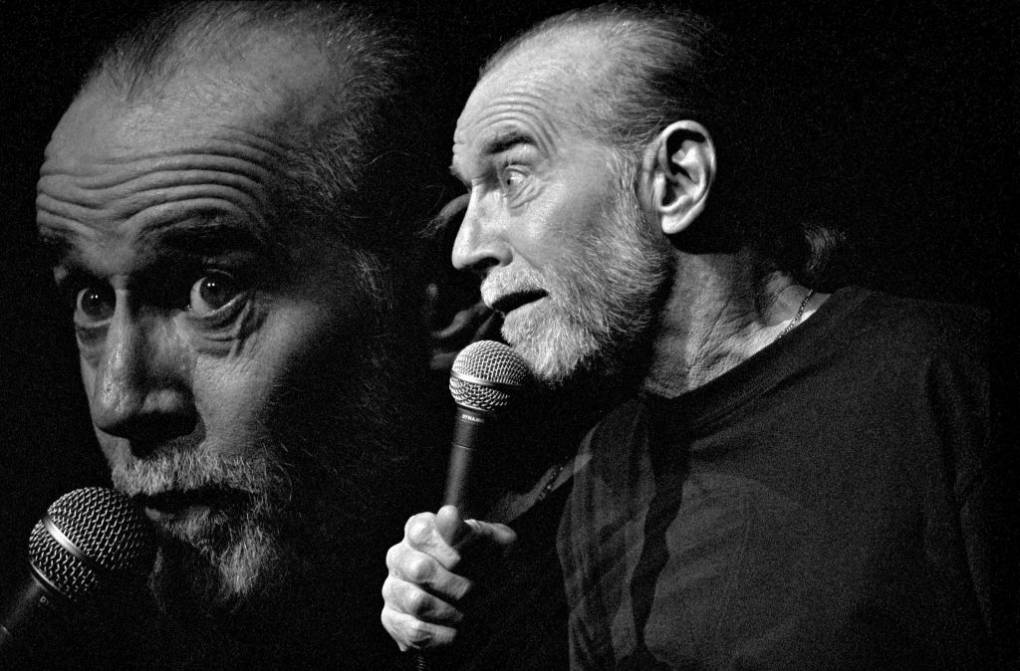
"caption": "George Carlin performing in Cheyenne, Wyoming, 1992. ",
"description": null,
"title": "George Carlin, June, 1992",
"credit": "Mark Junge/Getty Images",
"status": "inherit",
"altTag": "A black and white image of an older white man with scruffy short white beard and black sweater, speaking into a microphone, incredulous expression on his face.",
"isLoading": false,
"fetchFailed": false
},
"arts_13913029": {
"type": "attachments",
"id": "arts_13913029",
"meta": {
"index": "attachments_1716263798",
"site": "arts",
"id": "13913029",
"found": true
},
"parent": 13913028,
"imgSizes": {
"twentyfourteen-full-width": {
"file": "https://ww2.kqed.org/app/uploads/sites/2/2022/05/toni-collette-colin-firth_1_custom-d335666af405658d77468cc825d92d5f31767a75-1038x576.jpg",
"width": 1038,
"mimeType": "image/jpeg",
"height": 576
},
"thumbnail": {
"file": "https://ww2.kqed.org/app/uploads/sites/2/2022/05/toni-collette-colin-firth_1_custom-d335666af405658d77468cc825d92d5f31767a75-160x109.jpg",
"width": 160,
"mimeType": "image/jpeg",
"height": 109
},
"post-thumbnail": {
"file": "https://ww2.kqed.org/app/uploads/sites/2/2022/05/toni-collette-colin-firth_1_custom-d335666af405658d77468cc825d92d5f31767a75-672x372.jpg",
"width": 672,
"mimeType": "image/jpeg",
"height": 372
},
"kqedFullSize": {
"file": "https://ww2.kqed.org/app/uploads/sites/2/2022/05/toni-collette-colin-firth_1_custom-d335666af405658d77468cc825d92d5f31767a75.jpg",
"width": 1879,
"height": 1278
},
"large": {
"file": "https://ww2.kqed.org/app/uploads/sites/2/2022/05/toni-collette-colin-firth_1_custom-d335666af405658d77468cc825d92d5f31767a75-1020x694.jpg",
"width": 1020,
"mimeType": "image/jpeg",
"height": 694
},
"1536x1536": {
"file": "https://ww2.kqed.org/app/uploads/sites/2/2022/05/toni-collette-colin-firth_1_custom-d335666af405658d77468cc825d92d5f31767a75-1536x1045.jpg",
"width": 1536,
"mimeType": "image/jpeg",
"height": 1045
},
"medium": {
"file": "https://ww2.kqed.org/app/uploads/sites/2/2022/05/toni-collette-colin-firth_1_custom-d335666af405658d77468cc825d92d5f31767a75-800x544.jpg",
"width": 800,
"mimeType": "image/jpeg",
"height": 544
},
"medium_large": {
"file": "https://ww2.kqed.org/app/uploads/sites/2/2022/05/toni-collette-colin-firth_1_custom-d335666af405658d77468cc825d92d5f31767a75-768x522.jpg",
"width": 768,
"mimeType": "image/jpeg",
"height": 522
}
},
"publishDate": 1651865787,
"modified": 1651867020,
"caption": "Toni Collette and Colin Firth in 'The Staircase.'",
"description": null,
"title": "Toni Collette and Colin Firth in 'The Staircase.'",
"credit": "HBO Max",
"status": "inherit",
"altTag": "A woman stands over a stove cooking in a warm and homely kitchen, while a man pours her a glass of wine, while drinking one himself.",
"isLoading": false,
"fetchFailed": false
},
"arts_13912176": {
"type": "attachments",
"id": "arts_13912176",
"meta": {
"index": "attachments_1716263798",
"site": "arts",
"id": "13912176",
"found": true
},
"parent": 13912145,
"imgSizes": {
"twentyfourteen-full-width": {
"file": "https://ww2.kqed.org/app/uploads/sites/2/2022/04/Screen-Shot-2022-04-20-at-2.36.36-AM-1038x576.png",
"width": 1038,
"mimeType": "image/png",
"height": 576
},
"thumbnail": {
"file": "https://ww2.kqed.org/app/uploads/sites/2/2022/04/Screen-Shot-2022-04-20-at-2.36.36-AM-160x103.png",
"width": 160,
"mimeType": "image/png",
"height": 103
},
"post-thumbnail": {
"file": "https://ww2.kqed.org/app/uploads/sites/2/2022/04/Screen-Shot-2022-04-20-at-2.36.36-AM-672x372.png",
"width": 672,
"mimeType": "image/png",
"height": 372
},
"kqedFullSize": {
"file": "https://ww2.kqed.org/app/uploads/sites/2/2022/04/Screen-Shot-2022-04-20-at-2.36.36-AM-e1650447448956.png",
"width": 1920,
"height": 1231
},
"2048x2048": {
"file": "https://ww2.kqed.org/app/uploads/sites/2/2022/04/Screen-Shot-2022-04-20-at-2.36.36-AM-2048x1313.png",
"width": 2048,
"mimeType": "image/png",
"height": 1313
},
"large": {
"file": "https://ww2.kqed.org/app/uploads/sites/2/2022/04/Screen-Shot-2022-04-20-at-2.36.36-AM-1020x654.png",
"width": 1020,
"mimeType": "image/png",
"height": 654
},
"1536x1536": {
"file": "https://ww2.kqed.org/app/uploads/sites/2/2022/04/Screen-Shot-2022-04-20-at-2.36.36-AM-1536x985.png",
"width": 1536,
"mimeType": "image/png",
"height": 985
},
"full-width": {
"file": "https://ww2.kqed.org/app/uploads/sites/2/2022/04/Screen-Shot-2022-04-20-at-2.36.36-AM-1920x1231.png",
"width": 1920,
"mimeType": "image/png",
"height": 1231
},
"medium": {
"file": "https://ww2.kqed.org/app/uploads/sites/2/2022/04/Screen-Shot-2022-04-20-at-2.36.36-AM-800x513.png",
"width": 800,
"mimeType": "image/png",
"height": 513
},
"medium_large": {
"file": "https://ww2.kqed.org/app/uploads/sites/2/2022/04/Screen-Shot-2022-04-20-at-2.36.36-AM-768x492.png",
"width": 768,
"mimeType": "image/png",
"height": 492
}
},
"publishDate": 1650447422,
"modified": 1650448113,
"caption": "Ben Foster as Harry Haft, an Auschwitz prisoner who survived by taking part in bare-knuckle boxing matches for the amusement of SS officers.",
"description": null,
"title": "Ben Foster as Harry Haft, an Auschwitz prisoner who survived by taking part in bare-knuckle boxing matches for the amusement of SS officers.",
"credit": "HBO",
"status": "inherit",
"altTag": "A boxer with slicked back hair, poses with gloves up as if ready to fight.",
"isLoading": false,
"fetchFailed": false
},
"arts_13911558": {
"type": "attachments",
"id": "arts_13911558",
"meta": {
"index": "attachments_1716263798",
"site": "arts",
"id": "13911558",
"found": true
},
"parent": 13911557,
"imgSizes": {
"twentyfourteen-full-width": {
"file": "https://ww2.kqed.org/app/uploads/sites/2/2022/04/sarah-lancashire_0_custom-88e84c68237e3b3cc95463d9169b03410980fad3-1038x576.jpg",
"width": 1038,
"mimeType": "image/jpeg",
"height": 576
},
"thumbnail": {
"file": "https://ww2.kqed.org/app/uploads/sites/2/2022/04/sarah-lancashire_0_custom-88e84c68237e3b3cc95463d9169b03410980fad3-160x107.jpg",
"width": 160,
"mimeType": "image/jpeg",
"height": 107
},
"post-thumbnail": {
"file": "https://ww2.kqed.org/app/uploads/sites/2/2022/04/sarah-lancashire_0_custom-88e84c68237e3b3cc95463d9169b03410980fad3-672x372.jpg",
"width": 672,
"mimeType": "image/jpeg",
"height": 372
},
"kqedFullSize": {
"file": "https://ww2.kqed.org/app/uploads/sites/2/2022/04/sarah-lancashire_0_custom-88e84c68237e3b3cc95463d9169b03410980fad3.jpg",
"width": 1584,
"height": 1055
},
"large": {
"file": "https://ww2.kqed.org/app/uploads/sites/2/2022/04/sarah-lancashire_0_custom-88e84c68237e3b3cc95463d9169b03410980fad3-1020x679.jpg",
"width": 1020,
"mimeType": "image/jpeg",
"height": 679
},
"1536x1536": {
"file": "https://ww2.kqed.org/app/uploads/sites/2/2022/04/sarah-lancashire_0_custom-88e84c68237e3b3cc95463d9169b03410980fad3-1536x1023.jpg",
"width": 1536,
"mimeType": "image/jpeg",
"height": 1023
},
"medium": {
"file": "https://ww2.kqed.org/app/uploads/sites/2/2022/04/sarah-lancashire_0_custom-88e84c68237e3b3cc95463d9169b03410980fad3-800x533.jpg",
"width": 800,
"mimeType": "image/jpeg",
"height": 533
},
"medium_large": {
"file": "https://ww2.kqed.org/app/uploads/sites/2/2022/04/sarah-lancashire_0_custom-88e84c68237e3b3cc95463d9169b03410980fad3-768x512.jpg",
"width": 768,
"mimeType": "image/jpeg",
"height": 512
}
},
"publishDate": 1649184238,
"modified": 1649184597,
"caption": "Sarah Lancashire as Julia Child pours a bottle of wine in episode 2 of the new HBO Max series, 'Julia.'",
"description": null,
"title": "Sarah Lancashire as Julia Child pours a bottle of wine in episode 2 of the new HBO Max series, 'Julia.'",
"credit": "HBO Max",
"status": "inherit",
"altTag": null,
"isLoading": false,
"fetchFailed": false
},
"arts_13910274": {
"type": "attachments",
"id": "arts_13910274",
"meta": {
"index": "attachments_1716263798",
"site": "arts",
"id": "13910274",
"found": true
},
"parent": 13910124,
"imgSizes": {
"twentyfourteen-full-width": {
"file": "https://ww2.kqed.org/app/uploads/sites/2/2022/03/ERW-1038x576.png",
"width": 1038,
"mimeType": "image/png",
"height": 576
},
"thumbnail": {
"file": "https://ww2.kqed.org/app/uploads/sites/2/2022/03/ERW-160x111.png",
"width": 160,
"mimeType": "image/png",
"height": 111
},
"post-thumbnail": {
"file": "https://ww2.kqed.org/app/uploads/sites/2/2022/03/ERW-672x372.png",
"width": 672,
"mimeType": "image/png",
"height": 372
},
"kqedFullSize": {
"file": "https://ww2.kqed.org/app/uploads/sites/2/2022/03/ERW.png",
"width": 2296,
"height": 1588
},
"2048x2048": {
"file": "https://ww2.kqed.org/app/uploads/sites/2/2022/03/ERW-2048x1416.png",
"width": 2048,
"mimeType": "image/png",
"height": 1416
},
"large": {
"file": "https://ww2.kqed.org/app/uploads/sites/2/2022/03/ERW-1020x705.png",
"width": 1020,
"mimeType": "image/png",
"height": 705
},
"1536x1536": {
"file": "https://ww2.kqed.org/app/uploads/sites/2/2022/03/ERW-1536x1062.png",
"width": 1536,
"mimeType": "image/png",
"height": 1062
},
"full-width": {
"file": "https://ww2.kqed.org/app/uploads/sites/2/2022/03/ERW-1920x1328.png",
"width": 1920,
"mimeType": "image/png",
"height": 1328
},
"medium": {
"file": "https://ww2.kqed.org/app/uploads/sites/2/2022/03/ERW-800x553.png",
"width": 800,
"mimeType": "image/png",
"height": 553
},
"medium_large": {
"file": "https://ww2.kqed.org/app/uploads/sites/2/2022/03/ERW-768x531.png",
"width": 768,
"mimeType": "image/png",
"height": 531
}
},
"publishDate": 1646775519,
"modified": 1646775597,
"caption": "Evan Rachel Wood tells her story during 'Phoenix Rising'—a two-part documentary about her former relationship with accused abuser Marilyn Manson, and the activism that it's spawned.",
"description": null,
"title": "Evan Rachel Wood tells her story during 'Phoenix Rising'—a two-part documentary about her former relationship with accused abuser Marilyn Manson, and the activism that it's spawned.",
"credit": "HBO/ 'Phoenix Rising'",
"status": "inherit",
"altTag": null,
"isLoading": false,
"fetchFailed": false
},
"arts_13909917": {
"type": "attachments",
"id": "arts_13909917",
"meta": {
"index": "attachments_1716263798",
"site": "arts",
"id": "13909917",
"found": true
},
"parent": 13909909,
"imgSizes": {
"twentyfourteen-full-width": {
"file": "https://ww2.kqed.org/app/uploads/sites/2/2022/03/Screen-Shot-2022-03-01-at-1.16.47-PM-1038x576.png",
"width": 1038,
"mimeType": "image/png",
"height": 576
},
"thumbnail": {
"file": "https://ww2.kqed.org/app/uploads/sites/2/2022/03/Screen-Shot-2022-03-01-at-1.16.47-PM-160x109.png",
"width": 160,
"mimeType": "image/png",
"height": 109
},
"post-thumbnail": {
"file": "https://ww2.kqed.org/app/uploads/sites/2/2022/03/Screen-Shot-2022-03-01-at-1.16.47-PM-672x372.png",
"width": 672,
"mimeType": "image/png",
"height": 372
},
"kqedFullSize": {
"file": "https://ww2.kqed.org/app/uploads/sites/2/2022/03/Screen-Shot-2022-03-01-at-1.16.47-PM.png",
"width": 1666,
"height": 1138
},
"large": {
"file": "https://ww2.kqed.org/app/uploads/sites/2/2022/03/Screen-Shot-2022-03-01-at-1.16.47-PM-1020x697.png",
"width": 1020,
"mimeType": "image/png",
"height": 697
},
"1536x1536": {
"file": "https://ww2.kqed.org/app/uploads/sites/2/2022/03/Screen-Shot-2022-03-01-at-1.16.47-PM-1536x1049.png",
"width": 1536,
"mimeType": "image/png",
"height": 1049
},
"medium": {
"file": "https://ww2.kqed.org/app/uploads/sites/2/2022/03/Screen-Shot-2022-03-01-at-1.16.47-PM-800x546.png",
"width": 800,
"mimeType": "image/png",
"height": 546
},
"medium_large": {
"file": "https://ww2.kqed.org/app/uploads/sites/2/2022/03/Screen-Shot-2022-03-01-at-1.16.47-PM-768x525.png",
"width": 768,
"mimeType": "image/png",
"height": 525
}
},
"publishDate": 1646169432,
"modified": 1646169543,
"caption": "While most high school students might never actually wear such outfits to class, the characters on 'Euphoria' reflect a fashion landscape that draws from decades of style.",
"description": null,
"title": "While most high school students might never actually wear such outfits to class, the characters on 'Euphoria' reflect a fashion landscape that draws from decades of style.",
"credit": "Courtesy of HBO",
"status": "inherit",
"altTag": "Two girls wearing very short black skirts, edgy tops and sunglasses walk confidently through a school hallway.",
"isLoading": false,
"fetchFailed": false
},
"arts_13909256": {
"type": "attachments",
"id": "arts_13909256",
"meta": {
"index": "attachments_1716263798",
"site": "arts",
"id": "13909256",
"found": true
},
"parent": 13909218,
"imgSizes": {
"twentyfourteen-full-width": {
"file": "https://ww2.kqed.org/app/uploads/sites/2/2022/02/Screen-Shot-2022-02-10-at-5.33.43-PM-1038x576.png",
"width": 1038,
"mimeType": "image/png",
"height": 576
},
"thumbnail": {
"file": "https://ww2.kqed.org/app/uploads/sites/2/2022/02/Screen-Shot-2022-02-10-at-5.33.43-PM-160x109.png",
"width": 160,
"mimeType": "image/png",
"height": 109
},
"post-thumbnail": {
"file": "https://ww2.kqed.org/app/uploads/sites/2/2022/02/Screen-Shot-2022-02-10-at-5.33.43-PM-672x372.png",
"width": 672,
"mimeType": "image/png",
"height": 372
},
"kqedFullSize": {
"file": "https://ww2.kqed.org/app/uploads/sites/2/2022/02/Screen-Shot-2022-02-10-at-5.33.43-PM-e1644543402768.png",
"width": 1920,
"height": 1307
},
"large": {
"file": "https://ww2.kqed.org/app/uploads/sites/2/2022/02/Screen-Shot-2022-02-10-at-5.33.43-PM-1020x695.png",
"width": 1020,
"mimeType": "image/png",
"height": 695
},
"1536x1536": {
"file": "https://ww2.kqed.org/app/uploads/sites/2/2022/02/Screen-Shot-2022-02-10-at-5.33.43-PM-1536x1046.png",
"width": 1536,
"mimeType": "image/png",
"height": 1046
},
"full-width": {
"file": "https://ww2.kqed.org/app/uploads/sites/2/2022/02/Screen-Shot-2022-02-10-at-5.33.43-PM-1920x1307.png",
"width": 1920,
"mimeType": "image/png",
"height": 1307
},
"medium": {
"file": "https://ww2.kqed.org/app/uploads/sites/2/2022/02/Screen-Shot-2022-02-10-at-5.33.43-PM-800x545.png",
"width": 800,
"mimeType": "image/png",
"height": 545
},
"medium_large": {
"file": "https://ww2.kqed.org/app/uploads/sites/2/2022/02/Screen-Shot-2022-02-10-at-5.33.43-PM-768x523.png",
"width": 768,
"mimeType": "image/png",
"height": 523
}
},
"publishDate": 1644543246,
"modified": 1644543441,
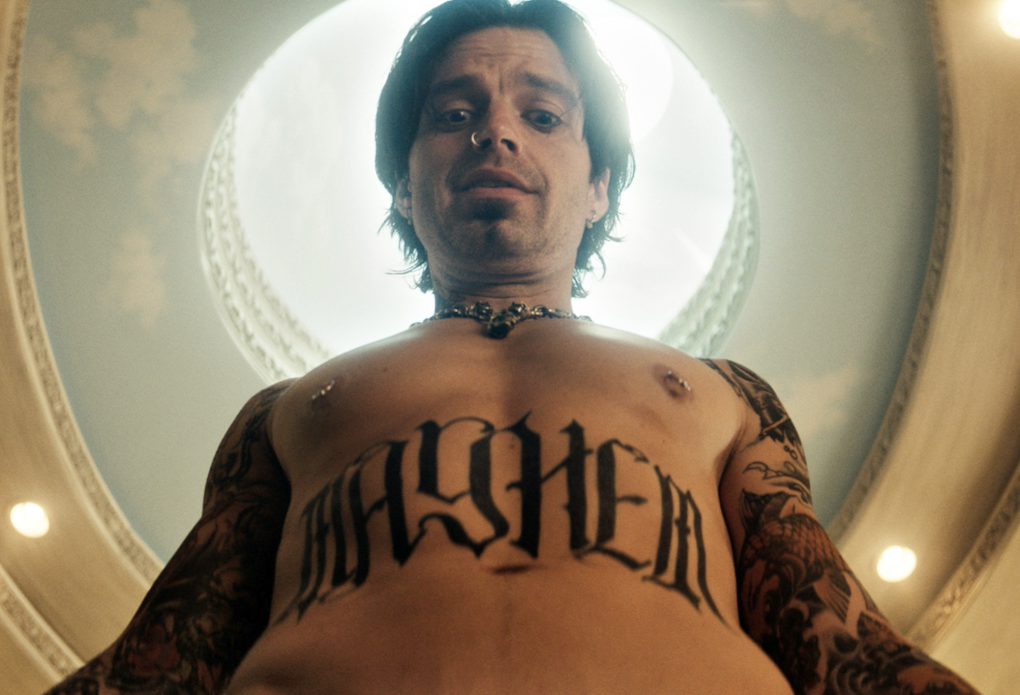
"caption": "Stan Sebastian's Tommy Lee, in conversation with his crotch in 'Pam & Tommy'.",
"description": null,
"title": "Stan Sebastian's Tommy Lee, in conversation with his crotch in 'Pam & Tommy'.",
"credit": "Hulu",
"status": "inherit",
"altTag": "A naked man is seen from the waist up, as he stares down towards the camera. He has black hair, nipple piercings, heavily tattooed arms and the word 'MAYHEM' tattooed in block letters across his torso.",
"isLoading": false,
"fetchFailed": false
},
"arts_13909211": {
"type": "attachments",
"id": "arts_13909211",
"meta": {
"index": "attachments_1716263798",
"site": "arts",
"id": "13909211",
"found": true
},
"parent": 13909210,
"imgSizes": {
"twentyfourteen-full-width": {
"file": "https://ww2.kqed.org/app/uploads/sites/2/2022/02/2022-02-10-1-_wide-ace72677880caf7e119115e033dac7d52cecc117-1038x576.jpg",
"width": 1038,
"mimeType": "image/jpeg",
"height": 576
},
"thumbnail": {
"file": "https://ww2.kqed.org/app/uploads/sites/2/2022/02/2022-02-10-1-_wide-ace72677880caf7e119115e033dac7d52cecc117-160x90.jpg",
"width": 160,
"mimeType": "image/jpeg",
"height": 90
},
"post-thumbnail": {
"file": "https://ww2.kqed.org/app/uploads/sites/2/2022/02/2022-02-10-1-_wide-ace72677880caf7e119115e033dac7d52cecc117-672x372.jpg",
"width": 672,
"mimeType": "image/jpeg",
"height": 372
},
"kqedFullSize": {
"file": "https://ww2.kqed.org/app/uploads/sites/2/2022/02/2022-02-10-1-_wide-ace72677880caf7e119115e033dac7d52cecc117-scaled-e1644520568725.jpg",
"width": 1920,
"height": 1080
},
"2048x2048": {
"file": "https://ww2.kqed.org/app/uploads/sites/2/2022/02/2022-02-10-1-_wide-ace72677880caf7e119115e033dac7d52cecc117-2048x1152.jpg",
"width": 2048,
"mimeType": "image/jpeg",
"height": 1152
},
"large": {
"file": "https://ww2.kqed.org/app/uploads/sites/2/2022/02/2022-02-10-1-_wide-ace72677880caf7e119115e033dac7d52cecc117-1020x574.jpg",
"width": 1020,
"mimeType": "image/jpeg",
"height": 574
},
"1536x1536": {
"file": "https://ww2.kqed.org/app/uploads/sites/2/2022/02/2022-02-10-1-_wide-ace72677880caf7e119115e033dac7d52cecc117-1536x864.jpg",
"width": 1536,
"mimeType": "image/jpeg",
"height": 864
},
"full-width": {
"file": "https://ww2.kqed.org/app/uploads/sites/2/2022/02/2022-02-10-1-_wide-ace72677880caf7e119115e033dac7d52cecc117-1920x1080.jpg",
"width": 1920,
"mimeType": "image/jpeg",
"height": 1080
},
"medium": {
"file": "https://ww2.kqed.org/app/uploads/sites/2/2022/02/2022-02-10-1-_wide-ace72677880caf7e119115e033dac7d52cecc117-800x450.jpg",
"width": 800,
"mimeType": "image/jpeg",
"height": 450
},
"medium_large": {
"file": "https://ww2.kqed.org/app/uploads/sites/2/2022/02/2022-02-10-1-_wide-ace72677880caf7e119115e033dac7d52cecc117-768x432.jpg",
"width": 768,
"mimeType": "image/jpeg",
"height": 432
}
},
"publishDate": 1644519918,
"modified": 1644520716,
"caption": "Zoë Kravitz is an agoraphobic tech worker who stumbles on evidence of a crime in 'Kimi.'",
"description": null,
"title": "Zoë Kravitz is an agoraphobic tech worker who stumbles on evidence of a crime in 'Kimi.'",
"credit": "HBO Max and Warner Bros. Pictures",
"status": "inherit",
"altTag": "A worried looking woman with blue hair stands in the street, wearing an orange hoodie with the hood up underneath a grey suit jacket.",
"isLoading": false,
"fetchFailed": false
},
"arts_13908547": {
"type": "attachments",
"id": "arts_13908547",
"meta": {
"index": "attachments_1716263798",
"site": "arts",
"id": "13908547",
"found": true
},
"parent": 13908472,
"imgSizes": {
"twentyfourteen-full-width": {
"file": "https://ww2.kqed.org/app/uploads/sites/2/2022/01/Screen-Shot-2022-01-25-at-2.28.49-PM-1038x576.png",
"width": 1038,
"mimeType": "image/png",
"height": 576
},
"thumbnail": {
"file": "https://ww2.kqed.org/app/uploads/sites/2/2022/01/Screen-Shot-2022-01-25-at-2.28.49-PM-160x92.png",
"width": 160,
"mimeType": "image/png",
"height": 92
},
"post-thumbnail": {
"file": "https://ww2.kqed.org/app/uploads/sites/2/2022/01/Screen-Shot-2022-01-25-at-2.28.49-PM-672x372.png",
"width": 672,
"mimeType": "image/png",
"height": 372
},
"kqedFullSize": {
"file": "https://ww2.kqed.org/app/uploads/sites/2/2022/01/Screen-Shot-2022-01-25-at-2.28.49-PM.png",
"width": 2124,
"height": 1222
},
"2048x2048": {
"file": "https://ww2.kqed.org/app/uploads/sites/2/2022/01/Screen-Shot-2022-01-25-at-2.28.49-PM-2048x1178.png",
"width": 2048,
"mimeType": "image/png",
"height": 1178
},
"large": {
"file": "https://ww2.kqed.org/app/uploads/sites/2/2022/01/Screen-Shot-2022-01-25-at-2.28.49-PM-1020x587.png",
"width": 1020,
"mimeType": "image/png",
"height": 587
},
"1536x1536": {
"file": "https://ww2.kqed.org/app/uploads/sites/2/2022/01/Screen-Shot-2022-01-25-at-2.28.49-PM-1536x884.png",
"width": 1536,
"mimeType": "image/png",
"height": 884
},
"full-width": {
"file": "https://ww2.kqed.org/app/uploads/sites/2/2022/01/Screen-Shot-2022-01-25-at-2.28.49-PM-1920x1105.png",
"width": 1920,
"mimeType": "image/png",
"height": 1105
},
"medium": {
"file": "https://ww2.kqed.org/app/uploads/sites/2/2022/01/Screen-Shot-2022-01-25-at-2.28.49-PM-800x460.png",
"width": 800,
"mimeType": "image/png",
"height": 460
},
"medium_large": {
"file": "https://ww2.kqed.org/app/uploads/sites/2/2022/01/Screen-Shot-2022-01-25-at-2.28.49-PM-768x442.png",
"width": 768,
"mimeType": "image/png",
"height": 442
}
},
"publishDate": 1643149781,
"modified": 1643149941,
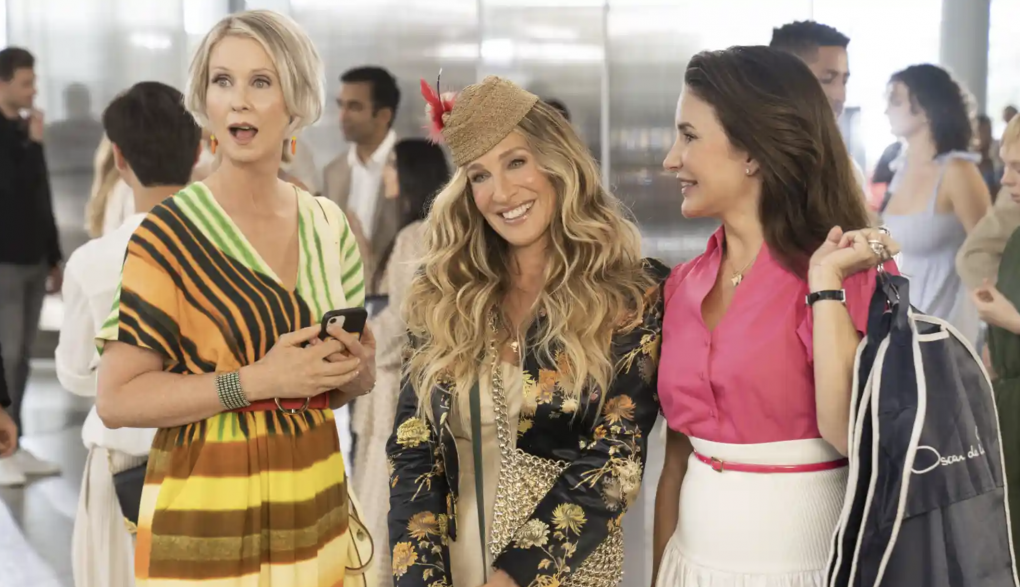
"caption": "Miranda (Cynthia Nixon), Carrie (Sarah Jessica Parker) and Charlotte (Kristin Davis) leave 'Sex and the City' (and Kim Cattrall's Samantha) behind, in 'And Just Like That...'",
"description": null,
"title": "Miranda (Cynthia Nixon), Carrie (Sarah Jessica Parker) and Charlotte (Kristin Davis) leave 'Sex and the City' (and Kim Cattrall's Samantha) behind, in 'And Just Like That...'",
"credit": "HBO",
"status": "inherit",
"altTag": "Three women in colorful, stylist outfits stand together in a line, one shocked, one smiling, one distracted.",
"isLoading": false,
"fetchFailed": false
},
"arts_13907940": {
"type": "attachments",
"id": "arts_13907940",
"meta": {
"index": "attachments_1716263798",
"site": "arts",
"id": "13907940",
"found": true
},
"parent": 13907939,
"imgSizes": {
"twentyfourteen-full-width": {
"file": "https://ww2.kqed.org/app/uploads/sites/2/2022/01/euphoria-zendaya-1-be6e7efb358af718d4d9db530d664135b73cbde1-1038x576.jpe",
"width": 1038,
"mimeType": "image/jpeg",
"height": 576
},
"thumbnail": {
"file": "https://ww2.kqed.org/app/uploads/sites/2/2022/01/euphoria-zendaya-1-be6e7efb358af718d4d9db530d664135b73cbde1-160x120.jpe",
"width": 160,
"mimeType": "image/jpeg",
"height": 120
},
"post-thumbnail": {
"file": "https://ww2.kqed.org/app/uploads/sites/2/2022/01/euphoria-zendaya-1-be6e7efb358af718d4d9db530d664135b73cbde1-672x372.jpe",
"width": 672,
"mimeType": "image/jpeg",
"height": 372
},
"kqedFullSize": {
"file": "https://ww2.kqed.org/app/uploads/sites/2/2022/01/euphoria-zendaya-1-be6e7efb358af718d4d9db530d664135b73cbde1.jpe",
"width": 1332,
"height": 999
},
"large": {
"file": "https://ww2.kqed.org/app/uploads/sites/2/2022/01/euphoria-zendaya-1-be6e7efb358af718d4d9db530d664135b73cbde1-1020x765.jpe",
"width": 1020,
"mimeType": "image/jpeg",
"height": 765
},
"medium": {
"file": "https://ww2.kqed.org/app/uploads/sites/2/2022/01/euphoria-zendaya-1-be6e7efb358af718d4d9db530d664135b73cbde1-800x600.jpe",
"width": 800,
"mimeType": "image/jpeg",
"height": 600
},
"medium_large": {
"file": "https://ww2.kqed.org/app/uploads/sites/2/2022/01/euphoria-zendaya-1-be6e7efb358af718d4d9db530d664135b73cbde1-768x576.jpe",
"width": 768,
"mimeType": "image/jpeg",
"height": 576
}
},
"publishDate": 1641874036,
"modified": 1641874252,
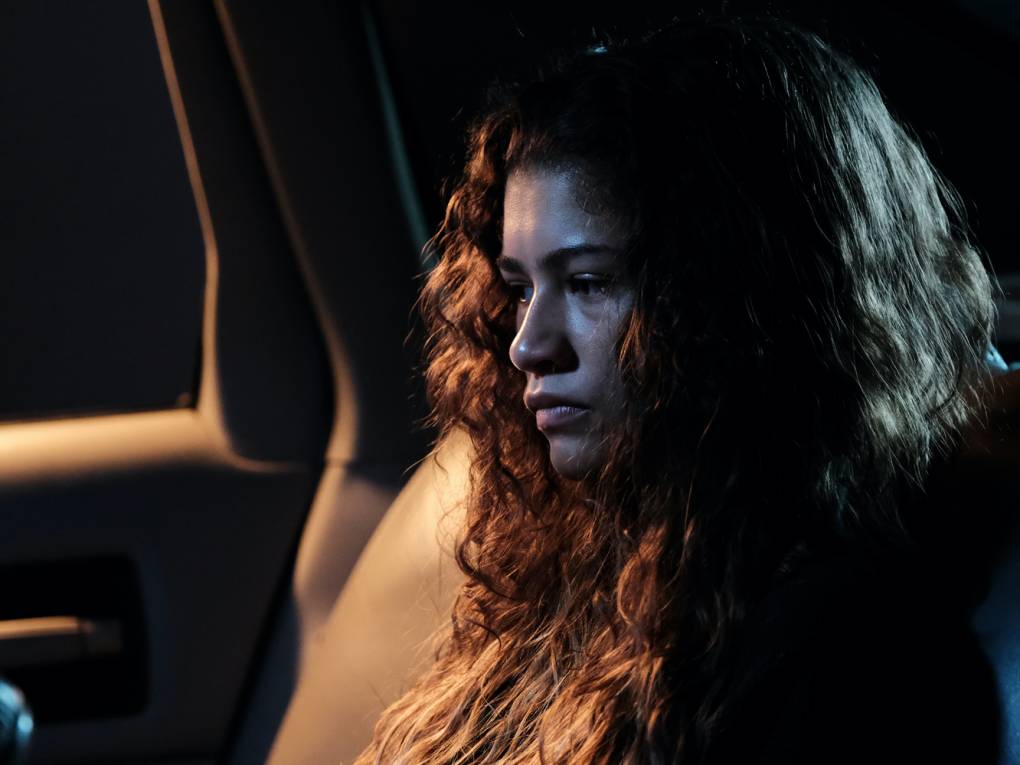
"caption": "Zendaya plays Rue Bennett, a teenager struggling with substance use disorder, in HBO's 'Euphoria.'",
"description": null,
"title": "Zendaya plays Rue Bennett, a teenager struggling with substance use disorder, in HBO's 'Euphoria.'",
"credit": "Eddy Chen/HBO",
"status": "inherit",
"altTag": "A young woman sits in the back of a car, looking stunned and numb. It is dark outside.",
"isLoading": false,
"fetchFailed": false
},
"arts_13906872": {
"type": "attachments",
"id": "arts_13906872",
"meta": {
"index": "attachments_1716263798",
"site": "arts",
"id": "13906872",
"found": true
},
"parent": 13906871,
"imgSizes": {
"twentyfourteen-full-width": {
"file": "https://ww2.kqed.org/app/uploads/sites/2/2021/12/2021-12-02-1-_wide-7297a3eb726c50b5648ab1b538f9a76036734f95-1038x576.jpg",
"width": 1038,
"mimeType": "image/jpeg",
"height": 576
},
"thumbnail": {
"file": "https://ww2.kqed.org/app/uploads/sites/2/2021/12/2021-12-02-1-_wide-7297a3eb726c50b5648ab1b538f9a76036734f95-160x90.jpg",
"width": 160,
"mimeType": "image/jpeg",
"height": 90
},
"post-thumbnail": {
"file": "https://ww2.kqed.org/app/uploads/sites/2/2021/12/2021-12-02-1-_wide-7297a3eb726c50b5648ab1b538f9a76036734f95-672x372.jpg",
"width": 672,
"mimeType": "image/jpeg",
"height": 372
},
"kqedFullSize": {
"file": "https://ww2.kqed.org/app/uploads/sites/2/2021/12/2021-12-02-1-_wide-7297a3eb726c50b5648ab1b538f9a76036734f95.jpg",
"width": 1903,
"height": 1070
},
"large": {
"file": "https://ww2.kqed.org/app/uploads/sites/2/2021/12/2021-12-02-1-_wide-7297a3eb726c50b5648ab1b538f9a76036734f95-1020x574.jpg",
"width": 1020,
"mimeType": "image/jpeg",
"height": 574
},
"1536x1536": {
"file": "https://ww2.kqed.org/app/uploads/sites/2/2021/12/2021-12-02-1-_wide-7297a3eb726c50b5648ab1b538f9a76036734f95-1536x864.jpg",
"width": 1536,
"mimeType": "image/jpeg",
"height": 864
},
"medium": {
"file": "https://ww2.kqed.org/app/uploads/sites/2/2021/12/2021-12-02-1-_wide-7297a3eb726c50b5648ab1b538f9a76036734f95-800x450.jpg",
"width": 800,
"mimeType": "image/jpeg",
"height": 450
},
"medium_large": {
"file": "https://ww2.kqed.org/app/uploads/sites/2/2021/12/2021-12-02-1-_wide-7297a3eb726c50b5648ab1b538f9a76036734f95-768x432.jpg",
"width": 768,
"mimeType": "image/jpeg",
"height": 432
}
},
"publishDate": 1638815863,
"modified": 1638816194,
"caption": "Kieran Culkin says the cursing on 'Succession' has affected his speech: \"The F-word just slides out of me.\"",
"description": null,
"title": "Kieran Culkin says the cursing on 'Succession' has affected his speech: \"The F-word just slides out of me.\"",
"credit": "Macall B. Polay/HBO",
"status": "inherit",
"altTag": "Kieran Culkin sits on a grey couch in character as Roman Roy. He is wearing a grey suit and white shirt with no tie.",
"isLoading": false,
"fetchFailed": false
},
"arts_13905800": {
"type": "attachments",
"id": "arts_13905800",
"meta": {
"index": "attachments_1716263798",
"site": "arts",
"id": "13905800",
"found": true
},
"parent": 13905745,
"imgSizes": {
"twentyfourteen-full-width": {
"file": "https://ww2.kqed.org/app/uploads/sites/2/2021/11/Alanis-Bath-1038x576.png",
"width": 1038,
"mimeType": "image/png",
"height": 576
},
"thumbnail": {
"file": "https://ww2.kqed.org/app/uploads/sites/2/2021/11/Alanis-Bath-160x100.png",
"width": 160,
"mimeType": "image/png",
"height": 100
},
"post-thumbnail": {
"file": "https://ww2.kqed.org/app/uploads/sites/2/2021/11/Alanis-Bath-672x372.png",
"width": 672,
"mimeType": "image/png",
"height": 372
},
"kqedFullSize": {
"file": "https://ww2.kqed.org/app/uploads/sites/2/2021/11/Alanis-Bath.png",
"width": 2320,
"height": 1446
},
"2048x2048": {
"file": "https://ww2.kqed.org/app/uploads/sites/2/2021/11/Alanis-Bath-2048x1276.png",
"width": 2048,
"mimeType": "image/png",
"height": 1276
},
"large": {
"file": "https://ww2.kqed.org/app/uploads/sites/2/2021/11/Alanis-Bath-1020x636.png",
"width": 1020,
"mimeType": "image/png",
"height": 636
},
"1536x1536": {
"file": "https://ww2.kqed.org/app/uploads/sites/2/2021/11/Alanis-Bath-1536x957.png",
"width": 1536,
"mimeType": "image/png",
"height": 957
},
"full-width": {
"file": "https://ww2.kqed.org/app/uploads/sites/2/2021/11/Alanis-Bath-1920x1197.png",
"width": 1920,
"mimeType": "image/png",
"height": 1197
},
"medium": {
"file": "https://ww2.kqed.org/app/uploads/sites/2/2021/11/Alanis-Bath-800x499.png",
"width": 800,
"mimeType": "image/png",
"height": 499
},
"medium_large": {
"file": "https://ww2.kqed.org/app/uploads/sites/2/2021/11/Alanis-Bath-768x479.png",
"width": 768,
"mimeType": "image/png",
"height": 479
}
},
"publishDate": 1635978159,
"modified": 1636508882,
"caption": "Alanis Morissette in a rare moment of relaxation in the mid-'90s at the peak of her fame. 'Jagged' explores the time period and the circumstances that led to Morissette's success.",
"description": "Alanis Morissette in a rare moment of relaxation in the mid-'90s at the peak of her fame. 'Jagged' explores the time period and the circumstances that led to Morissette's success.",
"title": "Alanis Morissette in a rare moment of relaxation in the mid-'90s at the peak of her fame. 'Jagged' explores the time period and the circumstances that led to Morissette's success.",
"credit": "HBO Max",
"status": "inherit",
"altTag": "A black and white image of Alanis Morissette sitting in a bubble bath smiling broadly, long hair wet from the water. A variety of candles burn in the background.",
"isLoading": false,
"fetchFailed": false
}
},
"audioPlayerReducer": {
"postId": "stream_live",
"isPaused": true,
"isPlaying": false,
"pfsActive": false,
"pledgeModalIsOpen": true,
"playerDrawerIsOpen": false,
"liveAudioPlayStartedAt": 0,
"liveAudioPlayContext": ""
},
"authorsReducer": {
"byline_arts_13913028": {
"type": "authors",
"id": "byline_arts_13913028",
"meta": {
"override": true
},
"slug": "byline_arts_13913028",
"name": "Linda Holmes",
"isLoading": false
},
"byline_arts_13911557": {
"type": "authors",
"id": "byline_arts_13911557",
"meta": {
"override": true
},
"slug": "byline_arts_13911557",
"name": "Courtney Dorning",
"isLoading": false
},
"byline_arts_13909909": {
"type": "authors",
"id": "byline_arts_13909909",
"meta": {
"override": true
},
"slug": "byline_arts_13909909",
"name": "Neda Ulaby",
"isLoading": false
},
"byline_arts_13909210": {
"type": "authors",
"id": "byline_arts_13909210",
"meta": {
"override": true
},
"slug": "byline_arts_13909210",
"name": "Justin Chang",
"isLoading": false
},
"byline_arts_13907939": {
"type": "authors",
"id": "byline_arts_13907939",
"meta": {
"override": true
},
"slug": "byline_arts_13907939",
"name": "Eric Deggans",
"isLoading": false
},
"byline_arts_13906871": {
"type": "authors",
"id": "byline_arts_13906871",
"meta": {
"override": true
},
"slug": "byline_arts_13906871",
"name": "Terry Gross",
"isLoading": false
},
"ralexandra": {
"type": "authors",
"id": "11242",
"meta": {
"index": "authors_1716337520",
"id": "11242",
"found": true
},
"name": "Rae Alexandra",
"firstName": "Rae",
"lastName": "Alexandra",
"slug": "ralexandra",
"email": "ralexandra@kqed.org",
"display_author_email": true,
"staff_mastheads": [
"arts"
],
"title": "Reporter/Producer",
"bio": "Rae Alexandra is a Reporter/Producer for KQED Arts & Culture, and the creator/author of the \u003ca href=\"https://www.kqed.org/arts/program/rebel-girls-from-bay-area-history\">Rebel Girls From Bay Area History\u003c/a> and \u003ca href=\"https://www.kqed.org/bizarrebayarea\">Bizarre Bay Area\u003c/a> series. Her debut book, \u003ca href=\"https://citylights.com/politics-current-events-history/unsung-heroines35-women-who-changed/\">Unsung Heroines: 35 Women Who Changed the Bay Area\u003c/a> was published by City Lights in March 2026. In 2023, Rae was awarded an SPJ Excellence in Journalism Award for Arts & Culture. Rae was born and raised in Wales and subsequently — even after two decades in Northern California — still uses phrases that regularly baffle her coworkers.",
"avatar": "https://secure.gravatar.com/avatar/edfee8176c80cc0a382b051190f5341997df378a934a5774dcb0977732dfd401?s=600&d=blank&r=g",
"twitter": null,
"bluesky": null,
"facebook": null,
"instagram": null,
"linkedin": null,
"sites": [
{
"site": "arts",
"roles": [
"editor"
]
},
{
"site": "news",
"roles": [
"editor"
]
},
{
"site": "pop",
"roles": [
"editor"
]
},
{
"site": "bayareabites",
"roles": [
"editor"
]
},
{
"site": "science",
"roles": [
"editor"
]
}
],
"headData": {
"title": "Rae Alexandra | KQED",
"description": "Reporter/Producer",
"ogImgSrc": "https://secure.gravatar.com/avatar/edfee8176c80cc0a382b051190f5341997df378a934a5774dcb0977732dfd401?s=600&d=blank&r=g",
"twImgSrc": "https://secure.gravatar.com/avatar/edfee8176c80cc0a382b051190f5341997df378a934a5774dcb0977732dfd401?s=600&d=blank&r=g"
},
"isLoading": false,
"link": "/author/ralexandra"
}
},
"pagesReducer": {
"arts_tag_hbo": {
"type": "terms",
"id": "arts_8350",
"meta": {
"index": "terms_1716263798",
"site": "arts",
"id": "8350",
"score": 9.553133
},
"featImg": null,
"name": "HBO",
"description": null,
"taxonomy": "tag",
"headData": {
"twImgId": null,
"twTitle": null,
"ogTitle": null,
"ogImgId": null,
"twDescription": null,
"description": null,
"title": "HBO Archives | KQED Arts",
"ogDescription": null
},
"ttid": 8362,
"slug": "hbo",
"isLoading": false,
"title": "HBO",
"pageMeta": {
"site": "arts",
"WpPageTemplate": "page-topic-editorial",
"currentPage": 4
},
"blocks": [
{
"blockName": "kqed/post-list",
"attrs": {
"layout": "cardArticle2",
"query": "posts/arts?tag=hbo",
"seeMore": false,
"paginated": true,
"page": 4
}
},
{
"blockName": "kqed/ad"
}
]
}
},
"pfsSessionReducer": {},
"postsReducer": {
"stream_live": {
"type": "live",
"id": "stream_live",
"audioUrl": "https://streams.kqed.org/kqedradio",
"title": "Live Stream",
"excerpt": "Live Stream information currently unavailable.",
"link": "/radio",
"featImg": "",
"label": {
"name": "KQED Live",
"link": "/"
}
},
"stream_kqedNewscast": {
"type": "posts",
"id": "stream_kqedNewscast",
"audioUrl": "https://www.kqed.org/.stream/anon/radio/RDnews/newscast.mp3?_=1",
"title": "KQED Newscast",
"featImg": "",
"label": {
"name": "88.5 FM",
"link": "/"
}
},
"arts_13912863": {
"type": "posts",
"id": "arts_13912863",
"meta": {
"index": "posts_1716263798",
"site": "arts",
"id": "13912863",
"score": null,
"sort": [
1652454026000
]
},
"parent": 0,
"labelTerm": {
"site": "arts"
},
"blocks": [],
"publishDate": 1652454026,
"format": "standard",
"title": "‘George Carlin’s American Dream’ is Revelatory, Motivational and—Yes—Very Funny",
"headTitle": "‘George Carlin’s American Dream’ is Revelatory, Motivational and—Yes—Very Funny | KQED",
"content": "\u003cp>\u003ca href=\"https://www.imdb.com/name/nm0031976/?ref_=fn_al_nm_1\" target=\"_blank\" rel=\"noopener noreferrer\">Judd Apatow\u003c/a> and \u003ca href=\"https://www.imdb.com/name/nm0094397/\" target=\"_blank\" rel=\"noopener noreferrer\">Michael Bonfiglio\u003c/a>’s new HBO documentary about George Carlin feels incredibly relevant. Since Samuel Alito’s draft decision on Roe v. Wade leaked, Carlin’s commentary about abortion (“They’re not pro-life, they’re anti-woman”) has, yet again, gone viral on social media.\u003c/p>\n\u003cp>https://twitter.com/thetonymichaels/status/1521303464327929857\u003c/p>\n\u003cp>Watching \u003cem>\u003ca href=\"https://www.hbo.com/george-carlins-american-dream\" target=\"_blank\" rel=\"noopener noreferrer\">George Carlin’s American Dream\u003c/a>\u003c/em> though, what strikes you over and over again is that a Carlin documentary feels timely in 2022 because it would have felt timely at pretty much any point over the last 20 years. It would have been meaningful in 2017 because of tiki torch Nazis. (“When fascism comes to America,” the comedian once said, “it won’t wear jack boots and brown shirts, it’ll have on a smiling face and a T-shirt and designer jeans.”) It would have felt suited to 2020 because of Carlin’s searing commentary on police brutality in the ’80s and ’90s. His 1992 material on the first Gulf War is applicable to every conflict the United States has been involved with this century.\u003c/p>\n\u003cp>[aside postid='arts_13911949']The examples of just how many things Carlin got right and/or predicted over the course of his nearly 50-year career are too numerous to list here. But as W. Kamau Bell notes in the second half of this two-part, three-and-a-half hour documentary: “I mean we all love Lenny Bruce. But no one’s sharing a Lenny Bruce bit to explain what’s happening in the culture right now.”\u003c/p>\n\u003cp>By contrast, not only has Carlin’s material never lost its relevance, if anything, it only makes more sense as the years tick by. Sure, Carlin understood in his own time that the world was a corrupt and crappy place. But, as \u003cem>George Carlin’s American Dream\u003c/em> brilliantly demonstrates, he also somehow knew all of the worst things on the horizon of American culture. And somehow, despite his unflappable cynicism, he successfully made all that bad news, all that dark philosophy, all of that political scrutiny and all of the increasing hopelessness he felt unfathomably funny.\u003c/p>\n\u003cp>[ad fullwidth]\u003c/p>\n\u003cp>https://www.youtube.com/watch?v=TWCGCacySrQ\u003c/p>\n\u003cp>Like Carlin’s own material, Apatow and Bonfiglio do us the favor of not sugar-coating anything about Carlin’s life, be it personal or professional.\u003c/p>\n\u003cp>We see Carlin’s start as a straight-laced, be-suited, variety show performer in the early ’60s—an oft-forgotten period of his career. We see Carlin in the early ’80s at his lowest point, making tired jokes and dealing with mockery from the younger, hipper comedians he paved the way for. (At one point, Cheech Marin called Carlin “obsolete.”) We hear about the damage wrought by his cocaine addiction from the person it damaged the most—his daughter, Kelly. (Tape recordings of Carlin yelling at himself in a coked-out stupor are genuinely disturbing.) And a spotlight is held firmly over the darker stand-up material that emerged at the end of Carlin’s career. Material in which he claimed, among other things, to enjoy watching people die in natural disasters.\u003c/p>\n\u003cp>[aside postid='arts_13904228']The harsh details of his biography are broken up by Carlin’s own best stand-up clips (including, of course, the legendary “\u003ca href=\"https://www.youtube.com/watch?v=vbZhpf3sQxQ\" target=\"_blank\" rel=\"noopener noreferrer\">7 Dirty Words\u003c/a>” routine that shot him to superstardom in the 1970s.) Those incredibly clever, mostly hilarious bits are enhanced with insightful commentary from fellow comedians, including Chris Rock, Jerry Seinfeld, Bette Midler, Bill Burr and Patton Oswalt. What’s more, close-ups of his hand-written notes-to-self provide insight into Carlin’s thought process and working style. These glimpses feel revelatory. (One says simply: “ABORTION, GUNS, GOD and GAYS should be: JOBS, EDUCATION and HEALTHCARE.”) His love notes to Brenda Carlin, his wife of 36 years, also appear here, surprisingly intimate and sometimes shockingly gooey.\u003c/p>\n\u003cp>At the end of it all, one is left with the impression that Carlin’s famous caustic persona was the result of a perfect storm. High IQ plus unsatisfied idealism, plus deep sensitivity, plus rebellious spirit all added up to the George Carlin many of his peers and successors consider one of the greatest comedians of all time. And there is ample evidence in the documentary to convincingly back up that claim.\u003c/p>\n\u003cp>In one scene, Jon Stewart sums up the reason for Carlin’s longevity best. “I still refer to him all the time,” Stewart says. “Which for a comic… I mean, comedy is so ephemeral in so many ways. It takes him out of the class of pop star and puts him in the class of Bach and Beethoven and classicists—people that created something that was timeless because it wasn’t based on a moment, it was based on a deeper truth.”\u003c/p>\n\u003cp>\u003cem>George Carlin’s American Dream\u003c/em> will expose you to myriad truths—about life, about comedy, about power, about pain. Some of them hurt, some of them entertain, but all, presented through Carlin’s eyes, feel inspiring, motivating and, frankly, like a kick in the ass. Even 14 years after his death, Carlin’s words still have the power to give us a jolt. It’s up to us now to figure out what to do with them.\u003c/p>\n\u003cp>\u003cimg loading=\"lazy\" decoding=\"async\" class=\"aligncenter size-medium wp-image-12127869\" src=\"https://ww2.kqed.org/arts/wp-content/uploads/sites/2/2016/09/Q.Logo_.Break_-800x78.jpg\" alt=\"\" width=\"800\" height=\"78\" srcset=\"https://cdn.kqed.org/wp-content/uploads/sites/2/2016/09/Q.Logo_.Break_.jpg 800w, https://cdn.kqed.org/wp-content/uploads/sites/2/2016/09/Q.Logo_.Break_-400x39.jpg 400w, https://cdn.kqed.org/wp-content/uploads/sites/2/2016/09/Q.Logo_.Break_-768x75.jpg 768w\" sizes=\"(max-width: 800px) 100vw, 800px\">\u003c/p>\n\u003cp>\u003c/p>\n\u003cp>\u003cem>‘George Carlin’s American Dream’ premieres on HBO Max on Friday, May 20 at 8pm. \u003ca href=\"https://www.hbo.com/george-carlins-american-dream\" target=\"_blank\" rel=\"noopener noreferrer\">Details here\u003c/a>.\u003c/em>\u003c/p>\n\n",
"stats": {
"hasVideo": true,
"hasChartOrMap": false,
"hasAudio": false,
"hasPolis": false,
"wordCount": 950,
"hasGoogleForm": false,
"hasGallery": false,
"hasHearkenModule": false,
"iframeSrcs": [],
"paragraphCount": 14
},
"modified": 1705006852,
"excerpt": "A new two-part HBO documentary reminds us what a visionary—and a sensitive soul—Carlin was.",
"headData": {
"twImgId": "",
"twTitle": "‘George Carlin’s American Dream’ is Revelatory, Motivational and—Yes—Very Funny",
"socialTitle": "Review: HBO’s ‘George Carlin’s American Dream’ is Revelatory %%page%% %%sep%% KQED",
"ogTitle": "‘George Carlin’s American Dream’ is Revelatory, Motivational and—Yes—Very Funny",
"ogImgId": "",
"twDescription": "",
"description": "A new two-part HBO documentary reminds us what a visionary—and a sensitive soul—Carlin was.",
"title": "Review: HBO’s ‘George Carlin’s American Dream’ is Revelatory | KQED",
"ogDescription": "",
"schema": {
"@context": "https://schema.org",
"@type": "Article",
"headline": "‘George Carlin’s American Dream’ is Revelatory, Motivational and—Yes—Very Funny",
"datePublished": "2022-05-13T08:00:26-07:00",
"dateModified": "2024-01-11T13:00:52-08:00",
"image": "https://cdn.kqed.org/wp-content/uploads/2020/02/KQED-OG-Image@1x.png"
}
},
"guestAuthors": [],
"slug": "george-carlin-hbo-american-dream-judd-apatow-documentary-stand-up-comedy",
"status": "publish",
"templateType": "standard",
"excludeFromSiteSearch": "Include",
"featuredImageType": "standard",
"sticky": false,
"path": "/arts/13912863/george-carlin-hbo-american-dream-judd-apatow-documentary-stand-up-comedy",
"audioTrackLength": null,
"parsedContent": [
{
"type": "contentString",
"content": "\u003cdiv class=\"post-body\">\u003cp>\u003cp>\u003ca href=\"https://www.imdb.com/name/nm0031976/?ref_=fn_al_nm_1\" target=\"_blank\" rel=\"noopener noreferrer\">Judd Apatow\u003c/a> and \u003ca href=\"https://www.imdb.com/name/nm0094397/\" target=\"_blank\" rel=\"noopener noreferrer\">Michael Bonfiglio\u003c/a>’s new HBO documentary about George Carlin feels incredibly relevant. Since Samuel Alito’s draft decision on Roe v. Wade leaked, Carlin’s commentary about abortion (“They’re not pro-life, they’re anti-woman”) has, yet again, gone viral on social media.\u003c/p>\u003c/p>\u003c/div>",
"attributes": {
"named": {},
"numeric": []
}
},
{
"type": "component",
"content": "",
"name": "singleTwitterStatus",
"attributes": {
"named": {
"id": "1521303464327929857"
},
"numeric": []
}
},
{
"type": "contentString",
"content": "\u003cdiv class=\"post-body\">\u003cp>\n\u003cp>Watching \u003cem>\u003ca href=\"https://www.hbo.com/george-carlins-american-dream\" target=\"_blank\" rel=\"noopener noreferrer\">George Carlin’s American Dream\u003c/a>\u003c/em> though, what strikes you over and over again is that a Carlin documentary feels timely in 2022 because it would have felt timely at pretty much any point over the last 20 years. It would have been meaningful in 2017 because of tiki torch Nazis. (“When fascism comes to America,” the comedian once said, “it won’t wear jack boots and brown shirts, it’ll have on a smiling face and a T-shirt and designer jeans.”) It would have felt suited to 2020 because of Carlin’s searing commentary on police brutality in the ’80s and ’90s. His 1992 material on the first Gulf War is applicable to every conflict the United States has been involved with this century.\u003c/p>\n\u003cp>\u003c/p>\u003c/div>",
"attributes": {
"named": {},
"numeric": []
}
},
{
"type": "component",
"content": "",
"name": "aside",
"attributes": {
"named": {
"postid": "arts_13911949",
"label": ""
},
"numeric": []
}
},
{
"type": "contentString",
"content": "\u003cdiv class=\"post-body\">\u003cp>The examples of just how many things Carlin got right and/or predicted over the course of his nearly 50-year career are too numerous to list here. But as W. Kamau Bell notes in the second half of this two-part, three-and-a-half hour documentary: “I mean we all love Lenny Bruce. But no one’s sharing a Lenny Bruce bit to explain what’s happening in the culture right now.”\u003c/p>\n\u003cp>By contrast, not only has Carlin’s material never lost its relevance, if anything, it only makes more sense as the years tick by. Sure, Carlin understood in his own time that the world was a corrupt and crappy place. But, as \u003cem>George Carlin’s American Dream\u003c/em> brilliantly demonstrates, he also somehow knew all of the worst things on the horizon of American culture. And somehow, despite his unflappable cynicism, he successfully made all that bad news, all that dark philosophy, all of that political scrutiny and all of the increasing hopelessness he felt unfathomably funny.\u003c/p>\n\u003cp>\u003c/p>\u003c/div>",
"attributes": {
"named": {},
"numeric": []
}
},
{
"type": "component",
"content": "",
"name": "ad",
"attributes": {
"named": {
"label": "fullwidth"
},
"numeric": [
"fullwidth"
]
}
},
{
"type": "contentString",
"content": "\u003cdiv class=\"post-body\">\u003cp>\u003c/p>\u003c/p>\u003cp>\u003cspan class='utils-parseShortcode-shortcodes-__youtubeShortcode__embedYoutube'>\n \u003cspan class='utils-parseShortcode-shortcodes-__youtubeShortcode__embedYoutubeInside'>\n \u003ciframe\n loading='lazy'\n class='utils-parseShortcode-shortcodes-__youtubeShortcode__youtubePlayer'\n type='text/html'\n src='//www.youtube.com/embed/TWCGCacySrQ'\n title='//www.youtube.com/embed/TWCGCacySrQ'\n allowfullscreen='true'\n style='border:0;'>\u003c/iframe>\n \u003c/span>\n \u003c/span>\u003c/p>\u003cp>\u003cp>Like Carlin’s own material, Apatow and Bonfiglio do us the favor of not sugar-coating anything about Carlin’s life, be it personal or professional.\u003c/p>\n\u003cp>We see Carlin’s start as a straight-laced, be-suited, variety show performer in the early ’60s—an oft-forgotten period of his career. We see Carlin in the early ’80s at his lowest point, making tired jokes and dealing with mockery from the younger, hipper comedians he paved the way for. (At one point, Cheech Marin called Carlin “obsolete.”) We hear about the damage wrought by his cocaine addiction from the person it damaged the most—his daughter, Kelly. (Tape recordings of Carlin yelling at himself in a coked-out stupor are genuinely disturbing.) And a spotlight is held firmly over the darker stand-up material that emerged at the end of Carlin’s career. Material in which he claimed, among other things, to enjoy watching people die in natural disasters.\u003c/p>\n\u003cp>\u003c/p>\u003c/div>",
"attributes": {
"named": {},
"numeric": []
}
},
{
"type": "component",
"content": "",
"name": "aside",
"attributes": {
"named": {
"postid": "arts_13904228",
"label": ""
},
"numeric": []
}
},
{
"type": "contentString",
"content": "\u003cdiv class=\"post-body\">\u003cp>The harsh details of his biography are broken up by Carlin’s own best stand-up clips (including, of course, the legendary “\u003ca href=\"https://www.youtube.com/watch?v=vbZhpf3sQxQ\" target=\"_blank\" rel=\"noopener noreferrer\">7 Dirty Words\u003c/a>” routine that shot him to superstardom in the 1970s.) Those incredibly clever, mostly hilarious bits are enhanced with insightful commentary from fellow comedians, including Chris Rock, Jerry Seinfeld, Bette Midler, Bill Burr and Patton Oswalt. What’s more, close-ups of his hand-written notes-to-self provide insight into Carlin’s thought process and working style. These glimpses feel revelatory. (One says simply: “ABORTION, GUNS, GOD and GAYS should be: JOBS, EDUCATION and HEALTHCARE.”) His love notes to Brenda Carlin, his wife of 36 years, also appear here, surprisingly intimate and sometimes shockingly gooey.\u003c/p>\n\u003cp>At the end of it all, one is left with the impression that Carlin’s famous caustic persona was the result of a perfect storm. High IQ plus unsatisfied idealism, plus deep sensitivity, plus rebellious spirit all added up to the George Carlin many of his peers and successors consider one of the greatest comedians of all time. And there is ample evidence in the documentary to convincingly back up that claim.\u003c/p>\n\u003cp>In one scene, Jon Stewart sums up the reason for Carlin’s longevity best. “I still refer to him all the time,” Stewart says. “Which for a comic… I mean, comedy is so ephemeral in so many ways. It takes him out of the class of pop star and puts him in the class of Bach and Beethoven and classicists—people that created something that was timeless because it wasn’t based on a moment, it was based on a deeper truth.”\u003c/p>\n\u003cp>\u003cem>George Carlin’s American Dream\u003c/em> will expose you to myriad truths—about life, about comedy, about power, about pain. Some of them hurt, some of them entertain, but all, presented through Carlin’s eyes, feel inspiring, motivating and, frankly, like a kick in the ass. Even 14 years after his death, Carlin’s words still have the power to give us a jolt. It’s up to us now to figure out what to do with them.\u003c/p>\n\u003cp>\u003cimg loading=\"lazy\" decoding=\"async\" class=\"aligncenter size-medium wp-image-12127869\" src=\"https://ww2.kqed.org/arts/wp-content/uploads/sites/2/2016/09/Q.Logo_.Break_-800x78.jpg\" alt=\"\" width=\"800\" height=\"78\" srcset=\"https://cdn.kqed.org/wp-content/uploads/sites/2/2016/09/Q.Logo_.Break_.jpg 800w, https://cdn.kqed.org/wp-content/uploads/sites/2/2016/09/Q.Logo_.Break_-400x39.jpg 400w, https://cdn.kqed.org/wp-content/uploads/sites/2/2016/09/Q.Logo_.Break_-768x75.jpg 768w\" sizes=\"(max-width: 800px) 100vw, 800px\">\u003c/p>\n\u003cp>\u003c/p>\n\u003cp>\u003cem>‘George Carlin’s American Dream’ premieres on HBO Max on Friday, May 20 at 8pm. \u003ca href=\"https://www.hbo.com/george-carlins-american-dream\" target=\"_blank\" rel=\"noopener noreferrer\">Details here\u003c/a>.\u003c/em>\u003c/p>\n\n\u003c/div>\u003c/p>",
"attributes": {
"named": {},
"numeric": []
}
}
],
"link": "/arts/13912863/george-carlin-hbo-american-dream-judd-apatow-documentary-stand-up-comedy",
"authors": [
"11242"
],
"categories": [
"arts_1",
"arts_968",
"arts_990"
],
"tags": [
"arts_13672",
"arts_10278",
"arts_8350"
],
"featImg": "arts_13913310",
"label": "arts"
},
"arts_13913028": {
"type": "posts",
"id": "arts_13913028",
"meta": {
"index": "posts_1716263798",
"site": "arts",
"id": "13913028",
"score": null,
"sort": [
1651870985000
]
},
"parent": 0,
"labelTerm": {
"site": "arts",
"term": 137
},
"blocks": [],
"publishDate": 1651870985,
"format": "standard",
"title": "'The Staircase': A Drama About a Docuseries About a 20-year-old Murder Case",
"headTitle": "‘The Staircase’: A Drama About a Docuseries About a 20-year-old Murder Case | KQED",
"content": "\u003cp>It’s always interesting when you find yourself at odds with other critics. I used to observe a strict rule of not reading anybody else’s opinions about anything until I was sure I was done writing or saying everything I was going to write or say, just to make sure I wasn’t influenced. But more recently, I’ve learned that expectations and track records and a variety of other factors can make it hard to feel like a blank slate when it comes to a piece of art. And sometimes, seeing what someone else has said clarifies my own thinking—sometimes because I think they’re right, and sometimes because I think they’re wrong. So while I don’t seek out reviews of things I’m not finished talking about yet, I don’t avoid them either.\u003c/p>\n\u003cp>I bring this up because I found myself impatient with the well-reviewed HBO Max series \u003cem>The Staircase\u003c/em>, created by Antonio Campos. (See the positive reviews in \u003ca href=\"https://www.hollywoodreporter.com/tv/tv-reviews/the-staircase-review-1235139509/\" target=\"_blank\" rel=\"noopener noreferrer\">\u003cem>The Hollywood Reporter\u003c/em>\u003c/a> and \u003ca href=\"https://www.vanityfair.com/hollywood/2022/05/hbo-the-staircase-may-be-the-truest-crime-series-weve-got\" target=\"_blank\" rel=\"noopener noreferrer\">\u003cem>Vanity Fair\u003c/em>\u003c/a>, for instance.) It stars Colin Firth as Michael Peterson, the Durham, NC writer who was convicted of the murder of his wife, Kathleen, and became the subject of a popular 2004 documentary series also called \u003cem>The Staircase\u003c/em>.\u003c/p>\n\u003cp>https://www.youtube.com/watch?v=Bvv97sCcruY\u003c/p>\n\u003cp>Many years after Peterson’s conviction, after a judge concluded that some of the expert testimony in his trial was false, Peterson was granted a new trial. Rather than try him again, the state allowed him to make an “Alford plea”—essentially a guilty plea where you maintain your innocence but admit the state has enough evidence to convict you. He was sentenced to the time he had already served and was released. (Alford pleas were also the final resolution of the cases behind the \u003ca href=\"https://www.reuters.com/article/us-crime-westmemphis3-arkansas/after-18-years-west-memphis-3-go-free-on-plea-deal-idUSTRE77I54A20110819\" target=\"_blank\" rel=\"noopener noreferrer\">\u003cem>Paradise Lost \u003c/em>documentaries\u003c/a>.)\u003c/p>\n\u003cp>For a while after its release, the original series of \u003cem>The Staircase \u003c/em>was hard to find for U.S. audiences. But as the case continued to twist, additional episodes were added in 2013 and 2018, and the whole thing wound up on Netflix. Particularly with that added exposure, it’s probably one of the most influential true-crime works of the 21st century. It even inspired \u003cem>Trial & Error\u003c/em>, an \u003ca href=\"https://deadline.com/2017/01/john-lithgow-nick-dagosto-trial-error-mockumentary-series-new-case-each-season-tca-1201888960/\" target=\"_blank\" rel=\"noopener noreferrer\">NBC parody series\u003c/a> starring John Lithgow.\u003c/p>\n\u003cp>[ad fullwidth]\u003c/p>\n\u003cp>Perhaps its ubiquity is why my initial reaction to hearing that there was to be a scripted series, even one with a cast that includes Firth, Toni Collette (as Kathleen in flashbacks), Michael Stuhlbarg (as Michael’s lawyer) and Parker Posey (as one of the DAs), was exhaustion. There are an awful lot of stories right now that receive some exhaustive documentary treatment—in this case, more than a decade of it—that seems like it has to have pulled just about every interesting thread, until you wonder what can possibly be left.\u003c/p>\n\u003cp>[aside postID='pop_97139,arts_13910084,arts_13912145']Five episodes of \u003cem>The Staircase\u003c/em>, out of what will eventually be eight, were given to critics. In those five episodes, the show does two interesting things to try to get around some of the limitations of these shows. The first is the danger of duplicating the documentary, which it escapes in part by incorporating its making. Vincent Vermignon and Frank Feys play the documentary director Jean-Xavier de Lestrade and producer Denis Poncet, who connect with Peterson to begin filming him and his team shortly after his case begins, and whose work ultimately becomes critical to the notoriety and maybe even the resolution of his case.\u003c/p>\n\u003cp>The other problem is specific to the case at hand here: that there’s not an agreed-upon conclusion to this story. Michael ultimately pled guilty without admitting guilt, and despite his conviction, there remains some debate about whether he is actually guilty or not. This is particularly relevant to flashbacks to Michael’s marriage to Kathleen, including an examination of what role his bisexuality played in their relationship. The prosecution claimed at trial that Kathleen discovered he was in contact with male sex workers and that this led to an argument during which Michael killed her; he claimed she knew about it and wasn’t bothered.\u003c/p>\n\u003cp>https://www.youtube.com/watch?v=TftAFQflBy8\u003c/p>\n\u003cp>The series (at least through five episodes) is resolute about not taking a position about whether Michael killed Kathleen or not. In fact, it will show you both a speculative scene where it was an accident and a speculative scene where it was murder. This means trying to truthfully tell the story of a marriage without committing to whether it does or does not end in a homicide. Firth and Collette are gifted actors when it comes to emotional nuance, but ambiguity about this fundamental question (and about the claimed motive), justified by the available evidence as it may be, requires them to play scenes so as to make them plausible chapters in two wildly different stories. As good as they are, it’s an awful lot to ask of actors, and it makes Kathleen feel half-developed, since you can’t know to what degree she is fully informed about her own relationship.\u003c/p>\n\u003cp>The most successful part of the series is the part that turns the least on whether Michael is in fact guilty, which is the shifting allegiances of his kids (the kids, after all, don’t know for sure what happened either). The members of the cast involved in this story—including Sophie Turner and Odessa Young as the young women Michael took in after the death of their mother, a friend, Dane DeHaan and Patrick Schwarzenegger as the sons Michael had before he and Kathleen married, and Olivia deJonge as the daughter Kathleen had—are very good.\u003c/p>\n\u003cfigure id=\"attachment_13913030\" class=\"wp-caption aligncenter\" style=\"max-width: 800px\">\u003cimg loading=\"lazy\" decoding=\"async\" class=\"size-medium wp-image-13913030\" src=\"https://ww2.kqed.org/app/uploads/sites/2/2022/05/colin-firth_5_custom-8177d40e9b30d0a8d34e49de8e8d5ff8c67dfd8b-800x538.jpg\" alt=\"A white man wearing a suit walks through a tight crowd of reporters and media crews.\" width=\"800\" height=\"538\" srcset=\"https://cdn.kqed.org/wp-content/uploads/sites/2/2022/05/colin-firth_5_custom-8177d40e9b30d0a8d34e49de8e8d5ff8c67dfd8b-800x538.jpg 800w, https://cdn.kqed.org/wp-content/uploads/sites/2/2022/05/colin-firth_5_custom-8177d40e9b30d0a8d34e49de8e8d5ff8c67dfd8b-1020x687.jpg 1020w, https://cdn.kqed.org/wp-content/uploads/sites/2/2022/05/colin-firth_5_custom-8177d40e9b30d0a8d34e49de8e8d5ff8c67dfd8b-160x108.jpg 160w, https://cdn.kqed.org/wp-content/uploads/sites/2/2022/05/colin-firth_5_custom-8177d40e9b30d0a8d34e49de8e8d5ff8c67dfd8b-768x517.jpg 768w, https://cdn.kqed.org/wp-content/uploads/sites/2/2022/05/colin-firth_5_custom-8177d40e9b30d0a8d34e49de8e8d5ff8c67dfd8b-1536x1034.jpg 1536w, https://cdn.kqed.org/wp-content/uploads/sites/2/2022/05/colin-firth_5_custom-8177d40e9b30d0a8d34e49de8e8d5ff8c67dfd8b.jpg 1869w\" sizes=\"(max-width: 800px) 100vw, 800px\">\u003cfigcaption class=\"wp-caption-text\">Colin Firth in ‘The Staircase.’ \u003ccite>(HBO Max)\u003c/cite>\u003c/figcaption>\u003c/figure>\n\u003cp>But there’s an awful lot going on. That story about the documentarians tries to delve into their ethics and their power squabbles over recognition and control and credit. There’s a story about how prison affects Michael between his conviction and his release and how he gets by in the meantime. There’s a whole story featuring Juliette Binoche that doesn’t kick in until the fourth episode. And at the very end of that fifth episode, you learn that yes, they’ll be covering the so-called “owl theory,” which posits that Kathleen neither fell (as Michael claimed) nor was murdered (as the prosecution claimed) but was attacked by an owl and died from her injuries.\u003c/p>\n\u003cp>The filmmaking itself is exceptional. The whole show looks great, and the editing (particularly given the complicated structure) is quite brilliant: There is a sequence in which an elevator door closes, and the editing alone tells the story of an entire family in about five seconds. The weaving in of footage that’s been altered to look like similar scenes from the documentary is a technical marvel; they’ve gotten the lighting and the picture to look just like the grainy, cheap-video feel of the real doc. That technique is used sparingly and wisely, as a reminder of how moments that are now famous (among true crime types) are part of a much larger picture.\u003c/p>\n\u003cp>There’s a lot to like about this series. Firth (with his generally British and stoic air) is much more convincing than I expected as the fidgety Peterson. And who doesn’t like Juliette Binoche? But there was something about this that held me at a distance, because of the very restlessness—the trial, the marriage, the kids, the investigation, the filmmaking, all swirling faster and faster—that seems to be Campos’s intent. It leaves me wondering whether this feeling is fatigue, and thus, whether it is about this series at all. If I hadn’t seen so many documentary-to-scripted series, would I be as weary when I see an on-screen indication that we are flashing back to The Happy Times before The Bad Thing happened? I don’t know.\u003c/p>\n\u003cp>Just another entry in the big long list of mysteries without resolutions.\u003c/p>\n\u003chr>\n\u003cp>[ad floatright]\u003c/p>\n\u003cp>\u003cem>This essay first appeared in NPR’s Pop Culture Happy Hour newsletter. \u003c/em>\u003ca href=\"https://www.npr.org/newsletter/pop-culture\" target=\"_blank\" rel=\"noopener noreferrer\">\u003cem>Sign up for the newsletter\u003c/em>\u003c/a>\u003cem> so you don’t miss the next one, plus get weekly recommendations on what’s making us happy. Listen to Pop Culture Happy Hour on \u003c/em>\u003ca href=\"http://n.pr/3xNgYt9\" target=\"_blank\" rel=\"noopener noreferrer\">\u003cem>Apple Podcasts\u003c/em>\u003c/a>\u003cem> and \u003c/em>\u003ca href=\"http://n.pr/3ELR3n6\" target=\"_blank\" rel=\"noopener noreferrer\">\u003cem>Spotify\u003c/em>\u003c/a>\u003cem>.\u003c/em>\u003c/p>\n\u003cdiv class=\"fullattribution\">\u003cem>Copyright 2022 NPR. To see more, \u003ca href=\"https://www.npr.org\" target=\"_blank\" rel=\"noopener noreferrer\">visit NPR\u003c/a>.\u003cimg decoding=\"async\" src=\"https://www.google-analytics.com/__utm.gif?utmac=UA-5828686-4&utmdt=%27The+Staircase%27%3A+A+drama+about+a+docuseries+about+a+20-year-old+murder+case&utme=8(APIKey)9(MDAxOTAwOTE4MDEyMTkxMDAzNjczZDljZA004)\">\u003c/em>\u003c/div>\n\n",
"stats": {
"hasVideo": true,
"hasChartOrMap": false,
"hasAudio": false,
"hasPolis": false,
"wordCount": 1442,
"hasGoogleForm": false,
"hasGallery": false,
"hasHearkenModule": false,
"iframeSrcs": [],
"paragraphCount": 16
},
"modified": 1705006882,
"excerpt": "The new HBO show stars Colin Firth as Michael Peterson, the writer who was convicted of his wife Kathleen's murder.",
"headData": {
"twImgId": "",
"twTitle": "",
"ogTitle": "",
"ogImgId": "",
"twDescription": "",
"description": "The new HBO show stars Colin Firth as Michael Peterson, the writer who was convicted of his wife Kathleen's murder.",
"title": "'The Staircase': A Drama About a Docuseries About a 20-year-old Murder Case | KQED",
"ogDescription": "",
"schema": {
"@context": "https://schema.org",
"@type": "Article",
"headline": "'The Staircase': A Drama About a Docuseries About a 20-year-old Murder Case",
"datePublished": "2022-05-06T14:03:05-07:00",
"dateModified": "2024-01-11T13:01:22-08:00",
"image": "https://cdn.kqed.org/wp-content/uploads/2020/02/KQED-OG-Image@1x.png"
}
},
"guestAuthors": [],
"slug": "the-staircase-the-hbo-drama-vs-a-docuseries-about-a-20-year-old-murder-case",
"status": "publish",
"nprApiLink": "http://api.npr.org/query?id=1097111332&apiKey=MDAxOTAwOTE4MDEyMTkxMDAzNjczZDljZA004",
"templateType": "standard",
"nprStoryDate": "Fri, 06 May 2022 14:28:18 -0400",
"excludeFromSiteSearch": "Include",
"nprLastModifiedDate": "Fri, 06 May 2022 14:30:13 -0400",
"featuredImageType": "standard",
"nprHtmlLink": "https://www.npr.org/2022/05/06/1097111332/hbo-the-staircase-review-true-story-murder-case?ft=nprml&f=1097111332",
"nprImageAgency": "HBO Max",
"nprStoryId": "1097111332",
"nprByline": "Linda Holmes",
"sticky": false,
"showOnAuthorArchivePages": "No",
"nprRetrievedStory": "1",
"nprPubDate": "Fri, 06 May 2022 14:30:00 -0400",
"path": "/arts/13913028/the-staircase-the-hbo-drama-vs-a-docuseries-about-a-20-year-old-murder-case",
"audioTrackLength": null,
"parsedContent": [
{
"type": "contentString",
"content": "\u003cdiv class=\"post-body\">\u003cp>\u003cp>It’s always interesting when you find yourself at odds with other critics. I used to observe a strict rule of not reading anybody else’s opinions about anything until I was sure I was done writing or saying everything I was going to write or say, just to make sure I wasn’t influenced. But more recently, I’ve learned that expectations and track records and a variety of other factors can make it hard to feel like a blank slate when it comes to a piece of art. And sometimes, seeing what someone else has said clarifies my own thinking—sometimes because I think they’re right, and sometimes because I think they’re wrong. So while I don’t seek out reviews of things I’m not finished talking about yet, I don’t avoid them either.\u003c/p>\n\u003cp>I bring this up because I found myself impatient with the well-reviewed HBO Max series \u003cem>The Staircase\u003c/em>, created by Antonio Campos. (See the positive reviews in \u003ca href=\"https://www.hollywoodreporter.com/tv/tv-reviews/the-staircase-review-1235139509/\" target=\"_blank\" rel=\"noopener noreferrer\">\u003cem>The Hollywood Reporter\u003c/em>\u003c/a> and \u003ca href=\"https://www.vanityfair.com/hollywood/2022/05/hbo-the-staircase-may-be-the-truest-crime-series-weve-got\" target=\"_blank\" rel=\"noopener noreferrer\">\u003cem>Vanity Fair\u003c/em>\u003c/a>, for instance.) It stars Colin Firth as Michael Peterson, the Durham, NC writer who was convicted of the murder of his wife, Kathleen, and became the subject of a popular 2004 documentary series also called \u003cem>The Staircase\u003c/em>.\u003c/p>\u003c/p>\u003cp>\u003cspan class='utils-parseShortcode-shortcodes-__youtubeShortcode__embedYoutube'>\n \u003cspan class='utils-parseShortcode-shortcodes-__youtubeShortcode__embedYoutubeInside'>\n \u003ciframe\n loading='lazy'\n class='utils-parseShortcode-shortcodes-__youtubeShortcode__youtubePlayer'\n type='text/html'\n src='//www.youtube.com/embed/Bvv97sCcruY'\n title='//www.youtube.com/embed/Bvv97sCcruY'\n allowfullscreen='true'\n style='border:0;'>\u003c/iframe>\n \u003c/span>\n \u003c/span>\u003c/p>\u003cp>\u003cp>Many years after Peterson’s conviction, after a judge concluded that some of the expert testimony in his trial was false, Peterson was granted a new trial. Rather than try him again, the state allowed him to make an “Alford plea”—essentially a guilty plea where you maintain your innocence but admit the state has enough evidence to convict you. He was sentenced to the time he had already served and was released. (Alford pleas were also the final resolution of the cases behind the \u003ca href=\"https://www.reuters.com/article/us-crime-westmemphis3-arkansas/after-18-years-west-memphis-3-go-free-on-plea-deal-idUSTRE77I54A20110819\" target=\"_blank\" rel=\"noopener noreferrer\">\u003cem>Paradise Lost \u003c/em>documentaries\u003c/a>.)\u003c/p>\n\u003cp>For a while after its release, the original series of \u003cem>The Staircase \u003c/em>was hard to find for U.S. audiences. But as the case continued to twist, additional episodes were added in 2013 and 2018, and the whole thing wound up on Netflix. Particularly with that added exposure, it’s probably one of the most influential true-crime works of the 21st century. It even inspired \u003cem>Trial & Error\u003c/em>, an \u003ca href=\"https://deadline.com/2017/01/john-lithgow-nick-dagosto-trial-error-mockumentary-series-new-case-each-season-tca-1201888960/\" target=\"_blank\" rel=\"noopener noreferrer\">NBC parody series\u003c/a> starring John Lithgow.\u003c/p>\n\u003cp>\u003c/p>\u003c/div>",
"attributes": {
"named": {},
"numeric": []
}
},
{
"type": "component",
"content": "",
"name": "ad",
"attributes": {
"named": {
"label": "fullwidth"
},
"numeric": [
"fullwidth"
]
}
},
{
"type": "contentString",
"content": "\u003cdiv class=\"post-body\">\u003cp>\u003c/p>\n\u003cp>Perhaps its ubiquity is why my initial reaction to hearing that there was to be a scripted series, even one with a cast that includes Firth, Toni Collette (as Kathleen in flashbacks), Michael Stuhlbarg (as Michael’s lawyer) and Parker Posey (as one of the DAs), was exhaustion. There are an awful lot of stories right now that receive some exhaustive documentary treatment—in this case, more than a decade of it—that seems like it has to have pulled just about every interesting thread, until you wonder what can possibly be left.\u003c/p>\n\u003cp>\u003c/p>\u003c/div>",
"attributes": {
"named": {},
"numeric": []
}
},
{
"type": "component",
"content": "",
"name": "aside",
"attributes": {
"named": {
"postid": "pop_97139,arts_13910084,arts_13912145",
"label": ""
},
"numeric": []
}
},
{
"type": "contentString",
"content": "\u003cdiv class=\"post-body\">\u003cp>Five episodes of \u003cem>The Staircase\u003c/em>, out of what will eventually be eight, were given to critics. In those five episodes, the show does two interesting things to try to get around some of the limitations of these shows. The first is the danger of duplicating the documentary, which it escapes in part by incorporating its making. Vincent Vermignon and Frank Feys play the documentary director Jean-Xavier de Lestrade and producer Denis Poncet, who connect with Peterson to begin filming him and his team shortly after his case begins, and whose work ultimately becomes critical to the notoriety and maybe even the resolution of his case.\u003c/p>\n\u003cp>The other problem is specific to the case at hand here: that there’s not an agreed-upon conclusion to this story. Michael ultimately pled guilty without admitting guilt, and despite his conviction, there remains some debate about whether he is actually guilty or not. This is particularly relevant to flashbacks to Michael’s marriage to Kathleen, including an examination of what role his bisexuality played in their relationship. The prosecution claimed at trial that Kathleen discovered he was in contact with male sex workers and that this led to an argument during which Michael killed her; he claimed she knew about it and wasn’t bothered.\u003c/p>\u003c/p>\u003cp>\u003cspan class='utils-parseShortcode-shortcodes-__youtubeShortcode__embedYoutube'>\n \u003cspan class='utils-parseShortcode-shortcodes-__youtubeShortcode__embedYoutubeInside'>\n \u003ciframe\n loading='lazy'\n class='utils-parseShortcode-shortcodes-__youtubeShortcode__youtubePlayer'\n type='text/html'\n src='//www.youtube.com/embed/TftAFQflBy8'\n title='//www.youtube.com/embed/TftAFQflBy8'\n allowfullscreen='true'\n style='border:0;'>\u003c/iframe>\n \u003c/span>\n \u003c/span>\u003c/p>\u003cp>\u003cp>The series (at least through five episodes) is resolute about not taking a position about whether Michael killed Kathleen or not. In fact, it will show you both a speculative scene where it was an accident and a speculative scene where it was murder. This means trying to truthfully tell the story of a marriage without committing to whether it does or does not end in a homicide. Firth and Collette are gifted actors when it comes to emotional nuance, but ambiguity about this fundamental question (and about the claimed motive), justified by the available evidence as it may be, requires them to play scenes so as to make them plausible chapters in two wildly different stories. As good as they are, it’s an awful lot to ask of actors, and it makes Kathleen feel half-developed, since you can’t know to what degree she is fully informed about her own relationship.\u003c/p>\n\u003cp>The most successful part of the series is the part that turns the least on whether Michael is in fact guilty, which is the shifting allegiances of his kids (the kids, after all, don’t know for sure what happened either). The members of the cast involved in this story—including Sophie Turner and Odessa Young as the young women Michael took in after the death of their mother, a friend, Dane DeHaan and Patrick Schwarzenegger as the sons Michael had before he and Kathleen married, and Olivia deJonge as the daughter Kathleen had—are very good.\u003c/p>\n\u003cfigure id=\"attachment_13913030\" class=\"wp-caption aligncenter\" style=\"max-width: 800px\">\u003cimg loading=\"lazy\" decoding=\"async\" class=\"size-medium wp-image-13913030\" src=\"https://ww2.kqed.org/app/uploads/sites/2/2022/05/colin-firth_5_custom-8177d40e9b30d0a8d34e49de8e8d5ff8c67dfd8b-800x538.jpg\" alt=\"A white man wearing a suit walks through a tight crowd of reporters and media crews.\" width=\"800\" height=\"538\" srcset=\"https://cdn.kqed.org/wp-content/uploads/sites/2/2022/05/colin-firth_5_custom-8177d40e9b30d0a8d34e49de8e8d5ff8c67dfd8b-800x538.jpg 800w, https://cdn.kqed.org/wp-content/uploads/sites/2/2022/05/colin-firth_5_custom-8177d40e9b30d0a8d34e49de8e8d5ff8c67dfd8b-1020x687.jpg 1020w, https://cdn.kqed.org/wp-content/uploads/sites/2/2022/05/colin-firth_5_custom-8177d40e9b30d0a8d34e49de8e8d5ff8c67dfd8b-160x108.jpg 160w, https://cdn.kqed.org/wp-content/uploads/sites/2/2022/05/colin-firth_5_custom-8177d40e9b30d0a8d34e49de8e8d5ff8c67dfd8b-768x517.jpg 768w, https://cdn.kqed.org/wp-content/uploads/sites/2/2022/05/colin-firth_5_custom-8177d40e9b30d0a8d34e49de8e8d5ff8c67dfd8b-1536x1034.jpg 1536w, https://cdn.kqed.org/wp-content/uploads/sites/2/2022/05/colin-firth_5_custom-8177d40e9b30d0a8d34e49de8e8d5ff8c67dfd8b.jpg 1869w\" sizes=\"(max-width: 800px) 100vw, 800px\">\u003cfigcaption class=\"wp-caption-text\">Colin Firth in ‘The Staircase.’ \u003ccite>(HBO Max)\u003c/cite>\u003c/figcaption>\u003c/figure>\n\u003cp>But there’s an awful lot going on. That story about the documentarians tries to delve into their ethics and their power squabbles over recognition and control and credit. There’s a story about how prison affects Michael between his conviction and his release and how he gets by in the meantime. There’s a whole story featuring Juliette Binoche that doesn’t kick in until the fourth episode. And at the very end of that fifth episode, you learn that yes, they’ll be covering the so-called “owl theory,” which posits that Kathleen neither fell (as Michael claimed) nor was murdered (as the prosecution claimed) but was attacked by an owl and died from her injuries.\u003c/p>\n\u003cp>The filmmaking itself is exceptional. The whole show looks great, and the editing (particularly given the complicated structure) is quite brilliant: There is a sequence in which an elevator door closes, and the editing alone tells the story of an entire family in about five seconds. The weaving in of footage that’s been altered to look like similar scenes from the documentary is a technical marvel; they’ve gotten the lighting and the picture to look just like the grainy, cheap-video feel of the real doc. That technique is used sparingly and wisely, as a reminder of how moments that are now famous (among true crime types) are part of a much larger picture.\u003c/p>\n\u003cp>There’s a lot to like about this series. Firth (with his generally British and stoic air) is much more convincing than I expected as the fidgety Peterson. And who doesn’t like Juliette Binoche? But there was something about this that held me at a distance, because of the very restlessness—the trial, the marriage, the kids, the investigation, the filmmaking, all swirling faster and faster—that seems to be Campos’s intent. It leaves me wondering whether this feeling is fatigue, and thus, whether it is about this series at all. If I hadn’t seen so many documentary-to-scripted series, would I be as weary when I see an on-screen indication that we are flashing back to The Happy Times before The Bad Thing happened? I don’t know.\u003c/p>\n\u003cp>Just another entry in the big long list of mysteries without resolutions.\u003c/p>\n\u003chr>\n\u003cp>\u003c/p>\u003c/div>",
"attributes": {
"named": {},
"numeric": []
}
},
{
"type": "component",
"content": "",
"name": "ad",
"attributes": {
"named": {
"label": "floatright"
},
"numeric": [
"floatright"
]
}
},
{
"type": "contentString",
"content": "\u003cdiv class=\"post-body\">\u003cp>\u003c/p>\n\u003cp>\u003cem>This essay first appeared in NPR’s Pop Culture Happy Hour newsletter. \u003c/em>\u003ca href=\"https://www.npr.org/newsletter/pop-culture\" target=\"_blank\" rel=\"noopener noreferrer\">\u003cem>Sign up for the newsletter\u003c/em>\u003c/a>\u003cem> so you don’t miss the next one, plus get weekly recommendations on what’s making us happy. Listen to Pop Culture Happy Hour on \u003c/em>\u003ca href=\"http://n.pr/3xNgYt9\" target=\"_blank\" rel=\"noopener noreferrer\">\u003cem>Apple Podcasts\u003c/em>\u003c/a>\u003cem> and \u003c/em>\u003ca href=\"http://n.pr/3ELR3n6\" target=\"_blank\" rel=\"noopener noreferrer\">\u003cem>Spotify\u003c/em>\u003c/a>\u003cem>.\u003c/em>\u003c/p>\n\u003cdiv class=\"fullattribution\">\u003cem>Copyright 2022 NPR. To see more, \u003ca href=\"https://www.npr.org\" target=\"_blank\" rel=\"noopener noreferrer\">visit NPR\u003c/a>.\u003cimg decoding=\"async\" src=\"https://www.google-analytics.com/__utm.gif?utmac=UA-5828686-4&utmdt=%27The+Staircase%27%3A+A+drama+about+a+docuseries+about+a+20-year-old+murder+case&utme=8(APIKey)9(MDAxOTAwOTE4MDEyMTkxMDAzNjczZDljZA004)\">\u003c/em>\u003c/div>\n\n\u003c/div>\u003c/p>",
"attributes": {
"named": {},
"numeric": []
}
}
],
"link": "/arts/13913028/the-staircase-the-hbo-drama-vs-a-docuseries-about-a-20-year-old-murder-case",
"authors": [
"byline_arts_13913028"
],
"categories": [
"arts_1",
"arts_75",
"arts_990"
],
"tags": [
"arts_977",
"arts_8350",
"arts_3324",
"arts_8366"
],
"affiliates": [
"arts_137"
],
"featImg": "arts_13913029",
"label": "arts_137"
},
"arts_13912145": {
"type": "posts",
"id": "arts_13912145",
"meta": {
"index": "posts_1716263798",
"site": "arts",
"id": "13912145",
"score": null,
"sort": [
1650496648000
]
},
"parent": 0,
"labelTerm": {
"site": "arts"
},
"blocks": [],
"publishDate": 1650496648,
"format": "standard",
"title": "HBO's 'The Survivor' Shields Viewers From Harry Haft's Whole Truth",
"headTitle": "HBO’s ‘The Survivor’ Shields Viewers From Harry Haft’s Whole Truth | KQED",
"content": "\u003cp>There is a plethora of books and films available that portray the unfathomably cruel acts rendered commonplace during World War II. The most effective ones tend to tighten focus on individual accounts, with all of their small and devastating details. These stories do the work of making the atrocities more tangible to those of us several generations removed.\u003c/p>\n\u003cp>Hertzko “Harry” Haft’s life story is one such tale, but it raises more moral quandaries than most.\u003c/p>\n\u003cp>Haft was a Polish Jew who survived Auschwitz by bare-knuckle boxing with other prisoners at the behest—and for the entertainment—of SS guards. Haft was protected and provided with food by an officer named Schneider as long as the prisoner continued to fight. Schneider saved Haft time and time again, not just because Haft provided the guard with entertainment. Schneider was also motivated by a promise that Haft made to relay the officer’s good deeds to the allies if the German was ever captured.\u003c/p>\n\u003cp>[aside postid='arts_13877930']In Haft’s time at Auschwitz, he won all of his boxing matches, declared winner only after he had knocked out his rival. To lose the match would be to lose his life: all 76 of his opponents were immediately killed by either a bullet or the gas chamber upon defeat.\u003c/p>\n\u003cp>At the end of the war, aged 21 and having been imprisoned in seven concentration camps in five years, Haft made a dramatic escape from a Nazi death march, and began a new life in Brooklyn. He continued boxing for years after the war, his most famous fight against Rocky Marciano, one of the all-time greats. “After all I’ve been through,” Haft famously said in 1948, “what harm can a man with gloves on his hands do me?”\u003c/p>\n\u003cp>[ad fullwidth]\u003c/p>\n\u003cp>You can read the details of Haft’s fascinating life in Reinhard Kleist’s excellent 2012 graphic novel \u003ca href=\"https://www.reinhard-kleist.de/en/comics/the-boxer/\" target=\"_blank\" rel=\"noopener noreferrer\">\u003cem>The Boxer\u003c/em>\u003c/a>, and in \u003ca href=\"https://www.goodreads.com/en/book/show/627025.Harry_Haft\" target=\"_blank\" rel=\"noopener noreferrer\">\u003cem>Harry Haft\u003c/em>\u003c/a>, the 2006 biography by Haft’s son Alan Scott Haft, on which the graphic novel was based. Now comes HBO’s \u003cem>The Survivor\u003c/em>, a biopic directed by Barry Levinson (\u003cem>Rain Man\u003c/em>, \u003cem>Wag the Dog\u003c/em>), and consulted on by the \u003ca href=\"https://sfi.usc.edu/\" target=\"_blank\" rel=\"noopener noreferrer\">USC Shoah Foundation\u003c/a>—an organization that collects Holocaust survivor stories.\u003c/p>\n\u003cp>https://www.youtube.com/watch?v=s0ETYBNs6ZA\u003c/p>\n\u003cp>\u003cem>The Survivor\u003c/em> benefits, first and foremost, from beautiful direction and an excellent cast. Ben Foster is unrecognizable as Haft, and entirely convincing at every gut-wrenching step of his performance. During scenes at Auschwitz, Foster embodies the expressions of a desperate human living perpetually in survival mode. For Haft’s early days in Brooklyn, Foster effectively captures the torment of a person attempting to live a normal life after surviving a living hell. And for Haft’s later years, Foster allows his performance to take on the gnarled and calloused edges of a man who never came to terms with what happened to him.\u003c/p>\n\u003cp>At Foster’s side in Haft’s post-war boxing world are scene-stealing performances by John Leguizamo (who plays Haft’s trainer, Pepe) and Danny DeVito (as Rocky Marciano’s trainer Charley Goldman, who secretly gave Hast tips before the big fight). Both Leguizamo and DeVito imbue the film with much-needed moments of light and humor. Meanwhile, Vicky Krieps’s portrayal of Haft’s wife, Miriam Wofsoniker, includes just the right combination of sympathy, sensitivity and frustration.\u003c/p>\n\u003cp>[aside postid='arts_13874146']\u003cem>The Survivor\u003c/em> is a stunning and heart-wrenching portrayal of one man’s literal fight to survive, and the deep emotional scars it left behind. The film quietly asks thought-provoking questions about morality, spirituality, trauma and the meaning of true strength. And the broad arc of Haft’s story, as presented here, is accurate. Where \u003cem>The Survivor\u003c/em> falters is in its compulsion to insert Hollywood versions of events in place of real-life details that would have more than sufficed. And it goes far beyond small instances of artistic license.\u003c/p>\n\u003cp>For one, the biopic glosses over the abuse to which Haft subjected his son Alan later in life. “You’re talking about a Holocaust survivor who’s got PTSD,” Alan once said of writing his father’s biography, “talking to a second-generation Holocaust survivor who’s got PTSD from having survived growing up with him.”\u003c/p>\n\u003cp>In addition, \u003cem>The Survivor\u003c/em> creates a fictional backstory for the relationship Haft had with his wife, lest the true story be deemed unromantic. In reality, Haft and Wofsoniker were neighbors who married just a week after meeting, in part because the elderly woman Haft was boarding with had died, rendering him homeless.\u003c/p>\n\u003cp>Yes, \u003cem>The Survivor\u003c/em> grittily recreates Haft’s fights at Auschwitz as he later relayed them to his son—often, fights with men far too depleted to defend themselves. There’s a harrowing depiction of the fight Haft had to win against a champion French heavyweight brought to Auschwitz by Berlin generals. But the filmmakers, apparently unsure whether the truth would suitably move the audience, also concoct a fictional scenario in which Haft is forced to fight a dear friend. This scene is taken to such an overwrought conclusion that one can only hope viewers recognize it as a fabrication. (I was compelled to fact-check it the moment it was over.)\u003c/p>\n\u003cfigure id=\"attachment_13912202\" class=\"wp-caption aligncenter\" style=\"max-width: 800px\">\u003cimg loading=\"lazy\" decoding=\"async\" class=\"size-medium wp-image-13912202\" src=\"https://ww2.kqed.org/app/uploads/sites/2/2022/04/schneider-800x515.png\" alt=\"An emaciated shirtless man with a shaved head stands with a look of steely determination. Opposite a nazi SS officer gives him instructions. Behind them, fences and other soldiers are visible.\" width=\"800\" height=\"515\" srcset=\"https://cdn.kqed.org/wp-content/uploads/sites/2/2022/04/schneider-800x515.png 800w, https://cdn.kqed.org/wp-content/uploads/sites/2/2022/04/schneider-1020x656.png 1020w, https://cdn.kqed.org/wp-content/uploads/sites/2/2022/04/schneider-160x103.png 160w, https://cdn.kqed.org/wp-content/uploads/sites/2/2022/04/schneider-768x494.png 768w, https://cdn.kqed.org/wp-content/uploads/sites/2/2022/04/schneider-1536x988.png 1536w, https://cdn.kqed.org/wp-content/uploads/sites/2/2022/04/schneider-2048x1318.png 2048w, https://cdn.kqed.org/wp-content/uploads/sites/2/2022/04/schneider-1920x1235.png 1920w\" sizes=\"(max-width: 800px) 100vw, 800px\">\u003cfigcaption class=\"wp-caption-text\">Ben Foster as Harry Haft and Billy Magnussen as Dietrich Schneider, the SS officer who saved Haft’s life repeatedly, as long as the young man agreed to box. \u003ccite>(HBO)\u003c/cite>\u003c/figcaption>\u003c/figure>\n\u003cp>\u003cem>The Survivor\u003c/em> consistently rewrites Haft’s story to raise the emotional stakes. The conclusion presented for the relationship between Haft and SS officer Schneider is entirely (and depressingly) fabricated. Worse, tying the two men’s story up in a neat little bow impacts how \u003cem>The Survivor\u003c/em> presents Haft’s real-life escape—a story absolutely worth telling. Is the movie version more satisfying than what really happened? Of course. But at this stage in history, surely telling the truth about every detail of the Holocaust is more important.\u003c/p>\n\u003cp>The truth is that Haft’s daring escape also involved killing three civilians. While on the run, Haft killed an SS officer, stole his uniform and, shortly after, took shelter in the home of an elderly German couple. After they had welcomed him in, given him food and the chance to bathe, Haft grew fearful of being discovered as an imposter and shot them both dead. Further down the road, when a woman recognized that he was neither German nor a soldier, Haft shot her dead and told her young son to hide.\u003c/p>\n\u003cp>[aside postid='arts_13908730']Erasing the dark reality of what Haft did in pursuit of his own freedom might, on the surface, make sense: it renders Haft a more sympathetic protagonist. But this is a two-hour biopic that repeatedly asks the viewer to think about the lengths to which we might go to survive an abhorrent situation. Denying us a full picture of what Haft did to make it out alive seems in direct opposition to the movie’s primary goals.\u003c/p>\n\u003cp>In the end, \u003cem>The Survivor—\u003c/em>while compelling and impactful—squanders the opportunity to tell Harry Haft’s story as he himself was willing to do. This truth is especially important at a time when few Holocaust survivors are around to tell us exactly what happened to them. (Haft died in 2007.)\u003c/p>\n\u003cp>Changing these details wasn’t just unnecessary, it also implies Haft’s life wasn’t quite good enough, or sad enough, to tell honestly. In so doing, the project arguably passes judgment on a man who was, in impossible circumstances, simply trying to stay alive.\u003c/p>\n\u003cp>\u003cimg loading=\"lazy\" decoding=\"async\" class=\"aligncenter size-medium wp-image-12127869\" src=\"https://ww2.kqed.org/arts/wp-content/uploads/sites/2/2016/09/Q.Logo_.Break_-800x78.jpg\" alt=\"\" width=\"800\" height=\"78\" srcset=\"https://cdn.kqed.org/wp-content/uploads/sites/2/2016/09/Q.Logo_.Break_.jpg 800w, https://cdn.kqed.org/wp-content/uploads/sites/2/2016/09/Q.Logo_.Break_-400x39.jpg 400w, https://cdn.kqed.org/wp-content/uploads/sites/2/2016/09/Q.Logo_.Break_-768x75.jpg 768w\" sizes=\"(max-width: 800px) 100vw, 800px\">\u003c/p>\n\u003cp>[ad floatright]\u003c/p>\n\u003cp>\u003cem>‘The Survivor’ premieres on Holocaust Remembrance Day, Wednesday April 27, on HBO.\u003c/em>\u003c/p>\n\n",
"stats": {
"hasVideo": true,
"hasChartOrMap": false,
"hasAudio": false,
"hasPolis": false,
"wordCount": 1330,
"hasGoogleForm": false,
"hasGallery": false,
"hasHearkenModule": false,
"iframeSrcs": [],
"paragraphCount": 21
},
"modified": 1705006952,
"excerpt": "The new biopic about a Holocaust survivor is compelling and beautifully directed—but omits important, complicated details.",
"headData": {
"twImgId": "",
"twTitle": "HBO's 'The Survivor' Shields Viewers From Harry Haft's Whole Truth",
"socialTitle": "Review: HBO's Harry Haft Biopic, 'The Survivor' %%page%% %%sep%% KQED",
"ogTitle": "HBO's 'The Survivor' Shields Viewers From Harry Haft's Whole Truth",
"ogImgId": "",
"twDescription": "",
"description": "The new biopic about a Holocaust survivor is compelling and beautifully directed—but omits important, complicated details.",
"title": "Review: HBO's Harry Haft Biopic, 'The Survivor' | KQED",
"ogDescription": "",
"schema": {
"@context": "https://schema.org",
"@type": "Article",
"headline": "HBO's 'The Survivor' Shields Viewers From Harry Haft's Whole Truth",
"datePublished": "2022-04-20T16:17:28-07:00",
"dateModified": "2024-01-11T13:02:32-08:00",
"image": "https://cdn.kqed.org/wp-content/uploads/2020/02/KQED-OG-Image@1x.png"
}
},
"guestAuthors": [],
"slug": "hbo-harry-haft-biopic-holocaust-the-survivor-true-story",
"status": "publish",
"templateType": "standard",
"excludeFromSiteSearch": "Include",
"featuredImageType": "standard",
"sticky": false,
"path": "/arts/13912145/hbo-harry-haft-biopic-holocaust-the-survivor-true-story",
"audioTrackLength": null,
"parsedContent": [
{
"type": "contentString",
"content": "\u003cdiv class=\"post-body\">\u003cp>\u003cp>There is a plethora of books and films available that portray the unfathomably cruel acts rendered commonplace during World War II. The most effective ones tend to tighten focus on individual accounts, with all of their small and devastating details. These stories do the work of making the atrocities more tangible to those of us several generations removed.\u003c/p>\n\u003cp>Hertzko “Harry” Haft’s life story is one such tale, but it raises more moral quandaries than most.\u003c/p>\n\u003cp>Haft was a Polish Jew who survived Auschwitz by bare-knuckle boxing with other prisoners at the behest—and for the entertainment—of SS guards. Haft was protected and provided with food by an officer named Schneider as long as the prisoner continued to fight. Schneider saved Haft time and time again, not just because Haft provided the guard with entertainment. Schneider was also motivated by a promise that Haft made to relay the officer’s good deeds to the allies if the German was ever captured.\u003c/p>\n\u003cp>\u003c/p>\u003c/div>",
"attributes": {
"named": {},
"numeric": []
}
},
{
"type": "component",
"content": "",
"name": "aside",
"attributes": {
"named": {
"postid": "arts_13877930",
"label": ""
},
"numeric": []
}
},
{
"type": "contentString",
"content": "\u003cdiv class=\"post-body\">\u003cp>In Haft’s time at Auschwitz, he won all of his boxing matches, declared winner only after he had knocked out his rival. To lose the match would be to lose his life: all 76 of his opponents were immediately killed by either a bullet or the gas chamber upon defeat.\u003c/p>\n\u003cp>At the end of the war, aged 21 and having been imprisoned in seven concentration camps in five years, Haft made a dramatic escape from a Nazi death march, and began a new life in Brooklyn. He continued boxing for years after the war, his most famous fight against Rocky Marciano, one of the all-time greats. “After all I’ve been through,” Haft famously said in 1948, “what harm can a man with gloves on his hands do me?”\u003c/p>\n\u003cp>\u003c/p>\u003c/div>",
"attributes": {
"named": {},
"numeric": []
}
},
{
"type": "component",
"content": "",
"name": "ad",
"attributes": {
"named": {
"label": "fullwidth"
},
"numeric": [
"fullwidth"
]
}
},
{
"type": "contentString",
"content": "\u003cdiv class=\"post-body\">\u003cp>\u003c/p>\n\u003cp>You can read the details of Haft’s fascinating life in Reinhard Kleist’s excellent 2012 graphic novel \u003ca href=\"https://www.reinhard-kleist.de/en/comics/the-boxer/\" target=\"_blank\" rel=\"noopener noreferrer\">\u003cem>The Boxer\u003c/em>\u003c/a>, and in \u003ca href=\"https://www.goodreads.com/en/book/show/627025.Harry_Haft\" target=\"_blank\" rel=\"noopener noreferrer\">\u003cem>Harry Haft\u003c/em>\u003c/a>, the 2006 biography by Haft’s son Alan Scott Haft, on which the graphic novel was based. Now comes HBO’s \u003cem>The Survivor\u003c/em>, a biopic directed by Barry Levinson (\u003cem>Rain Man\u003c/em>, \u003cem>Wag the Dog\u003c/em>), and consulted on by the \u003ca href=\"https://sfi.usc.edu/\" target=\"_blank\" rel=\"noopener noreferrer\">USC Shoah Foundation\u003c/a>—an organization that collects Holocaust survivor stories.\u003c/p>\u003c/p>\u003cp>\u003cspan class='utils-parseShortcode-shortcodes-__youtubeShortcode__embedYoutube'>\n \u003cspan class='utils-parseShortcode-shortcodes-__youtubeShortcode__embedYoutubeInside'>\n \u003ciframe\n loading='lazy'\n class='utils-parseShortcode-shortcodes-__youtubeShortcode__youtubePlayer'\n type='text/html'\n src='//www.youtube.com/embed/s0ETYBNs6ZA'\n title='//www.youtube.com/embed/s0ETYBNs6ZA'\n allowfullscreen='true'\n style='border:0;'>\u003c/iframe>\n \u003c/span>\n \u003c/span>\u003c/p>\u003cp>\u003cp>\u003cem>The Survivor\u003c/em> benefits, first and foremost, from beautiful direction and an excellent cast. Ben Foster is unrecognizable as Haft, and entirely convincing at every gut-wrenching step of his performance. During scenes at Auschwitz, Foster embodies the expressions of a desperate human living perpetually in survival mode. For Haft’s early days in Brooklyn, Foster effectively captures the torment of a person attempting to live a normal life after surviving a living hell. And for Haft’s later years, Foster allows his performance to take on the gnarled and calloused edges of a man who never came to terms with what happened to him.\u003c/p>\n\u003cp>At Foster’s side in Haft’s post-war boxing world are scene-stealing performances by John Leguizamo (who plays Haft’s trainer, Pepe) and Danny DeVito (as Rocky Marciano’s trainer Charley Goldman, who secretly gave Hast tips before the big fight). Both Leguizamo and DeVito imbue the film with much-needed moments of light and humor. Meanwhile, Vicky Krieps’s portrayal of Haft’s wife, Miriam Wofsoniker, includes just the right combination of sympathy, sensitivity and frustration.\u003c/p>\n\u003cp>\u003c/p>\u003c/div>",
"attributes": {
"named": {},
"numeric": []
}
},
{
"type": "component",
"content": "",
"name": "aside",
"attributes": {
"named": {
"postid": "arts_13874146",
"label": ""
},
"numeric": []
}
},
{
"type": "contentString",
"content": "\u003cdiv class=\"post-body\">\u003cp>\u003cem>The Survivor\u003c/em> is a stunning and heart-wrenching portrayal of one man’s literal fight to survive, and the deep emotional scars it left behind. The film quietly asks thought-provoking questions about morality, spirituality, trauma and the meaning of true strength. And the broad arc of Haft’s story, as presented here, is accurate. Where \u003cem>The Survivor\u003c/em> falters is in its compulsion to insert Hollywood versions of events in place of real-life details that would have more than sufficed. And it goes far beyond small instances of artistic license.\u003c/p>\n\u003cp>For one, the biopic glosses over the abuse to which Haft subjected his son Alan later in life. “You’re talking about a Holocaust survivor who’s got PTSD,” Alan once said of writing his father’s biography, “talking to a second-generation Holocaust survivor who’s got PTSD from having survived growing up with him.”\u003c/p>\n\u003cp>In addition, \u003cem>The Survivor\u003c/em> creates a fictional backstory for the relationship Haft had with his wife, lest the true story be deemed unromantic. In reality, Haft and Wofsoniker were neighbors who married just a week after meeting, in part because the elderly woman Haft was boarding with had died, rendering him homeless.\u003c/p>\n\u003cp>Yes, \u003cem>The Survivor\u003c/em> grittily recreates Haft’s fights at Auschwitz as he later relayed them to his son—often, fights with men far too depleted to defend themselves. There’s a harrowing depiction of the fight Haft had to win against a champion French heavyweight brought to Auschwitz by Berlin generals. But the filmmakers, apparently unsure whether the truth would suitably move the audience, also concoct a fictional scenario in which Haft is forced to fight a dear friend. This scene is taken to such an overwrought conclusion that one can only hope viewers recognize it as a fabrication. (I was compelled to fact-check it the moment it was over.)\u003c/p>\n\u003cfigure id=\"attachment_13912202\" class=\"wp-caption aligncenter\" style=\"max-width: 800px\">\u003cimg loading=\"lazy\" decoding=\"async\" class=\"size-medium wp-image-13912202\" src=\"https://ww2.kqed.org/app/uploads/sites/2/2022/04/schneider-800x515.png\" alt=\"An emaciated shirtless man with a shaved head stands with a look of steely determination. Opposite a nazi SS officer gives him instructions. Behind them, fences and other soldiers are visible.\" width=\"800\" height=\"515\" srcset=\"https://cdn.kqed.org/wp-content/uploads/sites/2/2022/04/schneider-800x515.png 800w, https://cdn.kqed.org/wp-content/uploads/sites/2/2022/04/schneider-1020x656.png 1020w, https://cdn.kqed.org/wp-content/uploads/sites/2/2022/04/schneider-160x103.png 160w, https://cdn.kqed.org/wp-content/uploads/sites/2/2022/04/schneider-768x494.png 768w, https://cdn.kqed.org/wp-content/uploads/sites/2/2022/04/schneider-1536x988.png 1536w, https://cdn.kqed.org/wp-content/uploads/sites/2/2022/04/schneider-2048x1318.png 2048w, https://cdn.kqed.org/wp-content/uploads/sites/2/2022/04/schneider-1920x1235.png 1920w\" sizes=\"(max-width: 800px) 100vw, 800px\">\u003cfigcaption class=\"wp-caption-text\">Ben Foster as Harry Haft and Billy Magnussen as Dietrich Schneider, the SS officer who saved Haft’s life repeatedly, as long as the young man agreed to box. \u003ccite>(HBO)\u003c/cite>\u003c/figcaption>\u003c/figure>\n\u003cp>\u003cem>The Survivor\u003c/em> consistently rewrites Haft’s story to raise the emotional stakes. The conclusion presented for the relationship between Haft and SS officer Schneider is entirely (and depressingly) fabricated. Worse, tying the two men’s story up in a neat little bow impacts how \u003cem>The Survivor\u003c/em> presents Haft’s real-life escape—a story absolutely worth telling. Is the movie version more satisfying than what really happened? Of course. But at this stage in history, surely telling the truth about every detail of the Holocaust is more important.\u003c/p>\n\u003cp>The truth is that Haft’s daring escape also involved killing three civilians. While on the run, Haft killed an SS officer, stole his uniform and, shortly after, took shelter in the home of an elderly German couple. After they had welcomed him in, given him food and the chance to bathe, Haft grew fearful of being discovered as an imposter and shot them both dead. Further down the road, when a woman recognized that he was neither German nor a soldier, Haft shot her dead and told her young son to hide.\u003c/p>\n\u003cp>\u003c/p>\u003c/div>",
"attributes": {
"named": {},
"numeric": []
}
},
{
"type": "component",
"content": "",
"name": "aside",
"attributes": {
"named": {
"postid": "arts_13908730",
"label": ""
},
"numeric": []
}
},
{
"type": "contentString",
"content": "\u003cdiv class=\"post-body\">\u003cp>Erasing the dark reality of what Haft did in pursuit of his own freedom might, on the surface, make sense: it renders Haft a more sympathetic protagonist. But this is a two-hour biopic that repeatedly asks the viewer to think about the lengths to which we might go to survive an abhorrent situation. Denying us a full picture of what Haft did to make it out alive seems in direct opposition to the movie’s primary goals.\u003c/p>\n\u003cp>In the end, \u003cem>The Survivor—\u003c/em>while compelling and impactful—squanders the opportunity to tell Harry Haft’s story as he himself was willing to do. This truth is especially important at a time when few Holocaust survivors are around to tell us exactly what happened to them. (Haft died in 2007.)\u003c/p>\n\u003cp>Changing these details wasn’t just unnecessary, it also implies Haft’s life wasn’t quite good enough, or sad enough, to tell honestly. In so doing, the project arguably passes judgment on a man who was, in impossible circumstances, simply trying to stay alive.\u003c/p>\n\u003cp>\u003cimg loading=\"lazy\" decoding=\"async\" class=\"aligncenter size-medium wp-image-12127869\" src=\"https://ww2.kqed.org/arts/wp-content/uploads/sites/2/2016/09/Q.Logo_.Break_-800x78.jpg\" alt=\"\" width=\"800\" height=\"78\" srcset=\"https://cdn.kqed.org/wp-content/uploads/sites/2/2016/09/Q.Logo_.Break_.jpg 800w, https://cdn.kqed.org/wp-content/uploads/sites/2/2016/09/Q.Logo_.Break_-400x39.jpg 400w, https://cdn.kqed.org/wp-content/uploads/sites/2/2016/09/Q.Logo_.Break_-768x75.jpg 768w\" sizes=\"(max-width: 800px) 100vw, 800px\">\u003c/p>\n\u003cp>\u003c/p>\u003c/div>",
"attributes": {
"named": {},
"numeric": []
}
},
{
"type": "component",
"content": "",
"name": "ad",
"attributes": {
"named": {
"label": "floatright"
},
"numeric": [
"floatright"
]
}
},
{
"type": "contentString",
"content": "\u003cdiv class=\"post-body\">\u003cp>\u003c/p>\n\u003cp>\u003cem>‘The Survivor’ premieres on Holocaust Remembrance Day, Wednesday April 27, on HBO.\u003c/em>\u003c/p>\n\n\u003c/div>\u003c/p>",
"attributes": {
"named": {},
"numeric": []
}
}
],
"link": "/arts/13912145/hbo-harry-haft-biopic-holocaust-the-survivor-true-story",
"authors": [
"11242"
],
"categories": [
"arts_1",
"arts_7862",
"arts_74"
],
"tags": [
"arts_10278",
"arts_8350",
"arts_3038"
],
"featImg": "arts_13912176",
"label": "arts"
},
"arts_13911557": {
"type": "posts",
"id": "arts_13911557",
"meta": {
"index": "posts_1716263798",
"site": "arts",
"id": "13911557",
"score": null,
"sort": [
1649185624000
]
},
"parent": 0,
"labelTerm": {
"site": "arts",
"term": 137
},
"blocks": [],
"publishDate": 1649185624,
"format": "standard",
"title": "Sarah Lancashire on Becoming Master—and Teacher—of French Cooking as Julia Child",
"headTitle": "Sarah Lancashire on Becoming Master—and Teacher—of French Cooking as Julia Child | KQED",
"content": "\u003cp>Julia Child, the late American chef who is credited for making French cuisine accessible in the U.S., remains widely influential nearly 20 years after her death. In the last few months alone, she’s been the subject of a new documentary and the inspiration for a new reality cooking show.\u003c/p>\n\u003cp>Now, she is having another moment in the new \u003ca href=\"https://www.hbomax.com/series/urn:hbo:series:GYip0jQfJ7MPDDQEAAAAD\" target=\"_blank\" rel=\"noopener noreferrer\">HBO Max series \u003cem>Julia\u003c/em>\u003c/a>.\u003c/p>\n\u003cp>https://www.youtube.com/watch?v=PZBacZqwbCA\u003c/p>\n\u003cp>Actress Sarah Lancashire plays the woman considered America’s first “celebrity chef” and describes Child as someone who “took performance to a whole different level.”\u003c/p>\n\u003cp>“She was like this beautiful bird of paradise with this extraordinary energy and vivacity,” said Lancashire.\u003c/p>\n\u003cp>[ad fullwidth]\u003c/p>\n\u003cp>The show dramatizes how Child was inspired to launch her show, \u003cem>The French Chef \u003c/em>in 1963 after an appearance on a sleepy public television show about reading. She was one of the first to host her own cooking show.\u003c/p>\n\u003cp>“She was bringing a new genre to the screen,” says Lancashire. “It hadn’t really been done before.”\u003c/p>\n\u003cp>\u003cspan style=\"font-weight: 400\">[aside tag='food' label='More KQED Food Stories.']\u003c/span>\u003c/p>\n\u003cp>Lancashire was born and raised in the U.K., so she wasn’t quite as familiar with Child as American audiences were. Still, she says the challenge of making a cultural icon feel human came easy to her.\u003c/p>\n\u003cp>“The starting point has to be their humanity and their authenticity,” she says. So she focused on the complicated person behind Child’s unique voice and exuberant public persona.\u003c/p>\n\u003cp>“She’s naturally very funny [but] I never approached the series as a comedy,” Lancashire says. “I didn’t really want that to be the launch pad.”\u003c/p>\n\u003cp>“I needed to know specifically who Julia was when she was away from the cameras, when she wasn’t on the show,” says Lancashire. “The Julia behind closed doors. The Julia when she was with her friends, when she was with Paul. That, to me, is equally as important as trying to portray the woman in front of the camera.”\u003c/p>\n\u003cp>\u003cem>The French Chef\u003c/em> aired on WGBH and became a phenomenon, running for 10 seasons. By the time it ended in 1973, Child had cemented herself as a household name. She had mastered the art of French cooking and even co-wrote a book about it, appropriately titled \u003cem>Mastering the Art of French Cooking\u003c/em>.\u003c/p>\n\u003cfigure id=\"attachment_13911559\" class=\"wp-caption aligncenter\" style=\"max-width: 800px\">\u003cimg loading=\"lazy\" decoding=\"async\" class=\"size-medium wp-image-13911559\" src=\"https://ww2.kqed.org/app/uploads/sites/2/2022/04/ep.-6-fran-kranz-sarah-lancashire_custom-93a14f3e6f2824abfb6a1a92dde34afa75bb9501-800x533.jpg\" alt=\"A woman stands behind a counter authoritatively. Before her is a counter covered in cooking equipment, two TV cameras trained on her and eight men and women avidly watching her. \" width=\"800\" height=\"533\" srcset=\"https://cdn.kqed.org/wp-content/uploads/sites/2/2022/04/ep.-6-fran-kranz-sarah-lancashire_custom-93a14f3e6f2824abfb6a1a92dde34afa75bb9501-800x533.jpg 800w, https://cdn.kqed.org/wp-content/uploads/sites/2/2022/04/ep.-6-fran-kranz-sarah-lancashire_custom-93a14f3e6f2824abfb6a1a92dde34afa75bb9501-1020x679.jpg 1020w, https://cdn.kqed.org/wp-content/uploads/sites/2/2022/04/ep.-6-fran-kranz-sarah-lancashire_custom-93a14f3e6f2824abfb6a1a92dde34afa75bb9501-160x107.jpg 160w, https://cdn.kqed.org/wp-content/uploads/sites/2/2022/04/ep.-6-fran-kranz-sarah-lancashire_custom-93a14f3e6f2824abfb6a1a92dde34afa75bb9501-768x512.jpg 768w, https://cdn.kqed.org/wp-content/uploads/sites/2/2022/04/ep.-6-fran-kranz-sarah-lancashire_custom-93a14f3e6f2824abfb6a1a92dde34afa75bb9501-1536x1023.jpg 1536w, https://cdn.kqed.org/wp-content/uploads/sites/2/2022/04/ep.-6-fran-kranz-sarah-lancashire_custom-93a14f3e6f2824abfb6a1a92dde34afa75bb9501.jpg 1584w\" sizes=\"(max-width: 800px) 100vw, 800px\">\u003cfigcaption class=\"wp-caption-text\">Julia Child’s cooking show, ‘The French Chef,’ became a phenomenon and helped popularize French cuisine. \u003ccite>(HBO Max)\u003c/cite>\u003c/figcaption>\u003c/figure>\n\u003cp>“She radiated sunshine and optimism, and I think that’s why people wanted to watch her,” says Lancashire. “She made them feel capable and competent. And she never judged at all.”\u003c/p>\n\u003cp>In fact, Child insisted on keeping her phone number in the phone book so people could contact her if they had issues with one of her recipes.\u003c/p>\n\u003cp>“This is a woman who had no ego,” Lancashire says. “This was not about celebrity. This was Julia as a teacher, and she wanted to ensure that her pupils could access her if they needed her.”\u003c/p>\n\u003cp>Lancashire says, Child lived a “tremendously interesting” life.\u003c/p>\n\u003cp>[aside postid='arts_13879706']“She only followed her own mantra, this wonderful phrase that she has of—find something you’re passionate about, and keep tremendously interested in it,” says Lancashire. “I don’t think she was doing it for any other reason than wanting to impart her knowledge.”\u003c/p>\n\u003cp>Child continued to share that knowledge well after her show ended. In 1981, she co-founded the American Institute of Wine and Food. And in the mid-’90s, she established the Julia Child Foundation for Gastronomy and Culinary Arts, which helped cement her legacy of teaching people about cooking.\u003c/p>\n\u003cp>It is a legacy that Lancashire hopes comes through in the new HBO Max series.\u003c/p>\n\u003cp>\u003c/p>\n\u003cp>“I think people hold her so dear in their hearts because of the qualities that she had,” says Lancashire. “What I hope more than anything is that we’ve lived up to that.”\u003c/p>\n\u003cdiv class=\"fullattribution\">\u003cem>Copyright 2022 NPR. To see more, \u003ca href=\"https://www.npr.org\" target=\"_blank\" rel=\"noopener noreferrer\">visit NPR\u003c/a>.\u003cimg decoding=\"async\" src=\"https://www.google-analytics.com/__utm.gif?utmac=UA-5828686-4&utmdt=Sarah+Lancashire+becomes+master+%E2%80%94+and+teacher+%E2%80%94+of+French+cooking+as+Julia+Child&utme=8(APIKey)9(MDAxOTAwOTE4MDEyMTkxMDAzNjczZDljZA004)\">\u003c/em>\u003c/div>\n\n",
"stats": {
"hasVideo": true,
"hasChartOrMap": false,
"hasAudio": false,
"hasPolis": false,
"wordCount": 714,
"hasGoogleForm": false,
"hasGallery": false,
"hasHearkenModule": false,
"iframeSrcs": [],
"paragraphCount": 22
},
"modified": 1705007003,
"excerpt": "\"This is a woman who had no ego,\" the British actress says. \"This was not about celebrity.\"",
"headData": {
"twImgId": "",
"twTitle": "",
"ogTitle": "",
"ogImgId": "",
"twDescription": "",
"description": ""This is a woman who had no ego," the British actress says. "This was not about celebrity."",
"title": "Sarah Lancashire on Becoming Master—and Teacher—of French Cooking as Julia Child | KQED",
"ogDescription": "",
"schema": {
"@context": "https://schema.org",
"@type": "Article",
"headline": "Sarah Lancashire on Becoming Master—and Teacher—of French Cooking as Julia Child",
"datePublished": "2022-04-05T12:07:04-07:00",
"dateModified": "2024-01-11T13:03:23-08:00",
"image": "https://cdn.kqed.org/wp-content/uploads/2020/02/KQED-OG-Image@1x.png"
}
},
"guestAuthors": [],
"slug": "sarah-lancashire-on-becoming-master-and-teacher-of-french-cooking-as-julia-child",
"status": "publish",
"nprApiLink": "http://api.npr.org/query?id=1090083485&apiKey=MDAxOTAwOTE4MDEyMTkxMDAzNjczZDljZA004",
"templateType": "standard",
"nprStoryDate": "Mon, 04 Apr 2022 05:00:23 -0400",
"excludeFromSiteSearch": "Include",
"nprLastModifiedDate": "Mon, 04 Apr 2022 05:00:23 -0400",
"featuredImageType": "standard",
"nprHtmlLink": "https://www.npr.org/2022/04/04/1090083485/sarah-lancashire-julia-child-french-cooking-hbomax?ft=nprml&f=1090083485",
"nprAudio": "https://ondemand.npr.org/anon.npr-mp3/npr/atc/2022/03/20220331_atc_enter_title.mp3?orgId=1&topicId=1138&d=475&story=1090083485&ft=nprml&f=1090083485",
"nprImageAgency": "HBO Max",
"nprAudioM3u": "http://api.npr.org/m3u/11090282401-e1143e.m3u?orgId=1&topicId=1138&d=475&story=1090083485&ft=nprml&f=1090083485",
"nprStoryId": "1090083485",
"nprByline": "Courtney Dorning",
"sticky": false,
"showOnAuthorArchivePages": "No",
"nprRetrievedStory": "1",
"nprPubDate": "Mon, 04 Apr 2022 05:00:00 -0400",
"path": "/arts/13911557/sarah-lancashire-on-becoming-master-and-teacher-of-french-cooking-as-julia-child",
"audioUrl": "https://ondemand.npr.org/anon.npr-mp3/npr/atc/2022/03/20220331_atc_enter_title.mp3?orgId=1&topicId=1138&d=475&story=1090083485&ft=nprml&f=1090083485",
"audioTrackLength": null,
"parsedContent": [
{
"type": "contentString",
"content": "\u003cdiv class=\"post-body\">\u003cp>\u003cp>Julia Child, the late American chef who is credited for making French cuisine accessible in the U.S., remains widely influential nearly 20 years after her death. In the last few months alone, she’s been the subject of a new documentary and the inspiration for a new reality cooking show.\u003c/p>\n\u003cp>Now, she is having another moment in the new \u003ca href=\"https://www.hbomax.com/series/urn:hbo:series:GYip0jQfJ7MPDDQEAAAAD\" target=\"_blank\" rel=\"noopener noreferrer\">HBO Max series \u003cem>Julia\u003c/em>\u003c/a>.\u003c/p>\u003c/p>\u003cp>\u003cspan class='utils-parseShortcode-shortcodes-__youtubeShortcode__embedYoutube'>\n \u003cspan class='utils-parseShortcode-shortcodes-__youtubeShortcode__embedYoutubeInside'>\n \u003ciframe\n loading='lazy'\n class='utils-parseShortcode-shortcodes-__youtubeShortcode__youtubePlayer'\n type='text/html'\n src='//www.youtube.com/embed/PZBacZqwbCA'\n title='//www.youtube.com/embed/PZBacZqwbCA'\n allowfullscreen='true'\n style='border:0;'>\u003c/iframe>\n \u003c/span>\n \u003c/span>\u003c/p>\u003cp>\u003cp>Actress Sarah Lancashire plays the woman considered America’s first “celebrity chef” and describes Child as someone who “took performance to a whole different level.”\u003c/p>\n\u003cp>“She was like this beautiful bird of paradise with this extraordinary energy and vivacity,” said Lancashire.\u003c/p>\n\u003cp>\u003c/p>\u003c/div>",
"attributes": {
"named": {},
"numeric": []
}
},
{
"type": "component",
"content": "",
"name": "ad",
"attributes": {
"named": {
"label": "fullwidth"
},
"numeric": [
"fullwidth"
]
}
},
{
"type": "contentString",
"content": "\u003cdiv class=\"post-body\">\u003cp>\u003c/p>\n\u003cp>The show dramatizes how Child was inspired to launch her show, \u003cem>The French Chef \u003c/em>in 1963 after an appearance on a sleepy public television show about reading. She was one of the first to host her own cooking show.\u003c/p>\n\u003cp>“She was bringing a new genre to the screen,” says Lancashire. “It hadn’t really been done before.”\u003c/p>\n\u003cp>\u003cspan style=\"font-weight: 400\">\u003c/p>\u003c/div>",
"attributes": {
"named": {},
"numeric": []
}
},
{
"type": "component",
"content": "",
"name": "aside",
"attributes": {
"named": {
"tag": "food",
"label": "More KQED Food Stories. "
},
"numeric": []
}
},
{
"type": "contentString",
"content": "\u003cdiv class=\"post-body\">\u003cp>\u003c/span>\u003c/p>\n\u003cp>Lancashire was born and raised in the U.K., so she wasn’t quite as familiar with Child as American audiences were. Still, she says the challenge of making a cultural icon feel human came easy to her.\u003c/p>\n\u003cp>“The starting point has to be their humanity and their authenticity,” she says. So she focused on the complicated person behind Child’s unique voice and exuberant public persona.\u003c/p>\n\u003cp>“She’s naturally very funny [but] I never approached the series as a comedy,” Lancashire says. “I didn’t really want that to be the launch pad.”\u003c/p>\n\u003cp>“I needed to know specifically who Julia was when she was away from the cameras, when she wasn’t on the show,” says Lancashire. “The Julia behind closed doors. The Julia when she was with her friends, when she was with Paul. That, to me, is equally as important as trying to portray the woman in front of the camera.”\u003c/p>\n\u003cp>\u003cem>The French Chef\u003c/em> aired on WGBH and became a phenomenon, running for 10 seasons. By the time it ended in 1973, Child had cemented herself as a household name. She had mastered the art of French cooking and even co-wrote a book about it, appropriately titled \u003cem>Mastering the Art of French Cooking\u003c/em>.\u003c/p>\n\u003cfigure id=\"attachment_13911559\" class=\"wp-caption aligncenter\" style=\"max-width: 800px\">\u003cimg loading=\"lazy\" decoding=\"async\" class=\"size-medium wp-image-13911559\" src=\"https://ww2.kqed.org/app/uploads/sites/2/2022/04/ep.-6-fran-kranz-sarah-lancashire_custom-93a14f3e6f2824abfb6a1a92dde34afa75bb9501-800x533.jpg\" alt=\"A woman stands behind a counter authoritatively. Before her is a counter covered in cooking equipment, two TV cameras trained on her and eight men and women avidly watching her. \" width=\"800\" height=\"533\" srcset=\"https://cdn.kqed.org/wp-content/uploads/sites/2/2022/04/ep.-6-fran-kranz-sarah-lancashire_custom-93a14f3e6f2824abfb6a1a92dde34afa75bb9501-800x533.jpg 800w, https://cdn.kqed.org/wp-content/uploads/sites/2/2022/04/ep.-6-fran-kranz-sarah-lancashire_custom-93a14f3e6f2824abfb6a1a92dde34afa75bb9501-1020x679.jpg 1020w, https://cdn.kqed.org/wp-content/uploads/sites/2/2022/04/ep.-6-fran-kranz-sarah-lancashire_custom-93a14f3e6f2824abfb6a1a92dde34afa75bb9501-160x107.jpg 160w, https://cdn.kqed.org/wp-content/uploads/sites/2/2022/04/ep.-6-fran-kranz-sarah-lancashire_custom-93a14f3e6f2824abfb6a1a92dde34afa75bb9501-768x512.jpg 768w, https://cdn.kqed.org/wp-content/uploads/sites/2/2022/04/ep.-6-fran-kranz-sarah-lancashire_custom-93a14f3e6f2824abfb6a1a92dde34afa75bb9501-1536x1023.jpg 1536w, https://cdn.kqed.org/wp-content/uploads/sites/2/2022/04/ep.-6-fran-kranz-sarah-lancashire_custom-93a14f3e6f2824abfb6a1a92dde34afa75bb9501.jpg 1584w\" sizes=\"(max-width: 800px) 100vw, 800px\">\u003cfigcaption class=\"wp-caption-text\">Julia Child’s cooking show, ‘The French Chef,’ became a phenomenon and helped popularize French cuisine. \u003ccite>(HBO Max)\u003c/cite>\u003c/figcaption>\u003c/figure>\n\u003cp>“She radiated sunshine and optimism, and I think that’s why people wanted to watch her,” says Lancashire. “She made them feel capable and competent. And she never judged at all.”\u003c/p>\n\u003cp>In fact, Child insisted on keeping her phone number in the phone book so people could contact her if they had issues with one of her recipes.\u003c/p>\n\u003cp>“This is a woman who had no ego,” Lancashire says. “This was not about celebrity. This was Julia as a teacher, and she wanted to ensure that her pupils could access her if they needed her.”\u003c/p>\n\u003cp>Lancashire says, Child lived a “tremendously interesting” life.\u003c/p>\n\u003cp>\u003c/p>\u003c/div>",
"attributes": {
"named": {},
"numeric": []
}
},
{
"type": "component",
"content": "",
"name": "aside",
"attributes": {
"named": {
"postid": "arts_13879706",
"label": ""
},
"numeric": []
}
},
{
"type": "contentString",
"content": "\u003cdiv class=\"post-body\">\u003cp>“She only followed her own mantra, this wonderful phrase that she has of—find something you’re passionate about, and keep tremendously interested in it,” says Lancashire. “I don’t think she was doing it for any other reason than wanting to impart her knowledge.”\u003c/p>\n\u003cp>Child continued to share that knowledge well after her show ended. In 1981, she co-founded the American Institute of Wine and Food. And in the mid-’90s, she established the Julia Child Foundation for Gastronomy and Culinary Arts, which helped cement her legacy of teaching people about cooking.\u003c/p>\n\u003cp>It is a legacy that Lancashire hopes comes through in the new HBO Max series.\u003c/p>\n\u003cp>\u003c/p>\n\u003cp>“I think people hold her so dear in their hearts because of the qualities that she had,” says Lancashire. “What I hope more than anything is that we’ve lived up to that.”\u003c/p>\n\u003cdiv class=\"fullattribution\">\u003cem>Copyright 2022 NPR. To see more, \u003ca href=\"https://www.npr.org\" target=\"_blank\" rel=\"noopener noreferrer\">visit NPR\u003c/a>.\u003cimg decoding=\"async\" src=\"https://www.google-analytics.com/__utm.gif?utmac=UA-5828686-4&utmdt=Sarah+Lancashire+becomes+master+%E2%80%94+and+teacher+%E2%80%94+of+French+cooking+as+Julia+Child&utme=8(APIKey)9(MDAxOTAwOTE4MDEyMTkxMDAzNjczZDljZA004)\">\u003c/em>\u003c/div>\n\n\u003c/div>\u003c/p>",
"attributes": {
"named": {},
"numeric": []
}
}
],
"link": "/arts/13911557/sarah-lancashire-on-becoming-master-and-teacher-of-french-cooking-as-julia-child",
"authors": [
"byline_arts_13911557"
],
"categories": [
"arts_1",
"arts_75",
"arts_990"
],
"tags": [
"arts_8350",
"arts_4565"
],
"affiliates": [
"arts_137"
],
"featImg": "arts_13911558",
"label": "arts_137"
},
"arts_13910124": {
"type": "posts",
"id": "arts_13910124",
"meta": {
"index": "posts_1716263798",
"site": "arts",
"id": "13910124",
"score": null,
"sort": [
1646841623000
]
},
"parent": 0,
"labelTerm": {
"site": "arts"
},
"blocks": [],
"publishDate": 1646841623,
"format": "standard",
"title": "Evan Rachel Wood Bares Her Scars in New Documentary About Marilyn Manson",
"headTitle": "Evan Rachel Wood Bares Her Scars in New Documentary About Marilyn Manson | KQED",
"content": "\u003cp>All domestic violence survivors face questions about why they failed to speak up or leave sooner. But for the women who’ve accused Marilyn Manson of a litany of physical, mental and sexual abuse—and there are \u003ca href=\"https://www.billboard.com/music/music-news/timeline-abuse-allegations-marilyn-manson-9523386/\" target=\"_blank\" rel=\"noopener noreferrer\">at least a dozen of them now\u003c/a>—there’s an extra hurdle. They’re also expected to explain what they were doing with him in the first place.\u003c/p>\n\u003cp>Before I sat down and watched Evan Rachel Wood’s agonizing new two-part documentary about her relationship with Manson, I already knew the answer to that question. For the entirety of Wood’s four-and-a-half-year relationship with Manson, I worked for a magazine that was one of Manson’s earliest and most fervent supporters. When I started that job, I thought Manson was corny and cliché. By the time I’d left, I believed him to be an artist and social commentator deserving of the world’s respect. I know first-hand that the cult of Marilyn Manson is powerful and convincing, and if one so much as brushes up against it, it’s extraordinarily easy to get sucked into.\u003c/p>\n\u003cp>[aside postid='arts_13892056']Evan Rachel Wood does a masterful job of describing that phenomenon in \u003cem>Phoenix Rising\u003c/em>. She explains that, to his fans and inner circle, Manson isn’t just another shock-rocker, but an intellectual artist who holds a mirror up to society. He’s an icon who gives lost children a safe place to go. He is one of the good guys, dressed up like a bad guy because that’s his artistic vision. And then she spends two and a half hours demonstrating what a bunch of bullshit it all is.\u003c/p>\n\u003cp>Wood also vividly explains why she was the perfect target for Manson. She provides intimate details of her family background, her turbulent teen years and the grooming she experienced. She was 18 and adjusting to fame when they met; he was 37 and still married. These details do an excellent job contextualizing how and why Wood’s relationship with Manson started in the first place, something she has been asked repeatedly to explain. They also show how the appeal of Marilyn Manson works—an essential thing to grasp if the world at large is ever going to understand survivors’ stories.\u003c/p>\n\u003cp>https://www.youtube.com/watch?v=xJz2zwVogHM\u003c/p>\n\u003cp>[ad fullwidth]\u003c/p>\n\u003cp>Wood has already gone on the record, repeatedly, about what happened behind closed doors during the relationship from mid-2006 and early 2011. But nothing yet publicly discussed can fully prepare one for the harrowing details she shares in \u003cem>Phoenix Rising\u003c/em>. She describes rape, scarification, antisemitic abuse (Wood is Jewish), beatings and druggings at Manson’s hands, along with restrictions around what she ate, how long she slept, what she wore and who she saw. (When fellow Manson survivors appear, their stories are equally disturbing.) Wood also talks plainly about an abortion and a suicide attempt directly relating to her time with Manson. None of this—absolutely none of it—is for the faint of heart.\u003c/p>\n\u003cp>[aside postid='arts_13883598']It’s impossible to fathom where Wood found the strength to put this documentary out into the world. Especially when it so clearly shows her still processing everything that’s happened. In one moment we see Wood standing her ground as an empowered and determined activist, trying to make a difference for women everywhere. In the next, we see her caught off-guard, shaking or sobbing as a sound or a piece of evidence hurls her back into her past. \u003c/p>\n\u003cp>Nowhere is the schism in Wood’s daily existence clearer than in a scene in which she collapses into violent sobs after \u003ca href=\"https://www.vulture.com/2019/10/evan-rachel-woods-domestic-violence-bill-signed-into-law.html\" target=\"_blank\" rel=\"noopener noreferrer\">successfully extending the statute of limitations for domestic violence\u003c/a> in California. In the courtroom, she is a stoic warrior. Outside its doors, she resembles a broken child. Understanding that the former wouldn’t exist without the latter is painful to witness.\u003c/p>\n\u003cp>Wood uses the word “scared” in \u003cem>Phoenix Rising\u003c/em> more than she probably realizes, and more than I could count. And in giving us access to her day-to-day life, Wood also gives the viewer a glimpse of the lingering terror and insecurity with which all survivors of domestic violence continue to live. When authorities begin building a case against Manson, for example, we see Wood flee her home for a secret, safer location. (You have to wonder: What about the women who don’t have somewhere else to go?) We see her and fellow activist Illma Gore moving boxes of evidence to avoid detection by Manson. At one point she explains that Manson has “made it clear that if I ever said anything, he would come after me. He once said he would fuck up my whole family and … he would start with my dad.”\u003c/p>\n\u003cfigure id=\"attachment_13910206\" class=\"wp-caption aligncenter\" style=\"max-width: 800px\">\u003cimg loading=\"lazy\" decoding=\"async\" class=\"size-medium wp-image-13910206\" src=\"https://ww2.kqed.org/app/uploads/sites/2/2022/03/manson-abuse-800x713.png\" alt=\"\" width=\"800\" height=\"713\" srcset=\"https://cdn.kqed.org/wp-content/uploads/sites/2/2022/03/manson-abuse-800x713.png 800w, https://cdn.kqed.org/wp-content/uploads/sites/2/2022/03/manson-abuse-1020x909.png 1020w, https://cdn.kqed.org/wp-content/uploads/sites/2/2022/03/manson-abuse-160x143.png 160w, https://cdn.kqed.org/wp-content/uploads/sites/2/2022/03/manson-abuse-768x684.png 768w, https://cdn.kqed.org/wp-content/uploads/sites/2/2022/03/manson-abuse-1536x1368.png 1536w, https://cdn.kqed.org/wp-content/uploads/sites/2/2022/03/manson-abuse-1920x1710.png 1920w, https://cdn.kqed.org/wp-content/uploads/sites/2/2022/03/manson-abuse.png 1978w\" sizes=\"(max-width: 800px) 100vw, 800px\">\u003cfigcaption class=\"wp-caption-text\">A portrait of Evan Rachel Wood, painted by Marilyn Manson, after it’s been used during a therapeutic exercise by Wood. In ‘Phoenix Rising,’ we see her write the list of abuses she says she was subjected to by Marilyn Manson on the portrait in black marker. The words include: raped, beaten, drugged, starved, branded and stalked. \u003ccite>('Phoenix Rising'/HBO)\u003c/cite>\u003c/figcaption>\u003c/figure>\n\u003cp>It’s excruciating to watch Wood describe how Manson’s power as both an icon and an employer prevented numerous bystanders from intervening to assist her and, presumably, the women who came after her. At one point, Wood says Manson flew into a violent rage on tour, and physically dragged her into a hotel room against her will. Wood says a trusted crew member—someone she considered a friend—watched this happen and looked the other way, even as she pleaded for help.\u003c/p>\n\u003cp>The scars from such incidents are so deep that when witnesses admit in the documentary that they were aware of the alleged abuse as it was happening, Wood’s reaction is not one of anger. Rather, she’s palpably relieved to finally have her story corroborated. When one of Manson’s former assistants, Dan Cleary, \u003ca href=\"https://twitter.com/dancleary79/status/1304976908489076739?lang=en\" target=\"_blank\" rel=\"noopener noreferrer\">speaks up on Twitter\u003c/a> to back up Wood’s version of events—and the stories of other Manson survivors he knew—she weeps to finally have someone from Manson’s inner circle in her corner. (Cleary appears in \u003cem>Phoenix Rising\u003c/em> at a meeting of survivors.) When crew members from Manson’s infamous “Heart Shaped Glasses” music video come forward to state that Wood was abused on set, she screams “Yes!” even while visibly shaken.\u003c/p>\n\u003cp>[aside postid='arts_13908728']One of the more surprising elements of \u003cem>Phoenix Rising\u003c/em> is the amount of empathy afforded to Brian Warner—the person Manson was before the creation of his famous alter ego. Warner’s background with a violent father, mentally ill mother and years of bullying by peers is presented respectfully in the first episode. (“There’s no doubt in my mind that he was severely abused,” Wood notes at one point.) Warner’s own traumatic background is presented as a factor in the controlling, racist and abusive person Wood describes. (Excerpts from Manson’s 1998 autobiography, \u003cem>The Long Hard Road Out of Hell\u003c/em>, are used here to demonstrate his awareness of that transformation, as well as his lack of remorse about his violent treatment of women.)\u003c/p>\n\u003cp>On March 2, before \u003cem>Phoenix Rising\u003c/em>’s release, Manson sued Wood and activist Illma Gore for “\u003ca href=\"https://apnews.com/article/entertainment-arts-and-entertainment-media-lawsuits-sexual-abuse-97b5bc35a7e957adf087efb065dc004d\" target=\"_blank\" rel=\"noopener noreferrer\">defamation and intentional infliction of emotional distress\u003c/a>,” as well as damage to his career. He is also requesting a jury trial. The timing is, in all likelihood, designed to coincide with the premiere of \u003cem>Phoenix Rising\u003c/em>, and an attempt to undercut its content. \u003c/p>\n\u003cp>After watching the documentary, I don’t believe for a moment that he will be successful. \u003cem>Phoenix Rising\u003c/em> is an exercise in literally and figuratively building the case against Manson. Even in its smallest details, it never once loses its focus on the big picture. And that picture, by the end, is more monstrous than anything Marilyn Manson ever created on stage or in a studio.\u003c/p>\n\u003cp>\u003cimg loading=\"lazy\" decoding=\"async\" src=\"https://ww2.kqed.org/app/uploads/sites/2/2017/03/Q.Logo_.Break_-400x39.jpg\" alt=\"\" width=\"400\" height=\"39\" class=\"aligncenter size-full wp-image-12904247\" srcset=\"https://cdn.kqed.org/wp-content/uploads/sites/2/2017/03/Q.Logo_.Break_-400x39.jpg 400w, https://cdn.kqed.org/wp-content/uploads/sites/2/2017/03/Q.Logo_.Break_-400x39-160x16.jpg 160w, https://cdn.kqed.org/wp-content/uploads/sites/2/2017/03/Q.Logo_.Break_-400x39-240x23.jpg 240w, https://cdn.kqed.org/wp-content/uploads/sites/2/2017/03/Q.Logo_.Break_-400x39-375x37.jpg 375w\" sizes=\"(max-width: 400px) 100vw, 400px\">\u003c/p>\n\u003cp>[ad floatright]\u003c/p>\n\u003cp>\u003cem>‘Phoenix Rising’ premieres Tuesday, March 15 on HBO.\u003c/em>\u003c/p>\n\n",
"stats": {
"hasVideo": true,
"hasChartOrMap": false,
"hasAudio": false,
"hasPolis": false,
"wordCount": 1399,
"hasGoogleForm": false,
"hasGallery": false,
"hasHearkenModule": false,
"iframeSrcs": [],
"paragraphCount": 17
},
"modified": 1705007111,
"excerpt": "The two-part HBO film is a harrowing depiction of Marilyn Manson behind closed doors.",
"headData": {
"twImgId": "",
"twTitle": "Evan Rachel Wood Bares Her Scars in New Documentary About Marilyn Manson",
"socialTitle": "‘Phoenix Rising’ Review: Evan Rachel Wood vs. Marilyn Manson %%page%% %%sep%% KQED",
"ogTitle": "Evan Rachel Wood Bares Her Scars in New Documentary About Marilyn Manson",
"ogImgId": "",
"twDescription": "",
"description": "The two-part HBO film is a harrowing depiction of Marilyn Manson behind closed doors.",
"title": "‘Phoenix Rising’ Review: Evan Rachel Wood vs. Marilyn Manson | KQED",
"ogDescription": "",
"schema": {
"@context": "https://schema.org",
"@type": "Article",
"headline": "Evan Rachel Wood Bares Her Scars in New Documentary About Marilyn Manson",
"datePublished": "2022-03-09T08:00:23-08:00",
"dateModified": "2024-01-11T13:05:11-08:00",
"image": "https://cdn.kqed.org/wp-content/uploads/2020/02/KQED-OG-Image@1x.png"
}
},
"guestAuthors": [],
"slug": "phoenix-rising-evan-rachel-wood-marilyn-manson-abuse-hbo-documentary",
"status": "publish",
"templateType": "standard",
"excludeFromSiteSearch": "Include",
"featuredImageType": "standard",
"sticky": false,
"path": "/arts/13910124/phoenix-rising-evan-rachel-wood-marilyn-manson-abuse-hbo-documentary",
"audioTrackLength": null,
"parsedContent": [
{
"type": "contentString",
"content": "\u003cdiv class=\"post-body\">\u003cp>\u003cp>All domestic violence survivors face questions about why they failed to speak up or leave sooner. But for the women who’ve accused Marilyn Manson of a litany of physical, mental and sexual abuse—and there are \u003ca href=\"https://www.billboard.com/music/music-news/timeline-abuse-allegations-marilyn-manson-9523386/\" target=\"_blank\" rel=\"noopener noreferrer\">at least a dozen of them now\u003c/a>—there’s an extra hurdle. They’re also expected to explain what they were doing with him in the first place.\u003c/p>\n\u003cp>Before I sat down and watched Evan Rachel Wood’s agonizing new two-part documentary about her relationship with Manson, I already knew the answer to that question. For the entirety of Wood’s four-and-a-half-year relationship with Manson, I worked for a magazine that was one of Manson’s earliest and most fervent supporters. When I started that job, I thought Manson was corny and cliché. By the time I’d left, I believed him to be an artist and social commentator deserving of the world’s respect. I know first-hand that the cult of Marilyn Manson is powerful and convincing, and if one so much as brushes up against it, it’s extraordinarily easy to get sucked into.\u003c/p>\n\u003cp>\u003c/p>\u003c/div>",
"attributes": {
"named": {},
"numeric": []
}
},
{
"type": "component",
"content": "",
"name": "aside",
"attributes": {
"named": {
"postid": "arts_13892056",
"label": ""
},
"numeric": []
}
},
{
"type": "contentString",
"content": "\u003cdiv class=\"post-body\">\u003cp>Evan Rachel Wood does a masterful job of describing that phenomenon in \u003cem>Phoenix Rising\u003c/em>. She explains that, to his fans and inner circle, Manson isn’t just another shock-rocker, but an intellectual artist who holds a mirror up to society. He’s an icon who gives lost children a safe place to go. He is one of the good guys, dressed up like a bad guy because that’s his artistic vision. And then she spends two and a half hours demonstrating what a bunch of bullshit it all is.\u003c/p>\n\u003cp>Wood also vividly explains why she was the perfect target for Manson. She provides intimate details of her family background, her turbulent teen years and the grooming she experienced. She was 18 and adjusting to fame when they met; he was 37 and still married. These details do an excellent job contextualizing how and why Wood’s relationship with Manson started in the first place, something she has been asked repeatedly to explain. They also show how the appeal of Marilyn Manson works—an essential thing to grasp if the world at large is ever going to understand survivors’ stories.\u003c/p>\u003c/p>\u003cp>\u003cspan class='utils-parseShortcode-shortcodes-__youtubeShortcode__embedYoutube'>\n \u003cspan class='utils-parseShortcode-shortcodes-__youtubeShortcode__embedYoutubeInside'>\n \u003ciframe\n loading='lazy'\n class='utils-parseShortcode-shortcodes-__youtubeShortcode__youtubePlayer'\n type='text/html'\n src='//www.youtube.com/embed/xJz2zwVogHM'\n title='//www.youtube.com/embed/xJz2zwVogHM'\n allowfullscreen='true'\n style='border:0;'>\u003c/iframe>\n \u003c/span>\n \u003c/span>\u003c/p>\u003cp>\u003cp>\u003c/p>\u003c/div>",
"attributes": {
"named": {},
"numeric": []
}
},
{
"type": "component",
"content": "",
"name": "ad",
"attributes": {
"named": {
"label": "fullwidth"
},
"numeric": [
"fullwidth"
]
}
},
{
"type": "contentString",
"content": "\u003cdiv class=\"post-body\">\u003cp>\u003c/p>\n\u003cp>Wood has already gone on the record, repeatedly, about what happened behind closed doors during the relationship from mid-2006 and early 2011. But nothing yet publicly discussed can fully prepare one for the harrowing details she shares in \u003cem>Phoenix Rising\u003c/em>. She describes rape, scarification, antisemitic abuse (Wood is Jewish), beatings and druggings at Manson’s hands, along with restrictions around what she ate, how long she slept, what she wore and who she saw. (When fellow Manson survivors appear, their stories are equally disturbing.) Wood also talks plainly about an abortion and a suicide attempt directly relating to her time with Manson. None of this—absolutely none of it—is for the faint of heart.\u003c/p>\n\u003cp>\u003c/p>\u003c/div>",
"attributes": {
"named": {},
"numeric": []
}
},
{
"type": "component",
"content": "",
"name": "aside",
"attributes": {
"named": {
"postid": "arts_13883598",
"label": ""
},
"numeric": []
}
},
{
"type": "contentString",
"content": "\u003cdiv class=\"post-body\">\u003cp>It’s impossible to fathom where Wood found the strength to put this documentary out into the world. Especially when it so clearly shows her still processing everything that’s happened. In one moment we see Wood standing her ground as an empowered and determined activist, trying to make a difference for women everywhere. In the next, we see her caught off-guard, shaking or sobbing as a sound or a piece of evidence hurls her back into her past. \u003c/p>\n\u003cp>Nowhere is the schism in Wood’s daily existence clearer than in a scene in which she collapses into violent sobs after \u003ca href=\"https://www.vulture.com/2019/10/evan-rachel-woods-domestic-violence-bill-signed-into-law.html\" target=\"_blank\" rel=\"noopener noreferrer\">successfully extending the statute of limitations for domestic violence\u003c/a> in California. In the courtroom, she is a stoic warrior. Outside its doors, she resembles a broken child. Understanding that the former wouldn’t exist without the latter is painful to witness.\u003c/p>\n\u003cp>Wood uses the word “scared” in \u003cem>Phoenix Rising\u003c/em> more than she probably realizes, and more than I could count. And in giving us access to her day-to-day life, Wood also gives the viewer a glimpse of the lingering terror and insecurity with which all survivors of domestic violence continue to live. When authorities begin building a case against Manson, for example, we see Wood flee her home for a secret, safer location. (You have to wonder: What about the women who don’t have somewhere else to go?) We see her and fellow activist Illma Gore moving boxes of evidence to avoid detection by Manson. At one point she explains that Manson has “made it clear that if I ever said anything, he would come after me. He once said he would fuck up my whole family and … he would start with my dad.”\u003c/p>\n\u003cfigure id=\"attachment_13910206\" class=\"wp-caption aligncenter\" style=\"max-width: 800px\">\u003cimg loading=\"lazy\" decoding=\"async\" class=\"size-medium wp-image-13910206\" src=\"https://ww2.kqed.org/app/uploads/sites/2/2022/03/manson-abuse-800x713.png\" alt=\"\" width=\"800\" height=\"713\" srcset=\"https://cdn.kqed.org/wp-content/uploads/sites/2/2022/03/manson-abuse-800x713.png 800w, https://cdn.kqed.org/wp-content/uploads/sites/2/2022/03/manson-abuse-1020x909.png 1020w, https://cdn.kqed.org/wp-content/uploads/sites/2/2022/03/manson-abuse-160x143.png 160w, https://cdn.kqed.org/wp-content/uploads/sites/2/2022/03/manson-abuse-768x684.png 768w, https://cdn.kqed.org/wp-content/uploads/sites/2/2022/03/manson-abuse-1536x1368.png 1536w, https://cdn.kqed.org/wp-content/uploads/sites/2/2022/03/manson-abuse-1920x1710.png 1920w, https://cdn.kqed.org/wp-content/uploads/sites/2/2022/03/manson-abuse.png 1978w\" sizes=\"(max-width: 800px) 100vw, 800px\">\u003cfigcaption class=\"wp-caption-text\">A portrait of Evan Rachel Wood, painted by Marilyn Manson, after it’s been used during a therapeutic exercise by Wood. In ‘Phoenix Rising,’ we see her write the list of abuses she says she was subjected to by Marilyn Manson on the portrait in black marker. The words include: raped, beaten, drugged, starved, branded and stalked. \u003ccite>('Phoenix Rising'/HBO)\u003c/cite>\u003c/figcaption>\u003c/figure>\n\u003cp>It’s excruciating to watch Wood describe how Manson’s power as both an icon and an employer prevented numerous bystanders from intervening to assist her and, presumably, the women who came after her. At one point, Wood says Manson flew into a violent rage on tour, and physically dragged her into a hotel room against her will. Wood says a trusted crew member—someone she considered a friend—watched this happen and looked the other way, even as she pleaded for help.\u003c/p>\n\u003cp>The scars from such incidents are so deep that when witnesses admit in the documentary that they were aware of the alleged abuse as it was happening, Wood’s reaction is not one of anger. Rather, she’s palpably relieved to finally have her story corroborated. When one of Manson’s former assistants, Dan Cleary, \u003ca href=\"https://twitter.com/dancleary79/status/1304976908489076739?lang=en\" target=\"_blank\" rel=\"noopener noreferrer\">speaks up on Twitter\u003c/a> to back up Wood’s version of events—and the stories of other Manson survivors he knew—she weeps to finally have someone from Manson’s inner circle in her corner. (Cleary appears in \u003cem>Phoenix Rising\u003c/em> at a meeting of survivors.) When crew members from Manson’s infamous “Heart Shaped Glasses” music video come forward to state that Wood was abused on set, she screams “Yes!” even while visibly shaken.\u003c/p>\n\u003cp>\u003c/p>\u003c/div>",
"attributes": {
"named": {},
"numeric": []
}
},
{
"type": "component",
"content": "",
"name": "aside",
"attributes": {
"named": {
"postid": "arts_13908728",
"label": ""
},
"numeric": []
}
},
{
"type": "contentString",
"content": "\u003cdiv class=\"post-body\">\u003cp>One of the more surprising elements of \u003cem>Phoenix Rising\u003c/em> is the amount of empathy afforded to Brian Warner—the person Manson was before the creation of his famous alter ego. Warner’s background with a violent father, mentally ill mother and years of bullying by peers is presented respectfully in the first episode. (“There’s no doubt in my mind that he was severely abused,” Wood notes at one point.) Warner’s own traumatic background is presented as a factor in the controlling, racist and abusive person Wood describes. (Excerpts from Manson’s 1998 autobiography, \u003cem>The Long Hard Road Out of Hell\u003c/em>, are used here to demonstrate his awareness of that transformation, as well as his lack of remorse about his violent treatment of women.)\u003c/p>\n\u003cp>On March 2, before \u003cem>Phoenix Rising\u003c/em>’s release, Manson sued Wood and activist Illma Gore for “\u003ca href=\"https://apnews.com/article/entertainment-arts-and-entertainment-media-lawsuits-sexual-abuse-97b5bc35a7e957adf087efb065dc004d\" target=\"_blank\" rel=\"noopener noreferrer\">defamation and intentional infliction of emotional distress\u003c/a>,” as well as damage to his career. He is also requesting a jury trial. The timing is, in all likelihood, designed to coincide with the premiere of \u003cem>Phoenix Rising\u003c/em>, and an attempt to undercut its content. \u003c/p>\n\u003cp>After watching the documentary, I don’t believe for a moment that he will be successful. \u003cem>Phoenix Rising\u003c/em> is an exercise in literally and figuratively building the case against Manson. Even in its smallest details, it never once loses its focus on the big picture. And that picture, by the end, is more monstrous than anything Marilyn Manson ever created on stage or in a studio.\u003c/p>\n\u003cp>\u003cimg loading=\"lazy\" decoding=\"async\" src=\"https://ww2.kqed.org/app/uploads/sites/2/2017/03/Q.Logo_.Break_-400x39.jpg\" alt=\"\" width=\"400\" height=\"39\" class=\"aligncenter size-full wp-image-12904247\" srcset=\"https://cdn.kqed.org/wp-content/uploads/sites/2/2017/03/Q.Logo_.Break_-400x39.jpg 400w, https://cdn.kqed.org/wp-content/uploads/sites/2/2017/03/Q.Logo_.Break_-400x39-160x16.jpg 160w, https://cdn.kqed.org/wp-content/uploads/sites/2/2017/03/Q.Logo_.Break_-400x39-240x23.jpg 240w, https://cdn.kqed.org/wp-content/uploads/sites/2/2017/03/Q.Logo_.Break_-400x39-375x37.jpg 375w\" sizes=\"(max-width: 400px) 100vw, 400px\">\u003c/p>\n\u003cp>\u003c/p>\u003c/div>",
"attributes": {
"named": {},
"numeric": []
}
},
{
"type": "component",
"content": "",
"name": "ad",
"attributes": {
"named": {
"label": "floatright"
},
"numeric": [
"floatright"
]
}
},
{
"type": "contentString",
"content": "\u003cdiv class=\"post-body\">\u003cp>\u003c/p>\n\u003cp>\u003cem>‘Phoenix Rising’ premieres Tuesday, March 15 on HBO.\u003c/em>\u003c/p>\n\n\u003c/div>\u003c/p>",
"attributes": {
"named": {},
"numeric": []
}
}
],
"link": "/arts/13910124/phoenix-rising-evan-rachel-wood-marilyn-manson-abuse-hbo-documentary",
"authors": [
"11242"
],
"categories": [
"arts_1",
"arts_75",
"arts_990"
],
"tags": [
"arts_11323",
"arts_10278",
"arts_8350"
],
"featImg": "arts_13910274",
"label": "arts"
},
"arts_13909909": {
"type": "posts",
"id": "arts_13909909",
"meta": {
"index": "posts_1716263798",
"site": "arts",
"id": "13909909",
"score": null,
"sort": [
1646171048000
]
},
"parent": 0,
"labelTerm": {
"site": "arts",
"term": 137
},
"blocks": [],
"publishDate": 1646171048,
"format": "standard",
"title": "From Tumblrcore to 2014core, the Nostalgia Loop is Getting Smaller and Faster",
"headTitle": "From Tumblrcore to 2014core, the Nostalgia Loop is Getting Smaller and Faster | KQED",
"content": "\u003cp>Some recent fashion trends make sense. Take what’s currently being called \u003ca href=\"https://www.whowhatwear.com/y2k-fashion\" target=\"_blank\" rel=\"noopener noreferrer\">the Y2K aesthetic\u003c/a> of wide-leg jeans, aggressive pink and metallic fabrics—a throwback to style sensibilities of the late ’90s and early 2000s.\u003c/p>\n\u003cp>Fashion moves in twenty year cycles, or so conventional wisdom has it, when tastemakers get nostalgic for their childhoods. For example, 1970s pop culture, resurrected the 1950s in the form of TV shows \u003cem>Happy Days \u003c/em>and \u003cem>M*A*S*H\u003c/em> and the musical \u003cem>Grease\u003c/em>. And twenty years after that, the 1990s witnessed a return to 1970s-style singer-songwriters, such as Juliana Hatfield and PJ Harvey, and an \u003ca href=\"https://www.youtube.com/watch?v=f9ymhfB5nys\" target=\"_blank\" rel=\"noopener noreferrer\">era-defining cover\u003c/a> of Cat Stevens’ 1971 song “Peace Train.”\u003c/p>\n\u003cfigure id=\"attachment_13909910\" class=\"wp-caption aligncenter\" style=\"max-width: 800px\">\u003cimg loading=\"lazy\" decoding=\"async\" class=\"size-medium wp-image-13909910\" src=\"https://ww2.kqed.org/app/uploads/sites/2/2022/03/ap21256083192123_custom-64e1ddd1a041aa4ca3f23caa43cded66a34e539f-800x1199.jpg\" alt=\"\" width=\"800\" height=\"1199\" srcset=\"https://cdn.kqed.org/wp-content/uploads/sites/2/2022/03/ap21256083192123_custom-64e1ddd1a041aa4ca3f23caa43cded66a34e539f-800x1199.jpg 800w, https://cdn.kqed.org/wp-content/uploads/sites/2/2022/03/ap21256083192123_custom-64e1ddd1a041aa4ca3f23caa43cded66a34e539f-1020x1529.jpg 1020w, https://cdn.kqed.org/wp-content/uploads/sites/2/2022/03/ap21256083192123_custom-64e1ddd1a041aa4ca3f23caa43cded66a34e539f-160x240.jpg 160w, https://cdn.kqed.org/wp-content/uploads/sites/2/2022/03/ap21256083192123_custom-64e1ddd1a041aa4ca3f23caa43cded66a34e539f-768x1151.jpg 768w, https://cdn.kqed.org/wp-content/uploads/sites/2/2022/03/ap21256083192123_custom-64e1ddd1a041aa4ca3f23caa43cded66a34e539f-1025x1536.jpg 1025w, https://cdn.kqed.org/wp-content/uploads/sites/2/2022/03/ap21256083192123_custom-64e1ddd1a041aa4ca3f23caa43cded66a34e539f-1366x2048.jpg 1366w, https://cdn.kqed.org/wp-content/uploads/sites/2/2022/03/ap21256083192123_custom-64e1ddd1a041aa4ca3f23caa43cded66a34e539f-1920x2878.jpg 1920w, https://cdn.kqed.org/wp-content/uploads/sites/2/2022/03/ap21256083192123_custom-64e1ddd1a041aa4ca3f23caa43cded66a34e539f-scaled.jpg 1708w\" sizes=\"(max-width: 800px) 100vw, 800px\">\u003cfigcaption class=\"wp-caption-text\">Models walk the runway at the Tom Ford spring/summer 2022 fashion show at Lincoln Center during New York Fashion Week on Sunday, Sept. 12, 2021. \u003ccite>(AP Photo/Eduardo Munoz Alvarez)\u003c/cite>\u003c/figcaption>\u003c/figure>\n\u003cp>But the nostalgia loop has sped up. “So much faster than twenty years,” says Rebecca Jennings, \u003ca href=\"https://www.vox.com/authors/rebecca-jennings\" target=\"_blank\" rel=\"noopener noreferrer\">a senior correspondent for \u003cem>Vox\u003c/em>\u003c/a> \u003ca href=\"https://www.vox.com/authors/rebecca-jennings\" target=\"_blank\" rel=\"noopener noreferrer\">who covers internet culture \u003c/a>. Jennings points to TikTok \u003ca href=\"https://www.tiktok.com/@makeup/video/7016708053772864773?is_copy_url=1&is_from_webapp=v1&q=2016%20makeup&t=1645026345837\" target=\"_blank\" rel=\"noopener noreferrer\">videos nostalgic for makeup trends dating all the way back to… 2016\u003c/a>, when makeup artist Mario Dedivanovic was busy breaking the internet by contouring Kim Kardashian’s cheekbones and dramatically boxing her brows. Or look, Jennings says, to \u003ca href=\"https://www.teenvogue.com/story/wired-headphones-2021-it-accessory\" target=\"_blank\" rel=\"noopener noreferrer\">last year’s much-hyped vogue for wired headsets\u003c/a>, a vintage accessory dating all the way back to before the advent of wireless ear buds—around 2015.\u003c/p>\n\u003cp>“When the kids on the internet are talking about like 2014core or tumblr fashion, what they’re talking about is the stuff that semi-alternative kids were lusting over at that time,” Jennings explains. Stuff like Lana Del Rey, Arctic Monkeys and tiny, Lolita-esque tennis skirts, all of which can be found in abundance on HBO’s hit \u003cem>Euphoria.\u003c/em>\u003c/p>\n\u003cfigure id=\"attachment_13909911\" class=\"wp-caption aligncenter\" style=\"max-width: 800px\">\u003cimg loading=\"lazy\" decoding=\"async\" class=\"size-medium wp-image-13909911\" src=\"https://ww2.kqed.org/app/uploads/sites/2/2022/03/barbie-ferreira_1-1bb004f83c58825a15c77340d623245d34341161-800x600.jpg\" alt=\"A young woman with black hair and bold green eyeshadow leans on a pink bathroom stall. She's wearing a green sweater with a black and white Cramps T-shirt underneath, paired with a skin tight black, red and grey skirt.\" width=\"800\" height=\"600\" srcset=\"https://cdn.kqed.org/wp-content/uploads/sites/2/2022/03/barbie-ferreira_1-1bb004f83c58825a15c77340d623245d34341161-800x600.jpg 800w, https://cdn.kqed.org/wp-content/uploads/sites/2/2022/03/barbie-ferreira_1-1bb004f83c58825a15c77340d623245d34341161-1020x765.jpg 1020w, https://cdn.kqed.org/wp-content/uploads/sites/2/2022/03/barbie-ferreira_1-1bb004f83c58825a15c77340d623245d34341161-160x120.jpg 160w, https://cdn.kqed.org/wp-content/uploads/sites/2/2022/03/barbie-ferreira_1-1bb004f83c58825a15c77340d623245d34341161-768x576.jpg 768w, https://cdn.kqed.org/wp-content/uploads/sites/2/2022/03/barbie-ferreira_1-1bb004f83c58825a15c77340d623245d34341161-1536x1152.jpg 1536w, https://cdn.kqed.org/wp-content/uploads/sites/2/2022/03/barbie-ferreira_1-1bb004f83c58825a15c77340d623245d34341161.jpg 1540w\" sizes=\"(max-width: 800px) 100vw, 800px\">\u003cfigcaption class=\"wp-caption-text\">Barbie Ferreira as Kat Hernandez in the HBO show ‘Euphoria.’. \u003ccite>(Courtesy of HBO)\u003c/cite>\u003c/figcaption>\u003c/figure>\n\u003cp>Watching the show, Alysha Cassis-Shaw wondered, “What year are we in? 2000? 2005?” The owner of the Oakland-based vintage brand called \u003ca href=\"https://www.shopneutralground.com/pages/about\">Neutral Ground\u003c/a> describes \u003cem>Euphoria\u003c/em>‘s style as bewitching but disorienting: it borrows from the style of early ’90s Paris Hilton and Britney Spears to the ubiquitous Peter Pan collars of 2009 to the high waisted pants that were in until, well, very recently—and already may be making a comeback.\u003c/p>\n\u003cfigure id=\"attachment_13909919\" class=\"wp-caption aligncenter\" style=\"max-width: 800px\">\u003cimg loading=\"lazy\" decoding=\"async\" class=\"size-medium wp-image-13909919\" src=\"https://ww2.kqed.org/app/uploads/sites/2/2022/03/Screen-Shot-2022-03-01-at-1.26.47-PM-800x496.png\" alt=\"A girl wearing a skin-tight denim pinafore dress talks to a girl wearing a soft and skimpy pink and blue take on the classic Chanel suit.\" width=\"800\" height=\"496\" srcset=\"https://cdn.kqed.org/wp-content/uploads/sites/2/2022/03/Screen-Shot-2022-03-01-at-1.26.47-PM-800x496.png 800w, https://cdn.kqed.org/wp-content/uploads/sites/2/2022/03/Screen-Shot-2022-03-01-at-1.26.47-PM-1020x633.png 1020w, https://cdn.kqed.org/wp-content/uploads/sites/2/2022/03/Screen-Shot-2022-03-01-at-1.26.47-PM-160x99.png 160w, https://cdn.kqed.org/wp-content/uploads/sites/2/2022/03/Screen-Shot-2022-03-01-at-1.26.47-PM-768x476.png 768w, https://cdn.kqed.org/wp-content/uploads/sites/2/2022/03/Screen-Shot-2022-03-01-at-1.26.47-PM-1536x953.png 1536w, https://cdn.kqed.org/wp-content/uploads/sites/2/2022/03/Screen-Shot-2022-03-01-at-1.26.47-PM.png 1606w\" sizes=\"(max-width: 800px) 100vw, 800px\">\u003cfigcaption class=\"wp-caption-text\">Season two of HBO’s hit Euphoria continued with a contemporary approach to fashion somehow both curated and a hodgepodge of trends. \u003ccite>(Courtesy of HBO)\u003c/cite>\u003c/figcaption>\u003c/figure>\n\u003cp>“These are contemporary kids using a hodgepodge of styles,” Cassis-Shaw says. You don’t have to have a lot of money, she notes, to shop from resale outlets like ThredUp, stuffed with two decades of fast fashion cycling in and out of style, all of which can be studied on Instagram. And when you can so easily consume “vintage” clothes from H&M or Delia’s, the ingredients are in place for what writer Allison P. Davis memorably called \u003ca href=\"https://www.thecut.com/2022/02/a-vibe-shift-is-coming.html\" target=\"_blank\" rel=\"noopener noreferrer\">a “vibe shift” in a recent article for \u003cem>New York \u003c/em>magazine\u003c/a>. Normal rhythms of trends and style get scrambled by the hectic churn of social media.\u003c/p>\n\u003cp>[ad fullwidth]\u003c/p>\n\u003cp>[aside postid='arts_13905720']“TikTok has a weird way of making every single thing in style at once,” notes Rebecca Jennings. “You can go to any corner of the app and something will be considered cool.”\u003c/p>\n\u003cp>Right now, she adds, it’s easy to be nostalgic for the days before COVID. Some young people are even nostalgic for the early days of the pandemic, \u003ca href=\"https://www.tiktok.com/@0good_old_days0/video/7054643453900246318?is_copy_url=1&is_from_webapp=v1&q=nostalgia%202020&t=1645554473821\" target=\"_blank\" rel=\"noopener noreferrer\">making TikToks like this one\u003c/a>, looking back fondly at \u003cem>Tiger King\u003c/em>, \u003cem>Animal Crossing\u003c/em> and making sourdough bread.\u003c/p>\n\u003cp>\u003c/p>\n\u003cp>You know, way back before a new set of anxieties about the future.\u003c/p>\n\u003cdiv class=\"fullattribution\">\u003cem>Copyright 2022 NPR. To see more, \u003ca href=\"https://www.npr.org\" target=\"_blank\" rel=\"noopener noreferrer\">visit NPR\u003c/a>.\u003cimg decoding=\"async\" src=\"https://www.google-analytics.com/__utm.gif?utmac=UA-5828686-4&utmdt=From+Tumblrcore+to+2014core%2C+the+nostalgia+loop+is+getting+smaller+and+faster&utme=8(APIKey)9(MDAxOTAwOTE4MDEyMTkxMDAzNjczZDljZA004)\">\u003c/em>\u003c/div>\n\n",
"stats": {
"hasVideo": false,
"hasChartOrMap": false,
"hasAudio": false,
"hasPolis": false,
"wordCount": 657,
"hasGoogleForm": false,
"hasGallery": false,
"hasHearkenModule": false,
"iframeSrcs": [],
"paragraphCount": 11
},
"modified": 1705007146,
"excerpt": "\"What year are we in? 2000? 2005?\" asks the owner of the Oakland-based vintage brand, Neutral Ground.",
"headData": {
"twImgId": "",
"twTitle": "",
"ogTitle": "",
"ogImgId": "",
"twDescription": "",
"description": ""What year are we in? 2000? 2005?" asks the owner of the Oakland-based vintage brand, Neutral Ground.",
"title": "From Tumblrcore to 2014core, the Nostalgia Loop is Getting Smaller and Faster | KQED",
"ogDescription": "",
"schema": {
"@context": "https://schema.org",
"@type": "Article",
"headline": "From Tumblrcore to 2014core, the Nostalgia Loop is Getting Smaller and Faster",
"datePublished": "2022-03-01T13:44:08-08:00",
"dateModified": "2024-01-11T13:05:46-08:00",
"image": "https://cdn.kqed.org/wp-content/uploads/2020/02/KQED-OG-Image@1x.png"
}
},
"guestAuthors": [],
"slug": "from-tumblrcore-to-2014core-the-nostalgia-loop-is-getting-smaller-and-faster",
"status": "publish",
"nprApiLink": "http://api.npr.org/query?id=1081115609&apiKey=MDAxOTAwOTE4MDEyMTkxMDAzNjczZDljZA004",
"templateType": "standard",
"nprStoryDate": "Tue, 01 Mar 2022 05:05:00 -0500",
"excludeFromSiteSearch": "Include",
"nprLastModifiedDate": "Tue, 01 Mar 2022 08:26:36 -0500",
"featuredImageType": "standard",
"nprHtmlLink": "https://www.npr.org/2022/03/01/1081115609/from-tumblrcore-to-2014core-the-nostalgia-loop-is-getting-smaller-and-faster?ft=nprml&f=1081115609",
"nprAudio": "https://ondemand.npr.org/anon.npr-mp3/npr/me/2022/03/20220301_me_from_tumblrcore_to_2014core_the_nostalgia_loop_is_getting_smaller_and_faster.mp3?orgId=1&topicId=1048&d=231&p=3&story=1081115609&ft=nprml&f=1081115609",
"nprImageAgency": "AP",
"nprAudioM3u": "http://api.npr.org/m3u/11083664631-a97573.m3u?orgId=1&topicId=1048&d=231&p=3&story=1081115609&ft=nprml&f=1081115609",
"nprStoryId": "1081115609",
"nprByline": "Neda Ulaby",
"sticky": false,
"nprImageCredit": "Eduardo Munoz Alvarez",
"showOnAuthorArchivePages": "No",
"nprRetrievedStory": "1",
"nprPubDate": "Tue, 01 Mar 2022 08:37:00 -0500",
"path": "/arts/13909909/from-tumblrcore-to-2014core-the-nostalgia-loop-is-getting-smaller-and-faster",
"audioUrl": "https://ondemand.npr.org/anon.npr-mp3/npr/me/2022/03/20220301_me_from_tumblrcore_to_2014core_the_nostalgia_loop_is_getting_smaller_and_faster.mp3?orgId=1&topicId=1048&d=231&p=3&story=1081115609&ft=nprml&f=1081115609",
"audioTrackLength": null,
"parsedContent": [
{
"type": "contentString",
"content": "\u003cdiv class=\"post-body\">\u003cp>\u003cp>Some recent fashion trends make sense. Take what’s currently being called \u003ca href=\"https://www.whowhatwear.com/y2k-fashion\" target=\"_blank\" rel=\"noopener noreferrer\">the Y2K aesthetic\u003c/a> of wide-leg jeans, aggressive pink and metallic fabrics—a throwback to style sensibilities of the late ’90s and early 2000s.\u003c/p>\n\u003cp>Fashion moves in twenty year cycles, or so conventional wisdom has it, when tastemakers get nostalgic for their childhoods. For example, 1970s pop culture, resurrected the 1950s in the form of TV shows \u003cem>Happy Days \u003c/em>and \u003cem>M*A*S*H\u003c/em> and the musical \u003cem>Grease\u003c/em>. And twenty years after that, the 1990s witnessed a return to 1970s-style singer-songwriters, such as Juliana Hatfield and PJ Harvey, and an \u003ca href=\"https://www.youtube.com/watch?v=f9ymhfB5nys\" target=\"_blank\" rel=\"noopener noreferrer\">era-defining cover\u003c/a> of Cat Stevens’ 1971 song “Peace Train.”\u003c/p>\n\u003cfigure id=\"attachment_13909910\" class=\"wp-caption aligncenter\" style=\"max-width: 800px\">\u003cimg loading=\"lazy\" decoding=\"async\" class=\"size-medium wp-image-13909910\" src=\"https://ww2.kqed.org/app/uploads/sites/2/2022/03/ap21256083192123_custom-64e1ddd1a041aa4ca3f23caa43cded66a34e539f-800x1199.jpg\" alt=\"\" width=\"800\" height=\"1199\" srcset=\"https://cdn.kqed.org/wp-content/uploads/sites/2/2022/03/ap21256083192123_custom-64e1ddd1a041aa4ca3f23caa43cded66a34e539f-800x1199.jpg 800w, https://cdn.kqed.org/wp-content/uploads/sites/2/2022/03/ap21256083192123_custom-64e1ddd1a041aa4ca3f23caa43cded66a34e539f-1020x1529.jpg 1020w, https://cdn.kqed.org/wp-content/uploads/sites/2/2022/03/ap21256083192123_custom-64e1ddd1a041aa4ca3f23caa43cded66a34e539f-160x240.jpg 160w, https://cdn.kqed.org/wp-content/uploads/sites/2/2022/03/ap21256083192123_custom-64e1ddd1a041aa4ca3f23caa43cded66a34e539f-768x1151.jpg 768w, https://cdn.kqed.org/wp-content/uploads/sites/2/2022/03/ap21256083192123_custom-64e1ddd1a041aa4ca3f23caa43cded66a34e539f-1025x1536.jpg 1025w, https://cdn.kqed.org/wp-content/uploads/sites/2/2022/03/ap21256083192123_custom-64e1ddd1a041aa4ca3f23caa43cded66a34e539f-1366x2048.jpg 1366w, https://cdn.kqed.org/wp-content/uploads/sites/2/2022/03/ap21256083192123_custom-64e1ddd1a041aa4ca3f23caa43cded66a34e539f-1920x2878.jpg 1920w, https://cdn.kqed.org/wp-content/uploads/sites/2/2022/03/ap21256083192123_custom-64e1ddd1a041aa4ca3f23caa43cded66a34e539f-scaled.jpg 1708w\" sizes=\"(max-width: 800px) 100vw, 800px\">\u003cfigcaption class=\"wp-caption-text\">Models walk the runway at the Tom Ford spring/summer 2022 fashion show at Lincoln Center during New York Fashion Week on Sunday, Sept. 12, 2021. \u003ccite>(AP Photo/Eduardo Munoz Alvarez)\u003c/cite>\u003c/figcaption>\u003c/figure>\n\u003cp>But the nostalgia loop has sped up. “So much faster than twenty years,” says Rebecca Jennings, \u003ca href=\"https://www.vox.com/authors/rebecca-jennings\" target=\"_blank\" rel=\"noopener noreferrer\">a senior correspondent for \u003cem>Vox\u003c/em>\u003c/a> \u003ca href=\"https://www.vox.com/authors/rebecca-jennings\" target=\"_blank\" rel=\"noopener noreferrer\">who covers internet culture \u003c/a>. Jennings points to TikTok \u003ca href=\"https://www.tiktok.com/@makeup/video/7016708053772864773?is_copy_url=1&is_from_webapp=v1&q=2016%20makeup&t=1645026345837\" target=\"_blank\" rel=\"noopener noreferrer\">videos nostalgic for makeup trends dating all the way back to… 2016\u003c/a>, when makeup artist Mario Dedivanovic was busy breaking the internet by contouring Kim Kardashian’s cheekbones and dramatically boxing her brows. Or look, Jennings says, to \u003ca href=\"https://www.teenvogue.com/story/wired-headphones-2021-it-accessory\" target=\"_blank\" rel=\"noopener noreferrer\">last year’s much-hyped vogue for wired headsets\u003c/a>, a vintage accessory dating all the way back to before the advent of wireless ear buds—around 2015.\u003c/p>\n\u003cp>“When the kids on the internet are talking about like 2014core or tumblr fashion, what they’re talking about is the stuff that semi-alternative kids were lusting over at that time,” Jennings explains. Stuff like Lana Del Rey, Arctic Monkeys and tiny, Lolita-esque tennis skirts, all of which can be found in abundance on HBO’s hit \u003cem>Euphoria.\u003c/em>\u003c/p>\n\u003cfigure id=\"attachment_13909911\" class=\"wp-caption aligncenter\" style=\"max-width: 800px\">\u003cimg loading=\"lazy\" decoding=\"async\" class=\"size-medium wp-image-13909911\" src=\"https://ww2.kqed.org/app/uploads/sites/2/2022/03/barbie-ferreira_1-1bb004f83c58825a15c77340d623245d34341161-800x600.jpg\" alt=\"A young woman with black hair and bold green eyeshadow leans on a pink bathroom stall. She's wearing a green sweater with a black and white Cramps T-shirt underneath, paired with a skin tight black, red and grey skirt.\" width=\"800\" height=\"600\" srcset=\"https://cdn.kqed.org/wp-content/uploads/sites/2/2022/03/barbie-ferreira_1-1bb004f83c58825a15c77340d623245d34341161-800x600.jpg 800w, https://cdn.kqed.org/wp-content/uploads/sites/2/2022/03/barbie-ferreira_1-1bb004f83c58825a15c77340d623245d34341161-1020x765.jpg 1020w, https://cdn.kqed.org/wp-content/uploads/sites/2/2022/03/barbie-ferreira_1-1bb004f83c58825a15c77340d623245d34341161-160x120.jpg 160w, https://cdn.kqed.org/wp-content/uploads/sites/2/2022/03/barbie-ferreira_1-1bb004f83c58825a15c77340d623245d34341161-768x576.jpg 768w, https://cdn.kqed.org/wp-content/uploads/sites/2/2022/03/barbie-ferreira_1-1bb004f83c58825a15c77340d623245d34341161-1536x1152.jpg 1536w, https://cdn.kqed.org/wp-content/uploads/sites/2/2022/03/barbie-ferreira_1-1bb004f83c58825a15c77340d623245d34341161.jpg 1540w\" sizes=\"(max-width: 800px) 100vw, 800px\">\u003cfigcaption class=\"wp-caption-text\">Barbie Ferreira as Kat Hernandez in the HBO show ‘Euphoria.’. \u003ccite>(Courtesy of HBO)\u003c/cite>\u003c/figcaption>\u003c/figure>\n\u003cp>Watching the show, Alysha Cassis-Shaw wondered, “What year are we in? 2000? 2005?” The owner of the Oakland-based vintage brand called \u003ca href=\"https://www.shopneutralground.com/pages/about\">Neutral Ground\u003c/a> describes \u003cem>Euphoria\u003c/em>‘s style as bewitching but disorienting: it borrows from the style of early ’90s Paris Hilton and Britney Spears to the ubiquitous Peter Pan collars of 2009 to the high waisted pants that were in until, well, very recently—and already may be making a comeback.\u003c/p>\n\u003cfigure id=\"attachment_13909919\" class=\"wp-caption aligncenter\" style=\"max-width: 800px\">\u003cimg loading=\"lazy\" decoding=\"async\" class=\"size-medium wp-image-13909919\" src=\"https://ww2.kqed.org/app/uploads/sites/2/2022/03/Screen-Shot-2022-03-01-at-1.26.47-PM-800x496.png\" alt=\"A girl wearing a skin-tight denim pinafore dress talks to a girl wearing a soft and skimpy pink and blue take on the classic Chanel suit.\" width=\"800\" height=\"496\" srcset=\"https://cdn.kqed.org/wp-content/uploads/sites/2/2022/03/Screen-Shot-2022-03-01-at-1.26.47-PM-800x496.png 800w, https://cdn.kqed.org/wp-content/uploads/sites/2/2022/03/Screen-Shot-2022-03-01-at-1.26.47-PM-1020x633.png 1020w, https://cdn.kqed.org/wp-content/uploads/sites/2/2022/03/Screen-Shot-2022-03-01-at-1.26.47-PM-160x99.png 160w, https://cdn.kqed.org/wp-content/uploads/sites/2/2022/03/Screen-Shot-2022-03-01-at-1.26.47-PM-768x476.png 768w, https://cdn.kqed.org/wp-content/uploads/sites/2/2022/03/Screen-Shot-2022-03-01-at-1.26.47-PM-1536x953.png 1536w, https://cdn.kqed.org/wp-content/uploads/sites/2/2022/03/Screen-Shot-2022-03-01-at-1.26.47-PM.png 1606w\" sizes=\"(max-width: 800px) 100vw, 800px\">\u003cfigcaption class=\"wp-caption-text\">Season two of HBO’s hit Euphoria continued with a contemporary approach to fashion somehow both curated and a hodgepodge of trends. \u003ccite>(Courtesy of HBO)\u003c/cite>\u003c/figcaption>\u003c/figure>\n\u003cp>“These are contemporary kids using a hodgepodge of styles,” Cassis-Shaw says. You don’t have to have a lot of money, she notes, to shop from resale outlets like ThredUp, stuffed with two decades of fast fashion cycling in and out of style, all of which can be studied on Instagram. And when you can so easily consume “vintage” clothes from H&M or Delia’s, the ingredients are in place for what writer Allison P. Davis memorably called \u003ca href=\"https://www.thecut.com/2022/02/a-vibe-shift-is-coming.html\" target=\"_blank\" rel=\"noopener noreferrer\">a “vibe shift” in a recent article for \u003cem>New York \u003c/em>magazine\u003c/a>. Normal rhythms of trends and style get scrambled by the hectic churn of social media.\u003c/p>\n\u003cp>\u003c/p>\u003c/div>",
"attributes": {
"named": {},
"numeric": []
}
},
{
"type": "component",
"content": "",
"name": "ad",
"attributes": {
"named": {
"label": "fullwidth"
},
"numeric": [
"fullwidth"
]
}
},
{
"type": "contentString",
"content": "\u003cdiv class=\"post-body\">\u003cp>\u003c/p>\n\u003cp>\u003c/p>\u003c/div>",
"attributes": {
"named": {},
"numeric": []
}
},
{
"type": "component",
"content": "",
"name": "aside",
"attributes": {
"named": {
"postid": "arts_13905720",
"label": ""
},
"numeric": []
}
},
{
"type": "contentString",
"content": "\u003cdiv class=\"post-body\">\u003cp>“TikTok has a weird way of making every single thing in style at once,” notes Rebecca Jennings. “You can go to any corner of the app and something will be considered cool.”\u003c/p>\n\u003cp>Right now, she adds, it’s easy to be nostalgic for the days before COVID. Some young people are even nostalgic for the early days of the pandemic, \u003ca href=\"https://www.tiktok.com/@0good_old_days0/video/7054643453900246318?is_copy_url=1&is_from_webapp=v1&q=nostalgia%202020&t=1645554473821\" target=\"_blank\" rel=\"noopener noreferrer\">making TikToks like this one\u003c/a>, looking back fondly at \u003cem>Tiger King\u003c/em>, \u003cem>Animal Crossing\u003c/em> and making sourdough bread.\u003c/p>\n\u003cp>\u003c/p>\n\u003cp>You know, way back before a new set of anxieties about the future.\u003c/p>\n\u003cdiv class=\"fullattribution\">\u003cem>Copyright 2022 NPR. To see more, \u003ca href=\"https://www.npr.org\" target=\"_blank\" rel=\"noopener noreferrer\">visit NPR\u003c/a>.\u003cimg decoding=\"async\" src=\"https://www.google-analytics.com/__utm.gif?utmac=UA-5828686-4&utmdt=From+Tumblrcore+to+2014core%2C+the+nostalgia+loop+is+getting+smaller+and+faster&utme=8(APIKey)9(MDAxOTAwOTE4MDEyMTkxMDAzNjczZDljZA004)\">\u003c/em>\u003c/div>\n\n\u003c/div>\u003c/p>",
"attributes": {
"named": {},
"numeric": []
}
}
],
"link": "/arts/13909909/from-tumblrcore-to-2014core-the-nostalgia-loop-is-getting-smaller-and-faster",
"authors": [
"byline_arts_13909909"
],
"categories": [
"arts_1",
"arts_76",
"arts_75"
],
"tags": [
"arts_12226",
"arts_8350",
"arts_2640"
],
"affiliates": [
"arts_137"
],
"featImg": "arts_13909917",
"label": "arts_137"
},
"arts_13909218": {
"type": "posts",
"id": "arts_13909218",
"meta": {
"index": "posts_1716263798",
"site": "arts",
"id": "13909218",
"score": null,
"sort": [
1644887898000
]
},
"parent": 0,
"labelTerm": {
"site": "arts"
},
"blocks": [],
"publishDate": 1644887898,
"format": "standard",
"title": "On-Screen Peen: Equal-Opportunity Nudity or Dangling Distraction?",
"headTitle": "On-Screen Peen: Equal-Opportunity Nudity or Dangling Distraction? | KQED",
"content": "\u003cp>There is a point midway through Episode 2 of the new Hulu series \u003cem>Pam & Tommy\u003c/em> where Tommy Lee (played by Sebastian Stan) begins arguing with his own penis. The camera pans down to his crotch so the viewer can see close-up, an animatronic, flexing schlong with a talking tip. “We’ve gotta keep this pussy train rolling,” the peen (voiced by Jason Mantzoukas) demands. “Do you hear me?”\u003c/p>\n\u003cp>[aside postid='arts_13908915']This ridiculous display was the natural end point (pun intended) of months and months of TV shows trying to out-dick each other. As anyone with a regular streaming habit is no doubt aware, full-frontal male nudity is suddenly being embraced by the non-network channels like never before. HBO has, of course, been working to advance penile screen time since its earliest days. But in recent years, the channel has noticeably upgraded its wang locomotive from steam engine to bullet train. And it has inspired other channels to follow suit.\u003c/p>\n\u003cp>At the head of the HBO pack is \u003cem>Euphoria\u003c/em>. The show has garnered praise for finally bringing equal opportunity nudity to the TV screen. But, boy oh boy, does it have a tendency to overdo it. You name a type of penis, it’s been on \u003cem>Euphoria\u003c/em>. Old penis, erect penis, locker room penis, toilet penis, drug-dealer-house penis, about-to-get-shot penis, prosthetic penis, real penis. All of the penis, basically.\u003c/p>\n\u003cp>https://twitter.com/enbycoraline/status/1485869994067955713\u003c/p>\n\u003cp>While HBO offers full-frontal male nudity in damn near everything (“Thanks for Steve Zahn’s fake balls in \u003cem>The White Lotus\u003c/em>,” said nobody), nowhere has \u003cem>Euphoria\u003c/em>’s influence been more obvious than in \u003cem>And Just Like That…\u003c/em>, the \u003cem>Sex and the City \u003c/em>reboot. This was a show that almost certainly would have benefited from more nudity in its original iteration, but remained a dong-free zone for the entirety of its six-season run in the 2000s. And yet its 2022 version managed to squeeze two ding-a-lings into a single episode. Neither acted as anything other than a dangling distraction in an otherwise sexless landscape.\u003c/p>\n\u003cp>[ad fullwidth]\u003c/p>\n\u003cp>All of which begs the question: How many on-screen penises are too many on-screen penises?\u003c/p>\n\u003cp>Twitter users have certainly reached a consensus with \u003cem>Euphoria\u003c/em>. Sunday after Sunday, it’s clear that a broad swath of the audience thinks the show’s penile limit has been met and exceeded. (Not surprising when there were, infamously, “\u003ca href=\"https://www.menshealth.com/entertainment/a27965066/euphoria-hbo-30-penises-nudity-sex-drugs/\" target=\"_blank\" rel=\"noopener noreferrer\">30 dicks\u003c/a>” featured in the second episode of the first season.)\u003c/p>\n\u003cp>https://twitter.com/lebang_moloi/status/1493117707650281475\u003c/p>\n\u003cp>https://twitter.com/Aj_tbp/status/1490515833612906496\u003c/p>\n\u003cp>https://twitter.com/ruesdirtynose/status/1488001274297597957\u003c/p>\n\u003cp>https://twitter.com/joekeerious/status/1485433317021396995\u003c/p>\n\u003cp>When TV centers and gratuitously lingers on male members, it can feel as jarring for the viewer as receiving unsolicited dick pics. And \u003cem>Euphoria\u003c/em> knows how “terrifying” and “horrifying” dick pics can be. “There are two different types of dick pic,” Rue explained in season one. “Solicited and unsolicited. Solicited makes up about one percent of all dick pics sent and received.” At this point, a lot of women are simply sick to death of looking at penises they didn’t expressly ask to see. Actual studies have been done on this topic.\u003c/p>\n\u003cp>Last year, \u003cem>The Journal of Sex Research\u003c/em> \u003ca href=\"https://www.tandfonline.com/doi/abs/10.1080/00224499.2020.1779171\" target=\"_blank\" rel=\"noopener noreferrer\">published a study\u003c/a> that concluded:\u003c/p>\n\u003cblockquote>\u003cp>In a U.S. sample of 2,045 women of all sexual identities and 298 gay/bisexual men, we found that among those who had ever received a ‘dick pic,’ nearly all (91%) had also received an unsolicited [one]. Women of all sexual identities predominantly experienced negative responses to these unsolicited nude images, with only a minority selecting any positive or neutral/ambivalent reactions.\u003c/p>\u003c/blockquote>\n\u003cp>The other risk of overdoing on-screen peen is the ammunition it gives to so-called men’s rights activists (and a whole mess of other humans) who use the objectification of men to further justify the objectification of women.\u003c/p>\n\u003cfigure id=\"attachment_13909409\" class=\"wp-caption aligncenter\" style=\"max-width: 800px\">\u003cimg loading=\"lazy\" decoding=\"async\" class=\"size-medium wp-image-13909409\" src=\"https://ww2.kqed.org/app/uploads/sites/2/2022/02/Screen-Shot-2022-02-14-at-12.37.33-PM-800x722.png\" alt=\"\" width=\"800\" height=\"722\" srcset=\"https://cdn.kqed.org/wp-content/uploads/sites/2/2022/02/Screen-Shot-2022-02-14-at-12.37.33-PM-800x722.png 800w, https://cdn.kqed.org/wp-content/uploads/sites/2/2022/02/Screen-Shot-2022-02-14-at-12.37.33-PM-1020x921.png 1020w, https://cdn.kqed.org/wp-content/uploads/sites/2/2022/02/Screen-Shot-2022-02-14-at-12.37.33-PM-160x144.png 160w, https://cdn.kqed.org/wp-content/uploads/sites/2/2022/02/Screen-Shot-2022-02-14-at-12.37.33-PM-768x693.png 768w, https://cdn.kqed.org/wp-content/uploads/sites/2/2022/02/Screen-Shot-2022-02-14-at-12.37.33-PM.png 1090w\" sizes=\"(max-width: 800px) 100vw, 800px\">\u003cfigcaption class=\"wp-caption-text\">A ‘meninist’ meme about objectification.\u003c/figcaption>\u003c/figure>\n\u003cp>Then there are the campaigners who see this wave of TV penises and think, “Hey! How can we pressure women on our screens to get \u003cem>even more\u003c/em> naked?”\u003c/p>\n\u003cp>https://twitter.com/KatieLny/status/1490033474698453000\u003c/p>\n\u003cp>There is of course a place for naked male bodies on television. It’s absurd that they’ve been such a rarity until fairly recently. It’s also still true that female actors are naked far more than their male counterparts. (We only need look at the nudity stats in \u003cem>Game of Thrones\u003c/em>. There were only two full-frontal male scenes in its entire eight seasons. For women, the show reached that number in Episode 7 alone.) But there are thoughtful ways of showing audiences everyday nudity that doesn’t turn the whole thing into a gratuitous sideshow.\u003c/p>\n\u003cp>In Season 3 of \u003cem>Succession\u003c/em>, for example, there is \u003ca href=\"https://www.youtube.com/watch?v=H_fV5w5d7IU\" target=\"_blank\" rel=\"noopener noreferrer\">a scene\u003c/a> in which Roman tries to send a dick pic to Gerri but accidentally sends it to his father Logan instead. The mortification Roman feels is enhanced by the fact that the viewer sees the intimate photograph too. We, along with Logan, are seeing something we shouldn’t. And its impact is heightened because it’s something we’ve never seen in \u003cem>Succession\u003c/em> before. Had the series been a parade of unnecessary penises up to that point, it wouldn’t have been the scream-at-the-TV moment it was.\u003c/p>\n\u003cp>[aside postid='arts_13891785']Even a show like \u003cem>Sex/Life\u003c/em>, which doesn’t shy away from regular nudity, has figured out how to use it to advance the plot effectively. In the third episode, for example, Cooper follows his wife’s ex-boyfriend into the showers at the gym, only to be stunned by how generously endowed Brad is. The giant (prosthetic) penis featured in the episode wasn’t there for no reason: it was there as part of a storyline about insecurity in relationships. It was there as a traditional symbol of male virility. And it was there to highlight the physical pressures put on men over something they have no control over. Without seeing what Brad was working with, the viewer couldn’t fully comprehend Cooper’s inner turmoil.\u003c/p>\n\u003cp>The frustrating thing with \u003cem>Euphoria\u003c/em> is that it \u003cem>almost\u003c/em> gets it right all the time. In Season 2’s third episode, we see a flashback to Cal’s high school days. In it, we find out he was in love with his best friend and wrestling teammate, Derek. The moments of nudity they share in the locker room—even exchanging the same bar of soap in the shower—speak to a familiarity and an intimacy that would be hard to convey otherwise. It explains how they reach the point of feeling comfortable enough to dance together and make out in a gay bar despite being submerged in a world of toxic masculinity. Had the nudity been left at that, it would have been a powerful presence in their love story. Instead, we were also subjected to other, irrelevant penises in the shower, and lingering shots of floating underwater penis while Cal and Derek are skinny dipping. These moments undercut the power of their nude locker room bonding.\u003c/p>\n\u003cp>[ad floatright]\u003c/p>\n\u003cp>All of which is to say that full-frontal male nudity certainly has a valuable place on TV. Not just for the sake of realism in intimate scenes, but also in the service of specific, emotional plot points. But—like a flasher on a train—just because you \u003cem>can\u003c/em> show penis, doesn’t necessarily mean you \u003cem>should\u003c/em> show penis. In the rush to embrace equal opportunity nudity, some TV series have diminished their own value because of an inability to recognize that basic principle.\u003c/p>\n\n",
"stats": {
"hasVideo": false,
"hasChartOrMap": false,
"hasAudio": false,
"hasPolis": false,
"wordCount": 1330,
"hasGoogleForm": false,
"hasGallery": false,
"hasHearkenModule": false,
"iframeSrcs": [],
"paragraphCount": 18
},
"modified": 1705007193,
"excerpt": "Full-frontal male nudity is a growing trend on TV. But how much is too much?",
"headData": {
"twImgId": "",
"twTitle": "On-Screen Peen: Equal-Opportunity Nudity or Dangling Distraction?",
"socialTitle": "How HBO and ‘Euphoria’ Have Influenced Full-Frontal TV Nudity %%page%% %%sep%% KQED",
"ogTitle": "On-Screen Peen: Equal-Opportunity Nudity or Dangling Distraction?",
"ogImgId": "",
"twDescription": "",
"description": "Full-frontal male nudity is a growing trend on TV. But how much is too much?",
"title": "How HBO and ‘Euphoria’ Have Influenced Full-Frontal TV Nudity | KQED",
"ogDescription": "",
"schema": {
"@context": "https://schema.org",
"@type": "Article",
"headline": "On-Screen Peen: Equal-Opportunity Nudity or Dangling Distraction?",
"datePublished": "2022-02-14T17:18:18-08:00",
"dateModified": "2024-01-11T13:06:33-08:00",
"image": "https://cdn.kqed.org/wp-content/uploads/2020/02/KQED-OG-Image@1x.png"
}
},
"guestAuthors": [],
"slug": "hbo-euphoria-pam-and-tommy-penis-full-frontal",
"status": "publish",
"templateType": "standard",
"excludeFromSiteSearch": "Include",
"featuredImageType": "standard",
"sticky": false,
"path": "/arts/13909218/hbo-euphoria-pam-and-tommy-penis-full-frontal",
"audioTrackLength": null,
"parsedContent": [
{
"type": "contentString",
"content": "\u003cdiv class=\"post-body\">\u003cp>\u003cp>There is a point midway through Episode 2 of the new Hulu series \u003cem>Pam & Tommy\u003c/em> where Tommy Lee (played by Sebastian Stan) begins arguing with his own penis. The camera pans down to his crotch so the viewer can see close-up, an animatronic, flexing schlong with a talking tip. “We’ve gotta keep this pussy train rolling,” the peen (voiced by Jason Mantzoukas) demands. “Do you hear me?”\u003c/p>\n\u003cp>\u003c/p>\u003c/div>",
"attributes": {
"named": {},
"numeric": []
}
},
{
"type": "component",
"content": "",
"name": "aside",
"attributes": {
"named": {
"postid": "arts_13908915",
"label": ""
},
"numeric": []
}
},
{
"type": "contentString",
"content": "\u003cdiv class=\"post-body\">\u003cp>This ridiculous display was the natural end point (pun intended) of months and months of TV shows trying to out-dick each other. As anyone with a regular streaming habit is no doubt aware, full-frontal male nudity is suddenly being embraced by the non-network channels like never before. HBO has, of course, been working to advance penile screen time since its earliest days. But in recent years, the channel has noticeably upgraded its wang locomotive from steam engine to bullet train. And it has inspired other channels to follow suit.\u003c/p>\n\u003cp>At the head of the HBO pack is \u003cem>Euphoria\u003c/em>. The show has garnered praise for finally bringing equal opportunity nudity to the TV screen. But, boy oh boy, does it have a tendency to overdo it. You name a type of penis, it’s been on \u003cem>Euphoria\u003c/em>. Old penis, erect penis, locker room penis, toilet penis, drug-dealer-house penis, about-to-get-shot penis, prosthetic penis, real penis. All of the penis, basically.\u003c/p>\u003c/p>\u003c/div>",
"attributes": {
"named": {},
"numeric": []
}
},
{
"type": "component",
"content": "",
"name": "singleTwitterStatus",
"attributes": {
"named": {
"id": "1485869994067955713"
},
"numeric": []
}
},
{
"type": "contentString",
"content": "\u003cdiv class=\"post-body\">\u003cp>\n\u003cp>While HBO offers full-frontal male nudity in damn near everything (“Thanks for Steve Zahn’s fake balls in \u003cem>The White Lotus\u003c/em>,” said nobody), nowhere has \u003cem>Euphoria\u003c/em>’s influence been more obvious than in \u003cem>And Just Like That…\u003c/em>, the \u003cem>Sex and the City \u003c/em>reboot. This was a show that almost certainly would have benefited from more nudity in its original iteration, but remained a dong-free zone for the entirety of its six-season run in the 2000s. And yet its 2022 version managed to squeeze two ding-a-lings into a single episode. Neither acted as anything other than a dangling distraction in an otherwise sexless landscape.\u003c/p>\n\u003cp>\u003c/p>\u003c/div>",
"attributes": {
"named": {},
"numeric": []
}
},
{
"type": "component",
"content": "",
"name": "ad",
"attributes": {
"named": {
"label": "fullwidth"
},
"numeric": [
"fullwidth"
]
}
},
{
"type": "contentString",
"content": "\u003cdiv class=\"post-body\">\u003cp>\u003c/p>\n\u003cp>All of which begs the question: How many on-screen penises are too many on-screen penises?\u003c/p>\n\u003cp>Twitter users have certainly reached a consensus with \u003cem>Euphoria\u003c/em>. Sunday after Sunday, it’s clear that a broad swath of the audience thinks the show’s penile limit has been met and exceeded. (Not surprising when there were, infamously, “\u003ca href=\"https://www.menshealth.com/entertainment/a27965066/euphoria-hbo-30-penises-nudity-sex-drugs/\" target=\"_blank\" rel=\"noopener noreferrer\">30 dicks\u003c/a>” featured in the second episode of the first season.)\u003c/p>\u003c/p>\u003c/div>",
"attributes": {
"named": {},
"numeric": []
}
},
{
"type": "component",
"content": "",
"name": "singleTwitterStatus",
"attributes": {
"named": {
"id": "1493117707650281475"
},
"numeric": []
}
},
{
"type": "contentString",
"content": "\u003cdiv class=\"post-body\">\u003cp>\u003c/p>\u003c/div>",
"attributes": {
"named": {},
"numeric": []
}
},
{
"type": "component",
"content": "",
"name": "singleTwitterStatus",
"attributes": {
"named": {
"id": "1490515833612906496"
},
"numeric": []
}
},
{
"type": "contentString",
"content": "\u003cdiv class=\"post-body\">\u003cp>\u003c/p>\u003c/div>",
"attributes": {
"named": {},
"numeric": []
}
},
{
"type": "component",
"content": "",
"name": "singleTwitterStatus",
"attributes": {
"named": {
"id": "1488001274297597957"
},
"numeric": []
}
},
{
"type": "contentString",
"content": "\u003cdiv class=\"post-body\">\u003cp>\u003c/p>\u003c/div>",
"attributes": {
"named": {},
"numeric": []
}
},
{
"type": "component",
"content": "",
"name": "singleTwitterStatus",
"attributes": {
"named": {
"id": "1485433317021396995"
},
"numeric": []
}
},
{
"type": "contentString",
"content": "\u003cdiv class=\"post-body\">\u003cp>\n\u003cp>When TV centers and gratuitously lingers on male members, it can feel as jarring for the viewer as receiving unsolicited dick pics. And \u003cem>Euphoria\u003c/em> knows how “terrifying” and “horrifying” dick pics can be. “There are two different types of dick pic,” Rue explained in season one. “Solicited and unsolicited. Solicited makes up about one percent of all dick pics sent and received.” At this point, a lot of women are simply sick to death of looking at penises they didn’t expressly ask to see. Actual studies have been done on this topic.\u003c/p>\n\u003cp>Last year, \u003cem>The Journal of Sex Research\u003c/em> \u003ca href=\"https://www.tandfonline.com/doi/abs/10.1080/00224499.2020.1779171\" target=\"_blank\" rel=\"noopener noreferrer\">published a study\u003c/a> that concluded:\u003c/p>\n\u003cblockquote>\u003cp>In a U.S. sample of 2,045 women of all sexual identities and 298 gay/bisexual men, we found that among those who had ever received a ‘dick pic,’ nearly all (91%) had also received an unsolicited [one]. Women of all sexual identities predominantly experienced negative responses to these unsolicited nude images, with only a minority selecting any positive or neutral/ambivalent reactions.\u003c/p>\u003c/blockquote>\n\u003cp>The other risk of overdoing on-screen peen is the ammunition it gives to so-called men’s rights activists (and a whole mess of other humans) who use the objectification of men to further justify the objectification of women.\u003c/p>\n\u003cfigure id=\"attachment_13909409\" class=\"wp-caption aligncenter\" style=\"max-width: 800px\">\u003cimg loading=\"lazy\" decoding=\"async\" class=\"size-medium wp-image-13909409\" src=\"https://ww2.kqed.org/app/uploads/sites/2/2022/02/Screen-Shot-2022-02-14-at-12.37.33-PM-800x722.png\" alt=\"\" width=\"800\" height=\"722\" srcset=\"https://cdn.kqed.org/wp-content/uploads/sites/2/2022/02/Screen-Shot-2022-02-14-at-12.37.33-PM-800x722.png 800w, https://cdn.kqed.org/wp-content/uploads/sites/2/2022/02/Screen-Shot-2022-02-14-at-12.37.33-PM-1020x921.png 1020w, https://cdn.kqed.org/wp-content/uploads/sites/2/2022/02/Screen-Shot-2022-02-14-at-12.37.33-PM-160x144.png 160w, https://cdn.kqed.org/wp-content/uploads/sites/2/2022/02/Screen-Shot-2022-02-14-at-12.37.33-PM-768x693.png 768w, https://cdn.kqed.org/wp-content/uploads/sites/2/2022/02/Screen-Shot-2022-02-14-at-12.37.33-PM.png 1090w\" sizes=\"(max-width: 800px) 100vw, 800px\">\u003cfigcaption class=\"wp-caption-text\">A ‘meninist’ meme about objectification.\u003c/figcaption>\u003c/figure>\n\u003cp>Then there are the campaigners who see this wave of TV penises and think, “Hey! How can we pressure women on our screens to get \u003cem>even more\u003c/em> naked?”\u003c/p>\u003c/p>\u003c/div>",
"attributes": {
"named": {},
"numeric": []
}
},
{
"type": "component",
"content": "",
"name": "singleTwitterStatus",
"attributes": {
"named": {
"id": "1490033474698453000"
},
"numeric": []
}
},
{
"type": "contentString",
"content": "\u003cdiv class=\"post-body\">\u003cp>\n\u003cp>There is of course a place for naked male bodies on television. It’s absurd that they’ve been such a rarity until fairly recently. It’s also still true that female actors are naked far more than their male counterparts. (We only need look at the nudity stats in \u003cem>Game of Thrones\u003c/em>. There were only two full-frontal male scenes in its entire eight seasons. For women, the show reached that number in Episode 7 alone.) But there are thoughtful ways of showing audiences everyday nudity that doesn’t turn the whole thing into a gratuitous sideshow.\u003c/p>\n\u003cp>In Season 3 of \u003cem>Succession\u003c/em>, for example, there is \u003ca href=\"https://www.youtube.com/watch?v=H_fV5w5d7IU\" target=\"_blank\" rel=\"noopener noreferrer\">a scene\u003c/a> in which Roman tries to send a dick pic to Gerri but accidentally sends it to his father Logan instead. The mortification Roman feels is enhanced by the fact that the viewer sees the intimate photograph too. We, along with Logan, are seeing something we shouldn’t. And its impact is heightened because it’s something we’ve never seen in \u003cem>Succession\u003c/em> before. Had the series been a parade of unnecessary penises up to that point, it wouldn’t have been the scream-at-the-TV moment it was.\u003c/p>\n\u003cp>\u003c/p>\u003c/div>",
"attributes": {
"named": {},
"numeric": []
}
},
{
"type": "component",
"content": "",
"name": "aside",
"attributes": {
"named": {
"postid": "arts_13891785",
"label": ""
},
"numeric": []
}
},
{
"type": "contentString",
"content": "\u003cdiv class=\"post-body\">\u003cp>Even a show like \u003cem>Sex/Life\u003c/em>, which doesn’t shy away from regular nudity, has figured out how to use it to advance the plot effectively. In the third episode, for example, Cooper follows his wife’s ex-boyfriend into the showers at the gym, only to be stunned by how generously endowed Brad is. The giant (prosthetic) penis featured in the episode wasn’t there for no reason: it was there as part of a storyline about insecurity in relationships. It was there as a traditional symbol of male virility. And it was there to highlight the physical pressures put on men over something they have no control over. Without seeing what Brad was working with, the viewer couldn’t fully comprehend Cooper’s inner turmoil.\u003c/p>\n\u003cp>The frustrating thing with \u003cem>Euphoria\u003c/em> is that it \u003cem>almost\u003c/em> gets it right all the time. In Season 2’s third episode, we see a flashback to Cal’s high school days. In it, we find out he was in love with his best friend and wrestling teammate, Derek. The moments of nudity they share in the locker room—even exchanging the same bar of soap in the shower—speak to a familiarity and an intimacy that would be hard to convey otherwise. It explains how they reach the point of feeling comfortable enough to dance together and make out in a gay bar despite being submerged in a world of toxic masculinity. Had the nudity been left at that, it would have been a powerful presence in their love story. Instead, we were also subjected to other, irrelevant penises in the shower, and lingering shots of floating underwater penis while Cal and Derek are skinny dipping. These moments undercut the power of their nude locker room bonding.\u003c/p>\n\u003cp>\u003c/p>\u003c/div>",
"attributes": {
"named": {},
"numeric": []
}
},
{
"type": "component",
"content": "",
"name": "ad",
"attributes": {
"named": {
"label": "floatright"
},
"numeric": [
"floatright"
]
}
},
{
"type": "contentString",
"content": "\u003cdiv class=\"post-body\">\u003cp>\u003c/p>\n\u003cp>All of which is to say that full-frontal male nudity certainly has a valuable place on TV. Not just for the sake of realism in intimate scenes, but also in the service of specific, emotional plot points. But—like a flasher on a train—just because you \u003cem>can\u003c/em> show penis, doesn’t necessarily mean you \u003cem>should\u003c/em> show penis. In the rush to embrace equal opportunity nudity, some TV series have diminished their own value because of an inability to recognize that basic principle.\u003c/p>\n\n\u003c/div>\u003c/p>",
"attributes": {
"named": {},
"numeric": []
}
}
],
"link": "/arts/13909218/hbo-euphoria-pam-and-tommy-penis-full-frontal",
"authors": [
"11242"
],
"categories": [
"arts_1",
"arts_2303",
"arts_75",
"arts_990"
],
"tags": [
"arts_16989",
"arts_2767",
"arts_12190",
"arts_12226",
"arts_10278",
"arts_8350",
"arts_5234",
"arts_8904"
],
"featImg": "arts_13909256",
"label": "arts"
},
"arts_13909210": {
"type": "posts",
"id": "arts_13909210",
"meta": {
"index": "posts_1716263798",
"site": "arts",
"id": "13909210",
"score": null,
"sort": [
1644524584000
]
},
"parent": 0,
"labelTerm": {
"site": "arts",
"term": 137
},
"blocks": [],
"publishDate": 1644524584,
"format": "standard",
"title": "'Kimi' is a Pandemic-Era Thriller That's Eerily Keyed Into Our Current Moment",
"headTitle": "‘Kimi’ is a Pandemic-Era Thriller That’s Eerily Keyed Into Our Current Moment | KQED",
"content": "\u003cp>There have been countless thrillers about women who shut themselves away in their homes, only to learn that the world inside may be even more terrifying than the one outside. Not all of them are winners; for every ’60s classic like \u003cem>Repulsion\u003c/em> or \u003cem>Wait Until Dark\u003c/em>, there’s also a howler like last year’s overwrought Hitchcock homage \u003ca href=\"https://www.npr.org/2021/05/14/996178421/the-woman-in-the-window-locks-amy-adams-inside\" target=\"_blank\" rel=\"noopener noreferrer\">\u003cem>The Woman in the Window\u003c/em>\u003c/a>\u003cem>.\u003c/em> The gripping new movie \u003cem>Kimi\u003c/em> is a nifty little addition to the shut-in canon. Like a lot of \u003ca href=\"https://www.npr.org/2013/05/21/180640022/soderberghs-liberace-behind-the-candelabra\" target=\"_blank\" rel=\"noopener noreferrer\">Steven Soderbergh\u003c/a>‘s output of late, it’s a sleek, low-budget genre exercise that’s eerily keyed into our current moment.\u003c/p>\n\u003cp>The movie takes place sometime mid-pandemic and follows a 30-something woman named Angela, played by a terrific Zoë Kravitz. She works for a large Seattle tech firm that manufactures Kimi, one of those virtual home assistants, like Siri or Alexa, that will dim your lights, play your music and patiently try to answer your every question.\u003c/p>\n\u003cp>[aside postid='arts_13908728']Angela has a Kimi of her own, which comes in handy since she never leaves her spacious loft apartment. She’s agoraphobic, and while she got a handle on her anxiety years earlier, she lost it again during COVID lockdown.\u003c/p>\n\u003cp>Angela’s job is to make Kimi smarter and more user-friendly. She listens to audio streams from customers whose requests Kimi didn’t understand—and then writes code that will fix the issue. One day, she hears a disturbing clip of a woman screaming and realizes that Kimi must have somehow recorded a violent crime in progress. But when Angela tries to report her findings to the company, she’s given the runaround and told to forget about what she heard. When she doesn’t and starts learning more about the victim, who appears to have been brutally murdered, things get unexpectedly hairy.\u003c/p>\n\u003cp>It’s a pleasure to watch Angela turn digital sleuth; Soderbergh is the kind of filmmaker so focused on minutiae that he can wring suspense from shots of typing fingers and blinking cursors. Eventually, Angela is told to come down to the office and meet with a company executive, forcing her to leave her apartment for the first time in months.\u003c/p>\n\u003cp>[ad fullwidth]\u003c/p>\n\u003cp>https://www.youtube.com/watch?v=A8QvFlhO14k\u003c/p>\n\u003cp>Soderbergh and his screenwriter, David Koepp, have structured \u003cem>Kimi\u003c/em> as a sly 21st-century riff on classic paranoid thrillers from the 1970s. The fact that Angela is both surveilling and being surveilled harks back to \u003cem>The Conversation\u003c/em>, while the sinister corporate conspiracy she uncovers echoes \u003cem>The Parallax View\u003c/em>. Paranoia, of course, isn’t an inappropriate response to a world where anyone with a smartphone knows that they’re being closely tracked.\u003c/p>\n\u003cp>\u003cem>Kimi\u003c/em> packs a lot of ideas into its brisk 89-minute running time about the pervasiveness of digital technologies, especially at a moment when COVID has made us more reliant on them than ever. But the movie also works like gangbusters as a pure thriller, from its outdoor chase sequences shot across downtown Seattle to its squirmingly tense \u003cem>Panic Room\u003c/em> finale.\u003c/p>\n\u003cp>[aside postid='arts_13907789']It wouldn’t work nearly as well without Kravitz, who makes for an extremely likable protagonist in part because her character has no interest in seeming likable. Angela’s anxiety earns your sympathy, and her persistence and resourcefulness earn your respect. But she can also be impatient and inconsiderate of the people in her life, whether it’s her mom, whom she argues with on FaceTime, or the love interest who lives in the apartment across the street, in a tip of the hat to Hitchcock’s \u003cem>Rear Window\u003c/em>.\u003c/p>\n\u003cp>\u003c/p>\n\u003cp>Angela’s only human, in other words, and while most viewers may not share her agoraphobia, many of us can identify with her fears of going out after months of isolation. That’s why it’s both harrowing and moving when she finally musters the courage to leave home. Soderbergh, who shot and edited the film, uses tilted camera angles and bustling city noises to convey a sense of Angela’s disorientation. But as she moves forward, Angela adjusts, and \u003cem>Kimi \u003c/em>becomes a story about what it’s like to reconnect with the world. That world might be a big, scary place, but it’s not necessarily scarier than what’s going on indoors, where someone might always be watching—or listening.\u003c/p>\n\u003cdiv class=\"fullattribution\">\u003cem>Copyright 2022 Fresh Air. To see more, visit \u003ca href=\"http://www.npr.org/programs/fresh-air/\" target=\"_blank\" rel=\"noopener noreferrer\">Fresh Air\u003c/a>.\u003cimg decoding=\"async\" src=\"https://www.google-analytics.com/__utm.gif?utmac=UA-5828686-4&utmdt=%27Kimi%27+is+a+pandemic-era+thriller+that%27s+eerily+keyed+into+our+current+moment&utme=8(APIKey)9(MDAxOTAwOTE4MDEyMTkxMDAzNjczZDljZA004)\">\u003c/em>\u003c/div>\n\n",
"stats": {
"hasVideo": true,
"hasChartOrMap": false,
"hasAudio": false,
"hasPolis": false,
"wordCount": 763,
"hasGoogleForm": false,
"hasGallery": false,
"hasHearkenModule": false,
"iframeSrcs": [],
"paragraphCount": 11
},
"modified": 1705007210,
"excerpt": "Zoë Kravitz stars in this gripping Steven Soderbergh film about technology, surveillance and isolation. ",
"headData": {
"twImgId": "",
"twTitle": "",
"ogTitle": "",
"ogImgId": "",
"twDescription": "",
"description": "Zoë Kravitz stars in this gripping Steven Soderbergh film about technology, surveillance and isolation. ",
"title": "'Kimi' is a Pandemic-Era Thriller That's Eerily Keyed Into Our Current Moment | KQED",
"ogDescription": "",
"schema": {
"@context": "https://schema.org",
"@type": "Article",
"headline": "'Kimi' is a Pandemic-Era Thriller That's Eerily Keyed Into Our Current Moment",
"datePublished": "2022-02-10T12:23:04-08:00",
"dateModified": "2024-01-11T13:06:50-08:00",
"image": "https://cdn.kqed.org/wp-content/uploads/2020/02/KQED-OG-Image@1x.png"
}
},
"guestAuthors": [],
"slug": "kimi-is-a-pandemic-era-thriller-thats-eerily-keyed-into-our-current-moment",
"status": "publish",
"nprApiLink": "http://api.npr.org/query?id=1079849080&apiKey=MDAxOTAwOTE4MDEyMTkxMDAzNjczZDljZA004",
"templateType": "standard",
"nprStoryDate": "Thu, 10 Feb 2022 13:12:08 -0500",
"excludeFromSiteSearch": "Include",
"nprLastModifiedDate": "Thu, 10 Feb 2022 13:25:56 -0500",
"featuredImageType": "standard",
"nprHtmlLink": "https://www.npr.org/2022/02/11/1079849080/kimi-review-steven-soderbergh-zoe-kravitz?ft=nprml&f=1079849080",
"nprImageAgency": "HBO Max and Warner Bros. Pictures",
"nprStoryId": "1079849080",
"nprByline": "Justin Chang",
"sticky": false,
"showOnAuthorArchivePages": "No",
"nprRetrievedStory": "1",
"nprPubDate": "Thu, 10 Feb 2022 13:25:00 -0500",
"path": "/arts/13909210/kimi-is-a-pandemic-era-thriller-thats-eerily-keyed-into-our-current-moment",
"audioTrackLength": null,
"parsedContent": [
{
"type": "contentString",
"content": "\u003cdiv class=\"post-body\">\u003cp>\u003cp>There have been countless thrillers about women who shut themselves away in their homes, only to learn that the world inside may be even more terrifying than the one outside. Not all of them are winners; for every ’60s classic like \u003cem>Repulsion\u003c/em> or \u003cem>Wait Until Dark\u003c/em>, there’s also a howler like last year’s overwrought Hitchcock homage \u003ca href=\"https://www.npr.org/2021/05/14/996178421/the-woman-in-the-window-locks-amy-adams-inside\" target=\"_blank\" rel=\"noopener noreferrer\">\u003cem>The Woman in the Window\u003c/em>\u003c/a>\u003cem>.\u003c/em> The gripping new movie \u003cem>Kimi\u003c/em> is a nifty little addition to the shut-in canon. Like a lot of \u003ca href=\"https://www.npr.org/2013/05/21/180640022/soderberghs-liberace-behind-the-candelabra\" target=\"_blank\" rel=\"noopener noreferrer\">Steven Soderbergh\u003c/a>‘s output of late, it’s a sleek, low-budget genre exercise that’s eerily keyed into our current moment.\u003c/p>\n\u003cp>The movie takes place sometime mid-pandemic and follows a 30-something woman named Angela, played by a terrific Zoë Kravitz. She works for a large Seattle tech firm that manufactures Kimi, one of those virtual home assistants, like Siri or Alexa, that will dim your lights, play your music and patiently try to answer your every question.\u003c/p>\n\u003cp>\u003c/p>\u003c/div>",
"attributes": {
"named": {},
"numeric": []
}
},
{
"type": "component",
"content": "",
"name": "aside",
"attributes": {
"named": {
"postid": "arts_13908728",
"label": ""
},
"numeric": []
}
},
{
"type": "contentString",
"content": "\u003cdiv class=\"post-body\">\u003cp>Angela has a Kimi of her own, which comes in handy since she never leaves her spacious loft apartment. She’s agoraphobic, and while she got a handle on her anxiety years earlier, she lost it again during COVID lockdown.\u003c/p>\n\u003cp>Angela’s job is to make Kimi smarter and more user-friendly. She listens to audio streams from customers whose requests Kimi didn’t understand—and then writes code that will fix the issue. One day, she hears a disturbing clip of a woman screaming and realizes that Kimi must have somehow recorded a violent crime in progress. But when Angela tries to report her findings to the company, she’s given the runaround and told to forget about what she heard. When she doesn’t and starts learning more about the victim, who appears to have been brutally murdered, things get unexpectedly hairy.\u003c/p>\n\u003cp>It’s a pleasure to watch Angela turn digital sleuth; Soderbergh is the kind of filmmaker so focused on minutiae that he can wring suspense from shots of typing fingers and blinking cursors. Eventually, Angela is told to come down to the office and meet with a company executive, forcing her to leave her apartment for the first time in months.\u003c/p>\n\u003cp>\u003c/p>\u003c/div>",
"attributes": {
"named": {},
"numeric": []
}
},
{
"type": "component",
"content": "",
"name": "ad",
"attributes": {
"named": {
"label": "fullwidth"
},
"numeric": [
"fullwidth"
]
}
},
{
"type": "contentString",
"content": "\u003cdiv class=\"post-body\">\u003cp>\u003c/p>\u003c/p>\u003cp>\u003cspan class='utils-parseShortcode-shortcodes-__youtubeShortcode__embedYoutube'>\n \u003cspan class='utils-parseShortcode-shortcodes-__youtubeShortcode__embedYoutubeInside'>\n \u003ciframe\n loading='lazy'\n class='utils-parseShortcode-shortcodes-__youtubeShortcode__youtubePlayer'\n type='text/html'\n src='//www.youtube.com/embed/A8QvFlhO14k'\n title='//www.youtube.com/embed/A8QvFlhO14k'\n allowfullscreen='true'\n style='border:0;'>\u003c/iframe>\n \u003c/span>\n \u003c/span>\u003c/p>\u003cp>\u003cp>Soderbergh and his screenwriter, David Koepp, have structured \u003cem>Kimi\u003c/em> as a sly 21st-century riff on classic paranoid thrillers from the 1970s. The fact that Angela is both surveilling and being surveilled harks back to \u003cem>The Conversation\u003c/em>, while the sinister corporate conspiracy she uncovers echoes \u003cem>The Parallax View\u003c/em>. Paranoia, of course, isn’t an inappropriate response to a world where anyone with a smartphone knows that they’re being closely tracked.\u003c/p>\n\u003cp>\u003cem>Kimi\u003c/em> packs a lot of ideas into its brisk 89-minute running time about the pervasiveness of digital technologies, especially at a moment when COVID has made us more reliant on them than ever. But the movie also works like gangbusters as a pure thriller, from its outdoor chase sequences shot across downtown Seattle to its squirmingly tense \u003cem>Panic Room\u003c/em> finale.\u003c/p>\n\u003cp>\u003c/p>\u003c/div>",
"attributes": {
"named": {},
"numeric": []
}
},
{
"type": "component",
"content": "",
"name": "aside",
"attributes": {
"named": {
"postid": "arts_13907789",
"label": ""
},
"numeric": []
}
},
{
"type": "contentString",
"content": "\u003cdiv class=\"post-body\">\u003cp>It wouldn’t work nearly as well without Kravitz, who makes for an extremely likable protagonist in part because her character has no interest in seeming likable. Angela’s anxiety earns your sympathy, and her persistence and resourcefulness earn your respect. But she can also be impatient and inconsiderate of the people in her life, whether it’s her mom, whom she argues with on FaceTime, or the love interest who lives in the apartment across the street, in a tip of the hat to Hitchcock’s \u003cem>Rear Window\u003c/em>.\u003c/p>\n\u003cp>\u003c/p>\n\u003cp>Angela’s only human, in other words, and while most viewers may not share her agoraphobia, many of us can identify with her fears of going out after months of isolation. That’s why it’s both harrowing and moving when she finally musters the courage to leave home. Soderbergh, who shot and edited the film, uses tilted camera angles and bustling city noises to convey a sense of Angela’s disorientation. But as she moves forward, Angela adjusts, and \u003cem>Kimi \u003c/em>becomes a story about what it’s like to reconnect with the world. That world might be a big, scary place, but it’s not necessarily scarier than what’s going on indoors, where someone might always be watching—or listening.\u003c/p>\n\u003cdiv class=\"fullattribution\">\u003cem>Copyright 2022 Fresh Air. To see more, visit \u003ca href=\"http://www.npr.org/programs/fresh-air/\" target=\"_blank\" rel=\"noopener noreferrer\">Fresh Air\u003c/a>.\u003cimg decoding=\"async\" src=\"https://www.google-analytics.com/__utm.gif?utmac=UA-5828686-4&utmdt=%27Kimi%27+is+a+pandemic-era+thriller+that%27s+eerily+keyed+into+our+current+moment&utme=8(APIKey)9(MDAxOTAwOTE4MDEyMTkxMDAzNjczZDljZA004)\">\u003c/em>\u003c/div>\n\n\u003c/div>\u003c/p>",
"attributes": {
"named": {},
"numeric": []
}
}
],
"link": "/arts/13909210/kimi-is-a-pandemic-era-thriller-thats-eerily-keyed-into-our-current-moment",
"authors": [
"byline_arts_13909210"
],
"categories": [
"arts_1",
"arts_74",
"arts_75"
],
"tags": [
"arts_11014",
"arts_16665",
"arts_8350",
"arts_10166",
"arts_1935"
],
"affiliates": [
"arts_137"
],
"featImg": "arts_13909211",
"label": "arts_137"
},
"arts_13908472": {
"type": "posts",
"id": "arts_13908472",
"meta": {
"index": "posts_1716263798",
"site": "arts",
"id": "13908472",
"score": null,
"sort": [
1643295639000
]
},
"parent": 0,
"labelTerm": {
"site": "arts"
},
"blocks": [],
"publishDate": 1643295639,
"format": "standard",
"title": "‘And Just Like That...’: A Handy Breakdown of the Show’s Screw-Ups",
"headTitle": "‘And Just Like That…’: A Handy Breakdown of the Show’s Screw-Ups | KQED",
"content": "\u003cp>And just like that, \u003cem>Sex and the City\u003c/em>‘s legacy got pummeled into the dirt. In December, the reboot no one was sure they even wanted came stomping in, Manolos wobbling, Samantha missing, determined to appear relevant in 2022, no matter the cost. And oh, what a train wreck it has been. The season one finale airs on Feb. 3, but getting through the first nine episodes has been a marathon of cringe. You thought 2010’s barrel-scraping \u003cem>Sex and the City 2\u003c/em> movie made you want to crawl under the nearest table?\u003cem> And Just Like That\u003c/em>… just arrived, screamed “Hold my beer!” and kicked that table across the room.\u003c/p>\n\u003cp>Here are the ways it has most failed its audience.\u003c/p>\n\u003ch2>\u003cstrong>The worst sex scenes in history\u003c/strong>\u003c/h2>\n\u003cp>Let’s just go ahead and assume they had to remove the word “sex” from the show’s title because of \u003cem>AJLT’s\u003c/em> unholy marriage to the kind of physical intimacy that makes you want to never, ever have sex again.\u003c/p>\n\u003cfigure id=\"attachment_13908518\" class=\"wp-caption aligncenter\" style=\"max-width: 800px\">\u003cimg loading=\"lazy\" decoding=\"async\" class=\"size-medium wp-image-13908518\" src=\"https://ww2.kqed.org/app/uploads/sites/2/2022/01/Screen-Shot-2022-01-24-at-8.15.23-PM-800x489.png\" alt=\"A woman with a partially shaved head embraces another woman with a grey bob. The first woman covers the mouth of the second woman during a passionate embrace. They are standing near a stove.\" width=\"800\" height=\"489\" srcset=\"https://cdn.kqed.org/wp-content/uploads/sites/2/2022/01/Screen-Shot-2022-01-24-at-8.15.23-PM-800x489.png 800w, https://cdn.kqed.org/wp-content/uploads/sites/2/2022/01/Screen-Shot-2022-01-24-at-8.15.23-PM-1020x623.png 1020w, https://cdn.kqed.org/wp-content/uploads/sites/2/2022/01/Screen-Shot-2022-01-24-at-8.15.23-PM-160x98.png 160w, https://cdn.kqed.org/wp-content/uploads/sites/2/2022/01/Screen-Shot-2022-01-24-at-8.15.23-PM-768x469.png 768w, https://cdn.kqed.org/wp-content/uploads/sites/2/2022/01/Screen-Shot-2022-01-24-at-8.15.23-PM-1536x939.png 1536w, https://cdn.kqed.org/wp-content/uploads/sites/2/2022/01/Screen-Shot-2022-01-24-at-8.15.23-PM.png 1656w\" sizes=\"(max-width: 800px) 100vw, 800px\">\u003cfigcaption class=\"wp-caption-text\">Che and Miranda have all the sexual chemistry of a raccoon trying to hump a possum. ‘And Just Like That…’ has failed to notice this. \u003ccite>(HBO)\u003c/cite>\u003c/figcaption>\u003c/figure>\n\u003cp>Some examples of unsexy sex we’ve had to witness in this show:\u003c/p>\n\u003cul>\n\u003cli>Miranda and Che’s kitchen finger bang incident, directly juxtaposed with Carrie literally peeing the bed in the next room.\u003c/li>\n\u003cli>Miranda attempting to re-live the kitchen finger bang incident via Steve who, despite being great in bed in \u003cem>SATC\u003c/em>, has forgotten how to do third base now.\u003c/li>\n\u003cli>Lily walking in on her mom (Charlotte) orally pleasuring her dad (Harry) in a scene that also included a shiny, bouncing, fully erect, obviously fake penis. (Ew.)\u003c/li>\n\u003cli>Miranda continuing to masturbate while conducting a conversation with her 17-year-old son Brady through the bedroom door. (EW.)\u003c/li>\n\u003cli>Brady getting cowgirled by his girlfriend in the same house he shares with his parents. (This one was more upsetting than all of the teen sex scenes in \u003cem>Euphoria\u003c/em>, combined.)\u003c/li>\n\u003c/ul>\n\u003cp>Nothing about this show is sexy. \u003cem>Nothing.\u003c/em> Even the silver fox Carrie went on a date with in episode seven ended up spewing everywhere. (Really, who can blame him?)\u003c/p>\n\u003ch2>\u003cstrong>Making it seem like being friends with Black and brown people is hard\u003c/strong>\u003c/h2>\n\u003cp>\u003cem>SATC\u003c/em> was too white and we all know it—and getting Carrie a sassy Black assistant (played by the wonderful Jennifer Hudson) in the first movie didn’t move things along much. But watching Carrie, Miranda and Charlotte each simultaneously acquiring A New Black or Brown Friend throughout \u003cem>AJLT\u003c/em> has been clunky as hell.\u003c/p>\n\u003cp>[ad fullwidth]\u003c/p>\n\u003cp>Charlotte trying to find a second Black couple to invite to dinner, so Lisa and her husband won’t be the only one there? Awful. Carrie dealing with overbearing Indian parents at Seema’s Diwali party? Totally unnecessary. And Miranda mistaking her professor, Nya, for a student while making a comment about her braids? Nightmare fuel. (“Hair has nothing whatsoever to do with appropriateness, or intelligence or gravitas, obviously,” Miranda fumbles.)\u003c/p>\n\u003cfigure id=\"attachment_13908544\" class=\"wp-caption aligncenter\" style=\"max-width: 800px\">\u003cimg loading=\"lazy\" decoding=\"async\" class=\"size-medium wp-image-13908544\" src=\"https://ww2.kqed.org/app/uploads/sites/2/2022/01/Screen-Shot-2022-01-25-at-2.16.53-PM-800x592.png\" alt=\"Carrie Bradshaw, played by Sarah Jessica Parker, wearing traditional Indian clothing and greeting Seema's parents.\" width=\"800\" height=\"592\" srcset=\"https://cdn.kqed.org/wp-content/uploads/sites/2/2022/01/Screen-Shot-2022-01-25-at-2.16.53-PM-800x592.png 800w, https://cdn.kqed.org/wp-content/uploads/sites/2/2022/01/Screen-Shot-2022-01-25-at-2.16.53-PM-1020x755.png 1020w, https://cdn.kqed.org/wp-content/uploads/sites/2/2022/01/Screen-Shot-2022-01-25-at-2.16.53-PM-160x118.png 160w, https://cdn.kqed.org/wp-content/uploads/sites/2/2022/01/Screen-Shot-2022-01-25-at-2.16.53-PM-768x569.png 768w, https://cdn.kqed.org/wp-content/uploads/sites/2/2022/01/Screen-Shot-2022-01-25-at-2.16.53-PM.png 1440w\" sizes=\"(max-width: 800px) 100vw, 800px\">\u003cfigcaption class=\"wp-caption-text\">Dear television, why is it always the parents of ethnic minorities that get presented as nagging their adult children to get married? White parents do this all the damn time as well.\u003c/figcaption>\u003c/figure>\n\u003cp>The problem with\u003cem> AJLT\u003c/em> is that rather than just seamlessly incorporating Lisa, Seema and Nya as new, fabulous characters, the show attempts to use them as learning tools. This, in turn, means \u003cem>AJLT\u003c/em> spends a lot of time focusing on the rich, white women’s discomfort with people of color instead of giving their new friends their own storylines. \u003cem>SATC\u003c/em> was weird because it ignored the fact that people living in diverse cities tend to have diverse friend groups. But the weirdest part about \u003cem>AJLT\u003c/em> is how Lisa, Seema and Nya have little to do beyond teaching Carrie, Charlotte and Miranda lessons.\u003c/p>\n\u003ch2>Everything that happens when Che Diaz is in the room\u003c/h2>\n\u003cp>Che (played by Sara Ramirez) is a nonbinary stand-up comedian who isn’t funny but still somehow has a Netflix special in the show. Miranda gets wide-eyed and laughs uproariously every time they open their mouth, and watching Miranda (\u003cem>Miranda!\u003c/em>) fan-girling is almost as bad as watching Brady have sex.\u003c/p>\n\u003cp>https://twitter.com/sleep2dream/status/1481784311154196482\u003c/p>\n\u003cp>When Che is not doing terrible stand-up, they are making an “edgy” podcast that isn’t very edgy, incessantly smoking weed (even in elevators—so rude), being aggravatingly cocky, and posing for photos with cartoon versions of what baby boomers think queer people look like. Which is this, incidentally:\u003c/p>\n\u003cp>https://twitter.com/LouisStaples/status/1484224425423773701\u003c/p>\n\u003cp>Here is an exchange between Miranda and Che that was in no way sarcastic:\u003c/p>\n\u003cp>\u003cstrong>Che:\u003c/strong> You look especially pretty tonight.\u003cbr>\n\u003cstrong>Miranda:\u003c/strong> And you look especially… whatever acceptable, non-polarizing, gender-positive compliment that you feel comfortable with.\u003cbr>\n\u003cstrong>Che:\u003c/strong> You are a lot of fun.\u003c/p>\n\u003cp>Che is a character \u003cem>AJLT\u003c/em> made up to teach old, straight folks what nonbinary means. For the rest of us watching, the after-school-special-ness of it is excruciating. What would have been far more engaging is if a little extra time was dedicated to Rock—Charlotte’s nonbinary child—and the learning curve Charlotte is on. (Oh, and if \u003cem>AJLT\u003c/em> \u003cem>really\u003c/em> wanted to make up for the former sins of \u003cem>SATC\u003c/em>, it should’ve introduced a major trans woman character this season. \u003ca href=\"https://www.indy100.com/showbiz/sex-and-the-city-problematic-race-slut-shaming-8385976\" target=\"_blank\" rel=\"noopener noreferrer\">No one was done a greater disservice\u003c/a> in the original series than the trans sex workers of season three.)\u003c/p>\n\u003ch2>\u003cstrong>Equating hearing loss with unattractiveness\u003c/strong>\u003c/h2>\n\u003cp>For a show that’s this desperate to prove how woke it is, it has done a terrible job on the ableism front. (Miranda recovered from her alcohol dependency literally overnight! Because she felt like it!)\u003c/p>\n\u003cp>Much is made of the fact that Steve (played by David Eigenberg) is living with hearing loss and now needs to wear hearing aids—something apparently inspired by Eigenberg’s real-life experience. That’s all well and good, but for some reason this development has turned Steve into a bumbling, sexless, shouting idiot-man that Miranda is constantly embarrassed by.\u003c/p>\n\u003cp>https://twitter.com/megasound8000/status/1481679695569686531\u003c/p>\n\u003cp>Only in episode nine, after Miranda has already left him for Che, do we get to see the Steve we love and remember. It’s too little, too late.\u003c/p>\n\u003ch2>Carrie’s “grief”\u003c/h2>\n\u003cp>\u003cem>SATC\u003c/em> spent six seasons and a movie hammering in the point, over and over again, that Mr. Big was the love of Carrie’s life. So when that nasty Peloton bike went and drove him to a heart attack in the first episode, I really hoped it would give \u003cem>AJLT\u003c/em> something meaty to dig into. A well thought-out grief arc for Carrie could have been a total game-changer.\u003c/p>\n\u003cp>Instead, Carrie’s grief in \u003cem>AJLT\u003c/em> has manifested thusly:\u003c/p>\n\u003cul>\n\u003cli>Going for a few long walks\u003c/li>\n\u003cli>Finding a box of records and looking a bit sad\u003c/li>\n\u003cli>Telling Miranda not to argue with Charlotte because “people are gone in a second”\u003c/li>\n\u003cli>A book-writing/seasons changing montage\u003c/li>\n\u003cli>Wearing Big’s wedding ring for a day\u003c/li>\n\u003c/ul>\n\u003cfigure id=\"attachment_13908519\" class=\"wp-caption aligncenter\" style=\"max-width: 800px\">\u003cimg loading=\"lazy\" decoding=\"async\" class=\"size-medium wp-image-13908519\" src=\"https://ww2.kqed.org/app/uploads/sites/2/2022/01/Screen-Shot-2022-01-24-at-8.20.09-PM-800x471.png\" alt=\"A woman with long wavy blonde hair sits in a window, wearing a green shirt, behind an open Apple laptop, looking thoughtfully out to the horizon.\" width=\"800\" height=\"471\" srcset=\"https://cdn.kqed.org/wp-content/uploads/sites/2/2022/01/Screen-Shot-2022-01-24-at-8.20.09-PM-800x471.png 800w, https://cdn.kqed.org/wp-content/uploads/sites/2/2022/01/Screen-Shot-2022-01-24-at-8.20.09-PM-1020x600.png 1020w, https://cdn.kqed.org/wp-content/uploads/sites/2/2022/01/Screen-Shot-2022-01-24-at-8.20.09-PM-160x94.png 160w, https://cdn.kqed.org/wp-content/uploads/sites/2/2022/01/Screen-Shot-2022-01-24-at-8.20.09-PM-768x452.png 768w, https://cdn.kqed.org/wp-content/uploads/sites/2/2022/01/Screen-Shot-2022-01-24-at-8.20.09-PM.png 1448w\" sizes=\"(max-width: 800px) 100vw, 800px\">\u003cfigcaption class=\"wp-caption-text\">Carrie, doing a grief. \u003ccite>(HBO)\u003c/cite>\u003c/figcaption>\u003c/figure>\n\u003cp>I know that everyone grieves differently, and that it’s hard to convey on TV, but \u003cem>AJLT\u003c/em> has Carrie whitewashing her and Big’s luxurious home—sentimentality be damned!—and moving out immediately. Just so the audience can see her in her little apartment again like the good old days. It also has her quipping her way through hip surgery just two months after Big’s death. Carrie was more upset when Big moved to Paris in season two of the original show, for crying out loud! At least a Filet-O-Fish got chucked across the room that time!\u003c/p>\n\u003cp>Which brings us to…\u003c/p>\n\u003ch2>Established characters doing things their characters would never do\u003c/h2>\n\u003cp>Did the writers of \u003cem>AJLT\u003c/em> even watch \u003cem>Sex and the City\u003c/em> before they started writing this thing? Because this show does not seem to know the histories of any of the main characters beyond the most superficial of elements.\u003c/p>\n\u003cp>[aside postID='pop_101843,pop_112650']Carrie—whose entire career was founded on talking about sex—is now the kind of human who can’t bring herself to answer a question about masturbation on a podcast. Samantha—once the kind of friend who ditched out on work to literally spoon-feed a heartbroken Carrie—has abandoned all of her friends (and her beloved New York!) and moved to London because Carrie didn’t want Samantha to be her publicist anymore. (Why would Sam ditch \u003cem>all\u003c/em> of her friends over this? It doesn’t make a modicum of sense.) Stanford—sweet, sensitive Stanford who just wants to be loved for who he is—ditches his husband Anthony (the only good thing left from the original show, by the way) to go to Japan to tour with a TikTok star. I mean… on what planet?\u003c/p>\n\u003cp>Of course Willie Garson’s untimely death and Kim Cattrall’s unwillingness to return to the cast posed challenges for the show’s writers. But perhaps if more time had been spent planning classier, more character-appropriate exits, \u003cem>AJLT\u003c/em> wouldn’t have been such a disaster from the get-go.\u003c/p>\n\u003cp>https://twitter.com/laean4luvs/status/1484361089059983361\u003c/p>\n\u003cp>No character gets a worse deal than Miranda. In the original \u003cem>SATC\u003c/em>, Miranda was practical, no nonsense and focused on her career. In \u003cem>AJLT\u003c/em>, Miranda is careless, unlikeable and makes sex noises that resemble an angry cow. She’s also suddenly a simpleton that has no idea how to talk to Black people, despite living in NYC for 35 years and having had a serious relationship with at least one Black man. (Remember Blair Underwood in \u003cem>SATC\u003c/em> season six? How could anyone forget Blair Underwood in season six?!)\u003c/p>\n\u003cp>Watching Miranda blow up her life and 18-year marriage for a romance with Che—basically three weeks of sex, after a three-month wait to get a text returned—has been agony to watch. For Miranda to be given the line, “I’m living in a rom-com, Carrie!”—after being the one to tell Carrie “You’re living in a fantasy!” in season six—isn’t just a kick in the chops for the old Miranda, it’s a middle finger to her fans too.\u003c/p>\n\u003cp>[ad floatright]\u003c/p>\n\u003cp>Episode nine was the first of \u003cem>AJLT\u003c/em> to find something resembling a natural rhythm. So, who knows? Perhaps the finale will redeem this series on some level. But for now, let’s just call \u003cem>And Just Like That\u003c/em>… what it was: absolutely baffling.\u003c/p>\n\n",
"stats": {
"hasVideo": false,
"hasChartOrMap": false,
"hasAudio": false,
"hasPolis": false,
"wordCount": 1832,
"hasGoogleForm": false,
"hasGallery": false,
"hasHearkenModule": false,
"iframeSrcs": [],
"paragraphCount": 28
},
"modified": 1705007274,
"excerpt": "And just like that, because of a reboot no one was sure they even wanted, 'Sex and the City' got ruined forever.",
"headData": {
"twImgId": "",
"twTitle": "",
"ogTitle": "",
"ogImgId": "",
"twDescription": "",
"description": "And just like that, because of a reboot no one was sure they even wanted, 'Sex and the City' got ruined forever.",
"title": "‘And Just Like That...’: A Handy Breakdown of the Show’s Screw-Ups | KQED",
"ogDescription": "",
"schema": {
"@context": "https://schema.org",
"@type": "Article",
"headline": "‘And Just Like That...’: A Handy Breakdown of the Show’s Screw-Ups",
"datePublished": "2022-01-27T07:00:39-08:00",
"dateModified": "2024-01-11T13:07:54-08:00",
"image": "https://cdn.kqed.org/wp-content/uploads/2020/02/KQED-OG-Image@1x.png"
}
},
"guestAuthors": [],
"slug": "and-just-like-that-sex-and-the-city-che-miranda-carrie-charlotte-nyc",
"status": "publish",
"templateType": "standard",
"excludeFromSiteSearch": "Include",
"featuredImageType": "standard",
"sticky": false,
"path": "/arts/13908472/and-just-like-that-sex-and-the-city-che-miranda-carrie-charlotte-nyc",
"audioTrackLength": null,
"parsedContent": [
{
"type": "contentString",
"content": "\u003cdiv class=\"post-body\">\u003cp>\u003cp>And just like that, \u003cem>Sex and the City\u003c/em>‘s legacy got pummeled into the dirt. In December, the reboot no one was sure they even wanted came stomping in, Manolos wobbling, Samantha missing, determined to appear relevant in 2022, no matter the cost. And oh, what a train wreck it has been. The season one finale airs on Feb. 3, but getting through the first nine episodes has been a marathon of cringe. You thought 2010’s barrel-scraping \u003cem>Sex and the City 2\u003c/em> movie made you want to crawl under the nearest table?\u003cem> And Just Like That\u003c/em>… just arrived, screamed “Hold my beer!” and kicked that table across the room.\u003c/p>\n\u003cp>Here are the ways it has most failed its audience.\u003c/p>\n\u003ch2>\u003cstrong>The worst sex scenes in history\u003c/strong>\u003c/h2>\n\u003cp>Let’s just go ahead and assume they had to remove the word “sex” from the show’s title because of \u003cem>AJLT’s\u003c/em> unholy marriage to the kind of physical intimacy that makes you want to never, ever have sex again.\u003c/p>\n\u003cfigure id=\"attachment_13908518\" class=\"wp-caption aligncenter\" style=\"max-width: 800px\">\u003cimg loading=\"lazy\" decoding=\"async\" class=\"size-medium wp-image-13908518\" src=\"https://ww2.kqed.org/app/uploads/sites/2/2022/01/Screen-Shot-2022-01-24-at-8.15.23-PM-800x489.png\" alt=\"A woman with a partially shaved head embraces another woman with a grey bob. The first woman covers the mouth of the second woman during a passionate embrace. They are standing near a stove.\" width=\"800\" height=\"489\" srcset=\"https://cdn.kqed.org/wp-content/uploads/sites/2/2022/01/Screen-Shot-2022-01-24-at-8.15.23-PM-800x489.png 800w, https://cdn.kqed.org/wp-content/uploads/sites/2/2022/01/Screen-Shot-2022-01-24-at-8.15.23-PM-1020x623.png 1020w, https://cdn.kqed.org/wp-content/uploads/sites/2/2022/01/Screen-Shot-2022-01-24-at-8.15.23-PM-160x98.png 160w, https://cdn.kqed.org/wp-content/uploads/sites/2/2022/01/Screen-Shot-2022-01-24-at-8.15.23-PM-768x469.png 768w, https://cdn.kqed.org/wp-content/uploads/sites/2/2022/01/Screen-Shot-2022-01-24-at-8.15.23-PM-1536x939.png 1536w, https://cdn.kqed.org/wp-content/uploads/sites/2/2022/01/Screen-Shot-2022-01-24-at-8.15.23-PM.png 1656w\" sizes=\"(max-width: 800px) 100vw, 800px\">\u003cfigcaption class=\"wp-caption-text\">Che and Miranda have all the sexual chemistry of a raccoon trying to hump a possum. ‘And Just Like That…’ has failed to notice this. \u003ccite>(HBO)\u003c/cite>\u003c/figcaption>\u003c/figure>\n\u003cp>Some examples of unsexy sex we’ve had to witness in this show:\u003c/p>\n\u003cul>\n\u003cli>Miranda and Che’s kitchen finger bang incident, directly juxtaposed with Carrie literally peeing the bed in the next room.\u003c/li>\n\u003cli>Miranda attempting to re-live the kitchen finger bang incident via Steve who, despite being great in bed in \u003cem>SATC\u003c/em>, has forgotten how to do third base now.\u003c/li>\n\u003cli>Lily walking in on her mom (Charlotte) orally pleasuring her dad (Harry) in a scene that also included a shiny, bouncing, fully erect, obviously fake penis. (Ew.)\u003c/li>\n\u003cli>Miranda continuing to masturbate while conducting a conversation with her 17-year-old son Brady through the bedroom door. (EW.)\u003c/li>\n\u003cli>Brady getting cowgirled by his girlfriend in the same house he shares with his parents. (This one was more upsetting than all of the teen sex scenes in \u003cem>Euphoria\u003c/em>, combined.)\u003c/li>\n\u003c/ul>\n\u003cp>Nothing about this show is sexy. \u003cem>Nothing.\u003c/em> Even the silver fox Carrie went on a date with in episode seven ended up spewing everywhere. (Really, who can blame him?)\u003c/p>\n\u003ch2>\u003cstrong>Making it seem like being friends with Black and brown people is hard\u003c/strong>\u003c/h2>\n\u003cp>\u003cem>SATC\u003c/em> was too white and we all know it—and getting Carrie a sassy Black assistant (played by the wonderful Jennifer Hudson) in the first movie didn’t move things along much. But watching Carrie, Miranda and Charlotte each simultaneously acquiring A New Black or Brown Friend throughout \u003cem>AJLT\u003c/em> has been clunky as hell.\u003c/p>\n\u003cp>\u003c/p>\u003c/div>",
"attributes": {
"named": {},
"numeric": []
}
},
{
"type": "component",
"content": "",
"name": "ad",
"attributes": {
"named": {
"label": "fullwidth"
},
"numeric": [
"fullwidth"
]
}
},
{
"type": "contentString",
"content": "\u003cdiv class=\"post-body\">\u003cp>\u003c/p>\n\u003cp>Charlotte trying to find a second Black couple to invite to dinner, so Lisa and her husband won’t be the only one there? Awful. Carrie dealing with overbearing Indian parents at Seema’s Diwali party? Totally unnecessary. And Miranda mistaking her professor, Nya, for a student while making a comment about her braids? Nightmare fuel. (“Hair has nothing whatsoever to do with appropriateness, or intelligence or gravitas, obviously,” Miranda fumbles.)\u003c/p>\n\u003cfigure id=\"attachment_13908544\" class=\"wp-caption aligncenter\" style=\"max-width: 800px\">\u003cimg loading=\"lazy\" decoding=\"async\" class=\"size-medium wp-image-13908544\" src=\"https://ww2.kqed.org/app/uploads/sites/2/2022/01/Screen-Shot-2022-01-25-at-2.16.53-PM-800x592.png\" alt=\"Carrie Bradshaw, played by Sarah Jessica Parker, wearing traditional Indian clothing and greeting Seema's parents.\" width=\"800\" height=\"592\" srcset=\"https://cdn.kqed.org/wp-content/uploads/sites/2/2022/01/Screen-Shot-2022-01-25-at-2.16.53-PM-800x592.png 800w, https://cdn.kqed.org/wp-content/uploads/sites/2/2022/01/Screen-Shot-2022-01-25-at-2.16.53-PM-1020x755.png 1020w, https://cdn.kqed.org/wp-content/uploads/sites/2/2022/01/Screen-Shot-2022-01-25-at-2.16.53-PM-160x118.png 160w, https://cdn.kqed.org/wp-content/uploads/sites/2/2022/01/Screen-Shot-2022-01-25-at-2.16.53-PM-768x569.png 768w, https://cdn.kqed.org/wp-content/uploads/sites/2/2022/01/Screen-Shot-2022-01-25-at-2.16.53-PM.png 1440w\" sizes=\"(max-width: 800px) 100vw, 800px\">\u003cfigcaption class=\"wp-caption-text\">Dear television, why is it always the parents of ethnic minorities that get presented as nagging their adult children to get married? White parents do this all the damn time as well.\u003c/figcaption>\u003c/figure>\n\u003cp>The problem with\u003cem> AJLT\u003c/em> is that rather than just seamlessly incorporating Lisa, Seema and Nya as new, fabulous characters, the show attempts to use them as learning tools. This, in turn, means \u003cem>AJLT\u003c/em> spends a lot of time focusing on the rich, white women’s discomfort with people of color instead of giving their new friends their own storylines. \u003cem>SATC\u003c/em> was weird because it ignored the fact that people living in diverse cities tend to have diverse friend groups. But the weirdest part about \u003cem>AJLT\u003c/em> is how Lisa, Seema and Nya have little to do beyond teaching Carrie, Charlotte and Miranda lessons.\u003c/p>\n\u003ch2>Everything that happens when Che Diaz is in the room\u003c/h2>\n\u003cp>Che (played by Sara Ramirez) is a nonbinary stand-up comedian who isn’t funny but still somehow has a Netflix special in the show. Miranda gets wide-eyed and laughs uproariously every time they open their mouth, and watching Miranda (\u003cem>Miranda!\u003c/em>) fan-girling is almost as bad as watching Brady have sex.\u003c/p>\u003c/p>\u003c/div>",
"attributes": {
"named": {},
"numeric": []
}
},
{
"type": "component",
"content": "",
"name": "singleTwitterStatus",
"attributes": {
"named": {
"id": "1481784311154196482"
},
"numeric": []
}
},
{
"type": "contentString",
"content": "\u003cdiv class=\"post-body\">\u003cp>\n\u003cp>When Che is not doing terrible stand-up, they are making an “edgy” podcast that isn’t very edgy, incessantly smoking weed (even in elevators—so rude), being aggravatingly cocky, and posing for photos with cartoon versions of what baby boomers think queer people look like. Which is this, incidentally:\u003c/p>\u003c/p>\u003c/div>",
"attributes": {
"named": {},
"numeric": []
}
},
{
"type": "component",
"content": "",
"name": "singleTwitterStatus",
"attributes": {
"named": {
"id": "1484224425423773701"
},
"numeric": []
}
},
{
"type": "contentString",
"content": "\u003cdiv class=\"post-body\">\u003cp>\n\u003cp>Here is an exchange between Miranda and Che that was in no way sarcastic:\u003c/p>\n\u003cp>\u003cstrong>Che:\u003c/strong> You look especially pretty tonight.\u003cbr>\n\u003cstrong>Miranda:\u003c/strong> And you look especially… whatever acceptable, non-polarizing, gender-positive compliment that you feel comfortable with.\u003cbr>\n\u003cstrong>Che:\u003c/strong> You are a lot of fun.\u003c/p>\n\u003cp>Che is a character \u003cem>AJLT\u003c/em> made up to teach old, straight folks what nonbinary means. For the rest of us watching, the after-school-special-ness of it is excruciating. What would have been far more engaging is if a little extra time was dedicated to Rock—Charlotte’s nonbinary child—and the learning curve Charlotte is on. (Oh, and if \u003cem>AJLT\u003c/em> \u003cem>really\u003c/em> wanted to make up for the former sins of \u003cem>SATC\u003c/em>, it should’ve introduced a major trans woman character this season. \u003ca href=\"https://www.indy100.com/showbiz/sex-and-the-city-problematic-race-slut-shaming-8385976\" target=\"_blank\" rel=\"noopener noreferrer\">No one was done a greater disservice\u003c/a> in the original series than the trans sex workers of season three.)\u003c/p>\n\u003ch2>\u003cstrong>Equating hearing loss with unattractiveness\u003c/strong>\u003c/h2>\n\u003cp>For a show that’s this desperate to prove how woke it is, it has done a terrible job on the ableism front. (Miranda recovered from her alcohol dependency literally overnight! Because she felt like it!)\u003c/p>\n\u003cp>Much is made of the fact that Steve (played by David Eigenberg) is living with hearing loss and now needs to wear hearing aids—something apparently inspired by Eigenberg’s real-life experience. That’s all well and good, but for some reason this development has turned Steve into a bumbling, sexless, shouting idiot-man that Miranda is constantly embarrassed by.\u003c/p>\u003c/p>\u003c/div>",
"attributes": {
"named": {},
"numeric": []
}
},
{
"type": "component",
"content": "",
"name": "singleTwitterStatus",
"attributes": {
"named": {
"id": "1481679695569686531"
},
"numeric": []
}
},
{
"type": "contentString",
"content": "\u003cdiv class=\"post-body\">\u003cp>\n\u003cp>Only in episode nine, after Miranda has already left him for Che, do we get to see the Steve we love and remember. It’s too little, too late.\u003c/p>\n\u003ch2>Carrie’s “grief”\u003c/h2>\n\u003cp>\u003cem>SATC\u003c/em> spent six seasons and a movie hammering in the point, over and over again, that Mr. Big was the love of Carrie’s life. So when that nasty Peloton bike went and drove him to a heart attack in the first episode, I really hoped it would give \u003cem>AJLT\u003c/em> something meaty to dig into. A well thought-out grief arc for Carrie could have been a total game-changer.\u003c/p>\n\u003cp>Instead, Carrie’s grief in \u003cem>AJLT\u003c/em> has manifested thusly:\u003c/p>\n\u003cul>\n\u003cli>Going for a few long walks\u003c/li>\n\u003cli>Finding a box of records and looking a bit sad\u003c/li>\n\u003cli>Telling Miranda not to argue with Charlotte because “people are gone in a second”\u003c/li>\n\u003cli>A book-writing/seasons changing montage\u003c/li>\n\u003cli>Wearing Big’s wedding ring for a day\u003c/li>\n\u003c/ul>\n\u003cfigure id=\"attachment_13908519\" class=\"wp-caption aligncenter\" style=\"max-width: 800px\">\u003cimg loading=\"lazy\" decoding=\"async\" class=\"size-medium wp-image-13908519\" src=\"https://ww2.kqed.org/app/uploads/sites/2/2022/01/Screen-Shot-2022-01-24-at-8.20.09-PM-800x471.png\" alt=\"A woman with long wavy blonde hair sits in a window, wearing a green shirt, behind an open Apple laptop, looking thoughtfully out to the horizon.\" width=\"800\" height=\"471\" srcset=\"https://cdn.kqed.org/wp-content/uploads/sites/2/2022/01/Screen-Shot-2022-01-24-at-8.20.09-PM-800x471.png 800w, https://cdn.kqed.org/wp-content/uploads/sites/2/2022/01/Screen-Shot-2022-01-24-at-8.20.09-PM-1020x600.png 1020w, https://cdn.kqed.org/wp-content/uploads/sites/2/2022/01/Screen-Shot-2022-01-24-at-8.20.09-PM-160x94.png 160w, https://cdn.kqed.org/wp-content/uploads/sites/2/2022/01/Screen-Shot-2022-01-24-at-8.20.09-PM-768x452.png 768w, https://cdn.kqed.org/wp-content/uploads/sites/2/2022/01/Screen-Shot-2022-01-24-at-8.20.09-PM.png 1448w\" sizes=\"(max-width: 800px) 100vw, 800px\">\u003cfigcaption class=\"wp-caption-text\">Carrie, doing a grief. \u003ccite>(HBO)\u003c/cite>\u003c/figcaption>\u003c/figure>\n\u003cp>I know that everyone grieves differently, and that it’s hard to convey on TV, but \u003cem>AJLT\u003c/em> has Carrie whitewashing her and Big’s luxurious home—sentimentality be damned!—and moving out immediately. Just so the audience can see her in her little apartment again like the good old days. It also has her quipping her way through hip surgery just two months after Big’s death. Carrie was more upset when Big moved to Paris in season two of the original show, for crying out loud! At least a Filet-O-Fish got chucked across the room that time!\u003c/p>\n\u003cp>Which brings us to…\u003c/p>\n\u003ch2>Established characters doing things their characters would never do\u003c/h2>\n\u003cp>Did the writers of \u003cem>AJLT\u003c/em> even watch \u003cem>Sex and the City\u003c/em> before they started writing this thing? Because this show does not seem to know the histories of any of the main characters beyond the most superficial of elements.\u003c/p>\n\u003cp>\u003c/p>\u003c/div>",
"attributes": {
"named": {},
"numeric": []
}
},
{
"type": "component",
"content": "",
"name": "aside",
"attributes": {
"named": {
"postid": "pop_101843,pop_112650",
"label": ""
},
"numeric": []
}
},
{
"type": "contentString",
"content": "\u003cdiv class=\"post-body\">\u003cp>Carrie—whose entire career was founded on talking about sex—is now the kind of human who can’t bring herself to answer a question about masturbation on a podcast. Samantha—once the kind of friend who ditched out on work to literally spoon-feed a heartbroken Carrie—has abandoned all of her friends (and her beloved New York!) and moved to London because Carrie didn’t want Samantha to be her publicist anymore. (Why would Sam ditch \u003cem>all\u003c/em> of her friends over this? It doesn’t make a modicum of sense.) Stanford—sweet, sensitive Stanford who just wants to be loved for who he is—ditches his husband Anthony (the only good thing left from the original show, by the way) to go to Japan to tour with a TikTok star. I mean… on what planet?\u003c/p>\n\u003cp>Of course Willie Garson’s untimely death and Kim Cattrall’s unwillingness to return to the cast posed challenges for the show’s writers. But perhaps if more time had been spent planning classier, more character-appropriate exits, \u003cem>AJLT\u003c/em> wouldn’t have been such a disaster from the get-go.\u003c/p>\u003c/p>\u003c/div>",
"attributes": {
"named": {},
"numeric": []
}
},
{
"type": "component",
"content": "",
"name": "singleTwitterStatus",
"attributes": {
"named": {
"id": "1484361089059983361"
},
"numeric": []
}
},
{
"type": "contentString",
"content": "\u003cdiv class=\"post-body\">\u003cp>\n\u003cp>No character gets a worse deal than Miranda. In the original \u003cem>SATC\u003c/em>, Miranda was practical, no nonsense and focused on her career. In \u003cem>AJLT\u003c/em>, Miranda is careless, unlikeable and makes sex noises that resemble an angry cow. She’s also suddenly a simpleton that has no idea how to talk to Black people, despite living in NYC for 35 years and having had a serious relationship with at least one Black man. (Remember Blair Underwood in \u003cem>SATC\u003c/em> season six? How could anyone forget Blair Underwood in season six?!)\u003c/p>\n\u003cp>Watching Miranda blow up her life and 18-year marriage for a romance with Che—basically three weeks of sex, after a three-month wait to get a text returned—has been agony to watch. For Miranda to be given the line, “I’m living in a rom-com, Carrie!”—after being the one to tell Carrie “You’re living in a fantasy!” in season six—isn’t just a kick in the chops for the old Miranda, it’s a middle finger to her fans too.\u003c/p>\n\u003cp>\u003c/p>\u003c/div>",
"attributes": {
"named": {},
"numeric": []
}
},
{
"type": "component",
"content": "",
"name": "ad",
"attributes": {
"named": {
"label": "floatright"
},
"numeric": [
"floatright"
]
}
},
{
"type": "contentString",
"content": "\u003cdiv class=\"post-body\">\u003cp>\u003c/p>\n\u003cp>Episode nine was the first of \u003cem>AJLT\u003c/em> to find something resembling a natural rhythm. So, who knows? Perhaps the finale will redeem this series on some level. But for now, let’s just call \u003cem>And Just Like That\u003c/em>… what it was: absolutely baffling.\u003c/p>\n\n\u003c/div>\u003c/p>",
"attributes": {
"named": {},
"numeric": []
}
}
],
"link": "/arts/13908472/and-just-like-that-sex-and-the-city-che-miranda-carrie-charlotte-nyc",
"authors": [
"11242"
],
"categories": [
"arts_1",
"arts_75",
"arts_990"
],
"tags": [
"arts_16989",
"arts_2767",
"arts_4295",
"arts_10278",
"arts_8350",
"arts_13098"
],
"featImg": "arts_13908547",
"label": "arts"
},
"arts_13907939": {
"type": "posts",
"id": "arts_13907939",
"meta": {
"index": "posts_1716263798",
"site": "arts",
"id": "13907939",
"score": null,
"sort": [
1641874893000
]
},
"parent": 0,
"labelTerm": {
"site": "arts",
"term": 137
},
"blocks": [],
"publishDate": 1641874893,
"format": "standard",
"title": "HBO's 'Euphoria' is More Than a Parent's Worst Nightmare. It's a Creative Triumph",
"headTitle": "HBO’s ‘Euphoria’ is More Than a Parent’s Worst Nightmare. It’s a Creative Triumph | KQED",
"content": "\u003cp>Let’s be honest: \u003cem>Euphoria\u003c/em> is a parent’s worst nightmare.\u003c/p>\n\u003cp>Centered on a group of high school-age friends—each with their own problems handling an excess of drugs, drink and sex—HBO’s drama has drawn some fans for its unbridled party scenes and horrified some grownups with its lineup of young characters who always seem to make the worst choices.\u003c/p>\n\u003cp>But creator/executive producer Sam Levinson has built a storytelling style that transcends the titillation of its surface-level story, finding new ways to stitch together the tales of characters seemingly trapped in a web of tragedies and missteps.\u003c/p>\n\u003cp>https://www.youtube.com/watch?v=JdwZwrs8Qt0\u003c/p>\n\u003ch3>An ensemble story focused on pain\u003c/h3>\n\u003cp>That daring, creative vision only deepens now, as the show’s long-delayed second season takes flight on HBO—a pause only slightly alleviated by two special episodes dropped since the first season debuted in mid-2019. Though star Zendaya gets most of the attention playing Rue Bennett, a teen struggling with substance use disorder, the second season’s episodes are truly an ensemble affair—opening with the harrowing backstory of Rue’s drug dealing friend, Fezco, played by a laconic Angus Cloud.\u003c/p>\n\u003cp>[ad fullwidth]\u003c/p>\n\u003cp>An explosive series of flashbacks announces the start of the second season, depicting how Fezco’s grandmother, a ruthless drug dealer herself, took over raising him after shooting his father in the hips at the back of a seedy strip club. (Yes, the guy’s, um, \u003cem>excited\u003c/em> private parts were shown; another way \u003cem>Euphoria\u003c/em> shakes up expectations is by showing male nudity in ways even other explicit series do not.)\u003c/p>\n\u003cp>[aside postid='pop_95643']Much of this episode feels inspired by director Martin Scorsese’s style in crime epics like \u003cem>Goodfellas—\u003c/em>perhaps because of the liberal use of classic rock hits, sweeping camera angles, quick cuts, gangster activities or the appearance of \u003cem>Sopranos\u003c/em> co-star Kathrine Narducci as Fezco’s hardcore, gun-toting grandmother.\u003c/p>\n\u003cp>But as the ginger-haired drug dealer’s story reaches the modern day—and we see Fezco negotiating a tense drug deal with suppliers who demand he and his friends strip naked to prove they aren’t informants—Levinson’s ability to make audiences feel what the characters are experiencing is masterful and discomfiting, all at once.\u003c/p>\n\u003cp>The characters bring a tangle of storylines to the second season. Rue is trying desperately to convince most of her family and friends that she is sober, though she most certainly isn’t. Chief among those she’s lying to is young, transgender girl Jules Vaughn (played by Hunter Schafer); the two had planned to run away together at the end of last season until Rue balked. In the second season, they are trying to build a romantic relationship, but Rue’s barely-hidden addictions are an unspoken impediment.\u003c/p>\n\u003cfigure id=\"attachment_13907941\" class=\"wp-caption aligncenter\" style=\"max-width: 800px\">\u003cimg loading=\"lazy\" decoding=\"async\" class=\"wp-image-13907941 size-medium\" src=\"https://ww2.kqed.org/app/uploads/sites/2/2022/01/euphoria-jules-2f627f4a809df1317ded5cbaf62ed3fa5f28fc80-800x600.jpe\" alt=\"A girl with sharp facial features, blonde hair framing her face, leans forward with her chin resting on her hand, jaw clenched.\" width=\"800\" height=\"600\" srcset=\"https://cdn.kqed.org/wp-content/uploads/sites/2/2022/01/euphoria-jules-2f627f4a809df1317ded5cbaf62ed3fa5f28fc80-800x600.jpe 800w, https://cdn.kqed.org/wp-content/uploads/sites/2/2022/01/euphoria-jules-2f627f4a809df1317ded5cbaf62ed3fa5f28fc80-1020x765.jpe 1020w, https://cdn.kqed.org/wp-content/uploads/sites/2/2022/01/euphoria-jules-2f627f4a809df1317ded5cbaf62ed3fa5f28fc80-160x120.jpe 160w, https://cdn.kqed.org/wp-content/uploads/sites/2/2022/01/euphoria-jules-2f627f4a809df1317ded5cbaf62ed3fa5f28fc80-768x576.jpe 768w, https://cdn.kqed.org/wp-content/uploads/sites/2/2022/01/euphoria-jules-2f627f4a809df1317ded5cbaf62ed3fa5f28fc80.jpe 1439w\" sizes=\"(max-width: 800px) 100vw, 800px\">\u003cfigcaption class=\"wp-caption-text\">Hunter Schafer plays Jules on HBO’s ‘Euphoria.’ \u003ccite>(HBO)\u003c/cite>\u003c/figcaption>\u003c/figure>\n\u003cp>Meanwhile, Jacob Elordi’s toxic football star Nate is caught between on-again, off-again girlfriend Maddy Perez (Alexa Demie) and troubled blonde knockout Cassie Howard (Sydney Sweeney). Turns out, Nate’s terrible behavior is fueled by anger against his philandering dad Cal, played by \u003cem>Grey’s Anatomy\u003c/em> alum Eric Dane. And Cal’s story as a tortured man struggling with his sexuality is given a breathtaking backstory in this season’s third episode that will make you rethink a character depicted as a towering jerk.\u003c/p>\n\u003cp>These stories and several more are told with a gutsy, explicit flair, forcing the viewer to face the brutal reality of each character’s pain, along with their poignant emotions. In particular, Rue’s struggle to deal with her desire to get high—culminating in a tour de force story focused on her character in episode five—gets at the debilitating reality of addiction in a way few other shows match.\u003c/p>\n\u003ch3>Depictions which bring a warning\u003c/h3>\n\u003cp>Watching this can be so unsettling that Zendaya issued a warning on social media before the show’s return Sunday, noting that \u003cem>Euphoria \u003c/em>is for mature audiences and “deals with subject matter that can be triggering and difficult to watch.”\u003c/p>\n\u003cp>https://twitter.com/Zendaya/status/1480318350169235456\u003c/p>\n\u003cp>It’s tempting to turn these stories and characters into parables about the issues bedeviling Generation Z. And scolds like the Parents’ Television Council \u003ca href=\"https://www.parentstv.org/press-releases/ptc-warns-parents-about-return-of-hbos-teen-themed-euphoria\" target=\"_blank\" rel=\"noopener noreferrer\">warn about the show’s explicit content\u003c/a> without noting it’s a series aimed at adults about youthful characters behaving terribly, showing the often-debilitating consequences they pay for the awful decisions they make.\u003c/p>\n\u003cp>[aside postid='arts_13891785']But Levinson’s work in this second season makes the case that viewers are watching the lives of a coterie of very specific people mired in their own dysfunction and damage, each self-medicating in different ways, toward an almost universally tragic and emotional result.\u003c/p>\n\u003cp>\u003c/p>\n\u003cp>That \u003cem>Euphoria\u003c/em> somehow manages to make you keep caring about often-unlikeable folks on such brutal and dark journeys, is a testament to the uniquely creative voice distilled in each episode. It is thrilling, daring, disquieting and compelling—a triumph at a time when truly unique storytelling remains unsettlingly rare.\u003c/p>\n\u003cdiv class=\"fullattribution\">\u003cem>Copyright 2022 NPR. To see more, \u003ca href=\"https://www.npr.org\" target=\"_blank\" rel=\"noopener noreferrer\">visit NPR\u003c/a>.\u003cimg decoding=\"async\" src=\"https://www.google-analytics.com/__utm.gif?utmac=UA-5828686-4&utmdt=HBO%27s+%27Euphoria%27+is+more+than+a+parent%27s+worst+nightmare.+It%27s+a+creative+triumph&utme=8(APIKey)9(MDAxOTAwOTE4MDEyMTkxMDAzNjczZDljZA004)\">\u003c/em>\u003c/div>\n\n",
"stats": {
"hasVideo": true,
"hasChartOrMap": false,
"hasAudio": false,
"hasPolis": false,
"wordCount": 894,
"hasGoogleForm": false,
"hasGallery": false,
"hasHearkenModule": false,
"iframeSrcs": [],
"paragraphCount": 16
},
"modified": 1705007333,
"excerpt": "\u003cem>Euphoria's \u003c/em>storytelling transcends the explicit themes its characters face. ",
"headData": {
"twImgId": "",
"twTitle": "",
"ogTitle": "",
"ogImgId": "",
"twDescription": "",
"description": "Euphoria's storytelling transcends the explicit themes its characters face. ",
"title": "HBO's 'Euphoria' is More Than a Parent's Worst Nightmare. It's a Creative Triumph | KQED",
"ogDescription": "",
"schema": {
"@context": "https://schema.org",
"@type": "Article",
"headline": "HBO's 'Euphoria' is More Than a Parent's Worst Nightmare. It's a Creative Triumph",
"datePublished": "2022-01-10T20:21:33-08:00",
"dateModified": "2024-01-11T13:08:53-08:00",
"image": "https://cdn.kqed.org/wp-content/uploads/2020/02/KQED-OG-Image@1x.png"
}
},
"guestAuthors": [],
"slug": "hbos-euphoria-is-more-than-a-parents-worst-nightmare-its-a-creative-triumph",
"status": "publish",
"nprApiLink": "http://api.npr.org/query?id=1071852125&apiKey=MDAxOTAwOTE4MDEyMTkxMDAzNjczZDljZA004",
"templateType": "standard",
"nprStoryDate": "Mon, 10 Jan 2022 17:10:29 -0500",
"excludeFromSiteSearch": "Include",
"nprLastModifiedDate": "Mon, 10 Jan 2022 17:10:29 -0500",
"featuredImageType": "standard",
"nprHtmlLink": "https://www.npr.org/2022/01/10/1071852125/hbo-euphoria-zendaya-review?ft=nprml&f=1071852125",
"nprImageAgency": "HBO",
"nprStoryId": "1071852125",
"nprByline": "Eric Deggans",
"sticky": false,
"nprImageCredit": "Eddy Chen ",
"showOnAuthorArchivePages": "No",
"nprRetrievedStory": "1",
"nprPubDate": "Mon, 10 Jan 2022 17:10:00 -0500",
"path": "/arts/13907939/hbos-euphoria-is-more-than-a-parents-worst-nightmare-its-a-creative-triumph",
"audioTrackLength": null,
"parsedContent": [
{
"type": "contentString",
"content": "\u003cdiv class=\"post-body\">\u003cp>\u003cp>Let’s be honest: \u003cem>Euphoria\u003c/em> is a parent’s worst nightmare.\u003c/p>\n\u003cp>Centered on a group of high school-age friends—each with their own problems handling an excess of drugs, drink and sex—HBO’s drama has drawn some fans for its unbridled party scenes and horrified some grownups with its lineup of young characters who always seem to make the worst choices.\u003c/p>\n\u003cp>But creator/executive producer Sam Levinson has built a storytelling style that transcends the titillation of its surface-level story, finding new ways to stitch together the tales of characters seemingly trapped in a web of tragedies and missteps.\u003c/p>\u003c/p>\u003cp>\u003cspan class='utils-parseShortcode-shortcodes-__youtubeShortcode__embedYoutube'>\n \u003cspan class='utils-parseShortcode-shortcodes-__youtubeShortcode__embedYoutubeInside'>\n \u003ciframe\n loading='lazy'\n class='utils-parseShortcode-shortcodes-__youtubeShortcode__youtubePlayer'\n type='text/html'\n src='//www.youtube.com/embed/JdwZwrs8Qt0'\n title='//www.youtube.com/embed/JdwZwrs8Qt0'\n allowfullscreen='true'\n style='border:0;'>\u003c/iframe>\n \u003c/span>\n \u003c/span>\u003c/p>\u003cp>\u003ch3>An ensemble story focused on pain\u003c/h3>\n\u003cp>That daring, creative vision only deepens now, as the show’s long-delayed second season takes flight on HBO—a pause only slightly alleviated by two special episodes dropped since the first season debuted in mid-2019. Though star Zendaya gets most of the attention playing Rue Bennett, a teen struggling with substance use disorder, the second season’s episodes are truly an ensemble affair—opening with the harrowing backstory of Rue’s drug dealing friend, Fezco, played by a laconic Angus Cloud.\u003c/p>\n\u003cp>\u003c/p>\u003c/div>",
"attributes": {
"named": {},
"numeric": []
}
},
{
"type": "component",
"content": "",
"name": "ad",
"attributes": {
"named": {
"label": "fullwidth"
},
"numeric": [
"fullwidth"
]
}
},
{
"type": "contentString",
"content": "\u003cdiv class=\"post-body\">\u003cp>\u003c/p>\n\u003cp>An explosive series of flashbacks announces the start of the second season, depicting how Fezco’s grandmother, a ruthless drug dealer herself, took over raising him after shooting his father in the hips at the back of a seedy strip club. (Yes, the guy’s, um, \u003cem>excited\u003c/em> private parts were shown; another way \u003cem>Euphoria\u003c/em> shakes up expectations is by showing male nudity in ways even other explicit series do not.)\u003c/p>\n\u003cp>\u003c/p>\u003c/div>",
"attributes": {
"named": {},
"numeric": []
}
},
{
"type": "component",
"content": "",
"name": "aside",
"attributes": {
"named": {
"postid": "pop_95643",
"label": ""
},
"numeric": []
}
},
{
"type": "contentString",
"content": "\u003cdiv class=\"post-body\">\u003cp>Much of this episode feels inspired by director Martin Scorsese’s style in crime epics like \u003cem>Goodfellas—\u003c/em>perhaps because of the liberal use of classic rock hits, sweeping camera angles, quick cuts, gangster activities or the appearance of \u003cem>Sopranos\u003c/em> co-star Kathrine Narducci as Fezco’s hardcore, gun-toting grandmother.\u003c/p>\n\u003cp>But as the ginger-haired drug dealer’s story reaches the modern day—and we see Fezco negotiating a tense drug deal with suppliers who demand he and his friends strip naked to prove they aren’t informants—Levinson’s ability to make audiences feel what the characters are experiencing is masterful and discomfiting, all at once.\u003c/p>\n\u003cp>The characters bring a tangle of storylines to the second season. Rue is trying desperately to convince most of her family and friends that she is sober, though she most certainly isn’t. Chief among those she’s lying to is young, transgender girl Jules Vaughn (played by Hunter Schafer); the two had planned to run away together at the end of last season until Rue balked. In the second season, they are trying to build a romantic relationship, but Rue’s barely-hidden addictions are an unspoken impediment.\u003c/p>\n\u003cfigure id=\"attachment_13907941\" class=\"wp-caption aligncenter\" style=\"max-width: 800px\">\u003cimg loading=\"lazy\" decoding=\"async\" class=\"wp-image-13907941 size-medium\" src=\"https://ww2.kqed.org/app/uploads/sites/2/2022/01/euphoria-jules-2f627f4a809df1317ded5cbaf62ed3fa5f28fc80-800x600.jpe\" alt=\"A girl with sharp facial features, blonde hair framing her face, leans forward with her chin resting on her hand, jaw clenched.\" width=\"800\" height=\"600\" srcset=\"https://cdn.kqed.org/wp-content/uploads/sites/2/2022/01/euphoria-jules-2f627f4a809df1317ded5cbaf62ed3fa5f28fc80-800x600.jpe 800w, https://cdn.kqed.org/wp-content/uploads/sites/2/2022/01/euphoria-jules-2f627f4a809df1317ded5cbaf62ed3fa5f28fc80-1020x765.jpe 1020w, https://cdn.kqed.org/wp-content/uploads/sites/2/2022/01/euphoria-jules-2f627f4a809df1317ded5cbaf62ed3fa5f28fc80-160x120.jpe 160w, https://cdn.kqed.org/wp-content/uploads/sites/2/2022/01/euphoria-jules-2f627f4a809df1317ded5cbaf62ed3fa5f28fc80-768x576.jpe 768w, https://cdn.kqed.org/wp-content/uploads/sites/2/2022/01/euphoria-jules-2f627f4a809df1317ded5cbaf62ed3fa5f28fc80.jpe 1439w\" sizes=\"(max-width: 800px) 100vw, 800px\">\u003cfigcaption class=\"wp-caption-text\">Hunter Schafer plays Jules on HBO’s ‘Euphoria.’ \u003ccite>(HBO)\u003c/cite>\u003c/figcaption>\u003c/figure>\n\u003cp>Meanwhile, Jacob Elordi’s toxic football star Nate is caught between on-again, off-again girlfriend Maddy Perez (Alexa Demie) and troubled blonde knockout Cassie Howard (Sydney Sweeney). Turns out, Nate’s terrible behavior is fueled by anger against his philandering dad Cal, played by \u003cem>Grey’s Anatomy\u003c/em> alum Eric Dane. And Cal’s story as a tortured man struggling with his sexuality is given a breathtaking backstory in this season’s third episode that will make you rethink a character depicted as a towering jerk.\u003c/p>\n\u003cp>These stories and several more are told with a gutsy, explicit flair, forcing the viewer to face the brutal reality of each character’s pain, along with their poignant emotions. In particular, Rue’s struggle to deal with her desire to get high—culminating in a tour de force story focused on her character in episode five—gets at the debilitating reality of addiction in a way few other shows match.\u003c/p>\n\u003ch3>Depictions which bring a warning\u003c/h3>\n\u003cp>Watching this can be so unsettling that Zendaya issued a warning on social media before the show’s return Sunday, noting that \u003cem>Euphoria \u003c/em>is for mature audiences and “deals with subject matter that can be triggering and difficult to watch.”\u003c/p>\u003c/p>\u003c/div>",
"attributes": {
"named": {},
"numeric": []
}
},
{
"type": "component",
"content": "",
"name": "singleTwitterStatus",
"attributes": {
"named": {
"id": "1480318350169235456"
},
"numeric": []
}
},
{
"type": "contentString",
"content": "\u003cdiv class=\"post-body\">\u003cp>\n\u003cp>It’s tempting to turn these stories and characters into parables about the issues bedeviling Generation Z. And scolds like the Parents’ Television Council \u003ca href=\"https://www.parentstv.org/press-releases/ptc-warns-parents-about-return-of-hbos-teen-themed-euphoria\" target=\"_blank\" rel=\"noopener noreferrer\">warn about the show’s explicit content\u003c/a> without noting it’s a series aimed at adults about youthful characters behaving terribly, showing the often-debilitating consequences they pay for the awful decisions they make.\u003c/p>\n\u003cp>\u003c/p>\u003c/div>",
"attributes": {
"named": {},
"numeric": []
}
},
{
"type": "component",
"content": "",
"name": "aside",
"attributes": {
"named": {
"postid": "arts_13891785",
"label": ""
},
"numeric": []
}
},
{
"type": "contentString",
"content": "\u003cdiv class=\"post-body\">\u003cp>But Levinson’s work in this second season makes the case that viewers are watching the lives of a coterie of very specific people mired in their own dysfunction and damage, each self-medicating in different ways, toward an almost universally tragic and emotional result.\u003c/p>\n\u003cp>\u003c/p>\n\u003cp>That \u003cem>Euphoria\u003c/em> somehow manages to make you keep caring about often-unlikeable folks on such brutal and dark journeys, is a testament to the uniquely creative voice distilled in each episode. It is thrilling, daring, disquieting and compelling—a triumph at a time when truly unique storytelling remains unsettlingly rare.\u003c/p>\n\u003cdiv class=\"fullattribution\">\u003cem>Copyright 2022 NPR. To see more, \u003ca href=\"https://www.npr.org\" target=\"_blank\" rel=\"noopener noreferrer\">visit NPR\u003c/a>.\u003cimg decoding=\"async\" src=\"https://www.google-analytics.com/__utm.gif?utmac=UA-5828686-4&utmdt=HBO%27s+%27Euphoria%27+is+more+than+a+parent%27s+worst+nightmare.+It%27s+a+creative+triumph&utme=8(APIKey)9(MDAxOTAwOTE4MDEyMTkxMDAzNjczZDljZA004)\">\u003c/em>\u003c/div>\n\n\u003c/div>\u003c/p>",
"attributes": {
"named": {},
"numeric": []
}
}
],
"link": "/arts/13907939/hbos-euphoria-is-more-than-a-parents-worst-nightmare-its-a-creative-triumph",
"authors": [
"byline_arts_13907939"
],
"categories": [
"arts_1",
"arts_75",
"arts_990"
],
"tags": [
"arts_11323",
"arts_12226",
"arts_12735",
"arts_8350"
],
"affiliates": [
"arts_137"
],
"featImg": "arts_13907940",
"label": "arts_137"
},
"arts_13906871": {
"type": "posts",
"id": "arts_13906871",
"meta": {
"index": "posts_1716263798",
"site": "arts",
"id": "13906871",
"score": null,
"sort": [
1638817118000
]
},
"parent": 0,
"labelTerm": {
"site": "arts",
"term": 137
},
"blocks": [],
"publishDate": 1638817118,
"format": "standard",
"title": "Kieran Culkin is Having Fun With 'Succession'—and He Hopes You Are Too",
"headTitle": "Kieran Culkin is Having Fun With ‘Succession’—and He Hopes You Are Too | KQED",
"content": "\u003cp>\u003ca href=\"https://www.npr.org/series/1045640636/succession-recaps\" target=\"_blank\" rel=\"noopener noreferrer\">\u003cem>Succession \u003c/em>\u003c/a>co\u003cem>–\u003c/em>star Kieran Culkin has grown up on screen. His first gig (when he was 6) was in a commercial, followed by a small part in the 1990 film \u003cem>Home Alone\u003c/em>, which his brother, Macaulay, starred in. But it was only recently, nearly 30 years into his acting career, that something clicked.\u003c/p>\n\u003cp>“I can’t remember if it was Season 1 or 2 [of \u003cem>Succession\u003c/em>], but I remember coming home from work one day and telling my wife, ‘It’s going really well. … I think I know what I want to do with my life. I think I want to be an actor,'” he says.\u003c/p>\n\u003cp>[aside postid='arts_13903591']HBO’s \u003cem>Succession \u003c/em>is a comedy disguised as a drama about corporate power and greed. Culkin’s character, Roman Roy, is one of three self-involved adult siblings vying to take over Waystar Royco, the family-run media conglomerate, after their elderly father retires or dies. Roman, the youngest brother, is known for his slimy sense of humor and casual zingers.\u003c/p>\n\u003cp>“Everything is dancing on a line,” Culkin says of his character. “This guy grew up never having to suffer consequences, and so he doesn’t really know what that means to suffer consequences.”\u003c/p>\n\u003cp>With previous projects, Culkin wasn’t so invested in audience reception. He’d finish a film or play and move onto the next thing. But with \u003cem>Succession\u003c/em>, it’s different.\u003c/p>\n\u003cp>[ad fullwidth]\u003c/p>\n\u003cp>“I kind of hope people like the show I’m on because I’m having such a good time doing it, so I want to keep doing it,” he says.\u003c/p>\n\u003cp>https://www.youtube.com/watch?v=iuDpjl-gJ9A\u003c/p>\n\u003chr>\n\u003ch3>Interview highlights\u003c/h3>\n\u003cp>\u003cstrong>On feeling ambivalent about being an actor \u003c/strong>\u003c/p>\n\u003cp>I’ve been doing it since I was a kid, and I don’t think when you’re 6, 7 years old and you say, “Hey, mom, dad, I want to be an actor” that you’re actually really making a decision for your future. You’re just a kid. So I felt like I’d just been doing it since I was a kid and never actually made the choice to do it. And I think around the age 18, 19, 20, I found that suddenly I had a career that I never decided I wanted, and didn’t really like that. So I kind of tried to stay out of the limelight as much as possible while I figured out what I want to do with my life and, in the meantime, \u003cem>I’ll just do this acting thing as long as I like it and as long as I find a project that I like.\u003c/em> I didn’t necessarily pursue the acting career or success or anything like that. I just enjoy doing work from time to time.\u003c/p>\n\u003cp>\u003cstrong>On working with such a talented ensemble cast in \u003c/strong>\u003cem>\u003cstrong>Succession\u003c/strong>\u003c/em>\u003cstrong>, especially Brian Cox, who plays patriarch Logan Roy \u003c/strong>\u003c/p>\n\u003cp>It just sort of rubs off on you. … Just being in a scene with someone like Brian, there’s a lot less work for me to have to do. … Brian is a force to be reckoned with as a person, so he just brings so much that there isn’t much effort I have to put forward. That’s also really interesting on the show. I agree there’s a lot of extremely talented actors on the show, and a lot of them just work very, very differently and you get to see people’s different approaches and how they can all make it work. … There’s elements of the real [actors] in the character, so it gets blurred a bit. Brian has Logan-y in moments, but for the most part, he’s just a wonderful guy and Logan is obviously not. But you see these little things going, “Is that Logan or is Brian just hungry? Can someone get him a sandwich? He’s about to snap at you.”\u003c/p>\n\u003cp>\u003cstrong>On how all the cursing in the show has affected his real speech \u003c/strong>\u003c/p>\n\u003cp>I would say the F-word just slides out of me. I mean, I think in general, that’s always been a sort of natural word for me. But since doing the show, it’s every sentence, more or less. I’m trying to be careful now because my two-year-old daughter actually has become a mimic. So that one’s been tough. She hasn’t said it yet.\u003c/p>\n\u003cp>\u003cimg loading=\"lazy\" decoding=\"async\" class=\"size-medium wp-image-13906873 aligncenter\" src=\"https://ww2.kqed.org/app/uploads/sites/2/2021/12/2021-12-06-d08ffa0d10b0b4e87e222b7fd448ded7c3b41e06-800x600.jpg\" alt=\"\" width=\"800\" height=\"600\" srcset=\"https://cdn.kqed.org/wp-content/uploads/sites/2/2021/12/2021-12-06-d08ffa0d10b0b4e87e222b7fd448ded7c3b41e06-800x600.jpg 800w, https://cdn.kqed.org/wp-content/uploads/sites/2/2021/12/2021-12-06-d08ffa0d10b0b4e87e222b7fd448ded7c3b41e06-1020x765.jpg 1020w, https://cdn.kqed.org/wp-content/uploads/sites/2/2021/12/2021-12-06-d08ffa0d10b0b4e87e222b7fd448ded7c3b41e06-160x120.jpg 160w, https://cdn.kqed.org/wp-content/uploads/sites/2/2021/12/2021-12-06-d08ffa0d10b0b4e87e222b7fd448ded7c3b41e06-768x576.jpg 768w, https://cdn.kqed.org/wp-content/uploads/sites/2/2021/12/2021-12-06-d08ffa0d10b0b4e87e222b7fd448ded7c3b41e06-1536x1151.jpg 1536w, https://cdn.kqed.org/wp-content/uploads/sites/2/2021/12/2021-12-06-d08ffa0d10b0b4e87e222b7fd448ded7c3b41e06.jpg 1705w\" sizes=\"(max-width: 800px) 100vw, 800px\">\u003c/p>\n\u003cp>\u003cstrong>On witnessing child stardom via his brother, and how toxic fame is \u003c/strong>\u003c/p>\n\u003cp>It was pretty nuts. And I think what people sometimes fail to remember, too, is that he was a kid. He didn’t really choose that. It’s something that happened to him. And I think when you’re a kid, you obviously don’t have the tools to handle something like that. So I think it might have been pretty tough. …\u003c/p>\n\u003cp>[aside postid='arts_13894392']For me, I got to sort of experience it secondhand as a child. So to me, I always have known this is not something one would want to pursue. It’s not a very nice thing, fame. No anonymity, it’s terrible. I have friends that are very famous. They can’t walk down the street without several people stopping them. Forget trying to board a plane. It’s ridiculous. They can’t go out to a restaurant with friends because people are going to come to the table saying, “Oh, I never do this,” or “Sorry to interrupt.” …\u003c/p>\n\u003cp>Some people probably enjoy it, and they probably have been able to figure out life with it. But I think for the most part, it comes to people and they go, “Oh, I’ve made a horrible mistake,” and now they have to manage it. That’s the way I look at it. Any reasonable person would not, could not, look at fame and go, “I want that!”\u003c/p>\n\u003cp>\u003cstrong>On rejection in the industry \u003c/strong>\u003c/p>\n\u003cp>I never and still don’t pay attention to that. Maybe it’s just because I’ve been doing it for a long time. I never looked at it as losing a part. … I’m just not right for it or I am. If the job doesn’t happen, great. If it happens, great. And that’s sort of always the way it’s been. I do kind of remember my father teaching me, like, in an audition, “You work really hard for the audition and the moment you leave that room, you forget about it because it’s not your job. You let it go. If it comes back to you, then great, and you get to do the work again, but you don’t think about that stuff.”\u003c/p>\n\u003cp>\u003cstrong>On being surprised by how much he loves parenthood \u003c/strong>\u003c/p>\n\u003cp>It was never something I considered until we did it. Now it is quite actually the greatest—way better than I could have imagined! It doesn’t matter how hard it gets. Like with anything else, you have a job that’s too difficult or a relationship that’s too hard, you just end it. It’s like, done, move on. [With parenthood] it doesn’t matter how hard it gets. It’s always fulfilling and always wonderful. And I’m only two years into it. So who knows, but it’s the greatest thing, way better than I could have imagined.\u003c/p>\n\u003cp>\u003cstrong>On his ability to memorize lines very quickly \u003c/strong>\u003c/p>\n\u003cp>That is something that I can credit towards my childhood acting, because I memorize lines extremely fast. It’s almost like a parlor trick. … I can look at a speech like once or twice, and I can repeat it back pretty quickly. …\u003c/p>\n\u003cp>[aside postid='arts_13868208']I also don’t like running lines, which I know a lot of actors like to do. … I actually don’t like saying the words. I don’t say them out loud when I’m working on them the night before or the day of. I don’t like saying it until I’m in the room saying it. And there was one day … it was a big scene with a big group of us and [Brian Cox] yelled, “We’re running lines!” And then he started in the scene and everybody’s doing it. It came to my part and he looked at me and I said, “Well, I haven’t actually looked at the scene yet.” So I grabbed the sides and I just sort of read it once and then we were called to set and we came in and we just shot it. And he goes, “When did you learn those lines? Just now?” I went, “Oh yeah, just now.” And he went, “Goddamn it!!” And he got so mad because he had to work the night before and try to learn the lines and I looked at it twice and I knew it.\u003c/p>\n\u003cp>[ad floatright]\u003c/p>\n\u003cp>\u003cem>Heidi Saman and Thea Chaloner produced and edited this interview for broadcast. Bridget Bentz, Molly Seavy-Nesper and Natalie Escobar adapted it for the Web.\u003c/em>\u003c/p>\n\u003cdiv class=\"fullattribution\">\u003cem>Copyright 2021 Fresh Air. To see more, visit \u003ca href=\"http://www.npr.org/programs/fresh-air/\" target=\"_blank\" rel=\"noopener noreferrer\">Fresh Air\u003c/a>.\u003cimg decoding=\"async\" src=\"https://www.google-analytics.com/__utm.gif?utmac=UA-5828686-4&utmdt=Kieran+Culkin+is+having+fun+with+%27Succession%27+%E2%80%94+and+he+hopes+you+are+too&utme=8(APIKey)9(MDAxOTAwOTE4MDEyMTkxMDAzNjczZDljZA004)\">\u003c/em>\u003c/div>\n\n",
"stats": {
"hasVideo": true,
"hasChartOrMap": false,
"hasAudio": false,
"hasPolis": false,
"wordCount": 1629,
"hasGoogleForm": false,
"hasGallery": false,
"hasHearkenModule": false,
"iframeSrcs": [],
"paragraphCount": 27
},
"modified": 1705007422,
"excerpt": "\"This guy grew up never having to suffer consequences,\" Culkin says of Roman Roy, \"so he doesn't really know what that means.\"",
"headData": {
"twImgId": "",
"twTitle": "",
"ogTitle": "",
"ogImgId": "",
"twDescription": "",
"description": ""This guy grew up never having to suffer consequences," Culkin says of Roman Roy, "so he doesn't really know what that means."",
"title": "Kieran Culkin is Having Fun With 'Succession'—and He Hopes You Are Too | KQED",
"ogDescription": "",
"schema": {
"@context": "https://schema.org",
"@type": "Article",
"headline": "Kieran Culkin is Having Fun With 'Succession'—and He Hopes You Are Too",
"datePublished": "2021-12-06T10:58:38-08:00",
"dateModified": "2024-01-11T13:10:22-08:00",
"image": "https://cdn.kqed.org/wp-content/uploads/2020/02/KQED-OG-Image@1x.png"
}
},
"guestAuthors": [],
"slug": "kieran-culkin-is-having-fun-with-succession-and-he-hopes-you-are-too",
"status": "publish",
"nprApiLink": "http://api.npr.org/query?id=1061232763&apiKey=MDAxOTAwOTE4MDEyMTkxMDAzNjczZDljZA004",
"templateType": "standard",
"nprStoryDate": "Mon, 06 Dec 2021 13:05:10 -0500",
"excludeFromSiteSearch": "Include",
"nprLastModifiedDate": "Mon, 06 Dec 2021 13:05:10 -0500",
"featuredImageType": "standard",
"nprHtmlLink": "https://www.npr.org/2021/12/06/1061232763/succession-actor-kieran-culkin?ft=nprml&f=1061232763",
"nprImageAgency": "HBO",
"nprStoryId": "1061232763",
"nprByline": "Terry Gross",
"sticky": false,
"nprImageCredit": "Macall B. Polay",
"showOnAuthorArchivePages": "No",
"nprRetrievedStory": "1",
"nprPubDate": "Mon, 06 Dec 2021 13:05:00 -0500",
"path": "/arts/13906871/kieran-culkin-is-having-fun-with-succession-and-he-hopes-you-are-too",
"audioTrackLength": null,
"parsedContent": [
{
"type": "contentString",
"content": "\u003cdiv class=\"post-body\">\u003cp>\u003cp>\u003ca href=\"https://www.npr.org/series/1045640636/succession-recaps\" target=\"_blank\" rel=\"noopener noreferrer\">\u003cem>Succession \u003c/em>\u003c/a>co\u003cem>–\u003c/em>star Kieran Culkin has grown up on screen. His first gig (when he was 6) was in a commercial, followed by a small part in the 1990 film \u003cem>Home Alone\u003c/em>, which his brother, Macaulay, starred in. But it was only recently, nearly 30 years into his acting career, that something clicked.\u003c/p>\n\u003cp>“I can’t remember if it was Season 1 or 2 [of \u003cem>Succession\u003c/em>], but I remember coming home from work one day and telling my wife, ‘It’s going really well. … I think I know what I want to do with my life. I think I want to be an actor,'” he says.\u003c/p>\n\u003cp>\u003c/p>\u003c/div>",
"attributes": {
"named": {},
"numeric": []
}
},
{
"type": "component",
"content": "",
"name": "aside",
"attributes": {
"named": {
"postid": "arts_13903591",
"label": ""
},
"numeric": []
}
},
{
"type": "contentString",
"content": "\u003cdiv class=\"post-body\">\u003cp>HBO’s \u003cem>Succession \u003c/em>is a comedy disguised as a drama about corporate power and greed. Culkin’s character, Roman Roy, is one of three self-involved adult siblings vying to take over Waystar Royco, the family-run media conglomerate, after their elderly father retires or dies. Roman, the youngest brother, is known for his slimy sense of humor and casual zingers.\u003c/p>\n\u003cp>“Everything is dancing on a line,” Culkin says of his character. “This guy grew up never having to suffer consequences, and so he doesn’t really know what that means to suffer consequences.”\u003c/p>\n\u003cp>With previous projects, Culkin wasn’t so invested in audience reception. He’d finish a film or play and move onto the next thing. But with \u003cem>Succession\u003c/em>, it’s different.\u003c/p>\n\u003cp>\u003c/p>\u003c/div>",
"attributes": {
"named": {},
"numeric": []
}
},
{
"type": "component",
"content": "",
"name": "ad",
"attributes": {
"named": {
"label": "fullwidth"
},
"numeric": [
"fullwidth"
]
}
},
{
"type": "contentString",
"content": "\u003cdiv class=\"post-body\">\u003cp>\u003c/p>\n\u003cp>“I kind of hope people like the show I’m on because I’m having such a good time doing it, so I want to keep doing it,” he says.\u003c/p>\u003c/p>\u003cp>\u003cspan class='utils-parseShortcode-shortcodes-__youtubeShortcode__embedYoutube'>\n \u003cspan class='utils-parseShortcode-shortcodes-__youtubeShortcode__embedYoutubeInside'>\n \u003ciframe\n loading='lazy'\n class='utils-parseShortcode-shortcodes-__youtubeShortcode__youtubePlayer'\n type='text/html'\n src='//www.youtube.com/embed/iuDpjl-gJ9A'\n title='//www.youtube.com/embed/iuDpjl-gJ9A'\n allowfullscreen='true'\n style='border:0;'>\u003c/iframe>\n \u003c/span>\n \u003c/span>\u003c/p>\u003cp>\u003chr>\n\u003ch3>Interview highlights\u003c/h3>\n\u003cp>\u003cstrong>On feeling ambivalent about being an actor \u003c/strong>\u003c/p>\n\u003cp>I’ve been doing it since I was a kid, and I don’t think when you’re 6, 7 years old and you say, “Hey, mom, dad, I want to be an actor” that you’re actually really making a decision for your future. You’re just a kid. So I felt like I’d just been doing it since I was a kid and never actually made the choice to do it. And I think around the age 18, 19, 20, I found that suddenly I had a career that I never decided I wanted, and didn’t really like that. So I kind of tried to stay out of the limelight as much as possible while I figured out what I want to do with my life and, in the meantime, \u003cem>I’ll just do this acting thing as long as I like it and as long as I find a project that I like.\u003c/em> I didn’t necessarily pursue the acting career or success or anything like that. I just enjoy doing work from time to time.\u003c/p>\n\u003cp>\u003cstrong>On working with such a talented ensemble cast in \u003c/strong>\u003cem>\u003cstrong>Succession\u003c/strong>\u003c/em>\u003cstrong>, especially Brian Cox, who plays patriarch Logan Roy \u003c/strong>\u003c/p>\n\u003cp>It just sort of rubs off on you. … Just being in a scene with someone like Brian, there’s a lot less work for me to have to do. … Brian is a force to be reckoned with as a person, so he just brings so much that there isn’t much effort I have to put forward. That’s also really interesting on the show. I agree there’s a lot of extremely talented actors on the show, and a lot of them just work very, very differently and you get to see people’s different approaches and how they can all make it work. … There’s elements of the real [actors] in the character, so it gets blurred a bit. Brian has Logan-y in moments, but for the most part, he’s just a wonderful guy and Logan is obviously not. But you see these little things going, “Is that Logan or is Brian just hungry? Can someone get him a sandwich? He’s about to snap at you.”\u003c/p>\n\u003cp>\u003cstrong>On how all the cursing in the show has affected his real speech \u003c/strong>\u003c/p>\n\u003cp>I would say the F-word just slides out of me. I mean, I think in general, that’s always been a sort of natural word for me. But since doing the show, it’s every sentence, more or less. I’m trying to be careful now because my two-year-old daughter actually has become a mimic. So that one’s been tough. She hasn’t said it yet.\u003c/p>\n\u003cp>\u003cimg loading=\"lazy\" decoding=\"async\" class=\"size-medium wp-image-13906873 aligncenter\" src=\"https://ww2.kqed.org/app/uploads/sites/2/2021/12/2021-12-06-d08ffa0d10b0b4e87e222b7fd448ded7c3b41e06-800x600.jpg\" alt=\"\" width=\"800\" height=\"600\" srcset=\"https://cdn.kqed.org/wp-content/uploads/sites/2/2021/12/2021-12-06-d08ffa0d10b0b4e87e222b7fd448ded7c3b41e06-800x600.jpg 800w, https://cdn.kqed.org/wp-content/uploads/sites/2/2021/12/2021-12-06-d08ffa0d10b0b4e87e222b7fd448ded7c3b41e06-1020x765.jpg 1020w, https://cdn.kqed.org/wp-content/uploads/sites/2/2021/12/2021-12-06-d08ffa0d10b0b4e87e222b7fd448ded7c3b41e06-160x120.jpg 160w, https://cdn.kqed.org/wp-content/uploads/sites/2/2021/12/2021-12-06-d08ffa0d10b0b4e87e222b7fd448ded7c3b41e06-768x576.jpg 768w, https://cdn.kqed.org/wp-content/uploads/sites/2/2021/12/2021-12-06-d08ffa0d10b0b4e87e222b7fd448ded7c3b41e06-1536x1151.jpg 1536w, https://cdn.kqed.org/wp-content/uploads/sites/2/2021/12/2021-12-06-d08ffa0d10b0b4e87e222b7fd448ded7c3b41e06.jpg 1705w\" sizes=\"(max-width: 800px) 100vw, 800px\">\u003c/p>\n\u003cp>\u003cstrong>On witnessing child stardom via his brother, and how toxic fame is \u003c/strong>\u003c/p>\n\u003cp>It was pretty nuts. And I think what people sometimes fail to remember, too, is that he was a kid. He didn’t really choose that. It’s something that happened to him. And I think when you’re a kid, you obviously don’t have the tools to handle something like that. So I think it might have been pretty tough. …\u003c/p>\n\u003cp>\u003c/p>\u003c/div>",
"attributes": {
"named": {},
"numeric": []
}
},
{
"type": "component",
"content": "",
"name": "aside",
"attributes": {
"named": {
"postid": "arts_13894392",
"label": ""
},
"numeric": []
}
},
{
"type": "contentString",
"content": "\u003cdiv class=\"post-body\">\u003cp>For me, I got to sort of experience it secondhand as a child. So to me, I always have known this is not something one would want to pursue. It’s not a very nice thing, fame. No anonymity, it’s terrible. I have friends that are very famous. They can’t walk down the street without several people stopping them. Forget trying to board a plane. It’s ridiculous. They can’t go out to a restaurant with friends because people are going to come to the table saying, “Oh, I never do this,” or “Sorry to interrupt.” …\u003c/p>\n\u003cp>Some people probably enjoy it, and they probably have been able to figure out life with it. But I think for the most part, it comes to people and they go, “Oh, I’ve made a horrible mistake,” and now they have to manage it. That’s the way I look at it. Any reasonable person would not, could not, look at fame and go, “I want that!”\u003c/p>\n\u003cp>\u003cstrong>On rejection in the industry \u003c/strong>\u003c/p>\n\u003cp>I never and still don’t pay attention to that. Maybe it’s just because I’ve been doing it for a long time. I never looked at it as losing a part. … I’m just not right for it or I am. If the job doesn’t happen, great. If it happens, great. And that’s sort of always the way it’s been. I do kind of remember my father teaching me, like, in an audition, “You work really hard for the audition and the moment you leave that room, you forget about it because it’s not your job. You let it go. If it comes back to you, then great, and you get to do the work again, but you don’t think about that stuff.”\u003c/p>\n\u003cp>\u003cstrong>On being surprised by how much he loves parenthood \u003c/strong>\u003c/p>\n\u003cp>It was never something I considered until we did it. Now it is quite actually the greatest—way better than I could have imagined! It doesn’t matter how hard it gets. Like with anything else, you have a job that’s too difficult or a relationship that’s too hard, you just end it. It’s like, done, move on. [With parenthood] it doesn’t matter how hard it gets. It’s always fulfilling and always wonderful. And I’m only two years into it. So who knows, but it’s the greatest thing, way better than I could have imagined.\u003c/p>\n\u003cp>\u003cstrong>On his ability to memorize lines very quickly \u003c/strong>\u003c/p>\n\u003cp>That is something that I can credit towards my childhood acting, because I memorize lines extremely fast. It’s almost like a parlor trick. … I can look at a speech like once or twice, and I can repeat it back pretty quickly. …\u003c/p>\n\u003cp>\u003c/p>\u003c/div>",
"attributes": {
"named": {},
"numeric": []
}
},
{
"type": "component",
"content": "",
"name": "aside",
"attributes": {
"named": {
"postid": "arts_13868208",
"label": ""
},
"numeric": []
}
},
{
"type": "contentString",
"content": "\u003cdiv class=\"post-body\">\u003cp>I also don’t like running lines, which I know a lot of actors like to do. … I actually don’t like saying the words. I don’t say them out loud when I’m working on them the night before or the day of. I don’t like saying it until I’m in the room saying it. And there was one day … it was a big scene with a big group of us and [Brian Cox] yelled, “We’re running lines!” And then he started in the scene and everybody’s doing it. It came to my part and he looked at me and I said, “Well, I haven’t actually looked at the scene yet.” So I grabbed the sides and I just sort of read it once and then we were called to set and we came in and we just shot it. And he goes, “When did you learn those lines? Just now?” I went, “Oh yeah, just now.” And he went, “Goddamn it!!” And he got so mad because he had to work the night before and try to learn the lines and I looked at it twice and I knew it.\u003c/p>\n\u003cp>\u003c/p>\u003c/div>",
"attributes": {
"named": {},
"numeric": []
}
},
{
"type": "component",
"content": "",
"name": "ad",
"attributes": {
"named": {
"label": "floatright"
},
"numeric": [
"floatright"
]
}
},
{
"type": "contentString",
"content": "\u003cdiv class=\"post-body\">\u003cp>\u003c/p>\n\u003cp>\u003cem>Heidi Saman and Thea Chaloner produced and edited this interview for broadcast. Bridget Bentz, Molly Seavy-Nesper and Natalie Escobar adapted it for the Web.\u003c/em>\u003c/p>\n\u003cdiv class=\"fullattribution\">\u003cem>Copyright 2021 Fresh Air. To see more, visit \u003ca href=\"http://www.npr.org/programs/fresh-air/\" target=\"_blank\" rel=\"noopener noreferrer\">Fresh Air\u003c/a>.\u003cimg decoding=\"async\" src=\"https://www.google-analytics.com/__utm.gif?utmac=UA-5828686-4&utmdt=Kieran+Culkin+is+having+fun+with+%27Succession%27+%E2%80%94+and+he+hopes+you+are+too&utme=8(APIKey)9(MDAxOTAwOTE4MDEyMTkxMDAzNjczZDljZA004)\">\u003c/em>\u003c/div>\n\n\u003c/div>\u003c/p>",
"attributes": {
"named": {},
"numeric": []
}
}
],
"link": "/arts/13906871/kieran-culkin-is-having-fun-with-succession-and-he-hopes-you-are-too",
"authors": [
"byline_arts_13906871"
],
"categories": [
"arts_1",
"arts_990"
],
"tags": [
"arts_11323",
"arts_8350",
"arts_8904"
],
"affiliates": [
"arts_137"
],
"featImg": "arts_13906872",
"label": "arts_137"
},
"arts_13905745": {
"type": "posts",
"id": "arts_13905745",
"meta": {
"index": "posts_1716263798",
"site": "arts",
"id": "13905745",
"score": null,
"sort": [
1637007067000
]
},
"parent": 0,
"labelTerm": {
"site": "arts"
},
"blocks": [],
"publishDate": 1637007067,
"format": "standard",
"title": "'Jagged' Captures a Young Alanis Morissette Turning Pain Into Power",
"headTitle": "‘Jagged’ Captures a Young Alanis Morissette Turning Pain Into Power | KQED",
"content": "\u003cp>Back in September, Alanis Morissette refused to attend the premiere of \u003cem>Jagged\u003c/em>, HBO’s new documentary about her\u003cem>.\u003c/em> “i ultimately won’t be supporting someone else’s reductive take on a story much too nuanced for them to ever grasp or tell,” the singer wrote in a statement, adding, “this was not the story i agreed to tell.” She said that the interview she did for \u003cem>Jagged\u003c/em> took place “during a very vulnerable time (while in the midst of my third postpartum depression during lockdown).” The singer even claimed that director Alison Klayman had a “salacious agenda” and “did not warrant being trusted.”\u003c/p>\n\u003cp>Morissette’s ire suggested \u003cem>Jagged\u003c/em> would be supremely revealing. It suggested that fans would finally get answers to the questions they’ve pondered ever since \u003cem>Jagged Little Pill\u003c/em> first exploded in 1995. Who were the music industry men who exploited her in her teens? And \u003ca href=\"https://www.businessinsider.com/alanis-morissettes-you-oughta-know-about-dave-coulier-2013-9\" target=\"_blank\" rel=\"noopener noreferrer\">was the older man from “You Oughta Know” really Dave Coulier\u003c/a> (Uncle Joey from \u003cem>Full House)\u003c/em>? Some viewers might be disappointed, then, to find out that the film stays as vague about those details as Morissette herself always has been. Salacious, \u003cem>Jagged\u003c/em> most certainly is not.\u003c/p>\n\u003cp>[aside postid='arts_13904188']Instead, \u003cem>Jagged\u003c/em> is a dizzying snapshot of the period in which Morissette was suddenly transformed from former Canadian pop singer to a global rock superstar via the overwhelming success of \u003cem>Jagged Little Pill\u003c/em>. We hear about her hyper-productive, organic writing sessions with Glen Ballard. We see her getting signed to Madonna’s label, Maverick, after a slew of major labels turned her down. We see her putting together her first band, which included Foo Fighters drummer Taylor Hawkins and a bass player she didn’t actually mean to call back. We see the adoration that audiences poured onto her at every live show of a grueling 18-month world tour. And we see her musing about the freedom that comes with being acknowledged as a good songwriter—something she was denied in her teens while signed to MCA in Canada.\u003c/p>\n\u003cp>https://www.youtube.com/watch?v=CWtvC5a5TB0\u003c/p>\n\u003cp>The film draws many lines between the treatment of Morissette as a teen pop star—starvation diets, long working hours and sexual abuse included—and the rage and catharsis she channeled on \u003cem>Jagged Little Pill\u003c/em>. One of the things that makes \u003cem>Jagged\u003c/em> most compelling as a film is an undercurrent that runs throughout about exploitative men in the music industry and where that leaves female artists. There’s a sense of dread that casts a shadow, if not on Morissette’s stage, then certainly in the wings of it.\u003c/p>\n\u003cp>[ad fullwidth]\u003c/p>\n\u003cp>Morissette’s first single, “Fate Stay With Me,” came out when she was 12. And from that point on she was trying to make it as a singer-songwriter. When she hit 15, she explains in \u003cem>Jagged\u003c/em>, the industry predators stopped tip-toeing around her and “all bets were off.”\u003c/p>\n\u003cp>“I just thought it was my fault because almost every single person that I would work with, there would be some turning point,” Morissette says, “and I would just wait for it. Like ‘Okay, this won’t happen in the first week with this one, but it’ll happen.’ And then sure enough it would. And then it would either end the relationship or just be some big secret that we’d keep forever.”\u003c/p>\n\u003cp>[aside postid='arts_13894392']Morissette says she stayed quiet about sexual assaults that took place in her teens as a means to protect her family, her future relationships and her own personal safety. Towards the end of the film, she admits it took years of therapy to even admit that she’d been abused. “I would say ‘I was consenting,'” she explains, “and then I’d be reminded, ‘Hey, you were 15. You’re not consenting at 15.’ And now it’s like, ‘Oh, they were all pedophiles. They were all statutory rape.'”\u003c/p>\n\u003cp>The only time Morissette’s habitually calm demeanor breaks at all during \u003cem>Jagged\u003c/em> is when she talks about how survivors are silenced. “People are like ‘Why did that woman wait 30 years?’ And it’s like, ‘Fuck off. They didn’t wait 30 years. No one was listening, or their livelihood was threatened, or their family was threatened.’ So yeah. The whole ‘Why do women wait?’ thing? Women don’t wait. Our culture doesn’t listen.”\u003c/p>\n\u003cp>\u003cem>Jagged\u003c/em> isn’t shy about looking at that culture either. The film is careful to show how fixated the male-dominated music press was on Morissette’s perceived anger at the time, despite the abundant optimism that was also present on \u003cem>Jagged Little Pill\u003c/em>. “I wasn’t writing to punish,” Morissette points out, “I was writing to express and get it out of my body because I didn’t want to get sick.”\u003c/p>\n\u003cp>Her former band is also forced to admit that they engaged in exploitative practices during Morissette’s world tour in 1995 and ’96. They describe handing out stacks of passes to female fans and inviting them backstage to an area that Morissette herself didn’t know about for most of the tour. “The most debaucherous tour I’ve ever done in my life,” Taylor Hawkins sheepishly admits, “was with Alanis Morissette.”\u003c/p>\n\u003cp>[aside postid='arts_13892800']When asked about her band’s behavior in \u003cem>Jagged\u003c/em>, Morissette calls it “a betrayal.” But she admits she didn’t fire them because her experience in the industry told her that a new set of musicians would behave in exactly the same way, but “wouldn’t sound as great.” When asked if she could’ve hired an all-female band, she says at the time there was so little space for female artists in rock that she worried women in her band—”women who wanted to be in my seat”—might try to steal focus.\u003c/p>\n\u003cp>One of the things that most strikes you, watching old footage in \u003cem>Jagged \u003c/em>now, is how incredibly young Morissette was at the time of her superstardom. She had turned 21 less than two weeks after \u003cem>Jagged Little Pill\u003c/em> came out—a point that was under-acknowledged at the time, probably because the maturity of her songs and life experiences belied her youth.\u003c/p>\n\u003cp>In the end, it’s difficult to fathom what in \u003cem>Jagged\u003c/em> upset Morissette enough to boycott its premiere at the Toronto Film Festival. The documentary portrays her with awe and reverence: as a great vocalist, a gifted songwriter, a survivor and a voice for others. It also carefully positions her in the music industry during a period when it was an all-powerful machine that thought nothing of chewing young women up and spitting them out.\u003c/p>\n\u003cp>[ad floatright]\u003c/p>\n\u003cp>“Only in hindsight,” Garbage vocalist Shirley Manson says in the film, “am I aware of what Alanis did for every woman that’s come up behind her. When you’re battering down 13 million doors, that’s helping everyone.”\u003c/p>\n\n",
"stats": {
"hasVideo": true,
"hasChartOrMap": false,
"hasAudio": false,
"hasPolis": false,
"wordCount": 1251,
"hasGoogleForm": false,
"hasGallery": false,
"hasHearkenModule": false,
"iframeSrcs": [],
"paragraphCount": 16
},
"modified": 1705007489,
"excerpt": "Morissette disavowed the HBO doc as 'salacious.' It's really a snapshot of what happened to women in the '90s music industry. ",
"headData": {
"twImgId": "",
"twTitle": "",
"ogTitle": "",
"ogImgId": "",
"twDescription": "",
"description": "Morissette disavowed the HBO doc as 'salacious.' It's really a snapshot of what happened to women in the '90s music industry. ",
"title": "'Jagged' Captures a Young Alanis Morissette Turning Pain Into Power | KQED",
"ogDescription": "",
"schema": {
"@context": "https://schema.org",
"@type": "Article",
"headline": "'Jagged' Captures a Young Alanis Morissette Turning Pain Into Power",
"datePublished": "2021-11-15T12:11:07-08:00",
"dateModified": "2024-01-11T13:11:29-08:00",
"image": "https://cdn.kqed.org/wp-content/uploads/2020/02/KQED-OG-Image@1x.png"
}
},
"guestAuthors": [],
"slug": "jagged-hbo-alanis-morissette-documentary-controversial",
"status": "publish",
"templateType": "standard",
"excludeFromSiteSearch": "Include",
"featuredImageType": "standard",
"sticky": false,
"path": "/arts/13905745/jagged-hbo-alanis-morissette-documentary-controversial",
"audioTrackLength": null,
"parsedContent": [
{
"type": "contentString",
"content": "\u003cdiv class=\"post-body\">\u003cp>\u003cp>Back in September, Alanis Morissette refused to attend the premiere of \u003cem>Jagged\u003c/em>, HBO’s new documentary about her\u003cem>.\u003c/em> “i ultimately won’t be supporting someone else’s reductive take on a story much too nuanced for them to ever grasp or tell,” the singer wrote in a statement, adding, “this was not the story i agreed to tell.” She said that the interview she did for \u003cem>Jagged\u003c/em> took place “during a very vulnerable time (while in the midst of my third postpartum depression during lockdown).” The singer even claimed that director Alison Klayman had a “salacious agenda” and “did not warrant being trusted.”\u003c/p>\n\u003cp>Morissette’s ire suggested \u003cem>Jagged\u003c/em> would be supremely revealing. It suggested that fans would finally get answers to the questions they’ve pondered ever since \u003cem>Jagged Little Pill\u003c/em> first exploded in 1995. Who were the music industry men who exploited her in her teens? And \u003ca href=\"https://www.businessinsider.com/alanis-morissettes-you-oughta-know-about-dave-coulier-2013-9\" target=\"_blank\" rel=\"noopener noreferrer\">was the older man from “You Oughta Know” really Dave Coulier\u003c/a> (Uncle Joey from \u003cem>Full House)\u003c/em>? Some viewers might be disappointed, then, to find out that the film stays as vague about those details as Morissette herself always has been. Salacious, \u003cem>Jagged\u003c/em> most certainly is not.\u003c/p>\n\u003cp>\u003c/p>\u003c/div>",
"attributes": {
"named": {},
"numeric": []
}
},
{
"type": "component",
"content": "",
"name": "aside",
"attributes": {
"named": {
"postid": "arts_13904188",
"label": ""
},
"numeric": []
}
},
{
"type": "contentString",
"content": "\u003cdiv class=\"post-body\">\u003cp>Instead, \u003cem>Jagged\u003c/em> is a dizzying snapshot of the period in which Morissette was suddenly transformed from former Canadian pop singer to a global rock superstar via the overwhelming success of \u003cem>Jagged Little Pill\u003c/em>. We hear about her hyper-productive, organic writing sessions with Glen Ballard. We see her getting signed to Madonna’s label, Maverick, after a slew of major labels turned her down. We see her putting together her first band, which included Foo Fighters drummer Taylor Hawkins and a bass player she didn’t actually mean to call back. We see the adoration that audiences poured onto her at every live show of a grueling 18-month world tour. And we see her musing about the freedom that comes with being acknowledged as a good songwriter—something she was denied in her teens while signed to MCA in Canada.\u003c/p>\u003c/p>\u003cp>\u003cspan class='utils-parseShortcode-shortcodes-__youtubeShortcode__embedYoutube'>\n \u003cspan class='utils-parseShortcode-shortcodes-__youtubeShortcode__embedYoutubeInside'>\n \u003ciframe\n loading='lazy'\n class='utils-parseShortcode-shortcodes-__youtubeShortcode__youtubePlayer'\n type='text/html'\n src='//www.youtube.com/embed/CWtvC5a5TB0'\n title='//www.youtube.com/embed/CWtvC5a5TB0'\n allowfullscreen='true'\n style='border:0;'>\u003c/iframe>\n \u003c/span>\n \u003c/span>\u003c/p>\u003cp>\u003cp>The film draws many lines between the treatment of Morissette as a teen pop star—starvation diets, long working hours and sexual abuse included—and the rage and catharsis she channeled on \u003cem>Jagged Little Pill\u003c/em>. One of the things that makes \u003cem>Jagged\u003c/em> most compelling as a film is an undercurrent that runs throughout about exploitative men in the music industry and where that leaves female artists. There’s a sense of dread that casts a shadow, if not on Morissette’s stage, then certainly in the wings of it.\u003c/p>\n\u003cp>\u003c/p>\u003c/div>",
"attributes": {
"named": {},
"numeric": []
}
},
{
"type": "component",
"content": "",
"name": "ad",
"attributes": {
"named": {
"label": "fullwidth"
},
"numeric": [
"fullwidth"
]
}
},
{
"type": "contentString",
"content": "\u003cdiv class=\"post-body\">\u003cp>\u003c/p>\n\u003cp>Morissette’s first single, “Fate Stay With Me,” came out when she was 12. And from that point on she was trying to make it as a singer-songwriter. When she hit 15, she explains in \u003cem>Jagged\u003c/em>, the industry predators stopped tip-toeing around her and “all bets were off.”\u003c/p>\n\u003cp>“I just thought it was my fault because almost every single person that I would work with, there would be some turning point,” Morissette says, “and I would just wait for it. Like ‘Okay, this won’t happen in the first week with this one, but it’ll happen.’ And then sure enough it would. And then it would either end the relationship or just be some big secret that we’d keep forever.”\u003c/p>\n\u003cp>\u003c/p>\u003c/div>",
"attributes": {
"named": {},
"numeric": []
}
},
{
"type": "component",
"content": "",
"name": "aside",
"attributes": {
"named": {
"postid": "arts_13894392",
"label": ""
},
"numeric": []
}
},
{
"type": "contentString",
"content": "\u003cdiv class=\"post-body\">\u003cp>Morissette says she stayed quiet about sexual assaults that took place in her teens as a means to protect her family, her future relationships and her own personal safety. Towards the end of the film, she admits it took years of therapy to even admit that she’d been abused. “I would say ‘I was consenting,'” she explains, “and then I’d be reminded, ‘Hey, you were 15. You’re not consenting at 15.’ And now it’s like, ‘Oh, they were all pedophiles. They were all statutory rape.'”\u003c/p>\n\u003cp>The only time Morissette’s habitually calm demeanor breaks at all during \u003cem>Jagged\u003c/em> is when she talks about how survivors are silenced. “People are like ‘Why did that woman wait 30 years?’ And it’s like, ‘Fuck off. They didn’t wait 30 years. No one was listening, or their livelihood was threatened, or their family was threatened.’ So yeah. The whole ‘Why do women wait?’ thing? Women don’t wait. Our culture doesn’t listen.”\u003c/p>\n\u003cp>\u003cem>Jagged\u003c/em> isn’t shy about looking at that culture either. The film is careful to show how fixated the male-dominated music press was on Morissette’s perceived anger at the time, despite the abundant optimism that was also present on \u003cem>Jagged Little Pill\u003c/em>. “I wasn’t writing to punish,” Morissette points out, “I was writing to express and get it out of my body because I didn’t want to get sick.”\u003c/p>\n\u003cp>Her former band is also forced to admit that they engaged in exploitative practices during Morissette’s world tour in 1995 and ’96. They describe handing out stacks of passes to female fans and inviting them backstage to an area that Morissette herself didn’t know about for most of the tour. “The most debaucherous tour I’ve ever done in my life,” Taylor Hawkins sheepishly admits, “was with Alanis Morissette.”\u003c/p>\n\u003cp>\u003c/p>\u003c/div>",
"attributes": {
"named": {},
"numeric": []
}
},
{
"type": "component",
"content": "",
"name": "aside",
"attributes": {
"named": {
"postid": "arts_13892800",
"label": ""
},
"numeric": []
}
},
{
"type": "contentString",
"content": "\u003cdiv class=\"post-body\">\u003cp>When asked about her band’s behavior in \u003cem>Jagged\u003c/em>, Morissette calls it “a betrayal.” But she admits she didn’t fire them because her experience in the industry told her that a new set of musicians would behave in exactly the same way, but “wouldn’t sound as great.” When asked if she could’ve hired an all-female band, she says at the time there was so little space for female artists in rock that she worried women in her band—”women who wanted to be in my seat”—might try to steal focus.\u003c/p>\n\u003cp>One of the things that most strikes you, watching old footage in \u003cem>Jagged \u003c/em>now, is how incredibly young Morissette was at the time of her superstardom. She had turned 21 less than two weeks after \u003cem>Jagged Little Pill\u003c/em> came out—a point that was under-acknowledged at the time, probably because the maturity of her songs and life experiences belied her youth.\u003c/p>\n\u003cp>In the end, it’s difficult to fathom what in \u003cem>Jagged\u003c/em> upset Morissette enough to boycott its premiere at the Toronto Film Festival. The documentary portrays her with awe and reverence: as a great vocalist, a gifted songwriter, a survivor and a voice for others. It also carefully positions her in the music industry during a period when it was an all-powerful machine that thought nothing of chewing young women up and spitting them out.\u003c/p>\n\u003cp>\u003c/p>\u003c/div>",
"attributes": {
"named": {},
"numeric": []
}
},
{
"type": "component",
"content": "",
"name": "ad",
"attributes": {
"named": {
"label": "floatright"
},
"numeric": [
"floatright"
]
}
},
{
"type": "contentString",
"content": "\u003cdiv class=\"post-body\">\u003cp>\u003c/p>\n\u003cp>“Only in hindsight,” Garbage vocalist Shirley Manson says in the film, “am I aware of what Alanis did for every woman that’s come up behind her. When you’re battering down 13 million doors, that’s helping everyone.”\u003c/p>\n\n\u003c/div>\u003c/p>",
"attributes": {
"named": {},
"numeric": []
}
}
],
"link": "/arts/13905745/jagged-hbo-alanis-morissette-documentary-controversial",
"authors": [
"11242"
],
"categories": [
"arts_1",
"arts_69",
"arts_990"
],
"tags": [
"arts_8054",
"arts_13672",
"arts_10278",
"arts_8350"
],
"featImg": "arts_13905800",
"label": "arts"
}
},
"podcastsReducer": {
"isFetching": false,
"fetchFailed": false,
"hasFetched": false,
"podcasts": {}
},
"radioProgramsReducer": {
"isFetching": false,
"fetchFailed": false,
"hasFetched": false,
"radioPrograms": {}
},
"programsReducer": {
"all-things-considered": {
"id": "all-things-considered",
"title": "All Things Considered",
"info": "Every weekday, \u003cem>All Things Considered\u003c/em> hosts Robert Siegel, Audie Cornish, Ari Shapiro, and Kelly McEvers present the program's trademark mix of news, interviews, commentaries, reviews, and offbeat features. Michel Martin hosts on the weekends.",
"airtime": "MON-FRI 1pm-2pm, 4:30pm-6:30pm\u003cbr />SAT-SUN 5pm-6pm",
"imageSrc": "https://cdn.kqed.org/wp-content/uploads/2024/04/All-Things-Considered-Podcast-Tile-360x360-1.jpg",
"officialWebsiteLink": "https://www.npr.org/programs/all-things-considered/",
"meta": {
"site": "news",
"source": "npr"
},
"link": "/radio/program/all-things-considered"
},
"american-suburb-podcast": {
"id": "american-suburb-podcast",
"title": "American Suburb: The Podcast",
"tagline": "The flip side of gentrification, told through one town",
"info": "Gentrification is changing cities across America, forcing people from neighborhoods they have long called home. Call them the displaced. Now those priced out of the Bay Area are looking for a better life in an unlikely place. American Suburb follows this migration to one California town along the Delta, 45 miles from San Francisco. But is this once sleepy suburb ready for them?",
"imageSrc": "https://cdn.kqed.org/wp-content/uploads/2024/04/American-Suburb-Podcast-Tile-703x703-1.jpg",
"officialWebsiteLink": "/news/series/american-suburb-podcast",
"meta": {
"site": "news",
"source": "kqed",
"order": 19
},
"link": "/news/series/american-suburb-podcast/",
"subscribe": {
"npr": "https://rpb3r.app.goo.gl/RBrW",
"apple": "https://itunes.apple.com/WebObjects/MZStore.woa/wa/viewPodcast?mt=2&id=1287748328",
"tuneIn": "https://tunein.com/radio/American-Suburb-p1086805/",
"rss": "https://ww2.kqed.org/news/series/american-suburb-podcast/feed/podcast",
"google": "https://podcasts.google.com/feed/aHR0cHM6Ly9mZWVkcy5tZWdhcGhvbmUuZm0vS1FJTkMzMDExODgxNjA5"
}
},
"baycurious": {
"id": "baycurious",
"title": "Bay Curious",
"tagline": "Exploring the Bay Area, one question at a time",
"info": "KQED’s new podcast, Bay Curious, gets to the bottom of the mysteries — both profound and peculiar — that give the Bay Area its unique identity. And we’ll do it with your help! You ask the questions. You decide what Bay Curious investigates. And you join us on the journey to find the answers.",
"imageSrc": "https://cdn.kqed.org/wp-content/uploads/2024/04/Bay-Curious-Podcast-Tile-703x703-1.jpg",
"imageAlt": "KQED Bay Curious",
"officialWebsiteLink": "/news/series/baycurious",
"meta": {
"site": "news",
"source": "kqed",
"order": 3
},
"link": "/podcasts/baycurious",
"subscribe": {
"apple": "https://podcasts.apple.com/us/podcast/bay-curious/id1172473406",
"npr": "https://www.npr.org/podcasts/500557090/bay-curious",
"rss": "https://ww2.kqed.org/news/category/bay-curious-podcast/feed/podcast",
"amazon": "https://music.amazon.com/podcasts/9a90d476-aa04-455d-9a4c-0871ed6216d4/bay-curious",
"stitcher": "https://www.stitcher.com/podcast/kqed/bay-curious",
"spotify": "https://open.spotify.com/show/6O76IdmhixfijmhTZLIJ8k"
}
},
"bbc-world-service": {
"id": "bbc-world-service",
"title": "BBC World Service",
"info": "The day's top stories from BBC News compiled twice daily in the week, once at weekends.",
"airtime": "MON-FRI 9pm-10pm, TUE-FRI 1am-2am",
"imageSrc": "https://cdn.kqed.org/wp-content/uploads/2024/04/BBC-World-Service-Podcast-Tile-360x360-1.jpg",
"officialWebsiteLink": "https://www.bbc.co.uk/sounds/play/live:bbc_world_service",
"meta": {
"site": "news",
"source": "BBC World Service"
},
"link": "/radio/program/bbc-world-service",
"subscribe": {
"apple": "https://itunes.apple.com/us/podcast/global-news-podcast/id135067274?mt=2",
"tuneIn": "https://tunein.com/radio/BBC-World-Service-p455581/",
"rss": "https://podcasts.files.bbci.co.uk/p02nq0gn.rss"
}
},
"californiareport": {
"id": "californiareport",
"title": "The California Report",
"tagline": "California, day by day",
"info": "KQED’s statewide radio news program providing daily coverage of issues, trends and public policy decisions.",
"imageSrc": "https://cdn.kqed.org/wp-content/uploads/2024/04/The-California-Report-Podcast-Tile-703x703-1.jpg",
"imageAlt": "KQED The California Report",
"officialWebsiteLink": "/californiareport",
"meta": {
"site": "news",
"source": "kqed",
"order": 8
},
"link": "/californiareport",
"subscribe": {
"apple": "https://podcasts.apple.com/us/podcast/kqeds-the-california-report/id79681292",
"amazon": "https://music.amazon.com/podcasts/26099305-72af-4542-9dde-ac1807fe36d5/kqed-s-the-california-report",
"npr": "https://www.npr.org/podcasts/432285393/the-california-report",
"stitcher": "https://www.stitcher.com/podcast/kqedfm-kqeds-the-california-report-podcast-8838",
"rss": "https://ww2.kqed.org/news/tag/tcram/feed/podcast"
}
},
"californiareportmagazine": {
"id": "californiareportmagazine",
"title": "The California Report Magazine",
"tagline": "Your state, your stories",
"info": "Every week, The California Report Magazine takes you on a road trip for the ears: to visit the places and meet the people who make California unique. The in-depth storytelling podcast from the California Report.",
"airtime": "FRI 4:30pm-5pm, 6:30pm-7pm, 11pm-11:30pm",
"imageSrc": "https://cdn.kqed.org/wp-content/uploads/2024/04/The-California-Report-Magazine-Podcast-Tile-703x703-1.jpg",
"imageAlt": "KQED The California Report Magazine",
"officialWebsiteLink": "/californiareportmagazine",
"meta": {
"site": "news",
"source": "kqed",
"order": 10
},
"link": "/californiareportmagazine",
"subscribe": {
"apple": "https://podcasts.apple.com/us/podcast/the-california-report-magazine/id1314750545",
"google": "https://podcasts.google.com/feed/aHR0cHM6Ly9mZWVkcy5tZWdhcGhvbmUuZm0vS1FJTkM3NjkwNjk1OTAz",
"npr": "https://www.npr.org/podcasts/564733126/the-california-report-magazine",
"stitcher": "https://www.stitcher.com/podcast/kqed/the-california-report-magazine",
"rss": "https://ww2.kqed.org/news/tag/tcrmag/feed/podcast"
}
},
"city-arts": {
"id": "city-arts",
"title": "City Arts & Lectures",
"info": "A one-hour radio program to hear celebrated writers, artists and thinkers address contemporary ideas and values, often discussing the creative process. Please note: tapes or transcripts are not available",
"imageSrc": "https://ww2.kqed.org/radio/wp-content/uploads/sites/50/2018/05/cityartsandlecture-300x300.jpg",
"officialWebsiteLink": "https://www.cityarts.net/",
"airtime": "SUN 1pm-2pm, TUE 10pm, WED 1am",
"meta": {
"site": "news",
"source": "City Arts & Lectures"
},
"link": "https://www.cityarts.net",
"subscribe": {
"tuneIn": "https://tunein.com/radio/City-Arts-and-Lectures-p692/",
"rss": "https://www.cityarts.net/feed/"
}
},
"closealltabs": {
"id": "closealltabs",
"title": "Close All Tabs",
"tagline": "Your irreverent guide to the trends redefining our world",
"info": "Close All Tabs breaks down how digital culture shapes our world through thoughtful insights and irreverent humor.",
"imageSrc": "https://cdn.kqed.org/wp-content/uploads/2025/02/CAT_2_Tile-scaled.jpg",
"imageAlt": "KQED Close All Tabs",
"officialWebsiteLink": "/podcasts/closealltabs",
"meta": {
"site": "news",
"source": "kqed",
"order": 1
},
"link": "/podcasts/closealltabs",
"subscribe": {
"apple": "https://podcasts.apple.com/us/podcast/close-all-tabs/id214663465",
"rss": "https://feeds.megaphone.fm/KQINC6993880386",
"amazon": "https://music.amazon.com/podcasts/92d9d4ac-67a3-4eed-b10a-fb45d45b1ef2/close-all-tabs",
"spotify": "https://open.spotify.com/show/6LAJFHnGK1pYXYzv6SIol6?si=deb0cae19813417c"
}
},
"code-switch-life-kit": {
"id": "code-switch-life-kit",
"title": "Code Switch / Life Kit",
"info": "\u003cem>Code Switch\u003c/em>, which listeners will hear in the first part of the hour, has fearless and much-needed conversations about race. Hosted by journalists of color, the show tackles the subject of race head-on, exploring how it impacts every part of society — from politics and pop culture to history, sports and more.\u003cbr />\u003cbr />\u003cem>Life Kit\u003c/em>, which will be in the second part of the hour, guides you through spaces and feelings no one prepares you for — from finances to mental health, from workplace microaggressions to imposter syndrome, from relationships to parenting. The show features experts with real world experience and shares their knowledge. Because everyone needs a little help being human.\u003cbr />\u003cbr />\u003ca href=\"https://www.npr.org/podcasts/510312/codeswitch\">\u003cem>Code Switch\u003c/em> offical site and podcast\u003c/a>\u003cbr />\u003ca href=\"https://www.npr.org/lifekit\">\u003cem>Life Kit\u003c/em> offical site and podcast\u003c/a>\u003cbr />",
"airtime": "SUN 9pm-10pm",
"imageSrc": "https://cdn.kqed.org/wp-content/uploads/2024/04/Code-Switch-Life-Kit-Podcast-Tile-360x360-1.jpg",
"meta": {
"site": "radio",
"source": "npr"
},
"link": "/radio/program/code-switch-life-kit",
"subscribe": {
"apple": "https://podcasts.apple.com/podcast/1112190608?mt=2&at=11l79Y&ct=nprdirectory",
"google": "https://podcasts.google.com/feed/aHR0cHM6Ly93d3cubnByLm9yZy9yc3MvcG9kY2FzdC5waHA_aWQ9NTEwMzEy",
"spotify": "https://open.spotify.com/show/3bExJ9JQpkwNhoHvaIIuyV",
"rss": "https://feeds.npr.org/510312/podcast.xml"
}
},
"commonwealth-club": {
"id": "commonwealth-club",
"title": "Commonwealth Club of California Podcast",
"info": "The Commonwealth Club of California is the nation's oldest and largest public affairs forum. As a non-partisan forum, The Club brings to the public airwaves diverse viewpoints on important topics. The Club's weekly radio broadcast - the oldest in the U.S., dating back to 1924 - is carried across the nation on public radio stations and is now podcasting. Our website archive features audio of our recent programs, as well as selected speeches from our long and distinguished history. This podcast feed is usually updated twice a week and is always un-edited.",
"airtime": "THU 10pm, FRI 1am",
"imageSrc": "https://cdn.kqed.org/wp-content/uploads/2024/04/Commonwealth-Club-Podcast-Tile-360x360-1.jpg",
"officialWebsiteLink": "https://www.commonwealthclub.org/podcasts",
"meta": {
"site": "news",
"source": "Commonwealth Club of California"
},
"link": "/radio/program/commonwealth-club",
"subscribe": {
"apple": "https://itunes.apple.com/us/podcast/commonwealth-club-of-california-podcast/id976334034?mt=2",
"google": "https://podcasts.google.com/feed/aHR0cDovL3d3dy5jb21tb253ZWFsdGhjbHViLm9yZy9hdWRpby9wb2RjYXN0L3dlZWtseS54bWw",
"tuneIn": "https://tunein.com/radio/Commonwealth-Club-of-California-p1060/"
}
},
"forum": {
"id": "forum",
"title": "Forum",
"tagline": "The conversation starts here",
"info": "KQED’s live call-in program discussing local, state, national and international issues, as well as in-depth interviews.",
"airtime": "MON-FRI 9am-11am, 10pm-11pm",
"imageSrc": "https://cdn.kqed.org/wp-content/uploads/2024/04/Forum-Podcast-Tile-703x703-1.jpg",
"imageAlt": "KQED Forum with Mina Kim and Alexis Madrigal",
"officialWebsiteLink": "/forum",
"meta": {
"site": "news",
"source": "kqed",
"order": 9
},
"link": "/forum",
"subscribe": {
"apple": "https://podcasts.apple.com/us/podcast/kqeds-forum/id73329719",
"google": "https://podcasts.google.com/feed/aHR0cHM6Ly9mZWVkcy5tZWdhcGhvbmUuZm0vS1FJTkM5NTU3MzgxNjMz",
"npr": "https://www.npr.org/podcasts/432307980/forum",
"stitcher": "https://www.stitcher.com/podcast/kqedfm-kqeds-forum-podcast",
"rss": "https://feeds.megaphone.fm/KQINC9557381633"
}
},
"freakonomics-radio": {
"id": "freakonomics-radio",
"title": "Freakonomics Radio",
"info": "Freakonomics Radio is a one-hour award-winning podcast and public-radio project hosted by Stephen Dubner, with co-author Steve Levitt as a regular guest. It is produced in partnership with WNYC.",
"imageSrc": "https://ww2.kqed.org/news/wp-content/uploads/sites/10/2018/05/freakonomicsRadio.png",
"officialWebsiteLink": "http://freakonomics.com/",
"airtime": "SUN 1am-2am, SAT 3pm-4pm",
"meta": {
"site": "radio",
"source": "WNYC"
},
"link": "/radio/program/freakonomics-radio",
"subscribe": {
"npr": "https://rpb3r.app.goo.gl/4s8b",
"apple": "https://itunes.apple.com/us/podcast/freakonomics-radio/id354668519",
"tuneIn": "https://tunein.com/podcasts/WNYC-Podcasts/Freakonomics-Radio-p272293/",
"rss": "https://feeds.feedburner.com/freakonomicsradio"
}
},
"fresh-air": {
"id": "fresh-air",
"title": "Fresh Air",
"info": "Hosted by Terry Gross, \u003cem>Fresh Air from WHYY\u003c/em> is the Peabody Award-winning weekday magazine of contemporary arts and issues. One of public radio's most popular programs, Fresh Air features intimate conversations with today's biggest luminaries.",
"airtime": "MON-FRI 7pm-8pm",
"imageSrc": "https://cdn.kqed.org/wp-content/uploads/2024/04/Fresh-Air-Podcast-Tile-360x360-1.jpg",
"officialWebsiteLink": "https://www.npr.org/programs/fresh-air/",
"meta": {
"site": "radio",
"source": "npr"
},
"link": "/radio/program/fresh-air",
"subscribe": {
"npr": "https://rpb3r.app.goo.gl/4s8b",
"apple": "https://itunes.apple.com/WebObjects/MZStore.woa/wa/viewPodcast?s=143441&mt=2&id=214089682&at=11l79Y&ct=nprdirectory",
"tuneIn": "https://tunein.com/radio/Fresh-Air-p17/",
"rss": "https://feeds.npr.org/381444908/podcast.xml"
}
},
"here-and-now": {
"id": "here-and-now",
"title": "Here & Now",
"info": "A live production of NPR and WBUR Boston, in collaboration with stations across the country, Here & Now reflects the fluid world of news as it's happening in the middle of the day, with timely, in-depth news, interviews and conversation. Hosted by Robin Young, Jeremy Hobson and Tonya Mosley.",
"airtime": "MON-THU 11am-12pm",
"imageSrc": "https://cdn.kqed.org/wp-content/uploads/2024/04/Here-And-Now-Podcast-Tile-360x360-1.jpg",
"officialWebsiteLink": "http://www.wbur.org/hereandnow",
"meta": {
"site": "news",
"source": "npr"
},
"link": "/radio/program/here-and-now",
"subsdcribe": {
"apple": "https://itunes.apple.com/WebObjects/MZStore.woa/wa/viewPodcast?mt=2&id=426698661",
"tuneIn": "https://tunein.com/radio/Here--Now-p211/",
"rss": "https://feeds.npr.org/510051/podcast.xml"
}
},
"hidden-brain": {
"id": "hidden-brain",
"title": "Hidden Brain",
"info": "Shankar Vedantam uses science and storytelling to reveal the unconscious patterns that drive human behavior, shape our choices and direct our relationships.",
"imageSrc": "https://ww2.kqed.org/radio/wp-content/uploads/sites/50/2018/05/hiddenbrain.jpg",
"officialWebsiteLink": "https://www.npr.org/series/423302056/hidden-brain",
"airtime": "SUN 7pm-8pm",
"meta": {
"site": "news",
"source": "NPR"
},
"link": "/radio/program/hidden-brain",
"subscribe": {
"apple": "https://itunes.apple.com/us/podcast/hidden-brain/id1028908750?mt=2",
"tuneIn": "https://tunein.com/podcasts/Science-Podcasts/Hidden-Brain-p787503/",
"rss": "https://feeds.npr.org/510308/podcast.xml"
}
},
"how-i-built-this": {
"id": "how-i-built-this",
"title": "How I Built This with Guy Raz",
"info": "Guy Raz dives into the stories behind some of the world's best known companies. How I Built This weaves a narrative journey about innovators, entrepreneurs and idealists—and the movements they built.",
"imageSrc": "https://ww2.kqed.org/news/wp-content/uploads/sites/10/2018/05/howIBuiltThis.png",
"officialWebsiteLink": "https://www.npr.org/podcasts/510313/how-i-built-this",
"airtime": "SUN 7:30pm-8pm",
"meta": {
"site": "news",
"source": "npr"
},
"link": "/radio/program/how-i-built-this",
"subscribe": {
"npr": "https://rpb3r.app.goo.gl/3zxy",
"apple": "https://itunes.apple.com/us/podcast/how-i-built-this-with-guy-raz/id1150510297?mt=2",
"tuneIn": "https://tunein.com/podcasts/Arts--Culture-Podcasts/How-I-Built-This-p910896/",
"rss": "https://feeds.npr.org/510313/podcast.xml"
}
},
"hyphenacion": {
"id": "hyphenacion",
"title": "Hyphenación",
"tagline": "Where conversation and cultura meet",
"info": "What kind of no sabo word is Hyphenación? For us, it’s about living within a hyphenation. Like being a third-gen Mexican-American from the Texas border now living that Bay Area Chicano life. Like Xorje! Each week we bring together a couple of hyphenated Latinos to talk all about personal life choices: family, careers, relationships, belonging … everything is on the table. ",
"imageSrc": "https://cdn.kqed.org/wp-content/uploads/2025/03/Hyphenacion_FinalAssets_PodcastTile.png",
"imageAlt": "KQED Hyphenación",
"officialWebsiteLink": "/podcasts/hyphenacion",
"meta": {
"site": "news",
"source": "kqed",
"order": 15
},
"link": "/podcasts/hyphenacion",
"subscribe": {
"apple": "https://podcasts.apple.com/us/podcast/hyphenaci%C3%B3n/id1191591838",
"spotify": "https://open.spotify.com/show/2p3Fifq96nw9BPcmFdIq0o?si=39209f7b25774f38",
"youtube": "https://www.youtube.com/c/kqedarts",
"amazon": "https://music.amazon.com/podcasts/6c3dd23c-93fb-4aab-97ba-1725fa6315f1/hyphenaci%C3%B3n",
"rss": "https://feeds.megaphone.fm/KQINC2275451163"
}
},
"jerrybrown": {
"id": "jerrybrown",
"title": "The Political Mind of Jerry Brown",
"tagline": "Lessons from a lifetime in politics",
"info": "The Political Mind of Jerry Brown brings listeners the wisdom of the former Governor, Mayor, and presidential candidate. Scott Shafer interviewed Brown for more than 40 hours, covering the former governor's life and half-century in the political game – and Brown has some lessons he'd like to share. ",
"imageSrc": "https://cdn.kqed.org/wp-content/uploads/2024/04/The-Political-Mind-of-Jerry-Brown-Podcast-Tile-703x703-1.jpg",
"imageAlt": "KQED The Political Mind of Jerry Brown",
"officialWebsiteLink": "/podcasts/jerrybrown",
"meta": {
"site": "news",
"source": "kqed",
"order": 18
},
"link": "/podcasts/jerrybrown",
"subscribe": {
"npr": "https://www.npr.org/podcasts/790253322/the-political-mind-of-jerry-brown",
"apple": "https://itunes.apple.com/us/podcast/id1492194549",
"rss": "https://ww2.kqed.org/news/series/jerrybrown/feed/podcast/",
"tuneIn": "http://tun.in/pjGcK",
"stitcher": "https://www.stitcher.com/podcast/kqed/the-political-mind-of-jerry-brown",
"spotify": "https://open.spotify.com/show/54C1dmuyFyKMFttY6X2j6r?si=K8SgRCoISNK6ZbjpXrX5-w",
"amazon": "https://music.amazon.com/podcasts/44420f75-3b0e-4301-ab3b-16da6b09e543/the-political-mind-of-jerry-brown"
}
},
"latino-usa": {
"id": "latino-usa",
"title": "Latino USA",
"airtime": "MON 1am-2am, SUN 6pm-7pm",
"info": "Latino USA, the radio journal of news and culture, is the only national, English-language radio program produced from a Latino perspective.",
"imageSrc": "https://ww2.kqed.org/radio/wp-content/uploads/sites/50/2018/04/latinoUsa.jpg",
"officialWebsiteLink": "http://latinousa.org/",
"meta": {
"site": "news",
"source": "npr"
},
"link": "/radio/program/latino-usa",
"subscribe": {
"npr": "https://rpb3r.app.goo.gl/xtTd",
"apple": "https://itunes.apple.com/WebObjects/MZStore.woa/wa/viewPodcast?s=143441&mt=2&id=79681317&at=11l79Y&ct=nprdirectory",
"tuneIn": "https://tunein.com/radio/Latino-USA-p621/",
"rss": "https://feeds.npr.org/510016/podcast.xml"
}
},
"marketplace": {
"id": "marketplace",
"title": "Marketplace",
"info": "Our flagship program, helmed by Kai Ryssdal, examines what the day in money delivered, through stories, conversations, newsworthy numbers and more. Updated Monday through Friday at about 3:30 p.m. PT.",
"airtime": "MON-FRI 4pm-4:30pm, MON-WED 6:30pm-7pm",
"imageSrc": "https://cdn.kqed.org/wp-content/uploads/2024/04/Marketplace-Podcast-Tile-360x360-1.jpg",
"officialWebsiteLink": "https://www.marketplace.org/",
"meta": {
"site": "news",
"source": "American Public Media"
},
"link": "/radio/program/marketplace",
"subscribe": {
"apple": "https://itunes.apple.com/WebObjects/MZStore.woa/wa/viewPodcast?s=143441&mt=2&id=201853034&at=11l79Y&ct=nprdirectory",
"tuneIn": "https://tunein.com/radio/APM-Marketplace-p88/",
"rss": "https://feeds.publicradio.org/public_feeds/marketplace-pm/rss/rss"
}
},
"masters-of-scale": {
"id": "masters-of-scale",
"title": "Masters of Scale",
"info": "Masters of Scale is an original podcast in which LinkedIn co-founder and Greylock Partner Reid Hoffman sets out to describe and prove theories that explain how great entrepreneurs take their companies from zero to a gazillion in ingenious fashion.",
"airtime": "Every other Wednesday June 12 through October 16 at 8pm (repeats Thursdays at 2am)",
"imageSrc": "https://cdn.kqed.org/wp-content/uploads/2024/04/Masters-of-Scale-Podcast-Tile-360x360-1.jpg",
"officialWebsiteLink": "https://mastersofscale.com/",
"meta": {
"site": "radio",
"source": "WaitWhat"
},
"link": "/radio/program/masters-of-scale",
"subscribe": {
"apple": "http://mastersofscale.app.link/",
"rss": "https://rss.art19.com/masters-of-scale"
}
},
"mindshift": {
"id": "mindshift",
"title": "MindShift",
"tagline": "A podcast about the future of learning and how we raise our kids",
"info": "The MindShift podcast explores the innovations in education that are shaping how kids learn. Hosts Ki Sung and Katrina Schwartz introduce listeners to educators, researchers, parents and students who are developing effective ways to improve how kids learn. We cover topics like how fed-up administrators are developing surprising tactics to deal with classroom disruptions; how listening to podcasts are helping kids develop reading skills; the consequences of overparenting; and why interdisciplinary learning can engage students on all ends of the traditional achievement spectrum. This podcast is part of the MindShift education site, a division of KQED News. KQED is an NPR/PBS member station based in San Francisco. You can also visit the MindShift website for episodes and supplemental blog posts or tweet us \u003ca href=\"https://twitter.com/MindShiftKQED\">@MindShiftKQED\u003c/a> or visit us at \u003ca href=\"/mindshift\">MindShift.KQED.org\u003c/a>",
"imageSrc": "https://cdn.kqed.org/wp-content/uploads/2024/04/Mindshift-Podcast-Tile-703x703-1.jpg",
"imageAlt": "KQED MindShift: How We Will Learn",
"officialWebsiteLink": "/mindshift/",
"meta": {
"site": "news",
"source": "kqed",
"order": 12
},
"link": "/podcasts/mindshift",
"subscribe": {
"apple": "https://podcasts.apple.com/us/podcast/mindshift-podcast/id1078765985",
"google": "https://podcasts.google.com/feed/aHR0cHM6Ly9mZWVkcy5tZWdhcGhvbmUuZm0vS1FJTkM1NzY0NjAwNDI5",
"npr": "https://www.npr.org/podcasts/464615685/mind-shift-podcast",
"stitcher": "https://www.stitcher.com/podcast/kqed/stories-teachers-share",
"spotify": "https://open.spotify.com/show/0MxSpNYZKNprFLCl7eEtyx"
}
},
"morning-edition": {
"id": "morning-edition",
"title": "Morning Edition",
"info": "\u003cem>Morning Edition\u003c/em> takes listeners around the country and the world with multi-faceted stories and commentaries every weekday. Hosts Steve Inskeep, David Greene and Rachel Martin bring you the latest breaking news and features to prepare you for the day.",
"airtime": "MON-FRI 3am-9am",
"imageSrc": "https://cdn.kqed.org/wp-content/uploads/2024/04/Morning-Edition-Podcast-Tile-360x360-1.jpg",
"officialWebsiteLink": "https://www.npr.org/programs/morning-edition/",
"meta": {
"site": "news",
"source": "npr"
},
"link": "/radio/program/morning-edition"
},
"onourwatch": {
"id": "onourwatch",
"title": "On Our Watch",
"tagline": "Deeply-reported investigative journalism",
"info": "For decades, the process for how police police themselves has been inconsistent – if not opaque. In some states, like California, these proceedings were completely hidden. After a new police transparency law unsealed scores of internal affairs files, our reporters set out to examine these cases and the shadow world of police discipline. On Our Watch brings listeners into the rooms where officers are questioned and witnesses are interrogated to find out who this system is really protecting. Is it the officers, or the public they've sworn to serve?",
"imageSrc": "https://cdn.kqed.org/wp-content/uploads/2024/04/On-Our-Watch-Podcast-Tile-703x703-1.jpg",
"imageAlt": "On Our Watch from NPR and KQED",
"officialWebsiteLink": "/podcasts/onourwatch",
"meta": {
"site": "news",
"source": "kqed",
"order": 11
},
"link": "/podcasts/onourwatch",
"subscribe": {
"apple": "https://podcasts.apple.com/podcast/id1567098962",
"google": "https://podcasts.google.com/feed/aHR0cHM6Ly9mZWVkcy5ucHIub3JnLzUxMDM2MC9wb2RjYXN0LnhtbD9zYz1nb29nbGVwb2RjYXN0cw",
"npr": "https://rpb3r.app.goo.gl/onourwatch",
"spotify": "https://open.spotify.com/show/0OLWoyizopu6tY1XiuX70x",
"tuneIn": "https://tunein.com/radio/On-Our-Watch-p1436229/",
"stitcher": "https://www.stitcher.com/show/on-our-watch",
"rss": "https://feeds.npr.org/510360/podcast.xml"
}
},
"on-the-media": {
"id": "on-the-media",
"title": "On The Media",
"info": "Our weekly podcast explores how the media 'sausage' is made, casts an incisive eye on fluctuations in the marketplace of ideas, and examines threats to the freedom of information and expression in America and abroad. For one hour a week, the show tries to lift the veil from the process of \"making media,\" especially news media, because it's through that lens that we see the world and the world sees us",
"airtime": "SUN 2pm-3pm, MON 12am-1am",
"imageSrc": "https://ww2.kqed.org/radio/wp-content/uploads/sites/50/2018/04/onTheMedia.png",
"officialWebsiteLink": "https://www.wnycstudios.org/shows/otm",
"meta": {
"site": "news",
"source": "wnyc"
},
"link": "/radio/program/on-the-media",
"subscribe": {
"apple": "https://itunes.apple.com/us/podcast/on-the-media/id73330715?mt=2",
"tuneIn": "https://tunein.com/radio/On-the-Media-p69/",
"rss": "http://feeds.wnyc.org/onthemedia"
}
},
"pbs-newshour": {
"id": "pbs-newshour",
"title": "PBS NewsHour",
"info": "Analysis, background reports and updates from the PBS NewsHour putting today's news in context.",
"airtime": "MON-FRI 3pm-4pm",
"imageSrc": "https://cdn.kqed.org/wp-content/uploads/2024/04/PBS-News-Hour-Podcast-Tile-360x360-1.jpg",
"officialWebsiteLink": "https://www.pbs.org/newshour/",
"meta": {
"site": "news",
"source": "pbs"
},
"link": "/radio/program/pbs-newshour",
"subscribe": {
"apple": "https://itunes.apple.com/us/podcast/pbs-newshour-full-show/id394432287?mt=2",
"tuneIn": "https://tunein.com/radio/PBS-NewsHour---Full-Show-p425698/",
"rss": "https://www.pbs.org/newshour/feeds/rss/podcasts/show"
}
},
"perspectives": {
"id": "perspectives",
"title": "Perspectives",
"tagline": "KQED's series of daily listener commentaries since 1991",
"info": "KQED's series of daily listener commentaries since 1991.",
"imageSrc": "https://cdn.kqed.org/wp-content/uploads/2025/01/Perspectives_Tile_Final.jpg",
"imageAlt": "KQED Perspectives",
"officialWebsiteLink": "/perspectives/",
"meta": {
"site": "radio",
"source": "kqed",
"order": 14
},
"link": "/perspectives",
"subscribe": {
"apple": "https://podcasts.apple.com/us/podcast/id73801135",
"npr": "https://www.npr.org/podcasts/432309616/perspectives",
"rss": "https://ww2.kqed.org/perspectives/category/perspectives/feed/",
"google": "https://podcasts.google.com/feed/aHR0cHM6Ly93dzIua3FlZC5vcmcvcGVyc3BlY3RpdmVzL2NhdGVnb3J5L3BlcnNwZWN0aXZlcy9mZWVkLw"
}
},
"planet-money": {
"id": "planet-money",
"title": "Planet Money",
"info": "The economy explained. Imagine you could call up a friend and say, Meet me at the bar and tell me what's going on with the economy. Now imagine that's actually a fun evening.",
"airtime": "SUN 3pm-4pm",
"imageSrc": "https://ww2.kqed.org/radio/wp-content/uploads/sites/50/2018/04/planetmoney.jpg",
"officialWebsiteLink": "https://www.npr.org/sections/money/",
"meta": {
"site": "news",
"source": "npr"
},
"link": "/radio/program/planet-money",
"subscribe": {
"npr": "https://rpb3r.app.goo.gl/M4f5",
"apple": "https://itunes.apple.com/us/podcast/planet-money/id290783428?mt=2",
"tuneIn": "https://tunein.com/podcasts/Business--Economics-Podcasts/Planet-Money-p164680/",
"rss": "https://feeds.npr.org/510289/podcast.xml"
}
},
"politicalbreakdown": {
"id": "politicalbreakdown",
"title": "Political Breakdown",
"tagline": "Politics from a personal perspective",
"info": "Political Breakdown is a new series that explores the political intersection of California and the nation. Each week hosts Scott Shafer and Marisa Lagos are joined with a new special guest to unpack politics -- with personality — and offer an insider’s glimpse at how politics happens.",
"airtime": "THU 6:30pm-7pm",
"imageSrc": "https://cdn.kqed.org/wp-content/uploads/2024/04/Political-Breakdown-2024-Podcast-Tile-703x703-1.jpg",
"imageAlt": "KQED Political Breakdown",
"officialWebsiteLink": "/podcasts/politicalbreakdown",
"meta": {
"site": "radio",
"source": "kqed",
"order": 5
},
"link": "/podcasts/politicalbreakdown",
"subscribe": {
"apple": "https://podcasts.apple.com/us/podcast/political-breakdown/id1327641087",
"amazon": "https://music.amazon.com/podcasts/e0c2d153-ad36-4c8d-901d-f1da6a724824/political-breakdown",
"npr": "https://www.npr.org/podcasts/572155894/political-breakdown",
"stitcher": "https://www.stitcher.com/podcast/kqed/political-breakdown",
"spotify": "https://open.spotify.com/show/07RVyIjIdk2WDuVehvBMoN",
"rss": "https://ww2.kqed.org/news/tag/political-breakdown/feed/podcast"
}
},
"possible": {
"id": "possible",
"title": "Possible",
"info": "Possible is hosted by entrepreneur Reid Hoffman and writer Aria Finger. Together in Possible, Hoffman and Finger lead enlightening discussions about building a brighter collective future. The show features interviews with visionary guests like Trevor Noah, Sam Altman and Janette Sadik-Khan. Possible paints an optimistic portrait of the world we can create through science, policy, business, art and our shared humanity. It asks: What if everything goes right for once? How can we get there? Each episode also includes a short fiction story generated by advanced AI GPT-4, serving as a thought-provoking springboard to speculate how humanity could leverage technology for good.",
"airtime": "SUN 2pm",
"imageSrc": "https://cdn.kqed.org/wp-content/uploads/2024/04/Possible-Podcast-Tile-360x360-1.jpg",
"officialWebsiteLink": "https://www.possible.fm/",
"meta": {
"site": "news",
"source": "Possible"
},
"link": "/radio/program/possible",
"subscribe": {
"apple": "https://podcasts.apple.com/us/podcast/possible/id1677184070",
"spotify": "https://open.spotify.com/show/730YpdUSNlMyPQwNnyjp4k"
}
},
"pri-the-world": {
"id": "pri-the-world",
"title": "PRI's The World: Latest Edition",
"info": "Each weekday, host Marco Werman and his team of producers bring you the world's most interesting stories in an hour of radio that reminds us just how small our planet really is.",
"airtime": "MON-FRI 2pm-3pm",
"imageSrc": "https://cdn.kqed.org/wp-content/uploads/2024/04/The-World-Podcast-Tile-360x360-1.jpg",
"officialWebsiteLink": "https://www.pri.org/programs/the-world",
"meta": {
"site": "news",
"source": "PRI"
},
"link": "/radio/program/pri-the-world",
"subscribe": {
"apple": "https://itunes.apple.com/us/podcast/pris-the-world-latest-edition/id278196007?mt=2",
"tuneIn": "https://tunein.com/podcasts/News--Politics-Podcasts/PRIs-The-World-p24/",
"rss": "http://feeds.feedburner.com/pri/theworld"
}
},
"radiolab": {
"id": "radiolab",
"title": "Radiolab",
"info": "A two-time Peabody Award-winner, Radiolab is an investigation told through sounds and stories, and centered around one big idea. In the Radiolab world, information sounds like music and science and culture collide. Hosted by Jad Abumrad and Robert Krulwich, the show is designed for listeners who demand skepticism, but appreciate wonder. WNYC Studios is the producer of other leading podcasts including Freakonomics Radio, Death, Sex & Money, On the Media and many more.",
"airtime": "SUN 12am-1am, SAT 2pm-3pm",
"imageSrc": "https://ww2.kqed.org/radio/wp-content/uploads/sites/50/2018/04/radiolab1400.png",
"officialWebsiteLink": "https://www.wnycstudios.org/shows/radiolab/",
"meta": {
"site": "science",
"source": "WNYC"
},
"link": "/radio/program/radiolab",
"subscribe": {
"apple": "https://itunes.apple.com/us/podcast/radiolab/id152249110?mt=2",
"tuneIn": "https://tunein.com/radio/RadioLab-p68032/",
"rss": "https://feeds.wnyc.org/radiolab"
}
},
"reveal": {
"id": "reveal",
"title": "Reveal",
"info": "Created by The Center for Investigative Reporting and PRX, Reveal is public radios first one-hour weekly radio show and podcast dedicated to investigative reporting. Credible, fact based and without a partisan agenda, Reveal combines the power and artistry of driveway moment storytelling with data-rich reporting on critically important issues. The result is stories that inform and inspire, arming our listeners with information to right injustices, hold the powerful accountable and improve lives.Reveal is hosted by Al Letson and showcases the award-winning work of CIR and newsrooms large and small across the nation. In a radio and podcast market crowded with choices, Reveal focuses on important and often surprising stories that illuminate the world for our listeners.",
"airtime": "SAT 4pm-5pm",
"imageSrc": "https://ww2.kqed.org/radio/wp-content/uploads/sites/50/2018/04/reveal300px.png",
"officialWebsiteLink": "https://www.revealnews.org/episodes/",
"meta": {
"site": "news",
"source": "npr"
},
"link": "/radio/program/reveal",
"subscribe": {
"apple": "https://itunes.apple.com/us/podcast/reveal/id886009669",
"tuneIn": "https://tunein.com/radio/Reveal-p679597/",
"rss": "http://feeds.revealradio.org/revealpodcast"
}
},
"rightnowish": {
"id": "rightnowish",
"title": "Rightnowish",
"tagline": "Art is where you find it",
"info": "Rightnowish digs into life in the Bay Area right now… ish. Journalist Pendarvis Harshaw takes us to galleries painted on the sides of liquor stores in West Oakland. We'll dance in warehouses in the Bayview, make smoothies with kids in South Berkeley, and listen to classical music in a 1984 Cutlass Supreme in Richmond. Every week, Pen talks to movers and shakers about how the Bay Area shapes what they create, and how they shape the place we call home.",
"imageSrc": "https://cdn.kqed.org/wp-content/uploads/2024/04/Rightnowish-Podcast-Tile-500x500-1.jpg",
"imageAlt": "KQED Rightnowish with Pendarvis Harshaw",
"officialWebsiteLink": "/podcasts/rightnowish",
"meta": {
"site": "arts",
"source": "kqed",
"order": 16
},
"link": "/podcasts/rightnowish",
"subscribe": {
"npr": "https://www.npr.org/podcasts/721590300/rightnowish",
"rss": "https://ww2.kqed.org/arts/programs/rightnowish/feed/podcast",
"apple": "https://podcasts.apple.com/us/podcast/rightnowish/id1482187648",
"stitcher": "https://www.stitcher.com/podcast/kqed/rightnowish",
"google": "https://podcasts.google.com/feed/aHR0cHM6Ly9mZWVkcy5tZWdhcGhvbmUuZm0vS1FJTkMxMjU5MTY3NDc4",
"spotify": "https://open.spotify.com/show/7kEJuafTzTVan7B78ttz1I"
}
},
"science-friday": {
"id": "science-friday",
"title": "Science Friday",
"info": "Science Friday is a weekly science talk show, broadcast live over public radio stations nationwide. Each week, the show focuses on science topics that are in the news and tries to bring an educated, balanced discussion to bear on the scientific issues at hand. Panels of expert guests join host Ira Flatow, a veteran science journalist, to discuss science and to take questions from listeners during the call-in portion of the program.",
"airtime": "FRI 11am-1pm",
"imageSrc": "https://cdn.kqed.org/wp-content/uploads/2024/04/Science-Friday-Podcast-Tile-360x360-1.jpg",
"officialWebsiteLink": "https://www.wnycstudios.org/shows/science-friday",
"meta": {
"site": "news",
"source": "npr"
},
"link": "/radio/program/science-friday",
"subscribe": {
"apple": "https://itunes.apple.com/WebObjects/MZStore.woa/wa/viewPodcast?s=143441&mt=2&id=73329284&at=11l79Y&ct=nprdirectory",
"tuneIn": "https://tunein.com/radio/Science-Friday-p394/",
"rss": "http://feeds.wnyc.org/science-friday"
}
},
"snap-judgment": {
"id": "snap-judgment",
"title": "Snap Judgment",
"tagline": "Real stories with killer beats",
"info": "The Snap Judgment radio show and podcast mixes real stories with killer beats to produce cinematic, dramatic radio. Snap's musical brand of storytelling dares listeners to see the world through the eyes of another. This is storytelling... with a BEAT!! Snap first aired on public radio stations nationwide in July 2010. Today, Snap Judgment airs on over 450 public radio stations and is brought to the airwaves by KQED & PRX.",
"airtime": "SAT 1pm-2pm, 9pm-10pm",
"imageSrc": "https://cdn.kqed.org/wp-content/uploads/2024/05/Snap-Judgment-Podcast-Tile-703x703-1.jpg",
"imageAlt": "KQED Snap Judgment",
"officialWebsiteLink": "https://snapjudgment.org",
"meta": {
"site": "arts",
"source": "kqed",
"order": 4
},
"link": "https://snapjudgment.org",
"subscribe": {
"apple": "https://podcasts.apple.com/us/podcast/snap-judgment/id283657561",
"npr": "https://www.npr.org/podcasts/449018144/snap-judgment",
"stitcher": "https://www.pandora.com/podcast/snap-judgment/PC:241?source=stitcher-sunset",
"spotify": "https://open.spotify.com/show/3Cct7ZWmxHNAtLgBTqjC5v",
"rss": "https://snap.feed.snapjudgment.org/"
}
},
"soldout": {
"id": "soldout",
"title": "SOLD OUT: Rethinking Housing in America",
"tagline": "A new future for housing",
"info": "Sold Out: Rethinking Housing in America",
"imageSrc": "https://cdn.kqed.org/wp-content/uploads/2024/04/Sold-Out-Podcast-Tile-703x703-1.jpg",
"imageAlt": "KQED Sold Out: Rethinking Housing in America",
"officialWebsiteLink": "/podcasts/soldout",
"meta": {
"site": "news",
"source": "kqed",
"order": 13
},
"link": "/podcasts/soldout",
"subscribe": {
"npr": "https://www.npr.org/podcasts/911586047/s-o-l-d-o-u-t-a-new-future-for-housing",
"apple": "https://podcasts.apple.com/us/podcast/introducing-sold-out-rethinking-housing-in-america/id1531354937",
"rss": "https://feeds.megaphone.fm/soldout",
"spotify": "https://open.spotify.com/show/38dTBSk2ISFoPiyYNoKn1X",
"stitcher": "https://www.stitcher.com/podcast/kqed/sold-out-rethinking-housing-in-america",
"tunein": "https://tunein.com/radio/SOLD-OUT-Rethinking-Housing-in-America-p1365871/"
}
},
"spooked": {
"id": "spooked",
"title": "Spooked",
"tagline": "True-life supernatural stories",
"info": "",
"imageSrc": "https://cdn.kqed.org/wp-content/uploads/2024/10/Spooked-Podcast-Tile-703x703-1.jpg",
"imageAlt": "KQED Spooked",
"officialWebsiteLink": "https://spookedpodcast.org/",
"meta": {
"site": "news",
"source": "kqed",
"order": 7
},
"link": "https://spookedpodcast.org/",
"subscribe": {
"apple": "https://podcasts.apple.com/us/podcast/spooked/id1279361017",
"npr": "https://www.npr.org/podcasts/549547848/snap-judgment-presents-spooked",
"spotify": "https://open.spotify.com/show/76571Rfl3m7PLJQZKQIGCT",
"rss": "https://feeds.simplecast.com/TBotaapn"
}
},
"tech-nation": {
"id": "tech-nation",
"title": "Tech Nation Radio Podcast",
"info": "Tech Nation is a weekly public radio program, hosted by Dr. Moira Gunn. Founded in 1993, it has grown from a simple interview show to a multi-faceted production, featuring conversations with noted technology and science leaders, and a weekly science and technology-related commentary.",
"airtime": "FRI 10pm",
"imageSrc": "https://cdn.kqed.org/wp-content/uploads/2024/04/Tech-Nation-Radio-Podcast-Tile-360x360-1.jpg",
"officialWebsiteLink": "http://technation.podomatic.com/",
"meta": {
"site": "science",
"source": "Tech Nation Media"
},
"link": "/radio/program/tech-nation",
"subscribe": {
"rss": "https://technation.podomatic.com/rss2.xml"
}
},
"ted-radio-hour": {
"id": "ted-radio-hour",
"title": "TED Radio Hour",
"info": "The TED Radio Hour is a journey through fascinating ideas, astonishing inventions, fresh approaches to old problems, and new ways to think and create.",
"airtime": "SUN 3pm-4pm, SAT 10pm-11pm",
"imageSrc": "https://ww2.kqed.org/radio/wp-content/uploads/sites/50/2018/04/tedRadioHour.jpg",
"officialWebsiteLink": "https://www.npr.org/programs/ted-radio-hour/?showDate=2018-06-22",
"meta": {
"site": "news",
"source": "npr"
},
"link": "/radio/program/ted-radio-hour",
"subscribe": {
"npr": "https://rpb3r.app.goo.gl/8vsS",
"apple": "https://itunes.apple.com/WebObjects/MZStore.woa/wa/viewPodcast?s=143441&mt=2&id=523121474&at=11l79Y&ct=nprdirectory",
"tuneIn": "https://tunein.com/radio/TED-Radio-Hour-p418021/",
"rss": "https://feeds.npr.org/510298/podcast.xml"
}
},
"thebay": {
"id": "thebay",
"title": "The Bay",
"tagline": "Local news to keep you rooted",
"info": "Host Devin Katayama walks you through the biggest story of the day with reporters and newsmakers.",
"imageSrc": "https://cdn.kqed.org/wp-content/uploads/2024/04/The-Bay-Podcast-Tile-703x703-1.jpg",
"imageAlt": "KQED The Bay",
"officialWebsiteLink": "/podcasts/thebay",
"meta": {
"site": "radio",
"source": "kqed",
"order": 2
},
"link": "/podcasts/thebay",
"subscribe": {
"apple": "https://podcasts.apple.com/us/podcast/the-bay/id1350043452",
"amazon": "https://music.amazon.com/podcasts/d800ea4c-7a2c-42f2-b861-edaf78a5db0b/the-bay",
"npr": "https://www.npr.org/podcasts/586725995/the-bay",
"stitcher": "https://www.stitcher.com/podcast/kqed/the-bay",
"spotify": "https://open.spotify.com/show/4BIKBKIujizLHlIlBNaAqQ",
"rss": "https://feeds.megaphone.fm/KQINC8259786327"
}
},
"thelatest": {
"id": "thelatest",
"title": "The Latest",
"tagline": "Trusted local news in real time",
"info": "",
"imageSrc": "https://cdn.kqed.org/wp-content/uploads/2025/05/The-Latest-2025-Podcast-Tile-703x703-1.jpg",
"imageAlt": "KQED The Latest",
"officialWebsiteLink": "/thelatest",
"meta": {
"site": "news",
"source": "kqed",
"order": 6
},
"link": "/thelatest",
"subscribe": {
"apple": "https://podcasts.apple.com/us/podcast/the-latest-from-kqed/id1197721799",
"npr": "https://www.npr.org/podcasts/1257949365/the-latest-from-k-q-e-d",
"spotify": "https://open.spotify.com/show/5KIIXMgM9GTi5AepwOYvIZ?si=bd3053fec7244dba",
"rss": "https://feeds.megaphone.fm/KQINC9137121918"
}
},
"theleap": {
"id": "theleap",
"title": "The Leap",
"tagline": "What if you closed your eyes, and jumped?",
"info": "Stories about people making dramatic, risky changes, told by award-winning public radio reporter Judy Campbell.",
"imageSrc": "https://cdn.kqed.org/wp-content/uploads/2024/04/The-Leap-Podcast-Tile-703x703-1.jpg",
"imageAlt": "KQED The Leap",
"officialWebsiteLink": "/podcasts/theleap",
"meta": {
"site": "news",
"source": "kqed",
"order": 17
},
"link": "/podcasts/theleap",
"subscribe": {
"apple": "https://podcasts.apple.com/us/podcast/the-leap/id1046668171",
"npr": "https://www.npr.org/podcasts/447248267/the-leap",
"stitcher": "https://www.stitcher.com/podcast/kqed/the-leap",
"spotify": "https://open.spotify.com/show/3sSlVHHzU0ytLwuGs1SD1U",
"rss": "https://ww2.kqed.org/news/programs/the-leap/feed/podcast"
}
},
"the-moth-radio-hour": {
"id": "the-moth-radio-hour",
"title": "The Moth Radio Hour",
"info": "Since its launch in 1997, The Moth has presented thousands of true stories, told live and without notes, to standing-room-only crowds worldwide. Moth storytellers stand alone, under a spotlight, with only a microphone and a roomful of strangers. The storyteller and the audience embark on a high-wire act of shared experience which is both terrifying and exhilarating. Since 2008, The Moth podcast has featured many of our favorite stories told live on Moth stages around the country. For information on all of our programs and live events, visit themoth.org.",
"airtime": "SAT 8pm-9pm and SUN 11am-12pm",
"imageSrc": "https://ww2.kqed.org/radio/wp-content/uploads/sites/50/2018/04/theMoth.jpg",
"officialWebsiteLink": "https://themoth.org/",
"meta": {
"site": "arts",
"source": "prx"
},
"link": "/radio/program/the-moth-radio-hour",
"subscribe": {
"apple": "https://itunes.apple.com/us/podcast/the-moth-podcast/id275699983?mt=2",
"tuneIn": "https://tunein.com/radio/The-Moth-p273888/",
"rss": "http://feeds.themoth.org/themothpodcast"
}
},
"the-new-yorker-radio-hour": {
"id": "the-new-yorker-radio-hour",
"title": "The New Yorker Radio Hour",
"info": "The New Yorker Radio Hour is a weekly program presented by the magazine's editor, David Remnick, and produced by WNYC Studios and The New Yorker. Each episode features a diverse mix of interviews, profiles, storytelling, and an occasional burst of humor inspired by the magazine, and shaped by its writers, artists, and editors. This isn't a radio version of a magazine, but something all its own, reflecting the rich possibilities of audio storytelling and conversation. Theme music for the show was composed and performed by Merrill Garbus of tUnE-YArDs.",
"airtime": "SAT 10am-11am",
"imageSrc": "https://cdn.kqed.org/wp-content/uploads/2024/04/The-New-Yorker-Podcast-Tile-360x360-1.jpg",
"officialWebsiteLink": "https://www.wnycstudios.org/shows/tnyradiohour",
"meta": {
"site": "arts",
"source": "WNYC"
},
"link": "/radio/program/the-new-yorker-radio-hour",
"subscribe": {
"apple": "https://itunes.apple.com/us/podcast/id1050430296",
"tuneIn": "https://tunein.com/podcasts/WNYC-Podcasts/New-Yorker-Radio-Hour-p803804/",
"rss": "https://feeds.feedburner.com/newyorkerradiohour"
}
},
"the-sam-sanders-show": {
"id": "the-sam-sanders-show",
"title": "The Sam Sanders Show",
"info": "One of public radio's most dynamic voices, Sam Sanders helped launch The NPR Politics Podcast and hosted NPR's hit show It's Been A Minute. Now, the award-winning host returns with something brand new, The Sam Sanders Show. Every week, Sam Sanders and friends dig into the culture that shapes our lives: what's driving the biggest trends, how artists really think, and even the memes you can't stop scrolling past. Sam is beloved for his way of unpacking the world and bringing you up close to fresh currents and engaging conversations. The Sam Sanders Show is smart, funny and always a good time.",
"airtime": "FRI 12-1pm AND SAT 11am-12pm",
"imageSrc": "https://cdn.kqed.org/wp-content/uploads/2025/11/The-Sam-Sanders-Show-Podcast-Tile-400x400-1.jpg",
"officialWebsiteLink": "https://www.kcrw.com/shows/the-sam-sanders-show/latest",
"meta": {
"site": "arts",
"source": "KCRW"
},
"link": "https://www.kcrw.com/shows/the-sam-sanders-show/latest",
"subscribe": {
"rss": "https://feed.cdnstream1.com/zjb/feed/download/ac/28/59/ac28594c-e1d0-4231-8728-61865cdc80e8.xml"
}
},
"the-splendid-table": {
"id": "the-splendid-table",
"title": "The Splendid Table",
"info": "\u003cem>The Splendid Table\u003c/em> hosts our nation's conversations about cooking, sustainability and food culture.",
"imageSrc": "https://cdn.kqed.org/wp-content/uploads/2024/04/The-Splendid-Table-Podcast-Tile-360x360-1.jpg",
"officialWebsiteLink": "https://www.splendidtable.org/",
"airtime": "SUN 10-11 pm",
"meta": {
"site": "radio",
"source": "npr"
},
"link": "/radio/program/the-splendid-table"
},
"this-american-life": {
"id": "this-american-life",
"title": "This American Life",
"info": "This American Life is a weekly public radio show, heard by 2.2 million people on more than 500 stations. Another 2.5 million people download the weekly podcast. It is hosted by Ira Glass, produced in collaboration with Chicago Public Media, delivered to stations by PRX The Public Radio Exchange, and has won all of the major broadcasting awards.",
"airtime": "SAT 12pm-1pm, 7pm-8pm",
"imageSrc": "https://ww2.kqed.org/radio/wp-content/uploads/sites/50/2018/04/thisAmericanLife.png",
"officialWebsiteLink": "https://www.thisamericanlife.org/",
"meta": {
"site": "news",
"source": "wbez"
},
"link": "/radio/program/this-american-life",
"subscribe": {
"apple": "https://itunes.apple.com/WebObjects/MZStore.woa/wa/viewPodcast?s=143441&mt=2&id=201671138&at=11l79Y&ct=nprdirectory",
"rss": "https://www.thisamericanlife.org/podcast/rss.xml"
}
},
"tinydeskradio": {
"id": "tinydeskradio",
"title": "Tiny Desk Radio",
"info": "We're bringing the best of Tiny Desk to the airwaves, only on public radio.",
"airtime": "SUN 8pm and SAT 9pm",
"imageSrc": "https://cdn.kqed.org/wp-content/uploads/2025/04/300x300-For-Member-Station-Logo-Tiny-Desk-Radio-@2x.png",
"officialWebsiteLink": "https://www.npr.org/series/g-s1-52030/tiny-desk-radio",
"meta": {
"site": "news",
"source": "npr"
},
"link": "/radio/program/tinydeskradio",
"subscribe": {
"rss": "https://feeds.npr.org/g-s1-52030/rss.xml"
}
},
"wait-wait-dont-tell-me": {
"id": "wait-wait-dont-tell-me",
"title": "Wait Wait... Don't Tell Me!",
"info": "Peter Sagal and Bill Kurtis host the weekly NPR News quiz show alongside some of the best and brightest news and entertainment personalities.",
"airtime": "SUN 10am-11am, SAT 11am-12pm, SAT 6pm-7pm",
"imageSrc": "https://cdn.kqed.org/wp-content/uploads/2024/04/Wait-Wait-Podcast-Tile-300x300-1.jpg",
"officialWebsiteLink": "https://www.npr.org/programs/wait-wait-dont-tell-me/",
"meta": {
"site": "news",
"source": "npr"
},
"link": "/radio/program/wait-wait-dont-tell-me",
"subscribe": {
"npr": "https://rpb3r.app.goo.gl/Xogv",
"apple": "https://itunes.apple.com/WebObjects/MZStore.woa/wa/viewPodcast?s=143441&mt=2&id=121493804&at=11l79Y&ct=nprdirectory",
"tuneIn": "https://tunein.com/radio/Wait-Wait-Dont-Tell-Me-p46/",
"rss": "https://feeds.npr.org/344098539/podcast.xml"
}
},
"weekend-edition-saturday": {
"id": "weekend-edition-saturday",
"title": "Weekend Edition Saturday",
"info": "Weekend Edition Saturday wraps up the week's news and offers a mix of analysis and features on a wide range of topics, including arts, sports, entertainment, and human interest stories. The two-hour program is hosted by NPR's Peabody Award-winning Scott Simon.",
"airtime": "SAT 5am-10am",
"imageSrc": "https://cdn.kqed.org/wp-content/uploads/2024/04/Weekend-Edition-Podcast-Tile-360x360-1.jpg",
"officialWebsiteLink": "https://www.npr.org/programs/weekend-edition-saturday/",
"meta": {
"site": "news",
"source": "npr"
},
"link": "/radio/program/weekend-edition-saturday"
},
"weekend-edition-sunday": {
"id": "weekend-edition-sunday",
"title": "Weekend Edition Sunday",
"info": "Weekend Edition Sunday features interviews with newsmakers, artists, scientists, politicians, musicians, writers, theologians and historians. The program has covered news events from Nelson Mandela's 1990 release from a South African prison to the capture of Saddam Hussein.",
"airtime": "SUN 5am-10am",
"imageSrc": "https://cdn.kqed.org/wp-content/uploads/2024/04/Weekend-Edition-Podcast-Tile-360x360-1.jpg",
"officialWebsiteLink": "https://www.npr.org/programs/weekend-edition-sunday/",
"meta": {
"site": "news",
"source": "npr"
},
"link": "/radio/program/weekend-edition-sunday"
}
},
"racesReducer": {},
"racesGenElectionReducer": {},
"racesGenElection2026Reducer": {},
"radioSchedulesReducer": {},
"listsReducer": {
"posts/arts?tag=hbo": {
"isFetching": false,
"latestQuery": {
"from": 36,
"size": 12
},
"vitalsOnly": false,
"totalRequested": 12,
"isLoading": false,
"isLoadingMore": true,
"total": {
"value": 92,
"relation": "eq"
},
"items": [
"arts_13912863",
"arts_13913028",
"arts_13912145",
"arts_13911557",
"arts_13910124",
"arts_13909909",
"arts_13909218",
"arts_13909210",
"arts_13908472",
"arts_13907939",
"arts_13906871",
"arts_13905745"
],
"complete": true
}
},
"recallGuideReducer": {
"intros": {},
"policy": {},
"candidates": {}
},
"savedArticleReducer": {
"articles": [],
"status": {}
},
"newslettersReducer": {
"isFetching": false,
"fetchFailed": false,
"hasFetched": false,
"newsletters": {},
"isSubscribing": false,
"isUnsubscribing": false,
"subscribedNewsletters": {}
},
"termsReducer": {
"about": {
"name": "About",
"type": "terms",
"id": "about",
"slug": "about",
"link": "/about",
"taxonomy": "site"
},
"arts": {
"name": "Arts & Culture",
"grouping": [
"arts",
"pop",
"trulyca"
],
"description": "KQED Arts provides daily in-depth coverage of the Bay Area's music, art, film, performing arts, literature and arts news, as well as cultural commentary and criticism.",
"type": "terms",
"id": "arts",
"slug": "arts",
"link": "/arts",
"taxonomy": "site"
},
"artschool": {
"name": "Art School",
"parent": "arts",
"type": "terms",
"id": "artschool",
"slug": "artschool",
"link": "/artschool",
"taxonomy": "site"
},
"bayareabites": {
"name": "KQED food",
"grouping": [
"food",
"bayareabites",
"checkplease"
],
"parent": "food",
"type": "terms",
"id": "bayareabites",
"slug": "bayareabites",
"link": "/food",
"taxonomy": "site"
},
"bayareahiphop": {
"name": "Bay Area Hiphop",
"type": "terms",
"id": "bayareahiphop",
"slug": "bayareahiphop",
"link": "/bayareahiphop",
"taxonomy": "site"
},
"campaign21": {
"name": "Campaign 21",
"type": "terms",
"id": "campaign21",
"slug": "campaign21",
"link": "/campaign21",
"taxonomy": "site"
},
"careers": {
"name": "Careers",
"type": "terms",
"id": "careers",
"slug": "careers",
"link": "/careers",
"taxonomy": "site"
},
"checkplease": {
"name": "KQED food",
"grouping": [
"food",
"bayareabites",
"checkplease"
],
"parent": "food",
"type": "terms",
"id": "checkplease",
"slug": "checkplease",
"link": "/food",
"taxonomy": "site"
},
"education": {
"name": "Education",
"grouping": [
"education"
],
"type": "terms",
"id": "education",
"slug": "education",
"link": "/education",
"taxonomy": "site"
},
"elections": {
"name": "Elections",
"type": "terms",
"id": "elections",
"slug": "elections",
"link": "/elections",
"taxonomy": "site"
},
"events": {
"name": "Events",
"type": "terms",
"id": "events",
"slug": "events",
"link": "/events",
"taxonomy": "site"
},
"event": {
"name": "Event",
"alias": "events",
"type": "terms",
"id": "event",
"slug": "event",
"link": "/event",
"taxonomy": "site"
},
"filmschoolshorts": {
"name": "Film School Shorts",
"type": "terms",
"id": "filmschoolshorts",
"slug": "filmschoolshorts",
"link": "/filmschoolshorts",
"taxonomy": "site"
},
"food": {
"name": "KQED food",
"grouping": [
"food",
"bayareabites",
"checkplease"
],
"type": "terms",
"id": "food",
"slug": "food",
"link": "/food",
"taxonomy": "site"
},
"forum": {
"name": "Forum",
"relatedContentQuery": "posts/forum?",
"parent": "news",
"type": "terms",
"id": "forum",
"slug": "forum",
"link": "/forum",
"taxonomy": "site"
},
"futureofyou": {
"name": "Future of You",
"grouping": [
"science",
"futureofyou"
],
"parent": "science",
"type": "terms",
"id": "futureofyou",
"slug": "futureofyou",
"link": "/futureofyou",
"taxonomy": "site"
},
"jpepinheart": {
"name": "KQED food",
"relatedContentQuery": "posts/food,bayareabites,checkplease",
"parent": "food",
"type": "terms",
"id": "jpepinheart",
"slug": "jpepinheart",
"link": "/food",
"taxonomy": "site"
},
"liveblog": {
"name": "Live Blog",
"type": "terms",
"id": "liveblog",
"slug": "liveblog",
"link": "/liveblog",
"taxonomy": "site"
},
"livetv": {
"name": "Live TV",
"parent": "tv",
"type": "terms",
"id": "livetv",
"slug": "livetv",
"link": "/livetv",
"taxonomy": "site"
},
"lowdown": {
"name": "The Lowdown",
"relatedContentQuery": "posts/lowdown?",
"parent": "news",
"type": "terms",
"id": "lowdown",
"slug": "lowdown",
"link": "/lowdown",
"taxonomy": "site"
},
"mindshift": {
"name": "Mindshift",
"parent": "news",
"description": "MindShift explores the future of education by highlighting the innovative – and sometimes counterintuitive – ways educators and parents are helping all children succeed.",
"type": "terms",
"id": "mindshift",
"slug": "mindshift",
"link": "/mindshift",
"taxonomy": "site"
},
"news": {
"name": "News",
"grouping": [
"news",
"forum"
],
"type": "terms",
"id": "news",
"slug": "news",
"link": "/news",
"taxonomy": "site"
},
"newsletters": {
"name": "newsletters",
"type": "terms",
"id": "newsletters",
"slug": "newsletters",
"link": "/newsletters",
"taxonomy": "site"
},
"perspectives": {
"name": "Perspectives",
"parent": "radio",
"type": "terms",
"id": "perspectives",
"slug": "perspectives",
"link": "/perspectives",
"taxonomy": "site"
},
"podcasts": {
"name": "Podcasts",
"type": "terms",
"id": "podcasts",
"slug": "podcasts",
"link": "/podcasts",
"taxonomy": "site"
},
"pop": {
"name": "Pop",
"parent": "arts",
"type": "terms",
"id": "pop",
"slug": "pop",
"link": "/pop",
"taxonomy": "site"
},
"pressroom": {
"name": "Pressroom",
"type": "terms",
"id": "pressroom",
"slug": "pressroom",
"link": "/pressroom",
"taxonomy": "site"
},
"quest": {
"name": "Quest",
"parent": "science",
"type": "terms",
"id": "quest",
"slug": "quest",
"link": "/quest",
"taxonomy": "site"
},
"radio": {
"name": "Radio",
"grouping": [
"forum",
"perspectives"
],
"description": "Listen to KQED Public Radio – home of Forum and The California Report – on 88.5 FM in San Francisco, 89.3 FM in Sacramento, 88.3 FM in Santa Rosa and 88.1 FM in Martinez.",
"type": "terms",
"id": "radio",
"slug": "radio",
"link": "/radio",
"taxonomy": "site"
},
"root": {
"name": "KQED",
"image": "https://ww2.kqed.org/app/uploads/2020/02/KQED-OG-Image@1x.png",
"imageWidth": 1200,
"imageHeight": 630,
"headData": {
"title": "KQED | News, Radio, Podcasts, TV | Public Media for Northern California",
"description": "KQED provides public radio, television, and independent reporting on issues that matter to the Bay Area. We’re the NPR and PBS member station for Northern California."
},
"type": "terms",
"id": "root",
"slug": "root",
"link": "/root",
"taxonomy": "site"
},
"science": {
"name": "Science",
"grouping": [
"science",
"futureofyou"
],
"description": "KQED Science brings you award-winning science and environment coverage from the Bay Area and beyond.",
"type": "terms",
"id": "science",
"slug": "science",
"link": "/science",
"taxonomy": "site"
},
"stateofhealth": {
"name": "State of Health",
"parent": "science",
"type": "terms",
"id": "stateofhealth",
"slug": "stateofhealth",
"link": "/stateofhealth",
"taxonomy": "site"
},
"support": {
"name": "Support",
"type": "terms",
"id": "support",
"slug": "support",
"link": "/support",
"taxonomy": "site"
},
"thedolist": {
"name": "The Do List",
"parent": "arts",
"type": "terms",
"id": "thedolist",
"slug": "thedolist",
"link": "/thedolist",
"taxonomy": "site"
},
"trulyca": {
"name": "Truly CA",
"grouping": [
"arts",
"pop",
"trulyca"
],
"parent": "arts",
"type": "terms",
"id": "trulyca",
"slug": "trulyca",
"link": "/trulyca",
"taxonomy": "site"
},
"tv": {
"name": "TV",
"type": "terms",
"id": "tv",
"slug": "tv",
"link": "/tv",
"taxonomy": "site"
},
"voterguide": {
"name": "Voter Guide",
"parent": "elections",
"alias": "elections",
"type": "terms",
"id": "voterguide",
"slug": "voterguide",
"link": "/voterguide",
"taxonomy": "site"
},
"guiaelectoral": {
"name": "Guia Electoral",
"parent": "elections",
"alias": "elections",
"type": "terms",
"id": "guiaelectoral",
"slug": "guiaelectoral",
"link": "/guiaelectoral",
"taxonomy": "site"
},
"arts_tag_hbo": {
"isLoading": true
},
"arts_8350": {
"type": "terms",
"id": "arts_8350",
"meta": {
"index": "terms_1716263798",
"site": "arts",
"id": "8350",
"found": true
},
"relationships": {},
"featImg": null,
"name": "HBO",
"description": null,
"taxonomy": "tag",
"headData": {
"twImgId": null,
"twTitle": null,
"ogTitle": null,
"ogImgId": null,
"twDescription": null,
"description": null,
"title": "HBO Archives | KQED Arts",
"ogDescription": null
},
"ttid": 8362,
"slug": "hbo",
"isLoading": false,
"link": "/arts/tag/hbo"
},
"arts_1": {
"type": "terms",
"id": "arts_1",
"meta": {
"index": "terms_1716263798",
"site": "arts",
"id": "1",
"found": true
},
"relationships": {},
"featImg": null,
"name": "Arts",
"description": null,
"taxonomy": "category",
"headData": {
"twImgId": null,
"twTitle": null,
"ogTitle": null,
"ogImgId": null,
"twDescription": null,
"description": null,
"title": "Arts Archives | KQED Arts",
"ogDescription": null
},
"ttid": 1,
"slug": "arts",
"isLoading": false,
"link": "/arts/category/arts"
},
"arts_968": {
"type": "terms",
"id": "arts_968",
"meta": {
"index": "terms_1716263798",
"site": "arts",
"id": "968",
"found": true
},
"relationships": {},
"featImg": null,
"name": "Comedy",
"description": null,
"taxonomy": "category",
"headData": {
"twImgId": null,
"twTitle": null,
"ogTitle": null,
"ogImgId": null,
"twDescription": null,
"description": null,
"title": "Comedy Archives | KQED Arts",
"ogDescription": null
},
"ttid": 986,
"slug": "comedy",
"isLoading": false,
"link": "/arts/category/comedy"
},
"arts_990": {
"type": "terms",
"id": "arts_990",
"meta": {
"index": "terms_1716263798",
"site": "arts",
"id": "990",
"found": true
},
"relationships": {},
"featImg": null,
"name": "TV",
"description": null,
"taxonomy": "category",
"headData": {
"twImgId": null,
"twTitle": null,
"ogTitle": null,
"ogImgId": null,
"twDescription": null,
"description": null,
"title": "TV Archives | KQED Arts",
"ogDescription": null
},
"ttid": 1008,
"slug": "tv",
"isLoading": false,
"link": "/arts/category/tv"
},
"arts_13672": {
"type": "terms",
"id": "arts_13672",
"meta": {
"index": "terms_1716263798",
"site": "arts",
"id": "13672",
"found": true
},
"relationships": {},
"name": "Documentaries",
"slug": "documentaries",
"taxonomy": "tag",
"description": null,
"featImg": null,
"headData": {
"title": "Documentaries | KQED Arts",
"description": null,
"ogTitle": null,
"ogDescription": null,
"ogImgId": null,
"twTitle": null,
"twDescription": null,
"twImgId": null
},
"ttid": 13684,
"isLoading": false,
"link": "/arts/tag/documentaries"
},
"arts_10278": {
"type": "terms",
"id": "arts_10278",
"meta": {
"index": "terms_1716263798",
"site": "arts",
"id": "10278",
"found": true
},
"relationships": {},
"featImg": null,
"name": "featured-arts",
"description": null,
"taxonomy": "tag",
"headData": {
"twImgId": null,
"twTitle": null,
"ogTitle": null,
"ogImgId": null,
"twDescription": null,
"description": null,
"title": "featured-arts Archives | KQED Arts",
"ogDescription": null
},
"ttid": 10290,
"slug": "featured-arts",
"isLoading": false,
"link": "/arts/tag/featured-arts"
},
"arts_75": {
"type": "terms",
"id": "arts_75",
"meta": {
"index": "terms_1716263798",
"site": "arts",
"id": "75",
"found": true
},
"relationships": {},
"featImg": null,
"name": "Pop Culture",
"description": null,
"taxonomy": "category",
"headData": {
"twImgId": null,
"twTitle": null,
"ogTitle": null,
"ogImgId": null,
"twDescription": null,
"description": null,
"title": "Pop Culture Archives | KQED Arts",
"ogDescription": null
},
"ttid": 76,
"slug": "popculture",
"isLoading": false,
"link": "/arts/category/popculture"
},
"arts_977": {
"type": "terms",
"id": "arts_977",
"meta": {
"index": "terms_1716263798",
"site": "arts",
"id": "977",
"found": true
},
"relationships": {},
"name": "Film",
"slug": "film",
"taxonomy": "tag",
"description": null,
"featImg": null,
"headData": {
"title": "Film Archives | KQED Arts",
"description": null,
"ogTitle": null,
"ogDescription": null,
"ogImgId": null,
"twTitle": null,
"twDescription": null,
"twImgId": null
},
"ttid": 995,
"isLoading": false,
"link": "/arts/tag/film"
},
"arts_3324": {
"type": "terms",
"id": "arts_3324",
"meta": {
"index": "terms_1716263798",
"site": "arts",
"id": "3324",
"found": true
},
"relationships": {},
"featImg": null,
"name": "Netflix",
"description": null,
"taxonomy": "tag",
"headData": {
"twImgId": null,
"twTitle": null,
"ogTitle": null,
"ogImgId": null,
"twDescription": null,
"description": null,
"title": "Netflix Archives | KQED Arts",
"ogDescription": null
},
"ttid": 3336,
"slug": "netflix",
"isLoading": false,
"link": "/arts/tag/netflix"
},
"arts_8366": {
"type": "terms",
"id": "arts_8366",
"meta": {
"index": "terms_1716263798",
"site": "arts",
"id": "8366",
"found": true
},
"relationships": {},
"featImg": null,
"name": "true crime",
"description": null,
"taxonomy": "tag",
"headData": {
"twImgId": null,
"twTitle": null,
"ogTitle": null,
"ogImgId": null,
"twDescription": null,
"description": null,
"title": "true crime Archives | KQED Arts",
"ogDescription": null
},
"ttid": 8378,
"slug": "true-crime",
"isLoading": false,
"link": "/arts/tag/true-crime"
},
"arts_137": {
"type": "terms",
"id": "arts_137",
"meta": {
"index": "terms_1716263798",
"site": "arts",
"id": "137",
"found": true
},
"relationships": {},
"featImg": "https://ww2.kqed.org/app/uploads/sites/2/2014/04/logo-npr-lg1.png",
"name": "NPR",
"description": null,
"taxonomy": "affiliate",
"headData": {
"twImgId": null,
"twTitle": null,
"ogTitle": null,
"ogImgId": null,
"twDescription": null,
"description": null,
"title": "NPR Archives | KQED Arts",
"ogDescription": null
},
"ttid": 138,
"slug": "npr",
"isLoading": false,
"link": "/arts/affiliate/npr"
},
"arts_7862": {
"type": "terms",
"id": "arts_7862",
"meta": {
"index": "terms_1716263798",
"site": "arts",
"id": "7862",
"found": true
},
"relationships": {},
"featImg": null,
"name": "History",
"description": null,
"taxonomy": "category",
"headData": {
"twImgId": null,
"twTitle": null,
"ogTitle": null,
"ogImgId": null,
"twDescription": null,
"description": null,
"title": "History Archives | KQED Arts",
"ogDescription": null
},
"ttid": 7874,
"slug": "history",
"isLoading": false,
"link": "/arts/category/history"
},
"arts_74": {
"type": "terms",
"id": "arts_74",
"meta": {
"index": "terms_1716263798",
"site": "arts",
"id": "74",
"found": true
},
"relationships": {},
"featImg": null,
"name": "Movies",
"description": null,
"taxonomy": "category",
"headData": {
"twImgId": null,
"twTitle": null,
"ogTitle": null,
"ogImgId": null,
"twDescription": null,
"description": null,
"title": "Movies Archives | KQED Arts",
"ogDescription": null
},
"ttid": 75,
"slug": "movies",
"isLoading": false,
"link": "/arts/category/movies"
},
"arts_3038": {
"type": "terms",
"id": "arts_3038",
"meta": {
"index": "terms_1716263798",
"site": "arts",
"id": "3038",
"found": true
},
"relationships": {},
"featImg": null,
"name": "World War II",
"description": null,
"taxonomy": "tag",
"headData": {
"twImgId": null,
"twTitle": null,
"ogTitle": null,
"ogImgId": null,
"twDescription": null,
"description": null,
"title": "World War II Archives | KQED Arts",
"ogDescription": null
},
"ttid": 3050,
"slug": "world-war-ii",
"isLoading": false,
"link": "/arts/tag/world-war-ii"
},
"arts_4565": {
"type": "terms",
"id": "arts_4565",
"meta": {
"index": "terms_1716263798",
"site": "arts",
"id": "4565",
"found": true
},
"relationships": {},
"featImg": null,
"name": "pbs",
"description": null,
"taxonomy": "tag",
"headData": {
"twImgId": null,
"twTitle": null,
"ogTitle": null,
"ogImgId": null,
"twDescription": null,
"description": null,
"title": "pbs Archives | KQED Arts",
"ogDescription": null
},
"ttid": 4577,
"slug": "pbs",
"isLoading": false,
"link": "/arts/tag/pbs"
},
"arts_11323": {
"type": "terms",
"id": "arts_11323",
"meta": {
"index": "terms_1716263798",
"site": "arts",
"id": "11323",
"found": true
},
"relationships": {},
"featImg": null,
"name": "celebrities",
"description": null,
"taxonomy": "tag",
"headData": {
"twImgId": null,
"twTitle": null,
"ogTitle": null,
"ogImgId": null,
"twDescription": null,
"description": null,
"title": "celebrities Archives | KQED Arts",
"ogDescription": null
},
"ttid": 11335,
"slug": "celebrities",
"isLoading": false,
"link": "/arts/tag/celebrities"
},
"arts_76": {
"type": "terms",
"id": "arts_76",
"meta": {
"index": "terms_1716263798",
"site": "arts",
"id": "76",
"found": true
},
"relationships": {},
"featImg": null,
"name": "Fashion/Design",
"description": null,
"taxonomy": "category",
"headData": {
"twImgId": null,
"twTitle": null,
"ogTitle": null,
"ogImgId": null,
"twDescription": null,
"description": null,
"title": "Fashion/Design Archives | KQED Arts",
"ogDescription": null
},
"ttid": 77,
"slug": "design",
"isLoading": false,
"link": "/arts/category/design"
},
"arts_12226": {
"type": "terms",
"id": "arts_12226",
"meta": {
"index": "terms_1716263798",
"site": "arts",
"id": "12226",
"found": true
},
"relationships": {},
"featImg": null,
"name": "Euphoria",
"description": null,
"taxonomy": "tag",
"headData": {
"twImgId": null,
"twTitle": null,
"ogTitle": null,
"ogImgId": null,
"twDescription": null,
"description": null,
"title": "Euphoria Archives | KQED Arts",
"ogDescription": null
},
"ttid": 12238,
"slug": "euphoria",
"isLoading": false,
"link": "/arts/tag/euphoria"
},
"arts_2640": {
"type": "terms",
"id": "arts_2640",
"meta": {
"index": "terms_1716263798",
"site": "arts",
"id": "2640",
"found": true
},
"relationships": {},
"featImg": null,
"name": "history",
"description": null,
"taxonomy": "tag",
"headData": {
"twImgId": null,
"twTitle": null,
"ogTitle": null,
"ogImgId": null,
"twDescription": null,
"description": null,
"title": "history Archives | KQED Arts",
"ogDescription": null
},
"ttid": 2652,
"slug": "history",
"isLoading": false,
"link": "/arts/tag/history"
},
"arts_2303": {
"type": "terms",
"id": "arts_2303",
"meta": {
"index": "terms_1716263798",
"site": "arts",
"id": "2303",
"found": true
},
"relationships": {},
"featImg": null,
"name": "Commentary",
"description": null,
"taxonomy": "category",
"headData": {
"twImgId": null,
"twTitle": null,
"ogTitle": null,
"ogImgId": null,
"twDescription": null,
"description": null,
"title": "Commentary Archives | KQED Arts",
"ogDescription": null
},
"ttid": 2315,
"slug": "commentary",
"isLoading": false,
"link": "/arts/category/commentary"
},
"arts_16989": {
"type": "terms",
"id": "arts_16989",
"meta": {
"index": "terms_1716263798",
"site": "arts",
"id": "16989",
"found": true
},
"relationships": {},
"featImg": null,
"name": "arts commentary",
"description": null,
"taxonomy": "tag",
"headData": {
"twImgId": null,
"twTitle": null,
"ogTitle": null,
"ogImgId": null,
"twDescription": null,
"description": null,
"title": "arts commentary Archives | KQED Arts",
"ogDescription": null
},
"ttid": 17001,
"slug": "arts-commentary",
"isLoading": false,
"link": "/arts/tag/arts-commentary"
},
"arts_2767": {
"type": "terms",
"id": "arts_2767",
"meta": {
"index": "terms_1716263798",
"site": "arts",
"id": "2767",
"found": true
},
"relationships": {},
"featImg": null,
"name": "commentary",
"description": null,
"taxonomy": "tag",
"headData": {
"twImgId": null,
"twTitle": null,
"ogTitle": null,
"ogImgId": null,
"twDescription": null,
"description": null,
"title": "commentary Archives | KQED Arts",
"ogDescription": null
},
"ttid": 2779,
"slug": "commentary",
"isLoading": false,
"link": "/arts/tag/commentary"
},
"arts_12190": {
"type": "terms",
"id": "arts_12190",
"meta": {
"index": "terms_1716263798",
"site": "arts",
"id": "12190",
"found": true
},
"relationships": {},
"featImg": null,
"name": "dick pics",
"description": null,
"taxonomy": "tag",
"headData": {
"twImgId": null,
"twTitle": null,
"ogTitle": null,
"ogImgId": null,
"twDescription": null,
"description": null,
"title": "dick pics Archives | KQED Arts",
"ogDescription": null
},
"ttid": 12202,
"slug": "dick-pics",
"isLoading": false,
"link": "/arts/tag/dick-pics"
},
"arts_5234": {
"type": "terms",
"id": "arts_5234",
"meta": {
"index": "terms_1716263798",
"site": "arts",
"id": "5234",
"found": true
},
"relationships": {},
"featImg": null,
"name": "Hulu",
"description": null,
"taxonomy": "tag",
"headData": {
"twImgId": null,
"twTitle": null,
"ogTitle": null,
"ogImgId": null,
"twDescription": null,
"description": null,
"title": "Hulu Archives | KQED Arts",
"ogDescription": null
},
"ttid": 5246,
"slug": "hulu",
"isLoading": false,
"link": "/arts/tag/hulu"
},
"arts_8904": {
"type": "terms",
"id": "arts_8904",
"meta": {
"index": "terms_1716263798",
"site": "arts",
"id": "8904",
"found": true
},
"relationships": {},
"featImg": null,
"name": "Succession",
"description": null,
"taxonomy": "tag",
"headData": {
"twImgId": null,
"twTitle": null,
"ogTitle": null,
"ogImgId": null,
"twDescription": null,
"description": null,
"title": "Succession Archives | KQED Arts",
"ogDescription": null
},
"ttid": 8916,
"slug": "succession",
"isLoading": false,
"link": "/arts/tag/succession"
},
"arts_11014": {
"type": "terms",
"id": "arts_11014",
"meta": {
"index": "terms_1716263798",
"site": "arts",
"id": "11014",
"found": true
},
"relationships": {},
"featImg": null,
"name": "COVID",
"description": null,
"taxonomy": "tag",
"headData": {
"twImgId": null,
"twTitle": null,
"ogTitle": null,
"ogImgId": null,
"twDescription": null,
"description": null,
"title": "COVID Archives | KQED Arts",
"ogDescription": null
},
"ttid": 11026,
"slug": "covid",
"isLoading": false,
"link": "/arts/tag/covid"
},
"arts_16665": {
"type": "terms",
"id": "arts_16665",
"meta": {
"index": "terms_1716263798",
"site": "arts",
"id": "16665",
"found": true
},
"relationships": {},
"featImg": null,
"name": "David Koepp",
"description": null,
"taxonomy": "tag",
"headData": {
"twImgId": null,
"twTitle": null,
"ogTitle": null,
"ogImgId": null,
"twDescription": null,
"description": null,
"title": "David Koepp Archives | KQED Arts",
"ogDescription": null
},
"ttid": 16677,
"slug": "david-koepp",
"isLoading": false,
"link": "/arts/tag/david-koepp"
},
"arts_10166": {
"type": "terms",
"id": "arts_10166",
"meta": {
"index": "terms_1716263798",
"site": "arts",
"id": "10166",
"found": true
},
"relationships": {},
"featImg": null,
"name": "pandemic",
"description": null,
"taxonomy": "tag",
"headData": {
"twImgId": null,
"twTitle": null,
"ogTitle": null,
"ogImgId": null,
"twDescription": null,
"description": null,
"title": "pandemic Archives | KQED Arts",
"ogDescription": null
},
"ttid": 10178,
"slug": "pandemic",
"isLoading": false,
"link": "/arts/tag/pandemic"
},
"arts_1935": {
"type": "terms",
"id": "arts_1935",
"meta": {
"index": "terms_1716263798",
"site": "arts",
"id": "1935",
"found": true
},
"relationships": {},
"featImg": null,
"name": "tech",
"description": null,
"taxonomy": "tag",
"headData": {
"twImgId": null,
"twTitle": null,
"ogTitle": null,
"ogImgId": null,
"twDescription": null,
"description": null,
"title": "tech Archives | KQED Arts",
"ogDescription": null
},
"ttid": 1947,
"slug": "tech",
"isLoading": false,
"link": "/arts/tag/tech"
},
"arts_4295": {
"type": "terms",
"id": "arts_4295",
"meta": {
"index": "terms_1716263798",
"site": "arts",
"id": "4295",
"found": true
},
"relationships": {},
"featImg": null,
"name": "Cynthia Nixon",
"description": null,
"taxonomy": "tag",
"headData": {
"twImgId": null,
"twTitle": null,
"ogTitle": null,
"ogImgId": null,
"twDescription": null,
"description": null,
"title": "Cynthia Nixon Archives | KQED Arts",
"ogDescription": null
},
"ttid": 4307,
"slug": "cynthia-nixon",
"isLoading": false,
"link": "/arts/tag/cynthia-nixon"
},
"arts_13098": {
"type": "terms",
"id": "arts_13098",
"meta": {
"index": "terms_1716263798",
"site": "arts",
"id": "13098",
"found": true
},
"relationships": {},
"featImg": null,
"name": "Kristin Davis",
"description": null,
"taxonomy": "tag",
"headData": {
"twImgId": null,
"twTitle": null,
"ogTitle": null,
"ogImgId": null,
"twDescription": null,
"description": null,
"title": "Kristin Davis Archives | KQED Arts",
"ogDescription": null
},
"ttid": 13110,
"slug": "kristin-davis",
"isLoading": false,
"link": "/arts/tag/kristin-davis"
},
"arts_12735": {
"type": "terms",
"id": "arts_12735",
"meta": {
"index": "terms_1716263798",
"site": "arts",
"id": "12735",
"found": true
},
"relationships": {},
"featImg": null,
"name": "Gen Z",
"description": null,
"taxonomy": "tag",
"headData": {
"twImgId": null,
"twTitle": null,
"ogTitle": null,
"ogImgId": null,
"twDescription": null,
"description": null,
"title": "Gen Z Archives | KQED Arts",
"ogDescription": null
},
"ttid": 12747,
"slug": "gen-z",
"isLoading": false,
"link": "/arts/tag/gen-z"
},
"arts_69": {
"type": "terms",
"id": "arts_69",
"meta": {
"index": "terms_1716263798",
"site": "arts",
"id": "69",
"found": true
},
"relationships": {},
"featImg": null,
"name": "Music",
"description": null,
"taxonomy": "category",
"headData": {
"twImgId": null,
"twTitle": null,
"ogTitle": null,
"ogImgId": null,
"twDescription": null,
"description": null,
"title": "Music Archives | KQED Arts",
"ogDescription": null
},
"ttid": 70,
"slug": "music",
"isLoading": false,
"link": "/arts/category/music"
},
"arts_8054": {
"type": "terms",
"id": "arts_8054",
"meta": {
"index": "terms_1716263798",
"site": "arts",
"id": "8054",
"found": true
},
"relationships": {},
"featImg": null,
"name": "1990s",
"description": null,
"taxonomy": "tag",
"headData": {
"twImgId": null,
"twTitle": null,
"ogTitle": null,
"ogImgId": null,
"twDescription": null,
"description": null,
"title": "1990s Archives | KQED Arts",
"ogDescription": null
},
"ttid": 8066,
"slug": "1990s",
"isLoading": false,
"link": "/arts/tag/1990s"
}
},
"userPermissionsReducer": {
"wpLoggedIn": false
},
"eventsReducer": {},
"fssReducer": {},
"tvDailyScheduleReducer": {},
"tvWeeklyScheduleReducer": {},
"tvPrimetimeScheduleReducer": {},
"tvMonthlyScheduleReducer": {},
"userAccountReducer": {
"user": {
"email": null,
"emailStatus": "EMAIL_UNVALIDATED",
"loggedStatus": "LOGGED_OUT",
"loggingChecked": false,
"articles": [],
"firstName": null,
"lastName": null,
"phoneNumber": null,
"fetchingMembership": false,
"membershipError": false,
"memberships": [
{
"id": null,
"startDate": null,
"firstName": null,
"lastName": null,
"familyNumber": null,
"memberNumber": null,
"memberSince": null,
"expirationDate": null,
"pfsEligible": false,
"isSustaining": false,
"membershipLevel": "Prospect",
"membershipStatus": "Non Member",
"lastGiftDate": null,
"renewalDate": null,
"lastDonationAmount": null
}
]
},
"authModal": {
"isOpen": false,
"view": "LANDING_VIEW"
},
"error": null
},
"youthMediaReducer": {},
"checkPleaseReducer": {
"filterData": {
"region": {
"key": "Restaurant Region",
"filters": [
"Any Region"
]
},
"cuisine": {
"key": "Restaurant Cuisine",
"filters": [
"Any Cuisine"
]
}
},
"restaurantDataById": {},
"restaurantIdsSorted": [],
"error": null
},
"userAgentReducer": {
"userAgent": "Mozilla/5.0 AppleWebKit/537.36 (KHTML, like Gecko; compatible; ClaudeBot/1.0; +claudebot@anthropic.com)",
"isBot": true
}
}