window.__IS_SSR__=true
window.__INITIAL_STATE__={
"attachmentsReducer": {
"audio_0": {
"type": "attachments",
"id": "audio_0",
"imgSizes": {
"kqedFullSize": {
"file": "https://ww2.kqed.org/news/wp-content/themes/KQED-unified/img/audio_bgs/background0.jpg"
}
}
},
"audio_1": {
"type": "attachments",
"id": "audio_1",
"imgSizes": {
"kqedFullSize": {
"file": "https://ww2.kqed.org/news/wp-content/themes/KQED-unified/img/audio_bgs/background1.jpg"
}
}
},
"audio_2": {
"type": "attachments",
"id": "audio_2",
"imgSizes": {
"kqedFullSize": {
"file": "https://ww2.kqed.org/news/wp-content/themes/KQED-unified/img/audio_bgs/background2.jpg"
}
}
},
"audio_3": {
"type": "attachments",
"id": "audio_3",
"imgSizes": {
"kqedFullSize": {
"file": "https://ww2.kqed.org/news/wp-content/themes/KQED-unified/img/audio_bgs/background3.jpg"
}
}
},
"audio_4": {
"type": "attachments",
"id": "audio_4",
"imgSizes": {
"kqedFullSize": {
"file": "https://ww2.kqed.org/news/wp-content/themes/KQED-unified/img/audio_bgs/background4.jpg"
}
}
},
"placeholder": {
"type": "attachments",
"id": "placeholder",
"imgSizes": {
"thumbnail": {
"file": "https://cdn.kqed.org/wp-content/uploads/2024/12/KQED-Default-Image-816638274-2000x1333-1-160x107.jpg",
"width": 160,
"height": 107,
"mimeType": "image/jpeg"
},
"medium": {
"file": "https://cdn.kqed.org/wp-content/uploads/2024/12/KQED-Default-Image-816638274-2000x1333-1-800x533.jpg",
"width": 800,
"height": 533,
"mimeType": "image/jpeg"
},
"medium_large": {
"file": "https://cdn.kqed.org/wp-content/uploads/2024/12/KQED-Default-Image-816638274-2000x1333-1-768x512.jpg",
"width": 768,
"height": 512,
"mimeType": "image/jpeg"
},
"large": {
"file": "https://cdn.kqed.org/wp-content/uploads/2024/12/KQED-Default-Image-816638274-2000x1333-1-1020x680.jpg",
"width": 1020,
"height": 680,
"mimeType": "image/jpeg"
},
"1536x1536": {
"file": "https://cdn.kqed.org/wp-content/uploads/2024/12/KQED-Default-Image-816638274-2000x1333-1-1536x1024.jpg",
"width": 1536,
"height": 1024,
"mimeType": "image/jpeg"
},
"fd-lrg": {
"file": "https://cdn.kqed.org/wp-content/uploads/2024/12/KQED-Default-Image-816638274-2000x1333-1-1536x1024.jpg",
"width": 1536,
"height": 1024,
"mimeType": "image/jpeg"
},
"fd-med": {
"file": "https://cdn.kqed.org/wp-content/uploads/2024/12/KQED-Default-Image-816638274-2000x1333-1-1020x680.jpg",
"width": 1020,
"height": 680,
"mimeType": "image/jpeg"
},
"fd-sm": {
"file": "https://cdn.kqed.org/wp-content/uploads/2024/12/KQED-Default-Image-816638274-2000x1333-1-800x533.jpg",
"width": 800,
"height": 533,
"mimeType": "image/jpeg"
},
"post-thumbnail": {
"file": "https://cdn.kqed.org/wp-content/uploads/2024/12/KQED-Default-Image-816638274-2000x1333-1-672x372.jpg",
"width": 672,
"height": 372,
"mimeType": "image/jpeg"
},
"twentyfourteen-full-width": {
"file": "https://cdn.kqed.org/wp-content/uploads/2024/12/KQED-Default-Image-816638274-2000x1333-1-1038x576.jpg",
"width": 1038,
"height": 576,
"mimeType": "image/jpeg"
},
"xxsmall": {
"file": "https://cdn.kqed.org/wp-content/uploads/2024/12/KQED-Default-Image-816638274-2000x1333-1-160x107.jpg",
"width": 160,
"height": 107,
"mimeType": "image/jpeg"
},
"xsmall": {
"file": "https://cdn.kqed.org/wp-content/uploads/2024/12/KQED-Default-Image-816638274-2000x1333-1-672x372.jpg",
"width": 672,
"height": 372,
"mimeType": "image/jpeg"
},
"small": {
"file": "https://cdn.kqed.org/wp-content/uploads/2024/12/KQED-Default-Image-816638274-2000x1333-1-672x372.jpg",
"width": 672,
"height": 372,
"mimeType": "image/jpeg"
},
"xlarge": {
"file": "https://cdn.kqed.org/wp-content/uploads/2024/12/KQED-Default-Image-816638274-2000x1333-1-1020x680.jpg",
"width": 1020,
"height": 680,
"mimeType": "image/jpeg"
},
"full-width": {
"file": "https://cdn.kqed.org/wp-content/uploads/2024/12/KQED-Default-Image-816638274-2000x1333-1-1920x1280.jpg",
"width": 1920,
"height": 1280,
"mimeType": "image/jpeg"
},
"guest-author-32": {
"file": "https://cdn.kqed.org/wp-content/uploads/2025/01/KQED-Default-Image-816638274-1333x1333-1-160x160.jpg",
"width": 32,
"height": 32,
"mimeType": "image/jpeg"
},
"guest-author-50": {
"file": "https://cdn.kqed.org/wp-content/uploads/2025/01/KQED-Default-Image-816638274-1333x1333-1-160x160.jpg",
"width": 50,
"height": 50,
"mimeType": "image/jpeg"
},
"guest-author-64": {
"file": "https://cdn.kqed.org/wp-content/uploads/2025/01/KQED-Default-Image-816638274-1333x1333-1-160x160.jpg",
"width": 64,
"height": 64,
"mimeType": "image/jpeg"
},
"guest-author-96": {
"file": "https://cdn.kqed.org/wp-content/uploads/2025/01/KQED-Default-Image-816638274-1333x1333-1-160x160.jpg",
"width": 96,
"height": 96,
"mimeType": "image/jpeg"
},
"guest-author-128": {
"file": "https://cdn.kqed.org/wp-content/uploads/2025/01/KQED-Default-Image-816638274-1333x1333-1-160x160.jpg",
"width": 128,
"height": 128,
"mimeType": "image/jpeg"
},
"detail": {
"file": "https://cdn.kqed.org/wp-content/uploads/2025/01/KQED-Default-Image-816638274-1333x1333-1-160x160.jpg",
"width": 160,
"height": 160,
"mimeType": "image/jpeg"
},
"kqedFullSize": {
"file": "https://cdn.kqed.org/wp-content/uploads/2024/12/KQED-Default-Image-816638274-2000x1333-1.jpg",
"width": 2000,
"height": 1333
}
}
},
"arts_13887315": {
"type": "attachments",
"id": "arts_13887315",
"meta": {
"index": "attachments_1716263798",
"site": "arts",
"id": "13887315",
"found": true
},
"parent": 13887219,
"imgSizes": {
"twentyfourteen-full-width": {
"file": "https://ww2.kqed.org/app/uploads/sites/2/2020/10/GettyImages-1277476468-1038x576.jpg",
"width": 1038,
"mimeType": "image/jpeg",
"height": 576
},
"thumbnail": {
"file": "https://ww2.kqed.org/app/uploads/sites/2/2020/10/GettyImages-1277476468-160x104.jpg",
"width": 160,
"mimeType": "image/jpeg",
"height": 104
},
"post-thumbnail": {
"file": "https://ww2.kqed.org/app/uploads/sites/2/2020/10/GettyImages-1277476468-672x372.jpg",
"width": 672,
"mimeType": "image/jpeg",
"height": 372
},
"kqedFullSize": {
"file": "https://ww2.kqed.org/app/uploads/sites/2/2020/10/GettyImages-1277476468-scaled-e1601597363761.jpg",
"width": 1920,
"height": 1253
},
"2048x2048": {
"file": "https://ww2.kqed.org/app/uploads/sites/2/2020/10/GettyImages-1277476468-2048x1337.jpg",
"width": 2048,
"mimeType": "image/jpeg",
"height": 1337
},
"large": {
"file": "https://ww2.kqed.org/app/uploads/sites/2/2020/10/GettyImages-1277476468-1020x666.jpg",
"width": 1020,
"mimeType": "image/jpeg",
"height": 666
},
"1536x1536": {
"file": "https://ww2.kqed.org/app/uploads/sites/2/2020/10/GettyImages-1277476468-1536x1003.jpg",
"width": 1536,
"mimeType": "image/jpeg",
"height": 1003
},
"full-width": {
"file": "https://ww2.kqed.org/app/uploads/sites/2/2020/10/GettyImages-1277476468-1920x1253.jpg",
"width": 1920,
"mimeType": "image/jpeg",
"height": 1253
},
"medium": {
"file": "https://ww2.kqed.org/app/uploads/sites/2/2020/10/GettyImages-1277476468-800x522.jpg",
"width": 800,
"mimeType": "image/jpeg",
"height": 522
},
"medium_large": {
"file": "https://ww2.kqed.org/app/uploads/sites/2/2020/10/GettyImages-1277476468-768x501.jpg",
"width": 768,
"mimeType": "image/jpeg",
"height": 501
}
},
"publishDate": 1601597337,
"modified": 1601597565,
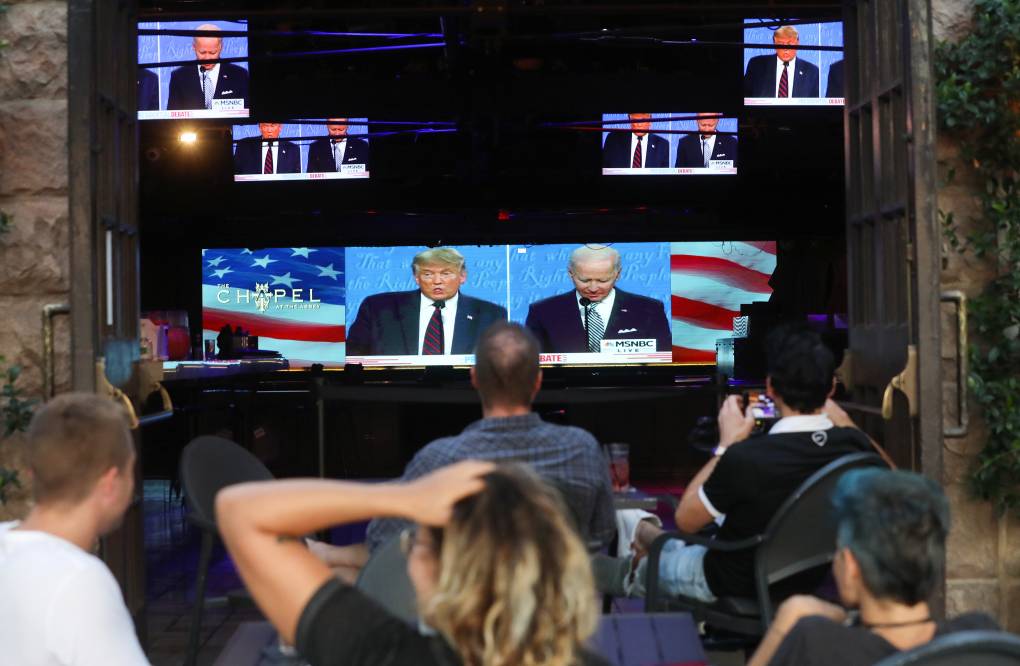
"caption": "People in LA watch a broadcast of the first debate between Donald Trump and Joe Biden, Sept. 29, 2020.",
"description": "People in LA watch a broadcast of the first debate between Donald Trump and Joe Biden, Sept. 29, 2020.",
"title": "Americans Across The Nation Watch First Presidential Debate",
"credit": "Mario Tama/Getty Images",
"status": "inherit",
"isLoading": false,
"fetchFailed": false
},
"arts_13887378": {
"type": "attachments",
"id": "arts_13887378",
"meta": {
"index": "attachments_1716263798",
"site": "arts",
"id": "13887378",
"found": true
},
"title": "WKamauBell.MAIN.JohnNowackCNN",
"publishDate": 1601667185,
"status": "inherit",
"parent": 0,
"modified": 1732134417,
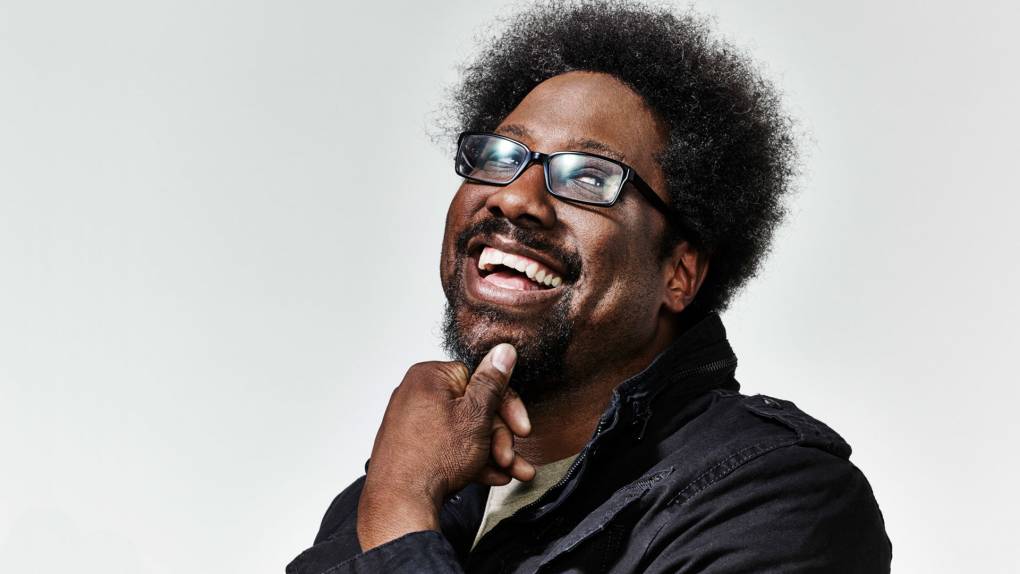
"caption": "\"Local elections can drastically change your community,\" says comedian W. Kamau Bell. \"And you can be a part of that change.\"",
"credit": "John Nowack/CNN",
"altTag": "W. Kamau Bell",
"description": null,
"imgSizes": {
"medium": {
"file": "https://cdn.kqed.org/wp-content/uploads/sites/2/2020/10/WKamauBell.MAIN_.JohnNowackCNN-800x450.jpg",
"width": 800,
"height": 450,
"mimeType": "image/jpeg"
},
"large": {
"file": "https://cdn.kqed.org/wp-content/uploads/sites/2/2020/10/WKamauBell.MAIN_.JohnNowackCNN-1020x574.jpg",
"width": 1020,
"height": 574,
"mimeType": "image/jpeg"
},
"thumbnail": {
"file": "https://cdn.kqed.org/wp-content/uploads/sites/2/2020/10/WKamauBell.MAIN_.JohnNowackCNN-160x90.jpg",
"width": 160,
"height": 90,
"mimeType": "image/jpeg"
},
"medium_large": {
"file": "https://cdn.kqed.org/wp-content/uploads/sites/2/2020/10/WKamauBell.MAIN_.JohnNowackCNN-768x432.jpg",
"width": 768,
"height": 432,
"mimeType": "image/jpeg"
},
"1536x1536": {
"file": "https://cdn.kqed.org/wp-content/uploads/sites/2/2020/10/WKamauBell.MAIN_.JohnNowackCNN-1536x864.jpg",
"width": 1536,
"height": 864,
"mimeType": "image/jpeg"
},
"post-thumbnail": {
"file": "https://cdn.kqed.org/wp-content/uploads/sites/2/2020/10/WKamauBell.MAIN_.JohnNowackCNN-672x372.jpg",
"width": 672,
"height": 372,
"mimeType": "image/jpeg"
},
"twentyfourteen-full-width": {
"file": "https://cdn.kqed.org/wp-content/uploads/sites/2/2020/10/WKamauBell.MAIN_.JohnNowackCNN-1038x576.jpg",
"width": 1038,
"height": 576,
"mimeType": "image/jpeg"
},
"kqedFullSize": {
"file": "https://cdn.kqed.org/wp-content/uploads/sites/2/2020/10/WKamauBell.MAIN_.JohnNowackCNN.jpg",
"width": 1920,
"height": 1080
}
},
"isLoading": false,
"fetchFailed": false
},
"arts_13884830": {
"type": "attachments",
"id": "arts_13884830",
"meta": {
"index": "attachments_1716263798",
"site": "arts",
"id": "13884830",
"found": true
},
"parent": 13884826,
"imgSizes": {
"twentyfourteen-full-width": {
"file": "https://ww2.kqed.org/app/uploads/sites/2/2020/08/Colewell-1038x576.jpg",
"width": 1038,
"mimeType": "image/jpeg",
"height": 576
},
"thumbnail": {
"file": "https://ww2.kqed.org/app/uploads/sites/2/2020/08/Colewell-160x90.jpg",
"width": 160,
"mimeType": "image/jpeg",
"height": 90
},
"post-thumbnail": {
"file": "https://ww2.kqed.org/app/uploads/sites/2/2020/08/Colewell-672x372.jpg",
"width": 672,
"mimeType": "image/jpeg",
"height": 372
},
"kqedFullSize": {
"file": "https://ww2.kqed.org/app/uploads/sites/2/2020/08/Colewell.jpg",
"width": 1296,
"height": 730
},
"large": {
"file": "https://ww2.kqed.org/app/uploads/sites/2/2020/08/Colewell-1020x575.jpg",
"width": 1020,
"mimeType": "image/jpeg",
"height": 575
},
"medium": {
"file": "https://ww2.kqed.org/app/uploads/sites/2/2020/08/Colewell-800x451.jpg",
"width": 800,
"mimeType": "image/jpeg",
"height": 451
},
"medium_large": {
"file": "https://ww2.kqed.org/app/uploads/sites/2/2020/08/Colewell-768x433.jpg",
"width": 768,
"mimeType": "image/jpeg",
"height": 433
}
},
"publishDate": 1597391174,
"modified": 1597391255,
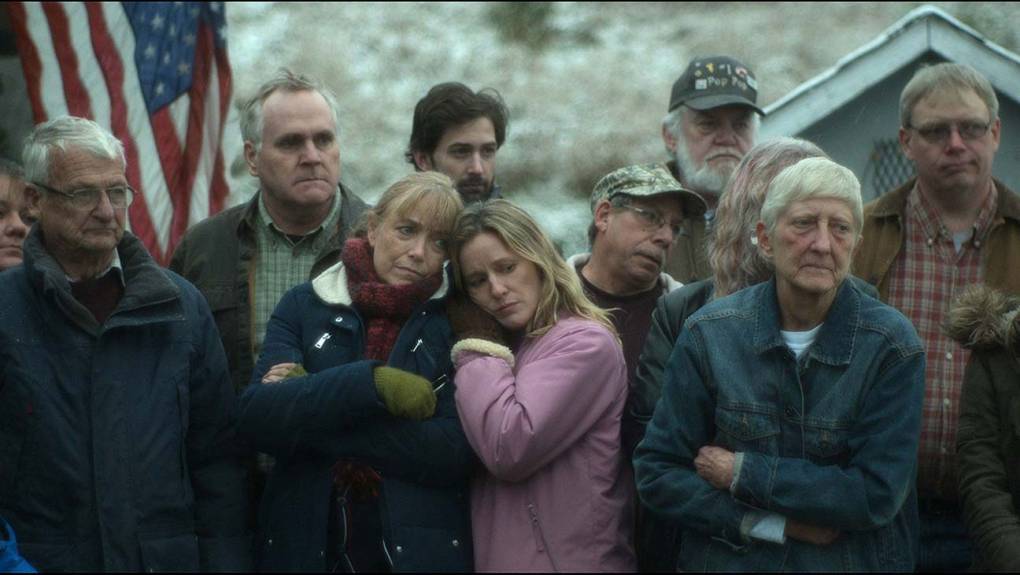
"caption": "Karen Allen, third from left, stars in 'Colewell,' about the ripple effects of the closure of a rural post office. ",
"description": "Karen Allen, third from left, stars in 'Colewell,' about the ripple effects of the closure of a rural post office. ",
"title": "Colewell",
"credit": "Gravitas Ventures",
"status": "inherit",
"isLoading": false,
"fetchFailed": false
},
"arts_13884412": {
"type": "attachments",
"id": "arts_13884412",
"meta": {
"index": "attachments_1716263798",
"site": "arts",
"id": "13884412",
"found": true
},
"parent": 13884411,
"imgSizes": {
"twentyfourteen-full-width": {
"file": "https://ww2.kqed.org/app/uploads/sites/2/2020/08/gettyimages-1174743437-ca4a1dac2faf6c7dd76df0f89c47e8a5c6f682fd-1038x576.jpg",
"width": 1038,
"mimeType": "image/jpeg",
"height": 576
},
"thumbnail": {
"file": "https://ww2.kqed.org/app/uploads/sites/2/2020/08/gettyimages-1174743437-ca4a1dac2faf6c7dd76df0f89c47e8a5c6f682fd-160x120.jpg",
"width": 160,
"mimeType": "image/jpeg",
"height": 120
},
"post-thumbnail": {
"file": "https://ww2.kqed.org/app/uploads/sites/2/2020/08/gettyimages-1174743437-ca4a1dac2faf6c7dd76df0f89c47e8a5c6f682fd-672x372.jpg",
"width": 672,
"mimeType": "image/jpeg",
"height": 372
},
"kqedFullSize": {
"file": "https://ww2.kqed.org/app/uploads/sites/2/2020/08/gettyimages-1174743437-ca4a1dac2faf6c7dd76df0f89c47e8a5c6f682fd-scaled.jpg",
"width": 2560,
"height": 1920
},
"2048x2048": {
"file": "https://ww2.kqed.org/app/uploads/sites/2/2020/08/gettyimages-1174743437-ca4a1dac2faf6c7dd76df0f89c47e8a5c6f682fd-2048x1536.jpg",
"width": 2048,
"mimeType": "image/jpeg",
"height": 1536
},
"large": {
"file": "https://ww2.kqed.org/app/uploads/sites/2/2020/08/gettyimages-1174743437-ca4a1dac2faf6c7dd76df0f89c47e8a5c6f682fd-1020x765.jpg",
"width": 1020,
"mimeType": "image/jpeg",
"height": 765
},
"1536x1536": {
"file": "https://ww2.kqed.org/app/uploads/sites/2/2020/08/gettyimages-1174743437-ca4a1dac2faf6c7dd76df0f89c47e8a5c6f682fd-1536x1152.jpg",
"width": 1536,
"mimeType": "image/jpeg",
"height": 1152
},
"full-width": {
"file": "https://ww2.kqed.org/app/uploads/sites/2/2020/08/gettyimages-1174743437-ca4a1dac2faf6c7dd76df0f89c47e8a5c6f682fd-1920x1440.jpg",
"width": 1920,
"mimeType": "image/jpeg",
"height": 1440
},
"medium": {
"file": "https://ww2.kqed.org/app/uploads/sites/2/2020/08/gettyimages-1174743437-ca4a1dac2faf6c7dd76df0f89c47e8a5c6f682fd-800x600.jpg",
"width": 800,
"mimeType": "image/jpeg",
"height": 600
},
"medium_large": {
"file": "https://ww2.kqed.org/app/uploads/sites/2/2020/08/gettyimages-1174743437-ca4a1dac2faf6c7dd76df0f89c47e8a5c6f682fd-768x576.jpg",
"width": 768,
"mimeType": "image/jpeg",
"height": 576
}
},
"publishDate": 1596657336,
"modified": 1596657336,
"caption": null,
"description": "LAKE HUGHES, CALIFORNIA - SEPTEMBER 14: Neil Young performs at Harvest Moon: A Gathering to benefit The Painted Turtle and The Bridge School at Painted Turtle Camp on September 14, 2019 in Lake Hughes, California. (Photo by Kevin Winter/Getty Images)",
"title": "Neil Young was among a number of artists who objected to Donald Trump using their songs during the 2016 campaign.",
"credit": null,
"status": "inherit",
"isLoading": false,
"fetchFailed": false
},
"arts_13881975": {
"type": "attachments",
"id": "arts_13881975",
"meta": {
"index": "attachments_1716263798",
"site": "arts",
"id": "13881975",
"found": true
},
"parent": 13881969,
"imgSizes": {
"twentyfourteen-full-width": {
"file": "https://ww2.kqed.org/app/uploads/sites/2/2020/06/GettyImages-1223504189-1024x576.jpg",
"width": 1024,
"mimeType": "image/jpeg",
"height": 576
},
"thumbnail": {
"file": "https://ww2.kqed.org/app/uploads/sites/2/2020/06/GettyImages-1223504189-160x107.jpg",
"width": 160,
"mimeType": "image/jpeg",
"height": 107
},
"post-thumbnail": {
"file": "https://ww2.kqed.org/app/uploads/sites/2/2020/06/GettyImages-1223504189-672x372.jpg",
"width": 672,
"mimeType": "image/jpeg",
"height": 372
},
"kqedFullSize": {
"file": "https://ww2.kqed.org/app/uploads/sites/2/2020/06/GettyImages-1223504189.jpg",
"width": 1024,
"height": 683
},
"large": {
"file": "https://ww2.kqed.org/app/uploads/sites/2/2020/06/GettyImages-1223504189-1020x680.jpg",
"width": 1020,
"mimeType": "image/jpeg",
"height": 680
},
"medium": {
"file": "https://ww2.kqed.org/app/uploads/sites/2/2020/06/GettyImages-1223504189-800x534.jpg",
"width": 800,
"mimeType": "image/jpeg",
"height": 534
},
"medium_large": {
"file": "https://ww2.kqed.org/app/uploads/sites/2/2020/06/GettyImages-1223504189-768x512.jpg",
"width": 768,
"mimeType": "image/jpeg",
"height": 512
}
},
"publishDate": 1592249480,
"modified": 1592249575,
"caption": "President Donald Trump and first lady Melania Trump at a National Day of Prayer event in the Rose Garden of the White House, May 2020.",
"description": "President Donald Trump and first lady Melania Trump at a National Day of Prayer event in the Rose Garden of the White House, May 2020.",
"title": "President Donald Trump and first lady Melania Trump at a National Day of Prayer event in the Rose Garden of the White House, May 2020.",
"credit": "Chip Somodevilla/Getty Images",
"status": "inherit",
"isLoading": false,
"fetchFailed": false
},
"arts_13881019": {
"type": "attachments",
"id": "arts_13881019",
"meta": {
"index": "attachments_1716263798",
"site": "arts",
"id": "13881019",
"found": true
},
"parent": 13880973,
"imgSizes": {
"thumbnail": {
"file": "https://ww2.kqed.org/app/uploads/sites/2/2020/05/Flag.Sand_-160x90.jpg",
"width": 160,
"mimeType": "image/jpeg",
"height": 90
},
"post-thumbnail": {
"file": "https://ww2.kqed.org/app/uploads/sites/2/2020/05/Flag.Sand_-672x372.jpg",
"width": 672,
"mimeType": "image/jpeg",
"height": 372
},
"kqedFullSize": {
"file": "https://ww2.kqed.org/app/uploads/sites/2/2020/05/Flag.Sand_.jpg",
"width": 800,
"height": 450
},
"medium": {
"file": "https://ww2.kqed.org/app/uploads/sites/2/2020/05/Flag.Sand_-800x450.jpg",
"width": 800,
"mimeType": "image/jpeg",
"height": 450
},
"medium_large": {
"file": "https://ww2.kqed.org/app/uploads/sites/2/2020/05/Flag.Sand_-768x432.jpg",
"width": 768,
"mimeType": "image/jpeg",
"height": 432
}
},
"publishDate": 1590537125,
"modified": 1590537125,
"caption": null,
"description": null,
"title": "Flag.Sand",
"credit": null,
"status": "inherit",
"isLoading": false,
"fetchFailed": false
},
"arts_13880713": {
"type": "attachments",
"id": "arts_13880713",
"meta": {
"index": "attachments_1716263798",
"site": "arts",
"id": "13880713",
"found": true
},
"parent": 13880699,
"imgSizes": {
"twentyfourteen-full-width": {
"file": "https://ww2.kqed.org/app/uploads/sites/2/2020/05/GettyImages-1204091770-1024x576.jpg",
"width": 1024,
"mimeType": "image/jpeg",
"height": 576
},
"thumbnail": {
"file": "https://ww2.kqed.org/app/uploads/sites/2/2020/05/GettyImages-1204091770-160x107.jpg",
"width": 160,
"mimeType": "image/jpeg",
"height": 107
},
"post-thumbnail": {
"file": "https://ww2.kqed.org/app/uploads/sites/2/2020/05/GettyImages-1204091770-672x372.jpg",
"width": 672,
"mimeType": "image/jpeg",
"height": 372
},
"kqedFullSize": {
"file": "https://ww2.kqed.org/app/uploads/sites/2/2020/05/GettyImages-1204091770.jpg",
"width": 1024,
"height": 683
},
"large": {
"file": "https://ww2.kqed.org/app/uploads/sites/2/2020/05/GettyImages-1204091770-1020x680.jpg",
"width": 1020,
"mimeType": "image/jpeg",
"height": 680
},
"medium": {
"file": "https://ww2.kqed.org/app/uploads/sites/2/2020/05/GettyImages-1204091770-800x534.jpg",
"width": 800,
"mimeType": "image/jpeg",
"height": 534
},
"medium_large": {
"file": "https://ww2.kqed.org/app/uploads/sites/2/2020/05/GettyImages-1204091770-768x512.jpg",
"width": 768,
"mimeType": "image/jpeg",
"height": 512
}
},
"publishDate": 1589925415,
"modified": 1589925492,
"caption": "President Donald Trump delivers the State of the Union address as House Speaker Rep. Nancy Pelosi looks on. February 04, 2020, Washington, DC.",
"description": "President Donald Trump delivers the State of the Union address as House Speaker Rep. Nancy Pelosi looks on. February 04, 2020, Washington, DC.",
"title": "President Donald Trump delivers the State of the Union address as House Speaker Rep. Nancy Pelosi looks on. February 04, 2020, Washington, DC.",
"credit": "Mark Wilson/Getty Images",
"status": "inherit",
"isLoading": false,
"fetchFailed": false
},
"arts_13868268": {
"type": "attachments",
"id": "arts_13868268",
"meta": {
"index": "attachments_1716263798",
"site": "arts",
"id": "13868268",
"found": true
},
"parent": 13868267,
"imgSizes": {
"twentyfourteen-full-width": {
"file": "https://ww2.kqed.org/app/uploads/sites/2/2019/10/2019-10-11-ronan-farrow-chavar-15_wide-4ab56c61737d097433c2f728d02bb28515982e05-1038x576.jpg",
"width": 1038,
"mimeType": "image/jpeg",
"height": 576
},
"thumbnail": {
"file": "https://ww2.kqed.org/app/uploads/sites/2/2019/10/2019-10-11-ronan-farrow-chavar-15_wide-4ab56c61737d097433c2f728d02bb28515982e05-160x90.jpg",
"width": 160,
"mimeType": "image/jpeg",
"height": 90
},
"post-thumbnail": {
"file": "https://ww2.kqed.org/app/uploads/sites/2/2019/10/2019-10-11-ronan-farrow-chavar-15_wide-4ab56c61737d097433c2f728d02bb28515982e05-672x372.jpg",
"width": 672,
"mimeType": "image/jpeg",
"height": 372
},
"kqedFullSize": {
"file": "https://ww2.kqed.org/app/uploads/sites/2/2019/10/2019-10-11-ronan-farrow-chavar-15_wide-4ab56c61737d097433c2f728d02bb28515982e05-e1571252137345.jpg",
"width": 1920,
"height": 1080
},
"large": {
"file": "https://ww2.kqed.org/app/uploads/sites/2/2019/10/2019-10-11-ronan-farrow-chavar-15_wide-4ab56c61737d097433c2f728d02bb28515982e05-1020x574.jpg",
"width": 1020,
"mimeType": "image/jpeg",
"height": 574
},
"complete_open_graph": {
"file": "https://ww2.kqed.org/app/uploads/sites/2/2019/10/2019-10-11-ronan-farrow-chavar-15_wide-4ab56c61737d097433c2f728d02bb28515982e05-1200x675.jpg",
"width": 1200,
"mimeType": "image/jpeg",
"height": 675
},
"full-width": {
"file": "https://ww2.kqed.org/app/uploads/sites/2/2019/10/2019-10-11-ronan-farrow-chavar-15_wide-4ab56c61737d097433c2f728d02bb28515982e05-1920x1080.jpg",
"width": 1920,
"mimeType": "image/jpeg",
"height": 1080
},
"medium": {
"file": "https://ww2.kqed.org/app/uploads/sites/2/2019/10/2019-10-11-ronan-farrow-chavar-15_wide-4ab56c61737d097433c2f728d02bb28515982e05-800x450.jpg",
"width": 800,
"mimeType": "image/jpeg",
"height": 450
},
"medium_large": {
"file": "https://ww2.kqed.org/app/uploads/sites/2/2019/10/2019-10-11-ronan-farrow-chavar-15_wide-4ab56c61737d097433c2f728d02bb28515982e05-768x432.jpg",
"width": 768,
"mimeType": "image/jpeg",
"height": 432
}
},
"publishDate": 1571177902,
"modified": 1571177902,
"caption": null,
"description": "Pulitzer Prize-winning investigative journalist Ronan Farrow poses for a portrait in NPR's Manhattan offices ahead of the release of his book \u003cem>Catch and Kill.\u003c/em>",
"title": "Pulitzer Prize-winning investigative journalist Ronan Farrow poses for a portrait in NPR's Manhattan offices ahead of the release of his book Catch and Kill.",
"credit": null,
"status": "inherit",
"isLoading": false,
"fetchFailed": false
},
"arts_13866369": {
"type": "attachments",
"id": "arts_13866369",
"meta": {
"index": "attachments_1716263798",
"site": "arts",
"id": "13866369",
"found": true
},
"parent": 13866366,
"imgSizes": {
"twentyfourteen-full-width": {
"file": "https://ww2.kqed.org/app/uploads/sites/2/2019/09/GettyImages-1079458526-1038x576.jpg",
"width": 1038,
"mimeType": "image/jpeg",
"height": 576
},
"thumbnail": {
"file": "https://ww2.kqed.org/app/uploads/sites/2/2019/09/GettyImages-1079458526-160x90.jpg",
"width": 160,
"mimeType": "image/jpeg",
"height": 90
},
"post-thumbnail": {
"file": "https://ww2.kqed.org/app/uploads/sites/2/2019/09/GettyImages-1079458526-672x372.jpg",
"width": 672,
"mimeType": "image/jpeg",
"height": 372
},
"kqedFullSize": {
"file": "https://ww2.kqed.org/app/uploads/sites/2/2019/09/GettyImages-1079458526.jpg",
"width": 1813,
"height": 1020
},
"large": {
"file": "https://ww2.kqed.org/app/uploads/sites/2/2019/09/GettyImages-1079458526-1020x574.jpg",
"width": 1020,
"mimeType": "image/jpeg",
"height": 574
},
"complete_open_graph": {
"file": "https://ww2.kqed.org/app/uploads/sites/2/2019/09/GettyImages-1079458526-1200x675.jpg",
"width": 1200,
"mimeType": "image/jpeg",
"height": 675
},
"medium": {
"file": "https://ww2.kqed.org/app/uploads/sites/2/2019/09/GettyImages-1079458526-800x450.jpg",
"width": 800,
"mimeType": "image/jpeg",
"height": 450
},
"medium_large": {
"file": "https://ww2.kqed.org/app/uploads/sites/2/2019/09/GettyImages-1079458526-768x432.jpg",
"width": 768,
"mimeType": "image/jpeg",
"height": 432
}
},
"publishDate": 1568407280,
"modified": 1568407506,
"caption": "US President Donald Trump appears on a television screen in the Press Briefing Room of the White House in Washington, DC, on January 8, 2019, as he speaks during a presidential address about the government shutdown and border security from the Oval Office. ",
"description": "US President Donald Trump appears on a television screen in the Press Briefing Room of the White House in Washington, DC, on January 8, 2019, as he speaks during a presidential address about the government shutdown and border security from the Oval Office. ",
"title": "US-POLITICS-BORDER-TRUMP",
"credit": "SAUL LOEB/AFP/Getty Images",
"status": "inherit",
"isLoading": false,
"fetchFailed": false
},
"arts_13865187": {
"type": "attachments",
"id": "arts_13865187",
"meta": {
"index": "attachments_1716263798",
"site": "arts",
"id": "13865187",
"found": true
},
"parent": 13865075,
"imgSizes": {
"twentyfourteen-full-width": {
"file": "https://ww2.kqed.org/app/uploads/sites/2/2019/08/Vida_Kuang_Public_Charge_COVER-1038x576.jpg",
"width": 1038,
"mimeType": "image/jpeg",
"height": 576
},
"thumbnail": {
"file": "https://ww2.kqed.org/app/uploads/sites/2/2019/08/Vida_Kuang_Public_Charge_COVER-160x90.jpg",
"width": 160,
"mimeType": "image/jpeg",
"height": 90
},
"post-thumbnail": {
"file": "https://ww2.kqed.org/app/uploads/sites/2/2019/08/Vida_Kuang_Public_Charge_COVER-672x372.jpg",
"width": 672,
"mimeType": "image/jpeg",
"height": 372
},
"kqedFullSize": {
"file": "https://ww2.kqed.org/app/uploads/sites/2/2019/08/Vida_Kuang_Public_Charge_COVER.jpg",
"width": 1920,
"height": 1080
},
"large": {
"file": "https://ww2.kqed.org/app/uploads/sites/2/2019/08/Vida_Kuang_Public_Charge_COVER-1020x574.jpg",
"width": 1020,
"mimeType": "image/jpeg",
"height": 574
},
"complete_open_graph": {
"file": "https://ww2.kqed.org/app/uploads/sites/2/2019/08/Vida_Kuang_Public_Charge_COVER-1200x675.jpg",
"width": 1200,
"mimeType": "image/jpeg",
"height": 675
},
"full-width": {
"file": "https://ww2.kqed.org/app/uploads/sites/2/2019/08/Vida_Kuang_Public_Charge_COVER-1920x1080.jpg",
"width": 1920,
"mimeType": "image/jpeg",
"height": 1080
},
"medium": {
"file": "https://ww2.kqed.org/app/uploads/sites/2/2019/08/Vida_Kuang_Public_Charge_COVER-800x450.jpg",
"width": 800,
"mimeType": "image/jpeg",
"height": 450
},
"medium_large": {
"file": "https://ww2.kqed.org/app/uploads/sites/2/2019/08/Vida_Kuang_Public_Charge_COVER-768x432.jpg",
"width": 768,
"mimeType": "image/jpeg",
"height": 432
}
},
"publishDate": 1567019046,
"modified": 1567019168,
"caption": "Cartoonists and illustrators captured the Public Charge protests on Tuesday, Aug. 27.",
"description": "Cartoonists and illustrators captured the Public Charge protests on Tuesday, Aug. 27.",
"title": "Vida_Kuang_Public_Charge_COVER",
"credit": "Vida Kuang",
"status": "inherit",
"isLoading": false,
"fetchFailed": false
},
"arts_13864757": {
"type": "attachments",
"id": "arts_13864757",
"meta": {
"index": "attachments_1716263798",
"site": "arts",
"id": "13864757",
"found": true
},
"parent": 13864750,
"imgSizes": {
"twentyfourteen-full-width": {
"file": "https://ww2.kqed.org/app/uploads/sites/2/2019/08/InsideOut_COVER-1038x576.jpg",
"width": 1038,
"mimeType": "image/jpeg",
"height": 576
},
"thumbnail": {
"file": "https://ww2.kqed.org/app/uploads/sites/2/2019/08/InsideOut_COVER-160x90.jpg",
"width": 160,
"mimeType": "image/jpeg",
"height": 90
},
"post-thumbnail": {
"file": "https://ww2.kqed.org/app/uploads/sites/2/2019/08/InsideOut_COVER-672x372.jpg",
"width": 672,
"mimeType": "image/jpeg",
"height": 372
},
"kqedFullSize": {
"file": "https://ww2.kqed.org/app/uploads/sites/2/2019/08/InsideOut_COVER.jpg",
"width": 1920,
"height": 1080
},
"large": {
"file": "https://ww2.kqed.org/app/uploads/sites/2/2019/08/InsideOut_COVER-1020x574.jpg",
"width": 1020,
"mimeType": "image/jpeg",
"height": 574
},
"complete_open_graph": {
"file": "https://ww2.kqed.org/app/uploads/sites/2/2019/08/InsideOut_COVER-1200x675.jpg",
"width": 1200,
"mimeType": "image/jpeg",
"height": 675
},
"full-width": {
"file": "https://ww2.kqed.org/app/uploads/sites/2/2019/08/InsideOut_COVER-1920x1080.jpg",
"width": 1920,
"mimeType": "image/jpeg",
"height": 1080
},
"medium": {
"file": "https://ww2.kqed.org/app/uploads/sites/2/2019/08/InsideOut_COVER-800x450.jpg",
"width": 800,
"mimeType": "image/jpeg",
"height": 450
},
"medium_large": {
"file": "https://ww2.kqed.org/app/uploads/sites/2/2019/08/InsideOut_COVER-768x432.jpg",
"width": 768,
"mimeType": "image/jpeg",
"height": 432
}
},
"publishDate": 1566588984,
"modified": 1566589115,
"caption": "Christy Chan's 'Inside Out' projected on the wall of the Richmond Memorial Auditorium.",
"description": "Christy Chan's 'Inside Out' projected on the wall of the Richmond Memorial Auditorium.",
"title": "InsideOut_COVER",
"credit": "James Ken Butler",
"status": "inherit",
"isLoading": false,
"fetchFailed": false
},
"arts_13862259": {
"type": "attachments",
"id": "arts_13862259",
"meta": {
"index": "attachments_1716263798",
"site": "arts",
"id": "13862259",
"found": true
},
"parent": 13862258,
"imgSizes": {
"twentyfourteen-full-width": {
"file": "https://ww2.kqed.org/app/uploads/sites/2/2019/07/mikewallace_slide-464d6fbf584dd852cec0139d579e4426fb9dd959-1038x576.jpg",
"width": 1038,
"mimeType": "image/jpeg",
"height": 576
},
"thumbnail": {
"file": "https://ww2.kqed.org/app/uploads/sites/2/2019/07/mikewallace_slide-464d6fbf584dd852cec0139d579e4426fb9dd959-160x107.jpg",
"width": 160,
"mimeType": "image/jpeg",
"height": 107
},
"post-thumbnail": {
"file": "https://ww2.kqed.org/app/uploads/sites/2/2019/07/mikewallace_slide-464d6fbf584dd852cec0139d579e4426fb9dd959-672x372.jpg",
"width": 672,
"mimeType": "image/jpeg",
"height": 372
},
"kqedFullSize": {
"file": "https://ww2.kqed.org/app/uploads/sites/2/2019/07/mikewallace_slide-464d6fbf584dd852cec0139d579e4426fb9dd959.jpg",
"width": 1376,
"height": 917
},
"large": {
"file": "https://ww2.kqed.org/app/uploads/sites/2/2019/07/mikewallace_slide-464d6fbf584dd852cec0139d579e4426fb9dd959-1020x680.jpg",
"width": 1020,
"mimeType": "image/jpeg",
"height": 680
},
"complete_open_graph": {
"file": "https://ww2.kqed.org/app/uploads/sites/2/2019/07/mikewallace_slide-464d6fbf584dd852cec0139d579e4426fb9dd959-1200x800.jpg",
"width": 1200,
"mimeType": "image/jpeg",
"height": 800
},
"medium": {
"file": "https://ww2.kqed.org/app/uploads/sites/2/2019/07/mikewallace_slide-464d6fbf584dd852cec0139d579e4426fb9dd959-800x533.jpg",
"width": 800,
"mimeType": "image/jpeg",
"height": 533
},
"medium_large": {
"file": "https://ww2.kqed.org/app/uploads/sites/2/2019/07/mikewallace_slide-464d6fbf584dd852cec0139d579e4426fb9dd959-768x512.jpg",
"width": 768,
"mimeType": "image/jpeg",
"height": 512
}
},
"publishDate": 1564157295,
"modified": 1564157344,
"caption": "'Mike Wallace is Here' features decades of never-before-seen footage from the 60 Minutes vault.\n",
"description": "'Mike Wallace is Here' features decades of never-before-seen footage from the 60 Minutes vault.\n",
"title": "Mike Wallace is Here features decades of never-before-seen footage from the 60 Minutes vault.",
"credit": "Magnolia Pictures",
"status": "inherit",
"isLoading": false,
"fetchFailed": false
}
},
"audioPlayerReducer": {
"postId": "stream_live",
"isPaused": true,
"isPlaying": false,
"pfsActive": false,
"pledgeModalIsOpen": true,
"playerDrawerIsOpen": false,
"liveAudioPlayStartedAt": 0,
"liveAudioPlayContext": ""
},
"authorsReducer": {
"byline_arts_13884411": {
"type": "authors",
"id": "byline_arts_13884411",
"meta": {
"override": true
},
"slug": "byline_arts_13884411",
"name": "Anastasia Tsioulcas",
"isLoading": false
},
"byline_arts_13881969": {
"type": "authors",
"id": "byline_arts_13881969",
"meta": {
"override": true
},
"slug": "byline_arts_13881969",
"name": "Annalisa Quinn",
"isLoading": false
},
"byline_arts_13868267": {
"type": "authors",
"id": "byline_arts_13868267",
"meta": {
"override": true
},
"slug": "byline_arts_13868267",
"name": "Terry Gross",
"isLoading": false
},
"byline_arts_13866366": {
"type": "authors",
"id": "byline_arts_13866366",
"meta": {
"override": true
},
"slug": "byline_arts_13866366",
"name": "Annalisa Quinn",
"isLoading": false
},
"byline_arts_13862258": {
"type": "authors",
"id": "byline_arts_13862258",
"meta": {
"override": true
},
"slug": "byline_arts_13862258",
"name": "Scott Tobias",
"isLoading": false
},
"shotchkiss": {
"type": "authors",
"id": "61",
"meta": {
"index": "authors_1716337520",
"id": "61",
"found": true
},
"name": "Sarah Hotchkiss",
"firstName": "Sarah",
"lastName": "Hotchkiss",
"slug": "shotchkiss",
"email": "shotchkiss@kqed.org",
"display_author_email": true,
"staff_mastheads": [
"arts"
],
"title": "Senior Editor",
"bio": "Sarah Hotchkiss is a San Francisco \u003ca href=\"http://www.sarahhotchkiss.com\">artist\u003c/a> and arts writer. In 2019, she received the Dorothea & Leo Rabkin Foundation grant for visual art journalism and in 2020 she received a Society of Professional Journalists, Northern California award for excellence in arts and culture reporting.",
"avatar": "https://secure.gravatar.com/avatar/bc662df144b3d27fd8b1b6f1c2a420d34e91e53154d411bb7ad353cc8b6cea8d?s=600&d=blank&r=g",
"twitter": null,
"bluesky": null,
"facebook": null,
"instagram": null,
"linkedin": null,
"sites": [
{
"site": "",
"roles": [
"editor"
]
},
{
"site": "arts",
"roles": [
"Contributor",
"administrator"
]
},
{
"site": "artschool",
"roles": [
"administrator"
]
},
{
"site": "news",
"roles": [
"editor"
]
},
{
"site": "pop",
"roles": [
"administrator"
]
},
{
"site": "bayareabites",
"roles": [
"editor"
]
},
{
"site": "spark",
"roles": [
"editor"
]
},
{
"site": "checkplease",
"roles": [
"editor"
]
}
],
"headData": {
"title": "Sarah Hotchkiss | KQED",
"description": "Senior Editor",
"ogImgSrc": "https://secure.gravatar.com/avatar/bc662df144b3d27fd8b1b6f1c2a420d34e91e53154d411bb7ad353cc8b6cea8d?s=600&d=blank&r=g",
"twImgSrc": "https://secure.gravatar.com/avatar/bc662df144b3d27fd8b1b6f1c2a420d34e91e53154d411bb7ad353cc8b6cea8d?s=600&d=blank&r=g"
},
"isLoading": false,
"link": "/author/shotchkiss"
},
"gmeline": {
"type": "authors",
"id": "185",
"meta": {
"index": "authors_1716337520",
"id": "185",
"found": true
},
"name": "Gabe Meline",
"firstName": "Gabe",
"lastName": "Meline",
"slug": "gmeline",
"email": "gmeline@kqed.org",
"display_author_email": true,
"staff_mastheads": [
"arts"
],
"title": "Senior Editor, KQED Arts & Culture",
"bio": "Gabe Meline entered journalism at age 15 making photocopied zines, and has since earned awards from the Edward R. Murrow Awards, the Society for Professional Journalists, the Online Journalism Awards, the Association of Alternative Newsweeklies and the California Newspaper Publishers Association. Prior to KQED, he was the editor of the \u003cem>North Bay Bohemian\u003c/em> and a touring musician. He lives with his wife and daughter in his hometown of Santa Rosa, CA.",
"avatar": "https://secure.gravatar.com/avatar/5bebe57be0d8bc2dd318934feb47299e2d2d10cba28d09d8d7afb389a2ce2bdd?s=600&d=blank&r=g",
"twitter": null,
"bluesky": null,
"facebook": null,
"instagram": null,
"linkedin": null,
"sites": [
{
"site": "",
"roles": [
"editor"
]
},
{
"site": "arts",
"roles": [
"administrator"
]
},
{
"site": "artschool",
"roles": [
"editor"
]
},
{
"site": "news",
"roles": [
"author"
]
},
{
"site": "pop",
"roles": [
"editor"
]
},
{
"site": "bayareabites",
"roles": [
"editor"
]
},
{
"site": "food",
"roles": [
"editor"
]
},
{
"site": "forum",
"roles": [
"administrator"
]
},
{
"site": "liveblog",
"roles": [
"editor"
]
},
{
"site": "hiphop",
"roles": [
"editor"
]
}
],
"headData": {
"title": "Gabe Meline | KQED",
"description": "Senior Editor, KQED Arts & Culture",
"ogImgSrc": "https://secure.gravatar.com/avatar/5bebe57be0d8bc2dd318934feb47299e2d2d10cba28d09d8d7afb389a2ce2bdd?s=600&d=blank&r=g",
"twImgSrc": "https://secure.gravatar.com/avatar/5bebe57be0d8bc2dd318934feb47299e2d2d10cba28d09d8d7afb389a2ce2bdd?s=600&d=blank&r=g"
},
"isLoading": false,
"link": "/author/gmeline"
},
"ralexandra": {
"type": "authors",
"id": "11242",
"meta": {
"index": "authors_1716337520",
"id": "11242",
"found": true
},
"name": "Rae Alexandra",
"firstName": "Rae",
"lastName": "Alexandra",
"slug": "ralexandra",
"email": "ralexandra@kqed.org",
"display_author_email": true,
"staff_mastheads": [],
"title": "Reporter/Producer",
"bio": "Rae Alexandra is a Reporter/Producer for KQED Arts & Culture, and the creator/author of the \u003ca href=\"https://www.kqed.org/arts/program/rebel-girls-from-bay-area-history\">Rebel Girls From Bay Area History\u003c/a> and \u003ca href=\"https://www.kqed.org/bizarrebayarea\">Bizarre Bay Area\u003c/a> series. Her debut book, \u003ca href=\"https://citylights.com/politics-current-events-history/unsung-heroines35-women-who-changed/\">Unsung Heroines: 35 Women Who Changed the Bay Area\u003c/a> was published by City Lights in March 2026. In 2023, Rae was awarded an SPJ Excellence in Journalism Award for Arts & Culture. Rae was born and raised in Wales and subsequently — even after two decades in Northern California — still uses phrases that regularly baffle her coworkers.",
"avatar": "https://secure.gravatar.com/avatar/edfee8176c80cc0a382b051190f5341997df378a934a5774dcb0977732dfd401?s=600&d=blank&r=g",
"twitter": null,
"bluesky": null,
"facebook": null,
"instagram": null,
"linkedin": null,
"sites": [
{
"site": "arts",
"roles": [
"subscriber"
]
},
{
"site": "news",
"roles": [
"subscriber"
]
},
{
"site": "pop",
"roles": [
"subscriber"
]
},
{
"site": "bayareabites",
"roles": [
"subscriber"
]
},
{
"site": "science",
"roles": [
"subscriber"
]
}
],
"headData": {
"title": "Rae Alexandra | KQED",
"description": "Reporter/Producer",
"ogImgSrc": "https://secure.gravatar.com/avatar/edfee8176c80cc0a382b051190f5341997df378a934a5774dcb0977732dfd401?s=600&d=blank&r=g",
"twImgSrc": "https://secure.gravatar.com/avatar/edfee8176c80cc0a382b051190f5341997df378a934a5774dcb0977732dfd401?s=600&d=blank&r=g"
},
"isLoading": false,
"link": "/author/ralexandra"
},
"ogpenn": {
"type": "authors",
"id": "11491",
"meta": {
"index": "authors_1716337520",
"id": "11491",
"found": true
},
"name": "Pendarvis Harshaw",
"firstName": "Pendarvis",
"lastName": "Harshaw",
"slug": "ogpenn",
"email": "ogpenn@gmail.com",
"display_author_email": false,
"staff_mastheads": [
"arts"
],
"title": "Community Engagement Reporter",
"bio": "Pendarvis Harshaw is an educator, host and writer with KQED Arts.",
"avatar": "https://secure.gravatar.com/avatar/972b77ee8e3f346ae2b00622661187fbfabd059b5693bbdc1475ea7a722fd4cd?s=600&d=blank&r=g",
"twitter": null,
"bluesky": null,
"facebook": null,
"instagram": "ogpenn",
"linkedin": null,
"sites": [
{
"site": "arts",
"roles": [
"administrator"
]
},
{
"site": "news",
"roles": [
"editor"
]
},
{
"site": "bayareabites",
"roles": [
"author"
]
},
{
"site": "hiphop",
"roles": [
"editor"
]
}
],
"headData": {
"title": "Pendarvis Harshaw | KQED",
"description": "Community Engagement Reporter",
"ogImgSrc": "https://secure.gravatar.com/avatar/972b77ee8e3f346ae2b00622661187fbfabd059b5693bbdc1475ea7a722fd4cd?s=600&d=blank&r=g",
"twImgSrc": "https://secure.gravatar.com/avatar/972b77ee8e3f346ae2b00622661187fbfabd059b5693bbdc1475ea7a722fd4cd?s=600&d=blank&r=g"
},
"isLoading": false,
"link": "/author/ogpenn"
},
"sgetachew": {
"type": "authors",
"id": "11734",
"meta": {
"index": "authors_1716337520",
"id": "11734",
"found": true
},
"name": "Samuel Getachew",
"firstName": "Samuel",
"lastName": "Getachew",
"slug": "sgetachew",
"email": "sgetachew@kqed.org",
"display_author_email": false,
"staff_mastheads": [],
"title": "KQED Contributor",
"bio": "\u003cspan style=\"font-weight: 400;\">Samuel Getachew is an 18-year-old poet and writer from Oakland, California. He is the 2019 Oakland Youth Poet Laureate, a 2020 Finalist for National Youth Poet Laureate, and a 4-time YoungArts Winner. His writing has been published in Teen Vogue, the New York Times, the Washington Post, and more. He will attend Yale University in the fall of 2021.\u003c/span>",
"avatar": "https://secure.gravatar.com/avatar/ebad3dcf2295975cfe77698fa670a089?s=600&d=blank&r=g",
"twitter": null,
"facebook": null,
"instagram": null,
"linkedin": null,
"sites": [
{
"site": "arts",
"roles": [
"subscriber"
]
}
],
"headData": {
"title": "Samuel Getachew | KQED",
"description": "KQED Contributor",
"ogImgSrc": "https://secure.gravatar.com/avatar/ebad3dcf2295975cfe77698fa670a089?s=600&d=blank&r=g",
"twImgSrc": "https://secure.gravatar.com/avatar/ebad3dcf2295975cfe77698fa670a089?s=600&d=blank&r=g"
},
"isLoading": false,
"link": "/author/sgetachew"
}
},
"pagesReducer": {
"arts_tag_donald-trump": {
"type": "terms",
"id": "arts_1753",
"meta": {
"index": "terms_1716263798",
"site": "arts",
"id": "1753",
"score": 8.557587
},
"featImg": null,
"name": "Donald Trump",
"description": null,
"taxonomy": "tag",
"headData": {
"twImgId": null,
"twTitle": null,
"ogTitle": null,
"ogImgId": null,
"twDescription": null,
"description": null,
"title": "Donald Trump Archives | KQED Arts",
"ogDescription": null
},
"ttid": 1765,
"slug": "donald-trump",
"isLoading": false,
"title": "Donald Trump",
"pageMeta": {
"site": "arts",
"WpPageTemplate": "page-topic-editorial",
"currentPage": 2
},
"blocks": [
{
"blockName": "kqed/post-list",
"attrs": {
"layout": "cardArticle2",
"query": "posts/arts?tag=donald-trump",
"seeMore": false,
"paginated": true,
"page": 2
}
},
{
"blockName": "kqed/ad"
}
]
}
},
"pfsSessionReducer": {},
"postsReducer": {
"stream_live": {
"type": "live",
"id": "stream_live",
"audioUrl": "https://streams.kqed.org/kqedradio",
"title": "Live Stream",
"excerpt": "Live Stream information currently unavailable.",
"link": "/radio",
"featImg": "",
"label": {
"name": "KQED Live",
"link": "/"
}
},
"stream_kqedNewscast": {
"type": "posts",
"id": "stream_kqedNewscast",
"audioUrl": "https://www.kqed.org/.stream/anon/radio/RDnews/newscast.mp3?_=1",
"title": "KQED Newscast",
"featImg": "",
"label": {
"name": "88.5 FM",
"link": "/"
}
},
"arts_13887219": {
"type": "posts",
"id": "arts_13887219",
"meta": {
"index": "posts_1716263798",
"site": "arts",
"id": "13887219",
"score": null,
"sort": [
1602079287000
]
},
"parent": 0,
"labelTerm": {
"site": "arts"
},
"blocks": [],
"publishDate": 1602079287,
"format": "standard",
"title": "Deaf Voters Deserve ASL Interpretation at All Presidential Debates",
"headTitle": "Deaf Voters Deserve ASL Interpretation at All Presidential Debates | KQED",
"content": "\u003cp>After the first presidential debate on Sept. 29, there was one thing upon which the entire nation could agree. The event was, in the words of the \u003cem>New York Times,\u003c/em> an “incoherent spectacle.” Non-stop interrupting and randomly hurled insults made it incredibly hard to follow and resulted in social media users asking, en masse, for future microphone muting.\u003c/p>\n\u003cp>https://twitter.com/ValinChris/status/1311124384455643138\u003c/p>\n\u003cp>So imagine for a moment the difficult task of following something this chaotic without the ability to hear. That’s a challenge that 11 million deaf and hearing-impaired Americans face every time they try to watch a live event that’s assisted only by delayed closed captions. One of them, a first-time voter named Erin, hit TikTok the night of the debate to express her frustration. “There’s not an ASL interpreter. There’s nothing,” she said. “It’s not equal access and it’s not right.”\u003c/p>\n\u003cp>https://twitter.com/ChelseaCirruzzo/status/1311304694401323009\u003c/p>\n\u003cp>Given the importance of the event, not accommodating the one million Americans who use ASL as their primary means of communication is obviously a major and wholly unacceptable oversight. It’s made all the worse by the fact that just five days before the debate, \u003ca href=\"https://www.nbcnews.com/politics/donald-trump/judge-orders-white-house-provide-sign-language-interpreter-covid-briefings-n1240954\" target=\"_blank\" rel=\"noopener noreferrer\">a judge ordered\u003c/a> the White House to start providing sign language interpreters at public and televised coronavirus briefings. As such, the need for ASL interpretation during all important political broadcasts should have been fresh in everyone’s minds. It wasn’t.\u003c/p>\n\u003cp>[ad fullwidth]\u003c/p>\n\u003cp>Prompted by the impossible task of trying to keep up via closed captions, \u003ca href=\"https://www.bridgesfordeafandhh.org/\">Bridges For the Deaf and Hard of Hearing\u003c/a> asked the nation for more equitable treatment on Oct. 1. The nonprofit organization uploaded a \u003ca href=\"https://www.youtube.com/watch?v=qUwxnaPxe_E\" target=\"_blank\" rel=\"noopener noreferrer\">video\u003c/a> to YouTube asking Democrats, Republicans and the Federal Election Commission to include ASL interpreters at the next presidential debate. “We are willing to provide the interpreters at no cost,” a representative said. “For the deaf community, American Sign Language—a language of the United States of America—is our first language and necessary for equal access.”\u003c/p>\n\u003cp>Given that this week’s Vice Presidential debate has no plans to incorporate ASL, that request appears to have gone unheeded, at least for now. Which isn’t terribly surprising given that deaf voters in America have never before been granted interpreters at a presidential debate. The unruliness that occurred on Sept. 29 simply shone a light on just how badly it’s needed. [aside postid='pop_104339']\u003c/p>\n\u003cp>So where can deaf voters turn for live interpretation of the debates, including Wednesday’s Vice Presidential one? \u003ca href=\"https://www.facebook.com/DPANTV/\" target=\"_blank\" rel=\"noopener noreferrer\">DPAN.tv\u003c/a>. The sign language channel livestreamed the Trump and Biden debate, with full ASL interpretation, via its Facebook page. Three interpreters appeared in a vertical stack on the right side of the screen, each individually translating for Trump, Biden and moderator Christopher Wallace, respectively. It was DPAN’s second time interpreting debates in a live setting, having done the same in 2016 when \u003ca href=\"https://dpan.tv/programs/2016-presidential-debate-e2a5f6\" target=\"_blank\" rel=\"noopener noreferrer\">Trump and Hillary Clinton\u003c/a> went head-to-head.\u003c/p>\n\u003cp>\u003cimg loading=\"lazy\" decoding=\"async\" class=\"alignnone size-medium wp-image-13887515\" src=\"https://ww2.kqed.org/app/uploads/sites/2/2020/10/Screen-Shot-2020-10-06-at-1.48.38-PM-800x446.png\" alt=\"\" width=\"800\" height=\"446\" srcset=\"https://cdn.kqed.org/wp-content/uploads/sites/2/2020/10/Screen-Shot-2020-10-06-at-1.48.38-PM-800x446.png 800w, https://cdn.kqed.org/wp-content/uploads/sites/2/2020/10/Screen-Shot-2020-10-06-at-1.48.38-PM-160x89.png 160w, https://cdn.kqed.org/wp-content/uploads/sites/2/2020/10/Screen-Shot-2020-10-06-at-1.48.38-PM-768x429.png 768w, https://cdn.kqed.org/wp-content/uploads/sites/2/2020/10/Screen-Shot-2020-10-06-at-1.48.38-PM.png 880w\" sizes=\"(max-width: 800px) 100vw, 800px\">\u003c/p>\n\u003cp>Perhaps DPAN’s example of how to successfully incorporate ASL into a live broadcast might one day inspire one of the major television networks to follow suit. Regan Thibodeau, who interpreted for Biden at the first debate, is hopeful. “This is history in the making,” she told the \u003cem>\u003ca href=\"https://www.pressherald.com/2020/10/06/presidential-debate-raises-profile-of-asl-interpreter-in-maine/\" target=\"_blank\" rel=\"noopener noreferrer\">Press Herald\u003c/a>.\u003c/em> “I am so excited to help advocate for this to become the norm for standardized access in the media.”\u003c/p>\n\u003cp>Since 2016, \u003ca href=\"https://signvote.org/about\" target=\"_blank\" rel=\"noopener noreferrer\">Sign Vote\u003c/a>—a coalition of 18 organizations for the deaf—has also been pushing for progress. It offers \u003ca href=\"https://signvote.org/resources/\" target=\"_blank\" rel=\"noopener noreferrer\">a space\u003c/a> for the deaf community to catch up on election news, share opinions, and watch analysis of important campaign events. (Its 9-minute summary of the first debate, provided by \u003ca href=\"https://www.youtube.com/watch?v=eLmY7Wgy92A\" target=\"_blank\" rel=\"noopener noreferrer\">\u003cem>The Daily Moth\u003c/em>\u003c/a>, packed a surprising amount of information into one short YouTube video.) Sign Vote’s end goal is to encourage greater participation by the deaf community in elections at every level.\u003c/p>\n\u003cp>In 2020, Republicans and Democrats opening up debate stages to ASL interpreters isn’t just the right thing to do—it’s the smart choice. Especially given that the 2016 election was decided by just \u003ca href=\"https://www.axios.com/hillary-clinton-2016-election-votes-supreme-court-liberal-justice-1b4bc4fc-9fad-44b4-ab54-9ef86aa9c1f1.html\" target=\"_blank\" rel=\"noopener noreferrer\">80,000 votes\u003c/a> in three states. The representative from Bridges For the Deaf said it best in his campaign video last week. “Our community,” he said, “is perhaps more significant than has ever been realized.”\u003c/p>\n\u003cp>\u003c/p>\n\u003cp>\u003cem>Follow DPAN.tv’s \u003ca href=\"https://www.facebook.com/DPANTV/\" target=\"_blank\" rel=\"noopener noreferrer\">Facebook page\u003c/a> for updates about the upcoming debate livestreams, including Oct. 7’s Vice Presidential debate. You can also view Sept. 29’s presidential debate in full there, as well as on \u003ca href=\"https://dpan.tv/\" target=\"_blank\" rel=\"noopener noreferrer\">the DPAN website\u003c/a>.\u003c/em>\u003c/p>\n\n",
"stats": {
"hasVideo": false,
"hasChartOrMap": false,
"hasAudio": false,
"hasPolis": false,
"wordCount": 804,
"hasGoogleForm": false,
"hasGallery": false,
"hasHearkenModule": false,
"iframeSrcs": [],
"paragraphCount": 13
},
"modified": 1705020026,
"excerpt": "ASL interpretation has never been provided at a presidential debate before. Now, one channel is single-handedly fixing that.",
"headData": {
"twImgId": "",
"twTitle": "",
"ogTitle": "",
"ogImgId": "",
"twDescription": "",
"description": "ASL interpretation has never been provided at a presidential debate before. Now, one channel is single-handedly fixing that.",
"title": "Deaf Voters Deserve ASL Interpretation at All Presidential Debates | KQED",
"ogDescription": "",
"schema": {
"@context": "https://schema.org",
"@type": "Article",
"headline": "Deaf Voters Deserve ASL Interpretation at All Presidential Debates",
"datePublished": "2020-10-07T07:01:27-07:00",
"dateModified": "2024-01-11T16:40:26-08:00",
"image": "https://cdn.kqed.org/wp-content/uploads/2020/02/KQED-OG-Image@1x.png"
}
},
"guestAuthors": [],
"slug": "deaf-voters-deserve-asl-interpretation-at-all-presidential-debates",
"status": "publish",
"templateType": "standard",
"excludeFromSiteSearch": "Include",
"featuredImageType": "standard",
"sticky": false,
"articleAge": "0",
"path": "/arts/13887219/deaf-voters-deserve-asl-interpretation-at-all-presidential-debates",
"audioTrackLength": null,
"parsedContent": [
{
"type": "contentString",
"content": "\u003cdiv class=\"post-body\">\u003cp>\u003cp>After the first presidential debate on Sept. 29, there was one thing upon which the entire nation could agree. The event was, in the words of the \u003cem>New York Times,\u003c/em> an “incoherent spectacle.” Non-stop interrupting and randomly hurled insults made it incredibly hard to follow and resulted in social media users asking, en masse, for future microphone muting.\u003c/p>\u003c/p>\u003c/div>",
"attributes": {
"named": {},
"numeric": []
}
},
{
"type": "component",
"content": "",
"name": "singleTwitterStatus",
"attributes": {
"named": {
"id": "1311124384455643138"
},
"numeric": []
}
},
{
"type": "contentString",
"content": "\u003cdiv class=\"post-body\">\u003cp>\n\u003cp>So imagine for a moment the difficult task of following something this chaotic without the ability to hear. That’s a challenge that 11 million deaf and hearing-impaired Americans face every time they try to watch a live event that’s assisted only by delayed closed captions. One of them, a first-time voter named Erin, hit TikTok the night of the debate to express her frustration. “There’s not an ASL interpreter. There’s nothing,” she said. “It’s not equal access and it’s not right.”\u003c/p>\u003c/p>\u003c/div>",
"attributes": {
"named": {},
"numeric": []
}
},
{
"type": "component",
"content": "",
"name": "singleTwitterStatus",
"attributes": {
"named": {
"id": "1311304694401323009"
},
"numeric": []
}
},
{
"type": "contentString",
"content": "\u003cdiv class=\"post-body\">\u003cp>\n\u003cp>Given the importance of the event, not accommodating the one million Americans who use ASL as their primary means of communication is obviously a major and wholly unacceptable oversight. It’s made all the worse by the fact that just five days before the debate, \u003ca href=\"https://www.nbcnews.com/politics/donald-trump/judge-orders-white-house-provide-sign-language-interpreter-covid-briefings-n1240954\" target=\"_blank\" rel=\"noopener noreferrer\">a judge ordered\u003c/a> the White House to start providing sign language interpreters at public and televised coronavirus briefings. As such, the need for ASL interpretation during all important political broadcasts should have been fresh in everyone’s minds. It wasn’t.\u003c/p>\n\u003cp>\u003c/p>\u003c/div>",
"attributes": {
"named": {},
"numeric": []
}
},
{
"type": "component",
"content": "",
"name": "ad",
"attributes": {
"named": {
"label": "fullwidth"
},
"numeric": [
"fullwidth"
]
}
},
{
"type": "contentString",
"content": "\u003cdiv class=\"post-body\">\u003cp>\u003c/p>\n\u003cp>Prompted by the impossible task of trying to keep up via closed captions, \u003ca href=\"https://www.bridgesfordeafandhh.org/\">Bridges For the Deaf and Hard of Hearing\u003c/a> asked the nation for more equitable treatment on Oct. 1. The nonprofit organization uploaded a \u003ca href=\"https://www.youtube.com/watch?v=qUwxnaPxe_E\" target=\"_blank\" rel=\"noopener noreferrer\">video\u003c/a> to YouTube asking Democrats, Republicans and the Federal Election Commission to include ASL interpreters at the next presidential debate. “We are willing to provide the interpreters at no cost,” a representative said. “For the deaf community, American Sign Language—a language of the United States of America—is our first language and necessary for equal access.”\u003c/p>\n\u003cp>Given that this week’s Vice Presidential debate has no plans to incorporate ASL, that request appears to have gone unheeded, at least for now. Which isn’t terribly surprising given that deaf voters in America have never before been granted interpreters at a presidential debate. The unruliness that occurred on Sept. 29 simply shone a light on just how badly it’s needed. \u003c/p>\u003c/div>",
"attributes": {
"named": {},
"numeric": []
}
},
{
"type": "component",
"content": "",
"name": "aside",
"attributes": {
"named": {
"postid": "pop_104339",
"label": ""
},
"numeric": []
}
},
{
"type": "contentString",
"content": "\u003cdiv class=\"post-body\">\u003cp>\u003c/p>\n\u003cp>So where can deaf voters turn for live interpretation of the debates, including Wednesday’s Vice Presidential one? \u003ca href=\"https://www.facebook.com/DPANTV/\" target=\"_blank\" rel=\"noopener noreferrer\">DPAN.tv\u003c/a>. The sign language channel livestreamed the Trump and Biden debate, with full ASL interpretation, via its Facebook page. Three interpreters appeared in a vertical stack on the right side of the screen, each individually translating for Trump, Biden and moderator Christopher Wallace, respectively. It was DPAN’s second time interpreting debates in a live setting, having done the same in 2016 when \u003ca href=\"https://dpan.tv/programs/2016-presidential-debate-e2a5f6\" target=\"_blank\" rel=\"noopener noreferrer\">Trump and Hillary Clinton\u003c/a> went head-to-head.\u003c/p>\n\u003cp>\u003cimg loading=\"lazy\" decoding=\"async\" class=\"alignnone size-medium wp-image-13887515\" src=\"https://ww2.kqed.org/app/uploads/sites/2/2020/10/Screen-Shot-2020-10-06-at-1.48.38-PM-800x446.png\" alt=\"\" width=\"800\" height=\"446\" srcset=\"https://cdn.kqed.org/wp-content/uploads/sites/2/2020/10/Screen-Shot-2020-10-06-at-1.48.38-PM-800x446.png 800w, https://cdn.kqed.org/wp-content/uploads/sites/2/2020/10/Screen-Shot-2020-10-06-at-1.48.38-PM-160x89.png 160w, https://cdn.kqed.org/wp-content/uploads/sites/2/2020/10/Screen-Shot-2020-10-06-at-1.48.38-PM-768x429.png 768w, https://cdn.kqed.org/wp-content/uploads/sites/2/2020/10/Screen-Shot-2020-10-06-at-1.48.38-PM.png 880w\" sizes=\"(max-width: 800px) 100vw, 800px\">\u003c/p>\n\u003cp>Perhaps DPAN’s example of how to successfully incorporate ASL into a live broadcast might one day inspire one of the major television networks to follow suit. Regan Thibodeau, who interpreted for Biden at the first debate, is hopeful. “This is history in the making,” she told the \u003cem>\u003ca href=\"https://www.pressherald.com/2020/10/06/presidential-debate-raises-profile-of-asl-interpreter-in-maine/\" target=\"_blank\" rel=\"noopener noreferrer\">Press Herald\u003c/a>.\u003c/em> “I am so excited to help advocate for this to become the norm for standardized access in the media.”\u003c/p>\n\u003cp>Since 2016, \u003ca href=\"https://signvote.org/about\" target=\"_blank\" rel=\"noopener noreferrer\">Sign Vote\u003c/a>—a coalition of 18 organizations for the deaf—has also been pushing for progress. It offers \u003ca href=\"https://signvote.org/resources/\" target=\"_blank\" rel=\"noopener noreferrer\">a space\u003c/a> for the deaf community to catch up on election news, share opinions, and watch analysis of important campaign events. (Its 9-minute summary of the first debate, provided by \u003ca href=\"https://www.youtube.com/watch?v=eLmY7Wgy92A\" target=\"_blank\" rel=\"noopener noreferrer\">\u003cem>The Daily Moth\u003c/em>\u003c/a>, packed a surprising amount of information into one short YouTube video.) Sign Vote’s end goal is to encourage greater participation by the deaf community in elections at every level.\u003c/p>\n\u003cp>In 2020, Republicans and Democrats opening up debate stages to ASL interpreters isn’t just the right thing to do—it’s the smart choice. Especially given that the 2016 election was decided by just \u003ca href=\"https://www.axios.com/hillary-clinton-2016-election-votes-supreme-court-liberal-justice-1b4bc4fc-9fad-44b4-ab54-9ef86aa9c1f1.html\" target=\"_blank\" rel=\"noopener noreferrer\">80,000 votes\u003c/a> in three states. The representative from Bridges For the Deaf said it best in his campaign video last week. “Our community,” he said, “is perhaps more significant than has ever been realized.”\u003c/p>\n\u003cp>\u003c/p>\n\u003cp>\u003cem>Follow DPAN.tv’s \u003ca href=\"https://www.facebook.com/DPANTV/\" target=\"_blank\" rel=\"noopener noreferrer\">Facebook page\u003c/a> for updates about the upcoming debate livestreams, including Oct. 7’s Vice Presidential debate. You can also view Sept. 29’s presidential debate in full there, as well as on \u003ca href=\"https://dpan.tv/\" target=\"_blank\" rel=\"noopener noreferrer\">the DPAN website\u003c/a>.\u003c/em>\u003c/p>\n\n\u003c/div>\u003c/p>",
"attributes": {
"named": {},
"numeric": []
}
}
],
"link": "/arts/13887219/deaf-voters-deserve-asl-interpretation-at-all-presidential-debates",
"authors": [
"11242"
],
"categories": [
"arts_1",
"arts_2303",
"arts_990"
],
"tags": [
"arts_2767",
"arts_9693",
"arts_1753",
"arts_7072",
"arts_5826",
"arts_2792"
],
"featImg": "arts_13887315",
"label": "arts"
},
"arts_13887076": {
"type": "posts",
"id": "arts_13887076",
"meta": {
"index": "posts_1716263798",
"site": "arts",
"id": "13887076",
"score": null,
"sort": [
1601910038000
]
},
"guestAuthors": [],
"slug": "whats-on-your-ballot-w-kamau-bell-comedian-and-tv-host",
"title": "What’s On Your Ballot?: W. Kamau Bell, Comedian and TV Host",
"publishDate": 1601910038,
"format": "standard",
"headTitle": "What’s On Your Ballot?: W. Kamau Bell, Comedian and TV Host | KQED",
"labelTerm": {
"site": "arts"
},
"content": "\u003cp>\u003ci>In 2020, the United States faces an election like no other. Citizens will vote in the midst of a global pandemic, severe climate change, an uprising for racial justice and an administration that has eroded the norms of democracy. In ‘\u003ca href=\"https://www.kqed.org/arts/tag/whats-on-your-ballot\" target=\"_blank\" rel=\"noopener noreferrer\">What’s on Your Ballot?\u003c/a>,’ KQED checks in with ten different artists, activists and cultural figures about the issues on their minds and their hopes for the country.\u003c/i>\u003c/p>\n\u003cp>\u003cspan style=\"font-size: 4.6875em;float: left;line-height: 0.733em;padding: 0.05em 0.1em 0 0;font-family: times, serif, georgia\">T\u003c/span>he day before I speak to comedian W. Kamau Bell, I wake up to a news alert: “President Trump refuses to verbally commit to peaceful transfer of power.” As we enter the seventh month of the COVID-19 pandemic in the U.S., terrifying but frequent headlines like these are a daily source of fear and trepidation, and a harsh reminder of the state of our nation.\u003c/p>\n\u003cp>At a moment when unity seems to be painfully absent in the country, Bell’s work on his Emmy Award-winning show \u003cem>\u003ca href=\"https://www.cnn.com/shows/united-shades-of-america\" target=\"_blank\" rel=\"noopener noreferrer\">United Shades of America\u003c/a>\u003c/em> seems more relevant than ever. When I catch him in a rare free moment between work calls and shooting a new season, I find a familiarity in the way he speaks: a classic Bay Area groundedness that feels like home, but also a layer of brutal realism, informed by his experiences and tough conversations with Americans of all backgrounds, and buffered by his humor. We discuss everything from Ghanaian citizenship and the prospect of a talent exodus from America, to the importance of down-ballot voting to create local change, to his least favorite question: “Are you hopeful?”\u003c/p>\n\u003cp>After we hang up the phone, I realize I can’t quite answer that question myself. But at a time when the future feels as uncertain and chaotic as it does hopeless, I do feel a greater sense of clarity—and for that I have Bell to thank.\u003cem>—Samuel Getachew\u003c/em>\u003c/p>\n\u003cfigure id=\"attachment_13887384\" class=\"wp-caption alignright\" style=\"max-width: 596px\">\u003cimg loading=\"lazy\" decoding=\"async\" class=\"size-full wp-image-13887384\" src=\"https://ww2.kqed.org/app/uploads/sites/2/2020/10/Kamau.Inline.PeteLee.jpg\" alt=\"W. Kamau Bell\" width=\"596\" height=\"800\" srcset=\"https://cdn.kqed.org/wp-content/uploads/sites/2/2020/10/Kamau.Inline.PeteLee.jpg 596w, https://cdn.kqed.org/wp-content/uploads/sites/2/2020/10/Kamau.Inline.PeteLee-160x215.jpg 160w\" sizes=\"(max-width: 596px) 100vw, 596px\">\u003cfigcaption class=\"wp-caption-text\">W. Kamau Bell: “When I hear white people ask questions like, ‘How do we start?’ I’m like, we’ve already started. If you don’t know how to start now, then I think it’s on you.’ \u003ccite>(Pete Lee)\u003c/cite>\u003c/figcaption>\u003c/figure>\n\u003cp>\u003cstrong>As we head into the election, what do you make of the political climate in America today?\u003c/strong>\u003c/p>\n\u003cp>I think it’s really important for us all, but especially for young people, to realize that this is not how things are supposed to go. This is not just like, “Oh, we elected a Republican and then we elected a Democrat and we elected a Republican.” That this is not the normal state of things in America and that it is extraordinary.\u003c/p>\n\u003cp>This is the part of history that they write about. And I really think the identity of this nation is at stake right now, so I don’t think there’s any way to overstate that. While voting is a big part of it, that’s not going to solve all of our issues. It’s really about, does the United States have the appetite for true structural change in nearly every institution?\u003c/p>\n\u003cp>\u003cstrong>This is the first election that I’ll be able to vote in, and I sympathize with the frustration that a lot of my peers are expressing with the failures of electoral politics. What would you say to those who feel that voting is futile?\u003c/strong>\u003c/p>\n\u003cp>I would say look at AOC. I would say look at Cori Bush, who is \u003ca href=\"https://coribush.org/\" target=\"_blank\" rel=\"noopener noreferrer\">running for office\u003c/a>. Look at Ilhan Omar. Look at Iyanna Presley, Rashida Talib. Those are women of color who maybe didn’t even think to run until a few years ago. Certainly the idea we would have those women in high-level public office, all of them at once, seemed like a fantasy.\u003c/p>\n\u003cp>We get focused on the presidential election every four years, I think to the detriment of local elections, which are how you can really drastically change your community. Even if you don’t know all the ins and outs, do some research to see if there’s a group you align with politically—like, in San Francisco, there’s the \u003ca href=\"http://www.theleaguesf.org/\" target=\"_blank\" rel=\"noopener noreferrer\">League of Pissed Off Voters\u003c/a>—and then they have voting guides you can follow. Don’t let any one person be your source of knowledge about this stuff. Make sure you look into multiple sources.\u003c/p>\n\u003cp>Local elections are how you can have a say in the school budget, or how police funds are distributed. And you can actually be a part of that change. If you’re 18 now, and you want to run for office—or you’re a person of color, a woman of color, or Black or indigenous or trans—this is your time. So I would say don’t leave it up to the white guys because they have totally fucked it up.\u003c/p>\n\u003cp>https://twitter.com/wkamaubell/status/1294428939595603970\u003c/p>\n\u003cp>\u003cstrong>Through your show, you’ve met so many people from all walks of life and from all across the nation. What do you foresee being the response to Trump’s victory in November if he wins? And if he loses but refuses to concede?\u003c/strong>\u003c/p>\n\u003cp>Actually I think there’s going to be a pretty similar response if he wins or if he loses, or even if he loses and leaves right away—the funny thing about Trump, he may just get embarrassed and just leave even before his term is up. You never know what he’s going to really do.\u003c/p>\n\u003cp>But I think there is still going to be a large percentage of this country, who are his base, who are going to make democracy very difficult. Let’s not get caught up in the idea that if Biden/Harris wins, then \u003cem>Whoo! All right. Everything’s back to normal.\u003c/em> Which, we don’t want normal anyway. We all ought to be prepared for the fact that it’s going to get ugly, because I think if Trump loses, he’s going to make it look like the election was stolen from him. And if he wins, it will be in large part because he has disenfranchised voters and committed his own version of voter fraud.\u003c/p>\n\u003cp>But we have to prepare for the fact that if he loses and once he leaves, whenever that is, he’s not going to be a political leader in this country; he’s going to go try to make some money. And so then all those people end up leaderless, and then whoever steps into that leadership vacuum is the person I think I’m actually really afraid of.\u003c/p>\n\u003cp>[aside label=\"From KQED's California Voter Guide\" link1='https://www.kqed.org/voterguide/,KQED 2020 California Voter Guide: All the State Props, All the Bay Area Measures' hero=https://ww2.kqed.org/app/uploads/2020/10/KQED-Election-2020-Aside-CA-Voter-Guide.png]\u003c/p>\n\u003cp>\u003cstrong>As Black men in this country, both of us are obviously all too aware of racism as a concept and as an experience; it’s nothing new or surprising. And you’ve been talking about race and racism for much of your career. But this past summer, we saw a lot of Americans, particularly white Americans, coming to terms with systemic racism for the first time in their lives. How hopeful are you about the long-term impact of this most recent wave of Black Lives Matter movement?\u003c/strong>\u003c/p>\n\u003cp>I think a lot of it is tied to what we learn from the pandemic, and also people’s appetite to engage in this Black Lives Matter discussion—specifically white people’s appetite to engage in the work of Black Lives Matter—after a vaccine comes out. If a vaccine comes out.\u003c/p>\n\u003cp>Really, it’s on white people right now to dig into the work in such a way that no matter what happens, they’re already doing the work. You can start reading a book and then put it down and never pick it up again. But once you get 100 pages in, in all likelihood you’re going to finish that book. So I feel like white people have to get 100 pages into this anti-racism work. Because I think there are still white people who are still at the place of, “How do we talk about this stuff?” And I’m like, that is a pre-George Floyd question. \u003cem>[Laughs]\u003c/em>\u003c/p>\n\u003cp>The tools have been laid before you, whether it’s \u003ca href=\"https://www.nytimes.com/2019/08/20/books/review/how-to-be-an-antiracist-ibram-x-kendi.html\" target=\"_blank\" rel=\"noopener noreferrer\">on the New York Times bestseller list\u003c/a> or on every new show you watch or on podcasts. There’s the web, there’s that \u003ca href=\"https://blacklivesmatter.com/\" target=\"_blank\" rel=\"noopener noreferrer\">Black Lives Matter website\u003c/a> where they literally just have all the different things you can do. So the tools are available to you. So I think that scares me now, when I hear white people ask questions like, “How do we start?” I’m like, “we’ve already started.” If you don’t know how to start now, then I think it’s on you.\u003c/p>\n\u003cp>And the other question that I get, that I’m really annoyed by, is “are you hopeful?” I don’t think it’s time to really engage in hopefulness. Especially when white people engage in the idea of hopefulness, it’s hopeful in the sense of, “Take your foot off the accelerator.” I think it’s time right now to do the work. Hope comes at the end of all the work.\u003c/p>\n\u003cp>https://www.youtube.com/watch?v=QK4l23tYD_s\u003c/p>\n\u003cp>\u003cstrong>Yesterday, a grand jury in Kentucky decided not to charge any of the officers who killed Breonna Taylor (aside from one charge of wanton endangerment). It was disheartening to see so few consequences for her death—after so many months of protests, after putting her on magazine covers, plastering her name everywhere. Where do we go when all of our work seems futile, and no matter how hard we fight for someone, we never get any justice? What is the next course of action when it feels like every action fails?\u003c/strong>\u003c/p>\n\u003cp>I think you’re asking the question that every activist and organizer at upper levels is asking right now. I think a part of it is making sure that it stays in people’s minds, because a lot of people have done the work, but most of the country was not focused on Breonna Taylor. There’s still a lot of the country who maybe just heard her name for the first time yesterday. So I think that part of it is mainstreaming the story, you know, when you see \u003ca href=\"https://nba.nbcsports.com/2020/09/23/for-nba-players-breonna-taylor-grand-jury-decision-not-enough/\" target=\"_blank\" rel=\"noopener noreferrer\">NBA players talking about her\u003c/a>, that’s a part of it. Getting her name into a place where like regular folks who aren’t looking to pay attention have to pay attention.\u003c/p>\n\u003cp>[ad fullwidth]\u003c/p>\n\u003cp>But also, I think we know the battle is eternal in this country. We’re still trying to get Emmett Till’s name cleared, in some sense. I think Martin Luther King Jr. is very clear: “I may not get there with you to the promised land.” But I don’t think he thought the promised land was that close. I think he knew. So I think we have to really engage in multiple levels of the battle.\u003c/p>\n\u003cp>I try to focus on things that I can help out with, where I can see progress. That’s why I do things like donate to \u003ca href=\"https://www.donorschoose.org/\" target=\"_blank\" rel=\"noopener noreferrer\">Donors Choose\u003c/a>, which helps support public schools all around the country, and get things that those classrooms and students need, whether it’s books or supplies or a trombone or STEM materials. That’s something I can see a result from, and those kids are going to be helped. So I think there’s that, and then there’s going out in the streets just because you need to go out in the streets.\u003c/p>\n\u003cp>And then there’s levels of the kind of work you do in your life, where you make sure your white friends don’t say racist shit, that they don’t shy away from discussions about racism, that they actually hear and pay attention. And then there’s the piece of voting. It’s the same thing as like, doing one push up ain’t gonna do a lot for you. And if you only do push-ups, the rest of your body is going to suffer. You have to do a lot of different things at a lot of different levels to see results.\u003c/p>\n\u003cfigure id=\"attachment_13887387\" class=\"wp-caption alignright\" style=\"max-width: 600px\">\u003cimg loading=\"lazy\" decoding=\"async\" class=\"size-full wp-image-13887387\" src=\"https://ww2.kqed.org/app/uploads/sites/2/2020/10/Kamau.INline2.PeteLee.jpg\" alt=\"W. Kamau Bell\" width=\"600\" height=\"784\" srcset=\"https://cdn.kqed.org/wp-content/uploads/sites/2/2020/10/Kamau.INline2.PeteLee.jpg 600w, https://cdn.kqed.org/wp-content/uploads/sites/2/2020/10/Kamau.INline2.PeteLee-160x209.jpg 160w\" sizes=\"(max-width: 600px) 100vw, 600px\">\u003cfigcaption class=\"wp-caption-text\">W. Kamau Bell: “Let’s not get caught up in the idea that if Biden/Harris wins, then ‘Whoo! All right. Everything’s back to normal.’ We don’t want normal anyway. We all ought to be prepared for the fact that it’s going to get ugly.” \u003ccite>(Pete Lee)\u003c/cite>\u003c/figcaption>\u003c/figure>\n\u003cp>\u003cstrong>After the election, no matter how it goes, what are your hopes and goals for the country and for the Bay Area?\u003c/strong>\u003c/p>\n\u003cp>I think that the Bay Area, and really California as a whole, should do everything it can to mark itself as the most progressive state in this country. And that’s difficult because as we found out through COVID, there’s a lot of red in this state.\u003c/p>\n\u003cp>So I think specifically for the Bay Area, we have to legislate and we have to dismantle structures that are not progressive, that aren’t inclusive. We talk about defunding the police—\u003ca href=\"https://www.kqed.org/news/11823700/the-yearslong-movement-to-get-police-out-of-oakland-public-schools\" target=\"_blank\" rel=\"noopener noreferrer\">well, getting the cops out of the Oakland public schools\u003c/a>, that’s a big win. We have the research that shows they don’t actually help, that they mostly just make kids feel like they’re in prison.\u003c/p>\n\u003cp>I think we double down on this thing that Fox News thinks we are, that we aren’t actually. They think we’re some sort of liberal progressive mecca, and those of us who live here know that’s not as true as people want to believe. And that, again, gets to local elections. I think the Bay Area has to really be the bright blue beacon that carries the state. And electing new people to political office is a big part of that.\u003c/p>\n\u003cp>As far as the country, I think we have to remember America has had a good PR person, and we talk about how we’re the greatest nation on earth, and then people all over the world go, “If I want to make something of myself, I should go to the greatest nation on Earth, America.” I think we have to accept the fact that that reputation is probably gone now, and we’re certainly losing it as every day goes by, as Trump says things like, “I may not leave office,” or when he gives weird speeches like he gave one comparing people to “race horses for good genes.”\u003c/p>\n\u003cp>And so we’re really in a fight, as people say, for the soul of this nation, and also maybe to become the nation that we claim to be, but that we never were. It’s actually helpful to think, what if we lose that fight? What does that mean for us? What if we become the country that our best and brightest people leave to go other places? If Trump gets reelected, then I think we’re closer to that position than we realize. Where the kids are like, “Man, I’ve got a good jump shot. I’m going to go play overseas,” you know? Or, “I’m really smart and I have good ideas and I have ways to innovate technology. I’m not going to go to Silicon Valley. I’m going to go somewhere else.”\u003c/p>\n\u003cp>We’re in a position where we’re in a very different America than the one that we’ve come to know. People talk about the Roman Empire or the British Empire. Well, this is the American Empire, and those other empires didn’t last. And so I think it’s worth thinking about. Are we on the last legs of that? And what does that look like? Because right now it feels like, as my mom said, like we’re slipping into fascism. And she said that before COVID and before George Floyd. And we’re slipping faster than that now. So are we prepared to fight for this country living under those circumstances?\u003c/p>\n\u003cp>A lot of Black people right now are like, “Ghana is giving out citizenships!” \u003cem>[Laughs]\u003c/em> So, I mean, is that the deal? And I don’t think there’s anything wrong with thinking that way.\u003c/p>\n\u003cp>\u003cstrong>I’m currently on a gap year before I go to college in the fall of 2021. And a lot of students from my class who are also taking a gap year, the first thing they did was apply for a New Zealand visa, or the ones who have parents from the U.K. or from Sweden are using their dual citizenship to go spend their whole gap year abroad, because things are open and they’re actually handling COVID. So in a way, we’ve already kind of started to see that happen.\u003c/strong>\u003c/p>\n\u003cp>And then some of those people aren’t going to come back! Maybe not half of them, but there’s going to be a couple that are like, you know, this is cool. Even if it’s one or two, that still was an inconceivable thing, before COVID, before Trump, before social unrest on the streets related to George Floyd, Breonna Taylor, and so many others.\u003c/p>\n\u003cp>And as Black folks, for those of us who are descendants of slavery, we don’t have that connection to another country. Which is why when Ghana is like, “Come here,” I think a lot of Black folks are like, \u003cem>oh\u003c/em>, I never thought about Ghana, but I’m thinking about it now.\u003c/p>\n\u003cp>\u003cimg loading=\"lazy\" decoding=\"async\" class=\"aligncenter size-medium wp-image-12127869\" src=\"https://ww2.kqed.org/app/uploads/sites/2/2016/09/Q.Logo_.Break_-800x78.jpg\" alt=\"\" width=\"800\" height=\"78\" srcset=\"https://cdn.kqed.org/wp-content/uploads/sites/2/2016/09/Q.Logo_.Break_.jpg 800w, https://cdn.kqed.org/wp-content/uploads/sites/2/2016/09/Q.Logo_.Break_-400x39.jpg 400w, https://cdn.kqed.org/wp-content/uploads/sites/2/2016/09/Q.Logo_.Break_-768x75.jpg 768w\" sizes=\"(max-width: 800px) 100vw, 800px\">\u003c/p>\n\u003cp>\u003cem>Interview was edited for length and clarity. Learn more about W. Kamau Bell and ‘United Shades of America’ \u003ca href=\"https://www.cnn.com/shows/united-shades-of-america\" target=\"_blank\" rel=\"noopener noreferrer\">here\u003c/a>.\u003c/em>\u003c/p>\n\u003cp>[ad floatright]\u003c/p>\n",
"blocks": [],
"excerpt": "The comedian and TV host talks voting guides, public education, and why 'How do we talk about race?' is a pre-George Floyd question. ",
"status": "publish",
"parent": 0,
"modified": 1726761403,
"stats": {
"hasAudio": false,
"hasVideo": true,
"hasChartOrMap": false,
"iframeSrcs": [],
"hasGoogleForm": false,
"hasGallery": false,
"hasHearkenModule": false,
"hasPolis": false,
"paragraphCount": 41,
"wordCount": 3133
},
"headData": {
"title": "What’s On Your Ballot?: W. Kamau Bell, Comedian and TV Host | KQED",
"description": "The comedian and TV host talks voting guides, public education, and why 'How do we talk about race?' is a pre-George Floyd question. ",
"ogTitle": "",
"ogDescription": "",
"ogImgId": "",
"twTitle": "",
"twDescription": "",
"twImgId": "",
"schema": {
"@context": "https://schema.org",
"@type": "Article",
"headline": "What’s On Your Ballot?: W. Kamau Bell, Comedian and TV Host",
"datePublished": "2020-10-05T08:00:38-07:00",
"dateModified": "2024-09-19T08:56:43-07:00",
"image": "https://cdn.kqed.org/wp-content/uploads/2020/02/KQED-OG-Image@1x.png"
}
},
"sticky": false,
"templateType": "standard",
"featuredImageType": "standard",
"excludeFromSiteSearch": "Include",
"articleAge": "0",
"path": "/arts/13887076/whats-on-your-ballot-w-kamau-bell-comedian-and-tv-host",
"audioTrackLength": null,
"parsedContent": [
{
"type": "contentString",
"content": "\u003cdiv class=\"post-body\">\u003cp>\u003cp>\u003ci>In 2020, the United States faces an election like no other. Citizens will vote in the midst of a global pandemic, severe climate change, an uprising for racial justice and an administration that has eroded the norms of democracy. In ‘\u003ca href=\"https://www.kqed.org/arts/tag/whats-on-your-ballot\" target=\"_blank\" rel=\"noopener noreferrer\">What’s on Your Ballot?\u003c/a>,’ KQED checks in with ten different artists, activists and cultural figures about the issues on their minds and their hopes for the country.\u003c/i>\u003c/p>\n\u003cp>\u003cspan style=\"font-size: 4.6875em;float: left;line-height: 0.733em;padding: 0.05em 0.1em 0 0;font-family: times, serif, georgia\">T\u003c/span>he day before I speak to comedian W. Kamau Bell, I wake up to a news alert: “President Trump refuses to verbally commit to peaceful transfer of power.” As we enter the seventh month of the COVID-19 pandemic in the U.S., terrifying but frequent headlines like these are a daily source of fear and trepidation, and a harsh reminder of the state of our nation.\u003c/p>\n\u003cp>At a moment when unity seems to be painfully absent in the country, Bell’s work on his Emmy Award-winning show \u003cem>\u003ca href=\"https://www.cnn.com/shows/united-shades-of-america\" target=\"_blank\" rel=\"noopener noreferrer\">United Shades of America\u003c/a>\u003c/em> seems more relevant than ever. When I catch him in a rare free moment between work calls and shooting a new season, I find a familiarity in the way he speaks: a classic Bay Area groundedness that feels like home, but also a layer of brutal realism, informed by his experiences and tough conversations with Americans of all backgrounds, and buffered by his humor. We discuss everything from Ghanaian citizenship and the prospect of a talent exodus from America, to the importance of down-ballot voting to create local change, to his least favorite question: “Are you hopeful?”\u003c/p>\n\u003cp>After we hang up the phone, I realize I can’t quite answer that question myself. But at a time when the future feels as uncertain and chaotic as it does hopeless, I do feel a greater sense of clarity—and for that I have Bell to thank.\u003cem>—Samuel Getachew\u003c/em>\u003c/p>\n\u003cfigure id=\"attachment_13887384\" class=\"wp-caption alignright\" style=\"max-width: 596px\">\u003cimg loading=\"lazy\" decoding=\"async\" class=\"size-full wp-image-13887384\" src=\"https://ww2.kqed.org/app/uploads/sites/2/2020/10/Kamau.Inline.PeteLee.jpg\" alt=\"W. Kamau Bell\" width=\"596\" height=\"800\" srcset=\"https://cdn.kqed.org/wp-content/uploads/sites/2/2020/10/Kamau.Inline.PeteLee.jpg 596w, https://cdn.kqed.org/wp-content/uploads/sites/2/2020/10/Kamau.Inline.PeteLee-160x215.jpg 160w\" sizes=\"(max-width: 596px) 100vw, 596px\">\u003cfigcaption class=\"wp-caption-text\">W. Kamau Bell: “When I hear white people ask questions like, ‘How do we start?’ I’m like, we’ve already started. If you don’t know how to start now, then I think it’s on you.’ \u003ccite>(Pete Lee)\u003c/cite>\u003c/figcaption>\u003c/figure>\n\u003cp>\u003cstrong>As we head into the election, what do you make of the political climate in America today?\u003c/strong>\u003c/p>\n\u003cp>I think it’s really important for us all, but especially for young people, to realize that this is not how things are supposed to go. This is not just like, “Oh, we elected a Republican and then we elected a Democrat and we elected a Republican.” That this is not the normal state of things in America and that it is extraordinary.\u003c/p>\n\u003cp>This is the part of history that they write about. And I really think the identity of this nation is at stake right now, so I don’t think there’s any way to overstate that. While voting is a big part of it, that’s not going to solve all of our issues. It’s really about, does the United States have the appetite for true structural change in nearly every institution?\u003c/p>\n\u003cp>\u003cstrong>This is the first election that I’ll be able to vote in, and I sympathize with the frustration that a lot of my peers are expressing with the failures of electoral politics. What would you say to those who feel that voting is futile?\u003c/strong>\u003c/p>\n\u003cp>I would say look at AOC. I would say look at Cori Bush, who is \u003ca href=\"https://coribush.org/\" target=\"_blank\" rel=\"noopener noreferrer\">running for office\u003c/a>. Look at Ilhan Omar. Look at Iyanna Presley, Rashida Talib. Those are women of color who maybe didn’t even think to run until a few years ago. Certainly the idea we would have those women in high-level public office, all of them at once, seemed like a fantasy.\u003c/p>\n\u003cp>We get focused on the presidential election every four years, I think to the detriment of local elections, which are how you can really drastically change your community. Even if you don’t know all the ins and outs, do some research to see if there’s a group you align with politically—like, in San Francisco, there’s the \u003ca href=\"http://www.theleaguesf.org/\" target=\"_blank\" rel=\"noopener noreferrer\">League of Pissed Off Voters\u003c/a>—and then they have voting guides you can follow. Don’t let any one person be your source of knowledge about this stuff. Make sure you look into multiple sources.\u003c/p>\n\u003cp>Local elections are how you can have a say in the school budget, or how police funds are distributed. And you can actually be a part of that change. If you’re 18 now, and you want to run for office—or you’re a person of color, a woman of color, or Black or indigenous or trans—this is your time. So I would say don’t leave it up to the white guys because they have totally fucked it up.\u003c/p>\u003c/p>\u003c/div>",
"attributes": {
"named": {},
"numeric": []
}
},
{
"type": "component",
"content": "",
"name": "singleTwitterStatus",
"attributes": {
"named": {
"id": "1294428939595603970"
},
"numeric": []
}
},
{
"type": "contentString",
"content": "\u003cdiv class=\"post-body\">\u003cp>\n\u003cp>\u003cstrong>Through your show, you’ve met so many people from all walks of life and from all across the nation. What do you foresee being the response to Trump’s victory in November if he wins? And if he loses but refuses to concede?\u003c/strong>\u003c/p>\n\u003cp>Actually I think there’s going to be a pretty similar response if he wins or if he loses, or even if he loses and leaves right away—the funny thing about Trump, he may just get embarrassed and just leave even before his term is up. You never know what he’s going to really do.\u003c/p>\n\u003cp>But I think there is still going to be a large percentage of this country, who are his base, who are going to make democracy very difficult. Let’s not get caught up in the idea that if Biden/Harris wins, then \u003cem>Whoo! All right. Everything’s back to normal.\u003c/em> Which, we don’t want normal anyway. We all ought to be prepared for the fact that it’s going to get ugly, because I think if Trump loses, he’s going to make it look like the election was stolen from him. And if he wins, it will be in large part because he has disenfranchised voters and committed his own version of voter fraud.\u003c/p>\n\u003cp>But we have to prepare for the fact that if he loses and once he leaves, whenever that is, he’s not going to be a political leader in this country; he’s going to go try to make some money. And so then all those people end up leaderless, and then whoever steps into that leadership vacuum is the person I think I’m actually really afraid of.\u003c/p>\n\u003cp>\u003c/p>\u003c/div>",
"attributes": {
"named": {},
"numeric": []
}
},
{
"type": "component",
"content": "",
"name": "aside",
"attributes": {
"named": {
"label": "From KQED's California Voter Guide ",
"link1": "https://www.kqed.org/voterguide/,KQED 2020 California Voter Guide: All the State Props, All the Bay Area Measures",
"hero": "https://ww2.kqed.org/app/uploads/2020/10/KQED-Election-2020-Aside-CA-Voter-Guide.png"
},
"numeric": []
}
},
{
"type": "contentString",
"content": "\u003cdiv class=\"post-body\">\u003cp>\u003c/p>\n\u003cp>\u003cstrong>As Black men in this country, both of us are obviously all too aware of racism as a concept and as an experience; it’s nothing new or surprising. And you’ve been talking about race and racism for much of your career. But this past summer, we saw a lot of Americans, particularly white Americans, coming to terms with systemic racism for the first time in their lives. How hopeful are you about the long-term impact of this most recent wave of Black Lives Matter movement?\u003c/strong>\u003c/p>\n\u003cp>I think a lot of it is tied to what we learn from the pandemic, and also people’s appetite to engage in this Black Lives Matter discussion—specifically white people’s appetite to engage in the work of Black Lives Matter—after a vaccine comes out. If a vaccine comes out.\u003c/p>\n\u003cp>Really, it’s on white people right now to dig into the work in such a way that no matter what happens, they’re already doing the work. You can start reading a book and then put it down and never pick it up again. But once you get 100 pages in, in all likelihood you’re going to finish that book. So I feel like white people have to get 100 pages into this anti-racism work. Because I think there are still white people who are still at the place of, “How do we talk about this stuff?” And I’m like, that is a pre-George Floyd question. \u003cem>[Laughs]\u003c/em>\u003c/p>\n\u003cp>The tools have been laid before you, whether it’s \u003ca href=\"https://www.nytimes.com/2019/08/20/books/review/how-to-be-an-antiracist-ibram-x-kendi.html\" target=\"_blank\" rel=\"noopener noreferrer\">on the New York Times bestseller list\u003c/a> or on every new show you watch or on podcasts. There’s the web, there’s that \u003ca href=\"https://blacklivesmatter.com/\" target=\"_blank\" rel=\"noopener noreferrer\">Black Lives Matter website\u003c/a> where they literally just have all the different things you can do. So the tools are available to you. So I think that scares me now, when I hear white people ask questions like, “How do we start?” I’m like, “we’ve already started.” If you don’t know how to start now, then I think it’s on you.\u003c/p>\n\u003cp>And the other question that I get, that I’m really annoyed by, is “are you hopeful?” I don’t think it’s time to really engage in hopefulness. Especially when white people engage in the idea of hopefulness, it’s hopeful in the sense of, “Take your foot off the accelerator.” I think it’s time right now to do the work. Hope comes at the end of all the work.\u003c/p>\u003c/p>\u003cp>\u003cspan class='utils-parseShortcode-shortcodes-__youtubeShortcode__embedYoutube'>\n \u003cspan class='utils-parseShortcode-shortcodes-__youtubeShortcode__embedYoutubeInside'>\n \u003ciframe\n loading='lazy'\n class='utils-parseShortcode-shortcodes-__youtubeShortcode__youtubePlayer'\n type='text/html'\n src='//www.youtube.com/embed/QK4l23tYD_s'\n title='//www.youtube.com/embed/QK4l23tYD_s'\n allowfullscreen='true'\n style='border:0;'>\u003c/iframe>\n \u003c/span>\n \u003c/span>\u003c/p>\u003cp>\u003cp>\u003cstrong>Yesterday, a grand jury in Kentucky decided not to charge any of the officers who killed Breonna Taylor (aside from one charge of wanton endangerment). It was disheartening to see so few consequences for her death—after so many months of protests, after putting her on magazine covers, plastering her name everywhere. Where do we go when all of our work seems futile, and no matter how hard we fight for someone, we never get any justice? What is the next course of action when it feels like every action fails?\u003c/strong>\u003c/p>\n\u003cp>I think you’re asking the question that every activist and organizer at upper levels is asking right now. I think a part of it is making sure that it stays in people’s minds, because a lot of people have done the work, but most of the country was not focused on Breonna Taylor. There’s still a lot of the country who maybe just heard her name for the first time yesterday. So I think that part of it is mainstreaming the story, you know, when you see \u003ca href=\"https://nba.nbcsports.com/2020/09/23/for-nba-players-breonna-taylor-grand-jury-decision-not-enough/\" target=\"_blank\" rel=\"noopener noreferrer\">NBA players talking about her\u003c/a>, that’s a part of it. Getting her name into a place where like regular folks who aren’t looking to pay attention have to pay attention.\u003c/p>\n\u003cp>\u003c/p>\u003c/div>",
"attributes": {
"named": {},
"numeric": []
}
},
{
"type": "component",
"content": "",
"name": "ad",
"attributes": {
"named": {
"label": "fullwidth"
},
"numeric": [
"fullwidth"
]
}
},
{
"type": "contentString",
"content": "\u003cdiv class=\"post-body\">\u003cp>\u003c/p>\n\u003cp>But also, I think we know the battle is eternal in this country. We’re still trying to get Emmett Till’s name cleared, in some sense. I think Martin Luther King Jr. is very clear: “I may not get there with you to the promised land.” But I don’t think he thought the promised land was that close. I think he knew. So I think we have to really engage in multiple levels of the battle.\u003c/p>\n\u003cp>I try to focus on things that I can help out with, where I can see progress. That’s why I do things like donate to \u003ca href=\"https://www.donorschoose.org/\" target=\"_blank\" rel=\"noopener noreferrer\">Donors Choose\u003c/a>, which helps support public schools all around the country, and get things that those classrooms and students need, whether it’s books or supplies or a trombone or STEM materials. That’s something I can see a result from, and those kids are going to be helped. So I think there’s that, and then there’s going out in the streets just because you need to go out in the streets.\u003c/p>\n\u003cp>And then there’s levels of the kind of work you do in your life, where you make sure your white friends don’t say racist shit, that they don’t shy away from discussions about racism, that they actually hear and pay attention. And then there’s the piece of voting. It’s the same thing as like, doing one push up ain’t gonna do a lot for you. And if you only do push-ups, the rest of your body is going to suffer. You have to do a lot of different things at a lot of different levels to see results.\u003c/p>\n\u003cfigure id=\"attachment_13887387\" class=\"wp-caption alignright\" style=\"max-width: 600px\">\u003cimg loading=\"lazy\" decoding=\"async\" class=\"size-full wp-image-13887387\" src=\"https://ww2.kqed.org/app/uploads/sites/2/2020/10/Kamau.INline2.PeteLee.jpg\" alt=\"W. Kamau Bell\" width=\"600\" height=\"784\" srcset=\"https://cdn.kqed.org/wp-content/uploads/sites/2/2020/10/Kamau.INline2.PeteLee.jpg 600w, https://cdn.kqed.org/wp-content/uploads/sites/2/2020/10/Kamau.INline2.PeteLee-160x209.jpg 160w\" sizes=\"(max-width: 600px) 100vw, 600px\">\u003cfigcaption class=\"wp-caption-text\">W. Kamau Bell: “Let’s not get caught up in the idea that if Biden/Harris wins, then ‘Whoo! All right. Everything’s back to normal.’ We don’t want normal anyway. We all ought to be prepared for the fact that it’s going to get ugly.” \u003ccite>(Pete Lee)\u003c/cite>\u003c/figcaption>\u003c/figure>\n\u003cp>\u003cstrong>After the election, no matter how it goes, what are your hopes and goals for the country and for the Bay Area?\u003c/strong>\u003c/p>\n\u003cp>I think that the Bay Area, and really California as a whole, should do everything it can to mark itself as the most progressive state in this country. And that’s difficult because as we found out through COVID, there’s a lot of red in this state.\u003c/p>\n\u003cp>So I think specifically for the Bay Area, we have to legislate and we have to dismantle structures that are not progressive, that aren’t inclusive. We talk about defunding the police—\u003ca href=\"https://www.kqed.org/news/11823700/the-yearslong-movement-to-get-police-out-of-oakland-public-schools\" target=\"_blank\" rel=\"noopener noreferrer\">well, getting the cops out of the Oakland public schools\u003c/a>, that’s a big win. We have the research that shows they don’t actually help, that they mostly just make kids feel like they’re in prison.\u003c/p>\n\u003cp>I think we double down on this thing that Fox News thinks we are, that we aren’t actually. They think we’re some sort of liberal progressive mecca, and those of us who live here know that’s not as true as people want to believe. And that, again, gets to local elections. I think the Bay Area has to really be the bright blue beacon that carries the state. And electing new people to political office is a big part of that.\u003c/p>\n\u003cp>As far as the country, I think we have to remember America has had a good PR person, and we talk about how we’re the greatest nation on earth, and then people all over the world go, “If I want to make something of myself, I should go to the greatest nation on Earth, America.” I think we have to accept the fact that that reputation is probably gone now, and we’re certainly losing it as every day goes by, as Trump says things like, “I may not leave office,” or when he gives weird speeches like he gave one comparing people to “race horses for good genes.”\u003c/p>\n\u003cp>And so we’re really in a fight, as people say, for the soul of this nation, and also maybe to become the nation that we claim to be, but that we never were. It’s actually helpful to think, what if we lose that fight? What does that mean for us? What if we become the country that our best and brightest people leave to go other places? If Trump gets reelected, then I think we’re closer to that position than we realize. Where the kids are like, “Man, I’ve got a good jump shot. I’m going to go play overseas,” you know? Or, “I’m really smart and I have good ideas and I have ways to innovate technology. I’m not going to go to Silicon Valley. I’m going to go somewhere else.”\u003c/p>\n\u003cp>We’re in a position where we’re in a very different America than the one that we’ve come to know. People talk about the Roman Empire or the British Empire. Well, this is the American Empire, and those other empires didn’t last. And so I think it’s worth thinking about. Are we on the last legs of that? And what does that look like? Because right now it feels like, as my mom said, like we’re slipping into fascism. And she said that before COVID and before George Floyd. And we’re slipping faster than that now. So are we prepared to fight for this country living under those circumstances?\u003c/p>\n\u003cp>A lot of Black people right now are like, “Ghana is giving out citizenships!” \u003cem>[Laughs]\u003c/em> So, I mean, is that the deal? And I don’t think there’s anything wrong with thinking that way.\u003c/p>\n\u003cp>\u003cstrong>I’m currently on a gap year before I go to college in the fall of 2021. And a lot of students from my class who are also taking a gap year, the first thing they did was apply for a New Zealand visa, or the ones who have parents from the U.K. or from Sweden are using their dual citizenship to go spend their whole gap year abroad, because things are open and they’re actually handling COVID. So in a way, we’ve already kind of started to see that happen.\u003c/strong>\u003c/p>\n\u003cp>And then some of those people aren’t going to come back! Maybe not half of them, but there’s going to be a couple that are like, you know, this is cool. Even if it’s one or two, that still was an inconceivable thing, before COVID, before Trump, before social unrest on the streets related to George Floyd, Breonna Taylor, and so many others.\u003c/p>\n\u003cp>And as Black folks, for those of us who are descendants of slavery, we don’t have that connection to another country. Which is why when Ghana is like, “Come here,” I think a lot of Black folks are like, \u003cem>oh\u003c/em>, I never thought about Ghana, but I’m thinking about it now.\u003c/p>\n\u003cp>\u003cimg loading=\"lazy\" decoding=\"async\" class=\"aligncenter size-medium wp-image-12127869\" src=\"https://ww2.kqed.org/app/uploads/sites/2/2016/09/Q.Logo_.Break_-800x78.jpg\" alt=\"\" width=\"800\" height=\"78\" srcset=\"https://cdn.kqed.org/wp-content/uploads/sites/2/2016/09/Q.Logo_.Break_.jpg 800w, https://cdn.kqed.org/wp-content/uploads/sites/2/2016/09/Q.Logo_.Break_-400x39.jpg 400w, https://cdn.kqed.org/wp-content/uploads/sites/2/2016/09/Q.Logo_.Break_-768x75.jpg 768w\" sizes=\"(max-width: 800px) 100vw, 800px\">\u003c/p>\n\u003cp>\u003cem>Interview was edited for length and clarity. Learn more about W. Kamau Bell and ‘United Shades of America’ \u003ca href=\"https://www.cnn.com/shows/united-shades-of-america\" target=\"_blank\" rel=\"noopener noreferrer\">here\u003c/a>.\u003c/em>\u003c/p>\n\u003cp>\u003c/p>\u003c/div>",
"attributes": {
"named": {},
"numeric": []
}
},
{
"type": "component",
"content": "",
"name": "ad",
"attributes": {
"named": {
"label": "floatright"
},
"numeric": [
"floatright"
]
}
},
{
"type": "contentString",
"content": "\u003cdiv class=\"post-body\">\u003cp>\u003c/p>\n\u003c/div>\u003c/p>",
"attributes": {
"named": {},
"numeric": []
}
}
],
"link": "/arts/13887076/whats-on-your-ballot-w-kamau-bell-comedian-and-tv-host",
"authors": [
"11734"
],
"categories": [
"arts_1",
"arts_2303"
],
"tags": [
"arts_3156",
"arts_2767",
"arts_1753",
"arts_10278",
"arts_1050",
"arts_5826",
"arts_12380",
"arts_7627",
"arts_2450",
"arts_12381"
],
"featImg": "arts_13887378",
"label": "arts"
},
"arts_13884826": {
"type": "posts",
"id": "arts_13884826",
"meta": {
"index": "posts_1716263798",
"site": "arts",
"id": "13884826",
"score": null,
"sort": [
1597428012000
]
},
"parent": 0,
"labelTerm": {},
"blocks": [],
"publishDate": 1597428012,
"format": "standard",
"title": "The Death of the Post Office? There’s a Movie About That.",
"headTitle": "The Death of the Post Office? There’s a Movie About That. | KQED",
"content": "\u003cp>\u003cspan style=\"font-size: 4.6875em;float: left;line-height: 0.733em;padding: 0.05em 0.1em 0 0;font-family: times, serif, georgia\">B\u003c/span>y now, you’ve read all about the sanctioned murder of the post office.\u003c/p>\n\u003cp>You know all about the \u003ca href=\"https://www.bohemian.com/northbay/a-first-class-institution/Content?oid=2409801&showFullText=true\" target=\"_blank\" rel=\"noopener noreferrer\">debilitating requirement\u003c/a> approved by a Republican-led Congress in 2006 that the post office pre-fund its benefits 75 years into the future. You’ve studied up on Louis DeJoy, Donald Trump’s recently appointed Postmaster General, who’s \u003ca href=\"https://federalsoup.com/articles/2020/07/16/usps-solvency-plan.aspx#:~:text=First%20off%2C%20Postmaster%20General%20Louis,is%20not%20delivered%20on%20time.&text=%E2%80%9CIf%20the%20plants%20run%20late,remain%20for%20the%20next%20day.%E2%80%9D\" target=\"_blank\" rel=\"noopener noreferrer\">slashed overtime pay\u003c/a> and \u003ca href=\"https://www.vice.com/en_us/article/n7wk9z/the-post-office-is-deactivating-mail-sorting-machines-ahead-of-the-election\" target=\"_blank\" rel=\"noopener noreferrer\">removed sorting machines\u003c/a>, weakening the post office’s ability to deliver mail on the cusp of an election that, due to a global pandemic, is projected to see a record number of mail-in ballots.\u003c/p>\n\u003cp>\u003cimg loading=\"lazy\" decoding=\"async\" class=\"alignright size-full wp-image-13881659\" src=\"https://ww2.kqed.org/app/uploads/sites/2/2020/06/Gabe.Bio_.Cap_.small_.jpg\" alt=\"\" width=\"180\" height=\"204\" srcset=\"https://cdn.kqed.org/wp-content/uploads/sites/2/2020/06/Gabe.Bio_.Cap_.small_.jpg 180w, https://cdn.kqed.org/wp-content/uploads/sites/2/2020/06/Gabe.Bio_.Cap_.small_-160x181.jpg 160w\" sizes=\"(max-width: 180px) 100vw, 180px\">\u003c/p>\n\u003cp>In May, you heard Trump say that nationwide voting by mail would mean “you’d never have a Republican elected in this country again.” And on Thursday, you heard him \u003ca href=\"https://www.washingtonpost.com/politics/2020/08/13/trump-blurts-out-his-true-motive-blocking-post-office-funding-mail-in-voting/\" target=\"_blank\" rel=\"noopener noreferrer\">publicly admit\u003c/a> that he won’t provide additional funding to the post office because it would increase the ability to process mail-in ballots.\u003c/p>\n\u003cp>It’s a \u003ca href=\"https://www.washingtonpost.com/opinions/2020/08/13/trumps-attack-postal-service-is-now-national-emergency/\" target=\"_blank\" rel=\"noopener noreferrer\">national emergency\u003c/a>, no doubt. It’s a personal crisis, as well, for the millions of people who rely on the post office for prescriptions, paychecks, bills and consumer goods.\u003c/p>\n\u003cp>\u003cem>Colewell\u003c/em>, released last year, is a film about none of those things. What it \u003cem>is\u003c/em> about is the hole that’s left when a post office closes in a small rural community. For hundreds of towns across America, these tiny, one-room post office branches serve as community hubs, gathering places, and salves against loneliness.\u003c/p>\n\u003cp>It’s been this way since the first post office was opened in 1775. It’s an essential part of small-town life that’s dying quickly, as this administration closes \u003ca href=\"https://www.apwu.org/news/249-post-offices-stations-branches-suspension-discontinuance-list-2019\" target=\"_blank\" rel=\"noopener noreferrer\">more and more\u003c/a> post offices nationwide. No other film has captured the loss of it quite as well.\u003c/p>\n\u003cfigure id=\"attachment_13884831\" class=\"wp-caption aligncenter\" style=\"max-width: 582px\">\u003cimg loading=\"lazy\" decoding=\"async\" class=\"size-full wp-image-13884831\" src=\"https://ww2.kqed.org/app/uploads/sites/2/2020/08/Colewell.Sweater.jpg\" alt=\"Karen Allen stars in 'Colewell' as Nora, a postmaster who faces solitude and her own past.\" width=\"582\" height=\"374\" srcset=\"https://cdn.kqed.org/wp-content/uploads/sites/2/2020/08/Colewell.Sweater.jpg 582w, https://cdn.kqed.org/wp-content/uploads/sites/2/2020/08/Colewell.Sweater-160x103.jpg 160w\" sizes=\"(max-width: 582px) 100vw, 582px\">\u003cfigcaption class=\"wp-caption-text\">Karen Allen stars in ‘Colewell’ as Nora, a postmaster who faces solitude and her own past. \u003ccite>(Gravitas Ventures)\u003c/cite>\u003c/figcaption>\u003c/figure>\n\u003cp>\u003cspan style=\"font-size: 4.6875em;float: left;line-height: 0.733em;padding: 0.05em 0.1em 0 0;font-family: times, serif, georgia\">“I\u003c/span>n my own life, where I live in the country, going to the post office is how I connect with the people in the little town I live in,” Karen Allen, the star of \u003cem>Colewell\u003c/em>, told me in a visit to KQED upon the film’s 2019 \u003ca href=\"https://sffilm.org/event/colewell/\" target=\"_blank\" rel=\"noopener noreferrer\">premiere\u003c/a> in San Francisco. “It’s where I see people that otherwise I probably wouldn’t see, because we’re sort of spread out in the countryside, and there’s that kind of wonderful conversation that happens.”\u003c/p>\n\u003cp>Allen, best known to moviegoers as Indiana Jones’ \u003ca href=\"https://www.youtube.com/watch?v=Q4PlXSw0BQo\" target=\"_blank\" rel=\"noopener noreferrer\">fierce, action-chasing ex-girlfriend Marion\u003c/a> in \u003cem>Raiders of the Lost Ark\u003c/em>, might seem like an unusual choice to play the film’s lead, Nora. The sixtysomething Nora doesn’t drink anyone under the table, or pull knives on attacking Nazis. Instead, she sips her morning coffee, pulls the rubber band off the morning paper, raises chickens and lives a quiet life of solitude.\u003c/p>\n\u003cp>That is, until the time comes each morning to open the tiny post office that abuts her house. There, people bring their knitting, their dogs, and their endless stories to Nora, and to each other, daily, among the wood-paneled walls and old combination-dial P.O. boxes.\u003c/p>\n\u003cp>[ad fullwidth]\u003c/p>\n\u003cp>Allen said the tableau was instantly familiar. “I have a house in a small town in western Massachusetts that has a post office not dissimilar to this post office,” she told me. “A lot of small-town post offices are linked to little stores, or little houses, and the communities are very interwoven with them.”\u003c/p>\n\u003cp>\u003cem>Colewell\u003c/em> is slow-moving, which befits its rural setting, but it’s carried beautifully by Allen’s emotionally touching portrayal. (The \u003cem>Los Angeles Times\u003c/em> called it “\u003ca href=\"https://www.latimes.com/entertainment-arts/movies/story/2019-12-05/colewell-review-karen-allen\" target=\"_blank\" rel=\"noopener noreferrer\">the performance of a lifetime\u003c/a>.”) Fifteen minutes into the short, 79-minute film, Nora gets a notice that her branch is slated to be closed, setting in motion a series of severance packages, transfer offers, and personal reflection.\u003c/p>\n\u003cp>It’s then we start to clearly see the pride of purpose in Nora’s countenance when she dons her blue USPS cardigan in the morning, and the plain fact that Nora needs the customers of the post office just as much as they need her.\u003c/p>\n\u003cp>The impending closure also sets up a classic you-can’t-fight-city-hall battle between the residents of Colewell and the district manager in charge of closing its post office. At a town hall meeting, speakers bring up President Nixon making the postal service semi-privatized in the 1970s, and the agency’s challenges in turning a profit in the years since the 2006 bill hobbled its ability to diversify services.\u003c/p>\n\u003cp>It sounds a lot like the national discourse about the post office today. Except now, instead of arguing to keep a rural branch open, people are fighting to keep a president and Republican-controlled Senate from openly destroying the postal service in order to rig an election.\u003c/p>\n\u003cfigure id=\"attachment_13884829\" class=\"wp-caption aligncenter\" style=\"max-width: 800px\">\u003cimg loading=\"lazy\" decoding=\"async\" class=\"size-medium wp-image-13884829\" src=\"https://ww2.kqed.org/app/uploads/sites/2/2020/08/Colewell.counter-800x430.jpg\" alt=\"Karen Allen stars in 'Colewell' as Nora.\" width=\"800\" height=\"430\" srcset=\"https://cdn.kqed.org/wp-content/uploads/sites/2/2020/08/Colewell.counter-800x430.jpg 800w, https://cdn.kqed.org/wp-content/uploads/sites/2/2020/08/Colewell.counter-1020x548.jpg 1020w, https://cdn.kqed.org/wp-content/uploads/sites/2/2020/08/Colewell.counter-160x86.jpg 160w, https://cdn.kqed.org/wp-content/uploads/sites/2/2020/08/Colewell.counter-768x413.jpg 768w, https://cdn.kqed.org/wp-content/uploads/sites/2/2020/08/Colewell.counter.jpg 1280w\" sizes=\"(max-width: 800px) 100vw, 800px\">\u003cfigcaption class=\"wp-caption-text\">Karen Allen stars in ‘Colewell’ as Nora. \u003ccite>(Gravitas Ventures)\u003c/cite>\u003c/figcaption>\u003c/figure>\n\u003cp>\u003cspan style=\"font-size: 4.6875em;float: left;line-height: 0.733em;padding: 0.05em 0.1em 0 0;font-family: times, serif, georgia\">T\u003c/span>he thing about killing the post office, though, is that it kills civic life, too. Not only does Nora lose her sense of identity in \u003cem>Colewell\u003c/em>, the town itself loses its identity. It’s happened in real life, across the country, over and over—particularly after the current administration moved into the White House, where, just blocks away, Washington, D.C.’s former \u003ca href=\"https://upload.wikimedia.org/wikipedia/commons/thumb/7/74/Old_Post_Office_Building%2C_Washington%2C_D.C.jpg/1088px-Old_Post_Office_Building%2C_Washington%2C_D.C.jpg\" target=\"_blank\" rel=\"noopener noreferrer\">crown jewel of a post office\u003c/a> is now a \u003ca href=\"https://www.trumphotels.com/washington-dc\" target=\"_blank\" rel=\"noopener noreferrer\">Trump Hotel\u003c/a>.\u003c/p>\n\u003cp>“There are people who are sitting in government offices, just making a decision that this town now has no value to the post office or to the federal government,” Allen lamented. “And they literally take away its zip code, take away its post office, and erase it off the map. So the town doesn’t exist anymore.”\u003c/p>\n\u003cp>According to the agency’s annual reports, throughout \u003ca href=\"https://www.prc.gov/docs/91/91024/FY.14.ACR.pdf\" target=\"_blank\" rel=\"noopener noreferrer\">2014\u003c/a>, \u003ca href=\"https://www.prc.gov/docs/94/94403/FY.15.ACR.pdf\" target=\"_blank\" rel=\"noopener noreferrer\">2015\u003c/a> and \u003ca href=\"https://www.prc.gov/docs/98/98467/FY.16.ACR.pdf\" target=\"_blank\" rel=\"noopener noreferrer\">2016\u003c/a>, the USPS permanently shuttered no post offices at all. In 2017, after the election of Donald Trump, the USPS suddenly closed 304 post offices in one year.\u003c/p>\n\u003cp>“And these are towns that are 200 years old and generations and generations of families have lived there,” said Allen. “You have a lot of elderly people left in these towns who depend on the post office as a way to come together, and for there to be a little center in their world.”\u003c/p>\n\u003cp>It’s not as immediately urgent as the upcoming election. But \u003cem>Colewell\u003c/em>—and especially its final scene—is a reminder that while saving the post office in 2020 means saving our democracy, in the long run, it also means saving the way the mail simply brings people together.\u003c/p>\n\u003cp>\u003cimg loading=\"lazy\" decoding=\"async\" class=\"aligncenter size-medium wp-image-12127869\" src=\"https://ww2.kqed.org/app/uploads/sites/2/2016/09/Q.Logo_.Break_-800x78.jpg\" alt=\"\" width=\"800\" height=\"78\" srcset=\"https://cdn.kqed.org/wp-content/uploads/sites/2/2016/09/Q.Logo_.Break_.jpg 800w, https://cdn.kqed.org/wp-content/uploads/sites/2/2016/09/Q.Logo_.Break_-400x39.jpg 400w, https://cdn.kqed.org/wp-content/uploads/sites/2/2016/09/Q.Logo_.Break_-768x75.jpg 768w\" sizes=\"(max-width: 800px) 100vw, 800px\">\u003c/p>\n\u003cp>\u003cem>‘Colewell’ is available to watch on major streaming services now.\u003c/em>\u003c/p>\n\u003cp>[ad floatright]\u003c/p>\n",
"stats": {
"hasVideo": false,
"hasChartOrMap": false,
"hasAudio": false,
"hasPolis": false,
"wordCount": 1149,
"hasGoogleForm": false,
"hasGallery": false,
"hasHearkenModule": false,
"iframeSrcs": [],
"paragraphCount": 24
},
"modified": 1705020281,
"excerpt": "‘Colewell’ provides a stark, emotional portrait of what happens when the post office disappears.",
"headData": {
"twImgId": "",
"twTitle": "",
"ogTitle": "",
"ogImgId": "",
"twDescription": "",
"description": "‘Colewell’ provides a stark, emotional portrait of what happens when the post office disappears.",
"title": "The Death of the Post Office? There’s a Movie About That. | KQED",
"ogDescription": "",
"schema": {
"@context": "https://schema.org",
"@type": "Article",
"headline": "The Death of the Post Office? There’s a Movie About That.",
"datePublished": "2020-08-14T11:00:12-07:00",
"dateModified": "2024-01-11T16:44:41-08:00",
"image": "https://cdn.kqed.org/wp-content/uploads/2020/02/KQED-OG-Image@1x.png"
}
},
"guestAuthors": [],
"slug": "the-death-of-the-post-office-theres-a-movie-about-that",
"status": "publish",
"sourceUrl": "https://www.kqed.org/arts/category/commentary",
"templateType": "standard",
"excludeFromSiteSearch": "Include",
"featuredImageType": "standard",
"sticky": false,
"source": "Commentary",
"articleAge": "0",
"path": "/arts/13884826/the-death-of-the-post-office-theres-a-movie-about-that",
"audioTrackLength": null,
"parsedContent": [
{
"type": "contentString",
"content": "\u003cdiv class=\"post-body\">\u003cp>\u003cp>\u003cspan style=\"font-size: 4.6875em;float: left;line-height: 0.733em;padding: 0.05em 0.1em 0 0;font-family: times, serif, georgia\">B\u003c/span>y now, you’ve read all about the sanctioned murder of the post office.\u003c/p>\n\u003cp>You know all about the \u003ca href=\"https://www.bohemian.com/northbay/a-first-class-institution/Content?oid=2409801&showFullText=true\" target=\"_blank\" rel=\"noopener noreferrer\">debilitating requirement\u003c/a> approved by a Republican-led Congress in 2006 that the post office pre-fund its benefits 75 years into the future. You’ve studied up on Louis DeJoy, Donald Trump’s recently appointed Postmaster General, who’s \u003ca href=\"https://federalsoup.com/articles/2020/07/16/usps-solvency-plan.aspx#:~:text=First%20off%2C%20Postmaster%20General%20Louis,is%20not%20delivered%20on%20time.&text=%E2%80%9CIf%20the%20plants%20run%20late,remain%20for%20the%20next%20day.%E2%80%9D\" target=\"_blank\" rel=\"noopener noreferrer\">slashed overtime pay\u003c/a> and \u003ca href=\"https://www.vice.com/en_us/article/n7wk9z/the-post-office-is-deactivating-mail-sorting-machines-ahead-of-the-election\" target=\"_blank\" rel=\"noopener noreferrer\">removed sorting machines\u003c/a>, weakening the post office’s ability to deliver mail on the cusp of an election that, due to a global pandemic, is projected to see a record number of mail-in ballots.\u003c/p>\n\u003cp>\u003cimg loading=\"lazy\" decoding=\"async\" class=\"alignright size-full wp-image-13881659\" src=\"https://ww2.kqed.org/app/uploads/sites/2/2020/06/Gabe.Bio_.Cap_.small_.jpg\" alt=\"\" width=\"180\" height=\"204\" srcset=\"https://cdn.kqed.org/wp-content/uploads/sites/2/2020/06/Gabe.Bio_.Cap_.small_.jpg 180w, https://cdn.kqed.org/wp-content/uploads/sites/2/2020/06/Gabe.Bio_.Cap_.small_-160x181.jpg 160w\" sizes=\"(max-width: 180px) 100vw, 180px\">\u003c/p>\n\u003cp>In May, you heard Trump say that nationwide voting by mail would mean “you’d never have a Republican elected in this country again.” And on Thursday, you heard him \u003ca href=\"https://www.washingtonpost.com/politics/2020/08/13/trump-blurts-out-his-true-motive-blocking-post-office-funding-mail-in-voting/\" target=\"_blank\" rel=\"noopener noreferrer\">publicly admit\u003c/a> that he won’t provide additional funding to the post office because it would increase the ability to process mail-in ballots.\u003c/p>\n\u003cp>It’s a \u003ca href=\"https://www.washingtonpost.com/opinions/2020/08/13/trumps-attack-postal-service-is-now-national-emergency/\" target=\"_blank\" rel=\"noopener noreferrer\">national emergency\u003c/a>, no doubt. It’s a personal crisis, as well, for the millions of people who rely on the post office for prescriptions, paychecks, bills and consumer goods.\u003c/p>\n\u003cp>\u003cem>Colewell\u003c/em>, released last year, is a film about none of those things. What it \u003cem>is\u003c/em> about is the hole that’s left when a post office closes in a small rural community. For hundreds of towns across America, these tiny, one-room post office branches serve as community hubs, gathering places, and salves against loneliness.\u003c/p>\n\u003cp>It’s been this way since the first post office was opened in 1775. It’s an essential part of small-town life that’s dying quickly, as this administration closes \u003ca href=\"https://www.apwu.org/news/249-post-offices-stations-branches-suspension-discontinuance-list-2019\" target=\"_blank\" rel=\"noopener noreferrer\">more and more\u003c/a> post offices nationwide. No other film has captured the loss of it quite as well.\u003c/p>\n\u003cfigure id=\"attachment_13884831\" class=\"wp-caption aligncenter\" style=\"max-width: 582px\">\u003cimg loading=\"lazy\" decoding=\"async\" class=\"size-full wp-image-13884831\" src=\"https://ww2.kqed.org/app/uploads/sites/2/2020/08/Colewell.Sweater.jpg\" alt=\"Karen Allen stars in 'Colewell' as Nora, a postmaster who faces solitude and her own past.\" width=\"582\" height=\"374\" srcset=\"https://cdn.kqed.org/wp-content/uploads/sites/2/2020/08/Colewell.Sweater.jpg 582w, https://cdn.kqed.org/wp-content/uploads/sites/2/2020/08/Colewell.Sweater-160x103.jpg 160w\" sizes=\"(max-width: 582px) 100vw, 582px\">\u003cfigcaption class=\"wp-caption-text\">Karen Allen stars in ‘Colewell’ as Nora, a postmaster who faces solitude and her own past. \u003ccite>(Gravitas Ventures)\u003c/cite>\u003c/figcaption>\u003c/figure>\n\u003cp>\u003cspan style=\"font-size: 4.6875em;float: left;line-height: 0.733em;padding: 0.05em 0.1em 0 0;font-family: times, serif, georgia\">“I\u003c/span>n my own life, where I live in the country, going to the post office is how I connect with the people in the little town I live in,” Karen Allen, the star of \u003cem>Colewell\u003c/em>, told me in a visit to KQED upon the film’s 2019 \u003ca href=\"https://sffilm.org/event/colewell/\" target=\"_blank\" rel=\"noopener noreferrer\">premiere\u003c/a> in San Francisco. “It’s where I see people that otherwise I probably wouldn’t see, because we’re sort of spread out in the countryside, and there’s that kind of wonderful conversation that happens.”\u003c/p>\n\u003cp>Allen, best known to moviegoers as Indiana Jones’ \u003ca href=\"https://www.youtube.com/watch?v=Q4PlXSw0BQo\" target=\"_blank\" rel=\"noopener noreferrer\">fierce, action-chasing ex-girlfriend Marion\u003c/a> in \u003cem>Raiders of the Lost Ark\u003c/em>, might seem like an unusual choice to play the film’s lead, Nora. The sixtysomething Nora doesn’t drink anyone under the table, or pull knives on attacking Nazis. Instead, she sips her morning coffee, pulls the rubber band off the morning paper, raises chickens and lives a quiet life of solitude.\u003c/p>\n\u003cp>That is, until the time comes each morning to open the tiny post office that abuts her house. There, people bring their knitting, their dogs, and their endless stories to Nora, and to each other, daily, among the wood-paneled walls and old combination-dial P.O. boxes.\u003c/p>\n\u003cp>\u003c/p>\u003c/div>",
"attributes": {
"named": {},
"numeric": []
}
},
{
"type": "component",
"content": "",
"name": "ad",
"attributes": {
"named": {
"label": "fullwidth"
},
"numeric": [
"fullwidth"
]
}
},
{
"type": "contentString",
"content": "\u003cdiv class=\"post-body\">\u003cp>\u003c/p>\n\u003cp>Allen said the tableau was instantly familiar. “I have a house in a small town in western Massachusetts that has a post office not dissimilar to this post office,” she told me. “A lot of small-town post offices are linked to little stores, or little houses, and the communities are very interwoven with them.”\u003c/p>\n\u003cp>\u003cem>Colewell\u003c/em> is slow-moving, which befits its rural setting, but it’s carried beautifully by Allen’s emotionally touching portrayal. (The \u003cem>Los Angeles Times\u003c/em> called it “\u003ca href=\"https://www.latimes.com/entertainment-arts/movies/story/2019-12-05/colewell-review-karen-allen\" target=\"_blank\" rel=\"noopener noreferrer\">the performance of a lifetime\u003c/a>.”) Fifteen minutes into the short, 79-minute film, Nora gets a notice that her branch is slated to be closed, setting in motion a series of severance packages, transfer offers, and personal reflection.\u003c/p>\n\u003cp>It’s then we start to clearly see the pride of purpose in Nora’s countenance when she dons her blue USPS cardigan in the morning, and the plain fact that Nora needs the customers of the post office just as much as they need her.\u003c/p>\n\u003cp>The impending closure also sets up a classic you-can’t-fight-city-hall battle between the residents of Colewell and the district manager in charge of closing its post office. At a town hall meeting, speakers bring up President Nixon making the postal service semi-privatized in the 1970s, and the agency’s challenges in turning a profit in the years since the 2006 bill hobbled its ability to diversify services.\u003c/p>\n\u003cp>It sounds a lot like the national discourse about the post office today. Except now, instead of arguing to keep a rural branch open, people are fighting to keep a president and Republican-controlled Senate from openly destroying the postal service in order to rig an election.\u003c/p>\n\u003cfigure id=\"attachment_13884829\" class=\"wp-caption aligncenter\" style=\"max-width: 800px\">\u003cimg loading=\"lazy\" decoding=\"async\" class=\"size-medium wp-image-13884829\" src=\"https://ww2.kqed.org/app/uploads/sites/2/2020/08/Colewell.counter-800x430.jpg\" alt=\"Karen Allen stars in 'Colewell' as Nora.\" width=\"800\" height=\"430\" srcset=\"https://cdn.kqed.org/wp-content/uploads/sites/2/2020/08/Colewell.counter-800x430.jpg 800w, https://cdn.kqed.org/wp-content/uploads/sites/2/2020/08/Colewell.counter-1020x548.jpg 1020w, https://cdn.kqed.org/wp-content/uploads/sites/2/2020/08/Colewell.counter-160x86.jpg 160w, https://cdn.kqed.org/wp-content/uploads/sites/2/2020/08/Colewell.counter-768x413.jpg 768w, https://cdn.kqed.org/wp-content/uploads/sites/2/2020/08/Colewell.counter.jpg 1280w\" sizes=\"(max-width: 800px) 100vw, 800px\">\u003cfigcaption class=\"wp-caption-text\">Karen Allen stars in ‘Colewell’ as Nora. \u003ccite>(Gravitas Ventures)\u003c/cite>\u003c/figcaption>\u003c/figure>\n\u003cp>\u003cspan style=\"font-size: 4.6875em;float: left;line-height: 0.733em;padding: 0.05em 0.1em 0 0;font-family: times, serif, georgia\">T\u003c/span>he thing about killing the post office, though, is that it kills civic life, too. Not only does Nora lose her sense of identity in \u003cem>Colewell\u003c/em>, the town itself loses its identity. It’s happened in real life, across the country, over and over—particularly after the current administration moved into the White House, where, just blocks away, Washington, D.C.’s former \u003ca href=\"https://upload.wikimedia.org/wikipedia/commons/thumb/7/74/Old_Post_Office_Building%2C_Washington%2C_D.C.jpg/1088px-Old_Post_Office_Building%2C_Washington%2C_D.C.jpg\" target=\"_blank\" rel=\"noopener noreferrer\">crown jewel of a post office\u003c/a> is now a \u003ca href=\"https://www.trumphotels.com/washington-dc\" target=\"_blank\" rel=\"noopener noreferrer\">Trump Hotel\u003c/a>.\u003c/p>\n\u003cp>“There are people who are sitting in government offices, just making a decision that this town now has no value to the post office or to the federal government,” Allen lamented. “And they literally take away its zip code, take away its post office, and erase it off the map. So the town doesn’t exist anymore.”\u003c/p>\n\u003cp>According to the agency’s annual reports, throughout \u003ca href=\"https://www.prc.gov/docs/91/91024/FY.14.ACR.pdf\" target=\"_blank\" rel=\"noopener noreferrer\">2014\u003c/a>, \u003ca href=\"https://www.prc.gov/docs/94/94403/FY.15.ACR.pdf\" target=\"_blank\" rel=\"noopener noreferrer\">2015\u003c/a> and \u003ca href=\"https://www.prc.gov/docs/98/98467/FY.16.ACR.pdf\" target=\"_blank\" rel=\"noopener noreferrer\">2016\u003c/a>, the USPS permanently shuttered no post offices at all. In 2017, after the election of Donald Trump, the USPS suddenly closed 304 post offices in one year.\u003c/p>\n\u003cp>“And these are towns that are 200 years old and generations and generations of families have lived there,” said Allen. “You have a lot of elderly people left in these towns who depend on the post office as a way to come together, and for there to be a little center in their world.”\u003c/p>\n\u003cp>It’s not as immediately urgent as the upcoming election. But \u003cem>Colewell\u003c/em>—and especially its final scene—is a reminder that while saving the post office in 2020 means saving our democracy, in the long run, it also means saving the way the mail simply brings people together.\u003c/p>\n\u003cp>\u003cimg loading=\"lazy\" decoding=\"async\" class=\"aligncenter size-medium wp-image-12127869\" src=\"https://ww2.kqed.org/app/uploads/sites/2/2016/09/Q.Logo_.Break_-800x78.jpg\" alt=\"\" width=\"800\" height=\"78\" srcset=\"https://cdn.kqed.org/wp-content/uploads/sites/2/2016/09/Q.Logo_.Break_.jpg 800w, https://cdn.kqed.org/wp-content/uploads/sites/2/2016/09/Q.Logo_.Break_-400x39.jpg 400w, https://cdn.kqed.org/wp-content/uploads/sites/2/2016/09/Q.Logo_.Break_-768x75.jpg 768w\" sizes=\"(max-width: 800px) 100vw, 800px\">\u003c/p>\n\u003cp>\u003cem>‘Colewell’ is available to watch on major streaming services now.\u003c/em>\u003c/p>\n\u003cp>\u003c/p>\u003c/div>",
"attributes": {
"named": {},
"numeric": []
}
},
{
"type": "component",
"content": "",
"name": "ad",
"attributes": {
"named": {
"label": "floatright"
},
"numeric": [
"floatright"
]
}
},
{
"type": "contentString",
"content": "\u003cdiv class=\"post-body\">\u003cp>\u003c/p>\n\u003c/div>\u003c/p>",
"attributes": {
"named": {},
"numeric": []
}
}
],
"link": "/arts/13884826/the-death-of-the-post-office-theres-a-movie-about-that",
"authors": [
"185"
],
"programs": [
"arts_140"
],
"categories": [
"arts_2303",
"arts_74",
"arts_990"
],
"tags": [
"arts_2767",
"arts_1753",
"arts_10342",
"arts_4949",
"arts_10278",
"arts_11850",
"arts_10564",
"arts_585"
],
"featImg": "arts_13884830",
"label": "source_arts_13884826"
},
"arts_13884411": {
"type": "posts",
"id": "arts_13884411",
"meta": {
"index": "posts_1716263798",
"site": "arts",
"id": "13884411",
"score": null,
"sort": [
1596657562000
]
},
"parent": 0,
"labelTerm": {
"site": "arts",
"term": 10778
},
"blocks": [],
"publishDate": 1596657562,
"format": "standard",
"title": "Neil Young Sues to Stop Trump Campaign from Using His Songs",
"headTitle": "Neil Young Sues to Stop Trump Campaign from Using His Songs | KQED",
"content": "\u003cp>One of America’s most beloved musicians, Neil Young, has filed a civil lawsuit against President Trump’s reelection campaign. Young’s mission: to get Trump supporters to stop rocking out to “Rockin’ in the Free World” and “Devil’s Sidewalk” at his campaign events and rallies.\u003c/p>\n\u003cp>The copyright infringement lawsuit, which was filed in federal court in New York, was first reported by \u003ca href=\"https://www.hollywoodreporter.com/thr-esq/neil-young-sues-donald-trump-campaign-copyright-infringement-1305863\">The Hollywood Reporter\u003c/a> and is available to read \u003ca href=\"https://neilyoungarchives.com/news/5/article?id=Law-Complaint-pages1-6&fbclid=IwAR1K9P32FyufXJuiNzfKNHRlXBiTnkhesmcs65f9G1so9wfObsEdfUGrW38\">in full \u003c/a>on Young’s website.\u003c/p>\n\u003cp>This is not the first time that the Canadian-born Young has complained about Trump’s use of his songs for political ends. In 2016, Young was among a \u003ca href=\"https://www.npr.org/sections/therecord/2016/07/22/487022287/cleveland-rocked-music-at-the-republican-national-convention\">long list\u003c/a> of artists, ranging from The Rolling Stones to Adele, who objected to the candidate playing their music on the campaign trail. (Young \u003ca href=\"https://www.instagram.com/p/B7o2db5JPFF/?utm_source=ig_web_copy_link\">announced\u003c/a> in January that he had become a U.S. citizen; he has also been a longtime supporter of Sen. Bernie Sanders.) [aside postid='arts_13884392']\u003c/p>\n\u003cp>Back then, however, Young told \u003ca href=\"https://www.reuters.com/article/us-usa-election-neilyoung-idUSKCN0YF1AY\">Reuters\u003c/a> that he would have liked for Trump to have asked for his blessing. During that first campaign, Trump’s organization had made licensing agreements with the two main performance-rights organizations, ASCAP (the American Society of Composers, Authors and Publishers) and BMI (Broadcast Music, Inc.), which have traditionally \u003ca href=\"https://www.ascap.com/~/media/files/pdf/advocacy-legislation/political_campaign.pdf\">covered\u003c/a> the use of pop songs at political live events. (Songwriters and labels can prohibit the use of their music in political commercials.)\u003c/p>\n\u003cp>Young acknowledged that in the 2016 Reuters interview, saying: “He actually got a license to use it … So I got nothing against him. You know, once the music goes out, everybody can use it for anything.”\u003c/p>\n\u003cp>[ad fullwidth]\u003c/p>\n\u003cp>Young’s suit will serve as something of a test case for the copyright infringement argument, though his complaint also states that he “in good conscience cannot allow his music to be used as a ‘theme song’ for a divisive, un-American campaign of ignorance and hate.” Along with barring the Trump campaign from using his music, Young is asking for statutory damages.\u003c/p>\n\u003cp>His stance is buoyed by a growing unwillingness among musicians to have their work co-opted by politicians. Last month, a number of world-famous artists, from Mick Jagger and Keith Richards to Sia, signed an \u003ca href=\"https://medium.com/@artistrightsnow/cross-section-of-artists-and-songwriters-join-artist-rights-alliance-to-urge-politicians-stop-ed9b08ca6609\">open letter\u003c/a> to both the Republican and Democratic parties asking them to specifically “pledge that all candidates you support will seek consent from featured recording artists and songwriters before using their music in campaign and political settings.”\u003c/p>\n\u003cp>\u003c/p>\n\u003cp>“This is not a new problem. Or a partisan one,” the letter continues. “Every election cycle brings stories of artists and songwriters frustrated to find their work being used in settings that suggest endorsement or support of political candidates without their permission or consent.”\u003c/p>\n\u003cdiv class=\"fullattribution\">Copyright 2020 NPR. To see more, visit \u003ca href=\"https://www.npr.org\" target=\"_blank\" rel=\"noopener noreferrer\">NPR\u003c/a>.\u003c/div>\n\n",
"stats": {
"hasVideo": false,
"hasChartOrMap": false,
"hasAudio": false,
"hasPolis": false,
"wordCount": 485,
"hasGoogleForm": false,
"hasGallery": false,
"hasHearkenModule": false,
"iframeSrcs": [],
"paragraphCount": 10
},
"modified": 1705020324,
"excerpt": "The singer filed a copyright infringement complaint over the use of his music at rallies and campaign events.",
"headData": {
"twImgId": "",
"twTitle": "",
"ogTitle": "",
"ogImgId": "",
"twDescription": "",
"description": "The singer filed a copyright infringement complaint over the use of his music at rallies and campaign events.",
"title": "Neil Young Sues to Stop Trump Campaign from Using His Songs | KQED",
"ogDescription": "",
"schema": {
"@context": "https://schema.org",
"@type": "Article",
"headline": "Neil Young Sues to Stop Trump Campaign from Using His Songs",
"datePublished": "2020-08-05T12:59:22-07:00",
"dateModified": "2024-01-11T16:45:24-08:00",
"image": "https://cdn.kqed.org/wp-content/uploads/2020/02/KQED-OG-Image@1x.png"
}
},
"guestAuthors": [],
"slug": "neil-young-sues-to-stop-trump-campaign-from-using-his-songs",
"status": "publish",
"nprApiLink": "http://api.npr.org/query?id=899023818&apiKey=MDAxOTAwOTE4MDEyMTkxMDAzNjczZDljZA004",
"templateType": "standard",
"nprStoryDate": "Tue, 04 Aug 2020 16:20:17 -0400",
"nprLastModifiedDate": "Tue, 04 Aug 2020 17:57:17 -0400",
"featuredImageType": "standard",
"nprHtmlLink": "https://www.npr.org/2020/08/04/899023818/neil-young-sues-the-trump-campaign-over-song-use?ft=nprml&f=899023818",
"nprImageAgency": "Getty Images",
"nprStoryId": "899023818",
"nprByline": "Anastasia Tsioulcas",
"sticky": false,
"nprImageCredit": "Kevin Winter",
"nprRetrievedStory": "1",
"nprPubDate": "Tue, 04 Aug 2020 17:57:00 -0400",
"path": "/arts/13884411/neil-young-sues-to-stop-trump-campaign-from-using-his-songs",
"audioTrackLength": null,
"parsedContent": [
{
"type": "contentString",
"content": "\u003cdiv class=\"post-body\">\u003cp>\u003cp>One of America’s most beloved musicians, Neil Young, has filed a civil lawsuit against President Trump’s reelection campaign. Young’s mission: to get Trump supporters to stop rocking out to “Rockin’ in the Free World” and “Devil’s Sidewalk” at his campaign events and rallies.\u003c/p>\n\u003cp>The copyright infringement lawsuit, which was filed in federal court in New York, was first reported by \u003ca href=\"https://www.hollywoodreporter.com/thr-esq/neil-young-sues-donald-trump-campaign-copyright-infringement-1305863\">The Hollywood Reporter\u003c/a> and is available to read \u003ca href=\"https://neilyoungarchives.com/news/5/article?id=Law-Complaint-pages1-6&fbclid=IwAR1K9P32FyufXJuiNzfKNHRlXBiTnkhesmcs65f9G1so9wfObsEdfUGrW38\">in full \u003c/a>on Young’s website.\u003c/p>\n\u003cp>This is not the first time that the Canadian-born Young has complained about Trump’s use of his songs for political ends. In 2016, Young was among a \u003ca href=\"https://www.npr.org/sections/therecord/2016/07/22/487022287/cleveland-rocked-music-at-the-republican-national-convention\">long list\u003c/a> of artists, ranging from The Rolling Stones to Adele, who objected to the candidate playing their music on the campaign trail. (Young \u003ca href=\"https://www.instagram.com/p/B7o2db5JPFF/?utm_source=ig_web_copy_link\">announced\u003c/a> in January that he had become a U.S. citizen; he has also been a longtime supporter of Sen. Bernie Sanders.) \u003c/p>\u003c/div>",
"attributes": {
"named": {},
"numeric": []
}
},
{
"type": "component",
"content": "",
"name": "aside",
"attributes": {
"named": {
"postid": "arts_13884392",
"label": ""
},
"numeric": []
}
},
{
"type": "contentString",
"content": "\u003cdiv class=\"post-body\">\u003cp>\u003c/p>\n\u003cp>Back then, however, Young told \u003ca href=\"https://www.reuters.com/article/us-usa-election-neilyoung-idUSKCN0YF1AY\">Reuters\u003c/a> that he would have liked for Trump to have asked for his blessing. During that first campaign, Trump’s organization had made licensing agreements with the two main performance-rights organizations, ASCAP (the American Society of Composers, Authors and Publishers) and BMI (Broadcast Music, Inc.), which have traditionally \u003ca href=\"https://www.ascap.com/~/media/files/pdf/advocacy-legislation/political_campaign.pdf\">covered\u003c/a> the use of pop songs at political live events. (Songwriters and labels can prohibit the use of their music in political commercials.)\u003c/p>\n\u003cp>Young acknowledged that in the 2016 Reuters interview, saying: “He actually got a license to use it … So I got nothing against him. You know, once the music goes out, everybody can use it for anything.”\u003c/p>\n\u003cp>\u003c/p>\u003c/div>",
"attributes": {
"named": {},
"numeric": []
}
},
{
"type": "component",
"content": "",
"name": "ad",
"attributes": {
"named": {
"label": "fullwidth"
},
"numeric": [
"fullwidth"
]
}
},
{
"type": "contentString",
"content": "\u003cdiv class=\"post-body\">\u003cp>\u003c/p>\n\u003cp>Young’s suit will serve as something of a test case for the copyright infringement argument, though his complaint also states that he “in good conscience cannot allow his music to be used as a ‘theme song’ for a divisive, un-American campaign of ignorance and hate.” Along with barring the Trump campaign from using his music, Young is asking for statutory damages.\u003c/p>\n\u003cp>His stance is buoyed by a growing unwillingness among musicians to have their work co-opted by politicians. Last month, a number of world-famous artists, from Mick Jagger and Keith Richards to Sia, signed an \u003ca href=\"https://medium.com/@artistrightsnow/cross-section-of-artists-and-songwriters-join-artist-rights-alliance-to-urge-politicians-stop-ed9b08ca6609\">open letter\u003c/a> to both the Republican and Democratic parties asking them to specifically “pledge that all candidates you support will seek consent from featured recording artists and songwriters before using their music in campaign and political settings.”\u003c/p>\n\u003cp>\u003c/p>\n\u003cp>“This is not a new problem. Or a partisan one,” the letter continues. “Every election cycle brings stories of artists and songwriters frustrated to find their work being used in settings that suggest endorsement or support of political candidates without their permission or consent.”\u003c/p>\n\u003cdiv class=\"fullattribution\">Copyright 2020 NPR. To see more, visit \u003ca href=\"https://www.npr.org\" target=\"_blank\" rel=\"noopener noreferrer\">NPR\u003c/a>.\u003c/div>\n\n\u003c/div>\u003c/p>",
"attributes": {
"named": {},
"numeric": []
}
}
],
"link": "/arts/13884411/neil-young-sues-to-stop-trump-campaign-from-using-his-songs",
"authors": [
"byline_arts_13884411"
],
"categories": [
"arts_1"
],
"tags": [
"arts_1753",
"arts_5826",
"arts_905"
],
"affiliates": [
"arts_10778"
],
"featImg": "arts_13884412",
"label": "arts_10778"
},
"arts_13881969": {
"type": "posts",
"id": "arts_13881969",
"meta": {
"index": "posts_1716263798",
"site": "arts",
"id": "13881969",
"score": null,
"sort": [
1592253229000
]
},
"parent": 0,
"labelTerm": {
"site": "arts",
"term": 137
},
"blocks": [],
"publishDate": 1592253229,
"format": "standard",
"title": "'The Art of Her Deal' Presents Melania Trump as an Influential Collaborator",
"headTitle": "‘The Art of Her Deal’ Presents Melania Trump as an Influential Collaborator | KQED",
"content": "\u003cp>From the outside, Melania Trump looks like a woman in over her tastefully balayaged head. At public events, she rarely speaks, but assumes the rictus smolder—like a model who has just spotted a lion over the photographer’s shoulder—that inspired a thousand #freemelania signs.\u003c/p>\n\u003cp>A new, scrupulously reported biography by \u003cem>Washington Post\u003c/em> reporter Mary Jordan counters this perception, arguing that the first lady is not a pawn but a player, an accessory in the second as much as the first sense, and a woman able to get what she wants from one of the most powerful and transparently vain men in the world. The book is called \u003cem>The Art of Her Deal. \u003c/em>\u003c/p>\n\u003cfigure id=\"attachment_13881974\" class=\"wp-caption alignright\" style=\"max-width: 303px\">\u003cimg loading=\"lazy\" decoding=\"async\" class=\"size-full wp-image-13881974\" src=\"https://ww2.kqed.org/app/uploads/sites/2/2020/06/Screen-Shot-2020-06-15-at-12.20.49-PM.png\" alt=\"'The Art of Her Deal: The Untold Story of Melania Trump,' by Mary Jordan.\" width=\"303\" height=\"477\">\u003cfigcaption class=\"wp-caption-text\">‘The Art of Her Deal: The Untold Story of Melania Trump,’ by Mary Jordan.\u003c/figcaption>\u003c/figure>\n\u003cp>For this book, Jordan interviewed more than a hundred people, including Melania’s Slovenian childhood acquaintances, staff members at Donald Trump’s properties, players in the New York and Paris modeling world, and one-time Trump insiders like Chris Christie, Roger Stone and Anthony Scaramucci. She also spoke briefly to the first lady herself in the course of her reporting on the 2016 election. The result is a convincing case that those “who dismiss her as nothing more than an accessory do not understand her or her influence.”\u003c/p>\n\u003cp>Make no mistake: Beauty is the first line in the job description. As \u003cem>Women’s Wear Daily\u003c/em> reported, Melania was asked in 2005 whether she would be with Donald Trump if he were not rich. “If I weren’t beautiful,” she replied, “do you think he’d be with me?” That stinging, cynical answer seemed to capture the essence of their exchange: money for beauty, beauty for money.\u003c/p>\n\u003cp>But in the years since, Melania has had to offer much more than her looks: She has endured a presidential campaign, the humiliations of Stormy Daniels and the Access Hollywood tape, and the daily demands of life in the White House.\u003c/p>\n\u003cp>[ad fullwidth]\u003c/p>\n\u003cp>Throughout these trials, Jordan characterizes Melania as a canny operator who believed “she had more to gain by standing by her husband than walking away.” Jordan writes that after Trump was accused of infidelity and assault, Melania used the fact that he needed her public loyalty and presence in Washington to negotiate a better prenuptial agreement. Melania referred to this process as “taking care of Barron.” Jordan reports that she was worried that their son Barron would not be treated as well as Trump’s other children. (As Jordan points out, this was perhaps for good reason—Trump has at least once seemed to forget Barron was his, saying of Melania at a 2019 press briefing, “She’s got a son.”)\u003c/p>\n\u003cp>Melania has also influenced key policy decisions, mostly having to do with children: She pushed back against child separation at the border and advocated for harsher rules about marketing e-cigarettes to minors.\u003c/p>\n\u003cp>In the course of her reporting, Jordan finds that Donald Trump is not the only mythmaker in the family. She investigates, for instance, Melania’s suggestion that she speaks—in addition to English and Slovenian—French, Italian and German. Jordan concludes that, like Melania’s claim to have graduated from university in Slovenia, that section of her CV is likely fabricated or at least seriously exaggerated.\u003c/p>\n\u003cp>But \u003cem>The Art of Her Deal \u003c/em>offers few scoops in the conventional sense; its major contribution is merely the insistence that Melania is a real person with complicated motivations. This point should be obvious: Isn’t everybody, in and out of the White House, complex, striving, conflicted, out for something? The flattening effect of political discourse, the special insipidity of the first lady role, and Melania’s own particular remoteness have allowed us either to forget that she has an inner life, or to imagine her as an elegant prisoner.\u003c/p>\n\u003cp>\u003c/p>\n\u003cp>Women in public life, from Hillary Clinton to Princess Diana, have a way of crystallizing attitudes about women more broadly. Melania speaks rarely and haltingly, and her face expresses emotion only through the narrowing and widening of flame-blue eyes. When she speaks, the planes of her face remain utterly undisturbed. Because of this ruthless blankness, she is better suited than almost any other woman in public to be a projecting screen. Which makes it worth asking: What is it in us that prefers a captive to a collaborator?\u003c/p>\n\u003cdiv class=\"fullattribution\">\u003cem>Copyright 2020 NPR. To see more, visit \u003ca href=\"https://www.npr.org\" target=\"_blank\" rel=\"noopener noreferrer\">NPR\u003c/a>.\u003cimg decoding=\"async\" src=\"https://www.google-analytics.com/__utm.gif?utmac=UA-5828686-4&utmdt=%27The+Art+Of+Her+Deal%27+Aims+To+Show+Melania+Trump+As+An+Influential+Collaborator&utme=8(APIKey)9(MDAxOTAwOTE4MDEyMTkxMDAzNjczZDljZA004)\">\u003c/em>\u003c/div>\n\n",
"stats": {
"hasVideo": false,
"hasChartOrMap": false,
"hasAudio": false,
"hasPolis": false,
"wordCount": 765,
"hasGoogleForm": false,
"hasGallery": false,
"hasHearkenModule": false,
"iframeSrcs": [],
"paragraphCount": 12
},
"modified": 1705020578,
"excerpt": "The flattening effect of political discourse and her own remoteness have led us to imagine her as an elegant prisoner.",
"headData": {
"twImgId": "",
"twTitle": "",
"ogTitle": "",
"ogImgId": "",
"twDescription": "",
"description": "The flattening effect of political discourse and her own remoteness have led us to imagine her as an elegant prisoner.",
"title": "'The Art of Her Deal' Presents Melania Trump as an Influential Collaborator | KQED",
"ogDescription": "",
"schema": {
"@context": "https://schema.org",
"@type": "Article",
"headline": "'The Art of Her Deal' Presents Melania Trump as an Influential Collaborator",
"datePublished": "2020-06-15T13:33:49-07:00",
"dateModified": "2024-01-11T16:49:38-08:00",
"image": "https://cdn.kqed.org/wp-content/uploads/2020/02/KQED-OG-Image@1x.png"
}
},
"guestAuthors": [],
"slug": "the-art-of-her-deal-presents-melania-trump-as-an-influential-collaborator",
"status": "publish",
"nprApiLink": "http://api.npr.org/query?id=876640546&apiKey=MDAxOTAwOTE4MDEyMTkxMDAzNjczZDljZA004",
"templateType": "standard",
"nprStoryDate": "Sun, 14 Jun 2020 04:01:25 -0400",
"nprLastModifiedDate": "Sun, 14 Jun 2020 15:15:04 -0400",
"featuredImageType": "standard",
"nprHtmlLink": "https://www.npr.org/2020/06/14/876640546/the-art-of-her-deal-aims-to-show-melania-trump-as-an-influential-collaborator?ft=nprml&f=876640546",
"nprImageAgency": "Getty Images",
"nprStoryId": "876640546",
"nprByline": "Annalisa Quinn",
"sticky": false,
"nprImageCredit": "Win McNamee",
"nprRetrievedStory": "1",
"nprPubDate": "Sun, 14 Jun 2020 15:15:00 -0400",
"path": "/arts/13881969/the-art-of-her-deal-presents-melania-trump-as-an-influential-collaborator",
"audioTrackLength": null,
"parsedContent": [
{
"type": "contentString",
"content": "\u003cdiv class=\"post-body\">\u003cp>\u003cp>From the outside, Melania Trump looks like a woman in over her tastefully balayaged head. At public events, she rarely speaks, but assumes the rictus smolder—like a model who has just spotted a lion over the photographer’s shoulder—that inspired a thousand #freemelania signs.\u003c/p>\n\u003cp>A new, scrupulously reported biography by \u003cem>Washington Post\u003c/em> reporter Mary Jordan counters this perception, arguing that the first lady is not a pawn but a player, an accessory in the second as much as the first sense, and a woman able to get what she wants from one of the most powerful and transparently vain men in the world. The book is called \u003cem>The Art of Her Deal. \u003c/em>\u003c/p>\n\u003cfigure id=\"attachment_13881974\" class=\"wp-caption alignright\" style=\"max-width: 303px\">\u003cimg loading=\"lazy\" decoding=\"async\" class=\"size-full wp-image-13881974\" src=\"https://ww2.kqed.org/app/uploads/sites/2/2020/06/Screen-Shot-2020-06-15-at-12.20.49-PM.png\" alt=\"'The Art of Her Deal: The Untold Story of Melania Trump,' by Mary Jordan.\" width=\"303\" height=\"477\">\u003cfigcaption class=\"wp-caption-text\">‘The Art of Her Deal: The Untold Story of Melania Trump,’ by Mary Jordan.\u003c/figcaption>\u003c/figure>\n\u003cp>For this book, Jordan interviewed more than a hundred people, including Melania’s Slovenian childhood acquaintances, staff members at Donald Trump’s properties, players in the New York and Paris modeling world, and one-time Trump insiders like Chris Christie, Roger Stone and Anthony Scaramucci. She also spoke briefly to the first lady herself in the course of her reporting on the 2016 election. The result is a convincing case that those “who dismiss her as nothing more than an accessory do not understand her or her influence.”\u003c/p>\n\u003cp>Make no mistake: Beauty is the first line in the job description. As \u003cem>Women’s Wear Daily\u003c/em> reported, Melania was asked in 2005 whether she would be with Donald Trump if he were not rich. “If I weren’t beautiful,” she replied, “do you think he’d be with me?” That stinging, cynical answer seemed to capture the essence of their exchange: money for beauty, beauty for money.\u003c/p>\n\u003cp>But in the years since, Melania has had to offer much more than her looks: She has endured a presidential campaign, the humiliations of Stormy Daniels and the Access Hollywood tape, and the daily demands of life in the White House.\u003c/p>\n\u003cp>\u003c/p>\u003c/div>",
"attributes": {
"named": {},
"numeric": []
}
},
{
"type": "component",
"content": "",
"name": "ad",
"attributes": {
"named": {
"label": "fullwidth"
},
"numeric": [
"fullwidth"
]
}
},
{
"type": "contentString",
"content": "\u003cdiv class=\"post-body\">\u003cp>\u003c/p>\n\u003cp>Throughout these trials, Jordan characterizes Melania as a canny operator who believed “she had more to gain by standing by her husband than walking away.” Jordan writes that after Trump was accused of infidelity and assault, Melania used the fact that he needed her public loyalty and presence in Washington to negotiate a better prenuptial agreement. Melania referred to this process as “taking care of Barron.” Jordan reports that she was worried that their son Barron would not be treated as well as Trump’s other children. (As Jordan points out, this was perhaps for good reason—Trump has at least once seemed to forget Barron was his, saying of Melania at a 2019 press briefing, “She’s got a son.”)\u003c/p>\n\u003cp>Melania has also influenced key policy decisions, mostly having to do with children: She pushed back against child separation at the border and advocated for harsher rules about marketing e-cigarettes to minors.\u003c/p>\n\u003cp>In the course of her reporting, Jordan finds that Donald Trump is not the only mythmaker in the family. She investigates, for instance, Melania’s suggestion that she speaks—in addition to English and Slovenian—French, Italian and German. Jordan concludes that, like Melania’s claim to have graduated from university in Slovenia, that section of her CV is likely fabricated or at least seriously exaggerated.\u003c/p>\n\u003cp>But \u003cem>The Art of Her Deal \u003c/em>offers few scoops in the conventional sense; its major contribution is merely the insistence that Melania is a real person with complicated motivations. This point should be obvious: Isn’t everybody, in and out of the White House, complex, striving, conflicted, out for something? The flattening effect of political discourse, the special insipidity of the first lady role, and Melania’s own particular remoteness have allowed us either to forget that she has an inner life, or to imagine her as an elegant prisoner.\u003c/p>\n\u003cp>\u003c/p>\n\u003cp>Women in public life, from Hillary Clinton to Princess Diana, have a way of crystallizing attitudes about women more broadly. Melania speaks rarely and haltingly, and her face expresses emotion only through the narrowing and widening of flame-blue eyes. When she speaks, the planes of her face remain utterly undisturbed. Because of this ruthless blankness, she is better suited than almost any other woman in public to be a projecting screen. Which makes it worth asking: What is it in us that prefers a captive to a collaborator?\u003c/p>\n\u003cdiv class=\"fullattribution\">\u003cem>Copyright 2020 NPR. To see more, visit \u003ca href=\"https://www.npr.org\" target=\"_blank\" rel=\"noopener noreferrer\">NPR\u003c/a>.\u003cimg decoding=\"async\" src=\"https://www.google-analytics.com/__utm.gif?utmac=UA-5828686-4&utmdt=%27The+Art+Of+Her+Deal%27+Aims+To+Show+Melania+Trump+As+An+Influential+Collaborator&utme=8(APIKey)9(MDAxOTAwOTE4MDEyMTkxMDAzNjczZDljZA004)\">\u003c/em>\u003c/div>\n\n\u003c/div>\u003c/p>",
"attributes": {
"named": {},
"numeric": []
}
}
],
"link": "/arts/13881969/the-art-of-her-deal-presents-melania-trump-as-an-influential-collaborator",
"authors": [
"byline_arts_13881969"
],
"categories": [
"arts_1",
"arts_73"
],
"tags": [
"arts_1753"
],
"affiliates": [
"arts_137"
],
"featImg": "arts_13881975",
"label": "arts_137"
},
"arts_13880973": {
"type": "posts",
"id": "arts_13880973",
"meta": {
"index": "posts_1716263798",
"site": "arts",
"id": "13880973",
"score": null,
"sort": [
1590538238000
]
},
"parent": 0,
"labelTerm": {},
"blocks": [],
"publishDate": 1590538238,
"format": "standard",
"title": "America's Unchanging Sands",
"headTitle": "America’s Unchanging Sands | KQED",
"content": "\u003cp>\u003cspan style=\"font-size: 4.6875em;float: left;line-height: 0.733em;padding: 0.05em 0.1em 0 0;font-family: times, serif, georgia\">B\u003c/span>uilding a sandcastle on a riverbank in Sacramento was supposed to be my escape. I needed a place to get away from the bad news. But there’s no avoiding what’s ingrained in American soil.\u003c/p>\n\u003cp>\u003cimg loading=\"lazy\" decoding=\"async\" class=\"alignright size-thumbnail wp-image-13833985\" src=\"https://ww2.kqed.org/app/uploads/sites/2/2018/05/OGPenn.Cap_-160x184.jpg\" alt=\"\" width=\"160\" height=\"184\" srcset=\"https://cdn.kqed.org/wp-content/uploads/sites/2/2018/05/OGPenn.Cap_-160x184.jpg 160w, https://cdn.kqed.org/wp-content/uploads/sites/2/2018/05/OGPenn.Cap_.jpg 180w\" sizes=\"(max-width: 160px) 100vw, 160px\">\u003c/p>\n\u003cp>It started out promising enough. As I stood on the bank of the American River, carving a moat around the castle I’d constructed with my daughter, I pointed out how the size and speed of the boats dictated the intensity of the waves. She was more fascinated by the shimmers of gold flakes in the river. I thought: \u003cem>What did the natives used to do with the gold that came from the water?\u003c/em>\u003c/p>\n\u003cp>But my short-lived daydream was washed away as a big white boat came sliding down the river. It held an American flag on the starboard side, a “Trump 2020” flag on the port side, and a large white man at the helm. My thoughts quickly turned. \u003cem>Trump is going to get elected again, isn’t he?\u003c/em>.\u003c/p>\n\u003cp>I gave up on digging a protective moat. I really thought a sandcastle would provide some sort of serenity.\u003c/p>\n\u003cp>[ad fullwidth]\u003c/p>\n\u003cp>\u003cimg loading=\"lazy\" decoding=\"async\" class=\"aligncenter size-medium wp-image-13881007\" src=\"https://ww2.kqed.org/app/uploads/sites/2/2020/05/Boat.Sac_-800x500.jpg\" alt=\"\" width=\"800\" height=\"500\" srcset=\"https://cdn.kqed.org/wp-content/uploads/sites/2/2020/05/Boat.Sac_-800x500.jpg 800w, https://cdn.kqed.org/wp-content/uploads/sites/2/2020/05/Boat.Sac_-160x100.jpg 160w, https://cdn.kqed.org/wp-content/uploads/sites/2/2020/05/Boat.Sac_-768x480.jpg 768w, https://cdn.kqed.org/wp-content/uploads/sites/2/2020/05/Boat.Sac_-1020x638.jpg 1020w, https://cdn.kqed.org/wp-content/uploads/sites/2/2020/05/Boat.Sac_.jpg 1920w\" sizes=\"(max-width: 800px) 100vw, 800px\">\u003c/p>\n\u003cp>\u003cspan style=\"font-size: 4.6875em;float: left;line-height: 0.733em;padding: 0.05em 0.1em 0 0;font-family: times, serif, georgia\">M\u003c/span>y goal had been to use Memorial Day weekend as a mental getaway. Despite continued new cases of COVID-19, California’s stores, restaurants and religious centers had entered various stages of re-opening, and I needed to get outside.\u003c/p>\n\u003cp>I was simply aiming for a healthy balance of maintaining my distance and keeping my hands clean, while getting away from staring at screens. I wanted to be able to close my laptop, put my phone down and get away from the head-spin of the week’s news cycle.\u003c/p>\n\u003cp>But the headlines kept coming, reading like the collision of two oceans. The story of \u003ca href=\"https://www.theguardian.com/us-news/2020/may/25/donald-trump-twitter-coronavirus-golfing\" target=\"_blank\" rel=\"noopener noreferrer\">President Trump golfing\u003c/a> in the midst of a pandemic, as the \u003cem>New York Times\u003c/em> prepared a full front page with 1,000 of the \u003ca href=\"https://www.nytimes.com/2020/05/24/opinion/letters/coronavirus-100000-deaths.html\" target=\"_blank\" rel=\"noopener noreferrer\">100,000\u003c/a> people who’ve died of COVID-19. The names of just one percent of the dead, and a piece of each person’s story: a reminder of what’s really been happening.\u003c/p>\n\u003cp>And then there was good ol’ \u003ca href=\"https://www.youtube.com/watch?v=KOIFs_SryHI&feature=emb_title\" target=\"_blank\" rel=\"noopener noreferrer\">Joe Biden’s comments\u003c/a> during an interview on \u003cem>The Breakfast Club\u003c/em>, in which he essentially said: if you don’t vote for me, you’re not black.\u003c/p>\n\u003cp>Disgusted, I put away my phone. Addicted, I periodically picked it back up. I bookmarked, and then later read, \u003ca href=\"https://www.theguardian.com/commentisfree/2020/may/22/black-americans-joe-biden-democratic-party-relationship\">a piece by Derecka Purnell\u003c/a> laying out the shortcomings of former Vice President Biden and the Democratic Party in relationship to African American voters, in three layers: historically, in the recent past, and the mistake he made last week.\u003c/p>\n\u003cp>It’s a subconscious action: I’d look up and poof, my phone would be in my hand again. I accidentally scrolled social media and saw political banter from friends and journalists. I even read \u003ca href=\"https://twitter.com/icecube/status/1264589551923687429?s=20\">Ice Cube’s comments\u003c/a> about developing a black agenda. And then I read the other end of the spectrum of political involvement—people saying they’re not going to vote at all. I laughed and put down my phone again.\u003c/p>\n\u003cp>Damn, there\u003cem> really \u003c/em>is an election this year. And these are our options.\u003c/p>\n\u003cp>\u003cimg loading=\"lazy\" decoding=\"async\" src=\"https://ww2.kqed.org/app/uploads/sites/2/2020/05/Phone-800x450.jpg\" alt=\"\" width=\"800\" height=\"450\" class=\"aligncenter size-medium wp-image-13881020\" srcset=\"https://cdn.kqed.org/wp-content/uploads/sites/2/2020/05/Phone.jpg 800w, https://cdn.kqed.org/wp-content/uploads/sites/2/2020/05/Phone-160x90.jpg 160w, https://cdn.kqed.org/wp-content/uploads/sites/2/2020/05/Phone-768x432.jpg 768w\" sizes=\"(max-width: 800px) 100vw, 800px\">\u003c/p>\n\u003cp>\u003cspan style=\"font-size: 4.6875em;float: left;line-height: 0.733em;padding: 0.05em 0.1em 0 0;font-family: times, serif, georgia\">B\u003c/span>y Saturday night I gave in, and reverted to intentionally looking at the screen. I figured it’d be good to take in some form of livestreamed art. I hadn’t considered that would mean I’d still be hit with waves of reality about the world we live in.\u003c/p>\n\u003cp>Because for every bit of enjoyment brought by the live \u003ca href=\"https://www.youtube.com/watch?v=3X6UN-qCGmI&list=RD3X6UN-qCGmI&start_radio=1&t=4187\">Verzus battle\u003c/a> between Dancehall legends Bounty Killer and Beenie Man, there was twice as much bad news in return. The story of the woman posting racist signs around \u003ca href=\"https://apnews.com/ddac76f1242f19b20700c4ec85b65e4a?utm_campaign=SocialFlow&utm_medium=APWestRegion&utm_source=Twitter\">San Leandro\u003c/a>. The video of \u003ca href=\"https://twitter.com/melodyMcooper/status/1264965252866641920?s=20\">Amy Cooper\u003c/a> falsely accusing a black man of harassment in Central Park.\u003c/p>\n\u003cp>Further tilting the scales were protest signs in my direct messages about the killing of \u003ca href=\"https://www.cnn.com/2020/05/21/us/breonna-taylor-death-police-changes-trnd/index.html\">Breonna Taylor\u003c/a>. And this morning, waking up to the \u003cem>Washington Post\u003c/em> \u003ca href=\"https://www.washingtonpost.com/nation/2020/05/26/minneapolis-police-death-custody-fbi/\">video\u003c/a> of an officer killing George Floyd, a black man, in Minneapolis.\u003c/p>\n\u003cp>I just wanted to get away from it all for one weekend. A simple request. Advised not to travel, I didn’t go too far. I’m still wary of mass gatherings, so I didn’t want to attend any Memorial Day parties. I’m watching my weight, so I didn’t want to eat any barbecue.\u003c/p>\n\u003cp>I just wanted a little mental freedom. But instead, I’m here. Writing about America being America again. About how it’s anything but great. About how it’s not just its elected officials, but the people who fail to live out the promises in the country’s founding documents. And how it’s my people who often get the short end of the stick.\u003c/p>\n\u003cp>And given the way things are shaping up for this election, it sure seems like it’ll continue for the foreseeable future.\u003c/p>\n\u003cp>Yup, that big white boat is gonna keep blissfully floating along, on waterways that flow through terrain that used to be home to people who actually cared about the land.\u003c/p>\n\u003cp>\u003c/p>\n\u003cp>Knowing there’s little I can do to change it, my goal is simple: build a sandcastle for my little one. But it’s hard not to feel like giving up.\u003c/p>\n\n",
"stats": {
"hasVideo": false,
"hasChartOrMap": false,
"hasAudio": false,
"hasPolis": false,
"wordCount": 914,
"hasGoogleForm": false,
"hasGallery": false,
"hasHearkenModule": false,
"iframeSrcs": [],
"paragraphCount": 24
},
"modified": 1705020673,
"excerpt": "As a black father, I thought I could find some serenity on Memorial Day weekend. I was wrong.",
"headData": {
"twImgId": "",
"twTitle": "",
"ogTitle": "",
"ogImgId": "",
"twDescription": "",
"description": "As a black father, I thought I could find some serenity on Memorial Day weekend. I was wrong.",
"title": "America's Unchanging Sands | KQED",
"ogDescription": "",
"schema": {
"@context": "https://schema.org",
"@type": "Article",
"headline": "America's Unchanging Sands",
"datePublished": "2020-05-26T17:10:38-07:00",
"dateModified": "2024-01-11T16:51:13-08:00",
"image": "https://cdn.kqed.org/wp-content/uploads/2020/02/KQED-OG-Image@1x.png"
}
},
"guestAuthors": [],
"slug": "americas-unchanging-sands",
"status": "publish",
"templateType": "standard",
"featuredImageType": "standard",
"sticky": false,
"source": "Commentary",
"path": "/arts/13880973/americas-unchanging-sands",
"audioTrackLength": null,
"parsedContent": [
{
"type": "contentString",
"content": "\u003cdiv class=\"post-body\">\u003cp>\u003cp>\u003cspan style=\"font-size: 4.6875em;float: left;line-height: 0.733em;padding: 0.05em 0.1em 0 0;font-family: times, serif, georgia\">B\u003c/span>uilding a sandcastle on a riverbank in Sacramento was supposed to be my escape. I needed a place to get away from the bad news. But there’s no avoiding what’s ingrained in American soil.\u003c/p>\n\u003cp>\u003cimg loading=\"lazy\" decoding=\"async\" class=\"alignright size-thumbnail wp-image-13833985\" src=\"https://ww2.kqed.org/app/uploads/sites/2/2018/05/OGPenn.Cap_-160x184.jpg\" alt=\"\" width=\"160\" height=\"184\" srcset=\"https://cdn.kqed.org/wp-content/uploads/sites/2/2018/05/OGPenn.Cap_-160x184.jpg 160w, https://cdn.kqed.org/wp-content/uploads/sites/2/2018/05/OGPenn.Cap_.jpg 180w\" sizes=\"(max-width: 160px) 100vw, 160px\">\u003c/p>\n\u003cp>It started out promising enough. As I stood on the bank of the American River, carving a moat around the castle I’d constructed with my daughter, I pointed out how the size and speed of the boats dictated the intensity of the waves. She was more fascinated by the shimmers of gold flakes in the river. I thought: \u003cem>What did the natives used to do with the gold that came from the water?\u003c/em>\u003c/p>\n\u003cp>But my short-lived daydream was washed away as a big white boat came sliding down the river. It held an American flag on the starboard side, a “Trump 2020” flag on the port side, and a large white man at the helm. My thoughts quickly turned. \u003cem>Trump is going to get elected again, isn’t he?\u003c/em>.\u003c/p>\n\u003cp>I gave up on digging a protective moat. I really thought a sandcastle would provide some sort of serenity.\u003c/p>\n\u003cp>\u003c/p>\u003c/div>",
"attributes": {
"named": {},
"numeric": []
}
},
{
"type": "component",
"content": "",
"name": "ad",
"attributes": {
"named": {
"label": "fullwidth"
},
"numeric": [
"fullwidth"
]
}
},
{
"type": "contentString",
"content": "\u003cdiv class=\"post-body\">\u003cp>\u003c/p>\n\u003cp>\u003cimg loading=\"lazy\" decoding=\"async\" class=\"aligncenter size-medium wp-image-13881007\" src=\"https://ww2.kqed.org/app/uploads/sites/2/2020/05/Boat.Sac_-800x500.jpg\" alt=\"\" width=\"800\" height=\"500\" srcset=\"https://cdn.kqed.org/wp-content/uploads/sites/2/2020/05/Boat.Sac_-800x500.jpg 800w, https://cdn.kqed.org/wp-content/uploads/sites/2/2020/05/Boat.Sac_-160x100.jpg 160w, https://cdn.kqed.org/wp-content/uploads/sites/2/2020/05/Boat.Sac_-768x480.jpg 768w, https://cdn.kqed.org/wp-content/uploads/sites/2/2020/05/Boat.Sac_-1020x638.jpg 1020w, https://cdn.kqed.org/wp-content/uploads/sites/2/2020/05/Boat.Sac_.jpg 1920w\" sizes=\"(max-width: 800px) 100vw, 800px\">\u003c/p>\n\u003cp>\u003cspan style=\"font-size: 4.6875em;float: left;line-height: 0.733em;padding: 0.05em 0.1em 0 0;font-family: times, serif, georgia\">M\u003c/span>y goal had been to use Memorial Day weekend as a mental getaway. Despite continued new cases of COVID-19, California’s stores, restaurants and religious centers had entered various stages of re-opening, and I needed to get outside.\u003c/p>\n\u003cp>I was simply aiming for a healthy balance of maintaining my distance and keeping my hands clean, while getting away from staring at screens. I wanted to be able to close my laptop, put my phone down and get away from the head-spin of the week’s news cycle.\u003c/p>\n\u003cp>But the headlines kept coming, reading like the collision of two oceans. The story of \u003ca href=\"https://www.theguardian.com/us-news/2020/may/25/donald-trump-twitter-coronavirus-golfing\" target=\"_blank\" rel=\"noopener noreferrer\">President Trump golfing\u003c/a> in the midst of a pandemic, as the \u003cem>New York Times\u003c/em> prepared a full front page with 1,000 of the \u003ca href=\"https://www.nytimes.com/2020/05/24/opinion/letters/coronavirus-100000-deaths.html\" target=\"_blank\" rel=\"noopener noreferrer\">100,000\u003c/a> people who’ve died of COVID-19. The names of just one percent of the dead, and a piece of each person’s story: a reminder of what’s really been happening.\u003c/p>\n\u003cp>And then there was good ol’ \u003ca href=\"https://www.youtube.com/watch?v=KOIFs_SryHI&feature=emb_title\" target=\"_blank\" rel=\"noopener noreferrer\">Joe Biden’s comments\u003c/a> during an interview on \u003cem>The Breakfast Club\u003c/em>, in which he essentially said: if you don’t vote for me, you’re not black.\u003c/p>\n\u003cp>Disgusted, I put away my phone. Addicted, I periodically picked it back up. I bookmarked, and then later read, \u003ca href=\"https://www.theguardian.com/commentisfree/2020/may/22/black-americans-joe-biden-democratic-party-relationship\">a piece by Derecka Purnell\u003c/a> laying out the shortcomings of former Vice President Biden and the Democratic Party in relationship to African American voters, in three layers: historically, in the recent past, and the mistake he made last week.\u003c/p>\n\u003cp>It’s a subconscious action: I’d look up and poof, my phone would be in my hand again. I accidentally scrolled social media and saw political banter from friends and journalists. I even read \u003ca href=\"https://twitter.com/icecube/status/1264589551923687429?s=20\">Ice Cube’s comments\u003c/a> about developing a black agenda. And then I read the other end of the spectrum of political involvement—people saying they’re not going to vote at all. I laughed and put down my phone again.\u003c/p>\n\u003cp>Damn, there\u003cem> really \u003c/em>is an election this year. And these are our options.\u003c/p>\n\u003cp>\u003cimg loading=\"lazy\" decoding=\"async\" src=\"https://ww2.kqed.org/app/uploads/sites/2/2020/05/Phone-800x450.jpg\" alt=\"\" width=\"800\" height=\"450\" class=\"aligncenter size-medium wp-image-13881020\" srcset=\"https://cdn.kqed.org/wp-content/uploads/sites/2/2020/05/Phone.jpg 800w, https://cdn.kqed.org/wp-content/uploads/sites/2/2020/05/Phone-160x90.jpg 160w, https://cdn.kqed.org/wp-content/uploads/sites/2/2020/05/Phone-768x432.jpg 768w\" sizes=\"(max-width: 800px) 100vw, 800px\">\u003c/p>\n\u003cp>\u003cspan style=\"font-size: 4.6875em;float: left;line-height: 0.733em;padding: 0.05em 0.1em 0 0;font-family: times, serif, georgia\">B\u003c/span>y Saturday night I gave in, and reverted to intentionally looking at the screen. I figured it’d be good to take in some form of livestreamed art. I hadn’t considered that would mean I’d still be hit with waves of reality about the world we live in.\u003c/p>\n\u003cp>Because for every bit of enjoyment brought by the live \u003ca href=\"https://www.youtube.com/watch?v=3X6UN-qCGmI&list=RD3X6UN-qCGmI&start_radio=1&t=4187\">Verzus battle\u003c/a> between Dancehall legends Bounty Killer and Beenie Man, there was twice as much bad news in return. The story of the woman posting racist signs around \u003ca href=\"https://apnews.com/ddac76f1242f19b20700c4ec85b65e4a?utm_campaign=SocialFlow&utm_medium=APWestRegion&utm_source=Twitter\">San Leandro\u003c/a>. The video of \u003ca href=\"https://twitter.com/melodyMcooper/status/1264965252866641920?s=20\">Amy Cooper\u003c/a> falsely accusing a black man of harassment in Central Park.\u003c/p>\n\u003cp>Further tilting the scales were protest signs in my direct messages about the killing of \u003ca href=\"https://www.cnn.com/2020/05/21/us/breonna-taylor-death-police-changes-trnd/index.html\">Breonna Taylor\u003c/a>. And this morning, waking up to the \u003cem>Washington Post\u003c/em> \u003ca href=\"https://www.washingtonpost.com/nation/2020/05/26/minneapolis-police-death-custody-fbi/\">video\u003c/a> of an officer killing George Floyd, a black man, in Minneapolis.\u003c/p>\n\u003cp>I just wanted to get away from it all for one weekend. A simple request. Advised not to travel, I didn’t go too far. I’m still wary of mass gatherings, so I didn’t want to attend any Memorial Day parties. I’m watching my weight, so I didn’t want to eat any barbecue.\u003c/p>\n\u003cp>I just wanted a little mental freedom. But instead, I’m here. Writing about America being America again. About how it’s anything but great. About how it’s not just its elected officials, but the people who fail to live out the promises in the country’s founding documents. And how it’s my people who often get the short end of the stick.\u003c/p>\n\u003cp>And given the way things are shaping up for this election, it sure seems like it’ll continue for the foreseeable future.\u003c/p>\n\u003cp>Yup, that big white boat is gonna keep blissfully floating along, on waterways that flow through terrain that used to be home to people who actually cared about the land.\u003c/p>\n\u003cp>\u003c/p>\n\u003cp>Knowing there’s little I can do to change it, my goal is simple: build a sandcastle for my little one. But it’s hard not to feel like giving up.\u003c/p>\n\n\u003c/div>\u003c/p>",
"attributes": {
"named": {},
"numeric": []
}
}
],
"link": "/arts/13880973/americas-unchanging-sands",
"authors": [
"11491"
],
"categories": [
"arts_1",
"arts_2303"
],
"tags": [
"arts_11162",
"arts_1753",
"arts_10342",
"arts_10278",
"arts_11163",
"arts_7072",
"arts_6285"
],
"featImg": "arts_13881019",
"label": "source_arts_13880973"
},
"arts_13880699": {
"type": "posts",
"id": "arts_13880699",
"meta": {
"index": "posts_1716263798",
"site": "arts",
"id": "13880699",
"score": null,
"sort": [
1589930528000
]
},
"parent": 0,
"labelTerm": {
"site": "arts"
},
"blocks": [],
"publishDate": 1589930528,
"format": "standard",
"title": "Nancy Pelosi, ‘President Plump’ and America’s Obsession With Fat-Shaming",
"headTitle": "Nancy Pelosi, ‘President Plump’ and America’s Obsession With Fat-Shaming | KQED",
"content": "\u003cp>Nancy Pelosi was applauded on social media this week for using the same body-shaming tactics against President Trump that he has previously employed against opponents.\u003c/p>\n\u003cp>https://twitter.com/Valfab1/status/1262709588157181953\u003c/p>\n\u003cp>While appearing on \u003ca href=\"https://twitter.com/AC360/status/1262548699051364354\" target=\"_blank\" rel=\"noopener noreferrer\">\u003cem>Anderson Cooper 360\u003c/em>\u003c/a>, and commenting on Trump’s claim that he’s taking hydroxychloroquine to ward off COVID-19, the \u003ca href=\"https://twitter.com/AC360/status/1262548699051364354\" target=\"_blank\" rel=\"noopener noreferrer\">House Speaker said\u003c/a>: “He’s the president. I would rather he not be taking something that has not been approved by the scientists. Especially in his age group, and in his, shall we say, weight group: ‘Morbidly obese,’ they say.”\u003c/p>\n\u003cp>Pelosi’s comments were shrouded in concern for the president’s health; a methodology familiar to anyone who has ever been fat-shamed. Her decision to specifically use the term “morbidly obese” was instantly recognized by the public as a thinly veiled insult, and Twitter users picked up that cue and ran with it. The hashtag #PresidentPlump started trending immediately, along with #PlumpTrump, #TrumpIsMorbidlyObese and, to a lesser degree, #GirtherMovement.\u003c/p>\n\u003cp>The tone on social media ran the gamut: there was \u003ca href=\"https://twitter.com/CMooreHere/status/1262837306240700420\" target=\"_blank\" rel=\"noopener noreferrer\">casual amusement\u003c/a>, outright \u003ca href=\"https://twitter.com/Fanfool2/status/1262836513454329858\" target=\"_blank\" rel=\"noopener noreferrer\">bullying\u003c/a> and ideas of \u003ca href=\"https://twitter.com/AmercnApplePie/status/1262707059788853251\" target=\"_blank\" rel=\"noopener noreferrer\">karmic retribution\u003c/a>.\u003c/p>\n\u003cp>[ad fullwidth]\u003c/p>\n\u003cp>https://twitter.com/realTrumpClone/status/1262733089165500419\u003c/p>\n\u003cp>https://twitter.com/co_rapunzel4/status/1262766311429545984\u003c/p>\n\u003cp>https://twitter.com/JGaffneyUSN/status/1262713521592324096\u003c/p>\n\u003cp>The mass mocking of Trump’s weight was embraced so fervently that the few Twitter users who stepped up to call it fat-shaming were shut down fairly swiftly—sometimes even by \u003ca href=\"https://twitter.com/dlb491/status/1262838159186026497\" target=\"_blank\" rel=\"noopener noreferrer\">self-identified fat people\u003c/a>. The sense of giving Trump a taste of his own medicine was prioritized above all else. Several users directly pointed out that the president was \u003ca href=\"https://twitter.com/ExecutiveMom2/status/1262840578309607424\" target=\"_blank\" rel=\"noopener noreferrer\">fair game\u003c/a> because he has been a vocal critic of other people’s appearances since his 2016 campaign.\u003c/p>\n\u003cp>The problem is, gleeful, widespread attacks on public figures because of their weight—regardless of who they are and what they’ve done—help to normalize and sanction the bullying of bigger people everywhere. It reinforces the idea that fatness is something to be mocked, something that makes people lesser-than, something that signifies slovenliness and ugliness. (If people openly “LOL” at the president for having a “\u003ca href=\"https://twitter.com/NUPEsupreme/status/1258092177067925504\" target=\"_blank\" rel=\"noopener noreferrer\">mom gut\u003c/a>,” that also makes moms, and frankly anyone lacking washboard abs, feel bad about their appearance.)\u003c/p>\n\u003cp>The thin-equals-healthy narrative that Pelosi deployed on CNN has roots in the BMI chart—a grossly oversimplified way to assess human health that fails to take into account muscle mass, bone structure or fitness levels. The chart is still in widespread use despite \u003ca href=\"https://www.webmd.com/diet/news/20090625/study-overweight-people-live-longer#1\" target=\"_blank\" rel=\"noopener noreferrer\">a 2009 study\u003c/a> that found that people in the BMI “overweight” category live longer than people in both the “normal” and “underweight” ones.\u003c/p>\n\u003cp>Just as the BMI is regularly used as a way to legitimize fatphobia, it also found its way into the Trump-Pelosi social media storm.\u003c/p>\n\u003cp>https://twitter.com/RudyRc01301978/status/1262709252247838720\u003c/p>\n\u003cp>In the end, embracing “#President Plump” is woefully short-sighted. Though many of the people enjoying the joke online are openly left-leaning, there seems to be an almost total failure to understand the consequences this will have. First for perceived fat people and body positivity campaigners and, later, for all liberals.\u003c/p>\n\u003cp>\u003c/p>\n\u003cp>Going after, and getting distracted by Trump’s physical attributes makes a mockery of the Obama-era “When they go low, we go high” motto. It stands as a glaring symbol that basic civility exists on neither side of the aisle. And, worst of all, it takes the focus away from Trump’s words and policies in the time of COVID-19. All of which deserve significantly more scrutiny than his waistband.\u003c/p>\n\n",
"stats": {
"hasVideo": false,
"hasChartOrMap": false,
"hasAudio": false,
"hasPolis": false,
"wordCount": 624,
"hasGoogleForm": false,
"hasGallery": false,
"hasHearkenModule": false,
"iframeSrcs": [],
"paragraphCount": 12
},
"modified": 1705020710,
"excerpt": "Social media users mocking the president’s weight are ignoring the way such language hurts everyday people.",
"headData": {
"twImgId": "",
"twTitle": "",
"ogTitle": "",
"ogImgId": "",
"twDescription": "",
"description": "Social media users mocking the president’s weight are ignoring the way such language hurts everyday people.",
"title": "Nancy Pelosi, ‘President Plump’ and America’s Obsession With Fat-Shaming | KQED",
"ogDescription": "",
"schema": {
"@context": "https://schema.org",
"@type": "Article",
"headline": "Nancy Pelosi, ‘President Plump’ and America’s Obsession With Fat-Shaming",
"datePublished": "2020-05-19T16:22:08-07:00",
"dateModified": "2024-01-11T16:51:50-08:00",
"image": "https://cdn.kqed.org/wp-content/uploads/2020/02/KQED-OG-Image@1x.png"
}
},
"guestAuthors": [],
"slug": "nancy-pelosi-president-plump-and-americas-obsession-with-fat-shaming",
"status": "publish",
"templateType": "standard",
"featuredImageType": "standard",
"sticky": false,
"path": "/arts/13880699/nancy-pelosi-president-plump-and-americas-obsession-with-fat-shaming",
"audioTrackLength": null,
"parsedContent": [
{
"type": "contentString",
"content": "\u003cdiv class=\"post-body\">\u003cp>\u003cp>Nancy Pelosi was applauded on social media this week for using the same body-shaming tactics against President Trump that he has previously employed against opponents.\u003c/p>\u003c/p>\u003c/div>",
"attributes": {
"named": {},
"numeric": []
}
},
{
"type": "component",
"content": "",
"name": "singleTwitterStatus",
"attributes": {
"named": {
"id": "1262709588157181953"
},
"numeric": []
}
},
{
"type": "contentString",
"content": "\u003cdiv class=\"post-body\">\u003cp>\n\u003cp>While appearing on \u003ca href=\"https://twitter.com/AC360/status/1262548699051364354\" target=\"_blank\" rel=\"noopener noreferrer\">\u003cem>Anderson Cooper 360\u003c/em>\u003c/a>, and commenting on Trump’s claim that he’s taking hydroxychloroquine to ward off COVID-19, the \u003ca href=\"https://twitter.com/AC360/status/1262548699051364354\" target=\"_blank\" rel=\"noopener noreferrer\">House Speaker said\u003c/a>: “He’s the president. I would rather he not be taking something that has not been approved by the scientists. Especially in his age group, and in his, shall we say, weight group: ‘Morbidly obese,’ they say.”\u003c/p>\n\u003cp>Pelosi’s comments were shrouded in concern for the president’s health; a methodology familiar to anyone who has ever been fat-shamed. Her decision to specifically use the term “morbidly obese” was instantly recognized by the public as a thinly veiled insult, and Twitter users picked up that cue and ran with it. The hashtag #PresidentPlump started trending immediately, along with #PlumpTrump, #TrumpIsMorbidlyObese and, to a lesser degree, #GirtherMovement.\u003c/p>\n\u003cp>The tone on social media ran the gamut: there was \u003ca href=\"https://twitter.com/CMooreHere/status/1262837306240700420\" target=\"_blank\" rel=\"noopener noreferrer\">casual amusement\u003c/a>, outright \u003ca href=\"https://twitter.com/Fanfool2/status/1262836513454329858\" target=\"_blank\" rel=\"noopener noreferrer\">bullying\u003c/a> and ideas of \u003ca href=\"https://twitter.com/AmercnApplePie/status/1262707059788853251\" target=\"_blank\" rel=\"noopener noreferrer\">karmic retribution\u003c/a>.\u003c/p>\n\u003cp>\u003c/p>\u003c/div>",
"attributes": {
"named": {},
"numeric": []
}
},
{
"type": "component",
"content": "",
"name": "ad",
"attributes": {
"named": {
"label": "fullwidth"
},
"numeric": [
"fullwidth"
]
}
},
{
"type": "contentString",
"content": "\u003cdiv class=\"post-body\">\u003cp>\u003c/p>\u003c/p>\u003c/div>",
"attributes": {
"named": {},
"numeric": []
}
},
{
"type": "component",
"content": "",
"name": "singleTwitterStatus",
"attributes": {
"named": {
"id": "1262733089165500419"
},
"numeric": []
}
},
{
"type": "contentString",
"content": "\u003cdiv class=\"post-body\">\u003cp>\u003c/p>\u003c/div>",
"attributes": {
"named": {},
"numeric": []
}
},
{
"type": "component",
"content": "",
"name": "singleTwitterStatus",
"attributes": {
"named": {
"id": "1262766311429545984"
},
"numeric": []
}
},
{
"type": "contentString",
"content": "\u003cdiv class=\"post-body\">\u003cp>\u003c/p>\u003c/div>",
"attributes": {
"named": {},
"numeric": []
}
},
{
"type": "component",
"content": "",
"name": "singleTwitterStatus",
"attributes": {
"named": {
"id": "1262713521592324096"
},
"numeric": []
}
},
{
"type": "contentString",
"content": "\u003cdiv class=\"post-body\">\u003cp>\n\u003cp>The mass mocking of Trump’s weight was embraced so fervently that the few Twitter users who stepped up to call it fat-shaming were shut down fairly swiftly—sometimes even by \u003ca href=\"https://twitter.com/dlb491/status/1262838159186026497\" target=\"_blank\" rel=\"noopener noreferrer\">self-identified fat people\u003c/a>. The sense of giving Trump a taste of his own medicine was prioritized above all else. Several users directly pointed out that the president was \u003ca href=\"https://twitter.com/ExecutiveMom2/status/1262840578309607424\" target=\"_blank\" rel=\"noopener noreferrer\">fair game\u003c/a> because he has been a vocal critic of other people’s appearances since his 2016 campaign.\u003c/p>\n\u003cp>The problem is, gleeful, widespread attacks on public figures because of their weight—regardless of who they are and what they’ve done—help to normalize and sanction the bullying of bigger people everywhere. It reinforces the idea that fatness is something to be mocked, something that makes people lesser-than, something that signifies slovenliness and ugliness. (If people openly “LOL” at the president for having a “\u003ca href=\"https://twitter.com/NUPEsupreme/status/1258092177067925504\" target=\"_blank\" rel=\"noopener noreferrer\">mom gut\u003c/a>,” that also makes moms, and frankly anyone lacking washboard abs, feel bad about their appearance.)\u003c/p>\n\u003cp>The thin-equals-healthy narrative that Pelosi deployed on CNN has roots in the BMI chart—a grossly oversimplified way to assess human health that fails to take into account muscle mass, bone structure or fitness levels. The chart is still in widespread use despite \u003ca href=\"https://www.webmd.com/diet/news/20090625/study-overweight-people-live-longer#1\" target=\"_blank\" rel=\"noopener noreferrer\">a 2009 study\u003c/a> that found that people in the BMI “overweight” category live longer than people in both the “normal” and “underweight” ones.\u003c/p>\n\u003cp>Just as the BMI is regularly used as a way to legitimize fatphobia, it also found its way into the Trump-Pelosi social media storm.\u003c/p>\u003c/p>\u003c/div>",
"attributes": {
"named": {},
"numeric": []
}
},
{
"type": "component",
"content": "",
"name": "singleTwitterStatus",
"attributes": {
"named": {
"id": "1262709252247838720"
},
"numeric": []
}
},
{
"type": "contentString",
"content": "\u003cdiv class=\"post-body\">\u003cp>\n\u003cp>In the end, embracing “#President Plump” is woefully short-sighted. Though many of the people enjoying the joke online are openly left-leaning, there seems to be an almost total failure to understand the consequences this will have. First for perceived fat people and body positivity campaigners and, later, for all liberals.\u003c/p>\n\u003cp>\u003c/p>\n\u003cp>Going after, and getting distracted by Trump’s physical attributes makes a mockery of the Obama-era “When they go low, we go high” motto. It stands as a glaring symbol that basic civility exists on neither side of the aisle. And, worst of all, it takes the focus away from Trump’s words and policies in the time of COVID-19. All of which deserve significantly more scrutiny than his waistband.\u003c/p>\n\n\u003c/div>\u003c/p>",
"attributes": {
"named": {},
"numeric": []
}
}
],
"link": "/arts/13880699/nancy-pelosi-president-plump-and-americas-obsession-with-fat-shaming",
"authors": [
"11242"
],
"categories": [
"arts_1",
"arts_2303"
],
"tags": [
"arts_2767",
"arts_10126",
"arts_1753",
"arts_2137",
"arts_2391",
"arts_1553"
],
"featImg": "arts_13880713",
"label": "arts"
},
"arts_13868267": {
"type": "posts",
"id": "arts_13868267",
"meta": {
"index": "posts_1716263798",
"site": "arts",
"id": "13868267",
"score": null,
"sort": [
1571180244000
]
},
"parent": 0,
"labelTerm": {
"site": "arts",
"term": 137
},
"blocks": [],
"publishDate": 1571180244,
"format": "standard",
"title": "Ronan Farrow: 'Catch and Kill' Tactics Protected Both Weinstein and Trump",
"headTitle": "Ronan Farrow: ‘Catch and Kill’ Tactics Protected Both Weinstein and Trump | KQED",
"content": "\u003cp>Ronan Farrow’s 2017 \u003ca href=\"https://www.npr.org/tags/570698249/-metoo\">exposé \u003c/a>of the sexual misconduct allegations against film producer Harvey Weinstein in \u003cem>The New Yorker\u003c/em> earned him a Pulitzer Prize and helped usher in the \u003ca href=\"https://www.npr.org/tags/570698249/-metoo\">#MeToo\u003c/a> movement. Now, in his new book, \u003cem>Catch and Kill,\u003c/em> Farrow writes about the extreme tactics Weinstein allegedly used in an attempt to keep him from reporting the story.\u003c/p>\n\u003cp>“Harvey Weinstein’s attorneys … signed a contract with this Israeli private intelligence firm \u003ca href=\"https://www.npr.org/tags/562631560/black-cube\">Black Cube \u003c/a>explicitly tasking secret agents with killing reporting on Harvey Weinstein,” Farrow says. “There was a full-on international espionage operation that was built up around this.”\u003c/p>\n\u003cp>Farrow says that he was followed and that his house was bugged as a result of his work on the story. He eventually moved into a safe house and put his reporting documents into a safe deposit box with a note reading, “Should anything happen to me, please make sure this information is released.”\u003c/p>\n\u003cp>Farrow had started investigating Weinstein as a reporter at NBC News. But, he says, network executives blocked the story from ever being broadcast and eventually let Farrow go. Farrow speculates that the network was doing so, in part, to protect news anchor Matt Lauer, who was subsequently accused of sexual misconduct. Farrow spoke about NBC’s efforts to stifle the Weinstein story in \u003ca href=\"https://www.npr.org/2019/10/11/769326096/ronan-farrow-stands-by-his-reporting-on-nbc-s-corrosive-secrecy-around-sexual-ab\">this NPR interview\u003c/a>. NBC News has maintained that Farrow’s story on the sexual misconduct allegations was not solid—that he had no accusers on record, specifically—when it refused to move forward with the story in 2017 before he took it to \u003cem>The New Yorker\u003c/em>.\u003c/p>\n\u003cp>Farrow notes that NBC’s efforts to quash the story are part of a broader “catch and kill” strategy, whereby powerful entities and individuals go to extreme lengths to keep unfavorable stories from being reported. His book alleges that American Media Inc., the parent company of the tabloid \u003cem>National Enquirer, \u003c/em>engaged in such practices in an effort to control negative stories about then- presidential candidate Donald Trump.\u003c/p>\n\u003cp>[ad fullwidth]\u003c/p>\n\u003cp>“I personally reported a number of stories about cases in which AMI sought or actually did buy the rights to a story in order to get rid of it during the election, and that subsequently has become the subject of a serious criminal investigation,” Farrow says.\u003c/p>\n\u003cp>He adds that the practice of catch and kill is “used both literally in the plot with respect to several stories that AMI goes after and tries to bury for Donald Trump and others, but also figuratively about the media’s role in sometimes not just advancing, but also suppressing, stories.”\u003c/p>\n\u003chr>\n\u003ch3>Interview highlights\u003c/h3>\n\u003cp>\u003cstrong>On the backlash he has experienced because of the book \u003c/strong>\u003c/p>\n\u003cp>Doing these kinds of investigations of powerful interests means that you get a whole smear machine spun up against you every single time. It happened on the Weinstein story; it happened on the CBS story; it happened on the NBC story; it happened on the AMI story. And all I can say is I’ve been immensely heartened, Terry, by the way in which fellow reporters have rallied around the journalism in this book and defended it and independently corroborated it. And the reaction has been pretty uniform.\u003c/p>\n\u003cp>Just like with the Harvey Weinstein story, I think people have seen through the spin and I think that they have correctly pulled out of this book the important themes which is there are systems still in place at some of the top institutions in this country that aid and abet and protect people accused of serious crimes and silence accusers and shut down reporting. But there are also really brave sources who continue to speak and reporters who continue to bang their heads against the wall trying to make sure the truth comes out. And I leave this process of reporting this book with immense hope and immense optimism, because I don’t see any signs of that stopping.\u003c/p>\n\u003cp>\u003cstrong>On how AMI’s catch-and-kill efforts relate to the Weinstein story\u003c/strong>\u003c/p>\n\u003cp>[AMI] had what’s called a “kill file,” which they have for various celebrities containing all of the dirt that they haven’t published on someone. … There’s various reasons why AMI doesn’t publish things. … In a number of cases they don’t publish things because of an arrangement they broker with a powerful person. … [Chief Content Officer and Vice President] Dylan Howard develops a very close relationship with Harvey Weinstein. We have all of his statements saying, “This was purely a professional relationship,” but we document [that their relationship] extended to secretly recording people who might be used to impeach Harvey Weinstein’s accusers, really going after accusers in collaboration with Harvey Weinstein.\u003c/p>\n\u003cp>\u003cstrong>On AMI’s kill file on Donald Trump \u003c/strong>\u003c/p>\n\u003cp>AMI did indeed purchase the rights to [\u003cem>Playboy \u003c/em>model] Karen McDougal’s story in order to bury it. Another story that I broke … is about a case in which they purchased the rights to a claim by a Trump Tower doorman that he was aware of a relationship Trump had had that had produced a “love child.” …\u003c/p>\n\u003cp>Like many of these catch-and-kill stories, it’s unclear whether the underlying claim has any veracity. The love child story … may or may not be spurious, and also on some level, who cares, right? … The thing that is absolutely worth caring about is the transaction, the fact that there was a potential violation of campaign finance law here and a media outlet acting as an arm of a political candidate. Here again there is an example of collaboration between the candidate and the news outlet, \u003cem>The National Enquirer, \u003c/em>to try to go after a story, and here again, the underlying claim in that lawsuit raises a lot of question marks. … But the fact that AMI went after it has not been disputed by them—they’ve confirmed it—and is yet another interesting data point in this unfolding saga which is still a subject of serious criminal investigation.\u003c/p>\n\u003cp>\u003cstrong>On Trump’s personal lawyer \u003c/strong>\u003ca href=\"https://www.npr.org/2019/02/27/696752450/michael-cohen-to-testify-publicly-before-congress-on-alleged-trump-lawbreaking\">\u003cstrong>Michael Cohen\u003c/strong>\u003c/a>\u003cstrong> going to the \u003c/strong>\u003cem>\u003cstrong>Enquirer \u003c/strong>\u003c/em>\u003cstrong>and requesting the kill file \u003c/strong>\u003c/p>\n\u003cp>I talk about for the first time seeing the master list of all of the Trump dirt, if you will, that AMI had in its vaults. Early in 2016 … the \u003cem>National Enquirer\u003c/em> and Dylan Howard created a master list of everything that they had on Trump. And again, you’ll sense a running theme here. The story here is not what was on the list we saw. It’s about 60 entries and this is the first time a reporter has seen the insides of the vault, if you will. It is mostly news that has already been out there. There’s about five affairs—some of those haven’t become public—but consensual affairs-type items. There’s at least one allegation of abuse, but it’s the \u003ca href=\"https://www.npr.org/2016/10/13/497799354/a-list-of-donald-trumps-accusers-of-inappropriate-sexual-conduct\">Jill Harth \u003c/a>allegation, which ultimately did become public. But what is a significant story is that this list was made and we have a multiple-sourced account backed by documentation of \u003cem>National Enquirer\u003c/em> leadership beginning to shred documents related to Trump in the days before the election—and this is strenuously denied by Dylan Howard. We have that denial in the book, but there are ironclad accounts of him ordering a destruction of documents and, a year later—when a senior official at the\u003cem> National Enquirer \u003c/em>went to check whether all of the Trump dirt still existed in the vault—there were documents that were missing consistent with that account of document destruction.\u003c/p>\n\u003cp>\u003cstrong>On the \u003c/strong>\u003cem>\u003cstrong>Enquirer\u003c/strong>\u003c/em>\u003cstrong>‘s endorsement of candidate Trump \u003c/strong>\u003c/p>\n\u003cp>Throughout the election, the\u003cem> Enquirer, \u003c/em>as it was seeking to catch and kill stories for Trump, was also sort of descending farther and farther into this rabbit hole of endorsing Trump and really hammering on Hillary Clinton. … For the whole year she was about to die, according to the \u003cem>National Enquirer. \u003c/em>And I think that a lot of us in the press discounted the significance of that. We weren’t conscious of all of this real estate on checkout stands at grocery stores all around the country being devoted to pushing one candidate. And that’s where the criminal investigation and the nonprosecution agreement signed between AMI and prosecutors is significant, because it acknowledges that something quite possibly illegal and quite possibly material to the election and the future of this country played out. The stakes … are very high, both for the individuals involved and for the future of our democracy. We had an election that was very much, I think, affected by this practice of catch and kill.\u003c/p>\n\u003cp>\u003cstrong>On what AMI got in return for killing unflattering stories about Trump \u003c/strong>\u003c/p>\n\u003cp>They have now admitted that there was a quid pro quo and that there were meetings in which a deal was struck to collaborate in this way. … You saw things like [AMI CEO] \u003ca href=\"https://www.npr.org/2018/08/24/641490961/david-pecker-of-national-enquirer-publisher-said-to-have-immunity-in-cohen-case\">David Pecker \u003c/a>getting a lot of access to the White House, suddenly getting a lot of access to potential Saudi donors at a time when the\u003cem> Enquirer\u003c/em> was on its last legs and suffering from declining circulation numbers and a lot of debt. So we’re very careful not to say anything speculative, but certainly there are ways in which David Pecker, the head of the\u003cem> National Enquirer, \u003c/em>the head of AMI and others at the\u003cem> Enquirer\u003c/em> benefited from this. And we talk about Dylan Howard … the editor of the\u003cem> National Enquirer,\u003c/em> who worked under David Pecker, sending friends pictures from inaugural events, really having access and being in the corridors of power. So there was an exchange of access and largesse for killing these stories, it appears.\u003c/p>\n\u003cp>\u003cstrong>On the\u003c/strong>\u003cem>\u003cstrong> Enquirer\u003c/strong>\u003c/em>\u003cstrong>‘s attempts to discredit Farrow \u003c/strong>\u003c/p>\n\u003cp>As I began to break these stories about the\u003cem> National Enquirer\u003c/em> I, too, became in Dylan Howard’s words, “\u003cem>National Enquirer\u003c/em> fodder,” and he sent a letter to [\u003cem>New Yorker\u003c/em> Editor] David Remnick, very furiously railing against me and saying, “Ronan is about to become \u003cem>National Enquirer\u003c/em> fodder,” and indeed I did. For a brief shining moment, Terry, I was an all-caps sans serif villain in the pages of the\u003cem> National Enquirer,\u003c/em> and I joke about it, but it is actually painful and intrusive and an ugly business to have an outlet that is essentially a thinly veiled attack dog for powerful people come at you and say, you better come in and talk or we’re going to just unleash whatever we want to make up or dig up about you, and with the\u003cem> Enquirer \u003c/em>it’s usually a lot of both.\u003c/p>\n\u003cp>[ad floatright]\u003c/p>\n\u003cp>\u003cem>Sam Briger and Seth Kelley produced and edited this interview for broadcast. Bridget Bentz, Molly Seavy-Nesper and Meghan Sullivan adapted it for the Web.\u003c/em>\u003c/p>\n\u003cdiv class=\"fullattribution\">\u003cem>Copyright 2019 Fresh Air. To see more, visit \u003ca href=\"http://www.npr.org/programs/fresh-air/\">Fresh Air\u003c/a>.\u003cimg decoding=\"async\" src=\"https://www.google-analytics.com/__utm.gif?utmac=UA-5828686-4&utmdt=Ronan+Farrow%3A+%27Catch+And+Kill%27+Tactics+Protected+Both+Weinstein+And+Trump+&utme=8(APIKey)9(MDAxOTAwOTE4MDEyMTkxMDAzNjczZDljZA004)\">\u003c/em>\u003c/div>\n\n",
"stats": {
"hasVideo": false,
"hasChartOrMap": false,
"hasAudio": false,
"hasPolis": false,
"wordCount": 1868,
"hasGoogleForm": false,
"hasGallery": false,
"hasHearkenModule": false,
"iframeSrcs": [],
"paragraphCount": 26
},
"modified": 1705021975,
"excerpt": "He was followed and his house bugged as he reported on allegations against Harvey Weinstein. Farrow says it's part of a pattern in which powerful entities go to extremes to quash unfavorable stories.",
"headData": {
"twImgId": "",
"twTitle": "",
"ogTitle": "",
"ogImgId": "",
"twDescription": "",
"description": "He was followed and his house bugged as he reported on allegations against Harvey Weinstein. Farrow says it's part of a pattern in which powerful entities go to extremes to quash unfavorable stories.",
"title": "Ronan Farrow: 'Catch and Kill' Tactics Protected Both Weinstein and Trump | KQED",
"ogDescription": "",
"schema": {
"@context": "https://schema.org",
"@type": "Article",
"headline": "Ronan Farrow: 'Catch and Kill' Tactics Protected Both Weinstein and Trump",
"datePublished": "2019-10-15T15:57:24-07:00",
"dateModified": "2024-01-11T17:12:55-08:00",
"image": "https://cdn.kqed.org/wp-content/uploads/2020/02/KQED-OG-Image@1x.png"
}
},
"guestAuthors": [],
"slug": "ronan-farrow-catch-and-kill-tactics-protected-both-weinstein-and-trump",
"status": "publish",
"nprApiLink": "http://api.npr.org/query?id=770249717&apiKey=MDAxOTAwOTE4MDEyMTkxMDAzNjczZDljZA004",
"templateType": "standard",
"nprStoryDate": "Tue, 15 Oct 2019 14:22:00 -0400",
"nprLastModifiedDate": "Tue, 15 Oct 2019 17:45:31 -0400",
"featuredImageType": "standard",
"nprHtmlLink": "https://www.npr.org/2019/10/15/770249717/ronan-farrow-catch-and-kill-tactics-protected-both-weinstein-and-trump?ft=nprml&f=770249717",
"nprAudio": "https://ondemand.npr.org/anon.npr-mp3/npr/fa/2019/10/20191015_fa_01.mp3?orgId=427869011&topicId=1033&d=2541&p=13&story=770249717&ft=nprml&f=770249717",
"nprImageAgency": "A.J. Chavar for NPR",
"nprAudioM3u": "http://api.npr.org/m3u/1770373707-76cac2.m3u?orgId=427869011&topicId=1033&d=2541&p=13&story=770249717&ft=nprml&f=770249717",
"nprStoryId": "770249717",
"nprByline": "Terry Gross",
"sticky": false,
"audioTrackLength": 2542,
"nprRetrievedStory": "1",
"nprPubDate": "Tue, 15 Oct 2019 17:45:00 -0400",
"path": "/arts/13868267/ronan-farrow-catch-and-kill-tactics-protected-both-weinstein-and-trump",
"audioUrl": "https://ondemand.npr.org/anon.npr-mp3/npr/fa/2019/10/20191015_fa_01.mp3?orgId=427869011&topicId=1033&d=2541&p=13&story=770249717&ft=nprml&f=770249717",
"parsedContent": [
{
"type": "contentString",
"content": "\u003cdiv class=\"post-body\">\u003cp>\u003cp>Ronan Farrow’s 2017 \u003ca href=\"https://www.npr.org/tags/570698249/-metoo\">exposé \u003c/a>of the sexual misconduct allegations against film producer Harvey Weinstein in \u003cem>The New Yorker\u003c/em> earned him a Pulitzer Prize and helped usher in the \u003ca href=\"https://www.npr.org/tags/570698249/-metoo\">#MeToo\u003c/a> movement. Now, in his new book, \u003cem>Catch and Kill,\u003c/em> Farrow writes about the extreme tactics Weinstein allegedly used in an attempt to keep him from reporting the story.\u003c/p>\n\u003cp>“Harvey Weinstein’s attorneys … signed a contract with this Israeli private intelligence firm \u003ca href=\"https://www.npr.org/tags/562631560/black-cube\">Black Cube \u003c/a>explicitly tasking secret agents with killing reporting on Harvey Weinstein,” Farrow says. “There was a full-on international espionage operation that was built up around this.”\u003c/p>\n\u003cp>Farrow says that he was followed and that his house was bugged as a result of his work on the story. He eventually moved into a safe house and put his reporting documents into a safe deposit box with a note reading, “Should anything happen to me, please make sure this information is released.”\u003c/p>\n\u003cp>Farrow had started investigating Weinstein as a reporter at NBC News. But, he says, network executives blocked the story from ever being broadcast and eventually let Farrow go. Farrow speculates that the network was doing so, in part, to protect news anchor Matt Lauer, who was subsequently accused of sexual misconduct. Farrow spoke about NBC’s efforts to stifle the Weinstein story in \u003ca href=\"https://www.npr.org/2019/10/11/769326096/ronan-farrow-stands-by-his-reporting-on-nbc-s-corrosive-secrecy-around-sexual-ab\">this NPR interview\u003c/a>. NBC News has maintained that Farrow’s story on the sexual misconduct allegations was not solid—that he had no accusers on record, specifically—when it refused to move forward with the story in 2017 before he took it to \u003cem>The New Yorker\u003c/em>.\u003c/p>\n\u003cp>Farrow notes that NBC’s efforts to quash the story are part of a broader “catch and kill” strategy, whereby powerful entities and individuals go to extreme lengths to keep unfavorable stories from being reported. His book alleges that American Media Inc., the parent company of the tabloid \u003cem>National Enquirer, \u003c/em>engaged in such practices in an effort to control negative stories about then- presidential candidate Donald Trump.\u003c/p>\n\u003cp>\u003c/p>\u003c/div>",
"attributes": {
"named": {},
"numeric": []
}
},
{
"type": "component",
"content": "",
"name": "ad",
"attributes": {
"named": {
"label": "fullwidth"
},
"numeric": [
"fullwidth"
]
}
},
{
"type": "contentString",
"content": "\u003cdiv class=\"post-body\">\u003cp>\u003c/p>\n\u003cp>“I personally reported a number of stories about cases in which AMI sought or actually did buy the rights to a story in order to get rid of it during the election, and that subsequently has become the subject of a serious criminal investigation,” Farrow says.\u003c/p>\n\u003cp>He adds that the practice of catch and kill is “used both literally in the plot with respect to several stories that AMI goes after and tries to bury for Donald Trump and others, but also figuratively about the media’s role in sometimes not just advancing, but also suppressing, stories.”\u003c/p>\n\u003chr>\n\u003ch3>Interview highlights\u003c/h3>\n\u003cp>\u003cstrong>On the backlash he has experienced because of the book \u003c/strong>\u003c/p>\n\u003cp>Doing these kinds of investigations of powerful interests means that you get a whole smear machine spun up against you every single time. It happened on the Weinstein story; it happened on the CBS story; it happened on the NBC story; it happened on the AMI story. And all I can say is I’ve been immensely heartened, Terry, by the way in which fellow reporters have rallied around the journalism in this book and defended it and independently corroborated it. And the reaction has been pretty uniform.\u003c/p>\n\u003cp>Just like with the Harvey Weinstein story, I think people have seen through the spin and I think that they have correctly pulled out of this book the important themes which is there are systems still in place at some of the top institutions in this country that aid and abet and protect people accused of serious crimes and silence accusers and shut down reporting. But there are also really brave sources who continue to speak and reporters who continue to bang their heads against the wall trying to make sure the truth comes out. And I leave this process of reporting this book with immense hope and immense optimism, because I don’t see any signs of that stopping.\u003c/p>\n\u003cp>\u003cstrong>On how AMI’s catch-and-kill efforts relate to the Weinstein story\u003c/strong>\u003c/p>\n\u003cp>[AMI] had what’s called a “kill file,” which they have for various celebrities containing all of the dirt that they haven’t published on someone. … There’s various reasons why AMI doesn’t publish things. … In a number of cases they don’t publish things because of an arrangement they broker with a powerful person. … [Chief Content Officer and Vice President] Dylan Howard develops a very close relationship with Harvey Weinstein. We have all of his statements saying, “This was purely a professional relationship,” but we document [that their relationship] extended to secretly recording people who might be used to impeach Harvey Weinstein’s accusers, really going after accusers in collaboration with Harvey Weinstein.\u003c/p>\n\u003cp>\u003cstrong>On AMI’s kill file on Donald Trump \u003c/strong>\u003c/p>\n\u003cp>AMI did indeed purchase the rights to [\u003cem>Playboy \u003c/em>model] Karen McDougal’s story in order to bury it. Another story that I broke … is about a case in which they purchased the rights to a claim by a Trump Tower doorman that he was aware of a relationship Trump had had that had produced a “love child.” …\u003c/p>\n\u003cp>Like many of these catch-and-kill stories, it’s unclear whether the underlying claim has any veracity. The love child story … may or may not be spurious, and also on some level, who cares, right? … The thing that is absolutely worth caring about is the transaction, the fact that there was a potential violation of campaign finance law here and a media outlet acting as an arm of a political candidate. Here again there is an example of collaboration between the candidate and the news outlet, \u003cem>The National Enquirer, \u003c/em>to try to go after a story, and here again, the underlying claim in that lawsuit raises a lot of question marks. … But the fact that AMI went after it has not been disputed by them—they’ve confirmed it—and is yet another interesting data point in this unfolding saga which is still a subject of serious criminal investigation.\u003c/p>\n\u003cp>\u003cstrong>On Trump’s personal lawyer \u003c/strong>\u003ca href=\"https://www.npr.org/2019/02/27/696752450/michael-cohen-to-testify-publicly-before-congress-on-alleged-trump-lawbreaking\">\u003cstrong>Michael Cohen\u003c/strong>\u003c/a>\u003cstrong> going to the \u003c/strong>\u003cem>\u003cstrong>Enquirer \u003c/strong>\u003c/em>\u003cstrong>and requesting the kill file \u003c/strong>\u003c/p>\n\u003cp>I talk about for the first time seeing the master list of all of the Trump dirt, if you will, that AMI had in its vaults. Early in 2016 … the \u003cem>National Enquirer\u003c/em> and Dylan Howard created a master list of everything that they had on Trump. And again, you’ll sense a running theme here. The story here is not what was on the list we saw. It’s about 60 entries and this is the first time a reporter has seen the insides of the vault, if you will. It is mostly news that has already been out there. There’s about five affairs—some of those haven’t become public—but consensual affairs-type items. There’s at least one allegation of abuse, but it’s the \u003ca href=\"https://www.npr.org/2016/10/13/497799354/a-list-of-donald-trumps-accusers-of-inappropriate-sexual-conduct\">Jill Harth \u003c/a>allegation, which ultimately did become public. But what is a significant story is that this list was made and we have a multiple-sourced account backed by documentation of \u003cem>National Enquirer\u003c/em> leadership beginning to shred documents related to Trump in the days before the election—and this is strenuously denied by Dylan Howard. We have that denial in the book, but there are ironclad accounts of him ordering a destruction of documents and, a year later—when a senior official at the\u003cem> National Enquirer \u003c/em>went to check whether all of the Trump dirt still existed in the vault—there were documents that were missing consistent with that account of document destruction.\u003c/p>\n\u003cp>\u003cstrong>On the \u003c/strong>\u003cem>\u003cstrong>Enquirer\u003c/strong>\u003c/em>\u003cstrong>‘s endorsement of candidate Trump \u003c/strong>\u003c/p>\n\u003cp>Throughout the election, the\u003cem> Enquirer, \u003c/em>as it was seeking to catch and kill stories for Trump, was also sort of descending farther and farther into this rabbit hole of endorsing Trump and really hammering on Hillary Clinton. … For the whole year she was about to die, according to the \u003cem>National Enquirer. \u003c/em>And I think that a lot of us in the press discounted the significance of that. We weren’t conscious of all of this real estate on checkout stands at grocery stores all around the country being devoted to pushing one candidate. And that’s where the criminal investigation and the nonprosecution agreement signed between AMI and prosecutors is significant, because it acknowledges that something quite possibly illegal and quite possibly material to the election and the future of this country played out. The stakes … are very high, both for the individuals involved and for the future of our democracy. We had an election that was very much, I think, affected by this practice of catch and kill.\u003c/p>\n\u003cp>\u003cstrong>On what AMI got in return for killing unflattering stories about Trump \u003c/strong>\u003c/p>\n\u003cp>They have now admitted that there was a quid pro quo and that there were meetings in which a deal was struck to collaborate in this way. … You saw things like [AMI CEO] \u003ca href=\"https://www.npr.org/2018/08/24/641490961/david-pecker-of-national-enquirer-publisher-said-to-have-immunity-in-cohen-case\">David Pecker \u003c/a>getting a lot of access to the White House, suddenly getting a lot of access to potential Saudi donors at a time when the\u003cem> Enquirer\u003c/em> was on its last legs and suffering from declining circulation numbers and a lot of debt. So we’re very careful not to say anything speculative, but certainly there are ways in which David Pecker, the head of the\u003cem> National Enquirer, \u003c/em>the head of AMI and others at the\u003cem> Enquirer\u003c/em> benefited from this. And we talk about Dylan Howard … the editor of the\u003cem> National Enquirer,\u003c/em> who worked under David Pecker, sending friends pictures from inaugural events, really having access and being in the corridors of power. So there was an exchange of access and largesse for killing these stories, it appears.\u003c/p>\n\u003cp>\u003cstrong>On the\u003c/strong>\u003cem>\u003cstrong> Enquirer\u003c/strong>\u003c/em>\u003cstrong>‘s attempts to discredit Farrow \u003c/strong>\u003c/p>\n\u003cp>As I began to break these stories about the\u003cem> National Enquirer\u003c/em> I, too, became in Dylan Howard’s words, “\u003cem>National Enquirer\u003c/em> fodder,” and he sent a letter to [\u003cem>New Yorker\u003c/em> Editor] David Remnick, very furiously railing against me and saying, “Ronan is about to become \u003cem>National Enquirer\u003c/em> fodder,” and indeed I did. For a brief shining moment, Terry, I was an all-caps sans serif villain in the pages of the\u003cem> National Enquirer,\u003c/em> and I joke about it, but it is actually painful and intrusive and an ugly business to have an outlet that is essentially a thinly veiled attack dog for powerful people come at you and say, you better come in and talk or we’re going to just unleash whatever we want to make up or dig up about you, and with the\u003cem> Enquirer \u003c/em>it’s usually a lot of both.\u003c/p>\n\u003cp>\u003c/p>\u003c/div>",
"attributes": {
"named": {},
"numeric": []
}
},
{
"type": "component",
"content": "",
"name": "ad",
"attributes": {
"named": {
"label": "floatright"
},
"numeric": [
"floatright"
]
}
},
{
"type": "contentString",
"content": "\u003cdiv class=\"post-body\">\u003cp>\u003c/p>\n\u003cp>\u003cem>Sam Briger and Seth Kelley produced and edited this interview for broadcast. Bridget Bentz, Molly Seavy-Nesper and Meghan Sullivan adapted it for the Web.\u003c/em>\u003c/p>\n\u003cdiv class=\"fullattribution\">\u003cem>Copyright 2019 Fresh Air. To see more, visit \u003ca href=\"http://www.npr.org/programs/fresh-air/\">Fresh Air\u003c/a>.\u003cimg decoding=\"async\" src=\"https://www.google-analytics.com/__utm.gif?utmac=UA-5828686-4&utmdt=Ronan+Farrow%3A+%27Catch+And+Kill%27+Tactics+Protected+Both+Weinstein+And+Trump+&utme=8(APIKey)9(MDAxOTAwOTE4MDEyMTkxMDAzNjczZDljZA004)\">\u003c/em>\u003c/div>\n\n\u003c/div>\u003c/p>",
"attributes": {
"named": {},
"numeric": []
}
}
],
"link": "/arts/13868267/ronan-farrow-catch-and-kill-tactics-protected-both-weinstein-and-trump",
"authors": [
"byline_arts_13868267"
],
"categories": [
"arts_73",
"arts_235",
"arts_75"
],
"tags": [
"arts_1753",
"arts_1962",
"arts_2777",
"arts_6125"
],
"affiliates": [
"arts_137"
],
"featImg": "arts_13868268",
"label": "arts_137"
},
"arts_13866366": {
"type": "posts",
"id": "arts_13866366",
"meta": {
"index": "posts_1716263798",
"site": "arts",
"id": "13866366",
"score": null,
"sort": [
1568646056000
]
},
"parent": 0,
"labelTerm": {
"site": "arts",
"term": 137
},
"blocks": [],
"publishDate": 1568646056,
"format": "standard",
"title": "'Audience Of One' Aims To Show How TV Shaped Donald Trump—And Led To His Rise",
"headTitle": "‘Audience Of One’ Aims To Show How TV Shaped Donald Trump—And Led To His Rise | KQED",
"content": "\u003cp>Dwight Eisenhower “became president by winning the war in the European theater,” writes James Poniewozik in his new book \u003cem>Audience of One: Donald Trump, Television, and the Fracturing of America\u003c/em>. “Donald Trump became president by winning the 9 p.m. time slot on NBC.”\u003c/p>\n\u003cp>But Trump isn’t just \u003cem>on\u003c/em> TV, according to Poniewozik. He \u003cem>is \u003c/em>TV. Over the course of his life, Trump “achieved symbiosis with the medium,” he argues. “Its impulses were his impulses; its appetites were his appetites; its mentality was his mentality.”\u003c/p>\n\u003cp>Poniewozik does not, of course, mean all TV. Trump is not \u003cem>Gilmore Girls\u003c/em>. Trump is not the \u003cem>Great British Bake Off\u003c/em> or \u003cem>Friday Night Lights\u003c/em> or \u003cem>Frasier\u003c/em> or \u003cem>Glee\u003c/em>, or any kind of TV show grounded in a presumption of empathy for other people. Poniewozik makes the convincing case that the more Darwinian genres of TV—reality, sports, cable news—have legible, internally coherent moral teachings and ideologies, and that these both shaped Trump and helped create the cultural conditions for his rise. Those messages include:\u003c/p>\n\u003cblockquote class=\"edTag\">\n\u003cdiv>\n“That life is a constant, zero-sum competition, and if you are not beating someone then someone is beating you. (The lesson of sports and game shows.) That the best response to any controversy or crisis is to heighten the conflict. (The lesson of TV news.) That people perform best when set to fight against one another for survival. (The lesson of \u003cem>The Apprentice\u003c/em>.) That there is no history or objective truth beyond your immediate situational interests, and that reality resets with every tweet or click of the remote.”\n\u003cfigure id=\"attachment_13866370\" class=\"wp-caption alignright\" style=\"max-width: 329px\">\u003cimg loading=\"lazy\" decoding=\"async\" class=\"size-full wp-image-13866370\" src=\"https://ww2.kqed.org/arts/wp-content/uploads/sites/2/2019/09/audience-of-one-book.jpg\" alt=\"The book cover of 'Audience of One: Donald Trump, Television and the Fracturing of America' by James Poniewozik shows three televisions stacked in a pyramid shape, with pictures of Donald Trump at different ages on each one.\" width=\"329\" height=\"499\" srcset=\"https://cdn.kqed.org/wp-content/uploads/sites/2/2019/09/audience-of-one-book.jpg 329w, https://cdn.kqed.org/wp-content/uploads/sites/2/2019/09/audience-of-one-book-160x243.jpg 160w\" sizes=\"(max-width: 329px) 100vw, 329px\">\u003cfigcaption class=\"wp-caption-text\">‘Audience of One: Donald Trump, Television and the Fracturing of America’ by James Poniewozik.\u003c/figcaption>\u003c/figure>\n\u003c/div>\n\u003c/blockquote>\n\u003cp>Poniewozik is a witty, acrobatic guide through recent decades of TV, tracing the cultural forces that led to Trumpism, touching on everything from Dire Straits’ \u003cem>Money for Nothing\u003c/em> (“like a concert opening act for Trumpism”), to the glitz of the Reagan years, to Archie Bunker (“Trump’s sitcom John the Baptist”) and the rise of the TV antihero (“in literary terms a protagonist without conventional noble attributes; in layman’s terms an a–hole you find interesting.”). These antiheroes, bigots, pugilists, and narcissists lit the way, Poniewozik argues: To get to Trump, we first needed Tony Soprano, pro wrestling, reality TV, and maybe even Batman.\u003c/p>\n\u003cp>Poniewozik is especially perceptive about the incentives of cable news, and how CNN in particular built a business model on people not wanting to look away from disasters. “Trump was a plane that crashed every day, a Poop Cruise in perpetuity…He was a one-man solution to the problem of what to do when there was no breaking news.”\u003c/p>\n\u003cp>[ad fullwidth]\u003c/p>\n\u003cp>Reading Poniewozik is like watching a motorcyclist zip around traffic. (Traffic being the wider history of populism, values voters, demography, etc.). He is abundantly smart, and you get the sense that he’s just tossing out connections and theories the way you might scatter bread crumbs to pigeons. “Someone else can sort that out,” he writes of every other political and cultural consideration in Trump’s rise. [aside postid='arts_13859794']\u003c/p>\n\u003cp>But the book’s largest omission is a serious consideration of Trump’s supporters. You can easily see how Trump’s belligerent, spiteful performances would get him attention. But what happens in that small, crucial distance between attention and support?\u003c/p>\n\u003cp>Between a TV show and person (or book and person) an alchemy takes place, one that has to do with who the person is and what they care about. People have complicated inner lives, they weigh their priorities, they care about abortion or guns or immigration, and these factors affect how they understand and internalize the messages they receive. It would probably be hard to write a book that accounts for both sides of the equation, but here is where a dusting of modesty would help.\u003c/p>\n\u003cp>Poniewozik’s book does contain a quick acknowledgement that “[p]olitical coalitions are complicated things” and that people vote for lots of reasons. But when he imagines himself into the minds of Trump voters, the result feels artificial.\u003c/p>\n\u003cp>Here, for instance, he describes the religious right during the Chick-fil-A controversy: “The president of Chick-fil-A denounced gay marriage; suddenly a chicken sandwich with waffle fries became a religious-right deep-fried Eucharist.” His larger point, about “cultural choices as ideological markers” is clearly true—it’s the simplification, and contempt, that grates. [aside postid='arts_13864750']\u003c/p>\n\u003cp>Over the course of the book, describing Trump’s intended effect, Poniewozik compares Trump to the Pope, to a “voluptuary prince being carried on a palanquin,” to a “golden god,” to the “sun who gave every flower life,” and even, in an extended mapping of the Catholic liturgy onto the structure of \u003cem>The Apprentice\u003c/em>, to God himself. (Though to be fair, he also compares Trump to a pimp, a basilisk, and both Gollum and the flaming eye of Sauron.) This is all meant to be droll, but the idea of MAGA hat wearers as thralls to the golden god onscreen both underestimates and excuses them.\u003c/p>\n\u003cp>It is worth returning to the distinction Poniewozik makes between TV like \u003cem>The Apprentice\u003c/em> and TV like \u003cem>Cheers\u003c/em>: TV that treats other people as objects and obstacles, and TV that treats people as though they have interiority. This is also a distinction we can make in how we treat and think about other people, something related to what the philosopher Martin Buber calls the \u003cem>I-you\u003c/em> interaction, in contrast to the \u003cem>I-it\u003c/em> interaction.\u003c/p>\n\u003cp>To be clear, \u003cem>Audience of One\u003c/em> is both brilliant and daring, particularly when it comes to Trump’s image making. It is a tactile pleasure to read. Poniewozik’s sentences zip! His jokes land! His interpretations shimmy!\u003c/p>\n\u003cp>But I couldn’t get past that gap, the one between image and audience, the place where the thinking, digesting, and responding happens. In Poniewozik’s reading, Trump’s supporters must be stupid, dazzled creatures, absorbing the darkest messages of television and regurgitating them uncritically on the ballot. But people are not mere receptacles of culture. And treating Trump voters as \u003cem>you\u003c/em>s rather than \u003cem>it\u003c/em>—in other words, as though they have interiority, beliefs, and the ability to weigh options—does not exonerate them. If anything, it acknowledges that they are fully responsible for the choice they made.\u003c/p>\n\u003cp>\u003cimg loading=\"lazy\" decoding=\"async\" class=\"aligncenter size-medium wp-image-12935470\" src=\"https://ww2.kqed.org/arts/wp-content/uploads/sites/2/2017/03/Spine-1-800x42.jpg\" alt=\"\" width=\"800\" height=\"42\" srcset=\"https://cdn.kqed.org/wp-content/uploads/sites/2/2017/03/Spine-1.jpg 800w, https://cdn.kqed.org/wp-content/uploads/sites/2/2017/03/Spine-1-160x8.jpg 160w, https://cdn.kqed.org/wp-content/uploads/sites/2/2017/03/Spine-1-768x40.jpg 768w, https://cdn.kqed.org/wp-content/uploads/sites/2/2017/03/Spine-1-240x13.jpg 240w, https://cdn.kqed.org/wp-content/uploads/sites/2/2017/03/Spine-1-375x20.jpg 375w, https://cdn.kqed.org/wp-content/uploads/sites/2/2017/03/Spine-1-520x27.jpg 520w\" sizes=\"(max-width: 800px) 100vw, 800px\">\u003c/p>\n\u003cp>[ad floatright]\u003c/p>\n\u003cp>\u003cem>Copyright 2019 \u003ca href=\"http://npr.org\">NPR\u003c/a>.\u003c/em>\u003c/p>\n\n",
"stats": {
"hasVideo": false,
"hasChartOrMap": false,
"hasAudio": false,
"hasPolis": false,
"wordCount": 1142,
"hasGoogleForm": false,
"hasGallery": false,
"hasHearkenModule": false,
"iframeSrcs": [],
"paragraphCount": 18
},
"modified": 1705022148,
"excerpt": "James Poniewozik's new nonfiction book argues that Trump's worldview aligns with television's least empathetic narratives. ",
"headData": {
"twImgId": "",
"twTitle": "",
"ogTitle": "",
"ogImgId": "",
"twDescription": "",
"description": "James Poniewozik's new nonfiction book argues that Trump's worldview aligns with television's least empathetic narratives. ",
"title": "'Audience Of One' Aims To Show How TV Shaped Donald Trump—And Led To His Rise | KQED",
"ogDescription": "",
"schema": {
"@context": "https://schema.org",
"@type": "Article",
"headline": "'Audience Of One' Aims To Show How TV Shaped Donald Trump—And Led To His Rise",
"datePublished": "2019-09-16T08:00:56-07:00",
"dateModified": "2024-01-11T17:15:48-08:00",
"image": "https://cdn.kqed.org/wp-content/uploads/2020/02/KQED-OG-Image@1x.png"
}
},
"guestAuthors": [],
"slug": "audience-of-one-aims-to-show-how-tv-shaped-donald-trump-and-led-to-his-rise",
"status": "publish",
"templateType": "standard",
"nprByline": "Annalisa Quinn",
"featuredImageType": "standard",
"sticky": false,
"path": "/arts/13866366/audience-of-one-aims-to-show-how-tv-shaped-donald-trump-and-led-to-his-rise",
"audioTrackLength": null,
"parsedContent": [
{
"type": "contentString",
"content": "\u003cdiv class=\"post-body\">\u003cp>\u003cp>Dwight Eisenhower “became president by winning the war in the European theater,” writes James Poniewozik in his new book \u003cem>Audience of One: Donald Trump, Television, and the Fracturing of America\u003c/em>. “Donald Trump became president by winning the 9 p.m. time slot on NBC.”\u003c/p>\n\u003cp>But Trump isn’t just \u003cem>on\u003c/em> TV, according to Poniewozik. He \u003cem>is \u003c/em>TV. Over the course of his life, Trump “achieved symbiosis with the medium,” he argues. “Its impulses were his impulses; its appetites were his appetites; its mentality was his mentality.”\u003c/p>\n\u003cp>Poniewozik does not, of course, mean all TV. Trump is not \u003cem>Gilmore Girls\u003c/em>. Trump is not the \u003cem>Great British Bake Off\u003c/em> or \u003cem>Friday Night Lights\u003c/em> or \u003cem>Frasier\u003c/em> or \u003cem>Glee\u003c/em>, or any kind of TV show grounded in a presumption of empathy for other people. Poniewozik makes the convincing case that the more Darwinian genres of TV—reality, sports, cable news—have legible, internally coherent moral teachings and ideologies, and that these both shaped Trump and helped create the cultural conditions for his rise. Those messages include:\u003c/p>\n\u003cblockquote class=\"edTag\">\n\u003cdiv>\n“That life is a constant, zero-sum competition, and if you are not beating someone then someone is beating you. (The lesson of sports and game shows.) That the best response to any controversy or crisis is to heighten the conflict. (The lesson of TV news.) That people perform best when set to fight against one another for survival. (The lesson of \u003cem>The Apprentice\u003c/em>.) That there is no history or objective truth beyond your immediate situational interests, and that reality resets with every tweet or click of the remote.”\n\u003cfigure id=\"attachment_13866370\" class=\"wp-caption alignright\" style=\"max-width: 329px\">\u003cimg loading=\"lazy\" decoding=\"async\" class=\"size-full wp-image-13866370\" src=\"https://ww2.kqed.org/arts/wp-content/uploads/sites/2/2019/09/audience-of-one-book.jpg\" alt=\"The book cover of 'Audience of One: Donald Trump, Television and the Fracturing of America' by James Poniewozik shows three televisions stacked in a pyramid shape, with pictures of Donald Trump at different ages on each one.\" width=\"329\" height=\"499\" srcset=\"https://cdn.kqed.org/wp-content/uploads/sites/2/2019/09/audience-of-one-book.jpg 329w, https://cdn.kqed.org/wp-content/uploads/sites/2/2019/09/audience-of-one-book-160x243.jpg 160w\" sizes=\"(max-width: 329px) 100vw, 329px\">\u003cfigcaption class=\"wp-caption-text\">‘Audience of One: Donald Trump, Television and the Fracturing of America’ by James Poniewozik.\u003c/figcaption>\u003c/figure>\n\u003c/div>\n\u003c/blockquote>\n\u003cp>Poniewozik is a witty, acrobatic guide through recent decades of TV, tracing the cultural forces that led to Trumpism, touching on everything from Dire Straits’ \u003cem>Money for Nothing\u003c/em> (“like a concert opening act for Trumpism”), to the glitz of the Reagan years, to Archie Bunker (“Trump’s sitcom John the Baptist”) and the rise of the TV antihero (“in literary terms a protagonist without conventional noble attributes; in layman’s terms an a–hole you find interesting.”). These antiheroes, bigots, pugilists, and narcissists lit the way, Poniewozik argues: To get to Trump, we first needed Tony Soprano, pro wrestling, reality TV, and maybe even Batman.\u003c/p>\n\u003cp>Poniewozik is especially perceptive about the incentives of cable news, and how CNN in particular built a business model on people not wanting to look away from disasters. “Trump was a plane that crashed every day, a Poop Cruise in perpetuity…He was a one-man solution to the problem of what to do when there was no breaking news.”\u003c/p>\n\u003cp>\u003c/p>\u003c/div>",
"attributes": {
"named": {},
"numeric": []
}
},
{
"type": "component",
"content": "",
"name": "ad",
"attributes": {
"named": {
"label": "fullwidth"
},
"numeric": [
"fullwidth"
]
}
},
{
"type": "contentString",
"content": "\u003cdiv class=\"post-body\">\u003cp>\u003c/p>\n\u003cp>Reading Poniewozik is like watching a motorcyclist zip around traffic. (Traffic being the wider history of populism, values voters, demography, etc.). He is abundantly smart, and you get the sense that he’s just tossing out connections and theories the way you might scatter bread crumbs to pigeons. “Someone else can sort that out,” he writes of every other political and cultural consideration in Trump’s rise. \u003c/p>\u003c/div>",
"attributes": {
"named": {},
"numeric": []
}
},
{
"type": "component",
"content": "",
"name": "aside",
"attributes": {
"named": {
"postid": "arts_13859794",
"label": ""
},
"numeric": []
}
},
{
"type": "contentString",
"content": "\u003cdiv class=\"post-body\">\u003cp>\u003c/p>\n\u003cp>But the book’s largest omission is a serious consideration of Trump’s supporters. You can easily see how Trump’s belligerent, spiteful performances would get him attention. But what happens in that small, crucial distance between attention and support?\u003c/p>\n\u003cp>Between a TV show and person (or book and person) an alchemy takes place, one that has to do with who the person is and what they care about. People have complicated inner lives, they weigh their priorities, they care about abortion or guns or immigration, and these factors affect how they understand and internalize the messages they receive. It would probably be hard to write a book that accounts for both sides of the equation, but here is where a dusting of modesty would help.\u003c/p>\n\u003cp>Poniewozik’s book does contain a quick acknowledgement that “[p]olitical coalitions are complicated things” and that people vote for lots of reasons. But when he imagines himself into the minds of Trump voters, the result feels artificial.\u003c/p>\n\u003cp>Here, for instance, he describes the religious right during the Chick-fil-A controversy: “The president of Chick-fil-A denounced gay marriage; suddenly a chicken sandwich with waffle fries became a religious-right deep-fried Eucharist.” His larger point, about “cultural choices as ideological markers” is clearly true—it’s the simplification, and contempt, that grates. \u003c/p>\u003c/div>",
"attributes": {
"named": {},
"numeric": []
}
},
{
"type": "component",
"content": "",
"name": "aside",
"attributes": {
"named": {
"postid": "arts_13864750",
"label": ""
},
"numeric": []
}
},
{
"type": "contentString",
"content": "\u003cdiv class=\"post-body\">\u003cp>\u003c/p>\n\u003cp>Over the course of the book, describing Trump’s intended effect, Poniewozik compares Trump to the Pope, to a “voluptuary prince being carried on a palanquin,” to a “golden god,” to the “sun who gave every flower life,” and even, in an extended mapping of the Catholic liturgy onto the structure of \u003cem>The Apprentice\u003c/em>, to God himself. (Though to be fair, he also compares Trump to a pimp, a basilisk, and both Gollum and the flaming eye of Sauron.) This is all meant to be droll, but the idea of MAGA hat wearers as thralls to the golden god onscreen both underestimates and excuses them.\u003c/p>\n\u003cp>It is worth returning to the distinction Poniewozik makes between TV like \u003cem>The Apprentice\u003c/em> and TV like \u003cem>Cheers\u003c/em>: TV that treats other people as objects and obstacles, and TV that treats people as though they have interiority. This is also a distinction we can make in how we treat and think about other people, something related to what the philosopher Martin Buber calls the \u003cem>I-you\u003c/em> interaction, in contrast to the \u003cem>I-it\u003c/em> interaction.\u003c/p>\n\u003cp>To be clear, \u003cem>Audience of One\u003c/em> is both brilliant and daring, particularly when it comes to Trump’s image making. It is a tactile pleasure to read. Poniewozik’s sentences zip! His jokes land! His interpretations shimmy!\u003c/p>\n\u003cp>But I couldn’t get past that gap, the one between image and audience, the place where the thinking, digesting, and responding happens. In Poniewozik’s reading, Trump’s supporters must be stupid, dazzled creatures, absorbing the darkest messages of television and regurgitating them uncritically on the ballot. But people are not mere receptacles of culture. And treating Trump voters as \u003cem>you\u003c/em>s rather than \u003cem>it\u003c/em>—in other words, as though they have interiority, beliefs, and the ability to weigh options—does not exonerate them. If anything, it acknowledges that they are fully responsible for the choice they made.\u003c/p>\n\u003cp>\u003cimg loading=\"lazy\" decoding=\"async\" class=\"aligncenter size-medium wp-image-12935470\" src=\"https://ww2.kqed.org/arts/wp-content/uploads/sites/2/2017/03/Spine-1-800x42.jpg\" alt=\"\" width=\"800\" height=\"42\" srcset=\"https://cdn.kqed.org/wp-content/uploads/sites/2/2017/03/Spine-1.jpg 800w, https://cdn.kqed.org/wp-content/uploads/sites/2/2017/03/Spine-1-160x8.jpg 160w, https://cdn.kqed.org/wp-content/uploads/sites/2/2017/03/Spine-1-768x40.jpg 768w, https://cdn.kqed.org/wp-content/uploads/sites/2/2017/03/Spine-1-240x13.jpg 240w, https://cdn.kqed.org/wp-content/uploads/sites/2/2017/03/Spine-1-375x20.jpg 375w, https://cdn.kqed.org/wp-content/uploads/sites/2/2017/03/Spine-1-520x27.jpg 520w\" sizes=\"(max-width: 800px) 100vw, 800px\">\u003c/p>\n\u003cp>\u003c/p>\u003c/div>",
"attributes": {
"named": {},
"numeric": []
}
},
{
"type": "component",
"content": "",
"name": "ad",
"attributes": {
"named": {
"label": "floatright"
},
"numeric": [
"floatright"
]
}
},
{
"type": "contentString",
"content": "\u003cdiv class=\"post-body\">\u003cp>\u003c/p>\n\u003cp>\u003cem>Copyright 2019 \u003ca href=\"http://npr.org\">NPR\u003c/a>.\u003c/em>\u003c/p>\n\n\u003c/div>\u003c/p>",
"attributes": {
"named": {},
"numeric": []
}
}
],
"link": "/arts/13866366/audience-of-one-aims-to-show-how-tv-shaped-donald-trump-and-led-to-his-rise",
"authors": [
"byline_arts_13866366"
],
"categories": [
"arts_73"
],
"tags": [
"arts_1753",
"arts_1118"
],
"affiliates": [
"arts_137"
],
"featImg": "arts_13866369",
"label": "arts_137"
},
"arts_13865075": {
"type": "posts",
"id": "arts_13865075",
"meta": {
"index": "posts_1716263798",
"site": "arts",
"id": "13865075",
"score": null,
"sort": [
1567027784000
]
},
"guestAuthors": [],
"slug": "illustrating-the-opposition-to-trumps-public-charge-rule",
"title": "Illustrating the Opposition to Trump's 'Public Charge' Rule",
"publishDate": 1567027784,
"format": "standard",
"headTitle": "Illustrating the Opposition to Trump’s ‘Public Charge’ Rule | KQED",
"labelTerm": {
"site": "arts"
},
"content": "\u003cp>On Tuesday, Aug. 27, a rally filled Oakland’s Chinatown neighborhood to protest the Trump administration’s ‘\u003ca href=\"https://www.npr.org/2019/08/12/748328652/trump-administration-rule-would-penalize-immigrants-for-using-benefits\" target=\"_blank\" rel=\"noopener noreferrer\">public charge rule\u003c/a>,’ set to go into effect Oct. 15. And Thi Bui and a group of illustrators from the group Art Hack were there to document it.\u003c/p>\n\u003cp>[aside postID='arts_13851435' hero='https://ww2.kqed.org/wp-content/uploads/sites/2/2019/02/ThiBui.Strike.MAIN_.rev_-1020x615.jpg']\u003c/p>\n\u003cp>Under the rule, any immigrant receiving public benefits such as Medicaid, housing assistance or food stamps for over 12 months within a 36-month period would be considered a “public charge,” and thus would be \u003ca href=\"https://www.npr.org/2019/08/12/748328652/trump-administration-rule-would-penalize-immigrants-for-using-benefits\" target=\"_blank\" rel=\"noopener noreferrer\">less eligible to receive a green card\u003c/a>.\u003c/p>\n\u003cp>It’s a personal issue for Bui, the Caldecott Award-winning illustrator and the creator of the graphic memoir \u003cem>The Best We Could Do\u003c/em>, a \u003ca href=\"https://www.kqed.org/arts/13807203/a-vietnam-story-told-through-the-eyes-of-refugee-parents\" target=\"_blank\" rel=\"noopener noreferrer\">memoir about her family leaving Vietnam\u003c/a> and coming to America in the late 1970s.\u003c/p>\n\u003cp>“My family, like many, used public benefits when we first arrived in the United States,” Bui says. “It’s hard to imagine how we would have survived, much less gone on to thrive and help others in our careers, without that crucial help in the beginning.”\u003c/p>\n\u003cp>In Oakland on Tuesday, as attendees protested the effects the rule would have on working class immigrant families, the illustrators and cartoonists of Art Hack chronicled the day: real people, in their own words, in illustrations and comics.\u003c/p>\n\u003cp>See their drawings below.\u003c/p>\n\u003cp>\u003cimg loading=\"lazy\" decoding=\"async\" class=\"aligncenter size-full wp-image-13865182\" src=\"https://ww2.kqed.org/arts/wp-content/uploads/sites/2/2019/08/APIAHealthForum_MalloryMoser_1200.jpg\" alt=\"\" width=\"1200\" height=\"743\" srcset=\"https://cdn.kqed.org/wp-content/uploads/sites/2/2019/08/APIAHealthForum_MalloryMoser_1200.jpg 1200w, https://cdn.kqed.org/wp-content/uploads/sites/2/2019/08/APIAHealthForum_MalloryMoser_1200-160x99.jpg 160w, https://cdn.kqed.org/wp-content/uploads/sites/2/2019/08/APIAHealthForum_MalloryMoser_1200-800x495.jpg 800w, https://cdn.kqed.org/wp-content/uploads/sites/2/2019/08/APIAHealthForum_MalloryMoser_1200-768x476.jpg 768w, https://cdn.kqed.org/wp-content/uploads/sites/2/2019/08/APIAHealthForum_MalloryMoser_1200-1020x632.jpg 1020w\" sizes=\"(max-width: 1200px) 100vw, 1200px\">\u003c/p>\n\u003cp style=\"text-align: center\">Art by \u003ca href=\"http://mallorymoser.weebly.com/\" target=\"_blank\" rel=\"noopener noreferrer\">Mallory Moser\u003c/a>.\u003c/p>\n\u003cp>\u003cimg loading=\"lazy\" decoding=\"async\" class=\"aligncenter size-full wp-image-13865183\" src=\"https://ww2.kqed.org/arts/wp-content/uploads/sites/2/2019/08/Miya_Yoshitani_-Innosanto_Nagara_1200.jpg\" alt=\"\" width=\"1200\" height=\"1200\" srcset=\"https://cdn.kqed.org/wp-content/uploads/sites/2/2019/08/Miya_Yoshitani_-Innosanto_Nagara_1200.jpg 1200w, https://cdn.kqed.org/wp-content/uploads/sites/2/2019/08/Miya_Yoshitani_-Innosanto_Nagara_1200-160x160.jpg 160w, https://cdn.kqed.org/wp-content/uploads/sites/2/2019/08/Miya_Yoshitani_-Innosanto_Nagara_1200-800x800.jpg 800w, https://cdn.kqed.org/wp-content/uploads/sites/2/2019/08/Miya_Yoshitani_-Innosanto_Nagara_1200-768x768.jpg 768w, https://cdn.kqed.org/wp-content/uploads/sites/2/2019/08/Miya_Yoshitani_-Innosanto_Nagara_1200-1020x1020.jpg 1020w\" sizes=\"(max-width: 1200px) 100vw, 1200px\">\u003c/p>\n\u003cp style=\"text-align: center\">Art by \u003ca href=\"http://aisforactivist.org/\" target=\"_blank\" rel=\"noopener noreferrer\">Innosanto Nagara\u003c/a>.\u003c/p>\n\u003cp>\u003cimg loading=\"lazy\" decoding=\"async\" class=\"aligncenter size-full wp-image-13865184\" src=\"https://ww2.kqed.org/arts/wp-content/uploads/sites/2/2019/08/Public_charge_rally_Thu_Quach_Thi_Bui_1200.jpg\" alt=\"\" width=\"1200\" height=\"1601\" srcset=\"https://cdn.kqed.org/wp-content/uploads/sites/2/2019/08/Public_charge_rally_Thu_Quach_Thi_Bui_1200.jpg 1200w, https://cdn.kqed.org/wp-content/uploads/sites/2/2019/08/Public_charge_rally_Thu_Quach_Thi_Bui_1200-160x213.jpg 160w, https://cdn.kqed.org/wp-content/uploads/sites/2/2019/08/Public_charge_rally_Thu_Quach_Thi_Bui_1200-800x1067.jpg 800w, https://cdn.kqed.org/wp-content/uploads/sites/2/2019/08/Public_charge_rally_Thu_Quach_Thi_Bui_1200-768x1025.jpg 768w, https://cdn.kqed.org/wp-content/uploads/sites/2/2019/08/Public_charge_rally_Thu_Quach_Thi_Bui_1200-1020x1361.jpg 1020w, https://cdn.kqed.org/wp-content/uploads/sites/2/2019/08/Public_charge_rally_Thu_Quach_Thi_Bui_1200-899x1200.jpg 899w\" sizes=\"(max-width: 1200px) 100vw, 1200px\">\u003c/p>\n\u003cp style=\"text-align: center\">Art by \u003ca href=\"https://www.thibui.com/\" target=\"_blank\" rel=\"noopener noreferrer\">Thi Bui\u003c/a>.\u003c/p>\n\u003cp>\u003cimg loading=\"lazy\" decoding=\"async\" class=\"aligncenter size-full wp-image-13865185\" src=\"https://ww2.kqed.org/arts/wp-content/uploads/sites/2/2019/08/Public-Charge-Rally_Kimberley-and-Roger_megan-Leppla_1200.jpg\" alt=\"\" width=\"1200\" height=\"1600\" srcset=\"https://cdn.kqed.org/wp-content/uploads/sites/2/2019/08/Public-Charge-Rally_Kimberley-and-Roger_megan-Leppla_1200.jpg 1200w, https://cdn.kqed.org/wp-content/uploads/sites/2/2019/08/Public-Charge-Rally_Kimberley-and-Roger_megan-Leppla_1200-160x213.jpg 160w, https://cdn.kqed.org/wp-content/uploads/sites/2/2019/08/Public-Charge-Rally_Kimberley-and-Roger_megan-Leppla_1200-800x1067.jpg 800w, https://cdn.kqed.org/wp-content/uploads/sites/2/2019/08/Public-Charge-Rally_Kimberley-and-Roger_megan-Leppla_1200-768x1024.jpg 768w, https://cdn.kqed.org/wp-content/uploads/sites/2/2019/08/Public-Charge-Rally_Kimberley-and-Roger_megan-Leppla_1200-1020x1360.jpg 1020w, https://cdn.kqed.org/wp-content/uploads/sites/2/2019/08/Public-Charge-Rally_Kimberley-and-Roger_megan-Leppla_1200-900x1200.jpg 900w\" sizes=\"(max-width: 1200px) 100vw, 1200px\">\u003c/p>\n\u003cp style=\"text-align: center\">Art by \u003ca href=\"http://meganleppla.com/\" target=\"_blank\" rel=\"noopener noreferrer\">Megan Leppla\u003c/a>.\u003c/p>\n\u003cp>\u003cimg loading=\"lazy\" decoding=\"async\" class=\"aligncenter size-full wp-image-13865186\" src=\"https://ww2.kqed.org/arts/wp-content/uploads/sites/2/2019/08/Stop_Attacking_Immigrants_gerry_chow_1200.jpg\" alt=\"\" width=\"1200\" height=\"1559\" srcset=\"https://cdn.kqed.org/wp-content/uploads/sites/2/2019/08/Stop_Attacking_Immigrants_gerry_chow_1200.jpg 1200w, https://cdn.kqed.org/wp-content/uploads/sites/2/2019/08/Stop_Attacking_Immigrants_gerry_chow_1200-160x208.jpg 160w, https://cdn.kqed.org/wp-content/uploads/sites/2/2019/08/Stop_Attacking_Immigrants_gerry_chow_1200-800x1039.jpg 800w, https://cdn.kqed.org/wp-content/uploads/sites/2/2019/08/Stop_Attacking_Immigrants_gerry_chow_1200-768x998.jpg 768w, https://cdn.kqed.org/wp-content/uploads/sites/2/2019/08/Stop_Attacking_Immigrants_gerry_chow_1200-1020x1325.jpg 1020w, https://cdn.kqed.org/wp-content/uploads/sites/2/2019/08/Stop_Attacking_Immigrants_gerry_chow_1200-924x1200.jpg 924w\" sizes=\"(max-width: 1200px) 100vw, 1200px\">\u003c/p>\n\u003cp style=\"text-align: center\">Art by \u003ca href=\"http://gchow.com/\" target=\"_blank\" rel=\"noopener noreferrer\">Gerry Chow\u003c/a>.\u003c/p>\n\u003cp>\u003cimg loading=\"lazy\" decoding=\"async\" class=\"aligncenter size-medium wp-image-13865215\" src=\"https://ww2.kqed.org/arts/wp-content/uploads/sites/2/2019/08/PublicChargeProtest_Jared_FrancoisLuong-800x1148.jpg\" alt=\"\" width=\"800\" height=\"1148\" srcset=\"https://cdn.kqed.org/wp-content/uploads/sites/2/2019/08/PublicChargeProtest_Jared_FrancoisLuong.jpg 800w, https://cdn.kqed.org/wp-content/uploads/sites/2/2019/08/PublicChargeProtest_Jared_FrancoisLuong-160x230.jpg 160w, https://cdn.kqed.org/wp-content/uploads/sites/2/2019/08/PublicChargeProtest_Jared_FrancoisLuong-768x1102.jpg 768w\" sizes=\"(max-width: 800px) 100vw, 800px\">\u003c/p>\n\u003cp style=\"text-align: center\">Art by \u003ca href=\"https://francoisluong.tumblr.com/\" target=\"_blank\" rel=\"noopener noreferrer\">François Luong\u003c/a>.\u003c/p>\n\u003cp>[ad fullwidth]\u003c/p>\n\u003cp>\u003c/p>\n",
"blocks": [],
"excerpt": "See drawings and comics of people protesting the public charge rule, in their own words, courtesy the Bay Area group Art Hack.",
"status": "publish",
"parent": 0,
"modified": 1726766304,
"stats": {
"hasAudio": false,
"hasVideo": false,
"hasChartOrMap": false,
"iframeSrcs": [],
"hasGoogleForm": false,
"hasGallery": false,
"hasHearkenModule": false,
"hasPolis": false,
"paragraphCount": 15,
"wordCount": 275
},
"headData": {
"title": "Illustrating the Opposition to Trump's 'Public Charge' Rule | KQED",
"description": "See drawings and comics of people protesting the public charge rule, in their own words, courtesy the Bay Area group Art Hack.",
"ogTitle": "",
"ogDescription": "",
"ogImgId": "",
"twTitle": "",
"twDescription": "",
"twImgId": "",
"schema": {
"@context": "https://schema.org",
"@type": "Article",
"headline": "Illustrating the Opposition to Trump's 'Public Charge' Rule",
"datePublished": "2019-08-28T14:29:44-07:00",
"dateModified": "2024-09-19T10:18:24-07:00",
"image": "https://cdn.kqed.org/wp-content/uploads/2020/02/KQED-OG-Image@1x.png"
}
},
"sticky": false,
"templateType": "standard",
"featuredImageType": "standard",
"excludeFromSiteSearch": "Include",
"articleAge": "0",
"path": "/arts/13865075/illustrating-the-opposition-to-trumps-public-charge-rule",
"audioTrackLength": null,
"parsedContent": [
{
"type": "contentString",
"content": "\u003cdiv class=\"post-body\">\u003cp>\u003cp>On Tuesday, Aug. 27, a rally filled Oakland’s Chinatown neighborhood to protest the Trump administration’s ‘\u003ca href=\"https://www.npr.org/2019/08/12/748328652/trump-administration-rule-would-penalize-immigrants-for-using-benefits\" target=\"_blank\" rel=\"noopener noreferrer\">public charge rule\u003c/a>,’ set to go into effect Oct. 15. And Thi Bui and a group of illustrators from the group Art Hack were there to document it.\u003c/p>\n\u003cp>\u003c/p>\u003c/div>",
"attributes": {
"named": {},
"numeric": []
}
},
{
"type": "component",
"content": "",
"name": "aside",
"attributes": {
"named": {
"postid": "arts_13851435",
"hero": "https://ww2.kqed.org/wp-content/uploads/sites/2/2019/02/ThiBui.Strike.MAIN_.rev_-1020x615.jpg",
"label": ""
},
"numeric": []
}
},
{
"type": "contentString",
"content": "\u003cdiv class=\"post-body\">\u003cp>\u003c/p>\n\u003cp>Under the rule, any immigrant receiving public benefits such as Medicaid, housing assistance or food stamps for over 12 months within a 36-month period would be considered a “public charge,” and thus would be \u003ca href=\"https://www.npr.org/2019/08/12/748328652/trump-administration-rule-would-penalize-immigrants-for-using-benefits\" target=\"_blank\" rel=\"noopener noreferrer\">less eligible to receive a green card\u003c/a>.\u003c/p>\n\u003cp>It’s a personal issue for Bui, the Caldecott Award-winning illustrator and the creator of the graphic memoir \u003cem>The Best We Could Do\u003c/em>, a \u003ca href=\"https://www.kqed.org/arts/13807203/a-vietnam-story-told-through-the-eyes-of-refugee-parents\" target=\"_blank\" rel=\"noopener noreferrer\">memoir about her family leaving Vietnam\u003c/a> and coming to America in the late 1970s.\u003c/p>\n\u003cp>“My family, like many, used public benefits when we first arrived in the United States,” Bui says. “It’s hard to imagine how we would have survived, much less gone on to thrive and help others in our careers, without that crucial help in the beginning.”\u003c/p>\n\u003cp>In Oakland on Tuesday, as attendees protested the effects the rule would have on working class immigrant families, the illustrators and cartoonists of Art Hack chronicled the day: real people, in their own words, in illustrations and comics.\u003c/p>\n\u003cp>See their drawings below.\u003c/p>\n\u003cp>\u003cimg loading=\"lazy\" decoding=\"async\" class=\"aligncenter size-full wp-image-13865182\" src=\"https://ww2.kqed.org/arts/wp-content/uploads/sites/2/2019/08/APIAHealthForum_MalloryMoser_1200.jpg\" alt=\"\" width=\"1200\" height=\"743\" srcset=\"https://cdn.kqed.org/wp-content/uploads/sites/2/2019/08/APIAHealthForum_MalloryMoser_1200.jpg 1200w, https://cdn.kqed.org/wp-content/uploads/sites/2/2019/08/APIAHealthForum_MalloryMoser_1200-160x99.jpg 160w, https://cdn.kqed.org/wp-content/uploads/sites/2/2019/08/APIAHealthForum_MalloryMoser_1200-800x495.jpg 800w, https://cdn.kqed.org/wp-content/uploads/sites/2/2019/08/APIAHealthForum_MalloryMoser_1200-768x476.jpg 768w, https://cdn.kqed.org/wp-content/uploads/sites/2/2019/08/APIAHealthForum_MalloryMoser_1200-1020x632.jpg 1020w\" sizes=\"(max-width: 1200px) 100vw, 1200px\">\u003c/p>\n\u003cp style=\"text-align: center\">Art by \u003ca href=\"http://mallorymoser.weebly.com/\" target=\"_blank\" rel=\"noopener noreferrer\">Mallory Moser\u003c/a>.\u003c/p>\n\u003cp>\u003cimg loading=\"lazy\" decoding=\"async\" class=\"aligncenter size-full wp-image-13865183\" src=\"https://ww2.kqed.org/arts/wp-content/uploads/sites/2/2019/08/Miya_Yoshitani_-Innosanto_Nagara_1200.jpg\" alt=\"\" width=\"1200\" height=\"1200\" srcset=\"https://cdn.kqed.org/wp-content/uploads/sites/2/2019/08/Miya_Yoshitani_-Innosanto_Nagara_1200.jpg 1200w, https://cdn.kqed.org/wp-content/uploads/sites/2/2019/08/Miya_Yoshitani_-Innosanto_Nagara_1200-160x160.jpg 160w, https://cdn.kqed.org/wp-content/uploads/sites/2/2019/08/Miya_Yoshitani_-Innosanto_Nagara_1200-800x800.jpg 800w, https://cdn.kqed.org/wp-content/uploads/sites/2/2019/08/Miya_Yoshitani_-Innosanto_Nagara_1200-768x768.jpg 768w, https://cdn.kqed.org/wp-content/uploads/sites/2/2019/08/Miya_Yoshitani_-Innosanto_Nagara_1200-1020x1020.jpg 1020w\" sizes=\"(max-width: 1200px) 100vw, 1200px\">\u003c/p>\n\u003cp style=\"text-align: center\">Art by \u003ca href=\"http://aisforactivist.org/\" target=\"_blank\" rel=\"noopener noreferrer\">Innosanto Nagara\u003c/a>.\u003c/p>\n\u003cp>\u003cimg loading=\"lazy\" decoding=\"async\" class=\"aligncenter size-full wp-image-13865184\" src=\"https://ww2.kqed.org/arts/wp-content/uploads/sites/2/2019/08/Public_charge_rally_Thu_Quach_Thi_Bui_1200.jpg\" alt=\"\" width=\"1200\" height=\"1601\" srcset=\"https://cdn.kqed.org/wp-content/uploads/sites/2/2019/08/Public_charge_rally_Thu_Quach_Thi_Bui_1200.jpg 1200w, https://cdn.kqed.org/wp-content/uploads/sites/2/2019/08/Public_charge_rally_Thu_Quach_Thi_Bui_1200-160x213.jpg 160w, https://cdn.kqed.org/wp-content/uploads/sites/2/2019/08/Public_charge_rally_Thu_Quach_Thi_Bui_1200-800x1067.jpg 800w, https://cdn.kqed.org/wp-content/uploads/sites/2/2019/08/Public_charge_rally_Thu_Quach_Thi_Bui_1200-768x1025.jpg 768w, https://cdn.kqed.org/wp-content/uploads/sites/2/2019/08/Public_charge_rally_Thu_Quach_Thi_Bui_1200-1020x1361.jpg 1020w, https://cdn.kqed.org/wp-content/uploads/sites/2/2019/08/Public_charge_rally_Thu_Quach_Thi_Bui_1200-899x1200.jpg 899w\" sizes=\"(max-width: 1200px) 100vw, 1200px\">\u003c/p>\n\u003cp style=\"text-align: center\">Art by \u003ca href=\"https://www.thibui.com/\" target=\"_blank\" rel=\"noopener noreferrer\">Thi Bui\u003c/a>.\u003c/p>\n\u003cp>\u003cimg loading=\"lazy\" decoding=\"async\" class=\"aligncenter size-full wp-image-13865185\" src=\"https://ww2.kqed.org/arts/wp-content/uploads/sites/2/2019/08/Public-Charge-Rally_Kimberley-and-Roger_megan-Leppla_1200.jpg\" alt=\"\" width=\"1200\" height=\"1600\" srcset=\"https://cdn.kqed.org/wp-content/uploads/sites/2/2019/08/Public-Charge-Rally_Kimberley-and-Roger_megan-Leppla_1200.jpg 1200w, https://cdn.kqed.org/wp-content/uploads/sites/2/2019/08/Public-Charge-Rally_Kimberley-and-Roger_megan-Leppla_1200-160x213.jpg 160w, https://cdn.kqed.org/wp-content/uploads/sites/2/2019/08/Public-Charge-Rally_Kimberley-and-Roger_megan-Leppla_1200-800x1067.jpg 800w, https://cdn.kqed.org/wp-content/uploads/sites/2/2019/08/Public-Charge-Rally_Kimberley-and-Roger_megan-Leppla_1200-768x1024.jpg 768w, https://cdn.kqed.org/wp-content/uploads/sites/2/2019/08/Public-Charge-Rally_Kimberley-and-Roger_megan-Leppla_1200-1020x1360.jpg 1020w, https://cdn.kqed.org/wp-content/uploads/sites/2/2019/08/Public-Charge-Rally_Kimberley-and-Roger_megan-Leppla_1200-900x1200.jpg 900w\" sizes=\"(max-width: 1200px) 100vw, 1200px\">\u003c/p>\n\u003cp style=\"text-align: center\">Art by \u003ca href=\"http://meganleppla.com/\" target=\"_blank\" rel=\"noopener noreferrer\">Megan Leppla\u003c/a>.\u003c/p>\n\u003cp>\u003cimg loading=\"lazy\" decoding=\"async\" class=\"aligncenter size-full wp-image-13865186\" src=\"https://ww2.kqed.org/arts/wp-content/uploads/sites/2/2019/08/Stop_Attacking_Immigrants_gerry_chow_1200.jpg\" alt=\"\" width=\"1200\" height=\"1559\" srcset=\"https://cdn.kqed.org/wp-content/uploads/sites/2/2019/08/Stop_Attacking_Immigrants_gerry_chow_1200.jpg 1200w, https://cdn.kqed.org/wp-content/uploads/sites/2/2019/08/Stop_Attacking_Immigrants_gerry_chow_1200-160x208.jpg 160w, https://cdn.kqed.org/wp-content/uploads/sites/2/2019/08/Stop_Attacking_Immigrants_gerry_chow_1200-800x1039.jpg 800w, https://cdn.kqed.org/wp-content/uploads/sites/2/2019/08/Stop_Attacking_Immigrants_gerry_chow_1200-768x998.jpg 768w, https://cdn.kqed.org/wp-content/uploads/sites/2/2019/08/Stop_Attacking_Immigrants_gerry_chow_1200-1020x1325.jpg 1020w, https://cdn.kqed.org/wp-content/uploads/sites/2/2019/08/Stop_Attacking_Immigrants_gerry_chow_1200-924x1200.jpg 924w\" sizes=\"(max-width: 1200px) 100vw, 1200px\">\u003c/p>\n\u003cp style=\"text-align: center\">Art by \u003ca href=\"http://gchow.com/\" target=\"_blank\" rel=\"noopener noreferrer\">Gerry Chow\u003c/a>.\u003c/p>\n\u003cp>\u003cimg loading=\"lazy\" decoding=\"async\" class=\"aligncenter size-medium wp-image-13865215\" src=\"https://ww2.kqed.org/arts/wp-content/uploads/sites/2/2019/08/PublicChargeProtest_Jared_FrancoisLuong-800x1148.jpg\" alt=\"\" width=\"800\" height=\"1148\" srcset=\"https://cdn.kqed.org/wp-content/uploads/sites/2/2019/08/PublicChargeProtest_Jared_FrancoisLuong.jpg 800w, https://cdn.kqed.org/wp-content/uploads/sites/2/2019/08/PublicChargeProtest_Jared_FrancoisLuong-160x230.jpg 160w, https://cdn.kqed.org/wp-content/uploads/sites/2/2019/08/PublicChargeProtest_Jared_FrancoisLuong-768x1102.jpg 768w\" sizes=\"(max-width: 800px) 100vw, 800px\">\u003c/p>\n\u003cp style=\"text-align: center\">Art by \u003ca href=\"https://francoisluong.tumblr.com/\" target=\"_blank\" rel=\"noopener noreferrer\">François Luong\u003c/a>.\u003c/p>\n\u003cp>\u003c/p>\u003c/div>",
"attributes": {
"named": {},
"numeric": []
}
},
{
"type": "component",
"content": "",
"name": "ad",
"attributes": {
"named": {
"label": "fullwidth"
},
"numeric": [
"fullwidth"
]
}
},
{
"type": "contentString",
"content": "\u003cdiv class=\"post-body\">\u003cp>\u003c/p>\n\u003cp>\u003c/p>\n\u003c/div>\u003c/p>",
"attributes": {
"named": {},
"numeric": []
}
}
],
"link": "/arts/13865075/illustrating-the-opposition-to-trumps-public-charge-rule",
"authors": [
"185"
],
"categories": [
"arts_2303",
"arts_235",
"arts_70"
],
"tags": [
"arts_2654",
"arts_1942",
"arts_2767",
"arts_1753",
"arts_1143",
"arts_1756"
],
"featImg": "arts_13865187",
"label": "arts"
},
"arts_13864750": {
"type": "posts",
"id": "arts_13864750",
"meta": {
"index": "posts_1716263798",
"site": "arts",
"id": "13864750",
"score": null,
"sort": [
1566594712000
]
},
"parent": 0,
"labelTerm": {
"site": "arts"
},
"blocks": [],
"publishDate": 1566594712,
"format": "standard",
"title": "Richmond Censors Critiques of Trump in Public Art Project",
"headTitle": "Richmond Censors Critiques of Trump in Public Art Project | KQED",
"content": "\u003cp>For just five nights, the north wall of Richmond’s Memorial Auditorium belongs not to the city, but to the people of Richmond. Between the hours of 8 and 11pm, Aug. 21–25, \u003ca href=\"https://www.christychan.com/\" target=\"_blank\" rel=\"noopener\">Christy Chan\u003c/a>’s public art piece \u003ci>\u003ca href=\"https://www.insideoutrichmond.org/\" target=\"_blank\" rel=\"noopener\">Inside Out\u003c/a>\u003c/i> projects a looping video of large text onto the auditorium’s brick tower, all phrases collected from Richmond residents. The 75-minute video includes personal aspirations, dreams for Richmond, worries about the fate of the planet, messages of forgiveness and notes of encouragement.\u003c/p>\n\u003cp>But markedly absent from the projection are any submissions critical of President Trump or his government’s policies. Instead, a message appears in blue: “The city of Richmond has banned us from projecting phrases you submitted that criticize the President of the United States by name. Of the 1,100 phrases submitted many have shown viewpoints on the president in both English and Spanish.”\u003c/p>\n\u003cp>Large red bars block out the six phrases that follow, rendering them illegible.\u003c/p>\n\u003cp>“I think it’s important that people know those voices existed, even if I can’t physically project them in the work,” Chan says. “I want to illuminate their absence.”\u003c/p>\n\u003cfigure id=\"attachment_13864758\" class=\"wp-caption aligncenter\" style=\"max-width: 1200px\">\u003cimg loading=\"lazy\" decoding=\"async\" class=\"size-full wp-image-13864758\" src=\"https://ww2.kqed.org/arts/wp-content/uploads/sites/2/2019/08/InsideOut_1200.jpg\" alt=\"The "disclaimer" Chan inserted into the 'Inside Out' video following the city attorney's recommendation to remove a phrase critical of the president.\" width=\"1200\" height=\"800\" srcset=\"https://cdn.kqed.org/wp-content/uploads/sites/2/2019/08/InsideOut_1200.jpg 1200w, https://cdn.kqed.org/wp-content/uploads/sites/2/2019/08/InsideOut_1200-160x107.jpg 160w, https://cdn.kqed.org/wp-content/uploads/sites/2/2019/08/InsideOut_1200-800x533.jpg 800w, https://cdn.kqed.org/wp-content/uploads/sites/2/2019/08/InsideOut_1200-768x512.jpg 768w, https://cdn.kqed.org/wp-content/uploads/sites/2/2019/08/InsideOut_1200-1020x680.jpg 1020w\" sizes=\"(max-width: 1200px) 100vw, 1200px\">\u003cfigcaption class=\"wp-caption-text\">The “disclaimer” Chan inserted into the ‘Inside Out’ video following the city attorney’s recommendation to remove a phrase critical of the president. \u003ccite>(James Ken Butler)\u003c/cite>\u003c/figcaption>\u003c/figure>\n\u003cp>\u003ci>Inside Out\u003c/i> received its submissions during public workshops conducted in English, Spanish and Mandarin Chinese, and via an online portal. The project catchphrase is “Speak your truth.” Prompts for phrases (limited to seven words or less) include “Tell us your life story,” “Thank someone for doing something great for you,” and “I worry about _____.”\u003c/p>\n\u003cp>After a month of collecting submissions, Chan distilled the phrases down to a representative group of 100, which she presented for review to the Richmond Arts and Culture Commission (RACC) at their July 23 meeting, per her grant contract with the city. The commission accepted all the phrases except for one: “Donald Trump, te perdono por rasista” [sic] (essentially, “I forgive Donald Trump for being racist”).\u003c/p>\n\u003cp>Chan says she included this particular phrase in the winnowed-down group because of its poetic quality. “I felt like it encompassed a lot of what other people were saying, but in a new way,” Chan says. “There were a lot of statements alluding to Trump being racist.” She estimates between 40 and 50 submissions of the 1,100 referred to the president by name—many of them critical.\u003c/p>\n\u003cp>Yet, Chan notes, “Everyone was very respectful in their submissions, no one was saying profane things. I was really moved by how thoughtful some of the phrases were.”\u003c/p>\n\u003cfigure id=\"attachment_13864759\" class=\"wp-caption aligncenter\" style=\"max-width: 1000px\">\u003cimg loading=\"lazy\" decoding=\"async\" class=\"size-full wp-image-13864759\" src=\"https://ww2.kqed.org/arts/wp-content/uploads/sites/2/2019/08/ChistyChan_NIAD_1200.jpg\" alt=\"Chan (second from right) at a workshop for 'Inside Out' at NIAD, one of several Richmond community partners that facilitated the project's submission gathering.\" width=\"1000\" height=\"562\" srcset=\"https://cdn.kqed.org/wp-content/uploads/sites/2/2019/08/ChistyChan_NIAD_1200.jpg 1000w, https://cdn.kqed.org/wp-content/uploads/sites/2/2019/08/ChistyChan_NIAD_1200-160x90.jpg 160w, https://cdn.kqed.org/wp-content/uploads/sites/2/2019/08/ChistyChan_NIAD_1200-800x450.jpg 800w, https://cdn.kqed.org/wp-content/uploads/sites/2/2019/08/ChistyChan_NIAD_1200-768x432.jpg 768w\" sizes=\"(max-width: 1000px) 100vw, 1000px\">\u003cfigcaption class=\"wp-caption-text\">Chan (second from right) at a workshop for ‘Inside Out’ at NIAD, one of several Richmond community partners that facilitated the project’s submission gathering. \u003ccite>(Ellen Gailing)\u003c/cite>\u003c/figcaption>\u003c/figure>\n\u003cp>Michele Seville, arts and culture manager for the Richmond Arts & Culture Division, who shepherded the project to completion, says the RACC was cautious in part because they were unsure about official policies regarding political statements on city buildings. It might be easy to dismiss the city’s response as alarmist censorship, but such decisions are complicated by the \u003ca href=\"https://www.kqed.org/news/11684223/us-appeals-court-rules-trump-sanctuary-cities-order-illegal\" target=\"_blank\" rel=\"noopener\">president’s own attempts\u003c/a> to withhold federal funding from cities like Richmond.\u003c/p>\n\u003cp>“Richmond is a sanctuary city, and they didn’t want to jeopardize its status or its state/federal benefits,” says Seville.\u003c/p>\n\u003cp>In fact, several participants in the project disclosed their undocumented status to Chan, who says the option to submit phrases anonymously gave people the freedom to say what was really on their minds. \u003ca href=\"https://www.census.gov/quickfacts/richmondcitycalifornia\" target=\"_blank\" rel=\"noopener\">Recent census data\u003c/a> shows over 35 percent of Richmond’s residents are foreign born.\u003c/p>\n\u003cp>In the weeks that followed the July meeting, the city attorney’s office reviewed the phrase and recommended removing it from the public presentation. “They advised that it was best not to include it unless it was approved by both the RACC and the Richmond City Council,” Seville says.\u003c/p>\n\u003cp>The city’s summer schedule prevented any such approval. “There wasn’t time to get the art commission to approve it before the quotes were projected, and the city council does not meet during the month of August,” Seville explains. “So, the time for responding would be after \u003cem>Inside Out\u003c/em> was finished.”\u003c/p>\n\u003cp>Instead, Seville encouraged Chan to include mention of the phrase’s elimination in the final video. “I need to work within the boundaries of city policy and respect its decisions even when they might not be shared by myself or others,” Seville says.\u003c/p>\n\u003cp>https://vimeo.com/355516291\u003c/p>\n\u003cp>\u003ci>Courtesy of Inside Out / Christy Chan\u003c/i>\u003c/p>\n\u003cp>(Interestingly, a phrase that reads simply, “No more celebrity presidents” did not garner any objections from the RACC.)\u003c/p>\n\u003cp>Ultimately, not knowing the specific content of the phrases covered by red bars lends \u003ci>Inside Out\u003c/i> a subversive potency. Following phrases like “I dream of swimming in Mexico,” “Who will fight for us when we are all gone?” and “Nosotros immigrantes no somos delinquentes” (“We immigrants are not criminals”), it’s easy to imagine what the censored statements read. Their absence speaks volumes—about whose voices are amplified in public discourse, and whose are silenced.\u003c/p>\n\u003cp>“I feel invisible most of the time, I would like the opportunity to speak my mind,” one participant in the project wrote of their experience with \u003ci>Inside Out\u003c/i>. “We are Richmond, we need to be heard,” wrote another.\u003c/p>\n\u003cp>Seville agrees with these sentiments, “This project is truly the voice of the people.”\u003c/p>\n\u003cp>Though frustrated by the city’s decision, Chan encourages other artists to take on the challenge of public art projects. “I have deep respect for what art can do for communities,” she writes in a statement posted to the \u003ci>Inside Out\u003c/i> website on Aug. 23. “Community art is worth making.”\u003c/p>\n\u003cp>\u003cimg loading=\"lazy\" decoding=\"async\" class=\"aligncenter size-full wp-image-12127869\" src=\"https://ww2.kqed.org/arts/wp-content/uploads/sites/2/2016/09/Q.Logo_.Break_.jpg\" alt=\"\" width=\"800\" height=\"78\" srcset=\"https://cdn.kqed.org/wp-content/uploads/sites/2/2016/09/Q.Logo_.Break_.jpg 800w, https://cdn.kqed.org/wp-content/uploads/sites/2/2016/09/Q.Logo_.Break_-400x39.jpg 400w, https://cdn.kqed.org/wp-content/uploads/sites/2/2016/09/Q.Logo_.Break_-768x75.jpg 768w\" sizes=\"(max-width: 800px) 100vw, 800px\">\u003c/p>\n\u003cp>\u003ci>‘Inside Out’ is on view through Aug. 25, 8–11pm nightly. A reception will be held Saturday, Aug. 24, 7–9:30pm at the Richmond Art Center. \u003ca href=\"http://richmondartcenter.org/event/inside-out-community-party/\" target=\"_blank\" rel=\"noopener\">Details here\u003c/a>.\u003c/i>\u003c/p>\n\u003cp>[ad fullwidth]\u003c/p>\n\u003cp>\u003c/p>\n",
"stats": {
"hasVideo": false,
"hasChartOrMap": false,
"hasAudio": false,
"hasPolis": false,
"wordCount": 1066,
"hasGoogleForm": false,
"hasGallery": false,
"hasHearkenModule": false,
"iframeSrcs": [],
"paragraphCount": 24
},
"modified": 1705022265,
"excerpt": "Christy Chan 'illuminates the absence' of public comments critical of Trump after city officials refused their inclusion.",
"headData": {
"twImgId": "",
"twTitle": "",
"ogTitle": "",
"ogImgId": "",
"twDescription": "",
"description": "Christy Chan 'illuminates the absence' of public comments critical of Trump after city officials refused their inclusion.",
"title": "Richmond Censors Critiques of Trump in Public Art Project | KQED",
"ogDescription": "",
"schema": {
"@context": "https://schema.org",
"@type": "Article",
"headline": "Richmond Censors Critiques of Trump in Public Art Project",
"datePublished": "2019-08-23T14:11:52-07:00",
"dateModified": "2024-01-11T17:17:45-08:00",
"image": "https://cdn.kqed.org/wp-content/uploads/2020/02/KQED-OG-Image@1x.png"
}
},
"guestAuthors": [],
"slug": "censored-critiques-of-trump-speak-loudly-in-richmond-public-artwork",
"status": "publish",
"templateType": "standard",
"featuredImageType": "standard",
"sticky": false,
"path": "/arts/13864750/censored-critiques-of-trump-speak-loudly-in-richmond-public-artwork",
"audioTrackLength": null,
"parsedContent": [
{
"type": "contentString",
"content": "\u003cdiv class=\"post-body\">\u003cp>\u003cp>For just five nights, the north wall of Richmond’s Memorial Auditorium belongs not to the city, but to the people of Richmond. Between the hours of 8 and 11pm, Aug. 21–25, \u003ca href=\"https://www.christychan.com/\" target=\"_blank\" rel=\"noopener\">Christy Chan\u003c/a>’s public art piece \u003ci>\u003ca href=\"https://www.insideoutrichmond.org/\" target=\"_blank\" rel=\"noopener\">Inside Out\u003c/a>\u003c/i> projects a looping video of large text onto the auditorium’s brick tower, all phrases collected from Richmond residents. The 75-minute video includes personal aspirations, dreams for Richmond, worries about the fate of the planet, messages of forgiveness and notes of encouragement.\u003c/p>\n\u003cp>But markedly absent from the projection are any submissions critical of President Trump or his government’s policies. Instead, a message appears in blue: “The city of Richmond has banned us from projecting phrases you submitted that criticize the President of the United States by name. Of the 1,100 phrases submitted many have shown viewpoints on the president in both English and Spanish.”\u003c/p>\n\u003cp>Large red bars block out the six phrases that follow, rendering them illegible.\u003c/p>\n\u003cp>“I think it’s important that people know those voices existed, even if I can’t physically project them in the work,” Chan says. “I want to illuminate their absence.”\u003c/p>\n\u003cfigure id=\"attachment_13864758\" class=\"wp-caption aligncenter\" style=\"max-width: 1200px\">\u003cimg loading=\"lazy\" decoding=\"async\" class=\"size-full wp-image-13864758\" src=\"https://ww2.kqed.org/arts/wp-content/uploads/sites/2/2019/08/InsideOut_1200.jpg\" alt=\"The "disclaimer" Chan inserted into the 'Inside Out' video following the city attorney's recommendation to remove a phrase critical of the president.\" width=\"1200\" height=\"800\" srcset=\"https://cdn.kqed.org/wp-content/uploads/sites/2/2019/08/InsideOut_1200.jpg 1200w, https://cdn.kqed.org/wp-content/uploads/sites/2/2019/08/InsideOut_1200-160x107.jpg 160w, https://cdn.kqed.org/wp-content/uploads/sites/2/2019/08/InsideOut_1200-800x533.jpg 800w, https://cdn.kqed.org/wp-content/uploads/sites/2/2019/08/InsideOut_1200-768x512.jpg 768w, https://cdn.kqed.org/wp-content/uploads/sites/2/2019/08/InsideOut_1200-1020x680.jpg 1020w\" sizes=\"(max-width: 1200px) 100vw, 1200px\">\u003cfigcaption class=\"wp-caption-text\">The “disclaimer” Chan inserted into the ‘Inside Out’ video following the city attorney’s recommendation to remove a phrase critical of the president. \u003ccite>(James Ken Butler)\u003c/cite>\u003c/figcaption>\u003c/figure>\n\u003cp>\u003ci>Inside Out\u003c/i> received its submissions during public workshops conducted in English, Spanish and Mandarin Chinese, and via an online portal. The project catchphrase is “Speak your truth.” Prompts for phrases (limited to seven words or less) include “Tell us your life story,” “Thank someone for doing something great for you,” and “I worry about _____.”\u003c/p>\n\u003cp>After a month of collecting submissions, Chan distilled the phrases down to a representative group of 100, which she presented for review to the Richmond Arts and Culture Commission (RACC) at their July 23 meeting, per her grant contract with the city. The commission accepted all the phrases except for one: “Donald Trump, te perdono por rasista” [sic] (essentially, “I forgive Donald Trump for being racist”).\u003c/p>\n\u003cp>Chan says she included this particular phrase in the winnowed-down group because of its poetic quality. “I felt like it encompassed a lot of what other people were saying, but in a new way,” Chan says. “There were a lot of statements alluding to Trump being racist.” She estimates between 40 and 50 submissions of the 1,100 referred to the president by name—many of them critical.\u003c/p>\n\u003cp>Yet, Chan notes, “Everyone was very respectful in their submissions, no one was saying profane things. I was really moved by how thoughtful some of the phrases were.”\u003c/p>\n\u003cfigure id=\"attachment_13864759\" class=\"wp-caption aligncenter\" style=\"max-width: 1000px\">\u003cimg loading=\"lazy\" decoding=\"async\" class=\"size-full wp-image-13864759\" src=\"https://ww2.kqed.org/arts/wp-content/uploads/sites/2/2019/08/ChistyChan_NIAD_1200.jpg\" alt=\"Chan (second from right) at a workshop for 'Inside Out' at NIAD, one of several Richmond community partners that facilitated the project's submission gathering.\" width=\"1000\" height=\"562\" srcset=\"https://cdn.kqed.org/wp-content/uploads/sites/2/2019/08/ChistyChan_NIAD_1200.jpg 1000w, https://cdn.kqed.org/wp-content/uploads/sites/2/2019/08/ChistyChan_NIAD_1200-160x90.jpg 160w, https://cdn.kqed.org/wp-content/uploads/sites/2/2019/08/ChistyChan_NIAD_1200-800x450.jpg 800w, https://cdn.kqed.org/wp-content/uploads/sites/2/2019/08/ChistyChan_NIAD_1200-768x432.jpg 768w\" sizes=\"(max-width: 1000px) 100vw, 1000px\">\u003cfigcaption class=\"wp-caption-text\">Chan (second from right) at a workshop for ‘Inside Out’ at NIAD, one of several Richmond community partners that facilitated the project’s submission gathering. \u003ccite>(Ellen Gailing)\u003c/cite>\u003c/figcaption>\u003c/figure>\n\u003cp>Michele Seville, arts and culture manager for the Richmond Arts & Culture Division, who shepherded the project to completion, says the RACC was cautious in part because they were unsure about official policies regarding political statements on city buildings. It might be easy to dismiss the city’s response as alarmist censorship, but such decisions are complicated by the \u003ca href=\"https://www.kqed.org/news/11684223/us-appeals-court-rules-trump-sanctuary-cities-order-illegal\" target=\"_blank\" rel=\"noopener\">president’s own attempts\u003c/a> to withhold federal funding from cities like Richmond.\u003c/p>\n\u003cp>“Richmond is a sanctuary city, and they didn’t want to jeopardize its status or its state/federal benefits,” says Seville.\u003c/p>\n\u003cp>In fact, several participants in the project disclosed their undocumented status to Chan, who says the option to submit phrases anonymously gave people the freedom to say what was really on their minds. \u003ca href=\"https://www.census.gov/quickfacts/richmondcitycalifornia\" target=\"_blank\" rel=\"noopener\">Recent census data\u003c/a> shows over 35 percent of Richmond’s residents are foreign born.\u003c/p>\n\u003cp>In the weeks that followed the July meeting, the city attorney’s office reviewed the phrase and recommended removing it from the public presentation. “They advised that it was best not to include it unless it was approved by both the RACC and the Richmond City Council,” Seville says.\u003c/p>\n\u003cp>The city’s summer schedule prevented any such approval. “There wasn’t time to get the art commission to approve it before the quotes were projected, and the city council does not meet during the month of August,” Seville explains. “So, the time for responding would be after \u003cem>Inside Out\u003c/em> was finished.”\u003c/p>\n\u003cp>Instead, Seville encouraged Chan to include mention of the phrase’s elimination in the final video. “I need to work within the boundaries of city policy and respect its decisions even when they might not be shared by myself or others,” Seville says.\u003c/p>\u003c/p>\u003c/div>",
"attributes": {
"named": {},
"numeric": []
}
},
{
"type": "component",
"content": "",
"name": "vimeoLink",
"attributes": {
"named": {
"vimeoId": "355516291"
},
"numeric": []
}
},
{
"type": "contentString",
"content": "\u003cdiv class=\"post-body\">\u003cp>\u003cp>\u003ci>Courtesy of Inside Out / Christy Chan\u003c/i>\u003c/p>\n\u003cp>(Interestingly, a phrase that reads simply, “No more celebrity presidents” did not garner any objections from the RACC.)\u003c/p>\n\u003cp>Ultimately, not knowing the specific content of the phrases covered by red bars lends \u003ci>Inside Out\u003c/i> a subversive potency. Following phrases like “I dream of swimming in Mexico,” “Who will fight for us when we are all gone?” and “Nosotros immigrantes no somos delinquentes” (“We immigrants are not criminals”), it’s easy to imagine what the censored statements read. Their absence speaks volumes—about whose voices are amplified in public discourse, and whose are silenced.\u003c/p>\n\u003cp>“I feel invisible most of the time, I would like the opportunity to speak my mind,” one participant in the project wrote of their experience with \u003ci>Inside Out\u003c/i>. “We are Richmond, we need to be heard,” wrote another.\u003c/p>\n\u003cp>Seville agrees with these sentiments, “This project is truly the voice of the people.”\u003c/p>\n\u003cp>Though frustrated by the city’s decision, Chan encourages other artists to take on the challenge of public art projects. “I have deep respect for what art can do for communities,” she writes in a statement posted to the \u003ci>Inside Out\u003c/i> website on Aug. 23. “Community art is worth making.”\u003c/p>\n\u003cp>\u003cimg loading=\"lazy\" decoding=\"async\" class=\"aligncenter size-full wp-image-12127869\" src=\"https://ww2.kqed.org/arts/wp-content/uploads/sites/2/2016/09/Q.Logo_.Break_.jpg\" alt=\"\" width=\"800\" height=\"78\" srcset=\"https://cdn.kqed.org/wp-content/uploads/sites/2/2016/09/Q.Logo_.Break_.jpg 800w, https://cdn.kqed.org/wp-content/uploads/sites/2/2016/09/Q.Logo_.Break_-400x39.jpg 400w, https://cdn.kqed.org/wp-content/uploads/sites/2/2016/09/Q.Logo_.Break_-768x75.jpg 768w\" sizes=\"(max-width: 800px) 100vw, 800px\">\u003c/p>\n\u003cp>\u003ci>‘Inside Out’ is on view through Aug. 25, 8–11pm nightly. A reception will be held Saturday, Aug. 24, 7–9:30pm at the Richmond Art Center. \u003ca href=\"http://richmondartcenter.org/event/inside-out-community-party/\" target=\"_blank\" rel=\"noopener\">Details here\u003c/a>.\u003c/i>\u003c/p>\n\u003cp>\u003c/p>\u003c/div>",
"attributes": {
"named": {},
"numeric": []
}
},
{
"type": "component",
"content": "",
"name": "ad",
"attributes": {
"named": {
"label": "fullwidth"
},
"numeric": [
"fullwidth"
]
}
},
{
"type": "contentString",
"content": "\u003cdiv class=\"post-body\">\u003cp>\u003c/p>\n\u003cp>\u003c/p>\n\u003c/div>\u003c/p>",
"attributes": {
"named": {},
"numeric": []
}
}
],
"link": "/arts/13864750/censored-critiques-of-trump-speak-loudly-in-richmond-public-artwork",
"authors": [
"61"
],
"categories": [
"arts_235",
"arts_70"
],
"tags": [
"arts_1753",
"arts_1118",
"arts_5849",
"arts_596",
"arts_2628",
"arts_2479",
"arts_901"
],
"featImg": "arts_13864757",
"label": "arts"
},
"arts_13862258": {
"type": "posts",
"id": "arts_13862258",
"meta": {
"index": "posts_1716263798",
"site": "arts",
"id": "13862258",
"score": null,
"sort": [
1564157489000
]
},
"guestAuthors": [],
"slug": "mike-wallace-is-here-a-newsman-who-shined-a-spotlight-and-basked-in-it",
"title": "'Mike Wallace Is Here': A Newsman Who Shined A Spotlight — And Basked In It",
"publishDate": 1564157489,
"format": "standard",
"headTitle": "‘Mike Wallace Is Here’: A Newsman Who Shined A Spotlight — And Basked In It | KQED",
"labelTerm": {
"term": 137,
"site": "arts"
},
"content": "\u003cp>In the interview clip that opens \u003cem>Mike Wallace is Here\u003c/em>, a documentary about the legendarily feisty \u003cem>60 Minutes\u003c/em> interrogator, Bill O’Reilly is shown a clip where he berates his guests, telling most of them to “shut up.” To Wallace, this is evidence that O’Reilly is more an Op-ed columnist than a journalist, interested in other voices only as a means to assert his own. O’Reilly gives two telling, if contradictory, responses at once: “You’re a dinosaur,” he says. And then “You’re the driving force behind my career.”\u003c/p>\n\u003cp>https://youtu.be/dDSq2fF9flk\u003c/p>\n\u003cp>With this scene, director Avi Belkin establishes the same tough-but-fair attitude toward Wallace that Wallace himself has used to describe his hard-nosed approach to broadcasting. Getting called a “dinosaur” by a bloviating pundit like Bill O’Reilly is likely a badge of honor for Wallace, who can be said to represent the old-school journalistic integrity that he picked up early in his tenure at CBS, alongside the trusted and avuncular Walter Cronkite. But “You’re the driving force behind my career” connects Wallace with a performative style that’s more about creating riveting television than learning substantive truths. And that’s the ambiguous space in which this mesmerizing film operates.\u003c/p>\n\u003cp>Belkin keeps much of \u003cem>Mike Wallace is Here\u003c/em> inside the television box, building a profile clip by clip and holding Wallace in dialogue with himself. In a one-on-one interview with Wallace, his \u003cem>60 Minutes\u003c/em> colleague Morley Safer offers the most intimate, end-of-the-line questions about his career, but mostly as a prelude for Belkin to do the exploring. Enough footage exists of Wallace in action that no traditional talking-head interviews are necessary, which gives the impression of a life lived entirely in front of the camera, at the expense of everything and everyone else. He worked to move the cultural dialogue forward. He also worked to serve his ego and secure his own legacy.\u003c/p>\n\u003cp>One longstanding mark against Wallace is that he didn’t come from a journalistic background. He just wanted to be on television. Before and between gigs as a serious broadcaster, he’s shown appearing as a pitchman for Parliament cigarettes, Ajax cleaning powder, and Revlon make-up, and that commercial vigor is baked into his persona. His reputation as the ultimate “gotcha” journalist, earned first on groundbreaking shows like \u003cem>Night Beat\u003c/em> and \u003cem>The Mike Wallace Interview\u003c/em>, is tied both to an instinct for good theater and a no-nonsense hunger for the bottom line. He was going to get his answers or make his subjects sweat profusely through their denials and dissembling.\u003c/p>\n\u003cp>[ad fullwidth]\u003c/p>\n\u003cp>Wallace’s commercialism made it difficult for him to gain respect in Cronkite’s newsroom in the ’60s, but his fortunes changed dramatically when Don Hewitt, an executive producer, approached him in 1968 with the idea for \u003cem>60 Minutes\u003c/em>, a show inspired by the format of \u003cem>Life \u003c/em>magazine. The show performed dismally at first, but when Watergate broke, it pounced on the secondary and tertiary characters in the investigation, many of them sources Wallace knew from his time covering Richard Nixon’s presidential campaign. As \u003cem>60 Minutes\u003c/em> grew into a perennial ratings giant, so too did Wallace’s prominence as an interrogator who could keep eyes glued to the set.\u003c/p>\n\u003cp>\u003cem>Mike Wallace is Here\u003c/em> runs through the greatest hits of Wallace’s career, like his audacious interview with Ayatollah Khomeini during the hostage crisis and an exposé on General William Westmoreland that brought a $120 million libel suit against CBS. But many of the clips Belkin digs up are mirrors that reflect some insight into Wallace himself, like an exchange with Larry King where they discuss the contrast between their interview styles before getting to some uncomfortable similarities in their personal priorities. King accounts for his multiple divorces by saying he’d respond to an urgent call from CNN before an urgent call from his wife. Wallace repeatedly admits to his failings as a husband and father.\u003c/p>\n\u003cp>\u003c/p>\n\u003cp>Belkin arrives at a subtle and complicated assessment of Wallace’s legacy that ties back to that first exchange with O’Reilly. The film makes the case that Wallace’s dogged commitment to getting answers is journalism in its purest form, holding powerful public figures to account. It also makes the case that Wallace opened the door for charlatans to swallow up air time and turn themselves into the stars of their own primetime dramas. He may have been the best interviewer on TV, but he never transcended the medium.\u003c/p>\n\u003cdiv class=\"fullattribution\">Copyright 2019 \u003ca href=\"https://www.npr.org\" target=\"_blank\" rel=\"noopener\">NPR\u003c/a>.\u003c/div>\n\n",
"blocks": [],
"excerpt": "Avi Belkin's documentary of the late '60 Minutes' interrogator explores the ambiguous space Wallace occupied between journalistic rigor and slick showmanship. ",
"status": "publish",
"parent": 0,
"modified": 1726705128,
"stats": {
"hasAudio": false,
"hasVideo": false,
"hasChartOrMap": false,
"iframeSrcs": [],
"hasGoogleForm": false,
"hasGallery": false,
"hasHearkenModule": false,
"hasPolis": false,
"paragraphCount": 9,
"wordCount": 798
},
"headData": {
"title": "'Mike Wallace Is Here': A Newsman Who Shined A Spotlight — And Basked In It | KQED",
"description": "Avi Belkin's documentary of the late '60 Minutes' interrogator explores the ambiguous space Wallace occupied between journalistic rigor and slick showmanship. ",
"ogTitle": "",
"ogDescription": "",
"ogImgId": "",
"twTitle": "",
"twDescription": "",
"twImgId": "",
"schema": {
"@context": "https://schema.org",
"@type": "Article",
"headline": "'Mike Wallace Is Here': A Newsman Who Shined A Spotlight — And Basked In It",
"datePublished": "2019-07-26T09:11:29-07:00",
"dateModified": "2024-09-18T17:18:48-07:00",
"image": "https://cdn.kqed.org/wp-content/uploads/2020/02/KQED-OG-Image@1x.png"
}
},
"sticky": false,
"nprByline": "Scott Tobias",
"nprImageAgency": "Magnolia Pictures ",
"nprStoryId": "744154596",
"nprApiLink": "http://api.npr.org/query?id=744154596&apiKey=MDAxOTAwOTE4MDEyMTkxMDAzNjczZDljZA004",
"nprHtmlLink": "https://www.npr.org/2019/07/25/744154596/mike-wallace-is-here-a-newsman-who-shined-a-spotlight-and-basked-in-it?ft=nprml&f=744154596",
"nprRetrievedStory": "1",
"nprPubDate": "Thu, 25 Jul 2019 17:00:00 -0400",
"nprStoryDate": "Thu, 25 Jul 2019 17:00:26 -0400",
"nprLastModifiedDate": "Thu, 25 Jul 2019 17:00:26 -0400",
"path": "/arts/13862258/mike-wallace-is-here-a-newsman-who-shined-a-spotlight-and-basked-in-it",
"audioTrackLength": null,
"parsedContent": [
{
"type": "contentString",
"content": "\u003cdiv class=\"post-body\">\u003cp>\u003cp>In the interview clip that opens \u003cem>Mike Wallace is Here\u003c/em>, a documentary about the legendarily feisty \u003cem>60 Minutes\u003c/em> interrogator, Bill O’Reilly is shown a clip where he berates his guests, telling most of them to “shut up.” To Wallace, this is evidence that O’Reilly is more an Op-ed columnist than a journalist, interested in other voices only as a means to assert his own. O’Reilly gives two telling, if contradictory, responses at once: “You’re a dinosaur,” he says. And then “You’re the driving force behind my career.”\u003c/p>\u003c/p>\u003cp>\u003cspan class='utils-parseShortcode-shortcodes-__youtubeShortcode__embedYoutube'>\n \u003cspan class='utils-parseShortcode-shortcodes-__youtubeShortcode__embedYoutubeInside'>\n \u003ciframe\n loading='lazy'\n class='utils-parseShortcode-shortcodes-__youtubeShortcode__youtubePlayer'\n type='text/html'\n src='//www.youtube.com/embed/dDSq2fF9flk'\n title='//www.youtube.com/embed/dDSq2fF9flk'\n allowfullscreen='true'\n style='border:0;'>\u003c/iframe>\n \u003c/span>\n \u003c/span>\u003c/p>\u003cp>\u003cp>With this scene, director Avi Belkin establishes the same tough-but-fair attitude toward Wallace that Wallace himself has used to describe his hard-nosed approach to broadcasting. Getting called a “dinosaur” by a bloviating pundit like Bill O’Reilly is likely a badge of honor for Wallace, who can be said to represent the old-school journalistic integrity that he picked up early in his tenure at CBS, alongside the trusted and avuncular Walter Cronkite. But “You’re the driving force behind my career” connects Wallace with a performative style that’s more about creating riveting television than learning substantive truths. And that’s the ambiguous space in which this mesmerizing film operates.\u003c/p>\n\u003cp>Belkin keeps much of \u003cem>Mike Wallace is Here\u003c/em> inside the television box, building a profile clip by clip and holding Wallace in dialogue with himself. In a one-on-one interview with Wallace, his \u003cem>60 Minutes\u003c/em> colleague Morley Safer offers the most intimate, end-of-the-line questions about his career, but mostly as a prelude for Belkin to do the exploring. Enough footage exists of Wallace in action that no traditional talking-head interviews are necessary, which gives the impression of a life lived entirely in front of the camera, at the expense of everything and everyone else. He worked to move the cultural dialogue forward. He also worked to serve his ego and secure his own legacy.\u003c/p>\n\u003cp>One longstanding mark against Wallace is that he didn’t come from a journalistic background. He just wanted to be on television. Before and between gigs as a serious broadcaster, he’s shown appearing as a pitchman for Parliament cigarettes, Ajax cleaning powder, and Revlon make-up, and that commercial vigor is baked into his persona. His reputation as the ultimate “gotcha” journalist, earned first on groundbreaking shows like \u003cem>Night Beat\u003c/em> and \u003cem>The Mike Wallace Interview\u003c/em>, is tied both to an instinct for good theater and a no-nonsense hunger for the bottom line. He was going to get his answers or make his subjects sweat profusely through their denials and dissembling.\u003c/p>\n\u003cp>\u003c/p>\u003c/div>",
"attributes": {
"named": {},
"numeric": []
}
},
{
"type": "component",
"content": "",
"name": "ad",
"attributes": {
"named": {
"label": "fullwidth"
},
"numeric": [
"fullwidth"
]
}
},
{
"type": "contentString",
"content": "\u003cdiv class=\"post-body\">\u003cp>\u003c/p>\n\u003cp>Wallace’s commercialism made it difficult for him to gain respect in Cronkite’s newsroom in the ’60s, but his fortunes changed dramatically when Don Hewitt, an executive producer, approached him in 1968 with the idea for \u003cem>60 Minutes\u003c/em>, a show inspired by the format of \u003cem>Life \u003c/em>magazine. The show performed dismally at first, but when Watergate broke, it pounced on the secondary and tertiary characters in the investigation, many of them sources Wallace knew from his time covering Richard Nixon’s presidential campaign. As \u003cem>60 Minutes\u003c/em> grew into a perennial ratings giant, so too did Wallace’s prominence as an interrogator who could keep eyes glued to the set.\u003c/p>\n\u003cp>\u003cem>Mike Wallace is Here\u003c/em> runs through the greatest hits of Wallace’s career, like his audacious interview with Ayatollah Khomeini during the hostage crisis and an exposé on General William Westmoreland that brought a $120 million libel suit against CBS. But many of the clips Belkin digs up are mirrors that reflect some insight into Wallace himself, like an exchange with Larry King where they discuss the contrast between their interview styles before getting to some uncomfortable similarities in their personal priorities. King accounts for his multiple divorces by saying he’d respond to an urgent call from CNN before an urgent call from his wife. Wallace repeatedly admits to his failings as a husband and father.\u003c/p>\n\u003cp>\u003c/p>\n\u003cp>Belkin arrives at a subtle and complicated assessment of Wallace’s legacy that ties back to that first exchange with O’Reilly. The film makes the case that Wallace’s dogged commitment to getting answers is journalism in its purest form, holding powerful public figures to account. It also makes the case that Wallace opened the door for charlatans to swallow up air time and turn themselves into the stars of their own primetime dramas. He may have been the best interviewer on TV, but he never transcended the medium.\u003c/p>\n\u003cdiv class=\"fullattribution\">Copyright 2019 \u003ca href=\"https://www.npr.org\" target=\"_blank\" rel=\"noopener\">NPR\u003c/a>.\u003c/div>\n\n\u003c/div>\u003c/p>",
"attributes": {
"named": {},
"numeric": []
}
}
],
"link": "/arts/13862258/mike-wallace-is-here-a-newsman-who-shined-a-spotlight-and-basked-in-it",
"authors": [
"byline_arts_13862258"
],
"categories": [
"arts_235",
"arts_75"
],
"tags": [
"arts_13672",
"arts_1753",
"arts_1118",
"arts_977",
"arts_2640",
"arts_596"
],
"affiliates": [
"arts_137"
],
"featImg": "arts_13862259",
"label": "arts_137"
}
},
"podcastsReducer": {
"isFetching": false,
"fetchFailed": false,
"hasFetched": false,
"podcasts": {}
},
"radioProgramsReducer": {
"isFetching": false,
"fetchFailed": false,
"hasFetched": false,
"radioPrograms": {}
},
"radioSearchSegmentsReducer": {},
"programsReducer": {
"all-things-considered": {
"id": "all-things-considered",
"title": "All Things Considered",
"info": "Every weekday, \u003cem>All Things Considered\u003c/em> hosts Robert Siegel, Audie Cornish, Ari Shapiro, and Kelly McEvers present the program's trademark mix of news, interviews, commentaries, reviews, and offbeat features. Michel Martin hosts on the weekends.",
"airtime": "MON-FRI 1pm-2pm, 4:30pm-6:30pm\u003cbr />SAT-SUN 5pm-6pm",
"imageSrc": "https://cdn.kqed.org/wp-content/uploads/2024/04/All-Things-Considered-Podcast-Tile-360x360-1.jpg",
"officialWebsiteLink": "https://www.npr.org/programs/all-things-considered/",
"meta": {
"site": "news",
"source": "npr"
},
"link": "/radio/program/all-things-considered"
},
"american-suburb-podcast": {
"id": "american-suburb-podcast",
"title": "American Suburb: The Podcast",
"tagline": "The flip side of gentrification, told through one town",
"info": "Gentrification is changing cities across America, forcing people from neighborhoods they have long called home. Call them the displaced. Now those priced out of the Bay Area are looking for a better life in an unlikely place. American Suburb follows this migration to one California town along the Delta, 45 miles from San Francisco. But is this once sleepy suburb ready for them?",
"imageSrc": "https://cdn.kqed.org/wp-content/uploads/2024/04/American-Suburb-Podcast-Tile-703x703-1.jpg",
"officialWebsiteLink": "/news/series/american-suburb-podcast",
"meta": {
"site": "news",
"source": "kqed",
"order": 19
},
"link": "/news/series/american-suburb-podcast/",
"subscribe": {
"npr": "https://rpb3r.app.goo.gl/RBrW",
"apple": "https://itunes.apple.com/WebObjects/MZStore.woa/wa/viewPodcast?mt=2&id=1287748328",
"tuneIn": "https://tunein.com/radio/American-Suburb-p1086805/",
"rss": "https://ww2.kqed.org/news/series/american-suburb-podcast/feed/podcast",
"google": "https://podcasts.google.com/feed/aHR0cHM6Ly9mZWVkcy5tZWdhcGhvbmUuZm0vS1FJTkMzMDExODgxNjA5"
}
},
"baycurious": {
"id": "baycurious",
"title": "Bay Curious",
"tagline": "Exploring the Bay Area, one question at a time",
"info": "KQED’s new podcast, Bay Curious, gets to the bottom of the mysteries — both profound and peculiar — that give the Bay Area its unique identity. And we’ll do it with your help! You ask the questions. You decide what Bay Curious investigates. And you join us on the journey to find the answers.",
"imageSrc": "https://cdn.kqed.org/wp-content/uploads/2024/04/Bay-Curious-Podcast-Tile-703x703-1.jpg",
"imageAlt": "KQED Bay Curious",
"officialWebsiteLink": "/news/series/baycurious",
"meta": {
"site": "news",
"source": "kqed",
"order": 3
},
"link": "/podcasts/baycurious",
"subscribe": {
"apple": "https://podcasts.apple.com/us/podcast/bay-curious/id1172473406",
"npr": "https://www.npr.org/podcasts/500557090/bay-curious",
"rss": "https://ww2.kqed.org/news/category/bay-curious-podcast/feed/podcast",
"amazon": "https://music.amazon.com/podcasts/9a90d476-aa04-455d-9a4c-0871ed6216d4/bay-curious",
"stitcher": "https://www.stitcher.com/podcast/kqed/bay-curious",
"spotify": "https://open.spotify.com/show/6O76IdmhixfijmhTZLIJ8k"
}
},
"bbc-world-service": {
"id": "bbc-world-service",
"title": "BBC World Service",
"info": "The day's top stories from BBC News compiled twice daily in the week, once at weekends.",
"airtime": "MON-FRI 9pm-10pm, TUE-FRI 1am-2am",
"imageSrc": "https://cdn.kqed.org/wp-content/uploads/2024/04/BBC-World-Service-Podcast-Tile-360x360-1.jpg",
"officialWebsiteLink": "https://www.bbc.co.uk/sounds/play/live:bbc_world_service",
"meta": {
"site": "news",
"source": "BBC World Service"
},
"link": "/radio/program/bbc-world-service",
"subscribe": {
"apple": "https://itunes.apple.com/us/podcast/global-news-podcast/id135067274?mt=2",
"tuneIn": "https://tunein.com/radio/BBC-World-Service-p455581/",
"rss": "https://podcasts.files.bbci.co.uk/p02nq0gn.rss"
}
},
"californiareport": {
"id": "californiareport",
"title": "The California Report",
"tagline": "California, day by day",
"info": "KQED’s statewide radio news program providing daily coverage of issues, trends and public policy decisions.",
"imageSrc": "https://cdn.kqed.org/wp-content/uploads/2024/04/The-California-Report-Podcast-Tile-703x703-1.jpg",
"imageAlt": "KQED The California Report",
"officialWebsiteLink": "/californiareport",
"meta": {
"site": "news",
"source": "kqed",
"order": 8
},
"link": "/californiareport",
"subscribe": {
"apple": "https://podcasts.apple.com/us/podcast/kqeds-the-california-report/id79681292",
"amazon": "https://music.amazon.com/podcasts/26099305-72af-4542-9dde-ac1807fe36d5/kqed-s-the-california-report",
"npr": "https://www.npr.org/podcasts/432285393/the-california-report",
"stitcher": "https://www.stitcher.com/podcast/kqedfm-kqeds-the-california-report-podcast-8838",
"rss": "https://ww2.kqed.org/news/tag/tcram/feed/podcast"
}
},
"californiareportmagazine": {
"id": "californiareportmagazine",
"title": "The California Report Magazine",
"tagline": "Your state, your stories",
"info": "Every week, The California Report Magazine takes you on a road trip for the ears: to visit the places and meet the people who make California unique. The in-depth storytelling podcast from the California Report.",
"airtime": "FRI 4:30pm-5pm, 6:30pm-7pm, 11pm-11:30pm",
"imageSrc": "https://cdn.kqed.org/wp-content/uploads/2024/04/The-California-Report-Magazine-Podcast-Tile-703x703-1.jpg",
"imageAlt": "KQED The California Report Magazine",
"officialWebsiteLink": "/californiareportmagazine",
"meta": {
"site": "news",
"source": "kqed",
"order": 10
},
"link": "/californiareportmagazine",
"subscribe": {
"apple": "https://podcasts.apple.com/us/podcast/the-california-report-magazine/id1314750545",
"google": "https://podcasts.google.com/feed/aHR0cHM6Ly9mZWVkcy5tZWdhcGhvbmUuZm0vS1FJTkM3NjkwNjk1OTAz",
"npr": "https://www.npr.org/podcasts/564733126/the-california-report-magazine",
"stitcher": "https://www.stitcher.com/podcast/kqed/the-california-report-magazine",
"rss": "https://ww2.kqed.org/news/tag/tcrmag/feed/podcast"
}
},
"city-arts": {
"id": "city-arts",
"title": "City Arts & Lectures",
"info": "A one-hour radio program to hear celebrated writers, artists and thinkers address contemporary ideas and values, often discussing the creative process. Please note: tapes or transcripts are not available",
"imageSrc": "https://ww2.kqed.org/radio/wp-content/uploads/sites/50/2018/05/cityartsandlecture-300x300.jpg",
"officialWebsiteLink": "https://www.cityarts.net/",
"airtime": "SUN 1pm-2pm, TUE 10pm, WED 1am",
"meta": {
"site": "news",
"source": "City Arts & Lectures"
},
"link": "https://www.cityarts.net",
"subscribe": {
"tuneIn": "https://tunein.com/radio/City-Arts-and-Lectures-p692/",
"rss": "https://www.cityarts.net/feed/"
}
},
"closealltabs": {
"id": "closealltabs",
"title": "Close All Tabs",
"tagline": "Your irreverent guide to the trends redefining our world",
"info": "Close All Tabs breaks down how digital culture shapes our world through thoughtful insights and irreverent humor.",
"imageSrc": "https://cdn.kqed.org/wp-content/uploads/2025/02/CAT_2_Tile-scaled.jpg",
"imageAlt": "KQED Close All Tabs",
"officialWebsiteLink": "/podcasts/closealltabs",
"meta": {
"site": "news",
"source": "kqed",
"order": 1
},
"link": "/podcasts/closealltabs",
"subscribe": {
"apple": "https://podcasts.apple.com/us/podcast/close-all-tabs/id214663465",
"rss": "https://feeds.megaphone.fm/KQINC6993880386",
"amazon": "https://music.amazon.com/podcasts/92d9d4ac-67a3-4eed-b10a-fb45d45b1ef2/close-all-tabs",
"spotify": "https://open.spotify.com/show/6LAJFHnGK1pYXYzv6SIol6?si=deb0cae19813417c"
}
},
"code-switch-life-kit": {
"id": "code-switch-life-kit",
"title": "Code Switch / Life Kit",
"info": "\u003cem>Code Switch\u003c/em>, which listeners will hear in the first part of the hour, has fearless and much-needed conversations about race. Hosted by journalists of color, the show tackles the subject of race head-on, exploring how it impacts every part of society — from politics and pop culture to history, sports and more.\u003cbr />\u003cbr />\u003cem>Life Kit\u003c/em>, which will be in the second part of the hour, guides you through spaces and feelings no one prepares you for — from finances to mental health, from workplace microaggressions to imposter syndrome, from relationships to parenting. The show features experts with real world experience and shares their knowledge. Because everyone needs a little help being human.\u003cbr />\u003cbr />\u003ca href=\"https://www.npr.org/podcasts/510312/codeswitch\">\u003cem>Code Switch\u003c/em> offical site and podcast\u003c/a>\u003cbr />\u003ca href=\"https://www.npr.org/lifekit\">\u003cem>Life Kit\u003c/em> offical site and podcast\u003c/a>\u003cbr />",
"airtime": "SUN 9pm-10pm",
"imageSrc": "https://cdn.kqed.org/wp-content/uploads/2024/04/Code-Switch-Life-Kit-Podcast-Tile-360x360-1.jpg",
"meta": {
"site": "radio",
"source": "npr"
},
"link": "/radio/program/code-switch-life-kit",
"subscribe": {
"apple": "https://podcasts.apple.com/podcast/1112190608?mt=2&at=11l79Y&ct=nprdirectory",
"google": "https://podcasts.google.com/feed/aHR0cHM6Ly93d3cubnByLm9yZy9yc3MvcG9kY2FzdC5waHA_aWQ9NTEwMzEy",
"spotify": "https://open.spotify.com/show/3bExJ9JQpkwNhoHvaIIuyV",
"rss": "https://feeds.npr.org/510312/podcast.xml"
}
},
"commonwealth-club": {
"id": "commonwealth-club",
"title": "Commonwealth Club of California Podcast",
"info": "The Commonwealth Club of California is the nation's oldest and largest public affairs forum. As a non-partisan forum, The Club brings to the public airwaves diverse viewpoints on important topics. The Club's weekly radio broadcast - the oldest in the U.S., dating back to 1924 - is carried across the nation on public radio stations and is now podcasting. Our website archive features audio of our recent programs, as well as selected speeches from our long and distinguished history. This podcast feed is usually updated twice a week and is always un-edited.",
"airtime": "THU 10pm, FRI 1am",
"imageSrc": "https://cdn.kqed.org/wp-content/uploads/2024/04/Commonwealth-Club-Podcast-Tile-360x360-1.jpg",
"officialWebsiteLink": "https://www.commonwealthclub.org/podcasts",
"meta": {
"site": "news",
"source": "Commonwealth Club of California"
},
"link": "/radio/program/commonwealth-club",
"subscribe": {
"apple": "https://itunes.apple.com/us/podcast/commonwealth-club-of-california-podcast/id976334034?mt=2",
"google": "https://podcasts.google.com/feed/aHR0cDovL3d3dy5jb21tb253ZWFsdGhjbHViLm9yZy9hdWRpby9wb2RjYXN0L3dlZWtseS54bWw",
"tuneIn": "https://tunein.com/radio/Commonwealth-Club-of-California-p1060/"
}
},
"forum": {
"id": "forum",
"title": "Forum",
"tagline": "The conversation starts here",
"info": "KQED’s live call-in program discussing local, state, national and international issues, as well as in-depth interviews.",
"airtime": "MON-FRI 9am-11am, 10pm-11pm",
"imageSrc": "https://cdn.kqed.org/wp-content/uploads/2024/04/Forum-Podcast-Tile-703x703-1.jpg",
"imageAlt": "KQED Forum with Mina Kim and Alexis Madrigal",
"officialWebsiteLink": "/forum",
"meta": {
"site": "news",
"source": "kqed",
"order": 9
},
"link": "/forum",
"subscribe": {
"apple": "https://podcasts.apple.com/us/podcast/kqeds-forum/id73329719",
"google": "https://podcasts.google.com/feed/aHR0cHM6Ly9mZWVkcy5tZWdhcGhvbmUuZm0vS1FJTkM5NTU3MzgxNjMz",
"npr": "https://www.npr.org/podcasts/432307980/forum",
"stitcher": "https://www.stitcher.com/podcast/kqedfm-kqeds-forum-podcast",
"rss": "https://feeds.megaphone.fm/KQINC9557381633"
}
},
"freakonomics-radio": {
"id": "freakonomics-radio",
"title": "Freakonomics Radio",
"info": "Freakonomics Radio is a one-hour award-winning podcast and public-radio project hosted by Stephen Dubner, with co-author Steve Levitt as a regular guest. It is produced in partnership with WNYC.",
"imageSrc": "https://ww2.kqed.org/news/wp-content/uploads/sites/10/2018/05/freakonomicsRadio.png",
"officialWebsiteLink": "http://freakonomics.com/",
"airtime": "SUN 1am-2am, SAT 3pm-4pm",
"meta": {
"site": "radio",
"source": "WNYC"
},
"link": "/radio/program/freakonomics-radio",
"subscribe": {
"npr": "https://rpb3r.app.goo.gl/4s8b",
"apple": "https://itunes.apple.com/us/podcast/freakonomics-radio/id354668519",
"tuneIn": "https://tunein.com/podcasts/WNYC-Podcasts/Freakonomics-Radio-p272293/",
"rss": "https://feeds.feedburner.com/freakonomicsradio"
}
},
"fresh-air": {
"id": "fresh-air",
"title": "Fresh Air",
"info": "Hosted by Terry Gross, \u003cem>Fresh Air from WHYY\u003c/em> is the Peabody Award-winning weekday magazine of contemporary arts and issues. One of public radio's most popular programs, Fresh Air features intimate conversations with today's biggest luminaries.",
"airtime": "MON-FRI 7pm-8pm",
"imageSrc": "https://cdn.kqed.org/wp-content/uploads/2024/04/Fresh-Air-Podcast-Tile-360x360-1.jpg",
"officialWebsiteLink": "https://www.npr.org/programs/fresh-air/",
"meta": {
"site": "radio",
"source": "npr"
},
"link": "/radio/program/fresh-air",
"subscribe": {
"npr": "https://rpb3r.app.goo.gl/4s8b",
"apple": "https://itunes.apple.com/WebObjects/MZStore.woa/wa/viewPodcast?s=143441&mt=2&id=214089682&at=11l79Y&ct=nprdirectory",
"tuneIn": "https://tunein.com/radio/Fresh-Air-p17/",
"rss": "https://feeds.npr.org/381444908/podcast.xml"
}
},
"here-and-now": {
"id": "here-and-now",
"title": "Here & Now",
"info": "A live production of NPR and WBUR Boston, in collaboration with stations across the country, Here & Now reflects the fluid world of news as it's happening in the middle of the day, with timely, in-depth news, interviews and conversation. Hosted by Robin Young, Jeremy Hobson and Tonya Mosley.",
"airtime": "MON-THU 11am-12pm",
"imageSrc": "https://cdn.kqed.org/wp-content/uploads/2024/04/Here-And-Now-Podcast-Tile-360x360-1.jpg",
"officialWebsiteLink": "http://www.wbur.org/hereandnow",
"meta": {
"site": "news",
"source": "npr"
},
"link": "/radio/program/here-and-now",
"subsdcribe": {
"apple": "https://itunes.apple.com/WebObjects/MZStore.woa/wa/viewPodcast?mt=2&id=426698661",
"tuneIn": "https://tunein.com/radio/Here--Now-p211/",
"rss": "https://feeds.npr.org/510051/podcast.xml"
}
},
"hidden-brain": {
"id": "hidden-brain",
"title": "Hidden Brain",
"info": "Shankar Vedantam uses science and storytelling to reveal the unconscious patterns that drive human behavior, shape our choices and direct our relationships.",
"imageSrc": "https://ww2.kqed.org/radio/wp-content/uploads/sites/50/2018/05/hiddenbrain.jpg",
"officialWebsiteLink": "https://www.npr.org/series/423302056/hidden-brain",
"airtime": "SUN 7pm-8pm",
"meta": {
"site": "news",
"source": "NPR"
},
"link": "/radio/program/hidden-brain",
"subscribe": {
"apple": "https://itunes.apple.com/us/podcast/hidden-brain/id1028908750?mt=2",
"tuneIn": "https://tunein.com/podcasts/Science-Podcasts/Hidden-Brain-p787503/",
"rss": "https://feeds.npr.org/510308/podcast.xml"
}
},
"how-i-built-this": {
"id": "how-i-built-this",
"title": "How I Built This with Guy Raz",
"info": "Guy Raz dives into the stories behind some of the world's best known companies. How I Built This weaves a narrative journey about innovators, entrepreneurs and idealists—and the movements they built.",
"imageSrc": "https://ww2.kqed.org/news/wp-content/uploads/sites/10/2018/05/howIBuiltThis.png",
"officialWebsiteLink": "https://www.npr.org/podcasts/510313/how-i-built-this",
"airtime": "SUN 7:30pm-8pm",
"meta": {
"site": "news",
"source": "npr"
},
"link": "/radio/program/how-i-built-this",
"subscribe": {
"npr": "https://rpb3r.app.goo.gl/3zxy",
"apple": "https://itunes.apple.com/us/podcast/how-i-built-this-with-guy-raz/id1150510297?mt=2",
"tuneIn": "https://tunein.com/podcasts/Arts--Culture-Podcasts/How-I-Built-This-p910896/",
"rss": "https://feeds.npr.org/510313/podcast.xml"
}
},
"hyphenacion": {
"id": "hyphenacion",
"title": "Hyphenación",
"tagline": "Where conversation and cultura meet",
"info": "What kind of no sabo word is Hyphenación? For us, it’s about living within a hyphenation. Like being a third-gen Mexican-American from the Texas border now living that Bay Area Chicano life. Like Xorje! Each week we bring together a couple of hyphenated Latinos to talk all about personal life choices: family, careers, relationships, belonging … everything is on the table. ",
"imageSrc": "https://cdn.kqed.org/wp-content/uploads/2025/03/Hyphenacion_FinalAssets_PodcastTile.png",
"imageAlt": "KQED Hyphenación",
"officialWebsiteLink": "/podcasts/hyphenacion",
"meta": {
"site": "news",
"source": "kqed",
"order": 15
},
"link": "/podcasts/hyphenacion",
"subscribe": {
"apple": "https://podcasts.apple.com/us/podcast/hyphenaci%C3%B3n/id1191591838",
"spotify": "https://open.spotify.com/show/2p3Fifq96nw9BPcmFdIq0o?si=39209f7b25774f38",
"youtube": "https://www.youtube.com/c/kqedarts",
"amazon": "https://music.amazon.com/podcasts/6c3dd23c-93fb-4aab-97ba-1725fa6315f1/hyphenaci%C3%B3n",
"rss": "https://feeds.megaphone.fm/KQINC2275451163"
}
},
"jerrybrown": {
"id": "jerrybrown",
"title": "The Political Mind of Jerry Brown",
"tagline": "Lessons from a lifetime in politics",
"info": "The Political Mind of Jerry Brown brings listeners the wisdom of the former Governor, Mayor, and presidential candidate. Scott Shafer interviewed Brown for more than 40 hours, covering the former governor's life and half-century in the political game – and Brown has some lessons he'd like to share. ",
"imageSrc": "https://cdn.kqed.org/wp-content/uploads/2024/04/The-Political-Mind-of-Jerry-Brown-Podcast-Tile-703x703-1.jpg",
"imageAlt": "KQED The Political Mind of Jerry Brown",
"officialWebsiteLink": "/podcasts/jerrybrown",
"meta": {
"site": "news",
"source": "kqed",
"order": 18
},
"link": "/podcasts/jerrybrown",
"subscribe": {
"npr": "https://www.npr.org/podcasts/790253322/the-political-mind-of-jerry-brown",
"apple": "https://itunes.apple.com/us/podcast/id1492194549",
"rss": "https://ww2.kqed.org/news/series/jerrybrown/feed/podcast/",
"tuneIn": "http://tun.in/pjGcK",
"stitcher": "https://www.stitcher.com/podcast/kqed/the-political-mind-of-jerry-brown",
"spotify": "https://open.spotify.com/show/54C1dmuyFyKMFttY6X2j6r?si=K8SgRCoISNK6ZbjpXrX5-w",
"amazon": "https://music.amazon.com/podcasts/44420f75-3b0e-4301-ab3b-16da6b09e543/the-political-mind-of-jerry-brown"
}
},
"latino-usa": {
"id": "latino-usa",
"title": "Latino USA",
"airtime": "MON 1am-2am, SUN 6pm-7pm",
"info": "Latino USA, the radio journal of news and culture, is the only national, English-language radio program produced from a Latino perspective.",
"imageSrc": "https://ww2.kqed.org/radio/wp-content/uploads/sites/50/2018/04/latinoUsa.jpg",
"officialWebsiteLink": "http://latinousa.org/",
"meta": {
"site": "news",
"source": "npr"
},
"link": "/radio/program/latino-usa",
"subscribe": {
"npr": "https://rpb3r.app.goo.gl/xtTd",
"apple": "https://itunes.apple.com/WebObjects/MZStore.woa/wa/viewPodcast?s=143441&mt=2&id=79681317&at=11l79Y&ct=nprdirectory",
"tuneIn": "https://tunein.com/radio/Latino-USA-p621/",
"rss": "https://feeds.npr.org/510016/podcast.xml"
}
},
"marketplace": {
"id": "marketplace",
"title": "Marketplace",
"info": "Our flagship program, helmed by Kai Ryssdal, examines what the day in money delivered, through stories, conversations, newsworthy numbers and more. Updated Monday through Friday at about 3:30 p.m. PT.",
"airtime": "MON-FRI 4pm-4:30pm, MON-WED 6:30pm-7pm",
"imageSrc": "https://cdn.kqed.org/wp-content/uploads/2024/04/Marketplace-Podcast-Tile-360x360-1.jpg",
"officialWebsiteLink": "https://www.marketplace.org/",
"meta": {
"site": "news",
"source": "American Public Media"
},
"link": "/radio/program/marketplace",
"subscribe": {
"apple": "https://itunes.apple.com/WebObjects/MZStore.woa/wa/viewPodcast?s=143441&mt=2&id=201853034&at=11l79Y&ct=nprdirectory",
"tuneIn": "https://tunein.com/radio/APM-Marketplace-p88/",
"rss": "https://feeds.publicradio.org/public_feeds/marketplace-pm/rss/rss"
}
},
"masters-of-scale": {
"id": "masters-of-scale",
"title": "Masters of Scale",
"info": "Masters of Scale is an original podcast in which LinkedIn co-founder and Greylock Partner Reid Hoffman sets out to describe and prove theories that explain how great entrepreneurs take their companies from zero to a gazillion in ingenious fashion.",
"airtime": "Every other Wednesday June 12 through October 16 at 8pm (repeats Thursdays at 2am)",
"imageSrc": "https://cdn.kqed.org/wp-content/uploads/2024/04/Masters-of-Scale-Podcast-Tile-360x360-1.jpg",
"officialWebsiteLink": "https://mastersofscale.com/",
"meta": {
"site": "radio",
"source": "WaitWhat"
},
"link": "/radio/program/masters-of-scale",
"subscribe": {
"apple": "http://mastersofscale.app.link/",
"rss": "https://rss.art19.com/masters-of-scale"
}
},
"mindshift": {
"id": "mindshift",
"title": "MindShift",
"tagline": "A podcast about the future of learning and how we raise our kids",
"info": "The MindShift podcast explores the innovations in education that are shaping how kids learn. Hosts Ki Sung and Katrina Schwartz introduce listeners to educators, researchers, parents and students who are developing effective ways to improve how kids learn. We cover topics like how fed-up administrators are developing surprising tactics to deal with classroom disruptions; how listening to podcasts are helping kids develop reading skills; the consequences of overparenting; and why interdisciplinary learning can engage students on all ends of the traditional achievement spectrum. This podcast is part of the MindShift education site, a division of KQED News. KQED is an NPR/PBS member station based in San Francisco. You can also visit the MindShift website for episodes and supplemental blog posts or tweet us \u003ca href=\"https://twitter.com/MindShiftKQED\">@MindShiftKQED\u003c/a> or visit us at \u003ca href=\"/mindshift\">MindShift.KQED.org\u003c/a>",
"imageSrc": "https://cdn.kqed.org/wp-content/uploads/2024/04/Mindshift-Podcast-Tile-703x703-1.jpg",
"imageAlt": "KQED MindShift: How We Will Learn",
"officialWebsiteLink": "/mindshift/",
"meta": {
"site": "news",
"source": "kqed",
"order": 12
},
"link": "/podcasts/mindshift",
"subscribe": {
"apple": "https://podcasts.apple.com/us/podcast/mindshift-podcast/id1078765985",
"google": "https://podcasts.google.com/feed/aHR0cHM6Ly9mZWVkcy5tZWdhcGhvbmUuZm0vS1FJTkM1NzY0NjAwNDI5",
"npr": "https://www.npr.org/podcasts/464615685/mind-shift-podcast",
"stitcher": "https://www.stitcher.com/podcast/kqed/stories-teachers-share",
"spotify": "https://open.spotify.com/show/0MxSpNYZKNprFLCl7eEtyx"
}
},
"morning-edition": {
"id": "morning-edition",
"title": "Morning Edition",
"info": "\u003cem>Morning Edition\u003c/em> takes listeners around the country and the world with multi-faceted stories and commentaries every weekday. Hosts Steve Inskeep, David Greene and Rachel Martin bring you the latest breaking news and features to prepare you for the day.",
"airtime": "MON-FRI 3am-9am",
"imageSrc": "https://cdn.kqed.org/wp-content/uploads/2024/04/Morning-Edition-Podcast-Tile-360x360-1.jpg",
"officialWebsiteLink": "https://www.npr.org/programs/morning-edition/",
"meta": {
"site": "news",
"source": "npr"
},
"link": "/radio/program/morning-edition"
},
"onourwatch": {
"id": "onourwatch",
"title": "On Our Watch",
"tagline": "Deeply-reported investigative journalism",
"info": "For decades, the process for how police police themselves has been inconsistent – if not opaque. In some states, like California, these proceedings were completely hidden. After a new police transparency law unsealed scores of internal affairs files, our reporters set out to examine these cases and the shadow world of police discipline. On Our Watch brings listeners into the rooms where officers are questioned and witnesses are interrogated to find out who this system is really protecting. Is it the officers, or the public they've sworn to serve?",
"imageSrc": "https://cdn.kqed.org/wp-content/uploads/2024/04/On-Our-Watch-Podcast-Tile-703x703-1.jpg",
"imageAlt": "On Our Watch from NPR and KQED",
"officialWebsiteLink": "/podcasts/onourwatch",
"meta": {
"site": "news",
"source": "kqed",
"order": 11
},
"link": "/podcasts/onourwatch",
"subscribe": {
"apple": "https://podcasts.apple.com/podcast/id1567098962",
"google": "https://podcasts.google.com/feed/aHR0cHM6Ly9mZWVkcy5ucHIub3JnLzUxMDM2MC9wb2RjYXN0LnhtbD9zYz1nb29nbGVwb2RjYXN0cw",
"npr": "https://rpb3r.app.goo.gl/onourwatch",
"spotify": "https://open.spotify.com/show/0OLWoyizopu6tY1XiuX70x",
"tuneIn": "https://tunein.com/radio/On-Our-Watch-p1436229/",
"stitcher": "https://www.stitcher.com/show/on-our-watch",
"rss": "https://feeds.npr.org/510360/podcast.xml"
}
},
"on-the-media": {
"id": "on-the-media",
"title": "On The Media",
"info": "Our weekly podcast explores how the media 'sausage' is made, casts an incisive eye on fluctuations in the marketplace of ideas, and examines threats to the freedom of information and expression in America and abroad. For one hour a week, the show tries to lift the veil from the process of \"making media,\" especially news media, because it's through that lens that we see the world and the world sees us",
"airtime": "SUN 2pm-3pm, MON 12am-1am",
"imageSrc": "https://ww2.kqed.org/radio/wp-content/uploads/sites/50/2018/04/onTheMedia.png",
"officialWebsiteLink": "https://www.wnycstudios.org/shows/otm",
"meta": {
"site": "news",
"source": "wnyc"
},
"link": "/radio/program/on-the-media",
"subscribe": {
"apple": "https://itunes.apple.com/us/podcast/on-the-media/id73330715?mt=2",
"tuneIn": "https://tunein.com/radio/On-the-Media-p69/",
"rss": "http://feeds.wnyc.org/onthemedia"
}
},
"pbs-newshour": {
"id": "pbs-newshour",
"title": "PBS NewsHour",
"info": "Analysis, background reports and updates from the PBS NewsHour putting today's news in context.",
"airtime": "MON-FRI 3pm-4pm",
"imageSrc": "https://cdn.kqed.org/wp-content/uploads/2024/04/PBS-News-Hour-Podcast-Tile-360x360-1.jpg",
"officialWebsiteLink": "https://www.pbs.org/newshour/",
"meta": {
"site": "news",
"source": "pbs"
},
"link": "/radio/program/pbs-newshour",
"subscribe": {
"apple": "https://itunes.apple.com/us/podcast/pbs-newshour-full-show/id394432287?mt=2",
"tuneIn": "https://tunein.com/radio/PBS-NewsHour---Full-Show-p425698/",
"rss": "https://www.pbs.org/newshour/feeds/rss/podcasts/show"
}
},
"perspectives": {
"id": "perspectives",
"title": "Perspectives",
"tagline": "KQED's series of daily listener commentaries since 1991",
"info": "KQED's series of daily listener commentaries since 1991.",
"imageSrc": "https://cdn.kqed.org/wp-content/uploads/2025/01/Perspectives_Tile_Final.jpg",
"imageAlt": "KQED Perspectives",
"officialWebsiteLink": "/perspectives/",
"meta": {
"site": "radio",
"source": "kqed",
"order": 14
},
"link": "/perspectives",
"subscribe": {
"apple": "https://podcasts.apple.com/us/podcast/id73801135",
"npr": "https://www.npr.org/podcasts/432309616/perspectives",
"rss": "https://ww2.kqed.org/perspectives/category/perspectives/feed/",
"google": "https://podcasts.google.com/feed/aHR0cHM6Ly93dzIua3FlZC5vcmcvcGVyc3BlY3RpdmVzL2NhdGVnb3J5L3BlcnNwZWN0aXZlcy9mZWVkLw"
}
},
"planet-money": {
"id": "planet-money",
"title": "Planet Money",
"info": "The economy explained. Imagine you could call up a friend and say, Meet me at the bar and tell me what's going on with the economy. Now imagine that's actually a fun evening.",
"airtime": "SUN 3pm-4pm",
"imageSrc": "https://ww2.kqed.org/radio/wp-content/uploads/sites/50/2018/04/planetmoney.jpg",
"officialWebsiteLink": "https://www.npr.org/sections/money/",
"meta": {
"site": "news",
"source": "npr"
},
"link": "/radio/program/planet-money",
"subscribe": {
"npr": "https://rpb3r.app.goo.gl/M4f5",
"apple": "https://itunes.apple.com/us/podcast/planet-money/id290783428?mt=2",
"tuneIn": "https://tunein.com/podcasts/Business--Economics-Podcasts/Planet-Money-p164680/",
"rss": "https://feeds.npr.org/510289/podcast.xml"
}
},
"politicalbreakdown": {
"id": "politicalbreakdown",
"title": "Political Breakdown",
"tagline": "Politics from a personal perspective",
"info": "Political Breakdown is a new series that explores the political intersection of California and the nation. Each week hosts Scott Shafer and Marisa Lagos are joined with a new special guest to unpack politics -- with personality — and offer an insider’s glimpse at how politics happens.",
"airtime": "THU 6:30pm-7pm",
"imageSrc": "https://cdn.kqed.org/wp-content/uploads/2024/04/Political-Breakdown-2024-Podcast-Tile-703x703-1.jpg",
"imageAlt": "KQED Political Breakdown",
"officialWebsiteLink": "/podcasts/politicalbreakdown",
"meta": {
"site": "radio",
"source": "kqed",
"order": 5
},
"link": "/podcasts/politicalbreakdown",
"subscribe": {
"apple": "https://podcasts.apple.com/us/podcast/political-breakdown/id1327641087",
"amazon": "https://music.amazon.com/podcasts/e0c2d153-ad36-4c8d-901d-f1da6a724824/political-breakdown",
"npr": "https://www.npr.org/podcasts/572155894/political-breakdown",
"stitcher": "https://www.stitcher.com/podcast/kqed/political-breakdown",
"spotify": "https://open.spotify.com/show/07RVyIjIdk2WDuVehvBMoN",
"rss": "https://ww2.kqed.org/news/tag/political-breakdown/feed/podcast"
}
},
"possible": {
"id": "possible",
"title": "Possible",
"info": "Possible is hosted by entrepreneur Reid Hoffman and writer Aria Finger. Together in Possible, Hoffman and Finger lead enlightening discussions about building a brighter collective future. The show features interviews with visionary guests like Trevor Noah, Sam Altman and Janette Sadik-Khan. Possible paints an optimistic portrait of the world we can create through science, policy, business, art and our shared humanity. It asks: What if everything goes right for once? How can we get there? Each episode also includes a short fiction story generated by advanced AI GPT-4, serving as a thought-provoking springboard to speculate how humanity could leverage technology for good.",
"airtime": "SUN 2pm",
"imageSrc": "https://cdn.kqed.org/wp-content/uploads/2024/04/Possible-Podcast-Tile-360x360-1.jpg",
"officialWebsiteLink": "https://www.possible.fm/",
"meta": {
"site": "news",
"source": "Possible"
},
"link": "/radio/program/possible",
"subscribe": {
"apple": "https://podcasts.apple.com/us/podcast/possible/id1677184070",
"spotify": "https://open.spotify.com/show/730YpdUSNlMyPQwNnyjp4k"
}
},
"pri-the-world": {
"id": "pri-the-world",
"title": "PRI's The World: Latest Edition",
"info": "Each weekday, host Marco Werman and his team of producers bring you the world's most interesting stories in an hour of radio that reminds us just how small our planet really is.",
"airtime": "MON-FRI 2pm-3pm",
"imageSrc": "https://cdn.kqed.org/wp-content/uploads/2024/04/The-World-Podcast-Tile-360x360-1.jpg",
"officialWebsiteLink": "https://www.pri.org/programs/the-world",
"meta": {
"site": "news",
"source": "PRI"
},
"link": "/radio/program/pri-the-world",
"subscribe": {
"apple": "https://itunes.apple.com/us/podcast/pris-the-world-latest-edition/id278196007?mt=2",
"tuneIn": "https://tunein.com/podcasts/News--Politics-Podcasts/PRIs-The-World-p24/",
"rss": "http://feeds.feedburner.com/pri/theworld"
}
},
"radiolab": {
"id": "radiolab",
"title": "Radiolab",
"info": "A two-time Peabody Award-winner, Radiolab is an investigation told through sounds and stories, and centered around one big idea. In the Radiolab world, information sounds like music and science and culture collide. Hosted by Jad Abumrad and Robert Krulwich, the show is designed for listeners who demand skepticism, but appreciate wonder. WNYC Studios is the producer of other leading podcasts including Freakonomics Radio, Death, Sex & Money, On the Media and many more.",
"airtime": "SUN 12am-1am, SAT 2pm-3pm",
"imageSrc": "https://ww2.kqed.org/radio/wp-content/uploads/sites/50/2018/04/radiolab1400.png",
"officialWebsiteLink": "https://www.wnycstudios.org/shows/radiolab/",
"meta": {
"site": "science",
"source": "WNYC"
},
"link": "/radio/program/radiolab",
"subscribe": {
"apple": "https://itunes.apple.com/us/podcast/radiolab/id152249110?mt=2",
"tuneIn": "https://tunein.com/radio/RadioLab-p68032/",
"rss": "https://feeds.wnyc.org/radiolab"
}
},
"reveal": {
"id": "reveal",
"title": "Reveal",
"info": "Created by The Center for Investigative Reporting and PRX, Reveal is public radios first one-hour weekly radio show and podcast dedicated to investigative reporting. Credible, fact based and without a partisan agenda, Reveal combines the power and artistry of driveway moment storytelling with data-rich reporting on critically important issues. The result is stories that inform and inspire, arming our listeners with information to right injustices, hold the powerful accountable and improve lives.Reveal is hosted by Al Letson and showcases the award-winning work of CIR and newsrooms large and small across the nation. In a radio and podcast market crowded with choices, Reveal focuses on important and often surprising stories that illuminate the world for our listeners.",
"airtime": "SAT 4pm-5pm",
"imageSrc": "https://ww2.kqed.org/radio/wp-content/uploads/sites/50/2018/04/reveal300px.png",
"officialWebsiteLink": "https://www.revealnews.org/episodes/",
"meta": {
"site": "news",
"source": "npr"
},
"link": "/radio/program/reveal",
"subscribe": {
"apple": "https://itunes.apple.com/us/podcast/reveal/id886009669",
"tuneIn": "https://tunein.com/radio/Reveal-p679597/",
"rss": "http://feeds.revealradio.org/revealpodcast"
}
},
"rightnowish": {
"id": "rightnowish",
"title": "Rightnowish",
"tagline": "Art is where you find it",
"info": "Rightnowish digs into life in the Bay Area right now… ish. Journalist Pendarvis Harshaw takes us to galleries painted on the sides of liquor stores in West Oakland. We'll dance in warehouses in the Bayview, make smoothies with kids in South Berkeley, and listen to classical music in a 1984 Cutlass Supreme in Richmond. Every week, Pen talks to movers and shakers about how the Bay Area shapes what they create, and how they shape the place we call home.",
"imageSrc": "https://cdn.kqed.org/wp-content/uploads/2024/04/Rightnowish-Podcast-Tile-500x500-1.jpg",
"imageAlt": "KQED Rightnowish with Pendarvis Harshaw",
"officialWebsiteLink": "/podcasts/rightnowish",
"meta": {
"site": "arts",
"source": "kqed",
"order": 16
},
"link": "/podcasts/rightnowish",
"subscribe": {
"npr": "https://www.npr.org/podcasts/721590300/rightnowish",
"rss": "https://ww2.kqed.org/arts/programs/rightnowish/feed/podcast",
"apple": "https://podcasts.apple.com/us/podcast/rightnowish/id1482187648",
"stitcher": "https://www.stitcher.com/podcast/kqed/rightnowish",
"google": "https://podcasts.google.com/feed/aHR0cHM6Ly9mZWVkcy5tZWdhcGhvbmUuZm0vS1FJTkMxMjU5MTY3NDc4",
"spotify": "https://open.spotify.com/show/7kEJuafTzTVan7B78ttz1I"
}
},
"science-friday": {
"id": "science-friday",
"title": "Science Friday",
"info": "Science Friday is a weekly science talk show, broadcast live over public radio stations nationwide. Each week, the show focuses on science topics that are in the news and tries to bring an educated, balanced discussion to bear on the scientific issues at hand. Panels of expert guests join host Ira Flatow, a veteran science journalist, to discuss science and to take questions from listeners during the call-in portion of the program.",
"airtime": "FRI 11am-1pm",
"imageSrc": "https://cdn.kqed.org/wp-content/uploads/2024/04/Science-Friday-Podcast-Tile-360x360-1.jpg",
"officialWebsiteLink": "https://www.wnycstudios.org/shows/science-friday",
"meta": {
"site": "news",
"source": "npr"
},
"link": "/radio/program/science-friday",
"subscribe": {
"apple": "https://itunes.apple.com/WebObjects/MZStore.woa/wa/viewPodcast?s=143441&mt=2&id=73329284&at=11l79Y&ct=nprdirectory",
"tuneIn": "https://tunein.com/radio/Science-Friday-p394/",
"rss": "http://feeds.wnyc.org/science-friday"
}
},
"snap-judgment": {
"id": "snap-judgment",
"title": "Snap Judgment",
"tagline": "Real stories with killer beats",
"info": "The Snap Judgment radio show and podcast mixes real stories with killer beats to produce cinematic, dramatic radio. Snap's musical brand of storytelling dares listeners to see the world through the eyes of another. This is storytelling... with a BEAT!! Snap first aired on public radio stations nationwide in July 2010. Today, Snap Judgment airs on over 450 public radio stations and is brought to the airwaves by KQED & PRX.",
"airtime": "SAT 1pm-2pm, 9pm-10pm",
"imageSrc": "https://cdn.kqed.org/wp-content/uploads/2024/05/Snap-Judgment-Podcast-Tile-703x703-1.jpg",
"imageAlt": "KQED Snap Judgment",
"officialWebsiteLink": "https://snapjudgment.org",
"meta": {
"site": "arts",
"source": "kqed",
"order": 4
},
"link": "https://snapjudgment.org",
"subscribe": {
"apple": "https://podcasts.apple.com/us/podcast/snap-judgment/id283657561",
"npr": "https://www.npr.org/podcasts/449018144/snap-judgment",
"stitcher": "https://www.pandora.com/podcast/snap-judgment/PC:241?source=stitcher-sunset",
"spotify": "https://open.spotify.com/show/3Cct7ZWmxHNAtLgBTqjC5v",
"rss": "https://snap.feed.snapjudgment.org/"
}
},
"soldout": {
"id": "soldout",
"title": "SOLD OUT: Rethinking Housing in America",
"tagline": "A new future for housing",
"info": "Sold Out: Rethinking Housing in America",
"imageSrc": "https://cdn.kqed.org/wp-content/uploads/2024/04/Sold-Out-Podcast-Tile-703x703-1.jpg",
"imageAlt": "KQED Sold Out: Rethinking Housing in America",
"officialWebsiteLink": "/podcasts/soldout",
"meta": {
"site": "news",
"source": "kqed",
"order": 13
},
"link": "/podcasts/soldout",
"subscribe": {
"npr": "https://www.npr.org/podcasts/911586047/s-o-l-d-o-u-t-a-new-future-for-housing",
"apple": "https://podcasts.apple.com/us/podcast/introducing-sold-out-rethinking-housing-in-america/id1531354937",
"rss": "https://feeds.megaphone.fm/soldout",
"spotify": "https://open.spotify.com/show/38dTBSk2ISFoPiyYNoKn1X",
"stitcher": "https://www.stitcher.com/podcast/kqed/sold-out-rethinking-housing-in-america",
"tunein": "https://tunein.com/radio/SOLD-OUT-Rethinking-Housing-in-America-p1365871/"
}
},
"spooked": {
"id": "spooked",
"title": "Spooked",
"tagline": "True-life supernatural stories",
"info": "",
"imageSrc": "https://cdn.kqed.org/wp-content/uploads/2024/10/Spooked-Podcast-Tile-703x703-1.jpg",
"imageAlt": "KQED Spooked",
"officialWebsiteLink": "https://spookedpodcast.org/",
"meta": {
"site": "news",
"source": "kqed",
"order": 7
},
"link": "https://spookedpodcast.org/",
"subscribe": {
"apple": "https://podcasts.apple.com/us/podcast/spooked/id1279361017",
"npr": "https://www.npr.org/podcasts/549547848/snap-judgment-presents-spooked",
"spotify": "https://open.spotify.com/show/76571Rfl3m7PLJQZKQIGCT",
"rss": "https://feeds.simplecast.com/TBotaapn"
}
},
"tech-nation": {
"id": "tech-nation",
"title": "Tech Nation Radio Podcast",
"info": "Tech Nation is a weekly public radio program, hosted by Dr. Moira Gunn. Founded in 1993, it has grown from a simple interview show to a multi-faceted production, featuring conversations with noted technology and science leaders, and a weekly science and technology-related commentary.",
"airtime": "FRI 10pm",
"imageSrc": "https://cdn.kqed.org/wp-content/uploads/2024/04/Tech-Nation-Radio-Podcast-Tile-360x360-1.jpg",
"officialWebsiteLink": "http://technation.podomatic.com/",
"meta": {
"site": "science",
"source": "Tech Nation Media"
},
"link": "/radio/program/tech-nation",
"subscribe": {
"rss": "https://technation.podomatic.com/rss2.xml"
}
},
"ted-radio-hour": {
"id": "ted-radio-hour",
"title": "TED Radio Hour",
"info": "The TED Radio Hour is a journey through fascinating ideas, astonishing inventions, fresh approaches to old problems, and new ways to think and create.",
"airtime": "SUN 3pm-4pm, SAT 10pm-11pm",
"imageSrc": "https://ww2.kqed.org/radio/wp-content/uploads/sites/50/2018/04/tedRadioHour.jpg",
"officialWebsiteLink": "https://www.npr.org/programs/ted-radio-hour/?showDate=2018-06-22",
"meta": {
"site": "news",
"source": "npr"
},
"link": "/radio/program/ted-radio-hour",
"subscribe": {
"npr": "https://rpb3r.app.goo.gl/8vsS",
"apple": "https://itunes.apple.com/WebObjects/MZStore.woa/wa/viewPodcast?s=143441&mt=2&id=523121474&at=11l79Y&ct=nprdirectory",
"tuneIn": "https://tunein.com/radio/TED-Radio-Hour-p418021/",
"rss": "https://feeds.npr.org/510298/podcast.xml"
}
},
"thebay": {
"id": "thebay",
"title": "The Bay",
"tagline": "Local news to keep you rooted",
"info": "Host Devin Katayama walks you through the biggest story of the day with reporters and newsmakers.",
"imageSrc": "https://cdn.kqed.org/wp-content/uploads/2024/04/The-Bay-Podcast-Tile-703x703-1.jpg",
"imageAlt": "KQED The Bay",
"officialWebsiteLink": "/podcasts/thebay",
"meta": {
"site": "radio",
"source": "kqed",
"order": 2
},
"link": "/podcasts/thebay",
"subscribe": {
"apple": "https://podcasts.apple.com/us/podcast/the-bay/id1350043452",
"amazon": "https://music.amazon.com/podcasts/d800ea4c-7a2c-42f2-b861-edaf78a5db0b/the-bay",
"npr": "https://www.npr.org/podcasts/586725995/the-bay",
"stitcher": "https://www.stitcher.com/podcast/kqed/the-bay",
"spotify": "https://open.spotify.com/show/4BIKBKIujizLHlIlBNaAqQ",
"rss": "https://feeds.megaphone.fm/KQINC8259786327"
}
},
"thelatest": {
"id": "thelatest",
"title": "The Latest",
"tagline": "Trusted local news in real time",
"info": "",
"imageSrc": "https://cdn.kqed.org/wp-content/uploads/2025/05/The-Latest-2025-Podcast-Tile-703x703-1.jpg",
"imageAlt": "KQED The Latest",
"officialWebsiteLink": "/thelatest",
"meta": {
"site": "news",
"source": "kqed",
"order": 6
},
"link": "/thelatest",
"subscribe": {
"apple": "https://podcasts.apple.com/us/podcast/the-latest-from-kqed/id1197721799",
"npr": "https://www.npr.org/podcasts/1257949365/the-latest-from-k-q-e-d",
"spotify": "https://open.spotify.com/show/5KIIXMgM9GTi5AepwOYvIZ?si=bd3053fec7244dba",
"rss": "https://feeds.megaphone.fm/KQINC9137121918"
}
},
"theleap": {
"id": "theleap",
"title": "The Leap",
"tagline": "What if you closed your eyes, and jumped?",
"info": "Stories about people making dramatic, risky changes, told by award-winning public radio reporter Judy Campbell.",
"imageSrc": "https://cdn.kqed.org/wp-content/uploads/2024/04/The-Leap-Podcast-Tile-703x703-1.jpg",
"imageAlt": "KQED The Leap",
"officialWebsiteLink": "/podcasts/theleap",
"meta": {
"site": "news",
"source": "kqed",
"order": 17
},
"link": "/podcasts/theleap",
"subscribe": {
"apple": "https://podcasts.apple.com/us/podcast/the-leap/id1046668171",
"npr": "https://www.npr.org/podcasts/447248267/the-leap",
"stitcher": "https://www.stitcher.com/podcast/kqed/the-leap",
"spotify": "https://open.spotify.com/show/3sSlVHHzU0ytLwuGs1SD1U",
"rss": "https://ww2.kqed.org/news/programs/the-leap/feed/podcast"
}
},
"the-moth-radio-hour": {
"id": "the-moth-radio-hour",
"title": "The Moth Radio Hour",
"info": "Since its launch in 1997, The Moth has presented thousands of true stories, told live and without notes, to standing-room-only crowds worldwide. Moth storytellers stand alone, under a spotlight, with only a microphone and a roomful of strangers. The storyteller and the audience embark on a high-wire act of shared experience which is both terrifying and exhilarating. Since 2008, The Moth podcast has featured many of our favorite stories told live on Moth stages around the country. For information on all of our programs and live events, visit themoth.org.",
"airtime": "SAT 8pm-9pm and SUN 11am-12pm",
"imageSrc": "https://ww2.kqed.org/radio/wp-content/uploads/sites/50/2018/04/theMoth.jpg",
"officialWebsiteLink": "https://themoth.org/",
"meta": {
"site": "arts",
"source": "prx"
},
"link": "/radio/program/the-moth-radio-hour",
"subscribe": {
"apple": "https://itunes.apple.com/us/podcast/the-moth-podcast/id275699983?mt=2",
"tuneIn": "https://tunein.com/radio/The-Moth-p273888/",
"rss": "http://feeds.themoth.org/themothpodcast"
}
},
"the-new-yorker-radio-hour": {
"id": "the-new-yorker-radio-hour",
"title": "The New Yorker Radio Hour",
"info": "The New Yorker Radio Hour is a weekly program presented by the magazine's editor, David Remnick, and produced by WNYC Studios and The New Yorker. Each episode features a diverse mix of interviews, profiles, storytelling, and an occasional burst of humor inspired by the magazine, and shaped by its writers, artists, and editors. This isn't a radio version of a magazine, but something all its own, reflecting the rich possibilities of audio storytelling and conversation. Theme music for the show was composed and performed by Merrill Garbus of tUnE-YArDs.",
"airtime": "SAT 10am-11am",
"imageSrc": "https://cdn.kqed.org/wp-content/uploads/2024/04/The-New-Yorker-Podcast-Tile-360x360-1.jpg",
"officialWebsiteLink": "https://www.wnycstudios.org/shows/tnyradiohour",
"meta": {
"site": "arts",
"source": "WNYC"
},
"link": "/radio/program/the-new-yorker-radio-hour",
"subscribe": {
"apple": "https://itunes.apple.com/us/podcast/id1050430296",
"tuneIn": "https://tunein.com/podcasts/WNYC-Podcasts/New-Yorker-Radio-Hour-p803804/",
"rss": "https://feeds.feedburner.com/newyorkerradiohour"
}
},
"the-sam-sanders-show": {
"id": "the-sam-sanders-show",
"title": "The Sam Sanders Show",
"info": "One of public radio's most dynamic voices, Sam Sanders helped launch The NPR Politics Podcast and hosted NPR's hit show It's Been A Minute. Now, the award-winning host returns with something brand new, The Sam Sanders Show. Every week, Sam Sanders and friends dig into the culture that shapes our lives: what's driving the biggest trends, how artists really think, and even the memes you can't stop scrolling past. Sam is beloved for his way of unpacking the world and bringing you up close to fresh currents and engaging conversations. The Sam Sanders Show is smart, funny and always a good time.",
"airtime": "FRI 12-1pm AND SAT 11am-12pm",
"imageSrc": "https://cdn.kqed.org/wp-content/uploads/2025/11/The-Sam-Sanders-Show-Podcast-Tile-400x400-1.jpg",
"officialWebsiteLink": "https://www.kcrw.com/shows/the-sam-sanders-show/latest",
"meta": {
"site": "arts",
"source": "KCRW"
},
"link": "https://www.kcrw.com/shows/the-sam-sanders-show/latest",
"subscribe": {
"rss": "https://feed.cdnstream1.com/zjb/feed/download/ac/28/59/ac28594c-e1d0-4231-8728-61865cdc80e8.xml"
}
},
"the-splendid-table": {
"id": "the-splendid-table",
"title": "The Splendid Table",
"info": "\u003cem>The Splendid Table\u003c/em> hosts our nation's conversations about cooking, sustainability and food culture.",
"imageSrc": "https://cdn.kqed.org/wp-content/uploads/2024/04/The-Splendid-Table-Podcast-Tile-360x360-1.jpg",
"officialWebsiteLink": "https://www.splendidtable.org/",
"airtime": "SUN 10-11 pm",
"meta": {
"site": "radio",
"source": "npr"
},
"link": "/radio/program/the-splendid-table"
},
"this-american-life": {
"id": "this-american-life",
"title": "This American Life",
"info": "This American Life is a weekly public radio show, heard by 2.2 million people on more than 500 stations. Another 2.5 million people download the weekly podcast. It is hosted by Ira Glass, produced in collaboration with Chicago Public Media, delivered to stations by PRX The Public Radio Exchange, and has won all of the major broadcasting awards.",
"airtime": "SAT 12pm-1pm, 7pm-8pm",
"imageSrc": "https://ww2.kqed.org/radio/wp-content/uploads/sites/50/2018/04/thisAmericanLife.png",
"officialWebsiteLink": "https://www.thisamericanlife.org/",
"meta": {
"site": "news",
"source": "wbez"
},
"link": "/radio/program/this-american-life",
"subscribe": {
"apple": "https://itunes.apple.com/WebObjects/MZStore.woa/wa/viewPodcast?s=143441&mt=2&id=201671138&at=11l79Y&ct=nprdirectory",
"rss": "https://www.thisamericanlife.org/podcast/rss.xml"
}
},
"tinydeskradio": {
"id": "tinydeskradio",
"title": "Tiny Desk Radio",
"info": "We're bringing the best of Tiny Desk to the airwaves, only on public radio.",
"airtime": "SUN 8pm and SAT 9pm",
"imageSrc": "https://cdn.kqed.org/wp-content/uploads/2025/04/300x300-For-Member-Station-Logo-Tiny-Desk-Radio-@2x.png",
"officialWebsiteLink": "https://www.npr.org/series/g-s1-52030/tiny-desk-radio",
"meta": {
"site": "news",
"source": "npr"
},
"link": "/radio/program/tinydeskradio",
"subscribe": {
"rss": "https://feeds.npr.org/g-s1-52030/rss.xml"
}
},
"wait-wait-dont-tell-me": {
"id": "wait-wait-dont-tell-me",
"title": "Wait Wait... Don't Tell Me!",
"info": "Peter Sagal and Bill Kurtis host the weekly NPR News quiz show alongside some of the best and brightest news and entertainment personalities.",
"airtime": "SUN 10am-11am, SAT 11am-12pm, SAT 6pm-7pm",
"imageSrc": "https://cdn.kqed.org/wp-content/uploads/2024/04/Wait-Wait-Podcast-Tile-300x300-1.jpg",
"officialWebsiteLink": "https://www.npr.org/programs/wait-wait-dont-tell-me/",
"meta": {
"site": "news",
"source": "npr"
},
"link": "/radio/program/wait-wait-dont-tell-me",
"subscribe": {
"npr": "https://rpb3r.app.goo.gl/Xogv",
"apple": "https://itunes.apple.com/WebObjects/MZStore.woa/wa/viewPodcast?s=143441&mt=2&id=121493804&at=11l79Y&ct=nprdirectory",
"tuneIn": "https://tunein.com/radio/Wait-Wait-Dont-Tell-Me-p46/",
"rss": "https://feeds.npr.org/344098539/podcast.xml"
}
},
"weekend-edition-saturday": {
"id": "weekend-edition-saturday",
"title": "Weekend Edition Saturday",
"info": "Weekend Edition Saturday wraps up the week's news and offers a mix of analysis and features on a wide range of topics, including arts, sports, entertainment, and human interest stories. The two-hour program is hosted by NPR's Peabody Award-winning Scott Simon.",
"airtime": "SAT 5am-10am",
"imageSrc": "https://cdn.kqed.org/wp-content/uploads/2024/04/Weekend-Edition-Podcast-Tile-360x360-1.jpg",
"officialWebsiteLink": "https://www.npr.org/programs/weekend-edition-saturday/",
"meta": {
"site": "news",
"source": "npr"
},
"link": "/radio/program/weekend-edition-saturday"
},
"weekend-edition-sunday": {
"id": "weekend-edition-sunday",
"title": "Weekend Edition Sunday",
"info": "Weekend Edition Sunday features interviews with newsmakers, artists, scientists, politicians, musicians, writers, theologians and historians. The program has covered news events from Nelson Mandela's 1990 release from a South African prison to the capture of Saddam Hussein.",
"airtime": "SUN 5am-10am",
"imageSrc": "https://cdn.kqed.org/wp-content/uploads/2024/04/Weekend-Edition-Podcast-Tile-360x360-1.jpg",
"officialWebsiteLink": "https://www.npr.org/programs/weekend-edition-sunday/",
"meta": {
"site": "news",
"source": "npr"
},
"link": "/radio/program/weekend-edition-sunday"
}
},
"racesReducer": {},
"racesGenElectionReducer": {},
"racesGenElection2026Reducer": {},
"radioSchedulesReducer": {},
"listsReducer": {
"posts/arts?tag=donald-trump": {
"isFetching": false,
"latestQuery": {
"from": 12,
"size": 12
},
"vitalsOnly": false,
"totalRequested": 12,
"isLoading": false,
"isLoadingMore": true,
"total": {
"value": 42,
"relation": "eq"
},
"items": [
"arts_13887219",
"arts_13887076",
"arts_13884826",
"arts_13884411",
"arts_13881969",
"arts_13880973",
"arts_13880699",
"arts_13868267",
"arts_13866366",
"arts_13865075",
"arts_13864750",
"arts_13862258"
],
"complete": true
}
},
"recallGuideReducer": {
"intros": {},
"policy": {},
"candidates": {}
},
"savedArticleReducer": {
"articles": [],
"status": {}
},
"newslettersReducer": {
"isFetching": false,
"fetchFailed": false,
"hasFetched": false,
"newsletters": {},
"isSubscribing": false,
"isUnsubscribing": false,
"subscribedNewsletters": {}
},
"termsReducer": {
"about": {
"name": "About",
"type": "terms",
"id": "about",
"slug": "about",
"link": "/about",
"taxonomy": "site"
},
"arts": {
"name": "Arts & Culture",
"grouping": [
"arts",
"pop",
"trulyca"
],
"description": "KQED Arts provides daily in-depth coverage of the Bay Area's music, art, film, performing arts, literature and arts news, as well as cultural commentary and criticism.",
"type": "terms",
"id": "arts",
"slug": "arts",
"link": "/arts",
"taxonomy": "site"
},
"artschool": {
"name": "Art School",
"parent": "arts",
"type": "terms",
"id": "artschool",
"slug": "artschool",
"link": "/artschool",
"taxonomy": "site"
},
"bayareabites": {
"name": "KQED food",
"grouping": [
"food",
"bayareabites",
"checkplease"
],
"parent": "food",
"type": "terms",
"id": "bayareabites",
"slug": "bayareabites",
"link": "/food",
"taxonomy": "site"
},
"bayareahiphop": {
"name": "Bay Area Hiphop",
"type": "terms",
"id": "bayareahiphop",
"slug": "bayareahiphop",
"link": "/bayareahiphop",
"taxonomy": "site"
},
"campaign21": {
"name": "Campaign 21",
"type": "terms",
"id": "campaign21",
"slug": "campaign21",
"link": "/campaign21",
"taxonomy": "site"
},
"careers": {
"name": "Careers",
"type": "terms",
"id": "careers",
"slug": "careers",
"link": "/careers",
"taxonomy": "site"
},
"checkplease": {
"name": "KQED food",
"grouping": [
"food",
"bayareabites",
"checkplease"
],
"parent": "food",
"type": "terms",
"id": "checkplease",
"slug": "checkplease",
"link": "/food",
"taxonomy": "site"
},
"education": {
"name": "Education",
"grouping": [
"education"
],
"type": "terms",
"id": "education",
"slug": "education",
"link": "/education",
"taxonomy": "site"
},
"elections": {
"name": "Elections",
"type": "terms",
"id": "elections",
"slug": "elections",
"link": "/elections",
"taxonomy": "site"
},
"events": {
"name": "Events",
"type": "terms",
"id": "events",
"slug": "events",
"link": "/events",
"taxonomy": "site"
},
"event": {
"name": "Event",
"alias": "events",
"type": "terms",
"id": "event",
"slug": "event",
"link": "/event",
"taxonomy": "site"
},
"filmschoolshorts": {
"name": "Film School Shorts",
"type": "terms",
"id": "filmschoolshorts",
"slug": "filmschoolshorts",
"link": "/filmschoolshorts",
"taxonomy": "site"
},
"food": {
"name": "KQED food",
"grouping": [
"food",
"bayareabites",
"checkplease"
],
"type": "terms",
"id": "food",
"slug": "food",
"link": "/food",
"taxonomy": "site"
},
"forum": {
"name": "Forum",
"relatedContentQuery": "posts/forum?",
"parent": "news",
"type": "terms",
"id": "forum",
"slug": "forum",
"link": "/forum",
"taxonomy": "site"
},
"futureofyou": {
"name": "Future of You",
"grouping": [
"science",
"futureofyou"
],
"parent": "science",
"type": "terms",
"id": "futureofyou",
"slug": "futureofyou",
"link": "/futureofyou",
"taxonomy": "site"
},
"jpepinheart": {
"name": "KQED food",
"relatedContentQuery": "posts/food,bayareabites,checkplease",
"parent": "food",
"type": "terms",
"id": "jpepinheart",
"slug": "jpepinheart",
"link": "/food",
"taxonomy": "site"
},
"liveblog": {
"name": "Live Blog",
"type": "terms",
"id": "liveblog",
"slug": "liveblog",
"link": "/liveblog",
"taxonomy": "site"
},
"livetv": {
"name": "Live TV",
"parent": "tv",
"type": "terms",
"id": "livetv",
"slug": "livetv",
"link": "/livetv",
"taxonomy": "site"
},
"lowdown": {
"name": "The Lowdown",
"relatedContentQuery": "posts/lowdown?",
"parent": "news",
"type": "terms",
"id": "lowdown",
"slug": "lowdown",
"link": "/lowdown",
"taxonomy": "site"
},
"mindshift": {
"name": "Mindshift",
"parent": "news",
"description": "MindShift explores the future of education by highlighting the innovative – and sometimes counterintuitive – ways educators and parents are helping all children succeed.",
"type": "terms",
"id": "mindshift",
"slug": "mindshift",
"link": "/mindshift",
"taxonomy": "site"
},
"news": {
"name": "News",
"grouping": [
"news",
"forum"
],
"type": "terms",
"id": "news",
"slug": "news",
"link": "/news",
"taxonomy": "site"
},
"newsletters": {
"name": "newsletters",
"type": "terms",
"id": "newsletters",
"slug": "newsletters",
"link": "/newsletters",
"taxonomy": "site"
},
"perspectives": {
"name": "Perspectives",
"parent": "radio",
"type": "terms",
"id": "perspectives",
"slug": "perspectives",
"link": "/perspectives",
"taxonomy": "site"
},
"podcasts": {
"name": "Podcasts",
"type": "terms",
"id": "podcasts",
"slug": "podcasts",
"link": "/podcasts",
"taxonomy": "site"
},
"pop": {
"name": "Pop",
"parent": "arts",
"type": "terms",
"id": "pop",
"slug": "pop",
"link": "/pop",
"taxonomy": "site"
},
"pressroom": {
"name": "Pressroom",
"type": "terms",
"id": "pressroom",
"slug": "pressroom",
"link": "/pressroom",
"taxonomy": "site"
},
"quest": {
"name": "Quest",
"parent": "science",
"type": "terms",
"id": "quest",
"slug": "quest",
"link": "/quest",
"taxonomy": "site"
},
"radio": {
"name": "Radio",
"grouping": [
"forum",
"perspectives"
],
"description": "Listen to KQED Public Radio – home of Forum and The California Report – on 88.5 FM in San Francisco, 89.3 FM in Sacramento, 88.3 FM in Santa Rosa and 88.1 FM in Martinez.",
"type": "terms",
"id": "radio",
"slug": "radio",
"link": "/radio",
"taxonomy": "site"
},
"root": {
"name": "KQED",
"image": "https://ww2.kqed.org/app/uploads/2020/02/KQED-OG-Image@1x.png",
"imageWidth": 1200,
"imageHeight": 630,
"headData": {
"title": "KQED | News, Radio, Podcasts, TV | Public Media for Northern California",
"description": "KQED provides public radio, television, and independent reporting on issues that matter to the Bay Area. We’re the NPR and PBS member station for Northern California."
},
"type": "terms",
"id": "root",
"slug": "root",
"link": "/root",
"taxonomy": "site"
},
"science": {
"name": "Science",
"grouping": [
"science",
"futureofyou"
],
"description": "KQED Science brings you award-winning science and environment coverage from the Bay Area and beyond.",
"type": "terms",
"id": "science",
"slug": "science",
"link": "/science",
"taxonomy": "site"
},
"stateofhealth": {
"name": "State of Health",
"parent": "science",
"type": "terms",
"id": "stateofhealth",
"slug": "stateofhealth",
"link": "/stateofhealth",
"taxonomy": "site"
},
"support": {
"name": "Support",
"type": "terms",
"id": "support",
"slug": "support",
"link": "/support",
"taxonomy": "site"
},
"thedolist": {
"name": "The Do List",
"parent": "arts",
"type": "terms",
"id": "thedolist",
"slug": "thedolist",
"link": "/thedolist",
"taxonomy": "site"
},
"trulyca": {
"name": "Truly CA",
"grouping": [
"arts",
"pop",
"trulyca"
],
"parent": "arts",
"type": "terms",
"id": "trulyca",
"slug": "trulyca",
"link": "/trulyca",
"taxonomy": "site"
},
"tv": {
"name": "TV",
"type": "terms",
"id": "tv",
"slug": "tv",
"link": "/tv",
"taxonomy": "site"
},
"voterguide": {
"name": "Voter Guide",
"parent": "elections",
"alias": "elections",
"type": "terms",
"id": "voterguide",
"slug": "voterguide",
"link": "/voterguide",
"taxonomy": "site"
},
"guiaelectoral": {
"name": "Guia Electoral",
"parent": "elections",
"alias": "elections",
"type": "terms",
"id": "guiaelectoral",
"slug": "guiaelectoral",
"link": "/guiaelectoral",
"taxonomy": "site"
},
"arts_tag_donald-trump": {
"isLoading": true
},
"arts_1753": {
"type": "terms",
"id": "arts_1753",
"meta": {
"index": "terms_1716263798",
"site": "arts",
"id": "1753",
"found": true
},
"relationships": {},
"featImg": null,
"name": "Donald Trump",
"description": null,
"taxonomy": "tag",
"headData": {
"twImgId": null,
"twTitle": null,
"ogTitle": null,
"ogImgId": null,
"twDescription": null,
"description": null,
"title": "Donald Trump Archives | KQED Arts",
"ogDescription": null
},
"ttid": 1765,
"slug": "donald-trump",
"isLoading": false,
"link": "/arts/tag/donald-trump"
},
"source_arts_13884826": {
"type": "terms",
"id": "source_arts_13884826",
"meta": {
"override": true
},
"name": "Commentary",
"link": "https://www.kqed.org/arts/category/commentary",
"isLoading": false
},
"source_arts_13880973": {
"type": "terms",
"id": "source_arts_13880973",
"meta": {
"override": true
},
"name": "Commentary",
"isLoading": false
},
"arts_1": {
"type": "terms",
"id": "arts_1",
"meta": {
"index": "terms_1716263798",
"site": "arts",
"id": "1",
"found": true
},
"relationships": {},
"featImg": null,
"name": "Arts",
"description": null,
"taxonomy": "category",
"headData": {
"twImgId": null,
"twTitle": null,
"ogTitle": null,
"ogImgId": null,
"twDescription": null,
"description": null,
"title": "Arts Archives | KQED Arts",
"ogDescription": null
},
"ttid": 1,
"slug": "arts",
"isLoading": false,
"link": "/arts/category/arts"
},
"arts_2303": {
"type": "terms",
"id": "arts_2303",
"meta": {
"index": "terms_1716263798",
"site": "arts",
"id": "2303",
"found": true
},
"relationships": {},
"featImg": null,
"name": "Commentary",
"description": null,
"taxonomy": "category",
"headData": {
"twImgId": null,
"twTitle": null,
"ogTitle": null,
"ogImgId": null,
"twDescription": null,
"description": null,
"title": "Commentary Archives | KQED Arts",
"ogDescription": null
},
"ttid": 2315,
"slug": "commentary",
"isLoading": false,
"link": "/arts/category/commentary"
},
"arts_990": {
"type": "terms",
"id": "arts_990",
"meta": {
"index": "terms_1716263798",
"site": "arts",
"id": "990",
"found": true
},
"relationships": {},
"featImg": null,
"name": "TV",
"description": null,
"taxonomy": "category",
"headData": {
"twImgId": null,
"twTitle": null,
"ogTitle": null,
"ogImgId": null,
"twDescription": null,
"description": null,
"title": "TV Archives | KQED Arts",
"ogDescription": null
},
"ttid": 1008,
"slug": "tv",
"isLoading": false,
"link": "/arts/category/tv"
},
"arts_2767": {
"type": "terms",
"id": "arts_2767",
"meta": {
"index": "terms_1716263798",
"site": "arts",
"id": "2767",
"found": true
},
"relationships": {},
"featImg": null,
"name": "commentary",
"description": null,
"taxonomy": "tag",
"headData": {
"twImgId": null,
"twTitle": null,
"ogTitle": null,
"ogImgId": null,
"twDescription": null,
"description": null,
"title": "commentary Archives | KQED Arts",
"ogDescription": null
},
"ttid": 2779,
"slug": "commentary",
"isLoading": false,
"link": "/arts/tag/commentary"
},
"arts_9693": {
"type": "terms",
"id": "arts_9693",
"meta": {
"index": "terms_1716263798",
"site": "arts",
"id": "9693",
"found": true
},
"relationships": {},
"featImg": null,
"name": "disability",
"description": null,
"taxonomy": "tag",
"headData": {
"twImgId": null,
"twTitle": null,
"ogTitle": null,
"ogImgId": null,
"twDescription": null,
"description": null,
"title": "disability Archives | KQED Arts",
"ogDescription": null
},
"ttid": 9705,
"slug": "disability",
"isLoading": false,
"link": "/arts/tag/disability"
},
"arts_7072": {
"type": "terms",
"id": "arts_7072",
"meta": {
"index": "terms_1716263798",
"site": "arts",
"id": "7072",
"found": true
},
"relationships": {},
"featImg": null,
"name": "joe biden",
"description": null,
"taxonomy": "tag",
"headData": {
"twImgId": null,
"twTitle": null,
"ogTitle": null,
"ogImgId": null,
"twDescription": null,
"description": null,
"title": "joe biden Archives | KQED Arts",
"ogDescription": null
},
"ttid": 7084,
"slug": "joe-biden",
"isLoading": false,
"link": "/arts/tag/joe-biden"
},
"arts_5826": {
"type": "terms",
"id": "arts_5826",
"meta": {
"index": "terms_1716263798",
"site": "arts",
"id": "5826",
"found": true
},
"relationships": {},
"featImg": null,
"name": "politics",
"description": null,
"taxonomy": "tag",
"headData": {
"twImgId": null,
"twTitle": null,
"ogTitle": null,
"ogImgId": null,
"twDescription": null,
"description": null,
"title": "politics Archives | KQED Arts",
"ogDescription": null
},
"ttid": 5838,
"slug": "politics",
"isLoading": false,
"link": "/arts/tag/politics"
},
"arts_2792": {
"type": "terms",
"id": "arts_2792",
"meta": {
"index": "terms_1716263798",
"site": "arts",
"id": "2792",
"found": true
},
"relationships": {},
"featImg": null,
"name": "tv",
"description": null,
"taxonomy": "tag",
"headData": {
"twImgId": null,
"twTitle": null,
"ogTitle": null,
"ogImgId": null,
"twDescription": null,
"description": null,
"title": "tv Archives | KQED Arts",
"ogDescription": null
},
"ttid": 2804,
"slug": "tv",
"isLoading": false,
"link": "/arts/tag/tv"
},
"arts_3156": {
"type": "terms",
"id": "arts_3156",
"meta": {
"index": "terms_1716263798",
"site": "arts",
"id": "3156",
"found": true
},
"relationships": {},
"featImg": null,
"name": "Black Lives Matter",
"description": null,
"taxonomy": "tag",
"headData": {
"twImgId": null,
"twTitle": null,
"ogTitle": null,
"ogImgId": null,
"twDescription": null,
"description": null,
"title": "Black Lives Matter Archives | KQED Arts",
"ogDescription": null
},
"ttid": 3168,
"slug": "black-lives-matter",
"isLoading": false,
"link": "/arts/tag/black-lives-matter"
},
"arts_10278": {
"type": "terms",
"id": "arts_10278",
"meta": {
"index": "terms_1716263798",
"site": "arts",
"id": "10278",
"found": true
},
"relationships": {},
"featImg": null,
"name": "featured-arts",
"description": null,
"taxonomy": "tag",
"headData": {
"twImgId": null,
"twTitle": null,
"ogTitle": null,
"ogImgId": null,
"twDescription": null,
"description": null,
"title": "featured-arts Archives | KQED Arts",
"ogDescription": null
},
"ttid": 10290,
"slug": "featured-arts",
"isLoading": false,
"link": "/arts/tag/featured-arts"
},
"arts_1050": {
"type": "terms",
"id": "arts_1050",
"meta": {
"index": "terms_1716263798",
"site": "arts",
"id": "1050",
"found": true
},
"relationships": {},
"featImg": null,
"name": "interview",
"description": null,
"taxonomy": "tag",
"headData": {
"twImgId": null,
"twTitle": null,
"ogTitle": null,
"ogImgId": null,
"twDescription": null,
"description": null,
"title": "interview Archives | KQED Arts",
"ogDescription": null
},
"ttid": 1067,
"slug": "interview",
"isLoading": false,
"link": "/arts/tag/interview"
},
"arts_12380": {
"type": "terms",
"id": "arts_12380",
"meta": {
"index": "terms_1716263798",
"site": "arts",
"id": "12380",
"found": true
},
"relationships": {},
"featImg": null,
"name": "public school",
"description": null,
"taxonomy": "tag",
"headData": {
"twImgId": null,
"twTitle": null,
"ogTitle": null,
"ogImgId": null,
"twDescription": null,
"description": null,
"title": "public school Archives | KQED Arts",
"ogDescription": null
},
"ttid": 12392,
"slug": "public-school",
"isLoading": false,
"link": "/arts/tag/public-school"
},
"arts_7627": {
"type": "terms",
"id": "arts_7627",
"meta": {
"index": "terms_1716263798",
"site": "arts",
"id": "7627",
"found": true
},
"relationships": {},
"featImg": null,
"name": "reparations",
"description": null,
"taxonomy": "tag",
"headData": {
"twImgId": null,
"twTitle": null,
"ogTitle": null,
"ogImgId": null,
"twDescription": null,
"description": null,
"title": "reparations Archives | KQED Arts",
"ogDescription": null
},
"ttid": 7639,
"slug": "reparations",
"isLoading": false,
"link": "/arts/tag/reparations"
},
"arts_2450": {
"type": "terms",
"id": "arts_2450",
"meta": {
"index": "terms_1716263798",
"site": "arts",
"id": "2450",
"found": true
},
"relationships": {},
"featImg": null,
"name": "w. kamau bell",
"description": null,
"taxonomy": "tag",
"headData": {
"twImgId": null,
"twTitle": null,
"ogTitle": null,
"ogImgId": null,
"twDescription": null,
"description": null,
"title": "w. kamau bell Archives | KQED Arts",
"ogDescription": null
},
"ttid": 2462,
"slug": "w-kamau-bell",
"isLoading": false,
"link": "/arts/tag/w-kamau-bell"
},
"arts_12381": {
"type": "terms",
"id": "arts_12381",
"meta": {
"index": "terms_1716263798",
"site": "arts",
"id": "12381",
"found": true
},
"relationships": {},
"featImg": null,
"name": "What's On Your Ballot",
"description": null,
"taxonomy": "tag",
"headData": {
"twImgId": null,
"twTitle": null,
"ogTitle": null,
"ogImgId": null,
"twDescription": null,
"description": null,
"title": "What's On Your Ballot Archives | KQED Arts",
"ogDescription": null
},
"ttid": 12393,
"slug": "whats-on-your-ballot",
"isLoading": false,
"link": "/arts/tag/whats-on-your-ballot"
},
"arts_140": {
"type": "terms",
"id": "arts_140",
"meta": {
"index": "terms_1716263798",
"site": "arts",
"id": "140",
"found": true
},
"relationships": {},
"name": "The Do List",
"slug": "the-do-list",
"taxonomy": "program",
"description": null,
"featImg": "https://cdn.kqed.org/wp-content/uploads/sites/2/2015/11/The-Do-LIst-logo-2014-horizontal-015.png",
"headData": {
"title": "The Do List Archives | KQED Arts",
"description": null,
"ogTitle": null,
"ogDescription": null,
"ogImgId": null,
"twTitle": null,
"twDescription": null,
"twImgId": null
},
"ttid": 141,
"isLoading": false,
"link": "/arts/program/the-do-list"
},
"arts_74": {
"type": "terms",
"id": "arts_74",
"meta": {
"index": "terms_1716263798",
"site": "arts",
"id": "74",
"found": true
},
"relationships": {},
"featImg": null,
"name": "Movies",
"description": null,
"taxonomy": "category",
"headData": {
"twImgId": null,
"twTitle": null,
"ogTitle": null,
"ogImgId": null,
"twDescription": null,
"description": null,
"title": "Movies Archives | KQED Arts",
"ogDescription": null
},
"ttid": 75,
"slug": "movies",
"isLoading": false,
"link": "/arts/category/movies"
},
"arts_10342": {
"type": "terms",
"id": "arts_10342",
"meta": {
"index": "terms_1716263798",
"site": "arts",
"id": "10342",
"found": true
},
"relationships": {},
"featImg": null,
"name": "editorspick",
"description": null,
"taxonomy": "tag",
"headData": {
"twImgId": null,
"twTitle": null,
"ogTitle": null,
"ogImgId": null,
"twDescription": null,
"description": null,
"title": "editorspick Archives | KQED Arts",
"ogDescription": null
},
"ttid": 10354,
"slug": "editorspick",
"isLoading": false,
"link": "/arts/tag/editorspick"
},
"arts_4949": {
"type": "terms",
"id": "arts_4949",
"meta": {
"index": "terms_1716263798",
"site": "arts",
"id": "4949",
"found": true
},
"relationships": {},
"featImg": null,
"name": "election",
"description": null,
"taxonomy": "tag",
"headData": {
"twImgId": null,
"twTitle": null,
"ogTitle": null,
"ogImgId": null,
"twDescription": null,
"description": null,
"title": "election Archives | KQED Arts",
"ogDescription": null
},
"ttid": 4961,
"slug": "election",
"isLoading": false,
"link": "/arts/tag/election"
},
"arts_11850": {
"type": "terms",
"id": "arts_11850",
"meta": {
"index": "terms_1716263798",
"site": "arts",
"id": "11850",
"found": true
},
"relationships": {},
"featImg": null,
"name": "karen allen",
"description": null,
"taxonomy": "tag",
"headData": {
"twImgId": null,
"twTitle": null,
"ogTitle": null,
"ogImgId": null,
"twDescription": null,
"description": null,
"title": "karen allen Archives | KQED Arts",
"ogDescription": null
},
"ttid": 11862,
"slug": "karen-allen",
"isLoading": false,
"link": "/arts/tag/karen-allen"
},
"arts_10564": {
"type": "terms",
"id": "arts_10564",
"meta": {
"index": "terms_1716263798",
"site": "arts",
"id": "10564",
"found": true
},
"relationships": {},
"featImg": null,
"name": "stamps",
"description": null,
"taxonomy": "tag",
"headData": {
"twImgId": null,
"twTitle": null,
"ogTitle": null,
"ogImgId": null,
"twDescription": null,
"description": null,
"title": "stamps Archives | KQED Arts",
"ogDescription": null
},
"ttid": 10576,
"slug": "stamps",
"isLoading": false,
"link": "/arts/tag/stamps"
},
"arts_585": {
"type": "terms",
"id": "arts_585",
"meta": {
"index": "terms_1716263798",
"site": "arts",
"id": "585",
"found": true
},
"relationships": {},
"featImg": null,
"name": "thedolist",
"description": null,
"taxonomy": "tag",
"headData": {
"twImgId": null,
"twTitle": null,
"ogTitle": null,
"ogImgId": null,
"twDescription": null,
"description": null,
"title": "thedolist Archives | KQED Arts",
"ogDescription": null
},
"ttid": 590,
"slug": "thedolist",
"isLoading": false,
"link": "/arts/tag/thedolist"
},
"arts_905": {
"type": "terms",
"id": "arts_905",
"meta": {
"index": "terms_1716263798",
"site": "arts",
"id": "905",
"found": true
},
"relationships": {},
"featImg": null,
"name": "rock",
"description": null,
"taxonomy": "tag",
"headData": {
"twImgId": null,
"twTitle": null,
"ogTitle": null,
"ogImgId": null,
"twDescription": null,
"description": null,
"title": "rock Archives | KQED Arts",
"ogDescription": null
},
"ttid": 923,
"slug": "rock",
"isLoading": false,
"link": "/arts/tag/rock"
},
"arts_10778": {
"type": "terms",
"id": "arts_10778",
"meta": {
"index": "terms_1716263798",
"site": "arts",
"id": "10778",
"found": true
},
"relationships": {},
"featImg": null,
"name": "NPR",
"description": null,
"taxonomy": "affiliate",
"headData": {
"twImgId": null,
"twTitle": null,
"ogTitle": null,
"ogImgId": null,
"twDescription": null,
"description": null,
"title": "NPR Archives | KQED Arts",
"ogDescription": null
},
"ttid": 10790,
"slug": "his-is-a-good-time-to-start-a-garden-heres-how",
"isLoading": false,
"link": "/arts/affiliate/his-is-a-good-time-to-start-a-garden-heres-how"
},
"arts_73": {
"type": "terms",
"id": "arts_73",
"meta": {
"index": "terms_1716263798",
"site": "arts",
"id": "73",
"found": true
},
"relationships": {},
"featImg": null,
"name": "Books",
"description": null,
"taxonomy": "category",
"headData": {
"twImgId": null,
"twTitle": null,
"ogTitle": null,
"ogImgId": null,
"twDescription": null,
"description": null,
"title": "Books Archives | KQED Arts",
"ogDescription": null
},
"ttid": 74,
"slug": "literature",
"isLoading": false,
"link": "/arts/category/literature"
},
"arts_137": {
"type": "terms",
"id": "arts_137",
"meta": {
"index": "terms_1716263798",
"site": "arts",
"id": "137",
"found": true
},
"relationships": {},
"featImg": "https://ww2.kqed.org/app/uploads/sites/2/2014/04/logo-npr-lg1.png",
"name": "NPR",
"description": null,
"taxonomy": "affiliate",
"headData": {
"twImgId": null,
"twTitle": null,
"ogTitle": null,
"ogImgId": null,
"twDescription": null,
"description": null,
"title": "NPR Archives | KQED Arts",
"ogDescription": null
},
"ttid": 138,
"slug": "npr",
"isLoading": false,
"link": "/arts/affiliate/npr"
},
"arts_11162": {
"type": "terms",
"id": "arts_11162",
"meta": {
"index": "terms_1716263798",
"site": "arts",
"id": "11162",
"found": true
},
"relationships": {},
"featImg": null,
"name": "breonna taylor",
"description": null,
"taxonomy": "tag",
"headData": {
"twImgId": null,
"twTitle": null,
"ogTitle": null,
"ogImgId": null,
"twDescription": null,
"description": null,
"title": "breonna taylor Archives | KQED Arts",
"ogDescription": null
},
"ttid": 11174,
"slug": "breonna-taylor",
"isLoading": false,
"link": "/arts/tag/breonna-taylor"
},
"arts_11163": {
"type": "terms",
"id": "arts_11163",
"meta": {
"index": "terms_1716263798",
"site": "arts",
"id": "11163",
"found": true
},
"relationships": {},
"featImg": null,
"name": "george floyd",
"description": null,
"taxonomy": "tag",
"headData": {
"twImgId": null,
"twTitle": null,
"ogTitle": null,
"ogImgId": null,
"twDescription": null,
"description": null,
"title": "george floyd Archives | KQED Arts",
"ogDescription": null
},
"ttid": 11175,
"slug": "george-floyd",
"isLoading": false,
"link": "/arts/tag/george-floyd"
},
"arts_6285": {
"type": "terms",
"id": "arts_6285",
"meta": {
"index": "terms_1716263798",
"site": "arts",
"id": "6285",
"found": true
},
"relationships": {},
"featImg": null,
"name": "Parenthood",
"description": null,
"taxonomy": "tag",
"headData": {
"twImgId": null,
"twTitle": null,
"ogTitle": null,
"ogImgId": null,
"twDescription": null,
"description": null,
"title": "Parenthood Archives | KQED Arts",
"ogDescription": null
},
"ttid": 6297,
"slug": "parenthood",
"isLoading": false,
"link": "/arts/tag/parenthood"
},
"arts_10126": {
"type": "terms",
"id": "arts_10126",
"meta": {
"index": "terms_1716263798",
"site": "arts",
"id": "10126",
"found": true
},
"relationships": {},
"featImg": null,
"name": "coronavirus",
"description": null,
"taxonomy": "tag",
"headData": {
"twImgId": null,
"twTitle": null,
"ogTitle": null,
"ogImgId": null,
"twDescription": null,
"description": null,
"title": "coronavirus Archives | KQED Arts",
"ogDescription": null
},
"ttid": 10138,
"slug": "coronavirus",
"isLoading": false,
"link": "/arts/tag/coronavirus"
},
"arts_2137": {
"type": "terms",
"id": "arts_2137",
"meta": {
"index": "terms_1716263798",
"site": "arts",
"id": "2137",
"found": true
},
"relationships": {},
"featImg": null,
"name": "social media",
"description": null,
"taxonomy": "tag",
"headData": {
"twImgId": null,
"twTitle": null,
"ogTitle": null,
"ogImgId": null,
"twDescription": null,
"description": null,
"title": "social media Archives | KQED Arts",
"ogDescription": null
},
"ttid": 2149,
"slug": "social-media",
"isLoading": false,
"link": "/arts/tag/social-media"
},
"arts_2391": {
"type": "terms",
"id": "arts_2391",
"meta": {
"index": "terms_1716263798",
"site": "arts",
"id": "2391",
"found": true
},
"relationships": {},
"featImg": null,
"name": "the internet",
"description": null,
"taxonomy": "tag",
"headData": {
"twImgId": null,
"twTitle": null,
"ogTitle": null,
"ogImgId": null,
"twDescription": null,
"description": null,
"title": "the internet Archives | KQED Arts",
"ogDescription": null
},
"ttid": 2403,
"slug": "the-internet",
"isLoading": false,
"link": "/arts/tag/the-internet"
},
"arts_1553": {
"type": "terms",
"id": "arts_1553",
"meta": {
"index": "terms_1716263798",
"site": "arts",
"id": "1553",
"found": true
},
"relationships": {},
"featImg": null,
"name": "twitter",
"description": null,
"taxonomy": "tag",
"headData": {
"twImgId": null,
"twTitle": null,
"ogTitle": null,
"ogImgId": null,
"twDescription": null,
"description": null,
"title": "twitter Archives | KQED Arts",
"ogDescription": null
},
"ttid": 1565,
"slug": "twitter",
"isLoading": false,
"link": "/arts/tag/twitter"
},
"arts_235": {
"type": "terms",
"id": "arts_235",
"meta": {
"index": "terms_1716263798",
"site": "arts",
"id": "235",
"found": true
},
"relationships": {},
"featImg": null,
"name": "News",
"description": null,
"taxonomy": "category",
"headData": {
"twImgId": null,
"twTitle": null,
"ogTitle": null,
"ogImgId": null,
"twDescription": null,
"description": null,
"title": "News Archives | KQED Arts",
"ogDescription": null
},
"ttid": 236,
"slug": "news",
"isLoading": false,
"link": "/arts/category/news"
},
"arts_75": {
"type": "terms",
"id": "arts_75",
"meta": {
"index": "terms_1716263798",
"site": "arts",
"id": "75",
"found": true
},
"relationships": {},
"featImg": null,
"name": "Pop Culture",
"description": null,
"taxonomy": "category",
"headData": {
"twImgId": null,
"twTitle": null,
"ogTitle": null,
"ogImgId": null,
"twDescription": null,
"description": null,
"title": "Pop Culture Archives | KQED Arts",
"ogDescription": null
},
"ttid": 76,
"slug": "popculture",
"isLoading": false,
"link": "/arts/category/popculture"
},
"arts_1962": {
"type": "terms",
"id": "arts_1962",
"meta": {
"index": "terms_1716263798",
"site": "arts",
"id": "1962",
"found": true
},
"relationships": {},
"featImg": null,
"name": "feminism",
"description": null,
"taxonomy": "tag",
"headData": {
"twImgId": null,
"twTitle": null,
"ogTitle": null,
"ogImgId": null,
"twDescription": null,
"description": null,
"title": "feminism Archives | KQED Arts",
"ogDescription": null
},
"ttid": 1974,
"slug": "feminism",
"isLoading": false,
"link": "/arts/tag/feminism"
},
"arts_2777": {
"type": "terms",
"id": "arts_2777",
"meta": {
"index": "terms_1716263798",
"site": "arts",
"id": "2777",
"found": true
},
"relationships": {},
"featImg": null,
"name": "Harvey Weinstein",
"description": null,
"taxonomy": "tag",
"headData": {
"twImgId": null,
"twTitle": null,
"ogTitle": null,
"ogImgId": null,
"twDescription": null,
"description": null,
"title": "Harvey Weinstein Archives | KQED Arts",
"ogDescription": null
},
"ttid": 2789,
"slug": "harvey-weinstein",
"isLoading": false,
"link": "/arts/tag/harvey-weinstein"
},
"arts_6125": {
"type": "terms",
"id": "arts_6125",
"meta": {
"index": "terms_1716263798",
"site": "arts",
"id": "6125",
"found": true
},
"relationships": {},
"featImg": null,
"name": "new york times",
"description": null,
"taxonomy": "tag",
"headData": {
"twImgId": null,
"twTitle": null,
"ogTitle": null,
"ogImgId": null,
"twDescription": null,
"description": null,
"title": "new york times Archives | KQED Arts",
"ogDescription": null
},
"ttid": 6137,
"slug": "new-york-times",
"isLoading": false,
"link": "/arts/tag/new-york-times"
},
"arts_1118": {
"type": "terms",
"id": "arts_1118",
"meta": {
"index": "terms_1716263798",
"site": "arts",
"id": "1118",
"found": true
},
"relationships": {},
"featImg": null,
"name": "featured",
"description": null,
"taxonomy": "tag",
"headData": {
"twImgId": null,
"twTitle": null,
"ogTitle": null,
"ogImgId": null,
"twDescription": null,
"description": null,
"title": "featured Archives | KQED Arts",
"ogDescription": null
},
"ttid": 1135,
"slug": "featured",
"isLoading": false,
"link": "/arts/tag/featured"
},
"arts_70": {
"type": "terms",
"id": "arts_70",
"meta": {
"index": "terms_1716263798",
"site": "arts",
"id": "70",
"found": true
},
"relationships": {},
"featImg": null,
"name": "Visual Arts",
"description": null,
"taxonomy": "category",
"headData": {
"twImgId": null,
"twTitle": null,
"ogTitle": null,
"ogImgId": null,
"twDescription": null,
"description": null,
"title": "Visual Arts Archives | KQED Arts",
"ogDescription": null
},
"ttid": 71,
"slug": "visualarts",
"isLoading": false,
"link": "/arts/category/visualarts"
},
"arts_2654": {
"type": "terms",
"id": "arts_2654",
"meta": {
"index": "terms_1716263798",
"site": "arts",
"id": "2654",
"found": true
},
"relationships": {},
"featImg": null,
"name": "chinatown",
"description": null,
"taxonomy": "tag",
"headData": {
"twImgId": null,
"twTitle": null,
"ogTitle": null,
"ogImgId": null,
"twDescription": null,
"description": null,
"title": "chinatown Archives | KQED Arts",
"ogDescription": null
},
"ttid": 2666,
"slug": "chinatown",
"isLoading": false,
"link": "/arts/tag/chinatown"
},
"arts_1942": {
"type": "terms",
"id": "arts_1942",
"meta": {
"index": "terms_1716263798",
"site": "arts",
"id": "1942",
"found": true
},
"relationships": {},
"featImg": null,
"name": "comics",
"description": null,
"taxonomy": "tag",
"headData": {
"twImgId": null,
"twTitle": null,
"ogTitle": null,
"ogImgId": null,
"twDescription": null,
"description": null,
"title": "comics Archives | KQED Arts",
"ogDescription": null
},
"ttid": 1954,
"slug": "comics",
"isLoading": false,
"link": "/arts/tag/comics"
},
"arts_1143": {
"type": "terms",
"id": "arts_1143",
"meta": {
"index": "terms_1716263798",
"site": "arts",
"id": "1143",
"found": true
},
"relationships": {},
"featImg": null,
"name": "Oakland",
"description": null,
"taxonomy": "tag",
"headData": {
"twImgId": null,
"twTitle": null,
"ogTitle": null,
"ogImgId": null,
"twDescription": null,
"description": null,
"title": "Oakland Archives | KQED Arts",
"ogDescription": null
},
"ttid": 692,
"slug": "oakland",
"isLoading": false,
"link": "/arts/tag/oakland"
},
"arts_1756": {
"type": "terms",
"id": "arts_1756",
"meta": {
"index": "terms_1716263798",
"site": "arts",
"id": "1756",
"found": true
},
"relationships": {},
"featImg": null,
"name": "protest",
"description": null,
"taxonomy": "tag",
"headData": {
"twImgId": null,
"twTitle": null,
"ogTitle": null,
"ogImgId": null,
"twDescription": null,
"description": null,
"title": "protest Archives | KQED Arts",
"ogDescription": null
},
"ttid": 1768,
"slug": "protest",
"isLoading": false,
"link": "/arts/tag/protest"
},
"arts_5849": {
"type": "terms",
"id": "arts_5849",
"meta": {
"index": "terms_1716263798",
"site": "arts",
"id": "5849",
"found": true
},
"relationships": {},
"featImg": null,
"name": "long",
"description": null,
"taxonomy": "tag",
"headData": {
"twImgId": null,
"twTitle": null,
"ogTitle": null,
"ogImgId": null,
"twDescription": null,
"description": null,
"title": "long Archives | KQED Arts",
"ogDescription": null
},
"ttid": 5861,
"slug": "long",
"isLoading": false,
"link": "/arts/tag/long"
},
"arts_596": {
"type": "terms",
"id": "arts_596",
"meta": {
"index": "terms_1716263798",
"site": "arts",
"id": "596",
"found": true
},
"relationships": {},
"featImg": null,
"name": "ntv",
"description": null,
"taxonomy": "tag",
"headData": {
"twImgId": null,
"twTitle": null,
"ogTitle": null,
"ogImgId": null,
"twDescription": null,
"description": null,
"title": "ntv Archives | KQED Arts",
"ogDescription": null
},
"ttid": 602,
"slug": "ntv",
"isLoading": false,
"link": "/arts/tag/ntv"
},
"arts_2628": {
"type": "terms",
"id": "arts_2628",
"meta": {
"index": "terms_1716263798",
"site": "arts",
"id": "2628",
"found": true
},
"relationships": {},
"name": "Public Art",
"slug": "public-art",
"taxonomy": "tag",
"description": null,
"featImg": null,
"headData": {
"title": "Public Art | KQED Arts",
"description": null,
"ogTitle": null,
"ogDescription": null,
"ogImgId": null,
"twTitle": null,
"twDescription": null,
"twImgId": null
},
"ttid": 2640,
"isLoading": false,
"link": "/arts/tag/public-art"
},
"arts_2479": {
"type": "terms",
"id": "arts_2479",
"meta": {
"index": "terms_1716263798",
"site": "arts",
"id": "2479",
"found": true
},
"relationships": {},
"featImg": null,
"name": "Richmond",
"description": null,
"taxonomy": "tag",
"headData": {
"twImgId": null,
"twTitle": null,
"ogTitle": null,
"ogImgId": null,
"twDescription": null,
"description": null,
"title": "Richmond Archives | KQED Arts",
"ogDescription": null
},
"ttid": 2491,
"slug": "richmond",
"isLoading": false,
"link": "/arts/tag/richmond"
},
"arts_901": {
"type": "terms",
"id": "arts_901",
"meta": {
"index": "terms_1716263798",
"site": "arts",
"id": "901",
"found": true
},
"relationships": {},
"featImg": null,
"name": "visual art",
"description": null,
"taxonomy": "tag",
"headData": {
"twImgId": null,
"twTitle": null,
"ogTitle": null,
"ogImgId": null,
"twDescription": null,
"description": null,
"title": "visual art Archives | KQED Arts",
"ogDescription": null
},
"ttid": 919,
"slug": "visual-art",
"isLoading": false,
"link": "/arts/tag/visual-art"
},
"arts_13672": {
"type": "terms",
"id": "arts_13672",
"meta": {
"index": "terms_1716263798",
"site": "arts",
"id": "13672",
"found": true
},
"relationships": {},
"name": "Documentaries",
"slug": "documentaries",
"taxonomy": "tag",
"description": null,
"featImg": null,
"headData": {
"title": "Documentaries | KQED Arts",
"description": null,
"ogTitle": null,
"ogDescription": null,
"ogImgId": null,
"twTitle": null,
"twDescription": null,
"twImgId": null
},
"ttid": 13684,
"isLoading": false,
"link": "/arts/tag/documentaries"
},
"arts_977": {
"type": "terms",
"id": "arts_977",
"meta": {
"index": "terms_1716263798",
"site": "arts",
"id": "977",
"found": true
},
"relationships": {},
"name": "Film",
"slug": "film",
"taxonomy": "tag",
"description": null,
"featImg": null,
"headData": {
"title": "Film Archives | KQED Arts",
"description": null,
"ogTitle": null,
"ogDescription": null,
"ogImgId": null,
"twTitle": null,
"twDescription": null,
"twImgId": null
},
"ttid": 995,
"isLoading": false,
"link": "/arts/tag/film"
},
"arts_2640": {
"type": "terms",
"id": "arts_2640",
"meta": {
"index": "terms_1716263798",
"site": "arts",
"id": "2640",
"found": true
},
"relationships": {},
"featImg": null,
"name": "history",
"description": null,
"taxonomy": "tag",
"headData": {
"twImgId": null,
"twTitle": null,
"ogTitle": null,
"ogImgId": null,
"twDescription": null,
"description": null,
"title": "history Archives | KQED Arts",
"ogDescription": null
},
"ttid": 2652,
"slug": "history",
"isLoading": false,
"link": "/arts/tag/history"
}
},
"userPermissionsReducer": {
"wpLoggedIn": false
},
"eventsReducer": {},
"fssReducer": {},
"tvDailyScheduleReducer": {},
"tvWeeklyScheduleReducer": {},
"tvPrimetimeScheduleReducer": {},
"tvMonthlyScheduleReducer": {},
"userAccountReducer": {
"user": {
"email": null,
"emailStatus": "EMAIL_UNVALIDATED",
"loggedStatus": "LOGGED_OUT",
"loggingChecked": false,
"articles": [],
"firstName": null,
"lastName": null,
"phoneNumber": null,
"fetchingMembership": false,
"membershipError": false,
"memberships": [
{
"id": null,
"startDate": null,
"firstName": null,
"lastName": null,
"familyNumber": null,
"memberNumber": null,
"memberSince": null,
"expirationDate": null,
"pfsEligible": false,
"isSustaining": false,
"membershipLevel": "Prospect",
"membershipStatus": "Non Member",
"lastGiftDate": null,
"renewalDate": null,
"lastDonationAmount": null
}
]
},
"authModal": {
"isOpen": false,
"view": "LANDING_VIEW"
},
"error": null
},
"youthMediaReducer": {},
"checkPleaseReducer": {
"filterData": {
"region": {
"key": "Restaurant Region",
"filters": [
"Any Region"
]
},
"cuisine": {
"key": "Restaurant Cuisine",
"filters": [
"Any Cuisine"
]
}
},
"restaurantDataById": {},
"restaurantIdsSorted": [],
"error": null
},
"userAgentReducer": {
"userAgent": "Mozilla/5.0 AppleWebKit/537.36 (KHTML, like Gecko; compatible; ClaudeBot/1.0; +claudebot@anthropic.com)",
"isBot": true
},
"requestOutcomesReducer": {
"notFound": []
}
}