window.__IS_SSR__=true
window.__INITIAL_STATE__={
"attachmentsReducer": {
"audio_0": {
"type": "attachments",
"id": "audio_0",
"imgSizes": {
"kqedFullSize": {
"file": "https://ww2.kqed.org/news/wp-content/themes/KQED-unified/img/audio_bgs/background0.jpg"
}
}
},
"audio_1": {
"type": "attachments",
"id": "audio_1",
"imgSizes": {
"kqedFullSize": {
"file": "https://ww2.kqed.org/news/wp-content/themes/KQED-unified/img/audio_bgs/background1.jpg"
}
}
},
"audio_2": {
"type": "attachments",
"id": "audio_2",
"imgSizes": {
"kqedFullSize": {
"file": "https://ww2.kqed.org/news/wp-content/themes/KQED-unified/img/audio_bgs/background2.jpg"
}
}
},
"audio_3": {
"type": "attachments",
"id": "audio_3",
"imgSizes": {
"kqedFullSize": {
"file": "https://ww2.kqed.org/news/wp-content/themes/KQED-unified/img/audio_bgs/background3.jpg"
}
}
},
"audio_4": {
"type": "attachments",
"id": "audio_4",
"imgSizes": {
"kqedFullSize": {
"file": "https://ww2.kqed.org/news/wp-content/themes/KQED-unified/img/audio_bgs/background4.jpg"
}
}
},
"placeholder": {
"type": "attachments",
"id": "placeholder",
"imgSizes": {
"thumbnail": {
"file": "https://cdn.kqed.org/wp-content/uploads/2024/12/KQED-Default-Image-816638274-2000x1333-1-160x107.jpg",
"width": 160,
"height": 107,
"mimeType": "image/jpeg"
},
"medium": {
"file": "https://cdn.kqed.org/wp-content/uploads/2024/12/KQED-Default-Image-816638274-2000x1333-1-800x533.jpg",
"width": 800,
"height": 533,
"mimeType": "image/jpeg"
},
"medium_large": {
"file": "https://cdn.kqed.org/wp-content/uploads/2024/12/KQED-Default-Image-816638274-2000x1333-1-768x512.jpg",
"width": 768,
"height": 512,
"mimeType": "image/jpeg"
},
"large": {
"file": "https://cdn.kqed.org/wp-content/uploads/2024/12/KQED-Default-Image-816638274-2000x1333-1-1020x680.jpg",
"width": 1020,
"height": 680,
"mimeType": "image/jpeg"
},
"1536x1536": {
"file": "https://cdn.kqed.org/wp-content/uploads/2024/12/KQED-Default-Image-816638274-2000x1333-1-1536x1024.jpg",
"width": 1536,
"height": 1024,
"mimeType": "image/jpeg"
},
"fd-lrg": {
"file": "https://cdn.kqed.org/wp-content/uploads/2024/12/KQED-Default-Image-816638274-2000x1333-1-1536x1024.jpg",
"width": 1536,
"height": 1024,
"mimeType": "image/jpeg"
},
"fd-med": {
"file": "https://cdn.kqed.org/wp-content/uploads/2024/12/KQED-Default-Image-816638274-2000x1333-1-1020x680.jpg",
"width": 1020,
"height": 680,
"mimeType": "image/jpeg"
},
"fd-sm": {
"file": "https://cdn.kqed.org/wp-content/uploads/2024/12/KQED-Default-Image-816638274-2000x1333-1-800x533.jpg",
"width": 800,
"height": 533,
"mimeType": "image/jpeg"
},
"post-thumbnail": {
"file": "https://cdn.kqed.org/wp-content/uploads/2024/12/KQED-Default-Image-816638274-2000x1333-1-672x372.jpg",
"width": 672,
"height": 372,
"mimeType": "image/jpeg"
},
"twentyfourteen-full-width": {
"file": "https://cdn.kqed.org/wp-content/uploads/2024/12/KQED-Default-Image-816638274-2000x1333-1-1038x576.jpg",
"width": 1038,
"height": 576,
"mimeType": "image/jpeg"
},
"xxsmall": {
"file": "https://cdn.kqed.org/wp-content/uploads/2024/12/KQED-Default-Image-816638274-2000x1333-1-160x107.jpg",
"width": 160,
"height": 107,
"mimeType": "image/jpeg"
},
"xsmall": {
"file": "https://cdn.kqed.org/wp-content/uploads/2024/12/KQED-Default-Image-816638274-2000x1333-1-672x372.jpg",
"width": 672,
"height": 372,
"mimeType": "image/jpeg"
},
"small": {
"file": "https://cdn.kqed.org/wp-content/uploads/2024/12/KQED-Default-Image-816638274-2000x1333-1-672x372.jpg",
"width": 672,
"height": 372,
"mimeType": "image/jpeg"
},
"xlarge": {
"file": "https://cdn.kqed.org/wp-content/uploads/2024/12/KQED-Default-Image-816638274-2000x1333-1-1020x680.jpg",
"width": 1020,
"height": 680,
"mimeType": "image/jpeg"
},
"full-width": {
"file": "https://cdn.kqed.org/wp-content/uploads/2024/12/KQED-Default-Image-816638274-2000x1333-1-1920x1280.jpg",
"width": 1920,
"height": 1280,
"mimeType": "image/jpeg"
},
"guest-author-32": {
"file": "https://cdn.kqed.org/wp-content/uploads/2025/01/KQED-Default-Image-816638274-1333x1333-1-160x160.jpg",
"width": 32,
"height": 32,
"mimeType": "image/jpeg"
},
"guest-author-50": {
"file": "https://cdn.kqed.org/wp-content/uploads/2025/01/KQED-Default-Image-816638274-1333x1333-1-160x160.jpg",
"width": 50,
"height": 50,
"mimeType": "image/jpeg"
},
"guest-author-64": {
"file": "https://cdn.kqed.org/wp-content/uploads/2025/01/KQED-Default-Image-816638274-1333x1333-1-160x160.jpg",
"width": 64,
"height": 64,
"mimeType": "image/jpeg"
},
"guest-author-96": {
"file": "https://cdn.kqed.org/wp-content/uploads/2025/01/KQED-Default-Image-816638274-1333x1333-1-160x160.jpg",
"width": 96,
"height": 96,
"mimeType": "image/jpeg"
},
"guest-author-128": {
"file": "https://cdn.kqed.org/wp-content/uploads/2025/01/KQED-Default-Image-816638274-1333x1333-1-160x160.jpg",
"width": 128,
"height": 128,
"mimeType": "image/jpeg"
},
"detail": {
"file": "https://cdn.kqed.org/wp-content/uploads/2025/01/KQED-Default-Image-816638274-1333x1333-1-160x160.jpg",
"width": 160,
"height": 160,
"mimeType": "image/jpeg"
},
"kqedFullSize": {
"file": "https://cdn.kqed.org/wp-content/uploads/2024/12/KQED-Default-Image-816638274-2000x1333-1.jpg",
"width": 2000,
"height": 1333
}
}
},
"arts_13861529": {
"type": "attachments",
"id": "arts_13861529",
"meta": {
"index": "attachments_1716263798",
"site": "arts",
"id": "13861529",
"found": true
},
"parent": 13861527,
"imgSizes": {
"thumbnail": {
"file": "https://ww2.kqed.org/app/uploads/sites/2/2019/07/loc3_custom-cbfc43c027ddf4c9fce82d11e16a49e788e1f11e-s800-c85-160x104.jpg",
"width": 160,
"mimeType": "image/jpeg",
"height": 104
},
"post-thumbnail": {
"file": "https://ww2.kqed.org/app/uploads/sites/2/2019/07/loc3_custom-cbfc43c027ddf4c9fce82d11e16a49e788e1f11e-s800-c85-672x372.jpg",
"width": 672,
"mimeType": "image/jpeg",
"height": 372
},
"kqedFullSize": {
"file": "https://ww2.kqed.org/app/uploads/sites/2/2019/07/loc3_custom-cbfc43c027ddf4c9fce82d11e16a49e788e1f11e-s800-c85.jpg",
"width": 800,
"height": 520
},
"medium": {
"file": "https://ww2.kqed.org/app/uploads/sites/2/2019/07/loc3_custom-cbfc43c027ddf4c9fce82d11e16a49e788e1f11e-s800-c85-800x520.jpg",
"width": 800,
"mimeType": "image/jpeg",
"height": 520
},
"medium_large": {
"file": "https://ww2.kqed.org/app/uploads/sites/2/2019/07/loc3_custom-cbfc43c027ddf4c9fce82d11e16a49e788e1f11e-s800-c85-768x499.jpg",
"width": 768,
"mimeType": "image/jpeg",
"height": 499
}
},
"publishDate": 1563319832,
"modified": 1563319861,
"caption": "A cartoon, published in 1891, titled \"Where the Blame Lies.\" shows a man gesturing toward a crowd of immigrants — including the \"German socialist,\" \"Italian brigand\" and \"English convict.\" The gesturing man tells a sagging Uncle Sam: \"If Immigration was properly Restricted you would no longer be troubled with Anarchy, Socialism, the Mafia and such kindred evils!\"",
"description": "A cartoon, published in 1891, titled \"Where the Blame Lies.\" shows a man gesturing toward a crowd of immigrants — including the \"German socialist,\" \"Italian brigand\" and \"English convict.\" The gesturing man tells a sagging Uncle Sam: \"If Immigration was properly Restricted you would no longer be troubled with Anarchy, Socialism, the Mafia and such kindred evils!\"",
"title": "loc3_custom-cbfc43c027ddf4c9fce82d11e16a49e788e1f11e-s800-c85",
"credit": "Sackett & Wilhelms Litho. Co./Library of Congress",
"status": "inherit",
"isLoading": false,
"fetchFailed": false
},
"arts_13860004": {
"type": "attachments",
"id": "arts_13860004",
"meta": {
"index": "attachments_1716263798",
"site": "arts",
"id": "13860004",
"found": true
},
"parent": 13859794,
"imgSizes": {
"twentyfourteen-full-width": {
"file": "https://ww2.kqed.org/app/uploads/sites/2/2019/06/kronos-trio-da-kali-credit_Lenny_Gonzalez_13_12.7_0450B-1038x576.jpg",
"width": 1038,
"mimeType": "image/jpeg",
"height": 576
},
"thumbnail": {
"file": "https://ww2.kqed.org/app/uploads/sites/2/2019/06/kronos-trio-da-kali-credit_Lenny_Gonzalez_13_12.7_0450B-160x90.jpg",
"width": 160,
"mimeType": "image/jpeg",
"height": 90
},
"post-thumbnail": {
"file": "https://ww2.kqed.org/app/uploads/sites/2/2019/06/kronos-trio-da-kali-credit_Lenny_Gonzalez_13_12.7_0450B-672x372.jpg",
"width": 672,
"mimeType": "image/jpeg",
"height": 372
},
"kqedFullSize": {
"file": "https://ww2.kqed.org/app/uploads/sites/2/2019/06/kronos-trio-da-kali-credit_Lenny_Gonzalez_13_12.7_0450B.jpg",
"width": 1920,
"height": 1080
},
"large": {
"file": "https://ww2.kqed.org/app/uploads/sites/2/2019/06/kronos-trio-da-kali-credit_Lenny_Gonzalez_13_12.7_0450B-1020x574.jpg",
"width": 1020,
"mimeType": "image/jpeg",
"height": 574
},
"complete_open_graph": {
"file": "https://ww2.kqed.org/app/uploads/sites/2/2019/06/kronos-trio-da-kali-credit_Lenny_Gonzalez_13_12.7_0450B-1200x675.jpg",
"width": 1200,
"mimeType": "image/jpeg",
"height": 675
},
"full-width": {
"file": "https://ww2.kqed.org/app/uploads/sites/2/2019/06/kronos-trio-da-kali-credit_Lenny_Gonzalez_13_12.7_0450B-1920x1080.jpg",
"width": 1920,
"mimeType": "image/jpeg",
"height": 1080
},
"medium": {
"file": "https://ww2.kqed.org/app/uploads/sites/2/2019/06/kronos-trio-da-kali-credit_Lenny_Gonzalez_13_12.7_0450B-800x450.jpg",
"width": 800,
"mimeType": "image/jpeg",
"height": 450
},
"medium_large": {
"file": "https://ww2.kqed.org/app/uploads/sites/2/2019/06/kronos-trio-da-kali-credit_Lenny_Gonzalez_13_12.7_0450B-768x432.jpg",
"width": 768,
"mimeType": "image/jpeg",
"height": 432
}
},
"publishDate": 1561067016,
"modified": 1648071896,
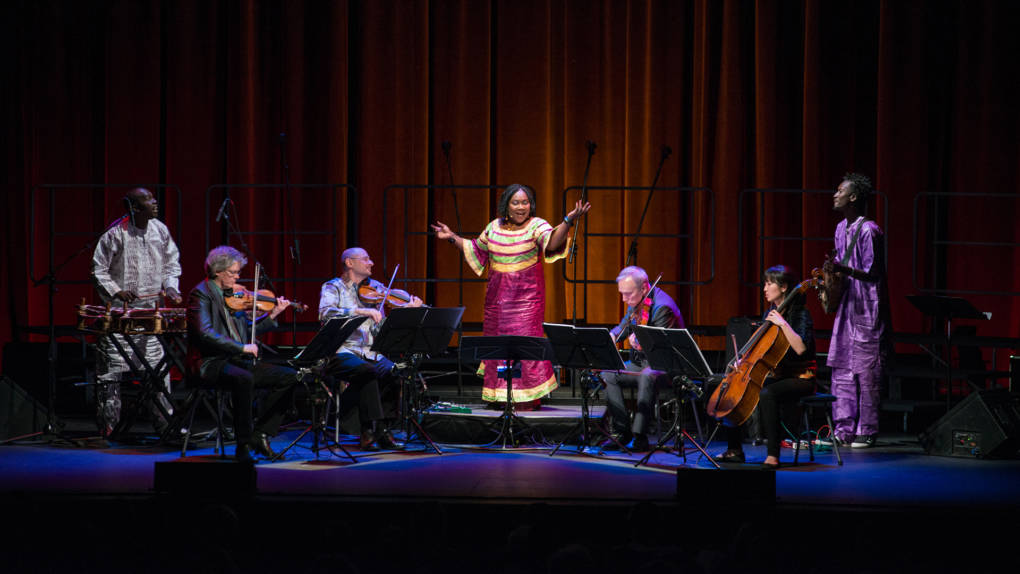
"caption": "Kronos Quartet performs with Trio Da Kali's Hawa Kassé Mady Diabaté.",
"description": "Kronos Quartet performs with Trio Da Kali. The singer, Hawa Kasse Mady Diabate, recently was unable to join them for a concert at SFJAZZ due to visa delays.",
"title": "kronos trio da kali credit_Lenny_Gonzalez_13_12.7_0450B",
"credit": "Lenny Gonzalez",
"status": "inherit",
"altTag": "Kronos Quartet performs with Trio Da Kali. The singer, Hawa Kasse Mady Diabate, recently was unable to join them for a concert at SFJAZZ due to visa delays.",
"isLoading": false,
"fetchFailed": false
},
"arts_13858816": {
"type": "attachments",
"id": "arts_13858816",
"meta": {
"index": "attachments_1716263798",
"site": "arts",
"id": "13858816",
"found": true
},
"parent": 13858815,
"imgSizes": {
"twentyfourteen-full-width": {
"file": "https://ww2.kqed.org/app/uploads/sites/2/2019/06/wtsu_101_unit_00825r_wide-4c7827427f90d080d78694696f18949c6f301161-1038x576.jpg",
"width": 1038,
"mimeType": "image/jpeg",
"height": 576
},
"thumbnail": {
"file": "https://ww2.kqed.org/app/uploads/sites/2/2019/06/wtsu_101_unit_00825r_wide-4c7827427f90d080d78694696f18949c6f301161-160x90.jpg",
"width": 160,
"mimeType": "image/jpeg",
"height": 90
},
"post-thumbnail": {
"file": "https://ww2.kqed.org/app/uploads/sites/2/2019/06/wtsu_101_unit_00825r_wide-4c7827427f90d080d78694696f18949c6f301161-672x372.jpg",
"width": 672,
"mimeType": "image/jpeg",
"height": 372
},
"kqedFullSize": {
"file": "https://ww2.kqed.org/app/uploads/sites/2/2019/06/wtsu_101_unit_00825r_wide-4c7827427f90d080d78694696f18949c6f301161-e1559585396690.jpg",
"width": 1920,
"height": 1080
},
"large": {
"file": "https://ww2.kqed.org/app/uploads/sites/2/2019/06/wtsu_101_unit_00825r_wide-4c7827427f90d080d78694696f18949c6f301161-1020x574.jpg",
"width": 1020,
"mimeType": "image/jpeg",
"height": 574
},
"complete_open_graph": {
"file": "https://ww2.kqed.org/app/uploads/sites/2/2019/06/wtsu_101_unit_00825r_wide-4c7827427f90d080d78694696f18949c6f301161-1200x675.jpg",
"width": 1200,
"mimeType": "image/jpeg",
"height": 675
},
"full-width": {
"file": "https://ww2.kqed.org/app/uploads/sites/2/2019/06/wtsu_101_unit_00825r_wide-4c7827427f90d080d78694696f18949c6f301161-1920x1080.jpg",
"width": 1920,
"mimeType": "image/jpeg",
"height": 1080
},
"medium": {
"file": "https://ww2.kqed.org/app/uploads/sites/2/2019/06/wtsu_101_unit_00825r_wide-4c7827427f90d080d78694696f18949c6f301161-800x450.jpg",
"width": 800,
"mimeType": "image/jpeg",
"height": 450
},
"medium_large": {
"file": "https://ww2.kqed.org/app/uploads/sites/2/2019/06/wtsu_101_unit_00825r_wide-4c7827427f90d080d78694696f18949c6f301161-768x432.jpg",
"width": 768,
"mimeType": "image/jpeg",
"height": 432
}
},
"publishDate": 1559585335,
"modified": 1559585388,
"caption": "Asante Blackk plays young Kevin Richardson, one of the boys imprisoned for years only to be released when another man finally confessed.",
"description": "Asante Blackk plays young Kevin Richardson, one of the boys imprisoned for years only to be released when another man finally confessed.",
"title": "Asante Blackk plays young Kevin Richardson, one of the boys imprisoned for years only to be released when another man finally confessed.",
"credit": "Atsushi Nishijima/Netflix",
"status": "inherit",
"isLoading": false,
"fetchFailed": false
},
"arts_13854766": {
"type": "attachments",
"id": "arts_13854766",
"meta": {
"index": "attachments_1716263798",
"site": "arts",
"id": "13854766",
"found": true
},
"parent": 13854762,
"imgSizes": {
"twentyfourteen-full-width": {
"file": "https://ww2.kqed.org/app/uploads/sites/2/2019/04/GettyImages-922909304-1024x576.jpg",
"width": 1024,
"mimeType": "image/jpeg",
"height": 576
},
"thumbnail": {
"file": "https://ww2.kqed.org/app/uploads/sites/2/2019/04/GettyImages-922909304-160x107.jpg",
"width": 160,
"mimeType": "image/jpeg",
"height": 107
},
"post-thumbnail": {
"file": "https://ww2.kqed.org/app/uploads/sites/2/2019/04/GettyImages-922909304-672x372.jpg",
"width": 672,
"mimeType": "image/jpeg",
"height": 372
},
"kqedFullSize": {
"file": "https://ww2.kqed.org/app/uploads/sites/2/2019/04/GettyImages-922909304.jpg",
"width": 1024,
"height": 683
},
"large": {
"file": "https://ww2.kqed.org/app/uploads/sites/2/2019/04/GettyImages-922909304-1020x680.jpg",
"width": 1020,
"mimeType": "image/jpeg",
"height": 680
},
"guest-author-50": {
"file": "https://ww2.kqed.org/app/uploads/sites/2/2019/04/GettyImages-922909304-50x50.jpg",
"width": 50,
"mimeType": "image/jpeg",
"height": 50
},
"guest-author-96": {
"file": "https://ww2.kqed.org/app/uploads/sites/2/2019/04/GettyImages-922909304-96x96.jpg",
"width": 96,
"mimeType": "image/jpeg",
"height": 96
},
"medium": {
"file": "https://ww2.kqed.org/app/uploads/sites/2/2019/04/GettyImages-922909304-800x534.jpg",
"width": 800,
"mimeType": "image/jpeg",
"height": 534
},
"guest-author-64": {
"file": "https://ww2.kqed.org/app/uploads/sites/2/2019/04/GettyImages-922909304-64x64.jpg",
"width": 64,
"mimeType": "image/jpeg",
"height": 64
},
"guest-author-32": {
"file": "https://ww2.kqed.org/app/uploads/sites/2/2019/04/GettyImages-922909304-32x32.jpg",
"width": 32,
"mimeType": "image/jpeg",
"height": 32
},
"medium_large": {
"file": "https://ww2.kqed.org/app/uploads/sites/2/2019/04/GettyImages-922909304-768x512.jpg",
"width": 768,
"mimeType": "image/jpeg",
"height": 512
},
"guest-author-128": {
"file": "https://ww2.kqed.org/app/uploads/sites/2/2019/04/GettyImages-922909304-128x128.jpg",
"width": 128,
"mimeType": "image/jpeg",
"height": 128
}
},
"publishDate": 1554940140,
"modified": 1554940468,
"caption": "A Batman costume from the 1995 Batman Forever film on display in 'Dawn Of Super Heroes' at the O2 Arena on February 22, 2018 in London, England. ",
"description": "A Batman costume from the 1995 Batman Forever film on display in 'Dawn Of Super Heroes' at the O2 Arena on February 22, 2018 in London, England. ",
"title": "DC Comics Exhibition: Dawn Of Super Heroes Launches At The o2",
"credit": "Photo by Jack Taylor/Getty Images",
"status": "inherit",
"isLoading": false,
"fetchFailed": false
},
"arts_13849653": {
"type": "attachments",
"id": "arts_13849653",
"meta": {
"index": "attachments_1716263798",
"site": "arts",
"id": "13849653",
"found": true
},
"parent": 13849625,
"imgSizes": {
"twentyfourteen-full-width": {
"file": "https://ww2.kqed.org/app/uploads/sites/2/2019/01/Pandora.MAIN_-1038x576.jpg",
"width": 1038,
"mimeType": "image/jpeg",
"height": 576
},
"thumbnail": {
"file": "https://ww2.kqed.org/app/uploads/sites/2/2019/01/Pandora.MAIN_-160x90.jpg",
"width": 160,
"mimeType": "image/jpeg",
"height": 90
},
"post-thumbnail": {
"file": "https://ww2.kqed.org/app/uploads/sites/2/2019/01/Pandora.MAIN_-672x372.jpg",
"width": 672,
"mimeType": "image/jpeg",
"height": 372
},
"kqedFullSize": {
"file": "https://ww2.kqed.org/app/uploads/sites/2/2019/01/Pandora.MAIN_.jpg",
"width": 1920,
"height": 1080
},
"large": {
"file": "https://ww2.kqed.org/app/uploads/sites/2/2019/01/Pandora.MAIN_-1020x574.jpg",
"width": 1020,
"mimeType": "image/jpeg",
"height": 574
},
"complete_open_graph": {
"file": "https://ww2.kqed.org/app/uploads/sites/2/2019/01/Pandora.MAIN_-1200x675.jpg",
"width": 1200,
"mimeType": "image/jpeg",
"height": 675
},
"guest-author-50": {
"file": "https://ww2.kqed.org/app/uploads/sites/2/2019/01/Pandora.MAIN_-50x50.jpg",
"width": 50,
"mimeType": "image/jpeg",
"height": 50
},
"guest-author-96": {
"file": "https://ww2.kqed.org/app/uploads/sites/2/2019/01/Pandora.MAIN_-96x96.jpg",
"width": 96,
"mimeType": "image/jpeg",
"height": 96
},
"medium": {
"file": "https://ww2.kqed.org/app/uploads/sites/2/2019/01/Pandora.MAIN_-800x450.jpg",
"width": 800,
"mimeType": "image/jpeg",
"height": 450
},
"guest-author-64": {
"file": "https://ww2.kqed.org/app/uploads/sites/2/2019/01/Pandora.MAIN_-64x64.jpg",
"width": 64,
"mimeType": "image/jpeg",
"height": 64
},
"guest-author-32": {
"file": "https://ww2.kqed.org/app/uploads/sites/2/2019/01/Pandora.MAIN_-32x32.jpg",
"width": 32,
"mimeType": "image/jpeg",
"height": 32
},
"full-width": {
"file": "https://ww2.kqed.org/app/uploads/sites/2/2019/01/Pandora.MAIN_-1920x1080.jpg",
"width": 1920,
"mimeType": "image/jpeg",
"height": 1080
},
"detail": {
"file": "https://ww2.kqed.org/app/uploads/sites/2/2019/01/Pandora.MAIN_-150x150.jpg",
"width": 150,
"mimeType": "image/jpeg",
"height": 150
},
"medium_large": {
"file": "https://ww2.kqed.org/app/uploads/sites/2/2019/01/Pandora.MAIN_-768x432.jpg",
"width": 768,
"mimeType": "image/jpeg",
"height": 432
},
"guest-author-128": {
"file": "https://ww2.kqed.org/app/uploads/sites/2/2019/01/Pandora.MAIN_-128x128.jpg",
"width": 128,
"mimeType": "image/jpeg",
"height": 128
}
},
"publishDate": 1548744369,
"modified": 1548744455,
"caption": "The Pandora logo at the New York Stock Exchange on the company's first public day of trading in 2011. Subscription radio company SiriusXM says it’s buying music streaming service Pandora Media Inc. in a stock deal valued at about $3.5 billion that’ll allow it to expand its service beyond cars and into homes and other mobile areas. ",
"description": "The Pandora logo at the New York Stock Exchange on the company's first public day of trading in 2011. Subscription radio company SiriusXM says it’s buying music streaming service Pandora Media Inc. in a stock deal valued at about $3.5 billion that’ll allow it to expand its service beyond cars and into homes and other mobile areas. ",
"title": "Pandora.MAIN",
"credit": "Spencer Platt/Getty Images",
"status": "inherit",
"isLoading": false,
"fetchFailed": false
},
"arts_13849293": {
"type": "attachments",
"id": "arts_13849293",
"meta": {
"index": "attachments_1716263798",
"site": "arts",
"id": "13849293",
"found": true
},
"parent": 13849264,
"imgSizes": {
"thumbnail": {
"file": "https://ww2.kqed.org/app/uploads/sites/2/2019/01/JulieFry-160x90.jpg",
"width": 160,
"mimeType": "image/jpeg",
"height": 90
},
"post-thumbnail": {
"file": "https://ww2.kqed.org/app/uploads/sites/2/2019/01/JulieFry-672x372.jpg",
"width": 672,
"mimeType": "image/jpeg",
"height": 372
},
"kqedFullSize": {
"file": "https://ww2.kqed.org/app/uploads/sites/2/2019/01/JulieFry.jpg",
"width": 800,
"height": 451
},
"guest-author-50": {
"file": "https://ww2.kqed.org/app/uploads/sites/2/2019/01/JulieFry-50x50.jpg",
"width": 50,
"mimeType": "image/jpeg",
"height": 50
},
"guest-author-96": {
"file": "https://ww2.kqed.org/app/uploads/sites/2/2019/01/JulieFry-96x96.jpg",
"width": 96,
"mimeType": "image/jpeg",
"height": 96
},
"medium": {
"file": "https://ww2.kqed.org/app/uploads/sites/2/2019/01/JulieFry-800x451.jpg",
"width": 800,
"mimeType": "image/jpeg",
"height": 451
},
"guest-author-64": {
"file": "https://ww2.kqed.org/app/uploads/sites/2/2019/01/JulieFry-64x64.jpg",
"width": 64,
"mimeType": "image/jpeg",
"height": 64
},
"detail": {
"file": "https://ww2.kqed.org/app/uploads/sites/2/2019/01/JulieFry-150x150.jpg",
"width": 150,
"mimeType": "image/jpeg",
"height": 150
},
"guest-author-32": {
"file": "https://ww2.kqed.org/app/uploads/sites/2/2019/01/JulieFry-32x32.jpg",
"width": 32,
"mimeType": "image/jpeg",
"height": 32
},
"medium_large": {
"file": "https://ww2.kqed.org/app/uploads/sites/2/2019/01/JulieFry-768x433.jpg",
"width": 768,
"mimeType": "image/jpeg",
"height": 433
},
"guest-author-128": {
"file": "https://ww2.kqed.org/app/uploads/sites/2/2019/01/JulieFry-128x128.jpg",
"width": 128,
"mimeType": "image/jpeg",
"height": 128
}
},
"publishDate": 1548279798,
"modified": 1548279838,
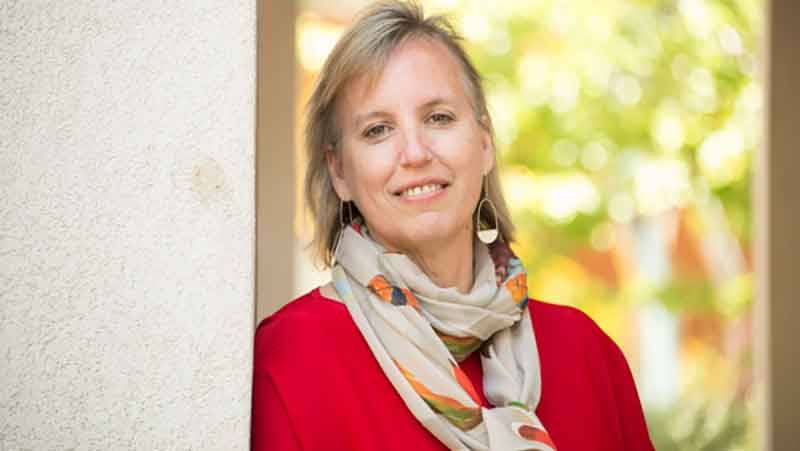
"caption": "Julie Fry, president and CEO of California Humanities: 'We’re making do with what paper towels we already have.'",
"description": "Julie Fry, president and CEO of California Humanities: 'We’re making do with what paper towels we already have.'",
"title": "JulieFry",
"credit": "Terry Lorant / Courtesy California Humanities ",
"status": "inherit",
"isLoading": false,
"fetchFailed": false
},
"arts_13849183": {
"type": "attachments",
"id": "arts_13849183",
"meta": {
"index": "attachments_1716263798",
"site": "arts",
"id": "13849183",
"found": true
},
"parent": 13849176,
"imgSizes": {
"twentyfourteen-full-width": {
"file": "https://ww2.kqed.org/app/uploads/sites/2/2019/01/juanita-more-1038x576.jpg",
"width": 1038,
"mimeType": "image/jpeg",
"height": 576
},
"thumbnail": {
"file": "https://ww2.kqed.org/app/uploads/sites/2/2019/01/juanita-more-160x90.jpg",
"width": 160,
"mimeType": "image/jpeg",
"height": 90
},
"post-thumbnail": {
"file": "https://ww2.kqed.org/app/uploads/sites/2/2019/01/juanita-more-672x372.jpg",
"width": 672,
"mimeType": "image/jpeg",
"height": 372
},
"kqedFullSize": {
"file": "https://ww2.kqed.org/app/uploads/sites/2/2019/01/juanita-more.jpg",
"width": 1920,
"height": 1080
},
"large": {
"file": "https://ww2.kqed.org/app/uploads/sites/2/2019/01/juanita-more-1020x574.jpg",
"width": 1020,
"mimeType": "image/jpeg",
"height": 574
},
"complete_open_graph": {
"file": "https://ww2.kqed.org/app/uploads/sites/2/2019/01/juanita-more-1200x675.jpg",
"width": 1200,
"mimeType": "image/jpeg",
"height": 675
},
"guest-author-50": {
"file": "https://ww2.kqed.org/app/uploads/sites/2/2019/01/juanita-more-50x50.jpg",
"width": 50,
"mimeType": "image/jpeg",
"height": 50
},
"guest-author-96": {
"file": "https://ww2.kqed.org/app/uploads/sites/2/2019/01/juanita-more-96x96.jpg",
"width": 96,
"mimeType": "image/jpeg",
"height": 96
},
"medium": {
"file": "https://ww2.kqed.org/app/uploads/sites/2/2019/01/juanita-more-800x450.jpg",
"width": 800,
"mimeType": "image/jpeg",
"height": 450
},
"guest-author-64": {
"file": "https://ww2.kqed.org/app/uploads/sites/2/2019/01/juanita-more-64x64.jpg",
"width": 64,
"mimeType": "image/jpeg",
"height": 64
},
"guest-author-32": {
"file": "https://ww2.kqed.org/app/uploads/sites/2/2019/01/juanita-more-32x32.jpg",
"width": 32,
"mimeType": "image/jpeg",
"height": 32
},
"full-width": {
"file": "https://ww2.kqed.org/app/uploads/sites/2/2019/01/juanita-more-1920x1080.jpg",
"width": 1920,
"mimeType": "image/jpeg",
"height": 1080
},
"detail": {
"file": "https://ww2.kqed.org/app/uploads/sites/2/2019/01/juanita-more-150x150.jpg",
"width": 150,
"mimeType": "image/jpeg",
"height": 150
},
"medium_large": {
"file": "https://ww2.kqed.org/app/uploads/sites/2/2019/01/juanita-more-768x432.jpg",
"width": 768,
"mimeType": "image/jpeg",
"height": 432
},
"guest-author-128": {
"file": "https://ww2.kqed.org/app/uploads/sites/2/2019/01/juanita-more-128x128.jpg",
"width": 128,
"mimeType": "image/jpeg",
"height": 128
}
},
"publishDate": 1548190936,
"modified": 1548191235,
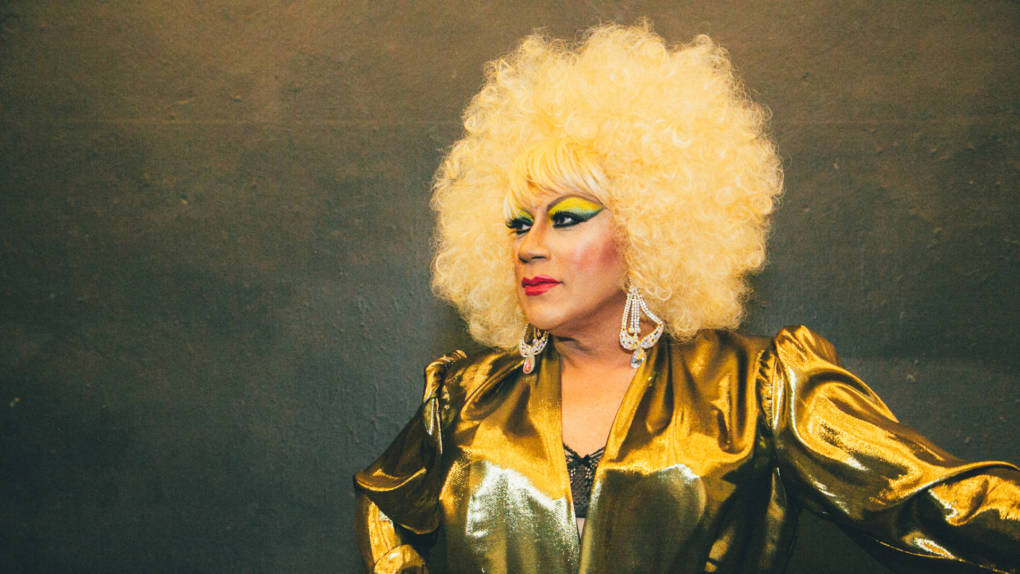
"caption": "Celebrated drag performer Juanita MORE! calls out President Trump's ban on transgender people in the military as an attack on her community's civil rights. ",
"description": "Celebrated drag performer Juanita MORE! calls out President Trump's ban on transgender people in the military as an attack on her community's civil rights. ",
"title": "juanita more",
"credit": "Christina Campbell/KQED",
"status": "inherit",
"isLoading": false,
"fetchFailed": false
},
"arts_13844835": {
"type": "attachments",
"id": "arts_13844835",
"meta": {
"index": "attachments_1716263798",
"site": "arts",
"id": "13844835",
"found": true
},
"parent": 13844800,
"imgSizes": {
"small": {
"file": "https://ww2.kqed.org/app/uploads/sites/2/2018/11/sisters-stormy-520x293.jpg",
"width": 520,
"mimeType": "image/jpeg",
"height": 293
},
"twentyfourteen-full-width": {
"file": "https://ww2.kqed.org/app/uploads/sites/2/2018/11/sisters-stormy-1038x576.jpg",
"width": 1038,
"mimeType": "image/jpeg",
"height": 576
},
"thumbnail": {
"file": "https://ww2.kqed.org/app/uploads/sites/2/2018/11/sisters-stormy-160x90.jpg",
"width": 160,
"mimeType": "image/jpeg",
"height": 90
},
"fd-sm": {
"file": "https://ww2.kqed.org/app/uploads/sites/2/2018/11/sisters-stormy-960x540.jpg",
"width": 960,
"mimeType": "image/jpeg",
"height": 540
},
"post-thumbnail": {
"file": "https://ww2.kqed.org/app/uploads/sites/2/2018/11/sisters-stormy-672x372.jpg",
"width": 672,
"mimeType": "image/jpeg",
"height": 372
},
"xsmall": {
"file": "https://ww2.kqed.org/app/uploads/sites/2/2018/11/sisters-stormy-375x211.jpg",
"width": 375,
"mimeType": "image/jpeg",
"height": 211
},
"kqedFullSize": {
"file": "https://ww2.kqed.org/app/uploads/sites/2/2018/11/sisters-stormy.jpg",
"width": 1920,
"height": 1080
},
"large": {
"file": "https://ww2.kqed.org/app/uploads/sites/2/2018/11/sisters-stormy-1020x574.jpg",
"width": 1020,
"mimeType": "image/jpeg",
"height": 574
},
"xlarge": {
"file": "https://ww2.kqed.org/app/uploads/sites/2/2018/11/sisters-stormy-1180x664.jpg",
"width": 1180,
"mimeType": "image/jpeg",
"height": 664
},
"complete_open_graph": {
"file": "https://ww2.kqed.org/app/uploads/sites/2/2018/11/sisters-stormy-1200x675.jpg",
"width": 1200,
"mimeType": "image/jpeg",
"height": 675
},
"guest-author-50": {
"file": "https://ww2.kqed.org/app/uploads/sites/2/2018/11/sisters-stormy-50x50.jpg",
"width": 50,
"mimeType": "image/jpeg",
"height": 50
},
"guest-author-96": {
"file": "https://ww2.kqed.org/app/uploads/sites/2/2018/11/sisters-stormy-96x96.jpg",
"width": 96,
"mimeType": "image/jpeg",
"height": 96
},
"medium": {
"file": "https://ww2.kqed.org/app/uploads/sites/2/2018/11/sisters-stormy-800x450.jpg",
"width": 800,
"mimeType": "image/jpeg",
"height": 450
},
"guest-author-64": {
"file": "https://ww2.kqed.org/app/uploads/sites/2/2018/11/sisters-stormy-64x64.jpg",
"width": 64,
"mimeType": "image/jpeg",
"height": 64
},
"guest-author-32": {
"file": "https://ww2.kqed.org/app/uploads/sites/2/2018/11/sisters-stormy-32x32.jpg",
"width": 32,
"mimeType": "image/jpeg",
"height": 32
},
"fd-lrg": {
"file": "https://ww2.kqed.org/app/uploads/sites/2/2018/11/sisters-stormy-1920x1080.jpg",
"width": 1920,
"mimeType": "image/jpeg",
"height": 1080
},
"fd-med": {
"file": "https://ww2.kqed.org/app/uploads/sites/2/2018/11/sisters-stormy-1180x664.jpg",
"width": 1180,
"mimeType": "image/jpeg",
"height": 664
},
"full-width": {
"file": "https://ww2.kqed.org/app/uploads/sites/2/2018/11/sisters-stormy-1920x1080.jpg",
"width": 1920,
"mimeType": "image/jpeg",
"height": 1080
},
"detail": {
"file": "https://ww2.kqed.org/app/uploads/sites/2/2018/11/sisters-stormy-150x150.jpg",
"width": 150,
"mimeType": "image/jpeg",
"height": 150
},
"medium_large": {
"file": "https://ww2.kqed.org/app/uploads/sites/2/2018/11/sisters-stormy-768x432.jpg",
"width": 768,
"mimeType": "image/jpeg",
"height": 432
},
"guest-author-128": {
"file": "https://ww2.kqed.org/app/uploads/sites/2/2018/11/sisters-stormy-128x128.jpg",
"width": 128,
"mimeType": "image/jpeg",
"height": 128
},
"xxsmall": {
"file": "https://ww2.kqed.org/app/uploads/sites/2/2018/11/sisters-stormy-240x135.jpg",
"width": 240,
"mimeType": "image/jpeg",
"height": 135
}
},
"publishDate": 1542153300,
"modified": 1542157833,
"caption": "The Sisters of Perpetual Indulgence, a group of drag-queen activists, canonized Stormy Daniels as a saint at her Nov. 10 San Francisco gig. ",
"description": "The Sisters of Perpetual Indulgence, a group of drag-queen activists, canonized Stormy Daniels as a saint at her Nov. 10 San Francisco gig. ",
"title": "sisters stormy",
"credit": "Sister Desi Juana",
"status": "inherit",
"isLoading": false,
"fetchFailed": false
},
"arts_13842584": {
"type": "attachments",
"id": "arts_13842584",
"meta": {
"index": "attachments_1716263798",
"site": "arts",
"id": "13842584",
"found": true
},
"parent": 13842577,
"imgSizes": {
"small": {
"file": "https://ww2.kqed.org/app/uploads/sites/2/2018/10/GettyImages-1051895736-520x293.jpg",
"width": 520,
"mimeType": "image/jpeg",
"height": 293
},
"twentyfourteen-full-width": {
"file": "https://ww2.kqed.org/app/uploads/sites/2/2018/10/GettyImages-1051895736-1038x576.jpg",
"width": 1038,
"mimeType": "image/jpeg",
"height": 576
},
"thumbnail": {
"file": "https://ww2.kqed.org/app/uploads/sites/2/2018/10/GettyImages-1051895736-160x90.jpg",
"width": 160,
"mimeType": "image/jpeg",
"height": 90
},
"fd-sm": {
"file": "https://ww2.kqed.org/app/uploads/sites/2/2018/10/GettyImages-1051895736-960x540.jpg",
"width": 960,
"mimeType": "image/jpeg",
"height": 540
},
"post-thumbnail": {
"file": "https://ww2.kqed.org/app/uploads/sites/2/2018/10/GettyImages-1051895736-672x372.jpg",
"width": 672,
"mimeType": "image/jpeg",
"height": 372
},
"xsmall": {
"file": "https://ww2.kqed.org/app/uploads/sites/2/2018/10/GettyImages-1051895736-375x211.jpg",
"width": 375,
"mimeType": "image/jpeg",
"height": 211
},
"kqedFullSize": {
"file": "https://ww2.kqed.org/app/uploads/sites/2/2018/10/GettyImages-1051895736.jpg",
"width": 1920,
"height": 1080
},
"large": {
"file": "https://ww2.kqed.org/app/uploads/sites/2/2018/10/GettyImages-1051895736-1020x574.jpg",
"width": 1020,
"mimeType": "image/jpeg",
"height": 574
},
"xlarge": {
"file": "https://ww2.kqed.org/app/uploads/sites/2/2018/10/GettyImages-1051895736-1180x664.jpg",
"width": 1180,
"mimeType": "image/jpeg",
"height": 664
},
"complete_open_graph": {
"file": "https://ww2.kqed.org/app/uploads/sites/2/2018/10/GettyImages-1051895736-1200x675.jpg",
"width": 1200,
"mimeType": "image/jpeg",
"height": 675
},
"guest-author-50": {
"file": "https://ww2.kqed.org/app/uploads/sites/2/2018/10/GettyImages-1051895736-50x50.jpg",
"width": 50,
"mimeType": "image/jpeg",
"height": 50
},
"guest-author-96": {
"file": "https://ww2.kqed.org/app/uploads/sites/2/2018/10/GettyImages-1051895736-96x96.jpg",
"width": 96,
"mimeType": "image/jpeg",
"height": 96
},
"medium": {
"file": "https://ww2.kqed.org/app/uploads/sites/2/2018/10/GettyImages-1051895736-800x450.jpg",
"width": 800,
"mimeType": "image/jpeg",
"height": 450
},
"guest-author-64": {
"file": "https://ww2.kqed.org/app/uploads/sites/2/2018/10/GettyImages-1051895736-64x64.jpg",
"width": 64,
"mimeType": "image/jpeg",
"height": 64
},
"guest-author-32": {
"file": "https://ww2.kqed.org/app/uploads/sites/2/2018/10/GettyImages-1051895736-32x32.jpg",
"width": 32,
"mimeType": "image/jpeg",
"height": 32
},
"fd-lrg": {
"file": "https://ww2.kqed.org/app/uploads/sites/2/2018/10/GettyImages-1051895736-1920x1080.jpg",
"width": 1920,
"mimeType": "image/jpeg",
"height": 1080
},
"fd-med": {
"file": "https://ww2.kqed.org/app/uploads/sites/2/2018/10/GettyImages-1051895736-1180x664.jpg",
"width": 1180,
"mimeType": "image/jpeg",
"height": 664
},
"full-width": {
"file": "https://ww2.kqed.org/app/uploads/sites/2/2018/10/GettyImages-1051895736-1920x1080.jpg",
"width": 1920,
"mimeType": "image/jpeg",
"height": 1080
},
"detail": {
"file": "https://ww2.kqed.org/app/uploads/sites/2/2018/10/GettyImages-1051895736-150x150.jpg",
"width": 150,
"mimeType": "image/jpeg",
"height": 150
},
"medium_large": {
"file": "https://ww2.kqed.org/app/uploads/sites/2/2018/10/GettyImages-1051895736-768x432.jpg",
"width": 768,
"mimeType": "image/jpeg",
"height": 432
},
"guest-author-128": {
"file": "https://ww2.kqed.org/app/uploads/sites/2/2018/10/GettyImages-1051895736-128x128.jpg",
"width": 128,
"mimeType": "image/jpeg",
"height": 128
},
"xxsmall": {
"file": "https://ww2.kqed.org/app/uploads/sites/2/2018/10/GettyImages-1051895736-240x135.jpg",
"width": 240,
"mimeType": "image/jpeg",
"height": 135
}
},
"publishDate": 1539284429,
"modified": 1539284489,
"caption": "Kanye West stands up as he speaks during a meeting with Donald Trump in the Oval office of the White House on October 11, 2018 in Washington, DC.",
"description": "Kanye West stands up as he speaks during a meeting with Donald Trump in the Oval office of the White House on October 11, 2018 in Washington, DC.",
"title": "President Trump Hosts Kanye West And Former Football Player Jim Brown At The White House",
"credit": " Oliver Contreras - Pool/Getty Images",
"status": "inherit",
"isLoading": false,
"fetchFailed": false
},
"arts_13837436": {
"type": "attachments",
"id": "arts_13837436",
"meta": {
"index": "attachments_1716263798",
"site": "arts",
"id": "13837436",
"found": true
},
"parent": 13837432,
"imgSizes": {
"small": {
"file": "https://ww2.kqed.org/app/uploads/sites/2/2018/07/GettyImages-997477628-520x347.jpg",
"width": 520,
"mimeType": "image/jpeg",
"height": 347
},
"twentyfourteen-full-width": {
"file": "https://ww2.kqed.org/app/uploads/sites/2/2018/07/GettyImages-997477628-1024x576.jpg",
"width": 1024,
"mimeType": "image/jpeg",
"height": 576
},
"thumbnail": {
"file": "https://ww2.kqed.org/app/uploads/sites/2/2018/07/GettyImages-997477628-160x107.jpg",
"width": 160,
"mimeType": "image/jpeg",
"height": 107
},
"fd-sm": {
"file": "https://ww2.kqed.org/app/uploads/sites/2/2018/07/GettyImages-997477628-960x640.jpg",
"width": 960,
"mimeType": "image/jpeg",
"height": 640
},
"post-thumbnail": {
"file": "https://ww2.kqed.org/app/uploads/sites/2/2018/07/GettyImages-997477628-672x372.jpg",
"width": 672,
"mimeType": "image/jpeg",
"height": 372
},
"xsmall": {
"file": "https://ww2.kqed.org/app/uploads/sites/2/2018/07/GettyImages-997477628-375x250.jpg",
"width": 375,
"mimeType": "image/jpeg",
"height": 250
},
"kqedFullSize": {
"file": "https://ww2.kqed.org/app/uploads/sites/2/2018/07/GettyImages-997477628.jpg",
"width": 1024,
"height": 683
},
"large": {
"file": "https://ww2.kqed.org/app/uploads/sites/2/2018/07/GettyImages-997477628-1020x680.jpg",
"width": 1020,
"mimeType": "image/jpeg",
"height": 680
},
"guest-author-50": {
"file": "https://ww2.kqed.org/app/uploads/sites/2/2018/07/GettyImages-997477628-50x50.jpg",
"width": 50,
"mimeType": "image/jpeg",
"height": 50
},
"guest-author-96": {
"file": "https://ww2.kqed.org/app/uploads/sites/2/2018/07/GettyImages-997477628-96x96.jpg",
"width": 96,
"mimeType": "image/jpeg",
"height": 96
},
"medium": {
"file": "https://ww2.kqed.org/app/uploads/sites/2/2018/07/GettyImages-997477628-800x534.jpg",
"width": 800,
"mimeType": "image/jpeg",
"height": 534
},
"guest-author-64": {
"file": "https://ww2.kqed.org/app/uploads/sites/2/2018/07/GettyImages-997477628-64x64.jpg",
"width": 64,
"mimeType": "image/jpeg",
"height": 64
},
"guest-author-32": {
"file": "https://ww2.kqed.org/app/uploads/sites/2/2018/07/GettyImages-997477628-32x32.jpg",
"width": 32,
"mimeType": "image/jpeg",
"height": 32
},
"detail": {
"file": "https://ww2.kqed.org/app/uploads/sites/2/2018/07/GettyImages-997477628-150x150.jpg",
"width": 150,
"mimeType": "image/jpeg",
"height": 150
},
"medium_large": {
"file": "https://ww2.kqed.org/app/uploads/sites/2/2018/07/GettyImages-997477628-768x512.jpg",
"width": 768,
"mimeType": "image/jpeg",
"height": 512
},
"guest-author-128": {
"file": "https://ww2.kqed.org/app/uploads/sites/2/2018/07/GettyImages-997477628-128x128.jpg",
"width": 128,
"mimeType": "image/jpeg",
"height": 128
},
"xxsmall": {
"file": "https://ww2.kqed.org/app/uploads/sites/2/2018/07/GettyImages-997477628-240x160.jpg",
"width": 240,
"mimeType": "image/jpeg",
"height": 160
}
},
"publishDate": 1532107935,
"modified": 1532108106,
"caption": "Activists say they are bringing replicas of the Trump baby blimp stateside.",
"description": null,
"title": "BRITAIN-US-DIPLOMACY-TRUMP",
"credit": "(TOLGA AKMEN/AFP/Getty Images",
"status": "inherit",
"isLoading": false,
"fetchFailed": false
},
"arts_13836569": {
"type": "attachments",
"id": "arts_13836569",
"meta": {
"index": "attachments_1716263798",
"site": "arts",
"id": "13836569",
"found": true
},
"parent": 13836568,
"imgSizes": {
"small": {
"file": "https://ww2.kqed.org/app/uploads/sites/2/2018/07/trump-baby-cf8905cf3158c1de02cec89d4856cca13744bd01-520x390.jpg",
"width": 520,
"mimeType": "image/jpeg",
"height": 390
},
"twentyfourteen-full-width": {
"file": "https://ww2.kqed.org/app/uploads/sites/2/2018/07/trump-baby-cf8905cf3158c1de02cec89d4856cca13744bd01-1038x576.jpg",
"width": 1038,
"mimeType": "image/jpeg",
"height": 576
},
"thumbnail": {
"file": "https://ww2.kqed.org/app/uploads/sites/2/2018/07/trump-baby-cf8905cf3158c1de02cec89d4856cca13744bd01-160x120.jpg",
"width": 160,
"mimeType": "image/jpeg",
"height": 120
},
"fd-sm": {
"file": "https://ww2.kqed.org/app/uploads/sites/2/2018/07/trump-baby-cf8905cf3158c1de02cec89d4856cca13744bd01-960x720.jpg",
"width": 960,
"mimeType": "image/jpeg",
"height": 720
},
"post-thumbnail": {
"file": "https://ww2.kqed.org/app/uploads/sites/2/2018/07/trump-baby-cf8905cf3158c1de02cec89d4856cca13744bd01-672x372.jpg",
"width": 672,
"mimeType": "image/jpeg",
"height": 372
},
"xsmall": {
"file": "https://ww2.kqed.org/app/uploads/sites/2/2018/07/trump-baby-cf8905cf3158c1de02cec89d4856cca13744bd01-375x281.jpg",
"width": 375,
"mimeType": "image/jpeg",
"height": 281
},
"kqedFullSize": {
"file": "https://ww2.kqed.org/app/uploads/sites/2/2018/07/trump-baby-cf8905cf3158c1de02cec89d4856cca13744bd01.jpg",
"width": 2048,
"height": 1536
},
"large": {
"file": "https://ww2.kqed.org/app/uploads/sites/2/2018/07/trump-baby-cf8905cf3158c1de02cec89d4856cca13744bd01-1020x765.jpg",
"width": 1020,
"mimeType": "image/jpeg",
"height": 765
},
"xlarge": {
"file": "https://ww2.kqed.org/app/uploads/sites/2/2018/07/trump-baby-cf8905cf3158c1de02cec89d4856cca13744bd01-1180x885.jpg",
"width": 1180,
"mimeType": "image/jpeg",
"height": 885
},
"complete_open_graph": {
"file": "https://ww2.kqed.org/app/uploads/sites/2/2018/07/trump-baby-cf8905cf3158c1de02cec89d4856cca13744bd01-1200x900.jpg",
"width": 1200,
"mimeType": "image/jpeg",
"height": 900
},
"guest-author-50": {
"file": "https://ww2.kqed.org/app/uploads/sites/2/2018/07/trump-baby-cf8905cf3158c1de02cec89d4856cca13744bd01-50x50.jpg",
"width": 50,
"mimeType": "image/jpeg",
"height": 50
},
"guest-author-96": {
"file": "https://ww2.kqed.org/app/uploads/sites/2/2018/07/trump-baby-cf8905cf3158c1de02cec89d4856cca13744bd01-96x96.jpg",
"width": 96,
"mimeType": "image/jpeg",
"height": 96
},
"medium": {
"file": "https://ww2.kqed.org/app/uploads/sites/2/2018/07/trump-baby-cf8905cf3158c1de02cec89d4856cca13744bd01-800x600.jpg",
"width": 800,
"mimeType": "image/jpeg",
"height": 600
},
"guest-author-64": {
"file": "https://ww2.kqed.org/app/uploads/sites/2/2018/07/trump-baby-cf8905cf3158c1de02cec89d4856cca13744bd01-64x64.jpg",
"width": 64,
"mimeType": "image/jpeg",
"height": 64
},
"guest-author-32": {
"file": "https://ww2.kqed.org/app/uploads/sites/2/2018/07/trump-baby-cf8905cf3158c1de02cec89d4856cca13744bd01-32x32.jpg",
"width": 32,
"mimeType": "image/jpeg",
"height": 32
},
"fd-lrg": {
"file": "https://ww2.kqed.org/app/uploads/sites/2/2018/07/trump-baby-cf8905cf3158c1de02cec89d4856cca13744bd01-1920x1440.jpg",
"width": 1920,
"mimeType": "image/jpeg",
"height": 1440
},
"fd-med": {
"file": "https://ww2.kqed.org/app/uploads/sites/2/2018/07/trump-baby-cf8905cf3158c1de02cec89d4856cca13744bd01-1180x885.jpg",
"width": 1180,
"mimeType": "image/jpeg",
"height": 885
},
"full-width": {
"file": "https://ww2.kqed.org/app/uploads/sites/2/2018/07/trump-baby-cf8905cf3158c1de02cec89d4856cca13744bd01-1920x1440.jpg",
"width": 1920,
"mimeType": "image/jpeg",
"height": 1440
},
"detail": {
"file": "https://ww2.kqed.org/app/uploads/sites/2/2018/07/trump-baby-cf8905cf3158c1de02cec89d4856cca13744bd01-150x150.jpg",
"width": 150,
"mimeType": "image/jpeg",
"height": 150
},
"medium_large": {
"file": "https://ww2.kqed.org/app/uploads/sites/2/2018/07/trump-baby-cf8905cf3158c1de02cec89d4856cca13744bd01-768x576.jpg",
"width": 768,
"mimeType": "image/jpeg",
"height": 576
},
"guest-author-128": {
"file": "https://ww2.kqed.org/app/uploads/sites/2/2018/07/trump-baby-cf8905cf3158c1de02cec89d4856cca13744bd01-128x128.jpg",
"width": 128,
"mimeType": "image/jpeg",
"height": 128
},
"xxsmall": {
"file": "https://ww2.kqed.org/app/uploads/sites/2/2018/07/trump-baby-cf8905cf3158c1de02cec89d4856cca13744bd01-240x180.jpg",
"width": 240,
"mimeType": "image/jpeg",
"height": 180
}
},
"publishDate": 1530828065,
"modified": 1530829102,
"caption": "\"The only way you can make any kind of impact with Donald Trump is to mock him,\" says one of the organizers behind the \"Let Trump Baby Fly\" petition.",
"description": "\"The only way you can make any kind of impact with Donald Trump is to mock him,\" says one of the organizers behind the \"Let Trump Baby Fly\" petition",
"title": "trump-baby-cf8905cf3158c1de02cec89d4856cca13744bd01",
"credit": "Courtesy of Max Wakefield",
"status": "inherit",
"isLoading": false,
"fetchFailed": false
},
"arts_13835799": {
"type": "attachments",
"id": "arts_13835799",
"meta": {
"index": "attachments_1716263798",
"site": "arts",
"id": "13835799",
"found": true
},
"parent": 13835709,
"imgSizes": {
"small": {
"file": "https://ww2.kqed.org/app/uploads/sites/2/2018/06/NaimaShalhoub.MAIN_-520x293.jpg",
"width": 520,
"mimeType": "image/jpeg",
"height": 293
},
"twentyfourteen-full-width": {
"file": "https://ww2.kqed.org/app/uploads/sites/2/2018/06/NaimaShalhoub.MAIN_-1038x576.jpg",
"width": 1038,
"mimeType": "image/jpeg",
"height": 576
},
"thumbnail": {
"file": "https://ww2.kqed.org/app/uploads/sites/2/2018/06/NaimaShalhoub.MAIN_-160x90.jpg",
"width": 160,
"mimeType": "image/jpeg",
"height": 90
},
"fd-sm": {
"file": "https://ww2.kqed.org/app/uploads/sites/2/2018/06/NaimaShalhoub.MAIN_-960x540.jpg",
"width": 960,
"mimeType": "image/jpeg",
"height": 540
},
"post-thumbnail": {
"file": "https://ww2.kqed.org/app/uploads/sites/2/2018/06/NaimaShalhoub.MAIN_-672x372.jpg",
"width": 672,
"mimeType": "image/jpeg",
"height": 372
},
"xsmall": {
"file": "https://ww2.kqed.org/app/uploads/sites/2/2018/06/NaimaShalhoub.MAIN_-375x211.jpg",
"width": 375,
"mimeType": "image/jpeg",
"height": 211
},
"kqedFullSize": {
"file": "https://ww2.kqed.org/app/uploads/sites/2/2018/06/NaimaShalhoub.MAIN_.jpg",
"width": 1920,
"height": 1080
},
"large": {
"file": "https://ww2.kqed.org/app/uploads/sites/2/2018/06/NaimaShalhoub.MAIN_-1020x574.jpg",
"width": 1020,
"mimeType": "image/jpeg",
"height": 574
},
"xlarge": {
"file": "https://ww2.kqed.org/app/uploads/sites/2/2018/06/NaimaShalhoub.MAIN_-1180x664.jpg",
"width": 1180,
"mimeType": "image/jpeg",
"height": 664
},
"complete_open_graph": {
"file": "https://ww2.kqed.org/app/uploads/sites/2/2018/06/NaimaShalhoub.MAIN_-1200x675.jpg",
"width": 1200,
"mimeType": "image/jpeg",
"height": 675
},
"guest-author-50": {
"file": "https://ww2.kqed.org/app/uploads/sites/2/2018/06/NaimaShalhoub.MAIN_-50x50.jpg",
"width": 50,
"mimeType": "image/jpeg",
"height": 50
},
"guest-author-96": {
"file": "https://ww2.kqed.org/app/uploads/sites/2/2018/06/NaimaShalhoub.MAIN_-96x96.jpg",
"width": 96,
"mimeType": "image/jpeg",
"height": 96
},
"medium": {
"file": "https://ww2.kqed.org/app/uploads/sites/2/2018/06/NaimaShalhoub.MAIN_-800x450.jpg",
"width": 800,
"mimeType": "image/jpeg",
"height": 450
},
"guest-author-64": {
"file": "https://ww2.kqed.org/app/uploads/sites/2/2018/06/NaimaShalhoub.MAIN_-64x64.jpg",
"width": 64,
"mimeType": "image/jpeg",
"height": 64
},
"guest-author-32": {
"file": "https://ww2.kqed.org/app/uploads/sites/2/2018/06/NaimaShalhoub.MAIN_-32x32.jpg",
"width": 32,
"mimeType": "image/jpeg",
"height": 32
},
"fd-lrg": {
"file": "https://ww2.kqed.org/app/uploads/sites/2/2018/06/NaimaShalhoub.MAIN_-1920x1080.jpg",
"width": 1920,
"mimeType": "image/jpeg",
"height": 1080
},
"fd-med": {
"file": "https://ww2.kqed.org/app/uploads/sites/2/2018/06/NaimaShalhoub.MAIN_-1180x664.jpg",
"width": 1180,
"mimeType": "image/jpeg",
"height": 664
},
"full-width": {
"file": "https://ww2.kqed.org/app/uploads/sites/2/2018/06/NaimaShalhoub.MAIN_-1920x1080.jpg",
"width": 1920,
"mimeType": "image/jpeg",
"height": 1080
},
"detail": {
"file": "https://ww2.kqed.org/app/uploads/sites/2/2018/06/NaimaShalhoub.MAIN_-150x150.jpg",
"width": 150,
"mimeType": "image/jpeg",
"height": 150
},
"medium_large": {
"file": "https://ww2.kqed.org/app/uploads/sites/2/2018/06/NaimaShalhoub.MAIN_-768x432.jpg",
"width": 768,
"mimeType": "image/jpeg",
"height": 432
},
"guest-author-128": {
"file": "https://ww2.kqed.org/app/uploads/sites/2/2018/06/NaimaShalhoub.MAIN_-128x128.jpg",
"width": 128,
"mimeType": "image/jpeg",
"height": 128
},
"xxsmall": {
"file": "https://ww2.kqed.org/app/uploads/sites/2/2018/06/NaimaShalhoub.MAIN_-240x135.jpg",
"width": 240,
"mimeType": "image/jpeg",
"height": 135
}
},
"publishDate": 1529692255,
"modified": 1529692284,
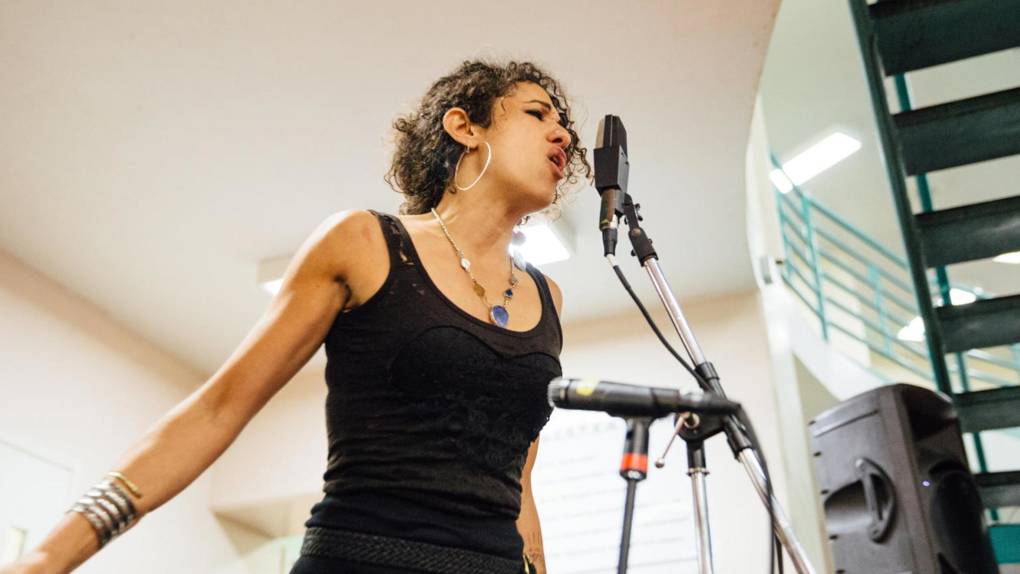
"caption": "Naima Shalhoub performs for inmates at the San Francisco County Jail in 2015.",
"description": "Naima Shalhoub performs for inmates at the San Francisco County Jail in 2015.",
"title": "NaimaShalhoub.MAIN",
"credit": "Sarah Deragon",
"status": "inherit",
"isLoading": false,
"fetchFailed": false
}
},
"audioPlayerReducer": {
"postId": "stream_live",
"isPaused": true,
"isPlaying": false,
"pfsActive": false,
"pledgeModalIsOpen": true,
"playerDrawerIsOpen": false,
"liveAudioPlayStartedAt": 0,
"liveAudioPlayContext": ""
},
"authorsReducer": {
"byline_arts_13861527": {
"type": "authors",
"id": "byline_arts_13861527",
"meta": {
"override": true
},
"slug": "byline_arts_13861527",
"name": "Colin Dwyer, Andrew Limbong",
"isLoading": false
},
"byline_arts_13858815": {
"type": "authors",
"id": "byline_arts_13858815",
"meta": {
"override": true
},
"slug": "byline_arts_13858815",
"name": "Eric Deggans",
"isLoading": false
},
"byline_arts_13854762": {
"type": "authors",
"id": "byline_arts_13854762",
"meta": {
"override": true
},
"slug": "byline_arts_13854762",
"name": "Laurel Wamsley",
"isLoading": false
},
"byline_arts_13849176": {
"type": "authors",
"id": "byline_arts_13849176",
"meta": {
"override": true
},
"slug": "byline_arts_13849176",
"name": "Juanita MORE!",
"isLoading": false
},
"byline_arts_13837432": {
"type": "authors",
"id": "byline_arts_13837432",
"meta": {
"override": true
},
"slug": "byline_arts_13837432",
"name": "Amy Held",
"isLoading": false
},
"byline_arts_13836568": {
"type": "authors",
"id": "byline_arts_13836568",
"meta": {
"override": true
},
"slug": "byline_arts_13836568",
"name": "Maggie Penman",
"isLoading": false
},
"byline_arts_13835709": {
"type": "authors",
"id": "byline_arts_13835709",
"meta": {
"override": true
},
"slug": "byline_arts_13835709",
"name": "KQED Arts Staff",
"isLoading": false
},
"slefebvre": {
"type": "authors",
"id": "11091",
"meta": {
"index": "authors_1716337520",
"id": "11091",
"found": true
},
"name": "Sam Lefebvre",
"firstName": "Sam",
"lastName": "Lefebvre",
"slug": "slefebvre",
"email": "sdlefebvre@gmail.com",
"display_author_email": false,
"staff_mastheads": [],
"title": "KQED Contributor",
"bio": "Sam Lefebvre is an award-winning reporter at KQED Arts. He has worked as an editor and columnist at the \u003cem>East Bay Express\u003c/em>, \u003cem>SF Weekly \u003c/em>and Impose Magazine, and his journalism and criticism has appeared in \u003cem>The New York Times\u003c/em>, the Guardian and Pitchfork.",
"avatar": "https://secure.gravatar.com/avatar/49d39b42930b77fb13784ddd9fa63fe780666b71bf289368509dba576b64e69b?s=600&d=blank&r=g",
"twitter": "Lefebvre_Sam",
"bluesky": null,
"facebook": null,
"instagram": null,
"linkedin": null,
"sites": [
{
"site": "arts",
"roles": [
"subscriber"
]
},
{
"site": "news",
"roles": [
"author"
]
}
],
"headData": {
"title": "Sam Lefebvre | KQED",
"description": "KQED Contributor",
"ogImgSrc": "https://secure.gravatar.com/avatar/49d39b42930b77fb13784ddd9fa63fe780666b71bf289368509dba576b64e69b?s=600&d=blank&r=g",
"twImgSrc": "https://secure.gravatar.com/avatar/49d39b42930b77fb13784ddd9fa63fe780666b71bf289368509dba576b64e69b?s=600&d=blank&r=g"
},
"isLoading": false,
"link": "/author/slefebvre"
},
"nvoynovskaya": {
"type": "authors",
"id": "11387",
"meta": {
"index": "authors_1716337520",
"id": "11387",
"found": true
},
"name": "Nastia Voynovskaya",
"firstName": "Nastia",
"lastName": "Voynovskaya",
"slug": "nvoynovskaya",
"email": "nvoynovskaya@kqed.org",
"display_author_email": false,
"staff_mastheads": [
"arts"
],
"title": "Editor and reporter",
"bio": "Nastia Voynovskaya is a reporter, editor and host at KQED Arts & Culture. She's been covering the arts in the Bay Area for over a decade, with a focus on music, queer culture, labor issues and grassroots organizing. She has edited KQED story series such as Trans Bay: A History of San Francisco's Gender-Diverse Community, and co-created KQED's Bay Area hip-hop history project, That's My Word. Nastia's work has been recognized by the Society of Professional Journalists and San Francisco Press Club. She regularly appears on podcasts and radio programs, including NPR's All Songs Considered, and hosts live events where music, culture and conversation meet.",
"avatar": "https://secure.gravatar.com/avatar/5025ee460e5a85d69ca20ea6c6f2f80d7e17795c828f61ea3aecfcd924e9042e?s=600&d=blank&r=g",
"twitter": null,
"bluesky": null,
"facebook": null,
"instagram": "https://www.instagram.com/nananastia/",
"linkedin": null,
"sites": [
{
"site": "",
"roles": [
"editor"
]
},
{
"site": "arts",
"roles": [
"administrator"
]
},
{
"site": "news",
"roles": [
"editor"
]
},
{
"site": "pop",
"roles": [
"administrator"
]
},
{
"site": "bayareabites",
"roles": [
"editor"
]
},
{
"site": "podcasts",
"roles": [
"editor"
]
},
{
"site": "hiphop",
"roles": [
"editor"
]
}
],
"headData": {
"title": "Nastia Voynovskaya | KQED",
"description": "Editor and reporter",
"ogImgSrc": "https://secure.gravatar.com/avatar/5025ee460e5a85d69ca20ea6c6f2f80d7e17795c828f61ea3aecfcd924e9042e?s=600&d=blank&r=g",
"twImgSrc": "https://secure.gravatar.com/avatar/5025ee460e5a85d69ca20ea6c6f2f80d7e17795c828f61ea3aecfcd924e9042e?s=600&d=blank&r=g"
},
"isLoading": false,
"link": "/author/nvoynovskaya"
}
},
"pagesReducer": {
"arts_tag_donald-trump": {
"type": "terms",
"id": "arts_1753",
"meta": {
"index": "terms_1716263798",
"site": "arts",
"id": "1753",
"score": 8.557587
},
"featImg": null,
"name": "Donald Trump",
"description": null,
"taxonomy": "tag",
"headData": {
"twImgId": null,
"twTitle": null,
"ogTitle": null,
"ogImgId": null,
"twDescription": null,
"description": null,
"title": "Donald Trump Archives | KQED Arts",
"ogDescription": null
},
"ttid": 1765,
"slug": "donald-trump",
"isLoading": false,
"title": "Donald Trump",
"pageMeta": {
"site": "arts",
"WpPageTemplate": "page-topic-editorial",
"currentPage": 3
},
"blocks": [
{
"blockName": "kqed/post-list",
"attrs": {
"layout": "cardArticle2",
"query": "posts/arts?tag=donald-trump",
"seeMore": false,
"paginated": true,
"page": 3
}
},
{
"blockName": "kqed/ad"
}
]
}
},
"pfsSessionReducer": {},
"postsReducer": {
"stream_live": {
"type": "live",
"id": "stream_live",
"audioUrl": "https://streams.kqed.org/kqedradio",
"title": "Live Stream",
"excerpt": "Live Stream information currently unavailable.",
"link": "/radio",
"featImg": "",
"label": {
"name": "KQED Live",
"link": "/"
}
},
"stream_kqedNewscast": {
"type": "posts",
"id": "stream_kqedNewscast",
"audioUrl": "https://www.kqed.org/.stream/anon/radio/RDnews/newscast.mp3?_=1",
"title": "KQED Newscast",
"featImg": "",
"label": {
"name": "88.5 FM",
"link": "/"
}
},
"arts_13861527": {
"type": "posts",
"id": "arts_13861527",
"meta": {
"index": "posts_1716263798",
"site": "arts",
"id": "13861527",
"score": null,
"sort": [
1563320308000
]
},
"parent": 0,
"labelTerm": {
"site": "arts",
"term": 137
},
"blocks": [],
"publishDate": 1563320308,
"format": "aside",
"title": "'Go Back Where You Came From': The Long Rhetorical Roots Of Trump's Racist Tweets",
"headTitle": "‘Go Back Where You Came From’: The Long Rhetorical Roots Of Trump’s Racist Tweets | KQED",
"content": "\u003cfigure id=\"attachment_13861530\" class=\"wp-caption alignright\" style=\"max-width: 714px\">\u003cimg loading=\"lazy\" decoding=\"async\" class=\"size-full wp-image-13861530\" src=\"https://ww2.kqed.org/arts/wp-content/uploads/sites/2/2019/07/YouCanComeBack.jpg\" alt='\"You can go back to wherever you came from\" Editorial cartoon drawing shows \"L.B.J.\" standing on the back of a truck with another man labeled \"89th Congress\" who wields a hand truck for the removal of \"Immigration Snobbery\" from the Statue of Liberty.' width=\"714\" height=\"809\" srcset=\"https://cdn.kqed.org/wp-content/uploads/sites/2/2019/07/YouCanComeBack.jpg 714w, https://cdn.kqed.org/wp-content/uploads/sites/2/2019/07/YouCanComeBack-160x181.jpg 160w\" sizes=\"(max-width: 714px) 100vw, 714px\">\u003cfigcaption class=\"wp-caption-text\">Editorial cartoon drawing shows “L.B.J.” standing on the back of a truck with another man labeled “89th Congress” who wields a hand truck for the removal of “Immigration Snobbery” from the Statue of Liberty. \u003ccite>(Herbert Block, 1965 / Library of Congress)\u003c/cite>\u003c/figcaption>\u003c/figure>\n\u003cp>When President Trump \u003ca href=\"https://www.npr.org/2019/07/14/741630889/congresswomen-denounce-trump-tweets-telling-them-to-go-back-to-their-home-countr\">tweeted his racist remarks\u003c/a> Sunday, asking why certain Democratic congresswomen don’t just “go back and help fix the totally broken and crime infested places from which they came,” he did not just take aim at the \u003ca href=\"https://www.npr.org/2019/07/15/741771445/trump-continues-twitter-assault-on-4-minority-congresswomen\">four women of color\u003c/a> — three of whom were born in the U.S.\u003c/p>\n\u003cp>He did so using a taunt that has long, deeply entrenched roots in American history: Why don’t you just go back where you came from?\u003c/p>\n\u003cp>The question doesn’t always appear in those precise words, nor does it always surface in the same situations. And it doesn’t always get directed at the same groups of people — far from it, in fact. But more often than not, it conveys the same sentiment: You — and others like you — are not welcome here.\u003c/p>\n\u003cp>“There have been different phrases that have been used,” says \u003ca href=\"https://gspm.gwu.edu/dr-michael-cornfield\">Michael Cornfield\u003c/a>, a scholar of rhetoric at \u003ca href=\"https://gspm.gwu.edu/\">George Washington University\u003c/a>, “but the idea that we don’t have any more room for people, or those people don’t look like us, this is a long, ugly strain in American history.”\u003c/p>\n\u003cp>\u003ca href=\"https://www.uh.edu/class/english/people/faculty/wingard/\">Jennifer Wingard\u003c/a>, a University of Houston professor who has looked at rhetoric and immigrant communities, traces this sentiment at least to 1798, when the U.S. passed a series of laws — together known as the the \u003ca href=\"http://www.ushistory.org/us/19e.asp\">Alien and Sedition Acts\u003c/a> — that were aimed at making citizenship more difficult for immigrants and deportation easier for U.S. authorities to carry out.\u003c/p>\n\u003cp>“The legislation is actually constructed for the ability to remove immigrants who are saying things against the U.S. government,” she says, explaining that these laws were passed in a tumultuous political climate.\u003c/p>\n\u003cp>“We were starting to see different political parties and different politicians arguing for different ways that the government should be run. And it just happened that politically, they could try to maintain and try to withhold the status quo by putting it on the backs of immigrants.”\u003c/p>\n\u003cp>Those laws established a pattern, she says, that would resurface with new waves of immigration and new perceived threats — from the Great Famine in Ireland and the Spanish-American War to the Great Depression and the attacks on Sept. 11.\u003c/p>\n\u003cfigure id=\"attachment_13861531\" class=\"wp-caption aligncenter\" style=\"max-width: 800px\">\u003cimg loading=\"lazy\" decoding=\"async\" class=\"size-full wp-image-13861531\" src=\"https://ww2.kqed.org/arts/wp-content/uploads/sites/2/2019/07/loc1_custom-1326a615b4a7e8dc6bd2d95e37044709ae1a8755-s800-c85.jpg\" alt=\"This cartoon, published around 1855, reflects the pervasive anti-Catholic sentiment of the era — perhaps best epitomized by the rise of the Know-Nothings, a nativist political party. Catholics, led by the pope, are depicted as an invading force of foreigners, rebuffed by a man dressed like Uncle Sam, who likens them to the anti-Christ.\" width=\"800\" height=\"610\" srcset=\"https://cdn.kqed.org/wp-content/uploads/sites/2/2019/07/loc1_custom-1326a615b4a7e8dc6bd2d95e37044709ae1a8755-s800-c85.jpg 800w, https://cdn.kqed.org/wp-content/uploads/sites/2/2019/07/loc1_custom-1326a615b4a7e8dc6bd2d95e37044709ae1a8755-s800-c85-160x122.jpg 160w, https://cdn.kqed.org/wp-content/uploads/sites/2/2019/07/loc1_custom-1326a615b4a7e8dc6bd2d95e37044709ae1a8755-s800-c85-768x586.jpg 768w\" sizes=\"(max-width: 800px) 100vw, 800px\">\u003cfigcaption class=\"wp-caption-text\">This cartoon, published around 1855, reflects the pervasive anti-Catholic sentiment of the era — perhaps best epitomized by the rise of the Know-Nothings, a nativist political party. Catholics, led by the pope, are depicted as an invading force of foreigners, rebuffed by a man dressed like Uncle Sam, who likens them to the anti-Christ. \u003ccite>(Nathaniel Currier/Library of Congress)\u003c/cite>\u003c/figcaption>\u003c/figure>\n\u003cp>“Every wave of immigration that gets in sees the next wave as the threat. That is the wave that is now going to take the jobs, that is now going to take things away,” Wingard says. “The latest flow in is always the one that seems the most threatening.”\u003c/p>\n\u003cp>\u003ca href=\"https://www.american.edu/cas/faculty/akraut.cfm\">Alan Kraut\u003c/a>, a scholar at American University who is writing a history of anti-immigrant feeling in the U.S., says he saw this kind of thing play out firsthand when he was a child growing up in the Bronx.\u003c/p>\n\u003cp>“When kids had a fight in the street and the kids were from different ethnic groups, one kid would often say to the other: ‘You and your parents go back where you came from,’ ” Kraut recalls.\u003c/p>\n\u003cp>“You know, it could mean Brooklyn. But it could also mean go back where you came from — you know, Russian Jews who came to the United States, southern Italians who came to the United States, Puerto Ricans newly arrived,” he continues. “So when this came out of the mouth of this president who’s from Queens, it sounded almost like a child saying that in my memory on the streets of New York.”\u003c/p>\n\u003cp>The process renews often, Wingard says, and she says the sentiment remains steady even if the names of the targeted groups change.\u003c/p>\n\u003cfigure id=\"attachment_13861529\" class=\"wp-caption aligncenter\" style=\"max-width: 800px\">\u003cimg loading=\"lazy\" decoding=\"async\" class=\"size-full wp-image-13861529\" src=\"https://ww2.kqed.org/arts/wp-content/uploads/sites/2/2019/07/loc3_custom-cbfc43c027ddf4c9fce82d11e16a49e788e1f11e-s800-c85.jpg\" alt='A cartoon, published in 1891, titled \"Where the Blame Lies.\" shows a man gesturing toward a crowd of immigrants — including the \"German socialist,\" \"Italian brigand\" and \"English convict.\" The gesturing man tells a sagging Uncle Sam: \"If Immigration was properly Restricted you would no longer be troubled with Anarchy, Socialism, the Mafia and such kindred evils!\"' width=\"800\" height=\"520\" srcset=\"https://cdn.kqed.org/wp-content/uploads/sites/2/2019/07/loc3_custom-cbfc43c027ddf4c9fce82d11e16a49e788e1f11e-s800-c85.jpg 800w, https://cdn.kqed.org/wp-content/uploads/sites/2/2019/07/loc3_custom-cbfc43c027ddf4c9fce82d11e16a49e788e1f11e-s800-c85-160x104.jpg 160w, https://cdn.kqed.org/wp-content/uploads/sites/2/2019/07/loc3_custom-cbfc43c027ddf4c9fce82d11e16a49e788e1f11e-s800-c85-768x499.jpg 768w\" sizes=\"(max-width: 800px) 100vw, 800px\">\u003cfigcaption class=\"wp-caption-text\">A cartoon, published in 1891, titled “Where the Blame Lies.” shows a man gesturing toward a crowd of immigrants — including the “German socialist,” “Italian brigand” and “English convict.” The gesturing man tells a sagging Uncle Sam: “If Immigration was properly Restricted you would no longer be troubled with Anarchy, Socialism, the Mafia and such kindred evils!” \u003ccite>(Sackett & Wilhelms Litho. Co./Library of Congress)\u003c/cite>\u003c/figcaption>\u003c/figure>\n\u003cp>“There’s a fancy theoretical term — it’s called a palimpsest,” says \u003ca href=\"https://www.uh.edu/class/english/people/faculty/wingard/\">Jennifer Wingard\u003c/a>, a rhetoric scholar at the \u003ca href=\"https://www.uh.edu/\">University of Houston\u003c/a>. A palimpsest, she explains, is a text that has been erased and overwritten — but that nevertheless continues to bear many of the markings and meanings largely concealed beneath the new writing.\u003c/p>\n\u003cp>“They carry these sentiments that we have seen over centuries, but then they get repurposed for the current moment — and a phrase like that [racist taunt] becomes almost like a shorthand for anti-immigrant sentiment,” Wingard says. “You know, ‘go back where you came from’ is the same as ‘go back to your own country’ is the same as ‘you are not allowed here’ is the same as ‘no immigrants allowed.’ Yet it carries all of this historical shorthand with it.”\u003c/p>\n\u003cp>Cornfield says it’s partly the statement’s variability that makes it so powerful.\u003c/p>\n\u003cp>“It plays to the fear that somehow America is getting too full or that the mixing of ethnicities and races would somehow aggravate issues,” he says. “It’s a potent phrase and part of its potency is its ambiguity.”\u003c/p>\n\u003cp>It’s simplicity, too.\u003c/p>\n\u003cp>“When you use a phrase like this, you’re just asking people to forget about context and forget about policy choices,” he adds, “and just get angry at people who don’t look or sound like you do.”\u003c/p>\n\u003cp>\u003cem>Copyright 2019 NPR. To see more, visit \u003ca href=\"https://www.npr.org/\">NPR\u003c/a>.\u003c/em>\u003c/p>\n\u003cp>[ad fullwidth]\u003c/p>\n\u003cp>\u003c/p>\n",
"stats": {
"hasVideo": false,
"hasChartOrMap": false,
"hasAudio": false,
"hasPolis": false,
"wordCount": 1090,
"hasGoogleForm": false,
"hasGallery": false,
"hasHearkenModule": false,
"iframeSrcs": [],
"paragraphCount": 22
},
"modified": 1705022537,
"excerpt": "When the president told several new congresswomen of color to \"go back\" to where they came from, he borrowed nativist language about as old as the country itself. Here's a little history.",
"headData": {
"twImgId": "",
"twTitle": "",
"ogTitle": "",
"ogImgId": "",
"twDescription": "",
"description": "When the president told several new congresswomen of color to "go back" to where they came from, he borrowed nativist language about as old as the country itself. Here's a little history.",
"title": "'Go Back Where You Came From': The Long Rhetorical Roots Of Trump's Racist Tweets | KQED",
"ogDescription": "",
"schema": {
"@context": "https://schema.org",
"@type": "Article",
"headline": "'Go Back Where You Came From': The Long Rhetorical Roots Of Trump's Racist Tweets",
"datePublished": "2019-07-16T16:38:28-07:00",
"dateModified": "2024-01-11T17:22:17-08:00",
"image": "https://cdn.kqed.org/wp-content/uploads/2020/02/KQED-OG-Image@1x.png"
}
},
"guestAuthors": [],
"slug": "go-back-where-you-came-from-the-long-rhetorical-roots-of-trumps-racist-tweets",
"status": "publish",
"nprByline": "Colin Dwyer, Andrew Limbong",
"sticky": false,
"path": "/arts/13861527/go-back-where-you-came-from-the-long-rhetorical-roots-of-trumps-racist-tweets",
"audioTrackLength": null,
"parsedContent": [
{
"type": "contentString",
"content": "\u003cdiv class=\"post-body\">\u003cp>\u003cfigure id=\"attachment_13861530\" class=\"wp-caption alignright\" style=\"max-width: 714px\">\u003cimg loading=\"lazy\" decoding=\"async\" class=\"size-full wp-image-13861530\" src=\"https://ww2.kqed.org/arts/wp-content/uploads/sites/2/2019/07/YouCanComeBack.jpg\" alt='\"You can go back to wherever you came from\" Editorial cartoon drawing shows \"L.B.J.\" standing on the back of a truck with another man labeled \"89th Congress\" who wields a hand truck for the removal of \"Immigration Snobbery\" from the Statue of Liberty.' width=\"714\" height=\"809\" srcset=\"https://cdn.kqed.org/wp-content/uploads/sites/2/2019/07/YouCanComeBack.jpg 714w, https://cdn.kqed.org/wp-content/uploads/sites/2/2019/07/YouCanComeBack-160x181.jpg 160w\" sizes=\"(max-width: 714px) 100vw, 714px\">\u003cfigcaption class=\"wp-caption-text\">Editorial cartoon drawing shows “L.B.J.” standing on the back of a truck with another man labeled “89th Congress” who wields a hand truck for the removal of “Immigration Snobbery” from the Statue of Liberty. \u003ccite>(Herbert Block, 1965 / Library of Congress)\u003c/cite>\u003c/figcaption>\u003c/figure>\n\u003cp>When President Trump \u003ca href=\"https://www.npr.org/2019/07/14/741630889/congresswomen-denounce-trump-tweets-telling-them-to-go-back-to-their-home-countr\">tweeted his racist remarks\u003c/a> Sunday, asking why certain Democratic congresswomen don’t just “go back and help fix the totally broken and crime infested places from which they came,” he did not just take aim at the \u003ca href=\"https://www.npr.org/2019/07/15/741771445/trump-continues-twitter-assault-on-4-minority-congresswomen\">four women of color\u003c/a> — three of whom were born in the U.S.\u003c/p>\n\u003cp>He did so using a taunt that has long, deeply entrenched roots in American history: Why don’t you just go back where you came from?\u003c/p>\n\u003cp>The question doesn’t always appear in those precise words, nor does it always surface in the same situations. And it doesn’t always get directed at the same groups of people — far from it, in fact. But more often than not, it conveys the same sentiment: You — and others like you — are not welcome here.\u003c/p>\n\u003cp>“There have been different phrases that have been used,” says \u003ca href=\"https://gspm.gwu.edu/dr-michael-cornfield\">Michael Cornfield\u003c/a>, a scholar of rhetoric at \u003ca href=\"https://gspm.gwu.edu/\">George Washington University\u003c/a>, “but the idea that we don’t have any more room for people, or those people don’t look like us, this is a long, ugly strain in American history.”\u003c/p>\n\u003cp>\u003ca href=\"https://www.uh.edu/class/english/people/faculty/wingard/\">Jennifer Wingard\u003c/a>, a University of Houston professor who has looked at rhetoric and immigrant communities, traces this sentiment at least to 1798, when the U.S. passed a series of laws — together known as the the \u003ca href=\"http://www.ushistory.org/us/19e.asp\">Alien and Sedition Acts\u003c/a> — that were aimed at making citizenship more difficult for immigrants and deportation easier for U.S. authorities to carry out.\u003c/p>\n\u003cp>“The legislation is actually constructed for the ability to remove immigrants who are saying things against the U.S. government,” she says, explaining that these laws were passed in a tumultuous political climate.\u003c/p>\n\u003cp>“We were starting to see different political parties and different politicians arguing for different ways that the government should be run. And it just happened that politically, they could try to maintain and try to withhold the status quo by putting it on the backs of immigrants.”\u003c/p>\n\u003cp>Those laws established a pattern, she says, that would resurface with new waves of immigration and new perceived threats — from the Great Famine in Ireland and the Spanish-American War to the Great Depression and the attacks on Sept. 11.\u003c/p>\n\u003cfigure id=\"attachment_13861531\" class=\"wp-caption aligncenter\" style=\"max-width: 800px\">\u003cimg loading=\"lazy\" decoding=\"async\" class=\"size-full wp-image-13861531\" src=\"https://ww2.kqed.org/arts/wp-content/uploads/sites/2/2019/07/loc1_custom-1326a615b4a7e8dc6bd2d95e37044709ae1a8755-s800-c85.jpg\" alt=\"This cartoon, published around 1855, reflects the pervasive anti-Catholic sentiment of the era — perhaps best epitomized by the rise of the Know-Nothings, a nativist political party. Catholics, led by the pope, are depicted as an invading force of foreigners, rebuffed by a man dressed like Uncle Sam, who likens them to the anti-Christ.\" width=\"800\" height=\"610\" srcset=\"https://cdn.kqed.org/wp-content/uploads/sites/2/2019/07/loc1_custom-1326a615b4a7e8dc6bd2d95e37044709ae1a8755-s800-c85.jpg 800w, https://cdn.kqed.org/wp-content/uploads/sites/2/2019/07/loc1_custom-1326a615b4a7e8dc6bd2d95e37044709ae1a8755-s800-c85-160x122.jpg 160w, https://cdn.kqed.org/wp-content/uploads/sites/2/2019/07/loc1_custom-1326a615b4a7e8dc6bd2d95e37044709ae1a8755-s800-c85-768x586.jpg 768w\" sizes=\"(max-width: 800px) 100vw, 800px\">\u003cfigcaption class=\"wp-caption-text\">This cartoon, published around 1855, reflects the pervasive anti-Catholic sentiment of the era — perhaps best epitomized by the rise of the Know-Nothings, a nativist political party. Catholics, led by the pope, are depicted as an invading force of foreigners, rebuffed by a man dressed like Uncle Sam, who likens them to the anti-Christ. \u003ccite>(Nathaniel Currier/Library of Congress)\u003c/cite>\u003c/figcaption>\u003c/figure>\n\u003cp>“Every wave of immigration that gets in sees the next wave as the threat. That is the wave that is now going to take the jobs, that is now going to take things away,” Wingard says. “The latest flow in is always the one that seems the most threatening.”\u003c/p>\n\u003cp>\u003ca href=\"https://www.american.edu/cas/faculty/akraut.cfm\">Alan Kraut\u003c/a>, a scholar at American University who is writing a history of anti-immigrant feeling in the U.S., says he saw this kind of thing play out firsthand when he was a child growing up in the Bronx.\u003c/p>\n\u003cp>“When kids had a fight in the street and the kids were from different ethnic groups, one kid would often say to the other: ‘You and your parents go back where you came from,’ ” Kraut recalls.\u003c/p>\n\u003cp>“You know, it could mean Brooklyn. But it could also mean go back where you came from — you know, Russian Jews who came to the United States, southern Italians who came to the United States, Puerto Ricans newly arrived,” he continues. “So when this came out of the mouth of this president who’s from Queens, it sounded almost like a child saying that in my memory on the streets of New York.”\u003c/p>\n\u003cp>The process renews often, Wingard says, and she says the sentiment remains steady even if the names of the targeted groups change.\u003c/p>\n\u003cfigure id=\"attachment_13861529\" class=\"wp-caption aligncenter\" style=\"max-width: 800px\">\u003cimg loading=\"lazy\" decoding=\"async\" class=\"size-full wp-image-13861529\" src=\"https://ww2.kqed.org/arts/wp-content/uploads/sites/2/2019/07/loc3_custom-cbfc43c027ddf4c9fce82d11e16a49e788e1f11e-s800-c85.jpg\" alt='A cartoon, published in 1891, titled \"Where the Blame Lies.\" shows a man gesturing toward a crowd of immigrants — including the \"German socialist,\" \"Italian brigand\" and \"English convict.\" The gesturing man tells a sagging Uncle Sam: \"If Immigration was properly Restricted you would no longer be troubled with Anarchy, Socialism, the Mafia and such kindred evils!\"' width=\"800\" height=\"520\" srcset=\"https://cdn.kqed.org/wp-content/uploads/sites/2/2019/07/loc3_custom-cbfc43c027ddf4c9fce82d11e16a49e788e1f11e-s800-c85.jpg 800w, https://cdn.kqed.org/wp-content/uploads/sites/2/2019/07/loc3_custom-cbfc43c027ddf4c9fce82d11e16a49e788e1f11e-s800-c85-160x104.jpg 160w, https://cdn.kqed.org/wp-content/uploads/sites/2/2019/07/loc3_custom-cbfc43c027ddf4c9fce82d11e16a49e788e1f11e-s800-c85-768x499.jpg 768w\" sizes=\"(max-width: 800px) 100vw, 800px\">\u003cfigcaption class=\"wp-caption-text\">A cartoon, published in 1891, titled “Where the Blame Lies.” shows a man gesturing toward a crowd of immigrants — including the “German socialist,” “Italian brigand” and “English convict.” The gesturing man tells a sagging Uncle Sam: “If Immigration was properly Restricted you would no longer be troubled with Anarchy, Socialism, the Mafia and such kindred evils!” \u003ccite>(Sackett & Wilhelms Litho. Co./Library of Congress)\u003c/cite>\u003c/figcaption>\u003c/figure>\n\u003cp>“There’s a fancy theoretical term — it’s called a palimpsest,” says \u003ca href=\"https://www.uh.edu/class/english/people/faculty/wingard/\">Jennifer Wingard\u003c/a>, a rhetoric scholar at the \u003ca href=\"https://www.uh.edu/\">University of Houston\u003c/a>. A palimpsest, she explains, is a text that has been erased and overwritten — but that nevertheless continues to bear many of the markings and meanings largely concealed beneath the new writing.\u003c/p>\n\u003cp>“They carry these sentiments that we have seen over centuries, but then they get repurposed for the current moment — and a phrase like that [racist taunt] becomes almost like a shorthand for anti-immigrant sentiment,” Wingard says. “You know, ‘go back where you came from’ is the same as ‘go back to your own country’ is the same as ‘you are not allowed here’ is the same as ‘no immigrants allowed.’ Yet it carries all of this historical shorthand with it.”\u003c/p>\n\u003cp>Cornfield says it’s partly the statement’s variability that makes it so powerful.\u003c/p>\n\u003cp>“It plays to the fear that somehow America is getting too full or that the mixing of ethnicities and races would somehow aggravate issues,” he says. “It’s a potent phrase and part of its potency is its ambiguity.”\u003c/p>\n\u003cp>It’s simplicity, too.\u003c/p>\n\u003cp>“When you use a phrase like this, you’re just asking people to forget about context and forget about policy choices,” he adds, “and just get angry at people who don’t look or sound like you do.”\u003c/p>\n\u003cp>\u003cem>Copyright 2019 NPR. To see more, visit \u003ca href=\"https://www.npr.org/\">NPR\u003c/a>.\u003c/em>\u003c/p>\n\u003cp>\u003c/p>\u003c/div>",
"attributes": {
"named": {},
"numeric": []
}
},
{
"type": "component",
"content": "",
"name": "ad",
"attributes": {
"named": {
"label": "fullwidth"
},
"numeric": [
"fullwidth"
]
}
},
{
"type": "contentString",
"content": "\u003cdiv class=\"post-body\">\u003cp>\u003c/p>\n\u003cp>\u003c/p>\n\u003c/div>\u003c/p>",
"attributes": {
"named": {},
"numeric": []
}
}
],
"link": "/arts/13861527/go-back-where-you-came-from-the-long-rhetorical-roots-of-trumps-racist-tweets",
"authors": [
"byline_arts_13861527"
],
"categories": [
"arts_1",
"arts_7862",
"arts_235"
],
"tags": [
"arts_1753",
"arts_2640",
"arts_596"
],
"affiliates": [
"arts_137"
],
"featImg": "arts_13861529",
"label": "arts_137"
},
"arts_13859794": {
"type": "posts",
"id": "arts_13859794",
"meta": {
"index": "posts_1716263798",
"site": "arts",
"id": "13859794",
"score": null,
"sort": [
1561071013000
]
},
"guestAuthors": [],
"slug": "trumps-extreme-vetting-hurts-the-arts-discourages-cultural-exchange-experts-say",
"title": "Trump's 'Extreme Vetting' Hurts the Arts, Discourages Cultural Exchange, Experts Say",
"publishDate": 1561071013,
"format": "standard",
"headTitle": "Trump’s ‘Extreme Vetting’ Hurts the Arts, Discourages Cultural Exchange, Experts Say | KQED",
"labelTerm": {
"site": "arts"
},
"content": "\u003cp>Last month, the members of Kronos Quartet found themselves scrambling to change their festival’s itinerary after a headliner’s visa was unexpectedly delayed.\u003c/p>\n\u003cp>For their annual Kronos Festival, the string ensemble was set to premiere \u003cem>Tegere Tulon\u003c/em>, a new work they commissioned from Malian composer Hawa Kassé Mady Diabaté. Diabaté had been approved to come to the United States to perform and record in previous years, and Kronos Quartet expected her smooth arrival in San Francisco to premiere the piece at SFJAZZ on June 1.\u003c/p>\n\u003cp>But on May 22, State Department officials unexpectedly summoned Diabaté for additional questioning at the U.S. embassy in Bamako, Mali. She was asked to fill out a DS-5535, a form known to delay applications indefinitely. She had to miss the concert even though Kronos Quartet already paid for her travel and marketed the event using her name.\u003c/p>\n\u003cp>https://youtu.be/IzeVKYTMqww\u003c/p>\n\u003cp>Arts presenters and legal experts say delays in artist visas are becoming more common under the Trump administration’s “\u003ca href=\"https://www.cbsnews.com/news/what-is-extreme-vetting/\" target=\"_blank\" rel=\"noopener\">extreme vetting\u003c/a>” policies, which they argue hurt the performing arts and have chilling consequences for free speech. Indeed, the administration now requires nearly all visa applicants to answer detailed \u003ca href=\"https://www.cbsnews.com/news/state-department-now-requires-us-visa-applicants-to-share-social-media-accounts-2019-06-01/\" target=\"_blank\" rel=\"noopener\">questions about their social media activity\u003c/a>, raising alarms among the \u003ca href=\"https://www.aclu.org/press-releases/aclu-comment-state-department-notices-requiring-social-media-information-visa\" target=\"_blank\" rel=\"noopener\">ACLU\u003c/a> and other advocacy groups, who say these questions cause visa applicants to censor their online speech out of fear. Lawyers and talent bookers say the visa application process for international artists is opaque, arbitrary and inconsistent, and discourages much-needed cultural exchange at a time of anti-immigrant sentiment in the United States.\u003c/p>\n\u003cp>[ad fullwidth]\u003c/p>\n\u003cp>“The worry is that promoters, presenters and festival organizers will be worried about this happening and therefore will decide not to engage with certain kinds of artists,” says Janet Cowperthwaite, managing director of the Kronos Performing Arts Association. “There’s a whole domino effect that can take place, really upsetting the ecosystem of our field.”\u003c/p>\n\u003ch2>Artists from the Global South hit with delays\u003c/h2>\n\u003cp>Musician and lawyer \u003ca href=\"https://www.covey.law/matthew-covey/\" target=\"_blank\" rel=\"noopener\">Matthew Covey\u003c/a>, whose firm represents at least 4,000 international artists a year, including Diabaté, says that visa delays like the one Diabaté experienced have become more frequent over the last six months as State Department officials ramp up the use of the DS-5535 form for artists from African nations President Trump once derided as “shithole countries.”\u003c/p>\n\u003cp>[pullquote size='large']Lawyers and talent bookers say the visa application process for international artists is opaque, arbitrary and inconsistent, and discourages much-needed cultural exchange at a time of anti-immigrant sentiment in the United States.[/pullquote]\u003c/p>\n\u003cp>Typically, Covey says, the application for an O or P visa for visiting entertainers, athletes and scholars takes several weeks to get approved by U.S. Citizenship and Immigration Services and the State Department. But because it’s difficult to predict whether an artist will be asked to fill out a DS-5535 form, arts presenters have been running into unexpected visa delays that set off a chain reaction of lost revenue. When a show is abruptly canceled due to a visa delay, the concert presenter loses the money they invested in the artist’s visa application, legal fees and travel. The venue often sits empty, losing money from refunded concert tickets, with no ability to book another act to fill seats at short notice.\u003c/p>\n\u003cp>“When you see consistently artists from the Global South, the Middle East, from Latin America, from Africa are the ones who are principally running into these problems, the easiest way for arts presenters to minimize that risk is to not book artists from those parts of the world,” says Covey. “While it’s understandable, I think it’s tragic, because these are exactly the voices we need to be hearing in America culturally right now.”\u003c/p>\n\u003cfigure id=\"attachment_13860005\" class=\"wp-caption aligncenter\" style=\"max-width: 800px\">\u003cimg loading=\"lazy\" decoding=\"async\" class=\"size-medium wp-image-13860005\" src=\"https://ww2.kqed.org/arts/wp-content/uploads/sites/2/2019/06/trio-da-kali-800x660.jpg\" alt=\"Hawa Kasse Mady Diabate (left) of Trio Da Kali missed her June 1 performance with the Kronos Quartet due to an unexpected visa delay. Arts presenters say these are becoming more common under the Trump administration's "extreme vetting" policy.\" width=\"800\" height=\"660\" srcset=\"https://cdn.kqed.org/wp-content/uploads/sites/2/2019/06/trio-da-kali.jpg 800w, https://cdn.kqed.org/wp-content/uploads/sites/2/2019/06/trio-da-kali-160x132.jpg 160w, https://cdn.kqed.org/wp-content/uploads/sites/2/2019/06/trio-da-kali-768x634.jpg 768w\" sizes=\"(max-width: 800px) 100vw, 800px\">\u003cfigcaption class=\"wp-caption-text\">Hawa Kasse Mady Diabate (left) of Trio Da Kali missed her June 1 performance with the Kronos Quartet due to an unexpected visa delay. Arts presenters say these are becoming more common under the Trump administration’s “extreme vetting” policy. \u003ccite>(Courtesy of Trio Da Kali)\u003c/cite>\u003c/figcaption>\u003c/figure>\n\u003cp>Covey says that the U.S. government’s two main concerns in implementing the DS-5535—screening people who are likely to pose a security risk or overstay their visas and immigrate to the U.S. illegally—are often enforced in racially biased ways.\u003c/p>\n\u003cp>“It’s racism, and it’s economics, and it’s demographics,” says Covey, adding that artists from Africa and Latin America are seen as likelier to immigrate illegally, and Middle Eastern artists are stereotyped as potential terrorists. “The overlap of those Venn diagrams is enormous, and that’s why it’s hard to unravel this problem.”\u003c/p>\n\u003cp>State Department officials, however, contend that they implement the DS-5535 form on a case-by-case basis due to a variety of factors, not just an artist’s country of origin. “Many factors can trigger the need for additional processing, including when concerns are raised after the applicant’s biographic or biometric information is processed through national security screening tools, consular screening tools, or at the discretion of the interviewing officer,” a State Department offical told KQED via email.\u003c/p>\n\u003ch2>Seemingly arbitrary visa denials\u003c/h2>\n\u003cp>Covey says his clients, the Tanzanian electronic musicians \u003ca href=\"https://nyegenyegetapes.bandcamp.com/album/uingizaji-hewa\" target=\"_blank\" rel=\"noopener\">Duke\u003c/a> and MCZO, were denied artist visas in May because couldn’t sufficiently prove that they weren’t planning to immigrate to the United States illegally. Covey argues that Duke and MCZO have no incentive to immigrate: the two run a record label in their home country, where they regularly sell out stadium shows and have a much larger following than they do in the United States.\u003c/p>\n\u003cp>“In the end, NOTHING could prove that we did not intend to run away illegally once checked in at our Holiday Inn,” the artists wrote at the time in a \u003ca href=\"https://www.facebook.com/NyegeNyegeFestival/posts/2354051684616689?__tn__=K-R\" target=\"_blank\" rel=\"noopener\">statement on Facebook\u003c/a>. [aside postid='arts_13859890']\u003c/p>\n\u003cp>“The scenario has really changed in the past year. Things that were completely predictable, would routinely be approved, are now being called into question for reasons that—to me—are apparent and not necessarily written into law,” says talent booker Bill Smith of \u003ca href=\"http://www.riotartists.com/\" target=\"_blank\" rel=\"noopener\">Riot Artists\u003c/a>, who has been putting on U.S. tours for international artists for over 20 years. “Certainly people with Arabic names are unduly singled out—and frankly, they’re not necessarily applying the law. I think they’re applying the unspoken will of the administration.”\u003c/p>\n\u003cp>\u003ca href=\"http://www.billmartinez.com/\" target=\"_blank\" rel=\"noopener\">Bill Martinez\u003c/a>, a concert presenter and lawyer representing international artists, says that he has encountered visa issues with recent clients of his, including the Indian dance troupe \u003ca href=\"https://www.snda.in\" target=\"_blank\" rel=\"noopener\">Sumeet Nagdev Dance Arts\u003c/a>. Martinez says the U.S. government denied their visa because it determined that the dancers did not have enough money to support themselves during a short trip to Seattle. However, Martinez submitted evidence that the event presenter planned to pay for travel, room and board; a “per diem” allowance for food and expenses; plus an honorarium to compensate for the performance.\u003c/p>\n\u003cp>https://youtu.be/mH0Xfmotbfg\u003c/p>\n\u003cp>“It doesn’t make sense,” says Martinez. “But it’s exactly the frustrating reality we’re coping with. It causes consternation, doubts among the presenters who lose money doing the filings [for the artists’ visa applications].”\u003c/p>\n\u003cp>Still, despite recent difficulties in obtaining artist visas, some arts presenters aren’t deterred. SFJAZZ founder and executive artistic director Randall Kline says he’s determined to continue booking international artists from Africa and Latin America in particular as part of his organization’s mission to promote music from the African diaspora. He says the process has always been difficult during his 30 years as a concert presenter.\u003c/p>\n\u003cp>“The United States has never been easy with work visas for artists. While the climate is difficult now, it’s never been easy,” he says, adding that arts presenters must now allow for much more lead time when booking a concert to accommodate surprise visa delays. “It isn’t the plague descending on us right now.”\u003c/p>\n\u003ch2>‘Chilling’ consequences for free speech\u003c/h2>\n\u003cp>Arts presenters and legal experts also raise red flags about the addition of extensive questions about visiting artists’ (and scholars and athletes’) social media presence on visa applications. While State Department officials say that the U.S. government doesn’t deny visas based on political beliefs, critics argue that these questions can encourage self-censorship because of fear that what someone posts online can affect their application. [aside postid='arts_13859688']\u003c/p>\n\u003cp>“We’re not discounting the need for security, but that need needs to be balanced with freedom to express our thoughts, including criticism of the government,” says Martinez.\u003c/p>\n\u003cp>However, the State Department maintains that it’s not denying visas based on political beliefs. “Consular officers cannot deny visas based on applicants’ race, religion, ethnicity, national origin, political views, gender, or sexual orientation,” an official wrote via email. “The collection of social media identifiers is consistent with this.”\u003c/p>\n\u003cp>\u003cspan style=\"font-weight: 400\">[pullquote size='large' align='right' citation='Bill Smith, talent booker at Riot Artists']\u003c/span>“Certainly people with Arabic names are unduly singled out—and frankly, they’re not necessarily applying the law. I think they’re applying the unspoken will of the administration.”[/pullquote]\u003c/p>\n\u003cp>“Regardless of whether, when looking at social media, they make decisions based on what they see there, it clearly has to have a kind of chilling effect on freedom of expression by any artist planning to come to the U.S.,” says Covey. “Even if I’m a Norwegian opera singer, I’m going to think twice before going on my Facebook account and saying what I think about climate change because I don’t want to screw up my tour.”\u003c/p>\n\u003cp>He and other experts say that the U.S. government’s visa policies prevent cultural exchange, fueling the country’s xenophobic climate amid an anti-immigrant administration. “Nothing benefits from shutting doors,” says Martinez. “If you don’t have communication—which culture is—you don’t have these cultural exchanges, there is no hope.”\u003c/p>\n\u003cp>\u003cimg loading=\"lazy\" decoding=\"async\" class=\"aligncenter size-medium wp-image-12127869\" src=\"https://ww2.kqed.org/arts/wp-content/uploads/sites/2/2016/09/Q.Logo_.Break_-800x78.jpg\" alt=\"\" width=\"800\" height=\"78\" srcset=\"https://cdn.kqed.org/wp-content/uploads/sites/2/2016/09/Q.Logo_.Break_.jpg 800w, https://cdn.kqed.org/wp-content/uploads/sites/2/2016/09/Q.Logo_.Break_-400x39.jpg 400w, https://cdn.kqed.org/wp-content/uploads/sites/2/2016/09/Q.Logo_.Break_-768x75.jpg 768w\" sizes=\"(max-width: 800px) 100vw, 800px\">\u003c/p>\n\u003cp>[ad floatright]\u003c/p>\n\u003cp>\u003cem>\u003cstrong>Correction:\u003c/strong> This article incorrectly stated that the application for an O or P visa for visiting entertainers, athletes and scholars takes a week to ten days to get approved by U.S. Citizenship and Immigration Services and the State Department. In fact, it takes several weeks. \u003c/em>\u003c/p>\n\n",
"blocks": [],
"excerpt": "Lawyers and arts presenters report increased, unpredictable visa delays and denials for international artists. ",
"status": "publish",
"parent": 0,
"modified": 1729111985,
"stats": {
"hasAudio": false,
"hasVideo": false,
"hasChartOrMap": false,
"iframeSrcs": [],
"hasGoogleForm": false,
"hasGallery": false,
"hasHearkenModule": false,
"hasPolis": false,
"paragraphCount": 29,
"wordCount": 1802
},
"headData": {
"title": "Trump's 'Extreme Vetting' Hurts the Arts, Discourages Cultural Exchange, Experts Say | KQED",
"description": "Lawyers and arts presenters report increased, unpredictable visa delays and denials for international artists. ",
"ogTitle": "",
"ogDescription": "",
"ogImgId": "",
"twTitle": "",
"twDescription": "",
"twImgId": "",
"schema": {
"@context": "https://schema.org",
"@type": "Article",
"headline": "Trump's 'Extreme Vetting' Hurts the Arts, Discourages Cultural Exchange, Experts Say",
"datePublished": "2019-06-20T15:50:13-07:00",
"dateModified": "2024-10-16T13:53:05-07:00",
"image": "https://cdn.kqed.org/wp-content/uploads/2020/02/KQED-OG-Image@1x.png"
}
},
"sticky": false,
"path": "/arts/13859794/trumps-extreme-vetting-hurts-the-arts-discourages-cultural-exchange-experts-say",
"audioTrackLength": null,
"parsedContent": [
{
"type": "contentString",
"content": "\u003cdiv class=\"post-body\">\u003cp>\u003cp>Last month, the members of Kronos Quartet found themselves scrambling to change their festival’s itinerary after a headliner’s visa was unexpectedly delayed.\u003c/p>\n\u003cp>For their annual Kronos Festival, the string ensemble was set to premiere \u003cem>Tegere Tulon\u003c/em>, a new work they commissioned from Malian composer Hawa Kassé Mady Diabaté. Diabaté had been approved to come to the United States to perform and record in previous years, and Kronos Quartet expected her smooth arrival in San Francisco to premiere the piece at SFJAZZ on June 1.\u003c/p>\n\u003cp>But on May 22, State Department officials unexpectedly summoned Diabaté for additional questioning at the U.S. embassy in Bamako, Mali. She was asked to fill out a DS-5535, a form known to delay applications indefinitely. She had to miss the concert even though Kronos Quartet already paid for her travel and marketed the event using her name.\u003c/p>\u003c/p>\u003cp>\u003cspan class='utils-parseShortcode-shortcodes-__youtubeShortcode__embedYoutube'>\n \u003cspan class='utils-parseShortcode-shortcodes-__youtubeShortcode__embedYoutubeInside'>\n \u003ciframe\n loading='lazy'\n class='utils-parseShortcode-shortcodes-__youtubeShortcode__youtubePlayer'\n type='text/html'\n src='//www.youtube.com/embed/IzeVKYTMqww'\n title='//www.youtube.com/embed/IzeVKYTMqww'\n allowfullscreen='true'\n style='border:0;'>\u003c/iframe>\n \u003c/span>\n \u003c/span>\u003c/p>\u003cp>\u003cp>Arts presenters and legal experts say delays in artist visas are becoming more common under the Trump administration’s “\u003ca href=\"https://www.cbsnews.com/news/what-is-extreme-vetting/\" target=\"_blank\" rel=\"noopener\">extreme vetting\u003c/a>” policies, which they argue hurt the performing arts and have chilling consequences for free speech. Indeed, the administration now requires nearly all visa applicants to answer detailed \u003ca href=\"https://www.cbsnews.com/news/state-department-now-requires-us-visa-applicants-to-share-social-media-accounts-2019-06-01/\" target=\"_blank\" rel=\"noopener\">questions about their social media activity\u003c/a>, raising alarms among the \u003ca href=\"https://www.aclu.org/press-releases/aclu-comment-state-department-notices-requiring-social-media-information-visa\" target=\"_blank\" rel=\"noopener\">ACLU\u003c/a> and other advocacy groups, who say these questions cause visa applicants to censor their online speech out of fear. Lawyers and talent bookers say the visa application process for international artists is opaque, arbitrary and inconsistent, and discourages much-needed cultural exchange at a time of anti-immigrant sentiment in the United States.\u003c/p>\n\u003cp>\u003c/p>\u003c/div>",
"attributes": {
"named": {},
"numeric": []
}
},
{
"type": "component",
"content": "",
"name": "ad",
"attributes": {
"named": {
"label": "fullwidth"
},
"numeric": [
"fullwidth"
]
}
},
{
"type": "contentString",
"content": "\u003cdiv class=\"post-body\">\u003cp>\u003c/p>\n\u003cp>“The worry is that promoters, presenters and festival organizers will be worried about this happening and therefore will decide not to engage with certain kinds of artists,” says Janet Cowperthwaite, managing director of the Kronos Performing Arts Association. “There’s a whole domino effect that can take place, really upsetting the ecosystem of our field.”\u003c/p>\n\u003ch2>Artists from the Global South hit with delays\u003c/h2>\n\u003cp>Musician and lawyer \u003ca href=\"https://www.covey.law/matthew-covey/\" target=\"_blank\" rel=\"noopener\">Matthew Covey\u003c/a>, whose firm represents at least 4,000 international artists a year, including Diabaté, says that visa delays like the one Diabaté experienced have become more frequent over the last six months as State Department officials ramp up the use of the DS-5535 form for artists from African nations President Trump once derided as “shithole countries.”\u003c/p>\n\u003cp>\u003c/p>\u003c/div>",
"attributes": {
"named": {},
"numeric": []
}
},
{
"type": "component",
"content": "Lawyers and talent bookers say the visa application process for international artists is opaque, arbitrary and inconsistent, and discourages much-needed cultural exchange at a time of anti-immigrant sentiment in the United States.",
"name": "pullquote",
"attributes": {
"named": {
"size": "large",
"label": ""
},
"numeric": []
}
},
{
"type": "contentString",
"content": "\u003cdiv class=\"post-body\">\u003cp>\u003c/p>\n\u003cp>Typically, Covey says, the application for an O or P visa for visiting entertainers, athletes and scholars takes several weeks to get approved by U.S. Citizenship and Immigration Services and the State Department. But because it’s difficult to predict whether an artist will be asked to fill out a DS-5535 form, arts presenters have been running into unexpected visa delays that set off a chain reaction of lost revenue. When a show is abruptly canceled due to a visa delay, the concert presenter loses the money they invested in the artist’s visa application, legal fees and travel. The venue often sits empty, losing money from refunded concert tickets, with no ability to book another act to fill seats at short notice.\u003c/p>\n\u003cp>“When you see consistently artists from the Global South, the Middle East, from Latin America, from Africa are the ones who are principally running into these problems, the easiest way for arts presenters to minimize that risk is to not book artists from those parts of the world,” says Covey. “While it’s understandable, I think it’s tragic, because these are exactly the voices we need to be hearing in America culturally right now.”\u003c/p>\n\u003cfigure id=\"attachment_13860005\" class=\"wp-caption aligncenter\" style=\"max-width: 800px\">\u003cimg loading=\"lazy\" decoding=\"async\" class=\"size-medium wp-image-13860005\" src=\"https://ww2.kqed.org/arts/wp-content/uploads/sites/2/2019/06/trio-da-kali-800x660.jpg\" alt=\"Hawa Kasse Mady Diabate (left) of Trio Da Kali missed her June 1 performance with the Kronos Quartet due to an unexpected visa delay. Arts presenters say these are becoming more common under the Trump administration's "extreme vetting" policy.\" width=\"800\" height=\"660\" srcset=\"https://cdn.kqed.org/wp-content/uploads/sites/2/2019/06/trio-da-kali.jpg 800w, https://cdn.kqed.org/wp-content/uploads/sites/2/2019/06/trio-da-kali-160x132.jpg 160w, https://cdn.kqed.org/wp-content/uploads/sites/2/2019/06/trio-da-kali-768x634.jpg 768w\" sizes=\"(max-width: 800px) 100vw, 800px\">\u003cfigcaption class=\"wp-caption-text\">Hawa Kasse Mady Diabate (left) of Trio Da Kali missed her June 1 performance with the Kronos Quartet due to an unexpected visa delay. Arts presenters say these are becoming more common under the Trump administration’s “extreme vetting” policy. \u003ccite>(Courtesy of Trio Da Kali)\u003c/cite>\u003c/figcaption>\u003c/figure>\n\u003cp>Covey says that the U.S. government’s two main concerns in implementing the DS-5535—screening people who are likely to pose a security risk or overstay their visas and immigrate to the U.S. illegally—are often enforced in racially biased ways.\u003c/p>\n\u003cp>“It’s racism, and it’s economics, and it’s demographics,” says Covey, adding that artists from Africa and Latin America are seen as likelier to immigrate illegally, and Middle Eastern artists are stereotyped as potential terrorists. “The overlap of those Venn diagrams is enormous, and that’s why it’s hard to unravel this problem.”\u003c/p>\n\u003cp>State Department officials, however, contend that they implement the DS-5535 form on a case-by-case basis due to a variety of factors, not just an artist’s country of origin. “Many factors can trigger the need for additional processing, including when concerns are raised after the applicant’s biographic or biometric information is processed through national security screening tools, consular screening tools, or at the discretion of the interviewing officer,” a State Department offical told KQED via email.\u003c/p>\n\u003ch2>Seemingly arbitrary visa denials\u003c/h2>\n\u003cp>Covey says his clients, the Tanzanian electronic musicians \u003ca href=\"https://nyegenyegetapes.bandcamp.com/album/uingizaji-hewa\" target=\"_blank\" rel=\"noopener\">Duke\u003c/a> and MCZO, were denied artist visas in May because couldn’t sufficiently prove that they weren’t planning to immigrate to the United States illegally. Covey argues that Duke and MCZO have no incentive to immigrate: the two run a record label in their home country, where they regularly sell out stadium shows and have a much larger following than they do in the United States.\u003c/p>\n\u003cp>“In the end, NOTHING could prove that we did not intend to run away illegally once checked in at our Holiday Inn,” the artists wrote at the time in a \u003ca href=\"https://www.facebook.com/NyegeNyegeFestival/posts/2354051684616689?__tn__=K-R\" target=\"_blank\" rel=\"noopener\">statement on Facebook\u003c/a>. \u003c/p>\u003c/div>",
"attributes": {
"named": {},
"numeric": []
}
},
{
"type": "component",
"content": "",
"name": "aside",
"attributes": {
"named": {
"postid": "arts_13859890",
"label": ""
},
"numeric": []
}
},
{
"type": "contentString",
"content": "\u003cdiv class=\"post-body\">\u003cp>\u003c/p>\n\u003cp>“The scenario has really changed in the past year. Things that were completely predictable, would routinely be approved, are now being called into question for reasons that—to me—are apparent and not necessarily written into law,” says talent booker Bill Smith of \u003ca href=\"http://www.riotartists.com/\" target=\"_blank\" rel=\"noopener\">Riot Artists\u003c/a>, who has been putting on U.S. tours for international artists for over 20 years. “Certainly people with Arabic names are unduly singled out—and frankly, they’re not necessarily applying the law. I think they’re applying the unspoken will of the administration.”\u003c/p>\n\u003cp>\u003ca href=\"http://www.billmartinez.com/\" target=\"_blank\" rel=\"noopener\">Bill Martinez\u003c/a>, a concert presenter and lawyer representing international artists, says that he has encountered visa issues with recent clients of his, including the Indian dance troupe \u003ca href=\"https://www.snda.in\" target=\"_blank\" rel=\"noopener\">Sumeet Nagdev Dance Arts\u003c/a>. Martinez says the U.S. government denied their visa because it determined that the dancers did not have enough money to support themselves during a short trip to Seattle. However, Martinez submitted evidence that the event presenter planned to pay for travel, room and board; a “per diem” allowance for food and expenses; plus an honorarium to compensate for the performance.\u003c/p>\u003c/p>\u003cp>\u003cspan class='utils-parseShortcode-shortcodes-__youtubeShortcode__embedYoutube'>\n \u003cspan class='utils-parseShortcode-shortcodes-__youtubeShortcode__embedYoutubeInside'>\n \u003ciframe\n loading='lazy'\n class='utils-parseShortcode-shortcodes-__youtubeShortcode__youtubePlayer'\n type='text/html'\n src='//www.youtube.com/embed/mH0Xfmotbfg'\n title='//www.youtube.com/embed/mH0Xfmotbfg'\n allowfullscreen='true'\n style='border:0;'>\u003c/iframe>\n \u003c/span>\n \u003c/span>\u003c/p>\u003cp>\u003cp>“It doesn’t make sense,” says Martinez. “But it’s exactly the frustrating reality we’re coping with. It causes consternation, doubts among the presenters who lose money doing the filings [for the artists’ visa applications].”\u003c/p>\n\u003cp>Still, despite recent difficulties in obtaining artist visas, some arts presenters aren’t deterred. SFJAZZ founder and executive artistic director Randall Kline says he’s determined to continue booking international artists from Africa and Latin America in particular as part of his organization’s mission to promote music from the African diaspora. He says the process has always been difficult during his 30 years as a concert presenter.\u003c/p>\n\u003cp>“The United States has never been easy with work visas for artists. While the climate is difficult now, it’s never been easy,” he says, adding that arts presenters must now allow for much more lead time when booking a concert to accommodate surprise visa delays. “It isn’t the plague descending on us right now.”\u003c/p>\n\u003ch2>‘Chilling’ consequences for free speech\u003c/h2>\n\u003cp>Arts presenters and legal experts also raise red flags about the addition of extensive questions about visiting artists’ (and scholars and athletes’) social media presence on visa applications. While State Department officials say that the U.S. government doesn’t deny visas based on political beliefs, critics argue that these questions can encourage self-censorship because of fear that what someone posts online can affect their application. \u003c/p>\u003c/div>",
"attributes": {
"named": {},
"numeric": []
}
},
{
"type": "component",
"content": "",
"name": "aside",
"attributes": {
"named": {
"postid": "arts_13859688",
"label": ""
},
"numeric": []
}
},
{
"type": "contentString",
"content": "\u003cdiv class=\"post-body\">\u003cp>\u003c/p>\n\u003cp>“We’re not discounting the need for security, but that need needs to be balanced with freedom to express our thoughts, including criticism of the government,” says Martinez.\u003c/p>\n\u003cp>However, the State Department maintains that it’s not denying visas based on political beliefs. “Consular officers cannot deny visas based on applicants’ race, religion, ethnicity, national origin, political views, gender, or sexual orientation,” an official wrote via email. “The collection of social media identifiers is consistent with this.”\u003c/p>\n\u003cp>\u003cspan style=\"font-weight: 400\">\u003c/p>\u003c/div>",
"attributes": {
"named": {},
"numeric": []
}
},
{
"type": "component",
"content": "\u003c/span>“Certainly people with Arabic names are unduly singled out—and frankly, they’re not necessarily applying the law. I think they’re applying the unspoken will of the administration.”",
"name": "pullquote",
"attributes": {
"named": {
"size": "large",
"align": "right",
"citation": "Bill Smith, talent booker at Riot Artists",
"label": ""
},
"numeric": []
}
},
{
"type": "contentString",
"content": "\u003cdiv class=\"post-body\">\u003cp>\u003c/p>\n\u003cp>“Regardless of whether, when looking at social media, they make decisions based on what they see there, it clearly has to have a kind of chilling effect on freedom of expression by any artist planning to come to the U.S.,” says Covey. “Even if I’m a Norwegian opera singer, I’m going to think twice before going on my Facebook account and saying what I think about climate change because I don’t want to screw up my tour.”\u003c/p>\n\u003cp>He and other experts say that the U.S. government’s visa policies prevent cultural exchange, fueling the country’s xenophobic climate amid an anti-immigrant administration. “Nothing benefits from shutting doors,” says Martinez. “If you don’t have communication—which culture is—you don’t have these cultural exchanges, there is no hope.”\u003c/p>\n\u003cp>\u003cimg loading=\"lazy\" decoding=\"async\" class=\"aligncenter size-medium wp-image-12127869\" src=\"https://ww2.kqed.org/arts/wp-content/uploads/sites/2/2016/09/Q.Logo_.Break_-800x78.jpg\" alt=\"\" width=\"800\" height=\"78\" srcset=\"https://cdn.kqed.org/wp-content/uploads/sites/2/2016/09/Q.Logo_.Break_.jpg 800w, https://cdn.kqed.org/wp-content/uploads/sites/2/2016/09/Q.Logo_.Break_-400x39.jpg 400w, https://cdn.kqed.org/wp-content/uploads/sites/2/2016/09/Q.Logo_.Break_-768x75.jpg 768w\" sizes=\"(max-width: 800px) 100vw, 800px\">\u003c/p>\n\u003cp>\u003c/p>\u003c/div>",
"attributes": {
"named": {},
"numeric": []
}
},
{
"type": "component",
"content": "",
"name": "ad",
"attributes": {
"named": {
"label": "floatright"
},
"numeric": [
"floatright"
]
}
},
{
"type": "contentString",
"content": "\u003cdiv class=\"post-body\">\u003cp>\u003c/p>\n\u003cp>\u003cem>\u003cstrong>Correction:\u003c/strong> This article incorrectly stated that the application for an O or P visa for visiting entertainers, athletes and scholars takes a week to ten days to get approved by U.S. Citizenship and Immigration Services and the State Department. In fact, it takes several weeks. \u003c/em>\u003c/p>\n\n\u003c/div>\u003c/p>",
"attributes": {
"named": {},
"numeric": []
}
}
],
"link": "/arts/13859794/trumps-extreme-vetting-hurts-the-arts-discourages-cultural-exchange-experts-say",
"authors": [
"11387"
],
"categories": [
"arts_22352",
"arts_69",
"arts_235"
],
"tags": [
"arts_1753",
"arts_1118",
"arts_1773",
"arts_2244",
"arts_5849"
],
"featImg": "arts_13860004",
"label": "arts"
},
"arts_13858815": {
"type": "posts",
"id": "arts_13858815",
"meta": {
"index": "posts_1716263798",
"site": "arts",
"id": "13858815",
"score": null,
"sort": [
1559585890000
]
},
"guestAuthors": [],
"slug": "horrors-and-humanity-in-ava-duvernays-gripping-when-they-see-us",
"title": "Horrors And Humanity In Ava DuVernay's Gripping 'When They See Us'",
"publishDate": 1559585890,
"format": "standard",
"headTitle": "Horrors And Humanity In Ava DuVernay’s Gripping ‘When They See Us’ | KQED",
"labelTerm": {
"term": 137,
"site": "arts"
},
"content": "\u003cp>This was the toughest TV show for me to watch in a long while.\u003c/p>\n\u003cp>\u003cem>When They See Us\u003c/em> is director/writer/producer Ava DuVernay’s searing, four-part drama about five black and Latino boys who were railroaded into falsely confessing to the most notorious gang rape in New York City history. But it wasn’t difficult viewing for its violence—in fact, the Netflix series is very careful in how it presents many instances of assault, with the most grisly details left to viewers’ imagination.\u003c/p>\n\u003cp>It was tough to watch because DuVernay’s look at the Central Park Five depicts a chilling circumstance that sits in the back of my mind, as a black man in America, pretty much every day. What happens when/if white America decides you are guilty of a horrific crime, partially to confirm its own horrific prejudices about people who look like you? What if that happens regardless of the evidence or circumstance?\u003c/p>\n\u003cp>\u003ca href=\"http://youtu.be/u3F9n_smGWY\">http://youtu.be/u3F9n_smGWY\u003c/a>\u003c/p>\n\u003cp>And when/if that time comes, what if every institution that is supposed to protect you — police, lawyers, the media, even your parents and family — all turn their backs, pile on, or are too overwhelmed to make a difference?\u003c/p>\n\u003cp>[ad fullwidth]\u003c/p>\n\u003cp>This is the stark picture DuVernay offers, in a masterpiece of a series aimed at humanizing five boys who were vilified for decades and served years in prison for a crime they didn’t commit. When we first meet them, Antron McCray, Kevin Richardson, Yusef Salaam, Raymond Santana and Korey Wise (played as boys by Caleel Harris, Asante Blackk, Ethan Herisse, Marquis Rodriguez, and Jharrel Jerome) are typical teenagers; well-meaning young men focused on music lessons, hanging with friends, chatting up girls and finding a fun way to spend spring break.\u003c/p>\n\u003cp>[aside postID='arts_13844441' hero='https://ww2.kqed.org/wp-content/uploads/sites/2/2018/11/Nijla_BTL_Thumbnail-1920x1080.jpg' target='_blank']\u003c/p>\n\u003cp>But within minutes, it’s obvious they’ve landed in the wrong place at the wrong time when they join a group of young men who pour into Central Park from Harlem during an infamous evening in April 1989. DuVernay shows them mostly laughing and roughhousing with each other when they stumble on a knot of young black men beating up a white man; in the Netflix series, one of the attackers says he was beaten by a group of white men in Bronx and was delivering “payback.”\u003c/p>\n\u003cp>News reports at the time painted a different picture. Those stories reported a group of about 30 youths “wilding” — a term the Netflix series depicts coming from an officer’s report on what one of the youths said — beating up and harassing a number of other people in the park, for no real reason.\u003c/p>\n\u003cp>Then there was the jogger: white, 28-year-old investment banker Trisha Meili. She was discovered bound and bleeding in the park, raped and almost beaten to death that night in an attack that left her in a coma for nearly two weeks. When she recovered, she had no memory of the assault.\u003c/p>\n\u003cp>What followed is a plunge into a nightmare that DuVernay recreates with brutal realism. Police detectives and prosecutor zero in on five boys, aged 14 to 16, who were in the park. They isolate them from parents and guardians and spend long hours coercing confessions out of each of them, promising to send them home if they just admit to participating in the rape.\u003c/p>\n\u003cp>I’ll be honest; I had to stop the episode several times during these scenes, once to wipe away tears. I knew what was coming for these children. They were signing away their futures with no knowledge of what they were admitting. They would be convicted of the rape on the strength of these manipulated statements. The world would assume the tale told by police and prosecutors was the truth. It felt like watching a slow-motion lynching.\u003c/p>\n\u003cp>This feeling only builds when the series features the real-life actions of Donald Trump, then a loud-mouthed, celebrity-chasing real estate mogul, who advocated for the Central Park Five to get the death penalty in newspaper ads. Shown in clips from interviews at the time, Trump insists he would rather be “a well-educated black” because of the advantages such a person supposedly has. This from a guy who \u003ca href=\"http://<<https://www.nytimes.com/interactive/2018/10/02/us/politics/trump-family-wealth.html>>\">the \u003cem>New York Times\u003c/em> has reporte\u003c/a>d received the equivalent of $413 million in today’s dollars from his father’s real estate empire to help build his own businesses.\u003c/p>\n\u003cp>Felicity Huffman, whose public image has already been hurt thanks to her \u003ca href=\"https://www.nbcnews.com/news/us-news/felicity-huffman-pleads-guilty-college-admissions-scandal-n1005056\">guilty plea in a college admissions scandal\u003c/a>, is fortuitously cast as the show’s biggest villain — prosecutor Linda Fairstein. In the Netflix show, she calls the Central Park Five “animals,” pushing cops to coerce confessions and hold back evidence.\u003c/p>\n\u003cp>[aside postID='arts_13820054' hero='https://ww2.kqed.org/wp-content/uploads/sites/2/2018/01/PeteNicks_BTL_Thumbnail.jpg' target='_blank']\u003c/p>\n\u003cp>As the series shows, many years later convicted serial rapist and murderer Matias Reyes confessed that he raped Meili alone and DNA evidence found at the scene proves he was there. Still, Huffman’s Fairstein refuses to admit they may have railroaded the wrong people. (The adult men are played by Jovan Adepo, Justin Cunningham, Freddy Miyares, Chris Chalk, and Jharrel Jerome, who plays Wise as both a young man and an older one.)\u003c/p>\n\u003cp>But empathy for the falsely accused can come at a price. Because this show is based on the stories of the Central Park Five, humanizing these black and brown kids caught up the rush to convict, we don’t get a lot of background on the other victims of assaults in the park that night. Even Meili, the most famous victim, isn’t given much substance; she’s showcased best in a powerful moment when she struggles to walk to the witness stand in one of the trials.\u003c/p>\n\u003cp>In combating the prejudice and rush to judgment of the original event, \u003cem>When They See Us\u003c/em> is a mostly sympathetic retelling. The series unwinds the prevailing narrative about the Central Park Five by presenting another one largely in their favor, even when they make unwise decisions.\u003c/p>\n\u003cp>In her Oscar-nominated feature film \u003cem>Selma\u003c/em> and her Oscar-nominated documentary \u003cem>13th\u003c/em>, DuVernay has stood as a principled filmmaker of color whose work wrests control of history’s narrative from white-dominated institutions. I almost felt this story could have been called \u003cem>When WILL They See Us\u003c/em>, for DuVernay’s bold work insisting viewers take in the full humanity of these black and brown men and their families.\u003c/p>\n\u003cp>[ad floatright]\u003c/p>\n\u003cp>\u003cem>When They See Us\u003c/em> achieves quite a lot, asking us all to consider exactly who in America really gets the presumption of innocence when accused of a crime. And what’s the cost — to individuals’ lives and for society as a whole — when prejudice and poverty unduly affects that answer?\u003c/p>\n\u003cdiv class=\"fullattribution\">Copyright 2019 \u003ca href=\"https://www.npr.org\" target=\"_blank\" rel=\"noopener\">NPR\u003c/a>.\u003c/div>\n\n",
"blocks": [],
"excerpt": "Ava DuVernay's powerful Netflix series shows a system that frequently fails men of color — and the costs of that system to a famous group of boys who were in the wrong place at the wrong time.",
"status": "publish",
"parent": 0,
"modified": 1726766888,
"stats": {
"hasAudio": false,
"hasVideo": false,
"hasChartOrMap": false,
"iframeSrcs": [],
"hasGoogleForm": false,
"hasGallery": false,
"hasHearkenModule": false,
"hasPolis": false,
"paragraphCount": 21,
"wordCount": 1191
},
"headData": {
"title": "Horrors And Humanity In Ava DuVernay's Gripping 'When They See Us' | KQED",
"description": "Ava DuVernay's powerful Netflix series shows a system that frequently fails men of color — and the costs of that system to a famous group of boys who were in the wrong place at the wrong time.",
"ogTitle": "",
"ogDescription": "",
"ogImgId": "",
"twTitle": "",
"twDescription": "",
"twImgId": "",
"schema": {
"@context": "https://schema.org",
"@type": "Article",
"headline": "Horrors And Humanity In Ava DuVernay's Gripping 'When They See Us'",
"datePublished": "2019-06-03T11:18:10-07:00",
"dateModified": "2024-09-19T10:28:08-07:00",
"image": "https://cdn.kqed.org/wp-content/uploads/2020/02/KQED-OG-Image@1x.png"
}
},
"sticky": false,
"nprImageCredit": "Atsushi Nishijima",
"nprByline": "Eric Deggans",
"nprImageAgency": "Netflix",
"nprStoryId": "728237648",
"nprApiLink": "http://api.npr.org/query?id=728237648&apiKey=MDAxOTAwOTE4MDEyMTkxMDAzNjczZDljZA004",
"nprHtmlLink": "https://www.npr.org/2019/06/01/728237648/horrors-and-humanity-in-ava-duvernays-gripping-when-they-see-us?ft=nprml&f=728237648",
"nprRetrievedStory": "1",
"nprPubDate": "Sat, 01 Jun 2019 05:01:00 -0400",
"nprStoryDate": "Sat, 01 Jun 2019 05:01:18 -0400",
"nprLastModifiedDate": "Sat, 01 Jun 2019 05:01:18 -0400",
"path": "/arts/13858815/horrors-and-humanity-in-ava-duvernays-gripping-when-they-see-us",
"audioTrackLength": null,
"parsedContent": [
{
"type": "contentString",
"content": "\u003cdiv class=\"post-body\">\u003cp>\u003cp>This was the toughest TV show for me to watch in a long while.\u003c/p>\n\u003cp>\u003cem>When They See Us\u003c/em> is director/writer/producer Ava DuVernay’s searing, four-part drama about five black and Latino boys who were railroaded into falsely confessing to the most notorious gang rape in New York City history. But it wasn’t difficult viewing for its violence—in fact, the Netflix series is very careful in how it presents many instances of assault, with the most grisly details left to viewers’ imagination.\u003c/p>\n\u003cp>It was tough to watch because DuVernay’s look at the Central Park Five depicts a chilling circumstance that sits in the back of my mind, as a black man in America, pretty much every day. What happens when/if white America decides you are guilty of a horrific crime, partially to confirm its own horrific prejudices about people who look like you? What if that happens regardless of the evidence or circumstance?\u003c/p>\n\u003cp>\u003ca href=\"http://youtu.be/u3F9n_smGWY\">http://youtu.be/u3F9n_smGWY\u003c/a>\u003c/p>\n\u003cp>And when/if that time comes, what if every institution that is supposed to protect you — police, lawyers, the media, even your parents and family — all turn their backs, pile on, or are too overwhelmed to make a difference?\u003c/p>\n\u003cp>\u003c/p>\u003c/div>",
"attributes": {
"named": {},
"numeric": []
}
},
{
"type": "component",
"content": "",
"name": "ad",
"attributes": {
"named": {
"label": "fullwidth"
},
"numeric": [
"fullwidth"
]
}
},
{
"type": "contentString",
"content": "\u003cdiv class=\"post-body\">\u003cp>\u003c/p>\n\u003cp>This is the stark picture DuVernay offers, in a masterpiece of a series aimed at humanizing five boys who were vilified for decades and served years in prison for a crime they didn’t commit. When we first meet them, Antron McCray, Kevin Richardson, Yusef Salaam, Raymond Santana and Korey Wise (played as boys by Caleel Harris, Asante Blackk, Ethan Herisse, Marquis Rodriguez, and Jharrel Jerome) are typical teenagers; well-meaning young men focused on music lessons, hanging with friends, chatting up girls and finding a fun way to spend spring break.\u003c/p>\n\u003cp>\u003c/p>\u003c/div>",
"attributes": {
"named": {},
"numeric": []
}
},
{
"type": "component",
"content": "",
"name": "aside",
"attributes": {
"named": {
"postid": "arts_13844441",
"hero": "https://ww2.kqed.org/wp-content/uploads/sites/2/2018/11/Nijla_BTL_Thumbnail-1920x1080.jpg",
"target": "_blank",
"label": ""
},
"numeric": []
}
},
{
"type": "contentString",
"content": "\u003cdiv class=\"post-body\">\u003cp>\u003c/p>\n\u003cp>But within minutes, it’s obvious they’ve landed in the wrong place at the wrong time when they join a group of young men who pour into Central Park from Harlem during an infamous evening in April 1989. DuVernay shows them mostly laughing and roughhousing with each other when they stumble on a knot of young black men beating up a white man; in the Netflix series, one of the attackers says he was beaten by a group of white men in Bronx and was delivering “payback.”\u003c/p>\n\u003cp>News reports at the time painted a different picture. Those stories reported a group of about 30 youths “wilding” — a term the Netflix series depicts coming from an officer’s report on what one of the youths said — beating up and harassing a number of other people in the park, for no real reason.\u003c/p>\n\u003cp>Then there was the jogger: white, 28-year-old investment banker Trisha Meili. She was discovered bound and bleeding in the park, raped and almost beaten to death that night in an attack that left her in a coma for nearly two weeks. When she recovered, she had no memory of the assault.\u003c/p>\n\u003cp>What followed is a plunge into a nightmare that DuVernay recreates with brutal realism. Police detectives and prosecutor zero in on five boys, aged 14 to 16, who were in the park. They isolate them from parents and guardians and spend long hours coercing confessions out of each of them, promising to send them home if they just admit to participating in the rape.\u003c/p>\n\u003cp>I’ll be honest; I had to stop the episode several times during these scenes, once to wipe away tears. I knew what was coming for these children. They were signing away their futures with no knowledge of what they were admitting. They would be convicted of the rape on the strength of these manipulated statements. The world would assume the tale told by police and prosecutors was the truth. It felt like watching a slow-motion lynching.\u003c/p>\n\u003cp>This feeling only builds when the series features the real-life actions of Donald Trump, then a loud-mouthed, celebrity-chasing real estate mogul, who advocated for the Central Park Five to get the death penalty in newspaper ads. Shown in clips from interviews at the time, Trump insists he would rather be “a well-educated black” because of the advantages such a person supposedly has. This from a guy who \u003ca href=\"http://<<https://www.nytimes.com/interactive/2018/10/02/us/politics/trump-family-wealth.html>>\">the \u003cem>New York Times\u003c/em> has reporte\u003c/a>d received the equivalent of $413 million in today’s dollars from his father’s real estate empire to help build his own businesses.\u003c/p>\n\u003cp>Felicity Huffman, whose public image has already been hurt thanks to her \u003ca href=\"https://www.nbcnews.com/news/us-news/felicity-huffman-pleads-guilty-college-admissions-scandal-n1005056\">guilty plea in a college admissions scandal\u003c/a>, is fortuitously cast as the show’s biggest villain — prosecutor Linda Fairstein. In the Netflix show, she calls the Central Park Five “animals,” pushing cops to coerce confessions and hold back evidence.\u003c/p>\n\u003cp>\u003c/p>\u003c/div>",
"attributes": {
"named": {},
"numeric": []
}
},
{
"type": "component",
"content": "",
"name": "aside",
"attributes": {
"named": {
"postid": "arts_13820054",
"hero": "https://ww2.kqed.org/wp-content/uploads/sites/2/2018/01/PeteNicks_BTL_Thumbnail.jpg",
"target": "_blank",
"label": ""
},
"numeric": []
}
},
{
"type": "contentString",
"content": "\u003cdiv class=\"post-body\">\u003cp>\u003c/p>\n\u003cp>As the series shows, many years later convicted serial rapist and murderer Matias Reyes confessed that he raped Meili alone and DNA evidence found at the scene proves he was there. Still, Huffman’s Fairstein refuses to admit they may have railroaded the wrong people. (The adult men are played by Jovan Adepo, Justin Cunningham, Freddy Miyares, Chris Chalk, and Jharrel Jerome, who plays Wise as both a young man and an older one.)\u003c/p>\n\u003cp>But empathy for the falsely accused can come at a price. Because this show is based on the stories of the Central Park Five, humanizing these black and brown kids caught up the rush to convict, we don’t get a lot of background on the other victims of assaults in the park that night. Even Meili, the most famous victim, isn’t given much substance; she’s showcased best in a powerful moment when she struggles to walk to the witness stand in one of the trials.\u003c/p>\n\u003cp>In combating the prejudice and rush to judgment of the original event, \u003cem>When They See Us\u003c/em> is a mostly sympathetic retelling. The series unwinds the prevailing narrative about the Central Park Five by presenting another one largely in their favor, even when they make unwise decisions.\u003c/p>\n\u003cp>In her Oscar-nominated feature film \u003cem>Selma\u003c/em> and her Oscar-nominated documentary \u003cem>13th\u003c/em>, DuVernay has stood as a principled filmmaker of color whose work wrests control of history’s narrative from white-dominated institutions. I almost felt this story could have been called \u003cem>When WILL They See Us\u003c/em>, for DuVernay’s bold work insisting viewers take in the full humanity of these black and brown men and their families.\u003c/p>\n\u003cp>\u003c/p>\u003c/div>",
"attributes": {
"named": {},
"numeric": []
}
},
{
"type": "component",
"content": "",
"name": "ad",
"attributes": {
"named": {
"label": "floatright"
},
"numeric": [
"floatright"
]
}
},
{
"type": "contentString",
"content": "\u003cdiv class=\"post-body\">\u003cp>\u003c/p>\n\u003cp>\u003cem>When They See Us\u003c/em> achieves quite a lot, asking us all to consider exactly who in America really gets the presumption of innocence when accused of a crime. And what’s the cost — to individuals’ lives and for society as a whole — when prejudice and poverty unduly affects that answer?\u003c/p>\n\u003cdiv class=\"fullattribution\">Copyright 2019 \u003ca href=\"https://www.npr.org\" target=\"_blank\" rel=\"noopener\">NPR\u003c/a>.\u003c/div>\n\n\u003c/div>\u003c/p>",
"attributes": {
"named": {},
"numeric": []
}
}
],
"link": "/arts/13858815/horrors-and-humanity-in-ava-duvernays-gripping-when-they-see-us",
"authors": [
"byline_arts_13858815"
],
"categories": [
"arts_75",
"arts_990"
],
"tags": [
"arts_3850",
"arts_1753",
"arts_1118",
"arts_596",
"arts_1526"
],
"affiliates": [
"arts_137"
],
"featImg": "arts_13858816",
"label": "arts_137"
},
"arts_13854762": {
"type": "posts",
"id": "arts_13854762",
"meta": {
"index": "posts_1716263798",
"site": "arts",
"id": "13854762",
"score": null,
"sort": [
1554940671000
]
},
"parent": 0,
"labelTerm": {
"site": "arts",
"term": 137
},
"blocks": [],
"publishDate": 1554940671,
"format": "standard",
"title": "Trump Posted A Video With Music From A Batman Movie. Warner Bros. Had It Taken Down",
"headTitle": "Trump Posted A Video With Music From A Batman Movie. Warner Bros. Had It Taken Down | KQED",
"content": "\u003cp>On Tuesday, President Trump tweeted out a video. He gave no explanation of what it was or where it came from — just \u003ca href=\"https://www.bbc.com/news/world-us-canada-47878038\">an exhortation\u003c/a> to “MAKE AMERICA GREAT AGAIN!”\u003c/p>\n\u003cp>The video was odd — it opened with footage of various Washington landmarks interspersed with clips of Barack Obama and Hillary and Bill Clinton. Then came clips of Trump visiting a factory, Trump meeting with Kim Jong Un, the Brett Kavanaugh confirmation hearing, and clips of actors Rosie O’Donnell, Bryan Cranston and Amy Schumer, mixed in with shots of Trump at campaign rallies.\u003c/p>\n\u003cp>As a dramatic score played, words appeared on the screen: “First they ignore you. Then they laugh at you. Then they call you racist. Donald J. Trump. Your vote. Proved them all wrong. Trump: The Great Victory 2020.”\u003c/p>\n\u003cp>Just a few hours later, the video was taken down from YouTube.\u003c/p>\n\u003cfigure id=\"attachment_13854764\" class=\"wp-caption aligncenter\" style=\"max-width: 800px\">\u003cimg loading=\"lazy\" decoding=\"async\" class=\"size-medium wp-image-13854764\" src=\"https://ww2.kqed.org/arts/wp-content/uploads/sites/2/2019/04/removed_wide-e5275f60617e7e69ae3468a86a6f432434bd518a-800x450.png\" alt=\"The video was removed from YouTube after Warner Bros. complained that the use of music from The Dark Knight Rises was a violation of its copyright.\" width=\"800\" height=\"450\" srcset=\"https://cdn.kqed.org/wp-content/uploads/sites/2/2019/04/removed_wide-e5275f60617e7e69ae3468a86a6f432434bd518a-800x450.png 800w, https://cdn.kqed.org/wp-content/uploads/sites/2/2019/04/removed_wide-e5275f60617e7e69ae3468a86a6f432434bd518a-160x90.png 160w, https://cdn.kqed.org/wp-content/uploads/sites/2/2019/04/removed_wide-e5275f60617e7e69ae3468a86a6f432434bd518a-768x432.png 768w, https://cdn.kqed.org/wp-content/uploads/sites/2/2019/04/removed_wide-e5275f60617e7e69ae3468a86a6f432434bd518a.png 905w\" sizes=\"(max-width: 800px) 100vw, 800px\">\u003cfigcaption class=\"wp-caption-text\">The video was removed from YouTube after Warner Bros. complained that the use of music from The Dark Knight Rises was a violation of its copyright. \u003ccite>(Screenshot by NPR)\u003c/cite>\u003c/figcaption>\u003c/figure>\n\u003cp>At issue was that dramatic score: It is music composed by Hans Zimmer for the soundtrack to the Warner Bros. 2012 Batman film \u003cem>The Dark Knight Rises\u003c/em>.\u003c/p>\n\u003cp>[ad fullwidth]\u003c/p>\n\u003cp>In a statement, Warner Bros. said that the video’s use of its music was unauthorized: “We are working through the appropriate legal channels to have it removed.”\u003c/p>\n\u003cp>Trump later deleted the tweet. As of Wednesday afternoon, \u003ca href=\"https://www.youtube.com/watch?v=adu9nKQtGv0\">near-copies of the video\u003c/a> were still on YouTube.\u003c/p>\n\u003cp>The video was apparently not created by the Trump campaign but rather by a fan. “The video was made by a supporter,” a campaign aide \u003ca href=\"https://www.cnn.com/2019/04/10/politics/warner-bros-copyright-trump-2020-dark-knight-rises/index.html\">told CNN\u003c/a>. “We like to share content from diehard supporters, and this is just another example of how hard Trump supporters fight for the President.”\u003c/p>\n\u003cp>The video was \u003ca href=\"https://www.reddit.com/r/The_Donald/comments/b9m5do/trump_2020_coming_soon_keep_america_great/\">posted \u003c/a>to a pro-Trump Reddit channel last week. The account that posted the video to the r/The_Donald subreddit \u003ca href=\"https://www.reddit.com/user/knock-nevisTDF\">wrote\u003c/a> Tuesday that the video was made a couple of weeks ago, and its creator was shocked and delighted when Trump shared it.\u003c/p>\n\u003cp>“I’m honored,” the person wrote. “My dad has [Trump’s] tweet printed so I can frame it.”\u003c/p>\n\u003cp>Artists including \u003ca href=\"https://www.npr.org/sections/thetwo-way/2015/06/17/415158962/neil-young-is-displeased-that-donald-trump-was-rockin-in-the-free-world\">Neil Young\u003c/a>, \u003ca href=\"https://www.npr.org/2018/10/30/662168950/after-pittburgh-pharrell-demands-trump-never-play-happy-again\">Pharrell Williams\u003c/a> and \u003ca href=\"https://www.rollingstone.com/music/music-news/prince-estate-donald-trump-purple-rain-rally-737428/\">the estate of Prince\u003c/a> have all previously demanded that the Trump campaign stop playing their music, complaining that their songs had been used without permission.\u003c/p>\n\u003cp>\u003c/p>\n\u003cp>\u003cem>NPR’s Brandon Carter contributed to this report.\u003c/em>\u003c/p>\n\u003cdiv class=\"fullattribution\">Copyright 2019 \u003ca href=\"https://www.npr.org\">NPR\u003c/a>.\u003c/div>\n\n",
"stats": {
"hasVideo": false,
"hasChartOrMap": false,
"hasAudio": false,
"hasPolis": false,
"wordCount": 424,
"hasGoogleForm": false,
"hasGallery": false,
"hasHearkenModule": false,
"iframeSrcs": [],
"paragraphCount": 14
},
"modified": 1705026350,
"excerpt": "As a dramatic score plays, words appear on the screen: \"First they ignore you. Then they laugh at you. Then they call you racist.\" The video used music from 'The Dark Knight Rises' without permission.",
"headData": {
"twImgId": "",
"twTitle": "",
"ogTitle": "",
"ogImgId": "",
"twDescription": "",
"description": "As a dramatic score plays, words appear on the screen: "First they ignore you. Then they laugh at you. Then they call you racist." The video used music from 'The Dark Knight Rises' without permission.",
"title": "Trump Posted A Video With Music From A Batman Movie. Warner Bros. Had It Taken Down | KQED",
"ogDescription": "",
"schema": {
"@context": "https://schema.org",
"@type": "Article",
"headline": "Trump Posted A Video With Music From A Batman Movie. Warner Bros. Had It Taken Down",
"datePublished": "2019-04-10T16:57:51-07:00",
"dateModified": "2024-01-11T18:25:50-08:00",
"image": "https://cdn.kqed.org/wp-content/uploads/2020/02/KQED-OG-Image@1x.png"
}
},
"guestAuthors": [],
"slug": "trump-posted-a-video-with-music-from-a-batman-movie-warner-bros-had-it-taken-down",
"status": "publish",
"nprApiLink": "http://api.npr.org/query?id=711802775&apiKey=MDAxOTAwOTE4MDEyMTkxMDAzNjczZDljZA004",
"nprByline": "Laurel Wamsley",
"nprStoryDate": "Wed, 10 Apr 2019 14:30:00 -0400",
"nprLastModifiedDate": "Wed, 10 Apr 2019 16:41:53 -0400",
"sticky": false,
"nprHtmlLink": "https://www.npr.org/2019/04/10/711802775/trump-posted-a-video-with-music-from-batman-warner-bros-had-it-taken-down?ft=nprml&f=711802775",
"nprImageAgency": "FilmMagic",
"nprImageCredit": "Stephen Lovekin",
"nprStoryId": "711802775",
"nprRetrievedStory": "1",
"nprPubDate": "Wed, 10 Apr 2019 16:41:00 -0400",
"path": "/arts/13854762/trump-posted-a-video-with-music-from-a-batman-movie-warner-bros-had-it-taken-down",
"audioTrackLength": null,
"parsedContent": [
{
"type": "contentString",
"content": "\u003cdiv class=\"post-body\">\u003cp>\u003cp>On Tuesday, President Trump tweeted out a video. He gave no explanation of what it was or where it came from — just \u003ca href=\"https://www.bbc.com/news/world-us-canada-47878038\">an exhortation\u003c/a> to “MAKE AMERICA GREAT AGAIN!”\u003c/p>\n\u003cp>The video was odd — it opened with footage of various Washington landmarks interspersed with clips of Barack Obama and Hillary and Bill Clinton. Then came clips of Trump visiting a factory, Trump meeting with Kim Jong Un, the Brett Kavanaugh confirmation hearing, and clips of actors Rosie O’Donnell, Bryan Cranston and Amy Schumer, mixed in with shots of Trump at campaign rallies.\u003c/p>\n\u003cp>As a dramatic score played, words appeared on the screen: “First they ignore you. Then they laugh at you. Then they call you racist. Donald J. Trump. Your vote. Proved them all wrong. Trump: The Great Victory 2020.”\u003c/p>\n\u003cp>Just a few hours later, the video was taken down from YouTube.\u003c/p>\n\u003cfigure id=\"attachment_13854764\" class=\"wp-caption aligncenter\" style=\"max-width: 800px\">\u003cimg loading=\"lazy\" decoding=\"async\" class=\"size-medium wp-image-13854764\" src=\"https://ww2.kqed.org/arts/wp-content/uploads/sites/2/2019/04/removed_wide-e5275f60617e7e69ae3468a86a6f432434bd518a-800x450.png\" alt=\"The video was removed from YouTube after Warner Bros. complained that the use of music from The Dark Knight Rises was a violation of its copyright.\" width=\"800\" height=\"450\" srcset=\"https://cdn.kqed.org/wp-content/uploads/sites/2/2019/04/removed_wide-e5275f60617e7e69ae3468a86a6f432434bd518a-800x450.png 800w, https://cdn.kqed.org/wp-content/uploads/sites/2/2019/04/removed_wide-e5275f60617e7e69ae3468a86a6f432434bd518a-160x90.png 160w, https://cdn.kqed.org/wp-content/uploads/sites/2/2019/04/removed_wide-e5275f60617e7e69ae3468a86a6f432434bd518a-768x432.png 768w, https://cdn.kqed.org/wp-content/uploads/sites/2/2019/04/removed_wide-e5275f60617e7e69ae3468a86a6f432434bd518a.png 905w\" sizes=\"(max-width: 800px) 100vw, 800px\">\u003cfigcaption class=\"wp-caption-text\">The video was removed from YouTube after Warner Bros. complained that the use of music from The Dark Knight Rises was a violation of its copyright. \u003ccite>(Screenshot by NPR)\u003c/cite>\u003c/figcaption>\u003c/figure>\n\u003cp>At issue was that dramatic score: It is music composed by Hans Zimmer for the soundtrack to the Warner Bros. 2012 Batman film \u003cem>The Dark Knight Rises\u003c/em>.\u003c/p>\n\u003cp>\u003c/p>\u003c/div>",
"attributes": {
"named": {},
"numeric": []
}
},
{
"type": "component",
"content": "",
"name": "ad",
"attributes": {
"named": {
"label": "fullwidth"
},
"numeric": [
"fullwidth"
]
}
},
{
"type": "contentString",
"content": "\u003cdiv class=\"post-body\">\u003cp>\u003c/p>\n\u003cp>In a statement, Warner Bros. said that the video’s use of its music was unauthorized: “We are working through the appropriate legal channels to have it removed.”\u003c/p>\n\u003cp>Trump later deleted the tweet. As of Wednesday afternoon, \u003ca href=\"https://www.youtube.com/watch?v=adu9nKQtGv0\">near-copies of the video\u003c/a> were still on YouTube.\u003c/p>\n\u003cp>The video was apparently not created by the Trump campaign but rather by a fan. “The video was made by a supporter,” a campaign aide \u003ca href=\"https://www.cnn.com/2019/04/10/politics/warner-bros-copyright-trump-2020-dark-knight-rises/index.html\">told CNN\u003c/a>. “We like to share content from diehard supporters, and this is just another example of how hard Trump supporters fight for the President.”\u003c/p>\n\u003cp>The video was \u003ca href=\"https://www.reddit.com/r/The_Donald/comments/b9m5do/trump_2020_coming_soon_keep_america_great/\">posted \u003c/a>to a pro-Trump Reddit channel last week. The account that posted the video to the r/The_Donald subreddit \u003ca href=\"https://www.reddit.com/user/knock-nevisTDF\">wrote\u003c/a> Tuesday that the video was made a couple of weeks ago, and its creator was shocked and delighted when Trump shared it.\u003c/p>\n\u003cp>“I’m honored,” the person wrote. “My dad has [Trump’s] tweet printed so I can frame it.”\u003c/p>\n\u003cp>Artists including \u003ca href=\"https://www.npr.org/sections/thetwo-way/2015/06/17/415158962/neil-young-is-displeased-that-donald-trump-was-rockin-in-the-free-world\">Neil Young\u003c/a>, \u003ca href=\"https://www.npr.org/2018/10/30/662168950/after-pittburgh-pharrell-demands-trump-never-play-happy-again\">Pharrell Williams\u003c/a> and \u003ca href=\"https://www.rollingstone.com/music/music-news/prince-estate-donald-trump-purple-rain-rally-737428/\">the estate of Prince\u003c/a> have all previously demanded that the Trump campaign stop playing their music, complaining that their songs had been used without permission.\u003c/p>\n\u003cp>\u003c/p>\n\u003cp>\u003cem>NPR’s Brandon Carter contributed to this report.\u003c/em>\u003c/p>\n\u003cdiv class=\"fullattribution\">Copyright 2019 \u003ca href=\"https://www.npr.org\">NPR\u003c/a>.\u003c/div>\n\n\u003c/div>\u003c/p>",
"attributes": {
"named": {},
"numeric": []
}
}
],
"link": "/arts/13854762/trump-posted-a-video-with-music-from-a-batman-movie-warner-bros-had-it-taken-down",
"authors": [
"byline_arts_13854762"
],
"categories": [
"arts_235",
"arts_75"
],
"tags": [
"arts_1753",
"arts_977",
"arts_5826",
"arts_5235"
],
"affiliates": [
"arts_137"
],
"featImg": "arts_13854766",
"label": "arts_137"
},
"arts_13849625": {
"type": "posts",
"id": "arts_13849625",
"meta": {
"index": "posts_1716263798",
"site": "arts",
"id": "13849625",
"score": null,
"sort": [
1548796219000
]
},
"parent": 0,
"labelTerm": {
"site": "arts"
},
"blocks": [],
"publishDate": 1548796219,
"format": "standard",
"title": "Pandora’s New Corporate Parents Gave Millions to Trump, GOP",
"headTitle": "Pandora’s New Corporate Parents Gave Millions to Trump, GOP | KQED",
"content": "\u003cp>Pandora Media shareholders voted Tuesday to approve its $3.5 billion acquisition by satellite radio company Sirius XM, adding the struggling webcaster and one of Oakland’s largest employers to the portfolio of major Donald Trump and Republican Party donors at parent company Liberty Media.\u003c/p>\n\u003cp>The closely watched acquisition, announced in September and expected to close by March, creates what the companies call the world’s largest audio entertainment company.\u003c/p>\n\u003cp>Pandora has more than 70 million listeners, mostly on its ad-supported free tier, but the company has long lost money and lately fallen behind on-demand streaming competitors such as Spotify and Apple Music. Sirius, by contrast, is profitable with more than 30 million subscribers.\u003c/p>\n\u003cp>The deal consolidates Pandora and Sirius XM under the control of Liberty Media, a Colorado company owned and run by conservative donors, at a time when music industry political giving and tech ties to the Trump administration are increasingly scrutinized. Policy experts also say the merger empowers a company that’s aggressively fought to suppress royalty payments for artists and copyright holders. [contextly_sidebar id=”Ssb7QJZrkAgtiTRvG9JTtq0YEJwooM5O”]\u003c/p>\n\u003cp>Liberty founder John Malone, a longtime media mogul, and CEO Greg Maffei, who’s also the board chairman at Sirius, have donated millions to Trump and GOP candidates.\u003c/p>\n\u003cp>[ad fullwidth]\u003c/p>\n\u003cp>Individually and through Liberty political action committees, Malone and Maffei collectively gave $1 million to Trump’s 58th Presidential Inaugural Committee, according to Federal Election Commission filings. The donation follows roughly $1 million each to conservative national candidates for office, FEC records show.\u003c/p>\n\u003cp>Trump’ inaugural committee and a related super PAC are the subject of \u003ca href=\"https://www.nytimes.com/2018/12/13/us/politics/trump-inauguration-investigation.html\">federal investigation\u003c/a> for influence peddling and illegal coordination. Donors of $1 million or more, according to a brochure \u003ca href=\"https://publicintegrity.org/federal-politics/donald-trump-offering-huge-perks-for-inauguration-donors/\">published\u003c/a> by the Center for Public Integrity, received four tickets to a “leadership luncheon” advertised as an “exclusive inaugural event.”\u003c/p>\n\u003cp>Liberty spokespeople didn’t respond to comment requests from KQED. In interviews, Malone has voiced his \u003ca href=\"https://www.youtube.com/watch?v=tByi-4LuNE0\">support\u003c/a> for Trump’s positions on trade and immigration, and said he expects the administration to be favorable to the entertainment industry.\u003c/p>\n\u003cfigure id=\"attachment_13849654\" class=\"wp-caption aligncenter\" style=\"max-width: 800px\">\u003cimg loading=\"lazy\" decoding=\"async\" class=\"size-medium wp-image-13849654\" src=\"https://ww2.kqed.org/arts/wp-content/uploads/sites/2/2019/01/Tim-Westergren-800x532.jpg\" alt=\"Co-founder of Pandora Radio Tim Westergren speaks on stage in December 2016 in New York City. \" width=\"800\" height=\"532\" srcset=\"https://cdn.kqed.org/wp-content/uploads/sites/2/2019/01/Tim-Westergren.jpg 800w, https://cdn.kqed.org/wp-content/uploads/sites/2/2019/01/Tim-Westergren-160x106.jpg 160w, https://cdn.kqed.org/wp-content/uploads/sites/2/2019/01/Tim-Westergren-768x511.jpg 768w\" sizes=\"(max-width: 800px) 100vw, 800px\">\u003cfigcaption class=\"wp-caption-text\">Co-founder of Pandora Radio Tim Westergren speaks on stage in December 2016 in New York City. \u003ccite>(Theo Wargo/Getty Images for Pandora Media)\u003c/cite>\u003c/figcaption>\u003c/figure>\n\u003cp>Although Liberty’s controlling interest in Sirius has received little media attention, the Pandora acquisition comes at a time when conservative music industry giving has prompted protest. 2017 reports of Philip Anschutz, Goldenvoice parent company AEG’s owner, financially supporting \u003ca href=\"https://pitchfork.com/news/coachella-co-owners-latest-charitable-filing-shows-deep-anti-lgbtq-ties/\">anti-gay organizations\u003c/a> spurred calls to boycott Goldenvoice music festival Coachella. (Anschutz called the stories, based on public records of his charity, “fake news.”)\u003c/p>\n\u003cp>Liberty connections to Trump aside, Sirius has attracted liberal criticism for its own programming decisions. In 2016, a media coalition \u003ca href=\"https://futureofmusic.org/pressmention/latino-civil-rights-groups-media-coalition-take-aim-siriusxm-shifting-eight-latin-music\">protested\u003c/a> Sirius’ move to eliminate 80 percent of its Latin music channels, saying the satellite service turned its back on Spanish-speaking listeners “at a time when Latinos are most misunderstood and fighting constant attacks.”\u003c/p>\n\u003cp>The next year, Sirius reintroduced Steve Bannon as a regular host on its Patriot channel, calling the former Trump advisor a “conservative populist icon” as part of a Breitbart expansion. In response, celebrities such as Seth Rogen and Melissa Etheridge called for a \u003ca href=\"https://money.cnn.com/2017/12/10/media/sirius-xm-steve-bannon-boycott/index.html\">boycott\u003c/a> of Sirius. “I will not be a part of normalizing hate speech,” Etheridge said at the time.\u003c/p>\n\u003cp>(Breitbart eventually cut ties with Bannon in 2018, forcing him to also step down from Sirius.) [contextly_sidebar id=”behKZRs8K9PFoI9nTiaF7vymcBN4fSiN”]\u003c/p>\n\u003cp>Liberty is also a partial 34-percent owner of Live Nation, the world’s largest concert promoter, where Maffei also chairs the board. So the Pandora acquisition is, however indirectly, an expansion of Live Nation’s presence in the Bay Area. Goldenvoice and Live Nation have aggressively angled for more control of the local concert market in recent years—to the detriment, \u003ca href=\"https://www.kqed.org/arts/13846754/in-2018-corporate-monotony-seized-san-francisco-music-venues\">critics say\u003c/a>, of show-goers and independent venues.\u003c/p>\n\u003cp>Though the relationship between Pandora and other Liberty holdings such as Live Nation remains to be seen, Pandora cofounder and on-and-off executive Tim Westergren approvingly cited Sirius’s connection to “the live business” last year. And Liberty plans to expand further in the music business: According to a recent \u003ca href=\"https://www.rollingstone.com/music/music-features/liberty-media-about-to-become-the-most-powerful-company-in-music-780411/\">feature\u003c/a> in \u003cem>Rolling Stone\u003c/em>, it’s even eyeing broadcast giant iHeart Media.\u003c/p>\n\u003cp>Sirius XM is itself the result of onetime competitors Sirius and XM merging despite antitrust concerns in 2008. Kevin Erickson, director of Washington, D.C. artist advocacy group the Future of Music Coalition, said the Pandora-Sirius deal continues a troubling consolidation trend.\u003c/p>\n\u003cp>“If one company is allowed to combine the satellite radio monopoly with the largest company in digital radio, the largest broadcast radio station group, and potentially one of the two dominant forces in live music, that’s truly unprecedented gatekeeper power,” Erickson said, calling the plan “a catastrophe for independent musicians and a fans.” [contextly_sidebar id=”c2seARt6xoGD1iDGE2YLuYIMqQseZ1v1″]\u003c/p>\n\u003cp>As so called non-interactive services, Sirius and Pandora rely on statutory licenses issued by the government as a baseline for their royalty obligations to artists and copyright holders. Without competition, Erickson said, that baseline becomes the ceiling instead of the floor. “When one buyer effectively controls an entire marketplace—what’s called a monopsony—they have the bargaining power to drive wages down,” he said.\u003c/p>\n\u003cp>As an example of Liberty’s artist relations, Erickson pointed to the Music Modernization Act. The legislation, signed into law last year, aimed to adapt copyright for the streaming era in part by extending federal copyright protection to sound recordings made before February 15, 1972. Liberty, according to Erickson, was the act’s most aggressive opponent.\u003c/p>\n\u003cp>“So we already know something about how much respect they have for musicians,” he said.\u003c/p>\n\u003cp>Meanwhile, Bay Area tech industry ties to the Trump administration have begun to draw the ire of rank-and-file workers. Last June, protesters disrupted Salesforce’s annual Dreamforce conference to decry the software company’s contract with U.S. Customs and Border Patrol. The Tech Workers Coalition has argued that the contract makes Salesforce complicit in Trump’s anti-immigrant campaign, despite the company’s outspoken liberal leader Marc Benioff.\u003c/p>\n\u003cp>The mood among Pandora employees towards Liberty’s little-publicized political affinities is unclear. Two workers who asked to remain anonymous told KQED office talk is focused on the company’s move last year to cut 5 percent of its workforce amid an expansion in Atlanta. The combined company, according to an internal document \u003ca href=\"http://www.insideradio.com/free/after-merger-with-siriusxm-pandora-will-move-hq-to-new/article_efc95f62-d10f-11e8-aead-0f9a98996a12.html\">reported\u003c/a> in October, will be headquartered in New York.\u003c/p>\n\u003cp>Pandora had 2,488 full-time workers worldwide as of late last year.\u003c/p>\n\u003cp>[ad floatright]\u003c/p>\n\u003cp>Records show that Westergren, for years Pandora’s public face, has mostly donated to Democrats. According to a \u003cem>Billboard \u003c/em>\u003ca href=\"https://www.billboard.com/articles/business/6191206/pandora-tim-westergren-political-donations\">analysis\u003c/a>, his political giving generally targeted elected officials involved in Pandora-related policy making. The streaming company has spent millions \u003ca href=\"https://www.eastbayexpress.com/oakland/the-tyranny-of-free/Content?oid=4126731&showFullText=true\">lobbying Washington\u003c/a> to reduce its royalty obligation to artists and copyright holders.\u003c/p>\n\n",
"stats": {
"hasVideo": false,
"hasChartOrMap": false,
"hasAudio": false,
"hasPolis": false,
"wordCount": 1194,
"hasGoogleForm": false,
"hasGallery": false,
"hasHearkenModule": false,
"iframeSrcs": [],
"paragraphCount": 25
},
"modified": 1705026687,
"excerpt": "The merger of Oakland-based Pandora and Sirius XM continues a troubling music industry consolidation trend.",
"headData": {
"twImgId": "",
"twTitle": "",
"ogTitle": "",
"ogImgId": "",
"twDescription": "",
"description": "The merger of Oakland-based Pandora and Sirius XM continues a troubling music industry consolidation trend.",
"title": "Pandora’s New Corporate Parents Gave Millions to Trump, GOP | KQED",
"ogDescription": "",
"schema": {
"@context": "https://schema.org",
"@type": "Article",
"headline": "Pandora’s New Corporate Parents Gave Millions to Trump, GOP",
"datePublished": "2019-01-29T13:10:19-08:00",
"dateModified": "2024-01-11T18:31:27-08:00",
"image": "https://cdn.kqed.org/wp-content/uploads/2020/02/KQED-OG-Image@1x.png"
}
},
"guestAuthors": [],
"slug": "pandoras-new-corporate-parents-gave-millions-to-trump-gop",
"status": "publish",
"sticky": false,
"path": "/arts/13849625/pandoras-new-corporate-parents-gave-millions-to-trump-gop",
"audioTrackLength": null,
"parsedContent": [
{
"type": "contentString",
"content": "\u003cdiv class=\"post-body\">\u003cp>\u003cp>Pandora Media shareholders voted Tuesday to approve its $3.5 billion acquisition by satellite radio company Sirius XM, adding the struggling webcaster and one of Oakland’s largest employers to the portfolio of major Donald Trump and Republican Party donors at parent company Liberty Media.\u003c/p>\n\u003cp>The closely watched acquisition, announced in September and expected to close by March, creates what the companies call the world’s largest audio entertainment company.\u003c/p>\n\u003cp>Pandora has more than 70 million listeners, mostly on its ad-supported free tier, but the company has long lost money and lately fallen behind on-demand streaming competitors such as Spotify and Apple Music. Sirius, by contrast, is profitable with more than 30 million subscribers.\u003c/p>\n\u003cp>The deal consolidates Pandora and Sirius XM under the control of Liberty Media, a Colorado company owned and run by conservative donors, at a time when music industry political giving and tech ties to the Trump administration are increasingly scrutinized. Policy experts also say the merger empowers a company that’s aggressively fought to suppress royalty payments for artists and copyright holders. \u003c/p>\u003cp>\u003c/p>\u003cp>\u003c/p>\n\u003cp>Liberty founder John Malone, a longtime media mogul, and CEO Greg Maffei, who’s also the board chairman at Sirius, have donated millions to Trump and GOP candidates.\u003c/p>\n\u003cp>\u003c/p>\u003c/div>",
"attributes": {
"named": {},
"numeric": []
}
},
{
"type": "component",
"content": "",
"name": "ad",
"attributes": {
"named": {
"label": "fullwidth"
},
"numeric": [
"fullwidth"
]
}
},
{
"type": "contentString",
"content": "\u003cdiv class=\"post-body\">\u003cp>\u003c/p>\n\u003cp>Individually and through Liberty political action committees, Malone and Maffei collectively gave $1 million to Trump’s 58th Presidential Inaugural Committee, according to Federal Election Commission filings. The donation follows roughly $1 million each to conservative national candidates for office, FEC records show.\u003c/p>\n\u003cp>Trump’ inaugural committee and a related super PAC are the subject of \u003ca href=\"https://www.nytimes.com/2018/12/13/us/politics/trump-inauguration-investigation.html\">federal investigation\u003c/a> for influence peddling and illegal coordination. Donors of $1 million or more, according to a brochure \u003ca href=\"https://publicintegrity.org/federal-politics/donald-trump-offering-huge-perks-for-inauguration-donors/\">published\u003c/a> by the Center for Public Integrity, received four tickets to a “leadership luncheon” advertised as an “exclusive inaugural event.”\u003c/p>\n\u003cp>Liberty spokespeople didn’t respond to comment requests from KQED. In interviews, Malone has voiced his \u003ca href=\"https://www.youtube.com/watch?v=tByi-4LuNE0\">support\u003c/a> for Trump’s positions on trade and immigration, and said he expects the administration to be favorable to the entertainment industry.\u003c/p>\n\u003cfigure id=\"attachment_13849654\" class=\"wp-caption aligncenter\" style=\"max-width: 800px\">\u003cimg loading=\"lazy\" decoding=\"async\" class=\"size-medium wp-image-13849654\" src=\"https://ww2.kqed.org/arts/wp-content/uploads/sites/2/2019/01/Tim-Westergren-800x532.jpg\" alt=\"Co-founder of Pandora Radio Tim Westergren speaks on stage in December 2016 in New York City. \" width=\"800\" height=\"532\" srcset=\"https://cdn.kqed.org/wp-content/uploads/sites/2/2019/01/Tim-Westergren.jpg 800w, https://cdn.kqed.org/wp-content/uploads/sites/2/2019/01/Tim-Westergren-160x106.jpg 160w, https://cdn.kqed.org/wp-content/uploads/sites/2/2019/01/Tim-Westergren-768x511.jpg 768w\" sizes=\"(max-width: 800px) 100vw, 800px\">\u003cfigcaption class=\"wp-caption-text\">Co-founder of Pandora Radio Tim Westergren speaks on stage in December 2016 in New York City. \u003ccite>(Theo Wargo/Getty Images for Pandora Media)\u003c/cite>\u003c/figcaption>\u003c/figure>\n\u003cp>Although Liberty’s controlling interest in Sirius has received little media attention, the Pandora acquisition comes at a time when conservative music industry giving has prompted protest. 2017 reports of Philip Anschutz, Goldenvoice parent company AEG’s owner, financially supporting \u003ca href=\"https://pitchfork.com/news/coachella-co-owners-latest-charitable-filing-shows-deep-anti-lgbtq-ties/\">anti-gay organizations\u003c/a> spurred calls to boycott Goldenvoice music festival Coachella. (Anschutz called the stories, based on public records of his charity, “fake news.”)\u003c/p>\n\u003cp>Liberty connections to Trump aside, Sirius has attracted liberal criticism for its own programming decisions. In 2016, a media coalition \u003ca href=\"https://futureofmusic.org/pressmention/latino-civil-rights-groups-media-coalition-take-aim-siriusxm-shifting-eight-latin-music\">protested\u003c/a> Sirius’ move to eliminate 80 percent of its Latin music channels, saying the satellite service turned its back on Spanish-speaking listeners “at a time when Latinos are most misunderstood and fighting constant attacks.”\u003c/p>\n\u003cp>The next year, Sirius reintroduced Steve Bannon as a regular host on its Patriot channel, calling the former Trump advisor a “conservative populist icon” as part of a Breitbart expansion. In response, celebrities such as Seth Rogen and Melissa Etheridge called for a \u003ca href=\"https://money.cnn.com/2017/12/10/media/sirius-xm-steve-bannon-boycott/index.html\">boycott\u003c/a> of Sirius. “I will not be a part of normalizing hate speech,” Etheridge said at the time.\u003c/p>\n\u003cp>(Breitbart eventually cut ties with Bannon in 2018, forcing him to also step down from Sirius.) \u003c/p>\u003cp>\u003c/p>\u003cp>\u003c/p>\n\u003cp>Liberty is also a partial 34-percent owner of Live Nation, the world’s largest concert promoter, where Maffei also chairs the board. So the Pandora acquisition is, however indirectly, an expansion of Live Nation’s presence in the Bay Area. Goldenvoice and Live Nation have aggressively angled for more control of the local concert market in recent years—to the detriment, \u003ca href=\"https://www.kqed.org/arts/13846754/in-2018-corporate-monotony-seized-san-francisco-music-venues\">critics say\u003c/a>, of show-goers and independent venues.\u003c/p>\n\u003cp>Though the relationship between Pandora and other Liberty holdings such as Live Nation remains to be seen, Pandora cofounder and on-and-off executive Tim Westergren approvingly cited Sirius’s connection to “the live business” last year. And Liberty plans to expand further in the music business: According to a recent \u003ca href=\"https://www.rollingstone.com/music/music-features/liberty-media-about-to-become-the-most-powerful-company-in-music-780411/\">feature\u003c/a> in \u003cem>Rolling Stone\u003c/em>, it’s even eyeing broadcast giant iHeart Media.\u003c/p>\n\u003cp>Sirius XM is itself the result of onetime competitors Sirius and XM merging despite antitrust concerns in 2008. Kevin Erickson, director of Washington, D.C. artist advocacy group the Future of Music Coalition, said the Pandora-Sirius deal continues a troubling consolidation trend.\u003c/p>\n\u003cp>“If one company is allowed to combine the satellite radio monopoly with the largest company in digital radio, the largest broadcast radio station group, and potentially one of the two dominant forces in live music, that’s truly unprecedented gatekeeper power,” Erickson said, calling the plan “a catastrophe for independent musicians and a fans.” \u003c/p>\u003cp>\u003c/p>\u003cp>\u003c/p>\n\u003cp>As so called non-interactive services, Sirius and Pandora rely on statutory licenses issued by the government as a baseline for their royalty obligations to artists and copyright holders. Without competition, Erickson said, that baseline becomes the ceiling instead of the floor. “When one buyer effectively controls an entire marketplace—what’s called a monopsony—they have the bargaining power to drive wages down,” he said.\u003c/p>\n\u003cp>As an example of Liberty’s artist relations, Erickson pointed to the Music Modernization Act. The legislation, signed into law last year, aimed to adapt copyright for the streaming era in part by extending federal copyright protection to sound recordings made before February 15, 1972. Liberty, according to Erickson, was the act’s most aggressive opponent.\u003c/p>\n\u003cp>“So we already know something about how much respect they have for musicians,” he said.\u003c/p>\n\u003cp>Meanwhile, Bay Area tech industry ties to the Trump administration have begun to draw the ire of rank-and-file workers. Last June, protesters disrupted Salesforce’s annual Dreamforce conference to decry the software company’s contract with U.S. Customs and Border Patrol. The Tech Workers Coalition has argued that the contract makes Salesforce complicit in Trump’s anti-immigrant campaign, despite the company’s outspoken liberal leader Marc Benioff.\u003c/p>\n\u003cp>The mood among Pandora employees towards Liberty’s little-publicized political affinities is unclear. Two workers who asked to remain anonymous told KQED office talk is focused on the company’s move last year to cut 5 percent of its workforce amid an expansion in Atlanta. The combined company, according to an internal document \u003ca href=\"http://www.insideradio.com/free/after-merger-with-siriusxm-pandora-will-move-hq-to-new/article_efc95f62-d10f-11e8-aead-0f9a98996a12.html\">reported\u003c/a> in October, will be headquartered in New York.\u003c/p>\n\u003cp>Pandora had 2,488 full-time workers worldwide as of late last year.\u003c/p>\n\u003cp>\u003c/p>\u003c/div>",
"attributes": {
"named": {},
"numeric": []
}
},
{
"type": "component",
"content": "",
"name": "ad",
"attributes": {
"named": {
"label": "floatright"
},
"numeric": [
"floatright"
]
}
},
{
"type": "contentString",
"content": "\u003cdiv class=\"post-body\">\u003cp>\u003c/p>\n\u003cp>Records show that Westergren, for years Pandora’s public face, has mostly donated to Democrats. According to a \u003cem>Billboard \u003c/em>\u003ca href=\"https://www.billboard.com/articles/business/6191206/pandora-tim-westergren-political-donations\">analysis\u003c/a>, his political giving generally targeted elected officials involved in Pandora-related policy making. The streaming company has spent millions \u003ca href=\"https://www.eastbayexpress.com/oakland/the-tyranny-of-free/Content?oid=4126731&showFullText=true\">lobbying Washington\u003c/a> to reduce its royalty obligation to artists and copyright holders.\u003c/p>\n\n\u003c/div>\u003c/p>",
"attributes": {
"named": {},
"numeric": []
}
}
],
"link": "/arts/13849625/pandoras-new-corporate-parents-gave-millions-to-trump-gop",
"authors": [
"11091"
],
"categories": [
"arts_69",
"arts_235"
],
"tags": [
"arts_1753",
"arts_1118",
"arts_3219",
"arts_746",
"arts_596",
"arts_1935"
],
"featImg": "arts_13849653",
"label": "arts"
},
"arts_13849264": {
"type": "posts",
"id": "arts_13849264",
"meta": {
"index": "posts_1716263798",
"site": "arts",
"id": "13849264",
"score": null,
"sort": [
1548280057000
]
},
"parent": 0,
"labelTerm": {
"site": "arts"
},
"blocks": [],
"publishDate": 1548280057,
"format": "standard",
"title": "Due to Government Shutdown, California Humanities Suspends All Arts Grants",
"headTitle": "Due to Government Shutdown, California Humanities Suspends All Arts Grants | KQED",
"content": "\u003cp>Last year, California Humanities issued more than $1 million in grants to artists and cultural organizations.\u003c/p>\n\u003cp>But now, the National Endowment for the Humanities’ state partner has suspended grant-making indefinitely as the historic federal government shutdown nears its sixth week. \u003c/p>\n\u003cp>The independent nonprofit, which has offices in Oakland and Los Angeles, is operating on an “austerity basis,” CEO Julie Fry told KQED, unable to release even already awarded grants. \u003c/p>\n\u003cp>In the final two months of 2018, \u003ca href=\"https://calhum.org/\">California Humanities\u003c/a> awarded more than 30 grants totaling approximately $350,000. But the release of the funds, in some cases expected to occur this month, is now delayed. Likewise, interim and final payments of earlier grants are on pause until further notice.\u003c/p>\n\u003cfigure id=\"attachment_13824382\" class=\"wp-caption aligncenter\" style=\"max-width: 800px\">\u003cimg loading=\"lazy\" decoding=\"async\" src=\"https://ww2.kqed.org/arts/wp-content/uploads/sites/2/2018/02/NEA-Funding-800x450.jpg\" alt=\"Claudio Roncoli a recipient of an award from the National Endowment for the Arts works in his studio space at the Bakehouse Art Complex on March 16, 2017 in Miami, Florida.\" width=\"800\" height=\"450\" class=\"size-medium wp-image-13824382\" srcset=\"https://cdn.kqed.org/wp-content/uploads/sites/2/2018/02/NEA-Funding-800x450.jpg 800w, https://cdn.kqed.org/wp-content/uploads/sites/2/2018/02/NEA-Funding-160x90.jpg 160w, https://cdn.kqed.org/wp-content/uploads/sites/2/2018/02/NEA-Funding-768x432.jpg 768w, https://cdn.kqed.org/wp-content/uploads/sites/2/2018/02/NEA-Funding-1020x574.jpg 1020w, https://cdn.kqed.org/wp-content/uploads/sites/2/2018/02/NEA-Funding.jpg 1920w, https://cdn.kqed.org/wp-content/uploads/sites/2/2018/02/NEA-Funding-1180x664.jpg 1180w, https://cdn.kqed.org/wp-content/uploads/sites/2/2018/02/NEA-Funding-960x540.jpg 960w, https://cdn.kqed.org/wp-content/uploads/sites/2/2018/02/NEA-Funding-240x135.jpg 240w, https://cdn.kqed.org/wp-content/uploads/sites/2/2018/02/NEA-Funding-375x211.jpg 375w, https://cdn.kqed.org/wp-content/uploads/sites/2/2018/02/NEA-Funding-520x293.jpg 520w\" sizes=\"(max-width: 800px) 100vw, 800px\">\u003cfigcaption class=\"wp-caption-text\">Claudio Roncoli a recipient of an award from the National Endowment for the Arts works in his studio space at the Bakehouse Art Complex on March 16, 2017 in Miami, Florida. \u003ccite>(Joe Raedle/Getty Images)\u003c/cite>\u003c/figcaption>\u003c/figure>\n\u003cp>“We will resume payments as soon as the government reopens, the federal budget is approved, and the NEH recommences payments to the state humanities councils,” Fry told grant recipients and hopefuls in an email sent on Friday. “At this point, we are unsure how long this process will take.”\u003c/p>\n\u003cp>[ad fullwidth]\u003c/p>\n\u003cp>Fry said the National Endowment for the Humanities (NEH) contributes a “significant portion” of California Humanities’ grant-making budget. Last year California Humanities awarded just over $1,030,000 to 98 projects statewide in categories such as documentary filmmaking and library innovation. Now, though, the organization is pausing even travel and office expenses. \u003c/p>\n\u003cp>“We’re making do with what paper towels we already have,” Fry said. \u003c/p>\n\u003cfigure id=\"attachment_13849282\" class=\"wp-caption aligncenter\" style=\"max-width: 800px\">\u003cimg loading=\"lazy\" decoding=\"async\" src=\"https://ww2.kqed.org/arts/wp-content/uploads/sites/2/2019/01/MLK_2016_28-800x558.jpg\" alt=\"Museum of the African Diaspora\" width=\"800\" height=\"558\" class=\"size-medium wp-image-13849282\" srcset=\"https://cdn.kqed.org/wp-content/uploads/sites/2/2019/01/MLK_2016_28-800x558.jpg 800w, https://cdn.kqed.org/wp-content/uploads/sites/2/2019/01/MLK_2016_28-160x112.jpg 160w, https://cdn.kqed.org/wp-content/uploads/sites/2/2019/01/MLK_2016_28-768x535.jpg 768w, https://cdn.kqed.org/wp-content/uploads/sites/2/2019/01/MLK_2016_28-1020x711.jpg 1020w, https://cdn.kqed.org/wp-content/uploads/sites/2/2019/01/MLK_2016_28-1200x836.jpg 1200w, https://cdn.kqed.org/wp-content/uploads/sites/2/2019/01/MLK_2016_28-1920x1338.jpg 1920w, https://cdn.kqed.org/wp-content/uploads/sites/2/2019/01/MLK_2016_28.jpg 2000w\" sizes=\"(max-width: 800px) 100vw, 800px\">\u003cfigcaption class=\"wp-caption-text\">The Museum of the African Diaspora. \u003ccite>(Courtesy of the Museum of the African Diaspora)\u003c/cite>\u003c/figcaption>\u003c/figure>\n\u003cp>Across the country, the National Gallery of Art as well as 19 Smithsonian museums are closed due to the shutdown. Their employees are among an estimated 800,000 federal workers furloughed or otherwise deprived of at least one paycheck during the holiday season. \u003c/p>\n\u003cp>The government shutdown, now the longest in history as President Donald Trump demands billions for a southern border wall that he’d promised Mexico would pay for, has also shuttered both the national endowments for the arts and humanities, which together disburse nearly $300 million nationwide each year. \u003c/p>\n\u003cp>For Bay Area artists and cultural nonprofits reliant on the national endowments, either directly or through state-level groups such as the California Arts Council and California Humanities, the shutdown has destabilized an already precarious ecosystem. (A spokesperson for the California Arts Council said the shutdown has yet to impact its grant-making, noting that the agency plans to issue 2019 awards at the end of June.) Yet even if the government reboots tomorrow, arts figures tell KQED, the consequences will be felt for the rest of the year.\u003c/p>\n\u003cp>The shutdown is also a reminder of Trump’s threats to \u003ca href=\"https://www.kqed.org/arts/12649417/report-trump-administration-plans-to-privatize-cpb-cut-nea\" rel=\"noopener\" target=\"_blank\">cut the national endowments altogether\u003c/a>. Last year, the NEA issued \u003ca href=\"https://www.kqed.org/arts/13831888/nea-awards-1-7-million-in-grants-to-bay-area-organizations\" rel=\"noopener\" target=\"_blank\">$1.7 million to Bay Area arts groups\u003c/a>. \u003c/p>\n\u003cfigure id=\"attachment_13848854\" class=\"wp-caption aligncenter\" style=\"max-width: 800px\">\u003cimg loading=\"lazy\" decoding=\"async\" src=\"https://ww2.kqed.org/arts/wp-content/uploads/sites/2/2019/01/Kronos_2014_a_creditWojciechWandzel-800x450.jpg\" alt=\"Kronos Quartet.\" width=\"800\" height=\"450\" class=\"size-medium wp-image-13848854\" srcset=\"https://cdn.kqed.org/wp-content/uploads/sites/2/2019/01/Kronos_2014_a_creditWojciechWandzel-800x450.jpg 800w, https://cdn.kqed.org/wp-content/uploads/sites/2/2019/01/Kronos_2014_a_creditWojciechWandzel-160x90.jpg 160w, https://cdn.kqed.org/wp-content/uploads/sites/2/2019/01/Kronos_2014_a_creditWojciechWandzel-768x432.jpg 768w, https://cdn.kqed.org/wp-content/uploads/sites/2/2019/01/Kronos_2014_a_creditWojciechWandzel-1020x574.jpg 1020w, https://cdn.kqed.org/wp-content/uploads/sites/2/2019/01/Kronos_2014_a_creditWojciechWandzel-1200x675.jpg 1200w, https://cdn.kqed.org/wp-content/uploads/sites/2/2019/01/Kronos_2014_a_creditWojciechWandzel.jpg 1920w, https://cdn.kqed.org/wp-content/uploads/sites/2/2019/01/Kronos_2014_a_creditWojciechWandzel-1180x664.jpg 1180w, https://cdn.kqed.org/wp-content/uploads/sites/2/2019/01/Kronos_2014_a_creditWojciechWandzel-960x540.jpg 960w, https://cdn.kqed.org/wp-content/uploads/sites/2/2019/01/Kronos_2014_a_creditWojciechWandzel-240x135.jpg 240w, https://cdn.kqed.org/wp-content/uploads/sites/2/2019/01/Kronos_2014_a_creditWojciechWandzel-375x211.jpg 375w, https://cdn.kqed.org/wp-content/uploads/sites/2/2019/01/Kronos_2014_a_creditWojciechWandzel-520x293.jpg 520w\" sizes=\"(max-width: 800px) 100vw, 800px\">\u003cfigcaption class=\"wp-caption-text\">Kronos Quartet. \u003ccite>(Wojciech Wandzel)\u003c/cite>\u003c/figcaption>\u003c/figure>\n\u003cp>For small to medium-size arts organizations such as the Kronos Quartet’s Kronos Performing Arts Association, the NEA shutdown is a major source of anxiety. Kronos development manager Mason Dille said he doesn’t know when to expect reimbursement for NEA-supported projects, and his agency contacts simply aren’t at work to field questions. “Any delay in the application process now might impact the work we are able to do far into the 2019-20 season,” he said. \u003c/p>\n\u003cp>NEA workers aren’t just funders—they’re researchers and advocates with a nationwide mandate, often providing resources to remote or disinvested areas. Dille pointed out that agency staff couldn’t participate in several major annual arts conferences this month, calling it a “missed opportunity that will resonate across the country for the entire year.” \u003c/p>\n\u003cp>James Leventhal, interim director and chief development officer at Smithsonian affiliate Museum of the African Diaspora, said he hasn’t heard from his furloughed national colleagues for the past three weeks. As a Smithsonian affiliate, MoAD is one of some 200 resource-sharing museums. So the lack of communication could jeopardize events such as a mid-February concert for local middle-school students featuring the Smithsonian Museum Jazz Masterworks Orchestra.\u003c/p>\n\u003cp>Leventhal also stressed the geographic scope of the national endowments. “When you hear about the real work of the NEA, that real work is about making sure culture is reaching every single corner of this nation,” he said, likening the agencies’ shutdown to a “moratorium on culture.” \u003c/p>\n\u003cfigure id=\"attachment_13849287\" class=\"wp-caption aligncenter\" style=\"max-width: 800px\">\u003cimg loading=\"lazy\" decoding=\"async\" src=\"https://ww2.kqed.org/arts/wp-content/uploads/sites/2/2019/01/History-web-800x533.jpg\" alt=\"The History Museum of the Museums of Sonoma County is among several Smithsonian affiliates in the Bay Area.\" width=\"800\" height=\"533\" class=\"size-medium wp-image-13849287\" srcset=\"https://cdn.kqed.org/wp-content/uploads/sites/2/2019/01/History-web-800x533.jpg 800w, https://cdn.kqed.org/wp-content/uploads/sites/2/2019/01/History-web-160x107.jpg 160w, https://cdn.kqed.org/wp-content/uploads/sites/2/2019/01/History-web-768x512.jpg 768w, https://cdn.kqed.org/wp-content/uploads/sites/2/2019/01/History-web-1020x680.jpg 1020w, https://cdn.kqed.org/wp-content/uploads/sites/2/2019/01/History-web.jpg 1200w\" sizes=\"(max-width: 800px) 100vw, 800px\">\u003cfigcaption class=\"wp-caption-text\">The History Museum of the Museums of Sonoma County is among several Smithsonian affiliates in the Bay Area. \u003ccite>(Museums of Sonoma County)\u003c/cite>\u003c/figcaption>\u003c/figure>\n\u003cp>Although the national endowments are still accepting grant applications, organization leaders can’t communicate with the agencies as deadlines near, and the ultimate effect on processing time is unclear. “I’m working on a NEA grant and we’re concerned that the Feb. 5 deadline for filing is quickly approaching,” said Jeff Nathanson, executive director of Museums of Sonoma County.\u003c/p>\n\u003cp>And Eric Stanley, Museums of Sonoma County’s associate director and curator of history, said preparation for an upcoming “Pacific World”-themed exhibition has nearly ground to a halt. “Two of the main archives I had been talking to about lending objects and collaborating on the exhibition were SF Maritime Museum and Point Reyes, both national parks,” he said. “Unfortunately it looks like the shutdown will completely prevent me from working with either.” \u003c/p>\n\u003cp>At the bottom line, the national endowment shutdown is interrupting cash flow, especially for nonprofits with little reserves. Roberto Bedoya, Oakland’s cultural affairs manager, said last year the NEA supported his department’s development of the city’s Cultural Plan, sending a check within a month of receiving his invoice. \u003c/p>\n\u003cp>“Now that’s not happening,” Bedoya said, adding that some nonprofits in the Bay Area, with its astronomical overhead, are a grant or two away from folding. \u003c/p>\n\u003cp>“Especially for marginalized communities, rural communities—the shutdown is part of this administration’s larger disinvestment in the public good,” Bedoya said. “As we knew, arts and culture aren’t their priority.” \u003c/p>\n\u003cfigure id=\"attachment_13849285\" class=\"wp-caption aligncenter\" style=\"max-width: 800px\">\u003cimg loading=\"lazy\" decoding=\"async\" src=\"https://ww2.kqed.org/arts/wp-content/uploads/sites/2/2019/01/Bedoya-800x450.jpg\" alt=\""The shutdown is part of this administration’s larger disinvestment in the public good," says Roberto Bedoya, Oakland's cultural affairs manager.\" width=\"800\" height=\"450\" class=\"size-medium wp-image-13849285\" srcset=\"https://cdn.kqed.org/wp-content/uploads/sites/2/2019/01/Bedoya-800x450.jpg 800w, https://cdn.kqed.org/wp-content/uploads/sites/2/2019/01/Bedoya-160x90.jpg 160w, https://cdn.kqed.org/wp-content/uploads/sites/2/2019/01/Bedoya-768x432.jpg 768w, https://cdn.kqed.org/wp-content/uploads/sites/2/2019/01/Bedoya-1020x574.jpg 1020w, https://cdn.kqed.org/wp-content/uploads/sites/2/2019/01/Bedoya-1200x675.jpg 1200w, https://cdn.kqed.org/wp-content/uploads/sites/2/2019/01/Bedoya.jpg 1920w\" sizes=\"(max-width: 800px) 100vw, 800px\">\u003cfigcaption class=\"wp-caption-text\">“The shutdown is part of this administration’s larger disinvestment in the public good,” says Roberto Bedoya, Oakland’s cultural affairs manager. \u003ccite>(Karen Boyd/City of Oakland)\u003c/cite>\u003c/figcaption>\u003c/figure>\n\u003cp>The national endowments, like the southern border wall, have themselves been points of federal budgeting contention for Trump. In both 2017 and 2018, Trump \u003ca href=\"https://www.kqed.org/arts/13824378/trump-again-seeks-to-eliminate-neh-and-nea-arts-funding\" rel=\"noopener\" target=\"_blank\">proposed eliminating the agencies entirely\u003c/a> before Congress intervened. The NEA and NEH are a minuscule fraction of the budget, and governments of most developed countries vastly outspend the United States on arts and culture.\u003c/p>\n\u003cp>At this point, Fry said, the subject of elimination feels unsurprising. “It comes up on a cyclical basis—cultural agencies are on the table,” she said. On the other hand, Congress recently proposed raising the allocation to the National Endowment for the Humanities, subject to Trump’s signature. \u003c/p>\n\u003cp>“We’ll have to wait for the president’s approval of that when the government reopens,” Fry said. \u003c/p>\n\u003cp>\u003cimg loading=\"lazy\" decoding=\"async\" src=\"https://ww2.kqed.org/arts/wp-content/uploads/sites/2/2016/09/Q.Logo_.Break_-800x78.jpg\" alt=\"\" width=\"800\" height=\"78\" class=\"aligncenter size-medium wp-image-12127869\" srcset=\"https://cdn.kqed.org/wp-content/uploads/sites/2/2016/09/Q.Logo_.Break_.jpg 800w, https://cdn.kqed.org/wp-content/uploads/sites/2/2016/09/Q.Logo_.Break_-400x39.jpg 400w, https://cdn.kqed.org/wp-content/uploads/sites/2/2016/09/Q.Logo_.Break_-768x75.jpg 768w\" sizes=\"(max-width: 800px) 100vw, 800px\">\u003c/p>\n\u003cp>[ad floatright]\u003c/p>\n\u003cp>\u003cem>KQED’s Sarah Hotchkiss, Gabe Meline, Nastia Voynovskaya and Chloe Veltman contributed to this report.\u003c/em>\u003c/p>\n\n",
"stats": {
"hasVideo": false,
"hasChartOrMap": false,
"hasAudio": false,
"hasPolis": false,
"wordCount": 1253,
"hasGoogleForm": false,
"hasGallery": false,
"hasHearkenModule": false,
"iframeSrcs": [],
"paragraphCount": 27
},
"modified": 1705026710,
"excerpt": "For dozens of other arts nonprofits, the shutdown has destabilized an already precarious ecosystem. ",
"headData": {
"twImgId": "",
"twTitle": "",
"ogTitle": "",
"ogImgId": "",
"twDescription": "",
"description": "For dozens of other arts nonprofits, the shutdown has destabilized an already precarious ecosystem. ",
"title": "Due to Government Shutdown, California Humanities Suspends All Arts Grants | KQED",
"ogDescription": "",
"schema": {
"@context": "https://schema.org",
"@type": "Article",
"headline": "Due to Government Shutdown, California Humanities Suspends All Arts Grants",
"datePublished": "2019-01-23T13:47:37-08:00",
"dateModified": "2024-01-11T18:31:50-08:00",
"image": "https://cdn.kqed.org/wp-content/uploads/2020/02/KQED-OG-Image@1x.png"
}
},
"guestAuthors": [],
"slug": "due-to-government-shutdown-california-humanities-suspends-all-arts-grants",
"status": "publish",
"sticky": false,
"path": "/arts/13849264/due-to-government-shutdown-california-humanities-suspends-all-arts-grants",
"audioTrackLength": null,
"parsedContent": [
{
"type": "contentString",
"content": "\u003cdiv class=\"post-body\">\u003cp>\u003cp>Last year, California Humanities issued more than $1 million in grants to artists and cultural organizations.\u003c/p>\n\u003cp>But now, the National Endowment for the Humanities’ state partner has suspended grant-making indefinitely as the historic federal government shutdown nears its sixth week. \u003c/p>\n\u003cp>The independent nonprofit, which has offices in Oakland and Los Angeles, is operating on an “austerity basis,” CEO Julie Fry told KQED, unable to release even already awarded grants. \u003c/p>\n\u003cp>In the final two months of 2018, \u003ca href=\"https://calhum.org/\">California Humanities\u003c/a> awarded more than 30 grants totaling approximately $350,000. But the release of the funds, in some cases expected to occur this month, is now delayed. Likewise, interim and final payments of earlier grants are on pause until further notice.\u003c/p>\n\u003cfigure id=\"attachment_13824382\" class=\"wp-caption aligncenter\" style=\"max-width: 800px\">\u003cimg loading=\"lazy\" decoding=\"async\" src=\"https://ww2.kqed.org/arts/wp-content/uploads/sites/2/2018/02/NEA-Funding-800x450.jpg\" alt=\"Claudio Roncoli a recipient of an award from the National Endowment for the Arts works in his studio space at the Bakehouse Art Complex on March 16, 2017 in Miami, Florida.\" width=\"800\" height=\"450\" class=\"size-medium wp-image-13824382\" srcset=\"https://cdn.kqed.org/wp-content/uploads/sites/2/2018/02/NEA-Funding-800x450.jpg 800w, https://cdn.kqed.org/wp-content/uploads/sites/2/2018/02/NEA-Funding-160x90.jpg 160w, https://cdn.kqed.org/wp-content/uploads/sites/2/2018/02/NEA-Funding-768x432.jpg 768w, https://cdn.kqed.org/wp-content/uploads/sites/2/2018/02/NEA-Funding-1020x574.jpg 1020w, https://cdn.kqed.org/wp-content/uploads/sites/2/2018/02/NEA-Funding.jpg 1920w, https://cdn.kqed.org/wp-content/uploads/sites/2/2018/02/NEA-Funding-1180x664.jpg 1180w, https://cdn.kqed.org/wp-content/uploads/sites/2/2018/02/NEA-Funding-960x540.jpg 960w, https://cdn.kqed.org/wp-content/uploads/sites/2/2018/02/NEA-Funding-240x135.jpg 240w, https://cdn.kqed.org/wp-content/uploads/sites/2/2018/02/NEA-Funding-375x211.jpg 375w, https://cdn.kqed.org/wp-content/uploads/sites/2/2018/02/NEA-Funding-520x293.jpg 520w\" sizes=\"(max-width: 800px) 100vw, 800px\">\u003cfigcaption class=\"wp-caption-text\">Claudio Roncoli a recipient of an award from the National Endowment for the Arts works in his studio space at the Bakehouse Art Complex on March 16, 2017 in Miami, Florida. \u003ccite>(Joe Raedle/Getty Images)\u003c/cite>\u003c/figcaption>\u003c/figure>\n\u003cp>“We will resume payments as soon as the government reopens, the federal budget is approved, and the NEH recommences payments to the state humanities councils,” Fry told grant recipients and hopefuls in an email sent on Friday. “At this point, we are unsure how long this process will take.”\u003c/p>\n\u003cp>\u003c/p>\u003c/div>",
"attributes": {
"named": {},
"numeric": []
}
},
{
"type": "component",
"content": "",
"name": "ad",
"attributes": {
"named": {
"label": "fullwidth"
},
"numeric": [
"fullwidth"
]
}
},
{
"type": "contentString",
"content": "\u003cdiv class=\"post-body\">\u003cp>\u003c/p>\n\u003cp>Fry said the National Endowment for the Humanities (NEH) contributes a “significant portion” of California Humanities’ grant-making budget. Last year California Humanities awarded just over $1,030,000 to 98 projects statewide in categories such as documentary filmmaking and library innovation. Now, though, the organization is pausing even travel and office expenses. \u003c/p>\n\u003cp>“We’re making do with what paper towels we already have,” Fry said. \u003c/p>\n\u003cfigure id=\"attachment_13849282\" class=\"wp-caption aligncenter\" style=\"max-width: 800px\">\u003cimg loading=\"lazy\" decoding=\"async\" src=\"https://ww2.kqed.org/arts/wp-content/uploads/sites/2/2019/01/MLK_2016_28-800x558.jpg\" alt=\"Museum of the African Diaspora\" width=\"800\" height=\"558\" class=\"size-medium wp-image-13849282\" srcset=\"https://cdn.kqed.org/wp-content/uploads/sites/2/2019/01/MLK_2016_28-800x558.jpg 800w, https://cdn.kqed.org/wp-content/uploads/sites/2/2019/01/MLK_2016_28-160x112.jpg 160w, https://cdn.kqed.org/wp-content/uploads/sites/2/2019/01/MLK_2016_28-768x535.jpg 768w, https://cdn.kqed.org/wp-content/uploads/sites/2/2019/01/MLK_2016_28-1020x711.jpg 1020w, https://cdn.kqed.org/wp-content/uploads/sites/2/2019/01/MLK_2016_28-1200x836.jpg 1200w, https://cdn.kqed.org/wp-content/uploads/sites/2/2019/01/MLK_2016_28-1920x1338.jpg 1920w, https://cdn.kqed.org/wp-content/uploads/sites/2/2019/01/MLK_2016_28.jpg 2000w\" sizes=\"(max-width: 800px) 100vw, 800px\">\u003cfigcaption class=\"wp-caption-text\">The Museum of the African Diaspora. \u003ccite>(Courtesy of the Museum of the African Diaspora)\u003c/cite>\u003c/figcaption>\u003c/figure>\n\u003cp>Across the country, the National Gallery of Art as well as 19 Smithsonian museums are closed due to the shutdown. Their employees are among an estimated 800,000 federal workers furloughed or otherwise deprived of at least one paycheck during the holiday season. \u003c/p>\n\u003cp>The government shutdown, now the longest in history as President Donald Trump demands billions for a southern border wall that he’d promised Mexico would pay for, has also shuttered both the national endowments for the arts and humanities, which together disburse nearly $300 million nationwide each year. \u003c/p>\n\u003cp>For Bay Area artists and cultural nonprofits reliant on the national endowments, either directly or through state-level groups such as the California Arts Council and California Humanities, the shutdown has destabilized an already precarious ecosystem. (A spokesperson for the California Arts Council said the shutdown has yet to impact its grant-making, noting that the agency plans to issue 2019 awards at the end of June.) Yet even if the government reboots tomorrow, arts figures tell KQED, the consequences will be felt for the rest of the year.\u003c/p>\n\u003cp>The shutdown is also a reminder of Trump’s threats to \u003ca href=\"https://www.kqed.org/arts/12649417/report-trump-administration-plans-to-privatize-cpb-cut-nea\" rel=\"noopener\" target=\"_blank\">cut the national endowments altogether\u003c/a>. Last year, the NEA issued \u003ca href=\"https://www.kqed.org/arts/13831888/nea-awards-1-7-million-in-grants-to-bay-area-organizations\" rel=\"noopener\" target=\"_blank\">$1.7 million to Bay Area arts groups\u003c/a>. \u003c/p>\n\u003cfigure id=\"attachment_13848854\" class=\"wp-caption aligncenter\" style=\"max-width: 800px\">\u003cimg loading=\"lazy\" decoding=\"async\" src=\"https://ww2.kqed.org/arts/wp-content/uploads/sites/2/2019/01/Kronos_2014_a_creditWojciechWandzel-800x450.jpg\" alt=\"Kronos Quartet.\" width=\"800\" height=\"450\" class=\"size-medium wp-image-13848854\" srcset=\"https://cdn.kqed.org/wp-content/uploads/sites/2/2019/01/Kronos_2014_a_creditWojciechWandzel-800x450.jpg 800w, https://cdn.kqed.org/wp-content/uploads/sites/2/2019/01/Kronos_2014_a_creditWojciechWandzel-160x90.jpg 160w, https://cdn.kqed.org/wp-content/uploads/sites/2/2019/01/Kronos_2014_a_creditWojciechWandzel-768x432.jpg 768w, https://cdn.kqed.org/wp-content/uploads/sites/2/2019/01/Kronos_2014_a_creditWojciechWandzel-1020x574.jpg 1020w, https://cdn.kqed.org/wp-content/uploads/sites/2/2019/01/Kronos_2014_a_creditWojciechWandzel-1200x675.jpg 1200w, https://cdn.kqed.org/wp-content/uploads/sites/2/2019/01/Kronos_2014_a_creditWojciechWandzel.jpg 1920w, https://cdn.kqed.org/wp-content/uploads/sites/2/2019/01/Kronos_2014_a_creditWojciechWandzel-1180x664.jpg 1180w, https://cdn.kqed.org/wp-content/uploads/sites/2/2019/01/Kronos_2014_a_creditWojciechWandzel-960x540.jpg 960w, https://cdn.kqed.org/wp-content/uploads/sites/2/2019/01/Kronos_2014_a_creditWojciechWandzel-240x135.jpg 240w, https://cdn.kqed.org/wp-content/uploads/sites/2/2019/01/Kronos_2014_a_creditWojciechWandzel-375x211.jpg 375w, https://cdn.kqed.org/wp-content/uploads/sites/2/2019/01/Kronos_2014_a_creditWojciechWandzel-520x293.jpg 520w\" sizes=\"(max-width: 800px) 100vw, 800px\">\u003cfigcaption class=\"wp-caption-text\">Kronos Quartet. \u003ccite>(Wojciech Wandzel)\u003c/cite>\u003c/figcaption>\u003c/figure>\n\u003cp>For small to medium-size arts organizations such as the Kronos Quartet’s Kronos Performing Arts Association, the NEA shutdown is a major source of anxiety. Kronos development manager Mason Dille said he doesn’t know when to expect reimbursement for NEA-supported projects, and his agency contacts simply aren’t at work to field questions. “Any delay in the application process now might impact the work we are able to do far into the 2019-20 season,” he said. \u003c/p>\n\u003cp>NEA workers aren’t just funders—they’re researchers and advocates with a nationwide mandate, often providing resources to remote or disinvested areas. Dille pointed out that agency staff couldn’t participate in several major annual arts conferences this month, calling it a “missed opportunity that will resonate across the country for the entire year.” \u003c/p>\n\u003cp>James Leventhal, interim director and chief development officer at Smithsonian affiliate Museum of the African Diaspora, said he hasn’t heard from his furloughed national colleagues for the past three weeks. As a Smithsonian affiliate, MoAD is one of some 200 resource-sharing museums. So the lack of communication could jeopardize events such as a mid-February concert for local middle-school students featuring the Smithsonian Museum Jazz Masterworks Orchestra.\u003c/p>\n\u003cp>Leventhal also stressed the geographic scope of the national endowments. “When you hear about the real work of the NEA, that real work is about making sure culture is reaching every single corner of this nation,” he said, likening the agencies’ shutdown to a “moratorium on culture.” \u003c/p>\n\u003cfigure id=\"attachment_13849287\" class=\"wp-caption aligncenter\" style=\"max-width: 800px\">\u003cimg loading=\"lazy\" decoding=\"async\" src=\"https://ww2.kqed.org/arts/wp-content/uploads/sites/2/2019/01/History-web-800x533.jpg\" alt=\"The History Museum of the Museums of Sonoma County is among several Smithsonian affiliates in the Bay Area.\" width=\"800\" height=\"533\" class=\"size-medium wp-image-13849287\" srcset=\"https://cdn.kqed.org/wp-content/uploads/sites/2/2019/01/History-web-800x533.jpg 800w, https://cdn.kqed.org/wp-content/uploads/sites/2/2019/01/History-web-160x107.jpg 160w, https://cdn.kqed.org/wp-content/uploads/sites/2/2019/01/History-web-768x512.jpg 768w, https://cdn.kqed.org/wp-content/uploads/sites/2/2019/01/History-web-1020x680.jpg 1020w, https://cdn.kqed.org/wp-content/uploads/sites/2/2019/01/History-web.jpg 1200w\" sizes=\"(max-width: 800px) 100vw, 800px\">\u003cfigcaption class=\"wp-caption-text\">The History Museum of the Museums of Sonoma County is among several Smithsonian affiliates in the Bay Area. \u003ccite>(Museums of Sonoma County)\u003c/cite>\u003c/figcaption>\u003c/figure>\n\u003cp>Although the national endowments are still accepting grant applications, organization leaders can’t communicate with the agencies as deadlines near, and the ultimate effect on processing time is unclear. “I’m working on a NEA grant and we’re concerned that the Feb. 5 deadline for filing is quickly approaching,” said Jeff Nathanson, executive director of Museums of Sonoma County.\u003c/p>\n\u003cp>And Eric Stanley, Museums of Sonoma County’s associate director and curator of history, said preparation for an upcoming “Pacific World”-themed exhibition has nearly ground to a halt. “Two of the main archives I had been talking to about lending objects and collaborating on the exhibition were SF Maritime Museum and Point Reyes, both national parks,” he said. “Unfortunately it looks like the shutdown will completely prevent me from working with either.” \u003c/p>\n\u003cp>At the bottom line, the national endowment shutdown is interrupting cash flow, especially for nonprofits with little reserves. Roberto Bedoya, Oakland’s cultural affairs manager, said last year the NEA supported his department’s development of the city’s Cultural Plan, sending a check within a month of receiving his invoice. \u003c/p>\n\u003cp>“Now that’s not happening,” Bedoya said, adding that some nonprofits in the Bay Area, with its astronomical overhead, are a grant or two away from folding. \u003c/p>\n\u003cp>“Especially for marginalized communities, rural communities—the shutdown is part of this administration’s larger disinvestment in the public good,” Bedoya said. “As we knew, arts and culture aren’t their priority.” \u003c/p>\n\u003cfigure id=\"attachment_13849285\" class=\"wp-caption aligncenter\" style=\"max-width: 800px\">\u003cimg loading=\"lazy\" decoding=\"async\" src=\"https://ww2.kqed.org/arts/wp-content/uploads/sites/2/2019/01/Bedoya-800x450.jpg\" alt=\""The shutdown is part of this administration’s larger disinvestment in the public good," says Roberto Bedoya, Oakland's cultural affairs manager.\" width=\"800\" height=\"450\" class=\"size-medium wp-image-13849285\" srcset=\"https://cdn.kqed.org/wp-content/uploads/sites/2/2019/01/Bedoya-800x450.jpg 800w, https://cdn.kqed.org/wp-content/uploads/sites/2/2019/01/Bedoya-160x90.jpg 160w, https://cdn.kqed.org/wp-content/uploads/sites/2/2019/01/Bedoya-768x432.jpg 768w, https://cdn.kqed.org/wp-content/uploads/sites/2/2019/01/Bedoya-1020x574.jpg 1020w, https://cdn.kqed.org/wp-content/uploads/sites/2/2019/01/Bedoya-1200x675.jpg 1200w, https://cdn.kqed.org/wp-content/uploads/sites/2/2019/01/Bedoya.jpg 1920w\" sizes=\"(max-width: 800px) 100vw, 800px\">\u003cfigcaption class=\"wp-caption-text\">“The shutdown is part of this administration’s larger disinvestment in the public good,” says Roberto Bedoya, Oakland’s cultural affairs manager. \u003ccite>(Karen Boyd/City of Oakland)\u003c/cite>\u003c/figcaption>\u003c/figure>\n\u003cp>The national endowments, like the southern border wall, have themselves been points of federal budgeting contention for Trump. In both 2017 and 2018, Trump \u003ca href=\"https://www.kqed.org/arts/13824378/trump-again-seeks-to-eliminate-neh-and-nea-arts-funding\" rel=\"noopener\" target=\"_blank\">proposed eliminating the agencies entirely\u003c/a> before Congress intervened. The NEA and NEH are a minuscule fraction of the budget, and governments of most developed countries vastly outspend the United States on arts and culture.\u003c/p>\n\u003cp>At this point, Fry said, the subject of elimination feels unsurprising. “It comes up on a cyclical basis—cultural agencies are on the table,” she said. On the other hand, Congress recently proposed raising the allocation to the National Endowment for the Humanities, subject to Trump’s signature. \u003c/p>\n\u003cp>“We’ll have to wait for the president’s approval of that when the government reopens,” Fry said. \u003c/p>\n\u003cp>\u003cimg loading=\"lazy\" decoding=\"async\" src=\"https://ww2.kqed.org/arts/wp-content/uploads/sites/2/2016/09/Q.Logo_.Break_-800x78.jpg\" alt=\"\" width=\"800\" height=\"78\" class=\"aligncenter size-medium wp-image-12127869\" srcset=\"https://cdn.kqed.org/wp-content/uploads/sites/2/2016/09/Q.Logo_.Break_.jpg 800w, https://cdn.kqed.org/wp-content/uploads/sites/2/2016/09/Q.Logo_.Break_-400x39.jpg 400w, https://cdn.kqed.org/wp-content/uploads/sites/2/2016/09/Q.Logo_.Break_-768x75.jpg 768w\" sizes=\"(max-width: 800px) 100vw, 800px\">\u003c/p>\n\u003cp>\u003c/p>\u003c/div>",
"attributes": {
"named": {},
"numeric": []
}
},
{
"type": "component",
"content": "",
"name": "ad",
"attributes": {
"named": {
"label": "floatright"
},
"numeric": [
"floatright"
]
}
},
{
"type": "contentString",
"content": "\u003cdiv class=\"post-body\">\u003cp>\u003c/p>\n\u003cp>\u003cem>KQED’s Sarah Hotchkiss, Gabe Meline, Nastia Voynovskaya and Chloe Veltman contributed to this report.\u003c/em>\u003c/p>\n\n\u003c/div>\u003c/p>",
"attributes": {
"named": {},
"numeric": []
}
}
],
"link": "/arts/13849264/due-to-government-shutdown-california-humanities-suspends-all-arts-grants",
"authors": [
"11091"
],
"categories": [
"arts_1",
"arts_235"
],
"tags": [
"arts_3560",
"arts_4837",
"arts_1753",
"arts_1118",
"arts_2244",
"arts_1987",
"arts_1730",
"arts_746",
"arts_596"
],
"featImg": "arts_13849293",
"label": "arts"
},
"arts_13849176": {
"type": "posts",
"id": "arts_13849176",
"meta": {
"index": "posts_1716263798",
"site": "arts",
"id": "13849176",
"score": null,
"sort": [
1548192455000
]
},
"guestAuthors": [],
"slug": "we-are-under-attack-juanita-more-on-trumps-trans-military-ban",
"title": "'We Are Under Attack': Juanita MORE! on Trump's Trans Military Ban",
"publishDate": 1548192455,
"format": "standard",
"headTitle": "‘We Are Under Attack’: Juanita MORE! on Trump’s Trans Military Ban | KQED",
"labelTerm": {
"site": "arts"
},
"content": "\u003cp>\u003cem>\u003cstrong>Editor’s Note:\u003c/strong> This is a guest opinion column by Juanita MORE!, a drag performer, chef, writer, activist and a leading voice of the Bay Area’s LGBTQ+ community for nearly 30 years. Learn about her work in KQED Arts’ ‘\u003ca href=\"https://www.kqed.org/arts/13835007/juanita-more-beloved-drag-mother-is-queering-san-francisco-politics\" target=\"_blank\" rel=\"noopener noreferrer\">Changing Face of Drag\u003c/a>‘ series and on her \u003ca href=\"http://juanitamore.com/\" target=\"_blank\" rel=\"noopener noreferrer\">website\u003c/a>. [contextly_sidebar id=”HM0qBamxJdAeOeYbtcE0lFZtXRbzP0Sc”]\u003c/em>\u003c/p>\n\u003cp>\u003cspan style=\"font-weight: 400\">With this morning’s news that the Supreme Court \u003ca href=\"https://www.npr.org/2019/01/22/687368145/supreme-court-revives-trumps-ban-on-transgender-military-personnel-for-now?utm_source=twitter.com&utm_medium=social&utm_campaign=politics&utm_term=nprnews&utm_content=20190122\" target=\"_blank\" rel=\"noopener noreferrer\">reinstated\u003c/a> President Trump’s ban on transgender service members in the military, one thing is clear: we are still under attack.\u003c/span>\u003c/p>\n\u003cp>\u003cspan style=\"font-weight: 400\">While the trans community has always faced violence—for much longer than the current administration’s re-doubling of efforts to make that violence into law—the rate and magnitude of recent attacks on trans people’s civil rights are unprecedented. The Trump administration has taken quiet steps to dismantle LGBTQ health initiatives by defunding key fields of research, \u003c/span>\u003ca href=\"https://www.washingtonpost.com/national/health-science/cdc-gets-list-of-forbidden-words-fetus-transgender-diversity/2017/12/15/f503837a-e1cf-11e7-89e8-edec16379010_story.html?noredirect=on\" target=\"_blank\" rel=\"noopener noreferrer\">\u003cspan style=\"font-weight: 400\">prohibiting the use of the word “transgender”\u003c/span>\u003c/a>\u003cspan style=\"font-weight: 400\"> in formal studies and \u003c/span>\u003ca href=\"https://www.politico.com/story/2018/02/19/trump-lgbt-rights-discrimination-353774\" target=\"_blank\" rel=\"noopener noreferrer\">\u003cspan style=\"font-weight: 400\">removing protections\u003c/span>\u003c/a>\u003cspan style=\"font-weight: 400\"> for LGBTQ workers and patients. \u003c/span>\u003c/p>\n\u003cp>\u003cspan style=\"font-weight: 400\">The Trump administration moved to roll back other \u003c/span>\u003ca href=\"https://www.theatlantic.com/politics/archive/2017/06/the-man-behind-trumps-religious-freedom-agenda-for-health-care/528912/\" target=\"_blank\" rel=\"noopener noreferrer\">\u003cspan style=\"font-weight: 400\">key Obama-era protections\u003c/span>\u003c/a>\u003cspan style=\"font-weight: 400\">, including the first ever trans-inclusive prohibition on gender discrimination in healthcare. As a result, transgender individuals in many states are now being denied access to transition-related healthcare, excluded from sex-specific programs and left vulnerable to \u003c/span>\u003ca href=\"https://www.nbcnews.com/feature/nbc-out/trump-administration-exacerbating-lgbtq-health-care-discrimination-report-says-n894151\" target=\"_blank\" rel=\"noopener noreferrer\">\u003cspan style=\"font-weight: 400\">other forms of discrimination\u003c/span>\u003c/a>\u003cspan style=\"font-weight: 400\">, such as being misgendered or harassed by healthcare providers. [contextly_sidebar id=”MYeg6RrsBZvUJyW7zTKUl5AYfZI3HjpJ”]\u003c/span>\u003c/p>\n\u003cp>\u003cspan style=\"font-weight: 400\">More attacks on the trans community are underway in the U.S. Department of Health and Human Services Office for Civil Rights, where \u003ca href=\"https://www.glaad.org/tap/roger-severino\" target=\"_blank\" rel=\"noopener noreferrer\">noted anti-LGBTQ bigot\u003c/a> Roger Severino has taken steps to define trans people out of existence. Under Severino’s control, the Department of Health and Human Services circulated \u003c/span>\u003ca href=\"https://www.nytimes.com/2018/10/21/us/politics/transgender-trump-administration-sex-definition.html\" target=\"_blank\" rel=\"noopener noreferrer\">\u003cspan style=\"font-weight: 400\">a memo\u003c/span>\u003c/a>\u003cspan style=\"font-weight: 400\"> seeking to narrow the definition of gender to explicitly exclude transgender individuals from civil rights protections. \u003c/span>\u003c/p>\n\u003cp>\u003cspan style=\"font-weight: 400\">It would be truly mind-blowing if these threats weren’t so startlingly methodical and real. But the “why” of it continues to elude. Why should someone’s gender identity disqualify them from basic, fundamental rights? Callous feels too light a label for this cruelty.\u003c/span>\u003c/p>\n\u003cfigure id=\"attachment_13849188\" class=\"wp-caption aligncenter\" style=\"max-width: 800px\">\u003cimg loading=\"lazy\" decoding=\"async\" class=\"size-medium wp-image-13849188\" src=\"https://ww2.kqed.org/arts/wp-content/uploads/sites/2/2019/01/trans-military-ban-GettyImages-823241398-800x450.jpg\" alt=\"Transgender Army veteran Tanya Walker speaks to protesters in Times Square near a military recruitment center as they show their anger at President Donald Trump's decision to reinstate a ban on transgender individuals from serving in the military on July 26, 2017 in New York City. \" width=\"800\" height=\"450\" srcset=\"https://cdn.kqed.org/wp-content/uploads/sites/2/2019/01/trans-military-ban-GettyImages-823241398-800x450.jpg 800w, https://cdn.kqed.org/wp-content/uploads/sites/2/2019/01/trans-military-ban-GettyImages-823241398-160x90.jpg 160w, https://cdn.kqed.org/wp-content/uploads/sites/2/2019/01/trans-military-ban-GettyImages-823241398-768x432.jpg 768w, https://cdn.kqed.org/wp-content/uploads/sites/2/2019/01/trans-military-ban-GettyImages-823241398-1020x574.jpg 1020w, https://cdn.kqed.org/wp-content/uploads/sites/2/2019/01/trans-military-ban-GettyImages-823241398-1200x675.jpg 1200w, https://cdn.kqed.org/wp-content/uploads/sites/2/2019/01/trans-military-ban-GettyImages-823241398.jpg 1920w\" sizes=\"auto, (max-width: 800px) 100vw, 800px\" />\u003cfigcaption class=\"wp-caption-text\">Transgender Army veteran Tanya Walker speaks to protesters in Times Square near a military recruitment center as they show their anger at President Donald Trump’s decision to reinstate a ban on transgender individuals from serving in the military on July 26, 2017 in New York City. \u003ccite>(Spencer Platt/Getty Images)\u003c/cite>\u003c/figcaption>\u003c/figure>\n\u003cp>\u003cspan style=\"font-weight: 400\">During my 30 years as a drag performer in San Francisco, trans people have been an essential part of my community. \u003c/span>\u003cspan style=\"font-weight: 400\">Last year, I chose \u003c/span>\u003ca href=\"https://ourtranstruth.org/\" target=\"_blank\" rel=\"noopener noreferrer\">\u003cspan style=\"font-weight: 400\">TRUTH\u003c/span>\u003c/a>\u003cspan style=\"font-weight: 400\"> (TRans yoUTH), a joint program from the Transgender Law Center and GSA Network, as the beneficiary of my annual Pride event. We raised $70,000 for a \u003c/span>\u003cspan style=\"font-weight: 400\">program that seeks to amplify the voices of trans and gender non-conforming young people by offering a safe place to share struggles, learn empathy and build public understanding.\u003c/span>\u003c/p>\n\u003cp>\u003cspan style=\"font-weight: 400\">Trans youth have it hard enough, and the fact that they must confront a federal government actively seeking to erase them is devastating\u003c/span>\u003cspan style=\"font-weight: 400\">.\u003c/span>\u003cspan style=\"font-weight: 400\"> And the devastation is documented and real. According to the 2015 \u003c/span>\u003ca href=\"https://transequality.org/sites/default/files/docs/usts/USTS-Full-Report-Dec17.pdf\" target=\"_blank\" rel=\"noopener noreferrer\">\u003cspan style=\"font-weight: 400\">U.S. Transgender Survey\u003c/span>\u003c/a>\u003cspan style=\"font-weight: 400\">, 40 percent of trans people have attempted suicide. Seventy-seven percent of trans youth have experienced some form of harassment or discrimination in school—and for 17 percent of those students, the harassment was so severe that they had to transfer or drop out. \u003c/span>\u003c/p>\n\u003cp>\u003cspan style=\"font-weight: 400\">TRUTH is allowing trans youth to lead the way to end the isolation and stigma so that these data points can get to zero.\u003c/span>\u003cspan style=\"font-weight: 400\"> Most days, I take solace in their strength and in recognizing that they have the power to change both minds and policies by virtue of their mere existence. Their stories are human stories, and they will be my voice when I can no longer speak.\u003c/span>\u003c/p>\n\u003cfigure id=\"attachment_13835556\" class=\"wp-caption aligncenter\" style=\"max-width: 800px\">\u003cimg loading=\"lazy\" decoding=\"async\" class=\"size-medium wp-image-13835556\" src=\"https://ww2.kqed.org/arts/wp-content/uploads/sites/2/2018/06/303A8538-800x533.jpg\" alt=\""Loads of Love" is Juanita MORE!'s motto. \" width=\"800\" height=\"533\" srcset=\"https://cdn.kqed.org/wp-content/uploads/sites/2/2018/06/303A8538-800x533.jpg 800w, https://cdn.kqed.org/wp-content/uploads/sites/2/2018/06/303A8538-160x107.jpg 160w, https://cdn.kqed.org/wp-content/uploads/sites/2/2018/06/303A8538-768x512.jpg 768w, https://cdn.kqed.org/wp-content/uploads/sites/2/2018/06/303A8538-1020x680.jpg 1020w, https://cdn.kqed.org/wp-content/uploads/sites/2/2018/06/303A8538-1200x800.jpg 1200w, https://cdn.kqed.org/wp-content/uploads/sites/2/2018/06/303A8538-1920x1280.jpg 1920w, https://cdn.kqed.org/wp-content/uploads/sites/2/2018/06/303A8538-1180x787.jpg 1180w, https://cdn.kqed.org/wp-content/uploads/sites/2/2018/06/303A8538-960x640.jpg 960w, https://cdn.kqed.org/wp-content/uploads/sites/2/2018/06/303A8538-240x160.jpg 240w, https://cdn.kqed.org/wp-content/uploads/sites/2/2018/06/303A8538-375x250.jpg 375w, https://cdn.kqed.org/wp-content/uploads/sites/2/2018/06/303A8538-520x347.jpg 520w, https://cdn.kqed.org/wp-content/uploads/sites/2/2018/06/303A8538.jpg 2048w\" sizes=\"auto, (max-width: 800px) 100vw, 800px\" />\u003cfigcaption class=\"wp-caption-text\">“Loads of Love” is Juanita MORE!’s motto. \u003ccite>(Christina Campbell)\u003c/cite>\u003c/figcaption>\u003c/figure>\n\u003cp>\u003cspan style=\"font-weight: 400\">Denouncing this latest attack on our community is imperative, but change won’t come easy, and solidarity is an act beyond using your voice on social media. We need to show up for each other right now, and where it counts: in person and at the ballot. We are being ruled by a system that placates the irrational fears of middle America and the Bible belt.\u003c/span> \u003cspan style=\"font-weight: 400\">If we don’t show up to protect each other, we will be silenced. \u003c/span>\u003c/p>\n\u003cp>\u003cspan style=\"font-weight: 400\">This is a self-conscious administration, and last I checked, our system still resembles a democracy. In less than two years’ time at the 2020 election, we can send a message that we are watching and listening and won’t stand for it. I am confident that message will be heard, but the statistics leave me with a sickening fear that change can’t come soon enough. [contextly_sidebar id=”OiRgQB53iVJVjbghBGOprT4CCy2d6znF”]\u003c/span>\u003c/p>\n\u003cp>\u003cspan style=\"font-weight: 400\">In the words of \u003ca href=\"https://twitter.com/immissmajor/status/1046144174108508160\" target=\"_blank\" rel=\"noopener noreferrer\">Miss Major\u003c/a>, a veteran of the Stonewall Rebellion, survivor of Attica State Prison, former sex worker, elder and community leader: “After 70 years, I am here to tell you the system has always tried to break us. All we trans girls know we got to depend on each other, and when enough of us bitches come together we can [burn] it down and use the ashes to build the motherf-cking mansions we deserve!”\u003c/span>\u003c/p>\n\u003cp>\u003cspan style=\"font-weight: 400\">I’m with you, Miss Major. And I’m with my trans siblings, too. Let’s burn it down and rebuild what we deserve.\u003c/span>\u003c/p>\n\u003cp>[ad fullwidth]\u003c/p>\n\u003cp>[ad floatright]\u003c/p>\n",
"blocks": [],
"excerpt": "\"Change won’t come easy, and solidarity is an act beyond using your voice on social media.\"",
"status": "publish",
"parent": 0,
"modified": 1741366806,
"stats": {
"hasAudio": false,
"hasVideo": false,
"hasChartOrMap": false,
"iframeSrcs": [],
"hasGoogleForm": false,
"hasGallery": false,
"hasHearkenModule": false,
"hasPolis": false,
"paragraphCount": 15,
"wordCount": 916
},
"headData": {
"title": "'We Are Under Attack': Juanita MORE! on Trump's Trans Military Ban | KQED",
"description": ""Change won’t come easy, and solidarity is an act beyond using your voice on social media."",
"ogTitle": "",
"ogDescription": "",
"ogImgId": "",
"twTitle": "",
"twDescription": "",
"twImgId": "",
"schema": {
"@context": "https://schema.org",
"@type": "Article",
"headline": "'We Are Under Attack': Juanita MORE! on Trump's Trans Military Ban",
"datePublished": "2019-01-22T13:27:35-08:00",
"dateModified": "2025-03-07T09:00:06-08:00",
"image": "https://cdn.kqed.org/wp-content/uploads/2020/02/KQED-OG-Image@1x.png"
}
},
"sticky": false,
"nprByline": "Juanita MORE!",
"excludeFromSiteSearch": "Include",
"showOnAuthorArchivePages": "No",
"articleAge": "0",
"path": "/arts/13849176/we-are-under-attack-juanita-more-on-trumps-trans-military-ban",
"audioTrackLength": null,
"parsedContent": [
{
"type": "contentString",
"content": "\u003cdiv class=\"post-body\">\u003cp>\u003cp>\u003cem>\u003cstrong>Editor’s Note:\u003c/strong> This is a guest opinion column by Juanita MORE!, a drag performer, chef, writer, activist and a leading voice of the Bay Area’s LGBTQ+ community for nearly 30 years. Learn about her work in KQED Arts’ ‘\u003ca href=\"https://www.kqed.org/arts/13835007/juanita-more-beloved-drag-mother-is-queering-san-francisco-politics\" target=\"_blank\" rel=\"noopener noreferrer\">Changing Face of Drag\u003c/a>‘ series and on her \u003ca href=\"http://juanitamore.com/\" target=\"_blank\" rel=\"noopener noreferrer\">website\u003c/a>. \u003c/p>\u003cp>\u003c/p>\u003cp>\u003c/em>\u003c/p>\n\u003cp>\u003cspan style=\"font-weight: 400\">With this morning’s news that the Supreme Court \u003ca href=\"https://www.npr.org/2019/01/22/687368145/supreme-court-revives-trumps-ban-on-transgender-military-personnel-for-now?utm_source=twitter.com&utm_medium=social&utm_campaign=politics&utm_term=nprnews&utm_content=20190122\" target=\"_blank\" rel=\"noopener noreferrer\">reinstated\u003c/a> President Trump’s ban on transgender service members in the military, one thing is clear: we are still under attack.\u003c/span>\u003c/p>\n\u003cp>\u003cspan style=\"font-weight: 400\">While the trans community has always faced violence—for much longer than the current administration’s re-doubling of efforts to make that violence into law—the rate and magnitude of recent attacks on trans people’s civil rights are unprecedented. The Trump administration has taken quiet steps to dismantle LGBTQ health initiatives by defunding key fields of research, \u003c/span>\u003ca href=\"https://www.washingtonpost.com/national/health-science/cdc-gets-list-of-forbidden-words-fetus-transgender-diversity/2017/12/15/f503837a-e1cf-11e7-89e8-edec16379010_story.html?noredirect=on\" target=\"_blank\" rel=\"noopener noreferrer\">\u003cspan style=\"font-weight: 400\">prohibiting the use of the word “transgender”\u003c/span>\u003c/a>\u003cspan style=\"font-weight: 400\"> in formal studies and \u003c/span>\u003ca href=\"https://www.politico.com/story/2018/02/19/trump-lgbt-rights-discrimination-353774\" target=\"_blank\" rel=\"noopener noreferrer\">\u003cspan style=\"font-weight: 400\">removing protections\u003c/span>\u003c/a>\u003cspan style=\"font-weight: 400\"> for LGBTQ workers and patients. \u003c/span>\u003c/p>\n\u003cp>\u003cspan style=\"font-weight: 400\">The Trump administration moved to roll back other \u003c/span>\u003ca href=\"https://www.theatlantic.com/politics/archive/2017/06/the-man-behind-trumps-religious-freedom-agenda-for-health-care/528912/\" target=\"_blank\" rel=\"noopener noreferrer\">\u003cspan style=\"font-weight: 400\">key Obama-era protections\u003c/span>\u003c/a>\u003cspan style=\"font-weight: 400\">, including the first ever trans-inclusive prohibition on gender discrimination in healthcare. As a result, transgender individuals in many states are now being denied access to transition-related healthcare, excluded from sex-specific programs and left vulnerable to \u003c/span>\u003ca href=\"https://www.nbcnews.com/feature/nbc-out/trump-administration-exacerbating-lgbtq-health-care-discrimination-report-says-n894151\" target=\"_blank\" rel=\"noopener noreferrer\">\u003cspan style=\"font-weight: 400\">other forms of discrimination\u003c/span>\u003c/a>\u003cspan style=\"font-weight: 400\">, such as being misgendered or harassed by healthcare providers. \u003c/p>\u003cp>\u003c/p>\u003cp>\u003c/span>\u003c/p>\n\u003cp>\u003cspan style=\"font-weight: 400\">More attacks on the trans community are underway in the U.S. Department of Health and Human Services Office for Civil Rights, where \u003ca href=\"https://www.glaad.org/tap/roger-severino\" target=\"_blank\" rel=\"noopener noreferrer\">noted anti-LGBTQ bigot\u003c/a> Roger Severino has taken steps to define trans people out of existence. Under Severino’s control, the Department of Health and Human Services circulated \u003c/span>\u003ca href=\"https://www.nytimes.com/2018/10/21/us/politics/transgender-trump-administration-sex-definition.html\" target=\"_blank\" rel=\"noopener noreferrer\">\u003cspan style=\"font-weight: 400\">a memo\u003c/span>\u003c/a>\u003cspan style=\"font-weight: 400\"> seeking to narrow the definition of gender to explicitly exclude transgender individuals from civil rights protections. \u003c/span>\u003c/p>\n\u003cp>\u003cspan style=\"font-weight: 400\">It would be truly mind-blowing if these threats weren’t so startlingly methodical and real. But the “why” of it continues to elude. Why should someone’s gender identity disqualify them from basic, fundamental rights? Callous feels too light a label for this cruelty.\u003c/span>\u003c/p>\n\u003cfigure id=\"attachment_13849188\" class=\"wp-caption aligncenter\" style=\"max-width: 800px\">\u003cimg loading=\"lazy\" decoding=\"async\" class=\"size-medium wp-image-13849188\" src=\"https://ww2.kqed.org/arts/wp-content/uploads/sites/2/2019/01/trans-military-ban-GettyImages-823241398-800x450.jpg\" alt=\"Transgender Army veteran Tanya Walker speaks to protesters in Times Square near a military recruitment center as they show their anger at President Donald Trump's decision to reinstate a ban on transgender individuals from serving in the military on July 26, 2017 in New York City. \" width=\"800\" height=\"450\" srcset=\"https://cdn.kqed.org/wp-content/uploads/sites/2/2019/01/trans-military-ban-GettyImages-823241398-800x450.jpg 800w, https://cdn.kqed.org/wp-content/uploads/sites/2/2019/01/trans-military-ban-GettyImages-823241398-160x90.jpg 160w, https://cdn.kqed.org/wp-content/uploads/sites/2/2019/01/trans-military-ban-GettyImages-823241398-768x432.jpg 768w, https://cdn.kqed.org/wp-content/uploads/sites/2/2019/01/trans-military-ban-GettyImages-823241398-1020x574.jpg 1020w, https://cdn.kqed.org/wp-content/uploads/sites/2/2019/01/trans-military-ban-GettyImages-823241398-1200x675.jpg 1200w, https://cdn.kqed.org/wp-content/uploads/sites/2/2019/01/trans-military-ban-GettyImages-823241398.jpg 1920w\" sizes=\"auto, (max-width: 800px) 100vw, 800px\" />\u003cfigcaption class=\"wp-caption-text\">Transgender Army veteran Tanya Walker speaks to protesters in Times Square near a military recruitment center as they show their anger at President Donald Trump’s decision to reinstate a ban on transgender individuals from serving in the military on July 26, 2017 in New York City. \u003ccite>(Spencer Platt/Getty Images)\u003c/cite>\u003c/figcaption>\u003c/figure>\n\u003cp>\u003cspan style=\"font-weight: 400\">During my 30 years as a drag performer in San Francisco, trans people have been an essential part of my community. \u003c/span>\u003cspan style=\"font-weight: 400\">Last year, I chose \u003c/span>\u003ca href=\"https://ourtranstruth.org/\" target=\"_blank\" rel=\"noopener noreferrer\">\u003cspan style=\"font-weight: 400\">TRUTH\u003c/span>\u003c/a>\u003cspan style=\"font-weight: 400\"> (TRans yoUTH), a joint program from the Transgender Law Center and GSA Network, as the beneficiary of my annual Pride event. We raised $70,000 for a \u003c/span>\u003cspan style=\"font-weight: 400\">program that seeks to amplify the voices of trans and gender non-conforming young people by offering a safe place to share struggles, learn empathy and build public understanding.\u003c/span>\u003c/p>\n\u003cp>\u003cspan style=\"font-weight: 400\">Trans youth have it hard enough, and the fact that they must confront a federal government actively seeking to erase them is devastating\u003c/span>\u003cspan style=\"font-weight: 400\">.\u003c/span>\u003cspan style=\"font-weight: 400\"> And the devastation is documented and real. According to the 2015 \u003c/span>\u003ca href=\"https://transequality.org/sites/default/files/docs/usts/USTS-Full-Report-Dec17.pdf\" target=\"_blank\" rel=\"noopener noreferrer\">\u003cspan style=\"font-weight: 400\">U.S. Transgender Survey\u003c/span>\u003c/a>\u003cspan style=\"font-weight: 400\">, 40 percent of trans people have attempted suicide. Seventy-seven percent of trans youth have experienced some form of harassment or discrimination in school—and for 17 percent of those students, the harassment was so severe that they had to transfer or drop out. \u003c/span>\u003c/p>\n\u003cp>\u003cspan style=\"font-weight: 400\">TRUTH is allowing trans youth to lead the way to end the isolation and stigma so that these data points can get to zero.\u003c/span>\u003cspan style=\"font-weight: 400\"> Most days, I take solace in their strength and in recognizing that they have the power to change both minds and policies by virtue of their mere existence. Their stories are human stories, and they will be my voice when I can no longer speak.\u003c/span>\u003c/p>\n\u003cfigure id=\"attachment_13835556\" class=\"wp-caption aligncenter\" style=\"max-width: 800px\">\u003cimg loading=\"lazy\" decoding=\"async\" class=\"size-medium wp-image-13835556\" src=\"https://ww2.kqed.org/arts/wp-content/uploads/sites/2/2018/06/303A8538-800x533.jpg\" alt=\""Loads of Love" is Juanita MORE!'s motto. \" width=\"800\" height=\"533\" srcset=\"https://cdn.kqed.org/wp-content/uploads/sites/2/2018/06/303A8538-800x533.jpg 800w, https://cdn.kqed.org/wp-content/uploads/sites/2/2018/06/303A8538-160x107.jpg 160w, https://cdn.kqed.org/wp-content/uploads/sites/2/2018/06/303A8538-768x512.jpg 768w, https://cdn.kqed.org/wp-content/uploads/sites/2/2018/06/303A8538-1020x680.jpg 1020w, https://cdn.kqed.org/wp-content/uploads/sites/2/2018/06/303A8538-1200x800.jpg 1200w, https://cdn.kqed.org/wp-content/uploads/sites/2/2018/06/303A8538-1920x1280.jpg 1920w, https://cdn.kqed.org/wp-content/uploads/sites/2/2018/06/303A8538-1180x787.jpg 1180w, https://cdn.kqed.org/wp-content/uploads/sites/2/2018/06/303A8538-960x640.jpg 960w, https://cdn.kqed.org/wp-content/uploads/sites/2/2018/06/303A8538-240x160.jpg 240w, https://cdn.kqed.org/wp-content/uploads/sites/2/2018/06/303A8538-375x250.jpg 375w, https://cdn.kqed.org/wp-content/uploads/sites/2/2018/06/303A8538-520x347.jpg 520w, https://cdn.kqed.org/wp-content/uploads/sites/2/2018/06/303A8538.jpg 2048w\" sizes=\"auto, (max-width: 800px) 100vw, 800px\" />\u003cfigcaption class=\"wp-caption-text\">“Loads of Love” is Juanita MORE!’s motto. \u003ccite>(Christina Campbell)\u003c/cite>\u003c/figcaption>\u003c/figure>\n\u003cp>\u003cspan style=\"font-weight: 400\">Denouncing this latest attack on our community is imperative, but change won’t come easy, and solidarity is an act beyond using your voice on social media. We need to show up for each other right now, and where it counts: in person and at the ballot. We are being ruled by a system that placates the irrational fears of middle America and the Bible belt.\u003c/span> \u003cspan style=\"font-weight: 400\">If we don’t show up to protect each other, we will be silenced. \u003c/span>\u003c/p>\n\u003cp>\u003cspan style=\"font-weight: 400\">This is a self-conscious administration, and last I checked, our system still resembles a democracy. In less than two years’ time at the 2020 election, we can send a message that we are watching and listening and won’t stand for it. I am confident that message will be heard, but the statistics leave me with a sickening fear that change can’t come soon enough. \u003c/p>\u003cp>\u003c/p>\u003cp>\u003c/span>\u003c/p>\n\u003cp>\u003cspan style=\"font-weight: 400\">In the words of \u003ca href=\"https://twitter.com/immissmajor/status/1046144174108508160\" target=\"_blank\" rel=\"noopener noreferrer\">Miss Major\u003c/a>, a veteran of the Stonewall Rebellion, survivor of Attica State Prison, former sex worker, elder and community leader: “After 70 years, I am here to tell you the system has always tried to break us. All we trans girls know we got to depend on each other, and when enough of us bitches come together we can [burn] it down and use the ashes to build the motherf-cking mansions we deserve!”\u003c/span>\u003c/p>\n\u003cp>\u003cspan style=\"font-weight: 400\">I’m with you, Miss Major. And I’m with my trans siblings, too. Let’s burn it down and rebuild what we deserve.\u003c/span>\u003c/p>\n\u003cp>\u003c/p>\u003c/div>",
"attributes": {
"named": {},
"numeric": []
}
},
{
"type": "component",
"content": "",
"name": "ad",
"attributes": {
"named": {
"label": "fullwidth"
},
"numeric": [
"fullwidth"
]
}
},
{
"type": "contentString",
"content": "\u003cdiv class=\"post-body\">\u003cp>\u003c/p>\n\u003cp>\u003c/p>\u003c/div>",
"attributes": {
"named": {},
"numeric": []
}
},
{
"type": "component",
"content": "",
"name": "ad",
"attributes": {
"named": {
"label": "floatright"
},
"numeric": [
"floatright"
]
}
},
{
"type": "contentString",
"content": "\u003cdiv class=\"post-body\">\u003cp>\u003c/p>\n\u003c/div>\u003c/p>",
"attributes": {
"named": {},
"numeric": []
}
}
],
"link": "/arts/13849176/we-are-under-attack-juanita-more-on-trumps-trans-military-ban",
"authors": [
"byline_arts_13849176"
],
"categories": [
"arts_2303"
],
"tags": [
"arts_6475",
"arts_5133",
"arts_2767",
"arts_1753",
"arts_1118",
"arts_2215",
"arts_3226",
"arts_596",
"arts_6470",
"arts_702"
],
"featImg": "arts_13849183",
"label": "arts"
},
"arts_13844800": {
"type": "posts",
"id": "arts_13844800",
"meta": {
"index": "posts_1716263798",
"site": "arts",
"id": "13844800",
"score": null,
"sort": [
1542149825000
]
},
"guestAuthors": [],
"slug": "drag-queen-nuns-crash-stormy-daniels-san-francisco-gig-canonize-her-a-saint",
"title": "Stormy Daniels Canonized as a Saint by the Sisters of Perpetual Indulgence",
"publishDate": 1542149825,
"format": "standard",
"headTitle": "Stormy Daniels Canonized as a Saint by the Sisters of Perpetual Indulgence | KQED",
"labelTerm": {
"site": "arts"
},
"content": "\u003cp>To many of Trump’s critics, adult entertainer Stormy Daniels is a \u003ca href=\"https://www.thestranger.com/slog/2018/11/12/35451698/the-patriotism-of-stormy-daniels-pouring-hot-wax-across-her-vagina-on-veterans-day\" target=\"_blank\" rel=\"noopener noreferrer\">patriot\u003c/a> and \u003ca href=\"https://www.nytimes.com/2018/08/24/opinion/sunday/stormy-daniels-michael-cohen-feminist-hero.html\" target=\"_blank\" rel=\"noopener noreferrer\">feminist hero\u003c/a> for exposing the president’s infidelities and\u003ca href=\"https://www.cnn.com/2018/08/21/politics/michael-cohen-plea-deal-talks/index.html\" target=\"_blank\" rel=\"noopener noreferrer\"> alleged violations of campaign finance laws\u003c/a>. But a San Francisco drag troupe thinks she’s worthy of an even higher title.\u003c/p>\n\u003cp>\u003ca href=\"https://www.thesisters.org\" target=\"_blank\" rel=\"noopener noreferrer\">The Sisters of Perpetual Indulgence\u003c/a>, a world-renowned group of drag queen activists who dress as sacrilegious nuns, crashed Daniels’ Nov. 10 San Francisco gig at Penthouse in North Beach and “canonized” her as a saint.\u003c/p>\n\u003cp>The Sisters, who got their start in the Castro on Easter Sunday in 1979, are known for showing up to protests in elaborate, campy drag that parodies the Catholic Church. Since their inception, they’ve raised hundreds of thousands of dollars for HIV/AIDS causes, and given out tens of thousands in grants to social justice organizations. They regularly honor dead and living activists and pro-LGBT public figures by dubbing them “saints,” and Daniels joins a long list that includes Harvey Milk and Margaret Cho.\u003c/p>\n\u003cp>“She’s done quite a lot of things, and some of them maybe aren’t as remembered as her pushback on Donald Trump,” says Sister Freda Desire, The Sisters of Perpetual Indulgence’s Mistress of Saints, citing Daniels’ 2009 \u003ca href=\"https://www.washingtonpost.com/news/morning-mix/wp/2018/01/18/porn-star-stormy-danielss-brief-political-career-as-a-u-s-senate-contender/?utm_term=.47b583a7a56c\" target=\"_blank\" rel=\"noopener noreferrer\">Senate run in Louisiana\u003c/a>, when she called out the hypocrisy of a “family values” Republican incumbent caught up in a sex scandal.\u003c/p>\n\u003cfigure id=\"attachment_13844834\" class=\"wp-caption aligncenter\" style=\"max-width: 800px\">\u003cimg loading=\"lazy\" decoding=\"async\" class=\"size-medium wp-image-13844834\" src=\"https://ww2.kqed.org/arts/wp-content/uploads/sites/2/2018/11/sisters-stormy-2-800x450.jpg\" alt=\"The Sisters of Perpetual Indulgence and Stormy Daniels at Penthouse on Nov. 10.\" width=\"800\" height=\"450\" srcset=\"https://cdn.kqed.org/wp-content/uploads/sites/2/2018/11/sisters-stormy-2-800x450.jpg 800w, https://cdn.kqed.org/wp-content/uploads/sites/2/2018/11/sisters-stormy-2-160x90.jpg 160w, https://cdn.kqed.org/wp-content/uploads/sites/2/2018/11/sisters-stormy-2-768x432.jpg 768w, https://cdn.kqed.org/wp-content/uploads/sites/2/2018/11/sisters-stormy-2-1020x574.jpg 1020w, https://cdn.kqed.org/wp-content/uploads/sites/2/2018/11/sisters-stormy-2-1200x675.jpg 1200w, https://cdn.kqed.org/wp-content/uploads/sites/2/2018/11/sisters-stormy-2.jpg 1920w, https://cdn.kqed.org/wp-content/uploads/sites/2/2018/11/sisters-stormy-2-1180x664.jpg 1180w, https://cdn.kqed.org/wp-content/uploads/sites/2/2018/11/sisters-stormy-2-960x540.jpg 960w, https://cdn.kqed.org/wp-content/uploads/sites/2/2018/11/sisters-stormy-2-240x135.jpg 240w, https://cdn.kqed.org/wp-content/uploads/sites/2/2018/11/sisters-stormy-2-375x211.jpg 375w, https://cdn.kqed.org/wp-content/uploads/sites/2/2018/11/sisters-stormy-2-520x293.jpg 520w\" sizes=\"(max-width: 800px) 100vw, 800px\">\u003cfigcaption class=\"wp-caption-text\">The Sisters of Perpetual Indulgence and Stormy Daniels at Penthouse on Nov. 10. \u003ccite>(Sister Desi Juana)\u003c/cite>\u003c/figcaption>\u003c/figure>\n\u003cp>“She’s a role model for women who are both sexual and smart,” Sister Freda continued. “She’s shown class and wit and charm in the face of people who have been aggressive towards her for standing up and being that role model. And she’s been standing up against tyranny and for what we want as American values, for telling the truth and being respectful no matter your party.”\u003c/p>\n\u003cp>[ad fullwidth]\u003c/p>\n\u003cp>The Sisters surprised Daniels, who performed at Penthouse last Friday and Saturday as part of her national strip-club tour—which she’s doing instead of a book tour for her tell-all, \u003cem>Full Disclosure\u003c/em>. As part of their mission to honor pot-stirring, irreverent activists, Sisters named Daniels “Saint Tempestuous, Eye of the Hurricane of Truth and Stormer of the Barricades of Intolerance.”\u003c/p>\n\u003cp>\u003c/p>\n\u003cp>With Trump’s former lawyer, Michael Cohen, \u003ca href=\"https://www.vanityfair.com/news/2018/09/cohen-trump-legal-fees\" target=\"_blank\" rel=\"noopener noreferrer\">awaiting prison sentencing\u003c/a> this year in part due to Daniels breaking her silence, the Sisters’ honor sounds well deserved.\u003c/p>\n\n",
"blocks": [],
"excerpt": "The Sisters named Daniels 'Saint Tempestuous, Eye of the Hurricane of Truth and Stormer of the Barricades of Intolerance.'",
"status": "publish",
"parent": 0,
"modified": 1726770909,
"stats": {
"hasAudio": false,
"hasVideo": false,
"hasChartOrMap": false,
"iframeSrcs": [],
"hasGoogleForm": false,
"hasGallery": false,
"hasHearkenModule": false,
"hasPolis": false,
"paragraphCount": 9,
"wordCount": 438
},
"headData": {
"title": "Stormy Daniels Canonized as a Saint by the Sisters of Perpetual Indulgence | KQED",
"description": "The Sisters named Daniels 'Saint Tempestuous, Eye of the Hurricane of Truth and Stormer of the Barricades of Intolerance.'",
"ogTitle": "Stormy Daniels Canonized as a Saint by the Sisters of Perpetual Indulgence",
"ogDescription": "",
"ogImgId": "",
"twTitle": "Stormy Daniels Canonized as a Saint by the Sisters of Perpetual Indulgence",
"twDescription": "",
"twImgId": "",
"schema": {
"@context": "https://schema.org",
"@type": "Article",
"headline": "Stormy Daniels Canonized as a Saint by the Sisters of Perpetual Indulgence",
"datePublished": "2018-11-13T14:57:05-08:00",
"dateModified": "2024-09-19T11:35:09-07:00",
"image": "https://cdn.kqed.org/wp-content/uploads/2020/02/KQED-OG-Image@1x.png"
}
},
"sticky": false,
"templateType": "standard",
"featuredImageType": "standard",
"excludeFromSiteSearch": "Include",
"articleAge": "0",
"path": "/arts/13844800/drag-queen-nuns-crash-stormy-daniels-san-francisco-gig-canonize-her-a-saint",
"audioTrackLength": null,
"parsedContent": [
{
"type": "contentString",
"content": "\u003cdiv class=\"post-body\">\u003cp>\u003cp>To many of Trump’s critics, adult entertainer Stormy Daniels is a \u003ca href=\"https://www.thestranger.com/slog/2018/11/12/35451698/the-patriotism-of-stormy-daniels-pouring-hot-wax-across-her-vagina-on-veterans-day\" target=\"_blank\" rel=\"noopener noreferrer\">patriot\u003c/a> and \u003ca href=\"https://www.nytimes.com/2018/08/24/opinion/sunday/stormy-daniels-michael-cohen-feminist-hero.html\" target=\"_blank\" rel=\"noopener noreferrer\">feminist hero\u003c/a> for exposing the president’s infidelities and\u003ca href=\"https://www.cnn.com/2018/08/21/politics/michael-cohen-plea-deal-talks/index.html\" target=\"_blank\" rel=\"noopener noreferrer\"> alleged violations of campaign finance laws\u003c/a>. But a San Francisco drag troupe thinks she’s worthy of an even higher title.\u003c/p>\n\u003cp>\u003ca href=\"https://www.thesisters.org\" target=\"_blank\" rel=\"noopener noreferrer\">The Sisters of Perpetual Indulgence\u003c/a>, a world-renowned group of drag queen activists who dress as sacrilegious nuns, crashed Daniels’ Nov. 10 San Francisco gig at Penthouse in North Beach and “canonized” her as a saint.\u003c/p>\n\u003cp>The Sisters, who got their start in the Castro on Easter Sunday in 1979, are known for showing up to protests in elaborate, campy drag that parodies the Catholic Church. Since their inception, they’ve raised hundreds of thousands of dollars for HIV/AIDS causes, and given out tens of thousands in grants to social justice organizations. They regularly honor dead and living activists and pro-LGBT public figures by dubbing them “saints,” and Daniels joins a long list that includes Harvey Milk and Margaret Cho.\u003c/p>\n\u003cp>“She’s done quite a lot of things, and some of them maybe aren’t as remembered as her pushback on Donald Trump,” says Sister Freda Desire, The Sisters of Perpetual Indulgence’s Mistress of Saints, citing Daniels’ 2009 \u003ca href=\"https://www.washingtonpost.com/news/morning-mix/wp/2018/01/18/porn-star-stormy-danielss-brief-political-career-as-a-u-s-senate-contender/?utm_term=.47b583a7a56c\" target=\"_blank\" rel=\"noopener noreferrer\">Senate run in Louisiana\u003c/a>, when she called out the hypocrisy of a “family values” Republican incumbent caught up in a sex scandal.\u003c/p>\n\u003cfigure id=\"attachment_13844834\" class=\"wp-caption aligncenter\" style=\"max-width: 800px\">\u003cimg loading=\"lazy\" decoding=\"async\" class=\"size-medium wp-image-13844834\" src=\"https://ww2.kqed.org/arts/wp-content/uploads/sites/2/2018/11/sisters-stormy-2-800x450.jpg\" alt=\"The Sisters of Perpetual Indulgence and Stormy Daniels at Penthouse on Nov. 10.\" width=\"800\" height=\"450\" srcset=\"https://cdn.kqed.org/wp-content/uploads/sites/2/2018/11/sisters-stormy-2-800x450.jpg 800w, https://cdn.kqed.org/wp-content/uploads/sites/2/2018/11/sisters-stormy-2-160x90.jpg 160w, https://cdn.kqed.org/wp-content/uploads/sites/2/2018/11/sisters-stormy-2-768x432.jpg 768w, https://cdn.kqed.org/wp-content/uploads/sites/2/2018/11/sisters-stormy-2-1020x574.jpg 1020w, https://cdn.kqed.org/wp-content/uploads/sites/2/2018/11/sisters-stormy-2-1200x675.jpg 1200w, https://cdn.kqed.org/wp-content/uploads/sites/2/2018/11/sisters-stormy-2.jpg 1920w, https://cdn.kqed.org/wp-content/uploads/sites/2/2018/11/sisters-stormy-2-1180x664.jpg 1180w, https://cdn.kqed.org/wp-content/uploads/sites/2/2018/11/sisters-stormy-2-960x540.jpg 960w, https://cdn.kqed.org/wp-content/uploads/sites/2/2018/11/sisters-stormy-2-240x135.jpg 240w, https://cdn.kqed.org/wp-content/uploads/sites/2/2018/11/sisters-stormy-2-375x211.jpg 375w, https://cdn.kqed.org/wp-content/uploads/sites/2/2018/11/sisters-stormy-2-520x293.jpg 520w\" sizes=\"(max-width: 800px) 100vw, 800px\">\u003cfigcaption class=\"wp-caption-text\">The Sisters of Perpetual Indulgence and Stormy Daniels at Penthouse on Nov. 10. \u003ccite>(Sister Desi Juana)\u003c/cite>\u003c/figcaption>\u003c/figure>\n\u003cp>“She’s a role model for women who are both sexual and smart,” Sister Freda continued. “She’s shown class and wit and charm in the face of people who have been aggressive towards her for standing up and being that role model. And she’s been standing up against tyranny and for what we want as American values, for telling the truth and being respectful no matter your party.”\u003c/p>\n\u003cp>\u003c/p>\u003c/div>",
"attributes": {
"named": {},
"numeric": []
}
},
{
"type": "component",
"content": "",
"name": "ad",
"attributes": {
"named": {
"label": "fullwidth"
},
"numeric": [
"fullwidth"
]
}
},
{
"type": "contentString",
"content": "\u003cdiv class=\"post-body\">\u003cp>\u003c/p>\n\u003cp>The Sisters surprised Daniels, who performed at Penthouse last Friday and Saturday as part of her national strip-club tour—which she’s doing instead of a book tour for her tell-all, \u003cem>Full Disclosure\u003c/em>. As part of their mission to honor pot-stirring, irreverent activists, Sisters named Daniels “Saint Tempestuous, Eye of the Hurricane of Truth and Stormer of the Barricades of Intolerance.”\u003c/p>\n\u003cp>\u003c/p>\n\u003cp>With Trump’s former lawyer, Michael Cohen, \u003ca href=\"https://www.vanityfair.com/news/2018/09/cohen-trump-legal-fees\" target=\"_blank\" rel=\"noopener noreferrer\">awaiting prison sentencing\u003c/a> this year in part due to Daniels breaking her silence, the Sisters’ honor sounds well deserved.\u003c/p>\n\n\u003c/div>\u003c/p>",
"attributes": {
"named": {},
"numeric": []
}
}
],
"link": "/arts/13844800/drag-queen-nuns-crash-stormy-daniels-san-francisco-gig-canonize-her-a-saint",
"authors": [
"11387"
],
"categories": [
"arts_2303"
],
"tags": [
"arts_2767",
"arts_1753",
"arts_1556",
"arts_596",
"arts_1146",
"arts_2200"
],
"featImg": "arts_13844835",
"label": "arts"
},
"arts_13842577": {
"type": "posts",
"id": "arts_13842577",
"meta": {
"index": "posts_1716263798",
"site": "arts",
"id": "13842577",
"score": null,
"sort": [
1539284521000
]
},
"parent": 0,
"labelTerm": {
"site": "arts"
},
"blocks": [],
"publishDate": 1539284521,
"format": "image",
"title": "In Case You Were Wondering How Kanye's Visit to the White House Went",
"headTitle": "In Case You Were Wondering How Kanye’s Visit to the White House Went | KQED",
"content": "\u003cp>Get ready to run up your therapy bill, because (formerly?) beloved rap icon Kanye West—yes, the same one who bravely called out George W. Bush on national television in 2005—recently paid a visit to the White House, where he met with Donald Trump, supposedly to talk prison reform. In a bizarre rant that rivaled Trump’s most nonsensical diatribes, West talked a mile a minute about how his MAGA hat makes him feel “like Superman”; his bipolar disorder is a misdiagnosis and he’s really just sleep deprived; Trump should make Apple build an iPlane to replace Air Force One; and Trump is his “father figure.” [contextly_sidebar id=”S6EZzIcc6e90Z8TD8SwCl71OCJJ05YGN”]\u003c/p>\n\u003cp>As Kanye evinced on his recent album, \u003ca href=\"https://www.kqed.org/arts/13834093/is-ye-ok-on-kanyes-new-album-mental-health\" target=\"_blank\" rel=\"noopener\">\u003cem>ye\u003c/em>\u003c/a>, he (like many powerful men) is preoccupied with what he sees as the ebbing away of male power as women demand equality with the #MeToo movement. Throughout his Oval Office speech, he repeatedly referenced his having the “balls” to wear the inflammatory red Trump hat, and lamented that Hillary Clinton’s presidential campaign made him feel like less of a man.[contextly_sidebar id=”WfZmBLYHquq9kXknVgf4i4pMdrKVRKUN”]\u003c/p>\n\u003cp>“I love Hillary, but the campaign ‘I’m with her’ didn’t make me feel—as a guy that didn’t get to see my dad all the time—like a guy that could play catch with his son,” West said.\u003c/p>\n\u003cp>https://twitter.com/politico/status/1050452099056787458\u003c/p>\n\u003cp>As compassionate as we should be about whatever Kanye may be going through with his mental health, his fans—many of whom belong to the social groups Trump has maligned and sought to disenfranchise—are clearly at a loss. Here’s what confused observers had to say on Twitter:\u003c/p>\n\u003cp>[ad fullwidth]\u003c/p>\n\u003cp>https://twitter.com/mustangkids/status/1050455566752071682\u003c/p>\n\u003cp>https://twitter.com/DerekSheen/status/1050449031359475712\u003c/p>\n\u003cp>https://twitter.com/jaboukie/status/1050449870715310080\u003c/p>\n\u003cp>https://twitter.com/Bro_Pair/status/1050454680415825920\u003c/p>\n\u003cp>https://twitter.com/SunSelfMade/status/1050454266790461441\u003c/p>\n\u003cp>https://twitter.com/shane_bauer/status/1050458368022736896\u003c/p>\n\u003cp>\u003c/p>\n\n",
"stats": {
"hasVideo": false,
"hasChartOrMap": false,
"hasAudio": false,
"hasPolis": false,
"wordCount": 344,
"hasGoogleForm": false,
"hasGallery": false,
"hasHearkenModule": false,
"iframeSrcs": [],
"paragraphCount": 6
},
"modified": 1705027148,
"excerpt": "Even Trump looked confused. ",
"headData": {
"twImgId": "",
"twTitle": "",
"ogTitle": "",
"ogImgId": "",
"twDescription": "",
"description": "Even Trump looked confused. ",
"title": "In Case You Were Wondering How Kanye's Visit to the White House Went | KQED",
"ogDescription": "",
"schema": {
"@context": "https://schema.org",
"@type": "Article",
"headline": "In Case You Were Wondering How Kanye's Visit to the White House Went",
"datePublished": "2018-10-11T12:02:01-07:00",
"dateModified": "2024-01-11T18:39:08-08:00",
"image": "https://cdn.kqed.org/wp-content/uploads/2020/02/KQED-OG-Image@1x.png"
}
},
"guestAuthors": [],
"slug": "in-case-you-were-wondering-how-kanyes-visit-to-the-white-house-went",
"status": "publish",
"sticky": false,
"path": "/arts/13842577/in-case-you-were-wondering-how-kanyes-visit-to-the-white-house-went",
"audioTrackLength": null,
"parsedContent": [
{
"type": "contentString",
"content": "\u003cdiv class=\"post-body\">\u003cp>\u003cp>Get ready to run up your therapy bill, because (formerly?) beloved rap icon Kanye West—yes, the same one who bravely called out George W. Bush on national television in 2005—recently paid a visit to the White House, where he met with Donald Trump, supposedly to talk prison reform. In a bizarre rant that rivaled Trump’s most nonsensical diatribes, West talked a mile a minute about how his MAGA hat makes him feel “like Superman”; his bipolar disorder is a misdiagnosis and he’s really just sleep deprived; Trump should make Apple build an iPlane to replace Air Force One; and Trump is his “father figure.” \u003c/p>\u003cp>\u003c/p>\u003cp>\u003c/p>\n\u003cp>As Kanye evinced on his recent album, \u003ca href=\"https://www.kqed.org/arts/13834093/is-ye-ok-on-kanyes-new-album-mental-health\" target=\"_blank\" rel=\"noopener\">\u003cem>ye\u003c/em>\u003c/a>, he (like many powerful men) is preoccupied with what he sees as the ebbing away of male power as women demand equality with the #MeToo movement. Throughout his Oval Office speech, he repeatedly referenced his having the “balls” to wear the inflammatory red Trump hat, and lamented that Hillary Clinton’s presidential campaign made him feel like less of a man.\u003c/p>\u003cp>\u003c/p>\u003cp>\u003c/p>\n\u003cp>“I love Hillary, but the campaign ‘I’m with her’ didn’t make me feel—as a guy that didn’t get to see my dad all the time—like a guy that could play catch with his son,” West said.\u003c/p>\u003c/p>\u003c/div>",
"attributes": {
"named": {},
"numeric": []
}
},
{
"type": "component",
"content": "",
"name": "singleTwitterStatus",
"attributes": {
"named": {
"id": "1050452099056787458"
},
"numeric": []
}
},
{
"type": "contentString",
"content": "\u003cdiv class=\"post-body\">\u003cp>\n\u003cp>As compassionate as we should be about whatever Kanye may be going through with his mental health, his fans—many of whom belong to the social groups Trump has maligned and sought to disenfranchise—are clearly at a loss. Here’s what confused observers had to say on Twitter:\u003c/p>\n\u003cp>\u003c/p>\u003c/div>",
"attributes": {
"named": {},
"numeric": []
}
},
{
"type": "component",
"content": "",
"name": "ad",
"attributes": {
"named": {
"label": "fullwidth"
},
"numeric": [
"fullwidth"
]
}
},
{
"type": "contentString",
"content": "\u003cdiv class=\"post-body\">\u003cp>\u003c/p>\u003c/p>\u003c/div>",
"attributes": {
"named": {},
"numeric": []
}
},
{
"type": "component",
"content": "",
"name": "singleTwitterStatus",
"attributes": {
"named": {
"id": "1050455566752071682"
},
"numeric": []
}
},
{
"type": "contentString",
"content": "\u003cdiv class=\"post-body\">\u003cp>\u003c/p>\u003c/div>",
"attributes": {
"named": {},
"numeric": []
}
},
{
"type": "component",
"content": "",
"name": "singleTwitterStatus",
"attributes": {
"named": {
"id": "1050449031359475712"
},
"numeric": []
}
},
{
"type": "contentString",
"content": "\u003cdiv class=\"post-body\">\u003cp>\u003c/p>\u003c/div>",
"attributes": {
"named": {},
"numeric": []
}
},
{
"type": "component",
"content": "",
"name": "singleTwitterStatus",
"attributes": {
"named": {
"id": "1050449870715310080"
},
"numeric": []
}
},
{
"type": "contentString",
"content": "\u003cdiv class=\"post-body\">\u003cp>\u003c/p>\u003c/div>",
"attributes": {
"named": {},
"numeric": []
}
},
{
"type": "component",
"content": "",
"name": "singleTwitterStatus",
"attributes": {
"named": {
"id": "1050454680415825920"
},
"numeric": []
}
},
{
"type": "contentString",
"content": "\u003cdiv class=\"post-body\">\u003cp>\u003c/p>\u003c/div>",
"attributes": {
"named": {},
"numeric": []
}
},
{
"type": "component",
"content": "",
"name": "singleTwitterStatus",
"attributes": {
"named": {
"id": "1050454266790461441"
},
"numeric": []
}
},
{
"type": "contentString",
"content": "\u003cdiv class=\"post-body\">\u003cp>\u003c/p>\u003c/div>",
"attributes": {
"named": {},
"numeric": []
}
},
{
"type": "component",
"content": "",
"name": "singleTwitterStatus",
"attributes": {
"named": {
"id": "1050458368022736896"
},
"numeric": []
}
},
{
"type": "contentString",
"content": "\u003cdiv class=\"post-body\">\u003cp>\n\u003cp>\u003c/p>\n\n\u003c/div>\u003c/p>",
"attributes": {
"named": {},
"numeric": []
}
}
],
"link": "/arts/13842577/in-case-you-were-wondering-how-kanyes-visit-to-the-white-house-went",
"authors": [
"11387"
],
"categories": [
"arts_69",
"arts_75"
],
"tags": [
"arts_1753",
"arts_1118",
"arts_2291",
"arts_596"
],
"featImg": "arts_13842584",
"label": "arts"
},
"arts_13837432": {
"type": "posts",
"id": "arts_13837432",
"meta": {
"index": "posts_1716263798",
"site": "arts",
"id": "13837432",
"score": null,
"sort": [
1532108382000
]
},
"parent": 0,
"labelTerm": {
"site": "arts",
"term": 137
},
"blocks": [],
"publishDate": 1532108382,
"format": "standard",
"title": "American Baby Trump Blimp Set To Breeze Onto Namesake's Home Turf",
"headTitle": "American Baby Trump Blimp Set To Breeze Onto Namesake’s Home Turf | KQED",
"content": "\u003cp>Like any tantruming toddler, the 20-foot-tall baby Trump blimp hovering above Friday’s \u003ca href=\"https://www.npr.org/2018/07/13/628715766/large-protests-baby-blimp-greet-trump-in-london-and-the-u-k\">protests in London\u003c/a> was difficult to ignore.\u003c/p>\n\u003cp>Now a plan to bring a replica of the yellow-haired, phone-toting, sneering and diapered balloon stateside has garnered so much support that organizers say they will use the funds to buy multiple blimps “so we can go coast-to-coast, border-to-border.”\u003c/p>\n\u003cp>New Jersey activists Didier Jiminez-Castro and Jim Girvan said they “were inspired by the patriotic actions of our friends in the UK,” so they created a \u003ca href=\"https://www.gofundme.com/fund-to-bring-baby-trump-to-america\">GoFundMe page\u003c/a> to see if they could make a similar statement domestically.\u003c/p>\n\u003cp>They overshot their goal.\u003c/p>\n\u003cp>By Thursday, they had raised $23,693 of their $4,500 aim and closed the page to donations in order “to keep control” of the campaign.\u003c/p>\n\u003cp>[ad fullwidth]\u003c/p>\n\u003cp>They expect the first balloon to be ready by mid-August and they plan to fly it near the president’s National Golf Club in Bedminster, N.J.\u003c/p>\n\u003cp>Girvan, an organizer of The People’s Motorcade, \u003ca href=\"https://www.cnn.com/2018/07/17/politics/trump-baby-blimp-new-jersey-trnd/index.html\">told CNN\u003c/a> his group holds frequent protests outside the club.\u003c/p>\n\u003cp>“We’re comfortable that we’re going to have the opportunity to fly the balloon in relatively close proximity to his golf club while he’s here,” Girvan told the news outlet.\u003c/p>\n\u003cp>Under the social media handle @babytrumptour, Jiminez-Castro and Girvan say the goal is to branch out and “to make Baby Trump available to various locations around the country.”\u003c/p>\n\u003cp>They said they are working closely with the creators of the original Trump blimp “to use their design and not a knock off.”\u003c/p>\n\u003cp>CNN reports the New Jersey activists have received permission to make their own balloons using the original patterns and molds.\u003c/p>\n\u003cp>The hope is it will elevate their protests in more ways than one.\u003c/p>\n\u003cp>“The baby Trump is not just a piece of humor, but it is also a symbol of the administration,” \u003ca href=\"https://www.nj.com/news/index.ssf/2018/07/baby_trump_balloon_is_coming_to_new_jersey.html?utm_medium=social&utm_source=twitter&utm_campaign=njdotcom_sf&utm_content=nj_twitter_njdotcom\">Jiminez-Castro told N.J.com\u003c/a>. “It’s symbolic of the children that are in cages, it’s a symbol of racism, and we know that he hates to be ridiculed.”\u003c/p>\n\u003cp>The original blimp flew the same day the actual Trump met with Prime Minister Theresa May at Chequers, about 40 miles outside London, followed by tea with Queen Elizabeth at Windsor Castle.\u003c/p>\n\u003cp>In an interview, he acknowledged he knew about the blimp imitation and was not flattered.\u003c/p>\n\u003cp>“I guess when they put out blimps to make me feel unwelcome, no reason for me to go to London,” \u003ca href=\"https://www.thesun.co.uk/news/6766644/donald-trump-feels-unwelcome-london-protests/\">Trump told British newspaper the Sun\u003c/a>.\u003c/p>\n\u003cp>He spent a single night in London during his four-day U.K. trip.\u003c/p>\n\u003cp>Meantime, another apparent opponent of the Trump baby blimp had plans to pop the offending item.\u003c/p>\n\u003cp>Kathie Kitt Conklin of New Jersey started her own GoFundMe page, this one asking for donations, should she be arrested for deflating the balloon and need to be bailed out, \u003ca href=\"https://www.app.com/story/news/weird/2018/07/19/ocean-county-woman-vows-pop-trump-baby-balloon/799786002/\">reports the Asbury Park Press\u003c/a>.\u003c/p>\n\u003cp>“I’m tired of people disrespecting our President! I plan on taking out this ridiculous balloon…” the page stated, before GoFundMe reportedly took it down for violating its terms of service.\u003c/p>\n\u003cp>She reportedly raised $285 toward her $1,000 goal, with donors getting refunds.\u003c/p>\n\u003cp>\u003c/p>\n\u003cp>Reached by phone, the newspaper reports Conklin said, “I don’t want to talk to the press. They always twist things. Thanks,” then hung up.\u003c/p>\n\u003cdiv class=\"fullattribution\">Copyright 2018 NPR. To see more, visit http://www.npr.org/.\u003cimg decoding=\"async\" src=\"https://www.google-analytics.com/__utm.gif?utmac=UA-5828686-4&utmdt=American+Baby+Trump+Blimp+Set+To+Breeze+Onto+Namesake%27s+Home+Turf&utme=8(APIKey)9(MDAxOTAwOTE4MDEyMTkxMDAzNjczZDljZA004)\">\u003c/div>\n\n",
"stats": {
"hasVideo": false,
"hasChartOrMap": false,
"hasAudio": false,
"hasPolis": false,
"wordCount": 602,
"hasGoogleForm": false,
"hasGallery": false,
"hasHearkenModule": false,
"iframeSrcs": [],
"paragraphCount": 24
},
"modified": 1705027467,
"excerpt": "Activists aimed to bring one balloon to the president's backyard; they overshot their fundraising goal and now say they will create more than one replica.",
"headData": {
"twImgId": "",
"twTitle": "",
"ogTitle": "",
"ogImgId": "",
"twDescription": "",
"description": "Activists aimed to bring one balloon to the president's backyard; they overshot their fundraising goal and now say they will create more than one replica.",
"title": "American Baby Trump Blimp Set To Breeze Onto Namesake's Home Turf | KQED",
"ogDescription": "",
"schema": {
"@context": "https://schema.org",
"@type": "Article",
"headline": "American Baby Trump Blimp Set To Breeze Onto Namesake's Home Turf",
"datePublished": "2018-07-20T10:39:42-07:00",
"dateModified": "2024-01-11T18:44:27-08:00",
"image": "https://cdn.kqed.org/wp-content/uploads/2020/02/KQED-OG-Image@1x.png"
}
},
"guestAuthors": [],
"slug": "american-baby-trump-blimp-set-to-breeze-onto-namesakes-home-turf",
"status": "publish",
"nprApiLink": "http://api.npr.org/query?id=630602022&apiKey=MDAxOTAwOTE4MDEyMTkxMDAzNjczZDljZA004",
"nprByline": "Amy Held",
"nprStoryDate": "Thu, 19 Jul 2018 18:25:02 -0400",
"nprLastModifiedDate": "Thu, 19 Jul 2018 18:25:17 -0400",
"sticky": false,
"nprHtmlLink": "https://www.npr.org/2018/07/19/630602022/american-baby-trump-blimp-set-to-breeze-onto-namesakes-home-turf?ft=nprml&f=630602022",
"nprImageAgency": "AP",
"nprImageCredit": "Robert Stevens",
"nprStoryId": "630602022",
"nprRetrievedStory": "1",
"nprPubDate": "Thu, 19 Jul 2018 18:25:00 -0400",
"path": "/arts/13837432/american-baby-trump-blimp-set-to-breeze-onto-namesakes-home-turf",
"audioTrackLength": null,
"parsedContent": [
{
"type": "contentString",
"content": "\u003cdiv class=\"post-body\">\u003cp>\u003cp>Like any tantruming toddler, the 20-foot-tall baby Trump blimp hovering above Friday’s \u003ca href=\"https://www.npr.org/2018/07/13/628715766/large-protests-baby-blimp-greet-trump-in-london-and-the-u-k\">protests in London\u003c/a> was difficult to ignore.\u003c/p>\n\u003cp>Now a plan to bring a replica of the yellow-haired, phone-toting, sneering and diapered balloon stateside has garnered so much support that organizers say they will use the funds to buy multiple blimps “so we can go coast-to-coast, border-to-border.”\u003c/p>\n\u003cp>New Jersey activists Didier Jiminez-Castro and Jim Girvan said they “were inspired by the patriotic actions of our friends in the UK,” so they created a \u003ca href=\"https://www.gofundme.com/fund-to-bring-baby-trump-to-america\">GoFundMe page\u003c/a> to see if they could make a similar statement domestically.\u003c/p>\n\u003cp>They overshot their goal.\u003c/p>\n\u003cp>By Thursday, they had raised $23,693 of their $4,500 aim and closed the page to donations in order “to keep control” of the campaign.\u003c/p>\n\u003cp>\u003c/p>\u003c/div>",
"attributes": {
"named": {},
"numeric": []
}
},
{
"type": "component",
"content": "",
"name": "ad",
"attributes": {
"named": {
"label": "fullwidth"
},
"numeric": [
"fullwidth"
]
}
},
{
"type": "contentString",
"content": "\u003cdiv class=\"post-body\">\u003cp>\u003c/p>\n\u003cp>They expect the first balloon to be ready by mid-August and they plan to fly it near the president’s National Golf Club in Bedminster, N.J.\u003c/p>\n\u003cp>Girvan, an organizer of The People’s Motorcade, \u003ca href=\"https://www.cnn.com/2018/07/17/politics/trump-baby-blimp-new-jersey-trnd/index.html\">told CNN\u003c/a> his group holds frequent protests outside the club.\u003c/p>\n\u003cp>“We’re comfortable that we’re going to have the opportunity to fly the balloon in relatively close proximity to his golf club while he’s here,” Girvan told the news outlet.\u003c/p>\n\u003cp>Under the social media handle @babytrumptour, Jiminez-Castro and Girvan say the goal is to branch out and “to make Baby Trump available to various locations around the country.”\u003c/p>\n\u003cp>They said they are working closely with the creators of the original Trump blimp “to use their design and not a knock off.”\u003c/p>\n\u003cp>CNN reports the New Jersey activists have received permission to make their own balloons using the original patterns and molds.\u003c/p>\n\u003cp>The hope is it will elevate their protests in more ways than one.\u003c/p>\n\u003cp>“The baby Trump is not just a piece of humor, but it is also a symbol of the administration,” \u003ca href=\"https://www.nj.com/news/index.ssf/2018/07/baby_trump_balloon_is_coming_to_new_jersey.html?utm_medium=social&utm_source=twitter&utm_campaign=njdotcom_sf&utm_content=nj_twitter_njdotcom\">Jiminez-Castro told N.J.com\u003c/a>. “It’s symbolic of the children that are in cages, it’s a symbol of racism, and we know that he hates to be ridiculed.”\u003c/p>\n\u003cp>The original blimp flew the same day the actual Trump met with Prime Minister Theresa May at Chequers, about 40 miles outside London, followed by tea with Queen Elizabeth at Windsor Castle.\u003c/p>\n\u003cp>In an interview, he acknowledged he knew about the blimp imitation and was not flattered.\u003c/p>\n\u003cp>“I guess when they put out blimps to make me feel unwelcome, no reason for me to go to London,” \u003ca href=\"https://www.thesun.co.uk/news/6766644/donald-trump-feels-unwelcome-london-protests/\">Trump told British newspaper the Sun\u003c/a>.\u003c/p>\n\u003cp>He spent a single night in London during his four-day U.K. trip.\u003c/p>\n\u003cp>Meantime, another apparent opponent of the Trump baby blimp had plans to pop the offending item.\u003c/p>\n\u003cp>Kathie Kitt Conklin of New Jersey started her own GoFundMe page, this one asking for donations, should she be arrested for deflating the balloon and need to be bailed out, \u003ca href=\"https://www.app.com/story/news/weird/2018/07/19/ocean-county-woman-vows-pop-trump-baby-balloon/799786002/\">reports the Asbury Park Press\u003c/a>.\u003c/p>\n\u003cp>“I’m tired of people disrespecting our President! I plan on taking out this ridiculous balloon…” the page stated, before GoFundMe reportedly took it down for violating its terms of service.\u003c/p>\n\u003cp>She reportedly raised $285 toward her $1,000 goal, with donors getting refunds.\u003c/p>\n\u003cp>\u003c/p>\n\u003cp>Reached by phone, the newspaper reports Conklin said, “I don’t want to talk to the press. They always twist things. Thanks,” then hung up.\u003c/p>\n\u003cdiv class=\"fullattribution\">Copyright 2018 NPR. To see more, visit http://www.npr.org/.\u003cimg decoding=\"async\" src=\"https://www.google-analytics.com/__utm.gif?utmac=UA-5828686-4&utmdt=American+Baby+Trump+Blimp+Set+To+Breeze+Onto+Namesake%27s+Home+Turf&utme=8(APIKey)9(MDAxOTAwOTE4MDEyMTkxMDAzNjczZDljZA004)\">\u003c/div>\n\n\u003c/div>\u003c/p>",
"attributes": {
"named": {},
"numeric": []
}
}
],
"link": "/arts/13837432/american-baby-trump-blimp-set-to-breeze-onto-namesakes-home-turf",
"authors": [
"byline_arts_13837432"
],
"categories": [
"arts_235"
],
"tags": [
"arts_1753",
"arts_596",
"arts_5235"
],
"affiliates": [
"arts_137"
],
"featImg": "arts_13837436",
"label": "arts_137"
},
"arts_13836568": {
"type": "posts",
"id": "arts_13836568",
"meta": {
"index": "posts_1716263798",
"site": "arts",
"id": "13836568",
"score": null,
"sort": [
1530828556000
]
},
"guestAuthors": [],
"slug": "london-mayor-says-trump-baby-blimp-can-fly-in-protest-of-president-trumps-visit",
"title": "London Mayor Says 'Trump Baby' Blimp Can Fly In Protest of President Trump's Visit",
"publishDate": 1530828556,
"format": "standard",
"headTitle": "London Mayor Says ‘Trump Baby’ Blimp Can Fly In Protest of President Trump’s Visit | KQED",
"labelTerm": {
"term": 137,
"site": "arts"
},
"content": "\u003cp>The “Trump Baby” blimp is nearly 20 feet tall, wearing nothing but a diaper and a grimace. A tuft of yellow hair tops his orange head. He is armed with a cellphone, ready to tweet.\u003c/p>\n\u003cp>And now he is nearly ready to fly over Parliament in London.\u003c/p>\n\u003cp>https://twitter.com/TrumpBabyUK/status/1014831369522999296\u003c/p>\n\u003cp>Mayor Sadiq Khan’s Greater London Authority has given activists permission to launch the bouncing behemoth from Parliament Square Garden on July 13, when President Trump is set to arrive in London for a three-day visit to the U.K.\u003c/p>\n\u003cp>“The Mayor supports the right to peaceful protest and understands that this can take many different forms. … However the organisers will also need to receive the necessary approvals from the Metropolitan Police and national air traffic service in order for it to fly,” a spokesperson for Khan tells NPR.\u003c/p>\n\u003cp>[ad fullwidth]\u003c/p>\n\u003cp>The blimp, which will be tethered to the ground, will be allowed to fly for two hours at a maximum height of about 100 feet, says organizer Leo Murray, who conceived of the idea of a Trump Baby blimp.\u003c/p>\n\u003cp>Another protest organizer, Max Wakefield, says the London authority initially objected to the idea.\u003c/p>\n\u003cp>“They just said, it’s not going to work, and that’s the end of it,” Wakefield says. But for the activists behind the blimp, that wasn’t the end of it at all.\u003c/p>\n\u003cp>They launched an online petition to “Let Trump Baby Fly,” garnering thousands of signatures and a fair amount of media attention.\u003c/p>\n\u003cp>Wakefield says, “Quite quickly after we managed to get some media interest, it didn’t take very long for this to blow up — excuse the pun.”\u003c/p>\n\u003cp>Organizers say they are still getting all the requisite approvals to fly the blimp. But in some ways, Wakefield says, they’ve already accomplished the goal of getting out their message.\u003c/p>\n\u003cp>“Behind all of the humor and the creativity is a really serious message for us,” Wakefield says. “This isn’t just about Trump, this is about the rise of far-right politics that dehumanizes people in order to get into power.” He mentioned the detention of immigrant children in the U.S. and Trump’s decision to pull out of the Paris climate agreement as among the reasons for the protest.\u003c/p>\n\u003cp>As for the method, Wakefield says: “The only way that you can make any impact with Donald Trump is to mock him, because you can’t engage him in any kind of argument — it never gets anywhere.”\u003c/p>\n\u003cp>“This is an attempt to introduce some good British humor into the political discourse surrounding Trump’s visit,” he says.\u003c/p>\n\u003cp>As NPR’s Laurel Wamsley \u003ca href=\"https://www.npr.org/sections/thetwo-way/2017/11/30/567541702/trumps-retweets-of-extremist-group-cause-firestorm-in-uk\">reported last year\u003c/a>, “In January, Prime Minister Theresa May invited Trump for a state visit — an invitation that drew \u003ca href=\"https://www.npr.org/sections/thetwo-way/2017/01/30/512440720/dont-invite-trump-for-state-visit-say-more-than-1-million-in-u-k\">immediate criticism\u003c/a>. \u003ca href=\"https://petition.parliament.uk/archived/petitions/171928\">A petition\u003c/a> to prevent Trump from making an official state visit “because it would cause embarrassment to Her Majesty the Queen” drew nearly 2 million signatures and received parlimentary debate in February.\u003c/p>\n\u003cp>Khan has also been critical of a Trump visit, \u003ca href=\"https://twitter.com/SadiqKhan/status/936172776637026304\">tweeting\u003c/a> last fall that “it’s increasingly clear that any official visit from President Trump to Britain would not be welcomed.”\u003c/p>\n\u003cp>The July 13 airborne protest will coincide with a more traditional one on the ground: \u003ca href=\"https://www.facebook.com/events/144340712883728/\">a “Stop Trump” march\u003c/a> through central London.\u003c/p>\n\u003cp>\u003c/p>\n\u003cp> \u003c/p>\n\u003cdiv class=\"fullattribution\">Copyright 2018 NPR. To see more, visit http://www.npr.org/.\u003cimg decoding=\"async\" src=\"https://www.google-analytics.com/__utm.gif?utmac=UA-5828686-4&utmdt=London+Mayor+Says+%27Trump+Baby%27+Blimp+Can+Fly+In+Protest+of+President+Trump%27s+Visit&utme=8(APIKey)9(MDAxOTAwOTE4MDEyMTkxMDAzNjczZDljZA004)\">\u003c/div>\n\n",
"blocks": [],
"excerpt": "Trump is scheduled to visit the U.K. next week. Mayor Sadiq Khan's office says activists who want to fly the 20-foot blimp still need to get approval from police and the national air traffic service.",
"status": "publish",
"parent": 0,
"modified": 1726771050,
"stats": {
"hasAudio": false,
"hasVideo": false,
"hasChartOrMap": false,
"iframeSrcs": [],
"hasGoogleForm": false,
"hasGallery": false,
"hasHearkenModule": false,
"hasPolis": false,
"paragraphCount": 18,
"wordCount": 601
},
"headData": {
"title": "London Mayor Says 'Trump Baby' Blimp Can Fly In Protest of President Trump's Visit | KQED",
"description": "Trump is scheduled to visit the U.K. next week. Mayor Sadiq Khan's office says activists who want to fly the 20-foot blimp still need to get approval from police and the national air traffic service.",
"ogTitle": "",
"ogDescription": "",
"ogImgId": "",
"twTitle": "",
"twDescription": "",
"twImgId": "",
"schema": {
"@context": "https://schema.org",
"@type": "Article",
"headline": "London Mayor Says 'Trump Baby' Blimp Can Fly In Protest of President Trump's Visit",
"datePublished": "2018-07-05T15:09:16-07:00",
"dateModified": "2024-09-19T11:37:30-07:00",
"image": "https://cdn.kqed.org/wp-content/uploads/2020/02/KQED-OG-Image@1x.png"
}
},
"sticky": false,
"nprByline": "Maggie Penman",
"nprImageAgency": "Courtesy of Max Wakefield",
"nprStoryId": "626116238",
"nprApiLink": "http://api.npr.org/query?id=626116238&apiKey=MDAxOTAwOTE4MDEyMTkxMDAzNjczZDljZA004",
"nprHtmlLink": "https://www.npr.org/2018/07/05/626116238/london-mayor-says-trump-baby-blimp-can-fly-in-protest-of-president-s-visit?ft=nprml&f=626116238",
"nprRetrievedStory": "1",
"nprPubDate": "Thu, 05 Jul 2018 17:47:00 -0400",
"nprStoryDate": "Thu, 05 Jul 2018 16:44:00 -0400",
"nprLastModifiedDate": "Thu, 05 Jul 2018 17:47:19 -0400",
"path": "/arts/13836568/london-mayor-says-trump-baby-blimp-can-fly-in-protest-of-president-trumps-visit",
"audioTrackLength": null,
"parsedContent": [
{
"type": "contentString",
"content": "\u003cdiv class=\"post-body\">\u003cp>\u003cp>The “Trump Baby” blimp is nearly 20 feet tall, wearing nothing but a diaper and a grimace. A tuft of yellow hair tops his orange head. He is armed with a cellphone, ready to tweet.\u003c/p>\n\u003cp>And now he is nearly ready to fly over Parliament in London.\u003c/p>\u003c/p>\u003c/div>",
"attributes": {
"named": {},
"numeric": []
}
},
{
"type": "component",
"content": "",
"name": "singleTwitterStatus",
"attributes": {
"named": {
"id": "1014831369522999296"
},
"numeric": []
}
},
{
"type": "contentString",
"content": "\u003cdiv class=\"post-body\">\u003cp>\n\u003cp>Mayor Sadiq Khan’s Greater London Authority has given activists permission to launch the bouncing behemoth from Parliament Square Garden on July 13, when President Trump is set to arrive in London for a three-day visit to the U.K.\u003c/p>\n\u003cp>“The Mayor supports the right to peaceful protest and understands that this can take many different forms. … However the organisers will also need to receive the necessary approvals from the Metropolitan Police and national air traffic service in order for it to fly,” a spokesperson for Khan tells NPR.\u003c/p>\n\u003cp>\u003c/p>\u003c/div>",
"attributes": {
"named": {},
"numeric": []
}
},
{
"type": "component",
"content": "",
"name": "ad",
"attributes": {
"named": {
"label": "fullwidth"
},
"numeric": [
"fullwidth"
]
}
},
{
"type": "contentString",
"content": "\u003cdiv class=\"post-body\">\u003cp>\u003c/p>\n\u003cp>The blimp, which will be tethered to the ground, will be allowed to fly for two hours at a maximum height of about 100 feet, says organizer Leo Murray, who conceived of the idea of a Trump Baby blimp.\u003c/p>\n\u003cp>Another protest organizer, Max Wakefield, says the London authority initially objected to the idea.\u003c/p>\n\u003cp>“They just said, it’s not going to work, and that’s the end of it,” Wakefield says. But for the activists behind the blimp, that wasn’t the end of it at all.\u003c/p>\n\u003cp>They launched an online petition to “Let Trump Baby Fly,” garnering thousands of signatures and a fair amount of media attention.\u003c/p>\n\u003cp>Wakefield says, “Quite quickly after we managed to get some media interest, it didn’t take very long for this to blow up — excuse the pun.”\u003c/p>\n\u003cp>Organizers say they are still getting all the requisite approvals to fly the blimp. But in some ways, Wakefield says, they’ve already accomplished the goal of getting out their message.\u003c/p>\n\u003cp>“Behind all of the humor and the creativity is a really serious message for us,” Wakefield says. “This isn’t just about Trump, this is about the rise of far-right politics that dehumanizes people in order to get into power.” He mentioned the detention of immigrant children in the U.S. and Trump’s decision to pull out of the Paris climate agreement as among the reasons for the protest.\u003c/p>\n\u003cp>As for the method, Wakefield says: “The only way that you can make any impact with Donald Trump is to mock him, because you can’t engage him in any kind of argument — it never gets anywhere.”\u003c/p>\n\u003cp>“This is an attempt to introduce some good British humor into the political discourse surrounding Trump’s visit,” he says.\u003c/p>\n\u003cp>As NPR’s Laurel Wamsley \u003ca href=\"https://www.npr.org/sections/thetwo-way/2017/11/30/567541702/trumps-retweets-of-extremist-group-cause-firestorm-in-uk\">reported last year\u003c/a>, “In January, Prime Minister Theresa May invited Trump for a state visit — an invitation that drew \u003ca href=\"https://www.npr.org/sections/thetwo-way/2017/01/30/512440720/dont-invite-trump-for-state-visit-say-more-than-1-million-in-u-k\">immediate criticism\u003c/a>. \u003ca href=\"https://petition.parliament.uk/archived/petitions/171928\">A petition\u003c/a> to prevent Trump from making an official state visit “because it would cause embarrassment to Her Majesty the Queen” drew nearly 2 million signatures and received parlimentary debate in February.\u003c/p>\n\u003cp>Khan has also been critical of a Trump visit, \u003ca href=\"https://twitter.com/SadiqKhan/status/936172776637026304\">tweeting\u003c/a> last fall that “it’s increasingly clear that any official visit from President Trump to Britain would not be welcomed.”\u003c/p>\n\u003cp>The July 13 airborne protest will coincide with a more traditional one on the ground: \u003ca href=\"https://www.facebook.com/events/144340712883728/\">a “Stop Trump” march\u003c/a> through central London.\u003c/p>\n\u003cp>\u003c/p>\n\u003cp> \u003c/p>\n\u003cdiv class=\"fullattribution\">Copyright 2018 NPR. To see more, visit http://www.npr.org/.\u003cimg decoding=\"async\" src=\"https://www.google-analytics.com/__utm.gif?utmac=UA-5828686-4&utmdt=London+Mayor+Says+%27Trump+Baby%27+Blimp+Can+Fly+In+Protest+of+President+Trump%27s+Visit&utme=8(APIKey)9(MDAxOTAwOTE4MDEyMTkxMDAzNjczZDljZA004)\">\u003c/div>\n\n\u003c/div>\u003c/p>",
"attributes": {
"named": {},
"numeric": []
}
}
],
"link": "/arts/13836568/london-mayor-says-trump-baby-blimp-can-fly-in-protest-of-president-trumps-visit",
"authors": [
"byline_arts_13836568"
],
"categories": [
"arts_235",
"arts_70"
],
"tags": [
"arts_1753",
"arts_5237",
"arts_746",
"arts_596",
"arts_5235"
],
"affiliates": [
"arts_137"
],
"featImg": "arts_13836569",
"label": "arts_137"
},
"arts_13835709": {
"type": "posts",
"id": "arts_13835709",
"meta": {
"index": "posts_1716263798",
"site": "arts",
"id": "13835709",
"score": null,
"sort": [
1529679656000
]
},
"guestAuthors": [],
"slug": "its-horrifying-10-bay-area-artists-speak-out-on-child-detainment-at-the-border",
"title": "'It's Horrifying': 11 Bay Area Artists Speak Out on Child Detainment at the Border",
"publishDate": 1529679656,
"format": "image",
"headTitle": "‘It’s Horrifying’: 11 Bay Area Artists Speak Out on Child Detainment at the Border | KQED",
"labelTerm": {
"site": "arts"
},
"content": "\u003cp>This week, we learned that the U.S. has \u003ca href=\"https://www.npr.org/2018/06/19/621065383/what-we-know-family-separation-and-zero-tolerance-at-the-border\" target=\"_blank\" rel=\"noopener noreferrer\">separated over 2,300 children from their parents\u003c/a> at the U.S.-Mexico border and placed them in \u003ca href=\"https://twitter.com/DavidBegnaud/status/1008704668816560128\" target=\"_blank\" rel=\"noopener noreferrer\">chain-link cages\u003c/a>, tent camps and other detainment centers. Audio circulated of \u003ca href=\"https://www.propublica.org/article/children-separated-from-parents-border-patrol-cbp-trump-immigration-policy\" target=\"_blank\" rel=\"noopener noreferrer\">crying children begging for their moms and dads\u003c/a>, and allegations surfaced of border patrol agents \u003ca href=\"https://www.npr.org/sections/thetwo-way/2018/05/23/613907893/aclu-report-detained-immigrant-children-subjected-to-widespread-abuse-by-officia\" target=\"_blank\" rel=\"noopener noreferrer\">kicking migrant children and threatening them with sexual abuse\u003c/a>.\u003c/p>\n\u003cp>Meanwhile, President Trump reversed course and signed an executive order for “\u003ca href=\"https://www.kqed.org/news/11675975/speaker-ryan-plans-immigration-votes-amid-doubts-that-bills-can-pass\" target=\"_blank\" rel=\"noopener noreferrer\">detaining alien families together\u003c/a>,” stopping his policy of family separations while allowing for indefinite detainment and providing \u003ca href=\"https://www.kqed.org/news/11675975/speaker-ryan-plans-immigration-votes-amid-doubts-that-bills-can-pass\" target=\"_blank\" rel=\"noopener noreferrer\">no plan for reuniting children\u003c/a> already separated from their parents. Those children include a \u003ca href=\"https://www.washingtonpost.com/world/the_americas/international-outrage-grows-over-separating-migrant-children-from-parents/2018/06/19/13d0332e-73cb-11e8-bda1-18e53a448a14_story.html?utm_term=.e66e009751b2\" target=\"_blank\" rel=\"noopener noreferrer\">10-year-old girl with Down syndrome\u003c/a>, and \u003ca href=\"https://www.nytimes.com/2018/06/20/us/tender-age-shelters-family-separation-immigration.html\" target=\"_blank\" rel=\"noopener noreferrer\">“tender age” detainees as young as 12 months old\u003c/a>. The Pentagon has been asked to prepare \u003ca href=\"https://www.kqed.org/news/11676360/military-asked-to-provide-20000-beds-for-detained-immigrant-children\" target=\"_blank\" rel=\"noopener noreferrer\">additional housing for up to 20,000 children\u003c/a>, while thus far, images of detainment camps show only boys. \u003ca href=\"https://www.npr.org/2018/06/19/621065383/what-we-know-family-separation-and-zero-tolerance-at-the-border\" target=\"_blank\" rel=\"noopener noreferrer\">No one knows where the girls are\u003c/a>.\u003c/p>\n\u003cp>Which is to say: if you’re fatigued, you’re \u003ca href=\"https://twitter.com/edyong209/status/1009805404954615808\" target=\"_blank\" rel=\"noopener noreferrer\">not alone\u003c/a>. To get some clarity, catharsis and—yes—comfort on the subject, KQED Arts checked in with 11 different Bay Area artists who work with themes of immigration and detainment. They spend hours pondering borders, laws, family aspirations, deportations, and human rights in their art, music and other creative endeavors.\u003c/p>\n\u003cp>We knew they’d have insight, and advice. We were not wrong. Read below for their input.\u003cem>—Gabe Meline\u003c/em>\u003c/p>\n\u003cfigure id=\"attachment_13835776\" class=\"wp-caption aligncenter\" style=\"max-width: 800px\">\u003cimg loading=\"lazy\" decoding=\"async\" class=\"size-medium wp-image-13835776\" src=\"https://ww2.kqed.org/arts/wp-content/uploads/sites/2/2018/06/GuillermoGalindo.CRED_.Miche_-800x500.jpg\" alt=\"Guillermo Galindo, who makes instruments from objects found along the U.S.-Mexico border.\" width=\"800\" height=\"500\" srcset=\"https://cdn.kqed.org/wp-content/uploads/sites/2/2018/06/GuillermoGalindo.CRED_.Miche_-800x500.jpg 800w, https://cdn.kqed.org/wp-content/uploads/sites/2/2018/06/GuillermoGalindo.CRED_.Miche_-160x100.jpg 160w, https://cdn.kqed.org/wp-content/uploads/sites/2/2018/06/GuillermoGalindo.CRED_.Miche_-768x480.jpg 768w, https://cdn.kqed.org/wp-content/uploads/sites/2/2018/06/GuillermoGalindo.CRED_.Miche_-1020x638.jpg 1020w, https://cdn.kqed.org/wp-content/uploads/sites/2/2018/06/GuillermoGalindo.CRED_.Miche_-1200x750.jpg 1200w, https://cdn.kqed.org/wp-content/uploads/sites/2/2018/06/GuillermoGalindo.CRED_.Miche_.jpg 1920w, https://cdn.kqed.org/wp-content/uploads/sites/2/2018/06/GuillermoGalindo.CRED_.Miche_-1180x738.jpg 1180w, https://cdn.kqed.org/wp-content/uploads/sites/2/2018/06/GuillermoGalindo.CRED_.Miche_-960x600.jpg 960w, https://cdn.kqed.org/wp-content/uploads/sites/2/2018/06/GuillermoGalindo.CRED_.Miche_-240x150.jpg 240w, https://cdn.kqed.org/wp-content/uploads/sites/2/2018/06/GuillermoGalindo.CRED_.Miche_-375x234.jpg 375w, https://cdn.kqed.org/wp-content/uploads/sites/2/2018/06/GuillermoGalindo.CRED_.Miche_-520x325.jpg 520w\" sizes=\"(max-width: 800px) 100vw, 800px\">\u003cfigcaption class=\"wp-caption-text\">Guillermo Galindo, who makes instruments from objects found along the U.S.-Mexico border. \u003ccite>(Michelle Wetzler)\u003c/cite>\u003c/figcaption>\u003c/figure>\n\u003ch2>Guillermo Galindo\u003c/h2>\n\u003cp>\u003cem>Musician and composer who \u003ca href=\"https://www.kqed.org/arts/11301274/guillermo-galindo-border-cantos-instruments-interview\" target=\"_blank\" rel=\"noopener noreferrer\">builds instruments from objects left behind by migrants along the border\u003c/a>\u003c/em>\u003c/p>\n\u003cp>[ad fullwidth]\u003c/p>\n\u003cp>It’s been heartbreaking. Especially hearing the children crying in \u003ca href=\"https://www.propublica.org/article/children-separated-from-parents-border-patrol-cbp-trump-immigration-policy\" target=\"_blank\" rel=\"noopener noreferrer\">the recording\u003c/a>, it’s unbearable. It’s something that’s impossible to describe, the feeling it gave me. It brings so many images of suffering, and of the past, of history. I’m afraid that history could be repeating itself: we have the memories of the Jewish holocaust, and the indigenous holocaust, things that have happened to immigrants, black people, Japanese people in concentration camps.\u003c/p>\n\u003cp>But this is maybe one of the few times where it’s out in the open, where it’s visible what is happening. In general, as a society, we have become less sensitive to our intuition, and to our spirituality, and to our feelings of human beings. And I don’t know why that’s been happening. Seeing this so much in the open should bother anybody who’s a human being.\u003c/p>\n\u003cp>The thing now is talk to representatives in your government, taking into account that this is an emergency. This is not a joke. Worse and worse things will happen if you don’t talk to your government. Help \u003ca href=\"https://www.npr.org/2018/06/20/621890664/facebook-fundraiser-for-separated-immigrant-families-raises-12-million-in-5-days\" target=\"_blank\" rel=\"noopener noreferrer\">humanitarian organizations\u003c/a> that are supporting the children and the families. And to the artists: it’s about this, it’s about something that has a meaning. We’re not in a time when we’re supposed to do art about ourselves and nobody else. This is a time when art is supposed to speak the words that politics and religion are not speaking.\u003c/p>\n\u003cfigure id=\"attachment_13835748\" class=\"wp-caption aligncenter\" style=\"max-width: 800px\">\u003cimg loading=\"lazy\" decoding=\"async\" class=\"size-medium wp-image-13835748\" src=\"https://ww2.kqed.org/arts/wp-content/uploads/sites/2/2018/06/FloraNinomiya.WEB_-800x530.jpg\" alt=\"Flora Ninomiya was taken to a Japanese-American internment camp at age 7.\" width=\"800\" height=\"530\" srcset=\"https://cdn.kqed.org/wp-content/uploads/sites/2/2018/06/FloraNinomiya.WEB_-800x530.jpg 800w, https://cdn.kqed.org/wp-content/uploads/sites/2/2018/06/FloraNinomiya.WEB_-160x106.jpg 160w, https://cdn.kqed.org/wp-content/uploads/sites/2/2018/06/FloraNinomiya.WEB_-768x509.jpg 768w, https://cdn.kqed.org/wp-content/uploads/sites/2/2018/06/FloraNinomiya.WEB_-1020x676.jpg 1020w, https://cdn.kqed.org/wp-content/uploads/sites/2/2018/06/FloraNinomiya.WEB_-1200x795.jpg 1200w, https://cdn.kqed.org/wp-content/uploads/sites/2/2018/06/FloraNinomiya.WEB_.jpg 1920w, https://cdn.kqed.org/wp-content/uploads/sites/2/2018/06/FloraNinomiya.WEB_-1180x782.jpg 1180w, https://cdn.kqed.org/wp-content/uploads/sites/2/2018/06/FloraNinomiya.WEB_-960x636.jpg 960w, https://cdn.kqed.org/wp-content/uploads/sites/2/2018/06/FloraNinomiya.WEB_-240x159.jpg 240w, https://cdn.kqed.org/wp-content/uploads/sites/2/2018/06/FloraNinomiya.WEB_-375x248.jpg 375w, https://cdn.kqed.org/wp-content/uploads/sites/2/2018/06/FloraNinomiya.WEB_-520x345.jpg 520w\" sizes=\"(max-width: 800px) 100vw, 800px\">\u003cfigcaption class=\"wp-caption-text\">Flora Ninomiya was taken to a Japanese-American internment camp at age 7. \u003ccite>(Courtesy Flora Ninomiya)\u003c/cite>\u003c/figcaption>\u003c/figure>\n\u003ch2>Flora Ninomiya\u003c/h2>\n\u003cp>\u003cem>Survivor of the Granada Relocation Center, a Japanese-American internment camp, knitter, and \u003ca href=\"https://www.eastbaytimes.com/2017/02/10/richmond-japanese-american-incarceration-to-be-focus-of-special-presentation/\" target=\"_blank\" rel=\"noopener noreferrer\">docent at the Rosie the Riveter Museum\u003c/a> in Richmond\u003c/em>\u003c/p>\n\u003cp>I’m appalled that this is happening—that the president is so callous in how he is carrying out his programs. As a Japanese-American whose family was interned, we were powerless too, like those young children. I was 7 years old and I can still remember that long train trip going to this very isolated desert area and living in the barracks that were built by the United States Army. My father was sent to a separate prison camp from my mother and my siblings and I, and my mother was always sending letters to the government asking to release him. My father, it was really painful for him—he felt betrayed and ashamed.\u003c/p>\n\u003cp>During that time, there were people who helped us, the Quakers, our neighbors, but they had to do so quietly, or they would be marginalized. Today, it’s hopeful that we do see so many Americans speaking out against separating families. It took the American public’s pressure to get the president to issue an executive order.\u003c/p>\n\u003cp>I’m going to keep talking about my family’s experience, and to me it’s very important to support other groups that are being targeted by the government.\u003c/p>\n\u003cfigure id=\"attachment_13835747\" class=\"wp-caption aligncenter\" style=\"max-width: 800px\">\u003cimg loading=\"lazy\" decoding=\"async\" class=\"size-medium wp-image-13835747\" src=\"https://ww2.kqed.org/arts/wp-content/uploads/sites/2/2018/06/DianaGameros.computer.CRED_.Clau_.WEB_-800x450.jpg\" alt=\"Diana Gameros' songs tell of her experience living in the U.S. as an immigrant from Juarez, Mexico.\" width=\"800\" height=\"450\" srcset=\"https://cdn.kqed.org/wp-content/uploads/sites/2/2018/06/DianaGameros.computer.CRED_.Clau_.WEB_-800x450.jpg 800w, https://cdn.kqed.org/wp-content/uploads/sites/2/2018/06/DianaGameros.computer.CRED_.Clau_.WEB_-160x90.jpg 160w, https://cdn.kqed.org/wp-content/uploads/sites/2/2018/06/DianaGameros.computer.CRED_.Clau_.WEB_-768x432.jpg 768w, https://cdn.kqed.org/wp-content/uploads/sites/2/2018/06/DianaGameros.computer.CRED_.Clau_.WEB_-1020x574.jpg 1020w, https://cdn.kqed.org/wp-content/uploads/sites/2/2018/06/DianaGameros.computer.CRED_.Clau_.WEB_-1200x675.jpg 1200w, https://cdn.kqed.org/wp-content/uploads/sites/2/2018/06/DianaGameros.computer.CRED_.Clau_.WEB_.jpg 1920w, https://cdn.kqed.org/wp-content/uploads/sites/2/2018/06/DianaGameros.computer.CRED_.Clau_.WEB_-1180x664.jpg 1180w, https://cdn.kqed.org/wp-content/uploads/sites/2/2018/06/DianaGameros.computer.CRED_.Clau_.WEB_-960x540.jpg 960w, https://cdn.kqed.org/wp-content/uploads/sites/2/2018/06/DianaGameros.computer.CRED_.Clau_.WEB_-240x135.jpg 240w, https://cdn.kqed.org/wp-content/uploads/sites/2/2018/06/DianaGameros.computer.CRED_.Clau_.WEB_-375x211.jpg 375w, https://cdn.kqed.org/wp-content/uploads/sites/2/2018/06/DianaGameros.computer.CRED_.Clau_.WEB_-520x293.jpg 520w\" sizes=\"(max-width: 800px) 100vw, 800px\">\u003cfigcaption class=\"wp-caption-text\">Diana Gameros’ songs tell of her experience living in the U.S. as an immigrant from Juarez, Mexico. \u003ccite>(Claudia Escobar)\u003c/cite>\u003c/figcaption>\u003c/figure>\n\u003ch2>Diana Gameros\u003c/h2>\n\u003cp>\u003cem>Musician and songwriter from Juarez, Mexico, whose recent album, ‘Arrullo,’ \u003ca href=\"https://www.kqed.org/arts/11514186/women-to-watch-diana-gameros\" target=\"_blank\" rel=\"noopener noreferrer\">expresses the immigrant experience\u003c/a>\u003c/em>\u003c/p>\n\u003cp>My first reaction is to think that it is not possible that this is happening, but it is… it’s horrifying. I feel like in the past two years we get less surprised at what happens, and it’s sad that we are not getting surprised. It is alarming.\u003c/p>\n\u003cp>My advice for other artists is first to be informed, to really know what is happening, and reach out to organizations, and let them know that you are available, that you are willing to help. As artists we have such a visible platform that we can reach many people, and we should use those platforms, especially if you are a well known artist.\u003c/p>\n\u003cp>I can’t stop thinking about the children, and how every minute that goes by, they are in pain. I ask myself: what if that would have happened to me? I know the feeling of what it is to leave your homeland behind. I really hope that people know how much bravery is involved in this process, of leaving your home. I have so much admiration for the people who have this courage to leave their homeland, and carry all that sadness, and all that hope. They have so much love, and want the best for their kids, they are being good parents. It is disgusting that we are separating them, when we should be welcoming them.\u003c/p>\n\u003cfigure id=\"attachment_13835750\" class=\"wp-caption aligncenter\" style=\"max-width: 800px\">\u003cimg loading=\"lazy\" decoding=\"async\" class=\"size-medium wp-image-13835750\" src=\"https://ww2.kqed.org/arts/wp-content/uploads/sites/2/2018/06/CalebDuarte.CRED_.Farrin.WEB_-800x540.jpg\" alt=\"Caleb Duarte at San Antonio Park in Oakland, leading a performance with youth who came to the U.S. without parents.\" width=\"800\" height=\"540\" srcset=\"https://cdn.kqed.org/wp-content/uploads/sites/2/2018/06/CalebDuarte.CRED_.Farrin.WEB_-800x540.jpg 800w, https://cdn.kqed.org/wp-content/uploads/sites/2/2018/06/CalebDuarte.CRED_.Farrin.WEB_-160x108.jpg 160w, https://cdn.kqed.org/wp-content/uploads/sites/2/2018/06/CalebDuarte.CRED_.Farrin.WEB_-768x518.jpg 768w, https://cdn.kqed.org/wp-content/uploads/sites/2/2018/06/CalebDuarte.CRED_.Farrin.WEB_-1020x688.jpg 1020w, https://cdn.kqed.org/wp-content/uploads/sites/2/2018/06/CalebDuarte.CRED_.Farrin.WEB_.jpg 1180w, https://cdn.kqed.org/wp-content/uploads/sites/2/2018/06/CalebDuarte.CRED_.Farrin.WEB_-960x648.jpg 960w, https://cdn.kqed.org/wp-content/uploads/sites/2/2018/06/CalebDuarte.CRED_.Farrin.WEB_-240x162.jpg 240w, https://cdn.kqed.org/wp-content/uploads/sites/2/2018/06/CalebDuarte.CRED_.Farrin.WEB_-375x253.jpg 375w, https://cdn.kqed.org/wp-content/uploads/sites/2/2018/06/CalebDuarte.CRED_.Farrin.WEB_-520x351.jpg 520w\" sizes=\"(max-width: 800px) 100vw, 800px\">\u003cfigcaption class=\"wp-caption-text\">Caleb Duarte at San Antonio Park in Oakland, leading a performance with youth who came to the U.S. without parents. \u003ccite>(Farrin Abbott)\u003c/cite>\u003c/figcaption>\u003c/figure>\n\u003ch2>Caleb Duarte\u003c/h2>\n\u003cp>\u003cem>\u003ca href=\"http://www.calebduarte.org/\" target=\"_blank\" rel=\"noopener noreferrer\">Artist and educator\u003c/a> who leads \u003ca href=\"https://www.kqed.org/arts/13375958/on-being-young-alone-and-crossing-into-the-united-states\" target=\"_blank\" rel=\"noopener noreferrer\">art workshops with undocumented Central American minors\u003c/a> at Fremont High School\u003c/em>\u003c/p>\n\u003cp>It’s the worst kind of nightmare for a parent. That journey is 3,000 miles of hardship. Knowing the back history and the violence these people face, only to reach the United States and have your children taken away by authorities—that is really hard to take in.\u003c/p>\n\u003cp>And social media is unleashing a lot of support for this kind of act. It leads me to reflect on how any country can support these kinds of actions. We need to step back and understand the suffering and fear of those who support these actions.\u003c/p>\n\u003cp>Art in different times has different purposes. At certain moments art is there to shake us up, and sometimes it’s there to gather us back. Right now I think art is there to create logic and reason rather than challenge it. More than anything, it’s important to speak out. We’d be surprised by who, in our immediate circles, our colleagues and family, think differently than us. I’m trying to find ways to have conversations with people who think otherwise.\u003c/p>\n\u003cfigure id=\"attachment_13835778\" class=\"wp-caption aligncenter\" style=\"max-width: 800px\">\u003cimg loading=\"lazy\" decoding=\"async\" class=\"size-medium wp-image-13835778\" src=\"https://ww2.kqed.org/arts/wp-content/uploads/sites/2/2018/06/Erendina.OMCA_.CRED_800-800x516.jpg\" alt=\"A detail from the Oakland Museum of California's 'Sent Away' exhibition, showing tools left behind by a man affected by Mexican repatriations in the 1930s.\" width=\"800\" height=\"516\" srcset=\"https://cdn.kqed.org/wp-content/uploads/sites/2/2018/06/Erendina.OMCA_.CRED_800.jpg 800w, https://cdn.kqed.org/wp-content/uploads/sites/2/2018/06/Erendina.OMCA_.CRED_800-160x103.jpg 160w, https://cdn.kqed.org/wp-content/uploads/sites/2/2018/06/Erendina.OMCA_.CRED_800-768x495.jpg 768w, https://cdn.kqed.org/wp-content/uploads/sites/2/2018/06/Erendina.OMCA_.CRED_800-240x155.jpg 240w, https://cdn.kqed.org/wp-content/uploads/sites/2/2018/06/Erendina.OMCA_.CRED_800-375x242.jpg 375w, https://cdn.kqed.org/wp-content/uploads/sites/2/2018/06/Erendina.OMCA_.CRED_800-520x335.jpg 520w\" sizes=\"(max-width: 800px) 100vw, 800px\">\u003cfigcaption class=\"wp-caption-text\">A detail from the Oakland Museum of California’s ‘Sent Away’ exhibition, showing tools left behind in the Mexican repatriations in the 1930s. \u003ccite>(Erendina Delgadillo)\u003c/cite>\u003c/figcaption>\u003c/figure>\n\u003ch2>Erendina Delgadillo\u003c/h2>\n\u003cp>\u003cem>Associate Curator of History at the Oakland Museum of California, host of recent exhibitions on internment, ‘\u003ca href=\"https://www.kqed.org/arts/13156032/once-suppressed-dorothea-lange-photographs-capture-wartime-paranoia\" target=\"_blank\" rel=\"noopener noreferrer\">Dorothea Lange: Politics of Seeing\u003c/a>‘ and ‘\u003ca href=\"http://museumca.org/blog/sent-away-not-forgotten\" target=\"_blank\" rel=\"noopener noreferrer\">Sent Away\u003c/a>‘\u003c/em>\u003c/p>\n\u003cp>It’s been pretty horrifying. But one thing we know is family separations have happened before—with Native Americans, with Japanese families, or with Mexican repatriation in the 1930s. With the recent ‘Sent Away’ installation in our permanent history gallery, we’ve been paying attention to whether the visitors really understand, and if it’s properly conveying the trajectory of racialized communities in moments of political and social stress. In my social media circles, I see people saying, “This is insane! This is not America! This is not who we are!” And I wrestle with it, because the fact is that this has happened before.\u003c/p>\n\u003cp>In the deportations in the ’30s, people were responding to the depression. But the Mexican people deported were not relying on welfare as much as others thought they were. And today, when you hear that they’re causing unprecedented crime, or taking away jobs from “real” Americans, being a drain on the system—that’s not true, but turning them into a specter of those problems is easier than fixing the problem. It’s been very disheartening looking at the pattern of how easily people can be manipulated in very simple ways. You take a feeling, you blow it up, and it obscures the need to delve into really complex issues.\u003c/p>\n\u003cp>It’s a terrible moment. It’s too easy to despair. You’re only shooting yourself by despairing before the fight starts, so donate to organizations, and find those small moments to realize why humanity is valuable, and why we fight for humanity. Remind yourself why life is good.\u003c/p>\n\u003cfigure id=\"attachment_13835737\" class=\"wp-caption aligncenter\" style=\"max-width: 758px\">\u003cimg loading=\"lazy\" decoding=\"async\" class=\"size-full wp-image-13835737\" src=\"https://ww2.kqed.org/arts/wp-content/uploads/sites/2/2018/06/AniRivera.withCuratorialStaff2016.CREO_.jpg\" alt=\"Ani Rivera, bottom right, with Galería de la Raza'a curatorial staff in 2016.\" width=\"758\" height=\"426\" srcset=\"https://cdn.kqed.org/wp-content/uploads/sites/2/2018/06/AniRivera.withCuratorialStaff2016.CREO_.jpg 758w, https://cdn.kqed.org/wp-content/uploads/sites/2/2018/06/AniRivera.withCuratorialStaff2016.CREO_-160x90.jpg 160w, https://cdn.kqed.org/wp-content/uploads/sites/2/2018/06/AniRivera.withCuratorialStaff2016.CREO_-240x135.jpg 240w, https://cdn.kqed.org/wp-content/uploads/sites/2/2018/06/AniRivera.withCuratorialStaff2016.CREO_-375x211.jpg 375w, https://cdn.kqed.org/wp-content/uploads/sites/2/2018/06/AniRivera.withCuratorialStaff2016.CREO_-520x292.jpg 520w\" sizes=\"(max-width: 758px) 100vw, 758px\">\u003cfigcaption class=\"wp-caption-text\">Ani Rivera, bottom right, with Galería de la Raza’a curatorial staff in 2016. \u003ccite>(Creo Noveno)\u003c/cite>\u003c/figcaption>\u003c/figure>\n\u003ch2>Ani Rivera\u003c/h2>\n\u003cp>\u003cem>Executive Director for \u003ca href=\"https://kqed.org/arts/tag/galeria-de-la-raza\" target=\"_blank\" rel=\"noopener noreferrer\">Galería de La Raza\u003c/a> in the Mission District, hub for San Francisco’s Latino artist community\u003c/em>\u003c/p>\n\u003cp>It’s just appalling to see how the administration doesn’t value humanity, nor the families that are coming here searching for a better life. They’re being used as pawns to push an agenda. I think our work is not done yet. We need to keep demanding that they close the detention centers. I think that’s where we want to focus: ending the criminalization. We need to stop all profits made from keeping people in cages.\u003c/p>\n\u003cp>We’re definitely contributing to the organized marches and protests being planned for June 30. We will also be at this Friday’s rally in Embarcadero Plaza. We know that art plays a role in creating dialogue and engaging hearts, and we’ll be holding a series of screen-printing demonstrations at these events.\u003c/p>\n\u003cp>The legacy of Galería and René (Yañez, the gallery’s co-founder) and all of the individuals that have contributed and created this space was to address these issues. This is history repeating itself. We’ve been dealing with the criminalization of immigrants for decades. The goal of Galería as an institution is to be a platform for artists to organize. The founders needed to create a community that allowed and provided a path for self-determination. They expect us to be out there.\u003c/p>\n\u003cfigure id=\"attachment_13835744\" class=\"wp-caption aligncenter\" style=\"max-width: 800px\">\u003cimg loading=\"lazy\" decoding=\"async\" class=\"size-medium wp-image-13835744\" src=\"https://ww2.kqed.org/arts/wp-content/uploads/sites/2/2018/06/RabbitInThemoon.EmikoinPostonwMom-800x457.jpg\" alt=\"A still from 'Rabbit in the Moon' showing Emiko Omori and her mother in the Poston War Relocation Center in Arizona.\" width=\"800\" height=\"457\" srcset=\"https://cdn.kqed.org/wp-content/uploads/sites/2/2018/06/RabbitInThemoon.EmikoinPostonwMom-800x457.jpg 800w, https://cdn.kqed.org/wp-content/uploads/sites/2/2018/06/RabbitInThemoon.EmikoinPostonwMom-160x91.jpg 160w, https://cdn.kqed.org/wp-content/uploads/sites/2/2018/06/RabbitInThemoon.EmikoinPostonwMom-768x439.jpg 768w, https://cdn.kqed.org/wp-content/uploads/sites/2/2018/06/RabbitInThemoon.EmikoinPostonwMom-960x549.jpg 960w, https://cdn.kqed.org/wp-content/uploads/sites/2/2018/06/RabbitInThemoon.EmikoinPostonwMom-240x137.jpg 240w, https://cdn.kqed.org/wp-content/uploads/sites/2/2018/06/RabbitInThemoon.EmikoinPostonwMom-375x214.jpg 375w, https://cdn.kqed.org/wp-content/uploads/sites/2/2018/06/RabbitInThemoon.EmikoinPostonwMom-520x297.jpg 520w, https://cdn.kqed.org/wp-content/uploads/sites/2/2018/06/RabbitInThemoon.EmikoinPostonwMom.jpg 980w\" sizes=\"(max-width: 800px) 100vw, 800px\">\u003cfigcaption class=\"wp-caption-text\">A still from ‘Rabbit in the Moon’ showing Emiko Omori and her mother in the Poston War Relocation Center in Arizona. \u003ccite>(Courtesy Chizu Omori)\u003c/cite>\u003c/figcaption>\u003c/figure>\n\u003ch2>Chizu Omori\u003c/h2>\n\u003cp>\u003cem>Bay Area journalist and co-producer of the documentary ‘Rabbit in the Moon’ who, in 1942 at the age of 12, \u003ca href=\"https://caamedia.org/blog/2017/02/16/emiko-and-chizu-omori-on-lessons-from-wwii-incarceration/\" target=\"_blank\" rel=\"noopener noreferrer\">was sent with her sister Emiko Omori and their family to the Poston War Relocation Center\u003c/a> in Arizona \u003c/em>\u003c/p>\n\u003cp>The fact that they would implement this policy is so inhumane. There’s a great deal of interest now in what happened to us during WWII to us Japanese Americans. A precedent was set when Roosevelt issued EO 9066, and even though it’s been condemned as a big mistake, that precedent has been used by the Trump administration to justify some of the things they’ve been doing. So of course, I feel an obligation to speak out against what’s happening as something very reminiscent of what happened to us 75 years ago.\u003c/p>\n\u003cp>It’s happened with the travel ban against Muslims, and this general discrimination against people of Muslim faith or people from the Middle East in general. It’s part of the current of racism that’s been part of our history from the very beginning, directed towards people of color. Now it’s against people from Central and South America who are not white people. It’s a language that our president uses to reemphasize this bias against people of color. He refers to us as infestations, or awful characterizations like rapists and murderers. It’s dehumanizing for him to be using this language.\u003c/p>\n\u003cp>Children being separated from their parents at the border is something that I don’t think any of us had contemplated. To take infants… what’s the purpose in doing this? There’s no rationale for it. If you’re going to ask people to stand up and be counted, how many people are for this? Why do they justify doing this thing?\u003c/p>\n\u003cp>I belong to a group called Nikkei Resisters. Our slogan is “Never Again.” Detention and internment are really un-American and we need to speak out and say “It happened to us. And we don’t want to see it happening again.”\u003c/p>\n\u003cfigure id=\"attachment_13835738\" class=\"wp-caption aligncenter\" style=\"max-width: 800px\">\u003cimg loading=\"lazy\" decoding=\"async\" class=\"size-medium wp-image-13835738\" src=\"https://ww2.kqed.org/arts/wp-content/uploads/sites/2/2018/06/BrianMoss.CRED_.GM_-800x533.jpg\" alt=\"Brian Moss teaches a student population that's 85-percent Latino; 'their fear has been validated,' he says.\" width=\"800\" height=\"533\" srcset=\"https://cdn.kqed.org/wp-content/uploads/sites/2/2018/06/BrianMoss.CRED_.GM_-800x533.jpg 800w, https://cdn.kqed.org/wp-content/uploads/sites/2/2018/06/BrianMoss.CRED_.GM_-160x107.jpg 160w, https://cdn.kqed.org/wp-content/uploads/sites/2/2018/06/BrianMoss.CRED_.GM_-768x512.jpg 768w, https://cdn.kqed.org/wp-content/uploads/sites/2/2018/06/BrianMoss.CRED_.GM_-1020x680.jpg 1020w, https://cdn.kqed.org/wp-content/uploads/sites/2/2018/06/BrianMoss.CRED_.GM_-1200x800.jpg 1200w, https://cdn.kqed.org/wp-content/uploads/sites/2/2018/06/BrianMoss.CRED_.GM_-1180x786.jpg 1180w, https://cdn.kqed.org/wp-content/uploads/sites/2/2018/06/BrianMoss.CRED_.GM_-960x640.jpg 960w, https://cdn.kqed.org/wp-content/uploads/sites/2/2018/06/BrianMoss.CRED_.GM_-240x160.jpg 240w, https://cdn.kqed.org/wp-content/uploads/sites/2/2018/06/BrianMoss.CRED_.GM_-375x250.jpg 375w, https://cdn.kqed.org/wp-content/uploads/sites/2/2018/06/BrianMoss.CRED_.GM_-520x347.jpg 520w, https://cdn.kqed.org/wp-content/uploads/sites/2/2018/06/BrianMoss.CRED_.GM_.jpg 1280w\" sizes=\"(max-width: 800px) 100vw, 800px\">\u003cfigcaption class=\"wp-caption-text\">Brian Moss teaches a student population that’s 85-percent Latino; ‘their fear has been validated,’ he says. \u003ccite>(Gabe Meline)\u003c/cite>\u003c/figcaption>\u003c/figure>\n\u003ch2>Brian Moss\u003c/h2>\n\u003cp>\u003cem>San Francisco songwriter (Hanalei, Great Apes) and schoolteacher who \u003ca href=\"https://hanalei.bandcamp.com/track/cross-crossing\" target=\"_blank\" rel=\"noopener noreferrer\">released the song “Cross Crossing”\u003c/a> this week in reaction to abuses at the border\u003c/em>\u003c/p>\n\u003cp>Separating families and children seems so immoral and deplorable, it’s shocking, but with this presidency and this administration the bar has been so low it didn’t completely catch me off-guard. And being a teacher, and given the population of my school, which is 85-percent Latino, it’s something I’ve seen the effects of the whole time. For many of my students, the fear they were already facing rose drastically when he was elected, and now that fear has been validated. It’s happening to them. It’s disturbing and hard to witness.\u003c/p>\n\u003cp>The issue of separating families is so immoral to me that some sort of response, either though song, or \u003ca href=\"https://www.npr.org/2018/06/20/621890664/facebook-fundraiser-for-separated-immigrant-families-raises-12-million-in-5-days\" target=\"_blank\" rel=\"noopener noreferrer\">donating\u003c/a>, or protesting, or going down there volunteering with an organization that’s trying to provide legal aid—anything you can do is a start.\u003c/p>\n\u003cfigure id=\"attachment_13835800\" class=\"wp-caption aligncenter\" style=\"max-width: 800px\">\u003cimg loading=\"lazy\" decoding=\"async\" class=\"size-medium wp-image-13835800\" src=\"https://ww2.kqed.org/arts/wp-content/uploads/sites/2/2018/06/NaimaShalhoub.Inline-800x527.jpg\" alt=\"Naima Shalhoub: 'we must cry out with each other through our art, together, to respond to this madness.'\" width=\"800\" height=\"527\" srcset=\"https://cdn.kqed.org/wp-content/uploads/sites/2/2018/06/NaimaShalhoub.Inline-800x527.jpg 800w, https://cdn.kqed.org/wp-content/uploads/sites/2/2018/06/NaimaShalhoub.Inline-160x105.jpg 160w, https://cdn.kqed.org/wp-content/uploads/sites/2/2018/06/NaimaShalhoub.Inline-768x505.jpg 768w, https://cdn.kqed.org/wp-content/uploads/sites/2/2018/06/NaimaShalhoub.Inline-1020x671.jpg 1020w, https://cdn.kqed.org/wp-content/uploads/sites/2/2018/06/NaimaShalhoub.Inline-960x632.jpg 960w, https://cdn.kqed.org/wp-content/uploads/sites/2/2018/06/NaimaShalhoub.Inline-240x158.jpg 240w, https://cdn.kqed.org/wp-content/uploads/sites/2/2018/06/NaimaShalhoub.Inline-375x247.jpg 375w, https://cdn.kqed.org/wp-content/uploads/sites/2/2018/06/NaimaShalhoub.Inline-520x342.jpg 520w, https://cdn.kqed.org/wp-content/uploads/sites/2/2018/06/NaimaShalhoub.Inline.jpg 1100w\" sizes=\"(max-width: 800px) 100vw, 800px\">\u003cfigcaption class=\"wp-caption-text\">Naima Shalhoub: ‘we must cry out with each other through our art, together, to respond to this madness.’ \u003ccite>(Sarah Deragon)\u003c/cite>\u003c/figcaption>\u003c/figure>\n\u003ch2>Naima Shalhoub\u003c/h2>\n\u003cp>\u003cem>Oakland songwriter whose song “\u003ca href=\"https://www.youtube.com/watch?v=I9TqmZPXJX8\" target=\"_blank\" rel=\"noopener noreferrer\">Borderlands\u003c/a>” tells of “\u003ca href=\"https://www.youtube.com/watch?v=I9TqmZPXJX8\" target=\"_blank\" rel=\"noopener noreferrer\">a constructed order of things that decides what and who is more valuable\u003c/a>”\u003c/em>\u003c/p>\n\u003cp>What strikes me the most is how conditioned we are becoming to see people through the lenses of our fear, our politics, our scarcity mindsets rather than insisting that all people under the sun are treated with dignity and love. We are forgetting that we have the power to create systems that reflect justice and love, not fear and confinement. We are becoming dismembered from any semblance of connection to land, to spirit, to honor, to respect and instead bowing down to new gods of greed, patriarchy, racism—so much so that a child’s cry does not waken the heart to compassion. Or at least, this is my worry. For our souls, collectively.\u003c/p>\n\u003cp>What is happening is a reflection of what has been buried under the soil of what is now called the United States. The sorrow, the unheard cries, and histories ghosts are truly rising until we all wake to its truth. We must do better by committing to our collective memory—all of it—and holding accountable the leaders who do not. The privilege of forgetting becomes manifest in institutions that create walls separating families, unable to share with the public where our girls and babies are. This is about our responsibility to our children’s future and their safety and dignity by allowing the past to speak.\u003c/p>\n\u003cp>If Nina Simone’s call to action was “it is an artist’s duty to reflect the times,” then we must cry out with each other through our art, together, to respond to this madness.\u003c/p>\n\u003cfigure id=\"attachment_13835934\" class=\"wp-caption aligncenter\" style=\"max-width: 800px\">\u003cimg loading=\"lazy\" decoding=\"async\" class=\"size-medium wp-image-13835934\" src=\"https://ww2.kqed.org/arts/wp-content/uploads/sites/2/2018/06/HAKIM-Horizons-800x179.jpg\" alt=\"'Horizons,' by Najib Joe Hakim.\" width=\"800\" height=\"179\" srcset=\"https://cdn.kqed.org/wp-content/uploads/sites/2/2018/06/HAKIM-Horizons-800x179.jpg 800w, https://cdn.kqed.org/wp-content/uploads/sites/2/2018/06/HAKIM-Horizons-160x36.jpg 160w, https://cdn.kqed.org/wp-content/uploads/sites/2/2018/06/HAKIM-Horizons-768x172.jpg 768w, https://cdn.kqed.org/wp-content/uploads/sites/2/2018/06/HAKIM-Horizons-1020x228.jpg 1020w, https://cdn.kqed.org/wp-content/uploads/sites/2/2018/06/HAKIM-Horizons-960x215.jpg 960w, https://cdn.kqed.org/wp-content/uploads/sites/2/2018/06/HAKIM-Horizons-240x54.jpg 240w, https://cdn.kqed.org/wp-content/uploads/sites/2/2018/06/HAKIM-Horizons-375x84.jpg 375w, https://cdn.kqed.org/wp-content/uploads/sites/2/2018/06/HAKIM-Horizons-520x116.jpg 520w, https://cdn.kqed.org/wp-content/uploads/sites/2/2018/06/HAKIM-Horizons.jpg 1100w\" sizes=\"(max-width: 800px) 100vw, 800px\">\u003cfigcaption class=\"wp-caption-text\">‘Horizons,’ by Najib Joe Hakim. \u003ccite>(Najib Joe Hakim)\u003c/cite>\u003c/figcaption>\u003c/figure>\n\u003ch2>Najib Joe Hakim\u003c/h2>\n\u003cp>\u003cem>San Francisco photographer and YBCA fellow whose current project, ‘\u003ca href=\"https://electronicintifada.net/content/palestinian-america-najib-joe-hakims-home-away-home/14073\" target=\"_blank\" rel=\"noopener noreferrer\">Home Away From Home\u003c/a>,’ pairs oral histories of 26 Bay Area Palestinian Americans with their portraits\u003c/em>\u003c/p>\n\u003cp>My own family immigrated to the U.S. in the 1950s from Lebanon. Except for the details, ours is a very common story, which most Americans share. Refugees out of Palestine, my parents then left Beirut on a ship with two very young kids and $5 in their pocket. In the coming years, through hard work, education and uncountable sacrifices, we became thriving American citizens.\u003c/p>\n\u003cp>I hate to think what might have become of us had we not snared four of only 100 immigration visas. Would I be staring down a machine gun barrel held by a 20-year-old Israeli soldier? Would we have been caught up in one of the many massacres of the 20-year Lebanese Civil War? Would my kids now be desperately trying to leave Syria on a dinghy with their own children?\u003c/p>\n\u003cp>What I see happening today to immigrant families is the writing of yet another chapter of American history in which the country’s values do not line up with its reality. When people say “I don’t recognize this country anymore,” they are expressing the profound contradictions between what we’ve all been taught about this country and what we see being done in our name.\u003c/p>\n\u003cp>We live in a new dark age in which civilian lives are dehumanized; science and nature are scoffed at; and atavistic fears send us scurrying toward our basest natures. In such times, we artists are challenged to help remind us of our loftier, sacred and shared aspirations.\u003c/p>\n\u003cfigure id=\"attachment_13835745\" class=\"wp-caption aligncenter\" style=\"max-width: 800px\">\u003cimg loading=\"lazy\" decoding=\"async\" class=\"size-medium wp-image-13835745\" src=\"https://ww2.kqed.org/arts/wp-content/uploads/sites/2/2018/06/YosimarReyes-800x450.jpg\" alt=\"Yosimar Reyes: 'If you’re standing in sidelines, you’re part of the problem.'\" width=\"800\" height=\"450\" srcset=\"https://cdn.kqed.org/wp-content/uploads/sites/2/2018/06/YosimarReyes-800x450.jpg 800w, https://cdn.kqed.org/wp-content/uploads/sites/2/2018/06/YosimarReyes-160x90.jpg 160w, https://cdn.kqed.org/wp-content/uploads/sites/2/2018/06/YosimarReyes-768x432.jpg 768w, https://cdn.kqed.org/wp-content/uploads/sites/2/2018/06/YosimarReyes-960x540.jpg 960w, https://cdn.kqed.org/wp-content/uploads/sites/2/2018/06/YosimarReyes-240x135.jpg 240w, https://cdn.kqed.org/wp-content/uploads/sites/2/2018/06/YosimarReyes-375x211.jpg 375w, https://cdn.kqed.org/wp-content/uploads/sites/2/2018/06/YosimarReyes-520x293.jpg 520w, https://cdn.kqed.org/wp-content/uploads/sites/2/2018/06/YosimarReyes.jpg 1000w\" sizes=\"(max-width: 800px) 100vw, 800px\">\u003cfigcaption class=\"wp-caption-text\">Yosimar Reyes: ‘If you’re standing in sidelines, you’re part of the problem.’ \u003ccite>(Courtesy Yosimar Reyes)\u003c/cite>\u003c/figcaption>\u003c/figure>\n\u003ch2>Yosimar Reyes\u003c/h2>\n\u003cp>\u003cem>\u003ca href=\"http://yosimarreyes.com/\" target=\"_blank\" rel=\"noopener noreferrer\">Poet, educator, and founder of La Maricolectiva\u003c/a>, a community based performance group of queer undocumented poets\u003c/em>\u003c/p>\n\u003cp>This week has been a lot. I think it’s great that it’s getting national visibility and a lot of people are learning about these atrocities—I think it’s a really positive thing. People are blatantly stating that we need to abolish immigrant prisons. But for me, it’s more like, it’s always been like this so I’m not surprised. I’m just glad people are realizing the reality of how it is and people are mobilizing and opening their eyes to the fact that this is how it’s been for a lot of folks.\u003c/p>\n\u003cp>With immigration, everything moves so fast and it escalates after a short amount of time. I’m curious to see how it’s going to influence a lot of the writing that I’m doing, but I’m still processing. Organizations on the ground in Texas are doing really good work, they’re giving people legal aid, and I think people should support them. This is happening because we put this person in office and we’re accountable for these actions. If you’re standing in sidelines, you’re part of the problem.\u003c/p>\n\u003cp>\u003cimg loading=\"lazy\" decoding=\"async\" class=\"aligncenter size-medium wp-image-12127869\" src=\"https://ww2.kqed.org/arts/wp-content/uploads/sites/2/2016/09/Q.Logo_.Break_-800x78.jpg\" alt=\"\" width=\"800\" height=\"78\" srcset=\"https://cdn.kqed.org/wp-content/uploads/sites/2/2016/09/Q.Logo_.Break_.jpg 800w, https://cdn.kqed.org/wp-content/uploads/sites/2/2016/09/Q.Logo_.Break_-400x39.jpg 400w, https://cdn.kqed.org/wp-content/uploads/sites/2/2016/09/Q.Logo_.Break_-768x75.jpg 768w\" sizes=\"(max-width: 800px) 100vw, 800px\">\u003c/p>\n\u003cp>[ad floatright]\u003c/p>\n\u003cp>\u003cem>Lina Blanco, Claudia Escobar, Sarah Hotchkiss, Kevin L. Jones, Gabe Meline, Nastia Voynovskaya and Kelly Whalen contributed reporting to this story.\u003c/em>\u003c/p>\n\n",
"blocks": [],
"excerpt": "After a tumultuous week, Bay Area artists working with immigration issues provide insight and advice.",
"status": "publish",
"parent": 0,
"modified": 1729112005,
"stats": {
"hasAudio": false,
"hasVideo": false,
"hasChartOrMap": false,
"iframeSrcs": [],
"hasGoogleForm": false,
"hasGallery": false,
"hasHearkenModule": false,
"hasPolis": false,
"paragraphCount": 52,
"wordCount": 3377
},
"headData": {
"title": "'It's Horrifying': 11 Bay Area Artists Speak Out on Child Detainment at the Border | KQED",
"description": "After a tumultuous week, Bay Area artists working with immigration issues provide insight and advice.",
"ogTitle": "",
"ogDescription": "",
"ogImgId": "",
"twTitle": "",
"twDescription": "",
"twImgId": "",
"schema": {
"@context": "https://schema.org",
"@type": "Article",
"headline": "'It's Horrifying': 11 Bay Area Artists Speak Out on Child Detainment at the Border",
"datePublished": "2018-06-22T08:00:56-07:00",
"dateModified": "2024-10-16T13:53:25-07:00",
"image": "https://cdn.kqed.org/wp-content/uploads/2020/02/KQED-OG-Image@1x.png"
}
},
"sticky": false,
"nprByline": "KQED Arts Staff",
"excludeFromSiteSearch": "Include",
"showOnAuthorArchivePages": "No",
"articleAge": "0",
"path": "/arts/13835709/its-horrifying-10-bay-area-artists-speak-out-on-child-detainment-at-the-border",
"audioTrackLength": null,
"parsedContent": [
{
"type": "contentString",
"content": "\u003cdiv class=\"post-body\">\u003cp>\u003cp>This week, we learned that the U.S. has \u003ca href=\"https://www.npr.org/2018/06/19/621065383/what-we-know-family-separation-and-zero-tolerance-at-the-border\" target=\"_blank\" rel=\"noopener noreferrer\">separated over 2,300 children from their parents\u003c/a> at the U.S.-Mexico border and placed them in \u003ca href=\"https://twitter.com/DavidBegnaud/status/1008704668816560128\" target=\"_blank\" rel=\"noopener noreferrer\">chain-link cages\u003c/a>, tent camps and other detainment centers. Audio circulated of \u003ca href=\"https://www.propublica.org/article/children-separated-from-parents-border-patrol-cbp-trump-immigration-policy\" target=\"_blank\" rel=\"noopener noreferrer\">crying children begging for their moms and dads\u003c/a>, and allegations surfaced of border patrol agents \u003ca href=\"https://www.npr.org/sections/thetwo-way/2018/05/23/613907893/aclu-report-detained-immigrant-children-subjected-to-widespread-abuse-by-officia\" target=\"_blank\" rel=\"noopener noreferrer\">kicking migrant children and threatening them with sexual abuse\u003c/a>.\u003c/p>\n\u003cp>Meanwhile, President Trump reversed course and signed an executive order for “\u003ca href=\"https://www.kqed.org/news/11675975/speaker-ryan-plans-immigration-votes-amid-doubts-that-bills-can-pass\" target=\"_blank\" rel=\"noopener noreferrer\">detaining alien families together\u003c/a>,” stopping his policy of family separations while allowing for indefinite detainment and providing \u003ca href=\"https://www.kqed.org/news/11675975/speaker-ryan-plans-immigration-votes-amid-doubts-that-bills-can-pass\" target=\"_blank\" rel=\"noopener noreferrer\">no plan for reuniting children\u003c/a> already separated from their parents. Those children include a \u003ca href=\"https://www.washingtonpost.com/world/the_americas/international-outrage-grows-over-separating-migrant-children-from-parents/2018/06/19/13d0332e-73cb-11e8-bda1-18e53a448a14_story.html?utm_term=.e66e009751b2\" target=\"_blank\" rel=\"noopener noreferrer\">10-year-old girl with Down syndrome\u003c/a>, and \u003ca href=\"https://www.nytimes.com/2018/06/20/us/tender-age-shelters-family-separation-immigration.html\" target=\"_blank\" rel=\"noopener noreferrer\">“tender age” detainees as young as 12 months old\u003c/a>. The Pentagon has been asked to prepare \u003ca href=\"https://www.kqed.org/news/11676360/military-asked-to-provide-20000-beds-for-detained-immigrant-children\" target=\"_blank\" rel=\"noopener noreferrer\">additional housing for up to 20,000 children\u003c/a>, while thus far, images of detainment camps show only boys. \u003ca href=\"https://www.npr.org/2018/06/19/621065383/what-we-know-family-separation-and-zero-tolerance-at-the-border\" target=\"_blank\" rel=\"noopener noreferrer\">No one knows where the girls are\u003c/a>.\u003c/p>\n\u003cp>Which is to say: if you’re fatigued, you’re \u003ca href=\"https://twitter.com/edyong209/status/1009805404954615808\" target=\"_blank\" rel=\"noopener noreferrer\">not alone\u003c/a>. To get some clarity, catharsis and—yes—comfort on the subject, KQED Arts checked in with 11 different Bay Area artists who work with themes of immigration and detainment. They spend hours pondering borders, laws, family aspirations, deportations, and human rights in their art, music and other creative endeavors.\u003c/p>\n\u003cp>We knew they’d have insight, and advice. We were not wrong. Read below for their input.\u003cem>—Gabe Meline\u003c/em>\u003c/p>\n\u003cfigure id=\"attachment_13835776\" class=\"wp-caption aligncenter\" style=\"max-width: 800px\">\u003cimg loading=\"lazy\" decoding=\"async\" class=\"size-medium wp-image-13835776\" src=\"https://ww2.kqed.org/arts/wp-content/uploads/sites/2/2018/06/GuillermoGalindo.CRED_.Miche_-800x500.jpg\" alt=\"Guillermo Galindo, who makes instruments from objects found along the U.S.-Mexico border.\" width=\"800\" height=\"500\" srcset=\"https://cdn.kqed.org/wp-content/uploads/sites/2/2018/06/GuillermoGalindo.CRED_.Miche_-800x500.jpg 800w, https://cdn.kqed.org/wp-content/uploads/sites/2/2018/06/GuillermoGalindo.CRED_.Miche_-160x100.jpg 160w, https://cdn.kqed.org/wp-content/uploads/sites/2/2018/06/GuillermoGalindo.CRED_.Miche_-768x480.jpg 768w, https://cdn.kqed.org/wp-content/uploads/sites/2/2018/06/GuillermoGalindo.CRED_.Miche_-1020x638.jpg 1020w, https://cdn.kqed.org/wp-content/uploads/sites/2/2018/06/GuillermoGalindo.CRED_.Miche_-1200x750.jpg 1200w, https://cdn.kqed.org/wp-content/uploads/sites/2/2018/06/GuillermoGalindo.CRED_.Miche_.jpg 1920w, https://cdn.kqed.org/wp-content/uploads/sites/2/2018/06/GuillermoGalindo.CRED_.Miche_-1180x738.jpg 1180w, https://cdn.kqed.org/wp-content/uploads/sites/2/2018/06/GuillermoGalindo.CRED_.Miche_-960x600.jpg 960w, https://cdn.kqed.org/wp-content/uploads/sites/2/2018/06/GuillermoGalindo.CRED_.Miche_-240x150.jpg 240w, https://cdn.kqed.org/wp-content/uploads/sites/2/2018/06/GuillermoGalindo.CRED_.Miche_-375x234.jpg 375w, https://cdn.kqed.org/wp-content/uploads/sites/2/2018/06/GuillermoGalindo.CRED_.Miche_-520x325.jpg 520w\" sizes=\"(max-width: 800px) 100vw, 800px\">\u003cfigcaption class=\"wp-caption-text\">Guillermo Galindo, who makes instruments from objects found along the U.S.-Mexico border. \u003ccite>(Michelle Wetzler)\u003c/cite>\u003c/figcaption>\u003c/figure>\n\u003ch2>Guillermo Galindo\u003c/h2>\n\u003cp>\u003cem>Musician and composer who \u003ca href=\"https://www.kqed.org/arts/11301274/guillermo-galindo-border-cantos-instruments-interview\" target=\"_blank\" rel=\"noopener noreferrer\">builds instruments from objects left behind by migrants along the border\u003c/a>\u003c/em>\u003c/p>\n\u003cp>\u003c/p>\u003c/div>",
"attributes": {
"named": {},
"numeric": []
}
},
{
"type": "component",
"content": "",
"name": "ad",
"attributes": {
"named": {
"label": "fullwidth"
},
"numeric": [
"fullwidth"
]
}
},
{
"type": "contentString",
"content": "\u003cdiv class=\"post-body\">\u003cp>\u003c/p>\n\u003cp>It’s been heartbreaking. Especially hearing the children crying in \u003ca href=\"https://www.propublica.org/article/children-separated-from-parents-border-patrol-cbp-trump-immigration-policy\" target=\"_blank\" rel=\"noopener noreferrer\">the recording\u003c/a>, it’s unbearable. It’s something that’s impossible to describe, the feeling it gave me. It brings so many images of suffering, and of the past, of history. I’m afraid that history could be repeating itself: we have the memories of the Jewish holocaust, and the indigenous holocaust, things that have happened to immigrants, black people, Japanese people in concentration camps.\u003c/p>\n\u003cp>But this is maybe one of the few times where it’s out in the open, where it’s visible what is happening. In general, as a society, we have become less sensitive to our intuition, and to our spirituality, and to our feelings of human beings. And I don’t know why that’s been happening. Seeing this so much in the open should bother anybody who’s a human being.\u003c/p>\n\u003cp>The thing now is talk to representatives in your government, taking into account that this is an emergency. This is not a joke. Worse and worse things will happen if you don’t talk to your government. Help \u003ca href=\"https://www.npr.org/2018/06/20/621890664/facebook-fundraiser-for-separated-immigrant-families-raises-12-million-in-5-days\" target=\"_blank\" rel=\"noopener noreferrer\">humanitarian organizations\u003c/a> that are supporting the children and the families. And to the artists: it’s about this, it’s about something that has a meaning. We’re not in a time when we’re supposed to do art about ourselves and nobody else. This is a time when art is supposed to speak the words that politics and religion are not speaking.\u003c/p>\n\u003cfigure id=\"attachment_13835748\" class=\"wp-caption aligncenter\" style=\"max-width: 800px\">\u003cimg loading=\"lazy\" decoding=\"async\" class=\"size-medium wp-image-13835748\" src=\"https://ww2.kqed.org/arts/wp-content/uploads/sites/2/2018/06/FloraNinomiya.WEB_-800x530.jpg\" alt=\"Flora Ninomiya was taken to a Japanese-American internment camp at age 7.\" width=\"800\" height=\"530\" srcset=\"https://cdn.kqed.org/wp-content/uploads/sites/2/2018/06/FloraNinomiya.WEB_-800x530.jpg 800w, https://cdn.kqed.org/wp-content/uploads/sites/2/2018/06/FloraNinomiya.WEB_-160x106.jpg 160w, https://cdn.kqed.org/wp-content/uploads/sites/2/2018/06/FloraNinomiya.WEB_-768x509.jpg 768w, https://cdn.kqed.org/wp-content/uploads/sites/2/2018/06/FloraNinomiya.WEB_-1020x676.jpg 1020w, https://cdn.kqed.org/wp-content/uploads/sites/2/2018/06/FloraNinomiya.WEB_-1200x795.jpg 1200w, https://cdn.kqed.org/wp-content/uploads/sites/2/2018/06/FloraNinomiya.WEB_.jpg 1920w, https://cdn.kqed.org/wp-content/uploads/sites/2/2018/06/FloraNinomiya.WEB_-1180x782.jpg 1180w, https://cdn.kqed.org/wp-content/uploads/sites/2/2018/06/FloraNinomiya.WEB_-960x636.jpg 960w, https://cdn.kqed.org/wp-content/uploads/sites/2/2018/06/FloraNinomiya.WEB_-240x159.jpg 240w, https://cdn.kqed.org/wp-content/uploads/sites/2/2018/06/FloraNinomiya.WEB_-375x248.jpg 375w, https://cdn.kqed.org/wp-content/uploads/sites/2/2018/06/FloraNinomiya.WEB_-520x345.jpg 520w\" sizes=\"(max-width: 800px) 100vw, 800px\">\u003cfigcaption class=\"wp-caption-text\">Flora Ninomiya was taken to a Japanese-American internment camp at age 7. \u003ccite>(Courtesy Flora Ninomiya)\u003c/cite>\u003c/figcaption>\u003c/figure>\n\u003ch2>Flora Ninomiya\u003c/h2>\n\u003cp>\u003cem>Survivor of the Granada Relocation Center, a Japanese-American internment camp, knitter, and \u003ca href=\"https://www.eastbaytimes.com/2017/02/10/richmond-japanese-american-incarceration-to-be-focus-of-special-presentation/\" target=\"_blank\" rel=\"noopener noreferrer\">docent at the Rosie the Riveter Museum\u003c/a> in Richmond\u003c/em>\u003c/p>\n\u003cp>I’m appalled that this is happening—that the president is so callous in how he is carrying out his programs. As a Japanese-American whose family was interned, we were powerless too, like those young children. I was 7 years old and I can still remember that long train trip going to this very isolated desert area and living in the barracks that were built by the United States Army. My father was sent to a separate prison camp from my mother and my siblings and I, and my mother was always sending letters to the government asking to release him. My father, it was really painful for him—he felt betrayed and ashamed.\u003c/p>\n\u003cp>During that time, there were people who helped us, the Quakers, our neighbors, but they had to do so quietly, or they would be marginalized. Today, it’s hopeful that we do see so many Americans speaking out against separating families. It took the American public’s pressure to get the president to issue an executive order.\u003c/p>\n\u003cp>I’m going to keep talking about my family’s experience, and to me it’s very important to support other groups that are being targeted by the government.\u003c/p>\n\u003cfigure id=\"attachment_13835747\" class=\"wp-caption aligncenter\" style=\"max-width: 800px\">\u003cimg loading=\"lazy\" decoding=\"async\" class=\"size-medium wp-image-13835747\" src=\"https://ww2.kqed.org/arts/wp-content/uploads/sites/2/2018/06/DianaGameros.computer.CRED_.Clau_.WEB_-800x450.jpg\" alt=\"Diana Gameros' songs tell of her experience living in the U.S. as an immigrant from Juarez, Mexico.\" width=\"800\" height=\"450\" srcset=\"https://cdn.kqed.org/wp-content/uploads/sites/2/2018/06/DianaGameros.computer.CRED_.Clau_.WEB_-800x450.jpg 800w, https://cdn.kqed.org/wp-content/uploads/sites/2/2018/06/DianaGameros.computer.CRED_.Clau_.WEB_-160x90.jpg 160w, https://cdn.kqed.org/wp-content/uploads/sites/2/2018/06/DianaGameros.computer.CRED_.Clau_.WEB_-768x432.jpg 768w, https://cdn.kqed.org/wp-content/uploads/sites/2/2018/06/DianaGameros.computer.CRED_.Clau_.WEB_-1020x574.jpg 1020w, https://cdn.kqed.org/wp-content/uploads/sites/2/2018/06/DianaGameros.computer.CRED_.Clau_.WEB_-1200x675.jpg 1200w, https://cdn.kqed.org/wp-content/uploads/sites/2/2018/06/DianaGameros.computer.CRED_.Clau_.WEB_.jpg 1920w, https://cdn.kqed.org/wp-content/uploads/sites/2/2018/06/DianaGameros.computer.CRED_.Clau_.WEB_-1180x664.jpg 1180w, https://cdn.kqed.org/wp-content/uploads/sites/2/2018/06/DianaGameros.computer.CRED_.Clau_.WEB_-960x540.jpg 960w, https://cdn.kqed.org/wp-content/uploads/sites/2/2018/06/DianaGameros.computer.CRED_.Clau_.WEB_-240x135.jpg 240w, https://cdn.kqed.org/wp-content/uploads/sites/2/2018/06/DianaGameros.computer.CRED_.Clau_.WEB_-375x211.jpg 375w, https://cdn.kqed.org/wp-content/uploads/sites/2/2018/06/DianaGameros.computer.CRED_.Clau_.WEB_-520x293.jpg 520w\" sizes=\"(max-width: 800px) 100vw, 800px\">\u003cfigcaption class=\"wp-caption-text\">Diana Gameros’ songs tell of her experience living in the U.S. as an immigrant from Juarez, Mexico. \u003ccite>(Claudia Escobar)\u003c/cite>\u003c/figcaption>\u003c/figure>\n\u003ch2>Diana Gameros\u003c/h2>\n\u003cp>\u003cem>Musician and songwriter from Juarez, Mexico, whose recent album, ‘Arrullo,’ \u003ca href=\"https://www.kqed.org/arts/11514186/women-to-watch-diana-gameros\" target=\"_blank\" rel=\"noopener noreferrer\">expresses the immigrant experience\u003c/a>\u003c/em>\u003c/p>\n\u003cp>My first reaction is to think that it is not possible that this is happening, but it is… it’s horrifying. I feel like in the past two years we get less surprised at what happens, and it’s sad that we are not getting surprised. It is alarming.\u003c/p>\n\u003cp>My advice for other artists is first to be informed, to really know what is happening, and reach out to organizations, and let them know that you are available, that you are willing to help. As artists we have such a visible platform that we can reach many people, and we should use those platforms, especially if you are a well known artist.\u003c/p>\n\u003cp>I can’t stop thinking about the children, and how every minute that goes by, they are in pain. I ask myself: what if that would have happened to me? I know the feeling of what it is to leave your homeland behind. I really hope that people know how much bravery is involved in this process, of leaving your home. I have so much admiration for the people who have this courage to leave their homeland, and carry all that sadness, and all that hope. They have so much love, and want the best for their kids, they are being good parents. It is disgusting that we are separating them, when we should be welcoming them.\u003c/p>\n\u003cfigure id=\"attachment_13835750\" class=\"wp-caption aligncenter\" style=\"max-width: 800px\">\u003cimg loading=\"lazy\" decoding=\"async\" class=\"size-medium wp-image-13835750\" src=\"https://ww2.kqed.org/arts/wp-content/uploads/sites/2/2018/06/CalebDuarte.CRED_.Farrin.WEB_-800x540.jpg\" alt=\"Caleb Duarte at San Antonio Park in Oakland, leading a performance with youth who came to the U.S. without parents.\" width=\"800\" height=\"540\" srcset=\"https://cdn.kqed.org/wp-content/uploads/sites/2/2018/06/CalebDuarte.CRED_.Farrin.WEB_-800x540.jpg 800w, https://cdn.kqed.org/wp-content/uploads/sites/2/2018/06/CalebDuarte.CRED_.Farrin.WEB_-160x108.jpg 160w, https://cdn.kqed.org/wp-content/uploads/sites/2/2018/06/CalebDuarte.CRED_.Farrin.WEB_-768x518.jpg 768w, https://cdn.kqed.org/wp-content/uploads/sites/2/2018/06/CalebDuarte.CRED_.Farrin.WEB_-1020x688.jpg 1020w, https://cdn.kqed.org/wp-content/uploads/sites/2/2018/06/CalebDuarte.CRED_.Farrin.WEB_.jpg 1180w, https://cdn.kqed.org/wp-content/uploads/sites/2/2018/06/CalebDuarte.CRED_.Farrin.WEB_-960x648.jpg 960w, https://cdn.kqed.org/wp-content/uploads/sites/2/2018/06/CalebDuarte.CRED_.Farrin.WEB_-240x162.jpg 240w, https://cdn.kqed.org/wp-content/uploads/sites/2/2018/06/CalebDuarte.CRED_.Farrin.WEB_-375x253.jpg 375w, https://cdn.kqed.org/wp-content/uploads/sites/2/2018/06/CalebDuarte.CRED_.Farrin.WEB_-520x351.jpg 520w\" sizes=\"(max-width: 800px) 100vw, 800px\">\u003cfigcaption class=\"wp-caption-text\">Caleb Duarte at San Antonio Park in Oakland, leading a performance with youth who came to the U.S. without parents. \u003ccite>(Farrin Abbott)\u003c/cite>\u003c/figcaption>\u003c/figure>\n\u003ch2>Caleb Duarte\u003c/h2>\n\u003cp>\u003cem>\u003ca href=\"http://www.calebduarte.org/\" target=\"_blank\" rel=\"noopener noreferrer\">Artist and educator\u003c/a> who leads \u003ca href=\"https://www.kqed.org/arts/13375958/on-being-young-alone-and-crossing-into-the-united-states\" target=\"_blank\" rel=\"noopener noreferrer\">art workshops with undocumented Central American minors\u003c/a> at Fremont High School\u003c/em>\u003c/p>\n\u003cp>It’s the worst kind of nightmare for a parent. That journey is 3,000 miles of hardship. Knowing the back history and the violence these people face, only to reach the United States and have your children taken away by authorities—that is really hard to take in.\u003c/p>\n\u003cp>And social media is unleashing a lot of support for this kind of act. It leads me to reflect on how any country can support these kinds of actions. We need to step back and understand the suffering and fear of those who support these actions.\u003c/p>\n\u003cp>Art in different times has different purposes. At certain moments art is there to shake us up, and sometimes it’s there to gather us back. Right now I think art is there to create logic and reason rather than challenge it. More than anything, it’s important to speak out. We’d be surprised by who, in our immediate circles, our colleagues and family, think differently than us. I’m trying to find ways to have conversations with people who think otherwise.\u003c/p>\n\u003cfigure id=\"attachment_13835778\" class=\"wp-caption aligncenter\" style=\"max-width: 800px\">\u003cimg loading=\"lazy\" decoding=\"async\" class=\"size-medium wp-image-13835778\" src=\"https://ww2.kqed.org/arts/wp-content/uploads/sites/2/2018/06/Erendina.OMCA_.CRED_800-800x516.jpg\" alt=\"A detail from the Oakland Museum of California's 'Sent Away' exhibition, showing tools left behind by a man affected by Mexican repatriations in the 1930s.\" width=\"800\" height=\"516\" srcset=\"https://cdn.kqed.org/wp-content/uploads/sites/2/2018/06/Erendina.OMCA_.CRED_800.jpg 800w, https://cdn.kqed.org/wp-content/uploads/sites/2/2018/06/Erendina.OMCA_.CRED_800-160x103.jpg 160w, https://cdn.kqed.org/wp-content/uploads/sites/2/2018/06/Erendina.OMCA_.CRED_800-768x495.jpg 768w, https://cdn.kqed.org/wp-content/uploads/sites/2/2018/06/Erendina.OMCA_.CRED_800-240x155.jpg 240w, https://cdn.kqed.org/wp-content/uploads/sites/2/2018/06/Erendina.OMCA_.CRED_800-375x242.jpg 375w, https://cdn.kqed.org/wp-content/uploads/sites/2/2018/06/Erendina.OMCA_.CRED_800-520x335.jpg 520w\" sizes=\"(max-width: 800px) 100vw, 800px\">\u003cfigcaption class=\"wp-caption-text\">A detail from the Oakland Museum of California’s ‘Sent Away’ exhibition, showing tools left behind in the Mexican repatriations in the 1930s. \u003ccite>(Erendina Delgadillo)\u003c/cite>\u003c/figcaption>\u003c/figure>\n\u003ch2>Erendina Delgadillo\u003c/h2>\n\u003cp>\u003cem>Associate Curator of History at the Oakland Museum of California, host of recent exhibitions on internment, ‘\u003ca href=\"https://www.kqed.org/arts/13156032/once-suppressed-dorothea-lange-photographs-capture-wartime-paranoia\" target=\"_blank\" rel=\"noopener noreferrer\">Dorothea Lange: Politics of Seeing\u003c/a>‘ and ‘\u003ca href=\"http://museumca.org/blog/sent-away-not-forgotten\" target=\"_blank\" rel=\"noopener noreferrer\">Sent Away\u003c/a>‘\u003c/em>\u003c/p>\n\u003cp>It’s been pretty horrifying. But one thing we know is family separations have happened before—with Native Americans, with Japanese families, or with Mexican repatriation in the 1930s. With the recent ‘Sent Away’ installation in our permanent history gallery, we’ve been paying attention to whether the visitors really understand, and if it’s properly conveying the trajectory of racialized communities in moments of political and social stress. In my social media circles, I see people saying, “This is insane! This is not America! This is not who we are!” And I wrestle with it, because the fact is that this has happened before.\u003c/p>\n\u003cp>In the deportations in the ’30s, people were responding to the depression. But the Mexican people deported were not relying on welfare as much as others thought they were. And today, when you hear that they’re causing unprecedented crime, or taking away jobs from “real” Americans, being a drain on the system—that’s not true, but turning them into a specter of those problems is easier than fixing the problem. It’s been very disheartening looking at the pattern of how easily people can be manipulated in very simple ways. You take a feeling, you blow it up, and it obscures the need to delve into really complex issues.\u003c/p>\n\u003cp>It’s a terrible moment. It’s too easy to despair. You’re only shooting yourself by despairing before the fight starts, so donate to organizations, and find those small moments to realize why humanity is valuable, and why we fight for humanity. Remind yourself why life is good.\u003c/p>\n\u003cfigure id=\"attachment_13835737\" class=\"wp-caption aligncenter\" style=\"max-width: 758px\">\u003cimg loading=\"lazy\" decoding=\"async\" class=\"size-full wp-image-13835737\" src=\"https://ww2.kqed.org/arts/wp-content/uploads/sites/2/2018/06/AniRivera.withCuratorialStaff2016.CREO_.jpg\" alt=\"Ani Rivera, bottom right, with Galería de la Raza'a curatorial staff in 2016.\" width=\"758\" height=\"426\" srcset=\"https://cdn.kqed.org/wp-content/uploads/sites/2/2018/06/AniRivera.withCuratorialStaff2016.CREO_.jpg 758w, https://cdn.kqed.org/wp-content/uploads/sites/2/2018/06/AniRivera.withCuratorialStaff2016.CREO_-160x90.jpg 160w, https://cdn.kqed.org/wp-content/uploads/sites/2/2018/06/AniRivera.withCuratorialStaff2016.CREO_-240x135.jpg 240w, https://cdn.kqed.org/wp-content/uploads/sites/2/2018/06/AniRivera.withCuratorialStaff2016.CREO_-375x211.jpg 375w, https://cdn.kqed.org/wp-content/uploads/sites/2/2018/06/AniRivera.withCuratorialStaff2016.CREO_-520x292.jpg 520w\" sizes=\"(max-width: 758px) 100vw, 758px\">\u003cfigcaption class=\"wp-caption-text\">Ani Rivera, bottom right, with Galería de la Raza’a curatorial staff in 2016. \u003ccite>(Creo Noveno)\u003c/cite>\u003c/figcaption>\u003c/figure>\n\u003ch2>Ani Rivera\u003c/h2>\n\u003cp>\u003cem>Executive Director for \u003ca href=\"https://kqed.org/arts/tag/galeria-de-la-raza\" target=\"_blank\" rel=\"noopener noreferrer\">Galería de La Raza\u003c/a> in the Mission District, hub for San Francisco’s Latino artist community\u003c/em>\u003c/p>\n\u003cp>It’s just appalling to see how the administration doesn’t value humanity, nor the families that are coming here searching for a better life. They’re being used as pawns to push an agenda. I think our work is not done yet. We need to keep demanding that they close the detention centers. I think that’s where we want to focus: ending the criminalization. We need to stop all profits made from keeping people in cages.\u003c/p>\n\u003cp>We’re definitely contributing to the organized marches and protests being planned for June 30. We will also be at this Friday’s rally in Embarcadero Plaza. We know that art plays a role in creating dialogue and engaging hearts, and we’ll be holding a series of screen-printing demonstrations at these events.\u003c/p>\n\u003cp>The legacy of Galería and René (Yañez, the gallery’s co-founder) and all of the individuals that have contributed and created this space was to address these issues. This is history repeating itself. We’ve been dealing with the criminalization of immigrants for decades. The goal of Galería as an institution is to be a platform for artists to organize. The founders needed to create a community that allowed and provided a path for self-determination. They expect us to be out there.\u003c/p>\n\u003cfigure id=\"attachment_13835744\" class=\"wp-caption aligncenter\" style=\"max-width: 800px\">\u003cimg loading=\"lazy\" decoding=\"async\" class=\"size-medium wp-image-13835744\" src=\"https://ww2.kqed.org/arts/wp-content/uploads/sites/2/2018/06/RabbitInThemoon.EmikoinPostonwMom-800x457.jpg\" alt=\"A still from 'Rabbit in the Moon' showing Emiko Omori and her mother in the Poston War Relocation Center in Arizona.\" width=\"800\" height=\"457\" srcset=\"https://cdn.kqed.org/wp-content/uploads/sites/2/2018/06/RabbitInThemoon.EmikoinPostonwMom-800x457.jpg 800w, https://cdn.kqed.org/wp-content/uploads/sites/2/2018/06/RabbitInThemoon.EmikoinPostonwMom-160x91.jpg 160w, https://cdn.kqed.org/wp-content/uploads/sites/2/2018/06/RabbitInThemoon.EmikoinPostonwMom-768x439.jpg 768w, https://cdn.kqed.org/wp-content/uploads/sites/2/2018/06/RabbitInThemoon.EmikoinPostonwMom-960x549.jpg 960w, https://cdn.kqed.org/wp-content/uploads/sites/2/2018/06/RabbitInThemoon.EmikoinPostonwMom-240x137.jpg 240w, https://cdn.kqed.org/wp-content/uploads/sites/2/2018/06/RabbitInThemoon.EmikoinPostonwMom-375x214.jpg 375w, https://cdn.kqed.org/wp-content/uploads/sites/2/2018/06/RabbitInThemoon.EmikoinPostonwMom-520x297.jpg 520w, https://cdn.kqed.org/wp-content/uploads/sites/2/2018/06/RabbitInThemoon.EmikoinPostonwMom.jpg 980w\" sizes=\"(max-width: 800px) 100vw, 800px\">\u003cfigcaption class=\"wp-caption-text\">A still from ‘Rabbit in the Moon’ showing Emiko Omori and her mother in the Poston War Relocation Center in Arizona. \u003ccite>(Courtesy Chizu Omori)\u003c/cite>\u003c/figcaption>\u003c/figure>\n\u003ch2>Chizu Omori\u003c/h2>\n\u003cp>\u003cem>Bay Area journalist and co-producer of the documentary ‘Rabbit in the Moon’ who, in 1942 at the age of 12, \u003ca href=\"https://caamedia.org/blog/2017/02/16/emiko-and-chizu-omori-on-lessons-from-wwii-incarceration/\" target=\"_blank\" rel=\"noopener noreferrer\">was sent with her sister Emiko Omori and their family to the Poston War Relocation Center\u003c/a> in Arizona \u003c/em>\u003c/p>\n\u003cp>The fact that they would implement this policy is so inhumane. There’s a great deal of interest now in what happened to us during WWII to us Japanese Americans. A precedent was set when Roosevelt issued EO 9066, and even though it’s been condemned as a big mistake, that precedent has been used by the Trump administration to justify some of the things they’ve been doing. So of course, I feel an obligation to speak out against what’s happening as something very reminiscent of what happened to us 75 years ago.\u003c/p>\n\u003cp>It’s happened with the travel ban against Muslims, and this general discrimination against people of Muslim faith or people from the Middle East in general. It’s part of the current of racism that’s been part of our history from the very beginning, directed towards people of color. Now it’s against people from Central and South America who are not white people. It’s a language that our president uses to reemphasize this bias against people of color. He refers to us as infestations, or awful characterizations like rapists and murderers. It’s dehumanizing for him to be using this language.\u003c/p>\n\u003cp>Children being separated from their parents at the border is something that I don’t think any of us had contemplated. To take infants… what’s the purpose in doing this? There’s no rationale for it. If you’re going to ask people to stand up and be counted, how many people are for this? Why do they justify doing this thing?\u003c/p>\n\u003cp>I belong to a group called Nikkei Resisters. Our slogan is “Never Again.” Detention and internment are really un-American and we need to speak out and say “It happened to us. And we don’t want to see it happening again.”\u003c/p>\n\u003cfigure id=\"attachment_13835738\" class=\"wp-caption aligncenter\" style=\"max-width: 800px\">\u003cimg loading=\"lazy\" decoding=\"async\" class=\"size-medium wp-image-13835738\" src=\"https://ww2.kqed.org/arts/wp-content/uploads/sites/2/2018/06/BrianMoss.CRED_.GM_-800x533.jpg\" alt=\"Brian Moss teaches a student population that's 85-percent Latino; 'their fear has been validated,' he says.\" width=\"800\" height=\"533\" srcset=\"https://cdn.kqed.org/wp-content/uploads/sites/2/2018/06/BrianMoss.CRED_.GM_-800x533.jpg 800w, https://cdn.kqed.org/wp-content/uploads/sites/2/2018/06/BrianMoss.CRED_.GM_-160x107.jpg 160w, https://cdn.kqed.org/wp-content/uploads/sites/2/2018/06/BrianMoss.CRED_.GM_-768x512.jpg 768w, https://cdn.kqed.org/wp-content/uploads/sites/2/2018/06/BrianMoss.CRED_.GM_-1020x680.jpg 1020w, https://cdn.kqed.org/wp-content/uploads/sites/2/2018/06/BrianMoss.CRED_.GM_-1200x800.jpg 1200w, https://cdn.kqed.org/wp-content/uploads/sites/2/2018/06/BrianMoss.CRED_.GM_-1180x786.jpg 1180w, https://cdn.kqed.org/wp-content/uploads/sites/2/2018/06/BrianMoss.CRED_.GM_-960x640.jpg 960w, https://cdn.kqed.org/wp-content/uploads/sites/2/2018/06/BrianMoss.CRED_.GM_-240x160.jpg 240w, https://cdn.kqed.org/wp-content/uploads/sites/2/2018/06/BrianMoss.CRED_.GM_-375x250.jpg 375w, https://cdn.kqed.org/wp-content/uploads/sites/2/2018/06/BrianMoss.CRED_.GM_-520x347.jpg 520w, https://cdn.kqed.org/wp-content/uploads/sites/2/2018/06/BrianMoss.CRED_.GM_.jpg 1280w\" sizes=\"(max-width: 800px) 100vw, 800px\">\u003cfigcaption class=\"wp-caption-text\">Brian Moss teaches a student population that’s 85-percent Latino; ‘their fear has been validated,’ he says. \u003ccite>(Gabe Meline)\u003c/cite>\u003c/figcaption>\u003c/figure>\n\u003ch2>Brian Moss\u003c/h2>\n\u003cp>\u003cem>San Francisco songwriter (Hanalei, Great Apes) and schoolteacher who \u003ca href=\"https://hanalei.bandcamp.com/track/cross-crossing\" target=\"_blank\" rel=\"noopener noreferrer\">released the song “Cross Crossing”\u003c/a> this week in reaction to abuses at the border\u003c/em>\u003c/p>\n\u003cp>Separating families and children seems so immoral and deplorable, it’s shocking, but with this presidency and this administration the bar has been so low it didn’t completely catch me off-guard. And being a teacher, and given the population of my school, which is 85-percent Latino, it’s something I’ve seen the effects of the whole time. For many of my students, the fear they were already facing rose drastically when he was elected, and now that fear has been validated. It’s happening to them. It’s disturbing and hard to witness.\u003c/p>\n\u003cp>The issue of separating families is so immoral to me that some sort of response, either though song, or \u003ca href=\"https://www.npr.org/2018/06/20/621890664/facebook-fundraiser-for-separated-immigrant-families-raises-12-million-in-5-days\" target=\"_blank\" rel=\"noopener noreferrer\">donating\u003c/a>, or protesting, or going down there volunteering with an organization that’s trying to provide legal aid—anything you can do is a start.\u003c/p>\n\u003cfigure id=\"attachment_13835800\" class=\"wp-caption aligncenter\" style=\"max-width: 800px\">\u003cimg loading=\"lazy\" decoding=\"async\" class=\"size-medium wp-image-13835800\" src=\"https://ww2.kqed.org/arts/wp-content/uploads/sites/2/2018/06/NaimaShalhoub.Inline-800x527.jpg\" alt=\"Naima Shalhoub: 'we must cry out with each other through our art, together, to respond to this madness.'\" width=\"800\" height=\"527\" srcset=\"https://cdn.kqed.org/wp-content/uploads/sites/2/2018/06/NaimaShalhoub.Inline-800x527.jpg 800w, https://cdn.kqed.org/wp-content/uploads/sites/2/2018/06/NaimaShalhoub.Inline-160x105.jpg 160w, https://cdn.kqed.org/wp-content/uploads/sites/2/2018/06/NaimaShalhoub.Inline-768x505.jpg 768w, https://cdn.kqed.org/wp-content/uploads/sites/2/2018/06/NaimaShalhoub.Inline-1020x671.jpg 1020w, https://cdn.kqed.org/wp-content/uploads/sites/2/2018/06/NaimaShalhoub.Inline-960x632.jpg 960w, https://cdn.kqed.org/wp-content/uploads/sites/2/2018/06/NaimaShalhoub.Inline-240x158.jpg 240w, https://cdn.kqed.org/wp-content/uploads/sites/2/2018/06/NaimaShalhoub.Inline-375x247.jpg 375w, https://cdn.kqed.org/wp-content/uploads/sites/2/2018/06/NaimaShalhoub.Inline-520x342.jpg 520w, https://cdn.kqed.org/wp-content/uploads/sites/2/2018/06/NaimaShalhoub.Inline.jpg 1100w\" sizes=\"(max-width: 800px) 100vw, 800px\">\u003cfigcaption class=\"wp-caption-text\">Naima Shalhoub: ‘we must cry out with each other through our art, together, to respond to this madness.’ \u003ccite>(Sarah Deragon)\u003c/cite>\u003c/figcaption>\u003c/figure>\n\u003ch2>Naima Shalhoub\u003c/h2>\n\u003cp>\u003cem>Oakland songwriter whose song “\u003ca href=\"https://www.youtube.com/watch?v=I9TqmZPXJX8\" target=\"_blank\" rel=\"noopener noreferrer\">Borderlands\u003c/a>” tells of “\u003ca href=\"https://www.youtube.com/watch?v=I9TqmZPXJX8\" target=\"_blank\" rel=\"noopener noreferrer\">a constructed order of things that decides what and who is more valuable\u003c/a>”\u003c/em>\u003c/p>\n\u003cp>What strikes me the most is how conditioned we are becoming to see people through the lenses of our fear, our politics, our scarcity mindsets rather than insisting that all people under the sun are treated with dignity and love. We are forgetting that we have the power to create systems that reflect justice and love, not fear and confinement. We are becoming dismembered from any semblance of connection to land, to spirit, to honor, to respect and instead bowing down to new gods of greed, patriarchy, racism—so much so that a child’s cry does not waken the heart to compassion. Or at least, this is my worry. For our souls, collectively.\u003c/p>\n\u003cp>What is happening is a reflection of what has been buried under the soil of what is now called the United States. The sorrow, the unheard cries, and histories ghosts are truly rising until we all wake to its truth. We must do better by committing to our collective memory—all of it—and holding accountable the leaders who do not. The privilege of forgetting becomes manifest in institutions that create walls separating families, unable to share with the public where our girls and babies are. This is about our responsibility to our children’s future and their safety and dignity by allowing the past to speak.\u003c/p>\n\u003cp>If Nina Simone’s call to action was “it is an artist’s duty to reflect the times,” then we must cry out with each other through our art, together, to respond to this madness.\u003c/p>\n\u003cfigure id=\"attachment_13835934\" class=\"wp-caption aligncenter\" style=\"max-width: 800px\">\u003cimg loading=\"lazy\" decoding=\"async\" class=\"size-medium wp-image-13835934\" src=\"https://ww2.kqed.org/arts/wp-content/uploads/sites/2/2018/06/HAKIM-Horizons-800x179.jpg\" alt=\"'Horizons,' by Najib Joe Hakim.\" width=\"800\" height=\"179\" srcset=\"https://cdn.kqed.org/wp-content/uploads/sites/2/2018/06/HAKIM-Horizons-800x179.jpg 800w, https://cdn.kqed.org/wp-content/uploads/sites/2/2018/06/HAKIM-Horizons-160x36.jpg 160w, https://cdn.kqed.org/wp-content/uploads/sites/2/2018/06/HAKIM-Horizons-768x172.jpg 768w, https://cdn.kqed.org/wp-content/uploads/sites/2/2018/06/HAKIM-Horizons-1020x228.jpg 1020w, https://cdn.kqed.org/wp-content/uploads/sites/2/2018/06/HAKIM-Horizons-960x215.jpg 960w, https://cdn.kqed.org/wp-content/uploads/sites/2/2018/06/HAKIM-Horizons-240x54.jpg 240w, https://cdn.kqed.org/wp-content/uploads/sites/2/2018/06/HAKIM-Horizons-375x84.jpg 375w, https://cdn.kqed.org/wp-content/uploads/sites/2/2018/06/HAKIM-Horizons-520x116.jpg 520w, https://cdn.kqed.org/wp-content/uploads/sites/2/2018/06/HAKIM-Horizons.jpg 1100w\" sizes=\"(max-width: 800px) 100vw, 800px\">\u003cfigcaption class=\"wp-caption-text\">‘Horizons,’ by Najib Joe Hakim. \u003ccite>(Najib Joe Hakim)\u003c/cite>\u003c/figcaption>\u003c/figure>\n\u003ch2>Najib Joe Hakim\u003c/h2>\n\u003cp>\u003cem>San Francisco photographer and YBCA fellow whose current project, ‘\u003ca href=\"https://electronicintifada.net/content/palestinian-america-najib-joe-hakims-home-away-home/14073\" target=\"_blank\" rel=\"noopener noreferrer\">Home Away From Home\u003c/a>,’ pairs oral histories of 26 Bay Area Palestinian Americans with their portraits\u003c/em>\u003c/p>\n\u003cp>My own family immigrated to the U.S. in the 1950s from Lebanon. Except for the details, ours is a very common story, which most Americans share. Refugees out of Palestine, my parents then left Beirut on a ship with two very young kids and $5 in their pocket. In the coming years, through hard work, education and uncountable sacrifices, we became thriving American citizens.\u003c/p>\n\u003cp>I hate to think what might have become of us had we not snared four of only 100 immigration visas. Would I be staring down a machine gun barrel held by a 20-year-old Israeli soldier? Would we have been caught up in one of the many massacres of the 20-year Lebanese Civil War? Would my kids now be desperately trying to leave Syria on a dinghy with their own children?\u003c/p>\n\u003cp>What I see happening today to immigrant families is the writing of yet another chapter of American history in which the country’s values do not line up with its reality. When people say “I don’t recognize this country anymore,” they are expressing the profound contradictions between what we’ve all been taught about this country and what we see being done in our name.\u003c/p>\n\u003cp>We live in a new dark age in which civilian lives are dehumanized; science and nature are scoffed at; and atavistic fears send us scurrying toward our basest natures. In such times, we artists are challenged to help remind us of our loftier, sacred and shared aspirations.\u003c/p>\n\u003cfigure id=\"attachment_13835745\" class=\"wp-caption aligncenter\" style=\"max-width: 800px\">\u003cimg loading=\"lazy\" decoding=\"async\" class=\"size-medium wp-image-13835745\" src=\"https://ww2.kqed.org/arts/wp-content/uploads/sites/2/2018/06/YosimarReyes-800x450.jpg\" alt=\"Yosimar Reyes: 'If you’re standing in sidelines, you’re part of the problem.'\" width=\"800\" height=\"450\" srcset=\"https://cdn.kqed.org/wp-content/uploads/sites/2/2018/06/YosimarReyes-800x450.jpg 800w, https://cdn.kqed.org/wp-content/uploads/sites/2/2018/06/YosimarReyes-160x90.jpg 160w, https://cdn.kqed.org/wp-content/uploads/sites/2/2018/06/YosimarReyes-768x432.jpg 768w, https://cdn.kqed.org/wp-content/uploads/sites/2/2018/06/YosimarReyes-960x540.jpg 960w, https://cdn.kqed.org/wp-content/uploads/sites/2/2018/06/YosimarReyes-240x135.jpg 240w, https://cdn.kqed.org/wp-content/uploads/sites/2/2018/06/YosimarReyes-375x211.jpg 375w, https://cdn.kqed.org/wp-content/uploads/sites/2/2018/06/YosimarReyes-520x293.jpg 520w, https://cdn.kqed.org/wp-content/uploads/sites/2/2018/06/YosimarReyes.jpg 1000w\" sizes=\"(max-width: 800px) 100vw, 800px\">\u003cfigcaption class=\"wp-caption-text\">Yosimar Reyes: ‘If you’re standing in sidelines, you’re part of the problem.’ \u003ccite>(Courtesy Yosimar Reyes)\u003c/cite>\u003c/figcaption>\u003c/figure>\n\u003ch2>Yosimar Reyes\u003c/h2>\n\u003cp>\u003cem>\u003ca href=\"http://yosimarreyes.com/\" target=\"_blank\" rel=\"noopener noreferrer\">Poet, educator, and founder of La Maricolectiva\u003c/a>, a community based performance group of queer undocumented poets\u003c/em>\u003c/p>\n\u003cp>This week has been a lot. I think it’s great that it’s getting national visibility and a lot of people are learning about these atrocities—I think it’s a really positive thing. People are blatantly stating that we need to abolish immigrant prisons. But for me, it’s more like, it’s always been like this so I’m not surprised. I’m just glad people are realizing the reality of how it is and people are mobilizing and opening their eyes to the fact that this is how it’s been for a lot of folks.\u003c/p>\n\u003cp>With immigration, everything moves so fast and it escalates after a short amount of time. I’m curious to see how it’s going to influence a lot of the writing that I’m doing, but I’m still processing. Organizations on the ground in Texas are doing really good work, they’re giving people legal aid, and I think people should support them. This is happening because we put this person in office and we’re accountable for these actions. If you’re standing in sidelines, you’re part of the problem.\u003c/p>\n\u003cp>\u003cimg loading=\"lazy\" decoding=\"async\" class=\"aligncenter size-medium wp-image-12127869\" src=\"https://ww2.kqed.org/arts/wp-content/uploads/sites/2/2016/09/Q.Logo_.Break_-800x78.jpg\" alt=\"\" width=\"800\" height=\"78\" srcset=\"https://cdn.kqed.org/wp-content/uploads/sites/2/2016/09/Q.Logo_.Break_.jpg 800w, https://cdn.kqed.org/wp-content/uploads/sites/2/2016/09/Q.Logo_.Break_-400x39.jpg 400w, https://cdn.kqed.org/wp-content/uploads/sites/2/2016/09/Q.Logo_.Break_-768x75.jpg 768w\" sizes=\"(max-width: 800px) 100vw, 800px\">\u003c/p>\n\u003cp>\u003c/p>\u003c/div>",
"attributes": {
"named": {},
"numeric": []
}
},
{
"type": "component",
"content": "",
"name": "ad",
"attributes": {
"named": {
"label": "floatright"
},
"numeric": [
"floatright"
]
}
},
{
"type": "contentString",
"content": "\u003cdiv class=\"post-body\">\u003cp>\u003c/p>\n\u003cp>\u003cem>Lina Blanco, Claudia Escobar, Sarah Hotchkiss, Kevin L. Jones, Gabe Meline, Nastia Voynovskaya and Kelly Whalen contributed reporting to this story.\u003c/em>\u003c/p>\n\n\u003c/div>\u003c/p>",
"attributes": {
"named": {},
"numeric": []
}
}
],
"link": "/arts/13835709/its-horrifying-10-bay-area-artists-speak-out-on-child-detainment-at-the-border",
"authors": [
"byline_arts_13835709"
],
"categories": [
"arts_2303",
"arts_22352",
"arts_69",
"arts_235",
"arts_70"
],
"tags": [
"arts_5180",
"arts_2767",
"arts_1753",
"arts_5185",
"arts_1118",
"arts_3914",
"arts_1773",
"arts_596"
],
"featImg": "arts_13835799",
"label": "arts"
}
},
"podcastsReducer": {
"isFetching": false,
"fetchFailed": false,
"hasFetched": false,
"podcasts": {}
},
"radioProgramsReducer": {
"isFetching": false,
"fetchFailed": false,
"hasFetched": false,
"radioPrograms": {}
},
"radioSearchSegmentsReducer": {},
"programsReducer": {
"all-things-considered": {
"id": "all-things-considered",
"title": "All Things Considered",
"info": "Every weekday, \u003cem>All Things Considered\u003c/em> hosts Robert Siegel, Audie Cornish, Ari Shapiro, and Kelly McEvers present the program's trademark mix of news, interviews, commentaries, reviews, and offbeat features. Michel Martin hosts on the weekends.",
"airtime": "MON-FRI 1pm-2pm, 4:30pm-6:30pm\u003cbr />SAT-SUN 5pm-6pm",
"imageSrc": "https://cdn.kqed.org/wp-content/uploads/2024/04/All-Things-Considered-Podcast-Tile-360x360-1.jpg",
"officialWebsiteLink": "https://www.npr.org/programs/all-things-considered/",
"meta": {
"site": "news",
"source": "npr"
},
"link": "/radio/program/all-things-considered"
},
"american-suburb-podcast": {
"id": "american-suburb-podcast",
"title": "American Suburb: The Podcast",
"tagline": "The flip side of gentrification, told through one town",
"info": "Gentrification is changing cities across America, forcing people from neighborhoods they have long called home. Call them the displaced. Now those priced out of the Bay Area are looking for a better life in an unlikely place. American Suburb follows this migration to one California town along the Delta, 45 miles from San Francisco. But is this once sleepy suburb ready for them?",
"imageSrc": "https://cdn.kqed.org/wp-content/uploads/2024/04/American-Suburb-Podcast-Tile-703x703-1.jpg",
"officialWebsiteLink": "/news/series/american-suburb-podcast",
"meta": {
"site": "news",
"source": "kqed",
"order": 19
},
"link": "/news/series/american-suburb-podcast/",
"subscribe": {
"npr": "https://rpb3r.app.goo.gl/RBrW",
"apple": "https://itunes.apple.com/WebObjects/MZStore.woa/wa/viewPodcast?mt=2&id=1287748328",
"tuneIn": "https://tunein.com/radio/American-Suburb-p1086805/",
"rss": "https://ww2.kqed.org/news/series/american-suburb-podcast/feed/podcast",
"google": "https://podcasts.google.com/feed/aHR0cHM6Ly9mZWVkcy5tZWdhcGhvbmUuZm0vS1FJTkMzMDExODgxNjA5"
}
},
"baycurious": {
"id": "baycurious",
"title": "Bay Curious",
"tagline": "Exploring the Bay Area, one question at a time",
"info": "KQED’s new podcast, Bay Curious, gets to the bottom of the mysteries — both profound and peculiar — that give the Bay Area its unique identity. And we’ll do it with your help! You ask the questions. You decide what Bay Curious investigates. And you join us on the journey to find the answers.",
"imageSrc": "https://cdn.kqed.org/wp-content/uploads/2024/04/Bay-Curious-Podcast-Tile-703x703-1.jpg",
"imageAlt": "KQED Bay Curious",
"officialWebsiteLink": "/news/series/baycurious",
"meta": {
"site": "news",
"source": "kqed",
"order": 3
},
"link": "/podcasts/baycurious",
"subscribe": {
"apple": "https://podcasts.apple.com/us/podcast/bay-curious/id1172473406",
"npr": "https://www.npr.org/podcasts/500557090/bay-curious",
"rss": "https://ww2.kqed.org/news/category/bay-curious-podcast/feed/podcast",
"amazon": "https://music.amazon.com/podcasts/9a90d476-aa04-455d-9a4c-0871ed6216d4/bay-curious",
"stitcher": "https://www.stitcher.com/podcast/kqed/bay-curious",
"spotify": "https://open.spotify.com/show/6O76IdmhixfijmhTZLIJ8k"
}
},
"bbc-world-service": {
"id": "bbc-world-service",
"title": "BBC World Service",
"info": "The day's top stories from BBC News compiled twice daily in the week, once at weekends.",
"airtime": "MON-FRI 9pm-10pm, TUE-FRI 1am-2am",
"imageSrc": "https://cdn.kqed.org/wp-content/uploads/2024/04/BBC-World-Service-Podcast-Tile-360x360-1.jpg",
"officialWebsiteLink": "https://www.bbc.co.uk/sounds/play/live:bbc_world_service",
"meta": {
"site": "news",
"source": "BBC World Service"
},
"link": "/radio/program/bbc-world-service",
"subscribe": {
"apple": "https://itunes.apple.com/us/podcast/global-news-podcast/id135067274?mt=2",
"tuneIn": "https://tunein.com/radio/BBC-World-Service-p455581/",
"rss": "https://podcasts.files.bbci.co.uk/p02nq0gn.rss"
}
},
"californiareport": {
"id": "californiareport",
"title": "The California Report",
"tagline": "California, day by day",
"info": "KQED’s statewide radio news program providing daily coverage of issues, trends and public policy decisions.",
"imageSrc": "https://cdn.kqed.org/wp-content/uploads/2024/04/The-California-Report-Podcast-Tile-703x703-1.jpg",
"imageAlt": "KQED The California Report",
"officialWebsiteLink": "/californiareport",
"meta": {
"site": "news",
"source": "kqed",
"order": 8
},
"link": "/californiareport",
"subscribe": {
"apple": "https://podcasts.apple.com/us/podcast/kqeds-the-california-report/id79681292",
"amazon": "https://music.amazon.com/podcasts/26099305-72af-4542-9dde-ac1807fe36d5/kqed-s-the-california-report",
"npr": "https://www.npr.org/podcasts/432285393/the-california-report",
"stitcher": "https://www.stitcher.com/podcast/kqedfm-kqeds-the-california-report-podcast-8838",
"rss": "https://ww2.kqed.org/news/tag/tcram/feed/podcast"
}
},
"californiareportmagazine": {
"id": "californiareportmagazine",
"title": "The California Report Magazine",
"tagline": "Your state, your stories",
"info": "Every week, The California Report Magazine takes you on a road trip for the ears: to visit the places and meet the people who make California unique. The in-depth storytelling podcast from the California Report.",
"airtime": "FRI 4:30pm-5pm, 6:30pm-7pm, 11pm-11:30pm",
"imageSrc": "https://cdn.kqed.org/wp-content/uploads/2024/04/The-California-Report-Magazine-Podcast-Tile-703x703-1.jpg",
"imageAlt": "KQED The California Report Magazine",
"officialWebsiteLink": "/californiareportmagazine",
"meta": {
"site": "news",
"source": "kqed",
"order": 10
},
"link": "/californiareportmagazine",
"subscribe": {
"apple": "https://podcasts.apple.com/us/podcast/the-california-report-magazine/id1314750545",
"google": "https://podcasts.google.com/feed/aHR0cHM6Ly9mZWVkcy5tZWdhcGhvbmUuZm0vS1FJTkM3NjkwNjk1OTAz",
"npr": "https://www.npr.org/podcasts/564733126/the-california-report-magazine",
"stitcher": "https://www.stitcher.com/podcast/kqed/the-california-report-magazine",
"rss": "https://ww2.kqed.org/news/tag/tcrmag/feed/podcast"
}
},
"city-arts": {
"id": "city-arts",
"title": "City Arts & Lectures",
"info": "A one-hour radio program to hear celebrated writers, artists and thinkers address contemporary ideas and values, often discussing the creative process. Please note: tapes or transcripts are not available",
"imageSrc": "https://ww2.kqed.org/radio/wp-content/uploads/sites/50/2018/05/cityartsandlecture-300x300.jpg",
"officialWebsiteLink": "https://www.cityarts.net/",
"airtime": "SUN 1pm-2pm, TUE 10pm, WED 1am",
"meta": {
"site": "news",
"source": "City Arts & Lectures"
},
"link": "https://www.cityarts.net",
"subscribe": {
"tuneIn": "https://tunein.com/radio/City-Arts-and-Lectures-p692/",
"rss": "https://www.cityarts.net/feed/"
}
},
"closealltabs": {
"id": "closealltabs",
"title": "Close All Tabs",
"tagline": "Your irreverent guide to the trends redefining our world",
"info": "Close All Tabs breaks down how digital culture shapes our world through thoughtful insights and irreverent humor.",
"imageSrc": "https://cdn.kqed.org/wp-content/uploads/2025/02/CAT_2_Tile-scaled.jpg",
"imageAlt": "KQED Close All Tabs",
"officialWebsiteLink": "/podcasts/closealltabs",
"meta": {
"site": "news",
"source": "kqed",
"order": 1
},
"link": "/podcasts/closealltabs",
"subscribe": {
"apple": "https://podcasts.apple.com/us/podcast/close-all-tabs/id214663465",
"rss": "https://feeds.megaphone.fm/KQINC6993880386",
"amazon": "https://music.amazon.com/podcasts/92d9d4ac-67a3-4eed-b10a-fb45d45b1ef2/close-all-tabs",
"spotify": "https://open.spotify.com/show/6LAJFHnGK1pYXYzv6SIol6?si=deb0cae19813417c"
}
},
"code-switch-life-kit": {
"id": "code-switch-life-kit",
"title": "Code Switch / Life Kit",
"info": "\u003cem>Code Switch\u003c/em>, which listeners will hear in the first part of the hour, has fearless and much-needed conversations about race. Hosted by journalists of color, the show tackles the subject of race head-on, exploring how it impacts every part of society — from politics and pop culture to history, sports and more.\u003cbr />\u003cbr />\u003cem>Life Kit\u003c/em>, which will be in the second part of the hour, guides you through spaces and feelings no one prepares you for — from finances to mental health, from workplace microaggressions to imposter syndrome, from relationships to parenting. The show features experts with real world experience and shares their knowledge. Because everyone needs a little help being human.\u003cbr />\u003cbr />\u003ca href=\"https://www.npr.org/podcasts/510312/codeswitch\">\u003cem>Code Switch\u003c/em> offical site and podcast\u003c/a>\u003cbr />\u003ca href=\"https://www.npr.org/lifekit\">\u003cem>Life Kit\u003c/em> offical site and podcast\u003c/a>\u003cbr />",
"airtime": "SUN 9pm-10pm",
"imageSrc": "https://cdn.kqed.org/wp-content/uploads/2024/04/Code-Switch-Life-Kit-Podcast-Tile-360x360-1.jpg",
"meta": {
"site": "radio",
"source": "npr"
},
"link": "/radio/program/code-switch-life-kit",
"subscribe": {
"apple": "https://podcasts.apple.com/podcast/1112190608?mt=2&at=11l79Y&ct=nprdirectory",
"google": "https://podcasts.google.com/feed/aHR0cHM6Ly93d3cubnByLm9yZy9yc3MvcG9kY2FzdC5waHA_aWQ9NTEwMzEy",
"spotify": "https://open.spotify.com/show/3bExJ9JQpkwNhoHvaIIuyV",
"rss": "https://feeds.npr.org/510312/podcast.xml"
}
},
"commonwealth-club": {
"id": "commonwealth-club",
"title": "Commonwealth Club of California Podcast",
"info": "The Commonwealth Club of California is the nation's oldest and largest public affairs forum. As a non-partisan forum, The Club brings to the public airwaves diverse viewpoints on important topics. The Club's weekly radio broadcast - the oldest in the U.S., dating back to 1924 - is carried across the nation on public radio stations and is now podcasting. Our website archive features audio of our recent programs, as well as selected speeches from our long and distinguished history. This podcast feed is usually updated twice a week and is always un-edited.",
"airtime": "THU 10pm, FRI 1am",
"imageSrc": "https://cdn.kqed.org/wp-content/uploads/2024/04/Commonwealth-Club-Podcast-Tile-360x360-1.jpg",
"officialWebsiteLink": "https://www.commonwealthclub.org/podcasts",
"meta": {
"site": "news",
"source": "Commonwealth Club of California"
},
"link": "/radio/program/commonwealth-club",
"subscribe": {
"apple": "https://itunes.apple.com/us/podcast/commonwealth-club-of-california-podcast/id976334034?mt=2",
"google": "https://podcasts.google.com/feed/aHR0cDovL3d3dy5jb21tb253ZWFsdGhjbHViLm9yZy9hdWRpby9wb2RjYXN0L3dlZWtseS54bWw",
"tuneIn": "https://tunein.com/radio/Commonwealth-Club-of-California-p1060/"
}
},
"forum": {
"id": "forum",
"title": "Forum",
"tagline": "The conversation starts here",
"info": "KQED’s live call-in program discussing local, state, national and international issues, as well as in-depth interviews.",
"airtime": "MON-FRI 9am-11am, 10pm-11pm",
"imageSrc": "https://cdn.kqed.org/wp-content/uploads/2024/04/Forum-Podcast-Tile-703x703-1.jpg",
"imageAlt": "KQED Forum with Mina Kim and Alexis Madrigal",
"officialWebsiteLink": "/forum",
"meta": {
"site": "news",
"source": "kqed",
"order": 9
},
"link": "/forum",
"subscribe": {
"apple": "https://podcasts.apple.com/us/podcast/kqeds-forum/id73329719",
"google": "https://podcasts.google.com/feed/aHR0cHM6Ly9mZWVkcy5tZWdhcGhvbmUuZm0vS1FJTkM5NTU3MzgxNjMz",
"npr": "https://www.npr.org/podcasts/432307980/forum",
"stitcher": "https://www.stitcher.com/podcast/kqedfm-kqeds-forum-podcast",
"rss": "https://feeds.megaphone.fm/KQINC9557381633"
}
},
"freakonomics-radio": {
"id": "freakonomics-radio",
"title": "Freakonomics Radio",
"info": "Freakonomics Radio is a one-hour award-winning podcast and public-radio project hosted by Stephen Dubner, with co-author Steve Levitt as a regular guest. It is produced in partnership with WNYC.",
"imageSrc": "https://ww2.kqed.org/news/wp-content/uploads/sites/10/2018/05/freakonomicsRadio.png",
"officialWebsiteLink": "http://freakonomics.com/",
"airtime": "SUN 1am-2am, SAT 3pm-4pm",
"meta": {
"site": "radio",
"source": "WNYC"
},
"link": "/radio/program/freakonomics-radio",
"subscribe": {
"npr": "https://rpb3r.app.goo.gl/4s8b",
"apple": "https://itunes.apple.com/us/podcast/freakonomics-radio/id354668519",
"tuneIn": "https://tunein.com/podcasts/WNYC-Podcasts/Freakonomics-Radio-p272293/",
"rss": "https://feeds.feedburner.com/freakonomicsradio"
}
},
"fresh-air": {
"id": "fresh-air",
"title": "Fresh Air",
"info": "Hosted by Terry Gross, \u003cem>Fresh Air from WHYY\u003c/em> is the Peabody Award-winning weekday magazine of contemporary arts and issues. One of public radio's most popular programs, Fresh Air features intimate conversations with today's biggest luminaries.",
"airtime": "MON-FRI 7pm-8pm",
"imageSrc": "https://cdn.kqed.org/wp-content/uploads/2024/04/Fresh-Air-Podcast-Tile-360x360-1.jpg",
"officialWebsiteLink": "https://www.npr.org/programs/fresh-air/",
"meta": {
"site": "radio",
"source": "npr"
},
"link": "/radio/program/fresh-air",
"subscribe": {
"npr": "https://rpb3r.app.goo.gl/4s8b",
"apple": "https://itunes.apple.com/WebObjects/MZStore.woa/wa/viewPodcast?s=143441&mt=2&id=214089682&at=11l79Y&ct=nprdirectory",
"tuneIn": "https://tunein.com/radio/Fresh-Air-p17/",
"rss": "https://feeds.npr.org/381444908/podcast.xml"
}
},
"here-and-now": {
"id": "here-and-now",
"title": "Here & Now",
"info": "A live production of NPR and WBUR Boston, in collaboration with stations across the country, Here & Now reflects the fluid world of news as it's happening in the middle of the day, with timely, in-depth news, interviews and conversation. Hosted by Robin Young, Jeremy Hobson and Tonya Mosley.",
"airtime": "MON-THU 11am-12pm",
"imageSrc": "https://cdn.kqed.org/wp-content/uploads/2024/04/Here-And-Now-Podcast-Tile-360x360-1.jpg",
"officialWebsiteLink": "http://www.wbur.org/hereandnow",
"meta": {
"site": "news",
"source": "npr"
},
"link": "/radio/program/here-and-now",
"subsdcribe": {
"apple": "https://itunes.apple.com/WebObjects/MZStore.woa/wa/viewPodcast?mt=2&id=426698661",
"tuneIn": "https://tunein.com/radio/Here--Now-p211/",
"rss": "https://feeds.npr.org/510051/podcast.xml"
}
},
"hidden-brain": {
"id": "hidden-brain",
"title": "Hidden Brain",
"info": "Shankar Vedantam uses science and storytelling to reveal the unconscious patterns that drive human behavior, shape our choices and direct our relationships.",
"imageSrc": "https://ww2.kqed.org/radio/wp-content/uploads/sites/50/2018/05/hiddenbrain.jpg",
"officialWebsiteLink": "https://www.npr.org/series/423302056/hidden-brain",
"airtime": "SUN 7pm-8pm",
"meta": {
"site": "news",
"source": "NPR"
},
"link": "/radio/program/hidden-brain",
"subscribe": {
"apple": "https://itunes.apple.com/us/podcast/hidden-brain/id1028908750?mt=2",
"tuneIn": "https://tunein.com/podcasts/Science-Podcasts/Hidden-Brain-p787503/",
"rss": "https://feeds.npr.org/510308/podcast.xml"
}
},
"how-i-built-this": {
"id": "how-i-built-this",
"title": "How I Built This with Guy Raz",
"info": "Guy Raz dives into the stories behind some of the world's best known companies. How I Built This weaves a narrative journey about innovators, entrepreneurs and idealists—and the movements they built.",
"imageSrc": "https://ww2.kqed.org/news/wp-content/uploads/sites/10/2018/05/howIBuiltThis.png",
"officialWebsiteLink": "https://www.npr.org/podcasts/510313/how-i-built-this",
"airtime": "SUN 7:30pm-8pm",
"meta": {
"site": "news",
"source": "npr"
},
"link": "/radio/program/how-i-built-this",
"subscribe": {
"npr": "https://rpb3r.app.goo.gl/3zxy",
"apple": "https://itunes.apple.com/us/podcast/how-i-built-this-with-guy-raz/id1150510297?mt=2",
"tuneIn": "https://tunein.com/podcasts/Arts--Culture-Podcasts/How-I-Built-This-p910896/",
"rss": "https://feeds.npr.org/510313/podcast.xml"
}
},
"hyphenacion": {
"id": "hyphenacion",
"title": "Hyphenación",
"tagline": "Where conversation and cultura meet",
"info": "What kind of no sabo word is Hyphenación? For us, it’s about living within a hyphenation. Like being a third-gen Mexican-American from the Texas border now living that Bay Area Chicano life. Like Xorje! Each week we bring together a couple of hyphenated Latinos to talk all about personal life choices: family, careers, relationships, belonging … everything is on the table. ",
"imageSrc": "https://cdn.kqed.org/wp-content/uploads/2025/03/Hyphenacion_FinalAssets_PodcastTile.png",
"imageAlt": "KQED Hyphenación",
"officialWebsiteLink": "/podcasts/hyphenacion",
"meta": {
"site": "news",
"source": "kqed",
"order": 15
},
"link": "/podcasts/hyphenacion",
"subscribe": {
"apple": "https://podcasts.apple.com/us/podcast/hyphenaci%C3%B3n/id1191591838",
"spotify": "https://open.spotify.com/show/2p3Fifq96nw9BPcmFdIq0o?si=39209f7b25774f38",
"youtube": "https://www.youtube.com/c/kqedarts",
"amazon": "https://music.amazon.com/podcasts/6c3dd23c-93fb-4aab-97ba-1725fa6315f1/hyphenaci%C3%B3n",
"rss": "https://feeds.megaphone.fm/KQINC2275451163"
}
},
"jerrybrown": {
"id": "jerrybrown",
"title": "The Political Mind of Jerry Brown",
"tagline": "Lessons from a lifetime in politics",
"info": "The Political Mind of Jerry Brown brings listeners the wisdom of the former Governor, Mayor, and presidential candidate. Scott Shafer interviewed Brown for more than 40 hours, covering the former governor's life and half-century in the political game – and Brown has some lessons he'd like to share. ",
"imageSrc": "https://cdn.kqed.org/wp-content/uploads/2024/04/The-Political-Mind-of-Jerry-Brown-Podcast-Tile-703x703-1.jpg",
"imageAlt": "KQED The Political Mind of Jerry Brown",
"officialWebsiteLink": "/podcasts/jerrybrown",
"meta": {
"site": "news",
"source": "kqed",
"order": 18
},
"link": "/podcasts/jerrybrown",
"subscribe": {
"npr": "https://www.npr.org/podcasts/790253322/the-political-mind-of-jerry-brown",
"apple": "https://itunes.apple.com/us/podcast/id1492194549",
"rss": "https://ww2.kqed.org/news/series/jerrybrown/feed/podcast/",
"tuneIn": "http://tun.in/pjGcK",
"stitcher": "https://www.stitcher.com/podcast/kqed/the-political-mind-of-jerry-brown",
"spotify": "https://open.spotify.com/show/54C1dmuyFyKMFttY6X2j6r?si=K8SgRCoISNK6ZbjpXrX5-w",
"amazon": "https://music.amazon.com/podcasts/44420f75-3b0e-4301-ab3b-16da6b09e543/the-political-mind-of-jerry-brown"
}
},
"latino-usa": {
"id": "latino-usa",
"title": "Latino USA",
"airtime": "MON 1am-2am, SUN 6pm-7pm",
"info": "Latino USA, the radio journal of news and culture, is the only national, English-language radio program produced from a Latino perspective.",
"imageSrc": "https://ww2.kqed.org/radio/wp-content/uploads/sites/50/2018/04/latinoUsa.jpg",
"officialWebsiteLink": "http://latinousa.org/",
"meta": {
"site": "news",
"source": "npr"
},
"link": "/radio/program/latino-usa",
"subscribe": {
"npr": "https://rpb3r.app.goo.gl/xtTd",
"apple": "https://itunes.apple.com/WebObjects/MZStore.woa/wa/viewPodcast?s=143441&mt=2&id=79681317&at=11l79Y&ct=nprdirectory",
"tuneIn": "https://tunein.com/radio/Latino-USA-p621/",
"rss": "https://feeds.npr.org/510016/podcast.xml"
}
},
"marketplace": {
"id": "marketplace",
"title": "Marketplace",
"info": "Our flagship program, helmed by Kai Ryssdal, examines what the day in money delivered, through stories, conversations, newsworthy numbers and more. Updated Monday through Friday at about 3:30 p.m. PT.",
"airtime": "MON-FRI 4pm-4:30pm, MON-WED 6:30pm-7pm",
"imageSrc": "https://cdn.kqed.org/wp-content/uploads/2024/04/Marketplace-Podcast-Tile-360x360-1.jpg",
"officialWebsiteLink": "https://www.marketplace.org/",
"meta": {
"site": "news",
"source": "American Public Media"
},
"link": "/radio/program/marketplace",
"subscribe": {
"apple": "https://itunes.apple.com/WebObjects/MZStore.woa/wa/viewPodcast?s=143441&mt=2&id=201853034&at=11l79Y&ct=nprdirectory",
"tuneIn": "https://tunein.com/radio/APM-Marketplace-p88/",
"rss": "https://feeds.publicradio.org/public_feeds/marketplace-pm/rss/rss"
}
},
"masters-of-scale": {
"id": "masters-of-scale",
"title": "Masters of Scale",
"info": "Masters of Scale is an original podcast in which LinkedIn co-founder and Greylock Partner Reid Hoffman sets out to describe and prove theories that explain how great entrepreneurs take their companies from zero to a gazillion in ingenious fashion.",
"airtime": "Every other Wednesday June 12 through October 16 at 8pm (repeats Thursdays at 2am)",
"imageSrc": "https://cdn.kqed.org/wp-content/uploads/2024/04/Masters-of-Scale-Podcast-Tile-360x360-1.jpg",
"officialWebsiteLink": "https://mastersofscale.com/",
"meta": {
"site": "radio",
"source": "WaitWhat"
},
"link": "/radio/program/masters-of-scale",
"subscribe": {
"apple": "http://mastersofscale.app.link/",
"rss": "https://rss.art19.com/masters-of-scale"
}
},
"mindshift": {
"id": "mindshift",
"title": "MindShift",
"tagline": "A podcast about the future of learning and how we raise our kids",
"info": "The MindShift podcast explores the innovations in education that are shaping how kids learn. Hosts Ki Sung and Katrina Schwartz introduce listeners to educators, researchers, parents and students who are developing effective ways to improve how kids learn. We cover topics like how fed-up administrators are developing surprising tactics to deal with classroom disruptions; how listening to podcasts are helping kids develop reading skills; the consequences of overparenting; and why interdisciplinary learning can engage students on all ends of the traditional achievement spectrum. This podcast is part of the MindShift education site, a division of KQED News. KQED is an NPR/PBS member station based in San Francisco. You can also visit the MindShift website for episodes and supplemental blog posts or tweet us \u003ca href=\"https://twitter.com/MindShiftKQED\">@MindShiftKQED\u003c/a> or visit us at \u003ca href=\"/mindshift\">MindShift.KQED.org\u003c/a>",
"imageSrc": "https://cdn.kqed.org/wp-content/uploads/2024/04/Mindshift-Podcast-Tile-703x703-1.jpg",
"imageAlt": "KQED MindShift: How We Will Learn",
"officialWebsiteLink": "/mindshift/",
"meta": {
"site": "news",
"source": "kqed",
"order": 12
},
"link": "/podcasts/mindshift",
"subscribe": {
"apple": "https://podcasts.apple.com/us/podcast/mindshift-podcast/id1078765985",
"google": "https://podcasts.google.com/feed/aHR0cHM6Ly9mZWVkcy5tZWdhcGhvbmUuZm0vS1FJTkM1NzY0NjAwNDI5",
"npr": "https://www.npr.org/podcasts/464615685/mind-shift-podcast",
"stitcher": "https://www.stitcher.com/podcast/kqed/stories-teachers-share",
"spotify": "https://open.spotify.com/show/0MxSpNYZKNprFLCl7eEtyx"
}
},
"morning-edition": {
"id": "morning-edition",
"title": "Morning Edition",
"info": "\u003cem>Morning Edition\u003c/em> takes listeners around the country and the world with multi-faceted stories and commentaries every weekday. Hosts Steve Inskeep, David Greene and Rachel Martin bring you the latest breaking news and features to prepare you for the day.",
"airtime": "MON-FRI 3am-9am",
"imageSrc": "https://cdn.kqed.org/wp-content/uploads/2024/04/Morning-Edition-Podcast-Tile-360x360-1.jpg",
"officialWebsiteLink": "https://www.npr.org/programs/morning-edition/",
"meta": {
"site": "news",
"source": "npr"
},
"link": "/radio/program/morning-edition"
},
"onourwatch": {
"id": "onourwatch",
"title": "On Our Watch",
"tagline": "Deeply-reported investigative journalism",
"info": "For decades, the process for how police police themselves has been inconsistent – if not opaque. In some states, like California, these proceedings were completely hidden. After a new police transparency law unsealed scores of internal affairs files, our reporters set out to examine these cases and the shadow world of police discipline. On Our Watch brings listeners into the rooms where officers are questioned and witnesses are interrogated to find out who this system is really protecting. Is it the officers, or the public they've sworn to serve?",
"imageSrc": "https://cdn.kqed.org/wp-content/uploads/2024/04/On-Our-Watch-Podcast-Tile-703x703-1.jpg",
"imageAlt": "On Our Watch from NPR and KQED",
"officialWebsiteLink": "/podcasts/onourwatch",
"meta": {
"site": "news",
"source": "kqed",
"order": 11
},
"link": "/podcasts/onourwatch",
"subscribe": {
"apple": "https://podcasts.apple.com/podcast/id1567098962",
"google": "https://podcasts.google.com/feed/aHR0cHM6Ly9mZWVkcy5ucHIub3JnLzUxMDM2MC9wb2RjYXN0LnhtbD9zYz1nb29nbGVwb2RjYXN0cw",
"npr": "https://rpb3r.app.goo.gl/onourwatch",
"spotify": "https://open.spotify.com/show/0OLWoyizopu6tY1XiuX70x",
"tuneIn": "https://tunein.com/radio/On-Our-Watch-p1436229/",
"stitcher": "https://www.stitcher.com/show/on-our-watch",
"rss": "https://feeds.npr.org/510360/podcast.xml"
}
},
"on-the-media": {
"id": "on-the-media",
"title": "On The Media",
"info": "Our weekly podcast explores how the media 'sausage' is made, casts an incisive eye on fluctuations in the marketplace of ideas, and examines threats to the freedom of information and expression in America and abroad. For one hour a week, the show tries to lift the veil from the process of \"making media,\" especially news media, because it's through that lens that we see the world and the world sees us",
"airtime": "SUN 2pm-3pm, MON 12am-1am",
"imageSrc": "https://ww2.kqed.org/radio/wp-content/uploads/sites/50/2018/04/onTheMedia.png",
"officialWebsiteLink": "https://www.wnycstudios.org/shows/otm",
"meta": {
"site": "news",
"source": "wnyc"
},
"link": "/radio/program/on-the-media",
"subscribe": {
"apple": "https://itunes.apple.com/us/podcast/on-the-media/id73330715?mt=2",
"tuneIn": "https://tunein.com/radio/On-the-Media-p69/",
"rss": "http://feeds.wnyc.org/onthemedia"
}
},
"pbs-newshour": {
"id": "pbs-newshour",
"title": "PBS NewsHour",
"info": "Analysis, background reports and updates from the PBS NewsHour putting today's news in context.",
"airtime": "MON-FRI 3pm-4pm",
"imageSrc": "https://cdn.kqed.org/wp-content/uploads/2024/04/PBS-News-Hour-Podcast-Tile-360x360-1.jpg",
"officialWebsiteLink": "https://www.pbs.org/newshour/",
"meta": {
"site": "news",
"source": "pbs"
},
"link": "/radio/program/pbs-newshour",
"subscribe": {
"apple": "https://itunes.apple.com/us/podcast/pbs-newshour-full-show/id394432287?mt=2",
"tuneIn": "https://tunein.com/radio/PBS-NewsHour---Full-Show-p425698/",
"rss": "https://www.pbs.org/newshour/feeds/rss/podcasts/show"
}
},
"perspectives": {
"id": "perspectives",
"title": "Perspectives",
"tagline": "KQED's series of daily listener commentaries since 1991",
"info": "KQED's series of daily listener commentaries since 1991.",
"imageSrc": "https://cdn.kqed.org/wp-content/uploads/2025/01/Perspectives_Tile_Final.jpg",
"imageAlt": "KQED Perspectives",
"officialWebsiteLink": "/perspectives/",
"meta": {
"site": "radio",
"source": "kqed",
"order": 14
},
"link": "/perspectives",
"subscribe": {
"apple": "https://podcasts.apple.com/us/podcast/id73801135",
"npr": "https://www.npr.org/podcasts/432309616/perspectives",
"rss": "https://ww2.kqed.org/perspectives/category/perspectives/feed/",
"google": "https://podcasts.google.com/feed/aHR0cHM6Ly93dzIua3FlZC5vcmcvcGVyc3BlY3RpdmVzL2NhdGVnb3J5L3BlcnNwZWN0aXZlcy9mZWVkLw"
}
},
"planet-money": {
"id": "planet-money",
"title": "Planet Money",
"info": "The economy explained. Imagine you could call up a friend and say, Meet me at the bar and tell me what's going on with the economy. Now imagine that's actually a fun evening.",
"airtime": "SUN 3pm-4pm",
"imageSrc": "https://ww2.kqed.org/radio/wp-content/uploads/sites/50/2018/04/planetmoney.jpg",
"officialWebsiteLink": "https://www.npr.org/sections/money/",
"meta": {
"site": "news",
"source": "npr"
},
"link": "/radio/program/planet-money",
"subscribe": {
"npr": "https://rpb3r.app.goo.gl/M4f5",
"apple": "https://itunes.apple.com/us/podcast/planet-money/id290783428?mt=2",
"tuneIn": "https://tunein.com/podcasts/Business--Economics-Podcasts/Planet-Money-p164680/",
"rss": "https://feeds.npr.org/510289/podcast.xml"
}
},
"politicalbreakdown": {
"id": "politicalbreakdown",
"title": "Political Breakdown",
"tagline": "Politics from a personal perspective",
"info": "Political Breakdown is a new series that explores the political intersection of California and the nation. Each week hosts Scott Shafer and Marisa Lagos are joined with a new special guest to unpack politics -- with personality — and offer an insider’s glimpse at how politics happens.",
"airtime": "THU 6:30pm-7pm",
"imageSrc": "https://cdn.kqed.org/wp-content/uploads/2024/04/Political-Breakdown-2024-Podcast-Tile-703x703-1.jpg",
"imageAlt": "KQED Political Breakdown",
"officialWebsiteLink": "/podcasts/politicalbreakdown",
"meta": {
"site": "radio",
"source": "kqed",
"order": 5
},
"link": "/podcasts/politicalbreakdown",
"subscribe": {
"apple": "https://podcasts.apple.com/us/podcast/political-breakdown/id1327641087",
"amazon": "https://music.amazon.com/podcasts/e0c2d153-ad36-4c8d-901d-f1da6a724824/political-breakdown",
"npr": "https://www.npr.org/podcasts/572155894/political-breakdown",
"stitcher": "https://www.stitcher.com/podcast/kqed/political-breakdown",
"spotify": "https://open.spotify.com/show/07RVyIjIdk2WDuVehvBMoN",
"rss": "https://ww2.kqed.org/news/tag/political-breakdown/feed/podcast"
}
},
"possible": {
"id": "possible",
"title": "Possible",
"info": "Possible is hosted by entrepreneur Reid Hoffman and writer Aria Finger. Together in Possible, Hoffman and Finger lead enlightening discussions about building a brighter collective future. The show features interviews with visionary guests like Trevor Noah, Sam Altman and Janette Sadik-Khan. Possible paints an optimistic portrait of the world we can create through science, policy, business, art and our shared humanity. It asks: What if everything goes right for once? How can we get there? Each episode also includes a short fiction story generated by advanced AI GPT-4, serving as a thought-provoking springboard to speculate how humanity could leverage technology for good.",
"airtime": "SUN 2pm",
"imageSrc": "https://cdn.kqed.org/wp-content/uploads/2024/04/Possible-Podcast-Tile-360x360-1.jpg",
"officialWebsiteLink": "https://www.possible.fm/",
"meta": {
"site": "news",
"source": "Possible"
},
"link": "/radio/program/possible",
"subscribe": {
"apple": "https://podcasts.apple.com/us/podcast/possible/id1677184070",
"spotify": "https://open.spotify.com/show/730YpdUSNlMyPQwNnyjp4k"
}
},
"pri-the-world": {
"id": "pri-the-world",
"title": "PRI's The World: Latest Edition",
"info": "Each weekday, host Marco Werman and his team of producers bring you the world's most interesting stories in an hour of radio that reminds us just how small our planet really is.",
"airtime": "MON-FRI 2pm-3pm",
"imageSrc": "https://cdn.kqed.org/wp-content/uploads/2024/04/The-World-Podcast-Tile-360x360-1.jpg",
"officialWebsiteLink": "https://www.pri.org/programs/the-world",
"meta": {
"site": "news",
"source": "PRI"
},
"link": "/radio/program/pri-the-world",
"subscribe": {
"apple": "https://itunes.apple.com/us/podcast/pris-the-world-latest-edition/id278196007?mt=2",
"tuneIn": "https://tunein.com/podcasts/News--Politics-Podcasts/PRIs-The-World-p24/",
"rss": "http://feeds.feedburner.com/pri/theworld"
}
},
"radiolab": {
"id": "radiolab",
"title": "Radiolab",
"info": "A two-time Peabody Award-winner, Radiolab is an investigation told through sounds and stories, and centered around one big idea. In the Radiolab world, information sounds like music and science and culture collide. Hosted by Jad Abumrad and Robert Krulwich, the show is designed for listeners who demand skepticism, but appreciate wonder. WNYC Studios is the producer of other leading podcasts including Freakonomics Radio, Death, Sex & Money, On the Media and many more.",
"airtime": "SUN 12am-1am, SAT 2pm-3pm",
"imageSrc": "https://ww2.kqed.org/radio/wp-content/uploads/sites/50/2018/04/radiolab1400.png",
"officialWebsiteLink": "https://www.wnycstudios.org/shows/radiolab/",
"meta": {
"site": "science",
"source": "WNYC"
},
"link": "/radio/program/radiolab",
"subscribe": {
"apple": "https://itunes.apple.com/us/podcast/radiolab/id152249110?mt=2",
"tuneIn": "https://tunein.com/radio/RadioLab-p68032/",
"rss": "https://feeds.wnyc.org/radiolab"
}
},
"reveal": {
"id": "reveal",
"title": "Reveal",
"info": "Created by The Center for Investigative Reporting and PRX, Reveal is public radios first one-hour weekly radio show and podcast dedicated to investigative reporting. Credible, fact based and without a partisan agenda, Reveal combines the power and artistry of driveway moment storytelling with data-rich reporting on critically important issues. The result is stories that inform and inspire, arming our listeners with information to right injustices, hold the powerful accountable and improve lives.Reveal is hosted by Al Letson and showcases the award-winning work of CIR and newsrooms large and small across the nation. In a radio and podcast market crowded with choices, Reveal focuses on important and often surprising stories that illuminate the world for our listeners.",
"airtime": "SAT 4pm-5pm",
"imageSrc": "https://ww2.kqed.org/radio/wp-content/uploads/sites/50/2018/04/reveal300px.png",
"officialWebsiteLink": "https://www.revealnews.org/episodes/",
"meta": {
"site": "news",
"source": "npr"
},
"link": "/radio/program/reveal",
"subscribe": {
"apple": "https://itunes.apple.com/us/podcast/reveal/id886009669",
"tuneIn": "https://tunein.com/radio/Reveal-p679597/",
"rss": "http://feeds.revealradio.org/revealpodcast"
}
},
"rightnowish": {
"id": "rightnowish",
"title": "Rightnowish",
"tagline": "Art is where you find it",
"info": "Rightnowish digs into life in the Bay Area right now… ish. Journalist Pendarvis Harshaw takes us to galleries painted on the sides of liquor stores in West Oakland. We'll dance in warehouses in the Bayview, make smoothies with kids in South Berkeley, and listen to classical music in a 1984 Cutlass Supreme in Richmond. Every week, Pen talks to movers and shakers about how the Bay Area shapes what they create, and how they shape the place we call home.",
"imageSrc": "https://cdn.kqed.org/wp-content/uploads/2024/04/Rightnowish-Podcast-Tile-500x500-1.jpg",
"imageAlt": "KQED Rightnowish with Pendarvis Harshaw",
"officialWebsiteLink": "/podcasts/rightnowish",
"meta": {
"site": "arts",
"source": "kqed",
"order": 16
},
"link": "/podcasts/rightnowish",
"subscribe": {
"npr": "https://www.npr.org/podcasts/721590300/rightnowish",
"rss": "https://ww2.kqed.org/arts/programs/rightnowish/feed/podcast",
"apple": "https://podcasts.apple.com/us/podcast/rightnowish/id1482187648",
"stitcher": "https://www.stitcher.com/podcast/kqed/rightnowish",
"google": "https://podcasts.google.com/feed/aHR0cHM6Ly9mZWVkcy5tZWdhcGhvbmUuZm0vS1FJTkMxMjU5MTY3NDc4",
"spotify": "https://open.spotify.com/show/7kEJuafTzTVan7B78ttz1I"
}
},
"science-friday": {
"id": "science-friday",
"title": "Science Friday",
"info": "Science Friday is a weekly science talk show, broadcast live over public radio stations nationwide. Each week, the show focuses on science topics that are in the news and tries to bring an educated, balanced discussion to bear on the scientific issues at hand. Panels of expert guests join host Ira Flatow, a veteran science journalist, to discuss science and to take questions from listeners during the call-in portion of the program.",
"airtime": "FRI 11am-1pm",
"imageSrc": "https://cdn.kqed.org/wp-content/uploads/2024/04/Science-Friday-Podcast-Tile-360x360-1.jpg",
"officialWebsiteLink": "https://www.wnycstudios.org/shows/science-friday",
"meta": {
"site": "news",
"source": "npr"
},
"link": "/radio/program/science-friday",
"subscribe": {
"apple": "https://itunes.apple.com/WebObjects/MZStore.woa/wa/viewPodcast?s=143441&mt=2&id=73329284&at=11l79Y&ct=nprdirectory",
"tuneIn": "https://tunein.com/radio/Science-Friday-p394/",
"rss": "http://feeds.wnyc.org/science-friday"
}
},
"snap-judgment": {
"id": "snap-judgment",
"title": "Snap Judgment",
"tagline": "Real stories with killer beats",
"info": "The Snap Judgment radio show and podcast mixes real stories with killer beats to produce cinematic, dramatic radio. Snap's musical brand of storytelling dares listeners to see the world through the eyes of another. This is storytelling... with a BEAT!! Snap first aired on public radio stations nationwide in July 2010. Today, Snap Judgment airs on over 450 public radio stations and is brought to the airwaves by KQED & PRX.",
"airtime": "SAT 1pm-2pm, 9pm-10pm",
"imageSrc": "https://cdn.kqed.org/wp-content/uploads/2024/05/Snap-Judgment-Podcast-Tile-703x703-1.jpg",
"imageAlt": "KQED Snap Judgment",
"officialWebsiteLink": "https://snapjudgment.org",
"meta": {
"site": "arts",
"source": "kqed",
"order": 4
},
"link": "https://snapjudgment.org",
"subscribe": {
"apple": "https://podcasts.apple.com/us/podcast/snap-judgment/id283657561",
"npr": "https://www.npr.org/podcasts/449018144/snap-judgment",
"stitcher": "https://www.pandora.com/podcast/snap-judgment/PC:241?source=stitcher-sunset",
"spotify": "https://open.spotify.com/show/3Cct7ZWmxHNAtLgBTqjC5v",
"rss": "https://snap.feed.snapjudgment.org/"
}
},
"soldout": {
"id": "soldout",
"title": "SOLD OUT: Rethinking Housing in America",
"tagline": "A new future for housing",
"info": "Sold Out: Rethinking Housing in America",
"imageSrc": "https://cdn.kqed.org/wp-content/uploads/2024/04/Sold-Out-Podcast-Tile-703x703-1.jpg",
"imageAlt": "KQED Sold Out: Rethinking Housing in America",
"officialWebsiteLink": "/podcasts/soldout",
"meta": {
"site": "news",
"source": "kqed",
"order": 13
},
"link": "/podcasts/soldout",
"subscribe": {
"npr": "https://www.npr.org/podcasts/911586047/s-o-l-d-o-u-t-a-new-future-for-housing",
"apple": "https://podcasts.apple.com/us/podcast/introducing-sold-out-rethinking-housing-in-america/id1531354937",
"rss": "https://feeds.megaphone.fm/soldout",
"spotify": "https://open.spotify.com/show/38dTBSk2ISFoPiyYNoKn1X",
"stitcher": "https://www.stitcher.com/podcast/kqed/sold-out-rethinking-housing-in-america",
"tunein": "https://tunein.com/radio/SOLD-OUT-Rethinking-Housing-in-America-p1365871/"
}
},
"spooked": {
"id": "spooked",
"title": "Spooked",
"tagline": "True-life supernatural stories",
"info": "",
"imageSrc": "https://cdn.kqed.org/wp-content/uploads/2024/10/Spooked-Podcast-Tile-703x703-1.jpg",
"imageAlt": "KQED Spooked",
"officialWebsiteLink": "https://spookedpodcast.org/",
"meta": {
"site": "news",
"source": "kqed",
"order": 7
},
"link": "https://spookedpodcast.org/",
"subscribe": {
"apple": "https://podcasts.apple.com/us/podcast/spooked/id1279361017",
"npr": "https://www.npr.org/podcasts/549547848/snap-judgment-presents-spooked",
"spotify": "https://open.spotify.com/show/76571Rfl3m7PLJQZKQIGCT",
"rss": "https://feeds.simplecast.com/TBotaapn"
}
},
"tech-nation": {
"id": "tech-nation",
"title": "Tech Nation Radio Podcast",
"info": "Tech Nation is a weekly public radio program, hosted by Dr. Moira Gunn. Founded in 1993, it has grown from a simple interview show to a multi-faceted production, featuring conversations with noted technology and science leaders, and a weekly science and technology-related commentary.",
"airtime": "FRI 10pm",
"imageSrc": "https://cdn.kqed.org/wp-content/uploads/2024/04/Tech-Nation-Radio-Podcast-Tile-360x360-1.jpg",
"officialWebsiteLink": "http://technation.podomatic.com/",
"meta": {
"site": "science",
"source": "Tech Nation Media"
},
"link": "/radio/program/tech-nation",
"subscribe": {
"rss": "https://technation.podomatic.com/rss2.xml"
}
},
"ted-radio-hour": {
"id": "ted-radio-hour",
"title": "TED Radio Hour",
"info": "The TED Radio Hour is a journey through fascinating ideas, astonishing inventions, fresh approaches to old problems, and new ways to think and create.",
"airtime": "SUN 3pm-4pm, SAT 10pm-11pm",
"imageSrc": "https://ww2.kqed.org/radio/wp-content/uploads/sites/50/2018/04/tedRadioHour.jpg",
"officialWebsiteLink": "https://www.npr.org/programs/ted-radio-hour/?showDate=2018-06-22",
"meta": {
"site": "news",
"source": "npr"
},
"link": "/radio/program/ted-radio-hour",
"subscribe": {
"npr": "https://rpb3r.app.goo.gl/8vsS",
"apple": "https://itunes.apple.com/WebObjects/MZStore.woa/wa/viewPodcast?s=143441&mt=2&id=523121474&at=11l79Y&ct=nprdirectory",
"tuneIn": "https://tunein.com/radio/TED-Radio-Hour-p418021/",
"rss": "https://feeds.npr.org/510298/podcast.xml"
}
},
"thebay": {
"id": "thebay",
"title": "The Bay",
"tagline": "Local news to keep you rooted",
"info": "Host Devin Katayama walks you through the biggest story of the day with reporters and newsmakers.",
"imageSrc": "https://cdn.kqed.org/wp-content/uploads/2024/04/The-Bay-Podcast-Tile-703x703-1.jpg",
"imageAlt": "KQED The Bay",
"officialWebsiteLink": "/podcasts/thebay",
"meta": {
"site": "radio",
"source": "kqed",
"order": 2
},
"link": "/podcasts/thebay",
"subscribe": {
"apple": "https://podcasts.apple.com/us/podcast/the-bay/id1350043452",
"amazon": "https://music.amazon.com/podcasts/d800ea4c-7a2c-42f2-b861-edaf78a5db0b/the-bay",
"npr": "https://www.npr.org/podcasts/586725995/the-bay",
"stitcher": "https://www.stitcher.com/podcast/kqed/the-bay",
"spotify": "https://open.spotify.com/show/4BIKBKIujizLHlIlBNaAqQ",
"rss": "https://feeds.megaphone.fm/KQINC8259786327"
}
},
"thelatest": {
"id": "thelatest",
"title": "The Latest",
"tagline": "Trusted local news in real time",
"info": "",
"imageSrc": "https://cdn.kqed.org/wp-content/uploads/2025/05/The-Latest-2025-Podcast-Tile-703x703-1.jpg",
"imageAlt": "KQED The Latest",
"officialWebsiteLink": "/thelatest",
"meta": {
"site": "news",
"source": "kqed",
"order": 6
},
"link": "/thelatest",
"subscribe": {
"apple": "https://podcasts.apple.com/us/podcast/the-latest-from-kqed/id1197721799",
"npr": "https://www.npr.org/podcasts/1257949365/the-latest-from-k-q-e-d",
"spotify": "https://open.spotify.com/show/5KIIXMgM9GTi5AepwOYvIZ?si=bd3053fec7244dba",
"rss": "https://feeds.megaphone.fm/KQINC9137121918"
}
},
"theleap": {
"id": "theleap",
"title": "The Leap",
"tagline": "What if you closed your eyes, and jumped?",
"info": "Stories about people making dramatic, risky changes, told by award-winning public radio reporter Judy Campbell.",
"imageSrc": "https://cdn.kqed.org/wp-content/uploads/2024/04/The-Leap-Podcast-Tile-703x703-1.jpg",
"imageAlt": "KQED The Leap",
"officialWebsiteLink": "/podcasts/theleap",
"meta": {
"site": "news",
"source": "kqed",
"order": 17
},
"link": "/podcasts/theleap",
"subscribe": {
"apple": "https://podcasts.apple.com/us/podcast/the-leap/id1046668171",
"npr": "https://www.npr.org/podcasts/447248267/the-leap",
"stitcher": "https://www.stitcher.com/podcast/kqed/the-leap",
"spotify": "https://open.spotify.com/show/3sSlVHHzU0ytLwuGs1SD1U",
"rss": "https://ww2.kqed.org/news/programs/the-leap/feed/podcast"
}
},
"the-moth-radio-hour": {
"id": "the-moth-radio-hour",
"title": "The Moth Radio Hour",
"info": "Since its launch in 1997, The Moth has presented thousands of true stories, told live and without notes, to standing-room-only crowds worldwide. Moth storytellers stand alone, under a spotlight, with only a microphone and a roomful of strangers. The storyteller and the audience embark on a high-wire act of shared experience which is both terrifying and exhilarating. Since 2008, The Moth podcast has featured many of our favorite stories told live on Moth stages around the country. For information on all of our programs and live events, visit themoth.org.",
"airtime": "SAT 8pm-9pm and SUN 11am-12pm",
"imageSrc": "https://ww2.kqed.org/radio/wp-content/uploads/sites/50/2018/04/theMoth.jpg",
"officialWebsiteLink": "https://themoth.org/",
"meta": {
"site": "arts",
"source": "prx"
},
"link": "/radio/program/the-moth-radio-hour",
"subscribe": {
"apple": "https://itunes.apple.com/us/podcast/the-moth-podcast/id275699983?mt=2",
"tuneIn": "https://tunein.com/radio/The-Moth-p273888/",
"rss": "http://feeds.themoth.org/themothpodcast"
}
},
"the-new-yorker-radio-hour": {
"id": "the-new-yorker-radio-hour",
"title": "The New Yorker Radio Hour",
"info": "The New Yorker Radio Hour is a weekly program presented by the magazine's editor, David Remnick, and produced by WNYC Studios and The New Yorker. Each episode features a diverse mix of interviews, profiles, storytelling, and an occasional burst of humor inspired by the magazine, and shaped by its writers, artists, and editors. This isn't a radio version of a magazine, but something all its own, reflecting the rich possibilities of audio storytelling and conversation. Theme music for the show was composed and performed by Merrill Garbus of tUnE-YArDs.",
"airtime": "SAT 10am-11am",
"imageSrc": "https://cdn.kqed.org/wp-content/uploads/2024/04/The-New-Yorker-Podcast-Tile-360x360-1.jpg",
"officialWebsiteLink": "https://www.wnycstudios.org/shows/tnyradiohour",
"meta": {
"site": "arts",
"source": "WNYC"
},
"link": "/radio/program/the-new-yorker-radio-hour",
"subscribe": {
"apple": "https://itunes.apple.com/us/podcast/id1050430296",
"tuneIn": "https://tunein.com/podcasts/WNYC-Podcasts/New-Yorker-Radio-Hour-p803804/",
"rss": "https://feeds.feedburner.com/newyorkerradiohour"
}
},
"the-sam-sanders-show": {
"id": "the-sam-sanders-show",
"title": "The Sam Sanders Show",
"info": "One of public radio's most dynamic voices, Sam Sanders helped launch The NPR Politics Podcast and hosted NPR's hit show It's Been A Minute. Now, the award-winning host returns with something brand new, The Sam Sanders Show. Every week, Sam Sanders and friends dig into the culture that shapes our lives: what's driving the biggest trends, how artists really think, and even the memes you can't stop scrolling past. Sam is beloved for his way of unpacking the world and bringing you up close to fresh currents and engaging conversations. The Sam Sanders Show is smart, funny and always a good time.",
"airtime": "FRI 12-1pm AND SAT 11am-12pm",
"imageSrc": "https://cdn.kqed.org/wp-content/uploads/2025/11/The-Sam-Sanders-Show-Podcast-Tile-400x400-1.jpg",
"officialWebsiteLink": "https://www.kcrw.com/shows/the-sam-sanders-show/latest",
"meta": {
"site": "arts",
"source": "KCRW"
},
"link": "https://www.kcrw.com/shows/the-sam-sanders-show/latest",
"subscribe": {
"rss": "https://feed.cdnstream1.com/zjb/feed/download/ac/28/59/ac28594c-e1d0-4231-8728-61865cdc80e8.xml"
}
},
"the-splendid-table": {
"id": "the-splendid-table",
"title": "The Splendid Table",
"info": "\u003cem>The Splendid Table\u003c/em> hosts our nation's conversations about cooking, sustainability and food culture.",
"imageSrc": "https://cdn.kqed.org/wp-content/uploads/2024/04/The-Splendid-Table-Podcast-Tile-360x360-1.jpg",
"officialWebsiteLink": "https://www.splendidtable.org/",
"airtime": "SUN 10-11 pm",
"meta": {
"site": "radio",
"source": "npr"
},
"link": "/radio/program/the-splendid-table"
},
"this-american-life": {
"id": "this-american-life",
"title": "This American Life",
"info": "This American Life is a weekly public radio show, heard by 2.2 million people on more than 500 stations. Another 2.5 million people download the weekly podcast. It is hosted by Ira Glass, produced in collaboration with Chicago Public Media, delivered to stations by PRX The Public Radio Exchange, and has won all of the major broadcasting awards.",
"airtime": "SAT 12pm-1pm, 7pm-8pm",
"imageSrc": "https://ww2.kqed.org/radio/wp-content/uploads/sites/50/2018/04/thisAmericanLife.png",
"officialWebsiteLink": "https://www.thisamericanlife.org/",
"meta": {
"site": "news",
"source": "wbez"
},
"link": "/radio/program/this-american-life",
"subscribe": {
"apple": "https://itunes.apple.com/WebObjects/MZStore.woa/wa/viewPodcast?s=143441&mt=2&id=201671138&at=11l79Y&ct=nprdirectory",
"rss": "https://www.thisamericanlife.org/podcast/rss.xml"
}
},
"tinydeskradio": {
"id": "tinydeskradio",
"title": "Tiny Desk Radio",
"info": "We're bringing the best of Tiny Desk to the airwaves, only on public radio.",
"airtime": "SUN 8pm and SAT 9pm",
"imageSrc": "https://cdn.kqed.org/wp-content/uploads/2025/04/300x300-For-Member-Station-Logo-Tiny-Desk-Radio-@2x.png",
"officialWebsiteLink": "https://www.npr.org/series/g-s1-52030/tiny-desk-radio",
"meta": {
"site": "news",
"source": "npr"
},
"link": "/radio/program/tinydeskradio",
"subscribe": {
"rss": "https://feeds.npr.org/g-s1-52030/rss.xml"
}
},
"wait-wait-dont-tell-me": {
"id": "wait-wait-dont-tell-me",
"title": "Wait Wait... Don't Tell Me!",
"info": "Peter Sagal and Bill Kurtis host the weekly NPR News quiz show alongside some of the best and brightest news and entertainment personalities.",
"airtime": "SUN 10am-11am, SAT 11am-12pm, SAT 6pm-7pm",
"imageSrc": "https://cdn.kqed.org/wp-content/uploads/2024/04/Wait-Wait-Podcast-Tile-300x300-1.jpg",
"officialWebsiteLink": "https://www.npr.org/programs/wait-wait-dont-tell-me/",
"meta": {
"site": "news",
"source": "npr"
},
"link": "/radio/program/wait-wait-dont-tell-me",
"subscribe": {
"npr": "https://rpb3r.app.goo.gl/Xogv",
"apple": "https://itunes.apple.com/WebObjects/MZStore.woa/wa/viewPodcast?s=143441&mt=2&id=121493804&at=11l79Y&ct=nprdirectory",
"tuneIn": "https://tunein.com/radio/Wait-Wait-Dont-Tell-Me-p46/",
"rss": "https://feeds.npr.org/344098539/podcast.xml"
}
},
"weekend-edition-saturday": {
"id": "weekend-edition-saturday",
"title": "Weekend Edition Saturday",
"info": "Weekend Edition Saturday wraps up the week's news and offers a mix of analysis and features on a wide range of topics, including arts, sports, entertainment, and human interest stories. The two-hour program is hosted by NPR's Peabody Award-winning Scott Simon.",
"airtime": "SAT 5am-10am",
"imageSrc": "https://cdn.kqed.org/wp-content/uploads/2024/04/Weekend-Edition-Podcast-Tile-360x360-1.jpg",
"officialWebsiteLink": "https://www.npr.org/programs/weekend-edition-saturday/",
"meta": {
"site": "news",
"source": "npr"
},
"link": "/radio/program/weekend-edition-saturday"
},
"weekend-edition-sunday": {
"id": "weekend-edition-sunday",
"title": "Weekend Edition Sunday",
"info": "Weekend Edition Sunday features interviews with newsmakers, artists, scientists, politicians, musicians, writers, theologians and historians. The program has covered news events from Nelson Mandela's 1990 release from a South African prison to the capture of Saddam Hussein.",
"airtime": "SUN 5am-10am",
"imageSrc": "https://cdn.kqed.org/wp-content/uploads/2024/04/Weekend-Edition-Podcast-Tile-360x360-1.jpg",
"officialWebsiteLink": "https://www.npr.org/programs/weekend-edition-sunday/",
"meta": {
"site": "news",
"source": "npr"
},
"link": "/radio/program/weekend-edition-sunday"
}
},
"racesReducer": {},
"racesGenElectionReducer": {},
"racesGenElection2026Reducer": {},
"radioSchedulesReducer": {},
"listsReducer": {
"posts/arts?tag=donald-trump": {
"isFetching": false,
"latestQuery": {
"from": 24,
"size": 12
},
"vitalsOnly": false,
"totalRequested": 12,
"isLoading": false,
"isLoadingMore": true,
"total": {
"value": 42,
"relation": "eq"
},
"items": [
"arts_13861527",
"arts_13859794",
"arts_13858815",
"arts_13854762",
"arts_13849625",
"arts_13849264",
"arts_13849176",
"arts_13844800",
"arts_13842577",
"arts_13837432",
"arts_13836568",
"arts_13835709"
],
"complete": true
}
},
"recallGuideReducer": {
"intros": {},
"policy": {},
"candidates": {}
},
"savedArticleReducer": {
"articles": [],
"status": {}
},
"newslettersReducer": {
"isFetching": false,
"fetchFailed": false,
"hasFetched": false,
"newsletters": {},
"isSubscribing": false,
"isUnsubscribing": false,
"subscribedNewsletters": {}
},
"termsReducer": {
"about": {
"name": "About",
"type": "terms",
"id": "about",
"slug": "about",
"link": "/about",
"taxonomy": "site"
},
"arts": {
"name": "Arts & Culture",
"grouping": [
"arts",
"pop",
"trulyca"
],
"description": "KQED Arts provides daily in-depth coverage of the Bay Area's music, art, film, performing arts, literature and arts news, as well as cultural commentary and criticism.",
"type": "terms",
"id": "arts",
"slug": "arts",
"link": "/arts",
"taxonomy": "site"
},
"artschool": {
"name": "Art School",
"parent": "arts",
"type": "terms",
"id": "artschool",
"slug": "artschool",
"link": "/artschool",
"taxonomy": "site"
},
"bayareabites": {
"name": "KQED food",
"grouping": [
"food",
"bayareabites",
"checkplease"
],
"parent": "food",
"type": "terms",
"id": "bayareabites",
"slug": "bayareabites",
"link": "/food",
"taxonomy": "site"
},
"bayareahiphop": {
"name": "Bay Area Hiphop",
"type": "terms",
"id": "bayareahiphop",
"slug": "bayareahiphop",
"link": "/bayareahiphop",
"taxonomy": "site"
},
"campaign21": {
"name": "Campaign 21",
"type": "terms",
"id": "campaign21",
"slug": "campaign21",
"link": "/campaign21",
"taxonomy": "site"
},
"careers": {
"name": "Careers",
"type": "terms",
"id": "careers",
"slug": "careers",
"link": "/careers",
"taxonomy": "site"
},
"checkplease": {
"name": "KQED food",
"grouping": [
"food",
"bayareabites",
"checkplease"
],
"parent": "food",
"type": "terms",
"id": "checkplease",
"slug": "checkplease",
"link": "/food",
"taxonomy": "site"
},
"education": {
"name": "Education",
"grouping": [
"education"
],
"type": "terms",
"id": "education",
"slug": "education",
"link": "/education",
"taxonomy": "site"
},
"elections": {
"name": "Elections",
"type": "terms",
"id": "elections",
"slug": "elections",
"link": "/elections",
"taxonomy": "site"
},
"events": {
"name": "Events",
"type": "terms",
"id": "events",
"slug": "events",
"link": "/events",
"taxonomy": "site"
},
"event": {
"name": "Event",
"alias": "events",
"type": "terms",
"id": "event",
"slug": "event",
"link": "/event",
"taxonomy": "site"
},
"filmschoolshorts": {
"name": "Film School Shorts",
"type": "terms",
"id": "filmschoolshorts",
"slug": "filmschoolshorts",
"link": "/filmschoolshorts",
"taxonomy": "site"
},
"food": {
"name": "KQED food",
"grouping": [
"food",
"bayareabites",
"checkplease"
],
"type": "terms",
"id": "food",
"slug": "food",
"link": "/food",
"taxonomy": "site"
},
"forum": {
"name": "Forum",
"relatedContentQuery": "posts/forum?",
"parent": "news",
"type": "terms",
"id": "forum",
"slug": "forum",
"link": "/forum",
"taxonomy": "site"
},
"futureofyou": {
"name": "Future of You",
"grouping": [
"science",
"futureofyou"
],
"parent": "science",
"type": "terms",
"id": "futureofyou",
"slug": "futureofyou",
"link": "/futureofyou",
"taxonomy": "site"
},
"jpepinheart": {
"name": "KQED food",
"relatedContentQuery": "posts/food,bayareabites,checkplease",
"parent": "food",
"type": "terms",
"id": "jpepinheart",
"slug": "jpepinheart",
"link": "/food",
"taxonomy": "site"
},
"liveblog": {
"name": "Live Blog",
"type": "terms",
"id": "liveblog",
"slug": "liveblog",
"link": "/liveblog",
"taxonomy": "site"
},
"livetv": {
"name": "Live TV",
"parent": "tv",
"type": "terms",
"id": "livetv",
"slug": "livetv",
"link": "/livetv",
"taxonomy": "site"
},
"lowdown": {
"name": "The Lowdown",
"relatedContentQuery": "posts/lowdown?",
"parent": "news",
"type": "terms",
"id": "lowdown",
"slug": "lowdown",
"link": "/lowdown",
"taxonomy": "site"
},
"mindshift": {
"name": "Mindshift",
"parent": "news",
"description": "MindShift explores the future of education by highlighting the innovative – and sometimes counterintuitive – ways educators and parents are helping all children succeed.",
"type": "terms",
"id": "mindshift",
"slug": "mindshift",
"link": "/mindshift",
"taxonomy": "site"
},
"news": {
"name": "News",
"grouping": [
"news",
"forum"
],
"type": "terms",
"id": "news",
"slug": "news",
"link": "/news",
"taxonomy": "site"
},
"newsletters": {
"name": "newsletters",
"type": "terms",
"id": "newsletters",
"slug": "newsletters",
"link": "/newsletters",
"taxonomy": "site"
},
"perspectives": {
"name": "Perspectives",
"parent": "radio",
"type": "terms",
"id": "perspectives",
"slug": "perspectives",
"link": "/perspectives",
"taxonomy": "site"
},
"podcasts": {
"name": "Podcasts",
"type": "terms",
"id": "podcasts",
"slug": "podcasts",
"link": "/podcasts",
"taxonomy": "site"
},
"pop": {
"name": "Pop",
"parent": "arts",
"type": "terms",
"id": "pop",
"slug": "pop",
"link": "/pop",
"taxonomy": "site"
},
"pressroom": {
"name": "Pressroom",
"type": "terms",
"id": "pressroom",
"slug": "pressroom",
"link": "/pressroom",
"taxonomy": "site"
},
"quest": {
"name": "Quest",
"parent": "science",
"type": "terms",
"id": "quest",
"slug": "quest",
"link": "/quest",
"taxonomy": "site"
},
"radio": {
"name": "Radio",
"grouping": [
"forum",
"perspectives"
],
"description": "Listen to KQED Public Radio – home of Forum and The California Report – on 88.5 FM in San Francisco, 89.3 FM in Sacramento, 88.3 FM in Santa Rosa and 88.1 FM in Martinez.",
"type": "terms",
"id": "radio",
"slug": "radio",
"link": "/radio",
"taxonomy": "site"
},
"root": {
"name": "KQED",
"image": "https://ww2.kqed.org/app/uploads/2020/02/KQED-OG-Image@1x.png",
"imageWidth": 1200,
"imageHeight": 630,
"headData": {
"title": "KQED | News, Radio, Podcasts, TV | Public Media for Northern California",
"description": "KQED provides public radio, television, and independent reporting on issues that matter to the Bay Area. We’re the NPR and PBS member station for Northern California."
},
"type": "terms",
"id": "root",
"slug": "root",
"link": "/root",
"taxonomy": "site"
},
"science": {
"name": "Science",
"grouping": [
"science",
"futureofyou"
],
"description": "KQED Science brings you award-winning science and environment coverage from the Bay Area and beyond.",
"type": "terms",
"id": "science",
"slug": "science",
"link": "/science",
"taxonomy": "site"
},
"stateofhealth": {
"name": "State of Health",
"parent": "science",
"type": "terms",
"id": "stateofhealth",
"slug": "stateofhealth",
"link": "/stateofhealth",
"taxonomy": "site"
},
"support": {
"name": "Support",
"type": "terms",
"id": "support",
"slug": "support",
"link": "/support",
"taxonomy": "site"
},
"thedolist": {
"name": "The Do List",
"parent": "arts",
"type": "terms",
"id": "thedolist",
"slug": "thedolist",
"link": "/thedolist",
"taxonomy": "site"
},
"trulyca": {
"name": "Truly CA",
"grouping": [
"arts",
"pop",
"trulyca"
],
"parent": "arts",
"type": "terms",
"id": "trulyca",
"slug": "trulyca",
"link": "/trulyca",
"taxonomy": "site"
},
"tv": {
"name": "TV",
"type": "terms",
"id": "tv",
"slug": "tv",
"link": "/tv",
"taxonomy": "site"
},
"voterguide": {
"name": "Voter Guide",
"parent": "elections",
"alias": "elections",
"type": "terms",
"id": "voterguide",
"slug": "voterguide",
"link": "/voterguide",
"taxonomy": "site"
},
"guiaelectoral": {
"name": "Guia Electoral",
"parent": "elections",
"alias": "elections",
"type": "terms",
"id": "guiaelectoral",
"slug": "guiaelectoral",
"link": "/guiaelectoral",
"taxonomy": "site"
},
"arts_tag_donald-trump": {
"isLoading": true
},
"arts_1753": {
"type": "terms",
"id": "arts_1753",
"meta": {
"index": "terms_1716263798",
"site": "arts",
"id": "1753",
"found": true
},
"relationships": {},
"featImg": null,
"name": "Donald Trump",
"description": null,
"taxonomy": "tag",
"headData": {
"twImgId": null,
"twTitle": null,
"ogTitle": null,
"ogImgId": null,
"twDescription": null,
"description": null,
"title": "Donald Trump Archives | KQED Arts",
"ogDescription": null
},
"ttid": 1765,
"slug": "donald-trump",
"isLoading": false,
"link": "/arts/tag/donald-trump"
},
"arts_1": {
"type": "terms",
"id": "arts_1",
"meta": {
"index": "terms_1716263798",
"site": "arts",
"id": "1",
"found": true
},
"relationships": {},
"featImg": null,
"name": "Arts",
"description": null,
"taxonomy": "category",
"headData": {
"twImgId": null,
"twTitle": null,
"ogTitle": null,
"ogImgId": null,
"twDescription": null,
"description": null,
"title": "Arts Archives | KQED Arts",
"ogDescription": null
},
"ttid": 1,
"slug": "arts",
"isLoading": false,
"link": "/arts/category/arts"
},
"arts_7862": {
"type": "terms",
"id": "arts_7862",
"meta": {
"index": "terms_1716263798",
"site": "arts",
"id": "7862",
"found": true
},
"relationships": {},
"featImg": null,
"name": "History",
"description": null,
"taxonomy": "category",
"headData": {
"twImgId": null,
"twTitle": null,
"ogTitle": null,
"ogImgId": null,
"twDescription": null,
"description": null,
"title": "History Archives | KQED Arts",
"ogDescription": null
},
"ttid": 7874,
"slug": "history",
"isLoading": false,
"link": "/arts/category/history"
},
"arts_235": {
"type": "terms",
"id": "arts_235",
"meta": {
"index": "terms_1716263798",
"site": "arts",
"id": "235",
"found": true
},
"relationships": {},
"featImg": null,
"name": "News",
"description": null,
"taxonomy": "category",
"headData": {
"twImgId": null,
"twTitle": null,
"ogTitle": null,
"ogImgId": null,
"twDescription": null,
"description": null,
"title": "News Archives | KQED Arts",
"ogDescription": null
},
"ttid": 236,
"slug": "news",
"isLoading": false,
"link": "/arts/category/news"
},
"arts_2640": {
"type": "terms",
"id": "arts_2640",
"meta": {
"index": "terms_1716263798",
"site": "arts",
"id": "2640",
"found": true
},
"relationships": {},
"featImg": null,
"name": "history",
"description": null,
"taxonomy": "tag",
"headData": {
"twImgId": null,
"twTitle": null,
"ogTitle": null,
"ogImgId": null,
"twDescription": null,
"description": null,
"title": "history Archives | KQED Arts",
"ogDescription": null
},
"ttid": 2652,
"slug": "history",
"isLoading": false,
"link": "/arts/tag/history"
},
"arts_596": {
"type": "terms",
"id": "arts_596",
"meta": {
"index": "terms_1716263798",
"site": "arts",
"id": "596",
"found": true
},
"relationships": {},
"featImg": null,
"name": "ntv",
"description": null,
"taxonomy": "tag",
"headData": {
"twImgId": null,
"twTitle": null,
"ogTitle": null,
"ogImgId": null,
"twDescription": null,
"description": null,
"title": "ntv Archives | KQED Arts",
"ogDescription": null
},
"ttid": 602,
"slug": "ntv",
"isLoading": false,
"link": "/arts/tag/ntv"
},
"arts_137": {
"type": "terms",
"id": "arts_137",
"meta": {
"index": "terms_1716263798",
"site": "arts",
"id": "137",
"found": true
},
"relationships": {},
"featImg": "https://ww2.kqed.org/app/uploads/sites/2/2014/04/logo-npr-lg1.png",
"name": "NPR",
"description": null,
"taxonomy": "affiliate",
"headData": {
"twImgId": null,
"twTitle": null,
"ogTitle": null,
"ogImgId": null,
"twDescription": null,
"description": null,
"title": "NPR Archives | KQED Arts",
"ogDescription": null
},
"ttid": 138,
"slug": "npr",
"isLoading": false,
"link": "/arts/affiliate/npr"
},
"arts_22352": {
"type": "terms",
"id": "arts_22352",
"meta": {
"index": "terms_1716263798",
"site": "arts",
"id": "22352",
"found": true
},
"relationships": {},
"name": "Immigration",
"slug": "immigration",
"taxonomy": "category",
"description": null,
"featImg": null,
"headData": {
"title": "Immigration | KQED Arts",
"description": null,
"ogTitle": null,
"ogDescription": null,
"ogImgId": null,
"twTitle": null,
"twDescription": null,
"twImgId": null
},
"ttid": 22364,
"isLoading": false,
"link": "/arts/category/immigration"
},
"arts_69": {
"type": "terms",
"id": "arts_69",
"meta": {
"index": "terms_1716263798",
"site": "arts",
"id": "69",
"found": true
},
"relationships": {},
"featImg": null,
"name": "Music",
"description": null,
"taxonomy": "category",
"headData": {
"twImgId": null,
"twTitle": null,
"ogTitle": null,
"ogImgId": null,
"twDescription": null,
"description": null,
"title": "Music Archives | KQED Arts",
"ogDescription": null
},
"ttid": 70,
"slug": "music",
"isLoading": false,
"link": "/arts/category/music"
},
"arts_1118": {
"type": "terms",
"id": "arts_1118",
"meta": {
"index": "terms_1716263798",
"site": "arts",
"id": "1118",
"found": true
},
"relationships": {},
"featImg": null,
"name": "featured",
"description": null,
"taxonomy": "tag",
"headData": {
"twImgId": null,
"twTitle": null,
"ogTitle": null,
"ogImgId": null,
"twDescription": null,
"description": null,
"title": "featured Archives | KQED Arts",
"ogDescription": null
},
"ttid": 1135,
"slug": "featured",
"isLoading": false,
"link": "/arts/tag/featured"
},
"arts_1773": {
"type": "terms",
"id": "arts_1773",
"meta": {
"index": "terms_1716263798",
"site": "arts",
"id": "1773",
"found": true
},
"relationships": {},
"featImg": null,
"name": "immigration",
"description": null,
"taxonomy": "tag",
"headData": {
"twImgId": null,
"twTitle": null,
"ogTitle": null,
"ogImgId": null,
"twDescription": null,
"description": null,
"title": "immigration Archives | KQED Arts",
"ogDescription": null
},
"ttid": 1785,
"slug": "immigration",
"isLoading": false,
"link": "/arts/tag/immigration"
},
"arts_2244": {
"type": "terms",
"id": "arts_2244",
"meta": {
"index": "terms_1716263798",
"site": "arts",
"id": "2244",
"found": true
},
"relationships": {},
"featImg": null,
"name": "Kronos Quartet",
"description": null,
"taxonomy": "tag",
"headData": {
"twImgId": null,
"twTitle": null,
"ogTitle": null,
"ogImgId": null,
"twDescription": null,
"description": null,
"title": "Kronos Quartet Archives | KQED Arts",
"ogDescription": null
},
"ttid": 2256,
"slug": "kronos-quartet",
"isLoading": false,
"link": "/arts/tag/kronos-quartet"
},
"arts_5849": {
"type": "terms",
"id": "arts_5849",
"meta": {
"index": "terms_1716263798",
"site": "arts",
"id": "5849",
"found": true
},
"relationships": {},
"featImg": null,
"name": "long",
"description": null,
"taxonomy": "tag",
"headData": {
"twImgId": null,
"twTitle": null,
"ogTitle": null,
"ogImgId": null,
"twDescription": null,
"description": null,
"title": "long Archives | KQED Arts",
"ogDescription": null
},
"ttid": 5861,
"slug": "long",
"isLoading": false,
"link": "/arts/tag/long"
},
"arts_75": {
"type": "terms",
"id": "arts_75",
"meta": {
"index": "terms_1716263798",
"site": "arts",
"id": "75",
"found": true
},
"relationships": {},
"featImg": null,
"name": "Pop Culture",
"description": null,
"taxonomy": "category",
"headData": {
"twImgId": null,
"twTitle": null,
"ogTitle": null,
"ogImgId": null,
"twDescription": null,
"description": null,
"title": "Pop Culture Archives | KQED Arts",
"ogDescription": null
},
"ttid": 76,
"slug": "popculture",
"isLoading": false,
"link": "/arts/category/popculture"
},
"arts_990": {
"type": "terms",
"id": "arts_990",
"meta": {
"index": "terms_1716263798",
"site": "arts",
"id": "990",
"found": true
},
"relationships": {},
"featImg": null,
"name": "TV",
"description": null,
"taxonomy": "category",
"headData": {
"twImgId": null,
"twTitle": null,
"ogTitle": null,
"ogImgId": null,
"twDescription": null,
"description": null,
"title": "TV Archives | KQED Arts",
"ogDescription": null
},
"ttid": 1008,
"slug": "tv",
"isLoading": false,
"link": "/arts/category/tv"
},
"arts_3850": {
"type": "terms",
"id": "arts_3850",
"meta": {
"index": "terms_1716263798",
"site": "arts",
"id": "3850",
"found": true
},
"relationships": {},
"featImg": null,
"name": "ava duvernay",
"description": null,
"taxonomy": "tag",
"headData": {
"twImgId": null,
"twTitle": null,
"ogTitle": null,
"ogImgId": null,
"twDescription": null,
"description": null,
"title": "ava duvernay Archives | KQED Arts",
"ogDescription": null
},
"ttid": 3862,
"slug": "ava-duvernay",
"isLoading": false,
"link": "/arts/tag/ava-duvernay"
},
"arts_1526": {
"type": "terms",
"id": "arts_1526",
"meta": {
"index": "terms_1716263798",
"site": "arts",
"id": "1526",
"found": true
},
"relationships": {},
"featImg": null,
"name": "prison",
"description": null,
"taxonomy": "tag",
"headData": {
"twImgId": null,
"twTitle": null,
"ogTitle": null,
"ogImgId": null,
"twDescription": null,
"description": null,
"title": "prison Archives | KQED Arts",
"ogDescription": null
},
"ttid": 1538,
"slug": "prison",
"isLoading": false,
"link": "/arts/tag/prison"
},
"arts_977": {
"type": "terms",
"id": "arts_977",
"meta": {
"index": "terms_1716263798",
"site": "arts",
"id": "977",
"found": true
},
"relationships": {},
"name": "Film",
"slug": "film",
"taxonomy": "tag",
"description": null,
"featImg": null,
"headData": {
"title": "Film Archives | KQED Arts",
"description": null,
"ogTitle": null,
"ogDescription": null,
"ogImgId": null,
"twTitle": null,
"twDescription": null,
"twImgId": null
},
"ttid": 995,
"isLoading": false,
"link": "/arts/tag/film"
},
"arts_5826": {
"type": "terms",
"id": "arts_5826",
"meta": {
"index": "terms_1716263798",
"site": "arts",
"id": "5826",
"found": true
},
"relationships": {},
"featImg": null,
"name": "politics",
"description": null,
"taxonomy": "tag",
"headData": {
"twImgId": null,
"twTitle": null,
"ogTitle": null,
"ogImgId": null,
"twDescription": null,
"description": null,
"title": "politics Archives | KQED Arts",
"ogDescription": null
},
"ttid": 5838,
"slug": "politics",
"isLoading": false,
"link": "/arts/tag/politics"
},
"arts_5235": {
"type": "terms",
"id": "arts_5235",
"meta": {
"index": "terms_1716263798",
"site": "arts",
"id": "5235",
"found": true
},
"relationships": {},
"featImg": null,
"name": "president trump",
"description": null,
"taxonomy": "tag",
"headData": {
"twImgId": null,
"twTitle": null,
"ogTitle": null,
"ogImgId": null,
"twDescription": null,
"description": null,
"title": "president trump Archives | KQED Arts",
"ogDescription": null
},
"ttid": 5247,
"slug": "president-trump",
"isLoading": false,
"link": "/arts/tag/president-trump"
},
"arts_3219": {
"type": "terms",
"id": "arts_3219",
"meta": {
"index": "terms_1716263798",
"site": "arts",
"id": "3219",
"found": true
},
"relationships": {},
"featImg": null,
"name": "Live Nation",
"description": null,
"taxonomy": "tag",
"headData": {
"twImgId": null,
"twTitle": null,
"ogTitle": null,
"ogImgId": null,
"twDescription": null,
"description": null,
"title": "Live Nation Archives | KQED Arts",
"ogDescription": null
},
"ttid": 3231,
"slug": "live-nation",
"isLoading": false,
"link": "/arts/tag/live-nation"
},
"arts_746": {
"type": "terms",
"id": "arts_746",
"meta": {
"index": "terms_1716263798",
"site": "arts",
"id": "746",
"found": true
},
"relationships": {},
"featImg": null,
"name": "news",
"description": null,
"taxonomy": "tag",
"headData": {
"twImgId": null,
"twTitle": null,
"ogTitle": null,
"ogImgId": null,
"twDescription": null,
"description": null,
"title": "news Archives | KQED Arts",
"ogDescription": null
},
"ttid": 764,
"slug": "news-2",
"isLoading": false,
"link": "/arts/tag/news-2"
},
"arts_1935": {
"type": "terms",
"id": "arts_1935",
"meta": {
"index": "terms_1716263798",
"site": "arts",
"id": "1935",
"found": true
},
"relationships": {},
"featImg": null,
"name": "tech",
"description": null,
"taxonomy": "tag",
"headData": {
"twImgId": null,
"twTitle": null,
"ogTitle": null,
"ogImgId": null,
"twDescription": null,
"description": null,
"title": "tech Archives | KQED Arts",
"ogDescription": null
},
"ttid": 1947,
"slug": "tech",
"isLoading": false,
"link": "/arts/tag/tech"
},
"arts_3560": {
"type": "terms",
"id": "arts_3560",
"meta": {
"index": "terms_1716263798",
"site": "arts",
"id": "3560",
"found": true
},
"relationships": {},
"featImg": null,
"name": "art grants",
"description": null,
"taxonomy": "tag",
"headData": {
"twImgId": null,
"twTitle": null,
"ogTitle": null,
"ogImgId": null,
"twDescription": null,
"description": null,
"title": "art grants Archives | KQED Arts",
"ogDescription": null
},
"ttid": 3572,
"slug": "art-grants",
"isLoading": false,
"link": "/arts/tag/art-grants"
},
"arts_4837": {
"type": "terms",
"id": "arts_4837",
"meta": {
"index": "terms_1716263798",
"site": "arts",
"id": "4837",
"found": true
},
"relationships": {},
"featImg": null,
"name": "california arts council",
"description": null,
"taxonomy": "tag",
"headData": {
"twImgId": null,
"twTitle": null,
"ogTitle": null,
"ogImgId": null,
"twDescription": null,
"description": null,
"title": "california arts council Archives | KQED Arts",
"ogDescription": null
},
"ttid": 4849,
"slug": "california-arts-council",
"isLoading": false,
"link": "/arts/tag/california-arts-council"
},
"arts_1987": {
"type": "terms",
"id": "arts_1987",
"meta": {
"index": "terms_1716263798",
"site": "arts",
"id": "1987",
"found": true
},
"relationships": {},
"featImg": null,
"name": "Museum of the African Diaspora",
"description": null,
"taxonomy": "tag",
"headData": {
"twImgId": null,
"twTitle": null,
"ogTitle": null,
"ogImgId": null,
"twDescription": null,
"description": null,
"title": "Museum of the African Diaspora Archives | KQED Arts",
"ogDescription": null
},
"ttid": 1999,
"slug": "museum-of-the-african-diaspora",
"isLoading": false,
"link": "/arts/tag/museum-of-the-african-diaspora"
},
"arts_1730": {
"type": "terms",
"id": "arts_1730",
"meta": {
"index": "terms_1716263798",
"site": "arts",
"id": "1730",
"found": true
},
"relationships": {},
"featImg": null,
"name": "nea",
"description": null,
"taxonomy": "tag",
"headData": {
"twImgId": null,
"twTitle": null,
"ogTitle": null,
"ogImgId": null,
"twDescription": null,
"description": null,
"title": "nea Archives | KQED Arts",
"ogDescription": null
},
"ttid": 1742,
"slug": "nea",
"isLoading": false,
"link": "/arts/tag/nea"
},
"arts_2303": {
"type": "terms",
"id": "arts_2303",
"meta": {
"index": "terms_1716263798",
"site": "arts",
"id": "2303",
"found": true
},
"relationships": {},
"featImg": null,
"name": "Commentary",
"description": null,
"taxonomy": "category",
"headData": {
"twImgId": null,
"twTitle": null,
"ogTitle": null,
"ogImgId": null,
"twDescription": null,
"description": null,
"title": "Commentary Archives | KQED Arts",
"ogDescription": null
},
"ttid": 2315,
"slug": "commentary",
"isLoading": false,
"link": "/arts/category/commentary"
},
"arts_6475": {
"type": "terms",
"id": "arts_6475",
"meta": {
"index": "terms_1716263798",
"site": "arts",
"id": "6475",
"found": true
},
"relationships": {},
"featImg": null,
"name": "artspop",
"description": null,
"taxonomy": "tag",
"headData": {
"twImgId": null,
"twTitle": null,
"ogTitle": null,
"ogImgId": null,
"twDescription": null,
"description": null,
"title": "artspop Archives | KQED Arts",
"ogDescription": null
},
"ttid": 6487,
"slug": "artspop",
"isLoading": false,
"link": "/arts/tag/artspop"
},
"arts_5133": {
"type": "terms",
"id": "arts_5133",
"meta": {
"index": "terms_1716263798",
"site": "arts",
"id": "5133",
"found": true
},
"relationships": {},
"featImg": null,
"name": "Changing Face of Drag",
"description": null,
"taxonomy": "tag",
"headData": {
"twImgId": null,
"twTitle": null,
"ogTitle": null,
"ogImgId": null,
"twDescription": null,
"description": null,
"title": "Changing Face of Drag Archives | KQED Arts",
"ogDescription": null
},
"ttid": 5145,
"slug": "changing-face-of-drag",
"isLoading": false,
"link": "/arts/tag/changing-face-of-drag"
},
"arts_2767": {
"type": "terms",
"id": "arts_2767",
"meta": {
"index": "terms_1716263798",
"site": "arts",
"id": "2767",
"found": true
},
"relationships": {},
"featImg": null,
"name": "commentary",
"description": null,
"taxonomy": "tag",
"headData": {
"twImgId": null,
"twTitle": null,
"ogTitle": null,
"ogImgId": null,
"twDescription": null,
"description": null,
"title": "commentary Archives | KQED Arts",
"ogDescription": null
},
"ttid": 2779,
"slug": "commentary",
"isLoading": false,
"link": "/arts/tag/commentary"
},
"arts_2215": {
"type": "terms",
"id": "arts_2215",
"meta": {
"index": "terms_1716263798",
"site": "arts",
"id": "2215",
"found": true
},
"relationships": {},
"featImg": null,
"name": "Juanita More",
"description": null,
"taxonomy": "tag",
"headData": {
"twImgId": null,
"twTitle": null,
"ogTitle": null,
"ogImgId": null,
"twDescription": null,
"description": null,
"title": "Juanita More Archives | KQED Arts",
"ogDescription": null
},
"ttid": 2227,
"slug": "juanita-more",
"isLoading": false,
"link": "/arts/tag/juanita-more"
},
"arts_3226": {
"type": "terms",
"id": "arts_3226",
"meta": {
"index": "terms_1716263798",
"site": "arts",
"id": "3226",
"found": true
},
"relationships": {},
"name": "LGBTQ+",
"slug": "lgbtq",
"taxonomy": "tag",
"description": null,
"featImg": null,
"headData": {
"title": "LGBTQ+ | KQED Arts",
"description": null,
"ogTitle": null,
"ogDescription": null,
"ogImgId": null,
"twTitle": null,
"twDescription": null,
"twImgId": null
},
"ttid": 3238,
"isLoading": false,
"link": "/arts/tag/lgbtq"
},
"arts_6470": {
"type": "terms",
"id": "arts_6470",
"meta": {
"index": "terms_1716263798",
"site": "arts",
"id": "6470",
"found": true
},
"relationships": {},
"featImg": null,
"name": "supreme court",
"description": null,
"taxonomy": "tag",
"headData": {
"twImgId": null,
"twTitle": null,
"ogTitle": null,
"ogImgId": null,
"twDescription": null,
"description": null,
"title": "supreme court Archives | KQED Arts",
"ogDescription": null
},
"ttid": 6482,
"slug": "supreme-court",
"isLoading": false,
"link": "/arts/tag/supreme-court"
},
"arts_702": {
"type": "terms",
"id": "arts_702",
"meta": {
"index": "terms_1716263798",
"site": "arts",
"id": "702",
"found": true
},
"relationships": {},
"featImg": null,
"name": "transgender",
"description": null,
"taxonomy": "tag",
"headData": {
"twImgId": null,
"twTitle": null,
"ogTitle": null,
"ogImgId": null,
"twDescription": null,
"description": null,
"title": "transgender Archives | KQED Arts",
"ogDescription": null
},
"ttid": 713,
"slug": "transgender",
"isLoading": false,
"link": "/arts/tag/transgender"
},
"arts_1556": {
"type": "terms",
"id": "arts_1556",
"meta": {
"index": "terms_1716263798",
"site": "arts",
"id": "1556",
"found": true
},
"relationships": {},
"featImg": null,
"name": "drag",
"description": null,
"taxonomy": "tag",
"headData": {
"twImgId": null,
"twTitle": null,
"ogTitle": null,
"ogImgId": null,
"twDescription": null,
"description": null,
"title": "drag Archives | KQED Arts",
"ogDescription": null
},
"ttid": 1568,
"slug": "drag",
"isLoading": false,
"link": "/arts/tag/drag"
},
"arts_1146": {
"type": "terms",
"id": "arts_1146",
"meta": {
"index": "terms_1716263798",
"site": "arts",
"id": "1146",
"found": true
},
"relationships": {},
"featImg": null,
"name": "San Francisco",
"description": null,
"taxonomy": "tag",
"headData": {
"twImgId": null,
"twTitle": null,
"ogTitle": null,
"ogImgId": null,
"twDescription": null,
"description": null,
"title": "San Francisco Archives | KQED Arts",
"ogDescription": null
},
"ttid": 701,
"slug": "san-francisco",
"isLoading": false,
"link": "/arts/tag/san-francisco"
},
"arts_2200": {
"type": "terms",
"id": "arts_2200",
"meta": {
"index": "terms_1716263798",
"site": "arts",
"id": "2200",
"found": true
},
"relationships": {},
"featImg": null,
"name": "sisters of perpetual indulgence",
"description": null,
"taxonomy": "tag",
"headData": {
"twImgId": null,
"twTitle": null,
"ogTitle": null,
"ogImgId": null,
"twDescription": null,
"description": null,
"title": "sisters of perpetual indulgence Archives | KQED Arts",
"ogDescription": null
},
"ttid": 2212,
"slug": "sisters-of-perpetual-indulgence",
"isLoading": false,
"link": "/arts/tag/sisters-of-perpetual-indulgence"
},
"arts_2291": {
"type": "terms",
"id": "arts_2291",
"meta": {
"index": "terms_1716263798",
"site": "arts",
"id": "2291",
"found": true
},
"relationships": {},
"featImg": null,
"name": "kanye west",
"description": null,
"taxonomy": "tag",
"headData": {
"twImgId": null,
"twTitle": null,
"ogTitle": null,
"ogImgId": null,
"twDescription": null,
"description": null,
"title": "kanye west Archives | KQED Arts",
"ogDescription": null
},
"ttid": 2303,
"slug": "kanye-west",
"isLoading": false,
"link": "/arts/tag/kanye-west"
},
"arts_70": {
"type": "terms",
"id": "arts_70",
"meta": {
"index": "terms_1716263798",
"site": "arts",
"id": "70",
"found": true
},
"relationships": {},
"featImg": null,
"name": "Visual Arts",
"description": null,
"taxonomy": "category",
"headData": {
"twImgId": null,
"twTitle": null,
"ogTitle": null,
"ogImgId": null,
"twDescription": null,
"description": null,
"title": "Visual Arts Archives | KQED Arts",
"ogDescription": null
},
"ttid": 71,
"slug": "visualarts",
"isLoading": false,
"link": "/arts/category/visualarts"
},
"arts_5237": {
"type": "terms",
"id": "arts_5237",
"meta": {
"index": "terms_1716263798",
"site": "arts",
"id": "5237",
"found": true
},
"relationships": {},
"featImg": null,
"name": "london",
"description": null,
"taxonomy": "tag",
"headData": {
"twImgId": null,
"twTitle": null,
"ogTitle": null,
"ogImgId": null,
"twDescription": null,
"description": null,
"title": "london Archives | KQED Arts",
"ogDescription": null
},
"ttid": 5249,
"slug": "london",
"isLoading": false,
"link": "/arts/tag/london"
},
"arts_5180": {
"type": "terms",
"id": "arts_5180",
"meta": {
"index": "terms_1716263798",
"site": "arts",
"id": "5180",
"found": true
},
"relationships": {},
"featImg": null,
"name": "border",
"description": null,
"taxonomy": "tag",
"headData": {
"twImgId": null,
"twTitle": null,
"ogTitle": null,
"ogImgId": null,
"twDescription": null,
"description": null,
"title": "border Archives | KQED Arts",
"ogDescription": null
},
"ttid": 5192,
"slug": "border",
"isLoading": false,
"link": "/arts/tag/border"
},
"arts_5185": {
"type": "terms",
"id": "arts_5185",
"meta": {
"index": "terms_1716263798",
"site": "arts",
"id": "5185",
"found": true
},
"relationships": {},
"featImg": null,
"name": "family separation",
"description": null,
"taxonomy": "tag",
"headData": {
"twImgId": null,
"twTitle": null,
"ogTitle": null,
"ogImgId": null,
"twDescription": null,
"description": null,
"title": "family separation Archives | KQED Arts",
"ogDescription": null
},
"ttid": 5197,
"slug": "family-separation",
"isLoading": false,
"link": "/arts/tag/family-separation"
},
"arts_3914": {
"type": "terms",
"id": "arts_3914",
"meta": {
"index": "terms_1716263798",
"site": "arts",
"id": "3914",
"found": true
},
"relationships": {},
"featImg": null,
"name": "ICE",
"description": null,
"taxonomy": "tag",
"headData": {
"twImgId": null,
"twTitle": null,
"ogTitle": null,
"ogImgId": null,
"twDescription": null,
"description": null,
"title": "ICE Archives | KQED Arts",
"ogDescription": null
},
"ttid": 3926,
"slug": "ice",
"isLoading": false,
"link": "/arts/tag/ice"
}
},
"userPermissionsReducer": {
"wpLoggedIn": false
},
"eventsReducer": {},
"fssReducer": {},
"tvDailyScheduleReducer": {},
"tvWeeklyScheduleReducer": {},
"tvPrimetimeScheduleReducer": {},
"tvMonthlyScheduleReducer": {},
"userAccountReducer": {
"user": {
"email": null,
"emailStatus": "EMAIL_UNVALIDATED",
"loggedStatus": "LOGGED_OUT",
"loggingChecked": false,
"articles": [],
"firstName": null,
"lastName": null,
"phoneNumber": null,
"fetchingMembership": false,
"membershipError": false,
"memberships": [
{
"id": null,
"startDate": null,
"firstName": null,
"lastName": null,
"familyNumber": null,
"memberNumber": null,
"memberSince": null,
"expirationDate": null,
"pfsEligible": false,
"isSustaining": false,
"membershipLevel": "Prospect",
"membershipStatus": "Non Member",
"lastGiftDate": null,
"renewalDate": null,
"lastDonationAmount": null
}
]
},
"authModal": {
"isOpen": false,
"view": "LANDING_VIEW"
},
"error": null
},
"youthMediaReducer": {},
"checkPleaseReducer": {
"filterData": {
"region": {
"key": "Restaurant Region",
"filters": [
"Any Region"
]
},
"cuisine": {
"key": "Restaurant Cuisine",
"filters": [
"Any Cuisine"
]
}
},
"restaurantDataById": {},
"restaurantIdsSorted": [],
"error": null
},
"userAgentReducer": {
"userAgent": "Mozilla/5.0 AppleWebKit/537.36 (KHTML, like Gecko; compatible; ClaudeBot/1.0; +claudebot@anthropic.com)",
"isBot": true
},
"requestOutcomesReducer": {
"notFound": []
}
}