window.__IS_SSR__=true
window.__INITIAL_STATE__={
"attachmentsReducer": {
"audio_0": {
"type": "attachments",
"id": "audio_0",
"imgSizes": {
"kqedFullSize": {
"file": "https://ww2.kqed.org/news/wp-content/themes/KQED-unified/img/audio_bgs/background0.jpg"
}
}
},
"audio_1": {
"type": "attachments",
"id": "audio_1",
"imgSizes": {
"kqedFullSize": {
"file": "https://ww2.kqed.org/news/wp-content/themes/KQED-unified/img/audio_bgs/background1.jpg"
}
}
},
"audio_2": {
"type": "attachments",
"id": "audio_2",
"imgSizes": {
"kqedFullSize": {
"file": "https://ww2.kqed.org/news/wp-content/themes/KQED-unified/img/audio_bgs/background2.jpg"
}
}
},
"audio_3": {
"type": "attachments",
"id": "audio_3",
"imgSizes": {
"kqedFullSize": {
"file": "https://ww2.kqed.org/news/wp-content/themes/KQED-unified/img/audio_bgs/background3.jpg"
}
}
},
"audio_4": {
"type": "attachments",
"id": "audio_4",
"imgSizes": {
"kqedFullSize": {
"file": "https://ww2.kqed.org/news/wp-content/themes/KQED-unified/img/audio_bgs/background4.jpg"
}
}
},
"placeholder": {
"type": "attachments",
"id": "placeholder",
"imgSizes": {
"thumbnail": {
"file": "https://cdn.kqed.org/wp-content/uploads/2024/12/KQED-Default-Image-816638274-2000x1333-1-160x107.jpg",
"width": 160,
"height": 107,
"mimeType": "image/jpeg"
},
"medium": {
"file": "https://cdn.kqed.org/wp-content/uploads/2024/12/KQED-Default-Image-816638274-2000x1333-1-800x533.jpg",
"width": 800,
"height": 533,
"mimeType": "image/jpeg"
},
"medium_large": {
"file": "https://cdn.kqed.org/wp-content/uploads/2024/12/KQED-Default-Image-816638274-2000x1333-1-768x512.jpg",
"width": 768,
"height": 512,
"mimeType": "image/jpeg"
},
"large": {
"file": "https://cdn.kqed.org/wp-content/uploads/2024/12/KQED-Default-Image-816638274-2000x1333-1-1020x680.jpg",
"width": 1020,
"height": 680,
"mimeType": "image/jpeg"
},
"1536x1536": {
"file": "https://cdn.kqed.org/wp-content/uploads/2024/12/KQED-Default-Image-816638274-2000x1333-1-1536x1024.jpg",
"width": 1536,
"height": 1024,
"mimeType": "image/jpeg"
},
"fd-lrg": {
"file": "https://cdn.kqed.org/wp-content/uploads/2024/12/KQED-Default-Image-816638274-2000x1333-1-1536x1024.jpg",
"width": 1536,
"height": 1024,
"mimeType": "image/jpeg"
},
"fd-med": {
"file": "https://cdn.kqed.org/wp-content/uploads/2024/12/KQED-Default-Image-816638274-2000x1333-1-1020x680.jpg",
"width": 1020,
"height": 680,
"mimeType": "image/jpeg"
},
"fd-sm": {
"file": "https://cdn.kqed.org/wp-content/uploads/2024/12/KQED-Default-Image-816638274-2000x1333-1-800x533.jpg",
"width": 800,
"height": 533,
"mimeType": "image/jpeg"
},
"post-thumbnail": {
"file": "https://cdn.kqed.org/wp-content/uploads/2024/12/KQED-Default-Image-816638274-2000x1333-1-672x372.jpg",
"width": 672,
"height": 372,
"mimeType": "image/jpeg"
},
"twentyfourteen-full-width": {
"file": "https://cdn.kqed.org/wp-content/uploads/2024/12/KQED-Default-Image-816638274-2000x1333-1-1038x576.jpg",
"width": 1038,
"height": 576,
"mimeType": "image/jpeg"
},
"xxsmall": {
"file": "https://cdn.kqed.org/wp-content/uploads/2024/12/KQED-Default-Image-816638274-2000x1333-1-160x107.jpg",
"width": 160,
"height": 107,
"mimeType": "image/jpeg"
},
"xsmall": {
"file": "https://cdn.kqed.org/wp-content/uploads/2024/12/KQED-Default-Image-816638274-2000x1333-1-672x372.jpg",
"width": 672,
"height": 372,
"mimeType": "image/jpeg"
},
"small": {
"file": "https://cdn.kqed.org/wp-content/uploads/2024/12/KQED-Default-Image-816638274-2000x1333-1-672x372.jpg",
"width": 672,
"height": 372,
"mimeType": "image/jpeg"
},
"xlarge": {
"file": "https://cdn.kqed.org/wp-content/uploads/2024/12/KQED-Default-Image-816638274-2000x1333-1-1020x680.jpg",
"width": 1020,
"height": 680,
"mimeType": "image/jpeg"
},
"full-width": {
"file": "https://cdn.kqed.org/wp-content/uploads/2024/12/KQED-Default-Image-816638274-2000x1333-1-1920x1280.jpg",
"width": 1920,
"height": 1280,
"mimeType": "image/jpeg"
},
"guest-author-32": {
"file": "https://cdn.kqed.org/wp-content/uploads/2025/01/KQED-Default-Image-816638274-1333x1333-1-160x160.jpg",
"width": 32,
"height": 32,
"mimeType": "image/jpeg"
},
"guest-author-50": {
"file": "https://cdn.kqed.org/wp-content/uploads/2025/01/KQED-Default-Image-816638274-1333x1333-1-160x160.jpg",
"width": 50,
"height": 50,
"mimeType": "image/jpeg"
},
"guest-author-64": {
"file": "https://cdn.kqed.org/wp-content/uploads/2025/01/KQED-Default-Image-816638274-1333x1333-1-160x160.jpg",
"width": 64,
"height": 64,
"mimeType": "image/jpeg"
},
"guest-author-96": {
"file": "https://cdn.kqed.org/wp-content/uploads/2025/01/KQED-Default-Image-816638274-1333x1333-1-160x160.jpg",
"width": 96,
"height": 96,
"mimeType": "image/jpeg"
},
"guest-author-128": {
"file": "https://cdn.kqed.org/wp-content/uploads/2025/01/KQED-Default-Image-816638274-1333x1333-1-160x160.jpg",
"width": 128,
"height": 128,
"mimeType": "image/jpeg"
},
"detail": {
"file": "https://cdn.kqed.org/wp-content/uploads/2025/01/KQED-Default-Image-816638274-1333x1333-1-160x160.jpg",
"width": 160,
"height": 160,
"mimeType": "image/jpeg"
},
"kqedFullSize": {
"file": "https://cdn.kqed.org/wp-content/uploads/2024/12/KQED-Default-Image-816638274-2000x1333-1.jpg",
"width": 2000,
"height": 1333
}
}
},
"arts_13852009": {
"type": "attachments",
"id": "arts_13852009",
"meta": {
"index": "attachments_1716263798",
"site": "arts",
"id": "13852009",
"found": true
},
"parent": 13852108,
"imgSizes": {
"thumbnail": {
"file": "https://ww2.kqed.org/app/uploads/sites/2/2019/03/MG_0584-160x107.jpg",
"width": 160,
"mimeType": "image/jpeg",
"height": 107
},
"post-thumbnail": {
"file": "https://ww2.kqed.org/app/uploads/sites/2/2019/03/MG_0584-672x372.jpg",
"width": 672,
"mimeType": "image/jpeg",
"height": 372
},
"kqedFullSize": {
"file": "https://ww2.kqed.org/app/uploads/sites/2/2019/03/MG_0584.jpg",
"width": 800,
"height": 533
},
"guest-author-50": {
"file": "https://ww2.kqed.org/app/uploads/sites/2/2019/03/MG_0584-50x50.jpg",
"width": 50,
"mimeType": "image/jpeg",
"height": 50
},
"guest-author-96": {
"file": "https://ww2.kqed.org/app/uploads/sites/2/2019/03/MG_0584-96x96.jpg",
"width": 96,
"mimeType": "image/jpeg",
"height": 96
},
"medium": {
"file": "https://ww2.kqed.org/app/uploads/sites/2/2019/03/MG_0584-800x533.jpg",
"width": 800,
"mimeType": "image/jpeg",
"height": 533
},
"guest-author-64": {
"file": "https://ww2.kqed.org/app/uploads/sites/2/2019/03/MG_0584-64x64.jpg",
"width": 64,
"mimeType": "image/jpeg",
"height": 64
},
"guest-author-32": {
"file": "https://ww2.kqed.org/app/uploads/sites/2/2019/03/MG_0584-32x32.jpg",
"width": 32,
"mimeType": "image/jpeg",
"height": 32
},
"medium_large": {
"file": "https://ww2.kqed.org/app/uploads/sites/2/2019/03/MG_0584-768x512.jpg",
"width": 768,
"mimeType": "image/jpeg",
"height": 512
},
"guest-author-128": {
"file": "https://ww2.kqed.org/app/uploads/sites/2/2019/03/MG_0584-128x128.jpg",
"width": 128,
"mimeType": "image/jpeg",
"height": 128
}
},
"publishDate": 1551649119,
"modified": 1616093828,
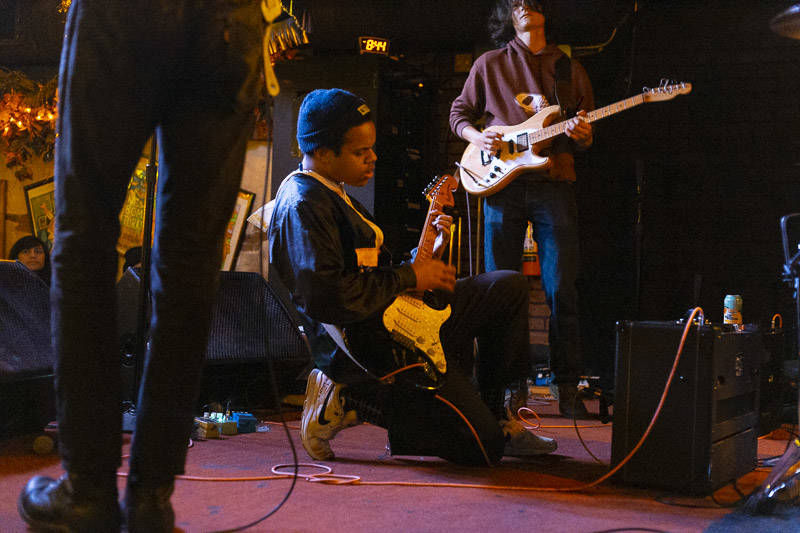
"caption": "Same Girls perform at Bottom of the Hill on night two of the 2019 Noise Pop Music and Arts Festival on February 26, 2019.",
"description": "Same Girls mix groovy funk notes with punk-rock vibes at Bottom of the Hill on night two of the 2019 Noise Pop Music and Arts Festival.",
"title": "Same Girls mix groovy funk notes with punk-rock vibes at Bottom of the Hill on night two of the 2019 Noise Pop Music and Arts Festival.",
"credit": "Estefany Gonzalez ",
"status": "inherit",
"altTag": "Same Girls mix groovy funk notes with punk-rock vibes at Bottom of the Hill on night two of the 2019 Noise Pop Music and Arts Festival.",
"isLoading": false,
"fetchFailed": false
},
"arts_13894138": {
"type": "attachments",
"id": "arts_13894138",
"meta": {
"index": "attachments_1716263798",
"site": "arts",
"id": "13894138",
"found": true
},
"parent": 13894101,
"imgSizes": {
"twentyfourteen-full-width": {
"file": "https://ww2.kqed.org/app/uploads/sites/2/2021/03/RS47846_VOXCV_Mask_Galen_Till_photo_Sean_Karlin-qut-1038x576.jpg",
"width": 1038,
"mimeType": "image/jpeg",
"height": 576
},
"thumbnail": {
"file": "https://ww2.kqed.org/app/uploads/sites/2/2021/03/RS47846_VOXCV_Mask_Galen_Till_photo_Sean_Karlin-qut-160x107.jpg",
"width": 160,
"mimeType": "image/jpeg",
"height": 107
},
"post-thumbnail": {
"file": "https://ww2.kqed.org/app/uploads/sites/2/2021/03/RS47846_VOXCV_Mask_Galen_Till_photo_Sean_Karlin-qut-672x372.jpg",
"width": 672,
"mimeType": "image/jpeg",
"height": 372
},
"kqedFullSize": {
"file": "https://ww2.kqed.org/app/uploads/sites/2/2021/03/RS47846_VOXCV_Mask_Galen_Till_photo_Sean_Karlin-qut.jpg",
"width": 1920,
"height": 1280
},
"large": {
"file": "https://ww2.kqed.org/app/uploads/sites/2/2021/03/RS47846_VOXCV_Mask_Galen_Till_photo_Sean_Karlin-qut-1020x680.jpg",
"width": 1020,
"mimeType": "image/jpeg",
"height": 680
},
"1536x1536": {
"file": "https://ww2.kqed.org/app/uploads/sites/2/2021/03/RS47846_VOXCV_Mask_Galen_Till_photo_Sean_Karlin-qut-1536x1024.jpg",
"width": 1536,
"mimeType": "image/jpeg",
"height": 1024
},
"medium": {
"file": "https://ww2.kqed.org/app/uploads/sites/2/2021/03/RS47846_VOXCV_Mask_Galen_Till_photo_Sean_Karlin-qut-800x533.jpg",
"width": 800,
"mimeType": "image/jpeg",
"height": 533
},
"medium_large": {
"file": "https://ww2.kqed.org/app/uploads/sites/2/2021/03/RS47846_VOXCV_Mask_Galen_Till_photo_Sean_Karlin-qut-768x512.jpg",
"width": 768,
"mimeType": "image/jpeg",
"height": 512
}
},
"publishDate": 1615997409,
"modified": 1615997488,
"caption": "Galen Till, Sr. costume production supervisor at San Francisco Opera, demos the new SF Opera / UCSF mask for singers.",
"description": "Galen Till, Sr. costume production supervisor at San Francisco Opera, demos the new SF Opera / UCSF mask for singers.",
"title": "RS47846_VOXCV_Mask_Galen_Till_photo_Sean_Karlin-qut",
"credit": "Sean Karlin/SF Opera",
"status": "inherit",
"altTag": null,
"isLoading": false,
"fetchFailed": false
},
"arts_13894117": {
"type": "attachments",
"id": "arts_13894117",
"meta": {
"index": "attachments_1716263798",
"site": "arts",
"id": "13894117",
"found": true
},
"parent": 13893843,
"imgSizes": {
"twentyfourteen-full-width": {
"file": "https://ww2.kqed.org/app/uploads/sites/2/2021/03/guillaume-de-germain-Z_br8TOcCpE-unsplash-1038x576.jpg",
"width": 1038,
"mimeType": "image/jpeg",
"height": 576
},
"thumbnail": {
"file": "https://ww2.kqed.org/app/uploads/sites/2/2021/03/guillaume-de-germain-Z_br8TOcCpE-unsplash-160x107.jpg",
"width": 160,
"mimeType": "image/jpeg",
"height": 107
},
"post-thumbnail": {
"file": "https://ww2.kqed.org/app/uploads/sites/2/2021/03/guillaume-de-germain-Z_br8TOcCpE-unsplash-672x372.jpg",
"width": 672,
"mimeType": "image/jpeg",
"height": 372
},
"kqedFullSize": {
"file": "https://ww2.kqed.org/app/uploads/sites/2/2021/03/guillaume-de-germain-Z_br8TOcCpE-unsplash-scaled.jpg",
"width": 2560,
"height": 1709
},
"2048x2048": {
"file": "https://ww2.kqed.org/app/uploads/sites/2/2021/03/guillaume-de-germain-Z_br8TOcCpE-unsplash-2048x1367.jpg",
"width": 2048,
"mimeType": "image/jpeg",
"height": 1367
},
"large": {
"file": "https://ww2.kqed.org/app/uploads/sites/2/2021/03/guillaume-de-germain-Z_br8TOcCpE-unsplash-1020x681.jpg",
"width": 1020,
"mimeType": "image/jpeg",
"height": 681
},
"1536x1536": {
"file": "https://ww2.kqed.org/app/uploads/sites/2/2021/03/guillaume-de-germain-Z_br8TOcCpE-unsplash-1536x1025.jpg",
"width": 1536,
"mimeType": "image/jpeg",
"height": 1025
},
"full-width": {
"file": "https://ww2.kqed.org/app/uploads/sites/2/2021/03/guillaume-de-germain-Z_br8TOcCpE-unsplash-1920x1282.jpg",
"width": 1920,
"mimeType": "image/jpeg",
"height": 1282
},
"medium": {
"file": "https://ww2.kqed.org/app/uploads/sites/2/2021/03/guillaume-de-germain-Z_br8TOcCpE-unsplash-800x534.jpg",
"width": 800,
"mimeType": "image/jpeg",
"height": 534
},
"medium_large": {
"file": "https://ww2.kqed.org/app/uploads/sites/2/2021/03/guillaume-de-germain-Z_br8TOcCpE-unsplash-768x513.jpg",
"width": 768,
"mimeType": "image/jpeg",
"height": 513
}
},
"publishDate": 1615943226,
"modified": 1615943267,
"caption": null,
"description": null,
"title": "guillaume-de-germain-Z_br8TOcCpE-unsplash",
"credit": "Guillaume de Germain/ Unsplash",
"status": "inherit",
"altTag": null,
"isLoading": false,
"fetchFailed": false
},
"arts_13894051": {
"type": "attachments",
"id": "arts_13894051",
"meta": {
"index": "attachments_1716263798",
"site": "arts",
"id": "13894051",
"found": true
},
"parent": 13893953,
"imgSizes": {
"twentyfourteen-full-width": {
"file": "https://ww2.kqed.org/app/uploads/sites/2/2021/03/One_Yr_SIP.jpg-1038x576.jpeg",
"width": 1038,
"mimeType": "image/jpeg",
"height": 576
},
"thumbnail": {
"file": "https://ww2.kqed.org/app/uploads/sites/2/2021/03/One_Yr_SIP.jpg-160x90.jpeg",
"width": 160,
"mimeType": "image/jpeg",
"height": 90
},
"post-thumbnail": {
"file": "https://ww2.kqed.org/app/uploads/sites/2/2021/03/One_Yr_SIP.jpg-672x372.jpeg",
"width": 672,
"mimeType": "image/jpeg",
"height": 372
},
"kqedFullSize": {
"file": "https://ww2.kqed.org/app/uploads/sites/2/2021/03/One_Yr_SIP.jpg.jpeg",
"width": 1920,
"height": 1080
},
"large": {
"file": "https://ww2.kqed.org/app/uploads/sites/2/2021/03/One_Yr_SIP.jpg-1020x574.jpeg",
"width": 1020,
"mimeType": "image/jpeg",
"height": 574
},
"1536x1536": {
"file": "https://ww2.kqed.org/app/uploads/sites/2/2021/03/One_Yr_SIP.jpg-1536x864.jpeg",
"width": 1536,
"mimeType": "image/jpeg",
"height": 864
},
"medium": {
"file": "https://ww2.kqed.org/app/uploads/sites/2/2021/03/One_Yr_SIP.jpg-800x450.jpeg",
"width": 800,
"mimeType": "image/jpeg",
"height": 450
},
"medium_large": {
"file": "https://ww2.kqed.org/app/uploads/sites/2/2021/03/One_Yr_SIP.jpg-768x432.jpeg",
"width": 768,
"mimeType": "image/jpeg",
"height": 432
}
},
"publishDate": 1615913369,
"modified": 1615913464,
"caption": "A year of COVID completely upended nearly every sector of the arts. How have you gotten by?",
"description": "A year of COVID completely upended nearly every sector of the arts. How have you gotten by?",
"title": "One_Yr_SIP.jpg",
"credit": "Illustration by Vida Kuang",
"status": "inherit",
"altTag": "A year of COVID completely upended nearly every sector of the arts. How have you gotten by?",
"isLoading": false,
"fetchFailed": false
},
"arts_13893824": {
"type": "attachments",
"id": "arts_13893824",
"meta": {
"index": "attachments_1716263798",
"site": "arts",
"id": "13893824",
"found": true
},
"parent": 13893812,
"imgSizes": {
"twentyfourteen-full-width": {
"file": "https://ww2.kqed.org/app/uploads/sites/2/2021/03/RS47582_Binding-Ties-4-qut-1038x576.jpg",
"width": 1038,
"mimeType": "image/jpeg",
"height": 576
},
"thumbnail": {
"file": "https://ww2.kqed.org/app/uploads/sites/2/2021/03/RS47582_Binding-Ties-4-qut-160x107.jpg",
"width": 160,
"mimeType": "image/jpeg",
"height": 107
},
"post-thumbnail": {
"file": "https://ww2.kqed.org/app/uploads/sites/2/2021/03/RS47582_Binding-Ties-4-qut-672x372.jpg",
"width": 672,
"mimeType": "image/jpeg",
"height": 372
},
"kqedFullSize": {
"file": "https://ww2.kqed.org/app/uploads/sites/2/2021/03/RS47582_Binding-Ties-4-qut.jpg",
"width": 1920,
"height": 1280
},
"large": {
"file": "https://ww2.kqed.org/app/uploads/sites/2/2021/03/RS47582_Binding-Ties-4-qut-1020x680.jpg",
"width": 1020,
"mimeType": "image/jpeg",
"height": 680
},
"1536x1536": {
"file": "https://ww2.kqed.org/app/uploads/sites/2/2021/03/RS47582_Binding-Ties-4-qut-1536x1024.jpg",
"width": 1536,
"mimeType": "image/jpeg",
"height": 1024
},
"medium": {
"file": "https://ww2.kqed.org/app/uploads/sites/2/2021/03/RS47582_Binding-Ties-4-qut-800x533.jpg",
"width": 800,
"mimeType": "image/jpeg",
"height": 533
},
"medium_large": {
"file": "https://ww2.kqed.org/app/uploads/sites/2/2021/03/RS47582_Binding-Ties-4-qut-768x512.jpg",
"width": 768,
"mimeType": "image/jpeg",
"height": 512
}
},
"publishDate": 1615437953,
"modified": 1615438005,
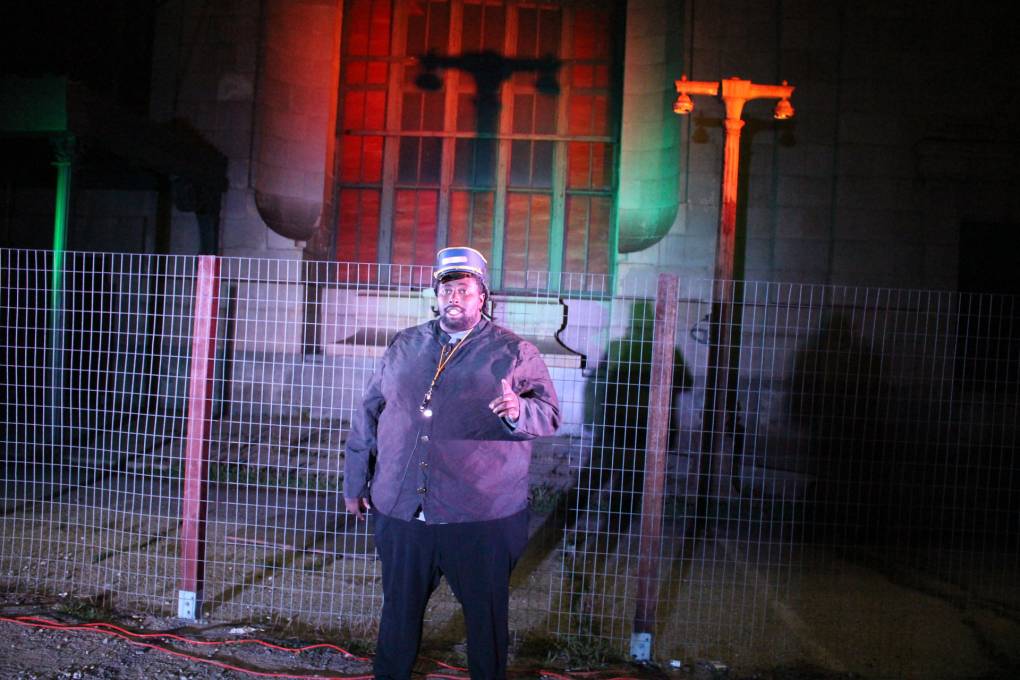
"caption": "William Oliver III as Storyteller in 'Binding Ties: The 16th Street Station' produced by Oakland Theater Project. ",
"description": "William Oliver III as Storyteller in Binding Ties: The 16th Street Station produced by Oakland Theater Project. ",
"title": "RS47582_Binding Ties - 4-qut",
"credit": "Colin Mandlin/Oakland Theater Project",
"status": "inherit",
"altTag": null,
"isLoading": false,
"fetchFailed": false
},
"arts_13893908": {
"type": "attachments",
"id": "arts_13893908",
"meta": {
"index": "attachments_1716263798",
"site": "arts",
"id": "13893908",
"found": true
},
"parent": 13893751,
"imgSizes": {
"twentyfourteen-full-width": {
"file": "https://ww2.kqed.org/app/uploads/sites/2/2021/03/AmericanFlag.DowntownOakland.BLM_-1038x576.jpg",
"width": 1038,
"mimeType": "image/jpeg",
"height": 576
},
"thumbnail": {
"file": "https://ww2.kqed.org/app/uploads/sites/2/2021/03/AmericanFlag.DowntownOakland.BLM_-160x99.jpg",
"width": 160,
"mimeType": "image/jpeg",
"height": 99
},
"post-thumbnail": {
"file": "https://ww2.kqed.org/app/uploads/sites/2/2021/03/AmericanFlag.DowntownOakland.BLM_-672x372.jpg",
"width": 672,
"mimeType": "image/jpeg",
"height": 372
},
"kqedFullSize": {
"file": "https://ww2.kqed.org/app/uploads/sites/2/2021/03/AmericanFlag.DowntownOakland.BLM_.jpg",
"width": 1111,
"height": 688
},
"large": {
"file": "https://ww2.kqed.org/app/uploads/sites/2/2021/03/AmericanFlag.DowntownOakland.BLM_-1020x632.jpg",
"width": 1020,
"mimeType": "image/jpeg",
"height": 632
},
"medium": {
"file": "https://ww2.kqed.org/app/uploads/sites/2/2021/03/AmericanFlag.DowntownOakland.BLM_-800x495.jpg",
"width": 800,
"mimeType": "image/jpeg",
"height": 495
},
"medium_large": {
"file": "https://ww2.kqed.org/app/uploads/sites/2/2021/03/AmericanFlag.DowntownOakland.BLM_-768x476.jpg",
"width": 768,
"mimeType": "image/jpeg",
"height": 476
}
},
"publishDate": 1615507800,
"modified": 1615510185,
"caption": "In 2020, the pandemic exposed longstanding inequality more clearer than ever. How much did we fundamentally change because of it?",
"description": "In 2020, the pandemic exposed longstanding inequality more clearer than ever. How much did we fundamentally change because of it?",
"title": "AmericanFlag.DowntownOakland.BLM",
"credit": "Mural by LC Howard; Photo of Jeremiah by Pendarvis Harshaw",
"status": "inherit",
"altTag": "A man named Jeremiah sleeps wrapped in an American flag on the streets of downtown Oakland, beneath a large Black Lives Matter mural.",
"isLoading": false,
"fetchFailed": false
},
"arts_13892343": {
"type": "attachments",
"id": "arts_13892343",
"meta": {
"index": "attachments_1716263798",
"site": "arts",
"id": "13892343",
"found": true
},
"parent": 13892333,
"imgSizes": {
"twentyfourteen-full-width": {
"file": "https://ww2.kqed.org/app/uploads/sites/2/2021/02/iStock-1199610317-1038x576.jpg",
"width": 1038,
"mimeType": "image/jpeg",
"height": 576
},
"thumbnail": {
"file": "https://ww2.kqed.org/app/uploads/sites/2/2021/02/iStock-1199610317-160x107.jpg",
"width": 160,
"mimeType": "image/jpeg",
"height": 107
},
"post-thumbnail": {
"file": "https://ww2.kqed.org/app/uploads/sites/2/2021/02/iStock-1199610317-672x372.jpg",
"width": 672,
"mimeType": "image/jpeg",
"height": 372
},
"kqedFullSize": {
"file": "https://ww2.kqed.org/app/uploads/sites/2/2021/02/iStock-1199610317.jpg",
"width": 1254,
"height": 836
},
"large": {
"file": "https://ww2.kqed.org/app/uploads/sites/2/2021/02/iStock-1199610317-1020x680.jpg",
"width": 1020,
"mimeType": "image/jpeg",
"height": 680
},
"medium": {
"file": "https://ww2.kqed.org/app/uploads/sites/2/2021/02/iStock-1199610317-800x533.jpg",
"width": 800,
"mimeType": "image/jpeg",
"height": 533
},
"medium_large": {
"file": "https://ww2.kqed.org/app/uploads/sites/2/2021/02/iStock-1199610317-768x512.jpg",
"width": 768,
"mimeType": "image/jpeg",
"height": 512
}
},
"publishDate": 1612571185,
"modified": 1612571563,
"caption": "This is the year to get creative with your Valentine's Day celebration as we continue to shelter in place. ",
"description": "This is the year to get creative with your Valentine's Day celebration as we continue to shelter in place. ",
"title": "Concept of love. Two blue hands holding a big red heart on a blue background",
"credit": "Vector Story/iStock",
"status": "inherit",
"altTag": null,
"isLoading": false,
"fetchFailed": false
},
"arts_13887690": {
"type": "attachments",
"id": "arts_13887690",
"meta": {
"index": "attachments_1716263798",
"site": "arts",
"id": "13887690",
"found": true
},
"parent": 13887685,
"imgSizes": {
"twentyfourteen-full-width": {
"file": "https://ww2.kqed.org/app/uploads/sites/2/2020/10/Wahyu-Lo-1920x1080-1-1038x576.jpg",
"width": 1038,
"mimeType": "image/jpeg",
"height": 576
},
"thumbnail": {
"file": "https://ww2.kqed.org/app/uploads/sites/2/2020/10/Wahyu-Lo-1920x1080-1-160x90.jpg",
"width": 160,
"mimeType": "image/jpeg",
"height": 90
},
"post-thumbnail": {
"file": "https://ww2.kqed.org/app/uploads/sites/2/2020/10/Wahyu-Lo-1920x1080-1-672x372.jpg",
"width": 672,
"mimeType": "image/jpeg",
"height": 372
},
"kqedFullSize": {
"file": "https://ww2.kqed.org/app/uploads/sites/2/2020/10/Wahyu-Lo-1920x1080-1.jpg",
"width": 1920,
"height": 1080
},
"large": {
"file": "https://ww2.kqed.org/app/uploads/sites/2/2020/10/Wahyu-Lo-1920x1080-1-1020x574.jpg",
"width": 1020,
"mimeType": "image/jpeg",
"height": 574
},
"1536x1536": {
"file": "https://ww2.kqed.org/app/uploads/sites/2/2020/10/Wahyu-Lo-1920x1080-1-1536x864.jpg",
"width": 1536,
"mimeType": "image/jpeg",
"height": 864
},
"medium": {
"file": "https://ww2.kqed.org/app/uploads/sites/2/2020/10/Wahyu-Lo-1920x1080-1-800x450.jpg",
"width": 800,
"mimeType": "image/jpeg",
"height": 450
},
"medium_large": {
"file": "https://ww2.kqed.org/app/uploads/sites/2/2020/10/Wahyu-Lo-1920x1080-1-768x432.jpg",
"width": 768,
"mimeType": "image/jpeg",
"height": 432
}
},
"publishDate": 1602208750,
"modified": 1602209253,
"caption": "Wahyu Lo passed away of COVID-19 on March 24, 2020 at age 65. His daughter, Rachel remembers her father in her own words. ",
"description": "Wahyu Lo passed away of COVID-19 on March 24, 2020 at age 65. His daughter, Rachel remembers her father in her own words. ",
"title": "Wahyu Lo 1920x1080",
"credit": "Kelly Heigert (portrait), Vida Kuang (foliage, fauna, and background",
"status": "inherit",
"isLoading": false,
"fetchFailed": false
},
"arts_13887289": {
"type": "attachments",
"id": "arts_13887289",
"meta": {
"index": "attachments_1716263798",
"site": "arts",
"id": "13887289",
"found": true
},
"parent": 13887273,
"imgSizes": {
"twentyfourteen-full-width": {
"file": "https://ww2.kqed.org/app/uploads/sites/2/2020/10/Kee-Sun-Chung-UPDATED--1038x576.jpg",
"width": 1038,
"mimeType": "image/jpeg",
"height": 576
},
"thumbnail": {
"file": "https://ww2.kqed.org/app/uploads/sites/2/2020/10/Kee-Sun-Chung-UPDATED--160x90.jpg",
"width": 160,
"mimeType": "image/jpeg",
"height": 90
},
"post-thumbnail": {
"file": "https://ww2.kqed.org/app/uploads/sites/2/2020/10/Kee-Sun-Chung-UPDATED--672x372.jpg",
"width": 672,
"mimeType": "image/jpeg",
"height": 372
},
"kqedFullSize": {
"file": "https://ww2.kqed.org/app/uploads/sites/2/2020/10/Kee-Sun-Chung-UPDATED-.jpg",
"width": 1920,
"height": 1080
},
"large": {
"file": "https://ww2.kqed.org/app/uploads/sites/2/2020/10/Kee-Sun-Chung-UPDATED--1020x574.jpg",
"width": 1020,
"mimeType": "image/jpeg",
"height": 574
},
"1536x1536": {
"file": "https://ww2.kqed.org/app/uploads/sites/2/2020/10/Kee-Sun-Chung-UPDATED--1536x864.jpg",
"width": 1536,
"mimeType": "image/jpeg",
"height": 864
},
"medium": {
"file": "https://ww2.kqed.org/app/uploads/sites/2/2020/10/Kee-Sun-Chung-UPDATED--800x450.jpg",
"width": 800,
"mimeType": "image/jpeg",
"height": 450
},
"medium_large": {
"file": "https://ww2.kqed.org/app/uploads/sites/2/2020/10/Kee-Sun-Chung-UPDATED--768x432.jpg",
"width": 768,
"mimeType": "image/jpeg",
"height": 432
}
},
"publishDate": 1601584620,
"modified": 1601584738,
"caption": "Kee Sun Chung passed away of COVID-19 on May 6, 2020 at age 71. His son, Jason Chung, honors his father in his own words. ",
"description": "Kee Sun Chung passed away of COVID-19 on May 6, 2020 at age 71. His son, Jason Chung, honors his father in his own words. ",
"title": "Kee Sun Chung",
"credit": "Kelly Heigert (portrait), Vida Kuang (florals and background). ",
"status": "inherit",
"isLoading": false,
"fetchFailed": false
},
"arts_13887463": {
"type": "attachments",
"id": "arts_13887463",
"meta": {
"index": "attachments_1716263798",
"site": "arts",
"id": "13887463",
"found": true
},
"parent": 13887169,
"imgSizes": {
"thumbnail": {
"file": "https://ww2.kqed.org/app/uploads/sites/2/2020/10/RubyIbarra.MAIN_-160x90.jpg",
"width": 160,
"mimeType": "image/jpeg",
"height": 90
},
"post-thumbnail": {
"file": "https://ww2.kqed.org/app/uploads/sites/2/2020/10/RubyIbarra.MAIN_-672x372.jpg",
"width": 672,
"mimeType": "image/jpeg",
"height": 372
},
"kqedFullSize": {
"file": "https://ww2.kqed.org/app/uploads/sites/2/2020/10/RubyIbarra.MAIN_.jpg",
"width": 800,
"height": 450
},
"medium_large": {
"file": "https://ww2.kqed.org/app/uploads/sites/2/2020/10/RubyIbarra.MAIN_-768x432.jpg",
"width": 768,
"mimeType": "image/jpeg",
"height": 432
}
},
"publishDate": 1601941125,
"modified": 1601941148,
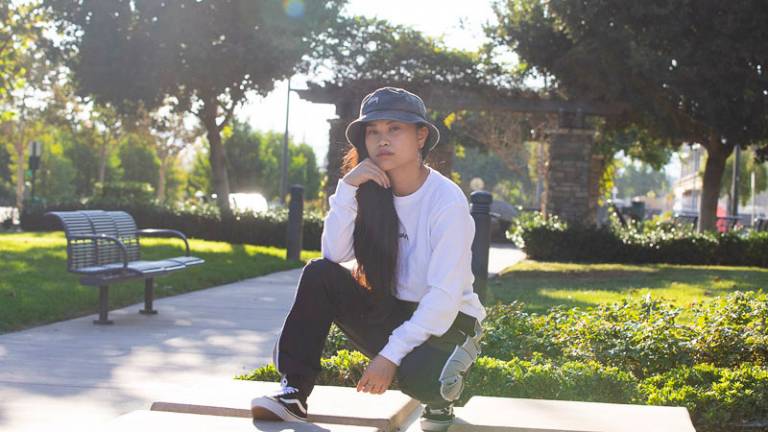
"caption": "\"What's at stake is everybody's lives. Everybody's safety,\" Ruby Ibarra says of the politicization of the COVID-19 pandemic.",
"description": "\"What's at stake is everybody's lives. Everybody's safety,\" Ruby Ibarra says of the politicization of the COVID-19 pandemic.",
"title": "RubyIbarra.MAIN",
"credit": "Estefany Gonzalez",
"status": "inherit",
"isLoading": false,
"fetchFailed": false
},
"arts_13883938": {
"type": "attachments",
"id": "arts_13883938",
"meta": {
"index": "attachments_1716263798",
"site": "arts",
"id": "13883938",
"found": true
},
"parent": 13883929,
"imgSizes": {
"twentyfourteen-full-width": {
"file": "https://ww2.kqed.org/app/uploads/sites/2/2020/07/MemorialSocial_Spanish-1038x576.jpg",
"width": 1038,
"mimeType": "image/jpeg",
"height": 576
},
"thumbnail": {
"file": "https://ww2.kqed.org/app/uploads/sites/2/2020/07/MemorialSocial_Spanish-160x90.jpg",
"width": 160,
"mimeType": "image/jpeg",
"height": 90
},
"post-thumbnail": {
"file": "https://ww2.kqed.org/app/uploads/sites/2/2020/07/MemorialSocial_Spanish-672x372.jpg",
"width": 672,
"mimeType": "image/jpeg",
"height": 372
},
"kqedFullSize": {
"file": "https://ww2.kqed.org/app/uploads/sites/2/2020/07/MemorialSocial_Spanish.jpg",
"width": 1920,
"height": 1080
},
"large": {
"file": "https://ww2.kqed.org/app/uploads/sites/2/2020/07/MemorialSocial_Spanish-1020x574.jpg",
"width": 1020,
"mimeType": "image/jpeg",
"height": 574
},
"1536x1536": {
"file": "https://ww2.kqed.org/app/uploads/sites/2/2020/07/MemorialSocial_Spanish-1536x864.jpg",
"width": 1536,
"mimeType": "image/jpeg",
"height": 864
},
"medium": {
"file": "https://ww2.kqed.org/app/uploads/sites/2/2020/07/MemorialSocial_Spanish-800x450.jpg",
"width": 800,
"mimeType": "image/jpeg",
"height": 450
},
"medium_large": {
"file": "https://ww2.kqed.org/app/uploads/sites/2/2020/07/MemorialSocial_Spanish-768x432.jpg",
"width": 768,
"mimeType": "image/jpeg",
"height": 432
}
},
"publishDate": 1595882172,
"modified": 1595882189,
"caption": "Si gusta conmemorar a alguien, le invitamos a que comparta su historia con nosotros.",
"description": "Si gusta conmemorar a alguien, le invitamos a que comparta su historia con nosotros.",
"title": "MemorialSocial_Spanish",
"credit": null,
"status": "inherit",
"isLoading": false,
"fetchFailed": false
},
"arts_13881328": {
"type": "attachments",
"id": "arts_13881328",
"meta": {
"index": "attachments_1716263798",
"site": "arts",
"id": "13881328",
"found": true
},
"parent": 13881227,
"imgSizes": {
"twentyfourteen-full-width": {
"file": "https://ww2.kqed.org/app/uploads/sites/2/2020/06/center-for-cultural-power-1038x576.jpg",
"width": 1038,
"mimeType": "image/jpeg",
"height": 576
},
"thumbnail": {
"file": "https://ww2.kqed.org/app/uploads/sites/2/2020/06/center-for-cultural-power-160x90.jpg",
"width": 160,
"mimeType": "image/jpeg",
"height": 90
},
"post-thumbnail": {
"file": "https://ww2.kqed.org/app/uploads/sites/2/2020/06/center-for-cultural-power-672x372.jpg",
"width": 672,
"mimeType": "image/jpeg",
"height": 372
},
"kqedFullSize": {
"file": "https://ww2.kqed.org/app/uploads/sites/2/2020/06/center-for-cultural-power.jpg",
"width": 1920,
"height": 1080
},
"large": {
"file": "https://ww2.kqed.org/app/uploads/sites/2/2020/06/center-for-cultural-power-1020x574.jpg",
"width": 1020,
"mimeType": "image/jpeg",
"height": 574
},
"full-width": {
"file": "https://ww2.kqed.org/app/uploads/sites/2/2020/06/center-for-cultural-power-1920x1080.jpg",
"width": 1920,
"mimeType": "image/jpeg",
"height": 1080
},
"medium": {
"file": "https://ww2.kqed.org/app/uploads/sites/2/2020/06/center-for-cultural-power-800x450.jpg",
"width": 800,
"mimeType": "image/jpeg",
"height": 450
},
"medium_large": {
"file": "https://ww2.kqed.org/app/uploads/sites/2/2020/06/center-for-cultural-power-768x432.jpg",
"width": 768,
"mimeType": "image/jpeg",
"height": 432
}
},
"publishDate": 1591202620,
"modified": 1591202756,
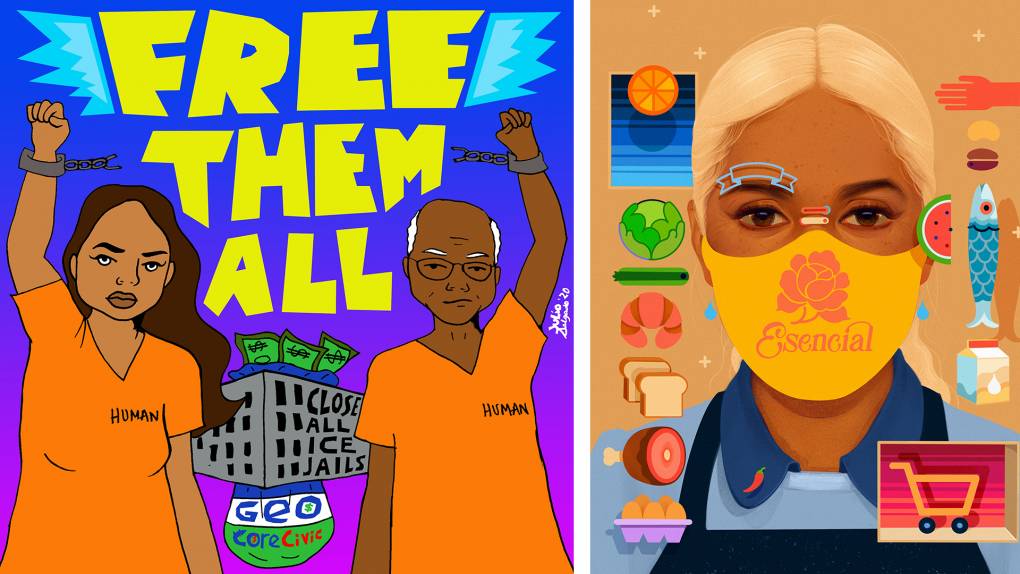
"caption": "Artists Julio Salgado, whose drawing is on the left, and Sam Rodriguez make art that uplifts incarcerated people and essential workers. ",
"description": "Artists Julio Salgado, whose drawing is on the left, and Sam Rodriguez make art that uplifts incarcerated people and essential workers. ",
"title": "center for cultural power",
"credit": "Julio Salgado/Sam Rodriguez",
"status": "inherit",
"isLoading": false,
"fetchFailed": false
}
},
"audioPlayerReducer": {
"postId": "stream_live",
"isPaused": true,
"isPlaying": false,
"pfsActive": false,
"pledgeModalIsOpen": true,
"playerDrawerIsOpen": false,
"liveAudioPlayStartedAt": 0,
"liveAudioPlayContext": ""
},
"authorsReducer": {
"byline_arts_13887685": {
"type": "authors",
"id": "byline_arts_13887685",
"meta": {
"override": true
},
"slug": "byline_arts_13887685",
"name": "Rachel Lo",
"isLoading": false
},
"byline_arts_13887273": {
"type": "authors",
"id": "byline_arts_13887273",
"meta": {
"override": true
},
"slug": "byline_arts_13887273",
"name": "Jason Chung",
"isLoading": false
},
"shotchkiss": {
"type": "authors",
"id": "61",
"meta": {
"index": "authors_1716337520",
"id": "61",
"found": true
},
"name": "Sarah Hotchkiss",
"firstName": "Sarah",
"lastName": "Hotchkiss",
"slug": "shotchkiss",
"email": "shotchkiss@kqed.org",
"display_author_email": true,
"staff_mastheads": [
"arts"
],
"title": "Senior Editor",
"bio": "Sarah Hotchkiss is a San Francisco \u003ca href=\"http://www.sarahhotchkiss.com\">artist\u003c/a> and arts writer. In 2019, she received the Dorothea & Leo Rabkin Foundation grant for visual art journalism and in 2020 she received a Society of Professional Journalists, Northern California award for excellence in arts and culture reporting.",
"avatar": "https://secure.gravatar.com/avatar/bc662df144b3d27fd8b1b6f1c2a420d34e91e53154d411bb7ad353cc8b6cea8d?s=600&d=blank&r=g",
"twitter": null,
"bluesky": null,
"facebook": null,
"instagram": null,
"linkedin": null,
"sites": [
{
"site": "",
"roles": [
"editor"
]
},
{
"site": "arts",
"roles": [
"Contributor",
"administrator"
]
},
{
"site": "artschool",
"roles": [
"administrator"
]
},
{
"site": "news",
"roles": [
"editor"
]
},
{
"site": "pop",
"roles": [
"administrator"
]
},
{
"site": "bayareabites",
"roles": [
"editor"
]
},
{
"site": "spark",
"roles": [
"editor"
]
},
{
"site": "checkplease",
"roles": [
"editor"
]
}
],
"headData": {
"title": "Sarah Hotchkiss | KQED",
"description": "Senior Editor",
"ogImgSrc": "https://secure.gravatar.com/avatar/bc662df144b3d27fd8b1b6f1c2a420d34e91e53154d411bb7ad353cc8b6cea8d?s=600&d=blank&r=g",
"twImgSrc": "https://secure.gravatar.com/avatar/bc662df144b3d27fd8b1b6f1c2a420d34e91e53154d411bb7ad353cc8b6cea8d?s=600&d=blank&r=g"
},
"isLoading": false,
"link": "/author/shotchkiss"
},
"kqedarts": {
"type": "authors",
"id": "92",
"meta": {
"index": "authors_1716337520",
"id": "92",
"found": true
},
"name": "KQED Arts",
"firstName": "KQED",
"lastName": "Arts",
"slug": "kqedarts",
"email": "arts@kqed.org",
"display_author_email": false,
"staff_mastheads": [],
"title": "KQED Staff",
"bio": null,
"avatar": "https://secure.gravatar.com/avatar/321c9ebfeb7736f9e55366a6d3399ab0?s=600&d=blank&r=g",
"twitter": null,
"facebook": null,
"instagram": "https://www.instagram.com/kqed_arts/",
"linkedin": null,
"sites": [
{
"site": "arts",
"roles": [
"contributor"
]
},
{
"site": "pop",
"roles": [
"contributor"
]
},
{
"site": "science",
"roles": [
"author"
]
},
{
"site": "food",
"roles": [
"contributor"
]
}
],
"headData": {
"title": "KQED Arts | KQED",
"description": "KQED Staff",
"ogImgSrc": "https://secure.gravatar.com/avatar/321c9ebfeb7736f9e55366a6d3399ab0?s=600&d=blank&r=g",
"twImgSrc": "https://secure.gravatar.com/avatar/321c9ebfeb7736f9e55366a6d3399ab0?s=600&d=blank&r=g"
},
"isLoading": false,
"link": "/author/kqedarts"
},
"gmeline": {
"type": "authors",
"id": "185",
"meta": {
"index": "authors_1716337520",
"id": "185",
"found": true
},
"name": "Gabe Meline",
"firstName": "Gabe",
"lastName": "Meline",
"slug": "gmeline",
"email": "gmeline@kqed.org",
"display_author_email": true,
"staff_mastheads": [
"arts"
],
"title": "Senior Editor, KQED Arts & Culture",
"bio": "Gabe Meline entered journalism at age 15 making photocopied zines, and has since earned awards from the Edward R. Murrow Awards, the Society for Professional Journalists, the Online Journalism Awards, the Association of Alternative Newsweeklies and the California Newspaper Publishers Association. Prior to KQED, he was the editor of the \u003cem>North Bay Bohemian\u003c/em> and a touring musician. He lives with his wife and daughter in his hometown of Santa Rosa, CA.",
"avatar": "https://secure.gravatar.com/avatar/5bebe57be0d8bc2dd318934feb47299e2d2d10cba28d09d8d7afb389a2ce2bdd?s=600&d=blank&r=g",
"twitter": null,
"bluesky": null,
"facebook": null,
"instagram": null,
"linkedin": null,
"sites": [
{
"site": "",
"roles": [
"editor"
]
},
{
"site": "arts",
"roles": [
"administrator"
]
},
{
"site": "artschool",
"roles": [
"editor"
]
},
{
"site": "news",
"roles": [
"author"
]
},
{
"site": "pop",
"roles": [
"editor"
]
},
{
"site": "bayareabites",
"roles": [
"editor"
]
},
{
"site": "food",
"roles": [
"editor"
]
},
{
"site": "forum",
"roles": [
"administrator"
]
},
{
"site": "liveblog",
"roles": [
"editor"
]
},
{
"site": "hiphop",
"roles": [
"editor"
]
}
],
"headData": {
"title": "Gabe Meline | KQED",
"description": "Senior Editor, KQED Arts & Culture",
"ogImgSrc": "https://secure.gravatar.com/avatar/5bebe57be0d8bc2dd318934feb47299e2d2d10cba28d09d8d7afb389a2ce2bdd?s=600&d=blank&r=g",
"twImgSrc": "https://secure.gravatar.com/avatar/5bebe57be0d8bc2dd318934feb47299e2d2d10cba28d09d8d7afb389a2ce2bdd?s=600&d=blank&r=g"
},
"isLoading": false,
"link": "/author/gmeline"
},
"cveltman": {
"type": "authors",
"id": "8608",
"meta": {
"index": "authors_1716337520",
"id": "8608",
"found": true
},
"name": "Chloe Veltman",
"firstName": "Chloe",
"lastName": "Veltman",
"slug": "cveltman",
"email": "cveltman@kqed.org",
"display_author_email": true,
"staff_mastheads": [],
"title": "Arts and Culture Reporter",
"bio": "Chloe Veltman is a former arts and culture reporter for KQED. Prior to joining the organization, she launched and led the arts bureau at Colorado Public Radio, served as the Bay Area's culture columnist for the New York Times, and was the founder, host and executive producer of VoiceBox, a national award-winning weekly podcast/radio show and live events series all about the human voice. Chloe is the recipient of numerous prizes, grants and fellowships including a Webby Award for her work on interactive storytelling, both the John S Knight Journalism Fellowship and Humanities Center Fellowship at Stanford University, the Sundance Arts Writing Fellowship and a Library of Congress Research Fellowship. She is the author of the book \"On Acting\" and has appeared as a guest lecturer at Yale University and the San Francisco Conservatory of Music among other institutions. She holds a BA in english literature from King's College, Cambridge, and a Masters in Dramaturgy from the Central School of Speech and Drama/Harvard Institute for Advanced Theater Training.\r\n\u003ca href=\"https://www.chloeveltman.com\">www.chloeveltman.com\u003c/a>",
"avatar": "https://secure.gravatar.com/avatar/55403394b00a1ddab683952c2eb2cf85?s=600&d=blank&r=g",
"twitter": "chloeveltman",
"facebook": null,
"instagram": null,
"linkedin": null,
"sites": [
{
"site": "arts",
"roles": []
},
{
"site": "news",
"roles": [
"author"
]
},
{
"site": "pop",
"roles": [
"editor"
]
},
{
"site": "science",
"roles": []
}
],
"headData": {
"title": "Chloe Veltman | KQED",
"description": "Arts and Culture Reporter",
"ogImgSrc": "https://secure.gravatar.com/avatar/55403394b00a1ddab683952c2eb2cf85?s=600&d=blank&r=g",
"twImgSrc": "https://secure.gravatar.com/avatar/55403394b00a1ddab683952c2eb2cf85?s=600&d=blank&r=g"
},
"isLoading": false,
"link": "/author/cveltman"
},
"ralexandra": {
"type": "authors",
"id": "11242",
"meta": {
"index": "authors_1716337520",
"id": "11242",
"found": true
},
"name": "Rae Alexandra",
"firstName": "Rae",
"lastName": "Alexandra",
"slug": "ralexandra",
"email": "ralexandra@kqed.org",
"display_author_email": true,
"staff_mastheads": [],
"title": "Reporter/Producer",
"bio": "Rae Alexandra is a Reporter/Producer for KQED Arts & Culture, and the creator/author of the \u003ca href=\"https://www.kqed.org/arts/program/rebel-girls-from-bay-area-history\">Rebel Girls From Bay Area History\u003c/a> and \u003ca href=\"https://www.kqed.org/bizarrebayarea\">Bizarre Bay Area\u003c/a> series. Her debut book, \u003ca href=\"https://citylights.com/politics-current-events-history/unsung-heroines35-women-who-changed/\">Unsung Heroines: 35 Women Who Changed the Bay Area\u003c/a> was published by City Lights in March 2026. In 2023, Rae was awarded an SPJ Excellence in Journalism Award for Arts & Culture. Rae was born and raised in Wales and subsequently — even after two decades in Northern California — still uses phrases that regularly baffle her coworkers.",
"avatar": "https://secure.gravatar.com/avatar/edfee8176c80cc0a382b051190f5341997df378a934a5774dcb0977732dfd401?s=600&d=blank&r=g",
"twitter": null,
"bluesky": null,
"facebook": null,
"instagram": null,
"linkedin": null,
"sites": [
{
"site": "arts",
"roles": [
"subscriber"
]
},
{
"site": "news",
"roles": [
"subscriber"
]
},
{
"site": "pop",
"roles": [
"subscriber"
]
},
{
"site": "bayareabites",
"roles": [
"subscriber"
]
},
{
"site": "science",
"roles": [
"subscriber"
]
}
],
"headData": {
"title": "Rae Alexandra | KQED",
"description": "Reporter/Producer",
"ogImgSrc": "https://secure.gravatar.com/avatar/edfee8176c80cc0a382b051190f5341997df378a934a5774dcb0977732dfd401?s=600&d=blank&r=g",
"twImgSrc": "https://secure.gravatar.com/avatar/edfee8176c80cc0a382b051190f5341997df378a934a5774dcb0977732dfd401?s=600&d=blank&r=g"
},
"isLoading": false,
"link": "/author/ralexandra"
},
"nvoynovskaya": {
"type": "authors",
"id": "11387",
"meta": {
"index": "authors_1716337520",
"id": "11387",
"found": true
},
"name": "Nastia Voynovskaya",
"firstName": "Nastia",
"lastName": "Voynovskaya",
"slug": "nvoynovskaya",
"email": "nvoynovskaya@kqed.org",
"display_author_email": false,
"staff_mastheads": [
"arts"
],
"title": "Editor and reporter",
"bio": "Nastia Voynovskaya is a reporter, editor and host at KQED Arts & Culture. She's been covering the arts in the Bay Area for over a decade, with a focus on music, queer culture, labor issues and grassroots organizing. She has edited KQED story series such as Trans Bay: A History of San Francisco's Gender-Diverse Community, and co-created KQED's Bay Area hip-hop history project, That's My Word. Nastia's work has been recognized by the Society of Professional Journalists and San Francisco Press Club. She regularly appears on podcasts and radio programs, including NPR's All Songs Considered, and hosts live events where music, culture and conversation meet.",
"avatar": "https://secure.gravatar.com/avatar/5025ee460e5a85d69ca20ea6c6f2f80d7e17795c828f61ea3aecfcd924e9042e?s=600&d=blank&r=g",
"twitter": null,
"bluesky": null,
"facebook": null,
"instagram": "https://www.instagram.com/nananastia/",
"linkedin": null,
"sites": [
{
"site": "",
"roles": [
"editor"
]
},
{
"site": "arts",
"roles": [
"administrator"
]
},
{
"site": "news",
"roles": [
"editor"
]
},
{
"site": "pop",
"roles": [
"administrator"
]
},
{
"site": "bayareabites",
"roles": [
"editor"
]
},
{
"site": "podcasts",
"roles": [
"editor"
]
},
{
"site": "hiphop",
"roles": [
"editor"
]
}
],
"headData": {
"title": "Nastia Voynovskaya | KQED",
"description": "Editor and reporter",
"ogImgSrc": "https://secure.gravatar.com/avatar/5025ee460e5a85d69ca20ea6c6f2f80d7e17795c828f61ea3aecfcd924e9042e?s=600&d=blank&r=g",
"twImgSrc": "https://secure.gravatar.com/avatar/5025ee460e5a85d69ca20ea6c6f2f80d7e17795c828f61ea3aecfcd924e9042e?s=600&d=blank&r=g"
},
"isLoading": false,
"link": "/author/nvoynovskaya"
},
"edayu": {
"type": "authors",
"id": "11391",
"meta": {
"index": "authors_1716337520",
"id": "11391",
"found": true
},
"name": "Eda Yu",
"firstName": "Eda",
"lastName": "Yu",
"slug": "edayu",
"email": "eda.cyu@gmail.com",
"display_author_email": false,
"staff_mastheads": [],
"title": "KQED Contributor",
"bio": "Eda Yu is a freelance writer and arts and culture journalist born and raised in Los Angeles, California. Her work centers the intersection of culture and identity, and her writing has appeared on platforms like VICE, Paper Magazine, and Complex. Follow her latest on Instagram and Twitter @edacyu.",
"avatar": "https://secure.gravatar.com/avatar/6dac2abe6c01e7b538d29f9c902136eb?s=600&d=blank&r=g",
"twitter": null,
"facebook": null,
"instagram": "https://www.instagram.com/edacyu/",
"linkedin": null,
"sites": [
{
"site": "arts",
"roles": [
"contributor"
]
}
],
"headData": {
"title": "Eda Yu | KQED",
"description": "KQED Contributor",
"ogImgSrc": "https://secure.gravatar.com/avatar/6dac2abe6c01e7b538d29f9c902136eb?s=600&d=blank&r=g",
"twImgSrc": "https://secure.gravatar.com/avatar/6dac2abe6c01e7b538d29f9c902136eb?s=600&d=blank&r=g"
},
"isLoading": false,
"link": "/author/edayu"
},
"ogpenn": {
"type": "authors",
"id": "11491",
"meta": {
"index": "authors_1716337520",
"id": "11491",
"found": true
},
"name": "Pendarvis Harshaw",
"firstName": "Pendarvis",
"lastName": "Harshaw",
"slug": "ogpenn",
"email": "ogpenn@gmail.com",
"display_author_email": false,
"staff_mastheads": [
"arts"
],
"title": "Community Engagement Reporter",
"bio": "Pendarvis Harshaw is an educator, host and writer with KQED Arts.",
"avatar": "https://secure.gravatar.com/avatar/972b77ee8e3f346ae2b00622661187fbfabd059b5693bbdc1475ea7a722fd4cd?s=600&d=blank&r=g",
"twitter": null,
"bluesky": null,
"facebook": null,
"instagram": "ogpenn",
"linkedin": null,
"sites": [
{
"site": "arts",
"roles": [
"administrator"
]
},
{
"site": "news",
"roles": [
"editor"
]
},
{
"site": "bayareabites",
"roles": [
"author"
]
},
{
"site": "hiphop",
"roles": [
"editor"
]
}
],
"headData": {
"title": "Pendarvis Harshaw | KQED",
"description": "Community Engagement Reporter",
"ogImgSrc": "https://secure.gravatar.com/avatar/972b77ee8e3f346ae2b00622661187fbfabd059b5693bbdc1475ea7a722fd4cd?s=600&d=blank&r=g",
"twImgSrc": "https://secure.gravatar.com/avatar/972b77ee8e3f346ae2b00622661187fbfabd059b5693bbdc1475ea7a722fd4cd?s=600&d=blank&r=g"
},
"isLoading": false,
"link": "/author/ogpenn"
},
"amorga": {
"type": "authors",
"id": "11629",
"meta": {
"index": "authors_1716337520",
"id": "11629",
"found": true
},
"name": "Adriana Morga",
"firstName": "Adriana",
"lastName": "Morga",
"slug": "amorga",
"email": "amorga@kqed.org",
"display_author_email": false,
"staff_mastheads": [],
"title": "KQED Contributor",
"bio": "Adriana Morga is an on-call Digital Producer for KQED en Español. She is also completing her journalism degree at San Francisco State University. She has experience working in print and radio. Morga, who was born in Tijuana, Mexico, has spent her developing career covering the Latino community for English and Spanish-language publications including KALW and El Tecolote.",
"avatar": "https://secure.gravatar.com/avatar/9ef1c5a7ff2f2ae1ab05809325f43d03?s=600&d=blank&r=g",
"twitter": null,
"facebook": null,
"instagram": null,
"linkedin": null,
"sites": [
{
"site": "arts",
"roles": []
},
{
"site": "news",
"roles": [
"author"
]
},
{
"site": "science",
"roles": [
"editor"
]
}
],
"headData": {
"title": "Adriana Morga | KQED",
"description": "KQED Contributor",
"ogImgSrc": "https://secure.gravatar.com/avatar/9ef1c5a7ff2f2ae1ab05809325f43d03?s=600&d=blank&r=g",
"twImgSrc": "https://secure.gravatar.com/avatar/9ef1c5a7ff2f2ae1ab05809325f43d03?s=600&d=blank&r=g"
},
"isLoading": false,
"link": "/author/amorga"
},
"spineda": {
"type": "authors",
"id": "11684",
"meta": {
"index": "authors_1716337520",
"id": "11684",
"found": true
},
"name": "Sarah Pineda",
"firstName": "Sarah",
"lastName": "Pineda",
"slug": "spineda",
"email": "spineda@kqed.org",
"display_author_email": true,
"staff_mastheads": [],
"title": "Engagement Producer",
"bio": "Sarah Pineda is a community engagement journalist working on building trust, deepening relationships and uplifting the work of community members for public media newsrooms. Before KQED, her engagement work contributions with Los Angeles' NPR-member station KPCC-LAist, was awarded ONA's 2019 Gather Award in Engaged Journalism.",
"avatar": "https://secure.gravatar.com/avatar/8213013f15f43594830671e7f557a820?s=600&d=blank&r=g",
"twitter": "sarahnpineda",
"facebook": null,
"instagram": null,
"linkedin": null,
"sites": [
{
"site": "arts",
"roles": [
"contributor"
]
},
{
"site": "pop",
"roles": [
"editor"
]
}
],
"headData": {
"title": "Sarah Pineda | KQED",
"description": "Engagement Producer",
"ogImgSrc": "https://secure.gravatar.com/avatar/8213013f15f43594830671e7f557a820?s=600&d=blank&r=g",
"twImgSrc": "https://secure.gravatar.com/avatar/8213013f15f43594830671e7f557a820?s=600&d=blank&r=g"
},
"isLoading": false,
"link": "/author/spineda"
}
},
"pagesReducer": {
"arts_tag_covid": {
"type": "terms",
"id": "arts_11014",
"meta": {
"index": "terms_1716263798",
"site": "arts",
"id": "11014",
"score": 9.103885
},
"featImg": null,
"name": "COVID",
"description": null,
"taxonomy": "tag",
"headData": {
"twImgId": null,
"twTitle": null,
"ogTitle": null,
"ogImgId": null,
"twDescription": null,
"description": null,
"title": "COVID Archives | KQED Arts",
"ogDescription": null
},
"ttid": 11026,
"slug": "covid",
"isLoading": false,
"title": "COVID",
"pageMeta": {
"site": "arts",
"WpPageTemplate": "page-topic-editorial",
"currentPage": 3
},
"blocks": [
{
"blockName": "kqed/post-list",
"attrs": {
"layout": "cardArticle2",
"query": "posts/arts?tag=covid",
"seeMore": false,
"paginated": true,
"page": 3
}
},
{
"blockName": "kqed/ad"
}
]
}
},
"pfsSessionReducer": {},
"postsReducer": {
"stream_live": {
"type": "live",
"id": "stream_live",
"audioUrl": "https://streams.kqed.org/kqedradio",
"title": "Live Stream",
"excerpt": "Live Stream information currently unavailable.",
"link": "/radio",
"featImg": "",
"label": {
"name": "KQED Live",
"link": "/"
}
},
"stream_kqedNewscast": {
"type": "posts",
"id": "stream_kqedNewscast",
"audioUrl": "https://www.kqed.org/.stream/anon/radio/RDnews/newscast.mp3?_=1",
"title": "KQED Newscast",
"featImg": "",
"label": {
"name": "88.5 FM",
"link": "/"
}
},
"arts_13894097": {
"type": "posts",
"id": "arts_13894097",
"meta": {
"index": "posts_1716263798",
"site": "arts",
"id": "13894097",
"score": null,
"sort": [
1616098355000
]
},
"parent": 0,
"labelTerm": {
"site": "arts"
},
"blocks": [],
"publishDate": 1616098355,
"format": "standard",
"title": "Music Venues Still Waiting for Funding Three Months After Save Our Stages Act",
"headTitle": "Music Venues Still Waiting for Funding Three Months After Save Our Stages Act | KQED",
"content": "\u003cp>\u003cstrong>Update, April 19:\u003c/strong> The Shuttered Venue Operators Grant hit another delay after the Small Business Administration’s application portal crashed. \u003ca href=\"https://www.kqed.org/arts/13895993/save-our-stages-svog-delayed-music-venues-grant\" target=\"_blank\" rel=\"noopener noreferrer\">Read more\u003c/a>.\u003c/p>\n\u003cp>\u003cstrong>Update, Mar. 19: \u003c/strong>The Small Business Administration announced that applications for the Shuttered Venue Operators Grant will open on April 8. The agency is also hosting an informational webinar for applicants on March 30. Details \u003ca href=\"https://www.sba.gov/article/2021/mar/19/sba-launches-portal-begin-accepting-shuttered-venue-operators-grant-applications-april-8\" target=\"_blank\" rel=\"noopener noreferrer\">here\u003c/a>.\u003c/p>\n\u003cp>\u003cstrong>Original post:\u003c/strong>\u003c/p>\n\u003cp>A year into the pandemic, the independent music venues that haven’t gone out of business are hanging on by a thread. Or more accurately, they’re taking on hundreds of thousands of dollars in debt to pay for empty buildings, holding on until enough people are vaccinated to resume concerts.\u003c/p>\n\u003cp>The Save Our Stages Act promised much-needed relief when Congress passed it in December. Its resulting \u003ca href=\"https://www.sba.gov/funding-programs/loans/coronavirus-relief-options/shuttered-venue-operators-grant\" target=\"_blank\" rel=\"noopener noreferrer\">Shuttered Venue Operators Grant\u003c/a> (SVOG) would give music venues funding in the form of grants equal to 45% of their 2019 revenue. But three months later, the Small Business Administration still hasn’t opened applications for the money, and venue owners find themselves in increasingly dire financial straits.\u003c/p>\n\u003cp>[ad fullwidth]\u003c/p>\n\u003cp>“We’ve had to find a bunch of money that we’ll have to pay [off] probably for the rest of our lives,” says Rob Ready, co-owner of San Francisco cabaret \u003ca href=\"https://www.pianofight.com/\" target=\"_blank\" rel=\"noopener noreferrer\">PianoFight\u003c/a> and an organizer with the San Francisco Venue Coalition. “We’re racking up a mountain of debt. … I’m 36 now and I’m hoping to retire sometime when I’m 90.”\u003c/p>\n\u003cp>The \u003ca href=\"https://www.sfvenuecoalition.com/members/\" target=\"_blank\" rel=\"noopener noreferrer\">San Francisco Venue Coalition\u003c/a>, whose members include major players like Outside Lands producer Another Planet Entertainment and small, scrappy clubs like Bottom of the Hill, estimates that the average local venue’s monthly expenses can be anywhere between $18,000–$35,000. [aside postid='arts_13894172']\u003c/p>\n\u003cp>“The reason you haven’t seen a raft of venues shutter is because we’ve all taken on debt and continue to do so,” Ready adds.\u003c/p>\n\u003cp>The Small Business Administration told KQED in an email that \u003ca href=\"https://www.sba.gov/funding-programs/loans/coronavirus-relief-options/shuttered-venue-operators-grant\" target=\"_blank\" rel=\"noopener noreferrer\">applications\u003c/a> for SVOG will likely open in early April. During the first two weeks, it will prioritize venues that have lost 90% of their revenue since the start of the pandemic. But it’s unclear how long after that the funding will actually arrive.\u003c/p>\n\u003cp>“I’m not holding my breath. … By the time we might get some money, we might be open,” says Oscar Edwards, owner of \u003ca href=\"https://complexoakland.com/\" target=\"_blank\" rel=\"noopener noreferrer\">Complex\u003c/a>, who has been able to keep his downtown Oakland nightclub thanks to his Trap Kitchen restaurant and a modified rent agreement with his landlord. Many of his peers in Oakland nightlife, including Starline Social Club, Stork Club, the Uptown and Spirithaus, have permanently closed.\u003c/p>\n\u003cp>Casey Lowdermilk, another San Francisco Venue Coalition organizer and the assistant general manager of Bill Graham Civic Auditorium, explains that there are several reasons for the SBA’s delay. “They’re in the middle of a transition with administrations, so that’s some hangup. They’re also traditionally a lending program and this is a grant program,” he says. “And our industry has never gone to the table before, so they don’t generally understand our industry. We’re educating them.” [aside postid='arts_13893952']\u003c/p>\n\u003cp>In the meantime, venue owners are now eligible for the second round of \u003ca href=\"https://www.sba.gov/funding-programs/loans/coronavirus-relief-options/paycheck-protection-program/second-draw-ppp-loans\" target=\"_blank\" rel=\"noopener noreferrer\">Paycheck Protection Program loans\u003c/a> to help keep their staff. But to cover general operating costs, they’ve had to seek other means of support. Oasis, a destination for concerts, LGBTQ+ parties and drag nights in San Francisco, recently \u003ca href=\"https://givebutter.com/saveoasis\" target=\"_blank\" rel=\"noopener noreferrer\">raised over $270,000\u003c/a> to keep its doors open. “It goes to show you how much these venues are hurting, and how important they are to the community,” Ready says.\u003c/p>\n\u003ch2>City Programs Offer Some Relief, But More Help Needed at State Level\u003c/h2>\n\u003cp>After \u003ca href=\"https://www.kqed.org/arts/13890093/2020-decimated-the-concert-industry-and-it-cant-rebuild-without-government-help\" target=\"_blank\" rel=\"noopener noreferrer\">KQED reported\u003c/a> about the state of emergency for music venues in December, San Francisco Supervisor Matt Haney created the \u003ca href=\"https://www.kqed.org/arts/13892620/san-franciscos-music-and-entertainment-venue-recovery-fund-is-now-official\" target=\"_blank\" rel=\"noopener noreferrer\">Music and Entertainment Venue Recovery Fund\u003c/a>, which the Board of Supervisors formalized in February. But the $3 million fund also hasn’t yet been distributed. And the San Francisco Venue Coalition estimates that at least $48 million is needed to meet the nightlife industry’s actual needs.\u003c/p>\n\u003cp>Along with sister organization \u003ca href=\"https://independentvenuealliance.com/\" target=\"_blank\" rel=\"noopener noreferrer\">Independent Venue Alliance\u003c/a>, the organizers have been in talks with major corporate and individual donors to bolster the fund, which is now accepting \u003ca href=\"https://sfosb.org/venuefund\" target=\"_blank\" rel=\"noopener noreferrer\">donations from the public\u003c/a>. Organizers are working closely with the city, and hope the funds will become available in April.\u003c/p>\n\u003cp>Mayor London Breed’s office offered some support with the \u003ca href=\"https://www.kqed.org/arts/13886812/san-francisco-expands-reopening-with-outdoor-live-music-and-other-entertainment\" target=\"_blank\" rel=\"noopener noreferrer\">JAM Permit\u003c/a>, which allows for live music and performances in outdoor dining areas and other Shared Spaces. But few music venues have used it because it requires them to serve food and to have space for outdoor seating.\u003c/p>\n\u003cp>The Chapel, which has a parking lot and a kitchen, is one of the only venues that has been able to set up ticketed, outdoor shows with dinner service. And even then, “those shows essentially just lose money because the attendance is too small due to the social distancing,” says Fred Barnes, the club’s general manager and co-founder of the Independent Venue Alliance. “But we’re sort of doing it to keep the flame going. It means a lot for people, musicians and the whole community.”\u003c/p>\n\u003cfigure id=\"attachment_13894208\" class=\"wp-caption aligncenter\" style=\"max-width: 800px\">\u003cimg loading=\"lazy\" decoding=\"async\" class=\"size-medium wp-image-13894208\" src=\"https://ww2.kqed.org/app/uploads/sites/2/2021/03/20210225_213244-800x450.jpg\" alt=\"Colorful projects cover a wall while a band plays on an outdoor stage.\" width=\"800\" height=\"450\" srcset=\"https://cdn.kqed.org/wp-content/uploads/sites/2/2021/03/20210225_213244-800x450.jpg 800w, https://cdn.kqed.org/wp-content/uploads/sites/2/2021/03/20210225_213244-1020x574.jpg 1020w, https://cdn.kqed.org/wp-content/uploads/sites/2/2021/03/20210225_213244-160x90.jpg 160w, https://cdn.kqed.org/wp-content/uploads/sites/2/2021/03/20210225_213244-768x432.jpg 768w, https://cdn.kqed.org/wp-content/uploads/sites/2/2021/03/20210225_213244-1536x864.jpg 1536w, https://cdn.kqed.org/wp-content/uploads/sites/2/2021/03/20210225_213244-2048x1152.jpg 2048w, https://cdn.kqed.org/wp-content/uploads/sites/2/2021/03/20210225_213244-1920x1080.jpg 1920w\" sizes=\"(max-width: 800px) 100vw, 800px\">\u003cfigcaption class=\"wp-caption-text\">Kelley Stoltz performs an outdoor show outside of The Chapel, one of the few venues that has been able to use San Francisco’s JAM Permit. \u003ccite>(Dave Pehling)\u003c/cite>\u003c/figcaption>\u003c/figure>\n\u003cp>\u003ca href=\"https://covid19.ca.gov/industry-guidance/\" target=\"_blank\" rel=\"noopener noreferrer\">California’s reopening guidelines\u003c/a> will allow for seated, outdoor performances at 20% capacity when the state reaches the orange tier, signifying moderate COVID-19 risk. (Currently, most counties are in red or purple, signifying substantial or widespread risk.) But some events presenters don’t believe that’s sufficient: the \u003ca href=\"https://www.sfiaf.org/\" target=\"_blank\" rel=\"noopener noreferrer\">San Francisco International Arts Festival\u003c/a> is currently in a court battle with the state and city, arguing that performing arts events should be treated the same way as religious services and other First Amendment-protected activities. Worship services are allowed with limited capacity even in the purple tier. [aside postid='arts_13893812']\u003c/p>\n\u003cp>The \u003ca href=\"https://www.nivassoc.org/\" target=\"_blank\" rel=\"noopener noreferrer\">National Independent Venue Association (NIVA)\u003c/a>, which led the Save Our Stages campaign in Congress, is now focused on working with the state of California as well. About 10% of NIVA members are from the Golden State, says The UC Theatre CEO and NIVA organizer David Mayeri, and they’ll need significant support to start operations back up, even after federal funding comes in from the Save Our Stages Act. “SVOG is helping us pay our bills retroactively. But it’s not getting us reopened,” Mayeri says. “The operating cost to reopen the venues is very expensive. To make it COVID-safe is expensive. To start marketing to build consumer confidence to come back and buy tickets—we need additional help for that. We need subsidies.”\u003c/p>\n\u003cp>\u003ca href=\"https://www.theuctheatre.org/outfront/\" target=\"_blank\" rel=\"noopener noreferrer\">The UC Theatre\u003c/a> has been serving food outside of its downtown Berkeley concert hall, with live jazz and funk on Fridays and Saturdays. And Mayeri and many of his venue owner peers believe that once the vaccine becomes available to all adults on May 1, as the Biden administration has pledged, venues should be able to begin selling tickets 30 days after that. Live music is a major economic driver, industry leaders have repeatedly argued, and concerts reopening will be a boon to the entire state.\u003c/p>\n\u003cp>[ad floatright]\u003c/p>\n\u003cp>“That’s what we need to get the governor to understand,” Mayeri says. “Funding music venues in California and helping subsidize their operating costs so we can reopen is important to the economy—not just the music venues alone.”\u003c/p>\n\n",
"stats": {
"hasVideo": false,
"hasChartOrMap": false,
"hasAudio": false,
"hasPolis": false,
"wordCount": 1311,
"hasGoogleForm": false,
"hasGallery": false,
"hasHearkenModule": false,
"iframeSrcs": [],
"paragraphCount": 22
},
"modified": 1705019327,
"excerpt": "Congress passed the act in December, but with relief delayed, many music venue owners are taking on huge amounts of debt. ",
"headData": {
"twImgId": "",
"twTitle": "",
"ogTitle": "",
"ogImgId": "",
"twDescription": "",
"description": "Congress passed the act in December, but with relief delayed, many music venue owners are taking on huge amounts of debt. ",
"title": "Music Venues Still Waiting for Funding Three Months After Save Our Stages Act | KQED",
"ogDescription": "",
"schema": {
"@context": "https://schema.org",
"@type": "Article",
"headline": "Music Venues Still Waiting for Funding Three Months After Save Our Stages Act",
"datePublished": "2021-03-18T13:12:35-07:00",
"dateModified": "2024-01-11T16:28:47-08:00",
"image": "https://cdn.kqed.org/wp-content/uploads/2020/02/KQED-OG-Image@1x.png"
}
},
"guestAuthors": [],
"slug": "music-venues-still-waiting-for-funding-three-months-after-save-our-stages-act",
"status": "publish",
"templateType": "standard",
"featuredImageType": "standard",
"sticky": false,
"path": "/arts/13894097/music-venues-still-waiting-for-funding-three-months-after-save-our-stages-act",
"audioTrackLength": null,
"parsedContent": [
{
"type": "contentString",
"content": "\u003cdiv class=\"post-body\">\u003cp>\u003cp>\u003cstrong>Update, April 19:\u003c/strong> The Shuttered Venue Operators Grant hit another delay after the Small Business Administration’s application portal crashed. \u003ca href=\"https://www.kqed.org/arts/13895993/save-our-stages-svog-delayed-music-venues-grant\" target=\"_blank\" rel=\"noopener noreferrer\">Read more\u003c/a>.\u003c/p>\n\u003cp>\u003cstrong>Update, Mar. 19: \u003c/strong>The Small Business Administration announced that applications for the Shuttered Venue Operators Grant will open on April 8. The agency is also hosting an informational webinar for applicants on March 30. Details \u003ca href=\"https://www.sba.gov/article/2021/mar/19/sba-launches-portal-begin-accepting-shuttered-venue-operators-grant-applications-april-8\" target=\"_blank\" rel=\"noopener noreferrer\">here\u003c/a>.\u003c/p>\n\u003cp>\u003cstrong>Original post:\u003c/strong>\u003c/p>\n\u003cp>A year into the pandemic, the independent music venues that haven’t gone out of business are hanging on by a thread. Or more accurately, they’re taking on hundreds of thousands of dollars in debt to pay for empty buildings, holding on until enough people are vaccinated to resume concerts.\u003c/p>\n\u003cp>The Save Our Stages Act promised much-needed relief when Congress passed it in December. Its resulting \u003ca href=\"https://www.sba.gov/funding-programs/loans/coronavirus-relief-options/shuttered-venue-operators-grant\" target=\"_blank\" rel=\"noopener noreferrer\">Shuttered Venue Operators Grant\u003c/a> (SVOG) would give music venues funding in the form of grants equal to 45% of their 2019 revenue. But three months later, the Small Business Administration still hasn’t opened applications for the money, and venue owners find themselves in increasingly dire financial straits.\u003c/p>\n\u003cp>\u003c/p>\u003c/div>",
"attributes": {
"named": {},
"numeric": []
}
},
{
"type": "component",
"content": "",
"name": "ad",
"attributes": {
"named": {
"label": "fullwidth"
},
"numeric": [
"fullwidth"
]
}
},
{
"type": "contentString",
"content": "\u003cdiv class=\"post-body\">\u003cp>\u003c/p>\n\u003cp>“We’ve had to find a bunch of money that we’ll have to pay [off] probably for the rest of our lives,” says Rob Ready, co-owner of San Francisco cabaret \u003ca href=\"https://www.pianofight.com/\" target=\"_blank\" rel=\"noopener noreferrer\">PianoFight\u003c/a> and an organizer with the San Francisco Venue Coalition. “We’re racking up a mountain of debt. … I’m 36 now and I’m hoping to retire sometime when I’m 90.”\u003c/p>\n\u003cp>The \u003ca href=\"https://www.sfvenuecoalition.com/members/\" target=\"_blank\" rel=\"noopener noreferrer\">San Francisco Venue Coalition\u003c/a>, whose members include major players like Outside Lands producer Another Planet Entertainment and small, scrappy clubs like Bottom of the Hill, estimates that the average local venue’s monthly expenses can be anywhere between $18,000–$35,000. \u003c/p>\u003c/div>",
"attributes": {
"named": {},
"numeric": []
}
},
{
"type": "component",
"content": "",
"name": "aside",
"attributes": {
"named": {
"postid": "arts_13894172",
"label": ""
},
"numeric": []
}
},
{
"type": "contentString",
"content": "\u003cdiv class=\"post-body\">\u003cp>\u003c/p>\n\u003cp>“The reason you haven’t seen a raft of venues shutter is because we’ve all taken on debt and continue to do so,” Ready adds.\u003c/p>\n\u003cp>The Small Business Administration told KQED in an email that \u003ca href=\"https://www.sba.gov/funding-programs/loans/coronavirus-relief-options/shuttered-venue-operators-grant\" target=\"_blank\" rel=\"noopener noreferrer\">applications\u003c/a> for SVOG will likely open in early April. During the first two weeks, it will prioritize venues that have lost 90% of their revenue since the start of the pandemic. But it’s unclear how long after that the funding will actually arrive.\u003c/p>\n\u003cp>“I’m not holding my breath. … By the time we might get some money, we might be open,” says Oscar Edwards, owner of \u003ca href=\"https://complexoakland.com/\" target=\"_blank\" rel=\"noopener noreferrer\">Complex\u003c/a>, who has been able to keep his downtown Oakland nightclub thanks to his Trap Kitchen restaurant and a modified rent agreement with his landlord. Many of his peers in Oakland nightlife, including Starline Social Club, Stork Club, the Uptown and Spirithaus, have permanently closed.\u003c/p>\n\u003cp>Casey Lowdermilk, another San Francisco Venue Coalition organizer and the assistant general manager of Bill Graham Civic Auditorium, explains that there are several reasons for the SBA’s delay. “They’re in the middle of a transition with administrations, so that’s some hangup. They’re also traditionally a lending program and this is a grant program,” he says. “And our industry has never gone to the table before, so they don’t generally understand our industry. We’re educating them.” \u003c/p>\u003c/div>",
"attributes": {
"named": {},
"numeric": []
}
},
{
"type": "component",
"content": "",
"name": "aside",
"attributes": {
"named": {
"postid": "arts_13893952",
"label": ""
},
"numeric": []
}
},
{
"type": "contentString",
"content": "\u003cdiv class=\"post-body\">\u003cp>\u003c/p>\n\u003cp>In the meantime, venue owners are now eligible for the second round of \u003ca href=\"https://www.sba.gov/funding-programs/loans/coronavirus-relief-options/paycheck-protection-program/second-draw-ppp-loans\" target=\"_blank\" rel=\"noopener noreferrer\">Paycheck Protection Program loans\u003c/a> to help keep their staff. But to cover general operating costs, they’ve had to seek other means of support. Oasis, a destination for concerts, LGBTQ+ parties and drag nights in San Francisco, recently \u003ca href=\"https://givebutter.com/saveoasis\" target=\"_blank\" rel=\"noopener noreferrer\">raised over $270,000\u003c/a> to keep its doors open. “It goes to show you how much these venues are hurting, and how important they are to the community,” Ready says.\u003c/p>\n\u003ch2>City Programs Offer Some Relief, But More Help Needed at State Level\u003c/h2>\n\u003cp>After \u003ca href=\"https://www.kqed.org/arts/13890093/2020-decimated-the-concert-industry-and-it-cant-rebuild-without-government-help\" target=\"_blank\" rel=\"noopener noreferrer\">KQED reported\u003c/a> about the state of emergency for music venues in December, San Francisco Supervisor Matt Haney created the \u003ca href=\"https://www.kqed.org/arts/13892620/san-franciscos-music-and-entertainment-venue-recovery-fund-is-now-official\" target=\"_blank\" rel=\"noopener noreferrer\">Music and Entertainment Venue Recovery Fund\u003c/a>, which the Board of Supervisors formalized in February. But the $3 million fund also hasn’t yet been distributed. And the San Francisco Venue Coalition estimates that at least $48 million is needed to meet the nightlife industry’s actual needs.\u003c/p>\n\u003cp>Along with sister organization \u003ca href=\"https://independentvenuealliance.com/\" target=\"_blank\" rel=\"noopener noreferrer\">Independent Venue Alliance\u003c/a>, the organizers have been in talks with major corporate and individual donors to bolster the fund, which is now accepting \u003ca href=\"https://sfosb.org/venuefund\" target=\"_blank\" rel=\"noopener noreferrer\">donations from the public\u003c/a>. Organizers are working closely with the city, and hope the funds will become available in April.\u003c/p>\n\u003cp>Mayor London Breed’s office offered some support with the \u003ca href=\"https://www.kqed.org/arts/13886812/san-francisco-expands-reopening-with-outdoor-live-music-and-other-entertainment\" target=\"_blank\" rel=\"noopener noreferrer\">JAM Permit\u003c/a>, which allows for live music and performances in outdoor dining areas and other Shared Spaces. But few music venues have used it because it requires them to serve food and to have space for outdoor seating.\u003c/p>\n\u003cp>The Chapel, which has a parking lot and a kitchen, is one of the only venues that has been able to set up ticketed, outdoor shows with dinner service. And even then, “those shows essentially just lose money because the attendance is too small due to the social distancing,” says Fred Barnes, the club’s general manager and co-founder of the Independent Venue Alliance. “But we’re sort of doing it to keep the flame going. It means a lot for people, musicians and the whole community.”\u003c/p>\n\u003cfigure id=\"attachment_13894208\" class=\"wp-caption aligncenter\" style=\"max-width: 800px\">\u003cimg loading=\"lazy\" decoding=\"async\" class=\"size-medium wp-image-13894208\" src=\"https://ww2.kqed.org/app/uploads/sites/2/2021/03/20210225_213244-800x450.jpg\" alt=\"Colorful projects cover a wall while a band plays on an outdoor stage.\" width=\"800\" height=\"450\" srcset=\"https://cdn.kqed.org/wp-content/uploads/sites/2/2021/03/20210225_213244-800x450.jpg 800w, https://cdn.kqed.org/wp-content/uploads/sites/2/2021/03/20210225_213244-1020x574.jpg 1020w, https://cdn.kqed.org/wp-content/uploads/sites/2/2021/03/20210225_213244-160x90.jpg 160w, https://cdn.kqed.org/wp-content/uploads/sites/2/2021/03/20210225_213244-768x432.jpg 768w, https://cdn.kqed.org/wp-content/uploads/sites/2/2021/03/20210225_213244-1536x864.jpg 1536w, https://cdn.kqed.org/wp-content/uploads/sites/2/2021/03/20210225_213244-2048x1152.jpg 2048w, https://cdn.kqed.org/wp-content/uploads/sites/2/2021/03/20210225_213244-1920x1080.jpg 1920w\" sizes=\"(max-width: 800px) 100vw, 800px\">\u003cfigcaption class=\"wp-caption-text\">Kelley Stoltz performs an outdoor show outside of The Chapel, one of the few venues that has been able to use San Francisco’s JAM Permit. \u003ccite>(Dave Pehling)\u003c/cite>\u003c/figcaption>\u003c/figure>\n\u003cp>\u003ca href=\"https://covid19.ca.gov/industry-guidance/\" target=\"_blank\" rel=\"noopener noreferrer\">California’s reopening guidelines\u003c/a> will allow for seated, outdoor performances at 20% capacity when the state reaches the orange tier, signifying moderate COVID-19 risk. (Currently, most counties are in red or purple, signifying substantial or widespread risk.) But some events presenters don’t believe that’s sufficient: the \u003ca href=\"https://www.sfiaf.org/\" target=\"_blank\" rel=\"noopener noreferrer\">San Francisco International Arts Festival\u003c/a> is currently in a court battle with the state and city, arguing that performing arts events should be treated the same way as religious services and other First Amendment-protected activities. Worship services are allowed with limited capacity even in the purple tier. \u003c/p>\u003c/div>",
"attributes": {
"named": {},
"numeric": []
}
},
{
"type": "component",
"content": "",
"name": "aside",
"attributes": {
"named": {
"postid": "arts_13893812",
"label": ""
},
"numeric": []
}
},
{
"type": "contentString",
"content": "\u003cdiv class=\"post-body\">\u003cp>\u003c/p>\n\u003cp>The \u003ca href=\"https://www.nivassoc.org/\" target=\"_blank\" rel=\"noopener noreferrer\">National Independent Venue Association (NIVA)\u003c/a>, which led the Save Our Stages campaign in Congress, is now focused on working with the state of California as well. About 10% of NIVA members are from the Golden State, says The UC Theatre CEO and NIVA organizer David Mayeri, and they’ll need significant support to start operations back up, even after federal funding comes in from the Save Our Stages Act. “SVOG is helping us pay our bills retroactively. But it’s not getting us reopened,” Mayeri says. “The operating cost to reopen the venues is very expensive. To make it COVID-safe is expensive. To start marketing to build consumer confidence to come back and buy tickets—we need additional help for that. We need subsidies.”\u003c/p>\n\u003cp>\u003ca href=\"https://www.theuctheatre.org/outfront/\" target=\"_blank\" rel=\"noopener noreferrer\">The UC Theatre\u003c/a> has been serving food outside of its downtown Berkeley concert hall, with live jazz and funk on Fridays and Saturdays. And Mayeri and many of his venue owner peers believe that once the vaccine becomes available to all adults on May 1, as the Biden administration has pledged, venues should be able to begin selling tickets 30 days after that. Live music is a major economic driver, industry leaders have repeatedly argued, and concerts reopening will be a boon to the entire state.\u003c/p>\n\u003cp>\u003c/p>\u003c/div>",
"attributes": {
"named": {},
"numeric": []
}
},
{
"type": "component",
"content": "",
"name": "ad",
"attributes": {
"named": {
"label": "floatright"
},
"numeric": [
"floatright"
]
}
},
{
"type": "contentString",
"content": "\u003cdiv class=\"post-body\">\u003cp>\u003c/p>\n\u003cp>“That’s what we need to get the governor to understand,” Mayeri says. “Funding music venues in California and helping subsidize their operating costs so we can reopen is important to the economy—not just the music venues alone.”\u003c/p>\n\n\u003c/div>\u003c/p>",
"attributes": {
"named": {},
"numeric": []
}
}
],
"link": "/arts/13894097/music-venues-still-waiting-for-funding-three-months-after-save-our-stages-act",
"authors": [
"11387"
],
"categories": [
"arts_1",
"arts_235"
],
"tags": [
"arts_11014",
"arts_10278",
"arts_6387",
"arts_11031"
],
"featImg": "arts_13852009",
"label": "arts"
},
"arts_13894101": {
"type": "posts",
"id": "arts_13894101",
"meta": {
"index": "posts_1716263798",
"site": "arts",
"id": "13894101",
"score": null,
"sort": [
1616025643000
]
},
"parent": 0,
"labelTerm": {
"site": "arts"
},
"blocks": [],
"publishDate": 1616025643,
"format": "audio",
"title": "SF Opera and UCSF's New Mask for Singers Helps Bring Back In-Person Performances",
"headTitle": "SF Opera and UCSF’s New Mask for Singers Helps Bring Back In-Person Performances | KQED",
"content": "\u003cp>\u003ca href=\"https://surgery.ucsf.edu/faculty/general-surgery/sanziana-a-roman,-md,-facs.aspx\" target=\"_blank\" rel=\"noopener noreferrer\">Sanziana Roman\u003c/a> is a classically-trained soprano who also happens to be a professor of surgery and thyroid surgeon at the \u003ca href=\"http://ucsf.edu/\" target=\"_blank\" rel=\"noopener noreferrer\">University of California San Francisco\u003c/a> (UCSF).\u003c/p>\n\u003cp>“I just couldn’t bear the thought that I may not make it as a singer,” Roman says. “So I went to medical school.”\u003c/p>\n\u003cp>\u003ca href=\"https://sfopera.com/\" target=\"_blank\" rel=\"noopener noreferrer\">San Francisco Opera\u003c/a> (SF Opera) has enlisted Roman as one of a handful of UCSF medical experts to help determine what it would take to bring live opera back.\u003c/p>\n\u003cfigure id=\"attachment_13894139\" class=\"wp-caption alignright\" style=\"max-width: 720px\">\u003cimg loading=\"lazy\" decoding=\"async\" class=\"size-full wp-image-13894139\" src=\"https://ww2.kqed.org/app/uploads/sites/2/2021/03/RS47844_ROMAN_Sanziana_singing-qut.jpg\" alt=\"\" width=\"720\" height=\"960\" srcset=\"https://cdn.kqed.org/wp-content/uploads/sites/2/2021/03/RS47844_ROMAN_Sanziana_singing-qut.jpg 720w, https://cdn.kqed.org/wp-content/uploads/sites/2/2021/03/RS47844_ROMAN_Sanziana_singing-qut-160x213.jpg 160w\" sizes=\"(max-width: 720px) 100vw, 720px\">\u003cfigcaption class=\"wp-caption-text\">UCSF professor of surgery and thyroid surgeon Sanziana Roman was on track to become a professional soprano before changing track to pursue a career in medicine. \u003ccite>(Courtesy Sanziana Roman)\u003c/cite>\u003c/figcaption>\u003c/figure>\n\u003cp>The group has met every Monday morning on Zoom since last June. And one night not too long after the collaboration began, Roman decided to get creative.\u003c/p>\n\u003cp>“I had some old masks from the operating room that I brought home,” Roman says. “I cut them up at my kitchen table and kind of pasted them together.”\u003c/p>\n\u003cp>[ad fullwidth]\u003c/p>\n\u003cp>The result was the prototype for a new mask specially designed for singers, and aimed at keeping performers safe as they return to live productions.\u003c/p>\n\u003cp>Roman’s invention has since gone through rounds of testing and further design tweaks. UCSF and SF Opera have filed a patent for the mask, and it’s currently being manufactured in the opera company’s costume shop as the team searches for a commercial entity like 3M to potentially license the mask to and ramp up its production.\u003c/p>\n\u003cp>“It was really designed to get singers practicing, working together, and being in close proximity without worrying so much about aerosols,” Roman says of her new creation, officially called the VOXCV mask.\u003c/p>\n\u003cp>Even though COVID-19 infection rates are dropping in California, singing in public is still considered a high-risk activity. That’s because of the aerosols that singing produces—fine mists of tiny particles that tend to float in the air for extended periods of time. This makes them potentially more hazardous than the larger droplets created by regular speaking, which generally fall to the ground more easily.\u003c/p>\n\u003cp>The media has reported on \u003ca href=\"https://www.theguardian.com/world/2020/may/17/did-singing-together-spread-coronavirus-to-four-choirs\" target=\"_blank\" rel=\"noopener noreferrer\">several singing-related COVID-19 outbreaks\u003c/a> over the past year, including one in Washington State that left two choristers dead.\u003c/p>\n\u003cp>In tests conducted at \u003ca href=\"https://www.ucdavis.edu/\" target=\"_blank\" rel=\"noopener noreferrer\">UC Davis\u003c/a>, Roman’s new mask design has proved to be almost as efficient at filtering out particles as the gold-standard N95 mask. (According to a UC Davis research paper shared with KQED, it filters out 94% of particles; the N95 filters 95%.)\u003c/p>\n\u003cfigure id=\"attachment_13894140\" class=\"wp-caption alignright\" style=\"max-width: 800px\">\u003cimg loading=\"lazy\" decoding=\"async\" class=\"size-medium wp-image-13894140\" src=\"https://ww2.kqed.org/app/uploads/sites/2/2021/03/RS47845_MacINTOSH-Ann-Marie-HeadshotHighRes-qut-800x1000.jpg\" alt=\"\" width=\"800\" height=\"1000\" srcset=\"https://cdn.kqed.org/wp-content/uploads/sites/2/2021/03/RS47845_MacINTOSH-Ann-Marie-HeadshotHighRes-qut-800x1000.jpg 800w, https://cdn.kqed.org/wp-content/uploads/sites/2/2021/03/RS47845_MacINTOSH-Ann-Marie-HeadshotHighRes-qut-1020x1275.jpg 1020w, https://cdn.kqed.org/wp-content/uploads/sites/2/2021/03/RS47845_MacINTOSH-Ann-Marie-HeadshotHighRes-qut-160x200.jpg 160w, https://cdn.kqed.org/wp-content/uploads/sites/2/2021/03/RS47845_MacINTOSH-Ann-Marie-HeadshotHighRes-qut-768x960.jpg 768w, https://cdn.kqed.org/wp-content/uploads/sites/2/2021/03/RS47845_MacINTOSH-Ann-Marie-HeadshotHighRes-qut-1229x1536.jpg 1229w, https://cdn.kqed.org/wp-content/uploads/sites/2/2021/03/RS47845_MacINTOSH-Ann-Marie-HeadshotHighRes-qut-1638x2048.jpg 1638w, https://cdn.kqed.org/wp-content/uploads/sites/2/2021/03/RS47845_MacINTOSH-Ann-Marie-HeadshotHighRes-qut.jpg 1920w\" sizes=\"(max-width: 800px) 100vw, 800px\">\u003cfigcaption class=\"wp-caption-text\">SF Opera Adler Fellow Anne-Marie MacIntosh got to try out and offer feedback on the new singing mask. \u003ccite>(Anne-Marie MacIntosh/SF Opera)\u003c/cite>\u003c/figcaption>\u003c/figure>\n\u003cp>San Francisco Opera \u003ca href=\"https://sfopera.com/about-us/opera-center/adler-fellowship-program/adler-fellows/\" target=\"_blank\" rel=\"noopener noreferrer\">Adler Fellow\u003c/a> \u003ca href=\"https://sfopera.com/about-us/people/bios/adlers/AnneMarieMacIntosh/\" target=\"_blank\" rel=\"noopener noreferrer\">Anne-Marie MacIntosh\u003c/a>, a resident artist with the company, is impressed with the thinking that’s gone into the design.\u003c/p>\n\u003cp>“It has a really nice drawstring at the bottom that goes underneath your chin to ensure again that there aren’t aerosols escaping through the bottom of the mask,” MacIntosh says.\u003c/p>\n\u003cp>MacIntosh was able to try out and offer feedback on the new mask, which is made of washable cotton and has plastic boning to keep it off the face.\u003c/p>\n\u003cp>“And also it has a roll-up extension at the bottom, which you can open up to drink water out of, so that you’re not having to take the mask on and off in rehearsal and put yourself and others in danger,” MacIntosh says.\u003c/p>\n\u003cp>MacIntosh unfurls the long flap at the front of the mask, which flops around like the trunk of a dejected elephant. It’s not very flattering, in other words. (Roman says the original prototype looked even weirder.)\u003c/p>\n\u003cp>But MacIntosh says after months of being stuck in her apartment doing rehearsals on Zoom, she can live with the aesthetics.\u003c/p>\n\u003cp>“We’re creating a new trend here!” she says with a laugh.\u003c/p>\n\u003cp>Other opera companies, like \u003ca href=\"https://www.operasj.org/\" target=\"_blank\" rel=\"noopener noreferrer\">Opera San Jose\u003c/a>, have also developed singer masks in their costume shops. The company’s general director, \u003ca href=\"https://www.operasj.org/company/\" target=\"_blank\" rel=\"noopener noreferrer\">Khori Dastoor\u003c/a>, says she can see them becoming part of a performer’s everyday toolkit, alongside things like pitch pipes and throat lozenges, well after this pandemic ends.\u003c/p>\n\u003cp>“If it reduces our risk to get the flu or to get any kind of run-of-the-mill rhinovirus, that will stay,” Dastoor says.\u003c/p>\n\u003cp>UCSF’s Roman says masks should be thought of as just one part of a larger solution to enable a safe return to live performances.\u003c/p>\n\u003cp>“Masks are not the only thing that will be protective,” she says. “You have to have good ventilation. You have to have some separation from each other. And you need to have a lot of good testing.”\u003c/p>\n\u003cp>Meanwhile, singer MacIntosh is about to get her first chance to sing before a live audience in more than a year.\u003c/p>\n\u003cp>Together with a number of fellow San Francisco Opera artists, MacIntosh is ramping up for \u003ca href=\"https://sfopera.com/on-stage/the-adlers-live-at-the-drive-in/\" target=\"_blank\" rel=\"noopener noreferrer\">a series of live outdoor performances\u003c/a> in late April and May, held at the Marin Center for a drive-in audience. So she’s getting used to practicing in her new mask.\u003c/p>\n\u003cp>MacIntosh says rehearsing in the mask isn’t ideal. It gets a little stuffy in there after a while. But that’s a small price to pay.\u003c/p>\n\u003cp>\u003c/p>\n\u003cp>“It’s just exciting to get to work with other people,” MacIntosh says. “We’re going to do whatever it takes to make that happen.”\u003c/p>\n\n",
"stats": {
"hasVideo": false,
"hasChartOrMap": false,
"hasAudio": false,
"hasPolis": false,
"wordCount": 950,
"hasGoogleForm": false,
"hasGallery": false,
"hasHearkenModule": false,
"iframeSrcs": [],
"paragraphCount": 28
},
"modified": 1705019332,
"excerpt": "The VOXCV mask was developed—and patented—by SF Opera and UCSF in order to bring back live opera.",
"headData": {
"twImgId": "",
"twTitle": "",
"ogTitle": "",
"ogImgId": "",
"twDescription": "",
"description": "The VOXCV mask was developed—and patented—by SF Opera and UCSF in order to bring back live opera.",
"title": "SF Opera and UCSF's New Mask for Singers Helps Bring Back In-Person Performances | KQED",
"ogDescription": "",
"schema": {
"@context": "https://schema.org",
"@type": "Article",
"headline": "SF Opera and UCSF's New Mask for Singers Helps Bring Back In-Person Performances",
"datePublished": "2021-03-17T17:00:43-07:00",
"dateModified": "2024-01-11T16:28:52-08:00",
"image": "https://cdn.kqed.org/wp-content/uploads/2020/02/KQED-OG-Image@1x.png"
}
},
"guestAuthors": [],
"slug": "sf-opera-and-ucsfs-new-mask-for-singers-helps-bring-back-in-person-performances",
"status": "publish",
"templateType": "standard",
"audioUrl": "https://www.kqed.org/.stream/anon/radio//2021/03/Newscast535PM3212021.mp3",
"featuredImageType": "standard",
"sticky": false,
"path": "/arts/13894101/sf-opera-and-ucsfs-new-mask-for-singers-helps-bring-back-in-person-performances",
"audioDuration": 239000,
"audioTrackLength": null,
"parsedContent": [
{
"type": "contentString",
"content": "\u003cdiv class=\"post-body\">\u003cp>\u003cp>\u003ca href=\"https://surgery.ucsf.edu/faculty/general-surgery/sanziana-a-roman,-md,-facs.aspx\" target=\"_blank\" rel=\"noopener noreferrer\">Sanziana Roman\u003c/a> is a classically-trained soprano who also happens to be a professor of surgery and thyroid surgeon at the \u003ca href=\"http://ucsf.edu/\" target=\"_blank\" rel=\"noopener noreferrer\">University of California San Francisco\u003c/a> (UCSF).\u003c/p>\n\u003cp>“I just couldn’t bear the thought that I may not make it as a singer,” Roman says. “So I went to medical school.”\u003c/p>\n\u003cp>\u003ca href=\"https://sfopera.com/\" target=\"_blank\" rel=\"noopener noreferrer\">San Francisco Opera\u003c/a> (SF Opera) has enlisted Roman as one of a handful of UCSF medical experts to help determine what it would take to bring live opera back.\u003c/p>\n\u003cfigure id=\"attachment_13894139\" class=\"wp-caption alignright\" style=\"max-width: 720px\">\u003cimg loading=\"lazy\" decoding=\"async\" class=\"size-full wp-image-13894139\" src=\"https://ww2.kqed.org/app/uploads/sites/2/2021/03/RS47844_ROMAN_Sanziana_singing-qut.jpg\" alt=\"\" width=\"720\" height=\"960\" srcset=\"https://cdn.kqed.org/wp-content/uploads/sites/2/2021/03/RS47844_ROMAN_Sanziana_singing-qut.jpg 720w, https://cdn.kqed.org/wp-content/uploads/sites/2/2021/03/RS47844_ROMAN_Sanziana_singing-qut-160x213.jpg 160w\" sizes=\"(max-width: 720px) 100vw, 720px\">\u003cfigcaption class=\"wp-caption-text\">UCSF professor of surgery and thyroid surgeon Sanziana Roman was on track to become a professional soprano before changing track to pursue a career in medicine. \u003ccite>(Courtesy Sanziana Roman)\u003c/cite>\u003c/figcaption>\u003c/figure>\n\u003cp>The group has met every Monday morning on Zoom since last June. And one night not too long after the collaboration began, Roman decided to get creative.\u003c/p>\n\u003cp>“I had some old masks from the operating room that I brought home,” Roman says. “I cut them up at my kitchen table and kind of pasted them together.”\u003c/p>\n\u003cp>\u003c/p>\u003c/div>",
"attributes": {
"named": {},
"numeric": []
}
},
{
"type": "component",
"content": "",
"name": "ad",
"attributes": {
"named": {
"label": "fullwidth"
},
"numeric": [
"fullwidth"
]
}
},
{
"type": "contentString",
"content": "\u003cdiv class=\"post-body\">\u003cp>\u003c/p>\n\u003cp>The result was the prototype for a new mask specially designed for singers, and aimed at keeping performers safe as they return to live productions.\u003c/p>\n\u003cp>Roman’s invention has since gone through rounds of testing and further design tweaks. UCSF and SF Opera have filed a patent for the mask, and it’s currently being manufactured in the opera company’s costume shop as the team searches for a commercial entity like 3M to potentially license the mask to and ramp up its production.\u003c/p>\n\u003cp>“It was really designed to get singers practicing, working together, and being in close proximity without worrying so much about aerosols,” Roman says of her new creation, officially called the VOXCV mask.\u003c/p>\n\u003cp>Even though COVID-19 infection rates are dropping in California, singing in public is still considered a high-risk activity. That’s because of the aerosols that singing produces—fine mists of tiny particles that tend to float in the air for extended periods of time. This makes them potentially more hazardous than the larger droplets created by regular speaking, which generally fall to the ground more easily.\u003c/p>\n\u003cp>The media has reported on \u003ca href=\"https://www.theguardian.com/world/2020/may/17/did-singing-together-spread-coronavirus-to-four-choirs\" target=\"_blank\" rel=\"noopener noreferrer\">several singing-related COVID-19 outbreaks\u003c/a> over the past year, including one in Washington State that left two choristers dead.\u003c/p>\n\u003cp>In tests conducted at \u003ca href=\"https://www.ucdavis.edu/\" target=\"_blank\" rel=\"noopener noreferrer\">UC Davis\u003c/a>, Roman’s new mask design has proved to be almost as efficient at filtering out particles as the gold-standard N95 mask. (According to a UC Davis research paper shared with KQED, it filters out 94% of particles; the N95 filters 95%.)\u003c/p>\n\u003cfigure id=\"attachment_13894140\" class=\"wp-caption alignright\" style=\"max-width: 800px\">\u003cimg loading=\"lazy\" decoding=\"async\" class=\"size-medium wp-image-13894140\" src=\"https://ww2.kqed.org/app/uploads/sites/2/2021/03/RS47845_MacINTOSH-Ann-Marie-HeadshotHighRes-qut-800x1000.jpg\" alt=\"\" width=\"800\" height=\"1000\" srcset=\"https://cdn.kqed.org/wp-content/uploads/sites/2/2021/03/RS47845_MacINTOSH-Ann-Marie-HeadshotHighRes-qut-800x1000.jpg 800w, https://cdn.kqed.org/wp-content/uploads/sites/2/2021/03/RS47845_MacINTOSH-Ann-Marie-HeadshotHighRes-qut-1020x1275.jpg 1020w, https://cdn.kqed.org/wp-content/uploads/sites/2/2021/03/RS47845_MacINTOSH-Ann-Marie-HeadshotHighRes-qut-160x200.jpg 160w, https://cdn.kqed.org/wp-content/uploads/sites/2/2021/03/RS47845_MacINTOSH-Ann-Marie-HeadshotHighRes-qut-768x960.jpg 768w, https://cdn.kqed.org/wp-content/uploads/sites/2/2021/03/RS47845_MacINTOSH-Ann-Marie-HeadshotHighRes-qut-1229x1536.jpg 1229w, https://cdn.kqed.org/wp-content/uploads/sites/2/2021/03/RS47845_MacINTOSH-Ann-Marie-HeadshotHighRes-qut-1638x2048.jpg 1638w, https://cdn.kqed.org/wp-content/uploads/sites/2/2021/03/RS47845_MacINTOSH-Ann-Marie-HeadshotHighRes-qut.jpg 1920w\" sizes=\"(max-width: 800px) 100vw, 800px\">\u003cfigcaption class=\"wp-caption-text\">SF Opera Adler Fellow Anne-Marie MacIntosh got to try out and offer feedback on the new singing mask. \u003ccite>(Anne-Marie MacIntosh/SF Opera)\u003c/cite>\u003c/figcaption>\u003c/figure>\n\u003cp>San Francisco Opera \u003ca href=\"https://sfopera.com/about-us/opera-center/adler-fellowship-program/adler-fellows/\" target=\"_blank\" rel=\"noopener noreferrer\">Adler Fellow\u003c/a> \u003ca href=\"https://sfopera.com/about-us/people/bios/adlers/AnneMarieMacIntosh/\" target=\"_blank\" rel=\"noopener noreferrer\">Anne-Marie MacIntosh\u003c/a>, a resident artist with the company, is impressed with the thinking that’s gone into the design.\u003c/p>\n\u003cp>“It has a really nice drawstring at the bottom that goes underneath your chin to ensure again that there aren’t aerosols escaping through the bottom of the mask,” MacIntosh says.\u003c/p>\n\u003cp>MacIntosh was able to try out and offer feedback on the new mask, which is made of washable cotton and has plastic boning to keep it off the face.\u003c/p>\n\u003cp>“And also it has a roll-up extension at the bottom, which you can open up to drink water out of, so that you’re not having to take the mask on and off in rehearsal and put yourself and others in danger,” MacIntosh says.\u003c/p>\n\u003cp>MacIntosh unfurls the long flap at the front of the mask, which flops around like the trunk of a dejected elephant. It’s not very flattering, in other words. (Roman says the original prototype looked even weirder.)\u003c/p>\n\u003cp>But MacIntosh says after months of being stuck in her apartment doing rehearsals on Zoom, she can live with the aesthetics.\u003c/p>\n\u003cp>“We’re creating a new trend here!” she says with a laugh.\u003c/p>\n\u003cp>Other opera companies, like \u003ca href=\"https://www.operasj.org/\" target=\"_blank\" rel=\"noopener noreferrer\">Opera San Jose\u003c/a>, have also developed singer masks in their costume shops. The company’s general director, \u003ca href=\"https://www.operasj.org/company/\" target=\"_blank\" rel=\"noopener noreferrer\">Khori Dastoor\u003c/a>, says she can see them becoming part of a performer’s everyday toolkit, alongside things like pitch pipes and throat lozenges, well after this pandemic ends.\u003c/p>\n\u003cp>“If it reduces our risk to get the flu or to get any kind of run-of-the-mill rhinovirus, that will stay,” Dastoor says.\u003c/p>\n\u003cp>UCSF’s Roman says masks should be thought of as just one part of a larger solution to enable a safe return to live performances.\u003c/p>\n\u003cp>“Masks are not the only thing that will be protective,” she says. “You have to have good ventilation. You have to have some separation from each other. And you need to have a lot of good testing.”\u003c/p>\n\u003cp>Meanwhile, singer MacIntosh is about to get her first chance to sing before a live audience in more than a year.\u003c/p>\n\u003cp>Together with a number of fellow San Francisco Opera artists, MacIntosh is ramping up for \u003ca href=\"https://sfopera.com/on-stage/the-adlers-live-at-the-drive-in/\" target=\"_blank\" rel=\"noopener noreferrer\">a series of live outdoor performances\u003c/a> in late April and May, held at the Marin Center for a drive-in audience. So she’s getting used to practicing in her new mask.\u003c/p>\n\u003cp>MacIntosh says rehearsing in the mask isn’t ideal. It gets a little stuffy in there after a while. But that’s a small price to pay.\u003c/p>\n\u003cp>\u003c/p>\n\u003cp>“It’s just exciting to get to work with other people,” MacIntosh says. “We’re going to do whatever it takes to make that happen.”\u003c/p>\n\n\u003c/div>\u003c/p>",
"attributes": {
"named": {},
"numeric": []
}
}
],
"link": "/arts/13894101/sf-opera-and-ucsfs-new-mask-for-singers-helps-bring-back-in-person-performances",
"authors": [
"8608"
],
"categories": [
"arts_1",
"arts_69",
"arts_967"
],
"tags": [
"arts_10126",
"arts_11014",
"arts_10985",
"arts_10902",
"arts_1071",
"arts_3316"
],
"featImg": "arts_13894138",
"label": "arts"
},
"arts_13893843": {
"type": "posts",
"id": "arts_13893843",
"meta": {
"index": "posts_1716263798",
"site": "arts",
"id": "13893843",
"score": null,
"sort": [
1616008570000
]
},
"parent": 0,
"labelTerm": {},
"blocks": [],
"publishDate": 1616008570,
"format": "standard",
"title": "9 Helpful Things To Know About Grief that Nobody Warns You About",
"headTitle": "9 Helpful Things To Know About Grief that Nobody Warns You About | KQED",
"content": "\u003cp>To save us all some time, I’m going to start this by being blunt. A lot of my friends are dead. Romantic partners, roommates, high school friends, college friends, music scene friends, co-workers—too many to mention by name here. I can tell you that the youngest was 15 and the oldest was 47. And that there have been cancers, vehicular collisions, strokes, suicides, freak accidents, substance abuse, mental health problems, and one random act of violence.\u003c/p>\n\u003cp>It doesn’t get easier, but you do get less surprised the more that it happens.\u003c/p>\n\u003cp>I get the sense that more people understand that now than maybe did a year ago. Because in that time, of course, well over half a million American lives were lost to COVID-19. That’s too many to even comprehend, but calculations say a third of the country’s population lost someone. And I believe it. Because in the last 12 months—for the first time in my entire life—it has felt like the whole world stepped through the curtain and joined me in the waiting room.\u003c/p>\n\u003cp>Mourning one death while cautiously anticipating the next is not, as my mother has been fond of reminding me for years, “normal.” But we’re all in here now. In one way or another. [aside postid='news_11859088']\u003c/p>\n\u003cp>The thing with grief is that it does things to you that no one ever warns you about. Yes, grief is random and different each time, depending on who you are and who you’ve lost. But there are also a few things I wish I’d known earlier—the stuff that nobody wants to tell you because it probably sounds too harsh. But I do believe that knowing these things helps you move through grief better prepared, and stronger for it. And, as we ease out of this pandemic and start the business of all of this painful processing, we need all the help we can get. So I wanted to share some things I have learned the hard way (i.e. by doing it wrong).\u003c/p>\n\u003cp>[ad fullwidth]\u003c/p>\n\u003cp>[Please note that the following is based purely on personal experience and may not be applicable to everyone. I am not a mental health professional; I’m just a journalist who’s done this a lot.]\u003c/p>\n\u003cp>\u003cstrong>1. Ignore the Concept of Finite Stages of Grief\u003c/strong>\u003c/p>\n\u003cp>One of the biggest mistakes I ever made, grief-wise, was to assume that the \u003ca href=\"https://www.verywellmind.com/five-stages-of-grief-4175361\" target=\"_blank\" rel=\"noopener noreferrer\">five\u003c/a> stages (or \u003ca href=\"https://www.healthline.com/health/stages-of-grief\" target=\"_blank\" rel=\"noopener noreferrer\">seven\u003c/a>—depends who you ask) would just happen over time, in due process, and then I’d go back to normal. That is not what happens. Grief is not orderly. Worse, the idea of finite stages implies an end point to grieving. Trust me when I say you won’t necessarily get to an end point. Sometimes grief stays with you forever. It is far better to prepare for that eventuality than to assume it will all cease to hurt once you’ve ticked your way down the list.\u003c/p>\n\u003cp>\u003cstrong>2. Be Prepared For Loopy Thoughts\u003c/strong>\u003c/p>\n\u003cp>\u003ca href=\"https://www.goodreads.com/book/show/7815.The_Year_of_Magical_Thinking\" target=\"_blank\" rel=\"noopener noreferrer\">Joan Didion’s \u003cem>The Year of Magical Thinking\u003c/em>\u003c/a> was the first account of grief I ever read in which the writer unabashedly acknowledged the bizarre trips your brain takes you on after someone you love dies. And I cannot describe the relief of knowing I was not on my own. To give you a good example from the book, two months after her husband’s sudden death, Didion details packing up his clothing to give away. She has been encouraged to do this by various loved ones so is trying her best to get on with it.\u003c/p>\n\u003cp>Didion writes:\u003c/p>\n\u003cblockquote>\u003cp>I was not yet prepared to address the suits and shirts and jackets but I thought I could handle what remained of the shoes, a start.\u003c/p>\n\u003cp>I stopped at the door to the room.\u003c/p>\n\u003cp>I could not give away the rest of his shoes.\u003c/p>\n\u003cp>I stood there for a moment, then realized why: he would need shoes if he was to return.\u003c/p>\n\u003cp>The recognition of this thought by no means eradicated the thought.\u003c/p>\u003c/blockquote>\n\u003cp>This is actually normal.\u003c/p>\n\u003cp>\u003cstrong>3. Time Doesn’t Heal All Wounds\u003c/strong>\u003c/p>\n\u003cp>I’m really sorry about this one. I am. But I strongly suspect that “time heals all wounds” is a lie someone made up to stop someone else from crying. Hoping time alone is going to heal your grief is like assuming a severed finger is going to grow back just because you want it to.\u003c/p>\n\u003cp>Back in 2013, my husband died suddenly. It is, far and away, the single worst thing that has ever happened to me. But because I was under the impression that time was an almighty healer back then, I thought all I had to do was white knuckle it for long enough and the agony would dissipate. It didn’t. And when it still hadn’t gone away three years later, in my confused, exhausted state, I convinced myself that my “grief energy” had worked its way into my home and was preventing me from healing. (See: No. 2.) I responded to this suspicion by cutting off all my hair, giving away all my furniture, and moving to Texas.\u003c/p>\n\u003cp>I recognize now that I was having a very organized, very quiet, very geographically ambitious breakdown. But that’s what relying too heavily on time fixing stuff gets you.\u003c/p>\n\u003cp>\u003cstrong>4. You Can’t Go Back\u003c/strong>[aside postid='pop_105551']\u003c/p>\n\u003cp>It took me an embarrassingly long time to figure this out, but getting over a death is not about getting back to who you were and how you felt before the loss. That, unfortunately, is impossible. Death leaves slashes across your life, dividing it into ‘before’ and ‘after’ segments. As such, you have to learn how to treasure the before without hanging onto it too tightly—doing so will stop you from moving forward into the after. It takes a while to get to grips with this one, but knowing you eventually have to might help you get there quicker.\u003c/p>\n\u003cp>\u003cstrong>5. Everything Doesn’t Happen For a Reason\u003c/strong>\u003c/p>\n\u003cp>When you are in mourning, a lot of people will tell you everything happens for a reason. These people are well-meaning, but absolutely infuriating. Sometimes terrible things just happen and are impossible to make sense of. Please don’t waste your energy on trying to find meaning where there is none. Focus instead on the healing you’ve got to do—it’s time much better spent.\u003c/p>\n\u003cp>\u003cstrong>6. Your Body Might Feel Permanently Different\u003c/strong>\u003c/p>\n\u003cp>Deep grief for a lot of people feels a lot like being hollowed out and weighed down simultaneously. At the start, that extra weight you feel is unwieldy and exhausting and it can drag you down to the point of depressed immobility. You think you’ll never be able to carry it on your own. And there’s a good chance that your friends and family \u003cem>are\u003c/em> going to need to help you shoulder that burden. After a while though, you do figure out how to carry the weight on your own. And after a long time, you’ll have entire days and weeks where you don’t even notice it. After an accident or an operation, there is a period of figuring out how to function in your new body. Sometimes grief necessitates a form of physical recovery as well.\u003c/p>\n\u003cp>\u003cstrong>7. Don’t Forget to Cry When You Want To\u003c/strong>\u003c/p>\n\u003cp>It sounds so basic, I know. But culturally, we are not in a place where we can all just burst into tears whenever we feel like it—even in a pandemic. And holding it in is legit bad for you.\u003c/p>\n\u003cp>In the first half of 2020, I lost two friends in three days, and then my dog died. In the second half of 2020, I was suddenly afflicted with severe and chronic back pain that massage, physiotherapy and acupressure all failed to fix. The thing that rid me of it in the end? Energy work that was performed by a concerned friend \u003cem>over the phone\u003c/em>. (I didn’t even know such a thing existed.) The many distractions and stresses of 2020 meant I had not been crying enough. My body needed me to stop and let it happen, and it physically hurt me until I finally did.\u003c/p>\n\u003cp>\u003cstrong>8. Using Alcohol and/or Weed is Fine\u003c/strong>\u003c/p>\n\u003cp>If you’re grieving, unless sobriety is something you’ve been actively working towards or living with, do not beat yourself up for wanting to take the edge off. A lot of professionals don’t feel okay admitting this out loud, but which is better: staying up for three days with raging grief-insomnia or drinking a glass of whiskey and/or smoking some indica, so you can actually get some rest? Using alcohol or any other substance as a daily crutch is not going to go well in the long term. But grabbing a break from the pain every now and again is perfectly fine—unless you are an addict or risk harming others by imbibing.\u003c/p>\n\u003cp>\u003cstrong>9. You Already Know You Need Therapy, Right? \u003c/strong>\u003c/p>\n\u003cp>[ad floatright]\u003c/p>\n\u003cp>Of course you do. Every grief column on the internet says so. But it bears repeating, even on a list of things that people don’t usually tell you. I have mourned with and without a therapist—and \u003cem>with\u003c/em> is definitely better. Last summer, KQED’s Nastia Voynovskaya, compiled a list of \u003ca href=\"https://www.kqed.org/arts/13881725/where-to-find-affordable-culturally-competent-therapy-in-bay-area-and-beyond\" target=\"_blank\" rel=\"noopener noreferrer\">affordable, sliding scale and culturally competent therapy\u003c/a> options in the Bay Area. If you can access any of these resources, you will more than likely benefit. And if you are unable to, please seek advice elsewhere. I recommend utilizing grief podcasts, Facebook grief pages and local help groups. Because knowing you’re not on your own is half the battle. And after the last 12 months? Well, you are definitely not alone.\u003c/p>\n\n",
"stats": {
"hasVideo": false,
"hasChartOrMap": false,
"hasAudio": false,
"hasPolis": false,
"wordCount": 1701,
"hasGoogleForm": false,
"hasGallery": false,
"hasHearkenModule": false,
"iframeSrcs": [],
"paragraphCount": 36
},
"modified": 1705019337,
"excerpt": "Lessons learned the hard way may help the one in three Americans now mourning a COVID-19-related loss.",
"headData": {
"twImgId": "",
"twTitle": "",
"ogTitle": "",
"ogImgId": "",
"twDescription": "",
"description": "Lessons learned the hard way may help the one in three Americans now mourning a COVID-19-related loss.",
"title": "9 Helpful Things To Know About Grief that Nobody Warns You About | KQED",
"ogDescription": "",
"schema": {
"@context": "https://schema.org",
"@type": "Article",
"headline": "9 Helpful Things To Know About Grief that Nobody Warns You About",
"datePublished": "2021-03-17T12:16:10-07:00",
"dateModified": "2024-01-11T16:28:57-08:00",
"image": "https://cdn.kqed.org/wp-content/uploads/2020/02/KQED-OG-Image@1x.png"
}
},
"guestAuthors": [],
"slug": "9-helpful-things-to-know-about-grief-that-nobody-warns-you-about",
"status": "publish",
"templateType": "standard",
"excludeFromSiteSearch": "Include",
"featuredImageType": "standard",
"sticky": false,
"source": "Commentary",
"articleAge": "0",
"path": "/arts/13893843/9-helpful-things-to-know-about-grief-that-nobody-warns-you-about",
"audioTrackLength": null,
"parsedContent": [
{
"type": "contentString",
"content": "\u003cdiv class=\"post-body\">\u003cp>\u003cp>To save us all some time, I’m going to start this by being blunt. A lot of my friends are dead. Romantic partners, roommates, high school friends, college friends, music scene friends, co-workers—too many to mention by name here. I can tell you that the youngest was 15 and the oldest was 47. And that there have been cancers, vehicular collisions, strokes, suicides, freak accidents, substance abuse, mental health problems, and one random act of violence.\u003c/p>\n\u003cp>It doesn’t get easier, but you do get less surprised the more that it happens.\u003c/p>\n\u003cp>I get the sense that more people understand that now than maybe did a year ago. Because in that time, of course, well over half a million American lives were lost to COVID-19. That’s too many to even comprehend, but calculations say a third of the country’s population lost someone. And I believe it. Because in the last 12 months—for the first time in my entire life—it has felt like the whole world stepped through the curtain and joined me in the waiting room.\u003c/p>\n\u003cp>Mourning one death while cautiously anticipating the next is not, as my mother has been fond of reminding me for years, “normal.” But we’re all in here now. In one way or another. \u003c/p>\u003c/div>",
"attributes": {
"named": {},
"numeric": []
}
},
{
"type": "component",
"content": "",
"name": "aside",
"attributes": {
"named": {
"postid": "news_11859088",
"label": ""
},
"numeric": []
}
},
{
"type": "contentString",
"content": "\u003cdiv class=\"post-body\">\u003cp>\u003c/p>\n\u003cp>The thing with grief is that it does things to you that no one ever warns you about. Yes, grief is random and different each time, depending on who you are and who you’ve lost. But there are also a few things I wish I’d known earlier—the stuff that nobody wants to tell you because it probably sounds too harsh. But I do believe that knowing these things helps you move through grief better prepared, and stronger for it. And, as we ease out of this pandemic and start the business of all of this painful processing, we need all the help we can get. So I wanted to share some things I have learned the hard way (i.e. by doing it wrong).\u003c/p>\n\u003cp>\u003c/p>\u003c/div>",
"attributes": {
"named": {},
"numeric": []
}
},
{
"type": "component",
"content": "",
"name": "ad",
"attributes": {
"named": {
"label": "fullwidth"
},
"numeric": [
"fullwidth"
]
}
},
{
"type": "contentString",
"content": "\u003cdiv class=\"post-body\">\u003cp>\u003c/p>\n\u003cp>[Please note that the following is based purely on personal experience and may not be applicable to everyone. I am not a mental health professional; I’m just a journalist who’s done this a lot.]\u003c/p>\n\u003cp>\u003cstrong>1. Ignore the Concept of Finite Stages of Grief\u003c/strong>\u003c/p>\n\u003cp>One of the biggest mistakes I ever made, grief-wise, was to assume that the \u003ca href=\"https://www.verywellmind.com/five-stages-of-grief-4175361\" target=\"_blank\" rel=\"noopener noreferrer\">five\u003c/a> stages (or \u003ca href=\"https://www.healthline.com/health/stages-of-grief\" target=\"_blank\" rel=\"noopener noreferrer\">seven\u003c/a>—depends who you ask) would just happen over time, in due process, and then I’d go back to normal. That is not what happens. Grief is not orderly. Worse, the idea of finite stages implies an end point to grieving. Trust me when I say you won’t necessarily get to an end point. Sometimes grief stays with you forever. It is far better to prepare for that eventuality than to assume it will all cease to hurt once you’ve ticked your way down the list.\u003c/p>\n\u003cp>\u003cstrong>2. Be Prepared For Loopy Thoughts\u003c/strong>\u003c/p>\n\u003cp>\u003ca href=\"https://www.goodreads.com/book/show/7815.The_Year_of_Magical_Thinking\" target=\"_blank\" rel=\"noopener noreferrer\">Joan Didion’s \u003cem>The Year of Magical Thinking\u003c/em>\u003c/a> was the first account of grief I ever read in which the writer unabashedly acknowledged the bizarre trips your brain takes you on after someone you love dies. And I cannot describe the relief of knowing I was not on my own. To give you a good example from the book, two months after her husband’s sudden death, Didion details packing up his clothing to give away. She has been encouraged to do this by various loved ones so is trying her best to get on with it.\u003c/p>\n\u003cp>Didion writes:\u003c/p>\n\u003cblockquote>\u003cp>I was not yet prepared to address the suits and shirts and jackets but I thought I could handle what remained of the shoes, a start.\u003c/p>\n\u003cp>I stopped at the door to the room.\u003c/p>\n\u003cp>I could not give away the rest of his shoes.\u003c/p>\n\u003cp>I stood there for a moment, then realized why: he would need shoes if he was to return.\u003c/p>\n\u003cp>The recognition of this thought by no means eradicated the thought.\u003c/p>\u003c/blockquote>\n\u003cp>This is actually normal.\u003c/p>\n\u003cp>\u003cstrong>3. Time Doesn’t Heal All Wounds\u003c/strong>\u003c/p>\n\u003cp>I’m really sorry about this one. I am. But I strongly suspect that “time heals all wounds” is a lie someone made up to stop someone else from crying. Hoping time alone is going to heal your grief is like assuming a severed finger is going to grow back just because you want it to.\u003c/p>\n\u003cp>Back in 2013, my husband died suddenly. It is, far and away, the single worst thing that has ever happened to me. But because I was under the impression that time was an almighty healer back then, I thought all I had to do was white knuckle it for long enough and the agony would dissipate. It didn’t. And when it still hadn’t gone away three years later, in my confused, exhausted state, I convinced myself that my “grief energy” had worked its way into my home and was preventing me from healing. (See: No. 2.) I responded to this suspicion by cutting off all my hair, giving away all my furniture, and moving to Texas.\u003c/p>\n\u003cp>I recognize now that I was having a very organized, very quiet, very geographically ambitious breakdown. But that’s what relying too heavily on time fixing stuff gets you.\u003c/p>\n\u003cp>\u003cstrong>4. You Can’t Go Back\u003c/strong>\u003c/p>\u003c/div>",
"attributes": {
"named": {},
"numeric": []
}
},
{
"type": "component",
"content": "",
"name": "aside",
"attributes": {
"named": {
"postid": "pop_105551",
"label": ""
},
"numeric": []
}
},
{
"type": "contentString",
"content": "\u003cdiv class=\"post-body\">\u003cp>\u003c/p>\n\u003cp>It took me an embarrassingly long time to figure this out, but getting over a death is not about getting back to who you were and how you felt before the loss. That, unfortunately, is impossible. Death leaves slashes across your life, dividing it into ‘before’ and ‘after’ segments. As such, you have to learn how to treasure the before without hanging onto it too tightly—doing so will stop you from moving forward into the after. It takes a while to get to grips with this one, but knowing you eventually have to might help you get there quicker.\u003c/p>\n\u003cp>\u003cstrong>5. Everything Doesn’t Happen For a Reason\u003c/strong>\u003c/p>\n\u003cp>When you are in mourning, a lot of people will tell you everything happens for a reason. These people are well-meaning, but absolutely infuriating. Sometimes terrible things just happen and are impossible to make sense of. Please don’t waste your energy on trying to find meaning where there is none. Focus instead on the healing you’ve got to do—it’s time much better spent.\u003c/p>\n\u003cp>\u003cstrong>6. Your Body Might Feel Permanently Different\u003c/strong>\u003c/p>\n\u003cp>Deep grief for a lot of people feels a lot like being hollowed out and weighed down simultaneously. At the start, that extra weight you feel is unwieldy and exhausting and it can drag you down to the point of depressed immobility. You think you’ll never be able to carry it on your own. And there’s a good chance that your friends and family \u003cem>are\u003c/em> going to need to help you shoulder that burden. After a while though, you do figure out how to carry the weight on your own. And after a long time, you’ll have entire days and weeks where you don’t even notice it. After an accident or an operation, there is a period of figuring out how to function in your new body. Sometimes grief necessitates a form of physical recovery as well.\u003c/p>\n\u003cp>\u003cstrong>7. Don’t Forget to Cry When You Want To\u003c/strong>\u003c/p>\n\u003cp>It sounds so basic, I know. But culturally, we are not in a place where we can all just burst into tears whenever we feel like it—even in a pandemic. And holding it in is legit bad for you.\u003c/p>\n\u003cp>In the first half of 2020, I lost two friends in three days, and then my dog died. In the second half of 2020, I was suddenly afflicted with severe and chronic back pain that massage, physiotherapy and acupressure all failed to fix. The thing that rid me of it in the end? Energy work that was performed by a concerned friend \u003cem>over the phone\u003c/em>. (I didn’t even know such a thing existed.) The many distractions and stresses of 2020 meant I had not been crying enough. My body needed me to stop and let it happen, and it physically hurt me until I finally did.\u003c/p>\n\u003cp>\u003cstrong>8. Using Alcohol and/or Weed is Fine\u003c/strong>\u003c/p>\n\u003cp>If you’re grieving, unless sobriety is something you’ve been actively working towards or living with, do not beat yourself up for wanting to take the edge off. A lot of professionals don’t feel okay admitting this out loud, but which is better: staying up for three days with raging grief-insomnia or drinking a glass of whiskey and/or smoking some indica, so you can actually get some rest? Using alcohol or any other substance as a daily crutch is not going to go well in the long term. But grabbing a break from the pain every now and again is perfectly fine—unless you are an addict or risk harming others by imbibing.\u003c/p>\n\u003cp>\u003cstrong>9. You Already Know You Need Therapy, Right? \u003c/strong>\u003c/p>\n\u003cp>\u003c/p>\u003c/div>",
"attributes": {
"named": {},
"numeric": []
}
},
{
"type": "component",
"content": "",
"name": "ad",
"attributes": {
"named": {
"label": "floatright"
},
"numeric": [
"floatright"
]
}
},
{
"type": "contentString",
"content": "\u003cdiv class=\"post-body\">\u003cp>\u003c/p>\n\u003cp>Of course you do. Every grief column on the internet says so. But it bears repeating, even on a list of things that people don’t usually tell you. I have mourned with and without a therapist—and \u003cem>with\u003c/em> is definitely better. Last summer, KQED’s Nastia Voynovskaya, compiled a list of \u003ca href=\"https://www.kqed.org/arts/13881725/where-to-find-affordable-culturally-competent-therapy-in-bay-area-and-beyond\" target=\"_blank\" rel=\"noopener noreferrer\">affordable, sliding scale and culturally competent therapy\u003c/a> options in the Bay Area. If you can access any of these resources, you will more than likely benefit. And if you are unable to, please seek advice elsewhere. I recommend utilizing grief podcasts, Facebook grief pages and local help groups. Because knowing you’re not on your own is half the battle. And after the last 12 months? Well, you are definitely not alone.\u003c/p>\n\n\u003c/div>\u003c/p>",
"attributes": {
"named": {},
"numeric": []
}
}
],
"link": "/arts/13893843/9-helpful-things-to-know-about-grief-that-nobody-warns-you-about",
"authors": [
"11242"
],
"categories": [
"arts_1",
"arts_2303"
],
"tags": [
"arts_2767",
"arts_10126",
"arts_11014",
"arts_10127",
"arts_10342",
"arts_2838",
"arts_10166",
"arts_10416"
],
"featImg": "arts_13894117",
"label": "source_arts_13893843"
},
"arts_13893953": {
"type": "posts",
"id": "arts_13893953",
"meta": {
"index": "posts_1716263798",
"site": "arts",
"id": "13893953",
"score": null,
"sort": [
1615929641000
]
},
"parent": 0,
"labelTerm": {
"site": "arts"
},
"blocks": [],
"publishDate": 1615929641,
"format": "standard",
"title": "Bay Area Artists on Challenges, Unexpected Victories in the Pandemic",
"headTitle": "Bay Area Artists on Challenges, Unexpected Victories in the Pandemic | KQED",
"content": "\u003cp>A year ago, on the verge of shelter in place, country singer/songwriter Rosanne Cash offered an encouraging reminder to the world’s artists, writers, musicians and other creatives: that “\u003ca href=\"https://twitter.com/rosannecash/status/1238700345548627969\" target=\"_blank\" rel=\"noopener noreferrer\">when Shakespeare was quarantined because of the plague, he wrote \u003ci>King Lear\u003c/i>\u003c/a>.”\u003c/p>\n\u003cp>Looking back now, things didn’t work out quite so well for most artists in today’s pandemic. With jobs lost, income evaporated and safety nets thinner than ever, the Bay Area’s arts sector was lucky to simply hang on (let alone write a 350-page tragedy).\u003c/p>\n\u003cp>One year into shelter in place, we asked Bay Area artists how the pandemic has affected their creative practice. Several themes emerged: loss of work, loss of inspiration, pivoting to streaming, tackling side hustles and mental health challenges. At the same time, some were able to take advantage of the new pace of life and continued to create.\u003c/p>\n\u003cp>Hear from them below—and if you’re an artist who wants to join the conversation, \u003ca href=\"#typeform\">let us know here\u003c/a>.\u003c/p>\n\u003cfigure id=\"attachment_13894049\" class=\"wp-caption aligncenter\" style=\"max-width: 800px\">\u003cimg loading=\"lazy\" decoding=\"async\" src=\"https://ww2.kqed.org/app/uploads/sites/2/2021/03/4_5_Writer_Vida_3.15.jpg.jpeg\" alt=\"A man writes in a notebook\" width=\"800\" height=\"640\" class=\"size-full wp-image-13894049\" srcset=\"https://cdn.kqed.org/wp-content/uploads/sites/2/2021/03/4_5_Writer_Vida_3.15.jpg.jpeg 800w, https://cdn.kqed.org/wp-content/uploads/sites/2/2021/03/4_5_Writer_Vida_3.15.jpg-160x128.jpeg 160w, https://cdn.kqed.org/wp-content/uploads/sites/2/2021/03/4_5_Writer_Vida_3.15.jpg-768x614.jpeg 768w\" sizes=\"(max-width: 800px) 100vw, 800px\">\u003cfigcaption class=\"wp-caption-text\">(Illustration by Vida Kuang)\u003c/figcaption>\u003c/figure>\n\u003ch2>Losing Inspiration to Create\u003c/h2>\n\u003cp>\u003cem>For many artists we talked to, the dearth of outside stimulus and the gloppy elasticity of time has meant a severe loss of inspiration. Add in guilty feelings from being unproductive, and creative struggles were very, very common.—Gabe Meline\u003c/em> \u003c/p>\n\u003cp>\u003cstrong>\u003ca href=\"https://chrisblackdance.wixsite.com/dance/about\" rel=\"noopener noreferrer\" target=\"_blank\">Chris Black\u003c/a>, San Francisco choreographer\u003c/strong>\u003c/p>\n\u003cp>“You know, dance is such a social endeavor. Especially how I’ve made work over the years, it’s just usually very collaborative. And the isolation and the space and combination kind of just made it harder and harder to bother, honestly, or to focus on it, or feel like I was getting anything out of it. … I think the Trump years were kind of hard on me in that department as well, at times. Just with the juggernaut of all of it, my creativity definitely went up and down a lot, even before this. It’s just been harder and harder to focus.\u003c/p>\n\u003cp>[ad fullwidth]\u003c/p>\n\u003cp>“It’s interesting, before the pandemic, I had this sort of studio practice that was very geared towards still imagery and video. And even that outlet (livestreaming or Zoom), I’ve just not been interested in. There’s something about the idea of making something only for the screen, when I can’t do the other thing that I like so much to do—which is be in a room with people, whether it’s other dancers and/or audience—and it’s just not in the least bit appealing. It’s been really hard for me to watch things, too. I’ve got friends and colleagues who’ve done things online, and even when I want to be supportive, it’s been hard to make myself attend some of those events because it’s kind of heartbreaking.”[aside postID='arts_13893812']\u003c/p>\n\u003cp>\u003cstrong>\u003ca href=\"https://www.tanya-rey.com/\" rel=\"noopener noreferrer\" target=\"_blank\">Tanya Rey\u003c/a>, Oakland writer and author\u003c/strong>\u003c/p>\n\u003cp>“I just feel like somehow maybe things just take longer right now. I don’t know about you, but I’m really tired. And it seems like things just seem to take longer than I think they’re going to take, and eat up my day in this way that I just don’t anticipate. And so I can’t necessarily like make time for it, because there is no schedule, you know?\u003c/p>\n\u003cp>“On a day-to-day basis, I’m constantly frustrated that I’m not writing enough … and the harder I am on myself as an artist, that doesn’t breed good grounds for productivity, and it doesn’t breed the best creative self that I know that I can access. So I know that in order to actually make something worthwhile and to enjoy that process, I can’t be too hard on myself. It’s only going to take me twice as long.\u003c/p>\n\u003cp>“So it’s been really challenging. I think that we are experiencing a collective grief. And within that grief, there’s our own personal grieving. I know I’ve lost people, and certain relationships have been strained by this time and distance, and all of that compounds itself. And so I have certainly have had days where I just want to be on the couch or in bed.” \u003c/p>\n\u003cp>\u003cstrong>\u003ca href=\"https://traceyrolandelli.com/\" rel=\"noopener noreferrer\" target=\"_blank\">Tracey Rolandelli\u003c/a>, Oakland painter and artist now staying with and helping family in Santa Rosa\u003c/strong>\u003c/p>\n\u003cp>“As an artist who was having two solo shows a year, it has affected me financially. Even my online sales have suffered. It has also affected me creatively, because I haven’t been able to attend live life drawing sessions, which I did weekly. That also was a community near and dear to my social life. A tightknit group that meets at an artist’s house every Tuesday night.\u003c/p>\n\u003cp>“Because I’m high-risk (autoimmune disease related), I also have been affected by not feeling as comfortable going out to sketch in public. To be honest, while my area might not be as bad as other parts of the country with conspiracy-theorist anti-maskers, I’m nervous enough now around other people, due to my risk, if I became sick.”\u003c/p>\n\u003cfigure id=\"attachment_13894050\" class=\"wp-caption aligncenter\" style=\"max-width: 800px\">\u003cimg loading=\"lazy\" decoding=\"async\" src=\"https://ww2.kqed.org/app/uploads/sites/2/2021/03/800x600_Singer_Vida_3.15.jpg.jpeg\" alt=\"A woman sings into a microphone\" width=\"800\" height=\"600\" class=\"size-full wp-image-13894050\" srcset=\"https://cdn.kqed.org/wp-content/uploads/sites/2/2021/03/800x600_Singer_Vida_3.15.jpg.jpeg 800w, https://cdn.kqed.org/wp-content/uploads/sites/2/2021/03/800x600_Singer_Vida_3.15.jpg-160x120.jpeg 160w, https://cdn.kqed.org/wp-content/uploads/sites/2/2021/03/800x600_Singer_Vida_3.15.jpg-768x576.jpeg 768w\" sizes=\"(max-width: 800px) 100vw, 800px\">\u003cfigcaption class=\"wp-caption-text\">(Illustration by Vida Kuang)\u003c/figcaption>\u003c/figure>\n\u003ch2>A Surprisingly Productive Time\u003c/h2>\n\u003cp>\u003ci>While many artists found their creative energies tapped out this year, for some, the new speed of life—one without concerts, tours, commutes and everyday distractions—allowed them to give more space to their practices, and let their work grow in unexpected ways. With little control over anything else in 2020, these artists relished the opportunity to reflect more deeply on their art—and their work flourished as a result.—Sarah Hotchkiss\u003c/i>\u003c/p>\n\u003cp>\u003cb>\u003ca href=\"https://www.ekishola.com/\" rel=\"noopener noreferrer\" target=\"_blank\">Eki’Shola\u003c/a>, Santa Rosa musician, physician and founder of \u003ci>UNMUTE\u003c/i> magazine\u003c/b>\u003c/p>\n\u003cp>\u003c!-- iframe plugin v.4.3 wordpress.org/plugins/iframe/ -->\u003cbr>\n\u003ciframe loading=\"lazy\" style=\"border: 0; width: 100%; height: 120px;\" src=\"https://bandcamp.com/EmbeddedPlayer/album=4161882285/size=large/bgcol=ffffff/linkcol=0687f5/tracklist=false/artwork=small/transparent=true/\" width=\"100%\" height=\"500\" scrolling=\"yes\" class=\"iframe-class\" frameborder=\"0\">\u003c/iframe>\u003c/p>\n\u003cp>“I released the album [\u003ci>Essential\u003c/i>], and the challenge is, ‘Okay I have this album, now what? How do I get it out there?’ … But for better or worse, we’re all plugged in more now. So I just went on a virtual tour. And the beauty of it was that I was able to play for audiences in Japan and the UK and across the country all from my music studio. That was wonderful. 2020 was actually probably one of the more prolific years for me in terms of the opportunities. \u003c/p>\n\u003cp>“It forced me to think outside the box a bit more. If I were to have toured it would have been to music venues. But this time, I was able to really meld the three things I’ve always wanted to do, which is music, mindfulness and wellness. … I ended up being able to do performance, share my story, teach a mindfulness tool and talk about health—all in one hour. And I did that for health care organizations, for colleges, for all different kinds of groups.”\u003c/p>\n\u003cp>\u003cb>\u003ca href=\"https://www.janiceleelazaro.com/\" rel=\"noopener noreferrer\" target=\"_blank\">Janice Lee Lazaro\u003c/a>, San Leandro singer/songwriter\u003c/b>\u003c/p>\n\u003cp>\u003c!-- iframe plugin v.4.3 wordpress.org/plugins/iframe/ -->\u003cbr>\n\u003ciframe loading=\"lazy\" width=\"100%\" height=\"166\" scrolling=\"no\" frameborder=\"no\" allow=\"autoplay\" src=\"https://w.soundcloud.com/player/?url=https%3A//api.soundcloud.com/tracks/916356599&color=%23ff5500&auto_play=false&hide_related=false&show_comments=true&show_user=true&show_reposts=false&show_teaser=true\" class=\"iframe-class\">\u003c/iframe>\u003c/p>\n\u003cp>“Now that I no longer have to commute and am spending more time at home, I’ve been dedicating my extra time to writing music and releasing my original songs. With that being said, it has been a great experience to finally be able to devote more time to music, making me feel happier, productive and fulfilled. \u003c/p>\n\u003cp>“The biggest challenge has been learning how to pivot fully remote. I learned to adapt, however, it was a bit of an adjustment to rely on wifi to keep up with Zoom communications with folks. Maintaining relationships has been a huge shift for me to adjust to.” \u003c/p>\n\u003cp>\u003cb>\u003ca href=\"https://www.loreneanderson.com/\" rel=\"noopener noreferrer\" target=\"_blank\">Lorene Anderson\u003c/a>, Oakland visual artist\u003c/b>\u003c/p>\n\u003cp>“I had been scheduled for a \u003ca href=\"http://kimperialfineart.com/lorene-anderson-cusp-february-22-march-31-2021/\" rel=\"noopener noreferrer\" target=\"_blank\">solo show\u003c/a> that was supposed to open last fall. So I was working really hard, but when the shutdown happened, everything kind of came to a screeching halt. … After a few days, I decided I wanted to keep the thread of my regular studio practice. I go five days a week, and I was lucky that it was still accessible—I have friends whose buildings were locked.\u003c/p>\n\u003cfigure id=\"attachment_13894040\" class=\"wp-caption aligncenter\" style=\"max-width: 1200px\">\u003cimg loading=\"lazy\" decoding=\"async\" src=\"https://ww2.kqed.org/app/uploads/sites/2/2021/03/Lorene_Anderson-untitled_24-18x24-1.jpeg\" alt=\"\" width=\"1200\" height=\"891\" class=\"size-full wp-image-13894040\" srcset=\"https://cdn.kqed.org/wp-content/uploads/sites/2/2021/03/Lorene_Anderson-untitled_24-18x24-1.jpeg 1200w, https://cdn.kqed.org/wp-content/uploads/sites/2/2021/03/Lorene_Anderson-untitled_24-18x24-1-800x594.jpeg 800w, https://cdn.kqed.org/wp-content/uploads/sites/2/2021/03/Lorene_Anderson-untitled_24-18x24-1-1020x757.jpeg 1020w, https://cdn.kqed.org/wp-content/uploads/sites/2/2021/03/Lorene_Anderson-untitled_24-18x24-1-160x119.jpeg 160w, https://cdn.kqed.org/wp-content/uploads/sites/2/2021/03/Lorene_Anderson-untitled_24-18x24-1-768x570.jpeg 768w\" sizes=\"(max-width: 1200px) 100vw, 1200px\">\u003cfigcaption class=\"wp-caption-text\">Lorene Anderson, ‘Cleaving Grain,’ 2020; acrylic on panel, 18 x 24 inches. \u003ccite>(Courtesy the artist)\u003c/cite>\u003c/figcaption>\u003c/figure>\n\u003cp>“I felt really compelled to look over the past 30 years of my old work. I don’t know if it’s that feeling of mortality and ‘What’s going to happen to all of us?’ but elements of old work have started creeping into my current work. … Sometimes I feel like I’m just hurtling through my life and studio practice, and to stop and make thoughtful decisions and reflections was something I hadn’t done in a long time, if ever. …\u003c/p>\n\u003cp>“I can be very self-deprecating and doubtful about stuff and maybe not so brave and I think [the pandemic] has made me get rid of that BS, and I feel braver, in a way, about my own work.”\u003c/p>\n\u003cfigure id=\"attachment_13894048\" class=\"wp-caption aligncenter\" style=\"max-width: 800px\">\u003cimg loading=\"lazy\" decoding=\"async\" src=\"https://ww2.kqed.org/app/uploads/sites/2/2021/03/4_5_Painter_Vida_3.15.jpg.jpeg\" alt=\"A painter sizes up her subject\" width=\"800\" height=\"600\" class=\"size-full wp-image-13894048\" srcset=\"https://cdn.kqed.org/wp-content/uploads/sites/2/2021/03/4_5_Painter_Vida_3.15.jpg.jpeg 800w, https://cdn.kqed.org/wp-content/uploads/sites/2/2021/03/4_5_Painter_Vida_3.15.jpg-160x120.jpeg 160w, https://cdn.kqed.org/wp-content/uploads/sites/2/2021/03/4_5_Painter_Vida_3.15.jpg-768x576.jpeg 768w\" sizes=\"(max-width: 800px) 100vw, 800px\">\u003cfigcaption class=\"wp-caption-text\">(Illustration by Vida Kuang)\u003c/figcaption>\u003c/figure>\n\u003ch2>Year of the Pivot\u003c/h2>\n\u003cp>\u003cem>Although it hasn’t been easy by any means, some artists have used their time in the pandemic to successfully change gears. Out of necessity, musicians, writers and other performers have learned new skills and become full-on media production houses, filming, editing, recording and organizing online collaborators from their communities and even all over the world. The road has been bumpy, but these evolutions have opened new avenues and expanded their creative practices.–Nastia Voynovskaya\u003c/em>\u003c/p>\n\u003cp>\u003cstrong>\u003ca href=\"https://www.sahbakia.com/\" target=\"_blank\" rel=\"noopener noreferrer\">Sahba Aminikia\u003c/a>, San Francisco classical musician, composer and founder of the Flying Carpet Festival\u003c/strong>\u003c/p>\n\u003cp>“2020 has been one of the busiest years for me. I worked on seven different projects, but each of them ended up being becoming basically a \u003ca href=\"https://www.sahbakia.com/videos\" target=\"_blank\" rel=\"noopener noreferrer\">YouTube or Facebook video\u003c/a>.\u003c/p>\n\u003cp>https://youtu.be/W2WxvoK3LJw\u003c/p>\n\u003cp>“In the context of my festival \u003ca href=\"https://www.flyingcarpetfestival.org/\" target=\"_blank\" rel=\"noopener noreferrer\">Flying Carpet\u003c/a>, we work with 5,000, 6,000 children [in Turkey] every year. And this year, we’ve been able to reach out to maybe 200 children through online means, which brings a lot of issues because they’re in an area where data is expensive. … This year, we are planning on creating a home edition of this online Carpet Festival and reaching out to embassies and organizations for the funds to create a magical box that we can send to children in that region. And each box would include 10 to 12 modules created by different artists.\u003c/p>\n\u003cp>“One of the things I learned is that my work has always been in the line of human human rights work.[aside postid='arts_13860293']\u003c/p>\n\u003cp>“I think artists have an essential job in unifying the nation and unifying the people in a real sense, instead of just unifying your own allies or people who think like you. I think it’s the time for artists to reach out to rural areas, to areas where entertainment exists—maybe even good lifestyle exists, privileged lifestyle—but culture does not exist. And it’s a very good time to separate culture from entertainment because culture definitely has an educational aspect to it.”\u003c/p>\n\u003cp>\u003cstrong>\u003ca href=\"http://www.autumnallee.com/\" target=\"_blank\" rel=\"noopener noreferrer\">Autumn Allee\u003c/a>, Oakland opera singer, voice coach and creative producer of Exquisite Corpse Projects\u003c/strong>\u003c/p>\n\u003cp>“I had been considering doing a production company for a while, even before the pandemic. The concept was bringing together of artists from completely different mediums to create theater, which is my medium. And so I have a friend who’s a ceramicist. I have a friend who’s a playwright, a friend who is a classical music composer, that kind of thing. Completely different mindsets, completely different artists, bringing them together and create something completely unique.\u003c/p>\n\u003cp>https://www.instagram.com/p/CEMYnPlBr3N/\u003c/p>\n\u003cp>“Once the pandemic happened, I had a couple of goals for what I wanted for the project. I didn’t want to waste artists’ time and I wanted to pay them something. So I came up with an idea to create these short one-minute videos. And each artist watched and responded to another artist’s video, so it creates this chain of videos, each by a different artist taking something from the previous video and transforming it through their own lens and through their own medium, et cetera. Then we presented it and we we got funds through donations, essentially. And then we were able to pay our artists a stipend for the work that they did.”\u003c/p>\n\u003cp>\u003cstrong>\u003ca href=\"https://bronwynemery.com/\" target=\"_blank\" rel=\"noopener noreferrer\">Bronwyn Emery\u003c/a>, Alameda writer, writing and creativity coach\u003c/strong>\u003c/p>\n\u003cp>“My personal creative process has taken a backseat because my practice has expanded to meet the needs of people who can’t get together anymore. And writing in particular is an isolated, isolating experience. You write by yourself. But a lot of people need accountability; they thrive in a group setting that has gives them inspiration and motivation. The shelter in place, the pandemic and the existential dread of the past few years has impacted creativity, so coming together in groups has been more important and has had a greater impact. So I spend a lot more time establishing online write-alongs and places to share what you’ve written that day, places to share what you’ve been working on and polishing for a month or two. Places where people can get together and talk about the writing process, different workshops. It’s really kind of taken over. Now I’m at the point where I need to coach myself on where do I find my place to be creative?”\u003c/p>\n\u003cp>\u003ca id=\"typeform\">\u003c/a>\u003c/p>\n\u003cdiv class=\"typeform-widget\" data-url=\"https://form.typeform.com/to/dQxuwlO4?typeform-medium=embed-snippet\" style=\"width: 100%; height: 500px;\">\u003c/div>\n\u003cp> \u003cscript> (function() { var qs,js,q,s,d=document, gi=d.getElementById, ce=d.createElement, gt=d.getElementsByTagName, id=\"typef_orm\", b=\"https://embed.typeform.com/\"; if(!gi.call(d,id)) { js=ce.call(d,\"script\"); js.id=id; js.src=b+\"embed.js\"; q=gt.call(d,\"script\")[0]; q.parentNode.insertBefore(js,q) } })() \u003c/script>\u003c/p>\n\u003cp>[ad floatright]\u003c/p>\n",
"stats": {
"hasVideo": false,
"hasChartOrMap": true,
"hasAudio": true,
"hasPolis": false,
"wordCount": 2353,
"hasGoogleForm": false,
"hasGallery": false,
"hasHearkenModule": false,
"iframeSrcs": [
"https://bandcamp.com/EmbeddedPlayer/album=4161882285/size=large/bgcol=ffffff/linkcol=0687f5/tracklist=false/artwork=small/transparent=true/"
],
"paragraphCount": 43
},
"modified": 1705019340,
"excerpt": "Did that burst of creative inspiration fail to arrive? Don't worry—you're not alone. ",
"headData": {
"twImgId": "",
"twTitle": "",
"ogTitle": "",
"ogImgId": "",
"twDescription": "",
"description": "Did that burst of creative inspiration fail to arrive? Don't worry—you're not alone. ",
"title": "Bay Area Artists on Challenges, Unexpected Victories in the Pandemic | KQED",
"ogDescription": "",
"schema": {
"@context": "https://schema.org",
"@type": "Article",
"headline": "Bay Area Artists on Challenges, Unexpected Victories in the Pandemic",
"datePublished": "2021-03-16T14:20:41-07:00",
"dateModified": "2024-01-11T16:29:00-08:00",
"image": "https://cdn.kqed.org/wp-content/uploads/2020/02/KQED-OG-Image@1x.png"
}
},
"guestAuthors": [],
"slug": "bay-area-artists-on-challenges-unexpected-victories-in-the-pandemic",
"status": "publish",
"templateType": "standard",
"featuredImageType": "standard",
"sticky": false,
"path": "/arts/13893953/bay-area-artists-on-challenges-unexpected-victories-in-the-pandemic",
"audioTrackLength": null,
"parsedContent": [
{
"type": "contentString",
"content": "\u003cdiv class=\"post-body\">\u003cp>\u003cp>A year ago, on the verge of shelter in place, country singer/songwriter Rosanne Cash offered an encouraging reminder to the world’s artists, writers, musicians and other creatives: that “\u003ca href=\"https://twitter.com/rosannecash/status/1238700345548627969\" target=\"_blank\" rel=\"noopener noreferrer\">when Shakespeare was quarantined because of the plague, he wrote \u003ci>King Lear\u003c/i>\u003c/a>.”\u003c/p>\n\u003cp>Looking back now, things didn’t work out quite so well for most artists in today’s pandemic. With jobs lost, income evaporated and safety nets thinner than ever, the Bay Area’s arts sector was lucky to simply hang on (let alone write a 350-page tragedy).\u003c/p>\n\u003cp>One year into shelter in place, we asked Bay Area artists how the pandemic has affected their creative practice. Several themes emerged: loss of work, loss of inspiration, pivoting to streaming, tackling side hustles and mental health challenges. At the same time, some were able to take advantage of the new pace of life and continued to create.\u003c/p>\n\u003cp>Hear from them below—and if you’re an artist who wants to join the conversation, \u003ca href=\"#typeform\">let us know here\u003c/a>.\u003c/p>\n\u003cfigure id=\"attachment_13894049\" class=\"wp-caption aligncenter\" style=\"max-width: 800px\">\u003cimg loading=\"lazy\" decoding=\"async\" src=\"https://ww2.kqed.org/app/uploads/sites/2/2021/03/4_5_Writer_Vida_3.15.jpg.jpeg\" alt=\"A man writes in a notebook\" width=\"800\" height=\"640\" class=\"size-full wp-image-13894049\" srcset=\"https://cdn.kqed.org/wp-content/uploads/sites/2/2021/03/4_5_Writer_Vida_3.15.jpg.jpeg 800w, https://cdn.kqed.org/wp-content/uploads/sites/2/2021/03/4_5_Writer_Vida_3.15.jpg-160x128.jpeg 160w, https://cdn.kqed.org/wp-content/uploads/sites/2/2021/03/4_5_Writer_Vida_3.15.jpg-768x614.jpeg 768w\" sizes=\"(max-width: 800px) 100vw, 800px\">\u003cfigcaption class=\"wp-caption-text\">(Illustration by Vida Kuang)\u003c/figcaption>\u003c/figure>\n\u003ch2>Losing Inspiration to Create\u003c/h2>\n\u003cp>\u003cem>For many artists we talked to, the dearth of outside stimulus and the gloppy elasticity of time has meant a severe loss of inspiration. Add in guilty feelings from being unproductive, and creative struggles were very, very common.—Gabe Meline\u003c/em> \u003c/p>\n\u003cp>\u003cstrong>\u003ca href=\"https://chrisblackdance.wixsite.com/dance/about\" rel=\"noopener noreferrer\" target=\"_blank\">Chris Black\u003c/a>, San Francisco choreographer\u003c/strong>\u003c/p>\n\u003cp>“You know, dance is such a social endeavor. Especially how I’ve made work over the years, it’s just usually very collaborative. And the isolation and the space and combination kind of just made it harder and harder to bother, honestly, or to focus on it, or feel like I was getting anything out of it. … I think the Trump years were kind of hard on me in that department as well, at times. Just with the juggernaut of all of it, my creativity definitely went up and down a lot, even before this. It’s just been harder and harder to focus.\u003c/p>\n\u003cp>\u003c/p>\u003c/div>",
"attributes": {
"named": {},
"numeric": []
}
},
{
"type": "component",
"content": "",
"name": "ad",
"attributes": {
"named": {
"label": "fullwidth"
},
"numeric": [
"fullwidth"
]
}
},
{
"type": "contentString",
"content": "\u003cdiv class=\"post-body\">\u003cp>\u003c/p>\n\u003cp>“It’s interesting, before the pandemic, I had this sort of studio practice that was very geared towards still imagery and video. And even that outlet (livestreaming or Zoom), I’ve just not been interested in. There’s something about the idea of making something only for the screen, when I can’t do the other thing that I like so much to do—which is be in a room with people, whether it’s other dancers and/or audience—and it’s just not in the least bit appealing. It’s been really hard for me to watch things, too. I’ve got friends and colleagues who’ve done things online, and even when I want to be supportive, it’s been hard to make myself attend some of those events because it’s kind of heartbreaking.”\u003c/p>\u003c/div>",
"attributes": {
"named": {},
"numeric": []
}
},
{
"type": "component",
"content": "",
"name": "aside",
"attributes": {
"named": {
"postid": "arts_13893812",
"label": ""
},
"numeric": []
}
},
{
"type": "contentString",
"content": "\u003cdiv class=\"post-body\">\u003cp>\u003c/p>\n\u003cp>\u003cstrong>\u003ca href=\"https://www.tanya-rey.com/\" rel=\"noopener noreferrer\" target=\"_blank\">Tanya Rey\u003c/a>, Oakland writer and author\u003c/strong>\u003c/p>\n\u003cp>“I just feel like somehow maybe things just take longer right now. I don’t know about you, but I’m really tired. And it seems like things just seem to take longer than I think they’re going to take, and eat up my day in this way that I just don’t anticipate. And so I can’t necessarily like make time for it, because there is no schedule, you know?\u003c/p>\n\u003cp>“On a day-to-day basis, I’m constantly frustrated that I’m not writing enough … and the harder I am on myself as an artist, that doesn’t breed good grounds for productivity, and it doesn’t breed the best creative self that I know that I can access. So I know that in order to actually make something worthwhile and to enjoy that process, I can’t be too hard on myself. It’s only going to take me twice as long.\u003c/p>\n\u003cp>“So it’s been really challenging. I think that we are experiencing a collective grief. And within that grief, there’s our own personal grieving. I know I’ve lost people, and certain relationships have been strained by this time and distance, and all of that compounds itself. And so I have certainly have had days where I just want to be on the couch or in bed.” \u003c/p>\n\u003cp>\u003cstrong>\u003ca href=\"https://traceyrolandelli.com/\" rel=\"noopener noreferrer\" target=\"_blank\">Tracey Rolandelli\u003c/a>, Oakland painter and artist now staying with and helping family in Santa Rosa\u003c/strong>\u003c/p>\n\u003cp>“As an artist who was having two solo shows a year, it has affected me financially. Even my online sales have suffered. It has also affected me creatively, because I haven’t been able to attend live life drawing sessions, which I did weekly. That also was a community near and dear to my social life. A tightknit group that meets at an artist’s house every Tuesday night.\u003c/p>\n\u003cp>“Because I’m high-risk (autoimmune disease related), I also have been affected by not feeling as comfortable going out to sketch in public. To be honest, while my area might not be as bad as other parts of the country with conspiracy-theorist anti-maskers, I’m nervous enough now around other people, due to my risk, if I became sick.”\u003c/p>\n\u003cfigure id=\"attachment_13894050\" class=\"wp-caption aligncenter\" style=\"max-width: 800px\">\u003cimg loading=\"lazy\" decoding=\"async\" src=\"https://ww2.kqed.org/app/uploads/sites/2/2021/03/800x600_Singer_Vida_3.15.jpg.jpeg\" alt=\"A woman sings into a microphone\" width=\"800\" height=\"600\" class=\"size-full wp-image-13894050\" srcset=\"https://cdn.kqed.org/wp-content/uploads/sites/2/2021/03/800x600_Singer_Vida_3.15.jpg.jpeg 800w, https://cdn.kqed.org/wp-content/uploads/sites/2/2021/03/800x600_Singer_Vida_3.15.jpg-160x120.jpeg 160w, https://cdn.kqed.org/wp-content/uploads/sites/2/2021/03/800x600_Singer_Vida_3.15.jpg-768x576.jpeg 768w\" sizes=\"(max-width: 800px) 100vw, 800px\">\u003cfigcaption class=\"wp-caption-text\">(Illustration by Vida Kuang)\u003c/figcaption>\u003c/figure>\n\u003ch2>A Surprisingly Productive Time\u003c/h2>\n\u003cp>\u003ci>While many artists found their creative energies tapped out this year, for some, the new speed of life—one without concerts, tours, commutes and everyday distractions—allowed them to give more space to their practices, and let their work grow in unexpected ways. With little control over anything else in 2020, these artists relished the opportunity to reflect more deeply on their art—and their work flourished as a result.—Sarah Hotchkiss\u003c/i>\u003c/p>\n\u003cp>\u003cb>\u003ca href=\"https://www.ekishola.com/\" rel=\"noopener noreferrer\" target=\"_blank\">Eki’Shola\u003c/a>, Santa Rosa musician, physician and founder of \u003ci>UNMUTE\u003c/i> magazine\u003c/b>\u003c/p>\n\u003cp>\u003c!-- iframe plugin v.4.3 wordpress.org/plugins/iframe/ -->\u003cbr>\n\u003ciframe loading=\"lazy\" style=\"border: 0; width: 100%; height: 120px;\" src=\"https://bandcamp.com/EmbeddedPlayer/album=4161882285/size=large/bgcol=ffffff/linkcol=0687f5/tracklist=false/artwork=small/transparent=true/\" width=\"100%\" height=\"500\" scrolling=\"yes\" class=\"iframe-class\" frameborder=\"0\">\u003c/iframe>\u003c/p>\n\u003cp>“I released the album [\u003ci>Essential\u003c/i>], and the challenge is, ‘Okay I have this album, now what? How do I get it out there?’ … But for better or worse, we’re all plugged in more now. So I just went on a virtual tour. And the beauty of it was that I was able to play for audiences in Japan and the UK and across the country all from my music studio. That was wonderful. 2020 was actually probably one of the more prolific years for me in terms of the opportunities. \u003c/p>\n\u003cp>“It forced me to think outside the box a bit more. If I were to have toured it would have been to music venues. But this time, I was able to really meld the three things I’ve always wanted to do, which is music, mindfulness and wellness. … I ended up being able to do performance, share my story, teach a mindfulness tool and talk about health—all in one hour. And I did that for health care organizations, for colleges, for all different kinds of groups.”\u003c/p>\n\u003cp>\u003cb>\u003ca href=\"https://www.janiceleelazaro.com/\" rel=\"noopener noreferrer\" target=\"_blank\">Janice Lee Lazaro\u003c/a>, San Leandro singer/songwriter\u003c/b>\u003c/p>\n\u003cp>\u003c!-- iframe plugin v.4.3 wordpress.org/plugins/iframe/ -->\u003cbr>\n\u003ciframe loading=\"lazy\" width=\"100%\" height=\"166\" scrolling=\"no\" frameborder=\"no\" allow=\"autoplay\" src=\"https://w.soundcloud.com/player/?url=https%3A//api.soundcloud.com/tracks/916356599&color=%23ff5500&auto_play=false&hide_related=false&show_comments=true&show_user=true&show_reposts=false&show_teaser=true\" class=\"iframe-class\">\u003c/iframe>\u003c/p>\n\u003cp>“Now that I no longer have to commute and am spending more time at home, I’ve been dedicating my extra time to writing music and releasing my original songs. With that being said, it has been a great experience to finally be able to devote more time to music, making me feel happier, productive and fulfilled. \u003c/p>\n\u003cp>“The biggest challenge has been learning how to pivot fully remote. I learned to adapt, however, it was a bit of an adjustment to rely on wifi to keep up with Zoom communications with folks. Maintaining relationships has been a huge shift for me to adjust to.” \u003c/p>\n\u003cp>\u003cb>\u003ca href=\"https://www.loreneanderson.com/\" rel=\"noopener noreferrer\" target=\"_blank\">Lorene Anderson\u003c/a>, Oakland visual artist\u003c/b>\u003c/p>\n\u003cp>“I had been scheduled for a \u003ca href=\"http://kimperialfineart.com/lorene-anderson-cusp-february-22-march-31-2021/\" rel=\"noopener noreferrer\" target=\"_blank\">solo show\u003c/a> that was supposed to open last fall. So I was working really hard, but when the shutdown happened, everything kind of came to a screeching halt. … After a few days, I decided I wanted to keep the thread of my regular studio practice. I go five days a week, and I was lucky that it was still accessible—I have friends whose buildings were locked.\u003c/p>\n\u003cfigure id=\"attachment_13894040\" class=\"wp-caption aligncenter\" style=\"max-width: 1200px\">\u003cimg loading=\"lazy\" decoding=\"async\" src=\"https://ww2.kqed.org/app/uploads/sites/2/2021/03/Lorene_Anderson-untitled_24-18x24-1.jpeg\" alt=\"\" width=\"1200\" height=\"891\" class=\"size-full wp-image-13894040\" srcset=\"https://cdn.kqed.org/wp-content/uploads/sites/2/2021/03/Lorene_Anderson-untitled_24-18x24-1.jpeg 1200w, https://cdn.kqed.org/wp-content/uploads/sites/2/2021/03/Lorene_Anderson-untitled_24-18x24-1-800x594.jpeg 800w, https://cdn.kqed.org/wp-content/uploads/sites/2/2021/03/Lorene_Anderson-untitled_24-18x24-1-1020x757.jpeg 1020w, https://cdn.kqed.org/wp-content/uploads/sites/2/2021/03/Lorene_Anderson-untitled_24-18x24-1-160x119.jpeg 160w, https://cdn.kqed.org/wp-content/uploads/sites/2/2021/03/Lorene_Anderson-untitled_24-18x24-1-768x570.jpeg 768w\" sizes=\"(max-width: 1200px) 100vw, 1200px\">\u003cfigcaption class=\"wp-caption-text\">Lorene Anderson, ‘Cleaving Grain,’ 2020; acrylic on panel, 18 x 24 inches. \u003ccite>(Courtesy the artist)\u003c/cite>\u003c/figcaption>\u003c/figure>\n\u003cp>“I felt really compelled to look over the past 30 years of my old work. I don’t know if it’s that feeling of mortality and ‘What’s going to happen to all of us?’ but elements of old work have started creeping into my current work. … Sometimes I feel like I’m just hurtling through my life and studio practice, and to stop and make thoughtful decisions and reflections was something I hadn’t done in a long time, if ever. …\u003c/p>\n\u003cp>“I can be very self-deprecating and doubtful about stuff and maybe not so brave and I think [the pandemic] has made me get rid of that BS, and I feel braver, in a way, about my own work.”\u003c/p>\n\u003cfigure id=\"attachment_13894048\" class=\"wp-caption aligncenter\" style=\"max-width: 800px\">\u003cimg loading=\"lazy\" decoding=\"async\" src=\"https://ww2.kqed.org/app/uploads/sites/2/2021/03/4_5_Painter_Vida_3.15.jpg.jpeg\" alt=\"A painter sizes up her subject\" width=\"800\" height=\"600\" class=\"size-full wp-image-13894048\" srcset=\"https://cdn.kqed.org/wp-content/uploads/sites/2/2021/03/4_5_Painter_Vida_3.15.jpg.jpeg 800w, https://cdn.kqed.org/wp-content/uploads/sites/2/2021/03/4_5_Painter_Vida_3.15.jpg-160x120.jpeg 160w, https://cdn.kqed.org/wp-content/uploads/sites/2/2021/03/4_5_Painter_Vida_3.15.jpg-768x576.jpeg 768w\" sizes=\"(max-width: 800px) 100vw, 800px\">\u003cfigcaption class=\"wp-caption-text\">(Illustration by Vida Kuang)\u003c/figcaption>\u003c/figure>\n\u003ch2>Year of the Pivot\u003c/h2>\n\u003cp>\u003cem>Although it hasn’t been easy by any means, some artists have used their time in the pandemic to successfully change gears. Out of necessity, musicians, writers and other performers have learned new skills and become full-on media production houses, filming, editing, recording and organizing online collaborators from their communities and even all over the world. The road has been bumpy, but these evolutions have opened new avenues and expanded their creative practices.–Nastia Voynovskaya\u003c/em>\u003c/p>\n\u003cp>\u003cstrong>\u003ca href=\"https://www.sahbakia.com/\" target=\"_blank\" rel=\"noopener noreferrer\">Sahba Aminikia\u003c/a>, San Francisco classical musician, composer and founder of the Flying Carpet Festival\u003c/strong>\u003c/p>\n\u003cp>“2020 has been one of the busiest years for me. I worked on seven different projects, but each of them ended up being becoming basically a \u003ca href=\"https://www.sahbakia.com/videos\" target=\"_blank\" rel=\"noopener noreferrer\">YouTube or Facebook video\u003c/a>.\u003c/p>\u003c/p>\u003cp>\u003cspan class='utils-parseShortcode-shortcodes-__youtubeShortcode__embedYoutube'>\n \u003cspan class='utils-parseShortcode-shortcodes-__youtubeShortcode__embedYoutubeInside'>\n \u003ciframe\n loading='lazy'\n class='utils-parseShortcode-shortcodes-__youtubeShortcode__youtubePlayer'\n type='text/html'\n src='//www.youtube.com/embed/W2WxvoK3LJw'\n title='//www.youtube.com/embed/W2WxvoK3LJw'\n allowfullscreen='true'\n style='border:0;'>\u003c/iframe>\n \u003c/span>\n \u003c/span>\u003c/p>\u003cp>\u003cp>“In the context of my festival \u003ca href=\"https://www.flyingcarpetfestival.org/\" target=\"_blank\" rel=\"noopener noreferrer\">Flying Carpet\u003c/a>, we work with 5,000, 6,000 children [in Turkey] every year. And this year, we’ve been able to reach out to maybe 200 children through online means, which brings a lot of issues because they’re in an area where data is expensive. … This year, we are planning on creating a home edition of this online Carpet Festival and reaching out to embassies and organizations for the funds to create a magical box that we can send to children in that region. And each box would include 10 to 12 modules created by different artists.\u003c/p>\n\u003cp>“One of the things I learned is that my work has always been in the line of human human rights work.\u003c/p>\u003c/div>",
"attributes": {
"named": {},
"numeric": []
}
},
{
"type": "component",
"content": "",
"name": "aside",
"attributes": {
"named": {
"postid": "arts_13860293",
"label": ""
},
"numeric": []
}
},
{
"type": "contentString",
"content": "\u003cdiv class=\"post-body\">\u003cp>\u003c/p>\n\u003cp>“I think artists have an essential job in unifying the nation and unifying the people in a real sense, instead of just unifying your own allies or people who think like you. I think it’s the time for artists to reach out to rural areas, to areas where entertainment exists—maybe even good lifestyle exists, privileged lifestyle—but culture does not exist. And it’s a very good time to separate culture from entertainment because culture definitely has an educational aspect to it.”\u003c/p>\n\u003cp>\u003cstrong>\u003ca href=\"http://www.autumnallee.com/\" target=\"_blank\" rel=\"noopener noreferrer\">Autumn Allee\u003c/a>, Oakland opera singer, voice coach and creative producer of Exquisite Corpse Projects\u003c/strong>\u003c/p>\n\u003cp>“I had been considering doing a production company for a while, even before the pandemic. The concept was bringing together of artists from completely different mediums to create theater, which is my medium. And so I have a friend who’s a ceramicist. I have a friend who’s a playwright, a friend who is a classical music composer, that kind of thing. Completely different mindsets, completely different artists, bringing them together and create something completely unique.\u003c/p>\u003c/p>\u003c/div>",
"attributes": {
"named": {},
"numeric": []
}
},
{
"type": "component",
"content": "",
"name": "instagramLink",
"attributes": {
"named": {
"instagramUrl": "https://www.instagram.com/p/CEMYnPlBr3N/"
},
"numeric": []
}
},
{
"type": "contentString",
"content": "\u003cdiv class=\"post-body\">\u003cp>\u003cp>“Once the pandemic happened, I had a couple of goals for what I wanted for the project. I didn’t want to waste artists’ time and I wanted to pay them something. So I came up with an idea to create these short one-minute videos. And each artist watched and responded to another artist’s video, so it creates this chain of videos, each by a different artist taking something from the previous video and transforming it through their own lens and through their own medium, et cetera. Then we presented it and we we got funds through donations, essentially. And then we were able to pay our artists a stipend for the work that they did.”\u003c/p>\n\u003cp>\u003cstrong>\u003ca href=\"https://bronwynemery.com/\" target=\"_blank\" rel=\"noopener noreferrer\">Bronwyn Emery\u003c/a>, Alameda writer, writing and creativity coach\u003c/strong>\u003c/p>\n\u003cp>“My personal creative process has taken a backseat because my practice has expanded to meet the needs of people who can’t get together anymore. And writing in particular is an isolated, isolating experience. You write by yourself. But a lot of people need accountability; they thrive in a group setting that has gives them inspiration and motivation. The shelter in place, the pandemic and the existential dread of the past few years has impacted creativity, so coming together in groups has been more important and has had a greater impact. So I spend a lot more time establishing online write-alongs and places to share what you’ve written that day, places to share what you’ve been working on and polishing for a month or two. Places where people can get together and talk about the writing process, different workshops. It’s really kind of taken over. Now I’m at the point where I need to coach myself on where do I find my place to be creative?”\u003c/p>\n\u003cp>\u003ca id=\"typeform\">\u003c/a>\u003c/p>\n\u003cdiv class=\"typeform-widget\" data-url=\"https://form.typeform.com/to/dQxuwlO4?typeform-medium=embed-snippet\" style=\"width: 100%; height: 500px;\">\u003c/div>\n\u003cp> \u003cscript> (function() { var qs,js,q,s,d=document, gi=d.getElementById, ce=d.createElement, gt=d.getElementsByTagName, id=\"typef_orm\", b=\"https://embed.typeform.com/\"; if(!gi.call(d,id)) { js=ce.call(d,\"script\"); js.id=id; js.src=b+\"embed.js\"; q=gt.call(d,\"script\")[0]; q.parentNode.insertBefore(js,q) } })() \u003c/script>\u003c/p>\n\u003cp>\u003c/p>\u003c/div>",
"attributes": {
"named": {},
"numeric": []
}
},
{
"type": "component",
"content": "",
"name": "ad",
"attributes": {
"named": {
"label": "floatright"
},
"numeric": [
"floatright"
]
}
},
{
"type": "contentString",
"content": "\u003cdiv class=\"post-body\">\u003cp>\u003c/p>\n\u003c/div>\u003c/p>",
"attributes": {
"named": {},
"numeric": []
}
}
],
"link": "/arts/13893953/bay-area-artists-on-challenges-unexpected-victories-in-the-pandemic",
"authors": [
"61",
"185",
"11387"
],
"categories": [
"arts_1",
"arts_73",
"arts_966",
"arts_74",
"arts_69",
"arts_967",
"arts_70"
],
"tags": [
"arts_10126",
"arts_11014",
"arts_10342",
"arts_10278",
"arts_4773"
],
"featImg": "arts_13894051",
"label": "arts"
},
"arts_13893812": {
"type": "posts",
"id": "arts_13893812",
"meta": {
"index": "posts_1716263798",
"site": "arts",
"id": "13893812",
"score": null,
"sort": [
1615920713000
]
},
"parent": 0,
"labelTerm": {
"site": "arts"
},
"blocks": [],
"publishDate": 1615920713,
"format": "audio",
"title": "How the Pandemic May Impact Bay Area Performing Arts for Years to Come",
"headTitle": "How the Pandemic May Impact Bay Area Performing Arts for Years to Come | KQED",
"content": "\u003cp>A few weeks ago—for the first time in an entire year—I went to see a piece of live theater.\u003c/p>\n\u003cp>As befits these times, \u003ca href=\"https://oaklandtheaterproject.org/binding-ties\" target=\"_blank\" rel=\"noopener noreferrer\">Oakland Theater Project\u003c/a>’s latest production, \u003cem>Binding Ties: The 16th Street Station,\u003c/em> was a drive-in experience. It took place in the parking lot outside the historic railroad terminus in West Oakland mentioned in the show’s title. It used the setting as the backdrop for a story about the Black and immigrant Oaklanders who once worked on the railroad.\u003c/p>\n\u003cp>We all sat in our cars, peering through our windshields, as the voice of actor William Oliver III was piped in through our radios.\u003c/p>\n\u003cp>“Oakland is some kind of town, ain’t it?” enthused Oliver, launching into his lines in the guise of a railroad worker with uniform and cap. The audience of cars honked back at him in response.\u003c/p>\n\u003cp>Drive-in shows. Online fundraisers. Rehearsals via Zoom. Welcome to the new reality of producing art in the Bay Area a year into COVID-19. The pandemic has been grueling—as well as transformative—for the local arts community. And now its constituents are using what they’ve learned over the past 12 months to help navigate the road ahead.\u003c/p>\n\u003cp>[ad fullwidth]\u003c/p>\n\u003cp>Oakland Theater Project, for one, has planned its entire new season around the drive-in experience.\u003c/p>\n\u003cp>“This is something we could ask people to come to and still feel like we’re keeping them safe,” says Oakland Theater Project co-artistic director William Thomas Hodgson.\u003c/p>\n\u003cp>Hodgson wants to get audiences out of their cars and into the theater again. But there are some aspects to producing shows in a pandemic that he hopes will stick around—like paying actors a fairer wage.\u003c/p>\n\u003cp>He says his company has been able to up its pay by 50% over last year. That’s possible in a season like this one, where the maximum cast size is five. But this community-oriented company is known for producing shows with much bigger forces.\u003c/p>\n\u003cp>“We’re committed to this. We’re gonna do it,” Hodgson says. “But our mainstay at Oakland Theater Project has been these large cast productions. I don’t know what that looks like in the future.”\u003c/p>\n\u003cp>\u003ciframe loading=\"lazy\" title=\"Opera San José Presents: Wagner's The Flying Dutchman\" width=\"500\" height=\"281\" src=\"https://www.youtube.com/embed/gylTi_haPE0?feature=oembed\" frameborder=\"0\" allow=\"accelerometer; autoplay; clipboard-write; encrypted-media; gyroscope; picture-in-picture; web-share\" allowfullscreen>\u003c/iframe>\u003c/p>\n\u003cp>Similarly to Oakland Theater Project, \u003ca href=\"https://www.operasj.org/?gclid=Cj0KCQiA-aGCBhCwARIsAHDl5x-BWCh9gw6WSala3s5O5jzxt7xQrCNo9z5g5BKRV6pKrUrDkO-soQ0aAgqoEALw_wcB\" target=\"_blank\" rel=\"noopener noreferrer\">Opera San Jose\u003c/a> also hopes one day to return to big productions, like its staging of \u003cem>The Flying Dutchman\u003c/em> from 2018, which featured an orchestra, chorus and soloists and required several hours of the audience’s attention.\u003c/p>\n\u003cp>But the pandemic has inspired Opera San Jose to lean into producing one-act and chamber works with small casts and shorter timeframes going forward. One recent example is the company’s video-streamed take on \u003cem>Three Decembers\u003c/em>, a 90-minute-long chamber opera with a trio of performers and piano accompaniment.\u003c/p>\n\u003cp>“Shorter evenings reduce risk and help patrons feel more comfortable,” says Opera San Jose general director Khori Dastoor. “They make a lot of sense to welcome new audiences.”\u003c/p>\n\u003cp>\u003ciframe loading=\"lazy\" title='\"The Making of THREE DECEMBERS\"' width=\"500\" height=\"281\" src=\"https://www.youtube.com/embed/uTIVoS4o7R8?feature=oembed\" frameborder=\"0\" allow=\"accelerometer; autoplay; clipboard-write; encrypted-media; gyroscope; picture-in-picture; web-share\" allowfullscreen>\u003c/iframe>\u003c/p>\n\u003cp>Dastoor is investing heavily in digital tools and training, including offering video content translated into Spanish and Vietnamese. She says her audience is expanding as a result of these efforts, with several thousand new households tuning in this past year versus around several hundred in previous years, both locally and from places as far flung as Germany and Japan.\u003c/p>\n\u003cp>She says her donor base is holding, but she recognizes some traditional opera lovers might not be on board with the digital revolution.\u003c/p>\n\u003cp>“My anxiety and concern is how long it takes for us to get to a model where the people we’ve lost because of our pivot are offset by the new people that are engaging with us for the first time,” Dastoor says.\u003c/p>\n\u003cp>The bicoastal contemporary dance company \u003ca href=\"https://rawdance.org/\" target=\"_blank\" rel=\"noopener noreferrer\">RAWdance\u003c/a> (based in San Francisco and Hudson Valley, New York) has also been able to reach new audiences with virtual content during the pandemic. In January, the group presented the video world premiere of \u003cem>The Healer,\u003c/em> a work for four dancers in flowing, pleated skirts inspired in part by the COVID-19 pandemic. The piece explores humans’ ability to overcome physical and emotional suffering through the theme of traditional Chinese medicine and holistic practices.\u003c/p>\n\u003cp>\u003ciframe loading=\"lazy\" title='Trailer: \"The Healer\" (2021)' width=\"500\" height=\"281\" src=\"https://www.youtube.com/embed/aAMtkWTocgk?feature=oembed\" frameborder=\"0\" allow=\"accelerometer; autoplay; clipboard-write; encrypted-media; gyroscope; picture-in-picture; web-share\" allowfullscreen>\u003c/iframe>\u003c/p>\n\u003cp>RAWdance co-artistic director Katerina Wong says her company has been working hard to adapt a three-dimensional art form to the two-dimensional screen.\u003c/p>\n\u003cp>“How do we still create that sense of connection and intimacy and communication, when so many of us are sitting and watching lots of Netflix or on back to back Zoom calls? It’s really hard to cut through that,” Wong says.\u003c/p>\n\u003cp>Wong says producing high quality video is expensive, especially for small dance companies like hers, but it’s something she plans to pursue even after the pandemic is over. A major financial challenge her company faces is figuring out how to expand access to the art form without sacrificing the quality of live performances when they return.\u003c/p>\n\u003cp>RAWdance relies on donations and grants for survival, including funding from the City of San Francisco. Wong and fellow co-directors Wendy Rein and Ryan T. Smith want to see more government support.\u003c/p>\n\u003cp>“What feels so essential, being located in these cities, is that it’s the signaling of the significance of artists in the community to be culture bearers and culture makers,” Wong says. “And I hope that that can be acknowledged by funding support.”\u003c/p>\n\u003cp>San Francisco Mayor London Breed just announced a proposal to provide $17 million in one-time support to local arts groups. The city’s board of supervisors is expected to discuss the proposal on Mar. 17. But one of the main sources of arts funding, the hotel tax, is down by nearly 90% since last year, and arts groups are worried about making it through.\u003c/p>\n\u003cp>“The short term prognosis is not good,” says San Francisco-based indie band manager \u003ca href=\"https://en.wikipedia.org/wiki/Jordan_Kurland\" target=\"_blank\" rel=\"noopener noreferrer\">Jordan Kurland\u003c/a>. He \u003ca href=\"https://brilliantcorners.com/\" target=\"_blank\" rel=\"noopener noreferrer\">represents\u003c/a> groups like \u003ca href=\"https://brilliantcorners.com/#/death-cab-for-cutie/\" target=\"_blank\" rel=\"noopener noreferrer\">Death Cab for Cutie\u003c/a>, \u003ca href=\"https://brilliantcorners.com/#/the-new-pornographers/\" target=\"_blank\" rel=\"noopener noreferrer\">The New Pornographers\u003c/a> and the Bay Area’s own \u003ca href=\"https://brilliantcorners.com/#/toro-y-moi/\" target=\"_blank\" rel=\"noopener noreferrer\">Toro Y Moi\u003c/a>.\u003c/p>\n\u003cp>Kurland also sits on the boards of several local arts nonprofits including \u003ca href=\"https://www.thelab.org/\" target=\"_blank\" rel=\"noopener noreferrer\">The Lab\u003c/a> and the \u003ca href=\"https://www.sterngrove.org/\" target=\"_blank\" rel=\"noopener noreferrer\">Stern Grove Festival\u003c/a>, and says the Bay Area community isn’t just desperate for \u003cem>local\u003c/em> government support. They’re also waiting for \u003cem>federal\u003c/em> aid to materialize from the so-called \u003ca href=\"https://www.saveourstages.com/\" target=\"_blank\" rel=\"noopener noreferrer\">Save our Stages Act\u003c/a>, a $15 billion aid package signed into law last December.\u003c/p>\n\u003cp>“That is going to provide some relief,” Kurland says. “But the application process has not begun.”\u003c/p>\n\u003cp>Yet the resilience and creativity he’s seeing across the Bay Area arts community gives Kurland reason for hope. For starters rents have been dropping in the Bay Area. And, he says, as the Bay Area becomes more affordable, the local arts community will bounce back.\u003c/p>\n\u003cp>[ad floatright]\u003c/p>\n\u003cp>“I think there’s opportunity right now,” Kurland says. “I think that is a silver lining from the pandemic.”\u003c/p>\n\n",
"stats": {
"hasVideo": true,
"hasChartOrMap": false,
"hasAudio": false,
"hasPolis": false,
"wordCount": 1198,
"hasGoogleForm": false,
"hasGallery": false,
"hasHearkenModule": false,
"iframeSrcs": [],
"paragraphCount": 33
},
"modified": 1705019345,
"excerpt": "The pandemic has been grueling and also transformative. Now artists are using the lessons of the past year to help navigate the road ahead.",
"headData": {
"twImgId": "",
"twTitle": "",
"ogTitle": "",
"ogImgId": "",
"twDescription": "",
"description": "The pandemic has been grueling and also transformative. Now artists are using the lessons of the past year to help navigate the road ahead.",
"title": "How the Pandemic May Impact Bay Area Performing Arts for Years to Come | KQED",
"ogDescription": "",
"schema": {
"@context": "https://schema.org",
"@type": "Article",
"headline": "How the Pandemic May Impact Bay Area Performing Arts for Years to Come",
"datePublished": "2021-03-16T11:51:53-07:00",
"dateModified": "2024-01-11T16:29:05-08:00",
"image": "https://cdn.kqed.org/wp-content/uploads/2020/02/KQED-OG-Image@1x.png"
}
},
"guestAuthors": [],
"slug": "how-the-pandemic-may-impact-bay-area-performing-arts-for-years-to-come",
"status": "publish",
"templateType": "standard",
"audioUrl": "https://traffic.omny.fm/d/clips/0af137ef-751e-4b19-a055-aaef00d2d578/ffca7e9f-6831-4[…]f-aaef00f5a073/b040da60-168b-499a-a0a4-acee01114327/audio.mp3",
"featuredImageType": "standard",
"sticky": false,
"path": "/arts/13893812/how-the-pandemic-may-impact-bay-area-performing-arts-for-years-to-come",
"audioDuration": 425000,
"audioTrackLength": null,
"parsedContent": [
{
"type": "contentString",
"content": "\u003cdiv class=\"post-body\">\u003cp>\u003cp>A few weeks ago—for the first time in an entire year—I went to see a piece of live theater.\u003c/p>\n\u003cp>As befits these times, \u003ca href=\"https://oaklandtheaterproject.org/binding-ties\" target=\"_blank\" rel=\"noopener noreferrer\">Oakland Theater Project\u003c/a>’s latest production, \u003cem>Binding Ties: The 16th Street Station,\u003c/em> was a drive-in experience. It took place in the parking lot outside the historic railroad terminus in West Oakland mentioned in the show’s title. It used the setting as the backdrop for a story about the Black and immigrant Oaklanders who once worked on the railroad.\u003c/p>\n\u003cp>We all sat in our cars, peering through our windshields, as the voice of actor William Oliver III was piped in through our radios.\u003c/p>\n\u003cp>“Oakland is some kind of town, ain’t it?” enthused Oliver, launching into his lines in the guise of a railroad worker with uniform and cap. The audience of cars honked back at him in response.\u003c/p>\n\u003cp>Drive-in shows. Online fundraisers. Rehearsals via Zoom. Welcome to the new reality of producing art in the Bay Area a year into COVID-19. The pandemic has been grueling—as well as transformative—for the local arts community. And now its constituents are using what they’ve learned over the past 12 months to help navigate the road ahead.\u003c/p>\n\u003cp>\u003c/p>\u003c/div>",
"attributes": {
"named": {},
"numeric": []
}
},
{
"type": "component",
"content": "",
"name": "ad",
"attributes": {
"named": {
"label": "fullwidth"
},
"numeric": [
"fullwidth"
]
}
},
{
"type": "contentString",
"content": "\u003cdiv class=\"post-body\">\u003cp>\u003c/p>\n\u003cp>Oakland Theater Project, for one, has planned its entire new season around the drive-in experience.\u003c/p>\n\u003cp>“This is something we could ask people to come to and still feel like we’re keeping them safe,” says Oakland Theater Project co-artistic director William Thomas Hodgson.\u003c/p>\n\u003cp>Hodgson wants to get audiences out of their cars and into the theater again. But there are some aspects to producing shows in a pandemic that he hopes will stick around—like paying actors a fairer wage.\u003c/p>\n\u003cp>He says his company has been able to up its pay by 50% over last year. That’s possible in a season like this one, where the maximum cast size is five. But this community-oriented company is known for producing shows with much bigger forces.\u003c/p>\n\u003cp>“We’re committed to this. We’re gonna do it,” Hodgson says. “But our mainstay at Oakland Theater Project has been these large cast productions. I don’t know what that looks like in the future.”\u003c/p>\n\u003cp>\u003ciframe loading=\"lazy\" title=\"Opera San José Presents: Wagner's The Flying Dutchman\" width=\"500\" height=\"281\" src=\"https://www.youtube.com/embed/gylTi_haPE0?feature=oembed\" frameborder=\"0\" allow=\"accelerometer; autoplay; clipboard-write; encrypted-media; gyroscope; picture-in-picture; web-share\" allowfullscreen>\u003c/iframe>\u003c/p>\n\u003cp>Similarly to Oakland Theater Project, \u003ca href=\"https://www.operasj.org/?gclid=Cj0KCQiA-aGCBhCwARIsAHDl5x-BWCh9gw6WSala3s5O5jzxt7xQrCNo9z5g5BKRV6pKrUrDkO-soQ0aAgqoEALw_wcB\" target=\"_blank\" rel=\"noopener noreferrer\">Opera San Jose\u003c/a> also hopes one day to return to big productions, like its staging of \u003cem>The Flying Dutchman\u003c/em> from 2018, which featured an orchestra, chorus and soloists and required several hours of the audience’s attention.\u003c/p>\n\u003cp>But the pandemic has inspired Opera San Jose to lean into producing one-act and chamber works with small casts and shorter timeframes going forward. One recent example is the company’s video-streamed take on \u003cem>Three Decembers\u003c/em>, a 90-minute-long chamber opera with a trio of performers and piano accompaniment.\u003c/p>\n\u003cp>“Shorter evenings reduce risk and help patrons feel more comfortable,” says Opera San Jose general director Khori Dastoor. “They make a lot of sense to welcome new audiences.”\u003c/p>\n\u003cp>\u003ciframe loading=\"lazy\" title='\"The Making of THREE DECEMBERS\"' width=\"500\" height=\"281\" src=\"https://www.youtube.com/embed/uTIVoS4o7R8?feature=oembed\" frameborder=\"0\" allow=\"accelerometer; autoplay; clipboard-write; encrypted-media; gyroscope; picture-in-picture; web-share\" allowfullscreen>\u003c/iframe>\u003c/p>\n\u003cp>Dastoor is investing heavily in digital tools and training, including offering video content translated into Spanish and Vietnamese. She says her audience is expanding as a result of these efforts, with several thousand new households tuning in this past year versus around several hundred in previous years, both locally and from places as far flung as Germany and Japan.\u003c/p>\n\u003cp>She says her donor base is holding, but she recognizes some traditional opera lovers might not be on board with the digital revolution.\u003c/p>\n\u003cp>“My anxiety and concern is how long it takes for us to get to a model where the people we’ve lost because of our pivot are offset by the new people that are engaging with us for the first time,” Dastoor says.\u003c/p>\n\u003cp>The bicoastal contemporary dance company \u003ca href=\"https://rawdance.org/\" target=\"_blank\" rel=\"noopener noreferrer\">RAWdance\u003c/a> (based in San Francisco and Hudson Valley, New York) has also been able to reach new audiences with virtual content during the pandemic. In January, the group presented the video world premiere of \u003cem>The Healer,\u003c/em> a work for four dancers in flowing, pleated skirts inspired in part by the COVID-19 pandemic. The piece explores humans’ ability to overcome physical and emotional suffering through the theme of traditional Chinese medicine and holistic practices.\u003c/p>\n\u003cp>\u003ciframe loading=\"lazy\" title='Trailer: \"The Healer\" (2021)' width=\"500\" height=\"281\" src=\"https://www.youtube.com/embed/aAMtkWTocgk?feature=oembed\" frameborder=\"0\" allow=\"accelerometer; autoplay; clipboard-write; encrypted-media; gyroscope; picture-in-picture; web-share\" allowfullscreen>\u003c/iframe>\u003c/p>\n\u003cp>RAWdance co-artistic director Katerina Wong says her company has been working hard to adapt a three-dimensional art form to the two-dimensional screen.\u003c/p>\n\u003cp>“How do we still create that sense of connection and intimacy and communication, when so many of us are sitting and watching lots of Netflix or on back to back Zoom calls? It’s really hard to cut through that,” Wong says.\u003c/p>\n\u003cp>Wong says producing high quality video is expensive, especially for small dance companies like hers, but it’s something she plans to pursue even after the pandemic is over. A major financial challenge her company faces is figuring out how to expand access to the art form without sacrificing the quality of live performances when they return.\u003c/p>\n\u003cp>RAWdance relies on donations and grants for survival, including funding from the City of San Francisco. Wong and fellow co-directors Wendy Rein and Ryan T. Smith want to see more government support.\u003c/p>\n\u003cp>“What feels so essential, being located in these cities, is that it’s the signaling of the significance of artists in the community to be culture bearers and culture makers,” Wong says. “And I hope that that can be acknowledged by funding support.”\u003c/p>\n\u003cp>San Francisco Mayor London Breed just announced a proposal to provide $17 million in one-time support to local arts groups. The city’s board of supervisors is expected to discuss the proposal on Mar. 17. But one of the main sources of arts funding, the hotel tax, is down by nearly 90% since last year, and arts groups are worried about making it through.\u003c/p>\n\u003cp>“The short term prognosis is not good,” says San Francisco-based indie band manager \u003ca href=\"https://en.wikipedia.org/wiki/Jordan_Kurland\" target=\"_blank\" rel=\"noopener noreferrer\">Jordan Kurland\u003c/a>. He \u003ca href=\"https://brilliantcorners.com/\" target=\"_blank\" rel=\"noopener noreferrer\">represents\u003c/a> groups like \u003ca href=\"https://brilliantcorners.com/#/death-cab-for-cutie/\" target=\"_blank\" rel=\"noopener noreferrer\">Death Cab for Cutie\u003c/a>, \u003ca href=\"https://brilliantcorners.com/#/the-new-pornographers/\" target=\"_blank\" rel=\"noopener noreferrer\">The New Pornographers\u003c/a> and the Bay Area’s own \u003ca href=\"https://brilliantcorners.com/#/toro-y-moi/\" target=\"_blank\" rel=\"noopener noreferrer\">Toro Y Moi\u003c/a>.\u003c/p>\n\u003cp>Kurland also sits on the boards of several local arts nonprofits including \u003ca href=\"https://www.thelab.org/\" target=\"_blank\" rel=\"noopener noreferrer\">The Lab\u003c/a> and the \u003ca href=\"https://www.sterngrove.org/\" target=\"_blank\" rel=\"noopener noreferrer\">Stern Grove Festival\u003c/a>, and says the Bay Area community isn’t just desperate for \u003cem>local\u003c/em> government support. They’re also waiting for \u003cem>federal\u003c/em> aid to materialize from the so-called \u003ca href=\"https://www.saveourstages.com/\" target=\"_blank\" rel=\"noopener noreferrer\">Save our Stages Act\u003c/a>, a $15 billion aid package signed into law last December.\u003c/p>\n\u003cp>“That is going to provide some relief,” Kurland says. “But the application process has not begun.”\u003c/p>\n\u003cp>Yet the resilience and creativity he’s seeing across the Bay Area arts community gives Kurland reason for hope. For starters rents have been dropping in the Bay Area. And, he says, as the Bay Area becomes more affordable, the local arts community will bounce back.\u003c/p>\n\u003cp>\u003c/p>\u003c/div>",
"attributes": {
"named": {},
"numeric": []
}
},
{
"type": "component",
"content": "",
"name": "ad",
"attributes": {
"named": {
"label": "floatright"
},
"numeric": [
"floatright"
]
}
},
{
"type": "contentString",
"content": "\u003cdiv class=\"post-body\">\u003cp>\u003c/p>\n\u003cp>“I think there’s opportunity right now,” Kurland says. “I think that is a silver lining from the pandemic.”\u003c/p>\n\n\u003c/div>\u003c/p>",
"attributes": {
"named": {},
"numeric": []
}
}
],
"link": "/arts/13893812/how-the-pandemic-may-impact-bay-area-performing-arts-for-years-to-come",
"authors": [
"8608"
],
"categories": [
"arts_1",
"arts_235"
],
"tags": [
"arts_4876",
"arts_10126",
"arts_11014",
"arts_10127",
"arts_879",
"arts_10278",
"arts_763",
"arts_1072"
],
"featImg": "arts_13893824",
"label": "arts"
},
"arts_13893751": {
"type": "posts",
"id": "arts_13893751",
"meta": {
"index": "posts_1716263798",
"site": "arts",
"id": "13893751",
"score": null,
"sort": [
1615510242000
]
},
"parent": 0,
"labelTerm": {
"site": "arts"
},
"blocks": [],
"publishDate": 1615510242,
"format": "standard",
"title": "No Fluff",
"headTitle": "No Fluff | KQED",
"content": "\u003cp>\u003cspan style=\"font-size: 4.6875em;float: left;line-height: 0.733em;padding: 0.05em 0.1em 0 0;font-family: times, serif, georgia\">O\u003c/span>ver the past year, the COVID-19 pandemic has caused millions of people around the world to die, and many more to suffer. Arguably, the most unnerving part is how this time period will affect generations to come.\u003c/p>\n\u003cp>That said, I don’t want to see some fluffy reflection on COVID-19.\u003cimg loading=\"lazy\" decoding=\"async\" class=\"alignright size-thumbnail wp-image-13833985\" src=\"https://ww2.kqed.org/app/uploads/sites/2/2018/05/OGPenn.Cap_-160x184.jpg\" alt=\"\" width=\"160\" height=\"184\" srcset=\"https://cdn.kqed.org/wp-content/uploads/sites/2/2018/05/OGPenn.Cap_-160x184.jpg 160w, https://cdn.kqed.org/wp-content/uploads/sites/2/2018/05/OGPenn.Cap_.jpg 180w\" sizes=\"(max-width: 160px) 100vw, 160px\">\u003c/p>\n\u003cp>I don’t care that you switched your wardrobe to be more comfortable while you worked from home, or that you successfully made sourdough bread. In this country alone, over half a million people have died directly from COVID-19, not to mention those dead from medical complications indirectly related to the virus.\u003c/p>\n\u003cp>People are feeling down, suicides and overdoses are up, and depression is damn near expected. Children are falling behind in their studies, and elders are spending their golden years in solitude. You want the world to know about the beauty of an air fryer? Save it.\u003c/p>\n\u003cp>The homicide count in a number of U.S. cities, including San Francisco, Oakland, San Jose and Stockton, has risen by \u003ca href=\"https://www.npr.org/2021/01/06/953254623/massive-1-year-rise-in-homicide-rates-collided-with-the-pandemic-in-2020\">significant percentages\u003c/a> over the year prior.\u003c/p>\n\u003cp>[ad fullwidth]\u003c/p>\n\u003cp>Late last spring, when that nationwide spark of activism jumped into people and had ‘em pouring into the street chanting “Black Lives Matter” from Philadelphia to Pleasanton, all it resulted in were minor here-and-there policy changes, including the highly flawed \u003ca href=\"https://www.theguardian.com/commentisfree/2021/mar/04/the-george-floyd-act-wouldnt-have-saved-george-floyds-life-thats-says-it-all\">George Floyd Act\u003c/a>. There’s also an ongoing tug-of-war around defunding or decreasing the amount spent on police departments in a number of cities; despite the Minneapolis city council’s pledge last June to \u003ca href=\"https://www.nytimes.com/2020/06/07/us/minneapolis-police-abolish.html\" target=\"_blank\" rel=\"noopener noreferrer\">dismantle its police department\u003c/a>, it just voted for $6.4 million to \u003ca href=\"https://www.minnpost.com/glean/2021/02/minneapolis-city-council-votes-to-spend-6-4-million-on-new-police-officers/\" target=\"_blank\" rel=\"noopener noreferrer\">hire more officers\u003c/a>. The TV show \u003cem>COPS\u003c/em> was canceled for a few months before \u003ca href=\"https://deadline.com/2020/10/cops-back-in-production-new-episodes-following-cancellation-1234590025/\">being reinstated\u003c/a>.\u003c/p>\n\u003cp>The trial for \u003ca href=\"https://www.npr.org/2021/03/09/975188994/george-floyd-case-jury-selection-begins-in-derek-chauvin-trial\" target=\"_blank\" rel=\"noopener noreferrer\">Derek Chauvin\u003c/a>, the officer who killed Floyd, is “tentatively” underway as of this week. Something tells me I already know the outcome.\u003c/p>\n\u003cfigure id=\"attachment_13893771\" class=\"wp-caption alignnone\" style=\"max-width: 800px\">\u003cimg loading=\"lazy\" decoding=\"async\" class=\"size-medium wp-image-13893771\" src=\"https://ww2.kqed.org/app/uploads/sites/2/2021/03/ESy-ITmU0AEh6dG-800x1067.jpg\" alt='March 10, 2020: the last \"regular\" day.' width=\"800\" height=\"1067\" srcset=\"https://cdn.kqed.org/wp-content/uploads/sites/2/2021/03/ESy-ITmU0AEh6dG-800x1067.jpg 800w, https://cdn.kqed.org/wp-content/uploads/sites/2/2021/03/ESy-ITmU0AEh6dG-1020x1360.jpg 1020w, https://cdn.kqed.org/wp-content/uploads/sites/2/2021/03/ESy-ITmU0AEh6dG-160x213.jpg 160w, https://cdn.kqed.org/wp-content/uploads/sites/2/2021/03/ESy-ITmU0AEh6dG-768x1024.jpg 768w, https://cdn.kqed.org/wp-content/uploads/sites/2/2021/03/ESy-ITmU0AEh6dG-1152x1536.jpg 1152w, https://cdn.kqed.org/wp-content/uploads/sites/2/2021/03/ESy-ITmU0AEh6dG.jpg 1536w\" sizes=\"(max-width: 800px) 100vw, 800px\">\u003cfigcaption class=\"wp-caption-text\">March 10, 2020: the last “regular” day. \u003ccite>(Pendarvis Harshaw)\u003c/cite>\u003c/figcaption>\u003c/figure>\n\u003cp>\u003cspan style=\"font-size: 4.6875em;float: left;line-height: 0.733em;padding: 0.05em 0.1em 0 0;font-family: times, serif, georgia\">L\u003c/span>ook, this year has been heavy. I get it. As a relief from this dark cloud, I wanted to write a fluff piece too.\u003c/p>\n\u003cp>I had this poetic idea to drop a column about my interaction with the skies over the past year. It all started with the photo I took exactly a year ago yesterday. The clouds were sorbet orange; lightweight majestic, especially that part that looked like a gaping hole in the sky.\u003c/p>\n\u003cp>Below, on the banks of the east side of Lake Merritt, unmasked people stood within close vicinity of each other while taking photos of the airshow. I was there with them only because my final in-person interview of the past year had been canceled.\u003c/p>\n\u003cp>Around the same time, KQED sent out the email telling us to work from home for the foreseeable future. And in the following days, I can’t tell you how many times I’d stare at the big blue beyond in frustration at the lack of leadership from the president and other elected officials.\u003c/p>\n\u003cp>Spring turned to summer and my big-hook-head continued to turn upward, watching helicopters circling the city as people poured into the streets to protest police brutality—thousands of people motivated by the news of George Floyd’s murder and the extrajudicial killing of Breonna Taylor. (The case against Taylor’s boyfriend, \u003ca href=\"https://www.huffpost.com/entry/kenneth-walker-shooting-criminal-case-closed_n_60476fe4c5b64433749f7655\" target=\"_blank\" rel=\"noopener noreferrer\">Kenneth Walker\u003c/a>, was dismissed earlier this week.)\u003c/p>\n\u003cp>I spent a few days this summer watching the sky as ashes from nearby wildfires landed on my little patio garden. Lack of investment in the state’s frail electrical infrastructure meant that, once again, it turned destructive under elevated temperatures and high winds. Fire season was a haze, but no one will soon forget Sept. 9, 2020: \u003ca href=\"https://www.kqed.org/arts/13886045/people-are-surfing-under-smoky-orange-skies-in-san-francisco\" target=\"_blank\" rel=\"noopener noreferrer\">the Day of the Orange Skies\u003c/a>.\u003c/p>\n\u003cp>Over the course of the year I looked up at fireworks, and nervously looked around after hearing gunshots. There was that one night in August when I stood on a hillside of the Yolo Bypass, watching the late summer sun dip below the horizon in the distance. Simultaneously, a full moon arose from the other side of California’s capitol city. As soon as \u003cem>la luna\u003c/em> showed her big beautiful face, a bunch of bats came out of nowhere. I instantly dipped.\u003c/p>\n\u003cp>Bats, though visually impaired, know it’s nighttime because of their \u003ca href=\"https://www.thenakedscientists.com/articles/questions/how-do-bats-know-it-night-time\" target=\"_blank\" rel=\"noopener noreferrer\">circadian clock\u003c/a>‘s “\u003ca href=\"https://www.thenakedscientists.com/articles/questions/how-do-bats-know-it-night-time\" target=\"_blank\" rel=\"noopener noreferrer\">suprachiasmatic nucleus\u003c/a>.” I read about that while laying on my back in my bed at 3am—my own internal clock thrown off because of COVID/stress/dietary decisions, and once again staring up: this time at my phone; as well as the ceiling, the sky, the universe.\u003c/p>\n\u003cp>I thought writing about clouds and shit would be poetic. And then I’d bring it home by mentioning that just about everyone under the sun was dealing with the same issue.\u003c/p>\n\u003cp>And then I got grounded.\u003c/p>\n\u003cfigure id=\"attachment_13885203\" class=\"wp-caption aligncenter\" style=\"max-width: 800px\">\u003cimg loading=\"lazy\" decoding=\"async\" class=\"size-medium wp-image-13885203\" src=\"https://ww2.kqed.org/app/uploads/sites/2/2020/08/Ef52QJUVoAY0kx0-800x600.jpg\" alt=\"The sign outside of California Medical Facility state prison in Vacaville, on a smoky hot August afternoon\" width=\"800\" height=\"600\" srcset=\"https://cdn.kqed.org/wp-content/uploads/sites/2/2020/08/Ef52QJUVoAY0kx0-800x600.jpg 800w, https://cdn.kqed.org/wp-content/uploads/sites/2/2020/08/Ef52QJUVoAY0kx0-1020x765.jpg 1020w, https://cdn.kqed.org/wp-content/uploads/sites/2/2020/08/Ef52QJUVoAY0kx0-160x120.jpg 160w, https://cdn.kqed.org/wp-content/uploads/sites/2/2020/08/Ef52QJUVoAY0kx0-768x576.jpg 768w, https://cdn.kqed.org/wp-content/uploads/sites/2/2020/08/Ef52QJUVoAY0kx0-1536x1152.jpg 1536w, https://cdn.kqed.org/wp-content/uploads/sites/2/2020/08/Ef52QJUVoAY0kx0-1920x1440.jpg 1920w, https://cdn.kqed.org/wp-content/uploads/sites/2/2020/08/Ef52QJUVoAY0kx0.jpg 2048w\" sizes=\"(max-width: 800px) 100vw, 800px\">\u003cfigcaption class=\"wp-caption-text\">The sign outside of California Medical Facility state prison in Vacaville, on a smoky hot August afternoon. \u003ccite>(Pendarvis Harshaw)\u003c/cite>\u003c/figcaption>\u003c/figure>\n\u003cp>\u003cspan style=\"font-size: 4.6875em;float: left;line-height: 0.733em;padding: 0.05em 0.1em 0 0;font-family: times, serif, georgia\">W\u003c/span>hat about the stories of the \u003cem>actual\u003c/em> \u003cem>people\u003c/em>? Particularly the ones I haven’t had a chance to write about, because other issues in this high-paced news cycle demanded my attention?\u003c/p>\n\u003cp>Last spring I got word that Alameda County’s food program wasn’t getting to a 67-year-old woman named \u003ca href=\"https://twitter.com/OGpenn/status/1258993110320680960?s=20\">Paula\u003c/a>, so she looked up, down and all around, and found a neighbor or two to assist her with groceries. I wanted to write about her in May, but I was occupied by that whole national upheaval about racism and police brutality.\u003c/p>\n\u003cp>\u003ca href=\"https://www.instagram.com/chris_tha_fifth/\" target=\"_blank\" rel=\"noopener noreferrer\">Chris Tha Fifth\u003c/a>, an author and rapper who was formerly incarcerated at Solano County State Prison in Vacaville, told me that prior to his release, he too spent time looking up—looking up at smoke filling the prison he was in. I wanted to write about him last fall, but got sidetracked by the sideshow of \u003ca href=\"https://www.kqed.org/arts/13888677/as-famous-rappers-get-used-as-pawns-meet-the-black-men-doing-the-real-work\" target=\"_blank\" rel=\"noopener noreferrer\">African-American male entertainers selling out\u003c/a> during election season.\u003c/p>\n\u003cp>He’s one of thousands of people who’ve been released from prison this year. As of March 3, 2021, California’s prison population has \u003ca href=\"https://www.cdcr.ca.gov/research/wp-content/uploads/sites/174/2021/03/Tpop1d210303.pdf\" target=\"_blank\" rel=\"noopener noreferrer\">decreased by 28,454\u003c/a> over the past calendar year. We have the lowest number of prisoners here in California in three decades, and still the prison system is at 102.8% of its capacity.\u003c/p>\n\u003cp>And while the state says it \u003ca href=\"https://www.cdcr.ca.gov/covid19/frequently-asked-questions-expedited-releases/\" target=\"_blank\" rel=\"noopener noreferrer\">tried to quell the spread of COVID-19\u003c/a> in its prisons, \u003ca href=\"https://www.cdcr.ca.gov/covid19/population-status-tracking/\" target=\"_blank\" rel=\"noopener noreferrer\">over 200 people have died\u003c/a>, and many more were sick.\u003c/p>\n\u003cp>Prison officials tell me this decrease in population has led to the consolidation of incarcerated firefighter groups and the closure of at least one institution, \u003ca href=\"https://www.cdcr.ca.gov/news/2020/09/25/cdcr-announces-state-prison-closure/\" target=\"_blank\" rel=\"noopener noreferrer\">Deuel Vocational Institution in Tracy\u003c/a>.\u003c/p>\n\u003cp>Keith Wattley, founder of \u003ca href=\"https://www.uncommonlaw.org/keith-wattley\" target=\"_blank\" rel=\"noopener noreferrer\">UnCommon Law\u003c/a> and an \u003ca href=\"https://www.obama.org/fellowship/2018-fellows/keith-wattley/\" target=\"_blank\" rel=\"noopener noreferrer\">Obama fellow\u003c/a>, tells me there’s still more that can be done to alleviate California’s overcrowded prisons. “One of the most significant data points,” says Wattley via email, “is that people serving indeterminate terms (i.e., those whose release is dependent on the parole board and the Governor) now represent nearly 40% of California’s prison population! That’s because they’ve been systematically and consistently excluded from release consideration, even though they present by far the lowest risk of recidivism.”\u003c/p>\n\u003cp>I had plans on writing that article in January, but instead I spent a solid portion of the first week of 2021 looking up the definition of “domestic terrorism,” and then looking skyward in bewilderment that it wasn’t being applied to \u003ca href=\"https://www.kqed.org/arts/13890913/they-think-this-is-their-country\" target=\"_blank\" rel=\"noopener noreferrer\">the siege on the U.S. Capitol Building.\u003c/a>\u003c/p>\n\u003cfigure id=\"attachment_13893907\" class=\"wp-caption aligncenter\" style=\"max-width: 800px\">\u003cimg loading=\"lazy\" decoding=\"async\" class=\"size-medium wp-image-13893907\" src=\"https://ww2.kqed.org/app/uploads/sites/2/2021/03/SHelterInPlaceWithoutShelter-800x500.jpg\" alt='Graffiti on an underpass in Oakland: \"Shelter in Place Without a Shelter.\"' width=\"800\" height=\"500\" srcset=\"https://cdn.kqed.org/wp-content/uploads/sites/2/2021/03/SHelterInPlaceWithoutShelter-800x500.jpg 800w, https://cdn.kqed.org/wp-content/uploads/sites/2/2021/03/SHelterInPlaceWithoutShelter-1020x638.jpg 1020w, https://cdn.kqed.org/wp-content/uploads/sites/2/2021/03/SHelterInPlaceWithoutShelter-160x100.jpg 160w, https://cdn.kqed.org/wp-content/uploads/sites/2/2021/03/SHelterInPlaceWithoutShelter-768x480.jpg 768w, https://cdn.kqed.org/wp-content/uploads/sites/2/2021/03/SHelterInPlaceWithoutShelter-1536x960.jpg 1536w, https://cdn.kqed.org/wp-content/uploads/sites/2/2021/03/SHelterInPlaceWithoutShelter.jpg 1920w\" sizes=\"(max-width: 800px) 100vw, 800px\">\u003cfigcaption class=\"wp-caption-text\">Graffiti on an underpass in Oakland: “Shelter in Place Without a Shelter.” \u003ccite>(Pendarvis Harshaw)\u003c/cite>\u003c/figcaption>\u003c/figure>\n\u003cp>\u003cspan style=\"font-size: 4.6875em;float: left;line-height: 0.733em;padding: 0.05em 0.1em 0 0;font-family: times, serif, georgia\">T\u003c/span>here were also so many times this year I found myself looking down. Disconnected, distraught, disgusted and lost. Or over-connected, staring at my laptop, trying to write/right the wrongs of the world, or on my phone figuring out what’s going on with this planet.\u003c/p>\n\u003cp>Sometimes looking down while jogging, running away from problems. Other times in a downward stare: inebriated, and sulking in my issues. On a few occasions I was punch drunk—walloped from family drama, unhealthy habits, and the fatigue of simply existing during a global pandemic.\u003c/p>\n\u003cp>In writing that fluffy piece about my interaction with the skies, I was going to end on some trite overused line from Tupac (“keep your head up”) or Earth, Wind, And Fire (“keep your head to the sky”).\u003c/p>\n\u003cp>But there’s another overused popular piece of poetry that’s more applicable.\u003c/p>\n\u003cp>“You will not be able to stay home, brother/You will not be able to plug in, turn on and cop out,” says poet Gil Scott-Heron, in the opening lines of his most famous piece, “The Revolution Will Not Be Televised,” published 50 years ago.\u003c/p>\n\u003cp>I thought about that line a lot these past 365 days.\u003c/p>\n\u003cp>That fluff is unplugging. It’s a mechanism for dealing with things by avoiding them.\u003c/p>\n\u003cp>And I get it. Again, I wanted to wax poetic about clouds and shit. But 50, 100 years from now, future generations will ask what happened during this time, and it’s important we don’t bury the lede: the country that invests the largest amount of money in defense couldn’t defend its most vulnerable people from a virus that impacted countries the world over.\u003c/p>\n\u003cp>And in this country, working class and poor people suffered while \u003ca href=\"https://www.kqed.org/arts/13882749/why-billionaires-got-more-hateable-in-the-age-of-coronavirus\" target=\"_blank\" rel=\"noopener noreferrer\">the rich got richer\u003c/a>. It was a continuance of the past, and predicator of what’s to come.\u003c/p>\n\u003cp>[ad floatright]\u003c/p>\n\u003cp>Nothing fluffy about it.\u003c/p>\n\n",
"stats": {
"hasVideo": false,
"hasChartOrMap": false,
"hasAudio": false,
"hasPolis": false,
"wordCount": 1627,
"hasGoogleForm": false,
"hasGallery": false,
"hasHearkenModule": false,
"iframeSrcs": [],
"paragraphCount": 37
},
"modified": 1705019365,
"excerpt": "One year into the pandemic, let's make sure future generations understand the gravity of these 12 months.",
"headData": {
"twImgId": "",
"twTitle": "",
"ogTitle": "",
"ogImgId": "",
"twDescription": "",
"description": "One year into the pandemic, let's make sure future generations understand the gravity of these 12 months.",
"title": "No Fluff | KQED",
"ogDescription": "",
"schema": {
"@context": "https://schema.org",
"@type": "Article",
"headline": "No Fluff",
"datePublished": "2021-03-11T16:50:42-08:00",
"dateModified": "2024-01-11T16:29:25-08:00",
"image": "https://cdn.kqed.org/wp-content/uploads/2020/02/KQED-OG-Image@1x.png"
}
},
"guestAuthors": [],
"slug": "no-fluff",
"status": "publish",
"templateType": "standard",
"featuredImageType": "standard",
"sticky": false,
"path": "/arts/13893751/no-fluff",
"audioTrackLength": null,
"parsedContent": [
{
"type": "contentString",
"content": "\u003cdiv class=\"post-body\">\u003cp>\u003cp>\u003cspan style=\"font-size: 4.6875em;float: left;line-height: 0.733em;padding: 0.05em 0.1em 0 0;font-family: times, serif, georgia\">O\u003c/span>ver the past year, the COVID-19 pandemic has caused millions of people around the world to die, and many more to suffer. Arguably, the most unnerving part is how this time period will affect generations to come.\u003c/p>\n\u003cp>That said, I don’t want to see some fluffy reflection on COVID-19.\u003cimg loading=\"lazy\" decoding=\"async\" class=\"alignright size-thumbnail wp-image-13833985\" src=\"https://ww2.kqed.org/app/uploads/sites/2/2018/05/OGPenn.Cap_-160x184.jpg\" alt=\"\" width=\"160\" height=\"184\" srcset=\"https://cdn.kqed.org/wp-content/uploads/sites/2/2018/05/OGPenn.Cap_-160x184.jpg 160w, https://cdn.kqed.org/wp-content/uploads/sites/2/2018/05/OGPenn.Cap_.jpg 180w\" sizes=\"(max-width: 160px) 100vw, 160px\">\u003c/p>\n\u003cp>I don’t care that you switched your wardrobe to be more comfortable while you worked from home, or that you successfully made sourdough bread. In this country alone, over half a million people have died directly from COVID-19, not to mention those dead from medical complications indirectly related to the virus.\u003c/p>\n\u003cp>People are feeling down, suicides and overdoses are up, and depression is damn near expected. Children are falling behind in their studies, and elders are spending their golden years in solitude. You want the world to know about the beauty of an air fryer? Save it.\u003c/p>\n\u003cp>The homicide count in a number of U.S. cities, including San Francisco, Oakland, San Jose and Stockton, has risen by \u003ca href=\"https://www.npr.org/2021/01/06/953254623/massive-1-year-rise-in-homicide-rates-collided-with-the-pandemic-in-2020\">significant percentages\u003c/a> over the year prior.\u003c/p>\n\u003cp>\u003c/p>\u003c/div>",
"attributes": {
"named": {},
"numeric": []
}
},
{
"type": "component",
"content": "",
"name": "ad",
"attributes": {
"named": {
"label": "fullwidth"
},
"numeric": [
"fullwidth"
]
}
},
{
"type": "contentString",
"content": "\u003cdiv class=\"post-body\">\u003cp>\u003c/p>\n\u003cp>Late last spring, when that nationwide spark of activism jumped into people and had ‘em pouring into the street chanting “Black Lives Matter” from Philadelphia to Pleasanton, all it resulted in were minor here-and-there policy changes, including the highly flawed \u003ca href=\"https://www.theguardian.com/commentisfree/2021/mar/04/the-george-floyd-act-wouldnt-have-saved-george-floyds-life-thats-says-it-all\">George Floyd Act\u003c/a>. There’s also an ongoing tug-of-war around defunding or decreasing the amount spent on police departments in a number of cities; despite the Minneapolis city council’s pledge last June to \u003ca href=\"https://www.nytimes.com/2020/06/07/us/minneapolis-police-abolish.html\" target=\"_blank\" rel=\"noopener noreferrer\">dismantle its police department\u003c/a>, it just voted for $6.4 million to \u003ca href=\"https://www.minnpost.com/glean/2021/02/minneapolis-city-council-votes-to-spend-6-4-million-on-new-police-officers/\" target=\"_blank\" rel=\"noopener noreferrer\">hire more officers\u003c/a>. The TV show \u003cem>COPS\u003c/em> was canceled for a few months before \u003ca href=\"https://deadline.com/2020/10/cops-back-in-production-new-episodes-following-cancellation-1234590025/\">being reinstated\u003c/a>.\u003c/p>\n\u003cp>The trial for \u003ca href=\"https://www.npr.org/2021/03/09/975188994/george-floyd-case-jury-selection-begins-in-derek-chauvin-trial\" target=\"_blank\" rel=\"noopener noreferrer\">Derek Chauvin\u003c/a>, the officer who killed Floyd, is “tentatively” underway as of this week. Something tells me I already know the outcome.\u003c/p>\n\u003cfigure id=\"attachment_13893771\" class=\"wp-caption alignnone\" style=\"max-width: 800px\">\u003cimg loading=\"lazy\" decoding=\"async\" class=\"size-medium wp-image-13893771\" src=\"https://ww2.kqed.org/app/uploads/sites/2/2021/03/ESy-ITmU0AEh6dG-800x1067.jpg\" alt='March 10, 2020: the last \"regular\" day.' width=\"800\" height=\"1067\" srcset=\"https://cdn.kqed.org/wp-content/uploads/sites/2/2021/03/ESy-ITmU0AEh6dG-800x1067.jpg 800w, https://cdn.kqed.org/wp-content/uploads/sites/2/2021/03/ESy-ITmU0AEh6dG-1020x1360.jpg 1020w, https://cdn.kqed.org/wp-content/uploads/sites/2/2021/03/ESy-ITmU0AEh6dG-160x213.jpg 160w, https://cdn.kqed.org/wp-content/uploads/sites/2/2021/03/ESy-ITmU0AEh6dG-768x1024.jpg 768w, https://cdn.kqed.org/wp-content/uploads/sites/2/2021/03/ESy-ITmU0AEh6dG-1152x1536.jpg 1152w, https://cdn.kqed.org/wp-content/uploads/sites/2/2021/03/ESy-ITmU0AEh6dG.jpg 1536w\" sizes=\"(max-width: 800px) 100vw, 800px\">\u003cfigcaption class=\"wp-caption-text\">March 10, 2020: the last “regular” day. \u003ccite>(Pendarvis Harshaw)\u003c/cite>\u003c/figcaption>\u003c/figure>\n\u003cp>\u003cspan style=\"font-size: 4.6875em;float: left;line-height: 0.733em;padding: 0.05em 0.1em 0 0;font-family: times, serif, georgia\">L\u003c/span>ook, this year has been heavy. I get it. As a relief from this dark cloud, I wanted to write a fluff piece too.\u003c/p>\n\u003cp>I had this poetic idea to drop a column about my interaction with the skies over the past year. It all started with the photo I took exactly a year ago yesterday. The clouds were sorbet orange; lightweight majestic, especially that part that looked like a gaping hole in the sky.\u003c/p>\n\u003cp>Below, on the banks of the east side of Lake Merritt, unmasked people stood within close vicinity of each other while taking photos of the airshow. I was there with them only because my final in-person interview of the past year had been canceled.\u003c/p>\n\u003cp>Around the same time, KQED sent out the email telling us to work from home for the foreseeable future. And in the following days, I can’t tell you how many times I’d stare at the big blue beyond in frustration at the lack of leadership from the president and other elected officials.\u003c/p>\n\u003cp>Spring turned to summer and my big-hook-head continued to turn upward, watching helicopters circling the city as people poured into the streets to protest police brutality—thousands of people motivated by the news of George Floyd’s murder and the extrajudicial killing of Breonna Taylor. (The case against Taylor’s boyfriend, \u003ca href=\"https://www.huffpost.com/entry/kenneth-walker-shooting-criminal-case-closed_n_60476fe4c5b64433749f7655\" target=\"_blank\" rel=\"noopener noreferrer\">Kenneth Walker\u003c/a>, was dismissed earlier this week.)\u003c/p>\n\u003cp>I spent a few days this summer watching the sky as ashes from nearby wildfires landed on my little patio garden. Lack of investment in the state’s frail electrical infrastructure meant that, once again, it turned destructive under elevated temperatures and high winds. Fire season was a haze, but no one will soon forget Sept. 9, 2020: \u003ca href=\"https://www.kqed.org/arts/13886045/people-are-surfing-under-smoky-orange-skies-in-san-francisco\" target=\"_blank\" rel=\"noopener noreferrer\">the Day of the Orange Skies\u003c/a>.\u003c/p>\n\u003cp>Over the course of the year I looked up at fireworks, and nervously looked around after hearing gunshots. There was that one night in August when I stood on a hillside of the Yolo Bypass, watching the late summer sun dip below the horizon in the distance. Simultaneously, a full moon arose from the other side of California’s capitol city. As soon as \u003cem>la luna\u003c/em> showed her big beautiful face, a bunch of bats came out of nowhere. I instantly dipped.\u003c/p>\n\u003cp>Bats, though visually impaired, know it’s nighttime because of their \u003ca href=\"https://www.thenakedscientists.com/articles/questions/how-do-bats-know-it-night-time\" target=\"_blank\" rel=\"noopener noreferrer\">circadian clock\u003c/a>‘s “\u003ca href=\"https://www.thenakedscientists.com/articles/questions/how-do-bats-know-it-night-time\" target=\"_blank\" rel=\"noopener noreferrer\">suprachiasmatic nucleus\u003c/a>.” I read about that while laying on my back in my bed at 3am—my own internal clock thrown off because of COVID/stress/dietary decisions, and once again staring up: this time at my phone; as well as the ceiling, the sky, the universe.\u003c/p>\n\u003cp>I thought writing about clouds and shit would be poetic. And then I’d bring it home by mentioning that just about everyone under the sun was dealing with the same issue.\u003c/p>\n\u003cp>And then I got grounded.\u003c/p>\n\u003cfigure id=\"attachment_13885203\" class=\"wp-caption aligncenter\" style=\"max-width: 800px\">\u003cimg loading=\"lazy\" decoding=\"async\" class=\"size-medium wp-image-13885203\" src=\"https://ww2.kqed.org/app/uploads/sites/2/2020/08/Ef52QJUVoAY0kx0-800x600.jpg\" alt=\"The sign outside of California Medical Facility state prison in Vacaville, on a smoky hot August afternoon\" width=\"800\" height=\"600\" srcset=\"https://cdn.kqed.org/wp-content/uploads/sites/2/2020/08/Ef52QJUVoAY0kx0-800x600.jpg 800w, https://cdn.kqed.org/wp-content/uploads/sites/2/2020/08/Ef52QJUVoAY0kx0-1020x765.jpg 1020w, https://cdn.kqed.org/wp-content/uploads/sites/2/2020/08/Ef52QJUVoAY0kx0-160x120.jpg 160w, https://cdn.kqed.org/wp-content/uploads/sites/2/2020/08/Ef52QJUVoAY0kx0-768x576.jpg 768w, https://cdn.kqed.org/wp-content/uploads/sites/2/2020/08/Ef52QJUVoAY0kx0-1536x1152.jpg 1536w, https://cdn.kqed.org/wp-content/uploads/sites/2/2020/08/Ef52QJUVoAY0kx0-1920x1440.jpg 1920w, https://cdn.kqed.org/wp-content/uploads/sites/2/2020/08/Ef52QJUVoAY0kx0.jpg 2048w\" sizes=\"(max-width: 800px) 100vw, 800px\">\u003cfigcaption class=\"wp-caption-text\">The sign outside of California Medical Facility state prison in Vacaville, on a smoky hot August afternoon. \u003ccite>(Pendarvis Harshaw)\u003c/cite>\u003c/figcaption>\u003c/figure>\n\u003cp>\u003cspan style=\"font-size: 4.6875em;float: left;line-height: 0.733em;padding: 0.05em 0.1em 0 0;font-family: times, serif, georgia\">W\u003c/span>hat about the stories of the \u003cem>actual\u003c/em> \u003cem>people\u003c/em>? Particularly the ones I haven’t had a chance to write about, because other issues in this high-paced news cycle demanded my attention?\u003c/p>\n\u003cp>Last spring I got word that Alameda County’s food program wasn’t getting to a 67-year-old woman named \u003ca href=\"https://twitter.com/OGpenn/status/1258993110320680960?s=20\">Paula\u003c/a>, so she looked up, down and all around, and found a neighbor or two to assist her with groceries. I wanted to write about her in May, but I was occupied by that whole national upheaval about racism and police brutality.\u003c/p>\n\u003cp>\u003ca href=\"https://www.instagram.com/chris_tha_fifth/\" target=\"_blank\" rel=\"noopener noreferrer\">Chris Tha Fifth\u003c/a>, an author and rapper who was formerly incarcerated at Solano County State Prison in Vacaville, told me that prior to his release, he too spent time looking up—looking up at smoke filling the prison he was in. I wanted to write about him last fall, but got sidetracked by the sideshow of \u003ca href=\"https://www.kqed.org/arts/13888677/as-famous-rappers-get-used-as-pawns-meet-the-black-men-doing-the-real-work\" target=\"_blank\" rel=\"noopener noreferrer\">African-American male entertainers selling out\u003c/a> during election season.\u003c/p>\n\u003cp>He’s one of thousands of people who’ve been released from prison this year. As of March 3, 2021, California’s prison population has \u003ca href=\"https://www.cdcr.ca.gov/research/wp-content/uploads/sites/174/2021/03/Tpop1d210303.pdf\" target=\"_blank\" rel=\"noopener noreferrer\">decreased by 28,454\u003c/a> over the past calendar year. We have the lowest number of prisoners here in California in three decades, and still the prison system is at 102.8% of its capacity.\u003c/p>\n\u003cp>And while the state says it \u003ca href=\"https://www.cdcr.ca.gov/covid19/frequently-asked-questions-expedited-releases/\" target=\"_blank\" rel=\"noopener noreferrer\">tried to quell the spread of COVID-19\u003c/a> in its prisons, \u003ca href=\"https://www.cdcr.ca.gov/covid19/population-status-tracking/\" target=\"_blank\" rel=\"noopener noreferrer\">over 200 people have died\u003c/a>, and many more were sick.\u003c/p>\n\u003cp>Prison officials tell me this decrease in population has led to the consolidation of incarcerated firefighter groups and the closure of at least one institution, \u003ca href=\"https://www.cdcr.ca.gov/news/2020/09/25/cdcr-announces-state-prison-closure/\" target=\"_blank\" rel=\"noopener noreferrer\">Deuel Vocational Institution in Tracy\u003c/a>.\u003c/p>\n\u003cp>Keith Wattley, founder of \u003ca href=\"https://www.uncommonlaw.org/keith-wattley\" target=\"_blank\" rel=\"noopener noreferrer\">UnCommon Law\u003c/a> and an \u003ca href=\"https://www.obama.org/fellowship/2018-fellows/keith-wattley/\" target=\"_blank\" rel=\"noopener noreferrer\">Obama fellow\u003c/a>, tells me there’s still more that can be done to alleviate California’s overcrowded prisons. “One of the most significant data points,” says Wattley via email, “is that people serving indeterminate terms (i.e., those whose release is dependent on the parole board and the Governor) now represent nearly 40% of California’s prison population! That’s because they’ve been systematically and consistently excluded from release consideration, even though they present by far the lowest risk of recidivism.”\u003c/p>\n\u003cp>I had plans on writing that article in January, but instead I spent a solid portion of the first week of 2021 looking up the definition of “domestic terrorism,” and then looking skyward in bewilderment that it wasn’t being applied to \u003ca href=\"https://www.kqed.org/arts/13890913/they-think-this-is-their-country\" target=\"_blank\" rel=\"noopener noreferrer\">the siege on the U.S. Capitol Building.\u003c/a>\u003c/p>\n\u003cfigure id=\"attachment_13893907\" class=\"wp-caption aligncenter\" style=\"max-width: 800px\">\u003cimg loading=\"lazy\" decoding=\"async\" class=\"size-medium wp-image-13893907\" src=\"https://ww2.kqed.org/app/uploads/sites/2/2021/03/SHelterInPlaceWithoutShelter-800x500.jpg\" alt='Graffiti on an underpass in Oakland: \"Shelter in Place Without a Shelter.\"' width=\"800\" height=\"500\" srcset=\"https://cdn.kqed.org/wp-content/uploads/sites/2/2021/03/SHelterInPlaceWithoutShelter-800x500.jpg 800w, https://cdn.kqed.org/wp-content/uploads/sites/2/2021/03/SHelterInPlaceWithoutShelter-1020x638.jpg 1020w, https://cdn.kqed.org/wp-content/uploads/sites/2/2021/03/SHelterInPlaceWithoutShelter-160x100.jpg 160w, https://cdn.kqed.org/wp-content/uploads/sites/2/2021/03/SHelterInPlaceWithoutShelter-768x480.jpg 768w, https://cdn.kqed.org/wp-content/uploads/sites/2/2021/03/SHelterInPlaceWithoutShelter-1536x960.jpg 1536w, https://cdn.kqed.org/wp-content/uploads/sites/2/2021/03/SHelterInPlaceWithoutShelter.jpg 1920w\" sizes=\"(max-width: 800px) 100vw, 800px\">\u003cfigcaption class=\"wp-caption-text\">Graffiti on an underpass in Oakland: “Shelter in Place Without a Shelter.” \u003ccite>(Pendarvis Harshaw)\u003c/cite>\u003c/figcaption>\u003c/figure>\n\u003cp>\u003cspan style=\"font-size: 4.6875em;float: left;line-height: 0.733em;padding: 0.05em 0.1em 0 0;font-family: times, serif, georgia\">T\u003c/span>here were also so many times this year I found myself looking down. Disconnected, distraught, disgusted and lost. Or over-connected, staring at my laptop, trying to write/right the wrongs of the world, or on my phone figuring out what’s going on with this planet.\u003c/p>\n\u003cp>Sometimes looking down while jogging, running away from problems. Other times in a downward stare: inebriated, and sulking in my issues. On a few occasions I was punch drunk—walloped from family drama, unhealthy habits, and the fatigue of simply existing during a global pandemic.\u003c/p>\n\u003cp>In writing that fluffy piece about my interaction with the skies, I was going to end on some trite overused line from Tupac (“keep your head up”) or Earth, Wind, And Fire (“keep your head to the sky”).\u003c/p>\n\u003cp>But there’s another overused popular piece of poetry that’s more applicable.\u003c/p>\n\u003cp>“You will not be able to stay home, brother/You will not be able to plug in, turn on and cop out,” says poet Gil Scott-Heron, in the opening lines of his most famous piece, “The Revolution Will Not Be Televised,” published 50 years ago.\u003c/p>\n\u003cp>I thought about that line a lot these past 365 days.\u003c/p>\n\u003cp>That fluff is unplugging. It’s a mechanism for dealing with things by avoiding them.\u003c/p>\n\u003cp>And I get it. Again, I wanted to wax poetic about clouds and shit. But 50, 100 years from now, future generations will ask what happened during this time, and it’s important we don’t bury the lede: the country that invests the largest amount of money in defense couldn’t defend its most vulnerable people from a virus that impacted countries the world over.\u003c/p>\n\u003cp>And in this country, working class and poor people suffered while \u003ca href=\"https://www.kqed.org/arts/13882749/why-billionaires-got-more-hateable-in-the-age-of-coronavirus\" target=\"_blank\" rel=\"noopener noreferrer\">the rich got richer\u003c/a>. It was a continuance of the past, and predicator of what’s to come.\u003c/p>\n\u003cp>\u003c/p>\u003c/div>",
"attributes": {
"named": {},
"numeric": []
}
},
{
"type": "component",
"content": "",
"name": "ad",
"attributes": {
"named": {
"label": "floatright"
},
"numeric": [
"floatright"
]
}
},
{
"type": "contentString",
"content": "\u003cdiv class=\"post-body\">\u003cp>\u003c/p>\n\u003cp>Nothing fluffy about it.\u003c/p>\n\n\u003c/div>\u003c/p>",
"attributes": {
"named": {},
"numeric": []
}
}
],
"link": "/arts/13893751/no-fluff",
"authors": [
"11491"
],
"categories": [
"arts_1"
],
"tags": [
"arts_10126",
"arts_11014",
"arts_10342",
"arts_10278",
"arts_11163",
"arts_5848",
"arts_1526"
],
"featImg": "arts_13893908",
"label": "arts"
},
"arts_13892333": {
"type": "posts",
"id": "arts_13892333",
"meta": {
"index": "posts_1716263798",
"site": "arts",
"id": "13892333",
"score": null,
"sort": [
1612807641000
]
},
"parent": 0,
"labelTerm": {
"site": "arts"
},
"blocks": [],
"publishDate": 1612807641,
"format": "standard",
"title": "How to Not Have a Totally Boring Valentine’s Day",
"headTitle": "How to Not Have a Totally Boring Valentine’s Day | KQED",
"content": "\u003cp>You’re not alone if matters of the heart feel a little uninspired these days. A romantic evening might include takeout and splitting a bottle of wine—again—or an awkward, masked outdoor dining experience where your server dances around you to avoid inhaling your droplets. (Please tip extra.) And if you’re looking to meet someone new, getting to know them now requires an added layer of COVID conversations on top of the usual questions about compatibility and sexual safety.\u003c/p>\n\u003cp>It’s a lot for anyone to handle, but that doesn’t mean we should declare romance dead. So, to help you get in the mood for Valentine’s Day, we at KQED Arts & Culture came up with a few creative ways to celebrate love at home, whether you’re hanging out with your partner, crush, polycule, friend, pet or yourself.\u003c/p>\n\u003cp>We also want to hear from you, our readers. What are you doing for Valentine’s Day? \u003ca href=\"#submit\">Tell us in the submission form at the bottom of this post\u003c/a>.\u003cem>—Nastia Voynovskaya\u003c/em>\u003c/p>\n\u003cfigure id=\"attachment_13892341\" class=\"wp-caption aligncenter\" style=\"max-width: 800px\">\u003cimg loading=\"lazy\" decoding=\"async\" class=\"size-medium wp-image-13892341\" src=\"https://ww2.kqed.org/app/uploads/sites/2/2021/02/iStock-1148922475-800x400.jpg\" alt=\"\" width=\"800\" height=\"400\" srcset=\"https://cdn.kqed.org/wp-content/uploads/sites/2/2021/02/iStock-1148922475-800x400.jpg 800w, https://cdn.kqed.org/wp-content/uploads/sites/2/2021/02/iStock-1148922475-1020x510.jpg 1020w, https://cdn.kqed.org/wp-content/uploads/sites/2/2021/02/iStock-1148922475-160x80.jpg 160w, https://cdn.kqed.org/wp-content/uploads/sites/2/2021/02/iStock-1148922475-768x384.jpg 768w, https://cdn.kqed.org/wp-content/uploads/sites/2/2021/02/iStock-1148922475.jpg 1448w\" sizes=\"(max-width: 800px) 100vw, 800px\">\u003cfigcaption class=\"wp-caption-text\">Instead of going on a non-essential trip, turn your house into a vacation destination. \u003ccite>(elenabs/iStock)\u003c/cite>\u003c/figcaption>\u003c/figure>\n\u003ch2>Bring a Taste of the Tropics Home\u003c/h2>\n\u003cp>If you’re anything like me, globetrotting gives you life. And with no clear end to travel restrictions in sight, Valentine’s Day is the perfect time to take your significant other on an in-home beach getaway. My escape is going to be a kitschy albeit valiant attempt to simulate a Caribbean vacation. Grab some uber-fake grass skirts, inflatable palm trees and plastic pineapples for piña coladas. Where to splurge? On the spread! Prep real young coconuts and top them with rum, marinate jerk chicken and veggie skewers for a main course and fry up your own plantain chips with a spicy aioli dip to really wow your special someone. Bonus tip: show your thoughtfulness by having a swim outfit in their size ready for them to put on before you slip into your plastic kiddie pool.\u003cem>—Cecilia Phillips\u003c/em>\u003c/p>\n\u003ch2>Draw, Collage or Write an Ode to Your Beloved\u003c/h2>\n\u003cp>Deep eye contact sparks intimacy, so go even deeper by doing a blind contour line drawing of your person. This is a portrait where you put pencil to paper and don’t look down. Move the pencil along with your eyes as you study the alluring shapes and curves of their features. Sure, if you don’t practice this a lot, it might turn out totally hideous—but you’ll probably share a good laugh, which promotes intimacy too. To spice up the evening, draw each other wearing whatever makes you feel sexy and confident—or nothing at all. It also works if you draw yourself while looking in the mirror. And if drawing isn’t your speed, then collaging, writing haikus or painting with watercolors could be the move for a low-stakes art night.\u003cem>—N.V.\u003c/em>\u003c/p>\n\u003cfigure id=\"attachment_13892335\" class=\"wp-caption aligncenter\" style=\"max-width: 800px\">\u003cimg loading=\"lazy\" decoding=\"async\" class=\"size-medium wp-image-13892335\" src=\"https://ww2.kqed.org/app/uploads/sites/2/2021/02/iStock-1293716516-800x492.jpg\" alt=\"\" width=\"800\" height=\"492\" srcset=\"https://cdn.kqed.org/wp-content/uploads/sites/2/2021/02/iStock-1293716516-800x492.jpg 800w, https://cdn.kqed.org/wp-content/uploads/sites/2/2021/02/iStock-1293716516-1020x628.jpg 1020w, https://cdn.kqed.org/wp-content/uploads/sites/2/2021/02/iStock-1293716516-160x98.jpg 160w, https://cdn.kqed.org/wp-content/uploads/sites/2/2021/02/iStock-1293716516-768x473.jpg 768w, https://cdn.kqed.org/wp-content/uploads/sites/2/2021/02/iStock-1293716516.jpg 1305w\" sizes=\"(max-width: 800px) 100vw, 800px\">\u003cfigcaption class=\"wp-caption-text\">Art is a great way to show someone you care. \u003ccite>(DmitryMo/iStock)\u003c/cite>\u003c/figcaption>\u003c/figure>\n\u003ch2>Dine Al Fresco Somewhere Unusual\u003c/h2>\n\u003cp>True romance is all about newness. So for a Valentine’s Day date after 11 months of sheltering-in-place, it’s time to change your surroundings. Even a mild change makes a big difference, like finally buying a tablecloth and moving the dining table to the living room. If it won’t be too cold on Feb. 14, then Craigslist has a handful of \u003ca href=\"https://sfbay.craigslist.org/search/sss?query=%22card+table%22&sort=rel&purveyor-input=all\" rel=\"noopener noreferrer\" target=\"_blank\">affordable card tables\u003c/a> for moving the whole dinner operation al fresco: in the backyard, say, or the rooftop, if your building has one. If you’re really ambitious, you could cook up dinner, load it into the trunk and drive to a nearby park. One time, I had my date meet me \u003ca href=\"https://www.instagram.com/p/CK5a3YiF_oM/\" target=\"_blank\" rel=\"noopener noreferrer\">at the post office\u003c/a>, where I had set up a table and chairs with spaghetti, garlic bread and candles in the 24-hour lobby for a date among the P.O. boxes. Sure, it was weird, but come on! This whole year is weird. Go for it and dine somewhere unusual.\u003cem>—Gabe Meline\u003c/em>\u003c/p>\n\u003ch2>Give Useful Gifts\u003c/h2>\n\u003cp>Candy? Flowers? These are sweet gestures, but ultimately ephemeral. If the pandemic has taught us anything, it’s that these “unprecedented times” look a lot like the dystopias we’ve seen in various science fiction films over the years. And maybe we should all be a little better prepared? In that spirit, may I propose: Survival Valentine’s! Bestow upon your sweetheart/roomie/dear friend things that might actually come in handy in the end-times—or, you know, just after an earthquake or during a wildfire evacuation. Think flashlights, portable radios, strike-anywhere matches and sturdy multitools. Nothing says “I love you” like \u003ca href=\"https://www.kqed.org/news/11833686/what-to-pack-in-your-emergency-bag-with-covid-19-in-mind\" target=\"_blank\" rel=\"noopener noreferrer\">things\u003c/a> that keep people alive to be loved!\u003cem>—Sarah Hotchkiss\u003c/em>\u003c/p>\n\u003cfigure id=\"attachment_13892336\" class=\"wp-caption aligncenter\" style=\"max-width: 800px\">\u003cimg loading=\"lazy\" decoding=\"async\" class=\"size-medium wp-image-13892336\" src=\"https://ww2.kqed.org/app/uploads/sites/2/2021/02/iStock-995948332-800x550.jpg\" alt=\"\" width=\"800\" height=\"550\" srcset=\"https://cdn.kqed.org/wp-content/uploads/sites/2/2021/02/iStock-995948332-800x550.jpg 800w, https://cdn.kqed.org/wp-content/uploads/sites/2/2021/02/iStock-995948332-1020x701.jpg 1020w, https://cdn.kqed.org/wp-content/uploads/sites/2/2021/02/iStock-995948332-160x110.jpg 160w, https://cdn.kqed.org/wp-content/uploads/sites/2/2021/02/iStock-995948332-768x528.jpg 768w, https://cdn.kqed.org/wp-content/uploads/sites/2/2021/02/iStock-995948332.jpg 1236w\" sizes=\"(max-width: 800px) 100vw, 800px\">\u003cfigcaption class=\"wp-caption-text\">A gift of survival gear will let your loved one know that you want them to make it through these apocalyptic times. \u003ccite>(Vect0r0vich/iStock)\u003c/cite>\u003c/figcaption>\u003c/figure>\n\u003ch2>Shower Your Pets With Love\u003c/h2>\n\u003cp>This Valentine’s Day, I will be cooking a special Italian meal for two… rats. Not rats of the love variety (à la \u003ca href=\"https://brokegirlinthecity.com/10-things-we-love-about-holly-golightly/\" target=\"_blank\" rel=\"noopener noreferrer\">Holly Golightly\u003c/a>), but actual, real-life rodents. Feb. 14 has long been a pet holiday for me, having adopted a dog from the SFSPCA during a V-Day promotion ten years ago. “Can’t, it’s my dog’s birthday” quickly became my go-to excuse. Unfortunately, my decade-long Valentine’s get-out clause shuffled off this mortal coil last summer. This month, though, I was inspired to take the adoption plunge once more and, thanks to Bay Area rat rescue \u003ca href=\"https://www.rattieratz.com/\" target=\"_blank\" rel=\"noopener noreferrer\">Rattie Ratz\u003c/a>, I am now the proud mama of two black and white rats named Thelma and Louise. If I can’t lavish love onto my dog this year, the rat babies are going to get it… via a comically tiny bowl of pasta. My boyfriend’s only request is that we watch \u003cem>Ratatouille\u003c/em> while this is happening. Nothing takes the pressure out of the holiday like focusing on your pets. Shower them with love whether you’re partnered or single.\u003cem>—Rae Alexandra\u003c/em>\u003c/p>\n\u003ch2>Valentine’s Day Rocks—Literally\u003c/h2>\n\u003cp>No, I didn’t own a pet rock growing up, but recently I have seen people post their \u003ca href=\"https://www.pinterest.com/suerobin61/rock-painting/\" target=\"_blank\" rel=\"noopener noreferrer\">rock paintings on Pinterest\u003c/a> during stay-at-home orders. This Valentine’s Day my evening will consist of painting rocks with my partner. Back in university, I had a roommate who would leave sticky notes on our bedroom doors on Valentine’s Day, but instead of it being cute and sweet, it was the opposite. So using her idea, I will do the same using stone cold rocks (it saves paper). I’m going to paint items I don’t like or funny puns I won’t dare say in person, and I plan to use it as a date night conversation starter, like 20 questions. Not only will the pieces be a great addition to my front yard, but I’m sure neighbors will wonder why there’s a banana drawn on a rock.\u003cem>—Jackelyn Carbajal\u003c/em>\u003ca id=\"submit\">\u003c/a>\u003c/p>\n\u003cdiv id=\"my-embedded-typeform\" style=\"width: 100%; height: 600px;\">\u003c/div>\n\u003cp>\u003cscript src=\"https://embed.typeform.com/embed.js\" type=\"text/javascript\">\u003c/script>\u003cbr>\n\u003cscript type=\"text/javascript\">\n window.addEventListener(\"DOMContentLoaded\", function() {\n var el = document.getElementById(\"my-embedded-typeform\");\n window.typeformEmbed.makeWidget(el, \"https://form.typeform.com/to/rJytnNXm\", {\n hideFooter: true,\n hideHeaders: true,\n opacity: 0\n });\n });\n\u003c/script>\u003c/p>\n\u003cp>[ad fullwidth]\u003c/p>\u003cp>[ad floatright]\u003c/p>\n",
"stats": {
"hasVideo": false,
"hasChartOrMap": false,
"hasAudio": false,
"hasPolis": false,
"wordCount": 1257,
"hasGoogleForm": false,
"hasGallery": false,
"hasHearkenModule": false,
"iframeSrcs": [],
"paragraphCount": 12
},
"modified": 1705019524,
"excerpt": "Turn your apartment into a vacation, make art for your beloved or pamper your pets—this is the year to be as creative as you want.",
"headData": {
"twImgId": "",
"twTitle": "",
"ogTitle": "",
"ogImgId": "",
"twDescription": "",
"description": "Turn your apartment into a vacation, make art for your beloved or pamper your pets—this is the year to be as creative as you want.",
"title": "How to Not Have a Totally Boring Valentine’s Day | KQED",
"ogDescription": "",
"schema": {
"@context": "https://schema.org",
"@type": "Article",
"headline": "How to Not Have a Totally Boring Valentine’s Day",
"datePublished": "2021-02-08T10:07:21-08:00",
"dateModified": "2024-01-11T16:32:04-08:00",
"image": "https://cdn.kqed.org/wp-content/uploads/2020/02/KQED-OG-Image@1x.png"
}
},
"guestAuthors": [],
"slug": "how-to-not-have-a-totally-boring-valentines-day",
"status": "publish",
"templateType": "standard",
"featuredImageType": "standard",
"sticky": false,
"path": "/arts/13892333/how-to-not-have-a-totally-boring-valentines-day",
"audioTrackLength": null,
"parsedContent": [
{
"type": "contentString",
"content": "\u003cdiv class=\"post-body\">\u003cp>\u003cp>You’re not alone if matters of the heart feel a little uninspired these days. A romantic evening might include takeout and splitting a bottle of wine—again—or an awkward, masked outdoor dining experience where your server dances around you to avoid inhaling your droplets. (Please tip extra.) And if you’re looking to meet someone new, getting to know them now requires an added layer of COVID conversations on top of the usual questions about compatibility and sexual safety.\u003c/p>\n\u003cp>It’s a lot for anyone to handle, but that doesn’t mean we should declare romance dead. So, to help you get in the mood for Valentine’s Day, we at KQED Arts & Culture came up with a few creative ways to celebrate love at home, whether you’re hanging out with your partner, crush, polycule, friend, pet or yourself.\u003c/p>\n\u003cp>We also want to hear from you, our readers. What are you doing for Valentine’s Day? \u003ca href=\"#submit\">Tell us in the submission form at the bottom of this post\u003c/a>.\u003cem>—Nastia Voynovskaya\u003c/em>\u003c/p>\n\u003cfigure id=\"attachment_13892341\" class=\"wp-caption aligncenter\" style=\"max-width: 800px\">\u003cimg loading=\"lazy\" decoding=\"async\" class=\"size-medium wp-image-13892341\" src=\"https://ww2.kqed.org/app/uploads/sites/2/2021/02/iStock-1148922475-800x400.jpg\" alt=\"\" width=\"800\" height=\"400\" srcset=\"https://cdn.kqed.org/wp-content/uploads/sites/2/2021/02/iStock-1148922475-800x400.jpg 800w, https://cdn.kqed.org/wp-content/uploads/sites/2/2021/02/iStock-1148922475-1020x510.jpg 1020w, https://cdn.kqed.org/wp-content/uploads/sites/2/2021/02/iStock-1148922475-160x80.jpg 160w, https://cdn.kqed.org/wp-content/uploads/sites/2/2021/02/iStock-1148922475-768x384.jpg 768w, https://cdn.kqed.org/wp-content/uploads/sites/2/2021/02/iStock-1148922475.jpg 1448w\" sizes=\"(max-width: 800px) 100vw, 800px\">\u003cfigcaption class=\"wp-caption-text\">Instead of going on a non-essential trip, turn your house into a vacation destination. \u003ccite>(elenabs/iStock)\u003c/cite>\u003c/figcaption>\u003c/figure>\n\u003ch2>Bring a Taste of the Tropics Home\u003c/h2>\n\u003cp>If you’re anything like me, globetrotting gives you life. And with no clear end to travel restrictions in sight, Valentine’s Day is the perfect time to take your significant other on an in-home beach getaway. My escape is going to be a kitschy albeit valiant attempt to simulate a Caribbean vacation. Grab some uber-fake grass skirts, inflatable palm trees and plastic pineapples for piña coladas. Where to splurge? On the spread! Prep real young coconuts and top them with rum, marinate jerk chicken and veggie skewers for a main course and fry up your own plantain chips with a spicy aioli dip to really wow your special someone. Bonus tip: show your thoughtfulness by having a swim outfit in their size ready for them to put on before you slip into your plastic kiddie pool.\u003cem>—Cecilia Phillips\u003c/em>\u003c/p>\n\u003ch2>Draw, Collage or Write an Ode to Your Beloved\u003c/h2>\n\u003cp>Deep eye contact sparks intimacy, so go even deeper by doing a blind contour line drawing of your person. This is a portrait where you put pencil to paper and don’t look down. Move the pencil along with your eyes as you study the alluring shapes and curves of their features. Sure, if you don’t practice this a lot, it might turn out totally hideous—but you’ll probably share a good laugh, which promotes intimacy too. To spice up the evening, draw each other wearing whatever makes you feel sexy and confident—or nothing at all. It also works if you draw yourself while looking in the mirror. And if drawing isn’t your speed, then collaging, writing haikus or painting with watercolors could be the move for a low-stakes art night.\u003cem>—N.V.\u003c/em>\u003c/p>\n\u003cfigure id=\"attachment_13892335\" class=\"wp-caption aligncenter\" style=\"max-width: 800px\">\u003cimg loading=\"lazy\" decoding=\"async\" class=\"size-medium wp-image-13892335\" src=\"https://ww2.kqed.org/app/uploads/sites/2/2021/02/iStock-1293716516-800x492.jpg\" alt=\"\" width=\"800\" height=\"492\" srcset=\"https://cdn.kqed.org/wp-content/uploads/sites/2/2021/02/iStock-1293716516-800x492.jpg 800w, https://cdn.kqed.org/wp-content/uploads/sites/2/2021/02/iStock-1293716516-1020x628.jpg 1020w, https://cdn.kqed.org/wp-content/uploads/sites/2/2021/02/iStock-1293716516-160x98.jpg 160w, https://cdn.kqed.org/wp-content/uploads/sites/2/2021/02/iStock-1293716516-768x473.jpg 768w, https://cdn.kqed.org/wp-content/uploads/sites/2/2021/02/iStock-1293716516.jpg 1305w\" sizes=\"(max-width: 800px) 100vw, 800px\">\u003cfigcaption class=\"wp-caption-text\">Art is a great way to show someone you care. \u003ccite>(DmitryMo/iStock)\u003c/cite>\u003c/figcaption>\u003c/figure>\n\u003ch2>Dine Al Fresco Somewhere Unusual\u003c/h2>\n\u003cp>True romance is all about newness. So for a Valentine’s Day date after 11 months of sheltering-in-place, it’s time to change your surroundings. Even a mild change makes a big difference, like finally buying a tablecloth and moving the dining table to the living room. If it won’t be too cold on Feb. 14, then Craigslist has a handful of \u003ca href=\"https://sfbay.craigslist.org/search/sss?query=%22card+table%22&sort=rel&purveyor-input=all\" rel=\"noopener noreferrer\" target=\"_blank\">affordable card tables\u003c/a> for moving the whole dinner operation al fresco: in the backyard, say, or the rooftop, if your building has one. If you’re really ambitious, you could cook up dinner, load it into the trunk and drive to a nearby park. One time, I had my date meet me \u003ca href=\"https://www.instagram.com/p/CK5a3YiF_oM/\" target=\"_blank\" rel=\"noopener noreferrer\">at the post office\u003c/a>, where I had set up a table and chairs with spaghetti, garlic bread and candles in the 24-hour lobby for a date among the P.O. boxes. Sure, it was weird, but come on! This whole year is weird. Go for it and dine somewhere unusual.\u003cem>—Gabe Meline\u003c/em>\u003c/p>\n\u003ch2>Give Useful Gifts\u003c/h2>\n\u003cp>Candy? Flowers? These are sweet gestures, but ultimately ephemeral. If the pandemic has taught us anything, it’s that these “unprecedented times” look a lot like the dystopias we’ve seen in various science fiction films over the years. And maybe we should all be a little better prepared? In that spirit, may I propose: Survival Valentine’s! Bestow upon your sweetheart/roomie/dear friend things that might actually come in handy in the end-times—or, you know, just after an earthquake or during a wildfire evacuation. Think flashlights, portable radios, strike-anywhere matches and sturdy multitools. Nothing says “I love you” like \u003ca href=\"https://www.kqed.org/news/11833686/what-to-pack-in-your-emergency-bag-with-covid-19-in-mind\" target=\"_blank\" rel=\"noopener noreferrer\">things\u003c/a> that keep people alive to be loved!\u003cem>—Sarah Hotchkiss\u003c/em>\u003c/p>\n\u003cfigure id=\"attachment_13892336\" class=\"wp-caption aligncenter\" style=\"max-width: 800px\">\u003cimg loading=\"lazy\" decoding=\"async\" class=\"size-medium wp-image-13892336\" src=\"https://ww2.kqed.org/app/uploads/sites/2/2021/02/iStock-995948332-800x550.jpg\" alt=\"\" width=\"800\" height=\"550\" srcset=\"https://cdn.kqed.org/wp-content/uploads/sites/2/2021/02/iStock-995948332-800x550.jpg 800w, https://cdn.kqed.org/wp-content/uploads/sites/2/2021/02/iStock-995948332-1020x701.jpg 1020w, https://cdn.kqed.org/wp-content/uploads/sites/2/2021/02/iStock-995948332-160x110.jpg 160w, https://cdn.kqed.org/wp-content/uploads/sites/2/2021/02/iStock-995948332-768x528.jpg 768w, https://cdn.kqed.org/wp-content/uploads/sites/2/2021/02/iStock-995948332.jpg 1236w\" sizes=\"(max-width: 800px) 100vw, 800px\">\u003cfigcaption class=\"wp-caption-text\">A gift of survival gear will let your loved one know that you want them to make it through these apocalyptic times. \u003ccite>(Vect0r0vich/iStock)\u003c/cite>\u003c/figcaption>\u003c/figure>\n\u003ch2>Shower Your Pets With Love\u003c/h2>\n\u003cp>This Valentine’s Day, I will be cooking a special Italian meal for two… rats. Not rats of the love variety (à la \u003ca href=\"https://brokegirlinthecity.com/10-things-we-love-about-holly-golightly/\" target=\"_blank\" rel=\"noopener noreferrer\">Holly Golightly\u003c/a>), but actual, real-life rodents. Feb. 14 has long been a pet holiday for me, having adopted a dog from the SFSPCA during a V-Day promotion ten years ago. “Can’t, it’s my dog’s birthday” quickly became my go-to excuse. Unfortunately, my decade-long Valentine’s get-out clause shuffled off this mortal coil last summer. This month, though, I was inspired to take the adoption plunge once more and, thanks to Bay Area rat rescue \u003ca href=\"https://www.rattieratz.com/\" target=\"_blank\" rel=\"noopener noreferrer\">Rattie Ratz\u003c/a>, I am now the proud mama of two black and white rats named Thelma and Louise. If I can’t lavish love onto my dog this year, the rat babies are going to get it… via a comically tiny bowl of pasta. My boyfriend’s only request is that we watch \u003cem>Ratatouille\u003c/em> while this is happening. Nothing takes the pressure out of the holiday like focusing on your pets. Shower them with love whether you’re partnered or single.\u003cem>—Rae Alexandra\u003c/em>\u003c/p>\n\u003ch2>Valentine’s Day Rocks—Literally\u003c/h2>\n\u003cp>No, I didn’t own a pet rock growing up, but recently I have seen people post their \u003ca href=\"https://www.pinterest.com/suerobin61/rock-painting/\" target=\"_blank\" rel=\"noopener noreferrer\">rock paintings on Pinterest\u003c/a> during stay-at-home orders. This Valentine’s Day my evening will consist of painting rocks with my partner. Back in university, I had a roommate who would leave sticky notes on our bedroom doors on Valentine’s Day, but instead of it being cute and sweet, it was the opposite. So using her idea, I will do the same using stone cold rocks (it saves paper). I’m going to paint items I don’t like or funny puns I won’t dare say in person, and I plan to use it as a date night conversation starter, like 20 questions. Not only will the pieces be a great addition to my front yard, but I’m sure neighbors will wonder why there’s a banana drawn on a rock.\u003cem>—Jackelyn Carbajal\u003c/em>\u003ca id=\"submit\">\u003c/a>\u003c/p>\n\u003cdiv id=\"my-embedded-typeform\" style=\"width: 100%; height: 600px;\">\u003c/div>\n\u003cp>\u003cscript src=\"https://embed.typeform.com/embed.js\" type=\"text/javascript\">\u003c/script>\u003cbr>\n\u003cscript type=\"text/javascript\">\n window.addEventListener(\"DOMContentLoaded\", function() {\n var el = document.getElementById(\"my-embedded-typeform\");\n window.typeformEmbed.makeWidget(el, \"https://form.typeform.com/to/rJytnNXm\", {\n hideFooter: true,\n hideHeaders: true,\n opacity: 0\n });\n });\n\u003c/script>\u003c/p>\n\u003cp>\u003c/p>\u003c/div>",
"attributes": {
"named": {},
"numeric": []
}
},
{
"type": "component",
"content": "",
"name": "ad",
"attributes": {
"named": {
"label": "fullwidth"
},
"numeric": [
"fullwidth"
]
}
},
{
"type": "contentString",
"content": "\u003cdiv class=\"post-body\">\u003cp>\u003c/p>\u003cp>\u003c/p>\u003c/div>",
"attributes": {
"named": {},
"numeric": []
}
},
{
"type": "component",
"content": "",
"name": "ad",
"attributes": {
"named": {
"label": "floatright"
},
"numeric": [
"floatright"
]
}
},
{
"type": "contentString",
"content": "\u003cdiv class=\"post-body\">\u003cp>\u003c/p>\n\u003c/div>\u003c/p>",
"attributes": {
"named": {},
"numeric": []
}
}
],
"link": "/arts/13892333/how-to-not-have-a-totally-boring-valentines-day",
"authors": [
"92"
],
"categories": [
"arts_1"
],
"tags": [
"arts_10126",
"arts_11014",
"arts_10278",
"arts_3931",
"arts_3930",
"arts_3923"
],
"featImg": "arts_13892343",
"label": "arts"
},
"arts_13887685": {
"type": "posts",
"id": "arts_13887685",
"meta": {
"index": "posts_1716263798",
"site": "arts",
"id": "13887685",
"score": null,
"sort": [
1602615650000
]
},
"guestAuthors": [],
"slug": "remembering-wahyu-lo-steward-of-the-land-and-pillar-of-the-community",
"title": "Remembering Wahyu Lo, Steward of the Land and ‘Pillar of the Community’",
"publishDate": 1602615650,
"format": "standard",
"headTitle": "Remembering Wahyu Lo, Steward of the Land and ‘Pillar of the Community’ | KQED",
"labelTerm": {
"site": "arts"
},
"content": "\u003cp>\u003cem>Bay Area resident Rachel writes in remembrance of her father Wahyu Lo. KQED is creating an online memorial to honor those who’ve passed due to COVID-19. If you have someone you’d like to pay tribute to, we invite you to share their story with us \u003ca href=\"https://www.kqed.org/arts/13883905/pay-tribute-to-your-loved-one-in-kqeds-covid-19-memorial\" target=\"_blank\" rel=\"noopener noreferrer\">here\u003c/a>. \u003c/em>\u003c/p>\n\u003cp>My dad was a guy who enjoyed the simple pleasures in life. He grew up poor in the ghettos of Jakarta, one of 11 siblings. As a young man, he took a job on a remote island off of Java fixing televisions and other electronic devices for the workers that lived on the island and manned the offshore drilling rigs out at sea. Over time, he learned how to fix bigger and more important pieces of equipment for them and eventually, he began to offer general repair services for the oil and gas industry. With these humble beginnings, he grew what ultimately became a multi-million dollar business.\u003c/p>\n\u003cp>My dad met my mom, Fenty Wibowo, when they were in their early twenties and, together, they raised four children (Nia, Ady, Rachel and Maria). We kids can still remember living in a simple house with just a few rooms in the suburbs of Jakarta, riding three or four together on a motorbike through the city because that was our only mode of transportation. The four of us had the opportunity to go to college, live and work in the U.S., as well as travel the world and have experiences that would have been beyond the wildest dreams of our parents when they were our age.\u003c/p>\n\u003cp>Even with all his success, dad most enjoyed the simple things. While he owned beautiful houses, he preferred to spend his time at a place he called Ta-Kos, short for “Tanah Kosong,” which translates to “empty land.” Ta-Kos was empty land to begin with, a one-acre lot right in the middle of busy Jakarta, but dad turned it into a little sanctuary for himself. He built a small house of bamboo walls. Around the house he planted fruit trees that now supply at least a half-dozen varieties of mangoes among other things. He loved animals. Growing up we were surrounded by dogs, monkeys, chickens, parrots, iguana, ducks, turtles and many others; dad made it seem so normal. These days there are typically a dozen or more dogs running around the property. In addition to the house and garden, Ta-Kos also features a garage full of odd parts and projects in progress, a yard with an old boat over here, a defunct shipping container over there, and other odds and ends that might have been long since forgotten or just seemed like they might be useful someday.\u003c/p>\n\u003cfigure id=\"attachment_13887689\" class=\"wp-caption aligncenter\" style=\"max-width: 800px\">\u003cimg loading=\"lazy\" decoding=\"async\" class=\"size-medium wp-image-13887689\" src=\"https://ww2.kqed.org/app/uploads/sites/2/2020/10/Om-Wahyu-800x1067.jpeg\" alt=\"A portrait of young Wahyu Lo in Jakarta, in 1973.\" width=\"800\" height=\"1067\" srcset=\"https://cdn.kqed.org/wp-content/uploads/sites/2/2020/10/Om-Wahyu-800x1067.jpeg 800w, https://cdn.kqed.org/wp-content/uploads/sites/2/2020/10/Om-Wahyu-160x213.jpeg 160w, https://cdn.kqed.org/wp-content/uploads/sites/2/2020/10/Om-Wahyu-768x1024.jpeg 768w, https://cdn.kqed.org/wp-content/uploads/sites/2/2020/10/Om-Wahyu.jpeg 960w\" sizes=\"(max-width: 800px) 100vw, 800px\" />\u003cfigcaption class=\"wp-caption-text\">A portrait of young Wahyu Lo in Jakarta, in 1975. \u003ccite>(Courtesy of Rachel Lo)\u003c/cite>\u003c/figcaption>\u003c/figure>\n\u003cp>Dad started coming down with some flu-like symptoms in early March and, while we urged him to go to the hospital given the growing pandemic, he insisted that it was no big deal and that he could just sweat it out working in his garden at Ta-Kos. My mom and little sister, Maria, eventually got him to check into a hospital. Unfortunately, the local health care system was already overwhelmed. Dad spent his last week in two different hospitals, where he was given a bed and some care. My mom, brother and little sister took turns around the clock just outside the room where he was quarantined with other sick patients.\u003c/p>\n\u003cp>[pullquote size='large' align='right' citation='Rachel, daughter of Wahyu Lo']‘He was the kind of guy that didn’t want to be receiving any special treatment while other people suffered.’[/pullquote]\u003c/p>\n\u003cp>My older sister Nia and I were stuck in the U.S. through all this. Our little sister, Maria, would call every day crying, telling us that dad was breathing so fast and that she was very scared and upset that the hospital couldn’t give him the proper care he needed. Nia and I called every hospital in Jakarta trying to get him access to an ICU room but they either never picked up the phone or rejected our request to take him in.\u003c/p>\n\u003cp>My dad considered himself a patriot, and one thing that meant was that he refused to buy private health insurance. He was the kind of guy that didn’t want to be receiving any special treatment while other people suffered. It’s not clear that he would have done any better in the private system as they were also overwhelmed. In the end, he died in a simple room with basic accommodations surrounded by regular people in a similar predicament.\u003c/p>\n\u003cp>Wahyu was a pillar of the community. With the news of his passing the neighbors around Ta-Kos, members of the church, everyone who knew him stepped in to help our family. His employees volunteered to take care of the fruit trees. The street vendor outside of Ta-Kos who sold my dad “soto ayam” chicken soup and food scraps for the dogs took over feeding the dogs himself and refused payment for the work. He said “after all he’s done for me over the years it’s the least I could do. He would want to know someone is taking care of the dogs.”\u003c/p>\n\u003chr />\n\u003cp>\u003cem>If you are actively grieving and looking for support, \u003ca href=\"https://www.kqed.org/arts/13881725/where-to-find-affordable-culturally-competent-therapy-in-bay-area-and-beyond\">we have a guide to resources that offer help\u003c/a>.\u003c/em>\u003c/p>\n\u003cdiv id=\"my-embedded-typeform\" style=\"width: 100%; height: 600px;\">\u003c/div>\n\u003cp>\u003cscript src=\"https://embed.typeform.com/embed.js\" type=\"text/javascript\">\u003c/script>\u003cbr />\n\u003cscript type=\"text/javascript\">\n window.addEventListener(\"DOMContentLoaded\", function() {\n var el = document.getElementById(\"my-embedded-typeform\");\n window.typeformEmbed.makeWidget(el, \"https://artskqed.typeform.com/to/Nj9Dif13\", {\n hideFooter: true,\n hideHeaders: true,\n opacity: 0\n });\n });\n\u003c/script>\u003c/p>\n",
"blocks": [],
"excerpt": "KQED is honoring Bay Area residents who lost their lives to COVID-19. Read a memorial to Wahyu Lo, as remembered by his daughter, Rachel. \r\n",
"status": "publish",
"parent": 0,
"modified": 1726771290,
"stats": {
"hasAudio": false,
"hasVideo": false,
"hasChartOrMap": false,
"iframeSrcs": [],
"hasGoogleForm": false,
"hasGallery": false,
"hasHearkenModule": false,
"hasPolis": false,
"paragraphCount": 11,
"wordCount": 932
},
"headData": {
"title": "Remembering Wahyu Lo, Steward of the Land and ‘Pillar of the Community’ | KQED",
"description": "KQED is honoring Bay Area residents who lost their lives to COVID-19. Read a memorial to Wahyu Lo, as remembered by his daughter, Rachel. \r\n",
"ogTitle": "COVID-19 Memorial Project: Honoring Wahyu Lo",
"ogDescription": "",
"ogImgId": "",
"twTitle": "COVID-19 Memorial Project: Honoring Wahyu Lo",
"twDescription": "",
"twImgId": "",
"schema": {
"@context": "https://schema.org",
"@type": "Article",
"headline": "Remembering Wahyu Lo, Steward of the Land and ‘Pillar of the Community’",
"datePublished": "2020-10-13T12:00:50-07:00",
"dateModified": "2024-09-19T11:41:30-07:00",
"image": "https://cdn.kqed.org/wp-content/uploads/2020/02/KQED-OG-Image@1x.png"
}
},
"sticky": false,
"nprByline": "Rachel Lo",
"templateType": "standard",
"featuredImageType": "standard",
"postYear": "2020",
"path": "/arts/13887685/remembering-wahyu-lo-steward-of-the-land-and-pillar-of-the-community",
"audioTrackLength": null,
"parsedContent": [
{
"type": "contentString",
"content": "\u003cdiv class=\"post-body\">\u003cp>\u003cp>\u003cem>Bay Area resident Rachel writes in remembrance of her father Wahyu Lo. KQED is creating an online memorial to honor those who’ve passed due to COVID-19. If you have someone you’d like to pay tribute to, we invite you to share their story with us \u003ca href=\"https://www.kqed.org/arts/13883905/pay-tribute-to-your-loved-one-in-kqeds-covid-19-memorial\" target=\"_blank\" rel=\"noopener noreferrer\">here\u003c/a>. \u003c/em>\u003c/p>\n\u003cp>My dad was a guy who enjoyed the simple pleasures in life. He grew up poor in the ghettos of Jakarta, one of 11 siblings. As a young man, he took a job on a remote island off of Java fixing televisions and other electronic devices for the workers that lived on the island and manned the offshore drilling rigs out at sea. Over time, he learned how to fix bigger and more important pieces of equipment for them and eventually, he began to offer general repair services for the oil and gas industry. With these humble beginnings, he grew what ultimately became a multi-million dollar business.\u003c/p>\n\u003cp>My dad met my mom, Fenty Wibowo, when they were in their early twenties and, together, they raised four children (Nia, Ady, Rachel and Maria). We kids can still remember living in a simple house with just a few rooms in the suburbs of Jakarta, riding three or four together on a motorbike through the city because that was our only mode of transportation. The four of us had the opportunity to go to college, live and work in the U.S., as well as travel the world and have experiences that would have been beyond the wildest dreams of our parents when they were our age.\u003c/p>\n\u003cp>Even with all his success, dad most enjoyed the simple things. While he owned beautiful houses, he preferred to spend his time at a place he called Ta-Kos, short for “Tanah Kosong,” which translates to “empty land.” Ta-Kos was empty land to begin with, a one-acre lot right in the middle of busy Jakarta, but dad turned it into a little sanctuary for himself. He built a small house of bamboo walls. Around the house he planted fruit trees that now supply at least a half-dozen varieties of mangoes among other things. He loved animals. Growing up we were surrounded by dogs, monkeys, chickens, parrots, iguana, ducks, turtles and many others; dad made it seem so normal. These days there are typically a dozen or more dogs running around the property. In addition to the house and garden, Ta-Kos also features a garage full of odd parts and projects in progress, a yard with an old boat over here, a defunct shipping container over there, and other odds and ends that might have been long since forgotten or just seemed like they might be useful someday.\u003c/p>\n\u003cfigure id=\"attachment_13887689\" class=\"wp-caption aligncenter\" style=\"max-width: 800px\">\u003cimg loading=\"lazy\" decoding=\"async\" class=\"size-medium wp-image-13887689\" src=\"https://ww2.kqed.org/app/uploads/sites/2/2020/10/Om-Wahyu-800x1067.jpeg\" alt=\"A portrait of young Wahyu Lo in Jakarta, in 1973.\" width=\"800\" height=\"1067\" srcset=\"https://cdn.kqed.org/wp-content/uploads/sites/2/2020/10/Om-Wahyu-800x1067.jpeg 800w, https://cdn.kqed.org/wp-content/uploads/sites/2/2020/10/Om-Wahyu-160x213.jpeg 160w, https://cdn.kqed.org/wp-content/uploads/sites/2/2020/10/Om-Wahyu-768x1024.jpeg 768w, https://cdn.kqed.org/wp-content/uploads/sites/2/2020/10/Om-Wahyu.jpeg 960w\" sizes=\"(max-width: 800px) 100vw, 800px\" />\u003cfigcaption class=\"wp-caption-text\">A portrait of young Wahyu Lo in Jakarta, in 1975. \u003ccite>(Courtesy of Rachel Lo)\u003c/cite>\u003c/figcaption>\u003c/figure>\n\u003cp>Dad started coming down with some flu-like symptoms in early March and, while we urged him to go to the hospital given the growing pandemic, he insisted that it was no big deal and that he could just sweat it out working in his garden at Ta-Kos. My mom and little sister, Maria, eventually got him to check into a hospital. Unfortunately, the local health care system was already overwhelmed. Dad spent his last week in two different hospitals, where he was given a bed and some care. My mom, brother and little sister took turns around the clock just outside the room where he was quarantined with other sick patients.\u003c/p>\n\u003cp>\u003c/p>\u003c/div>",
"attributes": {
"named": {},
"numeric": []
}
},
{
"type": "component",
"content": "‘He was the kind of guy that didn’t want to be receiving any special treatment while other people suffered.’",
"name": "pullquote",
"attributes": {
"named": {
"size": "large",
"align": "right",
"citation": "Rachel, daughter of Wahyu Lo",
"label": ""
},
"numeric": []
}
},
{
"type": "contentString",
"content": "\u003cdiv class=\"post-body\">\u003cp>\u003c/p>\n\u003cp>My older sister Nia and I were stuck in the U.S. through all this. Our little sister, Maria, would call every day crying, telling us that dad was breathing so fast and that she was very scared and upset that the hospital couldn’t give him the proper care he needed. Nia and I called every hospital in Jakarta trying to get him access to an ICU room but they either never picked up the phone or rejected our request to take him in.\u003c/p>\n\u003cp>My dad considered himself a patriot, and one thing that meant was that he refused to buy private health insurance. He was the kind of guy that didn’t want to be receiving any special treatment while other people suffered. It’s not clear that he would have done any better in the private system as they were also overwhelmed. In the end, he died in a simple room with basic accommodations surrounded by regular people in a similar predicament.\u003c/p>\n\u003cp>Wahyu was a pillar of the community. With the news of his passing the neighbors around Ta-Kos, members of the church, everyone who knew him stepped in to help our family. His employees volunteered to take care of the fruit trees. The street vendor outside of Ta-Kos who sold my dad “soto ayam” chicken soup and food scraps for the dogs took over feeding the dogs himself and refused payment for the work. He said “after all he’s done for me over the years it’s the least I could do. He would want to know someone is taking care of the dogs.”\u003c/p>\n\u003chr />\n\u003cp>\u003cem>If you are actively grieving and looking for support, \u003ca href=\"https://www.kqed.org/arts/13881725/where-to-find-affordable-culturally-competent-therapy-in-bay-area-and-beyond\">we have a guide to resources that offer help\u003c/a>.\u003c/em>\u003c/p>\n\u003cdiv id=\"my-embedded-typeform\" style=\"width: 100%; height: 600px;\">\u003c/div>\n\u003cp>\u003cscript src=\"https://embed.typeform.com/embed.js\" type=\"text/javascript\">\u003c/script>\u003cbr />\n\u003cscript type=\"text/javascript\">\n window.addEventListener(\"DOMContentLoaded\", function() {\n var el = document.getElementById(\"my-embedded-typeform\");\n window.typeformEmbed.makeWidget(el, \"https://artskqed.typeform.com/to/Nj9Dif13\", {\n hideFooter: true,\n hideHeaders: true,\n opacity: 0\n });\n });\n\u003c/script>\u003c/p>\n\u003c/div>\u003c/p>",
"attributes": {
"named": {},
"numeric": []
}
}
],
"link": "/arts/13887685/remembering-wahyu-lo-steward-of-the-land-and-pillar-of-the-community",
"authors": [
"byline_arts_13887685"
],
"categories": [
"arts_1564"
],
"tags": [
"arts_10126",
"arts_11014"
],
"featImg": "arts_13887690",
"label": "arts"
},
"arts_13887273": {
"type": "posts",
"id": "arts_13887273",
"meta": {
"index": "posts_1716263798",
"site": "arts",
"id": "13887273",
"score": null,
"sort": [
1602010806000
]
},
"guestAuthors": [],
"slug": "covid-19-memorial-project-honoring-kee-sun-chung",
"title": "Remembering Kee Sun Chung, A Father Who Honored ‘The Best of the World’",
"publishDate": 1602010806,
"format": "standard",
"headTitle": "Remembering Kee Sun Chung, A Father Who Honored ‘The Best of the World’ | KQED",
"labelTerm": {
"site": "arts"
},
"content": "\u003cp>\u003cem>Editor’s Note: This community tribute was written by Bay Area resident Jason Chung in memory of his father. Would you like to share a memory of someone you know who passed away from COVID-19? Share your memory of them \u003ca href=\"https://www.kqed.org/arts/13883905/pay-tribute-to-your-loved-one-in-kqeds-covid-19-memorial\" target=\"_blank\" rel=\"noopener noreferrer\">here\u003c/a>.\u003c/em>\u003c/p>\n\u003cp>My dad was born in Korea and moved to New York City in the late ’70s. He was a very proud Queens resident, and he worked hard, like most immigrant families did in NYC. At the time of his death, he was a retired florist in Woodside, Queens. He also owned a deli grocery in Brooklyn back in the ’80s, and owned a small supermarket in Long Island after that.\u003c/p>\n\u003cfigure id=\"attachment_13887421\" class=\"wp-caption aligncenter\" style=\"max-width: 532px\">\u003cimg loading=\"lazy\" decoding=\"async\" class=\"size-full wp-image-13887421\" src=\"https://ww2.kqed.org/app/uploads/sites/2/2020/10/KeeSunChung_1.png\" alt=\"Jason Chung, pictured with his brother and father Kee Sun Chung in Woodside around 1983.\" width=\"532\" height=\"704\" srcset=\"https://cdn.kqed.org/wp-content/uploads/sites/2/2020/10/KeeSunChung_1.png 532w, https://cdn.kqed.org/wp-content/uploads/sites/2/2020/10/KeeSunChung_1-160x212.png 160w\" sizes=\"(max-width: 532px) 100vw, 532px\" />\u003cfigcaption class=\"wp-caption-text\">Jason Chung, pictured with his brother and father Kee Sun Chung in Woodside around 1983. \u003ccite>(Courtesy of Jason Chung)\u003c/cite>\u003c/figcaption>\u003c/figure>\n\u003cp>Kee took great pride in his appearance and liked to look good. He took up Latin dancing in his sixties, and said he was really good at it — and I believe him. On one trip to Korea during my twenties, I was at my aunt’s place, his older sister, getting ready to go out for the evening and she said I was exactly like him when he was my age, getting fancied up to enjoy an evening out on the town.\u003c/p>\n\u003cp>He was a loving and charming husband, father, and grandfather to our family. My younger brother lives in Kansas City with his wife and two kids. Kee was connected to the Bay Area through me, his oldest son, and my wife and our newborn.\u003c/p>\n\u003cp>[pullquote size='large' align='right' citation='Jason Chung']‘As I get older, I realize I’m more like my dad in ways that I had not seen in the past.’[/pullquote]\u003c/p>\n\u003cp>The last time I saw my dad was in February. I was back home in New York for a work trip, and my wife flew out to spend the weekend with me. We went out for dinner with my dad and two of my best friends and their families joined us. My dad was also very close to these friends and he considered them his sons as well.\u003c/p>\n\u003cp>That dinner has some great memories for me — my dad and I sat next to each other and we scanned our menus together. We’d ask each other what we were going to order and suggest to the other what they should order so we could sample different dishes. I found myself even getting slightly annoyed with my dad, but inside it made me chuckle and made me very happy because I realized that’s exactly what I do when I go out to eat with close friends and family. As I get older, I realize I’m more like my dad in ways that I had not seen in the past.\u003c/p>\n\u003cfigure id=\"attachment_13887423\" class=\"wp-caption aligncenter\" style=\"max-width: 371px\">\u003cimg loading=\"lazy\" decoding=\"async\" class=\"wp-image-13887423 size-full\" src=\"https://ww2.kqed.org/app/uploads/sites/2/2020/10/KeeSunChung_2.png\" alt=\"Kee Sun Chung as a young man in Korea, before moving to New York City. \" width=\"371\" height=\"512\" srcset=\"https://cdn.kqed.org/wp-content/uploads/sites/2/2020/10/KeeSunChung_2.png 371w, https://cdn.kqed.org/wp-content/uploads/sites/2/2020/10/KeeSunChung_2-160x221.png 160w\" sizes=\"(max-width: 371px) 100vw, 371px\" />\u003cfigcaption class=\"wp-caption-text\">Kee Sun Chung as a young man in Korea, before moving to New York City. \u003ccite>(Photo courtesy of Jason Chung)\u003c/cite>\u003c/figcaption>\u003c/figure>\n\u003cp>It was also those two friends that I called upon to check on my dad when I didn’t hear from him for a couple days and got worried. These friends got my dad to the hospital so he could get treatment, and they are still helping me now as I work through his affairs since I am not able to be in New York to handle them myself. He ended up at Elmhurst Hospital and by a strange twist of fate, the pulmonologist that worked with him is cousins with some other very close friends of mine.\u003c/p>\n\u003cp>I never would have imagined that I would be one of those people you read about that can’t be next to their loved one in their final moments, instead saying goodbye through an iPad, but it became my reality. My dad lived in Woodside and it, along with the adjacent neighborhoods of Jackson Heights and Elmhurst, were some of the hardest hit areas in the entire country. I’m forever grateful to the medical professionals for their bravery and tireless efforts as they work through this pandemic.\u003c/p>\n\u003cp>My father named my son — his grandson. They never had the chance to meet in person, but it’s a gift he gave my son that he will have forever. Despite everything that happened, I feel fortunate that my dad met his new grandson via FaceTime and that he knew he named him. That made him feel very proud. In some Korean families, it’s tradition for the paternal grandfather to name the children. I always knew my dad would give my children their Korean names, so we got a short list from him when we found out we were expecting. We didn’t know if we were having a boy or girl and we didn’t have an “American” name selected either.\u003c/p>\n\u003cp>Two days after our son was born, we named him Noori, which means “the best in the world” in Old Korean. I learned the name also has meanings in Indian, Persian, Arabic, and Aramaic languages, which made it all the more important — being represented in old languages and cultures. I thought I would give him an Anglo name as his first name, but we decided that we really love the name Noori and made that his official name. We felt it was especially important given the current state of our country and how the definition of what it means to be American is evolving. My son was born in Oakland and is fully American, but he has strong roots to his Korean heritage.\u003c/p>\n\u003chr />\n\u003cp>\u003cem>If you are actively grieving and looking for support, \u003ca href=\"https://www.kqed.org/arts/13881725/where-to-find-affordable-culturally-competent-therapy-in-bay-area-and-beyond\">we have a guide to resources that offer help\u003c/a>.\u003c/em>\u003c/p>\n\u003cdiv id=\"my-embedded-typeform\" style=\"width: 100%; height: 600px;\">\u003c/div>\n\u003cp>\u003cscript src=\"https://embed.typeform.com/embed.js\" type=\"text/javascript\">\u003c/script>\u003cbr />\n\u003cscript type=\"text/javascript\">\n window.addEventListener(\"DOMContentLoaded\", function() {\n var el = document.getElementById(\"my-embedded-typeform\");\n window.typeformEmbed.makeWidget(el, \"https://artskqed.typeform.com/to/Nj9Dif13\", {\n hideFooter: true,\n hideHeaders: true,\n opacity: 0\n });\n });\n\u003c/script>\u003c/p>\n",
"blocks": [],
"excerpt": "KQED is honoring Bay Area residents who lost their lives to COVID-19. Read a memorial to Kee Sun Chung, as remembered by his son, Jason. ",
"status": "publish",
"parent": 0,
"modified": 1726771291,
"stats": {
"hasAudio": false,
"hasVideo": false,
"hasChartOrMap": false,
"iframeSrcs": [],
"hasGoogleForm": false,
"hasGallery": false,
"hasHearkenModule": false,
"hasPolis": false,
"paragraphCount": 13,
"wordCount": 982
},
"headData": {
"title": "Remembering Kee Sun Chung, A Father Who Honored ‘The Best of the World’ | KQED",
"description": "KQED is honoring Bay Area residents who lost their lives to COVID-19. Read a memorial to Kee Sun Chung, as remembered by his son, Jason. ",
"ogTitle": "",
"ogDescription": "",
"ogImgId": "",
"twTitle": "",
"twDescription": "",
"twImgId": "",
"schema": {
"@context": "https://schema.org",
"@type": "Article",
"headline": "Remembering Kee Sun Chung, A Father Who Honored ‘The Best of the World’",
"datePublished": "2020-10-06T12:00:06-07:00",
"dateModified": "2024-09-19T11:41:31-07:00",
"image": "https://cdn.kqed.org/wp-content/uploads/2020/02/KQED-OG-Image@1x.png"
}
},
"sticky": false,
"nprByline": "Jason Chung",
"templateType": "standard",
"featuredImageType": "standard",
"path": "/arts/13887273/covid-19-memorial-project-honoring-kee-sun-chung",
"audioTrackLength": null,
"parsedContent": [
{
"type": "contentString",
"content": "\u003cdiv class=\"post-body\">\u003cp>\u003cp>\u003cem>Editor’s Note: This community tribute was written by Bay Area resident Jason Chung in memory of his father. Would you like to share a memory of someone you know who passed away from COVID-19? Share your memory of them \u003ca href=\"https://www.kqed.org/arts/13883905/pay-tribute-to-your-loved-one-in-kqeds-covid-19-memorial\" target=\"_blank\" rel=\"noopener noreferrer\">here\u003c/a>.\u003c/em>\u003c/p>\n\u003cp>My dad was born in Korea and moved to New York City in the late ’70s. He was a very proud Queens resident, and he worked hard, like most immigrant families did in NYC. At the time of his death, he was a retired florist in Woodside, Queens. He also owned a deli grocery in Brooklyn back in the ’80s, and owned a small supermarket in Long Island after that.\u003c/p>\n\u003cfigure id=\"attachment_13887421\" class=\"wp-caption aligncenter\" style=\"max-width: 532px\">\u003cimg loading=\"lazy\" decoding=\"async\" class=\"size-full wp-image-13887421\" src=\"https://ww2.kqed.org/app/uploads/sites/2/2020/10/KeeSunChung_1.png\" alt=\"Jason Chung, pictured with his brother and father Kee Sun Chung in Woodside around 1983.\" width=\"532\" height=\"704\" srcset=\"https://cdn.kqed.org/wp-content/uploads/sites/2/2020/10/KeeSunChung_1.png 532w, https://cdn.kqed.org/wp-content/uploads/sites/2/2020/10/KeeSunChung_1-160x212.png 160w\" sizes=\"(max-width: 532px) 100vw, 532px\" />\u003cfigcaption class=\"wp-caption-text\">Jason Chung, pictured with his brother and father Kee Sun Chung in Woodside around 1983. \u003ccite>(Courtesy of Jason Chung)\u003c/cite>\u003c/figcaption>\u003c/figure>\n\u003cp>Kee took great pride in his appearance and liked to look good. He took up Latin dancing in his sixties, and said he was really good at it — and I believe him. On one trip to Korea during my twenties, I was at my aunt’s place, his older sister, getting ready to go out for the evening and she said I was exactly like him when he was my age, getting fancied up to enjoy an evening out on the town.\u003c/p>\n\u003cp>He was a loving and charming husband, father, and grandfather to our family. My younger brother lives in Kansas City with his wife and two kids. Kee was connected to the Bay Area through me, his oldest son, and my wife and our newborn.\u003c/p>\n\u003cp>\u003c/p>\u003c/div>",
"attributes": {
"named": {},
"numeric": []
}
},
{
"type": "component",
"content": "‘As I get older, I realize I’m more like my dad in ways that I had not seen in the past.’",
"name": "pullquote",
"attributes": {
"named": {
"size": "large",
"align": "right",
"citation": "Jason Chung",
"label": ""
},
"numeric": []
}
},
{
"type": "contentString",
"content": "\u003cdiv class=\"post-body\">\u003cp>\u003c/p>\n\u003cp>The last time I saw my dad was in February. I was back home in New York for a work trip, and my wife flew out to spend the weekend with me. We went out for dinner with my dad and two of my best friends and their families joined us. My dad was also very close to these friends and he considered them his sons as well.\u003c/p>\n\u003cp>That dinner has some great memories for me — my dad and I sat next to each other and we scanned our menus together. We’d ask each other what we were going to order and suggest to the other what they should order so we could sample different dishes. I found myself even getting slightly annoyed with my dad, but inside it made me chuckle and made me very happy because I realized that’s exactly what I do when I go out to eat with close friends and family. As I get older, I realize I’m more like my dad in ways that I had not seen in the past.\u003c/p>\n\u003cfigure id=\"attachment_13887423\" class=\"wp-caption aligncenter\" style=\"max-width: 371px\">\u003cimg loading=\"lazy\" decoding=\"async\" class=\"wp-image-13887423 size-full\" src=\"https://ww2.kqed.org/app/uploads/sites/2/2020/10/KeeSunChung_2.png\" alt=\"Kee Sun Chung as a young man in Korea, before moving to New York City. \" width=\"371\" height=\"512\" srcset=\"https://cdn.kqed.org/wp-content/uploads/sites/2/2020/10/KeeSunChung_2.png 371w, https://cdn.kqed.org/wp-content/uploads/sites/2/2020/10/KeeSunChung_2-160x221.png 160w\" sizes=\"(max-width: 371px) 100vw, 371px\" />\u003cfigcaption class=\"wp-caption-text\">Kee Sun Chung as a young man in Korea, before moving to New York City. \u003ccite>(Photo courtesy of Jason Chung)\u003c/cite>\u003c/figcaption>\u003c/figure>\n\u003cp>It was also those two friends that I called upon to check on my dad when I didn’t hear from him for a couple days and got worried. These friends got my dad to the hospital so he could get treatment, and they are still helping me now as I work through his affairs since I am not able to be in New York to handle them myself. He ended up at Elmhurst Hospital and by a strange twist of fate, the pulmonologist that worked with him is cousins with some other very close friends of mine.\u003c/p>\n\u003cp>I never would have imagined that I would be one of those people you read about that can’t be next to their loved one in their final moments, instead saying goodbye through an iPad, but it became my reality. My dad lived in Woodside and it, along with the adjacent neighborhoods of Jackson Heights and Elmhurst, were some of the hardest hit areas in the entire country. I’m forever grateful to the medical professionals for their bravery and tireless efforts as they work through this pandemic.\u003c/p>\n\u003cp>My father named my son — his grandson. They never had the chance to meet in person, but it’s a gift he gave my son that he will have forever. Despite everything that happened, I feel fortunate that my dad met his new grandson via FaceTime and that he knew he named him. That made him feel very proud. In some Korean families, it’s tradition for the paternal grandfather to name the children. I always knew my dad would give my children their Korean names, so we got a short list from him when we found out we were expecting. We didn’t know if we were having a boy or girl and we didn’t have an “American” name selected either.\u003c/p>\n\u003cp>Two days after our son was born, we named him Noori, which means “the best in the world” in Old Korean. I learned the name also has meanings in Indian, Persian, Arabic, and Aramaic languages, which made it all the more important — being represented in old languages and cultures. I thought I would give him an Anglo name as his first name, but we decided that we really love the name Noori and made that his official name. We felt it was especially important given the current state of our country and how the definition of what it means to be American is evolving. My son was born in Oakland and is fully American, but he has strong roots to his Korean heritage.\u003c/p>\n\u003chr />\n\u003cp>\u003cem>If you are actively grieving and looking for support, \u003ca href=\"https://www.kqed.org/arts/13881725/where-to-find-affordable-culturally-competent-therapy-in-bay-area-and-beyond\">we have a guide to resources that offer help\u003c/a>.\u003c/em>\u003c/p>\n\u003cdiv id=\"my-embedded-typeform\" style=\"width: 100%; height: 600px;\">\u003c/div>\n\u003cp>\u003cscript src=\"https://embed.typeform.com/embed.js\" type=\"text/javascript\">\u003c/script>\u003cbr />\n\u003cscript type=\"text/javascript\">\n window.addEventListener(\"DOMContentLoaded\", function() {\n var el = document.getElementById(\"my-embedded-typeform\");\n window.typeformEmbed.makeWidget(el, \"https://artskqed.typeform.com/to/Nj9Dif13\", {\n hideFooter: true,\n hideHeaders: true,\n opacity: 0\n });\n });\n\u003c/script>\u003c/p>\n\u003c/div>\u003c/p>",
"attributes": {
"named": {},
"numeric": []
}
}
],
"link": "/arts/13887273/covid-19-memorial-project-honoring-kee-sun-chung",
"authors": [
"byline_arts_13887273"
],
"categories": [
"arts_1564"
],
"tags": [
"arts_10126",
"arts_11014",
"arts_10342",
"arts_10278"
],
"featImg": "arts_13887289",
"label": "arts"
},
"arts_13887169": {
"type": "posts",
"id": "arts_13887169",
"meta": {
"index": "posts_1716263798",
"site": "arts",
"id": "13887169",
"score": null,
"sort": [
1601996437000
]
},
"guestAuthors": [],
"slug": "whats-on-your-ballot-ruby-ibarra-rapper-and-scientist",
"title": "What’s On Your Ballot?: Ruby Ibarra, Rapper and COVID-19 Researcher",
"publishDate": 1601996437,
"format": "standard",
"headTitle": "What’s On Your Ballot?: Ruby Ibarra, Rapper and COVID-19 Researcher | KQED",
"labelTerm": {
"site": "arts"
},
"content": "\u003cp>\u003ci>In 2020, the United States faces an election like no other. Citizens will vote in the midst of a global pandemic, severe climate change, an uprising for racial justice and an administration that has eroded the norms of democracy. In ‘\u003ca href=\"https://www.kqed.org/arts/tag/whats-on-your-ballot\" target=\"_blank\" rel=\"noopener noreferrer\">What’s on Your Ballot\u003c/a>,’ KQED checks in with ten different artists, activists and cultural figures about the issues on their minds and their hopes for the country.\u003c/i>\u003c/p>\n\u003cp>\u003cspan style=\"font-size: 4.6875em;float: left;line-height: 0.733em;padding: 0.05em 0.1em 0 0;font-family: times, serif, georgia\">R\u003c/span>uby Ibarra makes transcending boundaries seem normal: During the day, Ibarra works at a biotech company, joining researchers around the world in the fight for a COVID-19 vaccine. Outside her 9-to-5, she’s \u003ca href=\"https://www.rubyibarra.com/\" target=\"_blank\" rel=\"noopener noreferrer\">one of the fiercest rappers in the Bay Area\u003c/a>. In the last few years, the Filipino-American artist has gained a following for her cutting lyrics, commanding rhythmic style and multilingual approach. (Ibarra often flows between English, Tagalog and Waray, a language native to Tacloban City, her hometown in the Philippines.)\u003c/p>\n\u003cp>Beyond her music, Ibarra is politically active on social media, encouraging her followers to take the COVID-19 pandemic seriously, support the Black Lives Matter movement and speak out against repression of civil liberties in the Philippines. For Ibarra, 2020 has illustrated just how intensely this country is riddled with divisions—divisions she hopes can be broken down as we move into November and beyond.\u003cem>—Eda Yu\u003c/em>\u003c/p>\n\u003cp>[aside label=\"From KQED's California Voter Guide\" link1='https://www.kqed.org/voterguide/,KQED 2020 California Voter Guide: All the State Props, All the Bay Area Measures' hero=https://ww2.kqed.org/app/uploads/2020/10/KQED-Election-2020-Aside-CA-Voter-Guide.png]\u003c/p>\n\u003cp>\u003cstrong>As we head into the election, what do you make of the political climate in the United States today?\u003c/strong>\u003c/p>\n\u003cp>Especially for people in my generation, I hope that everyone’s been paying attention to what’s going on in this country—especially in terms of race relations and, more recently, how those in power are approaching this global pandemic. I hope those are factors people consider in this upcoming election.\u003c/p>\n\u003cp>I’m not here to sway anybody’s vote one way or the other. It’s more important to me that everybody goes out to the polls, submits mail-in ballots, and really makes their voice heard in this upcoming election. I see this as the most important election so far in my lifetime. This year has shown how divided this country can be, and I just hope that after the election, we can find more common ground as a nation. I understand that everybody has different beliefs, especially in a melting pot like America, but I do urge people to consider the effects of our votes in a long-term sense. Whatever candidate that you choose, I hope people think about how it’s going to affect everybody else—if it’s going to drive this country into a more positive space—and not to go at it in a selfish way.\u003c/p>\n\u003cp>\u003cstrong>It’s about the long-term, bigger picture consequences of what your actions are right now.\u003c/strong>\u003c/p>\n\u003cp>And I’m not here to say that a vote is going to fix all our problems. As we’ve seen with this current president, it can even mobilize and embolden certain communities in this country that were afraid to speak up before. I just want people to consider the long-term effects of their choices.\u003c/p>\n\u003cp>https://www.youtube.com/watch?v=SCd3iSfnWSw\u003c/p>\n\u003cp>\u003cstrong>With COVID-19 and intense climate change, this year really highlighted our country’s lack of trust in science. What’s your take on that as a scientist?\u003c/strong>\u003c/p>\n\u003cp>Honestly, how people have approached this pandemic—with people being anti-maskers or even anti-vaxxers—it’s very frustrating for me. Having a background in science, growing up loving the sciences and seeing them as [describing] how the world works, to see this much distrust now confuses me. We need to remember that this isn’t about scientists dictating how we should operate. [Believing in COVID-19] is about public health safety and whether we’re going to be stuck in this pandemic for an additional year. This is a community effort.\u003c/p>\n\u003cp>We all play a part in this pandemic, and [how we behave] will determine how long we’re gonna be in this situation: how long we’re going to be in quarantine, how much longer death rates and infection rates increase. We saw a lot of people [this year] neglecting or dismissing a lot of Dr. Fauci’s comments around how to better protect ourselves. Over and over again, I’ll advise my followers to follow \u003ca href=\"https://www.cdc.gov/coronavirus/2019-ncov/index.html\" target=\"_blank\" rel=\"noopener noreferrer\">the guidelines set by the CDC\u003c/a>. These guidelines were set in place for a reason, and wearing a mask, practicing social distancing—it’s like wearing a seatbelt. You don’t really have to do it. But at the end of the day, it is going to lower the rates of infection.\u003c/p>\n\u003cp>\u003cstrong>What is at stake if people don’t do their part to beat COVID-19?\u003c/strong>\u003c/p>\n\u003cp>What’s at stake is everybody’s lives. Everybody’s safety. Everybody’s freedom to gain any sense of normalcy again. If we continue down this route of people throwing these parties and everybody hanging out with their friends like it’s 2018, we’re really not gonna see much of an improvement. It saddens me when I turn on the news and I see that America is yet again the country with the highest infection and death rates.\u003c/p>\n\u003cfigure id=\"attachment_13887194\" class=\"wp-caption aligncenter\" style=\"max-width: 800px\">\u003cimg loading=\"lazy\" decoding=\"async\" class=\"wp-image-13887194 size-full\" src=\"https://ww2.kqed.org/app/uploads/sites/2/2020/09/D7A9898.jpg\" alt=\"\" width=\"800\" height=\"533\" srcset=\"https://cdn.kqed.org/wp-content/uploads/sites/2/2020/09/D7A9898.jpg 800w, https://cdn.kqed.org/wp-content/uploads/sites/2/2020/09/D7A9898-160x107.jpg 160w, https://cdn.kqed.org/wp-content/uploads/sites/2/2020/09/D7A9898-768x512.jpg 768w\" sizes=\"(max-width: 800px) 100vw, 800px\">\u003cfigcaption class=\"wp-caption-text\">Ruby Ibarra: ‘As Asian Americans in this country, we’ve seen the effects of xenophobia from COVID-19 and Trump’s rhetoric when calling it the China virus.’ \u003ccite>(Estefany Gonzalez)\u003c/cite>\u003c/figcaption>\u003c/figure>\n\u003cp>\u003cstrong>How do you think politics have affected the way we’ve handled COVID-19?\u003c/strong>\u003c/p>\n\u003cp>It’s unfortunate that politics have affected this [outbreak at all]. I honestly don’t know where a lot of this rhetoric came from—of people not only fearing science but also dismissing it or trying to [say] that [COVID-19] is a hoax or something made up to limit people’s freedoms. I don’t know how people are leading their daily lives who have this kind of mentality. But I would like to hope that everybody continues to stay informed and puts aside any biases, any political affiliations that we have, and takes the information that we get from scientists, doctors, the CDC as truths and guidelines to help us.\u003c/p>\n\u003cp>\u003cstrong>Has there been a lot of pressure at work to find a vaccine?\u003c/strong>\u003c/p>\n\u003cp>At the start of this pandemic around March, we did see a very steady incline in work at my job. At the end of March and beginning of April, my company started putting all hands on deck to help with the test kits. Now we’ve been working in collaboration with other companies and researchers in developing this vaccine. [aside postid='arts_13887076']\u003c/p>\n\u003cp>I’m definitely not here to give out promises or deadlines—I know that people are waiting for the vaccine, and I can’t blame them because the thought is very alluring. But in reality, a vaccine takes a lot of time to develop. For other infectious diseases, it’s always taken not only several years but also multiple clinical trials. And now we’re in this rush to be the first researcher, the first country to come up with a vaccine.\u003c/p>\n\u003cp>[ad fullwidth]\u003c/p>\n\u003cp>I don’t want us to be in that mindset of it being a race because we don’t know what the long-term effects of this initial vaccine will be, given the short span of time that we have to develop this. I also want people to recognize that it’s not just a vaccine that’s going to help us but everybody doing our part with social distancing and wearing masks. And I hope that this will also open the window to discussion where maybe we revisit how we approach these pandemics, especially seeing the disparity in the communities of color who have contracted COVID-19.\u003c/p>\n\u003cfigure id=\"attachment_13887189\" class=\"wp-caption aligncenter\" style=\"max-width: 800px\">\u003cimg loading=\"lazy\" decoding=\"async\" class=\"wp-image-13887189 size-full\" src=\"https://ww2.kqed.org/app/uploads/sites/2/2020/09/D7A9871.jpg\" alt=\"\" width=\"800\" height=\"533\" srcset=\"https://cdn.kqed.org/wp-content/uploads/sites/2/2020/09/D7A9871.jpg 800w, https://cdn.kqed.org/wp-content/uploads/sites/2/2020/09/D7A9871-160x107.jpg 160w, https://cdn.kqed.org/wp-content/uploads/sites/2/2020/09/D7A9871-768x512.jpg 768w\" sizes=\"(max-width: 800px) 100vw, 800px\">\u003cfigcaption class=\"wp-caption-text\">Ruby Ibarra: ‘I think the question of who’s in office shouldn’t determine the rhetoric that we use. How we treat other people. How we approach public health safety.’ \u003ccite>(Estefany Gonzalez)\u003c/cite>\u003c/figcaption>\u003c/figure>\n\u003cp>\u003cstrong>As an Asian American, I know you’ve been passionate about raising awareness around what’s happening in the Philippines. Do you see parallels between what’s going on abroad and the social reckoning in the States today?\u003c/strong>\u003c/p>\n\u003cp>There are definitely a lot of parallels—even just with the people who hold power. Time and again people have compared [Filipino President Rodrigo] Duterte and Trump, and in terms of their leadership and their personality, I see the similarities. I’ve been following what’s going on with the terror law, and it’s scary. [Duterte introduced \u003ca href=\"https://www.npr.org/2020/07/21/893019057/why-rights-groups-worry-about-the-philippines-new-anti-terrorism-law\" target=\"_blank\" rel=\"noopener noreferrer\">an anti-terrorism law\u003c/a> in July that has drawn criticism from human rights groups globally.]\u003c/p>\n\u003cp>Being a Filipino in the diaspora, I know that in my community we often feel removed from what’s going on in the Philippines. But it’s important for us to recognize that what happens there still affects us. It’s really frightening to see that people’s freedom of speech and right to dissent are limited. These are very basic rights. So I hope that Filipinos living in America, who have a little more freedom, recognize this and stand up and are more vocal about it.\u003c/p>\n\u003cp>\u003cstrong>Do you feel that artists have a responsibility to use their platform or their work to speak up about social issues?\u003c/strong>\u003c/p>\n\u003cp>Absolutely. I’ve always felt that if I’m not using my platform to speak on things that I’m passionate about, or to speak on things for people who don’t have a voice, then I’m doing my platform a disservice.\u003c/p>\n\u003cp>As Asian Americans in this country, we’ve seen the effects of xenophobia from COVID-19 and Trump’s rhetoric when calling it the “China virus.” If Asian-American influencers and celebrities used their platforms to speak out against the injustices that our community faces, it would at the minimum open up discourse around it. [aside postid='arts_13880441']\u003c/p>\n\u003cp>\u003cstrong>I’ve felt a lot of silence from the Asian American community around racial violence, and I think that bleeds into all social issues—Black Lives Matter is no different. We’ve started to see a change in the last couple months, but I hope that change persists.\u003c/strong>\u003c/p>\n\u003cp>I agree with you. I think the reason for the silence is probably obviously cultural factors: Being Asian American, a lot of us have this mentality to not speak out, keep our heads down and focus on our own lane. Hopefully with the xenophobia that our community has experienced, people do recognize that this discrimination happens to the Black community every single day, and that’s why things like Black Lives Matter exist. We need to build that solidarity with other communities.\u003c/p>\n\u003cfigure id=\"attachment_13887186\" class=\"wp-caption aligncenter\" style=\"max-width: 800px\">\u003cimg loading=\"lazy\" decoding=\"async\" class=\"wp-image-13887186 size-full\" src=\"https://ww2.kqed.org/app/uploads/sites/2/2020/09/D7A9858.jpg\" alt=\"\" width=\"800\" height=\"533\" srcset=\"https://cdn.kqed.org/wp-content/uploads/sites/2/2020/09/D7A9858.jpg 800w, https://cdn.kqed.org/wp-content/uploads/sites/2/2020/09/D7A9858-160x107.jpg 160w, https://cdn.kqed.org/wp-content/uploads/sites/2/2020/09/D7A9858-768x512.jpg 768w\" sizes=\"(max-width: 800px) 100vw, 800px\">\u003cfigcaption class=\"wp-caption-text\">Ruby Ibarra: ‘I want to remind people that it’s OK not to be busy. It’s OK to be still. I think the silver lining that I’ve found in all of this is to be present with my family and friends.’ \u003ccite>(Estefany Gonzalez)\u003c/cite>\u003c/figcaption>\u003c/figure>\n\u003cp>\u003cstrong>What are some ways you protect your mental health or keep from burning out?\u003c/strong>\u003c/p>\n\u003cp>I’m not gonna lie, I myself have had bouts of anxiety and depression this year. As a performer, I saw every single show that I had [scheduled] this year completely canceled. I’ve been cooped up in my studio, haven’t had too much engagement with friends or people that I usually would see on a daily basis. After that I saw this country evolve into a greater divide. We saw a lot of protests. And now with the upcoming elections, it’s been a very heavy year. It’s important for us to protect our mental health. For those who have been impacted by COVID-19 because of the effects of the pandemic on businesses—if you’ve lost your job, or if you’re now working from home but unable to see other people, just hang in there and remember that we’re all going through it at the same time.\u003c/p>\n\u003cp>This is all new territory—especially for artists out there who are so used to being busy. I want to remind people that it’s OK not to be busy. It’s OK to be still. I think the silver lining that I’ve found in all of this is to be present with my family and friends, whether I’m having those interactions through Zoom or being with my loved ones at home. I’m still very grateful for having those interactions compared to being impacted by the pandemic in terms of my health. So at this point, I think we just need to count our blessings. It’s also important for us to check in with our friends and family, even those that we think are OK, because this pandemic has affected all of us in different ways.\u003c/p>\n\u003cp>\u003cstrong>After the election—no matter how it goes—what are your hopes and goals for the country, and for the Bay Area?\u003c/strong>\u003c/p>\n\u003cp>I think the question of who’s in office shouldn’t determine the rhetoric that we use. How we treat other people. How we approach public health safety. At the end of the day, we need to stop looking at these political figures as the solution to our problem, and we need to stop looking at these political figures as celebrities. I just hope we find less of a divide in this country, post-election, and that we see a lot of empathy.\u003c/p>\n\u003cp>And politics aside, we’re still in the middle of a pandemic. COVID-19 hasn’t gone anywhere. And it’s really important for us to unite not just as a country but as a world. It’s important for us to celebrate our differences and to understand where people are coming from. I think there’s been a lack of empathy this year. I hope to see more of that.\u003c/p>\n\u003cp>\u003cimg loading=\"lazy\" decoding=\"async\" class=\"aligncenter size-medium wp-image-12127869\" src=\"https://ww2.kqed.org/app/uploads/sites/2/2016/09/Q.Logo_.Break_-800x78.jpg\" alt=\"\" width=\"800\" height=\"78\" srcset=\"https://cdn.kqed.org/wp-content/uploads/sites/2/2016/09/Q.Logo_.Break_.jpg 800w, https://cdn.kqed.org/wp-content/uploads/sites/2/2016/09/Q.Logo_.Break_-400x39.jpg 400w, https://cdn.kqed.org/wp-content/uploads/sites/2/2016/09/Q.Logo_.Break_-768x75.jpg 768w\" sizes=\"(max-width: 800px) 100vw, 800px\">\u003c/p>\n\u003cp>\u003cem>This interview was edited for length and clarity. Learn more about Ruby Ibarra at her \u003ca href=\"https://www.rubyibarra.com/\" target=\"_blank\" rel=\"noopener noreferrer\">official website\u003c/a>.\u003c/em>\u003c/p>\n\u003cp>[ad floatright]\u003c/p>\n",
"blocks": [],
"excerpt": "When she's not on the mic, Ruby Ibarra works toward developing a COVID-19 vaccine. She talks with KQED about the importance of this election. ",
"status": "publish",
"parent": 0,
"modified": 1726761395,
"stats": {
"hasAudio": false,
"hasVideo": true,
"hasChartOrMap": false,
"iframeSrcs": [],
"hasGoogleForm": false,
"hasGallery": false,
"hasHearkenModule": false,
"hasPolis": false,
"paragraphCount": 38,
"wordCount": 2484
},
"headData": {
"title": "What’s On Your Ballot?: Ruby Ibarra, Rapper and COVID-19 Researcher | KQED",
"description": "When she's not on the mic, Ruby Ibarra works toward developing a COVID-19 vaccine. She talks with KQED about the importance of this election. ",
"ogTitle": "",
"ogDescription": "",
"ogImgId": "",
"twTitle": "",
"twDescription": "",
"twImgId": "",
"schema": {
"@context": "https://schema.org",
"@type": "Article",
"headline": "What’s On Your Ballot?: Ruby Ibarra, Rapper and COVID-19 Researcher",
"datePublished": "2020-10-06T08:00:37-07:00",
"dateModified": "2024-09-19T08:56:35-07:00",
"image": "https://cdn.kqed.org/wp-content/uploads/2020/02/KQED-OG-Image@1x.png"
}
},
"sticky": false,
"templateType": "standard",
"featuredImageType": "standard",
"excludeFromSiteSearch": "Include",
"articleAge": "0",
"path": "/arts/13887169/whats-on-your-ballot-ruby-ibarra-rapper-and-scientist",
"audioTrackLength": null,
"parsedContent": [
{
"type": "contentString",
"content": "\u003cdiv class=\"post-body\">\u003cp>\u003cp>\u003ci>In 2020, the United States faces an election like no other. Citizens will vote in the midst of a global pandemic, severe climate change, an uprising for racial justice and an administration that has eroded the norms of democracy. In ‘\u003ca href=\"https://www.kqed.org/arts/tag/whats-on-your-ballot\" target=\"_blank\" rel=\"noopener noreferrer\">What’s on Your Ballot\u003c/a>,’ KQED checks in with ten different artists, activists and cultural figures about the issues on their minds and their hopes for the country.\u003c/i>\u003c/p>\n\u003cp>\u003cspan style=\"font-size: 4.6875em;float: left;line-height: 0.733em;padding: 0.05em 0.1em 0 0;font-family: times, serif, georgia\">R\u003c/span>uby Ibarra makes transcending boundaries seem normal: During the day, Ibarra works at a biotech company, joining researchers around the world in the fight for a COVID-19 vaccine. Outside her 9-to-5, she’s \u003ca href=\"https://www.rubyibarra.com/\" target=\"_blank\" rel=\"noopener noreferrer\">one of the fiercest rappers in the Bay Area\u003c/a>. In the last few years, the Filipino-American artist has gained a following for her cutting lyrics, commanding rhythmic style and multilingual approach. (Ibarra often flows between English, Tagalog and Waray, a language native to Tacloban City, her hometown in the Philippines.)\u003c/p>\n\u003cp>Beyond her music, Ibarra is politically active on social media, encouraging her followers to take the COVID-19 pandemic seriously, support the Black Lives Matter movement and speak out against repression of civil liberties in the Philippines. For Ibarra, 2020 has illustrated just how intensely this country is riddled with divisions—divisions she hopes can be broken down as we move into November and beyond.\u003cem>—Eda Yu\u003c/em>\u003c/p>\n\u003cp>\u003c/p>\u003c/div>",
"attributes": {
"named": {},
"numeric": []
}
},
{
"type": "component",
"content": "",
"name": "aside",
"attributes": {
"named": {
"label": "From KQED's California Voter Guide ",
"link1": "https://www.kqed.org/voterguide/,KQED 2020 California Voter Guide: All the State Props, All the Bay Area Measures",
"hero": "https://ww2.kqed.org/app/uploads/2020/10/KQED-Election-2020-Aside-CA-Voter-Guide.png"
},
"numeric": []
}
},
{
"type": "contentString",
"content": "\u003cdiv class=\"post-body\">\u003cp>\u003c/p>\n\u003cp>\u003cstrong>As we head into the election, what do you make of the political climate in the United States today?\u003c/strong>\u003c/p>\n\u003cp>Especially for people in my generation, I hope that everyone’s been paying attention to what’s going on in this country—especially in terms of race relations and, more recently, how those in power are approaching this global pandemic. I hope those are factors people consider in this upcoming election.\u003c/p>\n\u003cp>I’m not here to sway anybody’s vote one way or the other. It’s more important to me that everybody goes out to the polls, submits mail-in ballots, and really makes their voice heard in this upcoming election. I see this as the most important election so far in my lifetime. This year has shown how divided this country can be, and I just hope that after the election, we can find more common ground as a nation. I understand that everybody has different beliefs, especially in a melting pot like America, but I do urge people to consider the effects of our votes in a long-term sense. Whatever candidate that you choose, I hope people think about how it’s going to affect everybody else—if it’s going to drive this country into a more positive space—and not to go at it in a selfish way.\u003c/p>\n\u003cp>\u003cstrong>It’s about the long-term, bigger picture consequences of what your actions are right now.\u003c/strong>\u003c/p>\n\u003cp>And I’m not here to say that a vote is going to fix all our problems. As we’ve seen with this current president, it can even mobilize and embolden certain communities in this country that were afraid to speak up before. I just want people to consider the long-term effects of their choices.\u003c/p>\u003c/p>\u003cp>\u003cspan class='utils-parseShortcode-shortcodes-__youtubeShortcode__embedYoutube'>\n \u003cspan class='utils-parseShortcode-shortcodes-__youtubeShortcode__embedYoutubeInside'>\n \u003ciframe\n loading='lazy'\n class='utils-parseShortcode-shortcodes-__youtubeShortcode__youtubePlayer'\n type='text/html'\n src='//www.youtube.com/embed/SCd3iSfnWSw'\n title='//www.youtube.com/embed/SCd3iSfnWSw'\n allowfullscreen='true'\n style='border:0;'>\u003c/iframe>\n \u003c/span>\n \u003c/span>\u003c/p>\u003cp>\u003cp>\u003cstrong>With COVID-19 and intense climate change, this year really highlighted our country’s lack of trust in science. What’s your take on that as a scientist?\u003c/strong>\u003c/p>\n\u003cp>Honestly, how people have approached this pandemic—with people being anti-maskers or even anti-vaxxers—it’s very frustrating for me. Having a background in science, growing up loving the sciences and seeing them as [describing] how the world works, to see this much distrust now confuses me. We need to remember that this isn’t about scientists dictating how we should operate. [Believing in COVID-19] is about public health safety and whether we’re going to be stuck in this pandemic for an additional year. This is a community effort.\u003c/p>\n\u003cp>We all play a part in this pandemic, and [how we behave] will determine how long we’re gonna be in this situation: how long we’re going to be in quarantine, how much longer death rates and infection rates increase. We saw a lot of people [this year] neglecting or dismissing a lot of Dr. Fauci’s comments around how to better protect ourselves. Over and over again, I’ll advise my followers to follow \u003ca href=\"https://www.cdc.gov/coronavirus/2019-ncov/index.html\" target=\"_blank\" rel=\"noopener noreferrer\">the guidelines set by the CDC\u003c/a>. These guidelines were set in place for a reason, and wearing a mask, practicing social distancing—it’s like wearing a seatbelt. You don’t really have to do it. But at the end of the day, it is going to lower the rates of infection.\u003c/p>\n\u003cp>\u003cstrong>What is at stake if people don’t do their part to beat COVID-19?\u003c/strong>\u003c/p>\n\u003cp>What’s at stake is everybody’s lives. Everybody’s safety. Everybody’s freedom to gain any sense of normalcy again. If we continue down this route of people throwing these parties and everybody hanging out with their friends like it’s 2018, we’re really not gonna see much of an improvement. It saddens me when I turn on the news and I see that America is yet again the country with the highest infection and death rates.\u003c/p>\n\u003cfigure id=\"attachment_13887194\" class=\"wp-caption aligncenter\" style=\"max-width: 800px\">\u003cimg loading=\"lazy\" decoding=\"async\" class=\"wp-image-13887194 size-full\" src=\"https://ww2.kqed.org/app/uploads/sites/2/2020/09/D7A9898.jpg\" alt=\"\" width=\"800\" height=\"533\" srcset=\"https://cdn.kqed.org/wp-content/uploads/sites/2/2020/09/D7A9898.jpg 800w, https://cdn.kqed.org/wp-content/uploads/sites/2/2020/09/D7A9898-160x107.jpg 160w, https://cdn.kqed.org/wp-content/uploads/sites/2/2020/09/D7A9898-768x512.jpg 768w\" sizes=\"(max-width: 800px) 100vw, 800px\">\u003cfigcaption class=\"wp-caption-text\">Ruby Ibarra: ‘As Asian Americans in this country, we’ve seen the effects of xenophobia from COVID-19 and Trump’s rhetoric when calling it the China virus.’ \u003ccite>(Estefany Gonzalez)\u003c/cite>\u003c/figcaption>\u003c/figure>\n\u003cp>\u003cstrong>How do you think politics have affected the way we’ve handled COVID-19?\u003c/strong>\u003c/p>\n\u003cp>It’s unfortunate that politics have affected this [outbreak at all]. I honestly don’t know where a lot of this rhetoric came from—of people not only fearing science but also dismissing it or trying to [say] that [COVID-19] is a hoax or something made up to limit people’s freedoms. I don’t know how people are leading their daily lives who have this kind of mentality. But I would like to hope that everybody continues to stay informed and puts aside any biases, any political affiliations that we have, and takes the information that we get from scientists, doctors, the CDC as truths and guidelines to help us.\u003c/p>\n\u003cp>\u003cstrong>Has there been a lot of pressure at work to find a vaccine?\u003c/strong>\u003c/p>\n\u003cp>At the start of this pandemic around March, we did see a very steady incline in work at my job. At the end of March and beginning of April, my company started putting all hands on deck to help with the test kits. Now we’ve been working in collaboration with other companies and researchers in developing this vaccine. \u003c/p>\u003c/div>",
"attributes": {
"named": {},
"numeric": []
}
},
{
"type": "component",
"content": "",
"name": "aside",
"attributes": {
"named": {
"postid": "arts_13887076",
"label": ""
},
"numeric": []
}
},
{
"type": "contentString",
"content": "\u003cdiv class=\"post-body\">\u003cp>\u003c/p>\n\u003cp>I’m definitely not here to give out promises or deadlines—I know that people are waiting for the vaccine, and I can’t blame them because the thought is very alluring. But in reality, a vaccine takes a lot of time to develop. For other infectious diseases, it’s always taken not only several years but also multiple clinical trials. And now we’re in this rush to be the first researcher, the first country to come up with a vaccine.\u003c/p>\n\u003cp>\u003c/p>\u003c/div>",
"attributes": {
"named": {},
"numeric": []
}
},
{
"type": "component",
"content": "",
"name": "ad",
"attributes": {
"named": {
"label": "fullwidth"
},
"numeric": [
"fullwidth"
]
}
},
{
"type": "contentString",
"content": "\u003cdiv class=\"post-body\">\u003cp>\u003c/p>\n\u003cp>I don’t want us to be in that mindset of it being a race because we don’t know what the long-term effects of this initial vaccine will be, given the short span of time that we have to develop this. I also want people to recognize that it’s not just a vaccine that’s going to help us but everybody doing our part with social distancing and wearing masks. And I hope that this will also open the window to discussion where maybe we revisit how we approach these pandemics, especially seeing the disparity in the communities of color who have contracted COVID-19.\u003c/p>\n\u003cfigure id=\"attachment_13887189\" class=\"wp-caption aligncenter\" style=\"max-width: 800px\">\u003cimg loading=\"lazy\" decoding=\"async\" class=\"wp-image-13887189 size-full\" src=\"https://ww2.kqed.org/app/uploads/sites/2/2020/09/D7A9871.jpg\" alt=\"\" width=\"800\" height=\"533\" srcset=\"https://cdn.kqed.org/wp-content/uploads/sites/2/2020/09/D7A9871.jpg 800w, https://cdn.kqed.org/wp-content/uploads/sites/2/2020/09/D7A9871-160x107.jpg 160w, https://cdn.kqed.org/wp-content/uploads/sites/2/2020/09/D7A9871-768x512.jpg 768w\" sizes=\"(max-width: 800px) 100vw, 800px\">\u003cfigcaption class=\"wp-caption-text\">Ruby Ibarra: ‘I think the question of who’s in office shouldn’t determine the rhetoric that we use. How we treat other people. How we approach public health safety.’ \u003ccite>(Estefany Gonzalez)\u003c/cite>\u003c/figcaption>\u003c/figure>\n\u003cp>\u003cstrong>As an Asian American, I know you’ve been passionate about raising awareness around what’s happening in the Philippines. Do you see parallels between what’s going on abroad and the social reckoning in the States today?\u003c/strong>\u003c/p>\n\u003cp>There are definitely a lot of parallels—even just with the people who hold power. Time and again people have compared [Filipino President Rodrigo] Duterte and Trump, and in terms of their leadership and their personality, I see the similarities. I’ve been following what’s going on with the terror law, and it’s scary. [Duterte introduced \u003ca href=\"https://www.npr.org/2020/07/21/893019057/why-rights-groups-worry-about-the-philippines-new-anti-terrorism-law\" target=\"_blank\" rel=\"noopener noreferrer\">an anti-terrorism law\u003c/a> in July that has drawn criticism from human rights groups globally.]\u003c/p>\n\u003cp>Being a Filipino in the diaspora, I know that in my community we often feel removed from what’s going on in the Philippines. But it’s important for us to recognize that what happens there still affects us. It’s really frightening to see that people’s freedom of speech and right to dissent are limited. These are very basic rights. So I hope that Filipinos living in America, who have a little more freedom, recognize this and stand up and are more vocal about it.\u003c/p>\n\u003cp>\u003cstrong>Do you feel that artists have a responsibility to use their platform or their work to speak up about social issues?\u003c/strong>\u003c/p>\n\u003cp>Absolutely. I’ve always felt that if I’m not using my platform to speak on things that I’m passionate about, or to speak on things for people who don’t have a voice, then I’m doing my platform a disservice.\u003c/p>\n\u003cp>As Asian Americans in this country, we’ve seen the effects of xenophobia from COVID-19 and Trump’s rhetoric when calling it the “China virus.” If Asian-American influencers and celebrities used their platforms to speak out against the injustices that our community faces, it would at the minimum open up discourse around it. \u003c/p>\u003c/div>",
"attributes": {
"named": {},
"numeric": []
}
},
{
"type": "component",
"content": "",
"name": "aside",
"attributes": {
"named": {
"postid": "arts_13880441",
"label": ""
},
"numeric": []
}
},
{
"type": "contentString",
"content": "\u003cdiv class=\"post-body\">\u003cp>\u003c/p>\n\u003cp>\u003cstrong>I’ve felt a lot of silence from the Asian American community around racial violence, and I think that bleeds into all social issues—Black Lives Matter is no different. We’ve started to see a change in the last couple months, but I hope that change persists.\u003c/strong>\u003c/p>\n\u003cp>I agree with you. I think the reason for the silence is probably obviously cultural factors: Being Asian American, a lot of us have this mentality to not speak out, keep our heads down and focus on our own lane. Hopefully with the xenophobia that our community has experienced, people do recognize that this discrimination happens to the Black community every single day, and that’s why things like Black Lives Matter exist. We need to build that solidarity with other communities.\u003c/p>\n\u003cfigure id=\"attachment_13887186\" class=\"wp-caption aligncenter\" style=\"max-width: 800px\">\u003cimg loading=\"lazy\" decoding=\"async\" class=\"wp-image-13887186 size-full\" src=\"https://ww2.kqed.org/app/uploads/sites/2/2020/09/D7A9858.jpg\" alt=\"\" width=\"800\" height=\"533\" srcset=\"https://cdn.kqed.org/wp-content/uploads/sites/2/2020/09/D7A9858.jpg 800w, https://cdn.kqed.org/wp-content/uploads/sites/2/2020/09/D7A9858-160x107.jpg 160w, https://cdn.kqed.org/wp-content/uploads/sites/2/2020/09/D7A9858-768x512.jpg 768w\" sizes=\"(max-width: 800px) 100vw, 800px\">\u003cfigcaption class=\"wp-caption-text\">Ruby Ibarra: ‘I want to remind people that it’s OK not to be busy. It’s OK to be still. I think the silver lining that I’ve found in all of this is to be present with my family and friends.’ \u003ccite>(Estefany Gonzalez)\u003c/cite>\u003c/figcaption>\u003c/figure>\n\u003cp>\u003cstrong>What are some ways you protect your mental health or keep from burning out?\u003c/strong>\u003c/p>\n\u003cp>I’m not gonna lie, I myself have had bouts of anxiety and depression this year. As a performer, I saw every single show that I had [scheduled] this year completely canceled. I’ve been cooped up in my studio, haven’t had too much engagement with friends or people that I usually would see on a daily basis. After that I saw this country evolve into a greater divide. We saw a lot of protests. And now with the upcoming elections, it’s been a very heavy year. It’s important for us to protect our mental health. For those who have been impacted by COVID-19 because of the effects of the pandemic on businesses—if you’ve lost your job, or if you’re now working from home but unable to see other people, just hang in there and remember that we’re all going through it at the same time.\u003c/p>\n\u003cp>This is all new territory—especially for artists out there who are so used to being busy. I want to remind people that it’s OK not to be busy. It’s OK to be still. I think the silver lining that I’ve found in all of this is to be present with my family and friends, whether I’m having those interactions through Zoom or being with my loved ones at home. I’m still very grateful for having those interactions compared to being impacted by the pandemic in terms of my health. So at this point, I think we just need to count our blessings. It’s also important for us to check in with our friends and family, even those that we think are OK, because this pandemic has affected all of us in different ways.\u003c/p>\n\u003cp>\u003cstrong>After the election—no matter how it goes—what are your hopes and goals for the country, and for the Bay Area?\u003c/strong>\u003c/p>\n\u003cp>I think the question of who’s in office shouldn’t determine the rhetoric that we use. How we treat other people. How we approach public health safety. At the end of the day, we need to stop looking at these political figures as the solution to our problem, and we need to stop looking at these political figures as celebrities. I just hope we find less of a divide in this country, post-election, and that we see a lot of empathy.\u003c/p>\n\u003cp>And politics aside, we’re still in the middle of a pandemic. COVID-19 hasn’t gone anywhere. And it’s really important for us to unite not just as a country but as a world. It’s important for us to celebrate our differences and to understand where people are coming from. I think there’s been a lack of empathy this year. I hope to see more of that.\u003c/p>\n\u003cp>\u003cimg loading=\"lazy\" decoding=\"async\" class=\"aligncenter size-medium wp-image-12127869\" src=\"https://ww2.kqed.org/app/uploads/sites/2/2016/09/Q.Logo_.Break_-800x78.jpg\" alt=\"\" width=\"800\" height=\"78\" srcset=\"https://cdn.kqed.org/wp-content/uploads/sites/2/2016/09/Q.Logo_.Break_.jpg 800w, https://cdn.kqed.org/wp-content/uploads/sites/2/2016/09/Q.Logo_.Break_-400x39.jpg 400w, https://cdn.kqed.org/wp-content/uploads/sites/2/2016/09/Q.Logo_.Break_-768x75.jpg 768w\" sizes=\"(max-width: 800px) 100vw, 800px\">\u003c/p>\n\u003cp>\u003cem>This interview was edited for length and clarity. Learn more about Ruby Ibarra at her \u003ca href=\"https://www.rubyibarra.com/\" target=\"_blank\" rel=\"noopener noreferrer\">official website\u003c/a>.\u003c/em>\u003c/p>\n\u003cp>\u003c/p>\u003c/div>",
"attributes": {
"named": {},
"numeric": []
}
},
{
"type": "component",
"content": "",
"name": "ad",
"attributes": {
"named": {
"label": "floatright"
},
"numeric": [
"floatright"
]
}
},
{
"type": "contentString",
"content": "\u003cdiv class=\"post-body\">\u003cp>\u003c/p>\n\u003c/div>\u003c/p>",
"attributes": {
"named": {},
"numeric": []
}
}
],
"link": "/arts/13887169/whats-on-your-ballot-ruby-ibarra-rapper-and-scientist",
"authors": [
"11391"
],
"categories": [
"arts_1",
"arts_2303",
"arts_69"
],
"tags": [
"arts_4672",
"arts_8505",
"arts_2767",
"arts_10126",
"arts_11014",
"arts_10112",
"arts_10278",
"arts_2855",
"arts_831",
"arts_746",
"arts_8924",
"arts_12381"
],
"featImg": "arts_13887463",
"label": "arts"
},
"arts_13883929": {
"type": "posts",
"id": "arts_13883929",
"meta": {
"index": "posts_1716263798",
"site": "arts",
"id": "13883929",
"score": null,
"sort": [
1595954444000
]
},
"parent": 0,
"labelTerm": {
"site": "arts"
},
"blocks": [],
"publishDate": 1595954444,
"format": "standard",
"title": "Rinda tributo a su ser querido que ha fallecido por covid-19 en un homenaje colectivo",
"headTitle": "Rinda tributo a su ser querido que ha fallecido por covid-19 en un homenaje colectivo | KQED",
"content": "\u003cp>En colaboración con usted, KQED Arts & Culture está trabajando en un proyecto de conmemoración en honor a residentes del Área de la Bahía que nos han dejado a causa de covid-19.\u003c/p>\n\u003cp>Si tiene un ser querido que le gustaría que estuviera en esta conmemoración, \u003ca href=\"#covidcallout\">puede llenar el formulario al final del artículo.\u003c/a>\u003c/p>\n\u003cp>\u003cem>\u003ca href=\"https://www.kqed.org/arts/13883905/pay-tribute-to-your-loved-one-in-kqeds-covid-19-memorial\" target=\"_blank\" rel=\"noopener noreferrer\">Read in English\u003c/a>\u003c/em>\u003c/p>\n\u003ch3>¿Por qué estamos haciendo este proyecto?\u003c/h3>\n\u003cp>Por medio de estas memorias colectivas, planeamos crear y apoyar a la comunidad de personas que se encuentran de luto por la pérdida de un ser querido por covid-19. Les queremos ofrecer un espacio para recordar, vivir el duelo, conectarse el uno con el otro, y eliminar la soledad en proceso de pérdida.\u003c/p>\n\u003cp>Nos comprometemos a leer cada memoria y le pediremos su permiso antes de compartir cualquier cosa públicamente.\u003c/p>\n\u003ch3>¿Cómo puedo compartir la memoria de mi ser querido?\u003c/h3>\n\u003cul>\n\u003cli>Los momentos especiales de la persona: ¿Qué es algo que nunca va a olvidar de su ser querido? ¿Qué le gustaría que se recordara de su ser querido? ¿Cuál es la historia de la persona?\u003c/li>\n\u003cli>Una foto (proporcionada por la persona que envíe la historia) que será publicada en nuestro espacio de conmemoración junto con los seres queridos de otras personas.\u003c/li>\n\u003c/ul>\n\u003cp>Si usted se encuentra de luto en este momento y está buscando apoyo, puede visitar la siguiente lista de recursos:\u003c/p>\n\u003cul>\n\u003cli>\u003ca href=\"https://espanol.cdc.gov/coronavirus/2019-ncov/daily-life-coping/stress-coping/grief-loss.html\" target=\"_blank\" rel=\"noopener noreferrer\">El dolor y la pérdida durante la pandemia de covid-19\u003c/a>\u003c/li>\n\u003cli>\u003ca href=\"https://good-grief.org/recursos-de-apoyo-para-covid-19-en-espanol/\" target=\"_blank\" rel=\"noopener noreferrer\">Recursos de apoyo para covid-19\u003c/a>\u003c/li>\n\u003cli>\u003ca href=\"https://socoemergency.org/emergencia/novel-coronavirus/cuerpo-y-mentes-sanas/salud-mental/\" target=\"_blank\" rel=\"noopener noreferrer\">Salud mental y bienestar durante covid-1\u003c/a>\u003c/li>\n\u003cli>\u003ca href=\"https://laclinica.org/service/behavioral-health/\" target=\"_blank\" rel=\"noopener noreferrer\">La Clinica de la Raza Casa del Sol\u003c/a> (condado de Alameda)\u003c/li>\n\u003cli>\u003ca href=\"https://ifrsf.org/es/programs/la-clinica/\" target=\"_blank\" rel=\"noopener noreferrer\">Instituto Familiar de la Raza\u003c/a> (condado de San Francisco)\u003c/li>\n\u003c/ul>\n\u003cp>\u003cem>Si desea ver el proyecto cuando se publique, suscríbase al boletín de KQED en Español en el siguiente formulario.\u003c/em>\u003cbr />\n\u003ca id=\"covidcallout\">\u003c/a>\u003c/p>\n\u003cdiv class=\"typeform-widget\" data-url=\"https://form.typeform.com/to/JHxTodWy\" style=\"width: 100%; height: 500px;\">\u003c/div>\n\u003cp> \u003cscript> (function() { var qs,js,q,s,d=document, gi=d.getElementById, ce=d.createElement, gt=d.getElementsByTagName, id=\"typef_orm\", b=\"https://embed.typeform.com/\"; if(!gi.call(d,id)) { js=ce.call(d,\"script\"); js.id=id; js.src=b+\"embed.js\"; q=gt.call(d,\"script\")[0]; q.parentNode.insertBefore(js,q) } })() \u003c/script>\u003c/p>\n",
"stats": {
"hasVideo": false,
"hasChartOrMap": false,
"hasAudio": false,
"hasPolis": false,
"wordCount": 357,
"hasGoogleForm": false,
"hasGallery": false,
"hasHearkenModule": false,
"iframeSrcs": [],
"paragraphCount": 8
},
"modified": 1705020364,
"excerpt": "KQED está creando un espacio conmemorativo en línea en honor a aquellos que hemos perdido a causa de covid-19. Si usted le gustaría conmemorar a una persona, le invitamos a que comparta su historia con nosotros.",
"headData": {
"twImgId": "",
"twTitle": "",
"ogTitle": "",
"ogImgId": "",
"twDescription": "",
"description": "KQED is creating an online memorial to honor those who've passed due to COVID-19. If you have someone you’d like to pay tribute to, we invite you to share their story with us.",
"socialDescription": "KQED is creating an online memorial to honor those who've passed due to COVID-19. If you have someone you’d like to pay tribute to, we invite you to share their story with us.",
"title": "Rinda tributo a su ser querido que ha fallecido por covid-19 en un homenaje colectivo | KQED",
"ogDescription": "",
"schema": {
"@context": "https://schema.org",
"@type": "Article",
"headline": "Rinda tributo a su ser querido que ha fallecido por covid-19 en un homenaje colectivo",
"datePublished": "2020-07-28T09:40:44-07:00",
"dateModified": "2024-01-11T16:46:04-08:00",
"image": "https://cdn.kqed.org/wp-content/uploads/2020/02/KQED-OG-Image@1x.png"
}
},
"guestAuthors": [],
"slug": "rinda-tributo-a-su-ser-querido-que-ha-fallecido-por-covid-19-en-un-homenaje-colectivo",
"status": "publish",
"templateType": "standard",
"featuredImageType": "standard",
"sticky": false,
"path": "/arts/13883929/rinda-tributo-a-su-ser-querido-que-ha-fallecido-por-covid-19-en-un-homenaje-colectivo",
"audioTrackLength": null,
"parsedContent": [
{
"type": "contentString",
"content": "\u003cdiv class=\"post-body\">\u003cp>\u003cp>En colaboración con usted, KQED Arts & Culture está trabajando en un proyecto de conmemoración en honor a residentes del Área de la Bahía que nos han dejado a causa de covid-19.\u003c/p>\n\u003cp>Si tiene un ser querido que le gustaría que estuviera en esta conmemoración, \u003ca href=\"#covidcallout\">puede llenar el formulario al final del artículo.\u003c/a>\u003c/p>\n\u003cp>\u003cem>\u003ca href=\"https://www.kqed.org/arts/13883905/pay-tribute-to-your-loved-one-in-kqeds-covid-19-memorial\" target=\"_blank\" rel=\"noopener noreferrer\">Read in English\u003c/a>\u003c/em>\u003c/p>\n\u003ch3>¿Por qué estamos haciendo este proyecto?\u003c/h3>\n\u003cp>Por medio de estas memorias colectivas, planeamos crear y apoyar a la comunidad de personas que se encuentran de luto por la pérdida de un ser querido por covid-19. Les queremos ofrecer un espacio para recordar, vivir el duelo, conectarse el uno con el otro, y eliminar la soledad en proceso de pérdida.\u003c/p>\n\u003cp>Nos comprometemos a leer cada memoria y le pediremos su permiso antes de compartir cualquier cosa públicamente.\u003c/p>\n\u003ch3>¿Cómo puedo compartir la memoria de mi ser querido?\u003c/h3>\n\u003cul>\n\u003cli>Los momentos especiales de la persona: ¿Qué es algo que nunca va a olvidar de su ser querido? ¿Qué le gustaría que se recordara de su ser querido? ¿Cuál es la historia de la persona?\u003c/li>\n\u003cli>Una foto (proporcionada por la persona que envíe la historia) que será publicada en nuestro espacio de conmemoración junto con los seres queridos de otras personas.\u003c/li>\n\u003c/ul>\n\u003cp>Si usted se encuentra de luto en este momento y está buscando apoyo, puede visitar la siguiente lista de recursos:\u003c/p>\n\u003cul>\n\u003cli>\u003ca href=\"https://espanol.cdc.gov/coronavirus/2019-ncov/daily-life-coping/stress-coping/grief-loss.html\" target=\"_blank\" rel=\"noopener noreferrer\">El dolor y la pérdida durante la pandemia de covid-19\u003c/a>\u003c/li>\n\u003cli>\u003ca href=\"https://good-grief.org/recursos-de-apoyo-para-covid-19-en-espanol/\" target=\"_blank\" rel=\"noopener noreferrer\">Recursos de apoyo para covid-19\u003c/a>\u003c/li>\n\u003cli>\u003ca href=\"https://socoemergency.org/emergencia/novel-coronavirus/cuerpo-y-mentes-sanas/salud-mental/\" target=\"_blank\" rel=\"noopener noreferrer\">Salud mental y bienestar durante covid-1\u003c/a>\u003c/li>\n\u003cli>\u003ca href=\"https://laclinica.org/service/behavioral-health/\" target=\"_blank\" rel=\"noopener noreferrer\">La Clinica de la Raza Casa del Sol\u003c/a> (condado de Alameda)\u003c/li>\n\u003cli>\u003ca href=\"https://ifrsf.org/es/programs/la-clinica/\" target=\"_blank\" rel=\"noopener noreferrer\">Instituto Familiar de la Raza\u003c/a> (condado de San Francisco)\u003c/li>\n\u003c/ul>\n\u003cp>\u003cem>Si desea ver el proyecto cuando se publique, suscríbase al boletín de KQED en Español en el siguiente formulario.\u003c/em>\u003cbr />\n\u003ca id=\"covidcallout\">\u003c/a>\u003c/p>\n\u003cdiv class=\"typeform-widget\" data-url=\"https://form.typeform.com/to/JHxTodWy\" style=\"width: 100%; height: 500px;\">\u003c/div>\n\u003cp> \u003cscript> (function() { var qs,js,q,s,d=document, gi=d.getElementById, ce=d.createElement, gt=d.getElementsByTagName, id=\"typef_orm\", b=\"https://embed.typeform.com/\"; if(!gi.call(d,id)) { js=ce.call(d,\"script\"); js.id=id; js.src=b+\"embed.js\"; q=gt.call(d,\"script\")[0]; q.parentNode.insertBefore(js,q) } })() \u003c/script>\u003c/p>\n\u003c/div>\u003c/p>",
"attributes": {
"named": {},
"numeric": []
}
}
],
"link": "/arts/13883929/rinda-tributo-a-su-ser-querido-que-ha-fallecido-por-covid-19-en-un-homenaje-colectivo",
"authors": [
"11684",
"11629",
"92"
],
"categories": [
"arts_1",
"arts_1564"
],
"tags": [
"arts_1331",
"arts_10126",
"arts_11014",
"arts_10127",
"arts_6929",
"arts_11215",
"arts_11599",
"arts_11601",
"arts_11602"
],
"featImg": "arts_13883938",
"label": "arts"
},
"arts_13881227": {
"type": "posts",
"id": "arts_13881227",
"meta": {
"index": "posts_1716263798",
"site": "arts",
"id": "13881227",
"score": null,
"sort": [
1591203609000
]
},
"parent": 0,
"labelTerm": {
"site": "arts"
},
"blocks": [],
"publishDate": 1591203609,
"format": "standard",
"title": "How Artists Can Instigate Social Change, According to a New Guide",
"headTitle": "How Artists Can Instigate Social Change, According to a New Guide | KQED",
"content": "\u003cp>Before protests condemning police brutality began across the country last week (again), portraits of recent victims of racist violence—George Floyd, Ahmaud Arbery, Tony McDade and Breonna Taylor—began to circulate on social media along with links to petitions, elected officials’ phone numbers and calls for justice. An illustration of Floyd by the artist \u003ca href=\"https://www.instagram.com/shirien.creates/?hl=en\" target=\"_blank\" rel=\"noopener noreferrer\">Shirien Damra\u003c/a>, flowers surrounding him, his eyes closed, gathered 3.4 million likes on her Instagram profile and was shared by users across the world.\u003c/p>\n\u003cp>Portraits like the ones Damra drew portray the victims with dignity, and allow concerned citizens to circulate images without sharing traumatizing photos or videos of their actual deaths. Damra’s emotionally affecting illustration, coupled with actionable information, moved people to take to the streets and call their representatives before George Floyd became a front-page news story.\u003c/p>\n\u003cp>https://www.instagram.com/p/CAqYhJoA2Us/\u003c/p>\n\u003cp>That’s just one example of the ways artists can play a vital role in social movements, something the \u003ca href=\"https://www.culturalpower.org/\" target=\"_blank\" rel=\"noopener noreferrer\">Center for Cultural Power\u003c/a> hopes to encourage with its new toolkit, \u003cem>No Going Back: A COVID-19 Cultural Strategy Activation Guide for Artists and Activists\u003c/em>. The new, \u003ca href=\"https://backend.ccp.colab.coop/media/pdfs/CCP_Covid-19_3SCNaf1.pdf\" target=\"_blank\" rel=\"noopener noreferrer\">free PDF guide\u003c/a>, written by Janelle Treibitz in partnership with Tara Dorabji, Favianna Rodriguez, Haleh Hatami, Chucha Marquez and crystal marich, breaks down how artists can use their work to promote visions of a more equitable world, and how those visions can be leveraged to shift culture, move people into action, put pressure on lawmakers and inspire concrete, systemic changes. [aside postid='arts_13881199']\u003c/p>\n\u003cp>“So often when we talk about social justice, we remain in the realm of action—and action is very important: we need to protest, we need to help shift economic policies through what we buy and don’t buy, we need to contact our elected officials, we need to take to the streets,” says Rodriguez, the Center for Cultural Power’s president. “And we also need to be shaping the ideas that shape the future. Politics is a consequence of culture. And politics reflects what we see in culture.”\u003c/p>\n\u003cp>[ad fullwidth]\u003c/p>\n\u003cp>Rather than exclusively drawing attention to injustice, and flooding feeds with traumatic images of black and brown people being oppressed, \u003cem>No Going Back\u003c/em> promotes the envisioning of more equitable, liberated and joyful futures where all people can thrive. The guide identifies narratives that media and pop culture are lacking—successful examples of mutual aid efforts, stories of the mostly women of color working on the front lines of the pandemic, stories that highlight strategies to expand access to voting. \u003cem>No Going Back\u003c/em> offers ideas for how these narratives can manifest in artwork, whether it’s visual art, creative writing, music, video, photography, social media dance challenges or memes. [aside postid='arts_13880973']\u003c/p>\n\u003cp>“Especially now that we are in a largely digital space, we want to share art that helps propel the imagination,” Rodriguez says. “And when people are interacting with images on their phone, they rapidly can understand and feel something that’s very different than reading a paragraph or, honestly, watching these videos [of police killings] that are very traumatic.”\u003c/p>\n\u003cfigure id=\"attachment_13881312\" class=\"wp-caption aligncenter\" style=\"max-width: 800px\">\u003cimg loading=\"lazy\" decoding=\"async\" class=\"size-medium wp-image-13881312\" src=\"https://ww2.kqed.org/app/uploads/sites/2/2020/06/ClimateWoke2019_brookeanderson-42-800x534.jpg\" alt=\"Center for Cultural Power president Favianna Rodriguez.\" width=\"800\" height=\"534\" srcset=\"https://cdn.kqed.org/wp-content/uploads/sites/2/2020/06/ClimateWoke2019_brookeanderson-42-800x534.jpg 800w, https://cdn.kqed.org/wp-content/uploads/sites/2/2020/06/ClimateWoke2019_brookeanderson-42-160x107.jpg 160w, https://cdn.kqed.org/wp-content/uploads/sites/2/2020/06/ClimateWoke2019_brookeanderson-42-768x513.jpg 768w, https://cdn.kqed.org/wp-content/uploads/sites/2/2020/06/ClimateWoke2019_brookeanderson-42-1020x681.jpg 1020w, https://cdn.kqed.org/wp-content/uploads/sites/2/2020/06/ClimateWoke2019_brookeanderson-42.jpg 1920w\" sizes=\"(max-width: 800px) 100vw, 800px\">\u003cfigcaption class=\"wp-caption-text\">Center for Cultural Power president Favianna Rodriguez. \u003ccite>(Brooke Anderson)\u003c/cite>\u003c/figcaption>\u003c/figure>\n\u003cp>Discussing examples of how artists have pushed progressive agendas forward, Rodriguez mentions Ryan Coogler’s 2018 film \u003cem>Black Panther\u003c/em>, the #MeToo movement popularized by Hollywood actresses and Colin Kaepernick’s kneeling protest, a symbol of anti-racism used in today’s anti-police brutality demonstrations.\u003c/p>\n\u003cp>But she says even artists without enormous platforms can influence their communities. Illustrator \u003ca href=\"https://www.instagram.com/micahbazant/\" target=\"_blank\" rel=\"noopener noreferrer\">Micah Bazant\u003c/a>, for instance, created images rallying for the release of inmates in jails, prisons and immigration detention centers to stop the spread of COVID-19, and his drawings became a digital rallying cry. “He helped propel a bunch more art that began to get more shared around the fact that people need to be released from prison [during the pandemic],” Rodriguez says. “I think this art made accessible demands that we later saw materialized.”\u003c/p>\n\u003cp>https://www.instagram.com/p/B-G6HtvANqI/\u003c/p>\n\u003cp>The United States is in crisis right now, with a public health emergency, mass unemployment and police brutality ravaging the country, and art might feel like a secondary concern to many. But Rodriguez says that she wants to encourage artists to see their higher purpose and help society imagine new ways of being.\u003c/p>\n\u003cp>\u003c/p>\n\u003cp>\u003cspan class=\"s1\">“The overwhelm we are feeling is because of immense, immense transformation that is not going to be easy. As artists, we can hold the hardship while also holding the possibility,” she says. “We can help illuminate a path forward, but we have to do the work.”\u003c/span>\u003c/p>\n\n",
"stats": {
"hasVideo": false,
"hasChartOrMap": false,
"hasAudio": false,
"hasPolis": false,
"wordCount": 790,
"hasGoogleForm": false,
"hasGallery": false,
"hasHearkenModule": false,
"iframeSrcs": [],
"paragraphCount": 12
},
"modified": 1705020643,
"excerpt": "A free guide from the Center for Cultural Power envisions how artists can imagine new ways of being and spur political action.",
"headData": {
"twImgId": "",
"twTitle": "",
"ogTitle": "",
"ogImgId": "",
"twDescription": "",
"description": "A free guide from the Center for Cultural Power envisions how artists can imagine new ways of being and spur political action.",
"title": "How Artists Can Instigate Social Change, According to a New Guide | KQED",
"ogDescription": "",
"schema": {
"@context": "https://schema.org",
"@type": "Article",
"headline": "How Artists Can Instigate Social Change, According to a New Guide",
"datePublished": "2020-06-03T10:00:09-07:00",
"dateModified": "2024-01-11T16:50:43-08:00",
"image": "https://cdn.kqed.org/wp-content/uploads/2020/02/KQED-OG-Image@1x.png"
}
},
"guestAuthors": [],
"slug": "how-artists-can-instigate-social-change-according-to-a-new-guide",
"status": "publish",
"templateType": "standard",
"featuredImageType": "standard",
"sticky": false,
"path": "/arts/13881227/how-artists-can-instigate-social-change-according-to-a-new-guide",
"audioTrackLength": null,
"parsedContent": [
{
"type": "contentString",
"content": "\u003cdiv class=\"post-body\">\u003cp>\u003cp>Before protests condemning police brutality began across the country last week (again), portraits of recent victims of racist violence—George Floyd, Ahmaud Arbery, Tony McDade and Breonna Taylor—began to circulate on social media along with links to petitions, elected officials’ phone numbers and calls for justice. An illustration of Floyd by the artist \u003ca href=\"https://www.instagram.com/shirien.creates/?hl=en\" target=\"_blank\" rel=\"noopener noreferrer\">Shirien Damra\u003c/a>, flowers surrounding him, his eyes closed, gathered 3.4 million likes on her Instagram profile and was shared by users across the world.\u003c/p>\n\u003cp>Portraits like the ones Damra drew portray the victims with dignity, and allow concerned citizens to circulate images without sharing traumatizing photos or videos of their actual deaths. Damra’s emotionally affecting illustration, coupled with actionable information, moved people to take to the streets and call their representatives before George Floyd became a front-page news story.\u003c/p>\u003c/p>\u003c/div>",
"attributes": {
"named": {},
"numeric": []
}
},
{
"type": "component",
"content": "",
"name": "instagramLink",
"attributes": {
"named": {
"instagramUrl": "https://www.instagram.com/p/CAqYhJoA2Us/"
},
"numeric": []
}
},
{
"type": "contentString",
"content": "\u003cdiv class=\"post-body\">\u003cp>\u003cp>That’s just one example of the ways artists can play a vital role in social movements, something the \u003ca href=\"https://www.culturalpower.org/\" target=\"_blank\" rel=\"noopener noreferrer\">Center for Cultural Power\u003c/a> hopes to encourage with its new toolkit, \u003cem>No Going Back: A COVID-19 Cultural Strategy Activation Guide for Artists and Activists\u003c/em>. The new, \u003ca href=\"https://backend.ccp.colab.coop/media/pdfs/CCP_Covid-19_3SCNaf1.pdf\" target=\"_blank\" rel=\"noopener noreferrer\">free PDF guide\u003c/a>, written by Janelle Treibitz in partnership with Tara Dorabji, Favianna Rodriguez, Haleh Hatami, Chucha Marquez and crystal marich, breaks down how artists can use their work to promote visions of a more equitable world, and how those visions can be leveraged to shift culture, move people into action, put pressure on lawmakers and inspire concrete, systemic changes. \u003c/p>\u003c/div>",
"attributes": {
"named": {},
"numeric": []
}
},
{
"type": "component",
"content": "",
"name": "aside",
"attributes": {
"named": {
"postid": "arts_13881199",
"label": ""
},
"numeric": []
}
},
{
"type": "contentString",
"content": "\u003cdiv class=\"post-body\">\u003cp>\u003c/p>\n\u003cp>“So often when we talk about social justice, we remain in the realm of action—and action is very important: we need to protest, we need to help shift economic policies through what we buy and don’t buy, we need to contact our elected officials, we need to take to the streets,” says Rodriguez, the Center for Cultural Power’s president. “And we also need to be shaping the ideas that shape the future. Politics is a consequence of culture. And politics reflects what we see in culture.”\u003c/p>\n\u003cp>\u003c/p>\u003c/div>",
"attributes": {
"named": {},
"numeric": []
}
},
{
"type": "component",
"content": "",
"name": "ad",
"attributes": {
"named": {
"label": "fullwidth"
},
"numeric": [
"fullwidth"
]
}
},
{
"type": "contentString",
"content": "\u003cdiv class=\"post-body\">\u003cp>\u003c/p>\n\u003cp>Rather than exclusively drawing attention to injustice, and flooding feeds with traumatic images of black and brown people being oppressed, \u003cem>No Going Back\u003c/em> promotes the envisioning of more equitable, liberated and joyful futures where all people can thrive. The guide identifies narratives that media and pop culture are lacking—successful examples of mutual aid efforts, stories of the mostly women of color working on the front lines of the pandemic, stories that highlight strategies to expand access to voting. \u003cem>No Going Back\u003c/em> offers ideas for how these narratives can manifest in artwork, whether it’s visual art, creative writing, music, video, photography, social media dance challenges or memes. \u003c/p>\u003c/div>",
"attributes": {
"named": {},
"numeric": []
}
},
{
"type": "component",
"content": "",
"name": "aside",
"attributes": {
"named": {
"postid": "arts_13880973",
"label": ""
},
"numeric": []
}
},
{
"type": "contentString",
"content": "\u003cdiv class=\"post-body\">\u003cp>\u003c/p>\n\u003cp>“Especially now that we are in a largely digital space, we want to share art that helps propel the imagination,” Rodriguez says. “And when people are interacting with images on their phone, they rapidly can understand and feel something that’s very different than reading a paragraph or, honestly, watching these videos [of police killings] that are very traumatic.”\u003c/p>\n\u003cfigure id=\"attachment_13881312\" class=\"wp-caption aligncenter\" style=\"max-width: 800px\">\u003cimg loading=\"lazy\" decoding=\"async\" class=\"size-medium wp-image-13881312\" src=\"https://ww2.kqed.org/app/uploads/sites/2/2020/06/ClimateWoke2019_brookeanderson-42-800x534.jpg\" alt=\"Center for Cultural Power president Favianna Rodriguez.\" width=\"800\" height=\"534\" srcset=\"https://cdn.kqed.org/wp-content/uploads/sites/2/2020/06/ClimateWoke2019_brookeanderson-42-800x534.jpg 800w, https://cdn.kqed.org/wp-content/uploads/sites/2/2020/06/ClimateWoke2019_brookeanderson-42-160x107.jpg 160w, https://cdn.kqed.org/wp-content/uploads/sites/2/2020/06/ClimateWoke2019_brookeanderson-42-768x513.jpg 768w, https://cdn.kqed.org/wp-content/uploads/sites/2/2020/06/ClimateWoke2019_brookeanderson-42-1020x681.jpg 1020w, https://cdn.kqed.org/wp-content/uploads/sites/2/2020/06/ClimateWoke2019_brookeanderson-42.jpg 1920w\" sizes=\"(max-width: 800px) 100vw, 800px\">\u003cfigcaption class=\"wp-caption-text\">Center for Cultural Power president Favianna Rodriguez. \u003ccite>(Brooke Anderson)\u003c/cite>\u003c/figcaption>\u003c/figure>\n\u003cp>Discussing examples of how artists have pushed progressive agendas forward, Rodriguez mentions Ryan Coogler’s 2018 film \u003cem>Black Panther\u003c/em>, the #MeToo movement popularized by Hollywood actresses and Colin Kaepernick’s kneeling protest, a symbol of anti-racism used in today’s anti-police brutality demonstrations.\u003c/p>\n\u003cp>But she says even artists without enormous platforms can influence their communities. Illustrator \u003ca href=\"https://www.instagram.com/micahbazant/\" target=\"_blank\" rel=\"noopener noreferrer\">Micah Bazant\u003c/a>, for instance, created images rallying for the release of inmates in jails, prisons and immigration detention centers to stop the spread of COVID-19, and his drawings became a digital rallying cry. “He helped propel a bunch more art that began to get more shared around the fact that people need to be released from prison [during the pandemic],” Rodriguez says. “I think this art made accessible demands that we later saw materialized.”\u003c/p>\u003c/p>\u003c/div>",
"attributes": {
"named": {},
"numeric": []
}
},
{
"type": "component",
"content": "",
"name": "instagramLink",
"attributes": {
"named": {
"instagramUrl": "https://www.instagram.com/p/B-G6HtvANqI/"
},
"numeric": []
}
},
{
"type": "contentString",
"content": "\u003cdiv class=\"post-body\">\u003cp>\u003cp>The United States is in crisis right now, with a public health emergency, mass unemployment and police brutality ravaging the country, and art might feel like a secondary concern to many. But Rodriguez says that she wants to encourage artists to see their higher purpose and help society imagine new ways of being.\u003c/p>\n\u003cp>\u003c/p>\n\u003cp>\u003cspan class=\"s1\">“The overwhelm we are feeling is because of immense, immense transformation that is not going to be easy. As artists, we can hold the hardship while also holding the possibility,” she says. “We can help illuminate a path forward, but we have to do the work.”\u003c/span>\u003c/p>\n\n\u003c/div>\u003c/p>",
"attributes": {
"named": {},
"numeric": []
}
}
],
"link": "/arts/13881227/how-artists-can-instigate-social-change-according-to-a-new-guide",
"authors": [
"11387"
],
"categories": [
"arts_1"
],
"tags": [
"arts_4459",
"arts_10126",
"arts_11014",
"arts_3149",
"arts_10278"
],
"featImg": "arts_13881328",
"label": "arts"
}
},
"podcastsReducer": {
"isFetching": false,
"fetchFailed": false,
"hasFetched": false,
"podcasts": {}
},
"radioProgramsReducer": {
"isFetching": false,
"fetchFailed": false,
"hasFetched": false,
"radioPrograms": {}
},
"radioSearchSegmentsReducer": {},
"programsReducer": {
"all-things-considered": {
"id": "all-things-considered",
"title": "All Things Considered",
"info": "Every weekday, \u003cem>All Things Considered\u003c/em> hosts Robert Siegel, Audie Cornish, Ari Shapiro, and Kelly McEvers present the program's trademark mix of news, interviews, commentaries, reviews, and offbeat features. Michel Martin hosts on the weekends.",
"airtime": "MON-FRI 1pm-2pm, 4:30pm-6:30pm\u003cbr />SAT-SUN 5pm-6pm",
"imageSrc": "https://cdn.kqed.org/wp-content/uploads/2024/04/All-Things-Considered-Podcast-Tile-360x360-1.jpg",
"officialWebsiteLink": "https://www.npr.org/programs/all-things-considered/",
"meta": {
"site": "news",
"source": "npr"
},
"link": "/radio/program/all-things-considered"
},
"american-suburb-podcast": {
"id": "american-suburb-podcast",
"title": "American Suburb: The Podcast",
"tagline": "The flip side of gentrification, told through one town",
"info": "Gentrification is changing cities across America, forcing people from neighborhoods they have long called home. Call them the displaced. Now those priced out of the Bay Area are looking for a better life in an unlikely place. American Suburb follows this migration to one California town along the Delta, 45 miles from San Francisco. But is this once sleepy suburb ready for them?",
"imageSrc": "https://cdn.kqed.org/wp-content/uploads/2024/04/American-Suburb-Podcast-Tile-703x703-1.jpg",
"officialWebsiteLink": "/news/series/american-suburb-podcast",
"meta": {
"site": "news",
"source": "kqed",
"order": 19
},
"link": "/news/series/american-suburb-podcast/",
"subscribe": {
"npr": "https://rpb3r.app.goo.gl/RBrW",
"apple": "https://itunes.apple.com/WebObjects/MZStore.woa/wa/viewPodcast?mt=2&id=1287748328",
"tuneIn": "https://tunein.com/radio/American-Suburb-p1086805/",
"rss": "https://ww2.kqed.org/news/series/american-suburb-podcast/feed/podcast",
"google": "https://podcasts.google.com/feed/aHR0cHM6Ly9mZWVkcy5tZWdhcGhvbmUuZm0vS1FJTkMzMDExODgxNjA5"
}
},
"baycurious": {
"id": "baycurious",
"title": "Bay Curious",
"tagline": "Exploring the Bay Area, one question at a time",
"info": "KQED’s new podcast, Bay Curious, gets to the bottom of the mysteries — both profound and peculiar — that give the Bay Area its unique identity. And we’ll do it with your help! You ask the questions. You decide what Bay Curious investigates. And you join us on the journey to find the answers.",
"imageSrc": "https://cdn.kqed.org/wp-content/uploads/2024/04/Bay-Curious-Podcast-Tile-703x703-1.jpg",
"imageAlt": "KQED Bay Curious",
"officialWebsiteLink": "/news/series/baycurious",
"meta": {
"site": "news",
"source": "kqed",
"order": 3
},
"link": "/podcasts/baycurious",
"subscribe": {
"apple": "https://podcasts.apple.com/us/podcast/bay-curious/id1172473406",
"npr": "https://www.npr.org/podcasts/500557090/bay-curious",
"rss": "https://ww2.kqed.org/news/category/bay-curious-podcast/feed/podcast",
"amazon": "https://music.amazon.com/podcasts/9a90d476-aa04-455d-9a4c-0871ed6216d4/bay-curious",
"stitcher": "https://www.stitcher.com/podcast/kqed/bay-curious",
"spotify": "https://open.spotify.com/show/6O76IdmhixfijmhTZLIJ8k"
}
},
"bbc-world-service": {
"id": "bbc-world-service",
"title": "BBC World Service",
"info": "The day's top stories from BBC News compiled twice daily in the week, once at weekends.",
"airtime": "MON-FRI 9pm-10pm, TUE-FRI 1am-2am",
"imageSrc": "https://cdn.kqed.org/wp-content/uploads/2024/04/BBC-World-Service-Podcast-Tile-360x360-1.jpg",
"officialWebsiteLink": "https://www.bbc.co.uk/sounds/play/live:bbc_world_service",
"meta": {
"site": "news",
"source": "BBC World Service"
},
"link": "/radio/program/bbc-world-service",
"subscribe": {
"apple": "https://itunes.apple.com/us/podcast/global-news-podcast/id135067274?mt=2",
"tuneIn": "https://tunein.com/radio/BBC-World-Service-p455581/",
"rss": "https://podcasts.files.bbci.co.uk/p02nq0gn.rss"
}
},
"californiareport": {
"id": "californiareport",
"title": "The California Report",
"tagline": "California, day by day",
"info": "KQED’s statewide radio news program providing daily coverage of issues, trends and public policy decisions.",
"imageSrc": "https://cdn.kqed.org/wp-content/uploads/2024/04/The-California-Report-Podcast-Tile-703x703-1.jpg",
"imageAlt": "KQED The California Report",
"officialWebsiteLink": "/californiareport",
"meta": {
"site": "news",
"source": "kqed",
"order": 8
},
"link": "/californiareport",
"subscribe": {
"apple": "https://podcasts.apple.com/us/podcast/kqeds-the-california-report/id79681292",
"amazon": "https://music.amazon.com/podcasts/26099305-72af-4542-9dde-ac1807fe36d5/kqed-s-the-california-report",
"npr": "https://www.npr.org/podcasts/432285393/the-california-report",
"stitcher": "https://www.stitcher.com/podcast/kqedfm-kqeds-the-california-report-podcast-8838",
"rss": "https://ww2.kqed.org/news/tag/tcram/feed/podcast"
}
},
"californiareportmagazine": {
"id": "californiareportmagazine",
"title": "The California Report Magazine",
"tagline": "Your state, your stories",
"info": "Every week, The California Report Magazine takes you on a road trip for the ears: to visit the places and meet the people who make California unique. The in-depth storytelling podcast from the California Report.",
"airtime": "FRI 4:30pm-5pm, 6:30pm-7pm, 11pm-11:30pm",
"imageSrc": "https://cdn.kqed.org/wp-content/uploads/2024/04/The-California-Report-Magazine-Podcast-Tile-703x703-1.jpg",
"imageAlt": "KQED The California Report Magazine",
"officialWebsiteLink": "/californiareportmagazine",
"meta": {
"site": "news",
"source": "kqed",
"order": 10
},
"link": "/californiareportmagazine",
"subscribe": {
"apple": "https://podcasts.apple.com/us/podcast/the-california-report-magazine/id1314750545",
"google": "https://podcasts.google.com/feed/aHR0cHM6Ly9mZWVkcy5tZWdhcGhvbmUuZm0vS1FJTkM3NjkwNjk1OTAz",
"npr": "https://www.npr.org/podcasts/564733126/the-california-report-magazine",
"stitcher": "https://www.stitcher.com/podcast/kqed/the-california-report-magazine",
"rss": "https://ww2.kqed.org/news/tag/tcrmag/feed/podcast"
}
},
"city-arts": {
"id": "city-arts",
"title": "City Arts & Lectures",
"info": "A one-hour radio program to hear celebrated writers, artists and thinkers address contemporary ideas and values, often discussing the creative process. Please note: tapes or transcripts are not available",
"imageSrc": "https://ww2.kqed.org/radio/wp-content/uploads/sites/50/2018/05/cityartsandlecture-300x300.jpg",
"officialWebsiteLink": "https://www.cityarts.net/",
"airtime": "SUN 1pm-2pm, TUE 10pm, WED 1am",
"meta": {
"site": "news",
"source": "City Arts & Lectures"
},
"link": "https://www.cityarts.net",
"subscribe": {
"tuneIn": "https://tunein.com/radio/City-Arts-and-Lectures-p692/",
"rss": "https://www.cityarts.net/feed/"
}
},
"closealltabs": {
"id": "closealltabs",
"title": "Close All Tabs",
"tagline": "Your irreverent guide to the trends redefining our world",
"info": "Close All Tabs breaks down how digital culture shapes our world through thoughtful insights and irreverent humor.",
"imageSrc": "https://cdn.kqed.org/wp-content/uploads/2025/02/CAT_2_Tile-scaled.jpg",
"imageAlt": "KQED Close All Tabs",
"officialWebsiteLink": "/podcasts/closealltabs",
"meta": {
"site": "news",
"source": "kqed",
"order": 1
},
"link": "/podcasts/closealltabs",
"subscribe": {
"apple": "https://podcasts.apple.com/us/podcast/close-all-tabs/id214663465",
"rss": "https://feeds.megaphone.fm/KQINC6993880386",
"amazon": "https://music.amazon.com/podcasts/92d9d4ac-67a3-4eed-b10a-fb45d45b1ef2/close-all-tabs",
"spotify": "https://open.spotify.com/show/6LAJFHnGK1pYXYzv6SIol6?si=deb0cae19813417c"
}
},
"code-switch-life-kit": {
"id": "code-switch-life-kit",
"title": "Code Switch / Life Kit",
"info": "\u003cem>Code Switch\u003c/em>, which listeners will hear in the first part of the hour, has fearless and much-needed conversations about race. Hosted by journalists of color, the show tackles the subject of race head-on, exploring how it impacts every part of society — from politics and pop culture to history, sports and more.\u003cbr />\u003cbr />\u003cem>Life Kit\u003c/em>, which will be in the second part of the hour, guides you through spaces and feelings no one prepares you for — from finances to mental health, from workplace microaggressions to imposter syndrome, from relationships to parenting. The show features experts with real world experience and shares their knowledge. Because everyone needs a little help being human.\u003cbr />\u003cbr />\u003ca href=\"https://www.npr.org/podcasts/510312/codeswitch\">\u003cem>Code Switch\u003c/em> offical site and podcast\u003c/a>\u003cbr />\u003ca href=\"https://www.npr.org/lifekit\">\u003cem>Life Kit\u003c/em> offical site and podcast\u003c/a>\u003cbr />",
"airtime": "SUN 9pm-10pm",
"imageSrc": "https://cdn.kqed.org/wp-content/uploads/2024/04/Code-Switch-Life-Kit-Podcast-Tile-360x360-1.jpg",
"meta": {
"site": "radio",
"source": "npr"
},
"link": "/radio/program/code-switch-life-kit",
"subscribe": {
"apple": "https://podcasts.apple.com/podcast/1112190608?mt=2&at=11l79Y&ct=nprdirectory",
"google": "https://podcasts.google.com/feed/aHR0cHM6Ly93d3cubnByLm9yZy9yc3MvcG9kY2FzdC5waHA_aWQ9NTEwMzEy",
"spotify": "https://open.spotify.com/show/3bExJ9JQpkwNhoHvaIIuyV",
"rss": "https://feeds.npr.org/510312/podcast.xml"
}
},
"commonwealth-club": {
"id": "commonwealth-club",
"title": "Commonwealth Club of California Podcast",
"info": "The Commonwealth Club of California is the nation's oldest and largest public affairs forum. As a non-partisan forum, The Club brings to the public airwaves diverse viewpoints on important topics. The Club's weekly radio broadcast - the oldest in the U.S., dating back to 1924 - is carried across the nation on public radio stations and is now podcasting. Our website archive features audio of our recent programs, as well as selected speeches from our long and distinguished history. This podcast feed is usually updated twice a week and is always un-edited.",
"airtime": "THU 10pm, FRI 1am",
"imageSrc": "https://cdn.kqed.org/wp-content/uploads/2024/04/Commonwealth-Club-Podcast-Tile-360x360-1.jpg",
"officialWebsiteLink": "https://www.commonwealthclub.org/podcasts",
"meta": {
"site": "news",
"source": "Commonwealth Club of California"
},
"link": "/radio/program/commonwealth-club",
"subscribe": {
"apple": "https://itunes.apple.com/us/podcast/commonwealth-club-of-california-podcast/id976334034?mt=2",
"google": "https://podcasts.google.com/feed/aHR0cDovL3d3dy5jb21tb253ZWFsdGhjbHViLm9yZy9hdWRpby9wb2RjYXN0L3dlZWtseS54bWw",
"tuneIn": "https://tunein.com/radio/Commonwealth-Club-of-California-p1060/"
}
},
"forum": {
"id": "forum",
"title": "Forum",
"tagline": "The conversation starts here",
"info": "KQED’s live call-in program discussing local, state, national and international issues, as well as in-depth interviews.",
"airtime": "MON-FRI 9am-11am, 10pm-11pm",
"imageSrc": "https://cdn.kqed.org/wp-content/uploads/2024/04/Forum-Podcast-Tile-703x703-1.jpg",
"imageAlt": "KQED Forum with Mina Kim and Alexis Madrigal",
"officialWebsiteLink": "/forum",
"meta": {
"site": "news",
"source": "kqed",
"order": 9
},
"link": "/forum",
"subscribe": {
"apple": "https://podcasts.apple.com/us/podcast/kqeds-forum/id73329719",
"google": "https://podcasts.google.com/feed/aHR0cHM6Ly9mZWVkcy5tZWdhcGhvbmUuZm0vS1FJTkM5NTU3MzgxNjMz",
"npr": "https://www.npr.org/podcasts/432307980/forum",
"stitcher": "https://www.stitcher.com/podcast/kqedfm-kqeds-forum-podcast",
"rss": "https://feeds.megaphone.fm/KQINC9557381633"
}
},
"freakonomics-radio": {
"id": "freakonomics-radio",
"title": "Freakonomics Radio",
"info": "Freakonomics Radio is a one-hour award-winning podcast and public-radio project hosted by Stephen Dubner, with co-author Steve Levitt as a regular guest. It is produced in partnership with WNYC.",
"imageSrc": "https://ww2.kqed.org/news/wp-content/uploads/sites/10/2018/05/freakonomicsRadio.png",
"officialWebsiteLink": "http://freakonomics.com/",
"airtime": "SUN 1am-2am, SAT 3pm-4pm",
"meta": {
"site": "radio",
"source": "WNYC"
},
"link": "/radio/program/freakonomics-radio",
"subscribe": {
"npr": "https://rpb3r.app.goo.gl/4s8b",
"apple": "https://itunes.apple.com/us/podcast/freakonomics-radio/id354668519",
"tuneIn": "https://tunein.com/podcasts/WNYC-Podcasts/Freakonomics-Radio-p272293/",
"rss": "https://feeds.feedburner.com/freakonomicsradio"
}
},
"fresh-air": {
"id": "fresh-air",
"title": "Fresh Air",
"info": "Hosted by Terry Gross, \u003cem>Fresh Air from WHYY\u003c/em> is the Peabody Award-winning weekday magazine of contemporary arts and issues. One of public radio's most popular programs, Fresh Air features intimate conversations with today's biggest luminaries.",
"airtime": "MON-FRI 7pm-8pm",
"imageSrc": "https://cdn.kqed.org/wp-content/uploads/2024/04/Fresh-Air-Podcast-Tile-360x360-1.jpg",
"officialWebsiteLink": "https://www.npr.org/programs/fresh-air/",
"meta": {
"site": "radio",
"source": "npr"
},
"link": "/radio/program/fresh-air",
"subscribe": {
"npr": "https://rpb3r.app.goo.gl/4s8b",
"apple": "https://itunes.apple.com/WebObjects/MZStore.woa/wa/viewPodcast?s=143441&mt=2&id=214089682&at=11l79Y&ct=nprdirectory",
"tuneIn": "https://tunein.com/radio/Fresh-Air-p17/",
"rss": "https://feeds.npr.org/381444908/podcast.xml"
}
},
"here-and-now": {
"id": "here-and-now",
"title": "Here & Now",
"info": "A live production of NPR and WBUR Boston, in collaboration with stations across the country, Here & Now reflects the fluid world of news as it's happening in the middle of the day, with timely, in-depth news, interviews and conversation. Hosted by Robin Young, Jeremy Hobson and Tonya Mosley.",
"airtime": "MON-THU 11am-12pm",
"imageSrc": "https://cdn.kqed.org/wp-content/uploads/2024/04/Here-And-Now-Podcast-Tile-360x360-1.jpg",
"officialWebsiteLink": "http://www.wbur.org/hereandnow",
"meta": {
"site": "news",
"source": "npr"
},
"link": "/radio/program/here-and-now",
"subsdcribe": {
"apple": "https://itunes.apple.com/WebObjects/MZStore.woa/wa/viewPodcast?mt=2&id=426698661",
"tuneIn": "https://tunein.com/radio/Here--Now-p211/",
"rss": "https://feeds.npr.org/510051/podcast.xml"
}
},
"hidden-brain": {
"id": "hidden-brain",
"title": "Hidden Brain",
"info": "Shankar Vedantam uses science and storytelling to reveal the unconscious patterns that drive human behavior, shape our choices and direct our relationships.",
"imageSrc": "https://ww2.kqed.org/radio/wp-content/uploads/sites/50/2018/05/hiddenbrain.jpg",
"officialWebsiteLink": "https://www.npr.org/series/423302056/hidden-brain",
"airtime": "SUN 7pm-8pm",
"meta": {
"site": "news",
"source": "NPR"
},
"link": "/radio/program/hidden-brain",
"subscribe": {
"apple": "https://itunes.apple.com/us/podcast/hidden-brain/id1028908750?mt=2",
"tuneIn": "https://tunein.com/podcasts/Science-Podcasts/Hidden-Brain-p787503/",
"rss": "https://feeds.npr.org/510308/podcast.xml"
}
},
"how-i-built-this": {
"id": "how-i-built-this",
"title": "How I Built This with Guy Raz",
"info": "Guy Raz dives into the stories behind some of the world's best known companies. How I Built This weaves a narrative journey about innovators, entrepreneurs and idealists—and the movements they built.",
"imageSrc": "https://ww2.kqed.org/news/wp-content/uploads/sites/10/2018/05/howIBuiltThis.png",
"officialWebsiteLink": "https://www.npr.org/podcasts/510313/how-i-built-this",
"airtime": "SUN 7:30pm-8pm",
"meta": {
"site": "news",
"source": "npr"
},
"link": "/radio/program/how-i-built-this",
"subscribe": {
"npr": "https://rpb3r.app.goo.gl/3zxy",
"apple": "https://itunes.apple.com/us/podcast/how-i-built-this-with-guy-raz/id1150510297?mt=2",
"tuneIn": "https://tunein.com/podcasts/Arts--Culture-Podcasts/How-I-Built-This-p910896/",
"rss": "https://feeds.npr.org/510313/podcast.xml"
}
},
"hyphenacion": {
"id": "hyphenacion",
"title": "Hyphenación",
"tagline": "Where conversation and cultura meet",
"info": "What kind of no sabo word is Hyphenación? For us, it’s about living within a hyphenation. Like being a third-gen Mexican-American from the Texas border now living that Bay Area Chicano life. Like Xorje! Each week we bring together a couple of hyphenated Latinos to talk all about personal life choices: family, careers, relationships, belonging … everything is on the table. ",
"imageSrc": "https://cdn.kqed.org/wp-content/uploads/2025/03/Hyphenacion_FinalAssets_PodcastTile.png",
"imageAlt": "KQED Hyphenación",
"officialWebsiteLink": "/podcasts/hyphenacion",
"meta": {
"site": "news",
"source": "kqed",
"order": 15
},
"link": "/podcasts/hyphenacion",
"subscribe": {
"apple": "https://podcasts.apple.com/us/podcast/hyphenaci%C3%B3n/id1191591838",
"spotify": "https://open.spotify.com/show/2p3Fifq96nw9BPcmFdIq0o?si=39209f7b25774f38",
"youtube": "https://www.youtube.com/c/kqedarts",
"amazon": "https://music.amazon.com/podcasts/6c3dd23c-93fb-4aab-97ba-1725fa6315f1/hyphenaci%C3%B3n",
"rss": "https://feeds.megaphone.fm/KQINC2275451163"
}
},
"jerrybrown": {
"id": "jerrybrown",
"title": "The Political Mind of Jerry Brown",
"tagline": "Lessons from a lifetime in politics",
"info": "The Political Mind of Jerry Brown brings listeners the wisdom of the former Governor, Mayor, and presidential candidate. Scott Shafer interviewed Brown for more than 40 hours, covering the former governor's life and half-century in the political game – and Brown has some lessons he'd like to share. ",
"imageSrc": "https://cdn.kqed.org/wp-content/uploads/2024/04/The-Political-Mind-of-Jerry-Brown-Podcast-Tile-703x703-1.jpg",
"imageAlt": "KQED The Political Mind of Jerry Brown",
"officialWebsiteLink": "/podcasts/jerrybrown",
"meta": {
"site": "news",
"source": "kqed",
"order": 18
},
"link": "/podcasts/jerrybrown",
"subscribe": {
"npr": "https://www.npr.org/podcasts/790253322/the-political-mind-of-jerry-brown",
"apple": "https://itunes.apple.com/us/podcast/id1492194549",
"rss": "https://ww2.kqed.org/news/series/jerrybrown/feed/podcast/",
"tuneIn": "http://tun.in/pjGcK",
"stitcher": "https://www.stitcher.com/podcast/kqed/the-political-mind-of-jerry-brown",
"spotify": "https://open.spotify.com/show/54C1dmuyFyKMFttY6X2j6r?si=K8SgRCoISNK6ZbjpXrX5-w",
"amazon": "https://music.amazon.com/podcasts/44420f75-3b0e-4301-ab3b-16da6b09e543/the-political-mind-of-jerry-brown"
}
},
"latino-usa": {
"id": "latino-usa",
"title": "Latino USA",
"airtime": "MON 1am-2am, SUN 6pm-7pm",
"info": "Latino USA, the radio journal of news and culture, is the only national, English-language radio program produced from a Latino perspective.",
"imageSrc": "https://ww2.kqed.org/radio/wp-content/uploads/sites/50/2018/04/latinoUsa.jpg",
"officialWebsiteLink": "http://latinousa.org/",
"meta": {
"site": "news",
"source": "npr"
},
"link": "/radio/program/latino-usa",
"subscribe": {
"npr": "https://rpb3r.app.goo.gl/xtTd",
"apple": "https://itunes.apple.com/WebObjects/MZStore.woa/wa/viewPodcast?s=143441&mt=2&id=79681317&at=11l79Y&ct=nprdirectory",
"tuneIn": "https://tunein.com/radio/Latino-USA-p621/",
"rss": "https://feeds.npr.org/510016/podcast.xml"
}
},
"marketplace": {
"id": "marketplace",
"title": "Marketplace",
"info": "Our flagship program, helmed by Kai Ryssdal, examines what the day in money delivered, through stories, conversations, newsworthy numbers and more. Updated Monday through Friday at about 3:30 p.m. PT.",
"airtime": "MON-FRI 4pm-4:30pm, MON-WED 6:30pm-7pm",
"imageSrc": "https://cdn.kqed.org/wp-content/uploads/2024/04/Marketplace-Podcast-Tile-360x360-1.jpg",
"officialWebsiteLink": "https://www.marketplace.org/",
"meta": {
"site": "news",
"source": "American Public Media"
},
"link": "/radio/program/marketplace",
"subscribe": {
"apple": "https://itunes.apple.com/WebObjects/MZStore.woa/wa/viewPodcast?s=143441&mt=2&id=201853034&at=11l79Y&ct=nprdirectory",
"tuneIn": "https://tunein.com/radio/APM-Marketplace-p88/",
"rss": "https://feeds.publicradio.org/public_feeds/marketplace-pm/rss/rss"
}
},
"masters-of-scale": {
"id": "masters-of-scale",
"title": "Masters of Scale",
"info": "Masters of Scale is an original podcast in which LinkedIn co-founder and Greylock Partner Reid Hoffman sets out to describe and prove theories that explain how great entrepreneurs take their companies from zero to a gazillion in ingenious fashion.",
"airtime": "Every other Wednesday June 12 through October 16 at 8pm (repeats Thursdays at 2am)",
"imageSrc": "https://cdn.kqed.org/wp-content/uploads/2024/04/Masters-of-Scale-Podcast-Tile-360x360-1.jpg",
"officialWebsiteLink": "https://mastersofscale.com/",
"meta": {
"site": "radio",
"source": "WaitWhat"
},
"link": "/radio/program/masters-of-scale",
"subscribe": {
"apple": "http://mastersofscale.app.link/",
"rss": "https://rss.art19.com/masters-of-scale"
}
},
"mindshift": {
"id": "mindshift",
"title": "MindShift",
"tagline": "A podcast about the future of learning and how we raise our kids",
"info": "The MindShift podcast explores the innovations in education that are shaping how kids learn. Hosts Ki Sung and Katrina Schwartz introduce listeners to educators, researchers, parents and students who are developing effective ways to improve how kids learn. We cover topics like how fed-up administrators are developing surprising tactics to deal with classroom disruptions; how listening to podcasts are helping kids develop reading skills; the consequences of overparenting; and why interdisciplinary learning can engage students on all ends of the traditional achievement spectrum. This podcast is part of the MindShift education site, a division of KQED News. KQED is an NPR/PBS member station based in San Francisco. You can also visit the MindShift website for episodes and supplemental blog posts or tweet us \u003ca href=\"https://twitter.com/MindShiftKQED\">@MindShiftKQED\u003c/a> or visit us at \u003ca href=\"/mindshift\">MindShift.KQED.org\u003c/a>",
"imageSrc": "https://cdn.kqed.org/wp-content/uploads/2024/04/Mindshift-Podcast-Tile-703x703-1.jpg",
"imageAlt": "KQED MindShift: How We Will Learn",
"officialWebsiteLink": "/mindshift/",
"meta": {
"site": "news",
"source": "kqed",
"order": 12
},
"link": "/podcasts/mindshift",
"subscribe": {
"apple": "https://podcasts.apple.com/us/podcast/mindshift-podcast/id1078765985",
"google": "https://podcasts.google.com/feed/aHR0cHM6Ly9mZWVkcy5tZWdhcGhvbmUuZm0vS1FJTkM1NzY0NjAwNDI5",
"npr": "https://www.npr.org/podcasts/464615685/mind-shift-podcast",
"stitcher": "https://www.stitcher.com/podcast/kqed/stories-teachers-share",
"spotify": "https://open.spotify.com/show/0MxSpNYZKNprFLCl7eEtyx"
}
},
"morning-edition": {
"id": "morning-edition",
"title": "Morning Edition",
"info": "\u003cem>Morning Edition\u003c/em> takes listeners around the country and the world with multi-faceted stories and commentaries every weekday. Hosts Steve Inskeep, David Greene and Rachel Martin bring you the latest breaking news and features to prepare you for the day.",
"airtime": "MON-FRI 3am-9am",
"imageSrc": "https://cdn.kqed.org/wp-content/uploads/2024/04/Morning-Edition-Podcast-Tile-360x360-1.jpg",
"officialWebsiteLink": "https://www.npr.org/programs/morning-edition/",
"meta": {
"site": "news",
"source": "npr"
},
"link": "/radio/program/morning-edition"
},
"onourwatch": {
"id": "onourwatch",
"title": "On Our Watch",
"tagline": "Deeply-reported investigative journalism",
"info": "For decades, the process for how police police themselves has been inconsistent – if not opaque. In some states, like California, these proceedings were completely hidden. After a new police transparency law unsealed scores of internal affairs files, our reporters set out to examine these cases and the shadow world of police discipline. On Our Watch brings listeners into the rooms where officers are questioned and witnesses are interrogated to find out who this system is really protecting. Is it the officers, or the public they've sworn to serve?",
"imageSrc": "https://cdn.kqed.org/wp-content/uploads/2024/04/On-Our-Watch-Podcast-Tile-703x703-1.jpg",
"imageAlt": "On Our Watch from NPR and KQED",
"officialWebsiteLink": "/podcasts/onourwatch",
"meta": {
"site": "news",
"source": "kqed",
"order": 11
},
"link": "/podcasts/onourwatch",
"subscribe": {
"apple": "https://podcasts.apple.com/podcast/id1567098962",
"google": "https://podcasts.google.com/feed/aHR0cHM6Ly9mZWVkcy5ucHIub3JnLzUxMDM2MC9wb2RjYXN0LnhtbD9zYz1nb29nbGVwb2RjYXN0cw",
"npr": "https://rpb3r.app.goo.gl/onourwatch",
"spotify": "https://open.spotify.com/show/0OLWoyizopu6tY1XiuX70x",
"tuneIn": "https://tunein.com/radio/On-Our-Watch-p1436229/",
"stitcher": "https://www.stitcher.com/show/on-our-watch",
"rss": "https://feeds.npr.org/510360/podcast.xml"
}
},
"on-the-media": {
"id": "on-the-media",
"title": "On The Media",
"info": "Our weekly podcast explores how the media 'sausage' is made, casts an incisive eye on fluctuations in the marketplace of ideas, and examines threats to the freedom of information and expression in America and abroad. For one hour a week, the show tries to lift the veil from the process of \"making media,\" especially news media, because it's through that lens that we see the world and the world sees us",
"airtime": "SUN 2pm-3pm, MON 12am-1am",
"imageSrc": "https://ww2.kqed.org/radio/wp-content/uploads/sites/50/2018/04/onTheMedia.png",
"officialWebsiteLink": "https://www.wnycstudios.org/shows/otm",
"meta": {
"site": "news",
"source": "wnyc"
},
"link": "/radio/program/on-the-media",
"subscribe": {
"apple": "https://itunes.apple.com/us/podcast/on-the-media/id73330715?mt=2",
"tuneIn": "https://tunein.com/radio/On-the-Media-p69/",
"rss": "http://feeds.wnyc.org/onthemedia"
}
},
"pbs-newshour": {
"id": "pbs-newshour",
"title": "PBS NewsHour",
"info": "Analysis, background reports and updates from the PBS NewsHour putting today's news in context.",
"airtime": "MON-FRI 3pm-4pm",
"imageSrc": "https://cdn.kqed.org/wp-content/uploads/2024/04/PBS-News-Hour-Podcast-Tile-360x360-1.jpg",
"officialWebsiteLink": "https://www.pbs.org/newshour/",
"meta": {
"site": "news",
"source": "pbs"
},
"link": "/radio/program/pbs-newshour",
"subscribe": {
"apple": "https://itunes.apple.com/us/podcast/pbs-newshour-full-show/id394432287?mt=2",
"tuneIn": "https://tunein.com/radio/PBS-NewsHour---Full-Show-p425698/",
"rss": "https://www.pbs.org/newshour/feeds/rss/podcasts/show"
}
},
"perspectives": {
"id": "perspectives",
"title": "Perspectives",
"tagline": "KQED's series of daily listener commentaries since 1991",
"info": "KQED's series of daily listener commentaries since 1991.",
"imageSrc": "https://cdn.kqed.org/wp-content/uploads/2025/01/Perspectives_Tile_Final.jpg",
"imageAlt": "KQED Perspectives",
"officialWebsiteLink": "/perspectives/",
"meta": {
"site": "radio",
"source": "kqed",
"order": 14
},
"link": "/perspectives",
"subscribe": {
"apple": "https://podcasts.apple.com/us/podcast/id73801135",
"npr": "https://www.npr.org/podcasts/432309616/perspectives",
"rss": "https://ww2.kqed.org/perspectives/category/perspectives/feed/",
"google": "https://podcasts.google.com/feed/aHR0cHM6Ly93dzIua3FlZC5vcmcvcGVyc3BlY3RpdmVzL2NhdGVnb3J5L3BlcnNwZWN0aXZlcy9mZWVkLw"
}
},
"planet-money": {
"id": "planet-money",
"title": "Planet Money",
"info": "The economy explained. Imagine you could call up a friend and say, Meet me at the bar and tell me what's going on with the economy. Now imagine that's actually a fun evening.",
"airtime": "SUN 3pm-4pm",
"imageSrc": "https://ww2.kqed.org/radio/wp-content/uploads/sites/50/2018/04/planetmoney.jpg",
"officialWebsiteLink": "https://www.npr.org/sections/money/",
"meta": {
"site": "news",
"source": "npr"
},
"link": "/radio/program/planet-money",
"subscribe": {
"npr": "https://rpb3r.app.goo.gl/M4f5",
"apple": "https://itunes.apple.com/us/podcast/planet-money/id290783428?mt=2",
"tuneIn": "https://tunein.com/podcasts/Business--Economics-Podcasts/Planet-Money-p164680/",
"rss": "https://feeds.npr.org/510289/podcast.xml"
}
},
"politicalbreakdown": {
"id": "politicalbreakdown",
"title": "Political Breakdown",
"tagline": "Politics from a personal perspective",
"info": "Political Breakdown is a new series that explores the political intersection of California and the nation. Each week hosts Scott Shafer and Marisa Lagos are joined with a new special guest to unpack politics -- with personality — and offer an insider’s glimpse at how politics happens.",
"airtime": "THU 6:30pm-7pm",
"imageSrc": "https://cdn.kqed.org/wp-content/uploads/2024/04/Political-Breakdown-2024-Podcast-Tile-703x703-1.jpg",
"imageAlt": "KQED Political Breakdown",
"officialWebsiteLink": "/podcasts/politicalbreakdown",
"meta": {
"site": "radio",
"source": "kqed",
"order": 5
},
"link": "/podcasts/politicalbreakdown",
"subscribe": {
"apple": "https://podcasts.apple.com/us/podcast/political-breakdown/id1327641087",
"amazon": "https://music.amazon.com/podcasts/e0c2d153-ad36-4c8d-901d-f1da6a724824/political-breakdown",
"npr": "https://www.npr.org/podcasts/572155894/political-breakdown",
"stitcher": "https://www.stitcher.com/podcast/kqed/political-breakdown",
"spotify": "https://open.spotify.com/show/07RVyIjIdk2WDuVehvBMoN",
"rss": "https://ww2.kqed.org/news/tag/political-breakdown/feed/podcast"
}
},
"possible": {
"id": "possible",
"title": "Possible",
"info": "Possible is hosted by entrepreneur Reid Hoffman and writer Aria Finger. Together in Possible, Hoffman and Finger lead enlightening discussions about building a brighter collective future. The show features interviews with visionary guests like Trevor Noah, Sam Altman and Janette Sadik-Khan. Possible paints an optimistic portrait of the world we can create through science, policy, business, art and our shared humanity. It asks: What if everything goes right for once? How can we get there? Each episode also includes a short fiction story generated by advanced AI GPT-4, serving as a thought-provoking springboard to speculate how humanity could leverage technology for good.",
"airtime": "SUN 2pm",
"imageSrc": "https://cdn.kqed.org/wp-content/uploads/2024/04/Possible-Podcast-Tile-360x360-1.jpg",
"officialWebsiteLink": "https://www.possible.fm/",
"meta": {
"site": "news",
"source": "Possible"
},
"link": "/radio/program/possible",
"subscribe": {
"apple": "https://podcasts.apple.com/us/podcast/possible/id1677184070",
"spotify": "https://open.spotify.com/show/730YpdUSNlMyPQwNnyjp4k"
}
},
"pri-the-world": {
"id": "pri-the-world",
"title": "PRI's The World: Latest Edition",
"info": "Each weekday, host Marco Werman and his team of producers bring you the world's most interesting stories in an hour of radio that reminds us just how small our planet really is.",
"airtime": "MON-FRI 2pm-3pm",
"imageSrc": "https://cdn.kqed.org/wp-content/uploads/2024/04/The-World-Podcast-Tile-360x360-1.jpg",
"officialWebsiteLink": "https://www.pri.org/programs/the-world",
"meta": {
"site": "news",
"source": "PRI"
},
"link": "/radio/program/pri-the-world",
"subscribe": {
"apple": "https://itunes.apple.com/us/podcast/pris-the-world-latest-edition/id278196007?mt=2",
"tuneIn": "https://tunein.com/podcasts/News--Politics-Podcasts/PRIs-The-World-p24/",
"rss": "http://feeds.feedburner.com/pri/theworld"
}
},
"radiolab": {
"id": "radiolab",
"title": "Radiolab",
"info": "A two-time Peabody Award-winner, Radiolab is an investigation told through sounds and stories, and centered around one big idea. In the Radiolab world, information sounds like music and science and culture collide. Hosted by Jad Abumrad and Robert Krulwich, the show is designed for listeners who demand skepticism, but appreciate wonder. WNYC Studios is the producer of other leading podcasts including Freakonomics Radio, Death, Sex & Money, On the Media and many more.",
"airtime": "SUN 12am-1am, SAT 2pm-3pm",
"imageSrc": "https://ww2.kqed.org/radio/wp-content/uploads/sites/50/2018/04/radiolab1400.png",
"officialWebsiteLink": "https://www.wnycstudios.org/shows/radiolab/",
"meta": {
"site": "science",
"source": "WNYC"
},
"link": "/radio/program/radiolab",
"subscribe": {
"apple": "https://itunes.apple.com/us/podcast/radiolab/id152249110?mt=2",
"tuneIn": "https://tunein.com/radio/RadioLab-p68032/",
"rss": "https://feeds.wnyc.org/radiolab"
}
},
"reveal": {
"id": "reveal",
"title": "Reveal",
"info": "Created by The Center for Investigative Reporting and PRX, Reveal is public radios first one-hour weekly radio show and podcast dedicated to investigative reporting. Credible, fact based and without a partisan agenda, Reveal combines the power and artistry of driveway moment storytelling with data-rich reporting on critically important issues. The result is stories that inform and inspire, arming our listeners with information to right injustices, hold the powerful accountable and improve lives.Reveal is hosted by Al Letson and showcases the award-winning work of CIR and newsrooms large and small across the nation. In a radio and podcast market crowded with choices, Reveal focuses on important and often surprising stories that illuminate the world for our listeners.",
"airtime": "SAT 4pm-5pm",
"imageSrc": "https://ww2.kqed.org/radio/wp-content/uploads/sites/50/2018/04/reveal300px.png",
"officialWebsiteLink": "https://www.revealnews.org/episodes/",
"meta": {
"site": "news",
"source": "npr"
},
"link": "/radio/program/reveal",
"subscribe": {
"apple": "https://itunes.apple.com/us/podcast/reveal/id886009669",
"tuneIn": "https://tunein.com/radio/Reveal-p679597/",
"rss": "http://feeds.revealradio.org/revealpodcast"
}
},
"rightnowish": {
"id": "rightnowish",
"title": "Rightnowish",
"tagline": "Art is where you find it",
"info": "Rightnowish digs into life in the Bay Area right now… ish. Journalist Pendarvis Harshaw takes us to galleries painted on the sides of liquor stores in West Oakland. We'll dance in warehouses in the Bayview, make smoothies with kids in South Berkeley, and listen to classical music in a 1984 Cutlass Supreme in Richmond. Every week, Pen talks to movers and shakers about how the Bay Area shapes what they create, and how they shape the place we call home.",
"imageSrc": "https://cdn.kqed.org/wp-content/uploads/2024/04/Rightnowish-Podcast-Tile-500x500-1.jpg",
"imageAlt": "KQED Rightnowish with Pendarvis Harshaw",
"officialWebsiteLink": "/podcasts/rightnowish",
"meta": {
"site": "arts",
"source": "kqed",
"order": 16
},
"link": "/podcasts/rightnowish",
"subscribe": {
"npr": "https://www.npr.org/podcasts/721590300/rightnowish",
"rss": "https://ww2.kqed.org/arts/programs/rightnowish/feed/podcast",
"apple": "https://podcasts.apple.com/us/podcast/rightnowish/id1482187648",
"stitcher": "https://www.stitcher.com/podcast/kqed/rightnowish",
"google": "https://podcasts.google.com/feed/aHR0cHM6Ly9mZWVkcy5tZWdhcGhvbmUuZm0vS1FJTkMxMjU5MTY3NDc4",
"spotify": "https://open.spotify.com/show/7kEJuafTzTVan7B78ttz1I"
}
},
"science-friday": {
"id": "science-friday",
"title": "Science Friday",
"info": "Science Friday is a weekly science talk show, broadcast live over public radio stations nationwide. Each week, the show focuses on science topics that are in the news and tries to bring an educated, balanced discussion to bear on the scientific issues at hand. Panels of expert guests join host Ira Flatow, a veteran science journalist, to discuss science and to take questions from listeners during the call-in portion of the program.",
"airtime": "FRI 11am-1pm",
"imageSrc": "https://cdn.kqed.org/wp-content/uploads/2024/04/Science-Friday-Podcast-Tile-360x360-1.jpg",
"officialWebsiteLink": "https://www.wnycstudios.org/shows/science-friday",
"meta": {
"site": "news",
"source": "npr"
},
"link": "/radio/program/science-friday",
"subscribe": {
"apple": "https://itunes.apple.com/WebObjects/MZStore.woa/wa/viewPodcast?s=143441&mt=2&id=73329284&at=11l79Y&ct=nprdirectory",
"tuneIn": "https://tunein.com/radio/Science-Friday-p394/",
"rss": "http://feeds.wnyc.org/science-friday"
}
},
"snap-judgment": {
"id": "snap-judgment",
"title": "Snap Judgment",
"tagline": "Real stories with killer beats",
"info": "The Snap Judgment radio show and podcast mixes real stories with killer beats to produce cinematic, dramatic radio. Snap's musical brand of storytelling dares listeners to see the world through the eyes of another. This is storytelling... with a BEAT!! Snap first aired on public radio stations nationwide in July 2010. Today, Snap Judgment airs on over 450 public radio stations and is brought to the airwaves by KQED & PRX.",
"airtime": "SAT 1pm-2pm, 9pm-10pm",
"imageSrc": "https://cdn.kqed.org/wp-content/uploads/2024/05/Snap-Judgment-Podcast-Tile-703x703-1.jpg",
"imageAlt": "KQED Snap Judgment",
"officialWebsiteLink": "https://snapjudgment.org",
"meta": {
"site": "arts",
"source": "kqed",
"order": 4
},
"link": "https://snapjudgment.org",
"subscribe": {
"apple": "https://podcasts.apple.com/us/podcast/snap-judgment/id283657561",
"npr": "https://www.npr.org/podcasts/449018144/snap-judgment",
"stitcher": "https://www.pandora.com/podcast/snap-judgment/PC:241?source=stitcher-sunset",
"spotify": "https://open.spotify.com/show/3Cct7ZWmxHNAtLgBTqjC5v",
"rss": "https://snap.feed.snapjudgment.org/"
}
},
"soldout": {
"id": "soldout",
"title": "SOLD OUT: Rethinking Housing in America",
"tagline": "A new future for housing",
"info": "Sold Out: Rethinking Housing in America",
"imageSrc": "https://cdn.kqed.org/wp-content/uploads/2024/04/Sold-Out-Podcast-Tile-703x703-1.jpg",
"imageAlt": "KQED Sold Out: Rethinking Housing in America",
"officialWebsiteLink": "/podcasts/soldout",
"meta": {
"site": "news",
"source": "kqed",
"order": 13
},
"link": "/podcasts/soldout",
"subscribe": {
"npr": "https://www.npr.org/podcasts/911586047/s-o-l-d-o-u-t-a-new-future-for-housing",
"apple": "https://podcasts.apple.com/us/podcast/introducing-sold-out-rethinking-housing-in-america/id1531354937",
"rss": "https://feeds.megaphone.fm/soldout",
"spotify": "https://open.spotify.com/show/38dTBSk2ISFoPiyYNoKn1X",
"stitcher": "https://www.stitcher.com/podcast/kqed/sold-out-rethinking-housing-in-america",
"tunein": "https://tunein.com/radio/SOLD-OUT-Rethinking-Housing-in-America-p1365871/"
}
},
"spooked": {
"id": "spooked",
"title": "Spooked",
"tagline": "True-life supernatural stories",
"info": "",
"imageSrc": "https://cdn.kqed.org/wp-content/uploads/2024/10/Spooked-Podcast-Tile-703x703-1.jpg",
"imageAlt": "KQED Spooked",
"officialWebsiteLink": "https://spookedpodcast.org/",
"meta": {
"site": "news",
"source": "kqed",
"order": 7
},
"link": "https://spookedpodcast.org/",
"subscribe": {
"apple": "https://podcasts.apple.com/us/podcast/spooked/id1279361017",
"npr": "https://www.npr.org/podcasts/549547848/snap-judgment-presents-spooked",
"spotify": "https://open.spotify.com/show/76571Rfl3m7PLJQZKQIGCT",
"rss": "https://feeds.simplecast.com/TBotaapn"
}
},
"tech-nation": {
"id": "tech-nation",
"title": "Tech Nation Radio Podcast",
"info": "Tech Nation is a weekly public radio program, hosted by Dr. Moira Gunn. Founded in 1993, it has grown from a simple interview show to a multi-faceted production, featuring conversations with noted technology and science leaders, and a weekly science and technology-related commentary.",
"airtime": "FRI 10pm",
"imageSrc": "https://cdn.kqed.org/wp-content/uploads/2024/04/Tech-Nation-Radio-Podcast-Tile-360x360-1.jpg",
"officialWebsiteLink": "http://technation.podomatic.com/",
"meta": {
"site": "science",
"source": "Tech Nation Media"
},
"link": "/radio/program/tech-nation",
"subscribe": {
"rss": "https://technation.podomatic.com/rss2.xml"
}
},
"ted-radio-hour": {
"id": "ted-radio-hour",
"title": "TED Radio Hour",
"info": "The TED Radio Hour is a journey through fascinating ideas, astonishing inventions, fresh approaches to old problems, and new ways to think and create.",
"airtime": "SUN 3pm-4pm, SAT 10pm-11pm",
"imageSrc": "https://ww2.kqed.org/radio/wp-content/uploads/sites/50/2018/04/tedRadioHour.jpg",
"officialWebsiteLink": "https://www.npr.org/programs/ted-radio-hour/?showDate=2018-06-22",
"meta": {
"site": "news",
"source": "npr"
},
"link": "/radio/program/ted-radio-hour",
"subscribe": {
"npr": "https://rpb3r.app.goo.gl/8vsS",
"apple": "https://itunes.apple.com/WebObjects/MZStore.woa/wa/viewPodcast?s=143441&mt=2&id=523121474&at=11l79Y&ct=nprdirectory",
"tuneIn": "https://tunein.com/radio/TED-Radio-Hour-p418021/",
"rss": "https://feeds.npr.org/510298/podcast.xml"
}
},
"thebay": {
"id": "thebay",
"title": "The Bay",
"tagline": "Local news to keep you rooted",
"info": "Host Devin Katayama walks you through the biggest story of the day with reporters and newsmakers.",
"imageSrc": "https://cdn.kqed.org/wp-content/uploads/2024/04/The-Bay-Podcast-Tile-703x703-1.jpg",
"imageAlt": "KQED The Bay",
"officialWebsiteLink": "/podcasts/thebay",
"meta": {
"site": "radio",
"source": "kqed",
"order": 2
},
"link": "/podcasts/thebay",
"subscribe": {
"apple": "https://podcasts.apple.com/us/podcast/the-bay/id1350043452",
"amazon": "https://music.amazon.com/podcasts/d800ea4c-7a2c-42f2-b861-edaf78a5db0b/the-bay",
"npr": "https://www.npr.org/podcasts/586725995/the-bay",
"stitcher": "https://www.stitcher.com/podcast/kqed/the-bay",
"spotify": "https://open.spotify.com/show/4BIKBKIujizLHlIlBNaAqQ",
"rss": "https://feeds.megaphone.fm/KQINC8259786327"
}
},
"thelatest": {
"id": "thelatest",
"title": "The Latest",
"tagline": "Trusted local news in real time",
"info": "",
"imageSrc": "https://cdn.kqed.org/wp-content/uploads/2025/05/The-Latest-2025-Podcast-Tile-703x703-1.jpg",
"imageAlt": "KQED The Latest",
"officialWebsiteLink": "/thelatest",
"meta": {
"site": "news",
"source": "kqed",
"order": 6
},
"link": "/thelatest",
"subscribe": {
"apple": "https://podcasts.apple.com/us/podcast/the-latest-from-kqed/id1197721799",
"npr": "https://www.npr.org/podcasts/1257949365/the-latest-from-k-q-e-d",
"spotify": "https://open.spotify.com/show/5KIIXMgM9GTi5AepwOYvIZ?si=bd3053fec7244dba",
"rss": "https://feeds.megaphone.fm/KQINC9137121918"
}
},
"theleap": {
"id": "theleap",
"title": "The Leap",
"tagline": "What if you closed your eyes, and jumped?",
"info": "Stories about people making dramatic, risky changes, told by award-winning public radio reporter Judy Campbell.",
"imageSrc": "https://cdn.kqed.org/wp-content/uploads/2024/04/The-Leap-Podcast-Tile-703x703-1.jpg",
"imageAlt": "KQED The Leap",
"officialWebsiteLink": "/podcasts/theleap",
"meta": {
"site": "news",
"source": "kqed",
"order": 17
},
"link": "/podcasts/theleap",
"subscribe": {
"apple": "https://podcasts.apple.com/us/podcast/the-leap/id1046668171",
"npr": "https://www.npr.org/podcasts/447248267/the-leap",
"stitcher": "https://www.stitcher.com/podcast/kqed/the-leap",
"spotify": "https://open.spotify.com/show/3sSlVHHzU0ytLwuGs1SD1U",
"rss": "https://ww2.kqed.org/news/programs/the-leap/feed/podcast"
}
},
"the-moth-radio-hour": {
"id": "the-moth-radio-hour",
"title": "The Moth Radio Hour",
"info": "Since its launch in 1997, The Moth has presented thousands of true stories, told live and without notes, to standing-room-only crowds worldwide. Moth storytellers stand alone, under a spotlight, with only a microphone and a roomful of strangers. The storyteller and the audience embark on a high-wire act of shared experience which is both terrifying and exhilarating. Since 2008, The Moth podcast has featured many of our favorite stories told live on Moth stages around the country. For information on all of our programs and live events, visit themoth.org.",
"airtime": "SAT 8pm-9pm and SUN 11am-12pm",
"imageSrc": "https://ww2.kqed.org/radio/wp-content/uploads/sites/50/2018/04/theMoth.jpg",
"officialWebsiteLink": "https://themoth.org/",
"meta": {
"site": "arts",
"source": "prx"
},
"link": "/radio/program/the-moth-radio-hour",
"subscribe": {
"apple": "https://itunes.apple.com/us/podcast/the-moth-podcast/id275699983?mt=2",
"tuneIn": "https://tunein.com/radio/The-Moth-p273888/",
"rss": "http://feeds.themoth.org/themothpodcast"
}
},
"the-new-yorker-radio-hour": {
"id": "the-new-yorker-radio-hour",
"title": "The New Yorker Radio Hour",
"info": "The New Yorker Radio Hour is a weekly program presented by the magazine's editor, David Remnick, and produced by WNYC Studios and The New Yorker. Each episode features a diverse mix of interviews, profiles, storytelling, and an occasional burst of humor inspired by the magazine, and shaped by its writers, artists, and editors. This isn't a radio version of a magazine, but something all its own, reflecting the rich possibilities of audio storytelling and conversation. Theme music for the show was composed and performed by Merrill Garbus of tUnE-YArDs.",
"airtime": "SAT 10am-11am",
"imageSrc": "https://cdn.kqed.org/wp-content/uploads/2024/04/The-New-Yorker-Podcast-Tile-360x360-1.jpg",
"officialWebsiteLink": "https://www.wnycstudios.org/shows/tnyradiohour",
"meta": {
"site": "arts",
"source": "WNYC"
},
"link": "/radio/program/the-new-yorker-radio-hour",
"subscribe": {
"apple": "https://itunes.apple.com/us/podcast/id1050430296",
"tuneIn": "https://tunein.com/podcasts/WNYC-Podcasts/New-Yorker-Radio-Hour-p803804/",
"rss": "https://feeds.feedburner.com/newyorkerradiohour"
}
},
"the-sam-sanders-show": {
"id": "the-sam-sanders-show",
"title": "The Sam Sanders Show",
"info": "One of public radio's most dynamic voices, Sam Sanders helped launch The NPR Politics Podcast and hosted NPR's hit show It's Been A Minute. Now, the award-winning host returns with something brand new, The Sam Sanders Show. Every week, Sam Sanders and friends dig into the culture that shapes our lives: what's driving the biggest trends, how artists really think, and even the memes you can't stop scrolling past. Sam is beloved for his way of unpacking the world and bringing you up close to fresh currents and engaging conversations. The Sam Sanders Show is smart, funny and always a good time.",
"airtime": "FRI 12-1pm AND SAT 11am-12pm",
"imageSrc": "https://cdn.kqed.org/wp-content/uploads/2025/11/The-Sam-Sanders-Show-Podcast-Tile-400x400-1.jpg",
"officialWebsiteLink": "https://www.kcrw.com/shows/the-sam-sanders-show/latest",
"meta": {
"site": "arts",
"source": "KCRW"
},
"link": "https://www.kcrw.com/shows/the-sam-sanders-show/latest",
"subscribe": {
"rss": "https://feed.cdnstream1.com/zjb/feed/download/ac/28/59/ac28594c-e1d0-4231-8728-61865cdc80e8.xml"
}
},
"the-splendid-table": {
"id": "the-splendid-table",
"title": "The Splendid Table",
"info": "\u003cem>The Splendid Table\u003c/em> hosts our nation's conversations about cooking, sustainability and food culture.",
"imageSrc": "https://cdn.kqed.org/wp-content/uploads/2024/04/The-Splendid-Table-Podcast-Tile-360x360-1.jpg",
"officialWebsiteLink": "https://www.splendidtable.org/",
"airtime": "SUN 10-11 pm",
"meta": {
"site": "radio",
"source": "npr"
},
"link": "/radio/program/the-splendid-table"
},
"this-american-life": {
"id": "this-american-life",
"title": "This American Life",
"info": "This American Life is a weekly public radio show, heard by 2.2 million people on more than 500 stations. Another 2.5 million people download the weekly podcast. It is hosted by Ira Glass, produced in collaboration with Chicago Public Media, delivered to stations by PRX The Public Radio Exchange, and has won all of the major broadcasting awards.",
"airtime": "SAT 12pm-1pm, 7pm-8pm",
"imageSrc": "https://ww2.kqed.org/radio/wp-content/uploads/sites/50/2018/04/thisAmericanLife.png",
"officialWebsiteLink": "https://www.thisamericanlife.org/",
"meta": {
"site": "news",
"source": "wbez"
},
"link": "/radio/program/this-american-life",
"subscribe": {
"apple": "https://itunes.apple.com/WebObjects/MZStore.woa/wa/viewPodcast?s=143441&mt=2&id=201671138&at=11l79Y&ct=nprdirectory",
"rss": "https://www.thisamericanlife.org/podcast/rss.xml"
}
},
"tinydeskradio": {
"id": "tinydeskradio",
"title": "Tiny Desk Radio",
"info": "We're bringing the best of Tiny Desk to the airwaves, only on public radio.",
"airtime": "SUN 8pm and SAT 9pm",
"imageSrc": "https://cdn.kqed.org/wp-content/uploads/2025/04/300x300-For-Member-Station-Logo-Tiny-Desk-Radio-@2x.png",
"officialWebsiteLink": "https://www.npr.org/series/g-s1-52030/tiny-desk-radio",
"meta": {
"site": "news",
"source": "npr"
},
"link": "/radio/program/tinydeskradio",
"subscribe": {
"rss": "https://feeds.npr.org/g-s1-52030/rss.xml"
}
},
"wait-wait-dont-tell-me": {
"id": "wait-wait-dont-tell-me",
"title": "Wait Wait... Don't Tell Me!",
"info": "Peter Sagal and Bill Kurtis host the weekly NPR News quiz show alongside some of the best and brightest news and entertainment personalities.",
"airtime": "SUN 10am-11am, SAT 11am-12pm, SAT 6pm-7pm",
"imageSrc": "https://cdn.kqed.org/wp-content/uploads/2024/04/Wait-Wait-Podcast-Tile-300x300-1.jpg",
"officialWebsiteLink": "https://www.npr.org/programs/wait-wait-dont-tell-me/",
"meta": {
"site": "news",
"source": "npr"
},
"link": "/radio/program/wait-wait-dont-tell-me",
"subscribe": {
"npr": "https://rpb3r.app.goo.gl/Xogv",
"apple": "https://itunes.apple.com/WebObjects/MZStore.woa/wa/viewPodcast?s=143441&mt=2&id=121493804&at=11l79Y&ct=nprdirectory",
"tuneIn": "https://tunein.com/radio/Wait-Wait-Dont-Tell-Me-p46/",
"rss": "https://feeds.npr.org/344098539/podcast.xml"
}
},
"weekend-edition-saturday": {
"id": "weekend-edition-saturday",
"title": "Weekend Edition Saturday",
"info": "Weekend Edition Saturday wraps up the week's news and offers a mix of analysis and features on a wide range of topics, including arts, sports, entertainment, and human interest stories. The two-hour program is hosted by NPR's Peabody Award-winning Scott Simon.",
"airtime": "SAT 5am-10am",
"imageSrc": "https://cdn.kqed.org/wp-content/uploads/2024/04/Weekend-Edition-Podcast-Tile-360x360-1.jpg",
"officialWebsiteLink": "https://www.npr.org/programs/weekend-edition-saturday/",
"meta": {
"site": "news",
"source": "npr"
},
"link": "/radio/program/weekend-edition-saturday"
},
"weekend-edition-sunday": {
"id": "weekend-edition-sunday",
"title": "Weekend Edition Sunday",
"info": "Weekend Edition Sunday features interviews with newsmakers, artists, scientists, politicians, musicians, writers, theologians and historians. The program has covered news events from Nelson Mandela's 1990 release from a South African prison to the capture of Saddam Hussein.",
"airtime": "SUN 5am-10am",
"imageSrc": "https://cdn.kqed.org/wp-content/uploads/2024/04/Weekend-Edition-Podcast-Tile-360x360-1.jpg",
"officialWebsiteLink": "https://www.npr.org/programs/weekend-edition-sunday/",
"meta": {
"site": "news",
"source": "npr"
},
"link": "/radio/program/weekend-edition-sunday"
}
},
"racesReducer": {},
"racesGenElectionReducer": {},
"racesGenElection2026Reducer": {},
"radioSchedulesReducer": {},
"listsReducer": {
"posts/arts?tag=covid": {
"isFetching": false,
"latestQuery": {
"from": 24,
"size": 12
},
"vitalsOnly": false,
"totalRequested": 12,
"isLoading": false,
"isLoadingMore": true,
"total": {
"value": 47,
"relation": "eq"
},
"items": [
"arts_13894097",
"arts_13894101",
"arts_13893843",
"arts_13893953",
"arts_13893812",
"arts_13893751",
"arts_13892333",
"arts_13887685",
"arts_13887273",
"arts_13887169",
"arts_13883929",
"arts_13881227"
],
"complete": true
}
},
"recallGuideReducer": {
"intros": {},
"policy": {},
"candidates": {}
},
"savedArticleReducer": {
"articles": [],
"status": {}
},
"newslettersReducer": {
"isFetching": false,
"fetchFailed": false,
"hasFetched": false,
"newsletters": {},
"isSubscribing": false,
"isUnsubscribing": false,
"subscribedNewsletters": {}
},
"termsReducer": {
"about": {
"name": "About",
"type": "terms",
"id": "about",
"slug": "about",
"link": "/about",
"taxonomy": "site"
},
"arts": {
"name": "Arts & Culture",
"grouping": [
"arts",
"pop",
"trulyca"
],
"description": "KQED Arts provides daily in-depth coverage of the Bay Area's music, art, film, performing arts, literature and arts news, as well as cultural commentary and criticism.",
"type": "terms",
"id": "arts",
"slug": "arts",
"link": "/arts",
"taxonomy": "site"
},
"artschool": {
"name": "Art School",
"parent": "arts",
"type": "terms",
"id": "artschool",
"slug": "artschool",
"link": "/artschool",
"taxonomy": "site"
},
"bayareabites": {
"name": "KQED food",
"grouping": [
"food",
"bayareabites",
"checkplease"
],
"parent": "food",
"type": "terms",
"id": "bayareabites",
"slug": "bayareabites",
"link": "/food",
"taxonomy": "site"
},
"bayareahiphop": {
"name": "Bay Area Hiphop",
"type": "terms",
"id": "bayareahiphop",
"slug": "bayareahiphop",
"link": "/bayareahiphop",
"taxonomy": "site"
},
"campaign21": {
"name": "Campaign 21",
"type": "terms",
"id": "campaign21",
"slug": "campaign21",
"link": "/campaign21",
"taxonomy": "site"
},
"careers": {
"name": "Careers",
"type": "terms",
"id": "careers",
"slug": "careers",
"link": "/careers",
"taxonomy": "site"
},
"checkplease": {
"name": "KQED food",
"grouping": [
"food",
"bayareabites",
"checkplease"
],
"parent": "food",
"type": "terms",
"id": "checkplease",
"slug": "checkplease",
"link": "/food",
"taxonomy": "site"
},
"education": {
"name": "Education",
"grouping": [
"education"
],
"type": "terms",
"id": "education",
"slug": "education",
"link": "/education",
"taxonomy": "site"
},
"elections": {
"name": "Elections",
"type": "terms",
"id": "elections",
"slug": "elections",
"link": "/elections",
"taxonomy": "site"
},
"events": {
"name": "Events",
"type": "terms",
"id": "events",
"slug": "events",
"link": "/events",
"taxonomy": "site"
},
"event": {
"name": "Event",
"alias": "events",
"type": "terms",
"id": "event",
"slug": "event",
"link": "/event",
"taxonomy": "site"
},
"filmschoolshorts": {
"name": "Film School Shorts",
"type": "terms",
"id": "filmschoolshorts",
"slug": "filmschoolshorts",
"link": "/filmschoolshorts",
"taxonomy": "site"
},
"food": {
"name": "KQED food",
"grouping": [
"food",
"bayareabites",
"checkplease"
],
"type": "terms",
"id": "food",
"slug": "food",
"link": "/food",
"taxonomy": "site"
},
"forum": {
"name": "Forum",
"relatedContentQuery": "posts/forum?",
"parent": "news",
"type": "terms",
"id": "forum",
"slug": "forum",
"link": "/forum",
"taxonomy": "site"
},
"futureofyou": {
"name": "Future of You",
"grouping": [
"science",
"futureofyou"
],
"parent": "science",
"type": "terms",
"id": "futureofyou",
"slug": "futureofyou",
"link": "/futureofyou",
"taxonomy": "site"
},
"jpepinheart": {
"name": "KQED food",
"relatedContentQuery": "posts/food,bayareabites,checkplease",
"parent": "food",
"type": "terms",
"id": "jpepinheart",
"slug": "jpepinheart",
"link": "/food",
"taxonomy": "site"
},
"liveblog": {
"name": "Live Blog",
"type": "terms",
"id": "liveblog",
"slug": "liveblog",
"link": "/liveblog",
"taxonomy": "site"
},
"livetv": {
"name": "Live TV",
"parent": "tv",
"type": "terms",
"id": "livetv",
"slug": "livetv",
"link": "/livetv",
"taxonomy": "site"
},
"lowdown": {
"name": "The Lowdown",
"relatedContentQuery": "posts/lowdown?",
"parent": "news",
"type": "terms",
"id": "lowdown",
"slug": "lowdown",
"link": "/lowdown",
"taxonomy": "site"
},
"mindshift": {
"name": "Mindshift",
"parent": "news",
"description": "MindShift explores the future of education by highlighting the innovative – and sometimes counterintuitive – ways educators and parents are helping all children succeed.",
"type": "terms",
"id": "mindshift",
"slug": "mindshift",
"link": "/mindshift",
"taxonomy": "site"
},
"news": {
"name": "News",
"grouping": [
"news",
"forum"
],
"type": "terms",
"id": "news",
"slug": "news",
"link": "/news",
"taxonomy": "site"
},
"newsletters": {
"name": "newsletters",
"type": "terms",
"id": "newsletters",
"slug": "newsletters",
"link": "/newsletters",
"taxonomy": "site"
},
"perspectives": {
"name": "Perspectives",
"parent": "radio",
"type": "terms",
"id": "perspectives",
"slug": "perspectives",
"link": "/perspectives",
"taxonomy": "site"
},
"podcasts": {
"name": "Podcasts",
"type": "terms",
"id": "podcasts",
"slug": "podcasts",
"link": "/podcasts",
"taxonomy": "site"
},
"pop": {
"name": "Pop",
"parent": "arts",
"type": "terms",
"id": "pop",
"slug": "pop",
"link": "/pop",
"taxonomy": "site"
},
"pressroom": {
"name": "Pressroom",
"type": "terms",
"id": "pressroom",
"slug": "pressroom",
"link": "/pressroom",
"taxonomy": "site"
},
"quest": {
"name": "Quest",
"parent": "science",
"type": "terms",
"id": "quest",
"slug": "quest",
"link": "/quest",
"taxonomy": "site"
},
"radio": {
"name": "Radio",
"grouping": [
"forum",
"perspectives"
],
"description": "Listen to KQED Public Radio – home of Forum and The California Report – on 88.5 FM in San Francisco, 89.3 FM in Sacramento, 88.3 FM in Santa Rosa and 88.1 FM in Martinez.",
"type": "terms",
"id": "radio",
"slug": "radio",
"link": "/radio",
"taxonomy": "site"
},
"root": {
"name": "KQED",
"image": "https://ww2.kqed.org/app/uploads/2020/02/KQED-OG-Image@1x.png",
"imageWidth": 1200,
"imageHeight": 630,
"headData": {
"title": "KQED | News, Radio, Podcasts, TV | Public Media for Northern California",
"description": "KQED provides public radio, television, and independent reporting on issues that matter to the Bay Area. We’re the NPR and PBS member station for Northern California."
},
"type": "terms",
"id": "root",
"slug": "root",
"link": "/root",
"taxonomy": "site"
},
"science": {
"name": "Science",
"grouping": [
"science",
"futureofyou"
],
"description": "KQED Science brings you award-winning science and environment coverage from the Bay Area and beyond.",
"type": "terms",
"id": "science",
"slug": "science",
"link": "/science",
"taxonomy": "site"
},
"stateofhealth": {
"name": "State of Health",
"parent": "science",
"type": "terms",
"id": "stateofhealth",
"slug": "stateofhealth",
"link": "/stateofhealth",
"taxonomy": "site"
},
"support": {
"name": "Support",
"type": "terms",
"id": "support",
"slug": "support",
"link": "/support",
"taxonomy": "site"
},
"thedolist": {
"name": "The Do List",
"parent": "arts",
"type": "terms",
"id": "thedolist",
"slug": "thedolist",
"link": "/thedolist",
"taxonomy": "site"
},
"trulyca": {
"name": "Truly CA",
"grouping": [
"arts",
"pop",
"trulyca"
],
"parent": "arts",
"type": "terms",
"id": "trulyca",
"slug": "trulyca",
"link": "/trulyca",
"taxonomy": "site"
},
"tv": {
"name": "TV",
"type": "terms",
"id": "tv",
"slug": "tv",
"link": "/tv",
"taxonomy": "site"
},
"voterguide": {
"name": "Voter Guide",
"parent": "elections",
"alias": "elections",
"type": "terms",
"id": "voterguide",
"slug": "voterguide",
"link": "/voterguide",
"taxonomy": "site"
},
"guiaelectoral": {
"name": "Guia Electoral",
"parent": "elections",
"alias": "elections",
"type": "terms",
"id": "guiaelectoral",
"slug": "guiaelectoral",
"link": "/guiaelectoral",
"taxonomy": "site"
},
"arts_tag_covid": {
"isLoading": true
},
"arts_11014": {
"type": "terms",
"id": "arts_11014",
"meta": {
"index": "terms_1716263798",
"site": "arts",
"id": "11014",
"found": true
},
"relationships": {},
"featImg": null,
"name": "COVID",
"description": null,
"taxonomy": "tag",
"headData": {
"twImgId": null,
"twTitle": null,
"ogTitle": null,
"ogImgId": null,
"twDescription": null,
"description": null,
"title": "COVID Archives | KQED Arts",
"ogDescription": null
},
"ttid": 11026,
"slug": "covid",
"isLoading": false,
"link": "/arts/tag/covid"
},
"source_arts_13893843": {
"type": "terms",
"id": "source_arts_13893843",
"meta": {
"override": true
},
"name": "Commentary",
"isLoading": false
},
"arts_1": {
"type": "terms",
"id": "arts_1",
"meta": {
"index": "terms_1716263798",
"site": "arts",
"id": "1",
"found": true
},
"relationships": {},
"featImg": null,
"name": "Arts",
"description": null,
"taxonomy": "category",
"headData": {
"twImgId": null,
"twTitle": null,
"ogTitle": null,
"ogImgId": null,
"twDescription": null,
"description": null,
"title": "Arts Archives | KQED Arts",
"ogDescription": null
},
"ttid": 1,
"slug": "arts",
"isLoading": false,
"link": "/arts/category/arts"
},
"arts_235": {
"type": "terms",
"id": "arts_235",
"meta": {
"index": "terms_1716263798",
"site": "arts",
"id": "235",
"found": true
},
"relationships": {},
"featImg": null,
"name": "News",
"description": null,
"taxonomy": "category",
"headData": {
"twImgId": null,
"twTitle": null,
"ogTitle": null,
"ogImgId": null,
"twDescription": null,
"description": null,
"title": "News Archives | KQED Arts",
"ogDescription": null
},
"ttid": 236,
"slug": "news",
"isLoading": false,
"link": "/arts/category/news"
},
"arts_10278": {
"type": "terms",
"id": "arts_10278",
"meta": {
"index": "terms_1716263798",
"site": "arts",
"id": "10278",
"found": true
},
"relationships": {},
"featImg": null,
"name": "featured-arts",
"description": null,
"taxonomy": "tag",
"headData": {
"twImgId": null,
"twTitle": null,
"ogTitle": null,
"ogImgId": null,
"twDescription": null,
"description": null,
"title": "featured-arts Archives | KQED Arts",
"ogDescription": null
},
"ttid": 10290,
"slug": "featured-arts",
"isLoading": false,
"link": "/arts/tag/featured-arts"
},
"arts_6387": {
"type": "terms",
"id": "arts_6387",
"meta": {
"index": "terms_1716263798",
"site": "arts",
"id": "6387",
"found": true
},
"relationships": {},
"featImg": null,
"name": "music venues",
"description": null,
"taxonomy": "tag",
"headData": {
"twImgId": null,
"twTitle": null,
"ogTitle": null,
"ogImgId": null,
"twDescription": null,
"description": null,
"title": "music venues Archives | KQED Arts",
"ogDescription": null
},
"ttid": 6399,
"slug": "music-venues",
"isLoading": false,
"link": "/arts/tag/music-venues"
},
"arts_11031": {
"type": "terms",
"id": "arts_11031",
"meta": {
"index": "terms_1716263798",
"site": "arts",
"id": "11031",
"found": true
},
"relationships": {},
"featImg": null,
"name": "national independent venue association",
"description": null,
"taxonomy": "tag",
"headData": {
"twImgId": null,
"twTitle": null,
"ogTitle": null,
"ogImgId": null,
"twDescription": null,
"description": null,
"title": "national independent venue association Archives | KQED Arts",
"ogDescription": null
},
"ttid": 11043,
"slug": "national-independent-venue-association",
"isLoading": false,
"link": "/arts/tag/national-independent-venue-association"
},
"arts_69": {
"type": "terms",
"id": "arts_69",
"meta": {
"index": "terms_1716263798",
"site": "arts",
"id": "69",
"found": true
},
"relationships": {},
"featImg": null,
"name": "Music",
"description": null,
"taxonomy": "category",
"headData": {
"twImgId": null,
"twTitle": null,
"ogTitle": null,
"ogImgId": null,
"twDescription": null,
"description": null,
"title": "Music Archives | KQED Arts",
"ogDescription": null
},
"ttid": 70,
"slug": "music",
"isLoading": false,
"link": "/arts/category/music"
},
"arts_967": {
"type": "terms",
"id": "arts_967",
"meta": {
"index": "terms_1716263798",
"site": "arts",
"id": "967",
"found": true
},
"relationships": {},
"featImg": null,
"name": "Theater",
"description": null,
"taxonomy": "category",
"headData": {
"twImgId": null,
"twTitle": null,
"ogTitle": null,
"ogImgId": null,
"twDescription": null,
"description": null,
"title": "Theater Archives | KQED Arts",
"ogDescription": null
},
"ttid": 985,
"slug": "theater",
"isLoading": false,
"link": "/arts/category/theater"
},
"arts_10126": {
"type": "terms",
"id": "arts_10126",
"meta": {
"index": "terms_1716263798",
"site": "arts",
"id": "10126",
"found": true
},
"relationships": {},
"featImg": null,
"name": "coronavirus",
"description": null,
"taxonomy": "tag",
"headData": {
"twImgId": null,
"twTitle": null,
"ogTitle": null,
"ogImgId": null,
"twDescription": null,
"description": null,
"title": "coronavirus Archives | KQED Arts",
"ogDescription": null
},
"ttid": 10138,
"slug": "coronavirus",
"isLoading": false,
"link": "/arts/tag/coronavirus"
},
"arts_10985": {
"type": "terms",
"id": "arts_10985",
"meta": {
"index": "terms_1716263798",
"site": "arts",
"id": "10985",
"found": true
},
"relationships": {},
"featImg": null,
"name": "masks",
"description": null,
"taxonomy": "tag",
"headData": {
"twImgId": null,
"twTitle": null,
"ogTitle": null,
"ogImgId": null,
"twDescription": null,
"description": null,
"title": "masks Archives | KQED Arts",
"ogDescription": null
},
"ttid": 10997,
"slug": "masks",
"isLoading": false,
"link": "/arts/tag/masks"
},
"arts_10902": {
"type": "terms",
"id": "arts_10902",
"meta": {
"index": "terms_1716263798",
"site": "arts",
"id": "10902",
"found": true
},
"relationships": {},
"featImg": null,
"name": "reopening",
"description": null,
"taxonomy": "tag",
"headData": {
"twImgId": null,
"twTitle": null,
"ogTitle": null,
"ogImgId": null,
"twDescription": null,
"description": null,
"title": "reopening Archives | KQED Arts",
"ogDescription": null
},
"ttid": 10914,
"slug": "reopening",
"isLoading": false,
"link": "/arts/tag/reopening"
},
"arts_1071": {
"type": "terms",
"id": "arts_1071",
"meta": {
"index": "terms_1716263798",
"site": "arts",
"id": "1071",
"found": true
},
"relationships": {},
"featImg": null,
"name": "San Francisco Opera",
"description": null,
"taxonomy": "tag",
"headData": {
"twImgId": null,
"twTitle": null,
"ogTitle": null,
"ogImgId": null,
"twDescription": null,
"description": null,
"title": "San Francisco Opera Archives | KQED Arts",
"ogDescription": null
},
"ttid": 1088,
"slug": "san-francisco-opera",
"isLoading": false,
"link": "/arts/tag/san-francisco-opera"
},
"arts_3316": {
"type": "terms",
"id": "arts_3316",
"meta": {
"index": "terms_1716263798",
"site": "arts",
"id": "3316",
"found": true
},
"relationships": {},
"featImg": null,
"name": "SF Opera",
"description": null,
"taxonomy": "tag",
"headData": {
"twImgId": null,
"twTitle": null,
"ogTitle": null,
"ogImgId": null,
"twDescription": null,
"description": null,
"title": "SF Opera Archives | KQED Arts",
"ogDescription": null
},
"ttid": 3328,
"slug": "sf-opera",
"isLoading": false,
"link": "/arts/tag/sf-opera"
},
"arts_2303": {
"type": "terms",
"id": "arts_2303",
"meta": {
"index": "terms_1716263798",
"site": "arts",
"id": "2303",
"found": true
},
"relationships": {},
"featImg": null,
"name": "Commentary",
"description": null,
"taxonomy": "category",
"headData": {
"twImgId": null,
"twTitle": null,
"ogTitle": null,
"ogImgId": null,
"twDescription": null,
"description": null,
"title": "Commentary Archives | KQED Arts",
"ogDescription": null
},
"ttid": 2315,
"slug": "commentary",
"isLoading": false,
"link": "/arts/category/commentary"
},
"arts_2767": {
"type": "terms",
"id": "arts_2767",
"meta": {
"index": "terms_1716263798",
"site": "arts",
"id": "2767",
"found": true
},
"relationships": {},
"featImg": null,
"name": "commentary",
"description": null,
"taxonomy": "tag",
"headData": {
"twImgId": null,
"twTitle": null,
"ogTitle": null,
"ogImgId": null,
"twDescription": null,
"description": null,
"title": "commentary Archives | KQED Arts",
"ogDescription": null
},
"ttid": 2779,
"slug": "commentary",
"isLoading": false,
"link": "/arts/tag/commentary"
},
"arts_10127": {
"type": "terms",
"id": "arts_10127",
"meta": {
"index": "terms_1716263798",
"site": "arts",
"id": "10127",
"found": true
},
"relationships": {},
"featImg": null,
"name": "covid-19",
"description": null,
"taxonomy": "tag",
"headData": {
"twImgId": null,
"twTitle": null,
"ogTitle": null,
"ogImgId": null,
"twDescription": null,
"description": null,
"title": "covid-19 Archives | KQED Arts",
"ogDescription": null
},
"ttid": 10139,
"slug": "covid-19",
"isLoading": false,
"link": "/arts/tag/covid-19"
},
"arts_10342": {
"type": "terms",
"id": "arts_10342",
"meta": {
"index": "terms_1716263798",
"site": "arts",
"id": "10342",
"found": true
},
"relationships": {},
"featImg": null,
"name": "editorspick",
"description": null,
"taxonomy": "tag",
"headData": {
"twImgId": null,
"twTitle": null,
"ogTitle": null,
"ogImgId": null,
"twDescription": null,
"description": null,
"title": "editorspick Archives | KQED Arts",
"ogDescription": null
},
"ttid": 10354,
"slug": "editorspick",
"isLoading": false,
"link": "/arts/tag/editorspick"
},
"arts_2838": {
"type": "terms",
"id": "arts_2838",
"meta": {
"index": "terms_1716263798",
"site": "arts",
"id": "2838",
"found": true
},
"relationships": {},
"featImg": null,
"name": "grief",
"description": null,
"taxonomy": "tag",
"headData": {
"twImgId": null,
"twTitle": null,
"ogTitle": null,
"ogImgId": null,
"twDescription": null,
"description": null,
"title": "grief Archives | KQED Arts",
"ogDescription": null
},
"ttid": 2850,
"slug": "grief",
"isLoading": false,
"link": "/arts/tag/grief"
},
"arts_10166": {
"type": "terms",
"id": "arts_10166",
"meta": {
"index": "terms_1716263798",
"site": "arts",
"id": "10166",
"found": true
},
"relationships": {},
"featImg": null,
"name": "pandemic",
"description": null,
"taxonomy": "tag",
"headData": {
"twImgId": null,
"twTitle": null,
"ogTitle": null,
"ogImgId": null,
"twDescription": null,
"description": null,
"title": "pandemic Archives | KQED Arts",
"ogDescription": null
},
"ttid": 10178,
"slug": "pandemic",
"isLoading": false,
"link": "/arts/tag/pandemic"
},
"arts_10416": {
"type": "terms",
"id": "arts_10416",
"meta": {
"index": "terms_1716263798",
"site": "arts",
"id": "10416",
"found": true
},
"relationships": {},
"featImg": null,
"name": "shelter in place",
"description": null,
"taxonomy": "tag",
"headData": {
"twImgId": null,
"twTitle": null,
"ogTitle": null,
"ogImgId": null,
"twDescription": null,
"description": null,
"title": "shelter in place Archives | KQED Arts",
"ogDescription": null
},
"ttid": 10428,
"slug": "shelter-in-place",
"isLoading": false,
"link": "/arts/tag/shelter-in-place"
},
"arts_73": {
"type": "terms",
"id": "arts_73",
"meta": {
"index": "terms_1716263798",
"site": "arts",
"id": "73",
"found": true
},
"relationships": {},
"featImg": null,
"name": "Books",
"description": null,
"taxonomy": "category",
"headData": {
"twImgId": null,
"twTitle": null,
"ogTitle": null,
"ogImgId": null,
"twDescription": null,
"description": null,
"title": "Books Archives | KQED Arts",
"ogDescription": null
},
"ttid": 74,
"slug": "literature",
"isLoading": false,
"link": "/arts/category/literature"
},
"arts_966": {
"type": "terms",
"id": "arts_966",
"meta": {
"index": "terms_1716263798",
"site": "arts",
"id": "966",
"found": true
},
"relationships": {},
"featImg": null,
"name": "Dance",
"description": null,
"taxonomy": "category",
"headData": {
"twImgId": null,
"twTitle": null,
"ogTitle": null,
"ogImgId": null,
"twDescription": null,
"description": null,
"title": "Dance Archives | KQED Arts",
"ogDescription": null
},
"ttid": 984,
"slug": "dance",
"isLoading": false,
"link": "/arts/category/dance"
},
"arts_74": {
"type": "terms",
"id": "arts_74",
"meta": {
"index": "terms_1716263798",
"site": "arts",
"id": "74",
"found": true
},
"relationships": {},
"featImg": null,
"name": "Movies",
"description": null,
"taxonomy": "category",
"headData": {
"twImgId": null,
"twTitle": null,
"ogTitle": null,
"ogImgId": null,
"twDescription": null,
"description": null,
"title": "Movies Archives | KQED Arts",
"ogDescription": null
},
"ttid": 75,
"slug": "movies",
"isLoading": false,
"link": "/arts/category/movies"
},
"arts_70": {
"type": "terms",
"id": "arts_70",
"meta": {
"index": "terms_1716263798",
"site": "arts",
"id": "70",
"found": true
},
"relationships": {},
"featImg": null,
"name": "Visual Arts",
"description": null,
"taxonomy": "category",
"headData": {
"twImgId": null,
"twTitle": null,
"ogTitle": null,
"ogImgId": null,
"twDescription": null,
"description": null,
"title": "Visual Arts Archives | KQED Arts",
"ogDescription": null
},
"ttid": 71,
"slug": "visualarts",
"isLoading": false,
"link": "/arts/category/visualarts"
},
"arts_4773": {
"type": "terms",
"id": "arts_4773",
"meta": {
"index": "terms_1716263798",
"site": "arts",
"id": "4773",
"found": true
},
"relationships": {},
"featImg": null,
"name": "mental health",
"description": null,
"taxonomy": "tag",
"headData": {
"twImgId": null,
"twTitle": null,
"ogTitle": null,
"ogImgId": null,
"twDescription": null,
"description": null,
"title": "mental health Archives | KQED Arts",
"ogDescription": null
},
"ttid": 4785,
"slug": "mental-health",
"isLoading": false,
"link": "/arts/tag/mental-health"
},
"arts_4876": {
"type": "terms",
"id": "arts_4876",
"meta": {
"index": "terms_1716263798",
"site": "arts",
"id": "4876",
"found": true
},
"relationships": {},
"featImg": null,
"name": "bay area theater",
"description": null,
"taxonomy": "tag",
"headData": {
"twImgId": null,
"twTitle": null,
"ogTitle": null,
"ogImgId": null,
"twDescription": null,
"description": null,
"title": "bay area theater Archives | KQED Arts",
"ogDescription": null
},
"ttid": 4888,
"slug": "bay-area-theater",
"isLoading": false,
"link": "/arts/tag/bay-area-theater"
},
"arts_879": {
"type": "terms",
"id": "arts_879",
"meta": {
"index": "terms_1716263798",
"site": "arts",
"id": "879",
"found": true
},
"relationships": {},
"featImg": null,
"name": "dance",
"description": "Covering dance events in the Bay Area and more.",
"taxonomy": "tag",
"headData": {
"twImgId": null,
"twTitle": null,
"ogTitle": null,
"ogImgId": null,
"twDescription": null,
"description": "Covering dance events in the Bay Area and more.",
"title": "dance Archives | KQED Arts",
"ogDescription": null
},
"ttid": 897,
"slug": "dance",
"isLoading": false,
"link": "/arts/tag/dance"
},
"arts_763": {
"type": "terms",
"id": "arts_763",
"meta": {
"index": "terms_1716263798",
"site": "arts",
"id": "763",
"found": true
},
"relationships": {},
"featImg": null,
"name": "Opera",
"description": null,
"taxonomy": "tag",
"headData": {
"twImgId": null,
"twTitle": null,
"ogTitle": null,
"ogImgId": null,
"twDescription": null,
"description": null,
"title": "Opera Archives | KQED Arts",
"ogDescription": null
},
"ttid": 781,
"slug": "opera",
"isLoading": false,
"link": "/arts/tag/opera"
},
"arts_1072": {
"type": "terms",
"id": "arts_1072",
"meta": {
"index": "terms_1716263798",
"site": "arts",
"id": "1072",
"found": true
},
"relationships": {},
"featImg": null,
"name": "theater",
"description": null,
"taxonomy": "tag",
"headData": {
"twImgId": null,
"twTitle": null,
"ogTitle": null,
"ogImgId": null,
"twDescription": null,
"description": null,
"title": "theater Archives | KQED Arts",
"ogDescription": null
},
"ttid": 1089,
"slug": "theater",
"isLoading": false,
"link": "/arts/tag/theater"
},
"arts_11163": {
"type": "terms",
"id": "arts_11163",
"meta": {
"index": "terms_1716263798",
"site": "arts",
"id": "11163",
"found": true
},
"relationships": {},
"featImg": null,
"name": "george floyd",
"description": null,
"taxonomy": "tag",
"headData": {
"twImgId": null,
"twTitle": null,
"ogTitle": null,
"ogImgId": null,
"twDescription": null,
"description": null,
"title": "george floyd Archives | KQED Arts",
"ogDescription": null
},
"ttid": 11175,
"slug": "george-floyd",
"isLoading": false,
"link": "/arts/tag/george-floyd"
},
"arts_5848": {
"type": "terms",
"id": "arts_5848",
"meta": {
"index": "terms_1716263798",
"site": "arts",
"id": "5848",
"found": true
},
"relationships": {},
"featImg": null,
"name": "police brutality",
"description": null,
"taxonomy": "tag",
"headData": {
"twImgId": null,
"twTitle": null,
"ogTitle": null,
"ogImgId": null,
"twDescription": null,
"description": null,
"title": "police brutality Archives | KQED Arts",
"ogDescription": null
},
"ttid": 5860,
"slug": "police-brutality",
"isLoading": false,
"link": "/arts/tag/police-brutality"
},
"arts_1526": {
"type": "terms",
"id": "arts_1526",
"meta": {
"index": "terms_1716263798",
"site": "arts",
"id": "1526",
"found": true
},
"relationships": {},
"featImg": null,
"name": "prison",
"description": null,
"taxonomy": "tag",
"headData": {
"twImgId": null,
"twTitle": null,
"ogTitle": null,
"ogImgId": null,
"twDescription": null,
"description": null,
"title": "prison Archives | KQED Arts",
"ogDescription": null
},
"ttid": 1538,
"slug": "prison",
"isLoading": false,
"link": "/arts/tag/prison"
},
"arts_3931": {
"type": "terms",
"id": "arts_3931",
"meta": {
"index": "terms_1716263798",
"site": "arts",
"id": "3931",
"found": true
},
"relationships": {},
"featImg": null,
"name": "love",
"description": null,
"taxonomy": "tag",
"headData": {
"twImgId": null,
"twTitle": null,
"ogTitle": null,
"ogImgId": null,
"twDescription": null,
"description": null,
"title": "love Archives | KQED Arts",
"ogDescription": null
},
"ttid": 3943,
"slug": "love",
"isLoading": false,
"link": "/arts/tag/love"
},
"arts_3930": {
"type": "terms",
"id": "arts_3930",
"meta": {
"index": "terms_1716263798",
"site": "arts",
"id": "3930",
"found": true
},
"relationships": {},
"featImg": null,
"name": "romance",
"description": null,
"taxonomy": "tag",
"headData": {
"twImgId": null,
"twTitle": null,
"ogTitle": null,
"ogImgId": null,
"twDescription": null,
"description": null,
"title": "romance Archives | KQED Arts",
"ogDescription": null
},
"ttid": 3942,
"slug": "romance",
"isLoading": false,
"link": "/arts/tag/romance"
},
"arts_3923": {
"type": "terms",
"id": "arts_3923",
"meta": {
"index": "terms_1716263798",
"site": "arts",
"id": "3923",
"found": true
},
"relationships": {},
"featImg": null,
"name": "valentines day",
"description": null,
"taxonomy": "tag",
"headData": {
"twImgId": null,
"twTitle": null,
"ogTitle": null,
"ogImgId": null,
"twDescription": null,
"description": null,
"title": "valentines day Archives | KQED Arts",
"ogDescription": null
},
"ttid": 3935,
"slug": "valentines-day",
"isLoading": false,
"link": "/arts/tag/valentines-day"
},
"arts_1564": {
"type": "terms",
"id": "arts_1564",
"meta": {
"index": "terms_1716263798",
"site": "arts",
"id": "1564",
"found": true
},
"relationships": {},
"featImg": null,
"name": "Remembrance",
"description": null,
"taxonomy": "category",
"headData": {
"twImgId": null,
"twTitle": null,
"ogTitle": null,
"ogImgId": null,
"twDescription": null,
"description": null,
"title": "Remembrance Archives | KQED Arts",
"ogDescription": null
},
"ttid": 1576,
"slug": "remembrance",
"isLoading": false,
"link": "/arts/category/remembrance"
},
"arts_4672": {
"type": "terms",
"id": "arts_4672",
"meta": {
"index": "terms_1716263798",
"site": "arts",
"id": "4672",
"found": true
},
"relationships": {},
"featImg": null,
"name": "Asian American",
"description": null,
"taxonomy": "tag",
"headData": {
"twImgId": null,
"twTitle": null,
"ogTitle": null,
"ogImgId": null,
"twDescription": null,
"description": null,
"title": "Asian American Archives | KQED Arts",
"ogDescription": null
},
"ttid": 4684,
"slug": "asian-american",
"isLoading": false,
"link": "/arts/tag/asian-american"
},
"arts_8505": {
"type": "terms",
"id": "arts_8505",
"meta": {
"index": "terms_1716263798",
"site": "arts",
"id": "8505",
"found": true
},
"relationships": {},
"featImg": null,
"name": "bay area hip-hop",
"description": null,
"taxonomy": "tag",
"headData": {
"twImgId": null,
"twTitle": null,
"ogTitle": null,
"ogImgId": null,
"twDescription": null,
"description": null,
"title": "bay area hip-hop Archives | KQED Arts",
"ogDescription": null
},
"ttid": 8517,
"slug": "bay-area-hip-hop",
"isLoading": false,
"link": "/arts/tag/bay-area-hip-hop"
},
"arts_10112": {
"type": "terms",
"id": "arts_10112",
"meta": {
"index": "terms_1716263798",
"site": "arts",
"id": "10112",
"found": true
},
"relationships": {},
"featImg": null,
"name": "election 2020",
"description": null,
"taxonomy": "tag",
"headData": {
"twImgId": null,
"twTitle": null,
"ogTitle": null,
"ogImgId": null,
"twDescription": null,
"description": null,
"title": "election 2020 Archives | KQED Arts",
"ogDescription": null
},
"ttid": 10124,
"slug": "election-2020",
"isLoading": false,
"link": "/arts/tag/election-2020"
},
"arts_2855": {
"type": "terms",
"id": "arts_2855",
"meta": {
"index": "terms_1716263798",
"site": "arts",
"id": "2855",
"found": true
},
"relationships": {},
"featImg": null,
"name": "Filipino",
"description": null,
"taxonomy": "tag",
"headData": {
"twImgId": null,
"twTitle": null,
"ogTitle": null,
"ogImgId": null,
"twDescription": null,
"description": null,
"title": "Filipino Archives | KQED Arts",
"ogDescription": null
},
"ttid": 2867,
"slug": "filipino",
"isLoading": false,
"link": "/arts/tag/filipino"
},
"arts_831": {
"type": "terms",
"id": "arts_831",
"meta": {
"index": "terms_1716263798",
"site": "arts",
"id": "831",
"found": true
},
"relationships": {},
"featImg": null,
"name": "Hip Hop",
"description": null,
"taxonomy": "tag",
"headData": {
"twImgId": null,
"twTitle": null,
"socialTitle": "Fresh Off the Streets: Get Amped by the Bay's Hottest Hip-Hop Stories",
"ogTitle": null,
"ogImgId": null,
"twDescription": null,
"description": "Discover rising stars, hidden gems, and live events that'll keep your head nodding. Find your next favorite local hip hop artist right here.",
"metaRobotsNoIndex": "index",
"title": "Fresh Off the Streets: Get Amped by the Bay's Hottest Hip-Hop Stories",
"ogDescription": null
},
"ttid": 849,
"slug": "hip-hop",
"isLoading": false,
"link": "/arts/tag/hip-hop"
},
"arts_746": {
"type": "terms",
"id": "arts_746",
"meta": {
"index": "terms_1716263798",
"site": "arts",
"id": "746",
"found": true
},
"relationships": {},
"featImg": null,
"name": "news",
"description": null,
"taxonomy": "tag",
"headData": {
"twImgId": null,
"twTitle": null,
"ogTitle": null,
"ogImgId": null,
"twDescription": null,
"description": null,
"title": "news Archives | KQED Arts",
"ogDescription": null
},
"ttid": 764,
"slug": "news-2",
"isLoading": false,
"link": "/arts/tag/news-2"
},
"arts_8924": {
"type": "terms",
"id": "arts_8924",
"meta": {
"index": "terms_1716263798",
"site": "arts",
"id": "8924",
"found": true
},
"relationships": {},
"featImg": null,
"name": "Ruby Ibarra",
"description": null,
"taxonomy": "tag",
"headData": {
"twImgId": null,
"twTitle": null,
"ogTitle": null,
"ogImgId": null,
"twDescription": null,
"description": null,
"title": "Ruby Ibarra Archives | KQED Arts",
"ogDescription": null
},
"ttid": 8936,
"slug": "ruby-ibarra",
"isLoading": false,
"link": "/arts/tag/ruby-ibarra"
},
"arts_12381": {
"type": "terms",
"id": "arts_12381",
"meta": {
"index": "terms_1716263798",
"site": "arts",
"id": "12381",
"found": true
},
"relationships": {},
"featImg": null,
"name": "What's On Your Ballot",
"description": null,
"taxonomy": "tag",
"headData": {
"twImgId": null,
"twTitle": null,
"ogTitle": null,
"ogImgId": null,
"twDescription": null,
"description": null,
"title": "What's On Your Ballot Archives | KQED Arts",
"ogDescription": null
},
"ttid": 12393,
"slug": "whats-on-your-ballot",
"isLoading": false,
"link": "/arts/tag/whats-on-your-ballot"
},
"arts_1331": {
"type": "terms",
"id": "arts_1331",
"meta": {
"index": "terms_1716263798",
"site": "arts",
"id": "1331",
"found": true
},
"relationships": {},
"featImg": null,
"name": "bay area",
"description": null,
"taxonomy": "tag",
"headData": {
"twImgId": null,
"twTitle": null,
"ogTitle": null,
"ogImgId": null,
"twDescription": null,
"description": null,
"title": "bay area Archives | KQED Arts",
"ogDescription": null
},
"ttid": 1343,
"slug": "bay-area",
"isLoading": false,
"link": "/arts/tag/bay-area"
},
"arts_6929": {
"type": "terms",
"id": "arts_6929",
"meta": {
"index": "terms_1716263798",
"site": "arts",
"id": "6929",
"found": true
},
"relationships": {},
"featImg": null,
"name": "in remembrance",
"description": null,
"taxonomy": "tag",
"headData": {
"twImgId": null,
"twTitle": null,
"ogTitle": null,
"ogImgId": null,
"twDescription": null,
"description": null,
"title": "in remembrance Archives | KQED Arts",
"ogDescription": null
},
"ttid": 6941,
"slug": "in-remembrance",
"isLoading": false,
"link": "/arts/tag/in-remembrance"
},
"arts_11215": {
"type": "terms",
"id": "arts_11215",
"meta": {
"index": "terms_1716263798",
"site": "arts",
"id": "11215",
"found": true
},
"relationships": {},
"featImg": null,
"name": "kqed en español",
"description": null,
"taxonomy": "tag",
"headData": {
"twImgId": null,
"twTitle": null,
"ogTitle": null,
"ogImgId": null,
"twDescription": null,
"description": null,
"title": "kqed en español Archives | KQED Arts",
"ogDescription": null
},
"ttid": 11227,
"slug": "kqed-en-espanol",
"isLoading": false,
"link": "/arts/tag/kqed-en-espanol"
},
"arts_11599": {
"type": "terms",
"id": "arts_11599",
"meta": {
"index": "terms_1716263798",
"site": "arts",
"id": "11599",
"found": true
},
"relationships": {},
"featImg": null,
"name": "kqed-arts-engagement",
"description": null,
"taxonomy": "tag",
"headData": {
"twImgId": null,
"twTitle": null,
"ogTitle": null,
"ogImgId": null,
"twDescription": null,
"description": null,
"title": "kqed-arts-engagement Archives | KQED Arts",
"ogDescription": null
},
"ttid": 11611,
"slug": "kqed-arts-engagement",
"isLoading": false,
"link": "/arts/tag/kqed-arts-engagement"
},
"arts_11601": {
"type": "terms",
"id": "arts_11601",
"meta": {
"index": "terms_1716263798",
"site": "arts",
"id": "11601",
"found": true
},
"relationships": {},
"featImg": null,
"name": "public-service-journalism",
"description": null,
"taxonomy": "tag",
"headData": {
"twImgId": null,
"twTitle": null,
"ogTitle": null,
"ogImgId": null,
"twDescription": null,
"description": null,
"title": "public-service-journalism Archives | KQED Arts",
"ogDescription": null
},
"ttid": 11613,
"slug": "public-service-journalism",
"isLoading": false,
"link": "/arts/tag/public-service-journalism"
},
"arts_11602": {
"type": "terms",
"id": "arts_11602",
"meta": {
"index": "terms_1716263798",
"site": "arts",
"id": "11602",
"found": true
},
"relationships": {},
"featImg": null,
"name": "talk-to-us",
"description": null,
"taxonomy": "tag",
"headData": {
"twImgId": null,
"twTitle": null,
"ogTitle": null,
"ogImgId": null,
"twDescription": null,
"description": null,
"title": "talk-to-us Archives | KQED Arts",
"ogDescription": null
},
"ttid": 11614,
"slug": "talk-to-us",
"isLoading": false,
"link": "/arts/tag/talk-to-us"
},
"arts_4459": {
"type": "terms",
"id": "arts_4459",
"meta": {
"index": "terms_1716263798",
"site": "arts",
"id": "4459",
"found": true
},
"relationships": {},
"featImg": null,
"name": "activism",
"description": null,
"taxonomy": "tag",
"headData": {
"twImgId": null,
"twTitle": null,
"ogTitle": null,
"ogImgId": null,
"twDescription": null,
"description": null,
"title": "activism Archives | KQED Arts",
"ogDescription": null
},
"ttid": 4471,
"slug": "activism",
"isLoading": false,
"link": "/arts/tag/activism"
},
"arts_3149": {
"type": "terms",
"id": "arts_3149",
"meta": {
"index": "terms_1716263798",
"site": "arts",
"id": "3149",
"found": true
},
"relationships": {},
"featImg": null,
"name": "Favianna Rodriguez",
"description": null,
"taxonomy": "tag",
"headData": {
"twImgId": null,
"twTitle": null,
"ogTitle": null,
"ogImgId": null,
"twDescription": null,
"description": null,
"title": "Favianna Rodriguez Archives | KQED Arts",
"ogDescription": null
},
"ttid": 3161,
"slug": "favianna-rodriguez",
"isLoading": false,
"link": "/arts/tag/favianna-rodriguez"
}
},
"userPermissionsReducer": {
"wpLoggedIn": false
},
"eventsReducer": {},
"fssReducer": {},
"tvDailyScheduleReducer": {},
"tvWeeklyScheduleReducer": {},
"tvPrimetimeScheduleReducer": {},
"tvMonthlyScheduleReducer": {},
"userAccountReducer": {
"user": {
"email": null,
"emailStatus": "EMAIL_UNVALIDATED",
"loggedStatus": "LOGGED_OUT",
"loggingChecked": false,
"articles": [],
"firstName": null,
"lastName": null,
"phoneNumber": null,
"fetchingMembership": false,
"membershipError": false,
"memberships": [
{
"id": null,
"startDate": null,
"firstName": null,
"lastName": null,
"familyNumber": null,
"memberNumber": null,
"memberSince": null,
"expirationDate": null,
"pfsEligible": false,
"isSustaining": false,
"membershipLevel": "Prospect",
"membershipStatus": "Non Member",
"lastGiftDate": null,
"renewalDate": null,
"lastDonationAmount": null
}
]
},
"authModal": {
"isOpen": false,
"view": "LANDING_VIEW"
},
"error": null
},
"youthMediaReducer": {},
"checkPleaseReducer": {
"filterData": {
"region": {
"key": "Restaurant Region",
"filters": [
"Any Region"
]
},
"cuisine": {
"key": "Restaurant Cuisine",
"filters": [
"Any Cuisine"
]
}
},
"restaurantDataById": {},
"restaurantIdsSorted": [],
"error": null
},
"userAgentReducer": {
"userAgent": "Mozilla/5.0 AppleWebKit/537.36 (KHTML, like Gecko; compatible; ClaudeBot/1.0; +claudebot@anthropic.com)",
"isBot": true
},
"requestOutcomesReducer": {
"notFound": []
}
}