window.__IS_SSR__=true
window.__INITIAL_STATE__={
"attachmentsReducer": {
"audio_0": {
"type": "attachments",
"id": "audio_0",
"imgSizes": {
"kqedFullSize": {
"file": "https://ww2.kqed.org/news/wp-content/themes/KQED-unified/img/audio_bgs/background0.jpg"
}
}
},
"audio_1": {
"type": "attachments",
"id": "audio_1",
"imgSizes": {
"kqedFullSize": {
"file": "https://ww2.kqed.org/news/wp-content/themes/KQED-unified/img/audio_bgs/background1.jpg"
}
}
},
"audio_2": {
"type": "attachments",
"id": "audio_2",
"imgSizes": {
"kqedFullSize": {
"file": "https://ww2.kqed.org/news/wp-content/themes/KQED-unified/img/audio_bgs/background2.jpg"
}
}
},
"audio_3": {
"type": "attachments",
"id": "audio_3",
"imgSizes": {
"kqedFullSize": {
"file": "https://ww2.kqed.org/news/wp-content/themes/KQED-unified/img/audio_bgs/background3.jpg"
}
}
},
"audio_4": {
"type": "attachments",
"id": "audio_4",
"imgSizes": {
"kqedFullSize": {
"file": "https://ww2.kqed.org/news/wp-content/themes/KQED-unified/img/audio_bgs/background4.jpg"
}
}
},
"placeholder": {
"type": "attachments",
"id": "placeholder",
"imgSizes": {
"thumbnail": {
"file": "https://cdn.kqed.org/wp-content/uploads/2024/12/KQED-Default-Image-816638274-2000x1333-1-160x107.jpg",
"width": 160,
"height": 107,
"mimeType": "image/jpeg"
},
"medium": {
"file": "https://cdn.kqed.org/wp-content/uploads/2024/12/KQED-Default-Image-816638274-2000x1333-1-800x533.jpg",
"width": 800,
"height": 533,
"mimeType": "image/jpeg"
},
"medium_large": {
"file": "https://cdn.kqed.org/wp-content/uploads/2024/12/KQED-Default-Image-816638274-2000x1333-1-768x512.jpg",
"width": 768,
"height": 512,
"mimeType": "image/jpeg"
},
"large": {
"file": "https://cdn.kqed.org/wp-content/uploads/2024/12/KQED-Default-Image-816638274-2000x1333-1-1020x680.jpg",
"width": 1020,
"height": 680,
"mimeType": "image/jpeg"
},
"1536x1536": {
"file": "https://cdn.kqed.org/wp-content/uploads/2024/12/KQED-Default-Image-816638274-2000x1333-1-1536x1024.jpg",
"width": 1536,
"height": 1024,
"mimeType": "image/jpeg"
},
"fd-lrg": {
"file": "https://cdn.kqed.org/wp-content/uploads/2024/12/KQED-Default-Image-816638274-2000x1333-1-1536x1024.jpg",
"width": 1536,
"height": 1024,
"mimeType": "image/jpeg"
},
"fd-med": {
"file": "https://cdn.kqed.org/wp-content/uploads/2024/12/KQED-Default-Image-816638274-2000x1333-1-1020x680.jpg",
"width": 1020,
"height": 680,
"mimeType": "image/jpeg"
},
"fd-sm": {
"file": "https://cdn.kqed.org/wp-content/uploads/2024/12/KQED-Default-Image-816638274-2000x1333-1-800x533.jpg",
"width": 800,
"height": 533,
"mimeType": "image/jpeg"
},
"post-thumbnail": {
"file": "https://cdn.kqed.org/wp-content/uploads/2024/12/KQED-Default-Image-816638274-2000x1333-1-672x372.jpg",
"width": 672,
"height": 372,
"mimeType": "image/jpeg"
},
"twentyfourteen-full-width": {
"file": "https://cdn.kqed.org/wp-content/uploads/2024/12/KQED-Default-Image-816638274-2000x1333-1-1038x576.jpg",
"width": 1038,
"height": 576,
"mimeType": "image/jpeg"
},
"xxsmall": {
"file": "https://cdn.kqed.org/wp-content/uploads/2024/12/KQED-Default-Image-816638274-2000x1333-1-160x107.jpg",
"width": 160,
"height": 107,
"mimeType": "image/jpeg"
},
"xsmall": {
"file": "https://cdn.kqed.org/wp-content/uploads/2024/12/KQED-Default-Image-816638274-2000x1333-1-672x372.jpg",
"width": 672,
"height": 372,
"mimeType": "image/jpeg"
},
"small": {
"file": "https://cdn.kqed.org/wp-content/uploads/2024/12/KQED-Default-Image-816638274-2000x1333-1-672x372.jpg",
"width": 672,
"height": 372,
"mimeType": "image/jpeg"
},
"xlarge": {
"file": "https://cdn.kqed.org/wp-content/uploads/2024/12/KQED-Default-Image-816638274-2000x1333-1-1020x680.jpg",
"width": 1020,
"height": 680,
"mimeType": "image/jpeg"
},
"full-width": {
"file": "https://cdn.kqed.org/wp-content/uploads/2024/12/KQED-Default-Image-816638274-2000x1333-1-1920x1280.jpg",
"width": 1920,
"height": 1280,
"mimeType": "image/jpeg"
},
"guest-author-32": {
"file": "https://cdn.kqed.org/wp-content/uploads/2025/01/KQED-Default-Image-816638274-1333x1333-1-160x160.jpg",
"width": 32,
"height": 32,
"mimeType": "image/jpeg"
},
"guest-author-50": {
"file": "https://cdn.kqed.org/wp-content/uploads/2025/01/KQED-Default-Image-816638274-1333x1333-1-160x160.jpg",
"width": 50,
"height": 50,
"mimeType": "image/jpeg"
},
"guest-author-64": {
"file": "https://cdn.kqed.org/wp-content/uploads/2025/01/KQED-Default-Image-816638274-1333x1333-1-160x160.jpg",
"width": 64,
"height": 64,
"mimeType": "image/jpeg"
},
"guest-author-96": {
"file": "https://cdn.kqed.org/wp-content/uploads/2025/01/KQED-Default-Image-816638274-1333x1333-1-160x160.jpg",
"width": 96,
"height": 96,
"mimeType": "image/jpeg"
},
"guest-author-128": {
"file": "https://cdn.kqed.org/wp-content/uploads/2025/01/KQED-Default-Image-816638274-1333x1333-1-160x160.jpg",
"width": 128,
"height": 128,
"mimeType": "image/jpeg"
},
"detail": {
"file": "https://cdn.kqed.org/wp-content/uploads/2025/01/KQED-Default-Image-816638274-1333x1333-1-160x160.jpg",
"width": 160,
"height": 160,
"mimeType": "image/jpeg"
},
"kqedFullSize": {
"file": "https://cdn.kqed.org/wp-content/uploads/2024/12/KQED-Default-Image-816638274-2000x1333-1.jpg",
"width": 2000,
"height": 1333
}
}
},
"arts_13903691": {
"type": "attachments",
"id": "arts_13903691",
"meta": {
"index": "attachments_1716263798",
"site": "arts",
"id": "13903691",
"found": true
},
"parent": 13903685,
"imgSizes": {
"twentyfourteen-full-width": {
"file": "https://ww2.kqed.org/app/uploads/sites/2/2021/09/GettyImages-1205845870-1038x576.jpg",
"width": 1038,
"mimeType": "image/jpeg",
"height": 576
},
"thumbnail": {
"file": "https://ww2.kqed.org/app/uploads/sites/2/2021/09/GettyImages-1205845870-160x106.jpg",
"width": 160,
"mimeType": "image/jpeg",
"height": 106
},
"post-thumbnail": {
"file": "https://ww2.kqed.org/app/uploads/sites/2/2021/09/GettyImages-1205845870-672x372.jpg",
"width": 672,
"mimeType": "image/jpeg",
"height": 372
},
"kqedFullSize": {
"file": "https://ww2.kqed.org/app/uploads/sites/2/2021/09/GettyImages-1205845870-scaled.jpg",
"width": 2560,
"height": 1702
},
"2048x2048": {
"file": "https://ww2.kqed.org/app/uploads/sites/2/2021/09/GettyImages-1205845870-2048x1361.jpg",
"width": 2048,
"mimeType": "image/jpeg",
"height": 1361
},
"large": {
"file": "https://ww2.kqed.org/app/uploads/sites/2/2021/09/GettyImages-1205845870-1020x678.jpg",
"width": 1020,
"mimeType": "image/jpeg",
"height": 678
},
"1536x1536": {
"file": "https://ww2.kqed.org/app/uploads/sites/2/2021/09/GettyImages-1205845870-1536x1021.jpg",
"width": 1536,
"mimeType": "image/jpeg",
"height": 1021
},
"full-width": {
"file": "https://ww2.kqed.org/app/uploads/sites/2/2021/09/GettyImages-1205845870-1920x1276.jpg",
"width": 1920,
"mimeType": "image/jpeg",
"height": 1276
},
"medium": {
"file": "https://ww2.kqed.org/app/uploads/sites/2/2021/09/GettyImages-1205845870-800x532.jpg",
"width": 800,
"mimeType": "image/jpeg",
"height": 532
},
"medium_large": {
"file": "https://ww2.kqed.org/app/uploads/sites/2/2021/09/GettyImages-1205845870-768x511.jpg",
"width": 768,
"mimeType": "image/jpeg",
"height": 511
}
},
"publishDate": 1632358799,
"modified": 1632358905,
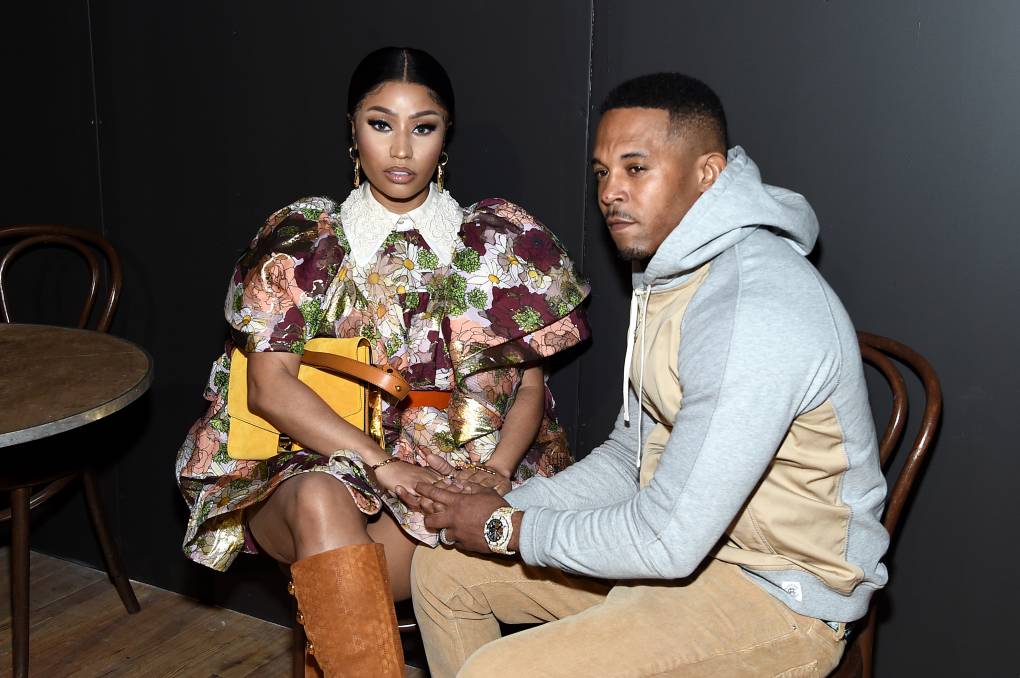
"caption": "Nicki Minaj and Kenneth \"Zoo\" Petty at New York Fashion Week, February 2020.",
"description": "Nicki Minaj and Kenneth \"Zoo\" Petty at New York Fashion Week, February 2020.",
"title": "Nicki Minaj and Kenneth \"Zoo\" Petty at New York Fashion Week, February 2020.",
"credit": "Jamie McCarthy/Getty Images for Marc Jacobs",
"status": "inherit",
"altTag": null,
"isLoading": false,
"fetchFailed": false
},
"arts_13902452": {
"type": "attachments",
"id": "arts_13902452",
"meta": {
"index": "attachments_1716263798",
"site": "arts",
"id": "13902452",
"found": true
},
"parent": 13902056,
"imgSizes": {
"twentyfourteen-full-width": {
"file": "https://ww2.kqed.org/app/uploads/sites/2/2021/09/GettyImages-76664071-1038x576.jpg",
"width": 1038,
"mimeType": "image/jpeg",
"height": 576
},
"thumbnail": {
"file": "https://ww2.kqed.org/app/uploads/sites/2/2021/09/GettyImages-76664071-160x107.jpg",
"width": 160,
"mimeType": "image/jpeg",
"height": 107
},
"post-thumbnail": {
"file": "https://ww2.kqed.org/app/uploads/sites/2/2021/09/GettyImages-76664071-672x372.jpg",
"width": 672,
"mimeType": "image/jpeg",
"height": 372
},
"kqedFullSize": {
"file": "https://ww2.kqed.org/app/uploads/sites/2/2021/09/GettyImages-76664071-scaled-e1630622779657.jpg",
"width": 1920,
"height": 1280
},
"2048x2048": {
"file": "https://ww2.kqed.org/app/uploads/sites/2/2021/09/GettyImages-76664071-2048x1365.jpg",
"width": 2048,
"mimeType": "image/jpeg",
"height": 1365
},
"large": {
"file": "https://ww2.kqed.org/app/uploads/sites/2/2021/09/GettyImages-76664071-1020x680.jpg",
"width": 1020,
"mimeType": "image/jpeg",
"height": 680
},
"1536x1536": {
"file": "https://ww2.kqed.org/app/uploads/sites/2/2021/09/GettyImages-76664071-1536x1024.jpg",
"width": 1536,
"mimeType": "image/jpeg",
"height": 1024
},
"full-width": {
"file": "https://ww2.kqed.org/app/uploads/sites/2/2021/09/GettyImages-76664071-1920x1280.jpg",
"width": 1920,
"mimeType": "image/jpeg",
"height": 1280
},
"medium": {
"file": "https://ww2.kqed.org/app/uploads/sites/2/2021/09/GettyImages-76664071-800x533.jpg",
"width": 800,
"mimeType": "image/jpeg",
"height": 533
},
"medium_large": {
"file": "https://ww2.kqed.org/app/uploads/sites/2/2021/09/GettyImages-76664071-768x512.jpg",
"width": 768,
"mimeType": "image/jpeg",
"height": 512
}
},
"publishDate": 1630622223,
"modified": 1631126678,
"caption": "A protestor holds a sign claiming the 9/11 attacks were an inside job in Washington DC, Sept. 11, 2007. The epicenter of the so-called 'truther' movement is in San Francisco—an organization called Architects & Engineers for 9/11 Truth.",
"description": "A protestor holds a sign claiming the 9/11 attacks were an inside job in Washington DC, Sept. 11, 2007. The epicenter of the so-called 'truther' movement is in San Francisco—an organization called Architects & Engineers for 9/11 Truth.",
"title": "A protestor holds a sign claiming the 9/11 attacks were an inside job in Washington DC, Sept. 11, 2007. The epicenter of the so-called 'truther' movement is in San Francisco—an organization called Architects & Engineers for 9/11 Truth.",
"credit": "NICHOLAS KAMM/AFP via Getty Images",
"status": "inherit",
"altTag": null,
"isLoading": false,
"fetchFailed": false
},
"arts_13902193": {
"type": "attachments",
"id": "arts_13902193",
"meta": {
"index": "attachments_1716263798",
"site": "arts",
"id": "13902193",
"found": true
},
"parent": 13902098,
"imgSizes": {
"thumbnail": {
"file": "https://ww2.kqed.org/app/uploads/sites/2/2021/08/CalGlitchOptim-160x90.gif",
"width": 160,
"mimeType": "image/gif",
"height": 90
},
"kqedFullSize": {
"file": "https://ww2.kqed.org/app/uploads/sites/2/2021/08/CalGlitchOptim.gif",
"width": 640,
"height": 359
}
},
"publishDate": 1630430180,
"modified": 1630446496,
"caption": null,
"description": "An old calendar glitches in a moving GIF form",
"title": "CalGlitchOptim",
"credit": "iStock ",
"status": "inherit",
"altTag": "An old calendar glitches in a moving GIF form",
"isLoading": false,
"fetchFailed": false
},
"arts_13902140": {
"type": "attachments",
"id": "arts_13902140",
"meta": {
"index": "attachments_1716263798",
"site": "arts",
"id": "13902140",
"found": true
},
"parent": 13901947,
"imgSizes": {
"twentyfourteen-full-width": {
"file": "https://ww2.kqed.org/app/uploads/sites/2/2021/08/GettyImages-1303501851-1038x576.jpg",
"width": 1038,
"mimeType": "image/jpeg",
"height": 576
},
"thumbnail": {
"file": "https://ww2.kqed.org/app/uploads/sites/2/2021/08/GettyImages-1303501851-160x130.jpg",
"width": 160,
"mimeType": "image/jpeg",
"height": 130
},
"post-thumbnail": {
"file": "https://ww2.kqed.org/app/uploads/sites/2/2021/08/GettyImages-1303501851-672x372.jpg",
"width": 672,
"mimeType": "image/jpeg",
"height": 372
},
"kqedFullSize": {
"file": "https://ww2.kqed.org/app/uploads/sites/2/2021/08/GettyImages-1303501851.jpg",
"width": 1608,
"height": 1302
},
"large": {
"file": "https://ww2.kqed.org/app/uploads/sites/2/2021/08/GettyImages-1303501851-1020x826.jpg",
"width": 1020,
"mimeType": "image/jpeg",
"height": 826
},
"1536x1536": {
"file": "https://ww2.kqed.org/app/uploads/sites/2/2021/08/GettyImages-1303501851-1536x1244.jpg",
"width": 1536,
"mimeType": "image/jpeg",
"height": 1244
},
"medium": {
"file": "https://ww2.kqed.org/app/uploads/sites/2/2021/08/GettyImages-1303501851-800x648.jpg",
"width": 800,
"mimeType": "image/jpeg",
"height": 648
},
"medium_large": {
"file": "https://ww2.kqed.org/app/uploads/sites/2/2021/08/GettyImages-1303501851-768x622.jpg",
"width": 768,
"mimeType": "image/jpeg",
"height": 622
}
},
"publishDate": 1630362425,
"modified": 1630362720,
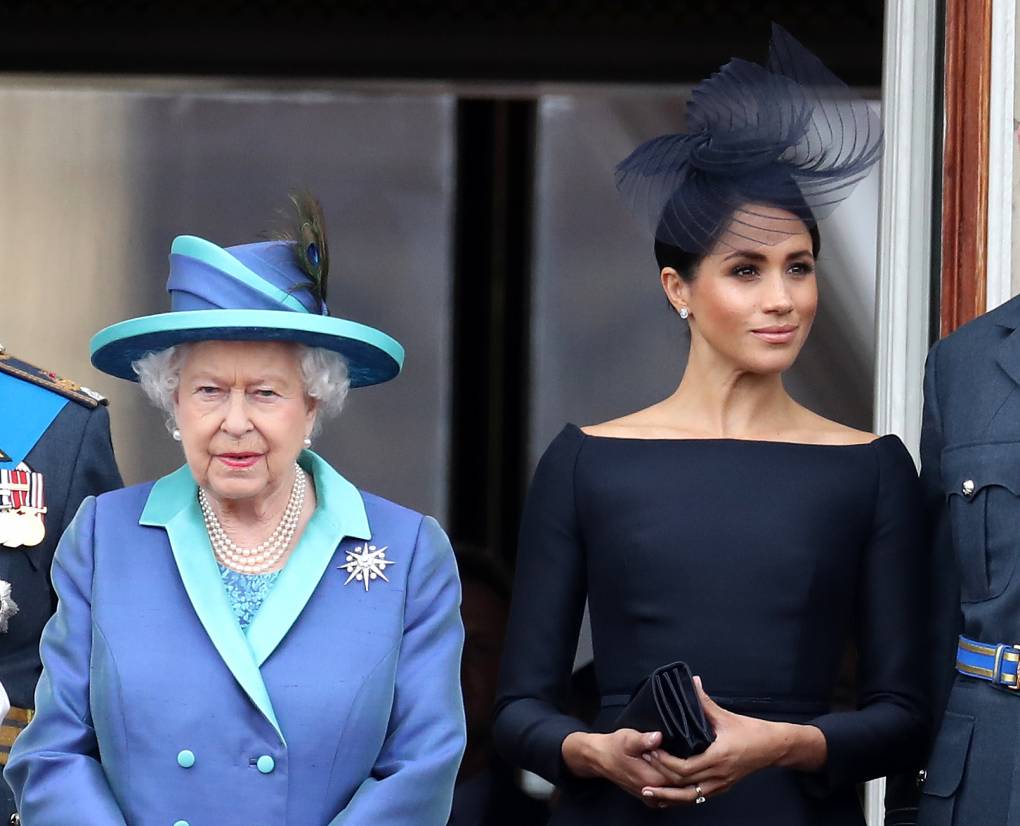
"caption": "Queen Elizabeth II and Meghan Markle on the balcony of Buckingham Palace in 2018, before Markle and her husband Prince Harry's much-publicized split from the British monarchy.",
"description": "Queen Elizabeth II and Meghan Markle on the balcony of Buckingham Palace in 2018, before Markle and her husband Prince Harry's much-publicized split from the British monarchy.",
"title": "Queen Elizabeth II and Meghan Markle on the balcony of Buckingham Palace in 2018, before Markle and her husband Prince Harry's much-publicized split from the British monarchy.",
"credit": "Chris Jackson/Getty Images",
"status": "inherit",
"altTag": "Queen Elizabeth, wearing a lilac and green suit and hat, stands beside Meghan Markle, who's wearing a navy dress and matching fascinator.",
"isLoading": false,
"fetchFailed": false
},
"arts_13902076": {
"type": "attachments",
"id": "arts_13902076",
"meta": {
"index": "attachments_1716263798",
"site": "arts",
"id": "13902076",
"found": true
},
"parent": 13902072,
"imgSizes": {
"twentyfourteen-full-width": {
"file": "https://ww2.kqed.org/app/uploads/sites/2/2021/08/GettyImages-1336698036-1038x576.jpg",
"width": 1038,
"mimeType": "image/jpeg",
"height": 576
},
"thumbnail": {
"file": "https://ww2.kqed.org/app/uploads/sites/2/2021/08/GettyImages-1336698036-160x107.jpg",
"width": 160,
"mimeType": "image/jpeg",
"height": 107
},
"post-thumbnail": {
"file": "https://ww2.kqed.org/app/uploads/sites/2/2021/08/GettyImages-1336698036-672x372.jpg",
"width": 672,
"mimeType": "image/jpeg",
"height": 372
},
"kqedFullSize": {
"file": "https://ww2.kqed.org/app/uploads/sites/2/2021/08/GettyImages-1336698036-scaled.jpg",
"width": 2560,
"height": 1706
},
"2048x2048": {
"file": "https://ww2.kqed.org/app/uploads/sites/2/2021/08/GettyImages-1336698036-2048x1365.jpg",
"width": 2048,
"mimeType": "image/jpeg",
"height": 1365
},
"large": {
"file": "https://ww2.kqed.org/app/uploads/sites/2/2021/08/GettyImages-1336698036-1020x680.jpg",
"width": 1020,
"mimeType": "image/jpeg",
"height": 680
},
"1536x1536": {
"file": "https://ww2.kqed.org/app/uploads/sites/2/2021/08/GettyImages-1336698036-1536x1024.jpg",
"width": 1536,
"mimeType": "image/jpeg",
"height": 1024
},
"full-width": {
"file": "https://ww2.kqed.org/app/uploads/sites/2/2021/08/GettyImages-1336698036-1920x1280.jpg",
"width": 1920,
"mimeType": "image/jpeg",
"height": 1280
},
"medium": {
"file": "https://ww2.kqed.org/app/uploads/sites/2/2021/08/GettyImages-1336698036-800x533.jpg",
"width": 800,
"mimeType": "image/jpeg",
"height": 533
},
"medium_large": {
"file": "https://ww2.kqed.org/app/uploads/sites/2/2021/08/GettyImages-1336698036-768x512.jpg",
"width": 768,
"mimeType": "image/jpeg",
"height": 512
}
},
"publishDate": 1630091346,
"modified": 1630091673,
"caption": "Refugees arrive at Dulles International Airport in Virginia, after being evacuated from Kabul following the Taliban takeover of Afghanistan. August 27, 2021. ",
"description": "Refugees arrive at Dulles International Airport in Virginia, after being evacuated from Kabul following the Taliban takeover of Afghanistan. August 27, 2021. ",
"title": "Refugees arrive at Dulles International Airport in Virginia, after being evacuated from Kabul following the Taliban takeover of Afghanistan. August 27, 2021.",
"credit": "Chip Somodevilla/Getty Images",
"status": "inherit",
"altTag": null,
"isLoading": false,
"fetchFailed": false
},
"arts_13901699": {
"type": "attachments",
"id": "arts_13901699",
"meta": {
"index": "attachments_1716263798",
"site": "arts",
"id": "13901699",
"found": true
},
"parent": 13901695,
"imgSizes": {
"twentyfourteen-full-width": {
"file": "https://ww2.kqed.org/app/uploads/sites/2/2021/08/GettyImages-50853263-1038x576.jpg",
"width": 1038,
"mimeType": "image/jpeg",
"height": 576
},
"thumbnail": {
"file": "https://ww2.kqed.org/app/uploads/sites/2/2021/08/GettyImages-50853263-160x106.jpg",
"width": 160,
"mimeType": "image/jpeg",
"height": 106
},
"post-thumbnail": {
"file": "https://ww2.kqed.org/app/uploads/sites/2/2021/08/GettyImages-50853263-672x372.jpg",
"width": 672,
"mimeType": "image/jpeg",
"height": 372
},
"kqedFullSize": {
"file": "https://ww2.kqed.org/app/uploads/sites/2/2021/08/GettyImages-50853263.jpg",
"width": 2464,
"height": 1632
},
"2048x2048": {
"file": "https://ww2.kqed.org/app/uploads/sites/2/2021/08/GettyImages-50853263-2048x1356.jpg",
"width": 2048,
"mimeType": "image/jpeg",
"height": 1356
},
"large": {
"file": "https://ww2.kqed.org/app/uploads/sites/2/2021/08/GettyImages-50853263-1020x676.jpg",
"width": 1020,
"mimeType": "image/jpeg",
"height": 676
},
"1536x1536": {
"file": "https://ww2.kqed.org/app/uploads/sites/2/2021/08/GettyImages-50853263-1536x1017.jpg",
"width": 1536,
"mimeType": "image/jpeg",
"height": 1017
},
"full-width": {
"file": "https://ww2.kqed.org/app/uploads/sites/2/2021/08/GettyImages-50853263-1920x1272.jpg",
"width": 1920,
"mimeType": "image/jpeg",
"height": 1272
},
"medium": {
"file": "https://ww2.kqed.org/app/uploads/sites/2/2021/08/GettyImages-50853263-800x530.jpg",
"width": 800,
"mimeType": "image/jpeg",
"height": 530
},
"medium_large": {
"file": "https://ww2.kqed.org/app/uploads/sites/2/2021/08/GettyImages-50853263-768x509.jpg",
"width": 768,
"mimeType": "image/jpeg",
"height": 509
}
},
"publishDate": 1629757228,
"modified": 1629757367,
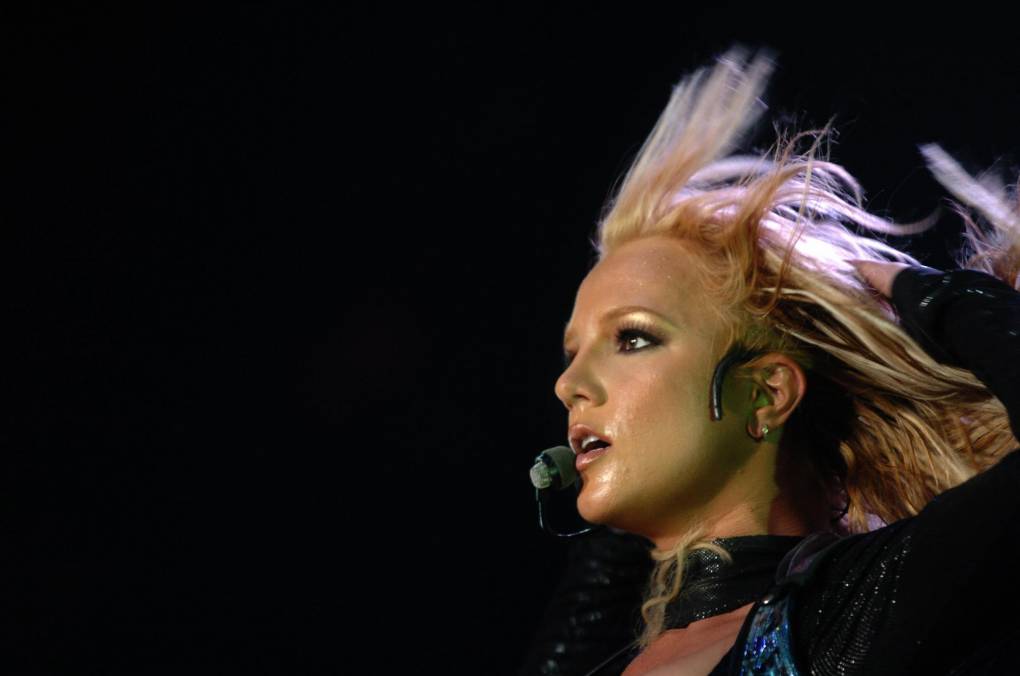
"caption": "Britney Spears onstage in France in 2004. ",
"description": "Britney Spears onstage in France in 2004. ",
"title": "Britney Spears onstage in France in 2004.",
"credit": "MARTIN BUREAU/AFP via Getty Images",
"status": "inherit",
"altTag": "Britney Spears onstage in France in 2004.",
"isLoading": false,
"fetchFailed": false
},
"arts_13901669": {
"type": "attachments",
"id": "arts_13901669",
"meta": {
"index": "attachments_1716263798",
"site": "arts",
"id": "13901669",
"found": true
},
"parent": 13901650,
"imgSizes": {
"twentyfourteen-full-width": {
"file": "https://ww2.kqed.org/app/uploads/sites/2/2021/08/Screen-Shot-2021-08-23-at-12.55.11-PM-1038x576.png",
"width": 1038,
"mimeType": "image/png",
"height": 576
},
"thumbnail": {
"file": "https://ww2.kqed.org/app/uploads/sites/2/2021/08/Screen-Shot-2021-08-23-at-12.55.11-PM-160x100.png",
"width": 160,
"mimeType": "image/png",
"height": 100
},
"post-thumbnail": {
"file": "https://ww2.kqed.org/app/uploads/sites/2/2021/08/Screen-Shot-2021-08-23-at-12.55.11-PM-672x372.png",
"width": 672,
"mimeType": "image/png",
"height": 372
},
"kqedFullSize": {
"file": "https://ww2.kqed.org/app/uploads/sites/2/2021/08/Screen-Shot-2021-08-23-at-12.55.11-PM.png",
"width": 2372,
"height": 1482
},
"2048x2048": {
"file": "https://ww2.kqed.org/app/uploads/sites/2/2021/08/Screen-Shot-2021-08-23-at-12.55.11-PM-2048x1280.png",
"width": 2048,
"mimeType": "image/png",
"height": 1280
},
"large": {
"file": "https://ww2.kqed.org/app/uploads/sites/2/2021/08/Screen-Shot-2021-08-23-at-12.55.11-PM-1020x637.png",
"width": 1020,
"mimeType": "image/png",
"height": 637
},
"1536x1536": {
"file": "https://ww2.kqed.org/app/uploads/sites/2/2021/08/Screen-Shot-2021-08-23-at-12.55.11-PM-1536x960.png",
"width": 1536,
"mimeType": "image/png",
"height": 960
},
"full-width": {
"file": "https://ww2.kqed.org/app/uploads/sites/2/2021/08/Screen-Shot-2021-08-23-at-12.55.11-PM-1920x1200.png",
"width": 1920,
"mimeType": "image/png",
"height": 1200
},
"medium": {
"file": "https://ww2.kqed.org/app/uploads/sites/2/2021/08/Screen-Shot-2021-08-23-at-12.55.11-PM-800x500.png",
"width": 800,
"mimeType": "image/png",
"height": 500
},
"medium_large": {
"file": "https://ww2.kqed.org/app/uploads/sites/2/2021/08/Screen-Shot-2021-08-23-at-12.55.11-PM-768x480.png",
"width": 768,
"mimeType": "image/png",
"height": 480
}
},
"publishDate": 1629748531,
"modified": 1629748672,
"caption": "Jay-Z and Beyoncé have been brought together with a 1982 Basquiat painting for the new Tiffany & Co. ad campaign.",
"description": "Jay-Z and Beyoncé have been brought together with a 1982 Basquiat painting for the new Tiffany & Co. ad campaign.",
"title": "Jay-Z and Beyoncé have been brought together with a 1982 Basquiat painting for the new Tiffany & Co. ad campaign.",
"credit": "Tiffany & Co/ Tiffany.com",
"status": "inherit",
"altTag": "Jay-Z and Beyoncé have been brought together with a 1982 Basquiat painting for the new Tiffany & Co. ad campaign.",
"isLoading": false,
"fetchFailed": false
},
"arts_13901405": {
"type": "attachments",
"id": "arts_13901405",
"meta": {
"index": "attachments_1716263798",
"site": "arts",
"id": "13901405",
"found": true
},
"parent": 13901400,
"imgSizes": {
"twentyfourteen-full-width": {
"file": "https://ww2.kqed.org/app/uploads/sites/2/2021/08/GettyImages-1158464165-1038x576.jpg",
"width": 1038,
"mimeType": "image/jpeg",
"height": 576
},
"thumbnail": {
"file": "https://ww2.kqed.org/app/uploads/sites/2/2021/08/GettyImages-1158464165-160x107.jpg",
"width": 160,
"mimeType": "image/jpeg",
"height": 107
},
"post-thumbnail": {
"file": "https://ww2.kqed.org/app/uploads/sites/2/2021/08/GettyImages-1158464165-672x372.jpg",
"width": 672,
"mimeType": "image/jpeg",
"height": 372
},
"kqedFullSize": {
"file": "https://ww2.kqed.org/app/uploads/sites/2/2021/08/GettyImages-1158464165-scaled.jpg",
"width": 2560,
"height": 1707
},
"2048x2048": {
"file": "https://ww2.kqed.org/app/uploads/sites/2/2021/08/GettyImages-1158464165-2048x1365.jpg",
"width": 2048,
"mimeType": "image/jpeg",
"height": 1365
},
"large": {
"file": "https://ww2.kqed.org/app/uploads/sites/2/2021/08/GettyImages-1158464165-1020x680.jpg",
"width": 1020,
"mimeType": "image/jpeg",
"height": 680
},
"1536x1536": {
"file": "https://ww2.kqed.org/app/uploads/sites/2/2021/08/GettyImages-1158464165-1536x1024.jpg",
"width": 1536,
"mimeType": "image/jpeg",
"height": 1024
},
"full-width": {
"file": "https://ww2.kqed.org/app/uploads/sites/2/2021/08/GettyImages-1158464165-1920x1280.jpg",
"width": 1920,
"mimeType": "image/jpeg",
"height": 1280
},
"medium": {
"file": "https://ww2.kqed.org/app/uploads/sites/2/2021/08/GettyImages-1158464165-800x533.jpg",
"width": 800,
"mimeType": "image/jpeg",
"height": 533
},
"medium_large": {
"file": "https://ww2.kqed.org/app/uploads/sites/2/2021/08/GettyImages-1158464165-768x512.jpg",
"width": 768,
"mimeType": "image/jpeg",
"height": 512
}
},
"publishDate": 1629158320,
"modified": 1629158370,
"caption": "R. Kelly leaves the Leighton Criminal Courts Building following a hearing on June 26, 2019 in Chicago, Illinois. ",
"description": "R. Kelly leaves the Leighton Criminal Courts Building following a hearing on June 26, 2019 in Chicago, Illinois. ",
"title": "R. Kelly leaves the Leighton Criminal Courts Building following a hearing on June 26, 2019 in Chicago, Illinois.",
"credit": "Scott Olson/Getty Images",
"status": "inherit",
"altTag": "R. Kelly leaves the Leighton Criminal Courts Building following a hearing on June 26, 2019 in Chicago, Illinois.",
"isLoading": false,
"fetchFailed": false
},
"arts_13900640": {
"type": "attachments",
"id": "arts_13900640",
"meta": {
"index": "attachments_1716263798",
"site": "arts",
"id": "13900640",
"found": true
},
"parent": 13900639,
"imgSizes": {
"twentyfourteen-full-width": {
"file": "https://ww2.kqed.org/app/uploads/sites/2/2021/08/GettyImages-1331345960-1038x576.jpg",
"width": 1038,
"mimeType": "image/jpeg",
"height": 576
},
"thumbnail": {
"file": "https://ww2.kqed.org/app/uploads/sites/2/2021/08/GettyImages-1331345960-160x107.jpg",
"width": 160,
"mimeType": "image/jpeg",
"height": 107
},
"post-thumbnail": {
"file": "https://ww2.kqed.org/app/uploads/sites/2/2021/08/GettyImages-1331345960-672x372.jpg",
"width": 672,
"mimeType": "image/jpeg",
"height": 372
},
"kqedFullSize": {
"file": "https://ww2.kqed.org/app/uploads/sites/2/2021/08/GettyImages-1331345960-scaled-e1628104013737.jpg",
"width": 1920,
"height": 1281
},
"2048x2048": {
"file": "https://ww2.kqed.org/app/uploads/sites/2/2021/08/GettyImages-1331345960-2048x1366.jpg",
"width": 2048,
"mimeType": "image/jpeg",
"height": 1366
},
"large": {
"file": "https://ww2.kqed.org/app/uploads/sites/2/2021/08/GettyImages-1331345960-1020x680.jpg",
"width": 1020,
"mimeType": "image/jpeg",
"height": 680
},
"1536x1536": {
"file": "https://ww2.kqed.org/app/uploads/sites/2/2021/08/GettyImages-1331345960-1536x1025.jpg",
"width": 1536,
"mimeType": "image/jpeg",
"height": 1025
},
"full-width": {
"file": "https://ww2.kqed.org/app/uploads/sites/2/2021/08/GettyImages-1331345960-1920x1281.jpg",
"width": 1920,
"mimeType": "image/jpeg",
"height": 1281
},
"medium": {
"file": "https://ww2.kqed.org/app/uploads/sites/2/2021/08/GettyImages-1331345960-800x534.jpg",
"width": 800,
"mimeType": "image/jpeg",
"height": 534
},
"medium_large": {
"file": "https://ww2.kqed.org/app/uploads/sites/2/2021/08/GettyImages-1331345960-768x512.jpg",
"width": 768,
"mimeType": "image/jpeg",
"height": 512
}
},
"publishDate": 1628103991,
"modified": 1628104231,
"caption": "Showing proof of vaccination was a required step in the entrance process for attendees at this year's Lollapalooza festival in Chicago.",
"description": "Showing proof of vaccination was a required step in the entrance process for attendees at this year's Lollapalooza festival in Chicago.",
"title": "Lollapalooza Music Festival Opens In Chicago Drawing Large Crowds Amid Rising Cases Of Covid-19",
"credit": "Scott Olson/Getty Images",
"status": "inherit",
"altTag": "A barrier at the Lollapalooza festival in Chicago reads \"Please have proof of vaccination to show.\"",
"isLoading": false,
"fetchFailed": false
},
"arts_13900765": {
"type": "attachments",
"id": "arts_13900765",
"meta": {
"index": "attachments_1716263798",
"site": "arts",
"id": "13900765",
"found": true
},
"parent": 13900749,
"imgSizes": {
"twentyfourteen-full-width": {
"file": "https://ww2.kqed.org/app/uploads/sites/2/2021/08/Screen-Shot-2021-08-05-at-1.31.23-PM-1038x576.png",
"width": 1038,
"mimeType": "image/png",
"height": 576
},
"thumbnail": {
"file": "https://ww2.kqed.org/app/uploads/sites/2/2021/08/Screen-Shot-2021-08-05-at-1.31.23-PM-160x103.png",
"width": 160,
"mimeType": "image/png",
"height": 103
},
"post-thumbnail": {
"file": "https://ww2.kqed.org/app/uploads/sites/2/2021/08/Screen-Shot-2021-08-05-at-1.31.23-PM-672x372.png",
"width": 672,
"mimeType": "image/png",
"height": 372
},
"kqedFullSize": {
"file": "https://ww2.kqed.org/app/uploads/sites/2/2021/08/Screen-Shot-2021-08-05-at-1.31.23-PM.png",
"width": 1802,
"height": 1164
},
"large": {
"file": "https://ww2.kqed.org/app/uploads/sites/2/2021/08/Screen-Shot-2021-08-05-at-1.31.23-PM-1020x659.png",
"width": 1020,
"mimeType": "image/png",
"height": 659
},
"1536x1536": {
"file": "https://ww2.kqed.org/app/uploads/sites/2/2021/08/Screen-Shot-2021-08-05-at-1.31.23-PM-1536x992.png",
"width": 1536,
"mimeType": "image/png",
"height": 992
},
"medium": {
"file": "https://ww2.kqed.org/app/uploads/sites/2/2021/08/Screen-Shot-2021-08-05-at-1.31.23-PM-800x517.png",
"width": 800,
"mimeType": "image/png",
"height": 517
},
"medium_large": {
"file": "https://ww2.kqed.org/app/uploads/sites/2/2021/08/Screen-Shot-2021-08-05-at-1.31.23-PM-768x496.png",
"width": 768,
"mimeType": "image/png",
"height": 496
}
},
"publishDate": 1628195558,
"modified": 1628195657,
"caption": "Amy Cooper during her altercation with Christian Cooper in Central Park that went viral in May 2020.",
"description": "Amy Cooper during her altercation with Christian Cooper in Central Park that went viral in May 2020.",
"title": "Amy Cooper during her altercation with Christian Cooper in Central Park that went viral in May 2020.",
"credit": "YouTube",
"status": "inherit",
"altTag": "Amy Cooper during her altercation with Christian Cooper in Central Park that went viral in May 2020.",
"isLoading": false,
"fetchFailed": false
},
"arts_13900672": {
"type": "attachments",
"id": "arts_13900672",
"meta": {
"index": "attachments_1716263798",
"site": "arts",
"id": "13900672",
"found": true
},
"parent": 13900656,
"imgSizes": {
"twentyfourteen-full-width": {
"file": "https://ww2.kqed.org/app/uploads/sites/2/2021/08/LightField_15_COVER-1038x576.jpg",
"width": 1038,
"mimeType": "image/jpeg",
"height": 576
},
"thumbnail": {
"file": "https://ww2.kqed.org/app/uploads/sites/2/2021/08/LightField_15_COVER-160x90.jpg",
"width": 160,
"mimeType": "image/jpeg",
"height": 90
},
"post-thumbnail": {
"file": "https://ww2.kqed.org/app/uploads/sites/2/2021/08/LightField_15_COVER-672x372.jpg",
"width": 672,
"mimeType": "image/jpeg",
"height": 372
},
"kqedFullSize": {
"file": "https://ww2.kqed.org/app/uploads/sites/2/2021/08/LightField_15_COVER.jpg",
"width": 1920,
"height": 1080
},
"large": {
"file": "https://ww2.kqed.org/app/uploads/sites/2/2021/08/LightField_15_COVER-1020x574.jpg",
"width": 1020,
"mimeType": "image/jpeg",
"height": 574
},
"1536x1536": {
"file": "https://ww2.kqed.org/app/uploads/sites/2/2021/08/LightField_15_COVER-1536x864.jpg",
"width": 1536,
"mimeType": "image/jpeg",
"height": 864
},
"medium": {
"file": "https://ww2.kqed.org/app/uploads/sites/2/2021/08/LightField_15_COVER-800x450.jpg",
"width": 800,
"mimeType": "image/jpeg",
"height": 450
},
"medium_large": {
"file": "https://ww2.kqed.org/app/uploads/sites/2/2021/08/LightField_15_COVER-768x432.jpg",
"width": 768,
"mimeType": "image/jpeg",
"height": 432
}
},
"publishDate": 1628137687,
"modified": 1628137850,
"caption": "A projectionist and audience during Light Field's 2017 festival at The Lab.",
"description": "A projectionist and audience during Light Field's 2017 festival at The Lab.",
"title": "LightField_15_COVER",
"credit": "Raphael Villet",
"status": "inherit",
"altTag": "A seated crowd looks left, behind them a projectionists stands next to two film projectors, one actively beaming light.",
"isLoading": false,
"fetchFailed": false
},
"arts_13899694": {
"type": "attachments",
"id": "arts_13899694",
"meta": {
"index": "attachments_1716263798",
"site": "arts",
"id": "13899694",
"found": true
},
"parent": 13875370,
"imgSizes": {
"twentyfourteen-full-width": {
"file": "https://ww2.kqed.org/app/uploads/sites/2/2021/06/GettyImages-1326349921-1038x576.jpg",
"width": 1038,
"mimeType": "image/jpeg",
"height": 576
},
"thumbnail": {
"file": "https://ww2.kqed.org/app/uploads/sites/2/2021/06/GettyImages-1326349921-160x109.jpg",
"width": 160,
"mimeType": "image/jpeg",
"height": 109
},
"post-thumbnail": {
"file": "https://ww2.kqed.org/app/uploads/sites/2/2021/06/GettyImages-1326349921-672x372.jpg",
"width": 672,
"mimeType": "image/jpeg",
"height": 372
},
"kqedFullSize": {
"file": "https://ww2.kqed.org/app/uploads/sites/2/2021/06/GettyImages-1326349921-scaled-e1625122202251.jpg",
"width": 1920,
"height": 1305
},
"2048x2048": {
"file": "https://ww2.kqed.org/app/uploads/sites/2/2021/06/GettyImages-1326349921-2048x1392.jpg",
"width": 2048,
"mimeType": "image/jpeg",
"height": 1392
},
"large": {
"file": "https://ww2.kqed.org/app/uploads/sites/2/2021/06/GettyImages-1326349921-1020x693.jpg",
"width": 1020,
"mimeType": "image/jpeg",
"height": 693
},
"1536x1536": {
"file": "https://ww2.kqed.org/app/uploads/sites/2/2021/06/GettyImages-1326349921-1536x1044.jpg",
"width": 1536,
"mimeType": "image/jpeg",
"height": 1044
},
"full-width": {
"file": "https://ww2.kqed.org/app/uploads/sites/2/2021/06/GettyImages-1326349921-1920x1305.jpg",
"width": 1920,
"mimeType": "image/jpeg",
"height": 1305
},
"medium": {
"file": "https://ww2.kqed.org/app/uploads/sites/2/2021/06/GettyImages-1326349921-800x544.jpg",
"width": 800,
"mimeType": "image/jpeg",
"height": 544
},
"medium_large": {
"file": "https://ww2.kqed.org/app/uploads/sites/2/2021/06/GettyImages-1326349921-768x522.jpg",
"width": 768,
"mimeType": "image/jpeg",
"height": 522
}
},
"publishDate": 1625122183,
"modified": 1625122350,
"caption": "Bill Cosby speaks to reporters outside of his Pennsylvania home on June 30, 2021, after being released from prison.",
"description": "Bill Cosby speaks to reporters outside of his Pennsylvania home on June 30, 2021, after being released from prison.",
"title": "Bill Cosby speaks to reporters outside of his Pennsylvania home on June 30, 2021, after being released from prison.",
"credit": "Michael Abbott/Getty Images",
"status": "inherit",
"altTag": "Bill Cosby speaks to reporters outside of his Pennsylvania home on June 30, 2021, after being released from prison.",
"isLoading": false,
"fetchFailed": false
}
},
"audioPlayerReducer": {
"postId": "stream_live",
"isPaused": true,
"isPlaying": false,
"pfsActive": false,
"pledgeModalIsOpen": true,
"playerDrawerIsOpen": false,
"liveAudioPlayStartedAt": 0,
"liveAudioPlayContext": ""
},
"authorsReducer": {
"byline_arts_13902072": {
"type": "authors",
"id": "byline_arts_13902072",
"meta": {
"override": true
},
"slug": "byline_arts_13902072",
"name": "Nadia Hashimi",
"isLoading": false
},
"byline_arts_13901695": {
"type": "authors",
"id": "byline_arts_13901695",
"meta": {
"override": true
},
"slug": "byline_arts_13901695",
"name": "Eric Deggans",
"isLoading": false
},
"byline_arts_13901400": {
"type": "authors",
"id": "byline_arts_13901400",
"meta": {
"override": true
},
"slug": "byline_arts_13901400",
"name": "Anastasia Tsioulcas",
"isLoading": false
},
"shotchkiss": {
"type": "authors",
"id": "61",
"meta": {
"index": "authors_1716337520",
"id": "61",
"found": true
},
"name": "Sarah Hotchkiss",
"firstName": "Sarah",
"lastName": "Hotchkiss",
"slug": "shotchkiss",
"email": "shotchkiss@kqed.org",
"display_author_email": true,
"staff_mastheads": [
"arts"
],
"title": "Senior Editor",
"bio": "Sarah Hotchkiss is a San Francisco \u003ca href=\"http://www.sarahhotchkiss.com\">artist\u003c/a> and arts writer. In 2019, she received the Dorothea & Leo Rabkin Foundation grant for visual art journalism and in 2020 she received a Society of Professional Journalists, Northern California award for excellence in arts and culture reporting.",
"avatar": "https://secure.gravatar.com/avatar/bc662df144b3d27fd8b1b6f1c2a420d34e91e53154d411bb7ad353cc8b6cea8d?s=600&d=blank&r=g",
"twitter": null,
"bluesky": null,
"facebook": null,
"instagram": null,
"linkedin": null,
"sites": [
{
"site": "",
"roles": [
"editor"
]
},
{
"site": "arts",
"roles": [
"Contributor",
"administrator"
]
},
{
"site": "artschool",
"roles": [
"administrator"
]
},
{
"site": "news",
"roles": [
"editor"
]
},
{
"site": "pop",
"roles": [
"administrator"
]
},
{
"site": "bayareabites",
"roles": [
"editor"
]
},
{
"site": "spark",
"roles": [
"editor"
]
},
{
"site": "checkplease",
"roles": [
"editor"
]
}
],
"headData": {
"title": "Sarah Hotchkiss | KQED",
"description": "Senior Editor",
"ogImgSrc": "https://secure.gravatar.com/avatar/bc662df144b3d27fd8b1b6f1c2a420d34e91e53154d411bb7ad353cc8b6cea8d?s=600&d=blank&r=g",
"twImgSrc": "https://secure.gravatar.com/avatar/bc662df144b3d27fd8b1b6f1c2a420d34e91e53154d411bb7ad353cc8b6cea8d?s=600&d=blank&r=g"
},
"isLoading": false,
"link": "/author/shotchkiss"
},
"ralexandra": {
"type": "authors",
"id": "11242",
"meta": {
"index": "authors_1716337520",
"id": "11242",
"found": true
},
"name": "Rae Alexandra",
"firstName": "Rae",
"lastName": "Alexandra",
"slug": "ralexandra",
"email": "ralexandra@kqed.org",
"display_author_email": true,
"staff_mastheads": [],
"title": "Reporter/Producer",
"bio": "Rae Alexandra is a Reporter/Producer for KQED Arts & Culture, and the creator/author of the \u003ca href=\"https://www.kqed.org/arts/program/rebel-girls-from-bay-area-history\">Rebel Girls From Bay Area History\u003c/a> and \u003ca href=\"https://www.kqed.org/bizarrebayarea\">Bizarre Bay Area\u003c/a> series. Her debut book, \u003ca href=\"https://citylights.com/politics-current-events-history/unsung-heroines35-women-who-changed/\">Unsung Heroines: 35 Women Who Changed the Bay Area\u003c/a> was published by City Lights in March 2026. In 2023, Rae was awarded an SPJ Excellence in Journalism Award for Arts & Culture. Rae was born and raised in Wales and subsequently — even after two decades in Northern California — still uses phrases that regularly baffle her coworkers.",
"avatar": "https://secure.gravatar.com/avatar/edfee8176c80cc0a382b051190f5341997df378a934a5774dcb0977732dfd401?s=600&d=blank&r=g",
"twitter": null,
"bluesky": null,
"facebook": null,
"instagram": null,
"linkedin": null,
"sites": [
{
"site": "arts",
"roles": [
"subscriber"
]
},
{
"site": "news",
"roles": [
"subscriber"
]
},
{
"site": "pop",
"roles": [
"subscriber"
]
},
{
"site": "bayareabites",
"roles": [
"subscriber"
]
},
{
"site": "science",
"roles": [
"subscriber"
]
}
],
"headData": {
"title": "Rae Alexandra | KQED",
"description": "Reporter/Producer",
"ogImgSrc": "https://secure.gravatar.com/avatar/edfee8176c80cc0a382b051190f5341997df378a934a5774dcb0977732dfd401?s=600&d=blank&r=g",
"twImgSrc": "https://secure.gravatar.com/avatar/edfee8176c80cc0a382b051190f5341997df378a934a5774dcb0977732dfd401?s=600&d=blank&r=g"
},
"isLoading": false,
"link": "/author/ralexandra"
},
"ogpenn": {
"type": "authors",
"id": "11491",
"meta": {
"index": "authors_1716337520",
"id": "11491",
"found": true
},
"name": "Pendarvis Harshaw",
"firstName": "Pendarvis",
"lastName": "Harshaw",
"slug": "ogpenn",
"email": "ogpenn@gmail.com",
"display_author_email": false,
"staff_mastheads": [
"arts"
],
"title": "Community Engagement Reporter",
"bio": "Pendarvis Harshaw is an educator, host and writer with KQED Arts.",
"avatar": "https://secure.gravatar.com/avatar/972b77ee8e3f346ae2b00622661187fbfabd059b5693bbdc1475ea7a722fd4cd?s=600&d=blank&r=g",
"twitter": null,
"bluesky": null,
"facebook": null,
"instagram": "ogpenn",
"linkedin": null,
"sites": [
{
"site": "arts",
"roles": [
"administrator"
]
},
{
"site": "news",
"roles": [
"editor"
]
},
{
"site": "bayareabites",
"roles": [
"author"
]
},
{
"site": "hiphop",
"roles": [
"editor"
]
}
],
"headData": {
"title": "Pendarvis Harshaw | KQED",
"description": "Community Engagement Reporter",
"ogImgSrc": "https://secure.gravatar.com/avatar/972b77ee8e3f346ae2b00622661187fbfabd059b5693bbdc1475ea7a722fd4cd?s=600&d=blank&r=g",
"twImgSrc": "https://secure.gravatar.com/avatar/972b77ee8e3f346ae2b00622661187fbfabd059b5693bbdc1475ea7a722fd4cd?s=600&d=blank&r=g"
},
"isLoading": false,
"link": "/author/ogpenn"
}
},
"pagesReducer": {
"arts_tag_commentary": {
"type": "terms",
"id": "arts_2767",
"meta": {
"index": "terms_1716263798",
"site": "arts",
"id": "2767",
"score": 8.794581
},
"featImg": null,
"name": "commentary",
"description": null,
"taxonomy": "tag",
"headData": {
"twImgId": null,
"twTitle": null,
"ogTitle": null,
"ogImgId": null,
"twDescription": null,
"description": null,
"title": "commentary Archives | KQED Arts",
"ogDescription": null
},
"ttid": 2779,
"slug": "commentary",
"isLoading": false,
"title": "commentary",
"pageMeta": {
"site": "arts",
"WpPageTemplate": "page-topic-editorial",
"currentPage": 7
},
"blocks": [
{
"blockName": "kqed/post-list",
"attrs": {
"layout": "cardArticle2",
"query": "posts/arts?tag=commentary",
"seeMore": false,
"paginated": true,
"page": 7
}
},
{
"blockName": "kqed/ad"
}
]
}
},
"pfsSessionReducer": {},
"postsReducer": {
"stream_live": {
"type": "live",
"id": "stream_live",
"audioUrl": "https://streams.kqed.org/kqedradio",
"title": "Live Stream",
"excerpt": "Live Stream information currently unavailable.",
"link": "/radio",
"featImg": "",
"label": {
"name": "KQED Live",
"link": "/"
}
},
"stream_kqedNewscast": {
"type": "posts",
"id": "stream_kqedNewscast",
"audioUrl": "https://www.kqed.org/.stream/anon/radio/RDnews/newscast.mp3?_=1",
"title": "KQED Newscast",
"featImg": "",
"label": {
"name": "88.5 FM",
"link": "/"
}
},
"arts_13903685": {
"type": "posts",
"id": "arts_13903685",
"meta": {
"index": "posts_1716263798",
"site": "arts",
"id": "13903685",
"score": null,
"sort": [
1632420663000
]
},
"parent": 0,
"labelTerm": {
"site": "arts"
},
"blocks": [],
"publishDate": 1632420663,
"format": "standard",
"title": "Jennifer Hough’s Harassment Lawsuit Against Nicki Minaj and Her Husband, Explained",
"headTitle": "Jennifer Hough’s Harassment Lawsuit Against Nicki Minaj and Her Husband, Explained | KQED",
"content": "\u003cp>If you’ve been having some trouble keeping up with all of the Nicki Minaj drama circulating on the internet these last few weeks, you are not alone. Chances are, most of what you’ve heard has revolved around Nicki’s assertion that one of her cousin’s friends got swollen testicles from the COVID vaccine, which apparently made him impotent, which apparently made his girlfriend leave him.\u003c/p>\n\u003cp>https://twitter.com/nickiminaj/status/1437532566945341441\u003c/p>\n\u003cp>Truly, a tweet this preposterous is impossible for the internet to ignore, which is why \u003ca href=\"https://twitter.com/KevzPolitics/status/1438183898358366208?s=20\" target=\"_blank\" rel=\"noopener noreferrer\">Trinidad and Tobago’s health minister debunked Minaj’s claims\u003c/a>. \u003ca href=\"https://twitter.com/gaybonez/status/1440709750182670343\" target=\"_blank\" rel=\"noopener noreferrer\">Twitter is still roasting her for it\u003c/a> almost two weeks later. For some observers, however, the testicular Minaj tweet looks an awful lot like a deflection; a distraction from the very real legal trouble she and her husband, Kenneth “Zoo” Petty, are currently embroiled in. Legal trouble that could do Minaj’s reputation a lot more damage than asking people to “pray on it“ before they get vaccinated. And yesterday, that legal trouble hit daytime TV when Jennifer Hough made a heart-rending appearance on \u003cem>The Real\u003c/em>.\u003c/p>\n\u003cp>Hough’s interview follows a civil lawsuit she filed on Aug. 13 against Minaj and Petty. According to legal \u003ca href=\"https://www.eonline.com/news/1298910/nicki-minaj-and-husband-kenneth-petty-sued-by-his-sexual-assault-accuser\" target=\"_blank\" rel=\"noopener noreferrer\">documents obtained by E! News\u003c/a> last month, Hough’s suit accuses the couple of a litany of serious offenses. These include: harassment, assault, battery, sexual assault and sexual harassment, witness intimidation and intentional and negligent infliction of emotional distress. The suit also accuses Minaj of threatening and attempting to bribe Hough. At one point, E! reports, the suit states:\u003c/p>\n\u003cblockquote>\u003cp>As a direct result of the actions of Defendant Minaj and Defendant Petty, [Hough] has been traumatized her entire life. Plaintiff has moved to multiple states to avoid intimidation and harassment by Defendant Minaj, Defendant, and their allies, legal teams, and fans.\u003c/p>\u003c/blockquote>\n\u003cp>If you haven’t been following along in real time, you might be wondering where all of this stems from. To explain, we have to go way back to 1994. Specifically, Sept. 16, 1994—the day a 16-year-old Hough accused a 16-year-old Petty of rape. Hough reported that Petty approached her while she waited at a Jamaica, Queens bus stop, pressed an object to her back, forced her into a nearby house, fought against her objections, and raped her.\u003c/p>\n\u003cp>[ad fullwidth]\u003c/p>\n\u003cp>Petty was subsequently charged with first degree rape, but on April 5, 1995, he pleaded guilty to—and was convicted of—attempted rape in the first degree. (The \u003ca href=\"https://www.criminaljustice.ny.gov/SomsSUBDirectory/ReCaptchaServlet?offenderId=7370&g-recaptcha-response=03AGdBq24_X-gC_S78M_WKF0HaXwprUMZF07B0VeGUImVtZ_zP2DF0VkiBGy6kgbpM3Jcx1Gj3AZYgqNI0A_VNZHWQfaDbr1halHa3bZyK-O1KA917OUOqk1CW5RwIAS3RZG-9m-Z3X0KAVrGG1VVEoMdRIhq2z3yqCaK3nkOQzNsw1Zq-TRC1W9USrFXA4pglgwZDjknoKGzaGzIPTlvhvrqUQSf9MG51xuL2JcZO2BBMDeE2QBp9g0LBkZdZEDabs2a9XMkEq2Vsg65He2gxVCOXXCopmBxIByMnVZwsg0DG3QamQCVGKFgtpJ-9Am9Bak0PPLhuMd8NfAO0XVmt34APkTDozwMBQpLOTHGf5s2SMHimbHW1WBl8GEMhikDqOofhd7VKcyVmVanSBY82Q7LdlvLyDflkAkamEiPSYHSUhxn6kj_oBi4iWxeU7ToUKlyXQdL8Nfpch7ghtRSTPnkG2A36-_1uDA&Submit=Search\" target=\"_blank\" rel=\"noopener noreferrer\">offense listed on his conviction\u003c/a>, however, states that “Actual, Sexual Intercourse” took place. It also states that he was in possession of a “Knife/cutting instrument” at the time of the attack.) Two days before his 17th birthday, Petty was sentenced to “18 to 54 months” in a state penitentiary. He served nearly four years for the attack on Hough.\u003c/p>\n\u003cp>[aside postid='futureofyou_438664']On his release, Petty returned to Queens and promptly began a relationship with a 17-year-old Nicki Minaj—then known by her real name, Onika Tanya Maraj. But Petty didn’t stay out of trouble for long. By 2006—just one year before Minaj would release her first mixtape, \u003cem>Playtime is Over\u003c/em>—Petty pleaded guilty to manslaughter charges, following a 2002 incident in which he shot and killed a man named Lamont Robinson.\u003c/p>\n\u003cp>According to \u003cem>Billboard\u003c/em>, \u003ca href=\"https://www.billboard.com/articles/columns/hip-hop/8533743/who-did-nicki-minaj-marry-kenneth-petty\" target=\"_blank\" rel=\"noopener noreferrer\">Petty served seven years\u003c/a> before entering a supervised release program in 2013. He stayed in the program until 2018—the year he reunited with Minaj.\u003c/p>\n\u003cp>At that time, the couple’s reunion prompted the internet and tabloid media to begin reporting on Petty’s prior convictions in earnest. One \u003ca href=\"https://www.tmz.com/2018/12/22/nicki-minaj-boyfriend-kenneth-petty-manslaughter-shot-three-times-stomach/\" target=\"_blank\" rel=\"noopener noreferrer\">report from TMZ\u003c/a> that year, titled “Nicki Minaj’s BF Manslaughter Case Was Cold-Blooded,” stated:\u003c/p>\n\u003cblockquote>\u003cp>We’re told Petty drove to the crime scene with a group of cohorts, hopped out of the car, walked across the street where Robinson was hanging out, pulled out a gun … and shot him in the stomach three times. Our sources say he then fled in the vehicle with the group.\u003c/p>\u003c/blockquote>\n\u003cp>This kind of media attention quickly put Minaj on the offensive. In June 2019, she included Petty in her video for “\u003ca href=\"https://www.youtube.com/watch?v=C3a1sz2Bp_E\" target=\"_blank\" rel=\"noopener noreferrer\">Megatron\u003c/a>.” The track includes the lyrics, “I fuck him like I miss him / He just got out of prison / Bitches be talking shit / But they ain’t got a pot to piss in.” The following month, during a featured spot on Chance the Rapper’s “Zanies and Fools,” Minaj rapped: “I met my husband when I was 17 out in Queens / If you love it, let it go, now I know what that means / While he was up North for a body, I bodied everybody and got known for my body.”\u003c/p>\n\u003cp>Also in 2019, during an episode of her Apple Music show, \u003cem>Queen Radio\u003c/em>, Minaj claimed that Petty was “wrongfully accused … when he was 15 years old.” (Petty’s arrest record clearly states he was 16 at the time of Hough’s assault.) Minaj went on to claim that Hough had attempted to recant her accusation, but didn’t after she was threatened with legal penalties for doing so. (\u003ca href=\"https://www.thedailybeast.com/nicki-minaj-and-husband-kenneth-pettys-campaign-to-silence-his-sexual-assault-victim\" target=\"_blank\" rel=\"noopener noreferrer\">Hough has denied this\u003c/a>.) Minaj also used the phrase, “White is right,” implying that Hough was a white woman. She is not.\u003c/p>\n\u003cp>https://twitter.com/britneyxmariah/status/1440695471572283411\u003c/p>\n\u003cp>On another occasion, while defending Petty on Instagram in relation to the Hough case, Minaj claimed: “He was 15, she was 16 … in a relationship. But go awf Internet. y’all can’t run my life. Y’all can’t even run y’all own life.” In \u003cem>The Real\u003c/em> interview, Hough also denied that she and Petty dated.\u003c/p>\n\u003cp>[aside postid='pop_109382']Undeterred by Petty’s criminal history, or the negative publicity it was attracting, Minaj married him in October 2019. After moving from New York to Minaj’s home in L.A., Petty was pulled over by Beverly Hills police. The police discovered that Petty had failed to register as a sex offender when he moved to California—a condition left over from his 1995 conviction. On Sept. 9, Petty pleaded guilty during a virtual court hearing on the matter. He is expected to be sentenced in January 2022 and faces up to 10 years in prison.\u003c/p>\n\u003cp>Which brings us back to Hough’s appearance on \u003cem>The Real\u003c/em> yesterday. Hough, visibly nervous and frequently tearful, cut a sympathetic figure. “I’m tired of being afraid,” she said. “I feel like the actions that were taken in regards to this whole situation have put me in a different type of fear.”\u003c/p>\n\u003cp>Hough went on to claim that, over the last couple of years, Minaj and Petty had “sent people” repeatedly to try and negotiate a financial sum with her, in an attempt to buy her silence. She said that after consistently refusing to cooperate with the couple, threats on her life were made. “The last message I received,” Hough said, “was that I should’ve taken the money ’cause they’re gonna use that money to put on my head.”\u003c/p>\n\u003cp>https://www.youtube.com/watch?v=SPugv3HtrqA\u003c/p>\n\u003cp>A \u003ca href=\"https://www.thedailybeast.com/nicki-minaj-and-husband-kenneth-pettys-campaign-to-silence-his-sexual-assault-victim\" target=\"_blank\" rel=\"noopener noreferrer\">Daily Beast\u003c/a> article from March confirms that Hough had moved three times in 2020 alone, out of concern for her personal safety.\u003c/p>\n\u003cp>Hough’s appearance on \u003cem>The Real\u003c/em> is bound to raise her public profile to a degree that might get uncomfortable for her. But it also caused something of a Minaj backlash on social media last night, even as the rapper attempted to boost the voices of her defenders by \u003ca href=\"https://twitter.com/ritaeatspitas/status/1440832709236981769\" target=\"_blank\" rel=\"noopener noreferrer\">“liking” their positive posts\u003c/a> about her.\u003c/p>\n\u003cp>\u003cem>The Real\u003c/em> was a means for Hough to take back a narrative Minaj has used her considerable platform to try and control for the last three years. It was a means for Hough to show her humanity beyond salacious tabloid headlines. And it was a chance to explain the emotional and mental scars wrought by what happened to her in her teens, and how the fallout of that case continues to affect her now.\u003c/p>\n\u003cp>[ad floatright]\u003c/p>\n\u003cp>In 2018, on the track “Nip Tuck,” Minaj compared herself to Teflon. She may have spoken too soon.\u003c/p>\n\n",
"stats": {
"hasVideo": true,
"hasChartOrMap": false,
"hasAudio": false,
"hasPolis": false,
"wordCount": 1436,
"hasGoogleForm": false,
"hasGallery": false,
"hasHearkenModule": false,
"iframeSrcs": [],
"paragraphCount": 22
},
"modified": 1705007703,
"excerpt": "Here’s everything you need to know about the back-and-forth between Minaj and Kenneth Petty and rape survivor Hough.",
"headData": {
"twImgId": "",
"twTitle": "Jennifer Hough’s Harassment Lawsuit Against Nicki Minaj and Her Husband, Explained",
"socialTitle": "Nicki Minaj and Husband Face a Harassment Lawsuit. Here’s Why %%page%% %%sep%% KQED",
"ogTitle": "Jennifer Hough’s Harassment Lawsuit Against Nicki Minaj and Her Husband, Explained",
"ogImgId": "",
"twDescription": "",
"description": "Here’s everything you need to know about the back-and-forth between Minaj and Kenneth Petty and rape survivor Hough.",
"title": "Nicki Minaj and Husband Face a Harassment Lawsuit. Here’s Why | KQED",
"ogDescription": "",
"schema": {
"@context": "https://schema.org",
"@type": "Article",
"headline": "Jennifer Hough’s Harassment Lawsuit Against Nicki Minaj and Her Husband, Explained",
"datePublished": "2021-09-23T11:11:03-07:00",
"dateModified": "2024-01-11T13:15:03-08:00",
"image": "https://cdn.kqed.org/wp-content/uploads/2020/02/KQED-OG-Image@1x.png"
}
},
"guestAuthors": [],
"slug": "nicki-minaj-kenneth-petty-jennifer-hough-civil-lawsuit-attempted-rape-harassment",
"status": "publish",
"templateType": "standard",
"excludeFromSiteSearch": "Include",
"featuredImageType": "standard",
"sticky": false,
"articleAge": "0",
"path": "/arts/13903685/nicki-minaj-kenneth-petty-jennifer-hough-civil-lawsuit-attempted-rape-harassment",
"audioTrackLength": null,
"parsedContent": [
{
"type": "contentString",
"content": "\u003cdiv class=\"post-body\">\u003cp>\u003cp>If you’ve been having some trouble keeping up with all of the Nicki Minaj drama circulating on the internet these last few weeks, you are not alone. Chances are, most of what you’ve heard has revolved around Nicki’s assertion that one of her cousin’s friends got swollen testicles from the COVID vaccine, which apparently made him impotent, which apparently made his girlfriend leave him.\u003c/p>\u003c/p>\u003c/div>",
"attributes": {
"named": {},
"numeric": []
}
},
{
"type": "component",
"content": "",
"name": "singleTwitterStatus",
"attributes": {
"named": {
"id": "1437532566945341441"
},
"numeric": []
}
},
{
"type": "contentString",
"content": "\u003cdiv class=\"post-body\">\u003cp>\n\u003cp>Truly, a tweet this preposterous is impossible for the internet to ignore, which is why \u003ca href=\"https://twitter.com/KevzPolitics/status/1438183898358366208?s=20\" target=\"_blank\" rel=\"noopener noreferrer\">Trinidad and Tobago’s health minister debunked Minaj’s claims\u003c/a>. \u003ca href=\"https://twitter.com/gaybonez/status/1440709750182670343\" target=\"_blank\" rel=\"noopener noreferrer\">Twitter is still roasting her for it\u003c/a> almost two weeks later. For some observers, however, the testicular Minaj tweet looks an awful lot like a deflection; a distraction from the very real legal trouble she and her husband, Kenneth “Zoo” Petty, are currently embroiled in. Legal trouble that could do Minaj’s reputation a lot more damage than asking people to “pray on it“ before they get vaccinated. And yesterday, that legal trouble hit daytime TV when Jennifer Hough made a heart-rending appearance on \u003cem>The Real\u003c/em>.\u003c/p>\n\u003cp>Hough’s interview follows a civil lawsuit she filed on Aug. 13 against Minaj and Petty. According to legal \u003ca href=\"https://www.eonline.com/news/1298910/nicki-minaj-and-husband-kenneth-petty-sued-by-his-sexual-assault-accuser\" target=\"_blank\" rel=\"noopener noreferrer\">documents obtained by E! News\u003c/a> last month, Hough’s suit accuses the couple of a litany of serious offenses. These include: harassment, assault, battery, sexual assault and sexual harassment, witness intimidation and intentional and negligent infliction of emotional distress. The suit also accuses Minaj of threatening and attempting to bribe Hough. At one point, E! reports, the suit states:\u003c/p>\n\u003cblockquote>\u003cp>As a direct result of the actions of Defendant Minaj and Defendant Petty, [Hough] has been traumatized her entire life. Plaintiff has moved to multiple states to avoid intimidation and harassment by Defendant Minaj, Defendant, and their allies, legal teams, and fans.\u003c/p>\u003c/blockquote>\n\u003cp>If you haven’t been following along in real time, you might be wondering where all of this stems from. To explain, we have to go way back to 1994. Specifically, Sept. 16, 1994—the day a 16-year-old Hough accused a 16-year-old Petty of rape. Hough reported that Petty approached her while she waited at a Jamaica, Queens bus stop, pressed an object to her back, forced her into a nearby house, fought against her objections, and raped her.\u003c/p>\n\u003cp>\u003c/p>\u003c/div>",
"attributes": {
"named": {},
"numeric": []
}
},
{
"type": "component",
"content": "",
"name": "ad",
"attributes": {
"named": {
"label": "fullwidth"
},
"numeric": [
"fullwidth"
]
}
},
{
"type": "contentString",
"content": "\u003cdiv class=\"post-body\">\u003cp>\u003c/p>\n\u003cp>Petty was subsequently charged with first degree rape, but on April 5, 1995, he pleaded guilty to—and was convicted of—attempted rape in the first degree. (The \u003ca href=\"https://www.criminaljustice.ny.gov/SomsSUBDirectory/ReCaptchaServlet?offenderId=7370&g-recaptcha-response=03AGdBq24_X-gC_S78M_WKF0HaXwprUMZF07B0VeGUImVtZ_zP2DF0VkiBGy6kgbpM3Jcx1Gj3AZYgqNI0A_VNZHWQfaDbr1halHa3bZyK-O1KA917OUOqk1CW5RwIAS3RZG-9m-Z3X0KAVrGG1VVEoMdRIhq2z3yqCaK3nkOQzNsw1Zq-TRC1W9USrFXA4pglgwZDjknoKGzaGzIPTlvhvrqUQSf9MG51xuL2JcZO2BBMDeE2QBp9g0LBkZdZEDabs2a9XMkEq2Vsg65He2gxVCOXXCopmBxIByMnVZwsg0DG3QamQCVGKFgtpJ-9Am9Bak0PPLhuMd8NfAO0XVmt34APkTDozwMBQpLOTHGf5s2SMHimbHW1WBl8GEMhikDqOofhd7VKcyVmVanSBY82Q7LdlvLyDflkAkamEiPSYHSUhxn6kj_oBi4iWxeU7ToUKlyXQdL8Nfpch7ghtRSTPnkG2A36-_1uDA&Submit=Search\" target=\"_blank\" rel=\"noopener noreferrer\">offense listed on his conviction\u003c/a>, however, states that “Actual, Sexual Intercourse” took place. It also states that he was in possession of a “Knife/cutting instrument” at the time of the attack.) Two days before his 17th birthday, Petty was sentenced to “18 to 54 months” in a state penitentiary. He served nearly four years for the attack on Hough.\u003c/p>\n\u003cp>\u003c/p>\u003c/div>",
"attributes": {
"named": {},
"numeric": []
}
},
{
"type": "component",
"content": "",
"name": "aside",
"attributes": {
"named": {
"postid": "futureofyou_438664",
"label": ""
},
"numeric": []
}
},
{
"type": "contentString",
"content": "\u003cdiv class=\"post-body\">\u003cp>On his release, Petty returned to Queens and promptly began a relationship with a 17-year-old Nicki Minaj—then known by her real name, Onika Tanya Maraj. But Petty didn’t stay out of trouble for long. By 2006—just one year before Minaj would release her first mixtape, \u003cem>Playtime is Over\u003c/em>—Petty pleaded guilty to manslaughter charges, following a 2002 incident in which he shot and killed a man named Lamont Robinson.\u003c/p>\n\u003cp>According to \u003cem>Billboard\u003c/em>, \u003ca href=\"https://www.billboard.com/articles/columns/hip-hop/8533743/who-did-nicki-minaj-marry-kenneth-petty\" target=\"_blank\" rel=\"noopener noreferrer\">Petty served seven years\u003c/a> before entering a supervised release program in 2013. He stayed in the program until 2018—the year he reunited with Minaj.\u003c/p>\n\u003cp>At that time, the couple’s reunion prompted the internet and tabloid media to begin reporting on Petty’s prior convictions in earnest. One \u003ca href=\"https://www.tmz.com/2018/12/22/nicki-minaj-boyfriend-kenneth-petty-manslaughter-shot-three-times-stomach/\" target=\"_blank\" rel=\"noopener noreferrer\">report from TMZ\u003c/a> that year, titled “Nicki Minaj’s BF Manslaughter Case Was Cold-Blooded,” stated:\u003c/p>\n\u003cblockquote>\u003cp>We’re told Petty drove to the crime scene with a group of cohorts, hopped out of the car, walked across the street where Robinson was hanging out, pulled out a gun … and shot him in the stomach three times. Our sources say he then fled in the vehicle with the group.\u003c/p>\u003c/blockquote>\n\u003cp>This kind of media attention quickly put Minaj on the offensive. In June 2019, she included Petty in her video for “\u003ca href=\"https://www.youtube.com/watch?v=C3a1sz2Bp_E\" target=\"_blank\" rel=\"noopener noreferrer\">Megatron\u003c/a>.” The track includes the lyrics, “I fuck him like I miss him / He just got out of prison / Bitches be talking shit / But they ain’t got a pot to piss in.” The following month, during a featured spot on Chance the Rapper’s “Zanies and Fools,” Minaj rapped: “I met my husband when I was 17 out in Queens / If you love it, let it go, now I know what that means / While he was up North for a body, I bodied everybody and got known for my body.”\u003c/p>\n\u003cp>Also in 2019, during an episode of her Apple Music show, \u003cem>Queen Radio\u003c/em>, Minaj claimed that Petty was “wrongfully accused … when he was 15 years old.” (Petty’s arrest record clearly states he was 16 at the time of Hough’s assault.) Minaj went on to claim that Hough had attempted to recant her accusation, but didn’t after she was threatened with legal penalties for doing so. (\u003ca href=\"https://www.thedailybeast.com/nicki-minaj-and-husband-kenneth-pettys-campaign-to-silence-his-sexual-assault-victim\" target=\"_blank\" rel=\"noopener noreferrer\">Hough has denied this\u003c/a>.) Minaj also used the phrase, “White is right,” implying that Hough was a white woman. She is not.\u003c/p>\u003c/p>\u003c/div>",
"attributes": {
"named": {},
"numeric": []
}
},
{
"type": "component",
"content": "",
"name": "singleTwitterStatus",
"attributes": {
"named": {
"id": "1440695471572283411"
},
"numeric": []
}
},
{
"type": "contentString",
"content": "\u003cdiv class=\"post-body\">\u003cp>\n\u003cp>On another occasion, while defending Petty on Instagram in relation to the Hough case, Minaj claimed: “He was 15, she was 16 … in a relationship. But go awf Internet. y’all can’t run my life. Y’all can’t even run y’all own life.” In \u003cem>The Real\u003c/em> interview, Hough also denied that she and Petty dated.\u003c/p>\n\u003cp>\u003c/p>\u003c/div>",
"attributes": {
"named": {},
"numeric": []
}
},
{
"type": "component",
"content": "",
"name": "aside",
"attributes": {
"named": {
"postid": "pop_109382",
"label": ""
},
"numeric": []
}
},
{
"type": "contentString",
"content": "\u003cdiv class=\"post-body\">\u003cp>Undeterred by Petty’s criminal history, or the negative publicity it was attracting, Minaj married him in October 2019. After moving from New York to Minaj’s home in L.A., Petty was pulled over by Beverly Hills police. The police discovered that Petty had failed to register as a sex offender when he moved to California—a condition left over from his 1995 conviction. On Sept. 9, Petty pleaded guilty during a virtual court hearing on the matter. He is expected to be sentenced in January 2022 and faces up to 10 years in prison.\u003c/p>\n\u003cp>Which brings us back to Hough’s appearance on \u003cem>The Real\u003c/em> yesterday. Hough, visibly nervous and frequently tearful, cut a sympathetic figure. “I’m tired of being afraid,” she said. “I feel like the actions that were taken in regards to this whole situation have put me in a different type of fear.”\u003c/p>\n\u003cp>Hough went on to claim that, over the last couple of years, Minaj and Petty had “sent people” repeatedly to try and negotiate a financial sum with her, in an attempt to buy her silence. She said that after consistently refusing to cooperate with the couple, threats on her life were made. “The last message I received,” Hough said, “was that I should’ve taken the money ’cause they’re gonna use that money to put on my head.”\u003c/p>\u003c/p>\u003cp>\u003cspan class='utils-parseShortcode-shortcodes-__youtubeShortcode__embedYoutube'>\n \u003cspan class='utils-parseShortcode-shortcodes-__youtubeShortcode__embedYoutubeInside'>\n \u003ciframe\n loading='lazy'\n class='utils-parseShortcode-shortcodes-__youtubeShortcode__youtubePlayer'\n type='text/html'\n src='//www.youtube.com/embed/SPugv3HtrqA'\n title='//www.youtube.com/embed/SPugv3HtrqA'\n allowfullscreen='true'\n style='border:0;'>\u003c/iframe>\n \u003c/span>\n \u003c/span>\u003c/p>\u003cp>\u003cp>A \u003ca href=\"https://www.thedailybeast.com/nicki-minaj-and-husband-kenneth-pettys-campaign-to-silence-his-sexual-assault-victim\" target=\"_blank\" rel=\"noopener noreferrer\">Daily Beast\u003c/a> article from March confirms that Hough had moved three times in 2020 alone, out of concern for her personal safety.\u003c/p>\n\u003cp>Hough’s appearance on \u003cem>The Real\u003c/em> is bound to raise her public profile to a degree that might get uncomfortable for her. But it also caused something of a Minaj backlash on social media last night, even as the rapper attempted to boost the voices of her defenders by \u003ca href=\"https://twitter.com/ritaeatspitas/status/1440832709236981769\" target=\"_blank\" rel=\"noopener noreferrer\">“liking” their positive posts\u003c/a> about her.\u003c/p>\n\u003cp>\u003cem>The Real\u003c/em> was a means for Hough to take back a narrative Minaj has used her considerable platform to try and control for the last three years. It was a means for Hough to show her humanity beyond salacious tabloid headlines. And it was a chance to explain the emotional and mental scars wrought by what happened to her in her teens, and how the fallout of that case continues to affect her now.\u003c/p>\n\u003cp>\u003c/p>\u003c/div>",
"attributes": {
"named": {},
"numeric": []
}
},
{
"type": "component",
"content": "",
"name": "ad",
"attributes": {
"named": {
"label": "floatright"
},
"numeric": [
"floatright"
]
}
},
{
"type": "contentString",
"content": "\u003cdiv class=\"post-body\">\u003cp>\u003c/p>\n\u003cp>In 2018, on the track “Nip Tuck,” Minaj compared herself to Teflon. She may have spoken too soon.\u003c/p>\n\n\u003c/div>\u003c/p>",
"attributes": {
"named": {},
"numeric": []
}
}
],
"link": "/arts/13903685/nicki-minaj-kenneth-petty-jennifer-hough-civil-lawsuit-attempted-rape-harassment",
"authors": [
"11242"
],
"categories": [
"arts_1",
"arts_2303",
"arts_69",
"arts_75"
],
"tags": [
"arts_11323",
"arts_2767",
"arts_10278",
"arts_2462"
],
"featImg": "arts_13903691",
"label": "arts"
},
"arts_13902056": {
"type": "posts",
"id": "arts_13902056",
"meta": {
"index": "posts_1716263798",
"site": "arts",
"id": "13902056",
"score": null,
"sort": [
1631221206000
]
},
"parent": 0,
"labelTerm": {},
"blocks": [],
"publishDate": 1631221206,
"format": "standard",
"title": "How 9/11 Truthers and Conspiracy Theorists Got a Foothold—Even in the Bay Area",
"headTitle": "How 9/11 Truthers and Conspiracy Theorists Got a Foothold—Even in the Bay Area | KQED",
"content": "\u003cp>[dropcap]L[/dropcap]ast month, Spike Lee came under fire for including the voices of 9/11 conspiracy theorists in his four-part HBO series, \u003cem>\u003ca href=\"https://www.imdb.com/title/tt14324128/?ref_=fn_al_tt_1\" target=\"_blank\" rel=\"noopener noreferrer\">NYC Epicenters 9/11-2021½\u003c/a>. \u003c/em>Lee hastily edited his documentary after objections poured in from journalists who had seen previews, and who had expressed dismay at the inclusion of interviewees expressing the view that the official narrative of Sept. 11, 2001 was false. Chief among these interview subjects was Richard Gage, a San Francisco-based architect, and the founder of \u003ca href=\"https://www.ae911truth.org/\" target=\"_blank\" rel=\"noopener noreferrer\">\u003cem>Architects & Engineers for 9/11 Truth\u003c/em>\u003c/a>.\u003c/p>\n\u003cp>\u003cimg loading=\"lazy\" decoding=\"async\" class=\"alignright size-full wp-image-13882786\" src=\"https://ww2.kqed.org/app/uploads/sites/2/2020/07/Rae-Alexandra-KQED_180_final.jpg\" alt=\"\" width=\"180\" height=\"198\" srcset=\"https://cdn.kqed.org/wp-content/uploads/sites/2/2020/07/Rae-Alexandra-KQED_180_final.jpg 180w, https://cdn.kqed.org/wp-content/uploads/sites/2/2020/07/Rae-Alexandra-KQED_180_final-160x176.jpg 160w\" sizes=\"(max-width: 180px) 100vw, 180px\">\u003ca href=\"https://slate.com/news-and-politics/2021/08/spike-lee-hbo-documentary-richard-gage.html\" target=\"_blank\" rel=\"noopener noreferrer\">\u003cem>Slate\u003c/em>‘s Jeremy Stahl\u003c/a> called Gage’s segment, “surreal and demoralizing.” Stahl noted that “Gage is responsible for peddling some of the most pernicious and long-running lies about the 9/11 attacks, which is why I was surprised that Lee, HBO, and WarnerMedia might be lending his group any amount of time.” Stahl continued, “In terms of conveying facts, this is a bit like presenting COVID-19 vaccine skeptics in a debate alongside Anthony Fauci.”\u003c/p>\n\u003cp>Gage has been at the helm of \u003cem>Architects & Engineers for 9/11 Truth \u003c/em>since founding the group in 2006. Since that time, he has brought together a group of almost 3,500 architects and engineers who continue to argue publicly that planes alone could not have been responsible for the collapse of the World Trade Center’s Twin Towers and Tower 7.\u003c/p>\n\u003cp>Under pressure, Lee removed the 30-minute segment from Episode 4 that gave voice to Gage, alongside other 9/11 conspiracy theorists. (Lee did not take the time, however, to cut a moment in Episode 3 in which a flight attendant who knew the crew of United 93—the plane that crashed in Shanksville—expressed his belief that the plane was shot down.) Also cut from Episode 4 was Shyam Sunder, who led a three-year, $16 million investigation for the National Institute of Standards and Technology. Sunder was originally seen explaining how the commercial flights did, in fact, bring down the three World Trade Center structures. He got cut when the truthers did.\u003c/p>\n\u003cp>In his\u003cem> Vanity Fair \u003c/em>review of the series\u003cem>,\u003c/em> \u003ca href=\"https://www.vanityfair.com/hollywood/2021/08/spike-lees-911-doc-promoted-conspiracy-theories\" target=\"_blank\" rel=\"noopener noreferrer\">Jordan Hoffman\u003c/a> asserted that both sides of the conversation had not been equally represented in the original episode anyway. “The initial cut of \u003cem>Epicenters\u003c/em> didn’t merely touch upon conspiracy mongers and so-called 9/11 truthers—it exalted them.” Hoffman reported, “In the original version of the film, we see footage of buildings on fire that don’t come down, then controlled implosions that, on the surface, certainly look similar to what happened at the World Trade Center. It all zooms by rather quickly, but the images are striking … There’s no mention, meanwhile, that journalists have been debunking 9/11 conspiracies since at least 2005.”\u003c/p>\n\u003cp>[ad fullwidth]\u003c/p>\n\u003cp>[dropcap]T[/dropcap]wenty years after the tragedy, there is a broad sense that 9/11 conspiracies are as nonsensical and absurd as QAnon narratives about Satanic politicians and cannibalistic pedophiles. That one of the key leaders in the truther movement is from the Bay Area might come as a surprise to many who currently live here. Especially after the Bay’s Area’s COVID response solidified the region’s reputation for well-informed and rational responses to crises. What many have forgotten, however, is the atmosphere that originally gave birth to 9/11 conspiracies in the first place.\u003c/p>\n\u003cp>[aside postid='arts_12086811']September 11, 2001 was the first major event in American history to have its narrative guided by the internet in addition to mainstream news coverage. Social media as we know it today may not have existed, but people found new and creative ways to freak each other out online. At one point, eBay even had to ban any and all sales of items that sellers claimed came from the World Trade Center rubble.\u003c/p>\n\u003cp>\u003ca href=\"https://911digitalarchive.org/search?query=mark+d+philips&query_type=keyword&record_types%5B%5D=Item&record_types%5B%5D=File&record_types%5B%5D=Collection&submit_search=Search\" target=\"_blank\" rel=\"noopener noreferrer\">\u003cem>The September 11 Archive\u003c/em> has emails\u003c/a> on its website that capture the uniquely strange mood of the time. In some of those messages, internet sleuths shared photos of the attack’s aftermath, claiming to see the faces of both Satan and Osama Bin Laden in the smoke pouring from the towers. \u003ca href=\"https://www.markdphillips.com/satan-in-the-smoke/\" target=\"_blank\" rel=\"noopener noreferrer\">One of the most infamous pictures\u003c/a> was taken by then-\u003cem>Associated Press\u003c/em> photographer Mark D. Phillips. His website still features what he refers to as his “Satan in the Smoke” image and claims it was “one of the first electronic viral images.” A\u003ca href=\"https://twitter.com/TomKludt/status/907209357846355968\" target=\"_blank\" rel=\"noopener noreferrer\"> similar image by Carmen Taylor\u003c/a> was also shared widely.\u003c/p>\n\u003cp>False stories and conspiracies spread with such ubiquity in the weeks after the attacks that, on Sept. 28, 2001, the \u003cem>San Francisco Examiner\u003c/em> felt the need to post an entire column debunking them. Among other things, the paper clarified that a commuter train was not buried in the World Trade Center subway station, and that a rescue worker did not survive an 82-story fall by clinging to debris. The \u003cem>Examiner\u003c/em> also confirmed that a photo of a man purportedly standing on the North tower’s observation deck, as a plane approached behind him, was a total fabrication. It was easy to debunk—the North tower didn’t even have an observation deck. The spread of these rumors via email and hastily made websites was a precursor to the memes and falsehoods we see spread on social media today.\u003c/p>\n\u003cfigure id=\"attachment_13902670\" class=\"wp-caption aligncenter\" style=\"max-width: 800px\">\u003cimg loading=\"lazy\" decoding=\"async\" class=\"size-medium wp-image-13902670\" src=\"https://ww2.kqed.org/app/uploads/sites/2/2021/09/Screen-Shot-2021-09-07-at-6.12.48-PM-800x551.png\" alt=\"A man stands on the World Trade Center's observation deck with New York City's skyline behind him. In the left of the photo is an approaching commercial airplane. \" width=\"800\" height=\"551\" srcset=\"https://cdn.kqed.org/wp-content/uploads/sites/2/2021/09/Screen-Shot-2021-09-07-at-6.12.48-PM-800x551.png 800w, https://cdn.kqed.org/wp-content/uploads/sites/2/2021/09/Screen-Shot-2021-09-07-at-6.12.48-PM-1020x702.png 1020w, https://cdn.kqed.org/wp-content/uploads/sites/2/2021/09/Screen-Shot-2021-09-07-at-6.12.48-PM-160x110.png 160w, https://cdn.kqed.org/wp-content/uploads/sites/2/2021/09/Screen-Shot-2021-09-07-at-6.12.48-PM-768x529.png 768w, https://cdn.kqed.org/wp-content/uploads/sites/2/2021/09/Screen-Shot-2021-09-07-at-6.12.48-PM-1536x1057.png 1536w, https://cdn.kqed.org/wp-content/uploads/sites/2/2021/09/Screen-Shot-2021-09-07-at-6.12.48-PM.png 1700w\" sizes=\"(max-width: 800px) 100vw, 800px\">\u003cfigcaption class=\"wp-caption-text\">This image, dubbed “Tourist Guy” by the internet, was purported to have been taken on 9/11. It was a fake. That didn’t stop it making the rounds online in the weeks following the Sept. 11 attacks. \u003ccite>(Wikipedia/ \"Tourist Guy\")\u003c/cite>\u003c/figcaption>\u003c/figure>\n\u003cp>[dropcap]S[/dropcap]an Francisco, like major cities all over the country, was immediately on edge following 9/11. In the two days after the attacks, there were 30 bomb scares in San Francisco alone, including at several mosques and the Embarcadero Center. The crisis was unlike anything most Americans had ever experienced and the public response was often deeply irrational as a result. As Spike Lee notes in his HBO series, in the year that followed 9/11, five California-based Muslim, Sikh and Christian men lost their lives in hate crimes that targeted just about anyone with brown skin. Similar attacks occurred around the country.\u003c/p>\n\u003cp>[aside postid='arts_13891175']All of this was taking place less than a year after the agonizing—and contested—election that saw Bush elected over Al Gore, who had won the popular vote. After the 9/11 attacks, and subsequent racial profiling and wars, the political splits that had formed in the aftermath of the 2000 election became even more pronounced. On one side, there was a \u003ca href=\"https://johnsimonds.files.wordpress.com/2013/09/9-11-eagle-crying.gif\" target=\"_blank\" rel=\"noopener noreferrer\">flag-waving fervor\u003c/a> that bordered on the jingoistic. On the other, there was a deep sense of suspicion that bordered on outright paranoia. That mood was aggravated further in 2004 with the release of Michael Moore’s \u003cem>Fahrenheit 9/11\u003c/em> documentary.\u003c/p>\n\u003cp>Moore’s film began with the assertion that George W. Bush stole the 2000 election. It then made business links between the Bush and Bin Laden families, before breaking down the various ways members of the Bush administration financially benefited from the wars that followed Sept. 11. The film pointed to the tragedy in New York as an excuse to invade Iraq and, additionally, to violate American civil liberties with the Patriot Act. Moore’s weren’t brand new concepts, but putting them all together in one film gave conspiracy theorists a compact list of motives to point to when trying to argue that “9/11 was an inside job.”\u003c/p>\n\u003cp>https://www.youtube.com/watch?v=yg-be2r7ouc\u003c/p>\n\u003cp>\u003cem> Fahrenheit 9/11\u003c/em> was not a movie that existed on the margins. It is, to this day, the largest grossing documentary of all time. It won the prestigious Palme d’Or at Cannes, and the Best Documentary prize at the San Francisco Film Critics Circle. And while it didn’t question whether or not those planes could have brought down the World Trade Center, it did tell America, in no uncertain terms, not to trust the government. It told viewers that their worst suspicions about the Bush administration were true. And it primed audiences for a conspiracy movie that emerged online less than a year later, that would prove to be a major foundation for the truther movement.\u003c/p>\n\u003cp>\u003cem>Loose Change—\u003c/em>a film that was made by three young men with $6,000—reached four million people in four months. It attempted to prove that the three World Trade Center buildings were brought down by controlled demolitions, not planes (among many other theories) and it was treated by a great many viewers as a serious piece of filmmaking. A\u003ca href=\"https://www.vanityfair.com/news/2006/08/loosechange200608\" target=\"_blank\" rel=\"noopener noreferrer\"> May 2006 article in \u003cem>Vanity Fair\u003c/em>\u003c/a> wondered aloud if \u003cem>Loose Change \u003c/em>was “the first internet blockbuster.” The magazine also made links between the film’s success and polls that claimed: “42% of Americans now believe that the U.S. government and the 9/11 commission ‘concealed or refused to investigate critical evidence that contradicts their official explanation of the September 11th attacks.'” One \u003cem>New York Times\u003c/em>/CBS News poll from that year found that 53% of respondents thought “the Bush administration was hiding something.”\u003c/p>\n\u003cp>[aside postid='arts_25472']Those conspiratorial notions were, at the time, fairly mainstream. And that was reflected all over the Bay Area by a sudden preponderance of flyers, bumper stickers and stenciled messages that declared that “9/11 was an inside job.” That narrative was further pushed by a 2004 book by California-based scholar David Ray Griffin. Richard Gage has cited Griffin’s \u003cem>The New Pearl Harbor: Disturbing Questions About the Bush Administration and 9/11 \u003c/em>as a key inspiration.\u003c/p>\n\u003cp>[dropcap]T[/dropcap]his, then, was the atmosphere in which \u003cem>Architects & Engineers for 9/11 Truth\u003c/em> sprang up in San Francisco. It was born from a terrifying and uncertain period in which indulging and exploring conspiracy theories helped Americans wrestle back a sense of control. But as Spike Lee just discovered, most Americans who lived through 9/11 and the fraught years that followed are now desperate to move on. Many of the Gen Z teens who grew up in the shadow of 9/11 treat \u003ca href=\"http://www.slate.com/articles/technology/users/2015/07/teenagers_and_9_11_trutherism_jokes_how_these_memes_became_a_phenomenon.html\" target=\"_blank\" rel=\"noopener noreferrer\">truther narratives as far more worthy of mockery\u003c/a> than serious analysis. And in 2021, when election disinformation can inspire a violent raid on the nation’s capitol, conspiracy theories seem the almost exclusive domain of dangerous fringe groups.\u003c/p>\n\u003cp>That one of the biggest truther organizations in America sprang up out of San Francisco does, on some level, reflect the independent spirit and suspicious minds that have always had a niche in the city. But more than that, organizations like \u003cem>Architects & Engineers for 9/11 Truth\u003c/em> are an echo of the rabbit hole America fell into after Sept. 11, 2001. They are a bygone reflection of our nation as it tried desperately to make sense out of an event that inherently couldn’t be made sense of. And they are a time capsule of how traumatized people tried to regain a sense of their own power during a period where many felt powerless.\u003c/p>\n\u003cp>[ad floatright]\u003c/p>\n\u003cp>Spike Lee, ultimately, was right to remove those outdated conspiratorial narratives from \u003cem>NYC Epicenters. \u003c/em>But the truthers themselves should not be erased from history. They remain a reminder to us all of what mass trauma can do to a national psyche.\u003c/p>\n\n",
"stats": {
"hasVideo": true,
"hasChartOrMap": false,
"hasAudio": false,
"hasPolis": false,
"wordCount": 1940,
"hasGoogleForm": false,
"hasGallery": false,
"hasHearkenModule": false,
"iframeSrcs": [],
"paragraphCount": 20
},
"modified": 1705007772,
"excerpt": "'Architects & Engineers for 9/11 Truth' was founded in San Francisco in 2006. It's now central to the truther movement.",
"headData": {
"twImgId": "",
"twTitle": "",
"ogTitle": "",
"ogImgId": "",
"twDescription": "",
"description": "'Architects & Engineers for 9/11 Truth' was founded in San Francisco in 2006. It's now central to the truther movement.",
"title": "How 9/11 Truthers and Conspiracy Theorists Got a Foothold—Even in the Bay Area | KQED",
"ogDescription": "",
"schema": {
"@context": "https://schema.org",
"@type": "Article",
"headline": "How 9/11 Truthers and Conspiracy Theorists Got a Foothold—Even in the Bay Area",
"datePublished": "2021-09-09T14:00:06-07:00",
"dateModified": "2024-01-11T13:16:12-08:00",
"image": "https://cdn.kqed.org/wp-content/uploads/2020/02/KQED-OG-Image@1x.png"
}
},
"guestAuthors": [],
"slug": "how-9-11-truthers-and-conspiracy-theorists-got-a-foothold-even-in-the-bay-area",
"status": "publish",
"sourceUrl": "https://www.kqed.org/artscommentary",
"templateType": "standard",
"excludeFromSiteSearch": "Include",
"featuredImageType": "standard",
"sticky": false,
"source": "Commentary",
"path": "/arts/13902056/how-9-11-truthers-and-conspiracy-theorists-got-a-foothold-even-in-the-bay-area",
"audioTrackLength": null,
"parsedContent": [
{
"type": "contentString",
"content": "\u003cdiv class=\"post-body\">\u003cp>\u003cp>\u003c/p>\u003cp>\u003cspan class=\"utils-parseShortcode-shortcodes-__dropcapShortcode__dropcap\">L\u003c/span>\u003c/p>\u003cp>ast month, Spike Lee came under fire for including the voices of 9/11 conspiracy theorists in his four-part HBO series, \u003cem>\u003ca href=\"https://www.imdb.com/title/tt14324128/?ref_=fn_al_tt_1\" target=\"_blank\" rel=\"noopener noreferrer\">NYC Epicenters 9/11-2021½\u003c/a>. \u003c/em>Lee hastily edited his documentary after objections poured in from journalists who had seen previews, and who had expressed dismay at the inclusion of interviewees expressing the view that the official narrative of Sept. 11, 2001 was false. Chief among these interview subjects was Richard Gage, a San Francisco-based architect, and the founder of \u003ca href=\"https://www.ae911truth.org/\" target=\"_blank\" rel=\"noopener noreferrer\">\u003cem>Architects & Engineers for 9/11 Truth\u003c/em>\u003c/a>.\u003c/p>\n\u003cp>\u003cimg loading=\"lazy\" decoding=\"async\" class=\"alignright size-full wp-image-13882786\" src=\"https://ww2.kqed.org/app/uploads/sites/2/2020/07/Rae-Alexandra-KQED_180_final.jpg\" alt=\"\" width=\"180\" height=\"198\" srcset=\"https://cdn.kqed.org/wp-content/uploads/sites/2/2020/07/Rae-Alexandra-KQED_180_final.jpg 180w, https://cdn.kqed.org/wp-content/uploads/sites/2/2020/07/Rae-Alexandra-KQED_180_final-160x176.jpg 160w\" sizes=\"(max-width: 180px) 100vw, 180px\">\u003ca href=\"https://slate.com/news-and-politics/2021/08/spike-lee-hbo-documentary-richard-gage.html\" target=\"_blank\" rel=\"noopener noreferrer\">\u003cem>Slate\u003c/em>‘s Jeremy Stahl\u003c/a> called Gage’s segment, “surreal and demoralizing.” Stahl noted that “Gage is responsible for peddling some of the most pernicious and long-running lies about the 9/11 attacks, which is why I was surprised that Lee, HBO, and WarnerMedia might be lending his group any amount of time.” Stahl continued, “In terms of conveying facts, this is a bit like presenting COVID-19 vaccine skeptics in a debate alongside Anthony Fauci.”\u003c/p>\n\u003cp>Gage has been at the helm of \u003cem>Architects & Engineers for 9/11 Truth \u003c/em>since founding the group in 2006. Since that time, he has brought together a group of almost 3,500 architects and engineers who continue to argue publicly that planes alone could not have been responsible for the collapse of the World Trade Center’s Twin Towers and Tower 7.\u003c/p>\n\u003cp>Under pressure, Lee removed the 30-minute segment from Episode 4 that gave voice to Gage, alongside other 9/11 conspiracy theorists. (Lee did not take the time, however, to cut a moment in Episode 3 in which a flight attendant who knew the crew of United 93—the plane that crashed in Shanksville—expressed his belief that the plane was shot down.) Also cut from Episode 4 was Shyam Sunder, who led a three-year, $16 million investigation for the National Institute of Standards and Technology. Sunder was originally seen explaining how the commercial flights did, in fact, bring down the three World Trade Center structures. He got cut when the truthers did.\u003c/p>\n\u003cp>In his\u003cem> Vanity Fair \u003c/em>review of the series\u003cem>,\u003c/em> \u003ca href=\"https://www.vanityfair.com/hollywood/2021/08/spike-lees-911-doc-promoted-conspiracy-theories\" target=\"_blank\" rel=\"noopener noreferrer\">Jordan Hoffman\u003c/a> asserted that both sides of the conversation had not been equally represented in the original episode anyway. “The initial cut of \u003cem>Epicenters\u003c/em> didn’t merely touch upon conspiracy mongers and so-called 9/11 truthers—it exalted them.” Hoffman reported, “In the original version of the film, we see footage of buildings on fire that don’t come down, then controlled implosions that, on the surface, certainly look similar to what happened at the World Trade Center. It all zooms by rather quickly, but the images are striking … There’s no mention, meanwhile, that journalists have been debunking 9/11 conspiracies since at least 2005.”\u003c/p>\n\u003cp>\u003c/p>\u003c/div>",
"attributes": {
"named": {},
"numeric": []
}
},
{
"type": "component",
"content": "",
"name": "ad",
"attributes": {
"named": {
"label": "fullwidth"
},
"numeric": [
"fullwidth"
]
}
},
{
"type": "contentString",
"content": "\u003cdiv class=\"post-body\">\u003cp>\u003c/p>\n\u003cp>\u003c/p>\u003cp>\u003cspan class=\"utils-parseShortcode-shortcodes-__dropcapShortcode__dropcap\">T\u003c/span>\u003c/p>\u003cp>wenty years after the tragedy, there is a broad sense that 9/11 conspiracies are as nonsensical and absurd as QAnon narratives about Satanic politicians and cannibalistic pedophiles. That one of the key leaders in the truther movement is from the Bay Area might come as a surprise to many who currently live here. Especially after the Bay’s Area’s COVID response solidified the region’s reputation for well-informed and rational responses to crises. What many have forgotten, however, is the atmosphere that originally gave birth to 9/11 conspiracies in the first place.\u003c/p>\n\u003cp>\u003c/p>\u003c/div>",
"attributes": {
"named": {},
"numeric": []
}
},
{
"type": "component",
"content": "",
"name": "aside",
"attributes": {
"named": {
"postid": "arts_12086811",
"label": ""
},
"numeric": []
}
},
{
"type": "contentString",
"content": "\u003cdiv class=\"post-body\">\u003cp>September 11, 2001 was the first major event in American history to have its narrative guided by the internet in addition to mainstream news coverage. Social media as we know it today may not have existed, but people found new and creative ways to freak each other out online. At one point, eBay even had to ban any and all sales of items that sellers claimed came from the World Trade Center rubble.\u003c/p>\n\u003cp>\u003ca href=\"https://911digitalarchive.org/search?query=mark+d+philips&query_type=keyword&record_types%5B%5D=Item&record_types%5B%5D=File&record_types%5B%5D=Collection&submit_search=Search\" target=\"_blank\" rel=\"noopener noreferrer\">\u003cem>The September 11 Archive\u003c/em> has emails\u003c/a> on its website that capture the uniquely strange mood of the time. In some of those messages, internet sleuths shared photos of the attack’s aftermath, claiming to see the faces of both Satan and Osama Bin Laden in the smoke pouring from the towers. \u003ca href=\"https://www.markdphillips.com/satan-in-the-smoke/\" target=\"_blank\" rel=\"noopener noreferrer\">One of the most infamous pictures\u003c/a> was taken by then-\u003cem>Associated Press\u003c/em> photographer Mark D. Phillips. His website still features what he refers to as his “Satan in the Smoke” image and claims it was “one of the first electronic viral images.” A\u003ca href=\"https://twitter.com/TomKludt/status/907209357846355968\" target=\"_blank\" rel=\"noopener noreferrer\"> similar image by Carmen Taylor\u003c/a> was also shared widely.\u003c/p>\n\u003cp>False stories and conspiracies spread with such ubiquity in the weeks after the attacks that, on Sept. 28, 2001, the \u003cem>San Francisco Examiner\u003c/em> felt the need to post an entire column debunking them. Among other things, the paper clarified that a commuter train was not buried in the World Trade Center subway station, and that a rescue worker did not survive an 82-story fall by clinging to debris. The \u003cem>Examiner\u003c/em> also confirmed that a photo of a man purportedly standing on the North tower’s observation deck, as a plane approached behind him, was a total fabrication. It was easy to debunk—the North tower didn’t even have an observation deck. The spread of these rumors via email and hastily made websites was a precursor to the memes and falsehoods we see spread on social media today.\u003c/p>\n\u003cfigure id=\"attachment_13902670\" class=\"wp-caption aligncenter\" style=\"max-width: 800px\">\u003cimg loading=\"lazy\" decoding=\"async\" class=\"size-medium wp-image-13902670\" src=\"https://ww2.kqed.org/app/uploads/sites/2/2021/09/Screen-Shot-2021-09-07-at-6.12.48-PM-800x551.png\" alt=\"A man stands on the World Trade Center's observation deck with New York City's skyline behind him. In the left of the photo is an approaching commercial airplane. \" width=\"800\" height=\"551\" srcset=\"https://cdn.kqed.org/wp-content/uploads/sites/2/2021/09/Screen-Shot-2021-09-07-at-6.12.48-PM-800x551.png 800w, https://cdn.kqed.org/wp-content/uploads/sites/2/2021/09/Screen-Shot-2021-09-07-at-6.12.48-PM-1020x702.png 1020w, https://cdn.kqed.org/wp-content/uploads/sites/2/2021/09/Screen-Shot-2021-09-07-at-6.12.48-PM-160x110.png 160w, https://cdn.kqed.org/wp-content/uploads/sites/2/2021/09/Screen-Shot-2021-09-07-at-6.12.48-PM-768x529.png 768w, https://cdn.kqed.org/wp-content/uploads/sites/2/2021/09/Screen-Shot-2021-09-07-at-6.12.48-PM-1536x1057.png 1536w, https://cdn.kqed.org/wp-content/uploads/sites/2/2021/09/Screen-Shot-2021-09-07-at-6.12.48-PM.png 1700w\" sizes=\"(max-width: 800px) 100vw, 800px\">\u003cfigcaption class=\"wp-caption-text\">This image, dubbed “Tourist Guy” by the internet, was purported to have been taken on 9/11. It was a fake. That didn’t stop it making the rounds online in the weeks following the Sept. 11 attacks. \u003ccite>(Wikipedia/ \"Tourist Guy\")\u003c/cite>\u003c/figcaption>\u003c/figure>\n\u003cp>\u003c/p>\u003cp>\u003cspan class=\"utils-parseShortcode-shortcodes-__dropcapShortcode__dropcap\">S\u003c/span>\u003c/p>\u003cp>an Francisco, like major cities all over the country, was immediately on edge following 9/11. In the two days after the attacks, there were 30 bomb scares in San Francisco alone, including at several mosques and the Embarcadero Center. The crisis was unlike anything most Americans had ever experienced and the public response was often deeply irrational as a result. As Spike Lee notes in his HBO series, in the year that followed 9/11, five California-based Muslim, Sikh and Christian men lost their lives in hate crimes that targeted just about anyone with brown skin. Similar attacks occurred around the country.\u003c/p>\n\u003cp>\u003c/p>\u003c/div>",
"attributes": {
"named": {},
"numeric": []
}
},
{
"type": "component",
"content": "",
"name": "aside",
"attributes": {
"named": {
"postid": "arts_13891175",
"label": ""
},
"numeric": []
}
},
{
"type": "contentString",
"content": "\u003cdiv class=\"post-body\">\u003cp>All of this was taking place less than a year after the agonizing—and contested—election that saw Bush elected over Al Gore, who had won the popular vote. After the 9/11 attacks, and subsequent racial profiling and wars, the political splits that had formed in the aftermath of the 2000 election became even more pronounced. On one side, there was a \u003ca href=\"https://johnsimonds.files.wordpress.com/2013/09/9-11-eagle-crying.gif\" target=\"_blank\" rel=\"noopener noreferrer\">flag-waving fervor\u003c/a> that bordered on the jingoistic. On the other, there was a deep sense of suspicion that bordered on outright paranoia. That mood was aggravated further in 2004 with the release of Michael Moore’s \u003cem>Fahrenheit 9/11\u003c/em> documentary.\u003c/p>\n\u003cp>Moore’s film began with the assertion that George W. Bush stole the 2000 election. It then made business links between the Bush and Bin Laden families, before breaking down the various ways members of the Bush administration financially benefited from the wars that followed Sept. 11. The film pointed to the tragedy in New York as an excuse to invade Iraq and, additionally, to violate American civil liberties with the Patriot Act. Moore’s weren’t brand new concepts, but putting them all together in one film gave conspiracy theorists a compact list of motives to point to when trying to argue that “9/11 was an inside job.”\u003c/p>\u003c/p>\u003cp>\u003cspan class='utils-parseShortcode-shortcodes-__youtubeShortcode__embedYoutube'>\n \u003cspan class='utils-parseShortcode-shortcodes-__youtubeShortcode__embedYoutubeInside'>\n \u003ciframe\n loading='lazy'\n class='utils-parseShortcode-shortcodes-__youtubeShortcode__youtubePlayer'\n type='text/html'\n src='//www.youtube.com/embed/yg-be2r7ouc'\n title='//www.youtube.com/embed/yg-be2r7ouc'\n allowfullscreen='true'\n style='border:0;'>\u003c/iframe>\n \u003c/span>\n \u003c/span>\u003c/p>\u003cp>\u003cp>\u003cem> Fahrenheit 9/11\u003c/em> was not a movie that existed on the margins. It is, to this day, the largest grossing documentary of all time. It won the prestigious Palme d’Or at Cannes, and the Best Documentary prize at the San Francisco Film Critics Circle. And while it didn’t question whether or not those planes could have brought down the World Trade Center, it did tell America, in no uncertain terms, not to trust the government. It told viewers that their worst suspicions about the Bush administration were true. And it primed audiences for a conspiracy movie that emerged online less than a year later, that would prove to be a major foundation for the truther movement.\u003c/p>\n\u003cp>\u003cem>Loose Change—\u003c/em>a film that was made by three young men with $6,000—reached four million people in four months. It attempted to prove that the three World Trade Center buildings were brought down by controlled demolitions, not planes (among many other theories) and it was treated by a great many viewers as a serious piece of filmmaking. A\u003ca href=\"https://www.vanityfair.com/news/2006/08/loosechange200608\" target=\"_blank\" rel=\"noopener noreferrer\"> May 2006 article in \u003cem>Vanity Fair\u003c/em>\u003c/a> wondered aloud if \u003cem>Loose Change \u003c/em>was “the first internet blockbuster.” The magazine also made links between the film’s success and polls that claimed: “42% of Americans now believe that the U.S. government and the 9/11 commission ‘concealed or refused to investigate critical evidence that contradicts their official explanation of the September 11th attacks.'” One \u003cem>New York Times\u003c/em>/CBS News poll from that year found that 53% of respondents thought “the Bush administration was hiding something.”\u003c/p>\n\u003cp>\u003c/p>\u003c/div>",
"attributes": {
"named": {},
"numeric": []
}
},
{
"type": "component",
"content": "",
"name": "aside",
"attributes": {
"named": {
"postid": "arts_25472",
"label": ""
},
"numeric": []
}
},
{
"type": "contentString",
"content": "\u003cdiv class=\"post-body\">\u003cp>Those conspiratorial notions were, at the time, fairly mainstream. And that was reflected all over the Bay Area by a sudden preponderance of flyers, bumper stickers and stenciled messages that declared that “9/11 was an inside job.” That narrative was further pushed by a 2004 book by California-based scholar David Ray Griffin. Richard Gage has cited Griffin’s \u003cem>The New Pearl Harbor: Disturbing Questions About the Bush Administration and 9/11 \u003c/em>as a key inspiration.\u003c/p>\n\u003cp>\u003c/p>\u003cp>\u003cspan class=\"utils-parseShortcode-shortcodes-__dropcapShortcode__dropcap\">T\u003c/span>\u003c/p>\u003cp>his, then, was the atmosphere in which \u003cem>Architects & Engineers for 9/11 Truth\u003c/em> sprang up in San Francisco. It was born from a terrifying and uncertain period in which indulging and exploring conspiracy theories helped Americans wrestle back a sense of control. But as Spike Lee just discovered, most Americans who lived through 9/11 and the fraught years that followed are now desperate to move on. Many of the Gen Z teens who grew up in the shadow of 9/11 treat \u003ca href=\"http://www.slate.com/articles/technology/users/2015/07/teenagers_and_9_11_trutherism_jokes_how_these_memes_became_a_phenomenon.html\" target=\"_blank\" rel=\"noopener noreferrer\">truther narratives as far more worthy of mockery\u003c/a> than serious analysis. And in 2021, when election disinformation can inspire a violent raid on the nation’s capitol, conspiracy theories seem the almost exclusive domain of dangerous fringe groups.\u003c/p>\n\u003cp>That one of the biggest truther organizations in America sprang up out of San Francisco does, on some level, reflect the independent spirit and suspicious minds that have always had a niche in the city. But more than that, organizations like \u003cem>Architects & Engineers for 9/11 Truth\u003c/em> are an echo of the rabbit hole America fell into after Sept. 11, 2001. They are a bygone reflection of our nation as it tried desperately to make sense out of an event that inherently couldn’t be made sense of. And they are a time capsule of how traumatized people tried to regain a sense of their own power during a period where many felt powerless.\u003c/p>\n\u003cp>\u003c/p>\u003c/div>",
"attributes": {
"named": {},
"numeric": []
}
},
{
"type": "component",
"content": "",
"name": "ad",
"attributes": {
"named": {
"label": "floatright"
},
"numeric": [
"floatright"
]
}
},
{
"type": "contentString",
"content": "\u003cdiv class=\"post-body\">\u003cp>\u003c/p>\n\u003cp>Spike Lee, ultimately, was right to remove those outdated conspiratorial narratives from \u003cem>NYC Epicenters. \u003c/em>But the truthers themselves should not be erased from history. They remain a reminder to us all of what mass trauma can do to a national psyche.\u003c/p>\n\n\u003c/div>\u003c/p>",
"attributes": {
"named": {},
"numeric": []
}
}
],
"link": "/arts/13902056/how-9-11-truthers-and-conspiracy-theorists-got-a-foothold-even-in-the-bay-area",
"authors": [
"11242"
],
"categories": [
"arts_1",
"arts_2303",
"arts_7862",
"arts_75"
],
"tags": [
"arts_10061",
"arts_14452",
"arts_2767",
"arts_15169",
"arts_6463"
],
"featImg": "arts_13902452",
"label": "source_arts_13902056"
},
"arts_13902098": {
"type": "posts",
"id": "arts_13902098",
"meta": {
"index": "posts_1716263798",
"site": "arts",
"id": "13902098",
"score": null,
"sort": [
1630446561000
]
},
"guestAuthors": [],
"slug": "a-month-in-pursuit-of-freedom",
"title": "A Month in Pursuit of Freedom",
"publishDate": 1630446561,
"format": "standard",
"headTitle": "A Month in Pursuit of Freedom | KQED",
"labelTerm": {},
"content": "\u003cp>\u003cspan style=\"font-size: 4.6875em;float: left;line-height: 0.733em;padding: 0.05em 0.1em 0 0;font-family: times, serif, georgia\">A\u003c/span>ugust 2021 was a lot. The return to in-class learning. The COVID vaccine debates. The massive fires, big earthquakes and huge storms. And the music. Thank the powers that be for the music.\u003c/p>\n\u003cp>\u003cimg loading=\"lazy\" decoding=\"async\" class=\"alignright size-thumbnail wp-image-13833985\" src=\"https://ww2.kqed.org/arts/wp-content/uploads/sites/2/2018/05/OGPenn.Cap_-160x184.jpg\" alt=\"\" width=\"160\" height=\"184\" srcset=\"https://cdn.kqed.org/wp-content/uploads/sites/2/2018/05/OGPenn.Cap_-160x184.jpg 160w, https://cdn.kqed.org/wp-content/uploads/sites/2/2018/05/OGPenn.Cap_.jpg 180w\" sizes=\"(max-width: 160px) 100vw, 160px\">\u003c/p>\n\u003cp>Kendrick Lamar dropped one verse and smoked your top five rappers, Kanye West took off that goofy red hat and dropped an album, Aaliyah’s discography finally became available on streaming platforms, and The Lox got their flowers.\u003c/p>\n\u003cp>In the Bay Area, meanwhile, music headlines were overshadowed by the unexplained series of events that led to the death of\u003ca href=\"https://www.kqed.org/arts/13901310/baba-zumbi-zion-i-dies\" target=\"_blank\" rel=\"noopener noreferrer\"> Zion I’s Baba Zumbi\u003c/a>.\u003c/p>\n\u003cp>I tested positive for COVID on the same day that Zumbi, a talented artist and friend who I’d seen two months prior at my best friend’s birthday party, was involved in a mysterious conflict at Alta Bates Hospital. While overcoming a case of COVID, Zumbi reportedly became involved in a physical altercation with hospital staff. Berkeley police responded. \u003ca href=\"https://www.kqed.org/arts/13901310/baba-zumbi-zion-i-dies\" target=\"_blank\" rel=\"noopener noreferrer\">Zumbi ended up dead\u003c/a>.\u003c/p>\n\u003cp>[ad fullwidth]\u003c/p>\n\u003cp>I spent a week-plus quarantining and staring at my phone—scrolling, contemplating current events and critically thinking about what it all means—you know, in the larger context of this “freedom” we’re all inherently pursuing.\u003c/p>\n\u003cp>Again, thank God for music.\u003c/p>\n\u003cp>“All my time has been focused on my freedom now,” says Ms. Lauryn Hill, opening her verse on the track “Nobody” from Nas’ latest project \u003ci>King’s Disease II\u003c/i>. The album, a follow up to Nas’ 2020 Grammy-winning \u003ci>King’s Disease\u003c/i>, dropped the first week of the month and quickly topped Billboard’s hip-hop charts.\u003c/p>\n\u003cp>Ms. Hill’s extended barrage of bars on “Nobody” are packed with quotable lines, but nothing spoke to me like the idea of spending every second engaged in the process of emancipation. “Focused on my freedom now.” What an idea. Now I can’t stop thinking: \u003ci>shit, I wanna spend my time focusing on my freedom, too\u003c/i>.\u003c/p>\n\u003cp>Unfortunately, in a lot of ways, my time is spent indirectly paying for continued oppression.\u003c/p>\n\u003cp>https://www.youtube.com/watch?v=234OiGtOvII\u003c/p>\n\u003cp>\u003cspan style=\"font-size: 4.6875em;float: left;line-height: 0.733em;padding: 0.05em 0.1em 0 0;font-family: times, serif, georgia\">E\u003c/span>xactly 20 years ago, Nas was in a dispute with Jay-Z that would be well-documented in a Summer Jam performance, multiple interviews, and of course music—starting with Jay’s “The Takeover,” featured on Jay-Z’s album \u003ci>The Blueprint\u003c/i>, which dropped Sept. 11, 2001. We all know what else happened that day.\u003c/p>\n\u003cp>I was a first-year high school student, living in a small apartment in South Berkeley and attending the Athenian College Preparatory School, 45 minutes away in the town of Danville. A scholarship offered to me through the \u003ca href=\"https://www.abetterchance.org/\" target=\"_blank\" rel=\"noopener noreferrer\">A Better Chance\u003c/a> program landed me at school in one of the wealthiest places in the Bay Area.\u003c/p>\n\u003cp>Every morning I’d get on a big ‘ole Twinkie bus at Berkeley BART and pursue a \u003ci>better chance\u003c/i> of getting out of the hood, going to college, and eventually finding freedom. Between my taped-up Sony headphones and beneath my tightly wrapped durag, my big head bobbled on the back of the bus—I don’t know what I was bumping, but I can tell you that my brain was already brewing up ways to break bondage.\u003c/p>\n\u003cp>I wanted freedom. Economic freedom, specifically. I was told that academia was the way.\u003c/p>\n\u003cp>That first month of school, I got real familiar with the connection between my oppression locally and the oppression of people around the world.\u003c/p>\n\u003cp>[aside postID='arts_13901531']In response to how our friends and neighbors with roots in the Middle East were being treated post-9/11, I worked with my schoolmates, \u003ca href=\"https://www.instagram.com/amis_umi/\" target=\"_blank\" rel=\"noopener noreferrer\">Agzja Carey\u003c/a> and \u003ca href=\"https://www.linkedin.com/in/norah-alyami-5a385511/\" target=\"_blank\" rel=\"noopener noreferrer\">Norah Alyami\u003c/a>, to organize a rally in front of Oakland’s City Hall. The keynote speaker was \u003ca href=\"https://www.daveyd.com/\" target=\"_blank\" rel=\"noopener noreferrer\">Davey D\u003c/a>, a journalist I knew from his KMEL days, and who I’d grow to admire and even mimic in his ability to mix hip-hop, politics, and the fight for freedom into one conversation.\u003c/p>\n\u003cp>Two decades later, life has evolved. Davey is a person I can call with hard journalism questions—I literally did just a few days ago.\u003c/p>\n\u003cp>Nas is seeing great success as of late; he even has a classic instrumental in a\u003ca href=\"https://www.instagram.com/p/CSzRrJQHnQ0/?utm_source=ig_web_copy_link\" target=\"_blank\" rel=\"noopener noreferrer\"> Tiffany and Co. advertisement\u003c/a>… but he’s still overshadowed (for better \u003ca href=\"https://www.kqed.org/arts/13901650/that-beyonce-jay-z-and-basquiat-ad-for-tiffanys-does-have-some-upsides-you-know\" target=\"_blank\" rel=\"noopener noreferrer\">or for worse\u003c/a>) by Jay-Z, who along with Beyoncé was also featured by the same high-end jewelry company.\u003c/p>\n\u003cp>And earlier this month, as the United States pulled out of Afghanistan, and Al Qaeda forces gained control of Kabul, it became clear that our 20-year war effort, launched after 9/11, had failed.\u003c/p>\n\u003cp>I watched the news clips of people running toward large moving jets, even clinging on as the planes took off—just to fall to their deaths. It was reported that \u003ca href=\"https://www.cbsnews.com/news/human-remains-plane-departing-afghanistan/#:~:text=Human%20remains%20were%20found%20in,clamoring%20to%20get%20on%20board.\" target=\"_blank\" rel=\"noopener noreferrer\">human remains were found\u003c/a> in the wheel well of one of the airplanes. For me, it was further clarification of what had been long suspected: this country’s “war on terrorism,” its sacrifice of both civilians and civil liberties, had been pointless.\u003c/p>\n\u003cp>I broke from my anger-inducing news intake to experiment with my COVID-driven lack of taste. I ate cloves of garlic whole and lemons with the rind still on, just for kicks. I couldn’t read my books, so I balanced my intake of important headlines with clips of crate-mountain conquerors falling to their doom for the whole internet to see.\u003c/p>\n\u003cp>And when all else failed, I revisited classic hip-hop albums as an escape. Scarface’s \u003ci>The Fix\u003c/i>, Snoop Dogg’s \u003ci>The Last Meal\u003c/i>, tracks from Foxy Brown’s \u003ci>Broken Silence\u003c/i> and Curren$y’s \u003ci>Pilot Talk\u003c/i> trilogy. I dug up the lesser-known Nas and Lauryn Hill track, “It Wasn’t You,” as well as the staple “If I Ruled The World”—another song about the pursuit of freedom.\u003c/p>\n\u003cp>https://www.youtube.com/watch?v=mlp-IIG9ApU\u003c/p>\n\u003cp>The alone time ate at me. How confined am I? Is my freedom found solely in music? Even then, I pay streaming services or take in unwanted advertisements to taste my source of liberation.\u003c/p>\n\u003cp>How has my push toward freedom led to further oppression? How much have I given to big business? How much revenue have I generated for millionaires with adverse views? Hell, how much have I personally contributed to this country’s war efforts?\u003c/p>\n\u003cp>I was in high school when our government started the longest war in this nation’s history. I entered the workforce shortly thereafter. Every legal dollar I’ve ever earned has been taxed and, in one way or another, used as fuel in this war machine.\u003c/p>\n\u003cp>How many guns have I indirectly purchased? How many were distributed in Black and brown communities overseas? How many have ended up back in my own neighborhood?\u003c/p>\n\u003cp>How many cops’ salaries have I contributed to? How many of those cops have harassed me, pulled over people I know for no reason, or killed someone who looks like me?\u003c/p>\n\u003cp>These are the unforeseen byproducts of working toward what I perceive as financial freedom.\u003c/p>\n\u003cp>https://www.instagram.com/p/CPBy3rqh3z0/\u003c/p>\n\u003cp>\u003cspan style=\"font-size: 4.6875em;float: left;line-height: 0.733em;padding: 0.05em 0.1em 0 0;font-family: times, serif, georgia\">T\u003c/span>his is far from a complaint. I know the significance of being an African American person who gets paid to read and write. I write about artists, creators of color, working-class folks, and disenfranchised Black Americans who have whole bloodlines full of family who were deemed unworthy of the right to read, write, and pursue freedom.\u003c/p>\n\u003cp>I write about them; I write about us. But I’m still not free.\u003c/p>\n\u003cp>“… focused on my freedom now.”\u003c/p>\n\u003cp>August, Black August, is a time we look to honor those who’ve radically committed themselves to the pursuit of freedom. It encompasses Marcus Garvey’s birthdate, Nat Turner’s rebellion, The Haitian Revolution, and George Jackson’s death, as well as the date that Dr. Huey P. Newton was killed.\u003c/p>\n\u003cp>On that day, Aug. 22, the site where Dr. Newton is set to be honored with a bust created by Dana King \u003ca href=\"https://www.instagram.com/p/CS676K9r03y/?utm_source=ig_web_copy_link\" target=\"_blank\" rel=\"noopener noreferrer\">was defaced.\u003c/a>\u003c/p>\n\u003cp>There’s no freedom, not even in death.\u003c/p>\n\u003cp>This August has been rough. There have been a couple of deaths in my inner circle and some unnecessary family drama. I’ve spent ample time reflecting on the nonsense I’ve traversed in my pursuit of freedom. And I’ve gotten wrapped in the pessimism that comes with the potential of dealing with COVID-19 and its variants for another six months, another year, maybe more.\u003c/p>\n\u003cp>My hope for economic, political, or any other substantive form of freedom has turned bleak. I don’t think it’s coming.\u003c/p>\n\u003cp>But more music is.\u003c/p>\n\u003cp>Every Thursday I look forward to new music dropping. After a week of working and inching slowly forward without finding the freedom I’d been told about, at least there’s music.\u003c/p>\n\u003cp>I celebrated every track \u003ca href=\"https://www.instagram.com/rexxliferaj/\" target=\"_blank\" rel=\"noopener noreferrer\">Rexx Life Raj\u003c/a> dropped this summer, got juiced when I saw \u003ca href=\"https://www.instagram.com/p/CS5e3UFlBfz/?utm_source=ig_web_copy_link\" target=\"_blank\" rel=\"noopener noreferrer\">Ruby Ibarra\u003c/a> in the \u003cem>New York Times\u003c/em>, and while I despise the NFL, I love that \u003ca href=\"https://www.instagram.com/p/CTLhzBtlEhm/\" target=\"_blank\" rel=\"noopener noreferrer\">Stunnaman 02\u003c/a> is \u003ca href=\"https://www.instagram.com/p/CS5Mpt5p8K_/\" rel=\"noopener noreferrer\" target=\"_blank\">providing the soundtrack\u003c/a> for the region’s remaining pro football team.\u003c/p>\n\u003cp>The closest I’ve ever been to liberation is within the confines of my headphones. I choose what music I’m going to ride to before I put on my seatbelt. There’s hardly a moment where my house is silent, even if it’s just some instrumentals playing softly in the other room.\u003c/p>\n\u003cp>[ad floatright]\u003c/p>\n\u003cp>I need music all the time. Every moment is focused on my freedom.\u003c/p>\n\n",
"blocks": [],
"excerpt": "Reflecting on a August month of COVID, a friend's death, and the news—but at least there was music.",
"status": "publish",
"parent": 0,
"modified": 1726792536,
"stats": {
"hasAudio": false,
"hasVideo": true,
"hasChartOrMap": false,
"iframeSrcs": [],
"hasGoogleForm": false,
"hasGallery": false,
"hasHearkenModule": false,
"hasPolis": false,
"paragraphCount": 43,
"wordCount": 1652
},
"headData": {
"title": "A Month in Pursuit of Freedom | KQED",
"description": "Reflecting on a August month of COVID, a friend's death, and the news—but at least there was music.",
"ogTitle": "",
"ogDescription": "",
"ogImgId": "",
"twTitle": "",
"twDescription": "",
"twImgId": "",
"schema": {
"@context": "https://schema.org",
"@type": "Article",
"headline": "A Month in Pursuit of Freedom",
"datePublished": "2021-08-31T14:49:21-07:00",
"dateModified": "2024-09-19T17:35:36-07:00",
"image": "https://cdn.kqed.org/wp-content/uploads/2020/02/KQED-OG-Image@1x.png"
}
},
"source": "Commentary ",
"sourceUrl": "https://www.kqed.org/artscommentary",
"sticky": false,
"templateType": "standard",
"featuredImageType": "standard",
"path": "/arts/13902098/a-month-in-pursuit-of-freedom",
"audioTrackLength": null,
"parsedContent": [
{
"type": "contentString",
"content": "\u003cdiv class=\"post-body\">\u003cp>\u003cp>\u003cspan style=\"font-size: 4.6875em;float: left;line-height: 0.733em;padding: 0.05em 0.1em 0 0;font-family: times, serif, georgia\">A\u003c/span>ugust 2021 was a lot. The return to in-class learning. The COVID vaccine debates. The massive fires, big earthquakes and huge storms. And the music. Thank the powers that be for the music.\u003c/p>\n\u003cp>\u003cimg loading=\"lazy\" decoding=\"async\" class=\"alignright size-thumbnail wp-image-13833985\" src=\"https://ww2.kqed.org/arts/wp-content/uploads/sites/2/2018/05/OGPenn.Cap_-160x184.jpg\" alt=\"\" width=\"160\" height=\"184\" srcset=\"https://cdn.kqed.org/wp-content/uploads/sites/2/2018/05/OGPenn.Cap_-160x184.jpg 160w, https://cdn.kqed.org/wp-content/uploads/sites/2/2018/05/OGPenn.Cap_.jpg 180w\" sizes=\"(max-width: 160px) 100vw, 160px\">\u003c/p>\n\u003cp>Kendrick Lamar dropped one verse and smoked your top five rappers, Kanye West took off that goofy red hat and dropped an album, Aaliyah’s discography finally became available on streaming platforms, and The Lox got their flowers.\u003c/p>\n\u003cp>In the Bay Area, meanwhile, music headlines were overshadowed by the unexplained series of events that led to the death of\u003ca href=\"https://www.kqed.org/arts/13901310/baba-zumbi-zion-i-dies\" target=\"_blank\" rel=\"noopener noreferrer\"> Zion I’s Baba Zumbi\u003c/a>.\u003c/p>\n\u003cp>I tested positive for COVID on the same day that Zumbi, a talented artist and friend who I’d seen two months prior at my best friend’s birthday party, was involved in a mysterious conflict at Alta Bates Hospital. While overcoming a case of COVID, Zumbi reportedly became involved in a physical altercation with hospital staff. Berkeley police responded. \u003ca href=\"https://www.kqed.org/arts/13901310/baba-zumbi-zion-i-dies\" target=\"_blank\" rel=\"noopener noreferrer\">Zumbi ended up dead\u003c/a>.\u003c/p>\n\u003cp>\u003c/p>\u003c/div>",
"attributes": {
"named": {},
"numeric": []
}
},
{
"type": "component",
"content": "",
"name": "ad",
"attributes": {
"named": {
"label": "fullwidth"
},
"numeric": [
"fullwidth"
]
}
},
{
"type": "contentString",
"content": "\u003cdiv class=\"post-body\">\u003cp>\u003c/p>\n\u003cp>I spent a week-plus quarantining and staring at my phone—scrolling, contemplating current events and critically thinking about what it all means—you know, in the larger context of this “freedom” we’re all inherently pursuing.\u003c/p>\n\u003cp>Again, thank God for music.\u003c/p>\n\u003cp>“All my time has been focused on my freedom now,” says Ms. Lauryn Hill, opening her verse on the track “Nobody” from Nas’ latest project \u003ci>King’s Disease II\u003c/i>. The album, a follow up to Nas’ 2020 Grammy-winning \u003ci>King’s Disease\u003c/i>, dropped the first week of the month and quickly topped Billboard’s hip-hop charts.\u003c/p>\n\u003cp>Ms. Hill’s extended barrage of bars on “Nobody” are packed with quotable lines, but nothing spoke to me like the idea of spending every second engaged in the process of emancipation. “Focused on my freedom now.” What an idea. Now I can’t stop thinking: \u003ci>shit, I wanna spend my time focusing on my freedom, too\u003c/i>.\u003c/p>\n\u003cp>Unfortunately, in a lot of ways, my time is spent indirectly paying for continued oppression.\u003c/p>\u003c/p>\u003cp>\u003cspan class='utils-parseShortcode-shortcodes-__youtubeShortcode__embedYoutube'>\n \u003cspan class='utils-parseShortcode-shortcodes-__youtubeShortcode__embedYoutubeInside'>\n \u003ciframe\n loading='lazy'\n class='utils-parseShortcode-shortcodes-__youtubeShortcode__youtubePlayer'\n type='text/html'\n src='//www.youtube.com/embed/234OiGtOvII'\n title='//www.youtube.com/embed/234OiGtOvII'\n allowfullscreen='true'\n style='border:0;'>\u003c/iframe>\n \u003c/span>\n \u003c/span>\u003c/p>\u003cp>\u003cp>\u003cspan style=\"font-size: 4.6875em;float: left;line-height: 0.733em;padding: 0.05em 0.1em 0 0;font-family: times, serif, georgia\">E\u003c/span>xactly 20 years ago, Nas was in a dispute with Jay-Z that would be well-documented in a Summer Jam performance, multiple interviews, and of course music—starting with Jay’s “The Takeover,” featured on Jay-Z’s album \u003ci>The Blueprint\u003c/i>, which dropped Sept. 11, 2001. We all know what else happened that day.\u003c/p>\n\u003cp>I was a first-year high school student, living in a small apartment in South Berkeley and attending the Athenian College Preparatory School, 45 minutes away in the town of Danville. A scholarship offered to me through the \u003ca href=\"https://www.abetterchance.org/\" target=\"_blank\" rel=\"noopener noreferrer\">A Better Chance\u003c/a> program landed me at school in one of the wealthiest places in the Bay Area.\u003c/p>\n\u003cp>Every morning I’d get on a big ‘ole Twinkie bus at Berkeley BART and pursue a \u003ci>better chance\u003c/i> of getting out of the hood, going to college, and eventually finding freedom. Between my taped-up Sony headphones and beneath my tightly wrapped durag, my big head bobbled on the back of the bus—I don’t know what I was bumping, but I can tell you that my brain was already brewing up ways to break bondage.\u003c/p>\n\u003cp>I wanted freedom. Economic freedom, specifically. I was told that academia was the way.\u003c/p>\n\u003cp>That first month of school, I got real familiar with the connection between my oppression locally and the oppression of people around the world.\u003c/p>\n\u003cp>\u003c/p>\u003c/div>",
"attributes": {
"named": {},
"numeric": []
}
},
{
"type": "component",
"content": "",
"name": "aside",
"attributes": {
"named": {
"postid": "arts_13901531",
"label": ""
},
"numeric": []
}
},
{
"type": "contentString",
"content": "\u003cdiv class=\"post-body\">\u003cp>In response to how our friends and neighbors with roots in the Middle East were being treated post-9/11, I worked with my schoolmates, \u003ca href=\"https://www.instagram.com/amis_umi/\" target=\"_blank\" rel=\"noopener noreferrer\">Agzja Carey\u003c/a> and \u003ca href=\"https://www.linkedin.com/in/norah-alyami-5a385511/\" target=\"_blank\" rel=\"noopener noreferrer\">Norah Alyami\u003c/a>, to organize a rally in front of Oakland’s City Hall. The keynote speaker was \u003ca href=\"https://www.daveyd.com/\" target=\"_blank\" rel=\"noopener noreferrer\">Davey D\u003c/a>, a journalist I knew from his KMEL days, and who I’d grow to admire and even mimic in his ability to mix hip-hop, politics, and the fight for freedom into one conversation.\u003c/p>\n\u003cp>Two decades later, life has evolved. Davey is a person I can call with hard journalism questions—I literally did just a few days ago.\u003c/p>\n\u003cp>Nas is seeing great success as of late; he even has a classic instrumental in a\u003ca href=\"https://www.instagram.com/p/CSzRrJQHnQ0/?utm_source=ig_web_copy_link\" target=\"_blank\" rel=\"noopener noreferrer\"> Tiffany and Co. advertisement\u003c/a>… but he’s still overshadowed (for better \u003ca href=\"https://www.kqed.org/arts/13901650/that-beyonce-jay-z-and-basquiat-ad-for-tiffanys-does-have-some-upsides-you-know\" target=\"_blank\" rel=\"noopener noreferrer\">or for worse\u003c/a>) by Jay-Z, who along with Beyoncé was also featured by the same high-end jewelry company.\u003c/p>\n\u003cp>And earlier this month, as the United States pulled out of Afghanistan, and Al Qaeda forces gained control of Kabul, it became clear that our 20-year war effort, launched after 9/11, had failed.\u003c/p>\n\u003cp>I watched the news clips of people running toward large moving jets, even clinging on as the planes took off—just to fall to their deaths. It was reported that \u003ca href=\"https://www.cbsnews.com/news/human-remains-plane-departing-afghanistan/#:~:text=Human%20remains%20were%20found%20in,clamoring%20to%20get%20on%20board.\" target=\"_blank\" rel=\"noopener noreferrer\">human remains were found\u003c/a> in the wheel well of one of the airplanes. For me, it was further clarification of what had been long suspected: this country’s “war on terrorism,” its sacrifice of both civilians and civil liberties, had been pointless.\u003c/p>\n\u003cp>I broke from my anger-inducing news intake to experiment with my COVID-driven lack of taste. I ate cloves of garlic whole and lemons with the rind still on, just for kicks. I couldn’t read my books, so I balanced my intake of important headlines with clips of crate-mountain conquerors falling to their doom for the whole internet to see.\u003c/p>\n\u003cp>And when all else failed, I revisited classic hip-hop albums as an escape. Scarface’s \u003ci>The Fix\u003c/i>, Snoop Dogg’s \u003ci>The Last Meal\u003c/i>, tracks from Foxy Brown’s \u003ci>Broken Silence\u003c/i> and Curren$y’s \u003ci>Pilot Talk\u003c/i> trilogy. I dug up the lesser-known Nas and Lauryn Hill track, “It Wasn’t You,” as well as the staple “If I Ruled The World”—another song about the pursuit of freedom.\u003c/p>\u003c/p>\u003cp>\u003cspan class='utils-parseShortcode-shortcodes-__youtubeShortcode__embedYoutube'>\n \u003cspan class='utils-parseShortcode-shortcodes-__youtubeShortcode__embedYoutubeInside'>\n \u003ciframe\n loading='lazy'\n class='utils-parseShortcode-shortcodes-__youtubeShortcode__youtubePlayer'\n type='text/html'\n src='//www.youtube.com/embed/mlp-IIG9ApU'\n title='//www.youtube.com/embed/mlp-IIG9ApU'\n allowfullscreen='true'\n style='border:0;'>\u003c/iframe>\n \u003c/span>\n \u003c/span>\u003c/p>\u003cp>\u003cp>The alone time ate at me. How confined am I? Is my freedom found solely in music? Even then, I pay streaming services or take in unwanted advertisements to taste my source of liberation.\u003c/p>\n\u003cp>How has my push toward freedom led to further oppression? How much have I given to big business? How much revenue have I generated for millionaires with adverse views? Hell, how much have I personally contributed to this country’s war efforts?\u003c/p>\n\u003cp>I was in high school when our government started the longest war in this nation’s history. I entered the workforce shortly thereafter. Every legal dollar I’ve ever earned has been taxed and, in one way or another, used as fuel in this war machine.\u003c/p>\n\u003cp>How many guns have I indirectly purchased? How many were distributed in Black and brown communities overseas? How many have ended up back in my own neighborhood?\u003c/p>\n\u003cp>How many cops’ salaries have I contributed to? How many of those cops have harassed me, pulled over people I know for no reason, or killed someone who looks like me?\u003c/p>\n\u003cp>These are the unforeseen byproducts of working toward what I perceive as financial freedom.\u003c/p>\u003c/p>\u003c/div>",
"attributes": {
"named": {},
"numeric": []
}
},
{
"type": "component",
"content": "",
"name": "instagramLink",
"attributes": {
"named": {
"instagramUrl": "https://www.instagram.com/p/CPBy3rqh3z0/"
},
"numeric": []
}
},
{
"type": "contentString",
"content": "\u003cdiv class=\"post-body\">\u003cp>\u003cp>\u003cspan style=\"font-size: 4.6875em;float: left;line-height: 0.733em;padding: 0.05em 0.1em 0 0;font-family: times, serif, georgia\">T\u003c/span>his is far from a complaint. I know the significance of being an African American person who gets paid to read and write. I write about artists, creators of color, working-class folks, and disenfranchised Black Americans who have whole bloodlines full of family who were deemed unworthy of the right to read, write, and pursue freedom.\u003c/p>\n\u003cp>I write about them; I write about us. But I’m still not free.\u003c/p>\n\u003cp>“… focused on my freedom now.”\u003c/p>\n\u003cp>August, Black August, is a time we look to honor those who’ve radically committed themselves to the pursuit of freedom. It encompasses Marcus Garvey’s birthdate, Nat Turner’s rebellion, The Haitian Revolution, and George Jackson’s death, as well as the date that Dr. Huey P. Newton was killed.\u003c/p>\n\u003cp>On that day, Aug. 22, the site where Dr. Newton is set to be honored with a bust created by Dana King \u003ca href=\"https://www.instagram.com/p/CS676K9r03y/?utm_source=ig_web_copy_link\" target=\"_blank\" rel=\"noopener noreferrer\">was defaced.\u003c/a>\u003c/p>\n\u003cp>There’s no freedom, not even in death.\u003c/p>\n\u003cp>This August has been rough. There have been a couple of deaths in my inner circle and some unnecessary family drama. I’ve spent ample time reflecting on the nonsense I’ve traversed in my pursuit of freedom. And I’ve gotten wrapped in the pessimism that comes with the potential of dealing with COVID-19 and its variants for another six months, another year, maybe more.\u003c/p>\n\u003cp>My hope for economic, political, or any other substantive form of freedom has turned bleak. I don’t think it’s coming.\u003c/p>\n\u003cp>But more music is.\u003c/p>\n\u003cp>Every Thursday I look forward to new music dropping. After a week of working and inching slowly forward without finding the freedom I’d been told about, at least there’s music.\u003c/p>\n\u003cp>I celebrated every track \u003ca href=\"https://www.instagram.com/rexxliferaj/\" target=\"_blank\" rel=\"noopener noreferrer\">Rexx Life Raj\u003c/a> dropped this summer, got juiced when I saw \u003ca href=\"https://www.instagram.com/p/CS5e3UFlBfz/?utm_source=ig_web_copy_link\" target=\"_blank\" rel=\"noopener noreferrer\">Ruby Ibarra\u003c/a> in the \u003cem>New York Times\u003c/em>, and while I despise the NFL, I love that \u003ca href=\"https://www.instagram.com/p/CTLhzBtlEhm/\" target=\"_blank\" rel=\"noopener noreferrer\">Stunnaman 02\u003c/a> is \u003ca href=\"https://www.instagram.com/p/CS5Mpt5p8K_/\" rel=\"noopener noreferrer\" target=\"_blank\">providing the soundtrack\u003c/a> for the region’s remaining pro football team.\u003c/p>\n\u003cp>The closest I’ve ever been to liberation is within the confines of my headphones. I choose what music I’m going to ride to before I put on my seatbelt. There’s hardly a moment where my house is silent, even if it’s just some instrumentals playing softly in the other room.\u003c/p>\n\u003cp>\u003c/p>\u003c/div>",
"attributes": {
"named": {},
"numeric": []
}
},
{
"type": "component",
"content": "",
"name": "ad",
"attributes": {
"named": {
"label": "floatright"
},
"numeric": [
"floatright"
]
}
},
{
"type": "contentString",
"content": "\u003cdiv class=\"post-body\">\u003cp>\u003c/p>\n\u003cp>I need music all the time. Every moment is focused on my freedom.\u003c/p>\n\n\u003c/div>\u003c/p>",
"attributes": {
"named": {},
"numeric": []
}
}
],
"link": "/arts/13902098/a-month-in-pursuit-of-freedom",
"authors": [
"11491"
],
"categories": [
"arts_1",
"arts_2303",
"arts_69"
],
"tags": [
"arts_15221",
"arts_14452",
"arts_2767",
"arts_11014",
"arts_7711",
"arts_10342",
"arts_9598",
"arts_831",
"arts_5035",
"arts_1983"
],
"featImg": "arts_13902193",
"label": "source_arts_13902098"
},
"arts_13901947": {
"type": "posts",
"id": "arts_13901947",
"meta": {
"index": "posts_1716263798",
"site": "arts",
"id": "13901947",
"score": null,
"sort": [
1630440819000
]
},
"parent": 0,
"labelTerm": {
"site": "arts"
},
"blocks": [],
"publishDate": 1630440819,
"format": "standard",
"title": "America's Love Affair with the British Royals is Exiting its Honeymoon Phase",
"headTitle": "America’s Love Affair with the British Royals is Exiting its Honeymoon Phase | KQED",
"content": "\u003cp>When I moved from the U.K. to San Francisco in 2002, I quickly grew accustomed to answering random questions about the royal family from curious Americans. Most of them were either about the family tree (“Who’s Harry and William’s dad again?”), the power structure (“Can the queen make laws?”) and the culture (“Do British people actually like them?”). But since \u003cem>The Crown\u003c/em> premiered in 2016 and \u003ca href=\"https://www.kqed.org/pop/103656/i-stayed-up-all-night-to-watch-the-royal-wedding-so-you-didnt-have-to\" target=\"_blank\" rel=\"noopener noreferrer\">Harry and Meghan tied the knot\u003c/a> in 2018, I’ve noticed the American appetite for royal gossip has increased to a degree that feels—to me at least—rather unprecedented.\u003c/p>\n\u003cp>No royal spouse has ever so swiftly or smoothly \u003ca href=\"https://www.kqed.org/arts/13893693/after-oprah-interview-harry-and-meghan-slammed-by-british-press\" target=\"_blank\" rel=\"noopener noreferrer\">called the royal family out on their BS\u003c/a> the way Markle recently did. And no TV show (or book for that matter) has ever highlighted the deep dysfunctions within the British royal family quite so effectively or succinctly as \u003cem>The Crown\u003c/em>. Crucially, what both have done so successfully in tandem, is to expose the rot that lies beneath what was previously perceived by many Americans to be a dignified institution.\u003c/p>\n\u003cp>While aspects of the show are fictionalized, \u003cem>The Crown\u003c/em> alone has, in short shrift, made Americans aware of scandals long known to the British people. Storylines include \u003ca href=\"https://nationalpost.com/entertainment/television/fact-checking-the-crown-season-two\" target=\"_blank\" rel=\"noopener noreferrer\">King Edward VIII and Prince Philip’s ties to Nazi Germany\u003c/a>; Prince Charles’ appalling treatment of Princess Diana; Princess Diana’s prolonged attempts at self-destruction; \u003ca href=\"https://www.latimes.com/archives/la-xpm-1987-04-06-mn-239-story.html\" target=\"_blank\" rel=\"noopener noreferrer\">Queen Elizabeth’s secret cousins\u003c/a>, hidden away because they were developmentally disabled; \u003ca href=\"https://www.townandcountrymag.com/society/tradition/a14382214/antony-armstrong-jones-illegitimate-child-polly-fry/\" target=\"_blank\" rel=\"noopener noreferrer\">Princess Margaret’s husband’s secret child\u003c/a> with another woman.\u003c/p>\n\u003cp>[aside postid='arts_13882981']Running in tandem with all of this retroactive tea-spilling is a real-time horror story involving the queen’s middle son, Prince Andrew. He is currently being sued in a federal court by Virginia Roberts Giuffre over sexual assault allegations. Giuffre says that when she was 17, she met Andrew (41 at the time) through Ghislaine Maxwell and Jeffrey Epstein. Maxwell is currently awaiting trial on sex trafficking charges in the same Brooklyn prison where Epstein died in 2019.\u003c/p>\n\u003cp>Giuffre—who is only four years older than Andrew’s eldest daughter—has spent the last decade publicly asserting that she was abused and trafficked by Epstein and Maxwell. She says this led to her being sexually assaulted by the prince on three separate occasions in 2001. Prince Andrew has denied any and all knowledge of Giuffre, despite photographic evidence proving that the two at least met in Maxwell’s London apartment that year.\u003c/p>\n\u003cfigure id=\"attachment_13901985\" class=\"wp-caption alignnone\" style=\"max-width: 800px\">\u003cimg loading=\"lazy\" decoding=\"async\" class=\"size-medium wp-image-13901985\" src=\"https://ww2.kqed.org/app/uploads/sites/2/2021/08/Screen-Shot-2021-08-26-at-12.45.39-PM-800x487.png\" alt=\"\" width=\"800\" height=\"487\">\u003cfigcaption class=\"wp-caption-text\">The now infamous photo of Prince Andrew with his arm around Virginia Giuffre in 2001, at Ghislaine Maxwell’s London apartment, when Giuffre was 17.\u003c/figcaption>\u003c/figure>\n\u003cp>Between those allegations, \u003cem>The Crown\u003c/em>’s exposés, and \u003ca href=\"https://www.kqed.org/arts/13893693/after-oprah-interview-harry-and-meghan-slammed-by-british-press\" target=\"_blank\" rel=\"noopener noreferrer\">Harry and Meghan’s Oprah interview\u003c/a> in March, the questions I get asked about the royal family have recently taken quite the turn. Now, they’re less about the family structure and the royal duties, and more about whether or not the family is a racist institution that gets away with whatever the hell it likes. Indeed, the family is now seen as messy enough over here to garner comparisons by my American friends to the Kardashians. I keep having to dejectedly point out that the analogy only works if all of the Kardashians’ homes, vehicles, bank balances and bodyguards were funded by American taxpayers.\u003c/p>\n\u003cp>[ad fullwidth]\u003c/p>\n\u003cp>The new American understanding of just how much drama the royal family produces means an increasing amount of American interest in content about the Windsors. Season 2 of \u003cem>The Crown\u003c/em> directly inspired \u003ca href=\"https://www.youtube.com/watch?v=DTeLsRxbSAY\" target=\"_blank\" rel=\"noopener noreferrer\">\u003cem>Margaret: The Rebel Princess\u003c/em>\u003c/a>, a PBS series about the queen’s sister, which is also available on Amazon Prime. Netflix offered up \u003ca href=\"https://www.youtube.com/watch?v=pNILDb-wXW8\" target=\"_blank\" rel=\"noopener noreferrer\">\u003cem>The Royal House of Windsor\u003c/em>\u003c/a>, a documentary series that rehashes storylines from \u003cem>The Crown\u003c/em> through a purely factual lens. In 2017, to mark the 20th anniversary of her death, National Geographic released \u003ca href=\"https://www.youtube.com/watch?v=e9EKvOJ_d8Q\" target=\"_blank\" rel=\"noopener noreferrer\">\u003cem>Diana: In Her Own Words\u003c/em>\u003c/a>—a documentary about William and Harry’s mother that also lived on Netflix for a while. That same year, the brothers presented their own film about her—\u003ca href=\"https://www.youtube.com/watch?v=5hkdZSOGK58\" target=\"_blank\" rel=\"noopener noreferrer\">\u003cem>Diana, Our Mother: Her Life and Legacy\u003c/em>\u003c/a>, on HBO.\u003c/p>\n\u003cp>HBO’s most recent royal offering, \u003ca href=\"https://www.youtube.com/watch?v=jGxOken3-lc\" target=\"_blank\" rel=\"noopener noreferrer\">\u003cem>The Prince\u003c/em>\u003c/a>—an animated series that presents Prince George as a tyrant, a la Stewie from \u003cem>Family Guy—\u003c/em>demonstrates that the cracks in the royals’ overseas image are beginning to show. The cartoon drew ire for its satirical focus on the real-life prince—George is 8 years old, the oldest son of Prince William and Kate, and third in line to the throne. But the entire family is presented as over-privileged, insular and grossly out of touch with the real world—arguments that have been made about them for decades in the U.K.\u003c/p>\n\u003cp>[aside postid='pop_103656']Still, pop culture has more royal content coming to feed the appetites of American audiences. On Sept. 6, Lifetime is releasing its third (third!) \u003cem>Harry and Meghan\u003c/em> drama—\u003ca href=\"https://www.youtube.com/watch?v=YCWVDn2Xku8\" target=\"_blank\" rel=\"noopener noreferrer\">\u003cem>Escaping the Palace\u003c/em>\u003c/a>. On Nov. 5, we’ll get \u003ca href=\"https://www.youtube.com/watch?v=OYTtrABWy_o\" target=\"_blank\" rel=\"noopener noreferrer\">\u003cem>Spencer\u003c/em>\u003c/a>—a dramatization of the week in 1992 that Princess Diana decided to leave Prince Charles, starring Kristen Stewart. Social media blew up last week after the first trailer was released.\u003c/p>\n\u003cp>Season 5 of \u003cem>The Crown\u003c/em> doesn’t even drop until late-2022, but \u003ca href=\"https://www.forbes.com/sites/ceciliarodriguez/2021/08/20/first-photos-of-new-princess-diana-prince-charles-the-queen-in-netflixs-the-crown-season-5/?sh=fae09ba43e83\" target=\"_blank\" rel=\"noopener noreferrer\">photos of the new cast\u003c/a> also trended on Twitter in August, after Netflix released them with some fanfare. The new season will probably be the juiciest yet, given the fact that the conduct of the queen’s children—and their spouses—throughout the ’90s was mortifying for all concerned.\u003c/p>\n\u003cp>\u003cem>The Crown\u003c/em> will have its work cut out choosing from potential storylines from that decade. After all, that was the period in which three out of four of the queen’s children broke up with their spouses, even though divorce was a royal taboo. To make matters worse, a cringeworthy, \u003ca href=\"https://honey.nine.com.au/royals/royal-scandal-camilla-parker-bowles-charles-tampon-conversation/fa0fa78d-8494-4595-a2f5-4f808fa0dfd2\" target=\"_blank\" rel=\"noopener noreferrer\">sexually explicit phone conversation\u003c/a> between Charles and Camilla Parker-Bowles—recorded when he was still married to Diana—leaked to the public in 1993. Around that same time, Princess Diana’s 1986 affair with Major James Hewitt was exposed. Then Prince Andrew’s wife, \u003ca href=\"https://www.mirror.co.uk/news/uk-news/toe-sucking-photo-drove-sarah-22405395\" target=\"_blank\" rel=\"noopener noreferrer\">Sarah “Fergie” Ferguson was photographed\u003c/a> poolside, having her feet kissed by a new boyfriend. And, of course, there was the national outcry that Queen Elizabeth faced when she and the royal household took five days to publicly respond to the death of Princess Diana. That miserable week in 1997 was well dramatized in 2006’s \u003cem>The Queen\u003c/em>, for which Helen Mirren won the Best Actress Oscar.\u003c/p>\n\u003cp>https://www.youtube.com/watch?v=mqL42sjb96I\u003c/p>\n\u003cp>I assumed for many years that Americans asked me about the royal family because they thought the institution was glamorous. That idea certainly seemed to be at the forefront of conversations when Markle joined their ranks. Now, I wonder if the American fascination with the Windsors has quickly turned into something else—relief to be from a country founded on democratic principles instead of regal bloodlines. Just as Markle was rudely awoken to the inner workings, protocols and messes of the royal family, so too was America. And, as Prince Andrew’s legal troubles unfurl, stateside perceptions of the royal family are bound to get worse.\u003c/p>\n\u003cp>[aside postid='arts_13866072']A \u003ca href=\"https://today.yougov.com/topics/entertainment/articles-reports/2021/02/17/british-royals-popular-america-poll\" target=\"_blank\" rel=\"noopener noreferrer\">YouGov survey\u003c/a> this year about which royals are most popular with Americans is revealing. Prince Charles (the next king) and Prince Andrew are already regarded as the least popular, with, respectively, 47% and 43% of respondents viewing them as “very/somewhat unfavorable.” Their lesser-known siblings, Princess Anne and Prince Edward, scored only 12% and 19% in the same category.\u003c/p>\n\u003cp>[ad floatright]\u003c/p>\n\u003cp>While the queen remains a popular figure on both sides of the Atlantic (68% of surveyed Americans viewed her as “very/somewhat favorable”), it would be foolish to assume that such reverence extends to the rest of her family. America is merely in the middle of getting a crash course in what the royal family is all about. And what will soon become evident is what has been obvious on British soil for much longer—when it comes to the royal family, the more you know about them, the less likable they become.\u003c/p>\n\n",
"stats": {
"hasVideo": true,
"hasChartOrMap": false,
"hasAudio": false,
"hasPolis": false,
"wordCount": 1406,
"hasGoogleForm": false,
"hasGallery": false,
"hasHearkenModule": false,
"iframeSrcs": [],
"paragraphCount": 16
},
"modified": 1705007837,
"excerpt": "Prince Andrew, Meghan Markle and 'The Crown' have all had a hand in breaking the facade of nobility that used to protect the Windsors.",
"headData": {
"twImgId": "",
"twTitle": "",
"ogTitle": "",
"ogImgId": "",
"twDescription": "",
"description": "Prince Andrew, Meghan Markle and 'The Crown' have all had a hand in breaking the facade of nobility that used to protect the Windsors.",
"title": "America's Love Affair with the British Royals is Exiting its Honeymoon Phase | KQED",
"ogDescription": "",
"schema": {
"@context": "https://schema.org",
"@type": "Article",
"headline": "America's Love Affair with the British Royals is Exiting its Honeymoon Phase",
"datePublished": "2021-08-31T13:13:39-07:00",
"dateModified": "2024-01-11T13:17:17-08:00",
"image": "https://cdn.kqed.org/wp-content/uploads/2020/02/KQED-OG-Image@1x.png"
}
},
"guestAuthors": [],
"slug": "prince-andrew-virginia-roberts-giuffre-meghan-markle-the-crown-prince-charles-princess-diana-william-kate",
"status": "publish",
"templateType": "standard",
"excludeFromSiteSearch": "Include",
"featuredImageType": "standard",
"sticky": false,
"WpOldSlug": "prince-andrew-virgina-roberts-giuffre-meghan-markle-the-crown-prince-charles-princess-diana-william-kate",
"path": "/arts/13901947/prince-andrew-virginia-roberts-giuffre-meghan-markle-the-crown-prince-charles-princess-diana-william-kate",
"audioTrackLength": null,
"parsedContent": [
{
"type": "contentString",
"content": "\u003cdiv class=\"post-body\">\u003cp>\u003cp>When I moved from the U.K. to San Francisco in 2002, I quickly grew accustomed to answering random questions about the royal family from curious Americans. Most of them were either about the family tree (“Who’s Harry and William’s dad again?”), the power structure (“Can the queen make laws?”) and the culture (“Do British people actually like them?”). But since \u003cem>The Crown\u003c/em> premiered in 2016 and \u003ca href=\"https://www.kqed.org/pop/103656/i-stayed-up-all-night-to-watch-the-royal-wedding-so-you-didnt-have-to\" target=\"_blank\" rel=\"noopener noreferrer\">Harry and Meghan tied the knot\u003c/a> in 2018, I’ve noticed the American appetite for royal gossip has increased to a degree that feels—to me at least—rather unprecedented.\u003c/p>\n\u003cp>No royal spouse has ever so swiftly or smoothly \u003ca href=\"https://www.kqed.org/arts/13893693/after-oprah-interview-harry-and-meghan-slammed-by-british-press\" target=\"_blank\" rel=\"noopener noreferrer\">called the royal family out on their BS\u003c/a> the way Markle recently did. And no TV show (or book for that matter) has ever highlighted the deep dysfunctions within the British royal family quite so effectively or succinctly as \u003cem>The Crown\u003c/em>. Crucially, what both have done so successfully in tandem, is to expose the rot that lies beneath what was previously perceived by many Americans to be a dignified institution.\u003c/p>\n\u003cp>While aspects of the show are fictionalized, \u003cem>The Crown\u003c/em> alone has, in short shrift, made Americans aware of scandals long known to the British people. Storylines include \u003ca href=\"https://nationalpost.com/entertainment/television/fact-checking-the-crown-season-two\" target=\"_blank\" rel=\"noopener noreferrer\">King Edward VIII and Prince Philip’s ties to Nazi Germany\u003c/a>; Prince Charles’ appalling treatment of Princess Diana; Princess Diana’s prolonged attempts at self-destruction; \u003ca href=\"https://www.latimes.com/archives/la-xpm-1987-04-06-mn-239-story.html\" target=\"_blank\" rel=\"noopener noreferrer\">Queen Elizabeth’s secret cousins\u003c/a>, hidden away because they were developmentally disabled; \u003ca href=\"https://www.townandcountrymag.com/society/tradition/a14382214/antony-armstrong-jones-illegitimate-child-polly-fry/\" target=\"_blank\" rel=\"noopener noreferrer\">Princess Margaret’s husband’s secret child\u003c/a> with another woman.\u003c/p>\n\u003cp>\u003c/p>\u003c/div>",
"attributes": {
"named": {},
"numeric": []
}
},
{
"type": "component",
"content": "",
"name": "aside",
"attributes": {
"named": {
"postid": "arts_13882981",
"label": ""
},
"numeric": []
}
},
{
"type": "contentString",
"content": "\u003cdiv class=\"post-body\">\u003cp>Running in tandem with all of this retroactive tea-spilling is a real-time horror story involving the queen’s middle son, Prince Andrew. He is currently being sued in a federal court by Virginia Roberts Giuffre over sexual assault allegations. Giuffre says that when she was 17, she met Andrew (41 at the time) through Ghislaine Maxwell and Jeffrey Epstein. Maxwell is currently awaiting trial on sex trafficking charges in the same Brooklyn prison where Epstein died in 2019.\u003c/p>\n\u003cp>Giuffre—who is only four years older than Andrew’s eldest daughter—has spent the last decade publicly asserting that she was abused and trafficked by Epstein and Maxwell. She says this led to her being sexually assaulted by the prince on three separate occasions in 2001. Prince Andrew has denied any and all knowledge of Giuffre, despite photographic evidence proving that the two at least met in Maxwell’s London apartment that year.\u003c/p>\n\u003cfigure id=\"attachment_13901985\" class=\"wp-caption alignnone\" style=\"max-width: 800px\">\u003cimg loading=\"lazy\" decoding=\"async\" class=\"size-medium wp-image-13901985\" src=\"https://ww2.kqed.org/app/uploads/sites/2/2021/08/Screen-Shot-2021-08-26-at-12.45.39-PM-800x487.png\" alt=\"\" width=\"800\" height=\"487\">\u003cfigcaption class=\"wp-caption-text\">The now infamous photo of Prince Andrew with his arm around Virginia Giuffre in 2001, at Ghislaine Maxwell’s London apartment, when Giuffre was 17.\u003c/figcaption>\u003c/figure>\n\u003cp>Between those allegations, \u003cem>The Crown\u003c/em>’s exposés, and \u003ca href=\"https://www.kqed.org/arts/13893693/after-oprah-interview-harry-and-meghan-slammed-by-british-press\" target=\"_blank\" rel=\"noopener noreferrer\">Harry and Meghan’s Oprah interview\u003c/a> in March, the questions I get asked about the royal family have recently taken quite the turn. Now, they’re less about the family structure and the royal duties, and more about whether or not the family is a racist institution that gets away with whatever the hell it likes. Indeed, the family is now seen as messy enough over here to garner comparisons by my American friends to the Kardashians. I keep having to dejectedly point out that the analogy only works if all of the Kardashians’ homes, vehicles, bank balances and bodyguards were funded by American taxpayers.\u003c/p>\n\u003cp>\u003c/p>\u003c/div>",
"attributes": {
"named": {},
"numeric": []
}
},
{
"type": "component",
"content": "",
"name": "ad",
"attributes": {
"named": {
"label": "fullwidth"
},
"numeric": [
"fullwidth"
]
}
},
{
"type": "contentString",
"content": "\u003cdiv class=\"post-body\">\u003cp>\u003c/p>\n\u003cp>The new American understanding of just how much drama the royal family produces means an increasing amount of American interest in content about the Windsors. Season 2 of \u003cem>The Crown\u003c/em> directly inspired \u003ca href=\"https://www.youtube.com/watch?v=DTeLsRxbSAY\" target=\"_blank\" rel=\"noopener noreferrer\">\u003cem>Margaret: The Rebel Princess\u003c/em>\u003c/a>, a PBS series about the queen’s sister, which is also available on Amazon Prime. Netflix offered up \u003ca href=\"https://www.youtube.com/watch?v=pNILDb-wXW8\" target=\"_blank\" rel=\"noopener noreferrer\">\u003cem>The Royal House of Windsor\u003c/em>\u003c/a>, a documentary series that rehashes storylines from \u003cem>The Crown\u003c/em> through a purely factual lens. In 2017, to mark the 20th anniversary of her death, National Geographic released \u003ca href=\"https://www.youtube.com/watch?v=e9EKvOJ_d8Q\" target=\"_blank\" rel=\"noopener noreferrer\">\u003cem>Diana: In Her Own Words\u003c/em>\u003c/a>—a documentary about William and Harry’s mother that also lived on Netflix for a while. That same year, the brothers presented their own film about her—\u003ca href=\"https://www.youtube.com/watch?v=5hkdZSOGK58\" target=\"_blank\" rel=\"noopener noreferrer\">\u003cem>Diana, Our Mother: Her Life and Legacy\u003c/em>\u003c/a>, on HBO.\u003c/p>\n\u003cp>HBO’s most recent royal offering, \u003ca href=\"https://www.youtube.com/watch?v=jGxOken3-lc\" target=\"_blank\" rel=\"noopener noreferrer\">\u003cem>The Prince\u003c/em>\u003c/a>—an animated series that presents Prince George as a tyrant, a la Stewie from \u003cem>Family Guy—\u003c/em>demonstrates that the cracks in the royals’ overseas image are beginning to show. The cartoon drew ire for its satirical focus on the real-life prince—George is 8 years old, the oldest son of Prince William and Kate, and third in line to the throne. But the entire family is presented as over-privileged, insular and grossly out of touch with the real world—arguments that have been made about them for decades in the U.K.\u003c/p>\n\u003cp>\u003c/p>\u003c/div>",
"attributes": {
"named": {},
"numeric": []
}
},
{
"type": "component",
"content": "",
"name": "aside",
"attributes": {
"named": {
"postid": "pop_103656",
"label": ""
},
"numeric": []
}
},
{
"type": "contentString",
"content": "\u003cdiv class=\"post-body\">\u003cp>Still, pop culture has more royal content coming to feed the appetites of American audiences. On Sept. 6, Lifetime is releasing its third (third!) \u003cem>Harry and Meghan\u003c/em> drama—\u003ca href=\"https://www.youtube.com/watch?v=YCWVDn2Xku8\" target=\"_blank\" rel=\"noopener noreferrer\">\u003cem>Escaping the Palace\u003c/em>\u003c/a>. On Nov. 5, we’ll get \u003ca href=\"https://www.youtube.com/watch?v=OYTtrABWy_o\" target=\"_blank\" rel=\"noopener noreferrer\">\u003cem>Spencer\u003c/em>\u003c/a>—a dramatization of the week in 1992 that Princess Diana decided to leave Prince Charles, starring Kristen Stewart. Social media blew up last week after the first trailer was released.\u003c/p>\n\u003cp>Season 5 of \u003cem>The Crown\u003c/em> doesn’t even drop until late-2022, but \u003ca href=\"https://www.forbes.com/sites/ceciliarodriguez/2021/08/20/first-photos-of-new-princess-diana-prince-charles-the-queen-in-netflixs-the-crown-season-5/?sh=fae09ba43e83\" target=\"_blank\" rel=\"noopener noreferrer\">photos of the new cast\u003c/a> also trended on Twitter in August, after Netflix released them with some fanfare. The new season will probably be the juiciest yet, given the fact that the conduct of the queen’s children—and their spouses—throughout the ’90s was mortifying for all concerned.\u003c/p>\n\u003cp>\u003cem>The Crown\u003c/em> will have its work cut out choosing from potential storylines from that decade. After all, that was the period in which three out of four of the queen’s children broke up with their spouses, even though divorce was a royal taboo. To make matters worse, a cringeworthy, \u003ca href=\"https://honey.nine.com.au/royals/royal-scandal-camilla-parker-bowles-charles-tampon-conversation/fa0fa78d-8494-4595-a2f5-4f808fa0dfd2\" target=\"_blank\" rel=\"noopener noreferrer\">sexually explicit phone conversation\u003c/a> between Charles and Camilla Parker-Bowles—recorded when he was still married to Diana—leaked to the public in 1993. Around that same time, Princess Diana’s 1986 affair with Major James Hewitt was exposed. Then Prince Andrew’s wife, \u003ca href=\"https://www.mirror.co.uk/news/uk-news/toe-sucking-photo-drove-sarah-22405395\" target=\"_blank\" rel=\"noopener noreferrer\">Sarah “Fergie” Ferguson was photographed\u003c/a> poolside, having her feet kissed by a new boyfriend. And, of course, there was the national outcry that Queen Elizabeth faced when she and the royal household took five days to publicly respond to the death of Princess Diana. That miserable week in 1997 was well dramatized in 2006’s \u003cem>The Queen\u003c/em>, for which Helen Mirren won the Best Actress Oscar.\u003c/p>\u003c/p>\u003cp>\u003cspan class='utils-parseShortcode-shortcodes-__youtubeShortcode__embedYoutube'>\n \u003cspan class='utils-parseShortcode-shortcodes-__youtubeShortcode__embedYoutubeInside'>\n \u003ciframe\n loading='lazy'\n class='utils-parseShortcode-shortcodes-__youtubeShortcode__youtubePlayer'\n type='text/html'\n src='//www.youtube.com/embed/mqL42sjb96I'\n title='//www.youtube.com/embed/mqL42sjb96I'\n allowfullscreen='true'\n style='border:0;'>\u003c/iframe>\n \u003c/span>\n \u003c/span>\u003c/p>\u003cp>\u003cp>I assumed for many years that Americans asked me about the royal family because they thought the institution was glamorous. That idea certainly seemed to be at the forefront of conversations when Markle joined their ranks. Now, I wonder if the American fascination with the Windsors has quickly turned into something else—relief to be from a country founded on democratic principles instead of regal bloodlines. Just as Markle was rudely awoken to the inner workings, protocols and messes of the royal family, so too was America. And, as Prince Andrew’s legal troubles unfurl, stateside perceptions of the royal family are bound to get worse.\u003c/p>\n\u003cp>\u003c/p>\u003c/div>",
"attributes": {
"named": {},
"numeric": []
}
},
{
"type": "component",
"content": "",
"name": "aside",
"attributes": {
"named": {
"postid": "arts_13866072",
"label": ""
},
"numeric": []
}
},
{
"type": "contentString",
"content": "\u003cdiv class=\"post-body\">\u003cp>A \u003ca href=\"https://today.yougov.com/topics/entertainment/articles-reports/2021/02/17/british-royals-popular-america-poll\" target=\"_blank\" rel=\"noopener noreferrer\">YouGov survey\u003c/a> this year about which royals are most popular with Americans is revealing. Prince Charles (the next king) and Prince Andrew are already regarded as the least popular, with, respectively, 47% and 43% of respondents viewing them as “very/somewhat unfavorable.” Their lesser-known siblings, Princess Anne and Prince Edward, scored only 12% and 19% in the same category.\u003c/p>\n\u003cp>\u003c/p>\u003c/div>",
"attributes": {
"named": {},
"numeric": []
}
},
{
"type": "component",
"content": "",
"name": "ad",
"attributes": {
"named": {
"label": "floatright"
},
"numeric": [
"floatright"
]
}
},
{
"type": "contentString",
"content": "\u003cdiv class=\"post-body\">\u003cp>\u003c/p>\n\u003cp>While the queen remains a popular figure on both sides of the Atlantic (68% of surveyed Americans viewed her as “very/somewhat favorable”), it would be foolish to assume that such reverence extends to the rest of her family. America is merely in the middle of getting a crash course in what the royal family is all about. And what will soon become evident is what has been obvious on British soil for much longer—when it comes to the royal family, the more you know about them, the less likable they become.\u003c/p>\n\n\u003c/div>\u003c/p>",
"attributes": {
"named": {},
"numeric": []
}
}
],
"link": "/arts/13901947/prince-andrew-virginia-roberts-giuffre-meghan-markle-the-crown-prince-charles-princess-diana-william-kate",
"authors": [
"11242"
],
"categories": [
"arts_1",
"arts_2303"
],
"tags": [
"arts_2767",
"arts_11178",
"arts_3423",
"arts_8581",
"arts_8580",
"arts_8583",
"arts_9748",
"arts_8126",
"arts_12327"
],
"featImg": "arts_13902140",
"label": "arts"
},
"arts_13902072": {
"type": "posts",
"id": "arts_13902072",
"meta": {
"index": "posts_1716263798",
"site": "arts",
"id": "13902072",
"score": null,
"sort": [
1630092049000
]
},
"parent": 0,
"labelTerm": {
"site": "arts",
"term": 137
},
"blocks": [],
"publishDate": 1630092049,
"format": "standard",
"title": "An Afghan Author on Losing Her Homeland—For the Second Time",
"headTitle": "An Afghan Author on Losing Her Homeland—For the Second Time | KQED",
"content": "\u003cp>The week \u003ca href=\"https://www.npr.org/2021/08/15/1027847038/taliban-forces-sweep-into-kabul-as-talks-underway-on-transfer-of-power\" target=\"_blank\" rel=\"noopener noreferrer\">Afghanistan fell to the Taliban\u003c/a>, I had gone out of town with my parents and in-laws. While my children played, their parents and grandparents sat riveted to our phones, speaking in fragments. Thoughts interrupted. Plates half eaten. Nothing was whole anymore.\u003c/p>\n\u003cp>It is too cruel to ask if it hurts more the first or second time a homeland is lost. I know one never becomes numb to it. Across social media, family and friends were relatively silent as \u003ca href=\"https://www.npr.org/2021/08/08/1025909600/taliban-seizes-2-more-provincial-capitals-in-afghanistan\" target=\"_blank\" rel=\"noopener noreferrer\">one province after another fell\u003c/a>. Forty years of conflict means that generations—plural—of Afghans carry with them some form of trauma or loss. The headlines of that week were making an inevitability clear. We braced ourselves for \u003ca href=\"https://www.npr.org/2021/08/17/1028448554/what-kabul-looks-like-2-days-after-the-taliban-took-control\" target=\"_blank\" rel=\"noopener noreferrer\">what might unfold in Kabul\u003c/a>, the seat of power.\u003c/p>\n\u003cfigure id=\"attachment_13902074\" class=\"wp-caption alignright\" style=\"max-width: 200px\">\u003cimg loading=\"lazy\" decoding=\"async\" class=\"size-full wp-image-13902074\" src=\"https://ww2.kqed.org/app/uploads/sites/2/2021/08/81ojvltmill_custom-8494a321417ca1b6ef3ba17e9e443a5b70112e23.jpg\" alt=\"\" width=\"200\" height=\"303\" srcset=\"https://cdn.kqed.org/wp-content/uploads/sites/2/2021/08/81ojvltmill_custom-8494a321417ca1b6ef3ba17e9e443a5b70112e23.jpg 200w, https://cdn.kqed.org/wp-content/uploads/sites/2/2021/08/81ojvltmill_custom-8494a321417ca1b6ef3ba17e9e443a5b70112e23-160x242.jpg 160w\" sizes=\"(max-width: 200px) 100vw, 200px\">\u003cfigcaption class=\"wp-caption-text\">‘Sparks Like Stars’ by Nadia Hashimi. \u003ccite>(William Morrow)\u003c/cite>\u003c/figcaption>\u003c/figure>\n\u003cp>I was thinking of my parents when I wrote a line in \u003ca href=\"https://www.npr.org/2021/03/06/974051047/reclaiming-family-and-memory-in-sparks-like-stars\" target=\"_blank\" rel=\"noopener noreferrer\">my most recent novel\u003c/a>, \u003cem>Sparks Like Stars\u003c/em>. “Your Kabul is gone,” a soldier shouts at a girl freshly orphaned and traumatized by the 1978 coup. New flags were raised then just as they were this month. In the stretches of time when Afghanistan wasn’t burying empires, it has thrived and progressed. Both my parents left Kabul in their 20s and never saw a day of conflict. The city has a sweetness to people who grew up wandering the bustling markets and storied gardens and their hearts break when they see these sites defiled by war.\u003c/p>\n\u003cp>Images are the worst. They offer no buffer. Some have been shared and reshared like the one of a \u003ca href=\"https://www.nytimes.com/2021/08/20/world/asia/afghanistan-kabul-baby.html\" target=\"_blank\" rel=\"noopener noreferrer\">mother passing her baby over the barbed wire fence of the airport’s walls\u003c/a>. I wonder if she felt relief when she stared into her empty hands. We saw people fall from the sky. Twenty years ago, I stood on a Brooklyn street while, a few miles away, people leaped to their deaths rather than be consumed by toppled towers.\u003c/p>\n\u003cp>Like so many other displaced communities, we have people “back home.” We have schools and non-profits we support. Our phones have been abuzz with international calls. The technology is deceiving. Their pleas are crisp and clear as if they were half a block and not half a world away. Surely, there must be someone we can call on their behalf, some magical email address to which we can submit their names and the names of their children. They are afraid. A journalist lost a loved one in a Taliban attack targeting him. One laid pipes alongside Americans and Germans. They make their case to us. They speak English. They have degrees. Their daughters are bright and promising. They will pray for us for all their days if we can just find a way to lift them over the huddled masses yearning to breathe free and slip them through the blocked gates of the airport.\u003c/p>\n\u003cp>[ad fullwidth]\u003c/p>\n\u003cp>Our routines have partially crumbled. My 11-year-old son ate olives for breakfast. The children are patient with us. With just a glance at the gun-slinging Taliban, they know these are the bad guys. But they have also watched the X-Men and Spider-Man, and they want to know why the good guys can’t defeat the bad guys. They’ve grown up on happy endings.\u003c/p>\n\u003cp>One of my earlier novels about Afghan refugees—\u003cem>\u003ca href=\"https://nadiahashimibooks.com/when-the-moon-is-low/\" target=\"_blank\" rel=\"noopener noreferrer\">When the Moon is Low\u003c/a>\u003c/em>—closes with a bit of ambiguity regarding a character’s fate, not something I’d recommend to other writers. Over the years, I’ve received dozens of messages from frustrated readers. I’ve told these readers that a tidier ending felt disingenuous to the struggles of those fleeing a dangerous homeland. Thus far, 20 people, mostly women, have died at the Kabul airport. We won’t see novels inspired by their lives because tragic last pages don’t sell books.\u003c/p>\n\u003cp>[aside postid='arts_13901335']So many friends have reached out offering notes of support that I scarcely have the time to reply to everyone. I want to spend my time here, in the soft petals of these messages rather than the thorns of the comments section. \u003cem>Afghans didn’t have the will to fight\u003c/em>, they say. As if tens of thousands of Afghan soldiers died of a mysterious illness rather than fighting for their country. \u003cem>They don’t believe in women’s rights\u003c/em>. \u003cem>Two decades of war and nothing’s changed.\u003c/em> We have evidence to the contrary, but you can’t change public opinion with 280 characters.\u003c/p>\n\u003cp>I can’t waste time arguing which U.S. president screwed this up the most—\u003cem>it’s D, all of the above\u003c/em>—not when women are being told to quiet their talk of women’s rights, for they are too young to die. Not when \u003ca href=\"https://www.npr.org/2021/08/17/1028483700/help-afghanistan-refugees\" target=\"_blank\" rel=\"noopener noreferrer\">fatigued families and unaccompanied children\u003c/a> are being ushered into auditoriums filled with cots and blankets and bottles of water. I want to bring one of these children home, because it says in a book the Taliban seem to have read upside down that to save one life is to save all of humanity.\u003c/p>\n\u003cp>I ground and surround myself with people who have focused on doing what we can for the people with whom we share a common, troubled ancestry. We share images of hope, not despair. A physics professor promised me that a body in motion tends to stay in motion. I am holding fast to this law as I keep moving. We, a body of \u003ca href=\"http://www.afghanamericans.org\" target=\"_blank\" rel=\"noopener noreferrer\">advocates\u003c/a> and volunteers who have gathered to move as a collective, like fish traveling in a streamlined school. We are evading the predations of pessimism and impotence. We are cheating friction.\u003c/p>\n\u003cp>The dark waters are made brighter knowing that this moment may be far from happy, but it is also not the end.\u003c/p>\n\u003cfigure id=\"attachment_13902073\" class=\"wp-caption aligncenter\" style=\"max-width: 800px\">\u003cimg loading=\"lazy\" decoding=\"async\" class=\"size-medium wp-image-13902073\" src=\"https://ww2.kqed.org/app/uploads/sites/2/2021/08/hashimi-2021-headshot_custom-948821dbf9912af7ba341a3aa8ae195ab3dea07b-800x1040.jpg\" alt=\"\" width=\"800\" height=\"1040\" srcset=\"https://cdn.kqed.org/wp-content/uploads/sites/2/2021/08/hashimi-2021-headshot_custom-948821dbf9912af7ba341a3aa8ae195ab3dea07b-800x1040.jpg 800w, https://cdn.kqed.org/wp-content/uploads/sites/2/2021/08/hashimi-2021-headshot_custom-948821dbf9912af7ba341a3aa8ae195ab3dea07b-1020x1326.jpg 1020w, https://cdn.kqed.org/wp-content/uploads/sites/2/2021/08/hashimi-2021-headshot_custom-948821dbf9912af7ba341a3aa8ae195ab3dea07b-160x208.jpg 160w, https://cdn.kqed.org/wp-content/uploads/sites/2/2021/08/hashimi-2021-headshot_custom-948821dbf9912af7ba341a3aa8ae195ab3dea07b-768x998.jpg 768w, https://cdn.kqed.org/wp-content/uploads/sites/2/2021/08/hashimi-2021-headshot_custom-948821dbf9912af7ba341a3aa8ae195ab3dea07b-1181x1536.jpg 1181w, https://cdn.kqed.org/wp-content/uploads/sites/2/2021/08/hashimi-2021-headshot_custom-948821dbf9912af7ba341a3aa8ae195ab3dea07b-1575x2048.jpg 1575w, https://cdn.kqed.org/wp-content/uploads/sites/2/2021/08/hashimi-2021-headshot_custom-948821dbf9912af7ba341a3aa8ae195ab3dea07b-1920x2496.jpg 1920w, https://cdn.kqed.org/wp-content/uploads/sites/2/2021/08/hashimi-2021-headshot_custom-948821dbf9912af7ba341a3aa8ae195ab3dea07b-scaled.jpg 1969w\" sizes=\"(max-width: 800px) 100vw, 800px\">\u003cfigcaption class=\"wp-caption-text\">Author Nadia Hashimi \u003ccite>(Zayla Amini)\u003c/cite>\u003c/figcaption>\u003c/figure>\n\u003cp>\u003c/p>\n\u003cp>\u003cem>Nadia Hashimi is the author of \u003c/em>Sparks Like Stars.\u003c/p>\n\u003cdiv class=\"fullattribution\">\u003cem>Copyright 2021 NPR. To see more, visit \u003ca href=\"https://www.npr.org\" target=\"_blank\" rel=\"noopener noreferrer\">NPR\u003c/a>.\u003cimg decoding=\"async\" src=\"https://www.google-analytics.com/__utm.gif?utmac=UA-5828686-4&utmdt=An+Afghan+Author+On+Losing+Her+Homeland+%E2%80%94+For+The+Second+Time&utme=8(APIKey)9(MDAxOTAwOTE4MDEyMTkxMDAzNjczZDljZA004)\">\u003c/em>\u003c/div>\n\n",
"stats": {
"hasVideo": false,
"hasChartOrMap": false,
"hasAudio": false,
"hasPolis": false,
"wordCount": 1014,
"hasGoogleForm": false,
"hasGallery": false,
"hasHearkenModule": false,
"iframeSrcs": [],
"paragraphCount": 14
},
"modified": 1705007883,
"excerpt": "\"I can't waste time arguing which U.S. president screwed this up,\" says author Nadia Hashimi. \"It's D, all of the above.\"",
"headData": {
"twImgId": "",
"twTitle": "",
"ogTitle": "",
"ogImgId": "",
"twDescription": "",
"description": ""I can't waste time arguing which U.S. president screwed this up," says author Nadia Hashimi. "It's D, all of the above."",
"title": "An Afghan Author on Losing Her Homeland—For the Second Time | KQED",
"ogDescription": "",
"schema": {
"@context": "https://schema.org",
"@type": "Article",
"headline": "An Afghan Author on Losing Her Homeland—For the Second Time",
"datePublished": "2021-08-27T12:20:49-07:00",
"dateModified": "2024-01-11T13:18:03-08:00",
"image": "https://cdn.kqed.org/wp-content/uploads/2020/02/KQED-OG-Image@1x.png"
}
},
"guestAuthors": [],
"slug": "an-afghan-author-on-losing-her-homeland-for-the-second-time",
"status": "publish",
"nprApiLink": "http://api.npr.org/query?id=1031103863&apiKey=MDAxOTAwOTE4MDEyMTkxMDAzNjczZDljZA004",
"templateType": "standard",
"nprStoryDate": "Thu, 26 Aug 2021 05:00:00 -0400",
"excludeFromSiteSearch": "Include",
"nprLastModifiedDate": "Thu, 26 Aug 2021 09:22:55 -0400",
"featuredImageType": "standard",
"nprHtmlLink": "https://www.npr.org/2021/08/26/1031103863/nadia-hashimi-author-afghanistan-kabul-taliban?ft=nprml&f=1031103863",
"nprImageAgency": "Zayla Amini",
"nprStoryId": "1031103863",
"nprByline": "Nadia Hashimi",
"sticky": false,
"showOnAuthorArchivePages": "No",
"articleAge": "0",
"nprRetrievedStory": "1",
"nprPubDate": "Thu, 26 Aug 2021 09:22:00 -0400",
"path": "/arts/13902072/an-afghan-author-on-losing-her-homeland-for-the-second-time",
"audioTrackLength": null,
"parsedContent": [
{
"type": "contentString",
"content": "\u003cdiv class=\"post-body\">\u003cp>\u003cp>The week \u003ca href=\"https://www.npr.org/2021/08/15/1027847038/taliban-forces-sweep-into-kabul-as-talks-underway-on-transfer-of-power\" target=\"_blank\" rel=\"noopener noreferrer\">Afghanistan fell to the Taliban\u003c/a>, I had gone out of town with my parents and in-laws. While my children played, their parents and grandparents sat riveted to our phones, speaking in fragments. Thoughts interrupted. Plates half eaten. Nothing was whole anymore.\u003c/p>\n\u003cp>It is too cruel to ask if it hurts more the first or second time a homeland is lost. I know one never becomes numb to it. Across social media, family and friends were relatively silent as \u003ca href=\"https://www.npr.org/2021/08/08/1025909600/taliban-seizes-2-more-provincial-capitals-in-afghanistan\" target=\"_blank\" rel=\"noopener noreferrer\">one province after another fell\u003c/a>. Forty years of conflict means that generations—plural—of Afghans carry with them some form of trauma or loss. The headlines of that week were making an inevitability clear. We braced ourselves for \u003ca href=\"https://www.npr.org/2021/08/17/1028448554/what-kabul-looks-like-2-days-after-the-taliban-took-control\" target=\"_blank\" rel=\"noopener noreferrer\">what might unfold in Kabul\u003c/a>, the seat of power.\u003c/p>\n\u003cfigure id=\"attachment_13902074\" class=\"wp-caption alignright\" style=\"max-width: 200px\">\u003cimg loading=\"lazy\" decoding=\"async\" class=\"size-full wp-image-13902074\" src=\"https://ww2.kqed.org/app/uploads/sites/2/2021/08/81ojvltmill_custom-8494a321417ca1b6ef3ba17e9e443a5b70112e23.jpg\" alt=\"\" width=\"200\" height=\"303\" srcset=\"https://cdn.kqed.org/wp-content/uploads/sites/2/2021/08/81ojvltmill_custom-8494a321417ca1b6ef3ba17e9e443a5b70112e23.jpg 200w, https://cdn.kqed.org/wp-content/uploads/sites/2/2021/08/81ojvltmill_custom-8494a321417ca1b6ef3ba17e9e443a5b70112e23-160x242.jpg 160w\" sizes=\"(max-width: 200px) 100vw, 200px\">\u003cfigcaption class=\"wp-caption-text\">‘Sparks Like Stars’ by Nadia Hashimi. \u003ccite>(William Morrow)\u003c/cite>\u003c/figcaption>\u003c/figure>\n\u003cp>I was thinking of my parents when I wrote a line in \u003ca href=\"https://www.npr.org/2021/03/06/974051047/reclaiming-family-and-memory-in-sparks-like-stars\" target=\"_blank\" rel=\"noopener noreferrer\">my most recent novel\u003c/a>, \u003cem>Sparks Like Stars\u003c/em>. “Your Kabul is gone,” a soldier shouts at a girl freshly orphaned and traumatized by the 1978 coup. New flags were raised then just as they were this month. In the stretches of time when Afghanistan wasn’t burying empires, it has thrived and progressed. Both my parents left Kabul in their 20s and never saw a day of conflict. The city has a sweetness to people who grew up wandering the bustling markets and storied gardens and their hearts break when they see these sites defiled by war.\u003c/p>\n\u003cp>Images are the worst. They offer no buffer. Some have been shared and reshared like the one of a \u003ca href=\"https://www.nytimes.com/2021/08/20/world/asia/afghanistan-kabul-baby.html\" target=\"_blank\" rel=\"noopener noreferrer\">mother passing her baby over the barbed wire fence of the airport’s walls\u003c/a>. I wonder if she felt relief when she stared into her empty hands. We saw people fall from the sky. Twenty years ago, I stood on a Brooklyn street while, a few miles away, people leaped to their deaths rather than be consumed by toppled towers.\u003c/p>\n\u003cp>Like so many other displaced communities, we have people “back home.” We have schools and non-profits we support. Our phones have been abuzz with international calls. The technology is deceiving. Their pleas are crisp and clear as if they were half a block and not half a world away. Surely, there must be someone we can call on their behalf, some magical email address to which we can submit their names and the names of their children. They are afraid. A journalist lost a loved one in a Taliban attack targeting him. One laid pipes alongside Americans and Germans. They make their case to us. They speak English. They have degrees. Their daughters are bright and promising. They will pray for us for all their days if we can just find a way to lift them over the huddled masses yearning to breathe free and slip them through the blocked gates of the airport.\u003c/p>\n\u003cp>\u003c/p>\u003c/div>",
"attributes": {
"named": {},
"numeric": []
}
},
{
"type": "component",
"content": "",
"name": "ad",
"attributes": {
"named": {
"label": "fullwidth"
},
"numeric": [
"fullwidth"
]
}
},
{
"type": "contentString",
"content": "\u003cdiv class=\"post-body\">\u003cp>\u003c/p>\n\u003cp>Our routines have partially crumbled. My 11-year-old son ate olives for breakfast. The children are patient with us. With just a glance at the gun-slinging Taliban, they know these are the bad guys. But they have also watched the X-Men and Spider-Man, and they want to know why the good guys can’t defeat the bad guys. They’ve grown up on happy endings.\u003c/p>\n\u003cp>One of my earlier novels about Afghan refugees—\u003cem>\u003ca href=\"https://nadiahashimibooks.com/when-the-moon-is-low/\" target=\"_blank\" rel=\"noopener noreferrer\">When the Moon is Low\u003c/a>\u003c/em>—closes with a bit of ambiguity regarding a character’s fate, not something I’d recommend to other writers. Over the years, I’ve received dozens of messages from frustrated readers. I’ve told these readers that a tidier ending felt disingenuous to the struggles of those fleeing a dangerous homeland. Thus far, 20 people, mostly women, have died at the Kabul airport. We won’t see novels inspired by their lives because tragic last pages don’t sell books.\u003c/p>\n\u003cp>\u003c/p>\u003c/div>",
"attributes": {
"named": {},
"numeric": []
}
},
{
"type": "component",
"content": "",
"name": "aside",
"attributes": {
"named": {
"postid": "arts_13901335",
"label": ""
},
"numeric": []
}
},
{
"type": "contentString",
"content": "\u003cdiv class=\"post-body\">\u003cp>So many friends have reached out offering notes of support that I scarcely have the time to reply to everyone. I want to spend my time here, in the soft petals of these messages rather than the thorns of the comments section. \u003cem>Afghans didn’t have the will to fight\u003c/em>, they say. As if tens of thousands of Afghan soldiers died of a mysterious illness rather than fighting for their country. \u003cem>They don’t believe in women’s rights\u003c/em>. \u003cem>Two decades of war and nothing’s changed.\u003c/em> We have evidence to the contrary, but you can’t change public opinion with 280 characters.\u003c/p>\n\u003cp>I can’t waste time arguing which U.S. president screwed this up the most—\u003cem>it’s D, all of the above\u003c/em>—not when women are being told to quiet their talk of women’s rights, for they are too young to die. Not when \u003ca href=\"https://www.npr.org/2021/08/17/1028483700/help-afghanistan-refugees\" target=\"_blank\" rel=\"noopener noreferrer\">fatigued families and unaccompanied children\u003c/a> are being ushered into auditoriums filled with cots and blankets and bottles of water. I want to bring one of these children home, because it says in a book the Taliban seem to have read upside down that to save one life is to save all of humanity.\u003c/p>\n\u003cp>I ground and surround myself with people who have focused on doing what we can for the people with whom we share a common, troubled ancestry. We share images of hope, not despair. A physics professor promised me that a body in motion tends to stay in motion. I am holding fast to this law as I keep moving. We, a body of \u003ca href=\"http://www.afghanamericans.org\" target=\"_blank\" rel=\"noopener noreferrer\">advocates\u003c/a> and volunteers who have gathered to move as a collective, like fish traveling in a streamlined school. We are evading the predations of pessimism and impotence. We are cheating friction.\u003c/p>\n\u003cp>The dark waters are made brighter knowing that this moment may be far from happy, but it is also not the end.\u003c/p>\n\u003cfigure id=\"attachment_13902073\" class=\"wp-caption aligncenter\" style=\"max-width: 800px\">\u003cimg loading=\"lazy\" decoding=\"async\" class=\"size-medium wp-image-13902073\" src=\"https://ww2.kqed.org/app/uploads/sites/2/2021/08/hashimi-2021-headshot_custom-948821dbf9912af7ba341a3aa8ae195ab3dea07b-800x1040.jpg\" alt=\"\" width=\"800\" height=\"1040\" srcset=\"https://cdn.kqed.org/wp-content/uploads/sites/2/2021/08/hashimi-2021-headshot_custom-948821dbf9912af7ba341a3aa8ae195ab3dea07b-800x1040.jpg 800w, https://cdn.kqed.org/wp-content/uploads/sites/2/2021/08/hashimi-2021-headshot_custom-948821dbf9912af7ba341a3aa8ae195ab3dea07b-1020x1326.jpg 1020w, https://cdn.kqed.org/wp-content/uploads/sites/2/2021/08/hashimi-2021-headshot_custom-948821dbf9912af7ba341a3aa8ae195ab3dea07b-160x208.jpg 160w, https://cdn.kqed.org/wp-content/uploads/sites/2/2021/08/hashimi-2021-headshot_custom-948821dbf9912af7ba341a3aa8ae195ab3dea07b-768x998.jpg 768w, https://cdn.kqed.org/wp-content/uploads/sites/2/2021/08/hashimi-2021-headshot_custom-948821dbf9912af7ba341a3aa8ae195ab3dea07b-1181x1536.jpg 1181w, https://cdn.kqed.org/wp-content/uploads/sites/2/2021/08/hashimi-2021-headshot_custom-948821dbf9912af7ba341a3aa8ae195ab3dea07b-1575x2048.jpg 1575w, https://cdn.kqed.org/wp-content/uploads/sites/2/2021/08/hashimi-2021-headshot_custom-948821dbf9912af7ba341a3aa8ae195ab3dea07b-1920x2496.jpg 1920w, https://cdn.kqed.org/wp-content/uploads/sites/2/2021/08/hashimi-2021-headshot_custom-948821dbf9912af7ba341a3aa8ae195ab3dea07b-scaled.jpg 1969w\" sizes=\"(max-width: 800px) 100vw, 800px\">\u003cfigcaption class=\"wp-caption-text\">Author Nadia Hashimi \u003ccite>(Zayla Amini)\u003c/cite>\u003c/figcaption>\u003c/figure>\n\u003cp>\u003c/p>\n\u003cp>\u003cem>Nadia Hashimi is the author of \u003c/em>Sparks Like Stars.\u003c/p>\n\u003cdiv class=\"fullattribution\">\u003cem>Copyright 2021 NPR. To see more, visit \u003ca href=\"https://www.npr.org\" target=\"_blank\" rel=\"noopener noreferrer\">NPR\u003c/a>.\u003cimg decoding=\"async\" src=\"https://www.google-analytics.com/__utm.gif?utmac=UA-5828686-4&utmdt=An+Afghan+Author+On+Losing+Her+Homeland+%E2%80%94+For+The+Second+Time&utme=8(APIKey)9(MDAxOTAwOTE4MDEyMTkxMDAzNjczZDljZA004)\">\u003c/em>\u003c/div>\n\n\u003c/div>\u003c/p>",
"attributes": {
"named": {},
"numeric": []
}
}
],
"link": "/arts/13902072/an-afghan-author-on-losing-her-homeland-for-the-second-time",
"authors": [
"byline_arts_13902072"
],
"categories": [
"arts_1",
"arts_73",
"arts_2303"
],
"tags": [
"arts_15221",
"arts_2767",
"arts_8263"
],
"affiliates": [
"arts_137"
],
"featImg": "arts_13902076",
"label": "arts_137"
},
"arts_13901695": {
"type": "posts",
"id": "arts_13901695",
"meta": {
"index": "posts_1716263798",
"site": "arts",
"id": "13901695",
"score": null,
"sort": [
1629758683000
]
},
"parent": 0,
"labelTerm": {
"site": "arts",
"term": 137
},
"blocks": [],
"publishDate": 1629758683,
"format": "standard",
"title": "R. Kelly and Britney TV Docs Tap Into 'Consequence Culture,' Not Cancel Culture",
"headTitle": "R. Kelly and Britney TV Docs Tap Into ‘Consequence Culture,’ Not Cancel Culture | KQED",
"content": "\u003cp>As the trial of disgraced R&B superstar R. Kelly \u003ca href=\"https://www.kqed.org/arts/13901400/opinion-13-years-after-the-last-r-kelly-trial-the-culture-has-changed\" target=\"_blank\" rel=\"noopener noreferrer\">unfolds\u003c/a>, it’s tough to imagine reaching this moment without the 2019 Lifetime docuseries \u003cem>Surviving R. Kelly\u003c/em>.\u003c/p>\n\u003cp>That’s because the six-part project seemed to transform public opinion about the singer in an instant, with detailed, harrowing accounts from women who said Kelly spent decades pursuing underage girls for sex and maintaining abusive relationships. Kelly has denied the allegations.\u003c/p>\n\u003cp>The public reaction—including prosecutors asking other potential victims to come forward and his longtime label, RCA, \u003ca href=\"https://www.npr.org/2019/01/18/686641970/r-kelly-has-been-dropped-by-rca-records-billboard-reports\" target=\"_blank\" rel=\"noopener noreferrer\">dissolving its working relationship\u003c/a> with him—was surprising because journalists had been reporting on similar allegations against the singer since the late 1990s.\u003c/p>\n\u003cp>But cultural critic and filmmaker dream hampton, an executive producer on \u003cem>Surviving R. Kelly\u003c/em>, says this project hit the world in a crucial moment: Social media spread word quickly, a younger generation was less tolerant, and viewers were drawn in by the power of seeing a succession of survivors telling their stories directly to the camera.\u003c/p>\n\u003cp>“American history isn’t history until there’s a movie about it,” hampton says, wryly. “I was packaging \u003cem>Surviving R. Kelly\u003c/em> for people who probably didn’t read beyond the headlines. … That’s what I thought I could bring to it. There’s something about a visual [of] someone unpacking their story.”\u003c/p>\n\u003cp>[ad fullwidth]\u003c/p>\n\u003cp>https://www.youtube.com/watch?v=vbjnkvxIoSI\u003c/p>\n\u003ch3>A new genre for new sensibilities\u003c/h3>\n\u003cp>Turns out, \u003cem>Surviving R. Kelly \u003c/em>was one on a growing list of documentary projects challenging audiences to reconsider old controversies with fresh eyes, informed by the #MeToo movement’s revelations about harassment, assault and trauma. And those films could bring very tangible results.\u003c/p>\n\u003cp>In February, FX and Hulu’s film \u003cem>The New York Times Presents: Framing Britney Spears\u003c/em> jump-started public conversation about sexist, abusive media coverage of the pop star and the 2008 conservatorship that gave control of her finances to her father, Jamie Spears.\u003c/p>\n\u003cp>[aside postid='arts_13892800']HBO’s four-part \u003ca href=\"https://www.npr.org/2021/02/21/969425823/allen-v-farrow-digs-deep-into-a-tale-of-celebrity-power-and-silence\" target=\"_blank\" rel=\"noopener noreferrer\">\u003cem>Allen v. Farrow\u003c/em>\u003c/a> gave a detailed presentation of Dylan Farrow’s allegations from 1992 that her father, superstar director Woody Allen, molested her as a child (the filmmaker has denied those allegations). And HBO Max’s film \u003ca href=\"https://www.npr.org/2020/05/24/861630479/movie-review-on-the-record-with-russell-simmons-accusers\" target=\"_blank\" rel=\"noopener noreferrer\">\u003cem>On the Record\u003c/em>\u003c/a> debuted last year as a chilling account featuring several women who accused rap mogul Russell Simmons of sexual assault in incidents ranging back to the mid-1990s, which he has denied.\u003c/p>\n\u003cp>“I feel these documentaries could only have been made now … because the standards of accountability have changed,” says Poh Si Teng, producer of the documentary \u003cem>St. Louis Superman \u003c/em>and an executive at the International Documentary Association.\u003c/p>\n\u003cp>“The feedback from the web and social media platforms is so much faster, we are holding ourselves more accountable [as a society],” she adds. “In light of all the reckonings from the past year, especially after the murder of George Floyd and the pandemic, more and more filmmakers and participants are going to be bold. They’re going to be ready to speak now. … So these filmmakers can revisit all these old controversies [on] misogyny, conservatorship, child sexual abuse and rape in ways that they could not before.”\u003c/p>\n\u003ch3>Reconsidering media bullying of Britney\u003c/h3>\n\u003cp>Samantha Stark, director of \u003cem>Framing Britney Spears\u003c/em>, says she originally planned to just reexamine past media coverage of the pop star. After seeing how “incredibly misogynistic” it all was—demonstrated by a clip in the film of an interviewer asking Spears about her breasts—Stark and her team realized many of the journalists who had reported these stories were male.\u003c/p>\n\u003cp>“We just had this idea: What if we try to find women to interview instead?” she says. “We got a completely different picture of her: a woman who was business-savvy, who even as a teenager contributed creatively to her work, who had the stamina of an Olympic athlete and knew what she was doing … someone with agency.”\u003c/p>\n\u003cp>Then, the filmmakers discovered valid concerns about the fairness of Spears’ conservatorship, originally criticized by followers of the “Free Britney” movement. Suddenly, a fan uprising that some treated like a punchline was inspiring renewed public scrutiny. Most recently, Spears’ father has announced his intention to \u003ca href=\"https://www.kqed.org/arts/13901212\" target=\"_blank\" rel=\"noopener noreferrer\">step down from the conservatorship\u003c/a>, but with no definitive timetable.\u003c/p>\n\u003cp>https://www.youtube.com/watch?v=n1wRN5muenY\u003c/p>\n\u003cp>Stark says she thought about \u003cem>Surviving R. Kelly\u003c/em> while making her film, because both projects centered on contentions that people found tough to believe because the alleged abuse was happening in plain sight. And both projects also pointed out the complicity of the general public, which often laughed at comedians’ jokes about Spears’ mental health or Kelly’s proclivities without considering the darker truths behind the punchlines.\u003c/p>\n\u003cp>“I’m the same age as Britney, so when I was watching so much of the footage, I was reliving my [teenage years], when it was OK to bully people and shame them for being different,” says Stark, age 39. “It did feel like we weren’t ready for all these documentaries until now. We do, I think, listen to what women have to say more now.”\u003c/p>\n\u003cp>[aside postid='arts_13899317']That’s an idea which resonates for Amy Ziering, co-director of both \u003cem>Allen v. Farrow\u003c/em> and \u003cem>On the Record\u003c/em> with longtime filmmaking partner Kirby Dick. Ziering says, when she was pitching potential distributors on their 2012 documentary about sexual assault in the military, \u003cem>The Invisible War\u003c/em>, she was told no one wanted to hear women’s stories—especially stories of women raped in the military.\u003c/p>\n\u003cp>Now, \u003cem>Allen v. Farrow\u003c/em> has seven Emmy nominations and \u003cem>On the Record\u003c/em> was part of HBO Max’s opening slate of original programs when the streaming platform launched in May 2020. These days, Ziering says, such films can perform a sort of pop culture jiu-jitsu—leveraging the celebrity that some stars have used to shield themselves to educate viewers, instead.\u003c/p>\n\u003cp>“Would anyone really care to watch a documentary about conservatorship … no, you watched because it was about Britney Spears,” she adds, saying \u003cem>Allen V. Farrow\u003c/em> dropped important information about how the court system treats custody cases and how allegations of incest are investigated. “What is lovely about these films is we get to capitalize on the culture of celebrity for good—not for marketing … but to actually enlighten people.”\u003c/p>\n\u003ch3>Not all films have the same impact\u003c/h3>\n\u003cp>Some critics say these films can be one-sided; Kelly, Allen and Simmons all declined requests to be interviewed for these projects and have denied the crimes they are accused of within them.\u003c/p>\n\u003cp>And not every project can have the impact filmmakers anticipate. Drew Dixon, a former record company executive whose accounts of being raped by Russell Simmons and sexually harassed by well-known producer/executive L.A. Reid form the center of \u003cem>On the Record\u003c/em>, says the film’s impact was blunted when media star Oprah Winfrey \u003ca href=\"https://www.nytimes.com/2020/01/17/movies/oprah-winfrey-russell-simmons-movie.html\" target=\"_blank\" rel=\"noopener noreferrer\">pulled out as an executive producer \u003c/a>in early 2020.\u003c/p>\n\u003cp>“It’s almost worse than if she’d never been involved … [it] left this shadow of confusion and doubt around the film,” says Dixon. “A lot of the powerful voices in the Black community that could have drawn attention to the discussion about Black women and our unique vulnerability to sexual violence didn’t happen. And frankly, I feel more isolated now than I did before.”\u003c/p>\n\u003cp>The film, which also explores how Black women’s stories of harassment and assault may have been left out of the #MeToo movement, also faced criticism from some who viewed it as an attack on successful Black men. Both Dixon and \u003cem>Surviving R. Kelly\u003c/em>‘s dream hampton noted that the subjects of their films still retain support among some Black people, wary of a white-dominated media system going after stars once considered admirable examples of Black achievement.\u003c/p>\n\u003cp>[aside postid='arts_13875370']Still, Dixon says she has no regrets about participating in the film. “A proliferation of documentaries that center survivors and move the spotlight away from the famous, accused, powerful people … that’s really critically important,” she adds.” That’s how we really humanize the experience and the pain and the real cost of sexual violence for the people who have experienced it.”\u003c/p>\n\u003cp>Poh Si Teng of the International Documentary Association expects to see many more of these types of films produced, with a tangible impact on the public discourse.\u003c/p>\n\u003cp>[ad floatright]\u003c/p>\n\u003cp>“It’s not cancel culture,” she says, of the way some celebrities have seen their work sidelined after serious allegations. “It’s consequence culture.”\u003c/p>\n\u003cdiv class=\"fullattribution\">\u003cem>Copyright 2021 NPR. To see more, visit \u003ca href=\"https://www.npr.org\" target=\"_blank\" rel=\"noopener noreferrer\">NPR\u003c/a>.\u003cimg decoding=\"async\" src=\"https://www.google-analytics.com/__utm.gif?utmac=UA-5828686-4&utmdt=R.+Kelly+And+Britney+TV+Docs+Tap+Into+%27Consequence+Culture%2C%27+Not+Cancel+Culture&utme=8(APIKey)9(MDAxOTAwOTE4MDEyMTkxMDAzNjczZDljZA004)\">\u003c/em>\u003c/div>\n\n",
"stats": {
"hasVideo": true,
"hasChartOrMap": false,
"hasAudio": false,
"hasPolis": false,
"wordCount": 1500,
"hasGoogleForm": false,
"hasGallery": false,
"hasHearkenModule": false,
"iframeSrcs": [],
"paragraphCount": 27
},
"modified": 1705007919,
"excerpt": "'Framing Britney Spears' and 'Surviving R. Kelly' are among documentary projects challenging us to reconsider old controversies.",
"headData": {
"twImgId": "",
"twTitle": "",
"ogTitle": "",
"ogImgId": "",
"twDescription": "",
"description": "'Framing Britney Spears' and 'Surviving R. Kelly' are among documentary projects challenging us to reconsider old controversies.",
"title": "R. Kelly and Britney TV Docs Tap Into 'Consequence Culture,' Not Cancel Culture | KQED",
"ogDescription": "",
"schema": {
"@context": "https://schema.org",
"@type": "Article",
"headline": "R. Kelly and Britney TV Docs Tap Into 'Consequence Culture,' Not Cancel Culture",
"datePublished": "2021-08-23T15:44:43-07:00",
"dateModified": "2024-01-11T13:18:39-08:00",
"image": "https://cdn.kqed.org/wp-content/uploads/2020/02/KQED-OG-Image@1x.png"
}
},
"guestAuthors": [],
"slug": "r-kelly-and-britney-tv-docs-tap-into-consequence-culture-not-cancel-culture",
"status": "publish",
"nprApiLink": "http://api.npr.org/query?id=1029623250&apiKey=MDAxOTAwOTE4MDEyMTkxMDAzNjczZDljZA004",
"templateType": "standard",
"nprStoryDate": "Mon, 23 Aug 2021 05:00:00 -0400",
"excludeFromSiteSearch": "Include",
"nprLastModifiedDate": "Mon, 23 Aug 2021 14:34:28 -0400",
"featuredImageType": "standard",
"nprHtmlLink": "https://www.npr.org/2021/08/23/1029623250/r-kelly-britney-spears-allen-farrow-russell-simmons?ft=nprml&f=1029623250",
"nprImageAgency": "Pool via Getty Images",
"nprStoryId": "1029623250",
"nprByline": "Eric Deggans",
"sticky": false,
"nprImageCredit": "Antonio Perez",
"showOnAuthorArchivePages": "No",
"articleAge": "0",
"nprRetrievedStory": "1",
"nprPubDate": "Mon, 23 Aug 2021 14:34:00 -0400",
"path": "/arts/13901695/r-kelly-and-britney-tv-docs-tap-into-consequence-culture-not-cancel-culture",
"audioTrackLength": null,
"parsedContent": [
{
"type": "contentString",
"content": "\u003cdiv class=\"post-body\">\u003cp>\u003cp>As the trial of disgraced R&B superstar R. Kelly \u003ca href=\"https://www.kqed.org/arts/13901400/opinion-13-years-after-the-last-r-kelly-trial-the-culture-has-changed\" target=\"_blank\" rel=\"noopener noreferrer\">unfolds\u003c/a>, it’s tough to imagine reaching this moment without the 2019 Lifetime docuseries \u003cem>Surviving R. Kelly\u003c/em>.\u003c/p>\n\u003cp>That’s because the six-part project seemed to transform public opinion about the singer in an instant, with detailed, harrowing accounts from women who said Kelly spent decades pursuing underage girls for sex and maintaining abusive relationships. Kelly has denied the allegations.\u003c/p>\n\u003cp>The public reaction—including prosecutors asking other potential victims to come forward and his longtime label, RCA, \u003ca href=\"https://www.npr.org/2019/01/18/686641970/r-kelly-has-been-dropped-by-rca-records-billboard-reports\" target=\"_blank\" rel=\"noopener noreferrer\">dissolving its working relationship\u003c/a> with him—was surprising because journalists had been reporting on similar allegations against the singer since the late 1990s.\u003c/p>\n\u003cp>But cultural critic and filmmaker dream hampton, an executive producer on \u003cem>Surviving R. Kelly\u003c/em>, says this project hit the world in a crucial moment: Social media spread word quickly, a younger generation was less tolerant, and viewers were drawn in by the power of seeing a succession of survivors telling their stories directly to the camera.\u003c/p>\n\u003cp>“American history isn’t history until there’s a movie about it,” hampton says, wryly. “I was packaging \u003cem>Surviving R. Kelly\u003c/em> for people who probably didn’t read beyond the headlines. … That’s what I thought I could bring to it. There’s something about a visual [of] someone unpacking their story.”\u003c/p>\n\u003cp>\u003c/p>\u003c/div>",
"attributes": {
"named": {},
"numeric": []
}
},
{
"type": "component",
"content": "",
"name": "ad",
"attributes": {
"named": {
"label": "fullwidth"
},
"numeric": [
"fullwidth"
]
}
},
{
"type": "contentString",
"content": "\u003cdiv class=\"post-body\">\u003cp>\u003c/p>\u003c/p>\u003cp>\u003cspan class='utils-parseShortcode-shortcodes-__youtubeShortcode__embedYoutube'>\n \u003cspan class='utils-parseShortcode-shortcodes-__youtubeShortcode__embedYoutubeInside'>\n \u003ciframe\n loading='lazy'\n class='utils-parseShortcode-shortcodes-__youtubeShortcode__youtubePlayer'\n type='text/html'\n src='//www.youtube.com/embed/vbjnkvxIoSI'\n title='//www.youtube.com/embed/vbjnkvxIoSI'\n allowfullscreen='true'\n style='border:0;'>\u003c/iframe>\n \u003c/span>\n \u003c/span>\u003c/p>\u003cp>\u003ch3>A new genre for new sensibilities\u003c/h3>\n\u003cp>Turns out, \u003cem>Surviving R. Kelly \u003c/em>was one on a growing list of documentary projects challenging audiences to reconsider old controversies with fresh eyes, informed by the #MeToo movement’s revelations about harassment, assault and trauma. And those films could bring very tangible results.\u003c/p>\n\u003cp>In February, FX and Hulu’s film \u003cem>The New York Times Presents: Framing Britney Spears\u003c/em> jump-started public conversation about sexist, abusive media coverage of the pop star and the 2008 conservatorship that gave control of her finances to her father, Jamie Spears.\u003c/p>\n\u003cp>\u003c/p>\u003c/div>",
"attributes": {
"named": {},
"numeric": []
}
},
{
"type": "component",
"content": "",
"name": "aside",
"attributes": {
"named": {
"postid": "arts_13892800",
"label": ""
},
"numeric": []
}
},
{
"type": "contentString",
"content": "\u003cdiv class=\"post-body\">\u003cp>HBO’s four-part \u003ca href=\"https://www.npr.org/2021/02/21/969425823/allen-v-farrow-digs-deep-into-a-tale-of-celebrity-power-and-silence\" target=\"_blank\" rel=\"noopener noreferrer\">\u003cem>Allen v. Farrow\u003c/em>\u003c/a> gave a detailed presentation of Dylan Farrow’s allegations from 1992 that her father, superstar director Woody Allen, molested her as a child (the filmmaker has denied those allegations). And HBO Max’s film \u003ca href=\"https://www.npr.org/2020/05/24/861630479/movie-review-on-the-record-with-russell-simmons-accusers\" target=\"_blank\" rel=\"noopener noreferrer\">\u003cem>On the Record\u003c/em>\u003c/a> debuted last year as a chilling account featuring several women who accused rap mogul Russell Simmons of sexual assault in incidents ranging back to the mid-1990s, which he has denied.\u003c/p>\n\u003cp>“I feel these documentaries could only have been made now … because the standards of accountability have changed,” says Poh Si Teng, producer of the documentary \u003cem>St. Louis Superman \u003c/em>and an executive at the International Documentary Association.\u003c/p>\n\u003cp>“The feedback from the web and social media platforms is so much faster, we are holding ourselves more accountable [as a society],” she adds. “In light of all the reckonings from the past year, especially after the murder of George Floyd and the pandemic, more and more filmmakers and participants are going to be bold. They’re going to be ready to speak now. … So these filmmakers can revisit all these old controversies [on] misogyny, conservatorship, child sexual abuse and rape in ways that they could not before.”\u003c/p>\n\u003ch3>Reconsidering media bullying of Britney\u003c/h3>\n\u003cp>Samantha Stark, director of \u003cem>Framing Britney Spears\u003c/em>, says she originally planned to just reexamine past media coverage of the pop star. After seeing how “incredibly misogynistic” it all was—demonstrated by a clip in the film of an interviewer asking Spears about her breasts—Stark and her team realized many of the journalists who had reported these stories were male.\u003c/p>\n\u003cp>“We just had this idea: What if we try to find women to interview instead?” she says. “We got a completely different picture of her: a woman who was business-savvy, who even as a teenager contributed creatively to her work, who had the stamina of an Olympic athlete and knew what she was doing … someone with agency.”\u003c/p>\n\u003cp>Then, the filmmakers discovered valid concerns about the fairness of Spears’ conservatorship, originally criticized by followers of the “Free Britney” movement. Suddenly, a fan uprising that some treated like a punchline was inspiring renewed public scrutiny. Most recently, Spears’ father has announced his intention to \u003ca href=\"https://www.kqed.org/arts/13901212\" target=\"_blank\" rel=\"noopener noreferrer\">step down from the conservatorship\u003c/a>, but with no definitive timetable.\u003c/p>\u003c/p>\u003cp>\u003cspan class='utils-parseShortcode-shortcodes-__youtubeShortcode__embedYoutube'>\n \u003cspan class='utils-parseShortcode-shortcodes-__youtubeShortcode__embedYoutubeInside'>\n \u003ciframe\n loading='lazy'\n class='utils-parseShortcode-shortcodes-__youtubeShortcode__youtubePlayer'\n type='text/html'\n src='//www.youtube.com/embed/n1wRN5muenY'\n title='//www.youtube.com/embed/n1wRN5muenY'\n allowfullscreen='true'\n style='border:0;'>\u003c/iframe>\n \u003c/span>\n \u003c/span>\u003c/p>\u003cp>\u003cp>Stark says she thought about \u003cem>Surviving R. Kelly\u003c/em> while making her film, because both projects centered on contentions that people found tough to believe because the alleged abuse was happening in plain sight. And both projects also pointed out the complicity of the general public, which often laughed at comedians’ jokes about Spears’ mental health or Kelly’s proclivities without considering the darker truths behind the punchlines.\u003c/p>\n\u003cp>“I’m the same age as Britney, so when I was watching so much of the footage, I was reliving my [teenage years], when it was OK to bully people and shame them for being different,” says Stark, age 39. “It did feel like we weren’t ready for all these documentaries until now. We do, I think, listen to what women have to say more now.”\u003c/p>\n\u003cp>\u003c/p>\u003c/div>",
"attributes": {
"named": {},
"numeric": []
}
},
{
"type": "component",
"content": "",
"name": "aside",
"attributes": {
"named": {
"postid": "arts_13899317",
"label": ""
},
"numeric": []
}
},
{
"type": "contentString",
"content": "\u003cdiv class=\"post-body\">\u003cp>That’s an idea which resonates for Amy Ziering, co-director of both \u003cem>Allen v. Farrow\u003c/em> and \u003cem>On the Record\u003c/em> with longtime filmmaking partner Kirby Dick. Ziering says, when she was pitching potential distributors on their 2012 documentary about sexual assault in the military, \u003cem>The Invisible War\u003c/em>, she was told no one wanted to hear women’s stories—especially stories of women raped in the military.\u003c/p>\n\u003cp>Now, \u003cem>Allen v. Farrow\u003c/em> has seven Emmy nominations and \u003cem>On the Record\u003c/em> was part of HBO Max’s opening slate of original programs when the streaming platform launched in May 2020. These days, Ziering says, such films can perform a sort of pop culture jiu-jitsu—leveraging the celebrity that some stars have used to shield themselves to educate viewers, instead.\u003c/p>\n\u003cp>“Would anyone really care to watch a documentary about conservatorship … no, you watched because it was about Britney Spears,” she adds, saying \u003cem>Allen V. Farrow\u003c/em> dropped important information about how the court system treats custody cases and how allegations of incest are investigated. “What is lovely about these films is we get to capitalize on the culture of celebrity for good—not for marketing … but to actually enlighten people.”\u003c/p>\n\u003ch3>Not all films have the same impact\u003c/h3>\n\u003cp>Some critics say these films can be one-sided; Kelly, Allen and Simmons all declined requests to be interviewed for these projects and have denied the crimes they are accused of within them.\u003c/p>\n\u003cp>And not every project can have the impact filmmakers anticipate. Drew Dixon, a former record company executive whose accounts of being raped by Russell Simmons and sexually harassed by well-known producer/executive L.A. Reid form the center of \u003cem>On the Record\u003c/em>, says the film’s impact was blunted when media star Oprah Winfrey \u003ca href=\"https://www.nytimes.com/2020/01/17/movies/oprah-winfrey-russell-simmons-movie.html\" target=\"_blank\" rel=\"noopener noreferrer\">pulled out as an executive producer \u003c/a>in early 2020.\u003c/p>\n\u003cp>“It’s almost worse than if she’d never been involved … [it] left this shadow of confusion and doubt around the film,” says Dixon. “A lot of the powerful voices in the Black community that could have drawn attention to the discussion about Black women and our unique vulnerability to sexual violence didn’t happen. And frankly, I feel more isolated now than I did before.”\u003c/p>\n\u003cp>The film, which also explores how Black women’s stories of harassment and assault may have been left out of the #MeToo movement, also faced criticism from some who viewed it as an attack on successful Black men. Both Dixon and \u003cem>Surviving R. Kelly\u003c/em>‘s dream hampton noted that the subjects of their films still retain support among some Black people, wary of a white-dominated media system going after stars once considered admirable examples of Black achievement.\u003c/p>\n\u003cp>\u003c/p>\u003c/div>",
"attributes": {
"named": {},
"numeric": []
}
},
{
"type": "component",
"content": "",
"name": "aside",
"attributes": {
"named": {
"postid": "arts_13875370",
"label": ""
},
"numeric": []
}
},
{
"type": "contentString",
"content": "\u003cdiv class=\"post-body\">\u003cp>Still, Dixon says she has no regrets about participating in the film. “A proliferation of documentaries that center survivors and move the spotlight away from the famous, accused, powerful people … that’s really critically important,” she adds.” That’s how we really humanize the experience and the pain and the real cost of sexual violence for the people who have experienced it.”\u003c/p>\n\u003cp>Poh Si Teng of the International Documentary Association expects to see many more of these types of films produced, with a tangible impact on the public discourse.\u003c/p>\n\u003cp>\u003c/p>\u003c/div>",
"attributes": {
"named": {},
"numeric": []
}
},
{
"type": "component",
"content": "",
"name": "ad",
"attributes": {
"named": {
"label": "floatright"
},
"numeric": [
"floatright"
]
}
},
{
"type": "contentString",
"content": "\u003cdiv class=\"post-body\">\u003cp>\u003c/p>\n\u003cp>“It’s not cancel culture,” she says, of the way some celebrities have seen their work sidelined after serious allegations. “It’s consequence culture.”\u003c/p>\n\u003cdiv class=\"fullattribution\">\u003cem>Copyright 2021 NPR. To see more, visit \u003ca href=\"https://www.npr.org\" target=\"_blank\" rel=\"noopener noreferrer\">NPR\u003c/a>.\u003cimg decoding=\"async\" src=\"https://www.google-analytics.com/__utm.gif?utmac=UA-5828686-4&utmdt=R.+Kelly+And+Britney+TV+Docs+Tap+Into+%27Consequence+Culture%2C%27+Not+Cancel+Culture&utme=8(APIKey)9(MDAxOTAwOTE4MDEyMTkxMDAzNjczZDljZA004)\">\u003c/em>\u003c/div>\n\n\u003c/div>\u003c/p>",
"attributes": {
"named": {},
"numeric": []
}
}
],
"link": "/arts/13901695/r-kelly-and-britney-tv-docs-tap-into-consequence-culture-not-cancel-culture",
"authors": [
"byline_arts_13901695"
],
"categories": [
"arts_1",
"arts_2303",
"arts_75"
],
"tags": [
"arts_13475",
"arts_10387",
"arts_2767",
"arts_831",
"arts_2461",
"arts_6443",
"arts_5050"
],
"affiliates": [
"arts_137"
],
"featImg": "arts_13901699",
"label": "arts_137"
},
"arts_13901650": {
"type": "posts",
"id": "arts_13901650",
"meta": {
"index": "posts_1716263798",
"site": "arts",
"id": "13901650",
"score": null,
"sort": [
1629752180000
]
},
"parent": 0,
"labelTerm": {},
"blocks": [],
"publishDate": 1629752180,
"format": "standard",
"title": "That Beyoncé, Jay-Z and Basquiat Ad for Tiffany's Does Have Some Upsides, You Know",
"headTitle": "That Beyoncé, Jay-Z and Basquiat Ad for Tiffany’s Does Have Some Upsides, You Know | KQED",
"content": "\u003cp>Online discourse got a little heated on Sunday and Monday over a new Tiffany & Co. ad campaign featuring Beyoncé, Jay-Z and a long-unseen Jean-Michel Basquiat painting titled \u003cem>Equals Pi\u003c/em>. The “About Love” campaign will last an entire year, hit print publications on Sept. 2, and, at some stage, will take over every digital billboard in Times Square.\u003c/p>\n\u003cp>In the first released image, Beyoncé stands in a sleek gown, presenting a modern take on Audrey Hepburn’s iconic outfit from the opening scene of \u003cem>Breakfast at Tiffany’s\u003c/em>. Behind her hangs the 1982 Basquiat masterpiece, which has been in a private collection, hidden from the world, for close to 40 years. At her side, Jay-Z reclines in an arm chair, with his locs arranged to mimic Basquiat’s signature hairstyle.\u003c/p>\n\u003cp>And while no one had anything bad to say about Beyoncé…\u003c/p>\n\u003cp>https://twitter.com/BTSOriented/status/1429717656727326726\u003c/p>\n\u003cp>Twitter was upset about a plethora of other things.\u003c/p>\n\u003cp>[ad fullwidth]\u003c/p>\n\u003cp>https://twitter.com/yungseafx/status/1429667087572557829\u003c/p>\n\u003cp>The Basquiat cosplaying accusations were rife…\u003c/p>\n\u003cp>https://twitter.com/MsLaFitteTweets/status/1429765208386457602\u003c/p>\n\u003cp>Plus, understandably, art lovers were perturbed that \u003cem>Equals Pi\u003c/em> was being revealed in public for the first time as part of an ad campaign.\u003c/p>\n\u003cp>https://twitter.com/ScBayScJohnson/status/1429677853252202502\u003c/p>\n\u003cp>The fact that the painting was partially obscured did not help matters.\u003c/p>\n\u003cp>https://twitter.com/Demboslice_/status/1429673868046778369\u003c/p>\n\u003cp>Questions were also raised about whether Basquiat would want his work used in such a way.\u003c/p>\n\u003cp>https://twitter.com/notoriouskpg_/status/1429810458672783362\u003c/p>\n\u003cp>And others just questioned whether art, period, should be used to decorate capitalist endeavors.\u003c/p>\n\u003cp>https://twitter.com/spoonspoon_/status/1429680587305103362\u003c/p>\n\u003cp>That’s before anyone even got into the moral questions around important art works staying hidden from the world in private collections.\u003c/p>\n\u003cp>https://twitter.com/__lukec/status/1429676847869034500\u003c/p>\n\u003cp>In the online kerfuffle, three significant aspects of the ad campaign have been largely skipped over. Those being:\u003c/p>\n\u003cp>1. Tiffany & Co’s (undoubtedly gargantuan, but currently unknown) payment to Bey and Jay for the campaign also involves a $2 million donation for scholarship and internship programs at HBCUs.\u003c/p>\n\u003cp>2. Tiffany’s has purchased \u003cem>Equals Pi\u003c/em> and plans to display it in their flagship Fifth Avenue store in New York once it has completed renovations. Which means the world will finally be able to see it, \u003cem>and\u003c/em> in a place that doesn’t charge an entrance fee.\u003c/p>\n\u003cp>3. Beyoncé is the first Black woman to ever wear the 128.54 carat Tiffany Diamond. Only three other women have ever been permitted to wear it: Mary Whitehouse, Audrey Hepburn and Lady Gaga.\u003c/p>\n\u003cp>All of which are, quantifiably, very good things.\u003c/p>\n\u003cp>Would it have been more ideal for people to first see this painting in a way that didn’t involve also trying to sell jewelry? Of course. Should Jay-Z think about getting his own hairdo? Maybe. Does it feel weird to see Basquiat’s work being used in this way? That’s up to you, but given that one of his closest collaborators in life was Andy Warhol—the person most responsible for blending high art with commercialism in the first place—it’s hard to imagine he’d mind very much. Are we all going to be sick to death of this ad campaign in six months’ time? Oh, you betcha. (Beyoncé is even going to sing “Moon River” to Jay-Z at some point, so … that’s happening.)\u003c/p>\n\u003cp>Truthfully, if anything in this whole campaign is ripe for mockery, it’s the completely unfounded assertions that Tiffany & Co. have been making about \u003cem>Equals Pi\u003c/em>‘s turquoise background. “We don’t have any literature that says [Basquiat] made the painting for Tiffany,” executive vice president of products and communications, Alexandre Arnault, told \u003ca href=\"https://wwd.com/accessories-news/jewelry/beyonce-jay-z-tiffany-ad-campaign-1234900967/\" target=\"_blank\" rel=\"noopener noreferrer\">\u003cem>WWD\u003c/em>\u003c/a>. “My guess is that the [blue painting] is not by chance. The color is so specific that it has to be some kind of homage.”\u003c/p>\n\u003cp>\u003c/p>\n\u003cp>If we could get a collective Twitter eyeroll for \u003cem>that\u003c/em>, that’d be marvelous.\u003c/p>\n\n",
"stats": {
"hasVideo": false,
"hasChartOrMap": false,
"hasAudio": false,
"hasPolis": false,
"wordCount": 698,
"hasGoogleForm": false,
"hasGallery": false,
"hasHearkenModule": false,
"iframeSrcs": [],
"paragraphCount": 20
},
"modified": 1705007921,
"excerpt": "You can feel icky about a Basquiat painting being revealed in a jewelry ad—but there are positives here too.",
"headData": {
"twImgId": "",
"twTitle": "",
"ogTitle": "",
"ogImgId": "",
"twDescription": "",
"description": "You can feel icky about a Basquiat painting being revealed in a jewelry ad—but there are positives here too.",
"title": "That Beyoncé, Jay-Z and Basquiat Ad for Tiffany's Does Have Some Upsides, You Know | KQED",
"ogDescription": "",
"schema": {
"@context": "https://schema.org",
"@type": "Article",
"headline": "That Beyoncé, Jay-Z and Basquiat Ad for Tiffany's Does Have Some Upsides, You Know",
"datePublished": "2021-08-23T13:56:20-07:00",
"dateModified": "2024-01-11T13:18:41-08:00",
"image": "https://cdn.kqed.org/wp-content/uploads/2020/02/KQED-OG-Image@1x.png"
}
},
"guestAuthors": [],
"slug": "that-beyonce-jay-z-and-basquiat-ad-for-tiffanys-does-have-some-upsides-you-know",
"status": "publish",
"sourceUrl": "https://www.kqed.org/artscommentary",
"templateType": "standard",
"featuredImageType": "standard",
"sticky": false,
"source": "Commentary",
"path": "/arts/13901650/that-beyonce-jay-z-and-basquiat-ad-for-tiffanys-does-have-some-upsides-you-know",
"audioTrackLength": null,
"parsedContent": [
{
"type": "contentString",
"content": "\u003cdiv class=\"post-body\">\u003cp>\u003cp>Online discourse got a little heated on Sunday and Monday over a new Tiffany & Co. ad campaign featuring Beyoncé, Jay-Z and a long-unseen Jean-Michel Basquiat painting titled \u003cem>Equals Pi\u003c/em>. The “About Love” campaign will last an entire year, hit print publications on Sept. 2, and, at some stage, will take over every digital billboard in Times Square.\u003c/p>\n\u003cp>In the first released image, Beyoncé stands in a sleek gown, presenting a modern take on Audrey Hepburn’s iconic outfit from the opening scene of \u003cem>Breakfast at Tiffany’s\u003c/em>. Behind her hangs the 1982 Basquiat masterpiece, which has been in a private collection, hidden from the world, for close to 40 years. At her side, Jay-Z reclines in an arm chair, with his locs arranged to mimic Basquiat’s signature hairstyle.\u003c/p>\n\u003cp>And while no one had anything bad to say about Beyoncé…\u003c/p>\u003c/p>\u003c/div>",
"attributes": {
"named": {},
"numeric": []
}
},
{
"type": "component",
"content": "",
"name": "singleTwitterStatus",
"attributes": {
"named": {
"id": "1429717656727326726"
},
"numeric": []
}
},
{
"type": "contentString",
"content": "\u003cdiv class=\"post-body\">\u003cp>\n\u003cp>Twitter was upset about a plethora of other things.\u003c/p>\n\u003cp>\u003c/p>\u003c/div>",
"attributes": {
"named": {},
"numeric": []
}
},
{
"type": "component",
"content": "",
"name": "ad",
"attributes": {
"named": {
"label": "fullwidth"
},
"numeric": [
"fullwidth"
]
}
},
{
"type": "contentString",
"content": "\u003cdiv class=\"post-body\">\u003cp>\u003c/p>\u003c/p>\u003c/div>",
"attributes": {
"named": {},
"numeric": []
}
},
{
"type": "component",
"content": "",
"name": "singleTwitterStatus",
"attributes": {
"named": {
"id": "1429667087572557829"
},
"numeric": []
}
},
{
"type": "contentString",
"content": "\u003cdiv class=\"post-body\">\u003cp>\n\u003cp>The Basquiat cosplaying accusations were rife…\u003c/p>\u003c/p>\u003c/div>",
"attributes": {
"named": {},
"numeric": []
}
},
{
"type": "component",
"content": "",
"name": "singleTwitterStatus",
"attributes": {
"named": {
"id": "1429765208386457602"
},
"numeric": []
}
},
{
"type": "contentString",
"content": "\u003cdiv class=\"post-body\">\u003cp>\n\u003cp>Plus, understandably, art lovers were perturbed that \u003cem>Equals Pi\u003c/em> was being revealed in public for the first time as part of an ad campaign.\u003c/p>\u003c/p>\u003c/div>",
"attributes": {
"named": {},
"numeric": []
}
},
{
"type": "component",
"content": "",
"name": "singleTwitterStatus",
"attributes": {
"named": {
"id": "1429677853252202502"
},
"numeric": []
}
},
{
"type": "contentString",
"content": "\u003cdiv class=\"post-body\">\u003cp>\n\u003cp>The fact that the painting was partially obscured did not help matters.\u003c/p>\u003c/p>\u003c/div>",
"attributes": {
"named": {},
"numeric": []
}
},
{
"type": "component",
"content": "",
"name": "singleTwitterStatus",
"attributes": {
"named": {
"id": "1429673868046778369"
},
"numeric": []
}
},
{
"type": "contentString",
"content": "\u003cdiv class=\"post-body\">\u003cp>\n\u003cp>Questions were also raised about whether Basquiat would want his work used in such a way.\u003c/p>\u003c/p>\u003c/div>",
"attributes": {
"named": {},
"numeric": []
}
},
{
"type": "component",
"content": "",
"name": "singleTwitterStatus",
"attributes": {
"named": {
"id": "1429810458672783362"
},
"numeric": []
}
},
{
"type": "contentString",
"content": "\u003cdiv class=\"post-body\">\u003cp>\n\u003cp>And others just questioned whether art, period, should be used to decorate capitalist endeavors.\u003c/p>\u003c/p>\u003c/div>",
"attributes": {
"named": {},
"numeric": []
}
},
{
"type": "component",
"content": "",
"name": "singleTwitterStatus",
"attributes": {
"named": {
"id": "1429680587305103362"
},
"numeric": []
}
},
{
"type": "contentString",
"content": "\u003cdiv class=\"post-body\">\u003cp>\n\u003cp>That’s before anyone even got into the moral questions around important art works staying hidden from the world in private collections.\u003c/p>\u003c/p>\u003c/div>",
"attributes": {
"named": {},
"numeric": []
}
},
{
"type": "component",
"content": "",
"name": "singleTwitterStatus",
"attributes": {
"named": {
"id": "1429676847869034500"
},
"numeric": []
}
},
{
"type": "contentString",
"content": "\u003cdiv class=\"post-body\">\u003cp>\n\u003cp>In the online kerfuffle, three significant aspects of the ad campaign have been largely skipped over. Those being:\u003c/p>\n\u003cp>1. Tiffany & Co’s (undoubtedly gargantuan, but currently unknown) payment to Bey and Jay for the campaign also involves a $2 million donation for scholarship and internship programs at HBCUs.\u003c/p>\n\u003cp>2. Tiffany’s has purchased \u003cem>Equals Pi\u003c/em> and plans to display it in their flagship Fifth Avenue store in New York once it has completed renovations. Which means the world will finally be able to see it, \u003cem>and\u003c/em> in a place that doesn’t charge an entrance fee.\u003c/p>\n\u003cp>3. Beyoncé is the first Black woman to ever wear the 128.54 carat Tiffany Diamond. Only three other women have ever been permitted to wear it: Mary Whitehouse, Audrey Hepburn and Lady Gaga.\u003c/p>\n\u003cp>All of which are, quantifiably, very good things.\u003c/p>\n\u003cp>Would it have been more ideal for people to first see this painting in a way that didn’t involve also trying to sell jewelry? Of course. Should Jay-Z think about getting his own hairdo? Maybe. Does it feel weird to see Basquiat’s work being used in this way? That’s up to you, but given that one of his closest collaborators in life was Andy Warhol—the person most responsible for blending high art with commercialism in the first place—it’s hard to imagine he’d mind very much. Are we all going to be sick to death of this ad campaign in six months’ time? Oh, you betcha. (Beyoncé is even going to sing “Moon River” to Jay-Z at some point, so … that’s happening.)\u003c/p>\n\u003cp>Truthfully, if anything in this whole campaign is ripe for mockery, it’s the completely unfounded assertions that Tiffany & Co. have been making about \u003cem>Equals Pi\u003c/em>‘s turquoise background. “We don’t have any literature that says [Basquiat] made the painting for Tiffany,” executive vice president of products and communications, Alexandre Arnault, told \u003ca href=\"https://wwd.com/accessories-news/jewelry/beyonce-jay-z-tiffany-ad-campaign-1234900967/\" target=\"_blank\" rel=\"noopener noreferrer\">\u003cem>WWD\u003c/em>\u003c/a>. “My guess is that the [blue painting] is not by chance. The color is so specific that it has to be some kind of homage.”\u003c/p>\n\u003cp>\u003c/p>\n\u003cp>If we could get a collective Twitter eyeroll for \u003cem>that\u003c/em>, that’d be marvelous.\u003c/p>\n\n\u003c/div>\u003c/p>",
"attributes": {
"named": {},
"numeric": []
}
}
],
"link": "/arts/13901650/that-beyonce-jay-z-and-basquiat-ad-for-tiffanys-does-have-some-upsides-you-know",
"authors": [
"11242"
],
"categories": [
"arts_1",
"arts_76",
"arts_69",
"arts_75"
],
"tags": [
"arts_14452",
"arts_1686",
"arts_2767",
"arts_10278",
"arts_3070",
"arts_15280"
],
"featImg": "arts_13901669",
"label": "source_arts_13901650"
},
"arts_13901400": {
"type": "posts",
"id": "arts_13901400",
"meta": {
"index": "posts_1716263798",
"site": "arts",
"id": "13901400",
"score": null,
"sort": [
1629209355000
]
},
"parent": 0,
"labelTerm": {},
"blocks": [],
"publishDate": 1629209355,
"format": "standard",
"title": "13 Years After the Last R. Kelly Trial, the Culture Has Changed",
"headTitle": "13 Years After the Last R. Kelly Trial, the Culture Has Changed | KQED",
"content": "\u003cp>\u003cem>Editor’s note: This essay includes allegations of sexual assault and physical abuse.\u003c/em>\u003c/p>\n\u003cp>On Wednesday, testimony is scheduled to begin in a Brooklyn courthouse in the \u003ca href=\"https://www.npr.org/2021/08/09/1022231076/r-kelly-abuse-charges-trial-aaliyah-timeline\" target=\"_blank\" rel=\"noopener noreferrer\">first of two federal trials\u003c/a> against singer, songwriter and producer \u003ca href=\"https://www.npr.org/artists/156679430/r-kelly\" target=\"_blank\" rel=\"noopener noreferrer\">R. Kelly\u003c/a>. Across two sets of indictments in New York and Illinois, the one-time R&B king is accused of abusing 11 girls and women over more than two decades; making child pornography; making hush-money payments to silence alleged victims; and building a \u003ca href=\"https://www.justice.gov/usao-edny/pr/r-kelly-charged-racketeering-including-predicate-acts-coercing-and-transporting-minor\" target=\"_blank\" rel=\"noopener noreferrer\">criminal enterprise\u003c/a> specifically to “prey upon young women and teenagers.”\u003c/p>\n\u003cp>[aside postid='pop_104682']Additionally, the New York prosecutors want to admit what they say is \u003ca href=\"https://www.npr.org/2021/07/23/1019972507/r-kelly-prosecutors-evidence-more-crimes-bribery-trial\" target=\"_blank\" rel=\"noopener noreferrer\">evidence\u003c/a> that Kelly sexually and physically abused girls and women as far back as 1991, sexually abused a boy, and committed bribery. Kelly has pleaded not guilty to all charges, and has consistently denied accusations that he abused anyone.\u003c/p>\n\u003cp>Often, when I’ve told people that I’m covering the New York trial, they have been confused. Allegations have swirled around Kelly for \u003ca href=\"https://www.npr.org/2019/01/11/683936629/r-kelly-allegations-an-abridged-history\" target=\"_blank\" rel=\"noopener noreferrer\">over 25 years now\u003c/a>, and so they ask me: Wasn’t he arrested years ago? Yes: he was arrested most recently in July 2019, and he’s remained in custody for the two years since, awaiting trial. But they may also be thinking of his first big trial in 2008—and those accusations, and that trial, figure into some of the current charges.\u003c/p>\n\u003cp>In 2002, in his hometown of Chicago, Kelly was indicted on numerous child pornography charges after a notorious sex tape circulated: it purportedly showed the singer having sex with and urinating on a female whom prosecutors said was about 14 years old at the time. A full six years later, Kelly went to trial and was acquitted of all charges. The young woman who was thought to be the girl on the tape and her parents refused to testify.\u003c/p>\n\u003cp>[ad fullwidth]\u003c/p>\n\u003cp>That 2008 trial figures heavily into some of the current Illinois charges, which include accusations that Kelly and members of his circle intimidated the girl and her father, and persuaded them to lie to both police and a grand jury. Their subsequent refusal to testify, despite \u003ca href=\"https://www.chicagotribune.com/news/ct-xpm-2008-06-14-0806140185-story.html\" target=\"_blank\" rel=\"noopener noreferrer\">14 other witnesses\u003c/a> identifying the girl, seems to have swayed many jurors to acquit Kelly. (That same woman, now in her thirties, said in 2019 that she was \u003ca href=\"https://www.nytimes.com/2019/07/16/arts/music/r-kelly-sexual-assault-tape.html\" target=\"_blank\" rel=\"noopener noreferrer\">cooperating\u003c/a> with federal investigators.)\u003c/p>\n\u003cp>Back then, it seemed like much of the pop culture conversation was primarily about Kelly and his alleged predilections and behaviors, and not so much about anyone who may have been hurt. In certain ways, the culture has shifted since Kelly last stood on trial. Many fans today seem far less willing to overlook what they perceive as problematic content or context in an artist’s work—whether it’s related to racism, sexism, unfair power dynamics or \u003ca href=\"https://www.kqed.org/arts/13900624/the-music-industry-is-holding-dababy-accountable\" target=\"_blank\" rel=\"noopener noreferrer\">homophobia\u003c/a>.\u003c/p>\n\u003cp>[aside postid='pop_109568']The intervening 13 years have also seen dogged, tenacious reporting on Kelly, including \u003ca href=\"https://www.npr.org/2019/06/04/729310654/in-soulless-a-journalist-takes-on-r-kelly-and-the-business-that-made-him-a-star\" target=\"_blank\" rel=\"noopener noreferrer\">\u003cem>Soulless: The Case Against R. Kelly\u003c/em>\u003c/a>\u003cem>, \u003c/em>a book by former \u003cem>Chicago Sun-Times\u003c/em> journalist and music critic \u003ca href=\"http://jimdero.com/\" target=\"_blank\" rel=\"noopener noreferrer\">Jim DeRogatis\u003c/a>, and \u003ca href=\"https://www.npr.org/2019/02/20/695083431/surviving-r-kelly-producer-dream-hampton-takes-on-ecosystem-that-s-supported-him\" target=\"_blank\" rel=\"noopener noreferrer\">\u003cem>Surviving R. Kelly\u003c/em>\u003c/a>\u003cem>,\u003c/em> a six-part docuseries helmed by \u003ca href=\"https://www.dreamhampton.com/\" target=\"_blank\" rel=\"noopener noreferrer\">dream hampton\u003c/a> that aired on Lifetime. Both were released in 2019, in the midst of the #MeToo movement.\u003c/p>\n\u003cp>In the early days of #MeToo, many prominent accusers were \u003ca href=\"https://www.npr.org/2020/01/22/798222176/the-harvey-weinstein-trial-a-brief-timeline-of-how-we-got-here\" target=\"_blank\" rel=\"noopener noreferrer\">white women\u003c/a>. But the Kelly-related projects explicitly centered the mostly Black girls and women who allegedly were harmed.\u003c/p>\n\u003cp>As those projects were being developed, a \u003ca href=\"https://www.npr.org/2018/05/06/608802024/-muterkelly-gathers-momentum\" target=\"_blank\" rel=\"noopener noreferrer\">#MuteRKelly\u003c/a> movement—founded by two Black women, Kenyette Barnes and Oronike Odeleye—gathered steam in an effort to pressure large entertainment companies to sever their ties with Kelly. In writing about #MuteRKelly, \u003cem>Washington Post\u003c/em> columnist Christine Emba \u003ca href=\"https://www.washingtonpost.com/opinions/black-women-deserve-better-will-2019-be-the-year-of-change/2019/01/09\" target=\"_blank\" rel=\"noopener noreferrer\">cited\u003c/a> a 1962 speech by Malcolm X: “The most disrespected person in America is the Black woman. The most unprotected person in America is the Black woman. The most neglected person in America is the Black woman.”\u003c/p>\n\u003cp>In an \u003ca href=\"https://www.buzzfeednews.com/article/jimderogatis/jerhonda-pace-r-kelly-me-too-tarana-burke#.vc8K1olGo\" target=\"_blank\" rel=\"noopener noreferrer\">interview \u003c/a>Barnes gave to DeRogatis for BuzzFeed News in March 2018, she asserted: “We don’t give a damn about Black girls. If R. Kelly was white, every civil rights leader would be marching in every street in this country. If the girls were white, every feminist group would be coming out enraged in droves of pussy hats to march against him. The bottom line is that R. Kelly and his victims are the perfect storm of people we don’t care about. We protect problematic Black men in the Black community, and we discard Black girls in all communities. Essentially, he is the greatest example of a predator in that he went after the most vulnerable that no one cares about.”\u003c/p>\n\u003cp>A few months later, though, Kelly’s management called #MuteRKelly “a public lynching,” noting that “since America was born, Black men and women have been lynched for having sex or for being accused of it.” At the time, #MeToo founder and activist Tarana Burke \u003ca href=\"https://www.npr.org/sections/therecord/2018/05/01/607448801/-metoo-founder-tarana-burke-responds-to-r-kelly\" target=\"_blank\" rel=\"noopener noreferrer\">told me\u003c/a>, “The reality of lynching in America is so, so painful and so real. This is not a public lynching. This is a call for public accountability.” (Moreover, in many cases Kelly’s accusers have said that they were underage girls, not women, when they began sexual contact with him.)\u003c/p>\n\u003cp>[aside postid='pop_108417']“We have seen 24 years of allegations leveled against R. Kelly, and he has gone unscathed,” Burke continued in that 2018 conversation. “What we are looking for, in our community and out, is some accountability from the corporations that support this person who has a 24-year history of sexual violence perpetrated against Black and brown girls around the country.” (At the end of that year, Burke was one of the victims of a gun threat called into an advance screening of \u003cem>Surviving R. Kelly\u003c/em> in New York; Kelly’s former manager, Donnell Russell, has been \u003ca href=\"https://www.npr.org/2020/08/14/902514816/r-kellys-former-manager-charged-with-gun-threat-to-surviving-r-kelly-screening\" target=\"_blank\" rel=\"noopener noreferrer\">charged\u003c/a> with making that threat. His case is ongoing.)\u003c/p>\n\u003cp>To a large extent, #MuteRKelly came to fruition, albeit years after Kelly’s commercial and creative peak, and sometimes in highly qualified ways. In May 2018, for example, Spotify \u003ca href=\"https://www.npr.org/sections/therecord/2018/05/10/610051559/starting-with-r-kelly-spotify-pulls-artists-from-playlists-for-hateful-conduct\" target=\"_blank\" rel=\"noopener noreferrer\">dropped\u003c/a> Kelly from its playlists, the way that \u003ca href=\"https://www.wired.com/2017/05/secret-hit-making-power-spotify-playlist/\" target=\"_blank\" rel=\"noopener noreferrer\">many listeners\u003c/a> use the service, rather than seeking out particular artists or songs. If you actively search for Kelly’s music on Spotify, however, it’s still there, as are the songs he wrote and/or produced for other artists, including Celine Dion, Janet Jackson, Ludacris, Lil Wayne, Ciara, Missy Elliott and another artist some listeners consider problematic: Michael Jackson.\u003c/p>\n\u003cp>There’s been one notable exception: Much of the music by Kelly’s protégée Aaliyah—whom he married in 1994, when she was 15 years old and he was 27—is not on Spotify or other streaming services at all. But in an interesting bit of timing, Barry Hankerson, Aaliyah’s uncle and the former manager of both artists, \u003ca href=\"https://www.billboard.com/articles/news/9610793/aaliyah-music-return-streaming-services-blackground-empire/\" target=\"_blank\" rel=\"noopener noreferrer\">announced\u003c/a> just days before the Kelly trial began that he is making her recording catalog available to streaming services. The New York prosecutors refer to Aaliyah in their indictment as “Jane Doe #1,” for whom they say Kelly and associates bribed a public official to create a fake ID before their marriage.\u003c/p>\n\u003cp>In Jan. 2019, Kelly’s longtime record label RCA and its parent company, Sony Music Entertainment, \u003ca href=\"https://www.npr.org/2019/01/18/686641970/r-kelly-has-been-dropped-by-rca-records-billboard-reports\" target=\"_blank\" rel=\"noopener noreferrer\">dropped him\u003c/a> from their artist roster after \u003ca href=\"https://www.npr.org/2019/01/16/685912752/the-muterkelly-movement-takes-its-protest-to-the-steps-of-his-record-label\" target=\"_blank\" rel=\"noopener noreferrer\">pressure mounted\u003c/a> from #MuteRKelly. But that decision, apparently made in the wake of \u003cem>Surviving R. Kelly\u003c/em> airing, came 16 years after his last big chart hit, 2003’s “Ignition (Remix).” Furthermore, RCA and Sony never publicly acknowledged having dropped Kelly.\u003c/p>\n\u003cp>Long before the most recent wave of accusations and reporting, Black and brown voices were calling for a reckoning. Nearly two decades before \u003cem>Surviving R. Kelly,\u003c/em> longtime \u003cem>Chicago Sun-Times \u003c/em>columnist Mary Mitchell wrote many pieces asking why the alleged victims were being dismissed or ignored, and why so many Chicagoans were so eager to \u003ca href=\"https://chicago.suntimes.com/2002/8/8/22613656/r-kelly-2002-trial-fans-rally-cook-county-chicago-sun-times-mary-mitchell\" target=\"_blank\" rel=\"noopener noreferrer\">side with Kelly\u003c/a>.\u003c/p>\n\u003cp>Still, many fans adored him. Quite a few fellow artists brushed aside the allegations and continued to work with him. And comedians like \u003ca href=\"https://www.youtube.com/watch?v=eafRE74JGZ8\" target=\"_blank\" rel=\"noopener noreferrer\">Dave Chappelle\u003c/a> joked about the alleged Kelly tape and its contents.\u003c/p>\n\u003cp>In the aftermath of the debut airing of \u003cem>Surviving R. Kelly,\u003c/em> then-\u003cem>New York Times \u003c/em>culture editor (and now \u003ca href=\"https://www.npr.org/people/912788259/aisha-harris\" target=\"_blank\" rel=\"noopener noreferrer\">NPR colleague\u003c/a>) Aisha Harris wrote about how the allegations against Kelly became pop-culture\u003ca href=\"https://www.nytimes.com/2019/01/06/arts/television/surviving-r-kelly-dave-chappelle.html\" target=\"_blank\" rel=\"noopener noreferrer\"> joke fodder\u003c/a>: “For years,” she wrote, “those who laughed at Kelly were able to ignore the charges against him.”\u003c/p>\n\u003cp>[aside postid='pop_109631']In retrospect, that particular spin cycle is reminiscent of what happened to Britney Spears \u003ca href=\"https://www.npr.org/2021/06/25/1009859700/opinion-britney-is-the-latest-victim-of-the-industry-machine\" target=\"_blank\" rel=\"noopener noreferrer\">in the same era\u003c/a>. (She was one of R. Kelly’s labelmates at Jive and then RCA, and Kelly wrote and produced her song “Outrageous,” released in 2004.) Spears’ public struggles, which became little more than a joke and grist for the 24/7 grind of gossip blogs and cable channels vying for eyeballs, happened nearly simultaneously with Kelly’s Chicago trial. The girl at the center of that trial, like Spears, largely became a punchline.\u003c/p>\n\u003cp>Several of the women who have accused Kelly of sexual, physical and/or psychological abuse say that when they met him, they, too, like that girl allegedly featured on the infamous tape, were teenagers attempting to become professional musicians, and hoped that the king of R&B would help them chart their own musical careers.\u003c/p>\n\u003cp>[ad floatright]\u003c/p>\n\u003cp>In the music industry, this is a familiar story. Young men strive to make it in the tough, unforgiving music industry; if they succeed, it’s often at least partly through the help of older male mentors. Young women striving to make it in the tough, unforgiving music industry might also seek the help of older male mentors; after all, there are still \u003ca href=\"https://annenberg.usc.edu/news/research-and-impact/annenberg-inclusion-initiatives-annual-report-popular-music-reveals-little\" target=\"_blank\" rel=\"noopener noreferrer\">far more\u003c/a> successful men in the business than women. But sometimes, rather than being given guidance or opportunity, they instead are cultivated as sexual conquests—and those dreams fade away.\u003c/p>\n\u003cdiv class=\"fullattribution\">\u003cem>Copyright 2021 NPR. To see more, visit \u003ca href=\"https://www.npr.org.\" target=\"_blank\" rel=\"noopener noreferrer\">NPR\u003c/a>.\u003cimg decoding=\"async\" src=\"https://www.google-analytics.com/__utm.gif?utmac=UA-5828686-4&utmdt=Opinion%3A+13+Years+After+The+Last+R.+Kelly+Trial%2C+The+Culture+Has+Changed&utme=8(APIKey)9(MDAxOTAwOTE4MDEyMTkxMDAzNjczZDljZA004)\">\u003c/em>\u003c/div>\n\n",
"stats": {
"hasVideo": false,
"hasChartOrMap": false,
"hasAudio": false,
"hasPolis": false,
"wordCount": 1699,
"hasGoogleForm": false,
"hasGallery": false,
"hasHearkenModule": false,
"iframeSrcs": [],
"paragraphCount": 24
},
"modified": 1705007947,
"excerpt": "The first federal trial against disgraced R&B superstar R. Kelly is finally underway, after over 25 years of abuse allegations.",
"headData": {
"twImgId": "",
"twTitle": "",
"ogTitle": "",
"ogImgId": "",
"twDescription": "",
"description": "The first federal trial against disgraced R&B superstar R. Kelly is finally underway, after over 25 years of abuse allegations.",
"title": "13 Years After the Last R. Kelly Trial, the Culture Has Changed | KQED",
"ogDescription": "",
"schema": {
"@context": "https://schema.org",
"@type": "Article",
"headline": "13 Years After the Last R. Kelly Trial, the Culture Has Changed",
"datePublished": "2021-08-17T07:09:15-07:00",
"dateModified": "2024-01-11T13:19:07-08:00",
"image": "https://cdn.kqed.org/wp-content/uploads/2020/02/KQED-OG-Image@1x.png"
}
},
"guestAuthors": [],
"slug": "opinion-13-years-after-the-last-r-kelly-trial-the-culture-has-changed",
"status": "publish",
"nprApiLink": "http://api.npr.org/query?id=1027268192&apiKey=MDAxOTAwOTE4MDEyMTkxMDAzNjczZDljZA004",
"templateType": "standard",
"nprStoryDate": "Sun, 15 Aug 2021 05:00:54 -0400",
"nprLastModifiedDate": "Sun, 15 Aug 2021 05:00:54 -0400",
"featuredImageType": "standard",
"nprHtmlLink": "https://www.npr.org/2021/08/15/1027268192/r-kelly-sexual-abuse-trial-black-women-girls-metoo?ft=nprml&f=1027268192",
"nprImageAgency": "Getty Images",
"source": "Commentary",
"nprStoryId": "1027268192",
"nprByline": "Anastasia Tsioulcas",
"sticky": false,
"nprImageCredit": "Nuccio DiNuzzo",
"nprRetrievedStory": "1",
"nprPubDate": "Sun, 15 Aug 2021 05:00:00 -0400",
"path": "/arts/13901400/opinion-13-years-after-the-last-r-kelly-trial-the-culture-has-changed",
"audioTrackLength": null,
"parsedContent": [
{
"type": "contentString",
"content": "\u003cdiv class=\"post-body\">\u003cp>\u003cp>\u003cem>Editor’s note: This essay includes allegations of sexual assault and physical abuse.\u003c/em>\u003c/p>\n\u003cp>On Wednesday, testimony is scheduled to begin in a Brooklyn courthouse in the \u003ca href=\"https://www.npr.org/2021/08/09/1022231076/r-kelly-abuse-charges-trial-aaliyah-timeline\" target=\"_blank\" rel=\"noopener noreferrer\">first of two federal trials\u003c/a> against singer, songwriter and producer \u003ca href=\"https://www.npr.org/artists/156679430/r-kelly\" target=\"_blank\" rel=\"noopener noreferrer\">R. Kelly\u003c/a>. Across two sets of indictments in New York and Illinois, the one-time R&B king is accused of abusing 11 girls and women over more than two decades; making child pornography; making hush-money payments to silence alleged victims; and building a \u003ca href=\"https://www.justice.gov/usao-edny/pr/r-kelly-charged-racketeering-including-predicate-acts-coercing-and-transporting-minor\" target=\"_blank\" rel=\"noopener noreferrer\">criminal enterprise\u003c/a> specifically to “prey upon young women and teenagers.”\u003c/p>\n\u003cp>\u003c/p>\u003c/div>",
"attributes": {
"named": {},
"numeric": []
}
},
{
"type": "component",
"content": "",
"name": "aside",
"attributes": {
"named": {
"postid": "pop_104682",
"label": ""
},
"numeric": []
}
},
{
"type": "contentString",
"content": "\u003cdiv class=\"post-body\">\u003cp>Additionally, the New York prosecutors want to admit what they say is \u003ca href=\"https://www.npr.org/2021/07/23/1019972507/r-kelly-prosecutors-evidence-more-crimes-bribery-trial\" target=\"_blank\" rel=\"noopener noreferrer\">evidence\u003c/a> that Kelly sexually and physically abused girls and women as far back as 1991, sexually abused a boy, and committed bribery. Kelly has pleaded not guilty to all charges, and has consistently denied accusations that he abused anyone.\u003c/p>\n\u003cp>Often, when I’ve told people that I’m covering the New York trial, they have been confused. Allegations have swirled around Kelly for \u003ca href=\"https://www.npr.org/2019/01/11/683936629/r-kelly-allegations-an-abridged-history\" target=\"_blank\" rel=\"noopener noreferrer\">over 25 years now\u003c/a>, and so they ask me: Wasn’t he arrested years ago? Yes: he was arrested most recently in July 2019, and he’s remained in custody for the two years since, awaiting trial. But they may also be thinking of his first big trial in 2008—and those accusations, and that trial, figure into some of the current charges.\u003c/p>\n\u003cp>In 2002, in his hometown of Chicago, Kelly was indicted on numerous child pornography charges after a notorious sex tape circulated: it purportedly showed the singer having sex with and urinating on a female whom prosecutors said was about 14 years old at the time. A full six years later, Kelly went to trial and was acquitted of all charges. The young woman who was thought to be the girl on the tape and her parents refused to testify.\u003c/p>\n\u003cp>\u003c/p>\u003c/div>",
"attributes": {
"named": {},
"numeric": []
}
},
{
"type": "component",
"content": "",
"name": "ad",
"attributes": {
"named": {
"label": "fullwidth"
},
"numeric": [
"fullwidth"
]
}
},
{
"type": "contentString",
"content": "\u003cdiv class=\"post-body\">\u003cp>\u003c/p>\n\u003cp>That 2008 trial figures heavily into some of the current Illinois charges, which include accusations that Kelly and members of his circle intimidated the girl and her father, and persuaded them to lie to both police and a grand jury. Their subsequent refusal to testify, despite \u003ca href=\"https://www.chicagotribune.com/news/ct-xpm-2008-06-14-0806140185-story.html\" target=\"_blank\" rel=\"noopener noreferrer\">14 other witnesses\u003c/a> identifying the girl, seems to have swayed many jurors to acquit Kelly. (That same woman, now in her thirties, said in 2019 that she was \u003ca href=\"https://www.nytimes.com/2019/07/16/arts/music/r-kelly-sexual-assault-tape.html\" target=\"_blank\" rel=\"noopener noreferrer\">cooperating\u003c/a> with federal investigators.)\u003c/p>\n\u003cp>Back then, it seemed like much of the pop culture conversation was primarily about Kelly and his alleged predilections and behaviors, and not so much about anyone who may have been hurt. In certain ways, the culture has shifted since Kelly last stood on trial. Many fans today seem far less willing to overlook what they perceive as problematic content or context in an artist’s work—whether it’s related to racism, sexism, unfair power dynamics or \u003ca href=\"https://www.kqed.org/arts/13900624/the-music-industry-is-holding-dababy-accountable\" target=\"_blank\" rel=\"noopener noreferrer\">homophobia\u003c/a>.\u003c/p>\n\u003cp>\u003c/p>\u003c/div>",
"attributes": {
"named": {},
"numeric": []
}
},
{
"type": "component",
"content": "",
"name": "aside",
"attributes": {
"named": {
"postid": "pop_109568",
"label": ""
},
"numeric": []
}
},
{
"type": "contentString",
"content": "\u003cdiv class=\"post-body\">\u003cp>The intervening 13 years have also seen dogged, tenacious reporting on Kelly, including \u003ca href=\"https://www.npr.org/2019/06/04/729310654/in-soulless-a-journalist-takes-on-r-kelly-and-the-business-that-made-him-a-star\" target=\"_blank\" rel=\"noopener noreferrer\">\u003cem>Soulless: The Case Against R. Kelly\u003c/em>\u003c/a>\u003cem>, \u003c/em>a book by former \u003cem>Chicago Sun-Times\u003c/em> journalist and music critic \u003ca href=\"http://jimdero.com/\" target=\"_blank\" rel=\"noopener noreferrer\">Jim DeRogatis\u003c/a>, and \u003ca href=\"https://www.npr.org/2019/02/20/695083431/surviving-r-kelly-producer-dream-hampton-takes-on-ecosystem-that-s-supported-him\" target=\"_blank\" rel=\"noopener noreferrer\">\u003cem>Surviving R. Kelly\u003c/em>\u003c/a>\u003cem>,\u003c/em> a six-part docuseries helmed by \u003ca href=\"https://www.dreamhampton.com/\" target=\"_blank\" rel=\"noopener noreferrer\">dream hampton\u003c/a> that aired on Lifetime. Both were released in 2019, in the midst of the #MeToo movement.\u003c/p>\n\u003cp>In the early days of #MeToo, many prominent accusers were \u003ca href=\"https://www.npr.org/2020/01/22/798222176/the-harvey-weinstein-trial-a-brief-timeline-of-how-we-got-here\" target=\"_blank\" rel=\"noopener noreferrer\">white women\u003c/a>. But the Kelly-related projects explicitly centered the mostly Black girls and women who allegedly were harmed.\u003c/p>\n\u003cp>As those projects were being developed, a \u003ca href=\"https://www.npr.org/2018/05/06/608802024/-muterkelly-gathers-momentum\" target=\"_blank\" rel=\"noopener noreferrer\">#MuteRKelly\u003c/a> movement—founded by two Black women, Kenyette Barnes and Oronike Odeleye—gathered steam in an effort to pressure large entertainment companies to sever their ties with Kelly. In writing about #MuteRKelly, \u003cem>Washington Post\u003c/em> columnist Christine Emba \u003ca href=\"https://www.washingtonpost.com/opinions/black-women-deserve-better-will-2019-be-the-year-of-change/2019/01/09\" target=\"_blank\" rel=\"noopener noreferrer\">cited\u003c/a> a 1962 speech by Malcolm X: “The most disrespected person in America is the Black woman. The most unprotected person in America is the Black woman. The most neglected person in America is the Black woman.”\u003c/p>\n\u003cp>In an \u003ca href=\"https://www.buzzfeednews.com/article/jimderogatis/jerhonda-pace-r-kelly-me-too-tarana-burke#.vc8K1olGo\" target=\"_blank\" rel=\"noopener noreferrer\">interview \u003c/a>Barnes gave to DeRogatis for BuzzFeed News in March 2018, she asserted: “We don’t give a damn about Black girls. If R. Kelly was white, every civil rights leader would be marching in every street in this country. If the girls were white, every feminist group would be coming out enraged in droves of pussy hats to march against him. The bottom line is that R. Kelly and his victims are the perfect storm of people we don’t care about. We protect problematic Black men in the Black community, and we discard Black girls in all communities. Essentially, he is the greatest example of a predator in that he went after the most vulnerable that no one cares about.”\u003c/p>\n\u003cp>A few months later, though, Kelly’s management called #MuteRKelly “a public lynching,” noting that “since America was born, Black men and women have been lynched for having sex or for being accused of it.” At the time, #MeToo founder and activist Tarana Burke \u003ca href=\"https://www.npr.org/sections/therecord/2018/05/01/607448801/-metoo-founder-tarana-burke-responds-to-r-kelly\" target=\"_blank\" rel=\"noopener noreferrer\">told me\u003c/a>, “The reality of lynching in America is so, so painful and so real. This is not a public lynching. This is a call for public accountability.” (Moreover, in many cases Kelly’s accusers have said that they were underage girls, not women, when they began sexual contact with him.)\u003c/p>\n\u003cp>\u003c/p>\u003c/div>",
"attributes": {
"named": {},
"numeric": []
}
},
{
"type": "component",
"content": "",
"name": "aside",
"attributes": {
"named": {
"postid": "pop_108417",
"label": ""
},
"numeric": []
}
},
{
"type": "contentString",
"content": "\u003cdiv class=\"post-body\">\u003cp>“We have seen 24 years of allegations leveled against R. Kelly, and he has gone unscathed,” Burke continued in that 2018 conversation. “What we are looking for, in our community and out, is some accountability from the corporations that support this person who has a 24-year history of sexual violence perpetrated against Black and brown girls around the country.” (At the end of that year, Burke was one of the victims of a gun threat called into an advance screening of \u003cem>Surviving R. Kelly\u003c/em> in New York; Kelly’s former manager, Donnell Russell, has been \u003ca href=\"https://www.npr.org/2020/08/14/902514816/r-kellys-former-manager-charged-with-gun-threat-to-surviving-r-kelly-screening\" target=\"_blank\" rel=\"noopener noreferrer\">charged\u003c/a> with making that threat. His case is ongoing.)\u003c/p>\n\u003cp>To a large extent, #MuteRKelly came to fruition, albeit years after Kelly’s commercial and creative peak, and sometimes in highly qualified ways. In May 2018, for example, Spotify \u003ca href=\"https://www.npr.org/sections/therecord/2018/05/10/610051559/starting-with-r-kelly-spotify-pulls-artists-from-playlists-for-hateful-conduct\" target=\"_blank\" rel=\"noopener noreferrer\">dropped\u003c/a> Kelly from its playlists, the way that \u003ca href=\"https://www.wired.com/2017/05/secret-hit-making-power-spotify-playlist/\" target=\"_blank\" rel=\"noopener noreferrer\">many listeners\u003c/a> use the service, rather than seeking out particular artists or songs. If you actively search for Kelly’s music on Spotify, however, it’s still there, as are the songs he wrote and/or produced for other artists, including Celine Dion, Janet Jackson, Ludacris, Lil Wayne, Ciara, Missy Elliott and another artist some listeners consider problematic: Michael Jackson.\u003c/p>\n\u003cp>There’s been one notable exception: Much of the music by Kelly’s protégée Aaliyah—whom he married in 1994, when she was 15 years old and he was 27—is not on Spotify or other streaming services at all. But in an interesting bit of timing, Barry Hankerson, Aaliyah’s uncle and the former manager of both artists, \u003ca href=\"https://www.billboard.com/articles/news/9610793/aaliyah-music-return-streaming-services-blackground-empire/\" target=\"_blank\" rel=\"noopener noreferrer\">announced\u003c/a> just days before the Kelly trial began that he is making her recording catalog available to streaming services. The New York prosecutors refer to Aaliyah in their indictment as “Jane Doe #1,” for whom they say Kelly and associates bribed a public official to create a fake ID before their marriage.\u003c/p>\n\u003cp>In Jan. 2019, Kelly’s longtime record label RCA and its parent company, Sony Music Entertainment, \u003ca href=\"https://www.npr.org/2019/01/18/686641970/r-kelly-has-been-dropped-by-rca-records-billboard-reports\" target=\"_blank\" rel=\"noopener noreferrer\">dropped him\u003c/a> from their artist roster after \u003ca href=\"https://www.npr.org/2019/01/16/685912752/the-muterkelly-movement-takes-its-protest-to-the-steps-of-his-record-label\" target=\"_blank\" rel=\"noopener noreferrer\">pressure mounted\u003c/a> from #MuteRKelly. But that decision, apparently made in the wake of \u003cem>Surviving R. Kelly\u003c/em> airing, came 16 years after his last big chart hit, 2003’s “Ignition (Remix).” Furthermore, RCA and Sony never publicly acknowledged having dropped Kelly.\u003c/p>\n\u003cp>Long before the most recent wave of accusations and reporting, Black and brown voices were calling for a reckoning. Nearly two decades before \u003cem>Surviving R. Kelly,\u003c/em> longtime \u003cem>Chicago Sun-Times \u003c/em>columnist Mary Mitchell wrote many pieces asking why the alleged victims were being dismissed or ignored, and why so many Chicagoans were so eager to \u003ca href=\"https://chicago.suntimes.com/2002/8/8/22613656/r-kelly-2002-trial-fans-rally-cook-county-chicago-sun-times-mary-mitchell\" target=\"_blank\" rel=\"noopener noreferrer\">side with Kelly\u003c/a>.\u003c/p>\n\u003cp>Still, many fans adored him. Quite a few fellow artists brushed aside the allegations and continued to work with him. And comedians like \u003ca href=\"https://www.youtube.com/watch?v=eafRE74JGZ8\" target=\"_blank\" rel=\"noopener noreferrer\">Dave Chappelle\u003c/a> joked about the alleged Kelly tape and its contents.\u003c/p>\n\u003cp>In the aftermath of the debut airing of \u003cem>Surviving R. Kelly,\u003c/em> then-\u003cem>New York Times \u003c/em>culture editor (and now \u003ca href=\"https://www.npr.org/people/912788259/aisha-harris\" target=\"_blank\" rel=\"noopener noreferrer\">NPR colleague\u003c/a>) Aisha Harris wrote about how the allegations against Kelly became pop-culture\u003ca href=\"https://www.nytimes.com/2019/01/06/arts/television/surviving-r-kelly-dave-chappelle.html\" target=\"_blank\" rel=\"noopener noreferrer\"> joke fodder\u003c/a>: “For years,” she wrote, “those who laughed at Kelly were able to ignore the charges against him.”\u003c/p>\n\u003cp>\u003c/p>\u003c/div>",
"attributes": {
"named": {},
"numeric": []
}
},
{
"type": "component",
"content": "",
"name": "aside",
"attributes": {
"named": {
"postid": "pop_109631",
"label": ""
},
"numeric": []
}
},
{
"type": "contentString",
"content": "\u003cdiv class=\"post-body\">\u003cp>In retrospect, that particular spin cycle is reminiscent of what happened to Britney Spears \u003ca href=\"https://www.npr.org/2021/06/25/1009859700/opinion-britney-is-the-latest-victim-of-the-industry-machine\" target=\"_blank\" rel=\"noopener noreferrer\">in the same era\u003c/a>. (She was one of R. Kelly’s labelmates at Jive and then RCA, and Kelly wrote and produced her song “Outrageous,” released in 2004.) Spears’ public struggles, which became little more than a joke and grist for the 24/7 grind of gossip blogs and cable channels vying for eyeballs, happened nearly simultaneously with Kelly’s Chicago trial. The girl at the center of that trial, like Spears, largely became a punchline.\u003c/p>\n\u003cp>Several of the women who have accused Kelly of sexual, physical and/or psychological abuse say that when they met him, they, too, like that girl allegedly featured on the infamous tape, were teenagers attempting to become professional musicians, and hoped that the king of R&B would help them chart their own musical careers.\u003c/p>\n\u003cp>\u003c/p>\u003c/div>",
"attributes": {
"named": {},
"numeric": []
}
},
{
"type": "component",
"content": "",
"name": "ad",
"attributes": {
"named": {
"label": "floatright"
},
"numeric": [
"floatright"
]
}
},
{
"type": "contentString",
"content": "\u003cdiv class=\"post-body\">\u003cp>\u003c/p>\n\u003cp>In the music industry, this is a familiar story. Young men strive to make it in the tough, unforgiving music industry; if they succeed, it’s often at least partly through the help of older male mentors. Young women striving to make it in the tough, unforgiving music industry might also seek the help of older male mentors; after all, there are still \u003ca href=\"https://annenberg.usc.edu/news/research-and-impact/annenberg-inclusion-initiatives-annual-report-popular-music-reveals-little\" target=\"_blank\" rel=\"noopener noreferrer\">far more\u003c/a> successful men in the business than women. But sometimes, rather than being given guidance or opportunity, they instead are cultivated as sexual conquests—and those dreams fade away.\u003c/p>\n\u003cdiv class=\"fullattribution\">\u003cem>Copyright 2021 NPR. To see more, visit \u003ca href=\"https://www.npr.org.\" target=\"_blank\" rel=\"noopener noreferrer\">NPR\u003c/a>.\u003cimg decoding=\"async\" src=\"https://www.google-analytics.com/__utm.gif?utmac=UA-5828686-4&utmdt=Opinion%3A+13+Years+After+The+Last+R.+Kelly+Trial%2C+The+Culture+Has+Changed&utme=8(APIKey)9(MDAxOTAwOTE4MDEyMTkxMDAzNjczZDljZA004)\">\u003c/em>\u003c/div>\n\n\u003c/div>\u003c/p>",
"attributes": {
"named": {},
"numeric": []
}
}
],
"link": "/arts/13901400/opinion-13-years-after-the-last-r-kelly-trial-the-culture-has-changed",
"authors": [
"byline_arts_13901400"
],
"categories": [
"arts_1",
"arts_2303",
"arts_69",
"arts_75"
],
"tags": [
"arts_2798",
"arts_14452",
"arts_2767",
"arts_1962",
"arts_2461",
"arts_924",
"arts_6443"
],
"affiliates": [
"arts_137"
],
"featImg": "arts_13901405",
"label": "source_arts_13901400"
},
"arts_13900639": {
"type": "posts",
"id": "arts_13900639",
"meta": {
"index": "posts_1716263798",
"site": "arts",
"id": "13900639",
"score": null,
"sort": [
1628206631000
]
},
"parent": 0,
"labelTerm": {},
"blocks": [],
"publishDate": 1628206631,
"format": "standard",
"title": "To Save Live Music, We Need to Get Vaccinated",
"headTitle": "To Save Live Music, We Need to Get Vaccinated | KQED",
"content": "\u003cp>Offspring drummer Pete Parada received an \u003ca href=\"https://www.instagram.com/p/CSE_rkVnIgL/\" target=\"_blank\" rel=\"noopener noreferrer\">outpouring of support\u003c/a> earlier this week after he announced he would be unable to tour for the foreseeable future. In an emotional Instagram post, Parada said that a medical condition he has been living with since childhood—\u003ca href=\"https://www.ninds.nih.gov/Disorders/Patient-Caregiver-Education/Fact-Sheets/Guillain-Barr%C3%A9-Syndrome-Fact-Sheet\" target=\"_blank\" rel=\"noopener noreferrer\">Guillain-Barré Syndrome\u003c/a> (GBS)—prevented him from receiving a COVID-19 vaccine, and that his band now considered him “unsafe” to work with. GBS is a rare and incurable condition that causes the body’s immune system to attack its nerves.\u003c/p>\n\u003cp>“Given my personal history and the side-effect profile of these jabs,” Parada wrote, “my doctor has advised me not to get a shot at this time. Unfortunately for me (and my family—who is hoping to keep me around a bit longer), the risks far outweigh the benefits.”\u003c/p>\n\u003cp>Recent figures suggest there may an increased risk of suffering a bout of GBS after receiving the Johnson & Johnson COVID-19 vaccine. “There have been 100 preliminary reports of GBS following vaccination,” the \u003ca href=\"https://www.fda.gov/news-events/press-announcements/coronavirus-covid-19-update-july-13-2021\" target=\"_blank\" rel=\"noopener noreferrer\">FDA reports\u003c/a>, “after approximately 12.5 million doses administered.” However, there is \u003ca href=\"https://health.clevelandclinic.org/guillain-barre-syndrome-and-covid-vaccine/\" target=\"_blank\" rel=\"noopener noreferrer\">no evidence\u003c/a> that the Pfizer or Moderna vaccines carry increased risks for GBS patients.\u003c/p>\n\u003cp>https://www.instagram.com/p/CSE_rkVnIgL/\u003c/p>\n\u003cp>“Since I am unable to comply with what is increasingly becoming an industry mandate,” Parada wrote, “it has recently been decided that I am unsafe to be around, in the studio, and on tour. I mention this because you won’t be seeing me at these upcoming shows. I also want to share my story so that anyone else experiencing the agony and isolation of getting left behind right now knows they’re not entirely alone.”\u003c/p>\n\u003cp>[ad fullwidth]\u003c/p>\n\u003cp>By Wednesday, Parada’s post had been liked almost 18,000 times, and prompted comments of love, support and vaccine-related outrage. One fan wrote, “The fear, the manipulation and coercion around [vaccines] are truly what is frightening.” Five Finger Death Punch drummer Charlie Engen commented that it was “sickening you even have to explain yourself.” Bad Wolves vocalist Tommy Vext called Parada’s predicament “a fucking disgrace,” and opined that “this all feels like the beginnings of a medical apartheid.”\u003c/p>\n\u003cp>Those are strong words in a live-music landscape that is still accommodating unvaccinated people. Parada’s announcement (and the outpouring that it prompted) directly followed a weekend in which 100,000 fans a day—including the unvaccinated—descended on the Lollapalooza festival in Chicago. Ticket holders without vaccines were permitted at the event with proof of a negative COVID test.\u003c/p>\n\u003cp>https://twitter.com/lollapalooza/status/1420865743269339143\u003c/p>\n\u003cp>The weekend before, Miami’s Rolling Loud Festival attracted daily crowds of 75,000 and had zero COVID-related restrictions for entry. “Fans will have the choice, whether or not they want to be vaccinated or mask,” festival co-founder \u003ca href=\"https://www.miamiherald.com/news/local/community/miami-dade/miami-gardens/article252927603.html\" target=\"_blank\" rel=\"noopener noreferrer\">Tariq Cheriff told the \u003cem>Miami Herald\u003c/em>\u003c/a>. “That’s basically what we believe in. You got the choice and that’s it.”\u003c/p>\n\u003cp>[aside postID='arts_13900368,arts_13900770']While some of America’s most popular festivals—including Coachella, Burning Man and SXSW—have opted to postpone until 2022, many others are still forging ahead this year. COVID restrictions for attendees at each event vary and are at the discretion of the organizers. So, for example, while Napa’s \u003ca href=\"https://www.bottlerocknapavalley.com/health-safety/\" target=\"_blank\" rel=\"noopener noreferrer\">BottleRock\u003c/a> will require proof of vaccination or a negative COVID test, \u003ca href=\"https://www.sfoutsidelands.com/health-and-safety/\" target=\"_blank\" rel=\"noopener noreferrer\">Outside Lands\u003c/a> is—for the moment, at least—merely saying it “will follow the recommended health and safety guidelines put forth by the authorities.” \u003ca href=\"https://www.sterngrove.org/covid\" target=\"_blank\" rel=\"noopener noreferrer\">Stern Grove\u003c/a> says it will have a reservation-only policy and a perimeter, but no requirement to show vaccine status at this time. It is unclear what restrictions will be in place for performers.\u003c/p>\n\u003cp>As for music venues, in California at least, the National Independent Venue Association (NIVA) reports that most of the music venues checking vaccine cards are also accepting negative COVID tests.\u003c/p>\n\u003cp>While Parada claimed that his decision to not get vaccinated was a medical one, he also shared clear anti-vax opinions later in his post. “I do not find it ethical or wise,” he wrote, “to allow those with the most power (government, corporations, organizations, employers) to dictate medical procedures to those with the least power.” Parada continued: “If it looks like half the population is having a shockingly different reaction to these jabs than was expected—it’s probably because their life experiences have actually been shockingly different.”\u003c/p>\n\u003cp>As the music industry scrambles to bring back live music, the very least fans and musicians should be doing before heading out to venues is getting vaccinated and/or checking their COVID status regularly with tests. Even then, an abundance of caution should still be exercised. The Netherlands’ Verknipt festival, which took place in mid-July, offers a cautionary example. The two-day outdoor festival required proof of vaccine or a negative test to enter, but still led to \u003ca href=\"https://www.cnbc.com/2021/07/15/music-festival-in-holland-leads-to-over-1000-covid-infections.html\" target=\"_blank\" rel=\"noopener noreferrer\">1,050 COVID infections\u003c/a>—5% of attendees caught the virus.\u003c/p>\n\u003cp>\u003c/p>\n\u003cp>Make no mistake, the social and personal freedoms we have successfully wrangled back in recent months are a direct result of the vaccine rollout. What most threatens those freedoms now is the highly transmissible delta variant which, data proves, vaccines protect against. (“The rate of breakthrough cases reported among those fully vaccinated is well below 1% in all reporting states,” according to the \u003ca href=\"https://www.nytimes.com/2021/08/03/well/live/covid-delta-variant-vaccine-symptoms.html\" target=\"_blank\" rel=\"noopener noreferrer\">\u003cem>New York Times\u003c/em>\u003c/a>.) The larger barriers to the freedom of immunocompromised people aren’t COVID safety measures—they’re the dangers posed by a virus that spreads further and faster the less people are vaccinated.\u003c/p>\n\n",
"stats": {
"hasVideo": false,
"hasChartOrMap": false,
"hasAudio": false,
"hasPolis": false,
"wordCount": 980,
"hasGoogleForm": false,
"hasGallery": false,
"hasHearkenModule": false,
"iframeSrcs": [],
"paragraphCount": 14
},
"modified": 1705008011,
"excerpt": "Offspring drummer Pete Parada just sparked a conversation about vaccines and consent—but the issue is bigger than any one person.",
"headData": {
"twImgId": "",
"twTitle": "",
"ogTitle": "",
"ogImgId": "",
"twDescription": "",
"description": "Offspring drummer Pete Parada just sparked a conversation about vaccines and consent—but the issue is bigger than any one person.",
"title": "To Save Live Music, We Need to Get Vaccinated | KQED",
"ogDescription": "",
"schema": {
"@context": "https://schema.org",
"@type": "Article",
"headline": "To Save Live Music, We Need to Get Vaccinated",
"datePublished": "2021-08-05T16:37:11-07:00",
"dateModified": "2024-01-11T13:20:11-08:00",
"image": "https://cdn.kqed.org/wp-content/uploads/2020/02/KQED-OG-Image@1x.png"
}
},
"guestAuthors": [],
"slug": "live-music-vaccination-offspring-pete-parada",
"status": "publish",
"templateType": "standard",
"excludeFromSiteSearch": "Include",
"featuredImageType": "standard",
"sticky": false,
"source": "Commentary",
"WpOldSlug": "to-save-live-music-we-need-to-get-vaccinated",
"articleAge": "0",
"path": "/arts/13900639/live-music-vaccination-offspring-pete-parada",
"audioTrackLength": null,
"parsedContent": [
{
"type": "contentString",
"content": "\u003cdiv class=\"post-body\">\u003cp>\u003cp>Offspring drummer Pete Parada received an \u003ca href=\"https://www.instagram.com/p/CSE_rkVnIgL/\" target=\"_blank\" rel=\"noopener noreferrer\">outpouring of support\u003c/a> earlier this week after he announced he would be unable to tour for the foreseeable future. In an emotional Instagram post, Parada said that a medical condition he has been living with since childhood—\u003ca href=\"https://www.ninds.nih.gov/Disorders/Patient-Caregiver-Education/Fact-Sheets/Guillain-Barr%C3%A9-Syndrome-Fact-Sheet\" target=\"_blank\" rel=\"noopener noreferrer\">Guillain-Barré Syndrome\u003c/a> (GBS)—prevented him from receiving a COVID-19 vaccine, and that his band now considered him “unsafe” to work with. GBS is a rare and incurable condition that causes the body’s immune system to attack its nerves.\u003c/p>\n\u003cp>“Given my personal history and the side-effect profile of these jabs,” Parada wrote, “my doctor has advised me not to get a shot at this time. Unfortunately for me (and my family—who is hoping to keep me around a bit longer), the risks far outweigh the benefits.”\u003c/p>\n\u003cp>Recent figures suggest there may an increased risk of suffering a bout of GBS after receiving the Johnson & Johnson COVID-19 vaccine. “There have been 100 preliminary reports of GBS following vaccination,” the \u003ca href=\"https://www.fda.gov/news-events/press-announcements/coronavirus-covid-19-update-july-13-2021\" target=\"_blank\" rel=\"noopener noreferrer\">FDA reports\u003c/a>, “after approximately 12.5 million doses administered.” However, there is \u003ca href=\"https://health.clevelandclinic.org/guillain-barre-syndrome-and-covid-vaccine/\" target=\"_blank\" rel=\"noopener noreferrer\">no evidence\u003c/a> that the Pfizer or Moderna vaccines carry increased risks for GBS patients.\u003c/p>\u003c/p>\u003c/div>",
"attributes": {
"named": {},
"numeric": []
}
},
{
"type": "component",
"content": "",
"name": "instagramLink",
"attributes": {
"named": {
"instagramUrl": "https://www.instagram.com/p/CSE_rkVnIgL/"
},
"numeric": []
}
},
{
"type": "contentString",
"content": "\u003cdiv class=\"post-body\">\u003cp>\u003cp>“Since I am unable to comply with what is increasingly becoming an industry mandate,” Parada wrote, “it has recently been decided that I am unsafe to be around, in the studio, and on tour. I mention this because you won’t be seeing me at these upcoming shows. I also want to share my story so that anyone else experiencing the agony and isolation of getting left behind right now knows they’re not entirely alone.”\u003c/p>\n\u003cp>\u003c/p>\u003c/div>",
"attributes": {
"named": {},
"numeric": []
}
},
{
"type": "component",
"content": "",
"name": "ad",
"attributes": {
"named": {
"label": "fullwidth"
},
"numeric": [
"fullwidth"
]
}
},
{
"type": "contentString",
"content": "\u003cdiv class=\"post-body\">\u003cp>\u003c/p>\n\u003cp>By Wednesday, Parada’s post had been liked almost 18,000 times, and prompted comments of love, support and vaccine-related outrage. One fan wrote, “The fear, the manipulation and coercion around [vaccines] are truly what is frightening.” Five Finger Death Punch drummer Charlie Engen commented that it was “sickening you even have to explain yourself.” Bad Wolves vocalist Tommy Vext called Parada’s predicament “a fucking disgrace,” and opined that “this all feels like the beginnings of a medical apartheid.”\u003c/p>\n\u003cp>Those are strong words in a live-music landscape that is still accommodating unvaccinated people. Parada’s announcement (and the outpouring that it prompted) directly followed a weekend in which 100,000 fans a day—including the unvaccinated—descended on the Lollapalooza festival in Chicago. Ticket holders without vaccines were permitted at the event with proof of a negative COVID test.\u003c/p>\u003c/p>\u003c/div>",
"attributes": {
"named": {},
"numeric": []
}
},
{
"type": "component",
"content": "",
"name": "singleTwitterStatus",
"attributes": {
"named": {
"id": "1420865743269339143"
},
"numeric": []
}
},
{
"type": "contentString",
"content": "\u003cdiv class=\"post-body\">\u003cp>\n\u003cp>The weekend before, Miami’s Rolling Loud Festival attracted daily crowds of 75,000 and had zero COVID-related restrictions for entry. “Fans will have the choice, whether or not they want to be vaccinated or mask,” festival co-founder \u003ca href=\"https://www.miamiherald.com/news/local/community/miami-dade/miami-gardens/article252927603.html\" target=\"_blank\" rel=\"noopener noreferrer\">Tariq Cheriff told the \u003cem>Miami Herald\u003c/em>\u003c/a>. “That’s basically what we believe in. You got the choice and that’s it.”\u003c/p>\n\u003cp>\u003c/p>\u003c/div>",
"attributes": {
"named": {},
"numeric": []
}
},
{
"type": "component",
"content": "",
"name": "aside",
"attributes": {
"named": {
"postid": "arts_13900368,arts_13900770",
"label": ""
},
"numeric": []
}
},
{
"type": "contentString",
"content": "\u003cdiv class=\"post-body\">\u003cp>While some of America’s most popular festivals—including Coachella, Burning Man and SXSW—have opted to postpone until 2022, many others are still forging ahead this year. COVID restrictions for attendees at each event vary and are at the discretion of the organizers. So, for example, while Napa’s \u003ca href=\"https://www.bottlerocknapavalley.com/health-safety/\" target=\"_blank\" rel=\"noopener noreferrer\">BottleRock\u003c/a> will require proof of vaccination or a negative COVID test, \u003ca href=\"https://www.sfoutsidelands.com/health-and-safety/\" target=\"_blank\" rel=\"noopener noreferrer\">Outside Lands\u003c/a> is—for the moment, at least—merely saying it “will follow the recommended health and safety guidelines put forth by the authorities.” \u003ca href=\"https://www.sterngrove.org/covid\" target=\"_blank\" rel=\"noopener noreferrer\">Stern Grove\u003c/a> says it will have a reservation-only policy and a perimeter, but no requirement to show vaccine status at this time. It is unclear what restrictions will be in place for performers.\u003c/p>\n\u003cp>As for music venues, in California at least, the National Independent Venue Association (NIVA) reports that most of the music venues checking vaccine cards are also accepting negative COVID tests.\u003c/p>\n\u003cp>While Parada claimed that his decision to not get vaccinated was a medical one, he also shared clear anti-vax opinions later in his post. “I do not find it ethical or wise,” he wrote, “to allow those with the most power (government, corporations, organizations, employers) to dictate medical procedures to those with the least power.” Parada continued: “If it looks like half the population is having a shockingly different reaction to these jabs than was expected—it’s probably because their life experiences have actually been shockingly different.”\u003c/p>\n\u003cp>As the music industry scrambles to bring back live music, the very least fans and musicians should be doing before heading out to venues is getting vaccinated and/or checking their COVID status regularly with tests. Even then, an abundance of caution should still be exercised. The Netherlands’ Verknipt festival, which took place in mid-July, offers a cautionary example. The two-day outdoor festival required proof of vaccine or a negative test to enter, but still led to \u003ca href=\"https://www.cnbc.com/2021/07/15/music-festival-in-holland-leads-to-over-1000-covid-infections.html\" target=\"_blank\" rel=\"noopener noreferrer\">1,050 COVID infections\u003c/a>—5% of attendees caught the virus.\u003c/p>\n\u003cp>\u003c/p>\n\u003cp>Make no mistake, the social and personal freedoms we have successfully wrangled back in recent months are a direct result of the vaccine rollout. What most threatens those freedoms now is the highly transmissible delta variant which, data proves, vaccines protect against. (“The rate of breakthrough cases reported among those fully vaccinated is well below 1% in all reporting states,” according to the \u003ca href=\"https://www.nytimes.com/2021/08/03/well/live/covid-delta-variant-vaccine-symptoms.html\" target=\"_blank\" rel=\"noopener noreferrer\">\u003cem>New York Times\u003c/em>\u003c/a>.) The larger barriers to the freedom of immunocompromised people aren’t COVID safety measures—they’re the dangers posed by a virus that spreads further and faster the less people are vaccinated.\u003c/p>\n\n\u003c/div>\u003c/p>",
"attributes": {
"named": {},
"numeric": []
}
}
],
"link": "/arts/13900639/live-music-vaccination-offspring-pete-parada",
"authors": [
"11242"
],
"categories": [
"arts_1",
"arts_2303",
"arts_69",
"arts_75"
],
"tags": [
"arts_1853",
"arts_2767",
"arts_10127",
"arts_1694",
"arts_1739",
"arts_1788"
],
"featImg": "arts_13900640",
"label": "source_arts_13900639"
},
"arts_13900749": {
"type": "posts",
"id": "arts_13900749",
"meta": {
"index": "posts_1716263798",
"site": "arts",
"id": "13900749",
"score": null,
"sort": [
1628198828000
]
},
"parent": 0,
"labelTerm": {},
"blocks": [],
"publishDate": 1628198828,
"format": "standard",
"title": "Central Park ‘Karen,’ Amy Cooper, Remains Unrepentant About Central Park Karen-ing",
"headTitle": "Central Park ‘Karen,’ Amy Cooper, Remains Unrepentant About Central Park Karen-ing | KQED",
"content": "\u003cp>In God-Just-Shut-Up-Already news, that white lady who made an unhinged call to cops about the man who was birdwatching while Black is back! And—wouldn’t you know it—she’s defending all that dog choking and racism she did in Central Park last summer.\u003c/p>\n\u003cp>In case you need a refresher, this is what that looked like:\u003c/p>\n\u003cp>https://www.youtube.com/watch?v=W0FByIEijXI\u003c/p>\n\u003cp>Appearing on the \u003ca href=\"https://bariweiss.substack.com/p/the-real-story-of-the-central-park\" target=\"_blank\" rel=\"noopener noreferrer\">\u003cem>Honestly with Bari Weiss\u003c/em>\u003c/a> podcast this week, Amy Cooper phoned in from an undisclosed location to say that, “It’s been a hard year of having to stay silent and watch things be said across the world that were untrue.” Cooper then doubled down on the Scary Black Man narrative that she used during her call to the cops in the first place.\u003c/p>\n\u003cp>[aside postid='arts_13881138']“Suddenly, I heard this loud booming voice behind me,” Cooper said, “screaming something to the effect of ‘Get out of here’ or ‘You shouldn’t be here’—something like that. Whenever you hear something loud, you naturally just startled a little bit. And I turned around and immediately saw this man standing there looking, you know, like he’s very annoyed that I’m in there.”\u003c/p>\n\u003cp>[ad fullwidth]\u003c/p>\n\u003cp>Cooper continued: “And then he utters something that sounds to me like a threat. That he’s going to do something to me that I’m not going to like … I’m trying to figure out, ‘What does that mean?’ … Is this guy going to lure my dog over and hit him with his bike helmet? … And if I end up over there, am I going to get hit with this bike helmet?”\u003c/p>\n\u003cp>Later still, Cooper says: “It’s really weird because he’s still standing there, you know, same very physical posture, and suddenly out of him comes this voice from a man who’s been very dominant towards me. Suddenly, you know, almost this victimized voice, saying, ‘Don’t come near me. Don’t come any closer.’ Almost like he’s terrified of me. To me that’s even more terrifying now because you’ve gone from screaming at me—if you kept screaming at me, at least it was consistent, but now his whole verbal demeanor has changed. That made no sense to me whatsoever.”\u003c/p>\n\u003cp>Of her decision to call 911, Cooper says: “I’d looked around. I’d explored all my options. I tried to leave. I tried to look for anyone who was around. There was no noise, no sound. And it was, you know, it was my last attempt to, sort of, hope that he would step down and leave me alone.”\u003c/p>\n\u003cp>During the 80-minute podcast, journalist Kmele Foster offers several nuggets of info that the listener is supposed to treat as astonishing revelations, but only offer broader context to the incident. These include the fact that the 911 call Amy Cooper made was almost inaudible to the dispatcher on the other end of the line, so she had to keep repeating herself. In addition, Cooper talks about a sexual assault she endured in her teens that she says impacted her emotional response in the park.\u003c/p>\n\u003cp>Foster spends some time establishing that Christian Cooper was sick of dog walkers in the birding areas of Central Park. There is an audio clip featured in the podcast of Christian Cooper speaking at a community meeting on the matter. Foster also says he found two other people who Christian Cooper had admonished for walking dogs off leash, who said they had felt threatened by him in the park. (Neither wanted to speak on the record.)\u003c/p>\n\u003cp>[aside postid='arts_13882681']All of which is interesting, but fails to answer the most important question of all: Why did Amy Cooper stay in the park, with a man she says was afraid of, when he was specifically asking her to stay away from him? Why did she opt to move closer to him, when she had already retrieved her dog? And why did she call the cops, instead of walking away when she had a clear opportunity to do so?\u003c/p>\n\u003cp>\u003c/p>\n\u003cp>We already knew the answers to all of those questions; the fundamentals of this story remain unchanged. The fact that Amy Cooper is now trying to persuade us otherwise (after issuing \u003ca href=\"https://www.youtube.com/watch?v=iUQWd4q3tjA\" target=\"_blank\" rel=\"noopener noreferrer\">an apology for her behavior\u003c/a> in May 2020) only serves to make this entire incident even worse.\u003c/p>\n\n",
"stats": {
"hasVideo": true,
"hasChartOrMap": false,
"hasAudio": false,
"hasPolis": false,
"wordCount": 779,
"hasGoogleForm": false,
"hasGallery": false,
"hasHearkenModule": false,
"iframeSrcs": [],
"paragraphCount": 13
},
"modified": 1705008015,
"excerpt": "A new podcast gives more context to Cooper’s altercation with a Black birdwatcher, but fails to explain why she didn’t just leave.",
"headData": {
"twImgId": "",
"twTitle": "",
"ogTitle": "",
"ogImgId": "",
"twDescription": "",
"description": "A new podcast gives more context to Cooper’s altercation with a Black birdwatcher, but fails to explain why she didn’t just leave.",
"title": "Central Park ‘Karen,’ Amy Cooper, Remains Unrepentant About Central Park Karen-ing | KQED",
"ogDescription": "",
"schema": {
"@context": "https://schema.org",
"@type": "Article",
"headline": "Central Park ‘Karen,’ Amy Cooper, Remains Unrepentant About Central Park Karen-ing",
"datePublished": "2021-08-05T14:27:08-07:00",
"dateModified": "2024-01-11T13:20:15-08:00",
"image": "https://cdn.kqed.org/wp-content/uploads/2020/02/KQED-OG-Image@1x.png"
}
},
"guestAuthors": [],
"slug": "central-park-karen-amy-cooper-remains-unrepentant-about-central-park-karen-ing",
"status": "publish",
"templateType": "standard",
"excludeFromSiteSearch": "Include",
"featuredImageType": "standard",
"sticky": false,
"source": "Commentary",
"articleAge": "0",
"path": "/arts/13900749/central-park-karen-amy-cooper-remains-unrepentant-about-central-park-karen-ing",
"audioTrackLength": null,
"parsedContent": [
{
"type": "contentString",
"content": "\u003cdiv class=\"post-body\">\u003cp>\u003cp>In God-Just-Shut-Up-Already news, that white lady who made an unhinged call to cops about the man who was birdwatching while Black is back! And—wouldn’t you know it—she’s defending all that dog choking and racism she did in Central Park last summer.\u003c/p>\n\u003cp>In case you need a refresher, this is what that looked like:\u003c/p>\u003c/p>\u003cp>\u003cspan class='utils-parseShortcode-shortcodes-__youtubeShortcode__embedYoutube'>\n \u003cspan class='utils-parseShortcode-shortcodes-__youtubeShortcode__embedYoutubeInside'>\n \u003ciframe\n loading='lazy'\n class='utils-parseShortcode-shortcodes-__youtubeShortcode__youtubePlayer'\n type='text/html'\n src='//www.youtube.com/embed/W0FByIEijXI'\n title='//www.youtube.com/embed/W0FByIEijXI'\n allowfullscreen='true'\n style='border:0;'>\u003c/iframe>\n \u003c/span>\n \u003c/span>\u003c/p>\u003cp>\u003cp>Appearing on the \u003ca href=\"https://bariweiss.substack.com/p/the-real-story-of-the-central-park\" target=\"_blank\" rel=\"noopener noreferrer\">\u003cem>Honestly with Bari Weiss\u003c/em>\u003c/a> podcast this week, Amy Cooper phoned in from an undisclosed location to say that, “It’s been a hard year of having to stay silent and watch things be said across the world that were untrue.” Cooper then doubled down on the Scary Black Man narrative that she used during her call to the cops in the first place.\u003c/p>\n\u003cp>\u003c/p>\u003c/div>",
"attributes": {
"named": {},
"numeric": []
}
},
{
"type": "component",
"content": "",
"name": "aside",
"attributes": {
"named": {
"postid": "arts_13881138",
"label": ""
},
"numeric": []
}
},
{
"type": "contentString",
"content": "\u003cdiv class=\"post-body\">\u003cp>“Suddenly, I heard this loud booming voice behind me,” Cooper said, “screaming something to the effect of ‘Get out of here’ or ‘You shouldn’t be here’—something like that. Whenever you hear something loud, you naturally just startled a little bit. And I turned around and immediately saw this man standing there looking, you know, like he’s very annoyed that I’m in there.”\u003c/p>\n\u003cp>\u003c/p>\u003c/div>",
"attributes": {
"named": {},
"numeric": []
}
},
{
"type": "component",
"content": "",
"name": "ad",
"attributes": {
"named": {
"label": "fullwidth"
},
"numeric": [
"fullwidth"
]
}
},
{
"type": "contentString",
"content": "\u003cdiv class=\"post-body\">\u003cp>\u003c/p>\n\u003cp>Cooper continued: “And then he utters something that sounds to me like a threat. That he’s going to do something to me that I’m not going to like … I’m trying to figure out, ‘What does that mean?’ … Is this guy going to lure my dog over and hit him with his bike helmet? … And if I end up over there, am I going to get hit with this bike helmet?”\u003c/p>\n\u003cp>Later still, Cooper says: “It’s really weird because he’s still standing there, you know, same very physical posture, and suddenly out of him comes this voice from a man who’s been very dominant towards me. Suddenly, you know, almost this victimized voice, saying, ‘Don’t come near me. Don’t come any closer.’ Almost like he’s terrified of me. To me that’s even more terrifying now because you’ve gone from screaming at me—if you kept screaming at me, at least it was consistent, but now his whole verbal demeanor has changed. That made no sense to me whatsoever.”\u003c/p>\n\u003cp>Of her decision to call 911, Cooper says: “I’d looked around. I’d explored all my options. I tried to leave. I tried to look for anyone who was around. There was no noise, no sound. And it was, you know, it was my last attempt to, sort of, hope that he would step down and leave me alone.”\u003c/p>\n\u003cp>During the 80-minute podcast, journalist Kmele Foster offers several nuggets of info that the listener is supposed to treat as astonishing revelations, but only offer broader context to the incident. These include the fact that the 911 call Amy Cooper made was almost inaudible to the dispatcher on the other end of the line, so she had to keep repeating herself. In addition, Cooper talks about a sexual assault she endured in her teens that she says impacted her emotional response in the park.\u003c/p>\n\u003cp>Foster spends some time establishing that Christian Cooper was sick of dog walkers in the birding areas of Central Park. There is an audio clip featured in the podcast of Christian Cooper speaking at a community meeting on the matter. Foster also says he found two other people who Christian Cooper had admonished for walking dogs off leash, who said they had felt threatened by him in the park. (Neither wanted to speak on the record.)\u003c/p>\n\u003cp>\u003c/p>\u003c/div>",
"attributes": {
"named": {},
"numeric": []
}
},
{
"type": "component",
"content": "",
"name": "aside",
"attributes": {
"named": {
"postid": "arts_13882681",
"label": ""
},
"numeric": []
}
},
{
"type": "contentString",
"content": "\u003cdiv class=\"post-body\">\u003cp>All of which is interesting, but fails to answer the most important question of all: Why did Amy Cooper stay in the park, with a man she says was afraid of, when he was specifically asking her to stay away from him? Why did she opt to move closer to him, when she had already retrieved her dog? And why did she call the cops, instead of walking away when she had a clear opportunity to do so?\u003c/p>\n\u003cp>\u003c/p>\n\u003cp>We already knew the answers to all of those questions; the fundamentals of this story remain unchanged. The fact that Amy Cooper is now trying to persuade us otherwise (after issuing \u003ca href=\"https://www.youtube.com/watch?v=iUQWd4q3tjA\" target=\"_blank\" rel=\"noopener noreferrer\">an apology for her behavior\u003c/a> in May 2020) only serves to make this entire incident even worse.\u003c/p>\n\n\u003c/div>\u003c/p>",
"attributes": {
"named": {},
"numeric": []
}
}
],
"link": "/arts/13900749/central-park-karen-amy-cooper-remains-unrepentant-about-central-park-karen-ing",
"authors": [
"11242"
],
"categories": [
"arts_1",
"arts_2303",
"arts_75"
],
"tags": [
"arts_9535",
"arts_2767",
"arts_11509",
"arts_3652"
],
"featImg": "arts_13900765",
"label": "source_arts_13900749"
},
"arts_13900656": {
"type": "posts",
"id": "arts_13900656",
"meta": {
"index": "posts_1716263798",
"site": "arts",
"id": "13900656",
"score": null,
"sort": [
1628185545000
]
},
"parent": 0,
"labelTerm": {
"site": "arts"
},
"blocks": [],
"publishDate": 1628185545,
"format": "image",
"title": "There’s Nothing Like Seeing Moving Images in the Dark",
"headTitle": "There’s Nothing Like Seeing Moving Images in the Dark | KQED",
"content": "\u003cp>Some of the most thrilling art experiences I’ve had in the Bay Area have been under the flickering light of a film projector. One was a fog-filled room and Lis Rhodes’ hypnotic, screeching \u003ci>Light Music\u003c/i>, two striated beams crossing each other in space. Another involved Morgan Fisher’s \u003ci>Projection Instructions\u003c/i>, which bossily issues commands to its projectionists like “throw out of focus” and “turn lamp off.” Even watching Kathryn Bigelow’s vampire-horror-Western \u003ci>Near Dark\u003c/i> has become a cherished memory because of the conversations it fueled hours and days later.\u003c/p>\n\u003cp>So when I heard the news that the San Francisco Museum of Modern Art would “sunset” its film program at the end of the fall 2021 season, I was shocked and disappointed, but ultimately unsurprised. To me and other members of the Bay Area arts community, the cut was an unpleasant form of déja vù.\u003c/p>\n\u003cp>Three years ago, nearby Yerba Buena Center for the Arts also laid off its film and video curatorial staff, and put the 21-year-old program \u003ca href=\"https://www.kqed.org/arts/13841205/curatorial-crisis-bay-area-art-institutions\" target=\"_blank\" rel=\"noopener noreferrer\">on indefinite hiatus\u003c/a>. A planned “reimagining” of the film program at YBCA has yet to take solid shape.[aside postID='arts_13900144']\u003c/p>\n\u003cp>SFMOMA doesn’t plan to stop with just film. As \u003ca href=\"https://www.kqed.org/arts/13900144/sfmomas-cuts-to-film-other-programs-cause-widespread-outrage\" target=\"_blank\" rel=\"noopener noreferrer\">previously reported\u003c/a>, the museum plans to discontinue Open Space, the museum’s experimental publishing platform; the Artists Gallery, a Fort Mason outpost that facilitated the rental and sales of local artists’ work; and \u003ci>Raw Material\u003c/i>, a podcast helmed each season by different voices.\u003c/p>\n\u003cp>In the name of attracting “\u003ca href=\"https://www.sfmoma.org/press-release/statement-on-strategic-goals-and-programmatic-updates/\" target=\"_blank\" rel=\"noopener noreferrer\">larger, more diverse audiences\u003c/a>,” these cuts eliminate, paradoxically, some of the museum’s most accessible and diverse programming, along with seven staff positions. Loss of any SFMOMA staff is a loss of institutional history and public trust, and the end result is a further fraying of the connective structures that once made the Bay Area arts community a functioning ecosystem.\u003c/p>\n\u003cp>[ad fullwidth]\u003c/p>\n\u003cp>In my darkest moments, it feels like the scene’s been whittled down to fit on the head of a pin. But others remind me that the region’s most exciting culture has always existed in opposition to (and despite) mainstream, commercial art movements. Nimble, small-scale and decidedly experimental efforts are, in fact, the best parts of the Bay Area’s film scene.\u003c/p>\n\u003cp>While some already mourn SFMOMA’s film program, others refuse to accept this decision as final. A \u003ca href=\"https://www.change.org/p/neal-benezra-oppose-the-program-and-position-cuts-at-sfmoma\" target=\"_blank\" rel=\"noopener noreferrer\">petition addressed to SFMOMA director Neal Benezra\u003c/a> has over 2,700 signatures, and a gathering this Thursday at the museum’s 3rd Street entrance is timed for 6–8pm to coincide with the SFMOMA’s \u003ca href=\"https://tickets.sfmoma.org/tickets/entry?performanceId=5930&type=ga\" target=\"_blank\" rel=\"noopener noreferrer\">extended hours and free entry\u003c/a> for Bay Area residents.\u003c/p>\n\u003cp>But in this latest institutional letdown, there’s also an opportunity to take stock of what persists, and determine how to best support a film community with a huge history. It’s a community that thrives in artist-run celluloid festivals, microcinemas, resource sharing and a dedication to high-quality presentations of moving-image work.\u003c/p>\n\u003cfigure id=\"attachment_13900673\" class=\"wp-caption aligncenter\" style=\"max-width: 1222px\">\u003cimg loading=\"lazy\" decoding=\"async\" class=\"size-full wp-image-13900673\" src=\"https://ww2.kqed.org/app/uploads/sites/2/2021/08/Stauffacher_Telegram.jpg\" alt=\"\" width=\"1222\" height=\"881\" srcset=\"https://cdn.kqed.org/wp-content/uploads/sites/2/2021/08/Stauffacher_Telegram.jpg 1222w, https://cdn.kqed.org/wp-content/uploads/sites/2/2021/08/Stauffacher_Telegram-800x577.jpg 800w, https://cdn.kqed.org/wp-content/uploads/sites/2/2021/08/Stauffacher_Telegram-1020x735.jpg 1020w, https://cdn.kqed.org/wp-content/uploads/sites/2/2021/08/Stauffacher_Telegram-160x115.jpg 160w, https://cdn.kqed.org/wp-content/uploads/sites/2/2021/08/Stauffacher_Telegram-768x554.jpg 768w\" sizes=\"(max-width: 1222px) 100vw, 1222px\">\u003cfigcaption class=\"wp-caption-text\">A Western Union telegram sent to Frank Stauffacher from the New York City film society Cinema 16 in 1949, part of BAMPFA’s Art in Cinema collection. \u003ccite>(University of California, Berkeley Art Museum and Pacific Film Archive)\u003c/cite>\u003c/figcaption>\u003c/figure>\n\u003ch2>Bay Area Alternative Film Starts at SFMOMA\u003c/h2>\n\u003cp>“Over the past half-century, no American city has become more consistently identified with alternative cinema than San Francisco and its environs,” Scott MacDonald writes in the introduction to his 2006 publication \u003ci>Art in Cinema: Documents Toward a History of the Film Society\u003c/i>. A long list follows of famous film and videomakers with Bay Area ties (\u003ca href=\"https://www.kqed.org/arts/12265794/bruce-conner-artist-who-twice-declared-himself-dead-lives-on-at-sfmoma\" target=\"_blank\" rel=\"noopener noreferrer\">Bruce Conner\u003c/a>, Bruce Baillie, George and Mike Kuchar, Trinh T. Minh-ha, Marlon Riggs, \u003ca href=\"https://www.kqed.org/arts/13892105/artist-cauleen-smith-on-black-utopia-in-california\" target=\"_blank\" rel=\"noopener noreferrer\">Cauleen Smith\u003c/a>), and the institutions that supported them (SFAI, Canyon Cinema, the Berkeley Art Museum and Pacific Film Archive, SF Cinematheque).\u003c/p>\n\u003cp>“But before any of these organizations began to make major contributions to independent media,” MacDonald continues, “the Art in Cinema film series … had demonstrated not only that there \u003ci>was\u003c/i> an alternative film history and an audience for it, but that the Bay Area could be one of its nodal points.”\u003c/p>\n\u003cp>Helmed between 1946 and 1954 by legendary artist and exhibitor Frank Stauffacher, Art in Cinema was one of the first regular film program at an American museum. Today, it seems only natural that film would be part of a contemporary art museum’s programming. “It’s such a complex and fascinating art with its own history, of the moving image, from celluloid to digital,” says Susan Oxtoby, BAMPFA’s director of film and senior film curator. “All of the complexities of the art form of cinema are ones that should be part of a contemporary art museum.”\u003c/p>\n\u003cp>In recent years, under the leadership of Manager of Film Programs Gina Basso, SFMOMA would screen three to six films a month, including the \u003ci>\u003ca href=\"https://www.sfmoma.org/series/past-seasons-of-modern-cinema/\" target=\"_blank\" rel=\"noopener noreferrer\">Modern Cinema\u003c/a>\u003c/i> program, which ran for 10 seasons and focused on critically acclaimed filmmakers like Werner Herzog, Claire Denis and Satyajit Ray, as well as themes within contemporary cinema. (2019’s \u003ci>Haunted! Gothic Tales by Women\u003c/i> was a personal favorite.)\u003c/p>\n\u003cp>[pullquote size='large' align='right' citation='Gina Basso, Manager of Film Programs']‘Everyone knows how to go see a film. It’s really an experience that people understand.’[/pullquote]\u003c/p>\n\u003cp>In contrast to other museum departments, where curators may only meet their audience at member events, artist talks or exhibition walk-throughs, Basso or her film program associate was present at every screening, introducing the selection and its context. “It really was a sense of walking in and having someone know my name or I knew the name of a frequent audience member,” she says. Regulars would save each other seats; some with preferred spots would cast sidelong glances if others encroached on their territory.\u003c/p>\n\u003cp>A crucial element of what makes film events so transcendent is the presence of the audience, that finite time spent together solely focused on one thing. The collective experience of watching a film is immeasurably different from streaming the same film at home. “You miss the essence of the community,” Basso says of home viewings, “which is conversation and people commiserating in the lobby for so long that I actually have to kick them out.”\u003c/p>\n\u003cp>SFMOMA’s film audiences, Basso says, were diverse and intergenerational. The barrier to entry with film is low—much lower, often, than other museum programming. “Everyone knows how to go see a film,” she says. “It’s really an experience that people understand.”\u003c/p>\n\u003cfigure id=\"attachment_13900700\" class=\"wp-caption aligncenter\" style=\"max-width: 1200px\">\u003cimg loading=\"lazy\" decoding=\"async\" class=\"size-full wp-image-13900700\" src=\"https://ww2.kqed.org/app/uploads/sites/2/2021/08/Shapeshifters_1200.jpg\" alt=\"A man stands with his back to camera surrounded by audio and video equipment, some of which projects bright abstract pink, purple and blue shapes onto the wall in front of him.\" width=\"1200\" height=\"900\" srcset=\"https://cdn.kqed.org/wp-content/uploads/sites/2/2021/08/Shapeshifters_1200.jpg 1200w, https://cdn.kqed.org/wp-content/uploads/sites/2/2021/08/Shapeshifters_1200-800x600.jpg 800w, https://cdn.kqed.org/wp-content/uploads/sites/2/2021/08/Shapeshifters_1200-1020x765.jpg 1020w, https://cdn.kqed.org/wp-content/uploads/sites/2/2021/08/Shapeshifters_1200-160x120.jpg 160w, https://cdn.kqed.org/wp-content/uploads/sites/2/2021/08/Shapeshifters_1200-768x576.jpg 768w\" sizes=\"(max-width: 1200px) 100vw, 1200px\">\u003cfigcaption class=\"wp-caption-text\">During the pandemic shutdown, Shapeshifters livestreamed 20 shows, with about half recorded in their space. On Nov. 1, 2020 it was live video, film and light projections by Projection Art (Dennis Keefe and Jim Baldocchi), Lori Varga & Kit Young. \u003ccite>(Shapeshifters Cinema)\u003c/cite>\u003c/figcaption>\u003c/figure>\n\u003ch2>‘New Things Popping Up All the Time’\u003c/h2>\n\u003cp>Of course, the Bay Area’s alternative film scene, as MacDonald detailed, is now much more than SFMOMA.\u003c/p>\n\u003cp>Before the pandemic necessitated a sudden stop to all indoor public gatherings, \u003ca href=\"http://www.atasite.org/\" target=\"_blank\" rel=\"noopener noreferrer\">Artists’ Television Access\u003c/a> (ATA), a storefront theater on San Francisco’s Valencia Street, hosted events two to three times a week. \u003ca href=\"https://www.mcevoyarts.org/\" target=\"_blank\" rel=\"noopener noreferrer\">McEvoy Foundation for the Arts\u003c/a>, a nonprofit space that opened in 2017, purposefully built a dedicated screening room into its gallery floor plan, showing curated programs of short films alongside their art exhibitions. \u003ca href=\"http://www.othercinema.com/\" target=\"_blank\" rel=\"noopener noreferrer\">Other Cinema\u003c/a>, organized by local filmmaker Craig Baldwin, showcased an eclectic and adventurous program of experimental film, video and performance—many featuring the artists in person—at ATA once a week. March 2020—that fateful month—was meant to usher in the fourth iteration of Light Field’s \u003ca href=\"https://www.kqed.org/arts/13876247/light-field-film-festival-returns-to-push-the-limits-of-celluloid\" target=\"_blank\" rel=\"noopener noreferrer\">celluloid film festival\u003c/a> at San Francisco’s alternative art space The Lab.[aside postID='arts_13874349']\u003c/p>\n\u003cp>Across the bay, the Berkeley Art Museum and Pacific Film Archive boasted around 500 film events a year. \u003ca href=\"http://shapeshifterscinema.com/\" target=\"_blank\" rel=\"noopener noreferrer\">Shapeshifters Cinema\u003c/a>, run by Gilbert Guerrero and Kathleen Quillian, was \u003ca href=\"https://www.kqed.org/arts/13874349/shapeshifters-cinema-and-brewery-promises-art-film-refuge-in-an-oakland-victorian\" target=\"_blank\" rel=\"noopener noreferrer\">poised to fully open\u003c/a> their microcinema and brewery in Oakland’s Jack London Square, building off their once-a-month expanded cinema programming at Temescal Arts Center. Business, as they say, was booming.\u003c/p>\n\u003cp>Even when their doors closed, programs and spaces pivoted, as so many did, to online screenings and \u003ca href=\"http://shapeshifterscinema.com/past-workshops/\" target=\"_blank\" rel=\"noopener noreferrer\">workshops\u003c/a>. \u003ca href=\"https://www.sfcinematheque.org/\" target=\"_blank\" rel=\"noopener noreferrer\">SF Cinematheque\u003c/a>’s director Steve Polta transitioned \u003ca href=\"https://www.kqed.org/arts/13885180/at-a-crossroads-sf-cinematheques-avant-garde-festival-goes-online\" target=\"_blank\" rel=\"noopener noreferrer\">Crossroads\u003c/a>, a festival of experimental and avant-garde film (which previously took place at SFMOMA), into a free online format. \u003ca href=\"http://canyoncinema.com/\" target=\"_blank\" rel=\"noopener noreferrer\">Canyon Cinema\u003c/a>, a nonprofit film distribution company that started as a backyard cinema in 1961, focused on expanding its digital holdings, and now offers more than 1,000 titles for distribution in digital formats. And in the past two months, the renegade spirit of the Bay Area has reemerged in events like \u003ca href=\"https://www.instagram.com/sfmagiclantern/\" target=\"_blank\" rel=\"noopener noreferrer\">Magic Lantern\u003c/a>’s screenings at the North Beach bar Vesuvio, held outside in Kerouac Alley. Curated by Anthony Buchanan and Lapo Guzzini, the series most recently celebrated the origins of DIY culture in San Francisco with \u003ca href=\"https://www.instagram.com/p/CR4TTVBrmjB/\" target=\"_blank\" rel=\"noopener noreferrer\">a program of punk rock films\u003c/a>.\u003c/p>\n\u003cp>“There are a lot of things happening, but they’re just not happening under a big spotlight with the imprint and resources of an institution,” says Brett Kashmere, Canyon Cinema’s executive director. “There’s new things popping up all the time.”\u003c/p>\n\u003cfigure id=\"attachment_13900701\" class=\"wp-caption aligncenter\" style=\"max-width: 1200px\">\u003cimg loading=\"lazy\" decoding=\"async\" class=\"size-full wp-image-13900701\" src=\"https://ww2.kqed.org/app/uploads/sites/2/2021/08/LightField_63_1200.jpg\" alt=\"\" width=\"1200\" height=\"800\" srcset=\"https://cdn.kqed.org/wp-content/uploads/sites/2/2021/08/LightField_63_1200.jpg 1200w, https://cdn.kqed.org/wp-content/uploads/sites/2/2021/08/LightField_63_1200-800x533.jpg 800w, https://cdn.kqed.org/wp-content/uploads/sites/2/2021/08/LightField_63_1200-1020x680.jpg 1020w, https://cdn.kqed.org/wp-content/uploads/sites/2/2021/08/LightField_63_1200-160x107.jpg 160w, https://cdn.kqed.org/wp-content/uploads/sites/2/2021/08/LightField_63_1200-768x512.jpg 768w\" sizes=\"(max-width: 1200px) 100vw, 1200px\">\u003cfigcaption class=\"wp-caption-text\">The audience watches Lis Rhodes’ ‘Light Music’ at the 2017 Light Field Film Festival at The Lab. \u003ccite>(Raphael Villet)\u003c/cite>\u003c/figcaption>\u003c/figure>\n\u003ch2>A Deeply Collaborative Ecosystem\u003c/h2>\n\u003cp>Attend two events at any of the above spaces and you’ll immediately recognize faces. Quillian describes a deeply collaborative and interconnected ecosystem. She and Guerrero met as volunteers at Artists’ Television Access, where Guerrero is now a board member. “I learned about experimental films by hanging out and being at ATA, as well as how to run a nonprofit organization,” Quillian says. “I was an intern at Canyon like a million years ago, that’s when I learned about the big-name experimental filmmakers.” SF Cinematheque is Shapeshifters’ fiscal sponsor. Craig Baldwin often connects artists showing at Other Cinema with Quillian and Guerrero to set up shows in the East Bay.\u003c/p>\n\u003cp>“The commonality amongst these organizations and projects is that they’re light in infrastructure and adaptable,” Kashmere points out. “And I think that’s something that’s consistent with Bay Area film culture, that sense of self-reliance and collaboration and adaptability, and being light on your feet.”\u003c/p>\n\u003cp>Even so, smaller organizations and artist-run projects across the Bay Area have historically benefitted from the presence of larger-scale institutions. Earlier this year, SFMOMA and SF Cinematheque co-presented \u003ci>\u003ca href=\"https://www.sfmoma.org/exhibition/assembly-of-images/\" target=\"_blank\" rel=\"noopener noreferrer\">Assembly of Images\u003c/a>\u003c/i>, an online film program curated by Basso featuring work that explored the representation of African Americans in photography and film. A piece from Canyon Cinema’s holdings, Christopher Harris’ \u003ci>Reckless Eyeballing\u003c/i>, was included in the program, and Kashmere says SFMOMA’s screening fee covered roughly half the cost of digitization.\u003c/p>\n\u003cfigure id=\"attachment_13900674\" class=\"wp-caption aligncenter\" style=\"max-width: 800px\">\u003cimg loading=\"lazy\" decoding=\"async\" class=\"size-full wp-image-13900674\" src=\"https://ww2.kqed.org/app/uploads/sites/2/2021/08/Harris_RecklessEyeballing_2.jpeg\" alt=\"\" width=\"800\" height=\"597\" srcset=\"https://cdn.kqed.org/wp-content/uploads/sites/2/2021/08/Harris_RecklessEyeballing_2.jpeg 800w, https://cdn.kqed.org/wp-content/uploads/sites/2/2021/08/Harris_RecklessEyeballing_2-160x119.jpeg 160w, https://cdn.kqed.org/wp-content/uploads/sites/2/2021/08/Harris_RecklessEyeballing_2-768x573.jpeg 768w\" sizes=\"(max-width: 800px) 100vw, 800px\">\u003cfigcaption class=\"wp-caption-text\">Still from Christopher Harris’ ‘Reckless Eyeballing,’ 2004. \u003ccite>(Courtesy the artist and Canyon Cinema)\u003c/cite>\u003c/figcaption>\u003c/figure>\n\u003cp>Guerrero, similarly, describes instances when a larger institution might have the resources to bring an artist to town and install technically complex or difficult-to-show work that’s beyond Shapeshifters’ capacity. “But then these smaller venues get to feed off that and artists can show maybe early works or things they’re experimenting on,” he explains.\u003c/p>\n\u003cp>Collaboration—even for larger venues like BAMPFA—is a financial necessity. “When we all coordinate,” says Susan Oxtoby, BAMPFA’s director of film and senior film curator, “it allows us to bring interesting filmmakers to the Bay Area and for them to have a show in the city, a show in the East Bay, maybe partnering with the Rafael in Marin County. The audiences are all around the region, and it’s really important to make certain the venues in different parts of the Bay Area are doing the best programming.”\u003c/p>\n\u003cp>In fact, when the pandemic hit, it was the final days of BAMPFA and SFMOMA’s co-presented retrospective of the French filmmaker Agnès Varda.\u003c/p>\n\u003ch2>A ‘Stunning Disavowal of its Own History’\u003c/h2>\n\u003cp>On its \u003ca href=\"https://www.sfmoma.org/artists-artworks/film/\" target=\"_blank\" rel=\"noopener noreferrer\">own website\u003c/a>, SFMOMA describes a commitment to “exhibiting film as an essential medium of modern and contemporary art.”\u003c/p>\n\u003cp>And yet, in a July 19 email to staff titled “Connecting People to the Art of Our Time,” Benezra described film as a program that failed to drive attendance at the museum, one that “has historically had low attendance.” The flimsiest of predictions for its preemptive cancellation followed: the program “would inevitably struggle as films are increasingly streamed.”\u003c/p>\n\u003cp>According to an SFMOMA spokesperson, “While there was no specific goal for attendance at film programs, we have seen a steady decline that preceded the pandemic, from 6,700 in FY17 to 3,800 in FY20, and only 4% of our current membership have attended films.” (FY20 covers July 2019–June 2020, during which the museum was closed for 3.5 months.)\u003c/p>\n\u003cp>Just because something has existed for a long time does not inherently mean it must continue to exist. SFMOMA’s film program was certainly waxed and waned over its 84 years. But to reduce its past—and present—to “low attendance” versus “streaming” denies the existence of the film program’s very mission, and gives it no chance to flourish in a reopened museum. (The Phyllis Wattis Theater has remained closed since the March 2020 shutdown.)\u003c/p>\n\u003cp>[aside postID='arts_13841205']Practically, the end of SFMOMA’s film program means the loss of \u003ca href=\"https://www.kqed.org/arts/13841205/curatorial-crisis-bay-area-art-institutions\" target=\"_blank\" rel=\"noopener noreferrer\">yet another\u003c/a> Bay Area curatorial position—Basso’s job ends with the close of her fall 2021 season. It’s unclear how the cuts will affect on-call projectionists and other theater staff, many of whom are artists and filmmakers themselves. With less events, there will certainly be less shifts to fill.\u003c/p>\n\u003cp>Physically, there’s the question of what SFMOMA will do with its Wattis Theater—according to Kashmere, “maybe the best screening room in all of San Francisco.” An SFMOMA spokesperson side-stepped questions about future uses for the space, citing rising concerns about the spread of the delta variant.\u003c/p>\n\u003cp>But psychically, having the Bay Area’s largest and best-funded art museum essentially state that film does \u003ci>not belong\u003c/i> within its walls is utterly demoralizing. In a \u003ca href=\"https://canyoncinema.com/2021/07/23/canyon-cinema-response-to-the-elimination-of-sfmomas-film-program/\" target=\"_blank\" rel=\"noopener noreferrer\">fiery response\u003c/a> to SFMOMA’s “stunning disavowal of its own history,” Canyon Cinema’s staff and board collectively demanded the museum change its name.\u003c/p>\n\u003cp>If SFMOMA eliminates film from its institutional purview, the letter argues, the museum ceases to be a “modern art” institution.\u003c/p>\n\u003cfigure id=\"attachment_13900677\" class=\"wp-caption aligncenter\" style=\"max-width: 1200px\">\u003cimg loading=\"lazy\" decoding=\"async\" class=\"size-full wp-image-13900677\" src=\"https://ww2.kqed.org/app/uploads/sites/2/2021/08/BAMPFA_Film_3_1200.jpg\" alt=\"\" width=\"1200\" height=\"900\" srcset=\"https://cdn.kqed.org/wp-content/uploads/sites/2/2021/08/BAMPFA_Film_3_1200.jpg 1200w, https://cdn.kqed.org/wp-content/uploads/sites/2/2021/08/BAMPFA_Film_3_1200-800x600.jpg 800w, https://cdn.kqed.org/wp-content/uploads/sites/2/2021/08/BAMPFA_Film_3_1200-1020x765.jpg 1020w, https://cdn.kqed.org/wp-content/uploads/sites/2/2021/08/BAMPFA_Film_3_1200-160x120.jpg 160w, https://cdn.kqed.org/wp-content/uploads/sites/2/2021/08/BAMPFA_Film_3_1200-768x576.jpg 768w\" sizes=\"(max-width: 1200px) 100vw, 1200px\">\u003cfigcaption class=\"wp-caption-text\">A moment from BAMPFA’s tribute to Norwegian actress Liv Ullmann in 2018. \u003ccite>(Courtesy Berkeley Art Museum and Pacific Film Archive)\u003c/cite>\u003c/figcaption>\u003c/figure>\n\u003ch2>‘A Better Future for Film’\u003c/h2>\n\u003cp>So many of the people I spoke to for this article mentioned the experimental filmmaker Paul Clipson, who worked as a projectionist at SFMOMA and died in 2018. Clipson loaned equipment to Light Field for their second festival in 2017; Basso watched him project his own work in the Wattis Theater during lunch breaks; Polta says after Crossroads found a home at SFMOMA he learned Clipson had been lobbying for the partnership internally.\u003c/p>\n\u003cp>That one person can have such an impact on the Bay Area’s film scene speaks to Clipson’s talent and generosity, but also to the fact that individual connections are much stronger than institutions. Even in the long-term—especially in the long-term.\u003c/p>\n\u003cp>“That’s maybe the new world that we’re going to live in,” Guerrero says, “which is ‘fuck the institutions and their money, we’re just going to collaborate with each other to build our own independent ecosystem.’ We’ll pull the money together to get artists out here, and have a circuit they can go through and really collaborate more around programming and supporting artists.”\u003c/p>\n\u003cp>Light Field co-programmer Patricia Villon shares this sentiment. “I hope that this can be a reflective moment to remember we can build a better future for film in the Bay Area,” Villion wrote via email, “with or without the workings of the museum and despite these cuts.”\u003c/p>\n\u003cp>Already, the months ahead are packed: partnerships between the Roxie Theater, \u003ca href=\"https://www.mcevoyarts.org/event/the-mirror/\" target=\"_blank\" rel=\"noopener noreferrer\">McEvoy\u003c/a>, \u003ca href=\"https://canyoncinema.com/2021/07/30/canyon-cinema-and-the-roxie-theater-to-launch-new-programming-partnership/\" target=\"_blank\" rel=\"noopener noreferrer\">Canyon Cinema\u003c/a> and \u003ca href=\"https://www.sfcinematheque.org/screenings/good-skies-almost-all-the-time-bruce-baillie-memorial-screening-publication-launch/\" target=\"_blank\" rel=\"noopener noreferrer\">SF Cinematheque\u003c/a>; the Sept. 1 return of indoor screenings at BAMPFA; the Sept. 11–16 livestreaming of Crossroads.\u003c/p>\n\u003cp>[ad floatright]\u003c/p>\n\u003cp>SFMOMA may have launched the Bay Area’s alternative film scene, but its presence may not be necessary for all the thrilling, flickering projections to come.\u003c/p>\n\n",
"stats": {
"hasVideo": false,
"hasChartOrMap": false,
"hasAudio": false,
"hasPolis": false,
"wordCount": 2876,
"hasGoogleForm": false,
"hasGallery": false,
"hasHearkenModule": false,
"iframeSrcs": [],
"paragraphCount": 43
},
"modified": 1705008020,
"excerpt": "The end of SFMOMA’s film program is a loss, but small, artist-run projects and spaces have built a deeply collaborative, independent ecosystem.",
"headData": {
"twImgId": "",
"twTitle": "",
"socialTitle": "SFMOMA Cuts Film, But Bay Area Alternative Scene is Doing Fine on Its Own %%page%% %%sep%% KQED",
"ogTitle": "",
"ogImgId": "",
"twDescription": "",
"description": "The end of SFMOMA’s film program is a loss, but small, artist-run projects and spaces have built a deeply collaborative, independent ecosystem.",
"socialDescription": "The end of SFMOMA’s film program is a loss, but small, artist-run projects and spaces have built a deeply collaborative, independent ecosystem.",
"title": "SFMOMA Cuts Film, But Bay Area Alternative Scene is Doing Fine on Its Own | KQED",
"ogDescription": "",
"schema": {
"@context": "https://schema.org",
"@type": "Article",
"headline": "There’s Nothing Like Seeing Moving Images in the Dark",
"datePublished": "2021-08-05T10:45:45-07:00",
"dateModified": "2024-01-11T13:20:20-08:00",
"image": "https://cdn.kqed.org/wp-content/uploads/2020/02/KQED-OG-Image@1x.png"
}
},
"guestAuthors": [],
"slug": "sfmoma-cuts-bay-area-alternative-film",
"status": "publish",
"templateType": "standard",
"excludeFromSiteSearch": "Include",
"featuredImageType": "standard",
"sticky": false,
"articleAge": "0",
"path": "/arts/13900656/sfmoma-cuts-bay-area-alternative-film",
"audioTrackLength": null,
"parsedContent": [
{
"type": "contentString",
"content": "\u003cdiv class=\"post-body\">\u003cp>\u003cp>Some of the most thrilling art experiences I’ve had in the Bay Area have been under the flickering light of a film projector. One was a fog-filled room and Lis Rhodes’ hypnotic, screeching \u003ci>Light Music\u003c/i>, two striated beams crossing each other in space. Another involved Morgan Fisher’s \u003ci>Projection Instructions\u003c/i>, which bossily issues commands to its projectionists like “throw out of focus” and “turn lamp off.” Even watching Kathryn Bigelow’s vampire-horror-Western \u003ci>Near Dark\u003c/i> has become a cherished memory because of the conversations it fueled hours and days later.\u003c/p>\n\u003cp>So when I heard the news that the San Francisco Museum of Modern Art would “sunset” its film program at the end of the fall 2021 season, I was shocked and disappointed, but ultimately unsurprised. To me and other members of the Bay Area arts community, the cut was an unpleasant form of déja vù.\u003c/p>\n\u003cp>Three years ago, nearby Yerba Buena Center for the Arts also laid off its film and video curatorial staff, and put the 21-year-old program \u003ca href=\"https://www.kqed.org/arts/13841205/curatorial-crisis-bay-area-art-institutions\" target=\"_blank\" rel=\"noopener noreferrer\">on indefinite hiatus\u003c/a>. A planned “reimagining” of the film program at YBCA has yet to take solid shape.\u003c/p>\u003c/div>",
"attributes": {
"named": {},
"numeric": []
}
},
{
"type": "component",
"content": "",
"name": "aside",
"attributes": {
"named": {
"postid": "arts_13900144",
"label": ""
},
"numeric": []
}
},
{
"type": "contentString",
"content": "\u003cdiv class=\"post-body\">\u003cp>\u003c/p>\n\u003cp>SFMOMA doesn’t plan to stop with just film. As \u003ca href=\"https://www.kqed.org/arts/13900144/sfmomas-cuts-to-film-other-programs-cause-widespread-outrage\" target=\"_blank\" rel=\"noopener noreferrer\">previously reported\u003c/a>, the museum plans to discontinue Open Space, the museum’s experimental publishing platform; the Artists Gallery, a Fort Mason outpost that facilitated the rental and sales of local artists’ work; and \u003ci>Raw Material\u003c/i>, a podcast helmed each season by different voices.\u003c/p>\n\u003cp>In the name of attracting “\u003ca href=\"https://www.sfmoma.org/press-release/statement-on-strategic-goals-and-programmatic-updates/\" target=\"_blank\" rel=\"noopener noreferrer\">larger, more diverse audiences\u003c/a>,” these cuts eliminate, paradoxically, some of the museum’s most accessible and diverse programming, along with seven staff positions. Loss of any SFMOMA staff is a loss of institutional history and public trust, and the end result is a further fraying of the connective structures that once made the Bay Area arts community a functioning ecosystem.\u003c/p>\n\u003cp>\u003c/p>\u003c/div>",
"attributes": {
"named": {},
"numeric": []
}
},
{
"type": "component",
"content": "",
"name": "ad",
"attributes": {
"named": {
"label": "fullwidth"
},
"numeric": [
"fullwidth"
]
}
},
{
"type": "contentString",
"content": "\u003cdiv class=\"post-body\">\u003cp>\u003c/p>\n\u003cp>In my darkest moments, it feels like the scene’s been whittled down to fit on the head of a pin. But others remind me that the region’s most exciting culture has always existed in opposition to (and despite) mainstream, commercial art movements. Nimble, small-scale and decidedly experimental efforts are, in fact, the best parts of the Bay Area’s film scene.\u003c/p>\n\u003cp>While some already mourn SFMOMA’s film program, others refuse to accept this decision as final. A \u003ca href=\"https://www.change.org/p/neal-benezra-oppose-the-program-and-position-cuts-at-sfmoma\" target=\"_blank\" rel=\"noopener noreferrer\">petition addressed to SFMOMA director Neal Benezra\u003c/a> has over 2,700 signatures, and a gathering this Thursday at the museum’s 3rd Street entrance is timed for 6–8pm to coincide with the SFMOMA’s \u003ca href=\"https://tickets.sfmoma.org/tickets/entry?performanceId=5930&type=ga\" target=\"_blank\" rel=\"noopener noreferrer\">extended hours and free entry\u003c/a> for Bay Area residents.\u003c/p>\n\u003cp>But in this latest institutional letdown, there’s also an opportunity to take stock of what persists, and determine how to best support a film community with a huge history. It’s a community that thrives in artist-run celluloid festivals, microcinemas, resource sharing and a dedication to high-quality presentations of moving-image work.\u003c/p>\n\u003cfigure id=\"attachment_13900673\" class=\"wp-caption aligncenter\" style=\"max-width: 1222px\">\u003cimg loading=\"lazy\" decoding=\"async\" class=\"size-full wp-image-13900673\" src=\"https://ww2.kqed.org/app/uploads/sites/2/2021/08/Stauffacher_Telegram.jpg\" alt=\"\" width=\"1222\" height=\"881\" srcset=\"https://cdn.kqed.org/wp-content/uploads/sites/2/2021/08/Stauffacher_Telegram.jpg 1222w, https://cdn.kqed.org/wp-content/uploads/sites/2/2021/08/Stauffacher_Telegram-800x577.jpg 800w, https://cdn.kqed.org/wp-content/uploads/sites/2/2021/08/Stauffacher_Telegram-1020x735.jpg 1020w, https://cdn.kqed.org/wp-content/uploads/sites/2/2021/08/Stauffacher_Telegram-160x115.jpg 160w, https://cdn.kqed.org/wp-content/uploads/sites/2/2021/08/Stauffacher_Telegram-768x554.jpg 768w\" sizes=\"(max-width: 1222px) 100vw, 1222px\">\u003cfigcaption class=\"wp-caption-text\">A Western Union telegram sent to Frank Stauffacher from the New York City film society Cinema 16 in 1949, part of BAMPFA’s Art in Cinema collection. \u003ccite>(University of California, Berkeley Art Museum and Pacific Film Archive)\u003c/cite>\u003c/figcaption>\u003c/figure>\n\u003ch2>Bay Area Alternative Film Starts at SFMOMA\u003c/h2>\n\u003cp>“Over the past half-century, no American city has become more consistently identified with alternative cinema than San Francisco and its environs,” Scott MacDonald writes in the introduction to his 2006 publication \u003ci>Art in Cinema: Documents Toward a History of the Film Society\u003c/i>. A long list follows of famous film and videomakers with Bay Area ties (\u003ca href=\"https://www.kqed.org/arts/12265794/bruce-conner-artist-who-twice-declared-himself-dead-lives-on-at-sfmoma\" target=\"_blank\" rel=\"noopener noreferrer\">Bruce Conner\u003c/a>, Bruce Baillie, George and Mike Kuchar, Trinh T. Minh-ha, Marlon Riggs, \u003ca href=\"https://www.kqed.org/arts/13892105/artist-cauleen-smith-on-black-utopia-in-california\" target=\"_blank\" rel=\"noopener noreferrer\">Cauleen Smith\u003c/a>), and the institutions that supported them (SFAI, Canyon Cinema, the Berkeley Art Museum and Pacific Film Archive, SF Cinematheque).\u003c/p>\n\u003cp>“But before any of these organizations began to make major contributions to independent media,” MacDonald continues, “the Art in Cinema film series … had demonstrated not only that there \u003ci>was\u003c/i> an alternative film history and an audience for it, but that the Bay Area could be one of its nodal points.”\u003c/p>\n\u003cp>Helmed between 1946 and 1954 by legendary artist and exhibitor Frank Stauffacher, Art in Cinema was one of the first regular film program at an American museum. Today, it seems only natural that film would be part of a contemporary art museum’s programming. “It’s such a complex and fascinating art with its own history, of the moving image, from celluloid to digital,” says Susan Oxtoby, BAMPFA’s director of film and senior film curator. “All of the complexities of the art form of cinema are ones that should be part of a contemporary art museum.”\u003c/p>\n\u003cp>In recent years, under the leadership of Manager of Film Programs Gina Basso, SFMOMA would screen three to six films a month, including the \u003ci>\u003ca href=\"https://www.sfmoma.org/series/past-seasons-of-modern-cinema/\" target=\"_blank\" rel=\"noopener noreferrer\">Modern Cinema\u003c/a>\u003c/i> program, which ran for 10 seasons and focused on critically acclaimed filmmakers like Werner Herzog, Claire Denis and Satyajit Ray, as well as themes within contemporary cinema. (2019’s \u003ci>Haunted! Gothic Tales by Women\u003c/i> was a personal favorite.)\u003c/p>\n\u003cp>\u003c/p>\u003c/div>",
"attributes": {
"named": {},
"numeric": []
}
},
{
"type": "component",
"content": "‘Everyone knows how to go see a film. It’s really an experience that people understand.’",
"name": "pullquote",
"attributes": {
"named": {
"size": "large",
"align": "right",
"citation": "Gina Basso, Manager of Film Programs",
"label": ""
},
"numeric": []
}
},
{
"type": "contentString",
"content": "\u003cdiv class=\"post-body\">\u003cp>\u003c/p>\n\u003cp>In contrast to other museum departments, where curators may only meet their audience at member events, artist talks or exhibition walk-throughs, Basso or her film program associate was present at every screening, introducing the selection and its context. “It really was a sense of walking in and having someone know my name or I knew the name of a frequent audience member,” she says. Regulars would save each other seats; some with preferred spots would cast sidelong glances if others encroached on their territory.\u003c/p>\n\u003cp>A crucial element of what makes film events so transcendent is the presence of the audience, that finite time spent together solely focused on one thing. The collective experience of watching a film is immeasurably different from streaming the same film at home. “You miss the essence of the community,” Basso says of home viewings, “which is conversation and people commiserating in the lobby for so long that I actually have to kick them out.”\u003c/p>\n\u003cp>SFMOMA’s film audiences, Basso says, were diverse and intergenerational. The barrier to entry with film is low—much lower, often, than other museum programming. “Everyone knows how to go see a film,” she says. “It’s really an experience that people understand.”\u003c/p>\n\u003cfigure id=\"attachment_13900700\" class=\"wp-caption aligncenter\" style=\"max-width: 1200px\">\u003cimg loading=\"lazy\" decoding=\"async\" class=\"size-full wp-image-13900700\" src=\"https://ww2.kqed.org/app/uploads/sites/2/2021/08/Shapeshifters_1200.jpg\" alt=\"A man stands with his back to camera surrounded by audio and video equipment, some of which projects bright abstract pink, purple and blue shapes onto the wall in front of him.\" width=\"1200\" height=\"900\" srcset=\"https://cdn.kqed.org/wp-content/uploads/sites/2/2021/08/Shapeshifters_1200.jpg 1200w, https://cdn.kqed.org/wp-content/uploads/sites/2/2021/08/Shapeshifters_1200-800x600.jpg 800w, https://cdn.kqed.org/wp-content/uploads/sites/2/2021/08/Shapeshifters_1200-1020x765.jpg 1020w, https://cdn.kqed.org/wp-content/uploads/sites/2/2021/08/Shapeshifters_1200-160x120.jpg 160w, https://cdn.kqed.org/wp-content/uploads/sites/2/2021/08/Shapeshifters_1200-768x576.jpg 768w\" sizes=\"(max-width: 1200px) 100vw, 1200px\">\u003cfigcaption class=\"wp-caption-text\">During the pandemic shutdown, Shapeshifters livestreamed 20 shows, with about half recorded in their space. On Nov. 1, 2020 it was live video, film and light projections by Projection Art (Dennis Keefe and Jim Baldocchi), Lori Varga & Kit Young. \u003ccite>(Shapeshifters Cinema)\u003c/cite>\u003c/figcaption>\u003c/figure>\n\u003ch2>‘New Things Popping Up All the Time’\u003c/h2>\n\u003cp>Of course, the Bay Area’s alternative film scene, as MacDonald detailed, is now much more than SFMOMA.\u003c/p>\n\u003cp>Before the pandemic necessitated a sudden stop to all indoor public gatherings, \u003ca href=\"http://www.atasite.org/\" target=\"_blank\" rel=\"noopener noreferrer\">Artists’ Television Access\u003c/a> (ATA), a storefront theater on San Francisco’s Valencia Street, hosted events two to three times a week. \u003ca href=\"https://www.mcevoyarts.org/\" target=\"_blank\" rel=\"noopener noreferrer\">McEvoy Foundation for the Arts\u003c/a>, a nonprofit space that opened in 2017, purposefully built a dedicated screening room into its gallery floor plan, showing curated programs of short films alongside their art exhibitions. \u003ca href=\"http://www.othercinema.com/\" target=\"_blank\" rel=\"noopener noreferrer\">Other Cinema\u003c/a>, organized by local filmmaker Craig Baldwin, showcased an eclectic and adventurous program of experimental film, video and performance—many featuring the artists in person—at ATA once a week. March 2020—that fateful month—was meant to usher in the fourth iteration of Light Field’s \u003ca href=\"https://www.kqed.org/arts/13876247/light-field-film-festival-returns-to-push-the-limits-of-celluloid\" target=\"_blank\" rel=\"noopener noreferrer\">celluloid film festival\u003c/a> at San Francisco’s alternative art space The Lab.\u003c/p>\u003c/div>",
"attributes": {
"named": {},
"numeric": []
}
},
{
"type": "component",
"content": "",
"name": "aside",
"attributes": {
"named": {
"postid": "arts_13874349",
"label": ""
},
"numeric": []
}
},
{
"type": "contentString",
"content": "\u003cdiv class=\"post-body\">\u003cp>\u003c/p>\n\u003cp>Across the bay, the Berkeley Art Museum and Pacific Film Archive boasted around 500 film events a year. \u003ca href=\"http://shapeshifterscinema.com/\" target=\"_blank\" rel=\"noopener noreferrer\">Shapeshifters Cinema\u003c/a>, run by Gilbert Guerrero and Kathleen Quillian, was \u003ca href=\"https://www.kqed.org/arts/13874349/shapeshifters-cinema-and-brewery-promises-art-film-refuge-in-an-oakland-victorian\" target=\"_blank\" rel=\"noopener noreferrer\">poised to fully open\u003c/a> their microcinema and brewery in Oakland’s Jack London Square, building off their once-a-month expanded cinema programming at Temescal Arts Center. Business, as they say, was booming.\u003c/p>\n\u003cp>Even when their doors closed, programs and spaces pivoted, as so many did, to online screenings and \u003ca href=\"http://shapeshifterscinema.com/past-workshops/\" target=\"_blank\" rel=\"noopener noreferrer\">workshops\u003c/a>. \u003ca href=\"https://www.sfcinematheque.org/\" target=\"_blank\" rel=\"noopener noreferrer\">SF Cinematheque\u003c/a>’s director Steve Polta transitioned \u003ca href=\"https://www.kqed.org/arts/13885180/at-a-crossroads-sf-cinematheques-avant-garde-festival-goes-online\" target=\"_blank\" rel=\"noopener noreferrer\">Crossroads\u003c/a>, a festival of experimental and avant-garde film (which previously took place at SFMOMA), into a free online format. \u003ca href=\"http://canyoncinema.com/\" target=\"_blank\" rel=\"noopener noreferrer\">Canyon Cinema\u003c/a>, a nonprofit film distribution company that started as a backyard cinema in 1961, focused on expanding its digital holdings, and now offers more than 1,000 titles for distribution in digital formats. And in the past two months, the renegade spirit of the Bay Area has reemerged in events like \u003ca href=\"https://www.instagram.com/sfmagiclantern/\" target=\"_blank\" rel=\"noopener noreferrer\">Magic Lantern\u003c/a>’s screenings at the North Beach bar Vesuvio, held outside in Kerouac Alley. Curated by Anthony Buchanan and Lapo Guzzini, the series most recently celebrated the origins of DIY culture in San Francisco with \u003ca href=\"https://www.instagram.com/p/CR4TTVBrmjB/\" target=\"_blank\" rel=\"noopener noreferrer\">a program of punk rock films\u003c/a>.\u003c/p>\n\u003cp>“There are a lot of things happening, but they’re just not happening under a big spotlight with the imprint and resources of an institution,” says Brett Kashmere, Canyon Cinema’s executive director. “There’s new things popping up all the time.”\u003c/p>\n\u003cfigure id=\"attachment_13900701\" class=\"wp-caption aligncenter\" style=\"max-width: 1200px\">\u003cimg loading=\"lazy\" decoding=\"async\" class=\"size-full wp-image-13900701\" src=\"https://ww2.kqed.org/app/uploads/sites/2/2021/08/LightField_63_1200.jpg\" alt=\"\" width=\"1200\" height=\"800\" srcset=\"https://cdn.kqed.org/wp-content/uploads/sites/2/2021/08/LightField_63_1200.jpg 1200w, https://cdn.kqed.org/wp-content/uploads/sites/2/2021/08/LightField_63_1200-800x533.jpg 800w, https://cdn.kqed.org/wp-content/uploads/sites/2/2021/08/LightField_63_1200-1020x680.jpg 1020w, https://cdn.kqed.org/wp-content/uploads/sites/2/2021/08/LightField_63_1200-160x107.jpg 160w, https://cdn.kqed.org/wp-content/uploads/sites/2/2021/08/LightField_63_1200-768x512.jpg 768w\" sizes=\"(max-width: 1200px) 100vw, 1200px\">\u003cfigcaption class=\"wp-caption-text\">The audience watches Lis Rhodes’ ‘Light Music’ at the 2017 Light Field Film Festival at The Lab. \u003ccite>(Raphael Villet)\u003c/cite>\u003c/figcaption>\u003c/figure>\n\u003ch2>A Deeply Collaborative Ecosystem\u003c/h2>\n\u003cp>Attend two events at any of the above spaces and you’ll immediately recognize faces. Quillian describes a deeply collaborative and interconnected ecosystem. She and Guerrero met as volunteers at Artists’ Television Access, where Guerrero is now a board member. “I learned about experimental films by hanging out and being at ATA, as well as how to run a nonprofit organization,” Quillian says. “I was an intern at Canyon like a million years ago, that’s when I learned about the big-name experimental filmmakers.” SF Cinematheque is Shapeshifters’ fiscal sponsor. Craig Baldwin often connects artists showing at Other Cinema with Quillian and Guerrero to set up shows in the East Bay.\u003c/p>\n\u003cp>“The commonality amongst these organizations and projects is that they’re light in infrastructure and adaptable,” Kashmere points out. “And I think that’s something that’s consistent with Bay Area film culture, that sense of self-reliance and collaboration and adaptability, and being light on your feet.”\u003c/p>\n\u003cp>Even so, smaller organizations and artist-run projects across the Bay Area have historically benefitted from the presence of larger-scale institutions. Earlier this year, SFMOMA and SF Cinematheque co-presented \u003ci>\u003ca href=\"https://www.sfmoma.org/exhibition/assembly-of-images/\" target=\"_blank\" rel=\"noopener noreferrer\">Assembly of Images\u003c/a>\u003c/i>, an online film program curated by Basso featuring work that explored the representation of African Americans in photography and film. A piece from Canyon Cinema’s holdings, Christopher Harris’ \u003ci>Reckless Eyeballing\u003c/i>, was included in the program, and Kashmere says SFMOMA’s screening fee covered roughly half the cost of digitization.\u003c/p>\n\u003cfigure id=\"attachment_13900674\" class=\"wp-caption aligncenter\" style=\"max-width: 800px\">\u003cimg loading=\"lazy\" decoding=\"async\" class=\"size-full wp-image-13900674\" src=\"https://ww2.kqed.org/app/uploads/sites/2/2021/08/Harris_RecklessEyeballing_2.jpeg\" alt=\"\" width=\"800\" height=\"597\" srcset=\"https://cdn.kqed.org/wp-content/uploads/sites/2/2021/08/Harris_RecklessEyeballing_2.jpeg 800w, https://cdn.kqed.org/wp-content/uploads/sites/2/2021/08/Harris_RecklessEyeballing_2-160x119.jpeg 160w, https://cdn.kqed.org/wp-content/uploads/sites/2/2021/08/Harris_RecklessEyeballing_2-768x573.jpeg 768w\" sizes=\"(max-width: 800px) 100vw, 800px\">\u003cfigcaption class=\"wp-caption-text\">Still from Christopher Harris’ ‘Reckless Eyeballing,’ 2004. \u003ccite>(Courtesy the artist and Canyon Cinema)\u003c/cite>\u003c/figcaption>\u003c/figure>\n\u003cp>Guerrero, similarly, describes instances when a larger institution might have the resources to bring an artist to town and install technically complex or difficult-to-show work that’s beyond Shapeshifters’ capacity. “But then these smaller venues get to feed off that and artists can show maybe early works or things they’re experimenting on,” he explains.\u003c/p>\n\u003cp>Collaboration—even for larger venues like BAMPFA—is a financial necessity. “When we all coordinate,” says Susan Oxtoby, BAMPFA’s director of film and senior film curator, “it allows us to bring interesting filmmakers to the Bay Area and for them to have a show in the city, a show in the East Bay, maybe partnering with the Rafael in Marin County. The audiences are all around the region, and it’s really important to make certain the venues in different parts of the Bay Area are doing the best programming.”\u003c/p>\n\u003cp>In fact, when the pandemic hit, it was the final days of BAMPFA and SFMOMA’s co-presented retrospective of the French filmmaker Agnès Varda.\u003c/p>\n\u003ch2>A ‘Stunning Disavowal of its Own History’\u003c/h2>\n\u003cp>On its \u003ca href=\"https://www.sfmoma.org/artists-artworks/film/\" target=\"_blank\" rel=\"noopener noreferrer\">own website\u003c/a>, SFMOMA describes a commitment to “exhibiting film as an essential medium of modern and contemporary art.”\u003c/p>\n\u003cp>And yet, in a July 19 email to staff titled “Connecting People to the Art of Our Time,” Benezra described film as a program that failed to drive attendance at the museum, one that “has historically had low attendance.” The flimsiest of predictions for its preemptive cancellation followed: the program “would inevitably struggle as films are increasingly streamed.”\u003c/p>\n\u003cp>According to an SFMOMA spokesperson, “While there was no specific goal for attendance at film programs, we have seen a steady decline that preceded the pandemic, from 6,700 in FY17 to 3,800 in FY20, and only 4% of our current membership have attended films.” (FY20 covers July 2019–June 2020, during which the museum was closed for 3.5 months.)\u003c/p>\n\u003cp>Just because something has existed for a long time does not inherently mean it must continue to exist. SFMOMA’s film program was certainly waxed and waned over its 84 years. But to reduce its past—and present—to “low attendance” versus “streaming” denies the existence of the film program’s very mission, and gives it no chance to flourish in a reopened museum. (The Phyllis Wattis Theater has remained closed since the March 2020 shutdown.)\u003c/p>\n\u003cp>\u003c/p>\u003c/div>",
"attributes": {
"named": {},
"numeric": []
}
},
{
"type": "component",
"content": "",
"name": "aside",
"attributes": {
"named": {
"postid": "arts_13841205",
"label": ""
},
"numeric": []
}
},
{
"type": "contentString",
"content": "\u003cdiv class=\"post-body\">\u003cp>Practically, the end of SFMOMA’s film program means the loss of \u003ca href=\"https://www.kqed.org/arts/13841205/curatorial-crisis-bay-area-art-institutions\" target=\"_blank\" rel=\"noopener noreferrer\">yet another\u003c/a> Bay Area curatorial position—Basso’s job ends with the close of her fall 2021 season. It’s unclear how the cuts will affect on-call projectionists and other theater staff, many of whom are artists and filmmakers themselves. With less events, there will certainly be less shifts to fill.\u003c/p>\n\u003cp>Physically, there’s the question of what SFMOMA will do with its Wattis Theater—according to Kashmere, “maybe the best screening room in all of San Francisco.” An SFMOMA spokesperson side-stepped questions about future uses for the space, citing rising concerns about the spread of the delta variant.\u003c/p>\n\u003cp>But psychically, having the Bay Area’s largest and best-funded art museum essentially state that film does \u003ci>not belong\u003c/i> within its walls is utterly demoralizing. In a \u003ca href=\"https://canyoncinema.com/2021/07/23/canyon-cinema-response-to-the-elimination-of-sfmomas-film-program/\" target=\"_blank\" rel=\"noopener noreferrer\">fiery response\u003c/a> to SFMOMA’s “stunning disavowal of its own history,” Canyon Cinema’s staff and board collectively demanded the museum change its name.\u003c/p>\n\u003cp>If SFMOMA eliminates film from its institutional purview, the letter argues, the museum ceases to be a “modern art” institution.\u003c/p>\n\u003cfigure id=\"attachment_13900677\" class=\"wp-caption aligncenter\" style=\"max-width: 1200px\">\u003cimg loading=\"lazy\" decoding=\"async\" class=\"size-full wp-image-13900677\" src=\"https://ww2.kqed.org/app/uploads/sites/2/2021/08/BAMPFA_Film_3_1200.jpg\" alt=\"\" width=\"1200\" height=\"900\" srcset=\"https://cdn.kqed.org/wp-content/uploads/sites/2/2021/08/BAMPFA_Film_3_1200.jpg 1200w, https://cdn.kqed.org/wp-content/uploads/sites/2/2021/08/BAMPFA_Film_3_1200-800x600.jpg 800w, https://cdn.kqed.org/wp-content/uploads/sites/2/2021/08/BAMPFA_Film_3_1200-1020x765.jpg 1020w, https://cdn.kqed.org/wp-content/uploads/sites/2/2021/08/BAMPFA_Film_3_1200-160x120.jpg 160w, https://cdn.kqed.org/wp-content/uploads/sites/2/2021/08/BAMPFA_Film_3_1200-768x576.jpg 768w\" sizes=\"(max-width: 1200px) 100vw, 1200px\">\u003cfigcaption class=\"wp-caption-text\">A moment from BAMPFA’s tribute to Norwegian actress Liv Ullmann in 2018. \u003ccite>(Courtesy Berkeley Art Museum and Pacific Film Archive)\u003c/cite>\u003c/figcaption>\u003c/figure>\n\u003ch2>‘A Better Future for Film’\u003c/h2>\n\u003cp>So many of the people I spoke to for this article mentioned the experimental filmmaker Paul Clipson, who worked as a projectionist at SFMOMA and died in 2018. Clipson loaned equipment to Light Field for their second festival in 2017; Basso watched him project his own work in the Wattis Theater during lunch breaks; Polta says after Crossroads found a home at SFMOMA he learned Clipson had been lobbying for the partnership internally.\u003c/p>\n\u003cp>That one person can have such an impact on the Bay Area’s film scene speaks to Clipson’s talent and generosity, but also to the fact that individual connections are much stronger than institutions. Even in the long-term—especially in the long-term.\u003c/p>\n\u003cp>“That’s maybe the new world that we’re going to live in,” Guerrero says, “which is ‘fuck the institutions and their money, we’re just going to collaborate with each other to build our own independent ecosystem.’ We’ll pull the money together to get artists out here, and have a circuit they can go through and really collaborate more around programming and supporting artists.”\u003c/p>\n\u003cp>Light Field co-programmer Patricia Villon shares this sentiment. “I hope that this can be a reflective moment to remember we can build a better future for film in the Bay Area,” Villion wrote via email, “with or without the workings of the museum and despite these cuts.”\u003c/p>\n\u003cp>Already, the months ahead are packed: partnerships between the Roxie Theater, \u003ca href=\"https://www.mcevoyarts.org/event/the-mirror/\" target=\"_blank\" rel=\"noopener noreferrer\">McEvoy\u003c/a>, \u003ca href=\"https://canyoncinema.com/2021/07/30/canyon-cinema-and-the-roxie-theater-to-launch-new-programming-partnership/\" target=\"_blank\" rel=\"noopener noreferrer\">Canyon Cinema\u003c/a> and \u003ca href=\"https://www.sfcinematheque.org/screenings/good-skies-almost-all-the-time-bruce-baillie-memorial-screening-publication-launch/\" target=\"_blank\" rel=\"noopener noreferrer\">SF Cinematheque\u003c/a>; the Sept. 1 return of indoor screenings at BAMPFA; the Sept. 11–16 livestreaming of Crossroads.\u003c/p>\n\u003cp>\u003c/p>\u003c/div>",
"attributes": {
"named": {},
"numeric": []
}
},
{
"type": "component",
"content": "",
"name": "ad",
"attributes": {
"named": {
"label": "floatright"
},
"numeric": [
"floatright"
]
}
},
{
"type": "contentString",
"content": "\u003cdiv class=\"post-body\">\u003cp>\u003c/p>\n\u003cp>SFMOMA may have launched the Bay Area’s alternative film scene, but its presence may not be necessary for all the thrilling, flickering projections to come.\u003c/p>\n\n\u003c/div>\u003c/p>",
"attributes": {
"named": {},
"numeric": []
}
}
],
"link": "/arts/13900656/sfmoma-cuts-bay-area-alternative-film",
"authors": [
"61"
],
"categories": [
"arts_1",
"arts_2303",
"arts_74",
"arts_70"
],
"tags": [
"arts_2227",
"arts_6216",
"arts_2767",
"arts_10342",
"arts_10278",
"arts_977",
"arts_3323",
"arts_6376",
"arts_5052",
"arts_1381"
],
"featImg": "arts_13900672",
"label": "arts"
},
"arts_13875370": {
"type": "posts",
"id": "arts_13875370",
"meta": {
"index": "posts_1716263798",
"site": "arts",
"id": "13875370",
"score": null,
"sort": [
1625168045000
]
},
"parent": 0,
"labelTerm": {},
"blocks": [],
"publishDate": 1625168045,
"format": "standard",
"title": "June 30 Was a Devastating Day For Women Everywhere",
"headTitle": "June 30 Was a Devastating Day For Women Everywhere | KQED",
"content": "\u003cp>Bill Cosby is free. He’s \u003ca href=\"https://apnews.com/article/bill-cosby-conviction-overturned-5c073fb64bc5df4d7b99ee7fadddbe5a\" target=\"_blank\" rel=\"noopener noreferrer\">free on a technicality\u003c/a>, despite 60 women coming forward and repeatedly sharing their \u003ca href=\"https://www.thecut.com/2015/07/bill-cosbys-accusers-speak-out.html\" target=\"_blank\" rel=\"noopener noreferrer\">harrowing and credible stories\u003c/a> with the whole world. He’s free despite his own incriminating testimony. He’s free after serving only three years in prison despite a whole lifetime of allegedly drugging and raping and traumatizing women. He is unapologetic and unrepentant, and he is free. \u003cimg loading=\"lazy\" decoding=\"async\" class=\"alignright size-full wp-image-13882786\" src=\"https://ww2.kqed.org/app/uploads/sites/2/2020/07/Rae-Alexandra-KQED_180_final.jpg\" alt=\"\" width=\"180\" height=\"198\" srcset=\"https://cdn.kqed.org/wp-content/uploads/sites/2/2020/07/Rae-Alexandra-KQED_180_final.jpg 180w, https://cdn.kqed.org/wp-content/uploads/sites/2/2020/07/Rae-Alexandra-KQED_180_final-160x176.jpg 160w\" sizes=\"(max-width: 180px) 100vw, 180px\">\u003c/p>\n\u003cp>Also free, we learned as of yesterday, is James Franco, who finally wheedled his way out from under sexual misconduct and fraud allegations. He agreed to settle a class-action lawsuit filed by former students for over $2.2 million, three years after the women first accused him of sexually exploitative practices during acting lessons he held at the Studio 4 school. Franco’s former co-stars, \u003ca href=\"https://www.kqed.org/pop/106415/will-hbo-give-james-franco-yet-another-pass\" target=\"_blank\" rel=\"noopener noreferrer\">Ally Sheedy\u003c/a> and \u003ca href=\"https://people.com/tv/busy-philipps-says-bully-james-franco-pushed-her-to-the-ground-while-filming-freaks-and-geeks/\" target=\"_blank\" rel=\"noopener noreferrer\">Busy Philipps\u003c/a>, both spoke out about their own awful experiences with the actor. At this point, even his one-time best friend Seth Rogen \u003ca href=\"https://www.hollywoodreporter.com/movies/movie-news/seth-rogen-james-franco-sexual-misconduct-accusations-1234950486/\" target=\"_blank\" rel=\"noopener noreferrer\">has disowned Franco\u003c/a>. But, just like Bill Cosby, Franco is free.\u003c/p>\n\u003cp>Dylan Farrow described the Cosby and Franco outcomes as a “travesty,” and summed up the feelings of frustrated women everywhere \u003ca href=\"https://twitter.com/RealDylanFarrow/status/1410334656591917056\" target=\"_blank\" rel=\"noopener noreferrer\">on Twitter\u003c/a>.\u003c/p>\n\u003cblockquote>\u003cp>It is a perfect example of how not just our society, but our justice system, continually fails survivors of sexual assault. For those that question … survivors about the reasons and timing of coming forward, I hope that today will serve as a teachable moment on empathy, on why it takes years—if ever—for someone to disclose their abuse. Many survivors will look at the events of today and decide it’s not worth it; that even when justice is served, it can be taken away … My heart goes out to the survivors today and every day.\u003c/p>\u003c/blockquote>\n\u003cp>[aside postid='arts_13899317']To make matters worse, also on June 30, Britney Spears was \u003ca href=\"https://www.npr.org/2021/06/30/1012027100/judge-denies-britney-spears-request-father-removed-conservator\" target=\"_blank\" rel=\"noopener noreferrer\">denied freedom from her conservatorship\u003c/a>. This despite her \u003ca href=\"https://www.kqed.org/arts/13899317/britney-spears-full-statement-to-the-court-in-her-conservatorship-hearing\" target=\"_blank\" rel=\"noopener noreferrer\">disturbing testimony\u003c/a> detailing the myriad ways her life is restricted, controlled and, frankly, not her own. Spears bravely stood up in a court, pleaded with a judge to help her (because, among other things, she says she is being forced to keep using birth control against her will) and, despite an outpouring of public support, it all came to naught. Britney Spears is not free.\u003c/p>\n\u003cp>If American women had ever been in any doubt about who the legal system in this country protects, June 30 let us know, loudly and clearly, three times in a row. If any of us had been laboring under the assumption that things were improving for women in the post-#MeToo landscape, June 30 shut that hope right back down, over and over again.\u003c/p>\n\u003cp>[ad fullwidth]\u003c/p>\n\u003cp>In the years since the hashtag exploded onto the cultural landscape in 2017, much has been made of the #MeToo movement and the ways that it “targets” men. But the truth of the matter is that even after hundreds of thousands of women publicly revealed their traumas; even after famous women named and shamed their attackers, the only two high-profile abusers punished in a court of law post-#MeToo were Bill Cosby and Harvey Weinstein. (We almost got Jeffrey Epstein too, but we all know how that turned out.) We understood them to be only the two most obvious, most egregious serial predators. And what that quietly told women everywhere was that, in order to bring down a rapist in a court of law, scores of women have to be victimized first. If you happen to get raped by a man who doesn’t rape scores of other women? Well, good luck and godspeed.\u003c/p>\n\u003cp>Now, of course, one of the only two legal victories we were clinging to for the sake of hope, sanity and some semblance of justice is suddenly null and void. Because a fairly feeble technicality (three justices dissented) was given priority over the lives, physical and mental welfare, and interrupted careers of 60 women.\u003c/p>\n\u003cp>[aside postid='arts_13892800']That means our only remaining proof that justice might prevail in matters of sexual assault is Harvey Weinstein. And despite his 23-year prison sentence, his case reeks of injustice too. Because while Weinstein was convicted of third-degree rape and first-degree criminal sexual act, those were only two of the five charges that he faced. In the wave of relief that followed his two convictions, America somehow managed to forget the fact that he was found \u003cem>not\u003c/em> guilty on three other charges. An astonishing outcome, given what we’d been told, repeatedly, about the man on trial.\u003c/p>\n\u003cp>Weinstein was found not guilty of first-degree rape, defined in the state of New York as “\u003ca href=\"https://criminaldefense.1800nynylaw.com/new-york-penal-code-130-35-rape-in-the-first-degree.html\" target=\"_blank\" rel=\"noopener noreferrer\">engag[ing] in sexual intercourse with another person by forcible compulsion\u003c/a>.” This despite Jessica Mann’s harrowing testimony that, “The more I fought, the angrier he got.” He was also found not guilty of two counts of predatory sexual assault. Annabella Sciorra appeared in court specifically in support of those charges. She testified that she was raped by Weinstein after he forced his way into her apartment. “I was punching, I was kicking him, I was trying to take him away from me,” she said. Apparently the jury didn’t believe her.\u003c/p>\n\u003cp>Even in Weinstein’s case, the overwhelming reality of just how hard it is for women to get justice in this country is writ large. But at least Harvey Weinstein isn’t free.\u003c/p>\n\u003cp>That feeling of outrage that washed over us when Cosby was released yesterday isn’t new, of course. We feel it every time we think about \u003ca href=\"https://en.wikipedia.org/wiki/Christine_Blasey_Ford\" target=\"_blank\" rel=\"noopener noreferrer\">Christine Blasey Ford\u003c/a> and \u003ca href=\"https://en.wikipedia.org/wiki/Anita_Hill\" target=\"_blank\" rel=\"noopener noreferrer\">Anita Hill\u003c/a> and the victimized students of \u003cem>\u003ca href=\"https://en.wikipedia.org/wiki/The_Hunting_Ground\" target=\"_blank\" rel=\"noopener noreferrer\">The Hunting Ground\u003c/a>\u003c/em> and the female soldiers of \u003ca href=\"https://en.wikipedia.org/wiki/The_Invisible_War\" target=\"_blank\" rel=\"noopener noreferrer\">\u003cem>The Invisible War\u003c/em>\u003c/a>. We feel it when we think about \u003ca href=\"https://en.wikipedia.org/wiki/People_v._Turner\" target=\"_blank\" rel=\"noopener noreferrer\">Brock Turner\u003c/a>. And we definitely feel it every time we remember all the men who were “#MeToo-ed” but \u003ca href=\"https://www.kqed.org/arts/13892800/allen-v-farrow-is-the-most-damning-indictment-of-woody-allen-yet\" target=\"_blank\" rel=\"noopener noreferrer\">never faced criminal charges\u003c/a>, and are \u003ca href=\"https://www.kqed.org/arts/13889064/johnny-depps-uk-libel-case-failed-and-his-us-one-is-likely-doomed-too\" target=\"_blank\" rel=\"noopener noreferrer\">still working\u003c/a>.\u003c/p>\n\u003cp>If I sound depressed and despondent and hopeless, it’s because I am. Like most women in this country, I am tired. I am tired of men getting away with it. I am tired of flimsy punishments that don’t fit the crime. I am tired of hearing women relive their traumas over and over again, only to be tossed the smallest consolation crumbs.\u003c/p>\n\u003cp>[ad floatright]\u003c/p>\n\u003cp>I didn’t want to write this essay. I really didn’t. The truth is, I started it back in February 2020 after Weinstein’s three not-guilty verdicts. But I stopped because, at the time, it felt more important to let American women have a moment of vindication. Then on June 30, the truth screamed at us from every corner of the news: the American legal system does not care about the lives of women. Not really. Not enough. And when it can so swiftly take away one of the small slivers of justice that was so hard won, we’re allowed a moment to grieve too.\u003c/p>\n\n",
"stats": {
"hasVideo": false,
"hasChartOrMap": false,
"hasAudio": false,
"hasPolis": false,
"wordCount": 1187,
"hasGoogleForm": false,
"hasGallery": false,
"hasHearkenModule": false,
"iframeSrcs": [],
"paragraphCount": 16
},
"modified": 1705008114,
"excerpt": "On June 30, Bill Cosby was released, we learned James Franco would settle his sexual misconduct suit and Britney Spears was denied her freedom.",
"headData": {
"twImgId": "",
"twTitle": "",
"ogTitle": "",
"ogImgId": "",
"twDescription": "",
"description": "On June 30, Bill Cosby was released, we learned James Franco would settle his sexual misconduct suit and Britney Spears was denied her freedom.",
"title": "June 30 Was a Devastating Day For Women Everywhere | KQED",
"ogDescription": "",
"schema": {
"@context": "https://schema.org",
"@type": "Article",
"headline": "June 30 Was a Devastating Day For Women Everywhere",
"datePublished": "2021-07-01T12:34:05-07:00",
"dateModified": "2024-01-11T13:21:54-08:00",
"image": "https://cdn.kqed.org/wp-content/uploads/2020/02/KQED-OG-Image@1x.png"
}
},
"guestAuthors": [],
"slug": "bill-cosby-britney-spears-james-franco-injustice-women-metoo",
"status": "publish",
"sourceUrl": "https://www.kqed.org/arts/category/commentary",
"templateType": "standard",
"excludeFromSiteSearch": "Include",
"featuredImageType": "standard",
"sticky": false,
"source": "Commentary",
"path": "/arts/13875370/bill-cosby-britney-spears-james-franco-injustice-women-metoo",
"audioTrackLength": null,
"parsedContent": [
{
"type": "contentString",
"content": "\u003cdiv class=\"post-body\">\u003cp>\u003cp>Bill Cosby is free. He’s \u003ca href=\"https://apnews.com/article/bill-cosby-conviction-overturned-5c073fb64bc5df4d7b99ee7fadddbe5a\" target=\"_blank\" rel=\"noopener noreferrer\">free on a technicality\u003c/a>, despite 60 women coming forward and repeatedly sharing their \u003ca href=\"https://www.thecut.com/2015/07/bill-cosbys-accusers-speak-out.html\" target=\"_blank\" rel=\"noopener noreferrer\">harrowing and credible stories\u003c/a> with the whole world. He’s free despite his own incriminating testimony. He’s free after serving only three years in prison despite a whole lifetime of allegedly drugging and raping and traumatizing women. He is unapologetic and unrepentant, and he is free. \u003cimg loading=\"lazy\" decoding=\"async\" class=\"alignright size-full wp-image-13882786\" src=\"https://ww2.kqed.org/app/uploads/sites/2/2020/07/Rae-Alexandra-KQED_180_final.jpg\" alt=\"\" width=\"180\" height=\"198\" srcset=\"https://cdn.kqed.org/wp-content/uploads/sites/2/2020/07/Rae-Alexandra-KQED_180_final.jpg 180w, https://cdn.kqed.org/wp-content/uploads/sites/2/2020/07/Rae-Alexandra-KQED_180_final-160x176.jpg 160w\" sizes=\"(max-width: 180px) 100vw, 180px\">\u003c/p>\n\u003cp>Also free, we learned as of yesterday, is James Franco, who finally wheedled his way out from under sexual misconduct and fraud allegations. He agreed to settle a class-action lawsuit filed by former students for over $2.2 million, three years after the women first accused him of sexually exploitative practices during acting lessons he held at the Studio 4 school. Franco’s former co-stars, \u003ca href=\"https://www.kqed.org/pop/106415/will-hbo-give-james-franco-yet-another-pass\" target=\"_blank\" rel=\"noopener noreferrer\">Ally Sheedy\u003c/a> and \u003ca href=\"https://people.com/tv/busy-philipps-says-bully-james-franco-pushed-her-to-the-ground-while-filming-freaks-and-geeks/\" target=\"_blank\" rel=\"noopener noreferrer\">Busy Philipps\u003c/a>, both spoke out about their own awful experiences with the actor. At this point, even his one-time best friend Seth Rogen \u003ca href=\"https://www.hollywoodreporter.com/movies/movie-news/seth-rogen-james-franco-sexual-misconduct-accusations-1234950486/\" target=\"_blank\" rel=\"noopener noreferrer\">has disowned Franco\u003c/a>. But, just like Bill Cosby, Franco is free.\u003c/p>\n\u003cp>Dylan Farrow described the Cosby and Franco outcomes as a “travesty,” and summed up the feelings of frustrated women everywhere \u003ca href=\"https://twitter.com/RealDylanFarrow/status/1410334656591917056\" target=\"_blank\" rel=\"noopener noreferrer\">on Twitter\u003c/a>.\u003c/p>\n\u003cblockquote>\u003cp>It is a perfect example of how not just our society, but our justice system, continually fails survivors of sexual assault. For those that question … survivors about the reasons and timing of coming forward, I hope that today will serve as a teachable moment on empathy, on why it takes years—if ever—for someone to disclose their abuse. Many survivors will look at the events of today and decide it’s not worth it; that even when justice is served, it can be taken away … My heart goes out to the survivors today and every day.\u003c/p>\u003c/blockquote>\n\u003cp>\u003c/p>\u003c/div>",
"attributes": {
"named": {},
"numeric": []
}
},
{
"type": "component",
"content": "",
"name": "aside",
"attributes": {
"named": {
"postid": "arts_13899317",
"label": ""
},
"numeric": []
}
},
{
"type": "contentString",
"content": "\u003cdiv class=\"post-body\">\u003cp>To make matters worse, also on June 30, Britney Spears was \u003ca href=\"https://www.npr.org/2021/06/30/1012027100/judge-denies-britney-spears-request-father-removed-conservator\" target=\"_blank\" rel=\"noopener noreferrer\">denied freedom from her conservatorship\u003c/a>. This despite her \u003ca href=\"https://www.kqed.org/arts/13899317/britney-spears-full-statement-to-the-court-in-her-conservatorship-hearing\" target=\"_blank\" rel=\"noopener noreferrer\">disturbing testimony\u003c/a> detailing the myriad ways her life is restricted, controlled and, frankly, not her own. Spears bravely stood up in a court, pleaded with a judge to help her (because, among other things, she says she is being forced to keep using birth control against her will) and, despite an outpouring of public support, it all came to naught. Britney Spears is not free.\u003c/p>\n\u003cp>If American women had ever been in any doubt about who the legal system in this country protects, June 30 let us know, loudly and clearly, three times in a row. If any of us had been laboring under the assumption that things were improving for women in the post-#MeToo landscape, June 30 shut that hope right back down, over and over again.\u003c/p>\n\u003cp>\u003c/p>\u003c/div>",
"attributes": {
"named": {},
"numeric": []
}
},
{
"type": "component",
"content": "",
"name": "ad",
"attributes": {
"named": {
"label": "fullwidth"
},
"numeric": [
"fullwidth"
]
}
},
{
"type": "contentString",
"content": "\u003cdiv class=\"post-body\">\u003cp>\u003c/p>\n\u003cp>In the years since the hashtag exploded onto the cultural landscape in 2017, much has been made of the #MeToo movement and the ways that it “targets” men. But the truth of the matter is that even after hundreds of thousands of women publicly revealed their traumas; even after famous women named and shamed their attackers, the only two high-profile abusers punished in a court of law post-#MeToo were Bill Cosby and Harvey Weinstein. (We almost got Jeffrey Epstein too, but we all know how that turned out.) We understood them to be only the two most obvious, most egregious serial predators. And what that quietly told women everywhere was that, in order to bring down a rapist in a court of law, scores of women have to be victimized first. If you happen to get raped by a man who doesn’t rape scores of other women? Well, good luck and godspeed.\u003c/p>\n\u003cp>Now, of course, one of the only two legal victories we were clinging to for the sake of hope, sanity and some semblance of justice is suddenly null and void. Because a fairly feeble technicality (three justices dissented) was given priority over the lives, physical and mental welfare, and interrupted careers of 60 women.\u003c/p>\n\u003cp>\u003c/p>\u003c/div>",
"attributes": {
"named": {},
"numeric": []
}
},
{
"type": "component",
"content": "",
"name": "aside",
"attributes": {
"named": {
"postid": "arts_13892800",
"label": ""
},
"numeric": []
}
},
{
"type": "contentString",
"content": "\u003cdiv class=\"post-body\">\u003cp>That means our only remaining proof that justice might prevail in matters of sexual assault is Harvey Weinstein. And despite his 23-year prison sentence, his case reeks of injustice too. Because while Weinstein was convicted of third-degree rape and first-degree criminal sexual act, those were only two of the five charges that he faced. In the wave of relief that followed his two convictions, America somehow managed to forget the fact that he was found \u003cem>not\u003c/em> guilty on three other charges. An astonishing outcome, given what we’d been told, repeatedly, about the man on trial.\u003c/p>\n\u003cp>Weinstein was found not guilty of first-degree rape, defined in the state of New York as “\u003ca href=\"https://criminaldefense.1800nynylaw.com/new-york-penal-code-130-35-rape-in-the-first-degree.html\" target=\"_blank\" rel=\"noopener noreferrer\">engag[ing] in sexual intercourse with another person by forcible compulsion\u003c/a>.” This despite Jessica Mann’s harrowing testimony that, “The more I fought, the angrier he got.” He was also found not guilty of two counts of predatory sexual assault. Annabella Sciorra appeared in court specifically in support of those charges. She testified that she was raped by Weinstein after he forced his way into her apartment. “I was punching, I was kicking him, I was trying to take him away from me,” she said. Apparently the jury didn’t believe her.\u003c/p>\n\u003cp>Even in Weinstein’s case, the overwhelming reality of just how hard it is for women to get justice in this country is writ large. But at least Harvey Weinstein isn’t free.\u003c/p>\n\u003cp>That feeling of outrage that washed over us when Cosby was released yesterday isn’t new, of course. We feel it every time we think about \u003ca href=\"https://en.wikipedia.org/wiki/Christine_Blasey_Ford\" target=\"_blank\" rel=\"noopener noreferrer\">Christine Blasey Ford\u003c/a> and \u003ca href=\"https://en.wikipedia.org/wiki/Anita_Hill\" target=\"_blank\" rel=\"noopener noreferrer\">Anita Hill\u003c/a> and the victimized students of \u003cem>\u003ca href=\"https://en.wikipedia.org/wiki/The_Hunting_Ground\" target=\"_blank\" rel=\"noopener noreferrer\">The Hunting Ground\u003c/a>\u003c/em> and the female soldiers of \u003ca href=\"https://en.wikipedia.org/wiki/The_Invisible_War\" target=\"_blank\" rel=\"noopener noreferrer\">\u003cem>The Invisible War\u003c/em>\u003c/a>. We feel it when we think about \u003ca href=\"https://en.wikipedia.org/wiki/People_v._Turner\" target=\"_blank\" rel=\"noopener noreferrer\">Brock Turner\u003c/a>. And we definitely feel it every time we remember all the men who were “#MeToo-ed” but \u003ca href=\"https://www.kqed.org/arts/13892800/allen-v-farrow-is-the-most-damning-indictment-of-woody-allen-yet\" target=\"_blank\" rel=\"noopener noreferrer\">never faced criminal charges\u003c/a>, and are \u003ca href=\"https://www.kqed.org/arts/13889064/johnny-depps-uk-libel-case-failed-and-his-us-one-is-likely-doomed-too\" target=\"_blank\" rel=\"noopener noreferrer\">still working\u003c/a>.\u003c/p>\n\u003cp>If I sound depressed and despondent and hopeless, it’s because I am. Like most women in this country, I am tired. I am tired of men getting away with it. I am tired of flimsy punishments that don’t fit the crime. I am tired of hearing women relive their traumas over and over again, only to be tossed the smallest consolation crumbs.\u003c/p>\n\u003cp>\u003c/p>\u003c/div>",
"attributes": {
"named": {},
"numeric": []
}
},
{
"type": "component",
"content": "",
"name": "ad",
"attributes": {
"named": {
"label": "floatright"
},
"numeric": [
"floatright"
]
}
},
{
"type": "contentString",
"content": "\u003cdiv class=\"post-body\">\u003cp>\u003c/p>\n\u003cp>I didn’t want to write this essay. I really didn’t. The truth is, I started it back in February 2020 after Weinstein’s three not-guilty verdicts. But I stopped because, at the time, it felt more important to let American women have a moment of vindication. Then on June 30, the truth screamed at us from every corner of the news: the American legal system does not care about the lives of women. Not really. Not enough. And when it can so swiftly take away one of the small slivers of justice that was so hard won, we’re allowed a moment to grieve too.\u003c/p>\n\n\u003c/div>\u003c/p>",
"attributes": {
"named": {},
"numeric": []
}
}
],
"link": "/arts/13875370/bill-cosby-britney-spears-james-franco-injustice-women-metoo",
"authors": [
"11242"
],
"categories": [
"arts_1",
"arts_2303",
"arts_235",
"arts_75"
],
"tags": [
"arts_13475",
"arts_2798",
"arts_14452",
"arts_10387",
"arts_11323",
"arts_2767",
"arts_879",
"arts_10278",
"arts_1962",
"arts_2777",
"arts_2462"
],
"featImg": "arts_13899694",
"label": "source_arts_13875370"
}
},
"podcastsReducer": {
"isFetching": false,
"fetchFailed": false,
"hasFetched": false,
"podcasts": {}
},
"radioProgramsReducer": {
"isFetching": false,
"fetchFailed": false,
"hasFetched": false,
"radioPrograms": {}
},
"radioSearchSegmentsReducer": {},
"programsReducer": {
"all-things-considered": {
"id": "all-things-considered",
"title": "All Things Considered",
"info": "Every weekday, \u003cem>All Things Considered\u003c/em> hosts Robert Siegel, Audie Cornish, Ari Shapiro, and Kelly McEvers present the program's trademark mix of news, interviews, commentaries, reviews, and offbeat features. Michel Martin hosts on the weekends.",
"airtime": "MON-FRI 1pm-2pm, 4:30pm-6:30pm\u003cbr />SAT-SUN 5pm-6pm",
"imageSrc": "https://cdn.kqed.org/wp-content/uploads/2024/04/All-Things-Considered-Podcast-Tile-360x360-1.jpg",
"officialWebsiteLink": "https://www.npr.org/programs/all-things-considered/",
"meta": {
"site": "news",
"source": "npr"
},
"link": "/radio/program/all-things-considered"
},
"american-suburb-podcast": {
"id": "american-suburb-podcast",
"title": "American Suburb: The Podcast",
"tagline": "The flip side of gentrification, told through one town",
"info": "Gentrification is changing cities across America, forcing people from neighborhoods they have long called home. Call them the displaced. Now those priced out of the Bay Area are looking for a better life in an unlikely place. American Suburb follows this migration to one California town along the Delta, 45 miles from San Francisco. But is this once sleepy suburb ready for them?",
"imageSrc": "https://cdn.kqed.org/wp-content/uploads/2024/04/American-Suburb-Podcast-Tile-703x703-1.jpg",
"officialWebsiteLink": "/news/series/american-suburb-podcast",
"meta": {
"site": "news",
"source": "kqed",
"order": 19
},
"link": "/news/series/american-suburb-podcast/",
"subscribe": {
"npr": "https://rpb3r.app.goo.gl/RBrW",
"apple": "https://itunes.apple.com/WebObjects/MZStore.woa/wa/viewPodcast?mt=2&id=1287748328",
"tuneIn": "https://tunein.com/radio/American-Suburb-p1086805/",
"rss": "https://ww2.kqed.org/news/series/american-suburb-podcast/feed/podcast",
"google": "https://podcasts.google.com/feed/aHR0cHM6Ly9mZWVkcy5tZWdhcGhvbmUuZm0vS1FJTkMzMDExODgxNjA5"
}
},
"baycurious": {
"id": "baycurious",
"title": "Bay Curious",
"tagline": "Exploring the Bay Area, one question at a time",
"info": "KQED’s new podcast, Bay Curious, gets to the bottom of the mysteries — both profound and peculiar — that give the Bay Area its unique identity. And we’ll do it with your help! You ask the questions. You decide what Bay Curious investigates. And you join us on the journey to find the answers.",
"imageSrc": "https://cdn.kqed.org/wp-content/uploads/2024/04/Bay-Curious-Podcast-Tile-703x703-1.jpg",
"imageAlt": "KQED Bay Curious",
"officialWebsiteLink": "/news/series/baycurious",
"meta": {
"site": "news",
"source": "kqed",
"order": 3
},
"link": "/podcasts/baycurious",
"subscribe": {
"apple": "https://podcasts.apple.com/us/podcast/bay-curious/id1172473406",
"npr": "https://www.npr.org/podcasts/500557090/bay-curious",
"rss": "https://ww2.kqed.org/news/category/bay-curious-podcast/feed/podcast",
"amazon": "https://music.amazon.com/podcasts/9a90d476-aa04-455d-9a4c-0871ed6216d4/bay-curious",
"stitcher": "https://www.stitcher.com/podcast/kqed/bay-curious",
"spotify": "https://open.spotify.com/show/6O76IdmhixfijmhTZLIJ8k"
}
},
"bbc-world-service": {
"id": "bbc-world-service",
"title": "BBC World Service",
"info": "The day's top stories from BBC News compiled twice daily in the week, once at weekends.",
"airtime": "MON-FRI 9pm-10pm, TUE-FRI 1am-2am",
"imageSrc": "https://cdn.kqed.org/wp-content/uploads/2024/04/BBC-World-Service-Podcast-Tile-360x360-1.jpg",
"officialWebsiteLink": "https://www.bbc.co.uk/sounds/play/live:bbc_world_service",
"meta": {
"site": "news",
"source": "BBC World Service"
},
"link": "/radio/program/bbc-world-service",
"subscribe": {
"apple": "https://itunes.apple.com/us/podcast/global-news-podcast/id135067274?mt=2",
"tuneIn": "https://tunein.com/radio/BBC-World-Service-p455581/",
"rss": "https://podcasts.files.bbci.co.uk/p02nq0gn.rss"
}
},
"californiareport": {
"id": "californiareport",
"title": "The California Report",
"tagline": "California, day by day",
"info": "KQED’s statewide radio news program providing daily coverage of issues, trends and public policy decisions.",
"imageSrc": "https://cdn.kqed.org/wp-content/uploads/2024/04/The-California-Report-Podcast-Tile-703x703-1.jpg",
"imageAlt": "KQED The California Report",
"officialWebsiteLink": "/californiareport",
"meta": {
"site": "news",
"source": "kqed",
"order": 8
},
"link": "/californiareport",
"subscribe": {
"apple": "https://podcasts.apple.com/us/podcast/kqeds-the-california-report/id79681292",
"amazon": "https://music.amazon.com/podcasts/26099305-72af-4542-9dde-ac1807fe36d5/kqed-s-the-california-report",
"npr": "https://www.npr.org/podcasts/432285393/the-california-report",
"stitcher": "https://www.stitcher.com/podcast/kqedfm-kqeds-the-california-report-podcast-8838",
"rss": "https://ww2.kqed.org/news/tag/tcram/feed/podcast"
}
},
"californiareportmagazine": {
"id": "californiareportmagazine",
"title": "The California Report Magazine",
"tagline": "Your state, your stories",
"info": "Every week, The California Report Magazine takes you on a road trip for the ears: to visit the places and meet the people who make California unique. The in-depth storytelling podcast from the California Report.",
"airtime": "FRI 4:30pm-5pm, 6:30pm-7pm, 11pm-11:30pm",
"imageSrc": "https://cdn.kqed.org/wp-content/uploads/2024/04/The-California-Report-Magazine-Podcast-Tile-703x703-1.jpg",
"imageAlt": "KQED The California Report Magazine",
"officialWebsiteLink": "/californiareportmagazine",
"meta": {
"site": "news",
"source": "kqed",
"order": 10
},
"link": "/californiareportmagazine",
"subscribe": {
"apple": "https://podcasts.apple.com/us/podcast/the-california-report-magazine/id1314750545",
"google": "https://podcasts.google.com/feed/aHR0cHM6Ly9mZWVkcy5tZWdhcGhvbmUuZm0vS1FJTkM3NjkwNjk1OTAz",
"npr": "https://www.npr.org/podcasts/564733126/the-california-report-magazine",
"stitcher": "https://www.stitcher.com/podcast/kqed/the-california-report-magazine",
"rss": "https://ww2.kqed.org/news/tag/tcrmag/feed/podcast"
}
},
"city-arts": {
"id": "city-arts",
"title": "City Arts & Lectures",
"info": "A one-hour radio program to hear celebrated writers, artists and thinkers address contemporary ideas and values, often discussing the creative process. Please note: tapes or transcripts are not available",
"imageSrc": "https://ww2.kqed.org/radio/wp-content/uploads/sites/50/2018/05/cityartsandlecture-300x300.jpg",
"officialWebsiteLink": "https://www.cityarts.net/",
"airtime": "SUN 1pm-2pm, TUE 10pm, WED 1am",
"meta": {
"site": "news",
"source": "City Arts & Lectures"
},
"link": "https://www.cityarts.net",
"subscribe": {
"tuneIn": "https://tunein.com/radio/City-Arts-and-Lectures-p692/",
"rss": "https://www.cityarts.net/feed/"
}
},
"closealltabs": {
"id": "closealltabs",
"title": "Close All Tabs",
"tagline": "Your irreverent guide to the trends redefining our world",
"info": "Close All Tabs breaks down how digital culture shapes our world through thoughtful insights and irreverent humor.",
"imageSrc": "https://cdn.kqed.org/wp-content/uploads/2025/02/CAT_2_Tile-scaled.jpg",
"imageAlt": "KQED Close All Tabs",
"officialWebsiteLink": "/podcasts/closealltabs",
"meta": {
"site": "news",
"source": "kqed",
"order": 1
},
"link": "/podcasts/closealltabs",
"subscribe": {
"apple": "https://podcasts.apple.com/us/podcast/close-all-tabs/id214663465",
"rss": "https://feeds.megaphone.fm/KQINC6993880386",
"amazon": "https://music.amazon.com/podcasts/92d9d4ac-67a3-4eed-b10a-fb45d45b1ef2/close-all-tabs",
"spotify": "https://open.spotify.com/show/6LAJFHnGK1pYXYzv6SIol6?si=deb0cae19813417c"
}
},
"code-switch-life-kit": {
"id": "code-switch-life-kit",
"title": "Code Switch / Life Kit",
"info": "\u003cem>Code Switch\u003c/em>, which listeners will hear in the first part of the hour, has fearless and much-needed conversations about race. Hosted by journalists of color, the show tackles the subject of race head-on, exploring how it impacts every part of society — from politics and pop culture to history, sports and more.\u003cbr />\u003cbr />\u003cem>Life Kit\u003c/em>, which will be in the second part of the hour, guides you through spaces and feelings no one prepares you for — from finances to mental health, from workplace microaggressions to imposter syndrome, from relationships to parenting. The show features experts with real world experience and shares their knowledge. Because everyone needs a little help being human.\u003cbr />\u003cbr />\u003ca href=\"https://www.npr.org/podcasts/510312/codeswitch\">\u003cem>Code Switch\u003c/em> offical site and podcast\u003c/a>\u003cbr />\u003ca href=\"https://www.npr.org/lifekit\">\u003cem>Life Kit\u003c/em> offical site and podcast\u003c/a>\u003cbr />",
"airtime": "SUN 9pm-10pm",
"imageSrc": "https://cdn.kqed.org/wp-content/uploads/2024/04/Code-Switch-Life-Kit-Podcast-Tile-360x360-1.jpg",
"meta": {
"site": "radio",
"source": "npr"
},
"link": "/radio/program/code-switch-life-kit",
"subscribe": {
"apple": "https://podcasts.apple.com/podcast/1112190608?mt=2&at=11l79Y&ct=nprdirectory",
"google": "https://podcasts.google.com/feed/aHR0cHM6Ly93d3cubnByLm9yZy9yc3MvcG9kY2FzdC5waHA_aWQ9NTEwMzEy",
"spotify": "https://open.spotify.com/show/3bExJ9JQpkwNhoHvaIIuyV",
"rss": "https://feeds.npr.org/510312/podcast.xml"
}
},
"commonwealth-club": {
"id": "commonwealth-club",
"title": "Commonwealth Club of California Podcast",
"info": "The Commonwealth Club of California is the nation's oldest and largest public affairs forum. As a non-partisan forum, The Club brings to the public airwaves diverse viewpoints on important topics. The Club's weekly radio broadcast - the oldest in the U.S., dating back to 1924 - is carried across the nation on public radio stations and is now podcasting. Our website archive features audio of our recent programs, as well as selected speeches from our long and distinguished history. This podcast feed is usually updated twice a week and is always un-edited.",
"airtime": "THU 10pm, FRI 1am",
"imageSrc": "https://cdn.kqed.org/wp-content/uploads/2024/04/Commonwealth-Club-Podcast-Tile-360x360-1.jpg",
"officialWebsiteLink": "https://www.commonwealthclub.org/podcasts",
"meta": {
"site": "news",
"source": "Commonwealth Club of California"
},
"link": "/radio/program/commonwealth-club",
"subscribe": {
"apple": "https://itunes.apple.com/us/podcast/commonwealth-club-of-california-podcast/id976334034?mt=2",
"google": "https://podcasts.google.com/feed/aHR0cDovL3d3dy5jb21tb253ZWFsdGhjbHViLm9yZy9hdWRpby9wb2RjYXN0L3dlZWtseS54bWw",
"tuneIn": "https://tunein.com/radio/Commonwealth-Club-of-California-p1060/"
}
},
"forum": {
"id": "forum",
"title": "Forum",
"tagline": "The conversation starts here",
"info": "KQED’s live call-in program discussing local, state, national and international issues, as well as in-depth interviews.",
"airtime": "MON-FRI 9am-11am, 10pm-11pm",
"imageSrc": "https://cdn.kqed.org/wp-content/uploads/2024/04/Forum-Podcast-Tile-703x703-1.jpg",
"imageAlt": "KQED Forum with Mina Kim and Alexis Madrigal",
"officialWebsiteLink": "/forum",
"meta": {
"site": "news",
"source": "kqed",
"order": 9
},
"link": "/forum",
"subscribe": {
"apple": "https://podcasts.apple.com/us/podcast/kqeds-forum/id73329719",
"google": "https://podcasts.google.com/feed/aHR0cHM6Ly9mZWVkcy5tZWdhcGhvbmUuZm0vS1FJTkM5NTU3MzgxNjMz",
"npr": "https://www.npr.org/podcasts/432307980/forum",
"stitcher": "https://www.stitcher.com/podcast/kqedfm-kqeds-forum-podcast",
"rss": "https://feeds.megaphone.fm/KQINC9557381633"
}
},
"freakonomics-radio": {
"id": "freakonomics-radio",
"title": "Freakonomics Radio",
"info": "Freakonomics Radio is a one-hour award-winning podcast and public-radio project hosted by Stephen Dubner, with co-author Steve Levitt as a regular guest. It is produced in partnership with WNYC.",
"imageSrc": "https://ww2.kqed.org/news/wp-content/uploads/sites/10/2018/05/freakonomicsRadio.png",
"officialWebsiteLink": "http://freakonomics.com/",
"airtime": "SUN 1am-2am, SAT 3pm-4pm",
"meta": {
"site": "radio",
"source": "WNYC"
},
"link": "/radio/program/freakonomics-radio",
"subscribe": {
"npr": "https://rpb3r.app.goo.gl/4s8b",
"apple": "https://itunes.apple.com/us/podcast/freakonomics-radio/id354668519",
"tuneIn": "https://tunein.com/podcasts/WNYC-Podcasts/Freakonomics-Radio-p272293/",
"rss": "https://feeds.feedburner.com/freakonomicsradio"
}
},
"fresh-air": {
"id": "fresh-air",
"title": "Fresh Air",
"info": "Hosted by Terry Gross, \u003cem>Fresh Air from WHYY\u003c/em> is the Peabody Award-winning weekday magazine of contemporary arts and issues. One of public radio's most popular programs, Fresh Air features intimate conversations with today's biggest luminaries.",
"airtime": "MON-FRI 7pm-8pm",
"imageSrc": "https://cdn.kqed.org/wp-content/uploads/2024/04/Fresh-Air-Podcast-Tile-360x360-1.jpg",
"officialWebsiteLink": "https://www.npr.org/programs/fresh-air/",
"meta": {
"site": "radio",
"source": "npr"
},
"link": "/radio/program/fresh-air",
"subscribe": {
"npr": "https://rpb3r.app.goo.gl/4s8b",
"apple": "https://itunes.apple.com/WebObjects/MZStore.woa/wa/viewPodcast?s=143441&mt=2&id=214089682&at=11l79Y&ct=nprdirectory",
"tuneIn": "https://tunein.com/radio/Fresh-Air-p17/",
"rss": "https://feeds.npr.org/381444908/podcast.xml"
}
},
"here-and-now": {
"id": "here-and-now",
"title": "Here & Now",
"info": "A live production of NPR and WBUR Boston, in collaboration with stations across the country, Here & Now reflects the fluid world of news as it's happening in the middle of the day, with timely, in-depth news, interviews and conversation. Hosted by Robin Young, Jeremy Hobson and Tonya Mosley.",
"airtime": "MON-THU 11am-12pm",
"imageSrc": "https://cdn.kqed.org/wp-content/uploads/2024/04/Here-And-Now-Podcast-Tile-360x360-1.jpg",
"officialWebsiteLink": "http://www.wbur.org/hereandnow",
"meta": {
"site": "news",
"source": "npr"
},
"link": "/radio/program/here-and-now",
"subsdcribe": {
"apple": "https://itunes.apple.com/WebObjects/MZStore.woa/wa/viewPodcast?mt=2&id=426698661",
"tuneIn": "https://tunein.com/radio/Here--Now-p211/",
"rss": "https://feeds.npr.org/510051/podcast.xml"
}
},
"hidden-brain": {
"id": "hidden-brain",
"title": "Hidden Brain",
"info": "Shankar Vedantam uses science and storytelling to reveal the unconscious patterns that drive human behavior, shape our choices and direct our relationships.",
"imageSrc": "https://ww2.kqed.org/radio/wp-content/uploads/sites/50/2018/05/hiddenbrain.jpg",
"officialWebsiteLink": "https://www.npr.org/series/423302056/hidden-brain",
"airtime": "SUN 7pm-8pm",
"meta": {
"site": "news",
"source": "NPR"
},
"link": "/radio/program/hidden-brain",
"subscribe": {
"apple": "https://itunes.apple.com/us/podcast/hidden-brain/id1028908750?mt=2",
"tuneIn": "https://tunein.com/podcasts/Science-Podcasts/Hidden-Brain-p787503/",
"rss": "https://feeds.npr.org/510308/podcast.xml"
}
},
"how-i-built-this": {
"id": "how-i-built-this",
"title": "How I Built This with Guy Raz",
"info": "Guy Raz dives into the stories behind some of the world's best known companies. How I Built This weaves a narrative journey about innovators, entrepreneurs and idealists—and the movements they built.",
"imageSrc": "https://ww2.kqed.org/news/wp-content/uploads/sites/10/2018/05/howIBuiltThis.png",
"officialWebsiteLink": "https://www.npr.org/podcasts/510313/how-i-built-this",
"airtime": "SUN 7:30pm-8pm",
"meta": {
"site": "news",
"source": "npr"
},
"link": "/radio/program/how-i-built-this",
"subscribe": {
"npr": "https://rpb3r.app.goo.gl/3zxy",
"apple": "https://itunes.apple.com/us/podcast/how-i-built-this-with-guy-raz/id1150510297?mt=2",
"tuneIn": "https://tunein.com/podcasts/Arts--Culture-Podcasts/How-I-Built-This-p910896/",
"rss": "https://feeds.npr.org/510313/podcast.xml"
}
},
"hyphenacion": {
"id": "hyphenacion",
"title": "Hyphenación",
"tagline": "Where conversation and cultura meet",
"info": "What kind of no sabo word is Hyphenación? For us, it’s about living within a hyphenation. Like being a third-gen Mexican-American from the Texas border now living that Bay Area Chicano life. Like Xorje! Each week we bring together a couple of hyphenated Latinos to talk all about personal life choices: family, careers, relationships, belonging … everything is on the table. ",
"imageSrc": "https://cdn.kqed.org/wp-content/uploads/2025/03/Hyphenacion_FinalAssets_PodcastTile.png",
"imageAlt": "KQED Hyphenación",
"officialWebsiteLink": "/podcasts/hyphenacion",
"meta": {
"site": "news",
"source": "kqed",
"order": 15
},
"link": "/podcasts/hyphenacion",
"subscribe": {
"apple": "https://podcasts.apple.com/us/podcast/hyphenaci%C3%B3n/id1191591838",
"spotify": "https://open.spotify.com/show/2p3Fifq96nw9BPcmFdIq0o?si=39209f7b25774f38",
"youtube": "https://www.youtube.com/c/kqedarts",
"amazon": "https://music.amazon.com/podcasts/6c3dd23c-93fb-4aab-97ba-1725fa6315f1/hyphenaci%C3%B3n",
"rss": "https://feeds.megaphone.fm/KQINC2275451163"
}
},
"jerrybrown": {
"id": "jerrybrown",
"title": "The Political Mind of Jerry Brown",
"tagline": "Lessons from a lifetime in politics",
"info": "The Political Mind of Jerry Brown brings listeners the wisdom of the former Governor, Mayor, and presidential candidate. Scott Shafer interviewed Brown for more than 40 hours, covering the former governor's life and half-century in the political game – and Brown has some lessons he'd like to share. ",
"imageSrc": "https://cdn.kqed.org/wp-content/uploads/2024/04/The-Political-Mind-of-Jerry-Brown-Podcast-Tile-703x703-1.jpg",
"imageAlt": "KQED The Political Mind of Jerry Brown",
"officialWebsiteLink": "/podcasts/jerrybrown",
"meta": {
"site": "news",
"source": "kqed",
"order": 18
},
"link": "/podcasts/jerrybrown",
"subscribe": {
"npr": "https://www.npr.org/podcasts/790253322/the-political-mind-of-jerry-brown",
"apple": "https://itunes.apple.com/us/podcast/id1492194549",
"rss": "https://ww2.kqed.org/news/series/jerrybrown/feed/podcast/",
"tuneIn": "http://tun.in/pjGcK",
"stitcher": "https://www.stitcher.com/podcast/kqed/the-political-mind-of-jerry-brown",
"spotify": "https://open.spotify.com/show/54C1dmuyFyKMFttY6X2j6r?si=K8SgRCoISNK6ZbjpXrX5-w",
"amazon": "https://music.amazon.com/podcasts/44420f75-3b0e-4301-ab3b-16da6b09e543/the-political-mind-of-jerry-brown"
}
},
"latino-usa": {
"id": "latino-usa",
"title": "Latino USA",
"airtime": "MON 1am-2am, SUN 6pm-7pm",
"info": "Latino USA, the radio journal of news and culture, is the only national, English-language radio program produced from a Latino perspective.",
"imageSrc": "https://ww2.kqed.org/radio/wp-content/uploads/sites/50/2018/04/latinoUsa.jpg",
"officialWebsiteLink": "http://latinousa.org/",
"meta": {
"site": "news",
"source": "npr"
},
"link": "/radio/program/latino-usa",
"subscribe": {
"npr": "https://rpb3r.app.goo.gl/xtTd",
"apple": "https://itunes.apple.com/WebObjects/MZStore.woa/wa/viewPodcast?s=143441&mt=2&id=79681317&at=11l79Y&ct=nprdirectory",
"tuneIn": "https://tunein.com/radio/Latino-USA-p621/",
"rss": "https://feeds.npr.org/510016/podcast.xml"
}
},
"marketplace": {
"id": "marketplace",
"title": "Marketplace",
"info": "Our flagship program, helmed by Kai Ryssdal, examines what the day in money delivered, through stories, conversations, newsworthy numbers and more. Updated Monday through Friday at about 3:30 p.m. PT.",
"airtime": "MON-FRI 4pm-4:30pm, MON-WED 6:30pm-7pm",
"imageSrc": "https://cdn.kqed.org/wp-content/uploads/2024/04/Marketplace-Podcast-Tile-360x360-1.jpg",
"officialWebsiteLink": "https://www.marketplace.org/",
"meta": {
"site": "news",
"source": "American Public Media"
},
"link": "/radio/program/marketplace",
"subscribe": {
"apple": "https://itunes.apple.com/WebObjects/MZStore.woa/wa/viewPodcast?s=143441&mt=2&id=201853034&at=11l79Y&ct=nprdirectory",
"tuneIn": "https://tunein.com/radio/APM-Marketplace-p88/",
"rss": "https://feeds.publicradio.org/public_feeds/marketplace-pm/rss/rss"
}
},
"masters-of-scale": {
"id": "masters-of-scale",
"title": "Masters of Scale",
"info": "Masters of Scale is an original podcast in which LinkedIn co-founder and Greylock Partner Reid Hoffman sets out to describe and prove theories that explain how great entrepreneurs take their companies from zero to a gazillion in ingenious fashion.",
"airtime": "Every other Wednesday June 12 through October 16 at 8pm (repeats Thursdays at 2am)",
"imageSrc": "https://cdn.kqed.org/wp-content/uploads/2024/04/Masters-of-Scale-Podcast-Tile-360x360-1.jpg",
"officialWebsiteLink": "https://mastersofscale.com/",
"meta": {
"site": "radio",
"source": "WaitWhat"
},
"link": "/radio/program/masters-of-scale",
"subscribe": {
"apple": "http://mastersofscale.app.link/",
"rss": "https://rss.art19.com/masters-of-scale"
}
},
"mindshift": {
"id": "mindshift",
"title": "MindShift",
"tagline": "A podcast about the future of learning and how we raise our kids",
"info": "The MindShift podcast explores the innovations in education that are shaping how kids learn. Hosts Ki Sung and Katrina Schwartz introduce listeners to educators, researchers, parents and students who are developing effective ways to improve how kids learn. We cover topics like how fed-up administrators are developing surprising tactics to deal with classroom disruptions; how listening to podcasts are helping kids develop reading skills; the consequences of overparenting; and why interdisciplinary learning can engage students on all ends of the traditional achievement spectrum. This podcast is part of the MindShift education site, a division of KQED News. KQED is an NPR/PBS member station based in San Francisco. You can also visit the MindShift website for episodes and supplemental blog posts or tweet us \u003ca href=\"https://twitter.com/MindShiftKQED\">@MindShiftKQED\u003c/a> or visit us at \u003ca href=\"/mindshift\">MindShift.KQED.org\u003c/a>",
"imageSrc": "https://cdn.kqed.org/wp-content/uploads/2024/04/Mindshift-Podcast-Tile-703x703-1.jpg",
"imageAlt": "KQED MindShift: How We Will Learn",
"officialWebsiteLink": "/mindshift/",
"meta": {
"site": "news",
"source": "kqed",
"order": 12
},
"link": "/podcasts/mindshift",
"subscribe": {
"apple": "https://podcasts.apple.com/us/podcast/mindshift-podcast/id1078765985",
"google": "https://podcasts.google.com/feed/aHR0cHM6Ly9mZWVkcy5tZWdhcGhvbmUuZm0vS1FJTkM1NzY0NjAwNDI5",
"npr": "https://www.npr.org/podcasts/464615685/mind-shift-podcast",
"stitcher": "https://www.stitcher.com/podcast/kqed/stories-teachers-share",
"spotify": "https://open.spotify.com/show/0MxSpNYZKNprFLCl7eEtyx"
}
},
"morning-edition": {
"id": "morning-edition",
"title": "Morning Edition",
"info": "\u003cem>Morning Edition\u003c/em> takes listeners around the country and the world with multi-faceted stories and commentaries every weekday. Hosts Steve Inskeep, David Greene and Rachel Martin bring you the latest breaking news and features to prepare you for the day.",
"airtime": "MON-FRI 3am-9am",
"imageSrc": "https://cdn.kqed.org/wp-content/uploads/2024/04/Morning-Edition-Podcast-Tile-360x360-1.jpg",
"officialWebsiteLink": "https://www.npr.org/programs/morning-edition/",
"meta": {
"site": "news",
"source": "npr"
},
"link": "/radio/program/morning-edition"
},
"onourwatch": {
"id": "onourwatch",
"title": "On Our Watch",
"tagline": "Deeply-reported investigative journalism",
"info": "For decades, the process for how police police themselves has been inconsistent – if not opaque. In some states, like California, these proceedings were completely hidden. After a new police transparency law unsealed scores of internal affairs files, our reporters set out to examine these cases and the shadow world of police discipline. On Our Watch brings listeners into the rooms where officers are questioned and witnesses are interrogated to find out who this system is really protecting. Is it the officers, or the public they've sworn to serve?",
"imageSrc": "https://cdn.kqed.org/wp-content/uploads/2024/04/On-Our-Watch-Podcast-Tile-703x703-1.jpg",
"imageAlt": "On Our Watch from NPR and KQED",
"officialWebsiteLink": "/podcasts/onourwatch",
"meta": {
"site": "news",
"source": "kqed",
"order": 11
},
"link": "/podcasts/onourwatch",
"subscribe": {
"apple": "https://podcasts.apple.com/podcast/id1567098962",
"google": "https://podcasts.google.com/feed/aHR0cHM6Ly9mZWVkcy5ucHIub3JnLzUxMDM2MC9wb2RjYXN0LnhtbD9zYz1nb29nbGVwb2RjYXN0cw",
"npr": "https://rpb3r.app.goo.gl/onourwatch",
"spotify": "https://open.spotify.com/show/0OLWoyizopu6tY1XiuX70x",
"tuneIn": "https://tunein.com/radio/On-Our-Watch-p1436229/",
"stitcher": "https://www.stitcher.com/show/on-our-watch",
"rss": "https://feeds.npr.org/510360/podcast.xml"
}
},
"on-the-media": {
"id": "on-the-media",
"title": "On The Media",
"info": "Our weekly podcast explores how the media 'sausage' is made, casts an incisive eye on fluctuations in the marketplace of ideas, and examines threats to the freedom of information and expression in America and abroad. For one hour a week, the show tries to lift the veil from the process of \"making media,\" especially news media, because it's through that lens that we see the world and the world sees us",
"airtime": "SUN 2pm-3pm, MON 12am-1am",
"imageSrc": "https://ww2.kqed.org/radio/wp-content/uploads/sites/50/2018/04/onTheMedia.png",
"officialWebsiteLink": "https://www.wnycstudios.org/shows/otm",
"meta": {
"site": "news",
"source": "wnyc"
},
"link": "/radio/program/on-the-media",
"subscribe": {
"apple": "https://itunes.apple.com/us/podcast/on-the-media/id73330715?mt=2",
"tuneIn": "https://tunein.com/radio/On-the-Media-p69/",
"rss": "http://feeds.wnyc.org/onthemedia"
}
},
"pbs-newshour": {
"id": "pbs-newshour",
"title": "PBS NewsHour",
"info": "Analysis, background reports and updates from the PBS NewsHour putting today's news in context.",
"airtime": "MON-FRI 3pm-4pm",
"imageSrc": "https://cdn.kqed.org/wp-content/uploads/2024/04/PBS-News-Hour-Podcast-Tile-360x360-1.jpg",
"officialWebsiteLink": "https://www.pbs.org/newshour/",
"meta": {
"site": "news",
"source": "pbs"
},
"link": "/radio/program/pbs-newshour",
"subscribe": {
"apple": "https://itunes.apple.com/us/podcast/pbs-newshour-full-show/id394432287?mt=2",
"tuneIn": "https://tunein.com/radio/PBS-NewsHour---Full-Show-p425698/",
"rss": "https://www.pbs.org/newshour/feeds/rss/podcasts/show"
}
},
"perspectives": {
"id": "perspectives",
"title": "Perspectives",
"tagline": "KQED's series of daily listener commentaries since 1991",
"info": "KQED's series of daily listener commentaries since 1991.",
"imageSrc": "https://cdn.kqed.org/wp-content/uploads/2025/01/Perspectives_Tile_Final.jpg",
"imageAlt": "KQED Perspectives",
"officialWebsiteLink": "/perspectives/",
"meta": {
"site": "radio",
"source": "kqed",
"order": 14
},
"link": "/perspectives",
"subscribe": {
"apple": "https://podcasts.apple.com/us/podcast/id73801135",
"npr": "https://www.npr.org/podcasts/432309616/perspectives",
"rss": "https://ww2.kqed.org/perspectives/category/perspectives/feed/",
"google": "https://podcasts.google.com/feed/aHR0cHM6Ly93dzIua3FlZC5vcmcvcGVyc3BlY3RpdmVzL2NhdGVnb3J5L3BlcnNwZWN0aXZlcy9mZWVkLw"
}
},
"planet-money": {
"id": "planet-money",
"title": "Planet Money",
"info": "The economy explained. Imagine you could call up a friend and say, Meet me at the bar and tell me what's going on with the economy. Now imagine that's actually a fun evening.",
"airtime": "SUN 3pm-4pm",
"imageSrc": "https://ww2.kqed.org/radio/wp-content/uploads/sites/50/2018/04/planetmoney.jpg",
"officialWebsiteLink": "https://www.npr.org/sections/money/",
"meta": {
"site": "news",
"source": "npr"
},
"link": "/radio/program/planet-money",
"subscribe": {
"npr": "https://rpb3r.app.goo.gl/M4f5",
"apple": "https://itunes.apple.com/us/podcast/planet-money/id290783428?mt=2",
"tuneIn": "https://tunein.com/podcasts/Business--Economics-Podcasts/Planet-Money-p164680/",
"rss": "https://feeds.npr.org/510289/podcast.xml"
}
},
"politicalbreakdown": {
"id": "politicalbreakdown",
"title": "Political Breakdown",
"tagline": "Politics from a personal perspective",
"info": "Political Breakdown is a new series that explores the political intersection of California and the nation. Each week hosts Scott Shafer and Marisa Lagos are joined with a new special guest to unpack politics -- with personality — and offer an insider’s glimpse at how politics happens.",
"airtime": "THU 6:30pm-7pm",
"imageSrc": "https://cdn.kqed.org/wp-content/uploads/2024/04/Political-Breakdown-2024-Podcast-Tile-703x703-1.jpg",
"imageAlt": "KQED Political Breakdown",
"officialWebsiteLink": "/podcasts/politicalbreakdown",
"meta": {
"site": "radio",
"source": "kqed",
"order": 5
},
"link": "/podcasts/politicalbreakdown",
"subscribe": {
"apple": "https://podcasts.apple.com/us/podcast/political-breakdown/id1327641087",
"amazon": "https://music.amazon.com/podcasts/e0c2d153-ad36-4c8d-901d-f1da6a724824/political-breakdown",
"npr": "https://www.npr.org/podcasts/572155894/political-breakdown",
"stitcher": "https://www.stitcher.com/podcast/kqed/political-breakdown",
"spotify": "https://open.spotify.com/show/07RVyIjIdk2WDuVehvBMoN",
"rss": "https://ww2.kqed.org/news/tag/political-breakdown/feed/podcast"
}
},
"possible": {
"id": "possible",
"title": "Possible",
"info": "Possible is hosted by entrepreneur Reid Hoffman and writer Aria Finger. Together in Possible, Hoffman and Finger lead enlightening discussions about building a brighter collective future. The show features interviews with visionary guests like Trevor Noah, Sam Altman and Janette Sadik-Khan. Possible paints an optimistic portrait of the world we can create through science, policy, business, art and our shared humanity. It asks: What if everything goes right for once? How can we get there? Each episode also includes a short fiction story generated by advanced AI GPT-4, serving as a thought-provoking springboard to speculate how humanity could leverage technology for good.",
"airtime": "SUN 2pm",
"imageSrc": "https://cdn.kqed.org/wp-content/uploads/2024/04/Possible-Podcast-Tile-360x360-1.jpg",
"officialWebsiteLink": "https://www.possible.fm/",
"meta": {
"site": "news",
"source": "Possible"
},
"link": "/radio/program/possible",
"subscribe": {
"apple": "https://podcasts.apple.com/us/podcast/possible/id1677184070",
"spotify": "https://open.spotify.com/show/730YpdUSNlMyPQwNnyjp4k"
}
},
"pri-the-world": {
"id": "pri-the-world",
"title": "PRI's The World: Latest Edition",
"info": "Each weekday, host Marco Werman and his team of producers bring you the world's most interesting stories in an hour of radio that reminds us just how small our planet really is.",
"airtime": "MON-FRI 2pm-3pm",
"imageSrc": "https://cdn.kqed.org/wp-content/uploads/2024/04/The-World-Podcast-Tile-360x360-1.jpg",
"officialWebsiteLink": "https://www.pri.org/programs/the-world",
"meta": {
"site": "news",
"source": "PRI"
},
"link": "/radio/program/pri-the-world",
"subscribe": {
"apple": "https://itunes.apple.com/us/podcast/pris-the-world-latest-edition/id278196007?mt=2",
"tuneIn": "https://tunein.com/podcasts/News--Politics-Podcasts/PRIs-The-World-p24/",
"rss": "http://feeds.feedburner.com/pri/theworld"
}
},
"radiolab": {
"id": "radiolab",
"title": "Radiolab",
"info": "A two-time Peabody Award-winner, Radiolab is an investigation told through sounds and stories, and centered around one big idea. In the Radiolab world, information sounds like music and science and culture collide. Hosted by Jad Abumrad and Robert Krulwich, the show is designed for listeners who demand skepticism, but appreciate wonder. WNYC Studios is the producer of other leading podcasts including Freakonomics Radio, Death, Sex & Money, On the Media and many more.",
"airtime": "SUN 12am-1am, SAT 2pm-3pm",
"imageSrc": "https://ww2.kqed.org/radio/wp-content/uploads/sites/50/2018/04/radiolab1400.png",
"officialWebsiteLink": "https://www.wnycstudios.org/shows/radiolab/",
"meta": {
"site": "science",
"source": "WNYC"
},
"link": "/radio/program/radiolab",
"subscribe": {
"apple": "https://itunes.apple.com/us/podcast/radiolab/id152249110?mt=2",
"tuneIn": "https://tunein.com/radio/RadioLab-p68032/",
"rss": "https://feeds.wnyc.org/radiolab"
}
},
"reveal": {
"id": "reveal",
"title": "Reveal",
"info": "Created by The Center for Investigative Reporting and PRX, Reveal is public radios first one-hour weekly radio show and podcast dedicated to investigative reporting. Credible, fact based and without a partisan agenda, Reveal combines the power and artistry of driveway moment storytelling with data-rich reporting on critically important issues. The result is stories that inform and inspire, arming our listeners with information to right injustices, hold the powerful accountable and improve lives.Reveal is hosted by Al Letson and showcases the award-winning work of CIR and newsrooms large and small across the nation. In a radio and podcast market crowded with choices, Reveal focuses on important and often surprising stories that illuminate the world for our listeners.",
"airtime": "SAT 4pm-5pm",
"imageSrc": "https://ww2.kqed.org/radio/wp-content/uploads/sites/50/2018/04/reveal300px.png",
"officialWebsiteLink": "https://www.revealnews.org/episodes/",
"meta": {
"site": "news",
"source": "npr"
},
"link": "/radio/program/reveal",
"subscribe": {
"apple": "https://itunes.apple.com/us/podcast/reveal/id886009669",
"tuneIn": "https://tunein.com/radio/Reveal-p679597/",
"rss": "http://feeds.revealradio.org/revealpodcast"
}
},
"rightnowish": {
"id": "rightnowish",
"title": "Rightnowish",
"tagline": "Art is where you find it",
"info": "Rightnowish digs into life in the Bay Area right now… ish. Journalist Pendarvis Harshaw takes us to galleries painted on the sides of liquor stores in West Oakland. We'll dance in warehouses in the Bayview, make smoothies with kids in South Berkeley, and listen to classical music in a 1984 Cutlass Supreme in Richmond. Every week, Pen talks to movers and shakers about how the Bay Area shapes what they create, and how they shape the place we call home.",
"imageSrc": "https://cdn.kqed.org/wp-content/uploads/2024/04/Rightnowish-Podcast-Tile-500x500-1.jpg",
"imageAlt": "KQED Rightnowish with Pendarvis Harshaw",
"officialWebsiteLink": "/podcasts/rightnowish",
"meta": {
"site": "arts",
"source": "kqed",
"order": 16
},
"link": "/podcasts/rightnowish",
"subscribe": {
"npr": "https://www.npr.org/podcasts/721590300/rightnowish",
"rss": "https://ww2.kqed.org/arts/programs/rightnowish/feed/podcast",
"apple": "https://podcasts.apple.com/us/podcast/rightnowish/id1482187648",
"stitcher": "https://www.stitcher.com/podcast/kqed/rightnowish",
"google": "https://podcasts.google.com/feed/aHR0cHM6Ly9mZWVkcy5tZWdhcGhvbmUuZm0vS1FJTkMxMjU5MTY3NDc4",
"spotify": "https://open.spotify.com/show/7kEJuafTzTVan7B78ttz1I"
}
},
"science-friday": {
"id": "science-friday",
"title": "Science Friday",
"info": "Science Friday is a weekly science talk show, broadcast live over public radio stations nationwide. Each week, the show focuses on science topics that are in the news and tries to bring an educated, balanced discussion to bear on the scientific issues at hand. Panels of expert guests join host Ira Flatow, a veteran science journalist, to discuss science and to take questions from listeners during the call-in portion of the program.",
"airtime": "FRI 11am-1pm",
"imageSrc": "https://cdn.kqed.org/wp-content/uploads/2024/04/Science-Friday-Podcast-Tile-360x360-1.jpg",
"officialWebsiteLink": "https://www.wnycstudios.org/shows/science-friday",
"meta": {
"site": "news",
"source": "npr"
},
"link": "/radio/program/science-friday",
"subscribe": {
"apple": "https://itunes.apple.com/WebObjects/MZStore.woa/wa/viewPodcast?s=143441&mt=2&id=73329284&at=11l79Y&ct=nprdirectory",
"tuneIn": "https://tunein.com/radio/Science-Friday-p394/",
"rss": "http://feeds.wnyc.org/science-friday"
}
},
"snap-judgment": {
"id": "snap-judgment",
"title": "Snap Judgment",
"tagline": "Real stories with killer beats",
"info": "The Snap Judgment radio show and podcast mixes real stories with killer beats to produce cinematic, dramatic radio. Snap's musical brand of storytelling dares listeners to see the world through the eyes of another. This is storytelling... with a BEAT!! Snap first aired on public radio stations nationwide in July 2010. Today, Snap Judgment airs on over 450 public radio stations and is brought to the airwaves by KQED & PRX.",
"airtime": "SAT 1pm-2pm, 9pm-10pm",
"imageSrc": "https://cdn.kqed.org/wp-content/uploads/2024/05/Snap-Judgment-Podcast-Tile-703x703-1.jpg",
"imageAlt": "KQED Snap Judgment",
"officialWebsiteLink": "https://snapjudgment.org",
"meta": {
"site": "arts",
"source": "kqed",
"order": 4
},
"link": "https://snapjudgment.org",
"subscribe": {
"apple": "https://podcasts.apple.com/us/podcast/snap-judgment/id283657561",
"npr": "https://www.npr.org/podcasts/449018144/snap-judgment",
"stitcher": "https://www.pandora.com/podcast/snap-judgment/PC:241?source=stitcher-sunset",
"spotify": "https://open.spotify.com/show/3Cct7ZWmxHNAtLgBTqjC5v",
"rss": "https://snap.feed.snapjudgment.org/"
}
},
"soldout": {
"id": "soldout",
"title": "SOLD OUT: Rethinking Housing in America",
"tagline": "A new future for housing",
"info": "Sold Out: Rethinking Housing in America",
"imageSrc": "https://cdn.kqed.org/wp-content/uploads/2024/04/Sold-Out-Podcast-Tile-703x703-1.jpg",
"imageAlt": "KQED Sold Out: Rethinking Housing in America",
"officialWebsiteLink": "/podcasts/soldout",
"meta": {
"site": "news",
"source": "kqed",
"order": 13
},
"link": "/podcasts/soldout",
"subscribe": {
"npr": "https://www.npr.org/podcasts/911586047/s-o-l-d-o-u-t-a-new-future-for-housing",
"apple": "https://podcasts.apple.com/us/podcast/introducing-sold-out-rethinking-housing-in-america/id1531354937",
"rss": "https://feeds.megaphone.fm/soldout",
"spotify": "https://open.spotify.com/show/38dTBSk2ISFoPiyYNoKn1X",
"stitcher": "https://www.stitcher.com/podcast/kqed/sold-out-rethinking-housing-in-america",
"tunein": "https://tunein.com/radio/SOLD-OUT-Rethinking-Housing-in-America-p1365871/"
}
},
"spooked": {
"id": "spooked",
"title": "Spooked",
"tagline": "True-life supernatural stories",
"info": "",
"imageSrc": "https://cdn.kqed.org/wp-content/uploads/2024/10/Spooked-Podcast-Tile-703x703-1.jpg",
"imageAlt": "KQED Spooked",
"officialWebsiteLink": "https://spookedpodcast.org/",
"meta": {
"site": "news",
"source": "kqed",
"order": 7
},
"link": "https://spookedpodcast.org/",
"subscribe": {
"apple": "https://podcasts.apple.com/us/podcast/spooked/id1279361017",
"npr": "https://www.npr.org/podcasts/549547848/snap-judgment-presents-spooked",
"spotify": "https://open.spotify.com/show/76571Rfl3m7PLJQZKQIGCT",
"rss": "https://feeds.simplecast.com/TBotaapn"
}
},
"tech-nation": {
"id": "tech-nation",
"title": "Tech Nation Radio Podcast",
"info": "Tech Nation is a weekly public radio program, hosted by Dr. Moira Gunn. Founded in 1993, it has grown from a simple interview show to a multi-faceted production, featuring conversations with noted technology and science leaders, and a weekly science and technology-related commentary.",
"airtime": "FRI 10pm",
"imageSrc": "https://cdn.kqed.org/wp-content/uploads/2024/04/Tech-Nation-Radio-Podcast-Tile-360x360-1.jpg",
"officialWebsiteLink": "http://technation.podomatic.com/",
"meta": {
"site": "science",
"source": "Tech Nation Media"
},
"link": "/radio/program/tech-nation",
"subscribe": {
"rss": "https://technation.podomatic.com/rss2.xml"
}
},
"ted-radio-hour": {
"id": "ted-radio-hour",
"title": "TED Radio Hour",
"info": "The TED Radio Hour is a journey through fascinating ideas, astonishing inventions, fresh approaches to old problems, and new ways to think and create.",
"airtime": "SUN 3pm-4pm, SAT 10pm-11pm",
"imageSrc": "https://ww2.kqed.org/radio/wp-content/uploads/sites/50/2018/04/tedRadioHour.jpg",
"officialWebsiteLink": "https://www.npr.org/programs/ted-radio-hour/?showDate=2018-06-22",
"meta": {
"site": "news",
"source": "npr"
},
"link": "/radio/program/ted-radio-hour",
"subscribe": {
"npr": "https://rpb3r.app.goo.gl/8vsS",
"apple": "https://itunes.apple.com/WebObjects/MZStore.woa/wa/viewPodcast?s=143441&mt=2&id=523121474&at=11l79Y&ct=nprdirectory",
"tuneIn": "https://tunein.com/radio/TED-Radio-Hour-p418021/",
"rss": "https://feeds.npr.org/510298/podcast.xml"
}
},
"thebay": {
"id": "thebay",
"title": "The Bay",
"tagline": "Local news to keep you rooted",
"info": "Host Devin Katayama walks you through the biggest story of the day with reporters and newsmakers.",
"imageSrc": "https://cdn.kqed.org/wp-content/uploads/2024/04/The-Bay-Podcast-Tile-703x703-1.jpg",
"imageAlt": "KQED The Bay",
"officialWebsiteLink": "/podcasts/thebay",
"meta": {
"site": "radio",
"source": "kqed",
"order": 2
},
"link": "/podcasts/thebay",
"subscribe": {
"apple": "https://podcasts.apple.com/us/podcast/the-bay/id1350043452",
"amazon": "https://music.amazon.com/podcasts/d800ea4c-7a2c-42f2-b861-edaf78a5db0b/the-bay",
"npr": "https://www.npr.org/podcasts/586725995/the-bay",
"stitcher": "https://www.stitcher.com/podcast/kqed/the-bay",
"spotify": "https://open.spotify.com/show/4BIKBKIujizLHlIlBNaAqQ",
"rss": "https://feeds.megaphone.fm/KQINC8259786327"
}
},
"thelatest": {
"id": "thelatest",
"title": "The Latest",
"tagline": "Trusted local news in real time",
"info": "",
"imageSrc": "https://cdn.kqed.org/wp-content/uploads/2025/05/The-Latest-2025-Podcast-Tile-703x703-1.jpg",
"imageAlt": "KQED The Latest",
"officialWebsiteLink": "/thelatest",
"meta": {
"site": "news",
"source": "kqed",
"order": 6
},
"link": "/thelatest",
"subscribe": {
"apple": "https://podcasts.apple.com/us/podcast/the-latest-from-kqed/id1197721799",
"npr": "https://www.npr.org/podcasts/1257949365/the-latest-from-k-q-e-d",
"spotify": "https://open.spotify.com/show/5KIIXMgM9GTi5AepwOYvIZ?si=bd3053fec7244dba",
"rss": "https://feeds.megaphone.fm/KQINC9137121918"
}
},
"theleap": {
"id": "theleap",
"title": "The Leap",
"tagline": "What if you closed your eyes, and jumped?",
"info": "Stories about people making dramatic, risky changes, told by award-winning public radio reporter Judy Campbell.",
"imageSrc": "https://cdn.kqed.org/wp-content/uploads/2024/04/The-Leap-Podcast-Tile-703x703-1.jpg",
"imageAlt": "KQED The Leap",
"officialWebsiteLink": "/podcasts/theleap",
"meta": {
"site": "news",
"source": "kqed",
"order": 17
},
"link": "/podcasts/theleap",
"subscribe": {
"apple": "https://podcasts.apple.com/us/podcast/the-leap/id1046668171",
"npr": "https://www.npr.org/podcasts/447248267/the-leap",
"stitcher": "https://www.stitcher.com/podcast/kqed/the-leap",
"spotify": "https://open.spotify.com/show/3sSlVHHzU0ytLwuGs1SD1U",
"rss": "https://ww2.kqed.org/news/programs/the-leap/feed/podcast"
}
},
"the-moth-radio-hour": {
"id": "the-moth-radio-hour",
"title": "The Moth Radio Hour",
"info": "Since its launch in 1997, The Moth has presented thousands of true stories, told live and without notes, to standing-room-only crowds worldwide. Moth storytellers stand alone, under a spotlight, with only a microphone and a roomful of strangers. The storyteller and the audience embark on a high-wire act of shared experience which is both terrifying and exhilarating. Since 2008, The Moth podcast has featured many of our favorite stories told live on Moth stages around the country. For information on all of our programs and live events, visit themoth.org.",
"airtime": "SAT 8pm-9pm and SUN 11am-12pm",
"imageSrc": "https://ww2.kqed.org/radio/wp-content/uploads/sites/50/2018/04/theMoth.jpg",
"officialWebsiteLink": "https://themoth.org/",
"meta": {
"site": "arts",
"source": "prx"
},
"link": "/radio/program/the-moth-radio-hour",
"subscribe": {
"apple": "https://itunes.apple.com/us/podcast/the-moth-podcast/id275699983?mt=2",
"tuneIn": "https://tunein.com/radio/The-Moth-p273888/",
"rss": "http://feeds.themoth.org/themothpodcast"
}
},
"the-new-yorker-radio-hour": {
"id": "the-new-yorker-radio-hour",
"title": "The New Yorker Radio Hour",
"info": "The New Yorker Radio Hour is a weekly program presented by the magazine's editor, David Remnick, and produced by WNYC Studios and The New Yorker. Each episode features a diverse mix of interviews, profiles, storytelling, and an occasional burst of humor inspired by the magazine, and shaped by its writers, artists, and editors. This isn't a radio version of a magazine, but something all its own, reflecting the rich possibilities of audio storytelling and conversation. Theme music for the show was composed and performed by Merrill Garbus of tUnE-YArDs.",
"airtime": "SAT 10am-11am",
"imageSrc": "https://cdn.kqed.org/wp-content/uploads/2024/04/The-New-Yorker-Podcast-Tile-360x360-1.jpg",
"officialWebsiteLink": "https://www.wnycstudios.org/shows/tnyradiohour",
"meta": {
"site": "arts",
"source": "WNYC"
},
"link": "/radio/program/the-new-yorker-radio-hour",
"subscribe": {
"apple": "https://itunes.apple.com/us/podcast/id1050430296",
"tuneIn": "https://tunein.com/podcasts/WNYC-Podcasts/New-Yorker-Radio-Hour-p803804/",
"rss": "https://feeds.feedburner.com/newyorkerradiohour"
}
},
"the-sam-sanders-show": {
"id": "the-sam-sanders-show",
"title": "The Sam Sanders Show",
"info": "One of public radio's most dynamic voices, Sam Sanders helped launch The NPR Politics Podcast and hosted NPR's hit show It's Been A Minute. Now, the award-winning host returns with something brand new, The Sam Sanders Show. Every week, Sam Sanders and friends dig into the culture that shapes our lives: what's driving the biggest trends, how artists really think, and even the memes you can't stop scrolling past. Sam is beloved for his way of unpacking the world and bringing you up close to fresh currents and engaging conversations. The Sam Sanders Show is smart, funny and always a good time.",
"airtime": "FRI 12-1pm AND SAT 11am-12pm",
"imageSrc": "https://cdn.kqed.org/wp-content/uploads/2025/11/The-Sam-Sanders-Show-Podcast-Tile-400x400-1.jpg",
"officialWebsiteLink": "https://www.kcrw.com/shows/the-sam-sanders-show/latest",
"meta": {
"site": "arts",
"source": "KCRW"
},
"link": "https://www.kcrw.com/shows/the-sam-sanders-show/latest",
"subscribe": {
"rss": "https://feed.cdnstream1.com/zjb/feed/download/ac/28/59/ac28594c-e1d0-4231-8728-61865cdc80e8.xml"
}
},
"the-splendid-table": {
"id": "the-splendid-table",
"title": "The Splendid Table",
"info": "\u003cem>The Splendid Table\u003c/em> hosts our nation's conversations about cooking, sustainability and food culture.",
"imageSrc": "https://cdn.kqed.org/wp-content/uploads/2024/04/The-Splendid-Table-Podcast-Tile-360x360-1.jpg",
"officialWebsiteLink": "https://www.splendidtable.org/",
"airtime": "SUN 10-11 pm",
"meta": {
"site": "radio",
"source": "npr"
},
"link": "/radio/program/the-splendid-table"
},
"this-american-life": {
"id": "this-american-life",
"title": "This American Life",
"info": "This American Life is a weekly public radio show, heard by 2.2 million people on more than 500 stations. Another 2.5 million people download the weekly podcast. It is hosted by Ira Glass, produced in collaboration with Chicago Public Media, delivered to stations by PRX The Public Radio Exchange, and has won all of the major broadcasting awards.",
"airtime": "SAT 12pm-1pm, 7pm-8pm",
"imageSrc": "https://ww2.kqed.org/radio/wp-content/uploads/sites/50/2018/04/thisAmericanLife.png",
"officialWebsiteLink": "https://www.thisamericanlife.org/",
"meta": {
"site": "news",
"source": "wbez"
},
"link": "/radio/program/this-american-life",
"subscribe": {
"apple": "https://itunes.apple.com/WebObjects/MZStore.woa/wa/viewPodcast?s=143441&mt=2&id=201671138&at=11l79Y&ct=nprdirectory",
"rss": "https://www.thisamericanlife.org/podcast/rss.xml"
}
},
"tinydeskradio": {
"id": "tinydeskradio",
"title": "Tiny Desk Radio",
"info": "We're bringing the best of Tiny Desk to the airwaves, only on public radio.",
"airtime": "SUN 8pm and SAT 9pm",
"imageSrc": "https://cdn.kqed.org/wp-content/uploads/2025/04/300x300-For-Member-Station-Logo-Tiny-Desk-Radio-@2x.png",
"officialWebsiteLink": "https://www.npr.org/series/g-s1-52030/tiny-desk-radio",
"meta": {
"site": "news",
"source": "npr"
},
"link": "/radio/program/tinydeskradio",
"subscribe": {
"rss": "https://feeds.npr.org/g-s1-52030/rss.xml"
}
},
"wait-wait-dont-tell-me": {
"id": "wait-wait-dont-tell-me",
"title": "Wait Wait... Don't Tell Me!",
"info": "Peter Sagal and Bill Kurtis host the weekly NPR News quiz show alongside some of the best and brightest news and entertainment personalities.",
"airtime": "SUN 10am-11am, SAT 11am-12pm, SAT 6pm-7pm",
"imageSrc": "https://cdn.kqed.org/wp-content/uploads/2024/04/Wait-Wait-Podcast-Tile-300x300-1.jpg",
"officialWebsiteLink": "https://www.npr.org/programs/wait-wait-dont-tell-me/",
"meta": {
"site": "news",
"source": "npr"
},
"link": "/radio/program/wait-wait-dont-tell-me",
"subscribe": {
"npr": "https://rpb3r.app.goo.gl/Xogv",
"apple": "https://itunes.apple.com/WebObjects/MZStore.woa/wa/viewPodcast?s=143441&mt=2&id=121493804&at=11l79Y&ct=nprdirectory",
"tuneIn": "https://tunein.com/radio/Wait-Wait-Dont-Tell-Me-p46/",
"rss": "https://feeds.npr.org/344098539/podcast.xml"
}
},
"weekend-edition-saturday": {
"id": "weekend-edition-saturday",
"title": "Weekend Edition Saturday",
"info": "Weekend Edition Saturday wraps up the week's news and offers a mix of analysis and features on a wide range of topics, including arts, sports, entertainment, and human interest stories. The two-hour program is hosted by NPR's Peabody Award-winning Scott Simon.",
"airtime": "SAT 5am-10am",
"imageSrc": "https://cdn.kqed.org/wp-content/uploads/2024/04/Weekend-Edition-Podcast-Tile-360x360-1.jpg",
"officialWebsiteLink": "https://www.npr.org/programs/weekend-edition-saturday/",
"meta": {
"site": "news",
"source": "npr"
},
"link": "/radio/program/weekend-edition-saturday"
},
"weekend-edition-sunday": {
"id": "weekend-edition-sunday",
"title": "Weekend Edition Sunday",
"info": "Weekend Edition Sunday features interviews with newsmakers, artists, scientists, politicians, musicians, writers, theologians and historians. The program has covered news events from Nelson Mandela's 1990 release from a South African prison to the capture of Saddam Hussein.",
"airtime": "SUN 5am-10am",
"imageSrc": "https://cdn.kqed.org/wp-content/uploads/2024/04/Weekend-Edition-Podcast-Tile-360x360-1.jpg",
"officialWebsiteLink": "https://www.npr.org/programs/weekend-edition-sunday/",
"meta": {
"site": "news",
"source": "npr"
},
"link": "/radio/program/weekend-edition-sunday"
}
},
"racesReducer": {},
"racesGenElectionReducer": {},
"racesGenElection2026Reducer": {},
"radioSchedulesReducer": {},
"listsReducer": {
"posts/arts?tag=commentary": {
"isFetching": false,
"latestQuery": {
"from": 72,
"size": 12
},
"vitalsOnly": false,
"totalRequested": 12,
"isLoading": false,
"isLoadingMore": true,
"total": {
"value": 376,
"relation": "eq"
},
"items": [
"arts_13903685",
"arts_13902056",
"arts_13902098",
"arts_13901947",
"arts_13902072",
"arts_13901695",
"arts_13901650",
"arts_13901400",
"arts_13900639",
"arts_13900749",
"arts_13900656",
"arts_13875370"
],
"complete": true
}
},
"recallGuideReducer": {
"intros": {},
"policy": {},
"candidates": {}
},
"savedArticleReducer": {
"articles": [],
"status": {}
},
"newslettersReducer": {
"isFetching": false,
"fetchFailed": false,
"hasFetched": false,
"newsletters": {},
"isSubscribing": false,
"isUnsubscribing": false,
"subscribedNewsletters": {}
},
"termsReducer": {
"about": {
"name": "About",
"type": "terms",
"id": "about",
"slug": "about",
"link": "/about",
"taxonomy": "site"
},
"arts": {
"name": "Arts & Culture",
"grouping": [
"arts",
"pop",
"trulyca"
],
"description": "KQED Arts provides daily in-depth coverage of the Bay Area's music, art, film, performing arts, literature and arts news, as well as cultural commentary and criticism.",
"type": "terms",
"id": "arts",
"slug": "arts",
"link": "/arts",
"taxonomy": "site"
},
"artschool": {
"name": "Art School",
"parent": "arts",
"type": "terms",
"id": "artschool",
"slug": "artschool",
"link": "/artschool",
"taxonomy": "site"
},
"bayareabites": {
"name": "KQED food",
"grouping": [
"food",
"bayareabites",
"checkplease"
],
"parent": "food",
"type": "terms",
"id": "bayareabites",
"slug": "bayareabites",
"link": "/food",
"taxonomy": "site"
},
"bayareahiphop": {
"name": "Bay Area Hiphop",
"type": "terms",
"id": "bayareahiphop",
"slug": "bayareahiphop",
"link": "/bayareahiphop",
"taxonomy": "site"
},
"campaign21": {
"name": "Campaign 21",
"type": "terms",
"id": "campaign21",
"slug": "campaign21",
"link": "/campaign21",
"taxonomy": "site"
},
"careers": {
"name": "Careers",
"type": "terms",
"id": "careers",
"slug": "careers",
"link": "/careers",
"taxonomy": "site"
},
"checkplease": {
"name": "KQED food",
"grouping": [
"food",
"bayareabites",
"checkplease"
],
"parent": "food",
"type": "terms",
"id": "checkplease",
"slug": "checkplease",
"link": "/food",
"taxonomy": "site"
},
"education": {
"name": "Education",
"grouping": [
"education"
],
"type": "terms",
"id": "education",
"slug": "education",
"link": "/education",
"taxonomy": "site"
},
"elections": {
"name": "Elections",
"type": "terms",
"id": "elections",
"slug": "elections",
"link": "/elections",
"taxonomy": "site"
},
"events": {
"name": "Events",
"type": "terms",
"id": "events",
"slug": "events",
"link": "/events",
"taxonomy": "site"
},
"event": {
"name": "Event",
"alias": "events",
"type": "terms",
"id": "event",
"slug": "event",
"link": "/event",
"taxonomy": "site"
},
"filmschoolshorts": {
"name": "Film School Shorts",
"type": "terms",
"id": "filmschoolshorts",
"slug": "filmschoolshorts",
"link": "/filmschoolshorts",
"taxonomy": "site"
},
"food": {
"name": "KQED food",
"grouping": [
"food",
"bayareabites",
"checkplease"
],
"type": "terms",
"id": "food",
"slug": "food",
"link": "/food",
"taxonomy": "site"
},
"forum": {
"name": "Forum",
"relatedContentQuery": "posts/forum?",
"parent": "news",
"type": "terms",
"id": "forum",
"slug": "forum",
"link": "/forum",
"taxonomy": "site"
},
"futureofyou": {
"name": "Future of You",
"grouping": [
"science",
"futureofyou"
],
"parent": "science",
"type": "terms",
"id": "futureofyou",
"slug": "futureofyou",
"link": "/futureofyou",
"taxonomy": "site"
},
"jpepinheart": {
"name": "KQED food",
"relatedContentQuery": "posts/food,bayareabites,checkplease",
"parent": "food",
"type": "terms",
"id": "jpepinheart",
"slug": "jpepinheart",
"link": "/food",
"taxonomy": "site"
},
"liveblog": {
"name": "Live Blog",
"type": "terms",
"id": "liveblog",
"slug": "liveblog",
"link": "/liveblog",
"taxonomy": "site"
},
"livetv": {
"name": "Live TV",
"parent": "tv",
"type": "terms",
"id": "livetv",
"slug": "livetv",
"link": "/livetv",
"taxonomy": "site"
},
"lowdown": {
"name": "The Lowdown",
"relatedContentQuery": "posts/lowdown?",
"parent": "news",
"type": "terms",
"id": "lowdown",
"slug": "lowdown",
"link": "/lowdown",
"taxonomy": "site"
},
"mindshift": {
"name": "Mindshift",
"parent": "news",
"description": "MindShift explores the future of education by highlighting the innovative – and sometimes counterintuitive – ways educators and parents are helping all children succeed.",
"type": "terms",
"id": "mindshift",
"slug": "mindshift",
"link": "/mindshift",
"taxonomy": "site"
},
"news": {
"name": "News",
"grouping": [
"news",
"forum"
],
"type": "terms",
"id": "news",
"slug": "news",
"link": "/news",
"taxonomy": "site"
},
"newsletters": {
"name": "newsletters",
"type": "terms",
"id": "newsletters",
"slug": "newsletters",
"link": "/newsletters",
"taxonomy": "site"
},
"perspectives": {
"name": "Perspectives",
"parent": "radio",
"type": "terms",
"id": "perspectives",
"slug": "perspectives",
"link": "/perspectives",
"taxonomy": "site"
},
"podcasts": {
"name": "Podcasts",
"type": "terms",
"id": "podcasts",
"slug": "podcasts",
"link": "/podcasts",
"taxonomy": "site"
},
"pop": {
"name": "Pop",
"parent": "arts",
"type": "terms",
"id": "pop",
"slug": "pop",
"link": "/pop",
"taxonomy": "site"
},
"pressroom": {
"name": "Pressroom",
"type": "terms",
"id": "pressroom",
"slug": "pressroom",
"link": "/pressroom",
"taxonomy": "site"
},
"quest": {
"name": "Quest",
"parent": "science",
"type": "terms",
"id": "quest",
"slug": "quest",
"link": "/quest",
"taxonomy": "site"
},
"radio": {
"name": "Radio",
"grouping": [
"forum",
"perspectives"
],
"description": "Listen to KQED Public Radio – home of Forum and The California Report – on 88.5 FM in San Francisco, 89.3 FM in Sacramento, 88.3 FM in Santa Rosa and 88.1 FM in Martinez.",
"type": "terms",
"id": "radio",
"slug": "radio",
"link": "/radio",
"taxonomy": "site"
},
"root": {
"name": "KQED",
"image": "https://ww2.kqed.org/app/uploads/2020/02/KQED-OG-Image@1x.png",
"imageWidth": 1200,
"imageHeight": 630,
"headData": {
"title": "KQED | News, Radio, Podcasts, TV | Public Media for Northern California",
"description": "KQED provides public radio, television, and independent reporting on issues that matter to the Bay Area. We’re the NPR and PBS member station for Northern California."
},
"type": "terms",
"id": "root",
"slug": "root",
"link": "/root",
"taxonomy": "site"
},
"science": {
"name": "Science",
"grouping": [
"science",
"futureofyou"
],
"description": "KQED Science brings you award-winning science and environment coverage from the Bay Area and beyond.",
"type": "terms",
"id": "science",
"slug": "science",
"link": "/science",
"taxonomy": "site"
},
"stateofhealth": {
"name": "State of Health",
"parent": "science",
"type": "terms",
"id": "stateofhealth",
"slug": "stateofhealth",
"link": "/stateofhealth",
"taxonomy": "site"
},
"support": {
"name": "Support",
"type": "terms",
"id": "support",
"slug": "support",
"link": "/support",
"taxonomy": "site"
},
"thedolist": {
"name": "The Do List",
"parent": "arts",
"type": "terms",
"id": "thedolist",
"slug": "thedolist",
"link": "/thedolist",
"taxonomy": "site"
},
"trulyca": {
"name": "Truly CA",
"grouping": [
"arts",
"pop",
"trulyca"
],
"parent": "arts",
"type": "terms",
"id": "trulyca",
"slug": "trulyca",
"link": "/trulyca",
"taxonomy": "site"
},
"tv": {
"name": "TV",
"type": "terms",
"id": "tv",
"slug": "tv",
"link": "/tv",
"taxonomy": "site"
},
"voterguide": {
"name": "Voter Guide",
"parent": "elections",
"alias": "elections",
"type": "terms",
"id": "voterguide",
"slug": "voterguide",
"link": "/voterguide",
"taxonomy": "site"
},
"guiaelectoral": {
"name": "Guia Electoral",
"parent": "elections",
"alias": "elections",
"type": "terms",
"id": "guiaelectoral",
"slug": "guiaelectoral",
"link": "/guiaelectoral",
"taxonomy": "site"
},
"arts_tag_commentary": {
"isLoading": true
},
"arts_2767": {
"type": "terms",
"id": "arts_2767",
"meta": {
"index": "terms_1716263798",
"site": "arts",
"id": "2767",
"found": true
},
"relationships": {},
"featImg": null,
"name": "commentary",
"description": null,
"taxonomy": "tag",
"headData": {
"twImgId": null,
"twTitle": null,
"ogTitle": null,
"ogImgId": null,
"twDescription": null,
"description": null,
"title": "commentary Archives | KQED Arts",
"ogDescription": null
},
"ttid": 2779,
"slug": "commentary",
"isLoading": false,
"link": "/arts/tag/commentary"
},
"source_arts_13902056": {
"type": "terms",
"id": "source_arts_13902056",
"meta": {
"override": true
},
"name": "Commentary",
"link": "https://www.kqed.org/artscommentary",
"isLoading": false
},
"source_arts_13902098": {
"type": "terms",
"id": "source_arts_13902098",
"meta": {
"override": true
},
"name": "Commentary ",
"link": "https://www.kqed.org/artscommentary",
"isLoading": false
},
"source_arts_13901650": {
"type": "terms",
"id": "source_arts_13901650",
"meta": {
"override": true
},
"name": "Commentary",
"link": "https://www.kqed.org/artscommentary",
"isLoading": false
},
"source_arts_13901400": {
"type": "terms",
"id": "source_arts_13901400",
"meta": {
"override": true
},
"name": "Commentary",
"isLoading": false
},
"source_arts_13900639": {
"type": "terms",
"id": "source_arts_13900639",
"meta": {
"override": true
},
"name": "Commentary",
"isLoading": false
},
"source_arts_13900749": {
"type": "terms",
"id": "source_arts_13900749",
"meta": {
"override": true
},
"name": "Commentary",
"isLoading": false
},
"source_arts_13875370": {
"type": "terms",
"id": "source_arts_13875370",
"meta": {
"override": true
},
"name": "Commentary",
"link": "https://www.kqed.org/arts/category/commentary",
"isLoading": false
},
"arts_1": {
"type": "terms",
"id": "arts_1",
"meta": {
"index": "terms_1716263798",
"site": "arts",
"id": "1",
"found": true
},
"relationships": {},
"featImg": null,
"name": "Arts",
"description": null,
"taxonomy": "category",
"headData": {
"twImgId": null,
"twTitle": null,
"ogTitle": null,
"ogImgId": null,
"twDescription": null,
"description": null,
"title": "Arts Archives | KQED Arts",
"ogDescription": null
},
"ttid": 1,
"slug": "arts",
"isLoading": false,
"link": "/arts/category/arts"
},
"arts_2303": {
"type": "terms",
"id": "arts_2303",
"meta": {
"index": "terms_1716263798",
"site": "arts",
"id": "2303",
"found": true
},
"relationships": {},
"featImg": null,
"name": "Commentary",
"description": null,
"taxonomy": "category",
"headData": {
"twImgId": null,
"twTitle": null,
"ogTitle": null,
"ogImgId": null,
"twDescription": null,
"description": null,
"title": "Commentary Archives | KQED Arts",
"ogDescription": null
},
"ttid": 2315,
"slug": "commentary",
"isLoading": false,
"link": "/arts/category/commentary"
},
"arts_69": {
"type": "terms",
"id": "arts_69",
"meta": {
"index": "terms_1716263798",
"site": "arts",
"id": "69",
"found": true
},
"relationships": {},
"featImg": null,
"name": "Music",
"description": null,
"taxonomy": "category",
"headData": {
"twImgId": null,
"twTitle": null,
"ogTitle": null,
"ogImgId": null,
"twDescription": null,
"description": null,
"title": "Music Archives | KQED Arts",
"ogDescription": null
},
"ttid": 70,
"slug": "music",
"isLoading": false,
"link": "/arts/category/music"
},
"arts_75": {
"type": "terms",
"id": "arts_75",
"meta": {
"index": "terms_1716263798",
"site": "arts",
"id": "75",
"found": true
},
"relationships": {},
"featImg": null,
"name": "Pop Culture",
"description": null,
"taxonomy": "category",
"headData": {
"twImgId": null,
"twTitle": null,
"ogTitle": null,
"ogImgId": null,
"twDescription": null,
"description": null,
"title": "Pop Culture Archives | KQED Arts",
"ogDescription": null
},
"ttid": 76,
"slug": "popculture",
"isLoading": false,
"link": "/arts/category/popculture"
},
"arts_11323": {
"type": "terms",
"id": "arts_11323",
"meta": {
"index": "terms_1716263798",
"site": "arts",
"id": "11323",
"found": true
},
"relationships": {},
"featImg": null,
"name": "celebrities",
"description": null,
"taxonomy": "tag",
"headData": {
"twImgId": null,
"twTitle": null,
"ogTitle": null,
"ogImgId": null,
"twDescription": null,
"description": null,
"title": "celebrities Archives | KQED Arts",
"ogDescription": null
},
"ttid": 11335,
"slug": "celebrities",
"isLoading": false,
"link": "/arts/tag/celebrities"
},
"arts_10278": {
"type": "terms",
"id": "arts_10278",
"meta": {
"index": "terms_1716263798",
"site": "arts",
"id": "10278",
"found": true
},
"relationships": {},
"featImg": null,
"name": "featured-arts",
"description": null,
"taxonomy": "tag",
"headData": {
"twImgId": null,
"twTitle": null,
"ogTitle": null,
"ogImgId": null,
"twDescription": null,
"description": null,
"title": "featured-arts Archives | KQED Arts",
"ogDescription": null
},
"ttid": 10290,
"slug": "featured-arts",
"isLoading": false,
"link": "/arts/tag/featured-arts"
},
"arts_2462": {
"type": "terms",
"id": "arts_2462",
"meta": {
"index": "terms_1716263798",
"site": "arts",
"id": "2462",
"found": true
},
"relationships": {},
"featImg": null,
"name": "sexual assault",
"description": null,
"taxonomy": "tag",
"headData": {
"twImgId": null,
"twTitle": null,
"ogTitle": null,
"ogImgId": null,
"twDescription": null,
"description": null,
"title": "sexual assault Archives | KQED Arts",
"ogDescription": null
},
"ttid": 2474,
"slug": "sexual-assault",
"isLoading": false,
"link": "/arts/tag/sexual-assault"
},
"arts_7862": {
"type": "terms",
"id": "arts_7862",
"meta": {
"index": "terms_1716263798",
"site": "arts",
"id": "7862",
"found": true
},
"relationships": {},
"featImg": null,
"name": "History",
"description": null,
"taxonomy": "category",
"headData": {
"twImgId": null,
"twTitle": null,
"ogTitle": null,
"ogImgId": null,
"twDescription": null,
"description": null,
"title": "History Archives | KQED Arts",
"ogDescription": null
},
"ttid": 7874,
"slug": "history",
"isLoading": false,
"link": "/arts/category/history"
},
"arts_10061": {
"type": "terms",
"id": "arts_10061",
"meta": {
"index": "terms_1716263798",
"site": "arts",
"id": "10061",
"found": true
},
"relationships": {},
"featImg": null,
"name": "9-11",
"description": null,
"taxonomy": "tag",
"headData": {
"twImgId": null,
"twTitle": null,
"ogTitle": null,
"ogImgId": null,
"twDescription": null,
"description": null,
"title": "9-11 Archives | KQED Arts",
"ogDescription": null
},
"ttid": 10073,
"slug": "9-11",
"isLoading": false,
"link": "/arts/tag/9-11"
},
"arts_14452": {
"type": "terms",
"id": "arts_14452",
"meta": {
"index": "terms_1716263798",
"site": "arts",
"id": "14452",
"found": true
},
"relationships": {},
"featImg": null,
"name": "artscommentary",
"description": null,
"taxonomy": "tag",
"headData": {
"twImgId": null,
"twTitle": null,
"ogTitle": null,
"ogImgId": null,
"twDescription": null,
"description": null,
"title": "artscommentary Archives | KQED Arts",
"ogDescription": null
},
"ttid": 14464,
"slug": "artscommentary",
"isLoading": false,
"link": "/arts/tag/artscommentary"
},
"arts_15169": {
"type": "terms",
"id": "arts_15169",
"meta": {
"index": "terms_1716263798",
"site": "arts",
"id": "15169",
"found": true
},
"relationships": {},
"featImg": null,
"name": "September 11",
"description": null,
"taxonomy": "tag",
"headData": {
"twImgId": null,
"twTitle": null,
"ogTitle": null,
"ogImgId": null,
"twDescription": null,
"description": null,
"title": "September 11 Archives | KQED Arts",
"ogDescription": null
},
"ttid": 15181,
"slug": "september-11",
"isLoading": false,
"link": "/arts/tag/september-11"
},
"arts_6463": {
"type": "terms",
"id": "arts_6463",
"meta": {
"index": "terms_1716263798",
"site": "arts",
"id": "6463",
"found": true
},
"relationships": {},
"featImg": null,
"name": "spike lee",
"description": null,
"taxonomy": "tag",
"headData": {
"twImgId": null,
"twTitle": null,
"ogTitle": null,
"ogImgId": null,
"twDescription": null,
"description": null,
"title": "spike lee Archives | KQED Arts",
"ogDescription": null
},
"ttid": 6475,
"slug": "spike-lee",
"isLoading": false,
"link": "/arts/tag/spike-lee"
},
"arts_15221": {
"type": "terms",
"id": "arts_15221",
"meta": {
"index": "terms_1716263798",
"site": "arts",
"id": "15221",
"found": true
},
"relationships": {},
"featImg": null,
"name": "Afghanistan",
"description": null,
"taxonomy": "tag",
"headData": {
"twImgId": null,
"twTitle": null,
"ogTitle": null,
"ogImgId": null,
"twDescription": null,
"description": null,
"title": "Afghanistan Archives | KQED Arts",
"ogDescription": null
},
"ttid": 15233,
"slug": "afghanistan",
"isLoading": false,
"link": "/arts/tag/afghanistan"
},
"arts_11014": {
"type": "terms",
"id": "arts_11014",
"meta": {
"index": "terms_1716263798",
"site": "arts",
"id": "11014",
"found": true
},
"relationships": {},
"featImg": null,
"name": "COVID",
"description": null,
"taxonomy": "tag",
"headData": {
"twImgId": null,
"twTitle": null,
"ogTitle": null,
"ogImgId": null,
"twDescription": null,
"description": null,
"title": "COVID Archives | KQED Arts",
"ogDescription": null
},
"ttid": 11026,
"slug": "covid",
"isLoading": false,
"link": "/arts/tag/covid"
},
"arts_7711": {
"type": "terms",
"id": "arts_7711",
"meta": {
"index": "terms_1716263798",
"site": "arts",
"id": "7711",
"found": true
},
"relationships": {},
"featImg": null,
"name": "Davey D",
"description": null,
"taxonomy": "tag",
"headData": {
"twImgId": null,
"twTitle": null,
"ogTitle": null,
"ogImgId": null,
"twDescription": null,
"description": null,
"title": "Davey D Archives | KQED Arts",
"ogDescription": null
},
"ttid": 7723,
"slug": "davey-d",
"isLoading": false,
"link": "/arts/tag/davey-d"
},
"arts_10342": {
"type": "terms",
"id": "arts_10342",
"meta": {
"index": "terms_1716263798",
"site": "arts",
"id": "10342",
"found": true
},
"relationships": {},
"featImg": null,
"name": "editorspick",
"description": null,
"taxonomy": "tag",
"headData": {
"twImgId": null,
"twTitle": null,
"ogTitle": null,
"ogImgId": null,
"twDescription": null,
"description": null,
"title": "editorspick Archives | KQED Arts",
"ogDescription": null
},
"ttid": 10354,
"slug": "editorspick",
"isLoading": false,
"link": "/arts/tag/editorspick"
},
"arts_9598": {
"type": "terms",
"id": "arts_9598",
"meta": {
"index": "terms_1716263798",
"site": "arts",
"id": "9598",
"found": true
},
"relationships": {},
"featImg": null,
"name": "health",
"description": null,
"taxonomy": "tag",
"headData": {
"twImgId": null,
"twTitle": null,
"ogTitle": null,
"ogImgId": null,
"twDescription": null,
"description": null,
"title": "health Archives | KQED Arts",
"ogDescription": null
},
"ttid": 9610,
"slug": "health",
"isLoading": false,
"link": "/arts/tag/health"
},
"arts_831": {
"type": "terms",
"id": "arts_831",
"meta": {
"index": "terms_1716263798",
"site": "arts",
"id": "831",
"found": true
},
"relationships": {},
"featImg": null,
"name": "Hip Hop",
"description": null,
"taxonomy": "tag",
"headData": {
"twImgId": null,
"twTitle": null,
"socialTitle": "Fresh Off the Streets: Get Amped by the Bay's Hottest Hip-Hop Stories",
"ogTitle": null,
"ogImgId": null,
"twDescription": null,
"description": "Discover rising stars, hidden gems, and live events that'll keep your head nodding. Find your next favorite local hip hop artist right here.",
"metaRobotsNoIndex": "index",
"title": "Fresh Off the Streets: Get Amped by the Bay's Hottest Hip-Hop Stories",
"ogDescription": null
},
"ttid": 849,
"slug": "hip-hop",
"isLoading": false,
"link": "/arts/tag/hip-hop"
},
"arts_5035": {
"type": "terms",
"id": "arts_5035",
"meta": {
"index": "terms_1716263798",
"site": "arts",
"id": "5035",
"found": true
},
"relationships": {},
"featImg": null,
"name": "Huey Newton",
"description": null,
"taxonomy": "tag",
"headData": {
"twImgId": null,
"twTitle": null,
"ogTitle": null,
"ogImgId": null,
"twDescription": null,
"description": null,
"title": "Huey Newton Archives | KQED Arts",
"ogDescription": null
},
"ttid": 5047,
"slug": "huey-newton",
"isLoading": false,
"link": "/arts/tag/huey-newton"
},
"arts_1983": {
"type": "terms",
"id": "arts_1983",
"meta": {
"index": "terms_1716263798",
"site": "arts",
"id": "1983",
"found": true
},
"relationships": {},
"featImg": null,
"name": "rexx life raj",
"description": null,
"taxonomy": "tag",
"headData": {
"twImgId": null,
"twTitle": null,
"ogTitle": null,
"ogImgId": null,
"twDescription": null,
"description": null,
"title": "rexx life raj Archives | KQED Arts",
"ogDescription": null
},
"ttid": 1995,
"slug": "rexx-life-raj",
"isLoading": false,
"link": "/arts/tag/rexx-life-raj"
},
"arts_11178": {
"type": "terms",
"id": "arts_11178",
"meta": {
"index": "terms_1716263798",
"site": "arts",
"id": "11178",
"found": true
},
"relationships": {},
"featImg": null,
"name": "jeffrey epstein",
"description": null,
"taxonomy": "tag",
"headData": {
"twImgId": null,
"twTitle": null,
"ogTitle": null,
"ogImgId": null,
"twDescription": null,
"description": null,
"title": "jeffrey epstein Archives | KQED Arts",
"ogDescription": null
},
"ttid": 11190,
"slug": "jeffrey-epstein",
"isLoading": false,
"link": "/arts/tag/jeffrey-epstein"
},
"arts_3423": {
"type": "terms",
"id": "arts_3423",
"meta": {
"index": "terms_1716263798",
"site": "arts",
"id": "3423",
"found": true
},
"relationships": {},
"featImg": null,
"name": "Meghan Markle",
"description": null,
"taxonomy": "tag",
"headData": {
"twImgId": null,
"twTitle": null,
"ogTitle": null,
"ogImgId": null,
"twDescription": null,
"description": null,
"title": "Meghan Markle Archives | KQED Arts",
"ogDescription": null
},
"ttid": 3435,
"slug": "meghan-markle",
"isLoading": false,
"link": "/arts/tag/meghan-markle"
},
"arts_8581": {
"type": "terms",
"id": "arts_8581",
"meta": {
"index": "terms_1716263798",
"site": "arts",
"id": "8581",
"found": true
},
"relationships": {},
"featImg": null,
"name": "Prince Charles",
"description": null,
"taxonomy": "tag",
"headData": {
"twImgId": null,
"twTitle": null,
"ogTitle": null,
"ogImgId": null,
"twDescription": null,
"description": null,
"title": "Prince Charles Archives | KQED Arts",
"ogDescription": null
},
"ttid": 8593,
"slug": "prince-charles",
"isLoading": false,
"link": "/arts/tag/prince-charles"
},
"arts_8580": {
"type": "terms",
"id": "arts_8580",
"meta": {
"index": "terms_1716263798",
"site": "arts",
"id": "8580",
"found": true
},
"relationships": {},
"featImg": null,
"name": "Prince Harry",
"description": null,
"taxonomy": "tag",
"headData": {
"twImgId": null,
"twTitle": null,
"ogTitle": null,
"ogImgId": null,
"twDescription": null,
"description": null,
"title": "Prince Harry Archives | KQED Arts",
"ogDescription": null
},
"ttid": 8592,
"slug": "prince-harry",
"isLoading": false,
"link": "/arts/tag/prince-harry"
},
"arts_8583": {
"type": "terms",
"id": "arts_8583",
"meta": {
"index": "terms_1716263798",
"site": "arts",
"id": "8583",
"found": true
},
"relationships": {},
"featImg": null,
"name": "Princess Diana",
"description": null,
"taxonomy": "tag",
"headData": {
"twImgId": null,
"twTitle": null,
"ogTitle": null,
"ogImgId": null,
"twDescription": null,
"description": null,
"title": "Princess Diana Archives | KQED Arts",
"ogDescription": null
},
"ttid": 8595,
"slug": "princess-diana",
"isLoading": false,
"link": "/arts/tag/princess-diana"
},
"arts_9748": {
"type": "terms",
"id": "arts_9748",
"meta": {
"index": "terms_1716263798",
"site": "arts",
"id": "9748",
"found": true
},
"relationships": {},
"featImg": null,
"name": "Queen Elizabeth II",
"description": null,
"taxonomy": "tag",
"headData": {
"twImgId": null,
"twTitle": null,
"ogTitle": null,
"ogImgId": null,
"twDescription": null,
"description": null,
"title": "Queen Elizabeth II Archives | KQED Arts",
"ogDescription": null
},
"ttid": 9760,
"slug": "queen-elizabeth-ii",
"isLoading": false,
"link": "/arts/tag/queen-elizabeth-ii"
},
"arts_8126": {
"type": "terms",
"id": "arts_8126",
"meta": {
"index": "terms_1716263798",
"site": "arts",
"id": "8126",
"found": true
},
"relationships": {},
"featImg": null,
"name": "royal family",
"description": null,
"taxonomy": "tag",
"headData": {
"twImgId": null,
"twTitle": null,
"ogTitle": null,
"ogImgId": null,
"twDescription": null,
"description": null,
"title": "royal family Archives | KQED Arts",
"ogDescription": null
},
"ttid": 8138,
"slug": "royal-family",
"isLoading": false,
"link": "/arts/tag/royal-family"
},
"arts_12327": {
"type": "terms",
"id": "arts_12327",
"meta": {
"index": "terms_1716263798",
"site": "arts",
"id": "12327",
"found": true
},
"relationships": {},
"featImg": null,
"name": "Virginia Roberts Giuffre",
"description": null,
"taxonomy": "tag",
"headData": {
"twImgId": null,
"twTitle": null,
"ogTitle": null,
"ogImgId": null,
"twDescription": null,
"description": null,
"title": "Virginia Roberts Giuffre Archives | KQED Arts",
"ogDescription": null
},
"ttid": 12339,
"slug": "virginia-roberts-giuffre",
"isLoading": false,
"link": "/arts/tag/virginia-roberts-giuffre"
},
"arts_73": {
"type": "terms",
"id": "arts_73",
"meta": {
"index": "terms_1716263798",
"site": "arts",
"id": "73",
"found": true
},
"relationships": {},
"featImg": null,
"name": "Books",
"description": null,
"taxonomy": "category",
"headData": {
"twImgId": null,
"twTitle": null,
"ogTitle": null,
"ogImgId": null,
"twDescription": null,
"description": null,
"title": "Books Archives | KQED Arts",
"ogDescription": null
},
"ttid": 74,
"slug": "literature",
"isLoading": false,
"link": "/arts/category/literature"
},
"arts_8263": {
"type": "terms",
"id": "arts_8263",
"meta": {
"index": "terms_1716263798",
"site": "arts",
"id": "8263",
"found": true
},
"relationships": {},
"featImg": null,
"name": "women's rights",
"description": null,
"taxonomy": "tag",
"headData": {
"twImgId": null,
"twTitle": null,
"ogTitle": null,
"ogImgId": null,
"twDescription": null,
"description": null,
"title": "women's rights Archives | KQED Arts",
"ogDescription": null
},
"ttid": 8275,
"slug": "womens-rights",
"isLoading": false,
"link": "/arts/tag/womens-rights"
},
"arts_137": {
"type": "terms",
"id": "arts_137",
"meta": {
"index": "terms_1716263798",
"site": "arts",
"id": "137",
"found": true
},
"relationships": {},
"featImg": "https://ww2.kqed.org/app/uploads/sites/2/2014/04/logo-npr-lg1.png",
"name": "NPR",
"description": null,
"taxonomy": "affiliate",
"headData": {
"twImgId": null,
"twTitle": null,
"ogTitle": null,
"ogImgId": null,
"twDescription": null,
"description": null,
"title": "NPR Archives | KQED Arts",
"ogDescription": null
},
"ttid": 138,
"slug": "npr",
"isLoading": false,
"link": "/arts/affiliate/npr"
},
"arts_13475": {
"type": "terms",
"id": "arts_13475",
"meta": {
"index": "terms_1716263798",
"site": "arts",
"id": "13475",
"found": true
},
"relationships": {},
"featImg": null,
"name": "#FreeBritney",
"description": null,
"taxonomy": "tag",
"headData": {
"twImgId": null,
"twTitle": null,
"ogTitle": null,
"ogImgId": null,
"twDescription": null,
"description": null,
"title": "#FreeBritney Archives | KQED Arts",
"ogDescription": null
},
"ttid": 13487,
"slug": "freebritney",
"isLoading": false,
"link": "/arts/tag/freebritney"
},
"arts_10387": {
"type": "terms",
"id": "arts_10387",
"meta": {
"index": "terms_1716263798",
"site": "arts",
"id": "10387",
"found": true
},
"relationships": {},
"featImg": null,
"name": "Britney Spears",
"description": null,
"taxonomy": "tag",
"headData": {
"twImgId": null,
"twTitle": null,
"ogTitle": null,
"ogImgId": null,
"twDescription": null,
"description": null,
"title": "Britney Spears Archives | KQED Arts",
"ogDescription": null
},
"ttid": 10399,
"slug": "britney-spears",
"isLoading": false,
"link": "/arts/tag/britney-spears"
},
"arts_2461": {
"type": "terms",
"id": "arts_2461",
"meta": {
"index": "terms_1716263798",
"site": "arts",
"id": "2461",
"found": true
},
"relationships": {},
"featImg": null,
"name": "R. Kelly",
"description": null,
"taxonomy": "tag",
"headData": {
"twImgId": null,
"twTitle": null,
"ogTitle": null,
"ogImgId": null,
"twDescription": null,
"description": null,
"title": "R. Kelly Archives | KQED Arts",
"ogDescription": null
},
"ttid": 2473,
"slug": "r-kelly",
"isLoading": false,
"link": "/arts/tag/r-kelly"
},
"arts_6443": {
"type": "terms",
"id": "arts_6443",
"meta": {
"index": "terms_1716263798",
"site": "arts",
"id": "6443",
"found": true
},
"relationships": {},
"featImg": null,
"name": "surviving r. kelly",
"description": null,
"taxonomy": "tag",
"headData": {
"twImgId": null,
"twTitle": null,
"ogTitle": null,
"ogImgId": null,
"twDescription": null,
"description": null,
"title": "surviving r. kelly Archives | KQED Arts",
"ogDescription": null
},
"ttid": 6455,
"slug": "surviving-r-kelly",
"isLoading": false,
"link": "/arts/tag/surviving-r-kelly"
},
"arts_5050": {
"type": "terms",
"id": "arts_5050",
"meta": {
"index": "terms_1716263798",
"site": "arts",
"id": "5050",
"found": true
},
"relationships": {},
"featImg": null,
"name": "Woody Allen",
"description": null,
"taxonomy": "tag",
"headData": {
"twImgId": null,
"twTitle": null,
"ogTitle": null,
"ogImgId": null,
"twDescription": null,
"description": null,
"title": "Woody Allen Archives | KQED Arts",
"ogDescription": null
},
"ttid": 5062,
"slug": "woody-allen",
"isLoading": false,
"link": "/arts/tag/woody-allen"
},
"arts_76": {
"type": "terms",
"id": "arts_76",
"meta": {
"index": "terms_1716263798",
"site": "arts",
"id": "76",
"found": true
},
"relationships": {},
"featImg": null,
"name": "Fashion/Design",
"description": null,
"taxonomy": "category",
"headData": {
"twImgId": null,
"twTitle": null,
"ogTitle": null,
"ogImgId": null,
"twDescription": null,
"description": null,
"title": "Fashion/Design Archives | KQED Arts",
"ogDescription": null
},
"ttid": 77,
"slug": "design",
"isLoading": false,
"link": "/arts/category/design"
},
"arts_1686": {
"type": "terms",
"id": "arts_1686",
"meta": {
"index": "terms_1716263798",
"site": "arts",
"id": "1686",
"found": true
},
"relationships": {},
"featImg": null,
"name": "beyonce",
"description": null,
"taxonomy": "tag",
"headData": {
"twImgId": null,
"twTitle": null,
"ogTitle": null,
"ogImgId": null,
"twDescription": null,
"description": null,
"title": "beyonce Archives | KQED Arts",
"ogDescription": null
},
"ttid": 1698,
"slug": "beyonce",
"isLoading": false,
"link": "/arts/tag/beyonce"
},
"arts_3070": {
"type": "terms",
"id": "arts_3070",
"meta": {
"index": "terms_1716263798",
"site": "arts",
"id": "3070",
"found": true
},
"relationships": {},
"featImg": null,
"name": "Jay Z",
"description": null,
"taxonomy": "tag",
"headData": {
"twImgId": null,
"twTitle": null,
"ogTitle": null,
"ogImgId": null,
"twDescription": null,
"description": null,
"title": "Jay Z Archives | KQED Arts",
"ogDescription": null
},
"ttid": 3082,
"slug": "jay-z",
"isLoading": false,
"link": "/arts/tag/jay-z"
},
"arts_15280": {
"type": "terms",
"id": "arts_15280",
"meta": {
"index": "terms_1716263798",
"site": "arts",
"id": "15280",
"found": true
},
"relationships": {},
"featImg": null,
"name": "jewelry",
"description": null,
"taxonomy": "tag",
"headData": {
"twImgId": null,
"twTitle": null,
"ogTitle": null,
"ogImgId": null,
"twDescription": null,
"description": null,
"title": "jewelry Archives | KQED Arts",
"ogDescription": null
},
"ttid": 15292,
"slug": "jewelry",
"isLoading": false,
"link": "/arts/tag/jewelry"
},
"arts_2798": {
"type": "terms",
"id": "arts_2798",
"meta": {
"index": "terms_1716263798",
"site": "arts",
"id": "2798",
"found": true
},
"relationships": {},
"name": "#MeToo",
"slug": "metoo",
"taxonomy": "tag",
"description": null,
"featImg": null,
"headData": {
"title": "#MeToo | KQED Arts",
"description": null,
"ogTitle": null,
"ogDescription": null,
"ogImgId": null,
"twTitle": null,
"twDescription": null,
"twImgId": null
},
"ttid": 2810,
"isLoading": false,
"link": "/arts/tag/metoo"
},
"arts_1962": {
"type": "terms",
"id": "arts_1962",
"meta": {
"index": "terms_1716263798",
"site": "arts",
"id": "1962",
"found": true
},
"relationships": {},
"featImg": null,
"name": "feminism",
"description": null,
"taxonomy": "tag",
"headData": {
"twImgId": null,
"twTitle": null,
"ogTitle": null,
"ogImgId": null,
"twDescription": null,
"description": null,
"title": "feminism Archives | KQED Arts",
"ogDescription": null
},
"ttid": 1974,
"slug": "feminism",
"isLoading": false,
"link": "/arts/tag/feminism"
},
"arts_924": {
"type": "terms",
"id": "arts_924",
"meta": {
"index": "terms_1716263798",
"site": "arts",
"id": "924",
"found": true
},
"relationships": {},
"featImg": null,
"name": "R&B",
"description": null,
"taxonomy": "tag",
"headData": {
"twImgId": null,
"twTitle": null,
"ogTitle": null,
"ogImgId": null,
"twDescription": null,
"description": null,
"title": "R&B Archives | KQED Arts",
"ogDescription": null
},
"ttid": 942,
"slug": "rb",
"isLoading": false,
"link": "/arts/tag/rb"
},
"arts_1853": {
"type": "terms",
"id": "arts_1853",
"meta": {
"index": "terms_1716263798",
"site": "arts",
"id": "1853",
"found": true
},
"relationships": {},
"featImg": null,
"name": "bottlerock",
"description": null,
"taxonomy": "tag",
"headData": {
"twImgId": null,
"twTitle": null,
"ogTitle": null,
"ogImgId": null,
"twDescription": null,
"description": null,
"title": "bottlerock Archives | KQED Arts",
"ogDescription": null
},
"ttid": 1865,
"slug": "bottlerock",
"isLoading": false,
"link": "/arts/tag/bottlerock"
},
"arts_10127": {
"type": "terms",
"id": "arts_10127",
"meta": {
"index": "terms_1716263798",
"site": "arts",
"id": "10127",
"found": true
},
"relationships": {},
"featImg": null,
"name": "covid-19",
"description": null,
"taxonomy": "tag",
"headData": {
"twImgId": null,
"twTitle": null,
"ogTitle": null,
"ogImgId": null,
"twDescription": null,
"description": null,
"title": "covid-19 Archives | KQED Arts",
"ogDescription": null
},
"ttid": 10139,
"slug": "covid-19",
"isLoading": false,
"link": "/arts/tag/covid-19"
},
"arts_1694": {
"type": "terms",
"id": "arts_1694",
"meta": {
"index": "terms_1716263798",
"site": "arts",
"id": "1694",
"found": true
},
"relationships": {},
"featImg": null,
"name": "music festivals",
"description": null,
"taxonomy": "tag",
"headData": {
"twImgId": null,
"twTitle": null,
"ogTitle": null,
"ogImgId": null,
"twDescription": null,
"description": null,
"title": "music festivals Archives | KQED Arts",
"ogDescription": null
},
"ttid": 1706,
"slug": "music-festivals",
"isLoading": false,
"link": "/arts/tag/music-festivals"
},
"arts_1739": {
"type": "terms",
"id": "arts_1739",
"meta": {
"index": "terms_1716263798",
"site": "arts",
"id": "1739",
"found": true
},
"relationships": {},
"name": "Outside Lands",
"slug": "outside-lands",
"taxonomy": "tag",
"description": null,
"featImg": null,
"headData": {
"title": "Outside Lands | KQED Arts",
"description": null,
"ogTitle": null,
"ogDescription": null,
"ogImgId": null,
"twTitle": null,
"twDescription": null,
"twImgId": null
},
"ttid": 1751,
"isLoading": false,
"link": "/arts/tag/outside-lands"
},
"arts_1788": {
"type": "terms",
"id": "arts_1788",
"meta": {
"index": "terms_1716263798",
"site": "arts",
"id": "1788",
"found": true
},
"relationships": {},
"featImg": null,
"name": "stern grove",
"description": null,
"taxonomy": "tag",
"headData": {
"twImgId": null,
"twTitle": null,
"ogTitle": null,
"ogImgId": null,
"twDescription": null,
"description": null,
"title": "stern grove Archives | KQED Arts",
"ogDescription": null
},
"ttid": 1800,
"slug": "stern-grove",
"isLoading": false,
"link": "/arts/tag/stern-grove"
},
"arts_9535": {
"type": "terms",
"id": "arts_9535",
"meta": {
"index": "terms_1716263798",
"site": "arts",
"id": "9535",
"found": true
},
"relationships": {},
"featImg": null,
"name": "2020",
"description": null,
"taxonomy": "tag",
"headData": {
"twImgId": null,
"twTitle": null,
"ogTitle": null,
"ogImgId": null,
"twDescription": null,
"description": null,
"title": "2020 Archives | KQED Arts",
"ogDescription": null
},
"ttid": 9547,
"slug": "2020",
"isLoading": false,
"link": "/arts/tag/2020"
},
"arts_11509": {
"type": "terms",
"id": "arts_11509",
"meta": {
"index": "terms_1716263798",
"site": "arts",
"id": "11509",
"found": true
},
"relationships": {},
"featImg": null,
"name": "Karens",
"description": null,
"taxonomy": "tag",
"headData": {
"twImgId": null,
"twTitle": null,
"ogTitle": null,
"ogImgId": null,
"twDescription": null,
"description": null,
"title": "Karens Archives | KQED Arts",
"ogDescription": null
},
"ttid": 11521,
"slug": "karens",
"isLoading": false,
"link": "/arts/tag/karens"
},
"arts_3652": {
"type": "terms",
"id": "arts_3652",
"meta": {
"index": "terms_1716263798",
"site": "arts",
"id": "3652",
"found": true
},
"relationships": {},
"featImg": null,
"name": "racism",
"description": null,
"taxonomy": "tag",
"headData": {
"twImgId": null,
"twTitle": null,
"ogTitle": null,
"ogImgId": null,
"twDescription": null,
"description": null,
"title": "racism Archives | KQED Arts",
"ogDescription": null
},
"ttid": 3664,
"slug": "racism",
"isLoading": false,
"link": "/arts/tag/racism"
},
"arts_74": {
"type": "terms",
"id": "arts_74",
"meta": {
"index": "terms_1716263798",
"site": "arts",
"id": "74",
"found": true
},
"relationships": {},
"featImg": null,
"name": "Movies",
"description": null,
"taxonomy": "category",
"headData": {
"twImgId": null,
"twTitle": null,
"ogTitle": null,
"ogImgId": null,
"twDescription": null,
"description": null,
"title": "Movies Archives | KQED Arts",
"ogDescription": null
},
"ttid": 75,
"slug": "movies",
"isLoading": false,
"link": "/arts/category/movies"
},
"arts_70": {
"type": "terms",
"id": "arts_70",
"meta": {
"index": "terms_1716263798",
"site": "arts",
"id": "70",
"found": true
},
"relationships": {},
"featImg": null,
"name": "Visual Arts",
"description": null,
"taxonomy": "category",
"headData": {
"twImgId": null,
"twTitle": null,
"ogTitle": null,
"ogImgId": null,
"twDescription": null,
"description": null,
"title": "Visual Arts Archives | KQED Arts",
"ogDescription": null
},
"ttid": 71,
"slug": "visualarts",
"isLoading": false,
"link": "/arts/category/visualarts"
},
"arts_2227": {
"type": "terms",
"id": "arts_2227",
"meta": {
"index": "terms_1716263798",
"site": "arts",
"id": "2227",
"found": true
},
"relationships": {},
"featImg": null,
"name": "BAMPFA",
"description": null,
"taxonomy": "tag",
"headData": {
"twImgId": null,
"twTitle": null,
"ogTitle": null,
"ogImgId": null,
"twDescription": null,
"description": null,
"title": "BAMPFA Archives | KQED Arts",
"ogDescription": null
},
"ttid": 2239,
"slug": "bampfa",
"isLoading": false,
"link": "/arts/tag/bampfa"
},
"arts_6216": {
"type": "terms",
"id": "arts_6216",
"meta": {
"index": "terms_1716263798",
"site": "arts",
"id": "6216",
"found": true
},
"relationships": {},
"featImg": null,
"name": "canyon cinema",
"description": null,
"taxonomy": "tag",
"headData": {
"twImgId": null,
"twTitle": null,
"ogTitle": null,
"ogImgId": null,
"twDescription": null,
"description": null,
"title": "canyon cinema Archives | KQED Arts",
"ogDescription": null
},
"ttid": 6228,
"slug": "canyon-cinema",
"isLoading": false,
"link": "/arts/tag/canyon-cinema"
},
"arts_977": {
"type": "terms",
"id": "arts_977",
"meta": {
"index": "terms_1716263798",
"site": "arts",
"id": "977",
"found": true
},
"relationships": {},
"name": "Film",
"slug": "film",
"taxonomy": "tag",
"description": null,
"featImg": null,
"headData": {
"title": "Film Archives | KQED Arts",
"description": null,
"ogTitle": null,
"ogDescription": null,
"ogImgId": null,
"twTitle": null,
"twDescription": null,
"twImgId": null
},
"ttid": 995,
"isLoading": false,
"link": "/arts/tag/film"
},
"arts_3323": {
"type": "terms",
"id": "arts_3323",
"meta": {
"index": "terms_1716263798",
"site": "arts",
"id": "3323",
"found": true
},
"relationships": {},
"featImg": null,
"name": "light field",
"description": null,
"taxonomy": "tag",
"headData": {
"twImgId": null,
"twTitle": null,
"ogTitle": null,
"ogImgId": null,
"twDescription": null,
"description": null,
"title": "light field Archives | KQED Arts",
"ogDescription": null
},
"ttid": 3335,
"slug": "light-field",
"isLoading": false,
"link": "/arts/tag/light-field"
},
"arts_6376": {
"type": "terms",
"id": "arts_6376",
"meta": {
"index": "terms_1716263798",
"site": "arts",
"id": "6376",
"found": true
},
"relationships": {},
"featImg": null,
"name": "mcevoy foundation for the arts",
"description": null,
"taxonomy": "tag",
"headData": {
"twImgId": null,
"twTitle": null,
"ogTitle": null,
"ogImgId": null,
"twDescription": null,
"description": null,
"title": "mcevoy foundation for the arts Archives | KQED Arts",
"ogDescription": null
},
"ttid": 6388,
"slug": "mcevoy-foundation-for-the-arts",
"isLoading": false,
"link": "/arts/tag/mcevoy-foundation-for-the-arts"
},
"arts_5052": {
"type": "terms",
"id": "arts_5052",
"meta": {
"index": "terms_1716263798",
"site": "arts",
"id": "5052",
"found": true
},
"relationships": {},
"featImg": null,
"name": "sf cinematheque",
"description": null,
"taxonomy": "tag",
"headData": {
"twImgId": null,
"twTitle": null,
"ogTitle": null,
"ogImgId": null,
"twDescription": null,
"description": null,
"title": "sf cinematheque Archives | KQED Arts",
"ogDescription": null
},
"ttid": 5064,
"slug": "sf-cinematheque",
"isLoading": false,
"link": "/arts/tag/sf-cinematheque"
},
"arts_1381": {
"type": "terms",
"id": "arts_1381",
"meta": {
"index": "terms_1716263798",
"site": "arts",
"id": "1381",
"found": true
},
"relationships": {},
"featImg": null,
"name": "SFMOMA",
"description": null,
"taxonomy": "tag",
"headData": {
"twImgId": null,
"twTitle": null,
"ogTitle": null,
"ogImgId": null,
"twDescription": null,
"description": null,
"title": "SFMOMA Archives | KQED Arts",
"ogDescription": null
},
"ttid": 1393,
"slug": "sfmoma",
"isLoading": false,
"link": "/arts/tag/sfmoma"
},
"arts_235": {
"type": "terms",
"id": "arts_235",
"meta": {
"index": "terms_1716263798",
"site": "arts",
"id": "235",
"found": true
},
"relationships": {},
"featImg": null,
"name": "News",
"description": null,
"taxonomy": "category",
"headData": {
"twImgId": null,
"twTitle": null,
"ogTitle": null,
"ogImgId": null,
"twDescription": null,
"description": null,
"title": "News Archives | KQED Arts",
"ogDescription": null
},
"ttid": 236,
"slug": "news",
"isLoading": false,
"link": "/arts/category/news"
},
"arts_879": {
"type": "terms",
"id": "arts_879",
"meta": {
"index": "terms_1716263798",
"site": "arts",
"id": "879",
"found": true
},
"relationships": {},
"featImg": null,
"name": "dance",
"description": "Covering dance events in the Bay Area and more.",
"taxonomy": "tag",
"headData": {
"twImgId": null,
"twTitle": null,
"ogTitle": null,
"ogImgId": null,
"twDescription": null,
"description": "Covering dance events in the Bay Area and more.",
"title": "dance Archives | KQED Arts",
"ogDescription": null
},
"ttid": 897,
"slug": "dance",
"isLoading": false,
"link": "/arts/tag/dance"
},
"arts_2777": {
"type": "terms",
"id": "arts_2777",
"meta": {
"index": "terms_1716263798",
"site": "arts",
"id": "2777",
"found": true
},
"relationships": {},
"featImg": null,
"name": "Harvey Weinstein",
"description": null,
"taxonomy": "tag",
"headData": {
"twImgId": null,
"twTitle": null,
"ogTitle": null,
"ogImgId": null,
"twDescription": null,
"description": null,
"title": "Harvey Weinstein Archives | KQED Arts",
"ogDescription": null
},
"ttid": 2789,
"slug": "harvey-weinstein",
"isLoading": false,
"link": "/arts/tag/harvey-weinstein"
}
},
"userPermissionsReducer": {
"wpLoggedIn": false
},
"eventsReducer": {},
"fssReducer": {},
"tvDailyScheduleReducer": {},
"tvWeeklyScheduleReducer": {},
"tvPrimetimeScheduleReducer": {},
"tvMonthlyScheduleReducer": {},
"userAccountReducer": {
"user": {
"email": null,
"emailStatus": "EMAIL_UNVALIDATED",
"loggedStatus": "LOGGED_OUT",
"loggingChecked": false,
"articles": [],
"firstName": null,
"lastName": null,
"phoneNumber": null,
"fetchingMembership": false,
"membershipError": false,
"memberships": [
{
"id": null,
"startDate": null,
"firstName": null,
"lastName": null,
"familyNumber": null,
"memberNumber": null,
"memberSince": null,
"expirationDate": null,
"pfsEligible": false,
"isSustaining": false,
"membershipLevel": "Prospect",
"membershipStatus": "Non Member",
"lastGiftDate": null,
"renewalDate": null,
"lastDonationAmount": null
}
]
},
"authModal": {
"isOpen": false,
"view": "LANDING_VIEW"
},
"error": null
},
"youthMediaReducer": {},
"checkPleaseReducer": {
"filterData": {
"region": {
"key": "Restaurant Region",
"filters": [
"Any Region"
]
},
"cuisine": {
"key": "Restaurant Cuisine",
"filters": [
"Any Cuisine"
]
}
},
"restaurantDataById": {},
"restaurantIdsSorted": [],
"error": null
},
"userAgentReducer": {
"userAgent": "Mozilla/5.0 AppleWebKit/537.36 (KHTML, like Gecko; compatible; ClaudeBot/1.0; +claudebot@anthropic.com)",
"isBot": true
},
"requestOutcomesReducer": {
"notFound": []
}
}