window.__IS_SSR__=true
window.__INITIAL_STATE__={
"attachmentsReducer": {
"audio_0": {
"type": "attachments",
"id": "audio_0",
"imgSizes": {
"kqedFullSize": {
"file": "https://ww2.kqed.org/news/wp-content/themes/KQED-unified/img/audio_bgs/background0.jpg"
}
}
},
"audio_1": {
"type": "attachments",
"id": "audio_1",
"imgSizes": {
"kqedFullSize": {
"file": "https://ww2.kqed.org/news/wp-content/themes/KQED-unified/img/audio_bgs/background1.jpg"
}
}
},
"audio_2": {
"type": "attachments",
"id": "audio_2",
"imgSizes": {
"kqedFullSize": {
"file": "https://ww2.kqed.org/news/wp-content/themes/KQED-unified/img/audio_bgs/background2.jpg"
}
}
},
"audio_3": {
"type": "attachments",
"id": "audio_3",
"imgSizes": {
"kqedFullSize": {
"file": "https://ww2.kqed.org/news/wp-content/themes/KQED-unified/img/audio_bgs/background3.jpg"
}
}
},
"audio_4": {
"type": "attachments",
"id": "audio_4",
"imgSizes": {
"kqedFullSize": {
"file": "https://ww2.kqed.org/news/wp-content/themes/KQED-unified/img/audio_bgs/background4.jpg"
}
}
},
"placeholder": {
"type": "attachments",
"id": "placeholder",
"imgSizes": {
"thumbnail": {
"file": "https://cdn.kqed.org/wp-content/uploads/2024/12/KQED-Default-Image-816638274-2000x1333-1-160x107.jpg",
"width": 160,
"height": 107,
"mimeType": "image/jpeg"
},
"medium": {
"file": "https://cdn.kqed.org/wp-content/uploads/2024/12/KQED-Default-Image-816638274-2000x1333-1-800x533.jpg",
"width": 800,
"height": 533,
"mimeType": "image/jpeg"
},
"medium_large": {
"file": "https://cdn.kqed.org/wp-content/uploads/2024/12/KQED-Default-Image-816638274-2000x1333-1-768x512.jpg",
"width": 768,
"height": 512,
"mimeType": "image/jpeg"
},
"large": {
"file": "https://cdn.kqed.org/wp-content/uploads/2024/12/KQED-Default-Image-816638274-2000x1333-1-1020x680.jpg",
"width": 1020,
"height": 680,
"mimeType": "image/jpeg"
},
"1536x1536": {
"file": "https://cdn.kqed.org/wp-content/uploads/2024/12/KQED-Default-Image-816638274-2000x1333-1-1536x1024.jpg",
"width": 1536,
"height": 1024,
"mimeType": "image/jpeg"
},
"fd-lrg": {
"file": "https://cdn.kqed.org/wp-content/uploads/2024/12/KQED-Default-Image-816638274-2000x1333-1-1536x1024.jpg",
"width": 1536,
"height": 1024,
"mimeType": "image/jpeg"
},
"fd-med": {
"file": "https://cdn.kqed.org/wp-content/uploads/2024/12/KQED-Default-Image-816638274-2000x1333-1-1020x680.jpg",
"width": 1020,
"height": 680,
"mimeType": "image/jpeg"
},
"fd-sm": {
"file": "https://cdn.kqed.org/wp-content/uploads/2024/12/KQED-Default-Image-816638274-2000x1333-1-800x533.jpg",
"width": 800,
"height": 533,
"mimeType": "image/jpeg"
},
"post-thumbnail": {
"file": "https://cdn.kqed.org/wp-content/uploads/2024/12/KQED-Default-Image-816638274-2000x1333-1-672x372.jpg",
"width": 672,
"height": 372,
"mimeType": "image/jpeg"
},
"twentyfourteen-full-width": {
"file": "https://cdn.kqed.org/wp-content/uploads/2024/12/KQED-Default-Image-816638274-2000x1333-1-1038x576.jpg",
"width": 1038,
"height": 576,
"mimeType": "image/jpeg"
},
"xxsmall": {
"file": "https://cdn.kqed.org/wp-content/uploads/2024/12/KQED-Default-Image-816638274-2000x1333-1-160x107.jpg",
"width": 160,
"height": 107,
"mimeType": "image/jpeg"
},
"xsmall": {
"file": "https://cdn.kqed.org/wp-content/uploads/2024/12/KQED-Default-Image-816638274-2000x1333-1-672x372.jpg",
"width": 672,
"height": 372,
"mimeType": "image/jpeg"
},
"small": {
"file": "https://cdn.kqed.org/wp-content/uploads/2024/12/KQED-Default-Image-816638274-2000x1333-1-672x372.jpg",
"width": 672,
"height": 372,
"mimeType": "image/jpeg"
},
"xlarge": {
"file": "https://cdn.kqed.org/wp-content/uploads/2024/12/KQED-Default-Image-816638274-2000x1333-1-1020x680.jpg",
"width": 1020,
"height": 680,
"mimeType": "image/jpeg"
},
"full-width": {
"file": "https://cdn.kqed.org/wp-content/uploads/2024/12/KQED-Default-Image-816638274-2000x1333-1-1920x1280.jpg",
"width": 1920,
"height": 1280,
"mimeType": "image/jpeg"
},
"guest-author-32": {
"file": "https://cdn.kqed.org/wp-content/uploads/2025/01/KQED-Default-Image-816638274-1333x1333-1-160x160.jpg",
"width": 32,
"height": 32,
"mimeType": "image/jpeg"
},
"guest-author-50": {
"file": "https://cdn.kqed.org/wp-content/uploads/2025/01/KQED-Default-Image-816638274-1333x1333-1-160x160.jpg",
"width": 50,
"height": 50,
"mimeType": "image/jpeg"
},
"guest-author-64": {
"file": "https://cdn.kqed.org/wp-content/uploads/2025/01/KQED-Default-Image-816638274-1333x1333-1-160x160.jpg",
"width": 64,
"height": 64,
"mimeType": "image/jpeg"
},
"guest-author-96": {
"file": "https://cdn.kqed.org/wp-content/uploads/2025/01/KQED-Default-Image-816638274-1333x1333-1-160x160.jpg",
"width": 96,
"height": 96,
"mimeType": "image/jpeg"
},
"guest-author-128": {
"file": "https://cdn.kqed.org/wp-content/uploads/2025/01/KQED-Default-Image-816638274-1333x1333-1-160x160.jpg",
"width": 128,
"height": 128,
"mimeType": "image/jpeg"
},
"detail": {
"file": "https://cdn.kqed.org/wp-content/uploads/2025/01/KQED-Default-Image-816638274-1333x1333-1-160x160.jpg",
"width": 160,
"height": 160,
"mimeType": "image/jpeg"
},
"kqedFullSize": {
"file": "https://cdn.kqed.org/wp-content/uploads/2024/12/KQED-Default-Image-816638274-2000x1333-1.jpg",
"width": 2000,
"height": 1333
}
}
},
"arts_13899120": {
"type": "attachments",
"id": "arts_13899120",
"meta": {
"index": "attachments_1716263798",
"site": "arts",
"id": "13899120",
"found": true
},
"parent": 13899115,
"imgSizes": {
"twentyfourteen-full-width": {
"file": "https://ww2.kqed.org/app/uploads/sites/2/2021/06/DSC01103-1038x576.jpg",
"width": 1038,
"mimeType": "image/jpeg",
"height": 576
},
"thumbnail": {
"file": "https://ww2.kqed.org/app/uploads/sites/2/2021/06/DSC01103-160x107.jpg",
"width": 160,
"mimeType": "image/jpeg",
"height": 107
},
"post-thumbnail": {
"file": "https://ww2.kqed.org/app/uploads/sites/2/2021/06/DSC01103-672x372.jpg",
"width": 672,
"mimeType": "image/jpeg",
"height": 372
},
"kqedFullSize": {
"file": "https://ww2.kqed.org/app/uploads/sites/2/2021/06/DSC01103.jpg",
"width": 1616,
"height": 1080
},
"large": {
"file": "https://ww2.kqed.org/app/uploads/sites/2/2021/06/DSC01103-1020x682.jpg",
"width": 1020,
"mimeType": "image/jpeg",
"height": 682
},
"1536x1536": {
"file": "https://ww2.kqed.org/app/uploads/sites/2/2021/06/DSC01103-1536x1027.jpg",
"width": 1536,
"mimeType": "image/jpeg",
"height": 1027
},
"medium": {
"file": "https://ww2.kqed.org/app/uploads/sites/2/2021/06/DSC01103-800x535.jpg",
"width": 800,
"mimeType": "image/jpeg",
"height": 535
},
"medium_large": {
"file": "https://ww2.kqed.org/app/uploads/sites/2/2021/06/DSC01103-768x513.jpg",
"width": 768,
"mimeType": "image/jpeg",
"height": 513
}
},
"publishDate": 1624350877,
"modified": 1624404726,
"caption": "Travis Watts, organizer of Oakland's official Juneteenth celebration at Lake Merritt's amphitheater, is pictured with festival goers in the background as he holds his daughter Zaya.",
"description": "Travis Watts, organizer of Oakland's official Juneteenth celebration at Lake Merritt's amphitheater, is pictured with festival goers in the background as he holds his daughter Zaya.",
"title": "Travis Watts, organizer of Oakland's official Juneteenth celebration at Lake Merritt's amphitheater, is pictured with festival goers in the background as he holds his daughter Zaya",
"credit": "Pendarvis Harshaw",
"status": "inherit",
"altTag": "Travis Watts, organizer of Oakland's official Juneteenth celebration at Lake Merritt's amphitheater, is pictured with festival goers in the background as he holds his daughter Zaya.",
"isLoading": false,
"fetchFailed": false
},
"arts_13899142": {
"type": "attachments",
"id": "arts_13899142",
"meta": {
"index": "attachments_1716263798",
"site": "arts",
"id": "13899142",
"found": true
},
"parent": 13899093,
"imgSizes": {
"twentyfourteen-full-width": {
"file": "https://ww2.kqed.org/app/uploads/sites/2/2021/06/YOLO.Main_-1038x576.jpg",
"width": 1038,
"mimeType": "image/jpeg",
"height": 576
},
"thumbnail": {
"file": "https://ww2.kqed.org/app/uploads/sites/2/2021/06/YOLO.Main_-160x90.jpg",
"width": 160,
"mimeType": "image/jpeg",
"height": 90
},
"post-thumbnail": {
"file": "https://ww2.kqed.org/app/uploads/sites/2/2021/06/YOLO.Main_-672x372.jpg",
"width": 672,
"mimeType": "image/jpeg",
"height": 372
},
"kqedFullSize": {
"file": "https://ww2.kqed.org/app/uploads/sites/2/2021/06/YOLO.Main_.jpg",
"width": 1920,
"height": 1080
},
"large": {
"file": "https://ww2.kqed.org/app/uploads/sites/2/2021/06/YOLO.Main_-1020x574.jpg",
"width": 1020,
"mimeType": "image/jpeg",
"height": 574
},
"1536x1536": {
"file": "https://ww2.kqed.org/app/uploads/sites/2/2021/06/YOLO.Main_-1536x864.jpg",
"width": 1536,
"mimeType": "image/jpeg",
"height": 864
},
"medium": {
"file": "https://ww2.kqed.org/app/uploads/sites/2/2021/06/YOLO.Main_-800x450.jpg",
"width": 800,
"mimeType": "image/jpeg",
"height": 450
},
"medium_large": {
"file": "https://ww2.kqed.org/app/uploads/sites/2/2021/06/YOLO.Main_-768x432.jpg",
"width": 768,
"mimeType": "image/jpeg",
"height": 432
}
},
"publishDate": 1624385429,
"modified": 1624385453,
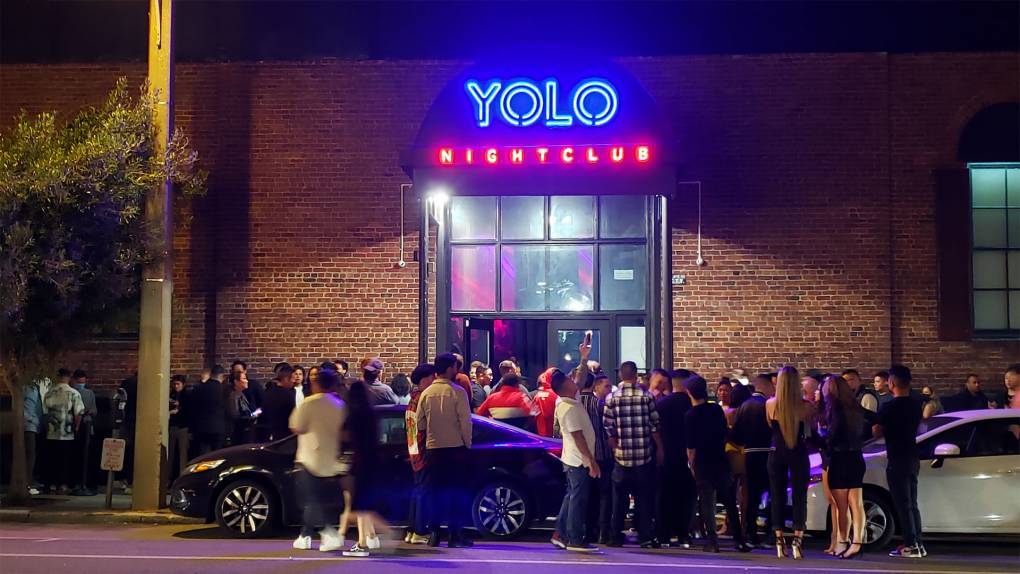
"caption": "Slim's no more: YOLO on Saturday, June 19, during its soft opening.",
"description": "Slim's no more: YOLO on Saturday, June 19, during its soft opening.",
"title": "YOLO.Main",
"credit": "Rae Alexandra/KQED",
"status": "inherit",
"altTag": "Slim's no more: YOLO on Saturday, June 19, during its soft opening.",
"isLoading": false,
"fetchFailed": false
},
"arts_13898972": {
"type": "attachments",
"id": "arts_13898972",
"meta": {
"index": "attachments_1716263798",
"site": "arts",
"id": "13898972",
"found": true
},
"parent": 13898932,
"imgSizes": {
"twentyfourteen-full-width": {
"file": "https://ww2.kqed.org/app/uploads/sites/2/2021/06/noah-adichie-1038x576.jpg",
"width": 1038,
"mimeType": "image/jpeg",
"height": 576
},
"thumbnail": {
"file": "https://ww2.kqed.org/app/uploads/sites/2/2021/06/noah-adichie-160x99.jpg",
"width": 160,
"mimeType": "image/jpeg",
"height": 99
},
"post-thumbnail": {
"file": "https://ww2.kqed.org/app/uploads/sites/2/2021/06/noah-adichie-672x372.jpg",
"width": 672,
"mimeType": "image/jpeg",
"height": 372
},
"kqedFullSize": {
"file": "https://ww2.kqed.org/app/uploads/sites/2/2021/06/noah-adichie-scaled.jpg",
"width": 2560,
"height": 1584
},
"2048x2048": {
"file": "https://ww2.kqed.org/app/uploads/sites/2/2021/06/noah-adichie-2048x1267.jpg",
"width": 2048,
"mimeType": "image/jpeg",
"height": 1267
},
"large": {
"file": "https://ww2.kqed.org/app/uploads/sites/2/2021/06/noah-adichie-1020x631.jpg",
"width": 1020,
"mimeType": "image/jpeg",
"height": 631
},
"1536x1536": {
"file": "https://ww2.kqed.org/app/uploads/sites/2/2021/06/noah-adichie-1536x951.jpg",
"width": 1536,
"mimeType": "image/jpeg",
"height": 951
},
"full-width": {
"file": "https://ww2.kqed.org/app/uploads/sites/2/2021/06/noah-adichie-1920x1188.jpg",
"width": 1920,
"mimeType": "image/jpeg",
"height": 1188
},
"medium": {
"file": "https://ww2.kqed.org/app/uploads/sites/2/2021/06/noah-adichie-800x495.jpg",
"width": 800,
"mimeType": "image/jpeg",
"height": 495
},
"medium_large": {
"file": "https://ww2.kqed.org/app/uploads/sites/2/2021/06/noah-adichie-768x475.jpg",
"width": 768,
"mimeType": "image/jpeg",
"height": 475
}
},
"publishDate": 1623962647,
"modified": 1623962849,
"caption": "Trevor Noah at the Grammys in March 2021, and Chimamanda Ngozi Adichie at Paris Fashion Week in January 2020.",
"description": "Trevor Noah at the Grammys in March 2021, and Chimamanda Ngozi Adichie at Paris Fashion Week in January 2020.",
"title": "Trevor Noah at the Grammys in March 2021, and Chimamanda Ngozi Adichie at Paris Fashion Week in January 2020.",
"credit": "Kevin Winter/Getty Images for The Recording Academy / Francois Durand/Getty Images for Dior",
"status": "inherit",
"altTag": "Trevor Noah at the Grammys in March 2021, and Chimamanda Ngozi Adichie at Paris Fashion Week in January 2020.",
"isLoading": false,
"fetchFailed": false
},
"arts_13898528": {
"type": "attachments",
"id": "arts_13898528",
"meta": {
"index": "attachments_1716263798",
"site": "arts",
"id": "13898528",
"found": true
},
"parent": 0,
"imgSizes": {
"twentyfourteen-full-width": {
"file": "https://ww2.kqed.org/app/uploads/sites/2/2021/06/Mushrooms.Psilocybin-1038x576.jpg",
"width": 1038,
"mimeType": "image/jpeg",
"height": 576
},
"thumbnail": {
"file": "https://ww2.kqed.org/app/uploads/sites/2/2021/06/Mushrooms.Psilocybin-160x107.jpg",
"width": 160,
"mimeType": "image/jpeg",
"height": 107
},
"post-thumbnail": {
"file": "https://ww2.kqed.org/app/uploads/sites/2/2021/06/Mushrooms.Psilocybin-672x372.jpg",
"width": 672,
"mimeType": "image/jpeg",
"height": 372
},
"kqedFullSize": {
"file": "https://ww2.kqed.org/app/uploads/sites/2/2021/06/Mushrooms.Psilocybin.jpg",
"width": 1254,
"height": 836
},
"large": {
"file": "https://ww2.kqed.org/app/uploads/sites/2/2021/06/Mushrooms.Psilocybin-1020x680.jpg",
"width": 1020,
"mimeType": "image/jpeg",
"height": 680
},
"medium": {
"file": "https://ww2.kqed.org/app/uploads/sites/2/2021/06/Mushrooms.Psilocybin-800x533.jpg",
"width": 800,
"mimeType": "image/jpeg",
"height": 533
},
"medium_large": {
"file": "https://ww2.kqed.org/app/uploads/sites/2/2021/06/Mushrooms.Psilocybin-768x512.jpg",
"width": 768,
"mimeType": "image/jpeg",
"height": 512
}
},
"publishDate": 1623259135,
"modified": 1623259323,
"caption": "If passed, new legislation in California would decriminalize psychedelic mushrooms, as well as LSD, MDMA, ketamine and DMT. ",
"description": "If passed, new legislation in California would decriminalize psychedelic mushrooms, as well as LSD, MDMA, ketamine and DMT. ",
"title": "Mushrooms.Psilocybin",
"credit": "Moha El-Jaw",
"status": "inherit",
"altTag": "If passed, new legislation in California would decriminalize psychedelic mushrooms, as well as LSD, MDMA, ketamine and DMT.",
"isLoading": false,
"fetchFailed": false
},
"arts_13898133": {
"type": "attachments",
"id": "arts_13898133",
"meta": {
"index": "attachments_1716263798",
"site": "arts",
"id": "13898133",
"found": true
},
"parent": 13898119,
"imgSizes": {
"twentyfourteen-full-width": {
"file": "https://ww2.kqed.org/app/uploads/sites/2/2021/06/GettyImages-1233181882-1038x576.jpg",
"width": 1038,
"mimeType": "image/jpeg",
"height": 576
},
"thumbnail": {
"file": "https://ww2.kqed.org/app/uploads/sites/2/2021/06/GettyImages-1233181882-160x107.jpg",
"width": 160,
"mimeType": "image/jpeg",
"height": 107
},
"post-thumbnail": {
"file": "https://ww2.kqed.org/app/uploads/sites/2/2021/06/GettyImages-1233181882-672x372.jpg",
"width": 672,
"mimeType": "image/jpeg",
"height": 372
},
"kqedFullSize": {
"file": "https://ww2.kqed.org/app/uploads/sites/2/2021/06/GettyImages-1233181882-scaled.jpg",
"width": 2560,
"height": 1707
},
"2048x2048": {
"file": "https://ww2.kqed.org/app/uploads/sites/2/2021/06/GettyImages-1233181882-2048x1365.jpg",
"width": 2048,
"mimeType": "image/jpeg",
"height": 1365
},
"large": {
"file": "https://ww2.kqed.org/app/uploads/sites/2/2021/06/GettyImages-1233181882-1020x680.jpg",
"width": 1020,
"mimeType": "image/jpeg",
"height": 680
},
"1536x1536": {
"file": "https://ww2.kqed.org/app/uploads/sites/2/2021/06/GettyImages-1233181882-1536x1024.jpg",
"width": 1536,
"mimeType": "image/jpeg",
"height": 1024
},
"full-width": {
"file": "https://ww2.kqed.org/app/uploads/sites/2/2021/06/GettyImages-1233181882-1920x1280.jpg",
"width": 1920,
"mimeType": "image/jpeg",
"height": 1280
},
"medium": {
"file": "https://ww2.kqed.org/app/uploads/sites/2/2021/06/GettyImages-1233181882-800x533.jpg",
"width": 800,
"mimeType": "image/jpeg",
"height": 533
},
"medium_large": {
"file": "https://ww2.kqed.org/app/uploads/sites/2/2021/06/GettyImages-1233181882-768x512.jpg",
"width": 768,
"mimeType": "image/jpeg",
"height": 512
}
},
"publishDate": 1622576055,
"modified": 1622576164,
"caption": "Japan's Naomi Osaka celebrates after winning on Day 1 of the Roland Garros 2021 French Open tennis tournament in Paris. May 30, 2021. ",
"description": "Japan's Naomi Osaka celebrates after winning on Day 1 of the Roland Garros 2021 French Open tennis tournament in Paris. May 30, 2021. ",
"title": "Japan's Naomi Osaka celebrates after winning on Day 1 of the Roland Garros 2021 French Open tennis tournament in Paris. May 30, 2021.",
"credit": "MARTIN BUREAU/AFP via Getty Images",
"status": "inherit",
"altTag": "Japan's Naomi Osaka celebrates after winning on Day 1 of the Roland Garros 2021 French Open tennis tournament in Paris. May 30, 2021.",
"isLoading": false,
"fetchFailed": false
},
"arts_13897753": {
"type": "attachments",
"id": "arts_13897753",
"meta": {
"index": "attachments_1716263798",
"site": "arts",
"id": "13897753",
"found": true
},
"parent": 13897161,
"imgSizes": {
"twentyfourteen-full-width": {
"file": "https://ww2.kqed.org/app/uploads/sites/2/2021/05/Screen-Shot-2021-05-24-at-2.17.55-PM-1038x576.png",
"width": 1038,
"mimeType": "image/png",
"height": 576
},
"thumbnail": {
"file": "https://ww2.kqed.org/app/uploads/sites/2/2021/05/Screen-Shot-2021-05-24-at-2.17.55-PM-160x105.png",
"width": 160,
"mimeType": "image/png",
"height": 105
},
"post-thumbnail": {
"file": "https://ww2.kqed.org/app/uploads/sites/2/2021/05/Screen-Shot-2021-05-24-at-2.17.55-PM-672x372.png",
"width": 672,
"mimeType": "image/png",
"height": 372
},
"kqedFullSize": {
"file": "https://ww2.kqed.org/app/uploads/sites/2/2021/05/Screen-Shot-2021-05-24-at-2.17.55-PM.png",
"width": 2144,
"height": 1412
},
"2048x2048": {
"file": "https://ww2.kqed.org/app/uploads/sites/2/2021/05/Screen-Shot-2021-05-24-at-2.17.55-PM-2048x1349.png",
"width": 2048,
"mimeType": "image/png",
"height": 1349
},
"large": {
"file": "https://ww2.kqed.org/app/uploads/sites/2/2021/05/Screen-Shot-2021-05-24-at-2.17.55-PM-1020x672.png",
"width": 1020,
"mimeType": "image/png",
"height": 672
},
"1536x1536": {
"file": "https://ww2.kqed.org/app/uploads/sites/2/2021/05/Screen-Shot-2021-05-24-at-2.17.55-PM-1536x1012.png",
"width": 1536,
"mimeType": "image/png",
"height": 1012
},
"full-width": {
"file": "https://ww2.kqed.org/app/uploads/sites/2/2021/05/Screen-Shot-2021-05-24-at-2.17.55-PM-1920x1264.png",
"width": 1920,
"mimeType": "image/png",
"height": 1264
},
"medium": {
"file": "https://ww2.kqed.org/app/uploads/sites/2/2021/05/Screen-Shot-2021-05-24-at-2.17.55-PM-800x527.png",
"width": 800,
"mimeType": "image/png",
"height": 527
},
"medium_large": {
"file": "https://ww2.kqed.org/app/uploads/sites/2/2021/05/Screen-Shot-2021-05-24-at-2.17.55-PM-768x506.png",
"width": 768,
"mimeType": "image/png",
"height": 506
}
},
"publishDate": 1621891093,
"modified": 1621891253,
"caption": "Thelma (Geena Davis) and Louise (Susan Sarandon) in the 1991 hit movie.",
"description": "Thelma (Geena Davis) and Louise (Susan Sarandon) in the 1991 hit movie.",
"title": "Thelma (Geena Davis) and Louise (Susan Sarandon) in the 1991 hit movie.",
"credit": "MGM",
"status": "inherit",
"altTag": "Thelma (Geena Davis) and Louise (Susan Sarandon) in the 1991 hit movie.",
"isLoading": false,
"fetchFailed": false
},
"arts_13897596": {
"type": "attachments",
"id": "arts_13897596",
"meta": {
"index": "attachments_1716263798",
"site": "arts",
"id": "13897596",
"found": true
},
"parent": 13897413,
"imgSizes": {
"twentyfourteen-full-width": {
"file": "https://ww2.kqed.org/app/uploads/sites/2/2021/05/DSC00231-1038x576.jpg",
"width": 1038,
"mimeType": "image/jpeg",
"height": 576
},
"thumbnail": {
"file": "https://ww2.kqed.org/app/uploads/sites/2/2021/05/DSC00231-160x107.jpg",
"width": 160,
"mimeType": "image/jpeg",
"height": 107
},
"post-thumbnail": {
"file": "https://ww2.kqed.org/app/uploads/sites/2/2021/05/DSC00231-672x372.jpg",
"width": 672,
"mimeType": "image/jpeg",
"height": 372
},
"kqedFullSize": {
"file": "https://ww2.kqed.org/app/uploads/sites/2/2021/05/DSC00231.jpg",
"width": 1920,
"height": 1283
},
"large": {
"file": "https://ww2.kqed.org/app/uploads/sites/2/2021/05/DSC00231-1020x682.jpg",
"width": 1020,
"mimeType": "image/jpeg",
"height": 682
},
"1536x1536": {
"file": "https://ww2.kqed.org/app/uploads/sites/2/2021/05/DSC00231-1536x1026.jpg",
"width": 1536,
"mimeType": "image/jpeg",
"height": 1026
},
"medium": {
"file": "https://ww2.kqed.org/app/uploads/sites/2/2021/05/DSC00231-800x535.jpg",
"width": 800,
"mimeType": "image/jpeg",
"height": 535
},
"medium_large": {
"file": "https://ww2.kqed.org/app/uploads/sites/2/2021/05/DSC00231-768x513.jpg",
"width": 768,
"mimeType": "image/jpeg",
"height": 513
}
},
"publishDate": 1621549551,
"modified": 1621549768,
"caption": "Cece Carpio, at left, collaborates with the author's daughter at an event prmoting Black and Asian solidarity in Oakland's Chinatown.",
"description": "Cece Carpio, at left, collaborates with the author's daughter at an event prmoting Black and Asian solidarity in Oakland's Chinatown.",
"title": "DSC00231",
"credit": "Pendarvis Harshaw/KQED",
"status": "inherit",
"altTag": "Cece Carpio, at left, collaborates with the author's daughter at an event prmoting Black and Asian solidarity in Oakland's Chinatown.",
"isLoading": false,
"fetchFailed": false
},
"arts_13897308": {
"type": "attachments",
"id": "arts_13897308",
"meta": {
"index": "attachments_1716263798",
"site": "arts",
"id": "13897308",
"found": true
},
"parent": 13897293,
"imgSizes": {
"twentyfourteen-full-width": {
"file": "https://ww2.kqed.org/app/uploads/sites/2/2021/05/FootballFish.MAIN_-1038x576.jpg",
"width": 1038,
"mimeType": "image/jpeg",
"height": 576
},
"thumbnail": {
"file": "https://ww2.kqed.org/app/uploads/sites/2/2021/05/FootballFish.MAIN_-160x90.jpg",
"width": 160,
"mimeType": "image/jpeg",
"height": 90
},
"post-thumbnail": {
"file": "https://ww2.kqed.org/app/uploads/sites/2/2021/05/FootballFish.MAIN_-672x372.jpg",
"width": 672,
"mimeType": "image/jpeg",
"height": 372
},
"kqedFullSize": {
"file": "https://ww2.kqed.org/app/uploads/sites/2/2021/05/FootballFish.MAIN_.jpg",
"width": 1920,
"height": 1080
},
"large": {
"file": "https://ww2.kqed.org/app/uploads/sites/2/2021/05/FootballFish.MAIN_-1020x574.jpg",
"width": 1020,
"mimeType": "image/jpeg",
"height": 574
},
"1536x1536": {
"file": "https://ww2.kqed.org/app/uploads/sites/2/2021/05/FootballFish.MAIN_-1536x864.jpg",
"width": 1536,
"mimeType": "image/jpeg",
"height": 864
},
"medium": {
"file": "https://ww2.kqed.org/app/uploads/sites/2/2021/05/FootballFish.MAIN_-800x450.jpg",
"width": 800,
"mimeType": "image/jpeg",
"height": 450
},
"medium_large": {
"file": "https://ww2.kqed.org/app/uploads/sites/2/2021/05/FootballFish.MAIN_-768x432.jpg",
"width": 768,
"mimeType": "image/jpeg",
"height": 432
}
},
"publishDate": 1621351943,
"modified": 1621351970,
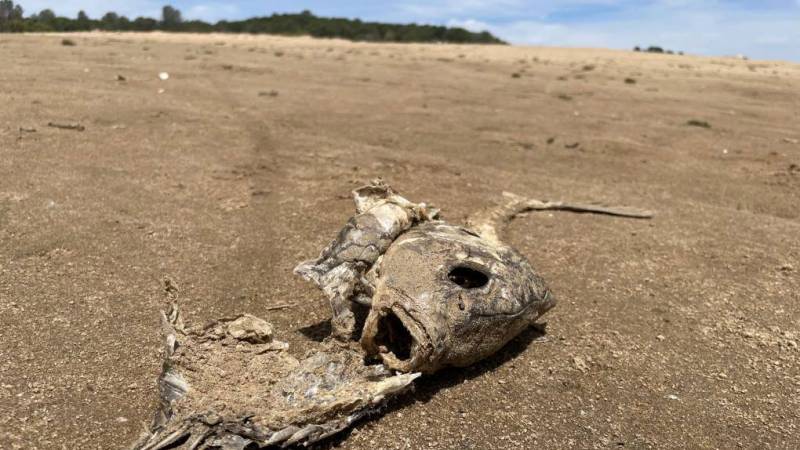
"caption": "The Pacific Football Fish—part of the Anglerfish family—that recently washed up in California.",
"description": "The Pacific Football Fish—part of the Anglerfish family—that recently washed up in California.",
"title": "FootballFish.MAIN",
"credit": "Facebook/ Ben Estes/ @crystalcovestateparkofficial",
"status": "inherit",
"altTag": "The Pacific Football Fish—part of the Anglerfish family—that recently washed up in California.",
"isLoading": false,
"fetchFailed": false
},
"arts_13897203": {
"type": "attachments",
"id": "arts_13897203",
"meta": {
"index": "attachments_1716263798",
"site": "arts",
"id": "13897203",
"found": true
},
"parent": 13897057,
"imgSizes": {
"thumbnail": {
"file": "https://ww2.kqed.org/app/uploads/sites/2/2021/05/NatureStressful-160x90.jpg",
"width": 160,
"mimeType": "image/jpeg",
"height": 90
},
"post-thumbnail": {
"file": "https://ww2.kqed.org/app/uploads/sites/2/2021/05/NatureStressful-672x372.jpg",
"width": 672,
"mimeType": "image/jpeg",
"height": 372
},
"kqedFullSize": {
"file": "https://ww2.kqed.org/app/uploads/sites/2/2021/05/NatureStressful.jpg",
"width": 1020,
"height": 574
},
"medium": {
"file": "https://ww2.kqed.org/app/uploads/sites/2/2021/05/NatureStressful-800x450.jpg",
"width": 800,
"mimeType": "image/jpeg",
"height": 450
},
"medium_large": {
"file": "https://ww2.kqed.org/app/uploads/sites/2/2021/05/NatureStressful-768x432.jpg",
"width": 768,
"mimeType": "image/jpeg",
"height": 432
}
},
"publishDate": 1621028915,
"modified": 1621028915,
"caption": null,
"description": null,
"title": "NatureStressful",
"credit": null,
"status": "inherit",
"altTag": null,
"isLoading": false,
"fetchFailed": false
},
"arts_13896794": {
"type": "attachments",
"id": "arts_13896794",
"meta": {
"index": "attachments_1716263798",
"site": "arts",
"id": "13896794",
"found": true
},
"parent": 0,
"imgSizes": {
"twentyfourteen-full-width": {
"file": "https://ww2.kqed.org/app/uploads/sites/2/2021/05/Image-from-iOS-31-1038x576.jpg",
"width": 1038,
"mimeType": "image/jpeg",
"height": 576
},
"thumbnail": {
"file": "https://ww2.kqed.org/app/uploads/sites/2/2021/05/Image-from-iOS-31-160x89.jpg",
"width": 160,
"mimeType": "image/jpeg",
"height": 89
},
"post-thumbnail": {
"file": "https://ww2.kqed.org/app/uploads/sites/2/2021/05/Image-from-iOS-31-672x372.jpg",
"width": 672,
"mimeType": "image/jpeg",
"height": 372
},
"kqedFullSize": {
"file": "https://ww2.kqed.org/app/uploads/sites/2/2021/05/Image-from-iOS-31.jpg",
"width": 1169,
"height": 650
},
"large": {
"file": "https://ww2.kqed.org/app/uploads/sites/2/2021/05/Image-from-iOS-31-1020x567.jpg",
"width": 1020,
"mimeType": "image/jpeg",
"height": 567
},
"medium": {
"file": "https://ww2.kqed.org/app/uploads/sites/2/2021/05/Image-from-iOS-31-800x445.jpg",
"width": 800,
"mimeType": "image/jpeg",
"height": 445
},
"medium_large": {
"file": "https://ww2.kqed.org/app/uploads/sites/2/2021/05/Image-from-iOS-31-768x427.jpg",
"width": 768,
"mimeType": "image/jpeg",
"height": 427
}
},
"publishDate": 1620320133,
"modified": 1620411892,
"caption": "Brittany Tanner wears a white and grey striped shirt and a brown hat as she stands holding her son, Akai.",
"description": "Brittany Tanner wears a white and grey striped shirt and a brown hat as she stands holding her son, Akai.",
"title": "Brittany Tanner wears a white and grey striped shirt and a brown hat as she stands holding her son, Akai.",
"credit": "Brittany Tanner",
"status": "inherit",
"altTag": "Brittany Tanner wears a white and grey striped shirt and a brown hat as she stands holding her son, Akai.",
"isLoading": false,
"fetchFailed": false
},
"arts_13896403": {
"type": "attachments",
"id": "arts_13896403",
"meta": {
"index": "attachments_1716263798",
"site": "arts",
"id": "13896403",
"found": true
},
"parent": 13896384,
"imgSizes": {
"twentyfourteen-full-width": {
"file": "https://ww2.kqed.org/app/uploads/sites/2/2021/04/hilltopmall_exterior-1038x576.jpg",
"width": 1038,
"mimeType": "image/jpeg",
"height": 576
},
"thumbnail": {
"file": "https://ww2.kqed.org/app/uploads/sites/2/2021/04/hilltopmall_exterior-160x120.jpg",
"width": 160,
"mimeType": "image/jpeg",
"height": 120
},
"post-thumbnail": {
"file": "https://ww2.kqed.org/app/uploads/sites/2/2021/04/hilltopmall_exterior-672x372.jpg",
"width": 672,
"mimeType": "image/jpeg",
"height": 372
},
"kqedFullSize": {
"file": "https://ww2.kqed.org/app/uploads/sites/2/2021/04/hilltopmall_exterior.jpg",
"width": 2048,
"height": 1536
},
"large": {
"file": "https://ww2.kqed.org/app/uploads/sites/2/2021/04/hilltopmall_exterior-1020x765.jpg",
"width": 1020,
"mimeType": "image/jpeg",
"height": 765
},
"1536x1536": {
"file": "https://ww2.kqed.org/app/uploads/sites/2/2021/04/hilltopmall_exterior-1536x1152.jpg",
"width": 1536,
"mimeType": "image/jpeg",
"height": 1152
},
"full-width": {
"file": "https://ww2.kqed.org/app/uploads/sites/2/2021/04/hilltopmall_exterior-1920x1440.jpg",
"width": 1920,
"mimeType": "image/jpeg",
"height": 1440
},
"medium": {
"file": "https://ww2.kqed.org/app/uploads/sites/2/2021/04/hilltopmall_exterior-800x600.jpg",
"width": 800,
"mimeType": "image/jpeg",
"height": 600
},
"medium_large": {
"file": "https://ww2.kqed.org/app/uploads/sites/2/2021/04/hilltopmall_exterior-768x576.jpg",
"width": 768,
"mimeType": "image/jpeg",
"height": 576
}
},
"publishDate": 1619559234,
"modified": 1619654076,
"caption": "The exterior of the now-closed Hilltop Mall, photographed in 2017.",
"description": "The exterior of the now-closed Hilltop Mall, photographed in 2017.",
"title": "Hilltop Mall",
"credit": "Jon Konrath",
"status": "inherit",
"altTag": "Hilltop mall exterior",
"isLoading": false,
"fetchFailed": false
},
"arts_13896348": {
"type": "attachments",
"id": "arts_13896348",
"meta": {
"index": "attachments_1716263798",
"site": "arts",
"id": "13896348",
"found": true
},
"parent": 13896327,
"imgSizes": {
"twentyfourteen-full-width": {
"file": "https://ww2.kqed.org/app/uploads/sites/2/2021/04/fnnch-hoods-1038x576.jpg",
"width": 1038,
"mimeType": "image/jpeg",
"height": 576
},
"thumbnail": {
"file": "https://ww2.kqed.org/app/uploads/sites/2/2021/04/fnnch-hoods-160x99.jpg",
"width": 160,
"mimeType": "image/jpeg",
"height": 99
},
"post-thumbnail": {
"file": "https://ww2.kqed.org/app/uploads/sites/2/2021/04/fnnch-hoods-672x372.jpg",
"width": 672,
"mimeType": "image/jpeg",
"height": 372
},
"kqedFullSize": {
"file": "https://ww2.kqed.org/app/uploads/sites/2/2021/04/fnnch-hoods-scaled.jpg",
"width": 2560,
"height": 1584
},
"2048x2048": {
"file": "https://ww2.kqed.org/app/uploads/sites/2/2021/04/fnnch-hoods-2048x1267.jpg",
"width": 2048,
"mimeType": "image/jpeg",
"height": 1267
},
"large": {
"file": "https://ww2.kqed.org/app/uploads/sites/2/2021/04/fnnch-hoods-1020x631.jpg",
"width": 1020,
"mimeType": "image/jpeg",
"height": 631
},
"1536x1536": {
"file": "https://ww2.kqed.org/app/uploads/sites/2/2021/04/fnnch-hoods-1536x951.jpg",
"width": 1536,
"mimeType": "image/jpeg",
"height": 951
},
"full-width": {
"file": "https://ww2.kqed.org/app/uploads/sites/2/2021/04/fnnch-hoods-1920x1188.jpg",
"width": 1920,
"mimeType": "image/jpeg",
"height": 1188
},
"medium": {
"file": "https://ww2.kqed.org/app/uploads/sites/2/2021/04/fnnch-hoods-800x495.jpg",
"width": 800,
"mimeType": "image/jpeg",
"height": 495
},
"medium_large": {
"file": "https://ww2.kqed.org/app/uploads/sites/2/2021/04/fnnch-hoods-768x475.jpg",
"width": 768,
"mimeType": "image/jpeg",
"height": 475
}
},
"publishDate": 1619486493,
"modified": 1619486667,
"caption": "(L-R): fnnch \"public\" art protected behind bars and glass; the artist at his LGBT Center mural; a \"Keep Hoods Yours\" tag over a fnnch honey bear.",
"description": "(L-R): fnnch \"public\" art protected behind bars and glass; the artist at his LGBT Center mural; a \"Keep Hoods Yours\" tag over a fnnch honey bear.",
"title": "(L-R): fnnch \"public\" art protected behind bars and glass; the artist at his LGBT Center mural; a \"Keep Hoods Yours\" tag over a fnnch honey bear.",
"credit": "Instagram/ @fnnchfinder/ @doggtowndro/ @copwatch_santaana",
"status": "inherit",
"altTag": null,
"isLoading": false,
"fetchFailed": false
}
},
"audioPlayerReducer": {
"postId": "stream_live",
"isPaused": true,
"isPlaying": false,
"pfsActive": false,
"pledgeModalIsOpen": true,
"playerDrawerIsOpen": false,
"liveAudioPlayStartedAt": 0,
"liveAudioPlayContext": ""
},
"authorsReducer": {
"byline_arts_13896788": {
"type": "authors",
"id": "byline_arts_13896788",
"meta": {
"override": true
},
"slug": "byline_arts_13896788",
"name": "Brittany Tanner",
"isLoading": false
},
"ralexandra": {
"type": "authors",
"id": "11242",
"meta": {
"index": "authors_1716337520",
"id": "11242",
"found": true
},
"name": "Rae Alexandra",
"firstName": "Rae",
"lastName": "Alexandra",
"slug": "ralexandra",
"email": "ralexandra@kqed.org",
"display_author_email": true,
"staff_mastheads": [],
"title": "Reporter/Producer",
"bio": "Rae Alexandra is a Reporter/Producer for KQED Arts & Culture, and the creator/author of the \u003ca href=\"https://www.kqed.org/arts/program/rebel-girls-from-bay-area-history\">Rebel Girls From Bay Area History\u003c/a> and \u003ca href=\"https://www.kqed.org/bizarrebayarea\">Bizarre Bay Area\u003c/a> series. Her debut book, \u003ca href=\"https://citylights.com/politics-current-events-history/unsung-heroines35-women-who-changed/\">Unsung Heroines: 35 Women Who Changed the Bay Area\u003c/a> was published by City Lights in March 2026. In 2023, Rae was awarded an SPJ Excellence in Journalism Award for Arts & Culture. Rae was born and raised in Wales and subsequently — even after two decades in Northern California — still uses phrases that regularly baffle her coworkers.",
"avatar": "https://secure.gravatar.com/avatar/edfee8176c80cc0a382b051190f5341997df378a934a5774dcb0977732dfd401?s=600&d=blank&r=g",
"twitter": null,
"bluesky": null,
"facebook": null,
"instagram": null,
"linkedin": null,
"sites": [
{
"site": "arts",
"roles": [
"subscriber"
]
},
{
"site": "news",
"roles": [
"subscriber"
]
},
{
"site": "pop",
"roles": [
"subscriber"
]
},
{
"site": "bayareabites",
"roles": [
"subscriber"
]
},
{
"site": "science",
"roles": [
"subscriber"
]
}
],
"headData": {
"title": "Rae Alexandra | KQED",
"description": "Reporter/Producer",
"ogImgSrc": "https://secure.gravatar.com/avatar/edfee8176c80cc0a382b051190f5341997df378a934a5774dcb0977732dfd401?s=600&d=blank&r=g",
"twImgSrc": "https://secure.gravatar.com/avatar/edfee8176c80cc0a382b051190f5341997df378a934a5774dcb0977732dfd401?s=600&d=blank&r=g"
},
"isLoading": false,
"link": "/author/ralexandra"
},
"jhesig": {
"type": "authors",
"id": "11333",
"meta": {
"index": "authors_1716337520",
"id": "11333",
"found": true
},
"name": "Janelle Hessig",
"firstName": "Janelle",
"lastName": "Hessig",
"slug": "jhesig",
"email": "jhessig@kqed.org",
"display_author_email": false,
"staff_mastheads": [],
"title": "KQED Contributor",
"bio": null,
"avatar": "https://secure.gravatar.com/avatar/27dd6e3cd88f82541593bd6d8f2aec4a?s=600&d=mm&r=g",
"twitter": null,
"facebook": null,
"instagram": null,
"linkedin": null,
"sites": [
{
"site": "arts",
"roles": []
},
{
"site": "food",
"roles": []
},
{
"site": "filmschoolshorts",
"roles": [
"editor"
]
}
],
"headData": {
"title": "Janelle Hessig | KQED",
"description": "KQED Contributor",
"ogImgSrc": "https://secure.gravatar.com/avatar/27dd6e3cd88f82541593bd6d8f2aec4a?s=600&d=mm&r=g",
"twImgSrc": "https://secure.gravatar.com/avatar/27dd6e3cd88f82541593bd6d8f2aec4a?s=600&d=mm&r=g"
},
"isLoading": false,
"link": "/author/jhesig"
},
"ogpenn": {
"type": "authors",
"id": "11491",
"meta": {
"index": "authors_1716337520",
"id": "11491",
"found": true
},
"name": "Pendarvis Harshaw",
"firstName": "Pendarvis",
"lastName": "Harshaw",
"slug": "ogpenn",
"email": "ogpenn@gmail.com",
"display_author_email": false,
"staff_mastheads": [
"arts"
],
"title": "Community Engagement Reporter",
"bio": "Pendarvis Harshaw is an educator, host and writer with KQED Arts.",
"avatar": "https://secure.gravatar.com/avatar/972b77ee8e3f346ae2b00622661187fbfabd059b5693bbdc1475ea7a722fd4cd?s=600&d=blank&r=g",
"twitter": null,
"bluesky": null,
"facebook": null,
"instagram": "ogpenn",
"linkedin": null,
"sites": [
{
"site": "arts",
"roles": [
"administrator"
]
},
{
"site": "news",
"roles": [
"editor"
]
},
{
"site": "bayareabites",
"roles": [
"author"
]
},
{
"site": "hiphop",
"roles": [
"editor"
]
}
],
"headData": {
"title": "Pendarvis Harshaw | KQED",
"description": "Community Engagement Reporter",
"ogImgSrc": "https://secure.gravatar.com/avatar/972b77ee8e3f346ae2b00622661187fbfabd059b5693bbdc1475ea7a722fd4cd?s=600&d=blank&r=g",
"twImgSrc": "https://secure.gravatar.com/avatar/972b77ee8e3f346ae2b00622661187fbfabd059b5693bbdc1475ea7a722fd4cd?s=600&d=blank&r=g"
},
"isLoading": false,
"link": "/author/ogpenn"
}
},
"pagesReducer": {
"arts_tag_commentary": {
"type": "terms",
"id": "arts_2767",
"meta": {
"index": "terms_1716263798",
"site": "arts",
"id": "2767",
"score": 8.794562
},
"featImg": null,
"name": "commentary",
"description": null,
"taxonomy": "tag",
"headData": {
"twImgId": null,
"twTitle": null,
"ogTitle": null,
"ogImgId": null,
"twDescription": null,
"description": null,
"title": "commentary Archives | KQED Arts",
"ogDescription": null
},
"ttid": 2779,
"slug": "commentary",
"isLoading": false,
"title": "commentary",
"pageMeta": {
"site": "arts",
"WpPageTemplate": "page-topic-editorial",
"currentPage": 8
},
"blocks": [
{
"blockName": "kqed/post-list",
"attrs": {
"layout": "cardArticle2",
"query": "posts/arts?tag=commentary",
"seeMore": false,
"paginated": true,
"page": 8
}
},
{
"blockName": "kqed/ad"
}
]
}
},
"pfsSessionReducer": {},
"postsReducer": {
"stream_live": {
"type": "live",
"id": "stream_live",
"audioUrl": "https://streams.kqed.org/kqedradio",
"title": "Live Stream",
"excerpt": "Live Stream information currently unavailable.",
"link": "/radio",
"featImg": "",
"label": {
"name": "KQED Live",
"link": "/"
}
},
"stream_kqedNewscast": {
"type": "posts",
"id": "stream_kqedNewscast",
"audioUrl": "https://www.kqed.org/.stream/anon/radio/RDnews/newscast.mp3?_=1",
"title": "KQED Newscast",
"featImg": "",
"label": {
"name": "88.5 FM",
"link": "/"
}
},
"arts_13899115": {
"type": "posts",
"id": "arts_13899115",
"meta": {
"index": "posts_1716263798",
"site": "arts",
"id": "13899115",
"score": null,
"sort": [
1624404976000
]
},
"parent": 0,
"labelTerm": {},
"blocks": [],
"publishDate": 1624404976,
"format": "standard",
"title": "No Graves, Only Gardens: On Juneteenth in Oakland",
"headTitle": "No Graves, Only Gardens: On Juneteenth in Oakland | KQED",
"content": "\u003cp>\u003cspan style=\"font-size: 4.6875em;float: left;line-height: 0.733em;padding: 0.05em 0.1em 0 0;font-family: times, serif, georgia\">T\u003c/span>he wide spectrum of experiences that encompass being Black in America were centerstage this past Saturday, and I was there with my camera.\u003c/p>\n\u003cp>The god-like gorgeousness. The impressive use of innovation. The disgust of danger actualizing in the form of death. The different skin tones and distinct accents. The variation of clothing styles, representative of religious affiliations or neighborhood and individual claims.\u003c/p>\n\u003cp>\u003cimg loading=\"lazy\" decoding=\"async\" class=\"alignright size-thumbnail wp-image-13833985\" src=\"https://ww2.kqed.org/arts/wp-content/uploads/sites/2/2018/05/OGPenn.Cap_-160x184.jpg\" alt=\"\" width=\"160\" height=\"184\" srcset=\"https://cdn.kqed.org/wp-content/uploads/sites/2/2018/05/OGPenn.Cap_-160x184.jpg 160w, https://cdn.kqed.org/wp-content/uploads/sites/2/2018/05/OGPenn.Cap_.jpg 180w\" sizes=\"(max-width: 160px) 100vw, 160px\">\u003c/p>\n\u003cp>I saw so much Black life through my camera during the day, I’m lightweight embarrassed to say that I was oblivious to what I observed until later that night. That’s when a few choice words made it all click.\u003c/p>\n\u003cp>That evening, the Blk Girls Green House in West Oakland hosted their first Grooves From the Green House event, with performances by \u003ca href=\"https://www.instagram.com/msjanehandcock/\" target=\"_blank\" rel=\"noopener noreferrer\">Jane Handcock\u003c/a>, \u003ca href=\"https://www.instagram.com/vadiahub/\" target=\"_blank\" rel=\"noopener noreferrer\">Vadia\u003c/a>, \u003ca href=\"https://www.instagram.com/rexxliferaj/\" target=\"_blank\" rel=\"noopener noreferrer\">Rexx Life Raj\u003c/a> and \u003ca href=\"https://www.instagram.com/masego/\" target=\"_blank\" rel=\"noopener noreferrer\">Masego\u003c/a>. The plant nursery had been converted into an intimate venue where potted pothos plants hung over the heads of 60 to 70 attendees vibing to the music in their seats.\u003c/p>\n\u003cfigure id=\"attachment_13899119\" class=\"wp-caption alignnone\" style=\"max-width: 800px\">\u003cimg loading=\"lazy\" decoding=\"async\" class=\"size-medium wp-image-13899119\" src=\"https://ww2.kqed.org/app/uploads/sites/2/2021/06/6C855327-CF65-4AC1-B3B0-819234905F1A-800x535.jpg\" alt=\"Masego plays the saxophone in front of a live audience at Blk Girls Green House in West Oakland \" width=\"800\" height=\"535\" srcset=\"https://cdn.kqed.org/wp-content/uploads/sites/2/2021/06/6C855327-CF65-4AC1-B3B0-819234905F1A-800x535.jpg 800w, https://cdn.kqed.org/wp-content/uploads/sites/2/2021/06/6C855327-CF65-4AC1-B3B0-819234905F1A-1020x682.jpg 1020w, https://cdn.kqed.org/wp-content/uploads/sites/2/2021/06/6C855327-CF65-4AC1-B3B0-819234905F1A-160x107.jpg 160w, https://cdn.kqed.org/wp-content/uploads/sites/2/2021/06/6C855327-CF65-4AC1-B3B0-819234905F1A-768x513.jpg 768w, https://cdn.kqed.org/wp-content/uploads/sites/2/2021/06/6C855327-CF65-4AC1-B3B0-819234905F1A.jpg 1079w\" sizes=\"(max-width: 800px) 100vw, 800px\">\u003cfigcaption class=\"wp-caption-text\">Masego plays the saxophone in front of a live audience at Blk Girls Green House in West Oakland. \u003ccite>(Pendarvis Harshaw)\u003c/cite>\u003c/figcaption>\u003c/figure>\n\u003cp>For many, the show was the first live performance “since the pandemic ended”—or rather, since Governor Newsom \u003ca href=\"https://www.kqed.org/news/11868240/newsom-announces-plan-to-open-up-business-as-usual-in-california-by-june-15\" target=\"_blank\" rel=\"noopener noreferrer\">lifted the requirement\u003c/a> for people to wear masks in public places. It was also just a few days after President Biden signed a bill to make Juneteenth a federal holiday.\u003c/p>\n\u003cp>[ad fullwidth]\u003c/p>\n\u003cp>Recognized by the government or not, Juneteenth was being celebrated all over: inside of that greenhouse, in cities around the country, and on the eastern side of Lake Merritt—where I had been earlier in the day.\u003c/p>\n\u003cfigure id=\"attachment_13899121\" class=\"wp-caption alignnone\" style=\"max-width: 800px\">\u003cimg loading=\"lazy\" decoding=\"async\" class=\"size-medium wp-image-13899121\" src=\"https://ww2.kqed.org/app/uploads/sites/2/2021/06/7153D232-9DF6-45DE-A467-431CC9F865FC-800x535.jpg\" alt=\"Zakiya smiles as she adorns a tree with sunflowers and a red, black and green cloth, as a part of a photo booth installation\" width=\"800\" height=\"535\" srcset=\"https://cdn.kqed.org/wp-content/uploads/sites/2/2021/06/7153D232-9DF6-45DE-A467-431CC9F865FC-800x535.jpg 800w, https://cdn.kqed.org/wp-content/uploads/sites/2/2021/06/7153D232-9DF6-45DE-A467-431CC9F865FC-1020x683.jpg 1020w, https://cdn.kqed.org/wp-content/uploads/sites/2/2021/06/7153D232-9DF6-45DE-A467-431CC9F865FC-160x107.jpg 160w, https://cdn.kqed.org/wp-content/uploads/sites/2/2021/06/7153D232-9DF6-45DE-A467-431CC9F865FC-768x514.jpg 768w, https://cdn.kqed.org/wp-content/uploads/sites/2/2021/06/7153D232-9DF6-45DE-A467-431CC9F865FC.jpg 1082w\" sizes=\"(max-width: 800px) 100vw, 800px\">\u003cfigcaption class=\"wp-caption-text\">Zakiya smiles as she adorns a tree with sunflowers and a red, black and green cloth, as a part of a photo booth installation. \u003ccite>(Pendarvis Harshaw)\u003c/cite>\u003c/figcaption>\u003c/figure>\n\u003cp>\u003cspan style=\"font-size: 4.6875em;float: left;line-height: 0.733em;padding: 0.05em 0.1em 0 0;font-family: times, serif, georgia\">I\u003c/span> got to the lake just before noon, dropping my stuff with some friends at the grassy area across from the Cleveland Cascade staircase. From there I walked south, down Lakeshore Avenue, stopping at the event at Pine Knoll Park on Hanover Avenue, before continuing to the amphitheater on the far southern end of the lake. And then I walked back.\u003c/p>\n\u003cp>I did that loop three times, and the whole time I was taking photos and giving hugs.\u003c/p>\n\u003cp>I saw a newborn child in the arms of its parent, the hands of young a man holding a blunt and gigging, a woman with fingernail polish on her cuticles that perfectly coordinated with her outfit.\u003c/p>\n\u003cp>Tire smoke was being sent from dirt bikes to the clouds, and hands were holding red cups toward the heavens as if trying to cheers with angels.\u003c/p>\n\u003cp>And those are just the photo opportunities that I passed up.\u003c/p>\n\u003cfigure id=\"attachment_13899122\" class=\"wp-caption alignnone\" style=\"max-width: 800px\">\u003cimg loading=\"lazy\" decoding=\"async\" class=\"size-medium wp-image-13899122\" src=\"https://ww2.kqed.org/app/uploads/sites/2/2021/06/52B9D433-7DB9-40FE-A7F5-04AA7A5E0C2B-800x535.jpg\" alt=\"A person in a mask hits a wheelie on an ATV near Lake Merritt over the weekend\" width=\"800\" height=\"535\" srcset=\"https://cdn.kqed.org/wp-content/uploads/sites/2/2021/06/52B9D433-7DB9-40FE-A7F5-04AA7A5E0C2B-800x535.jpg 800w, https://cdn.kqed.org/wp-content/uploads/sites/2/2021/06/52B9D433-7DB9-40FE-A7F5-04AA7A5E0C2B-1020x683.jpg 1020w, https://cdn.kqed.org/wp-content/uploads/sites/2/2021/06/52B9D433-7DB9-40FE-A7F5-04AA7A5E0C2B-160x107.jpg 160w, https://cdn.kqed.org/wp-content/uploads/sites/2/2021/06/52B9D433-7DB9-40FE-A7F5-04AA7A5E0C2B-768x514.jpg 768w, https://cdn.kqed.org/wp-content/uploads/sites/2/2021/06/52B9D433-7DB9-40FE-A7F5-04AA7A5E0C2B.jpg 1082w\" sizes=\"(max-width: 800px) 100vw, 800px\">\u003cfigcaption class=\"wp-caption-text\">A person in a mask hits a wheelie on an ATV near Lake Merritt over the weekend. \u003ccite>(Pendarvis Harshaw)\u003c/cite>\u003c/figcaption>\u003c/figure>\n\u003cp>At one point, inside my head, I played a little game where I tried to see how many seconds I could go without seeing something beautiful. I never made it to double digits.\u003c/p>\n\u003cp>A friend and I tried to estimate how many people were at the lake. We concluded that the official count was somewhere between 5,000 heads and “hella mutha-f…” (reports say 10,000 people were there).\u003c/p>\n\u003cp>It’s common to say it was a “sea of folks,” but to me it was more like a pasture full of people who were planted on this planet and all happened to be in one place. It was a Black garden.\u003c/p>\n\u003cp>People were getting their sun and water, feet planted in healthy soil and exchanging loving communication. That’s how plants grow, right?\u003c/p>\n\u003cp>But despite the nurturing environment, spots of tension arose as the afternoon went on. A round of firecrackers made the crowd jump at one point. At another location, a little later, a fistfight was filmed. At a third spot, a phone call for someone to “air this shit out” was overheard.\u003c/p>\n\u003cp>As I walked back to the car, I heard the gunshots that left \u003ca href=\"https://www.sfchronicle.com/crime/article/One-dead-three-injured-in-shooting-on-Lakeshore-16260117.php\" target=\"_blank\" rel=\"noopener noreferrer\">a reported\u003c/a> six people injured and one person dead.\u003c/p>\n\u003cfigure id=\"attachment_13899123\" class=\"wp-caption alignnone\" style=\"max-width: 800px\">\u003cimg loading=\"lazy\" decoding=\"async\" class=\"size-medium wp-image-13899123\" src=\"https://ww2.kqed.org/app/uploads/sites/2/2021/06/AB4B458E-4E7D-42F7-BAA9-A3FF66BEC3D3-800x535.jpg\" alt=\"Leila Williams, Calvin Williams and their son Malik stop for a photo while standing in front of a sign that reads, "we are each other's medicine."\" width=\"800\" height=\"535\" srcset=\"https://cdn.kqed.org/wp-content/uploads/sites/2/2021/06/AB4B458E-4E7D-42F7-BAA9-A3FF66BEC3D3-800x535.jpg 800w, https://cdn.kqed.org/wp-content/uploads/sites/2/2021/06/AB4B458E-4E7D-42F7-BAA9-A3FF66BEC3D3-1020x683.jpg 1020w, https://cdn.kqed.org/wp-content/uploads/sites/2/2021/06/AB4B458E-4E7D-42F7-BAA9-A3FF66BEC3D3-160x107.jpg 160w, https://cdn.kqed.org/wp-content/uploads/sites/2/2021/06/AB4B458E-4E7D-42F7-BAA9-A3FF66BEC3D3-768x514.jpg 768w, https://cdn.kqed.org/wp-content/uploads/sites/2/2021/06/AB4B458E-4E7D-42F7-BAA9-A3FF66BEC3D3.jpg 1082w\" sizes=\"(max-width: 800px) 100vw, 800px\">\u003cfigcaption class=\"wp-caption-text\">Leila Williams, Calvin Williams and their son Malik stop for a photo. \u003ccite>(Pendarvis Harshaw)\u003c/cite>\u003c/figcaption>\u003c/figure>\n\u003cp>\u003cspan style=\"font-size: 4.6875em;float: left;line-height: 0.733em;padding: 0.05em 0.1em 0 0;font-family: times, serif, georgia\">A\u003c/span>n hour or so later, I sat in the Blk Girls Green House, waiting for the R&B show to start, scrolling through my phone, reading social media posts and reports from news organizations about what happened by the lake.\u003c/p>\n\u003cp>I sent a text asking for updates from a close friend whose cousin was shot, but in stable condition. During a phone call a few minutes prior, when my friend told me the news, I told him to let me know if there was anything I could do—knowing damn well that there was nothing I could do.\u003c/p>\n\u003cfigure id=\"attachment_13899118\" class=\"wp-caption alignnone\" style=\"max-width: 800px\">\u003cimg loading=\"lazy\" decoding=\"async\" class=\"size-medium wp-image-13899118\" src=\"https://ww2.kqed.org/app/uploads/sites/2/2021/06/DSC01133-800x535.jpg\" alt=\"Jane Handcock raises her left arm as she vibes to her music while performing at Blk Girls Green House in West Oakland\" width=\"800\" height=\"535\" srcset=\"https://cdn.kqed.org/wp-content/uploads/sites/2/2021/06/DSC01133-800x535.jpg 800w, https://cdn.kqed.org/wp-content/uploads/sites/2/2021/06/DSC01133-1020x682.jpg 1020w, https://cdn.kqed.org/wp-content/uploads/sites/2/2021/06/DSC01133-160x107.jpg 160w, https://cdn.kqed.org/wp-content/uploads/sites/2/2021/06/DSC01133-768x513.jpg 768w, https://cdn.kqed.org/wp-content/uploads/sites/2/2021/06/DSC01133-1536x1027.jpg 1536w, https://cdn.kqed.org/wp-content/uploads/sites/2/2021/06/DSC01133.jpg 1616w\" sizes=\"(max-width: 800px) 100vw, 800px\">\u003cfigcaption class=\"wp-caption-text\">Jane Handcock vibes to her music while performing at Blk Girls Green House in West Oakland. \u003ccite>(Pendarvis Harshaw)\u003c/cite>\u003c/figcaption>\u003c/figure>\n\u003cp>As I wiggled in my greenhouse seat to tuck my phone into my pocket, I grabbed my camera and focused on the first act, Jane Handcock. She performed a couple of songs, moving the crowd with her original songs, plus her track “Baby,” which is a remake of Alicia Keys’ “You Don’t Know My Name” and the Main Ingredient’s “Let Me Prove My Love to You.” Her cold vocals, fly hair and “don’t be shy, we came here to have a good time” attitude laid the foundation for the night of performances.\u003c/p>\n\u003cp>I turned back to my phone. No text back yet. Damn.\u003c/p>\n\u003cp>This is what I’ve come to understand as the full spectrum of the Black experience in America. I’m used to going from celebrating to mourning, and back again. I know that high-powered love and high-powered weapons are both present in my community, and it’s almost a regular occurrence for life and death to simultaneously occupy the same space.\u003c/p>\n\u003cfigure id=\"attachment_13899124\" class=\"wp-caption alignnone\" style=\"max-width: 800px\">\u003cimg loading=\"lazy\" decoding=\"async\" class=\"size-medium wp-image-13899124\" src=\"https://ww2.kqed.org/app/uploads/sites/2/2021/06/DSC00992-800x535.jpg\" alt=\"A barbecue grill is engulfed in flames near Lake Merritt as people celebrate Juneteenth in Oakland\" width=\"800\" height=\"535\" srcset=\"https://cdn.kqed.org/wp-content/uploads/sites/2/2021/06/DSC00992-800x535.jpg 800w, https://cdn.kqed.org/wp-content/uploads/sites/2/2021/06/DSC00992-1020x682.jpg 1020w, https://cdn.kqed.org/wp-content/uploads/sites/2/2021/06/DSC00992-160x107.jpg 160w, https://cdn.kqed.org/wp-content/uploads/sites/2/2021/06/DSC00992-768x513.jpg 768w, https://cdn.kqed.org/wp-content/uploads/sites/2/2021/06/DSC00992-1536x1027.jpg 1536w, https://cdn.kqed.org/wp-content/uploads/sites/2/2021/06/DSC00992.jpg 1616w\" sizes=\"(max-width: 800px) 100vw, 800px\">\u003cfigcaption class=\"wp-caption-text\">A barbecue grill is engulfed in flames near Lake Merritt as people celebrate Juneteenth in Oakland. \u003ccite>(Pendarvis Harshaw)\u003c/cite>\u003c/figcaption>\u003c/figure>\n\u003cp>\u003cspan style=\"font-size: 4.6875em;float: left;line-height: 0.733em;padding: 0.05em 0.1em 0 0;font-family: times, serif, georgia\">H\u003c/span>ow’d our community grow to be so rife with extreme examples of love and violence? There’s a lot of layers, but the seed was planted by the same heinous American institution that we abolished 150 years ago, and that we just made a holiday about, honoring the delayed message that it had ended.\u003c/p>\n\u003cp>To think: that institution left my great-great aunties and great-great uncles to feed on unwanted scraps. Scraps that they then turned into soul food, a cuisine that’s loved and served at celebrations, despite being tied to heart disease, the leading cause of death amongst Black folks. Violence and love, death and life, all in one meal.\u003c/p>\n\u003cfigure id=\"attachment_13899125\" class=\"wp-caption alignnone\" style=\"max-width: 800px\">\u003cimg loading=\"lazy\" decoding=\"async\" class=\"size-medium wp-image-13899125\" src=\"https://ww2.kqed.org/app/uploads/sites/2/2021/06/A59DA034-1B8D-45C2-B11D-3195DB18710C-800x535.jpg\" alt=\"DJ Mujie on the 1s and 2s\" width=\"800\" height=\"535\" srcset=\"https://cdn.kqed.org/wp-content/uploads/sites/2/2021/06/A59DA034-1B8D-45C2-B11D-3195DB18710C-800x535.jpg 800w, https://cdn.kqed.org/wp-content/uploads/sites/2/2021/06/A59DA034-1B8D-45C2-B11D-3195DB18710C-1020x683.jpg 1020w, https://cdn.kqed.org/wp-content/uploads/sites/2/2021/06/A59DA034-1B8D-45C2-B11D-3195DB18710C-160x107.jpg 160w, https://cdn.kqed.org/wp-content/uploads/sites/2/2021/06/A59DA034-1B8D-45C2-B11D-3195DB18710C-768x514.jpg 768w, https://cdn.kqed.org/wp-content/uploads/sites/2/2021/06/A59DA034-1B8D-45C2-B11D-3195DB18710C.jpg 1082w\" sizes=\"(max-width: 800px) 100vw, 800px\">\u003cfigcaption class=\"wp-caption-text\">DJ Mujie on the ones and twos. \u003ccite>(Pendarvis Harshaw)\u003c/cite>\u003c/figcaption>\u003c/figure>\n\u003cp>At stage right in the greenhouse, \u003ca href=\"https://www.instagram.com/djmujie/\" target=\"_blank\" rel=\"noopener noreferrer\">DJ Mujie\u003c/a> stood behind a laptop and some digital turntables as she spun hits that got people up and dancing. I mingled a bit, cracked some jokes, and checked my phone again—no response.\u003c/p>\n\u003cp>The event continued.\u003c/p>\n\u003cp>Headliner Masego ended the show by singing, playing the keys, and blowing the saxophone; in addition to exercising his sense of humor. He roasted a member of his crew for wearing a durag, something the guy evidently never does. “A black one at that?” Masego asked. “Because it’s Juneteenth, huh?”\u003c/p>\n\u003cp>[aside postID='arts_13832886']Prior to Masego’s music and comedy, Rexx Life Raj performed songs like “Handheld GPS” and “Tesla in a Pandemic,” and also shared some jokes with folks. An artist who was raised in Berkeley and has performed at huge venues around the world, Raj said that he almost “boo-boo’ed” on himself backstage when he realized how intimate the greenhouse venue was.\u003c/p>\n\u003cp>But of all of the words spoken that evening, nothing moved me like the lyrics to Vadia’s hymn-like song “\u003ca href=\"https://www.youtube.com/watch?v=lKmhEzpzgSs\" target=\"_blank\" rel=\"noopener noreferrer\">No Graves\u003c/a>.”\u003c/p>\n\u003cp>“Death does not become me / it don’t rest easy on me / it was never meant for me / it’s not my destiny / always overcoming / there will be no graves,” she sang as she donned black, brown and gold beaded braids as long as the roots of a South African wild fig tree. “No graves, only gardens,” said Vadia to the crowd.\u003c/p>\n\u003cfigure id=\"attachment_13899126\" class=\"wp-caption alignnone\" style=\"max-width: 800px\">\u003cimg loading=\"lazy\" decoding=\"async\" class=\"size-medium wp-image-13899126\" src=\"https://ww2.kqed.org/app/uploads/sites/2/2021/06/194FF7EF-E1CD-49DB-B9B2-1C9E74D33A51-800x535.jpg\" alt=\"Vadia sings in front of a live audience at Blk Girls Green House in West Oakland\" width=\"800\" height=\"535\" srcset=\"https://cdn.kqed.org/wp-content/uploads/sites/2/2021/06/194FF7EF-E1CD-49DB-B9B2-1C9E74D33A51-800x535.jpg 800w, https://cdn.kqed.org/wp-content/uploads/sites/2/2021/06/194FF7EF-E1CD-49DB-B9B2-1C9E74D33A51-1020x683.jpg 1020w, https://cdn.kqed.org/wp-content/uploads/sites/2/2021/06/194FF7EF-E1CD-49DB-B9B2-1C9E74D33A51-160x107.jpg 160w, https://cdn.kqed.org/wp-content/uploads/sites/2/2021/06/194FF7EF-E1CD-49DB-B9B2-1C9E74D33A51-768x514.jpg 768w, https://cdn.kqed.org/wp-content/uploads/sites/2/2021/06/194FF7EF-E1CD-49DB-B9B2-1C9E74D33A51.jpg 1082w\" sizes=\"(max-width: 800px) 100vw, 800px\">\u003cfigcaption class=\"wp-caption-text\">Vadia sings in front of a live audience at Blk Girls Green House in West Oakland. \u003ccite>(Pendarvis)\u003c/cite>\u003c/figcaption>\u003c/figure>\n\u003cp>\u003cspan style=\"font-size: 4.6875em;float: left;line-height: 0.733em;padding: 0.05em 0.1em 0 0;font-family: times, serif, georgia\">T\u003c/span>he juxtaposition of death and life, or love and violence, isn’t a new concept. But I’d never heard it referred to as graves and gardens. And to imagine a day where there are only gardens—places where people can grow, like plants in a greenhouse—that’s a fascinating idea.\u003c/p>\n\u003cp>I took my phone out and put those words in a digital note, and then checked my messages again for an update on the situation.\u003c/p>\n\u003cp>The next morning my friend posted in an Instagram story that her cousin survived and was at home. The bullet was still in her body.\u003c/p>\n\u003cp>They were given another opportunity for growing in the garden, but it comes with a constant reminder of the grave.\u003c/p>\n\u003cp>[ad floatright]\u003c/p>\n\u003cp>\u003cimg loading=\"lazy\" decoding=\"async\" class=\"aligncenter size-medium wp-image-12127869\" src=\"https://ww2.kqed.org/app/uploads/sites/2/2016/09/Q.Logo_.Break_-800x78.jpg\" alt=\"\" width=\"800\" height=\"78\" srcset=\"https://cdn.kqed.org/wp-content/uploads/sites/2/2016/09/Q.Logo_.Break_.jpg 800w, https://cdn.kqed.org/wp-content/uploads/sites/2/2016/09/Q.Logo_.Break_-400x39.jpg 400w, https://cdn.kqed.org/wp-content/uploads/sites/2/2016/09/Q.Logo_.Break_-768x75.jpg 768w\" sizes=\"(max-width: 800px) 100vw, 800px\">\u003c/p>\n\n",
"stats": {
"hasVideo": false,
"hasChartOrMap": false,
"hasAudio": false,
"hasPolis": false,
"wordCount": 1566,
"hasGoogleForm": false,
"hasGallery": false,
"hasHearkenModule": false,
"iframeSrcs": [],
"paragraphCount": 38
},
"modified": 1705008174,
"excerpt": "Pendarvis Harshaw on celebrating, mourning, and the full spectrum of the Black experience in America.",
"headData": {
"twImgId": "",
"twTitle": "",
"ogTitle": "",
"ogImgId": "",
"twDescription": "",
"description": "Pendarvis Harshaw on celebrating, mourning, and the full spectrum of the Black experience in America.",
"title": "No Graves, Only Gardens: On Juneteenth in Oakland | KQED",
"ogDescription": "",
"schema": {
"@context": "https://schema.org",
"@type": "Article",
"headline": "No Graves, Only Gardens: On Juneteenth in Oakland",
"datePublished": "2021-06-22T16:36:16-07:00",
"dateModified": "2024-01-11T13:22:54-08:00",
"image": "https://cdn.kqed.org/wp-content/uploads/2020/02/KQED-OG-Image@1x.png"
}
},
"guestAuthors": [],
"slug": "juneteenth-oakland-lake-merritt-beauty",
"status": "publish",
"sourceUrl": "https://www.kqed.org/artscommentary",
"templateType": "standard",
"featuredImageType": "standard",
"sticky": false,
"subhead": "The beauty of Juneteenth in Oakland and a live musical performance, coupled with community violence. ",
"source": "Commentary",
"path": "/arts/13899115/juneteenth-oakland-lake-merritt-beauty",
"audioTrackLength": null,
"parsedContent": [
{
"type": "contentString",
"content": "\u003cdiv class=\"post-body\">\u003cp>\u003cp>\u003cspan style=\"font-size: 4.6875em;float: left;line-height: 0.733em;padding: 0.05em 0.1em 0 0;font-family: times, serif, georgia\">T\u003c/span>he wide spectrum of experiences that encompass being Black in America were centerstage this past Saturday, and I was there with my camera.\u003c/p>\n\u003cp>The god-like gorgeousness. The impressive use of innovation. The disgust of danger actualizing in the form of death. The different skin tones and distinct accents. The variation of clothing styles, representative of religious affiliations or neighborhood and individual claims.\u003c/p>\n\u003cp>\u003cimg loading=\"lazy\" decoding=\"async\" class=\"alignright size-thumbnail wp-image-13833985\" src=\"https://ww2.kqed.org/arts/wp-content/uploads/sites/2/2018/05/OGPenn.Cap_-160x184.jpg\" alt=\"\" width=\"160\" height=\"184\" srcset=\"https://cdn.kqed.org/wp-content/uploads/sites/2/2018/05/OGPenn.Cap_-160x184.jpg 160w, https://cdn.kqed.org/wp-content/uploads/sites/2/2018/05/OGPenn.Cap_.jpg 180w\" sizes=\"(max-width: 160px) 100vw, 160px\">\u003c/p>\n\u003cp>I saw so much Black life through my camera during the day, I’m lightweight embarrassed to say that I was oblivious to what I observed until later that night. That’s when a few choice words made it all click.\u003c/p>\n\u003cp>That evening, the Blk Girls Green House in West Oakland hosted their first Grooves From the Green House event, with performances by \u003ca href=\"https://www.instagram.com/msjanehandcock/\" target=\"_blank\" rel=\"noopener noreferrer\">Jane Handcock\u003c/a>, \u003ca href=\"https://www.instagram.com/vadiahub/\" target=\"_blank\" rel=\"noopener noreferrer\">Vadia\u003c/a>, \u003ca href=\"https://www.instagram.com/rexxliferaj/\" target=\"_blank\" rel=\"noopener noreferrer\">Rexx Life Raj\u003c/a> and \u003ca href=\"https://www.instagram.com/masego/\" target=\"_blank\" rel=\"noopener noreferrer\">Masego\u003c/a>. The plant nursery had been converted into an intimate venue where potted pothos plants hung over the heads of 60 to 70 attendees vibing to the music in their seats.\u003c/p>\n\u003cfigure id=\"attachment_13899119\" class=\"wp-caption alignnone\" style=\"max-width: 800px\">\u003cimg loading=\"lazy\" decoding=\"async\" class=\"size-medium wp-image-13899119\" src=\"https://ww2.kqed.org/app/uploads/sites/2/2021/06/6C855327-CF65-4AC1-B3B0-819234905F1A-800x535.jpg\" alt=\"Masego plays the saxophone in front of a live audience at Blk Girls Green House in West Oakland \" width=\"800\" height=\"535\" srcset=\"https://cdn.kqed.org/wp-content/uploads/sites/2/2021/06/6C855327-CF65-4AC1-B3B0-819234905F1A-800x535.jpg 800w, https://cdn.kqed.org/wp-content/uploads/sites/2/2021/06/6C855327-CF65-4AC1-B3B0-819234905F1A-1020x682.jpg 1020w, https://cdn.kqed.org/wp-content/uploads/sites/2/2021/06/6C855327-CF65-4AC1-B3B0-819234905F1A-160x107.jpg 160w, https://cdn.kqed.org/wp-content/uploads/sites/2/2021/06/6C855327-CF65-4AC1-B3B0-819234905F1A-768x513.jpg 768w, https://cdn.kqed.org/wp-content/uploads/sites/2/2021/06/6C855327-CF65-4AC1-B3B0-819234905F1A.jpg 1079w\" sizes=\"(max-width: 800px) 100vw, 800px\">\u003cfigcaption class=\"wp-caption-text\">Masego plays the saxophone in front of a live audience at Blk Girls Green House in West Oakland. \u003ccite>(Pendarvis Harshaw)\u003c/cite>\u003c/figcaption>\u003c/figure>\n\u003cp>For many, the show was the first live performance “since the pandemic ended”—or rather, since Governor Newsom \u003ca href=\"https://www.kqed.org/news/11868240/newsom-announces-plan-to-open-up-business-as-usual-in-california-by-june-15\" target=\"_blank\" rel=\"noopener noreferrer\">lifted the requirement\u003c/a> for people to wear masks in public places. It was also just a few days after President Biden signed a bill to make Juneteenth a federal holiday.\u003c/p>\n\u003cp>\u003c/p>\u003c/div>",
"attributes": {
"named": {},
"numeric": []
}
},
{
"type": "component",
"content": "",
"name": "ad",
"attributes": {
"named": {
"label": "fullwidth"
},
"numeric": [
"fullwidth"
]
}
},
{
"type": "contentString",
"content": "\u003cdiv class=\"post-body\">\u003cp>\u003c/p>\n\u003cp>Recognized by the government or not, Juneteenth was being celebrated all over: inside of that greenhouse, in cities around the country, and on the eastern side of Lake Merritt—where I had been earlier in the day.\u003c/p>\n\u003cfigure id=\"attachment_13899121\" class=\"wp-caption alignnone\" style=\"max-width: 800px\">\u003cimg loading=\"lazy\" decoding=\"async\" class=\"size-medium wp-image-13899121\" src=\"https://ww2.kqed.org/app/uploads/sites/2/2021/06/7153D232-9DF6-45DE-A467-431CC9F865FC-800x535.jpg\" alt=\"Zakiya smiles as she adorns a tree with sunflowers and a red, black and green cloth, as a part of a photo booth installation\" width=\"800\" height=\"535\" srcset=\"https://cdn.kqed.org/wp-content/uploads/sites/2/2021/06/7153D232-9DF6-45DE-A467-431CC9F865FC-800x535.jpg 800w, https://cdn.kqed.org/wp-content/uploads/sites/2/2021/06/7153D232-9DF6-45DE-A467-431CC9F865FC-1020x683.jpg 1020w, https://cdn.kqed.org/wp-content/uploads/sites/2/2021/06/7153D232-9DF6-45DE-A467-431CC9F865FC-160x107.jpg 160w, https://cdn.kqed.org/wp-content/uploads/sites/2/2021/06/7153D232-9DF6-45DE-A467-431CC9F865FC-768x514.jpg 768w, https://cdn.kqed.org/wp-content/uploads/sites/2/2021/06/7153D232-9DF6-45DE-A467-431CC9F865FC.jpg 1082w\" sizes=\"(max-width: 800px) 100vw, 800px\">\u003cfigcaption class=\"wp-caption-text\">Zakiya smiles as she adorns a tree with sunflowers and a red, black and green cloth, as a part of a photo booth installation. \u003ccite>(Pendarvis Harshaw)\u003c/cite>\u003c/figcaption>\u003c/figure>\n\u003cp>\u003cspan style=\"font-size: 4.6875em;float: left;line-height: 0.733em;padding: 0.05em 0.1em 0 0;font-family: times, serif, georgia\">I\u003c/span> got to the lake just before noon, dropping my stuff with some friends at the grassy area across from the Cleveland Cascade staircase. From there I walked south, down Lakeshore Avenue, stopping at the event at Pine Knoll Park on Hanover Avenue, before continuing to the amphitheater on the far southern end of the lake. And then I walked back.\u003c/p>\n\u003cp>I did that loop three times, and the whole time I was taking photos and giving hugs.\u003c/p>\n\u003cp>I saw a newborn child in the arms of its parent, the hands of young a man holding a blunt and gigging, a woman with fingernail polish on her cuticles that perfectly coordinated with her outfit.\u003c/p>\n\u003cp>Tire smoke was being sent from dirt bikes to the clouds, and hands were holding red cups toward the heavens as if trying to cheers with angels.\u003c/p>\n\u003cp>And those are just the photo opportunities that I passed up.\u003c/p>\n\u003cfigure id=\"attachment_13899122\" class=\"wp-caption alignnone\" style=\"max-width: 800px\">\u003cimg loading=\"lazy\" decoding=\"async\" class=\"size-medium wp-image-13899122\" src=\"https://ww2.kqed.org/app/uploads/sites/2/2021/06/52B9D433-7DB9-40FE-A7F5-04AA7A5E0C2B-800x535.jpg\" alt=\"A person in a mask hits a wheelie on an ATV near Lake Merritt over the weekend\" width=\"800\" height=\"535\" srcset=\"https://cdn.kqed.org/wp-content/uploads/sites/2/2021/06/52B9D433-7DB9-40FE-A7F5-04AA7A5E0C2B-800x535.jpg 800w, https://cdn.kqed.org/wp-content/uploads/sites/2/2021/06/52B9D433-7DB9-40FE-A7F5-04AA7A5E0C2B-1020x683.jpg 1020w, https://cdn.kqed.org/wp-content/uploads/sites/2/2021/06/52B9D433-7DB9-40FE-A7F5-04AA7A5E0C2B-160x107.jpg 160w, https://cdn.kqed.org/wp-content/uploads/sites/2/2021/06/52B9D433-7DB9-40FE-A7F5-04AA7A5E0C2B-768x514.jpg 768w, https://cdn.kqed.org/wp-content/uploads/sites/2/2021/06/52B9D433-7DB9-40FE-A7F5-04AA7A5E0C2B.jpg 1082w\" sizes=\"(max-width: 800px) 100vw, 800px\">\u003cfigcaption class=\"wp-caption-text\">A person in a mask hits a wheelie on an ATV near Lake Merritt over the weekend. \u003ccite>(Pendarvis Harshaw)\u003c/cite>\u003c/figcaption>\u003c/figure>\n\u003cp>At one point, inside my head, I played a little game where I tried to see how many seconds I could go without seeing something beautiful. I never made it to double digits.\u003c/p>\n\u003cp>A friend and I tried to estimate how many people were at the lake. We concluded that the official count was somewhere between 5,000 heads and “hella mutha-f…” (reports say 10,000 people were there).\u003c/p>\n\u003cp>It’s common to say it was a “sea of folks,” but to me it was more like a pasture full of people who were planted on this planet and all happened to be in one place. It was a Black garden.\u003c/p>\n\u003cp>People were getting their sun and water, feet planted in healthy soil and exchanging loving communication. That’s how plants grow, right?\u003c/p>\n\u003cp>But despite the nurturing environment, spots of tension arose as the afternoon went on. A round of firecrackers made the crowd jump at one point. At another location, a little later, a fistfight was filmed. At a third spot, a phone call for someone to “air this shit out” was overheard.\u003c/p>\n\u003cp>As I walked back to the car, I heard the gunshots that left \u003ca href=\"https://www.sfchronicle.com/crime/article/One-dead-three-injured-in-shooting-on-Lakeshore-16260117.php\" target=\"_blank\" rel=\"noopener noreferrer\">a reported\u003c/a> six people injured and one person dead.\u003c/p>\n\u003cfigure id=\"attachment_13899123\" class=\"wp-caption alignnone\" style=\"max-width: 800px\">\u003cimg loading=\"lazy\" decoding=\"async\" class=\"size-medium wp-image-13899123\" src=\"https://ww2.kqed.org/app/uploads/sites/2/2021/06/AB4B458E-4E7D-42F7-BAA9-A3FF66BEC3D3-800x535.jpg\" alt=\"Leila Williams, Calvin Williams and their son Malik stop for a photo while standing in front of a sign that reads, "we are each other's medicine."\" width=\"800\" height=\"535\" srcset=\"https://cdn.kqed.org/wp-content/uploads/sites/2/2021/06/AB4B458E-4E7D-42F7-BAA9-A3FF66BEC3D3-800x535.jpg 800w, https://cdn.kqed.org/wp-content/uploads/sites/2/2021/06/AB4B458E-4E7D-42F7-BAA9-A3FF66BEC3D3-1020x683.jpg 1020w, https://cdn.kqed.org/wp-content/uploads/sites/2/2021/06/AB4B458E-4E7D-42F7-BAA9-A3FF66BEC3D3-160x107.jpg 160w, https://cdn.kqed.org/wp-content/uploads/sites/2/2021/06/AB4B458E-4E7D-42F7-BAA9-A3FF66BEC3D3-768x514.jpg 768w, https://cdn.kqed.org/wp-content/uploads/sites/2/2021/06/AB4B458E-4E7D-42F7-BAA9-A3FF66BEC3D3.jpg 1082w\" sizes=\"(max-width: 800px) 100vw, 800px\">\u003cfigcaption class=\"wp-caption-text\">Leila Williams, Calvin Williams and their son Malik stop for a photo. \u003ccite>(Pendarvis Harshaw)\u003c/cite>\u003c/figcaption>\u003c/figure>\n\u003cp>\u003cspan style=\"font-size: 4.6875em;float: left;line-height: 0.733em;padding: 0.05em 0.1em 0 0;font-family: times, serif, georgia\">A\u003c/span>n hour or so later, I sat in the Blk Girls Green House, waiting for the R&B show to start, scrolling through my phone, reading social media posts and reports from news organizations about what happened by the lake.\u003c/p>\n\u003cp>I sent a text asking for updates from a close friend whose cousin was shot, but in stable condition. During a phone call a few minutes prior, when my friend told me the news, I told him to let me know if there was anything I could do—knowing damn well that there was nothing I could do.\u003c/p>\n\u003cfigure id=\"attachment_13899118\" class=\"wp-caption alignnone\" style=\"max-width: 800px\">\u003cimg loading=\"lazy\" decoding=\"async\" class=\"size-medium wp-image-13899118\" src=\"https://ww2.kqed.org/app/uploads/sites/2/2021/06/DSC01133-800x535.jpg\" alt=\"Jane Handcock raises her left arm as she vibes to her music while performing at Blk Girls Green House in West Oakland\" width=\"800\" height=\"535\" srcset=\"https://cdn.kqed.org/wp-content/uploads/sites/2/2021/06/DSC01133-800x535.jpg 800w, https://cdn.kqed.org/wp-content/uploads/sites/2/2021/06/DSC01133-1020x682.jpg 1020w, https://cdn.kqed.org/wp-content/uploads/sites/2/2021/06/DSC01133-160x107.jpg 160w, https://cdn.kqed.org/wp-content/uploads/sites/2/2021/06/DSC01133-768x513.jpg 768w, https://cdn.kqed.org/wp-content/uploads/sites/2/2021/06/DSC01133-1536x1027.jpg 1536w, https://cdn.kqed.org/wp-content/uploads/sites/2/2021/06/DSC01133.jpg 1616w\" sizes=\"(max-width: 800px) 100vw, 800px\">\u003cfigcaption class=\"wp-caption-text\">Jane Handcock vibes to her music while performing at Blk Girls Green House in West Oakland. \u003ccite>(Pendarvis Harshaw)\u003c/cite>\u003c/figcaption>\u003c/figure>\n\u003cp>As I wiggled in my greenhouse seat to tuck my phone into my pocket, I grabbed my camera and focused on the first act, Jane Handcock. She performed a couple of songs, moving the crowd with her original songs, plus her track “Baby,” which is a remake of Alicia Keys’ “You Don’t Know My Name” and the Main Ingredient’s “Let Me Prove My Love to You.” Her cold vocals, fly hair and “don’t be shy, we came here to have a good time” attitude laid the foundation for the night of performances.\u003c/p>\n\u003cp>I turned back to my phone. No text back yet. Damn.\u003c/p>\n\u003cp>This is what I’ve come to understand as the full spectrum of the Black experience in America. I’m used to going from celebrating to mourning, and back again. I know that high-powered love and high-powered weapons are both present in my community, and it’s almost a regular occurrence for life and death to simultaneously occupy the same space.\u003c/p>\n\u003cfigure id=\"attachment_13899124\" class=\"wp-caption alignnone\" style=\"max-width: 800px\">\u003cimg loading=\"lazy\" decoding=\"async\" class=\"size-medium wp-image-13899124\" src=\"https://ww2.kqed.org/app/uploads/sites/2/2021/06/DSC00992-800x535.jpg\" alt=\"A barbecue grill is engulfed in flames near Lake Merritt as people celebrate Juneteenth in Oakland\" width=\"800\" height=\"535\" srcset=\"https://cdn.kqed.org/wp-content/uploads/sites/2/2021/06/DSC00992-800x535.jpg 800w, https://cdn.kqed.org/wp-content/uploads/sites/2/2021/06/DSC00992-1020x682.jpg 1020w, https://cdn.kqed.org/wp-content/uploads/sites/2/2021/06/DSC00992-160x107.jpg 160w, https://cdn.kqed.org/wp-content/uploads/sites/2/2021/06/DSC00992-768x513.jpg 768w, https://cdn.kqed.org/wp-content/uploads/sites/2/2021/06/DSC00992-1536x1027.jpg 1536w, https://cdn.kqed.org/wp-content/uploads/sites/2/2021/06/DSC00992.jpg 1616w\" sizes=\"(max-width: 800px) 100vw, 800px\">\u003cfigcaption class=\"wp-caption-text\">A barbecue grill is engulfed in flames near Lake Merritt as people celebrate Juneteenth in Oakland. \u003ccite>(Pendarvis Harshaw)\u003c/cite>\u003c/figcaption>\u003c/figure>\n\u003cp>\u003cspan style=\"font-size: 4.6875em;float: left;line-height: 0.733em;padding: 0.05em 0.1em 0 0;font-family: times, serif, georgia\">H\u003c/span>ow’d our community grow to be so rife with extreme examples of love and violence? There’s a lot of layers, but the seed was planted by the same heinous American institution that we abolished 150 years ago, and that we just made a holiday about, honoring the delayed message that it had ended.\u003c/p>\n\u003cp>To think: that institution left my great-great aunties and great-great uncles to feed on unwanted scraps. Scraps that they then turned into soul food, a cuisine that’s loved and served at celebrations, despite being tied to heart disease, the leading cause of death amongst Black folks. Violence and love, death and life, all in one meal.\u003c/p>\n\u003cfigure id=\"attachment_13899125\" class=\"wp-caption alignnone\" style=\"max-width: 800px\">\u003cimg loading=\"lazy\" decoding=\"async\" class=\"size-medium wp-image-13899125\" src=\"https://ww2.kqed.org/app/uploads/sites/2/2021/06/A59DA034-1B8D-45C2-B11D-3195DB18710C-800x535.jpg\" alt=\"DJ Mujie on the 1s and 2s\" width=\"800\" height=\"535\" srcset=\"https://cdn.kqed.org/wp-content/uploads/sites/2/2021/06/A59DA034-1B8D-45C2-B11D-3195DB18710C-800x535.jpg 800w, https://cdn.kqed.org/wp-content/uploads/sites/2/2021/06/A59DA034-1B8D-45C2-B11D-3195DB18710C-1020x683.jpg 1020w, https://cdn.kqed.org/wp-content/uploads/sites/2/2021/06/A59DA034-1B8D-45C2-B11D-3195DB18710C-160x107.jpg 160w, https://cdn.kqed.org/wp-content/uploads/sites/2/2021/06/A59DA034-1B8D-45C2-B11D-3195DB18710C-768x514.jpg 768w, https://cdn.kqed.org/wp-content/uploads/sites/2/2021/06/A59DA034-1B8D-45C2-B11D-3195DB18710C.jpg 1082w\" sizes=\"(max-width: 800px) 100vw, 800px\">\u003cfigcaption class=\"wp-caption-text\">DJ Mujie on the ones and twos. \u003ccite>(Pendarvis Harshaw)\u003c/cite>\u003c/figcaption>\u003c/figure>\n\u003cp>At stage right in the greenhouse, \u003ca href=\"https://www.instagram.com/djmujie/\" target=\"_blank\" rel=\"noopener noreferrer\">DJ Mujie\u003c/a> stood behind a laptop and some digital turntables as she spun hits that got people up and dancing. I mingled a bit, cracked some jokes, and checked my phone again—no response.\u003c/p>\n\u003cp>The event continued.\u003c/p>\n\u003cp>Headliner Masego ended the show by singing, playing the keys, and blowing the saxophone; in addition to exercising his sense of humor. He roasted a member of his crew for wearing a durag, something the guy evidently never does. “A black one at that?” Masego asked. “Because it’s Juneteenth, huh?”\u003c/p>\n\u003cp>\u003c/p>\u003c/div>",
"attributes": {
"named": {},
"numeric": []
}
},
{
"type": "component",
"content": "",
"name": "aside",
"attributes": {
"named": {
"postid": "arts_13832886",
"label": ""
},
"numeric": []
}
},
{
"type": "contentString",
"content": "\u003cdiv class=\"post-body\">\u003cp>Prior to Masego’s music and comedy, Rexx Life Raj performed songs like “Handheld GPS” and “Tesla in a Pandemic,” and also shared some jokes with folks. An artist who was raised in Berkeley and has performed at huge venues around the world, Raj said that he almost “boo-boo’ed” on himself backstage when he realized how intimate the greenhouse venue was.\u003c/p>\n\u003cp>But of all of the words spoken that evening, nothing moved me like the lyrics to Vadia’s hymn-like song “\u003ca href=\"https://www.youtube.com/watch?v=lKmhEzpzgSs\" target=\"_blank\" rel=\"noopener noreferrer\">No Graves\u003c/a>.”\u003c/p>\n\u003cp>“Death does not become me / it don’t rest easy on me / it was never meant for me / it’s not my destiny / always overcoming / there will be no graves,” she sang as she donned black, brown and gold beaded braids as long as the roots of a South African wild fig tree. “No graves, only gardens,” said Vadia to the crowd.\u003c/p>\n\u003cfigure id=\"attachment_13899126\" class=\"wp-caption alignnone\" style=\"max-width: 800px\">\u003cimg loading=\"lazy\" decoding=\"async\" class=\"size-medium wp-image-13899126\" src=\"https://ww2.kqed.org/app/uploads/sites/2/2021/06/194FF7EF-E1CD-49DB-B9B2-1C9E74D33A51-800x535.jpg\" alt=\"Vadia sings in front of a live audience at Blk Girls Green House in West Oakland\" width=\"800\" height=\"535\" srcset=\"https://cdn.kqed.org/wp-content/uploads/sites/2/2021/06/194FF7EF-E1CD-49DB-B9B2-1C9E74D33A51-800x535.jpg 800w, https://cdn.kqed.org/wp-content/uploads/sites/2/2021/06/194FF7EF-E1CD-49DB-B9B2-1C9E74D33A51-1020x683.jpg 1020w, https://cdn.kqed.org/wp-content/uploads/sites/2/2021/06/194FF7EF-E1CD-49DB-B9B2-1C9E74D33A51-160x107.jpg 160w, https://cdn.kqed.org/wp-content/uploads/sites/2/2021/06/194FF7EF-E1CD-49DB-B9B2-1C9E74D33A51-768x514.jpg 768w, https://cdn.kqed.org/wp-content/uploads/sites/2/2021/06/194FF7EF-E1CD-49DB-B9B2-1C9E74D33A51.jpg 1082w\" sizes=\"(max-width: 800px) 100vw, 800px\">\u003cfigcaption class=\"wp-caption-text\">Vadia sings in front of a live audience at Blk Girls Green House in West Oakland. \u003ccite>(Pendarvis)\u003c/cite>\u003c/figcaption>\u003c/figure>\n\u003cp>\u003cspan style=\"font-size: 4.6875em;float: left;line-height: 0.733em;padding: 0.05em 0.1em 0 0;font-family: times, serif, georgia\">T\u003c/span>he juxtaposition of death and life, or love and violence, isn’t a new concept. But I’d never heard it referred to as graves and gardens. And to imagine a day where there are only gardens—places where people can grow, like plants in a greenhouse—that’s a fascinating idea.\u003c/p>\n\u003cp>I took my phone out and put those words in a digital note, and then checked my messages again for an update on the situation.\u003c/p>\n\u003cp>The next morning my friend posted in an Instagram story that her cousin survived and was at home. The bullet was still in her body.\u003c/p>\n\u003cp>They were given another opportunity for growing in the garden, but it comes with a constant reminder of the grave.\u003c/p>\n\u003cp>\u003c/p>\u003c/div>",
"attributes": {
"named": {},
"numeric": []
}
},
{
"type": "component",
"content": "",
"name": "ad",
"attributes": {
"named": {
"label": "floatright"
},
"numeric": [
"floatright"
]
}
},
{
"type": "contentString",
"content": "\u003cdiv class=\"post-body\">\u003cp>\u003c/p>\n\u003cp>\u003cimg loading=\"lazy\" decoding=\"async\" class=\"aligncenter size-medium wp-image-12127869\" src=\"https://ww2.kqed.org/app/uploads/sites/2/2016/09/Q.Logo_.Break_-800x78.jpg\" alt=\"\" width=\"800\" height=\"78\" srcset=\"https://cdn.kqed.org/wp-content/uploads/sites/2/2016/09/Q.Logo_.Break_.jpg 800w, https://cdn.kqed.org/wp-content/uploads/sites/2/2016/09/Q.Logo_.Break_-400x39.jpg 400w, https://cdn.kqed.org/wp-content/uploads/sites/2/2016/09/Q.Logo_.Break_-768x75.jpg 768w\" sizes=\"(max-width: 800px) 100vw, 800px\">\u003c/p>\n\n\u003c/div>\u003c/p>",
"attributes": {
"named": {},
"numeric": []
}
}
],
"link": "/arts/13899115/juneteenth-oakland-lake-merritt-beauty",
"authors": [
"11491"
],
"categories": [
"arts_1"
],
"tags": [
"arts_11374",
"arts_14452",
"arts_2767",
"arts_10342",
"arts_10278",
"arts_831",
"arts_7465",
"arts_1785",
"arts_1143",
"arts_1983"
],
"featImg": "arts_13899120",
"label": "source_arts_13899115"
},
"arts_13899093": {
"type": "posts",
"id": "arts_13899093",
"meta": {
"index": "posts_1716263798",
"site": "arts",
"id": "13899093",
"score": null,
"sort": [
1624387075000
]
},
"guestAuthors": [],
"slug": "i-went-to-yolo-the-nightclub-that-replaced-slims-so-you-dont-have-to",
"title": "I Went to YOLO—the Nightclub That Replaced Slim's—So You Don't Have To",
"publishDate": 1624387075,
"format": "standard",
"headTitle": "I Went to YOLO—the Nightclub That Replaced Slim’s—So You Don’t Have To | KQED",
"labelTerm": {},
"content": "\u003cp>Though it opened just this past weekend, people have been upset about new San Francisco nightclub \u003ca href=\"https://www.yolonightclub.com/\" target=\"_blank\" rel=\"noopener noreferrer\">YOLO\u003c/a> for months now. (Broke Ass Stuart referred to the club as a “\u003ca href=\"https://brokeassstuart.com/2020/08/13/slims-to-be-replaced-by-yolo-nightclub-douchefest/\" target=\"_blank\" rel=\"noopener noreferrer\">douchefest\u003c/a>” all the way back in August 2020.)\u003c/p>\n\u003cp>[aside postid='arts_13877225']For live music fans, the reality of YOLO’s opening was reason enough to be upset. Slim’s, a \u003ca href=\"https://www.kqed.org/arts/13877225/slims-a-storied-sf-concert-hall-permanently-closes-after-30-years\" target=\"_blank\" rel=\"noopener noreferrer\">live music institution in the city for over 30 years\u003c/a>, was being replaced by a dance club featuring DJs only. Then, it was discovered that the new owners were Peter Lin and Michael Hu, who own Sunnyvale’s \u003ca href=\"https://www.purenightclub408.com/\" target=\"_blank\" rel=\"noopener noreferrer\">Pure Nightclub\u003c/a>. And Pure is the kind of place where “\u003ca href=\"https://www.purenightclub408.com/dress-code-policy/\" target=\"_blank\" rel=\"noopener noreferrer\">sports, recreation [and] athletic attire\u003c/a>” are prohibited for club-goers, but female waitresses are required to wear\u003ca href=\"https://www.purenightclub408.com/\" target=\"_blank\" rel=\"noopener noreferrer\"> lingerie\u003c/a>.\u003c/p>\n\u003cp>More recently, adding insult to injury was \u003ca href=\"https://www.instagram.com/yolonightclub/\" target=\"_blank\" rel=\"noopener noreferrer\">YOLO’s social media\u003c/a>. It didn’t start out great: a series of images focused mostly on objectifying women—\u003ca href=\"https://www.instagram.com/p/CNxwHyjDCQQ/\" target=\"_blank\" rel=\"noopener noreferrer\">disembodied legs\u003c/a> in stockings, faceless \u003ca href=\"https://www.instagram.com/p/COjGgKtDaZ6/\" target=\"_blank\" rel=\"noopener noreferrer\">bunny girls\u003c/a>, faceless \u003ca href=\"https://www.instagram.com/p/CPR2gnlD1tN/\" target=\"_blank\" rel=\"noopener noreferrer\">space girls\u003c/a>, faceless \u003ca href=\"https://www.instagram.com/p/CN21Pg9DpH2/\" target=\"_blank\" rel=\"noopener noreferrer\">side boob\u003c/a>. But then the club ramped things up with a motivational meme that told people to “Speak English” and “Spend Arab.” (One KQED Arts reader was alarmed enough to take a screenshot and send it to us.)\u003c/p>\n\u003cfigure id=\"attachment_13899098\" class=\"wp-caption alignnone\" style=\"max-width: 716px\">\u003cimg loading=\"lazy\" decoding=\"async\" class=\"size-full wp-image-13899098\" src=\"https://ww2.kqed.org/app/uploads/sites/2/2021/06/Screen-Shot-2021-06-21-at-1.30.18-PM.png\" alt=\"YOLO posted this mess back in April, then deleted it a month later.\" width=\"716\" height=\"916\" srcset=\"https://cdn.kqed.org/wp-content/uploads/sites/2/2021/06/Screen-Shot-2021-06-21-at-1.30.18-PM.png 716w, https://cdn.kqed.org/wp-content/uploads/sites/2/2021/06/Screen-Shot-2021-06-21-at-1.30.18-PM-160x205.png 160w\" sizes=\"(max-width: 716px) 100vw, 716px\">\u003cfigcaption class=\"wp-caption-text\">YOLO posted this mess back in April, then deleted it a month later. \u003ccite>(Debbie Doom)\u003c/cite>\u003c/figcaption>\u003c/figure>\n\u003cp>With all this in mind, I was fairly stunned on Friday night to drive past 333 11th Street at 10:45pm and see pandemonium outside the club. It was a lot, even for the first weekend after California’s \u003ca href=\"https://www.kqed.org/news/11868240/newsom-announces-plan-to-open-up-business-as-usual-in-california-by-june-15\" target=\"_blank\" rel=\"noopener noreferrer\">lifting of COVID restrictions\u003c/a>. There was a throng under the awning, and roped-off lines to both the left and right of the front door. People weren’t just casually trying out YOLO, I realized—they were willing to stand in very long lines to get in.\u003c/p>\n\u003cp>In a fit of masochistic madness, and after seeing a sea of YOLO hate on my Facebook feed, I decided to go the following night. I did so knowing full well that I’d have to go it alone (no one I know would agree to step foot in there), and that the experience might be a little emotionally wrenching. Slim’s wasn’t just a place where I saw a lot of great shows; it was a place where I had in fact worked for a couple of years, over a decade ago.\u003c/p>\n\u003cp>[ad fullwidth]\u003c/p>\n\u003cp>Because of my general aversion to standing in lines, I got to YOLO two minutes after it opened. To the right of the door was the line for VIPs—people who had paid in advance for tables. I joined the line on the left for RSVPs and guest list. (All future events at YOLO will be ticketed; July 9 tickets to see \u003cem>Jersey Shore\u003c/em>‘s Pauly D, for example, will cost you $35-45, plus booking fee.)\u003c/p>\n\u003cp>It only took me a few minutes to get inside. Once in, I was immediately greeted by the sight of multiple female employees dressed in bras, high-waisted underwear and stockings, and the sound of Justin Bieber’s “Sorry.” I had been expecting EDM, but the music for the rest of the night was decidedly and surprisingly… well… \u003cem>basic\u003c/em>.\u003c/p>\n\u003cp>\u003cimg loading=\"lazy\" decoding=\"async\" class=\"size-medium wp-image-13907442 aligncenter\" src=\"https://ww2.kqed.org/app/uploads/sites/2/2021/06/267156295_2129049133914372_3518268310006300516_n-800x533.jpg\" alt=\"\" width=\"800\" height=\"533\" srcset=\"https://cdn.kqed.org/wp-content/uploads/sites/2/2021/06/267156295_2129049133914372_3518268310006300516_n-800x533.jpg 800w, https://cdn.kqed.org/wp-content/uploads/sites/2/2021/06/267156295_2129049133914372_3518268310006300516_n-160x107.jpg 160w, https://cdn.kqed.org/wp-content/uploads/sites/2/2021/06/267156295_2129049133914372_3518268310006300516_n-768x512.jpg 768w, https://cdn.kqed.org/wp-content/uploads/sites/2/2021/06/267156295_2129049133914372_3518268310006300516_n.jpg 960w\" sizes=\"(max-width: 800px) 100vw, 800px\">\u003c/p>\n\u003cp>As for the decor, the Slim’s bar that once took up most of the far wall has been ripped out and replaced by two rows of plush blue seats. That fenced-in area is where groups of up to eight people can now pay $800 for the privilege of sitting. (Woo?) These tables are guarded by the women in lingerie who move bottles from the bar to the tables, and occasionally hold up props. At one point, I witnessed them waving a “Happy Birthday” placard and a white UV seagull on a stick, the symbolism of which escaped me entirely.\u003c/p>\n\u003cp>I managed to sneak a look at a drinks menu from a VIP table and it was fairly jaw-dropping. $1,400 for a magnum of Don Julio 1942 tequila; $900 for a bottle of Dom Pérignon Rosé; $675 for a handle of Grey Goose; and—my personal favorite—$375 for a bottle of Jameson that costs $24.99 in Trader Joe’s. Also, curiously, at the bottom of the UV-lit menu are three options for something called the “Bottle Parade Packages (With Presentation).” These range from $5,500-$6,000. I did not witness one of these presentations during my time at YOLO, but I can only assume they involve more UV animals on sticks.\u003c/p>\n\u003cfigure id=\"attachment_13899099\" class=\"wp-caption alignnone\" style=\"max-width: 800px\">\u003cimg loading=\"lazy\" decoding=\"async\" class=\"size-medium wp-image-13899099\" src=\"https://ww2.kqed.org/app/uploads/sites/2/2021/06/20210619_225503-scaled-e1624314303718-800x1067.jpg\" alt=\"The stage where your favorite bands used to play.\" width=\"800\" height=\"1067\" srcset=\"https://cdn.kqed.org/wp-content/uploads/sites/2/2021/06/20210619_225503-scaled-e1624314303718-800x1067.jpg 800w, https://cdn.kqed.org/wp-content/uploads/sites/2/2021/06/20210619_225503-scaled-e1624314303718-1020x1360.jpg 1020w, https://cdn.kqed.org/wp-content/uploads/sites/2/2021/06/20210619_225503-scaled-e1624314303718-160x213.jpg 160w, https://cdn.kqed.org/wp-content/uploads/sites/2/2021/06/20210619_225503-scaled-e1624314303718-768x1024.jpg 768w, https://cdn.kqed.org/wp-content/uploads/sites/2/2021/06/20210619_225503-scaled-e1624314303718-1152x1536.jpg 1152w, https://cdn.kqed.org/wp-content/uploads/sites/2/2021/06/20210619_225503-scaled-e1624314303718-1536x2048.jpg 1536w, https://cdn.kqed.org/wp-content/uploads/sites/2/2021/06/20210619_225503-scaled-e1624314303718.jpg 1920w\" sizes=\"(max-width: 800px) 100vw, 800px\">\u003cfigcaption class=\"wp-caption-text\">The stage where your favorite bands used to play. \u003ccite>(Rae Alexandra)\u003c/cite>\u003c/figcaption>\u003c/figure>\n\u003cp>A much smaller version of the old bar still stands at the back of the room under what used to be the Slim’s dinner balcony, which now houses the more “exclusive” VIP tables. I can only suspect that the bar has been reduced to this minimal size to cause long lines, further incentivizing patrons to throw down for table service. For those willing to wait, though, prices at the bar were reasonable by club standards. I paid $11 for a vodka soda, and it was a heavy pour served by a very efficient bartender.\u003c/p>\n\u003cp>At the front of the club, the Slim’s stage is now dominated by a DJ booth with garish projections both in front of and behind the DJ. These screens never stop telling you where you are, lest you forget how embarrassing the name of this club is. More bizarrely, in front of the stage, taking up a deeply impractical amount of space, is an undulating light fixture. It is roped off and inaccessible, and prevents nightclub patrons from getting within 20 feet of the DJ booth. It also takes out an enormous amount of the club’s floor space. Of all of the endless barriers installed in YOLO, the disco jellyfish is by far the most elaborate and stupid.\u003c/p>\n\u003cfigure id=\"attachment_13899100\" class=\"wp-caption aligncenter\" style=\"max-width: 800px\">\u003cimg loading=\"lazy\" decoding=\"async\" class=\"size-medium wp-image-13899100\" src=\"https://ww2.kqed.org/app/uploads/sites/2/2021/06/20210619_221607-scaled-e1624314653428-800x1067.jpg\" alt=\"The undulating jellyfish of DJ protection.\" width=\"800\" height=\"1067\" srcset=\"https://cdn.kqed.org/wp-content/uploads/sites/2/2021/06/20210619_221607-scaled-e1624314653428-800x1067.jpg 800w, https://cdn.kqed.org/wp-content/uploads/sites/2/2021/06/20210619_221607-scaled-e1624314653428-1020x1360.jpg 1020w, https://cdn.kqed.org/wp-content/uploads/sites/2/2021/06/20210619_221607-scaled-e1624314653428-160x213.jpg 160w, https://cdn.kqed.org/wp-content/uploads/sites/2/2021/06/20210619_221607-scaled-e1624314653428-768x1024.jpg 768w, https://cdn.kqed.org/wp-content/uploads/sites/2/2021/06/20210619_221607-scaled-e1624314653428-1152x1536.jpg 1152w, https://cdn.kqed.org/wp-content/uploads/sites/2/2021/06/20210619_221607-scaled-e1624314653428-1536x2048.jpg 1536w, https://cdn.kqed.org/wp-content/uploads/sites/2/2021/06/20210619_221607-scaled-e1624314653428.jpg 1920w\" sizes=\"(max-width: 800px) 100vw, 800px\">\u003cfigcaption class=\"wp-caption-text\">The undulating jellyfish of DJ protection. \u003ccite>(Rae Alexandra)\u003c/cite>\u003c/figcaption>\u003c/figure>\n\u003cp>The door to the right of the stage, where bands used to load in, now leads to the smoking area, which comes with its very own security guard. (He was talking about Lamborghinis with another employee when I got there.) To the left of the stage, down the stairs, is the only part of YOLO that still bears a real resemblance to Slim’s. The coatcheck room is still there, but (practicality be damned!) was closed. And the bathrooms look exactly the same, even down to the leaky toilets in the ladies room. (The upstairs bathrooms were—alas—also roped off.)\u003c/p>\n\u003cp>Even more unfathomable than the closed coatcheck is the fact that no one bothered to throw down a couple of hundred bucks to paint the basement walls. The remaining grubby pattern of vertical rectangles is a sad reminder that these halls used to be lined with decades of show posters.\u003c/p>\n\u003cfigure id=\"attachment_13899101\" class=\"wp-caption aligncenter\" style=\"max-width: 800px\">\u003cimg loading=\"lazy\" decoding=\"async\" class=\"size-medium wp-image-13899101\" src=\"https://ww2.kqed.org/app/uploads/sites/2/2021/06/20210619_221708-scaled-e1624315282890-800x1067.jpg\" alt=\"YOLO's painting budget didn't extend to the basement, apparently.\" width=\"800\" height=\"1067\" srcset=\"https://cdn.kqed.org/wp-content/uploads/sites/2/2021/06/20210619_221708-scaled-e1624315282890-800x1067.jpg 800w, https://cdn.kqed.org/wp-content/uploads/sites/2/2021/06/20210619_221708-scaled-e1624315282890-1020x1360.jpg 1020w, https://cdn.kqed.org/wp-content/uploads/sites/2/2021/06/20210619_221708-scaled-e1624315282890-160x213.jpg 160w, https://cdn.kqed.org/wp-content/uploads/sites/2/2021/06/20210619_221708-scaled-e1624315282890-768x1024.jpg 768w, https://cdn.kqed.org/wp-content/uploads/sites/2/2021/06/20210619_221708-scaled-e1624315282890-1152x1536.jpg 1152w, https://cdn.kqed.org/wp-content/uploads/sites/2/2021/06/20210619_221708-scaled-e1624315282890-1536x2048.jpg 1536w, https://cdn.kqed.org/wp-content/uploads/sites/2/2021/06/20210619_221708-scaled-e1624315282890.jpg 1920w\" sizes=\"(max-width: 800px) 100vw, 800px\">\u003cfigcaption class=\"wp-caption-text\">YOLO’s painting budget hasn’t yet extended to the basement, apparently. \u003ccite>(Rae Alexandra)\u003c/cite>\u003c/figcaption>\u003c/figure>\n\u003cp>One thing that I will say for YOLO is that its staff was, across the board, remarkably warm and friendly—even the be-suited security guys. I took some consolation in that after an evening spent thinking about \u003ca href=\"http://santamonicainjurylawyer.com/the-skinny-on-san-franciscos-ban-on-size-discrimination/#:~:text=Section%203303%20of%20the%20San,the%20recruitment%2C%20engagement%2C%20use%2C\" target=\"_blank\" rel=\"noopener noreferrer\">Section 3303\u003c/a> of the San Francisco police code. You know—that thing where you’re legally prohibited from hiring and firing people based on their weight. (Look it up, YOLO.)\u003c/p>\n\u003cp>The thing that I was most surprised about, however, were the patrons. These clubbers weren’t the obnoxious, over-privileged d-bags I had been expecting. They were regular people, mostly in their early-to-mid-twenties, wearing smart-casual shirts and camisoles. They were, in the majority, grown men and women dancing in gender-separated circles, like it was a school dance. I watched one group of twenty-somethings on that top balcony, staring longingly at the dance floor, seemingly having the realization that they’d paid a ton of money to not dance or meet anyone new. I was left with the distinct impression that all of these people were forking over too much of their hard-earned cash for, I presume, aspirational reasons.\u003c/p>\n\u003cfigure id=\"attachment_13899096\" class=\"wp-caption aligncenter\" style=\"max-width: 800px\">\u003cimg loading=\"lazy\" decoding=\"async\" class=\"size-medium wp-image-13899096\" src=\"https://ww2.kqed.org/app/uploads/sites/2/2021/06/20210619_231902-800x600.jpg\" alt=\"YOLO—the nightclub that replaced Slim's—during opening weekend. June 19, 2021.\" width=\"800\" height=\"600\">\u003cfigcaption class=\"wp-caption-text\">YOLO—the nightclub that replaced Slim’s—during opening weekend. June 19, 2021. \u003ccite>(Rae Alexandra)\u003c/cite>\u003c/figcaption>\u003c/figure>\n\u003cp>[ad floatright]\u003c/p>\n\u003cp>On my way home from the club, my mother—who lives in a timezone eight hours ahead—happened to call me. I told her about YOLO in some depth and sent her some photos. “To each their own,” she said. “But gosh, vanity is expensive.”\u003c/p>\n\n",
"blocks": [],
"excerpt": "Waitresses in lingerie. $900 bottles of rosé. The club everyone was dreading is here, and it's exactly what you thought it'd be.",
"status": "publish",
"parent": 0,
"modified": 1726771275,
"stats": {
"hasAudio": false,
"hasVideo": false,
"hasChartOrMap": false,
"iframeSrcs": [],
"hasGoogleForm": false,
"hasGallery": false,
"hasHearkenModule": false,
"hasPolis": false,
"paragraphCount": 19,
"wordCount": 1469
},
"headData": {
"title": "I Went to YOLO—the Nightclub That Replaced Slim's—So You Don't Have To | KQED",
"description": "Waitresses in lingerie. $900 bottles of rosé. The club everyone was dreading is here, and it's exactly what you thought it'd be.",
"ogTitle": "",
"ogDescription": "",
"ogImgId": "",
"twTitle": "",
"twDescription": "",
"twImgId": "",
"schema": {
"@context": "https://schema.org",
"@type": "Article",
"headline": "I Went to YOLO—the Nightclub That Replaced Slim's—So You Don't Have To",
"datePublished": "2021-06-22T11:37:55-07:00",
"dateModified": "2024-09-19T11:41:15-07:00",
"image": "https://cdn.kqed.org/wp-content/uploads/2020/02/KQED-OG-Image@1x.png"
}
},
"source": "Commentary ",
"sourceUrl": "https://www.kqed.org/artscommentary",
"sticky": false,
"templateType": "standard",
"featuredImageType": "standard",
"excludeFromSiteSearch": "Include",
"path": "/arts/13899093/i-went-to-yolo-the-nightclub-that-replaced-slims-so-you-dont-have-to",
"audioTrackLength": null,
"parsedContent": [
{
"type": "contentString",
"content": "\u003cdiv class=\"post-body\">\u003cp>\u003cp>Though it opened just this past weekend, people have been upset about new San Francisco nightclub \u003ca href=\"https://www.yolonightclub.com/\" target=\"_blank\" rel=\"noopener noreferrer\">YOLO\u003c/a> for months now. (Broke Ass Stuart referred to the club as a “\u003ca href=\"https://brokeassstuart.com/2020/08/13/slims-to-be-replaced-by-yolo-nightclub-douchefest/\" target=\"_blank\" rel=\"noopener noreferrer\">douchefest\u003c/a>” all the way back in August 2020.)\u003c/p>\n\u003cp>\u003c/p>\u003c/div>",
"attributes": {
"named": {},
"numeric": []
}
},
{
"type": "component",
"content": "",
"name": "aside",
"attributes": {
"named": {
"postid": "arts_13877225",
"label": ""
},
"numeric": []
}
},
{
"type": "contentString",
"content": "\u003cdiv class=\"post-body\">\u003cp>For live music fans, the reality of YOLO’s opening was reason enough to be upset. Slim’s, a \u003ca href=\"https://www.kqed.org/arts/13877225/slims-a-storied-sf-concert-hall-permanently-closes-after-30-years\" target=\"_blank\" rel=\"noopener noreferrer\">live music institution in the city for over 30 years\u003c/a>, was being replaced by a dance club featuring DJs only. Then, it was discovered that the new owners were Peter Lin and Michael Hu, who own Sunnyvale’s \u003ca href=\"https://www.purenightclub408.com/\" target=\"_blank\" rel=\"noopener noreferrer\">Pure Nightclub\u003c/a>. And Pure is the kind of place where “\u003ca href=\"https://www.purenightclub408.com/dress-code-policy/\" target=\"_blank\" rel=\"noopener noreferrer\">sports, recreation [and] athletic attire\u003c/a>” are prohibited for club-goers, but female waitresses are required to wear\u003ca href=\"https://www.purenightclub408.com/\" target=\"_blank\" rel=\"noopener noreferrer\"> lingerie\u003c/a>.\u003c/p>\n\u003cp>More recently, adding insult to injury was \u003ca href=\"https://www.instagram.com/yolonightclub/\" target=\"_blank\" rel=\"noopener noreferrer\">YOLO’s social media\u003c/a>. It didn’t start out great: a series of images focused mostly on objectifying women—\u003ca href=\"https://www.instagram.com/p/CNxwHyjDCQQ/\" target=\"_blank\" rel=\"noopener noreferrer\">disembodied legs\u003c/a> in stockings, faceless \u003ca href=\"https://www.instagram.com/p/COjGgKtDaZ6/\" target=\"_blank\" rel=\"noopener noreferrer\">bunny girls\u003c/a>, faceless \u003ca href=\"https://www.instagram.com/p/CPR2gnlD1tN/\" target=\"_blank\" rel=\"noopener noreferrer\">space girls\u003c/a>, faceless \u003ca href=\"https://www.instagram.com/p/CN21Pg9DpH2/\" target=\"_blank\" rel=\"noopener noreferrer\">side boob\u003c/a>. But then the club ramped things up with a motivational meme that told people to “Speak English” and “Spend Arab.” (One KQED Arts reader was alarmed enough to take a screenshot and send it to us.)\u003c/p>\n\u003cfigure id=\"attachment_13899098\" class=\"wp-caption alignnone\" style=\"max-width: 716px\">\u003cimg loading=\"lazy\" decoding=\"async\" class=\"size-full wp-image-13899098\" src=\"https://ww2.kqed.org/app/uploads/sites/2/2021/06/Screen-Shot-2021-06-21-at-1.30.18-PM.png\" alt=\"YOLO posted this mess back in April, then deleted it a month later.\" width=\"716\" height=\"916\" srcset=\"https://cdn.kqed.org/wp-content/uploads/sites/2/2021/06/Screen-Shot-2021-06-21-at-1.30.18-PM.png 716w, https://cdn.kqed.org/wp-content/uploads/sites/2/2021/06/Screen-Shot-2021-06-21-at-1.30.18-PM-160x205.png 160w\" sizes=\"(max-width: 716px) 100vw, 716px\">\u003cfigcaption class=\"wp-caption-text\">YOLO posted this mess back in April, then deleted it a month later. \u003ccite>(Debbie Doom)\u003c/cite>\u003c/figcaption>\u003c/figure>\n\u003cp>With all this in mind, I was fairly stunned on Friday night to drive past 333 11th Street at 10:45pm and see pandemonium outside the club. It was a lot, even for the first weekend after California’s \u003ca href=\"https://www.kqed.org/news/11868240/newsom-announces-plan-to-open-up-business-as-usual-in-california-by-june-15\" target=\"_blank\" rel=\"noopener noreferrer\">lifting of COVID restrictions\u003c/a>. There was a throng under the awning, and roped-off lines to both the left and right of the front door. People weren’t just casually trying out YOLO, I realized—they were willing to stand in very long lines to get in.\u003c/p>\n\u003cp>In a fit of masochistic madness, and after seeing a sea of YOLO hate on my Facebook feed, I decided to go the following night. I did so knowing full well that I’d have to go it alone (no one I know would agree to step foot in there), and that the experience might be a little emotionally wrenching. Slim’s wasn’t just a place where I saw a lot of great shows; it was a place where I had in fact worked for a couple of years, over a decade ago.\u003c/p>\n\u003cp>\u003c/p>\u003c/div>",
"attributes": {
"named": {},
"numeric": []
}
},
{
"type": "component",
"content": "",
"name": "ad",
"attributes": {
"named": {
"label": "fullwidth"
},
"numeric": [
"fullwidth"
]
}
},
{
"type": "contentString",
"content": "\u003cdiv class=\"post-body\">\u003cp>\u003c/p>\n\u003cp>Because of my general aversion to standing in lines, I got to YOLO two minutes after it opened. To the right of the door was the line for VIPs—people who had paid in advance for tables. I joined the line on the left for RSVPs and guest list. (All future events at YOLO will be ticketed; July 9 tickets to see \u003cem>Jersey Shore\u003c/em>‘s Pauly D, for example, will cost you $35-45, plus booking fee.)\u003c/p>\n\u003cp>It only took me a few minutes to get inside. Once in, I was immediately greeted by the sight of multiple female employees dressed in bras, high-waisted underwear and stockings, and the sound of Justin Bieber’s “Sorry.” I had been expecting EDM, but the music for the rest of the night was decidedly and surprisingly… well… \u003cem>basic\u003c/em>.\u003c/p>\n\u003cp>\u003cimg loading=\"lazy\" decoding=\"async\" class=\"size-medium wp-image-13907442 aligncenter\" src=\"https://ww2.kqed.org/app/uploads/sites/2/2021/06/267156295_2129049133914372_3518268310006300516_n-800x533.jpg\" alt=\"\" width=\"800\" height=\"533\" srcset=\"https://cdn.kqed.org/wp-content/uploads/sites/2/2021/06/267156295_2129049133914372_3518268310006300516_n-800x533.jpg 800w, https://cdn.kqed.org/wp-content/uploads/sites/2/2021/06/267156295_2129049133914372_3518268310006300516_n-160x107.jpg 160w, https://cdn.kqed.org/wp-content/uploads/sites/2/2021/06/267156295_2129049133914372_3518268310006300516_n-768x512.jpg 768w, https://cdn.kqed.org/wp-content/uploads/sites/2/2021/06/267156295_2129049133914372_3518268310006300516_n.jpg 960w\" sizes=\"(max-width: 800px) 100vw, 800px\">\u003c/p>\n\u003cp>As for the decor, the Slim’s bar that once took up most of the far wall has been ripped out and replaced by two rows of plush blue seats. That fenced-in area is where groups of up to eight people can now pay $800 for the privilege of sitting. (Woo?) These tables are guarded by the women in lingerie who move bottles from the bar to the tables, and occasionally hold up props. At one point, I witnessed them waving a “Happy Birthday” placard and a white UV seagull on a stick, the symbolism of which escaped me entirely.\u003c/p>\n\u003cp>I managed to sneak a look at a drinks menu from a VIP table and it was fairly jaw-dropping. $1,400 for a magnum of Don Julio 1942 tequila; $900 for a bottle of Dom Pérignon Rosé; $675 for a handle of Grey Goose; and—my personal favorite—$375 for a bottle of Jameson that costs $24.99 in Trader Joe’s. Also, curiously, at the bottom of the UV-lit menu are three options for something called the “Bottle Parade Packages (With Presentation).” These range from $5,500-$6,000. I did not witness one of these presentations during my time at YOLO, but I can only assume they involve more UV animals on sticks.\u003c/p>\n\u003cfigure id=\"attachment_13899099\" class=\"wp-caption alignnone\" style=\"max-width: 800px\">\u003cimg loading=\"lazy\" decoding=\"async\" class=\"size-medium wp-image-13899099\" src=\"https://ww2.kqed.org/app/uploads/sites/2/2021/06/20210619_225503-scaled-e1624314303718-800x1067.jpg\" alt=\"The stage where your favorite bands used to play.\" width=\"800\" height=\"1067\" srcset=\"https://cdn.kqed.org/wp-content/uploads/sites/2/2021/06/20210619_225503-scaled-e1624314303718-800x1067.jpg 800w, https://cdn.kqed.org/wp-content/uploads/sites/2/2021/06/20210619_225503-scaled-e1624314303718-1020x1360.jpg 1020w, https://cdn.kqed.org/wp-content/uploads/sites/2/2021/06/20210619_225503-scaled-e1624314303718-160x213.jpg 160w, https://cdn.kqed.org/wp-content/uploads/sites/2/2021/06/20210619_225503-scaled-e1624314303718-768x1024.jpg 768w, https://cdn.kqed.org/wp-content/uploads/sites/2/2021/06/20210619_225503-scaled-e1624314303718-1152x1536.jpg 1152w, https://cdn.kqed.org/wp-content/uploads/sites/2/2021/06/20210619_225503-scaled-e1624314303718-1536x2048.jpg 1536w, https://cdn.kqed.org/wp-content/uploads/sites/2/2021/06/20210619_225503-scaled-e1624314303718.jpg 1920w\" sizes=\"(max-width: 800px) 100vw, 800px\">\u003cfigcaption class=\"wp-caption-text\">The stage where your favorite bands used to play. \u003ccite>(Rae Alexandra)\u003c/cite>\u003c/figcaption>\u003c/figure>\n\u003cp>A much smaller version of the old bar still stands at the back of the room under what used to be the Slim’s dinner balcony, which now houses the more “exclusive” VIP tables. I can only suspect that the bar has been reduced to this minimal size to cause long lines, further incentivizing patrons to throw down for table service. For those willing to wait, though, prices at the bar were reasonable by club standards. I paid $11 for a vodka soda, and it was a heavy pour served by a very efficient bartender.\u003c/p>\n\u003cp>At the front of the club, the Slim’s stage is now dominated by a DJ booth with garish projections both in front of and behind the DJ. These screens never stop telling you where you are, lest you forget how embarrassing the name of this club is. More bizarrely, in front of the stage, taking up a deeply impractical amount of space, is an undulating light fixture. It is roped off and inaccessible, and prevents nightclub patrons from getting within 20 feet of the DJ booth. It also takes out an enormous amount of the club’s floor space. Of all of the endless barriers installed in YOLO, the disco jellyfish is by far the most elaborate and stupid.\u003c/p>\n\u003cfigure id=\"attachment_13899100\" class=\"wp-caption aligncenter\" style=\"max-width: 800px\">\u003cimg loading=\"lazy\" decoding=\"async\" class=\"size-medium wp-image-13899100\" src=\"https://ww2.kqed.org/app/uploads/sites/2/2021/06/20210619_221607-scaled-e1624314653428-800x1067.jpg\" alt=\"The undulating jellyfish of DJ protection.\" width=\"800\" height=\"1067\" srcset=\"https://cdn.kqed.org/wp-content/uploads/sites/2/2021/06/20210619_221607-scaled-e1624314653428-800x1067.jpg 800w, https://cdn.kqed.org/wp-content/uploads/sites/2/2021/06/20210619_221607-scaled-e1624314653428-1020x1360.jpg 1020w, https://cdn.kqed.org/wp-content/uploads/sites/2/2021/06/20210619_221607-scaled-e1624314653428-160x213.jpg 160w, https://cdn.kqed.org/wp-content/uploads/sites/2/2021/06/20210619_221607-scaled-e1624314653428-768x1024.jpg 768w, https://cdn.kqed.org/wp-content/uploads/sites/2/2021/06/20210619_221607-scaled-e1624314653428-1152x1536.jpg 1152w, https://cdn.kqed.org/wp-content/uploads/sites/2/2021/06/20210619_221607-scaled-e1624314653428-1536x2048.jpg 1536w, https://cdn.kqed.org/wp-content/uploads/sites/2/2021/06/20210619_221607-scaled-e1624314653428.jpg 1920w\" sizes=\"(max-width: 800px) 100vw, 800px\">\u003cfigcaption class=\"wp-caption-text\">The undulating jellyfish of DJ protection. \u003ccite>(Rae Alexandra)\u003c/cite>\u003c/figcaption>\u003c/figure>\n\u003cp>The door to the right of the stage, where bands used to load in, now leads to the smoking area, which comes with its very own security guard. (He was talking about Lamborghinis with another employee when I got there.) To the left of the stage, down the stairs, is the only part of YOLO that still bears a real resemblance to Slim’s. The coatcheck room is still there, but (practicality be damned!) was closed. And the bathrooms look exactly the same, even down to the leaky toilets in the ladies room. (The upstairs bathrooms were—alas—also roped off.)\u003c/p>\n\u003cp>Even more unfathomable than the closed coatcheck is the fact that no one bothered to throw down a couple of hundred bucks to paint the basement walls. The remaining grubby pattern of vertical rectangles is a sad reminder that these halls used to be lined with decades of show posters.\u003c/p>\n\u003cfigure id=\"attachment_13899101\" class=\"wp-caption aligncenter\" style=\"max-width: 800px\">\u003cimg loading=\"lazy\" decoding=\"async\" class=\"size-medium wp-image-13899101\" src=\"https://ww2.kqed.org/app/uploads/sites/2/2021/06/20210619_221708-scaled-e1624315282890-800x1067.jpg\" alt=\"YOLO's painting budget didn't extend to the basement, apparently.\" width=\"800\" height=\"1067\" srcset=\"https://cdn.kqed.org/wp-content/uploads/sites/2/2021/06/20210619_221708-scaled-e1624315282890-800x1067.jpg 800w, https://cdn.kqed.org/wp-content/uploads/sites/2/2021/06/20210619_221708-scaled-e1624315282890-1020x1360.jpg 1020w, https://cdn.kqed.org/wp-content/uploads/sites/2/2021/06/20210619_221708-scaled-e1624315282890-160x213.jpg 160w, https://cdn.kqed.org/wp-content/uploads/sites/2/2021/06/20210619_221708-scaled-e1624315282890-768x1024.jpg 768w, https://cdn.kqed.org/wp-content/uploads/sites/2/2021/06/20210619_221708-scaled-e1624315282890-1152x1536.jpg 1152w, https://cdn.kqed.org/wp-content/uploads/sites/2/2021/06/20210619_221708-scaled-e1624315282890-1536x2048.jpg 1536w, https://cdn.kqed.org/wp-content/uploads/sites/2/2021/06/20210619_221708-scaled-e1624315282890.jpg 1920w\" sizes=\"(max-width: 800px) 100vw, 800px\">\u003cfigcaption class=\"wp-caption-text\">YOLO’s painting budget hasn’t yet extended to the basement, apparently. \u003ccite>(Rae Alexandra)\u003c/cite>\u003c/figcaption>\u003c/figure>\n\u003cp>One thing that I will say for YOLO is that its staff was, across the board, remarkably warm and friendly—even the be-suited security guys. I took some consolation in that after an evening spent thinking about \u003ca href=\"http://santamonicainjurylawyer.com/the-skinny-on-san-franciscos-ban-on-size-discrimination/#:~:text=Section%203303%20of%20the%20San,the%20recruitment%2C%20engagement%2C%20use%2C\" target=\"_blank\" rel=\"noopener noreferrer\">Section 3303\u003c/a> of the San Francisco police code. You know—that thing where you’re legally prohibited from hiring and firing people based on their weight. (Look it up, YOLO.)\u003c/p>\n\u003cp>The thing that I was most surprised about, however, were the patrons. These clubbers weren’t the obnoxious, over-privileged d-bags I had been expecting. They were regular people, mostly in their early-to-mid-twenties, wearing smart-casual shirts and camisoles. They were, in the majority, grown men and women dancing in gender-separated circles, like it was a school dance. I watched one group of twenty-somethings on that top balcony, staring longingly at the dance floor, seemingly having the realization that they’d paid a ton of money to not dance or meet anyone new. I was left with the distinct impression that all of these people were forking over too much of their hard-earned cash for, I presume, aspirational reasons.\u003c/p>\n\u003cfigure id=\"attachment_13899096\" class=\"wp-caption aligncenter\" style=\"max-width: 800px\">\u003cimg loading=\"lazy\" decoding=\"async\" class=\"size-medium wp-image-13899096\" src=\"https://ww2.kqed.org/app/uploads/sites/2/2021/06/20210619_231902-800x600.jpg\" alt=\"YOLO—the nightclub that replaced Slim's—during opening weekend. June 19, 2021.\" width=\"800\" height=\"600\">\u003cfigcaption class=\"wp-caption-text\">YOLO—the nightclub that replaced Slim’s—during opening weekend. June 19, 2021. \u003ccite>(Rae Alexandra)\u003c/cite>\u003c/figcaption>\u003c/figure>\n\u003cp>\u003c/p>\u003c/div>",
"attributes": {
"named": {},
"numeric": []
}
},
{
"type": "component",
"content": "",
"name": "ad",
"attributes": {
"named": {
"label": "floatright"
},
"numeric": [
"floatright"
]
}
},
{
"type": "contentString",
"content": "\u003cdiv class=\"post-body\">\u003cp>\u003c/p>\n\u003cp>On my way home from the club, my mother—who lives in a timezone eight hours ahead—happened to call me. I told her about YOLO in some depth and sent her some photos. “To each their own,” she said. “But gosh, vanity is expensive.”\u003c/p>\n\n\u003c/div>\u003c/p>",
"attributes": {
"named": {},
"numeric": []
}
}
],
"link": "/arts/13899093/i-went-to-yolo-the-nightclub-that-replaced-slims-so-you-dont-have-to",
"authors": [
"11242"
],
"categories": [
"arts_1",
"arts_69"
],
"tags": [
"arts_11374",
"arts_14452",
"arts_2767",
"arts_10342",
"arts_10278",
"arts_5351",
"arts_1146",
"arts_3278",
"arts_4903"
],
"featImg": "arts_13899142",
"label": "source_arts_13899093"
},
"arts_13898932": {
"type": "posts",
"id": "arts_13898932",
"meta": {
"index": "posts_1716263798",
"site": "arts",
"id": "13898932",
"score": null,
"sort": [
1623968116000
]
},
"parent": 0,
"labelTerm": {
"site": "arts"
},
"blocks": [],
"publishDate": 1623968116,
"format": "standard",
"title": "What’s Wrong With Social Media? Chimamanda Ngozi Adichie and Trevor Noah Just Explained",
"headTitle": "What’s Wrong With Social Media? Chimamanda Ngozi Adichie and Trevor Noah Just Explained | KQED",
"content": "\u003cp>Earlier this week, feminist author Chimamanda Ngozi Adichie went viral after posting an essay titled “\u003ca href=\"https://www.chimamanda.com/\" target=\"_blank\" rel=\"noopener noreferrer\">It Is Obscene: A True Reflection in Three Parts\u003c/a>.” (It garnered so much traffic so quickly, her website temporarily crashed.) In the essay, Adichie wrote about two students in her workshop who disparaged her on Twitter while also seeking to benefit from her name elsewhere. She also touched on the fallout from the \u003ca href=\"https://www.npr.org/2021/06/17/1007350665/chimamanda-ngozi-adichie-directs-fiery-essay-at-former-student-and-cancel-cultur\" target=\"_blank\" rel=\"noopener noreferrer\">problematic comments\u003c/a> she made about trans women in a 2017 interview.\u003c/p>\n\u003cp>In her new essay, Adichie’s conclusions about the effects of social media—particularly on “young people”—were decisive. “There are many social-media-savvy people who are choking on sanctimony and lacking in compassion,” she wrote, “who can fluidly pontificate on Twitter about kindness but are unable to actually show kindness.”\u003c/p>\n\u003cp>[aside postid='pop_69713']Adichie continued: “People who demand that you denounce your friends for flimsy reasons in order to remain a member of the chosen puritan class. People who depend on obfuscation, who have no compassion for anybody genuinely curious or confused. Ask them a question and you are told that the answer is to repeat a mantra … And so we have a generation of young people on social media so terrified of having the wrong opinions that they have robbed themselves of the opportunity to think and to learn and to grow.”\u003c/p>\n\u003cp>The author concluded: “I have spoken to young people who tell me they are terrified to tweet anything, that they read and re-read their tweets because they fear they will be attacked by their own. The assumption of good faith is dead. What matters is not goodness but the appearance of goodness. We are no longer human beings. We are now angels jostling to out-angel one another. God help us. It is obscene.”\u003c/p>\n\u003cp>Adichie’s sentiments were immediately greeted with a swift wall of objection on Twitter that has, in the days since, been replaced by a wave of support and intellectual analysis.\u003c/p>\n\u003cp>[ad fullwidth]\u003c/p>\n\u003cp>https://twitter.com/thomaschattwill/status/1405172793780604929\u003c/p>\n\u003cp>Adichie’s essay effectively highlighted the nuance and humanity that gets lost in performative righteousness. But during Wednesday night’s \u003cem>Daily Show\u003c/em>, Trevor Noah adeptly described the dark road that comes after trying to out-good people on the internet. In an in-depth analysis of social media etiquette, prompted by \u003ca href=\"https://www.nbcnews.com/think/opinion/chrissy-teigen-s-bullying-regret-fit-well-known-pattern-here-ncna1271016\" target=\"_blank\" rel=\"noopener noreferrer\">Chrissy Teigen’s apologies for bullying behavior\u003c/a> online, Noah attempted to take a hopeful tone.\u003c/p>\n\u003cp>“I’m glad [Teigen is] owning up to being a horrible person online,” he began, “because that is what we want, right? We want people to be better and we want people to grow. … What really gives me hope is that, back when Chrissy was bullying people online, millions of people were cheering for her. But now, a lot of those people are criticizing her for that same thing that they cheered. … It shows you that society has evolved.”\u003c/p>\n\u003cp>https://www.youtube.com/watch?v=sNiQ60xBTG4\u003c/p>\n\u003cp>Noah, without referencing Adichie’s essay, expanded on her observations regarding the online obsession with the “appearance of goodness.” He pointed out that the online compulsion to call others out for bad behavior often has a tendency to result in more of the same.\u003c/p>\n\u003cp>“What we have to understand,” Noah explained, “is that social media pushes people into being their most asshole-ish self. Roasting people, dunking on them, that’s how you get the likes. … Twitter sees when a few people attack someone, and they put that in the trending topics. … So then what do you end up with? You end up with millions of people looking to roast each other. To say the nastiest things they can think of, until they go too far, until all of a sudden the outrage they were a part of turns on them.”\u003c/p>\n\u003cp>Noah expanded further, saying, “That’s not a mistake. It’s how the system is set up. … There’s something about the platform that incentivizes people to be the worst versions of themselves.” [aside postid='arts_13893734']\u003c/p>\n\u003cp>Together, Adichie and Noah’s analyses perfectly pinpoint the cycle of bullying that social media can, and does, perpetuate. In online contexts, the desire to appear honorable can obliterate reasoned discussion, in favor of tearing down others in a manner that’s both simplified and amplified because of the format.\u003c/p>\n\u003cp>This online calling out and piling on has long been dismissed on the right as “cancel culture”—a term that is inherently disingenuous given the continuing careers of people who’ve been “canceled.” (In an interview with \u003cem>The Sunday Times\u003c/em> last week, Kevin Hart—whose positions were \u003ca href=\"https://twitter.com/WrittenByHanna/status/1404960739346030593\" target=\"_blank\" rel=\"noopener noreferrer\">compared to Adichie\u003c/a>‘s essay by some Twitter users—noted that he’d been “canceled, what, three or four times?”)\u003c/p>\n\u003cp>https://twitter.com/AOC/status/1281392795748569089\u003c/p>\n\u003cp>\u003c/p>\n\u003cp>We have long needed an analysis of social media that allows for a spectrum between the left’s desire to hold others accountable and the right’s ongoing suggestion that any and all criticism be dismissed as so-called cancel culture. With Adichie and Noah’s sharp observations this week, we might finally be getting somewhere.\u003c/p>\n\n",
"stats": {
"hasVideo": true,
"hasChartOrMap": false,
"hasAudio": false,
"hasPolis": false,
"wordCount": 905,
"hasGoogleForm": false,
"hasGallery": false,
"hasHearkenModule": false,
"iframeSrcs": [],
"paragraphCount": 15
},
"modified": 1705008199,
"excerpt": "The cultural critics both offered takes on the pitfalls of social media this week, moving a long-tired conversation forward. ",
"headData": {
"twImgId": "",
"twTitle": "",
"ogTitle": "",
"ogImgId": "",
"twDescription": "",
"description": "The cultural critics both offered takes on the pitfalls of social media this week, moving a long-tired conversation forward. ",
"title": "What’s Wrong With Social Media? Chimamanda Ngozi Adichie and Trevor Noah Just Explained | KQED",
"ogDescription": "",
"schema": {
"@context": "https://schema.org",
"@type": "Article",
"headline": "What’s Wrong With Social Media? Chimamanda Ngozi Adichie and Trevor Noah Just Explained",
"datePublished": "2021-06-17T15:15:16-07:00",
"dateModified": "2024-01-11T13:23:19-08:00",
"image": "https://cdn.kqed.org/wp-content/uploads/2020/02/KQED-OG-Image@1x.png"
}
},
"guestAuthors": [],
"slug": "whats-wrong-with-social-media-chimamanda-ngozi-adichie-and-trevor-noah-just-explained",
"status": "publish",
"templateType": "standard",
"excludeFromSiteSearch": "Include",
"featuredImageType": "standard",
"sticky": false,
"articleAge": "0",
"path": "/arts/13898932/whats-wrong-with-social-media-chimamanda-ngozi-adichie-and-trevor-noah-just-explained",
"audioTrackLength": null,
"parsedContent": [
{
"type": "contentString",
"content": "\u003cdiv class=\"post-body\">\u003cp>\u003cp>Earlier this week, feminist author Chimamanda Ngozi Adichie went viral after posting an essay titled “\u003ca href=\"https://www.chimamanda.com/\" target=\"_blank\" rel=\"noopener noreferrer\">It Is Obscene: A True Reflection in Three Parts\u003c/a>.” (It garnered so much traffic so quickly, her website temporarily crashed.) In the essay, Adichie wrote about two students in her workshop who disparaged her on Twitter while also seeking to benefit from her name elsewhere. She also touched on the fallout from the \u003ca href=\"https://www.npr.org/2021/06/17/1007350665/chimamanda-ngozi-adichie-directs-fiery-essay-at-former-student-and-cancel-cultur\" target=\"_blank\" rel=\"noopener noreferrer\">problematic comments\u003c/a> she made about trans women in a 2017 interview.\u003c/p>\n\u003cp>In her new essay, Adichie’s conclusions about the effects of social media—particularly on “young people”—were decisive. “There are many social-media-savvy people who are choking on sanctimony and lacking in compassion,” she wrote, “who can fluidly pontificate on Twitter about kindness but are unable to actually show kindness.”\u003c/p>\n\u003cp>\u003c/p>\u003c/div>",
"attributes": {
"named": {},
"numeric": []
}
},
{
"type": "component",
"content": "",
"name": "aside",
"attributes": {
"named": {
"postid": "pop_69713",
"label": ""
},
"numeric": []
}
},
{
"type": "contentString",
"content": "\u003cdiv class=\"post-body\">\u003cp>Adichie continued: “People who demand that you denounce your friends for flimsy reasons in order to remain a member of the chosen puritan class. People who depend on obfuscation, who have no compassion for anybody genuinely curious or confused. Ask them a question and you are told that the answer is to repeat a mantra … And so we have a generation of young people on social media so terrified of having the wrong opinions that they have robbed themselves of the opportunity to think and to learn and to grow.”\u003c/p>\n\u003cp>The author concluded: “I have spoken to young people who tell me they are terrified to tweet anything, that they read and re-read their tweets because they fear they will be attacked by their own. The assumption of good faith is dead. What matters is not goodness but the appearance of goodness. We are no longer human beings. We are now angels jostling to out-angel one another. God help us. It is obscene.”\u003c/p>\n\u003cp>Adichie’s sentiments were immediately greeted with a swift wall of objection on Twitter that has, in the days since, been replaced by a wave of support and intellectual analysis.\u003c/p>\n\u003cp>\u003c/p>\u003c/div>",
"attributes": {
"named": {},
"numeric": []
}
},
{
"type": "component",
"content": "",
"name": "ad",
"attributes": {
"named": {
"label": "fullwidth"
},
"numeric": [
"fullwidth"
]
}
},
{
"type": "contentString",
"content": "\u003cdiv class=\"post-body\">\u003cp>\u003c/p>\u003c/p>\u003c/div>",
"attributes": {
"named": {},
"numeric": []
}
},
{
"type": "component",
"content": "",
"name": "singleTwitterStatus",
"attributes": {
"named": {
"id": "1405172793780604929"
},
"numeric": []
}
},
{
"type": "contentString",
"content": "\u003cdiv class=\"post-body\">\u003cp>\n\u003cp>Adichie’s essay effectively highlighted the nuance and humanity that gets lost in performative righteousness. But during Wednesday night’s \u003cem>Daily Show\u003c/em>, Trevor Noah adeptly described the dark road that comes after trying to out-good people on the internet. In an in-depth analysis of social media etiquette, prompted by \u003ca href=\"https://www.nbcnews.com/think/opinion/chrissy-teigen-s-bullying-regret-fit-well-known-pattern-here-ncna1271016\" target=\"_blank\" rel=\"noopener noreferrer\">Chrissy Teigen’s apologies for bullying behavior\u003c/a> online, Noah attempted to take a hopeful tone.\u003c/p>\n\u003cp>“I’m glad [Teigen is] owning up to being a horrible person online,” he began, “because that is what we want, right? We want people to be better and we want people to grow. … What really gives me hope is that, back when Chrissy was bullying people online, millions of people were cheering for her. But now, a lot of those people are criticizing her for that same thing that they cheered. … It shows you that society has evolved.”\u003c/p>\u003c/p>\u003cp>\u003cspan class='utils-parseShortcode-shortcodes-__youtubeShortcode__embedYoutube'>\n \u003cspan class='utils-parseShortcode-shortcodes-__youtubeShortcode__embedYoutubeInside'>\n \u003ciframe\n loading='lazy'\n class='utils-parseShortcode-shortcodes-__youtubeShortcode__youtubePlayer'\n type='text/html'\n src='//www.youtube.com/embed/sNiQ60xBTG4'\n title='//www.youtube.com/embed/sNiQ60xBTG4'\n allowfullscreen='true'\n style='border:0;'>\u003c/iframe>\n \u003c/span>\n \u003c/span>\u003c/p>\u003cp>\u003cp>Noah, without referencing Adichie’s essay, expanded on her observations regarding the online obsession with the “appearance of goodness.” He pointed out that the online compulsion to call others out for bad behavior often has a tendency to result in more of the same.\u003c/p>\n\u003cp>“What we have to understand,” Noah explained, “is that social media pushes people into being their most asshole-ish self. Roasting people, dunking on them, that’s how you get the likes. … Twitter sees when a few people attack someone, and they put that in the trending topics. … So then what do you end up with? You end up with millions of people looking to roast each other. To say the nastiest things they can think of, until they go too far, until all of a sudden the outrage they were a part of turns on them.”\u003c/p>\n\u003cp>Noah expanded further, saying, “That’s not a mistake. It’s how the system is set up. … There’s something about the platform that incentivizes people to be the worst versions of themselves.” \u003c/p>\u003c/div>",
"attributes": {
"named": {},
"numeric": []
}
},
{
"type": "component",
"content": "",
"name": "aside",
"attributes": {
"named": {
"postid": "arts_13893734",
"label": ""
},
"numeric": []
}
},
{
"type": "contentString",
"content": "\u003cdiv class=\"post-body\">\u003cp>\u003c/p>\n\u003cp>Together, Adichie and Noah’s analyses perfectly pinpoint the cycle of bullying that social media can, and does, perpetuate. In online contexts, the desire to appear honorable can obliterate reasoned discussion, in favor of tearing down others in a manner that’s both simplified and amplified because of the format.\u003c/p>\n\u003cp>This online calling out and piling on has long been dismissed on the right as “cancel culture”—a term that is inherently disingenuous given the continuing careers of people who’ve been “canceled.” (In an interview with \u003cem>The Sunday Times\u003c/em> last week, Kevin Hart—whose positions were \u003ca href=\"https://twitter.com/WrittenByHanna/status/1404960739346030593\" target=\"_blank\" rel=\"noopener noreferrer\">compared to Adichie\u003c/a>‘s essay by some Twitter users—noted that he’d been “canceled, what, three or four times?”)\u003c/p>\u003c/p>\u003c/div>",
"attributes": {
"named": {},
"numeric": []
}
},
{
"type": "component",
"content": "",
"name": "singleTwitterStatus",
"attributes": {
"named": {
"id": "1281392795748569089"
},
"numeric": []
}
},
{
"type": "contentString",
"content": "\u003cdiv class=\"post-body\">\u003cp>\n\u003cp>\u003c/p>\n\u003cp>We have long needed an analysis of social media that allows for a spectrum between the left’s desire to hold others accountable and the right’s ongoing suggestion that any and all criticism be dismissed as so-called cancel culture. With Adichie and Noah’s sharp observations this week, we might finally be getting somewhere.\u003c/p>\n\n\u003c/div>\u003c/p>",
"attributes": {
"named": {},
"numeric": []
}
}
],
"link": "/arts/13898932/whats-wrong-with-social-media-chimamanda-ngozi-adichie-and-trevor-noah-just-explained",
"authors": [
"11242"
],
"categories": [
"arts_1",
"arts_2303",
"arts_75"
],
"tags": [
"arts_11323",
"arts_549",
"arts_2767",
"arts_10278",
"arts_2098",
"arts_2137",
"arts_2391",
"arts_1553"
],
"featImg": "arts_13898972",
"label": "arts"
},
"arts_13898354": {
"type": "posts",
"id": "arts_13898354",
"meta": {
"index": "posts_1716263798",
"site": "arts",
"id": "13898354",
"score": null,
"sort": [
1623276059000
]
},
"guestAuthors": [],
"slug": "what-happens-if-shrooms-get-decriminalized-in-california",
"title": "What Happens If Shrooms Get Decriminalized in California?",
"publishDate": 1623276059,
"format": "standard",
"headTitle": "What Happens If Shrooms Get Decriminalized in California? | KQED",
"labelTerm": {},
"content": "\u003cp>\u003cspan style=\"font-size: 4.6875em;float: left;line-height: 0.733em;padding: 0.05em 0.1em 0 0;font-family: times, serif, georgia\">Y\u003c/span>ou know what’s a wild topic right now? The discussion around decriminalizing and destigmatizing the use of hallucinogenic substances and psychedelic plants.\u003c/p>\n\u003cp>Start with the money. Psychedelic pharmaceutical stocks are such a hot trend that on April 20, a day known for celebrating marijuana, \u003ca href=\"https://www.nasdaq.com/articles/3-of-the-top-psychedelic-stocks-that-will-blow-your-mind-2021-04-20\" target=\"_blank\" rel=\"noopener noreferrer\">Nasdaq provided a guide\u003c/a> for potential investors.\u003c/p>\n\u003cp>\u003cimg loading=\"lazy\" decoding=\"async\" class=\"alignright size-thumbnail wp-image-13833985\" src=\"https://ww2.kqed.org/arts/wp-content/uploads/sites/2/2018/05/OGPenn.Cap_-160x184.jpg\" alt=\"\" width=\"160\" height=\"184\" srcset=\"https://cdn.kqed.org/wp-content/uploads/sites/2/2018/05/OGPenn.Cap_-160x184.jpg 160w, https://cdn.kqed.org/wp-content/uploads/sites/2/2018/05/OGPenn.Cap_.jpg 180w\" sizes=\"(max-width: 160px) 100vw, 160px\">\u003c/p>\n\u003cp>On the medical side, there’s been ample research into the healing properties of psychedelic mushrooms, but there probably isn’t a study more convincing than the testimony of Mike Tyson, who in an interview published last week said that \u003ca href=\"https://www.reuters.com/lifestyle/sports/mike-tyson-says-psychedelics-saved-his-life-now-he-hopes-they-can-change-world-2021-05-28/\" target=\"_blank\" rel=\"noopener noreferrer\">taking shrooms saved his life\u003c/a>.\u003c/p>\n\u003cp>And when it comes to the legislative aspects, one can look at Oakland, where mushrooms were decriminalized in 2019. Some of the same people who backed that legislation two years ago celebrated a new milestone last week, when a bill to decriminalize psychedelics statewide made some significant progress.\u003c/p>\n\u003cp>[ad fullwidth]\u003c/p>\n\u003cp>Last Tuesday, the California Senate \u003ca href=\"https://www.kqed.org/news/11873841/decriminalizing-psychedelic-drugs-in-california-as-senate-considers-bill-debate-continues\" target=\"_blank\" rel=\"noopener noreferrer\">narrowly approved SB 519\u003c/a>. The bill, authored by San Francisco Senator Scott Wiener, would allow prescription of psychedelics for medical use, plus possession of psychedelics for personal use, and would expunge the records of those previously convicted of possession. This would include “psilocybin, psilocyn, dimethyltryptamine (DMT), ibogaine, mescaline, lysergic acid diethylamide (LSD), ketamine, and 3,4-methylenedioxymethamphetamine (MDMA),” according to the \u003ca href=\"https://leginfo.legislature.ca.gov/faces/billNavClient.xhtml?bill_id=202120220SB519\" target=\"_blank\" rel=\"noopener noreferrer\">text of the bill\u003c/a>.\u003c/p>\n\u003cp>While managing to convince a slight majority of California senators (21 out of 40) to support the bill is impressive, it still needs to pass the Assembly and be signed by Governor Newsom in order to become law. But there’s a definite buzz in the air. In our lifetime—and perhaps very soon—acid, shrooms, and ecstasy could all be legal. How wild is that?\u003c/p>\n\u003cfigure id=\"attachment_13898553\" class=\"wp-caption aligncenter\" style=\"max-width: 800px\">\u003cimg loading=\"lazy\" decoding=\"async\" class=\"size-medium wp-image-13898553\" src=\"https://ww2.kqed.org/app/uploads/sites/2/2021/06/Carlos.Larry_-800x561.jpg\" alt=\"Carlos Plazola and Larry Norris (L–R) have advocated for SB 519, the California bill that would decriminalize psychedelics like mushrooms.\" width=\"800\" height=\"561\" srcset=\"https://cdn.kqed.org/wp-content/uploads/sites/2/2021/06/Carlos.Larry_-800x561.jpg 800w, https://cdn.kqed.org/wp-content/uploads/sites/2/2021/06/Carlos.Larry_-1020x715.jpg 1020w, https://cdn.kqed.org/wp-content/uploads/sites/2/2021/06/Carlos.Larry_-160x112.jpg 160w, https://cdn.kqed.org/wp-content/uploads/sites/2/2021/06/Carlos.Larry_-768x539.jpg 768w, https://cdn.kqed.org/wp-content/uploads/sites/2/2021/06/Carlos.Larry_.jpg 1122w\" sizes=\"(max-width: 800px) 100vw, 800px\">\u003cfigcaption class=\"wp-caption-text\">Carlos Plazola and Larry Norris (L–R) have advocated for SB 519, the California bill that would decriminalize psychedelics like mushrooms. \u003ccite>(Courtesy Photos)\u003c/cite>\u003c/figcaption>\u003c/figure>\n\u003cp>\u003cspan style=\"font-size: 4.6875em;float: left;line-height: 0.733em;padding: 0.05em 0.1em 0 0;font-family: times, serif, georgia\">C\u003c/span>arlos Plazola and Larry Norris, co-founders of the advocacy group \u003ca href=\"https://www.decriminalizenature.org/about\" target=\"_blank\" rel=\"noopener noreferrer\">Decriminalize Nature\u003c/a>, play a significant part in the conversation I’ve been following. They tell me that people all over the world are talking about decriminalizing natural hallucination-inducing plants, known as entheogens, but that “\u003cspan style=\"font-weight: 400\">the cutting-edge work is happening here in the U.S.,” Plazola says.\u003c/span>\u003c/p>\n\u003cp>\u003cspan style=\"font-weight: 400\">There’s a tiered system of how countries categorize these plants, ranging from legal, to decriminalized, then unenforced and on down to illegal. And here in the United States, it’s pretty much the same, with different states having drastically different laws. Look at Oregon, where \u003ca href=\"https://www.oregonlive.com/politics/2020/11/oregon-becomes-first-state-to-legalize-psychedelic-mushrooms.html\" target=\"_blank\" rel=\"noopener noreferrer\">mushrooms were first legalized\u003c/a>, and then look at the neighboring state of Idaho, “one of the \u003ca href=\"https://psilocybin.net/laws/idaho/\" target=\"_blank\" rel=\"noopener noreferrer\">toughest U.S. states\u003c/a> when it comes to the legality of magic mushroom spores.” \u003c/span>\u003c/p>\n\u003cp>\u003cspan style=\"font-weight: 400\">“Maybe it’s just about us having a new conversation around nature,” says Norris. “How can somebody make a plant that grows out of the ground illegal? That’s mind-boggling.”\u003c/span>\u003c/p>\n\u003cp>Decriminalize Nature has already backed decriminalizing legislation that’s passed in seven different cities across the United States, including Washington, D.C. Now, with Oakland and Santa Cruz already decriminalized, all eyes are on the state of California.[aside postID='news_11873841']\u003c/p>\n\u003cp>It’s essential to understand why advocates like Decriminalize Nature aim for decriminalizing instead of legalizing. A decriminalized status means that people who grow, gather or give away mushrooms won’t be prosecuted. It addresses the failed war on drugs, supports people who use psychedelics for spiritual practices, and, importantly, undercuts the predatory profit of big business.\u003c/p>\n\u003cp>Many believe that barrier to entry for big business is the only safeguard keeping the psychedelic industry from turning into the marijuana industry, with all its inequity. A 2017 \u003ca href=\"https://apnews.com/article/race-and-ethnicity-lifestyle-business-8e047483fc6e83e2e5f6dc971cb4aa73\" target=\"_blank\" rel=\"noopener noreferrer\">study from Marijuana Business Daily\u003c/a> showed that 81% of cannabis business owners and founders were white.\u003c/p>\n\u003cp>“Prop. 215 was pushed by people who cared about the medical cannabis decriminalization movement,” says Plazola, referring to the 1996 initiative that allowed medicinal marijuana in California. But while decriminalization can help those most in need, he explains, full legalization can open the floodgates for investors. “\u003cspan style=\"font-weight: 400\">Prop. 64 raised tons of money,” he says, in reference to the 2016 legislation that legalized recreational cannabis in the Golden State, “but it came with quid pro quos; that’s when the industry got corrupted.”\u003c/span>\u003c/p>\n\u003cfigure id=\"attachment_13898552\" class=\"wp-caption aligncenter\" style=\"max-width: 683px\">\u003cimg loading=\"lazy\" decoding=\"async\" class=\"size-full wp-image-13898552\" src=\"https://ww2.kqed.org/app/uploads/sites/2/2021/06/ReggieHarris.jpg\" alt=\"Reggie Harris has developed a test for mushrooms' potency.\" width=\"683\" height=\"924\" srcset=\"https://cdn.kqed.org/wp-content/uploads/sites/2/2021/06/ReggieHarris.jpg 683w, https://cdn.kqed.org/wp-content/uploads/sites/2/2021/06/ReggieHarris-160x216.jpg 160w\" sizes=\"(max-width: 683px) 100vw, 683px\">\u003cfigcaption class=\"wp-caption-text\">Reggie Harris has developed a test for mushrooms’ potency. \u003ccite>(Chaz Hubbard)\u003c/cite>\u003c/figcaption>\u003c/figure>\n\u003cp>Another person wary of big money in psychedelics is Reggie Harris. He’s the founder of \u003ca href=\"https://www.instagram.com/oakland_hyphae/\" target=\"_blank\" rel=\"noopener noreferrer\">Oakland Hyphae\u003c/a>, a business that advocates for “plant medicine cultivators and enthusiasts.” Harris, an advisory board member of Decriminalize Nature, says it’s a no-brainer that big business would want to get into the psychedelic game once legislation changes.\u003c/p>\n\u003cp>So, a few months ago, he decided to do something about it.\u003c/p>\n\u003cp>\u003cspan style=\"font-weight: 400\">“For everybody who smokes cannabis, you know, you got the Cannabis Cup or the Emerald Cup,” Harris says. “I felt like it was only right to put a flag down and do the \u003ca href=\"https://www.oaklandhyphae510.com/post/oakland-hyphae-presents-the-spring-2021-psilocybin-cup-final-results\" target=\"_blank\" rel=\"noopener noreferrer\">Psilocybin Cup.\u003c/a>“\u003c/span>\u003c/p>\n\u003cp>The multi-day virtual conference, held this past April, allowed people from all over the world to connect and discuss entheogens and all they entail. Along with touching on the money issues, the medical side and the legality of it all, the Psilocybin Cup allowed attendees to have the potency of their products tested—which Reggie says is rare, and could potentially change a grower’s fortune.\u003c/p>\n\u003cp>\u003cspan style=\"font-weight: 400\">Prior to the cup, Harris was providing tests for free. His slogan was “if you can get your sample to Oakland, I’ll test it.” \u003c/span>Now, Harris says, “the best cultivators are paying me to take samples of their mushrooms and test them.”\u003c/p>\n\u003cp>Through sharing those test results, Harris says he’s gotten calls from large companies in countries where mushrooms are completely legal. That made him realize the value of being able to identify a quality product.[aside postID='news_11750909']\u003c/p>\n\u003cp>At the Psilocybin Cup, Harris worked with a number of African American\u003cspan style=\"font-weight: 400\"> growers, and waived their entry fee so he could test their products–which will hopefully lead to them getting a foothold in the growing market.\u003c/span>\u003c/p>\n\u003cp>How does Harris test?\u003c/p>\n\u003cp>\u003cspan style=\"font-weight: 400\">“It’s a machine where you take samples of mushrooms—five grams,” Harris tells me, explaining that the shrooms are ground into a dust-like form and then mixed with a solvent solution that separates the various components. \u003c/span>\u003c/p>\n\u003cp>\u003cspan style=\"font-weight: 400\">Harris, who studied political science at Florida A&M but obviously knows a thing or two about mycology, continues: “And then we run the solution through the chromatograph. And it spits out info on a computer screen that has peaks and valleys. And we measure that against what we call a standard”—the standard level of all the psychoactive components of a magic mushroom, including psilocybin, psilocin, baeocystin, and norbaeocystin.\u003c/span>\u003c/p>\n\u003cp>\u003cspan style=\"font-weight: 400\">“Based on those peaks and standards, we can calculate how many parts per million are in that sample,” Harris tells me, all casually, like he’s not explaining chemistry to an Arts and Culture writer. “Does that makes sense?”\u003c/span>\u003c/p>\n\u003cp>Verbally, I said that I understood, but what I was really thinking was that this conversation about decriminalizing plants had gotten deeper than I had expected.\u003c/p>\n\u003cp>I pivoted and asked the obvious next question: how do you determine a winner of the Psilocybin Cup?\u003c/p>\n\u003cp>\u003cspan style=\"font-weight: 400\">“Let the data do the talking,” says Harris.\u003c/span>\u003c/p>\n\u003cfigure id=\"attachment_13898543\" class=\"wp-caption aligncenter\" style=\"max-width: 800px\">\u003cimg loading=\"lazy\" decoding=\"async\" class=\"size-medium wp-image-13898543\" src=\"https://ww2.kqed.org/app/uploads/sites/2/2021/06/download-2-800x600.jpg\" alt=\"Larry Norris speaks at an Oakland City Council meeting in support of decriminalizing psychedelic mushrooms in the city.\" width=\"800\" height=\"600\" srcset=\"https://cdn.kqed.org/wp-content/uploads/sites/2/2021/06/download-2-800x600.jpg 800w, https://cdn.kqed.org/wp-content/uploads/sites/2/2021/06/download-2-160x120.jpg 160w, https://cdn.kqed.org/wp-content/uploads/sites/2/2021/06/download-2-768x576.jpg 768w, https://cdn.kqed.org/wp-content/uploads/sites/2/2021/06/download-2.jpg 1000w\" sizes=\"(max-width: 800px) 100vw, 800px\">\u003cfigcaption class=\"wp-caption-text\">Larry Norris speaks at an Oakland City Council meeting in support of decriminalizing psychedelic mushrooms in the city. \u003ccite>(Courtesy Larry Norris)\u003c/cite>\u003c/figcaption>\u003c/figure>\n\u003cp>\u003cspan style=\"font-size: 4.6875em;float: left;line-height: 0.733em;padding: 0.05em 0.1em 0 0;font-family: times, serif, georgia\">L\u003c/span>ast week, Harris announced the second Psilocybin Cup, set for September 20, \u003ca href=\"https://920coalition.org/10-fun-ways-to-celebrate-magic-mushroom-day\" target=\"_blank\" rel=\"noopener noreferrer\">Magic Mushroom Day\u003c/a>.\u003c/p>\n\u003cp>Until then, this discussion around shrooms and other entheogens will continue. The data will talk, as will community organizers and elected lawmakers.\u003c/p>\n\u003cp>And while we might be on the “cutting edge” of change, at least in the way \u003cem>we\u003c/em> know the world in its current incarnation, there’s something Larry Norris said that sticks out to me.\u003c/p>\n\u003cp>\u003cspan style=\"font-weight: 400\">“There are cave paintings in Algeria,” he told me, paintings which suggest human beings have been eating shrooms since \u003ca href=\"https://www.britannica.com/place/Tassili-n-Ajjer\" target=\"_blank\" rel=\"noopener noreferrer\">7,000 years ago\u003c/a>. “People have been working with plants and mushrooms for a \u003cem>long time\u003c/em>.”\u003c/span>\u003c/p>\n\u003cp>[ad floatright]\u003c/p>\n\u003cp>I don’t know what’s wilder—the fact that those paintings still exist, or that the first agricultural societies were talking about mushrooms the way we are now, 7,000 years later.\u003c/p>\n\n",
"blocks": [],
"excerpt": "If the state's psychedelics bill passes, it'll create a delicate balance between personal health and big business. ",
"status": "publish",
"parent": 0,
"modified": 1726760996,
"stats": {
"hasAudio": false,
"hasVideo": false,
"hasChartOrMap": false,
"iframeSrcs": [],
"hasGoogleForm": false,
"hasGallery": false,
"hasHearkenModule": false,
"hasPolis": false,
"paragraphCount": 35,
"wordCount": 1439
},
"headData": {
"title": "What Happens If Shrooms Get Decriminalized in California? | KQED",
"description": "If the state's psychedelics bill passes, it'll create a delicate balance between personal health and big business. ",
"ogTitle": "",
"ogDescription": "",
"ogImgId": "",
"twTitle": "",
"twDescription": "",
"twImgId": "",
"schema": {
"@context": "https://schema.org",
"@type": "Article",
"headline": "What Happens If Shrooms Get Decriminalized in California?",
"datePublished": "2021-06-09T15:00:59-07:00",
"dateModified": "2024-09-19T08:49:56-07:00",
"image": "https://cdn.kqed.org/wp-content/uploads/2020/02/KQED-OG-Image@1x.png"
}
},
"source": "Commentary",
"sourceUrl": "https://www.kqed.org/artscommentary",
"sticky": false,
"templateType": "standard",
"featuredImageType": "standard",
"path": "/arts/13898354/what-happens-if-shrooms-get-decriminalized-in-california",
"audioTrackLength": null,
"parsedContent": [
{
"type": "contentString",
"content": "\u003cdiv class=\"post-body\">\u003cp>\u003cp>\u003cspan style=\"font-size: 4.6875em;float: left;line-height: 0.733em;padding: 0.05em 0.1em 0 0;font-family: times, serif, georgia\">Y\u003c/span>ou know what’s a wild topic right now? The discussion around decriminalizing and destigmatizing the use of hallucinogenic substances and psychedelic plants.\u003c/p>\n\u003cp>Start with the money. Psychedelic pharmaceutical stocks are such a hot trend that on April 20, a day known for celebrating marijuana, \u003ca href=\"https://www.nasdaq.com/articles/3-of-the-top-psychedelic-stocks-that-will-blow-your-mind-2021-04-20\" target=\"_blank\" rel=\"noopener noreferrer\">Nasdaq provided a guide\u003c/a> for potential investors.\u003c/p>\n\u003cp>\u003cimg loading=\"lazy\" decoding=\"async\" class=\"alignright size-thumbnail wp-image-13833985\" src=\"https://ww2.kqed.org/arts/wp-content/uploads/sites/2/2018/05/OGPenn.Cap_-160x184.jpg\" alt=\"\" width=\"160\" height=\"184\" srcset=\"https://cdn.kqed.org/wp-content/uploads/sites/2/2018/05/OGPenn.Cap_-160x184.jpg 160w, https://cdn.kqed.org/wp-content/uploads/sites/2/2018/05/OGPenn.Cap_.jpg 180w\" sizes=\"(max-width: 160px) 100vw, 160px\">\u003c/p>\n\u003cp>On the medical side, there’s been ample research into the healing properties of psychedelic mushrooms, but there probably isn’t a study more convincing than the testimony of Mike Tyson, who in an interview published last week said that \u003ca href=\"https://www.reuters.com/lifestyle/sports/mike-tyson-says-psychedelics-saved-his-life-now-he-hopes-they-can-change-world-2021-05-28/\" target=\"_blank\" rel=\"noopener noreferrer\">taking shrooms saved his life\u003c/a>.\u003c/p>\n\u003cp>And when it comes to the legislative aspects, one can look at Oakland, where mushrooms were decriminalized in 2019. Some of the same people who backed that legislation two years ago celebrated a new milestone last week, when a bill to decriminalize psychedelics statewide made some significant progress.\u003c/p>\n\u003cp>\u003c/p>\u003c/div>",
"attributes": {
"named": {},
"numeric": []
}
},
{
"type": "component",
"content": "",
"name": "ad",
"attributes": {
"named": {
"label": "fullwidth"
},
"numeric": [
"fullwidth"
]
}
},
{
"type": "contentString",
"content": "\u003cdiv class=\"post-body\">\u003cp>\u003c/p>\n\u003cp>Last Tuesday, the California Senate \u003ca href=\"https://www.kqed.org/news/11873841/decriminalizing-psychedelic-drugs-in-california-as-senate-considers-bill-debate-continues\" target=\"_blank\" rel=\"noopener noreferrer\">narrowly approved SB 519\u003c/a>. The bill, authored by San Francisco Senator Scott Wiener, would allow prescription of psychedelics for medical use, plus possession of psychedelics for personal use, and would expunge the records of those previously convicted of possession. This would include “psilocybin, psilocyn, dimethyltryptamine (DMT), ibogaine, mescaline, lysergic acid diethylamide (LSD), ketamine, and 3,4-methylenedioxymethamphetamine (MDMA),” according to the \u003ca href=\"https://leginfo.legislature.ca.gov/faces/billNavClient.xhtml?bill_id=202120220SB519\" target=\"_blank\" rel=\"noopener noreferrer\">text of the bill\u003c/a>.\u003c/p>\n\u003cp>While managing to convince a slight majority of California senators (21 out of 40) to support the bill is impressive, it still needs to pass the Assembly and be signed by Governor Newsom in order to become law. But there’s a definite buzz in the air. In our lifetime—and perhaps very soon—acid, shrooms, and ecstasy could all be legal. How wild is that?\u003c/p>\n\u003cfigure id=\"attachment_13898553\" class=\"wp-caption aligncenter\" style=\"max-width: 800px\">\u003cimg loading=\"lazy\" decoding=\"async\" class=\"size-medium wp-image-13898553\" src=\"https://ww2.kqed.org/app/uploads/sites/2/2021/06/Carlos.Larry_-800x561.jpg\" alt=\"Carlos Plazola and Larry Norris (L–R) have advocated for SB 519, the California bill that would decriminalize psychedelics like mushrooms.\" width=\"800\" height=\"561\" srcset=\"https://cdn.kqed.org/wp-content/uploads/sites/2/2021/06/Carlos.Larry_-800x561.jpg 800w, https://cdn.kqed.org/wp-content/uploads/sites/2/2021/06/Carlos.Larry_-1020x715.jpg 1020w, https://cdn.kqed.org/wp-content/uploads/sites/2/2021/06/Carlos.Larry_-160x112.jpg 160w, https://cdn.kqed.org/wp-content/uploads/sites/2/2021/06/Carlos.Larry_-768x539.jpg 768w, https://cdn.kqed.org/wp-content/uploads/sites/2/2021/06/Carlos.Larry_.jpg 1122w\" sizes=\"(max-width: 800px) 100vw, 800px\">\u003cfigcaption class=\"wp-caption-text\">Carlos Plazola and Larry Norris (L–R) have advocated for SB 519, the California bill that would decriminalize psychedelics like mushrooms. \u003ccite>(Courtesy Photos)\u003c/cite>\u003c/figcaption>\u003c/figure>\n\u003cp>\u003cspan style=\"font-size: 4.6875em;float: left;line-height: 0.733em;padding: 0.05em 0.1em 0 0;font-family: times, serif, georgia\">C\u003c/span>arlos Plazola and Larry Norris, co-founders of the advocacy group \u003ca href=\"https://www.decriminalizenature.org/about\" target=\"_blank\" rel=\"noopener noreferrer\">Decriminalize Nature\u003c/a>, play a significant part in the conversation I’ve been following. They tell me that people all over the world are talking about decriminalizing natural hallucination-inducing plants, known as entheogens, but that “\u003cspan style=\"font-weight: 400\">the cutting-edge work is happening here in the U.S.,” Plazola says.\u003c/span>\u003c/p>\n\u003cp>\u003cspan style=\"font-weight: 400\">There’s a tiered system of how countries categorize these plants, ranging from legal, to decriminalized, then unenforced and on down to illegal. And here in the United States, it’s pretty much the same, with different states having drastically different laws. Look at Oregon, where \u003ca href=\"https://www.oregonlive.com/politics/2020/11/oregon-becomes-first-state-to-legalize-psychedelic-mushrooms.html\" target=\"_blank\" rel=\"noopener noreferrer\">mushrooms were first legalized\u003c/a>, and then look at the neighboring state of Idaho, “one of the \u003ca href=\"https://psilocybin.net/laws/idaho/\" target=\"_blank\" rel=\"noopener noreferrer\">toughest U.S. states\u003c/a> when it comes to the legality of magic mushroom spores.” \u003c/span>\u003c/p>\n\u003cp>\u003cspan style=\"font-weight: 400\">“Maybe it’s just about us having a new conversation around nature,” says Norris. “How can somebody make a plant that grows out of the ground illegal? That’s mind-boggling.”\u003c/span>\u003c/p>\n\u003cp>Decriminalize Nature has already backed decriminalizing legislation that’s passed in seven different cities across the United States, including Washington, D.C. Now, with Oakland and Santa Cruz already decriminalized, all eyes are on the state of California.\u003c/p>\u003c/div>",
"attributes": {
"named": {},
"numeric": []
}
},
{
"type": "component",
"content": "",
"name": "aside",
"attributes": {
"named": {
"postid": "news_11873841",
"label": ""
},
"numeric": []
}
},
{
"type": "contentString",
"content": "\u003cdiv class=\"post-body\">\u003cp>\u003c/p>\n\u003cp>It’s essential to understand why advocates like Decriminalize Nature aim for decriminalizing instead of legalizing. A decriminalized status means that people who grow, gather or give away mushrooms won’t be prosecuted. It addresses the failed war on drugs, supports people who use psychedelics for spiritual practices, and, importantly, undercuts the predatory profit of big business.\u003c/p>\n\u003cp>Many believe that barrier to entry for big business is the only safeguard keeping the psychedelic industry from turning into the marijuana industry, with all its inequity. A 2017 \u003ca href=\"https://apnews.com/article/race-and-ethnicity-lifestyle-business-8e047483fc6e83e2e5f6dc971cb4aa73\" target=\"_blank\" rel=\"noopener noreferrer\">study from Marijuana Business Daily\u003c/a> showed that 81% of cannabis business owners and founders were white.\u003c/p>\n\u003cp>“Prop. 215 was pushed by people who cared about the medical cannabis decriminalization movement,” says Plazola, referring to the 1996 initiative that allowed medicinal marijuana in California. But while decriminalization can help those most in need, he explains, full legalization can open the floodgates for investors. “\u003cspan style=\"font-weight: 400\">Prop. 64 raised tons of money,” he says, in reference to the 2016 legislation that legalized recreational cannabis in the Golden State, “but it came with quid pro quos; that’s when the industry got corrupted.”\u003c/span>\u003c/p>\n\u003cfigure id=\"attachment_13898552\" class=\"wp-caption aligncenter\" style=\"max-width: 683px\">\u003cimg loading=\"lazy\" decoding=\"async\" class=\"size-full wp-image-13898552\" src=\"https://ww2.kqed.org/app/uploads/sites/2/2021/06/ReggieHarris.jpg\" alt=\"Reggie Harris has developed a test for mushrooms' potency.\" width=\"683\" height=\"924\" srcset=\"https://cdn.kqed.org/wp-content/uploads/sites/2/2021/06/ReggieHarris.jpg 683w, https://cdn.kqed.org/wp-content/uploads/sites/2/2021/06/ReggieHarris-160x216.jpg 160w\" sizes=\"(max-width: 683px) 100vw, 683px\">\u003cfigcaption class=\"wp-caption-text\">Reggie Harris has developed a test for mushrooms’ potency. \u003ccite>(Chaz Hubbard)\u003c/cite>\u003c/figcaption>\u003c/figure>\n\u003cp>Another person wary of big money in psychedelics is Reggie Harris. He’s the founder of \u003ca href=\"https://www.instagram.com/oakland_hyphae/\" target=\"_blank\" rel=\"noopener noreferrer\">Oakland Hyphae\u003c/a>, a business that advocates for “plant medicine cultivators and enthusiasts.” Harris, an advisory board member of Decriminalize Nature, says it’s a no-brainer that big business would want to get into the psychedelic game once legislation changes.\u003c/p>\n\u003cp>So, a few months ago, he decided to do something about it.\u003c/p>\n\u003cp>\u003cspan style=\"font-weight: 400\">“For everybody who smokes cannabis, you know, you got the Cannabis Cup or the Emerald Cup,” Harris says. “I felt like it was only right to put a flag down and do the \u003ca href=\"https://www.oaklandhyphae510.com/post/oakland-hyphae-presents-the-spring-2021-psilocybin-cup-final-results\" target=\"_blank\" rel=\"noopener noreferrer\">Psilocybin Cup.\u003c/a>“\u003c/span>\u003c/p>\n\u003cp>The multi-day virtual conference, held this past April, allowed people from all over the world to connect and discuss entheogens and all they entail. Along with touching on the money issues, the medical side and the legality of it all, the Psilocybin Cup allowed attendees to have the potency of their products tested—which Reggie says is rare, and could potentially change a grower’s fortune.\u003c/p>\n\u003cp>\u003cspan style=\"font-weight: 400\">Prior to the cup, Harris was providing tests for free. His slogan was “if you can get your sample to Oakland, I’ll test it.” \u003c/span>Now, Harris says, “the best cultivators are paying me to take samples of their mushrooms and test them.”\u003c/p>\n\u003cp>Through sharing those test results, Harris says he’s gotten calls from large companies in countries where mushrooms are completely legal. That made him realize the value of being able to identify a quality product.\u003c/p>\u003c/div>",
"attributes": {
"named": {},
"numeric": []
}
},
{
"type": "component",
"content": "",
"name": "aside",
"attributes": {
"named": {
"postid": "news_11750909",
"label": ""
},
"numeric": []
}
},
{
"type": "contentString",
"content": "\u003cdiv class=\"post-body\">\u003cp>\u003c/p>\n\u003cp>At the Psilocybin Cup, Harris worked with a number of African American\u003cspan style=\"font-weight: 400\"> growers, and waived their entry fee so he could test their products–which will hopefully lead to them getting a foothold in the growing market.\u003c/span>\u003c/p>\n\u003cp>How does Harris test?\u003c/p>\n\u003cp>\u003cspan style=\"font-weight: 400\">“It’s a machine where you take samples of mushrooms—five grams,” Harris tells me, explaining that the shrooms are ground into a dust-like form and then mixed with a solvent solution that separates the various components. \u003c/span>\u003c/p>\n\u003cp>\u003cspan style=\"font-weight: 400\">Harris, who studied political science at Florida A&M but obviously knows a thing or two about mycology, continues: “And then we run the solution through the chromatograph. And it spits out info on a computer screen that has peaks and valleys. And we measure that against what we call a standard”—the standard level of all the psychoactive components of a magic mushroom, including psilocybin, psilocin, baeocystin, and norbaeocystin.\u003c/span>\u003c/p>\n\u003cp>\u003cspan style=\"font-weight: 400\">“Based on those peaks and standards, we can calculate how many parts per million are in that sample,” Harris tells me, all casually, like he’s not explaining chemistry to an Arts and Culture writer. “Does that makes sense?”\u003c/span>\u003c/p>\n\u003cp>Verbally, I said that I understood, but what I was really thinking was that this conversation about decriminalizing plants had gotten deeper than I had expected.\u003c/p>\n\u003cp>I pivoted and asked the obvious next question: how do you determine a winner of the Psilocybin Cup?\u003c/p>\n\u003cp>\u003cspan style=\"font-weight: 400\">“Let the data do the talking,” says Harris.\u003c/span>\u003c/p>\n\u003cfigure id=\"attachment_13898543\" class=\"wp-caption aligncenter\" style=\"max-width: 800px\">\u003cimg loading=\"lazy\" decoding=\"async\" class=\"size-medium wp-image-13898543\" src=\"https://ww2.kqed.org/app/uploads/sites/2/2021/06/download-2-800x600.jpg\" alt=\"Larry Norris speaks at an Oakland City Council meeting in support of decriminalizing psychedelic mushrooms in the city.\" width=\"800\" height=\"600\" srcset=\"https://cdn.kqed.org/wp-content/uploads/sites/2/2021/06/download-2-800x600.jpg 800w, https://cdn.kqed.org/wp-content/uploads/sites/2/2021/06/download-2-160x120.jpg 160w, https://cdn.kqed.org/wp-content/uploads/sites/2/2021/06/download-2-768x576.jpg 768w, https://cdn.kqed.org/wp-content/uploads/sites/2/2021/06/download-2.jpg 1000w\" sizes=\"(max-width: 800px) 100vw, 800px\">\u003cfigcaption class=\"wp-caption-text\">Larry Norris speaks at an Oakland City Council meeting in support of decriminalizing psychedelic mushrooms in the city. \u003ccite>(Courtesy Larry Norris)\u003c/cite>\u003c/figcaption>\u003c/figure>\n\u003cp>\u003cspan style=\"font-size: 4.6875em;float: left;line-height: 0.733em;padding: 0.05em 0.1em 0 0;font-family: times, serif, georgia\">L\u003c/span>ast week, Harris announced the second Psilocybin Cup, set for September 20, \u003ca href=\"https://920coalition.org/10-fun-ways-to-celebrate-magic-mushroom-day\" target=\"_blank\" rel=\"noopener noreferrer\">Magic Mushroom Day\u003c/a>.\u003c/p>\n\u003cp>Until then, this discussion around shrooms and other entheogens will continue. The data will talk, as will community organizers and elected lawmakers.\u003c/p>\n\u003cp>And while we might be on the “cutting edge” of change, at least in the way \u003cem>we\u003c/em> know the world in its current incarnation, there’s something Larry Norris said that sticks out to me.\u003c/p>\n\u003cp>\u003cspan style=\"font-weight: 400\">“There are cave paintings in Algeria,” he told me, paintings which suggest human beings have been eating shrooms since \u003ca href=\"https://www.britannica.com/place/Tassili-n-Ajjer\" target=\"_blank\" rel=\"noopener noreferrer\">7,000 years ago\u003c/a>. “People have been working with plants and mushrooms for a \u003cem>long time\u003c/em>.”\u003c/span>\u003c/p>\n\u003cp>\u003c/p>\u003c/div>",
"attributes": {
"named": {},
"numeric": []
}
},
{
"type": "component",
"content": "",
"name": "ad",
"attributes": {
"named": {
"label": "floatright"
},
"numeric": [
"floatright"
]
}
},
{
"type": "contentString",
"content": "\u003cdiv class=\"post-body\">\u003cp>\u003c/p>\n\u003cp>I don’t know what’s wilder—the fact that those paintings still exist, or that the first agricultural societies were talking about mushrooms the way we are now, 7,000 years later.\u003c/p>\n\n\u003c/div>\u003c/p>",
"attributes": {
"named": {},
"numeric": []
}
}
],
"link": "/arts/13898354/what-happens-if-shrooms-get-decriminalized-in-california",
"authors": [
"11491"
],
"categories": [
"arts_1",
"arts_2303"
],
"tags": [
"arts_11374",
"arts_14452",
"arts_2767",
"arts_10342"
],
"featImg": "arts_13898528",
"label": "source_arts_13898354"
},
"arts_13898119": {
"type": "posts",
"id": "arts_13898119",
"meta": {
"index": "posts_1716263798",
"site": "arts",
"id": "13898119",
"score": null,
"sort": [
1622589953000
]
},
"parent": 0,
"labelTerm": {
"site": "arts"
},
"blocks": [],
"publishDate": 1622589953,
"format": "standard",
"title": "Naomi Osaka Needs a Mental Health Break From Tennis—Sexism May Be a Factor",
"headTitle": "Naomi Osaka Needs a Mental Health Break From Tennis—Sexism May Be a Factor | KQED",
"content": "\u003cp>On Tuesday, the tennis Grand Slams—the French Open, U.S. Open, Wimbledon and Australian Open—released \u003ca href=\"https://www.wimbledon.com/en_GB/news/articles/2021-06-01/2021-06-01_statement_from_the_grand_slam_tournaments_regarding_naomi_osaka.html\" target=\"_blank\" rel=\"noopener noreferrer\">a statement supporting\u003c/a> Naomi Osaka’s decision to withdraw from competition for mental health reasons. It read, in part: “We wish to offer Naomi Osaka our support and assistance in any way possible as she takes time away from the court. She is an exceptional athlete and we look forward to her return as soon as she deems appropriate.”\u003c/p>\n\u003cp>To many onlookers, the sympathetic tone seemed fairly disingenuous coming, as it did, just two days after the organizations threatened Osaka with disqualification and exclusion from future tournaments. That same day—Sunday—the \u003ca href=\"https://www.rolandgarros.com/en-us/article/statement-from-grand-slam-tournaments-regarding-naomi-osaka\" target=\"_blank\" rel=\"noopener noreferrer\">French Open fined\u003c/a> the 23-year-old $15,000 for not wanting to fulfill her press obligations.\u003c/p>\n\u003cp>Osaka had first announced her desire to stop doing press conferences in \u003ca href=\"https://twitter.com/naomiosaka/status/1397665030015959040\" target=\"_blank\" rel=\"noopener noreferrer\">a statement\u003c/a> published to Twitter on May 26. “I’ve often felt that people have no regard for athletes’ mental health and this rings very true whenever I see a press conference or partake in one,” she said.\u003c/p>\n\u003cp>On Monday, she followed that up with a statement of complete \u003ca href=\"https://www.instagram.com/p/CPi9kJHJfxO/\" target=\"_blank\" rel=\"noopener noreferrer\">withdrawal from this year’s French Open\u003c/a>, released via Instagram. It read in part:\u003c/p>\n\u003cblockquote>\u003cp>I have suffered long bouts of depression since the US Open in 2018 and I have had a really hard time coping with that. Anyone that knows me knows I am introverted, and anyone that has seen me at tournaments will notice that I’m often wearing headphones as that helps dull my social anxiety. So here in Paris I was already feeling vulnerable and anxious so I thought it was better to exercise self-care and skip the press conferences … Slams are intense. I’m gonna take some time away from the court now.”\u003c/p>\u003c/blockquote>\n\u003cp>Tennis stars like Venus Williams, Gaël Monfils, \u003ca href=\"https://www.instagram.com/p/CPi9kJHJfxO/\" target=\"_blank\" rel=\"noopener noreferrer\">Sloane Stephens\u003c/a>, \u003ca href=\"https://uk.sports.yahoo.com/news/naomi-osaka-grand-slams-pledge-174317441.html?guccounter=1&guce_referrer=aHR0cHM6Ly93d3cuZ29vZ2xlLmNvbS8&guce_referrer_sig=AQAAALhcCW_FtzGIk6TZJxSg-cLzPGiERu0_nXCLyfwE39qMYWoWxz3fU_RYeRyAN0Of5d2Naq65bpykxtJao72KHYcw4tOn2eVFlBFUL38ANX2LjfAauQ-IvWzRGAUohPjtl0HF7Oj72TiP2CsGlOQNo1y75qD0Tb3mHIVMCDTx4-jb\" target=\"_blank\" rel=\"noopener noreferrer\">Boris Becker and Martina Navratilova\u003c/a> have all offered their sympathy and support for Osaka. Monfils, 34, is another tennis pro who has previously expressed mental anguish over media scrutiny. Last February at an Australian Open press conference, he broke down, telling journalists, “I’m already on the ground. You shoot me.”\u003c/p>\n\u003cp>[ad fullwidth]\u003c/p>\n\u003cp>While it’s impossible to know all of the elements causing Osaka to take a break from tennis, the pressures on female players—and the scrutiny they’re subjected to—are undoubtedly even more intense than what their male counterparts navigate.\u003c/p>\n\u003cp>To illustrate, here are five times tennis has failed women at the top of their game.\u003c/p>\n\u003cp>\u003cstrong>The Genie Bouchard Twirl\u003c/strong>\u003c/p>\n\u003cp>https://www.youtube.com/watch?v=bekZR7pNYug\u003c/p>\n\u003cp>During the 2015 Australian Open, Tennis Australia commentator Ian Cohen greeted a triumphant Bouchard with the question: “Can you give us a twirl and tell us about your outfit?” She was visibly taken aback before obliging, undoubtedly \u003ca href=\"https://www.youtube.com/watch?v=sdZHama6exo\" target=\"_blank\" rel=\"noopener noreferrer\">under pressure\u003c/a> from the awaiting camera and packed arena. Later at a press conference, the first Canadian ever to be ranked in the \u003ca href=\"https://en.wikipedia.org/wiki/Eugenie_Bouchard#Career_statistics\" target=\"_blank\" rel=\"noopener noreferrer\">Top 5 in tennis singles\u003c/a> said: “I’m fine with being asked to twirl if they ask the guys to flex their muscles.”\u003c/p>\n\u003cp>\u003cstrong>Serena Williams Cited for “Verbal Abuse”\u003c/strong>\u003c/p>\n\u003cp>During the 2018 U.S. Open final, Williams was docked a point for receiving coaching signals—something she strongly denied. She was then cited for breaking her racket. Finally, after she demanded an apology from umpire Carlos Ramos—calling him a liar and a thief—she was cited for “verbal abuse” and lost the game because of it.\u003c/p>\n\u003cp>[aside postid='pop_106107']On the court, Williams told the referee: “This is not fair. This has happened to me too many times. There’s a lot of men out here that have said a lot of things worse, and it doesn’t happen to them. Because I’m a woman, you’re going to take that away from me, and that is not right.”\u003c/p>\n\u003cp>Williams wasn’t wrong. Though \u003ca href=\"http://www.cnn.com/2009/SPORT/09/18/tennis.federer.outburst.fine.garner/index.html\" target=\"_blank\" rel=\"noopener noreferrer\">Roger Federer\u003c/a>, \u003ca href=\"https://www.latimes.com/archives/la-xpm-1987-09-07-sp-4075-story.html\" target=\"_blank\" rel=\"noopener noreferrer\">John McEnroe\u003c/a> and \u003ca href=\"https://www.upi.com/Archives/1990/08/31/Agassi-fined-3000-for-spitting-and-swearing-at-umpire/5668652075200/\" target=\"_blank\" rel=\"noopener noreferrer\">Andre Agassi\u003c/a> have all received fines for bad language on the court, the expletives they used were significantly worse than anything Williams said. Plus in 1991, there were zero consequences for Jimmy Connors after he repeatedly referred to an umpire as “an abortion.” Andy Murray even got away with kicking a ball at an umpire’s head in 2016—surely a luxury that would never have been afforded to a Black woman. Regardless, the International Tennis Federation later defended the decisions of Ramos and the referee, and docked Williams a combined $17,000 for all three code violations.\u003c/p>\n\u003cp>\u003cstrong>Alizé Cornet Given Code Violation For Fixing Shirt\u003c/strong>\u003c/p>\n\u003cp>https://www.youtube.com/watch?v=N4zcvg0Q23I&t=87s\u003c/p>\n\u003cp>In 2018, the day after tennis fans had sat and watched male player \u003ca href=\"https://ftw.usatoday.com/2018/09/novak-djokovic-john-millman-us-open-tennis-clothing-change-heat-shirtless-gif\" target=\"_blank\" rel=\"noopener noreferrer\">Novak Djokovic\u003c/a> sit completely shirtless on the court, Alizé Cornet was \u003ca href=\"https://www.glamour.com/story/tennis-player-alize-cornet-penalized-for-fixing-shirt-on-court-at-2018-us-open\" target=\"_blank\" rel=\"noopener noreferrer\">hit with a code violation\u003c/a> from an umpire for trying to fix her top. Having realized she was wearing her shirt backwards after a break, Cornet quickly flipped it and was subsequently given a verbal warning, much to her surprise. The following day, the U.S. Open released a statement, at least, saying they regretted the citation.\u003c/p>\n\u003cp>\u003cstrong>The Serena Williams Catsuit Ban\u003c/strong>\u003c/p>\n\u003cfigure id=\"attachment_13898131\" class=\"wp-caption aligncenter\" style=\"max-width: 800px\">\u003cimg loading=\"lazy\" decoding=\"async\" class=\"size-medium wp-image-13898131\" src=\"https://ww2.kqed.org/app/uploads/sites/2/2021/06/GettyImages-966119140-800x533.jpg\" alt=\"Serena Williams in her now-banned catsuit at the 2018 French Open in Paris.\" width=\"800\" height=\"533\" srcset=\"https://cdn.kqed.org/wp-content/uploads/sites/2/2021/06/GettyImages-966119140-800x533.jpg 800w, https://cdn.kqed.org/wp-content/uploads/sites/2/2021/06/GettyImages-966119140-1020x680.jpg 1020w, https://cdn.kqed.org/wp-content/uploads/sites/2/2021/06/GettyImages-966119140-160x107.jpg 160w, https://cdn.kqed.org/wp-content/uploads/sites/2/2021/06/GettyImages-966119140-768x512.jpg 768w, https://cdn.kqed.org/wp-content/uploads/sites/2/2021/06/GettyImages-966119140-1536x1024.jpg 1536w, https://cdn.kqed.org/wp-content/uploads/sites/2/2021/06/GettyImages-966119140-2048x1366.jpg 2048w, https://cdn.kqed.org/wp-content/uploads/sites/2/2021/06/GettyImages-966119140-1920x1280.jpg 1920w\" sizes=\"(max-width: 800px) 100vw, 800px\">\u003cfigcaption class=\"wp-caption-text\">Serena Williams in her now-banned catsuit at the 2018 French Open in Paris. \u003ccite>(Cameron Spencer/Getty Images)\u003c/cite>\u003c/figcaption>\u003c/figure>\n\u003cp>In 2018, on the heels of winning the Australian Open \u003cem>and\u003c/em> having a baby, Serena Williams arrived on the court in Paris wearing a sleek and practical black Nike catsuit. Despite being an immediate hit with fans, French Tennis Federation president Bernard Giudicelli told \u003cem>Tennis Magazine\u003c/em> that the catsuit would not be permitted in future. “I think we sometimes went too far,” he said two months later. “It will no longer be accepted. You have to respect the game and the place.”\u003c/p>\n\u003cp>\u003cstrong>Frequent and Widespread Sexist Questions \u003c/strong>\u003c/p>\n\u003cp>Getting players to twirl isn’t the only way female players are treated differently to their male counterparts by sports journalists. After a 2015 incident in which Serena Williams was asked why she wasn’t smiling, three Cornell computer scientists starting \u003ca href=\"https://www.nytimes.com/2017/09/08/upshot/sexism-and-shopping-female-players-get-most-of-the-odd-questions-at-the-us-open.html\" target=\"_blank\" rel=\"noopener noreferrer\">researching sexist double standards in tennis journalism\u003c/a>. Liye Fu, Lillian Lee and Cristian Danescu-Niculescu-Mizil processed tens of thousands of questions posed to tennis players over a 15-year span. And they found that 70% of non-tennis-related questions were directed at the female players. In addition to sporting queries, women were also asked about manicures, shopping, cooking and many other things the male players were not.\u003c/p>\n\u003cp>[ad floatright]\u003c/p>\n\u003cp>With all those extra stressors in mind, not only should Naomi Osaka not be penalized for her decision to step back from media duties, she should be held up as an example of what excellent self-care looks like. The way Osaka has been criticized in \u003ca href=\"https://www.huffpost.com/entry/piers-morgan-naomi-osaka-column_n_60b57246e4b0c5658f975583\" target=\"_blank\" rel=\"noopener noreferrer\">some corners of the media\u003c/a> for her decision is a crucial example of why it was so necessary in the first place.\u003c/p>\n\n",
"stats": {
"hasVideo": true,
"hasChartOrMap": false,
"hasAudio": false,
"hasPolis": false,
"wordCount": 1191,
"hasGoogleForm": false,
"hasGallery": false,
"hasHearkenModule": false,
"iframeSrcs": [],
"paragraphCount": 23
},
"modified": 1705008285,
"excerpt": "Five times it was obvious that sexist double standards were rife in tennis—from both officials and the media. ",
"headData": {
"twImgId": "",
"twTitle": "",
"ogTitle": "",
"ogImgId": "",
"twDescription": "",
"description": "Five times it was obvious that sexist double standards were rife in tennis—from both officials and the media. ",
"title": "Naomi Osaka Needs a Mental Health Break From Tennis—Sexism May Be a Factor | KQED",
"ogDescription": "",
"schema": {
"@context": "https://schema.org",
"@type": "Article",
"headline": "Naomi Osaka Needs a Mental Health Break From Tennis—Sexism May Be a Factor",
"datePublished": "2021-06-01T16:25:53-07:00",
"dateModified": "2024-01-11T13:24:45-08:00",
"image": "https://cdn.kqed.org/wp-content/uploads/2020/02/KQED-OG-Image@1x.png"
}
},
"guestAuthors": [],
"slug": "naomi-osaka-needs-a-mental-health-break-from-tennis-sexism-may-be-a-factor",
"status": "publish",
"templateType": "standard",
"excludeFromSiteSearch": "Include",
"featuredImageType": "standard",
"sticky": false,
"articleAge": "0",
"path": "/arts/13898119/naomi-osaka-needs-a-mental-health-break-from-tennis-sexism-may-be-a-factor",
"audioTrackLength": null,
"parsedContent": [
{
"type": "contentString",
"content": "\u003cdiv class=\"post-body\">\u003cp>\u003cp>On Tuesday, the tennis Grand Slams—the French Open, U.S. Open, Wimbledon and Australian Open—released \u003ca href=\"https://www.wimbledon.com/en_GB/news/articles/2021-06-01/2021-06-01_statement_from_the_grand_slam_tournaments_regarding_naomi_osaka.html\" target=\"_blank\" rel=\"noopener noreferrer\">a statement supporting\u003c/a> Naomi Osaka’s decision to withdraw from competition for mental health reasons. It read, in part: “We wish to offer Naomi Osaka our support and assistance in any way possible as she takes time away from the court. She is an exceptional athlete and we look forward to her return as soon as she deems appropriate.”\u003c/p>\n\u003cp>To many onlookers, the sympathetic tone seemed fairly disingenuous coming, as it did, just two days after the organizations threatened Osaka with disqualification and exclusion from future tournaments. That same day—Sunday—the \u003ca href=\"https://www.rolandgarros.com/en-us/article/statement-from-grand-slam-tournaments-regarding-naomi-osaka\" target=\"_blank\" rel=\"noopener noreferrer\">French Open fined\u003c/a> the 23-year-old $15,000 for not wanting to fulfill her press obligations.\u003c/p>\n\u003cp>Osaka had first announced her desire to stop doing press conferences in \u003ca href=\"https://twitter.com/naomiosaka/status/1397665030015959040\" target=\"_blank\" rel=\"noopener noreferrer\">a statement\u003c/a> published to Twitter on May 26. “I’ve often felt that people have no regard for athletes’ mental health and this rings very true whenever I see a press conference or partake in one,” she said.\u003c/p>\n\u003cp>On Monday, she followed that up with a statement of complete \u003ca href=\"https://www.instagram.com/p/CPi9kJHJfxO/\" target=\"_blank\" rel=\"noopener noreferrer\">withdrawal from this year’s French Open\u003c/a>, released via Instagram. It read in part:\u003c/p>\n\u003cblockquote>\u003cp>I have suffered long bouts of depression since the US Open in 2018 and I have had a really hard time coping with that. Anyone that knows me knows I am introverted, and anyone that has seen me at tournaments will notice that I’m often wearing headphones as that helps dull my social anxiety. So here in Paris I was already feeling vulnerable and anxious so I thought it was better to exercise self-care and skip the press conferences … Slams are intense. I’m gonna take some time away from the court now.”\u003c/p>\u003c/blockquote>\n\u003cp>Tennis stars like Venus Williams, Gaël Monfils, \u003ca href=\"https://www.instagram.com/p/CPi9kJHJfxO/\" target=\"_blank\" rel=\"noopener noreferrer\">Sloane Stephens\u003c/a>, \u003ca href=\"https://uk.sports.yahoo.com/news/naomi-osaka-grand-slams-pledge-174317441.html?guccounter=1&guce_referrer=aHR0cHM6Ly93d3cuZ29vZ2xlLmNvbS8&guce_referrer_sig=AQAAALhcCW_FtzGIk6TZJxSg-cLzPGiERu0_nXCLyfwE39qMYWoWxz3fU_RYeRyAN0Of5d2Naq65bpykxtJao72KHYcw4tOn2eVFlBFUL38ANX2LjfAauQ-IvWzRGAUohPjtl0HF7Oj72TiP2CsGlOQNo1y75qD0Tb3mHIVMCDTx4-jb\" target=\"_blank\" rel=\"noopener noreferrer\">Boris Becker and Martina Navratilova\u003c/a> have all offered their sympathy and support for Osaka. Monfils, 34, is another tennis pro who has previously expressed mental anguish over media scrutiny. Last February at an Australian Open press conference, he broke down, telling journalists, “I’m already on the ground. You shoot me.”\u003c/p>\n\u003cp>\u003c/p>\u003c/div>",
"attributes": {
"named": {},
"numeric": []
}
},
{
"type": "component",
"content": "",
"name": "ad",
"attributes": {
"named": {
"label": "fullwidth"
},
"numeric": [
"fullwidth"
]
}
},
{
"type": "contentString",
"content": "\u003cdiv class=\"post-body\">\u003cp>\u003c/p>\n\u003cp>While it’s impossible to know all of the elements causing Osaka to take a break from tennis, the pressures on female players—and the scrutiny they’re subjected to—are undoubtedly even more intense than what their male counterparts navigate.\u003c/p>\n\u003cp>To illustrate, here are five times tennis has failed women at the top of their game.\u003c/p>\n\u003cp>\u003cstrong>The Genie Bouchard Twirl\u003c/strong>\u003c/p>\u003c/p>\u003cp>\u003cspan class='utils-parseShortcode-shortcodes-__youtubeShortcode__embedYoutube'>\n \u003cspan class='utils-parseShortcode-shortcodes-__youtubeShortcode__embedYoutubeInside'>\n \u003ciframe\n loading='lazy'\n class='utils-parseShortcode-shortcodes-__youtubeShortcode__youtubePlayer'\n type='text/html'\n src='//www.youtube.com/embed/bekZR7pNYug'\n title='//www.youtube.com/embed/bekZR7pNYug'\n allowfullscreen='true'\n style='border:0;'>\u003c/iframe>\n \u003c/span>\n \u003c/span>\u003c/p>\u003cp>\u003cp>During the 2015 Australian Open, Tennis Australia commentator Ian Cohen greeted a triumphant Bouchard with the question: “Can you give us a twirl and tell us about your outfit?” She was visibly taken aback before obliging, undoubtedly \u003ca href=\"https://www.youtube.com/watch?v=sdZHama6exo\" target=\"_blank\" rel=\"noopener noreferrer\">under pressure\u003c/a> from the awaiting camera and packed arena. Later at a press conference, the first Canadian ever to be ranked in the \u003ca href=\"https://en.wikipedia.org/wiki/Eugenie_Bouchard#Career_statistics\" target=\"_blank\" rel=\"noopener noreferrer\">Top 5 in tennis singles\u003c/a> said: “I’m fine with being asked to twirl if they ask the guys to flex their muscles.”\u003c/p>\n\u003cp>\u003cstrong>Serena Williams Cited for “Verbal Abuse”\u003c/strong>\u003c/p>\n\u003cp>During the 2018 U.S. Open final, Williams was docked a point for receiving coaching signals—something she strongly denied. She was then cited for breaking her racket. Finally, after she demanded an apology from umpire Carlos Ramos—calling him a liar and a thief—she was cited for “verbal abuse” and lost the game because of it.\u003c/p>\n\u003cp>\u003c/p>\u003c/div>",
"attributes": {
"named": {},
"numeric": []
}
},
{
"type": "component",
"content": "",
"name": "aside",
"attributes": {
"named": {
"postid": "pop_106107",
"label": ""
},
"numeric": []
}
},
{
"type": "contentString",
"content": "\u003cdiv class=\"post-body\">\u003cp>On the court, Williams told the referee: “This is not fair. This has happened to me too many times. There’s a lot of men out here that have said a lot of things worse, and it doesn’t happen to them. Because I’m a woman, you’re going to take that away from me, and that is not right.”\u003c/p>\n\u003cp>Williams wasn’t wrong. Though \u003ca href=\"http://www.cnn.com/2009/SPORT/09/18/tennis.federer.outburst.fine.garner/index.html\" target=\"_blank\" rel=\"noopener noreferrer\">Roger Federer\u003c/a>, \u003ca href=\"https://www.latimes.com/archives/la-xpm-1987-09-07-sp-4075-story.html\" target=\"_blank\" rel=\"noopener noreferrer\">John McEnroe\u003c/a> and \u003ca href=\"https://www.upi.com/Archives/1990/08/31/Agassi-fined-3000-for-spitting-and-swearing-at-umpire/5668652075200/\" target=\"_blank\" rel=\"noopener noreferrer\">Andre Agassi\u003c/a> have all received fines for bad language on the court, the expletives they used were significantly worse than anything Williams said. Plus in 1991, there were zero consequences for Jimmy Connors after he repeatedly referred to an umpire as “an abortion.” Andy Murray even got away with kicking a ball at an umpire’s head in 2016—surely a luxury that would never have been afforded to a Black woman. Regardless, the International Tennis Federation later defended the decisions of Ramos and the referee, and docked Williams a combined $17,000 for all three code violations.\u003c/p>\n\u003cp>\u003cstrong>Alizé Cornet Given Code Violation For Fixing Shirt\u003c/strong>\u003c/p>\u003c/p>\u003cp>\u003cspan class='utils-parseShortcode-shortcodes-__youtubeShortcode__embedYoutube'>\n \u003cspan class='utils-parseShortcode-shortcodes-__youtubeShortcode__embedYoutubeInside'>\n \u003ciframe\n loading='lazy'\n class='utils-parseShortcode-shortcodes-__youtubeShortcode__youtubePlayer'\n type='text/html'\n src='//www.youtube.com/embed/N4zcvg0Q23I'\n title='//www.youtube.com/embed/N4zcvg0Q23I'\n allowfullscreen='true'\n style='border:0;'>\u003c/iframe>\n \u003c/span>\n \u003c/span>\u003c/p>\u003cp>\u003cp>In 2018, the day after tennis fans had sat and watched male player \u003ca href=\"https://ftw.usatoday.com/2018/09/novak-djokovic-john-millman-us-open-tennis-clothing-change-heat-shirtless-gif\" target=\"_blank\" rel=\"noopener noreferrer\">Novak Djokovic\u003c/a> sit completely shirtless on the court, Alizé Cornet was \u003ca href=\"https://www.glamour.com/story/tennis-player-alize-cornet-penalized-for-fixing-shirt-on-court-at-2018-us-open\" target=\"_blank\" rel=\"noopener noreferrer\">hit with a code violation\u003c/a> from an umpire for trying to fix her top. Having realized she was wearing her shirt backwards after a break, Cornet quickly flipped it and was subsequently given a verbal warning, much to her surprise. The following day, the U.S. Open released a statement, at least, saying they regretted the citation.\u003c/p>\n\u003cp>\u003cstrong>The Serena Williams Catsuit Ban\u003c/strong>\u003c/p>\n\u003cfigure id=\"attachment_13898131\" class=\"wp-caption aligncenter\" style=\"max-width: 800px\">\u003cimg loading=\"lazy\" decoding=\"async\" class=\"size-medium wp-image-13898131\" src=\"https://ww2.kqed.org/app/uploads/sites/2/2021/06/GettyImages-966119140-800x533.jpg\" alt=\"Serena Williams in her now-banned catsuit at the 2018 French Open in Paris.\" width=\"800\" height=\"533\" srcset=\"https://cdn.kqed.org/wp-content/uploads/sites/2/2021/06/GettyImages-966119140-800x533.jpg 800w, https://cdn.kqed.org/wp-content/uploads/sites/2/2021/06/GettyImages-966119140-1020x680.jpg 1020w, https://cdn.kqed.org/wp-content/uploads/sites/2/2021/06/GettyImages-966119140-160x107.jpg 160w, https://cdn.kqed.org/wp-content/uploads/sites/2/2021/06/GettyImages-966119140-768x512.jpg 768w, https://cdn.kqed.org/wp-content/uploads/sites/2/2021/06/GettyImages-966119140-1536x1024.jpg 1536w, https://cdn.kqed.org/wp-content/uploads/sites/2/2021/06/GettyImages-966119140-2048x1366.jpg 2048w, https://cdn.kqed.org/wp-content/uploads/sites/2/2021/06/GettyImages-966119140-1920x1280.jpg 1920w\" sizes=\"(max-width: 800px) 100vw, 800px\">\u003cfigcaption class=\"wp-caption-text\">Serena Williams in her now-banned catsuit at the 2018 French Open in Paris. \u003ccite>(Cameron Spencer/Getty Images)\u003c/cite>\u003c/figcaption>\u003c/figure>\n\u003cp>In 2018, on the heels of winning the Australian Open \u003cem>and\u003c/em> having a baby, Serena Williams arrived on the court in Paris wearing a sleek and practical black Nike catsuit. Despite being an immediate hit with fans, French Tennis Federation president Bernard Giudicelli told \u003cem>Tennis Magazine\u003c/em> that the catsuit would not be permitted in future. “I think we sometimes went too far,” he said two months later. “It will no longer be accepted. You have to respect the game and the place.”\u003c/p>\n\u003cp>\u003cstrong>Frequent and Widespread Sexist Questions \u003c/strong>\u003c/p>\n\u003cp>Getting players to twirl isn’t the only way female players are treated differently to their male counterparts by sports journalists. After a 2015 incident in which Serena Williams was asked why she wasn’t smiling, three Cornell computer scientists starting \u003ca href=\"https://www.nytimes.com/2017/09/08/upshot/sexism-and-shopping-female-players-get-most-of-the-odd-questions-at-the-us-open.html\" target=\"_blank\" rel=\"noopener noreferrer\">researching sexist double standards in tennis journalism\u003c/a>. Liye Fu, Lillian Lee and Cristian Danescu-Niculescu-Mizil processed tens of thousands of questions posed to tennis players over a 15-year span. And they found that 70% of non-tennis-related questions were directed at the female players. In addition to sporting queries, women were also asked about manicures, shopping, cooking and many other things the male players were not.\u003c/p>\n\u003cp>\u003c/p>\u003c/div>",
"attributes": {
"named": {},
"numeric": []
}
},
{
"type": "component",
"content": "",
"name": "ad",
"attributes": {
"named": {
"label": "floatright"
},
"numeric": [
"floatright"
]
}
},
{
"type": "contentString",
"content": "\u003cdiv class=\"post-body\">\u003cp>\u003c/p>\n\u003cp>With all those extra stressors in mind, not only should Naomi Osaka not be penalized for her decision to step back from media duties, she should be held up as an example of what excellent self-care looks like. The way Osaka has been criticized in \u003ca href=\"https://www.huffpost.com/entry/piers-morgan-naomi-osaka-column_n_60b57246e4b0c5658f975583\" target=\"_blank\" rel=\"noopener noreferrer\">some corners of the media\u003c/a> for her decision is a crucial example of why it was so necessary in the first place.\u003c/p>\n\n\u003c/div>\u003c/p>",
"attributes": {
"named": {},
"numeric": []
}
}
],
"link": "/arts/13898119/naomi-osaka-needs-a-mental-health-break-from-tennis-sexism-may-be-a-factor",
"authors": [
"11242"
],
"categories": [
"arts_1",
"arts_2303",
"arts_13238"
],
"tags": [
"arts_2767",
"arts_4506"
],
"featImg": "arts_13898133",
"label": "arts"
},
"arts_13897161": {
"type": "posts",
"id": "arts_13897161",
"meta": {
"index": "posts_1716263798",
"site": "arts",
"id": "13897161",
"score": null,
"sort": [
1621908132000
]
},
"parent": 0,
"labelTerm": {
"site": "arts"
},
"blocks": [],
"publishDate": 1621908132,
"format": "standard",
"title": "Thirty Years After ‘Thelma & Louise,’ Feminist Revenge Movie Endings Still Suck",
"headTitle": "Thirty Years After ‘Thelma & Louise,’ Feminist Revenge Movie Endings Still Suck | KQED",
"content": "\u003cp>Spoiler alert: You’re about to hear, in detail, the endings of the movies \u003cem>Promising Young Woman\u003c/em> and \u003cem>Things Heard and Seen\u003c/em>. If you don’t want to, please leave now.\u003c/p>\n\u003cp>I’m about to talk about the ending of \u003cem>Thelma & Louise\u003c/em> too, but if you still haven’t seen that, this probably isn’t the essay for you. The movie turned 30 on May 24 and is, at this point, woven deep into the American consciousness. Who could ever forget the image of the brand-new outlaws driving that ’66 T-Bird into the Grand Canyon, hands locked together in united defiance? Women who would rather die a fiery death on their own terms than live under the thumbs of any more men. It’s an iconic ending to an unerringly feminist movie.\u003c/p>\n\u003cp>And I absolutely hate it.\u003c/p>\n\u003cp>https://www.youtube.com/watch?v=66CP-pq7Cx0\u003c/p>\n\u003cp>Allow me to give my ire some context. In \u003cem>Thelma & Louise\u003c/em>, the titular characters are on the run after Louise murders a man who is in the process of violently raping Thelma. (We find out later that Louise had, some years earlier, herself survived a deeply traumatizing sexual assault.) After Louise’s life savings are stolen by a hitchhiker who Thelma spends the night with, Thelma robs a convenience store in order to get gas money. The friends then blow up the truck of a man who is persistently sexually harassing them as they desperately try to reach Mexico.\u003c/p>\n\u003cp>[ad fullwidth]\u003c/p>\n\u003cp>These outlaws aren’t just easy to root for, they offer wish fulfillment to every woman watching. Then, after a few days of living free for the first time in their entire lives, and discovering strength they never knew they had, they just… \u003cem>die\u003c/em>.\u003c/p>\n\u003cp>[aside postid='pop_105090']Imagine, for a moment, how you’d feel if, at the end of \u003cem>The Shawshank Redemption\u003c/em>, instead of making it to Zihuatanejo, Andy and Red just died instead? Right at the moment when they were almost free, no less. Well, that’s how I feel every time I watch \u003cem>Thelma & Louise\u003c/em>. I also think about this every time I watch \u003cem>True Romance\u003c/em> and see that even Clarence and Alabama Worley got to their beach in time. Why is it, I wonder, that Thelma and Louise are denied the happy ending granted to other pop culture outlaws?\u003c/p>\n\u003cp>Two movies released in the last six months offer some answers. The first is \u003cem>Things Heard and Seen\u003c/em>, a supernatural thriller set in 1980 and starring Amanda Seyfried. The second is \u003cem>Promising Young Woman\u003c/em>, one of the most talked about movies of the last year, starring Carey Mulligan. Like \u003cem>Thelma & Louise\u003c/em>, both of these films are driven by feminist themes. And like \u003cem>Thelma & Louise\u003c/em>, they both end with our heroines dying brutal, untimely deaths.\u003c/p>\n\u003cp>https://www.youtube.com/watch?v=HCAaonjgDEA\u003c/p>\n\u003cp>In \u003cem>Things Heard and Seen\u003c/em>, Seyfried’s character, Catherine, abandons a rewarding career and relocates to upstate New York at the behest of her (cheating, gaslighting) husband, George. The two move into an old farmhouse where supernatural events occur nightly. Catherine soon comes to find that the house has borne witness to two separate incidents of femicide at the hands of violent husbands.\u003c/p>\n\u003cp>After seeing that Catherine is having a hard time advocating for herself, Catherine’s assertive new friend Justine invites her to a women’s group. George objects to this kind of female solidarity. Then, after Justine finds out that George is having an affair \u003cem>and\u003c/em> that he got his job through fraudulent means, he runs her car off the road, leaving her in a coma. When Catherine finally reaches her breaking point and readies herself to leave him, George drugs Catherine and kills her with an axe.\u003c/p>\n\u003cp>[aside postid='pop_112098']One of the most startling things about this conclusion is that the viewer is supposed to find some semblance of satisfaction in the aftermath of Catherine’s gory murder. We see her spirit join forces with the ghost of the last woman murdered in the house, to make sure that George doesn’t get away. They wake Justine from her coma so she can tell police what George did. Then they guide a sailboat carrying an escaping George into the eye of a storm, and to his certain death.\u003c/p>\n\u003cp>Writer/director \u003ca href=\"https://www.imdb.com/name/nm0075849/\" target=\"_blank\" rel=\"noopener noreferrer\">Shari Springer Berman\u003c/a> told \u003cem>Decider\u003c/em> that she viewed the movie’s message as empowering. “I was excited to make a film where we showed a woman trying to find her voice, and to get her voice with the help of some very unexpected allies.”\u003c/p>\n\u003cp>That’s all well and good, but in \u003cem>Things Heard and Seen\u003c/em>—just as in \u003cem>Thelma & Louise\u003c/em>—the punishment for a woman seeking liberation is death. The fact that the movie asks us to celebrate this outcome because it results in the punishment of a sociopath is fairly astonishing. Even more so because it’s also exactly what happens at the end of \u003cem>Promising Young Woman\u003c/em>.\u003c/p>\n\u003cp>For the first half of its narrative, \u003cem>Promising Young Woman\u003c/em>—also like \u003cem>Thelma & Louise\u003c/em>—offers wish fulfillment for women. When we meet her, Cassie is already wide awake to life’s misogynistic realities. She has been since her best friend Nina’s rape and subsequent suicide in college. Now, in a defiant expression of vengeance, Cassie goes to clubs alone, acts inebriated and waits for a “nice guy” to help her. Once these men try to take physical advantage of her (and they always do), Cassie snaps awake and teaches them a lesson.\u003c/p>\n\u003cp>https://www.youtube.com/watch?v=7i5kiFDunk8\u003c/p>\n\u003cp>One of \u003cem>Promising Young Woman\u003c/em>’s great successes is in its portrayal of predators. These are not outwardly creepy, drooling boogie men. They are men who look and act, on the surface at least, like people you know. Driving the point home further is the fact that each of them is played by a beloved comic actor—\u003ca href=\"https://www.imdb.com/name/nm3931538/?ref_=tt_cl_t3\" target=\"_blank\" rel=\"noopener noreferrer\">Sam Richardson\u003c/a>, \u003ca href=\"https://www.imdb.com/name/nm0111013/?ref_=tt_cl_t1\" target=\"_blank\" rel=\"noopener noreferrer\">Adam Brody\u003c/a>, and \u003ca href=\"https://www.imdb.com/name/nm0339011/?ref_=ttfc_fc_cl_t23\" target=\"_blank\" rel=\"noopener noreferrer\">Max Greenfield\u003c/a> all appear. This, the movie quietly informs the men watching, is why women live in fear. It’s impossible to tell the difference between the nice guys and the would-be rapists until it’s too late.\u003c/p>\n\u003cp>It is when Cassie tries to exact revenge on Al, the man who raped Nina, that the narrative goes wildly awry. Al manages to get free from Cassie’s handcuffs and murders her; smothering her to death before callously burning her body. It’s a vicious and deeply disappointing end for a realistically flawed character who simply wanted to feel some semblance of justice in her lifetime. Similar to \u003cem>Things Heard and Seen\u003c/em>, the viewer is supposed to find subsequent relief from the fact that Cassie’s death sets off a chain of events that results in the arrest of Nina’s rapist—this time, for murder.\u003c/p>\n\u003cp>[aside postid='pop_103560']\u003ca href=\"https://variety.com/2020/film/news/promising-young-woman-carey-mulligan-emerald-fennell-1234848775/\" target=\"_blank\" rel=\"noopener noreferrer\">\u003cem>Variety\u003c/em>\u003c/a> called \u003cem>Promising Young Woman\u003c/em> “the most audacious, feminist movie of the year.” And the \u003cem>New York Times\u003c/em> declared that problematic ending “the movie’s most authentic moment… \u003cem>Promising Young Woman\u003c/em> isn’t a revenge fantasy so much as a sad tale of warped grief and blazing fury.”\u003c/p>\n\u003cp>Last December, director \u003ca href=\"https://www.harpersbazaar.com/culture/film-tv/a35045490/promising-young-woman-ending-explained/\" target=\"_blank\" rel=\"noopener noreferrer\">Emerald Fennel told \u003cem>Harper’s Bazaar\u003c/em>\u003c/a>: “It was the only ending that felt real to me … That’s not to say it’s not incredibly devastating and grueling to watch. But I just couldn’t see it any other way. I wish I could! I wish I could have let myself, and everybody else, off the hook, because there is, of course, a hypothetical alternative ending to this movie that is incredibly satisfying.”\u003c/p>\n\u003cp>And Fennel made a conscious decision not to give it to us. Because when it comes to revenge movies, women aren’t ever truly allowed off the hook. Traditional rape-revenge movies—think \u003ca href=\"https://www.imdb.com/title/tt1242432/?ref_=nv_sr_srsg_0\" target=\"_blank\" rel=\"noopener noreferrer\">\u003cem>I Spit on Your Grave\u003c/em>\u003c/a>, and yes, even 2017’s much-lauded \u003ca href=\"https://www.kqed.org/pop/103560/revenge-is-marketed-as-a-metoo-movie-but-is-actually-part-of-the-problem\" target=\"_blank\" rel=\"noopener noreferrer\">\u003cem>Revenge\u003c/em>\u003c/a>—are either too exploitative or too triggering to provide many women in the audience a real escape. \u003ca href=\"https://www.imdb.com/title/tt0278435/?ref_=nv_sr_srsg_5\" target=\"_blank\" rel=\"noopener noreferrer\">\u003cem>Enough\u003c/em>\u003c/a> is too long of a slog for too quick of a payoff. And Olivia Wilde’s \u003ca href=\"https://www.imdb.com/title/tt6211976/?ref_=nv_sr_srsg_0\" target=\"_blank\" rel=\"noopener noreferrer\">\u003cem>A Vigilante\u003c/em>\u003c/a> provides some catharsis in the story arc, but is so relentlessly bleak throughout, it’s not something you’d ever stage a girls’ night around.\u003c/p>\n\u003cp>It has taken Hollywood three decades to give women another revenge spree movie we could have a little fun with. But just as \u003cem>Thelma & Louise\u003c/em> refused to allow our heroines to get away with it, even the candy-colored, sometimes comedic \u003cem>Promising Young Woman\u003c/em> denied us as well.\u003c/p>\n\u003cp>[ad floatright]\u003c/p>\n\u003cp>Women don’t need realistic endings to feminist revenge movies; we need endings that give us a respite from the frightening statistics about \u003ca href=\"https://ncadv.org/STATISTICS\" target=\"_blank\" rel=\"noopener noreferrer\">rape\u003c/a> and \u003ca href=\"https://now.org/resource/violence-against-women-in-the-united-states-statistic/\" target=\"_blank\" rel=\"noopener noreferrer\">intimate partner violence\u003c/a> and \u003ca href=\"https://www.rainn.org/statistics/criminal-justice-system\" target=\"_blank\" rel=\"noopener noreferrer\">injustice\u003c/a> that swirl in our brains on a loop. That we still haven’t been granted that relief, even three decades after \u003cem>Thelma & Louise\u003c/em> won the Oscar for best screenplay, isn’t just depressing, it’s an indication of how much further we still have to go.\u003c/p>\n\n",
"stats": {
"hasVideo": true,
"hasChartOrMap": false,
"hasAudio": false,
"hasPolis": false,
"wordCount": 1569,
"hasGoogleForm": false,
"hasGallery": false,
"hasHearkenModule": false,
"iframeSrcs": [],
"paragraphCount": 22
},
"modified": 1705008324,
"excerpt": "The feminist classic turns 30 this month, but movies still haven't figured out how to liberate women without also punishing them.",
"headData": {
"twImgId": "",
"twTitle": "",
"ogTitle": "",
"ogImgId": "",
"twDescription": "",
"description": "The feminist classic turns 30 this month, but movies still haven't figured out how to liberate women without also punishing them.",
"title": "Thirty Years After ‘Thelma & Louise,’ Feminist Revenge Movie Endings Still Suck | KQED",
"ogDescription": "",
"schema": {
"@context": "https://schema.org",
"@type": "Article",
"headline": "Thirty Years After ‘Thelma & Louise,’ Feminist Revenge Movie Endings Still Suck",
"datePublished": "2021-05-24T19:02:12-07:00",
"dateModified": "2024-01-11T13:25:24-08:00",
"image": "https://cdn.kqed.org/wp-content/uploads/2020/02/KQED-OG-Image@1x.png"
}
},
"guestAuthors": [],
"slug": "thirty-years-after-thelma-louise-feminist-revenge-movie-endings-still-suck",
"status": "publish",
"templateType": "standard",
"excludeFromSiteSearch": "Include",
"featuredImageType": "standard",
"sticky": false,
"articleAge": "0",
"path": "/arts/13897161/thirty-years-after-thelma-louise-feminist-revenge-movie-endings-still-suck",
"audioTrackLength": null,
"parsedContent": [
{
"type": "contentString",
"content": "\u003cdiv class=\"post-body\">\u003cp>\u003cp>Spoiler alert: You’re about to hear, in detail, the endings of the movies \u003cem>Promising Young Woman\u003c/em> and \u003cem>Things Heard and Seen\u003c/em>. If you don’t want to, please leave now.\u003c/p>\n\u003cp>I’m about to talk about the ending of \u003cem>Thelma & Louise\u003c/em> too, but if you still haven’t seen that, this probably isn’t the essay for you. The movie turned 30 on May 24 and is, at this point, woven deep into the American consciousness. Who could ever forget the image of the brand-new outlaws driving that ’66 T-Bird into the Grand Canyon, hands locked together in united defiance? Women who would rather die a fiery death on their own terms than live under the thumbs of any more men. It’s an iconic ending to an unerringly feminist movie.\u003c/p>\n\u003cp>And I absolutely hate it.\u003c/p>\u003c/p>\u003cp>\u003cspan class='utils-parseShortcode-shortcodes-__youtubeShortcode__embedYoutube'>\n \u003cspan class='utils-parseShortcode-shortcodes-__youtubeShortcode__embedYoutubeInside'>\n \u003ciframe\n loading='lazy'\n class='utils-parseShortcode-shortcodes-__youtubeShortcode__youtubePlayer'\n type='text/html'\n src='//www.youtube.com/embed/66CP-pq7Cx0'\n title='//www.youtube.com/embed/66CP-pq7Cx0'\n allowfullscreen='true'\n style='border:0;'>\u003c/iframe>\n \u003c/span>\n \u003c/span>\u003c/p>\u003cp>\u003cp>Allow me to give my ire some context. In \u003cem>Thelma & Louise\u003c/em>, the titular characters are on the run after Louise murders a man who is in the process of violently raping Thelma. (We find out later that Louise had, some years earlier, herself survived a deeply traumatizing sexual assault.) After Louise’s life savings are stolen by a hitchhiker who Thelma spends the night with, Thelma robs a convenience store in order to get gas money. The friends then blow up the truck of a man who is persistently sexually harassing them as they desperately try to reach Mexico.\u003c/p>\n\u003cp>\u003c/p>\u003c/div>",
"attributes": {
"named": {},
"numeric": []
}
},
{
"type": "component",
"content": "",
"name": "ad",
"attributes": {
"named": {
"label": "fullwidth"
},
"numeric": [
"fullwidth"
]
}
},
{
"type": "contentString",
"content": "\u003cdiv class=\"post-body\">\u003cp>\u003c/p>\n\u003cp>These outlaws aren’t just easy to root for, they offer wish fulfillment to every woman watching. Then, after a few days of living free for the first time in their entire lives, and discovering strength they never knew they had, they just… \u003cem>die\u003c/em>.\u003c/p>\n\u003cp>\u003c/p>\u003c/div>",
"attributes": {
"named": {},
"numeric": []
}
},
{
"type": "component",
"content": "",
"name": "aside",
"attributes": {
"named": {
"postid": "pop_105090",
"label": ""
},
"numeric": []
}
},
{
"type": "contentString",
"content": "\u003cdiv class=\"post-body\">\u003cp>Imagine, for a moment, how you’d feel if, at the end of \u003cem>The Shawshank Redemption\u003c/em>, instead of making it to Zihuatanejo, Andy and Red just died instead? Right at the moment when they were almost free, no less. Well, that’s how I feel every time I watch \u003cem>Thelma & Louise\u003c/em>. I also think about this every time I watch \u003cem>True Romance\u003c/em> and see that even Clarence and Alabama Worley got to their beach in time. Why is it, I wonder, that Thelma and Louise are denied the happy ending granted to other pop culture outlaws?\u003c/p>\n\u003cp>Two movies released in the last six months offer some answers. The first is \u003cem>Things Heard and Seen\u003c/em>, a supernatural thriller set in 1980 and starring Amanda Seyfried. The second is \u003cem>Promising Young Woman\u003c/em>, one of the most talked about movies of the last year, starring Carey Mulligan. Like \u003cem>Thelma & Louise\u003c/em>, both of these films are driven by feminist themes. And like \u003cem>Thelma & Louise\u003c/em>, they both end with our heroines dying brutal, untimely deaths.\u003c/p>\u003c/p>\u003cp>\u003cspan class='utils-parseShortcode-shortcodes-__youtubeShortcode__embedYoutube'>\n \u003cspan class='utils-parseShortcode-shortcodes-__youtubeShortcode__embedYoutubeInside'>\n \u003ciframe\n loading='lazy'\n class='utils-parseShortcode-shortcodes-__youtubeShortcode__youtubePlayer'\n type='text/html'\n src='//www.youtube.com/embed/HCAaonjgDEA'\n title='//www.youtube.com/embed/HCAaonjgDEA'\n allowfullscreen='true'\n style='border:0;'>\u003c/iframe>\n \u003c/span>\n \u003c/span>\u003c/p>\u003cp>\u003cp>In \u003cem>Things Heard and Seen\u003c/em>, Seyfried’s character, Catherine, abandons a rewarding career and relocates to upstate New York at the behest of her (cheating, gaslighting) husband, George. The two move into an old farmhouse where supernatural events occur nightly. Catherine soon comes to find that the house has borne witness to two separate incidents of femicide at the hands of violent husbands.\u003c/p>\n\u003cp>After seeing that Catherine is having a hard time advocating for herself, Catherine’s assertive new friend Justine invites her to a women’s group. George objects to this kind of female solidarity. Then, after Justine finds out that George is having an affair \u003cem>and\u003c/em> that he got his job through fraudulent means, he runs her car off the road, leaving her in a coma. When Catherine finally reaches her breaking point and readies herself to leave him, George drugs Catherine and kills her with an axe.\u003c/p>\n\u003cp>\u003c/p>\u003c/div>",
"attributes": {
"named": {},
"numeric": []
}
},
{
"type": "component",
"content": "",
"name": "aside",
"attributes": {
"named": {
"postid": "pop_112098",
"label": ""
},
"numeric": []
}
},
{
"type": "contentString",
"content": "\u003cdiv class=\"post-body\">\u003cp>One of the most startling things about this conclusion is that the viewer is supposed to find some semblance of satisfaction in the aftermath of Catherine’s gory murder. We see her spirit join forces with the ghost of the last woman murdered in the house, to make sure that George doesn’t get away. They wake Justine from her coma so she can tell police what George did. Then they guide a sailboat carrying an escaping George into the eye of a storm, and to his certain death.\u003c/p>\n\u003cp>Writer/director \u003ca href=\"https://www.imdb.com/name/nm0075849/\" target=\"_blank\" rel=\"noopener noreferrer\">Shari Springer Berman\u003c/a> told \u003cem>Decider\u003c/em> that she viewed the movie’s message as empowering. “I was excited to make a film where we showed a woman trying to find her voice, and to get her voice with the help of some very unexpected allies.”\u003c/p>\n\u003cp>That’s all well and good, but in \u003cem>Things Heard and Seen\u003c/em>—just as in \u003cem>Thelma & Louise\u003c/em>—the punishment for a woman seeking liberation is death. The fact that the movie asks us to celebrate this outcome because it results in the punishment of a sociopath is fairly astonishing. Even more so because it’s also exactly what happens at the end of \u003cem>Promising Young Woman\u003c/em>.\u003c/p>\n\u003cp>For the first half of its narrative, \u003cem>Promising Young Woman\u003c/em>—also like \u003cem>Thelma & Louise\u003c/em>—offers wish fulfillment for women. When we meet her, Cassie is already wide awake to life’s misogynistic realities. She has been since her best friend Nina’s rape and subsequent suicide in college. Now, in a defiant expression of vengeance, Cassie goes to clubs alone, acts inebriated and waits for a “nice guy” to help her. Once these men try to take physical advantage of her (and they always do), Cassie snaps awake and teaches them a lesson.\u003c/p>\u003c/p>\u003cp>\u003cspan class='utils-parseShortcode-shortcodes-__youtubeShortcode__embedYoutube'>\n \u003cspan class='utils-parseShortcode-shortcodes-__youtubeShortcode__embedYoutubeInside'>\n \u003ciframe\n loading='lazy'\n class='utils-parseShortcode-shortcodes-__youtubeShortcode__youtubePlayer'\n type='text/html'\n src='//www.youtube.com/embed/7i5kiFDunk8'\n title='//www.youtube.com/embed/7i5kiFDunk8'\n allowfullscreen='true'\n style='border:0;'>\u003c/iframe>\n \u003c/span>\n \u003c/span>\u003c/p>\u003cp>\u003cp>One of \u003cem>Promising Young Woman\u003c/em>’s great successes is in its portrayal of predators. These are not outwardly creepy, drooling boogie men. They are men who look and act, on the surface at least, like people you know. Driving the point home further is the fact that each of them is played by a beloved comic actor—\u003ca href=\"https://www.imdb.com/name/nm3931538/?ref_=tt_cl_t3\" target=\"_blank\" rel=\"noopener noreferrer\">Sam Richardson\u003c/a>, \u003ca href=\"https://www.imdb.com/name/nm0111013/?ref_=tt_cl_t1\" target=\"_blank\" rel=\"noopener noreferrer\">Adam Brody\u003c/a>, and \u003ca href=\"https://www.imdb.com/name/nm0339011/?ref_=ttfc_fc_cl_t23\" target=\"_blank\" rel=\"noopener noreferrer\">Max Greenfield\u003c/a> all appear. This, the movie quietly informs the men watching, is why women live in fear. It’s impossible to tell the difference between the nice guys and the would-be rapists until it’s too late.\u003c/p>\n\u003cp>It is when Cassie tries to exact revenge on Al, the man who raped Nina, that the narrative goes wildly awry. Al manages to get free from Cassie’s handcuffs and murders her; smothering her to death before callously burning her body. It’s a vicious and deeply disappointing end for a realistically flawed character who simply wanted to feel some semblance of justice in her lifetime. Similar to \u003cem>Things Heard and Seen\u003c/em>, the viewer is supposed to find subsequent relief from the fact that Cassie’s death sets off a chain of events that results in the arrest of Nina’s rapist—this time, for murder.\u003c/p>\n\u003cp>\u003c/p>\u003c/div>",
"attributes": {
"named": {},
"numeric": []
}
},
{
"type": "component",
"content": "",
"name": "aside",
"attributes": {
"named": {
"postid": "pop_103560",
"label": ""
},
"numeric": []
}
},
{
"type": "contentString",
"content": "\u003cdiv class=\"post-body\">\u003cp>\u003ca href=\"https://variety.com/2020/film/news/promising-young-woman-carey-mulligan-emerald-fennell-1234848775/\" target=\"_blank\" rel=\"noopener noreferrer\">\u003cem>Variety\u003c/em>\u003c/a> called \u003cem>Promising Young Woman\u003c/em> “the most audacious, feminist movie of the year.” And the \u003cem>New York Times\u003c/em> declared that problematic ending “the movie’s most authentic moment… \u003cem>Promising Young Woman\u003c/em> isn’t a revenge fantasy so much as a sad tale of warped grief and blazing fury.”\u003c/p>\n\u003cp>Last December, director \u003ca href=\"https://www.harpersbazaar.com/culture/film-tv/a35045490/promising-young-woman-ending-explained/\" target=\"_blank\" rel=\"noopener noreferrer\">Emerald Fennel told \u003cem>Harper’s Bazaar\u003c/em>\u003c/a>: “It was the only ending that felt real to me … That’s not to say it’s not incredibly devastating and grueling to watch. But I just couldn’t see it any other way. I wish I could! I wish I could have let myself, and everybody else, off the hook, because there is, of course, a hypothetical alternative ending to this movie that is incredibly satisfying.”\u003c/p>\n\u003cp>And Fennel made a conscious decision not to give it to us. Because when it comes to revenge movies, women aren’t ever truly allowed off the hook. Traditional rape-revenge movies—think \u003ca href=\"https://www.imdb.com/title/tt1242432/?ref_=nv_sr_srsg_0\" target=\"_blank\" rel=\"noopener noreferrer\">\u003cem>I Spit on Your Grave\u003c/em>\u003c/a>, and yes, even 2017’s much-lauded \u003ca href=\"https://www.kqed.org/pop/103560/revenge-is-marketed-as-a-metoo-movie-but-is-actually-part-of-the-problem\" target=\"_blank\" rel=\"noopener noreferrer\">\u003cem>Revenge\u003c/em>\u003c/a>—are either too exploitative or too triggering to provide many women in the audience a real escape. \u003ca href=\"https://www.imdb.com/title/tt0278435/?ref_=nv_sr_srsg_5\" target=\"_blank\" rel=\"noopener noreferrer\">\u003cem>Enough\u003c/em>\u003c/a> is too long of a slog for too quick of a payoff. And Olivia Wilde’s \u003ca href=\"https://www.imdb.com/title/tt6211976/?ref_=nv_sr_srsg_0\" target=\"_blank\" rel=\"noopener noreferrer\">\u003cem>A Vigilante\u003c/em>\u003c/a> provides some catharsis in the story arc, but is so relentlessly bleak throughout, it’s not something you’d ever stage a girls’ night around.\u003c/p>\n\u003cp>It has taken Hollywood three decades to give women another revenge spree movie we could have a little fun with. But just as \u003cem>Thelma & Louise\u003c/em> refused to allow our heroines to get away with it, even the candy-colored, sometimes comedic \u003cem>Promising Young Woman\u003c/em> denied us as well.\u003c/p>\n\u003cp>\u003c/p>\u003c/div>",
"attributes": {
"named": {},
"numeric": []
}
},
{
"type": "component",
"content": "",
"name": "ad",
"attributes": {
"named": {
"label": "floatright"
},
"numeric": [
"floatright"
]
}
},
{
"type": "contentString",
"content": "\u003cdiv class=\"post-body\">\u003cp>\u003c/p>\n\u003cp>Women don’t need realistic endings to feminist revenge movies; we need endings that give us a respite from the frightening statistics about \u003ca href=\"https://ncadv.org/STATISTICS\" target=\"_blank\" rel=\"noopener noreferrer\">rape\u003c/a> and \u003ca href=\"https://now.org/resource/violence-against-women-in-the-united-states-statistic/\" target=\"_blank\" rel=\"noopener noreferrer\">intimate partner violence\u003c/a> and \u003ca href=\"https://www.rainn.org/statistics/criminal-justice-system\" target=\"_blank\" rel=\"noopener noreferrer\">injustice\u003c/a> that swirl in our brains on a loop. That we still haven’t been granted that relief, even three decades after \u003cem>Thelma & Louise\u003c/em> won the Oscar for best screenplay, isn’t just depressing, it’s an indication of how much further we still have to go.\u003c/p>\n\n\u003c/div>\u003c/p>",
"attributes": {
"named": {},
"numeric": []
}
}
],
"link": "/arts/13897161/thirty-years-after-thelma-louise-feminist-revenge-movie-endings-still-suck",
"authors": [
"11242"
],
"categories": [
"arts_1",
"arts_2303",
"arts_74"
],
"tags": [
"arts_2767",
"arts_10342",
"arts_10278",
"arts_1962",
"arts_977",
"arts_12322",
"arts_3324",
"arts_14471"
],
"featImg": "arts_13897753",
"label": "arts"
},
"arts_13897413": {
"type": "posts",
"id": "arts_13897413",
"meta": {
"index": "posts_1716263798",
"site": "arts",
"id": "13897413",
"score": null,
"sort": [
1621553615000
]
},
"guestAuthors": [],
"slug": "ok-but-what-is-solidarity",
"title": "OK, But... What Is Solidarity?",
"publishDate": 1621553615,
"format": "standard",
"headTitle": "OK, But… What Is Solidarity? | KQED",
"labelTerm": {},
"content": "\u003cp>\u003cspan style=\"font-size: 4.6875em;float: left;line-height: 0.733em;padding: 0.05em 0.1em 0 0;font-family: times, serif, georgia\">S\u003c/span>olidarity: it’s a loaded term. Convoluted and nuanced, very important in concept, definitely overused as an expression, and not always highlighted when practiced.\u003c/p>\n\u003cp>But the \u003cem>practice\u003c/em> of solidarity is a normal part of co-existing with each other. Right?\u003c/p>\n\u003cp>\u003cimg loading=\"lazy\" decoding=\"async\" class=\"alignright size-thumbnail wp-image-13833985\" src=\"https://ww2.kqed.org/arts/wp-content/uploads/sites/2/2018/05/OGPenn.Cap_-160x184.jpg\" alt=\"\" width=\"160\" height=\"184\" srcset=\"https://cdn.kqed.org/wp-content/uploads/sites/2/2018/05/OGPenn.Cap_-160x184.jpg 160w, https://cdn.kqed.org/wp-content/uploads/sites/2/2018/05/OGPenn.Cap_.jpg 180w\" sizes=\"(max-width: 160px) 100vw, 160px\">\u003c/p>\n\u003cp>Solidarity has been on my mind a lot lately, especially in regard to violence, the Asian community, the African American community and policing.\u003c/p>\n\u003cp>Earlier this week, Congress passed \u003ca href=\"https://www.npr.org/2021/05/18/997847571/congress-passes-bill-to-counter-the-rise-in-anti-asian-hate-crimes\" target=\"_blank\" rel=\"noopener noreferrer\">the COVID-19 Hate Crimes Act\u003c/a>, a federal bill created to help further document and ultimately curb instances of anti-Asian hate crimes.\u003c/p>\n\u003cp>[ad fullwidth]\u003c/p>\n\u003cp>The legislation passed with rare bipartisan support, a clear response to what \u003ca href=\"https://stopaapihate.org/national-report-through-march-2021/\" target=\"_blank\" rel=\"noopener noreferrer\">Stop AAPI Hate\u003c/a>‘s website shows as an increase in anti-Asian violence reported across the board—verbal, physical and online. The majority of the reports come from California, including the \u003ca href=\"https://www.npr.org/2021/05/05/994055360/man-arrested-in-san-francisco-stabbing-of-2-asian-women\" target=\"_blank\" rel=\"noopener noreferrer\">stabbing of two older Asian women in San Francisco\u003c/a> earlier this month.\u003c/p>\n\u003cp>But the details about hate crimes and they way they’re punished require nuance. A recent episode of \u003ca href=\"https://www.kqed.org/news/11872804/with-calls-to-stopaapihate-are-more-hate-crime-laws-the-solution\" target=\"_blank\" rel=\"noopener noreferrer\">The Bay\u003c/a> podcast illustrates some issues with the current legal definition of “hate crimes”—that they’re an accessory to another charge, for example, and often hard to identify as a motive.\u003c/p>\n\u003cp>And about those motives: who are the perpetrators in each case, and what’s the reason for their actions? This has brought up discussions about violence manifesting as a \u003ca href=\"https://www.elle.com/culture/career-politics/a35635188/anti-asian-racism-history-violence/\" target=\"_blank\" rel=\"noopener noreferrer\">form of white supremacy\u003c/a>, as well as the notion that African Americans are targeting Asians.\u003c/p>\n\u003cfigure id=\"attachment_13894382\" class=\"wp-caption aligncenter\" style=\"max-width: 800px\">\u003cimg loading=\"lazy\" decoding=\"async\" class=\"size-medium wp-image-13894382\" src=\"https://ww2.kqed.org/app/uploads/sites/2/2021/03/Image-from-iOS-2-800x533.jpg\" alt=\"\" width=\"800\" height=\"533\" srcset=\"https://cdn.kqed.org/wp-content/uploads/sites/2/2021/03/Image-from-iOS-2-800x533.jpg 800w, https://cdn.kqed.org/wp-content/uploads/sites/2/2021/03/Image-from-iOS-2-1020x680.jpg 1020w, https://cdn.kqed.org/wp-content/uploads/sites/2/2021/03/Image-from-iOS-2-160x107.jpg 160w, https://cdn.kqed.org/wp-content/uploads/sites/2/2021/03/Image-from-iOS-2-768x512.jpg 768w, https://cdn.kqed.org/wp-content/uploads/sites/2/2021/03/Image-from-iOS-2-1536x1024.jpg 1536w, https://cdn.kqed.org/wp-content/uploads/sites/2/2021/03/Image-from-iOS-2.jpg 1620w\" sizes=\"(max-width: 800px) 100vw, 800px\">\u003cfigcaption class=\"wp-caption-text\">A group of demonstrators hold signs that say, “Stop Asian Hate” during a vigil and rally in San Francisco’s Chinatown on March 20, 2021. \u003ccite>(Beth LaBerge/KQED)\u003c/cite>\u003c/figcaption>\u003c/figure>\n\u003cp>I read a piece about the \u003ca href=\"https://www.vox.com/22321234/black-asian-american-tensions-solidarity-history\" target=\"_blank\" rel=\"noopener noreferrer\">historical division between the two groups\u003c/a>, revisited reports on the killing of Latasha Harlins and the death of Vincent Chin. I revisited \u003ca href=\"https://youtu.be/cDp38sltic8?t=365\" target=\"_blank\" rel=\"noopener noreferrer\">this quote\u003c/a> from the late Mike “Dream” Francisco about Southeast Asian folks getting into the same street life that Black and Brown folks find themselves in, because of similar struggles. I even thought back to my experience, and how the first person in my circle to die of violence was a middle-school friend named Norro, who was Cambodian.\u003c/p>\n\u003cp>Over the past two months I’ve participated in two panel discussions about violence in the community and kept tabs on the uptick in violence in inner-cities across America. In Oakland, where today the city counted its \u003ca href=\"https://www.eastbaytimes.com/2021/05/20/man-fatally-shot-in-east-oakland-41/\" target=\"_blank\" rel=\"noopener noreferrer\">53rd homicide\u003c/a> of the year, the issue of violence runs far deeper than any panel discussion can possibly dig.\u003c/p>\n\u003cp>Add to that the tug o’ war between those who believe in defunding police and those who say there should be an increase in police department funding, \u003ca href=\"https://oaklandside.org/2021/02/12/oakland-chinatown-policing-hate-crimes-solidarity/\" target=\"_blank\" rel=\"noopener noreferrer\">specifically as a reaction to anti-Asian violence\u003c/a>. And of course, that intertwines with the topic of \u003ca href=\"https://www.kqed.org/arts/13896306/public-safety-for-asian-americans-starts-with-nurturing-our-communities\" target=\"_blank\" rel=\"noopener noreferrer\">other public safety resources\u003c/a> for community members.\u003c/p>\n\u003cp>Now you see why it’s a lot to think about.\u003c/p>\n\u003cp>But late last month, doing a little art in community made it all so simple.\u003c/p>\n\u003cfigure id=\"attachment_13897594\" class=\"wp-caption aligncenter\" style=\"max-width: 800px\">\u003cimg loading=\"lazy\" decoding=\"async\" class=\"size-medium wp-image-13897594\" src=\"https://ww2.kqed.org/app/uploads/sites/2/2021/05/DSC00207-800x535.jpg\" alt=\"Malik Seneferu works on a mural in Oakland's Chinatown.\" width=\"800\" height=\"535\" srcset=\"https://cdn.kqed.org/wp-content/uploads/sites/2/2021/05/DSC00207-800x535.jpg 800w, https://cdn.kqed.org/wp-content/uploads/sites/2/2021/05/DSC00207-1020x682.jpg 1020w, https://cdn.kqed.org/wp-content/uploads/sites/2/2021/05/DSC00207-160x107.jpg 160w, https://cdn.kqed.org/wp-content/uploads/sites/2/2021/05/DSC00207-768x513.jpg 768w, https://cdn.kqed.org/wp-content/uploads/sites/2/2021/05/DSC00207-1536x1026.jpg 1536w, https://cdn.kqed.org/wp-content/uploads/sites/2/2021/05/DSC00207.jpg 1920w\" sizes=\"(max-width: 800px) 100vw, 800px\">\u003cfigcaption class=\"wp-caption-text\">Malik Seneferu works on a mural in Oakland’s Chinatown. \u003ccite>(Pendarvis Harshaw/KQED)\u003c/cite>\u003c/figcaption>\u003c/figure>\n\u003cp>\u003cspan style=\"font-size: 4.6875em;float: left;line-height: 0.733em;padding: 0.05em 0.1em 0 0;font-family: times, serif, georgia\">A\u003c/span>t Madison Park in Oakland’s Chinatown, I talked to artist \u003ca href=\"https://www.cececarpio.com/\">Cece Carpio\u003c/a> as she and my daughter painted what she described as a “diver being swallowed by a sea monster.”\u003c/p>\n\u003cp>Cece explained that she’s juggling a lot right now: her day job connecting people to resources during the pandemic through the City of San Francisco’s COVID relief task force, working through the planning stages of a new 100-foot mural that she’s set to paint later this year on the side of the Luggage Store gallery in San Francisco’s Tenderloin, and creating community events, like this one.\u003c/p>\n\u003cp>Cece worked along with Tommy Wong of \u003ca href=\"https://www.instagram.com/civicdesignstudio510/\" target=\"_blank\" rel=\"noopener noreferrer\">Civic Design Studio\u003c/a> and \u003ca href=\"https://www.instagram.com/goodgoodeatz/\" target=\"_blank\" rel=\"noopener noreferrer\">Good Good Eatz\u003c/a> to organize the \u003ca href=\"https://www.instagram.com/p/CNYcx0rBjws/\" target=\"_blank\" rel=\"noopener noreferrer\">Love And Protect: Community Mural Series.\u003c/a> They were also part of the dozen-plus professional artists painting alongside community members. This meant my daughter was throwing up paint with the likes of published illustrator \u003ca href=\"https://twitter.com/RobertTres\" target=\"_blank\" rel=\"noopener noreferrer\">Robert Liu-Trujillo\u003c/a> and the first woman member of the Black Panther Party, \u003ca href=\"http://www.theblackwomanisgod.com/artists/jtlewis\" target=\"_blank\" rel=\"noopener noreferrer\">Joan Tarika Lewis\u003c/a>.[aside postID='arts_13868732']\u003c/p>\n\u003cp>Backed by \u003ca href=\"https://linktr.ee/asians4blklives/\">Asians 4 Black Lives\u003c/a>,\u003ca href=\"https://www.instagram.com/curyj510/\"> CuryJ\u003c/a>, the \u003ca href=\"https://www.instagram.com/oakchinatowncoalition/\">Oakland Chinatown Coalition\u003c/a>,\u003ca href=\"https://www.instagram.com/trustyourstruggle/\"> Trust Your Struggle\u003c/a> and more community organizations, the event was focused on showing solidarity through visual arts.\u003c/p>\n\u003cp>The intention wasn’t just to heal those impacted by violence against members of the Asian community, but to also continue to \u003ca href=\"https://www.kqed.org/arts/13895462/in-oakland-building-black-and-asian-solidarity-at-the-street-level\" target=\"_blank\" rel=\"noopener noreferrer\">dispel the notion\u003c/a> that it’s a ‘Black versus Asian’ thing happening in the Bay Area, and across the nation, Cece said.\u003c/p>\n\u003cp>Emory Douglas, Black Panther Party Minister of Culture, was also at the park that day, and a few days later we discussed the idea of solidarity.\u003c/p>\n\u003cp>“It’s an ongoing process,” Douglas told me during a phone call.\u003c/p>\n\u003cp>Douglas grew up in community with Asian groups in the ’60s and ’70s. He used to shoot pool with the Red Guard in Chinatown, and when it was time to stand together for social justice issues, they did so. He says he’s clear on the historical context of Black solidarity with the Asian community. And he’s clear that former President Trump’s anti-Asian statements about the spread of COVID-19 have fanned the flames contributing to the rise in hate crimes over the past year.\u003c/p>\n\u003cp>Now, Emory Douglas is banking on the next generation to take the concept of solidarity a bit further.\u003c/p>\n\u003cp>“You have young people, very progressive people,” says Douglas, “who are becoming more aware and less culturally conditioned to ‘the tradition,’ and are living more in the context of solidarity. They’re transcending the idea of just thinking about themselves, and becoming aware of what’s going on in the real world.”\u003c/p>\n\u003cp>\u003cimg loading=\"lazy\" decoding=\"async\" class=\"aligncenter size-medium wp-image-13897593\" src=\"https://ww2.kqed.org/app/uploads/sites/2/2021/05/IMG_4976-2-800x800.jpg\" alt=\"\" width=\"800\" height=\"800\" srcset=\"https://cdn.kqed.org/wp-content/uploads/sites/2/2021/05/IMG_4976-2-800x800.jpg 800w, https://cdn.kqed.org/wp-content/uploads/sites/2/2021/05/IMG_4976-2-1020x1020.jpg 1020w, https://cdn.kqed.org/wp-content/uploads/sites/2/2021/05/IMG_4976-2-160x160.jpg 160w, https://cdn.kqed.org/wp-content/uploads/sites/2/2021/05/IMG_4976-2-768x768.jpg 768w, https://cdn.kqed.org/wp-content/uploads/sites/2/2021/05/IMG_4976-2.jpg 1344w\" sizes=\"(max-width: 800px) 100vw, 800px\">\u003c/p>\n\u003cp>Sharing equal footing as racial solidarity during that weekend in Oakland’s Chinatown was the theme of intergenerational solidarity.\u003c/p>\n\u003cp>“It’s a real honor to show up when my elders, especially my mom, invites me to show up,” said Elokin Orton-Cheung, an herbalist who painted with their mother on the canvas next to my daughter and me.\u003c/p>\n\u003cp>Ming Mur-Ray, an artist and Elokin’s mother, told me she was surprised by the turnout. “I’m moved to see the seniors from Harrison Senior Housing came out and participated,” said Ming, noting that four out of eight members of the group she works with showed up.\u003c/p>\n\u003cp>For the residents of senior housing, a fear of simply walking down the sidewalk is warranted, given the street attacks on Asian elders. But participation in an anti-Asian violence event was clearly important enough to take the risk. “One person came back on Sunday, by herself,” said Ming. “Because she wrote a word wrong, so she painted it over and corrected it.”\u003c/p>\n\u003cfigure id=\"attachment_13897598\" class=\"wp-caption aligncenter\" style=\"max-width: 800px\">\u003cimg loading=\"lazy\" decoding=\"async\" class=\"size-medium wp-image-13897598\" src=\"https://ww2.kqed.org/app/uploads/sites/2/2021/05/SOlidarity.MAIN_-800x600.jpg\" alt=\"A collection of completed murals in Oakland's Chinatown. The murals, meant to be portable, are currently moving from location to location.\" width=\"800\" height=\"600\" srcset=\"https://cdn.kqed.org/wp-content/uploads/sites/2/2021/05/SOlidarity.MAIN_-800x600.jpg 800w, https://cdn.kqed.org/wp-content/uploads/sites/2/2021/05/SOlidarity.MAIN_-1020x765.jpg 1020w, https://cdn.kqed.org/wp-content/uploads/sites/2/2021/05/SOlidarity.MAIN_-160x120.jpg 160w, https://cdn.kqed.org/wp-content/uploads/sites/2/2021/05/SOlidarity.MAIN_-768x576.jpg 768w, https://cdn.kqed.org/wp-content/uploads/sites/2/2021/05/SOlidarity.MAIN_-1536x1152.jpg 1536w, https://cdn.kqed.org/wp-content/uploads/sites/2/2021/05/SOlidarity.MAIN_.jpg 1920w\" sizes=\"(max-width: 800px) 100vw, 800px\">\u003cfigcaption class=\"wp-caption-text\">A collection of completed murals in Oakland’s Chinatown. The murals, meant to be portable, are currently moving from location to location. \u003ccite>(Pendarvis Harshaw/KQED)\u003c/cite>\u003c/figcaption>\u003c/figure>\n\u003cp>Elokin explained that events like this build on years and of community organizing, but there’s something different when art is the focus. “We’ve been coming together for vigils and protests, and coming together for loss of life in our community, but coming together to celebrate—coming together for sacredness in Black and Asian communities—is really beautiful.”\u003c/p>\n\u003cp>That day in the park I watched San Francisco muralist \u003ca href=\"https://www.instagram.com/lileli82/\">Elaine Chu\u003c/a> paint one canvas, and TDK’s \u003ca href=\"https://www.instagram.com/agentdecoy/\" target=\"_blank\" rel=\"noopener noreferrer\">Spie \u003c/a>prep his aerosol cans for action on another. Not far from us, \u003ca href=\"https://www.instagram.com/karen_seneferu/\" target=\"_blank\" rel=\"noopener noreferrer\">Karen Seneferu\u003c/a> and \u003ca href=\"https://www.instagram.com/maliksart/\" target=\"_blank\" rel=\"noopener noreferrer\">Malik Seneferu\u003c/a> were already putting a regal shade of purple paint on a canvas.\u003c/p>\n\u003cp>\u003ca href=\"https://www.instagram.com/theletterthi/\">Thitiwat Phromratanapongse \u003c/a>introduced himself as T and took a break from painting to pass me a towel. He’d overheard me joking that I was going to dip my daughter in Lake Merritt to wash her off—the paint she’d used to create her fictional sea monster and diver had also consumed her outfit.\u003c/p>\n\u003cp>A few people wore shirts that read “unity” in several different languages. Images of tigers and panthers were painted. In the middle of the labyrinth permanently marked on the park’s blacktop stood an altar.\u003c/p>\n\u003cp>Well, if this isn’t “solidarity,” what is?\u003c/p>\n\u003cfigure id=\"attachment_13897597\" class=\"wp-caption aligncenter\" style=\"max-width: 800px\">\u003cimg loading=\"lazy\" decoding=\"async\" class=\"size-medium wp-image-13897597\" src=\"https://ww2.kqed.org/app/uploads/sites/2/2021/05/DSC00247-800x535.jpg\" alt=\"Flowers and a small altar at the center of a Black and Asian solidarity event in Oakland's Chinatown.\" width=\"800\" height=\"535\" srcset=\"https://cdn.kqed.org/wp-content/uploads/sites/2/2021/05/DSC00247-800x535.jpg 800w, https://cdn.kqed.org/wp-content/uploads/sites/2/2021/05/DSC00247-1020x682.jpg 1020w, https://cdn.kqed.org/wp-content/uploads/sites/2/2021/05/DSC00247-160x107.jpg 160w, https://cdn.kqed.org/wp-content/uploads/sites/2/2021/05/DSC00247-768x513.jpg 768w, https://cdn.kqed.org/wp-content/uploads/sites/2/2021/05/DSC00247-1536x1026.jpg 1536w, https://cdn.kqed.org/wp-content/uploads/sites/2/2021/05/DSC00247.jpg 1920w\" sizes=\"(max-width: 800px) 100vw, 800px\">\u003cfigcaption class=\"wp-caption-text\">Flowers and a small altar at the center of a Black and Asian solidarity event in Oakland’s Chinatown. \u003ccite>(Pendarvis Harshaw/KQED)\u003c/cite>\u003c/figcaption>\u003c/figure>\n\u003cp>\u003cspan style=\"font-size: 4.6875em;float: left;line-height: 0.733em;padding: 0.05em 0.1em 0 0;font-family: times, serif, georgia\">J\u003c/span>ust last week, the 6-foot by 6-foot canvases, about 17 of them, were mounted in various businesses in Old Oakland, many of them in old Swan’s Market. A significant place for the artwork, as Cece Carpio points out, that area was once a part of the old Chinatown.\u003c/p>\n\u003cp>“For me, solidarity is very simple,” Carpio explained recently. “It’s how we co-exist.” Bingo. Simply coexisting, and knowing that as a human, there are certain expectations for existence.\u003c/p>\n\u003cp>Cece elaborated: “What are common grounds? What are collective decisions? What is collective hope? And what is our collective experience?”\u003c/p>\n\u003cp>A series of questions that might lead to confusion, but ends with two specific thoughts: What is it we want to see collectively? And how do we work collaboratively, pursuing this vision of the world we want to live in?\u003c/p>\n\u003cp>[ad floatright]\u003c/p>\n\u003cp>Using our respective communities as an example, Cece said, “We have different languages, different cultures, we eat different food. But essentially, we come together. In the same way there are common race and class struggles, there are similarities. In our collective visions, our collective goal is to live in equity, to live in justice.”\u003c/p>\n\n",
"blocks": [],
"excerpt": "Amidst Black and Asian tension, what does \"solidarity\" mean? A day spent with art yields answers.",
"status": "publish",
"parent": 0,
"modified": 1726761024,
"stats": {
"hasAudio": false,
"hasVideo": false,
"hasChartOrMap": false,
"iframeSrcs": [],
"hasGoogleForm": false,
"hasGallery": false,
"hasHearkenModule": false,
"hasPolis": false,
"paragraphCount": 40,
"wordCount": 1652
},
"headData": {
"title": "OK, But... What Is Solidarity? | KQED",
"description": "Amidst Black and Asian tension, what does "solidarity" mean? A day spent with art yields answers.",
"ogTitle": "",
"ogDescription": "",
"ogImgId": "",
"twTitle": "",
"twDescription": "",
"twImgId": "",
"schema": {
"@context": "https://schema.org",
"@type": "Article",
"headline": "OK, But... What Is Solidarity?",
"datePublished": "2021-05-20T16:33:35-07:00",
"dateModified": "2024-09-19T08:50:24-07:00",
"image": "https://cdn.kqed.org/wp-content/uploads/2020/02/KQED-OG-Image@1x.png"
}
},
"source": "Commentary",
"sourceUrl": "https://www.kqed.org/artscommentary",
"sticky": false,
"templateType": "standard",
"featuredImageType": "standard",
"subhead": "Amidst Black and Asian tension, what does \"solidarity\" mean, exactly? A day spent with art yields answers.",
"path": "/arts/13897413/ok-but-what-is-solidarity",
"audioTrackLength": null,
"parsedContent": [
{
"type": "contentString",
"content": "\u003cdiv class=\"post-body\">\u003cp>\u003cp>\u003cspan style=\"font-size: 4.6875em;float: left;line-height: 0.733em;padding: 0.05em 0.1em 0 0;font-family: times, serif, georgia\">S\u003c/span>olidarity: it’s a loaded term. Convoluted and nuanced, very important in concept, definitely overused as an expression, and not always highlighted when practiced.\u003c/p>\n\u003cp>But the \u003cem>practice\u003c/em> of solidarity is a normal part of co-existing with each other. Right?\u003c/p>\n\u003cp>\u003cimg loading=\"lazy\" decoding=\"async\" class=\"alignright size-thumbnail wp-image-13833985\" src=\"https://ww2.kqed.org/arts/wp-content/uploads/sites/2/2018/05/OGPenn.Cap_-160x184.jpg\" alt=\"\" width=\"160\" height=\"184\" srcset=\"https://cdn.kqed.org/wp-content/uploads/sites/2/2018/05/OGPenn.Cap_-160x184.jpg 160w, https://cdn.kqed.org/wp-content/uploads/sites/2/2018/05/OGPenn.Cap_.jpg 180w\" sizes=\"(max-width: 160px) 100vw, 160px\">\u003c/p>\n\u003cp>Solidarity has been on my mind a lot lately, especially in regard to violence, the Asian community, the African American community and policing.\u003c/p>\n\u003cp>Earlier this week, Congress passed \u003ca href=\"https://www.npr.org/2021/05/18/997847571/congress-passes-bill-to-counter-the-rise-in-anti-asian-hate-crimes\" target=\"_blank\" rel=\"noopener noreferrer\">the COVID-19 Hate Crimes Act\u003c/a>, a federal bill created to help further document and ultimately curb instances of anti-Asian hate crimes.\u003c/p>\n\u003cp>\u003c/p>\u003c/div>",
"attributes": {
"named": {},
"numeric": []
}
},
{
"type": "component",
"content": "",
"name": "ad",
"attributes": {
"named": {
"label": "fullwidth"
},
"numeric": [
"fullwidth"
]
}
},
{
"type": "contentString",
"content": "\u003cdiv class=\"post-body\">\u003cp>\u003c/p>\n\u003cp>The legislation passed with rare bipartisan support, a clear response to what \u003ca href=\"https://stopaapihate.org/national-report-through-march-2021/\" target=\"_blank\" rel=\"noopener noreferrer\">Stop AAPI Hate\u003c/a>‘s website shows as an increase in anti-Asian violence reported across the board—verbal, physical and online. The majority of the reports come from California, including the \u003ca href=\"https://www.npr.org/2021/05/05/994055360/man-arrested-in-san-francisco-stabbing-of-2-asian-women\" target=\"_blank\" rel=\"noopener noreferrer\">stabbing of two older Asian women in San Francisco\u003c/a> earlier this month.\u003c/p>\n\u003cp>But the details about hate crimes and they way they’re punished require nuance. A recent episode of \u003ca href=\"https://www.kqed.org/news/11872804/with-calls-to-stopaapihate-are-more-hate-crime-laws-the-solution\" target=\"_blank\" rel=\"noopener noreferrer\">The Bay\u003c/a> podcast illustrates some issues with the current legal definition of “hate crimes”—that they’re an accessory to another charge, for example, and often hard to identify as a motive.\u003c/p>\n\u003cp>And about those motives: who are the perpetrators in each case, and what’s the reason for their actions? This has brought up discussions about violence manifesting as a \u003ca href=\"https://www.elle.com/culture/career-politics/a35635188/anti-asian-racism-history-violence/\" target=\"_blank\" rel=\"noopener noreferrer\">form of white supremacy\u003c/a>, as well as the notion that African Americans are targeting Asians.\u003c/p>\n\u003cfigure id=\"attachment_13894382\" class=\"wp-caption aligncenter\" style=\"max-width: 800px\">\u003cimg loading=\"lazy\" decoding=\"async\" class=\"size-medium wp-image-13894382\" src=\"https://ww2.kqed.org/app/uploads/sites/2/2021/03/Image-from-iOS-2-800x533.jpg\" alt=\"\" width=\"800\" height=\"533\" srcset=\"https://cdn.kqed.org/wp-content/uploads/sites/2/2021/03/Image-from-iOS-2-800x533.jpg 800w, https://cdn.kqed.org/wp-content/uploads/sites/2/2021/03/Image-from-iOS-2-1020x680.jpg 1020w, https://cdn.kqed.org/wp-content/uploads/sites/2/2021/03/Image-from-iOS-2-160x107.jpg 160w, https://cdn.kqed.org/wp-content/uploads/sites/2/2021/03/Image-from-iOS-2-768x512.jpg 768w, https://cdn.kqed.org/wp-content/uploads/sites/2/2021/03/Image-from-iOS-2-1536x1024.jpg 1536w, https://cdn.kqed.org/wp-content/uploads/sites/2/2021/03/Image-from-iOS-2.jpg 1620w\" sizes=\"(max-width: 800px) 100vw, 800px\">\u003cfigcaption class=\"wp-caption-text\">A group of demonstrators hold signs that say, “Stop Asian Hate” during a vigil and rally in San Francisco’s Chinatown on March 20, 2021. \u003ccite>(Beth LaBerge/KQED)\u003c/cite>\u003c/figcaption>\u003c/figure>\n\u003cp>I read a piece about the \u003ca href=\"https://www.vox.com/22321234/black-asian-american-tensions-solidarity-history\" target=\"_blank\" rel=\"noopener noreferrer\">historical division between the two groups\u003c/a>, revisited reports on the killing of Latasha Harlins and the death of Vincent Chin. I revisited \u003ca href=\"https://youtu.be/cDp38sltic8?t=365\" target=\"_blank\" rel=\"noopener noreferrer\">this quote\u003c/a> from the late Mike “Dream” Francisco about Southeast Asian folks getting into the same street life that Black and Brown folks find themselves in, because of similar struggles. I even thought back to my experience, and how the first person in my circle to die of violence was a middle-school friend named Norro, who was Cambodian.\u003c/p>\n\u003cp>Over the past two months I’ve participated in two panel discussions about violence in the community and kept tabs on the uptick in violence in inner-cities across America. In Oakland, where today the city counted its \u003ca href=\"https://www.eastbaytimes.com/2021/05/20/man-fatally-shot-in-east-oakland-41/\" target=\"_blank\" rel=\"noopener noreferrer\">53rd homicide\u003c/a> of the year, the issue of violence runs far deeper than any panel discussion can possibly dig.\u003c/p>\n\u003cp>Add to that the tug o’ war between those who believe in defunding police and those who say there should be an increase in police department funding, \u003ca href=\"https://oaklandside.org/2021/02/12/oakland-chinatown-policing-hate-crimes-solidarity/\" target=\"_blank\" rel=\"noopener noreferrer\">specifically as a reaction to anti-Asian violence\u003c/a>. And of course, that intertwines with the topic of \u003ca href=\"https://www.kqed.org/arts/13896306/public-safety-for-asian-americans-starts-with-nurturing-our-communities\" target=\"_blank\" rel=\"noopener noreferrer\">other public safety resources\u003c/a> for community members.\u003c/p>\n\u003cp>Now you see why it’s a lot to think about.\u003c/p>\n\u003cp>But late last month, doing a little art in community made it all so simple.\u003c/p>\n\u003cfigure id=\"attachment_13897594\" class=\"wp-caption aligncenter\" style=\"max-width: 800px\">\u003cimg loading=\"lazy\" decoding=\"async\" class=\"size-medium wp-image-13897594\" src=\"https://ww2.kqed.org/app/uploads/sites/2/2021/05/DSC00207-800x535.jpg\" alt=\"Malik Seneferu works on a mural in Oakland's Chinatown.\" width=\"800\" height=\"535\" srcset=\"https://cdn.kqed.org/wp-content/uploads/sites/2/2021/05/DSC00207-800x535.jpg 800w, https://cdn.kqed.org/wp-content/uploads/sites/2/2021/05/DSC00207-1020x682.jpg 1020w, https://cdn.kqed.org/wp-content/uploads/sites/2/2021/05/DSC00207-160x107.jpg 160w, https://cdn.kqed.org/wp-content/uploads/sites/2/2021/05/DSC00207-768x513.jpg 768w, https://cdn.kqed.org/wp-content/uploads/sites/2/2021/05/DSC00207-1536x1026.jpg 1536w, https://cdn.kqed.org/wp-content/uploads/sites/2/2021/05/DSC00207.jpg 1920w\" sizes=\"(max-width: 800px) 100vw, 800px\">\u003cfigcaption class=\"wp-caption-text\">Malik Seneferu works on a mural in Oakland’s Chinatown. \u003ccite>(Pendarvis Harshaw/KQED)\u003c/cite>\u003c/figcaption>\u003c/figure>\n\u003cp>\u003cspan style=\"font-size: 4.6875em;float: left;line-height: 0.733em;padding: 0.05em 0.1em 0 0;font-family: times, serif, georgia\">A\u003c/span>t Madison Park in Oakland’s Chinatown, I talked to artist \u003ca href=\"https://www.cececarpio.com/\">Cece Carpio\u003c/a> as she and my daughter painted what she described as a “diver being swallowed by a sea monster.”\u003c/p>\n\u003cp>Cece explained that she’s juggling a lot right now: her day job connecting people to resources during the pandemic through the City of San Francisco’s COVID relief task force, working through the planning stages of a new 100-foot mural that she’s set to paint later this year on the side of the Luggage Store gallery in San Francisco’s Tenderloin, and creating community events, like this one.\u003c/p>\n\u003cp>Cece worked along with Tommy Wong of \u003ca href=\"https://www.instagram.com/civicdesignstudio510/\" target=\"_blank\" rel=\"noopener noreferrer\">Civic Design Studio\u003c/a> and \u003ca href=\"https://www.instagram.com/goodgoodeatz/\" target=\"_blank\" rel=\"noopener noreferrer\">Good Good Eatz\u003c/a> to organize the \u003ca href=\"https://www.instagram.com/p/CNYcx0rBjws/\" target=\"_blank\" rel=\"noopener noreferrer\">Love And Protect: Community Mural Series.\u003c/a> They were also part of the dozen-plus professional artists painting alongside community members. This meant my daughter was throwing up paint with the likes of published illustrator \u003ca href=\"https://twitter.com/RobertTres\" target=\"_blank\" rel=\"noopener noreferrer\">Robert Liu-Trujillo\u003c/a> and the first woman member of the Black Panther Party, \u003ca href=\"http://www.theblackwomanisgod.com/artists/jtlewis\" target=\"_blank\" rel=\"noopener noreferrer\">Joan Tarika Lewis\u003c/a>.\u003c/p>\u003c/div>",
"attributes": {
"named": {},
"numeric": []
}
},
{
"type": "component",
"content": "",
"name": "aside",
"attributes": {
"named": {
"postid": "arts_13868732",
"label": ""
},
"numeric": []
}
},
{
"type": "contentString",
"content": "\u003cdiv class=\"post-body\">\u003cp>\u003c/p>\n\u003cp>Backed by \u003ca href=\"https://linktr.ee/asians4blklives/\">Asians 4 Black Lives\u003c/a>,\u003ca href=\"https://www.instagram.com/curyj510/\"> CuryJ\u003c/a>, the \u003ca href=\"https://www.instagram.com/oakchinatowncoalition/\">Oakland Chinatown Coalition\u003c/a>,\u003ca href=\"https://www.instagram.com/trustyourstruggle/\"> Trust Your Struggle\u003c/a> and more community organizations, the event was focused on showing solidarity through visual arts.\u003c/p>\n\u003cp>The intention wasn’t just to heal those impacted by violence against members of the Asian community, but to also continue to \u003ca href=\"https://www.kqed.org/arts/13895462/in-oakland-building-black-and-asian-solidarity-at-the-street-level\" target=\"_blank\" rel=\"noopener noreferrer\">dispel the notion\u003c/a> that it’s a ‘Black versus Asian’ thing happening in the Bay Area, and across the nation, Cece said.\u003c/p>\n\u003cp>Emory Douglas, Black Panther Party Minister of Culture, was also at the park that day, and a few days later we discussed the idea of solidarity.\u003c/p>\n\u003cp>“It’s an ongoing process,” Douglas told me during a phone call.\u003c/p>\n\u003cp>Douglas grew up in community with Asian groups in the ’60s and ’70s. He used to shoot pool with the Red Guard in Chinatown, and when it was time to stand together for social justice issues, they did so. He says he’s clear on the historical context of Black solidarity with the Asian community. And he’s clear that former President Trump’s anti-Asian statements about the spread of COVID-19 have fanned the flames contributing to the rise in hate crimes over the past year.\u003c/p>\n\u003cp>Now, Emory Douglas is banking on the next generation to take the concept of solidarity a bit further.\u003c/p>\n\u003cp>“You have young people, very progressive people,” says Douglas, “who are becoming more aware and less culturally conditioned to ‘the tradition,’ and are living more in the context of solidarity. They’re transcending the idea of just thinking about themselves, and becoming aware of what’s going on in the real world.”\u003c/p>\n\u003cp>\u003cimg loading=\"lazy\" decoding=\"async\" class=\"aligncenter size-medium wp-image-13897593\" src=\"https://ww2.kqed.org/app/uploads/sites/2/2021/05/IMG_4976-2-800x800.jpg\" alt=\"\" width=\"800\" height=\"800\" srcset=\"https://cdn.kqed.org/wp-content/uploads/sites/2/2021/05/IMG_4976-2-800x800.jpg 800w, https://cdn.kqed.org/wp-content/uploads/sites/2/2021/05/IMG_4976-2-1020x1020.jpg 1020w, https://cdn.kqed.org/wp-content/uploads/sites/2/2021/05/IMG_4976-2-160x160.jpg 160w, https://cdn.kqed.org/wp-content/uploads/sites/2/2021/05/IMG_4976-2-768x768.jpg 768w, https://cdn.kqed.org/wp-content/uploads/sites/2/2021/05/IMG_4976-2.jpg 1344w\" sizes=\"(max-width: 800px) 100vw, 800px\">\u003c/p>\n\u003cp>Sharing equal footing as racial solidarity during that weekend in Oakland’s Chinatown was the theme of intergenerational solidarity.\u003c/p>\n\u003cp>“It’s a real honor to show up when my elders, especially my mom, invites me to show up,” said Elokin Orton-Cheung, an herbalist who painted with their mother on the canvas next to my daughter and me.\u003c/p>\n\u003cp>Ming Mur-Ray, an artist and Elokin’s mother, told me she was surprised by the turnout. “I’m moved to see the seniors from Harrison Senior Housing came out and participated,” said Ming, noting that four out of eight members of the group she works with showed up.\u003c/p>\n\u003cp>For the residents of senior housing, a fear of simply walking down the sidewalk is warranted, given the street attacks on Asian elders. But participation in an anti-Asian violence event was clearly important enough to take the risk. “One person came back on Sunday, by herself,” said Ming. “Because she wrote a word wrong, so she painted it over and corrected it.”\u003c/p>\n\u003cfigure id=\"attachment_13897598\" class=\"wp-caption aligncenter\" style=\"max-width: 800px\">\u003cimg loading=\"lazy\" decoding=\"async\" class=\"size-medium wp-image-13897598\" src=\"https://ww2.kqed.org/app/uploads/sites/2/2021/05/SOlidarity.MAIN_-800x600.jpg\" alt=\"A collection of completed murals in Oakland's Chinatown. The murals, meant to be portable, are currently moving from location to location.\" width=\"800\" height=\"600\" srcset=\"https://cdn.kqed.org/wp-content/uploads/sites/2/2021/05/SOlidarity.MAIN_-800x600.jpg 800w, https://cdn.kqed.org/wp-content/uploads/sites/2/2021/05/SOlidarity.MAIN_-1020x765.jpg 1020w, https://cdn.kqed.org/wp-content/uploads/sites/2/2021/05/SOlidarity.MAIN_-160x120.jpg 160w, https://cdn.kqed.org/wp-content/uploads/sites/2/2021/05/SOlidarity.MAIN_-768x576.jpg 768w, https://cdn.kqed.org/wp-content/uploads/sites/2/2021/05/SOlidarity.MAIN_-1536x1152.jpg 1536w, https://cdn.kqed.org/wp-content/uploads/sites/2/2021/05/SOlidarity.MAIN_.jpg 1920w\" sizes=\"(max-width: 800px) 100vw, 800px\">\u003cfigcaption class=\"wp-caption-text\">A collection of completed murals in Oakland’s Chinatown. The murals, meant to be portable, are currently moving from location to location. \u003ccite>(Pendarvis Harshaw/KQED)\u003c/cite>\u003c/figcaption>\u003c/figure>\n\u003cp>Elokin explained that events like this build on years and of community organizing, but there’s something different when art is the focus. “We’ve been coming together for vigils and protests, and coming together for loss of life in our community, but coming together to celebrate—coming together for sacredness in Black and Asian communities—is really beautiful.”\u003c/p>\n\u003cp>That day in the park I watched San Francisco muralist \u003ca href=\"https://www.instagram.com/lileli82/\">Elaine Chu\u003c/a> paint one canvas, and TDK’s \u003ca href=\"https://www.instagram.com/agentdecoy/\" target=\"_blank\" rel=\"noopener noreferrer\">Spie \u003c/a>prep his aerosol cans for action on another. Not far from us, \u003ca href=\"https://www.instagram.com/karen_seneferu/\" target=\"_blank\" rel=\"noopener noreferrer\">Karen Seneferu\u003c/a> and \u003ca href=\"https://www.instagram.com/maliksart/\" target=\"_blank\" rel=\"noopener noreferrer\">Malik Seneferu\u003c/a> were already putting a regal shade of purple paint on a canvas.\u003c/p>\n\u003cp>\u003ca href=\"https://www.instagram.com/theletterthi/\">Thitiwat Phromratanapongse \u003c/a>introduced himself as T and took a break from painting to pass me a towel. He’d overheard me joking that I was going to dip my daughter in Lake Merritt to wash her off—the paint she’d used to create her fictional sea monster and diver had also consumed her outfit.\u003c/p>\n\u003cp>A few people wore shirts that read “unity” in several different languages. Images of tigers and panthers were painted. In the middle of the labyrinth permanently marked on the park’s blacktop stood an altar.\u003c/p>\n\u003cp>Well, if this isn’t “solidarity,” what is?\u003c/p>\n\u003cfigure id=\"attachment_13897597\" class=\"wp-caption aligncenter\" style=\"max-width: 800px\">\u003cimg loading=\"lazy\" decoding=\"async\" class=\"size-medium wp-image-13897597\" src=\"https://ww2.kqed.org/app/uploads/sites/2/2021/05/DSC00247-800x535.jpg\" alt=\"Flowers and a small altar at the center of a Black and Asian solidarity event in Oakland's Chinatown.\" width=\"800\" height=\"535\" srcset=\"https://cdn.kqed.org/wp-content/uploads/sites/2/2021/05/DSC00247-800x535.jpg 800w, https://cdn.kqed.org/wp-content/uploads/sites/2/2021/05/DSC00247-1020x682.jpg 1020w, https://cdn.kqed.org/wp-content/uploads/sites/2/2021/05/DSC00247-160x107.jpg 160w, https://cdn.kqed.org/wp-content/uploads/sites/2/2021/05/DSC00247-768x513.jpg 768w, https://cdn.kqed.org/wp-content/uploads/sites/2/2021/05/DSC00247-1536x1026.jpg 1536w, https://cdn.kqed.org/wp-content/uploads/sites/2/2021/05/DSC00247.jpg 1920w\" sizes=\"(max-width: 800px) 100vw, 800px\">\u003cfigcaption class=\"wp-caption-text\">Flowers and a small altar at the center of a Black and Asian solidarity event in Oakland’s Chinatown. \u003ccite>(Pendarvis Harshaw/KQED)\u003c/cite>\u003c/figcaption>\u003c/figure>\n\u003cp>\u003cspan style=\"font-size: 4.6875em;float: left;line-height: 0.733em;padding: 0.05em 0.1em 0 0;font-family: times, serif, georgia\">J\u003c/span>ust last week, the 6-foot by 6-foot canvases, about 17 of them, were mounted in various businesses in Old Oakland, many of them in old Swan’s Market. A significant place for the artwork, as Cece Carpio points out, that area was once a part of the old Chinatown.\u003c/p>\n\u003cp>“For me, solidarity is very simple,” Carpio explained recently. “It’s how we co-exist.” Bingo. Simply coexisting, and knowing that as a human, there are certain expectations for existence.\u003c/p>\n\u003cp>Cece elaborated: “What are common grounds? What are collective decisions? What is collective hope? And what is our collective experience?”\u003c/p>\n\u003cp>A series of questions that might lead to confusion, but ends with two specific thoughts: What is it we want to see collectively? And how do we work collaboratively, pursuing this vision of the world we want to live in?\u003c/p>\n\u003cp>\u003c/p>\u003c/div>",
"attributes": {
"named": {},
"numeric": []
}
},
{
"type": "component",
"content": "",
"name": "ad",
"attributes": {
"named": {
"label": "floatright"
},
"numeric": [
"floatright"
]
}
},
{
"type": "contentString",
"content": "\u003cdiv class=\"post-body\">\u003cp>\u003c/p>\n\u003cp>Using our respective communities as an example, Cece said, “We have different languages, different cultures, we eat different food. But essentially, we come together. In the same way there are common race and class struggles, there are similarities. In our collective visions, our collective goal is to live in equity, to live in justice.”\u003c/p>\n\n\u003c/div>\u003c/p>",
"attributes": {
"named": {},
"numeric": []
}
}
],
"link": "/arts/13897413/ok-but-what-is-solidarity",
"authors": [
"11491"
],
"categories": [
"arts_1",
"arts_2303"
],
"tags": [
"arts_14452",
"arts_2767",
"arts_1737",
"arts_3652",
"arts_901"
],
"featImg": "arts_13897596",
"label": "source_arts_13897413"
},
"arts_13897293": {
"type": "posts",
"id": "arts_13897293",
"meta": {
"index": "posts_1716263798",
"site": "arts",
"id": "13897293",
"score": null,
"sort": [
1621352749000
]
},
"parent": 0,
"labelTerm": {
"site": "arts"
},
"blocks": [],
"publishDate": 1621352749,
"format": "standard",
"title": "A Pacific Football Fish Just Arrived in California, and Now is the Time to Leave California",
"headTitle": "A Pacific Football Fish Just Arrived in California, and Now is the Time to Leave California | KQED",
"content": "\u003cp>I don’t want to be dramatic. Actually, scratch that—yes, I do. Because this isn’t KQED Science, it’s KQED Arts and Culture. And some of us over here (mostly me) are not equipped for the moment when aqua monsters climb 3,000 feet out of their natural, deep sea habitats and lie dead on the shoreline in front of God and everyone.\u003c/p>\n\u003cp>That’s what happened earlier this month on the shores of Crystal Cove State Park in Orange County, when this thing showed up.\u003c/p>\n\u003cfigure id=\"attachment_13897298\" class=\"wp-caption aligncenter\" style=\"max-width: 800px\">\u003cimg loading=\"lazy\" decoding=\"async\" class=\"size-medium wp-image-13897298\" src=\"https://ww2.kqed.org/app/uploads/sites/2/2021/05/Screen-Shot-2021-05-17-at-5.10.14-PM-800x799.png\" alt=\"Is that a creepy arm growing out of your head, or are you just happy to see me?\" width=\"800\" height=\"799\" srcset=\"https://cdn.kqed.org/wp-content/uploads/sites/2/2021/05/Screen-Shot-2021-05-17-at-5.10.14-PM-800x799.png 800w, https://cdn.kqed.org/wp-content/uploads/sites/2/2021/05/Screen-Shot-2021-05-17-at-5.10.14-PM-1020x1019.png 1020w, https://cdn.kqed.org/wp-content/uploads/sites/2/2021/05/Screen-Shot-2021-05-17-at-5.10.14-PM-160x160.png 160w, https://cdn.kqed.org/wp-content/uploads/sites/2/2021/05/Screen-Shot-2021-05-17-at-5.10.14-PM-768x767.png 768w, https://cdn.kqed.org/wp-content/uploads/sites/2/2021/05/Screen-Shot-2021-05-17-at-5.10.14-PM-1536x1534.png 1536w, https://cdn.kqed.org/wp-content/uploads/sites/2/2021/05/Screen-Shot-2021-05-17-at-5.10.14-PM.png 1612w\" sizes=\"(max-width: 800px) 100vw, 800px\">\u003cfigcaption class=\"wp-caption-text\">Is that a creepy arm growing out of your head, or are you just happy to see me? \u003ccite>(Facebook/ @crystalcovestateparkofficial)\u003c/cite>\u003c/figcaption>\u003c/figure>\n\u003cp>If it were up to me, we’d be calling it a Toothy Terror Dome. Or an Armed Piranha, on account of that appendage sticking out of its head. Someone on Facebook suggested “Nope Fish,” which I’d settle for too. But no. According to Crystal Cove State Park’s \u003ca href=\"https://www.facebook.com/crystalcovestateparkofficial\" target=\"_blank\" rel=\"noopener noreferrer\">\u003cem>very calm\u003c/em> Facebook page\u003c/a>, this razor-faced death pod is “most likely” called a \u003ca href=\"https://www.calacademy.org/explore-science/pacific-footballfish\" target=\"_blank\" rel=\"noopener noreferrer\">Pacific Football Fish\u003c/a>. And it’s apparently part of the Anglerfish family, which contains 200 species. (Not a Thanksgiving table I’d want to visit, thanks.)\u003c/p>\n\u003cp>The Crystal Cove boffins say that the demon disc is a tricky little so-and-so, and uses that arm dangler to lure other creatures to their murky deaths. The “stalk on the head [has] bioluminescent tips,” Crystal Cove says, “used to entice prey in the darkness of waters.” As for the foolish creatures that end up falling for that whole source-of-light ruse? Why, they get gobbled up by “teeth, like pointed shards of glass, [that] are transparent.”\u003c/p>\n\u003cp>Cool.\u003c/p>\n\u003cp>[ad fullwidth]\u003c/p>\n\u003cp>In a statement that is in no way comforting, Crystal Cove State Park explains that these malevolent meal seekers have mouths that are “capable of sucking up and swallowing prey the size of their own body.” And that body, dear reader, can measure as much as 24 inches long. So, this fish could potentially eat a chihuahua. Or a small raccoon. Or a small otter. Or a small possum. Just, all of the cute things, basically.\u003c/p>\n\u003cfigure id=\"attachment_13897300\" class=\"wp-caption alignnone\" style=\"max-width: 800px\">\u003cimg loading=\"lazy\" decoding=\"async\" class=\"size-medium wp-image-13897300\" src=\"https://ww2.kqed.org/app/uploads/sites/2/2021/05/Screen-Shot-2021-05-17-at-5.23.29-PM-800x800.png\" alt=\"It's not quite as bad from this angle—but it's still not great, huh?\" width=\"800\" height=\"800\" srcset=\"https://cdn.kqed.org/wp-content/uploads/sites/2/2021/05/Screen-Shot-2021-05-17-at-5.23.29-PM-800x800.png 800w, https://cdn.kqed.org/wp-content/uploads/sites/2/2021/05/Screen-Shot-2021-05-17-at-5.23.29-PM-1020x1020.png 1020w, https://cdn.kqed.org/wp-content/uploads/sites/2/2021/05/Screen-Shot-2021-05-17-at-5.23.29-PM-160x160.png 160w, https://cdn.kqed.org/wp-content/uploads/sites/2/2021/05/Screen-Shot-2021-05-17-at-5.23.29-PM-768x768.png 768w, https://cdn.kqed.org/wp-content/uploads/sites/2/2021/05/Screen-Shot-2021-05-17-at-5.23.29-PM-1536x1536.png 1536w, https://cdn.kqed.org/wp-content/uploads/sites/2/2021/05/Screen-Shot-2021-05-17-at-5.23.29-PM.png 1612w\" sizes=\"(max-width: 800px) 100vw, 800px\">\u003cfigcaption class=\"wp-caption-text\">It’s not quite as bad from this angle—but it’s still not great, huh? \u003ccite>(Facebook/ @crystalcovestateparkofficial)\u003c/cite>\u003c/figcaption>\u003c/figure>\n\u003cp>The staff at Crystal Cove State Park very quickly surmised that the demon disc is a female. They know this because apparently the males only grow to about an inch long. Which sounds almost cute, until you find out that they “latch onto the female with their teeth and become sexual parasites, eventually coalescing with the female until nothing is left of their form but their testes for reproduction.”\u003c/p>\n\u003cp>Cool.\u003c/p>\n\u003cp>Taking an unfeasibly optimistic approach, Crystal Cove State Park tried to end its Facebook post on a high note without giving us all nightmares. “Seeing this strange and fascinating fish is a testament to the diversity of marine life lurking below the water’s surface in California’s MPAs [marine protected areas],” it said. “And as scientists continue to learn more about these deep sea creatures, it’s important to reflect on how much is still to be learned from our wonderful ocean.”\u003c/p>\n\u003cp>K. But, you know, it’s also important to reflect on never ever going into that ocean ever again.\u003c/p>\n\u003cp>\u003c/p>\n\u003cp>Sweet dreams, everybody!\u003c/p>\n\n",
"stats": {
"hasVideo": false,
"hasChartOrMap": false,
"hasAudio": false,
"hasPolis": false,
"wordCount": 585,
"hasGoogleForm": false,
"hasGallery": false,
"hasHearkenModule": false,
"iframeSrcs": [],
"paragraphCount": 13
},
"modified": 1705008369,
"excerpt": "A demon hell fish washed up on the shore in Orange County and it's big enough to eat a chihuahua, so, bye, basically.",
"headData": {
"twImgId": "",
"twTitle": "",
"ogTitle": "",
"ogImgId": "",
"twDescription": "",
"description": "A demon hell fish washed up on the shore in Orange County and it's big enough to eat a chihuahua, so, bye, basically.",
"title": "A Pacific Football Fish Just Arrived in California, and Now is the Time to Leave California | KQED",
"ogDescription": "",
"schema": {
"@context": "https://schema.org",
"@type": "Article",
"headline": "A Pacific Football Fish Just Arrived in California, and Now is the Time to Leave California",
"datePublished": "2021-05-18T08:45:49-07:00",
"dateModified": "2024-01-11T13:26:09-08:00",
"image": "https://cdn.kqed.org/wp-content/uploads/2020/02/KQED-OG-Image@1x.png"
}
},
"guestAuthors": [],
"slug": "a-pacific-football-fish-just-arrived-in-california-and-now-is-the-time-to-leave-california",
"status": "publish",
"templateType": "standard",
"excludeFromSiteSearch": "Include",
"featuredImageType": "standard",
"sticky": false,
"articleAge": "0",
"path": "/arts/13897293/a-pacific-football-fish-just-arrived-in-california-and-now-is-the-time-to-leave-california",
"audioTrackLength": null,
"parsedContent": [
{
"type": "contentString",
"content": "\u003cdiv class=\"post-body\">\u003cp>\u003cp>I don’t want to be dramatic. Actually, scratch that—yes, I do. Because this isn’t KQED Science, it’s KQED Arts and Culture. And some of us over here (mostly me) are not equipped for the moment when aqua monsters climb 3,000 feet out of their natural, deep sea habitats and lie dead on the shoreline in front of God and everyone.\u003c/p>\n\u003cp>That’s what happened earlier this month on the shores of Crystal Cove State Park in Orange County, when this thing showed up.\u003c/p>\n\u003cfigure id=\"attachment_13897298\" class=\"wp-caption aligncenter\" style=\"max-width: 800px\">\u003cimg loading=\"lazy\" decoding=\"async\" class=\"size-medium wp-image-13897298\" src=\"https://ww2.kqed.org/app/uploads/sites/2/2021/05/Screen-Shot-2021-05-17-at-5.10.14-PM-800x799.png\" alt=\"Is that a creepy arm growing out of your head, or are you just happy to see me?\" width=\"800\" height=\"799\" srcset=\"https://cdn.kqed.org/wp-content/uploads/sites/2/2021/05/Screen-Shot-2021-05-17-at-5.10.14-PM-800x799.png 800w, https://cdn.kqed.org/wp-content/uploads/sites/2/2021/05/Screen-Shot-2021-05-17-at-5.10.14-PM-1020x1019.png 1020w, https://cdn.kqed.org/wp-content/uploads/sites/2/2021/05/Screen-Shot-2021-05-17-at-5.10.14-PM-160x160.png 160w, https://cdn.kqed.org/wp-content/uploads/sites/2/2021/05/Screen-Shot-2021-05-17-at-5.10.14-PM-768x767.png 768w, https://cdn.kqed.org/wp-content/uploads/sites/2/2021/05/Screen-Shot-2021-05-17-at-5.10.14-PM-1536x1534.png 1536w, https://cdn.kqed.org/wp-content/uploads/sites/2/2021/05/Screen-Shot-2021-05-17-at-5.10.14-PM.png 1612w\" sizes=\"(max-width: 800px) 100vw, 800px\">\u003cfigcaption class=\"wp-caption-text\">Is that a creepy arm growing out of your head, or are you just happy to see me? \u003ccite>(Facebook/ @crystalcovestateparkofficial)\u003c/cite>\u003c/figcaption>\u003c/figure>\n\u003cp>If it were up to me, we’d be calling it a Toothy Terror Dome. Or an Armed Piranha, on account of that appendage sticking out of its head. Someone on Facebook suggested “Nope Fish,” which I’d settle for too. But no. According to Crystal Cove State Park’s \u003ca href=\"https://www.facebook.com/crystalcovestateparkofficial\" target=\"_blank\" rel=\"noopener noreferrer\">\u003cem>very calm\u003c/em> Facebook page\u003c/a>, this razor-faced death pod is “most likely” called a \u003ca href=\"https://www.calacademy.org/explore-science/pacific-footballfish\" target=\"_blank\" rel=\"noopener noreferrer\">Pacific Football Fish\u003c/a>. And it’s apparently part of the Anglerfish family, which contains 200 species. (Not a Thanksgiving table I’d want to visit, thanks.)\u003c/p>\n\u003cp>The Crystal Cove boffins say that the demon disc is a tricky little so-and-so, and uses that arm dangler to lure other creatures to their murky deaths. The “stalk on the head [has] bioluminescent tips,” Crystal Cove says, “used to entice prey in the darkness of waters.” As for the foolish creatures that end up falling for that whole source-of-light ruse? Why, they get gobbled up by “teeth, like pointed shards of glass, [that] are transparent.”\u003c/p>\n\u003cp>Cool.\u003c/p>\n\u003cp>\u003c/p>\u003c/div>",
"attributes": {
"named": {},
"numeric": []
}
},
{
"type": "component",
"content": "",
"name": "ad",
"attributes": {
"named": {
"label": "fullwidth"
},
"numeric": [
"fullwidth"
]
}
},
{
"type": "contentString",
"content": "\u003cdiv class=\"post-body\">\u003cp>\u003c/p>\n\u003cp>In a statement that is in no way comforting, Crystal Cove State Park explains that these malevolent meal seekers have mouths that are “capable of sucking up and swallowing prey the size of their own body.” And that body, dear reader, can measure as much as 24 inches long. So, this fish could potentially eat a chihuahua. Or a small raccoon. Or a small otter. Or a small possum. Just, all of the cute things, basically.\u003c/p>\n\u003cfigure id=\"attachment_13897300\" class=\"wp-caption alignnone\" style=\"max-width: 800px\">\u003cimg loading=\"lazy\" decoding=\"async\" class=\"size-medium wp-image-13897300\" src=\"https://ww2.kqed.org/app/uploads/sites/2/2021/05/Screen-Shot-2021-05-17-at-5.23.29-PM-800x800.png\" alt=\"It's not quite as bad from this angle—but it's still not great, huh?\" width=\"800\" height=\"800\" srcset=\"https://cdn.kqed.org/wp-content/uploads/sites/2/2021/05/Screen-Shot-2021-05-17-at-5.23.29-PM-800x800.png 800w, https://cdn.kqed.org/wp-content/uploads/sites/2/2021/05/Screen-Shot-2021-05-17-at-5.23.29-PM-1020x1020.png 1020w, https://cdn.kqed.org/wp-content/uploads/sites/2/2021/05/Screen-Shot-2021-05-17-at-5.23.29-PM-160x160.png 160w, https://cdn.kqed.org/wp-content/uploads/sites/2/2021/05/Screen-Shot-2021-05-17-at-5.23.29-PM-768x768.png 768w, https://cdn.kqed.org/wp-content/uploads/sites/2/2021/05/Screen-Shot-2021-05-17-at-5.23.29-PM-1536x1536.png 1536w, https://cdn.kqed.org/wp-content/uploads/sites/2/2021/05/Screen-Shot-2021-05-17-at-5.23.29-PM.png 1612w\" sizes=\"(max-width: 800px) 100vw, 800px\">\u003cfigcaption class=\"wp-caption-text\">It’s not quite as bad from this angle—but it’s still not great, huh? \u003ccite>(Facebook/ @crystalcovestateparkofficial)\u003c/cite>\u003c/figcaption>\u003c/figure>\n\u003cp>The staff at Crystal Cove State Park very quickly surmised that the demon disc is a female. They know this because apparently the males only grow to about an inch long. Which sounds almost cute, until you find out that they “latch onto the female with their teeth and become sexual parasites, eventually coalescing with the female until nothing is left of their form but their testes for reproduction.”\u003c/p>\n\u003cp>Cool.\u003c/p>\n\u003cp>Taking an unfeasibly optimistic approach, Crystal Cove State Park tried to end its Facebook post on a high note without giving us all nightmares. “Seeing this strange and fascinating fish is a testament to the diversity of marine life lurking below the water’s surface in California’s MPAs [marine protected areas],” it said. “And as scientists continue to learn more about these deep sea creatures, it’s important to reflect on how much is still to be learned from our wonderful ocean.”\u003c/p>\n\u003cp>K. But, you know, it’s also important to reflect on never ever going into that ocean ever again.\u003c/p>\n\u003cp>\u003c/p>\n\u003cp>Sweet dreams, everybody!\u003c/p>\n\n\u003c/div>\u003c/p>",
"attributes": {
"named": {},
"numeric": []
}
}
],
"link": "/arts/13897293/a-pacific-football-fish-just-arrived-in-california-and-now-is-the-time-to-leave-california",
"authors": [
"11242"
],
"categories": [
"arts_1",
"arts_2303"
],
"tags": [
"arts_2767",
"arts_5878"
],
"featImg": "arts_13897308",
"label": "arts"
},
"arts_13897057": {
"type": "posts",
"id": "arts_13897057",
"meta": {
"index": "posts_1716263798",
"site": "arts",
"id": "13897057",
"score": null,
"sort": [
1621029034000
]
},
"guestAuthors": [],
"slug": "nature-is-stressful-bruh",
"title": "Nature is Stressful, Bruh",
"publishDate": 1621029034,
"format": "aside",
"headTitle": "Nature is Stressful, Bruh | KQED",
"labelTerm": {
"site": "arts"
},
"content": "\u003cfigure id=\"attachment_13897062\" class=\"wp-caption aligncenter\" style=\"max-width: 800px\">\u003cimg loading=\"lazy\" decoding=\"async\" src=\"https://ww2.kqed.org/app/uploads/sites/2/2021/05/IMG_8986-800x600.jpg\" alt=\"A dried shell of a former living creature at Lake Folsom.\" width=\"800\" height=\"600\" class=\"size-medium wp-image-13897062\" srcset=\"https://cdn.kqed.org/wp-content/uploads/sites/2/2021/05/IMG_8986-800x600.jpg 800w, https://cdn.kqed.org/wp-content/uploads/sites/2/2021/05/IMG_8986-1020x765.jpg 1020w, https://cdn.kqed.org/wp-content/uploads/sites/2/2021/05/IMG_8986-160x120.jpg 160w, https://cdn.kqed.org/wp-content/uploads/sites/2/2021/05/IMG_8986-768x576.jpg 768w, https://cdn.kqed.org/wp-content/uploads/sites/2/2021/05/IMG_8986-1536x1152.jpg 1536w, https://cdn.kqed.org/wp-content/uploads/sites/2/2021/05/IMG_8986-2048x1536.jpg 2048w, https://cdn.kqed.org/wp-content/uploads/sites/2/2021/05/IMG_8986-1920x1440.jpg 1920w\" sizes=\"(max-width: 800px) 100vw, 800px\">\u003cfigcaption class=\"wp-caption-text\">A dried shell of a former living creature at Lake Folsom. \u003ccite>(Pendarvis Harshaw/KQED)\u003c/cite>\u003c/figcaption>\u003c/figure>\n\u003cp>\u003cspan style=\"font-size: 4.6875em;float: left;line-height: 0.733em;padding: 0.05em 0.1em 0 0;font-family: times, serif, georgia\">A\u003c/span>mong all my \u003ca href=\"https://www.kqed.org/podcasts/rightnowish\" target=\"_blank\" rel=\"noopener noreferrer\">other work\u003c/a>, I haven’t sat down and written a column in nearly a month. Writing droughts are natural, and I’m in the thick of one.\u003c/p>\n\u003cp>Leads for potential stories are piled up in my inbox. Anxiety is kicking my ass. Plus I’ve got this back pain that’s causing my left arm to go numb when I sit down. An inflamed muscle is putting pressure on a nerve near my neck, the doctor and chiropractor both tell me; likely a byproduct of bad posture and built-up stress.\u003c/p>\n\u003cp>\u003cimg loading=\"lazy\" decoding=\"async\" class=\"alignright size-thumbnail wp-image-13833985\" src=\"https://ww2.kqed.org/app/uploads/sites/2/2018/05/OGPenn.Cap_-160x184.jpg\" alt=\"\" width=\"160\" height=\"184\" srcset=\"https://cdn.kqed.org/wp-content/uploads/sites/2/2018/05/OGPenn.Cap_-160x184.jpg 160w, https://cdn.kqed.org/wp-content/uploads/sites/2/2018/05/OGPenn.Cap_.jpg 180w\" sizes=\"(max-width: 160px) 100vw, 160px\">\u003c/p>\n\u003cp>So I’ve been stretching, icing my back, and taking meds. Oh, and spending time in nature.\u003c/p>\n\u003cp>I love nature. Luckily, my “backyard”—Northern California—is home to landscapes that look like the images on postcards they sell at gas stations. Unfortunately, this land also seems to be as flammable as newspaper dipped in kerosene.\u003c/p>\n\u003cp>[ad fullwidth]\u003c/p>\n\u003cp>The peril this region faces due to drought, lack of investment in infrastructure and man-made manipulation of the environment is already one of the greatest stresses of our lifetime. And when you’re paying attention to the issues facing your outdoor weekend hike, finding relief in nature becomes a convoluted idea.\u003c/p>\n\u003cfigure id=\"attachment_13897059\" class=\"wp-caption alignnone\" style=\"max-width: 768px\">\u003cimg loading=\"lazy\" decoding=\"async\" class=\"size-full wp-image-13897059\" src=\"https://ww2.kqed.org/app/uploads/sites/2/2021/05/IMG_1232.jpg\" alt=\"One of the many redwood trees in the Muir Woods.\" width=\"768\" height=\"1024\" srcset=\"https://cdn.kqed.org/wp-content/uploads/sites/2/2021/05/IMG_1232.jpg 768w, https://cdn.kqed.org/wp-content/uploads/sites/2/2021/05/IMG_1232-160x213.jpg 160w\" sizes=\"(max-width: 768px) 100vw, 768px\">\u003cfigcaption class=\"wp-caption-text\">One of the many redwood trees at Muir Woods. \u003ccite>(Pendarvis Harshaw)\u003c/cite>\u003c/figcaption>\u003c/figure>\n\u003cp>Following last month’s \u003ca href=\"https://www.gov.ca.gov/2021/04/21/governor-newsom-takes-action-to-respond-to-drought-conditions/\" target=\"_blank\" rel=\"noopener noreferrer\">official announcement\u003c/a> from Governor Newsom that California is indeed in the throes of another “drought,” the \u003cem>Los Angeles Times\u003c/em>’ editorial board published a piece proclaiming, in essence: this isn’t a drought, \u003ca href=\"https://www.latimes.com/opinion/story/2021-05-06/editorial-there-is-no-drought\" target=\"_blank\" rel=\"noopener noreferrer\">it’s the new climate\u003c/a>.\u003c/p>\n\u003cp>As if on cue, over the weekend the National Weather Service issued the \u003ca href=\"https://www.sacbee.com/news/weather-news/article251277629.html\">first red flag warning of the year\u003c/a>—a rare occurrence for as early as May. Sure enough, a number of small fires popped up around Northern California.\u003c/p>\n\u003cp>These are the things I think about when I’m out in the Bay Area’s enclaves of nature. Especially when I’m reminded of the bigger, global issue, through news of \u003ca href=\"https://www.whitehouse.gov/briefing-room/statements-releases/2021/04/22/fact-sheet-president-biden-sets-2030-greenhouse-gas-pollution-reduction-target-aimed-at-creating-good-paying-union-jobs-and-securing-u-s-leadership-on-clean-energy-technologies/\" target=\"_blank\" rel=\"noopener noreferrer\">President Biden\u003c/a> upping the ante to cut America’s greenhouse emissions before it’s too late, or this \u003ca href=\"https://grist.org/climate-tipping-points-amazon-greenland-boreal-forest/\" target=\"_blank\" rel=\"noopener noreferrer\">Grist article\u003c/a> about the way that wildfires, melting polar caps, and greenhouse emissions work in tandem to push one another to a globally destructive tipping point of no return.\u003c/p>\n\u003cp>Do you see why nature can be stressful?\u003c/p>\n\u003cfigure id=\"attachment_13897058\" class=\"wp-caption alignnone\" style=\"max-width: 800px\">\u003cimg loading=\"lazy\" decoding=\"async\" class=\"size-medium wp-image-13897058\" src=\"https://ww2.kqed.org/app/uploads/sites/2/2021/05/IMG_3863-800x600.jpg\" alt=\"Folsom Lake life guard towers in the foreground, way int he distance is the lake's water. \" width=\"800\" height=\"600\" srcset=\"https://cdn.kqed.org/wp-content/uploads/sites/2/2021/05/IMG_3863-800x600.jpg 800w, https://cdn.kqed.org/wp-content/uploads/sites/2/2021/05/IMG_3863-1020x765.jpg 1020w, https://cdn.kqed.org/wp-content/uploads/sites/2/2021/05/IMG_3863-160x120.jpg 160w, https://cdn.kqed.org/wp-content/uploads/sites/2/2021/05/IMG_3863-768x576.jpg 768w, https://cdn.kqed.org/wp-content/uploads/sites/2/2021/05/IMG_3863-1536x1152.jpg 1536w, https://cdn.kqed.org/wp-content/uploads/sites/2/2021/05/IMG_3863-2048x1536.jpg 2048w, https://cdn.kqed.org/wp-content/uploads/sites/2/2021/05/IMG_3863-1920x1440.jpg 1920w\" sizes=\"(max-width: 800px) 100vw, 800px\">\u003cfigcaption class=\"wp-caption-text\">Folsom Lake lifeguard towers in the foreground. Far in the distance is the lake’s water. \u003ccite>(Pendarvis Harshaw)\u003c/cite>\u003c/figcaption>\u003c/figure>\n\u003cp>\u003cspan style=\"font-size: 4.6875em;float: left;line-height: 0.733em;padding: 0.05em 0.1em 0 0;font-family: times, serif, georgia\">A\u003c/span> few days ago I went to Folsom Lake, where water levels have receded so much that if you’re looking to engage in some water-related activities, you’ve got to drive along the dry lakebed for a couple minutes in order to get close to the remaining pocket of water.\u003c/p>\n\u003cp>Meanwhile, the park is attracting hordes of folks, iPhones in hand, who come for the \u003ca href=\"https://www.rosevilletoday.com/news/roseville/folsom-lake-super-bloom/\" target=\"_blank\" rel=\"noopener noreferrer\">lupine super bloom\u003c/a>, a wildly gorgeous royal purple flower that’s only growing en masse \u003cem>because\u003c/em> the water levels are so low.\u003c/p>\n\u003cp>A few days after visiting Folsom Lake, I called a park official to check about the water levels. They told me this is the lowest they’ve seen it in the 17 years they’ve worked there, and this is the tail end of the “rainy season,” with a dry summer to come. That’s not a good sign.\u003c/p>\n\u003cfigure id=\"attachment_13897099\" class=\"wp-caption alignnone\" style=\"max-width: 800px\">\u003cimg loading=\"lazy\" decoding=\"async\" class=\"size-medium wp-image-13897099\" src=\"https://ww2.kqed.org/app/uploads/sites/2/2021/05/IMG_5447-800x1067.jpg\" alt=\"A field of wildflowers bloom on the side of the road near California's Lake Barryessa.\" width=\"800\" height=\"1067\" srcset=\"https://cdn.kqed.org/wp-content/uploads/sites/2/2021/05/IMG_5447-800x1067.jpg 800w, https://cdn.kqed.org/wp-content/uploads/sites/2/2021/05/IMG_5447-1020x1360.jpg 1020w, https://cdn.kqed.org/wp-content/uploads/sites/2/2021/05/IMG_5447-160x213.jpg 160w, https://cdn.kqed.org/wp-content/uploads/sites/2/2021/05/IMG_5447-768x1024.jpg 768w, https://cdn.kqed.org/wp-content/uploads/sites/2/2021/05/IMG_5447-1152x1536.jpg 1152w, https://cdn.kqed.org/wp-content/uploads/sites/2/2021/05/IMG_5447-1536x2048.jpg 1536w, https://cdn.kqed.org/wp-content/uploads/sites/2/2021/05/IMG_5447.jpg 1600w\" sizes=\"(max-width: 800px) 100vw, 800px\">\u003cfigcaption class=\"wp-caption-text\">A field of wildflowers bloom on the side of the road near California’s Lake Barryessa. \u003ccite>(Pendarvis Harshaw)\u003c/cite>\u003c/figcaption>\u003c/figure>\n\u003cp>About 95 miles west, near Lake Berryessa, wildflowers have blossomed where wildfires ravaged the ridges last year. The sight is a bit of a relief: Maybe nature can heal itself. Or, as I’m quick to think, maybe the new foliage is fuel for the next fire.\u003c/p>\n\u003cp>I \u003ca href=\"https://www.kqed.org/arts/13865533/daps-and-hugs-im-moving-out-of-oakland\" target=\"_blank\" rel=\"noopener noreferrer\">moved\u003c/a> to the middle of this state in 2019, driving up and down I-80 regularly for the past two years (you can see why my back hurts). Around the midpoint of my trip, there’s a hill in Vacaville that I look to as a random barometer of how dry the area is. The hill was green for all of eight weeks, and has since turned caramel-colored. The fires are coming, and we haven’t even recovered from the flames of yesteryear.\u003c/p>\n\u003cfigure id=\"attachment_13897061\" class=\"wp-caption alignnone\" style=\"max-width: 800px\">\u003cimg loading=\"lazy\" decoding=\"async\" class=\"size-medium wp-image-13897061\" src=\"https://ww2.kqed.org/app/uploads/sites/2/2021/05/IMG_0735-800x342.jpg\" alt=\"The grass on hill near Cherry Glen Road in Vacaville, turning from green to brown.\" width=\"800\" height=\"342\" srcset=\"https://cdn.kqed.org/wp-content/uploads/sites/2/2021/05/IMG_0735-800x342.jpg 800w, https://cdn.kqed.org/wp-content/uploads/sites/2/2021/05/IMG_0735-1020x436.jpg 1020w, https://cdn.kqed.org/wp-content/uploads/sites/2/2021/05/IMG_0735-160x68.jpg 160w, https://cdn.kqed.org/wp-content/uploads/sites/2/2021/05/IMG_0735-768x328.jpg 768w, https://cdn.kqed.org/wp-content/uploads/sites/2/2021/05/IMG_0735.jpg 1023w\" sizes=\"(max-width: 800px) 100vw, 800px\">\u003cfigcaption class=\"wp-caption-text\">The grass on hill near Cherry Glen Road in Vacaville, turning from green to brown. \u003ccite>(Pendarvis Harshaw)\u003c/cite>\u003c/figcaption>\u003c/figure>\n\u003cp>At this point, I might be hypersensitive to anything nature-related. I’m an arts and culture reporter obsessed with nature—because it’s beautiful, sure, but because I also know it dictates my areas of coverage.\u003c/p>\n\u003cp>So now my ears perk up when I hear about the \u003ca href=\"https://www.kqed.org/science/1973805/climate-solutions-in-east-palo-alto\" target=\"_blank\" rel=\"noopener noreferrer\">rising water levels in East Palo Alto\u003c/a>, or how people still await \u003ca href=\"https://www.kqed.org/news/11872328/survivors-stuck-in-limbo-as-pge-fire-victim-trust-pays-out-50-million-in-fees\" target=\"_blank\" rel=\"noopener noreferrer\">payouts from PG&E\u003c/a> for the utility’s role in recent wildfires.\u003c/p>\n\u003cp>Earlier this week on \u003ca href=\"https://oaklandside.org/2021/05/11/20-photos-of-oakland-pride-on-display-at-510-day/\" target=\"_blank\" rel=\"noopener noreferrer\">510 Day\u003c/a>, I made it a point to take a walk with my kid and romanticize this magical piece of land known as the East Bay. We hit that trail near Lone Tree Point in Rodeo, just to look out over the Bay as the sun set. But my whole “pride rock” moment of enjoying everything the light touches was interrupted by the thought of how, not too far from where we stood, over near the Carquinez Strait, toxins are \u003ca href=\"https://www.youtube.com/watch?v=zTiLPrtAYlY\" target=\"_blank\" rel=\"noopener noreferrer\">leaching into the bay from a contaminated area\u003c/a> with each wave that crashes up against the coast.\u003c/p>\n\u003cp>We’re gonna have to pay for that. We \u003cem>are\u003c/em> paying for that.\u003c/p>\n\u003cp>\u003cimg loading=\"lazy\" decoding=\"async\" class=\"alignnone size-medium wp-image-13897060\" src=\"https://ww2.kqed.org/app/uploads/sites/2/2021/05/IMG_6338-800x1000.jpg\" alt=\"A clearing in Muir Woods\" width=\"800\" height=\"1000\" srcset=\"https://cdn.kqed.org/wp-content/uploads/sites/2/2021/05/IMG_6338-800x1000.jpg 800w, https://cdn.kqed.org/wp-content/uploads/sites/2/2021/05/IMG_6338-160x200.jpg 160w, https://cdn.kqed.org/wp-content/uploads/sites/2/2021/05/IMG_6338-768x960.jpg 768w, https://cdn.kqed.org/wp-content/uploads/sites/2/2021/05/IMG_6338.jpg 819w\" sizes=\"(max-width: 800px) 100vw, 800px\">\u003c/p>\n\u003cp>\u003cspan style=\"font-size: 4.6875em;float: left;line-height: 0.733em;padding: 0.05em 0.1em 0 0;font-family: times, serif, georgia\">I\u003c/span> don’t think I have biophobia or anything. I love being outside too much. But I can’t stop thinking about nature, and not in a good way.\u003c/p>\n\u003cp>Last Friday I went to Muir Woods for the first time. Jaw-dropping. It’s like a theme park where the main attraction is… trees. The air is fresh, the trees are ancient and you’re there caught in the middle, reminded of just how insignificant your time really is on this big spinning rock.\u003c/p>\n\u003cp>Most impressively, the trees tell their own stories. The way they lean, the burn marks from fires, the nibbles from insects and pests. The rings at the bottom of the fallen trees mark years of drought and heavy rain. Real writers, those trees are, publishing history every year—no writer’s block there.\u003c/p>\n\u003cp>I stood under the canopy and wondered: How long this will be here? What will happen to it in my lifetime? And what can be done so that \u003cem>nothing\u003c/em> happens?\u003c/p>\n\u003cp>[ad floatright]\u003c/p>\n\u003cp>It’s not a fear of nature that I have, it’s the fear of what will come of nature. And thus, what will come of \u003cem>us\u003c/em>. All of us. Stressed yet?\u003c/p>\n\n",
"blocks": [],
"excerpt": "I keep turning to nature for relief—and it keeps reminding me that it's not well. ",
"status": "publish",
"parent": 0,
"modified": 1729111690,
"stats": {
"hasAudio": false,
"hasVideo": false,
"hasChartOrMap": false,
"iframeSrcs": [],
"hasGoogleForm": false,
"hasGallery": false,
"hasHearkenModule": false,
"hasPolis": false,
"paragraphCount": 27,
"wordCount": 1169
},
"headData": {
"title": "Nature is Stressful, Bruh | KQED",
"description": "I keep turning to nature for relief—and it keeps reminding me that it's not well. ",
"ogTitle": "",
"ogDescription": "",
"ogImgId": "",
"twTitle": "",
"twDescription": "",
"twImgId": "",
"schema": {
"@context": "https://schema.org",
"@type": "Article",
"headline": "Nature is Stressful, Bruh",
"datePublished": "2021-05-14T14:50:34-07:00",
"dateModified": "2024-10-16T13:48:10-07:00",
"image": "https://cdn.kqed.org/wp-content/uploads/2020/02/KQED-OG-Image@1x.png"
}
},
"sticky": false,
"templateType": "standard",
"featuredImageType": "standard",
"subhead": "With another drought, more wildfires and rising sea levels, is it even possible to find relief in nature?",
"excludeFromSiteSearch": "Include",
"articleAge": "0",
"path": "/arts/13897057/nature-is-stressful-bruh",
"audioTrackLength": null,
"parsedContent": [
{
"type": "contentString",
"content": "\u003cdiv class=\"post-body\">\u003cp>\u003cfigure id=\"attachment_13897062\" class=\"wp-caption aligncenter\" style=\"max-width: 800px\">\u003cimg loading=\"lazy\" decoding=\"async\" src=\"https://ww2.kqed.org/app/uploads/sites/2/2021/05/IMG_8986-800x600.jpg\" alt=\"A dried shell of a former living creature at Lake Folsom.\" width=\"800\" height=\"600\" class=\"size-medium wp-image-13897062\" srcset=\"https://cdn.kqed.org/wp-content/uploads/sites/2/2021/05/IMG_8986-800x600.jpg 800w, https://cdn.kqed.org/wp-content/uploads/sites/2/2021/05/IMG_8986-1020x765.jpg 1020w, https://cdn.kqed.org/wp-content/uploads/sites/2/2021/05/IMG_8986-160x120.jpg 160w, https://cdn.kqed.org/wp-content/uploads/sites/2/2021/05/IMG_8986-768x576.jpg 768w, https://cdn.kqed.org/wp-content/uploads/sites/2/2021/05/IMG_8986-1536x1152.jpg 1536w, https://cdn.kqed.org/wp-content/uploads/sites/2/2021/05/IMG_8986-2048x1536.jpg 2048w, https://cdn.kqed.org/wp-content/uploads/sites/2/2021/05/IMG_8986-1920x1440.jpg 1920w\" sizes=\"(max-width: 800px) 100vw, 800px\">\u003cfigcaption class=\"wp-caption-text\">A dried shell of a former living creature at Lake Folsom. \u003ccite>(Pendarvis Harshaw/KQED)\u003c/cite>\u003c/figcaption>\u003c/figure>\n\u003cp>\u003cspan style=\"font-size: 4.6875em;float: left;line-height: 0.733em;padding: 0.05em 0.1em 0 0;font-family: times, serif, georgia\">A\u003c/span>mong all my \u003ca href=\"https://www.kqed.org/podcasts/rightnowish\" target=\"_blank\" rel=\"noopener noreferrer\">other work\u003c/a>, I haven’t sat down and written a column in nearly a month. Writing droughts are natural, and I’m in the thick of one.\u003c/p>\n\u003cp>Leads for potential stories are piled up in my inbox. Anxiety is kicking my ass. Plus I’ve got this back pain that’s causing my left arm to go numb when I sit down. An inflamed muscle is putting pressure on a nerve near my neck, the doctor and chiropractor both tell me; likely a byproduct of bad posture and built-up stress.\u003c/p>\n\u003cp>\u003cimg loading=\"lazy\" decoding=\"async\" class=\"alignright size-thumbnail wp-image-13833985\" src=\"https://ww2.kqed.org/app/uploads/sites/2/2018/05/OGPenn.Cap_-160x184.jpg\" alt=\"\" width=\"160\" height=\"184\" srcset=\"https://cdn.kqed.org/wp-content/uploads/sites/2/2018/05/OGPenn.Cap_-160x184.jpg 160w, https://cdn.kqed.org/wp-content/uploads/sites/2/2018/05/OGPenn.Cap_.jpg 180w\" sizes=\"(max-width: 160px) 100vw, 160px\">\u003c/p>\n\u003cp>So I’ve been stretching, icing my back, and taking meds. Oh, and spending time in nature.\u003c/p>\n\u003cp>I love nature. Luckily, my “backyard”—Northern California—is home to landscapes that look like the images on postcards they sell at gas stations. Unfortunately, this land also seems to be as flammable as newspaper dipped in kerosene.\u003c/p>\n\u003cp>\u003c/p>\u003c/div>",
"attributes": {
"named": {},
"numeric": []
}
},
{
"type": "component",
"content": "",
"name": "ad",
"attributes": {
"named": {
"label": "fullwidth"
},
"numeric": [
"fullwidth"
]
}
},
{
"type": "contentString",
"content": "\u003cdiv class=\"post-body\">\u003cp>\u003c/p>\n\u003cp>The peril this region faces due to drought, lack of investment in infrastructure and man-made manipulation of the environment is already one of the greatest stresses of our lifetime. And when you’re paying attention to the issues facing your outdoor weekend hike, finding relief in nature becomes a convoluted idea.\u003c/p>\n\u003cfigure id=\"attachment_13897059\" class=\"wp-caption alignnone\" style=\"max-width: 768px\">\u003cimg loading=\"lazy\" decoding=\"async\" class=\"size-full wp-image-13897059\" src=\"https://ww2.kqed.org/app/uploads/sites/2/2021/05/IMG_1232.jpg\" alt=\"One of the many redwood trees in the Muir Woods.\" width=\"768\" height=\"1024\" srcset=\"https://cdn.kqed.org/wp-content/uploads/sites/2/2021/05/IMG_1232.jpg 768w, https://cdn.kqed.org/wp-content/uploads/sites/2/2021/05/IMG_1232-160x213.jpg 160w\" sizes=\"(max-width: 768px) 100vw, 768px\">\u003cfigcaption class=\"wp-caption-text\">One of the many redwood trees at Muir Woods. \u003ccite>(Pendarvis Harshaw)\u003c/cite>\u003c/figcaption>\u003c/figure>\n\u003cp>Following last month’s \u003ca href=\"https://www.gov.ca.gov/2021/04/21/governor-newsom-takes-action-to-respond-to-drought-conditions/\" target=\"_blank\" rel=\"noopener noreferrer\">official announcement\u003c/a> from Governor Newsom that California is indeed in the throes of another “drought,” the \u003cem>Los Angeles Times\u003c/em>’ editorial board published a piece proclaiming, in essence: this isn’t a drought, \u003ca href=\"https://www.latimes.com/opinion/story/2021-05-06/editorial-there-is-no-drought\" target=\"_blank\" rel=\"noopener noreferrer\">it’s the new climate\u003c/a>.\u003c/p>\n\u003cp>As if on cue, over the weekend the National Weather Service issued the \u003ca href=\"https://www.sacbee.com/news/weather-news/article251277629.html\">first red flag warning of the year\u003c/a>—a rare occurrence for as early as May. Sure enough, a number of small fires popped up around Northern California.\u003c/p>\n\u003cp>These are the things I think about when I’m out in the Bay Area’s enclaves of nature. Especially when I’m reminded of the bigger, global issue, through news of \u003ca href=\"https://www.whitehouse.gov/briefing-room/statements-releases/2021/04/22/fact-sheet-president-biden-sets-2030-greenhouse-gas-pollution-reduction-target-aimed-at-creating-good-paying-union-jobs-and-securing-u-s-leadership-on-clean-energy-technologies/\" target=\"_blank\" rel=\"noopener noreferrer\">President Biden\u003c/a> upping the ante to cut America’s greenhouse emissions before it’s too late, or this \u003ca href=\"https://grist.org/climate-tipping-points-amazon-greenland-boreal-forest/\" target=\"_blank\" rel=\"noopener noreferrer\">Grist article\u003c/a> about the way that wildfires, melting polar caps, and greenhouse emissions work in tandem to push one another to a globally destructive tipping point of no return.\u003c/p>\n\u003cp>Do you see why nature can be stressful?\u003c/p>\n\u003cfigure id=\"attachment_13897058\" class=\"wp-caption alignnone\" style=\"max-width: 800px\">\u003cimg loading=\"lazy\" decoding=\"async\" class=\"size-medium wp-image-13897058\" src=\"https://ww2.kqed.org/app/uploads/sites/2/2021/05/IMG_3863-800x600.jpg\" alt=\"Folsom Lake life guard towers in the foreground, way int he distance is the lake's water. \" width=\"800\" height=\"600\" srcset=\"https://cdn.kqed.org/wp-content/uploads/sites/2/2021/05/IMG_3863-800x600.jpg 800w, https://cdn.kqed.org/wp-content/uploads/sites/2/2021/05/IMG_3863-1020x765.jpg 1020w, https://cdn.kqed.org/wp-content/uploads/sites/2/2021/05/IMG_3863-160x120.jpg 160w, https://cdn.kqed.org/wp-content/uploads/sites/2/2021/05/IMG_3863-768x576.jpg 768w, https://cdn.kqed.org/wp-content/uploads/sites/2/2021/05/IMG_3863-1536x1152.jpg 1536w, https://cdn.kqed.org/wp-content/uploads/sites/2/2021/05/IMG_3863-2048x1536.jpg 2048w, https://cdn.kqed.org/wp-content/uploads/sites/2/2021/05/IMG_3863-1920x1440.jpg 1920w\" sizes=\"(max-width: 800px) 100vw, 800px\">\u003cfigcaption class=\"wp-caption-text\">Folsom Lake lifeguard towers in the foreground. Far in the distance is the lake’s water. \u003ccite>(Pendarvis Harshaw)\u003c/cite>\u003c/figcaption>\u003c/figure>\n\u003cp>\u003cspan style=\"font-size: 4.6875em;float: left;line-height: 0.733em;padding: 0.05em 0.1em 0 0;font-family: times, serif, georgia\">A\u003c/span> few days ago I went to Folsom Lake, where water levels have receded so much that if you’re looking to engage in some water-related activities, you’ve got to drive along the dry lakebed for a couple minutes in order to get close to the remaining pocket of water.\u003c/p>\n\u003cp>Meanwhile, the park is attracting hordes of folks, iPhones in hand, who come for the \u003ca href=\"https://www.rosevilletoday.com/news/roseville/folsom-lake-super-bloom/\" target=\"_blank\" rel=\"noopener noreferrer\">lupine super bloom\u003c/a>, a wildly gorgeous royal purple flower that’s only growing en masse \u003cem>because\u003c/em> the water levels are so low.\u003c/p>\n\u003cp>A few days after visiting Folsom Lake, I called a park official to check about the water levels. They told me this is the lowest they’ve seen it in the 17 years they’ve worked there, and this is the tail end of the “rainy season,” with a dry summer to come. That’s not a good sign.\u003c/p>\n\u003cfigure id=\"attachment_13897099\" class=\"wp-caption alignnone\" style=\"max-width: 800px\">\u003cimg loading=\"lazy\" decoding=\"async\" class=\"size-medium wp-image-13897099\" src=\"https://ww2.kqed.org/app/uploads/sites/2/2021/05/IMG_5447-800x1067.jpg\" alt=\"A field of wildflowers bloom on the side of the road near California's Lake Barryessa.\" width=\"800\" height=\"1067\" srcset=\"https://cdn.kqed.org/wp-content/uploads/sites/2/2021/05/IMG_5447-800x1067.jpg 800w, https://cdn.kqed.org/wp-content/uploads/sites/2/2021/05/IMG_5447-1020x1360.jpg 1020w, https://cdn.kqed.org/wp-content/uploads/sites/2/2021/05/IMG_5447-160x213.jpg 160w, https://cdn.kqed.org/wp-content/uploads/sites/2/2021/05/IMG_5447-768x1024.jpg 768w, https://cdn.kqed.org/wp-content/uploads/sites/2/2021/05/IMG_5447-1152x1536.jpg 1152w, https://cdn.kqed.org/wp-content/uploads/sites/2/2021/05/IMG_5447-1536x2048.jpg 1536w, https://cdn.kqed.org/wp-content/uploads/sites/2/2021/05/IMG_5447.jpg 1600w\" sizes=\"(max-width: 800px) 100vw, 800px\">\u003cfigcaption class=\"wp-caption-text\">A field of wildflowers bloom on the side of the road near California’s Lake Barryessa. \u003ccite>(Pendarvis Harshaw)\u003c/cite>\u003c/figcaption>\u003c/figure>\n\u003cp>About 95 miles west, near Lake Berryessa, wildflowers have blossomed where wildfires ravaged the ridges last year. The sight is a bit of a relief: Maybe nature can heal itself. Or, as I’m quick to think, maybe the new foliage is fuel for the next fire.\u003c/p>\n\u003cp>I \u003ca href=\"https://www.kqed.org/arts/13865533/daps-and-hugs-im-moving-out-of-oakland\" target=\"_blank\" rel=\"noopener noreferrer\">moved\u003c/a> to the middle of this state in 2019, driving up and down I-80 regularly for the past two years (you can see why my back hurts). Around the midpoint of my trip, there’s a hill in Vacaville that I look to as a random barometer of how dry the area is. The hill was green for all of eight weeks, and has since turned caramel-colored. The fires are coming, and we haven’t even recovered from the flames of yesteryear.\u003c/p>\n\u003cfigure id=\"attachment_13897061\" class=\"wp-caption alignnone\" style=\"max-width: 800px\">\u003cimg loading=\"lazy\" decoding=\"async\" class=\"size-medium wp-image-13897061\" src=\"https://ww2.kqed.org/app/uploads/sites/2/2021/05/IMG_0735-800x342.jpg\" alt=\"The grass on hill near Cherry Glen Road in Vacaville, turning from green to brown.\" width=\"800\" height=\"342\" srcset=\"https://cdn.kqed.org/wp-content/uploads/sites/2/2021/05/IMG_0735-800x342.jpg 800w, https://cdn.kqed.org/wp-content/uploads/sites/2/2021/05/IMG_0735-1020x436.jpg 1020w, https://cdn.kqed.org/wp-content/uploads/sites/2/2021/05/IMG_0735-160x68.jpg 160w, https://cdn.kqed.org/wp-content/uploads/sites/2/2021/05/IMG_0735-768x328.jpg 768w, https://cdn.kqed.org/wp-content/uploads/sites/2/2021/05/IMG_0735.jpg 1023w\" sizes=\"(max-width: 800px) 100vw, 800px\">\u003cfigcaption class=\"wp-caption-text\">The grass on hill near Cherry Glen Road in Vacaville, turning from green to brown. \u003ccite>(Pendarvis Harshaw)\u003c/cite>\u003c/figcaption>\u003c/figure>\n\u003cp>At this point, I might be hypersensitive to anything nature-related. I’m an arts and culture reporter obsessed with nature—because it’s beautiful, sure, but because I also know it dictates my areas of coverage.\u003c/p>\n\u003cp>So now my ears perk up when I hear about the \u003ca href=\"https://www.kqed.org/science/1973805/climate-solutions-in-east-palo-alto\" target=\"_blank\" rel=\"noopener noreferrer\">rising water levels in East Palo Alto\u003c/a>, or how people still await \u003ca href=\"https://www.kqed.org/news/11872328/survivors-stuck-in-limbo-as-pge-fire-victim-trust-pays-out-50-million-in-fees\" target=\"_blank\" rel=\"noopener noreferrer\">payouts from PG&E\u003c/a> for the utility’s role in recent wildfires.\u003c/p>\n\u003cp>Earlier this week on \u003ca href=\"https://oaklandside.org/2021/05/11/20-photos-of-oakland-pride-on-display-at-510-day/\" target=\"_blank\" rel=\"noopener noreferrer\">510 Day\u003c/a>, I made it a point to take a walk with my kid and romanticize this magical piece of land known as the East Bay. We hit that trail near Lone Tree Point in Rodeo, just to look out over the Bay as the sun set. But my whole “pride rock” moment of enjoying everything the light touches was interrupted by the thought of how, not too far from where we stood, over near the Carquinez Strait, toxins are \u003ca href=\"https://www.youtube.com/watch?v=zTiLPrtAYlY\" target=\"_blank\" rel=\"noopener noreferrer\">leaching into the bay from a contaminated area\u003c/a> with each wave that crashes up against the coast.\u003c/p>\n\u003cp>We’re gonna have to pay for that. We \u003cem>are\u003c/em> paying for that.\u003c/p>\n\u003cp>\u003cimg loading=\"lazy\" decoding=\"async\" class=\"alignnone size-medium wp-image-13897060\" src=\"https://ww2.kqed.org/app/uploads/sites/2/2021/05/IMG_6338-800x1000.jpg\" alt=\"A clearing in Muir Woods\" width=\"800\" height=\"1000\" srcset=\"https://cdn.kqed.org/wp-content/uploads/sites/2/2021/05/IMG_6338-800x1000.jpg 800w, https://cdn.kqed.org/wp-content/uploads/sites/2/2021/05/IMG_6338-160x200.jpg 160w, https://cdn.kqed.org/wp-content/uploads/sites/2/2021/05/IMG_6338-768x960.jpg 768w, https://cdn.kqed.org/wp-content/uploads/sites/2/2021/05/IMG_6338.jpg 819w\" sizes=\"(max-width: 800px) 100vw, 800px\">\u003c/p>\n\u003cp>\u003cspan style=\"font-size: 4.6875em;float: left;line-height: 0.733em;padding: 0.05em 0.1em 0 0;font-family: times, serif, georgia\">I\u003c/span> don’t think I have biophobia or anything. I love being outside too much. But I can’t stop thinking about nature, and not in a good way.\u003c/p>\n\u003cp>Last Friday I went to Muir Woods for the first time. Jaw-dropping. It’s like a theme park where the main attraction is… trees. The air is fresh, the trees are ancient and you’re there caught in the middle, reminded of just how insignificant your time really is on this big spinning rock.\u003c/p>\n\u003cp>Most impressively, the trees tell their own stories. The way they lean, the burn marks from fires, the nibbles from insects and pests. The rings at the bottom of the fallen trees mark years of drought and heavy rain. Real writers, those trees are, publishing history every year—no writer’s block there.\u003c/p>\n\u003cp>I stood under the canopy and wondered: How long this will be here? What will happen to it in my lifetime? And what can be done so that \u003cem>nothing\u003c/em> happens?\u003c/p>\n\u003cp>\u003c/p>\u003c/div>",
"attributes": {
"named": {},
"numeric": []
}
},
{
"type": "component",
"content": "",
"name": "ad",
"attributes": {
"named": {
"label": "floatright"
},
"numeric": [
"floatright"
]
}
},
{
"type": "contentString",
"content": "\u003cdiv class=\"post-body\">\u003cp>\u003c/p>\n\u003cp>It’s not a fear of nature that I have, it’s the fear of what will come of nature. And thus, what will come of \u003cem>us\u003c/em>. All of us. Stressed yet?\u003c/p>\n\n\u003c/div>\u003c/p>",
"attributes": {
"named": {},
"numeric": []
}
}
],
"link": "/arts/13897057/nature-is-stressful-bruh",
"authors": [
"11491"
],
"categories": [
"arts_1",
"arts_22351",
"arts_2303"
],
"tags": [
"arts_1407",
"arts_2767",
"arts_10342",
"arts_10278",
"arts_2832"
],
"featImg": "arts_13897203",
"label": "arts"
},
"arts_13896788": {
"type": "posts",
"id": "arts_13896788",
"meta": {
"index": "posts_1716263798",
"site": "arts",
"id": "13896788",
"score": null,
"sort": [
1620478830000
]
},
"parent": 0,
"labelTerm": {},
"blocks": [],
"publishDate": 1620478830,
"format": "standard",
"title": "A New Kind of Mother’s Day",
"headTitle": "A New Kind of Mother’s Day | KQED",
"content": "\u003cp>\u003cem>\u003ca href=\"https://www.instagram.com/brittctann/\" target=\"_blank\" rel=\"noopener noreferrer\">Brittany Tanner\u003c/a> is a Bay Area vocalist, songwriter, and entrepreneur. As a member of the hip-hop ensemble SOL Development and the collective BE-IMAGINATIVE, both featured in the KQED Arts documentary \u003c/em>\u003ca href=\"https://www.whenthewatersgetdeep.org/\" target=\"_blank\" rel=\"noopener noreferrer\">When the Waters Get Deep\u003c/a>\u003cem>, Tanner has helped work to disrupt the hopelessness from gun violence. She is also a founder of \u003ca href=\"https://thesongremedy.com/\" target=\"_blank\" rel=\"noopener noreferrer\">The Song Remedy\u003c/a>, a healing circle and space led by Black and brown women dedicated to transforming pain into medicine.\u003c/em>\u003c/p>\n\u003cp style=\"text-align: center\">…\u003c/p>\n\u003cp>\u003cspan style=\"font-size: 4.6875em;float: left;line-height: 0.733em;padding: 0.05em 0.1em 0 0;font-family: times, serif, georgia\">I\u003c/span> remember once cleaning my mom’s whole house because I didn’t have money to buy her a gift. Now that I’m a mother myself, I see that one day a year is not enough to repay her for all the magic, dedication and love she’s gifted me, but a reminder to uplift and praise her every damn day.\u003c/p>\n\u003cp style=\"text-align: center\">…\u003c/p>\n\u003cp>\u003cimg loading=\"lazy\" decoding=\"async\" class=\"alignnone size-medium wp-image-13896943\" src=\"https://ww2.kqed.org/app/uploads/sites/2/2021/05/Image-from-iOS-12-800x569.jpg\" alt=\" \" width=\"800\" height=\"569\" srcset=\"https://cdn.kqed.org/wp-content/uploads/sites/2/2021/05/Image-from-iOS-12-800x569.jpg 800w, https://cdn.kqed.org/wp-content/uploads/sites/2/2021/05/Image-from-iOS-12-160x114.jpg 160w, https://cdn.kqed.org/wp-content/uploads/sites/2/2021/05/Image-from-iOS-12-768x547.jpg 768w, https://cdn.kqed.org/wp-content/uploads/sites/2/2021/05/Image-from-iOS-12.jpg 1016w\" sizes=\"(max-width: 800px) 100vw, 800px\">\u003c/p>\n\u003cp>[ad fullwidth]\u003c/p>\n\u003cp>I was born to Sabrina McDaniel and Carnell Tanner August 8, 1985. They were both sixteen at the time. I had an amazing childhood. I grew up a country girl in Bakersfield, California. My great-grandpa always had some grapes fermenting in the bin outside, and my uncle Steve who lived next door kept chickens and homing pigeons, plus a team of the most vicious pit bulls. We’d occasionally catch crawdeggs in the canal, then sit in a circle popping the meat out the tails. There was a mulberry tree in the backyard, plenty of skinned knees, more than a couple black eyes, a whole lotta cussin’ and then church with grandma every Sunday.\u003c/p>\n\u003cp>My brothers and I were bad as hell—it was just the three of us for a while, until my mom had my younger brother and sister. Then there were five of us. We’d ride our bikes all over the neighborhood, getting chased by dogs, playing knock-knock zoom-zoom at night and just getting into all the trouble we could think of. We grew up in the house that my grandma Rene used to live in, built by my great-grandpa. He and my great-grandma Miller lived a house and a huge field down the street from us. My aunt Sandra and uncle Andre lived to the right, and my uncle Steve and aunt Dametia lived on the left.\u003c/p>\n\u003cp>\u003cimg loading=\"lazy\" decoding=\"async\" class=\"alignnone size-medium wp-image-13896795\" src=\"https://ww2.kqed.org/app/uploads/sites/2/2021/05/Image-from-iOS-35-800x534.jpg\" alt=\"\" width=\"800\" height=\"534\" srcset=\"https://cdn.kqed.org/wp-content/uploads/sites/2/2021/05/Image-from-iOS-35-800x534.jpg 800w, https://cdn.kqed.org/wp-content/uploads/sites/2/2021/05/Image-from-iOS-35-1020x681.jpg 1020w, https://cdn.kqed.org/wp-content/uploads/sites/2/2021/05/Image-from-iOS-35-160x107.jpg 160w, https://cdn.kqed.org/wp-content/uploads/sites/2/2021/05/Image-from-iOS-35-768x513.jpg 768w, https://cdn.kqed.org/wp-content/uploads/sites/2/2021/05/Image-from-iOS-35-1536x1026.jpg 1536w, https://cdn.kqed.org/wp-content/uploads/sites/2/2021/05/Image-from-iOS-35.jpg 1616w\" sizes=\"(max-width: 800px) 100vw, 800px\">\u003c/p>\n\u003cp>When my mom was at school or work, the neighborhood watched and cared for us. My uncle Steve used to watch us through his blinds. I remember looking up and trying to see if he was looking at us so I could make my next move. You didn’t want to get caught by him—he gave the type of whoopin’s that make you hold your breath for a long time.\u003c/p>\n\u003cp>One day me and my brother Meechie were lighting little fires in the field, but putting them out quickly so they wouldn’t get too big. I had sandals on, so Meechie had to stomp the fires out for me. Well, he was lighting one and I was lighting one, and I guess he took too long getting to mine and the whole field caught on fire. When it got too big we had to run and get the adults. I was hysterical the whole time, not because of the fire but because of the ass whoopin’ I knew we were gonna get. Meechie took all the blame and I kept on with the hysterical crying, in shock and relief. I never thanked him enough for that.\u003c/p>\n\u003cp>Me, Meechie and Darius would fight all the time—like physically fight. We would even have boxing matches in the backyard with our cousins with no gloves. There was no scratching allowed. I used to think that rule was because I was a girl until Meech came in the house with a welt on his face and we all got in trouble. Another time, Meech and Darius were playing tug of war against me and they colluded to let go. I flew into the wall and got knocked out. When I awoke, they were both hovering over me, with Meech telling me to wake up and Darius starting to cry.\u003c/p>\n\u003cfigure id=\"attachment_13896793\" class=\"wp-caption alignnone\" style=\"max-width: 800px\">\u003cimg loading=\"lazy\" decoding=\"async\" class=\"size-medium wp-image-13896793\" src=\"https://ww2.kqed.org/app/uploads/sites/2/2021/05/Image-from-iOS-34-800x535.jpg\" alt=\"Brittany Tanner and family pose for a photo.\" width=\"800\" height=\"535\" srcset=\"https://cdn.kqed.org/wp-content/uploads/sites/2/2021/05/Image-from-iOS-34-800x535.jpg 800w, https://cdn.kqed.org/wp-content/uploads/sites/2/2021/05/Image-from-iOS-34-1020x682.jpg 1020w, https://cdn.kqed.org/wp-content/uploads/sites/2/2021/05/Image-from-iOS-34-160x107.jpg 160w, https://cdn.kqed.org/wp-content/uploads/sites/2/2021/05/Image-from-iOS-34-768x513.jpg 768w, https://cdn.kqed.org/wp-content/uploads/sites/2/2021/05/Image-from-iOS-34-1536x1027.jpg 1536w, https://cdn.kqed.org/wp-content/uploads/sites/2/2021/05/Image-from-iOS-34.jpg 1616w\" sizes=\"(max-width: 800px) 100vw, 800px\">\u003cfigcaption class=\"wp-caption-text\">Brittany Tanner and family pose for a photo. \u003ccite>(Brittany Tanner)\u003c/cite>\u003c/figcaption>\u003c/figure>\n\u003cp>No matter how much we fought in the house, though, we had each other’s backs outside. In those days everybody knew everybody, and they definitely knew my folks. The Millers, McDaniels and the Woffords on my mom’s side and the Antonys/Tanners on my dad’s.\u003c/p>\n\u003cp>It was one of those sunny days and my older cousin Kreshell took me to Sixth Street Park. We weren’t even there an hour and they started shooting. I mean shootin’ shootin’, like AK-47s or something. I was by the swings and my uncle Steve told me to run to the bathroom, when I tell you I was the tallest kid in there, crying out to Jesus! I was in there talking ’bout “Jesus, Jesus, Jesus!”\u003c/p>\n\u003cp>The next morning I was at church repenting, crying my eyes out and telling the whole church how I felt a bullet go straight through my back but God saved me. I remember all the mothers and my grandma laying hands and praying for me. In each moment, there was always my community coming together in ritual to nurture my spirit and pass down wisdom. Sometimes that looked like a whoopin’, sometimes it looked like a hug, sometimes it was everybody kickin’ it at the family BBQ, and more times it was your mother telling all your business so the rest of the family can hold you accountable.\u003c/p>\n\u003cp>\u003cimg loading=\"lazy\" decoding=\"async\" class=\"alignnone size-medium wp-image-13896798\" src=\"https://ww2.kqed.org/app/uploads/sites/2/2021/05/Image-from-iOS-33-800x1067.jpg\" alt=\"\" width=\"800\" height=\"1067\" srcset=\"https://cdn.kqed.org/wp-content/uploads/sites/2/2021/05/Image-from-iOS-33-800x1067.jpg 800w, https://cdn.kqed.org/wp-content/uploads/sites/2/2021/05/Image-from-iOS-33-1020x1360.jpg 1020w, https://cdn.kqed.org/wp-content/uploads/sites/2/2021/05/Image-from-iOS-33-160x213.jpg 160w, https://cdn.kqed.org/wp-content/uploads/sites/2/2021/05/Image-from-iOS-33-768x1024.jpg 768w, https://cdn.kqed.org/wp-content/uploads/sites/2/2021/05/Image-from-iOS-33-1152x1536.jpg 1152w, https://cdn.kqed.org/wp-content/uploads/sites/2/2021/05/Image-from-iOS-33.jpg 1440w\" sizes=\"(max-width: 800px) 100vw, 800px\">\u003c/p>\n\u003cp>When I was 18 I moved to Las Vegas trying to be grown. I was so lost. I felt my family didn’t understand me. I wanted to become a singer and was taking all the wrong paths and meeting all the wrong people to achieve that dream. I remember being surrounded by people but still feeling so alone. Just because I was finding my own way didn’t mean I had to abandon who I was and where I’d come from. I continued to fumble for years trying to connect with spirit and find my way.\u003c/p>\n\u003cp>It wasn’t until 2012 when I moved to D.C. and found my adopted community that I began to learn my full purpose. Not only did I began to see my calling as a vocalist but I realized I was so much more. I began to transition back to my roots. It started with me wanting to eat better and then I started being accountable for my bullshit. I was having difficult conversations that forced me to take a deep look into myself. I’m still looking.\u003c/p>\n\u003cp>I moved to Oakland with my SOL Development family in the summer of 2015. The year before I moved to D.C., I wrote the song “Brother.” I had no idea that in 2021 I’d break down and cry every time I heard it.\u003c/p>\n\u003cp>\u003cimg loading=\"lazy\" decoding=\"async\" class=\"alignnone size-medium wp-image-13896797\" src=\"https://ww2.kqed.org/app/uploads/sites/2/2021/05/Image-from-iOS-30-800x451.jpg\" alt=\"\" width=\"800\" height=\"451\" srcset=\"https://cdn.kqed.org/wp-content/uploads/sites/2/2021/05/Image-from-iOS-30-800x451.jpg 800w, https://cdn.kqed.org/wp-content/uploads/sites/2/2021/05/Image-from-iOS-30-1020x575.jpg 1020w, https://cdn.kqed.org/wp-content/uploads/sites/2/2021/05/Image-from-iOS-30-160x90.jpg 160w, https://cdn.kqed.org/wp-content/uploads/sites/2/2021/05/Image-from-iOS-30-768x433.jpg 768w, https://cdn.kqed.org/wp-content/uploads/sites/2/2021/05/Image-from-iOS-30-1536x866.jpg 1536w, https://cdn.kqed.org/wp-content/uploads/sites/2/2021/05/Image-from-iOS-30.jpg 1920w\" sizes=\"(max-width: 800px) 100vw, 800px\">\u003c/p>\n\u003cp>On October 17, 2019, my brother Demetrius “Meech” Tanner was murdered in Baltimore. My cousin Sandee called me, told me to sit down, and told me he’d been shot. I was doing my sis Lauren’s (of SOL Development) hair. I couldn’t even finish. My partner Nell drove me to Bakersfield to be with my family, and when we got there I laid in the bed with my mom and we cried. We’d been filming the documentary \u003ca href=\"https://www.kqed.org/arts/13889347/sol-development-guides-the-lyrical-doc-when-the-waters-get-deep\" target=\"_blank\" rel=\"noopener noreferrer\">When The Waters Get Deep\u003c/a> for a whole year. I felt so privileged to be in such healing spaces facilitated by BE Imaginative. Those interactions catapulted me into the healing work I began with \u003ca href=\"https://thesongremedy.com/\" target=\"_blank\" rel=\"noopener noreferrer\">The Song Remedy\u003c/a>. And through all the healing work and transitions, I’ve always had to lean into community. That is my sacred place.\u003c/p>\n\u003cp>I became a mother August 30, 2020. My pregnancy was full of mixed emotions. I felt the joy from preparing to bring new life, but there was so much grief. I began going live on Instagram and sang whatever affirmations people would write in the comments. I began to once again feel community. Their affirmations were speaking directly to me, and the grieving that I was running from flowed right out of me.\u003c/p>\n\u003cp>\u003cimg loading=\"lazy\" decoding=\"async\" class=\"alignnone size-medium wp-image-13896796\" src=\"https://ww2.kqed.org/app/uploads/sites/2/2021/05/Image-from-iOS-32-800x1067.jpg\" alt=\"\" width=\"800\" height=\"1067\" srcset=\"https://cdn.kqed.org/wp-content/uploads/sites/2/2021/05/Image-from-iOS-32-800x1067.jpg 800w, https://cdn.kqed.org/wp-content/uploads/sites/2/2021/05/Image-from-iOS-32-1020x1360.jpg 1020w, https://cdn.kqed.org/wp-content/uploads/sites/2/2021/05/Image-from-iOS-32-160x213.jpg 160w, https://cdn.kqed.org/wp-content/uploads/sites/2/2021/05/Image-from-iOS-32-768x1024.jpg 768w, https://cdn.kqed.org/wp-content/uploads/sites/2/2021/05/Image-from-iOS-32-1152x1536.jpg 1152w, https://cdn.kqed.org/wp-content/uploads/sites/2/2021/05/Image-from-iOS-32.jpg 1440w\" sizes=\"(max-width: 800px) 100vw, 800px\">\u003c/p>\n\u003cp>As a mother my number-one priority is to always pour into myself in that way, to stay committed to growth and healing, to ritual, to sacred community. I fall short of that often, and try my best to be transparent about that, so that my community can play its part and step in when needed.\u003c/p>\n\u003cp>[ad floatright]\u003c/p>\n\u003cp>Being a mother—a Black mother—is the hardest, most rewarding job, but it is impossible without aunties, uncles, cousins, grandmas, grandpas and loved ones.\u003c/p>\n\n",
"stats": {
"hasVideo": false,
"hasChartOrMap": false,
"hasAudio": false,
"hasPolis": false,
"wordCount": 1497,
"hasGoogleForm": false,
"hasGallery": false,
"hasHearkenModule": false,
"iframeSrcs": [],
"paragraphCount": 24
},
"modified": 1705008404,
"excerpt": "Two years of loss and growth have brought me to a new understanding of motherhood.",
"headData": {
"twImgId": "",
"twTitle": "",
"ogTitle": "",
"ogImgId": "",
"twDescription": "",
"description": "Two years of loss and growth have brought me to a new understanding of motherhood.",
"title": "A New Kind of Mother’s Day | KQED",
"ogDescription": "",
"schema": {
"@context": "https://schema.org",
"@type": "Article",
"headline": "A New Kind of Mother’s Day",
"datePublished": "2021-05-08T06:00:30-07:00",
"dateModified": "2024-01-11T13:26:44-08:00",
"image": "https://cdn.kqed.org/wp-content/uploads/2020/02/KQED-OG-Image@1x.png"
}
},
"guestAuthors": [],
"slug": "a-new-kind-of-mothers-day",
"status": "publish",
"sourceUrl": "https://www.kqed.org/artscommentary",
"templateType": "standard",
"nprByline": "Brittany Tanner",
"excludeFromSiteSearch": "Include",
"featuredImageType": "standard",
"sticky": false,
"source": "Commentary",
"showOnAuthorArchivePages": "No",
"articleAge": "0",
"path": "/arts/13896788/a-new-kind-of-mothers-day",
"audioTrackLength": null,
"parsedContent": [
{
"type": "contentString",
"content": "\u003cdiv class=\"post-body\">\u003cp>\u003cp>\u003cem>\u003ca href=\"https://www.instagram.com/brittctann/\" target=\"_blank\" rel=\"noopener noreferrer\">Brittany Tanner\u003c/a> is a Bay Area vocalist, songwriter, and entrepreneur. As a member of the hip-hop ensemble SOL Development and the collective BE-IMAGINATIVE, both featured in the KQED Arts documentary \u003c/em>\u003ca href=\"https://www.whenthewatersgetdeep.org/\" target=\"_blank\" rel=\"noopener noreferrer\">When the Waters Get Deep\u003c/a>\u003cem>, Tanner has helped work to disrupt the hopelessness from gun violence. She is also a founder of \u003ca href=\"https://thesongremedy.com/\" target=\"_blank\" rel=\"noopener noreferrer\">The Song Remedy\u003c/a>, a healing circle and space led by Black and brown women dedicated to transforming pain into medicine.\u003c/em>\u003c/p>\n\u003cp style=\"text-align: center\">…\u003c/p>\n\u003cp>\u003cspan style=\"font-size: 4.6875em;float: left;line-height: 0.733em;padding: 0.05em 0.1em 0 0;font-family: times, serif, georgia\">I\u003c/span> remember once cleaning my mom’s whole house because I didn’t have money to buy her a gift. Now that I’m a mother myself, I see that one day a year is not enough to repay her for all the magic, dedication and love she’s gifted me, but a reminder to uplift and praise her every damn day.\u003c/p>\n\u003cp style=\"text-align: center\">…\u003c/p>\n\u003cp>\u003cimg loading=\"lazy\" decoding=\"async\" class=\"alignnone size-medium wp-image-13896943\" src=\"https://ww2.kqed.org/app/uploads/sites/2/2021/05/Image-from-iOS-12-800x569.jpg\" alt=\" \" width=\"800\" height=\"569\" srcset=\"https://cdn.kqed.org/wp-content/uploads/sites/2/2021/05/Image-from-iOS-12-800x569.jpg 800w, https://cdn.kqed.org/wp-content/uploads/sites/2/2021/05/Image-from-iOS-12-160x114.jpg 160w, https://cdn.kqed.org/wp-content/uploads/sites/2/2021/05/Image-from-iOS-12-768x547.jpg 768w, https://cdn.kqed.org/wp-content/uploads/sites/2/2021/05/Image-from-iOS-12.jpg 1016w\" sizes=\"(max-width: 800px) 100vw, 800px\">\u003c/p>\n\u003cp>\u003c/p>\u003c/div>",
"attributes": {
"named": {},
"numeric": []
}
},
{
"type": "component",
"content": "",
"name": "ad",
"attributes": {
"named": {
"label": "fullwidth"
},
"numeric": [
"fullwidth"
]
}
},
{
"type": "contentString",
"content": "\u003cdiv class=\"post-body\">\u003cp>\u003c/p>\n\u003cp>I was born to Sabrina McDaniel and Carnell Tanner August 8, 1985. They were both sixteen at the time. I had an amazing childhood. I grew up a country girl in Bakersfield, California. My great-grandpa always had some grapes fermenting in the bin outside, and my uncle Steve who lived next door kept chickens and homing pigeons, plus a team of the most vicious pit bulls. We’d occasionally catch crawdeggs in the canal, then sit in a circle popping the meat out the tails. There was a mulberry tree in the backyard, plenty of skinned knees, more than a couple black eyes, a whole lotta cussin’ and then church with grandma every Sunday.\u003c/p>\n\u003cp>My brothers and I were bad as hell—it was just the three of us for a while, until my mom had my younger brother and sister. Then there were five of us. We’d ride our bikes all over the neighborhood, getting chased by dogs, playing knock-knock zoom-zoom at night and just getting into all the trouble we could think of. We grew up in the house that my grandma Rene used to live in, built by my great-grandpa. He and my great-grandma Miller lived a house and a huge field down the street from us. My aunt Sandra and uncle Andre lived to the right, and my uncle Steve and aunt Dametia lived on the left.\u003c/p>\n\u003cp>\u003cimg loading=\"lazy\" decoding=\"async\" class=\"alignnone size-medium wp-image-13896795\" src=\"https://ww2.kqed.org/app/uploads/sites/2/2021/05/Image-from-iOS-35-800x534.jpg\" alt=\"\" width=\"800\" height=\"534\" srcset=\"https://cdn.kqed.org/wp-content/uploads/sites/2/2021/05/Image-from-iOS-35-800x534.jpg 800w, https://cdn.kqed.org/wp-content/uploads/sites/2/2021/05/Image-from-iOS-35-1020x681.jpg 1020w, https://cdn.kqed.org/wp-content/uploads/sites/2/2021/05/Image-from-iOS-35-160x107.jpg 160w, https://cdn.kqed.org/wp-content/uploads/sites/2/2021/05/Image-from-iOS-35-768x513.jpg 768w, https://cdn.kqed.org/wp-content/uploads/sites/2/2021/05/Image-from-iOS-35-1536x1026.jpg 1536w, https://cdn.kqed.org/wp-content/uploads/sites/2/2021/05/Image-from-iOS-35.jpg 1616w\" sizes=\"(max-width: 800px) 100vw, 800px\">\u003c/p>\n\u003cp>When my mom was at school or work, the neighborhood watched and cared for us. My uncle Steve used to watch us through his blinds. I remember looking up and trying to see if he was looking at us so I could make my next move. You didn’t want to get caught by him—he gave the type of whoopin’s that make you hold your breath for a long time.\u003c/p>\n\u003cp>One day me and my brother Meechie were lighting little fires in the field, but putting them out quickly so they wouldn’t get too big. I had sandals on, so Meechie had to stomp the fires out for me. Well, he was lighting one and I was lighting one, and I guess he took too long getting to mine and the whole field caught on fire. When it got too big we had to run and get the adults. I was hysterical the whole time, not because of the fire but because of the ass whoopin’ I knew we were gonna get. Meechie took all the blame and I kept on with the hysterical crying, in shock and relief. I never thanked him enough for that.\u003c/p>\n\u003cp>Me, Meechie and Darius would fight all the time—like physically fight. We would even have boxing matches in the backyard with our cousins with no gloves. There was no scratching allowed. I used to think that rule was because I was a girl until Meech came in the house with a welt on his face and we all got in trouble. Another time, Meech and Darius were playing tug of war against me and they colluded to let go. I flew into the wall and got knocked out. When I awoke, they were both hovering over me, with Meech telling me to wake up and Darius starting to cry.\u003c/p>\n\u003cfigure id=\"attachment_13896793\" class=\"wp-caption alignnone\" style=\"max-width: 800px\">\u003cimg loading=\"lazy\" decoding=\"async\" class=\"size-medium wp-image-13896793\" src=\"https://ww2.kqed.org/app/uploads/sites/2/2021/05/Image-from-iOS-34-800x535.jpg\" alt=\"Brittany Tanner and family pose for a photo.\" width=\"800\" height=\"535\" srcset=\"https://cdn.kqed.org/wp-content/uploads/sites/2/2021/05/Image-from-iOS-34-800x535.jpg 800w, https://cdn.kqed.org/wp-content/uploads/sites/2/2021/05/Image-from-iOS-34-1020x682.jpg 1020w, https://cdn.kqed.org/wp-content/uploads/sites/2/2021/05/Image-from-iOS-34-160x107.jpg 160w, https://cdn.kqed.org/wp-content/uploads/sites/2/2021/05/Image-from-iOS-34-768x513.jpg 768w, https://cdn.kqed.org/wp-content/uploads/sites/2/2021/05/Image-from-iOS-34-1536x1027.jpg 1536w, https://cdn.kqed.org/wp-content/uploads/sites/2/2021/05/Image-from-iOS-34.jpg 1616w\" sizes=\"(max-width: 800px) 100vw, 800px\">\u003cfigcaption class=\"wp-caption-text\">Brittany Tanner and family pose for a photo. \u003ccite>(Brittany Tanner)\u003c/cite>\u003c/figcaption>\u003c/figure>\n\u003cp>No matter how much we fought in the house, though, we had each other’s backs outside. In those days everybody knew everybody, and they definitely knew my folks. The Millers, McDaniels and the Woffords on my mom’s side and the Antonys/Tanners on my dad’s.\u003c/p>\n\u003cp>It was one of those sunny days and my older cousin Kreshell took me to Sixth Street Park. We weren’t even there an hour and they started shooting. I mean shootin’ shootin’, like AK-47s or something. I was by the swings and my uncle Steve told me to run to the bathroom, when I tell you I was the tallest kid in there, crying out to Jesus! I was in there talking ’bout “Jesus, Jesus, Jesus!”\u003c/p>\n\u003cp>The next morning I was at church repenting, crying my eyes out and telling the whole church how I felt a bullet go straight through my back but God saved me. I remember all the mothers and my grandma laying hands and praying for me. In each moment, there was always my community coming together in ritual to nurture my spirit and pass down wisdom. Sometimes that looked like a whoopin’, sometimes it looked like a hug, sometimes it was everybody kickin’ it at the family BBQ, and more times it was your mother telling all your business so the rest of the family can hold you accountable.\u003c/p>\n\u003cp>\u003cimg loading=\"lazy\" decoding=\"async\" class=\"alignnone size-medium wp-image-13896798\" src=\"https://ww2.kqed.org/app/uploads/sites/2/2021/05/Image-from-iOS-33-800x1067.jpg\" alt=\"\" width=\"800\" height=\"1067\" srcset=\"https://cdn.kqed.org/wp-content/uploads/sites/2/2021/05/Image-from-iOS-33-800x1067.jpg 800w, https://cdn.kqed.org/wp-content/uploads/sites/2/2021/05/Image-from-iOS-33-1020x1360.jpg 1020w, https://cdn.kqed.org/wp-content/uploads/sites/2/2021/05/Image-from-iOS-33-160x213.jpg 160w, https://cdn.kqed.org/wp-content/uploads/sites/2/2021/05/Image-from-iOS-33-768x1024.jpg 768w, https://cdn.kqed.org/wp-content/uploads/sites/2/2021/05/Image-from-iOS-33-1152x1536.jpg 1152w, https://cdn.kqed.org/wp-content/uploads/sites/2/2021/05/Image-from-iOS-33.jpg 1440w\" sizes=\"(max-width: 800px) 100vw, 800px\">\u003c/p>\n\u003cp>When I was 18 I moved to Las Vegas trying to be grown. I was so lost. I felt my family didn’t understand me. I wanted to become a singer and was taking all the wrong paths and meeting all the wrong people to achieve that dream. I remember being surrounded by people but still feeling so alone. Just because I was finding my own way didn’t mean I had to abandon who I was and where I’d come from. I continued to fumble for years trying to connect with spirit and find my way.\u003c/p>\n\u003cp>It wasn’t until 2012 when I moved to D.C. and found my adopted community that I began to learn my full purpose. Not only did I began to see my calling as a vocalist but I realized I was so much more. I began to transition back to my roots. It started with me wanting to eat better and then I started being accountable for my bullshit. I was having difficult conversations that forced me to take a deep look into myself. I’m still looking.\u003c/p>\n\u003cp>I moved to Oakland with my SOL Development family in the summer of 2015. The year before I moved to D.C., I wrote the song “Brother.” I had no idea that in 2021 I’d break down and cry every time I heard it.\u003c/p>\n\u003cp>\u003cimg loading=\"lazy\" decoding=\"async\" class=\"alignnone size-medium wp-image-13896797\" src=\"https://ww2.kqed.org/app/uploads/sites/2/2021/05/Image-from-iOS-30-800x451.jpg\" alt=\"\" width=\"800\" height=\"451\" srcset=\"https://cdn.kqed.org/wp-content/uploads/sites/2/2021/05/Image-from-iOS-30-800x451.jpg 800w, https://cdn.kqed.org/wp-content/uploads/sites/2/2021/05/Image-from-iOS-30-1020x575.jpg 1020w, https://cdn.kqed.org/wp-content/uploads/sites/2/2021/05/Image-from-iOS-30-160x90.jpg 160w, https://cdn.kqed.org/wp-content/uploads/sites/2/2021/05/Image-from-iOS-30-768x433.jpg 768w, https://cdn.kqed.org/wp-content/uploads/sites/2/2021/05/Image-from-iOS-30-1536x866.jpg 1536w, https://cdn.kqed.org/wp-content/uploads/sites/2/2021/05/Image-from-iOS-30.jpg 1920w\" sizes=\"(max-width: 800px) 100vw, 800px\">\u003c/p>\n\u003cp>On October 17, 2019, my brother Demetrius “Meech” Tanner was murdered in Baltimore. My cousin Sandee called me, told me to sit down, and told me he’d been shot. I was doing my sis Lauren’s (of SOL Development) hair. I couldn’t even finish. My partner Nell drove me to Bakersfield to be with my family, and when we got there I laid in the bed with my mom and we cried. We’d been filming the documentary \u003ca href=\"https://www.kqed.org/arts/13889347/sol-development-guides-the-lyrical-doc-when-the-waters-get-deep\" target=\"_blank\" rel=\"noopener noreferrer\">When The Waters Get Deep\u003c/a> for a whole year. I felt so privileged to be in such healing spaces facilitated by BE Imaginative. Those interactions catapulted me into the healing work I began with \u003ca href=\"https://thesongremedy.com/\" target=\"_blank\" rel=\"noopener noreferrer\">The Song Remedy\u003c/a>. And through all the healing work and transitions, I’ve always had to lean into community. That is my sacred place.\u003c/p>\n\u003cp>I became a mother August 30, 2020. My pregnancy was full of mixed emotions. I felt the joy from preparing to bring new life, but there was so much grief. I began going live on Instagram and sang whatever affirmations people would write in the comments. I began to once again feel community. Their affirmations were speaking directly to me, and the grieving that I was running from flowed right out of me.\u003c/p>\n\u003cp>\u003cimg loading=\"lazy\" decoding=\"async\" class=\"alignnone size-medium wp-image-13896796\" src=\"https://ww2.kqed.org/app/uploads/sites/2/2021/05/Image-from-iOS-32-800x1067.jpg\" alt=\"\" width=\"800\" height=\"1067\" srcset=\"https://cdn.kqed.org/wp-content/uploads/sites/2/2021/05/Image-from-iOS-32-800x1067.jpg 800w, https://cdn.kqed.org/wp-content/uploads/sites/2/2021/05/Image-from-iOS-32-1020x1360.jpg 1020w, https://cdn.kqed.org/wp-content/uploads/sites/2/2021/05/Image-from-iOS-32-160x213.jpg 160w, https://cdn.kqed.org/wp-content/uploads/sites/2/2021/05/Image-from-iOS-32-768x1024.jpg 768w, https://cdn.kqed.org/wp-content/uploads/sites/2/2021/05/Image-from-iOS-32-1152x1536.jpg 1152w, https://cdn.kqed.org/wp-content/uploads/sites/2/2021/05/Image-from-iOS-32.jpg 1440w\" sizes=\"(max-width: 800px) 100vw, 800px\">\u003c/p>\n\u003cp>As a mother my number-one priority is to always pour into myself in that way, to stay committed to growth and healing, to ritual, to sacred community. I fall short of that often, and try my best to be transparent about that, so that my community can play its part and step in when needed.\u003c/p>\n\u003cp>\u003c/p>\u003c/div>",
"attributes": {
"named": {},
"numeric": []
}
},
{
"type": "component",
"content": "",
"name": "ad",
"attributes": {
"named": {
"label": "floatright"
},
"numeric": [
"floatright"
]
}
},
{
"type": "contentString",
"content": "\u003cdiv class=\"post-body\">\u003cp>\u003c/p>\n\u003cp>Being a mother—a Black mother—is the hardest, most rewarding job, but it is impossible without aunties, uncles, cousins, grandmas, grandpas and loved ones.\u003c/p>\n\n\u003c/div>\u003c/p>",
"attributes": {
"named": {},
"numeric": []
}
}
],
"link": "/arts/13896788/a-new-kind-of-mothers-day",
"authors": [
"byline_arts_13896788"
],
"categories": [
"arts_1",
"arts_2303"
],
"tags": [
"arts_2767",
"arts_3081",
"arts_831",
"arts_4813",
"arts_5779",
"arts_4502"
],
"featImg": "arts_13896794",
"label": "source_arts_13896788"
},
"arts_13896384": {
"type": "posts",
"id": "arts_13896384",
"meta": {
"index": "posts_1716263798",
"site": "arts",
"id": "13896384",
"score": null,
"sort": [
1619654836000
]
},
"parent": 0,
"labelTerm": {
"site": "arts"
},
"blocks": [],
"publishDate": 1619654836,
"format": "standard",
"title": "Richmond’s Hilltop Mall Offered More Than Retail Therapy—It’s Where We Grew Up",
"headTitle": "Richmond’s Hilltop Mall Offered More Than Retail Therapy—It’s Where We Grew Up | KQED",
"content": "\u003cp>After 45 years of service, Richmond’s Hilltop Mall has shuttered for good. No one is surprised. Though many of the original architectural features from its glory days remain–the carpeted spiral ramp in the center rotunda; the abstract, decidedly-’70s, gold sculpture \u003ci>Solar Cantata\u003c/i> (so enormous it will take some David Copperfield-level maneuvering to remove); the gurgling fountain full of pennies whose signature dank aquarium smell haunts our nostrils to this day—everything else has changed.\u003c/p>\n\u003cp>Once a gleaming testament to everything shiny and cool, most of the name-brand stores quietly pulled up stakes and moved away years ago. In their place were generic discount stores with names akin to “Stuff & Things” and “Stuff & Things II.” It felt like there were at least 30 different Sheikh shoe shops. Most everything else was gone. According to the \u003ca href=\"https://richmondstandard.com/community/2020/08/24/could-hilltop-mall-become-the-east-bay-science-and-technology-center/\">\u003ci>Richmond Standard\u003c/i>\u003c/a>, as of last summer, only about 16% of the mall’s tenants were retail shops.\u003c/p>\n\u003cp>Hilltop’s demise is not \u003ca href=\"https://www.youtube.com/playlist?list=PLNz4Un92pGNxQ9vNgmnCx7dwchPJGJ3IQ\">unique\u003c/a>. Experts predict that 25% of America’s roughly 1,000 remaining malls will close in the next three to five years. The coronavirus has only hastened a process that was already well underway. What will come of this swath of empty malls dotting the country isn’t easy to determine. Some are turned into distribution hubs or shifted towards other industrial purposes. In a few best-case scenarios the space has been transformed into housing, medical centers, schools or churches. Many stand empty for years, slowly eroding into disrepair or falling victim to vandalism.\u003c/p>\n\u003cfigure id=\"attachment_13896492\" class=\"wp-caption aligncenter\" style=\"max-width: 1200px\">\u003cimg loading=\"lazy\" decoding=\"async\" src=\"https://ww2.kqed.org/app/uploads/sites/2/2021/04/hilltop_teenparadise_1200.jpg\" alt=\"\" width=\"1200\" height=\"1200\" class=\"size-full wp-image-13896492\" srcset=\"https://cdn.kqed.org/wp-content/uploads/sites/2/2021/04/hilltop_teenparadise_1200.jpg 1200w, https://cdn.kqed.org/wp-content/uploads/sites/2/2021/04/hilltop_teenparadise_1200-800x800.jpg 800w, https://cdn.kqed.org/wp-content/uploads/sites/2/2021/04/hilltop_teenparadise_1200-1020x1020.jpg 1020w, https://cdn.kqed.org/wp-content/uploads/sites/2/2021/04/hilltop_teenparadise_1200-160x160.jpg 160w, https://cdn.kqed.org/wp-content/uploads/sites/2/2021/04/hilltop_teenparadise_1200-768x768.jpg 768w\" sizes=\"(max-width: 1200px) 100vw, 1200px\">\u003cfigcaption class=\"wp-caption-text\">Fittingly, a shop called Teen Paradise sits empty in the Hilltop Mall in 2017. \u003ccite>(Jon Konrath)\u003c/cite>\u003c/figcaption>\u003c/figure>\n\u003cp>Apart from a half-dozen military recruiting centers, a couple neighborhood businesses moved into Hilltop in recent years, including a barber shop and a martial arts studio, but it wasn’t enough to revive the community atmosphere that once thrived here. Walking through Hilltop any time over the past 10 years, I swear, you could hear wolves howling in the distance. It was desolate, cloaked in an aura of despair. D-E-A-D.\u003c/p>\n\u003cp>A homegrown meme circulated a few Christmases ago featuring a white Santa Claus at Hilltop Mall. He was wearing a red snapback baseball cap, an untucked white T-shirt, red pants and sneakers. He sat with a young boy at his knee in one of the small circular cement seating corrals, and though a few tufts of cotton balls at his feet did their best to impersonate a winter wonderland, not even the most stubbornly imaginative kid could suspend his disbelief. This Santa didn’t bother with a fur-trimmed red suit or candy canes. He wasn’t flanked by elven helpers. He was a Santa who had given up. The new mall mascot.\u003c/p>\n\u003cfigure id=\"attachment_13896493\" class=\"wp-caption aligncenter\" style=\"max-width: 500px\">\u003cimg loading=\"lazy\" decoding=\"async\" src=\"https://ww2.kqed.org/app/uploads/sites/2/2021/04/HilltopMallSantaMeme.jpg\" alt=\"\" width=\"500\" height=\"492\" class=\"size-full wp-image-13896493\" srcset=\"https://cdn.kqed.org/wp-content/uploads/sites/2/2021/04/HilltopMallSantaMeme.jpg 500w, https://cdn.kqed.org/wp-content/uploads/sites/2/2021/04/HilltopMallSantaMeme-160x157.jpg 160w\" sizes=\"(max-width: 500px) 100vw, 500px\">\u003cfigcaption class=\"wp-caption-text\">A Hilltop Mall Santa meme that circulated in 2018.\u003c/figcaption>\u003c/figure>\n\u003cp>For a West Contra Costa County kid growing up in the late ’70s to early ’90s, Hilltop Mall was the spot. There were two movie theaters. There was an ice cream parlor called Scoopy’s with porthole windows that fogged up from the cold air blowing in from the ice skating rink next door. You could get your ears pierced by a disgruntled gay high school boy at Bedazzled and then go upstairs to Shirtique to pick up an iron-on shirt made right in front of you on a press resembling an oversized George Foreman grill. You could check out a row of puppies at the pet store (we didn’t know better), choke on some candle scents at Hallmark, or grab a brick of pizza at Lord Byron’s.\u003c/p>\n\u003cp>[ad fullwidth]\u003c/p>\n\u003cp>Hilltop Mall was a place of discovery and first times. Kids crawled around on the polished tile floors when their parents were too tired to stop them. Others ran in circles in the carpeted seating area in a Cinnabon-fueled frenzy. There were fashion shows, \u003cem>Sesame Street Live!\u003c/em> performances, and celebrity meet-and-greets featuring people like Robert “Epstein” Hegyes (from ’70s sitcom \u003ci>Welcome Back, Kotter\u003c/i>) and The Raiderettes.\u003c/p>\n\u003cp>I saw my very first movie at the Hilltop mall when I was so small my mom had to keep her purse on the seat just to keep it from closing up on me. When I was older, it was the first place I was allowed to take the bus by myself, igniting a lifelong desire for autonomy and escape. My friends and I would look for dudes, test out new looks, try to sneak into the back hallways and cause problems. \u003c/p>\n\u003cp>It was a place to shop, of course, but more importantly, a community hub of limitless spontaneous potential. Like a game of Richmond roulette, you might get a phone number from a hottie who didn’t go to your school or you might get jumped at the bus stop outside McDonald’s. You might find a pair of stirrup pants that made your ass look like God or you might get spit on by some devious kid from the upper floor who disappeared before you could make it up the escalator.\u003c/p>\n\u003cfigure id=\"attachment_13896399\" class=\"wp-caption aligncenter\" style=\"max-width: 2048px\">\u003cimg loading=\"lazy\" decoding=\"async\" src=\"https://ww2.kqed.org/app/uploads/sites/2/2021/04/hilltopmall_ramp.jpg\" alt=\"Spiral ramp in an empty shopping mall\" width=\"2048\" height=\"1536\" class=\"size-full wp-image-13896399\" srcset=\"https://cdn.kqed.org/wp-content/uploads/sites/2/2021/04/hilltopmall_ramp.jpg 2048w, https://cdn.kqed.org/wp-content/uploads/sites/2/2021/04/hilltopmall_ramp-800x600.jpg 800w, https://cdn.kqed.org/wp-content/uploads/sites/2/2021/04/hilltopmall_ramp-1020x765.jpg 1020w, https://cdn.kqed.org/wp-content/uploads/sites/2/2021/04/hilltopmall_ramp-160x120.jpg 160w, https://cdn.kqed.org/wp-content/uploads/sites/2/2021/04/hilltopmall_ramp-768x576.jpg 768w, https://cdn.kqed.org/wp-content/uploads/sites/2/2021/04/hilltopmall_ramp-1536x1152.jpg 1536w, https://cdn.kqed.org/wp-content/uploads/sites/2/2021/04/hilltopmall_ramp-1920x1440.jpg 1920w\" sizes=\"(max-width: 2048px) 100vw, 2048px\">\u003cfigcaption class=\"wp-caption-text\">Hilltop Mall’s center rotunda (and sculpture), photographed in 2017. \u003ccite>(Jon Konrath)\u003c/cite>\u003c/figcaption>\u003c/figure>\n\u003cp>Of course online shopping killed the malls. We all know that. But it was also capitalism’s lack of imagination or inclination to do better. People still have the same human desires that sent us to the mall in the first place. A giant pretzel washed down with Orange Julius is awesome, but it was just a byproduct of the real reason you went to the mall: to hang out with your bestie. To be around people and immerse yourself in the circus of life. Not many large real estate corporations are motivated to reimagine the mall as the village that serves today’s community needs. So this is what we’re left with.\u003c/p>\n\u003cp>After the pandemic derailed plans for a mixed-use development and then a science and technology center, San Francisco-based industrial property owner Prologis bought Hilltop Mall for $117 million this past week. The company released a press statement that says it intends to “pursue a mixed-use development that includes residential, retail, and modern logistics facilities, which will spur further reinvestment, job growth, and economic opportunity.” But honestly, can you imagine anything human-centric coming from a company with a name like Prologis?\u003c/p>\n\u003cp>[ad floatright]\u003c/p>\n\u003cp>Popular opinion predicts it will likely be a distribution center for a behemoth online retailer. No one will be watching the new \u003ci>Star Wars\u003c/i> movie or sampling candy or learning to walk or picking out their most perfect prom dress in that building. I hope its future tenants are forever haunted by the referee-shirted ghost of Foot Locker and the faint, lingering smell of musty fountain water.\u003c/p>\n\n",
"stats": {
"hasVideo": false,
"hasChartOrMap": false,
"hasAudio": false,
"hasPolis": false,
"wordCount": 1157,
"hasGoogleForm": false,
"hasGallery": false,
"hasHearkenModule": false,
"iframeSrcs": [],
"paragraphCount": 14
},
"modified": 1705019101,
"excerpt": "An ode to Hilltop Mall, once a community hub of limitless spontaneous potential. ",
"headData": {
"twImgId": "",
"twTitle": "",
"ogTitle": "",
"ogImgId": "",
"twDescription": "",
"description": "An ode to Hilltop Mall, once a community hub of limitless spontaneous potential. ",
"title": "Richmond’s Hilltop Mall Offered More Than Retail Therapy—It’s Where We Grew Up | KQED",
"ogDescription": "",
"schema": {
"@context": "https://schema.org",
"@type": "Article",
"headline": "Richmond’s Hilltop Mall Offered More Than Retail Therapy—It’s Where We Grew Up",
"datePublished": "2021-04-28T17:07:16-07:00",
"dateModified": "2024-01-11T16:25:01-08:00",
"image": "https://cdn.kqed.org/wp-content/uploads/2020/02/KQED-OG-Image@1x.png"
}
},
"guestAuthors": [],
"slug": "richmonds-hilltop-mall-offered-more-than-retail-therapy-its-where-we-grew-up",
"status": "publish",
"templateType": "standard",
"featuredImageType": "standard",
"sticky": false,
"path": "/arts/13896384/richmonds-hilltop-mall-offered-more-than-retail-therapy-its-where-we-grew-up",
"audioTrackLength": null,
"parsedContent": [
{
"type": "contentString",
"content": "\u003cdiv class=\"post-body\">\u003cp>\u003cp>After 45 years of service, Richmond’s Hilltop Mall has shuttered for good. No one is surprised. Though many of the original architectural features from its glory days remain–the carpeted spiral ramp in the center rotunda; the abstract, decidedly-’70s, gold sculpture \u003ci>Solar Cantata\u003c/i> (so enormous it will take some David Copperfield-level maneuvering to remove); the gurgling fountain full of pennies whose signature dank aquarium smell haunts our nostrils to this day—everything else has changed.\u003c/p>\n\u003cp>Once a gleaming testament to everything shiny and cool, most of the name-brand stores quietly pulled up stakes and moved away years ago. In their place were generic discount stores with names akin to “Stuff & Things” and “Stuff & Things II.” It felt like there were at least 30 different Sheikh shoe shops. Most everything else was gone. According to the \u003ca href=\"https://richmondstandard.com/community/2020/08/24/could-hilltop-mall-become-the-east-bay-science-and-technology-center/\">\u003ci>Richmond Standard\u003c/i>\u003c/a>, as of last summer, only about 16% of the mall’s tenants were retail shops.\u003c/p>\n\u003cp>Hilltop’s demise is not \u003ca href=\"https://www.youtube.com/playlist?list=PLNz4Un92pGNxQ9vNgmnCx7dwchPJGJ3IQ\">unique\u003c/a>. Experts predict that 25% of America’s roughly 1,000 remaining malls will close in the next three to five years. The coronavirus has only hastened a process that was already well underway. What will come of this swath of empty malls dotting the country isn’t easy to determine. Some are turned into distribution hubs or shifted towards other industrial purposes. In a few best-case scenarios the space has been transformed into housing, medical centers, schools or churches. Many stand empty for years, slowly eroding into disrepair or falling victim to vandalism.\u003c/p>\n\u003cfigure id=\"attachment_13896492\" class=\"wp-caption aligncenter\" style=\"max-width: 1200px\">\u003cimg loading=\"lazy\" decoding=\"async\" src=\"https://ww2.kqed.org/app/uploads/sites/2/2021/04/hilltop_teenparadise_1200.jpg\" alt=\"\" width=\"1200\" height=\"1200\" class=\"size-full wp-image-13896492\" srcset=\"https://cdn.kqed.org/wp-content/uploads/sites/2/2021/04/hilltop_teenparadise_1200.jpg 1200w, https://cdn.kqed.org/wp-content/uploads/sites/2/2021/04/hilltop_teenparadise_1200-800x800.jpg 800w, https://cdn.kqed.org/wp-content/uploads/sites/2/2021/04/hilltop_teenparadise_1200-1020x1020.jpg 1020w, https://cdn.kqed.org/wp-content/uploads/sites/2/2021/04/hilltop_teenparadise_1200-160x160.jpg 160w, https://cdn.kqed.org/wp-content/uploads/sites/2/2021/04/hilltop_teenparadise_1200-768x768.jpg 768w\" sizes=\"(max-width: 1200px) 100vw, 1200px\">\u003cfigcaption class=\"wp-caption-text\">Fittingly, a shop called Teen Paradise sits empty in the Hilltop Mall in 2017. \u003ccite>(Jon Konrath)\u003c/cite>\u003c/figcaption>\u003c/figure>\n\u003cp>Apart from a half-dozen military recruiting centers, a couple neighborhood businesses moved into Hilltop in recent years, including a barber shop and a martial arts studio, but it wasn’t enough to revive the community atmosphere that once thrived here. Walking through Hilltop any time over the past 10 years, I swear, you could hear wolves howling in the distance. It was desolate, cloaked in an aura of despair. D-E-A-D.\u003c/p>\n\u003cp>A homegrown meme circulated a few Christmases ago featuring a white Santa Claus at Hilltop Mall. He was wearing a red snapback baseball cap, an untucked white T-shirt, red pants and sneakers. He sat with a young boy at his knee in one of the small circular cement seating corrals, and though a few tufts of cotton balls at his feet did their best to impersonate a winter wonderland, not even the most stubbornly imaginative kid could suspend his disbelief. This Santa didn’t bother with a fur-trimmed red suit or candy canes. He wasn’t flanked by elven helpers. He was a Santa who had given up. The new mall mascot.\u003c/p>\n\u003cfigure id=\"attachment_13896493\" class=\"wp-caption aligncenter\" style=\"max-width: 500px\">\u003cimg loading=\"lazy\" decoding=\"async\" src=\"https://ww2.kqed.org/app/uploads/sites/2/2021/04/HilltopMallSantaMeme.jpg\" alt=\"\" width=\"500\" height=\"492\" class=\"size-full wp-image-13896493\" srcset=\"https://cdn.kqed.org/wp-content/uploads/sites/2/2021/04/HilltopMallSantaMeme.jpg 500w, https://cdn.kqed.org/wp-content/uploads/sites/2/2021/04/HilltopMallSantaMeme-160x157.jpg 160w\" sizes=\"(max-width: 500px) 100vw, 500px\">\u003cfigcaption class=\"wp-caption-text\">A Hilltop Mall Santa meme that circulated in 2018.\u003c/figcaption>\u003c/figure>\n\u003cp>For a West Contra Costa County kid growing up in the late ’70s to early ’90s, Hilltop Mall was the spot. There were two movie theaters. There was an ice cream parlor called Scoopy’s with porthole windows that fogged up from the cold air blowing in from the ice skating rink next door. You could get your ears pierced by a disgruntled gay high school boy at Bedazzled and then go upstairs to Shirtique to pick up an iron-on shirt made right in front of you on a press resembling an oversized George Foreman grill. You could check out a row of puppies at the pet store (we didn’t know better), choke on some candle scents at Hallmark, or grab a brick of pizza at Lord Byron’s.\u003c/p>\n\u003cp>\u003c/p>\u003c/div>",
"attributes": {
"named": {},
"numeric": []
}
},
{
"type": "component",
"content": "",
"name": "ad",
"attributes": {
"named": {
"label": "fullwidth"
},
"numeric": [
"fullwidth"
]
}
},
{
"type": "contentString",
"content": "\u003cdiv class=\"post-body\">\u003cp>\u003c/p>\n\u003cp>Hilltop Mall was a place of discovery and first times. Kids crawled around on the polished tile floors when their parents were too tired to stop them. Others ran in circles in the carpeted seating area in a Cinnabon-fueled frenzy. There were fashion shows, \u003cem>Sesame Street Live!\u003c/em> performances, and celebrity meet-and-greets featuring people like Robert “Epstein” Hegyes (from ’70s sitcom \u003ci>Welcome Back, Kotter\u003c/i>) and The Raiderettes.\u003c/p>\n\u003cp>I saw my very first movie at the Hilltop mall when I was so small my mom had to keep her purse on the seat just to keep it from closing up on me. When I was older, it was the first place I was allowed to take the bus by myself, igniting a lifelong desire for autonomy and escape. My friends and I would look for dudes, test out new looks, try to sneak into the back hallways and cause problems. \u003c/p>\n\u003cp>It was a place to shop, of course, but more importantly, a community hub of limitless spontaneous potential. Like a game of Richmond roulette, you might get a phone number from a hottie who didn’t go to your school or you might get jumped at the bus stop outside McDonald’s. You might find a pair of stirrup pants that made your ass look like God or you might get spit on by some devious kid from the upper floor who disappeared before you could make it up the escalator.\u003c/p>\n\u003cfigure id=\"attachment_13896399\" class=\"wp-caption aligncenter\" style=\"max-width: 2048px\">\u003cimg loading=\"lazy\" decoding=\"async\" src=\"https://ww2.kqed.org/app/uploads/sites/2/2021/04/hilltopmall_ramp.jpg\" alt=\"Spiral ramp in an empty shopping mall\" width=\"2048\" height=\"1536\" class=\"size-full wp-image-13896399\" srcset=\"https://cdn.kqed.org/wp-content/uploads/sites/2/2021/04/hilltopmall_ramp.jpg 2048w, https://cdn.kqed.org/wp-content/uploads/sites/2/2021/04/hilltopmall_ramp-800x600.jpg 800w, https://cdn.kqed.org/wp-content/uploads/sites/2/2021/04/hilltopmall_ramp-1020x765.jpg 1020w, https://cdn.kqed.org/wp-content/uploads/sites/2/2021/04/hilltopmall_ramp-160x120.jpg 160w, https://cdn.kqed.org/wp-content/uploads/sites/2/2021/04/hilltopmall_ramp-768x576.jpg 768w, https://cdn.kqed.org/wp-content/uploads/sites/2/2021/04/hilltopmall_ramp-1536x1152.jpg 1536w, https://cdn.kqed.org/wp-content/uploads/sites/2/2021/04/hilltopmall_ramp-1920x1440.jpg 1920w\" sizes=\"(max-width: 2048px) 100vw, 2048px\">\u003cfigcaption class=\"wp-caption-text\">Hilltop Mall’s center rotunda (and sculpture), photographed in 2017. \u003ccite>(Jon Konrath)\u003c/cite>\u003c/figcaption>\u003c/figure>\n\u003cp>Of course online shopping killed the malls. We all know that. But it was also capitalism’s lack of imagination or inclination to do better. People still have the same human desires that sent us to the mall in the first place. A giant pretzel washed down with Orange Julius is awesome, but it was just a byproduct of the real reason you went to the mall: to hang out with your bestie. To be around people and immerse yourself in the circus of life. Not many large real estate corporations are motivated to reimagine the mall as the village that serves today’s community needs. So this is what we’re left with.\u003c/p>\n\u003cp>After the pandemic derailed plans for a mixed-use development and then a science and technology center, San Francisco-based industrial property owner Prologis bought Hilltop Mall for $117 million this past week. The company released a press statement that says it intends to “pursue a mixed-use development that includes residential, retail, and modern logistics facilities, which will spur further reinvestment, job growth, and economic opportunity.” But honestly, can you imagine anything human-centric coming from a company with a name like Prologis?\u003c/p>\n\u003cp>\u003c/p>\u003c/div>",
"attributes": {
"named": {},
"numeric": []
}
},
{
"type": "component",
"content": "",
"name": "ad",
"attributes": {
"named": {
"label": "floatright"
},
"numeric": [
"floatright"
]
}
},
{
"type": "contentString",
"content": "\u003cdiv class=\"post-body\">\u003cp>\u003c/p>\n\u003cp>Popular opinion predicts it will likely be a distribution center for a behemoth online retailer. No one will be watching the new \u003ci>Star Wars\u003c/i> movie or sampling candy or learning to walk or picking out their most perfect prom dress in that building. I hope its future tenants are forever haunted by the referee-shirted ghost of Foot Locker and the faint, lingering smell of musty fountain water.\u003c/p>\n\n\u003c/div>\u003c/p>",
"attributes": {
"named": {},
"numeric": []
}
}
],
"link": "/arts/13896384/richmonds-hilltop-mall-offered-more-than-retail-therapy-its-where-we-grew-up",
"authors": [
"11333"
],
"categories": [
"arts_1"
],
"tags": [
"arts_10493",
"arts_2767",
"arts_10342",
"arts_10278",
"arts_2479"
],
"featImg": "arts_13896403",
"label": "arts"
},
"arts_13896327": {
"type": "posts",
"id": "arts_13896327",
"meta": {
"index": "posts_1716263798",
"site": "arts",
"id": "13896327",
"score": null,
"sort": [
1619569016000
]
},
"parent": 0,
"labelTerm": {},
"blocks": [],
"publishDate": 1619569016,
"format": "standard",
"title": "How fnnch’s Honey Bears Became the Most Despised Street Art in San Francisco",
"headTitle": "How fnnch’s Honey Bears Became the Most Despised Street Art in San Francisco | KQED",
"content": "\u003cp>In the summer of 2018, I put together \u003ca href=\"https://www.kqed.org/pop/102978/a-guide-to-san-francisco-murals-and-the-artists-who-make-them\" target=\"_blank\" rel=\"noopener noreferrer\">a guide to six prolific muralists\u003c/a> in San Francisco, including maps of where to find their work. The idea was to create city walks that doubled as art treasure hunts, and to encourage people to learn more about some of our most visible local artists. The list included \u003ca href=\"https://sillypinkbunnies.com/\" target=\"_blank\" rel=\"noopener noreferrer\">Jeremy Fish\u003c/a>, \u003ca href=\"http://www.sirronnorris.com/\" target=\"_blank\" rel=\"noopener noreferrer\">Sirron Norris\u003c/a>, \u003ca href=\"https://www.fewandfarwomen.com/\" target=\"_blank\" rel=\"noopener noreferrer\">Few and Far Women\u003c/a>, \u003ca href=\"https://samflores.com/\" target=\"_blank\" rel=\"noopener noreferrer\">Sam Flores\u003c/a>, \u003ca href=\"http://theapexer.com/\" target=\"_blank\" rel=\"noopener noreferrer\">APEXER\u003c/a> and—try not to hate me—\u003ca href=\"https://fnnch.com/\" target=\"_blank\" rel=\"noopener noreferrer\">fnnch\u003c/a>, the artist behind all those honey bears plastered everywhere in San Francisco.\u003c/p>\n\u003cp>At the time, fnnch was as well known for his poppies, dogs and bright lips as he was for his honey bears. And at the time, I described his artistic contributions to the city as the “most Instagram-able” on the list, adding that each of his public pieces made the city “a more cheerful place to be.”\u003c/p>\n\u003cp>Almost three years later, I cannot, in good conscience, say the same thing. In the past 12 months, San Francisco has become so oversaturated with fnnch’s honey bears that what was once an occasional sugar rush now feels like a nausea-inducing force-feeding. And I’m not alone: the backlash, brewing since last summer, finally reached its zenith this month. There’s a new (private) Instagram account, \u003ca href=\"https://www.instagram.com/fuckfnnch/\" target=\"_blank\" rel=\"noopener noreferrer\">@fuckfnnch\u003c/a>, that celebrates “pics or videos of dissed or ripped bears.” There’s a Change.org petition titled “\u003ca href=\"https://www.change.org/p/sf-lgbt-center-remove-fnnch-mural-from-sf-lgbt-center?source_location=petitions_browse\" target=\"_blank\" rel=\"noopener noreferrer\">Remove fnnch mural from SF LGBT Center\u003c/a>.” And, notably, there are the local artists who’ve been confronting fnnch on \u003ca href=\"https://www.instagram.com/p/COD3Gg1BpH7/\" target=\"_blank\" rel=\"noopener noreferrer\">walls\u003c/a>, in person and online.\u003c/p>\n\u003cp>https://www.instagram.com/p/CON1e9Hhwap/\u003c/p>\n\u003cp>One of the most visible and vocal is \u003ca href=\"https://www.instagram.com/rickyratcomix/\" target=\"_blank\" rel=\"noopener noreferrer\">Ricky Rat\u003c/a>, whose stories on Instagram often feature montages of honey bear destruction, parodies and badmouthing. “I don’t care where you’re from, but if you’re not doing something directly positive that reflects the real community, then I won’t support it,” \u003ca href=\"https://thebolditalic.com/san-franciscos-honey-bears-harmlessly-cute-or-symbols-of-gentrification-a1cdf925b1f1\" target=\"_blank\" rel=\"noopener noreferrer\">Ricky told the \u003cem>Bold Italic\u003c/em>\u003c/a> last August. “[fnnch] didn’t invent gentrification, but he most publicly represents what it’s about.”\u003c/p>\n\u003cfigure id=\"attachment_13896331\" class=\"wp-caption aligncenter\" style=\"max-width: 800px\">\u003cimg loading=\"lazy\" decoding=\"async\" class=\"size-medium wp-image-13896331\" src=\"https://ww2.kqed.org/app/uploads/sites/2/2021/04/ricky-rat-bear-800x495.jpg\" alt=\"A collection of images featured on Ricky Rat's Instagram stories, on Monday April 26, 2021.\" width=\"800\" height=\"495\" srcset=\"https://cdn.kqed.org/wp-content/uploads/sites/2/2021/04/ricky-rat-bear-800x495.jpg 800w, https://cdn.kqed.org/wp-content/uploads/sites/2/2021/04/ricky-rat-bear-1020x631.jpg 1020w, https://cdn.kqed.org/wp-content/uploads/sites/2/2021/04/ricky-rat-bear-160x99.jpg 160w, https://cdn.kqed.org/wp-content/uploads/sites/2/2021/04/ricky-rat-bear-768x475.jpg 768w, https://cdn.kqed.org/wp-content/uploads/sites/2/2021/04/ricky-rat-bear-1536x951.jpg 1536w, https://cdn.kqed.org/wp-content/uploads/sites/2/2021/04/ricky-rat-bear-2048x1267.jpg 2048w, https://cdn.kqed.org/wp-content/uploads/sites/2/2021/04/ricky-rat-bear-1920x1188.jpg 1920w\" sizes=\"(max-width: 800px) 100vw, 800px\">\u003cfigcaption class=\"wp-caption-text\">A collection of images featured on Ricky Rat’s Instagram stories, on Monday April 26, 2021. \u003ccite>(Instagram/ @rickyratcomix)\u003c/cite>\u003c/figcaption>\u003c/figure>\n\u003cp>Last week, local artist \u003ca href=\"https://www.instagram.com/doggtowndro/\" target=\"_blank\" rel=\"noopener noreferrer\">DoggTown Dro\u003c/a> uploaded a video of himself confronting fnnch and two of his assistants. The three were apparently cleaning “FUCK FNNCH” graffiti off the trio of honey bears on the side of the \u003ca href=\"https://www.sfcenter.org/\" target=\"_blank\" rel=\"noopener noreferrer\">LGBT Center\u003c/a> when Dro arrived. “These bears have become synonymous with gentrification in San Francisco,” he told fnnch, “and the displacement of the artists that come from here.” At one point during the exchange, fnnch refers to himself as an “immigrant” from Missouri, a moment \u003ca href=\"https://twitter.com/search?q=fnnch%20immigrant&src=typed_query\" target=\"_blank\" rel=\"noopener noreferrer\">seized upon by his critics\u003c/a> over the weekend.\u003c/p>\n\u003cp>[ad fullwidth]\u003c/p>\n\u003cp>https://www.instagram.com/p/CN-qwbvBoIR/\u003c/p>\n\u003cp>Back when I wrote that mural guide, in 2018, fnnch was not a favorite within the art community—but he wasn’t this despised, either. He was seen as too generic, too clean-cut, too… \u003cem>safe\u003c/em>. But he held a mainstream appeal that few artists who paint on city walls hold. He was, to put it bluntly, a street artist for people who don’t actually like street art. If regular street artists were the \u003ca href=\"https://www.sfmoma.org/\" target=\"_blank\" rel=\"noopener noreferrer\">SFMOMA\u003c/a>, fnnch was the \u003ca href=\"https://tickets.museumoficecream.com/event/museum-of-ice-cream-san-fran\" target=\"_blank\" rel=\"noopener noreferrer\">Museum of Ice Cream\u003c/a>.\u003c/p>\n\u003cp>fnnch’s latest problems, however, are rooted in his transition from public selfie backgrounds into the realm of community issues, where he distills serious topics down into his honey bear image. And he’s been doing that, in earnest, since the pandemic began.\u003c/p>\n\u003cp>[aside postid='arts_13896515']It started harmlessly enough. In April 2020, fnnch began, according to one of his newsletters, “wheat-pasting COVID Bears on boarded up storefronts across San Francisco.” At the time, he said he wanted to “convert depressing storefronts into canvases for art, and encourage healthy behavior.” Then, in May, he came up with the #HoneyBearHunt. It was a more urban take on what was happening in the suburbs during the early days of shelter in place: instead of putting actual teddy bears in windows for neighborhood children, people could display fnnch’s honey bear, and kids could follow his virtual map to find them. He sold 3,500 bear window displays in four days.\u003c/p>\n\u003cp>In the year since, fnnch—a straight, white, former tech worker—has been bombarding San Francisco with those bears. After the initial mask and soap bears for the #HoneyBearHunt, there was a woefully \u003ca href=\"https://www.reddit.com/r/sanfrancisco/comments/gygx2e/fnnch_bear_blackface/\" target=\"_blank\" rel=\"noopener noreferrer\">ill-advised\u003c/a>—then \u003ca href=\"https://www.instagram.com/p/CBY7kg5JUax/\" target=\"_blank\" rel=\"noopener noreferrer\">re-imagined\u003c/a>—Black Lives Matter-inspired bear. There was a bear to encourage voting. There was a Ruth Bader Ginsburg bear, a firefighter bear, a teacher bear, a coffee house bear (which fnnch said symbolized the “many everyday heroes of the pandemic”), a San Francisco Ballet bear, a movie bear and, most recently, a Sisters of Perpetual Indulgence bear.\u003c/p>\n\u003cfigure id=\"attachment_13896343\" class=\"wp-caption aligncenter\" style=\"max-width: 800px\">\u003cimg loading=\"lazy\" decoding=\"async\" class=\"size-medium wp-image-13896343\" src=\"https://ww2.kqed.org/app/uploads/sites/2/2021/04/ricky-comix-800x800.jpg\" alt=\"This critique of the Sisters of Perpetual Indulgence honey bear recently appeared on Ricky Rat's Instagram account.\" width=\"800\" height=\"800\" srcset=\"https://cdn.kqed.org/wp-content/uploads/sites/2/2021/04/ricky-comix-800x800.jpg 800w, https://cdn.kqed.org/wp-content/uploads/sites/2/2021/04/ricky-comix-1020x1020.jpg 1020w, https://cdn.kqed.org/wp-content/uploads/sites/2/2021/04/ricky-comix-160x160.jpg 160w, https://cdn.kqed.org/wp-content/uploads/sites/2/2021/04/ricky-comix-768x768.jpg 768w, https://cdn.kqed.org/wp-content/uploads/sites/2/2021/04/ricky-comix-1536x1536.jpg 1536w, https://cdn.kqed.org/wp-content/uploads/sites/2/2021/04/ricky-comix-2048x2048.jpg 2048w, https://cdn.kqed.org/wp-content/uploads/sites/2/2021/04/ricky-comix-1920x1920.jpg 1920w\" sizes=\"(max-width: 800px) 100vw, 800px\">\u003cfigcaption class=\"wp-caption-text\">This critique of the Sisters of Perpetual Indulgence honey bear recently appeared on Ricky Rat’s Instagram account. \u003ccite>(Instagram/ @rickyratcomix)\u003c/cite>\u003c/figcaption>\u003c/figure>\n\u003cp>One of the reasons people kept buying the bears was because most of them, in one way or another, support a good cause. The Sisters of Perpetual Indulgence will receive 50% of funds from fnnch’s painting and print sales in their likeness. Mask bear and soap bear raised over $100,000 for \u003ca href=\"https://www.safetynetfund.io/\" target=\"_blank\" rel=\"noopener noreferrer\">the Safety Net Fund\u003c/a>. Of the firefighter bear sales, 50% benefited the \u003ca href=\"https://www.cafirefoundation.org/\" target=\"_blank\" rel=\"noopener noreferrer\">CAL FIRE Foundation\u003c/a>. The SF Ballet got “50% of [related] art sales and 25% of other sales … to support their extensive COVID testing of dancers and staff.” Ten percent of the profits from the movie bear print went to \u003ca href=\"https://www.roxie.com/\" target=\"_blank\" rel=\"noopener noreferrer\">the Roxie\u003c/a>. A line of T-shirts donated 25% of sales to \u003ca href=\"https://www.stanthonysf.org/\" target=\"_blank\" rel=\"noopener noreferrer\">St. Anthony’s\u003c/a>, a nonprofit community organization. As fnnch himself noted in one of his regular newsletters, he “went from raising or donating $12,000 in 2019 to $293,000 in 2020.”\u003c/p>\n\u003cp>[aside postid='arts_13890127']After the uproar that greeted his initial attempt at a BLM-inspired bear, an image that people likened to blackface, fnnch donated 50% of proceeds from his subsequent “Ally Bear” to the \u003ca href=\"https://eji.org/\" target=\"_blank\" rel=\"noopener noreferrer\">Equal Justice Initiative\u003c/a>, and the other 50% to \u003ca href=\"https://www.yelp.com/biz/newbills-barber-shop-and-salon-san-francisco-6\" target=\"_blank\" rel=\"noopener noreferrer\">Newbills Barber Shop and Salon\u003c/a> on Divisadero. It was a rare occasion when the artist himself did not also profit from a design.\u003c/p>\n\u003cp>What is less acknowledged when it comes to fnnch, though, is the primary reason people in the city are so sick of him. He has figured out a way to dominate public space, and without any of the risks or consequences that art that lives in public usually faces. (Such as weather damage, tagging, etc.) Honey bears pasted onto shuttered storefronts will have a shelf life of weeks. Honey bears stuck up safely inside people’s windows, protected by the rules of private property, can live indefinitely.\u003c/p>\n\u003cp>Which is how you end up with this:\u003c/p>\n\u003cfigure id=\"attachment_13896344\" class=\"wp-caption alignnone\" style=\"max-width: 800px\">\u003cimg loading=\"lazy\" decoding=\"async\" class=\"size-medium wp-image-13896344\" src=\"https://ww2.kqed.org/app/uploads/sites/2/2021/04/Screen-Shot-2021-04-26-at-5.48.51-PM-800x536.png\" alt=\"fnnch's own map of honey bear saturation in San Francisco demonstrates how few spaces remain bear-free.\" width=\"800\" height=\"536\" srcset=\"https://cdn.kqed.org/wp-content/uploads/sites/2/2021/04/Screen-Shot-2021-04-26-at-5.48.51-PM-800x536.png 800w, https://cdn.kqed.org/wp-content/uploads/sites/2/2021/04/Screen-Shot-2021-04-26-at-5.48.51-PM-1020x684.png 1020w, https://cdn.kqed.org/wp-content/uploads/sites/2/2021/04/Screen-Shot-2021-04-26-at-5.48.51-PM-160x107.png 160w, https://cdn.kqed.org/wp-content/uploads/sites/2/2021/04/Screen-Shot-2021-04-26-at-5.48.51-PM-768x515.png 768w, https://cdn.kqed.org/wp-content/uploads/sites/2/2021/04/Screen-Shot-2021-04-26-at-5.48.51-PM-1536x1029.png 1536w, https://cdn.kqed.org/wp-content/uploads/sites/2/2021/04/Screen-Shot-2021-04-26-at-5.48.51-PM.png 1898w\" sizes=\"(max-width: 800px) 100vw, 800px\">\u003cfigcaption class=\"wp-caption-text\">fnnch’s own map of honey bear saturation in San Francisco. \u003ccite>(Instagram/ @fnnch)\u003c/cite>\u003c/figcaption>\u003c/figure>\n\u003cp>What’s worse, even at his current level of over-saturation, fnnch’s commitment to blanketing the city with a single image is only getting more aggressive. He specified in his January newsletter that people buying prints for his second honey bear hunt must display the bears in their windows for “at least 3 months.” He added, “It would be swell if you kept it up for the duration of the pandemic, but … after 3 months I will reach out with a survey to see if you’d like to keep your bear up longer.” Children haven’t been this invested in teddy bear hunts in months. So why keep up the proliferation? What’s in it for fnnch?\u003c/p>\n\u003cp>[ad floatright]\u003c/p>\n\u003cp>fnnch’s honey bear now occupies every type of space in San Francisco: the windows of private homes, public walls, institutional facades, and, as of April, \u003ca href=\"https://www.instagram.com/p/CNpzXw6JnxG/\" target=\"_blank\" rel=\"noopener noreferrer\">inside bus shelters\u003c/a> and on the \u003ca href=\"https://www.instagram.com/p/CN-iAjbpm6_/\" target=\"_blank\" rel=\"noopener noreferrer\">sides of Muni buses\u003c/a>. Through sheer force of their omnipresence, fnnch’s honey bears are coming to define the city as a place that embraces a kind of bland homogeneity, even in its street art. This is the crux of the disconnect between fnnch and San Francisco writ large: How can the repetition of one image uplift a community that has long prided itself on its heterogeneity? That he continues his honey bear output isn’t just ill-advised, it speaks to how much he still doesn’t understand his adopted home of San Francisco.\u003c/p>\n\n",
"stats": {
"hasVideo": false,
"hasChartOrMap": false,
"hasAudio": false,
"hasPolis": false,
"wordCount": 1456,
"hasGoogleForm": false,
"hasGallery": false,
"hasHearkenModule": false,
"iframeSrcs": [],
"paragraphCount": 17
},
"modified": 1705019107,
"excerpt": "As the honey bears proliferate across San Francisco, local artists confront fnnch on walls, in person and online.",
"headData": {
"twImgId": "",
"twTitle": "",
"ogTitle": "",
"ogImgId": "",
"twDescription": "",
"description": "As the honey bears proliferate across San Francisco, local artists confront fnnch on walls, in person and online.",
"title": "How fnnch’s Honey Bears Became the Most Despised Street Art in San Francisco | KQED",
"ogDescription": "",
"schema": {
"@context": "https://schema.org",
"@type": "Article",
"headline": "How fnnch’s Honey Bears Became the Most Despised Street Art in San Francisco",
"datePublished": "2021-04-27T17:16:56-07:00",
"dateModified": "2024-01-11T16:25:07-08:00",
"image": "https://cdn.kqed.org/wp-content/uploads/2020/02/KQED-OG-Image@1x.png"
}
},
"guestAuthors": [],
"slug": "fnnch-honey-bears-street-art-san-francisco",
"status": "publish",
"sourceUrl": "https://www.kqed.org/artscommentary",
"templateType": "standard",
"featuredImageType": "standard",
"sticky": false,
"source": "Commentary",
"WpOldSlug": "how-fnnchs-honey-bears-became-the-most-despised-street-art-in-san-francisco",
"path": "/arts/13896327/fnnch-honey-bears-street-art-san-francisco",
"audioTrackLength": null,
"parsedContent": [
{
"type": "contentString",
"content": "\u003cdiv class=\"post-body\">\u003cp>\u003cp>In the summer of 2018, I put together \u003ca href=\"https://www.kqed.org/pop/102978/a-guide-to-san-francisco-murals-and-the-artists-who-make-them\" target=\"_blank\" rel=\"noopener noreferrer\">a guide to six prolific muralists\u003c/a> in San Francisco, including maps of where to find their work. The idea was to create city walks that doubled as art treasure hunts, and to encourage people to learn more about some of our most visible local artists. The list included \u003ca href=\"https://sillypinkbunnies.com/\" target=\"_blank\" rel=\"noopener noreferrer\">Jeremy Fish\u003c/a>, \u003ca href=\"http://www.sirronnorris.com/\" target=\"_blank\" rel=\"noopener noreferrer\">Sirron Norris\u003c/a>, \u003ca href=\"https://www.fewandfarwomen.com/\" target=\"_blank\" rel=\"noopener noreferrer\">Few and Far Women\u003c/a>, \u003ca href=\"https://samflores.com/\" target=\"_blank\" rel=\"noopener noreferrer\">Sam Flores\u003c/a>, \u003ca href=\"http://theapexer.com/\" target=\"_blank\" rel=\"noopener noreferrer\">APEXER\u003c/a> and—try not to hate me—\u003ca href=\"https://fnnch.com/\" target=\"_blank\" rel=\"noopener noreferrer\">fnnch\u003c/a>, the artist behind all those honey bears plastered everywhere in San Francisco.\u003c/p>\n\u003cp>At the time, fnnch was as well known for his poppies, dogs and bright lips as he was for his honey bears. And at the time, I described his artistic contributions to the city as the “most Instagram-able” on the list, adding that each of his public pieces made the city “a more cheerful place to be.”\u003c/p>\n\u003cp>Almost three years later, I cannot, in good conscience, say the same thing. In the past 12 months, San Francisco has become so oversaturated with fnnch’s honey bears that what was once an occasional sugar rush now feels like a nausea-inducing force-feeding. And I’m not alone: the backlash, brewing since last summer, finally reached its zenith this month. There’s a new (private) Instagram account, \u003ca href=\"https://www.instagram.com/fuckfnnch/\" target=\"_blank\" rel=\"noopener noreferrer\">@fuckfnnch\u003c/a>, that celebrates “pics or videos of dissed or ripped bears.” There’s a Change.org petition titled “\u003ca href=\"https://www.change.org/p/sf-lgbt-center-remove-fnnch-mural-from-sf-lgbt-center?source_location=petitions_browse\" target=\"_blank\" rel=\"noopener noreferrer\">Remove fnnch mural from SF LGBT Center\u003c/a>.” And, notably, there are the local artists who’ve been confronting fnnch on \u003ca href=\"https://www.instagram.com/p/COD3Gg1BpH7/\" target=\"_blank\" rel=\"noopener noreferrer\">walls\u003c/a>, in person and online.\u003c/p>\u003c/p>\u003c/div>",
"attributes": {
"named": {},
"numeric": []
}
},
{
"type": "component",
"content": "",
"name": "instagramLink",
"attributes": {
"named": {
"instagramUrl": "https://www.instagram.com/p/CON1e9Hhwap/"
},
"numeric": []
}
},
{
"type": "contentString",
"content": "\u003cdiv class=\"post-body\">\u003cp>\u003cp>One of the most visible and vocal is \u003ca href=\"https://www.instagram.com/rickyratcomix/\" target=\"_blank\" rel=\"noopener noreferrer\">Ricky Rat\u003c/a>, whose stories on Instagram often feature montages of honey bear destruction, parodies and badmouthing. “I don’t care where you’re from, but if you’re not doing something directly positive that reflects the real community, then I won’t support it,” \u003ca href=\"https://thebolditalic.com/san-franciscos-honey-bears-harmlessly-cute-or-symbols-of-gentrification-a1cdf925b1f1\" target=\"_blank\" rel=\"noopener noreferrer\">Ricky told the \u003cem>Bold Italic\u003c/em>\u003c/a> last August. “[fnnch] didn’t invent gentrification, but he most publicly represents what it’s about.”\u003c/p>\n\u003cfigure id=\"attachment_13896331\" class=\"wp-caption aligncenter\" style=\"max-width: 800px\">\u003cimg loading=\"lazy\" decoding=\"async\" class=\"size-medium wp-image-13896331\" src=\"https://ww2.kqed.org/app/uploads/sites/2/2021/04/ricky-rat-bear-800x495.jpg\" alt=\"A collection of images featured on Ricky Rat's Instagram stories, on Monday April 26, 2021.\" width=\"800\" height=\"495\" srcset=\"https://cdn.kqed.org/wp-content/uploads/sites/2/2021/04/ricky-rat-bear-800x495.jpg 800w, https://cdn.kqed.org/wp-content/uploads/sites/2/2021/04/ricky-rat-bear-1020x631.jpg 1020w, https://cdn.kqed.org/wp-content/uploads/sites/2/2021/04/ricky-rat-bear-160x99.jpg 160w, https://cdn.kqed.org/wp-content/uploads/sites/2/2021/04/ricky-rat-bear-768x475.jpg 768w, https://cdn.kqed.org/wp-content/uploads/sites/2/2021/04/ricky-rat-bear-1536x951.jpg 1536w, https://cdn.kqed.org/wp-content/uploads/sites/2/2021/04/ricky-rat-bear-2048x1267.jpg 2048w, https://cdn.kqed.org/wp-content/uploads/sites/2/2021/04/ricky-rat-bear-1920x1188.jpg 1920w\" sizes=\"(max-width: 800px) 100vw, 800px\">\u003cfigcaption class=\"wp-caption-text\">A collection of images featured on Ricky Rat’s Instagram stories, on Monday April 26, 2021. \u003ccite>(Instagram/ @rickyratcomix)\u003c/cite>\u003c/figcaption>\u003c/figure>\n\u003cp>Last week, local artist \u003ca href=\"https://www.instagram.com/doggtowndro/\" target=\"_blank\" rel=\"noopener noreferrer\">DoggTown Dro\u003c/a> uploaded a video of himself confronting fnnch and two of his assistants. The three were apparently cleaning “FUCK FNNCH” graffiti off the trio of honey bears on the side of the \u003ca href=\"https://www.sfcenter.org/\" target=\"_blank\" rel=\"noopener noreferrer\">LGBT Center\u003c/a> when Dro arrived. “These bears have become synonymous with gentrification in San Francisco,” he told fnnch, “and the displacement of the artists that come from here.” At one point during the exchange, fnnch refers to himself as an “immigrant” from Missouri, a moment \u003ca href=\"https://twitter.com/search?q=fnnch%20immigrant&src=typed_query\" target=\"_blank\" rel=\"noopener noreferrer\">seized upon by his critics\u003c/a> over the weekend.\u003c/p>\n\u003cp>\u003c/p>\u003c/div>",
"attributes": {
"named": {},
"numeric": []
}
},
{
"type": "component",
"content": "",
"name": "ad",
"attributes": {
"named": {
"label": "fullwidth"
},
"numeric": [
"fullwidth"
]
}
},
{
"type": "contentString",
"content": "\u003cdiv class=\"post-body\">\u003cp>\u003c/p>\u003c/p>\u003c/div>",
"attributes": {
"named": {},
"numeric": []
}
},
{
"type": "component",
"content": "",
"name": "instagramLink",
"attributes": {
"named": {
"instagramUrl": "https://www.instagram.com/p/CN-qwbvBoIR/"
},
"numeric": []
}
},
{
"type": "contentString",
"content": "\u003cdiv class=\"post-body\">\u003cp>\u003cp>Back when I wrote that mural guide, in 2018, fnnch was not a favorite within the art community—but he wasn’t this despised, either. He was seen as too generic, too clean-cut, too… \u003cem>safe\u003c/em>. But he held a mainstream appeal that few artists who paint on city walls hold. He was, to put it bluntly, a street artist for people who don’t actually like street art. If regular street artists were the \u003ca href=\"https://www.sfmoma.org/\" target=\"_blank\" rel=\"noopener noreferrer\">SFMOMA\u003c/a>, fnnch was the \u003ca href=\"https://tickets.museumoficecream.com/event/museum-of-ice-cream-san-fran\" target=\"_blank\" rel=\"noopener noreferrer\">Museum of Ice Cream\u003c/a>.\u003c/p>\n\u003cp>fnnch’s latest problems, however, are rooted in his transition from public selfie backgrounds into the realm of community issues, where he distills serious topics down into his honey bear image. And he’s been doing that, in earnest, since the pandemic began.\u003c/p>\n\u003cp>\u003c/p>\u003c/div>",
"attributes": {
"named": {},
"numeric": []
}
},
{
"type": "component",
"content": "",
"name": "aside",
"attributes": {
"named": {
"postid": "arts_13896515",
"label": ""
},
"numeric": []
}
},
{
"type": "contentString",
"content": "\u003cdiv class=\"post-body\">\u003cp>It started harmlessly enough. In April 2020, fnnch began, according to one of his newsletters, “wheat-pasting COVID Bears on boarded up storefronts across San Francisco.” At the time, he said he wanted to “convert depressing storefronts into canvases for art, and encourage healthy behavior.” Then, in May, he came up with the #HoneyBearHunt. It was a more urban take on what was happening in the suburbs during the early days of shelter in place: instead of putting actual teddy bears in windows for neighborhood children, people could display fnnch’s honey bear, and kids could follow his virtual map to find them. He sold 3,500 bear window displays in four days.\u003c/p>\n\u003cp>In the year since, fnnch—a straight, white, former tech worker—has been bombarding San Francisco with those bears. After the initial mask and soap bears for the #HoneyBearHunt, there was a woefully \u003ca href=\"https://www.reddit.com/r/sanfrancisco/comments/gygx2e/fnnch_bear_blackface/\" target=\"_blank\" rel=\"noopener noreferrer\">ill-advised\u003c/a>—then \u003ca href=\"https://www.instagram.com/p/CBY7kg5JUax/\" target=\"_blank\" rel=\"noopener noreferrer\">re-imagined\u003c/a>—Black Lives Matter-inspired bear. There was a bear to encourage voting. There was a Ruth Bader Ginsburg bear, a firefighter bear, a teacher bear, a coffee house bear (which fnnch said symbolized the “many everyday heroes of the pandemic”), a San Francisco Ballet bear, a movie bear and, most recently, a Sisters of Perpetual Indulgence bear.\u003c/p>\n\u003cfigure id=\"attachment_13896343\" class=\"wp-caption aligncenter\" style=\"max-width: 800px\">\u003cimg loading=\"lazy\" decoding=\"async\" class=\"size-medium wp-image-13896343\" src=\"https://ww2.kqed.org/app/uploads/sites/2/2021/04/ricky-comix-800x800.jpg\" alt=\"This critique of the Sisters of Perpetual Indulgence honey bear recently appeared on Ricky Rat's Instagram account.\" width=\"800\" height=\"800\" srcset=\"https://cdn.kqed.org/wp-content/uploads/sites/2/2021/04/ricky-comix-800x800.jpg 800w, https://cdn.kqed.org/wp-content/uploads/sites/2/2021/04/ricky-comix-1020x1020.jpg 1020w, https://cdn.kqed.org/wp-content/uploads/sites/2/2021/04/ricky-comix-160x160.jpg 160w, https://cdn.kqed.org/wp-content/uploads/sites/2/2021/04/ricky-comix-768x768.jpg 768w, https://cdn.kqed.org/wp-content/uploads/sites/2/2021/04/ricky-comix-1536x1536.jpg 1536w, https://cdn.kqed.org/wp-content/uploads/sites/2/2021/04/ricky-comix-2048x2048.jpg 2048w, https://cdn.kqed.org/wp-content/uploads/sites/2/2021/04/ricky-comix-1920x1920.jpg 1920w\" sizes=\"(max-width: 800px) 100vw, 800px\">\u003cfigcaption class=\"wp-caption-text\">This critique of the Sisters of Perpetual Indulgence honey bear recently appeared on Ricky Rat’s Instagram account. \u003ccite>(Instagram/ @rickyratcomix)\u003c/cite>\u003c/figcaption>\u003c/figure>\n\u003cp>One of the reasons people kept buying the bears was because most of them, in one way or another, support a good cause. The Sisters of Perpetual Indulgence will receive 50% of funds from fnnch’s painting and print sales in their likeness. Mask bear and soap bear raised over $100,000 for \u003ca href=\"https://www.safetynetfund.io/\" target=\"_blank\" rel=\"noopener noreferrer\">the Safety Net Fund\u003c/a>. Of the firefighter bear sales, 50% benefited the \u003ca href=\"https://www.cafirefoundation.org/\" target=\"_blank\" rel=\"noopener noreferrer\">CAL FIRE Foundation\u003c/a>. The SF Ballet got “50% of [related] art sales and 25% of other sales … to support their extensive COVID testing of dancers and staff.” Ten percent of the profits from the movie bear print went to \u003ca href=\"https://www.roxie.com/\" target=\"_blank\" rel=\"noopener noreferrer\">the Roxie\u003c/a>. A line of T-shirts donated 25% of sales to \u003ca href=\"https://www.stanthonysf.org/\" target=\"_blank\" rel=\"noopener noreferrer\">St. Anthony’s\u003c/a>, a nonprofit community organization. As fnnch himself noted in one of his regular newsletters, he “went from raising or donating $12,000 in 2019 to $293,000 in 2020.”\u003c/p>\n\u003cp>\u003c/p>\u003c/div>",
"attributes": {
"named": {},
"numeric": []
}
},
{
"type": "component",
"content": "",
"name": "aside",
"attributes": {
"named": {
"postid": "arts_13890127",
"label": ""
},
"numeric": []
}
},
{
"type": "contentString",
"content": "\u003cdiv class=\"post-body\">\u003cp>After the uproar that greeted his initial attempt at a BLM-inspired bear, an image that people likened to blackface, fnnch donated 50% of proceeds from his subsequent “Ally Bear” to the \u003ca href=\"https://eji.org/\" target=\"_blank\" rel=\"noopener noreferrer\">Equal Justice Initiative\u003c/a>, and the other 50% to \u003ca href=\"https://www.yelp.com/biz/newbills-barber-shop-and-salon-san-francisco-6\" target=\"_blank\" rel=\"noopener noreferrer\">Newbills Barber Shop and Salon\u003c/a> on Divisadero. It was a rare occasion when the artist himself did not also profit from a design.\u003c/p>\n\u003cp>What is less acknowledged when it comes to fnnch, though, is the primary reason people in the city are so sick of him. He has figured out a way to dominate public space, and without any of the risks or consequences that art that lives in public usually faces. (Such as weather damage, tagging, etc.) Honey bears pasted onto shuttered storefronts will have a shelf life of weeks. Honey bears stuck up safely inside people’s windows, protected by the rules of private property, can live indefinitely.\u003c/p>\n\u003cp>Which is how you end up with this:\u003c/p>\n\u003cfigure id=\"attachment_13896344\" class=\"wp-caption alignnone\" style=\"max-width: 800px\">\u003cimg loading=\"lazy\" decoding=\"async\" class=\"size-medium wp-image-13896344\" src=\"https://ww2.kqed.org/app/uploads/sites/2/2021/04/Screen-Shot-2021-04-26-at-5.48.51-PM-800x536.png\" alt=\"fnnch's own map of honey bear saturation in San Francisco demonstrates how few spaces remain bear-free.\" width=\"800\" height=\"536\" srcset=\"https://cdn.kqed.org/wp-content/uploads/sites/2/2021/04/Screen-Shot-2021-04-26-at-5.48.51-PM-800x536.png 800w, https://cdn.kqed.org/wp-content/uploads/sites/2/2021/04/Screen-Shot-2021-04-26-at-5.48.51-PM-1020x684.png 1020w, https://cdn.kqed.org/wp-content/uploads/sites/2/2021/04/Screen-Shot-2021-04-26-at-5.48.51-PM-160x107.png 160w, https://cdn.kqed.org/wp-content/uploads/sites/2/2021/04/Screen-Shot-2021-04-26-at-5.48.51-PM-768x515.png 768w, https://cdn.kqed.org/wp-content/uploads/sites/2/2021/04/Screen-Shot-2021-04-26-at-5.48.51-PM-1536x1029.png 1536w, https://cdn.kqed.org/wp-content/uploads/sites/2/2021/04/Screen-Shot-2021-04-26-at-5.48.51-PM.png 1898w\" sizes=\"(max-width: 800px) 100vw, 800px\">\u003cfigcaption class=\"wp-caption-text\">fnnch’s own map of honey bear saturation in San Francisco. \u003ccite>(Instagram/ @fnnch)\u003c/cite>\u003c/figcaption>\u003c/figure>\n\u003cp>What’s worse, even at his current level of over-saturation, fnnch’s commitment to blanketing the city with a single image is only getting more aggressive. He specified in his January newsletter that people buying prints for his second honey bear hunt must display the bears in their windows for “at least 3 months.” He added, “It would be swell if you kept it up for the duration of the pandemic, but … after 3 months I will reach out with a survey to see if you’d like to keep your bear up longer.” Children haven’t been this invested in teddy bear hunts in months. So why keep up the proliferation? What’s in it for fnnch?\u003c/p>\n\u003cp>\u003c/p>\u003c/div>",
"attributes": {
"named": {},
"numeric": []
}
},
{
"type": "component",
"content": "",
"name": "ad",
"attributes": {
"named": {
"label": "floatright"
},
"numeric": [
"floatright"
]
}
},
{
"type": "contentString",
"content": "\u003cdiv class=\"post-body\">\u003cp>\u003c/p>\n\u003cp>fnnch’s honey bear now occupies every type of space in San Francisco: the windows of private homes, public walls, institutional facades, and, as of April, \u003ca href=\"https://www.instagram.com/p/CNpzXw6JnxG/\" target=\"_blank\" rel=\"noopener noreferrer\">inside bus shelters\u003c/a> and on the \u003ca href=\"https://www.instagram.com/p/CN-iAjbpm6_/\" target=\"_blank\" rel=\"noopener noreferrer\">sides of Muni buses\u003c/a>. Through sheer force of their omnipresence, fnnch’s honey bears are coming to define the city as a place that embraces a kind of bland homogeneity, even in its street art. This is the crux of the disconnect between fnnch and San Francisco writ large: How can the repetition of one image uplift a community that has long prided itself on its heterogeneity? That he continues his honey bear output isn’t just ill-advised, it speaks to how much he still doesn’t understand his adopted home of San Francisco.\u003c/p>\n\n\u003c/div>\u003c/p>",
"attributes": {
"named": {},
"numeric": []
}
}
],
"link": "/arts/13896327/fnnch-honey-bears-street-art-san-francisco",
"authors": [
"11242"
],
"categories": [
"arts_1",
"arts_2303"
],
"tags": [
"arts_2767",
"arts_10342",
"arts_10278",
"arts_1332",
"arts_903",
"arts_1737",
"arts_1146",
"arts_901"
],
"featImg": "arts_13896348",
"label": "source_arts_13896327"
}
},
"podcastsReducer": {
"isFetching": false,
"fetchFailed": false,
"hasFetched": false,
"podcasts": {}
},
"radioProgramsReducer": {
"isFetching": false,
"fetchFailed": false,
"hasFetched": false,
"radioPrograms": {}
},
"radioSearchSegmentsReducer": {},
"programsReducer": {
"all-things-considered": {
"id": "all-things-considered",
"title": "All Things Considered",
"info": "Every weekday, \u003cem>All Things Considered\u003c/em> hosts Robert Siegel, Audie Cornish, Ari Shapiro, and Kelly McEvers present the program's trademark mix of news, interviews, commentaries, reviews, and offbeat features. Michel Martin hosts on the weekends.",
"airtime": "MON-FRI 1pm-2pm, 4:30pm-6:30pm\u003cbr />SAT-SUN 5pm-6pm",
"imageSrc": "https://cdn.kqed.org/wp-content/uploads/2024/04/All-Things-Considered-Podcast-Tile-360x360-1.jpg",
"officialWebsiteLink": "https://www.npr.org/programs/all-things-considered/",
"meta": {
"site": "news",
"source": "npr"
},
"link": "/radio/program/all-things-considered"
},
"american-suburb-podcast": {
"id": "american-suburb-podcast",
"title": "American Suburb: The Podcast",
"tagline": "The flip side of gentrification, told through one town",
"info": "Gentrification is changing cities across America, forcing people from neighborhoods they have long called home. Call them the displaced. Now those priced out of the Bay Area are looking for a better life in an unlikely place. American Suburb follows this migration to one California town along the Delta, 45 miles from San Francisco. But is this once sleepy suburb ready for them?",
"imageSrc": "https://cdn.kqed.org/wp-content/uploads/2024/04/American-Suburb-Podcast-Tile-703x703-1.jpg",
"officialWebsiteLink": "/news/series/american-suburb-podcast",
"meta": {
"site": "news",
"source": "kqed",
"order": 19
},
"link": "/news/series/american-suburb-podcast/",
"subscribe": {
"npr": "https://rpb3r.app.goo.gl/RBrW",
"apple": "https://itunes.apple.com/WebObjects/MZStore.woa/wa/viewPodcast?mt=2&id=1287748328",
"tuneIn": "https://tunein.com/radio/American-Suburb-p1086805/",
"rss": "https://ww2.kqed.org/news/series/american-suburb-podcast/feed/podcast",
"google": "https://podcasts.google.com/feed/aHR0cHM6Ly9mZWVkcy5tZWdhcGhvbmUuZm0vS1FJTkMzMDExODgxNjA5"
}
},
"baycurious": {
"id": "baycurious",
"title": "Bay Curious",
"tagline": "Exploring the Bay Area, one question at a time",
"info": "KQED’s new podcast, Bay Curious, gets to the bottom of the mysteries — both profound and peculiar — that give the Bay Area its unique identity. And we’ll do it with your help! You ask the questions. You decide what Bay Curious investigates. And you join us on the journey to find the answers.",
"imageSrc": "https://cdn.kqed.org/wp-content/uploads/2024/04/Bay-Curious-Podcast-Tile-703x703-1.jpg",
"imageAlt": "KQED Bay Curious",
"officialWebsiteLink": "/news/series/baycurious",
"meta": {
"site": "news",
"source": "kqed",
"order": 3
},
"link": "/podcasts/baycurious",
"subscribe": {
"apple": "https://podcasts.apple.com/us/podcast/bay-curious/id1172473406",
"npr": "https://www.npr.org/podcasts/500557090/bay-curious",
"rss": "https://ww2.kqed.org/news/category/bay-curious-podcast/feed/podcast",
"amazon": "https://music.amazon.com/podcasts/9a90d476-aa04-455d-9a4c-0871ed6216d4/bay-curious",
"stitcher": "https://www.stitcher.com/podcast/kqed/bay-curious",
"spotify": "https://open.spotify.com/show/6O76IdmhixfijmhTZLIJ8k"
}
},
"bbc-world-service": {
"id": "bbc-world-service",
"title": "BBC World Service",
"info": "The day's top stories from BBC News compiled twice daily in the week, once at weekends.",
"airtime": "MON-FRI 9pm-10pm, TUE-FRI 1am-2am",
"imageSrc": "https://cdn.kqed.org/wp-content/uploads/2024/04/BBC-World-Service-Podcast-Tile-360x360-1.jpg",
"officialWebsiteLink": "https://www.bbc.co.uk/sounds/play/live:bbc_world_service",
"meta": {
"site": "news",
"source": "BBC World Service"
},
"link": "/radio/program/bbc-world-service",
"subscribe": {
"apple": "https://itunes.apple.com/us/podcast/global-news-podcast/id135067274?mt=2",
"tuneIn": "https://tunein.com/radio/BBC-World-Service-p455581/",
"rss": "https://podcasts.files.bbci.co.uk/p02nq0gn.rss"
}
},
"californiareport": {
"id": "californiareport",
"title": "The California Report",
"tagline": "California, day by day",
"info": "KQED’s statewide radio news program providing daily coverage of issues, trends and public policy decisions.",
"imageSrc": "https://cdn.kqed.org/wp-content/uploads/2024/04/The-California-Report-Podcast-Tile-703x703-1.jpg",
"imageAlt": "KQED The California Report",
"officialWebsiteLink": "/californiareport",
"meta": {
"site": "news",
"source": "kqed",
"order": 8
},
"link": "/californiareport",
"subscribe": {
"apple": "https://podcasts.apple.com/us/podcast/kqeds-the-california-report/id79681292",
"amazon": "https://music.amazon.com/podcasts/26099305-72af-4542-9dde-ac1807fe36d5/kqed-s-the-california-report",
"npr": "https://www.npr.org/podcasts/432285393/the-california-report",
"stitcher": "https://www.stitcher.com/podcast/kqedfm-kqeds-the-california-report-podcast-8838",
"rss": "https://ww2.kqed.org/news/tag/tcram/feed/podcast"
}
},
"californiareportmagazine": {
"id": "californiareportmagazine",
"title": "The California Report Magazine",
"tagline": "Your state, your stories",
"info": "Every week, The California Report Magazine takes you on a road trip for the ears: to visit the places and meet the people who make California unique. The in-depth storytelling podcast from the California Report.",
"airtime": "FRI 4:30pm-5pm, 6:30pm-7pm, 11pm-11:30pm",
"imageSrc": "https://cdn.kqed.org/wp-content/uploads/2024/04/The-California-Report-Magazine-Podcast-Tile-703x703-1.jpg",
"imageAlt": "KQED The California Report Magazine",
"officialWebsiteLink": "/californiareportmagazine",
"meta": {
"site": "news",
"source": "kqed",
"order": 10
},
"link": "/californiareportmagazine",
"subscribe": {
"apple": "https://podcasts.apple.com/us/podcast/the-california-report-magazine/id1314750545",
"google": "https://podcasts.google.com/feed/aHR0cHM6Ly9mZWVkcy5tZWdhcGhvbmUuZm0vS1FJTkM3NjkwNjk1OTAz",
"npr": "https://www.npr.org/podcasts/564733126/the-california-report-magazine",
"stitcher": "https://www.stitcher.com/podcast/kqed/the-california-report-magazine",
"rss": "https://ww2.kqed.org/news/tag/tcrmag/feed/podcast"
}
},
"city-arts": {
"id": "city-arts",
"title": "City Arts & Lectures",
"info": "A one-hour radio program to hear celebrated writers, artists and thinkers address contemporary ideas and values, often discussing the creative process. Please note: tapes or transcripts are not available",
"imageSrc": "https://ww2.kqed.org/radio/wp-content/uploads/sites/50/2018/05/cityartsandlecture-300x300.jpg",
"officialWebsiteLink": "https://www.cityarts.net/",
"airtime": "SUN 1pm-2pm, TUE 10pm, WED 1am",
"meta": {
"site": "news",
"source": "City Arts & Lectures"
},
"link": "https://www.cityarts.net",
"subscribe": {
"tuneIn": "https://tunein.com/radio/City-Arts-and-Lectures-p692/",
"rss": "https://www.cityarts.net/feed/"
}
},
"closealltabs": {
"id": "closealltabs",
"title": "Close All Tabs",
"tagline": "Your irreverent guide to the trends redefining our world",
"info": "Close All Tabs breaks down how digital culture shapes our world through thoughtful insights and irreverent humor.",
"imageSrc": "https://cdn.kqed.org/wp-content/uploads/2025/02/CAT_2_Tile-scaled.jpg",
"imageAlt": "KQED Close All Tabs",
"officialWebsiteLink": "/podcasts/closealltabs",
"meta": {
"site": "news",
"source": "kqed",
"order": 1
},
"link": "/podcasts/closealltabs",
"subscribe": {
"apple": "https://podcasts.apple.com/us/podcast/close-all-tabs/id214663465",
"rss": "https://feeds.megaphone.fm/KQINC6993880386",
"amazon": "https://music.amazon.com/podcasts/92d9d4ac-67a3-4eed-b10a-fb45d45b1ef2/close-all-tabs",
"spotify": "https://open.spotify.com/show/6LAJFHnGK1pYXYzv6SIol6?si=deb0cae19813417c"
}
},
"code-switch-life-kit": {
"id": "code-switch-life-kit",
"title": "Code Switch / Life Kit",
"info": "\u003cem>Code Switch\u003c/em>, which listeners will hear in the first part of the hour, has fearless and much-needed conversations about race. Hosted by journalists of color, the show tackles the subject of race head-on, exploring how it impacts every part of society — from politics and pop culture to history, sports and more.\u003cbr />\u003cbr />\u003cem>Life Kit\u003c/em>, which will be in the second part of the hour, guides you through spaces and feelings no one prepares you for — from finances to mental health, from workplace microaggressions to imposter syndrome, from relationships to parenting. The show features experts with real world experience and shares their knowledge. Because everyone needs a little help being human.\u003cbr />\u003cbr />\u003ca href=\"https://www.npr.org/podcasts/510312/codeswitch\">\u003cem>Code Switch\u003c/em> offical site and podcast\u003c/a>\u003cbr />\u003ca href=\"https://www.npr.org/lifekit\">\u003cem>Life Kit\u003c/em> offical site and podcast\u003c/a>\u003cbr />",
"airtime": "SUN 9pm-10pm",
"imageSrc": "https://cdn.kqed.org/wp-content/uploads/2024/04/Code-Switch-Life-Kit-Podcast-Tile-360x360-1.jpg",
"meta": {
"site": "radio",
"source": "npr"
},
"link": "/radio/program/code-switch-life-kit",
"subscribe": {
"apple": "https://podcasts.apple.com/podcast/1112190608?mt=2&at=11l79Y&ct=nprdirectory",
"google": "https://podcasts.google.com/feed/aHR0cHM6Ly93d3cubnByLm9yZy9yc3MvcG9kY2FzdC5waHA_aWQ9NTEwMzEy",
"spotify": "https://open.spotify.com/show/3bExJ9JQpkwNhoHvaIIuyV",
"rss": "https://feeds.npr.org/510312/podcast.xml"
}
},
"commonwealth-club": {
"id": "commonwealth-club",
"title": "Commonwealth Club of California Podcast",
"info": "The Commonwealth Club of California is the nation's oldest and largest public affairs forum. As a non-partisan forum, The Club brings to the public airwaves diverse viewpoints on important topics. The Club's weekly radio broadcast - the oldest in the U.S., dating back to 1924 - is carried across the nation on public radio stations and is now podcasting. Our website archive features audio of our recent programs, as well as selected speeches from our long and distinguished history. This podcast feed is usually updated twice a week and is always un-edited.",
"airtime": "THU 10pm, FRI 1am",
"imageSrc": "https://cdn.kqed.org/wp-content/uploads/2024/04/Commonwealth-Club-Podcast-Tile-360x360-1.jpg",
"officialWebsiteLink": "https://www.commonwealthclub.org/podcasts",
"meta": {
"site": "news",
"source": "Commonwealth Club of California"
},
"link": "/radio/program/commonwealth-club",
"subscribe": {
"apple": "https://itunes.apple.com/us/podcast/commonwealth-club-of-california-podcast/id976334034?mt=2",
"google": "https://podcasts.google.com/feed/aHR0cDovL3d3dy5jb21tb253ZWFsdGhjbHViLm9yZy9hdWRpby9wb2RjYXN0L3dlZWtseS54bWw",
"tuneIn": "https://tunein.com/radio/Commonwealth-Club-of-California-p1060/"
}
},
"forum": {
"id": "forum",
"title": "Forum",
"tagline": "The conversation starts here",
"info": "KQED’s live call-in program discussing local, state, national and international issues, as well as in-depth interviews.",
"airtime": "MON-FRI 9am-11am, 10pm-11pm",
"imageSrc": "https://cdn.kqed.org/wp-content/uploads/2024/04/Forum-Podcast-Tile-703x703-1.jpg",
"imageAlt": "KQED Forum with Mina Kim and Alexis Madrigal",
"officialWebsiteLink": "/forum",
"meta": {
"site": "news",
"source": "kqed",
"order": 9
},
"link": "/forum",
"subscribe": {
"apple": "https://podcasts.apple.com/us/podcast/kqeds-forum/id73329719",
"google": "https://podcasts.google.com/feed/aHR0cHM6Ly9mZWVkcy5tZWdhcGhvbmUuZm0vS1FJTkM5NTU3MzgxNjMz",
"npr": "https://www.npr.org/podcasts/432307980/forum",
"stitcher": "https://www.stitcher.com/podcast/kqedfm-kqeds-forum-podcast",
"rss": "https://feeds.megaphone.fm/KQINC9557381633"
}
},
"freakonomics-radio": {
"id": "freakonomics-radio",
"title": "Freakonomics Radio",
"info": "Freakonomics Radio is a one-hour award-winning podcast and public-radio project hosted by Stephen Dubner, with co-author Steve Levitt as a regular guest. It is produced in partnership with WNYC.",
"imageSrc": "https://ww2.kqed.org/news/wp-content/uploads/sites/10/2018/05/freakonomicsRadio.png",
"officialWebsiteLink": "http://freakonomics.com/",
"airtime": "SUN 1am-2am, SAT 3pm-4pm",
"meta": {
"site": "radio",
"source": "WNYC"
},
"link": "/radio/program/freakonomics-radio",
"subscribe": {
"npr": "https://rpb3r.app.goo.gl/4s8b",
"apple": "https://itunes.apple.com/us/podcast/freakonomics-radio/id354668519",
"tuneIn": "https://tunein.com/podcasts/WNYC-Podcasts/Freakonomics-Radio-p272293/",
"rss": "https://feeds.feedburner.com/freakonomicsradio"
}
},
"fresh-air": {
"id": "fresh-air",
"title": "Fresh Air",
"info": "Hosted by Terry Gross, \u003cem>Fresh Air from WHYY\u003c/em> is the Peabody Award-winning weekday magazine of contemporary arts and issues. One of public radio's most popular programs, Fresh Air features intimate conversations with today's biggest luminaries.",
"airtime": "MON-FRI 7pm-8pm",
"imageSrc": "https://cdn.kqed.org/wp-content/uploads/2024/04/Fresh-Air-Podcast-Tile-360x360-1.jpg",
"officialWebsiteLink": "https://www.npr.org/programs/fresh-air/",
"meta": {
"site": "radio",
"source": "npr"
},
"link": "/radio/program/fresh-air",
"subscribe": {
"npr": "https://rpb3r.app.goo.gl/4s8b",
"apple": "https://itunes.apple.com/WebObjects/MZStore.woa/wa/viewPodcast?s=143441&mt=2&id=214089682&at=11l79Y&ct=nprdirectory",
"tuneIn": "https://tunein.com/radio/Fresh-Air-p17/",
"rss": "https://feeds.npr.org/381444908/podcast.xml"
}
},
"here-and-now": {
"id": "here-and-now",
"title": "Here & Now",
"info": "A live production of NPR and WBUR Boston, in collaboration with stations across the country, Here & Now reflects the fluid world of news as it's happening in the middle of the day, with timely, in-depth news, interviews and conversation. Hosted by Robin Young, Jeremy Hobson and Tonya Mosley.",
"airtime": "MON-THU 11am-12pm",
"imageSrc": "https://cdn.kqed.org/wp-content/uploads/2024/04/Here-And-Now-Podcast-Tile-360x360-1.jpg",
"officialWebsiteLink": "http://www.wbur.org/hereandnow",
"meta": {
"site": "news",
"source": "npr"
},
"link": "/radio/program/here-and-now",
"subsdcribe": {
"apple": "https://itunes.apple.com/WebObjects/MZStore.woa/wa/viewPodcast?mt=2&id=426698661",
"tuneIn": "https://tunein.com/radio/Here--Now-p211/",
"rss": "https://feeds.npr.org/510051/podcast.xml"
}
},
"hidden-brain": {
"id": "hidden-brain",
"title": "Hidden Brain",
"info": "Shankar Vedantam uses science and storytelling to reveal the unconscious patterns that drive human behavior, shape our choices and direct our relationships.",
"imageSrc": "https://ww2.kqed.org/radio/wp-content/uploads/sites/50/2018/05/hiddenbrain.jpg",
"officialWebsiteLink": "https://www.npr.org/series/423302056/hidden-brain",
"airtime": "SUN 7pm-8pm",
"meta": {
"site": "news",
"source": "NPR"
},
"link": "/radio/program/hidden-brain",
"subscribe": {
"apple": "https://itunes.apple.com/us/podcast/hidden-brain/id1028908750?mt=2",
"tuneIn": "https://tunein.com/podcasts/Science-Podcasts/Hidden-Brain-p787503/",
"rss": "https://feeds.npr.org/510308/podcast.xml"
}
},
"how-i-built-this": {
"id": "how-i-built-this",
"title": "How I Built This with Guy Raz",
"info": "Guy Raz dives into the stories behind some of the world's best known companies. How I Built This weaves a narrative journey about innovators, entrepreneurs and idealists—and the movements they built.",
"imageSrc": "https://ww2.kqed.org/news/wp-content/uploads/sites/10/2018/05/howIBuiltThis.png",
"officialWebsiteLink": "https://www.npr.org/podcasts/510313/how-i-built-this",
"airtime": "SUN 7:30pm-8pm",
"meta": {
"site": "news",
"source": "npr"
},
"link": "/radio/program/how-i-built-this",
"subscribe": {
"npr": "https://rpb3r.app.goo.gl/3zxy",
"apple": "https://itunes.apple.com/us/podcast/how-i-built-this-with-guy-raz/id1150510297?mt=2",
"tuneIn": "https://tunein.com/podcasts/Arts--Culture-Podcasts/How-I-Built-This-p910896/",
"rss": "https://feeds.npr.org/510313/podcast.xml"
}
},
"hyphenacion": {
"id": "hyphenacion",
"title": "Hyphenación",
"tagline": "Where conversation and cultura meet",
"info": "What kind of no sabo word is Hyphenación? For us, it’s about living within a hyphenation. Like being a third-gen Mexican-American from the Texas border now living that Bay Area Chicano life. Like Xorje! Each week we bring together a couple of hyphenated Latinos to talk all about personal life choices: family, careers, relationships, belonging … everything is on the table. ",
"imageSrc": "https://cdn.kqed.org/wp-content/uploads/2025/03/Hyphenacion_FinalAssets_PodcastTile.png",
"imageAlt": "KQED Hyphenación",
"officialWebsiteLink": "/podcasts/hyphenacion",
"meta": {
"site": "news",
"source": "kqed",
"order": 15
},
"link": "/podcasts/hyphenacion",
"subscribe": {
"apple": "https://podcasts.apple.com/us/podcast/hyphenaci%C3%B3n/id1191591838",
"spotify": "https://open.spotify.com/show/2p3Fifq96nw9BPcmFdIq0o?si=39209f7b25774f38",
"youtube": "https://www.youtube.com/c/kqedarts",
"amazon": "https://music.amazon.com/podcasts/6c3dd23c-93fb-4aab-97ba-1725fa6315f1/hyphenaci%C3%B3n",
"rss": "https://feeds.megaphone.fm/KQINC2275451163"
}
},
"jerrybrown": {
"id": "jerrybrown",
"title": "The Political Mind of Jerry Brown",
"tagline": "Lessons from a lifetime in politics",
"info": "The Political Mind of Jerry Brown brings listeners the wisdom of the former Governor, Mayor, and presidential candidate. Scott Shafer interviewed Brown for more than 40 hours, covering the former governor's life and half-century in the political game – and Brown has some lessons he'd like to share. ",
"imageSrc": "https://cdn.kqed.org/wp-content/uploads/2024/04/The-Political-Mind-of-Jerry-Brown-Podcast-Tile-703x703-1.jpg",
"imageAlt": "KQED The Political Mind of Jerry Brown",
"officialWebsiteLink": "/podcasts/jerrybrown",
"meta": {
"site": "news",
"source": "kqed",
"order": 18
},
"link": "/podcasts/jerrybrown",
"subscribe": {
"npr": "https://www.npr.org/podcasts/790253322/the-political-mind-of-jerry-brown",
"apple": "https://itunes.apple.com/us/podcast/id1492194549",
"rss": "https://ww2.kqed.org/news/series/jerrybrown/feed/podcast/",
"tuneIn": "http://tun.in/pjGcK",
"stitcher": "https://www.stitcher.com/podcast/kqed/the-political-mind-of-jerry-brown",
"spotify": "https://open.spotify.com/show/54C1dmuyFyKMFttY6X2j6r?si=K8SgRCoISNK6ZbjpXrX5-w",
"amazon": "https://music.amazon.com/podcasts/44420f75-3b0e-4301-ab3b-16da6b09e543/the-political-mind-of-jerry-brown"
}
},
"latino-usa": {
"id": "latino-usa",
"title": "Latino USA",
"airtime": "MON 1am-2am, SUN 6pm-7pm",
"info": "Latino USA, the radio journal of news and culture, is the only national, English-language radio program produced from a Latino perspective.",
"imageSrc": "https://ww2.kqed.org/radio/wp-content/uploads/sites/50/2018/04/latinoUsa.jpg",
"officialWebsiteLink": "http://latinousa.org/",
"meta": {
"site": "news",
"source": "npr"
},
"link": "/radio/program/latino-usa",
"subscribe": {
"npr": "https://rpb3r.app.goo.gl/xtTd",
"apple": "https://itunes.apple.com/WebObjects/MZStore.woa/wa/viewPodcast?s=143441&mt=2&id=79681317&at=11l79Y&ct=nprdirectory",
"tuneIn": "https://tunein.com/radio/Latino-USA-p621/",
"rss": "https://feeds.npr.org/510016/podcast.xml"
}
},
"marketplace": {
"id": "marketplace",
"title": "Marketplace",
"info": "Our flagship program, helmed by Kai Ryssdal, examines what the day in money delivered, through stories, conversations, newsworthy numbers and more. Updated Monday through Friday at about 3:30 p.m. PT.",
"airtime": "MON-FRI 4pm-4:30pm, MON-WED 6:30pm-7pm",
"imageSrc": "https://cdn.kqed.org/wp-content/uploads/2024/04/Marketplace-Podcast-Tile-360x360-1.jpg",
"officialWebsiteLink": "https://www.marketplace.org/",
"meta": {
"site": "news",
"source": "American Public Media"
},
"link": "/radio/program/marketplace",
"subscribe": {
"apple": "https://itunes.apple.com/WebObjects/MZStore.woa/wa/viewPodcast?s=143441&mt=2&id=201853034&at=11l79Y&ct=nprdirectory",
"tuneIn": "https://tunein.com/radio/APM-Marketplace-p88/",
"rss": "https://feeds.publicradio.org/public_feeds/marketplace-pm/rss/rss"
}
},
"masters-of-scale": {
"id": "masters-of-scale",
"title": "Masters of Scale",
"info": "Masters of Scale is an original podcast in which LinkedIn co-founder and Greylock Partner Reid Hoffman sets out to describe and prove theories that explain how great entrepreneurs take their companies from zero to a gazillion in ingenious fashion.",
"airtime": "Every other Wednesday June 12 through October 16 at 8pm (repeats Thursdays at 2am)",
"imageSrc": "https://cdn.kqed.org/wp-content/uploads/2024/04/Masters-of-Scale-Podcast-Tile-360x360-1.jpg",
"officialWebsiteLink": "https://mastersofscale.com/",
"meta": {
"site": "radio",
"source": "WaitWhat"
},
"link": "/radio/program/masters-of-scale",
"subscribe": {
"apple": "http://mastersofscale.app.link/",
"rss": "https://rss.art19.com/masters-of-scale"
}
},
"mindshift": {
"id": "mindshift",
"title": "MindShift",
"tagline": "A podcast about the future of learning and how we raise our kids",
"info": "The MindShift podcast explores the innovations in education that are shaping how kids learn. Hosts Ki Sung and Katrina Schwartz introduce listeners to educators, researchers, parents and students who are developing effective ways to improve how kids learn. We cover topics like how fed-up administrators are developing surprising tactics to deal with classroom disruptions; how listening to podcasts are helping kids develop reading skills; the consequences of overparenting; and why interdisciplinary learning can engage students on all ends of the traditional achievement spectrum. This podcast is part of the MindShift education site, a division of KQED News. KQED is an NPR/PBS member station based in San Francisco. You can also visit the MindShift website for episodes and supplemental blog posts or tweet us \u003ca href=\"https://twitter.com/MindShiftKQED\">@MindShiftKQED\u003c/a> or visit us at \u003ca href=\"/mindshift\">MindShift.KQED.org\u003c/a>",
"imageSrc": "https://cdn.kqed.org/wp-content/uploads/2024/04/Mindshift-Podcast-Tile-703x703-1.jpg",
"imageAlt": "KQED MindShift: How We Will Learn",
"officialWebsiteLink": "/mindshift/",
"meta": {
"site": "news",
"source": "kqed",
"order": 12
},
"link": "/podcasts/mindshift",
"subscribe": {
"apple": "https://podcasts.apple.com/us/podcast/mindshift-podcast/id1078765985",
"google": "https://podcasts.google.com/feed/aHR0cHM6Ly9mZWVkcy5tZWdhcGhvbmUuZm0vS1FJTkM1NzY0NjAwNDI5",
"npr": "https://www.npr.org/podcasts/464615685/mind-shift-podcast",
"stitcher": "https://www.stitcher.com/podcast/kqed/stories-teachers-share",
"spotify": "https://open.spotify.com/show/0MxSpNYZKNprFLCl7eEtyx"
}
},
"morning-edition": {
"id": "morning-edition",
"title": "Morning Edition",
"info": "\u003cem>Morning Edition\u003c/em> takes listeners around the country and the world with multi-faceted stories and commentaries every weekday. Hosts Steve Inskeep, David Greene and Rachel Martin bring you the latest breaking news and features to prepare you for the day.",
"airtime": "MON-FRI 3am-9am",
"imageSrc": "https://cdn.kqed.org/wp-content/uploads/2024/04/Morning-Edition-Podcast-Tile-360x360-1.jpg",
"officialWebsiteLink": "https://www.npr.org/programs/morning-edition/",
"meta": {
"site": "news",
"source": "npr"
},
"link": "/radio/program/morning-edition"
},
"onourwatch": {
"id": "onourwatch",
"title": "On Our Watch",
"tagline": "Deeply-reported investigative journalism",
"info": "For decades, the process for how police police themselves has been inconsistent – if not opaque. In some states, like California, these proceedings were completely hidden. After a new police transparency law unsealed scores of internal affairs files, our reporters set out to examine these cases and the shadow world of police discipline. On Our Watch brings listeners into the rooms where officers are questioned and witnesses are interrogated to find out who this system is really protecting. Is it the officers, or the public they've sworn to serve?",
"imageSrc": "https://cdn.kqed.org/wp-content/uploads/2024/04/On-Our-Watch-Podcast-Tile-703x703-1.jpg",
"imageAlt": "On Our Watch from NPR and KQED",
"officialWebsiteLink": "/podcasts/onourwatch",
"meta": {
"site": "news",
"source": "kqed",
"order": 11
},
"link": "/podcasts/onourwatch",
"subscribe": {
"apple": "https://podcasts.apple.com/podcast/id1567098962",
"google": "https://podcasts.google.com/feed/aHR0cHM6Ly9mZWVkcy5ucHIub3JnLzUxMDM2MC9wb2RjYXN0LnhtbD9zYz1nb29nbGVwb2RjYXN0cw",
"npr": "https://rpb3r.app.goo.gl/onourwatch",
"spotify": "https://open.spotify.com/show/0OLWoyizopu6tY1XiuX70x",
"tuneIn": "https://tunein.com/radio/On-Our-Watch-p1436229/",
"stitcher": "https://www.stitcher.com/show/on-our-watch",
"rss": "https://feeds.npr.org/510360/podcast.xml"
}
},
"on-the-media": {
"id": "on-the-media",
"title": "On The Media",
"info": "Our weekly podcast explores how the media 'sausage' is made, casts an incisive eye on fluctuations in the marketplace of ideas, and examines threats to the freedom of information and expression in America and abroad. For one hour a week, the show tries to lift the veil from the process of \"making media,\" especially news media, because it's through that lens that we see the world and the world sees us",
"airtime": "SUN 2pm-3pm, MON 12am-1am",
"imageSrc": "https://ww2.kqed.org/radio/wp-content/uploads/sites/50/2018/04/onTheMedia.png",
"officialWebsiteLink": "https://www.wnycstudios.org/shows/otm",
"meta": {
"site": "news",
"source": "wnyc"
},
"link": "/radio/program/on-the-media",
"subscribe": {
"apple": "https://itunes.apple.com/us/podcast/on-the-media/id73330715?mt=2",
"tuneIn": "https://tunein.com/radio/On-the-Media-p69/",
"rss": "http://feeds.wnyc.org/onthemedia"
}
},
"pbs-newshour": {
"id": "pbs-newshour",
"title": "PBS NewsHour",
"info": "Analysis, background reports and updates from the PBS NewsHour putting today's news in context.",
"airtime": "MON-FRI 3pm-4pm",
"imageSrc": "https://cdn.kqed.org/wp-content/uploads/2024/04/PBS-News-Hour-Podcast-Tile-360x360-1.jpg",
"officialWebsiteLink": "https://www.pbs.org/newshour/",
"meta": {
"site": "news",
"source": "pbs"
},
"link": "/radio/program/pbs-newshour",
"subscribe": {
"apple": "https://itunes.apple.com/us/podcast/pbs-newshour-full-show/id394432287?mt=2",
"tuneIn": "https://tunein.com/radio/PBS-NewsHour---Full-Show-p425698/",
"rss": "https://www.pbs.org/newshour/feeds/rss/podcasts/show"
}
},
"perspectives": {
"id": "perspectives",
"title": "Perspectives",
"tagline": "KQED's series of daily listener commentaries since 1991",
"info": "KQED's series of daily listener commentaries since 1991.",
"imageSrc": "https://cdn.kqed.org/wp-content/uploads/2025/01/Perspectives_Tile_Final.jpg",
"imageAlt": "KQED Perspectives",
"officialWebsiteLink": "/perspectives/",
"meta": {
"site": "radio",
"source": "kqed",
"order": 14
},
"link": "/perspectives",
"subscribe": {
"apple": "https://podcasts.apple.com/us/podcast/id73801135",
"npr": "https://www.npr.org/podcasts/432309616/perspectives",
"rss": "https://ww2.kqed.org/perspectives/category/perspectives/feed/",
"google": "https://podcasts.google.com/feed/aHR0cHM6Ly93dzIua3FlZC5vcmcvcGVyc3BlY3RpdmVzL2NhdGVnb3J5L3BlcnNwZWN0aXZlcy9mZWVkLw"
}
},
"planet-money": {
"id": "planet-money",
"title": "Planet Money",
"info": "The economy explained. Imagine you could call up a friend and say, Meet me at the bar and tell me what's going on with the economy. Now imagine that's actually a fun evening.",
"airtime": "SUN 3pm-4pm",
"imageSrc": "https://ww2.kqed.org/radio/wp-content/uploads/sites/50/2018/04/planetmoney.jpg",
"officialWebsiteLink": "https://www.npr.org/sections/money/",
"meta": {
"site": "news",
"source": "npr"
},
"link": "/radio/program/planet-money",
"subscribe": {
"npr": "https://rpb3r.app.goo.gl/M4f5",
"apple": "https://itunes.apple.com/us/podcast/planet-money/id290783428?mt=2",
"tuneIn": "https://tunein.com/podcasts/Business--Economics-Podcasts/Planet-Money-p164680/",
"rss": "https://feeds.npr.org/510289/podcast.xml"
}
},
"politicalbreakdown": {
"id": "politicalbreakdown",
"title": "Political Breakdown",
"tagline": "Politics from a personal perspective",
"info": "Political Breakdown is a new series that explores the political intersection of California and the nation. Each week hosts Scott Shafer and Marisa Lagos are joined with a new special guest to unpack politics -- with personality — and offer an insider’s glimpse at how politics happens.",
"airtime": "THU 6:30pm-7pm",
"imageSrc": "https://cdn.kqed.org/wp-content/uploads/2024/04/Political-Breakdown-2024-Podcast-Tile-703x703-1.jpg",
"imageAlt": "KQED Political Breakdown",
"officialWebsiteLink": "/podcasts/politicalbreakdown",
"meta": {
"site": "radio",
"source": "kqed",
"order": 5
},
"link": "/podcasts/politicalbreakdown",
"subscribe": {
"apple": "https://podcasts.apple.com/us/podcast/political-breakdown/id1327641087",
"amazon": "https://music.amazon.com/podcasts/e0c2d153-ad36-4c8d-901d-f1da6a724824/political-breakdown",
"npr": "https://www.npr.org/podcasts/572155894/political-breakdown",
"stitcher": "https://www.stitcher.com/podcast/kqed/political-breakdown",
"spotify": "https://open.spotify.com/show/07RVyIjIdk2WDuVehvBMoN",
"rss": "https://ww2.kqed.org/news/tag/political-breakdown/feed/podcast"
}
},
"possible": {
"id": "possible",
"title": "Possible",
"info": "Possible is hosted by entrepreneur Reid Hoffman and writer Aria Finger. Together in Possible, Hoffman and Finger lead enlightening discussions about building a brighter collective future. The show features interviews with visionary guests like Trevor Noah, Sam Altman and Janette Sadik-Khan. Possible paints an optimistic portrait of the world we can create through science, policy, business, art and our shared humanity. It asks: What if everything goes right for once? How can we get there? Each episode also includes a short fiction story generated by advanced AI GPT-4, serving as a thought-provoking springboard to speculate how humanity could leverage technology for good.",
"airtime": "SUN 2pm",
"imageSrc": "https://cdn.kqed.org/wp-content/uploads/2024/04/Possible-Podcast-Tile-360x360-1.jpg",
"officialWebsiteLink": "https://www.possible.fm/",
"meta": {
"site": "news",
"source": "Possible"
},
"link": "/radio/program/possible",
"subscribe": {
"apple": "https://podcasts.apple.com/us/podcast/possible/id1677184070",
"spotify": "https://open.spotify.com/show/730YpdUSNlMyPQwNnyjp4k"
}
},
"pri-the-world": {
"id": "pri-the-world",
"title": "PRI's The World: Latest Edition",
"info": "Each weekday, host Marco Werman and his team of producers bring you the world's most interesting stories in an hour of radio that reminds us just how small our planet really is.",
"airtime": "MON-FRI 2pm-3pm",
"imageSrc": "https://cdn.kqed.org/wp-content/uploads/2024/04/The-World-Podcast-Tile-360x360-1.jpg",
"officialWebsiteLink": "https://www.pri.org/programs/the-world",
"meta": {
"site": "news",
"source": "PRI"
},
"link": "/radio/program/pri-the-world",
"subscribe": {
"apple": "https://itunes.apple.com/us/podcast/pris-the-world-latest-edition/id278196007?mt=2",
"tuneIn": "https://tunein.com/podcasts/News--Politics-Podcasts/PRIs-The-World-p24/",
"rss": "http://feeds.feedburner.com/pri/theworld"
}
},
"radiolab": {
"id": "radiolab",
"title": "Radiolab",
"info": "A two-time Peabody Award-winner, Radiolab is an investigation told through sounds and stories, and centered around one big idea. In the Radiolab world, information sounds like music and science and culture collide. Hosted by Jad Abumrad and Robert Krulwich, the show is designed for listeners who demand skepticism, but appreciate wonder. WNYC Studios is the producer of other leading podcasts including Freakonomics Radio, Death, Sex & Money, On the Media and many more.",
"airtime": "SUN 12am-1am, SAT 2pm-3pm",
"imageSrc": "https://ww2.kqed.org/radio/wp-content/uploads/sites/50/2018/04/radiolab1400.png",
"officialWebsiteLink": "https://www.wnycstudios.org/shows/radiolab/",
"meta": {
"site": "science",
"source": "WNYC"
},
"link": "/radio/program/radiolab",
"subscribe": {
"apple": "https://itunes.apple.com/us/podcast/radiolab/id152249110?mt=2",
"tuneIn": "https://tunein.com/radio/RadioLab-p68032/",
"rss": "https://feeds.wnyc.org/radiolab"
}
},
"reveal": {
"id": "reveal",
"title": "Reveal",
"info": "Created by The Center for Investigative Reporting and PRX, Reveal is public radios first one-hour weekly radio show and podcast dedicated to investigative reporting. Credible, fact based and without a partisan agenda, Reveal combines the power and artistry of driveway moment storytelling with data-rich reporting on critically important issues. The result is stories that inform and inspire, arming our listeners with information to right injustices, hold the powerful accountable and improve lives.Reveal is hosted by Al Letson and showcases the award-winning work of CIR and newsrooms large and small across the nation. In a radio and podcast market crowded with choices, Reveal focuses on important and often surprising stories that illuminate the world for our listeners.",
"airtime": "SAT 4pm-5pm",
"imageSrc": "https://ww2.kqed.org/radio/wp-content/uploads/sites/50/2018/04/reveal300px.png",
"officialWebsiteLink": "https://www.revealnews.org/episodes/",
"meta": {
"site": "news",
"source": "npr"
},
"link": "/radio/program/reveal",
"subscribe": {
"apple": "https://itunes.apple.com/us/podcast/reveal/id886009669",
"tuneIn": "https://tunein.com/radio/Reveal-p679597/",
"rss": "http://feeds.revealradio.org/revealpodcast"
}
},
"rightnowish": {
"id": "rightnowish",
"title": "Rightnowish",
"tagline": "Art is where you find it",
"info": "Rightnowish digs into life in the Bay Area right now… ish. Journalist Pendarvis Harshaw takes us to galleries painted on the sides of liquor stores in West Oakland. We'll dance in warehouses in the Bayview, make smoothies with kids in South Berkeley, and listen to classical music in a 1984 Cutlass Supreme in Richmond. Every week, Pen talks to movers and shakers about how the Bay Area shapes what they create, and how they shape the place we call home.",
"imageSrc": "https://cdn.kqed.org/wp-content/uploads/2024/04/Rightnowish-Podcast-Tile-500x500-1.jpg",
"imageAlt": "KQED Rightnowish with Pendarvis Harshaw",
"officialWebsiteLink": "/podcasts/rightnowish",
"meta": {
"site": "arts",
"source": "kqed",
"order": 16
},
"link": "/podcasts/rightnowish",
"subscribe": {
"npr": "https://www.npr.org/podcasts/721590300/rightnowish",
"rss": "https://ww2.kqed.org/arts/programs/rightnowish/feed/podcast",
"apple": "https://podcasts.apple.com/us/podcast/rightnowish/id1482187648",
"stitcher": "https://www.stitcher.com/podcast/kqed/rightnowish",
"google": "https://podcasts.google.com/feed/aHR0cHM6Ly9mZWVkcy5tZWdhcGhvbmUuZm0vS1FJTkMxMjU5MTY3NDc4",
"spotify": "https://open.spotify.com/show/7kEJuafTzTVan7B78ttz1I"
}
},
"science-friday": {
"id": "science-friday",
"title": "Science Friday",
"info": "Science Friday is a weekly science talk show, broadcast live over public radio stations nationwide. Each week, the show focuses on science topics that are in the news and tries to bring an educated, balanced discussion to bear on the scientific issues at hand. Panels of expert guests join host Ira Flatow, a veteran science journalist, to discuss science and to take questions from listeners during the call-in portion of the program.",
"airtime": "FRI 11am-1pm",
"imageSrc": "https://cdn.kqed.org/wp-content/uploads/2024/04/Science-Friday-Podcast-Tile-360x360-1.jpg",
"officialWebsiteLink": "https://www.wnycstudios.org/shows/science-friday",
"meta": {
"site": "news",
"source": "npr"
},
"link": "/radio/program/science-friday",
"subscribe": {
"apple": "https://itunes.apple.com/WebObjects/MZStore.woa/wa/viewPodcast?s=143441&mt=2&id=73329284&at=11l79Y&ct=nprdirectory",
"tuneIn": "https://tunein.com/radio/Science-Friday-p394/",
"rss": "http://feeds.wnyc.org/science-friday"
}
},
"snap-judgment": {
"id": "snap-judgment",
"title": "Snap Judgment",
"tagline": "Real stories with killer beats",
"info": "The Snap Judgment radio show and podcast mixes real stories with killer beats to produce cinematic, dramatic radio. Snap's musical brand of storytelling dares listeners to see the world through the eyes of another. This is storytelling... with a BEAT!! Snap first aired on public radio stations nationwide in July 2010. Today, Snap Judgment airs on over 450 public radio stations and is brought to the airwaves by KQED & PRX.",
"airtime": "SAT 1pm-2pm, 9pm-10pm",
"imageSrc": "https://cdn.kqed.org/wp-content/uploads/2024/05/Snap-Judgment-Podcast-Tile-703x703-1.jpg",
"imageAlt": "KQED Snap Judgment",
"officialWebsiteLink": "https://snapjudgment.org",
"meta": {
"site": "arts",
"source": "kqed",
"order": 4
},
"link": "https://snapjudgment.org",
"subscribe": {
"apple": "https://podcasts.apple.com/us/podcast/snap-judgment/id283657561",
"npr": "https://www.npr.org/podcasts/449018144/snap-judgment",
"stitcher": "https://www.pandora.com/podcast/snap-judgment/PC:241?source=stitcher-sunset",
"spotify": "https://open.spotify.com/show/3Cct7ZWmxHNAtLgBTqjC5v",
"rss": "https://snap.feed.snapjudgment.org/"
}
},
"soldout": {
"id": "soldout",
"title": "SOLD OUT: Rethinking Housing in America",
"tagline": "A new future for housing",
"info": "Sold Out: Rethinking Housing in America",
"imageSrc": "https://cdn.kqed.org/wp-content/uploads/2024/04/Sold-Out-Podcast-Tile-703x703-1.jpg",
"imageAlt": "KQED Sold Out: Rethinking Housing in America",
"officialWebsiteLink": "/podcasts/soldout",
"meta": {
"site": "news",
"source": "kqed",
"order": 13
},
"link": "/podcasts/soldout",
"subscribe": {
"npr": "https://www.npr.org/podcasts/911586047/s-o-l-d-o-u-t-a-new-future-for-housing",
"apple": "https://podcasts.apple.com/us/podcast/introducing-sold-out-rethinking-housing-in-america/id1531354937",
"rss": "https://feeds.megaphone.fm/soldout",
"spotify": "https://open.spotify.com/show/38dTBSk2ISFoPiyYNoKn1X",
"stitcher": "https://www.stitcher.com/podcast/kqed/sold-out-rethinking-housing-in-america",
"tunein": "https://tunein.com/radio/SOLD-OUT-Rethinking-Housing-in-America-p1365871/"
}
},
"spooked": {
"id": "spooked",
"title": "Spooked",
"tagline": "True-life supernatural stories",
"info": "",
"imageSrc": "https://cdn.kqed.org/wp-content/uploads/2024/10/Spooked-Podcast-Tile-703x703-1.jpg",
"imageAlt": "KQED Spooked",
"officialWebsiteLink": "https://spookedpodcast.org/",
"meta": {
"site": "news",
"source": "kqed",
"order": 7
},
"link": "https://spookedpodcast.org/",
"subscribe": {
"apple": "https://podcasts.apple.com/us/podcast/spooked/id1279361017",
"npr": "https://www.npr.org/podcasts/549547848/snap-judgment-presents-spooked",
"spotify": "https://open.spotify.com/show/76571Rfl3m7PLJQZKQIGCT",
"rss": "https://feeds.simplecast.com/TBotaapn"
}
},
"tech-nation": {
"id": "tech-nation",
"title": "Tech Nation Radio Podcast",
"info": "Tech Nation is a weekly public radio program, hosted by Dr. Moira Gunn. Founded in 1993, it has grown from a simple interview show to a multi-faceted production, featuring conversations with noted technology and science leaders, and a weekly science and technology-related commentary.",
"airtime": "FRI 10pm",
"imageSrc": "https://cdn.kqed.org/wp-content/uploads/2024/04/Tech-Nation-Radio-Podcast-Tile-360x360-1.jpg",
"officialWebsiteLink": "http://technation.podomatic.com/",
"meta": {
"site": "science",
"source": "Tech Nation Media"
},
"link": "/radio/program/tech-nation",
"subscribe": {
"rss": "https://technation.podomatic.com/rss2.xml"
}
},
"ted-radio-hour": {
"id": "ted-radio-hour",
"title": "TED Radio Hour",
"info": "The TED Radio Hour is a journey through fascinating ideas, astonishing inventions, fresh approaches to old problems, and new ways to think and create.",
"airtime": "SUN 3pm-4pm, SAT 10pm-11pm",
"imageSrc": "https://ww2.kqed.org/radio/wp-content/uploads/sites/50/2018/04/tedRadioHour.jpg",
"officialWebsiteLink": "https://www.npr.org/programs/ted-radio-hour/?showDate=2018-06-22",
"meta": {
"site": "news",
"source": "npr"
},
"link": "/radio/program/ted-radio-hour",
"subscribe": {
"npr": "https://rpb3r.app.goo.gl/8vsS",
"apple": "https://itunes.apple.com/WebObjects/MZStore.woa/wa/viewPodcast?s=143441&mt=2&id=523121474&at=11l79Y&ct=nprdirectory",
"tuneIn": "https://tunein.com/radio/TED-Radio-Hour-p418021/",
"rss": "https://feeds.npr.org/510298/podcast.xml"
}
},
"thebay": {
"id": "thebay",
"title": "The Bay",
"tagline": "Local news to keep you rooted",
"info": "Host Devin Katayama walks you through the biggest story of the day with reporters and newsmakers.",
"imageSrc": "https://cdn.kqed.org/wp-content/uploads/2024/04/The-Bay-Podcast-Tile-703x703-1.jpg",
"imageAlt": "KQED The Bay",
"officialWebsiteLink": "/podcasts/thebay",
"meta": {
"site": "radio",
"source": "kqed",
"order": 2
},
"link": "/podcasts/thebay",
"subscribe": {
"apple": "https://podcasts.apple.com/us/podcast/the-bay/id1350043452",
"amazon": "https://music.amazon.com/podcasts/d800ea4c-7a2c-42f2-b861-edaf78a5db0b/the-bay",
"npr": "https://www.npr.org/podcasts/586725995/the-bay",
"stitcher": "https://www.stitcher.com/podcast/kqed/the-bay",
"spotify": "https://open.spotify.com/show/4BIKBKIujizLHlIlBNaAqQ",
"rss": "https://feeds.megaphone.fm/KQINC8259786327"
}
},
"thelatest": {
"id": "thelatest",
"title": "The Latest",
"tagline": "Trusted local news in real time",
"info": "",
"imageSrc": "https://cdn.kqed.org/wp-content/uploads/2025/05/The-Latest-2025-Podcast-Tile-703x703-1.jpg",
"imageAlt": "KQED The Latest",
"officialWebsiteLink": "/thelatest",
"meta": {
"site": "news",
"source": "kqed",
"order": 6
},
"link": "/thelatest",
"subscribe": {
"apple": "https://podcasts.apple.com/us/podcast/the-latest-from-kqed/id1197721799",
"npr": "https://www.npr.org/podcasts/1257949365/the-latest-from-k-q-e-d",
"spotify": "https://open.spotify.com/show/5KIIXMgM9GTi5AepwOYvIZ?si=bd3053fec7244dba",
"rss": "https://feeds.megaphone.fm/KQINC9137121918"
}
},
"theleap": {
"id": "theleap",
"title": "The Leap",
"tagline": "What if you closed your eyes, and jumped?",
"info": "Stories about people making dramatic, risky changes, told by award-winning public radio reporter Judy Campbell.",
"imageSrc": "https://cdn.kqed.org/wp-content/uploads/2024/04/The-Leap-Podcast-Tile-703x703-1.jpg",
"imageAlt": "KQED The Leap",
"officialWebsiteLink": "/podcasts/theleap",
"meta": {
"site": "news",
"source": "kqed",
"order": 17
},
"link": "/podcasts/theleap",
"subscribe": {
"apple": "https://podcasts.apple.com/us/podcast/the-leap/id1046668171",
"npr": "https://www.npr.org/podcasts/447248267/the-leap",
"stitcher": "https://www.stitcher.com/podcast/kqed/the-leap",
"spotify": "https://open.spotify.com/show/3sSlVHHzU0ytLwuGs1SD1U",
"rss": "https://ww2.kqed.org/news/programs/the-leap/feed/podcast"
}
},
"the-moth-radio-hour": {
"id": "the-moth-radio-hour",
"title": "The Moth Radio Hour",
"info": "Since its launch in 1997, The Moth has presented thousands of true stories, told live and without notes, to standing-room-only crowds worldwide. Moth storytellers stand alone, under a spotlight, with only a microphone and a roomful of strangers. The storyteller and the audience embark on a high-wire act of shared experience which is both terrifying and exhilarating. Since 2008, The Moth podcast has featured many of our favorite stories told live on Moth stages around the country. For information on all of our programs and live events, visit themoth.org.",
"airtime": "SAT 8pm-9pm and SUN 11am-12pm",
"imageSrc": "https://ww2.kqed.org/radio/wp-content/uploads/sites/50/2018/04/theMoth.jpg",
"officialWebsiteLink": "https://themoth.org/",
"meta": {
"site": "arts",
"source": "prx"
},
"link": "/radio/program/the-moth-radio-hour",
"subscribe": {
"apple": "https://itunes.apple.com/us/podcast/the-moth-podcast/id275699983?mt=2",
"tuneIn": "https://tunein.com/radio/The-Moth-p273888/",
"rss": "http://feeds.themoth.org/themothpodcast"
}
},
"the-new-yorker-radio-hour": {
"id": "the-new-yorker-radio-hour",
"title": "The New Yorker Radio Hour",
"info": "The New Yorker Radio Hour is a weekly program presented by the magazine's editor, David Remnick, and produced by WNYC Studios and The New Yorker. Each episode features a diverse mix of interviews, profiles, storytelling, and an occasional burst of humor inspired by the magazine, and shaped by its writers, artists, and editors. This isn't a radio version of a magazine, but something all its own, reflecting the rich possibilities of audio storytelling and conversation. Theme music for the show was composed and performed by Merrill Garbus of tUnE-YArDs.",
"airtime": "SAT 10am-11am",
"imageSrc": "https://cdn.kqed.org/wp-content/uploads/2024/04/The-New-Yorker-Podcast-Tile-360x360-1.jpg",
"officialWebsiteLink": "https://www.wnycstudios.org/shows/tnyradiohour",
"meta": {
"site": "arts",
"source": "WNYC"
},
"link": "/radio/program/the-new-yorker-radio-hour",
"subscribe": {
"apple": "https://itunes.apple.com/us/podcast/id1050430296",
"tuneIn": "https://tunein.com/podcasts/WNYC-Podcasts/New-Yorker-Radio-Hour-p803804/",
"rss": "https://feeds.feedburner.com/newyorkerradiohour"
}
},
"the-sam-sanders-show": {
"id": "the-sam-sanders-show",
"title": "The Sam Sanders Show",
"info": "One of public radio's most dynamic voices, Sam Sanders helped launch The NPR Politics Podcast and hosted NPR's hit show It's Been A Minute. Now, the award-winning host returns with something brand new, The Sam Sanders Show. Every week, Sam Sanders and friends dig into the culture that shapes our lives: what's driving the biggest trends, how artists really think, and even the memes you can't stop scrolling past. Sam is beloved for his way of unpacking the world and bringing you up close to fresh currents and engaging conversations. The Sam Sanders Show is smart, funny and always a good time.",
"airtime": "FRI 12-1pm AND SAT 11am-12pm",
"imageSrc": "https://cdn.kqed.org/wp-content/uploads/2025/11/The-Sam-Sanders-Show-Podcast-Tile-400x400-1.jpg",
"officialWebsiteLink": "https://www.kcrw.com/shows/the-sam-sanders-show/latest",
"meta": {
"site": "arts",
"source": "KCRW"
},
"link": "https://www.kcrw.com/shows/the-sam-sanders-show/latest",
"subscribe": {
"rss": "https://feed.cdnstream1.com/zjb/feed/download/ac/28/59/ac28594c-e1d0-4231-8728-61865cdc80e8.xml"
}
},
"the-splendid-table": {
"id": "the-splendid-table",
"title": "The Splendid Table",
"info": "\u003cem>The Splendid Table\u003c/em> hosts our nation's conversations about cooking, sustainability and food culture.",
"imageSrc": "https://cdn.kqed.org/wp-content/uploads/2024/04/The-Splendid-Table-Podcast-Tile-360x360-1.jpg",
"officialWebsiteLink": "https://www.splendidtable.org/",
"airtime": "SUN 10-11 pm",
"meta": {
"site": "radio",
"source": "npr"
},
"link": "/radio/program/the-splendid-table"
},
"this-american-life": {
"id": "this-american-life",
"title": "This American Life",
"info": "This American Life is a weekly public radio show, heard by 2.2 million people on more than 500 stations. Another 2.5 million people download the weekly podcast. It is hosted by Ira Glass, produced in collaboration with Chicago Public Media, delivered to stations by PRX The Public Radio Exchange, and has won all of the major broadcasting awards.",
"airtime": "SAT 12pm-1pm, 7pm-8pm",
"imageSrc": "https://ww2.kqed.org/radio/wp-content/uploads/sites/50/2018/04/thisAmericanLife.png",
"officialWebsiteLink": "https://www.thisamericanlife.org/",
"meta": {
"site": "news",
"source": "wbez"
},
"link": "/radio/program/this-american-life",
"subscribe": {
"apple": "https://itunes.apple.com/WebObjects/MZStore.woa/wa/viewPodcast?s=143441&mt=2&id=201671138&at=11l79Y&ct=nprdirectory",
"rss": "https://www.thisamericanlife.org/podcast/rss.xml"
}
},
"tinydeskradio": {
"id": "tinydeskradio",
"title": "Tiny Desk Radio",
"info": "We're bringing the best of Tiny Desk to the airwaves, only on public radio.",
"airtime": "SUN 8pm and SAT 9pm",
"imageSrc": "https://cdn.kqed.org/wp-content/uploads/2025/04/300x300-For-Member-Station-Logo-Tiny-Desk-Radio-@2x.png",
"officialWebsiteLink": "https://www.npr.org/series/g-s1-52030/tiny-desk-radio",
"meta": {
"site": "news",
"source": "npr"
},
"link": "/radio/program/tinydeskradio",
"subscribe": {
"rss": "https://feeds.npr.org/g-s1-52030/rss.xml"
}
},
"wait-wait-dont-tell-me": {
"id": "wait-wait-dont-tell-me",
"title": "Wait Wait... Don't Tell Me!",
"info": "Peter Sagal and Bill Kurtis host the weekly NPR News quiz show alongside some of the best and brightest news and entertainment personalities.",
"airtime": "SUN 10am-11am, SAT 11am-12pm, SAT 6pm-7pm",
"imageSrc": "https://cdn.kqed.org/wp-content/uploads/2024/04/Wait-Wait-Podcast-Tile-300x300-1.jpg",
"officialWebsiteLink": "https://www.npr.org/programs/wait-wait-dont-tell-me/",
"meta": {
"site": "news",
"source": "npr"
},
"link": "/radio/program/wait-wait-dont-tell-me",
"subscribe": {
"npr": "https://rpb3r.app.goo.gl/Xogv",
"apple": "https://itunes.apple.com/WebObjects/MZStore.woa/wa/viewPodcast?s=143441&mt=2&id=121493804&at=11l79Y&ct=nprdirectory",
"tuneIn": "https://tunein.com/radio/Wait-Wait-Dont-Tell-Me-p46/",
"rss": "https://feeds.npr.org/344098539/podcast.xml"
}
},
"weekend-edition-saturday": {
"id": "weekend-edition-saturday",
"title": "Weekend Edition Saturday",
"info": "Weekend Edition Saturday wraps up the week's news and offers a mix of analysis and features on a wide range of topics, including arts, sports, entertainment, and human interest stories. The two-hour program is hosted by NPR's Peabody Award-winning Scott Simon.",
"airtime": "SAT 5am-10am",
"imageSrc": "https://cdn.kqed.org/wp-content/uploads/2024/04/Weekend-Edition-Podcast-Tile-360x360-1.jpg",
"officialWebsiteLink": "https://www.npr.org/programs/weekend-edition-saturday/",
"meta": {
"site": "news",
"source": "npr"
},
"link": "/radio/program/weekend-edition-saturday"
},
"weekend-edition-sunday": {
"id": "weekend-edition-sunday",
"title": "Weekend Edition Sunday",
"info": "Weekend Edition Sunday features interviews with newsmakers, artists, scientists, politicians, musicians, writers, theologians and historians. The program has covered news events from Nelson Mandela's 1990 release from a South African prison to the capture of Saddam Hussein.",
"airtime": "SUN 5am-10am",
"imageSrc": "https://cdn.kqed.org/wp-content/uploads/2024/04/Weekend-Edition-Podcast-Tile-360x360-1.jpg",
"officialWebsiteLink": "https://www.npr.org/programs/weekend-edition-sunday/",
"meta": {
"site": "news",
"source": "npr"
},
"link": "/radio/program/weekend-edition-sunday"
}
},
"racesReducer": {},
"racesGenElectionReducer": {},
"racesGenElection2026Reducer": {},
"radioSchedulesReducer": {},
"listsReducer": {
"posts/arts?tag=commentary": {
"isFetching": false,
"latestQuery": {
"from": 84,
"size": 12
},
"vitalsOnly": false,
"totalRequested": 12,
"isLoading": false,
"isLoadingMore": true,
"total": {
"value": 376,
"relation": "eq"
},
"items": [
"arts_13899115",
"arts_13899093",
"arts_13898932",
"arts_13898354",
"arts_13898119",
"arts_13897161",
"arts_13897413",
"arts_13897293",
"arts_13897057",
"arts_13896788",
"arts_13896384",
"arts_13896327"
],
"complete": true
}
},
"recallGuideReducer": {
"intros": {},
"policy": {},
"candidates": {}
},
"savedArticleReducer": {
"articles": [],
"status": {}
},
"newslettersReducer": {
"isFetching": false,
"fetchFailed": false,
"hasFetched": false,
"newsletters": {},
"isSubscribing": false,
"isUnsubscribing": false,
"subscribedNewsletters": {}
},
"termsReducer": {
"about": {
"name": "About",
"type": "terms",
"id": "about",
"slug": "about",
"link": "/about",
"taxonomy": "site"
},
"arts": {
"name": "Arts & Culture",
"grouping": [
"arts",
"pop",
"trulyca"
],
"description": "KQED Arts provides daily in-depth coverage of the Bay Area's music, art, film, performing arts, literature and arts news, as well as cultural commentary and criticism.",
"type": "terms",
"id": "arts",
"slug": "arts",
"link": "/arts",
"taxonomy": "site"
},
"artschool": {
"name": "Art School",
"parent": "arts",
"type": "terms",
"id": "artschool",
"slug": "artschool",
"link": "/artschool",
"taxonomy": "site"
},
"bayareabites": {
"name": "KQED food",
"grouping": [
"food",
"bayareabites",
"checkplease"
],
"parent": "food",
"type": "terms",
"id": "bayareabites",
"slug": "bayareabites",
"link": "/food",
"taxonomy": "site"
},
"bayareahiphop": {
"name": "Bay Area Hiphop",
"type": "terms",
"id": "bayareahiphop",
"slug": "bayareahiphop",
"link": "/bayareahiphop",
"taxonomy": "site"
},
"campaign21": {
"name": "Campaign 21",
"type": "terms",
"id": "campaign21",
"slug": "campaign21",
"link": "/campaign21",
"taxonomy": "site"
},
"careers": {
"name": "Careers",
"type": "terms",
"id": "careers",
"slug": "careers",
"link": "/careers",
"taxonomy": "site"
},
"checkplease": {
"name": "KQED food",
"grouping": [
"food",
"bayareabites",
"checkplease"
],
"parent": "food",
"type": "terms",
"id": "checkplease",
"slug": "checkplease",
"link": "/food",
"taxonomy": "site"
},
"education": {
"name": "Education",
"grouping": [
"education"
],
"type": "terms",
"id": "education",
"slug": "education",
"link": "/education",
"taxonomy": "site"
},
"elections": {
"name": "Elections",
"type": "terms",
"id": "elections",
"slug": "elections",
"link": "/elections",
"taxonomy": "site"
},
"events": {
"name": "Events",
"type": "terms",
"id": "events",
"slug": "events",
"link": "/events",
"taxonomy": "site"
},
"event": {
"name": "Event",
"alias": "events",
"type": "terms",
"id": "event",
"slug": "event",
"link": "/event",
"taxonomy": "site"
},
"filmschoolshorts": {
"name": "Film School Shorts",
"type": "terms",
"id": "filmschoolshorts",
"slug": "filmschoolshorts",
"link": "/filmschoolshorts",
"taxonomy": "site"
},
"food": {
"name": "KQED food",
"grouping": [
"food",
"bayareabites",
"checkplease"
],
"type": "terms",
"id": "food",
"slug": "food",
"link": "/food",
"taxonomy": "site"
},
"forum": {
"name": "Forum",
"relatedContentQuery": "posts/forum?",
"parent": "news",
"type": "terms",
"id": "forum",
"slug": "forum",
"link": "/forum",
"taxonomy": "site"
},
"futureofyou": {
"name": "Future of You",
"grouping": [
"science",
"futureofyou"
],
"parent": "science",
"type": "terms",
"id": "futureofyou",
"slug": "futureofyou",
"link": "/futureofyou",
"taxonomy": "site"
},
"jpepinheart": {
"name": "KQED food",
"relatedContentQuery": "posts/food,bayareabites,checkplease",
"parent": "food",
"type": "terms",
"id": "jpepinheart",
"slug": "jpepinheart",
"link": "/food",
"taxonomy": "site"
},
"liveblog": {
"name": "Live Blog",
"type": "terms",
"id": "liveblog",
"slug": "liveblog",
"link": "/liveblog",
"taxonomy": "site"
},
"livetv": {
"name": "Live TV",
"parent": "tv",
"type": "terms",
"id": "livetv",
"slug": "livetv",
"link": "/livetv",
"taxonomy": "site"
},
"lowdown": {
"name": "The Lowdown",
"relatedContentQuery": "posts/lowdown?",
"parent": "news",
"type": "terms",
"id": "lowdown",
"slug": "lowdown",
"link": "/lowdown",
"taxonomy": "site"
},
"mindshift": {
"name": "Mindshift",
"parent": "news",
"description": "MindShift explores the future of education by highlighting the innovative – and sometimes counterintuitive – ways educators and parents are helping all children succeed.",
"type": "terms",
"id": "mindshift",
"slug": "mindshift",
"link": "/mindshift",
"taxonomy": "site"
},
"news": {
"name": "News",
"grouping": [
"news",
"forum"
],
"type": "terms",
"id": "news",
"slug": "news",
"link": "/news",
"taxonomy": "site"
},
"newsletters": {
"name": "newsletters",
"type": "terms",
"id": "newsletters",
"slug": "newsletters",
"link": "/newsletters",
"taxonomy": "site"
},
"perspectives": {
"name": "Perspectives",
"parent": "radio",
"type": "terms",
"id": "perspectives",
"slug": "perspectives",
"link": "/perspectives",
"taxonomy": "site"
},
"podcasts": {
"name": "Podcasts",
"type": "terms",
"id": "podcasts",
"slug": "podcasts",
"link": "/podcasts",
"taxonomy": "site"
},
"pop": {
"name": "Pop",
"parent": "arts",
"type": "terms",
"id": "pop",
"slug": "pop",
"link": "/pop",
"taxonomy": "site"
},
"pressroom": {
"name": "Pressroom",
"type": "terms",
"id": "pressroom",
"slug": "pressroom",
"link": "/pressroom",
"taxonomy": "site"
},
"quest": {
"name": "Quest",
"parent": "science",
"type": "terms",
"id": "quest",
"slug": "quest",
"link": "/quest",
"taxonomy": "site"
},
"radio": {
"name": "Radio",
"grouping": [
"forum",
"perspectives"
],
"description": "Listen to KQED Public Radio – home of Forum and The California Report – on 88.5 FM in San Francisco, 89.3 FM in Sacramento, 88.3 FM in Santa Rosa and 88.1 FM in Martinez.",
"type": "terms",
"id": "radio",
"slug": "radio",
"link": "/radio",
"taxonomy": "site"
},
"root": {
"name": "KQED",
"image": "https://ww2.kqed.org/app/uploads/2020/02/KQED-OG-Image@1x.png",
"imageWidth": 1200,
"imageHeight": 630,
"headData": {
"title": "KQED | News, Radio, Podcasts, TV | Public Media for Northern California",
"description": "KQED provides public radio, television, and independent reporting on issues that matter to the Bay Area. We’re the NPR and PBS member station for Northern California."
},
"type": "terms",
"id": "root",
"slug": "root",
"link": "/root",
"taxonomy": "site"
},
"science": {
"name": "Science",
"grouping": [
"science",
"futureofyou"
],
"description": "KQED Science brings you award-winning science and environment coverage from the Bay Area and beyond.",
"type": "terms",
"id": "science",
"slug": "science",
"link": "/science",
"taxonomy": "site"
},
"stateofhealth": {
"name": "State of Health",
"parent": "science",
"type": "terms",
"id": "stateofhealth",
"slug": "stateofhealth",
"link": "/stateofhealth",
"taxonomy": "site"
},
"support": {
"name": "Support",
"type": "terms",
"id": "support",
"slug": "support",
"link": "/support",
"taxonomy": "site"
},
"thedolist": {
"name": "The Do List",
"parent": "arts",
"type": "terms",
"id": "thedolist",
"slug": "thedolist",
"link": "/thedolist",
"taxonomy": "site"
},
"trulyca": {
"name": "Truly CA",
"grouping": [
"arts",
"pop",
"trulyca"
],
"parent": "arts",
"type": "terms",
"id": "trulyca",
"slug": "trulyca",
"link": "/trulyca",
"taxonomy": "site"
},
"tv": {
"name": "TV",
"type": "terms",
"id": "tv",
"slug": "tv",
"link": "/tv",
"taxonomy": "site"
},
"voterguide": {
"name": "Voter Guide",
"parent": "elections",
"alias": "elections",
"type": "terms",
"id": "voterguide",
"slug": "voterguide",
"link": "/voterguide",
"taxonomy": "site"
},
"guiaelectoral": {
"name": "Guia Electoral",
"parent": "elections",
"alias": "elections",
"type": "terms",
"id": "guiaelectoral",
"slug": "guiaelectoral",
"link": "/guiaelectoral",
"taxonomy": "site"
},
"arts_tag_commentary": {
"isLoading": true
},
"arts_2767": {
"type": "terms",
"id": "arts_2767",
"meta": {
"index": "terms_1716263798",
"site": "arts",
"id": "2767",
"found": true
},
"relationships": {},
"featImg": null,
"name": "commentary",
"description": null,
"taxonomy": "tag",
"headData": {
"twImgId": null,
"twTitle": null,
"ogTitle": null,
"ogImgId": null,
"twDescription": null,
"description": null,
"title": "commentary Archives | KQED Arts",
"ogDescription": null
},
"ttid": 2779,
"slug": "commentary",
"isLoading": false,
"link": "/arts/tag/commentary"
},
"source_arts_13899115": {
"type": "terms",
"id": "source_arts_13899115",
"meta": {
"override": true
},
"name": "Commentary",
"link": "https://www.kqed.org/artscommentary",
"isLoading": false
},
"source_arts_13899093": {
"type": "terms",
"id": "source_arts_13899093",
"meta": {
"override": true
},
"name": "Commentary ",
"link": "https://www.kqed.org/artscommentary",
"isLoading": false
},
"source_arts_13898354": {
"type": "terms",
"id": "source_arts_13898354",
"meta": {
"override": true
},
"name": "Commentary",
"link": "https://www.kqed.org/artscommentary",
"isLoading": false
},
"source_arts_13897413": {
"type": "terms",
"id": "source_arts_13897413",
"meta": {
"override": true
},
"name": "Commentary",
"link": "https://www.kqed.org/artscommentary",
"isLoading": false
},
"source_arts_13896788": {
"type": "terms",
"id": "source_arts_13896788",
"meta": {
"override": true
},
"name": "Commentary",
"link": "https://www.kqed.org/artscommentary",
"isLoading": false
},
"source_arts_13896327": {
"type": "terms",
"id": "source_arts_13896327",
"meta": {
"override": true
},
"name": "Commentary",
"link": "https://www.kqed.org/artscommentary",
"isLoading": false
},
"arts_1": {
"type": "terms",
"id": "arts_1",
"meta": {
"index": "terms_1716263798",
"site": "arts",
"id": "1",
"found": true
},
"relationships": {},
"featImg": null,
"name": "Arts",
"description": null,
"taxonomy": "category",
"headData": {
"twImgId": null,
"twTitle": null,
"ogTitle": null,
"ogImgId": null,
"twDescription": null,
"description": null,
"title": "Arts Archives | KQED Arts",
"ogDescription": null
},
"ttid": 1,
"slug": "arts",
"isLoading": false,
"link": "/arts/category/arts"
},
"arts_11374": {
"type": "terms",
"id": "arts_11374",
"meta": {
"index": "terms_1716263798",
"site": "arts",
"id": "11374",
"found": true
},
"relationships": {},
"featImg": null,
"name": "arts-featured",
"description": null,
"taxonomy": "tag",
"headData": {
"twImgId": null,
"twTitle": null,
"ogTitle": null,
"ogImgId": null,
"twDescription": null,
"description": null,
"title": "arts-featured Archives | KQED Arts",
"ogDescription": null
},
"ttid": 11386,
"slug": "arts-featured",
"isLoading": false,
"link": "/arts/tag/arts-featured"
},
"arts_14452": {
"type": "terms",
"id": "arts_14452",
"meta": {
"index": "terms_1716263798",
"site": "arts",
"id": "14452",
"found": true
},
"relationships": {},
"featImg": null,
"name": "artscommentary",
"description": null,
"taxonomy": "tag",
"headData": {
"twImgId": null,
"twTitle": null,
"ogTitle": null,
"ogImgId": null,
"twDescription": null,
"description": null,
"title": "artscommentary Archives | KQED Arts",
"ogDescription": null
},
"ttid": 14464,
"slug": "artscommentary",
"isLoading": false,
"link": "/arts/tag/artscommentary"
},
"arts_10342": {
"type": "terms",
"id": "arts_10342",
"meta": {
"index": "terms_1716263798",
"site": "arts",
"id": "10342",
"found": true
},
"relationships": {},
"featImg": null,
"name": "editorspick",
"description": null,
"taxonomy": "tag",
"headData": {
"twImgId": null,
"twTitle": null,
"ogTitle": null,
"ogImgId": null,
"twDescription": null,
"description": null,
"title": "editorspick Archives | KQED Arts",
"ogDescription": null
},
"ttid": 10354,
"slug": "editorspick",
"isLoading": false,
"link": "/arts/tag/editorspick"
},
"arts_10278": {
"type": "terms",
"id": "arts_10278",
"meta": {
"index": "terms_1716263798",
"site": "arts",
"id": "10278",
"found": true
},
"relationships": {},
"featImg": null,
"name": "featured-arts",
"description": null,
"taxonomy": "tag",
"headData": {
"twImgId": null,
"twTitle": null,
"ogTitle": null,
"ogImgId": null,
"twDescription": null,
"description": null,
"title": "featured-arts Archives | KQED Arts",
"ogDescription": null
},
"ttid": 10290,
"slug": "featured-arts",
"isLoading": false,
"link": "/arts/tag/featured-arts"
},
"arts_831": {
"type": "terms",
"id": "arts_831",
"meta": {
"index": "terms_1716263798",
"site": "arts",
"id": "831",
"found": true
},
"relationships": {},
"featImg": null,
"name": "Hip Hop",
"description": null,
"taxonomy": "tag",
"headData": {
"twImgId": null,
"twTitle": null,
"socialTitle": "Fresh Off the Streets: Get Amped by the Bay's Hottest Hip-Hop Stories",
"ogTitle": null,
"ogImgId": null,
"twDescription": null,
"description": "Discover rising stars, hidden gems, and live events that'll keep your head nodding. Find your next favorite local hip hop artist right here.",
"metaRobotsNoIndex": "index",
"title": "Fresh Off the Streets: Get Amped by the Bay's Hottest Hip-Hop Stories",
"ogDescription": null
},
"ttid": 849,
"slug": "hip-hop",
"isLoading": false,
"link": "/arts/tag/hip-hop"
},
"arts_7465": {
"type": "terms",
"id": "arts_7465",
"meta": {
"index": "terms_1716263798",
"site": "arts",
"id": "7465",
"found": true
},
"relationships": {},
"featImg": null,
"name": "juneteenth",
"description": null,
"taxonomy": "tag",
"headData": {
"twImgId": null,
"twTitle": null,
"ogTitle": null,
"ogImgId": null,
"twDescription": null,
"description": null,
"title": "juneteenth Archives | KQED Arts",
"ogDescription": null
},
"ttid": 7477,
"slug": "juneteenth",
"isLoading": false,
"link": "/arts/tag/juneteenth"
},
"arts_1785": {
"type": "terms",
"id": "arts_1785",
"meta": {
"index": "terms_1716263798",
"site": "arts",
"id": "1785",
"found": true
},
"relationships": {},
"featImg": null,
"name": "lake merritt",
"description": null,
"taxonomy": "tag",
"headData": {
"twImgId": null,
"twTitle": null,
"ogTitle": null,
"ogImgId": null,
"twDescription": null,
"description": null,
"title": "lake merritt Archives | KQED Arts",
"ogDescription": null
},
"ttid": 1797,
"slug": "lake-merritt",
"isLoading": false,
"link": "/arts/tag/lake-merritt"
},
"arts_1143": {
"type": "terms",
"id": "arts_1143",
"meta": {
"index": "terms_1716263798",
"site": "arts",
"id": "1143",
"found": true
},
"relationships": {},
"featImg": null,
"name": "Oakland",
"description": null,
"taxonomy": "tag",
"headData": {
"twImgId": null,
"twTitle": null,
"ogTitle": null,
"ogImgId": null,
"twDescription": null,
"description": null,
"title": "Oakland Archives | KQED Arts",
"ogDescription": null
},
"ttid": 692,
"slug": "oakland",
"isLoading": false,
"link": "/arts/tag/oakland"
},
"arts_1983": {
"type": "terms",
"id": "arts_1983",
"meta": {
"index": "terms_1716263798",
"site": "arts",
"id": "1983",
"found": true
},
"relationships": {},
"featImg": null,
"name": "rexx life raj",
"description": null,
"taxonomy": "tag",
"headData": {
"twImgId": null,
"twTitle": null,
"ogTitle": null,
"ogImgId": null,
"twDescription": null,
"description": null,
"title": "rexx life raj Archives | KQED Arts",
"ogDescription": null
},
"ttid": 1995,
"slug": "rexx-life-raj",
"isLoading": false,
"link": "/arts/tag/rexx-life-raj"
},
"arts_69": {
"type": "terms",
"id": "arts_69",
"meta": {
"index": "terms_1716263798",
"site": "arts",
"id": "69",
"found": true
},
"relationships": {},
"featImg": null,
"name": "Music",
"description": null,
"taxonomy": "category",
"headData": {
"twImgId": null,
"twTitle": null,
"ogTitle": null,
"ogImgId": null,
"twDescription": null,
"description": null,
"title": "Music Archives | KQED Arts",
"ogDescription": null
},
"ttid": 70,
"slug": "music",
"isLoading": false,
"link": "/arts/category/music"
},
"arts_5351": {
"type": "terms",
"id": "arts_5351",
"meta": {
"index": "terms_1716263798",
"site": "arts",
"id": "5351",
"found": true
},
"relationships": {},
"featImg": null,
"name": "nightlife",
"description": null,
"taxonomy": "tag",
"headData": {
"twImgId": null,
"twTitle": null,
"ogTitle": null,
"ogImgId": null,
"twDescription": null,
"description": null,
"title": "nightlife Archives | KQED Arts",
"ogDescription": null
},
"ttid": 5363,
"slug": "nightlife",
"isLoading": false,
"link": "/arts/tag/nightlife"
},
"arts_1146": {
"type": "terms",
"id": "arts_1146",
"meta": {
"index": "terms_1716263798",
"site": "arts",
"id": "1146",
"found": true
},
"relationships": {},
"featImg": null,
"name": "San Francisco",
"description": null,
"taxonomy": "tag",
"headData": {
"twImgId": null,
"twTitle": null,
"ogTitle": null,
"ogImgId": null,
"twDescription": null,
"description": null,
"title": "San Francisco Archives | KQED Arts",
"ogDescription": null
},
"ttid": 701,
"slug": "san-francisco",
"isLoading": false,
"link": "/arts/tag/san-francisco"
},
"arts_3278": {
"type": "terms",
"id": "arts_3278",
"meta": {
"index": "terms_1716263798",
"site": "arts",
"id": "3278",
"found": true
},
"relationships": {},
"featImg": null,
"name": "Slim's",
"description": null,
"taxonomy": "tag",
"headData": {
"twImgId": null,
"twTitle": null,
"ogTitle": null,
"ogImgId": null,
"twDescription": null,
"description": null,
"title": "Slim's Archives | KQED Arts",
"ogDescription": null
},
"ttid": 3290,
"slug": "slims",
"isLoading": false,
"link": "/arts/tag/slims"
},
"arts_4903": {
"type": "terms",
"id": "arts_4903",
"meta": {
"index": "terms_1716263798",
"site": "arts",
"id": "4903",
"found": true
},
"relationships": {},
"featImg": null,
"name": "soma",
"description": null,
"taxonomy": "tag",
"headData": {
"twImgId": null,
"twTitle": null,
"ogTitle": null,
"ogImgId": null,
"twDescription": null,
"description": null,
"title": "soma Archives | KQED Arts",
"ogDescription": null
},
"ttid": 4915,
"slug": "soma",
"isLoading": false,
"link": "/arts/tag/soma"
},
"arts_2303": {
"type": "terms",
"id": "arts_2303",
"meta": {
"index": "terms_1716263798",
"site": "arts",
"id": "2303",
"found": true
},
"relationships": {},
"featImg": null,
"name": "Commentary",
"description": null,
"taxonomy": "category",
"headData": {
"twImgId": null,
"twTitle": null,
"ogTitle": null,
"ogImgId": null,
"twDescription": null,
"description": null,
"title": "Commentary Archives | KQED Arts",
"ogDescription": null
},
"ttid": 2315,
"slug": "commentary",
"isLoading": false,
"link": "/arts/category/commentary"
},
"arts_75": {
"type": "terms",
"id": "arts_75",
"meta": {
"index": "terms_1716263798",
"site": "arts",
"id": "75",
"found": true
},
"relationships": {},
"featImg": null,
"name": "Pop Culture",
"description": null,
"taxonomy": "category",
"headData": {
"twImgId": null,
"twTitle": null,
"ogTitle": null,
"ogImgId": null,
"twDescription": null,
"description": null,
"title": "Pop Culture Archives | KQED Arts",
"ogDescription": null
},
"ttid": 76,
"slug": "popculture",
"isLoading": false,
"link": "/arts/category/popculture"
},
"arts_11323": {
"type": "terms",
"id": "arts_11323",
"meta": {
"index": "terms_1716263798",
"site": "arts",
"id": "11323",
"found": true
},
"relationships": {},
"featImg": null,
"name": "celebrities",
"description": null,
"taxonomy": "tag",
"headData": {
"twImgId": null,
"twTitle": null,
"ogTitle": null,
"ogImgId": null,
"twDescription": null,
"description": null,
"title": "celebrities Archives | KQED Arts",
"ogDescription": null
},
"ttid": 11335,
"slug": "celebrities",
"isLoading": false,
"link": "/arts/tag/celebrities"
},
"arts_549": {
"type": "terms",
"id": "arts_549",
"meta": {
"index": "terms_1716263798",
"site": "arts",
"id": "549",
"found": true
},
"relationships": {},
"featImg": null,
"name": "comedy",
"description": null,
"taxonomy": "tag",
"headData": {
"twImgId": null,
"twTitle": null,
"ogTitle": null,
"ogImgId": null,
"twDescription": null,
"description": null,
"title": "comedy Archives | KQED Arts",
"ogDescription": null
},
"ttid": 550,
"slug": "comedy",
"isLoading": false,
"link": "/arts/tag/comedy"
},
"arts_2098": {
"type": "terms",
"id": "arts_2098",
"meta": {
"index": "terms_1716263798",
"site": "arts",
"id": "2098",
"found": true
},
"relationships": {},
"featImg": null,
"name": "instagram",
"description": null,
"taxonomy": "tag",
"headData": {
"twImgId": null,
"twTitle": null,
"ogTitle": null,
"ogImgId": null,
"twDescription": null,
"description": null,
"title": "instagram Archives | KQED Arts",
"ogDescription": null
},
"ttid": 2110,
"slug": "instagram",
"isLoading": false,
"link": "/arts/tag/instagram"
},
"arts_2137": {
"type": "terms",
"id": "arts_2137",
"meta": {
"index": "terms_1716263798",
"site": "arts",
"id": "2137",
"found": true
},
"relationships": {},
"featImg": null,
"name": "social media",
"description": null,
"taxonomy": "tag",
"headData": {
"twImgId": null,
"twTitle": null,
"ogTitle": null,
"ogImgId": null,
"twDescription": null,
"description": null,
"title": "social media Archives | KQED Arts",
"ogDescription": null
},
"ttid": 2149,
"slug": "social-media",
"isLoading": false,
"link": "/arts/tag/social-media"
},
"arts_2391": {
"type": "terms",
"id": "arts_2391",
"meta": {
"index": "terms_1716263798",
"site": "arts",
"id": "2391",
"found": true
},
"relationships": {},
"featImg": null,
"name": "the internet",
"description": null,
"taxonomy": "tag",
"headData": {
"twImgId": null,
"twTitle": null,
"ogTitle": null,
"ogImgId": null,
"twDescription": null,
"description": null,
"title": "the internet Archives | KQED Arts",
"ogDescription": null
},
"ttid": 2403,
"slug": "the-internet",
"isLoading": false,
"link": "/arts/tag/the-internet"
},
"arts_1553": {
"type": "terms",
"id": "arts_1553",
"meta": {
"index": "terms_1716263798",
"site": "arts",
"id": "1553",
"found": true
},
"relationships": {},
"featImg": null,
"name": "twitter",
"description": null,
"taxonomy": "tag",
"headData": {
"twImgId": null,
"twTitle": null,
"ogTitle": null,
"ogImgId": null,
"twDescription": null,
"description": null,
"title": "twitter Archives | KQED Arts",
"ogDescription": null
},
"ttid": 1565,
"slug": "twitter",
"isLoading": false,
"link": "/arts/tag/twitter"
},
"arts_13238": {
"type": "terms",
"id": "arts_13238",
"meta": {
"index": "terms_1716263798",
"site": "arts",
"id": "13238",
"found": true
},
"relationships": {},
"featImg": null,
"name": "Sports",
"description": null,
"taxonomy": "category",
"headData": {
"twImgId": null,
"twTitle": null,
"ogTitle": null,
"ogImgId": null,
"twDescription": null,
"description": null,
"title": "Sports Archives | KQED Arts",
"ogDescription": null
},
"ttid": 13250,
"slug": "sports",
"isLoading": false,
"link": "/arts/category/sports"
},
"arts_4506": {
"type": "terms",
"id": "arts_4506",
"meta": {
"index": "terms_1716263798",
"site": "arts",
"id": "4506",
"found": true
},
"relationships": {},
"featImg": null,
"name": "Sports",
"description": null,
"taxonomy": "tag",
"headData": {
"twImgId": null,
"twTitle": null,
"ogTitle": null,
"ogImgId": null,
"twDescription": null,
"description": null,
"title": "Sports Archives | KQED Arts",
"ogDescription": null
},
"ttid": 4518,
"slug": "sports",
"isLoading": false,
"link": "/arts/tag/sports"
},
"arts_74": {
"type": "terms",
"id": "arts_74",
"meta": {
"index": "terms_1716263798",
"site": "arts",
"id": "74",
"found": true
},
"relationships": {},
"featImg": null,
"name": "Movies",
"description": null,
"taxonomy": "category",
"headData": {
"twImgId": null,
"twTitle": null,
"ogTitle": null,
"ogImgId": null,
"twDescription": null,
"description": null,
"title": "Movies Archives | KQED Arts",
"ogDescription": null
},
"ttid": 75,
"slug": "movies",
"isLoading": false,
"link": "/arts/category/movies"
},
"arts_1962": {
"type": "terms",
"id": "arts_1962",
"meta": {
"index": "terms_1716263798",
"site": "arts",
"id": "1962",
"found": true
},
"relationships": {},
"featImg": null,
"name": "feminism",
"description": null,
"taxonomy": "tag",
"headData": {
"twImgId": null,
"twTitle": null,
"ogTitle": null,
"ogImgId": null,
"twDescription": null,
"description": null,
"title": "feminism Archives | KQED Arts",
"ogDescription": null
},
"ttid": 1974,
"slug": "feminism",
"isLoading": false,
"link": "/arts/tag/feminism"
},
"arts_977": {
"type": "terms",
"id": "arts_977",
"meta": {
"index": "terms_1716263798",
"site": "arts",
"id": "977",
"found": true
},
"relationships": {},
"name": "Film",
"slug": "film",
"taxonomy": "tag",
"description": null,
"featImg": null,
"headData": {
"title": "Film Archives | KQED Arts",
"description": null,
"ogTitle": null,
"ogDescription": null,
"ogImgId": null,
"twTitle": null,
"twDescription": null,
"twImgId": null
},
"ttid": 995,
"isLoading": false,
"link": "/arts/tag/film"
},
"arts_12322": {
"type": "terms",
"id": "arts_12322",
"meta": {
"index": "terms_1716263798",
"site": "arts",
"id": "12322",
"found": true
},
"relationships": {},
"featImg": null,
"name": "films",
"description": null,
"taxonomy": "tag",
"headData": {
"twImgId": null,
"twTitle": null,
"ogTitle": null,
"ogImgId": null,
"twDescription": null,
"description": null,
"title": "films Archives | KQED Arts",
"ogDescription": null
},
"ttid": 12334,
"slug": "films",
"isLoading": false,
"link": "/arts/tag/films"
},
"arts_3324": {
"type": "terms",
"id": "arts_3324",
"meta": {
"index": "terms_1716263798",
"site": "arts",
"id": "3324",
"found": true
},
"relationships": {},
"featImg": null,
"name": "Netflix",
"description": null,
"taxonomy": "tag",
"headData": {
"twImgId": null,
"twTitle": null,
"ogTitle": null,
"ogImgId": null,
"twDescription": null,
"description": null,
"title": "Netflix Archives | KQED Arts",
"ogDescription": null
},
"ttid": 3336,
"slug": "netflix",
"isLoading": false,
"link": "/arts/tag/netflix"
},
"arts_14471": {
"type": "terms",
"id": "arts_14471",
"meta": {
"index": "terms_1716263798",
"site": "arts",
"id": "14471",
"found": true
},
"relationships": {},
"featImg": null,
"name": "Susan Sarandon",
"description": null,
"taxonomy": "tag",
"headData": {
"twImgId": null,
"twTitle": null,
"ogTitle": null,
"ogImgId": null,
"twDescription": null,
"description": null,
"title": "Susan Sarandon Archives | KQED Arts",
"ogDescription": null
},
"ttid": 14483,
"slug": "susan-sarandon",
"isLoading": false,
"link": "/arts/tag/susan-sarandon"
},
"arts_1737": {
"type": "terms",
"id": "arts_1737",
"meta": {
"index": "terms_1716263798",
"site": "arts",
"id": "1737",
"found": true
},
"relationships": {},
"featImg": null,
"name": "murals",
"description": null,
"taxonomy": "tag",
"headData": {
"twImgId": null,
"twTitle": null,
"ogTitle": null,
"ogImgId": null,
"twDescription": null,
"description": null,
"title": "murals Archives | KQED Arts",
"ogDescription": null
},
"ttid": 1749,
"slug": "murals",
"isLoading": false,
"link": "/arts/tag/murals"
},
"arts_3652": {
"type": "terms",
"id": "arts_3652",
"meta": {
"index": "terms_1716263798",
"site": "arts",
"id": "3652",
"found": true
},
"relationships": {},
"featImg": null,
"name": "racism",
"description": null,
"taxonomy": "tag",
"headData": {
"twImgId": null,
"twTitle": null,
"ogTitle": null,
"ogImgId": null,
"twDescription": null,
"description": null,
"title": "racism Archives | KQED Arts",
"ogDescription": null
},
"ttid": 3664,
"slug": "racism",
"isLoading": false,
"link": "/arts/tag/racism"
},
"arts_901": {
"type": "terms",
"id": "arts_901",
"meta": {
"index": "terms_1716263798",
"site": "arts",
"id": "901",
"found": true
},
"relationships": {},
"featImg": null,
"name": "visual art",
"description": null,
"taxonomy": "tag",
"headData": {
"twImgId": null,
"twTitle": null,
"ogTitle": null,
"ogImgId": null,
"twDescription": null,
"description": null,
"title": "visual art Archives | KQED Arts",
"ogDescription": null
},
"ttid": 919,
"slug": "visual-art",
"isLoading": false,
"link": "/arts/tag/visual-art"
},
"arts_5878": {
"type": "terms",
"id": "arts_5878",
"meta": {
"index": "terms_1716263798",
"site": "arts",
"id": "5878",
"found": true
},
"relationships": {},
"featImg": null,
"name": "wildlife",
"description": null,
"taxonomy": "tag",
"headData": {
"twImgId": null,
"twTitle": null,
"ogTitle": null,
"ogImgId": null,
"twDescription": null,
"description": null,
"title": "wildlife Archives | KQED Arts",
"ogDescription": null
},
"ttid": 5890,
"slug": "wildlife",
"isLoading": false,
"link": "/arts/tag/wildlife"
},
"arts_22351": {
"type": "terms",
"id": "arts_22351",
"meta": {
"index": "terms_1716263798",
"site": "arts",
"id": "22351",
"found": true
},
"relationships": {},
"name": "Climate",
"slug": "climate",
"taxonomy": "category",
"description": null,
"featImg": null,
"headData": {
"title": "Climate | KQED Arts",
"description": null,
"ogTitle": null,
"ogDescription": null,
"ogImgId": null,
"twTitle": null,
"twDescription": null,
"twImgId": null
},
"ttid": 22363,
"isLoading": false,
"link": "/arts/category/climate"
},
"arts_1407": {
"type": "terms",
"id": "arts_1407",
"meta": {
"index": "terms_1716263798",
"site": "arts",
"id": "1407",
"found": true
},
"relationships": {},
"featImg": null,
"name": "climate change",
"description": null,
"taxonomy": "tag",
"headData": {
"twImgId": null,
"twTitle": null,
"ogTitle": null,
"ogImgId": null,
"twDescription": null,
"description": null,
"title": "climate change Archives | KQED Arts",
"ogDescription": null
},
"ttid": 1419,
"slug": "climate-change",
"isLoading": false,
"link": "/arts/tag/climate-change"
},
"arts_2832": {
"type": "terms",
"id": "arts_2832",
"meta": {
"index": "terms_1716263798",
"site": "arts",
"id": "2832",
"found": true
},
"relationships": {},
"featImg": null,
"name": "nature",
"description": null,
"taxonomy": "tag",
"headData": {
"twImgId": null,
"twTitle": null,
"ogTitle": null,
"ogImgId": null,
"twDescription": null,
"description": null,
"title": "nature Archives | KQED Arts",
"ogDescription": null
},
"ttid": 2844,
"slug": "nature",
"isLoading": false,
"link": "/arts/tag/nature"
},
"arts_3081": {
"type": "terms",
"id": "arts_3081",
"meta": {
"index": "terms_1716263798",
"site": "arts",
"id": "3081",
"found": true
},
"relationships": {},
"featImg": null,
"name": "gun violence",
"description": null,
"taxonomy": "tag",
"headData": {
"twImgId": null,
"twTitle": null,
"ogTitle": null,
"ogImgId": null,
"twDescription": null,
"description": null,
"title": "gun violence Archives | KQED Arts",
"ogDescription": null
},
"ttid": 3093,
"slug": "gun-violence",
"isLoading": false,
"link": "/arts/tag/gun-violence"
},
"arts_4813": {
"type": "terms",
"id": "arts_4813",
"meta": {
"index": "terms_1716263798",
"site": "arts",
"id": "4813",
"found": true
},
"relationships": {},
"featImg": null,
"name": "mothers day",
"description": null,
"taxonomy": "tag",
"headData": {
"twImgId": null,
"twTitle": null,
"ogTitle": null,
"ogImgId": null,
"twDescription": null,
"description": null,
"title": "mothers day Archives | KQED Arts",
"ogDescription": null
},
"ttid": 4825,
"slug": "mothers-day",
"isLoading": false,
"link": "/arts/tag/mothers-day"
},
"arts_5779": {
"type": "terms",
"id": "arts_5779",
"meta": {
"index": "terms_1716263798",
"site": "arts",
"id": "5779",
"found": true
},
"relationships": {},
"featImg": null,
"name": "sacramento",
"description": null,
"taxonomy": "tag",
"headData": {
"twImgId": null,
"twTitle": null,
"ogTitle": null,
"ogImgId": null,
"twDescription": null,
"description": null,
"title": "sacramento Archives | KQED Arts",
"ogDescription": null
},
"ttid": 5791,
"slug": "sacramento",
"isLoading": false,
"link": "/arts/tag/sacramento"
},
"arts_4502": {
"type": "terms",
"id": "arts_4502",
"meta": {
"index": "terms_1716263798",
"site": "arts",
"id": "4502",
"found": true
},
"relationships": {},
"featImg": null,
"name": "sol development",
"description": null,
"taxonomy": "tag",
"headData": {
"twImgId": null,
"twTitle": null,
"ogTitle": null,
"ogImgId": null,
"twDescription": null,
"description": null,
"title": "sol development Archives | KQED Arts",
"ogDescription": null
},
"ttid": 4514,
"slug": "sol-development",
"isLoading": false,
"link": "/arts/tag/sol-development"
},
"arts_10493": {
"type": "terms",
"id": "arts_10493",
"meta": {
"index": "terms_1716263798",
"site": "arts",
"id": "10493",
"found": true
},
"relationships": {},
"featImg": null,
"name": "1980s",
"description": null,
"taxonomy": "tag",
"headData": {
"twImgId": null,
"twTitle": null,
"ogTitle": null,
"ogImgId": null,
"twDescription": null,
"description": null,
"title": "1980s Archives | KQED Arts",
"ogDescription": null
},
"ttid": 10505,
"slug": "1980s",
"isLoading": false,
"link": "/arts/tag/1980s"
},
"arts_2479": {
"type": "terms",
"id": "arts_2479",
"meta": {
"index": "terms_1716263798",
"site": "arts",
"id": "2479",
"found": true
},
"relationships": {},
"featImg": null,
"name": "Richmond",
"description": null,
"taxonomy": "tag",
"headData": {
"twImgId": null,
"twTitle": null,
"ogTitle": null,
"ogImgId": null,
"twDescription": null,
"description": null,
"title": "Richmond Archives | KQED Arts",
"ogDescription": null
},
"ttid": 2491,
"slug": "richmond",
"isLoading": false,
"link": "/arts/tag/richmond"
},
"arts_1332": {
"type": "terms",
"id": "arts_1332",
"meta": {
"index": "terms_1716263798",
"site": "arts",
"id": "1332",
"found": true
},
"relationships": {},
"featImg": null,
"name": "gentrification",
"description": null,
"taxonomy": "tag",
"headData": {
"twImgId": null,
"twTitle": null,
"ogTitle": null,
"ogImgId": null,
"twDescription": null,
"description": null,
"title": "gentrification Archives | KQED Arts",
"ogDescription": null
},
"ttid": 1344,
"slug": "gentrification",
"isLoading": false,
"link": "/arts/tag/gentrification"
},
"arts_903": {
"type": "terms",
"id": "arts_903",
"meta": {
"index": "terms_1716263798",
"site": "arts",
"id": "903",
"found": true
},
"relationships": {},
"featImg": null,
"name": "graffiti",
"description": null,
"taxonomy": "tag",
"headData": {
"twImgId": null,
"twTitle": null,
"ogTitle": null,
"ogImgId": null,
"twDescription": null,
"description": null,
"title": "graffiti Archives | KQED Arts",
"ogDescription": null
},
"ttid": 921,
"slug": "graffiti",
"isLoading": false,
"link": "/arts/tag/graffiti"
}
},
"userPermissionsReducer": {
"wpLoggedIn": false
},
"eventsReducer": {},
"fssReducer": {},
"tvDailyScheduleReducer": {},
"tvWeeklyScheduleReducer": {},
"tvPrimetimeScheduleReducer": {},
"tvMonthlyScheduleReducer": {},
"userAccountReducer": {
"user": {
"email": null,
"emailStatus": "EMAIL_UNVALIDATED",
"loggedStatus": "LOGGED_OUT",
"loggingChecked": false,
"articles": [],
"firstName": null,
"lastName": null,
"phoneNumber": null,
"fetchingMembership": false,
"membershipError": false,
"memberships": [
{
"id": null,
"startDate": null,
"firstName": null,
"lastName": null,
"familyNumber": null,
"memberNumber": null,
"memberSince": null,
"expirationDate": null,
"pfsEligible": false,
"isSustaining": false,
"membershipLevel": "Prospect",
"membershipStatus": "Non Member",
"lastGiftDate": null,
"renewalDate": null,
"lastDonationAmount": null
}
]
},
"authModal": {
"isOpen": false,
"view": "LANDING_VIEW"
},
"error": null
},
"youthMediaReducer": {},
"checkPleaseReducer": {
"filterData": {
"region": {
"key": "Restaurant Region",
"filters": [
"Any Region"
]
},
"cuisine": {
"key": "Restaurant Cuisine",
"filters": [
"Any Cuisine"
]
}
},
"restaurantDataById": {},
"restaurantIdsSorted": [],
"error": null
},
"userAgentReducer": {
"userAgent": "Mozilla/5.0 AppleWebKit/537.36 (KHTML, like Gecko; compatible; ClaudeBot/1.0; +claudebot@anthropic.com)",
"isBot": true
},
"requestOutcomesReducer": {
"notFound": []
}
}