window.__IS_SSR__=true
window.__INITIAL_STATE__={
"attachmentsReducer": {
"audio_0": {
"type": "attachments",
"id": "audio_0",
"imgSizes": {
"kqedFullSize": {
"file": "https://ww2.kqed.org/news/wp-content/themes/KQED-unified/img/audio_bgs/background0.jpg"
}
}
},
"audio_1": {
"type": "attachments",
"id": "audio_1",
"imgSizes": {
"kqedFullSize": {
"file": "https://ww2.kqed.org/news/wp-content/themes/KQED-unified/img/audio_bgs/background1.jpg"
}
}
},
"audio_2": {
"type": "attachments",
"id": "audio_2",
"imgSizes": {
"kqedFullSize": {
"file": "https://ww2.kqed.org/news/wp-content/themes/KQED-unified/img/audio_bgs/background2.jpg"
}
}
},
"audio_3": {
"type": "attachments",
"id": "audio_3",
"imgSizes": {
"kqedFullSize": {
"file": "https://ww2.kqed.org/news/wp-content/themes/KQED-unified/img/audio_bgs/background3.jpg"
}
}
},
"audio_4": {
"type": "attachments",
"id": "audio_4",
"imgSizes": {
"kqedFullSize": {
"file": "https://ww2.kqed.org/news/wp-content/themes/KQED-unified/img/audio_bgs/background4.jpg"
}
}
},
"placeholder": {
"type": "attachments",
"id": "placeholder",
"imgSizes": {
"thumbnail": {
"file": "https://cdn.kqed.org/wp-content/uploads/2024/12/KQED-Default-Image-816638274-2000x1333-1-160x107.jpg",
"width": 160,
"height": 107,
"mimeType": "image/jpeg"
},
"medium": {
"file": "https://cdn.kqed.org/wp-content/uploads/2024/12/KQED-Default-Image-816638274-2000x1333-1-800x533.jpg",
"width": 800,
"height": 533,
"mimeType": "image/jpeg"
},
"medium_large": {
"file": "https://cdn.kqed.org/wp-content/uploads/2024/12/KQED-Default-Image-816638274-2000x1333-1-768x512.jpg",
"width": 768,
"height": 512,
"mimeType": "image/jpeg"
},
"large": {
"file": "https://cdn.kqed.org/wp-content/uploads/2024/12/KQED-Default-Image-816638274-2000x1333-1-1020x680.jpg",
"width": 1020,
"height": 680,
"mimeType": "image/jpeg"
},
"1536x1536": {
"file": "https://cdn.kqed.org/wp-content/uploads/2024/12/KQED-Default-Image-816638274-2000x1333-1-1536x1024.jpg",
"width": 1536,
"height": 1024,
"mimeType": "image/jpeg"
},
"fd-lrg": {
"file": "https://cdn.kqed.org/wp-content/uploads/2024/12/KQED-Default-Image-816638274-2000x1333-1-1536x1024.jpg",
"width": 1536,
"height": 1024,
"mimeType": "image/jpeg"
},
"fd-med": {
"file": "https://cdn.kqed.org/wp-content/uploads/2024/12/KQED-Default-Image-816638274-2000x1333-1-1020x680.jpg",
"width": 1020,
"height": 680,
"mimeType": "image/jpeg"
},
"fd-sm": {
"file": "https://cdn.kqed.org/wp-content/uploads/2024/12/KQED-Default-Image-816638274-2000x1333-1-800x533.jpg",
"width": 800,
"height": 533,
"mimeType": "image/jpeg"
},
"post-thumbnail": {
"file": "https://cdn.kqed.org/wp-content/uploads/2024/12/KQED-Default-Image-816638274-2000x1333-1-672x372.jpg",
"width": 672,
"height": 372,
"mimeType": "image/jpeg"
},
"twentyfourteen-full-width": {
"file": "https://cdn.kqed.org/wp-content/uploads/2024/12/KQED-Default-Image-816638274-2000x1333-1-1038x576.jpg",
"width": 1038,
"height": 576,
"mimeType": "image/jpeg"
},
"xxsmall": {
"file": "https://cdn.kqed.org/wp-content/uploads/2024/12/KQED-Default-Image-816638274-2000x1333-1-160x107.jpg",
"width": 160,
"height": 107,
"mimeType": "image/jpeg"
},
"xsmall": {
"file": "https://cdn.kqed.org/wp-content/uploads/2024/12/KQED-Default-Image-816638274-2000x1333-1-672x372.jpg",
"width": 672,
"height": 372,
"mimeType": "image/jpeg"
},
"small": {
"file": "https://cdn.kqed.org/wp-content/uploads/2024/12/KQED-Default-Image-816638274-2000x1333-1-672x372.jpg",
"width": 672,
"height": 372,
"mimeType": "image/jpeg"
},
"xlarge": {
"file": "https://cdn.kqed.org/wp-content/uploads/2024/12/KQED-Default-Image-816638274-2000x1333-1-1020x680.jpg",
"width": 1020,
"height": 680,
"mimeType": "image/jpeg"
},
"full-width": {
"file": "https://cdn.kqed.org/wp-content/uploads/2024/12/KQED-Default-Image-816638274-2000x1333-1-1920x1280.jpg",
"width": 1920,
"height": 1280,
"mimeType": "image/jpeg"
},
"guest-author-32": {
"file": "https://cdn.kqed.org/wp-content/uploads/2025/01/KQED-Default-Image-816638274-1333x1333-1-160x160.jpg",
"width": 32,
"height": 32,
"mimeType": "image/jpeg"
},
"guest-author-50": {
"file": "https://cdn.kqed.org/wp-content/uploads/2025/01/KQED-Default-Image-816638274-1333x1333-1-160x160.jpg",
"width": 50,
"height": 50,
"mimeType": "image/jpeg"
},
"guest-author-64": {
"file": "https://cdn.kqed.org/wp-content/uploads/2025/01/KQED-Default-Image-816638274-1333x1333-1-160x160.jpg",
"width": 64,
"height": 64,
"mimeType": "image/jpeg"
},
"guest-author-96": {
"file": "https://cdn.kqed.org/wp-content/uploads/2025/01/KQED-Default-Image-816638274-1333x1333-1-160x160.jpg",
"width": 96,
"height": 96,
"mimeType": "image/jpeg"
},
"guest-author-128": {
"file": "https://cdn.kqed.org/wp-content/uploads/2025/01/KQED-Default-Image-816638274-1333x1333-1-160x160.jpg",
"width": 128,
"height": 128,
"mimeType": "image/jpeg"
},
"detail": {
"file": "https://cdn.kqed.org/wp-content/uploads/2025/01/KQED-Default-Image-816638274-1333x1333-1-160x160.jpg",
"width": 160,
"height": 160,
"mimeType": "image/jpeg"
},
"kqedFullSize": {
"file": "https://cdn.kqed.org/wp-content/uploads/2024/12/KQED-Default-Image-816638274-2000x1333-1.jpg",
"width": 2000,
"height": 1333
}
}
},
"arts_13920149": {
"type": "attachments",
"id": "arts_13920149",
"meta": {
"index": "attachments_1716263798",
"site": "arts",
"id": "13920149",
"found": true
},
"parent": 13920137,
"imgSizes": {
"twentyfourteen-full-width": {
"file": "https://ww2.kqed.org/app/uploads/sites/2/2022/10/Comrade-Sisters-Event-Option-2-1038x576.jpg",
"width": 1038,
"mimeType": "image/jpeg",
"height": 576
},
"thumbnail": {
"file": "https://ww2.kqed.org/app/uploads/sites/2/2022/10/Comrade-Sisters-Event-Option-2-160x107.jpg",
"width": 160,
"mimeType": "image/jpeg",
"height": 107
},
"post-thumbnail": {
"file": "https://ww2.kqed.org/app/uploads/sites/2/2022/10/Comrade-Sisters-Event-Option-2-672x372.jpg",
"width": 672,
"mimeType": "image/jpeg",
"height": 372
},
"kqedFullSize": {
"file": "https://ww2.kqed.org/app/uploads/sites/2/2022/10/Comrade-Sisters-Event-Option-2-scaled.jpg",
"width": 2560,
"height": 1710
},
"2048x2048": {
"file": "https://ww2.kqed.org/app/uploads/sites/2/2022/10/Comrade-Sisters-Event-Option-2-2048x1368.jpg",
"width": 2048,
"mimeType": "image/jpeg",
"height": 1368
},
"large": {
"file": "https://ww2.kqed.org/app/uploads/sites/2/2022/10/Comrade-Sisters-Event-Option-2-1020x681.jpg",
"width": 1020,
"mimeType": "image/jpeg",
"height": 681
},
"1536x1536": {
"file": "https://ww2.kqed.org/app/uploads/sites/2/2022/10/Comrade-Sisters-Event-Option-2-1536x1026.jpg",
"width": 1536,
"mimeType": "image/jpeg",
"height": 1026
},
"full-width": {
"file": "https://ww2.kqed.org/app/uploads/sites/2/2022/10/Comrade-Sisters-Event-Option-2-1920x1283.jpg",
"width": 1920,
"mimeType": "image/jpeg",
"height": 1283
},
"medium": {
"file": "https://ww2.kqed.org/app/uploads/sites/2/2022/10/Comrade-Sisters-Event-Option-2-800x534.jpg",
"width": 800,
"mimeType": "image/jpeg",
"height": 534
},
"medium_large": {
"file": "https://ww2.kqed.org/app/uploads/sites/2/2022/10/Comrade-Sisters-Event-Option-2-768x513.jpg",
"width": 768,
"mimeType": "image/jpeg",
"height": 513
}
},
"publishDate": 1665096041,
"modified": 1665096171,
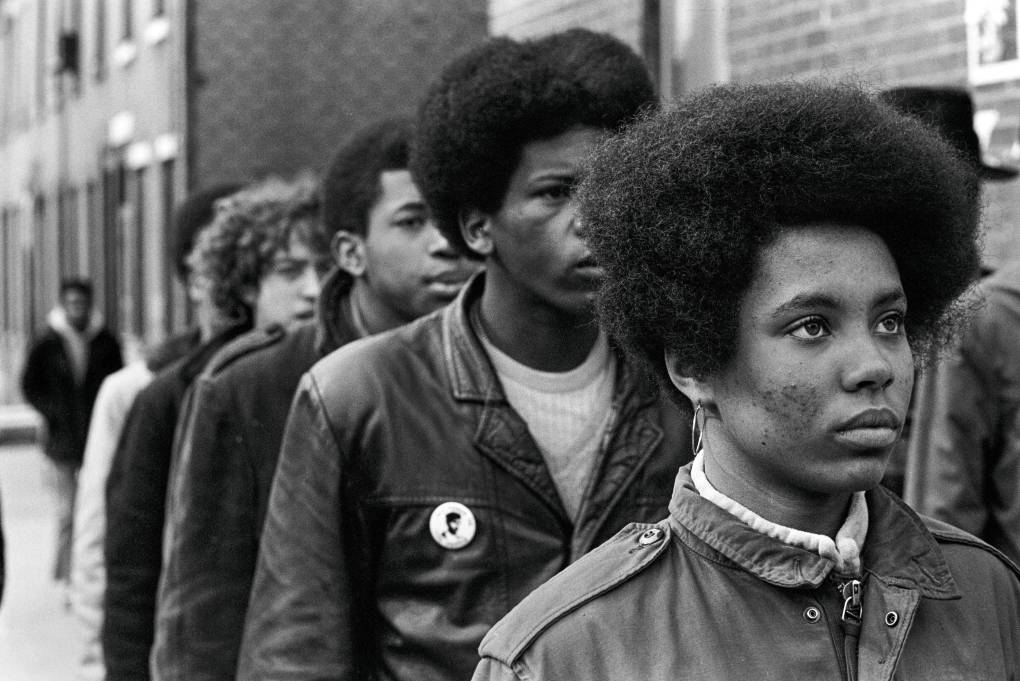
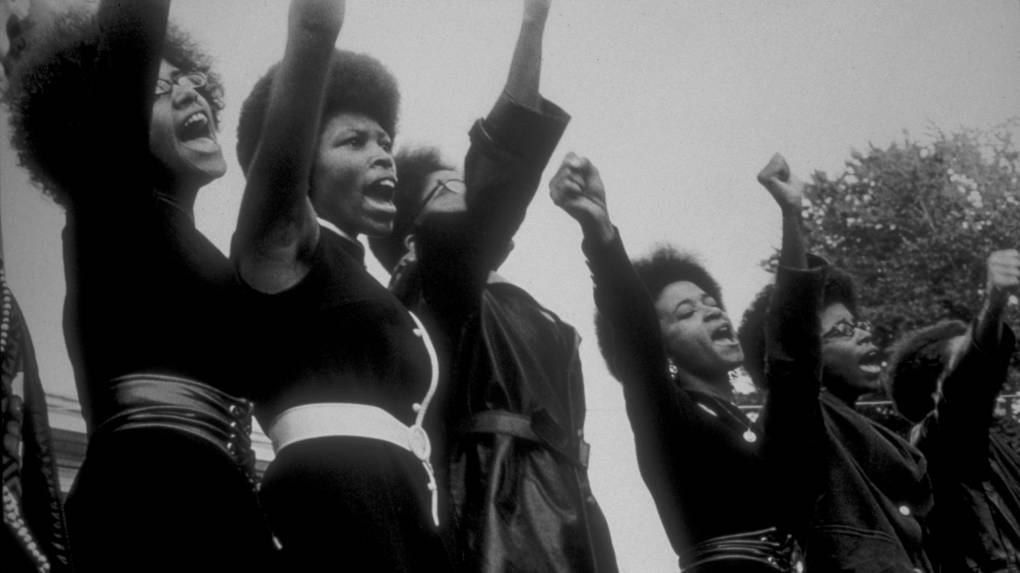
"caption": "A Black Panther event in Philadelphia, 1970. ",
"description": null,
"title": "Comrade Sisters book",
"credit": "Stephen Shames",
"status": "inherit",
"altTag": "a black and white photo with a line of young African American men and women at a political rally",
"isLoading": false,
"fetchFailed": false
},
"arts_13918192": {
"type": "attachments",
"id": "arts_13918192",
"meta": {
"index": "attachments_1716263798",
"site": "arts",
"id": "13918192",
"found": true
},
"parent": 13917965,
"imgSizes": {
"twentyfourteen-full-width": {
"file": "https://ww2.kqed.org/app/uploads/sites/2/2022/08/August2022_backup-1038x576.jpg",
"width": 1038,
"mimeType": "image/jpeg",
"height": 576
},
"thumbnail": {
"file": "https://ww2.kqed.org/app/uploads/sites/2/2022/08/August2022_backup-160x90.jpg",
"width": 160,
"mimeType": "image/jpeg",
"height": 90
},
"post-thumbnail": {
"file": "https://ww2.kqed.org/app/uploads/sites/2/2022/08/August2022_backup-672x372.jpg",
"width": 672,
"mimeType": "image/jpeg",
"height": 372
},
"kqedFullSize": {
"file": "https://ww2.kqed.org/app/uploads/sites/2/2022/08/August2022_backup.jpg",
"width": 1920,
"height": 1080
},
"large": {
"file": "https://ww2.kqed.org/app/uploads/sites/2/2022/08/August2022_backup-1020x574.jpg",
"width": 1020,
"mimeType": "image/jpeg",
"height": 574
},
"1536x1536": {
"file": "https://ww2.kqed.org/app/uploads/sites/2/2022/08/August2022_backup-1536x864.jpg",
"width": 1536,
"mimeType": "image/jpeg",
"height": 864
},
"medium": {
"file": "https://ww2.kqed.org/app/uploads/sites/2/2022/08/August2022_backup-800x450.jpg",
"width": 800,
"mimeType": "image/jpeg",
"height": 450
},
"medium_large": {
"file": "https://ww2.kqed.org/app/uploads/sites/2/2022/08/August2022_backup-768x432.jpg",
"width": 768,
"mimeType": "image/jpeg",
"height": 432
}
},
"publishDate": 1661541609,
"modified": 1661545564,
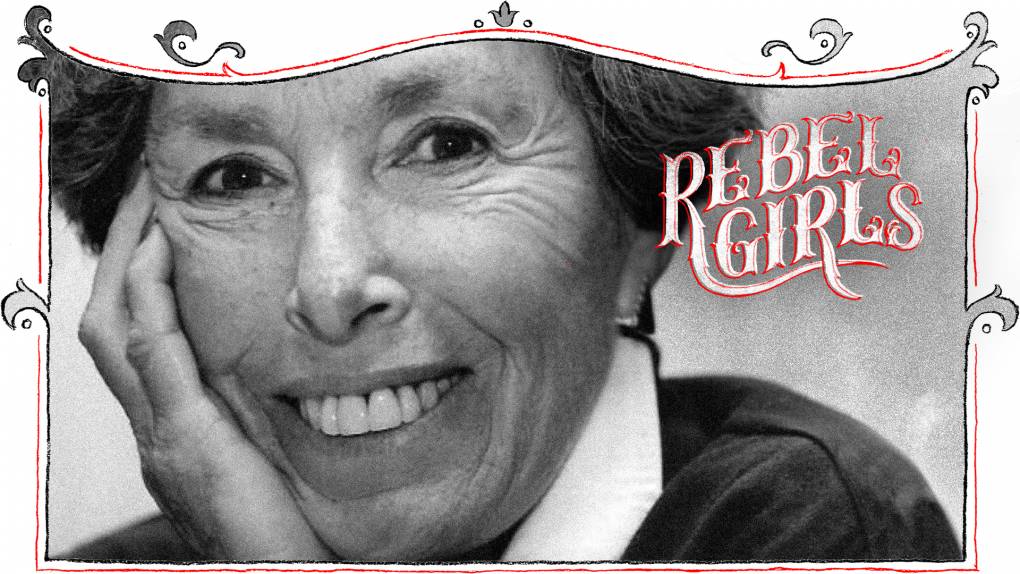
"caption": "Rosalie Ritz",
"description": null,
"title": "Rosalie Ritz",
"credit": "Family of Rosalie Ritz",
"status": "inherit",
"altTag": "A middle-aged woman with short hair smiles broadly, resting her chin on her right hand.",
"isLoading": false,
"fetchFailed": false
},
"arts_13903864": {
"type": "attachments",
"id": "arts_13903864",
"meta": {
"index": "attachments_1716263798",
"site": "arts",
"id": "13903864",
"found": true
},
"parent": 13903828,
"imgSizes": {
"twentyfourteen-full-width": {
"file": "https://ww2.kqed.org/app/uploads/sites/2/2021/09/0-2-1038x576.jpg",
"width": 1038,
"mimeType": "image/jpeg",
"height": 576
},
"thumbnail": {
"file": "https://ww2.kqed.org/app/uploads/sites/2/2021/09/0-2-160x100.jpg",
"width": 160,
"mimeType": "image/jpeg",
"height": 100
},
"post-thumbnail": {
"file": "https://ww2.kqed.org/app/uploads/sites/2/2021/09/0-2-672x372.jpg",
"width": 672,
"mimeType": "image/jpeg",
"height": 372
},
"kqedFullSize": {
"file": "https://ww2.kqed.org/app/uploads/sites/2/2021/09/0-2.jpg",
"width": 1500,
"height": 933
},
"large": {
"file": "https://ww2.kqed.org/app/uploads/sites/2/2021/09/0-2-1020x634.jpg",
"width": 1020,
"mimeType": "image/jpeg",
"height": 634
},
"medium": {
"file": "https://ww2.kqed.org/app/uploads/sites/2/2021/09/0-2-800x498.jpg",
"width": 800,
"mimeType": "image/jpeg",
"height": 498
},
"medium_large": {
"file": "https://ww2.kqed.org/app/uploads/sites/2/2021/09/0-2-768x478.jpg",
"width": 768,
"mimeType": "image/jpeg",
"height": 478
}
},
"publishDate": 1632844169,
"modified": 1632844584,
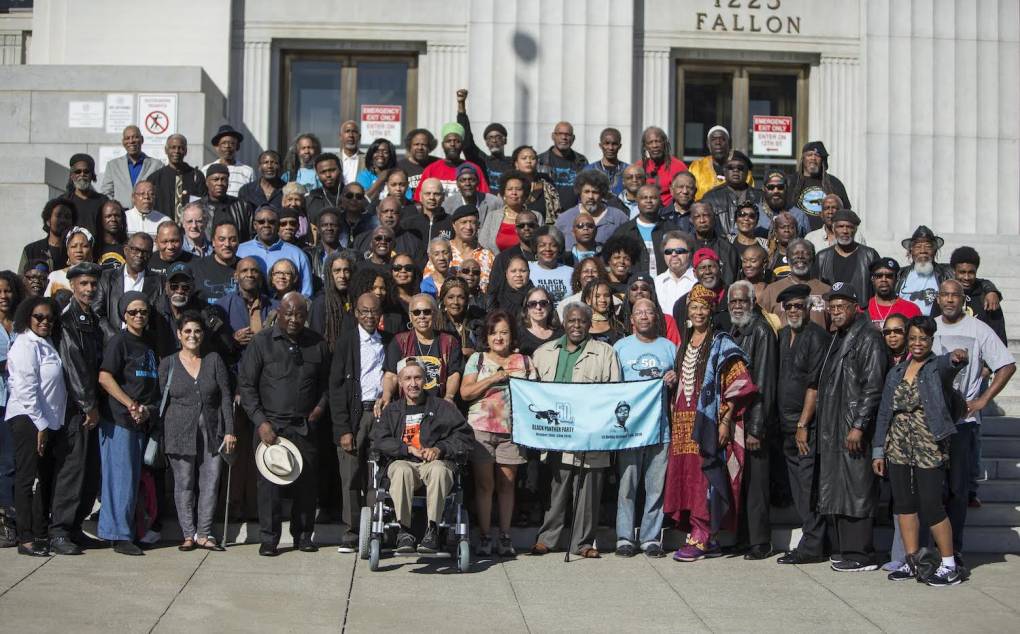
"caption": "Black Panther Alumni gathering and celebrating the 50th anniversary of the founding of the Black Panther Party as they stand on the steps of the Alameda County Court House.",
"description": "Black Panther Alumni gathering and celebrating the 50th anniversary of the founding of the Black Panther Party as they stand on the steps of the Alameda County Court House.",
"title": "Black Panther Alumni gathering and celebrating the 50th anniversary of the founding of the Black Panther Party as they stand on the steps of the Alameda County Court House.",
"credit": "It's About Time Archive",
"status": "inherit",
"altTag": "Black Panther Alumni gathering and celebrating the 50th anniversary of the founding of the Black Panther Party as they stand on the steps of the Alameda County Court House.",
"isLoading": false,
"fetchFailed": false
},
"arts_13903678": {
"type": "attachments",
"id": "arts_13903678",
"meta": {
"index": "attachments_1716263798",
"site": "arts",
"id": "13903678",
"found": true
},
"parent": 13903670,
"imgSizes": {
"twentyfourteen-full-width": {
"file": "https://ww2.kqed.org/app/uploads/sites/2/2021/09/GettyImages-80954965-1024x576.jpg",
"width": 1024,
"mimeType": "image/jpeg",
"height": 576
},
"thumbnail": {
"file": "https://ww2.kqed.org/app/uploads/sites/2/2021/09/GettyImages-80954965-160x110.jpg",
"width": 160,
"mimeType": "image/jpeg",
"height": 110
},
"post-thumbnail": {
"file": "https://ww2.kqed.org/app/uploads/sites/2/2021/09/GettyImages-80954965-672x372.jpg",
"width": 672,
"mimeType": "image/jpeg",
"height": 372
},
"kqedFullSize": {
"file": "https://ww2.kqed.org/app/uploads/sites/2/2021/09/GettyImages-80954965.jpg",
"width": 1024,
"height": 704
},
"large": {
"file": "https://ww2.kqed.org/app/uploads/sites/2/2021/09/GettyImages-80954965-1020x701.jpg",
"width": 1020,
"mimeType": "image/jpeg",
"height": 701
},
"medium": {
"file": "https://ww2.kqed.org/app/uploads/sites/2/2021/09/GettyImages-80954965-800x550.jpg",
"width": 800,
"mimeType": "image/jpeg",
"height": 550
},
"medium_large": {
"file": "https://ww2.kqed.org/app/uploads/sites/2/2021/09/GettyImages-80954965-768x528.jpg",
"width": 768,
"mimeType": "image/jpeg",
"height": 528
}
},
"publishDate": 1632353956,
"modified": 1632354019,
"caption": "Melvin Van Peebles at the 2008 Tribeca Film Festival in New York City. ",
"description": "Melvin Van Peebles at the 2008 Tribeca Film Festival in New York City. ",
"title": "Behind The Screens: Confessionsofa Ex-Doofus-ItchyFooted Mutha At TFF",
"credit": "Brad Barket/Getty Images for Tribeca Film Festival",
"status": "inherit",
"altTag": "Melvin Van Peebles at the 2008 Tribeca Film Festival in New York City.",
"isLoading": false,
"fetchFailed": false
},
"arts_13901516": {
"type": "attachments",
"id": "arts_13901516",
"meta": {
"index": "attachments_1716263798",
"site": "arts",
"id": "13901516",
"found": true
},
"parent": 13901504,
"imgSizes": {
"twentyfourteen-full-width": {
"file": "https://ww2.kqed.org/app/uploads/sites/2/2021/08/bac-afro-hippie-david-huffman-highres-3_COVER-1038x576.jpg",
"width": 1038,
"mimeType": "image/jpeg",
"height": 576
},
"thumbnail": {
"file": "https://ww2.kqed.org/app/uploads/sites/2/2021/08/bac-afro-hippie-david-huffman-highres-3_COVER-160x90.jpg",
"width": 160,
"mimeType": "image/jpeg",
"height": 90
},
"post-thumbnail": {
"file": "https://ww2.kqed.org/app/uploads/sites/2/2021/08/bac-afro-hippie-david-huffman-highres-3_COVER-672x372.jpg",
"width": 672,
"mimeType": "image/jpeg",
"height": 372
},
"kqedFullSize": {
"file": "https://ww2.kqed.org/app/uploads/sites/2/2021/08/bac-afro-hippie-david-huffman-highres-3_COVER.jpg",
"width": 1920,
"height": 1080
},
"large": {
"file": "https://ww2.kqed.org/app/uploads/sites/2/2021/08/bac-afro-hippie-david-huffman-highres-3_COVER-1020x574.jpg",
"width": 1020,
"mimeType": "image/jpeg",
"height": 574
},
"1536x1536": {
"file": "https://ww2.kqed.org/app/uploads/sites/2/2021/08/bac-afro-hippie-david-huffman-highres-3_COVER-1536x864.jpg",
"width": 1536,
"mimeType": "image/jpeg",
"height": 864
},
"medium": {
"file": "https://ww2.kqed.org/app/uploads/sites/2/2021/08/bac-afro-hippie-david-huffman-highres-3_COVER-800x450.jpg",
"width": 800,
"mimeType": "image/jpeg",
"height": 450
},
"medium_large": {
"file": "https://ww2.kqed.org/app/uploads/sites/2/2021/08/bac-afro-hippie-david-huffman-highres-3_COVER-768x432.jpg",
"width": 768,
"mimeType": "image/jpeg",
"height": 432
}
},
"publishDate": 1629338033,
"modified": 1629338100,
"caption": "Installation view of David Huffman's 'Afro Hippie' at the Berkeley Art Center.",
"description": "Installation view of David Huffman's 'Afro Hippie' at the Berkeley Art Center.",
"title": "bac-afro-hippie-david-huffman-highres-3_COVER",
"credit": "Felix Quintana",
"status": "inherit",
"altTag": null,
"isLoading": false,
"fetchFailed": false
},
"arts_13901015": {
"type": "attachments",
"id": "arts_13901015",
"meta": {
"index": "attachments_1716263798",
"site": "arts",
"id": "13901015",
"found": true
},
"parent": 13901009,
"imgSizes": {
"twentyfourteen-full-width": {
"file": "https://ww2.kqed.org/app/uploads/sites/2/2021/08/Image-5_COVER-1038x576.jpg",
"width": 1038,
"mimeType": "image/jpeg",
"height": 576
},
"thumbnail": {
"file": "https://ww2.kqed.org/app/uploads/sites/2/2021/08/Image-5_COVER-160x107.jpg",
"width": 160,
"mimeType": "image/jpeg",
"height": 107
},
"post-thumbnail": {
"file": "https://ww2.kqed.org/app/uploads/sites/2/2021/08/Image-5_COVER-672x372.jpg",
"width": 672,
"mimeType": "image/jpeg",
"height": 372
},
"kqedFullSize": {
"file": "https://ww2.kqed.org/app/uploads/sites/2/2021/08/Image-5_COVER.jpg",
"width": 1920,
"height": 1280
},
"1536x1536": {
"file": "https://ww2.kqed.org/app/uploads/sites/2/2021/08/Image-5_COVER-1536x1024.jpg",
"width": 1536,
"mimeType": "image/jpeg",
"height": 1024
},
"medium": {
"file": "https://ww2.kqed.org/app/uploads/sites/2/2021/08/Image-5_COVER-800x533.jpg",
"width": 800,
"mimeType": "image/jpeg",
"height": 533
},
"medium_large": {
"file": "https://ww2.kqed.org/app/uploads/sites/2/2021/08/Image-5_COVER-768x512.jpg",
"width": 768,
"mimeType": "image/jpeg",
"height": 512
}
},
"publishDate": 1628633731,
"modified": 1628633808,
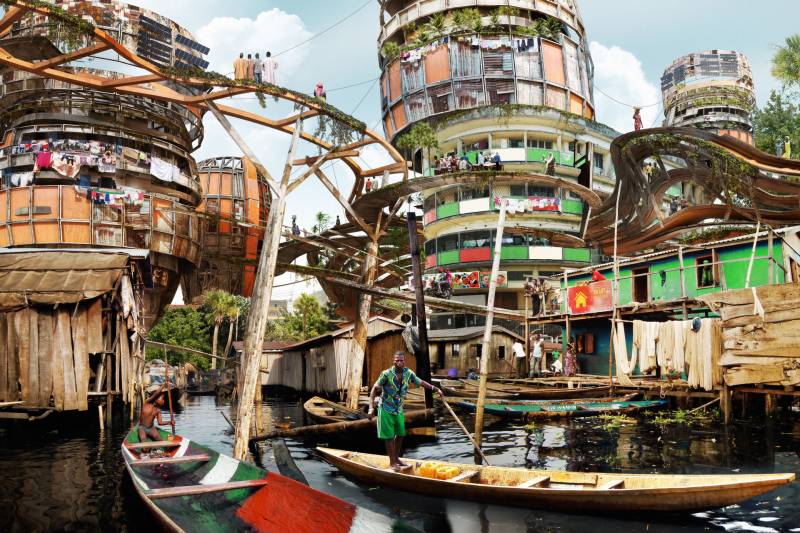
"caption": "Olalekan Jeyifous, 'Shanty Mega-structures: Makoko Canal,' 2015.",
"description": "Olalekan Jeyifous, 'Shanty Mega-structures: Makoko Canal,' 2015.",
"title": "Image-5_COVER",
"credit": "Courtesy of the artist",
"status": "inherit",
"altTag": null,
"isLoading": false,
"fetchFailed": false
},
"arts_13898176": {
"type": "attachments",
"id": "arts_13898176",
"meta": {
"index": "attachments_1716263798",
"site": "arts",
"id": "13898176",
"found": true
},
"parent": 13898175,
"imgSizes": {
"twentyfourteen-full-width": {
"file": "https://ww2.kqed.org/app/uploads/sites/2/2021/06/gettyimages-517387814-6e7f068c2df707c066d663657a842e0e58693016-1038x576.jpg",
"width": 1038,
"mimeType": "image/jpeg",
"height": 576
},
"thumbnail": {
"file": "https://ww2.kqed.org/app/uploads/sites/2/2021/06/gettyimages-517387814-6e7f068c2df707c066d663657a842e0e58693016-160x120.jpg",
"width": 160,
"mimeType": "image/jpeg",
"height": 120
},
"post-thumbnail": {
"file": "https://ww2.kqed.org/app/uploads/sites/2/2021/06/gettyimages-517387814-6e7f068c2df707c066d663657a842e0e58693016-672x372.jpg",
"width": 672,
"mimeType": "image/jpeg",
"height": 372
},
"kqedFullSize": {
"file": "https://ww2.kqed.org/app/uploads/sites/2/2021/06/gettyimages-517387814-6e7f068c2df707c066d663657a842e0e58693016-scaled-e1622659249650.jpg",
"width": 1920,
"height": 1440
},
"2048x2048": {
"file": "https://ww2.kqed.org/app/uploads/sites/2/2021/06/gettyimages-517387814-6e7f068c2df707c066d663657a842e0e58693016-2048x1536.jpg",
"width": 2048,
"mimeType": "image/jpeg",
"height": 1536
},
"large": {
"file": "https://ww2.kqed.org/app/uploads/sites/2/2021/06/gettyimages-517387814-6e7f068c2df707c066d663657a842e0e58693016-1020x765.jpg",
"width": 1020,
"mimeType": "image/jpeg",
"height": 765
},
"1536x1536": {
"file": "https://ww2.kqed.org/app/uploads/sites/2/2021/06/gettyimages-517387814-6e7f068c2df707c066d663657a842e0e58693016-1536x1152.jpg",
"width": 1536,
"mimeType": "image/jpeg",
"height": 1152
},
"full-width": {
"file": "https://ww2.kqed.org/app/uploads/sites/2/2021/06/gettyimages-517387814-6e7f068c2df707c066d663657a842e0e58693016-1920x1440.jpg",
"width": 1920,
"mimeType": "image/jpeg",
"height": 1440
},
"medium": {
"file": "https://ww2.kqed.org/app/uploads/sites/2/2021/06/gettyimages-517387814-6e7f068c2df707c066d663657a842e0e58693016-800x600.jpg",
"width": 800,
"mimeType": "image/jpeg",
"height": 600
},
"medium_large": {
"file": "https://ww2.kqed.org/app/uploads/sites/2/2021/06/gettyimages-517387814-6e7f068c2df707c066d663657a842e0e58693016-768x576.jpg",
"width": 768,
"mimeType": "image/jpeg",
"height": 576
}
},
"publishDate": 1622658445,
"modified": 1622659321,
"caption": "Civil Rights activists are blocked by National Guardsmen brandishing bayonets while trying to stage a protest on Beale Street in Memphis, Tenn., in 1968.",
"description": "Civil Rights activists are blocked by National Guardsmen brandishing bayonets while trying to stage a protest on Beale Street in Memphis, Tenn., in 1968.",
"title": "Civil Rights activists are blocked by National Guardsmen brandishing bayonets while trying to stage a protest on Beale Street in Memphis, Tenn., in 1968.",
"credit": "Bettmann/Bettmann Archive",
"status": "inherit",
"altTag": "Civil Rights activists are blocked by National Guardsmen brandishing bayonets while trying to stage a protest on Beale Street in Memphis, Tenn., in 1968.",
"isLoading": false,
"fetchFailed": false
},
"arts_13895328": {
"type": "attachments",
"id": "arts_13895328",
"meta": {
"index": "attachments_1716263798",
"site": "arts",
"id": "13895328",
"found": true
},
"parent": 13895322,
"imgSizes": {
"twentyfourteen-full-width": {
"file": "https://ww2.kqed.org/app/uploads/sites/2/2021/04/Screen-Shot-2021-04-07-at-10.56.28-AM-1038x576.png",
"width": 1038,
"mimeType": "image/png",
"height": 576
},
"thumbnail": {
"file": "https://ww2.kqed.org/app/uploads/sites/2/2021/04/Screen-Shot-2021-04-07-at-10.56.28-AM-160x105.png",
"width": 160,
"mimeType": "image/png",
"height": 105
},
"post-thumbnail": {
"file": "https://ww2.kqed.org/app/uploads/sites/2/2021/04/Screen-Shot-2021-04-07-at-10.56.28-AM-672x372.png",
"width": 672,
"mimeType": "image/png",
"height": 372
},
"kqedFullSize": {
"file": "https://ww2.kqed.org/app/uploads/sites/2/2021/04/Screen-Shot-2021-04-07-at-10.56.28-AM-e1617818372809.png",
"width": 1920,
"height": 1260
},
"2048x2048": {
"file": "https://ww2.kqed.org/app/uploads/sites/2/2021/04/Screen-Shot-2021-04-07-at-10.56.28-AM-2048x1344.png",
"width": 2048,
"mimeType": "image/png",
"height": 1344
},
"large": {
"file": "https://ww2.kqed.org/app/uploads/sites/2/2021/04/Screen-Shot-2021-04-07-at-10.56.28-AM-1020x669.png",
"width": 1020,
"mimeType": "image/png",
"height": 669
},
"1536x1536": {
"file": "https://ww2.kqed.org/app/uploads/sites/2/2021/04/Screen-Shot-2021-04-07-at-10.56.28-AM-1536x1008.png",
"width": 1536,
"mimeType": "image/png",
"height": 1008
},
"full-width": {
"file": "https://ww2.kqed.org/app/uploads/sites/2/2021/04/Screen-Shot-2021-04-07-at-10.56.28-AM-1920x1260.png",
"width": 1920,
"mimeType": "image/png",
"height": 1260
},
"medium": {
"file": "https://ww2.kqed.org/app/uploads/sites/2/2021/04/Screen-Shot-2021-04-07-at-10.56.28-AM-800x525.png",
"width": 800,
"mimeType": "image/png",
"height": 525
},
"medium_large": {
"file": "https://ww2.kqed.org/app/uploads/sites/2/2021/04/Screen-Shot-2021-04-07-at-10.56.28-AM-768x504.png",
"width": 768,
"mimeType": "image/png",
"height": 504
}
},
"publishDate": 1617818345,
"modified": 1617818427,
"caption": "Charles D. King.",
"description": "Charles D. King.",
"title": "Charles D. King.",
"credit": "Courtesy of the Collins-Jackson Agency",
"status": "inherit",
"altTag": "Charles D. King.",
"isLoading": false,
"fetchFailed": false
},
"arts_13893118": {
"type": "attachments",
"id": "arts_13893118",
"meta": {
"index": "attachments_1716263798",
"site": "arts",
"id": "13893118",
"found": true
},
"parent": 13893054,
"imgSizes": {
"twentyfourteen-full-width": {
"file": "https://ww2.kqed.org/app/uploads/sites/2/2021/02/Pen_COVER-1038x576.jpg",
"width": 1038,
"mimeType": "image/jpeg",
"height": 576
},
"thumbnail": {
"file": "https://ww2.kqed.org/app/uploads/sites/2/2021/02/Pen_COVER-160x90.jpg",
"width": 160,
"mimeType": "image/jpeg",
"height": 90
},
"post-thumbnail": {
"file": "https://ww2.kqed.org/app/uploads/sites/2/2021/02/Pen_COVER-672x372.jpg",
"width": 672,
"mimeType": "image/jpeg",
"height": 372
},
"kqedFullSize": {
"file": "https://ww2.kqed.org/app/uploads/sites/2/2021/02/Pen_COVER.jpg",
"width": 1920,
"height": 1080
},
"large": {
"file": "https://ww2.kqed.org/app/uploads/sites/2/2021/02/Pen_COVER-1020x574.jpg",
"width": 1020,
"mimeType": "image/jpeg",
"height": 574
},
"1536x1536": {
"file": "https://ww2.kqed.org/app/uploads/sites/2/2021/02/Pen_COVER-1536x864.jpg",
"width": 1536,
"mimeType": "image/jpeg",
"height": 864
},
"medium": {
"file": "https://ww2.kqed.org/app/uploads/sites/2/2021/02/Pen_COVER-800x450.jpg",
"width": 800,
"mimeType": "image/jpeg",
"height": 450
},
"medium_large": {
"file": "https://ww2.kqed.org/app/uploads/sites/2/2021/02/Pen_COVER-768x432.jpg",
"width": 768,
"mimeType": "image/jpeg",
"height": 432
}
},
"publishDate": 1614105404,
"modified": 1614105478,
"caption": "Before becoming a reverend, Cheryl Dawson was a member of the Black Panther Party. Now, she's part of a towering mural in West Oakland paying tribute to the women of the Black Panther Party.",
"description": "Before becoming a reverend, Cheryl Dawson was a member of the Black Panther Party. Now, she's part of a towering mural in West Oakland paying tribute to the women of the Black Panther Party.",
"title": "Pen_COVER",
"credit": "Courtesy Cheryl Dawson",
"status": "inherit",
"altTag": "Before becoming a reverend, Cheryl Dawson was a member of the Black Panther Party. Now, she's part of a towering mural in West Oakland paying tribute to the women of the Black Panther Party.",
"isLoading": false,
"fetchFailed": false
},
"arts_13873391": {
"type": "attachments",
"id": "arts_13873391",
"meta": {
"index": "attachments_1716263798",
"site": "arts",
"id": "13873391",
"found": true
},
"parent": 13873386,
"imgSizes": {
"twentyfourteen-full-width": {
"file": "https://ww2.kqed.org/app/uploads/sites/2/2020/01/Jones_Black-Panthers-from-Sacramento_COVER-1038x576.jpg",
"width": 1038,
"mimeType": "image/jpeg",
"height": 576
},
"thumbnail": {
"file": "https://ww2.kqed.org/app/uploads/sites/2/2020/01/Jones_Black-Panthers-from-Sacramento_COVER-160x90.jpg",
"width": 160,
"mimeType": "image/jpeg",
"height": 90
},
"post-thumbnail": {
"file": "https://ww2.kqed.org/app/uploads/sites/2/2020/01/Jones_Black-Panthers-from-Sacramento_COVER-672x372.jpg",
"width": 672,
"mimeType": "image/jpeg",
"height": 372
},
"kqedFullSize": {
"file": "https://ww2.kqed.org/app/uploads/sites/2/2020/01/Jones_Black-Panthers-from-Sacramento_COVER.jpg",
"width": 2010,
"height": 1130
},
"large": {
"file": "https://ww2.kqed.org/app/uploads/sites/2/2020/01/Jones_Black-Panthers-from-Sacramento_COVER-1020x573.jpg",
"width": 1020,
"mimeType": "image/jpeg",
"height": 573
},
"complete_open_graph": {
"file": "https://ww2.kqed.org/app/uploads/sites/2/2020/01/Jones_Black-Panthers-from-Sacramento_COVER-1200x675.jpg",
"width": 1200,
"mimeType": "image/jpeg",
"height": 675
},
"full-width": {
"file": "https://ww2.kqed.org/app/uploads/sites/2/2020/01/Jones_Black-Panthers-from-Sacramento_COVER-1920x1079.jpg",
"width": 1920,
"mimeType": "image/jpeg",
"height": 1079
},
"medium": {
"file": "https://ww2.kqed.org/app/uploads/sites/2/2020/01/Jones_Black-Panthers-from-Sacramento_COVER-800x450.jpg",
"width": 800,
"mimeType": "image/jpeg",
"height": 450
},
"medium_large": {
"file": "https://ww2.kqed.org/app/uploads/sites/2/2020/01/Jones_Black-Panthers-from-Sacramento_COVER-768x432.jpg",
"width": 768,
"mimeType": "image/jpeg",
"height": 432
}
},
"publishDate": 1579136896,
"modified": 1579137196,
"caption": "Pirkle Jones, 'Black Panthers from Sacramento, Free Huey Rally, Bobby Hutton Memorial Park, Oakland;' August 25, 1968.",
"description": "Pirkle Jones, 'Black Panthers from Sacramento, Free Huey Rally, Bobby Hutton Memorial Park, Oakland;' August 25, 1968.",
"title": "Jones_Black-Panthers-from-Sacramento_COVER",
"credit": "Courtesy of BAMPFA",
"status": "inherit",
"isLoading": false,
"fetchFailed": false
},
"arts_13892648": {
"type": "attachments",
"id": "arts_13892648",
"meta": {
"index": "attachments_1716263798",
"site": "arts",
"id": "13892648",
"found": true
},
"parent": 13892640,
"imgSizes": {
"twentyfourteen-full-width": {
"file": "https://ww2.kqed.org/app/uploads/sites/2/2021/02/Screen-Shot-2021-02-11-at-11.56.58-AM-1038x576.png",
"width": 1038,
"mimeType": "image/png",
"height": 576
},
"thumbnail": {
"file": "https://ww2.kqed.org/app/uploads/sites/2/2021/02/Screen-Shot-2021-02-11-at-11.56.58-AM-160x89.png",
"width": 160,
"mimeType": "image/png",
"height": 89
},
"post-thumbnail": {
"file": "https://ww2.kqed.org/app/uploads/sites/2/2021/02/Screen-Shot-2021-02-11-at-11.56.58-AM-672x372.png",
"width": 672,
"mimeType": "image/png",
"height": 372
},
"kqedFullSize": {
"file": "https://ww2.kqed.org/app/uploads/sites/2/2021/02/Screen-Shot-2021-02-11-at-11.56.58-AM.png",
"width": 2422,
"height": 1350
},
"2048x2048": {
"file": "https://ww2.kqed.org/app/uploads/sites/2/2021/02/Screen-Shot-2021-02-11-at-11.56.58-AM-2048x1142.png",
"width": 2048,
"mimeType": "image/png",
"height": 1142
},
"large": {
"file": "https://ww2.kqed.org/app/uploads/sites/2/2021/02/Screen-Shot-2021-02-11-at-11.56.58-AM-1020x569.png",
"width": 1020,
"mimeType": "image/png",
"height": 569
},
"1536x1536": {
"file": "https://ww2.kqed.org/app/uploads/sites/2/2021/02/Screen-Shot-2021-02-11-at-11.56.58-AM-1536x856.png",
"width": 1536,
"mimeType": "image/png",
"height": 856
},
"full-width": {
"file": "https://ww2.kqed.org/app/uploads/sites/2/2021/02/Screen-Shot-2021-02-11-at-11.56.58-AM-1920x1070.png",
"width": 1920,
"mimeType": "image/png",
"height": 1070
},
"medium": {
"file": "https://ww2.kqed.org/app/uploads/sites/2/2021/02/Screen-Shot-2021-02-11-at-11.56.58-AM-800x446.png",
"width": 800,
"mimeType": "image/png",
"height": 446
},
"medium_large": {
"file": "https://ww2.kqed.org/app/uploads/sites/2/2021/02/Screen-Shot-2021-02-11-at-11.56.58-AM-768x428.png",
"width": 768,
"mimeType": "image/png",
"height": 428
}
},
"publishDate": 1613073441,
"modified": 1613073564,
"caption": "Daniel Kaluuya and Lakeith Stanfield star in 'Judas and the Black Messiah,' directed by Shaka King.",
"description": "Daniel Kaluuya and Lakeith Stanfield star in 'Judas and the Black Messiah,' directed by Shaka King.",
"title": "Daniel Kaluuya and Lakeith Stanfield star in 'Judas and the Black Messiah,' directed by Shaka King.",
"credit": "Warner Bros.",
"status": "inherit",
"altTag": "Daniel Kaluuya and Lakeith Stanfield starring in 'Judas and the Black Messiah,' directed by Shaka King.",
"isLoading": false,
"fetchFailed": false
},
"arts_13891350": {
"type": "attachments",
"id": "arts_13891350",
"meta": {
"index": "attachments_1716263798",
"site": "arts",
"id": "13891350",
"found": true
},
"parent": 13891300,
"imgSizes": {
"twentyfourteen-full-width": {
"file": "https://ww2.kqed.org/app/uploads/sites/2/2021/01/ICCD401_Oakland_WP-1038x576.jpg",
"width": 1038,
"mimeType": "image/jpeg",
"height": 576
},
"thumbnail": {
"file": "https://ww2.kqed.org/app/uploads/sites/2/2021/01/ICCD401_Oakland_WP-160x90.jpg",
"width": 160,
"mimeType": "image/jpeg",
"height": 90
},
"post-thumbnail": {
"file": "https://ww2.kqed.org/app/uploads/sites/2/2021/01/ICCD401_Oakland_WP-672x372.jpg",
"width": 672,
"mimeType": "image/jpeg",
"height": 372
},
"kqedFullSize": {
"file": "https://ww2.kqed.org/app/uploads/sites/2/2021/01/ICCD401_Oakland_WP.jpg",
"width": 1920,
"height": 1079
},
"large": {
"file": "https://ww2.kqed.org/app/uploads/sites/2/2021/01/ICCD401_Oakland_WP-1020x573.jpg",
"width": 1020,
"mimeType": "image/jpeg",
"height": 573
},
"1536x1536": {
"file": "https://ww2.kqed.org/app/uploads/sites/2/2021/01/ICCD401_Oakland_WP-1536x863.jpg",
"width": 1536,
"mimeType": "image/jpeg",
"height": 863
},
"medium": {
"file": "https://ww2.kqed.org/app/uploads/sites/2/2021/01/ICCD401_Oakland_WP-800x450.jpg",
"width": 800,
"mimeType": "image/jpeg",
"height": 450
},
"medium_large": {
"file": "https://ww2.kqed.org/app/uploads/sites/2/2021/01/ICCD401_Oakland_WP-768x432.jpg",
"width": 768,
"mimeType": "image/jpeg",
"height": 432
}
},
"publishDate": 1610749718,
"modified": 1610749821,
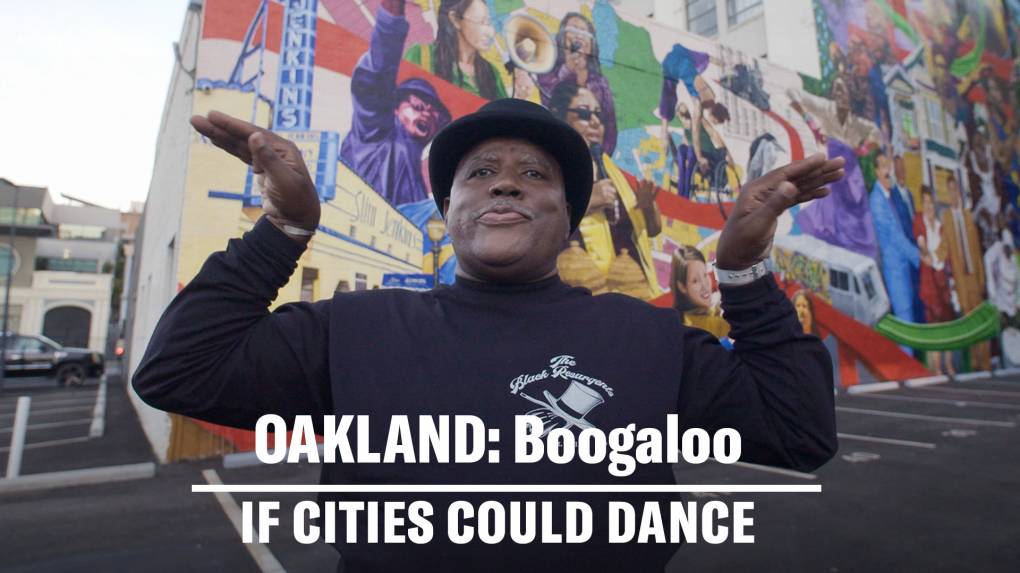
"caption": "William Randolph a.k.a. Mr. Penguin of\nThe Black Resurgents \n",
"description": "William Randolph a.k.a. Mr. Penguin of\nThe Black Resurgents \n",
"title": "ICCD401_Oakland_WP",
"credit": "Elie M. Khadra",
"status": "inherit",
"altTag": null,
"isLoading": false,
"fetchFailed": false
}
},
"audioPlayerReducer": {
"postId": "stream_live",
"isPaused": true,
"isPlaying": false,
"pfsActive": false,
"pledgeModalIsOpen": true,
"playerDrawerIsOpen": false,
"liveAudioPlayStartedAt": 0,
"liveAudioPlayContext": ""
},
"authorsReducer": {
"byline_arts_13903670": {
"type": "authors",
"id": "byline_arts_13903670",
"meta": {
"override": true
},
"slug": "byline_arts_13903670",
"name": "Jake Coyle, Associated Press",
"isLoading": false
},
"byline_arts_13898175": {
"type": "authors",
"id": "byline_arts_13898175",
"meta": {
"override": true
},
"slug": "byline_arts_13898175",
"name": "Dave Davies",
"isLoading": false
},
"byline_arts_13895322": {
"type": "authors",
"id": "byline_arts_13895322",
"meta": {
"override": true
},
"slug": "byline_arts_13895322",
"name": "Mandalit del Barco",
"isLoading": false
},
"byline_arts_13892640": {
"type": "authors",
"id": "byline_arts_13892640",
"meta": {
"override": true
},
"slug": "byline_arts_13892640",
"name": "Andrew Limbong",
"isLoading": false
},
"byline_arts_13891300": {
"type": "authors",
"id": "byline_arts_13891300",
"meta": {
"override": true
},
"slug": "byline_arts_13891300",
"name": "Eric Arnold, Spencer Wilkinson",
"isLoading": false
},
"shotchkiss": {
"type": "authors",
"id": "61",
"meta": {
"index": "authors_1716337520",
"id": "61",
"found": true
},
"name": "Sarah Hotchkiss",
"firstName": "Sarah",
"lastName": "Hotchkiss",
"slug": "shotchkiss",
"email": "shotchkiss@kqed.org",
"display_author_email": true,
"staff_mastheads": [
"arts"
],
"title": "Senior Editor",
"bio": "Sarah Hotchkiss is a San Francisco \u003ca href=\"http://www.sarahhotchkiss.com\">artist\u003c/a> and arts writer. In 2019, she received the Dorothea & Leo Rabkin Foundation grant for visual art journalism and in 2020 she received a Society of Professional Journalists, Northern California award for excellence in arts and culture reporting.",
"avatar": "https://secure.gravatar.com/avatar/bc662df144b3d27fd8b1b6f1c2a420d34e91e53154d411bb7ad353cc8b6cea8d?s=600&d=blank&r=g",
"twitter": null,
"bluesky": null,
"facebook": null,
"instagram": null,
"linkedin": null,
"sites": [
{
"site": "",
"roles": [
"editor"
]
},
{
"site": "arts",
"roles": [
"Contributor",
"administrator"
]
},
{
"site": "artschool",
"roles": [
"administrator"
]
},
{
"site": "news",
"roles": [
"editor"
]
},
{
"site": "pop",
"roles": [
"administrator"
]
},
{
"site": "bayareabites",
"roles": [
"editor"
]
},
{
"site": "spark",
"roles": [
"editor"
]
},
{
"site": "checkplease",
"roles": [
"editor"
]
}
],
"headData": {
"title": "Sarah Hotchkiss | KQED",
"description": "Senior Editor",
"ogImgSrc": "https://secure.gravatar.com/avatar/bc662df144b3d27fd8b1b6f1c2a420d34e91e53154d411bb7ad353cc8b6cea8d?s=600&d=blank&r=g",
"twImgSrc": "https://secure.gravatar.com/avatar/bc662df144b3d27fd8b1b6f1c2a420d34e91e53154d411bb7ad353cc8b6cea8d?s=600&d=blank&r=g"
},
"isLoading": false,
"link": "/author/shotchkiss"
},
"ralexandra": {
"type": "authors",
"id": "11242",
"meta": {
"index": "authors_1716337520",
"id": "11242",
"found": true
},
"name": "Rae Alexandra",
"firstName": "Rae",
"lastName": "Alexandra",
"slug": "ralexandra",
"email": "ralexandra@kqed.org",
"display_author_email": true,
"staff_mastheads": [],
"title": "Reporter/Producer",
"bio": "Rae Alexandra is a Reporter/Producer for KQED Arts & Culture, and the creator/author of the \u003ca href=\"https://www.kqed.org/arts/program/rebel-girls-from-bay-area-history\">Rebel Girls From Bay Area History\u003c/a> and \u003ca href=\"https://www.kqed.org/bizarrebayarea\">Bizarre Bay Area\u003c/a> series. Her debut book, \u003ca href=\"https://citylights.com/politics-current-events-history/unsung-heroines35-women-who-changed/\">Unsung Heroines: 35 Women Who Changed the Bay Area\u003c/a> was published by City Lights in March 2026. In 2023, Rae was awarded an SPJ Excellence in Journalism Award for Arts & Culture. Rae was born and raised in Wales and subsequently — even after two decades in Northern California — still uses phrases that regularly baffle her coworkers.",
"avatar": "https://secure.gravatar.com/avatar/edfee8176c80cc0a382b051190f5341997df378a934a5774dcb0977732dfd401?s=600&d=blank&r=g",
"twitter": null,
"bluesky": null,
"facebook": null,
"instagram": null,
"linkedin": null,
"sites": [
{
"site": "arts",
"roles": [
"subscriber"
]
},
{
"site": "news",
"roles": [
"subscriber"
]
},
{
"site": "pop",
"roles": [
"subscriber"
]
},
{
"site": "bayareabites",
"roles": [
"subscriber"
]
},
{
"site": "science",
"roles": [
"subscriber"
]
}
],
"headData": {
"title": "Rae Alexandra | KQED",
"description": "Reporter/Producer",
"ogImgSrc": "https://secure.gravatar.com/avatar/edfee8176c80cc0a382b051190f5341997df378a934a5774dcb0977732dfd401?s=600&d=blank&r=g",
"twImgSrc": "https://secure.gravatar.com/avatar/edfee8176c80cc0a382b051190f5341997df378a934a5774dcb0977732dfd401?s=600&d=blank&r=g"
},
"isLoading": false,
"link": "/author/ralexandra"
},
"ogpenn": {
"type": "authors",
"id": "11491",
"meta": {
"index": "authors_1716337520",
"id": "11491",
"found": true
},
"name": "Pendarvis Harshaw",
"firstName": "Pendarvis",
"lastName": "Harshaw",
"slug": "ogpenn",
"email": "ogpenn@gmail.com",
"display_author_email": false,
"staff_mastheads": [
"arts"
],
"title": "Community Engagement Reporter",
"bio": "Pendarvis Harshaw is an educator, host and writer with KQED Arts.",
"avatar": "https://secure.gravatar.com/avatar/972b77ee8e3f346ae2b00622661187fbfabd059b5693bbdc1475ea7a722fd4cd?s=600&d=blank&r=g",
"twitter": null,
"bluesky": null,
"facebook": null,
"instagram": "ogpenn",
"linkedin": null,
"sites": [
{
"site": "arts",
"roles": [
"administrator"
]
},
{
"site": "news",
"roles": [
"editor"
]
},
{
"site": "bayareabites",
"roles": [
"author"
]
},
{
"site": "hiphop",
"roles": [
"editor"
]
}
],
"headData": {
"title": "Pendarvis Harshaw | KQED",
"description": "Community Engagement Reporter",
"ogImgSrc": "https://secure.gravatar.com/avatar/972b77ee8e3f346ae2b00622661187fbfabd059b5693bbdc1475ea7a722fd4cd?s=600&d=blank&r=g",
"twImgSrc": "https://secure.gravatar.com/avatar/972b77ee8e3f346ae2b00622661187fbfabd059b5693bbdc1475ea7a722fd4cd?s=600&d=blank&r=g"
},
"isLoading": false,
"link": "/author/ogpenn"
},
"sgetachew": {
"type": "authors",
"id": "11734",
"meta": {
"index": "authors_1716337520",
"id": "11734",
"found": true
},
"name": "Samuel Getachew",
"firstName": "Samuel",
"lastName": "Getachew",
"slug": "sgetachew",
"email": "sgetachew@kqed.org",
"display_author_email": false,
"staff_mastheads": [],
"title": "KQED Contributor",
"bio": "\u003cspan style=\"font-weight: 400;\">Samuel Getachew is an 18-year-old poet and writer from Oakland, California. He is the 2019 Oakland Youth Poet Laureate, a 2020 Finalist for National Youth Poet Laureate, and a 4-time YoungArts Winner. His writing has been published in Teen Vogue, the New York Times, the Washington Post, and more. He will attend Yale University in the fall of 2021.\u003c/span>",
"avatar": "https://secure.gravatar.com/avatar/ebad3dcf2295975cfe77698fa670a089?s=600&d=blank&r=g",
"twitter": null,
"facebook": null,
"instagram": null,
"linkedin": null,
"sites": [
{
"site": "arts",
"roles": [
"subscriber"
]
}
],
"headData": {
"title": "Samuel Getachew | KQED",
"description": "KQED Contributor",
"ogImgSrc": "https://secure.gravatar.com/avatar/ebad3dcf2295975cfe77698fa670a089?s=600&d=blank&r=g",
"twImgSrc": "https://secure.gravatar.com/avatar/ebad3dcf2295975cfe77698fa670a089?s=600&d=blank&r=g"
},
"isLoading": false,
"link": "/author/sgetachew"
},
"ksong": {
"type": "authors",
"id": "11813",
"meta": {
"index": "authors_1716337520",
"id": "11813",
"found": true
},
"name": "Kristie Song",
"firstName": "Kristie",
"lastName": "Song",
"slug": "ksong",
"email": "ksong@kqed.org",
"display_author_email": false,
"staff_mastheads": [],
"title": "Editorial Intern ",
"bio": "Kristie Song is an Arts & Culture Intern at KQED. She is currently a graduate student at UC Berkeley, where she studies audio and multimedia journalism. Previously, she covered the local community for Oakland North, produced episodes for The Science of Happiness, and served as news director for KUCI, UC Irvine’s radio station. Outside of reporting, she likes drawing comics, listening to angsty rock, and practicing the guitar.",
"avatar": "https://secure.gravatar.com/avatar/c1149e78c3c44f92d4945a8ab0711af6?s=600&d=blank&r=g",
"twitter": null,
"facebook": null,
"instagram": null,
"linkedin": null,
"sites": [
{
"site": "arts",
"roles": [
"editor"
]
}
],
"headData": {
"title": "Kristie Song | KQED",
"description": "Editorial Intern ",
"ogImgSrc": "https://secure.gravatar.com/avatar/c1149e78c3c44f92d4945a8ab0711af6?s=600&d=blank&r=g",
"twImgSrc": "https://secure.gravatar.com/avatar/c1149e78c3c44f92d4945a8ab0711af6?s=600&d=blank&r=g"
},
"isLoading": false,
"link": "/author/ksong"
},
"ncoats": {
"type": "authors",
"id": "12013",
"meta": {
"index": "authors_1716337520",
"id": "12013",
"found": true
},
"name": "Nia Coats",
"firstName": "Nia",
"lastName": "Coats",
"slug": "ncoats",
"email": "ncoats@kqed.org",
"display_author_email": false,
"staff_mastheads": [],
"title": "Intern, KQED Arts & Culture",
"bio": "Nia Coats is KQED Arts & Culture's editorial intern. As a recent Berkeley School of Journalism graduate, she has covered arts and culture in the Bay Area and nationwide since 2021. She has a great love for music and the ways it soundtracks our lives. When she isn't reporting or writing, Nia is going to concerts, watching movies and working on her magazine, \u003cem>Lucky 7\u003c/em>.",
"avatar": "https://secure.gravatar.com/avatar/5603dfcf7b25a681fd9fcc1f691ee510bd6a2fdbb37b425d337245b9e330e449?s=600&d=blank&r=g",
"twitter": null,
"bluesky": null,
"facebook": null,
"instagram": null,
"linkedin": null,
"sites": [
{
"site": "arts",
"roles": [
"contributor"
]
}
],
"headData": {
"title": "Nia Coats | KQED",
"description": "Intern, KQED Arts & Culture",
"ogImgSrc": "https://secure.gravatar.com/avatar/5603dfcf7b25a681fd9fcc1f691ee510bd6a2fdbb37b425d337245b9e330e449?s=600&d=blank&r=g",
"twImgSrc": "https://secure.gravatar.com/avatar/5603dfcf7b25a681fd9fcc1f691ee510bd6a2fdbb37b425d337245b9e330e449?s=600&d=blank&r=g"
},
"isLoading": false,
"link": "/author/ncoats"
}
},
"pagesReducer": {
"arts_tag_black-panthers": {
"type": "terms",
"id": "arts_1346",
"meta": {
"index": "terms_1716263798",
"site": "arts",
"id": "1346",
"score": 9.305894
},
"featImg": null,
"name": "Black Panthers",
"description": null,
"taxonomy": "tag",
"headData": {
"twImgId": null,
"twTitle": null,
"ogTitle": null,
"ogImgId": null,
"twDescription": null,
"description": null,
"title": "Black Panthers Archives | KQED Arts",
"ogDescription": null
},
"ttid": 1358,
"slug": "black-panthers",
"isLoading": false,
"title": "Black Panthers",
"pageMeta": {
"site": "arts",
"WpPageTemplate": "page-topic-editorial",
"currentPage": 2
},
"blocks": [
{
"blockName": "kqed/post-list",
"attrs": {
"layout": "cardArticle2",
"query": "posts/arts?tag=black-panthers",
"seeMore": false,
"paginated": true,
"page": 2
}
},
{
"blockName": "kqed/ad"
}
]
}
},
"pfsSessionReducer": {},
"postsReducer": {
"stream_live": {
"type": "live",
"id": "stream_live",
"audioUrl": "https://streams.kqed.org/kqedradio",
"title": "Live Stream",
"excerpt": "Live Stream information currently unavailable.",
"link": "/radio",
"featImg": "",
"label": {
"name": "KQED Live",
"link": "/"
}
},
"stream_kqedNewscast": {
"type": "posts",
"id": "stream_kqedNewscast",
"audioUrl": "https://www.kqed.org/.stream/anon/radio/RDnews/newscast.mp3?_=1",
"title": "KQED Newscast",
"featImg": "",
"label": {
"name": "88.5 FM",
"link": "/"
}
},
"arts_13920137": {
"type": "posts",
"id": "arts_13920137",
"meta": {
"index": "posts_1716263798",
"site": "arts",
"id": "13920137",
"score": null,
"sort": [
1665151244000
]
},
"guestAuthors": [],
"slug": "in-comrade-sisters-women-of-the-black-panther-party-take-the-spotlight",
"title": "In ‘Comrade Sisters,’ Women of the Black Panther Party Take the Spotlight",
"publishDate": 1665151244,
"format": "standard",
"headTitle": "In ‘Comrade Sisters,’ Women of the Black Panther Party Take the Spotlight | KQED",
"labelTerm": {
"term": 140,
"site": "arts"
},
"content": "\u003cp>When FBI director J. Edgar Hoover declared the Black Panther Party the “greatest threat” to national security in 1969, Ericka Huggins was waking at dawn with fellow Party members to prepare free breakfasts for local children. When the political organization was founded in 1966 to challenge police violence, racism and poverty, the government and media were quick to classify the group as violent and aggressive. That portrayal ignored the Party’s survival programs that provided clothing, medical services and other resources to their Black, brown and Indigenous communities — programs often led by women.\u003c/p>\n\u003cp>[aside label=\"Related Stories\" postID=\"news_11873838,arts_13867337\"]More than 50 years later, Huggins and photojournalist Stephen Shames — who was a 19-year-old UC Berkeley student when he got involved with the BPP — aim to bring those women into the light with the release of the photo book \u003cem>Comrade Sisters: Women of the Black Panther Party\u003c/em>, out Oct. 10 (ACC Art Books)\u003cem>.\u003c/em> The book’s national tour kicks off with a half-dozen events in the Bay Area Oct. 9–13, \u003ca href=\"https://www.marcusbooks.com/event/comrade-sisters-women-black-panther-party-book-launch\">including an Oct. 9 talk with renowned activist Angela Davis\u003c/a>, who wrote the book’s foreword, at Marcus Books in Oakland.\u003c/p>\n\u003cp>A dialogue between past and present, \u003cem>Comrade Sisters\u003c/em> juxtaposes more than 100 black-and-white images from the late 1960s with contemporary conversations, featuring interviews with 50 women who were Party members. While women made up over 60% of the Party, their presence remained largely understated in the public eye — until now.\u003c/p>\n\u003cfigure id=\"attachment_13920156\" class=\"wp-caption aligncenter\" style=\"max-width: 800px\">\u003ca href=\"https://ww2.kqed.org/app/uploads/sites/2/2022/10/Comrade-Sisters-Event-Option-1-scaled.jpg\">\u003cimg loading=\"lazy\" decoding=\"async\" class=\"size-medium wp-image-13920156\" src=\"https://ww2.kqed.org/app/uploads/sites/2/2022/10/Comrade-Sisters-Event-Option-1-800x531.jpg\" alt=\"a black and white photo of five African-American people, some in lab coats, standing outside doing a blood draw on one of them, an older woman\" width=\"800\" height=\"531\" srcset=\"https://cdn.kqed.org/wp-content/uploads/sites/2/2022/10/Comrade-Sisters-Event-Option-1-800x531.jpg 800w, https://cdn.kqed.org/wp-content/uploads/sites/2/2022/10/Comrade-Sisters-Event-Option-1-1020x678.jpg 1020w, https://cdn.kqed.org/wp-content/uploads/sites/2/2022/10/Comrade-Sisters-Event-Option-1-160x106.jpg 160w, https://cdn.kqed.org/wp-content/uploads/sites/2/2022/10/Comrade-Sisters-Event-Option-1-768x510.jpg 768w, https://cdn.kqed.org/wp-content/uploads/sites/2/2022/10/Comrade-Sisters-Event-Option-1-1536x1020.jpg 1536w, https://cdn.kqed.org/wp-content/uploads/sites/2/2022/10/Comrade-Sisters-Event-Option-1-2048x1360.jpg 2048w, https://cdn.kqed.org/wp-content/uploads/sites/2/2022/10/Comrade-Sisters-Event-Option-1-1920x1275.jpg 1920w\" sizes=\"auto, (max-width: 800px) 100vw, 800px\">\u003c/a>\u003cfigcaption class=\"wp-caption-text\">Black Panther Adrienne Humphrey conducting sickle cell anemia testing during Bobby Seale’s campaign for mayor of Oakland in 1973. \u003ccite>(Stephen Shames)\u003c/cite>\u003c/figcaption>\u003c/figure>\n\u003cp>Shames’ behind-the-scenes photos document the women of the Black Panther Party in their most vulnerable, powerful, disheartened and joyous moments. In one, a young girl holds up a Black Panther newspaper in a bus terminal, eyes hopeful, as men in uniform carry on walking behind her. In others, women are seen teaching, moving boxes of food, leading marches and smiling for the camera, their dynamism fully on display.\u003c/p>\n\u003cp>“I hope that young girls and their moms and grandmas — and men also — look at the pictures and they’re really inspired to see what a group of women was able to accomplish back then, and to not get discouraged,” says Shames. “That, you know, they can do it again.”\u003c/p>\n\u003cp>[ad fullwidth]\u003c/p>\n\u003cp>In anticipation of the book’s release and tour, Huggins says she looks forward to being in solidarity with old friends and strangers alike — all connected through a broader history and common fight.\u003c/p>\n\u003cfigure id=\"attachment_13920159\" class=\"wp-caption aligncenter\" style=\"max-width: 800px\">\u003ca href=\"https://ww2.kqed.org/app/uploads/sites/2/2022/10/Comrade-Sisters-Event-Option-3-1-scaled.jpg\">\u003cimg loading=\"lazy\" decoding=\"async\" class=\"size-medium wp-image-13920159\" src=\"https://ww2.kqed.org/app/uploads/sites/2/2022/10/Comrade-Sisters-Event-Option-3-1-800x539.jpg\" alt=\"\" width=\"800\" height=\"539\" srcset=\"https://cdn.kqed.org/wp-content/uploads/sites/2/2022/10/Comrade-Sisters-Event-Option-3-1-800x539.jpg 800w, https://cdn.kqed.org/wp-content/uploads/sites/2/2022/10/Comrade-Sisters-Event-Option-3-1-1020x688.jpg 1020w, https://cdn.kqed.org/wp-content/uploads/sites/2/2022/10/Comrade-Sisters-Event-Option-3-1-160x108.jpg 160w, https://cdn.kqed.org/wp-content/uploads/sites/2/2022/10/Comrade-Sisters-Event-Option-3-1-768x518.jpg 768w, https://cdn.kqed.org/wp-content/uploads/sites/2/2022/10/Comrade-Sisters-Event-Option-3-1-1536x1035.jpg 1536w, https://cdn.kqed.org/wp-content/uploads/sites/2/2022/10/Comrade-Sisters-Event-Option-3-1-2048x1380.jpg 2048w, https://cdn.kqed.org/wp-content/uploads/sites/2/2022/10/Comrade-Sisters-Event-Option-3-1-1920x1294.jpg 1920w\" sizes=\"auto, (max-width: 800px) 100vw, 800px\">\u003c/a>\u003cfigcaption class=\"wp-caption-text\">Black Panther children in a classroom with their teacher, Evon Carter, widow of Alprentice ‘Bunchy’ Carter, at the Intercommunal Youth Institute, the Black Panther school in Oakland, in 1972. \u003ccite>(Stephen Shames)\u003c/cite>\u003c/figcaption>\u003c/figure>\n\u003cp>“I think that sisterhood doesn’t necessarily have just to do with the biology of it. It is the connection. We are the family we choose,” says Huggins. “That’s what’s in the underpinning of the word ‘comrade’: a sister or a brother, a people connected in struggle. And what is that struggle? To take something away from people? No — to give agency to people so that they can reclaim their own inner power and the power within their communities.”\u003c/p>\n\u003cp>Looking back on the Black Panthers’ work, says Huggins, “I see why [it was] threatening to people who hold the wealth and the power in a place. But we were not intending to threaten. We just wanted to make a difference.\u003c/p>\n\u003cp>“And so now we’re older, and we can look back at it with great amazement, actually, at how brave we were in the face of so much.”\u003c/p>\n\u003cp>\u003cimg loading=\"lazy\" decoding=\"async\" class=\"aligncenter size-full wp-image-12127869\" src=\"https://ww2.kqed.org/app/uploads/sites/2/2016/09/Q.Logo_.Break_.jpg\" alt=\"\" width=\"800\" height=\"78\" srcset=\"https://cdn.kqed.org/wp-content/uploads/sites/2/2016/09/Q.Logo_.Break_.jpg 800w, https://cdn.kqed.org/wp-content/uploads/sites/2/2016/09/Q.Logo_.Break_-400x39.jpg 400w, https://cdn.kqed.org/wp-content/uploads/sites/2/2016/09/Q.Logo_.Break_-768x75.jpg 768w\" sizes=\"auto, (max-width: 800px) 100vw, 800px\">\u003c/p>\n\u003cp>\u003c/p>\n\u003cp>\u003cem>‘Comrade Sisters: Women of the Black Panther Party’ co-authors Stephen Shames and Ericka Huggins will be joined by book contributor Angela Davis for a discussion and book signing on Sunday, Oct. 9, from 2-4 p.m. at Marcus Books in Oakland. Attendance is free; \u003ca href=\"https://www.marcusbooks.com/event/comrade-sisters-women-black-panther-party-book-launch\">more details here\u003c/a>. A schedule of other events can be \u003ca href=\"https://www.dropbox.com/s/gtenn3uer2tcd9e/CS%20Events%20FINAL.doc?dl=0\">downloaded here\u003c/a>. \u003c/em>\u003c/p>\n\n",
"blocks": [],
"excerpt": "In a new photo book, Black Panther leader Ericka Huggins and photojournalist Stephen Shames capture the work, friendships and bravery of the party's largely unappreciated female members. ",
"status": "publish",
"parent": 0,
"modified": 1787684127,
"stats": {
"hasAudio": false,
"hasVideo": false,
"hasChartOrMap": false,
"iframeSrcs": [],
"hasGoogleForm": false,
"hasGallery": false,
"hasHearkenModule": false,
"hasPolis": false,
"paragraphCount": 13,
"wordCount": 704
},
"headData": {
"title": "In ‘Comrade Sisters,’ Women of the Black Panther Party Take the Spotlight | KQED",
"description": "In a new photo book, Black Panther leader Ericka Huggins and photojournalist Stephen Shames capture the work, friendships and bravery of the party's largely unappreciated female members. ",
"ogTitle": "",
"ogDescription": "",
"ogImgId": "",
"twTitle": "",
"twDescription": "",
"twImgId": "",
"schema": {
"@context": "https://schema.org",
"@type": "Article",
"headline": "In ‘Comrade Sisters,’ Women of the Black Panther Party Take the Spotlight",
"datePublished": "2022-10-07T07:00:44-07:00",
"dateModified": "2026-08-25T11:55:27-07:00",
"image": "https://cdn.kqed.org/wp-content/uploads/2020/02/KQED-OG-Image@1x.png"
}
},
"primaryCategory": {
"termId": 1,
"slug": "arts",
"name": "Arts"
},
"sticky": false,
"templateType": "standard",
"featuredImageType": "standard",
"excludeFromSiteSearch": "Include",
"path": "/arts/13920137/in-comrade-sisters-women-of-the-black-panther-party-take-the-spotlight",
"audioTrackLength": null,
"parsedContent": [
{
"type": "contentString",
"content": "\u003cdiv class=\"post-body\">\u003cp>\u003cp>When FBI director J. Edgar Hoover declared the Black Panther Party the “greatest threat” to national security in 1969, Ericka Huggins was waking at dawn with fellow Party members to prepare free breakfasts for local children. When the political organization was founded in 1966 to challenge police violence, racism and poverty, the government and media were quick to classify the group as violent and aggressive. That portrayal ignored the Party’s survival programs that provided clothing, medical services and other resources to their Black, brown and Indigenous communities — programs often led by women.\u003c/p>\n\u003cp>\u003c/p>\u003c/div>",
"attributes": {
"named": {},
"numeric": []
}
},
{
"type": "component",
"content": "",
"name": "aside",
"attributes": {
"named": {
"label": "Related Stories ",
"postid": "news_11873838,arts_13867337"
},
"numeric": []
}
},
{
"type": "contentString",
"content": "\u003cdiv class=\"post-body\">\u003cp>More than 50 years later, Huggins and photojournalist Stephen Shames — who was a 19-year-old UC Berkeley student when he got involved with the BPP — aim to bring those women into the light with the release of the photo book \u003cem>Comrade Sisters: Women of the Black Panther Party\u003c/em>, out Oct. 10 (ACC Art Books)\u003cem>.\u003c/em> The book’s national tour kicks off with a half-dozen events in the Bay Area Oct. 9–13, \u003ca href=\"https://www.marcusbooks.com/event/comrade-sisters-women-black-panther-party-book-launch\">including an Oct. 9 talk with renowned activist Angela Davis\u003c/a>, who wrote the book’s foreword, at Marcus Books in Oakland.\u003c/p>\n\u003cp>A dialogue between past and present, \u003cem>Comrade Sisters\u003c/em> juxtaposes more than 100 black-and-white images from the late 1960s with contemporary conversations, featuring interviews with 50 women who were Party members. While women made up over 60% of the Party, their presence remained largely understated in the public eye — until now.\u003c/p>\n\u003cfigure id=\"attachment_13920156\" class=\"wp-caption aligncenter\" style=\"max-width: 800px\">\u003ca href=\"https://ww2.kqed.org/app/uploads/sites/2/2022/10/Comrade-Sisters-Event-Option-1-scaled.jpg\">\u003cimg loading=\"lazy\" decoding=\"async\" class=\"size-medium wp-image-13920156\" src=\"https://ww2.kqed.org/app/uploads/sites/2/2022/10/Comrade-Sisters-Event-Option-1-800x531.jpg\" alt=\"a black and white photo of five African-American people, some in lab coats, standing outside doing a blood draw on one of them, an older woman\" width=\"800\" height=\"531\" srcset=\"https://cdn.kqed.org/wp-content/uploads/sites/2/2022/10/Comrade-Sisters-Event-Option-1-800x531.jpg 800w, https://cdn.kqed.org/wp-content/uploads/sites/2/2022/10/Comrade-Sisters-Event-Option-1-1020x678.jpg 1020w, https://cdn.kqed.org/wp-content/uploads/sites/2/2022/10/Comrade-Sisters-Event-Option-1-160x106.jpg 160w, https://cdn.kqed.org/wp-content/uploads/sites/2/2022/10/Comrade-Sisters-Event-Option-1-768x510.jpg 768w, https://cdn.kqed.org/wp-content/uploads/sites/2/2022/10/Comrade-Sisters-Event-Option-1-1536x1020.jpg 1536w, https://cdn.kqed.org/wp-content/uploads/sites/2/2022/10/Comrade-Sisters-Event-Option-1-2048x1360.jpg 2048w, https://cdn.kqed.org/wp-content/uploads/sites/2/2022/10/Comrade-Sisters-Event-Option-1-1920x1275.jpg 1920w\" sizes=\"auto, (max-width: 800px) 100vw, 800px\">\u003c/a>\u003cfigcaption class=\"wp-caption-text\">Black Panther Adrienne Humphrey conducting sickle cell anemia testing during Bobby Seale’s campaign for mayor of Oakland in 1973. \u003ccite>(Stephen Shames)\u003c/cite>\u003c/figcaption>\u003c/figure>\n\u003cp>Shames’ behind-the-scenes photos document the women of the Black Panther Party in their most vulnerable, powerful, disheartened and joyous moments. In one, a young girl holds up a Black Panther newspaper in a bus terminal, eyes hopeful, as men in uniform carry on walking behind her. In others, women are seen teaching, moving boxes of food, leading marches and smiling for the camera, their dynamism fully on display.\u003c/p>\n\u003cp>“I hope that young girls and their moms and grandmas — and men also — look at the pictures and they’re really inspired to see what a group of women was able to accomplish back then, and to not get discouraged,” says Shames. “That, you know, they can do it again.”\u003c/p>\n\u003cp>\u003c/p>\u003c/div>",
"attributes": {
"named": {},
"numeric": []
}
},
{
"type": "component",
"content": "",
"name": "ad",
"attributes": {
"named": {
"label": "fullwidth"
},
"numeric": [
"fullwidth"
]
}
},
{
"type": "contentString",
"content": "\u003cdiv class=\"post-body\">\u003cp>\u003c/p>\n\u003cp>In anticipation of the book’s release and tour, Huggins says she looks forward to being in solidarity with old friends and strangers alike — all connected through a broader history and common fight.\u003c/p>\n\u003cfigure id=\"attachment_13920159\" class=\"wp-caption aligncenter\" style=\"max-width: 800px\">\u003ca href=\"https://ww2.kqed.org/app/uploads/sites/2/2022/10/Comrade-Sisters-Event-Option-3-1-scaled.jpg\">\u003cimg loading=\"lazy\" decoding=\"async\" class=\"size-medium wp-image-13920159\" src=\"https://ww2.kqed.org/app/uploads/sites/2/2022/10/Comrade-Sisters-Event-Option-3-1-800x539.jpg\" alt=\"\" width=\"800\" height=\"539\" srcset=\"https://cdn.kqed.org/wp-content/uploads/sites/2/2022/10/Comrade-Sisters-Event-Option-3-1-800x539.jpg 800w, https://cdn.kqed.org/wp-content/uploads/sites/2/2022/10/Comrade-Sisters-Event-Option-3-1-1020x688.jpg 1020w, https://cdn.kqed.org/wp-content/uploads/sites/2/2022/10/Comrade-Sisters-Event-Option-3-1-160x108.jpg 160w, https://cdn.kqed.org/wp-content/uploads/sites/2/2022/10/Comrade-Sisters-Event-Option-3-1-768x518.jpg 768w, https://cdn.kqed.org/wp-content/uploads/sites/2/2022/10/Comrade-Sisters-Event-Option-3-1-1536x1035.jpg 1536w, https://cdn.kqed.org/wp-content/uploads/sites/2/2022/10/Comrade-Sisters-Event-Option-3-1-2048x1380.jpg 2048w, https://cdn.kqed.org/wp-content/uploads/sites/2/2022/10/Comrade-Sisters-Event-Option-3-1-1920x1294.jpg 1920w\" sizes=\"auto, (max-width: 800px) 100vw, 800px\">\u003c/a>\u003cfigcaption class=\"wp-caption-text\">Black Panther children in a classroom with their teacher, Evon Carter, widow of Alprentice ‘Bunchy’ Carter, at the Intercommunal Youth Institute, the Black Panther school in Oakland, in 1972. \u003ccite>(Stephen Shames)\u003c/cite>\u003c/figcaption>\u003c/figure>\n\u003cp>“I think that sisterhood doesn’t necessarily have just to do with the biology of it. It is the connection. We are the family we choose,” says Huggins. “That’s what’s in the underpinning of the word ‘comrade’: a sister or a brother, a people connected in struggle. And what is that struggle? To take something away from people? No — to give agency to people so that they can reclaim their own inner power and the power within their communities.”\u003c/p>\n\u003cp>Looking back on the Black Panthers’ work, says Huggins, “I see why [it was] threatening to people who hold the wealth and the power in a place. But we were not intending to threaten. We just wanted to make a difference.\u003c/p>\n\u003cp>“And so now we’re older, and we can look back at it with great amazement, actually, at how brave we were in the face of so much.”\u003c/p>\n\u003cp>\u003cimg loading=\"lazy\" decoding=\"async\" class=\"aligncenter size-full wp-image-12127869\" src=\"https://ww2.kqed.org/app/uploads/sites/2/2016/09/Q.Logo_.Break_.jpg\" alt=\"\" width=\"800\" height=\"78\" srcset=\"https://cdn.kqed.org/wp-content/uploads/sites/2/2016/09/Q.Logo_.Break_.jpg 800w, https://cdn.kqed.org/wp-content/uploads/sites/2/2016/09/Q.Logo_.Break_-400x39.jpg 400w, https://cdn.kqed.org/wp-content/uploads/sites/2/2016/09/Q.Logo_.Break_-768x75.jpg 768w\" sizes=\"auto, (max-width: 800px) 100vw, 800px\">\u003c/p>\n\u003cp>\u003c/p>\n\u003cp>\u003cem>‘Comrade Sisters: Women of the Black Panther Party’ co-authors Stephen Shames and Ericka Huggins will be joined by book contributor Angela Davis for a discussion and book signing on Sunday, Oct. 9, from 2-4 p.m. at Marcus Books in Oakland. Attendance is free; \u003ca href=\"https://www.marcusbooks.com/event/comrade-sisters-women-black-panther-party-book-launch\">more details here\u003c/a>. A schedule of other events can be \u003ca href=\"https://www.dropbox.com/s/gtenn3uer2tcd9e/CS%20Events%20FINAL.doc?dl=0\">downloaded here\u003c/a>. \u003c/em>\u003c/p>\n\n\u003c/div>\u003c/p>",
"attributes": {
"named": {},
"numeric": []
}
}
],
"link": "/arts/13920137/in-comrade-sisters-women-of-the-black-panther-party-take-the-spotlight",
"authors": [
"11813"
],
"programs": [
"arts_140"
],
"categories": [
"arts_1",
"arts_73",
"arts_235"
],
"tags": [
"arts_4906",
"arts_17015",
"arts_6775",
"arts_1346",
"arts_928",
"arts_10342",
"arts_10278",
"arts_2640",
"arts_1334",
"arts_13030"
],
"featImg": "arts_13920149",
"label": "arts_140"
},
"arts_13917965": {
"type": "posts",
"id": "arts_13917965",
"meta": {
"index": "posts_1716263798",
"site": "arts",
"id": "13917965",
"score": null,
"sort": [
1661544073000
]
},
"guestAuthors": [],
"slug": "rosalie-ritz-courtroom-artist-huey-newton-patty-hearst-black-panthers-upstairs-gallery-oakland",
"title": "The Courtroom Sketch Artist Who Immortalized Bay Area Revolutionaries",
"publishDate": 1661544073,
"format": "standard",
"headTitle": "The Courtroom Sketch Artist Who Immortalized Bay Area Revolutionaries | KQED",
"labelTerm": {},
"content": "\u003cp>[dropcap]I[/dropcap]n 1969, Rosalie Ritz’s frank take on Robert F. Kennedy’s assassin was controversial. Ritz, the sketch artist at \u003ca href=\"https://en.wikipedia.org/wiki/Sirhan_Sirhan\" target=\"_blank\" rel=\"noopener noreferrer\">Sirhan B. Sirhan\u003c/a>‘s trial, described him after the fact as “the only honest man” in the courtroom. “It was my first experience with a revolutionary,” she told the \u003cem>Oakland Tribune\u003c/em> shortly after the guilty verdict came down. “Of course it was pointless—all killing is pointless. You have to be nutty to do it. But Sirhan knew exactly what he wanted to do and he did it.”\u003c/p>\n\u003cp>The Sirhan trial was not the only time Ritz came into close contact with a revolutionary. She spent the late-1960s and ’70s covering the trials of Black Panthers including \u003ca href=\"https://www.kqed.org/arts/13881407/huey-newton-h-rap-brown-stokely-carmichael-speech-1968\" target=\"_blank\" rel=\"noopener noreferrer\">Huey P. Newton\u003c/a>, \u003ca href=\"https://www.kqed.org/arts/13891079/the-archivist-and-the-activist-behind-a-new-book-about-angela-davis\" target=\"_blank\" rel=\"noopener noreferrer\">Angela Davis\u003c/a> and the \u003ca href=\"https://en.wikipedia.org/wiki/Soledad_Brothers\" target=\"_blank\" rel=\"noopener noreferrer\">Soledad Brothers\u003c/a>. She also documented the high profile prosecution of heiress-turned-“urban guerrilla” \u003ca href=\"https://www.kqed.org/pop/101956/patty-hearst-how-the-outlaw-heiress-became-a-chameleon\" target=\"_blank\" rel=\"noopener noreferrer\">Patricia Hearst\u003c/a>.\u003c/p>\n\u003cp>In fact, Ritz was one of the most in-demand courtroom sketch artists of the era, providing illustrations for the Associated Press, CBS News, KPIX, KNXT and, yes, KQED. She was known to make up to 21 drawings a day in court and could sketch an entire jury in minutes. Ritz was also an accomplished writer who took readers behind the scenes. This article she wrote for the \u003cem>Los Angeles Free Press\u003c/em> used the Patricia Hearst trial to highlight the overzealous security Ritz had experienced at similarly high profile cases involving Black defendants.\u003c/p>\n\u003cfigure id=\"attachment_13917966\" class=\"wp-caption aligncenter\" style=\"max-width: 800px\">\u003cimg loading=\"lazy\" decoding=\"async\" class=\"size-medium wp-image-13917966\" src=\"https://ww2.kqed.org/app/uploads/sites/2/2022/08/Los-Angeles-Free-Press-10-75-RR-800x920.png\" alt=\"A newspaper article titled 'Near Mayhem—Tight Security.' '\" width=\"800\" height=\"920\" srcset=\"https://cdn.kqed.org/wp-content/uploads/sites/2/2022/08/Los-Angeles-Free-Press-10-75-RR-800x920.png 800w, https://cdn.kqed.org/wp-content/uploads/sites/2/2022/08/Los-Angeles-Free-Press-10-75-RR-1020x1173.png 1020w, https://cdn.kqed.org/wp-content/uploads/sites/2/2022/08/Los-Angeles-Free-Press-10-75-RR-160x184.png 160w, https://cdn.kqed.org/wp-content/uploads/sites/2/2022/08/Los-Angeles-Free-Press-10-75-RR-768x883.png 768w, https://cdn.kqed.org/wp-content/uploads/sites/2/2022/08/Los-Angeles-Free-Press-10-75-RR.png 1148w\" sizes=\"auto, (max-width: 800px) 100vw, 800px\">\u003cfigcaption class=\"wp-caption-text\">Ritz wrote and illustrated several articles for the ‘Los Angeles Free Press’ during the high-profile trial of Patricia Hearst. \u003ccite>(Los Angeles Free Press, Oct. 1975)\u003c/cite>\u003c/figcaption>\u003c/figure>\n\u003cp>Ritz didn’t just have a front-row seat to one of the most turbulent eras in Bay Area history—she had the talent and determination to share it with the rest of the world. “It’s never as tough as you think it is,” she once said, “if you act from strength, not from fear, and you speak the truth to power.”\u003c/p>\n\u003cp>That Ritz wasn’t shy about offering her opinions about the events of the day made her work all the more compelling. When Sirhan was sentenced to death, she said, “I am unutterably opposed to the death penalty. It seems vengeful to me. I think anyone who attends a lot of trials would feel very strongly on this point.”\u003c/p>\n\u003cp>[ad fullwidth]\u003c/p>\n\u003cp>Of Huey P. Newton, she shared: “Huey Newton was a very attractive young man and most intelligent. I learned a lot about social conditions from that trial … It was really awakening. Everyone was impressed by him—you couldn’t help but be.”\u003c/p>\n\u003cp>[aside postid='arts_13904183']When \u003ca href=\"http://peter-barnes.org/article/the-presidio-mutiny/\" target=\"_blank\" rel=\"noopener noreferrer\">14 soldiers were tried for mutiny\u003c/a> after participating in a peaceful demonstration against the Vietnam War, Ritz was clear about whose side she was on. “I feel very sorry for those 14 young men,” she told the \u003cem>Oakland Tribune\u003c/em>. “They all have low IQs, they are very young and vulnerable and not one of them, in my opinion, would be capable of initiating anything like a mutiny. The fact that [the Army] would even take such young men into the service strikes you.”\u003c/p>\n\u003cp>[dropcap]R[/dropcap]itz was brave, willful and outspoken from a very young age—possibly the result of being the seventh of 10 children, all of whom lost their father at an early age. (Ritz was just 9.) At 14, Ritz’s prodigious artistic skills allowed her to attend art college in Milwaukee. At 16, she hit the road with her big sister’s ID, alongside four other young women, and earned money for her family making portraits of people at circuses, fairs and other community events across the midwest.\u003c/p>\n\u003cp>After graduating from Layton Art College, Ritz married a Navy officer (and future accountant) named Erwin in 1946, and had four daughters, Sandy, Barbara, Terry and Janet. The family’s home life was a happy one, full of painting, laughter and dance. (“She and my dad were like Fred and Ginger,” Sandy tells KQED Arts today.) The couple, together for more than 60 years, was also athletic—Ritz was an excellent golfer who competed in amateur championships.\u003c/p>\n\u003cp>It was in 1966 that the Ritz family relocated to Walnut Creek from Washington D.C. Ritz was already established as a courtroom artist with a vibrant, vigorous style, having landed her first job at the Army-McCarthy hearings of 1954. Speaking to the \u003cem>Oakland Tribune\u003c/em> 15 years after the fact, Ritz recalled: “Somebody I knew there knew Joe McCarthy, so I went to his office and asked if I could attend his closed Senate hearings. I just started sketching while I was there and when I came out of the room, [a TV station] offered to buy the sketches. That started it.”\u003c/p>\n\u003cp>What kept it going was Ritz’s tenacity and people skills. On the first day of Huey P. Newton’s trial, Ritz successfully talked her way into the courtroom, despite the fact that she’d not yet been issued a press pass. That there were also 3,000 protesters outside made her entrance all the more miraculous. Later, she was permitted to visit Newton in a holding cell to draw him—a privilege not afforded to any other court reporters. It probably helped that she understood fundamentally what the Black Panthers were trying to do. “These were people who really believed in doing the right thing,” she later said.\u003c/p>\n\u003cp>[aside postid='arts_13881675']Despite Ritz’s commitment to covering the toughest, most high-profile cases of her day, the trials sometimes took their toll. Ritz’s daughter Sandy describes her mom’s days in court as “often stressful to her psyche. The mass murderers, violent outbreaks, the injustices, the racism. The work was challenging.” But, Sandy continues, “She always knew the historical significance of what she was doing, and was passionate about it. She knew that she was the eyes for the world. She knew that her work was the only pictorial record of history occurring in California at that time, and she was often the first and only reporter in the courtroom for some trials.”\u003c/p>\n\u003cp>It was this knowledge that impacted Ritz’s decision to retain ownership of all of her own artwork. Though it would have earned her a better living, she never sold her courtroom sketches—only the use of them. After her death from lung cancer in 2008, Ritz donated more than \u003ca href=\"https://oac.cdlib.org/view?docId=kt8g50226j&doc.view=items&style=oac4&item.position=1\" target=\"_blank\" rel=\"noopener noreferrer\">1,800 of her courtroom drawings\u003c/a> to the Bancroft Library at U.C. Berkeley. Sandy and her sisters worked on cataloging and digitizing the collection so the drawings could stand as a public record of some of the most important moments in California history. “Justice was one of her strongest forces,” Sandy recalls.\u003c/p>\n\u003cp>[dropcap]A[/dropcap]way from the courtroom, Ritz was passionate about making large-scale oil paintings and sculptures, and she always had one eye on the wider Bay Area art community. In 1974, she opened the Upstairs Art Gallery at 927 Broadway alongside fellow artists, Thomas Bray and Edy Keeler. Opening a gallery in Oakland was extremely important to Ritz. She recognized that the Bay Area arts scene—including the organizations responsible for handing out grants and funding—was focused almost exclusively on San Francisco. And she desperately wanted to change that.\u003c/p>\n\u003cp>“My opinion of Oakland is that it is a very beautiful city,” Ritz told the \u003cem>Oakland Tribune\u003c/em> in 1974. “[Its neglect] is due to snobbery of people around Oakland, and we let them get away with it. What we’re going to do is start saying ‘The Oakland San Francisco Bay Area’ and they’ll complement one another.”\u003c/p>\n\u003cp>Ritz was also determined that the Upstairs Gallery should be warm and welcoming for all people. She believed that the large art institutions in the Bay could be off-putting for everybody but the elite. “People don’t relate to it because it’s for people dressed in fancy clothes,” she once said of the \u003ca href=\"https://museumca.org/\" target=\"_blank\" rel=\"noopener noreferrer\">Oakland Museum\u003c/a>. With that in mind, Ritz and her friends lovingly restored the Upstairs Gallery space, including a 100-year-old fireplace. (“These buildings are museum pieces and I think they should be saved,” she said at the time.) The \u003ca href=\"https://www.betheden.com/\" target=\"_blank\" rel=\"noopener noreferrer\">Beth Eden Baptist Church\u003c/a> choir performed at the gallery opening.\u003c/p>\n\u003cp>[aside postid='arts_13916612']Though the Upstairs Gallery was a scrappy endeavor once described by the \u003cem>Tribune\u003c/em> as a “struggling, always dollar-short art colony above a pawn shop,” Ritz successfully made the impact on the arts scene that she had hoped for. In 1979, when the City of Oakland and the Labor Department awarded federal unemployment seed money to the Oakland art community for the first time, it went to Ritz and the Upstairs Gallery. She used the $100,000 check to hire staff artists at $700 a month. (That’s about $4,200 in 2022 money.)\u003c/p>\n\u003cp>When the gallery was inundated with applicants, Ritz told the \u003cem>Tribune\u003c/em>: “It was shocking, and a good indication this city has deeper problems than it realizes. It’s not only the tradesmen, the unskilled, the young people, minorities, or the ex-felons who can’t find jobs. It’s right here in our cultural midst.” Ritz pledged to help as many of the non-successful candidates as she could, seeking out other outlets that might offer art-related jobs in Oakland. “Oakland can’t afford to lose them to other cities,” she said of the artists.\u003c/p>\n\u003cp>In the end, Rosalie Ritz approached everything she did with a full-hearted determination that enabled her to live life on her own terms \u003cem>and\u003c/em> in a way that sought to benefit others. Her uncompromising vision—for both her art and her Bay Area communities—drove her to leave her mark on the world. And at the end of her life, she knew that she had.\u003c/p>\n\u003cp>“I just had a wonderful life,” Ritz said. “It was a great ride. I always had a smile because I did what I wanted to do. I interpreted the world in drawings, in writing. I had a good time.”\u003c/p>\n\u003cp>\u003cimg loading=\"lazy\" decoding=\"async\" class=\"aligncenter size-medium wp-image-12127869\" src=\"https://ww2.kqed.org/arts/wp-content/uploads/sites/2/2016/09/Q.Logo_.Break_-800x78.jpg\" alt=\"\" width=\"800\" height=\"78\" srcset=\"https://cdn.kqed.org/wp-content/uploads/sites/2/2016/09/Q.Logo_.Break_.jpg 800w, https://cdn.kqed.org/wp-content/uploads/sites/2/2016/09/Q.Logo_.Break_-400x39.jpg 400w, https://cdn.kqed.org/wp-content/uploads/sites/2/2016/09/Q.Logo_.Break_-768x75.jpg 768w\" sizes=\"auto, (max-width: 800px) 100vw, 800px\">\u003c/p>\n\u003cp>\u003cem>To learn about other Rebel Girls from Bay Area History, visit the \u003ca href=\"https://www.kqed.org/rebelgirls\" target=\"_blank\" rel=\"noopener noreferrer\">Rebel Girls homepage\u003c/a>.\u003c/em>\u003c/p>\n\u003cp>[ad floatright]\u003c/p>\n\u003cp>\u003cem>A book celebrating women from the Rebel Girls series, \u003ca href=\"https://citylights.com/politics-current-events-history/unsung-heroines35-women-who-changed/\">‘Unsung Heroines: 35 Women Who Changed the Bay Area,’\u003c/a> is available now from City Lights.\u003c/em>\u003c/p>\n\n",
"blocks": [],
"excerpt": "Rosalie Ritz illustrated Patty Hearst's and the Black Panthers' trials. But she also helped put Oakland's art scene on the map. ",
"status": "publish",
"parent": 0,
"modified": 1769719927,
"stats": {
"hasAudio": false,
"hasVideo": false,
"hasChartOrMap": false,
"iframeSrcs": [],
"hasGoogleForm": false,
"hasGallery": false,
"hasHearkenModule": false,
"hasPolis": false,
"paragraphCount": 25,
"wordCount": 1806
},
"headData": {
"title": "The Courtroom Sketch Artist Who Immortalized Bay Area Revolutionaries | KQED",
"description": "Rosalie Ritz illustrated Patty Hearst's and the Black Panthers' trials. But she also helped put Oakland's art scene on the map. ",
"ogTitle": "",
"ogDescription": "",
"ogImgId": "",
"twTitle": "",
"twDescription": "",
"twImgId": "",
"schema": {
"@context": "https://schema.org",
"@type": "Article",
"headline": "The Courtroom Sketch Artist Who Immortalized Bay Area Revolutionaries",
"datePublished": "2022-08-26T13:01:13-07:00",
"dateModified": "2026-01-29T12:52:07-08:00",
"image": "https://cdn.kqed.org/wp-content/uploads/2020/02/KQED-OG-Image@1x.png"
}
},
"primaryCategory": {
"termId": 1,
"slug": "arts",
"name": "Arts"
},
"source": "Rebel Girls",
"sourceUrl": "https://www.kqed.org/rebelgirls",
"audioUrl": "https://traffic.omny.fm/d/clips/0af137ef-751e-4b19-a055-aaef00d2d578/ffca7e9f-6831-4[…]f-aaef00f5a073/b2168d5f-de1c-404f-adb7-af1e01837052/audio.mp3",
"sticky": false,
"templateType": "standard",
"featuredImageType": "standard",
"excludeFromSiteSearch": "Include",
"articleAge": "0",
"path": "/arts/13917965/rosalie-ritz-courtroom-artist-huey-newton-patty-hearst-black-panthers-upstairs-gallery-oakland",
"audioTrackLength": null,
"parsedContent": [
{
"type": "contentString",
"content": "\u003cdiv class=\"post-body\">\u003cp>\u003cp>\u003c/p>\u003cp>\u003cspan class=\"utils-parseShortcode-shortcodes-__dropcapShortcode__dropcap\">I\u003c/span>\u003c/p>\u003cp>n 1969, Rosalie Ritz’s frank take on Robert F. Kennedy’s assassin was controversial. Ritz, the sketch artist at \u003ca href=\"https://en.wikipedia.org/wiki/Sirhan_Sirhan\" target=\"_blank\" rel=\"noopener noreferrer\">Sirhan B. Sirhan\u003c/a>‘s trial, described him after the fact as “the only honest man” in the courtroom. “It was my first experience with a revolutionary,” she told the \u003cem>Oakland Tribune\u003c/em> shortly after the guilty verdict came down. “Of course it was pointless—all killing is pointless. You have to be nutty to do it. But Sirhan knew exactly what he wanted to do and he did it.”\u003c/p>\n\u003cp>The Sirhan trial was not the only time Ritz came into close contact with a revolutionary. She spent the late-1960s and ’70s covering the trials of Black Panthers including \u003ca href=\"https://www.kqed.org/arts/13881407/huey-newton-h-rap-brown-stokely-carmichael-speech-1968\" target=\"_blank\" rel=\"noopener noreferrer\">Huey P. Newton\u003c/a>, \u003ca href=\"https://www.kqed.org/arts/13891079/the-archivist-and-the-activist-behind-a-new-book-about-angela-davis\" target=\"_blank\" rel=\"noopener noreferrer\">Angela Davis\u003c/a> and the \u003ca href=\"https://en.wikipedia.org/wiki/Soledad_Brothers\" target=\"_blank\" rel=\"noopener noreferrer\">Soledad Brothers\u003c/a>. She also documented the high profile prosecution of heiress-turned-“urban guerrilla” \u003ca href=\"https://www.kqed.org/pop/101956/patty-hearst-how-the-outlaw-heiress-became-a-chameleon\" target=\"_blank\" rel=\"noopener noreferrer\">Patricia Hearst\u003c/a>.\u003c/p>\n\u003cp>In fact, Ritz was one of the most in-demand courtroom sketch artists of the era, providing illustrations for the Associated Press, CBS News, KPIX, KNXT and, yes, KQED. She was known to make up to 21 drawings a day in court and could sketch an entire jury in minutes. Ritz was also an accomplished writer who took readers behind the scenes. This article she wrote for the \u003cem>Los Angeles Free Press\u003c/em> used the Patricia Hearst trial to highlight the overzealous security Ritz had experienced at similarly high profile cases involving Black defendants.\u003c/p>\n\u003cfigure id=\"attachment_13917966\" class=\"wp-caption aligncenter\" style=\"max-width: 800px\">\u003cimg loading=\"lazy\" decoding=\"async\" class=\"size-medium wp-image-13917966\" src=\"https://ww2.kqed.org/app/uploads/sites/2/2022/08/Los-Angeles-Free-Press-10-75-RR-800x920.png\" alt=\"A newspaper article titled 'Near Mayhem—Tight Security.' '\" width=\"800\" height=\"920\" srcset=\"https://cdn.kqed.org/wp-content/uploads/sites/2/2022/08/Los-Angeles-Free-Press-10-75-RR-800x920.png 800w, https://cdn.kqed.org/wp-content/uploads/sites/2/2022/08/Los-Angeles-Free-Press-10-75-RR-1020x1173.png 1020w, https://cdn.kqed.org/wp-content/uploads/sites/2/2022/08/Los-Angeles-Free-Press-10-75-RR-160x184.png 160w, https://cdn.kqed.org/wp-content/uploads/sites/2/2022/08/Los-Angeles-Free-Press-10-75-RR-768x883.png 768w, https://cdn.kqed.org/wp-content/uploads/sites/2/2022/08/Los-Angeles-Free-Press-10-75-RR.png 1148w\" sizes=\"auto, (max-width: 800px) 100vw, 800px\">\u003cfigcaption class=\"wp-caption-text\">Ritz wrote and illustrated several articles for the ‘Los Angeles Free Press’ during the high-profile trial of Patricia Hearst. \u003ccite>(Los Angeles Free Press, Oct. 1975)\u003c/cite>\u003c/figcaption>\u003c/figure>\n\u003cp>Ritz didn’t just have a front-row seat to one of the most turbulent eras in Bay Area history—she had the talent and determination to share it with the rest of the world. “It’s never as tough as you think it is,” she once said, “if you act from strength, not from fear, and you speak the truth to power.”\u003c/p>\n\u003cp>That Ritz wasn’t shy about offering her opinions about the events of the day made her work all the more compelling. When Sirhan was sentenced to death, she said, “I am unutterably opposed to the death penalty. It seems vengeful to me. I think anyone who attends a lot of trials would feel very strongly on this point.”\u003c/p>\n\u003cp>\u003c/p>\u003c/div>",
"attributes": {
"named": {},
"numeric": []
}
},
{
"type": "component",
"content": "",
"name": "ad",
"attributes": {
"named": {
"label": "fullwidth"
},
"numeric": [
"fullwidth"
]
}
},
{
"type": "contentString",
"content": "\u003cdiv class=\"post-body\">\u003cp>\u003c/p>\n\u003cp>Of Huey P. Newton, she shared: “Huey Newton was a very attractive young man and most intelligent. I learned a lot about social conditions from that trial … It was really awakening. Everyone was impressed by him—you couldn’t help but be.”\u003c/p>\n\u003cp>\u003c/p>\u003c/div>",
"attributes": {
"named": {},
"numeric": []
}
},
{
"type": "component",
"content": "",
"name": "aside",
"attributes": {
"named": {
"postid": "arts_13904183",
"label": ""
},
"numeric": []
}
},
{
"type": "contentString",
"content": "\u003cdiv class=\"post-body\">\u003cp>When \u003ca href=\"http://peter-barnes.org/article/the-presidio-mutiny/\" target=\"_blank\" rel=\"noopener noreferrer\">14 soldiers were tried for mutiny\u003c/a> after participating in a peaceful demonstration against the Vietnam War, Ritz was clear about whose side she was on. “I feel very sorry for those 14 young men,” she told the \u003cem>Oakland Tribune\u003c/em>. “They all have low IQs, they are very young and vulnerable and not one of them, in my opinion, would be capable of initiating anything like a mutiny. The fact that [the Army] would even take such young men into the service strikes you.”\u003c/p>\n\u003cp>\u003c/p>\u003cp>\u003cspan class=\"utils-parseShortcode-shortcodes-__dropcapShortcode__dropcap\">R\u003c/span>\u003c/p>\u003cp>itz was brave, willful and outspoken from a very young age—possibly the result of being the seventh of 10 children, all of whom lost their father at an early age. (Ritz was just 9.) At 14, Ritz’s prodigious artistic skills allowed her to attend art college in Milwaukee. At 16, she hit the road with her big sister’s ID, alongside four other young women, and earned money for her family making portraits of people at circuses, fairs and other community events across the midwest.\u003c/p>\n\u003cp>After graduating from Layton Art College, Ritz married a Navy officer (and future accountant) named Erwin in 1946, and had four daughters, Sandy, Barbara, Terry and Janet. The family’s home life was a happy one, full of painting, laughter and dance. (“She and my dad were like Fred and Ginger,” Sandy tells KQED Arts today.) The couple, together for more than 60 years, was also athletic—Ritz was an excellent golfer who competed in amateur championships.\u003c/p>\n\u003cp>It was in 1966 that the Ritz family relocated to Walnut Creek from Washington D.C. Ritz was already established as a courtroom artist with a vibrant, vigorous style, having landed her first job at the Army-McCarthy hearings of 1954. Speaking to the \u003cem>Oakland Tribune\u003c/em> 15 years after the fact, Ritz recalled: “Somebody I knew there knew Joe McCarthy, so I went to his office and asked if I could attend his closed Senate hearings. I just started sketching while I was there and when I came out of the room, [a TV station] offered to buy the sketches. That started it.”\u003c/p>\n\u003cp>What kept it going was Ritz’s tenacity and people skills. On the first day of Huey P. Newton’s trial, Ritz successfully talked her way into the courtroom, despite the fact that she’d not yet been issued a press pass. That there were also 3,000 protesters outside made her entrance all the more miraculous. Later, she was permitted to visit Newton in a holding cell to draw him—a privilege not afforded to any other court reporters. It probably helped that she understood fundamentally what the Black Panthers were trying to do. “These were people who really believed in doing the right thing,” she later said.\u003c/p>\n\u003cp>\u003c/p>\u003c/div>",
"attributes": {
"named": {},
"numeric": []
}
},
{
"type": "component",
"content": "",
"name": "aside",
"attributes": {
"named": {
"postid": "arts_13881675",
"label": ""
},
"numeric": []
}
},
{
"type": "contentString",
"content": "\u003cdiv class=\"post-body\">\u003cp>Despite Ritz’s commitment to covering the toughest, most high-profile cases of her day, the trials sometimes took their toll. Ritz’s daughter Sandy describes her mom’s days in court as “often stressful to her psyche. The mass murderers, violent outbreaks, the injustices, the racism. The work was challenging.” But, Sandy continues, “She always knew the historical significance of what she was doing, and was passionate about it. She knew that she was the eyes for the world. She knew that her work was the only pictorial record of history occurring in California at that time, and she was often the first and only reporter in the courtroom for some trials.”\u003c/p>\n\u003cp>It was this knowledge that impacted Ritz’s decision to retain ownership of all of her own artwork. Though it would have earned her a better living, she never sold her courtroom sketches—only the use of them. After her death from lung cancer in 2008, Ritz donated more than \u003ca href=\"https://oac.cdlib.org/view?docId=kt8g50226j&doc.view=items&style=oac4&item.position=1\" target=\"_blank\" rel=\"noopener noreferrer\">1,800 of her courtroom drawings\u003c/a> to the Bancroft Library at U.C. Berkeley. Sandy and her sisters worked on cataloging and digitizing the collection so the drawings could stand as a public record of some of the most important moments in California history. “Justice was one of her strongest forces,” Sandy recalls.\u003c/p>\n\u003cp>\u003c/p>\u003cp>\u003cspan class=\"utils-parseShortcode-shortcodes-__dropcapShortcode__dropcap\">A\u003c/span>\u003c/p>\u003cp>way from the courtroom, Ritz was passionate about making large-scale oil paintings and sculptures, and she always had one eye on the wider Bay Area art community. In 1974, she opened the Upstairs Art Gallery at 927 Broadway alongside fellow artists, Thomas Bray and Edy Keeler. Opening a gallery in Oakland was extremely important to Ritz. She recognized that the Bay Area arts scene—including the organizations responsible for handing out grants and funding—was focused almost exclusively on San Francisco. And she desperately wanted to change that.\u003c/p>\n\u003cp>“My opinion of Oakland is that it is a very beautiful city,” Ritz told the \u003cem>Oakland Tribune\u003c/em> in 1974. “[Its neglect] is due to snobbery of people around Oakland, and we let them get away with it. What we’re going to do is start saying ‘The Oakland San Francisco Bay Area’ and they’ll complement one another.”\u003c/p>\n\u003cp>Ritz was also determined that the Upstairs Gallery should be warm and welcoming for all people. She believed that the large art institutions in the Bay could be off-putting for everybody but the elite. “People don’t relate to it because it’s for people dressed in fancy clothes,” she once said of the \u003ca href=\"https://museumca.org/\" target=\"_blank\" rel=\"noopener noreferrer\">Oakland Museum\u003c/a>. With that in mind, Ritz and her friends lovingly restored the Upstairs Gallery space, including a 100-year-old fireplace. (“These buildings are museum pieces and I think they should be saved,” she said at the time.) The \u003ca href=\"https://www.betheden.com/\" target=\"_blank\" rel=\"noopener noreferrer\">Beth Eden Baptist Church\u003c/a> choir performed at the gallery opening.\u003c/p>\n\u003cp>\u003c/p>\u003c/div>",
"attributes": {
"named": {},
"numeric": []
}
},
{
"type": "component",
"content": "",
"name": "aside",
"attributes": {
"named": {
"postid": "arts_13916612",
"label": ""
},
"numeric": []
}
},
{
"type": "contentString",
"content": "\u003cdiv class=\"post-body\">\u003cp>Though the Upstairs Gallery was a scrappy endeavor once described by the \u003cem>Tribune\u003c/em> as a “struggling, always dollar-short art colony above a pawn shop,” Ritz successfully made the impact on the arts scene that she had hoped for. In 1979, when the City of Oakland and the Labor Department awarded federal unemployment seed money to the Oakland art community for the first time, it went to Ritz and the Upstairs Gallery. She used the $100,000 check to hire staff artists at $700 a month. (That’s about $4,200 in 2022 money.)\u003c/p>\n\u003cp>When the gallery was inundated with applicants, Ritz told the \u003cem>Tribune\u003c/em>: “It was shocking, and a good indication this city has deeper problems than it realizes. It’s not only the tradesmen, the unskilled, the young people, minorities, or the ex-felons who can’t find jobs. It’s right here in our cultural midst.” Ritz pledged to help as many of the non-successful candidates as she could, seeking out other outlets that might offer art-related jobs in Oakland. “Oakland can’t afford to lose them to other cities,” she said of the artists.\u003c/p>\n\u003cp>In the end, Rosalie Ritz approached everything she did with a full-hearted determination that enabled her to live life on her own terms \u003cem>and\u003c/em> in a way that sought to benefit others. Her uncompromising vision—for both her art and her Bay Area communities—drove her to leave her mark on the world. And at the end of her life, she knew that she had.\u003c/p>\n\u003cp>“I just had a wonderful life,” Ritz said. “It was a great ride. I always had a smile because I did what I wanted to do. I interpreted the world in drawings, in writing. I had a good time.”\u003c/p>\n\u003cp>\u003cimg loading=\"lazy\" decoding=\"async\" class=\"aligncenter size-medium wp-image-12127869\" src=\"https://ww2.kqed.org/arts/wp-content/uploads/sites/2/2016/09/Q.Logo_.Break_-800x78.jpg\" alt=\"\" width=\"800\" height=\"78\" srcset=\"https://cdn.kqed.org/wp-content/uploads/sites/2/2016/09/Q.Logo_.Break_.jpg 800w, https://cdn.kqed.org/wp-content/uploads/sites/2/2016/09/Q.Logo_.Break_-400x39.jpg 400w, https://cdn.kqed.org/wp-content/uploads/sites/2/2016/09/Q.Logo_.Break_-768x75.jpg 768w\" sizes=\"auto, (max-width: 800px) 100vw, 800px\">\u003c/p>\n\u003cp>\u003cem>To learn about other Rebel Girls from Bay Area History, visit the \u003ca href=\"https://www.kqed.org/rebelgirls\" target=\"_blank\" rel=\"noopener noreferrer\">Rebel Girls homepage\u003c/a>.\u003c/em>\u003c/p>\n\u003cp>\u003c/p>\u003c/div>",
"attributes": {
"named": {},
"numeric": []
}
},
{
"type": "component",
"content": "",
"name": "ad",
"attributes": {
"named": {
"label": "floatright"
},
"numeric": [
"floatright"
]
}
},
{
"type": "contentString",
"content": "\u003cdiv class=\"post-body\">\u003cp>\u003c/p>\n\u003cp>\u003cem>A book celebrating women from the Rebel Girls series, \u003ca href=\"https://citylights.com/politics-current-events-history/unsung-heroines35-women-who-changed/\">‘Unsung Heroines: 35 Women Who Changed the Bay Area,’\u003c/a> is available now from City Lights.\u003c/em>\u003c/p>\n\n\u003c/div>\u003c/p>",
"attributes": {
"named": {},
"numeric": []
}
}
],
"link": "/arts/13917965/rosalie-ritz-courtroom-artist-huey-newton-patty-hearst-black-panthers-upstairs-gallery-oakland",
"authors": [
"11242"
],
"series": [
"arts_22303"
],
"categories": [
"arts_1",
"arts_7862"
],
"tags": [
"arts_4906",
"arts_1346",
"arts_10278",
"arts_1143",
"arts_21841"
],
"featImg": "arts_13918192",
"label": "source_arts_13917965"
},
"arts_13903828": {
"type": "posts",
"id": "arts_13903828",
"meta": {
"index": "posts_1716263798",
"site": "arts",
"id": "13903828",
"score": null,
"sort": [
1632849475000
]
},
"guestAuthors": [],
"slug": "black-panther-party-55th-anniversary-oakland",
"title": "A Full Month of Events for the Black Panther Party's 55th Anniversary",
"publishDate": 1632849475,
"format": "standard",
"headTitle": "A Full Month of Events for the Black Panther Party’s 55th Anniversary | KQED",
"labelTerm": {
"term": 140,
"site": "arts"
},
"content": "\u003cp>This October marks 55 years since Dr. Huey P. Newton and Bobby Seale co-founded the revolutionary organization known as the Black Panther Party for Self-Defense.\u003c/p>\n\u003cp>In honor of the organization’s contributions to societal change through community activism, \u003ca href=\"https://www.bpp55thyearcelebration.com/\" target=\"_blank\" rel=\"noopener noreferrer\">multiple events\u003c/a> are scheduled throughout the month. The itinerary includes visual arts, social gatherings, live performances and the unveiling of a Dr. Huey P. Newtown bust.\u003c/p>\n\u003cp>The first event, on Friday, Oct. 1, at Oakland’s Joyce Gordon Art Gallery, is the \u003ca href=\"https://www.facebook.com/JoyceGordonGallery/posts/4846888492008400\" target=\"_blank\" rel=\"noopener noreferrer\">opening of a visual art exhibition\u003c/a> featuring the works of Emory Douglas, M. Gayle “Asali” Dickson, Malik Edwards and REFA 1. The four artists are also scheduled for a panel discussion on Oct. 9.\u003c/p>\n\u003cfigure id=\"attachment_13903866\" class=\"wp-caption alignnone\" style=\"max-width: 800px\">\u003cimg loading=\"lazy\" decoding=\"async\" class=\"size-medium wp-image-13903866\" src=\"https://ww2.kqed.org/app/uploads/sites/2/2021/09/0-3-800x538.jpg\" alt=\"People gathered for the 30th anniversary of the founding of the Black Panther Party.\" width=\"800\" height=\"538\" srcset=\"https://cdn.kqed.org/wp-content/uploads/sites/2/2021/09/0-3-800x538.jpg 800w, https://cdn.kqed.org/wp-content/uploads/sites/2/2021/09/0-3-1020x686.jpg 1020w, https://cdn.kqed.org/wp-content/uploads/sites/2/2021/09/0-3-160x108.jpg 160w, https://cdn.kqed.org/wp-content/uploads/sites/2/2021/09/0-3-768x516.jpg 768w, https://cdn.kqed.org/wp-content/uploads/sites/2/2021/09/0-3-1536x1033.jpg 1536w, https://cdn.kqed.org/wp-content/uploads/sites/2/2021/09/0-3.jpg 1746w\" sizes=\"auto, (max-width: 800px) 100vw, 800px\">\u003cfigcaption class=\"wp-caption-text\">A 1996 gathering to mark the 30th anniversary of the founding of the Black Panther Party. \u003ccite>(It's About Time Archive)\u003c/cite>\u003c/figcaption>\u003c/figure>\n\u003cp>Billy X Jennings, Black Panther Party archivist, will also display photos and artwork from his collection. Jennings says attendees can expect to see “historical artwork, as well as artwork from artists who did work in the ’70s, and what they’ve done since that time.” Jennings adds: “Keep in mind a lot of them were artists when they were 18 to 20 years old. This exhibition will show how they’ve grown since then.”\u003c/p>\n\u003cp>The growth of the members of the Party, as well as the evolution of the Party’s principles showing up in popular culture and politics, is a theme in many of the events scheduled throughout Panther History Month.\u003c/p>\n\u003cp>[ad fullwidth]\u003c/p>\n\u003cp>On Thursday, Oct. 21, the New Parkway Theatre will host a Black Panther Party-centric film festival. Among other films and clips, the schedule includes a newly recorded speech from Pete O’Neal, the exiled former chairman of the Kansas City Chapter of the Black Panther Party.\u003c/p>\n\u003cfigure id=\"attachment_13903865\" class=\"wp-caption alignnone\" style=\"max-width: 800px\">\u003cimg loading=\"lazy\" decoding=\"async\" class=\"size-medium wp-image-13903865\" src=\"https://ww2.kqed.org/app/uploads/sites/2/2021/09/0-1-800x730.jpg\" alt=\"Charlotte Hill O'Neal wears sunglasses as she poses, showing her forearm tattoos and jewelry as she stands in front of the Alameda County Court House. \" width=\"800\" height=\"730\" srcset=\"https://cdn.kqed.org/wp-content/uploads/sites/2/2021/09/0-1-800x730.jpg 800w, https://cdn.kqed.org/wp-content/uploads/sites/2/2021/09/0-1-1020x931.jpg 1020w, https://cdn.kqed.org/wp-content/uploads/sites/2/2021/09/0-1-160x146.jpg 160w, https://cdn.kqed.org/wp-content/uploads/sites/2/2021/09/0-1-768x701.jpg 768w, https://cdn.kqed.org/wp-content/uploads/sites/2/2021/09/0-1-1536x1401.jpg 1536w, https://cdn.kqed.org/wp-content/uploads/sites/2/2021/09/0-1.jpg 1564w\" sizes=\"auto, (max-width: 800px) 100vw, 800px\">\u003cfigcaption class=\"wp-caption-text\">Charlotte Hill O’Neal in front of the Alameda County Court House. \u003ccite>(It's About Time Archive)\u003c/cite>\u003c/figcaption>\u003c/figure>\n\u003cp>On Friday, Oct. 22, North Oakland’s It’s All Good Bakery, located at the site of the first Black Panther Party office, will install a plaque to commemorate the historic grounds. Replacing an earlier sign, the new plaque will have a virtual reality component allowing viewers to become more deeply immersed in the story of the Black Panther Party.\u003c/p>\n\u003cp>[aside postID='arts_13884294,arts_13902383']\u003c/p>\n\u003cp>On Saturday, Oct. 23, Black Panther Party alumni and community members will gather at Bobby Hutton Park (also known as DeFremery Park) for the month’s centerpiece celebration. Starting the day’s events will be Black Panther leader and co-founder of Tanzania’s United African Alliance Community Center, Charlotte Hill O’Neal, who will preside over a healing circle where the names of ancestors and the stories of fallen comrades will be acknowledged.\u003c/p>\n\u003cp>The healing circle will be followed by a series of speakers, including former head of the Black Panther Party’s school Ericka Huggins and radio host and author Rickey Vincent. Across the street from the park at the West Oakland Library, a walk-through exhibit will feature archival photos of the Black Panther Party.\u003c/p>\n\u003cp>https://www.instagram.com/p/CO81sx6htMa/\u003c/p>\n\u003cp>The month-long celebration concludes on Sunday, Oct. 24, when the \u003ca href=\"https://hueypnewtonfoundation.org/\" target=\"_blank\" rel=\"noopener noreferrer\">Dr. Huey P. Newton Foundation\u003c/a> will unveil a new bust made in the image of Dr. Huey P. Newton. The sculpture, created by artist Dana King, will be located on the corner of Mandela Parkway and 9th Street—or, as it has recently been renamed, Dr. Huey P. Newtown Way.\u003c/p>\n\u003cp>\u003c/p>\n\u003cp>\u003cem>A full \u003ca href=\"https://www.bpp55thyearcelebration.com/\" target=\"_blank\" rel=\"noopener noreferrer\">schedule for the Black Panther Party’s 55th Anniversary\u003c/a> can be found \u003ca href=\"https://www.bpp55thyearcelebration.com/\" target=\"_blank\" rel=\"noopener noreferrer\">here\u003c/a>.\u003c/em>\u003c/p>\n\n",
"blocks": [],
"excerpt": "Art exhibitions, social gatherings, live performances and the unveiling of a Dr. Huey P. Newtown bust help commemorate the founding of the Black Panther Party for Self-Defense.",
"status": "publish",
"parent": 0,
"modified": 1787684129,
"stats": {
"hasAudio": false,
"hasVideo": false,
"hasChartOrMap": false,
"iframeSrcs": [],
"hasGoogleForm": false,
"hasGallery": false,
"hasHearkenModule": false,
"hasPolis": false,
"paragraphCount": 14,
"wordCount": 612
},
"headData": {
"title": "Black Panther Party's 55th Anniversary Celebrated in Oakland Throughout October | KQED",
"description": "Art exhibitions, social gatherings, live performances and the unveiling of a Dr. Huey P. Newtown bust commemorate the founding of the Black Panther Party for Self-Defense.",
"ogTitle": "A Full Month of Events for the Black Panther Party's 55th Anniversary",
"ogDescription": "",
"ogImgId": "",
"twTitle": "Black Panther Party's 55th Anniversary Celebrated in Oakland Throughout October",
"twDescription": "",
"twImgId": "",
"socialTitle": "Black Panther Party's 55th Anniversary Celebrated in Oakland Throughout October %%page%% %%sep%% KQED",
"socialDescription": "Art exhibitions, social gatherings, live performances and the unveiling of a Dr. Huey P. Newtown bust commemorate the founding of the Black Panther Party for Self-Defense.",
"schema": {
"@context": "https://schema.org",
"@type": "Article",
"headline": "A Full Month of Events for the Black Panther Party's 55th Anniversary",
"datePublished": "2021-09-28T10:17:55-07:00",
"dateModified": "2026-08-25T11:55:29-07:00",
"image": "https://cdn.kqed.org/wp-content/uploads/2020/02/KQED-OG-Image@1x.png"
}
},
"primaryCategory": {
"termId": 1,
"slug": "arts",
"name": "Arts"
},
"sticky": false,
"WpOldSlug": "a-full-month-of-events-for-the-black-panther-partys-55th-anniversary",
"templateType": "standard",
"featuredImageType": "standard",
"path": "/arts/13903828/black-panther-party-55th-anniversary-oakland",
"audioTrackLength": null,
"parsedContent": [
{
"type": "contentString",
"content": "\u003cdiv class=\"post-body\">\u003cp>\u003cp>This October marks 55 years since Dr. Huey P. Newton and Bobby Seale co-founded the revolutionary organization known as the Black Panther Party for Self-Defense.\u003c/p>\n\u003cp>In honor of the organization’s contributions to societal change through community activism, \u003ca href=\"https://www.bpp55thyearcelebration.com/\" target=\"_blank\" rel=\"noopener noreferrer\">multiple events\u003c/a> are scheduled throughout the month. The itinerary includes visual arts, social gatherings, live performances and the unveiling of a Dr. Huey P. Newtown bust.\u003c/p>\n\u003cp>The first event, on Friday, Oct. 1, at Oakland’s Joyce Gordon Art Gallery, is the \u003ca href=\"https://www.facebook.com/JoyceGordonGallery/posts/4846888492008400\" target=\"_blank\" rel=\"noopener noreferrer\">opening of a visual art exhibition\u003c/a> featuring the works of Emory Douglas, M. Gayle “Asali” Dickson, Malik Edwards and REFA 1. The four artists are also scheduled for a panel discussion on Oct. 9.\u003c/p>\n\u003cfigure id=\"attachment_13903866\" class=\"wp-caption alignnone\" style=\"max-width: 800px\">\u003cimg loading=\"lazy\" decoding=\"async\" class=\"size-medium wp-image-13903866\" src=\"https://ww2.kqed.org/app/uploads/sites/2/2021/09/0-3-800x538.jpg\" alt=\"People gathered for the 30th anniversary of the founding of the Black Panther Party.\" width=\"800\" height=\"538\" srcset=\"https://cdn.kqed.org/wp-content/uploads/sites/2/2021/09/0-3-800x538.jpg 800w, https://cdn.kqed.org/wp-content/uploads/sites/2/2021/09/0-3-1020x686.jpg 1020w, https://cdn.kqed.org/wp-content/uploads/sites/2/2021/09/0-3-160x108.jpg 160w, https://cdn.kqed.org/wp-content/uploads/sites/2/2021/09/0-3-768x516.jpg 768w, https://cdn.kqed.org/wp-content/uploads/sites/2/2021/09/0-3-1536x1033.jpg 1536w, https://cdn.kqed.org/wp-content/uploads/sites/2/2021/09/0-3.jpg 1746w\" sizes=\"auto, (max-width: 800px) 100vw, 800px\">\u003cfigcaption class=\"wp-caption-text\">A 1996 gathering to mark the 30th anniversary of the founding of the Black Panther Party. \u003ccite>(It's About Time Archive)\u003c/cite>\u003c/figcaption>\u003c/figure>\n\u003cp>Billy X Jennings, Black Panther Party archivist, will also display photos and artwork from his collection. Jennings says attendees can expect to see “historical artwork, as well as artwork from artists who did work in the ’70s, and what they’ve done since that time.” Jennings adds: “Keep in mind a lot of them were artists when they were 18 to 20 years old. This exhibition will show how they’ve grown since then.”\u003c/p>\n\u003cp>The growth of the members of the Party, as well as the evolution of the Party’s principles showing up in popular culture and politics, is a theme in many of the events scheduled throughout Panther History Month.\u003c/p>\n\u003cp>\u003c/p>\u003c/div>",
"attributes": {
"named": {},
"numeric": []
}
},
{
"type": "component",
"content": "",
"name": "ad",
"attributes": {
"named": {
"label": "fullwidth"
},
"numeric": [
"fullwidth"
]
}
},
{
"type": "contentString",
"content": "\u003cdiv class=\"post-body\">\u003cp>\u003c/p>\n\u003cp>On Thursday, Oct. 21, the New Parkway Theatre will host a Black Panther Party-centric film festival. Among other films and clips, the schedule includes a newly recorded speech from Pete O’Neal, the exiled former chairman of the Kansas City Chapter of the Black Panther Party.\u003c/p>\n\u003cfigure id=\"attachment_13903865\" class=\"wp-caption alignnone\" style=\"max-width: 800px\">\u003cimg loading=\"lazy\" decoding=\"async\" class=\"size-medium wp-image-13903865\" src=\"https://ww2.kqed.org/app/uploads/sites/2/2021/09/0-1-800x730.jpg\" alt=\"Charlotte Hill O'Neal wears sunglasses as she poses, showing her forearm tattoos and jewelry as she stands in front of the Alameda County Court House. \" width=\"800\" height=\"730\" srcset=\"https://cdn.kqed.org/wp-content/uploads/sites/2/2021/09/0-1-800x730.jpg 800w, https://cdn.kqed.org/wp-content/uploads/sites/2/2021/09/0-1-1020x931.jpg 1020w, https://cdn.kqed.org/wp-content/uploads/sites/2/2021/09/0-1-160x146.jpg 160w, https://cdn.kqed.org/wp-content/uploads/sites/2/2021/09/0-1-768x701.jpg 768w, https://cdn.kqed.org/wp-content/uploads/sites/2/2021/09/0-1-1536x1401.jpg 1536w, https://cdn.kqed.org/wp-content/uploads/sites/2/2021/09/0-1.jpg 1564w\" sizes=\"auto, (max-width: 800px) 100vw, 800px\">\u003cfigcaption class=\"wp-caption-text\">Charlotte Hill O’Neal in front of the Alameda County Court House. \u003ccite>(It's About Time Archive)\u003c/cite>\u003c/figcaption>\u003c/figure>\n\u003cp>On Friday, Oct. 22, North Oakland’s It’s All Good Bakery, located at the site of the first Black Panther Party office, will install a plaque to commemorate the historic grounds. Replacing an earlier sign, the new plaque will have a virtual reality component allowing viewers to become more deeply immersed in the story of the Black Panther Party.\u003c/p>\n\u003cp>\u003c/p>\u003c/div>",
"attributes": {
"named": {},
"numeric": []
}
},
{
"type": "component",
"content": "",
"name": "aside",
"attributes": {
"named": {
"postid": "arts_13884294,arts_13902383",
"label": ""
},
"numeric": []
}
},
{
"type": "contentString",
"content": "\u003cdiv class=\"post-body\">\u003cp>\u003c/p>\n\u003cp>On Saturday, Oct. 23, Black Panther Party alumni and community members will gather at Bobby Hutton Park (also known as DeFremery Park) for the month’s centerpiece celebration. Starting the day’s events will be Black Panther leader and co-founder of Tanzania’s United African Alliance Community Center, Charlotte Hill O’Neal, who will preside over a healing circle where the names of ancestors and the stories of fallen comrades will be acknowledged.\u003c/p>\n\u003cp>The healing circle will be followed by a series of speakers, including former head of the Black Panther Party’s school Ericka Huggins and radio host and author Rickey Vincent. Across the street from the park at the West Oakland Library, a walk-through exhibit will feature archival photos of the Black Panther Party.\u003c/p>\u003c/p>\u003c/div>",
"attributes": {
"named": {},
"numeric": []
}
},
{
"type": "component",
"content": "",
"name": "instagramLink",
"attributes": {
"named": {
"instagramUrl": "https://www.instagram.com/p/CO81sx6htMa/"
},
"numeric": []
}
},
{
"type": "contentString",
"content": "\u003cdiv class=\"post-body\">\u003cp>\u003cp>The month-long celebration concludes on Sunday, Oct. 24, when the \u003ca href=\"https://hueypnewtonfoundation.org/\" target=\"_blank\" rel=\"noopener noreferrer\">Dr. Huey P. Newton Foundation\u003c/a> will unveil a new bust made in the image of Dr. Huey P. Newton. The sculpture, created by artist Dana King, will be located on the corner of Mandela Parkway and 9th Street—or, as it has recently been renamed, Dr. Huey P. Newtown Way.\u003c/p>\n\u003cp>\u003c/p>\n\u003cp>\u003cem>A full \u003ca href=\"https://www.bpp55thyearcelebration.com/\" target=\"_blank\" rel=\"noopener noreferrer\">schedule for the Black Panther Party’s 55th Anniversary\u003c/a> can be found \u003ca href=\"https://www.bpp55thyearcelebration.com/\" target=\"_blank\" rel=\"noopener noreferrer\">here\u003c/a>.\u003c/em>\u003c/p>\n\n\u003c/div>\u003c/p>",
"attributes": {
"named": {},
"numeric": []
}
}
],
"link": "/arts/13903828/black-panther-party-55th-anniversary-oakland",
"authors": [
"11491"
],
"programs": [
"arts_140"
],
"categories": [
"arts_1",
"arts_7862",
"arts_235"
],
"tags": [
"arts_6775",
"arts_1346",
"arts_12555",
"arts_2640",
"arts_5035",
"arts_1143"
],
"featImg": "arts_13903864",
"label": "arts_140"
},
"arts_13903670": {
"type": "posts",
"id": "arts_13903670",
"meta": {
"index": "posts_1716263798",
"site": "arts",
"id": "13903670",
"score": null,
"sort": [
1632354371000
]
},
"guestAuthors": [],
"slug": "melvin-van-peebles-godfather-of-black-cinema-dies-at-89",
"title": "Melvin Van Peebles, Godfather of Black Cinema, Dies at 89",
"publishDate": 1632354371,
"format": "standard",
"headTitle": "Melvin Van Peebles, Godfather of Black Cinema, Dies at 89 | KQED",
"labelTerm": {
"site": "arts"
},
"content": "\u003cp>Melvin Van Peebles, the groundbreaking filmmaker, playwright and musician whose work ushered in the “blaxploitation” wave of the 1970s and influenced filmmakers long after, has died. He was 89.\u003c/p>\n\u003cp>In a statement, his family said that Van Peebles, father of the actor-director Mario Van Peebles, died Tuesday evening at his home in Manhattan.\u003c/p>\n\u003cp>“Dad knew that Black images matter. If a picture is worth a thousand words, what was a movie worth?” Mario Van Peebles said in a statement Wednesday. “We want to be the success we see, thus we need to see ourselves being free. True liberation did not mean imitating the colonizer’s mentality. It meant appreciating the power, beauty and interconnectivity of all people.”\u003c/p>\n\u003cp>Sometimes called the “godfather of modern Black cinema,” the multitalented Van Peebles wrote numerous books and plays, and recorded several albums — playing multiple instruments and delivering rap-style lyrics. He later became a successful options trader on the stock market.\u003c/p>\n\u003cp>But he was best known for \u003cem>Sweet Sweetback’s Baadasssss Song\u003c/em>, one of the most influential movies of its time. The low-budget, art-house film, which he wrote, produced, directed, starred in and scored, was the frenzied, hyper-sexual and violent tale of a Black street hustler on the run from police after killing white officers who were beating a Black revolutionary.\u003c/p>\n\u003cp>[ad fullwidth]\u003c/p>\n\u003cp>The film brought Van Peebles close to the Black Panther party; party cofounder Huey P. Newton called it “the first truly revolutionary Black film.” (A member of the East Bay Dragons, the Black Oakland motorcycle club, rescues the film’s protagonists in a key scene.)\u003c/p>\n\u003cp>With its hard-living, tough-talking depiction of life in the ghetto, underscored by a message of empowerment as told from a Black perspective, \u003cem>Sweetback\u003c/em> set the tone for a genre that turned out dozens of films over the next few years and prompted a debate over whether Black people were being recognized or exploited.\u003c/p>\n\u003cp>“All the films about Black people up to now have been told through the eyes of the Anglo-Saxon majority in their rhythms and speech and pace,” Van Peebles told Newsweek in 1971, the year of the film’s release.\u003c/p>\n\u003cp>“I could have called it \u003cem>The Ballad of the Indomitable Sweetback\u003c/em>. But I wanted the core audience, the target audience, to know it’s for them,” he told the Associated Press in 2003. “So I said ‘Ba-ad Asssss,’ like you really say it.”\u003c/p>\n\u003cp>https://www.youtube.com/watch?v=0rD1OzJVoWY\u003c/p>\n\u003cp>Made for around $500,000 (including $50,000 provided by Bill Cosby), it grossed $14 million at the box office despite an X-rating, limited distribution and mixed critical reviews. The \u003cem>New York Times\u003c/em>, for example, accused Van Peebles of merchandizing injustice and called the film “an outrage.”\u003c/p>\n\u003cp>Van Peebles, who complained fiercely to the Motion Picture Association over the X-rating, gave the film the tagline: “Rated X by an all-white jury.”\u003c/p>\n\u003cp>But in the wake of the its success, Hollywood realized an untapped audience and began churning out such box office hits as \u003cem>Shaft\u003c/em> and \u003cem>Superfly\u003c/em> that were softer in tone, and known for bringing in such top musicians as Curtis Mayfield, Marvin Gaye and Isaac Hayes to work on the soundtracks.\u003c/p>\n\u003cp>Many of Hollywood’s versions were exaggerated crime dramas, replete with pimps and drug dealers, which drew heavy criticism in both the white and Black press.\u003c/p>\n\u003cp>“What Hollywood did — they suppressed the political message, added caricature — and blaxploitation was born,” Van Peebles said in 2002. “The colored intelligentsia were not too happy about it.”\u003c/p>\n\u003cp>In fact, civil rights groups like the NAACP and the Congress of Racial Equality coined the phrase “blaxploitation” and formed the Coalition Against Blaxploitation. Among the genre’s 21st century fans was Quentin Tarantino, whose Oscar-winning “Django Unchained” was openly influenced by blaxploitation films and spaghetti Westerns.\u003c/p>\n\u003cp>After his initial success, Van Peebles was bombarded with directing offers, but he chose to maintain his independence.\u003c/p>\n\u003cp>“I’ll only work with them on my terms,” he said. “I’ve whipped the man’s ass on his own turf. I’m number one at the box office — which is the way America measures things — and I did it on my own. Now they want me, but I’m in no hurry.”\u003c/p>\n\u003cp>Van Peebles then got involved on Broadway, writing and producing several plays and musicals like the Tony-nominated \u003cem>Ain’t Supposed to Die a Natural Death\u003c/em> and \u003cem>Don’t Play Us Cheap\u003c/em>. He later wrote the movie \u003cem>Greased Lighting\u003c/em> starring Richard Pryor as Wendell Scott, the first Black race car driver.\u003c/p>\n\u003cp>In the 1980s, Van Peebles turned to Wall Street and options trading. He wrote a financial self-help guide entitled \u003cem>Bold Money: A New Way to Play the Options Market\u003c/em>.\u003c/p>\n\u003cp>In 1995, Van Peebles worked with his son Mario on the film \u003cem>Panther\u003c/em>, an adaptation of his novel about the Black Panther Party. In 2003, Mario paid tribute to his father with \u003cem>Baadasssss!\u003c/em>, about the making of \u003cem>Sweetback\u003c/em>. Last year, Van Peebles appeared in a music video, “Angel (Life and Death of the Earth in the Key of F,” by the New York avant-garde jazz group Standing on the Corner. \u003c/p>\n\u003cp>https://www.youtube.com/watch?v=PEwQV6RRrzQ\u003c/p>\n\u003cp>Born Melvin Peebles in Chicago on Aug. 21, 1932, he would later add “Van” to his name. He graduated from Ohio Wesleyan University in 1953 and joined the Air Force, serving as a navigator for three years.\u003c/p>\n\u003cp>After military service, he moved to Mexico and worked as a portrait painter, followed by a move to San Francisco, where he started writing short stories and making short films.\u003c/p>\n\u003cp>Van Peebles soon went to Hollywood, but he was only offered a job as a studio elevator operator. Disappointed, he moved to Holland to take graduate courses in astronomy while also studying at the Dutch National Theatre.\u003c/p>\n\u003cp>Eventually he gave up his studies and moved to Paris, where he learned he could join the French directors’ guild if he adapted his own work written in French. He quickly taught himself the language and wrote several novels.\u003c/p>\n\u003cp>One he made into a feature film. \u003cem>La Permission/The Story of the Three Day Pass\u003c/em> was the story of an affair between a Black U.S. soldier and a French woman. It won the critic’s choice award at the San Francisco film festival in 1967, and Van Peebles gained Hollywood’s attention.\u003c/p>\n\u003cp>The following year, he was hired to direct and write the score for \u003cem>Watermelon Man\u003c/em>, the tale of a white bigot (played by comic Godfrey Cambridge in white face) who wakes up one day as a Black man.\u003c/p>\n\u003cp>With money earned from the project, Van Peebles went to work on \u003cem>Sweet Sweetback’s Baadasssss Song\u003c/em>.\u003c/p>\n\u003cp>Van Peebles’ death came just days before the New York Film Festival is to celebrate him with a 50th anniversary of \u003cem>Sweet Sweetback’s Baadasssss Song\u003c/em>. Next week, the Criterion Collection is to release the box set \u003cem>Melvin Van Peebles: Essential Films\u003c/em>. A revival of his play \u003cem>Ain’t Supposed to Die a Natural Death\u003c/em> is also planned to hit Broadway next year, with Mario Van Peebles serving as creative producer.\u003c/p>\n\u003cp>[ad floatright]\u003c/p>\n\u003cp>\u003cem>Gabe Meline contributed reporting. \u003c/em>\u003c/p>\n\n",
"blocks": [],
"excerpt": "The groundbreaking filmmaker and ally of Oakland's Black Panther Party was best known for 'Sweet Sweetback’s Baadasssss Song.'",
"status": "publish",
"parent": 0,
"modified": 1787684135,
"stats": {
"hasAudio": false,
"hasVideo": true,
"hasChartOrMap": false,
"iframeSrcs": [],
"hasGoogleForm": false,
"hasGallery": false,
"hasHearkenModule": false,
"hasPolis": false,
"paragraphCount": 31,
"wordCount": 1265
},
"headData": {
"title": "Melvin Van Peebles, Godfather of Black Cinema, Dies at 89 | KQED",
"description": "The groundbreaking filmmaker and ally of Oakland's Black Panther Party was best known for 'Sweet Sweetback’s Baadasssss Song.'",
"ogTitle": "",
"ogDescription": "",
"ogImgId": "",
"twTitle": "",
"twDescription": "",
"twImgId": "",
"schema": {
"@context": "https://schema.org",
"@type": "Article",
"headline": "Melvin Van Peebles, Godfather of Black Cinema, Dies at 89",
"datePublished": "2021-09-22T16:46:11-07:00",
"dateModified": "2026-08-25T11:55:35-07:00",
"image": "https://cdn.kqed.org/wp-content/uploads/2020/02/KQED-OG-Image@1x.png"
}
},
"primaryCategory": {
"termId": 1,
"slug": "arts",
"name": "Arts"
},
"sticky": false,
"nprByline": "Jake Coyle, Associated Press",
"templateType": "standard",
"featuredImageType": "standard",
"path": "/arts/13903670/melvin-van-peebles-godfather-of-black-cinema-dies-at-89",
"audioTrackLength": null,
"parsedContent": [
{
"type": "contentString",
"content": "\u003cdiv class=\"post-body\">\u003cp>\u003cp>Melvin Van Peebles, the groundbreaking filmmaker, playwright and musician whose work ushered in the “blaxploitation” wave of the 1970s and influenced filmmakers long after, has died. He was 89.\u003c/p>\n\u003cp>In a statement, his family said that Van Peebles, father of the actor-director Mario Van Peebles, died Tuesday evening at his home in Manhattan.\u003c/p>\n\u003cp>“Dad knew that Black images matter. If a picture is worth a thousand words, what was a movie worth?” Mario Van Peebles said in a statement Wednesday. “We want to be the success we see, thus we need to see ourselves being free. True liberation did not mean imitating the colonizer’s mentality. It meant appreciating the power, beauty and interconnectivity of all people.”\u003c/p>\n\u003cp>Sometimes called the “godfather of modern Black cinema,” the multitalented Van Peebles wrote numerous books and plays, and recorded several albums — playing multiple instruments and delivering rap-style lyrics. He later became a successful options trader on the stock market.\u003c/p>\n\u003cp>But he was best known for \u003cem>Sweet Sweetback’s Baadasssss Song\u003c/em>, one of the most influential movies of its time. The low-budget, art-house film, which he wrote, produced, directed, starred in and scored, was the frenzied, hyper-sexual and violent tale of a Black street hustler on the run from police after killing white officers who were beating a Black revolutionary.\u003c/p>\n\u003cp>\u003c/p>\u003c/div>",
"attributes": {
"named": {},
"numeric": []
}
},
{
"type": "component",
"content": "",
"name": "ad",
"attributes": {
"named": {
"label": "fullwidth"
},
"numeric": [
"fullwidth"
]
}
},
{
"type": "contentString",
"content": "\u003cdiv class=\"post-body\">\u003cp>\u003c/p>\n\u003cp>The film brought Van Peebles close to the Black Panther party; party cofounder Huey P. Newton called it “the first truly revolutionary Black film.” (A member of the East Bay Dragons, the Black Oakland motorcycle club, rescues the film’s protagonists in a key scene.)\u003c/p>\n\u003cp>With its hard-living, tough-talking depiction of life in the ghetto, underscored by a message of empowerment as told from a Black perspective, \u003cem>Sweetback\u003c/em> set the tone for a genre that turned out dozens of films over the next few years and prompted a debate over whether Black people were being recognized or exploited.\u003c/p>\n\u003cp>“All the films about Black people up to now have been told through the eyes of the Anglo-Saxon majority in their rhythms and speech and pace,” Van Peebles told Newsweek in 1971, the year of the film’s release.\u003c/p>\n\u003cp>“I could have called it \u003cem>The Ballad of the Indomitable Sweetback\u003c/em>. But I wanted the core audience, the target audience, to know it’s for them,” he told the Associated Press in 2003. “So I said ‘Ba-ad Asssss,’ like you really say it.”\u003c/p>\u003c/p>\u003cp>\u003cspan class='utils-parseShortcode-shortcodes-__youtubeShortcode__embedYoutube'>\n \u003cspan class='utils-parseShortcode-shortcodes-__youtubeShortcode__embedYoutubeInside'>\n \u003ciframe\n loading='lazy'\n class='utils-parseShortcode-shortcodes-__youtubeShortcode__youtubePlayer'\n type='text/html'\n src='//www.youtube.com/embed/0rD1OzJVoWY'\n title='//www.youtube.com/embed/0rD1OzJVoWY'\n allowfullscreen='true'\n style='border:0;'>\u003c/iframe>\n \u003c/span>\n \u003c/span>\u003c/p>\u003cp>\u003cp>Made for around $500,000 (including $50,000 provided by Bill Cosby), it grossed $14 million at the box office despite an X-rating, limited distribution and mixed critical reviews. The \u003cem>New York Times\u003c/em>, for example, accused Van Peebles of merchandizing injustice and called the film “an outrage.”\u003c/p>\n\u003cp>Van Peebles, who complained fiercely to the Motion Picture Association over the X-rating, gave the film the tagline: “Rated X by an all-white jury.”\u003c/p>\n\u003cp>But in the wake of the its success, Hollywood realized an untapped audience and began churning out such box office hits as \u003cem>Shaft\u003c/em> and \u003cem>Superfly\u003c/em> that were softer in tone, and known for bringing in such top musicians as Curtis Mayfield, Marvin Gaye and Isaac Hayes to work on the soundtracks.\u003c/p>\n\u003cp>Many of Hollywood’s versions were exaggerated crime dramas, replete with pimps and drug dealers, which drew heavy criticism in both the white and Black press.\u003c/p>\n\u003cp>“What Hollywood did — they suppressed the political message, added caricature — and blaxploitation was born,” Van Peebles said in 2002. “The colored intelligentsia were not too happy about it.”\u003c/p>\n\u003cp>In fact, civil rights groups like the NAACP and the Congress of Racial Equality coined the phrase “blaxploitation” and formed the Coalition Against Blaxploitation. Among the genre’s 21st century fans was Quentin Tarantino, whose Oscar-winning “Django Unchained” was openly influenced by blaxploitation films and spaghetti Westerns.\u003c/p>\n\u003cp>After his initial success, Van Peebles was bombarded with directing offers, but he chose to maintain his independence.\u003c/p>\n\u003cp>“I’ll only work with them on my terms,” he said. “I’ve whipped the man’s ass on his own turf. I’m number one at the box office — which is the way America measures things — and I did it on my own. Now they want me, but I’m in no hurry.”\u003c/p>\n\u003cp>Van Peebles then got involved on Broadway, writing and producing several plays and musicals like the Tony-nominated \u003cem>Ain’t Supposed to Die a Natural Death\u003c/em> and \u003cem>Don’t Play Us Cheap\u003c/em>. He later wrote the movie \u003cem>Greased Lighting\u003c/em> starring Richard Pryor as Wendell Scott, the first Black race car driver.\u003c/p>\n\u003cp>In the 1980s, Van Peebles turned to Wall Street and options trading. He wrote a financial self-help guide entitled \u003cem>Bold Money: A New Way to Play the Options Market\u003c/em>.\u003c/p>\n\u003cp>In 1995, Van Peebles worked with his son Mario on the film \u003cem>Panther\u003c/em>, an adaptation of his novel about the Black Panther Party. In 2003, Mario paid tribute to his father with \u003cem>Baadasssss!\u003c/em>, about the making of \u003cem>Sweetback\u003c/em>. Last year, Van Peebles appeared in a music video, “Angel (Life and Death of the Earth in the Key of F,” by the New York avant-garde jazz group Standing on the Corner. \u003c/p>\u003c/p>\u003cp>\u003cspan class='utils-parseShortcode-shortcodes-__youtubeShortcode__embedYoutube'>\n \u003cspan class='utils-parseShortcode-shortcodes-__youtubeShortcode__embedYoutubeInside'>\n \u003ciframe\n loading='lazy'\n class='utils-parseShortcode-shortcodes-__youtubeShortcode__youtubePlayer'\n type='text/html'\n src='//www.youtube.com/embed/PEwQV6RRrzQ'\n title='//www.youtube.com/embed/PEwQV6RRrzQ'\n allowfullscreen='true'\n style='border:0;'>\u003c/iframe>\n \u003c/span>\n \u003c/span>\u003c/p>\u003cp>\u003cp>Born Melvin Peebles in Chicago on Aug. 21, 1932, he would later add “Van” to his name. He graduated from Ohio Wesleyan University in 1953 and joined the Air Force, serving as a navigator for three years.\u003c/p>\n\u003cp>After military service, he moved to Mexico and worked as a portrait painter, followed by a move to San Francisco, where he started writing short stories and making short films.\u003c/p>\n\u003cp>Van Peebles soon went to Hollywood, but he was only offered a job as a studio elevator operator. Disappointed, he moved to Holland to take graduate courses in astronomy while also studying at the Dutch National Theatre.\u003c/p>\n\u003cp>Eventually he gave up his studies and moved to Paris, where he learned he could join the French directors’ guild if he adapted his own work written in French. He quickly taught himself the language and wrote several novels.\u003c/p>\n\u003cp>One he made into a feature film. \u003cem>La Permission/The Story of the Three Day Pass\u003c/em> was the story of an affair between a Black U.S. soldier and a French woman. It won the critic’s choice award at the San Francisco film festival in 1967, and Van Peebles gained Hollywood’s attention.\u003c/p>\n\u003cp>The following year, he was hired to direct and write the score for \u003cem>Watermelon Man\u003c/em>, the tale of a white bigot (played by comic Godfrey Cambridge in white face) who wakes up one day as a Black man.\u003c/p>\n\u003cp>With money earned from the project, Van Peebles went to work on \u003cem>Sweet Sweetback’s Baadasssss Song\u003c/em>.\u003c/p>\n\u003cp>Van Peebles’ death came just days before the New York Film Festival is to celebrate him with a 50th anniversary of \u003cem>Sweet Sweetback’s Baadasssss Song\u003c/em>. Next week, the Criterion Collection is to release the box set \u003cem>Melvin Van Peebles: Essential Films\u003c/em>. A revival of his play \u003cem>Ain’t Supposed to Die a Natural Death\u003c/em> is also planned to hit Broadway next year, with Mario Van Peebles serving as creative producer.\u003c/p>\n\u003cp>\u003c/p>\u003c/div>",
"attributes": {
"named": {},
"numeric": []
}
},
{
"type": "component",
"content": "",
"name": "ad",
"attributes": {
"named": {
"label": "floatright"
},
"numeric": [
"floatright"
]
}
},
{
"type": "contentString",
"content": "\u003cdiv class=\"post-body\">\u003cp>\u003c/p>\n\u003cp>\u003cem>Gabe Meline contributed reporting. \u003c/em>\u003c/p>\n\n\u003c/div>\u003c/p>",
"attributes": {
"named": {},
"numeric": []
}
}
],
"link": "/arts/13903670/melvin-van-peebles-godfather-of-black-cinema-dies-at-89",
"authors": [
"byline_arts_13903670"
],
"categories": [
"arts_1",
"arts_74",
"arts_1564"
],
"tags": [
"arts_6775",
"arts_1346"
],
"featImg": "arts_13903678",
"label": "arts"
},
"arts_13901504": {
"type": "posts",
"id": "arts_13901504",
"meta": {
"index": "posts_1716263798",
"site": "arts",
"id": "13901504",
"score": null,
"sort": [
1629398188000
]
},
"guestAuthors": [],
"slug": "david-huffman-afro-hippie-berkeley-art-center-review",
"title": "A Countercultural Upbringing (and Pyramids) Power David Huffman’s ‘Afro Hippie’",
"publishDate": 1629398188,
"format": "standard",
"headTitle": "A Countercultural Upbringing (and Pyramids) Power David Huffman’s ‘Afro Hippie’ | KQED",
"labelTerm": {
"term": 140,
"site": "arts"
},
"content": "\u003cp>Crossing the wooden bridge over Codornices Creek to the \u003ca href=\"https://www.berkeleyartcenter.org/\" target=\"_blank\" rel=\"noopener noreferrer\">Berkeley Art Center\u003c/a> always conjures a bit of the otherworldly. The fairy tale-like entrance, currently festooned with a hanging produce installation by Richmond ceramic artist \u003ca href=\"https://cathyclu.com/\" rel=\"noopener noreferrer\" target=\"_blank\">Cathy Lu\u003c/a>, is a physical and metaphorical passage to Somewhere Else. On each visit, the current exhibition remains out of view until you’re well inside the center’s doors, a willing captive of this charming 1967 building, insulated from the bustle of the surrounding park.\u003c/p>\n\u003cp>Now, in a new solo exhibition by Oakland artist \u003ca href=\"http://david-huffman.com/\" target=\"_blank\" rel=\"noopener noreferrer\">David Huffman\u003c/a>, images and ideas from Berkeley’s less-examined past rush to fill the space. \u003ci>Afro Hippie\u003c/i> is BAC’s first solo show in over six years, marking a new direction in the art center’s mission to support Bay Area artists. Described as a “collaboration” with Huffman, the show freely mingles recent and previously unseen artworks alongside fragments of the artist’s own Berkeley childhood in the ’60s and ’70s.\u003c/p>\n\u003cfigure id=\"attachment_13901510\" class=\"wp-caption aligncenter\" style=\"max-width: 1920px\">\u003cimg loading=\"lazy\" decoding=\"async\" class=\"size-full wp-image-13901510\" src=\"https://ww2.kqed.org/app/uploads/sites/2/2021/08/Huffman_FamilyPhoto5_COVER.jpg\" alt=\"\" width=\"1920\" height=\"1326\" srcset=\"https://cdn.kqed.org/wp-content/uploads/sites/2/2021/08/Huffman_FamilyPhoto5_COVER.jpg 1920w, https://cdn.kqed.org/wp-content/uploads/sites/2/2021/08/Huffman_FamilyPhoto5_COVER-800x553.jpg 800w, https://cdn.kqed.org/wp-content/uploads/sites/2/2021/08/Huffman_FamilyPhoto5_COVER-1020x704.jpg 1020w, https://cdn.kqed.org/wp-content/uploads/sites/2/2021/08/Huffman_FamilyPhoto5_COVER-160x111.jpg 160w, https://cdn.kqed.org/wp-content/uploads/sites/2/2021/08/Huffman_FamilyPhoto5_COVER-768x530.jpg 768w, https://cdn.kqed.org/wp-content/uploads/sites/2/2021/08/Huffman_FamilyPhoto5_COVER-1536x1061.jpg 1536w\" sizes=\"auto, (max-width: 1920px) 100vw, 1920px\">\u003cfigcaption class=\"wp-caption-text\">A photo from David Huffman’s family archives, 1960s–70s. \u003ccite>(Courtesy the artist and Dolores Davis)\u003c/cite>\u003c/figcaption>\u003c/figure>\n\u003cp>[aside postID='arts_13901009']\u003ci>Afro Hippie\u003c/i> is dedicated to Huffman’s mother, a social and political activist who was part of not just the Black Power movement (a replica of a “Free Huey” banner she created hangs in the show) but also the hippie counterculture, and open to what Huffman describes as “fringe ideas.” Huffman’s life—and his exhibition—are the product of that hybridity, a visually scintillating counterargument to reductive categorization and thinking.\u003c/p>\n\u003cp>In this vein, \u003ci>Afro Hippie\u003c/i> is more of an installation than a group of discrete artworks; different display methods and materials live comfortably together within the space. Family snapshots, enlarged and mounted to board, lean against the gallery’s angled walls. Rainbow-hued and tie-dye-like silhouettes of pyramids form a grid of framed acrylic paintings on paper. A monitor nestled in one of BAC’s architectural nooks plays a sparkling nine-second loop called \u003ci>Star Child\u003c/i>. It all coheres.\u003c/p>\n\u003cfigure id=\"attachment_13901508\" class=\"wp-caption aligncenter\" style=\"max-width: 1200px\">\u003cimg loading=\"lazy\" decoding=\"async\" class=\"size-full wp-image-13901508\" src=\"https://ww2.kqed.org/app/uploads/sites/2/2021/08/BasketballPyramid_1200.jpg\" alt=\"\" width=\"1200\" height=\"850\" srcset=\"https://cdn.kqed.org/wp-content/uploads/sites/2/2021/08/BasketballPyramid_1200.jpg 1200w, https://cdn.kqed.org/wp-content/uploads/sites/2/2021/08/BasketballPyramid_1200-800x567.jpg 800w, https://cdn.kqed.org/wp-content/uploads/sites/2/2021/08/BasketballPyramid_1200-1020x723.jpg 1020w, https://cdn.kqed.org/wp-content/uploads/sites/2/2021/08/BasketballPyramid_1200-160x113.jpg 160w, https://cdn.kqed.org/wp-content/uploads/sites/2/2021/08/BasketballPyramid_1200-768x544.jpg 768w\" sizes=\"auto, (max-width: 1200px) 100vw, 1200px\">\u003cfigcaption class=\"wp-caption-text\">David Huffman, ‘Basketball Pyramid,’ 2007; Acrylic on paper. \u003ccite>(Berkeley Art Center)\u003c/cite>\u003c/figcaption>\u003c/figure>\n\u003cp>The unavoidable, shiny centerpiece of the show is a 10-foot-tall foil-covered pyramid, a recreation of a similar structure that existed in Huffman’s living room as a child. In an interview with Essence Harden in the exhibition takeaway, Huffman explains his mother’s interest in pyramids, which was rooted in Afrocentrism and New Age ideas about the shape’s power. To Huffman, this somewhat out-there living room decor was just part of everyday life.\u003c/p>\n\u003cp>[ad fullwidth]\u003c/p>\n\u003cp>“To test the pyramid energy, you would put a raw egg in a container and leave it in the center, and it shouldn’t rot because the pyramid energy was that deep work,” Huffman tells Harden. “Eventually, it crystallized, but it never ‘rotted.’ So, of course we thought, ‘This is working!’”\u003c/p>\n\u003cp>At BAC, Huffman’s \u003ci>Cosmic Pyramid\u003c/i> makes that hoped-for energy visible and physical, with a spacey projection of colored light beaming down on an organic egg in a ceramic dish, surrounded by lengths of textiles. The scene is completed by the song “\u003ca href=\"https://youtu.be/sIZk_QttGNE\" target=\"_blank\" rel=\"noopener noreferrer\">Love Shop\u003c/a>,” composed for the 1976 sci-fi \u003ci>Logan’s Run\u003c/i>, a fitting (and still futuristic) soundtrack of synthesized bleeps and bloops.\u003c/p>\n\u003cfigure id=\"attachment_13901512\" class=\"wp-caption aligncenter\" style=\"max-width: 1200px\">\u003cimg loading=\"lazy\" decoding=\"async\" class=\"size-full wp-image-13901512\" src=\"https://ww2.kqed.org/app/uploads/sites/2/2021/08/ThisSeasonsPeople_1200.jpg\" alt=\"\" width=\"1200\" height=\"1451\" srcset=\"https://cdn.kqed.org/wp-content/uploads/sites/2/2021/08/ThisSeasonsPeople_1200.jpg 1200w, https://cdn.kqed.org/wp-content/uploads/sites/2/2021/08/ThisSeasonsPeople_1200-800x967.jpg 800w, https://cdn.kqed.org/wp-content/uploads/sites/2/2021/08/ThisSeasonsPeople_1200-1020x1233.jpg 1020w, https://cdn.kqed.org/wp-content/uploads/sites/2/2021/08/ThisSeasonsPeople_1200-160x193.jpg 160w, https://cdn.kqed.org/wp-content/uploads/sites/2/2021/08/ThisSeasonsPeople_1200-768x929.jpg 768w\" sizes=\"auto, (max-width: 1200px) 100vw, 1200px\">\u003cfigcaption class=\"wp-caption-text\">David Huffman, ‘This Season’s People,’ 2021; Acrylic, oil, African fabric, glitter, spray paint, color pencil and gouache on panel. \u003ccite>(Berkeley Art Center)\u003c/cite>\u003c/figcaption>\u003c/figure>\n\u003cp>If \u003ci>Cosmic Pyramid\u003c/i> is funneling energy, it’s definitely aided by the aura of the artwork and objects that surround it. \u003ci>This Season’s People\u003c/i>, a six-foot-tall mixed media painting on panel, is a frenetic confluence of repeated Egyptian sphinxes, stenciled basketball nets, African fabric, expansive mark-making and hard-edged geometric abstraction. Glimpses of color and pattern hint at activity happening well beyond the panel’s edges; the sphinx, bearing Huffman’s mother’s face, looks stoically up and to the left, possibly to the future.\u003c/p>\n\u003cp>Even when the imagery in \u003ci>This Season’s People\u003c/i> reappears elsewhere in the show, isolated or in more simplified forms, those individual elements retain their power. In \u003ci>Cosmic Soul Buddha\u003c/i>, more stenciled basketball nets hint at a swirl of inner activity (much as the pyramid paintings do), this time in a silhouette of a meditating figure with an Afro. The sphinx face similarly finds an analog in \u003ci>Psychic Portraits\u003c/i>, possibly the most mesmerizing works on view. In this series of previously unexhibited oils, Huffman paints images of defaced Egyptian statues halfway between stone and flesh, like an archaeologist paused in facial reconstruction.\u003c/p>\n\u003cfigure id=\"attachment_13901520\" class=\"wp-caption aligncenter\" style=\"max-width: 1200px\">\u003cimg loading=\"lazy\" decoding=\"async\" class=\"size-full wp-image-13901520\" src=\"https://ww2.kqed.org/app/uploads/sites/2/2021/08/bac-afro-hippie-david-huffman-highres-11_1200.jpg\" alt=\"\" width=\"1200\" height=\"800\" srcset=\"https://cdn.kqed.org/wp-content/uploads/sites/2/2021/08/bac-afro-hippie-david-huffman-highres-11_1200.jpg 1200w, https://cdn.kqed.org/wp-content/uploads/sites/2/2021/08/bac-afro-hippie-david-huffman-highres-11_1200-800x533.jpg 800w, https://cdn.kqed.org/wp-content/uploads/sites/2/2021/08/bac-afro-hippie-david-huffman-highres-11_1200-1020x680.jpg 1020w, https://cdn.kqed.org/wp-content/uploads/sites/2/2021/08/bac-afro-hippie-david-huffman-highres-11_1200-160x107.jpg 160w, https://cdn.kqed.org/wp-content/uploads/sites/2/2021/08/bac-afro-hippie-david-huffman-highres-11_1200-768x512.jpg 768w\" sizes=\"auto, (max-width: 1200px) 100vw, 1200px\">\u003cfigcaption class=\"wp-caption-text\">Installation view of David Huffman’s ‘Psychic Portraits,’ 2008–9. \u003ccite>(Felix Quintana)\u003c/cite>\u003c/figcaption>\u003c/figure>\n\u003cp>Mining a past shaped by efforts to create a better future, Huffman demonstrates a nonlinear view of time. While some evidence of the ’60s and ’70s exists under a vitrine (the show’s parting or starting display, depending on how you circle the room), the rest of it lives on in the world, informing not just history but ideas for what comes next. In \u003ci>Afro Hippie\u003c/i> those seeds from the past are reprinted, enlarged and reinterpreted in Huffman’s own art, suffusing the space with a sense that the work is ongoing, still possible, a cosmic pyramid of energy waiting to be unleashed.\u003c/p>\n\u003cp>\u003cimg loading=\"lazy\" decoding=\"async\" class=\"aligncenter size-full wp-image-12127869\" src=\"https://ww2.kqed.org/app/uploads/sites/2/2016/09/Q.Logo_.Break_.jpg\" alt=\"\" width=\"800\" height=\"78\" srcset=\"https://cdn.kqed.org/wp-content/uploads/sites/2/2016/09/Q.Logo_.Break_.jpg 800w, https://cdn.kqed.org/wp-content/uploads/sites/2/2016/09/Q.Logo_.Break_-400x39.jpg 400w, https://cdn.kqed.org/wp-content/uploads/sites/2/2016/09/Q.Logo_.Break_-768x75.jpg 768w\" sizes=\"auto, (max-width: 800px) 100vw, 800px\">\u003c/p>\n\u003cp>\u003c/p>\n\u003cp>\u003ci>‘Afro Hippie’ is on view at the Berkeley Art Center (1275 Walnut St.) through Oct. 16. \u003ca href=\"https://www.berkeleyartcenter.org/afro-hippie\" target=\"_blank\" rel=\"noopener noreferrer\">Details here\u003c/a>.\u003c/i>\u003c/p>\n\n",
"blocks": [],
"excerpt": "The Berkeley Art Center show, dedicated to the artist’s activist mother, is a joyous mingling of artwork and family archives.",
"status": "publish",
"parent": 0,
"modified": 1787684138,
"stats": {
"hasAudio": false,
"hasVideo": false,
"hasChartOrMap": false,
"iframeSrcs": [],
"hasGoogleForm": false,
"hasGallery": false,
"hasHearkenModule": false,
"hasPolis": false,
"paragraphCount": 14,
"wordCount": 946
},
"headData": {
"title": "A Countercultural Upbringing (and Pyramids) Power David Huffman’s ‘Afro Hippie’ | KQED",
"description": "The Berkeley Art Center show, dedicated to the artist’s activist mother, is a joyous mingling of artwork and family archives.",
"ogTitle": "",
"ogDescription": "",
"ogImgId": "",
"twTitle": "",
"twDescription": "",
"twImgId": "",
"schema": {
"@context": "https://schema.org",
"@type": "Article",
"headline": "A Countercultural Upbringing (and Pyramids) Power David Huffman’s ‘Afro Hippie’",
"datePublished": "2021-08-19T11:36:28-07:00",
"dateModified": "2026-08-25T11:55:38-07:00",
"image": "https://cdn.kqed.org/wp-content/uploads/2020/02/KQED-OG-Image@1x.png"
}
},
"primaryCategory": {
"termId": 1,
"slug": "arts",
"name": "Arts"
},
"sticky": false,
"templateType": "standard",
"featuredImageType": "standard",
"path": "/arts/13901504/david-huffman-afro-hippie-berkeley-art-center-review",
"audioTrackLength": null,
"parsedContent": [
{
"type": "contentString",
"content": "\u003cdiv class=\"post-body\">\u003cp>\u003cp>Crossing the wooden bridge over Codornices Creek to the \u003ca href=\"https://www.berkeleyartcenter.org/\" target=\"_blank\" rel=\"noopener noreferrer\">Berkeley Art Center\u003c/a> always conjures a bit of the otherworldly. The fairy tale-like entrance, currently festooned with a hanging produce installation by Richmond ceramic artist \u003ca href=\"https://cathyclu.com/\" rel=\"noopener noreferrer\" target=\"_blank\">Cathy Lu\u003c/a>, is a physical and metaphorical passage to Somewhere Else. On each visit, the current exhibition remains out of view until you’re well inside the center’s doors, a willing captive of this charming 1967 building, insulated from the bustle of the surrounding park.\u003c/p>\n\u003cp>Now, in a new solo exhibition by Oakland artist \u003ca href=\"http://david-huffman.com/\" target=\"_blank\" rel=\"noopener noreferrer\">David Huffman\u003c/a>, images and ideas from Berkeley’s less-examined past rush to fill the space. \u003ci>Afro Hippie\u003c/i> is BAC’s first solo show in over six years, marking a new direction in the art center’s mission to support Bay Area artists. Described as a “collaboration” with Huffman, the show freely mingles recent and previously unseen artworks alongside fragments of the artist’s own Berkeley childhood in the ’60s and ’70s.\u003c/p>\n\u003cfigure id=\"attachment_13901510\" class=\"wp-caption aligncenter\" style=\"max-width: 1920px\">\u003cimg loading=\"lazy\" decoding=\"async\" class=\"size-full wp-image-13901510\" src=\"https://ww2.kqed.org/app/uploads/sites/2/2021/08/Huffman_FamilyPhoto5_COVER.jpg\" alt=\"\" width=\"1920\" height=\"1326\" srcset=\"https://cdn.kqed.org/wp-content/uploads/sites/2/2021/08/Huffman_FamilyPhoto5_COVER.jpg 1920w, https://cdn.kqed.org/wp-content/uploads/sites/2/2021/08/Huffman_FamilyPhoto5_COVER-800x553.jpg 800w, https://cdn.kqed.org/wp-content/uploads/sites/2/2021/08/Huffman_FamilyPhoto5_COVER-1020x704.jpg 1020w, https://cdn.kqed.org/wp-content/uploads/sites/2/2021/08/Huffman_FamilyPhoto5_COVER-160x111.jpg 160w, https://cdn.kqed.org/wp-content/uploads/sites/2/2021/08/Huffman_FamilyPhoto5_COVER-768x530.jpg 768w, https://cdn.kqed.org/wp-content/uploads/sites/2/2021/08/Huffman_FamilyPhoto5_COVER-1536x1061.jpg 1536w\" sizes=\"auto, (max-width: 1920px) 100vw, 1920px\">\u003cfigcaption class=\"wp-caption-text\">A photo from David Huffman’s family archives, 1960s–70s. \u003ccite>(Courtesy the artist and Dolores Davis)\u003c/cite>\u003c/figcaption>\u003c/figure>\n\u003cp>\u003c/p>\u003c/div>",
"attributes": {
"named": {},
"numeric": []
}
},
{
"type": "component",
"content": "",
"name": "aside",
"attributes": {
"named": {
"postid": "arts_13901009",
"label": ""
},
"numeric": []
}
},
{
"type": "contentString",
"content": "\u003cdiv class=\"post-body\">\u003cp>\u003ci>Afro Hippie\u003c/i> is dedicated to Huffman’s mother, a social and political activist who was part of not just the Black Power movement (a replica of a “Free Huey” banner she created hangs in the show) but also the hippie counterculture, and open to what Huffman describes as “fringe ideas.” Huffman’s life—and his exhibition—are the product of that hybridity, a visually scintillating counterargument to reductive categorization and thinking.\u003c/p>\n\u003cp>In this vein, \u003ci>Afro Hippie\u003c/i> is more of an installation than a group of discrete artworks; different display methods and materials live comfortably together within the space. Family snapshots, enlarged and mounted to board, lean against the gallery’s angled walls. Rainbow-hued and tie-dye-like silhouettes of pyramids form a grid of framed acrylic paintings on paper. A monitor nestled in one of BAC’s architectural nooks plays a sparkling nine-second loop called \u003ci>Star Child\u003c/i>. It all coheres.\u003c/p>\n\u003cfigure id=\"attachment_13901508\" class=\"wp-caption aligncenter\" style=\"max-width: 1200px\">\u003cimg loading=\"lazy\" decoding=\"async\" class=\"size-full wp-image-13901508\" src=\"https://ww2.kqed.org/app/uploads/sites/2/2021/08/BasketballPyramid_1200.jpg\" alt=\"\" width=\"1200\" height=\"850\" srcset=\"https://cdn.kqed.org/wp-content/uploads/sites/2/2021/08/BasketballPyramid_1200.jpg 1200w, https://cdn.kqed.org/wp-content/uploads/sites/2/2021/08/BasketballPyramid_1200-800x567.jpg 800w, https://cdn.kqed.org/wp-content/uploads/sites/2/2021/08/BasketballPyramid_1200-1020x723.jpg 1020w, https://cdn.kqed.org/wp-content/uploads/sites/2/2021/08/BasketballPyramid_1200-160x113.jpg 160w, https://cdn.kqed.org/wp-content/uploads/sites/2/2021/08/BasketballPyramid_1200-768x544.jpg 768w\" sizes=\"auto, (max-width: 1200px) 100vw, 1200px\">\u003cfigcaption class=\"wp-caption-text\">David Huffman, ‘Basketball Pyramid,’ 2007; Acrylic on paper. \u003ccite>(Berkeley Art Center)\u003c/cite>\u003c/figcaption>\u003c/figure>\n\u003cp>The unavoidable, shiny centerpiece of the show is a 10-foot-tall foil-covered pyramid, a recreation of a similar structure that existed in Huffman’s living room as a child. In an interview with Essence Harden in the exhibition takeaway, Huffman explains his mother’s interest in pyramids, which was rooted in Afrocentrism and New Age ideas about the shape’s power. To Huffman, this somewhat out-there living room decor was just part of everyday life.\u003c/p>\n\u003cp>\u003c/p>\u003c/div>",
"attributes": {
"named": {},
"numeric": []
}
},
{
"type": "component",
"content": "",
"name": "ad",
"attributes": {
"named": {
"label": "fullwidth"
},
"numeric": [
"fullwidth"
]
}
},
{
"type": "contentString",
"content": "\u003cdiv class=\"post-body\">\u003cp>\u003c/p>\n\u003cp>“To test the pyramid energy, you would put a raw egg in a container and leave it in the center, and it shouldn’t rot because the pyramid energy was that deep work,” Huffman tells Harden. “Eventually, it crystallized, but it never ‘rotted.’ So, of course we thought, ‘This is working!’”\u003c/p>\n\u003cp>At BAC, Huffman’s \u003ci>Cosmic Pyramid\u003c/i> makes that hoped-for energy visible and physical, with a spacey projection of colored light beaming down on an organic egg in a ceramic dish, surrounded by lengths of textiles. The scene is completed by the song “\u003ca href=\"https://youtu.be/sIZk_QttGNE\" target=\"_blank\" rel=\"noopener noreferrer\">Love Shop\u003c/a>,” composed for the 1976 sci-fi \u003ci>Logan’s Run\u003c/i>, a fitting (and still futuristic) soundtrack of synthesized bleeps and bloops.\u003c/p>\n\u003cfigure id=\"attachment_13901512\" class=\"wp-caption aligncenter\" style=\"max-width: 1200px\">\u003cimg loading=\"lazy\" decoding=\"async\" class=\"size-full wp-image-13901512\" src=\"https://ww2.kqed.org/app/uploads/sites/2/2021/08/ThisSeasonsPeople_1200.jpg\" alt=\"\" width=\"1200\" height=\"1451\" srcset=\"https://cdn.kqed.org/wp-content/uploads/sites/2/2021/08/ThisSeasonsPeople_1200.jpg 1200w, https://cdn.kqed.org/wp-content/uploads/sites/2/2021/08/ThisSeasonsPeople_1200-800x967.jpg 800w, https://cdn.kqed.org/wp-content/uploads/sites/2/2021/08/ThisSeasonsPeople_1200-1020x1233.jpg 1020w, https://cdn.kqed.org/wp-content/uploads/sites/2/2021/08/ThisSeasonsPeople_1200-160x193.jpg 160w, https://cdn.kqed.org/wp-content/uploads/sites/2/2021/08/ThisSeasonsPeople_1200-768x929.jpg 768w\" sizes=\"auto, (max-width: 1200px) 100vw, 1200px\">\u003cfigcaption class=\"wp-caption-text\">David Huffman, ‘This Season’s People,’ 2021; Acrylic, oil, African fabric, glitter, spray paint, color pencil and gouache on panel. \u003ccite>(Berkeley Art Center)\u003c/cite>\u003c/figcaption>\u003c/figure>\n\u003cp>If \u003ci>Cosmic Pyramid\u003c/i> is funneling energy, it’s definitely aided by the aura of the artwork and objects that surround it. \u003ci>This Season’s People\u003c/i>, a six-foot-tall mixed media painting on panel, is a frenetic confluence of repeated Egyptian sphinxes, stenciled basketball nets, African fabric, expansive mark-making and hard-edged geometric abstraction. Glimpses of color and pattern hint at activity happening well beyond the panel’s edges; the sphinx, bearing Huffman’s mother’s face, looks stoically up and to the left, possibly to the future.\u003c/p>\n\u003cp>Even when the imagery in \u003ci>This Season’s People\u003c/i> reappears elsewhere in the show, isolated or in more simplified forms, those individual elements retain their power. In \u003ci>Cosmic Soul Buddha\u003c/i>, more stenciled basketball nets hint at a swirl of inner activity (much as the pyramid paintings do), this time in a silhouette of a meditating figure with an Afro. The sphinx face similarly finds an analog in \u003ci>Psychic Portraits\u003c/i>, possibly the most mesmerizing works on view. In this series of previously unexhibited oils, Huffman paints images of defaced Egyptian statues halfway between stone and flesh, like an archaeologist paused in facial reconstruction.\u003c/p>\n\u003cfigure id=\"attachment_13901520\" class=\"wp-caption aligncenter\" style=\"max-width: 1200px\">\u003cimg loading=\"lazy\" decoding=\"async\" class=\"size-full wp-image-13901520\" src=\"https://ww2.kqed.org/app/uploads/sites/2/2021/08/bac-afro-hippie-david-huffman-highres-11_1200.jpg\" alt=\"\" width=\"1200\" height=\"800\" srcset=\"https://cdn.kqed.org/wp-content/uploads/sites/2/2021/08/bac-afro-hippie-david-huffman-highres-11_1200.jpg 1200w, https://cdn.kqed.org/wp-content/uploads/sites/2/2021/08/bac-afro-hippie-david-huffman-highres-11_1200-800x533.jpg 800w, https://cdn.kqed.org/wp-content/uploads/sites/2/2021/08/bac-afro-hippie-david-huffman-highres-11_1200-1020x680.jpg 1020w, https://cdn.kqed.org/wp-content/uploads/sites/2/2021/08/bac-afro-hippie-david-huffman-highres-11_1200-160x107.jpg 160w, https://cdn.kqed.org/wp-content/uploads/sites/2/2021/08/bac-afro-hippie-david-huffman-highres-11_1200-768x512.jpg 768w\" sizes=\"auto, (max-width: 1200px) 100vw, 1200px\">\u003cfigcaption class=\"wp-caption-text\">Installation view of David Huffman’s ‘Psychic Portraits,’ 2008–9. \u003ccite>(Felix Quintana)\u003c/cite>\u003c/figcaption>\u003c/figure>\n\u003cp>Mining a past shaped by efforts to create a better future, Huffman demonstrates a nonlinear view of time. While some evidence of the ’60s and ’70s exists under a vitrine (the show’s parting or starting display, depending on how you circle the room), the rest of it lives on in the world, informing not just history but ideas for what comes next. In \u003ci>Afro Hippie\u003c/i> those seeds from the past are reprinted, enlarged and reinterpreted in Huffman’s own art, suffusing the space with a sense that the work is ongoing, still possible, a cosmic pyramid of energy waiting to be unleashed.\u003c/p>\n\u003cp>\u003cimg loading=\"lazy\" decoding=\"async\" class=\"aligncenter size-full wp-image-12127869\" src=\"https://ww2.kqed.org/app/uploads/sites/2/2016/09/Q.Logo_.Break_.jpg\" alt=\"\" width=\"800\" height=\"78\" srcset=\"https://cdn.kqed.org/wp-content/uploads/sites/2/2016/09/Q.Logo_.Break_.jpg 800w, https://cdn.kqed.org/wp-content/uploads/sites/2/2016/09/Q.Logo_.Break_-400x39.jpg 400w, https://cdn.kqed.org/wp-content/uploads/sites/2/2016/09/Q.Logo_.Break_-768x75.jpg 768w\" sizes=\"auto, (max-width: 800px) 100vw, 800px\">\u003c/p>\n\u003cp>\u003c/p>\n\u003cp>\u003ci>‘Afro Hippie’ is on view at the Berkeley Art Center (1275 Walnut St.) through Oct. 16. \u003ca href=\"https://www.berkeleyartcenter.org/afro-hippie\" target=\"_blank\" rel=\"noopener noreferrer\">Details here\u003c/a>.\u003c/i>\u003c/p>\n\n\u003c/div>\u003c/p>",
"attributes": {
"named": {},
"numeric": []
}
}
],
"link": "/arts/13901504/david-huffman-afro-hippie-berkeley-art-center-review",
"authors": [
"61"
],
"programs": [
"arts_140"
],
"categories": [
"arts_1"
],
"tags": [
"arts_5426",
"arts_4003",
"arts_6775",
"arts_1346",
"arts_10278",
"arts_3649",
"arts_769"
],
"featImg": "arts_13901516",
"label": "arts_140"
},
"arts_13901009": {
"type": "posts",
"id": "arts_13901009",
"meta": {
"index": "posts_1716263798",
"site": "arts",
"id": "13901009",
"score": null,
"sort": [
1628637001000
]
},
"guestAuthors": [],
"slug": "omca-afrofuturism-mothership-review",
"title": "OMCA’s Afrofuturism ‘Mothership’ Voyages into the Future of Blackness",
"publishDate": 1628637001,
"format": "standard",
"headTitle": "OMCA’s Afrofuturism ‘Mothership’ Voyages into the Future of Blackness | KQED",
"labelTerm": {
"term": 140,
"site": "arts"
},
"content": "\u003cp>In Oakland, a city that is historically Black and grounded in the experiences of Black people, a future without Black people seems hard to believe. Yet often, when visions of the future are presented in media, Black people seem to have suddenly disappeared from that existence. So the very insistence that there are Black people in the future, as Alisha Wormsley proclaimed in a 2017 artwork, becomes radical, and a perfect departure point for the Oakland Museum of California’s newest exhibition, \u003ci>\u003ca href=\"https://museumca.org/exhibit/mothership-voyage-afrofuturism\" target=\"_blank\" rel=\"noopener noreferrer\">Mothership: Voyage into Afrofuturism\u003c/a>\u003c/i>.\u003c/p>\n\u003cp>Initially meant to open in October of 2020, \u003cem>Mothership\u003c/em> was organized by OMCA curator Rhonda Pagnozzi in consultation with Los Angeles independent curator Essence Harden and former OMCA senior curator of art René De Guzman. Throughout, the exhibition stresses the importance of centering the voices of Black creators illustrating Black experiences.\u003c/p>\n\u003cfigure id=\"attachment_13901014\" class=\"wp-caption aligncenter\" style=\"max-width: 1200px\">\u003cimg loading=\"lazy\" decoding=\"async\" src=\"https://ww2.kqed.org/app/uploads/sites/2/2021/08/Image-3_1200.jpg\" alt=\"\" width=\"1200\" height=\"800\" class=\"size-full wp-image-13901014\" srcset=\"https://cdn.kqed.org/wp-content/uploads/sites/2/2021/08/Image-3_1200.jpg 1200w, https://cdn.kqed.org/wp-content/uploads/sites/2/2021/08/Image-3_1200-800x533.jpg 800w, https://cdn.kqed.org/wp-content/uploads/sites/2/2021/08/Image-3_1200-1020x680.jpg 1020w, https://cdn.kqed.org/wp-content/uploads/sites/2/2021/08/Image-3_1200-160x107.jpg 160w, https://cdn.kqed.org/wp-content/uploads/sites/2/2021/08/Image-3_1200-768x512.jpg 768w\" sizes=\"auto, (max-width: 1200px) 100vw, 1200px\">\u003cfigcaption class=\"wp-caption-text\">Alisha B. Wormsley, ‘There Are Black People In The Future,’ installed on The Last Billboard, Pittsburg, PA, 2017. \u003ccite>(Courtesy of the artist)\u003c/cite>\u003c/figcaption>\u003c/figure>\n\u003cp>Walking into the exhibit, visitors first enter a room entitled “Dawn,” dedicated to Black feminism and showing how Afrofuturism, science, magic and the divine feminine are all connected. There, Sydney Cain’s mural \u003cem>Radio Imagination\u003c/em> depicts concepts of Black ancestral healing techniques through images of astronomy and Black femininity. It’s accompanied by Nicole Mitchell’s soundscape \u003cem>Mothership Calling\u003c/em>, which mimics the voyage enslaved people took to this land through the sounds of trains and a conductor saying, “All aboard! Come on down.” Together, the works are mesmerizing; visitors hear the sounds of a harp while looking at images depicting the creation of life.\u003c/p>\n\u003cp>“Afrofuturism can be a great vehicle to envision Black liberation and hope,” Mitchell says in the nearby wall text. “\u003cem>Mothership Calling\u003c/em> collides joyful sounds with mystery in a sonic expression of gentleness, representing fragments of Black life, in an effort to bring healing and wonder.”\u003c/p>\n\u003cp>Further into the concept of “Dawn,” best-selling science fiction author Octavia Butler’s books and handwritten notes demonstrate the intersectionality between Afrofuturism and feminism. (“Dawn” is not only the start of the \u003ci>Mothership\u003c/i>, it is also the title of one of Butler’s novels—one that depicts a Black woman in a post-apocalyptic world.)\u003c/p>\n\u003cfigure id=\"attachment_13901013\" class=\"wp-caption aligncenter\" style=\"max-width: 1200px\">\u003cimg loading=\"lazy\" decoding=\"async\" src=\"https://ww2.kqed.org/app/uploads/sites/2/2021/08/Image-2_1200.jpg\" alt=\"\" width=\"1200\" height=\"733\" class=\"size-full wp-image-13901013\" srcset=\"https://cdn.kqed.org/wp-content/uploads/sites/2/2021/08/Image-2_1200.jpg 1200w, https://cdn.kqed.org/wp-content/uploads/sites/2/2021/08/Image-2_1200-800x489.jpg 800w, https://cdn.kqed.org/wp-content/uploads/sites/2/2021/08/Image-2_1200-1020x623.jpg 1020w, https://cdn.kqed.org/wp-content/uploads/sites/2/2021/08/Image-2_1200-160x98.jpg 160w, https://cdn.kqed.org/wp-content/uploads/sites/2/2021/08/Image-2_1200-768x469.jpg 768w\" sizes=\"auto, (max-width: 1200px) 100vw, 1200px\">\u003cfigcaption class=\"wp-caption-text\">Patti Perret, ‘Photograph of Octavia E. Butler seated by her bookcase,’ circa 1980. \u003ccite>(Courtesy of The Huntington Library, San Marino, California)\u003c/cite>\u003c/figcaption>\u003c/figure>\n\u003cp>On the opposing wall, visitors can see how science plays a role in Afrofuturism with the mere existence of \u003ca href=\"https://www.npr.org/2013/02/18/171937818/immortal-cells-of-henrietta-lacks-live-on-in-labs\" target=\"_blank\" rel=\"noopener noreferrer\">Henrietta Lacks\u003c/a>, whose cancer cells were taken without her knowledge or consent, and were found to reproduce indefinitely. Since 1951, HeLa cells (as they are called) have been incredibly important to medical research, including the development of the polio vaccine. They have even been used to help understand COVID-19.\u003c/p>\n\u003cp>[ad fullwidth]\u003c/p>\n\u003cp>Deeper into the journey of Afrofuturism, the theme of “Rebirth” explores the topic of self-determination, best seen in the collage work of Wayne Hodge and Chelle Barbour. Barbour’s astonishing depictions of Black women defy archetypes. She describes her subjects in ways that are both radical and beautiful, imagining Black women as warriors and protagonists.\u003c/p>\n\u003cp>“My work combines both Afrosurreal and Afrofuturist aesthetics to transform and re-imagine notions of gender and identity in the most fantastical way,” Barbour says in the wall text. “They hold the codes of what is most sacrosanct to beauty, Blackness, and personhood—challenging the viewer to read references from the Black diasporic imaginary to construct their own narrative.”\u003c/p>\n\u003cp>Pagnozzi made a point to incorporate the artists in every step of making the exhibition. Throughout \u003cem>Mothership\u003c/em>, quotes like Barbour’s relay exactly what the artists want to get across in their work; the voices of the creators help shape the exhibition. \u003c/p>\n\u003cp>“I just trusted it, that was my technique,” she says. “I just got out of the way and let them lead.”\u003c/p>\n\u003cfigure id=\"attachment_13901017\" class=\"wp-caption aligncenter\" style=\"max-width: 1200px\">\u003cimg loading=\"lazy\" decoding=\"async\" src=\"https://ww2.kqed.org/app/uploads/sites/2/2021/08/Image-7_1200.jpg\" alt=\"\" width=\"1200\" height=\"1388\" class=\"size-full wp-image-13901017\" srcset=\"https://cdn.kqed.org/wp-content/uploads/sites/2/2021/08/Image-7_1200.jpg 1200w, https://cdn.kqed.org/wp-content/uploads/sites/2/2021/08/Image-7_1200-800x925.jpg 800w, https://cdn.kqed.org/wp-content/uploads/sites/2/2021/08/Image-7_1200-1020x1180.jpg 1020w, https://cdn.kqed.org/wp-content/uploads/sites/2/2021/08/Image-7_1200-160x185.jpg 160w, https://cdn.kqed.org/wp-content/uploads/sites/2/2021/08/Image-7_1200-768x888.jpg 768w\" sizes=\"auto, (max-width: 1200px) 100vw, 1200px\">\u003cfigcaption class=\"wp-caption-text\">Wayne Hodge, ‘Android/Negroid #13,’ 2012. \u003ccite>(Courtesy of the artist)\u003c/cite>\u003c/figcaption>\u003c/figure>\n\u003cp>Continuing through the exhibit, the “Sonic Freedom” gallery focuses on Black joy and greets visitors with an actual mothership—the stage prop that toured with George Clinton and Parliament-Funkadelic in the 1970s. In the same room is a Dora Milaje costume from the 2018 film \u003cem>Black Panther\u003c/em>. Representing different mediums and eras, the mothership and costume represent two points in history when Afrofuturism was visible in mainstream media.\u003c/p>\n\u003cp>Consulting curator Essence Harden explains that while many objects and artworks in \u003cem>Mothership\u003c/em> might be new to visitors, the \u003cem>Black Panther\u003c/em> costume helps connect to something viewers have already seen but may not identify as a manifestation of Afrofuturism.\u003c/p>\n\u003cp>And while so many depictions of Afrofuturism are exceptional, the final section of \u003ci>Mothership\u003c/i>, “Earthseed” (another Butler title), is about the beauty of everyday, mundane lives, especially those rooted in the city of Oakland. A selection of 1960s photos by Ruth Marion Baruch shows members of the Black Panther Party engaged in their ordinary, day-to-day activities of community-building.\u003c/p>\n\u003cp>Just because something is not widely seen doesn’t mean it does not exist. \u003cem>Mothership\u003c/em> shows visitors that Black people have imagined themselves in the future throughout history, and will continue to do so.\u003c/p>\n\u003cp>\u003cimg loading=\"lazy\" decoding=\"async\" class=\"aligncenter size-full wp-image-12127869\" src=\"https://ww2.kqed.org/app/uploads/sites/2/2016/09/Q.Logo_.Break_.jpg\" alt=\"\" width=\"800\" height=\"78\" srcset=\"https://cdn.kqed.org/wp-content/uploads/sites/2/2016/09/Q.Logo_.Break_.jpg 800w, https://cdn.kqed.org/wp-content/uploads/sites/2/2016/09/Q.Logo_.Break_-400x39.jpg 400w, https://cdn.kqed.org/wp-content/uploads/sites/2/2016/09/Q.Logo_.Break_-768x75.jpg 768w\" sizes=\"auto, (max-width: 800px) 100vw, 800px\">\u003c/p>\n\u003cp>\u003c/p>\n\u003cp>\u003cem>‘Mothership: Voyage into Afrofuturism’ is on view at the Oakland Museum of California through Feb. 27, 2022. \u003ca href=\"https://museumca.org/exhibit/mothership-voyage-afrofuturism\" rel=\"noopener noreferrer\" target=\"_blank\">Details here\u003c/a>.\u003c/em>\u003c/p>\n\n",
"blocks": [],
"excerpt": "The exhibition taps visual artists, science fiction and even Black Twitter for depictions of Black people in the future.",
"status": "publish",
"parent": 0,
"modified": 1787684145,
"stats": {
"hasAudio": false,
"hasVideo": false,
"hasChartOrMap": false,
"iframeSrcs": [],
"hasGoogleForm": false,
"hasGallery": false,
"hasHearkenModule": false,
"hasPolis": false,
"paragraphCount": 18,
"wordCount": 914
},
"headData": {
"title": "OMCA’s Afrofuturism ‘Mothership’ Voyages into the Future of Blackness | KQED",
"description": "The exhibition taps visual artists, science fiction and even Black Twitter for depictions of Black people in the future.",
"ogTitle": "",
"ogDescription": "",
"ogImgId": "",
"twTitle": "",
"twDescription": "",
"twImgId": "",
"schema": {
"@context": "https://schema.org",
"@type": "Article",
"headline": "OMCA’s Afrofuturism ‘Mothership’ Voyages into the Future of Blackness",
"datePublished": "2021-08-10T16:10:01-07:00",
"dateModified": "2026-08-25T11:55:45-07:00",
"image": "https://cdn.kqed.org/wp-content/uploads/2020/02/KQED-OG-Image@1x.png"
}
},
"primaryCategory": {
"termId": 1,
"slug": "arts",
"name": "Arts"
},
"sticky": false,
"WpOldSlug": "omcas-afrofuturism-mothership-voyages-into-the-future-of-blackness",
"templateType": "standard",
"featuredImageType": "standard",
"excludeFromSiteSearch": "Include",
"showOnAuthorArchivePages": "No",
"articleAge": "0",
"path": "/arts/13901009/omca-afrofuturism-mothership-review",
"audioTrackLength": null,
"parsedContent": [
{
"type": "contentString",
"content": "\u003cdiv class=\"post-body\">\u003cp>\u003cp>In Oakland, a city that is historically Black and grounded in the experiences of Black people, a future without Black people seems hard to believe. Yet often, when visions of the future are presented in media, Black people seem to have suddenly disappeared from that existence. So the very insistence that there are Black people in the future, as Alisha Wormsley proclaimed in a 2017 artwork, becomes radical, and a perfect departure point for the Oakland Museum of California’s newest exhibition, \u003ci>\u003ca href=\"https://museumca.org/exhibit/mothership-voyage-afrofuturism\" target=\"_blank\" rel=\"noopener noreferrer\">Mothership: Voyage into Afrofuturism\u003c/a>\u003c/i>.\u003c/p>\n\u003cp>Initially meant to open in October of 2020, \u003cem>Mothership\u003c/em> was organized by OMCA curator Rhonda Pagnozzi in consultation with Los Angeles independent curator Essence Harden and former OMCA senior curator of art René De Guzman. Throughout, the exhibition stresses the importance of centering the voices of Black creators illustrating Black experiences.\u003c/p>\n\u003cfigure id=\"attachment_13901014\" class=\"wp-caption aligncenter\" style=\"max-width: 1200px\">\u003cimg loading=\"lazy\" decoding=\"async\" src=\"https://ww2.kqed.org/app/uploads/sites/2/2021/08/Image-3_1200.jpg\" alt=\"\" width=\"1200\" height=\"800\" class=\"size-full wp-image-13901014\" srcset=\"https://cdn.kqed.org/wp-content/uploads/sites/2/2021/08/Image-3_1200.jpg 1200w, https://cdn.kqed.org/wp-content/uploads/sites/2/2021/08/Image-3_1200-800x533.jpg 800w, https://cdn.kqed.org/wp-content/uploads/sites/2/2021/08/Image-3_1200-1020x680.jpg 1020w, https://cdn.kqed.org/wp-content/uploads/sites/2/2021/08/Image-3_1200-160x107.jpg 160w, https://cdn.kqed.org/wp-content/uploads/sites/2/2021/08/Image-3_1200-768x512.jpg 768w\" sizes=\"auto, (max-width: 1200px) 100vw, 1200px\">\u003cfigcaption class=\"wp-caption-text\">Alisha B. Wormsley, ‘There Are Black People In The Future,’ installed on The Last Billboard, Pittsburg, PA, 2017. \u003ccite>(Courtesy of the artist)\u003c/cite>\u003c/figcaption>\u003c/figure>\n\u003cp>Walking into the exhibit, visitors first enter a room entitled “Dawn,” dedicated to Black feminism and showing how Afrofuturism, science, magic and the divine feminine are all connected. There, Sydney Cain’s mural \u003cem>Radio Imagination\u003c/em> depicts concepts of Black ancestral healing techniques through images of astronomy and Black femininity. It’s accompanied by Nicole Mitchell’s soundscape \u003cem>Mothership Calling\u003c/em>, which mimics the voyage enslaved people took to this land through the sounds of trains and a conductor saying, “All aboard! Come on down.” Together, the works are mesmerizing; visitors hear the sounds of a harp while looking at images depicting the creation of life.\u003c/p>\n\u003cp>“Afrofuturism can be a great vehicle to envision Black liberation and hope,” Mitchell says in the nearby wall text. “\u003cem>Mothership Calling\u003c/em> collides joyful sounds with mystery in a sonic expression of gentleness, representing fragments of Black life, in an effort to bring healing and wonder.”\u003c/p>\n\u003cp>Further into the concept of “Dawn,” best-selling science fiction author Octavia Butler’s books and handwritten notes demonstrate the intersectionality between Afrofuturism and feminism. (“Dawn” is not only the start of the \u003ci>Mothership\u003c/i>, it is also the title of one of Butler’s novels—one that depicts a Black woman in a post-apocalyptic world.)\u003c/p>\n\u003cfigure id=\"attachment_13901013\" class=\"wp-caption aligncenter\" style=\"max-width: 1200px\">\u003cimg loading=\"lazy\" decoding=\"async\" src=\"https://ww2.kqed.org/app/uploads/sites/2/2021/08/Image-2_1200.jpg\" alt=\"\" width=\"1200\" height=\"733\" class=\"size-full wp-image-13901013\" srcset=\"https://cdn.kqed.org/wp-content/uploads/sites/2/2021/08/Image-2_1200.jpg 1200w, https://cdn.kqed.org/wp-content/uploads/sites/2/2021/08/Image-2_1200-800x489.jpg 800w, https://cdn.kqed.org/wp-content/uploads/sites/2/2021/08/Image-2_1200-1020x623.jpg 1020w, https://cdn.kqed.org/wp-content/uploads/sites/2/2021/08/Image-2_1200-160x98.jpg 160w, https://cdn.kqed.org/wp-content/uploads/sites/2/2021/08/Image-2_1200-768x469.jpg 768w\" sizes=\"auto, (max-width: 1200px) 100vw, 1200px\">\u003cfigcaption class=\"wp-caption-text\">Patti Perret, ‘Photograph of Octavia E. Butler seated by her bookcase,’ circa 1980. \u003ccite>(Courtesy of The Huntington Library, San Marino, California)\u003c/cite>\u003c/figcaption>\u003c/figure>\n\u003cp>On the opposing wall, visitors can see how science plays a role in Afrofuturism with the mere existence of \u003ca href=\"https://www.npr.org/2013/02/18/171937818/immortal-cells-of-henrietta-lacks-live-on-in-labs\" target=\"_blank\" rel=\"noopener noreferrer\">Henrietta Lacks\u003c/a>, whose cancer cells were taken without her knowledge or consent, and were found to reproduce indefinitely. Since 1951, HeLa cells (as they are called) have been incredibly important to medical research, including the development of the polio vaccine. They have even been used to help understand COVID-19.\u003c/p>\n\u003cp>\u003c/p>\u003c/div>",
"attributes": {
"named": {},
"numeric": []
}
},
{
"type": "component",
"content": "",
"name": "ad",
"attributes": {
"named": {
"label": "fullwidth"
},
"numeric": [
"fullwidth"
]
}
},
{
"type": "contentString",
"content": "\u003cdiv class=\"post-body\">\u003cp>\u003c/p>\n\u003cp>Deeper into the journey of Afrofuturism, the theme of “Rebirth” explores the topic of self-determination, best seen in the collage work of Wayne Hodge and Chelle Barbour. Barbour’s astonishing depictions of Black women defy archetypes. She describes her subjects in ways that are both radical and beautiful, imagining Black women as warriors and protagonists.\u003c/p>\n\u003cp>“My work combines both Afrosurreal and Afrofuturist aesthetics to transform and re-imagine notions of gender and identity in the most fantastical way,” Barbour says in the wall text. “They hold the codes of what is most sacrosanct to beauty, Blackness, and personhood—challenging the viewer to read references from the Black diasporic imaginary to construct their own narrative.”\u003c/p>\n\u003cp>Pagnozzi made a point to incorporate the artists in every step of making the exhibition. Throughout \u003cem>Mothership\u003c/em>, quotes like Barbour’s relay exactly what the artists want to get across in their work; the voices of the creators help shape the exhibition. \u003c/p>\n\u003cp>“I just trusted it, that was my technique,” she says. “I just got out of the way and let them lead.”\u003c/p>\n\u003cfigure id=\"attachment_13901017\" class=\"wp-caption aligncenter\" style=\"max-width: 1200px\">\u003cimg loading=\"lazy\" decoding=\"async\" src=\"https://ww2.kqed.org/app/uploads/sites/2/2021/08/Image-7_1200.jpg\" alt=\"\" width=\"1200\" height=\"1388\" class=\"size-full wp-image-13901017\" srcset=\"https://cdn.kqed.org/wp-content/uploads/sites/2/2021/08/Image-7_1200.jpg 1200w, https://cdn.kqed.org/wp-content/uploads/sites/2/2021/08/Image-7_1200-800x925.jpg 800w, https://cdn.kqed.org/wp-content/uploads/sites/2/2021/08/Image-7_1200-1020x1180.jpg 1020w, https://cdn.kqed.org/wp-content/uploads/sites/2/2021/08/Image-7_1200-160x185.jpg 160w, https://cdn.kqed.org/wp-content/uploads/sites/2/2021/08/Image-7_1200-768x888.jpg 768w\" sizes=\"auto, (max-width: 1200px) 100vw, 1200px\">\u003cfigcaption class=\"wp-caption-text\">Wayne Hodge, ‘Android/Negroid #13,’ 2012. \u003ccite>(Courtesy of the artist)\u003c/cite>\u003c/figcaption>\u003c/figure>\n\u003cp>Continuing through the exhibit, the “Sonic Freedom” gallery focuses on Black joy and greets visitors with an actual mothership—the stage prop that toured with George Clinton and Parliament-Funkadelic in the 1970s. In the same room is a Dora Milaje costume from the 2018 film \u003cem>Black Panther\u003c/em>. Representing different mediums and eras, the mothership and costume represent two points in history when Afrofuturism was visible in mainstream media.\u003c/p>\n\u003cp>Consulting curator Essence Harden explains that while many objects and artworks in \u003cem>Mothership\u003c/em> might be new to visitors, the \u003cem>Black Panther\u003c/em> costume helps connect to something viewers have already seen but may not identify as a manifestation of Afrofuturism.\u003c/p>\n\u003cp>And while so many depictions of Afrofuturism are exceptional, the final section of \u003ci>Mothership\u003c/i>, “Earthseed” (another Butler title), is about the beauty of everyday, mundane lives, especially those rooted in the city of Oakland. A selection of 1960s photos by Ruth Marion Baruch shows members of the Black Panther Party engaged in their ordinary, day-to-day activities of community-building.\u003c/p>\n\u003cp>Just because something is not widely seen doesn’t mean it does not exist. \u003cem>Mothership\u003c/em> shows visitors that Black people have imagined themselves in the future throughout history, and will continue to do so.\u003c/p>\n\u003cp>\u003cimg loading=\"lazy\" decoding=\"async\" class=\"aligncenter size-full wp-image-12127869\" src=\"https://ww2.kqed.org/app/uploads/sites/2/2016/09/Q.Logo_.Break_.jpg\" alt=\"\" width=\"800\" height=\"78\" srcset=\"https://cdn.kqed.org/wp-content/uploads/sites/2/2016/09/Q.Logo_.Break_.jpg 800w, https://cdn.kqed.org/wp-content/uploads/sites/2/2016/09/Q.Logo_.Break_-400x39.jpg 400w, https://cdn.kqed.org/wp-content/uploads/sites/2/2016/09/Q.Logo_.Break_-768x75.jpg 768w\" sizes=\"auto, (max-width: 800px) 100vw, 800px\">\u003c/p>\n\u003cp>\u003c/p>\n\u003cp>\u003cem>‘Mothership: Voyage into Afrofuturism’ is on view at the Oakland Museum of California through Feb. 27, 2022. \u003ca href=\"https://museumca.org/exhibit/mothership-voyage-afrofuturism\" rel=\"noopener noreferrer\" target=\"_blank\">Details here\u003c/a>.\u003c/em>\u003c/p>\n\n\u003c/div>\u003c/p>",
"attributes": {
"named": {},
"numeric": []
}
}
],
"link": "/arts/13901009/omca-afrofuturism-mothership-review",
"authors": [
"12013"
],
"programs": [
"arts_140"
],
"categories": [
"arts_1"
],
"tags": [
"arts_4003",
"arts_6775",
"arts_1346",
"arts_928",
"arts_10342",
"arts_10278",
"arts_2755",
"arts_769",
"arts_585"
],
"featImg": "arts_13901015",
"label": "arts_140"
},
"arts_13898175": {
"type": "posts",
"id": "arts_13898175",
"meta": {
"index": "posts_1716263798",
"site": "arts",
"id": "13898175",
"score": null,
"sort": [
1622659484000
]
},
"parent": 0,
"labelTerm": {
"site": "arts",
"term": 137
},
"blocks": [],
"publishDate": 1622659484,
"format": "standard",
"title": "Historian Uncovers the Racist Roots of the 2nd Amendment",
"headTitle": "Historian Uncovers the Racist Roots of the 2nd Amendment | KQED",
"content": "\u003cp>Do Black people have full Second Amendment rights?\u003c/p>\n\u003cp>That’s the question historian Carol Anderson set out to answer after Minnesota police killed \u003ca href=\"https://www.npr.org/sections/thetwo-way/2016/07/07/485066807/police-stop-ends-in-black-mans-death-aftermath-is-livestreamed-online-video\" target=\"_blank\" rel=\"noopener noreferrer\">Philando Castile\u003c/a>, a Black man with a license to carry a gun, during a 2016 traffic stop.\u003c/p>\n\u003cp>“Here was a Black man who was pulled over by the police and the police officer asked to see his identification. Philando Castile, using the NRA guidelines, alerts to the officer that he has a licensed weapon with him,” she says. “[And] the police officer began shooting.”\u003c/p>\n\u003cp>In the 1990s, after the assault on the \u003ca href=\"https://www.npr.org/2013/04/20/178063471/two-decades-later-some-branch-davidians-still-believe\" target=\"_blank\" rel=\"noopener noreferrer\">Branch Davidian compound\u003c/a> in Waco, Texas, the National Rifle Association condemned federal authorities as “jack-booted government thugs.” But Anderson says the organization “went virtually silent” when when it came to Castile’s case, issuing a \u003ca href=\"https://www.facebook.com/NationalRifleAssociation/photos/10154483218346833/\" target=\"_blank\" rel=\"noopener noreferrer\">tepid statement\u003c/a> that did not mention Castile by name.\u003c/p>\n\u003cp>In her new book \u003cem>The Second: Race and Guns in a Fatally Unequal America,\u003c/em> Anderson traces racial distinctions in Americans’ treatment of gun ownership back to the founding of the country and the Second Amendment, which states:\u003c/p>\n\u003cblockquote>\u003cp>“A well-regulated Militia, being necessary to the security of a free State, the right of the people to keep and bear Arms, shall not be infringed.”\u003c/p>\u003c/blockquote>\n\u003cp>The language of the amendment, Anderson says, was crafted to ensure slave owners could quickly crush any rebellion or resistance from those they’d enslaved. And she says the right to bear arms, presumably guaranteed to all citizens, has been repeatedly denied to Black people.\u003c/p>\n\u003cp>[ad fullwidth]\u003c/p>\n\u003cp>“One of the things that I argue throughout this book is that it is just being Black that is the threat. And so when you mix that being Black as the threat with bearing arms, it’s an exponential fear,” she says. “This isn’t an anti-gun or a pro-gun book. This is a book about African Americans’ rights.”\u003c/p>\n\u003cfigure id=\"attachment_13898177\" class=\"wp-caption aligncenter\" style=\"max-width: 500px\">\u003cimg loading=\"lazy\" decoding=\"async\" class=\"size-full wp-image-13898177\" src=\"https://ww2.kqed.org/app/uploads/sites/2/2021/06/9781635574258-2ea460de0e43a1d016ac2f2c3fa40491e0ce53d9.jpg\" alt=\"'The Second: Race and Guns in a Fatally Unequal America,' by Carol Anderson.\" width=\"500\" height=\"375\" srcset=\"https://cdn.kqed.org/wp-content/uploads/sites/2/2021/06/9781635574258-2ea460de0e43a1d016ac2f2c3fa40491e0ce53d9.jpg 500w, https://cdn.kqed.org/wp-content/uploads/sites/2/2021/06/9781635574258-2ea460de0e43a1d016ac2f2c3fa40491e0ce53d9-160x120.jpg 160w\" sizes=\"(max-width: 500px) 100vw, 500px\">\u003cfigcaption class=\"wp-caption-text\">‘The Second: Race and Guns in a Fatally Unequal America,’ by Carol Anderson. \u003ccite>(Bloomsbury Publishing)\u003c/cite>\u003c/figcaption>\u003c/figure>\n\u003chr>\n\u003ch3>\u003cstrong>Interview highlights \u003c/strong>\u003c/h3>\n\u003cp>\u003cstrong>On the crafting of the Second Amendment at the Constitutional Convention \u003c/strong>\u003c/p>\n\u003cp>It was in response to the concerns coming out of the Virginia ratification convention for the Constitution, led by Patrick Henry and George Mason, that a militia that was controlled solely by the federal government would not be there to protect the slave owners from an enslaved uprising. And … James Madison crafted that language in order to mollify the concerns coming out of Virginia and the anti-Federalists, that they would still have full control over their state militias—and those militias were used in order to quell slave revolts. … The Second Amendment really provided the cover, the assurances that Patrick Henry and George Mason needed, that the militias would not be controlled by the federal government, but that they would be controlled by the states and at the beck and call of the states to be able to put down these uprisings.\u003c/p>\n\u003cp>\u003cstrong>On Black peoples’ access to arms after the American Revolution \u003c/strong>\u003c/p>\n\u003cp>You saw incredible restrictions being put in place about limiting access to arms. And this is across the board for free Blacks and, particularly, for the enslaved. And with each uprising, the laws became even more strict, even more definitive about who could and who could not bear arms. And so free Blacks were particularly proscribed. And so we see this, for instance, in Georgia, where Georgia had a law that restricted the carrying of guns.\u003c/p>\n\u003cp>\u003cstrong>On the founding fathers’ fear of a slave revolt, which was stoked by the Haitian revolution \u003c/strong>\u003c/p>\n\u003cp>When Haiti began to overthrow the French colonial masters and were seizing that country for themselves, when Blacks were seizing that country for themselves, the violence of the Haitian revolution, the existence of the Haitian revolution, just sent basically an earthquake of fear throughout the United States. You had George Washington lamenting the violence. You had Thomas Jefferson talking about [how] he was fearful that those ideas over there, if they get here, it’s going to be fire. You had James Madison worried. …\u003c/p>\n\u003cp>[aside postid='arts_13870538']Whites … were fleeing Haiti and were bringing their enslaved populations with them, their enslaved people with them. … [There was a fear that] the ideas that these Black Haitians would have, that somehow those ideas of revolution, those ideas of racial justice, those ideas of freedom and democracy would just metastasize throughout Virginia’s Black enslaved population and cause a revolt. You had that same fear coming out of Baltimore that then began to open up the public armory to whites saying, ‘You are justified in being armed because they’re bringing too many of these Black Haitians, these enslaved Haitians up here who have these ideas that Black people can be free.’\u003c/p>\n\u003cp>\u003cstrong>On how the Black Panthers responded to restrictions in Black people’s ability to bear arms in the 1960s\u003c/strong>\u003c/p>\n\u003cp>What the Black Panthers were dealing with was massive police brutality. Just beating on Black people, killing Black people at will with impunity. And the Panthers decided that they would police the police. Huey P. Newton, who was the co-founder of the Black Panthers along with Bobby Seale, … knew the law and he knew what the law said about being able to open carry weapons and the types of weapons you were able to openly carry and how far you had to stand away from the police arresting somebody or interrogating somebody. … And the police did not like having these aggressive Black men and women doing that work of policing the police. And the response was a thing called the Mulford Act, and the Mulford Act set out to ban open carrying of weapons. And it was drafted by a conservative assemblyman in California with the support and help of an NRA representative and eagerly signed by Gov. Ronald Reagan as a way to make illegal what the Panthers were legally doing.\u003c/p>\n\u003cp>[ad floatright]\u003c/p>\n\u003cp>\u003cem>Sam Briger and Kayla Lattimore produced and edited the audio of this interview. Bridget Bentz, Molly Seavy-Nesper and Meghan Sullivan adapted it for the web.\u003c/em>\u003c/p>\n\u003cdiv class=\"fullattribution\">\u003cem>Copyright 2021 Fresh Air. To see more, visit \u003ca href=\"http://www.npr.org/programs/fresh-air/\" target=\"_blank\" rel=\"noopener noreferrer\">Fresh Air\u003c/a>.\u003cimg decoding=\"async\" src=\"https://www.google-analytics.com/__utm.gif?utmac=UA-5828686-4&utmdt=Historian+Uncovers+The+Racist+Roots+Of+The+2nd+Amendment&utme=8(APIKey)9(MDAxOTAwOTE4MDEyMTkxMDAzNjczZDljZA004)\">\u003c/em>\u003c/div>\n\n",
"stats": {
"hasVideo": false,
"hasChartOrMap": false,
"hasAudio": false,
"hasPolis": false,
"wordCount": 1053,
"hasGoogleForm": false,
"hasGallery": false,
"hasHearkenModule": false,
"iframeSrcs": [],
"paragraphCount": 20
},
"modified": 1705008281,
"excerpt": "Carol Anderson, author of 'The Second,' says the amendment was designed to ensure slave owners could quickly crush rebellions.",
"headData": {
"twImgId": "",
"twTitle": "",
"ogTitle": "",
"ogImgId": "",
"twDescription": "",
"description": "Carol Anderson, author of 'The Second,' says the amendment was designed to ensure slave owners could quickly crush rebellions.",
"title": "Historian Uncovers the Racist Roots of the 2nd Amendment | KQED",
"ogDescription": "",
"schema": {
"@context": "https://schema.org",
"@type": "Article",
"headline": "Historian Uncovers the Racist Roots of the 2nd Amendment",
"datePublished": "2021-06-02T11:44:44-07:00",
"dateModified": "2024-01-11T13:24:41-08:00",
"image": "https://cdn.kqed.org/wp-content/uploads/2020/02/KQED-OG-Image@1x.png"
}
},
"guestAuthors": [],
"slug": "historian-uncovers-the-racist-roots-of-the-2nd-amendment",
"status": "publish",
"nprApiLink": "http://api.npr.org/query?id=1002107670&apiKey=MDAxOTAwOTE4MDEyMTkxMDAzNjczZDljZA004",
"templateType": "standard",
"nprStoryDate": "Wed, 02 Jun 2021 11:40:40 -0400",
"nprLastModifiedDate": "Wed, 02 Jun 2021 11:41:11 -0400",
"featuredImageType": "standard",
"nprHtmlLink": "https://www.npr.org/2021/06/02/1002107670/historian-uncovers-the-racist-roots-of-the-2nd-amendment?ft=nprml&f=1002107670",
"nprAudio": "https://ondemand.npr.org/anon.npr-mp3/npr/fa/2021/06/20210602_fa_01.mp3?orgId=427869011&topicId=1015&d=2124&p=13&story=1002107670&ft=nprml&f=1002107670",
"nprImageAgency": "Bettmann Archive",
"nprAudioM3u": "http://api.npr.org/m3u/11002520291-6ef799.m3u?orgId=427869011&topicId=1015&d=2124&p=13&story=1002107670&ft=nprml&f=1002107670",
"nprStoryId": "1002107670",
"nprByline": "Dave Davies",
"sticky": false,
"nprImageCredit": "Bettmann",
"nprRetrievedStory": "1",
"nprPubDate": "Wed, 02 Jun 2021 13:43:00 -0400",
"path": "/arts/13898175/historian-uncovers-the-racist-roots-of-the-2nd-amendment",
"audioUrl": "https://ondemand.npr.org/anon.npr-mp3/npr/fa/2021/06/20210602_fa_01.mp3?orgId=427869011&topicId=1015&d=2124&p=13&story=1002107670&ft=nprml&f=1002107670",
"audioTrackLength": null,
"parsedContent": [
{
"type": "contentString",
"content": "\u003cdiv class=\"post-body\">\u003cp>\u003cp>Do Black people have full Second Amendment rights?\u003c/p>\n\u003cp>That’s the question historian Carol Anderson set out to answer after Minnesota police killed \u003ca href=\"https://www.npr.org/sections/thetwo-way/2016/07/07/485066807/police-stop-ends-in-black-mans-death-aftermath-is-livestreamed-online-video\" target=\"_blank\" rel=\"noopener noreferrer\">Philando Castile\u003c/a>, a Black man with a license to carry a gun, during a 2016 traffic stop.\u003c/p>\n\u003cp>“Here was a Black man who was pulled over by the police and the police officer asked to see his identification. Philando Castile, using the NRA guidelines, alerts to the officer that he has a licensed weapon with him,” she says. “[And] the police officer began shooting.”\u003c/p>\n\u003cp>In the 1990s, after the assault on the \u003ca href=\"https://www.npr.org/2013/04/20/178063471/two-decades-later-some-branch-davidians-still-believe\" target=\"_blank\" rel=\"noopener noreferrer\">Branch Davidian compound\u003c/a> in Waco, Texas, the National Rifle Association condemned federal authorities as “jack-booted government thugs.” But Anderson says the organization “went virtually silent” when when it came to Castile’s case, issuing a \u003ca href=\"https://www.facebook.com/NationalRifleAssociation/photos/10154483218346833/\" target=\"_blank\" rel=\"noopener noreferrer\">tepid statement\u003c/a> that did not mention Castile by name.\u003c/p>\n\u003cp>In her new book \u003cem>The Second: Race and Guns in a Fatally Unequal America,\u003c/em> Anderson traces racial distinctions in Americans’ treatment of gun ownership back to the founding of the country and the Second Amendment, which states:\u003c/p>\n\u003cblockquote>\u003cp>“A well-regulated Militia, being necessary to the security of a free State, the right of the people to keep and bear Arms, shall not be infringed.”\u003c/p>\u003c/blockquote>\n\u003cp>The language of the amendment, Anderson says, was crafted to ensure slave owners could quickly crush any rebellion or resistance from those they’d enslaved. And she says the right to bear arms, presumably guaranteed to all citizens, has been repeatedly denied to Black people.\u003c/p>\n\u003cp>\u003c/p>\u003c/div>",
"attributes": {
"named": {},
"numeric": []
}
},
{
"type": "component",
"content": "",
"name": "ad",
"attributes": {
"named": {
"label": "fullwidth"
},
"numeric": [
"fullwidth"
]
}
},
{
"type": "contentString",
"content": "\u003cdiv class=\"post-body\">\u003cp>\u003c/p>\n\u003cp>“One of the things that I argue throughout this book is that it is just being Black that is the threat. And so when you mix that being Black as the threat with bearing arms, it’s an exponential fear,” she says. “This isn’t an anti-gun or a pro-gun book. This is a book about African Americans’ rights.”\u003c/p>\n\u003cfigure id=\"attachment_13898177\" class=\"wp-caption aligncenter\" style=\"max-width: 500px\">\u003cimg loading=\"lazy\" decoding=\"async\" class=\"size-full wp-image-13898177\" src=\"https://ww2.kqed.org/app/uploads/sites/2/2021/06/9781635574258-2ea460de0e43a1d016ac2f2c3fa40491e0ce53d9.jpg\" alt=\"'The Second: Race and Guns in a Fatally Unequal America,' by Carol Anderson.\" width=\"500\" height=\"375\" srcset=\"https://cdn.kqed.org/wp-content/uploads/sites/2/2021/06/9781635574258-2ea460de0e43a1d016ac2f2c3fa40491e0ce53d9.jpg 500w, https://cdn.kqed.org/wp-content/uploads/sites/2/2021/06/9781635574258-2ea460de0e43a1d016ac2f2c3fa40491e0ce53d9-160x120.jpg 160w\" sizes=\"(max-width: 500px) 100vw, 500px\">\u003cfigcaption class=\"wp-caption-text\">‘The Second: Race and Guns in a Fatally Unequal America,’ by Carol Anderson. \u003ccite>(Bloomsbury Publishing)\u003c/cite>\u003c/figcaption>\u003c/figure>\n\u003chr>\n\u003ch3>\u003cstrong>Interview highlights \u003c/strong>\u003c/h3>\n\u003cp>\u003cstrong>On the crafting of the Second Amendment at the Constitutional Convention \u003c/strong>\u003c/p>\n\u003cp>It was in response to the concerns coming out of the Virginia ratification convention for the Constitution, led by Patrick Henry and George Mason, that a militia that was controlled solely by the federal government would not be there to protect the slave owners from an enslaved uprising. And … James Madison crafted that language in order to mollify the concerns coming out of Virginia and the anti-Federalists, that they would still have full control over their state militias—and those militias were used in order to quell slave revolts. … The Second Amendment really provided the cover, the assurances that Patrick Henry and George Mason needed, that the militias would not be controlled by the federal government, but that they would be controlled by the states and at the beck and call of the states to be able to put down these uprisings.\u003c/p>\n\u003cp>\u003cstrong>On Black peoples’ access to arms after the American Revolution \u003c/strong>\u003c/p>\n\u003cp>You saw incredible restrictions being put in place about limiting access to arms. And this is across the board for free Blacks and, particularly, for the enslaved. And with each uprising, the laws became even more strict, even more definitive about who could and who could not bear arms. And so free Blacks were particularly proscribed. And so we see this, for instance, in Georgia, where Georgia had a law that restricted the carrying of guns.\u003c/p>\n\u003cp>\u003cstrong>On the founding fathers’ fear of a slave revolt, which was stoked by the Haitian revolution \u003c/strong>\u003c/p>\n\u003cp>When Haiti began to overthrow the French colonial masters and were seizing that country for themselves, when Blacks were seizing that country for themselves, the violence of the Haitian revolution, the existence of the Haitian revolution, just sent basically an earthquake of fear throughout the United States. You had George Washington lamenting the violence. You had Thomas Jefferson talking about [how] he was fearful that those ideas over there, if they get here, it’s going to be fire. You had James Madison worried. …\u003c/p>\n\u003cp>\u003c/p>\u003c/div>",
"attributes": {
"named": {},
"numeric": []
}
},
{
"type": "component",
"content": "",
"name": "aside",
"attributes": {
"named": {
"postid": "arts_13870538",
"label": ""
},
"numeric": []
}
},
{
"type": "contentString",
"content": "\u003cdiv class=\"post-body\">\u003cp>Whites … were fleeing Haiti and were bringing their enslaved populations with them, their enslaved people with them. … [There was a fear that] the ideas that these Black Haitians would have, that somehow those ideas of revolution, those ideas of racial justice, those ideas of freedom and democracy would just metastasize throughout Virginia’s Black enslaved population and cause a revolt. You had that same fear coming out of Baltimore that then began to open up the public armory to whites saying, ‘You are justified in being armed because they’re bringing too many of these Black Haitians, these enslaved Haitians up here who have these ideas that Black people can be free.’\u003c/p>\n\u003cp>\u003cstrong>On how the Black Panthers responded to restrictions in Black people’s ability to bear arms in the 1960s\u003c/strong>\u003c/p>\n\u003cp>What the Black Panthers were dealing with was massive police brutality. Just beating on Black people, killing Black people at will with impunity. And the Panthers decided that they would police the police. Huey P. Newton, who was the co-founder of the Black Panthers along with Bobby Seale, … knew the law and he knew what the law said about being able to open carry weapons and the types of weapons you were able to openly carry and how far you had to stand away from the police arresting somebody or interrogating somebody. … And the police did not like having these aggressive Black men and women doing that work of policing the police. And the response was a thing called the Mulford Act, and the Mulford Act set out to ban open carrying of weapons. And it was drafted by a conservative assemblyman in California with the support and help of an NRA representative and eagerly signed by Gov. Ronald Reagan as a way to make illegal what the Panthers were legally doing.\u003c/p>\n\u003cp>\u003c/p>\u003c/div>",
"attributes": {
"named": {},
"numeric": []
}
},
{
"type": "component",
"content": "",
"name": "ad",
"attributes": {
"named": {
"label": "floatright"
},
"numeric": [
"floatright"
]
}
},
{
"type": "contentString",
"content": "\u003cdiv class=\"post-body\">\u003cp>\u003c/p>\n\u003cp>\u003cem>Sam Briger and Kayla Lattimore produced and edited the audio of this interview. Bridget Bentz, Molly Seavy-Nesper and Meghan Sullivan adapted it for the web.\u003c/em>\u003c/p>\n\u003cdiv class=\"fullattribution\">\u003cem>Copyright 2021 Fresh Air. To see more, visit \u003ca href=\"http://www.npr.org/programs/fresh-air/\" target=\"_blank\" rel=\"noopener noreferrer\">Fresh Air\u003c/a>.\u003cimg decoding=\"async\" src=\"https://www.google-analytics.com/__utm.gif?utmac=UA-5828686-4&utmdt=Historian+Uncovers+The+Racist+Roots+Of+The+2nd+Amendment&utme=8(APIKey)9(MDAxOTAwOTE4MDEyMTkxMDAzNjczZDljZA004)\">\u003c/em>\u003c/div>\n\n\u003c/div>\u003c/p>",
"attributes": {
"named": {},
"numeric": []
}
}
],
"link": "/arts/13898175/historian-uncovers-the-racist-roots-of-the-2nd-amendment",
"authors": [
"byline_arts_13898175"
],
"categories": [
"arts_1",
"arts_73",
"arts_7862"
],
"tags": [
"arts_1346",
"arts_3080",
"arts_7723"
],
"affiliates": [
"arts_137"
],
"featImg": "arts_13898176",
"label": "arts_137"
},
"arts_13895322": {
"type": "posts",
"id": "arts_13895322",
"meta": {
"index": "posts_1716263798",
"site": "arts",
"id": "13895322",
"score": null,
"sort": [
1617818829000
]
},
"guestAuthors": [],
"slug": "this-is-about-lifting-culture-says-history-making-producer-charles-d-king",
"title": "'This is About Lifting Culture,' Says History-Making Producer Charles D. King",
"publishDate": 1617818829,
"format": "standard",
"headTitle": "‘This is About Lifting Culture,’ Says History-Making Producer Charles D. King | KQED",
"labelTerm": {
"term": 137,
"site": "arts"
},
"content": "\u003cp>The film \u003cem>Judas and the Black Messiah\u003c/em> has already made history at the Oscars. It’s the first Best Picture nominee with an all-Black producing team, which includes two Kings and a Coogler: Ryan Coogler, Shaka King and Charles D. King, who brings a new vision for Hollywood.\u003c/p>\n\u003cp>King has always had an eye for spotting talent, and he knows diverse audiences are thirsty for their stories to be told in Hollywood. It’s why he created his own multiplatform company, called MACRO, “to focus on telling stories from and about people of color, ” he says. “There were just not enough of these types of movies.” [aside postid='arts_13892640']\u003c/p>\n\u003cp>King remembers the phone call he got from his good friend Ryan Coogler, whose superhero movie \u003cem>Black\u003c/em> \u003cem>Panther \u003c/em>was a hit. He says Coogler was ready to produce a film about a real life Black Panther leader. “He said, hey, there’s this incredible script written by Shaka King about Fred Hampton,” King recalls. “And I’d like to see if you and MACRO would be interested in collaborating on it.”\u003c/p>\n\u003cp>“We were just blown away by the story,” he says, a story examining the work and life of Black Panther leader Fred Hampton, and the FBI informant who infiltrated the Chicago chapter of the Black Panther Party.\u003c/p>\n\u003cp>As a producer, King helped develop the script for \u003cem>Judas and the Black Messiah\u003c/em>; he was on the set and he was intensely involved with the film’s release and marketing. Writer/director Shaka King says Charles King’s support was crucial.\u003c/p>\n\u003cp>[ad fullwidth]\u003c/p>\n\u003cp>“He committed 50 per cent of the budget before we even went out to a studio, which is incredibly rare, which also gave us just a certain level of autonomy,” says Shaka King. ” If he had put in less money, the studio would have had more control … I think one of the reasons [Charles] wanted to put up 50 per cent was because he wanted to make sure that I got to make the movie that I wanted to make, which was very generous of him.”\u003c/p>\n\u003cp>https://www.youtube.com/watch?v=6ivHf4ODMi4\u003c/p>\n\u003cp>King knows that representation matters. He was born in Harlem in 1969 and grew up in an Atlanta suburb, where his father was a pediatrician and his mother wrote novels and poetry. While studying political science at Vanderbilt, a friend suggested he become an entertainment lawyer.\u003c/p>\n\u003cp>“Growing up in Decatur, Georgia in a middle class family, I just didn’t know what an entertainment lawyer did,” he says. “But I watched this television show with my mother called \u003cem>L.A. Law\u003c/em>, and I remember there was this one Black character on the show played by Blair Underwood. He’s this charismatic African American attorney at the firm and he stood up for himself and he was just the man.”\u003c/p>\n\u003cp>King was inspired to study at Howard University School of Law. After graduating in 1997, he packed up a U-Haul truck and moved to Los Angeles with a few hundred dollars to his name. His ten-year plan to lead his own entertainment and media company began in the mailroom of the famed William Morris agency.\u003c/p>\n\u003cp>“I looked at the agency world as as the perfect launching ground to get my feet wet, to build relationships, to understand the industry,” King says. [aside postid='arts_13892167']\u003c/p>\n\u003cp>Even as a trainee in the mailroom, King brought in new clients, like hip-hop star Missy Elliot. He got to know the company’s CEO; he networked at conferences and wrote reports on cultural trends such as hip-hop, and on the viewing patterns and revenue potential of Black, Latino and Asian audiences. King moved up quickly.\u003c/p>\n\u003cp>“When I got promoted, it was the first time in, I believe, 101 years, [for an] African American to go from the mailroom to film and television agent, at least in the Beverly Hills office,” says King. “I was very good at being an agent, and I broke tremendous ground. I became the first Black partner in the history of Hollywood when William Morris and Endeavor merged.”\u003c/p>\n\u003cp>As an agent, King grew an impressive roster. Among his clients: Oprah, Janet Jackson, Lin-Manuel Miranda, and Tyler Perry, who he signed before anyone else in Hollywood knew who he was. King introduced Perry to studio executives and got them to see Perry’s plays. King also helped set up a deal at Lionsgate for Perry’s first film, \u003cem>Diary of a Mad Black Woman\u003c/em>.\u003c/p>\n\u003cp>“Everyone was like, oh, my God, I can’t believe this five million dollar movie made fifty million at box office and sold millions and millions and millions of DVDs,” he says. “And that was just the launch of this incredible franchise and business.”\u003c/p>\n\u003cp>King also helped Perry set up a new business model for syndicating TV projects, starting with \u003cem>Tyler Perry’s House of Payne\u003c/em>. With Perry’s lawyer, King structured what was called the “10-90” distribution deal, designed to maximize profitability: an arrangement where a network test runs ten episodes of a new television series. If it does well, the network then orders 90 more episodes and guarantees the entire 100-episode package will be sold for syndication.\u003c/p>\n\u003cp>“My nickname was 2005,” King recalls. That was the year, his fifth as an agent, he not only struck gold with Tyler Perry, but he also brought in filmmaker Craig Brewer, whose film \u003cem>Hustle and Flow\u003c/em> was a big seller at the Sundance Film Festival. King began repping the film’s star, Terrence Howard, who earned an Oscar nomination. And he began representing Prince.\u003c/p>\n\u003cp>King says as an African American man, he had to make ten times as many phone calls as his colleagues representing white movie stars and filmmakers. And he did a lot of educating about the value of diversity. [aside postid='arts_13819809']\u003c/p>\n\u003cp>“The leaders at the top of William Morris and, frankly, the senior chairman level of a lot of the studios that I would interface with, they would usually get it,” King says. “A lot of times, you find it’s the people in the middle that are less visionary. And so, yeah, of course, there were moments where I would be discussing things or bringing up concepts and meetings and literally got laughed at. And then a few years later, I was running the meetings because I was generating ten times more revenue than they were.”\u003c/p>\n\u003cp>In 2015, after nearly 20 years at William Morris, King took a leap of faith. He left the agency to create MACRO with his wife Stacey and a few partners. They launched a month before the #OscarsSoWhite movement began, and hit it out of the ballpark with the first film they produced, \u003cem>Fences\u003c/em>. The film’s star Denzel Washington earned an Oscar nomination, and co-star Viola Davis won Best Supporting Actress.\u003c/p>\n\u003cp>https://www.youtube.com/watch?v=jj-ZYPVRQbc\u003c/p>\n\u003cp>Then Mary J. Blige was nominated for another MACRO film, \u003cem>Mudbound\u003c/em>. Since then, MACRO has produced other films, including \u003cem>Just Mercy\u003c/em>, \u003cem>Sorry to Bother You\u003c/em> and the series \u003cem>Gentefied\u003c/em> and \u003cem>Raising Dion\u003c/em>. Earlier this year, King’s company inked a first-look deal with Warner Brothers to develop and package features.\u003c/p>\n\u003cp>King says up to 70 per cent of his team leaders are women, and everyone at his company is encouraged to present ideas. He says MACRO’s mission is to present a new paradigm in the media landscape, to disrupt the way things have always been done.\u003c/p>\n\u003cp>“This is not just about building an entertainment and media brand that will be around for generations,” he says. “This is also about lifting culture. It’s about creating opportunity. It’s about making our world better.”\u003c/p>\n\u003cp>King says his empire in Hollywood has only just begun.\u003c/p>\n\u003cp>[ad floatright]\u003c/p>\n\u003cp>\u003cem>This story was edited for radio by Nina Gregory and adapted for the Web by Mandalit del Barco and Petra Mayer.\u003c/em>\u003c/p>\n\u003cdiv class=\"fullattribution\">\u003cem>Copyright 2021 NPR. To see more, visit \u003ca href=\"https://www.npr.org\" target=\"_blank\" rel=\"noopener noreferrer\">NPR\u003c/a>.\u003cimg decoding=\"async\" src=\"https://www.google-analytics.com/__utm.gif?utmac=UA-5828686-4&utmdt=%27This+Is+About+Lifting+Culture%2C%27+Says+History-Making+Producer+Charles+D.+King&utme=8(APIKey)9(MDAxOTAwOTE4MDEyMTkxMDAzNjczZDljZA004)\">\u003c/em>\u003c/div>\n\n",
"blocks": [],
"excerpt": "'Judas and the Black Messiah' has made Oscar history as the first Best Picture nominee with an all-Black producing team.",
"status": "publish",
"parent": 0,
"modified": 1787684151,
"stats": {
"hasAudio": false,
"hasVideo": true,
"hasChartOrMap": false,
"iframeSrcs": [],
"hasGoogleForm": false,
"hasGallery": false,
"hasHearkenModule": false,
"hasPolis": false,
"paragraphCount": 26,
"wordCount": 1391
},
"headData": {
"title": "'This is About Lifting Culture,' Says History-Making Producer Charles D. King | KQED",
"description": "'Judas and the Black Messiah' has made Oscar history as the first Best Picture nominee with an all-Black producing team.",
"ogTitle": "",
"ogDescription": "",
"ogImgId": "",
"twTitle": "",
"twDescription": "",
"twImgId": "",
"schema": {
"@context": "https://schema.org",
"@type": "Article",
"headline": "'This is About Lifting Culture,' Says History-Making Producer Charles D. King",
"datePublished": "2021-04-07T11:07:09-07:00",
"dateModified": "2026-08-25T11:55:51-07:00",
"image": "https://cdn.kqed.org/wp-content/uploads/2020/02/KQED-OG-Image@1x.png"
}
},
"primaryCategory": {
"termId": 1,
"slug": "arts",
"name": "Arts"
},
"sticky": false,
"nprByline": "Mandalit del Barco",
"nprImageAgency": "Courtesy of the Collins-Jackson Agency",
"nprStoryId": "981655025",
"nprApiLink": "http://api.npr.org/query?id=981655025&apiKey=MDAxOTAwOTE4MDEyMTkxMDAzNjczZDljZA004",
"nprHtmlLink": "https://www.npr.org/2021/04/07/981655025/this-is-about-lifting-culture-says-history-making-producer-charles-d-king?ft=nprml&f=981655025",
"nprRetrievedStory": "1",
"nprPubDate": "Wed, 07 Apr 2021 11:30:00 -0400",
"nprStoryDate": "Wed, 07 Apr 2021 05:02:00 -0400",
"nprLastModifiedDate": "Wed, 07 Apr 2021 06:03:04 -0400",
"nprAudio": "https://ondemand.npr.org/anon.npr-mp3/npr/me/2021/04/20210407_me_this_is_about_lifting_culture_says_history-making_producer_charles_d_king.mp3?orgId=1&topicId=1137&d=439&p=3&story=981655025&ft=nprml&f=981655025",
"nprAudioM3u": "http://api.npr.org/m3u/1984952764-a6d433.m3u?orgId=1&topicId=1137&d=439&p=3&story=981655025&ft=nprml&f=981655025",
"templateType": "standard",
"featuredImageType": "standard",
"path": "/arts/13895322/this-is-about-lifting-culture-says-history-making-producer-charles-d-king",
"audioUrl": "https://ondemand.npr.org/anon.npr-mp3/npr/me/2021/04/20210407_me_this_is_about_lifting_culture_says_history-making_producer_charles_d_king.mp3?orgId=1&topicId=1137&d=439&p=3&story=981655025&ft=nprml&f=981655025",
"audioTrackLength": null,
"parsedContent": [
{
"type": "contentString",
"content": "\u003cdiv class=\"post-body\">\u003cp>\u003cp>The film \u003cem>Judas and the Black Messiah\u003c/em> has already made history at the Oscars. It’s the first Best Picture nominee with an all-Black producing team, which includes two Kings and a Coogler: Ryan Coogler, Shaka King and Charles D. King, who brings a new vision for Hollywood.\u003c/p>\n\u003cp>King has always had an eye for spotting talent, and he knows diverse audiences are thirsty for their stories to be told in Hollywood. It’s why he created his own multiplatform company, called MACRO, “to focus on telling stories from and about people of color, ” he says. “There were just not enough of these types of movies.” \u003c/p>\u003c/div>",
"attributes": {
"named": {},
"numeric": []
}
},
{
"type": "component",
"content": "",
"name": "aside",
"attributes": {
"named": {
"postid": "arts_13892640",
"label": ""
},
"numeric": []
}
},
{
"type": "contentString",
"content": "\u003cdiv class=\"post-body\">\u003cp>\u003c/p>\n\u003cp>King remembers the phone call he got from his good friend Ryan Coogler, whose superhero movie \u003cem>Black\u003c/em> \u003cem>Panther \u003c/em>was a hit. He says Coogler was ready to produce a film about a real life Black Panther leader. “He said, hey, there’s this incredible script written by Shaka King about Fred Hampton,” King recalls. “And I’d like to see if you and MACRO would be interested in collaborating on it.”\u003c/p>\n\u003cp>“We were just blown away by the story,” he says, a story examining the work and life of Black Panther leader Fred Hampton, and the FBI informant who infiltrated the Chicago chapter of the Black Panther Party.\u003c/p>\n\u003cp>As a producer, King helped develop the script for \u003cem>Judas and the Black Messiah\u003c/em>; he was on the set and he was intensely involved with the film’s release and marketing. Writer/director Shaka King says Charles King’s support was crucial.\u003c/p>\n\u003cp>\u003c/p>\u003c/div>",
"attributes": {
"named": {},
"numeric": []
}
},
{
"type": "component",
"content": "",
"name": "ad",
"attributes": {
"named": {
"label": "fullwidth"
},
"numeric": [
"fullwidth"
]
}
},
{
"type": "contentString",
"content": "\u003cdiv class=\"post-body\">\u003cp>\u003c/p>\n\u003cp>“He committed 50 per cent of the budget before we even went out to a studio, which is incredibly rare, which also gave us just a certain level of autonomy,” says Shaka King. ” If he had put in less money, the studio would have had more control … I think one of the reasons [Charles] wanted to put up 50 per cent was because he wanted to make sure that I got to make the movie that I wanted to make, which was very generous of him.”\u003c/p>\u003c/p>\u003cp>\u003cspan class='utils-parseShortcode-shortcodes-__youtubeShortcode__embedYoutube'>\n \u003cspan class='utils-parseShortcode-shortcodes-__youtubeShortcode__embedYoutubeInside'>\n \u003ciframe\n loading='lazy'\n class='utils-parseShortcode-shortcodes-__youtubeShortcode__youtubePlayer'\n type='text/html'\n src='//www.youtube.com/embed/6ivHf4ODMi4'\n title='//www.youtube.com/embed/6ivHf4ODMi4'\n allowfullscreen='true'\n style='border:0;'>\u003c/iframe>\n \u003c/span>\n \u003c/span>\u003c/p>\u003cp>\u003cp>King knows that representation matters. He was born in Harlem in 1969 and grew up in an Atlanta suburb, where his father was a pediatrician and his mother wrote novels and poetry. While studying political science at Vanderbilt, a friend suggested he become an entertainment lawyer.\u003c/p>\n\u003cp>“Growing up in Decatur, Georgia in a middle class family, I just didn’t know what an entertainment lawyer did,” he says. “But I watched this television show with my mother called \u003cem>L.A. Law\u003c/em>, and I remember there was this one Black character on the show played by Blair Underwood. He’s this charismatic African American attorney at the firm and he stood up for himself and he was just the man.”\u003c/p>\n\u003cp>King was inspired to study at Howard University School of Law. After graduating in 1997, he packed up a U-Haul truck and moved to Los Angeles with a few hundred dollars to his name. His ten-year plan to lead his own entertainment and media company began in the mailroom of the famed William Morris agency.\u003c/p>\n\u003cp>“I looked at the agency world as as the perfect launching ground to get my feet wet, to build relationships, to understand the industry,” King says. \u003c/p>\u003c/div>",
"attributes": {
"named": {},
"numeric": []
}
},
{
"type": "component",
"content": "",
"name": "aside",
"attributes": {
"named": {
"postid": "arts_13892167",
"label": ""
},
"numeric": []
}
},
{
"type": "contentString",
"content": "\u003cdiv class=\"post-body\">\u003cp>\u003c/p>\n\u003cp>Even as a trainee in the mailroom, King brought in new clients, like hip-hop star Missy Elliot. He got to know the company’s CEO; he networked at conferences and wrote reports on cultural trends such as hip-hop, and on the viewing patterns and revenue potential of Black, Latino and Asian audiences. King moved up quickly.\u003c/p>\n\u003cp>“When I got promoted, it was the first time in, I believe, 101 years, [for an] African American to go from the mailroom to film and television agent, at least in the Beverly Hills office,” says King. “I was very good at being an agent, and I broke tremendous ground. I became the first Black partner in the history of Hollywood when William Morris and Endeavor merged.”\u003c/p>\n\u003cp>As an agent, King grew an impressive roster. Among his clients: Oprah, Janet Jackson, Lin-Manuel Miranda, and Tyler Perry, who he signed before anyone else in Hollywood knew who he was. King introduced Perry to studio executives and got them to see Perry’s plays. King also helped set up a deal at Lionsgate for Perry’s first film, \u003cem>Diary of a Mad Black Woman\u003c/em>.\u003c/p>\n\u003cp>“Everyone was like, oh, my God, I can’t believe this five million dollar movie made fifty million at box office and sold millions and millions and millions of DVDs,” he says. “And that was just the launch of this incredible franchise and business.”\u003c/p>\n\u003cp>King also helped Perry set up a new business model for syndicating TV projects, starting with \u003cem>Tyler Perry’s House of Payne\u003c/em>. With Perry’s lawyer, King structured what was called the “10-90” distribution deal, designed to maximize profitability: an arrangement where a network test runs ten episodes of a new television series. If it does well, the network then orders 90 more episodes and guarantees the entire 100-episode package will be sold for syndication.\u003c/p>\n\u003cp>“My nickname was 2005,” King recalls. That was the year, his fifth as an agent, he not only struck gold with Tyler Perry, but he also brought in filmmaker Craig Brewer, whose film \u003cem>Hustle and Flow\u003c/em> was a big seller at the Sundance Film Festival. King began repping the film’s star, Terrence Howard, who earned an Oscar nomination. And he began representing Prince.\u003c/p>\n\u003cp>King says as an African American man, he had to make ten times as many phone calls as his colleagues representing white movie stars and filmmakers. And he did a lot of educating about the value of diversity. \u003c/p>\u003c/div>",
"attributes": {
"named": {},
"numeric": []
}
},
{
"type": "component",
"content": "",
"name": "aside",
"attributes": {
"named": {
"postid": "arts_13819809",
"label": ""
},
"numeric": []
}
},
{
"type": "contentString",
"content": "\u003cdiv class=\"post-body\">\u003cp>\u003c/p>\n\u003cp>“The leaders at the top of William Morris and, frankly, the senior chairman level of a lot of the studios that I would interface with, they would usually get it,” King says. “A lot of times, you find it’s the people in the middle that are less visionary. And so, yeah, of course, there were moments where I would be discussing things or bringing up concepts and meetings and literally got laughed at. And then a few years later, I was running the meetings because I was generating ten times more revenue than they were.”\u003c/p>\n\u003cp>In 2015, after nearly 20 years at William Morris, King took a leap of faith. He left the agency to create MACRO with his wife Stacey and a few partners. They launched a month before the #OscarsSoWhite movement began, and hit it out of the ballpark with the first film they produced, \u003cem>Fences\u003c/em>. The film’s star Denzel Washington earned an Oscar nomination, and co-star Viola Davis won Best Supporting Actress.\u003c/p>\u003c/p>\u003cp>\u003cspan class='utils-parseShortcode-shortcodes-__youtubeShortcode__embedYoutube'>\n \u003cspan class='utils-parseShortcode-shortcodes-__youtubeShortcode__embedYoutubeInside'>\n \u003ciframe\n loading='lazy'\n class='utils-parseShortcode-shortcodes-__youtubeShortcode__youtubePlayer'\n type='text/html'\n src='//www.youtube.com/embed/jj-ZYPVRQbc'\n title='//www.youtube.com/embed/jj-ZYPVRQbc'\n allowfullscreen='true'\n style='border:0;'>\u003c/iframe>\n \u003c/span>\n \u003c/span>\u003c/p>\u003cp>\u003cp>Then Mary J. Blige was nominated for another MACRO film, \u003cem>Mudbound\u003c/em>. Since then, MACRO has produced other films, including \u003cem>Just Mercy\u003c/em>, \u003cem>Sorry to Bother You\u003c/em> and the series \u003cem>Gentefied\u003c/em> and \u003cem>Raising Dion\u003c/em>. Earlier this year, King’s company inked a first-look deal with Warner Brothers to develop and package features.\u003c/p>\n\u003cp>King says up to 70 per cent of his team leaders are women, and everyone at his company is encouraged to present ideas. He says MACRO’s mission is to present a new paradigm in the media landscape, to disrupt the way things have always been done.\u003c/p>\n\u003cp>“This is not just about building an entertainment and media brand that will be around for generations,” he says. “This is also about lifting culture. It’s about creating opportunity. It’s about making our world better.”\u003c/p>\n\u003cp>King says his empire in Hollywood has only just begun.\u003c/p>\n\u003cp>\u003c/p>\u003c/div>",
"attributes": {
"named": {},
"numeric": []
}
},
{
"type": "component",
"content": "",
"name": "ad",
"attributes": {
"named": {
"label": "floatright"
},
"numeric": [
"floatright"
]
}
},
{
"type": "contentString",
"content": "\u003cdiv class=\"post-body\">\u003cp>\u003c/p>\n\u003cp>\u003cem>This story was edited for radio by Nina Gregory and adapted for the Web by Mandalit del Barco and Petra Mayer.\u003c/em>\u003c/p>\n\u003cdiv class=\"fullattribution\">\u003cem>Copyright 2021 NPR. To see more, visit \u003ca href=\"https://www.npr.org\" target=\"_blank\" rel=\"noopener noreferrer\">NPR\u003c/a>.\u003cimg decoding=\"async\" src=\"https://www.google-analytics.com/__utm.gif?utmac=UA-5828686-4&utmdt=%27This+Is+About+Lifting+Culture%2C%27+Says+History-Making+Producer+Charles+D.+King&utme=8(APIKey)9(MDAxOTAwOTE4MDEyMTkxMDAzNjczZDljZA004)\">\u003c/em>\u003c/div>\n\n\u003c/div>\u003c/p>",
"attributes": {
"named": {},
"numeric": []
}
}
],
"link": "/arts/13895322/this-is-about-lifting-culture-says-history-making-producer-charles-d-king",
"authors": [
"byline_arts_13895322"
],
"categories": [
"arts_1",
"arts_74",
"arts_75"
],
"tags": [
"arts_6775",
"arts_1346",
"arts_977",
"arts_3961"
],
"affiliates": [
"arts_137"
],
"featImg": "arts_13895328",
"label": "arts_137"
},
"arts_13893054": {
"type": "posts",
"id": "arts_13893054",
"meta": {
"index": "posts_1716263798",
"site": "arts",
"id": "13893054",
"score": null,
"sort": [
1614125263000
]
},
"guestAuthors": [],
"slug": "the-black-panther-party-and-the-rev-cheryl-dawson",
"title": "The Black Panther Party and the Rev. Cheryl Dawson",
"publishDate": 1614125263,
"format": "standard",
"headTitle": "The Black Panther Party and the Rev. Cheryl Dawson | KQED",
"labelTerm": {},
"content": "\u003cp>\u003cspan style=\"font-size: 4.6875em;float: left;line-height: 0.733em;padding: 0.05em 0.1em 0 0;font-family: times, serif, georgia\">T\u003c/span>he sun shined down on West Oakland last Wednesday as I was greeted with a warm, welcoming, COVID-cautious elbow bump from Ericka Huggins.\u003cimg loading=\"lazy\" decoding=\"async\" class=\"alignright size-thumbnail wp-image-13833985\" src=\"https://ww2.kqed.org/app/uploads/sites/2/2018/05/OGPenn.Cap_-160x184.jpg\" alt=\"\" width=\"160\" height=\"184\" srcset=\"https://cdn.kqed.org/wp-content/uploads/sites/2/2018/05/OGPenn.Cap_-160x184.jpg 160w, https://cdn.kqed.org/wp-content/uploads/sites/2/2018/05/OGPenn.Cap_.jpg 180w\" sizes=\"auto, (max-width: 160px) 100vw, 160px\">\u003c/p>\n\u003cp>Huggins, the former director of the Black Panther Party’s Oakland Community School, stood masked among a scattered crowd of people on the 1.3-mile stretch of greenway that bisects Mandela Parkway in West Oakland. It’s here that the Cypress Structure collapsed in the ’89 quake—and also where two months prior in that same year, Black Panther Party cofounder Dr. Huey P. Newton was shot and killed just a few blocks away.\u003c/p>\n\u003cp>And yet—as I overheard one person say during Wednesday’s gathering—“this isn’t where he died, this is where he \u003cem>lived\u003c/em>.”\u003c/p>\n\u003cp>Last Wednesday, Feb. 17, would’ve been Dr. Newton’s 79th birthday. To help celebrate were newly minted street signs on a three-block section of 9th Street, now officially rechristened Dr. Huey P. Newton Way.\u003c/p>\n\u003cp>After Fredrika Newton, Dr. Newton’s widow and president of the \u003ca href=\"https://hueypnewtonfoundation.org/\">Dr. Huey P. Newton Foundation\u003c/a>, ceremoniously removed the cloth that covered the new street sign on 9th Street and Mandela Parkway, the crowd made its way to the intersection of 9th and Center Streets. That’s where a freshly painted mural dedicated to the women of the Black Panther Party now radiates from the broad side of a two-story Victorian home.\u003c/p>\n\u003cfigure id=\"attachment_13893058\" class=\"wp-caption alignnone\" style=\"max-width: 800px\">\u003cimg loading=\"lazy\" decoding=\"async\" class=\"size-medium wp-image-13893058\" src=\"https://ww2.kqed.org/app/uploads/sites/2/2021/02/IMG_3053-800x600.jpg\" alt=\"A two-story home on Center street and 9th street in West Oakland is now home to a mural dedicated to the women of the Black Panther Party. Artwork by Rachel Wolfe-Goldsmith. \" width=\"800\" height=\"600\" srcset=\"https://cdn.kqed.org/wp-content/uploads/sites/2/2021/02/IMG_3053-800x600.jpg 800w, https://cdn.kqed.org/wp-content/uploads/sites/2/2021/02/IMG_3053-1020x765.jpg 1020w, https://cdn.kqed.org/wp-content/uploads/sites/2/2021/02/IMG_3053-160x120.jpg 160w, https://cdn.kqed.org/wp-content/uploads/sites/2/2021/02/IMG_3053-768x576.jpg 768w, https://cdn.kqed.org/wp-content/uploads/sites/2/2021/02/IMG_3053.jpg 1024w\" sizes=\"auto, (max-width: 800px) 100vw, 800px\">\u003cfigcaption class=\"wp-caption-text\">A two-story home on Center street and 9th Street in West Oakland is now home to a mural dedicated to the women of the Black Panther Party. Artwork by Rachel Wolfe-Goldsmith. \u003ccite>(Pendarvis Harshaw)\u003c/cite>\u003c/figcaption>\u003c/figure>\n\u003cp>Lead artist \u003ca href=\"https://www.instagram.com/wolfe_.pack/\" target=\"_blank\" rel=\"noopener noreferrer\">Rachel Wolfe-Goldsmith\u003c/a> worked with other artists and community members on \u003ca href=\"https://linktr.ee/westoaklandmuralproject\" target=\"_blank\" rel=\"noopener noreferrer\">the #SayHerName: Women of the Black Panther Party Mural Project\u003c/a>, an initiative spearheaded by homeowner \u003ca href=\"https://www.instagram.com/missjilie/\" target=\"_blank\" rel=\"noopener noreferrer\">JiLchristina Vest\u003c/a> that honors the names of the largely overlooked women of the Black Panther Party. Towering images of women supplying groceries and carrying guns, drawn from photos taken by \u003ca href=\"https://stephenshames.com/projects/black-panther-party/\" target=\"_blank\" rel=\"noopener noreferrer\">Stephen Shames\u003c/a>, are accompanied by the written names of over 250 women—all former Panthers.\u003c/p>\n\u003cp>[ad fullwidth]\u003c/p>\n\u003cp>There aren’t that many public displays honoring the Black Panthers in Oakland. The new mural and street signs join a meager collection: a \u003ca href=\"https://localwiki.org/oakland/Black_Panther_Party\" target=\"_blank\" rel=\"noopener noreferrer\">small sign\u003c/a> on the corner of 55th and Market Streets, a \u003ca href=\"https://www.kqed.org/arts/13851520/rightnowish-refa-one-spraypaint-in-hand-honors-west-oaklands-history\" target=\"_blank\" rel=\"noopener noreferrer\">mural\u003c/a> on 14th and Peralta Streets, the \u003ca href=\"https://www.merritt.edu/student-life/hue-p-newton-lounge/\" target=\"_blank\" rel=\"noopener noreferrer\">Huey P. Newton Lounge\u003c/a> at Merritt College and \u003ca href=\"https://www.npr.org/2018/04/06/600055767/bobby-hutton-the-killing-that-catapulted-the-black-panthers-to-fame\" target=\"_blank\" rel=\"noopener noreferrer\">Lil Bobby Hutton Grove\u003c/a> in DeFremery Park.\u003c/p>\n\u003cp>But countless Panther flags, shirts, and tattoos on the skin of the people in this community all stand as evidence of a widely-known fact: this is Panther territory.\u003c/p>\n\u003cfigure id=\"attachment_13893145\" class=\"wp-caption aligncenter\" style=\"max-width: 800px\">\u003cimg loading=\"lazy\" decoding=\"async\" class=\"size-medium wp-image-13893145\" src=\"https://ww2.kqed.org/app/uploads/sites/2/2021/02/FreeHuey.Black_.Panthers-800x524.jpg\" alt=\"Two men hold a 'Free Huey' banner at the newly christened Huey P. Newton Way in West Oakland, Feb. 17, 2021. \" width=\"800\" height=\"524\" srcset=\"https://cdn.kqed.org/wp-content/uploads/sites/2/2021/02/FreeHuey.Black_.Panthers-800x524.jpg 800w, https://cdn.kqed.org/wp-content/uploads/sites/2/2021/02/FreeHuey.Black_.Panthers-1020x668.jpg 1020w, https://cdn.kqed.org/wp-content/uploads/sites/2/2021/02/FreeHuey.Black_.Panthers-160x105.jpg 160w, https://cdn.kqed.org/wp-content/uploads/sites/2/2021/02/FreeHuey.Black_.Panthers-768x503.jpg 768w, https://cdn.kqed.org/wp-content/uploads/sites/2/2021/02/FreeHuey.Black_.Panthers-1536x1006.jpg 1536w, https://cdn.kqed.org/wp-content/uploads/sites/2/2021/02/FreeHuey.Black_.Panthers.jpg 1920w\" sizes=\"auto, (max-width: 800px) 100vw, 800px\">\u003cfigcaption class=\"wp-caption-text\">Two men hold a ‘Free Huey’ banner at the newly christened Huey P. Newton Way in West Oakland, Feb. 17, 2021. \u003ccite>(Pendarvis Harshaw/KQED)\u003c/cite>\u003c/figcaption>\u003c/figure>\n\u003cp>\u003cspan style=\"font-size: 4.6875em;float: left;line-height: 0.733em;padding: 0.05em 0.1em 0 0;font-family: times, serif, georgia\">E\u003c/span>ven beyond Oakland’s city limits, the Black Panther Party is once again in the larger public consciousness.\u003c/p>\n\u003cp>Shaka King’s recently released film \u003ca href=\"https://www.kqed.org/arts/13892640/director-shaka-kings-long-journey-to-judas-and-the-black-messiah\" target=\"_blank\" rel=\"noopener noreferrer\">\u003ci>Judas and the Black Messiah\u003c/i>\u003c/a> has reinvigorated people’s interest in the life, politics, and assassination of the Illinois Black Panther Party chapter’s chairman, Fred Hampton. (The film is told from the perspective of William O’Neal, the informant who assisted the FBI in bringing Hampton down.)\u003c/p>\n\u003cp>But well before \u003cem>Judas and the Black Messiah\u003c/em>, and the murals and new signage in Oakland, the legacy of the Party and the individuals involved has long been a personal interest of mine.\u003c/p>\n\u003cp>I once held back childlike excitement when Ericka Huggins and archivist Lisbet Tellefsen allowed me to look through the \u003ca href=\"https://archive.curbed.com/2016/6/29/12010106/black-panther-school-mova-oakland\" target=\"_blank\" rel=\"noopener noreferrer\">old photos of the Black Panther’s Oakland Community School\u003c/a>. And I defeated pterodactyl-sized stomach butterflies of nervousness before asking Fredrika Newton \u003ca href=\"https://www.kqed.org/arts/13874735/fredrika-newton-huey-p-revolutionary-love\" target=\"_blank\" rel=\"noopener noreferrer\">intimate questions about her relationship with Dr. Newton\u003c/a>.[aside postID='arts_13874735']\u003c/p>\n\u003cp>I’ve talked to educational counselor and former Panther\u003ca href=\"https://ogtoldme.tumblr.com/post/68941837393/sometimes-we-devalue-ourselves-we-dont-really\" target=\"_blank\" rel=\"noopener noreferrer\"> Massai Minters\u003c/a> at UCLA’s Campbell Hall where Bunchy Carter and John Huggins were assassinated, attended an event at Merritt College where famed Black Panther Party illustrator \u003ca href=\"https://ogtoldme.tumblr.com/post/77494359367/culture-is-a-weapon-emory-douglas-emory\" target=\"_blank\" rel=\"noopener noreferrer\">Emory Douglas\u003c/a> spoke about his book \u003cem>Black Panther: The Revolutionary Art of Emory Douglas\u003c/em>, and even sat in a small apartment with a sick \u003ca href=\"https://ogtoldme.tumblr.com/post/49263235572/when-asked-what-guidance-he-would-give-to-a-young\" target=\"_blank\" rel=\"noopener noreferrer\">Ronald “Elder” Freeman\u003c/a>, discussing how to address the ills of society while simultaneously looking for his medicine. Elder has since passed, but his words linger.\u003c/p>\n\u003cp>Through these interactions, as well as reading books and watching documentaries, I’ve gained a certain understanding about the Panthers: terrorized by the government, stigmatized by the media, and loved by the people (well, \u003cem>some\u003c/em> of the people). The Panthers fought to save their community from the failures of a capitalist system, while simultaneously dealing with their own personal issues—issues that were largely the byproducts of a capitalist system.\u003c/p>\n\u003cp>Beyond the legacy of the Black Panther Party as a whole, I often think about the stories of the individual people involved. People whose stories haven’t been fully told. People like the Rev. Cheryl Dawson.\u003c/p>\n\u003cfigure id=\"attachment_13893142\" class=\"wp-caption aligncenter\" style=\"max-width: 800px\">\u003cimg loading=\"lazy\" decoding=\"async\" class=\"size-medium wp-image-13893142\" src=\"https://ww2.kqed.org/app/uploads/sites/2/2021/02/CherylDawson.2021-800x600.jpg\" alt=\"Rev. Cheryl Dawson.\" width=\"800\" height=\"600\" srcset=\"https://cdn.kqed.org/wp-content/uploads/sites/2/2021/02/CherylDawson.2021-800x600.jpg 800w, https://cdn.kqed.org/wp-content/uploads/sites/2/2021/02/CherylDawson.2021-1020x765.jpg 1020w, https://cdn.kqed.org/wp-content/uploads/sites/2/2021/02/CherylDawson.2021-160x120.jpg 160w, https://cdn.kqed.org/wp-content/uploads/sites/2/2021/02/CherylDawson.2021-768x576.jpg 768w, https://cdn.kqed.org/wp-content/uploads/sites/2/2021/02/CherylDawson.2021.jpg 1280w\" sizes=\"auto, (max-width: 800px) 100vw, 800px\">\u003cfigcaption class=\"wp-caption-text\">The Rev. Cheryl Dawson. \u003ccite>(Courtesy Cheryl Dawson.)\u003c/cite>\u003c/figcaption>\u003c/figure>\n\u003cp>\u003cspan style=\"font-size: 4.6875em;float: left;line-height: 0.733em;padding: 0.05em 0.1em 0 0;font-family: times, serif, georgia\">“I\u003c/span> took the political structure that I learned in the Party, and combined it with the information that I had about womanist theory and I took that work to the Congo—the Democratic Republic of the Congo—did I tell you about that?” Dawson asks me over the phone.\u003c/p>\n\u003cp>I tell her that during our two previous conversations she hadn’t mentioned that, so I’m glad she called back.\u003c/p>\n\u003cp>She tells me that about a decade ago she led empowerment workshops with women in Uganda and Haiti as well, using principles she developed when she was selling copies of the Black Panther Party newspaper on the corner of Alcatraz Avenue and Adeline Street in Berkeley back in the day.\u003c/p>\n\u003cp>In an earlier conversation, she mentions another chapter in her life that was also heavily influenced by her time with the Party.[aside postID='arts_13884294']\u003c/p>\n\u003cp>Starting in the early ’80s Dawson worked in and out of prisons, developing programs for women who are incarcerated. She spent the final decade of her career working as the Rehabilitation Services Coordinator in the San Francisco County Sheriff Office’s Women’s Resource Center. That’s where she implemented a curriculum to empower women through lectures, through the use of popular media to inspire critical thinking, and by asking class attendees to reflect on “\u003ca href=\"http://ww.sfsheriff.com/newsletter_june2017.html\" target=\"_blank\" rel=\"noopener noreferrer\">their own cultural experiences and injustices\u003c/a>”. Upon leaving her position last year, the San Francisco Sheriff’s Department honored her commitment to the work by naming Dec. 20 “Rev. Cheryl Dawson Day.”\u003c/p>\n\u003cp>I couldn’t help but wonder: \u003ci>How do you pivot from working for a revolutionary liberation organization to working for the very institution that incarcerates people?\u003c/i>\u003c/p>\n\u003cp>“I was working in the same sacred spaces,” explains Dawson. “The same tight corners, the same buried holes in the ground that I had tested, and walked in, and helped raise people up from when I was working in the Party … The pain that women wore in the prison is the same pain that I saw in the community from which they had come.”\u003c/p>\n\u003cp>Simply put, Dawson saw the position as an opportunity to get deeper into the system and make a change from within.\u003c/p>\n\u003cfigure id=\"attachment_13893149\" class=\"wp-caption aligncenter\" style=\"max-width: 600px\">\u003cimg loading=\"lazy\" decoding=\"async\" class=\"size-full wp-image-13893149\" src=\"https://ww2.kqed.org/app/uploads/sites/2/2021/02/CherylDawson.1970s.jpg\" alt=\"Cheryl Dawson in the 1970s. \" width=\"600\" height=\"800\" srcset=\"https://cdn.kqed.org/wp-content/uploads/sites/2/2021/02/CherylDawson.1970s.jpg 600w, https://cdn.kqed.org/wp-content/uploads/sites/2/2021/02/CherylDawson.1970s-160x213.jpg 160w\" sizes=\"auto, (max-width: 600px) 100vw, 600px\">\u003cfigcaption class=\"wp-caption-text\">Cheryl Dawson in the 1980s. \u003ccite>(Courtesy Rev. Cheryl Dawson)\u003c/cite>\u003c/figcaption>\u003c/figure>\n\u003cp>As a consultant at the federal prison in Dublin, she recalls sitting outside of solitary confinement, kneeling down on the cement floor, and talking through the slit in the steel door where the food was passed through. “I was trying to get a glimpse of the woman I was talking to,” says Dawson. “To just hold her gaze for a moment and try to give her hope for tomorrow.”\u003c/p>\n\u003cp>She did this work while continuing to face “that same deep intimate pain” that she experienced as a young girl; the pain that pushed her to join the Party in the first place.\u003c/p>\n\u003cp>As a child, Dawson lived in \u003ca href=\"https://universityvillage.berkeley.edu/about/village-history\" target=\"_blank\" rel=\"noopener noreferrer\">Codornices Village\u003c/a>, a housing project on land leased from UC Berkeley to house wartime workers and their families in the 40s, many of them African American. It’s no coincidence that in the 1960s, when the housing projects were closed and the property was returned to UC Berkeley, \u003ca href=\"http://www.bayareacensus.ca.gov/cities/Albany50.htm\" target=\"_blank\" rel=\"noopener noreferrer\">the “Negro” population\u003c/a> of Albany went from 1,778 people in 1950 down to just 75 people in 1960.\u003c/p>\n\u003cp>Afterward, Dawson spent some time in Oakland, but Berkeley was her home. She lived one block to the white side of the city’s racial housing dividing line, formerly known as Grove street (now Martin Luther King Jr. Boulevard).\u003c/p>\n\u003cp>At Berkeley’s Longfellow Elementary School, despite being in the Black neighborhood of South Berkeley, she saw racism firsthand. In class, Dawson says, she and the other Black kids were routinely overlooked when they raised their hands and over-punished when they got in trouble.\u003c/p>\n\u003cfigure id=\"attachment_13893150\" class=\"wp-caption aligncenter\" style=\"max-width: 600px\">\u003cimg loading=\"lazy\" decoding=\"async\" class=\"size-full wp-image-13893150\" src=\"https://ww2.kqed.org/app/uploads/sites/2/2021/02/CherylDawson.Wicker.jpg\" alt=\"Cheryl Dawson in the 1970s.\" width=\"600\" height=\"832\" srcset=\"https://cdn.kqed.org/wp-content/uploads/sites/2/2021/02/CherylDawson.Wicker.jpg 600w, https://cdn.kqed.org/wp-content/uploads/sites/2/2021/02/CherylDawson.Wicker-160x222.jpg 160w\" sizes=\"auto, (max-width: 600px) 100vw, 600px\">\u003cfigcaption class=\"wp-caption-text\">Cheryl Dawson in the 1970s. \u003ccite>(Courtesy Rev. Cheryl Dawson)\u003c/cite>\u003c/figcaption>\u003c/figure>\n\u003cp>She says a brother as dark as she was once got in trouble, and a white teacher grabbed him by the scruff of his neck and put him under one of those old-fashioned wooden desks. The teacher then sat down and scooted her chair in. “She pinned him in like he was a dog or cat or something,” says Dawson. “The only thing he could do is look out from under the desk.”\u003c/p>\n\u003cp>The memory of the disobedient boy and the heavy-handed punishment stuck with her. Shortly afterward she learned about social workers, and how they helped people; especially people who looked like her. “At a very young age,” says Dawson, “I had a desire to do that, it was stamped in my heart. Unbeknownst to me, it would continue to manifest for the remainder of my life.”\u003c/p>\n\u003cp>She went on to attend Willard Junior High, which was much whiter, and well above the racial dividing line. After attending Berkeley High for the majority of her high school years, she graduated from Oakland Tech and went on to Cal State East Bay.\u003c/p>\n\u003cp>While she was in college, Dawson was invited to an event at Oakland City College where Black Panther Party for Self-Defense co-founder Bobby Seale was speaking. And the rest was history.\u003c/p>\n\u003cfigure id=\"attachment_13893143\" class=\"wp-caption aligncenter\" style=\"max-width: 800px\">\u003cimg loading=\"lazy\" decoding=\"async\" class=\"size-medium wp-image-13893143\" src=\"https://ww2.kqed.org/app/uploads/sites/2/2021/02/CherylDawson-800x532.jpg\" alt=\"Cheryl Dawson, seen here with her family.\" width=\"800\" height=\"532\" srcset=\"https://cdn.kqed.org/wp-content/uploads/sites/2/2021/02/CherylDawson-800x532.jpg 800w, https://cdn.kqed.org/wp-content/uploads/sites/2/2021/02/CherylDawson-1020x678.jpg 1020w, https://cdn.kqed.org/wp-content/uploads/sites/2/2021/02/CherylDawson-160x106.jpg 160w, https://cdn.kqed.org/wp-content/uploads/sites/2/2021/02/CherylDawson-768x510.jpg 768w, https://cdn.kqed.org/wp-content/uploads/sites/2/2021/02/CherylDawson-1536x1021.jpg 1536w, https://cdn.kqed.org/wp-content/uploads/sites/2/2021/02/CherylDawson.jpg 1920w\" sizes=\"auto, (max-width: 800px) 100vw, 800px\">\u003cfigcaption class=\"wp-caption-text\">Cheryl Dawson, seen here with her children. \u003ccite>(Courtesy Cheryl Dawson)\u003c/cite>\u003c/figcaption>\u003c/figure>\n\u003cp>\u003cspan style=\"font-size: 4.6875em;float: left;line-height: 0.733em;padding: 0.05em 0.1em 0 0;font-family: times, serif, georgia\">R\u003c/span>ev. Dawson has no issue discussing details of her time in the Party, like bundling up her infant daughter at the early hour of “can’t see in the morning” so they could get to the Panther headquarters, serve the people and take political classes, only to return home at “can’t see at night.”\u003c/p>\n\u003cp>But what stands out from our conversation is Dawson periodically pausing to ask her grandchildren to “be careful while you’re doing that.”\u003c/p>\n\u003cp>Community service starts at home.\u003c/p>\n\u003cp>Dawson tells me she’s inspired by her great uncle, who left the south on a flatbed truck after being chased by the Klan. Once he settled in California, he sent for his sister, Dawson’s grandmother. Not too long after arriving in the Bay Area, Dawson’s grandmother and grandfather were wed through a marriage broker in West Oakland.[aside postID='arts_13825847']\u003c/p>\n\u003cp>Speaking highly of her four children, Dawson proudly mentions that two of her sons chose to change their names upon adulthood in an effort to shed their slave names.\u003c/p>\n\u003cp>Dawson holds a master’s degree in womanist theology from the American Baptist Seminary at UC Berkeley’s Graduate Theological Union, as well as an M.A. in women’s spirituality from San Francisco’s California Institute of Integral Studies. She was ordained as a reverend about five years ago, at the same place she served: the historic Beth Eden Baptist Church in West Oakland.\u003c/p>\n\u003cp>She tells me she just recently returned to the church, as nowadays spends most of her time with the grandchildren I heard in the background on our calls. And of course, she plans to take them to see the new mural featuring images of her comrades in West Oakland.\u003c/p>\n\u003cp>“The mural brings us from the margins to the center,” says Dawson of the artwork’s significance. “To turn the light on and say: I see you. And to further extend my view of connectivity and say, ‘I see you, because you are me.’ Just that alone is life-saving. And that’s what we were about in the Party: \u003cem>saving the lives of our people.\u003c/em>”\u003c/p>\n\u003cp>\u003cimg loading=\"lazy\" decoding=\"async\" class=\"aligncenter size-medium wp-image-12127869\" src=\"https://ww2.kqed.org/app/uploads/sites/2/2016/09/Q.Logo_.Break_-800x78.jpg\" alt=\"\" width=\"800\" height=\"78\" srcset=\"https://cdn.kqed.org/wp-content/uploads/sites/2/2016/09/Q.Logo_.Break_.jpg 800w, https://cdn.kqed.org/wp-content/uploads/sites/2/2016/09/Q.Logo_.Break_-400x39.jpg 400w, https://cdn.kqed.org/wp-content/uploads/sites/2/2016/09/Q.Logo_.Break_-768x75.jpg 768w\" sizes=\"auto, (max-width: 800px) 100vw, 800px\">\u003c/p>\n\u003cp>\u003cem>The Rev. Cheryl Dawson recently spoke about her experiences with the Black Panther Party on the KQED podcast The Bay. \u003ca href=\"https://www.kqed.org/news/11858928/west-oakland-mural-honors-women-of-black-panther-party\" target=\"_blank\" rel=\"noopener noreferrer\">Hear it here\u003c/a>. \u003c/em>\u003c/p>\n\u003cp>[ad floatright]\u003c/p>\n\u003cp>\u003cem>As part of ‘The Black Panther Party Celebration of Activism,’ Pendarvis Harshaw interviews Ryan Coogler, Marshawn Lynch, Marcus Roberts, Charles D. King and Josh Johnson, to be broadcast on Facebook Live and YouTube on Wednesday, Feb. 24, at noon PST. \u003ca href=\"https://www.oaklandrootssc.com/news_article/show/1146959\" target=\"_blank\" rel=\"noopener noreferrer\">Details here\u003c/a>. \u003c/em>\u003c/p>\n\n",
"blocks": [],
"excerpt": "A new mural in West Oakland honors the women of the Black Panther Party—and Rev. Cheryl Dawson is one of them.",
"status": "publish",
"parent": 0,
"modified": 1787684158,
"stats": {
"hasAudio": false,
"hasVideo": false,
"hasChartOrMap": false,
"iframeSrcs": [],
"hasGoogleForm": false,
"hasGallery": false,
"hasHearkenModule": false,
"hasPolis": false,
"paragraphCount": 45,
"wordCount": 2200
},
"headData": {
"title": "The Black Panther Party and the Rev. Cheryl Dawson | KQED",
"description": "A new mural in West Oakland honors the women of the Black Panther Party—and Rev. Cheryl Dawson is one of them.",
"ogTitle": "",
"ogDescription": "",
"ogImgId": "",
"twTitle": "",
"twDescription": "",
"twImgId": "",
"schema": {
"@context": "https://schema.org",
"@type": "Article",
"headline": "The Black Panther Party and the Rev. Cheryl Dawson",
"datePublished": "2021-02-23T16:07:43-08:00",
"dateModified": "2026-08-25T11:55:58-07:00",
"image": "https://cdn.kqed.org/wp-content/uploads/2020/02/KQED-OG-Image@1x.png"
}
},
"primaryCategory": {
"termId": 1,
"slug": "arts",
"name": "Arts"
},
"source": "Commentary",
"sourceUrl": "https://www.kqed.org/artscommentary",
"sticky": false,
"templateType": "standard",
"featuredImageType": "standard",
"excludeFromSiteSearch": "Include",
"articleAge": "0",
"path": "/arts/13893054/the-black-panther-party-and-the-rev-cheryl-dawson",
"audioTrackLength": null,
"parsedContent": [
{
"type": "contentString",
"content": "\u003cdiv class=\"post-body\">\u003cp>\u003cp>\u003cspan style=\"font-size: 4.6875em;float: left;line-height: 0.733em;padding: 0.05em 0.1em 0 0;font-family: times, serif, georgia\">T\u003c/span>he sun shined down on West Oakland last Wednesday as I was greeted with a warm, welcoming, COVID-cautious elbow bump from Ericka Huggins.\u003cimg loading=\"lazy\" decoding=\"async\" class=\"alignright size-thumbnail wp-image-13833985\" src=\"https://ww2.kqed.org/app/uploads/sites/2/2018/05/OGPenn.Cap_-160x184.jpg\" alt=\"\" width=\"160\" height=\"184\" srcset=\"https://cdn.kqed.org/wp-content/uploads/sites/2/2018/05/OGPenn.Cap_-160x184.jpg 160w, https://cdn.kqed.org/wp-content/uploads/sites/2/2018/05/OGPenn.Cap_.jpg 180w\" sizes=\"auto, (max-width: 160px) 100vw, 160px\">\u003c/p>\n\u003cp>Huggins, the former director of the Black Panther Party’s Oakland Community School, stood masked among a scattered crowd of people on the 1.3-mile stretch of greenway that bisects Mandela Parkway in West Oakland. It’s here that the Cypress Structure collapsed in the ’89 quake—and also where two months prior in that same year, Black Panther Party cofounder Dr. Huey P. Newton was shot and killed just a few blocks away.\u003c/p>\n\u003cp>And yet—as I overheard one person say during Wednesday’s gathering—“this isn’t where he died, this is where he \u003cem>lived\u003c/em>.”\u003c/p>\n\u003cp>Last Wednesday, Feb. 17, would’ve been Dr. Newton’s 79th birthday. To help celebrate were newly minted street signs on a three-block section of 9th Street, now officially rechristened Dr. Huey P. Newton Way.\u003c/p>\n\u003cp>After Fredrika Newton, Dr. Newton’s widow and president of the \u003ca href=\"https://hueypnewtonfoundation.org/\">Dr. Huey P. Newton Foundation\u003c/a>, ceremoniously removed the cloth that covered the new street sign on 9th Street and Mandela Parkway, the crowd made its way to the intersection of 9th and Center Streets. That’s where a freshly painted mural dedicated to the women of the Black Panther Party now radiates from the broad side of a two-story Victorian home.\u003c/p>\n\u003cfigure id=\"attachment_13893058\" class=\"wp-caption alignnone\" style=\"max-width: 800px\">\u003cimg loading=\"lazy\" decoding=\"async\" class=\"size-medium wp-image-13893058\" src=\"https://ww2.kqed.org/app/uploads/sites/2/2021/02/IMG_3053-800x600.jpg\" alt=\"A two-story home on Center street and 9th street in West Oakland is now home to a mural dedicated to the women of the Black Panther Party. Artwork by Rachel Wolfe-Goldsmith. \" width=\"800\" height=\"600\" srcset=\"https://cdn.kqed.org/wp-content/uploads/sites/2/2021/02/IMG_3053-800x600.jpg 800w, https://cdn.kqed.org/wp-content/uploads/sites/2/2021/02/IMG_3053-1020x765.jpg 1020w, https://cdn.kqed.org/wp-content/uploads/sites/2/2021/02/IMG_3053-160x120.jpg 160w, https://cdn.kqed.org/wp-content/uploads/sites/2/2021/02/IMG_3053-768x576.jpg 768w, https://cdn.kqed.org/wp-content/uploads/sites/2/2021/02/IMG_3053.jpg 1024w\" sizes=\"auto, (max-width: 800px) 100vw, 800px\">\u003cfigcaption class=\"wp-caption-text\">A two-story home on Center street and 9th Street in West Oakland is now home to a mural dedicated to the women of the Black Panther Party. Artwork by Rachel Wolfe-Goldsmith. \u003ccite>(Pendarvis Harshaw)\u003c/cite>\u003c/figcaption>\u003c/figure>\n\u003cp>Lead artist \u003ca href=\"https://www.instagram.com/wolfe_.pack/\" target=\"_blank\" rel=\"noopener noreferrer\">Rachel Wolfe-Goldsmith\u003c/a> worked with other artists and community members on \u003ca href=\"https://linktr.ee/westoaklandmuralproject\" target=\"_blank\" rel=\"noopener noreferrer\">the #SayHerName: Women of the Black Panther Party Mural Project\u003c/a>, an initiative spearheaded by homeowner \u003ca href=\"https://www.instagram.com/missjilie/\" target=\"_blank\" rel=\"noopener noreferrer\">JiLchristina Vest\u003c/a> that honors the names of the largely overlooked women of the Black Panther Party. Towering images of women supplying groceries and carrying guns, drawn from photos taken by \u003ca href=\"https://stephenshames.com/projects/black-panther-party/\" target=\"_blank\" rel=\"noopener noreferrer\">Stephen Shames\u003c/a>, are accompanied by the written names of over 250 women—all former Panthers.\u003c/p>\n\u003cp>\u003c/p>\u003c/div>",
"attributes": {
"named": {},
"numeric": []
}
},
{
"type": "component",
"content": "",
"name": "ad",
"attributes": {
"named": {
"label": "fullwidth"
},
"numeric": [
"fullwidth"
]
}
},
{
"type": "contentString",
"content": "\u003cdiv class=\"post-body\">\u003cp>\u003c/p>\n\u003cp>There aren’t that many public displays honoring the Black Panthers in Oakland. The new mural and street signs join a meager collection: a \u003ca href=\"https://localwiki.org/oakland/Black_Panther_Party\" target=\"_blank\" rel=\"noopener noreferrer\">small sign\u003c/a> on the corner of 55th and Market Streets, a \u003ca href=\"https://www.kqed.org/arts/13851520/rightnowish-refa-one-spraypaint-in-hand-honors-west-oaklands-history\" target=\"_blank\" rel=\"noopener noreferrer\">mural\u003c/a> on 14th and Peralta Streets, the \u003ca href=\"https://www.merritt.edu/student-life/hue-p-newton-lounge/\" target=\"_blank\" rel=\"noopener noreferrer\">Huey P. Newton Lounge\u003c/a> at Merritt College and \u003ca href=\"https://www.npr.org/2018/04/06/600055767/bobby-hutton-the-killing-that-catapulted-the-black-panthers-to-fame\" target=\"_blank\" rel=\"noopener noreferrer\">Lil Bobby Hutton Grove\u003c/a> in DeFremery Park.\u003c/p>\n\u003cp>But countless Panther flags, shirts, and tattoos on the skin of the people in this community all stand as evidence of a widely-known fact: this is Panther territory.\u003c/p>\n\u003cfigure id=\"attachment_13893145\" class=\"wp-caption aligncenter\" style=\"max-width: 800px\">\u003cimg loading=\"lazy\" decoding=\"async\" class=\"size-medium wp-image-13893145\" src=\"https://ww2.kqed.org/app/uploads/sites/2/2021/02/FreeHuey.Black_.Panthers-800x524.jpg\" alt=\"Two men hold a 'Free Huey' banner at the newly christened Huey P. Newton Way in West Oakland, Feb. 17, 2021. \" width=\"800\" height=\"524\" srcset=\"https://cdn.kqed.org/wp-content/uploads/sites/2/2021/02/FreeHuey.Black_.Panthers-800x524.jpg 800w, https://cdn.kqed.org/wp-content/uploads/sites/2/2021/02/FreeHuey.Black_.Panthers-1020x668.jpg 1020w, https://cdn.kqed.org/wp-content/uploads/sites/2/2021/02/FreeHuey.Black_.Panthers-160x105.jpg 160w, https://cdn.kqed.org/wp-content/uploads/sites/2/2021/02/FreeHuey.Black_.Panthers-768x503.jpg 768w, https://cdn.kqed.org/wp-content/uploads/sites/2/2021/02/FreeHuey.Black_.Panthers-1536x1006.jpg 1536w, https://cdn.kqed.org/wp-content/uploads/sites/2/2021/02/FreeHuey.Black_.Panthers.jpg 1920w\" sizes=\"auto, (max-width: 800px) 100vw, 800px\">\u003cfigcaption class=\"wp-caption-text\">Two men hold a ‘Free Huey’ banner at the newly christened Huey P. Newton Way in West Oakland, Feb. 17, 2021. \u003ccite>(Pendarvis Harshaw/KQED)\u003c/cite>\u003c/figcaption>\u003c/figure>\n\u003cp>\u003cspan style=\"font-size: 4.6875em;float: left;line-height: 0.733em;padding: 0.05em 0.1em 0 0;font-family: times, serif, georgia\">E\u003c/span>ven beyond Oakland’s city limits, the Black Panther Party is once again in the larger public consciousness.\u003c/p>\n\u003cp>Shaka King’s recently released film \u003ca href=\"https://www.kqed.org/arts/13892640/director-shaka-kings-long-journey-to-judas-and-the-black-messiah\" target=\"_blank\" rel=\"noopener noreferrer\">\u003ci>Judas and the Black Messiah\u003c/i>\u003c/a> has reinvigorated people’s interest in the life, politics, and assassination of the Illinois Black Panther Party chapter’s chairman, Fred Hampton. (The film is told from the perspective of William O’Neal, the informant who assisted the FBI in bringing Hampton down.)\u003c/p>\n\u003cp>But well before \u003cem>Judas and the Black Messiah\u003c/em>, and the murals and new signage in Oakland, the legacy of the Party and the individuals involved has long been a personal interest of mine.\u003c/p>\n\u003cp>I once held back childlike excitement when Ericka Huggins and archivist Lisbet Tellefsen allowed me to look through the \u003ca href=\"https://archive.curbed.com/2016/6/29/12010106/black-panther-school-mova-oakland\" target=\"_blank\" rel=\"noopener noreferrer\">old photos of the Black Panther’s Oakland Community School\u003c/a>. And I defeated pterodactyl-sized stomach butterflies of nervousness before asking Fredrika Newton \u003ca href=\"https://www.kqed.org/arts/13874735/fredrika-newton-huey-p-revolutionary-love\" target=\"_blank\" rel=\"noopener noreferrer\">intimate questions about her relationship with Dr. Newton\u003c/a>.\u003c/p>\u003c/div>",
"attributes": {
"named": {},
"numeric": []
}
},
{
"type": "component",
"content": "",
"name": "aside",
"attributes": {
"named": {
"postid": "arts_13874735",
"label": ""
},
"numeric": []
}
},
{
"type": "contentString",
"content": "\u003cdiv class=\"post-body\">\u003cp>\u003c/p>\n\u003cp>I’ve talked to educational counselor and former Panther\u003ca href=\"https://ogtoldme.tumblr.com/post/68941837393/sometimes-we-devalue-ourselves-we-dont-really\" target=\"_blank\" rel=\"noopener noreferrer\"> Massai Minters\u003c/a> at UCLA’s Campbell Hall where Bunchy Carter and John Huggins were assassinated, attended an event at Merritt College where famed Black Panther Party illustrator \u003ca href=\"https://ogtoldme.tumblr.com/post/77494359367/culture-is-a-weapon-emory-douglas-emory\" target=\"_blank\" rel=\"noopener noreferrer\">Emory Douglas\u003c/a> spoke about his book \u003cem>Black Panther: The Revolutionary Art of Emory Douglas\u003c/em>, and even sat in a small apartment with a sick \u003ca href=\"https://ogtoldme.tumblr.com/post/49263235572/when-asked-what-guidance-he-would-give-to-a-young\" target=\"_blank\" rel=\"noopener noreferrer\">Ronald “Elder” Freeman\u003c/a>, discussing how to address the ills of society while simultaneously looking for his medicine. Elder has since passed, but his words linger.\u003c/p>\n\u003cp>Through these interactions, as well as reading books and watching documentaries, I’ve gained a certain understanding about the Panthers: terrorized by the government, stigmatized by the media, and loved by the people (well, \u003cem>some\u003c/em> of the people). The Panthers fought to save their community from the failures of a capitalist system, while simultaneously dealing with their own personal issues—issues that were largely the byproducts of a capitalist system.\u003c/p>\n\u003cp>Beyond the legacy of the Black Panther Party as a whole, I often think about the stories of the individual people involved. People whose stories haven’t been fully told. People like the Rev. Cheryl Dawson.\u003c/p>\n\u003cfigure id=\"attachment_13893142\" class=\"wp-caption aligncenter\" style=\"max-width: 800px\">\u003cimg loading=\"lazy\" decoding=\"async\" class=\"size-medium wp-image-13893142\" src=\"https://ww2.kqed.org/app/uploads/sites/2/2021/02/CherylDawson.2021-800x600.jpg\" alt=\"Rev. Cheryl Dawson.\" width=\"800\" height=\"600\" srcset=\"https://cdn.kqed.org/wp-content/uploads/sites/2/2021/02/CherylDawson.2021-800x600.jpg 800w, https://cdn.kqed.org/wp-content/uploads/sites/2/2021/02/CherylDawson.2021-1020x765.jpg 1020w, https://cdn.kqed.org/wp-content/uploads/sites/2/2021/02/CherylDawson.2021-160x120.jpg 160w, https://cdn.kqed.org/wp-content/uploads/sites/2/2021/02/CherylDawson.2021-768x576.jpg 768w, https://cdn.kqed.org/wp-content/uploads/sites/2/2021/02/CherylDawson.2021.jpg 1280w\" sizes=\"auto, (max-width: 800px) 100vw, 800px\">\u003cfigcaption class=\"wp-caption-text\">The Rev. Cheryl Dawson. \u003ccite>(Courtesy Cheryl Dawson.)\u003c/cite>\u003c/figcaption>\u003c/figure>\n\u003cp>\u003cspan style=\"font-size: 4.6875em;float: left;line-height: 0.733em;padding: 0.05em 0.1em 0 0;font-family: times, serif, georgia\">“I\u003c/span> took the political structure that I learned in the Party, and combined it with the information that I had about womanist theory and I took that work to the Congo—the Democratic Republic of the Congo—did I tell you about that?” Dawson asks me over the phone.\u003c/p>\n\u003cp>I tell her that during our two previous conversations she hadn’t mentioned that, so I’m glad she called back.\u003c/p>\n\u003cp>She tells me that about a decade ago she led empowerment workshops with women in Uganda and Haiti as well, using principles she developed when she was selling copies of the Black Panther Party newspaper on the corner of Alcatraz Avenue and Adeline Street in Berkeley back in the day.\u003c/p>\n\u003cp>In an earlier conversation, she mentions another chapter in her life that was also heavily influenced by her time with the Party.\u003c/p>\u003c/div>",
"attributes": {
"named": {},
"numeric": []
}
},
{
"type": "component",
"content": "",
"name": "aside",
"attributes": {
"named": {
"postid": "arts_13884294",
"label": ""
},
"numeric": []
}
},
{
"type": "contentString",
"content": "\u003cdiv class=\"post-body\">\u003cp>\u003c/p>\n\u003cp>Starting in the early ’80s Dawson worked in and out of prisons, developing programs for women who are incarcerated. She spent the final decade of her career working as the Rehabilitation Services Coordinator in the San Francisco County Sheriff Office’s Women’s Resource Center. That’s where she implemented a curriculum to empower women through lectures, through the use of popular media to inspire critical thinking, and by asking class attendees to reflect on “\u003ca href=\"http://ww.sfsheriff.com/newsletter_june2017.html\" target=\"_blank\" rel=\"noopener noreferrer\">their own cultural experiences and injustices\u003c/a>”. Upon leaving her position last year, the San Francisco Sheriff’s Department honored her commitment to the work by naming Dec. 20 “Rev. Cheryl Dawson Day.”\u003c/p>\n\u003cp>I couldn’t help but wonder: \u003ci>How do you pivot from working for a revolutionary liberation organization to working for the very institution that incarcerates people?\u003c/i>\u003c/p>\n\u003cp>“I was working in the same sacred spaces,” explains Dawson. “The same tight corners, the same buried holes in the ground that I had tested, and walked in, and helped raise people up from when I was working in the Party … The pain that women wore in the prison is the same pain that I saw in the community from which they had come.”\u003c/p>\n\u003cp>Simply put, Dawson saw the position as an opportunity to get deeper into the system and make a change from within.\u003c/p>\n\u003cfigure id=\"attachment_13893149\" class=\"wp-caption aligncenter\" style=\"max-width: 600px\">\u003cimg loading=\"lazy\" decoding=\"async\" class=\"size-full wp-image-13893149\" src=\"https://ww2.kqed.org/app/uploads/sites/2/2021/02/CherylDawson.1970s.jpg\" alt=\"Cheryl Dawson in the 1970s. \" width=\"600\" height=\"800\" srcset=\"https://cdn.kqed.org/wp-content/uploads/sites/2/2021/02/CherylDawson.1970s.jpg 600w, https://cdn.kqed.org/wp-content/uploads/sites/2/2021/02/CherylDawson.1970s-160x213.jpg 160w\" sizes=\"auto, (max-width: 600px) 100vw, 600px\">\u003cfigcaption class=\"wp-caption-text\">Cheryl Dawson in the 1980s. \u003ccite>(Courtesy Rev. Cheryl Dawson)\u003c/cite>\u003c/figcaption>\u003c/figure>\n\u003cp>As a consultant at the federal prison in Dublin, she recalls sitting outside of solitary confinement, kneeling down on the cement floor, and talking through the slit in the steel door where the food was passed through. “I was trying to get a glimpse of the woman I was talking to,” says Dawson. “To just hold her gaze for a moment and try to give her hope for tomorrow.”\u003c/p>\n\u003cp>She did this work while continuing to face “that same deep intimate pain” that she experienced as a young girl; the pain that pushed her to join the Party in the first place.\u003c/p>\n\u003cp>As a child, Dawson lived in \u003ca href=\"https://universityvillage.berkeley.edu/about/village-history\" target=\"_blank\" rel=\"noopener noreferrer\">Codornices Village\u003c/a>, a housing project on land leased from UC Berkeley to house wartime workers and their families in the 40s, many of them African American. It’s no coincidence that in the 1960s, when the housing projects were closed and the property was returned to UC Berkeley, \u003ca href=\"http://www.bayareacensus.ca.gov/cities/Albany50.htm\" target=\"_blank\" rel=\"noopener noreferrer\">the “Negro” population\u003c/a> of Albany went from 1,778 people in 1950 down to just 75 people in 1960.\u003c/p>\n\u003cp>Afterward, Dawson spent some time in Oakland, but Berkeley was her home. She lived one block to the white side of the city’s racial housing dividing line, formerly known as Grove street (now Martin Luther King Jr. Boulevard).\u003c/p>\n\u003cp>At Berkeley’s Longfellow Elementary School, despite being in the Black neighborhood of South Berkeley, she saw racism firsthand. In class, Dawson says, she and the other Black kids were routinely overlooked when they raised their hands and over-punished when they got in trouble.\u003c/p>\n\u003cfigure id=\"attachment_13893150\" class=\"wp-caption aligncenter\" style=\"max-width: 600px\">\u003cimg loading=\"lazy\" decoding=\"async\" class=\"size-full wp-image-13893150\" src=\"https://ww2.kqed.org/app/uploads/sites/2/2021/02/CherylDawson.Wicker.jpg\" alt=\"Cheryl Dawson in the 1970s.\" width=\"600\" height=\"832\" srcset=\"https://cdn.kqed.org/wp-content/uploads/sites/2/2021/02/CherylDawson.Wicker.jpg 600w, https://cdn.kqed.org/wp-content/uploads/sites/2/2021/02/CherylDawson.Wicker-160x222.jpg 160w\" sizes=\"auto, (max-width: 600px) 100vw, 600px\">\u003cfigcaption class=\"wp-caption-text\">Cheryl Dawson in the 1970s. \u003ccite>(Courtesy Rev. Cheryl Dawson)\u003c/cite>\u003c/figcaption>\u003c/figure>\n\u003cp>She says a brother as dark as she was once got in trouble, and a white teacher grabbed him by the scruff of his neck and put him under one of those old-fashioned wooden desks. The teacher then sat down and scooted her chair in. “She pinned him in like he was a dog or cat or something,” says Dawson. “The only thing he could do is look out from under the desk.”\u003c/p>\n\u003cp>The memory of the disobedient boy and the heavy-handed punishment stuck with her. Shortly afterward she learned about social workers, and how they helped people; especially people who looked like her. “At a very young age,” says Dawson, “I had a desire to do that, it was stamped in my heart. Unbeknownst to me, it would continue to manifest for the remainder of my life.”\u003c/p>\n\u003cp>She went on to attend Willard Junior High, which was much whiter, and well above the racial dividing line. After attending Berkeley High for the majority of her high school years, she graduated from Oakland Tech and went on to Cal State East Bay.\u003c/p>\n\u003cp>While she was in college, Dawson was invited to an event at Oakland City College where Black Panther Party for Self-Defense co-founder Bobby Seale was speaking. And the rest was history.\u003c/p>\n\u003cfigure id=\"attachment_13893143\" class=\"wp-caption aligncenter\" style=\"max-width: 800px\">\u003cimg loading=\"lazy\" decoding=\"async\" class=\"size-medium wp-image-13893143\" src=\"https://ww2.kqed.org/app/uploads/sites/2/2021/02/CherylDawson-800x532.jpg\" alt=\"Cheryl Dawson, seen here with her family.\" width=\"800\" height=\"532\" srcset=\"https://cdn.kqed.org/wp-content/uploads/sites/2/2021/02/CherylDawson-800x532.jpg 800w, https://cdn.kqed.org/wp-content/uploads/sites/2/2021/02/CherylDawson-1020x678.jpg 1020w, https://cdn.kqed.org/wp-content/uploads/sites/2/2021/02/CherylDawson-160x106.jpg 160w, https://cdn.kqed.org/wp-content/uploads/sites/2/2021/02/CherylDawson-768x510.jpg 768w, https://cdn.kqed.org/wp-content/uploads/sites/2/2021/02/CherylDawson-1536x1021.jpg 1536w, https://cdn.kqed.org/wp-content/uploads/sites/2/2021/02/CherylDawson.jpg 1920w\" sizes=\"auto, (max-width: 800px) 100vw, 800px\">\u003cfigcaption class=\"wp-caption-text\">Cheryl Dawson, seen here with her children. \u003ccite>(Courtesy Cheryl Dawson)\u003c/cite>\u003c/figcaption>\u003c/figure>\n\u003cp>\u003cspan style=\"font-size: 4.6875em;float: left;line-height: 0.733em;padding: 0.05em 0.1em 0 0;font-family: times, serif, georgia\">R\u003c/span>ev. Dawson has no issue discussing details of her time in the Party, like bundling up her infant daughter at the early hour of “can’t see in the morning” so they could get to the Panther headquarters, serve the people and take political classes, only to return home at “can’t see at night.”\u003c/p>\n\u003cp>But what stands out from our conversation is Dawson periodically pausing to ask her grandchildren to “be careful while you’re doing that.”\u003c/p>\n\u003cp>Community service starts at home.\u003c/p>\n\u003cp>Dawson tells me she’s inspired by her great uncle, who left the south on a flatbed truck after being chased by the Klan. Once he settled in California, he sent for his sister, Dawson’s grandmother. Not too long after arriving in the Bay Area, Dawson’s grandmother and grandfather were wed through a marriage broker in West Oakland.\u003c/p>\u003c/div>",
"attributes": {
"named": {},
"numeric": []
}
},
{
"type": "component",
"content": "",
"name": "aside",
"attributes": {
"named": {
"postid": "arts_13825847",
"label": ""
},
"numeric": []
}
},
{
"type": "contentString",
"content": "\u003cdiv class=\"post-body\">\u003cp>\u003c/p>\n\u003cp>Speaking highly of her four children, Dawson proudly mentions that two of her sons chose to change their names upon adulthood in an effort to shed their slave names.\u003c/p>\n\u003cp>Dawson holds a master’s degree in womanist theology from the American Baptist Seminary at UC Berkeley’s Graduate Theological Union, as well as an M.A. in women’s spirituality from San Francisco’s California Institute of Integral Studies. She was ordained as a reverend about five years ago, at the same place she served: the historic Beth Eden Baptist Church in West Oakland.\u003c/p>\n\u003cp>She tells me she just recently returned to the church, as nowadays spends most of her time with the grandchildren I heard in the background on our calls. And of course, she plans to take them to see the new mural featuring images of her comrades in West Oakland.\u003c/p>\n\u003cp>“The mural brings us from the margins to the center,” says Dawson of the artwork’s significance. “To turn the light on and say: I see you. And to further extend my view of connectivity and say, ‘I see you, because you are me.’ Just that alone is life-saving. And that’s what we were about in the Party: \u003cem>saving the lives of our people.\u003c/em>”\u003c/p>\n\u003cp>\u003cimg loading=\"lazy\" decoding=\"async\" class=\"aligncenter size-medium wp-image-12127869\" src=\"https://ww2.kqed.org/app/uploads/sites/2/2016/09/Q.Logo_.Break_-800x78.jpg\" alt=\"\" width=\"800\" height=\"78\" srcset=\"https://cdn.kqed.org/wp-content/uploads/sites/2/2016/09/Q.Logo_.Break_.jpg 800w, https://cdn.kqed.org/wp-content/uploads/sites/2/2016/09/Q.Logo_.Break_-400x39.jpg 400w, https://cdn.kqed.org/wp-content/uploads/sites/2/2016/09/Q.Logo_.Break_-768x75.jpg 768w\" sizes=\"auto, (max-width: 800px) 100vw, 800px\">\u003c/p>\n\u003cp>\u003cem>The Rev. Cheryl Dawson recently spoke about her experiences with the Black Panther Party on the KQED podcast The Bay. \u003ca href=\"https://www.kqed.org/news/11858928/west-oakland-mural-honors-women-of-black-panther-party\" target=\"_blank\" rel=\"noopener noreferrer\">Hear it here\u003c/a>. \u003c/em>\u003c/p>\n\u003cp>\u003c/p>\u003c/div>",
"attributes": {
"named": {},
"numeric": []
}
},
{
"type": "component",
"content": "",
"name": "ad",
"attributes": {
"named": {
"label": "floatright"
},
"numeric": [
"floatright"
]
}
},
{
"type": "contentString",
"content": "\u003cdiv class=\"post-body\">\u003cp>\u003c/p>\n\u003cp>\u003cem>As part of ‘The Black Panther Party Celebration of Activism,’ Pendarvis Harshaw interviews Ryan Coogler, Marshawn Lynch, Marcus Roberts, Charles D. King and Josh Johnson, to be broadcast on Facebook Live and YouTube on Wednesday, Feb. 24, at noon PST. \u003ca href=\"https://www.oaklandrootssc.com/news_article/show/1146959\" target=\"_blank\" rel=\"noopener noreferrer\">Details here\u003c/a>. \u003c/em>\u003c/p>\n\n\u003c/div>\u003c/p>",
"attributes": {
"named": {},
"numeric": []
}
}
],
"link": "/arts/13893054/the-black-panther-party-and-the-rev-cheryl-dawson",
"authors": [
"11491"
],
"categories": [
"arts_1",
"arts_2303",
"arts_7862"
],
"tags": [
"arts_6775",
"arts_1346",
"arts_2767",
"arts_10342",
"arts_10278",
"arts_977",
"arts_8926",
"arts_1143",
"arts_13556",
"arts_2533"
],
"featImg": "arts_13893118",
"label": "source_arts_13893054"
},
"arts_13892699": {
"type": "posts",
"id": "arts_13892699",
"meta": {
"index": "posts_1716263798",
"site": "arts",
"id": "13892699",
"score": null,
"sort": [
1613089288000
]
},
"guestAuthors": [],
"slug": "a-judas-and-the-black-messiah-screening-mural-unveiling-and-more-to-celebrate-the-black-panthers",
"title": "A ‘Judas and the Black Messiah’ Screening, Mural Unveiling and More to Celebrate the Black Panthers",
"publishDate": 1613089288,
"format": "standard",
"headTitle": "A ‘Judas and the Black Messiah’ Screening, Mural Unveiling and More to Celebrate the Black Panthers | KQED",
"labelTerm": {
"site": "arts"
},
"content": "\u003cp>You can’t talk about Black history without mentioning the Black Panther Party. Their advocacy and activism laid the foundation for the contemporary Black Lives Matter movement, and shaped the current free school meal programs and community clinics serving Oakland throughout the COVID crisis.\u003c/p>\n\u003cp>Today kicked off a series of events in Oakland to celebrate the Black Panthers. Beginning with a \u003ca href=\"https://www.eventbrite.com/e/save-the-hampton-house-virtual-fundraising-gala-tickets-137374708451\" target=\"_blank\" rel=\"noopener noreferrer\">virtual fundraiser\u003c/a> to restore the late party chairman \u003ca href=\"https://www.gofundme.com/f/SaveTheHamptonHouse51\" target=\"_blank\" rel=\"noopener noreferrer\">Fred Hampton Sr.’s childhood home\u003c/a>, the programming will honor the party’s contributions through art, film, discussion and more.\u003c/p>\n\u003cp>On Feb. 14, a new mural honoring Ericka Huggins, Rev. Cheryl Dawson and the women of the Black Panther Party will become available for viewing on Jilchristina Vest’s private home in West Oakland, and there will be a \u003ca href=\"https://www.wbppmural.com/the-mural-project/the-unveiling\" target=\"_blank\" rel=\"noopener noreferrer\">virtual celebration and unveiling\u003c/a>. [aside postid='news_11858928']\u003c/p>\n\u003cp>Next Tuesday, Feb. 16, images of Dr. Huey P. Newton and the Black Panther Party will be displayed through light projections at the Alameda County Courthouse, where the Free Huey Movement began in 1968, starting at 5:30pm.\u003c/p>\n\u003cp>On the 17th, community members and elected officials will join Newton’s widow, Fredrika Newton—who is also president of the \u003ca href=\"https://hueypnewtonfoundation.org/\" target=\"_blank\" rel=\"noopener noreferrer\">Dr. Huey P. Newton Foundation\u003c/a>—for the unveiling of the newly designated Dr. Huey P. Newton Way at 9am. Dr. Huey P. Newton Way is the new name of a three-block section of 9th Street near Mandela Parkway. [aside postid='arts_13874735']\u003c/p>\n\u003cp>[ad fullwidth]\u003c/p>\n\u003cp>On Friday, Feb. 19, the festivities continue with a free drive-in movie screening of \u003ca href=\"https://participant.com/campaigns/live-for-the-people\" target=\"_blank\" rel=\"noopener noreferrer\">\u003cem>Judas and the Black Messiah\u003c/em>\u003c/a> at Oakland’s Liberation Park at 5pm. The new film was produced by Oakland’s own Ryan Coogler as well as Charles D. King and Shaka King. Those who are interested can sign up on the \u003ca href=\"https://www.instagram.com/hueypnewtonfoundation/\" target=\"_blank\" rel=\"noopener noreferrer\">Huey P. Newton Foundation’s Instagram\u003c/a>.\u003c/p>\n\u003cp>https://www.youtube.com/watch?v=sSjtGqRXQ9Y&ab_channel=WarnerBros.Pictures\u003c/p>\n\u003cp>The events conclude with a virtual program on Feb. 24 featuring Black Panther Party alumni and Bay Area artists, activists and professional athletes in a conversation about the impacts of the Black Panther Party’s 10 Point Program, history and leadership. The conversation will be available to view online at 12pm via Instagram, YouTube and Facebook Live.\u003c/p>\n\u003cp>The Dr. Huey P. Newton Foundation will also unveil a bronze bust of Newton later this year, created by Bay Area sculptor Dana King. The bust will be placed on Dr. Huey P. Newton Way near Mandela Parkway.\u003c/p>\n\u003cp>“This Black History Month, I will reflect back on the beginnings of the Black Panther Party nearly 55 years ago, as well as on the countless tragedies against Black men and women just last year alone,” said Fredrika Newton in a statement. “With that in mind, I will move through 2021 with a renewed sense of empowerment and ask that we all find a way to stand on the shoulders of those who fought for Black Power in the past and successfully deliver it now.”\u003c/p>\n\u003cp>\u003c/p>\n\u003cp>\u003cem>For more details, follow the Huey P. Newton Foundation on \u003ca href=\"https://www.instagram.com/hueypnewtonfoundation/\" target=\"_blank\" rel=\"noopener noreferrer\">Instagram\u003c/a>.\u003c/em>\u003c/p>\n\n",
"blocks": [],
"excerpt": "The Dr. Huey P. Newton Foundation is collaborating on two weeks of programming that honors the revolutionary group’s legacy. ",
"status": "publish",
"parent": 0,
"modified": 1787684165,
"stats": {
"hasAudio": false,
"hasVideo": true,
"hasChartOrMap": false,
"iframeSrcs": [],
"hasGoogleForm": false,
"hasGallery": false,
"hasHearkenModule": false,
"hasPolis": false,
"paragraphCount": 12,
"wordCount": 517
},
"headData": {
"title": "A ‘Judas and the Black Messiah’ Screening, Mural Unveiling and More to Celebrate the Black Panthers | KQED",
"description": "The Dr. Huey P. Newton Foundation is collaborating on two weeks of programming that honors the revolutionary group’s legacy. ",
"ogTitle": "",
"ogDescription": "",
"ogImgId": "",
"twTitle": "",
"twDescription": "",
"twImgId": "",
"schema": {
"@context": "https://schema.org",
"@type": "Article",
"headline": "A ‘Judas and the Black Messiah’ Screening, Mural Unveiling and More to Celebrate the Black Panthers",
"datePublished": "2021-02-11T16:21:28-08:00",
"dateModified": "2026-08-25T11:56:05-07:00",
"image": "https://cdn.kqed.org/wp-content/uploads/2020/02/KQED-OG-Image@1x.png"
}
},
"primaryCategory": {
"termId": 1,
"slug": "arts",
"name": "Arts"
},
"sticky": false,
"templateType": "standard",
"featuredImageType": "standard",
"path": "/arts/13892699/a-judas-and-the-black-messiah-screening-mural-unveiling-and-more-to-celebrate-the-black-panthers",
"audioTrackLength": null,
"parsedContent": [
{
"type": "contentString",
"content": "\u003cdiv class=\"post-body\">\u003cp>\u003cp>You can’t talk about Black history without mentioning the Black Panther Party. Their advocacy and activism laid the foundation for the contemporary Black Lives Matter movement, and shaped the current free school meal programs and community clinics serving Oakland throughout the COVID crisis.\u003c/p>\n\u003cp>Today kicked off a series of events in Oakland to celebrate the Black Panthers. Beginning with a \u003ca href=\"https://www.eventbrite.com/e/save-the-hampton-house-virtual-fundraising-gala-tickets-137374708451\" target=\"_blank\" rel=\"noopener noreferrer\">virtual fundraiser\u003c/a> to restore the late party chairman \u003ca href=\"https://www.gofundme.com/f/SaveTheHamptonHouse51\" target=\"_blank\" rel=\"noopener noreferrer\">Fred Hampton Sr.’s childhood home\u003c/a>, the programming will honor the party’s contributions through art, film, discussion and more.\u003c/p>\n\u003cp>On Feb. 14, a new mural honoring Ericka Huggins, Rev. Cheryl Dawson and the women of the Black Panther Party will become available for viewing on Jilchristina Vest’s private home in West Oakland, and there will be a \u003ca href=\"https://www.wbppmural.com/the-mural-project/the-unveiling\" target=\"_blank\" rel=\"noopener noreferrer\">virtual celebration and unveiling\u003c/a>. \u003c/p>\u003c/div>",
"attributes": {
"named": {},
"numeric": []
}
},
{
"type": "component",
"content": "",
"name": "aside",
"attributes": {
"named": {
"postid": "news_11858928",
"label": ""
},
"numeric": []
}
},
{
"type": "contentString",
"content": "\u003cdiv class=\"post-body\">\u003cp>\u003c/p>\n\u003cp>Next Tuesday, Feb. 16, images of Dr. Huey P. Newton and the Black Panther Party will be displayed through light projections at the Alameda County Courthouse, where the Free Huey Movement began in 1968, starting at 5:30pm.\u003c/p>\n\u003cp>On the 17th, community members and elected officials will join Newton’s widow, Fredrika Newton—who is also president of the \u003ca href=\"https://hueypnewtonfoundation.org/\" target=\"_blank\" rel=\"noopener noreferrer\">Dr. Huey P. Newton Foundation\u003c/a>—for the unveiling of the newly designated Dr. Huey P. Newton Way at 9am. Dr. Huey P. Newton Way is the new name of a three-block section of 9th Street near Mandela Parkway. \u003c/p>\u003c/div>",
"attributes": {
"named": {},
"numeric": []
}
},
{
"type": "component",
"content": "",
"name": "aside",
"attributes": {
"named": {
"postid": "arts_13874735",
"label": ""
},
"numeric": []
}
},
{
"type": "contentString",
"content": "\u003cdiv class=\"post-body\">\u003cp>\u003c/p>\n\u003cp>\u003c/p>\u003c/div>",
"attributes": {
"named": {},
"numeric": []
}
},
{
"type": "component",
"content": "",
"name": "ad",
"attributes": {
"named": {
"label": "fullwidth"
},
"numeric": [
"fullwidth"
]
}
},
{
"type": "contentString",
"content": "\u003cdiv class=\"post-body\">\u003cp>\u003c/p>\n\u003cp>On Friday, Feb. 19, the festivities continue with a free drive-in movie screening of \u003ca href=\"https://participant.com/campaigns/live-for-the-people\" target=\"_blank\" rel=\"noopener noreferrer\">\u003cem>Judas and the Black Messiah\u003c/em>\u003c/a> at Oakland’s Liberation Park at 5pm. The new film was produced by Oakland’s own Ryan Coogler as well as Charles D. King and Shaka King. Those who are interested can sign up on the \u003ca href=\"https://www.instagram.com/hueypnewtonfoundation/\" target=\"_blank\" rel=\"noopener noreferrer\">Huey P. Newton Foundation’s Instagram\u003c/a>.\u003c/p>\u003c/p>\u003cp>\u003cspan class='utils-parseShortcode-shortcodes-__youtubeShortcode__embedYoutube'>\n \u003cspan class='utils-parseShortcode-shortcodes-__youtubeShortcode__embedYoutubeInside'>\n \u003ciframe\n loading='lazy'\n class='utils-parseShortcode-shortcodes-__youtubeShortcode__youtubePlayer'\n type='text/html'\n src='//www.youtube.com/embed/sSjtGqRXQ9Y'\n title='//www.youtube.com/embed/sSjtGqRXQ9Y'\n allowfullscreen='true'\n style='border:0;'>\u003c/iframe>\n \u003c/span>\n \u003c/span>\u003c/p>\u003cp>\u003cp>The events conclude with a virtual program on Feb. 24 featuring Black Panther Party alumni and Bay Area artists, activists and professional athletes in a conversation about the impacts of the Black Panther Party’s 10 Point Program, history and leadership. The conversation will be available to view online at 12pm via Instagram, YouTube and Facebook Live.\u003c/p>\n\u003cp>The Dr. Huey P. Newton Foundation will also unveil a bronze bust of Newton later this year, created by Bay Area sculptor Dana King. The bust will be placed on Dr. Huey P. Newton Way near Mandela Parkway.\u003c/p>\n\u003cp>“This Black History Month, I will reflect back on the beginnings of the Black Panther Party nearly 55 years ago, as well as on the countless tragedies against Black men and women just last year alone,” said Fredrika Newton in a statement. “With that in mind, I will move through 2021 with a renewed sense of empowerment and ask that we all find a way to stand on the shoulders of those who fought for Black Power in the past and successfully deliver it now.”\u003c/p>\n\u003cp>\u003c/p>\n\u003cp>\u003cem>For more details, follow the Huey P. Newton Foundation on \u003ca href=\"https://www.instagram.com/hueypnewtonfoundation/\" target=\"_blank\" rel=\"noopener noreferrer\">Instagram\u003c/a>.\u003c/em>\u003c/p>\n\n\u003c/div>\u003c/p>",
"attributes": {
"named": {},
"numeric": []
}
}
],
"link": "/arts/13892699/a-judas-and-the-black-messiah-screening-mural-unveiling-and-more-to-celebrate-the-black-panthers",
"authors": [
"11734"
],
"categories": [
"arts_1"
],
"tags": [
"arts_4096",
"arts_6775",
"arts_1346",
"arts_10278",
"arts_8926",
"arts_585",
"arts_699"
],
"featImg": "arts_13873391",
"label": "arts"
},
"arts_13892640": {
"type": "posts",
"id": "arts_13892640",
"meta": {
"index": "posts_1716263798",
"site": "arts",
"id": "13892640",
"score": null,
"sort": [
1613074169000
]
},
"guestAuthors": [],
"slug": "director-shaka-kings-long-journey-to-judas-and-the-black-messiah",
"title": "Director Shaka King's Long Journey to 'Judas and the Black Messiah'",
"publishDate": 1613074169,
"format": "standard",
"headTitle": "Director Shaka King’s Long Journey to ‘Judas and the Black Messiah’ | KQED",
"labelTerm": {
"term": 137,
"site": "arts"
},
"content": "\u003cp>As the current chairman of the Black Panther Party Cubs, Fred Hampton, Jr. was guarded when he heard a studio wanted to make a movie about his late father, Fred Hampton. With good reason, too. The elder Hampton was the fiery and charismatic chairman of the Illinois Black Panther Party. The FBI had its eye on him through a program called COINTELPRO, where they would infiltrate groups like the Black Panthers and use information to launch disinformation smear campaigns.\u003c/p>\n\u003cp>Hampton was in the midst of corralling disparate, multi-racial groups under the banner of the Rainbow Coalition. The idea was to organize these groups to fight poverty and police brutality. Then, Chicago police shot and killed Hampton and another member of the Black Panther Party in an early morning raid. In an interview, Hampton, Jr. pointed out others have tried to make this movie without coming correct—no knowledge or respect for the legacy of Hampton and the Illinois Black Panther party. “Legacy,” he said, “is more important than our life.”\u003c/p>\n\u003cp>This is what director Shaka King was thinking about when he signed on to make \u003ca href=\"https://www.youtube.com/watch?v=sSjtGqRXQ9Y\" target=\"_blank\" rel=\"noopener noreferrer\">\u003cem>Judas and the Black Messiah\u003c/em>,\u003c/a> the new movie about the life of Fred Hampton through the eyes of William O’Neal—the man who infiltrated the Black Panthers on behalf of the FBI. The pitch he got from the movie’s co-writers, Kenny and Keith Lucas, was a movie about Hampton and O’Neal that was like Martin Scorsese’s gangster film, \u003cem>The Departed, \u003c/em>but set inside the world of COINTELPRO. It didn’t take much beyond that. “I was like, I see it. I’m done. I’m in,” said King.\u003c/p>\n\u003cp>https://www.youtube.com/watch?v=sSjtGqRXQ9Y\u003c/p>\n\u003cp>The result is a tense, thrilling movie that draws as much from \u003cem>The Talented Mr. Ripley\u003c/em> as it does \u003cem>The Departed, \u003c/em>packaging Hampton’s radical politics beneath a sheen of high budget movie making. Dominique Fishback, who plays Hampton’s partner Deborah Johnson (now Akua Njeri), says she trusted King with Hampton’s legacy. “His confidence and ability to make an authentic story, but not at the cost of somebody’s life,” she said helped her feel more comfortable to make the acting choices she made.\u003c/p>\n\u003cp>[ad fullwidth]\u003c/p>\n\u003cp>This big, complex movie with stakes bigger than any one person’s life is a big jump from King’s first movie, 2013’s \u003ca href=\"https://www.youtube.com/watch?v=yLOofv38K6Y\" target=\"_blank\" rel=\"noopener noreferrer\">\u003cem>Newlyweeds\u003c/em>.\u003c/a> That movie tells the story of a young couple in Brooklyn who smoke a lot of weed. It’s tender and funny, hitting the same notes as movies from other indie darling directors such as Joe Swanberg or the Duplass brothers. And it got decent buzz when it went around the festival circuit. The Film Independent Spirit Awards gave King the Someone to Watch Award, which came with a $25,000 grant. [aside postid='arts_13851520']\u003c/p>\n\u003cp>But after that initial fanfare, King struggled to find buyers for the movie. “I was so depressed after making \u003cem>Newlyweeds\u003c/em>,” he said. It was a movie starring two Black actors who no one knew. “And at that time, that was deemed worthless,” said King.\u003c/p>\n\u003cp>2013 wasn’t that long ago. But it was before what a friend of King’s ironically dubbed the Black Excellence Industrial Complex, when movie studios realized you could make a lot of money releasing films by and starring Black people—\u003ca href=\"https://www.npr.org/sections/codeswitch/2014/12/27/373465623/for-hollywood-selma-is-a-new-kind-of-civil-rights-story\" target=\"_blank\" rel=\"noopener noreferrer\">\u003cem>Selma, \u003c/em>\u003c/a>\u003ca href=\"https://www.npr.org/2016/10/19/498395257/for-films-creators-moonlight-provided-space-to-explore-a-painful-past\" target=\"_blank\" rel=\"noopener noreferrer\">\u003cem>Moonlight,\u003c/em>\u003c/a> \u003ca href=\"https://www.npr.org/2018/02/15/585702642/director-ryan-coogler-says-black-panther-brought-him-closer-to-his-roots\" target=\"_blank\" rel=\"noopener noreferrer\">\u003cem>Black Panther\u003c/em>\u003c/a> and so on. The experience with \u003cem>Newlyweeds \u003c/em>burnt King out on the idea of making another feature film. “I stopped caring,” he said.\u003c/p>\n\u003cfigure id=\"attachment_13892641\" class=\"wp-caption aligncenter\" style=\"max-width: 800px\">\u003cimg loading=\"lazy\" decoding=\"async\" class=\"size-medium wp-image-13892641\" src=\"https://ww2.kqed.org/app/uploads/sites/2/2021/02/rev-1-ufhp-05823r_high_res_jpeg_custom-e53612ac8bf593766aaa58a4c8bdd39c488390a7-800x534.jpe\" alt=\"Director Shaka King on the set of 'Judas and the Black Messiah.' The film chronicles the life of Illinois Black Panther Party leader Fred Hampton through the eyes of William O'Neal—the man who infiltrated the group on behalf of the FBI.\" width=\"800\" height=\"534\">\u003cfigcaption class=\"wp-caption-text\">Director Shaka King on the set of ‘Judas and the Black Messiah.’ The film chronicles the life of Illinois Black Panther Party leader Fred Hampton through the eyes of William O’Neal—the man who infiltrated the group on behalf of the FBI. \u003ccite>(Glen Wilson/2021 Warner Bros. Entertainment Inc)\u003c/cite>\u003c/figcaption>\u003c/figure>\n\u003cp>\u003cem>Judas and the Black Messiah\u003c/em> producer, Charles D. King (no relation), didn’t know that about director Shaka King. As the head of Macro, which produces movies and TV shows by people of color including \u003cem>Judas\u003c/em>, Charles King is possibly one of the biggest names in the Black Excellence Industrial Complex. From his perch as producer, he’s seen young directors struggle with getting the momentum going for a second movie—particularly women and people of color. So he wasn’t surprised King felt the same way.\u003c/p>\n\u003cp>“It was before the \u003ca href=\"https://www.npr.org/sections/codeswitch/2016/02/25/468002136/-oscarssowhite-forsolong\" target=\"_blank\" rel=\"noopener noreferrer\">#Oscarssowhite\u003c/a> moment of 2015,” said King. “A lot’s happened since then. There’s much more of an openness and I think an understanding of the business opportunity there.”\u003c/p>\n\u003cp>After \u003cem>Newlyweeds\u003c/em>, what tethered director King to the idea of moviemaking was a kind of silly, kind of outrageous idea he had rolling around in his head for a short satire, titled \u003ca href=\"https://vimeo.com/117064492\" target=\"_blank\" rel=\"noopener noreferrer\">\u003cem>Mulignans, \u003c/em>\u003c/a>after the Italian slur for Black people that used to be heard frequently on the streets of Brooklyn. In it, King and two other actors play three Black guys who talk like they’re out of the Italian mobster movies King has such a fondness for. It was slightly inspired by his time growing up in a mostly Black part of Brooklyn, before going to school in South Brooklyn. There, he noticed that everyone—the Irish kids, the Greek kids, the Jewish kids, the Asian kids—all talked like the Italian kids.\u003c/p>\n\u003cp>“And those kids were hilarious,” said King. “They were profane, they were quick witted—we weren’t friends—but I could appreciate their sense of humor.”\u003c/p>\n\u003cp>The movie has the spirit and feel of hanging out with your friends while it concisely makes points about gender politics, race and gentrification. It reminded King of the sheer fun of making something just to see if you can. “That movie saved me,” he said. “It saved me.” [aside postid='arts_13888332']\u003c/p>\n\u003cp>King brought that energy to the challenge of making \u003cem>Judas and the Black Messiah, \u003c/em>a movie about a Black radical anti-capitalist, within the very capitalist world of Hollywood. “I’m completely aware of the myriad of contradictions that exist not only to try and make a movie like this, but me just wanting to have the kind of career I want to have, and the politics that I have and all of those co-existing,” he said.\u003c/p>\n\u003cp>Fred Hampton, Jr. was a consultant for the movie and on set during production. When I spoke with him, he said he was only just now able to watch the movie through the eyes of a regular audience member. He liked it well enough, though he wished they could’ve gotten some more of the politics in there. Then he smiled and said, “a revolutionary is never satisfied.”\u003c/p>\n\u003cp>[ad floatright]\u003c/p>\n\u003cp>\u003cem>Nina Gregory edited this story.\u003c/em>\u003c/p>\n\u003cdiv class=\"fullattribution\">\u003cem>Copyright 2021 NPR. To see more, visit \u003ca href=\"https://www.npr.org\" target=\"_blank\" rel=\"noopener noreferrer\">NPR\u003c/a>.\u003cimg decoding=\"async\" src=\"https://www.google-analytics.com/__utm.gif?utmac=UA-5828686-4&utmdt=Director+Shaka+King%27s+Journey+From+%27Newlyweeds%27+To+%27The+Black+Messiah%27&utme=8(APIKey)9(MDAxOTAwOTE4MDEyMTkxMDAzNjczZDljZA004)\">\u003c/em>\u003c/div>\n\n",
"blocks": [],
"excerpt": "King's tense and thrilling new movie chronicles the life of Illinois Black Panther Party leader, Fred Hampton.",
"status": "publish",
"parent": 0,
"modified": 1787684170,
"stats": {
"hasAudio": false,
"hasVideo": true,
"hasChartOrMap": false,
"iframeSrcs": [],
"hasGoogleForm": false,
"hasGallery": false,
"hasHearkenModule": false,
"hasPolis": false,
"paragraphCount": 17,
"wordCount": 1188
},
"headData": {
"title": "Director Shaka King's Long Journey to 'Judas and the Black Messiah' | KQED",
"description": "King's tense and thrilling new movie chronicles the life of Illinois Black Panther Party leader, Fred Hampton.",
"ogTitle": "",
"ogDescription": "",
"ogImgId": "",
"twTitle": "",
"twDescription": "",
"twImgId": "",
"schema": {
"@context": "https://schema.org",
"@type": "Article",
"headline": "Director Shaka King's Long Journey to 'Judas and the Black Messiah'",
"datePublished": "2021-02-11T12:09:29-08:00",
"dateModified": "2026-08-25T11:56:10-07:00",
"image": "https://cdn.kqed.org/wp-content/uploads/2020/02/KQED-OG-Image@1x.png"
}
},
"primaryCategory": {
"termId": 74,
"slug": "movies",
"name": "Movies"
},
"sticky": false,
"nprImageCredit": "Glen Wilson",
"nprByline": "Andrew Limbong",
"nprImageAgency": "2021 Warner Bros. Entertainment Inc",
"nprStoryId": "965362196",
"nprApiLink": "http://api.npr.org/query?id=965362196&apiKey=MDAxOTAwOTE4MDEyMTkxMDAzNjczZDljZA004",
"nprHtmlLink": "https://www.npr.org/2021/02/10/965362196/director-shaka-kings-journey-from-newlyweeds-to-the-black-messiah?ft=nprml&f=965362196",
"nprRetrievedStory": "1",
"nprPubDate": "Wed, 10 Feb 2021 11:57:00 -0500",
"nprStoryDate": "Wed, 10 Feb 2021 05:09:00 -0500",
"nprLastModifiedDate": "Wed, 10 Feb 2021 10:12:47 -0500",
"nprAudio": "https://ondemand.npr.org/anon.npr-mp3/npr/me/2021/02/20210210_me_director_shaka_kings_journey_from_newlyweeds_to_the_black_messiah.mp3?orgId=1&topicId=1045&d=427&p=3&story=965362196&ft=nprml&f=965362196",
"nprAudioM3u": "http://api.npr.org/m3u/1966199676-206eed.m3u?orgId=1&topicId=1045&d=427&p=3&story=965362196&ft=nprml&f=965362196",
"templateType": "standard",
"featuredImageType": "standard",
"path": "/arts/13892640/director-shaka-kings-long-journey-to-judas-and-the-black-messiah",
"audioUrl": "https://ondemand.npr.org/anon.npr-mp3/npr/me/2021/02/20210210_me_director_shaka_kings_journey_from_newlyweeds_to_the_black_messiah.mp3?orgId=1&topicId=1045&d=427&p=3&story=965362196&ft=nprml&f=965362196",
"audioTrackLength": null,
"parsedContent": [
{
"type": "contentString",
"content": "\u003cdiv class=\"post-body\">\u003cp>\u003cp>As the current chairman of the Black Panther Party Cubs, Fred Hampton, Jr. was guarded when he heard a studio wanted to make a movie about his late father, Fred Hampton. With good reason, too. The elder Hampton was the fiery and charismatic chairman of the Illinois Black Panther Party. The FBI had its eye on him through a program called COINTELPRO, where they would infiltrate groups like the Black Panthers and use information to launch disinformation smear campaigns.\u003c/p>\n\u003cp>Hampton was in the midst of corralling disparate, multi-racial groups under the banner of the Rainbow Coalition. The idea was to organize these groups to fight poverty and police brutality. Then, Chicago police shot and killed Hampton and another member of the Black Panther Party in an early morning raid. In an interview, Hampton, Jr. pointed out others have tried to make this movie without coming correct—no knowledge or respect for the legacy of Hampton and the Illinois Black Panther party. “Legacy,” he said, “is more important than our life.”\u003c/p>\n\u003cp>This is what director Shaka King was thinking about when he signed on to make \u003ca href=\"https://www.youtube.com/watch?v=sSjtGqRXQ9Y\" target=\"_blank\" rel=\"noopener noreferrer\">\u003cem>Judas and the Black Messiah\u003c/em>,\u003c/a> the new movie about the life of Fred Hampton through the eyes of William O’Neal—the man who infiltrated the Black Panthers on behalf of the FBI. The pitch he got from the movie’s co-writers, Kenny and Keith Lucas, was a movie about Hampton and O’Neal that was like Martin Scorsese’s gangster film, \u003cem>The Departed, \u003c/em>but set inside the world of COINTELPRO. It didn’t take much beyond that. “I was like, I see it. I’m done. I’m in,” said King.\u003c/p>\u003c/p>\u003cp>\u003cspan class='utils-parseShortcode-shortcodes-__youtubeShortcode__embedYoutube'>\n \u003cspan class='utils-parseShortcode-shortcodes-__youtubeShortcode__embedYoutubeInside'>\n \u003ciframe\n loading='lazy'\n class='utils-parseShortcode-shortcodes-__youtubeShortcode__youtubePlayer'\n type='text/html'\n src='//www.youtube.com/embed/sSjtGqRXQ9Y'\n title='//www.youtube.com/embed/sSjtGqRXQ9Y'\n allowfullscreen='true'\n style='border:0;'>\u003c/iframe>\n \u003c/span>\n \u003c/span>\u003c/p>\u003cp>\u003cp>The result is a tense, thrilling movie that draws as much from \u003cem>The Talented Mr. Ripley\u003c/em> as it does \u003cem>The Departed, \u003c/em>packaging Hampton’s radical politics beneath a sheen of high budget movie making. Dominique Fishback, who plays Hampton’s partner Deborah Johnson (now Akua Njeri), says she trusted King with Hampton’s legacy. “His confidence and ability to make an authentic story, but not at the cost of somebody’s life,” she said helped her feel more comfortable to make the acting choices she made.\u003c/p>\n\u003cp>\u003c/p>\u003c/div>",
"attributes": {
"named": {},
"numeric": []
}
},
{
"type": "component",
"content": "",
"name": "ad",
"attributes": {
"named": {
"label": "fullwidth"
},
"numeric": [
"fullwidth"
]
}
},
{
"type": "contentString",
"content": "\u003cdiv class=\"post-body\">\u003cp>\u003c/p>\n\u003cp>This big, complex movie with stakes bigger than any one person’s life is a big jump from King’s first movie, 2013’s \u003ca href=\"https://www.youtube.com/watch?v=yLOofv38K6Y\" target=\"_blank\" rel=\"noopener noreferrer\">\u003cem>Newlyweeds\u003c/em>.\u003c/a> That movie tells the story of a young couple in Brooklyn who smoke a lot of weed. It’s tender and funny, hitting the same notes as movies from other indie darling directors such as Joe Swanberg or the Duplass brothers. And it got decent buzz when it went around the festival circuit. The Film Independent Spirit Awards gave King the Someone to Watch Award, which came with a $25,000 grant. \u003c/p>\u003c/div>",
"attributes": {
"named": {},
"numeric": []
}
},
{
"type": "component",
"content": "",
"name": "aside",
"attributes": {
"named": {
"postid": "arts_13851520",
"label": ""
},
"numeric": []
}
},
{
"type": "contentString",
"content": "\u003cdiv class=\"post-body\">\u003cp>\u003c/p>\n\u003cp>But after that initial fanfare, King struggled to find buyers for the movie. “I was so depressed after making \u003cem>Newlyweeds\u003c/em>,” he said. It was a movie starring two Black actors who no one knew. “And at that time, that was deemed worthless,” said King.\u003c/p>\n\u003cp>2013 wasn’t that long ago. But it was before what a friend of King’s ironically dubbed the Black Excellence Industrial Complex, when movie studios realized you could make a lot of money releasing films by and starring Black people—\u003ca href=\"https://www.npr.org/sections/codeswitch/2014/12/27/373465623/for-hollywood-selma-is-a-new-kind-of-civil-rights-story\" target=\"_blank\" rel=\"noopener noreferrer\">\u003cem>Selma, \u003c/em>\u003c/a>\u003ca href=\"https://www.npr.org/2016/10/19/498395257/for-films-creators-moonlight-provided-space-to-explore-a-painful-past\" target=\"_blank\" rel=\"noopener noreferrer\">\u003cem>Moonlight,\u003c/em>\u003c/a> \u003ca href=\"https://www.npr.org/2018/02/15/585702642/director-ryan-coogler-says-black-panther-brought-him-closer-to-his-roots\" target=\"_blank\" rel=\"noopener noreferrer\">\u003cem>Black Panther\u003c/em>\u003c/a> and so on. The experience with \u003cem>Newlyweeds \u003c/em>burnt King out on the idea of making another feature film. “I stopped caring,” he said.\u003c/p>\n\u003cfigure id=\"attachment_13892641\" class=\"wp-caption aligncenter\" style=\"max-width: 800px\">\u003cimg loading=\"lazy\" decoding=\"async\" class=\"size-medium wp-image-13892641\" src=\"https://ww2.kqed.org/app/uploads/sites/2/2021/02/rev-1-ufhp-05823r_high_res_jpeg_custom-e53612ac8bf593766aaa58a4c8bdd39c488390a7-800x534.jpe\" alt=\"Director Shaka King on the set of 'Judas and the Black Messiah.' The film chronicles the life of Illinois Black Panther Party leader Fred Hampton through the eyes of William O'Neal—the man who infiltrated the group on behalf of the FBI.\" width=\"800\" height=\"534\">\u003cfigcaption class=\"wp-caption-text\">Director Shaka King on the set of ‘Judas and the Black Messiah.’ The film chronicles the life of Illinois Black Panther Party leader Fred Hampton through the eyes of William O’Neal—the man who infiltrated the group on behalf of the FBI. \u003ccite>(Glen Wilson/2021 Warner Bros. Entertainment Inc)\u003c/cite>\u003c/figcaption>\u003c/figure>\n\u003cp>\u003cem>Judas and the Black Messiah\u003c/em> producer, Charles D. King (no relation), didn’t know that about director Shaka King. As the head of Macro, which produces movies and TV shows by people of color including \u003cem>Judas\u003c/em>, Charles King is possibly one of the biggest names in the Black Excellence Industrial Complex. From his perch as producer, he’s seen young directors struggle with getting the momentum going for a second movie—particularly women and people of color. So he wasn’t surprised King felt the same way.\u003c/p>\n\u003cp>“It was before the \u003ca href=\"https://www.npr.org/sections/codeswitch/2016/02/25/468002136/-oscarssowhite-forsolong\" target=\"_blank\" rel=\"noopener noreferrer\">#Oscarssowhite\u003c/a> moment of 2015,” said King. “A lot’s happened since then. There’s much more of an openness and I think an understanding of the business opportunity there.”\u003c/p>\n\u003cp>After \u003cem>Newlyweeds\u003c/em>, what tethered director King to the idea of moviemaking was a kind of silly, kind of outrageous idea he had rolling around in his head for a short satire, titled \u003ca href=\"https://vimeo.com/117064492\" target=\"_blank\" rel=\"noopener noreferrer\">\u003cem>Mulignans, \u003c/em>\u003c/a>after the Italian slur for Black people that used to be heard frequently on the streets of Brooklyn. In it, King and two other actors play three Black guys who talk like they’re out of the Italian mobster movies King has such a fondness for. It was slightly inspired by his time growing up in a mostly Black part of Brooklyn, before going to school in South Brooklyn. There, he noticed that everyone—the Irish kids, the Greek kids, the Jewish kids, the Asian kids—all talked like the Italian kids.\u003c/p>\n\u003cp>“And those kids were hilarious,” said King. “They were profane, they were quick witted—we weren’t friends—but I could appreciate their sense of humor.”\u003c/p>\n\u003cp>The movie has the spirit and feel of hanging out with your friends while it concisely makes points about gender politics, race and gentrification. It reminded King of the sheer fun of making something just to see if you can. “That movie saved me,” he said. “It saved me.” \u003c/p>\u003c/div>",
"attributes": {
"named": {},
"numeric": []
}
},
{
"type": "component",
"content": "",
"name": "aside",
"attributes": {
"named": {
"postid": "arts_13888332",
"label": ""
},
"numeric": []
}
},
{
"type": "contentString",
"content": "\u003cdiv class=\"post-body\">\u003cp>\u003c/p>\n\u003cp>King brought that energy to the challenge of making \u003cem>Judas and the Black Messiah, \u003c/em>a movie about a Black radical anti-capitalist, within the very capitalist world of Hollywood. “I’m completely aware of the myriad of contradictions that exist not only to try and make a movie like this, but me just wanting to have the kind of career I want to have, and the politics that I have and all of those co-existing,” he said.\u003c/p>\n\u003cp>Fred Hampton, Jr. was a consultant for the movie and on set during production. When I spoke with him, he said he was only just now able to watch the movie through the eyes of a regular audience member. He liked it well enough, though he wished they could’ve gotten some more of the politics in there. Then he smiled and said, “a revolutionary is never satisfied.”\u003c/p>\n\u003cp>\u003c/p>\u003c/div>",
"attributes": {
"named": {},
"numeric": []
}
},
{
"type": "component",
"content": "",
"name": "ad",
"attributes": {
"named": {
"label": "floatright"
},
"numeric": [
"floatright"
]
}
},
{
"type": "contentString",
"content": "\u003cdiv class=\"post-body\">\u003cp>\u003c/p>\n\u003cp>\u003cem>Nina Gregory edited this story.\u003c/em>\u003c/p>\n\u003cdiv class=\"fullattribution\">\u003cem>Copyright 2021 NPR. To see more, visit \u003ca href=\"https://www.npr.org\" target=\"_blank\" rel=\"noopener noreferrer\">NPR\u003c/a>.\u003cimg decoding=\"async\" src=\"https://www.google-analytics.com/__utm.gif?utmac=UA-5828686-4&utmdt=Director+Shaka+King%27s+Journey+From+%27Newlyweeds%27+To+%27The+Black+Messiah%27&utme=8(APIKey)9(MDAxOTAwOTE4MDEyMTkxMDAzNjczZDljZA004)\">\u003c/em>\u003c/div>\n\n\u003c/div>\u003c/p>",
"attributes": {
"named": {},
"numeric": []
}
}
],
"link": "/arts/13892640/director-shaka-kings-long-journey-to-judas-and-the-black-messiah",
"authors": [
"byline_arts_13892640"
],
"categories": [
"arts_1",
"arts_74",
"arts_75"
],
"tags": [
"arts_6775",
"arts_1346",
"arts_977",
"arts_10001",
"arts_3961"
],
"affiliates": [
"arts_137"
],
"featImg": "arts_13892648",
"label": "arts_137"
},
"arts_13891300": {
"type": "posts",
"id": "arts_13891300",
"meta": {
"index": "posts_1716263798",
"site": "arts",
"id": "13891300",
"score": null,
"sort": [
1610754948000
]
},
"guestAuthors": [],
"slug": "reclaiming-the-legacy-of-oaklands-boogaloo-dance-culture",
"title": "Reclaiming the Legacy of Oakland’s Boogaloo Dance Culture",
"publishDate": 1610754948,
"format": "video",
"headTitle": "Reclaiming the Legacy of Oakland’s Boogaloo Dance Culture | KQED",
"labelTerm": {
"term": 4422,
"site": "arts"
},
"content": "\u003cp>\u003cem>Editor’s note: This episode was filmed under strict guidelines due to the coronavirus pandemic. Safety parameters were followed to protect the health of the dancers and video production team.\u003c/em>\u003c/p>\n\u003cp>\u003ca href=\"https://youtube.com/playlist?list=PLeGdTT0--8Kh9ohLGAYIVzVb-TKwEAxER\" target=\"_blank\" rel=\"noopener noreferrer\">\u003cem>If Cities Could Dance\u003c/em>\u003c/a> \u003cem>is KQED Arts’ award-winning video series featuring dancers across the country who represent their city’s signature moves. \u003ca href=\"https://ww2.kqed.org/app/uploads/sites/2/2021/01/ICCD401_Oakland_Captions.pdf\" target=\"_blank\" rel=\"noopener noreferrer\">Download English Transcript.\u003c/a>\u003c/em>\u003c/p>\n\u003cp>Will Randolph was just eight years old when he witnessed something that would change his life forever.\u003c/p>\n\u003cp>The young East Oakland resident was at a New Years’ Eve party thrown by the Pointer Sisters, his neighbors at the time, marveling at two teenagers moving in an animated fashion, craning their necks and striking poses. Randolph remembers thinking to himself: “What in the world is that?”\u003c/p>\n\u003cp>That night launched a six decade-long love affair with boogaloo, a dance form invented by African American youth in Oakland. Taking inspiration from James Brown, the Temptations, Charlie Chaplin, cartoon characters, and sci-fi robots, boogaloo innovators created a repertoire of original moves like the “Dime Stop,” the “Hit,” the “Mack Pose,” and the “Ditallion.” San Francisco and Richmond soon developed variants of boogaloo, respectively known as strutting and robottin’.\u003c/p>\n\u003cfigure id=\"attachment_13891301\" class=\"wp-caption aligncenter\" style=\"max-width: 800px\">\u003ca href=\"https://ww2.kqed.org/app/uploads/sites/2/2021/01/BRS_Posters_Jay_Payton-scaled-e1610693156140.jpg\">\u003cimg loading=\"lazy\" decoding=\"async\" class=\"wp-image-13891301 size-medium\" src=\"https://ww2.kqed.org/app/uploads/sites/2/2021/01/BRS_Posters_Jay_Payton-scaled-e1610693156140-800x949.jpg\" alt=\"The Black Resurgents form a semi circle around TV host Jay Patton and post for a photo\" width=\"800\" height=\"949\" srcset=\"https://cdn.kqed.org/wp-content/uploads/sites/2/2021/01/BRS_Posters_Jay_Payton-scaled-e1610693156140-800x949.jpg 800w, https://cdn.kqed.org/wp-content/uploads/sites/2/2021/01/BRS_Posters_Jay_Payton-scaled-e1610693156140-1020x1210.jpg 1020w, https://cdn.kqed.org/wp-content/uploads/sites/2/2021/01/BRS_Posters_Jay_Payton-scaled-e1610693156140-160x190.jpg 160w, https://cdn.kqed.org/wp-content/uploads/sites/2/2021/01/BRS_Posters_Jay_Payton-scaled-e1610693156140-768x911.jpg 768w, https://cdn.kqed.org/wp-content/uploads/sites/2/2021/01/BRS_Posters_Jay_Payton-scaled-e1610693156140-1295x1536.jpg 1295w, https://cdn.kqed.org/wp-content/uploads/sites/2/2021/01/BRS_Posters_Jay_Payton-scaled-e1610693156140-1726x2048.jpg 1726w, https://cdn.kqed.org/wp-content/uploads/sites/2/2021/01/BRS_Posters_Jay_Payton-scaled-e1610693156140.jpg 1888w\" sizes=\"auto, (max-width: 800px) 100vw, 800px\">\u003c/a>\u003cfigcaption class=\"wp-caption-text\">The Black Resurgents back stage on the Jay Payton Show, a music and dance variety \u003ccite>(Courtesy William Randolph, The Black Resurgents)\u003c/cite>\u003c/figcaption>\u003c/figure>\n\u003cp>Today, these techniques are collectively known in the world of hip-hop dance as “the funk styles,” owing to their development during the funk era. As dance historian Traci Bartlow notes, boogaloo preceded the emergence of hip-hop culture, whose name “was not even thought of for another 10 years.”\u003c/p>\n\u003cp>[ad fullwidth]\u003c/p>\n\u003cp>But despite its pioneering status, boogaloo’s cultural contributions are little-known outside of Bay Area dance circles. That’s why, for the past 20 years, Randolph and other veteran boogaloos have spread the word in an attempt to revive boogaloo, maintain its cultural traditions, and pass them on to a new generation–bridging the gap between boogaloo, pop-locking and contemporary dance forms like turf dancing.\u003c/p>\n\u003cp>“Turfing in the millennium,” Randolph says, “is what boogaloo was in the ’70s.”\u003c/p>\n\u003cp>Randolph’s stories of boogaloo’s evolution and development have a folkloric, even legendary, quality. In 1971, while urban renewal and white flight were underway and East Oakland’s population rapidly became predominantly African American, he and a handful of his classmates at Elmhurst Junior High began entering talent show competitions. Inspired by the Black Panthers and the social justice movements of the post-civil rights era, they named themselves the Black Resurgents.\u003c/p>\n\u003cp>\u003c!-- iframe plugin v.4.3 wordpress.org/plugins/iframe/ -->\u003cbr>\n\u003ciframe loading=\"lazy\" src=\"https://open.spotify.com/embed/playlist/3KXUkne9GxQi43KSpN3Lo5\" width=\"100%\" height=\"380\" frameborder=\"0\" allowtransparency=\"true\" scrolling=\"yes\" class=\"iframe-class\">\u003c/iframe>\u003c/p>\n\u003cp>Throughout the 1970s, boogaloo became the preeminent form of African American youth culture in Oakland. Numerous boogaloo groups formed in the East, including the Black Resurgents and their chief rivals, the Black Messengers. Castlemont High School and Arroyo Park became centers for group competitions. Boogaloo culture also spread to West Oakland, where groups like S.S. Enterprise and Derrick and Company held forth at McClymonds High School and Mosswood Park. (Talent shows at the Oakland Auditorium, centrally situated near Lake Merritt, became a place where dancers from both East and West Oakland converged.)\u003c/p>\n\u003cp>Bartlow, Randolph’s former neighbor, recalls watching the Black Resurgents practice at his home on 96th Ave. and Sunnyside—a formative experience which inspired her to become a dance student and cultural historian. Boogaloo’s concurrent evolution with funk music, she says, resulted in an explosion of youthful expression that reverberated across the Bay Area.\u003c/p>\n\u003cfigure id=\"attachment_13891302\" class=\"wp-caption aligncenter\" style=\"max-width: 800px\">\u003ca href=\"https://ww2.kqed.org/app/uploads/sites/2/2021/01/Screen-Shot-2021-01-12-at-12.58.40-PM-2-scaled.jpg\">\u003cimg loading=\"lazy\" decoding=\"async\" class=\"size-medium wp-image-13891302\" src=\"https://ww2.kqed.org/app/uploads/sites/2/2021/01/Screen-Shot-2021-01-12-at-12.58.40-PM-2-800x449.jpg\" alt=\"Traci Bartlow, wearing a beaded tank with the words "Boogaloo, Robbottin', Struttin'," poses for the camera. Her arms are linked with dancers on both sides, their backs turned to show the backs of their shirts that read "TURF Inc" on one and "1971" on the other\" width=\"800\" height=\"449\" srcset=\"https://cdn.kqed.org/wp-content/uploads/sites/2/2021/01/Screen-Shot-2021-01-12-at-12.58.40-PM-2-800x449.jpg 800w, https://cdn.kqed.org/wp-content/uploads/sites/2/2021/01/Screen-Shot-2021-01-12-at-12.58.40-PM-2-1020x573.jpg 1020w, https://cdn.kqed.org/wp-content/uploads/sites/2/2021/01/Screen-Shot-2021-01-12-at-12.58.40-PM-2-160x90.jpg 160w, https://cdn.kqed.org/wp-content/uploads/sites/2/2021/01/Screen-Shot-2021-01-12-at-12.58.40-PM-2-768x431.jpg 768w, https://cdn.kqed.org/wp-content/uploads/sites/2/2021/01/Screen-Shot-2021-01-12-at-12.58.40-PM-2-1536x862.jpg 1536w, https://cdn.kqed.org/wp-content/uploads/sites/2/2021/01/Screen-Shot-2021-01-12-at-12.58.40-PM-2-2048x1150.jpg 2048w, https://cdn.kqed.org/wp-content/uploads/sites/2/2021/01/Screen-Shot-2021-01-12-at-12.58.40-PM-2-1920x1078.jpg 1920w\" sizes=\"auto, (max-width: 800px) 100vw, 800px\">\u003c/a>\u003cfigcaption class=\"wp-caption-text\">Traci Bartlow poses with dancers of The Black Resurgents and TURFinc \u003ccite>(Elie Khadra, KQED)\u003c/cite>\u003c/figcaption>\u003c/figure>\n\u003cp>“Bass stirred something deep in the souls of Bay Area youth. Talent shows with dances were common all over San Francisco, Oakland and of course, the legendary Richmond Auditorium.”\u003c/p>\n\u003cp>Boogaloo, she says, was seemingly everywhere: “On the blocks, in the recreation centers, the courtyard at public schools. Or even in living rooms with the furniture pushed back. Dancers were blasting funk music and working out free-form body movements that had complex rhythms, visual illusions and robotic moves.”\u003c/p>\n\u003cp>“We were just a bunch of poor kids that didn’t have a lot of money but had massive imaginations,” explains William “Boogaloo Bill” Bilal, a founding member of S.S. Enterprise and a practitioner of the West Oakland style of boogaloo.\u003c/p>\n\u003cp>Boogaloo’s popularity declined in the mid-’80s, when hip-hop emerged and breakdancing briefly became a national trend. The Bay Area’s boogaloo dancers had begun to age out, and with limited career opportunities compared to their counterparts in New York and Los Angeles, the artform became obscured. “It was all but left for dead on the road,” says Bilal.\u003c/p>\n\u003cfigure id=\"attachment_13891344\" class=\"wp-caption alignnone\" style=\"max-width: 800px\">\u003ca href=\"https://ww2.kqed.org/app/uploads/sites/2/2021/01/BoogalooBill_McClymonds2.jpg\">\u003cimg loading=\"lazy\" decoding=\"async\" class=\"wp-image-13891344 size-medium\" src=\"https://ww2.kqed.org/app/uploads/sites/2/2021/01/BoogalooBill_McClymonds2-800x450.jpg\" alt=\"William Bilal, a.k.a. Boogaloo Bill, dances outside McClymonds High School in West Oakland\" width=\"800\" height=\"450\" srcset=\"https://cdn.kqed.org/wp-content/uploads/sites/2/2021/01/BoogalooBill_McClymonds2-800x450.jpg 800w, https://cdn.kqed.org/wp-content/uploads/sites/2/2021/01/BoogalooBill_McClymonds2-1020x574.jpg 1020w, https://cdn.kqed.org/wp-content/uploads/sites/2/2021/01/BoogalooBill_McClymonds2-160x90.jpg 160w, https://cdn.kqed.org/wp-content/uploads/sites/2/2021/01/BoogalooBill_McClymonds2-768x432.jpg 768w, https://cdn.kqed.org/wp-content/uploads/sites/2/2021/01/BoogalooBill_McClymonds2-1536x864.jpg 1536w, https://cdn.kqed.org/wp-content/uploads/sites/2/2021/01/BoogalooBill_McClymonds2.jpg 1703w\" sizes=\"auto, (max-width: 800px) 100vw, 800px\">\u003c/a>\u003cfigcaption class=\"wp-caption-text\">William Bilal, a.k.a. Boogaloo Bill, dances outside McClymonds High School in West Oakland \u003ccite>(Spencer Wilkinson)\u003c/cite>\u003c/figcaption>\u003c/figure>\n\u003cp>But boogaloo never truly died. Its movement vocabulary was adopted—some say appropriated—into the Southern California dance known as locking, eventually widely recognized as pop-locking, which itself became part of hip-hop dance’s canon. Then, in the late ’90s and early 2000s, turf dancing emerged from the same Oakland streets which had birthed the funk boogaloo 30 years earlier.\u003c/p>\n\u003cp>Turfing shares much in common with boogaloo: it’s highly interpretive and improvisational, and varies stylistically from neighborhood to neighborhood. Unknowingly, turfers adapted many boogaloo movements without being aware of their origin.\u003cbr>\n“People need to know where the foundation comes from,” says Johnny “Johnny 5” Lopez, founder of TURFinc. “I just feel like boogaloo started almost everything there is about dancing.”\u003c/p>\n\u003cp>In recent years, turfing and boogaloo have occasionally shared the same stage at TURFinc’s “all styles” events (which have also incorporated breaking and freestyle dance) and at the Oakland Museum of California. Randolph and fellow veterans like “OG Mike” Predovic of the Boogaloo Conservatory have become mentors to turfers like Lopez and Levi “iDummy” Allen.\u003c/p>\n\u003cp>In 2000, Randolph founded the BRS Alliance (the acronym stands for Boogaloo, Robottin’, Strutting) with Richmond’s Ralph “Plik Plok” Montejo and San Francisco’s Lonnie “Pop Tart” Green. Together with Bilal’s Original Boogaloo Movement and numerous Facebook groups, they’ve created a growing online presence and produce an annual “Original Boogaloo Reunion Barbeque” at Oakland’s Shoreline Middle Harbor Park since 2011.\u003c/p>\n\u003cfigure id=\"attachment_13891315\" class=\"wp-caption alignnone\" style=\"max-width: 800px\">\u003ca href=\"https://ww2.kqed.org/app/uploads/sites/2/2021/01/harrybarry.jpg\">\u003cimg loading=\"lazy\" decoding=\"async\" class=\"wp-image-13891315 size-medium\" src=\"https://ww2.kqed.org/app/uploads/sites/2/2021/01/harrybarry-800x450.jpg\" alt=\"Harry Berry, a.k.a. The Legendary Frisco Popper, at one of the Original Boogaloo Reunion BBQ\" width=\"800\" height=\"450\" srcset=\"https://cdn.kqed.org/wp-content/uploads/sites/2/2021/01/harrybarry-800x450.jpg 800w, https://cdn.kqed.org/wp-content/uploads/sites/2/2021/01/harrybarry-1020x574.jpg 1020w, https://cdn.kqed.org/wp-content/uploads/sites/2/2021/01/harrybarry-160x90.jpg 160w, https://cdn.kqed.org/wp-content/uploads/sites/2/2021/01/harrybarry-768x432.jpg 768w, https://cdn.kqed.org/wp-content/uploads/sites/2/2021/01/harrybarry-1536x864.jpg 1536w, https://cdn.kqed.org/wp-content/uploads/sites/2/2021/01/harrybarry.jpg 1920w\" sizes=\"auto, (max-width: 800px) 100vw, 800px\">\u003c/a>\u003cfigcaption class=\"wp-caption-text\">Harry Berry, a.k.a. The Legendary Frisco Popper, at one of the Original Boogaloo Reunion BBQ \u003ccite>(Spencer Wilkinson)\u003c/cite>\u003c/figcaption>\u003c/figure>\n\u003cp>The boogaloo BBQ has not only become a place where veteran dancers interact and relive their glory years, but also a stomping ground for turfers and young dance students who have developed an interest in learning one of the original styles of street dance. Although 2020’s event was cancelled due to COVID, prior years have been graced by legendary boogaloos like Larry Thompson of Pirate and the Easy Walkers; Fayzo and Boogaloo Dana of Demons of the Mind; Darrin “Dub” Hodges of Gentlemen of Production; Kerney Myers, John Murphy, and Chuck Powell of the Black Messengers; and Money B of Playboyz Inc.—along with dance enthusiasts like Agatha “Agatron” Rupniewski of Mix’d Elements.\u003c/p>\n\u003cp>For his part, Randolph is hoping that the upcoming 50th anniversary of the Black Resurgents in November 2021 will be a flashpoint for the culture.\u003c/p>\n\u003cp>But the pandemic and painful loss have thrown the future of live events into question, and the culture is beginning to lose many of its OGs. Randolph’s brother, E. Vic Randolph “The Crowd Pleaser,” passed away not long after he was filmed for this \u003cem>If Cities Could Dance\u003c/em> episode, and other recent deaths of veteran dancers “Boogaloo Dan” Hodges, Harry Berry, and Dan “Reo Robot” Moore have shaken the boogaloo community to its core.\u003c/p>\n\u003cp>Even more chillingly, the name boogaloo has been co-opted by a violent extremist group called the “Boogaloo Bois” who have been linked to murders in Oakland and Santa Cruz and riots in Minneapolis. “We all started hearing about the so-called boogaloo bois creating chaos right here in the Town,” says the Resurgents’ Ricky Wilson Gantt. “I had a gamut of emotions when I heard that,” says Bilal, adding “if [the boogaloo bois] really and truly understood what the definition of boogaloo is, they never would have chosen it as a name in the first place.” He notes that the word ‘boogaloo’ has been part of the African American vernacular for decades, and traces its roots back to slavery.\u003c/p>\n\u003cp>Though national media has overlooked the boogaloo dancers and their history, the true boogaloo believers remain committed to their cause.\u003c/p>\n\u003cp>”There is a notion in our community,” Randolph concludes,” that we have to protect the art form’s name, that we have to protect the culture. This culture did not destroy lives. It saves lives.” \u003cem>— Text by Eric Arnold\u003c/em>\u003c/p>\n\u003cp>\u003c!-- iframe plugin v.4.3 wordpress.org/plugins/iframe/ -->\u003cbr>\n\u003ciframe loading=\"lazy\" src=\"https://uploads.knightlab.com/storymapjs/4d72621d07063db4c4778f6461829723/if-cities-could-dance-oakland/index.html\" frameborder=\"0\" width=\"100%\" height=\"500\" scrolling=\"yes\" class=\"iframe-class\">\u003c/iframe>\u003c/p>\n\u003chr>\n\u003cp>[ad floatright]\u003c/p>\n\u003cp>\u003cem>In a previous post we incorrectly introduced E. Vic Randolph “The Crowd Pleaser.” His family informed us that Vic passed away due to heart failure caused by hypertension, not COVID-19 as previously stated.\u003c/em>\u003c/p>\n\n",
"blocks": [],
"excerpt": "Originators of the 1970s art form are passing its funk-driven, freestyle moves to a new generation.",
"status": "publish",
"parent": 0,
"modified": 1787684175,
"stats": {
"hasAudio": false,
"hasVideo": false,
"hasChartOrMap": true,
"iframeSrcs": [
"https://uploads.knightlab.com/storymapjs/4d72621d07063db4c4778f6461829723/if-cities-could-dance-oakland/index.html"
],
"hasGoogleForm": false,
"hasGallery": false,
"hasHearkenModule": false,
"hasPolis": false,
"paragraphCount": 30,
"wordCount": 1583
},
"headData": {
"title": "Reclaiming the Legacy of Oakland’s Boogaloo Dance Culture | KQED",
"description": "Originators of the 1970s art form are passing its funk-driven, freestyle moves to a new generation.",
"ogTitle": "",
"ogDescription": "",
"ogImgId": "",
"twTitle": "",
"twDescription": "",
"twImgId": "",
"schema": {
"@context": "https://schema.org",
"@type": "Article",
"headline": "Reclaiming the Legacy of Oakland’s Boogaloo Dance Culture",
"datePublished": "2021-01-15T15:55:48-08:00",
"dateModified": "2026-08-25T11:56:15-07:00",
"image": "https://cdn.kqed.org/wp-content/uploads/2020/02/KQED-OG-Image@1x.png"
}
},
"primaryCategory": {
"termId": 1,
"slug": "arts",
"name": "Arts"
},
"videoEmbed": "https://youtu.be/IUdS6kxw2aI",
"pbsMediaId": "3051464503",
"sticky": false,
"nprByline": "Eric Arnold, Spencer Wilkinson",
"templateType": "standard",
"featuredImageType": "standard",
"excludeFromSiteSearch": "Include",
"showOnAuthorArchivePages": "Yes",
"articleAge": "0",
"path": "/arts/13891300/reclaiming-the-legacy-of-oaklands-boogaloo-dance-culture",
"audioTrackLength": null,
"parsedContent": [
{
"type": "contentString",
"content": "\u003cdiv class=\"post-body\">\u003cp>\u003cp>\u003cem>Editor’s note: This episode was filmed under strict guidelines due to the coronavirus pandemic. Safety parameters were followed to protect the health of the dancers and video production team.\u003c/em>\u003c/p>\n\u003cp>\u003ca href=\"https://youtube.com/playlist?list=PLeGdTT0--8Kh9ohLGAYIVzVb-TKwEAxER\" target=\"_blank\" rel=\"noopener noreferrer\">\u003cem>If Cities Could Dance\u003c/em>\u003c/a> \u003cem>is KQED Arts’ award-winning video series featuring dancers across the country who represent their city’s signature moves. \u003ca href=\"https://ww2.kqed.org/app/uploads/sites/2/2021/01/ICCD401_Oakland_Captions.pdf\" target=\"_blank\" rel=\"noopener noreferrer\">Download English Transcript.\u003c/a>\u003c/em>\u003c/p>\n\u003cp>Will Randolph was just eight years old when he witnessed something that would change his life forever.\u003c/p>\n\u003cp>The young East Oakland resident was at a New Years’ Eve party thrown by the Pointer Sisters, his neighbors at the time, marveling at two teenagers moving in an animated fashion, craning their necks and striking poses. Randolph remembers thinking to himself: “What in the world is that?”\u003c/p>\n\u003cp>That night launched a six decade-long love affair with boogaloo, a dance form invented by African American youth in Oakland. Taking inspiration from James Brown, the Temptations, Charlie Chaplin, cartoon characters, and sci-fi robots, boogaloo innovators created a repertoire of original moves like the “Dime Stop,” the “Hit,” the “Mack Pose,” and the “Ditallion.” San Francisco and Richmond soon developed variants of boogaloo, respectively known as strutting and robottin’.\u003c/p>\n\u003cfigure id=\"attachment_13891301\" class=\"wp-caption aligncenter\" style=\"max-width: 800px\">\u003ca href=\"https://ww2.kqed.org/app/uploads/sites/2/2021/01/BRS_Posters_Jay_Payton-scaled-e1610693156140.jpg\">\u003cimg loading=\"lazy\" decoding=\"async\" class=\"wp-image-13891301 size-medium\" src=\"https://ww2.kqed.org/app/uploads/sites/2/2021/01/BRS_Posters_Jay_Payton-scaled-e1610693156140-800x949.jpg\" alt=\"The Black Resurgents form a semi circle around TV host Jay Patton and post for a photo\" width=\"800\" height=\"949\" srcset=\"https://cdn.kqed.org/wp-content/uploads/sites/2/2021/01/BRS_Posters_Jay_Payton-scaled-e1610693156140-800x949.jpg 800w, https://cdn.kqed.org/wp-content/uploads/sites/2/2021/01/BRS_Posters_Jay_Payton-scaled-e1610693156140-1020x1210.jpg 1020w, https://cdn.kqed.org/wp-content/uploads/sites/2/2021/01/BRS_Posters_Jay_Payton-scaled-e1610693156140-160x190.jpg 160w, https://cdn.kqed.org/wp-content/uploads/sites/2/2021/01/BRS_Posters_Jay_Payton-scaled-e1610693156140-768x911.jpg 768w, https://cdn.kqed.org/wp-content/uploads/sites/2/2021/01/BRS_Posters_Jay_Payton-scaled-e1610693156140-1295x1536.jpg 1295w, https://cdn.kqed.org/wp-content/uploads/sites/2/2021/01/BRS_Posters_Jay_Payton-scaled-e1610693156140-1726x2048.jpg 1726w, https://cdn.kqed.org/wp-content/uploads/sites/2/2021/01/BRS_Posters_Jay_Payton-scaled-e1610693156140.jpg 1888w\" sizes=\"auto, (max-width: 800px) 100vw, 800px\">\u003c/a>\u003cfigcaption class=\"wp-caption-text\">The Black Resurgents back stage on the Jay Payton Show, a music and dance variety \u003ccite>(Courtesy William Randolph, The Black Resurgents)\u003c/cite>\u003c/figcaption>\u003c/figure>\n\u003cp>Today, these techniques are collectively known in the world of hip-hop dance as “the funk styles,” owing to their development during the funk era. As dance historian Traci Bartlow notes, boogaloo preceded the emergence of hip-hop culture, whose name “was not even thought of for another 10 years.”\u003c/p>\n\u003cp>\u003c/p>\u003c/div>",
"attributes": {
"named": {},
"numeric": []
}
},
{
"type": "component",
"content": "",
"name": "ad",
"attributes": {
"named": {
"label": "fullwidth"
},
"numeric": [
"fullwidth"
]
}
},
{
"type": "contentString",
"content": "\u003cdiv class=\"post-body\">\u003cp>\u003c/p>\n\u003cp>But despite its pioneering status, boogaloo’s cultural contributions are little-known outside of Bay Area dance circles. That’s why, for the past 20 years, Randolph and other veteran boogaloos have spread the word in an attempt to revive boogaloo, maintain its cultural traditions, and pass them on to a new generation–bridging the gap between boogaloo, pop-locking and contemporary dance forms like turf dancing.\u003c/p>\n\u003cp>“Turfing in the millennium,” Randolph says, “is what boogaloo was in the ’70s.”\u003c/p>\n\u003cp>Randolph’s stories of boogaloo’s evolution and development have a folkloric, even legendary, quality. In 1971, while urban renewal and white flight were underway and East Oakland’s population rapidly became predominantly African American, he and a handful of his classmates at Elmhurst Junior High began entering talent show competitions. Inspired by the Black Panthers and the social justice movements of the post-civil rights era, they named themselves the Black Resurgents.\u003c/p>\n\u003cp>\u003c!-- iframe plugin v.4.3 wordpress.org/plugins/iframe/ -->\u003cbr>\n\u003ciframe loading=\"lazy\" src=\"https://open.spotify.com/embed/playlist/3KXUkne9GxQi43KSpN3Lo5\" width=\"100%\" height=\"380\" frameborder=\"0\" allowtransparency=\"true\" scrolling=\"yes\" class=\"iframe-class\">\u003c/iframe>\u003c/p>\n\u003cp>Throughout the 1970s, boogaloo became the preeminent form of African American youth culture in Oakland. Numerous boogaloo groups formed in the East, including the Black Resurgents and their chief rivals, the Black Messengers. Castlemont High School and Arroyo Park became centers for group competitions. Boogaloo culture also spread to West Oakland, where groups like S.S. Enterprise and Derrick and Company held forth at McClymonds High School and Mosswood Park. (Talent shows at the Oakland Auditorium, centrally situated near Lake Merritt, became a place where dancers from both East and West Oakland converged.)\u003c/p>\n\u003cp>Bartlow, Randolph’s former neighbor, recalls watching the Black Resurgents practice at his home on 96th Ave. and Sunnyside—a formative experience which inspired her to become a dance student and cultural historian. Boogaloo’s concurrent evolution with funk music, she says, resulted in an explosion of youthful expression that reverberated across the Bay Area.\u003c/p>\n\u003cfigure id=\"attachment_13891302\" class=\"wp-caption aligncenter\" style=\"max-width: 800px\">\u003ca href=\"https://ww2.kqed.org/app/uploads/sites/2/2021/01/Screen-Shot-2021-01-12-at-12.58.40-PM-2-scaled.jpg\">\u003cimg loading=\"lazy\" decoding=\"async\" class=\"size-medium wp-image-13891302\" src=\"https://ww2.kqed.org/app/uploads/sites/2/2021/01/Screen-Shot-2021-01-12-at-12.58.40-PM-2-800x449.jpg\" alt=\"Traci Bartlow, wearing a beaded tank with the words "Boogaloo, Robbottin', Struttin'," poses for the camera. Her arms are linked with dancers on both sides, their backs turned to show the backs of their shirts that read "TURF Inc" on one and "1971" on the other\" width=\"800\" height=\"449\" srcset=\"https://cdn.kqed.org/wp-content/uploads/sites/2/2021/01/Screen-Shot-2021-01-12-at-12.58.40-PM-2-800x449.jpg 800w, https://cdn.kqed.org/wp-content/uploads/sites/2/2021/01/Screen-Shot-2021-01-12-at-12.58.40-PM-2-1020x573.jpg 1020w, https://cdn.kqed.org/wp-content/uploads/sites/2/2021/01/Screen-Shot-2021-01-12-at-12.58.40-PM-2-160x90.jpg 160w, https://cdn.kqed.org/wp-content/uploads/sites/2/2021/01/Screen-Shot-2021-01-12-at-12.58.40-PM-2-768x431.jpg 768w, https://cdn.kqed.org/wp-content/uploads/sites/2/2021/01/Screen-Shot-2021-01-12-at-12.58.40-PM-2-1536x862.jpg 1536w, https://cdn.kqed.org/wp-content/uploads/sites/2/2021/01/Screen-Shot-2021-01-12-at-12.58.40-PM-2-2048x1150.jpg 2048w, https://cdn.kqed.org/wp-content/uploads/sites/2/2021/01/Screen-Shot-2021-01-12-at-12.58.40-PM-2-1920x1078.jpg 1920w\" sizes=\"auto, (max-width: 800px) 100vw, 800px\">\u003c/a>\u003cfigcaption class=\"wp-caption-text\">Traci Bartlow poses with dancers of The Black Resurgents and TURFinc \u003ccite>(Elie Khadra, KQED)\u003c/cite>\u003c/figcaption>\u003c/figure>\n\u003cp>“Bass stirred something deep in the souls of Bay Area youth. Talent shows with dances were common all over San Francisco, Oakland and of course, the legendary Richmond Auditorium.”\u003c/p>\n\u003cp>Boogaloo, she says, was seemingly everywhere: “On the blocks, in the recreation centers, the courtyard at public schools. Or even in living rooms with the furniture pushed back. Dancers were blasting funk music and working out free-form body movements that had complex rhythms, visual illusions and robotic moves.”\u003c/p>\n\u003cp>“We were just a bunch of poor kids that didn’t have a lot of money but had massive imaginations,” explains William “Boogaloo Bill” Bilal, a founding member of S.S. Enterprise and a practitioner of the West Oakland style of boogaloo.\u003c/p>\n\u003cp>Boogaloo’s popularity declined in the mid-’80s, when hip-hop emerged and breakdancing briefly became a national trend. The Bay Area’s boogaloo dancers had begun to age out, and with limited career opportunities compared to their counterparts in New York and Los Angeles, the artform became obscured. “It was all but left for dead on the road,” says Bilal.\u003c/p>\n\u003cfigure id=\"attachment_13891344\" class=\"wp-caption alignnone\" style=\"max-width: 800px\">\u003ca href=\"https://ww2.kqed.org/app/uploads/sites/2/2021/01/BoogalooBill_McClymonds2.jpg\">\u003cimg loading=\"lazy\" decoding=\"async\" class=\"wp-image-13891344 size-medium\" src=\"https://ww2.kqed.org/app/uploads/sites/2/2021/01/BoogalooBill_McClymonds2-800x450.jpg\" alt=\"William Bilal, a.k.a. Boogaloo Bill, dances outside McClymonds High School in West Oakland\" width=\"800\" height=\"450\" srcset=\"https://cdn.kqed.org/wp-content/uploads/sites/2/2021/01/BoogalooBill_McClymonds2-800x450.jpg 800w, https://cdn.kqed.org/wp-content/uploads/sites/2/2021/01/BoogalooBill_McClymonds2-1020x574.jpg 1020w, https://cdn.kqed.org/wp-content/uploads/sites/2/2021/01/BoogalooBill_McClymonds2-160x90.jpg 160w, https://cdn.kqed.org/wp-content/uploads/sites/2/2021/01/BoogalooBill_McClymonds2-768x432.jpg 768w, https://cdn.kqed.org/wp-content/uploads/sites/2/2021/01/BoogalooBill_McClymonds2-1536x864.jpg 1536w, https://cdn.kqed.org/wp-content/uploads/sites/2/2021/01/BoogalooBill_McClymonds2.jpg 1703w\" sizes=\"auto, (max-width: 800px) 100vw, 800px\">\u003c/a>\u003cfigcaption class=\"wp-caption-text\">William Bilal, a.k.a. Boogaloo Bill, dances outside McClymonds High School in West Oakland \u003ccite>(Spencer Wilkinson)\u003c/cite>\u003c/figcaption>\u003c/figure>\n\u003cp>But boogaloo never truly died. Its movement vocabulary was adopted—some say appropriated—into the Southern California dance known as locking, eventually widely recognized as pop-locking, which itself became part of hip-hop dance’s canon. Then, in the late ’90s and early 2000s, turf dancing emerged from the same Oakland streets which had birthed the funk boogaloo 30 years earlier.\u003c/p>\n\u003cp>Turfing shares much in common with boogaloo: it’s highly interpretive and improvisational, and varies stylistically from neighborhood to neighborhood. Unknowingly, turfers adapted many boogaloo movements without being aware of their origin.\u003cbr>\n“People need to know where the foundation comes from,” says Johnny “Johnny 5” Lopez, founder of TURFinc. “I just feel like boogaloo started almost everything there is about dancing.”\u003c/p>\n\u003cp>In recent years, turfing and boogaloo have occasionally shared the same stage at TURFinc’s “all styles” events (which have also incorporated breaking and freestyle dance) and at the Oakland Museum of California. Randolph and fellow veterans like “OG Mike” Predovic of the Boogaloo Conservatory have become mentors to turfers like Lopez and Levi “iDummy” Allen.\u003c/p>\n\u003cp>In 2000, Randolph founded the BRS Alliance (the acronym stands for Boogaloo, Robottin’, Strutting) with Richmond’s Ralph “Plik Plok” Montejo and San Francisco’s Lonnie “Pop Tart” Green. Together with Bilal’s Original Boogaloo Movement and numerous Facebook groups, they’ve created a growing online presence and produce an annual “Original Boogaloo Reunion Barbeque” at Oakland’s Shoreline Middle Harbor Park since 2011.\u003c/p>\n\u003cfigure id=\"attachment_13891315\" class=\"wp-caption alignnone\" style=\"max-width: 800px\">\u003ca href=\"https://ww2.kqed.org/app/uploads/sites/2/2021/01/harrybarry.jpg\">\u003cimg loading=\"lazy\" decoding=\"async\" class=\"wp-image-13891315 size-medium\" src=\"https://ww2.kqed.org/app/uploads/sites/2/2021/01/harrybarry-800x450.jpg\" alt=\"Harry Berry, a.k.a. The Legendary Frisco Popper, at one of the Original Boogaloo Reunion BBQ\" width=\"800\" height=\"450\" srcset=\"https://cdn.kqed.org/wp-content/uploads/sites/2/2021/01/harrybarry-800x450.jpg 800w, https://cdn.kqed.org/wp-content/uploads/sites/2/2021/01/harrybarry-1020x574.jpg 1020w, https://cdn.kqed.org/wp-content/uploads/sites/2/2021/01/harrybarry-160x90.jpg 160w, https://cdn.kqed.org/wp-content/uploads/sites/2/2021/01/harrybarry-768x432.jpg 768w, https://cdn.kqed.org/wp-content/uploads/sites/2/2021/01/harrybarry-1536x864.jpg 1536w, https://cdn.kqed.org/wp-content/uploads/sites/2/2021/01/harrybarry.jpg 1920w\" sizes=\"auto, (max-width: 800px) 100vw, 800px\">\u003c/a>\u003cfigcaption class=\"wp-caption-text\">Harry Berry, a.k.a. The Legendary Frisco Popper, at one of the Original Boogaloo Reunion BBQ \u003ccite>(Spencer Wilkinson)\u003c/cite>\u003c/figcaption>\u003c/figure>\n\u003cp>The boogaloo BBQ has not only become a place where veteran dancers interact and relive their glory years, but also a stomping ground for turfers and young dance students who have developed an interest in learning one of the original styles of street dance. Although 2020’s event was cancelled due to COVID, prior years have been graced by legendary boogaloos like Larry Thompson of Pirate and the Easy Walkers; Fayzo and Boogaloo Dana of Demons of the Mind; Darrin “Dub” Hodges of Gentlemen of Production; Kerney Myers, John Murphy, and Chuck Powell of the Black Messengers; and Money B of Playboyz Inc.—along with dance enthusiasts like Agatha “Agatron” Rupniewski of Mix’d Elements.\u003c/p>\n\u003cp>For his part, Randolph is hoping that the upcoming 50th anniversary of the Black Resurgents in November 2021 will be a flashpoint for the culture.\u003c/p>\n\u003cp>But the pandemic and painful loss have thrown the future of live events into question, and the culture is beginning to lose many of its OGs. Randolph’s brother, E. Vic Randolph “The Crowd Pleaser,” passed away not long after he was filmed for this \u003cem>If Cities Could Dance\u003c/em> episode, and other recent deaths of veteran dancers “Boogaloo Dan” Hodges, Harry Berry, and Dan “Reo Robot” Moore have shaken the boogaloo community to its core.\u003c/p>\n\u003cp>Even more chillingly, the name boogaloo has been co-opted by a violent extremist group called the “Boogaloo Bois” who have been linked to murders in Oakland and Santa Cruz and riots in Minneapolis. “We all started hearing about the so-called boogaloo bois creating chaos right here in the Town,” says the Resurgents’ Ricky Wilson Gantt. “I had a gamut of emotions when I heard that,” says Bilal, adding “if [the boogaloo bois] really and truly understood what the definition of boogaloo is, they never would have chosen it as a name in the first place.” He notes that the word ‘boogaloo’ has been part of the African American vernacular for decades, and traces its roots back to slavery.\u003c/p>\n\u003cp>Though national media has overlooked the boogaloo dancers and their history, the true boogaloo believers remain committed to their cause.\u003c/p>\n\u003cp>”There is a notion in our community,” Randolph concludes,” that we have to protect the art form’s name, that we have to protect the culture. This culture did not destroy lives. It saves lives.” \u003cem>— Text by Eric Arnold\u003c/em>\u003c/p>\n\u003cp>\u003c!-- iframe plugin v.4.3 wordpress.org/plugins/iframe/ -->\u003cbr>\n\u003ciframe loading=\"lazy\" src=\"https://uploads.knightlab.com/storymapjs/4d72621d07063db4c4778f6461829723/if-cities-could-dance-oakland/index.html\" frameborder=\"0\" width=\"100%\" height=\"500\" scrolling=\"yes\" class=\"iframe-class\">\u003c/iframe>\u003c/p>\n\u003chr>\n\u003cp>\u003c/p>\u003c/div>",
"attributes": {
"named": {},
"numeric": []
}
},
{
"type": "component",
"content": "",
"name": "ad",
"attributes": {
"named": {
"label": "floatright"
},
"numeric": [
"floatright"
]
}
},
{
"type": "contentString",
"content": "\u003cdiv class=\"post-body\">\u003cp>\u003c/p>\n\u003cp>\u003cem>In a previous post we incorrectly introduced E. Vic Randolph “The Crowd Pleaser.” His family informed us that Vic passed away due to heart failure caused by hypertension, not COVID-19 as previously stated.\u003c/em>\u003c/p>\n\n\u003c/div>\u003c/p>",
"attributes": {
"named": {},
"numeric": []
}
}
],
"link": "/arts/13891300/reclaiming-the-legacy-of-oaklands-boogaloo-dance-culture",
"authors": [
"byline_arts_13891300"
],
"series": [
"arts_4422"
],
"categories": [
"arts_1",
"arts_22189"
],
"tags": [
"arts_8530",
"arts_888",
"arts_11640",
"arts_11374",
"arts_2944",
"arts_1331",
"arts_6660",
"arts_4097",
"arts_3156",
"arts_6775",
"arts_1346",
"arts_7409",
"arts_879",
"arts_11238",
"arts_7821",
"arts_10278",
"arts_2640",
"arts_5035",
"arts_4522",
"arts_4524",
"arts_1737",
"arts_596",
"arts_1143",
"arts_11453",
"arts_2908",
"arts_5422",
"arts_4204",
"arts_1007",
"arts_901"
],
"featImg": "arts_13891350",
"label": "arts_4422"
}
},
"podcastsReducer": {
"isFetching": false,
"fetchFailed": false,
"hasFetched": false,
"podcasts": {}
},
"radioProgramsReducer": {
"isFetching": false,
"fetchFailed": false,
"hasFetched": false,
"radioPrograms": {}
},
"radioSearchSegmentsReducer": {},
"programsReducer": {
"all-things-considered": {
"id": "all-things-considered",
"title": "All Things Considered",
"info": "Every weekday, \u003cem>All Things Considered\u003c/em> hosts Robert Siegel, Audie Cornish, Ari Shapiro, and Kelly McEvers present the program's trademark mix of news, interviews, commentaries, reviews, and offbeat features. Michel Martin hosts on the weekends.",
"airtime": "MON-FRI 1pm-2pm, 4:30pm-6:30pm\u003cbr />SAT-SUN 5pm-6pm",
"imageSrc": "https://cdn.kqed.org/wp-content/uploads/2024/04/All-Things-Considered-Podcast-Tile-360x360-1.jpg",
"officialWebsiteLink": "https://www.npr.org/programs/all-things-considered/",
"meta": {
"site": "news",
"source": "npr"
},
"link": "/radio/program/all-things-considered"
},
"american-suburb-podcast": {
"id": "american-suburb-podcast",
"title": "American Suburb: The Podcast",
"tagline": "The flip side of gentrification, told through one town",
"info": "Gentrification is changing cities across America, forcing people from neighborhoods they have long called home. Call them the displaced. Now those priced out of the Bay Area are looking for a better life in an unlikely place. American Suburb follows this migration to one California town along the Delta, 45 miles from San Francisco. But is this once sleepy suburb ready for them?",
"imageSrc": "https://cdn.kqed.org/wp-content/uploads/2024/04/American-Suburb-Podcast-Tile-703x703-1.jpg",
"officialWebsiteLink": "/news/series/american-suburb-podcast",
"meta": {
"site": "news",
"source": "kqed",
"order": 19
},
"link": "/news/series/american-suburb-podcast/",
"subscribe": {
"npr": "https://rpb3r.app.goo.gl/RBrW",
"apple": "https://itunes.apple.com/WebObjects/MZStore.woa/wa/viewPodcast?mt=2&id=1287748328",
"tuneIn": "https://tunein.com/radio/American-Suburb-p1086805/",
"rss": "https://ww2.kqed.org/news/series/american-suburb-podcast/feed/podcast",
"google": "https://podcasts.google.com/feed/aHR0cHM6Ly9mZWVkcy5tZWdhcGhvbmUuZm0vS1FJTkMzMDExODgxNjA5"
}
},
"baycurious": {
"id": "baycurious",
"title": "Bay Curious",
"tagline": "Exploring the Bay Area, one question at a time",
"info": "KQED’s new podcast, Bay Curious, gets to the bottom of the mysteries — both profound and peculiar — that give the Bay Area its unique identity. And we’ll do it with your help! You ask the questions. You decide what Bay Curious investigates. And you join us on the journey to find the answers.",
"imageSrc": "https://cdn.kqed.org/wp-content/uploads/2024/04/Bay-Curious-Podcast-Tile-703x703-1.jpg",
"imageAlt": "KQED Bay Curious",
"officialWebsiteLink": "/news/series/baycurious",
"meta": {
"site": "news",
"source": "kqed",
"order": 3
},
"link": "/podcasts/baycurious",
"subscribe": {
"apple": "https://podcasts.apple.com/us/podcast/bay-curious/id1172473406",
"npr": "https://www.npr.org/podcasts/500557090/bay-curious",
"rss": "https://ww2.kqed.org/news/category/bay-curious-podcast/feed/podcast",
"amazon": "https://music.amazon.com/podcasts/9a90d476-aa04-455d-9a4c-0871ed6216d4/bay-curious",
"stitcher": "https://www.stitcher.com/podcast/kqed/bay-curious",
"spotify": "https://open.spotify.com/show/6O76IdmhixfijmhTZLIJ8k"
}
},
"bbc-world-service": {
"id": "bbc-world-service",
"title": "BBC World Service",
"info": "The day's top stories from BBC News compiled twice daily in the week, once at weekends.",
"airtime": "MON-FRI 9pm-10pm, TUE-FRI 1am-2am",
"imageSrc": "https://cdn.kqed.org/wp-content/uploads/2024/04/BBC-World-Service-Podcast-Tile-360x360-1.jpg",
"officialWebsiteLink": "https://www.bbc.co.uk/sounds/play/live:bbc_world_service",
"meta": {
"site": "news",
"source": "BBC World Service"
},
"link": "/radio/program/bbc-world-service",
"subscribe": {
"apple": "https://itunes.apple.com/us/podcast/global-news-podcast/id135067274?mt=2",
"tuneIn": "https://tunein.com/radio/BBC-World-Service-p455581/",
"rss": "https://podcasts.files.bbci.co.uk/p02nq0gn.rss"
}
},
"californiareport": {
"id": "californiareport",
"title": "The California Report",
"tagline": "California, day by day",
"info": "KQED’s statewide radio news program providing daily coverage of issues, trends and public policy decisions.",
"imageSrc": "https://cdn.kqed.org/wp-content/uploads/2024/04/The-California-Report-Podcast-Tile-703x703-1.jpg",
"imageAlt": "KQED The California Report",
"officialWebsiteLink": "/californiareport",
"meta": {
"site": "news",
"source": "kqed",
"order": 8
},
"link": "/californiareport",
"subscribe": {
"apple": "https://podcasts.apple.com/us/podcast/kqeds-the-california-report/id79681292",
"amazon": "https://music.amazon.com/podcasts/26099305-72af-4542-9dde-ac1807fe36d5/kqed-s-the-california-report",
"npr": "https://www.npr.org/podcasts/432285393/the-california-report",
"stitcher": "https://www.stitcher.com/podcast/kqedfm-kqeds-the-california-report-podcast-8838",
"rss": "https://ww2.kqed.org/news/tag/tcram/feed/podcast"
}
},
"californiareportmagazine": {
"id": "californiareportmagazine",
"title": "The California Report Magazine",
"tagline": "Your state, your stories",
"info": "Every week, The California Report Magazine takes you on a road trip for the ears: to visit the places and meet the people who make California unique. The in-depth storytelling podcast from the California Report.",
"airtime": "FRI 4:30pm-5pm, 6:30pm-7pm, 11pm-11:30pm",
"imageSrc": "https://cdn.kqed.org/wp-content/uploads/2024/04/The-California-Report-Magazine-Podcast-Tile-703x703-1.jpg",
"imageAlt": "KQED The California Report Magazine",
"officialWebsiteLink": "/californiareportmagazine",
"meta": {
"site": "news",
"source": "kqed",
"order": 10
},
"link": "/californiareportmagazine",
"subscribe": {
"apple": "https://podcasts.apple.com/us/podcast/the-california-report-magazine/id1314750545",
"google": "https://podcasts.google.com/feed/aHR0cHM6Ly9mZWVkcy5tZWdhcGhvbmUuZm0vS1FJTkM3NjkwNjk1OTAz",
"npr": "https://www.npr.org/podcasts/564733126/the-california-report-magazine",
"stitcher": "https://www.stitcher.com/podcast/kqed/the-california-report-magazine",
"rss": "https://ww2.kqed.org/news/tag/tcrmag/feed/podcast"
}
},
"city-arts": {
"id": "city-arts",
"title": "City Arts & Lectures",
"info": "A one-hour radio program to hear celebrated writers, artists and thinkers address contemporary ideas and values, often discussing the creative process. Please note: tapes or transcripts are not available",
"imageSrc": "https://ww2.kqed.org/radio/wp-content/uploads/sites/50/2018/05/cityartsandlecture-300x300.jpg",
"officialWebsiteLink": "https://www.cityarts.net/",
"airtime": "SUN 1pm-2pm, TUE 10pm, WED 1am",
"meta": {
"site": "news",
"source": "City Arts & Lectures"
},
"link": "https://www.cityarts.net",
"subscribe": {
"tuneIn": "https://tunein.com/radio/City-Arts-and-Lectures-p692/",
"rss": "https://www.cityarts.net/feed/"
}
},
"closealltabs": {
"id": "closealltabs",
"title": "Close All Tabs",
"tagline": "Your irreverent guide to the trends redefining our world",
"info": "Close All Tabs breaks down how digital culture shapes our world through thoughtful insights and irreverent humor.",
"imageSrc": "https://cdn.kqed.org/wp-content/uploads/2025/02/CAT_2_Tile-scaled.jpg",
"imageAlt": "KQED Close All Tabs",
"officialWebsiteLink": "/podcasts/closealltabs",
"meta": {
"site": "news",
"source": "kqed",
"order": 1
},
"link": "/podcasts/closealltabs",
"subscribe": {
"apple": "https://podcasts.apple.com/us/podcast/close-all-tabs/id214663465",
"rss": "https://feeds.megaphone.fm/KQINC6993880386",
"amazon": "https://music.amazon.com/podcasts/92d9d4ac-67a3-4eed-b10a-fb45d45b1ef2/close-all-tabs",
"spotify": "https://open.spotify.com/show/6LAJFHnGK1pYXYzv6SIol6?si=deb0cae19813417c"
}
},
"code-switch-life-kit": {
"id": "code-switch-life-kit",
"title": "Code Switch / Life Kit",
"info": "\u003cem>Code Switch\u003c/em>, which listeners will hear in the first part of the hour, has fearless and much-needed conversations about race. Hosted by journalists of color, the show tackles the subject of race head-on, exploring how it impacts every part of society — from politics and pop culture to history, sports and more.\u003cbr />\u003cbr />\u003cem>Life Kit\u003c/em>, which will be in the second part of the hour, guides you through spaces and feelings no one prepares you for — from finances to mental health, from workplace microaggressions to imposter syndrome, from relationships to parenting. The show features experts with real world experience and shares their knowledge. Because everyone needs a little help being human.\u003cbr />\u003cbr />\u003ca href=\"https://www.npr.org/podcasts/510312/codeswitch\">\u003cem>Code Switch\u003c/em> offical site and podcast\u003c/a>\u003cbr />\u003ca href=\"https://www.npr.org/lifekit\">\u003cem>Life Kit\u003c/em> offical site and podcast\u003c/a>\u003cbr />",
"airtime": "SUN 9pm-10pm",
"imageSrc": "https://cdn.kqed.org/wp-content/uploads/2024/04/Code-Switch-Life-Kit-Podcast-Tile-360x360-1.jpg",
"meta": {
"site": "radio",
"source": "npr"
},
"link": "/radio/program/code-switch-life-kit",
"subscribe": {
"apple": "https://podcasts.apple.com/podcast/1112190608?mt=2&at=11l79Y&ct=nprdirectory",
"google": "https://podcasts.google.com/feed/aHR0cHM6Ly93d3cubnByLm9yZy9yc3MvcG9kY2FzdC5waHA_aWQ9NTEwMzEy",
"spotify": "https://open.spotify.com/show/3bExJ9JQpkwNhoHvaIIuyV",
"rss": "https://feeds.npr.org/510312/podcast.xml"
}
},
"commonwealth-club": {
"id": "commonwealth-club",
"title": "Commonwealth Club of California Podcast",
"info": "The Commonwealth Club of California is the nation's oldest and largest public affairs forum. As a non-partisan forum, The Club brings to the public airwaves diverse viewpoints on important topics. The Club's weekly radio broadcast - the oldest in the U.S., dating back to 1924 - is carried across the nation on public radio stations and is now podcasting. Our website archive features audio of our recent programs, as well as selected speeches from our long and distinguished history. This podcast feed is usually updated twice a week and is always un-edited.",
"airtime": "THU 10pm, FRI 1am",
"imageSrc": "https://cdn.kqed.org/wp-content/uploads/2024/04/Commonwealth-Club-Podcast-Tile-360x360-1.jpg",
"officialWebsiteLink": "https://www.commonwealthclub.org/podcasts",
"meta": {
"site": "news",
"source": "Commonwealth Club of California"
},
"link": "/radio/program/commonwealth-club",
"subscribe": {
"apple": "https://itunes.apple.com/us/podcast/commonwealth-club-of-california-podcast/id976334034?mt=2",
"google": "https://podcasts.google.com/feed/aHR0cDovL3d3dy5jb21tb253ZWFsdGhjbHViLm9yZy9hdWRpby9wb2RjYXN0L3dlZWtseS54bWw",
"tuneIn": "https://tunein.com/radio/Commonwealth-Club-of-California-p1060/"
}
},
"forum": {
"id": "forum",
"title": "Forum",
"tagline": "The conversation starts here",
"info": "KQED’s live call-in program discussing local, state, national and international issues, as well as in-depth interviews.",
"airtime": "MON-FRI 9am-11am, 10pm-11pm",
"imageSrc": "https://cdn.kqed.org/wp-content/uploads/2024/04/Forum-Podcast-Tile-703x703-1.jpg",
"imageAlt": "KQED Forum with Mina Kim and Alexis Madrigal",
"officialWebsiteLink": "/forum",
"meta": {
"site": "news",
"source": "kqed",
"order": 9
},
"link": "/forum",
"subscribe": {
"apple": "https://podcasts.apple.com/us/podcast/kqeds-forum/id73329719",
"google": "https://podcasts.google.com/feed/aHR0cHM6Ly9mZWVkcy5tZWdhcGhvbmUuZm0vS1FJTkM5NTU3MzgxNjMz",
"npr": "https://www.npr.org/podcasts/432307980/forum",
"stitcher": "https://www.stitcher.com/podcast/kqedfm-kqeds-forum-podcast",
"rss": "https://feeds.megaphone.fm/KQINC9557381633"
}
},
"freakonomics-radio": {
"id": "freakonomics-radio",
"title": "Freakonomics Radio",
"info": "Freakonomics Radio is a one-hour award-winning podcast and public-radio project hosted by Stephen Dubner, with co-author Steve Levitt as a regular guest. It is produced in partnership with WNYC.",
"imageSrc": "https://ww2.kqed.org/news/wp-content/uploads/sites/10/2018/05/freakonomicsRadio.png",
"officialWebsiteLink": "http://freakonomics.com/",
"airtime": "SUN 1am-2am, SAT 3pm-4pm",
"meta": {
"site": "radio",
"source": "WNYC"
},
"link": "/radio/program/freakonomics-radio",
"subscribe": {
"npr": "https://rpb3r.app.goo.gl/4s8b",
"apple": "https://itunes.apple.com/us/podcast/freakonomics-radio/id354668519",
"tuneIn": "https://tunein.com/podcasts/WNYC-Podcasts/Freakonomics-Radio-p272293/",
"rss": "https://feeds.feedburner.com/freakonomicsradio"
}
},
"fresh-air": {
"id": "fresh-air",
"title": "Fresh Air",
"info": "Hosted by Terry Gross, \u003cem>Fresh Air from WHYY\u003c/em> is the Peabody Award-winning weekday magazine of contemporary arts and issues. One of public radio's most popular programs, Fresh Air features intimate conversations with today's biggest luminaries.",
"airtime": "MON-FRI 7pm-8pm",
"imageSrc": "https://cdn.kqed.org/wp-content/uploads/2024/04/Fresh-Air-Podcast-Tile-360x360-1.jpg",
"officialWebsiteLink": "https://www.npr.org/programs/fresh-air/",
"meta": {
"site": "radio",
"source": "npr"
},
"link": "/radio/program/fresh-air",
"subscribe": {
"npr": "https://rpb3r.app.goo.gl/4s8b",
"apple": "https://itunes.apple.com/WebObjects/MZStore.woa/wa/viewPodcast?s=143441&mt=2&id=214089682&at=11l79Y&ct=nprdirectory",
"tuneIn": "https://tunein.com/radio/Fresh-Air-p17/",
"rss": "https://feeds.npr.org/381444908/podcast.xml"
}
},
"here-and-now": {
"id": "here-and-now",
"title": "Here & Now",
"info": "A live production of NPR and WBUR Boston, in collaboration with stations across the country, Here & Now reflects the fluid world of news as it's happening in the middle of the day, with timely, in-depth news, interviews and conversation. Hosted by Robin Young, Jeremy Hobson and Tonya Mosley.",
"airtime": "MON-THU 11am-12pm",
"imageSrc": "https://cdn.kqed.org/wp-content/uploads/2024/04/Here-And-Now-Podcast-Tile-360x360-1.jpg",
"officialWebsiteLink": "http://www.wbur.org/hereandnow",
"meta": {
"site": "news",
"source": "npr"
},
"link": "/radio/program/here-and-now",
"subsdcribe": {
"apple": "https://itunes.apple.com/WebObjects/MZStore.woa/wa/viewPodcast?mt=2&id=426698661",
"tuneIn": "https://tunein.com/radio/Here--Now-p211/",
"rss": "https://feeds.npr.org/510051/podcast.xml"
}
},
"hidden-brain": {
"id": "hidden-brain",
"title": "Hidden Brain",
"info": "Shankar Vedantam uses science and storytelling to reveal the unconscious patterns that drive human behavior, shape our choices and direct our relationships.",
"imageSrc": "https://ww2.kqed.org/radio/wp-content/uploads/sites/50/2018/05/hiddenbrain.jpg",
"officialWebsiteLink": "https://www.npr.org/series/423302056/hidden-brain",
"airtime": "SUN 7pm-8pm",
"meta": {
"site": "news",
"source": "NPR"
},
"link": "/radio/program/hidden-brain",
"subscribe": {
"apple": "https://itunes.apple.com/us/podcast/hidden-brain/id1028908750?mt=2",
"tuneIn": "https://tunein.com/podcasts/Science-Podcasts/Hidden-Brain-p787503/",
"rss": "https://feeds.npr.org/510308/podcast.xml"
}
},
"how-i-built-this": {
"id": "how-i-built-this",
"title": "How I Built This with Guy Raz",
"info": "Guy Raz dives into the stories behind some of the world's best known companies. How I Built This weaves a narrative journey about innovators, entrepreneurs and idealists—and the movements they built.",
"imageSrc": "https://ww2.kqed.org/news/wp-content/uploads/sites/10/2018/05/howIBuiltThis.png",
"officialWebsiteLink": "https://www.npr.org/podcasts/510313/how-i-built-this",
"airtime": "SUN 7:30pm-8pm",
"meta": {
"site": "news",
"source": "npr"
},
"link": "/radio/program/how-i-built-this",
"subscribe": {
"npr": "https://rpb3r.app.goo.gl/3zxy",
"apple": "https://itunes.apple.com/us/podcast/how-i-built-this-with-guy-raz/id1150510297?mt=2",
"tuneIn": "https://tunein.com/podcasts/Arts--Culture-Podcasts/How-I-Built-This-p910896/",
"rss": "https://feeds.npr.org/510313/podcast.xml"
}
},
"hyphenacion": {
"id": "hyphenacion",
"title": "Hyphenación",
"tagline": "Where conversation and cultura meet",
"info": "What kind of no sabo word is Hyphenación? For us, it’s about living within a hyphenation. Like being a third-gen Mexican-American from the Texas border now living that Bay Area Chicano life. Like Xorje! Each week we bring together a couple of hyphenated Latinos to talk all about personal life choices: family, careers, relationships, belonging … everything is on the table. ",
"imageSrc": "https://cdn.kqed.org/wp-content/uploads/2025/03/Hyphenacion_FinalAssets_PodcastTile.png",
"imageAlt": "KQED Hyphenación",
"officialWebsiteLink": "/podcasts/hyphenacion",
"meta": {
"site": "news",
"source": "kqed",
"order": 15
},
"link": "/podcasts/hyphenacion",
"subscribe": {
"apple": "https://podcasts.apple.com/us/podcast/hyphenaci%C3%B3n/id1191591838",
"spotify": "https://open.spotify.com/show/2p3Fifq96nw9BPcmFdIq0o?si=39209f7b25774f38",
"youtube": "https://www.youtube.com/c/kqedarts",
"amazon": "https://music.amazon.com/podcasts/6c3dd23c-93fb-4aab-97ba-1725fa6315f1/hyphenaci%C3%B3n",
"rss": "https://feeds.megaphone.fm/KQINC2275451163"
}
},
"jerrybrown": {
"id": "jerrybrown",
"title": "The Political Mind of Jerry Brown",
"tagline": "Lessons from a lifetime in politics",
"info": "The Political Mind of Jerry Brown brings listeners the wisdom of the former Governor, Mayor, and presidential candidate. Scott Shafer interviewed Brown for more than 40 hours, covering the former governor's life and half-century in the political game – and Brown has some lessons he'd like to share. ",
"imageSrc": "https://cdn.kqed.org/wp-content/uploads/2024/04/The-Political-Mind-of-Jerry-Brown-Podcast-Tile-703x703-1.jpg",
"imageAlt": "KQED The Political Mind of Jerry Brown",
"officialWebsiteLink": "/podcasts/jerrybrown",
"meta": {
"site": "news",
"source": "kqed",
"order": 18
},
"link": "/podcasts/jerrybrown",
"subscribe": {
"npr": "https://www.npr.org/podcasts/790253322/the-political-mind-of-jerry-brown",
"apple": "https://itunes.apple.com/us/podcast/id1492194549",
"rss": "https://ww2.kqed.org/news/series/jerrybrown/feed/podcast/",
"tuneIn": "http://tun.in/pjGcK",
"stitcher": "https://www.stitcher.com/podcast/kqed/the-political-mind-of-jerry-brown",
"spotify": "https://open.spotify.com/show/54C1dmuyFyKMFttY6X2j6r?si=K8SgRCoISNK6ZbjpXrX5-w",
"amazon": "https://music.amazon.com/podcasts/44420f75-3b0e-4301-ab3b-16da6b09e543/the-political-mind-of-jerry-brown"
}
},
"latino-usa": {
"id": "latino-usa",
"title": "Latino USA",
"airtime": "MON 1am-2am, SUN 6pm-7pm",
"info": "Latino USA, the radio journal of news and culture, is the only national, English-language radio program produced from a Latino perspective.",
"imageSrc": "https://ww2.kqed.org/radio/wp-content/uploads/sites/50/2018/04/latinoUsa.jpg",
"officialWebsiteLink": "http://latinousa.org/",
"meta": {
"site": "news",
"source": "npr"
},
"link": "/radio/program/latino-usa",
"subscribe": {
"npr": "https://rpb3r.app.goo.gl/xtTd",
"apple": "https://itunes.apple.com/WebObjects/MZStore.woa/wa/viewPodcast?s=143441&mt=2&id=79681317&at=11l79Y&ct=nprdirectory",
"tuneIn": "https://tunein.com/radio/Latino-USA-p621/",
"rss": "https://feeds.npr.org/510016/podcast.xml"
}
},
"marketplace": {
"id": "marketplace",
"title": "Marketplace",
"info": "Our flagship program, helmed by Kai Ryssdal, examines what the day in money delivered, through stories, conversations, newsworthy numbers and more. Updated Monday through Friday at about 3:30 p.m. PT.",
"airtime": "MON-FRI 4pm-4:30pm, MON-WED 6:30pm-7pm",
"imageSrc": "https://cdn.kqed.org/wp-content/uploads/2024/04/Marketplace-Podcast-Tile-360x360-1.jpg",
"officialWebsiteLink": "https://www.marketplace.org/",
"meta": {
"site": "news",
"source": "American Public Media"
},
"link": "/radio/program/marketplace",
"subscribe": {
"apple": "https://itunes.apple.com/WebObjects/MZStore.woa/wa/viewPodcast?s=143441&mt=2&id=201853034&at=11l79Y&ct=nprdirectory",
"tuneIn": "https://tunein.com/radio/APM-Marketplace-p88/",
"rss": "https://feeds.publicradio.org/public_feeds/marketplace-pm/rss/rss"
}
},
"masters-of-scale": {
"id": "masters-of-scale",
"title": "Masters of Scale",
"info": "Masters of Scale is an original podcast in which LinkedIn co-founder and Greylock Partner Reid Hoffman sets out to describe and prove theories that explain how great entrepreneurs take their companies from zero to a gazillion in ingenious fashion.",
"airtime": "Every other Wednesday June 12 through October 16 at 8pm (repeats Thursdays at 2am)",
"imageSrc": "https://cdn.kqed.org/wp-content/uploads/2024/04/Masters-of-Scale-Podcast-Tile-360x360-1.jpg",
"officialWebsiteLink": "https://mastersofscale.com/",
"meta": {
"site": "radio",
"source": "WaitWhat"
},
"link": "/radio/program/masters-of-scale",
"subscribe": {
"apple": "http://mastersofscale.app.link/",
"rss": "https://rss.art19.com/masters-of-scale"
}
},
"mindshift": {
"id": "mindshift",
"title": "MindShift",
"tagline": "A podcast about the future of learning and how we raise our kids",
"info": "The MindShift podcast explores the innovations in education that are shaping how kids learn. Hosts Ki Sung and Katrina Schwartz introduce listeners to educators, researchers, parents and students who are developing effective ways to improve how kids learn. We cover topics like how fed-up administrators are developing surprising tactics to deal with classroom disruptions; how listening to podcasts are helping kids develop reading skills; the consequences of overparenting; and why interdisciplinary learning can engage students on all ends of the traditional achievement spectrum. This podcast is part of the MindShift education site, a division of KQED News. KQED is an NPR/PBS member station based in San Francisco. You can also visit the MindShift website for episodes and supplemental blog posts or tweet us \u003ca href=\"https://twitter.com/MindShiftKQED\">@MindShiftKQED\u003c/a> or visit us at \u003ca href=\"/mindshift\">MindShift.KQED.org\u003c/a>",
"imageSrc": "https://cdn.kqed.org/wp-content/uploads/2024/04/Mindshift-Podcast-Tile-703x703-1.jpg",
"imageAlt": "KQED MindShift: How We Will Learn",
"officialWebsiteLink": "/mindshift/",
"meta": {
"site": "news",
"source": "kqed",
"order": 12
},
"link": "/podcasts/mindshift",
"subscribe": {
"apple": "https://podcasts.apple.com/us/podcast/mindshift-podcast/id1078765985",
"google": "https://podcasts.google.com/feed/aHR0cHM6Ly9mZWVkcy5tZWdhcGhvbmUuZm0vS1FJTkM1NzY0NjAwNDI5",
"npr": "https://www.npr.org/podcasts/464615685/mind-shift-podcast",
"stitcher": "https://www.stitcher.com/podcast/kqed/stories-teachers-share",
"spotify": "https://open.spotify.com/show/0MxSpNYZKNprFLCl7eEtyx"
}
},
"morning-edition": {
"id": "morning-edition",
"title": "Morning Edition",
"info": "\u003cem>Morning Edition\u003c/em> takes listeners around the country and the world with multi-faceted stories and commentaries every weekday. Hosts Steve Inskeep, David Greene and Rachel Martin bring you the latest breaking news and features to prepare you for the day.",
"airtime": "MON-FRI 3am-9am",
"imageSrc": "https://cdn.kqed.org/wp-content/uploads/2024/04/Morning-Edition-Podcast-Tile-360x360-1.jpg",
"officialWebsiteLink": "https://www.npr.org/programs/morning-edition/",
"meta": {
"site": "news",
"source": "npr"
},
"link": "/radio/program/morning-edition"
},
"onourwatch": {
"id": "onourwatch",
"title": "On Our Watch",
"tagline": "Deeply-reported investigative journalism",
"info": "For decades, the process for how police police themselves has been inconsistent – if not opaque. In some states, like California, these proceedings were completely hidden. After a new police transparency law unsealed scores of internal affairs files, our reporters set out to examine these cases and the shadow world of police discipline. On Our Watch brings listeners into the rooms where officers are questioned and witnesses are interrogated to find out who this system is really protecting. Is it the officers, or the public they've sworn to serve?",
"imageSrc": "https://cdn.kqed.org/wp-content/uploads/2024/04/On-Our-Watch-Podcast-Tile-703x703-1.jpg",
"imageAlt": "On Our Watch from NPR and KQED",
"officialWebsiteLink": "/podcasts/onourwatch",
"meta": {
"site": "news",
"source": "kqed",
"order": 11
},
"link": "/podcasts/onourwatch",
"subscribe": {
"apple": "https://podcasts.apple.com/podcast/id1567098962",
"google": "https://podcasts.google.com/feed/aHR0cHM6Ly9mZWVkcy5ucHIub3JnLzUxMDM2MC9wb2RjYXN0LnhtbD9zYz1nb29nbGVwb2RjYXN0cw",
"npr": "https://rpb3r.app.goo.gl/onourwatch",
"spotify": "https://open.spotify.com/show/0OLWoyizopu6tY1XiuX70x",
"tuneIn": "https://tunein.com/radio/On-Our-Watch-p1436229/",
"stitcher": "https://www.stitcher.com/show/on-our-watch",
"rss": "https://feeds.npr.org/510360/podcast.xml"
}
},
"on-the-media": {
"id": "on-the-media",
"title": "On The Media",
"info": "Our weekly podcast explores how the media 'sausage' is made, casts an incisive eye on fluctuations in the marketplace of ideas, and examines threats to the freedom of information and expression in America and abroad. For one hour a week, the show tries to lift the veil from the process of \"making media,\" especially news media, because it's through that lens that we see the world and the world sees us",
"airtime": "SUN 2pm-3pm, MON 12am-1am",
"imageSrc": "https://ww2.kqed.org/radio/wp-content/uploads/sites/50/2018/04/onTheMedia.png",
"officialWebsiteLink": "https://www.wnycstudios.org/shows/otm",
"meta": {
"site": "news",
"source": "wnyc"
},
"link": "/radio/program/on-the-media",
"subscribe": {
"apple": "https://itunes.apple.com/us/podcast/on-the-media/id73330715?mt=2",
"tuneIn": "https://tunein.com/radio/On-the-Media-p69/",
"rss": "http://feeds.wnyc.org/onthemedia"
}
},
"pbs-newshour": {
"id": "pbs-newshour",
"title": "PBS NewsHour",
"info": "Analysis, background reports and updates from the PBS NewsHour putting today's news in context.",
"airtime": "MON-FRI 3pm-4pm",
"imageSrc": "https://cdn.kqed.org/wp-content/uploads/2024/04/PBS-News-Hour-Podcast-Tile-360x360-1.jpg",
"officialWebsiteLink": "https://www.pbs.org/newshour/",
"meta": {
"site": "news",
"source": "pbs"
},
"link": "/radio/program/pbs-newshour",
"subscribe": {
"apple": "https://itunes.apple.com/us/podcast/pbs-newshour-full-show/id394432287?mt=2",
"tuneIn": "https://tunein.com/radio/PBS-NewsHour---Full-Show-p425698/",
"rss": "https://www.pbs.org/newshour/feeds/rss/podcasts/show"
}
},
"perspectives": {
"id": "perspectives",
"title": "Perspectives",
"tagline": "KQED's series of daily listener commentaries since 1991",
"info": "KQED's series of daily listener commentaries since 1991.",
"imageSrc": "https://cdn.kqed.org/wp-content/uploads/2025/01/Perspectives_Tile_Final.jpg",
"imageAlt": "KQED Perspectives",
"officialWebsiteLink": "/perspectives/",
"meta": {
"site": "radio",
"source": "kqed",
"order": 14
},
"link": "/perspectives",
"subscribe": {
"apple": "https://podcasts.apple.com/us/podcast/id73801135",
"npr": "https://www.npr.org/podcasts/432309616/perspectives",
"rss": "https://ww2.kqed.org/perspectives/category/perspectives/feed/",
"google": "https://podcasts.google.com/feed/aHR0cHM6Ly93dzIua3FlZC5vcmcvcGVyc3BlY3RpdmVzL2NhdGVnb3J5L3BlcnNwZWN0aXZlcy9mZWVkLw"
}
},
"planet-money": {
"id": "planet-money",
"title": "Planet Money",
"info": "The economy explained. Imagine you could call up a friend and say, Meet me at the bar and tell me what's going on with the economy. Now imagine that's actually a fun evening.",
"airtime": "SUN 3pm-4pm",
"imageSrc": "https://ww2.kqed.org/radio/wp-content/uploads/sites/50/2018/04/planetmoney.jpg",
"officialWebsiteLink": "https://www.npr.org/sections/money/",
"meta": {
"site": "news",
"source": "npr"
},
"link": "/radio/program/planet-money",
"subscribe": {
"npr": "https://rpb3r.app.goo.gl/M4f5",
"apple": "https://itunes.apple.com/us/podcast/planet-money/id290783428?mt=2",
"tuneIn": "https://tunein.com/podcasts/Business--Economics-Podcasts/Planet-Money-p164680/",
"rss": "https://feeds.npr.org/510289/podcast.xml"
}
},
"politicalbreakdown": {
"id": "politicalbreakdown",
"title": "Political Breakdown",
"tagline": "Politics from a personal perspective",
"info": "Political Breakdown is a new series that explores the political intersection of California and the nation. Each week hosts Scott Shafer and Marisa Lagos are joined with a new special guest to unpack politics -- with personality — and offer an insider’s glimpse at how politics happens.",
"airtime": "THU 6:30pm-7pm",
"imageSrc": "https://cdn.kqed.org/wp-content/uploads/2024/04/Political-Breakdown-2024-Podcast-Tile-703x703-1.jpg",
"imageAlt": "KQED Political Breakdown",
"officialWebsiteLink": "/podcasts/politicalbreakdown",
"meta": {
"site": "radio",
"source": "kqed",
"order": 5
},
"link": "/podcasts/politicalbreakdown",
"subscribe": {
"apple": "https://podcasts.apple.com/us/podcast/political-breakdown/id1327641087",
"amazon": "https://music.amazon.com/podcasts/e0c2d153-ad36-4c8d-901d-f1da6a724824/political-breakdown",
"npr": "https://www.npr.org/podcasts/572155894/political-breakdown",
"stitcher": "https://www.stitcher.com/podcast/kqed/political-breakdown",
"spotify": "https://open.spotify.com/show/07RVyIjIdk2WDuVehvBMoN",
"rss": "https://ww2.kqed.org/news/tag/political-breakdown/feed/podcast"
}
},
"possible": {
"id": "possible",
"title": "Possible",
"info": "Possible is hosted by entrepreneur Reid Hoffman and writer Aria Finger. Together in Possible, Hoffman and Finger lead enlightening discussions about building a brighter collective future. The show features interviews with visionary guests like Trevor Noah, Sam Altman and Janette Sadik-Khan. Possible paints an optimistic portrait of the world we can create through science, policy, business, art and our shared humanity. It asks: What if everything goes right for once? How can we get there? Each episode also includes a short fiction story generated by advanced AI GPT-4, serving as a thought-provoking springboard to speculate how humanity could leverage technology for good.",
"airtime": "SUN 2pm",
"imageSrc": "https://cdn.kqed.org/wp-content/uploads/2024/04/Possible-Podcast-Tile-360x360-1.jpg",
"officialWebsiteLink": "https://www.possible.fm/",
"meta": {
"site": "news",
"source": "Possible"
},
"link": "/radio/program/possible",
"subscribe": {
"apple": "https://podcasts.apple.com/us/podcast/possible/id1677184070",
"spotify": "https://open.spotify.com/show/730YpdUSNlMyPQwNnyjp4k"
}
},
"pri-the-world": {
"id": "pri-the-world",
"title": "PRI's The World: Latest Edition",
"info": "Each weekday, host Marco Werman and his team of producers bring you the world's most interesting stories in an hour of radio that reminds us just how small our planet really is.",
"airtime": "MON-FRI 2pm-3pm",
"imageSrc": "https://cdn.kqed.org/wp-content/uploads/2024/04/The-World-Podcast-Tile-360x360-1.jpg",
"officialWebsiteLink": "https://www.pri.org/programs/the-world",
"meta": {
"site": "news",
"source": "PRI"
},
"link": "/radio/program/pri-the-world",
"subscribe": {
"apple": "https://itunes.apple.com/us/podcast/pris-the-world-latest-edition/id278196007?mt=2",
"tuneIn": "https://tunein.com/podcasts/News--Politics-Podcasts/PRIs-The-World-p24/",
"rss": "http://feeds.feedburner.com/pri/theworld"
}
},
"radiolab": {
"id": "radiolab",
"title": "Radiolab",
"info": "A two-time Peabody Award-winner, Radiolab is an investigation told through sounds and stories, and centered around one big idea. In the Radiolab world, information sounds like music and science and culture collide. Hosted by Jad Abumrad and Robert Krulwich, the show is designed for listeners who demand skepticism, but appreciate wonder. WNYC Studios is the producer of other leading podcasts including Freakonomics Radio, Death, Sex & Money, On the Media and many more.",
"airtime": "SUN 12am-1am, SAT 2pm-3pm",
"imageSrc": "https://ww2.kqed.org/radio/wp-content/uploads/sites/50/2018/04/radiolab1400.png",
"officialWebsiteLink": "https://www.wnycstudios.org/shows/radiolab/",
"meta": {
"site": "science",
"source": "WNYC"
},
"link": "/radio/program/radiolab",
"subscribe": {
"apple": "https://itunes.apple.com/us/podcast/radiolab/id152249110?mt=2",
"tuneIn": "https://tunein.com/radio/RadioLab-p68032/",
"rss": "https://feeds.wnyc.org/radiolab"
}
},
"reveal": {
"id": "reveal",
"title": "Reveal",
"info": "Created by The Center for Investigative Reporting and PRX, Reveal is public radios first one-hour weekly radio show and podcast dedicated to investigative reporting. Credible, fact based and without a partisan agenda, Reveal combines the power and artistry of driveway moment storytelling with data-rich reporting on critically important issues. The result is stories that inform and inspire, arming our listeners with information to right injustices, hold the powerful accountable and improve lives.Reveal is hosted by Al Letson and showcases the award-winning work of CIR and newsrooms large and small across the nation. In a radio and podcast market crowded with choices, Reveal focuses on important and often surprising stories that illuminate the world for our listeners.",
"airtime": "SAT 4pm-5pm",
"imageSrc": "https://ww2.kqed.org/radio/wp-content/uploads/sites/50/2018/04/reveal300px.png",
"officialWebsiteLink": "https://www.revealnews.org/episodes/",
"meta": {
"site": "news",
"source": "npr"
},
"link": "/radio/program/reveal",
"subscribe": {
"apple": "https://itunes.apple.com/us/podcast/reveal/id886009669",
"tuneIn": "https://tunein.com/radio/Reveal-p679597/",
"rss": "http://feeds.revealradio.org/revealpodcast"
}
},
"rightnowish": {
"id": "rightnowish",
"title": "Rightnowish",
"tagline": "Art is where you find it",
"info": "Rightnowish digs into life in the Bay Area right now… ish. Journalist Pendarvis Harshaw takes us to galleries painted on the sides of liquor stores in West Oakland. We'll dance in warehouses in the Bayview, make smoothies with kids in South Berkeley, and listen to classical music in a 1984 Cutlass Supreme in Richmond. Every week, Pen talks to movers and shakers about how the Bay Area shapes what they create, and how they shape the place we call home.",
"imageSrc": "https://cdn.kqed.org/wp-content/uploads/2024/04/Rightnowish-Podcast-Tile-500x500-1.jpg",
"imageAlt": "KQED Rightnowish with Pendarvis Harshaw",
"officialWebsiteLink": "/podcasts/rightnowish",
"meta": {
"site": "arts",
"source": "kqed",
"order": 16
},
"link": "/podcasts/rightnowish",
"subscribe": {
"npr": "https://www.npr.org/podcasts/721590300/rightnowish",
"rss": "https://ww2.kqed.org/arts/programs/rightnowish/feed/podcast",
"apple": "https://podcasts.apple.com/us/podcast/rightnowish/id1482187648",
"stitcher": "https://www.stitcher.com/podcast/kqed/rightnowish",
"google": "https://podcasts.google.com/feed/aHR0cHM6Ly9mZWVkcy5tZWdhcGhvbmUuZm0vS1FJTkMxMjU5MTY3NDc4",
"spotify": "https://open.spotify.com/show/7kEJuafTzTVan7B78ttz1I"
}
},
"science-friday": {
"id": "science-friday",
"title": "Science Friday",
"info": "Science Friday is a weekly science talk show, broadcast live over public radio stations nationwide. Each week, the show focuses on science topics that are in the news and tries to bring an educated, balanced discussion to bear on the scientific issues at hand. Panels of expert guests join host Ira Flatow, a veteran science journalist, to discuss science and to take questions from listeners during the call-in portion of the program.",
"airtime": "FRI 11am-1pm",
"imageSrc": "https://cdn.kqed.org/wp-content/uploads/2024/04/Science-Friday-Podcast-Tile-360x360-1.jpg",
"officialWebsiteLink": "https://www.wnycstudios.org/shows/science-friday",
"meta": {
"site": "news",
"source": "npr"
},
"link": "/radio/program/science-friday",
"subscribe": {
"apple": "https://itunes.apple.com/WebObjects/MZStore.woa/wa/viewPodcast?s=143441&mt=2&id=73329284&at=11l79Y&ct=nprdirectory",
"tuneIn": "https://tunein.com/radio/Science-Friday-p394/",
"rss": "http://feeds.wnyc.org/science-friday"
}
},
"snap-judgment": {
"id": "snap-judgment",
"title": "Snap Judgment",
"tagline": "Real stories with killer beats",
"info": "The Snap Judgment radio show and podcast mixes real stories with killer beats to produce cinematic, dramatic radio. Snap's musical brand of storytelling dares listeners to see the world through the eyes of another. This is storytelling... with a BEAT!! Snap first aired on public radio stations nationwide in July 2010. Today, Snap Judgment airs on over 450 public radio stations and is brought to the airwaves by KQED & PRX.",
"airtime": "SAT 1pm-2pm, 9pm-10pm",
"imageSrc": "https://cdn.kqed.org/wp-content/uploads/2024/05/Snap-Judgment-Podcast-Tile-703x703-1.jpg",
"imageAlt": "KQED Snap Judgment",
"officialWebsiteLink": "https://snapjudgment.org",
"meta": {
"site": "arts",
"source": "kqed",
"order": 4
},
"link": "https://snapjudgment.org",
"subscribe": {
"apple": "https://podcasts.apple.com/us/podcast/snap-judgment/id283657561",
"npr": "https://www.npr.org/podcasts/449018144/snap-judgment",
"stitcher": "https://www.pandora.com/podcast/snap-judgment/PC:241?source=stitcher-sunset",
"spotify": "https://open.spotify.com/show/3Cct7ZWmxHNAtLgBTqjC5v",
"rss": "https://snap.feed.snapjudgment.org/"
}
},
"soldout": {
"id": "soldout",
"title": "SOLD OUT: Rethinking Housing in America",
"tagline": "A new future for housing",
"info": "Sold Out: Rethinking Housing in America",
"imageSrc": "https://cdn.kqed.org/wp-content/uploads/2024/04/Sold-Out-Podcast-Tile-703x703-1.jpg",
"imageAlt": "KQED Sold Out: Rethinking Housing in America",
"officialWebsiteLink": "/podcasts/soldout",
"meta": {
"site": "news",
"source": "kqed",
"order": 13
},
"link": "/podcasts/soldout",
"subscribe": {
"npr": "https://www.npr.org/podcasts/911586047/s-o-l-d-o-u-t-a-new-future-for-housing",
"apple": "https://podcasts.apple.com/us/podcast/introducing-sold-out-rethinking-housing-in-america/id1531354937",
"rss": "https://feeds.megaphone.fm/soldout",
"spotify": "https://open.spotify.com/show/38dTBSk2ISFoPiyYNoKn1X",
"stitcher": "https://www.stitcher.com/podcast/kqed/sold-out-rethinking-housing-in-america",
"tunein": "https://tunein.com/radio/SOLD-OUT-Rethinking-Housing-in-America-p1365871/"
}
},
"spooked": {
"id": "spooked",
"title": "Spooked",
"tagline": "True-life supernatural stories",
"info": "",
"imageSrc": "https://cdn.kqed.org/wp-content/uploads/2024/10/Spooked-Podcast-Tile-703x703-1.jpg",
"imageAlt": "KQED Spooked",
"officialWebsiteLink": "https://spookedpodcast.org/",
"meta": {
"site": "news",
"source": "kqed",
"order": 7
},
"link": "https://spookedpodcast.org/",
"subscribe": {
"apple": "https://podcasts.apple.com/us/podcast/spooked/id1279361017",
"npr": "https://www.npr.org/podcasts/549547848/snap-judgment-presents-spooked",
"spotify": "https://open.spotify.com/show/76571Rfl3m7PLJQZKQIGCT",
"rss": "https://feeds.simplecast.com/TBotaapn"
}
},
"tech-nation": {
"id": "tech-nation",
"title": "Tech Nation Radio Podcast",
"info": "Tech Nation is a weekly public radio program, hosted by Dr. Moira Gunn. Founded in 1993, it has grown from a simple interview show to a multi-faceted production, featuring conversations with noted technology and science leaders, and a weekly science and technology-related commentary.",
"airtime": "FRI 10pm",
"imageSrc": "https://cdn.kqed.org/wp-content/uploads/2024/04/Tech-Nation-Radio-Podcast-Tile-360x360-1.jpg",
"officialWebsiteLink": "http://technation.podomatic.com/",
"meta": {
"site": "science",
"source": "Tech Nation Media"
},
"link": "/radio/program/tech-nation",
"subscribe": {
"rss": "https://technation.podomatic.com/rss2.xml"
}
},
"ted-radio-hour": {
"id": "ted-radio-hour",
"title": "TED Radio Hour",
"info": "The TED Radio Hour is a journey through fascinating ideas, astonishing inventions, fresh approaches to old problems, and new ways to think and create.",
"airtime": "SUN 3pm-4pm, SAT 10pm-11pm",
"imageSrc": "https://ww2.kqed.org/radio/wp-content/uploads/sites/50/2018/04/tedRadioHour.jpg",
"officialWebsiteLink": "https://www.npr.org/programs/ted-radio-hour/?showDate=2018-06-22",
"meta": {
"site": "news",
"source": "npr"
},
"link": "/radio/program/ted-radio-hour",
"subscribe": {
"npr": "https://rpb3r.app.goo.gl/8vsS",
"apple": "https://itunes.apple.com/WebObjects/MZStore.woa/wa/viewPodcast?s=143441&mt=2&id=523121474&at=11l79Y&ct=nprdirectory",
"tuneIn": "https://tunein.com/radio/TED-Radio-Hour-p418021/",
"rss": "https://feeds.npr.org/510298/podcast.xml"
}
},
"thebay": {
"id": "thebay",
"title": "The Bay",
"tagline": "Local news to keep you rooted",
"info": "Host Devin Katayama walks you through the biggest story of the day with reporters and newsmakers.",
"imageSrc": "https://cdn.kqed.org/wp-content/uploads/2024/04/The-Bay-Podcast-Tile-703x703-1.jpg",
"imageAlt": "KQED The Bay",
"officialWebsiteLink": "/podcasts/thebay",
"meta": {
"site": "radio",
"source": "kqed",
"order": 2
},
"link": "/podcasts/thebay",
"subscribe": {
"apple": "https://podcasts.apple.com/us/podcast/the-bay/id1350043452",
"amazon": "https://music.amazon.com/podcasts/d800ea4c-7a2c-42f2-b861-edaf78a5db0b/the-bay",
"npr": "https://www.npr.org/podcasts/586725995/the-bay",
"stitcher": "https://www.stitcher.com/podcast/kqed/the-bay",
"spotify": "https://open.spotify.com/show/4BIKBKIujizLHlIlBNaAqQ",
"rss": "https://feeds.megaphone.fm/KQINC8259786327"
}
},
"thelatest": {
"id": "thelatest",
"title": "The Latest",
"tagline": "Trusted local news in real time",
"info": "",
"imageSrc": "https://cdn.kqed.org/wp-content/uploads/2025/05/The-Latest-2025-Podcast-Tile-703x703-1.jpg",
"imageAlt": "KQED The Latest",
"officialWebsiteLink": "/thelatest",
"meta": {
"site": "news",
"source": "kqed",
"order": 6
},
"link": "/thelatest",
"subscribe": {
"apple": "https://podcasts.apple.com/us/podcast/the-latest-from-kqed/id1197721799",
"npr": "https://www.npr.org/podcasts/1257949365/the-latest-from-k-q-e-d",
"spotify": "https://open.spotify.com/show/5KIIXMgM9GTi5AepwOYvIZ?si=bd3053fec7244dba",
"rss": "https://feeds.megaphone.fm/KQINC9137121918"
}
},
"theleap": {
"id": "theleap",
"title": "The Leap",
"tagline": "What if you closed your eyes, and jumped?",
"info": "Stories about people making dramatic, risky changes, told by award-winning public radio reporter Judy Campbell.",
"imageSrc": "https://cdn.kqed.org/wp-content/uploads/2024/04/The-Leap-Podcast-Tile-703x703-1.jpg",
"imageAlt": "KQED The Leap",
"officialWebsiteLink": "/podcasts/theleap",
"meta": {
"site": "news",
"source": "kqed",
"order": 17
},
"link": "/podcasts/theleap",
"subscribe": {
"apple": "https://podcasts.apple.com/us/podcast/the-leap/id1046668171",
"npr": "https://www.npr.org/podcasts/447248267/the-leap",
"stitcher": "https://www.stitcher.com/podcast/kqed/the-leap",
"spotify": "https://open.spotify.com/show/3sSlVHHzU0ytLwuGs1SD1U",
"rss": "https://ww2.kqed.org/news/programs/the-leap/feed/podcast"
}
},
"the-moth-radio-hour": {
"id": "the-moth-radio-hour",
"title": "The Moth Radio Hour",
"info": "Since its launch in 1997, The Moth has presented thousands of true stories, told live and without notes, to standing-room-only crowds worldwide. Moth storytellers stand alone, under a spotlight, with only a microphone and a roomful of strangers. The storyteller and the audience embark on a high-wire act of shared experience which is both terrifying and exhilarating. Since 2008, The Moth podcast has featured many of our favorite stories told live on Moth stages around the country. For information on all of our programs and live events, visit themoth.org.",
"airtime": "SAT 8pm-9pm and SUN 11am-12pm",
"imageSrc": "https://ww2.kqed.org/radio/wp-content/uploads/sites/50/2018/04/theMoth.jpg",
"officialWebsiteLink": "https://themoth.org/",
"meta": {
"site": "arts",
"source": "prx"
},
"link": "/radio/program/the-moth-radio-hour",
"subscribe": {
"apple": "https://itunes.apple.com/us/podcast/the-moth-podcast/id275699983?mt=2",
"tuneIn": "https://tunein.com/radio/The-Moth-p273888/",
"rss": "http://feeds.themoth.org/themothpodcast"
}
},
"the-new-yorker-radio-hour": {
"id": "the-new-yorker-radio-hour",
"title": "The New Yorker Radio Hour",
"info": "The New Yorker Radio Hour is a weekly program presented by the magazine's editor, David Remnick, and produced by WNYC Studios and The New Yorker. Each episode features a diverse mix of interviews, profiles, storytelling, and an occasional burst of humor inspired by the magazine, and shaped by its writers, artists, and editors. This isn't a radio version of a magazine, but something all its own, reflecting the rich possibilities of audio storytelling and conversation. Theme music for the show was composed and performed by Merrill Garbus of tUnE-YArDs.",
"airtime": "SAT 10am-11am",
"imageSrc": "https://cdn.kqed.org/wp-content/uploads/2024/04/The-New-Yorker-Podcast-Tile-360x360-1.jpg",
"officialWebsiteLink": "https://www.wnycstudios.org/shows/tnyradiohour",
"meta": {
"site": "arts",
"source": "WNYC"
},
"link": "/radio/program/the-new-yorker-radio-hour",
"subscribe": {
"apple": "https://itunes.apple.com/us/podcast/id1050430296",
"tuneIn": "https://tunein.com/podcasts/WNYC-Podcasts/New-Yorker-Radio-Hour-p803804/",
"rss": "https://feeds.feedburner.com/newyorkerradiohour"
}
},
"the-sam-sanders-show": {
"id": "the-sam-sanders-show",
"title": "The Sam Sanders Show",
"info": "One of public radio's most dynamic voices, Sam Sanders helped launch The NPR Politics Podcast and hosted NPR's hit show It's Been A Minute. Now, the award-winning host returns with something brand new, The Sam Sanders Show. Every week, Sam Sanders and friends dig into the culture that shapes our lives: what's driving the biggest trends, how artists really think, and even the memes you can't stop scrolling past. Sam is beloved for his way of unpacking the world and bringing you up close to fresh currents and engaging conversations. The Sam Sanders Show is smart, funny and always a good time.",
"airtime": "FRI 12-1pm AND SAT 11am-12pm",
"imageSrc": "https://cdn.kqed.org/wp-content/uploads/2025/11/The-Sam-Sanders-Show-Podcast-Tile-400x400-1.jpg",
"officialWebsiteLink": "https://www.kcrw.com/shows/the-sam-sanders-show/latest",
"meta": {
"site": "arts",
"source": "KCRW"
},
"link": "https://www.kcrw.com/shows/the-sam-sanders-show/latest",
"subscribe": {
"rss": "https://feed.cdnstream1.com/zjb/feed/download/ac/28/59/ac28594c-e1d0-4231-8728-61865cdc80e8.xml"
}
},
"the-splendid-table": {
"id": "the-splendid-table",
"title": "The Splendid Table",
"info": "\u003cem>The Splendid Table\u003c/em> hosts our nation's conversations about cooking, sustainability and food culture.",
"imageSrc": "https://cdn.kqed.org/wp-content/uploads/2024/04/The-Splendid-Table-Podcast-Tile-360x360-1.jpg",
"officialWebsiteLink": "https://www.splendidtable.org/",
"airtime": "SUN 10-11 pm",
"meta": {
"site": "radio",
"source": "npr"
},
"link": "/radio/program/the-splendid-table"
},
"this-american-life": {
"id": "this-american-life",
"title": "This American Life",
"info": "This American Life is a weekly public radio show, heard by 2.2 million people on more than 500 stations. Another 2.5 million people download the weekly podcast. It is hosted by Ira Glass, produced in collaboration with Chicago Public Media, delivered to stations by PRX The Public Radio Exchange, and has won all of the major broadcasting awards.",
"airtime": "SAT 12pm-1pm, 7pm-8pm",
"imageSrc": "https://ww2.kqed.org/radio/wp-content/uploads/sites/50/2018/04/thisAmericanLife.png",
"officialWebsiteLink": "https://www.thisamericanlife.org/",
"meta": {
"site": "news",
"source": "wbez"
},
"link": "/radio/program/this-american-life",
"subscribe": {
"apple": "https://itunes.apple.com/WebObjects/MZStore.woa/wa/viewPodcast?s=143441&mt=2&id=201671138&at=11l79Y&ct=nprdirectory",
"rss": "https://www.thisamericanlife.org/podcast/rss.xml"
}
},
"tinydeskradio": {
"id": "tinydeskradio",
"title": "Tiny Desk Radio",
"info": "We're bringing the best of Tiny Desk to the airwaves, only on public radio.",
"airtime": "SUN 8pm and SAT 9pm",
"imageSrc": "https://cdn.kqed.org/wp-content/uploads/2025/04/300x300-For-Member-Station-Logo-Tiny-Desk-Radio-@2x.png",
"officialWebsiteLink": "https://www.npr.org/series/g-s1-52030/tiny-desk-radio",
"meta": {
"site": "news",
"source": "npr"
},
"link": "/radio/program/tinydeskradio",
"subscribe": {
"rss": "https://feeds.npr.org/g-s1-52030/rss.xml"
}
},
"wait-wait-dont-tell-me": {
"id": "wait-wait-dont-tell-me",
"title": "Wait Wait... Don't Tell Me!",
"info": "Peter Sagal and Bill Kurtis host the weekly NPR News quiz show alongside some of the best and brightest news and entertainment personalities.",
"airtime": "SUN 10am-11am, SAT 11am-12pm, SAT 6pm-7pm",
"imageSrc": "https://cdn.kqed.org/wp-content/uploads/2024/04/Wait-Wait-Podcast-Tile-300x300-1.jpg",
"officialWebsiteLink": "https://www.npr.org/programs/wait-wait-dont-tell-me/",
"meta": {
"site": "news",
"source": "npr"
},
"link": "/radio/program/wait-wait-dont-tell-me",
"subscribe": {
"npr": "https://rpb3r.app.goo.gl/Xogv",
"apple": "https://itunes.apple.com/WebObjects/MZStore.woa/wa/viewPodcast?s=143441&mt=2&id=121493804&at=11l79Y&ct=nprdirectory",
"tuneIn": "https://tunein.com/radio/Wait-Wait-Dont-Tell-Me-p46/",
"rss": "https://feeds.npr.org/344098539/podcast.xml"
}
},
"weekend-edition-saturday": {
"id": "weekend-edition-saturday",
"title": "Weekend Edition Saturday",
"info": "Weekend Edition Saturday wraps up the week's news and offers a mix of analysis and features on a wide range of topics, including arts, sports, entertainment, and human interest stories. The two-hour program is hosted by NPR's Peabody Award-winning Scott Simon.",
"airtime": "SAT 5am-10am",
"imageSrc": "https://cdn.kqed.org/wp-content/uploads/2024/04/Weekend-Edition-Podcast-Tile-360x360-1.jpg",
"officialWebsiteLink": "https://www.npr.org/programs/weekend-edition-saturday/",
"meta": {
"site": "news",
"source": "npr"
},
"link": "/radio/program/weekend-edition-saturday"
},
"weekend-edition-sunday": {
"id": "weekend-edition-sunday",
"title": "Weekend Edition Sunday",
"info": "Weekend Edition Sunday features interviews with newsmakers, artists, scientists, politicians, musicians, writers, theologians and historians. The program has covered news events from Nelson Mandela's 1990 release from a South African prison to the capture of Saddam Hussein.",
"airtime": "SUN 5am-10am",
"imageSrc": "https://cdn.kqed.org/wp-content/uploads/2024/04/Weekend-Edition-Podcast-Tile-360x360-1.jpg",
"officialWebsiteLink": "https://www.npr.org/programs/weekend-edition-sunday/",
"meta": {
"site": "news",
"source": "npr"
},
"link": "/radio/program/weekend-edition-sunday"
}
},
"racesReducer": {},
"racesGenElectionReducer": {},
"racesGenElection2026Reducer": {},
"racesGenElection2026PresidentialReducer": {},
"radioSchedulesReducer": {},
"listsReducer": {
"posts/arts?tag=black-panthers": {
"isFetching": false,
"latestQuery": {
"from": 12,
"size": 12
},
"vitalsOnly": false,
"totalRequested": 12,
"isLoading": false,
"isLoadingMore": true,
"total": {
"value": 54,
"relation": "eq"
},
"items": [
"arts_13920137",
"arts_13917965",
"arts_13903828",
"arts_13903670",
"arts_13901504",
"arts_13901009",
"arts_13898175",
"arts_13895322",
"arts_13893054",
"arts_13892699",
"arts_13892640",
"arts_13891300"
],
"complete": true
}
},
"recallGuideReducer": {
"intros": {},
"policy": {},
"candidates": {}
},
"savedArticleReducer": {
"articles": [],
"status": {}
},
"newslettersReducer": {
"isFetching": false,
"fetchFailed": false,
"hasFetched": false,
"newsletters": {},
"isSubscribing": false,
"isUnsubscribing": false,
"subscribedNewsletters": {}
},
"termsReducer": {
"about": {
"name": "About",
"type": "terms",
"id": "about",
"slug": "about",
"link": "/about",
"taxonomy": "site"
},
"arts": {
"name": "Arts & Culture",
"grouping": [
"arts",
"pop",
"trulyca"
],
"description": "KQED Arts provides daily in-depth coverage of the Bay Area's music, art, film, performing arts, literature and arts news, as well as cultural commentary and criticism.",
"type": "terms",
"id": "arts",
"slug": "arts",
"link": "/arts",
"taxonomy": "site"
},
"artschool": {
"name": "Art School",
"parent": "arts",
"type": "terms",
"id": "artschool",
"slug": "artschool",
"link": "/artschool",
"taxonomy": "site"
},
"bayareabites": {
"name": "KQED food",
"grouping": [
"food",
"bayareabites",
"checkplease"
],
"parent": "food",
"type": "terms",
"id": "bayareabites",
"slug": "bayareabites",
"link": "/food",
"taxonomy": "site"
},
"bayareahiphop": {
"name": "Bay Area Hiphop",
"type": "terms",
"id": "bayareahiphop",
"slug": "bayareahiphop",
"link": "/bayareahiphop",
"taxonomy": "site"
},
"campaign21": {
"name": "Campaign 21",
"type": "terms",
"id": "campaign21",
"slug": "campaign21",
"link": "/campaign21",
"taxonomy": "site"
},
"careers": {
"name": "Careers",
"type": "terms",
"id": "careers",
"slug": "careers",
"link": "/careers",
"taxonomy": "site"
},
"checkplease": {
"name": "KQED food",
"grouping": [
"food",
"bayareabites",
"checkplease"
],
"parent": "food",
"type": "terms",
"id": "checkplease",
"slug": "checkplease",
"link": "/food",
"taxonomy": "site"
},
"education": {
"name": "Education",
"grouping": [
"education"
],
"type": "terms",
"id": "education",
"slug": "education",
"link": "/education",
"taxonomy": "site"
},
"elections": {
"name": "Elections",
"type": "terms",
"id": "elections",
"slug": "elections",
"link": "/elections",
"taxonomy": "site"
},
"events": {
"name": "Events",
"type": "terms",
"id": "events",
"slug": "events",
"link": "/events",
"taxonomy": "site"
},
"event": {
"name": "Event",
"alias": "events",
"type": "terms",
"id": "event",
"slug": "event",
"link": "/event",
"taxonomy": "site"
},
"filmschoolshorts": {
"name": "Film School Shorts",
"type": "terms",
"id": "filmschoolshorts",
"slug": "filmschoolshorts",
"link": "/filmschoolshorts",
"taxonomy": "site"
},
"food": {
"name": "KQED food",
"grouping": [
"food",
"bayareabites",
"checkplease"
],
"type": "terms",
"id": "food",
"slug": "food",
"link": "/food",
"taxonomy": "site"
},
"forum": {
"name": "Forum",
"relatedContentQuery": "posts/forum?",
"parent": "news",
"type": "terms",
"id": "forum",
"slug": "forum",
"link": "/forum",
"taxonomy": "site"
},
"futureofyou": {
"name": "Future of You",
"grouping": [
"science",
"futureofyou"
],
"parent": "science",
"type": "terms",
"id": "futureofyou",
"slug": "futureofyou",
"link": "/futureofyou",
"taxonomy": "site"
},
"jpepinheart": {
"name": "KQED food",
"relatedContentQuery": "posts/food,bayareabites,checkplease",
"parent": "food",
"type": "terms",
"id": "jpepinheart",
"slug": "jpepinheart",
"link": "/food",
"taxonomy": "site"
},
"liveblog": {
"name": "Live Blog",
"type": "terms",
"id": "liveblog",
"slug": "liveblog",
"link": "/liveblog",
"taxonomy": "site"
},
"livetv": {
"name": "Live TV",
"parent": "tv",
"type": "terms",
"id": "livetv",
"slug": "livetv",
"link": "/livetv",
"taxonomy": "site"
},
"lowdown": {
"name": "The Lowdown",
"relatedContentQuery": "posts/lowdown?",
"parent": "news",
"type": "terms",
"id": "lowdown",
"slug": "lowdown",
"link": "/lowdown",
"taxonomy": "site"
},
"mindshift": {
"name": "Mindshift",
"parent": "news",
"description": "MindShift explores the future of education by highlighting the innovative – and sometimes counterintuitive – ways educators and parents are helping all children succeed.",
"type": "terms",
"id": "mindshift",
"slug": "mindshift",
"link": "/mindshift",
"taxonomy": "site"
},
"news": {
"name": "News",
"grouping": [
"news",
"forum"
],
"type": "terms",
"id": "news",
"slug": "news",
"link": "/news",
"taxonomy": "site"
},
"newsletters": {
"name": "newsletters",
"type": "terms",
"id": "newsletters",
"slug": "newsletters",
"link": "/newsletters",
"taxonomy": "site"
},
"perspectives": {
"name": "Perspectives",
"parent": "radio",
"type": "terms",
"id": "perspectives",
"slug": "perspectives",
"link": "/perspectives",
"taxonomy": "site"
},
"podcasts": {
"name": "Podcasts",
"type": "terms",
"id": "podcasts",
"slug": "podcasts",
"link": "/podcasts",
"taxonomy": "site"
},
"pop": {
"name": "Pop",
"parent": "arts",
"type": "terms",
"id": "pop",
"slug": "pop",
"link": "/pop",
"taxonomy": "site"
},
"pressroom": {
"name": "Pressroom",
"type": "terms",
"id": "pressroom",
"slug": "pressroom",
"link": "/pressroom",
"taxonomy": "site"
},
"quest": {
"name": "Quest",
"parent": "science",
"type": "terms",
"id": "quest",
"slug": "quest",
"link": "/quest",
"taxonomy": "site"
},
"radio": {
"name": "Radio",
"grouping": [
"forum",
"perspectives"
],
"description": "Listen to KQED Public Radio – home of Forum and The California Report – on 88.5 FM in San Francisco, 89.3 FM in Sacramento, 88.3 FM in Santa Rosa and 88.1 FM in Martinez.",
"type": "terms",
"id": "radio",
"slug": "radio",
"link": "/radio",
"taxonomy": "site"
},
"root": {
"name": "KQED",
"image": "https://ww2.kqed.org/app/uploads/2020/02/KQED-OG-Image@1x.png",
"imageWidth": 1200,
"imageHeight": 630,
"headData": {
"title": "KQED | News, Radio, Podcasts, TV | Public Media for Northern California",
"description": "KQED provides public radio, television, and independent reporting on issues that matter to the Bay Area. We’re the NPR and PBS member station for Northern California."
},
"type": "terms",
"id": "root",
"slug": "root",
"link": "/root",
"taxonomy": "site"
},
"science": {
"name": "Science",
"grouping": [
"science",
"futureofyou"
],
"description": "KQED Science brings you award-winning science and environment coverage from the Bay Area and beyond.",
"type": "terms",
"id": "science",
"slug": "science",
"link": "/science",
"taxonomy": "site"
},
"stateofhealth": {
"name": "State of Health",
"parent": "science",
"type": "terms",
"id": "stateofhealth",
"slug": "stateofhealth",
"link": "/stateofhealth",
"taxonomy": "site"
},
"support": {
"name": "Support",
"type": "terms",
"id": "support",
"slug": "support",
"link": "/support",
"taxonomy": "site"
},
"thedolist": {
"name": "The Do List",
"parent": "arts",
"type": "terms",
"id": "thedolist",
"slug": "thedolist",
"link": "/thedolist",
"taxonomy": "site"
},
"trulyca": {
"name": "Truly CA",
"grouping": [
"arts",
"pop",
"trulyca"
],
"parent": "arts",
"type": "terms",
"id": "trulyca",
"slug": "trulyca",
"link": "/trulyca",
"taxonomy": "site"
},
"tv": {
"name": "TV",
"type": "terms",
"id": "tv",
"slug": "tv",
"link": "/tv",
"taxonomy": "site"
},
"voterguide": {
"name": "Voter Guide",
"parent": "elections",
"alias": "elections",
"type": "terms",
"id": "voterguide",
"slug": "voterguide",
"link": "/voterguide",
"taxonomy": "site"
},
"guiaelectoral": {
"name": "Guia Electoral",
"parent": "elections",
"alias": "elections",
"type": "terms",
"id": "guiaelectoral",
"slug": "guiaelectoral",
"link": "/guiaelectoral",
"taxonomy": "site"
},
"arts_tag_black-panthers": {
"isLoading": true
},
"arts_1346": {
"type": "terms",
"id": "arts_1346",
"meta": {
"index": "terms_1716263798",
"site": "arts",
"id": "1346",
"found": true
},
"relationships": {},
"featImg": null,
"name": "Black Panthers",
"description": null,
"taxonomy": "tag",
"headData": {
"twImgId": null,
"twTitle": null,
"ogTitle": null,
"ogImgId": null,
"twDescription": null,
"description": null,
"title": "Black Panthers Archives | KQED Arts",
"ogDescription": null
},
"ttid": 1358,
"slug": "black-panthers",
"isLoading": false,
"link": "/arts/tag/black-panthers"
},
"source_arts_13917965": {
"type": "terms",
"id": "source_arts_13917965",
"meta": {
"override": true
},
"name": "Rebel Girls",
"link": "https://www.kqed.org/rebelgirls",
"isLoading": false
},
"source_arts_13893054": {
"type": "terms",
"id": "source_arts_13893054",
"meta": {
"override": true
},
"name": "Commentary",
"link": "https://www.kqed.org/artscommentary",
"isLoading": false
},
"arts_140": {
"type": "terms",
"id": "arts_140",
"meta": {
"index": "terms_1716263798",
"site": "arts",
"id": "140",
"found": true
},
"relationships": {},
"name": "The Do List",
"slug": "the-do-list",
"taxonomy": "program",
"description": null,
"featImg": "https://cdn.kqed.org/wp-content/uploads/sites/2/2015/11/The-Do-LIst-logo-2014-horizontal-015.png",
"headData": {
"title": "The Do List Archives | KQED Arts",
"description": null,
"ogTitle": null,
"ogDescription": null,
"ogImgId": null,
"twTitle": null,
"twDescription": null,
"twImgId": null
},
"ttid": 141,
"isLoading": false,
"link": "/arts/program/the-do-list"
},
"arts_1": {
"type": "terms",
"id": "arts_1",
"meta": {
"index": "terms_1716263798",
"site": "arts",
"id": "1",
"found": true
},
"relationships": {},
"featImg": null,
"name": "Arts",
"description": null,
"taxonomy": "category",
"headData": {
"twImgId": null,
"twTitle": null,
"ogTitle": null,
"ogImgId": null,
"twDescription": null,
"description": null,
"title": "Arts Archives | KQED Arts",
"ogDescription": null
},
"ttid": 1,
"slug": "arts",
"isLoading": false,
"link": "/arts/category/arts"
},
"arts_73": {
"type": "terms",
"id": "arts_73",
"meta": {
"index": "terms_1716263798",
"site": "arts",
"id": "73",
"found": true
},
"relationships": {},
"featImg": null,
"name": "Books",
"description": null,
"taxonomy": "category",
"headData": {
"twImgId": null,
"twTitle": null,
"ogTitle": null,
"ogImgId": null,
"twDescription": null,
"description": null,
"title": "Books Archives | KQED Arts",
"ogDescription": null
},
"ttid": 74,
"slug": "literature",
"isLoading": false,
"link": "/arts/category/literature"
},
"arts_235": {
"type": "terms",
"id": "arts_235",
"meta": {
"index": "terms_1716263798",
"site": "arts",
"id": "235",
"found": true
},
"relationships": {},
"featImg": null,
"name": "News",
"description": null,
"taxonomy": "category",
"headData": {
"twImgId": null,
"twTitle": null,
"ogTitle": null,
"ogImgId": null,
"twDescription": null,
"description": null,
"title": "News Archives | KQED Arts",
"ogDescription": null
},
"ttid": 236,
"slug": "news",
"isLoading": false,
"link": "/arts/category/news"
},
"arts_4906": {
"type": "terms",
"id": "arts_4906",
"meta": {
"index": "terms_1716263798",
"site": "arts",
"id": "4906",
"found": true
},
"relationships": {},
"featImg": null,
"name": "angela davis",
"description": null,
"taxonomy": "tag",
"headData": {
"twImgId": null,
"twTitle": null,
"ogTitle": null,
"ogImgId": null,
"twDescription": null,
"description": null,
"title": "angela davis Archives | KQED Arts",
"ogDescription": null
},
"ttid": 4918,
"slug": "angela-davis",
"isLoading": false,
"link": "/arts/tag/angela-davis"
},
"arts_17015": {
"type": "terms",
"id": "arts_17015",
"meta": {
"index": "terms_1716263798",
"site": "arts",
"id": "17015",
"found": true
},
"relationships": {},
"featImg": null,
"name": "Black feminist",
"description": null,
"taxonomy": "tag",
"headData": {
"twImgId": null,
"twTitle": null,
"ogTitle": null,
"ogImgId": null,
"twDescription": null,
"description": null,
"title": "Black feminist Archives | KQED Arts",
"ogDescription": null
},
"ttid": 17027,
"slug": "black-feminist",
"isLoading": false,
"link": "/arts/tag/black-feminist"
},
"arts_6775": {
"type": "terms",
"id": "arts_6775",
"meta": {
"index": "terms_1716263798",
"site": "arts",
"id": "6775",
"found": true
},
"relationships": {},
"featImg": null,
"name": "black panther party",
"description": null,
"taxonomy": "tag",
"headData": {
"twImgId": null,
"twTitle": null,
"ogTitle": null,
"ogImgId": null,
"twDescription": null,
"description": null,
"title": "black panther party Archives | KQED Arts",
"ogDescription": null
},
"ttid": 6787,
"slug": "black-panther-party",
"isLoading": false,
"link": "/arts/tag/black-panther-party"
},
"arts_928": {
"type": "terms",
"id": "arts_928",
"meta": {
"index": "terms_1716263798",
"site": "arts",
"id": "928",
"found": true
},
"relationships": {},
"featImg": null,
"name": "books",
"description": null,
"taxonomy": "tag",
"headData": {
"twImgId": null,
"twTitle": null,
"ogTitle": null,
"ogImgId": null,
"twDescription": null,
"description": null,
"title": "books Archives | KQED Arts",
"ogDescription": null
},
"ttid": 946,
"slug": "books",
"isLoading": false,
"link": "/arts/tag/books"
},
"arts_10342": {
"type": "terms",
"id": "arts_10342",
"meta": {
"index": "terms_1716263798",
"site": "arts",
"id": "10342",
"found": true
},
"relationships": {},
"featImg": null,
"name": "editorspick",
"description": null,
"taxonomy": "tag",
"headData": {
"twImgId": null,
"twTitle": null,
"ogTitle": null,
"ogImgId": null,
"twDescription": null,
"description": null,
"title": "editorspick Archives | KQED Arts",
"ogDescription": null
},
"ttid": 10354,
"slug": "editorspick",
"isLoading": false,
"link": "/arts/tag/editorspick"
},
"arts_10278": {
"type": "terms",
"id": "arts_10278",
"meta": {
"index": "terms_1716263798",
"site": "arts",
"id": "10278",
"found": true
},
"relationships": {},
"featImg": null,
"name": "featured-arts",
"description": null,
"taxonomy": "tag",
"headData": {
"twImgId": null,
"twTitle": null,
"ogTitle": null,
"ogImgId": null,
"twDescription": null,
"description": null,
"title": "featured-arts Archives | KQED Arts",
"ogDescription": null
},
"ttid": 10290,
"slug": "featured-arts",
"isLoading": false,
"link": "/arts/tag/featured-arts"
},
"arts_2640": {
"type": "terms",
"id": "arts_2640",
"meta": {
"index": "terms_1716263798",
"site": "arts",
"id": "2640",
"found": true
},
"relationships": {},
"featImg": null,
"name": "history",
"description": null,
"taxonomy": "tag",
"headData": {
"twImgId": null,
"twTitle": null,
"ogTitle": null,
"ogImgId": null,
"twDescription": null,
"description": null,
"title": "history Archives | KQED Arts",
"ogDescription": null
},
"ttid": 2652,
"slug": "history",
"isLoading": false,
"link": "/arts/tag/history"
},
"arts_1334": {
"type": "terms",
"id": "arts_1334",
"meta": {
"index": "terms_1716263798",
"site": "arts",
"id": "1334",
"found": true
},
"relationships": {},
"featImg": null,
"name": "the do list",
"description": null,
"taxonomy": "tag",
"headData": {
"twImgId": null,
"twTitle": null,
"ogTitle": null,
"ogImgId": null,
"twDescription": null,
"description": null,
"title": "the do list Archives | KQED Arts",
"ogDescription": null
},
"ttid": 1346,
"slug": "the-do-list",
"isLoading": false,
"link": "/arts/tag/the-do-list"
},
"arts_13030": {
"type": "terms",
"id": "arts_13030",
"meta": {
"index": "terms_1716263798",
"site": "arts",
"id": "13030",
"found": true
},
"relationships": {},
"featImg": null,
"name": "women's history",
"description": null,
"taxonomy": "tag",
"headData": {
"twImgId": null,
"twTitle": null,
"ogTitle": null,
"ogImgId": null,
"twDescription": null,
"description": null,
"title": "women's history Archives | KQED Arts",
"ogDescription": null
},
"ttid": 13042,
"slug": "womens-history",
"isLoading": false,
"link": "/arts/tag/womens-history"
},
"arts_22303": {
"type": "terms",
"id": "arts_22303",
"meta": {
"index": "terms_1716263798",
"site": "arts",
"id": "22303",
"found": true
},
"relationships": {},
"name": "Rebel Girls from Bay Area History",
"slug": "rebelgirls",
"taxonomy": "series",
"description": null,
"featImg": null,
"headData": {
"title": "Rebel Girls from Bay Area History | KQED Arts",
"description": null,
"ogTitle": null,
"ogDescription": null,
"ogImgId": null,
"twTitle": null,
"twDescription": null,
"twImgId": null
},
"ttid": 22315,
"isLoading": false,
"link": "/arts/series/rebelgirls"
},
"arts_7862": {
"type": "terms",
"id": "arts_7862",
"meta": {
"index": "terms_1716263798",
"site": "arts",
"id": "7862",
"found": true
},
"relationships": {},
"featImg": null,
"name": "History",
"description": null,
"taxonomy": "category",
"headData": {
"twImgId": null,
"twTitle": null,
"ogTitle": null,
"ogImgId": null,
"twDescription": null,
"description": null,
"title": "History Archives | KQED Arts",
"ogDescription": null
},
"ttid": 7874,
"slug": "history",
"isLoading": false,
"link": "/arts/category/history"
},
"arts_1143": {
"type": "terms",
"id": "arts_1143",
"meta": {
"index": "terms_1716263798",
"site": "arts",
"id": "1143",
"found": true
},
"relationships": {},
"featImg": null,
"name": "Oakland",
"description": null,
"taxonomy": "tag",
"headData": {
"twImgId": null,
"twTitle": null,
"ogTitle": null,
"ogImgId": null,
"twDescription": null,
"description": null,
"title": "Oakland Archives | KQED Arts",
"ogDescription": null
},
"ttid": 692,
"slug": "oakland",
"isLoading": false,
"link": "/arts/tag/oakland"
},
"arts_21841": {
"type": "terms",
"id": "arts_21841",
"meta": {
"index": "terms_1716263798",
"site": "arts",
"id": "21841",
"found": true
},
"relationships": {},
"featImg": null,
"name": "rebelgirls",
"description": null,
"taxonomy": "tag",
"headData": {
"twImgId": null,
"twTitle": null,
"ogTitle": null,
"ogImgId": null,
"twDescription": null,
"description": null,
"title": "rebelgirls Archives | KQED Arts",
"ogDescription": null
},
"ttid": 21853,
"slug": "rebelgirls",
"isLoading": false,
"link": "/arts/tag/rebelgirls"
},
"arts_12555": {
"type": "terms",
"id": "arts_12555",
"meta": {
"index": "terms_1716263798",
"site": "arts",
"id": "12555",
"found": true
},
"relationships": {},
"featImg": null,
"name": "Bobby Seale",
"description": null,
"taxonomy": "tag",
"headData": {
"twImgId": null,
"twTitle": null,
"ogTitle": null,
"ogImgId": null,
"twDescription": null,
"description": null,
"title": "Bobby Seale Archives | KQED Arts",
"ogDescription": null
},
"ttid": 12567,
"slug": "bobby-seale",
"isLoading": false,
"link": "/arts/tag/bobby-seale"
},
"arts_5035": {
"type": "terms",
"id": "arts_5035",
"meta": {
"index": "terms_1716263798",
"site": "arts",
"id": "5035",
"found": true
},
"relationships": {},
"featImg": null,
"name": "Huey Newton",
"description": null,
"taxonomy": "tag",
"headData": {
"twImgId": null,
"twTitle": null,
"ogTitle": null,
"ogImgId": null,
"twDescription": null,
"description": null,
"title": "Huey Newton Archives | KQED Arts",
"ogDescription": null
},
"ttid": 5047,
"slug": "huey-newton",
"isLoading": false,
"link": "/arts/tag/huey-newton"
},
"arts_74": {
"type": "terms",
"id": "arts_74",
"meta": {
"index": "terms_1716263798",
"site": "arts",
"id": "74",
"found": true
},
"relationships": {},
"featImg": null,
"name": "Movies",
"description": null,
"taxonomy": "category",
"headData": {
"twImgId": null,
"twTitle": null,
"ogTitle": null,
"ogImgId": null,
"twDescription": null,
"description": null,
"title": "Movies Archives | KQED Arts",
"ogDescription": null
},
"ttid": 75,
"slug": "movies",
"isLoading": false,
"link": "/arts/category/movies"
},
"arts_1564": {
"type": "terms",
"id": "arts_1564",
"meta": {
"index": "terms_1716263798",
"site": "arts",
"id": "1564",
"found": true
},
"relationships": {},
"featImg": null,
"name": "Remembrance",
"description": null,
"taxonomy": "category",
"headData": {
"twImgId": null,
"twTitle": null,
"ogTitle": null,
"ogImgId": null,
"twDescription": null,
"description": null,
"title": "Remembrance Archives | KQED Arts",
"ogDescription": null
},
"ttid": 1576,
"slug": "remembrance",
"isLoading": false,
"link": "/arts/category/remembrance"
},
"arts_5426": {
"type": "terms",
"id": "arts_5426",
"meta": {
"index": "terms_1716263798",
"site": "arts",
"id": "5426",
"found": true
},
"relationships": {},
"name": "1960s",
"slug": "1960s",
"taxonomy": "tag",
"description": null,
"featImg": null,
"headData": {
"title": "1960s | KQED Arts",
"description": null,
"ogTitle": null,
"ogDescription": null,
"ogImgId": null,
"twTitle": null,
"twDescription": null,
"twImgId": null
},
"ttid": 5438,
"isLoading": false,
"link": "/arts/tag/1960s"
},
"arts_4003": {
"type": "terms",
"id": "arts_4003",
"meta": {
"index": "terms_1716263798",
"site": "arts",
"id": "4003",
"found": true
},
"relationships": {},
"featImg": null,
"name": "afrofuturism",
"description": null,
"taxonomy": "tag",
"headData": {
"twImgId": null,
"twTitle": null,
"ogTitle": null,
"ogImgId": null,
"twDescription": null,
"description": null,
"title": "afrofuturism Archives | KQED Arts",
"ogDescription": null
},
"ttid": 4015,
"slug": "afrofuturism",
"isLoading": false,
"link": "/arts/tag/afrofuturism"
},
"arts_3649": {
"type": "terms",
"id": "arts_3649",
"meta": {
"index": "terms_1716263798",
"site": "arts",
"id": "3649",
"found": true
},
"relationships": {},
"featImg": null,
"name": "galleries",
"description": null,
"taxonomy": "tag",
"headData": {
"twImgId": null,
"twTitle": null,
"ogTitle": null,
"ogImgId": null,
"twDescription": null,
"description": null,
"title": "galleries Archives | KQED Arts",
"ogDescription": null
},
"ttid": 3661,
"slug": "galleries",
"isLoading": false,
"link": "/arts/tag/galleries"
},
"arts_769": {
"type": "terms",
"id": "arts_769",
"meta": {
"index": "terms_1716263798",
"site": "arts",
"id": "769",
"found": true
},
"relationships": {},
"featImg": null,
"name": "review",
"description": null,
"taxonomy": "tag",
"headData": {
"twImgId": null,
"twTitle": null,
"ogTitle": null,
"ogImgId": null,
"twDescription": null,
"description": null,
"title": "review Archives | KQED Arts",
"ogDescription": null
},
"ttid": 787,
"slug": "review",
"isLoading": false,
"link": "/arts/tag/review"
},
"arts_2755": {
"type": "terms",
"id": "arts_2755",
"meta": {
"index": "terms_1716263798",
"site": "arts",
"id": "2755",
"found": true
},
"relationships": {},
"featImg": null,
"name": "Oakland Museum of California",
"description": null,
"taxonomy": "tag",
"headData": {
"twImgId": null,
"twTitle": null,
"ogTitle": null,
"ogImgId": null,
"twDescription": null,
"description": null,
"title": "Oakland Museum of California Archives | KQED Arts",
"ogDescription": null
},
"ttid": 2767,
"slug": "oakland-museum-of-california",
"isLoading": false,
"link": "/arts/tag/oakland-museum-of-california"
},
"arts_585": {
"type": "terms",
"id": "arts_585",
"meta": {
"index": "terms_1716263798",
"site": "arts",
"id": "585",
"found": true
},
"relationships": {},
"featImg": null,
"name": "thedolist",
"description": null,
"taxonomy": "tag",
"headData": {
"twImgId": null,
"twTitle": null,
"ogTitle": null,
"ogImgId": null,
"twDescription": null,
"description": null,
"title": "thedolist Archives | KQED Arts",
"ogDescription": null
},
"ttid": 590,
"slug": "thedolist",
"isLoading": false,
"link": "/arts/tag/thedolist"
},
"arts_3080": {
"type": "terms",
"id": "arts_3080",
"meta": {
"index": "terms_1716263798",
"site": "arts",
"id": "3080",
"found": true
},
"relationships": {},
"featImg": null,
"name": "gun control",
"description": null,
"taxonomy": "tag",
"headData": {
"twImgId": null,
"twTitle": null,
"ogTitle": null,
"ogImgId": null,
"twDescription": null,
"description": null,
"title": "gun control Archives | KQED Arts",
"ogDescription": null
},
"ttid": 3092,
"slug": "gun-control",
"isLoading": false,
"link": "/arts/tag/gun-control"
},
"arts_7723": {
"type": "terms",
"id": "arts_7723",
"meta": {
"index": "terms_1716263798",
"site": "arts",
"id": "7723",
"found": true
},
"relationships": {},
"featImg": null,
"name": "slavery",
"description": null,
"taxonomy": "tag",
"headData": {
"twImgId": null,
"twTitle": null,
"ogTitle": null,
"ogImgId": null,
"twDescription": null,
"description": null,
"title": "slavery Archives | KQED Arts",
"ogDescription": null
},
"ttid": 7735,
"slug": "slavery",
"isLoading": false,
"link": "/arts/tag/slavery"
},
"arts_137": {
"type": "terms",
"id": "arts_137",
"meta": {
"index": "terms_1716263798",
"site": "arts",
"id": "137",
"found": true
},
"relationships": {},
"featImg": "https://ww2.kqed.org/app/uploads/sites/2/2014/04/logo-npr-lg1.png",
"name": "NPR",
"description": null,
"taxonomy": "affiliate",
"headData": {
"twImgId": null,
"twTitle": null,
"ogTitle": null,
"ogImgId": null,
"twDescription": null,
"description": null,
"title": "NPR Archives | KQED Arts",
"ogDescription": null
},
"ttid": 138,
"slug": "npr",
"isLoading": false,
"link": "/arts/affiliate/npr"
},
"arts_75": {
"type": "terms",
"id": "arts_75",
"meta": {
"index": "terms_1716263798",
"site": "arts",
"id": "75",
"found": true
},
"relationships": {},
"featImg": null,
"name": "Pop Culture",
"description": null,
"taxonomy": "category",
"headData": {
"twImgId": null,
"twTitle": null,
"ogTitle": null,
"ogImgId": null,
"twDescription": null,
"description": null,
"title": "Pop Culture Archives | KQED Arts",
"ogDescription": null
},
"ttid": 76,
"slug": "popculture",
"isLoading": false,
"link": "/arts/category/popculture"
},
"arts_977": {
"type": "terms",
"id": "arts_977",
"meta": {
"index": "terms_1716263798",
"site": "arts",
"id": "977",
"found": true
},
"relationships": {},
"name": "Film",
"slug": "film",
"taxonomy": "tag",
"description": null,
"featImg": null,
"headData": {
"title": "Film Archives | KQED Arts",
"description": null,
"ogTitle": null,
"ogDescription": null,
"ogImgId": null,
"twTitle": null,
"twDescription": null,
"twImgId": null
},
"ttid": 995,
"isLoading": false,
"link": "/arts/tag/film"
},
"arts_3961": {
"type": "terms",
"id": "arts_3961",
"meta": {
"index": "terms_1716263798",
"site": "arts",
"id": "3961",
"found": true
},
"relationships": {},
"featImg": null,
"name": "Ryan Coogler",
"description": null,
"taxonomy": "tag",
"headData": {
"twImgId": null,
"twTitle": null,
"ogTitle": null,
"ogImgId": null,
"twDescription": null,
"description": null,
"title": "Ryan Coogler Archives | KQED Arts",
"ogDescription": null
},
"ttid": 3973,
"slug": "ryan-coogler",
"isLoading": false,
"link": "/arts/tag/ryan-coogler"
},
"arts_2303": {
"type": "terms",
"id": "arts_2303",
"meta": {
"index": "terms_1716263798",
"site": "arts",
"id": "2303",
"found": true
},
"relationships": {},
"featImg": null,
"name": "Commentary",
"description": null,
"taxonomy": "category",
"headData": {
"twImgId": null,
"twTitle": null,
"ogTitle": null,
"ogImgId": null,
"twDescription": null,
"description": null,
"title": "Commentary Archives | KQED Arts",
"ogDescription": null
},
"ttid": 2315,
"slug": "commentary",
"isLoading": false,
"link": "/arts/category/commentary"
},
"arts_2767": {
"type": "terms",
"id": "arts_2767",
"meta": {
"index": "terms_1716263798",
"site": "arts",
"id": "2767",
"found": true
},
"relationships": {},
"featImg": null,
"name": "commentary",
"description": null,
"taxonomy": "tag",
"headData": {
"twImgId": null,
"twTitle": null,
"ogTitle": null,
"ogImgId": null,
"twDescription": null,
"description": null,
"title": "commentary Archives | KQED Arts",
"ogDescription": null
},
"ttid": 2779,
"slug": "commentary",
"isLoading": false,
"link": "/arts/tag/commentary"
},
"arts_8926": {
"type": "terms",
"id": "arts_8926",
"meta": {
"index": "terms_1716263798",
"site": "arts",
"id": "8926",
"found": true
},
"relationships": {},
"featImg": null,
"name": "Fredrika Newton",
"description": null,
"taxonomy": "tag",
"headData": {
"twImgId": null,
"twTitle": null,
"ogTitle": null,
"ogImgId": null,
"twDescription": null,
"description": null,
"title": "Fredrika Newton Archives | KQED Arts",
"ogDescription": null
},
"ttid": 8938,
"slug": "fredrika-newton",
"isLoading": false,
"link": "/arts/tag/fredrika-newton"
},
"arts_13556": {
"type": "terms",
"id": "arts_13556",
"meta": {
"index": "terms_1716263798",
"site": "arts",
"id": "13556",
"found": true
},
"relationships": {},
"featImg": null,
"name": "Rachel Wolfe Goldsmith",
"description": null,
"taxonomy": "tag",
"headData": {
"twImgId": null,
"twTitle": null,
"ogTitle": null,
"ogImgId": null,
"twDescription": null,
"description": null,
"title": "Rachel Wolfe Goldsmith Archives | KQED Arts",
"ogDescription": null
},
"ttid": 13568,
"slug": "rachel-wolfe-goldsmith",
"isLoading": false,
"link": "/arts/tag/rachel-wolfe-goldsmith"
},
"arts_2533": {
"type": "terms",
"id": "arts_2533",
"meta": {
"index": "terms_1716263798",
"site": "arts",
"id": "2533",
"found": true
},
"relationships": {},
"featImg": null,
"name": "West Oakland",
"description": null,
"taxonomy": "tag",
"headData": {
"twImgId": null,
"twTitle": null,
"ogTitle": null,
"ogImgId": null,
"twDescription": null,
"description": null,
"title": "West Oakland Archives | KQED Arts",
"ogDescription": null
},
"ttid": 2545,
"slug": "west-oakland",
"isLoading": false,
"link": "/arts/tag/west-oakland"
},
"arts_4096": {
"type": "terms",
"id": "arts_4096",
"meta": {
"index": "terms_1716263798",
"site": "arts",
"id": "4096",
"found": true
},
"relationships": {},
"featImg": null,
"name": "black history month",
"description": null,
"taxonomy": "tag",
"headData": {
"twImgId": null,
"twTitle": null,
"ogTitle": null,
"ogImgId": null,
"twDescription": null,
"description": null,
"title": "black history month Archives | KQED Arts",
"ogDescription": null
},
"ttid": 4108,
"slug": "black-history-month",
"isLoading": false,
"link": "/arts/tag/black-history-month"
},
"arts_699": {
"type": "terms",
"id": "arts_699",
"meta": {
"index": "terms_1716263798",
"site": "arts",
"id": "699",
"found": true
},
"relationships": {},
"featImg": null,
"name": "thedolist-featured",
"description": null,
"taxonomy": "tag",
"headData": {
"twImgId": null,
"twTitle": null,
"ogTitle": null,
"ogImgId": null,
"twDescription": null,
"description": null,
"title": "thedolist-featured Archives | KQED Arts",
"ogDescription": null
},
"ttid": 710,
"slug": "thedolist-featured",
"isLoading": false,
"link": "/arts/tag/thedolist-featured"
},
"arts_10001": {
"type": "terms",
"id": "arts_10001",
"meta": {
"index": "terms_1716263798",
"site": "arts",
"id": "10001",
"found": true
},
"relationships": {},
"featImg": null,
"name": "LaKeith Stanfield",
"description": null,
"taxonomy": "tag",
"headData": {
"twImgId": null,
"twTitle": null,
"ogTitle": null,
"ogImgId": null,
"twDescription": null,
"description": null,
"title": "LaKeith Stanfield Archives | KQED Arts",
"ogDescription": null
},
"ttid": 10013,
"slug": "lakeith-stanfield",
"isLoading": false,
"link": "/arts/tag/lakeith-stanfield"
},
"arts_4422": {
"type": "terms",
"id": "arts_4422",
"meta": {
"index": "terms_1716263798",
"site": "arts",
"id": "4422",
"found": true
},
"relationships": {},
"featImg": null,
"name": "If Cities Could Dance: A Video Series",
"description": null,
"taxonomy": "series",
"headData": {
"twImgId": null,
"twTitle": null,
"ogTitle": null,
"ogImgId": null,
"twDescription": null,
"description": null,
"title": "If Cities Could Dance: A Video Series Archives | KQED Arts",
"ogDescription": null
},
"ttid": 4434,
"slug": "ifcitiescoulddance",
"isLoading": false,
"link": "/arts/series/ifcitiescoulddance"
},
"arts_22189": {
"type": "terms",
"id": "arts_22189",
"meta": {
"index": "terms_1716263798",
"site": "arts",
"id": "22189",
"found": true
},
"relationships": {},
"name": "Video",
"slug": "video",
"taxonomy": "category",
"description": null,
"featImg": null,
"headData": {
"title": "Video Archives | KQED Arts",
"description": null,
"ogTitle": null,
"ogDescription": null,
"ogImgId": null,
"twTitle": null,
"twDescription": null,
"twImgId": null
},
"ttid": 22201,
"isLoading": false,
"link": "/arts/category/video"
},
"arts_8530": {
"type": "terms",
"id": "arts_8530",
"meta": {
"index": "terms_1716263798",
"site": "arts",
"id": "8530",
"found": true
},
"relationships": {},
"featImg": null,
"name": "1970s",
"description": null,
"taxonomy": "tag",
"headData": {
"twImgId": null,
"twTitle": null,
"ogTitle": null,
"ogImgId": null,
"twDescription": null,
"description": null,
"title": "1970s Archives | KQED Arts",
"ogDescription": null
},
"ttid": 8542,
"slug": "1970s",
"isLoading": false,
"link": "/arts/tag/1970s"
},
"arts_888": {
"type": "terms",
"id": "arts_888",
"meta": {
"index": "terms_1716263798",
"site": "arts",
"id": "888",
"found": true
},
"relationships": {},
"featImg": null,
"name": "African American",
"description": null,
"taxonomy": "tag",
"headData": {
"twImgId": null,
"twTitle": null,
"ogTitle": null,
"ogImgId": null,
"twDescription": null,
"description": null,
"title": "African American Archives | KQED Arts",
"ogDescription": null
},
"ttid": 906,
"slug": "african-american",
"isLoading": false,
"link": "/arts/tag/african-american"
},
"arts_11640": {
"type": "terms",
"id": "arts_11640",
"meta": {
"index": "terms_1716263798",
"site": "arts",
"id": "11640",
"found": true
},
"relationships": {},
"featImg": null,
"name": "African American culture",
"description": null,
"taxonomy": "tag",
"headData": {
"twImgId": null,
"twTitle": null,
"ogTitle": null,
"ogImgId": null,
"twDescription": null,
"description": null,
"title": "African American culture Archives | KQED Arts",
"ogDescription": null
},
"ttid": 11652,
"slug": "african-american-culture",
"isLoading": false,
"link": "/arts/tag/african-american-culture"
},
"arts_11374": {
"type": "terms",
"id": "arts_11374",
"meta": {
"index": "terms_1716263798",
"site": "arts",
"id": "11374",
"found": true
},
"relationships": {},
"featImg": null,
"name": "arts-featured",
"description": null,
"taxonomy": "tag",
"headData": {
"twImgId": null,
"twTitle": null,
"ogTitle": null,
"ogImgId": null,
"twDescription": null,
"description": null,
"title": "arts-featured Archives | KQED Arts",
"ogDescription": null
},
"ttid": 11386,
"slug": "arts-featured",
"isLoading": false,
"link": "/arts/tag/arts-featured"
},
"arts_2944": {
"type": "terms",
"id": "arts_2944",
"meta": {
"index": "terms_1716263798",
"site": "arts",
"id": "2944",
"found": true
},
"relationships": {},
"featImg": null,
"name": "arts-video",
"description": null,
"taxonomy": "tag",
"headData": {
"twImgId": null,
"twTitle": null,
"ogTitle": null,
"ogImgId": null,
"twDescription": null,
"description": null,
"title": "arts-video Archives | KQED Arts",
"ogDescription": null
},
"ttid": 2956,
"slug": "arts-video",
"isLoading": false,
"link": "/arts/tag/arts-video"
},
"arts_1331": {
"type": "terms",
"id": "arts_1331",
"meta": {
"index": "terms_1716263798",
"site": "arts",
"id": "1331",
"found": true
},
"relationships": {},
"featImg": null,
"name": "bay area",
"description": null,
"taxonomy": "tag",
"headData": {
"twImgId": null,
"twTitle": null,
"ogTitle": null,
"ogImgId": null,
"twDescription": null,
"description": null,
"title": "bay area Archives | KQED Arts",
"ogDescription": null
},
"ttid": 1343,
"slug": "bay-area",
"isLoading": false,
"link": "/arts/tag/bay-area"
},
"arts_6660": {
"type": "terms",
"id": "arts_6660",
"meta": {
"index": "terms_1716263798",
"site": "arts",
"id": "6660",
"found": true
},
"relationships": {},
"featImg": null,
"name": "bay area history",
"description": null,
"taxonomy": "tag",
"headData": {
"twImgId": null,
"twTitle": null,
"ogTitle": null,
"ogImgId": null,
"twDescription": null,
"description": null,
"title": "bay area history Archives | KQED Arts",
"ogDescription": null
},
"ttid": 6672,
"slug": "bay-area-history",
"isLoading": false,
"link": "/arts/tag/bay-area-history"
},
"arts_4097": {
"type": "terms",
"id": "arts_4097",
"meta": {
"index": "terms_1716263798",
"site": "arts",
"id": "4097",
"found": true
},
"relationships": {},
"featImg": null,
"name": "black history",
"description": null,
"taxonomy": "tag",
"headData": {
"twImgId": null,
"twTitle": null,
"ogTitle": null,
"ogImgId": null,
"twDescription": null,
"description": null,
"title": "black history Archives | KQED Arts",
"ogDescription": null
},
"ttid": 4109,
"slug": "black-history",
"isLoading": false,
"link": "/arts/tag/black-history"
},
"arts_3156": {
"type": "terms",
"id": "arts_3156",
"meta": {
"index": "terms_1716263798",
"site": "arts",
"id": "3156",
"found": true
},
"relationships": {},
"featImg": null,
"name": "Black Lives Matter",
"description": null,
"taxonomy": "tag",
"headData": {
"twImgId": null,
"twTitle": null,
"ogTitle": null,
"ogImgId": null,
"twDescription": null,
"description": null,
"title": "Black Lives Matter Archives | KQED Arts",
"ogDescription": null
},
"ttid": 3168,
"slug": "black-lives-matter",
"isLoading": false,
"link": "/arts/tag/black-lives-matter"
},
"arts_7409": {
"type": "terms",
"id": "arts_7409",
"meta": {
"index": "terms_1716263798",
"site": "arts",
"id": "7409",
"found": true
},
"relationships": {},
"featImg": null,
"name": "choreography",
"description": null,
"taxonomy": "tag",
"headData": {
"twImgId": null,
"twTitle": null,
"ogTitle": null,
"ogImgId": null,
"twDescription": null,
"description": null,
"title": "choreography Archives | KQED Arts",
"ogDescription": null
},
"ttid": 7421,
"slug": "choreography",
"isLoading": false,
"link": "/arts/tag/choreography"
},
"arts_879": {
"type": "terms",
"id": "arts_879",
"meta": {
"index": "terms_1716263798",
"site": "arts",
"id": "879",
"found": true
},
"relationships": {},
"featImg": null,
"name": "dance",
"description": "Covering dance events in the Bay Area and more.",
"taxonomy": "tag",
"headData": {
"twImgId": null,
"twTitle": null,
"ogTitle": null,
"ogImgId": null,
"twDescription": null,
"description": "Covering dance events in the Bay Area and more.",
"title": "dance Archives | KQED Arts",
"ogDescription": null
},
"ttid": 897,
"slug": "dance",
"isLoading": false,
"link": "/arts/tag/dance"
},
"arts_11238": {
"type": "terms",
"id": "arts_11238",
"meta": {
"index": "terms_1716263798",
"site": "arts",
"id": "11238",
"found": true
},
"relationships": {},
"featImg": null,
"name": "dance video",
"description": null,
"taxonomy": "tag",
"headData": {
"twImgId": null,
"twTitle": null,
"ogTitle": null,
"ogImgId": null,
"twDescription": null,
"description": null,
"title": "dance video Archives | KQED Arts",
"ogDescription": null
},
"ttid": 11250,
"slug": "dance-video",
"isLoading": false,
"link": "/arts/tag/dance-video"
},
"arts_7821": {
"type": "terms",
"id": "arts_7821",
"meta": {
"index": "terms_1716263798",
"site": "arts",
"id": "7821",
"found": true
},
"relationships": {},
"featImg": null,
"name": "desi mundo",
"description": null,
"taxonomy": "tag",
"headData": {
"twImgId": null,
"twTitle": null,
"ogTitle": null,
"ogImgId": null,
"twDescription": null,
"description": null,
"title": "desi mundo Archives | KQED Arts",
"ogDescription": null
},
"ttid": 7833,
"slug": "desi-mundo",
"isLoading": false,
"link": "/arts/tag/desi-mundo"
},
"arts_4522": {
"type": "terms",
"id": "arts_4522",
"meta": {
"index": "terms_1716263798",
"site": "arts",
"id": "4522",
"found": true
},
"relationships": {},
"featImg": null,
"name": "if cities could dance",
"description": null,
"taxonomy": "tag",
"headData": {
"twImgId": null,
"twTitle": null,
"ogTitle": null,
"ogImgId": null,
"twDescription": null,
"description": null,
"title": "if cities could dance Archives | KQED Arts",
"ogDescription": null
},
"ttid": 4534,
"slug": "if-cities-could-dance",
"isLoading": false,
"link": "/arts/tag/if-cities-could-dance"
},
"arts_4524": {
"type": "terms",
"id": "arts_4524",
"meta": {
"index": "terms_1716263798",
"site": "arts",
"id": "4524",
"found": true
},
"relationships": {},
"featImg": null,
"name": "if-cities-could-dance-featured",
"description": null,
"taxonomy": "tag",
"headData": {
"twImgId": null,
"twTitle": null,
"ogTitle": null,
"ogImgId": null,
"twDescription": null,
"description": null,
"title": "if-cities-could-dance-featured Archives | KQED Arts",
"ogDescription": null
},
"ttid": 4536,
"slug": "if-cities-could-dance-featured",
"isLoading": false,
"link": "/arts/tag/if-cities-could-dance-featured"
},
"arts_1737": {
"type": "terms",
"id": "arts_1737",
"meta": {
"index": "terms_1716263798",
"site": "arts",
"id": "1737",
"found": true
},
"relationships": {},
"featImg": null,
"name": "murals",
"description": null,
"taxonomy": "tag",
"headData": {
"twImgId": null,
"twTitle": null,
"ogTitle": null,
"ogImgId": null,
"twDescription": null,
"description": null,
"title": "murals Archives | KQED Arts",
"ogDescription": null
},
"ttid": 1749,
"slug": "murals",
"isLoading": false,
"link": "/arts/tag/murals"
},
"arts_596": {
"type": "terms",
"id": "arts_596",
"meta": {
"index": "terms_1716263798",
"site": "arts",
"id": "596",
"found": true
},
"relationships": {},
"featImg": null,
"name": "ntv",
"description": null,
"taxonomy": "tag",
"headData": {
"twImgId": null,
"twTitle": null,
"ogTitle": null,
"ogImgId": null,
"twDescription": null,
"description": null,
"title": "ntv Archives | KQED Arts",
"ogDescription": null
},
"ttid": 602,
"slug": "ntv",
"isLoading": false,
"link": "/arts/tag/ntv"
},
"arts_11453": {
"type": "terms",
"id": "arts_11453",
"meta": {
"index": "terms_1716263798",
"site": "arts",
"id": "11453",
"found": true
},
"relationships": {},
"featImg": null,
"name": "oakland murals",
"description": null,
"taxonomy": "tag",
"headData": {
"twImgId": null,
"twTitle": null,
"ogTitle": null,
"ogImgId": null,
"twDescription": null,
"description": null,
"title": "oakland murals Archives | KQED Arts",
"ogDescription": null
},
"ttid": 11465,
"slug": "oakland-murals",
"isLoading": false,
"link": "/arts/tag/oakland-murals"
},
"arts_2908": {
"type": "terms",
"id": "arts_2908",
"meta": {
"index": "terms_1716263798",
"site": "arts",
"id": "2908",
"found": true
},
"relationships": {},
"featImg": null,
"name": "TDK",
"description": null,
"taxonomy": "tag",
"headData": {
"twImgId": null,
"twTitle": null,
"ogTitle": null,
"ogImgId": null,
"twDescription": null,
"description": null,
"title": "TDK Archives | KQED Arts",
"ogDescription": null
},
"ttid": 2920,
"slug": "tdk",
"isLoading": false,
"link": "/arts/tag/tdk"
},
"arts_5422": {
"type": "terms",
"id": "arts_5422",
"meta": {
"index": "terms_1716263798",
"site": "arts",
"id": "5422",
"found": true
},
"relationships": {},
"featImg": null,
"name": "television",
"description": null,
"taxonomy": "tag",
"headData": {
"twImgId": null,
"twTitle": null,
"ogTitle": null,
"ogImgId": null,
"twDescription": null,
"description": null,
"title": "television Archives | KQED Arts",
"ogDescription": null
},
"ttid": 5434,
"slug": "television",
"isLoading": false,
"link": "/arts/tag/television"
},
"arts_4204": {
"type": "terms",
"id": "arts_4204",
"meta": {
"index": "terms_1716263798",
"site": "arts",
"id": "4204",
"found": true
},
"relationships": {},
"featImg": null,
"name": "top video",
"description": null,
"taxonomy": "tag",
"headData": {
"twImgId": null,
"twTitle": null,
"ogTitle": null,
"ogImgId": null,
"twDescription": null,
"description": null,
"title": "top video Archives | KQED Arts",
"ogDescription": null
},
"ttid": 4216,
"slug": "top-video",
"isLoading": false,
"link": "/arts/tag/top-video"
},
"arts_1007": {
"type": "terms",
"id": "arts_1007",
"meta": {
"index": "terms_1716263798",
"site": "arts",
"id": "1007",
"found": true
},
"relationships": {},
"featImg": null,
"name": "video",
"description": null,
"taxonomy": "tag",
"headData": {
"twImgId": null,
"twTitle": null,
"ogTitle": null,
"ogImgId": null,
"twDescription": null,
"description": null,
"title": "video Archives | KQED Arts",
"ogDescription": null
},
"ttid": 1024,
"slug": "video",
"isLoading": false,
"link": "/arts/tag/video"
},
"arts_901": {
"type": "terms",
"id": "arts_901",
"meta": {
"index": "terms_1716263798",
"site": "arts",
"id": "901",
"found": true
},
"relationships": {},
"featImg": null,
"name": "visual art",
"description": null,
"taxonomy": "tag",
"headData": {
"twImgId": null,
"twTitle": null,
"ogTitle": null,
"ogImgId": null,
"twDescription": null,
"description": null,
"title": "visual art Archives | KQED Arts",
"ogDescription": null
},
"ttid": 919,
"slug": "visual-art",
"isLoading": false,
"link": "/arts/tag/visual-art"
}
},
"userPermissionsReducer": {
"wpLoggedIn": false
},
"eventsReducer": {},
"fssReducer": {},
"tvDailyScheduleReducer": {},
"tvWeeklyScheduleReducer": {},
"tvPrimetimeScheduleReducer": {},
"tvMonthlyScheduleReducer": {},
"userAccountReducer": {
"user": {
"email": null,
"emailStatus": "EMAIL_UNVALIDATED",
"loggedStatus": "LOGGED_OUT",
"loggingChecked": false,
"articles": [],
"firstName": null,
"lastName": null,
"phoneNumber": null,
"fetchingMembership": false,
"membershipError": false,
"memberships": [
{
"id": null,
"startDate": null,
"firstName": null,
"lastName": null,
"familyNumber": null,
"memberNumber": null,
"memberSince": null,
"expirationDate": null,
"pfsEligible": false,
"isSustaining": false,
"membershipLevel": "Prospect",
"membershipStatus": "Non Member",
"lastGiftDate": null,
"renewalDate": null,
"lastDonationAmount": null
}
]
},
"authModal": {
"isOpen": false,
"view": "LANDING_VIEW"
},
"error": null
},
"youthMediaReducer": {},
"checkPleaseReducer": {
"filterData": {
"region": {
"key": "Restaurant Region",
"filters": [
"Any Region"
]
},
"cuisine": {
"key": "Restaurant Cuisine",
"filters": [
"Any Cuisine"
]
}
},
"restaurantDataById": {},
"restaurantIdsSorted": [],
"error": null
},
"userAgentReducer": {
"userAgent": "Mozilla/5.0 AppleWebKit/537.36 (KHTML, like Gecko; compatible; ClaudeBot/1.0; +claudebot@anthropic.com)",
"isBot": true
},
"requestOutcomesReducer": {
"notFound": []
}
}