window.__IS_SSR__=true
window.__INITIAL_STATE__={
"attachmentsReducer": {
"audio_0": {
"type": "attachments",
"id": "audio_0",
"imgSizes": {
"kqedFullSize": {
"file": "https://ww2.kqed.org/news/wp-content/themes/KQED-unified/img/audio_bgs/background0.jpg"
}
}
},
"audio_1": {
"type": "attachments",
"id": "audio_1",
"imgSizes": {
"kqedFullSize": {
"file": "https://ww2.kqed.org/news/wp-content/themes/KQED-unified/img/audio_bgs/background1.jpg"
}
}
},
"audio_2": {
"type": "attachments",
"id": "audio_2",
"imgSizes": {
"kqedFullSize": {
"file": "https://ww2.kqed.org/news/wp-content/themes/KQED-unified/img/audio_bgs/background2.jpg"
}
}
},
"audio_3": {
"type": "attachments",
"id": "audio_3",
"imgSizes": {
"kqedFullSize": {
"file": "https://ww2.kqed.org/news/wp-content/themes/KQED-unified/img/audio_bgs/background3.jpg"
}
}
},
"audio_4": {
"type": "attachments",
"id": "audio_4",
"imgSizes": {
"kqedFullSize": {
"file": "https://ww2.kqed.org/news/wp-content/themes/KQED-unified/img/audio_bgs/background4.jpg"
}
}
},
"placeholder": {
"type": "attachments",
"id": "placeholder",
"imgSizes": {
"thumbnail": {
"file": "https://cdn.kqed.org/wp-content/uploads/2024/12/KQED-Default-Image-816638274-2000x1333-1-160x107.jpg",
"width": 160,
"height": 107,
"mimeType": "image/jpeg"
},
"medium": {
"file": "https://cdn.kqed.org/wp-content/uploads/2024/12/KQED-Default-Image-816638274-2000x1333-1-800x533.jpg",
"width": 800,
"height": 533,
"mimeType": "image/jpeg"
},
"medium_large": {
"file": "https://cdn.kqed.org/wp-content/uploads/2024/12/KQED-Default-Image-816638274-2000x1333-1-768x512.jpg",
"width": 768,
"height": 512,
"mimeType": "image/jpeg"
},
"large": {
"file": "https://cdn.kqed.org/wp-content/uploads/2024/12/KQED-Default-Image-816638274-2000x1333-1-1020x680.jpg",
"width": 1020,
"height": 680,
"mimeType": "image/jpeg"
},
"1536x1536": {
"file": "https://cdn.kqed.org/wp-content/uploads/2024/12/KQED-Default-Image-816638274-2000x1333-1-1536x1024.jpg",
"width": 1536,
"height": 1024,
"mimeType": "image/jpeg"
},
"fd-lrg": {
"file": "https://cdn.kqed.org/wp-content/uploads/2024/12/KQED-Default-Image-816638274-2000x1333-1-1536x1024.jpg",
"width": 1536,
"height": 1024,
"mimeType": "image/jpeg"
},
"fd-med": {
"file": "https://cdn.kqed.org/wp-content/uploads/2024/12/KQED-Default-Image-816638274-2000x1333-1-1020x680.jpg",
"width": 1020,
"height": 680,
"mimeType": "image/jpeg"
},
"fd-sm": {
"file": "https://cdn.kqed.org/wp-content/uploads/2024/12/KQED-Default-Image-816638274-2000x1333-1-800x533.jpg",
"width": 800,
"height": 533,
"mimeType": "image/jpeg"
},
"post-thumbnail": {
"file": "https://cdn.kqed.org/wp-content/uploads/2024/12/KQED-Default-Image-816638274-2000x1333-1-672x372.jpg",
"width": 672,
"height": 372,
"mimeType": "image/jpeg"
},
"twentyfourteen-full-width": {
"file": "https://cdn.kqed.org/wp-content/uploads/2024/12/KQED-Default-Image-816638274-2000x1333-1-1038x576.jpg",
"width": 1038,
"height": 576,
"mimeType": "image/jpeg"
},
"xxsmall": {
"file": "https://cdn.kqed.org/wp-content/uploads/2024/12/KQED-Default-Image-816638274-2000x1333-1-160x107.jpg",
"width": 160,
"height": 107,
"mimeType": "image/jpeg"
},
"xsmall": {
"file": "https://cdn.kqed.org/wp-content/uploads/2024/12/KQED-Default-Image-816638274-2000x1333-1-672x372.jpg",
"width": 672,
"height": 372,
"mimeType": "image/jpeg"
},
"small": {
"file": "https://cdn.kqed.org/wp-content/uploads/2024/12/KQED-Default-Image-816638274-2000x1333-1-672x372.jpg",
"width": 672,
"height": 372,
"mimeType": "image/jpeg"
},
"xlarge": {
"file": "https://cdn.kqed.org/wp-content/uploads/2024/12/KQED-Default-Image-816638274-2000x1333-1-1020x680.jpg",
"width": 1020,
"height": 680,
"mimeType": "image/jpeg"
},
"full-width": {
"file": "https://cdn.kqed.org/wp-content/uploads/2024/12/KQED-Default-Image-816638274-2000x1333-1-1920x1280.jpg",
"width": 1920,
"height": 1280,
"mimeType": "image/jpeg"
},
"guest-author-32": {
"file": "https://cdn.kqed.org/wp-content/uploads/2025/01/KQED-Default-Image-816638274-1333x1333-1-160x160.jpg",
"width": 32,
"height": 32,
"mimeType": "image/jpeg"
},
"guest-author-50": {
"file": "https://cdn.kqed.org/wp-content/uploads/2025/01/KQED-Default-Image-816638274-1333x1333-1-160x160.jpg",
"width": 50,
"height": 50,
"mimeType": "image/jpeg"
},
"guest-author-64": {
"file": "https://cdn.kqed.org/wp-content/uploads/2025/01/KQED-Default-Image-816638274-1333x1333-1-160x160.jpg",
"width": 64,
"height": 64,
"mimeType": "image/jpeg"
},
"guest-author-96": {
"file": "https://cdn.kqed.org/wp-content/uploads/2025/01/KQED-Default-Image-816638274-1333x1333-1-160x160.jpg",
"width": 96,
"height": 96,
"mimeType": "image/jpeg"
},
"guest-author-128": {
"file": "https://cdn.kqed.org/wp-content/uploads/2025/01/KQED-Default-Image-816638274-1333x1333-1-160x160.jpg",
"width": 128,
"height": 128,
"mimeType": "image/jpeg"
},
"detail": {
"file": "https://cdn.kqed.org/wp-content/uploads/2025/01/KQED-Default-Image-816638274-1333x1333-1-160x160.jpg",
"width": 160,
"height": 160,
"mimeType": "image/jpeg"
},
"kqedFullSize": {
"file": "https://cdn.kqed.org/wp-content/uploads/2024/12/KQED-Default-Image-816638274-2000x1333-1.jpg",
"width": 2000,
"height": 1333
}
}
},
"arts_13931368": {
"type": "attachments",
"id": "arts_13931368",
"meta": {
"index": "attachments_1716263798",
"site": "arts",
"id": "13931368",
"found": true
},
"parent": 13931346,
"imgSizes": {
"twentyfourteen-full-width": {
"file": "https://ww2.kqed.org/app/uploads/sites/2/2023/07/1-1038x576.jpg",
"width": 1038,
"mimeType": "image/jpeg",
"height": 576
},
"thumbnail": {
"file": "https://ww2.kqed.org/app/uploads/sites/2/2023/07/1-160x107.jpg",
"width": 160,
"mimeType": "image/jpeg",
"height": 107
},
"post-thumbnail": {
"file": "https://ww2.kqed.org/app/uploads/sites/2/2023/07/1-672x372.jpg",
"width": 672,
"mimeType": "image/jpeg",
"height": 372
},
"kqedFullSize": {
"file": "https://ww2.kqed.org/app/uploads/sites/2/2023/07/1.jpg",
"width": 1088,
"height": 726
},
"large": {
"file": "https://ww2.kqed.org/app/uploads/sites/2/2023/07/1-1020x681.jpg",
"width": 1020,
"mimeType": "image/jpeg",
"height": 681
},
"medium": {
"file": "https://ww2.kqed.org/app/uploads/sites/2/2023/07/1-800x534.jpg",
"width": 800,
"mimeType": "image/jpeg",
"height": 534
},
"medium_large": {
"file": "https://ww2.kqed.org/app/uploads/sites/2/2023/07/1-768x512.jpg",
"width": 768,
"mimeType": "image/jpeg",
"height": 512
}
},
"publishDate": 1688766093,
"modified": 1688766201,
"caption": "The Newark Eagles in 1936, in a still from 'The League.'",
"description": null,
"title": "1",
"credit": "Yale University Art Gallery/Magnolia Pictures",
"status": "inherit",
"altTag": "a black and white photo shows six Black men in baseball uniforms from the Negro League cheering in a dugout",
"isLoading": false,
"fetchFailed": false
},
"arts_13927068": {
"type": "attachments",
"id": "arts_13927068",
"meta": {
"index": "attachments_1716263798",
"site": "arts",
"id": "13927068",
"found": true
},
"parent": 13927065,
"imgSizes": {
"twentyfourteen-full-width": {
"file": "https://ww2.kqed.org/app/uploads/sites/2/2023/03/Screen-Shot-2023-03-28-at-1.18.19-PM-1038x576.png",
"width": 1038,
"mimeType": "image/png",
"height": 576
},
"thumbnail": {
"file": "https://ww2.kqed.org/app/uploads/sites/2/2023/03/Screen-Shot-2023-03-28-at-1.18.19-PM-160x89.png",
"width": 160,
"mimeType": "image/png",
"height": 89
},
"post-thumbnail": {
"file": "https://ww2.kqed.org/app/uploads/sites/2/2023/03/Screen-Shot-2023-03-28-at-1.18.19-PM-672x372.png",
"width": 672,
"mimeType": "image/png",
"height": 372
},
"kqedFullSize": {
"file": "https://ww2.kqed.org/app/uploads/sites/2/2023/03/Screen-Shot-2023-03-28-at-1.18.19-PM.png",
"width": 1624,
"height": 902
},
"large": {
"file": "https://ww2.kqed.org/app/uploads/sites/2/2023/03/Screen-Shot-2023-03-28-at-1.18.19-PM-1020x567.png",
"width": 1020,
"mimeType": "image/png",
"height": 567
},
"1536x1536": {
"file": "https://ww2.kqed.org/app/uploads/sites/2/2023/03/Screen-Shot-2023-03-28-at-1.18.19-PM-1536x853.png",
"width": 1536,
"mimeType": "image/png",
"height": 853
},
"medium": {
"file": "https://ww2.kqed.org/app/uploads/sites/2/2023/03/Screen-Shot-2023-03-28-at-1.18.19-PM-800x444.png",
"width": 800,
"mimeType": "image/png",
"height": 444
},
"medium_large": {
"file": "https://ww2.kqed.org/app/uploads/sites/2/2023/03/Screen-Shot-2023-03-28-at-1.18.19-PM-768x427.png",
"width": 768,
"mimeType": "image/png",
"height": 427
}
},
"publishDate": 1680034731,
"modified": 1680034864,
"caption": "A digital rendering of Cuban baseball player Martín Dihigo from the game ‘MLB The Show 23.’ The franchise has inserted some of the greatest Negro League players into the 2023 edition of the game as playable characters.",
"description": null,
"title": "A digital rendering of Cuban baseball player Martín Dihigo from the game ‘MLB The Show 23.’ The franchise has inserted some of the greatest Negro League players into the 2023 edition of the game as playable characters.",
"credit": "Sony Interactive Entertainment via AP",
"status": "inherit",
"altTag": "A digital rendering of a Black baseball player, wearing a crisp white uniform and cap, bat raised over his shoulder. Packed stands are visible behind him.",
"isLoading": false,
"fetchFailed": false
},
"arts_13925678": {
"type": "attachments",
"id": "arts_13925678",
"meta": {
"index": "attachments_1716263798",
"site": "arts",
"id": "13925678",
"found": true
},
"parent": 13925671,
"imgSizes": {
"twentyfourteen-full-width": {
"file": "https://ww2.kqed.org/app/uploads/sites/2/2023/02/GettyImages-1431170625-1038x576.jpg",
"width": 1038,
"mimeType": "image/jpeg",
"height": 576
},
"thumbnail": {
"file": "https://ww2.kqed.org/app/uploads/sites/2/2023/02/GettyImages-1431170625-160x110.jpg",
"width": 160,
"mimeType": "image/jpeg",
"height": 110
},
"post-thumbnail": {
"file": "https://ww2.kqed.org/app/uploads/sites/2/2023/02/GettyImages-1431170625-672x372.jpg",
"width": 672,
"mimeType": "image/jpeg",
"height": 372
},
"kqedFullSize": {
"file": "https://ww2.kqed.org/app/uploads/sites/2/2023/02/GettyImages-1431170625-scaled.jpg",
"width": 2560,
"height": 1760
},
"2048x2048": {
"file": "https://ww2.kqed.org/app/uploads/sites/2/2023/02/GettyImages-1431170625-2048x1408.jpg",
"width": 2048,
"mimeType": "image/jpeg",
"height": 1408
},
"large": {
"file": "https://ww2.kqed.org/app/uploads/sites/2/2023/02/GettyImages-1431170625-1020x701.jpg",
"width": 1020,
"mimeType": "image/jpeg",
"height": 701
},
"1536x1536": {
"file": "https://ww2.kqed.org/app/uploads/sites/2/2023/02/GettyImages-1431170625-1536x1056.jpg",
"width": 1536,
"mimeType": "image/jpeg",
"height": 1056
},
"full-width": {
"file": "https://ww2.kqed.org/app/uploads/sites/2/2023/02/GettyImages-1431170625-1920x1320.jpg",
"width": 1920,
"mimeType": "image/jpeg",
"height": 1320
},
"medium": {
"file": "https://ww2.kqed.org/app/uploads/sites/2/2023/02/GettyImages-1431170625-800x550.jpg",
"width": 800,
"mimeType": "image/jpeg",
"height": 550
},
"medium_large": {
"file": "https://ww2.kqed.org/app/uploads/sites/2/2023/02/GettyImages-1431170625-768x528.jpg",
"width": 768,
"mimeType": "image/jpeg",
"height": 528
}
},
"publishDate": 1677530542,
"modified": 1677530671,
"caption": "A’s pitcher Norge Ruiz at the Oakland Coliseum on October 05, 2022.",
"description": null,
"title": "A’s pitcher Norge Ruiz at the Oakland Coliseum on October 05, 2022.",
"credit": "Thearon W. Henderson/Getty Images",
"status": "inherit",
"altTag": "A baseball pitcher wearing an Oakland Athletics uniform, number 63 pitches a ball.",
"isLoading": false,
"fetchFailed": false
},
"arts_13921224": {
"type": "attachments",
"id": "arts_13921224",
"meta": {
"index": "attachments_1716263798",
"site": "arts",
"id": "13921224",
"found": true
},
"parent": 13921216,
"imgSizes": {
"twentyfourteen-full-width": {
"file": "https://ww2.kqed.org/app/uploads/sites/2/2022/11/hal-with-alan-crop-1038x576.jpg",
"width": 1038,
"mimeType": "image/jpeg",
"height": 576
},
"thumbnail": {
"file": "https://ww2.kqed.org/app/uploads/sites/2/2022/11/hal-with-alan-crop-160x90.jpg",
"width": 160,
"mimeType": "image/jpeg",
"height": 90
},
"post-thumbnail": {
"file": "https://ww2.kqed.org/app/uploads/sites/2/2022/11/hal-with-alan-crop-672x372.jpg",
"width": 672,
"mimeType": "image/jpeg",
"height": 372
},
"kqedFullSize": {
"file": "https://ww2.kqed.org/app/uploads/sites/2/2022/11/hal-with-alan-crop.jpg",
"width": 1920,
"height": 1080
},
"large": {
"file": "https://ww2.kqed.org/app/uploads/sites/2/2022/11/hal-with-alan-crop-1020x574.jpg",
"width": 1020,
"mimeType": "image/jpeg",
"height": 574
},
"1536x1536": {
"file": "https://ww2.kqed.org/app/uploads/sites/2/2022/11/hal-with-alan-crop-1536x864.jpg",
"width": 1536,
"mimeType": "image/jpeg",
"height": 864
},
"medium": {
"file": "https://ww2.kqed.org/app/uploads/sites/2/2022/11/hal-with-alan-crop-800x450.jpg",
"width": 800,
"mimeType": "image/jpeg",
"height": 450
},
"medium_large": {
"file": "https://ww2.kqed.org/app/uploads/sites/2/2022/11/hal-with-alan-crop-768x432.jpg",
"width": 768,
"mimeType": "image/jpeg",
"height": 432
}
},
"publishDate": 1667422760,
"modified": 1667500868,
"caption": "KQED writer Alan Chazaro (left), stands with Hal Gordon (left center) and friends in 2021.",
"description": null,
"title": "hal with alan-crop",
"credit": "Kumar Butlar",
"status": "inherit",
"altTag": "A's fans standing with hot dog vendor, Hal Gordon, at the Oakland Coliseum",
"isLoading": false,
"fetchFailed": false
},
"arts_13917463": {
"type": "attachments",
"id": "arts_13917463",
"meta": {
"index": "attachments_1716263798",
"site": "arts",
"id": "13917463",
"found": true
},
"parent": 13917462,
"imgSizes": {
"twentyfourteen-full-width": {
"file": "https://ww2.kqed.org/app/uploads/sites/2/2022/08/loto_s1_ut_101_210830_foxann_00399rc_slide-db8b5f842596b3b3cef8f20b90389938aaa4607b-1-1038x576.jpg",
"width": 1038,
"mimeType": "image/jpeg",
"height": 576
},
"thumbnail": {
"file": "https://ww2.kqed.org/app/uploads/sites/2/2022/08/loto_s1_ut_101_210830_foxann_00399rc_slide-db8b5f842596b3b3cef8f20b90389938aaa4607b-1-160x107.jpg",
"width": 160,
"mimeType": "image/jpeg",
"height": 107
},
"post-thumbnail": {
"file": "https://ww2.kqed.org/app/uploads/sites/2/2022/08/loto_s1_ut_101_210830_foxann_00399rc_slide-db8b5f842596b3b3cef8f20b90389938aaa4607b-1-672x372.jpg",
"width": 672,
"mimeType": "image/jpeg",
"height": 372
},
"kqedFullSize": {
"file": "https://ww2.kqed.org/app/uploads/sites/2/2022/08/loto_s1_ut_101_210830_foxann_00399rc_slide-db8b5f842596b3b3cef8f20b90389938aaa4607b-1-scaled-e1660245862210.jpg",
"width": 1920,
"height": 1280
},
"2048x2048": {
"file": "https://ww2.kqed.org/app/uploads/sites/2/2022/08/loto_s1_ut_101_210830_foxann_00399rc_slide-db8b5f842596b3b3cef8f20b90389938aaa4607b-1-2048x1365.jpg",
"width": 2048,
"mimeType": "image/jpeg",
"height": 1365
},
"large": {
"file": "https://ww2.kqed.org/app/uploads/sites/2/2022/08/loto_s1_ut_101_210830_foxann_00399rc_slide-db8b5f842596b3b3cef8f20b90389938aaa4607b-1-1020x680.jpg",
"width": 1020,
"mimeType": "image/jpeg",
"height": 680
},
"1536x1536": {
"file": "https://ww2.kqed.org/app/uploads/sites/2/2022/08/loto_s1_ut_101_210830_foxann_00399rc_slide-db8b5f842596b3b3cef8f20b90389938aaa4607b-1-1536x1024.jpg",
"width": 1536,
"mimeType": "image/jpeg",
"height": 1024
},
"full-width": {
"file": "https://ww2.kqed.org/app/uploads/sites/2/2022/08/loto_s1_ut_101_210830_foxann_00399rc_slide-db8b5f842596b3b3cef8f20b90389938aaa4607b-1-1920x1280.jpg",
"width": 1920,
"mimeType": "image/jpeg",
"height": 1280
},
"medium": {
"file": "https://ww2.kqed.org/app/uploads/sites/2/2022/08/loto_s1_ut_101_210830_foxann_00399rc_slide-db8b5f842596b3b3cef8f20b90389938aaa4607b-1-800x533.jpg",
"width": 800,
"mimeType": "image/jpeg",
"height": 533
},
"medium_large": {
"file": "https://ww2.kqed.org/app/uploads/sites/2/2022/08/loto_s1_ut_101_210830_foxann_00399rc_slide-db8b5f842596b3b3cef8f20b90389938aaa4607b-1-768x512.jpg",
"width": 768,
"mimeType": "image/jpeg",
"height": 512
}
},
"publishDate": 1660244528,
"modified": 1660245937,
"caption": "Roberta Colindrez (Lupe), Kate Berlant (Shirley), Abbi Jacobson (Carson), D'Arcy Carden (Greta), Melanie Field (Jo) and Molly Ephraim (Maybelle) in Prime Video's 'A League of Their Own'.",
"description": "A League of Their Own",
"title": "Roberta Colindrez (Lupe), Kate Berlant (Shirley), Abbi Jacobson (Carson), D'Arcy Carden (Greta), Melanie Field (Jo) and Molly Ephraim (Maybelle) in Prime Video's 'A League of Their Own'.",
"credit": null,
"status": "inherit",
"altTag": "Women wearing pink and red baseball uniforms from the 1940s line up in a locker room.",
"isLoading": false,
"fetchFailed": false
},
"arts_13915929": {
"type": "attachments",
"id": "arts_13915929",
"meta": {
"index": "attachments_1716263798",
"site": "arts",
"id": "13915929",
"found": true
},
"parent": 13915838,
"imgSizes": {
"twentyfourteen-full-width": {
"file": "https://ww2.kqed.org/app/uploads/sites/2/2022/07/Screen-Shot-2022-07-11-at-12.21.29-PM-1038x576.png",
"width": 1038,
"mimeType": "image/png",
"height": 576
},
"thumbnail": {
"file": "https://ww2.kqed.org/app/uploads/sites/2/2022/07/Screen-Shot-2022-07-11-at-12.21.29-PM-160x105.png",
"width": 160,
"mimeType": "image/png",
"height": 105
},
"post-thumbnail": {
"file": "https://ww2.kqed.org/app/uploads/sites/2/2022/07/Screen-Shot-2022-07-11-at-12.21.29-PM-672x372.png",
"width": 672,
"mimeType": "image/png",
"height": 372
},
"kqedFullSize": {
"file": "https://ww2.kqed.org/app/uploads/sites/2/2022/07/Screen-Shot-2022-07-11-at-12.21.29-PM.png",
"width": 2544,
"height": 1676
},
"2048x2048": {
"file": "https://ww2.kqed.org/app/uploads/sites/2/2022/07/Screen-Shot-2022-07-11-at-12.21.29-PM-2048x1349.png",
"width": 2048,
"mimeType": "image/png",
"height": 1349
},
"large": {
"file": "https://ww2.kqed.org/app/uploads/sites/2/2022/07/Screen-Shot-2022-07-11-at-12.21.29-PM-1020x672.png",
"width": 1020,
"mimeType": "image/png",
"height": 672
},
"1536x1536": {
"file": "https://ww2.kqed.org/app/uploads/sites/2/2022/07/Screen-Shot-2022-07-11-at-12.21.29-PM-1536x1012.png",
"width": 1536,
"mimeType": "image/png",
"height": 1012
},
"full-width": {
"file": "https://ww2.kqed.org/app/uploads/sites/2/2022/07/Screen-Shot-2022-07-11-at-12.21.29-PM-1920x1265.png",
"width": 1920,
"mimeType": "image/png",
"height": 1265
},
"medium": {
"file": "https://ww2.kqed.org/app/uploads/sites/2/2022/07/Screen-Shot-2022-07-11-at-12.21.29-PM-800x527.png",
"width": 800,
"mimeType": "image/png",
"height": 527
},
"medium_large": {
"file": "https://ww2.kqed.org/app/uploads/sites/2/2022/07/Screen-Shot-2022-07-11-at-12.21.29-PM-768x506.png",
"width": 768,
"mimeType": "image/png",
"height": 506
}
},
"publishDate": 1657567312,
"modified": 1657567402,
"caption": "A huddle of Rockford Peaches, as seen in 1992's 'A League of Their Own.'",
"description": null,
"title": "A huddle of Rockford Peaches, as seen in 1992's 'A League of Their Own.'",
"credit": null,
"status": "inherit",
"altTag": null,
"isLoading": false,
"fetchFailed": false
},
"arts_13914587": {
"type": "attachments",
"id": "arts_13914587",
"meta": {
"index": "attachments_1716263798",
"site": "arts",
"id": "13914587",
"found": true
},
"parent": 13914585,
"imgSizes": {
"twentyfourteen-full-width": {
"file": "https://ww2.kqed.org/app/uploads/sites/2/2022/06/halhotdog_lead-1038x576.jpg",
"width": 1038,
"mimeType": "image/jpeg",
"height": 576
},
"thumbnail": {
"file": "https://ww2.kqed.org/app/uploads/sites/2/2022/06/halhotdog_lead-160x90.jpg",
"width": 160,
"mimeType": "image/jpeg",
"height": 90
},
"post-thumbnail": {
"file": "https://ww2.kqed.org/app/uploads/sites/2/2022/06/halhotdog_lead-672x372.jpg",
"width": 672,
"mimeType": "image/jpeg",
"height": 372
},
"kqedFullSize": {
"file": "https://ww2.kqed.org/app/uploads/sites/2/2022/06/halhotdog_lead-scaled.jpg",
"width": 2560,
"height": 1440
},
"2048x2048": {
"file": "https://ww2.kqed.org/app/uploads/sites/2/2022/06/halhotdog_lead-2048x1152.jpg",
"width": 2048,
"mimeType": "image/jpeg",
"height": 1152
},
"large": {
"file": "https://ww2.kqed.org/app/uploads/sites/2/2022/06/halhotdog_lead-1020x574.jpg",
"width": 1020,
"mimeType": "image/jpeg",
"height": 574
},
"1536x1536": {
"file": "https://ww2.kqed.org/app/uploads/sites/2/2022/06/halhotdog_lead-1536x864.jpg",
"width": 1536,
"mimeType": "image/jpeg",
"height": 864
},
"full-width": {
"file": "https://ww2.kqed.org/app/uploads/sites/2/2022/06/halhotdog_lead-1920x1080.jpg",
"width": 1920,
"mimeType": "image/jpeg",
"height": 1080
},
"medium": {
"file": "https://ww2.kqed.org/app/uploads/sites/2/2022/06/halhotdog_lead-800x450.jpg",
"width": 800,
"mimeType": "image/jpeg",
"height": 450
},
"medium_large": {
"file": "https://ww2.kqed.org/app/uploads/sites/2/2022/06/halhotdog_lead-768x432.jpg",
"width": 768,
"mimeType": "image/jpeg",
"height": 432
}
},
"publishDate": 1654795124,
"modified": 1663791696,
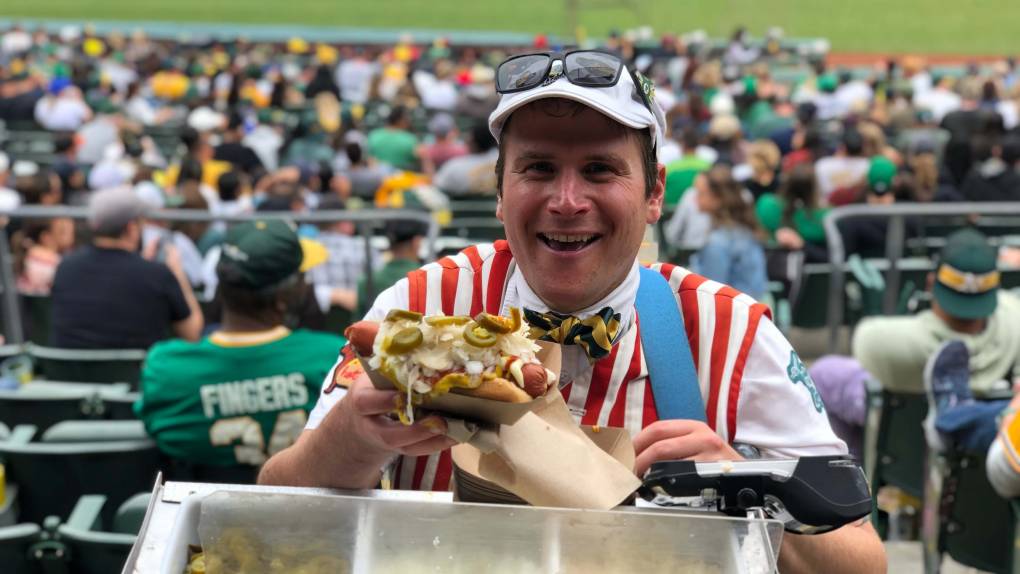
"caption": "Hal the Hot Dog Guy serves a fresh hot dog at the Oakland Coliseum.",
"description": null,
"title": "halhotdog_lead",
"credit": "Briana Chazaro",
"status": "inherit",
"altTag": "Man holds up a hot dog at a baseball game, with fans cheering behind him",
"isLoading": false,
"fetchFailed": false
},
"arts_13913459": {
"type": "attachments",
"id": "arts_13913459",
"meta": {
"index": "attachments_1716263798",
"site": "arts",
"id": "13913459",
"found": true
},
"parent": 13913451,
"imgSizes": {
"twentyfourteen-full-width": {
"file": "https://ww2.kqed.org/app/uploads/sites/2/2022/05/BJBoyd.MAIN_-1038x576.jpg",
"width": 1038,
"mimeType": "image/jpeg",
"height": 576
},
"thumbnail": {
"file": "https://ww2.kqed.org/app/uploads/sites/2/2022/05/BJBoyd.MAIN_-160x90.jpg",
"width": 160,
"mimeType": "image/jpeg",
"height": 90
},
"post-thumbnail": {
"file": "https://ww2.kqed.org/app/uploads/sites/2/2022/05/BJBoyd.MAIN_-672x372.jpg",
"width": 672,
"mimeType": "image/jpeg",
"height": 372
},
"kqedFullSize": {
"file": "https://ww2.kqed.org/app/uploads/sites/2/2022/05/BJBoyd.MAIN_.jpg",
"width": 1267,
"height": 713
},
"large": {
"file": "https://ww2.kqed.org/app/uploads/sites/2/2022/05/BJBoyd.MAIN_-1020x574.jpg",
"width": 1020,
"mimeType": "image/jpeg",
"height": 574
},
"medium": {
"file": "https://ww2.kqed.org/app/uploads/sites/2/2022/05/BJBoyd.MAIN_-800x450.jpg",
"width": 800,
"mimeType": "image/jpeg",
"height": 450
},
"medium_large": {
"file": "https://ww2.kqed.org/app/uploads/sites/2/2022/05/BJBoyd.MAIN_-768x432.jpg",
"width": 768,
"mimeType": "image/jpeg",
"height": 432
}
},
"publishDate": 1652770596,
"modified": 1652852475,
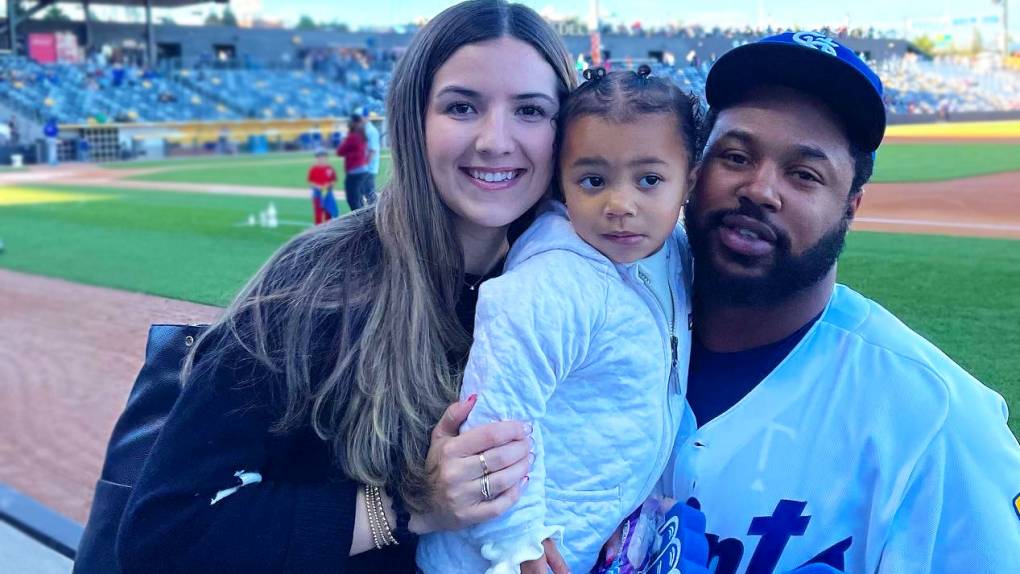
"caption": "BJ Boyd (right) with his wife Tatiana and daughter Bria. A graduate of Palo Alto High School, Boyd has been through the rosters of various Double-A and Triple-A teams, waiting expectantly for his chance at the major leagues.",
"description": null,
"title": "BJBoyd.MAIN",
"credit": "Courtesy the Boyd Family",
"status": "inherit",
"altTag": "A young couple holds their toddler on the sidelines of a baseball field",
"isLoading": false,
"fetchFailed": false
},
"arts_13910778": {
"type": "attachments",
"id": "arts_13910778",
"meta": {
"index": "attachments_1716263798",
"site": "arts",
"id": "13910778",
"found": true
},
"parent": 13910698,
"imgSizes": {
"thumbnail": {
"file": "https://ww2.kqed.org/app/uploads/sites/2/2022/03/Stomper.Thumbnail-160x90.jpg",
"width": 160,
"mimeType": "image/jpeg",
"height": 90
},
"kqedFullSize": {
"file": "https://ww2.kqed.org/app/uploads/sites/2/2022/03/Stomper.Thumbnail.jpg",
"width": 579,
"height": 326
}
},
"publishDate": 1647558143,
"modified": 1647558160,
"caption": null,
"description": null,
"title": "Stomper.Thumbnail",
"credit": "Courtesy Pendarvis Harshaw",
"status": "inherit",
"altTag": null,
"isLoading": false,
"fetchFailed": false
},
"arts_13905886": {
"type": "attachments",
"id": "arts_13905886",
"meta": {
"index": "attachments_1716263798",
"site": "arts",
"id": "13905886",
"found": true
},
"parent": 13905846,
"imgSizes": {
"twentyfourteen-full-width": {
"file": "https://ww2.kqed.org/app/uploads/sites/2/2021/11/buster-posey-1038x576.jpeg",
"width": 1038,
"mimeType": "image/jpeg",
"height": 576
},
"thumbnail": {
"file": "https://ww2.kqed.org/app/uploads/sites/2/2021/11/buster-posey-160x95.jpeg",
"width": 160,
"mimeType": "image/jpeg",
"height": 95
},
"post-thumbnail": {
"file": "https://ww2.kqed.org/app/uploads/sites/2/2021/11/buster-posey-672x372.jpeg",
"width": 672,
"mimeType": "image/jpeg",
"height": 372
},
"kqedFullSize": {
"file": "https://ww2.kqed.org/app/uploads/sites/2/2021/11/buster-posey-scaled-e1636064200555.jpeg",
"width": 1920,
"height": 1139
},
"2048x2048": {
"file": "https://ww2.kqed.org/app/uploads/sites/2/2021/11/buster-posey-2048x1215.jpeg",
"width": 2048,
"mimeType": "image/jpeg",
"height": 1215
},
"large": {
"file": "https://ww2.kqed.org/app/uploads/sites/2/2021/11/buster-posey-1020x605.jpeg",
"width": 1020,
"mimeType": "image/jpeg",
"height": 605
},
"1536x1536": {
"file": "https://ww2.kqed.org/app/uploads/sites/2/2021/11/buster-posey-1536x911.jpeg",
"width": 1536,
"mimeType": "image/jpeg",
"height": 911
},
"full-width": {
"file": "https://ww2.kqed.org/app/uploads/sites/2/2021/11/buster-posey-1920x1139.jpeg",
"width": 1920,
"mimeType": "image/jpeg",
"height": 1139
},
"medium": {
"file": "https://ww2.kqed.org/app/uploads/sites/2/2021/11/buster-posey-800x475.jpeg",
"width": 800,
"mimeType": "image/jpeg",
"height": 475
},
"medium_large": {
"file": "https://ww2.kqed.org/app/uploads/sites/2/2021/11/buster-posey-768x456.jpeg",
"width": 768,
"mimeType": "image/jpeg",
"height": 456
}
},
"publishDate": 1636064146,
"modified": 1636508510,
"caption": "Buster Posey at the Giants' spring training complex, Scottsdale Stadium, on February 18, 2020, in Phoenix, Arizona.",
"description": "Buster Posey at the Giants' spring training complex, Scottsdale Stadium, on February 18, 2020, in Phoenix, Arizona.",
"title": "San Francisco Giants Photo Day",
"credit": "Rob Tringali/Getty Images",
"status": "inherit",
"altTag": "A white man in a San Francisco Giants uniform stands against a green backdrop, casually clutching a baseball bat.",
"isLoading": false,
"fetchFailed": false
},
"arts_13894283": {
"type": "attachments",
"id": "arts_13894283",
"meta": {
"index": "attachments_1716263798",
"site": "arts",
"id": "13894283",
"found": true
},
"parent": 13894207,
"imgSizes": {
"twentyfourteen-full-width": {
"file": "https://ww2.kqed.org/app/uploads/sites/2/2021/03/Screen-Shot-2021-03-19-at-6.39.17-AM-1038x576.png",
"width": 1038,
"mimeType": "image/png",
"height": 576
},
"thumbnail": {
"file": "https://ww2.kqed.org/app/uploads/sites/2/2021/03/Screen-Shot-2021-03-19-at-6.39.17-AM-160x86.png",
"width": 160,
"mimeType": "image/png",
"height": 86
},
"post-thumbnail": {
"file": "https://ww2.kqed.org/app/uploads/sites/2/2021/03/Screen-Shot-2021-03-19-at-6.39.17-AM-672x372.png",
"width": 672,
"mimeType": "image/png",
"height": 372
},
"kqedFullSize": {
"file": "https://ww2.kqed.org/app/uploads/sites/2/2021/03/Screen-Shot-2021-03-19-at-6.39.17-AM.png",
"width": 1182,
"height": 638
},
"large": {
"file": "https://ww2.kqed.org/app/uploads/sites/2/2021/03/Screen-Shot-2021-03-19-at-6.39.17-AM-1020x551.png",
"width": 1020,
"mimeType": "image/png",
"height": 551
},
"medium": {
"file": "https://ww2.kqed.org/app/uploads/sites/2/2021/03/Screen-Shot-2021-03-19-at-6.39.17-AM-800x432.png",
"width": 800,
"mimeType": "image/png",
"height": 432
},
"medium_large": {
"file": "https://ww2.kqed.org/app/uploads/sites/2/2021/03/Screen-Shot-2021-03-19-at-6.39.17-AM-768x415.png",
"width": 768,
"mimeType": "image/png",
"height": 415
}
},
"publishDate": 1616162268,
"modified": 1616162328,
"caption": "Baseball players, masked, standing together taking a photo at a Loyal To The Soils baseball clinic held earlier this year. ",
"description": "Baseball players, masked, standing together taking a photo at a Loyal To The Soils baseball clinic held earlier this year. ",
"title": "Baseball players, masked, standing together taking a photo at a Loyal To The Soils baseball clinic held earlier this year.",
"credit": "Courtesy of Loyal To My Soil",
"status": "inherit",
"altTag": "Baseball players, masked, standing together taking a photo at a Loyal To The Soils baseball clinic held earlier this year.",
"isLoading": false,
"fetchFailed": false
},
"arts_13891682": {
"type": "attachments",
"id": "arts_13891682",
"meta": {
"index": "attachments_1716263798",
"site": "arts",
"id": "13891682",
"found": true
},
"parent": 13891681,
"imgSizes": {
"twentyfourteen-full-width": {
"file": "https://ww2.kqed.org/app/uploads/sites/2/2021/01/hank-aaron_wide-50d4dde0a43e7ac1f8fb34fcbab02b4ff422b6a8-1038x576.jpg",
"width": 1038,
"mimeType": "image/jpeg",
"height": 576
},
"thumbnail": {
"file": "https://ww2.kqed.org/app/uploads/sites/2/2021/01/hank-aaron_wide-50d4dde0a43e7ac1f8fb34fcbab02b4ff422b6a8-160x90.jpg",
"width": 160,
"mimeType": "image/jpeg",
"height": 90
},
"post-thumbnail": {
"file": "https://ww2.kqed.org/app/uploads/sites/2/2021/01/hank-aaron_wide-50d4dde0a43e7ac1f8fb34fcbab02b4ff422b6a8-672x372.jpg",
"width": 672,
"mimeType": "image/jpeg",
"height": 372
},
"kqedFullSize": {
"file": "https://ww2.kqed.org/app/uploads/sites/2/2021/01/hank-aaron_wide-50d4dde0a43e7ac1f8fb34fcbab02b4ff422b6a8.jpg",
"width": 2214,
"height": 1245
},
"2048x2048": {
"file": "https://ww2.kqed.org/app/uploads/sites/2/2021/01/hank-aaron_wide-50d4dde0a43e7ac1f8fb34fcbab02b4ff422b6a8-2048x1152.jpg",
"width": 2048,
"mimeType": "image/jpeg",
"height": 1152
},
"large": {
"file": "https://ww2.kqed.org/app/uploads/sites/2/2021/01/hank-aaron_wide-50d4dde0a43e7ac1f8fb34fcbab02b4ff422b6a8-1020x574.jpg",
"width": 1020,
"mimeType": "image/jpeg",
"height": 574
},
"1536x1536": {
"file": "https://ww2.kqed.org/app/uploads/sites/2/2021/01/hank-aaron_wide-50d4dde0a43e7ac1f8fb34fcbab02b4ff422b6a8-1536x864.jpg",
"width": 1536,
"mimeType": "image/jpeg",
"height": 864
},
"full-width": {
"file": "https://ww2.kqed.org/app/uploads/sites/2/2021/01/hank-aaron_wide-50d4dde0a43e7ac1f8fb34fcbab02b4ff422b6a8-1920x1080.jpg",
"width": 1920,
"mimeType": "image/jpeg",
"height": 1080
},
"medium": {
"file": "https://ww2.kqed.org/app/uploads/sites/2/2021/01/hank-aaron_wide-50d4dde0a43e7ac1f8fb34fcbab02b4ff422b6a8-800x450.jpg",
"width": 800,
"mimeType": "image/jpeg",
"height": 450
},
"medium_large": {
"file": "https://ww2.kqed.org/app/uploads/sites/2/2021/01/hank-aaron_wide-50d4dde0a43e7ac1f8fb34fcbab02b4ff422b6a8-768x432.jpg",
"width": 768,
"mimeType": "image/jpeg",
"height": 432
}
},
"publishDate": 1611336250,
"modified": 1611336250,
"caption": null,
"description": "circa 1955: American baseball player Hank Aaron swings a bat in an empty stadium. (Photo by Hulton Archive/Getty Images)",
"title": "Legendary baseball player Hank Aaron has died at the age of 86.",
"credit": null,
"status": "inherit",
"altTag": null,
"isLoading": false,
"fetchFailed": false
}
},
"audioPlayerReducer": {
"postId": "stream_live",
"isPaused": true,
"isPlaying": false,
"pfsActive": false,
"pledgeModalIsOpen": true,
"playerDrawerIsOpen": false,
"liveAudioPlayStartedAt": 0,
"liveAudioPlayContext": ""
},
"authorsReducer": {
"byline_arts_13927065": {
"type": "authors",
"id": "byline_arts_13927065",
"meta": {
"override": true
},
"slug": "byline_arts_13927065",
"name": "Jonathan Landrum Jr.",
"isLoading": false
},
"byline_arts_13925671": {
"type": "authors",
"id": "byline_arts_13925671",
"meta": {
"override": true
},
"slug": "byline_arts_13925671",
"name": "Joe Hernandez",
"isLoading": false
},
"byline_arts_13917462": {
"type": "authors",
"id": "byline_arts_13917462",
"meta": {
"override": true
},
"slug": "byline_arts_13917462",
"name": "Linda Holmes",
"isLoading": false
},
"byline_arts_13913451": {
"type": "authors",
"id": "byline_arts_13913451",
"meta": {
"override": true
},
"slug": "byline_arts_13913451",
"name": "Nick Lozito",
"isLoading": false
},
"byline_arts_13891681": {
"type": "authors",
"id": "byline_arts_13891681",
"meta": {
"override": true
},
"slug": "byline_arts_13891681",
"name": "Bill Chappell",
"isLoading": false
},
"mfox": {
"type": "authors",
"id": "22",
"meta": {
"index": "authors_1716337520",
"id": "22",
"found": true
},
"name": "Michael Fox",
"firstName": "Michael",
"lastName": "Fox",
"slug": "mfox",
"email": "foxonfilm@yahoo.com",
"display_author_email": false,
"staff_mastheads": [],
"title": "KQED Contributor",
"bio": "Michael Fox has written about film for dozens of publications since 1987. He is a founding member of the San Francisco Bay Area Film Critics Circle.",
"avatar": "https://secure.gravatar.com/avatar/d9849d6c659c41414795c471d907bb97b396e2a32b88e20e6ff66f65fbdd6dcd?s=600&d=blank&r=g",
"twitter": null,
"bluesky": null,
"facebook": null,
"instagram": null,
"linkedin": null,
"sites": [
{
"site": "arts",
"roles": [
"Contributor",
"contributor"
]
}
],
"headData": {
"title": "Michael Fox | KQED",
"description": "KQED Contributor",
"ogImgSrc": "https://secure.gravatar.com/avatar/d9849d6c659c41414795c471d907bb97b396e2a32b88e20e6ff66f65fbdd6dcd?s=600&d=blank&r=g",
"twImgSrc": "https://secure.gravatar.com/avatar/d9849d6c659c41414795c471d907bb97b396e2a32b88e20e6ff66f65fbdd6dcd?s=600&d=blank&r=g"
},
"isLoading": false,
"link": "/author/mfox"
},
"ralexandra": {
"type": "authors",
"id": "11242",
"meta": {
"index": "authors_1716337520",
"id": "11242",
"found": true
},
"name": "Rae Alexandra",
"firstName": "Rae",
"lastName": "Alexandra",
"slug": "ralexandra",
"email": "ralexandra@kqed.org",
"display_author_email": true,
"staff_mastheads": [],
"title": "Reporter/Producer",
"bio": "Rae Alexandra is a Reporter/Producer for KQED Arts & Culture, and the creator/author of the \u003ca href=\"https://www.kqed.org/arts/program/rebel-girls-from-bay-area-history\">Rebel Girls From Bay Area History\u003c/a> and \u003ca href=\"https://www.kqed.org/bizarrebayarea\">Bizarre Bay Area\u003c/a> series. Her debut book, \u003ca href=\"https://citylights.com/politics-current-events-history/unsung-heroines35-women-who-changed/\">Unsung Heroines: 35 Women Who Changed the Bay Area\u003c/a> was published by City Lights in March 2026. In 2023, Rae was awarded an SPJ Excellence in Journalism Award for Arts & Culture. Rae was born and raised in Wales and subsequently — even after two decades in Northern California — still uses phrases that regularly baffle her coworkers.",
"avatar": "https://secure.gravatar.com/avatar/edfee8176c80cc0a382b051190f5341997df378a934a5774dcb0977732dfd401?s=600&d=blank&r=g",
"twitter": null,
"bluesky": null,
"facebook": null,
"instagram": null,
"linkedin": null,
"sites": [
{
"site": "arts",
"roles": [
"subscriber"
]
},
{
"site": "news",
"roles": [
"subscriber"
]
},
{
"site": "pop",
"roles": [
"subscriber"
]
},
{
"site": "bayareabites",
"roles": [
"subscriber"
]
},
{
"site": "science",
"roles": [
"subscriber"
]
}
],
"headData": {
"title": "Rae Alexandra | KQED",
"description": "Reporter/Producer",
"ogImgSrc": "https://secure.gravatar.com/avatar/edfee8176c80cc0a382b051190f5341997df378a934a5774dcb0977732dfd401?s=600&d=blank&r=g",
"twImgSrc": "https://secure.gravatar.com/avatar/edfee8176c80cc0a382b051190f5341997df378a934a5774dcb0977732dfd401?s=600&d=blank&r=g"
},
"isLoading": false,
"link": "/author/ralexandra"
},
"ogpenn": {
"type": "authors",
"id": "11491",
"meta": {
"index": "authors_1716337520",
"id": "11491",
"found": true
},
"name": "Pendarvis Harshaw",
"firstName": "Pendarvis",
"lastName": "Harshaw",
"slug": "ogpenn",
"email": "ogpenn@gmail.com",
"display_author_email": false,
"staff_mastheads": [
"arts"
],
"title": "Community Engagement Reporter",
"bio": "Pendarvis Harshaw is an educator, host and writer with KQED Arts.",
"avatar": "https://secure.gravatar.com/avatar/972b77ee8e3f346ae2b00622661187fbfabd059b5693bbdc1475ea7a722fd4cd?s=600&d=blank&r=g",
"twitter": null,
"bluesky": null,
"facebook": null,
"instagram": "ogpenn",
"linkedin": null,
"sites": [
{
"site": "arts",
"roles": [
"administrator"
]
},
{
"site": "news",
"roles": [
"editor"
]
},
{
"site": "bayareabites",
"roles": [
"author"
]
},
{
"site": "hiphop",
"roles": [
"editor"
]
}
],
"headData": {
"title": "Pendarvis Harshaw | KQED",
"description": "Community Engagement Reporter",
"ogImgSrc": "https://secure.gravatar.com/avatar/972b77ee8e3f346ae2b00622661187fbfabd059b5693bbdc1475ea7a722fd4cd?s=600&d=blank&r=g",
"twImgSrc": "https://secure.gravatar.com/avatar/972b77ee8e3f346ae2b00622661187fbfabd059b5693bbdc1475ea7a722fd4cd?s=600&d=blank&r=g"
},
"isLoading": false,
"link": "/author/ogpenn"
},
"achazaro": {
"type": "authors",
"id": "11748",
"meta": {
"index": "authors_1716337520",
"id": "11748",
"found": true
},
"name": "Alan Chazaro",
"firstName": "Alan",
"lastName": "Chazaro",
"slug": "achazaro",
"email": "agchazaro@gmail.com",
"display_author_email": true,
"staff_mastheads": [],
"title": "Food Writer and Reporter",
"bio": "Alan Chazaro is the author of \u003cem>This Is Not a Frank Ocean Cover Album\u003c/em> (Black Lawrence Press, 2019), \u003cem>Piñata Theory\u003c/em> (Black Lawrence Press, 2020), and \u003cem>Notes from the Eastern Span of the Bay Bridge\u003c/em> (Ghost City Press, 2021). He is a graduate of June Jordan’s Poetry for the People program at UC Berkeley and a former Lawrence Ferlinghetti Fellow at the University of San Francisco. He writes about sports, food, art, music, education, and culture while repping the Bay on \u003ca href=\"https://twitter.com/alan_chazaro\">Twitter\u003c/a> and \u003ca href=\"https://www.instagram.com/alan_chazaro/?hl=en\">Instagram\u003c/a> at @alan_chazaro.",
"avatar": "https://secure.gravatar.com/avatar/ea8b6dd970fc5c29e7a188e7d5861df7?s=600&d=blank&r=g",
"twitter": "alan_chazaro",
"facebook": null,
"instagram": null,
"linkedin": null,
"sites": [
{
"site": "arts",
"roles": [
"contributor"
]
},
{
"site": "news",
"roles": [
"editor"
]
}
],
"headData": {
"title": "Alan Chazaro | KQED",
"description": "Food Writer and Reporter",
"ogImgSrc": "https://secure.gravatar.com/avatar/ea8b6dd970fc5c29e7a188e7d5861df7?s=600&d=blank&r=g",
"twImgSrc": "https://secure.gravatar.com/avatar/ea8b6dd970fc5c29e7a188e7d5861df7?s=600&d=blank&r=g"
},
"isLoading": false,
"link": "/author/achazaro"
}
},
"pagesReducer": {
"arts_tag_baseball": {
"type": "terms",
"id": "arts_10092",
"meta": {
"index": "terms_1716263798",
"site": "arts",
"id": "10092",
"score": 8.795269
},
"featImg": null,
"name": "Baseball",
"description": null,
"taxonomy": "tag",
"headData": {
"twImgId": null,
"twTitle": null,
"ogTitle": null,
"ogImgId": null,
"twDescription": null,
"description": null,
"title": "Baseball Archives | KQED Arts",
"ogDescription": null
},
"ttid": 10104,
"slug": "baseball",
"isLoading": false,
"title": "Baseball",
"pageMeta": {
"site": "arts",
"WpPageTemplate": "page-topic-editorial",
"currentPage": 2
},
"blocks": [
{
"blockName": "kqed/post-list",
"attrs": {
"layout": "cardArticle2",
"query": "posts/arts?tag=baseball",
"seeMore": false,
"paginated": true,
"page": 2
}
},
{
"blockName": "kqed/ad"
}
]
}
},
"pfsSessionReducer": {},
"postsReducer": {
"stream_live": {
"type": "live",
"id": "stream_live",
"audioUrl": "https://streams.kqed.org/kqedradio",
"title": "Live Stream",
"excerpt": "Live Stream information currently unavailable.",
"link": "/radio",
"featImg": "",
"label": {
"name": "KQED Live",
"link": "/"
}
},
"stream_kqedNewscast": {
"type": "posts",
"id": "stream_kqedNewscast",
"audioUrl": "https://www.kqed.org/.stream/anon/radio/RDnews/newscast.mp3?_=1",
"title": "KQED Newscast",
"featImg": "",
"label": {
"name": "88.5 FM",
"link": "/"
}
},
"arts_13931346": {
"type": "posts",
"id": "arts_13931346",
"meta": {
"index": "posts_1716263798",
"site": "arts",
"id": "13931346",
"score": null,
"sort": [
1688768168000
]
},
"parent": 0,
"labelTerm": {
"site": "arts"
},
"blocks": [],
"publishDate": 1688768168,
"format": "standard",
"title": "‘The League’ Joyfully Reframes the Heyday of Black Baseball",
"headTitle": "‘The League’ Joyfully Reframes the Heyday of Black Baseball | KQED",
"content": "\u003cp>Everybody knows that baseball — the dominant sport in America for two-thirds of the 20th century — excluded Black players from its major leagues for decades, from the turn of the century until Jackie Robinson broke through in 1947. In most tellings, Negro League stars like Buck O’Neill, Josh Gibson and Satchel Paige are tragic figures: They were robbed of the opportunity to compete against Joe DiMaggio, et al, and to join the firmament of household names on the sports pages, in the record books and at Cooperstown.\u003c/p>\n\u003cp>A parallel history of baseball from a Black point of view, Sam Pollard’s fleet-footed, feature-length \u003cem>The League\u003c/em> offers a perspective that acknowledges segregation and racism — yet is closer to a house party than a lament. Meshing the recollections of numerous players and Negro League umpire Bob Motley (who died in 2017), a wealth of splendid vintage footage and interviews with young Black historians, it’s a solid double in the gap that fans of the game will enjoy even more than devotees of American social history.\u003c/p>\n\u003cfigure id=\"attachment_13931370\" class=\"wp-caption aligncenter\" style=\"max-width: 604px\">\u003ca href=\"https://ww2.kqed.org/app/uploads/sites/2/2023/07/2.png\">\u003cimg loading=\"lazy\" decoding=\"async\" class=\"size-full wp-image-13931370\" src=\"https://ww2.kqed.org/app/uploads/sites/2/2023/07/2.png\" alt=\"in a black and white photo an umpire leaps up into the air in the middle of the field calling a play\" width=\"604\" height=\"480\" srcset=\"https://cdn.kqed.org/wp-content/uploads/sites/2/2023/07/2.png 604w, https://cdn.kqed.org/wp-content/uploads/sites/2/2023/07/2-160x127.png 160w\" sizes=\"(max-width: 604px) 100vw, 604px\">\u003c/a>\u003cfigcaption class=\"wp-caption-text\">Umpire Bob Motley in the air, in a still from ‘The League.’ \u003ccite>(Byron Motley, courtesy of Magnolia Pictures)\u003c/cite>\u003c/figcaption>\u003c/figure>\n\u003cp>\u003cem>The League\u003c/em> is not as kinetic and enthralling as the prolific Pollard’s recent \u003cem>Sammy Davis, Jr.: I’ve Gotta Be Me (2017)\u003c/em> or last year’s \u003cem>Lowndes County and the Road to Black Power\u003c/em>. But that likely comes down to the episodic, pass-the-baton nature of the Negro Leagues’ evolution.\u003c/p>\n\u003cp>In the leadoff spot is Andrew “Rube” Foster, a crafty Black pitcher whom New York Giants manager John McGraw reportedly hired to secretly teach future Hall of Famer Christy Mathewson the fadeaway (a.k.a. screwball). Foster became an innovative manager and owner of the Chicago American Giants, where he pioneered an aggressive style of play built on speed, base-running and squeeze bunts (in contrast to the Major Leagues’ love affair with Babe Ruth’s home run jogs).\u003c/p>\n\u003cp>Foster’s biggest contribution, though, was persuading fellow Midwest team owners to form the Negro National League in 1920. Another group formed the Eastern Colored League in 1923, and the winners of the two leagues met in the first “colored” World Series the following year.\u003c/p>\n\u003cfigure id=\"attachment_13931372\" class=\"wp-caption aligncenter\" style=\"max-width: 800px\">\u003ca href=\"https://ww2.kqed.org/app/uploads/sites/2/2023/07/3.jpg\">\u003cimg loading=\"lazy\" decoding=\"async\" class=\"size-medium wp-image-13931372\" src=\"https://ww2.kqed.org/app/uploads/sites/2/2023/07/3-800x323.jpg\" alt=\"a black and white photo of a Negro League baseball team\" width=\"800\" height=\"323\" srcset=\"https://cdn.kqed.org/wp-content/uploads/sites/2/2023/07/3-800x323.jpg 800w, https://cdn.kqed.org/wp-content/uploads/sites/2/2023/07/3-1020x411.jpg 1020w, https://cdn.kqed.org/wp-content/uploads/sites/2/2023/07/3-160x65.jpg 160w, https://cdn.kqed.org/wp-content/uploads/sites/2/2023/07/3-768x310.jpg 768w, https://cdn.kqed.org/wp-content/uploads/sites/2/2023/07/3-1536x619.jpg 1536w, https://cdn.kqed.org/wp-content/uploads/sites/2/2023/07/3-2048x826.jpg 2048w, https://cdn.kqed.org/wp-content/uploads/sites/2/2023/07/3-1920x774.jpg 1920w\" sizes=\"(max-width: 800px) 100vw, 800px\">\u003c/a>\u003cfigcaption class=\"wp-caption-text\">Rube Foster (center), managing the 1916 Chicago American Giants. \u003ccite>(Hake's Auction, courtesy of Magnolia Pictures)\u003c/cite>\u003c/figcaption>\u003c/figure>\n\u003cp>Organized Black baseball created rivalries and birthed stars. Off the field, the effects were even more significant: Black communities proudly embraced their teams to such a degree that churches moved their Sunday services up an hour in deference to highly anticipated games. Meanwhile, the teams hired hundreds of ticket-takers, vendors and ushers, fueling the local economy.\u003c/p>\n\u003cp>Foster was disabled by gas poisoning in a hotel accident. His 1930 death, combined with the Great Depression, doomed the Negro National League. Pittsburgh Crawfords owner Gus Greenlee launched the second iteration in 1933, the same year he signed the likable catcher Joshua Gibson.[aside postid='arts_13875504']\u003c/p>\n\u003cp>Pittsburgh, which was on the main train line connecting East Coast cities as well as points west, was able to support another terrific Black team: The Homestead Grays, who signed away Gibson after four seasons with the Crawfords. (A career .365 hitter, Gibson’s mental health issues and premature death robbed him of a shot at the Major Leagues.)\u003c/p>\n\u003cp>As one would expect, \u003cem>The League\u003c/em> weaves important Black social movements into the narrative. The great migration of Southern Black Americans to northern cities after World War I was key to the success of the Negro National Leagues. During World War II, the \u003cem>Pittsburgh Courier\u003c/em> spearheaded the Double Victory campaign, which highlighted the contributions and bravery of Black soldiers fighting to free people overseas and lobbied for expanded freedoms at home — less discrimination and segregation — for Black Americans.\u003c/p>\n\u003cfigure id=\"attachment_13931371\" class=\"wp-caption aligncenter\" style=\"max-width: 800px\">\u003ca href=\"https://ww2.kqed.org/app/uploads/sites/2/2023/07/6.jpg\">\u003cimg loading=\"lazy\" decoding=\"async\" class=\"size-medium wp-image-13931371\" src=\"https://ww2.kqed.org/app/uploads/sites/2/2023/07/6-800x1200.jpg\" alt=\"\" width=\"800\" height=\"1200\" srcset=\"https://cdn.kqed.org/wp-content/uploads/sites/2/2023/07/6-800x1200.jpg 800w, https://cdn.kqed.org/wp-content/uploads/sites/2/2023/07/6-160x240.jpg 160w, https://cdn.kqed.org/wp-content/uploads/sites/2/2023/07/6-768x1152.jpg 768w, https://cdn.kqed.org/wp-content/uploads/sites/2/2023/07/6.jpg 1000w\" sizes=\"(max-width: 800px) 100vw, 800px\">\u003c/a>\u003cfigcaption class=\"wp-caption-text\">Sam Pollard, director of ‘The League.’ \u003ccite>(Courtesy Magnolia Pictures)\u003c/cite>\u003c/figcaption>\u003c/figure>\n\u003cp>Batting cleanup in \u003cem>The League\u003c/em> is executive Effa Manley. She made her first mark leading a 1934 boycott of a Harlem department store until it hired Black salesgirls, and became co-owner of the Newark Eagles upon marrying its owner, Abe Manley, the following year. Effa excelled at managing the club’s business operations and advocating for all Negro League players.\u003c/p>\n\u003cp>If you harbor the notion that Branch Rickey is a hero for integrating Major League Baseball when he signed Jackie Robinson from the Kansas City Monarchs for his Brooklyn Dodgers, listen to Effa Manley. She was outspoken about Rickey’s crass failure to pay the team that developed him. (In contrast, Cleveland Indians owner Bill Veeck paid Manley a small sum for Larry Doby, who was the first Black player in the American League.)\u003c/p>\n\u003cp>Manley is perhaps the most fascinating figure in \u003cem>The League\u003c/em>. She is among the roughly three dozen Negro League greats inducted into the National Baseball Hall of Fame since 1971, and is still the only woman in the Hall.\u003c/p>\n\u003cfigure id=\"attachment_13931374\" class=\"wp-caption aligncenter\" style=\"max-width: 800px\">\u003ca href=\"https://ww2.kqed.org/app/uploads/sites/2/2023/07/5-1.png\">\u003cimg loading=\"lazy\" decoding=\"async\" class=\"size-medium wp-image-13931374\" src=\"https://ww2.kqed.org/app/uploads/sites/2/2023/07/5-1-800x635.png\" alt=\"a black and white photo of a Negro League baseball team\" width=\"800\" height=\"635\" srcset=\"https://cdn.kqed.org/wp-content/uploads/sites/2/2023/07/5-1-800x635.png 800w, https://cdn.kqed.org/wp-content/uploads/sites/2/2023/07/5-1-160x127.png 160w, https://cdn.kqed.org/wp-content/uploads/sites/2/2023/07/5-1-768x610.png 768w, https://cdn.kqed.org/wp-content/uploads/sites/2/2023/07/5-1.png 1000w\" sizes=\"(max-width: 800px) 100vw, 800px\">\u003c/a>\u003cfigcaption class=\"wp-caption-text\">The 1942 AA Marines in a still from ‘The League. \u003ccite>(Library of Congress, courtesy of Magnolia Pictures)\u003c/cite>\u003c/figcaption>\u003c/figure>\n\u003cp>Bay Area baseball fans will encounter surprisingly few local connections in \u003cem>The League\u003c/em>. Willie Mays played 13 games in 1948 for the Negro League’s Birmingham Black Barons — when he was 17 — and he makes a cameo appearance via a couple-decades-old videotaped interview and his unforgettable catch of Vic Wertz’s blast to deep centerfield in the opening game of the 1954 World Series. The Negro League will take a turn in the spotlight at the Black Barons’ ballpark, Rickwood Field, on June 20, 2024, when the Giants and Cardinals play a nationally televised regular season game.\u003c/p>\n\u003cp>While neither the filmmaker nor his cohort of learned interviewees express any regrets about the integration of Major League Baseball, it obviously led to the demise of the Negro Baseball League. Black fans preferred to see Robinson, or Doby, or Paige, or Monte Irvin, or Roy Campanella playing against and alongside white players rather than all-Black teams in all-Black leagues. Against the backdrop of a nascent civil rights movement, integrated Major League Baseball represented the future, while the Negro League was a holdover of the past. By the 1950s, it was game over.\u003c/p>\n\u003cp>Seventy years later, baseball fans lament the dearth of Black players in the game as so many athletes gravitate to football and basketball. But that’s another story. \u003cem>The League\u003c/em> transports us to a time when baseball was boss and every professional player was special. That includes the Negro Leagues, as well.\u003c/p>\n\u003cp>\u003cimg loading=\"lazy\" decoding=\"async\" class=\"aligncenter size-full wp-image-12127869\" src=\"https://ww2.kqed.org/app/uploads/sites/2/2016/09/Q.Logo_.Break_.jpg\" alt=\"\" width=\"800\" height=\"78\" srcset=\"https://cdn.kqed.org/wp-content/uploads/sites/2/2016/09/Q.Logo_.Break_.jpg 800w, https://cdn.kqed.org/wp-content/uploads/sites/2/2016/09/Q.Logo_.Break_-400x39.jpg 400w, https://cdn.kqed.org/wp-content/uploads/sites/2/2016/09/Q.Logo_.Break_-768x75.jpg 768w\" sizes=\"(max-width: 800px) 100vw, 800px\">\u003c/p>\n\u003cp>\u003cem>‘The League’ screens July 9, 10 and 12 at the AMC Metreon 16 San Francisco, AMC Bay Street 16 Emeryville and AMC Eastridge 15 San Jose.\u003c/em>\u003c/p>\n\u003cp>[ad fullwidth]\u003c/p>\n\u003cp>[ad floatright]\u003c/p>\n",
"stats": {
"hasVideo": false,
"hasChartOrMap": false,
"hasAudio": false,
"hasPolis": false,
"wordCount": 1139,
"hasGoogleForm": false,
"hasGallery": false,
"hasHearkenModule": false,
"iframeSrcs": [],
"paragraphCount": 19
},
"modified": 1705005297,
"excerpt": "Sam Pollard's highlight-strewn history of the Negro Leagues is a must-see for fans.",
"headData": {
"twImgId": "",
"twTitle": "",
"ogTitle": "",
"ogImgId": "",
"twDescription": "",
"description": "Sam Pollard's highlight-strewn history of the Negro Leagues is a must-see for fans.",
"title": "‘The League’ Joyfully Reframes the Heyday of Black Baseball | KQED",
"ogDescription": "",
"schema": {
"@context": "https://schema.org",
"@type": "Article",
"headline": "‘The League’ Joyfully Reframes the Heyday of Black Baseball",
"datePublished": "2023-07-07T15:16:08-07:00",
"dateModified": "2024-01-11T12:34:57-08:00",
"image": "https://cdn.kqed.org/wp-content/uploads/2020/02/KQED-OG-Image@1x.png"
}
},
"guestAuthors": [],
"slug": "the-league-joyfully-reframes-the-heyday-of-black-baseball",
"status": "publish",
"templateType": "standard",
"excludeFromSiteSearch": "Include",
"featuredImageType": "standard",
"sticky": false,
"articleAge": "0",
"path": "/arts/13931346/the-league-joyfully-reframes-the-heyday-of-black-baseball",
"audioTrackLength": null,
"parsedContent": [
{
"type": "contentString",
"content": "\u003cdiv class=\"post-body\">\u003cp>\u003cp>Everybody knows that baseball — the dominant sport in America for two-thirds of the 20th century — excluded Black players from its major leagues for decades, from the turn of the century until Jackie Robinson broke through in 1947. In most tellings, Negro League stars like Buck O’Neill, Josh Gibson and Satchel Paige are tragic figures: They were robbed of the opportunity to compete against Joe DiMaggio, et al, and to join the firmament of household names on the sports pages, in the record books and at Cooperstown.\u003c/p>\n\u003cp>A parallel history of baseball from a Black point of view, Sam Pollard’s fleet-footed, feature-length \u003cem>The League\u003c/em> offers a perspective that acknowledges segregation and racism — yet is closer to a house party than a lament. Meshing the recollections of numerous players and Negro League umpire Bob Motley (who died in 2017), a wealth of splendid vintage footage and interviews with young Black historians, it’s a solid double in the gap that fans of the game will enjoy even more than devotees of American social history.\u003c/p>\n\u003cfigure id=\"attachment_13931370\" class=\"wp-caption aligncenter\" style=\"max-width: 604px\">\u003ca href=\"https://ww2.kqed.org/app/uploads/sites/2/2023/07/2.png\">\u003cimg loading=\"lazy\" decoding=\"async\" class=\"size-full wp-image-13931370\" src=\"https://ww2.kqed.org/app/uploads/sites/2/2023/07/2.png\" alt=\"in a black and white photo an umpire leaps up into the air in the middle of the field calling a play\" width=\"604\" height=\"480\" srcset=\"https://cdn.kqed.org/wp-content/uploads/sites/2/2023/07/2.png 604w, https://cdn.kqed.org/wp-content/uploads/sites/2/2023/07/2-160x127.png 160w\" sizes=\"(max-width: 604px) 100vw, 604px\">\u003c/a>\u003cfigcaption class=\"wp-caption-text\">Umpire Bob Motley in the air, in a still from ‘The League.’ \u003ccite>(Byron Motley, courtesy of Magnolia Pictures)\u003c/cite>\u003c/figcaption>\u003c/figure>\n\u003cp>\u003cem>The League\u003c/em> is not as kinetic and enthralling as the prolific Pollard’s recent \u003cem>Sammy Davis, Jr.: I’ve Gotta Be Me (2017)\u003c/em> or last year’s \u003cem>Lowndes County and the Road to Black Power\u003c/em>. But that likely comes down to the episodic, pass-the-baton nature of the Negro Leagues’ evolution.\u003c/p>\n\u003cp>In the leadoff spot is Andrew “Rube” Foster, a crafty Black pitcher whom New York Giants manager John McGraw reportedly hired to secretly teach future Hall of Famer Christy Mathewson the fadeaway (a.k.a. screwball). Foster became an innovative manager and owner of the Chicago American Giants, where he pioneered an aggressive style of play built on speed, base-running and squeeze bunts (in contrast to the Major Leagues’ love affair with Babe Ruth’s home run jogs).\u003c/p>\n\u003cp>Foster’s biggest contribution, though, was persuading fellow Midwest team owners to form the Negro National League in 1920. Another group formed the Eastern Colored League in 1923, and the winners of the two leagues met in the first “colored” World Series the following year.\u003c/p>\n\u003cfigure id=\"attachment_13931372\" class=\"wp-caption aligncenter\" style=\"max-width: 800px\">\u003ca href=\"https://ww2.kqed.org/app/uploads/sites/2/2023/07/3.jpg\">\u003cimg loading=\"lazy\" decoding=\"async\" class=\"size-medium wp-image-13931372\" src=\"https://ww2.kqed.org/app/uploads/sites/2/2023/07/3-800x323.jpg\" alt=\"a black and white photo of a Negro League baseball team\" width=\"800\" height=\"323\" srcset=\"https://cdn.kqed.org/wp-content/uploads/sites/2/2023/07/3-800x323.jpg 800w, https://cdn.kqed.org/wp-content/uploads/sites/2/2023/07/3-1020x411.jpg 1020w, https://cdn.kqed.org/wp-content/uploads/sites/2/2023/07/3-160x65.jpg 160w, https://cdn.kqed.org/wp-content/uploads/sites/2/2023/07/3-768x310.jpg 768w, https://cdn.kqed.org/wp-content/uploads/sites/2/2023/07/3-1536x619.jpg 1536w, https://cdn.kqed.org/wp-content/uploads/sites/2/2023/07/3-2048x826.jpg 2048w, https://cdn.kqed.org/wp-content/uploads/sites/2/2023/07/3-1920x774.jpg 1920w\" sizes=\"(max-width: 800px) 100vw, 800px\">\u003c/a>\u003cfigcaption class=\"wp-caption-text\">Rube Foster (center), managing the 1916 Chicago American Giants. \u003ccite>(Hake's Auction, courtesy of Magnolia Pictures)\u003c/cite>\u003c/figcaption>\u003c/figure>\n\u003cp>Organized Black baseball created rivalries and birthed stars. Off the field, the effects were even more significant: Black communities proudly embraced their teams to such a degree that churches moved their Sunday services up an hour in deference to highly anticipated games. Meanwhile, the teams hired hundreds of ticket-takers, vendors and ushers, fueling the local economy.\u003c/p>\n\u003cp>Foster was disabled by gas poisoning in a hotel accident. His 1930 death, combined with the Great Depression, doomed the Negro National League. Pittsburgh Crawfords owner Gus Greenlee launched the second iteration in 1933, the same year he signed the likable catcher Joshua Gibson.\u003c/p>\u003c/div>",
"attributes": {
"named": {},
"numeric": []
}
},
{
"type": "component",
"content": "",
"name": "aside",
"attributes": {
"named": {
"postid": "arts_13875504",
"label": ""
},
"numeric": []
}
},
{
"type": "contentString",
"content": "\u003cdiv class=\"post-body\">\u003cp>\u003c/p>\n\u003cp>Pittsburgh, which was on the main train line connecting East Coast cities as well as points west, was able to support another terrific Black team: The Homestead Grays, who signed away Gibson after four seasons with the Crawfords. (A career .365 hitter, Gibson’s mental health issues and premature death robbed him of a shot at the Major Leagues.)\u003c/p>\n\u003cp>As one would expect, \u003cem>The League\u003c/em> weaves important Black social movements into the narrative. The great migration of Southern Black Americans to northern cities after World War I was key to the success of the Negro National Leagues. During World War II, the \u003cem>Pittsburgh Courier\u003c/em> spearheaded the Double Victory campaign, which highlighted the contributions and bravery of Black soldiers fighting to free people overseas and lobbied for expanded freedoms at home — less discrimination and segregation — for Black Americans.\u003c/p>\n\u003cfigure id=\"attachment_13931371\" class=\"wp-caption aligncenter\" style=\"max-width: 800px\">\u003ca href=\"https://ww2.kqed.org/app/uploads/sites/2/2023/07/6.jpg\">\u003cimg loading=\"lazy\" decoding=\"async\" class=\"size-medium wp-image-13931371\" src=\"https://ww2.kqed.org/app/uploads/sites/2/2023/07/6-800x1200.jpg\" alt=\"\" width=\"800\" height=\"1200\" srcset=\"https://cdn.kqed.org/wp-content/uploads/sites/2/2023/07/6-800x1200.jpg 800w, https://cdn.kqed.org/wp-content/uploads/sites/2/2023/07/6-160x240.jpg 160w, https://cdn.kqed.org/wp-content/uploads/sites/2/2023/07/6-768x1152.jpg 768w, https://cdn.kqed.org/wp-content/uploads/sites/2/2023/07/6.jpg 1000w\" sizes=\"(max-width: 800px) 100vw, 800px\">\u003c/a>\u003cfigcaption class=\"wp-caption-text\">Sam Pollard, director of ‘The League.’ \u003ccite>(Courtesy Magnolia Pictures)\u003c/cite>\u003c/figcaption>\u003c/figure>\n\u003cp>Batting cleanup in \u003cem>The League\u003c/em> is executive Effa Manley. She made her first mark leading a 1934 boycott of a Harlem department store until it hired Black salesgirls, and became co-owner of the Newark Eagles upon marrying its owner, Abe Manley, the following year. Effa excelled at managing the club’s business operations and advocating for all Negro League players.\u003c/p>\n\u003cp>If you harbor the notion that Branch Rickey is a hero for integrating Major League Baseball when he signed Jackie Robinson from the Kansas City Monarchs for his Brooklyn Dodgers, listen to Effa Manley. She was outspoken about Rickey’s crass failure to pay the team that developed him. (In contrast, Cleveland Indians owner Bill Veeck paid Manley a small sum for Larry Doby, who was the first Black player in the American League.)\u003c/p>\n\u003cp>Manley is perhaps the most fascinating figure in \u003cem>The League\u003c/em>. She is among the roughly three dozen Negro League greats inducted into the National Baseball Hall of Fame since 1971, and is still the only woman in the Hall.\u003c/p>\n\u003cfigure id=\"attachment_13931374\" class=\"wp-caption aligncenter\" style=\"max-width: 800px\">\u003ca href=\"https://ww2.kqed.org/app/uploads/sites/2/2023/07/5-1.png\">\u003cimg loading=\"lazy\" decoding=\"async\" class=\"size-medium wp-image-13931374\" src=\"https://ww2.kqed.org/app/uploads/sites/2/2023/07/5-1-800x635.png\" alt=\"a black and white photo of a Negro League baseball team\" width=\"800\" height=\"635\" srcset=\"https://cdn.kqed.org/wp-content/uploads/sites/2/2023/07/5-1-800x635.png 800w, https://cdn.kqed.org/wp-content/uploads/sites/2/2023/07/5-1-160x127.png 160w, https://cdn.kqed.org/wp-content/uploads/sites/2/2023/07/5-1-768x610.png 768w, https://cdn.kqed.org/wp-content/uploads/sites/2/2023/07/5-1.png 1000w\" sizes=\"(max-width: 800px) 100vw, 800px\">\u003c/a>\u003cfigcaption class=\"wp-caption-text\">The 1942 AA Marines in a still from ‘The League. \u003ccite>(Library of Congress, courtesy of Magnolia Pictures)\u003c/cite>\u003c/figcaption>\u003c/figure>\n\u003cp>Bay Area baseball fans will encounter surprisingly few local connections in \u003cem>The League\u003c/em>. Willie Mays played 13 games in 1948 for the Negro League’s Birmingham Black Barons — when he was 17 — and he makes a cameo appearance via a couple-decades-old videotaped interview and his unforgettable catch of Vic Wertz’s blast to deep centerfield in the opening game of the 1954 World Series. The Negro League will take a turn in the spotlight at the Black Barons’ ballpark, Rickwood Field, on June 20, 2024, when the Giants and Cardinals play a nationally televised regular season game.\u003c/p>\n\u003cp>While neither the filmmaker nor his cohort of learned interviewees express any regrets about the integration of Major League Baseball, it obviously led to the demise of the Negro Baseball League. Black fans preferred to see Robinson, or Doby, or Paige, or Monte Irvin, or Roy Campanella playing against and alongside white players rather than all-Black teams in all-Black leagues. Against the backdrop of a nascent civil rights movement, integrated Major League Baseball represented the future, while the Negro League was a holdover of the past. By the 1950s, it was game over.\u003c/p>\n\u003cp>Seventy years later, baseball fans lament the dearth of Black players in the game as so many athletes gravitate to football and basketball. But that’s another story. \u003cem>The League\u003c/em> transports us to a time when baseball was boss and every professional player was special. That includes the Negro Leagues, as well.\u003c/p>\n\u003cp>\u003cimg loading=\"lazy\" decoding=\"async\" class=\"aligncenter size-full wp-image-12127869\" src=\"https://ww2.kqed.org/app/uploads/sites/2/2016/09/Q.Logo_.Break_.jpg\" alt=\"\" width=\"800\" height=\"78\" srcset=\"https://cdn.kqed.org/wp-content/uploads/sites/2/2016/09/Q.Logo_.Break_.jpg 800w, https://cdn.kqed.org/wp-content/uploads/sites/2/2016/09/Q.Logo_.Break_-400x39.jpg 400w, https://cdn.kqed.org/wp-content/uploads/sites/2/2016/09/Q.Logo_.Break_-768x75.jpg 768w\" sizes=\"(max-width: 800px) 100vw, 800px\">\u003c/p>\n\u003cp>\u003cem>‘The League’ screens July 9, 10 and 12 at the AMC Metreon 16 San Francisco, AMC Bay Street 16 Emeryville and AMC Eastridge 15 San Jose.\u003c/em>\u003c/p>\n\u003cp>\u003c/p>\u003c/div>",
"attributes": {
"named": {},
"numeric": []
}
},
{
"type": "component",
"content": "",
"name": "ad",
"attributes": {
"named": {
"label": "fullwidth"
},
"numeric": [
"fullwidth"
]
}
},
{
"type": "contentString",
"content": "\u003cdiv class=\"post-body\">\u003cp>\u003c/p>\n\u003cp>\u003c/p>\u003c/div>",
"attributes": {
"named": {},
"numeric": []
}
},
{
"type": "component",
"content": "",
"name": "ad",
"attributes": {
"named": {
"label": "floatright"
},
"numeric": [
"floatright"
]
}
},
{
"type": "contentString",
"content": "\u003cdiv class=\"post-body\">\u003cp>\u003c/p>\n\u003c/div>\u003c/p>",
"attributes": {
"named": {},
"numeric": []
}
}
],
"link": "/arts/13931346/the-league-joyfully-reframes-the-heyday-of-black-baseball",
"authors": [
"22"
],
"categories": [
"arts_1",
"arts_74",
"arts_13238"
],
"tags": [
"arts_5426",
"arts_10092",
"arts_13672",
"arts_977",
"arts_20131",
"arts_11986"
],
"featImg": "arts_13931368",
"label": "arts"
},
"arts_13927065": {
"type": "posts",
"id": "arts_13927065",
"meta": {
"index": "posts_1716263798",
"site": "arts",
"id": "13927065",
"score": null,
"sort": [
1680035413000
]
},
"parent": 0,
"labelTerm": {
"site": "arts",
"term": 140
},
"blocks": [],
"publishDate": 1680035413,
"format": "standard",
"title": "Video Game ‘MLB The Show’ Breaks Barrier With Negro League Players",
"headTitle": "Video Game ‘MLB The Show’ Breaks Barrier With Negro League Players | KQED",
"content": "\u003cp>\u003cem>MLB The Show\u003c/em> has broken a video game barrier: For the first time, the franchise will insert some of the greatest Negro League players — from Satchel Paige to Jackie Robinson — into the 2023 edition of the game as playable characters.\u003c/p>\n\u003cp>Video gamers are now able to venture into a storyline mode involving eight Negro League legends through \u003cem>MLB The Show 23\u003c/em>, which releases Tuesday. The narrative experience will feature short videos about the players along with gameplay focused on the epic moments of their careers.\u003c/p>\n\u003cp>[aside postid='arts_13914585']Along with Robinson and Paige, the game also features other players including Buck O’Neil, Rube Foster, Hilton Smith, John Donaldson, Hank Thompson and Martin Dihigo.\u003c/p>\n\u003cp>“This made sense on multiple levels,” said Bob Kendrick, the narrator of storyline experience and president of the Negro Leagues Baseball Museum, which is located in Kansas City, Missouri. Along with the museum, he partnered with Sony for the historic Black players’ insertion into the game.\u003c/p>\n\u003cp>“The way the Negro League players played, it fits perfectly for a video game,” he said. “There were so many gaming fans who have been clamoring for the inclusion of the Negro Leagues. People were popping into my timeline on social media. This has been stirring for several years.\u003c/p>\n\u003cp>[ad fullwidth]\u003c/p>\n\u003cp>“I never really dreamt this would become reality. And I didn’t really think it would happen with arguably the biggest baseball video game of them all. This is something we are inherently proud of.”\u003c/p>\n\u003cp>Kendrick said the multi-year partnership is a “gigantic step in keeping the legacy alive” for the Negro Leagues. The last time Negro League players were featured in a video game was on EA Sports MVP Baseball 2005 that included Robinson, Paige and Bob Gibson as legendary figures.\u003c/p>\n\u003cp>“For the Negro Leagues Baseball Museum, this is all about creating relevancy,” he said. “How do I establish a relevant connection with an ever-changing generation of young people? I can’t sit back and wait for them to come to me at the doors of the museum. I have got to them in the mode of which they are getting information. If it’s a video game, then so be it.”\u003c/p>\n\u003cp>https://www.youtube.com/watch?v=dlRQCkFbqw0\u003c/p>\n\u003cp>Ramone Russell was the first to pitch Sony executives the concept of breathing life into the Negro League players through the franchise’s popular video game. He’s been mulling over the idea for more than a decade as a mainstay for the development and marketing team for the \u003cem>MLB The Show\u003c/em> series.\u003c/p>\n\u003cp>[aside postid='arts_13911111']“This is a project I’ve always wanted to do,” said Russell, the product development communications and brand strategist for Sony Interactive Entertainment. He played a vital role in working across multiple teams who did a “tremendously smart job” in creating the mode.\u003c/p>\n\u003cp>“So many of our fans — even when they hear the word ‘Negro Leagues’ — they have no context of what the Negro League is and what it represents,” Russell continued. “I’ve been asked ‘Hey, when are you going to have the Negro Leagues?’ My answer would be, ‘As soon as we can find the right way to do it.’ As you know, perfection is the enemy of progress. But about two years ago, I felt like now is the time.”\u003c/p>\n\u003cp>Not a lot of game footage from the Negro Leagues exists, so game creators gathered archive video and photos from the museum and family members of the deceased players to collect as much as they could. That helped nail down the fine animation details for each player, jerseys and the stadiums where games were held.\u003c/p>\n\u003cp>Russell said the process was a tedious one, but it couldn’t have fully come together without the expertise of Kendrick — who he says knows the real history of the Negro Leagues and players “more than anyone else.” He said Kendrick was the perfect person to narrate the storyline mode, because of his well-rounded knowledge about players’ greatness.\u003c/p>\n\u003cp>Even though Jackie Robinson was the first African American player to play in a Major League Baseball game in 1947, Kendrick said during his narration in the mode that Robinson was not the best player from the Negro Leagues. He said the league had such a rich talent pool where players played with in a “bold, brash way” and was “fast and daring.”\u003c/p>\n\u003cp>“It’s not to disparage Jackie at all, but this is how great the talent was in the Negro Leagues,” Kendrick said. “I tell people all the time that the talent in the Negro Leagues would not take a backseat to any league. We’re talking about some of the greatest athletes to ever put on a baseball uniform. And unfortunately, the majority of the public, they don’t know these names. But they should, both from a baseball perspective as well as a historical perspective.”\u003c/p>\n\u003cp>[aside postid='arts_13925671']Sony’s San Diego Studio will donate $1 to the Negro Leagues Museum for every \u003cem>MLB The Show 23 Collector’s Edition\u003c/em> is sold.\u003c/p>\n\u003cp>Kendrick said having the Negro League storyline in the game will hopefully inspire young Black kids and others of color to learn more about their heritage. He wants the visibility of the video game to help bring more awareness to the museum.\u003c/p>\n\u003cp>“Through animation and a project like this, you can bring them to life,” he said. “It’s a beautiful way to convey everything the Negro Leagues represents. I was amazed by people who didn’t know night baseball originated from the Negro Leagues. They just didn’t get their just due. It’s not there in the pages of an American history book. … Now, we have a chance to let people know.”\u003c/p>\n\u003cp>\u003cimg loading=\"lazy\" decoding=\"async\" class=\"aligncenter size-medium wp-image-12127869\" src=\"https://ww2.kqed.org/arts/wp-content/uploads/sites/2/2016/09/Q.Logo_.Break_-800x78.jpg\" alt=\"\" width=\"800\" height=\"78\" srcset=\"https://cdn.kqed.org/wp-content/uploads/sites/2/2016/09/Q.Logo_.Break_.jpg 800w, https://cdn.kqed.org/wp-content/uploads/sites/2/2016/09/Q.Logo_.Break_-400x39.jpg 400w, https://cdn.kqed.org/wp-content/uploads/sites/2/2016/09/Q.Logo_.Break_-768x75.jpg 768w\" sizes=\"(max-width: 800px) 100vw, 800px\">\u003c/p>\n\u003cp>\u003cem>‘MLB The Show 23’ is out now. \u003c/em>\u003c/p>\n\u003cp>\u003c/p>\n\u003cp>\u003cem>Copyright 2023 Associated Press. To see more, \u003ca href=\"https://apnews.com/\" rel=\"noopener\">visit AP\u003c/a>.\u003c/em>\u003c/p>\n\n",
"stats": {
"hasVideo": true,
"hasChartOrMap": false,
"hasAudio": false,
"hasPolis": false,
"wordCount": 1043,
"hasGoogleForm": false,
"hasGallery": false,
"hasHearkenModule": false,
"iframeSrcs": [],
"paragraphCount": 23
},
"modified": 1705005690,
"excerpt": "The popular franchise has introduced Negro League players like Satchel Paige and Jackie Robinson into the 2023 game.",
"headData": {
"twImgId": "",
"twTitle": "Video Game ‘MLB The Show’ Breaks Barrier with Negro League Players",
"socialTitle": "‘MLB The Show 23’ Adds Negro League Players and Stories %%page%% %%sep%% KQED",
"ogTitle": "Video Game ‘MLB The Show’ Breaks Barrier with Negro League Players",
"ogImgId": "",
"twDescription": "",
"description": "The popular franchise has introduced Negro League players like Satchel Paige and Jackie Robinson into the 2023 game.",
"title": "‘MLB The Show 23’ Adds Negro League Players and Stories | KQED",
"ogDescription": "",
"schema": {
"@context": "https://schema.org",
"@type": "Article",
"headline": "Video Game ‘MLB The Show’ Breaks Barrier With Negro League Players",
"datePublished": "2023-03-28T13:30:13-07:00",
"dateModified": "2024-01-11T12:41:30-08:00",
"image": "https://cdn.kqed.org/wp-content/uploads/2020/02/KQED-OG-Image@1x.png"
}
},
"guestAuthors": [],
"slug": "video-game-mlb-the-show-breaks-barrier-with-negro-league-players",
"status": "publish",
"templateType": "standard",
"nprByline": "Jonathan Landrum Jr.",
"excludeFromSiteSearch": "Include",
"featuredImageType": "standard",
"sticky": false,
"showOnAuthorArchivePages": "No",
"articleAge": "0",
"path": "/arts/13927065/video-game-mlb-the-show-breaks-barrier-with-negro-league-players",
"audioTrackLength": null,
"parsedContent": [
{
"type": "contentString",
"content": "\u003cdiv class=\"post-body\">\u003cp>\u003cp>\u003cem>MLB The Show\u003c/em> has broken a video game barrier: For the first time, the franchise will insert some of the greatest Negro League players — from Satchel Paige to Jackie Robinson — into the 2023 edition of the game as playable characters.\u003c/p>\n\u003cp>Video gamers are now able to venture into a storyline mode involving eight Negro League legends through \u003cem>MLB The Show 23\u003c/em>, which releases Tuesday. The narrative experience will feature short videos about the players along with gameplay focused on the epic moments of their careers.\u003c/p>\n\u003cp>\u003c/p>\u003c/div>",
"attributes": {
"named": {},
"numeric": []
}
},
{
"type": "component",
"content": "",
"name": "aside",
"attributes": {
"named": {
"postid": "arts_13914585",
"label": ""
},
"numeric": []
}
},
{
"type": "contentString",
"content": "\u003cdiv class=\"post-body\">\u003cp>Along with Robinson and Paige, the game also features other players including Buck O’Neil, Rube Foster, Hilton Smith, John Donaldson, Hank Thompson and Martin Dihigo.\u003c/p>\n\u003cp>“This made sense on multiple levels,” said Bob Kendrick, the narrator of storyline experience and president of the Negro Leagues Baseball Museum, which is located in Kansas City, Missouri. Along with the museum, he partnered with Sony for the historic Black players’ insertion into the game.\u003c/p>\n\u003cp>“The way the Negro League players played, it fits perfectly for a video game,” he said. “There were so many gaming fans who have been clamoring for the inclusion of the Negro Leagues. People were popping into my timeline on social media. This has been stirring for several years.\u003c/p>\n\u003cp>\u003c/p>\u003c/div>",
"attributes": {
"named": {},
"numeric": []
}
},
{
"type": "component",
"content": "",
"name": "ad",
"attributes": {
"named": {
"label": "fullwidth"
},
"numeric": [
"fullwidth"
]
}
},
{
"type": "contentString",
"content": "\u003cdiv class=\"post-body\">\u003cp>\u003c/p>\n\u003cp>“I never really dreamt this would become reality. And I didn’t really think it would happen with arguably the biggest baseball video game of them all. This is something we are inherently proud of.”\u003c/p>\n\u003cp>Kendrick said the multi-year partnership is a “gigantic step in keeping the legacy alive” for the Negro Leagues. The last time Negro League players were featured in a video game was on EA Sports MVP Baseball 2005 that included Robinson, Paige and Bob Gibson as legendary figures.\u003c/p>\n\u003cp>“For the Negro Leagues Baseball Museum, this is all about creating relevancy,” he said. “How do I establish a relevant connection with an ever-changing generation of young people? I can’t sit back and wait for them to come to me at the doors of the museum. I have got to them in the mode of which they are getting information. If it’s a video game, then so be it.”\u003c/p>\u003c/p>\u003cp>\u003cspan class='utils-parseShortcode-shortcodes-__youtubeShortcode__embedYoutube'>\n \u003cspan class='utils-parseShortcode-shortcodes-__youtubeShortcode__embedYoutubeInside'>\n \u003ciframe\n loading='lazy'\n class='utils-parseShortcode-shortcodes-__youtubeShortcode__youtubePlayer'\n type='text/html'\n src='//www.youtube.com/embed/dlRQCkFbqw0'\n title='//www.youtube.com/embed/dlRQCkFbqw0'\n allowfullscreen='true'\n style='border:0;'>\u003c/iframe>\n \u003c/span>\n \u003c/span>\u003c/p>\u003cp>\u003cp>Ramone Russell was the first to pitch Sony executives the concept of breathing life into the Negro League players through the franchise’s popular video game. He’s been mulling over the idea for more than a decade as a mainstay for the development and marketing team for the \u003cem>MLB The Show\u003c/em> series.\u003c/p>\n\u003cp>\u003c/p>\u003c/div>",
"attributes": {
"named": {},
"numeric": []
}
},
{
"type": "component",
"content": "",
"name": "aside",
"attributes": {
"named": {
"postid": "arts_13911111",
"label": ""
},
"numeric": []
}
},
{
"type": "contentString",
"content": "\u003cdiv class=\"post-body\">\u003cp>“This is a project I’ve always wanted to do,” said Russell, the product development communications and brand strategist for Sony Interactive Entertainment. He played a vital role in working across multiple teams who did a “tremendously smart job” in creating the mode.\u003c/p>\n\u003cp>“So many of our fans — even when they hear the word ‘Negro Leagues’ — they have no context of what the Negro League is and what it represents,” Russell continued. “I’ve been asked ‘Hey, when are you going to have the Negro Leagues?’ My answer would be, ‘As soon as we can find the right way to do it.’ As you know, perfection is the enemy of progress. But about two years ago, I felt like now is the time.”\u003c/p>\n\u003cp>Not a lot of game footage from the Negro Leagues exists, so game creators gathered archive video and photos from the museum and family members of the deceased players to collect as much as they could. That helped nail down the fine animation details for each player, jerseys and the stadiums where games were held.\u003c/p>\n\u003cp>Russell said the process was a tedious one, but it couldn’t have fully come together without the expertise of Kendrick — who he says knows the real history of the Negro Leagues and players “more than anyone else.” He said Kendrick was the perfect person to narrate the storyline mode, because of his well-rounded knowledge about players’ greatness.\u003c/p>\n\u003cp>Even though Jackie Robinson was the first African American player to play in a Major League Baseball game in 1947, Kendrick said during his narration in the mode that Robinson was not the best player from the Negro Leagues. He said the league had such a rich talent pool where players played with in a “bold, brash way” and was “fast and daring.”\u003c/p>\n\u003cp>“It’s not to disparage Jackie at all, but this is how great the talent was in the Negro Leagues,” Kendrick said. “I tell people all the time that the talent in the Negro Leagues would not take a backseat to any league. We’re talking about some of the greatest athletes to ever put on a baseball uniform. And unfortunately, the majority of the public, they don’t know these names. But they should, both from a baseball perspective as well as a historical perspective.”\u003c/p>\n\u003cp>\u003c/p>\u003c/div>",
"attributes": {
"named": {},
"numeric": []
}
},
{
"type": "component",
"content": "",
"name": "aside",
"attributes": {
"named": {
"postid": "arts_13925671",
"label": ""
},
"numeric": []
}
},
{
"type": "contentString",
"content": "\u003cdiv class=\"post-body\">\u003cp>Sony’s San Diego Studio will donate $1 to the Negro Leagues Museum for every \u003cem>MLB The Show 23 Collector’s Edition\u003c/em> is sold.\u003c/p>\n\u003cp>Kendrick said having the Negro League storyline in the game will hopefully inspire young Black kids and others of color to learn more about their heritage. He wants the visibility of the video game to help bring more awareness to the museum.\u003c/p>\n\u003cp>“Through animation and a project like this, you can bring them to life,” he said. “It’s a beautiful way to convey everything the Negro Leagues represents. I was amazed by people who didn’t know night baseball originated from the Negro Leagues. They just didn’t get their just due. It’s not there in the pages of an American history book. … Now, we have a chance to let people know.”\u003c/p>\n\u003cp>\u003cimg loading=\"lazy\" decoding=\"async\" class=\"aligncenter size-medium wp-image-12127869\" src=\"https://ww2.kqed.org/arts/wp-content/uploads/sites/2/2016/09/Q.Logo_.Break_-800x78.jpg\" alt=\"\" width=\"800\" height=\"78\" srcset=\"https://cdn.kqed.org/wp-content/uploads/sites/2/2016/09/Q.Logo_.Break_.jpg 800w, https://cdn.kqed.org/wp-content/uploads/sites/2/2016/09/Q.Logo_.Break_-400x39.jpg 400w, https://cdn.kqed.org/wp-content/uploads/sites/2/2016/09/Q.Logo_.Break_-768x75.jpg 768w\" sizes=\"(max-width: 800px) 100vw, 800px\">\u003c/p>\n\u003cp>\u003cem>‘MLB The Show 23’ is out now. \u003c/em>\u003c/p>\n\u003cp>\u003c/p>\n\u003cp>\u003cem>Copyright 2023 Associated Press. To see more, \u003ca href=\"https://apnews.com/\" rel=\"noopener\">visit AP\u003c/a>.\u003c/em>\u003c/p>\n\n\u003c/div>\u003c/p>",
"attributes": {
"named": {},
"numeric": []
}
}
],
"link": "/arts/13927065/video-game-mlb-the-show-breaks-barrier-with-negro-league-players",
"authors": [
"byline_arts_13927065"
],
"programs": [
"arts_140"
],
"categories": [
"arts_1",
"arts_75",
"arts_13238"
],
"tags": [
"arts_10092",
"arts_5132",
"arts_20131",
"arts_4506",
"arts_585",
"arts_4149"
],
"featImg": "arts_13927068",
"label": "arts_140"
},
"arts_13925671": {
"type": "posts",
"id": "arts_13925671",
"meta": {
"index": "posts_1716263798",
"site": "arts",
"id": "13925671",
"score": null,
"sort": [
1677614401000
]
},
"parent": 0,
"labelTerm": {
"site": "arts",
"term": 137
},
"blocks": [],
"publishDate": 1677614401,
"format": "standard",
"title": "How a New MLB Rule Could Change Baseball Games This Season",
"headTitle": "How a New MLB Rule Could Change Baseball Games This Season | KQED",
"content": "\u003cp>There are a few key \u003ca href=\"https://www.mlb.com/rule-changes-2023\">rule changes\u003c/a> coming to Major League Baseball this season, but one in particular is already throwing players for a curve.\u003c/p>\n\u003cp>[aside postid='arts_13913451']Spring training games underway in Florida and Arizona have featured a new pitch clock, which gives pitchers a set amount of time before they have to throw the ball.\u003c/p>\n\u003cp>The timer is set to 15 seconds if the bases are empty or 20 seconds if there are runners on base, and the hitter has to be in the batter’s box with eight seconds left on the clock.\u003c/p>\n\u003cfigure id=\"attachment_13925672\" class=\"wp-caption aligncenter\" style=\"max-width: 800px\">\u003cimg loading=\"lazy\" decoding=\"async\" class=\"size-medium wp-image-13925672\" src=\"https://ww2.kqed.org/app/uploads/sites/2/2023/02/ap23057819581580_custom-898009c6a9eb2c69915918be1956924ff0fb2b52-scaled-e1677530743150-800x533.jpg\" alt=\"\" width=\"800\" height=\"533\" srcset=\"https://cdn.kqed.org/wp-content/uploads/sites/2/2023/02/ap23057819581580_custom-898009c6a9eb2c69915918be1956924ff0fb2b52-scaled-e1677530743150-800x533.jpg 800w, https://cdn.kqed.org/wp-content/uploads/sites/2/2023/02/ap23057819581580_custom-898009c6a9eb2c69915918be1956924ff0fb2b52-scaled-e1677530743150-1020x679.jpg 1020w, https://cdn.kqed.org/wp-content/uploads/sites/2/2023/02/ap23057819581580_custom-898009c6a9eb2c69915918be1956924ff0fb2b52-scaled-e1677530743150-160x107.jpg 160w, https://cdn.kqed.org/wp-content/uploads/sites/2/2023/02/ap23057819581580_custom-898009c6a9eb2c69915918be1956924ff0fb2b52-scaled-e1677530743150-768x512.jpg 768w, https://cdn.kqed.org/wp-content/uploads/sites/2/2023/02/ap23057819581580_custom-898009c6a9eb2c69915918be1956924ff0fb2b52-scaled-e1677530743150-1536x1023.jpg 1536w, https://cdn.kqed.org/wp-content/uploads/sites/2/2023/02/ap23057819581580_custom-898009c6a9eb2c69915918be1956924ff0fb2b52-scaled-e1677530743150.jpg 1920w\" sizes=\"(max-width: 800px) 100vw, 800px\">\u003cfigcaption class=\"wp-caption-text\">Home plate umpire Jim Wolf waits as the pitch clock counts down during the first inning of a spring training baseball game between the Milwaukee Brewers and the Los Angeles Dodgers, February 2023. \u003ccite>(AP Photo/Morry Gash)\u003c/cite>\u003c/figcaption>\u003c/figure>\n\u003cp>MLB officials say the pitch clock can help reduce the \u003ca href=\"https://www.baseball-reference.com/leagues/majors/misc.shtml\">length of games\u003c/a>, which have averaged more than three hours long in recent years. But the new rule has drawn some criticism, and over the weekend it caused bewilderment on the diamond.\u003c/p>\n\u003cp>On Saturday, during a spring training matchup between the Atlanta Braves and the Boston Red Sox, Braves hitter Cal Conley was called out for failing to get into the batter’s box on time. The game — which was in the bottom of the ninth inning with a full count, two outs and the bases loaded — \u003ca href=\"https://apnews.com/article/mlb-sports-atlanta-braves-88696fe93efdb37ca25fd6cf396e8a1d\">ended in a tie\u003c/a>. Conley reacted with shocked laughter.\u003c/p>\n\u003cp>[ad fullwidth]\u003c/p>\n\u003cp>https://twitter.com/JeffPassan/status/1629590614139633664\u003c/p>\n\u003cp>The pitch clock isn’t the only new rule popping up this season.\u003c/p>\n\u003cp>First, second and third bases have grown in size from 15 inches square to 18 inches square, which the MLB says will reduce player injuries. The league is also requiring two infielders on each side of the second-base line before a pitch is thrown, preventing them from \u003ca href=\"https://www.si.com/mlb/2022/11/21/banning-infield-shifts-impact\">crowding one side or another\u003c/a> in a defensive maneuver known as the “infield shift.”\u003c/p>\n\u003cp>League officials say the rule changes didn’t come out of left field but rather were developed in response to feedback from players and umpires, and were first tested in the minor leagues.\u003c/p>\n\u003cp>[aside postid='arts_13921216']“These steps are designed to improve pace of play, increase action, and reduce injuries, all of which are goals that have overwhelming support among our fans,” MLB commissioner Robert D. Manfred, Jr. \u003ca href=\"https://www.mlb.com/press-release/press-release-mlb-announces-rule-changes-for-2023-season\">said in a statement in September\u003c/a>, when the new rules were approved.\u003c/p>\n\u003cp>“Throughout the extensive testing of recent years, Minor League personnel and a wide range of fans — from the most loyal to casual observers — have recognized the collective impact of these changes in making the game even better and more enjoyable,” Manfred added.\u003c/p>\n\u003cp>For example, last year in the minor leagues the pitch clock helped reduce the average length of a game by 25 minutes, and the larger bases led to a 13% reduction in “injury events” near the bases, the MLB said.\u003c/p>\n\u003cp>That teams will be able to get used to the new rules — particularly the pitch clock — during spring training. And despite the pushback, some pitchers have suggested the new timer may actually give them an advantage.\u003c/p>\n\u003cp>\u003c/p>\n\u003cp>“I can work extremely quickly, or I can work extremely slow,” New York Mets star pitcher Max Scherzer \u003ca href=\"https://www.espn.com/mlb/story/_/id/35746821/max-scherzer-likes-new-mlb-rules-says-pitchers-totally-dictate-pace\">told reporters after his first spring training start\u003c/a>. “There is another layer here to be able to mess with the hitter’s timing.”\u003c/p>\n\u003cdiv class=\"fullattribution\">\u003cem>Copyright 2023 NPR. To see more, \u003ca href=\"https://www.npr.org\" target=\"_blank\" rel=\"noopener\">visit NPR\u003c/a>.\u003cimg decoding=\"async\" src=\"https://www.google-analytics.com/__utm.gif?utmac=UA-5828686-4&utmdt=How+a+new+MLB+rule+could+change+baseball+games+this+season&utme=8(APIKey)9(MDAxOTAwOTE4MDEyMTkxMDAzNjczZDljZA004)\">\u003c/em>\u003c/div>\n\n",
"stats": {
"hasVideo": false,
"hasChartOrMap": false,
"hasAudio": false,
"hasPolis": false,
"wordCount": 592,
"hasGoogleForm": false,
"hasGallery": false,
"hasHearkenModule": false,
"iframeSrcs": [],
"paragraphCount": 15
},
"modified": 1705005792,
"excerpt": "A new clock gives pitchers 20 seconds to throw the ball. Hitters have to be in the batter’s box within the first 12.",
"headData": {
"twImgId": "",
"twTitle": "",
"ogTitle": "",
"ogImgId": "",
"twDescription": "",
"description": "A new clock gives pitchers 20 seconds to throw the ball. Hitters have to be in the batter’s box within the first 12.",
"title": "How a New MLB Rule Could Change Baseball Games This Season | KQED",
"ogDescription": "",
"schema": {
"@context": "https://schema.org",
"@type": "Article",
"headline": "How a New MLB Rule Could Change Baseball Games This Season",
"datePublished": "2023-02-28T12:00:01-08:00",
"dateModified": "2024-01-11T12:43:12-08:00",
"image": "https://cdn.kqed.org/wp-content/uploads/2020/02/KQED-OG-Image@1x.png"
}
},
"guestAuthors": [],
"slug": "how-a-new-mlb-rule-could-change-baseball-games-this-season",
"status": "publish",
"nprApiLink": "http://api.npr.org/query?id=1159719409&apiKey=MDAxOTAwOTE4MDEyMTkxMDAzNjczZDljZA004",
"templateType": "standard",
"nprStoryDate": "Mon, 27 Feb 2023 12:28:10 -0500",
"excludeFromSiteSearch": "Include",
"nprLastModifiedDate": "Mon, 27 Feb 2023 12:29:06 -0500",
"featuredImageType": "standard",
"nprHtmlLink": "https://www.npr.org/2023/02/27/1159719409/baseball-pitch-clock-mlb-rule-change-cal-conley?ft=nprml&f=1159719409",
"nprImageAgency": "AP",
"nprStoryId": "1159719409",
"nprByline": "Joe Hernandez",
"sticky": false,
"nprImageCredit": "Morry Gash",
"showOnAuthorArchivePages": "No",
"articleAge": "0",
"nprRetrievedStory": "1",
"nprPubDate": "Mon, 27 Feb 2023 12:29:00 -0500",
"path": "/arts/13925671/how-a-new-mlb-rule-could-change-baseball-games-this-season",
"audioTrackLength": null,
"parsedContent": [
{
"type": "contentString",
"content": "\u003cdiv class=\"post-body\">\u003cp>\u003cp>There are a few key \u003ca href=\"https://www.mlb.com/rule-changes-2023\">rule changes\u003c/a> coming to Major League Baseball this season, but one in particular is already throwing players for a curve.\u003c/p>\n\u003cp>\u003c/p>\u003c/div>",
"attributes": {
"named": {},
"numeric": []
}
},
{
"type": "component",
"content": "",
"name": "aside",
"attributes": {
"named": {
"postid": "arts_13913451",
"label": ""
},
"numeric": []
}
},
{
"type": "contentString",
"content": "\u003cdiv class=\"post-body\">\u003cp>Spring training games underway in Florida and Arizona have featured a new pitch clock, which gives pitchers a set amount of time before they have to throw the ball.\u003c/p>\n\u003cp>The timer is set to 15 seconds if the bases are empty or 20 seconds if there are runners on base, and the hitter has to be in the batter’s box with eight seconds left on the clock.\u003c/p>\n\u003cfigure id=\"attachment_13925672\" class=\"wp-caption aligncenter\" style=\"max-width: 800px\">\u003cimg loading=\"lazy\" decoding=\"async\" class=\"size-medium wp-image-13925672\" src=\"https://ww2.kqed.org/app/uploads/sites/2/2023/02/ap23057819581580_custom-898009c6a9eb2c69915918be1956924ff0fb2b52-scaled-e1677530743150-800x533.jpg\" alt=\"\" width=\"800\" height=\"533\" srcset=\"https://cdn.kqed.org/wp-content/uploads/sites/2/2023/02/ap23057819581580_custom-898009c6a9eb2c69915918be1956924ff0fb2b52-scaled-e1677530743150-800x533.jpg 800w, https://cdn.kqed.org/wp-content/uploads/sites/2/2023/02/ap23057819581580_custom-898009c6a9eb2c69915918be1956924ff0fb2b52-scaled-e1677530743150-1020x679.jpg 1020w, https://cdn.kqed.org/wp-content/uploads/sites/2/2023/02/ap23057819581580_custom-898009c6a9eb2c69915918be1956924ff0fb2b52-scaled-e1677530743150-160x107.jpg 160w, https://cdn.kqed.org/wp-content/uploads/sites/2/2023/02/ap23057819581580_custom-898009c6a9eb2c69915918be1956924ff0fb2b52-scaled-e1677530743150-768x512.jpg 768w, https://cdn.kqed.org/wp-content/uploads/sites/2/2023/02/ap23057819581580_custom-898009c6a9eb2c69915918be1956924ff0fb2b52-scaled-e1677530743150-1536x1023.jpg 1536w, https://cdn.kqed.org/wp-content/uploads/sites/2/2023/02/ap23057819581580_custom-898009c6a9eb2c69915918be1956924ff0fb2b52-scaled-e1677530743150.jpg 1920w\" sizes=\"(max-width: 800px) 100vw, 800px\">\u003cfigcaption class=\"wp-caption-text\">Home plate umpire Jim Wolf waits as the pitch clock counts down during the first inning of a spring training baseball game between the Milwaukee Brewers and the Los Angeles Dodgers, February 2023. \u003ccite>(AP Photo/Morry Gash)\u003c/cite>\u003c/figcaption>\u003c/figure>\n\u003cp>MLB officials say the pitch clock can help reduce the \u003ca href=\"https://www.baseball-reference.com/leagues/majors/misc.shtml\">length of games\u003c/a>, which have averaged more than three hours long in recent years. But the new rule has drawn some criticism, and over the weekend it caused bewilderment on the diamond.\u003c/p>\n\u003cp>On Saturday, during a spring training matchup between the Atlanta Braves and the Boston Red Sox, Braves hitter Cal Conley was called out for failing to get into the batter’s box on time. The game — which was in the bottom of the ninth inning with a full count, two outs and the bases loaded — \u003ca href=\"https://apnews.com/article/mlb-sports-atlanta-braves-88696fe93efdb37ca25fd6cf396e8a1d\">ended in a tie\u003c/a>. Conley reacted with shocked laughter.\u003c/p>\n\u003cp>\u003c/p>\u003c/div>",
"attributes": {
"named": {},
"numeric": []
}
},
{
"type": "component",
"content": "",
"name": "ad",
"attributes": {
"named": {
"label": "fullwidth"
},
"numeric": [
"fullwidth"
]
}
},
{
"type": "contentString",
"content": "\u003cdiv class=\"post-body\">\u003cp>\u003c/p>\u003c/p>\u003c/div>",
"attributes": {
"named": {},
"numeric": []
}
},
{
"type": "component",
"content": "",
"name": "singleTwitterStatus",
"attributes": {
"named": {
"id": "1629590614139633664"
},
"numeric": []
}
},
{
"type": "contentString",
"content": "\u003cdiv class=\"post-body\">\u003cp>\n\u003cp>The pitch clock isn’t the only new rule popping up this season.\u003c/p>\n\u003cp>First, second and third bases have grown in size from 15 inches square to 18 inches square, which the MLB says will reduce player injuries. The league is also requiring two infielders on each side of the second-base line before a pitch is thrown, preventing them from \u003ca href=\"https://www.si.com/mlb/2022/11/21/banning-infield-shifts-impact\">crowding one side or another\u003c/a> in a defensive maneuver known as the “infield shift.”\u003c/p>\n\u003cp>League officials say the rule changes didn’t come out of left field but rather were developed in response to feedback from players and umpires, and were first tested in the minor leagues.\u003c/p>\n\u003cp>\u003c/p>\u003c/div>",
"attributes": {
"named": {},
"numeric": []
}
},
{
"type": "component",
"content": "",
"name": "aside",
"attributes": {
"named": {
"postid": "arts_13921216",
"label": ""
},
"numeric": []
}
},
{
"type": "contentString",
"content": "\u003cdiv class=\"post-body\">\u003cp>“These steps are designed to improve pace of play, increase action, and reduce injuries, all of which are goals that have overwhelming support among our fans,” MLB commissioner Robert D. Manfred, Jr. \u003ca href=\"https://www.mlb.com/press-release/press-release-mlb-announces-rule-changes-for-2023-season\">said in a statement in September\u003c/a>, when the new rules were approved.\u003c/p>\n\u003cp>“Throughout the extensive testing of recent years, Minor League personnel and a wide range of fans — from the most loyal to casual observers — have recognized the collective impact of these changes in making the game even better and more enjoyable,” Manfred added.\u003c/p>\n\u003cp>For example, last year in the minor leagues the pitch clock helped reduce the average length of a game by 25 minutes, and the larger bases led to a 13% reduction in “injury events” near the bases, the MLB said.\u003c/p>\n\u003cp>That teams will be able to get used to the new rules — particularly the pitch clock — during spring training. And despite the pushback, some pitchers have suggested the new timer may actually give them an advantage.\u003c/p>\n\u003cp>\u003c/p>\n\u003cp>“I can work extremely quickly, or I can work extremely slow,” New York Mets star pitcher Max Scherzer \u003ca href=\"https://www.espn.com/mlb/story/_/id/35746821/max-scherzer-likes-new-mlb-rules-says-pitchers-totally-dictate-pace\">told reporters after his first spring training start\u003c/a>. “There is another layer here to be able to mess with the hitter’s timing.”\u003c/p>\n\u003cdiv class=\"fullattribution\">\u003cem>Copyright 2023 NPR. To see more, \u003ca href=\"https://www.npr.org\" target=\"_blank\" rel=\"noopener\">visit NPR\u003c/a>.\u003cimg decoding=\"async\" src=\"https://www.google-analytics.com/__utm.gif?utmac=UA-5828686-4&utmdt=How+a+new+MLB+rule+could+change+baseball+games+this+season&utme=8(APIKey)9(MDAxOTAwOTE4MDEyMTkxMDAzNjczZDljZA004)\">\u003c/em>\u003c/div>\n\n\u003c/div>\u003c/p>",
"attributes": {
"named": {},
"numeric": []
}
}
],
"link": "/arts/13925671/how-a-new-mlb-rule-could-change-baseball-games-this-season",
"authors": [
"byline_arts_13925671"
],
"categories": [
"arts_1",
"arts_13238"
],
"tags": [
"arts_5488",
"arts_10092",
"arts_1551",
"arts_4506"
],
"affiliates": [
"arts_137"
],
"featImg": "arts_13925678",
"label": "arts_137"
},
"arts_13921216": {
"type": "posts",
"id": "arts_13921216",
"meta": {
"index": "posts_1716263798",
"site": "arts",
"id": "13921216",
"score": null,
"sort": [
1667502244000
]
},
"parent": 0,
"labelTerm": {},
"blocks": [],
"publishDate": 1667502244,
"format": "standard",
"title": "A Farewell to the Oakland Coliseum's Quirky, Lovable Hot Dog Vendor",
"headTitle": "A Farewell to the Oakland Coliseum’s Quirky, Lovable Hot Dog Vendor | KQED",
"content": "\u003cp>\u003cspan style=\"font-weight: 400\">The Oakland Athletics are used to the departure of big personalities: Reggie Jackson. Rickey Henderson. Barry Zito. Yoenis Cespedes.\u003c/span>\u003c/p>\n\u003cp>\u003cspan style=\"font-weight: 400\">Yet it’s not always the big-name players whom fans are saddest to see go.\u003c/span>\u003c/p>\n\u003cp>\u003cspan style=\"font-weight: 400\">Next season, \u003c/span>\u003ca href=\"https://www.kqed.org/arts/13914585/hal-the-hot-dog-guy-oakland-coliseum-hella-hungry\">\u003cspan style=\"font-weight: 400\">Hal Gordon\u003c/span>\u003c/a>\u003cspan style=\"font-weight: 400\"> — better known as “\u003c/span>\u003ca href=\"https://twitter.com/ashotdog\">\u003cspan style=\"font-weight: 400\">Hal the Hot Dog Guy\u003c/span>\u003c/a>\u003cspan style=\"font-weight: 400\">” — will not return as the stadium’s most well-known food vendor. Gordon \u003c/span>\u003ca href=\"https://twitter.com/AsHotDog/status/1585008321811320832\">\u003cspan style=\"font-weight: 400\">first shared the news on Twitter\u003c/span>\u003c/a>\u003cspan style=\"font-weight: 400\"> to his loyal cadre of fans last week, announcing his decision to depart from the A’s after six seasons. As a graduate student in the process of earning his PhD in Economics at UC Berkeley, Gordon will transition away from the role that has brought him local fame and adoration: hawking hot dogs and being a friendly jokester.\u003c/span>\u003c/p>\n\u003cp>\u003cspan style=\"font-weight: 400\">Along with his well-known shticks, like shouting “Let’s ketchup!” in late innings whenever the A’s were losing, Gordon also cared for the fans and the city, often bringing \u003c/span>\u003ca href=\"https://www.kqed.org/arts/13914585/hal-the-hot-dog-guy-oakland-coliseum-hella-hungry\">\u003cspan style=\"font-weight: 400\">his own array of extra condiments\u003c/span>\u003c/a>\u003cspan style=\"font-weight: 400\"> that are otherwise unavailable at the Coliseum — such as jalapeño mustard and capers — and supporting local charities by donating a portion of his tips.\u003c/span>\u003c/p>\n\u003cp>\u003cspan style=\"font-weight: 400\">Since he’s working to complete his degree, Gordon had been hoping that the A’s would hire him long-term at closer to the salary that a PhD economist would make — \u003c/span>\u003ca href=\"https://twitter.com/AsHotDog/status/1585717211489935361\">\u003cspan style=\"font-weight: 400\">perhaps as the team’s in-house data scientist\u003c/span>\u003c/a>\u003cspan style=\"font-weight: 400\">. But he knew it was a long shot.\u003c/span>\u003c/p>\n\u003cp>[ad fullwidth]\u003c/p>\n\u003cp>\u003cspan style=\"font-weight: 400\">“Creating this character and hearing people tell me I’ve become part of their experience [at the Coliseum] was just som\u003c/span>\u003cspan style=\"font-weight: 400\">ething that kept me going during grad school,” Gordon says. “I get it, I understand [the A’s] are in a tough spot. I was never an employee of the team. I’m the employee of a subcontractor. I’m sure the organization is more worried about keeping employees who have been there much longer than me. I gave my all and it just couldn’t be.”\u003c/span>\u003c/p>\n\u003cp>\u003cspan style=\"font-weight: 400\">Fans have resorted to tweeting out their frustration, even asking A’s owner, Dave Kaval, to reconsider.\u003c/span>\u003c/p>\n\u003cp>https://twitter.com/MrChris80/status/1585721540506574848\u003c/p>\n\u003cp>\u003cspan style=\"font-weight: 400\">For those who have no connection to the Oakland A’s community, it may seem farcical to see fans getting so emotional about losing a food vendor. But if you’ve sat in the Coliseum, endured the recent onslaught of \u003c/span>\u003ca href=\"https://www.theguardian.com/sport/2022/aug/31/feral-cats-few-fans-and-lewd-acts-is-the-as-era-in-oakland-over\">\u003cspan style=\"font-weight: 400\">ridicule and scrutiny in the media\u003c/span>\u003c/a>\u003cspan style=\"font-weight: 400\"> and ridden the rollercoaster of on-field disappointment that the Oakland A’s have embarrassingly served up, then you’d know how it feels to be losing out on a rare bright spot — even if it’s something as seemingly unremarkable as a fun-loving, community-focused hot dog server.\u003c/span>\u003c/p>\n\u003cp>\u003cspan style=\"font-weight: 400\">Gordon isn’t the first beloved doggie slinger to win the hearts of green and gold fans. In 2019, Jimmy Graff, whom Gordon praised as his mentor and inspiration, \u003c/span>\u003ca href=\"https://www.usatoday.com/story/sports/mlb/2019/12/29/giants-athletics-popular-hot-dog-vendor-jimmy-graff-dies-49/2769223001/\">\u003cspan style=\"font-weight: 400\">passed away at age 49\u003c/span>\u003c/a>\u003cspan style=\"font-weight: 400\">, leaving the A’s community distraught. In his place, Gordon rose in popularity and proudly continued Graff’s legacy as a goofy, carefree and passionate vendor — even dressing up in an old-timey striped uniform that Graff created — at one of \u003c/span>\u003ca href=\"https://ballparkdigest.com/2022/06/02/we-knew-things-at-the-coliseum-were-bad-but-the-as-say-theyre-worse/\">\u003cspan style=\"font-weight: 400\">Major League Baseball’s notoriously “worst” venues\u003c/span>\u003c/a>\u003cspan style=\"font-weight: 400\">.\u003c/span>\u003c/p>\n\u003cp>\u003cspan style=\"font-weight: 400\">Despite the many flaws inside East Oakland’s dilapidated baseball cathedral, it’s the diehard fans and workers like Gordon — as well as Graff and many others before them — who have kept the experience vibrant over the years. This season, in particular, \u003c/span>\u003ca href=\"https://www.youtube.com/watch?v=WHZR75QjAIA\">\u003cspan style=\"font-weight: 400\">Gordon’s well-known love for hot dogs and pranks\u003c/span>\u003c/a>\u003cspan style=\"font-weight: 400\"> has given attendees something to look forward to in an otherwise dismal campaign that ended with a last-place finish. By going beyond the call of duty to bring extra condiments on BART and creating his own chants, Gordon has gained the undying support of the Bay Area’s underdog baseball team — and those who call its stadium home.\u003c/span>\u003c/p>\n\u003cp>\u003cspan style=\"font-weight: 400\">“I grew up at the Coliseum, so I’m familiar with hot dog vendors. When Hal came around, he was another one of those Coliseum charms. The position isn’t going away, but I will always remember those moments he gave us as a hawker with the A’s,” says Bryan Johansen. He’s the co-founder of \u003c/span>\u003ca href=\"https://lastdivebar.com/\">\u003cspan style=\"font-weight: 400\">Last Dive Bar\u003c/span>\u003c/a>\u003cspan style=\"font-weight: 400\">, an online A’s apparel shop independently run by him and his two friends, Carl Moren and Paul Bailey, since 2019.\u003c/span>\u003c/p>\n\u003cp>\u003cspan style=\"font-weight: 400\">[pullquote size=\"large\" align=\"right\"]“Over time, Gordon’s Twitter feed has become a live photo gallery of real faces at the Coliseum. He is, quite literally, a man among the people.”[/pullquote]In 2020, Last Dive Bar teamed up with Gordon to create shirts with slogans like \u003c/span>\u003ca href=\"https://lastdivebar.com/products/gimme-an-a-tee\">\u003cspan style=\"font-weight: 400\">“Gimme an A!”\u003c/span>\u003c/a>\u003cspan style=\"font-weight: 400\"> and “Hal’s My Pal” — all phrases popularized by Gordon and his fans during his tenure. Each tee is illustrated by \u003c/span>\u003ca href=\"https://twitter.com/AsFanByDesign\">\u003cspan style=\"font-weight: 400\">A’s Fan by Design\u003c/span>\u003c/a>\u003cspan style=\"font-weight: 400\">, with proceeds going to the \u003c/span>\u003ca href=\"https://www.accfb.org/\">\u003cspan style=\"font-weight: 400\">Alameda County Community Food Bank\u003c/span>\u003c/a>\u003cspan style=\"font-weight: 400\">.\u003c/span>\u003c/p>\n\u003cp>\u003cspan style=\"font-weight: 400\">“It’s all a reflection of your experiences [at the Coliseum],” Johansen says. “It’s about people’s connection to being a fan of their favorite team and their baseball stadium. Hal is a part of those aspects.”\u003c/span>\u003c/p>\n\u003cp>https://twitter.com/AsHotDog/status/1585433381122473984\u003c/p>\n\u003cp>\u003cspan style=\"font-weight: 400\">Gordon embodies a sense of organic community that is strong among A’s fans, who’ve arguably endured more suffering than any of the remaining Bay Area sports franchises. Over time, Gordon’s Twitter feed has become a live photo gallery of real faces at the Coliseum in a way that sports media would never be able to portray. He is, quite literally, a man among the people. \u003c/span>\u003c/p>\n\u003cp>\u003cspan style=\"font-weight: 400\">The \u003c/span>\u003ca href=\"https://www.foxnews.com/sports/athletics-likely-leave-oakland-las-vegas-mlb-commissioner-says\">\u003cspan style=\"font-weight: 400\">dramatic turmoil surrounding the future of the Oakland A’s\u003c/span>\u003c/a>\u003cspan style=\"font-weight: 400\"> has allowed figures like Gordon to become even more noticeable. There’s a reason Gordon was embraced in Oakland and not, for instance, in San Francisco — where Gordon would occasionally vend as well.\u003c/span>\u003c/p>\n\u003cp>\u003cspan style=\"font-weight: 400\">“The blessing of being an A’s fan and working for the A’s is that there was so much room and oxygen to try new things and do new things,” he says. “I’ve gotten to know so many people there by name and by face, and have made so many friends. I know every single season ticket holder. That wouldn’t have been possible at almost any other stadium. It’s a blessing.”\u003c/span>\u003c/p>\n\u003cp>\u003cspan style=\"font-weight: 400\">For Gordon, it’s about the friendships he’s made and the good memories he’s been a part of, especially during a time of negativity surrounding sports franchises in Oakland. It fueled him to do what he did during his time behind the proverbial food plate — especially when it came to younger fans.\u003c/span>\u003c/p>\n\u003cp>\u003cspan style=\"font-weight: 400\">[pullquote size=\"large\" align=\"right\" citation=\"Hal Gordon\"]“I know every single season ticket holder. That wouldn’t have been possible at almost any other stadium.”[/pullquote]“Hal created lasting moments for my son and for the future generation of fans,” says Johansen. “My son knows his name. He’s not super into baseball, but he remembers names: Ramón [Laureano], [Tony] Kemp, Hal. Hal took the time to make the moment special for him and other kids.”\u003c/span>\u003c/p>\n\u003cp>\u003cspan style=\"font-weight: 400\">One of the ways he has done that is by gifting homemade prank ketchup bottles that shoot out red string — another Gordon signature — to excitable young fans, including \u003c/span>\u003ca href=\"https://twitter.com/SandLot408/status/1585720636885696512\">\u003cspan style=\"font-weight: 400\">Johansen’s son\u003c/span>\u003c/a>\u003cspan style=\"font-weight: 400\">. Gordon also gives away Hal the Hot Dog Guy trading cards, which kids and adults alike have been known to collect. (I have a few stashed away with my lifetime A’s memorabilia.)\u003c/span>\u003c/p>\n\u003cp>https://twitter.com/mushlederman/status/1587117212627742721\u003c/p>\n\u003cp>\u003cspan style=\"font-weight: 400\">When the games were over and the lights turned off, Gordon was often one of the last workers to leave the Coliseum. Often, he could be found at community events throughout the East Bay, too.\u003c/span>\u003c/p>\n\u003cp>\u003cspan style=\"font-weight: 400\">“He helped organize a great Fan Fest earlier this year with the Oakland 68s,” \u003c/span>\u003ca href=\"https://twitter.com/AlexEspinozaIV/status/1587537588310589440\">\u003cspan style=\"font-weight: 400\">tweeted Alex Espinoza of 95.7 The Game\u003c/span>\u003c/a>\u003cspan style=\"font-weight: 400\">. “Won’t be the same without him!”\u003c/span>\u003c/p>\n\u003cp>\u003cspan style=\"font-weight: 400\">[aside postID='arts_13914585,arts_13920345']Mike Delia — \u003ca href=\"https://www.sfmta.com/blog/transit-driver-appreciation-day-meet-mr-boston\">a San Francisco public transit operator\u003c/a> — credits Gordon as the inspiration behind him creating his own MUNI-themed baseball cards. \u003c/span>\u003cspan style=\"font-weight: 400\">Another fan started \u003c/span>\u003ca href=\"https://twitter.com/jstemily/status/1587536959248793600\">\u003cspan style=\"font-weight: 400\">an online petition to keep Gordon at the Coliseum\u003c/span>\u003c/a>\u003cspan style=\"font-weight: 400\"> that has more than 250 signatures so far.\u003c/span>\u003c/p>\n\u003cp>\u003cspan style=\"font-weight: 400\">For every game of the A’s season, there’s a story about Gordon’s kindness or goofball antics to be told. Still, he knows the magic will remain, with or without his hot dogs.\u003c/span>\u003c/p>\n\u003cp>\u003cspan style=\"font-weight: 400\">“The most important part is that we were just having fun. Those of us at the stadium just had fun together,” says Gordon. “This East Bay community isn’t going anywhere. Those friendships, the people, the fandom — it’s bigger than the politics and whims of any one person.”\u003c/span>\u003c/p>\n\u003cp>\u003cspan style=\"font-weight: 400\">Who can’t rally around that?\u003c/span>\u003c/p>\n\u003cp>\u003cimg loading=\"lazy\" decoding=\"async\" class=\"size-full wp-image-12904247 aligncenter\" src=\"https://ww2.kqed.org/app/uploads/sites/2/2017/03/Q.Logo_.Break_-400x39.jpg\" alt=\"\" width=\"400\" height=\"39\" srcset=\"https://cdn.kqed.org/wp-content/uploads/sites/2/2017/03/Q.Logo_.Break_-400x39.jpg 400w, https://cdn.kqed.org/wp-content/uploads/sites/2/2017/03/Q.Logo_.Break_-400x39-160x16.jpg 160w, https://cdn.kqed.org/wp-content/uploads/sites/2/2017/03/Q.Logo_.Break_-400x39-240x23.jpg 240w, https://cdn.kqed.org/wp-content/uploads/sites/2/2017/03/Q.Logo_.Break_-400x39-375x37.jpg 375w\" sizes=\"(max-width: 400px) 100vw, 400px\">\u003c/p>\n\u003cp>\u003cem>A curated selection of photos were submitted by Oakland A’s fans in response to \u003ca href=\"https://twitter.com/alan_chazaro/status/1587502450436542464\">this Tweet\u003c/a>. \u003c/em>\u003c/p>\n\u003cp>\u003cimg loading=\"lazy\" decoding=\"async\" class=\"alignnone size-full wp-image-13921226\" src=\"https://ww2.kqed.org/app/uploads/sites/2/2022/11/hal-with-kid.jpg\" alt=\"Hot dog vendor in old-timey striped vest poses with a young A's fan.\" width=\"1920\" height=\"1080\" srcset=\"https://cdn.kqed.org/wp-content/uploads/sites/2/2022/11/hal-with-kid.jpg 1920w, https://cdn.kqed.org/wp-content/uploads/sites/2/2022/11/hal-with-kid-800x450.jpg 800w, https://cdn.kqed.org/wp-content/uploads/sites/2/2022/11/hal-with-kid-1020x574.jpg 1020w, https://cdn.kqed.org/wp-content/uploads/sites/2/2022/11/hal-with-kid-160x90.jpg 160w, https://cdn.kqed.org/wp-content/uploads/sites/2/2022/11/hal-with-kid-768x432.jpg 768w, https://cdn.kqed.org/wp-content/uploads/sites/2/2022/11/hal-with-kid-1536x864.jpg 1536w\" sizes=\"(max-width: 1920px) 100vw, 1920px\">\u003c/p>\n\u003cp>\u003cimg loading=\"lazy\" decoding=\"async\" class=\"alignnone size-full wp-image-13921225\" src=\"https://ww2.kqed.org/app/uploads/sites/2/2022/11/hal-with-fans.jpg\" alt=\"Hot dog vendor holds a tray of condiments surrounded by smiling A's fans.\" width=\"1920\" height=\"1442\" srcset=\"https://cdn.kqed.org/wp-content/uploads/sites/2/2022/11/hal-with-fans.jpg 1920w, https://cdn.kqed.org/wp-content/uploads/sites/2/2022/11/hal-with-fans-800x601.jpg 800w, https://cdn.kqed.org/wp-content/uploads/sites/2/2022/11/hal-with-fans-1020x766.jpg 1020w, https://cdn.kqed.org/wp-content/uploads/sites/2/2022/11/hal-with-fans-160x120.jpg 160w, https://cdn.kqed.org/wp-content/uploads/sites/2/2022/11/hal-with-fans-768x577.jpg 768w, https://cdn.kqed.org/wp-content/uploads/sites/2/2022/11/hal-with-fans-1536x1154.jpg 1536w\" sizes=\"(max-width: 1920px) 100vw, 1920px\">\u003c/p>\n\u003cp>\u003cimg loading=\"lazy\" decoding=\"async\" class=\"alignnone size-medium wp-image-13921227\" src=\"https://ww2.kqed.org/app/uploads/sites/2/2022/11/hal-young-fan-800x1067.jpg\" alt=\"\" width=\"800\" height=\"1067\" srcset=\"https://cdn.kqed.org/wp-content/uploads/sites/2/2022/11/hal-young-fan-800x1067.jpg 800w, https://cdn.kqed.org/wp-content/uploads/sites/2/2022/11/hal-young-fan-160x213.jpg 160w, https://cdn.kqed.org/wp-content/uploads/sites/2/2022/11/hal-young-fan-768x1024.jpg 768w, https://cdn.kqed.org/wp-content/uploads/sites/2/2022/11/hal-young-fan.jpg 900w\" sizes=\"(max-width: 800px) 100vw, 800px\">\u003c/p>\n\u003cp>\u003cimg loading=\"lazy\" decoding=\"async\" class=\"alignnone size-full wp-image-13921229\" src=\"https://ww2.kqed.org/app/uploads/sites/2/2022/11/hal-feelmore.jpg\" alt='Man in a green \"Binding Vote Szn\" t-shirt poses with a woman in a black baseball cap.' width=\"1200\" height=\"1600\" srcset=\"https://cdn.kqed.org/wp-content/uploads/sites/2/2022/11/hal-feelmore.jpg 1200w, https://cdn.kqed.org/wp-content/uploads/sites/2/2022/11/hal-feelmore-800x1067.jpg 800w, https://cdn.kqed.org/wp-content/uploads/sites/2/2022/11/hal-feelmore-1020x1360.jpg 1020w, https://cdn.kqed.org/wp-content/uploads/sites/2/2022/11/hal-feelmore-160x213.jpg 160w, https://cdn.kqed.org/wp-content/uploads/sites/2/2022/11/hal-feelmore-768x1024.jpg 768w, https://cdn.kqed.org/wp-content/uploads/sites/2/2022/11/hal-feelmore-1152x1536.jpg 1152w\" sizes=\"(max-width: 1200px) 100vw, 1200px\">\u003c/p>\n\u003cp>\u003cimg loading=\"lazy\" decoding=\"async\" class=\"alignnone size-full wp-image-13921231\" src=\"https://ww2.kqed.org/app/uploads/sites/2/2022/11/hal-trading-card.jpg\" alt=\"Man holds up a Hal the Hot Dog Guy trading card while posing with the man himself at the stadium.\" width=\"900\" height=\"1200\" srcset=\"https://cdn.kqed.org/wp-content/uploads/sites/2/2022/11/hal-trading-card.jpg 900w, https://cdn.kqed.org/wp-content/uploads/sites/2/2022/11/hal-trading-card-800x1067.jpg 800w, https://cdn.kqed.org/wp-content/uploads/sites/2/2022/11/hal-trading-card-160x213.jpg 160w, https://cdn.kqed.org/wp-content/uploads/sites/2/2022/11/hal-trading-card-768x1024.jpg 768w\" sizes=\"(max-width: 900px) 100vw, 900px\">\u003c/p>\n\u003cp>\u003cimg loading=\"lazy\" decoding=\"async\" class=\"alignnone size-full wp-image-13921228\" src=\"https://ww2.kqed.org/app/uploads/sites/2/2022/11/hal-cutouts.jpg\" alt=\"Hot dog vendor and a fan pose dramatically next to cardboard cutouts of themselves.\" width=\"1200\" height=\"1200\" srcset=\"https://cdn.kqed.org/wp-content/uploads/sites/2/2022/11/hal-cutouts.jpg 1200w, https://cdn.kqed.org/wp-content/uploads/sites/2/2022/11/hal-cutouts-800x800.jpg 800w, https://cdn.kqed.org/wp-content/uploads/sites/2/2022/11/hal-cutouts-1020x1020.jpg 1020w, https://cdn.kqed.org/wp-content/uploads/sites/2/2022/11/hal-cutouts-160x160.jpg 160w, https://cdn.kqed.org/wp-content/uploads/sites/2/2022/11/hal-cutouts-768x768.jpg 768w\" sizes=\"(max-width: 1200px) 100vw, 1200px\">\u003c/p>\n\u003cp>[ad floatright]\u003c/p>\n\u003cp>\u003cimg loading=\"lazy\" decoding=\"async\" class=\"alignnone size-full wp-image-13921230\" src=\"https://ww2.kqed.org/app/uploads/sites/2/2022/11/hal-fresh-hot-dogs.jpg\" alt='Hot dog vendor and a fan shouting out at the stadium. The cart in front of the vendor reads, \"Fresh Hot Dogs.\"' width=\"900\" height=\"1200\" srcset=\"https://cdn.kqed.org/wp-content/uploads/sites/2/2022/11/hal-fresh-hot-dogs.jpg 900w, https://cdn.kqed.org/wp-content/uploads/sites/2/2022/11/hal-fresh-hot-dogs-800x1067.jpg 800w, https://cdn.kqed.org/wp-content/uploads/sites/2/2022/11/hal-fresh-hot-dogs-160x213.jpg 160w, https://cdn.kqed.org/wp-content/uploads/sites/2/2022/11/hal-fresh-hot-dogs-768x1024.jpg 768w\" sizes=\"(max-width: 900px) 100vw, 900px\">\u003c/p>\n\n",
"stats": {
"hasVideo": false,
"hasChartOrMap": false,
"hasAudio": false,
"hasPolis": false,
"wordCount": 1584,
"hasGoogleForm": false,
"hasGallery": false,
"hasHearkenModule": false,
"iframeSrcs": [],
"paragraphCount": 36
},
"modified": 1705006190,
"excerpt": "Hal the Hot Dog Guy won't return to the stadium next season.",
"headData": {
"twImgId": "",
"twTitle": "A Farewell to the Oakland Coliseum's Quirky, Lovable Hot Dog Vendor",
"socialTitle": "A Farewell to Hal the Hot Dog Guy %%page%% %%sep%% KQED",
"ogTitle": "A Farewell to the Oakland Coliseum's Quirky, Lovable Hot Dog Vendor",
"ogImgId": "",
"twDescription": "",
"description": "Hal the Hot Dog Guy won't return to the stadium next season.",
"title": "A Farewell to Hal the Hot Dog Guy | KQED",
"ogDescription": "",
"schema": {
"@context": "https://schema.org",
"@type": "Article",
"headline": "A Farewell to the Oakland Coliseum's Quirky, Lovable Hot Dog Vendor",
"datePublished": "2022-11-03T12:04:04-07:00",
"dateModified": "2024-01-11T12:49:50-08:00",
"image": "https://cdn.kqed.org/wp-content/uploads/2020/02/KQED-OG-Image@1x.png"
}
},
"guestAuthors": [],
"slug": "hal-the-hot-dog-guy-oakland-coliseum-tribute-retiring",
"status": "publish",
"sourceUrl": "/food/",
"excludeFromSiteSearch": "Include",
"sticky": false,
"source": "Food",
"path": "/arts/13921216/hal-the-hot-dog-guy-oakland-coliseum-tribute-retiring",
"audioTrackLength": null,
"parsedContent": [
{
"type": "contentString",
"content": "\u003cdiv class=\"post-body\">\u003cp>\u003cp>\u003cspan style=\"font-weight: 400\">The Oakland Athletics are used to the departure of big personalities: Reggie Jackson. Rickey Henderson. Barry Zito. Yoenis Cespedes.\u003c/span>\u003c/p>\n\u003cp>\u003cspan style=\"font-weight: 400\">Yet it’s not always the big-name players whom fans are saddest to see go.\u003c/span>\u003c/p>\n\u003cp>\u003cspan style=\"font-weight: 400\">Next season, \u003c/span>\u003ca href=\"https://www.kqed.org/arts/13914585/hal-the-hot-dog-guy-oakland-coliseum-hella-hungry\">\u003cspan style=\"font-weight: 400\">Hal Gordon\u003c/span>\u003c/a>\u003cspan style=\"font-weight: 400\"> — better known as “\u003c/span>\u003ca href=\"https://twitter.com/ashotdog\">\u003cspan style=\"font-weight: 400\">Hal the Hot Dog Guy\u003c/span>\u003c/a>\u003cspan style=\"font-weight: 400\">” — will not return as the stadium’s most well-known food vendor. Gordon \u003c/span>\u003ca href=\"https://twitter.com/AsHotDog/status/1585008321811320832\">\u003cspan style=\"font-weight: 400\">first shared the news on Twitter\u003c/span>\u003c/a>\u003cspan style=\"font-weight: 400\"> to his loyal cadre of fans last week, announcing his decision to depart from the A’s after six seasons. As a graduate student in the process of earning his PhD in Economics at UC Berkeley, Gordon will transition away from the role that has brought him local fame and adoration: hawking hot dogs and being a friendly jokester.\u003c/span>\u003c/p>\n\u003cp>\u003cspan style=\"font-weight: 400\">Along with his well-known shticks, like shouting “Let’s ketchup!” in late innings whenever the A’s were losing, Gordon also cared for the fans and the city, often bringing \u003c/span>\u003ca href=\"https://www.kqed.org/arts/13914585/hal-the-hot-dog-guy-oakland-coliseum-hella-hungry\">\u003cspan style=\"font-weight: 400\">his own array of extra condiments\u003c/span>\u003c/a>\u003cspan style=\"font-weight: 400\"> that are otherwise unavailable at the Coliseum — such as jalapeño mustard and capers — and supporting local charities by donating a portion of his tips.\u003c/span>\u003c/p>\n\u003cp>\u003cspan style=\"font-weight: 400\">Since he’s working to complete his degree, Gordon had been hoping that the A’s would hire him long-term at closer to the salary that a PhD economist would make — \u003c/span>\u003ca href=\"https://twitter.com/AsHotDog/status/1585717211489935361\">\u003cspan style=\"font-weight: 400\">perhaps as the team’s in-house data scientist\u003c/span>\u003c/a>\u003cspan style=\"font-weight: 400\">. But he knew it was a long shot.\u003c/span>\u003c/p>\n\u003cp>\u003c/p>\u003c/div>",
"attributes": {
"named": {},
"numeric": []
}
},
{
"type": "component",
"content": "",
"name": "ad",
"attributes": {
"named": {
"label": "fullwidth"
},
"numeric": [
"fullwidth"
]
}
},
{
"type": "contentString",
"content": "\u003cdiv class=\"post-body\">\u003cp>\u003c/p>\n\u003cp>\u003cspan style=\"font-weight: 400\">“Creating this character and hearing people tell me I’ve become part of their experience [at the Coliseum] was just som\u003c/span>\u003cspan style=\"font-weight: 400\">ething that kept me going during grad school,” Gordon says. “I get it, I understand [the A’s] are in a tough spot. I was never an employee of the team. I’m the employee of a subcontractor. I’m sure the organization is more worried about keeping employees who have been there much longer than me. I gave my all and it just couldn’t be.”\u003c/span>\u003c/p>\n\u003cp>\u003cspan style=\"font-weight: 400\">Fans have resorted to tweeting out their frustration, even asking A’s owner, Dave Kaval, to reconsider.\u003c/span>\u003c/p>\u003c/p>\u003c/div>",
"attributes": {
"named": {},
"numeric": []
}
},
{
"type": "component",
"content": "",
"name": "singleTwitterStatus",
"attributes": {
"named": {
"id": "1585721540506574848"
},
"numeric": []
}
},
{
"type": "contentString",
"content": "\u003cdiv class=\"post-body\">\u003cp>\n\u003cp>\u003cspan style=\"font-weight: 400\">For those who have no connection to the Oakland A’s community, it may seem farcical to see fans getting so emotional about losing a food vendor. But if you’ve sat in the Coliseum, endured the recent onslaught of \u003c/span>\u003ca href=\"https://www.theguardian.com/sport/2022/aug/31/feral-cats-few-fans-and-lewd-acts-is-the-as-era-in-oakland-over\">\u003cspan style=\"font-weight: 400\">ridicule and scrutiny in the media\u003c/span>\u003c/a>\u003cspan style=\"font-weight: 400\"> and ridden the rollercoaster of on-field disappointment that the Oakland A’s have embarrassingly served up, then you’d know how it feels to be losing out on a rare bright spot — even if it’s something as seemingly unremarkable as a fun-loving, community-focused hot dog server.\u003c/span>\u003c/p>\n\u003cp>\u003cspan style=\"font-weight: 400\">Gordon isn’t the first beloved doggie slinger to win the hearts of green and gold fans. In 2019, Jimmy Graff, whom Gordon praised as his mentor and inspiration, \u003c/span>\u003ca href=\"https://www.usatoday.com/story/sports/mlb/2019/12/29/giants-athletics-popular-hot-dog-vendor-jimmy-graff-dies-49/2769223001/\">\u003cspan style=\"font-weight: 400\">passed away at age 49\u003c/span>\u003c/a>\u003cspan style=\"font-weight: 400\">, leaving the A’s community distraught. In his place, Gordon rose in popularity and proudly continued Graff’s legacy as a goofy, carefree and passionate vendor — even dressing up in an old-timey striped uniform that Graff created — at one of \u003c/span>\u003ca href=\"https://ballparkdigest.com/2022/06/02/we-knew-things-at-the-coliseum-were-bad-but-the-as-say-theyre-worse/\">\u003cspan style=\"font-weight: 400\">Major League Baseball’s notoriously “worst” venues\u003c/span>\u003c/a>\u003cspan style=\"font-weight: 400\">.\u003c/span>\u003c/p>\n\u003cp>\u003cspan style=\"font-weight: 400\">Despite the many flaws inside East Oakland’s dilapidated baseball cathedral, it’s the diehard fans and workers like Gordon — as well as Graff and many others before them — who have kept the experience vibrant over the years. This season, in particular, \u003c/span>\u003ca href=\"https://www.youtube.com/watch?v=WHZR75QjAIA\">\u003cspan style=\"font-weight: 400\">Gordon’s well-known love for hot dogs and pranks\u003c/span>\u003c/a>\u003cspan style=\"font-weight: 400\"> has given attendees something to look forward to in an otherwise dismal campaign that ended with a last-place finish. By going beyond the call of duty to bring extra condiments on BART and creating his own chants, Gordon has gained the undying support of the Bay Area’s underdog baseball team — and those who call its stadium home.\u003c/span>\u003c/p>\n\u003cp>\u003cspan style=\"font-weight: 400\">“I grew up at the Coliseum, so I’m familiar with hot dog vendors. When Hal came around, he was another one of those Coliseum charms. The position isn’t going away, but I will always remember those moments he gave us as a hawker with the A’s,” says Bryan Johansen. He’s the co-founder of \u003c/span>\u003ca href=\"https://lastdivebar.com/\">\u003cspan style=\"font-weight: 400\">Last Dive Bar\u003c/span>\u003c/a>\u003cspan style=\"font-weight: 400\">, an online A’s apparel shop independently run by him and his two friends, Carl Moren and Paul Bailey, since 2019.\u003c/span>\u003c/p>\n\u003cp>\u003cspan style=\"font-weight: 400\">\u003c/p>\u003c/div>",
"attributes": {
"named": {},
"numeric": []
}
},
{
"type": "component",
"content": "“Over time, Gordon’s Twitter feed has become a live photo gallery of real faces at the Coliseum. He is, quite literally, a man among the people.”",
"name": "pullquote",
"attributes": {
"named": {
"size": "large",
"align": "right",
"label": ""
},
"numeric": []
}
},
{
"type": "contentString",
"content": "\u003cdiv class=\"post-body\">\u003cp>In 2020, Last Dive Bar teamed up with Gordon to create shirts with slogans like \u003c/span>\u003ca href=\"https://lastdivebar.com/products/gimme-an-a-tee\">\u003cspan style=\"font-weight: 400\">“Gimme an A!”\u003c/span>\u003c/a>\u003cspan style=\"font-weight: 400\"> and “Hal’s My Pal” — all phrases popularized by Gordon and his fans during his tenure. Each tee is illustrated by \u003c/span>\u003ca href=\"https://twitter.com/AsFanByDesign\">\u003cspan style=\"font-weight: 400\">A’s Fan by Design\u003c/span>\u003c/a>\u003cspan style=\"font-weight: 400\">, with proceeds going to the \u003c/span>\u003ca href=\"https://www.accfb.org/\">\u003cspan style=\"font-weight: 400\">Alameda County Community Food Bank\u003c/span>\u003c/a>\u003cspan style=\"font-weight: 400\">.\u003c/span>\u003c/p>\n\u003cp>\u003cspan style=\"font-weight: 400\">“It’s all a reflection of your experiences [at the Coliseum],” Johansen says. “It’s about people’s connection to being a fan of their favorite team and their baseball stadium. Hal is a part of those aspects.”\u003c/span>\u003c/p>\u003c/p>\u003c/div>",
"attributes": {
"named": {},
"numeric": []
}
},
{
"type": "component",
"content": "",
"name": "singleTwitterStatus",
"attributes": {
"named": {
"id": "1585433381122473984"
},
"numeric": []
}
},
{
"type": "contentString",
"content": "\u003cdiv class=\"post-body\">\u003cp>\n\u003cp>\u003cspan style=\"font-weight: 400\">Gordon embodies a sense of organic community that is strong among A’s fans, who’ve arguably endured more suffering than any of the remaining Bay Area sports franchises. Over time, Gordon’s Twitter feed has become a live photo gallery of real faces at the Coliseum in a way that sports media would never be able to portray. He is, quite literally, a man among the people. \u003c/span>\u003c/p>\n\u003cp>\u003cspan style=\"font-weight: 400\">The \u003c/span>\u003ca href=\"https://www.foxnews.com/sports/athletics-likely-leave-oakland-las-vegas-mlb-commissioner-says\">\u003cspan style=\"font-weight: 400\">dramatic turmoil surrounding the future of the Oakland A’s\u003c/span>\u003c/a>\u003cspan style=\"font-weight: 400\"> has allowed figures like Gordon to become even more noticeable. There’s a reason Gordon was embraced in Oakland and not, for instance, in San Francisco — where Gordon would occasionally vend as well.\u003c/span>\u003c/p>\n\u003cp>\u003cspan style=\"font-weight: 400\">“The blessing of being an A’s fan and working for the A’s is that there was so much room and oxygen to try new things and do new things,” he says. “I’ve gotten to know so many people there by name and by face, and have made so many friends. I know every single season ticket holder. That wouldn’t have been possible at almost any other stadium. It’s a blessing.”\u003c/span>\u003c/p>\n\u003cp>\u003cspan style=\"font-weight: 400\">For Gordon, it’s about the friendships he’s made and the good memories he’s been a part of, especially during a time of negativity surrounding sports franchises in Oakland. It fueled him to do what he did during his time behind the proverbial food plate — especially when it came to younger fans.\u003c/span>\u003c/p>\n\u003cp>\u003cspan style=\"font-weight: 400\">\u003c/p>\u003c/div>",
"attributes": {
"named": {},
"numeric": []
}
},
{
"type": "component",
"content": "“I know every single season ticket holder. That wouldn’t have been possible at almost any other stadium.”",
"name": "pullquote",
"attributes": {
"named": {
"size": "large",
"align": "right",
"citation": "Hal Gordon",
"label": ""
},
"numeric": []
}
},
{
"type": "contentString",
"content": "\u003cdiv class=\"post-body\">\u003cp>“Hal created lasting moments for my son and for the future generation of fans,” says Johansen. “My son knows his name. He’s not super into baseball, but he remembers names: Ramón [Laureano], [Tony] Kemp, Hal. Hal took the time to make the moment special for him and other kids.”\u003c/span>\u003c/p>\n\u003cp>\u003cspan style=\"font-weight: 400\">One of the ways he has done that is by gifting homemade prank ketchup bottles that shoot out red string — another Gordon signature — to excitable young fans, including \u003c/span>\u003ca href=\"https://twitter.com/SandLot408/status/1585720636885696512\">\u003cspan style=\"font-weight: 400\">Johansen’s son\u003c/span>\u003c/a>\u003cspan style=\"font-weight: 400\">. Gordon also gives away Hal the Hot Dog Guy trading cards, which kids and adults alike have been known to collect. (I have a few stashed away with my lifetime A’s memorabilia.)\u003c/span>\u003c/p>\u003c/p>\u003c/div>",
"attributes": {
"named": {},
"numeric": []
}
},
{
"type": "component",
"content": "",
"name": "singleTwitterStatus",
"attributes": {
"named": {
"id": "1587117212627742721"
},
"numeric": []
}
},
{
"type": "contentString",
"content": "\u003cdiv class=\"post-body\">\u003cp>\n\u003cp>\u003cspan style=\"font-weight: 400\">When the games were over and the lights turned off, Gordon was often one of the last workers to leave the Coliseum. Often, he could be found at community events throughout the East Bay, too.\u003c/span>\u003c/p>\n\u003cp>\u003cspan style=\"font-weight: 400\">“He helped organize a great Fan Fest earlier this year with the Oakland 68s,” \u003c/span>\u003ca href=\"https://twitter.com/AlexEspinozaIV/status/1587537588310589440\">\u003cspan style=\"font-weight: 400\">tweeted Alex Espinoza of 95.7 The Game\u003c/span>\u003c/a>\u003cspan style=\"font-weight: 400\">. “Won’t be the same without him!”\u003c/span>\u003c/p>\n\u003cp>\u003cspan style=\"font-weight: 400\">\u003c/p>\u003c/div>",
"attributes": {
"named": {},
"numeric": []
}
},
{
"type": "component",
"content": "",
"name": "aside",
"attributes": {
"named": {
"postid": "arts_13914585,arts_13920345",
"label": ""
},
"numeric": []
}
},
{
"type": "contentString",
"content": "\u003cdiv class=\"post-body\">\u003cp>Mike Delia — \u003ca href=\"https://www.sfmta.com/blog/transit-driver-appreciation-day-meet-mr-boston\">a San Francisco public transit operator\u003c/a> — credits Gordon as the inspiration behind him creating his own MUNI-themed baseball cards. \u003c/span>\u003cspan style=\"font-weight: 400\">Another fan started \u003c/span>\u003ca href=\"https://twitter.com/jstemily/status/1587536959248793600\">\u003cspan style=\"font-weight: 400\">an online petition to keep Gordon at the Coliseum\u003c/span>\u003c/a>\u003cspan style=\"font-weight: 400\"> that has more than 250 signatures so far.\u003c/span>\u003c/p>\n\u003cp>\u003cspan style=\"font-weight: 400\">For every game of the A’s season, there’s a story about Gordon’s kindness or goofball antics to be told. Still, he knows the magic will remain, with or without his hot dogs.\u003c/span>\u003c/p>\n\u003cp>\u003cspan style=\"font-weight: 400\">“The most important part is that we were just having fun. Those of us at the stadium just had fun together,” says Gordon. “This East Bay community isn’t going anywhere. Those friendships, the people, the fandom — it’s bigger than the politics and whims of any one person.”\u003c/span>\u003c/p>\n\u003cp>\u003cspan style=\"font-weight: 400\">Who can’t rally around that?\u003c/span>\u003c/p>\n\u003cp>\u003cimg loading=\"lazy\" decoding=\"async\" class=\"size-full wp-image-12904247 aligncenter\" src=\"https://ww2.kqed.org/app/uploads/sites/2/2017/03/Q.Logo_.Break_-400x39.jpg\" alt=\"\" width=\"400\" height=\"39\" srcset=\"https://cdn.kqed.org/wp-content/uploads/sites/2/2017/03/Q.Logo_.Break_-400x39.jpg 400w, https://cdn.kqed.org/wp-content/uploads/sites/2/2017/03/Q.Logo_.Break_-400x39-160x16.jpg 160w, https://cdn.kqed.org/wp-content/uploads/sites/2/2017/03/Q.Logo_.Break_-400x39-240x23.jpg 240w, https://cdn.kqed.org/wp-content/uploads/sites/2/2017/03/Q.Logo_.Break_-400x39-375x37.jpg 375w\" sizes=\"(max-width: 400px) 100vw, 400px\">\u003c/p>\n\u003cp>\u003cem>A curated selection of photos were submitted by Oakland A’s fans in response to \u003ca href=\"https://twitter.com/alan_chazaro/status/1587502450436542464\">this Tweet\u003c/a>. \u003c/em>\u003c/p>\n\u003cp>\u003cimg loading=\"lazy\" decoding=\"async\" class=\"alignnone size-full wp-image-13921226\" src=\"https://ww2.kqed.org/app/uploads/sites/2/2022/11/hal-with-kid.jpg\" alt=\"Hot dog vendor in old-timey striped vest poses with a young A's fan.\" width=\"1920\" height=\"1080\" srcset=\"https://cdn.kqed.org/wp-content/uploads/sites/2/2022/11/hal-with-kid.jpg 1920w, https://cdn.kqed.org/wp-content/uploads/sites/2/2022/11/hal-with-kid-800x450.jpg 800w, https://cdn.kqed.org/wp-content/uploads/sites/2/2022/11/hal-with-kid-1020x574.jpg 1020w, https://cdn.kqed.org/wp-content/uploads/sites/2/2022/11/hal-with-kid-160x90.jpg 160w, https://cdn.kqed.org/wp-content/uploads/sites/2/2022/11/hal-with-kid-768x432.jpg 768w, https://cdn.kqed.org/wp-content/uploads/sites/2/2022/11/hal-with-kid-1536x864.jpg 1536w\" sizes=\"(max-width: 1920px) 100vw, 1920px\">\u003c/p>\n\u003cp>\u003cimg loading=\"lazy\" decoding=\"async\" class=\"alignnone size-full wp-image-13921225\" src=\"https://ww2.kqed.org/app/uploads/sites/2/2022/11/hal-with-fans.jpg\" alt=\"Hot dog vendor holds a tray of condiments surrounded by smiling A's fans.\" width=\"1920\" height=\"1442\" srcset=\"https://cdn.kqed.org/wp-content/uploads/sites/2/2022/11/hal-with-fans.jpg 1920w, https://cdn.kqed.org/wp-content/uploads/sites/2/2022/11/hal-with-fans-800x601.jpg 800w, https://cdn.kqed.org/wp-content/uploads/sites/2/2022/11/hal-with-fans-1020x766.jpg 1020w, https://cdn.kqed.org/wp-content/uploads/sites/2/2022/11/hal-with-fans-160x120.jpg 160w, https://cdn.kqed.org/wp-content/uploads/sites/2/2022/11/hal-with-fans-768x577.jpg 768w, https://cdn.kqed.org/wp-content/uploads/sites/2/2022/11/hal-with-fans-1536x1154.jpg 1536w\" sizes=\"(max-width: 1920px) 100vw, 1920px\">\u003c/p>\n\u003cp>\u003cimg loading=\"lazy\" decoding=\"async\" class=\"alignnone size-medium wp-image-13921227\" src=\"https://ww2.kqed.org/app/uploads/sites/2/2022/11/hal-young-fan-800x1067.jpg\" alt=\"\" width=\"800\" height=\"1067\" srcset=\"https://cdn.kqed.org/wp-content/uploads/sites/2/2022/11/hal-young-fan-800x1067.jpg 800w, https://cdn.kqed.org/wp-content/uploads/sites/2/2022/11/hal-young-fan-160x213.jpg 160w, https://cdn.kqed.org/wp-content/uploads/sites/2/2022/11/hal-young-fan-768x1024.jpg 768w, https://cdn.kqed.org/wp-content/uploads/sites/2/2022/11/hal-young-fan.jpg 900w\" sizes=\"(max-width: 800px) 100vw, 800px\">\u003c/p>\n\u003cp>\u003cimg loading=\"lazy\" decoding=\"async\" class=\"alignnone size-full wp-image-13921229\" src=\"https://ww2.kqed.org/app/uploads/sites/2/2022/11/hal-feelmore.jpg\" alt='Man in a green \"Binding Vote Szn\" t-shirt poses with a woman in a black baseball cap.' width=\"1200\" height=\"1600\" srcset=\"https://cdn.kqed.org/wp-content/uploads/sites/2/2022/11/hal-feelmore.jpg 1200w, https://cdn.kqed.org/wp-content/uploads/sites/2/2022/11/hal-feelmore-800x1067.jpg 800w, https://cdn.kqed.org/wp-content/uploads/sites/2/2022/11/hal-feelmore-1020x1360.jpg 1020w, https://cdn.kqed.org/wp-content/uploads/sites/2/2022/11/hal-feelmore-160x213.jpg 160w, https://cdn.kqed.org/wp-content/uploads/sites/2/2022/11/hal-feelmore-768x1024.jpg 768w, https://cdn.kqed.org/wp-content/uploads/sites/2/2022/11/hal-feelmore-1152x1536.jpg 1152w\" sizes=\"(max-width: 1200px) 100vw, 1200px\">\u003c/p>\n\u003cp>\u003cimg loading=\"lazy\" decoding=\"async\" class=\"alignnone size-full wp-image-13921231\" src=\"https://ww2.kqed.org/app/uploads/sites/2/2022/11/hal-trading-card.jpg\" alt=\"Man holds up a Hal the Hot Dog Guy trading card while posing with the man himself at the stadium.\" width=\"900\" height=\"1200\" srcset=\"https://cdn.kqed.org/wp-content/uploads/sites/2/2022/11/hal-trading-card.jpg 900w, https://cdn.kqed.org/wp-content/uploads/sites/2/2022/11/hal-trading-card-800x1067.jpg 800w, https://cdn.kqed.org/wp-content/uploads/sites/2/2022/11/hal-trading-card-160x213.jpg 160w, https://cdn.kqed.org/wp-content/uploads/sites/2/2022/11/hal-trading-card-768x1024.jpg 768w\" sizes=\"(max-width: 900px) 100vw, 900px\">\u003c/p>\n\u003cp>\u003cimg loading=\"lazy\" decoding=\"async\" class=\"alignnone size-full wp-image-13921228\" src=\"https://ww2.kqed.org/app/uploads/sites/2/2022/11/hal-cutouts.jpg\" alt=\"Hot dog vendor and a fan pose dramatically next to cardboard cutouts of themselves.\" width=\"1200\" height=\"1200\" srcset=\"https://cdn.kqed.org/wp-content/uploads/sites/2/2022/11/hal-cutouts.jpg 1200w, https://cdn.kqed.org/wp-content/uploads/sites/2/2022/11/hal-cutouts-800x800.jpg 800w, https://cdn.kqed.org/wp-content/uploads/sites/2/2022/11/hal-cutouts-1020x1020.jpg 1020w, https://cdn.kqed.org/wp-content/uploads/sites/2/2022/11/hal-cutouts-160x160.jpg 160w, https://cdn.kqed.org/wp-content/uploads/sites/2/2022/11/hal-cutouts-768x768.jpg 768w\" sizes=\"(max-width: 1200px) 100vw, 1200px\">\u003c/p>\n\u003cp>\u003c/p>\u003c/div>",
"attributes": {
"named": {},
"numeric": []
}
},
{
"type": "component",
"content": "",
"name": "ad",
"attributes": {
"named": {
"label": "floatright"
},
"numeric": [
"floatright"
]
}
},
{
"type": "contentString",
"content": "\u003cdiv class=\"post-body\">\u003cp>\u003c/p>\n\u003cp>\u003cimg loading=\"lazy\" decoding=\"async\" class=\"alignnone size-full wp-image-13921230\" src=\"https://ww2.kqed.org/app/uploads/sites/2/2022/11/hal-fresh-hot-dogs.jpg\" alt='Hot dog vendor and a fan shouting out at the stadium. The cart in front of the vendor reads, \"Fresh Hot Dogs.\"' width=\"900\" height=\"1200\" srcset=\"https://cdn.kqed.org/wp-content/uploads/sites/2/2022/11/hal-fresh-hot-dogs.jpg 900w, https://cdn.kqed.org/wp-content/uploads/sites/2/2022/11/hal-fresh-hot-dogs-800x1067.jpg 800w, https://cdn.kqed.org/wp-content/uploads/sites/2/2022/11/hal-fresh-hot-dogs-160x213.jpg 160w, https://cdn.kqed.org/wp-content/uploads/sites/2/2022/11/hal-fresh-hot-dogs-768x1024.jpg 768w\" sizes=\"(max-width: 900px) 100vw, 900px\">\u003c/p>\n\n\u003c/div>\u003c/p>",
"attributes": {
"named": {},
"numeric": []
}
}
],
"link": "/arts/13921216/hal-the-hot-dog-guy-oakland-coliseum-tribute-retiring",
"authors": [
"11748"
],
"categories": [
"arts_1",
"arts_12276",
"arts_13238"
],
"tags": [
"arts_10092",
"arts_1270",
"arts_10278",
"arts_1297",
"arts_1551",
"arts_5489",
"arts_4506"
],
"featImg": "arts_13921224",
"label": "source_arts_13921216"
},
"arts_13917462": {
"type": "posts",
"id": "arts_13917462",
"meta": {
"index": "posts_1716263798",
"site": "arts",
"id": "13917462",
"score": null,
"sort": [
1660246373000
]
},
"parent": 0,
"labelTerm": {
"site": "arts",
"term": 137
},
"blocks": [],
"publishDate": 1660246373,
"format": "standard",
"title": "New Peaches, New Problems: 'A League of Their Own' Makes a Successful Move to TV",
"headTitle": "New Peaches, New Problems: ‘A League of Their Own’ Makes a Successful Move to TV | KQED",
"content": "\u003cp>It’s 1943, and Carson Shaw is running as fast as she can.\u003c/p>\n\u003cp>Specifically, she’s running to catch a train that will take her to Chicago for the tryouts of the All-American Girls Professional Baseball League, meant to fill a gap in baseball created when men who played professionally went off to war. This is how we begin the new Amazon series \u003cem>A League Of Their Own\u003c/em>. Carson is played by Abbi Jacobson, late of \u003cem>Broad City\u003c/em>, who co-created the series with Will Graham, a writer who’s worked on projects as varied as\u003cem> Onion SportsDome \u003c/em>and \u003cem>Mozart In The Jungle\u003c/em>. It’s a loving descendant of the 1992 film of the same name, as well as an ambitious effort to address its conspicuous gaps.\u003c/p>\n\u003cp>While this is the same baseball league as in the film (which existed in real life from 1943 to 1954), and the team is still the Rockford Peaches (can’t give up those iconic pink-and-red uniforms), this is a separate story. Characters don’t map directly from one version to the other. Where there were sisters Dottie and Kit (Geena Davis and Lori Petty), their hard-drinking coach Jimmy (Tom Hanks) and teammates like Mae and Doris (Madonna and Rosie O’Donnell), there’s a wholly new set of characters here. Two sets, actually.\u003c/p>\n\u003cp>[aside postid='arts_13914585']Carson is married and her husband is deployed, leaving her free to pursue baseball—at least for the time being—when she lands a spot with the Peaches. Their manager is a former player named Dove (Nick Offerman), and while there are superficial similarities between him and Jimmy Dugan (Offerman could have played the heck out of Jimmy had that been the direction they went), the character is used differently. His arc has the effect of keeping more of the focus on the team’s women—and, perhaps, facing more straightforwardly the dismissive attitude the men in the league have toward the women who are playing. (Men in the world of baseball are, in general, reduced in prominence in this version.) With less of the manager than in the movie, there is more of the team’s chaperone, played with sneaky kindness by Dale Dickey as an enforcer whose strictness exists alongside respect for the Peaches and what they’re trying to do.\u003c/p>\n\u003cp>The series also tells the story, in parallel to the Peaches, of Max (Chanté Adams). She’s a gifted Black pitcher local to Rockford who can’t join the team, because the AAGPBL doesn’t accept Black players. So Max, with the help and support of her best friend Clance (the positively sparkling Gbemisola Ikumelo), has to figure out where baseball fits into her life when the Peaches do \u003cem>not \u003c/em>represent a world of possibility but another closed door. Her best opportunity seems to be a company team in Rockford—but it’s also hostile to her, because it’s a team of men representing a company of men.\u003c/p>\n\u003cp>[ad fullwidth]\u003c/p>\n\u003cp>Striking this balance—in which the AAGPBL is legitimately a life-changing opportunity for some women and a mechanism of racist exclusion for others—is not easy, even though the dynamic is very common in schools and workplaces and other organizations. The obvious cheat would be to have the Peaches magically integrated, but that would be a fantasy that is (fortunately) not pursued. Instead, the show sits with this tension and, at least in this season, doesn’t particularly try to resolve it. It tells Max’s and Carson’s stories next to each other, with only occasional overlap.\u003c/p>\n\u003cp>https://www.youtube.com/watch?v=H8qMhtkB18k\u003c/p>\n\u003cp>It’s not only on questions of race, though, that the series presses ideas that the film didn’t; this is a story about women’s sports that acknowledges queer women, women with varied gender expression, trans people, and the fact that policing of femininity often includes the risk of violence, both state-sanctioned and not. This doesn’t come in the form of a single queer storyline, but in the stories of a \u003cem>lot\u003c/em> of these women, who have different attitudes about sexuality and gender, and who make different choices about it. Moreover, they face different consequences that depend on their ability and willingness to maintain a precarious proximity to a narrow straight-white-pretty-thin-“feminine” ideal. It’s less an attempt to explain that queer life in the 1940s for women was \u003cem>this\u003c/em>, and more an exploration of the idea that it could be like \u003cem>this\u003c/em>, or it could be like \u003cem>this\u003c/em>, or it could be like \u003cem>this\u003c/em>, depending on your circumstances and, to a degree, your choices.\u003c/p>\n\u003cp>The teammate Carson sparks to the most is a woman named Greta (D’Arcy Carden), who’s come to tryouts with Jo (Melanie Field), the best friend to whom she’s deeply devoted. Greta is beautiful and glamorous and has seemingly unbounded confidence as they embark on this adventure, where Carson finds her excitement tempered by nervousness. As she gets to know her teammates—Lupe (Roberta Colindrez), Jess (Kelly McCormack), Shirley (Kate Berlant) and more—Carson starts to settle in and find herself, as it were, as a different person from the Idaho wife she has been in the past. And when Greta treats her to a haircut, the energy between them is a surprise to Carson, perhaps a little bit less of a surprise to Greta.\u003c/p>\n\u003cp>[aside postid='arts_13915838']There was much reason for skepticism about this adaptation. Attempts to take a property from the ’90s and make it feel relevant—even a period piece—can feel tired or, worse, tiresome. Stick too close to the original and it feels like there’s no reason to do it at all; stray too far and it feels like you should have just written an entirely new story instead. But what Jacobson and Graham are doing here is keeping the spine of the piece (the baseball), the aesthetic of it (the big-band feel of the early 1940s), and some of the \u003cem>emotional \u003c/em>notes—about self-discovery, sacrifice, bonding with teammates, learning what you can accomplish that you didn’t necessarily know you could, and loving people deeply. They then apply those notes to a broader set of characters and experiences, while adding more straightforwardly painful moments that make this lean more toward comedy-drama and less toward sports comedy than the film.\u003c/p>\n\u003cp>At the same time, there is a loyalty to the original that gives its fans a series of tips of the cap, including a small but lovely role for original cast member O’Donnell. Her character (whom you should encounter yourself in due time) seems intentionally created to acknowledge history, to thank the people who came before you, and to acknowledge who Doris was and was not allowed to be in 1992.\u003c/p>\n\u003cp>It’s fair to note that there are beloved elements of the film that are muted in the show, particularly the baseball itself. It’s still there, but the high-energy baseball montages full of slides and great catches and big moments do feel less prominent, as do the powerful joys of sequences like Mae dancing at the roadhouse. The shift toward players’ personal stories is palpable, and a lot of those stories are suffused with difficulty, so the tone is less buoyant (and the themes more adult) on the whole.\u003c/p>\n\u003cfigure id=\"attachment_13917471\" class=\"wp-caption aligncenter\" style=\"max-width: 800px\">\u003cimg loading=\"lazy\" decoding=\"async\" class=\"size-medium wp-image-13917471\" src=\"https://ww2.kqed.org/app/uploads/sites/2/2022/08/Screen-Shot-2022-08-11-at-12.26.34-PM-800x529.png\" alt=\"A white woman in a 1940s women's baseball uniform stands opposite a Black woman who is wearing a man's baseball uniform of the period.\" width=\"800\" height=\"529\" srcset=\"https://cdn.kqed.org/wp-content/uploads/sites/2/2022/08/Screen-Shot-2022-08-11-at-12.26.34-PM-800x529.png 800w, https://cdn.kqed.org/wp-content/uploads/sites/2/2022/08/Screen-Shot-2022-08-11-at-12.26.34-PM-1020x675.png 1020w, https://cdn.kqed.org/wp-content/uploads/sites/2/2022/08/Screen-Shot-2022-08-11-at-12.26.34-PM-160x106.png 160w, https://cdn.kqed.org/wp-content/uploads/sites/2/2022/08/Screen-Shot-2022-08-11-at-12.26.34-PM-768x508.png 768w, https://cdn.kqed.org/wp-content/uploads/sites/2/2022/08/Screen-Shot-2022-08-11-at-12.26.34-PM.png 1518w\" sizes=\"(max-width: 800px) 100vw, 800px\">\u003cfigcaption class=\"wp-caption-text\">Abbi Jacobson and Chanté Adams. \u003ccite>(Amazon Studios)\u003c/cite>\u003c/figcaption>\u003c/figure>\n\u003cp>Fortunately for all these personal stories, the performances are excellent. Adams is marvelously winning; she and Ikumelo build a stellar portrait of friendship between two women with very different ideas of what happiness will look like (both of which are respected as valid and worthy of support). Saidah Arrika Ekulona and Alex Désert as Max’s parents, Toni and Edgar, have the difficult task of putting heart into a story that could make them—her, particularly—look cruel. It’s partly in Ekulona’s delicate performance that the context of Toni’s unkindnesses, which she believes are entirely for Max’s own good, becomes clearer.\u003c/p>\n\u003cp>[aside postid='arts_13876835']The supporting Peaches—especially McCormack and Colindrez—use their screen time economically to establish specificity in these characters beyond being, well, supporting Peaches. D’Arcy Carden, who a lot of TV audiences will mostly know as Janet (“not a robot” but … kind of a robot) on \u003cem>The Good Place\u003c/em>, is warm and bold and quite dreamy in this role—deeply human, in fact. And Jacobson, certainly capable of excelling as a wacky comedy lead, offers a controlled central performance that anchors her part of the story but recognizes that Carson is fortunate and secure in her life compared to a lot of the women she’s interacting with, and her attention to her own hurts has to be tempered by that knowledge. A show with its center of gravity on her struggles would not have worked.\u003c/p>\n\u003cp>There’s a little more crying in baseball here than there was in 1992. The movie’s comedic exploration of the ruthless judging of “tomboys” is expanded to incorporate the understanding that there were serious and perilous consequences that went along with that. And by making it a story of women in baseball and not just the Peaches, the series avoids the trap of confusing the history of an exclusionary institution for the history of an entire sport. It recognizes that it’s not only possible, but quite common, to experience both discrimination and privilege within the same realm. It may not be precisely what fans of the film expect, but it stands on its own as a story about finding avenues of freedom within worlds that remain disappointingly limiting.\u003c/p>\n\u003chr>\n\u003cp>[ad floatright]\u003c/p>\n\u003cp>\u003cem>Amazon is among NPR’s financial supporters and also distributes certain NPR content.\u003c/em>\u003c/p>\n\u003cdiv class=\"fullattribution\">\u003cem>Copyright 2022 NPR. To see more, \u003ca href=\"https://www.npr.org\" target=\"_blank\" rel=\"noopener noreferrer\">visit NPR\u003c/a>.\u003cimg decoding=\"async\" src=\"https://www.google-analytics.com/__utm.gif?utmac=UA-5828686-4&utmdt=New+Peaches%2C+new+problems%3A+%27A+League+of+Their+Own%27+makes+a+successful+move+to+TV&utme=8(APIKey)9(MDAxOTAwOTE4MDEyMTkxMDAzNjczZDljZA004)\">\u003c/em>\u003c/div>\n\n",
"stats": {
"hasVideo": true,
"hasChartOrMap": false,
"hasAudio": false,
"hasPolis": false,
"wordCount": 1709,
"hasGoogleForm": false,
"hasGallery": false,
"hasHearkenModule": false,
"iframeSrcs": [],
"paragraphCount": 17
},
"modified": 1705006508,
"excerpt": "The new series is both a loving descendant of the 1992 film and an ambitious effort to address its conspicuous gaps. ",
"headData": {
"twImgId": "",
"twTitle": "",
"ogTitle": "",
"ogImgId": "",
"twDescription": "",
"description": "The new series is both a loving descendant of the 1992 film and an ambitious effort to address its conspicuous gaps. ",
"title": "New Peaches, New Problems: 'A League of Their Own' Makes a Successful Move to TV | KQED",
"ogDescription": "",
"schema": {
"@context": "https://schema.org",
"@type": "Article",
"headline": "New Peaches, New Problems: 'A League of Their Own' Makes a Successful Move to TV",
"datePublished": "2022-08-11T12:32:53-07:00",
"dateModified": "2024-01-11T12:55:08-08:00",
"image": "https://cdn.kqed.org/wp-content/uploads/2020/02/KQED-OG-Image@1x.png"
}
},
"guestAuthors": [],
"slug": "new-peaches-new-problems-a-league-of-their-own-makes-a-successful-move-to-tv",
"status": "publish",
"nprApiLink": "http://api.npr.org/query?id=1116855780&apiKey=MDAxOTAwOTE4MDEyMTkxMDAzNjczZDljZA004",
"templateType": "standard",
"nprStoryDate": "Thu, 11 Aug 2022 12:45:55 -0400",
"excludeFromSiteSearch": "Include",
"nprLastModifiedDate": "Thu, 11 Aug 2022 13:04:16 -0400",
"featuredImageType": "standard",
"nprHtmlLink": "https://www.npr.org/2022/08/11/1116855780/a-league-of-their-own-2022-amazon-prime-review?ft=nprml&f=1116855780",
"nprImageAgency": "Anne Marie Fox/Prime Video",
"nprStoryId": "1116855780",
"nprByline": "Linda Holmes",
"sticky": false,
"nprImageCredit": "Anne Marie Fox",
"showOnAuthorArchivePages": "No",
"nprRetrievedStory": "1",
"nprPubDate": "Thu, 11 Aug 2022 13:04:00 -0400",
"path": "/arts/13917462/new-peaches-new-problems-a-league-of-their-own-makes-a-successful-move-to-tv",
"audioTrackLength": null,
"parsedContent": [
{
"type": "contentString",
"content": "\u003cdiv class=\"post-body\">\u003cp>\u003cp>It’s 1943, and Carson Shaw is running as fast as she can.\u003c/p>\n\u003cp>Specifically, she’s running to catch a train that will take her to Chicago for the tryouts of the All-American Girls Professional Baseball League, meant to fill a gap in baseball created when men who played professionally went off to war. This is how we begin the new Amazon series \u003cem>A League Of Their Own\u003c/em>. Carson is played by Abbi Jacobson, late of \u003cem>Broad City\u003c/em>, who co-created the series with Will Graham, a writer who’s worked on projects as varied as\u003cem> Onion SportsDome \u003c/em>and \u003cem>Mozart In The Jungle\u003c/em>. It’s a loving descendant of the 1992 film of the same name, as well as an ambitious effort to address its conspicuous gaps.\u003c/p>\n\u003cp>While this is the same baseball league as in the film (which existed in real life from 1943 to 1954), and the team is still the Rockford Peaches (can’t give up those iconic pink-and-red uniforms), this is a separate story. Characters don’t map directly from one version to the other. Where there were sisters Dottie and Kit (Geena Davis and Lori Petty), their hard-drinking coach Jimmy (Tom Hanks) and teammates like Mae and Doris (Madonna and Rosie O’Donnell), there’s a wholly new set of characters here. Two sets, actually.\u003c/p>\n\u003cp>\u003c/p>\u003c/div>",
"attributes": {
"named": {},
"numeric": []
}
},
{
"type": "component",
"content": "",
"name": "aside",
"attributes": {
"named": {
"postid": "arts_13914585",
"label": ""
},
"numeric": []
}
},
{
"type": "contentString",
"content": "\u003cdiv class=\"post-body\">\u003cp>Carson is married and her husband is deployed, leaving her free to pursue baseball—at least for the time being—when she lands a spot with the Peaches. Their manager is a former player named Dove (Nick Offerman), and while there are superficial similarities between him and Jimmy Dugan (Offerman could have played the heck out of Jimmy had that been the direction they went), the character is used differently. His arc has the effect of keeping more of the focus on the team’s women—and, perhaps, facing more straightforwardly the dismissive attitude the men in the league have toward the women who are playing. (Men in the world of baseball are, in general, reduced in prominence in this version.) With less of the manager than in the movie, there is more of the team’s chaperone, played with sneaky kindness by Dale Dickey as an enforcer whose strictness exists alongside respect for the Peaches and what they’re trying to do.\u003c/p>\n\u003cp>The series also tells the story, in parallel to the Peaches, of Max (Chanté Adams). She’s a gifted Black pitcher local to Rockford who can’t join the team, because the AAGPBL doesn’t accept Black players. So Max, with the help and support of her best friend Clance (the positively sparkling Gbemisola Ikumelo), has to figure out where baseball fits into her life when the Peaches do \u003cem>not \u003c/em>represent a world of possibility but another closed door. Her best opportunity seems to be a company team in Rockford—but it’s also hostile to her, because it’s a team of men representing a company of men.\u003c/p>\n\u003cp>\u003c/p>\u003c/div>",
"attributes": {
"named": {},
"numeric": []
}
},
{
"type": "component",
"content": "",
"name": "ad",
"attributes": {
"named": {
"label": "fullwidth"
},
"numeric": [
"fullwidth"
]
}
},
{
"type": "contentString",
"content": "\u003cdiv class=\"post-body\">\u003cp>\u003c/p>\n\u003cp>Striking this balance—in which the AAGPBL is legitimately a life-changing opportunity for some women and a mechanism of racist exclusion for others—is not easy, even though the dynamic is very common in schools and workplaces and other organizations. The obvious cheat would be to have the Peaches magically integrated, but that would be a fantasy that is (fortunately) not pursued. Instead, the show sits with this tension and, at least in this season, doesn’t particularly try to resolve it. It tells Max’s and Carson’s stories next to each other, with only occasional overlap.\u003c/p>\u003c/p>\u003cp>\u003cspan class='utils-parseShortcode-shortcodes-__youtubeShortcode__embedYoutube'>\n \u003cspan class='utils-parseShortcode-shortcodes-__youtubeShortcode__embedYoutubeInside'>\n \u003ciframe\n loading='lazy'\n class='utils-parseShortcode-shortcodes-__youtubeShortcode__youtubePlayer'\n type='text/html'\n src='//www.youtube.com/embed/H8qMhtkB18k'\n title='//www.youtube.com/embed/H8qMhtkB18k'\n allowfullscreen='true'\n style='border:0;'>\u003c/iframe>\n \u003c/span>\n \u003c/span>\u003c/p>\u003cp>\u003cp>It’s not only on questions of race, though, that the series presses ideas that the film didn’t; this is a story about women’s sports that acknowledges queer women, women with varied gender expression, trans people, and the fact that policing of femininity often includes the risk of violence, both state-sanctioned and not. This doesn’t come in the form of a single queer storyline, but in the stories of a \u003cem>lot\u003c/em> of these women, who have different attitudes about sexuality and gender, and who make different choices about it. Moreover, they face different consequences that depend on their ability and willingness to maintain a precarious proximity to a narrow straight-white-pretty-thin-“feminine” ideal. It’s less an attempt to explain that queer life in the 1940s for women was \u003cem>this\u003c/em>, and more an exploration of the idea that it could be like \u003cem>this\u003c/em>, or it could be like \u003cem>this\u003c/em>, or it could be like \u003cem>this\u003c/em>, depending on your circumstances and, to a degree, your choices.\u003c/p>\n\u003cp>The teammate Carson sparks to the most is a woman named Greta (D’Arcy Carden), who’s come to tryouts with Jo (Melanie Field), the best friend to whom she’s deeply devoted. Greta is beautiful and glamorous and has seemingly unbounded confidence as they embark on this adventure, where Carson finds her excitement tempered by nervousness. As she gets to know her teammates—Lupe (Roberta Colindrez), Jess (Kelly McCormack), Shirley (Kate Berlant) and more—Carson starts to settle in and find herself, as it were, as a different person from the Idaho wife she has been in the past. And when Greta treats her to a haircut, the energy between them is a surprise to Carson, perhaps a little bit less of a surprise to Greta.\u003c/p>\n\u003cp>\u003c/p>\u003c/div>",
"attributes": {
"named": {},
"numeric": []
}
},
{
"type": "component",
"content": "",
"name": "aside",
"attributes": {
"named": {
"postid": "arts_13915838",
"label": ""
},
"numeric": []
}
},
{
"type": "contentString",
"content": "\u003cdiv class=\"post-body\">\u003cp>There was much reason for skepticism about this adaptation. Attempts to take a property from the ’90s and make it feel relevant—even a period piece—can feel tired or, worse, tiresome. Stick too close to the original and it feels like there’s no reason to do it at all; stray too far and it feels like you should have just written an entirely new story instead. But what Jacobson and Graham are doing here is keeping the spine of the piece (the baseball), the aesthetic of it (the big-band feel of the early 1940s), and some of the \u003cem>emotional \u003c/em>notes—about self-discovery, sacrifice, bonding with teammates, learning what you can accomplish that you didn’t necessarily know you could, and loving people deeply. They then apply those notes to a broader set of characters and experiences, while adding more straightforwardly painful moments that make this lean more toward comedy-drama and less toward sports comedy than the film.\u003c/p>\n\u003cp>At the same time, there is a loyalty to the original that gives its fans a series of tips of the cap, including a small but lovely role for original cast member O’Donnell. Her character (whom you should encounter yourself in due time) seems intentionally created to acknowledge history, to thank the people who came before you, and to acknowledge who Doris was and was not allowed to be in 1992.\u003c/p>\n\u003cp>It’s fair to note that there are beloved elements of the film that are muted in the show, particularly the baseball itself. It’s still there, but the high-energy baseball montages full of slides and great catches and big moments do feel less prominent, as do the powerful joys of sequences like Mae dancing at the roadhouse. The shift toward players’ personal stories is palpable, and a lot of those stories are suffused with difficulty, so the tone is less buoyant (and the themes more adult) on the whole.\u003c/p>\n\u003cfigure id=\"attachment_13917471\" class=\"wp-caption aligncenter\" style=\"max-width: 800px\">\u003cimg loading=\"lazy\" decoding=\"async\" class=\"size-medium wp-image-13917471\" src=\"https://ww2.kqed.org/app/uploads/sites/2/2022/08/Screen-Shot-2022-08-11-at-12.26.34-PM-800x529.png\" alt=\"A white woman in a 1940s women's baseball uniform stands opposite a Black woman who is wearing a man's baseball uniform of the period.\" width=\"800\" height=\"529\" srcset=\"https://cdn.kqed.org/wp-content/uploads/sites/2/2022/08/Screen-Shot-2022-08-11-at-12.26.34-PM-800x529.png 800w, https://cdn.kqed.org/wp-content/uploads/sites/2/2022/08/Screen-Shot-2022-08-11-at-12.26.34-PM-1020x675.png 1020w, https://cdn.kqed.org/wp-content/uploads/sites/2/2022/08/Screen-Shot-2022-08-11-at-12.26.34-PM-160x106.png 160w, https://cdn.kqed.org/wp-content/uploads/sites/2/2022/08/Screen-Shot-2022-08-11-at-12.26.34-PM-768x508.png 768w, https://cdn.kqed.org/wp-content/uploads/sites/2/2022/08/Screen-Shot-2022-08-11-at-12.26.34-PM.png 1518w\" sizes=\"(max-width: 800px) 100vw, 800px\">\u003cfigcaption class=\"wp-caption-text\">Abbi Jacobson and Chanté Adams. \u003ccite>(Amazon Studios)\u003c/cite>\u003c/figcaption>\u003c/figure>\n\u003cp>Fortunately for all these personal stories, the performances are excellent. Adams is marvelously winning; she and Ikumelo build a stellar portrait of friendship between two women with very different ideas of what happiness will look like (both of which are respected as valid and worthy of support). Saidah Arrika Ekulona and Alex Désert as Max’s parents, Toni and Edgar, have the difficult task of putting heart into a story that could make them—her, particularly—look cruel. It’s partly in Ekulona’s delicate performance that the context of Toni’s unkindnesses, which she believes are entirely for Max’s own good, becomes clearer.\u003c/p>\n\u003cp>\u003c/p>\u003c/div>",
"attributes": {
"named": {},
"numeric": []
}
},
{
"type": "component",
"content": "",
"name": "aside",
"attributes": {
"named": {
"postid": "arts_13876835",
"label": ""
},
"numeric": []
}
},
{
"type": "contentString",
"content": "\u003cdiv class=\"post-body\">\u003cp>The supporting Peaches—especially McCormack and Colindrez—use their screen time economically to establish specificity in these characters beyond being, well, supporting Peaches. D’Arcy Carden, who a lot of TV audiences will mostly know as Janet (“not a robot” but … kind of a robot) on \u003cem>The Good Place\u003c/em>, is warm and bold and quite dreamy in this role—deeply human, in fact. And Jacobson, certainly capable of excelling as a wacky comedy lead, offers a controlled central performance that anchors her part of the story but recognizes that Carson is fortunate and secure in her life compared to a lot of the women she’s interacting with, and her attention to her own hurts has to be tempered by that knowledge. A show with its center of gravity on her struggles would not have worked.\u003c/p>\n\u003cp>There’s a little more crying in baseball here than there was in 1992. The movie’s comedic exploration of the ruthless judging of “tomboys” is expanded to incorporate the understanding that there were serious and perilous consequences that went along with that. And by making it a story of women in baseball and not just the Peaches, the series avoids the trap of confusing the history of an exclusionary institution for the history of an entire sport. It recognizes that it’s not only possible, but quite common, to experience both discrimination and privilege within the same realm. It may not be precisely what fans of the film expect, but it stands on its own as a story about finding avenues of freedom within worlds that remain disappointingly limiting.\u003c/p>\n\u003chr>\n\u003cp>\u003c/p>\u003c/div>",
"attributes": {
"named": {},
"numeric": []
}
},
{
"type": "component",
"content": "",
"name": "ad",
"attributes": {
"named": {
"label": "floatright"
},
"numeric": [
"floatright"
]
}
},
{
"type": "contentString",
"content": "\u003cdiv class=\"post-body\">\u003cp>\u003c/p>\n\u003cp>\u003cem>Amazon is among NPR’s financial supporters and also distributes certain NPR content.\u003c/em>\u003c/p>\n\u003cdiv class=\"fullattribution\">\u003cem>Copyright 2022 NPR. To see more, \u003ca href=\"https://www.npr.org\" target=\"_blank\" rel=\"noopener noreferrer\">visit NPR\u003c/a>.\u003cimg decoding=\"async\" src=\"https://www.google-analytics.com/__utm.gif?utmac=UA-5828686-4&utmdt=New+Peaches%2C+new+problems%3A+%27A+League+of+Their+Own%27+makes+a+successful+move+to+TV&utme=8(APIKey)9(MDAxOTAwOTE4MDEyMTkxMDAzNjczZDljZA004)\">\u003c/em>\u003c/div>\n\n\u003c/div>\u003c/p>",
"attributes": {
"named": {},
"numeric": []
}
}
],
"link": "/arts/13917462/new-peaches-new-problems-a-league-of-their-own-makes-a-successful-move-to-tv",
"authors": [
"byline_arts_13917462"
],
"categories": [
"arts_1",
"arts_75",
"arts_990"
],
"tags": [
"arts_10092",
"arts_549",
"arts_10521"
],
"affiliates": [
"arts_137"
],
"featImg": "arts_13917463",
"label": "arts_137"
},
"arts_13915838": {
"type": "posts",
"id": "arts_13915838",
"meta": {
"index": "posts_1716263798",
"site": "arts",
"id": "13915838",
"score": null,
"sort": [
1657810838000
]
},
"parent": 0,
"labelTerm": {
"site": "arts"
},
"blocks": [],
"publishDate": 1657810838,
"format": "standard",
"title": "Why We Still Need ‘A League of Their Own’ 30 Years On",
"headTitle": "Why We Still Need ‘A League of Their Own’ 30 Years On | KQED",
"content": "\u003cp>This month marks 30 years since \u003cem>A League of Their Own\u003c/em> first hit movie theaters. Starring Geena Davis and directed by Penny Marshall, the movie introduced 1992 audiences to the \u003ca href=\"https://en.wikipedia.org/wiki/All-American_Girls_Professional_Baseball_League\">All-American Girls Professional Baseball League\u003c/a>, put together in 1943 when male athletes were in short supply because of World War II. In the movie, the league’s story is told through the eyes of a fictionalized version of the Rockford Peaches—a real-life team that, in their day, won more league championships than any of their peers.\u003c/p>\n\u003cp>Three decades on, \u003cem>League\u003c/em> remains worthy of repeat viewings because of how much heart it has. It’s a story about how working on a team can make you a stronger and more empathetic person. It’s about female solidarity and women supporting women—something mainstream cinema does not have a great track record of portraying. It’s a film that’s imbued with a gratitude for the female athletes who broke boundaries in the 1940s, and did so with grace. The movie also remains steeped in wish fulfillment, because women’s professional baseball existed for such a short period of time. (The AAGPBL was cast aside in 1954 despite five new teams joining the league as soon as the war ended.)\u003c/p>\n\u003cp>https://www.youtube.com/watch?v=kZihpHXsGLE\u003c/p>\n\u003cp>\u003cem>League\u003c/em> somehow also succeeds in highlighting the appalling sexism female ball-players faced, but in a humorous way. Quite a feat given that the women of the AAGPBL were subject to mandatory attendance in charm school, makeup and hair length requirements, and a deeply impractical uniform that consisted of a mini dress and satin shorts. In the movie, the women simply roll their eyes, grit their teeth and get on with the task at hand, eyes trained on the bigger picture.\u003c/p>\n\u003cp>[aside postid='pop_28980']If there is a criticism to be leveled at \u003cem>A League of Their Own\u003c/em>, it’s in its lack of diversity. The movie failed to reflect the number of queer women who played for the AAGPBL, and it failed to adequately explain why women of color were excluded from the league. (It’s worth remembering that legendary pitcher \u003ca href=\"https://en.wikipedia.org/wiki/Mamie_Johnson\" target=\"_blank\" rel=\"noopener noreferrer\">Mamie Johnson\u003c/a> was rejected because she was Black. She wound up playing alongside men in the \u003ca href=\"https://en.wikipedia.org/wiki/Negro_league_baseball\" target=\"_blank\" rel=\"noopener noreferrer\">Negro Leagues\u003c/a>.)\u003c/p>\n\u003cp>[ad fullwidth]\u003c/p>\n\u003cp>A \u003cem>League of Their Own\u003c/em> reboot coming to Amazon Prime this August, courtesy of \u003cem>Broad City\u003c/em>’s Abbi Jacobson and producer Will Graham, promises to fill in the gaps left by the original movie. Hopes are already high for the series. Penny Marshall was consulted and gave her blessing, and Rosie O’Donnell—who originally played third baseman Doris Murphy—returns in the new series as a bartender named Vi.\u003c/p>\n\u003cp>https://www.youtube.com/watch?v=hwp_N4CPZpU\u003c/p>\n\u003cp>In revisiting the story of the AAGPBL, it’s impossible not to think about the bold individuals who made up the teams. In its 11 years of operation, the league introduced America to 600 female ball-players from all over America (as well as from Canada and Cuba)—including a handful from the Bay Area.\u003c/p>\n\u003cp>There was Dorothy “Dottie” Stolze from Alameda who, in 1942, left her office job to work as an aircraft mechanic as part of the war effort. She was later recruited to the AAGPBL after grabbing headlines while playing softball with her Alameda team. In her pro baseball life, Stolze played with the Muskegon Lassies (1946–1949), Racine Belles (1949), Peoria Redwings (1950–1951) \u003cem>and\u003c/em> Grand Rapids Chicks (1952). She is considered one of the most versatile players in AAGPBL history, playing every position on the field except pitcher. After her retirement from baseball, Stolze became a P.E. teacher and lifelong supporter of the Oakland A’s.\u003c/p>\n\u003cp>There was also Jerre DeNoble from Oakland, an outfielder who played for the Peoria Redwings and Grand Rapids Chicks. DeNoble’s brothers were more interested in music than sports, so her father played ball with her instead. DeNoble’s career was cut short because of shoulder and leg injuries, as well as a broken finger.\u003c/p>\n\u003cfigure id=\"attachment_13915841\" class=\"wp-caption aligncenter\" style=\"max-width: 800px\">\u003cimg loading=\"lazy\" decoding=\"async\" class=\"size-medium wp-image-13915841\" src=\"https://ww2.kqed.org/app/uploads/sites/2/2022/07/GettyImages-73858958-800x619.jpg\" alt=\"\" width=\"800\" height=\"619\" srcset=\"https://cdn.kqed.org/wp-content/uploads/sites/2/2022/07/GettyImages-73858958-800x619.jpg 800w, https://cdn.kqed.org/wp-content/uploads/sites/2/2022/07/GettyImages-73858958-1020x789.jpg 1020w, https://cdn.kqed.org/wp-content/uploads/sites/2/2022/07/GettyImages-73858958-160x124.jpg 160w, https://cdn.kqed.org/wp-content/uploads/sites/2/2022/07/GettyImages-73858958-768x594.jpg 768w, https://cdn.kqed.org/wp-content/uploads/sites/2/2022/07/GettyImages-73858958-1536x1188.jpg 1536w, https://cdn.kqed.org/wp-content/uploads/sites/2/2022/07/GettyImages-73858958-2048x1584.jpg 2048w, https://cdn.kqed.org/wp-content/uploads/sites/2/2022/07/GettyImages-73858958-1920x1485.jpg 1920w\" sizes=\"(max-width: 800px) 100vw, 800px\">\u003cfigcaption class=\"wp-caption-text\">The original, real-life Rockford Peaches of the All American Girls Baseball League in 1944. \u003ccite>(Mark Rucker/Transcendental Graphics, Getty Images)\u003c/cite>\u003c/figcaption>\u003c/figure>\n\u003cp>Claire “Buttons” Lobrovich was an outfielder hailing from Campbell, who played for the Kenosha Comets and Rockford Peaches in 1947 and ’48. She helped the Peaches take home the AAGPBL Championship Title in ’48. After her retirement from pro baseball, she returned to softball, playing for the Stockton Vikingettes and Los Gatos Elliots. Lobrovich married a semi-professional ball player named John Kumpotich in 1951, and lived to be 88.\u003c/p>\n\u003cp>[aside postid='arts_13876835']Finally, there was Dolores “Dodie” Wilson from Stockton, an outfielder for the Peoria Redwings and Chicago Colleens in ’47 and ’48 respectively. She played 79 games with a respectable batting average of .217, and was a fan favorite thanks to her stunning good looks. Wilson was inducted into Stockton’s Athletic Hall of Fame in 1977, and the west diamond in Stockton’s \u003ca href=\"https://yellow.place/en/oak-park-pony-baseball-softball-stockton-usa\" target=\"_blank\" rel=\"noopener noreferrer\">Oak Park Softball Complex\u003c/a> is named after her.\u003c/p>\n\u003cp>\u003cem>A League of Their Own\u003c/em> is a story that remains worth telling. And not just because the women who played professional baseball in the 1940s will always deserve a spotlight. It’s a story worth telling as long as female, trans and nonbinary athletes continue to face sexist and discriminatory battles. (\u003ca href=\"https://www.lgbtmap.org/equality-maps/sports_participation_bans\" target=\"_blank\" rel=\"noopener noreferrer\">Sixteen states\u003c/a> are currently enforcing bans on transgender students from participating in sports.) It’s a story worth telling as long as women’s teams are being paid significantly less than men’s. (In 2019, \u003ca href=\"https://www.forbes.com/sites/andrewzimbalist/2019/04/10/female-athletes-are-undervalued-in-both-money-and-media-terms/?sh=75bd827213ed\" target=\"_blank\" rel=\"noopener noreferrer\">NBA players received 50% of league revenue, while WNBA players received around 25%\u003c/a>.)\u003c/p>\n\u003cp>\u003c/p>\n\u003cp>In 2022 then, \u003cem>A League of Their Own\u003c/em> is a pertinent reminder that athletes facing discrimination can no longer simply roll their eyes and grit their teeth. As \u003ca href=\"https://www.kqed.org/arts/13909705/the-u-s-national-womens-soccer-team-wins-24-million-in-equal-pay-settlement\" target=\"_blank\" rel=\"noopener noreferrer\">the U.S. Women’s National Soccer team has so doggedly proven\u003c/a>, the only way to create change is to demand it.\u003c/p>\n\n",
"stats": {
"hasVideo": true,
"hasChartOrMap": false,
"hasAudio": false,
"hasPolis": false,
"wordCount": 1026,
"hasGoogleForm": false,
"hasGallery": false,
"hasHearkenModule": false,
"iframeSrcs": [],
"paragraphCount": 14
},
"modified": 1705006619,
"excerpt": "The classic comedy turns 30 this month, just in time for an Abbi Jacobson reboot on Amazon Prime.",
"headData": {
"twImgId": "",
"twTitle": "",
"ogTitle": "",
"ogImgId": "",
"twDescription": "",
"description": "The classic comedy turns 30 this month, just in time for an Abbi Jacobson reboot on Amazon Prime.",
"title": "Why We Still Need ‘A League of Their Own’ 30 Years On | KQED",
"ogDescription": "",
"schema": {
"@context": "https://schema.org",
"@type": "Article",
"headline": "Why We Still Need ‘A League of Their Own’ 30 Years On",
"datePublished": "2022-07-14T08:00:38-07:00",
"dateModified": "2024-01-11T12:56:59-08:00",
"image": "https://cdn.kqed.org/wp-content/uploads/2020/02/KQED-OG-Image@1x.png"
}
},
"guestAuthors": [],
"slug": "a-league-of-their-own-1992-abbi-jacobson-amazon-prime-penny-marshall-madonna",
"status": "publish",
"templateType": "standard",
"excludeFromSiteSearch": "Include",
"featuredImageType": "standard",
"sticky": false,
"path": "/arts/13915838/a-league-of-their-own-1992-abbi-jacobson-amazon-prime-penny-marshall-madonna",
"audioTrackLength": null,
"parsedContent": [
{
"type": "contentString",
"content": "\u003cdiv class=\"post-body\">\u003cp>\u003cp>This month marks 30 years since \u003cem>A League of Their Own\u003c/em> first hit movie theaters. Starring Geena Davis and directed by Penny Marshall, the movie introduced 1992 audiences to the \u003ca href=\"https://en.wikipedia.org/wiki/All-American_Girls_Professional_Baseball_League\">All-American Girls Professional Baseball League\u003c/a>, put together in 1943 when male athletes were in short supply because of World War II. In the movie, the league’s story is told through the eyes of a fictionalized version of the Rockford Peaches—a real-life team that, in their day, won more league championships than any of their peers.\u003c/p>\n\u003cp>Three decades on, \u003cem>League\u003c/em> remains worthy of repeat viewings because of how much heart it has. It’s a story about how working on a team can make you a stronger and more empathetic person. It’s about female solidarity and women supporting women—something mainstream cinema does not have a great track record of portraying. It’s a film that’s imbued with a gratitude for the female athletes who broke boundaries in the 1940s, and did so with grace. The movie also remains steeped in wish fulfillment, because women’s professional baseball existed for such a short period of time. (The AAGPBL was cast aside in 1954 despite five new teams joining the league as soon as the war ended.)\u003c/p>\u003c/p>\u003cp>\u003cspan class='utils-parseShortcode-shortcodes-__youtubeShortcode__embedYoutube'>\n \u003cspan class='utils-parseShortcode-shortcodes-__youtubeShortcode__embedYoutubeInside'>\n \u003ciframe\n loading='lazy'\n class='utils-parseShortcode-shortcodes-__youtubeShortcode__youtubePlayer'\n type='text/html'\n src='//www.youtube.com/embed/kZihpHXsGLE'\n title='//www.youtube.com/embed/kZihpHXsGLE'\n allowfullscreen='true'\n style='border:0;'>\u003c/iframe>\n \u003c/span>\n \u003c/span>\u003c/p>\u003cp>\u003cp>\u003cem>League\u003c/em> somehow also succeeds in highlighting the appalling sexism female ball-players faced, but in a humorous way. Quite a feat given that the women of the AAGPBL were subject to mandatory attendance in charm school, makeup and hair length requirements, and a deeply impractical uniform that consisted of a mini dress and satin shorts. In the movie, the women simply roll their eyes, grit their teeth and get on with the task at hand, eyes trained on the bigger picture.\u003c/p>\n\u003cp>\u003c/p>\u003c/div>",
"attributes": {
"named": {},
"numeric": []
}
},
{
"type": "component",
"content": "",
"name": "aside",
"attributes": {
"named": {
"postid": "pop_28980",
"label": ""
},
"numeric": []
}
},
{
"type": "contentString",
"content": "\u003cdiv class=\"post-body\">\u003cp>If there is a criticism to be leveled at \u003cem>A League of Their Own\u003c/em>, it’s in its lack of diversity. The movie failed to reflect the number of queer women who played for the AAGPBL, and it failed to adequately explain why women of color were excluded from the league. (It’s worth remembering that legendary pitcher \u003ca href=\"https://en.wikipedia.org/wiki/Mamie_Johnson\" target=\"_blank\" rel=\"noopener noreferrer\">Mamie Johnson\u003c/a> was rejected because she was Black. She wound up playing alongside men in the \u003ca href=\"https://en.wikipedia.org/wiki/Negro_league_baseball\" target=\"_blank\" rel=\"noopener noreferrer\">Negro Leagues\u003c/a>.)\u003c/p>\n\u003cp>\u003c/p>\u003c/div>",
"attributes": {
"named": {},
"numeric": []
}
},
{
"type": "component",
"content": "",
"name": "ad",
"attributes": {
"named": {
"label": "fullwidth"
},
"numeric": [
"fullwidth"
]
}
},
{
"type": "contentString",
"content": "\u003cdiv class=\"post-body\">\u003cp>\u003c/p>\n\u003cp>A \u003cem>League of Their Own\u003c/em> reboot coming to Amazon Prime this August, courtesy of \u003cem>Broad City\u003c/em>’s Abbi Jacobson and producer Will Graham, promises to fill in the gaps left by the original movie. Hopes are already high for the series. Penny Marshall was consulted and gave her blessing, and Rosie O’Donnell—who originally played third baseman Doris Murphy—returns in the new series as a bartender named Vi.\u003c/p>\u003c/p>\u003cp>\u003cspan class='utils-parseShortcode-shortcodes-__youtubeShortcode__embedYoutube'>\n \u003cspan class='utils-parseShortcode-shortcodes-__youtubeShortcode__embedYoutubeInside'>\n \u003ciframe\n loading='lazy'\n class='utils-parseShortcode-shortcodes-__youtubeShortcode__youtubePlayer'\n type='text/html'\n src='//www.youtube.com/embed/hwp_N4CPZpU'\n title='//www.youtube.com/embed/hwp_N4CPZpU'\n allowfullscreen='true'\n style='border:0;'>\u003c/iframe>\n \u003c/span>\n \u003c/span>\u003c/p>\u003cp>\u003cp>In revisiting the story of the AAGPBL, it’s impossible not to think about the bold individuals who made up the teams. In its 11 years of operation, the league introduced America to 600 female ball-players from all over America (as well as from Canada and Cuba)—including a handful from the Bay Area.\u003c/p>\n\u003cp>There was Dorothy “Dottie” Stolze from Alameda who, in 1942, left her office job to work as an aircraft mechanic as part of the war effort. She was later recruited to the AAGPBL after grabbing headlines while playing softball with her Alameda team. In her pro baseball life, Stolze played with the Muskegon Lassies (1946–1949), Racine Belles (1949), Peoria Redwings (1950–1951) \u003cem>and\u003c/em> Grand Rapids Chicks (1952). She is considered one of the most versatile players in AAGPBL history, playing every position on the field except pitcher. After her retirement from baseball, Stolze became a P.E. teacher and lifelong supporter of the Oakland A’s.\u003c/p>\n\u003cp>There was also Jerre DeNoble from Oakland, an outfielder who played for the Peoria Redwings and Grand Rapids Chicks. DeNoble’s brothers were more interested in music than sports, so her father played ball with her instead. DeNoble’s career was cut short because of shoulder and leg injuries, as well as a broken finger.\u003c/p>\n\u003cfigure id=\"attachment_13915841\" class=\"wp-caption aligncenter\" style=\"max-width: 800px\">\u003cimg loading=\"lazy\" decoding=\"async\" class=\"size-medium wp-image-13915841\" src=\"https://ww2.kqed.org/app/uploads/sites/2/2022/07/GettyImages-73858958-800x619.jpg\" alt=\"\" width=\"800\" height=\"619\" srcset=\"https://cdn.kqed.org/wp-content/uploads/sites/2/2022/07/GettyImages-73858958-800x619.jpg 800w, https://cdn.kqed.org/wp-content/uploads/sites/2/2022/07/GettyImages-73858958-1020x789.jpg 1020w, https://cdn.kqed.org/wp-content/uploads/sites/2/2022/07/GettyImages-73858958-160x124.jpg 160w, https://cdn.kqed.org/wp-content/uploads/sites/2/2022/07/GettyImages-73858958-768x594.jpg 768w, https://cdn.kqed.org/wp-content/uploads/sites/2/2022/07/GettyImages-73858958-1536x1188.jpg 1536w, https://cdn.kqed.org/wp-content/uploads/sites/2/2022/07/GettyImages-73858958-2048x1584.jpg 2048w, https://cdn.kqed.org/wp-content/uploads/sites/2/2022/07/GettyImages-73858958-1920x1485.jpg 1920w\" sizes=\"(max-width: 800px) 100vw, 800px\">\u003cfigcaption class=\"wp-caption-text\">The original, real-life Rockford Peaches of the All American Girls Baseball League in 1944. \u003ccite>(Mark Rucker/Transcendental Graphics, Getty Images)\u003c/cite>\u003c/figcaption>\u003c/figure>\n\u003cp>Claire “Buttons” Lobrovich was an outfielder hailing from Campbell, who played for the Kenosha Comets and Rockford Peaches in 1947 and ’48. She helped the Peaches take home the AAGPBL Championship Title in ’48. After her retirement from pro baseball, she returned to softball, playing for the Stockton Vikingettes and Los Gatos Elliots. Lobrovich married a semi-professional ball player named John Kumpotich in 1951, and lived to be 88.\u003c/p>\n\u003cp>\u003c/p>\u003c/div>",
"attributes": {
"named": {},
"numeric": []
}
},
{
"type": "component",
"content": "",
"name": "aside",
"attributes": {
"named": {
"postid": "arts_13876835",
"label": ""
},
"numeric": []
}
},
{
"type": "contentString",
"content": "\u003cdiv class=\"post-body\">\u003cp>Finally, there was Dolores “Dodie” Wilson from Stockton, an outfielder for the Peoria Redwings and Chicago Colleens in ’47 and ’48 respectively. She played 79 games with a respectable batting average of .217, and was a fan favorite thanks to her stunning good looks. Wilson was inducted into Stockton’s Athletic Hall of Fame in 1977, and the west diamond in Stockton’s \u003ca href=\"https://yellow.place/en/oak-park-pony-baseball-softball-stockton-usa\" target=\"_blank\" rel=\"noopener noreferrer\">Oak Park Softball Complex\u003c/a> is named after her.\u003c/p>\n\u003cp>\u003cem>A League of Their Own\u003c/em> is a story that remains worth telling. And not just because the women who played professional baseball in the 1940s will always deserve a spotlight. It’s a story worth telling as long as female, trans and nonbinary athletes continue to face sexist and discriminatory battles. (\u003ca href=\"https://www.lgbtmap.org/equality-maps/sports_participation_bans\" target=\"_blank\" rel=\"noopener noreferrer\">Sixteen states\u003c/a> are currently enforcing bans on transgender students from participating in sports.) It’s a story worth telling as long as women’s teams are being paid significantly less than men’s. (In 2019, \u003ca href=\"https://www.forbes.com/sites/andrewzimbalist/2019/04/10/female-athletes-are-undervalued-in-both-money-and-media-terms/?sh=75bd827213ed\" target=\"_blank\" rel=\"noopener noreferrer\">NBA players received 50% of league revenue, while WNBA players received around 25%\u003c/a>.)\u003c/p>\n\u003cp>\u003c/p>\n\u003cp>In 2022 then, \u003cem>A League of Their Own\u003c/em> is a pertinent reminder that athletes facing discrimination can no longer simply roll their eyes and grit their teeth. As \u003ca href=\"https://www.kqed.org/arts/13909705/the-u-s-national-womens-soccer-team-wins-24-million-in-equal-pay-settlement\" target=\"_blank\" rel=\"noopener noreferrer\">the U.S. Women’s National Soccer team has so doggedly proven\u003c/a>, the only way to create change is to demand it.\u003c/p>\n\n\u003c/div>\u003c/p>",
"attributes": {
"named": {},
"numeric": []
}
}
],
"link": "/arts/13915838/a-league-of-their-own-1992-abbi-jacobson-amazon-prime-penny-marshall-madonna",
"authors": [
"11242"
],
"categories": [
"arts_1",
"arts_7862",
"arts_74",
"arts_13238"
],
"tags": [
"arts_10092",
"arts_10342",
"arts_12322"
],
"featImg": "arts_13915929",
"label": "arts"
},
"arts_13914585": {
"type": "posts",
"id": "arts_13914585",
"meta": {
"index": "posts_1716263798",
"site": "arts",
"id": "13914585",
"score": null,
"sort": [
1654804104000
]
},
"guestAuthors": [],
"slug": "hal-the-hot-dog-guy-oakland-coliseum-hella-hungry",
"title": "Why This Hot Dog Vendor Is the Oakland Coliseum’s Biggest Hit",
"publishDate": 1654804104,
"format": "standard",
"headTitle": "Why This Hot Dog Vendor Is the Oakland Coliseum’s Biggest Hit | KQED",
"labelTerm": {},
"content": "\u003cp>\u003cb>\u003ci>¡Hella Hungry! is a weekly conversation with Bay Area foodmakers, exploring the region’s culinary culture through the mouth of a first-generation local.\u003c/i>\u003c/b>\u003c/p>\n\u003cp>With the Oakland Athletics’ losing record and a ruthless cycle of bashing the team’s paltry stadium this season in \u003ca href=\"https://www.nytimes.com/2022/05/15/sports/baseball/oakland-athletics-attendance.html\">national\u003c/a> and \u003ca href=\"https://oaklandside.org/2022/06/01/cat-feces-cobwebs-moths-oakland-as-complain-about-coliseum-conditions/\">local media outlets \u003c/a>(sorry, Jose Canseco and Mark McGwire, but you’ve been out-bashed), there’s at least one statistic where the A’s remain undefeated: hot dogs.\u003c/p>\n\u003cp>That’s because the A’s, who can’t seem to win back their fans, are currently being sustained by Hal Gordon, an all-star hot dog vendor with an entire lineup of nicknames. He’s Hal the Pal, Hal the Hot Dog Guy and Hal the Hot Dog Economist—\u003ca href=\"https://twitter.com/AsHotDog/status/1519352157308293121\">he even has a set of trading cards\u003c/a> and sponsored pins he signs and gives out to fans. It’s no stretch to say this red-and-white-stripe uniformed food purveyor is more popular than the current players on the field. \u003ca href=\"https://twitter.com/AsHotDog/status/1529963148492476416\">Hal even brings his own extra condiments\u003c/a> like jalapeño mustard and capers to serve fans, since they aren’t provided otherwise, making him a beloved fixture with A’s diehards and first-timers alike.\u003c/p>\n\u003cp>\u003ca href=\"https://www.kqed.org/forum/2010101889374/for-oakland-as-fans-its-not-been-a-field-of-dreams\">Hal recently appeared with me as a guest on \u003ci>Forum\u003c/i>, hosted by KQED’s Alexis Madrigal\u003c/a>, to speak with baseball experts and fans about the team’s dire situation. (He is a PhD student at UC Berkeley studying economics, after all). But besides the drama surrounding this team, there’s a playfulness to Hal and what he delivers—and it’s served from a 53-pound steamer he lugs around for approximately 8,340 steps each game.\u003c/p>\n\u003cp>I caught up with him while the Boston Red Sox were in town to discuss his favorite style of dogs and his love for Bay Area food. Here’s what baseball’s celebrity food slinger had to say.\u003c/p>\n\u003cp>[ad fullwidth]\u003c/p>\n\u003cp>\u003ci>This interview has been edited for length and clarity.\u003c/i>\u003c/p>\n\u003cp>********\u003c/p>\n\u003cp>\u003cb>KQED: What are your early memories of hot dogs at baseball games?\u003c/b>\u003c/p>\n\u003cp>I’m from Chicago, so I remember being a kid at Wrigley Field. There are weird rules around hot dogs [in Chicago]. Kids are allowed to have ketchup on the hot dog. But once you turn 13, you’re supposed to get rid of the ketchup.\u003c/p>\n\u003cfigure id=\"attachment_13914588\" class=\"wp-caption alignnone\" style=\"max-width: 800px\">\u003cimg loading=\"lazy\" decoding=\"async\" class=\"wp-image-13914588 size-medium\" src=\"https://ww2.kqed.org/app/uploads/sites/2/2022/06/hotdoghal_dog-800x1067.jpg\" alt=\"woman holds a hot dog with jalapenos, onions, and ketchup at a baseball game\" width=\"800\" height=\"1067\" srcset=\"https://cdn.kqed.org/wp-content/uploads/sites/2/2022/06/hotdoghal_dog-800x1067.jpg 800w, https://cdn.kqed.org/wp-content/uploads/sites/2/2022/06/hotdoghal_dog-1020x1360.jpg 1020w, https://cdn.kqed.org/wp-content/uploads/sites/2/2022/06/hotdoghal_dog-160x213.jpg 160w, https://cdn.kqed.org/wp-content/uploads/sites/2/2022/06/hotdoghal_dog-768x1024.jpg 768w, https://cdn.kqed.org/wp-content/uploads/sites/2/2022/06/hotdoghal_dog-1152x1536.jpg 1152w, https://cdn.kqed.org/wp-content/uploads/sites/2/2022/06/hotdoghal_dog-1536x2048.jpg 1536w, https://cdn.kqed.org/wp-content/uploads/sites/2/2022/06/hotdoghal_dog-scaled.jpg 1920w\" sizes=\"(max-width: 800px) 100vw, 800px\">\u003cfigcaption class=\"wp-caption-text\">An Oakland A’s fan shows off her hot dog with speciality toppings like capers, mayonnaise and more \u003ccite>(Briana Chazaro)\u003c/cite>\u003c/figcaption>\u003c/figure>\n\u003cp>\u003cb>What differentiates your hot dogs from the concession stands?\u003c/b>\u003c/p>\n\u003cp>The hot dog itself starts the same. But when it’s delivered in the steamer, the hot dogs are plumper than when you cook them. Steaming allows water to get into the hot dog and puffs it up as opposed to grilling it. When most people vend hot dogs, they are already pre-rolled. The hot dog is in a bun and rolled up in foil. Those lose their temperature, and the buns also get soggy. Besides that, the differences are mostly the condiments I offer. And bringing the service right to your seat.\u003c/p>\n\u003cp>\u003cem>Hear Hal the Hot Dog Guy in action:\u003c/em>\u003cbr>\n\u003caudio controls=\"controls\">\u003c/audio>\u003c/p>\n\u003cp>\u003c/p>\n\u003cp>\u003cb>Can you list off each condiment and topping you offer? How many varieties of hot dogs can you prepare? \u003c/b>\u003c/p>\n\u003cp>I’ve got ketchup, mustard, relish, mayo, Sriracha, onions, sauerkraut, jalapeños [and] capers. Of the mustards, I have four right now. Regular yellow, golden brown, and on the super secret menu I have two more—one is a hot jalapeño mustard, and the other is called Coney Island mustard, which is honey mustard with chunks of onions and tomatoes. That last one is shipped from Oregon. Oh, and I have sweet relish and dill relish. That’s 13 different condiments. That’s about [\u003cem>takes a long pause, mumbles calculations\u003c/em>] 8,192 ways to serve a hot dog. Right?\u003c/p>\n\u003cp>\u003cb>You bring your own condiments to the games. How did that start?\u003c/b>\u003c/p>\n\u003cp>When I started out, I used whatever the Coliseum had. We had yellow and brown mustard, ketchup, sweet relish, sauerkraut, jalapeño and onions. I added some mustards for variety, and one day someone asked for mayo, so I brought that. It grew from there. Last year when COVID hit, the Coliseum wasn’t able to provide any condiments, so I wanted to make sure the fans got what they need. The vending company reimburses me, so it’s not exactly on my dime. But I go to the restaurant supply stores myself and bring big cases of condiments myself. At the beginning of the last homestand I ran out of some ingredients, so I grabbed my backpacking backpack and filled it with the giant gallon bottles of sauerkraut and took BART.\u003c/p>\n\u003cp>\u003cb>What are some of the less popular hot dog styles you’ve dished out?\u003c/b>\u003c/p>\n\u003cp>The rarest thing is when someone only orders toppings and no sauce. Someone once asked me to pile on onions only, all my onions. Another guy only orders the spicy items: Sriracha, jalapeños, jalapeño mustard, with extra of each. One fan brings her own gluten-free buns because she’s gluten intolerant. She’ll pull out a sandwich baggie with a bun and hand it to me. Some of the hot dog pros will ask me to put the condiments first and the dog on top. There’s less spillage. I know when someone knows their way around a hot dog when they ask for that.\u003c/p>\n\u003cp>https://twitter.com/AsHotDog/status/1529963148492476416\u003c/p>\n\u003cp>\u003cb>You’re famously vegetarian. Why don’t you serve veggie dogs?\u003c/b>\u003c/p>\n\u003cp>I’m hoping to get veggie dogs soon. The problem is the steamer; it’s a pan with a small flame beneath it and about an inch of water. The steam water gets meaty, full of dissolved hot dog fat. If you put a veggie dog in the same steamer, it would get covered in animal fat. Recently, I’ve been working with a welder to try and design a pan that has a water tight divider. Normally, I can fit 40 hot dogs in my steamer. In this pan we’re designing, I could fit maybe 35 regulars and 5 veggies, with a separate compartment. I’m hoping that I’ll have that pan sometime in the next month. In the Bay Area, I bet I could sell a couple a game. I’d like to offer that because I myself am vegetarian, but also, the whole idea of my existence as the hot dog guy is that this is a fan service. It’s a fan-centered experience. When they ask for something, it becomes my goal to provide it.\u003c/p>\n\u003cp>\u003cb>Where do you go to get the best veggie dogs in the Bay Area?\u003c/b>\u003c/p>\n\u003cp>\u003ca href=\"http://topdoghotdogs.com/\">Top Dog\u003c/a> in Berkeley. Instead of a bun, it’s served on a French loaf. That’s such a great touch. They also have at least 10 other types of sausages and dogs and a huge condiment bar. As someone who grew up in Chicago with the dogs there and all the condiments on a Chicago dog, it really taught me that hot dogs aren’t just good, but what’s most fun about the food is that it becomes a canvas for whatever flavors you want. I also want to say: I don’t eat bacon-wrapped Mission dogs because of the meat, but whether you get them near the BART or in San Francisco, it’s great to see. Shout out to all those vendors who work with those flat tops making fresh bacon dogs. It’s a good hustle. It just ticks me off when I see stories about the cops harassing those guys. That’s part of the Bay Area culture.\u003c/p>\n\u003cp>\u003cb>Besides hot dogs, what do you most appreciate from the Bay Area’s food spectrum?\u003c/b>\u003c/p>\n\u003cp>[aside postID='arts_13914042,arts_13913985']The burrito is the best food here. Growing up in Chicago, getting a burrito for me meant going to Taco Bell. And I can still remember the first time they opened a Chipotle in my suburb. I haven’t been to a Chipotle since moving here. Fifty years ago, if you were to say what’s the iconic American food, you’d probably say the hot dog or maybe the cheeseburger. But now, honestly, I think there’s an argument to be made that a burrito from the Mission is a more iconic American food. Vallarta in the Mission has a killer eggplant or nopal veggie burrito.\u003c/p>\n\u003cp>\u003cb>What do you enjoy about serving hot dogs at baseball games?\u003c/b>\u003c/p>\n\u003cp>Going to sporting events is so evocative of all our childhoods. It’s about remembering what we remembered as kids and getting excited about it. A while back there were only two vendors: hot dogs and beer. The steamer I use, it’s definitely older than me. I actually tried looking it up before, and it’s made somewhere in New Jersey; I can’t find any evidence of that company even existing anymore. That makes it fun. It used to be how hot dogs were sold decades ago in this Coliseum.\u003c/p>\n\u003cp>\u003cb>I almost forgot to ask: ketchup or mustard only?\u003c/b>\u003c/p>\n\u003cp>Listen, like any self-respecting Chicagoan, I don’t put ketchup on my hot dog. But like any good server, there’s no judgment from me. Like I said, what’s nice about ordering a hot dog is that you’re always in the driver’s seat.\u003c/p>\n\u003cp>https://twitter.com/AsHotDog/status/1525329866698027008\u003c/p>\n\u003cp>\u003cimg loading=\"lazy\" decoding=\"async\" class=\"aligncenter size-full wp-image-12127869\" src=\"https://ww2.kqed.org/app/uploads/sites/2/2016/09/Q.Logo_.Break_.jpg\" alt=\"\" width=\"800\" height=\"78\" srcset=\"https://cdn.kqed.org/wp-content/uploads/sites/2/2016/09/Q.Logo_.Break_.jpg 800w, https://cdn.kqed.org/wp-content/uploads/sites/2/2016/09/Q.Logo_.Break_-400x39.jpg 400w, https://cdn.kqed.org/wp-content/uploads/sites/2/2016/09/Q.Logo_.Break_-768x75.jpg 768w\" sizes=\"(max-width: 800px) 100vw, 800px\">\u003c/p>\n\u003cp>[ad floatright]\u003c/p>\n\u003cp>\u003ci>Find Hal yelling and chanting his way around Ring Central Coliseum on 7000 Coliseum Way, Oakland. Check \u003ca href=\"https://www.mlb.com/athletics/schedule/2022-06\">the A’s schedule\u003c/a> for home games.\u003c/i>\u003c/p>\n\n",
"blocks": [],
"excerpt": "Hal the Hot Dog Guy dishes out his takes on veggie dogs, secret condiments and baseball nostalgia.",
"status": "publish",
"parent": 0,
"modified": 1727131964,
"stats": {
"hasAudio": false,
"hasVideo": false,
"hasChartOrMap": false,
"iframeSrcs": [],
"hasGoogleForm": false,
"hasGallery": false,
"hasHearkenModule": false,
"hasPolis": false,
"paragraphCount": 33,
"wordCount": 1673
},
"headData": {
"title": "Why Hal the Hot Dog Guy Is the Oakland Coliseum's Biggest Hit | KQED",
"description": "Hal the Hot Dog Guy dishes out his takes on veggie dogs, secret condiments and baseball nostalgia.",
"ogTitle": "Why This Hot Dog Vendor Is the Oakland Coliseum's Biggest Hit",
"ogDescription": "",
"ogImgId": "",
"twTitle": "Why This Hot Dog Vendor Is the Oakland Coliseum's Biggest Hit",
"twDescription": "",
"twImgId": "",
"socialTitle": "Why Hal the Hot Dog Guy Is the Oakland Coliseum's Biggest Hit %%page%% %%sep%% KQED",
"schema": {
"@context": "https://schema.org",
"@type": "Article",
"headline": "Why This Hot Dog Vendor Is the Oakland Coliseum’s Biggest Hit",
"datePublished": "2022-06-09T12:48:24-07:00",
"dateModified": "2024-09-23T15:52:44-07:00",
"image": "https://cdn.kqed.org/wp-content/uploads/2020/02/KQED-OG-Image@1x.png"
}
},
"source": "Food",
"sourceUrl": "https://www.kqed.org/food",
"sticky": false,
"templateType": "standard",
"featuredImageType": "standard",
"excludeFromSiteSearch": "Include",
"articleAge": "0",
"path": "/arts/13914585/hal-the-hot-dog-guy-oakland-coliseum-hella-hungry",
"audioTrackLength": null,
"parsedContent": [
{
"type": "contentString",
"content": "\u003cdiv class=\"post-body\">\u003cp>\u003cp>\u003cb>\u003ci>¡Hella Hungry! is a weekly conversation with Bay Area foodmakers, exploring the region’s culinary culture through the mouth of a first-generation local.\u003c/i>\u003c/b>\u003c/p>\n\u003cp>With the Oakland Athletics’ losing record and a ruthless cycle of bashing the team’s paltry stadium this season in \u003ca href=\"https://www.nytimes.com/2022/05/15/sports/baseball/oakland-athletics-attendance.html\">national\u003c/a> and \u003ca href=\"https://oaklandside.org/2022/06/01/cat-feces-cobwebs-moths-oakland-as-complain-about-coliseum-conditions/\">local media outlets \u003c/a>(sorry, Jose Canseco and Mark McGwire, but you’ve been out-bashed), there’s at least one statistic where the A’s remain undefeated: hot dogs.\u003c/p>\n\u003cp>That’s because the A’s, who can’t seem to win back their fans, are currently being sustained by Hal Gordon, an all-star hot dog vendor with an entire lineup of nicknames. He’s Hal the Pal, Hal the Hot Dog Guy and Hal the Hot Dog Economist—\u003ca href=\"https://twitter.com/AsHotDog/status/1519352157308293121\">he even has a set of trading cards\u003c/a> and sponsored pins he signs and gives out to fans. It’s no stretch to say this red-and-white-stripe uniformed food purveyor is more popular than the current players on the field. \u003ca href=\"https://twitter.com/AsHotDog/status/1529963148492476416\">Hal even brings his own extra condiments\u003c/a> like jalapeño mustard and capers to serve fans, since they aren’t provided otherwise, making him a beloved fixture with A’s diehards and first-timers alike.\u003c/p>\n\u003cp>\u003ca href=\"https://www.kqed.org/forum/2010101889374/for-oakland-as-fans-its-not-been-a-field-of-dreams\">Hal recently appeared with me as a guest on \u003ci>Forum\u003c/i>, hosted by KQED’s Alexis Madrigal\u003c/a>, to speak with baseball experts and fans about the team’s dire situation. (He is a PhD student at UC Berkeley studying economics, after all). But besides the drama surrounding this team, there’s a playfulness to Hal and what he delivers—and it’s served from a 53-pound steamer he lugs around for approximately 8,340 steps each game.\u003c/p>\n\u003cp>I caught up with him while the Boston Red Sox were in town to discuss his favorite style of dogs and his love for Bay Area food. Here’s what baseball’s celebrity food slinger had to say.\u003c/p>\n\u003cp>\u003c/p>\u003c/div>",
"attributes": {
"named": {},
"numeric": []
}
},
{
"type": "component",
"content": "",
"name": "ad",
"attributes": {
"named": {
"label": "fullwidth"
},
"numeric": [
"fullwidth"
]
}
},
{
"type": "contentString",
"content": "\u003cdiv class=\"post-body\">\u003cp>\u003c/p>\n\u003cp>\u003ci>This interview has been edited for length and clarity.\u003c/i>\u003c/p>\n\u003cp>********\u003c/p>\n\u003cp>\u003cb>KQED: What are your early memories of hot dogs at baseball games?\u003c/b>\u003c/p>\n\u003cp>I’m from Chicago, so I remember being a kid at Wrigley Field. There are weird rules around hot dogs [in Chicago]. Kids are allowed to have ketchup on the hot dog. But once you turn 13, you’re supposed to get rid of the ketchup.\u003c/p>\n\u003cfigure id=\"attachment_13914588\" class=\"wp-caption alignnone\" style=\"max-width: 800px\">\u003cimg loading=\"lazy\" decoding=\"async\" class=\"wp-image-13914588 size-medium\" src=\"https://ww2.kqed.org/app/uploads/sites/2/2022/06/hotdoghal_dog-800x1067.jpg\" alt=\"woman holds a hot dog with jalapenos, onions, and ketchup at a baseball game\" width=\"800\" height=\"1067\" srcset=\"https://cdn.kqed.org/wp-content/uploads/sites/2/2022/06/hotdoghal_dog-800x1067.jpg 800w, https://cdn.kqed.org/wp-content/uploads/sites/2/2022/06/hotdoghal_dog-1020x1360.jpg 1020w, https://cdn.kqed.org/wp-content/uploads/sites/2/2022/06/hotdoghal_dog-160x213.jpg 160w, https://cdn.kqed.org/wp-content/uploads/sites/2/2022/06/hotdoghal_dog-768x1024.jpg 768w, https://cdn.kqed.org/wp-content/uploads/sites/2/2022/06/hotdoghal_dog-1152x1536.jpg 1152w, https://cdn.kqed.org/wp-content/uploads/sites/2/2022/06/hotdoghal_dog-1536x2048.jpg 1536w, https://cdn.kqed.org/wp-content/uploads/sites/2/2022/06/hotdoghal_dog-scaled.jpg 1920w\" sizes=\"(max-width: 800px) 100vw, 800px\">\u003cfigcaption class=\"wp-caption-text\">An Oakland A’s fan shows off her hot dog with speciality toppings like capers, mayonnaise and more \u003ccite>(Briana Chazaro)\u003c/cite>\u003c/figcaption>\u003c/figure>\n\u003cp>\u003cb>What differentiates your hot dogs from the concession stands?\u003c/b>\u003c/p>\n\u003cp>The hot dog itself starts the same. But when it’s delivered in the steamer, the hot dogs are plumper than when you cook them. Steaming allows water to get into the hot dog and puffs it up as opposed to grilling it. When most people vend hot dogs, they are already pre-rolled. The hot dog is in a bun and rolled up in foil. Those lose their temperature, and the buns also get soggy. Besides that, the differences are mostly the condiments I offer. And bringing the service right to your seat.\u003c/p>\n\u003cp>\u003cem>Hear Hal the Hot Dog Guy in action:\u003c/em>\u003cbr>\n\u003caudio controls=\"controls\">\u003c/audio>\u003c/p>\n\u003cp>\u003c/p>\n\u003cp>\u003cb>Can you list off each condiment and topping you offer? How many varieties of hot dogs can you prepare? \u003c/b>\u003c/p>\n\u003cp>I’ve got ketchup, mustard, relish, mayo, Sriracha, onions, sauerkraut, jalapeños [and] capers. Of the mustards, I have four right now. Regular yellow, golden brown, and on the super secret menu I have two more—one is a hot jalapeño mustard, and the other is called Coney Island mustard, which is honey mustard with chunks of onions and tomatoes. That last one is shipped from Oregon. Oh, and I have sweet relish and dill relish. That’s 13 different condiments. That’s about [\u003cem>takes a long pause, mumbles calculations\u003c/em>] 8,192 ways to serve a hot dog. Right?\u003c/p>\n\u003cp>\u003cb>You bring your own condiments to the games. How did that start?\u003c/b>\u003c/p>\n\u003cp>When I started out, I used whatever the Coliseum had. We had yellow and brown mustard, ketchup, sweet relish, sauerkraut, jalapeño and onions. I added some mustards for variety, and one day someone asked for mayo, so I brought that. It grew from there. Last year when COVID hit, the Coliseum wasn’t able to provide any condiments, so I wanted to make sure the fans got what they need. The vending company reimburses me, so it’s not exactly on my dime. But I go to the restaurant supply stores myself and bring big cases of condiments myself. At the beginning of the last homestand I ran out of some ingredients, so I grabbed my backpacking backpack and filled it with the giant gallon bottles of sauerkraut and took BART.\u003c/p>\n\u003cp>\u003cb>What are some of the less popular hot dog styles you’ve dished out?\u003c/b>\u003c/p>\n\u003cp>The rarest thing is when someone only orders toppings and no sauce. Someone once asked me to pile on onions only, all my onions. Another guy only orders the spicy items: Sriracha, jalapeños, jalapeño mustard, with extra of each. One fan brings her own gluten-free buns because she’s gluten intolerant. She’ll pull out a sandwich baggie with a bun and hand it to me. Some of the hot dog pros will ask me to put the condiments first and the dog on top. There’s less spillage. I know when someone knows their way around a hot dog when they ask for that.\u003c/p>\u003c/p>\u003c/div>",
"attributes": {
"named": {},
"numeric": []
}
},
{
"type": "component",
"content": "",
"name": "singleTwitterStatus",
"attributes": {
"named": {
"id": "1529963148492476416"
},
"numeric": []
}
},
{
"type": "contentString",
"content": "\u003cdiv class=\"post-body\">\u003cp>\n\u003cp>\u003cb>You’re famously vegetarian. Why don’t you serve veggie dogs?\u003c/b>\u003c/p>\n\u003cp>I’m hoping to get veggie dogs soon. The problem is the steamer; it’s a pan with a small flame beneath it and about an inch of water. The steam water gets meaty, full of dissolved hot dog fat. If you put a veggie dog in the same steamer, it would get covered in animal fat. Recently, I’ve been working with a welder to try and design a pan that has a water tight divider. Normally, I can fit 40 hot dogs in my steamer. In this pan we’re designing, I could fit maybe 35 regulars and 5 veggies, with a separate compartment. I’m hoping that I’ll have that pan sometime in the next month. In the Bay Area, I bet I could sell a couple a game. I’d like to offer that because I myself am vegetarian, but also, the whole idea of my existence as the hot dog guy is that this is a fan service. It’s a fan-centered experience. When they ask for something, it becomes my goal to provide it.\u003c/p>\n\u003cp>\u003cb>Where do you go to get the best veggie dogs in the Bay Area?\u003c/b>\u003c/p>\n\u003cp>\u003ca href=\"http://topdoghotdogs.com/\">Top Dog\u003c/a> in Berkeley. Instead of a bun, it’s served on a French loaf. That’s such a great touch. They also have at least 10 other types of sausages and dogs and a huge condiment bar. As someone who grew up in Chicago with the dogs there and all the condiments on a Chicago dog, it really taught me that hot dogs aren’t just good, but what’s most fun about the food is that it becomes a canvas for whatever flavors you want. I also want to say: I don’t eat bacon-wrapped Mission dogs because of the meat, but whether you get them near the BART or in San Francisco, it’s great to see. Shout out to all those vendors who work with those flat tops making fresh bacon dogs. It’s a good hustle. It just ticks me off when I see stories about the cops harassing those guys. That’s part of the Bay Area culture.\u003c/p>\n\u003cp>\u003cb>Besides hot dogs, what do you most appreciate from the Bay Area’s food spectrum?\u003c/b>\u003c/p>\n\u003cp>\u003c/p>\u003c/div>",
"attributes": {
"named": {},
"numeric": []
}
},
{
"type": "component",
"content": "",
"name": "aside",
"attributes": {
"named": {
"postid": "arts_13914042,arts_13913985",
"label": ""
},
"numeric": []
}
},
{
"type": "contentString",
"content": "\u003cdiv class=\"post-body\">\u003cp>The burrito is the best food here. Growing up in Chicago, getting a burrito for me meant going to Taco Bell. And I can still remember the first time they opened a Chipotle in my suburb. I haven’t been to a Chipotle since moving here. Fifty years ago, if you were to say what’s the iconic American food, you’d probably say the hot dog or maybe the cheeseburger. But now, honestly, I think there’s an argument to be made that a burrito from the Mission is a more iconic American food. Vallarta in the Mission has a killer eggplant or nopal veggie burrito.\u003c/p>\n\u003cp>\u003cb>What do you enjoy about serving hot dogs at baseball games?\u003c/b>\u003c/p>\n\u003cp>Going to sporting events is so evocative of all our childhoods. It’s about remembering what we remembered as kids and getting excited about it. A while back there were only two vendors: hot dogs and beer. The steamer I use, it’s definitely older than me. I actually tried looking it up before, and it’s made somewhere in New Jersey; I can’t find any evidence of that company even existing anymore. That makes it fun. It used to be how hot dogs were sold decades ago in this Coliseum.\u003c/p>\n\u003cp>\u003cb>I almost forgot to ask: ketchup or mustard only?\u003c/b>\u003c/p>\n\u003cp>Listen, like any self-respecting Chicagoan, I don’t put ketchup on my hot dog. But like any good server, there’s no judgment from me. Like I said, what’s nice about ordering a hot dog is that you’re always in the driver’s seat.\u003c/p>\u003c/p>\u003c/div>",
"attributes": {
"named": {},
"numeric": []
}
},
{
"type": "component",
"content": "",
"name": "singleTwitterStatus",
"attributes": {
"named": {
"id": "1525329866698027008"
},
"numeric": []
}
},
{
"type": "contentString",
"content": "\u003cdiv class=\"post-body\">\u003cp>\n\u003cp>\u003cimg loading=\"lazy\" decoding=\"async\" class=\"aligncenter size-full wp-image-12127869\" src=\"https://ww2.kqed.org/app/uploads/sites/2/2016/09/Q.Logo_.Break_.jpg\" alt=\"\" width=\"800\" height=\"78\" srcset=\"https://cdn.kqed.org/wp-content/uploads/sites/2/2016/09/Q.Logo_.Break_.jpg 800w, https://cdn.kqed.org/wp-content/uploads/sites/2/2016/09/Q.Logo_.Break_-400x39.jpg 400w, https://cdn.kqed.org/wp-content/uploads/sites/2/2016/09/Q.Logo_.Break_-768x75.jpg 768w\" sizes=\"(max-width: 800px) 100vw, 800px\">\u003c/p>\n\u003cp>\u003c/p>\u003c/div>",
"attributes": {
"named": {},
"numeric": []
}
},
{
"type": "component",
"content": "",
"name": "ad",
"attributes": {
"named": {
"label": "floatright"
},
"numeric": [
"floatright"
]
}
},
{
"type": "contentString",
"content": "\u003cdiv class=\"post-body\">\u003cp>\u003c/p>\n\u003cp>\u003ci>Find Hal yelling and chanting his way around Ring Central Coliseum on 7000 Coliseum Way, Oakland. Check \u003ca href=\"https://www.mlb.com/athletics/schedule/2022-06\">the A’s schedule\u003c/a> for home games.\u003c/i>\u003c/p>\n\n\u003c/div>\u003c/p>",
"attributes": {
"named": {},
"numeric": []
}
}
],
"link": "/arts/13914585/hal-the-hot-dog-guy-oakland-coliseum-hella-hungry",
"authors": [
"11748"
],
"series": [
"arts_22307"
],
"categories": [
"arts_1",
"arts_12276"
],
"tags": [
"arts_10092",
"arts_10278",
"arts_1297",
"arts_17573",
"arts_1551",
"arts_5489",
"arts_4506"
],
"featImg": "arts_13914587",
"label": "source_arts_13914585"
},
"arts_13913451": {
"type": "posts",
"id": "arts_13913451",
"meta": {
"index": "posts_1716263798",
"site": "arts",
"id": "13913451",
"score": null,
"sort": [
1652886029000
]
},
"parent": 0,
"labelTerm": {
"site": "arts"
},
"blocks": [],
"publishDate": 1652886029,
"format": "standard",
"title": "Why Can’t BJ Boyd Get His Shot?",
"headTitle": "Why Can’t BJ Boyd Get His Shot? | KQED",
"content": "\u003cp>BJ Boyd is soaking up his last few days in Palo Alto on a recent May afternoon. Two-year-old daughter Bria is climbing on daddy while he’s on the phone. When wife Tatiana returns in the evening, the family will enjoy a walk around the neighborhood.\u003c/p>\n\u003cp>Once he finalizes his dual citizenship documentation, Boyd plans to return to Mexico for the regular season with the \u003ca href=\"http://acereros.com.mx/\" rel=\"noopener noreferrer\" target=\"_blank\">Acereros de Monclova\u003c/a>, a team of former MLB All-Stars, Gold Glove winners and castoffs. It’s the first time the Palo Alto High School graduate has ventured outside of the United States during an athletic career that includes stints with the Oakland A’s and Minnesota Twins organizations, broken up by a season playing football at Foothill College in Los Altos.\u003c/p>\n\u003cp>A week earlier, Boyd was playing preseason games in the Mexican League, a rough equivalent to Triple-A baseball. On his Acereros roster were Pablo Sandoval, the 2012 World Series hero for the San Francisco Giants; Chris Carter, the former Oakland A’s prospect who led the American League in home runs in 2016; and Bruce Maxwell, the former A’s catcher who in 2017 was the first MLB player to kneel during the national anthem in protest of police brutality.\u003c/p>\n\u003cp>[aside postID='arts_13910698']After a recent team photoshoot in front of the Monclova stadium, Boyd got a glimpse of the steel town (Acereros translates to “Steelers”) while riding in the back of a truck. Monclova, a three-hour drive south of the Texas border, is a long way from Palo Alto, where Tatiana is expecting the couple’s second child in September. She recently resigned from her job with the school district to care for Bria full-time.\u003c/p>\n\u003cp>“It takes a special family dynamic to want to go through this,” said Tatiana, who plans to visit BJ in June and July. “The 2-year-old takes it hard when Dad leaves. I was excited because I wanted to visit and experience something new. You only live once, and why not?”\u003c/p>\n\u003cp>[ad fullwidth]\u003c/p>\n\u003cp>https://www.instagram.com/p/CdeJadEOWxh/\u003c/p>\n\u003ch2>‘I Have to Leave the States to Make More Money’\u003c/h2>\n\u003cp>The Mexican League contract is the biggest of Boyd’s career. The team provides players with shared apartments—humble dwellings for professional athletes looking to jump-start careers.\u003c/p>\n\u003cp>“If I can play with these big leaguers here, I can play with them in the States,” said the burly left-handed hitter who batted .319 with 15 homers in Double-A last season with the Minnesota Twins organization. “Some of my teammates ask, ‘How did you not get a shot?’ It is what it is.”\u003c/p>\n\u003cp>The “shot” Boyd seeks is in the majors, where a declining percentage of Black players—from a high of 18% in the 1980s to around 7% last season—leads Boyd wondering if more than stats have kept him from opportunities. He isn’t alone. In 2020, after police killings of unarmed Black civilians led to national protests, a group of Black baseball players formed the \u003ca href=\"https://www.playersalliance.org/\" rel=\"noopener noreferrer\" target=\"_blank\">Players Alliance\u003c/a>, aimed at growing diversity and equity in the game. MLB has pledged to donate up to $150 million over 10 years to the organization. \u003c/p>\n\u003cp>“It doesn’t add up for me as an African American player that I have to leave the States to make more money,” Boyd said. “There’s a reason Bruce is in the (Mexican) league. He took a knee.”\u003c/p>\n\u003cfigure id=\"attachment_13913456\" class=\"wp-caption aligncenter\" style=\"max-width: 800px\">\u003cimg loading=\"lazy\" decoding=\"async\" src=\"https://ww2.kqed.org/app/uploads/sites/2/2022/05/BJBoyd.TraderJoes-800x571.jpg\" alt=\"A sign mounted at Trader Joe's across from Palo Alto High School in 2012, congratulating BJ Boyd on his signing with the Oakland A's.\" width=\"800\" height=\"571\" class=\"size-medium wp-image-13913456\" srcset=\"https://cdn.kqed.org/wp-content/uploads/sites/2/2022/05/BJBoyd.TraderJoes-800x571.jpg 800w, https://cdn.kqed.org/wp-content/uploads/sites/2/2022/05/BJBoyd.TraderJoes-1020x728.jpg 1020w, https://cdn.kqed.org/wp-content/uploads/sites/2/2022/05/BJBoyd.TraderJoes-160x114.jpg 160w, https://cdn.kqed.org/wp-content/uploads/sites/2/2022/05/BJBoyd.TraderJoes-768x548.jpg 768w, https://cdn.kqed.org/wp-content/uploads/sites/2/2022/05/BJBoyd.TraderJoes-1536x1097.jpg 1536w, https://cdn.kqed.org/wp-content/uploads/sites/2/2022/05/BJBoyd.TraderJoes.jpg 1574w\" sizes=\"(max-width: 800px) 100vw, 800px\">\u003cfigcaption class=\"wp-caption-text\">A sign mounted at Trader Joe’s across from Palo Alto High School in 2012, congratulating BJ Boyd on his signing with the Oakland A’s. \u003ccite>(Nina Thorsen/KQED)\u003c/cite>\u003c/figcaption>\u003c/figure>\n\u003ch2>A Brush With the A’s, and a Return to Football\u003c/h2>\n\u003cp>After being drafted by the A’s in 2012, Boyd proved a consistent hitter during his first five seasons in the lower minor leagues—taking buses from town to town, living with host families. The center fielder’s breakout season came in 2017 when, while playing with Double-A Midland, he was in contention for the Texas League batting title and finished third, hitting .323.\u003c/p>\n\u003cp>He played in 2018 with Triple-A Nashville, one level below the A’s, and hit .271 with 49 RBIs. But with a crowded outfield in Oakland, Boyd didn’t like his chances of making the MLB roster in spring training. After seven minor-league seasons, and with his college football eligibility intact, Boyd returned to the other sport he excelled at in his youth.\u003c/p>\n\u003cp>As a teenager, Boyd jumped at the A’s signing bonus instead of pursuing college football. “The instant money was right there, and I didn’t come from money,” Boyd said. It’s a decision he regrets after years in the minors of getting passed for opportunities he feels he deserved. When the A’s drafted dual-sport athlete Kyler Murray in 2018, Boyd wasn’t surprised when the Heisman Trophy-winning quarterback turned down the A’s offer for instant stardom in the NFL.\u003c/p>\n\u003cp>Dual sport athletes were once more common, with Bo Jackson and Deion Sanders setting the standard for NFL-MLB crossovers in the 1980s and 1990s. Jackson is the only player to become an MLB All-Star and NFL Pro Bowl player. Sanders once played in an NFL game and MLB playoff game on the same day. Over the last 20 years, however, as professional teams invest more money in players and athletes become more specialized, the trend has fallen off.\u003c/p>\n\u003cp>Even more uncommon is what Boyd attempted. At age 26, the 230-pounder was eight years older than many of his Foothill teammates. He brought “a sense of maturity that the young guys followed,” assistant coach Brandon Younger said. Working as a security guard at night, Boyd took classes during the day. On the football field, the running back totaled 653 total yards and six touchdowns for an Owls team that finished the 2019 regular season unbeaten.\u003c/p>\n\u003cfigure id=\"attachment_13913458\" class=\"wp-caption aligncenter\" style=\"max-width: 800px\">\u003cimg loading=\"lazy\" decoding=\"async\" src=\"https://ww2.kqed.org/app/uploads/sites/2/2022/05/BJBoyd.night_-800x503.jpg\" alt=\"A young couple holds their toddler daughter on the baseball field at night. \" width=\"800\" height=\"503\" class=\"size-medium wp-image-13913458\" srcset=\"https://cdn.kqed.org/wp-content/uploads/sites/2/2022/05/BJBoyd.night_-800x503.jpg 800w, https://cdn.kqed.org/wp-content/uploads/sites/2/2022/05/BJBoyd.night_-1020x641.jpg 1020w, https://cdn.kqed.org/wp-content/uploads/sites/2/2022/05/BJBoyd.night_-160x101.jpg 160w, https://cdn.kqed.org/wp-content/uploads/sites/2/2022/05/BJBoyd.night_-768x482.jpg 768w, https://cdn.kqed.org/wp-content/uploads/sites/2/2022/05/BJBoyd.night_-1536x965.jpg 1536w, https://cdn.kqed.org/wp-content/uploads/sites/2/2022/05/BJBoyd.night_-1920x1206.jpg 1920w, https://cdn.kqed.org/wp-content/uploads/sites/2/2022/05/BJBoyd.night_.jpg 2009w\" sizes=\"(max-width: 800px) 100vw, 800px\">\u003cfigcaption class=\"wp-caption-text\">‘He’s always made something out of nothing,” says wife Tatiana (left) of BJ Boyd. The couple are currently expecting their second child together. \u003ccite>(Courtesy the Boyd Family)\u003c/cite>\u003c/figcaption>\u003c/figure>\n\u003ch2>‘Home Run After Home Run’\u003c/h2>\n\u003cp>“He didn’t grow up with a lot,” said Tatiana, who as a child lived blocks away from BJ in north Palo Alto. The two began dating when she returned from college. “He’s always had to make something out of nothing, always looking for the next thing to do to get better as a person.”\u003c/p>\n\u003cp>As for Tatiana, “She’s the reason why I get to play,” Boyd said.\u003c/p>\n\u003cp>Shortly after the football season, Tatiana gave birth to Bria. When the coronavirus struck in 2020, the MLB season was postponed and Foothill’s football season was canceled. BJ and Tatiana got married in September 2020 in Carmel, at a time when Boyd was unsure of his athletic future. He resumed coaching youth baseball teams—Top Tier and Swagger Athletics—in the South Bay, and worked out with a personal trainer to stay prepared for his next professional opportunity. (Boyd continues to work with area youth; in February, he joined Oakland native and former MLB All-Star Tyson Ross in hosting a free baseball clinic at the \u003ca href=\"https://www.riekes.org/athletic-fitness\" rel=\"noopener noreferrer\" target=\"_blank\">Riekes Center\u003c/a> in Menlo Park.)\u003c/p>\n\u003cp>In 2021, Boyd gave baseball another chance. After a brief stint with an independent league team, the Twins signed him to a minor-league deal. The outfielder established himself as one the league’s best hitters with Double-A Wichita. And for the first time in his career, he was driving the ball out of the park. “He was hitting home run after home run,” recalls Tatiana, who flew to the Midwest with Bria to catch the hot hitting in person. “He knew he was back and he wanted to stay back. He was on fire and it was so much fun to watch.” Boyd’s previous season high for homers was eight; he equaled that total over a nine-game span in August alone. \u003c/p>\n\u003cp>Boyd was called up to Triple-A St. Paul, where his hitting fell off. Despite his impressive Double-A statistics, coming after two years away from baseball, Boyd didn’t receive MLB calls once the owners’ lockout ended this spring. Then Monclova offered.\u003c/p>\n\u003cfigure id=\"attachment_13913457\" class=\"wp-caption aligncenter\" style=\"max-width: 600px\">\u003cimg loading=\"lazy\" decoding=\"async\" src=\"https://ww2.kqed.org/app/uploads/sites/2/2022/05/BJBoyd.Acereros.jpg\" alt=\"A man in a blue baseball uniform runs the bases on the baseball diamond.\" width=\"600\" height=\"600\" class=\"size-full wp-image-13913457\" srcset=\"https://cdn.kqed.org/wp-content/uploads/sites/2/2022/05/BJBoyd.Acereros.jpg 600w, https://cdn.kqed.org/wp-content/uploads/sites/2/2022/05/BJBoyd.Acereros-160x160.jpg 160w\" sizes=\"(max-width: 600px) 100vw, 600px\">\u003cfigcaption class=\"wp-caption-text\">BJ Boyd in uniform for the Acereros, in Monclova, where he hopes to join a roster that includes Bay Area favorites Pablo Sandoval and Josh Reddick. \u003ccite>(Courtesy the Boyd Family)\u003c/cite>\u003c/figcaption>\u003c/figure>\n\u003ch2>A League in Need of His Hitting\u003c/h2>\n\u003cp>“For me, going to Mexico, I feel way better,” said Boyd, who hopes to join an active roster that includes former A’s Gold Glove winner Josh Reddick. “People make jokes and say it’s an exile league. They take care of their players better than the minor leagues. They pay better than the States.”\u003c/p>\n\u003cp>As the current MLB season rolls along, Boyd can’t help but notice paltry offensive stats across the league. The A’s, who once drafted Boyd, currently have a .199 team batting average. The Arizona Diamondbacks are hitting .203. The \u003ca href=\"https://www.baseball-reference.com/leagues/majors/2022-standard-batting.shtml\" rel=\"noopener noreferrer\" target=\"_blank\">league average is .234\u003c/a>, on pace to be the worst average in its 152-year history.\u003c/p>\n\u003cp>Boyd’s ability to hit for a high average is a skill that, in recent years, has been devalued by MLB teams whose analytics say batters should swing for the fences, or not at all. But with MLB hitters struggling at historic levels—perhaps because of a \u003ca href=\"https://bleacherreport.com/articles/10034259-mlbs-ball-controversy-could-define-the-2022-season\" rel=\"noopener noreferrer\" target=\"_blank\">controversial alteration to the baseballs\u003c/a>—Boyd could draw the attention of teams in need of a bat.\u003c/p>\n\u003cp>“If it comes I would definitely take it,” Boyd said of an MLB offer. “But I’d rather stay in Mexico than go back to the minor leagues. I’ve already been to Triple-A and Double-A. I’ve already proven myself. But why didn’t I get my chance? That’s my question to the MLB.”\u003c/p>\n\u003cp>[ad floatright]\u003c/p>\n\u003cp>\u003cimg loading=\"lazy\" decoding=\"async\" src=\"https://ww2.kqed.org/app/uploads/sites/2/2017/03/Q.Logo_.Break_-400x39.jpg\" alt=\"\" width=\"400\" height=\"39\" class=\"aligncenter size-full wp-image-12904247\" srcset=\"https://cdn.kqed.org/wp-content/uploads/sites/2/2017/03/Q.Logo_.Break_-400x39.jpg 400w, https://cdn.kqed.org/wp-content/uploads/sites/2/2017/03/Q.Logo_.Break_-400x39-160x16.jpg 160w, https://cdn.kqed.org/wp-content/uploads/sites/2/2017/03/Q.Logo_.Break_-400x39-240x23.jpg 240w, https://cdn.kqed.org/wp-content/uploads/sites/2/2017/03/Q.Logo_.Break_-400x39-375x37.jpg 375w\" sizes=\"(max-width: 400px) 100vw, 400px\">\u003c/p>\n\n",
"stats": {
"hasVideo": false,
"hasChartOrMap": false,
"hasAudio": false,
"hasPolis": false,
"wordCount": 1735,
"hasGoogleForm": false,
"hasGallery": false,
"hasHearkenModule": false,
"iframeSrcs": [],
"paragraphCount": 26
},
"modified": 1705006838,
"excerpt": "The Palo Alto-raised outfielder hits well, with good stats and plenty of drive. So why's he playing in Mexico?",
"headData": {
"twImgId": "",
"twTitle": "",
"ogTitle": "",
"ogImgId": "",
"twDescription": "",
"description": "The Palo Alto-raised outfielder hits well, with good stats and plenty of drive. So why's he playing in Mexico?",
"title": "Why Can’t BJ Boyd Get His Shot? | KQED",
"ogDescription": "",
"schema": {
"@context": "https://schema.org",
"@type": "Article",
"headline": "Why Can’t BJ Boyd Get His Shot?",
"datePublished": "2022-05-18T08:00:29-07:00",
"dateModified": "2024-01-11T13:00:38-08:00",
"image": "https://cdn.kqed.org/wp-content/uploads/2020/02/KQED-OG-Image@1x.png"
}
},
"guestAuthors": [],
"slug": "bj-boyd-baseball-palo-alto-mlb",
"status": "publish",
"templateType": "standard",
"nprByline": "Nick Lozito",
"excludeFromSiteSearch": "Include",
"featuredImageType": "standard",
"sticky": false,
"showOnAuthorArchivePages": "No",
"WpOldSlug": "why-cant-bj-boyd-get-his-shot",
"path": "/arts/13913451/bj-boyd-baseball-palo-alto-mlb",
"audioTrackLength": null,
"parsedContent": [
{
"type": "contentString",
"content": "\u003cdiv class=\"post-body\">\u003cp>\u003cp>BJ Boyd is soaking up his last few days in Palo Alto on a recent May afternoon. Two-year-old daughter Bria is climbing on daddy while he’s on the phone. When wife Tatiana returns in the evening, the family will enjoy a walk around the neighborhood.\u003c/p>\n\u003cp>Once he finalizes his dual citizenship documentation, Boyd plans to return to Mexico for the regular season with the \u003ca href=\"http://acereros.com.mx/\" rel=\"noopener noreferrer\" target=\"_blank\">Acereros de Monclova\u003c/a>, a team of former MLB All-Stars, Gold Glove winners and castoffs. It’s the first time the Palo Alto High School graduate has ventured outside of the United States during an athletic career that includes stints with the Oakland A’s and Minnesota Twins organizations, broken up by a season playing football at Foothill College in Los Altos.\u003c/p>\n\u003cp>A week earlier, Boyd was playing preseason games in the Mexican League, a rough equivalent to Triple-A baseball. On his Acereros roster were Pablo Sandoval, the 2012 World Series hero for the San Francisco Giants; Chris Carter, the former Oakland A’s prospect who led the American League in home runs in 2016; and Bruce Maxwell, the former A’s catcher who in 2017 was the first MLB player to kneel during the national anthem in protest of police brutality.\u003c/p>\n\u003cp>\u003c/p>\u003c/div>",
"attributes": {
"named": {},
"numeric": []
}
},
{
"type": "component",
"content": "",
"name": "aside",
"attributes": {
"named": {
"postid": "arts_13910698",
"label": ""
},
"numeric": []
}
},
{
"type": "contentString",
"content": "\u003cdiv class=\"post-body\">\u003cp>After a recent team photoshoot in front of the Monclova stadium, Boyd got a glimpse of the steel town (Acereros translates to “Steelers”) while riding in the back of a truck. Monclova, a three-hour drive south of the Texas border, is a long way from Palo Alto, where Tatiana is expecting the couple’s second child in September. She recently resigned from her job with the school district to care for Bria full-time.\u003c/p>\n\u003cp>“It takes a special family dynamic to want to go through this,” said Tatiana, who plans to visit BJ in June and July. “The 2-year-old takes it hard when Dad leaves. I was excited because I wanted to visit and experience something new. You only live once, and why not?”\u003c/p>\n\u003cp>\u003c/p>\u003c/div>",
"attributes": {
"named": {},
"numeric": []
}
},
{
"type": "component",
"content": "",
"name": "ad",
"attributes": {
"named": {
"label": "fullwidth"
},
"numeric": [
"fullwidth"
]
}
},
{
"type": "contentString",
"content": "\u003cdiv class=\"post-body\">\u003cp>\u003c/p>\u003c/p>\u003c/div>",
"attributes": {
"named": {},
"numeric": []
}
},
{
"type": "component",
"content": "",
"name": "instagramLink",
"attributes": {
"named": {
"instagramUrl": "https://www.instagram.com/p/CdeJadEOWxh/"
},
"numeric": []
}
},
{
"type": "contentString",
"content": "\u003cdiv class=\"post-body\">\u003cp>\u003ch2>‘I Have to Leave the States to Make More Money’\u003c/h2>\n\u003cp>The Mexican League contract is the biggest of Boyd’s career. The team provides players with shared apartments—humble dwellings for professional athletes looking to jump-start careers.\u003c/p>\n\u003cp>“If I can play with these big leaguers here, I can play with them in the States,” said the burly left-handed hitter who batted .319 with 15 homers in Double-A last season with the Minnesota Twins organization. “Some of my teammates ask, ‘How did you not get a shot?’ It is what it is.”\u003c/p>\n\u003cp>The “shot” Boyd seeks is in the majors, where a declining percentage of Black players—from a high of 18% in the 1980s to around 7% last season—leads Boyd wondering if more than stats have kept him from opportunities. He isn’t alone. In 2020, after police killings of unarmed Black civilians led to national protests, a group of Black baseball players formed the \u003ca href=\"https://www.playersalliance.org/\" rel=\"noopener noreferrer\" target=\"_blank\">Players Alliance\u003c/a>, aimed at growing diversity and equity in the game. MLB has pledged to donate up to $150 million over 10 years to the organization. \u003c/p>\n\u003cp>“It doesn’t add up for me as an African American player that I have to leave the States to make more money,” Boyd said. “There’s a reason Bruce is in the (Mexican) league. He took a knee.”\u003c/p>\n\u003cfigure id=\"attachment_13913456\" class=\"wp-caption aligncenter\" style=\"max-width: 800px\">\u003cimg loading=\"lazy\" decoding=\"async\" src=\"https://ww2.kqed.org/app/uploads/sites/2/2022/05/BJBoyd.TraderJoes-800x571.jpg\" alt=\"A sign mounted at Trader Joe's across from Palo Alto High School in 2012, congratulating BJ Boyd on his signing with the Oakland A's.\" width=\"800\" height=\"571\" class=\"size-medium wp-image-13913456\" srcset=\"https://cdn.kqed.org/wp-content/uploads/sites/2/2022/05/BJBoyd.TraderJoes-800x571.jpg 800w, https://cdn.kqed.org/wp-content/uploads/sites/2/2022/05/BJBoyd.TraderJoes-1020x728.jpg 1020w, https://cdn.kqed.org/wp-content/uploads/sites/2/2022/05/BJBoyd.TraderJoes-160x114.jpg 160w, https://cdn.kqed.org/wp-content/uploads/sites/2/2022/05/BJBoyd.TraderJoes-768x548.jpg 768w, https://cdn.kqed.org/wp-content/uploads/sites/2/2022/05/BJBoyd.TraderJoes-1536x1097.jpg 1536w, https://cdn.kqed.org/wp-content/uploads/sites/2/2022/05/BJBoyd.TraderJoes.jpg 1574w\" sizes=\"(max-width: 800px) 100vw, 800px\">\u003cfigcaption class=\"wp-caption-text\">A sign mounted at Trader Joe’s across from Palo Alto High School in 2012, congratulating BJ Boyd on his signing with the Oakland A’s. \u003ccite>(Nina Thorsen/KQED)\u003c/cite>\u003c/figcaption>\u003c/figure>\n\u003ch2>A Brush With the A’s, and a Return to Football\u003c/h2>\n\u003cp>After being drafted by the A’s in 2012, Boyd proved a consistent hitter during his first five seasons in the lower minor leagues—taking buses from town to town, living with host families. The center fielder’s breakout season came in 2017 when, while playing with Double-A Midland, he was in contention for the Texas League batting title and finished third, hitting .323.\u003c/p>\n\u003cp>He played in 2018 with Triple-A Nashville, one level below the A’s, and hit .271 with 49 RBIs. But with a crowded outfield in Oakland, Boyd didn’t like his chances of making the MLB roster in spring training. After seven minor-league seasons, and with his college football eligibility intact, Boyd returned to the other sport he excelled at in his youth.\u003c/p>\n\u003cp>As a teenager, Boyd jumped at the A’s signing bonus instead of pursuing college football. “The instant money was right there, and I didn’t come from money,” Boyd said. It’s a decision he regrets after years in the minors of getting passed for opportunities he feels he deserved. When the A’s drafted dual-sport athlete Kyler Murray in 2018, Boyd wasn’t surprised when the Heisman Trophy-winning quarterback turned down the A’s offer for instant stardom in the NFL.\u003c/p>\n\u003cp>Dual sport athletes were once more common, with Bo Jackson and Deion Sanders setting the standard for NFL-MLB crossovers in the 1980s and 1990s. Jackson is the only player to become an MLB All-Star and NFL Pro Bowl player. Sanders once played in an NFL game and MLB playoff game on the same day. Over the last 20 years, however, as professional teams invest more money in players and athletes become more specialized, the trend has fallen off.\u003c/p>\n\u003cp>Even more uncommon is what Boyd attempted. At age 26, the 230-pounder was eight years older than many of his Foothill teammates. He brought “a sense of maturity that the young guys followed,” assistant coach Brandon Younger said. Working as a security guard at night, Boyd took classes during the day. On the football field, the running back totaled 653 total yards and six touchdowns for an Owls team that finished the 2019 regular season unbeaten.\u003c/p>\n\u003cfigure id=\"attachment_13913458\" class=\"wp-caption aligncenter\" style=\"max-width: 800px\">\u003cimg loading=\"lazy\" decoding=\"async\" src=\"https://ww2.kqed.org/app/uploads/sites/2/2022/05/BJBoyd.night_-800x503.jpg\" alt=\"A young couple holds their toddler daughter on the baseball field at night. \" width=\"800\" height=\"503\" class=\"size-medium wp-image-13913458\" srcset=\"https://cdn.kqed.org/wp-content/uploads/sites/2/2022/05/BJBoyd.night_-800x503.jpg 800w, https://cdn.kqed.org/wp-content/uploads/sites/2/2022/05/BJBoyd.night_-1020x641.jpg 1020w, https://cdn.kqed.org/wp-content/uploads/sites/2/2022/05/BJBoyd.night_-160x101.jpg 160w, https://cdn.kqed.org/wp-content/uploads/sites/2/2022/05/BJBoyd.night_-768x482.jpg 768w, https://cdn.kqed.org/wp-content/uploads/sites/2/2022/05/BJBoyd.night_-1536x965.jpg 1536w, https://cdn.kqed.org/wp-content/uploads/sites/2/2022/05/BJBoyd.night_-1920x1206.jpg 1920w, https://cdn.kqed.org/wp-content/uploads/sites/2/2022/05/BJBoyd.night_.jpg 2009w\" sizes=\"(max-width: 800px) 100vw, 800px\">\u003cfigcaption class=\"wp-caption-text\">‘He’s always made something out of nothing,” says wife Tatiana (left) of BJ Boyd. The couple are currently expecting their second child together. \u003ccite>(Courtesy the Boyd Family)\u003c/cite>\u003c/figcaption>\u003c/figure>\n\u003ch2>‘Home Run After Home Run’\u003c/h2>\n\u003cp>“He didn’t grow up with a lot,” said Tatiana, who as a child lived blocks away from BJ in north Palo Alto. The two began dating when she returned from college. “He’s always had to make something out of nothing, always looking for the next thing to do to get better as a person.”\u003c/p>\n\u003cp>As for Tatiana, “She’s the reason why I get to play,” Boyd said.\u003c/p>\n\u003cp>Shortly after the football season, Tatiana gave birth to Bria. When the coronavirus struck in 2020, the MLB season was postponed and Foothill’s football season was canceled. BJ and Tatiana got married in September 2020 in Carmel, at a time when Boyd was unsure of his athletic future. He resumed coaching youth baseball teams—Top Tier and Swagger Athletics—in the South Bay, and worked out with a personal trainer to stay prepared for his next professional opportunity. (Boyd continues to work with area youth; in February, he joined Oakland native and former MLB All-Star Tyson Ross in hosting a free baseball clinic at the \u003ca href=\"https://www.riekes.org/athletic-fitness\" rel=\"noopener noreferrer\" target=\"_blank\">Riekes Center\u003c/a> in Menlo Park.)\u003c/p>\n\u003cp>In 2021, Boyd gave baseball another chance. After a brief stint with an independent league team, the Twins signed him to a minor-league deal. The outfielder established himself as one the league’s best hitters with Double-A Wichita. And for the first time in his career, he was driving the ball out of the park. “He was hitting home run after home run,” recalls Tatiana, who flew to the Midwest with Bria to catch the hot hitting in person. “He knew he was back and he wanted to stay back. He was on fire and it was so much fun to watch.” Boyd’s previous season high for homers was eight; he equaled that total over a nine-game span in August alone. \u003c/p>\n\u003cp>Boyd was called up to Triple-A St. Paul, where his hitting fell off. Despite his impressive Double-A statistics, coming after two years away from baseball, Boyd didn’t receive MLB calls once the owners’ lockout ended this spring. Then Monclova offered.\u003c/p>\n\u003cfigure id=\"attachment_13913457\" class=\"wp-caption aligncenter\" style=\"max-width: 600px\">\u003cimg loading=\"lazy\" decoding=\"async\" src=\"https://ww2.kqed.org/app/uploads/sites/2/2022/05/BJBoyd.Acereros.jpg\" alt=\"A man in a blue baseball uniform runs the bases on the baseball diamond.\" width=\"600\" height=\"600\" class=\"size-full wp-image-13913457\" srcset=\"https://cdn.kqed.org/wp-content/uploads/sites/2/2022/05/BJBoyd.Acereros.jpg 600w, https://cdn.kqed.org/wp-content/uploads/sites/2/2022/05/BJBoyd.Acereros-160x160.jpg 160w\" sizes=\"(max-width: 600px) 100vw, 600px\">\u003cfigcaption class=\"wp-caption-text\">BJ Boyd in uniform for the Acereros, in Monclova, where he hopes to join a roster that includes Bay Area favorites Pablo Sandoval and Josh Reddick. \u003ccite>(Courtesy the Boyd Family)\u003c/cite>\u003c/figcaption>\u003c/figure>\n\u003ch2>A League in Need of His Hitting\u003c/h2>\n\u003cp>“For me, going to Mexico, I feel way better,” said Boyd, who hopes to join an active roster that includes former A’s Gold Glove winner Josh Reddick. “People make jokes and say it’s an exile league. They take care of their players better than the minor leagues. They pay better than the States.”\u003c/p>\n\u003cp>As the current MLB season rolls along, Boyd can’t help but notice paltry offensive stats across the league. The A’s, who once drafted Boyd, currently have a .199 team batting average. The Arizona Diamondbacks are hitting .203. The \u003ca href=\"https://www.baseball-reference.com/leagues/majors/2022-standard-batting.shtml\" rel=\"noopener noreferrer\" target=\"_blank\">league average is .234\u003c/a>, on pace to be the worst average in its 152-year history.\u003c/p>\n\u003cp>Boyd’s ability to hit for a high average is a skill that, in recent years, has been devalued by MLB teams whose analytics say batters should swing for the fences, or not at all. But with MLB hitters struggling at historic levels—perhaps because of a \u003ca href=\"https://bleacherreport.com/articles/10034259-mlbs-ball-controversy-could-define-the-2022-season\" rel=\"noopener noreferrer\" target=\"_blank\">controversial alteration to the baseballs\u003c/a>—Boyd could draw the attention of teams in need of a bat.\u003c/p>\n\u003cp>“If it comes I would definitely take it,” Boyd said of an MLB offer. “But I’d rather stay in Mexico than go back to the minor leagues. I’ve already been to Triple-A and Double-A. I’ve already proven myself. But why didn’t I get my chance? That’s my question to the MLB.”\u003c/p>\n\u003cp>\u003c/p>\u003c/div>",
"attributes": {
"named": {},
"numeric": []
}
},
{
"type": "component",
"content": "",
"name": "ad",
"attributes": {
"named": {
"label": "floatright"
},
"numeric": [
"floatright"
]
}
},
{
"type": "contentString",
"content": "\u003cdiv class=\"post-body\">\u003cp>\u003c/p>\n\u003cp>\u003cimg loading=\"lazy\" decoding=\"async\" src=\"https://ww2.kqed.org/app/uploads/sites/2/2017/03/Q.Logo_.Break_-400x39.jpg\" alt=\"\" width=\"400\" height=\"39\" class=\"aligncenter size-full wp-image-12904247\" srcset=\"https://cdn.kqed.org/wp-content/uploads/sites/2/2017/03/Q.Logo_.Break_-400x39.jpg 400w, https://cdn.kqed.org/wp-content/uploads/sites/2/2017/03/Q.Logo_.Break_-400x39-160x16.jpg 160w, https://cdn.kqed.org/wp-content/uploads/sites/2/2017/03/Q.Logo_.Break_-400x39-240x23.jpg 240w, https://cdn.kqed.org/wp-content/uploads/sites/2/2017/03/Q.Logo_.Break_-400x39-375x37.jpg 375w\" sizes=\"(max-width: 400px) 100vw, 400px\">\u003c/p>\n\n\u003c/div>\u003c/p>",
"attributes": {
"named": {},
"numeric": []
}
}
],
"link": "/arts/13913451/bj-boyd-baseball-palo-alto-mlb",
"authors": [
"byline_arts_13913451"
],
"categories": [
"arts_1",
"arts_13238"
],
"tags": [
"arts_10092",
"arts_10342",
"arts_8273",
"arts_5792",
"arts_1551",
"arts_1315",
"arts_4506",
"arts_13802"
],
"featImg": "arts_13913459",
"label": "arts"
},
"arts_13910698": {
"type": "posts",
"id": "arts_13910698",
"meta": {
"index": "posts_1716263798",
"site": "arts",
"id": "13910698",
"score": null,
"sort": [
1647564630000
]
},
"parent": 0,
"labelTerm": {},
"blocks": [],
"publishDate": 1647564630,
"format": "aside",
"title": "Maybe They Should Just Trade Stomper Too",
"headTitle": "Maybe They Should Just Trade Stomper Too | KQED",
"content": "\u003cfigure id=\"attachment_13910779\" class=\"wp-caption aligncenter\" style=\"max-width: 800px\">\u003cimg loading=\"lazy\" decoding=\"async\" class=\"size-full wp-image-13910779\" src=\"https://ww2.kqed.org/app/uploads/sites/2/2022/03/Stomper.MAIN_.jpg\" alt=\"Five different baseball mascots pose around Pen Harshaw\" width=\"800\" height=\"600\" srcset=\"https://cdn.kqed.org/wp-content/uploads/sites/2/2022/03/Stomper.MAIN_.jpg 800w, https://cdn.kqed.org/wp-content/uploads/sites/2/2022/03/Stomper.MAIN_-160x120.jpg 160w, https://cdn.kqed.org/wp-content/uploads/sites/2/2022/03/Stomper.MAIN_-768x576.jpg 768w\" sizes=\"(max-width: 800px) 100vw, 800px\">\u003cfigcaption class=\"wp-caption-text\">The author poses with Stomper at the 2008 MLB All-Star Game, at the old Yankee Stadium in the Bronx. \u003ccite>(Courtesy Pendarvis Harshaw)\u003c/cite>\u003c/figcaption>\u003c/figure>\n\u003cp>\u003cspan style=\"font-size: 4.6875em;float: left;line-height: 0.733em;padding: 0.05em 0.1em 0 0;font-family: times, serif, georgia\">H\u003c/span>as anyone checked on the A’s mascot, Stomper?\u003c/p>\n\u003cp>Asking because his team, the Oakland Athletics, is at it again.\u003c/p>\n\u003cp>\u003cimg loading=\"lazy\" decoding=\"async\" class=\"alignright size-thumbnail wp-image-13833985\" src=\"https://ww2.kqed.org/arts/wp-content/uploads/sites/2/2018/05/OGPenn.Cap_-160x184.jpg\" alt=\"\" width=\"160\" height=\"184\" srcset=\"https://cdn.kqed.org/wp-content/uploads/sites/2/2018/05/OGPenn.Cap_-160x184.jpg 160w, https://cdn.kqed.org/wp-content/uploads/sites/2/2018/05/OGPenn.Cap_.jpg 180w\" sizes=\"(max-width: 160px) 100vw, 160px\">\u003c/p>\n\u003cp>You know their M.O.: trading their star players to top-tier contenders, instead of paying them the big long-term contracts they deserve, \u003cem>and\u003c/em> simultaneously planning an escape route to relocate the entire franchise because their new stadium plan isn’t panning out exactly as they wish.\u003c/p>\n\u003cp>It’s kind of masterful how this franchise has committed to mediocrity and distanced itself from the claim that it’s “Rooted in Oakland,” again and again.\u003c/p>\n\u003cp>[ad fullwidth]\u003c/p>\n\u003cp>The headlines this week—”\u003ca href=\"https://www.sfchronicle.com/sports/shea/article/A-s-ignite-the-mother-of-all-baseball-fire-17001721.php\" target=\"_blank\" rel=\"noopener noreferrer\">A’s Ignite Mother of All Baseball Fire Sales with Matt Olson, Chris Bassitt Trades\u003c/a>,” to quote the \u003cem>San Francisco Chronicle\u003c/em>—give us long-suffering fans another example of why the team being represented by a white elephant—an unwanted gift—is an all-too-apt, self-fulfilling prophecy.\u003c/p>\n\u003cp>So yeah, someone check on Stomper, and make sure he’s OK.\u003c/p>\n\u003cp>https://www.youtube.com/watch?v=YJCm7ytjA8Q\u003c/p>\n\u003cp>He’s seen this scheme every six or seven years. The team gets some great young prospects and raises their skill levels and name recognition over a few seasons. The team plays well—sometimes even making it to the playoffs—only to fall short and leave fans wondering if it will ever find that one piece it always seems to need to turn into a serious title contender.\u003c/p>\n\u003cp>But during the offseason, and sometimes even mid-season, instead of buying in, the A’s front office sells out. They get rid of talented players and replace them with more prospects, journeymen, and utility players in order to keep the payroll low. There’s a whole movie about it.\u003c/p>\n\u003cp>https://www.youtube.com/watch?v=ZTTwenD0_9g\u003c/p>\n\u003cp>After this offseason, when \u003ca href=\"https://www.npr.org/2022/03/11/1085979676/major-league-baseballs-lockout-ends-after-both-sides-reach-a-deal\" target=\"_blank\" rel=\"noopener noreferrer\">Major League Baseball’s owners locked out their players\u003c/a> over labor disagreements, I see things haven’t changed much.\u003c/p>\n\u003cp>Just this week, the team got rid of superstar third baseman Matt Chapman, sending him across the northern border to Toronto. His corner-mate over at first, Matt Olson, was sent south to the Atlanta Braves. One of the team’s top pitchers, Chris Bassitt? Sent to the New York Mets.\u003c/p>\n\u003cp>These names follow behind the likes of all-stars Marcus Semien, Josh Donaldson, and many more who came through The Town bearing gifts, only to be passed to the next team.\u003c/p>\n\u003cp>Who could forget when \u003ca href=\"https://bleacherreport.com/articles/2147547-oakland-athletics-yoenis-cespedes-t-shirt-giveaway-becomes-awkward-after-trade\" target=\"_blank\" rel=\"noopener noreferrer\">Yoenis Cespedes\u003c/a> was traded just before his T-shirt giveaway game at the Coliseum? [\u003cem>Damn, you’re killing me. This one was heartbreaking.—Ed.\u003c/em>]\u003c/p>\n\u003cp>Yeah, \u003ca href=\"https://www.mercurynews.com/2022/03/14/kurtenbach-dont-give-the-as-your-money-they-dont-know-what-to-do-with-it/\" target=\"_blank\" rel=\"noopener noreferrer\">there’s plenty of reasons not to give the A’s your money\u003c/a>.\u003c/p>\n\u003cfigure id=\"attachment_13910783\" class=\"wp-caption aligncenter\" style=\"max-width: 604px\">\u003cimg loading=\"lazy\" decoding=\"async\" class=\"size-full wp-image-13910783\" src=\"https://ww2.kqed.org/app/uploads/sites/2/2022/03/Stomper.Pen_.2007.jpg\" alt=\"Pen Harshaw with the A's mascot, a giant elephant, poses for the camera\" width=\"604\" height=\"453\" srcset=\"https://cdn.kqed.org/wp-content/uploads/sites/2/2022/03/Stomper.Pen_.2007.jpg 604w, https://cdn.kqed.org/wp-content/uploads/sites/2/2022/03/Stomper.Pen_.2007-160x120.jpg 160w\" sizes=\"(max-width: 604px) 100vw, 604px\">\u003cfigcaption class=\"wp-caption-text\">The author with Stomper at Children’s Hospital in Oakland, circa 2007. \u003ccite>(Courtesy Pendarvis Harshaw)\u003c/cite>\u003c/figcaption>\u003c/figure>\n\u003cp>\u003cspan style=\"font-size: 4.6875em;float: left;line-height: 0.733em;padding: 0.05em 0.1em 0 0;font-family: times, serif, georgia\">E\u003c/span>specially when you consider all they’ve done to move closer to downtown—a move that isn’t looking too promising after \u003ca href=\"https://www.courthousenews.com/proposed-oakland-as-stadium-faces-setback-from-state-panel/\" target=\"_blank\" rel=\"noopener noreferrer\">this week’s vote\u003c/a> by the Seaport Planning Advisory Committee, who recommended that the San Francisco Bay Conservation and Development Commission maintain the Howard Terminal waterfront site for maritime use. It’s not the final straw for the plan, but it means that the future of the A’s in Oakland boils down to yet another hearing, this time on June 2.\u003c/p>\n\u003cp>In an interview, team president Dave Kaval told ABC 7’s Casey Pratt of a backup plan: The team is \u003ca href=\"https://twitter.com/CaseyPrattABC7/status/1504235503645691910?s=20&t=5oaMn6X3cqZaLDx-QEDs5g\" target=\"_blank\" rel=\"noopener noreferrer\">getting close to picking a site for a stadium in Vegas\u003c/a>, because, you know, this is business.\u003c/p>\n\u003cp>I bet it’d be hot as hell in that elephant suit in Vegas. Really, has anyone checked on Stomper? I’m worried about him. No one has seen more players come and go than my gray pachyderm friend.\u003c/p>\n\u003cp>He was there for the crazy joy and playoff heartbreak of the 2012 and 2013 seasons (damn you, Verlander). In 2002, he was in the building for Tejada’s MVP season and the 20-game winning streak. For the evolution of Hudson, Mulder and Zito. And for the emergence of the latest crop of stars the team didn’t hold onto.\u003c/p>\n\u003cp>https://twitter.com/i/status/1111380040124502016\u003c/p>\n\u003cp>Stomper is just a youngster in baseball history terms, making his first appearance in 1997—a down period when it really needed his help. But he’s part of the \u003ca href=\"https://www.britannica.com/topic/Oakland-Athletics\" target=\"_blank\" rel=\"noopener noreferrer\">Athletics’ history\u003c/a> that starts in Philadelphia in 1901, where the team got the “white elephant” tag soon after its inception.\u003c/p>\n\u003cp>John McGraw, an early manager of the then-New York Giants baseball team, said the Athletics, who were ironically signing big-name players at the time, wouldn’t make any money and would have a big “white elephant” on their hands.\u003c/p>\n\u003cp>The team flipped the insult, adopting it as a mark of pride, and ran with it as their mascot.\u003c/p>\n\u003cp>[aside postID='arts_13839115']\u003cspan style=\"font-size: 4.6875em;float: left;line-height: 0.733em;padding: 0.05em 0.1em 0 0;font-family: times, serif, georgia\">P\u003c/span>layers notoriously have pre- and post-game rituals. They eat specific meals or write messages on their cleats. It’s reported that former A’s star \u003ca href=\"https://bleacherreport.com/articles/375113-top-mlb-superstitions-and-rituals\" target=\"_blank\" rel=\"noopener noreferrer\">Mark McGuire\u003c/a> wore the same jockstrap from his high school days, up until it was stolen.\u003c/p>\n\u003cp>So I really think we should get Stomper on the phone. Because if I were that big smiling elephant, I’d feel some sort of guilt about seeing so many players come and go. I’d feel like \u003cem>I\u003c/em> was the reason the A’s have had so much turnover. Not the insufficient, anarchic business model that leaves fans unfulfilled, no matter how hard we cheer for the team. It’s like the Babe Ruth curse. Baseball superstitions aren’t about logical conclusions.\u003c/p>\n\u003cp>Nope, let’s address the elephant in the room—we can look past the \u003ca href=\"https://www.postnewsgroup.com/billionaire-john-fisher-linked-to-privatization-of-schools-and-port-of-oakland/\" target=\"_blank\" rel=\"noopener noreferrer\">many issues\u003c/a> of billionaire team owner John Fisher, but we can’t look past the fact the mascot of the team is obviously bringing the A’s some bad energy.\u003c/p>\n\u003cp>[ad floatright]\u003c/p>\n\u003cp>Check on Stomper. He might be next on the trading block—because it’d be easier to get rid of him than to throw out an owner and president who obviously don’t care about The Town.\u003c/p>\n\n",
"stats": {
"hasVideo": true,
"hasChartOrMap": false,
"hasAudio": false,
"hasPolis": false,
"wordCount": 1087,
"hasGoogleForm": false,
"hasGallery": false,
"hasHearkenModule": false,
"iframeSrcs": [],
"paragraphCount": 27
},
"modified": 1705007076,
"excerpt": "At this point, writes Pendarvis Harshaw, what have the Oakland A's got to lose—besides even more goodwill?",
"headData": {
"twImgId": "",
"twTitle": "Maybe They Should Just Trade Stomper Too",
"socialTitle": "Maybe the Oakland A's Should Just Trade Stomper Too %%page%% %%sep%% KQED",
"ogTitle": "Maybe the Oakland A's Should Just Trade Stomper Too",
"ogImgId": "",
"twDescription": "At this point, writes Pendarvis Harshaw, what have the Oakland A's got to lose—besides even more goodwill?",
"description": "At this point, writes Pendarvis Harshaw, what have the A's got to lose—besides even more goodwill?",
"socialDescription": "At this point, writes Pendarvis Harshaw, what have the A's got to lose—besides even more goodwill?",
"title": "Maybe the Oakland A's Should Just Trade Stomper Too | KQED",
"ogDescription": "At this point, writes Pendarvis Harshaw, what have the A's got to lose—besides even more goodwill?",
"schema": {
"@context": "https://schema.org",
"@type": "Article",
"headline": "Maybe They Should Just Trade Stomper Too",
"datePublished": "2022-03-17T17:50:30-07:00",
"dateModified": "2024-01-11T13:04:36-08:00",
"image": "https://cdn.kqed.org/wp-content/uploads/2020/02/KQED-OG-Image@1x.png"
}
},
"guestAuthors": [],
"slug": "billy-beane-what-are-you-doing-man",
"status": "publish",
"sourceUrl": "https://www.kqed.org/artscommentary",
"templateType": "standard",
"excludeFromSiteSearch": "Include",
"featuredImageType": "standard",
"sticky": false,
"source": "Commentary",
"path": "/arts/13910698/billy-beane-what-are-you-doing-man",
"audioTrackLength": null,
"parsedContent": [
{
"type": "contentString",
"content": "\u003cdiv class=\"post-body\">\u003cp>\u003cfigure id=\"attachment_13910779\" class=\"wp-caption aligncenter\" style=\"max-width: 800px\">\u003cimg loading=\"lazy\" decoding=\"async\" class=\"size-full wp-image-13910779\" src=\"https://ww2.kqed.org/app/uploads/sites/2/2022/03/Stomper.MAIN_.jpg\" alt=\"Five different baseball mascots pose around Pen Harshaw\" width=\"800\" height=\"600\" srcset=\"https://cdn.kqed.org/wp-content/uploads/sites/2/2022/03/Stomper.MAIN_.jpg 800w, https://cdn.kqed.org/wp-content/uploads/sites/2/2022/03/Stomper.MAIN_-160x120.jpg 160w, https://cdn.kqed.org/wp-content/uploads/sites/2/2022/03/Stomper.MAIN_-768x576.jpg 768w\" sizes=\"(max-width: 800px) 100vw, 800px\">\u003cfigcaption class=\"wp-caption-text\">The author poses with Stomper at the 2008 MLB All-Star Game, at the old Yankee Stadium in the Bronx. \u003ccite>(Courtesy Pendarvis Harshaw)\u003c/cite>\u003c/figcaption>\u003c/figure>\n\u003cp>\u003cspan style=\"font-size: 4.6875em;float: left;line-height: 0.733em;padding: 0.05em 0.1em 0 0;font-family: times, serif, georgia\">H\u003c/span>as anyone checked on the A’s mascot, Stomper?\u003c/p>\n\u003cp>Asking because his team, the Oakland Athletics, is at it again.\u003c/p>\n\u003cp>\u003cimg loading=\"lazy\" decoding=\"async\" class=\"alignright size-thumbnail wp-image-13833985\" src=\"https://ww2.kqed.org/arts/wp-content/uploads/sites/2/2018/05/OGPenn.Cap_-160x184.jpg\" alt=\"\" width=\"160\" height=\"184\" srcset=\"https://cdn.kqed.org/wp-content/uploads/sites/2/2018/05/OGPenn.Cap_-160x184.jpg 160w, https://cdn.kqed.org/wp-content/uploads/sites/2/2018/05/OGPenn.Cap_.jpg 180w\" sizes=\"(max-width: 160px) 100vw, 160px\">\u003c/p>\n\u003cp>You know their M.O.: trading their star players to top-tier contenders, instead of paying them the big long-term contracts they deserve, \u003cem>and\u003c/em> simultaneously planning an escape route to relocate the entire franchise because their new stadium plan isn’t panning out exactly as they wish.\u003c/p>\n\u003cp>It’s kind of masterful how this franchise has committed to mediocrity and distanced itself from the claim that it’s “Rooted in Oakland,” again and again.\u003c/p>\n\u003cp>\u003c/p>\u003c/div>",
"attributes": {
"named": {},
"numeric": []
}
},
{
"type": "component",
"content": "",
"name": "ad",
"attributes": {
"named": {
"label": "fullwidth"
},
"numeric": [
"fullwidth"
]
}
},
{
"type": "contentString",
"content": "\u003cdiv class=\"post-body\">\u003cp>\u003c/p>\n\u003cp>The headlines this week—”\u003ca href=\"https://www.sfchronicle.com/sports/shea/article/A-s-ignite-the-mother-of-all-baseball-fire-17001721.php\" target=\"_blank\" rel=\"noopener noreferrer\">A’s Ignite Mother of All Baseball Fire Sales with Matt Olson, Chris Bassitt Trades\u003c/a>,” to quote the \u003cem>San Francisco Chronicle\u003c/em>—give us long-suffering fans another example of why the team being represented by a white elephant—an unwanted gift—is an all-too-apt, self-fulfilling prophecy.\u003c/p>\n\u003cp>So yeah, someone check on Stomper, and make sure he’s OK.\u003c/p>\u003c/p>\u003cp>\u003cspan class='utils-parseShortcode-shortcodes-__youtubeShortcode__embedYoutube'>\n \u003cspan class='utils-parseShortcode-shortcodes-__youtubeShortcode__embedYoutubeInside'>\n \u003ciframe\n loading='lazy'\n class='utils-parseShortcode-shortcodes-__youtubeShortcode__youtubePlayer'\n type='text/html'\n src='//www.youtube.com/embed/YJCm7ytjA8Q'\n title='//www.youtube.com/embed/YJCm7ytjA8Q'\n allowfullscreen='true'\n style='border:0;'>\u003c/iframe>\n \u003c/span>\n \u003c/span>\u003c/p>\u003cp>\u003cp>He’s seen this scheme every six or seven years. The team gets some great young prospects and raises their skill levels and name recognition over a few seasons. The team plays well—sometimes even making it to the playoffs—only to fall short and leave fans wondering if it will ever find that one piece it always seems to need to turn into a serious title contender.\u003c/p>\n\u003cp>But during the offseason, and sometimes even mid-season, instead of buying in, the A’s front office sells out. They get rid of talented players and replace them with more prospects, journeymen, and utility players in order to keep the payroll low. There’s a whole movie about it.\u003c/p>\u003c/p>\u003cp>\u003cspan class='utils-parseShortcode-shortcodes-__youtubeShortcode__embedYoutube'>\n \u003cspan class='utils-parseShortcode-shortcodes-__youtubeShortcode__embedYoutubeInside'>\n \u003ciframe\n loading='lazy'\n class='utils-parseShortcode-shortcodes-__youtubeShortcode__youtubePlayer'\n type='text/html'\n src='//www.youtube.com/embed/ZTTwenD0_9g'\n title='//www.youtube.com/embed/ZTTwenD0_9g'\n allowfullscreen='true'\n style='border:0;'>\u003c/iframe>\n \u003c/span>\n \u003c/span>\u003c/p>\u003cp>\u003cp>After this offseason, when \u003ca href=\"https://www.npr.org/2022/03/11/1085979676/major-league-baseballs-lockout-ends-after-both-sides-reach-a-deal\" target=\"_blank\" rel=\"noopener noreferrer\">Major League Baseball’s owners locked out their players\u003c/a> over labor disagreements, I see things haven’t changed much.\u003c/p>\n\u003cp>Just this week, the team got rid of superstar third baseman Matt Chapman, sending him across the northern border to Toronto. His corner-mate over at first, Matt Olson, was sent south to the Atlanta Braves. One of the team’s top pitchers, Chris Bassitt? Sent to the New York Mets.\u003c/p>\n\u003cp>These names follow behind the likes of all-stars Marcus Semien, Josh Donaldson, and many more who came through The Town bearing gifts, only to be passed to the next team.\u003c/p>\n\u003cp>Who could forget when \u003ca href=\"https://bleacherreport.com/articles/2147547-oakland-athletics-yoenis-cespedes-t-shirt-giveaway-becomes-awkward-after-trade\" target=\"_blank\" rel=\"noopener noreferrer\">Yoenis Cespedes\u003c/a> was traded just before his T-shirt giveaway game at the Coliseum? [\u003cem>Damn, you’re killing me. This one was heartbreaking.—Ed.\u003c/em>]\u003c/p>\n\u003cp>Yeah, \u003ca href=\"https://www.mercurynews.com/2022/03/14/kurtenbach-dont-give-the-as-your-money-they-dont-know-what-to-do-with-it/\" target=\"_blank\" rel=\"noopener noreferrer\">there’s plenty of reasons not to give the A’s your money\u003c/a>.\u003c/p>\n\u003cfigure id=\"attachment_13910783\" class=\"wp-caption aligncenter\" style=\"max-width: 604px\">\u003cimg loading=\"lazy\" decoding=\"async\" class=\"size-full wp-image-13910783\" src=\"https://ww2.kqed.org/app/uploads/sites/2/2022/03/Stomper.Pen_.2007.jpg\" alt=\"Pen Harshaw with the A's mascot, a giant elephant, poses for the camera\" width=\"604\" height=\"453\" srcset=\"https://cdn.kqed.org/wp-content/uploads/sites/2/2022/03/Stomper.Pen_.2007.jpg 604w, https://cdn.kqed.org/wp-content/uploads/sites/2/2022/03/Stomper.Pen_.2007-160x120.jpg 160w\" sizes=\"(max-width: 604px) 100vw, 604px\">\u003cfigcaption class=\"wp-caption-text\">The author with Stomper at Children’s Hospital in Oakland, circa 2007. \u003ccite>(Courtesy Pendarvis Harshaw)\u003c/cite>\u003c/figcaption>\u003c/figure>\n\u003cp>\u003cspan style=\"font-size: 4.6875em;float: left;line-height: 0.733em;padding: 0.05em 0.1em 0 0;font-family: times, serif, georgia\">E\u003c/span>specially when you consider all they’ve done to move closer to downtown—a move that isn’t looking too promising after \u003ca href=\"https://www.courthousenews.com/proposed-oakland-as-stadium-faces-setback-from-state-panel/\" target=\"_blank\" rel=\"noopener noreferrer\">this week’s vote\u003c/a> by the Seaport Planning Advisory Committee, who recommended that the San Francisco Bay Conservation and Development Commission maintain the Howard Terminal waterfront site for maritime use. It’s not the final straw for the plan, but it means that the future of the A’s in Oakland boils down to yet another hearing, this time on June 2.\u003c/p>\n\u003cp>In an interview, team president Dave Kaval told ABC 7’s Casey Pratt of a backup plan: The team is \u003ca href=\"https://twitter.com/CaseyPrattABC7/status/1504235503645691910?s=20&t=5oaMn6X3cqZaLDx-QEDs5g\" target=\"_blank\" rel=\"noopener noreferrer\">getting close to picking a site for a stadium in Vegas\u003c/a>, because, you know, this is business.\u003c/p>\n\u003cp>I bet it’d be hot as hell in that elephant suit in Vegas. Really, has anyone checked on Stomper? I’m worried about him. No one has seen more players come and go than my gray pachyderm friend.\u003c/p>\n\u003cp>He was there for the crazy joy and playoff heartbreak of the 2012 and 2013 seasons (damn you, Verlander). In 2002, he was in the building for Tejada’s MVP season and the 20-game winning streak. For the evolution of Hudson, Mulder and Zito. And for the emergence of the latest crop of stars the team didn’t hold onto.\u003c/p>\u003c/p>\u003c/div>",
"attributes": {
"named": {},
"numeric": []
}
},
{
"type": "component",
"content": "",
"name": "singleTwitterStatus",
"attributes": {
"named": {
"id": "1111380040124502016"
},
"numeric": []
}
},
{
"type": "contentString",
"content": "\u003cdiv class=\"post-body\">\u003cp>\n\u003cp>Stomper is just a youngster in baseball history terms, making his first appearance in 1997—a down period when it really needed his help. But he’s part of the \u003ca href=\"https://www.britannica.com/topic/Oakland-Athletics\" target=\"_blank\" rel=\"noopener noreferrer\">Athletics’ history\u003c/a> that starts in Philadelphia in 1901, where the team got the “white elephant” tag soon after its inception.\u003c/p>\n\u003cp>John McGraw, an early manager of the then-New York Giants baseball team, said the Athletics, who were ironically signing big-name players at the time, wouldn’t make any money and would have a big “white elephant” on their hands.\u003c/p>\n\u003cp>The team flipped the insult, adopting it as a mark of pride, and ran with it as their mascot.\u003c/p>\n\u003cp>\u003c/p>\u003c/div>",
"attributes": {
"named": {},
"numeric": []
}
},
{
"type": "component",
"content": "",
"name": "aside",
"attributes": {
"named": {
"postid": "arts_13839115",
"label": ""
},
"numeric": []
}
},
{
"type": "contentString",
"content": "\u003cdiv class=\"post-body\">\u003cp>\u003cspan style=\"font-size: 4.6875em;float: left;line-height: 0.733em;padding: 0.05em 0.1em 0 0;font-family: times, serif, georgia\">P\u003c/span>layers notoriously have pre- and post-game rituals. They eat specific meals or write messages on their cleats. It’s reported that former A’s star \u003ca href=\"https://bleacherreport.com/articles/375113-top-mlb-superstitions-and-rituals\" target=\"_blank\" rel=\"noopener noreferrer\">Mark McGuire\u003c/a> wore the same jockstrap from his high school days, up until it was stolen.\u003c/p>\n\u003cp>So I really think we should get Stomper on the phone. Because if I were that big smiling elephant, I’d feel some sort of guilt about seeing so many players come and go. I’d feel like \u003cem>I\u003c/em> was the reason the A’s have had so much turnover. Not the insufficient, anarchic business model that leaves fans unfulfilled, no matter how hard we cheer for the team. It’s like the Babe Ruth curse. Baseball superstitions aren’t about logical conclusions.\u003c/p>\n\u003cp>Nope, let’s address the elephant in the room—we can look past the \u003ca href=\"https://www.postnewsgroup.com/billionaire-john-fisher-linked-to-privatization-of-schools-and-port-of-oakland/\" target=\"_blank\" rel=\"noopener noreferrer\">many issues\u003c/a> of billionaire team owner John Fisher, but we can’t look past the fact the mascot of the team is obviously bringing the A’s some bad energy.\u003c/p>\n\u003cp>\u003c/p>\u003c/div>",
"attributes": {
"named": {},
"numeric": []
}
},
{
"type": "component",
"content": "",
"name": "ad",
"attributes": {
"named": {
"label": "floatright"
},
"numeric": [
"floatright"
]
}
},
{
"type": "contentString",
"content": "\u003cdiv class=\"post-body\">\u003cp>\u003c/p>\n\u003cp>Check on Stomper. He might be next on the trading block—because it’d be easier to get rid of him than to throw out an owner and president who obviously don’t care about The Town.\u003c/p>\n\n\u003c/div>\u003c/p>",
"attributes": {
"named": {},
"numeric": []
}
}
],
"link": "/arts/13910698/billy-beane-what-are-you-doing-man",
"authors": [
"11491"
],
"categories": [
"arts_1",
"arts_13238"
],
"tags": [
"arts_16989",
"arts_10092",
"arts_2767",
"arts_10342",
"arts_10278",
"arts_1551",
"arts_5489",
"arts_4506"
],
"featImg": "arts_13910778",
"label": "source_arts_13910698"
},
"arts_13905846": {
"type": "posts",
"id": "arts_13905846",
"meta": {
"index": "posts_1716263798",
"site": "arts",
"id": "13905846",
"score": null,
"sort": [
1636066963000
]
},
"guestAuthors": [],
"slug": "buster-posey-retirement-sf-giants-baseball-mlb",
"title": "Buster Posey Gave the Giants His All. Now, He’s Focusing on Family.",
"publishDate": 1636066963,
"format": "standard",
"headTitle": "Buster Posey Gave the Giants His All. Now, He’s Focusing on Family. | KQED",
"labelTerm": {
"site": "arts"
},
"content": "\u003cp>The signs were there back in August. When Buster Posey—the greatest catcher in the history of the San Francisco Giants—was asked about his future with the team, he was non-committal. Posey simply said, “I’ll get to the end of the season and kind of assess at that point, talk to my wife and see where we are.”\u003c/p>\n\u003cp>[aside postid='news_11891544']For most Giants fans, it didn’t even register. Posey has long felt so unequivocally \u003cem>ours\u003c/em> that his departure hasn’t just seemed unthinkable to fans—it’s something most of us never even stopped to consider. The Giants are the only MLB team Posey has ever played for, and he has shown an unshakeable commitment to them since he arrived at age 22 in 2009. That commitment has been delivered right back to him by the fans.\u003c/p>\n\u003cp>In his retirement announcement, held at Oracle Park on Thursday afternoon, Posey said: “The last week to 10 days, I’ve been thinking, ‘How do you thank a fan base?’ And the Giants fanbase is more than just fans, it’s a community. That sense of community is something that we could feel in the ballpark each night. I hope it’s worked the other way.”\u003c/p>\n\u003cp>Posey was the last player we had left who’d helped win all three of the \u003ca href=\"https://www.kqed.org/ourturbulentdecade/2010-once-considered-underdogs-bay-area-sports-teams-ruled-the-2010s\" target=\"_blank\" rel=\"noopener noreferrer\">Giants’ World Series titles in 2010, 2012 and 2014\u003c/a>. Posey had distinguished himself in all three by \u003cem>not\u003c/em> being one of the big personalities on the team. Instead, he was the respectable lynchpin at the center of the whirlwind—always calm, collected and controlled, no matter what was happening around him. And, over the years, as his wildcard teammates peeled off and defected (Brian Wilson and Sergio Romo to the Dodgers, Tim Lincecum to the Angels, Madison Bumgarner to the Diamondbacks, etc.) Posey has remained right here in San Francisco. Ol’ faithful.\u003c/p>\n\u003cp>https://twitter.com/MLBONFOX/status/1456020054030667777\u003c/p>\n\u003cp>[ad fullwidth]\u003c/p>\n\u003cp>Still, he gave us another hint that the end might be nigh, after the Giants had their World Series hopes dashed by the Dodgers on Oct. 14. After that game, Posey said, “I’m definitely going to take some time with my wife and talk with her. Be able to be a full-time dad of four kids for the first time in a while. Take it slow and see how things progress.”\u003c/p>\n\u003cp>With hindsight, we probably should’ve seen the writing on the wall. Posey has always been just as much of a family man as he was a dedicated ball player. After he married his high school sweetheart Kristen in 2009, the happy couple welcomed twins Addison and Lee in 2011. They adopted twin girls in 2020, and Posey sat out the short pandemic season, prioritizing his babies’ health over the danger of potentially contracting COVID-19 on the field. His younger girls, Ada and Livvi, were already up against it, having been born eight weeks premature. \u003cem>USA Today\u003c/em> called Posey’s decision to stay home “a tremendous sacrifice.” But he himself noted, “From a family standpoint, making a decision to protect children—our children—it was relatively easy.”\u003c/p>\n\u003cp>[aside postid='news_11745241']Posey and his wife’s commitment to children stretches far beyond their own family. In 2016, they established \u003ca href=\"https://bp28.org/mission/\" target=\"_blank\" rel=\"noopener noreferrer\">BP28\u003c/a>, a charity that raises funds and awareness for pediatric cancer. The organization has so far raised $5.5 million for treatment and research, and has established partnerships with UCSF Benioff Children’s Hospital, North Carolina’s V Foundation and the Texas Children’s Hospital.\u003c/p>\n\u003cp>We can look at \u003ca href=\"https://www.mlb.com/player/buster-posey-457763\" target=\"_blank\" rel=\"noopener noreferrer\">Posey’s astonishing baseball stats\u003c/a> all day (and we should—it’s very satisfying), but it’s clear that this man has important goals off the field as well. Important enough to walk away from a $22 million option to stay on with the Giants. Since news leaked, late on Wednesday, that Posey was about to announce his retirement, fan responses have been sad, sure. But most of them have been rooted in pride and respect. That’s the result of Posey’s commitment to the San Francisco Giants on the field, and the compassionate way he lives his life off it. It’s born from his skills as a ballplayer, but also of his supreme likability as a human.\u003c/p>\n\u003cp>Fans might not want to see him go, but the gratitude held for Posey and what he did in the course of his career with the Giants is palpable today.\u003c/p>\n\u003cp>https://twitter.com/BaySean/status/1456019375215955971\u003c/p>\n\u003cp>https://twitter.com/crawnikflip/status/1456027919684354056\u003c/p>\n\u003cp>https://twitter.com/bayarealuke/status/1456016637564309506\u003c/p>\n\u003cp>https://twitter.com/McCoveyChron/status/1456019630154080259\u003c/p>\n\u003cp>https://twitter.com/JohnLynchWTRF/status/1456020001631113232\u003c/p>\n\u003cp>https://twitter.com/thatguytylor/status/1456043068675661828\u003c/p>\n\u003cp>https://twitter.com/DaltonJ_Johnson/status/1456016432135802883\u003c/p>\n\u003cp>https://twitter.com/Jared_Carrabis/status/1456015579261898764\u003c/p>\n\u003cp>https://twitter.com/annkillion/status/1456037503933116420\u003c/p>\n\u003cp>https://twitter.com/MLBJesus/status/1456015451423711233\u003c/p>\n\u003cp>Posey’s former teammate \u003ca href=\"https://www.nbcsports.com/bayarea/giants/buster-poseys-reaction-game-162-hinted-retirement-sergio-romo\" target=\"_blank\" rel=\"noopener noreferrer\">Sergio Romo shared in an interview\u003c/a> on Wednesday that he’d recently noticed a shift in Posey’s demeanor on the field. “This was something that was like, ‘Wow, I wouldn’t be surprised if he decided to walk home and do the family thing,’” Romo said. “Here he is. He is deciding to do the family thing. In a sense, it wasn’t surprising, but it is surprising from a fan standpoint because the guy has a lot of baseball left, in my opinion.”\u003c/p>\n\u003cp>[aside postid='news_10608660']Tellingly, during Thursday’s press conference, Posey’s long list of thanks to everyone who’d helped him achieve his “lifelong dream of becoming a professional baseball player” started with his family. He struggled to hold back tears while talking about the love and support Kristen has offered him throughout his career. He told his children, “Being your dad is the greatest joy in my life.” Then he thanked his parents, “for teaching me the responsibility for caring for other people.”\u003c/p>\n\u003cp>Throughout his speech, though he referenced the Giants’ considerable achievements during his tenure, Posey’s focus remained on family. When thanking his teammates, he mentioned the “Good men, good husbands and good fathers” he had played alongside. And when he talked about baseball itself, he did so through the lens of what it means to the families and friends that attend the games.\u003c/p>\n\u003cp>[ad floatright]\u003c/p>\n\u003cp>“Baseball is a vessel that can be used to make wonderful memories,” Posey said, “but ultimately it’s not what defines you.”\u003c/p>\n\u003cfigure id=\"attachment_13905866\" class=\"wp-caption aligncenter\" style=\"max-width: 800px\">\u003cimg loading=\"lazy\" decoding=\"async\" class=\"size-medium wp-image-13905866\" src=\"https://ww2.kqed.org/app/uploads/sites/2/2021/11/GettyImages-1345603474-800x533.jpg\" alt=\"\" width=\"800\" height=\"533\" srcset=\"https://cdn.kqed.org/wp-content/uploads/sites/2/2021/11/GettyImages-1345603474-800x533.jpg 800w, https://cdn.kqed.org/wp-content/uploads/sites/2/2021/11/GettyImages-1345603474-1020x680.jpg 1020w, https://cdn.kqed.org/wp-content/uploads/sites/2/2021/11/GettyImages-1345603474-160x107.jpg 160w, https://cdn.kqed.org/wp-content/uploads/sites/2/2021/11/GettyImages-1345603474-768x512.jpg 768w, https://cdn.kqed.org/wp-content/uploads/sites/2/2021/11/GettyImages-1345603474-1536x1024.jpg 1536w, https://cdn.kqed.org/wp-content/uploads/sites/2/2021/11/GettyImages-1345603474-2048x1365.jpg 2048w, https://cdn.kqed.org/wp-content/uploads/sites/2/2021/11/GettyImages-1345603474-1920x1280.jpg 1920w\" sizes=\"(max-width: 800px) 100vw, 800px\">\u003cfigcaption class=\"wp-caption-text\">Buster Posey during Game 1 of the National League Division Series against the Dodgers, at Oracle Park. Oct. 8, 2021. \u003ccite>(Ezra Shaw/Getty Images)\u003c/cite>\u003c/figcaption>\u003c/figure>\n\n",
"blocks": [],
"excerpt": "Baseball fans have been reacting to the surprise retirement of the greatest catcher in Giants history—and it’s all love.",
"status": "publish",
"parent": 0,
"modified": 1726771257,
"stats": {
"hasAudio": false,
"hasVideo": false,
"hasChartOrMap": false,
"iframeSrcs": [],
"hasGoogleForm": false,
"hasGallery": false,
"hasHearkenModule": false,
"hasPolis": false,
"paragraphCount": 15,
"wordCount": 1161
},
"headData": {
"title": "Buster Posey Retires to Focus on Family. Fans React with Love. | KQED",
"description": "The three-time World Series champion earned a reputation for his commitment on the field, and the compassionate way he lives his life off it.",
"ogTitle": "Buster Posey Gave the Giants His All. Now, He’s Focusing on Family.",
"ogDescription": "",
"ogImgId": "",
"twTitle": "Buster Posey Gave the Giants His All. Now, He’s Focusing on Family.",
"twDescription": "",
"twImgId": "",
"socialTitle": "Buster Posey Retires to Focus on Family. Fans React with Love. %%page%% %%sep%% KQED",
"socialDescription": "The three-time World Series champion earned a reputation for his commitment on the field, and the compassionate way he lives his life off it.",
"schema": {
"@context": "https://schema.org",
"@type": "Article",
"headline": "Buster Posey Gave the Giants His All. Now, He’s Focusing on Family.",
"datePublished": "2021-11-04T16:02:43-07:00",
"dateModified": "2024-09-19T11:40:57-07:00",
"image": "https://cdn.kqed.org/wp-content/uploads/2020/02/KQED-OG-Image@1x.png"
}
},
"sticky": false,
"templateType": "standard",
"featuredImageType": "standard",
"excludeFromSiteSearch": "Include",
"path": "/arts/13905846/buster-posey-retirement-sf-giants-baseball-mlb",
"audioTrackLength": null,
"parsedContent": [
{
"type": "contentString",
"content": "\u003cdiv class=\"post-body\">\u003cp>\u003cp>The signs were there back in August. When Buster Posey—the greatest catcher in the history of the San Francisco Giants—was asked about his future with the team, he was non-committal. Posey simply said, “I’ll get to the end of the season and kind of assess at that point, talk to my wife and see where we are.”\u003c/p>\n\u003cp>\u003c/p>\u003c/div>",
"attributes": {
"named": {},
"numeric": []
}
},
{
"type": "component",
"content": "",
"name": "aside",
"attributes": {
"named": {
"postid": "news_11891544",
"label": ""
},
"numeric": []
}
},
{
"type": "contentString",
"content": "\u003cdiv class=\"post-body\">\u003cp>For most Giants fans, it didn’t even register. Posey has long felt so unequivocally \u003cem>ours\u003c/em> that his departure hasn’t just seemed unthinkable to fans—it’s something most of us never even stopped to consider. The Giants are the only MLB team Posey has ever played for, and he has shown an unshakeable commitment to them since he arrived at age 22 in 2009. That commitment has been delivered right back to him by the fans.\u003c/p>\n\u003cp>In his retirement announcement, held at Oracle Park on Thursday afternoon, Posey said: “The last week to 10 days, I’ve been thinking, ‘How do you thank a fan base?’ And the Giants fanbase is more than just fans, it’s a community. That sense of community is something that we could feel in the ballpark each night. I hope it’s worked the other way.”\u003c/p>\n\u003cp>Posey was the last player we had left who’d helped win all three of the \u003ca href=\"https://www.kqed.org/ourturbulentdecade/2010-once-considered-underdogs-bay-area-sports-teams-ruled-the-2010s\" target=\"_blank\" rel=\"noopener noreferrer\">Giants’ World Series titles in 2010, 2012 and 2014\u003c/a>. Posey had distinguished himself in all three by \u003cem>not\u003c/em> being one of the big personalities on the team. Instead, he was the respectable lynchpin at the center of the whirlwind—always calm, collected and controlled, no matter what was happening around him. And, over the years, as his wildcard teammates peeled off and defected (Brian Wilson and Sergio Romo to the Dodgers, Tim Lincecum to the Angels, Madison Bumgarner to the Diamondbacks, etc.) Posey has remained right here in San Francisco. Ol’ faithful.\u003c/p>\u003c/p>\u003c/div>",
"attributes": {
"named": {},
"numeric": []
}
},
{
"type": "component",
"content": "",
"name": "singleTwitterStatus",
"attributes": {
"named": {
"id": "1456020054030667777"
},
"numeric": []
}
},
{
"type": "contentString",
"content": "\u003cdiv class=\"post-body\">\u003cp>\n\u003cp>\u003c/p>\u003c/div>",
"attributes": {
"named": {},
"numeric": []
}
},
{
"type": "component",
"content": "",
"name": "ad",
"attributes": {
"named": {
"label": "fullwidth"
},
"numeric": [
"fullwidth"
]
}
},
{
"type": "contentString",
"content": "\u003cdiv class=\"post-body\">\u003cp>\u003c/p>\n\u003cp>Still, he gave us another hint that the end might be nigh, after the Giants had their World Series hopes dashed by the Dodgers on Oct. 14. After that game, Posey said, “I’m definitely going to take some time with my wife and talk with her. Be able to be a full-time dad of four kids for the first time in a while. Take it slow and see how things progress.”\u003c/p>\n\u003cp>With hindsight, we probably should’ve seen the writing on the wall. Posey has always been just as much of a family man as he was a dedicated ball player. After he married his high school sweetheart Kristen in 2009, the happy couple welcomed twins Addison and Lee in 2011. They adopted twin girls in 2020, and Posey sat out the short pandemic season, prioritizing his babies’ health over the danger of potentially contracting COVID-19 on the field. His younger girls, Ada and Livvi, were already up against it, having been born eight weeks premature. \u003cem>USA Today\u003c/em> called Posey’s decision to stay home “a tremendous sacrifice.” But he himself noted, “From a family standpoint, making a decision to protect children—our children—it was relatively easy.”\u003c/p>\n\u003cp>\u003c/p>\u003c/div>",
"attributes": {
"named": {},
"numeric": []
}
},
{
"type": "component",
"content": "",
"name": "aside",
"attributes": {
"named": {
"postid": "news_11745241",
"label": ""
},
"numeric": []
}
},
{
"type": "contentString",
"content": "\u003cdiv class=\"post-body\">\u003cp>Posey and his wife’s commitment to children stretches far beyond their own family. In 2016, they established \u003ca href=\"https://bp28.org/mission/\" target=\"_blank\" rel=\"noopener noreferrer\">BP28\u003c/a>, a charity that raises funds and awareness for pediatric cancer. The organization has so far raised $5.5 million for treatment and research, and has established partnerships with UCSF Benioff Children’s Hospital, North Carolina’s V Foundation and the Texas Children’s Hospital.\u003c/p>\n\u003cp>We can look at \u003ca href=\"https://www.mlb.com/player/buster-posey-457763\" target=\"_blank\" rel=\"noopener noreferrer\">Posey’s astonishing baseball stats\u003c/a> all day (and we should—it’s very satisfying), but it’s clear that this man has important goals off the field as well. Important enough to walk away from a $22 million option to stay on with the Giants. Since news leaked, late on Wednesday, that Posey was about to announce his retirement, fan responses have been sad, sure. But most of them have been rooted in pride and respect. That’s the result of Posey’s commitment to the San Francisco Giants on the field, and the compassionate way he lives his life off it. It’s born from his skills as a ballplayer, but also of his supreme likability as a human.\u003c/p>\n\u003cp>Fans might not want to see him go, but the gratitude held for Posey and what he did in the course of his career with the Giants is palpable today.\u003c/p>\u003c/p>\u003c/div>",
"attributes": {
"named": {},
"numeric": []
}
},
{
"type": "component",
"content": "",
"name": "singleTwitterStatus",
"attributes": {
"named": {
"id": "1456019375215955971"
},
"numeric": []
}
},
{
"type": "contentString",
"content": "\u003cdiv class=\"post-body\">\u003cp>\u003c/p>\u003c/div>",
"attributes": {
"named": {},
"numeric": []
}
},
{
"type": "component",
"content": "",
"name": "singleTwitterStatus",
"attributes": {
"named": {
"id": "1456027919684354056"
},
"numeric": []
}
},
{
"type": "contentString",
"content": "\u003cdiv class=\"post-body\">\u003cp>\u003c/p>\u003c/div>",
"attributes": {
"named": {},
"numeric": []
}
},
{
"type": "component",
"content": "",
"name": "singleTwitterStatus",
"attributes": {
"named": {
"id": "1456016637564309506"
},
"numeric": []
}
},
{
"type": "contentString",
"content": "\u003cdiv class=\"post-body\">\u003cp>\u003c/p>\u003c/div>",
"attributes": {
"named": {},
"numeric": []
}
},
{
"type": "component",
"content": "",
"name": "singleTwitterStatus",
"attributes": {
"named": {
"id": "1456019630154080259"
},
"numeric": []
}
},
{
"type": "contentString",
"content": "\u003cdiv class=\"post-body\">\u003cp>\u003c/p>\u003c/div>",
"attributes": {
"named": {},
"numeric": []
}
},
{
"type": "component",
"content": "",
"name": "singleTwitterStatus",
"attributes": {
"named": {
"id": "1456020001631113232"
},
"numeric": []
}
},
{
"type": "contentString",
"content": "\u003cdiv class=\"post-body\">\u003cp>\u003c/p>\u003c/div>",
"attributes": {
"named": {},
"numeric": []
}
},
{
"type": "component",
"content": "",
"name": "singleTwitterStatus",
"attributes": {
"named": {
"id": "1456043068675661828"
},
"numeric": []
}
},
{
"type": "contentString",
"content": "\u003cdiv class=\"post-body\">\u003cp>\u003c/p>\u003c/div>",
"attributes": {
"named": {},
"numeric": []
}
},
{
"type": "component",
"content": "",
"name": "singleTwitterStatus",
"attributes": {
"named": {
"id": "1456016432135802883"
},
"numeric": []
}
},
{
"type": "contentString",
"content": "\u003cdiv class=\"post-body\">\u003cp>\u003c/p>\u003c/div>",
"attributes": {
"named": {},
"numeric": []
}
},
{
"type": "component",
"content": "",
"name": "singleTwitterStatus",
"attributes": {
"named": {
"id": "1456015579261898764"
},
"numeric": []
}
},
{
"type": "contentString",
"content": "\u003cdiv class=\"post-body\">\u003cp>\u003c/p>\u003c/div>",
"attributes": {
"named": {},
"numeric": []
}
},
{
"type": "component",
"content": "",
"name": "singleTwitterStatus",
"attributes": {
"named": {
"id": "1456037503933116420"
},
"numeric": []
}
},
{
"type": "contentString",
"content": "\u003cdiv class=\"post-body\">\u003cp>\u003c/p>\u003c/div>",
"attributes": {
"named": {},
"numeric": []
}
},
{
"type": "component",
"content": "",
"name": "singleTwitterStatus",
"attributes": {
"named": {
"id": "1456015451423711233"
},
"numeric": []
}
},
{
"type": "contentString",
"content": "\u003cdiv class=\"post-body\">\u003cp>\n\u003cp>Posey’s former teammate \u003ca href=\"https://www.nbcsports.com/bayarea/giants/buster-poseys-reaction-game-162-hinted-retirement-sergio-romo\" target=\"_blank\" rel=\"noopener noreferrer\">Sergio Romo shared in an interview\u003c/a> on Wednesday that he’d recently noticed a shift in Posey’s demeanor on the field. “This was something that was like, ‘Wow, I wouldn’t be surprised if he decided to walk home and do the family thing,’” Romo said. “Here he is. He is deciding to do the family thing. In a sense, it wasn’t surprising, but it is surprising from a fan standpoint because the guy has a lot of baseball left, in my opinion.”\u003c/p>\n\u003cp>\u003c/p>\u003c/div>",
"attributes": {
"named": {},
"numeric": []
}
},
{
"type": "component",
"content": "",
"name": "aside",
"attributes": {
"named": {
"postid": "news_10608660",
"label": ""
},
"numeric": []
}
},
{
"type": "contentString",
"content": "\u003cdiv class=\"post-body\">\u003cp>Tellingly, during Thursday’s press conference, Posey’s long list of thanks to everyone who’d helped him achieve his “lifelong dream of becoming a professional baseball player” started with his family. He struggled to hold back tears while talking about the love and support Kristen has offered him throughout his career. He told his children, “Being your dad is the greatest joy in my life.” Then he thanked his parents, “for teaching me the responsibility for caring for other people.”\u003c/p>\n\u003cp>Throughout his speech, though he referenced the Giants’ considerable achievements during his tenure, Posey’s focus remained on family. When thanking his teammates, he mentioned the “Good men, good husbands and good fathers” he had played alongside. And when he talked about baseball itself, he did so through the lens of what it means to the families and friends that attend the games.\u003c/p>\n\u003cp>\u003c/p>\u003c/div>",
"attributes": {
"named": {},
"numeric": []
}
},
{
"type": "component",
"content": "",
"name": "ad",
"attributes": {
"named": {
"label": "floatright"
},
"numeric": [
"floatright"
]
}
},
{
"type": "contentString",
"content": "\u003cdiv class=\"post-body\">\u003cp>\u003c/p>\n\u003cp>“Baseball is a vessel that can be used to make wonderful memories,” Posey said, “but ultimately it’s not what defines you.”\u003c/p>\n\u003cfigure id=\"attachment_13905866\" class=\"wp-caption aligncenter\" style=\"max-width: 800px\">\u003cimg loading=\"lazy\" decoding=\"async\" class=\"size-medium wp-image-13905866\" src=\"https://ww2.kqed.org/app/uploads/sites/2/2021/11/GettyImages-1345603474-800x533.jpg\" alt=\"\" width=\"800\" height=\"533\" srcset=\"https://cdn.kqed.org/wp-content/uploads/sites/2/2021/11/GettyImages-1345603474-800x533.jpg 800w, https://cdn.kqed.org/wp-content/uploads/sites/2/2021/11/GettyImages-1345603474-1020x680.jpg 1020w, https://cdn.kqed.org/wp-content/uploads/sites/2/2021/11/GettyImages-1345603474-160x107.jpg 160w, https://cdn.kqed.org/wp-content/uploads/sites/2/2021/11/GettyImages-1345603474-768x512.jpg 768w, https://cdn.kqed.org/wp-content/uploads/sites/2/2021/11/GettyImages-1345603474-1536x1024.jpg 1536w, https://cdn.kqed.org/wp-content/uploads/sites/2/2021/11/GettyImages-1345603474-2048x1365.jpg 2048w, https://cdn.kqed.org/wp-content/uploads/sites/2/2021/11/GettyImages-1345603474-1920x1280.jpg 1920w\" sizes=\"(max-width: 800px) 100vw, 800px\">\u003cfigcaption class=\"wp-caption-text\">Buster Posey during Game 1 of the National League Division Series against the Dodgers, at Oracle Park. Oct. 8, 2021. \u003ccite>(Ezra Shaw/Getty Images)\u003c/cite>\u003c/figcaption>\u003c/figure>\n\n\u003c/div>\u003c/p>",
"attributes": {
"named": {},
"numeric": []
}
}
],
"link": "/arts/13905846/buster-posey-retirement-sf-giants-baseball-mlb",
"authors": [
"11242"
],
"categories": [
"arts_1",
"arts_235",
"arts_13238"
],
"tags": [
"arts_10092",
"arts_10278",
"arts_746",
"arts_4506"
],
"featImg": "arts_13905886",
"label": "arts"
},
"arts_13894207": {
"type": "posts",
"id": "arts_13894207",
"meta": {
"index": "posts_1716263798",
"site": "arts",
"id": "13894207",
"score": null,
"sort": [
1616189755000
]
},
"parent": 0,
"labelTerm": {
"site": "arts",
"term": 140
},
"blocks": [],
"publishDate": 1616189755,
"format": "standard",
"title": "MLB Ballplayers Tyson and Joe Ross Host Free Baseball Clinic in Oakland",
"headTitle": "MLB Ballplayers Tyson and Joe Ross Host Free Baseball Clinic in Oakland | KQED",
"content": "\u003cp>It’s officially springtime, and you know what that means: in addition to butterflies, sunshine and allergies, it’s time for baseball.\u003c/p>\n\u003cp>On Sunday, March 28, \u003ca href=\"https://loyal-to-my-soil-llc.myshopify.com/\" target=\"_blank\" rel=\"noopener noreferrer\">Loyal To My Soil\u003c/a>, a Bay Area organization building community through baseball, offers a free baseball clinic. All young people age eight and older are welcome, from 11am–1pm, at the Carter Gilman Sports Complex’s Greenman Field in East Oakland.\u003c/p>\n\u003cp>Loyal To My Soil, founded by Oakland-bred professional ballplayers (and brothers) Tyson Ross and Joe Ross, threw its inaugural event earlier this year. The 40 young athletes in attendance received advice from seasoned former pros Shooty Babitt, Bip Roberts and legendary pitcher Vida Blue.\u003c/p>\n\u003cp>The goal of the series of clinics is to keep baseball alive in the minds of young folks in Oakland, where the history of baseball—specifically the \u003ca href=\"https://www.kqed.org/arts/13839115/on-fifty-years-of-the-oakland-as\" target=\"_blank\" rel=\"noopener noreferrer\">history of Black baseball players\u003c/a>—is one of the richest to be found in any city in America. Tyson Ross says the idea came to him last year, and with the assistance of national organizations like \u003ca href=\"https://theplayersalliance.com/\" target=\"_blank\" rel=\"noopener noreferrer\">The Players Alliance\u003c/a>, he sees it as a way to make a change in Oakland and beyond, both on and off of the diamond.\u003c/p>\n\u003cp>\u003cimg loading=\"lazy\" decoding=\"async\" class=\"aligncenter size-full wp-image-12904247\" src=\"https://ww2.kqed.org/app/uploads/sites/2/2017/03/Q.Logo_.Break_-400x39.jpg\" alt=\"\" width=\"400\" height=\"39\" srcset=\"https://cdn.kqed.org/wp-content/uploads/sites/2/2017/03/Q.Logo_.Break_-400x39.jpg 400w, https://cdn.kqed.org/wp-content/uploads/sites/2/2017/03/Q.Logo_.Break_-400x39-160x16.jpg 160w, https://cdn.kqed.org/wp-content/uploads/sites/2/2017/03/Q.Logo_.Break_-400x39-240x23.jpg 240w, https://cdn.kqed.org/wp-content/uploads/sites/2/2017/03/Q.Logo_.Break_-400x39-375x37.jpg 375w\" sizes=\"(max-width: 400px) 100vw, 400px\">\u003c/p>\n\u003cp>[ad fullwidth]\u003c/p>\n\u003cp>\u003c/p>\n\u003cp>\u003cem>The second Loyal To My Soil baseball clinic takes place Sunday, March 28, at the Carter Gilman Sports Complex’s Greenman Field in East Oakland. Registration not required. \u003ca href=\"https://twitter.com/TysonRoss/status/1369435587225255938\" target=\"_blank\" rel=\"noopener noreferrer\">Details here\u003c/a>.\u003c/em>\u003c/p>\n\n",
"stats": {
"hasVideo": false,
"hasChartOrMap": false,
"hasAudio": false,
"hasPolis": false,
"wordCount": 238,
"hasGoogleForm": false,
"hasGallery": false,
"hasHearkenModule": false,
"iframeSrcs": [],
"paragraphCount": 8
},
"modified": 1705019312,
"excerpt": "Loyal To My Soil aims to keep the spirit of baseball—and especially Black baseball—alive in the Town.",
"headData": {
"twImgId": "",
"twTitle": "",
"ogTitle": "",
"ogImgId": "",
"twDescription": "",
"description": "Loyal To My Soil aims to keep the spirit of baseball—and especially Black baseball—alive in the Town.",
"title": "MLB Ballplayers Tyson and Joe Ross Host Free Baseball Clinic in Oakland | KQED",
"ogDescription": "",
"schema": {
"@context": "https://schema.org",
"@type": "Article",
"headline": "MLB Ballplayers Tyson and Joe Ross Host Free Baseball Clinic in Oakland",
"datePublished": "2021-03-19T14:35:55-07:00",
"dateModified": "2024-01-11T16:28:32-08:00",
"image": "https://cdn.kqed.org/wp-content/uploads/2020/02/KQED-OG-Image@1x.png"
}
},
"guestAuthors": [],
"slug": "mlb-ballplayers-tyson-and-joe-ross-host-free-baseball-clinic-in-oakland",
"status": "publish",
"templateType": "standard",
"featuredImageType": "standard",
"sticky": false,
"WpOldSlug": "former-mlb-ballplayers-tyson-and-joe-ross-host-free-baseball-clinic-in-oakland",
"path": "/arts/13894207/mlb-ballplayers-tyson-and-joe-ross-host-free-baseball-clinic-in-oakland",
"audioTrackLength": null,
"parsedContent": [
{
"type": "contentString",
"content": "\u003cdiv class=\"post-body\">\u003cp>\u003cp>It’s officially springtime, and you know what that means: in addition to butterflies, sunshine and allergies, it’s time for baseball.\u003c/p>\n\u003cp>On Sunday, March 28, \u003ca href=\"https://loyal-to-my-soil-llc.myshopify.com/\" target=\"_blank\" rel=\"noopener noreferrer\">Loyal To My Soil\u003c/a>, a Bay Area organization building community through baseball, offers a free baseball clinic. All young people age eight and older are welcome, from 11am–1pm, at the Carter Gilman Sports Complex’s Greenman Field in East Oakland.\u003c/p>\n\u003cp>Loyal To My Soil, founded by Oakland-bred professional ballplayers (and brothers) Tyson Ross and Joe Ross, threw its inaugural event earlier this year. The 40 young athletes in attendance received advice from seasoned former pros Shooty Babitt, Bip Roberts and legendary pitcher Vida Blue.\u003c/p>\n\u003cp>The goal of the series of clinics is to keep baseball alive in the minds of young folks in Oakland, where the history of baseball—specifically the \u003ca href=\"https://www.kqed.org/arts/13839115/on-fifty-years-of-the-oakland-as\" target=\"_blank\" rel=\"noopener noreferrer\">history of Black baseball players\u003c/a>—is one of the richest to be found in any city in America. Tyson Ross says the idea came to him last year, and with the assistance of national organizations like \u003ca href=\"https://theplayersalliance.com/\" target=\"_blank\" rel=\"noopener noreferrer\">The Players Alliance\u003c/a>, he sees it as a way to make a change in Oakland and beyond, both on and off of the diamond.\u003c/p>\n\u003cp>\u003cimg loading=\"lazy\" decoding=\"async\" class=\"aligncenter size-full wp-image-12904247\" src=\"https://ww2.kqed.org/app/uploads/sites/2/2017/03/Q.Logo_.Break_-400x39.jpg\" alt=\"\" width=\"400\" height=\"39\" srcset=\"https://cdn.kqed.org/wp-content/uploads/sites/2/2017/03/Q.Logo_.Break_-400x39.jpg 400w, https://cdn.kqed.org/wp-content/uploads/sites/2/2017/03/Q.Logo_.Break_-400x39-160x16.jpg 160w, https://cdn.kqed.org/wp-content/uploads/sites/2/2017/03/Q.Logo_.Break_-400x39-240x23.jpg 240w, https://cdn.kqed.org/wp-content/uploads/sites/2/2017/03/Q.Logo_.Break_-400x39-375x37.jpg 375w\" sizes=\"(max-width: 400px) 100vw, 400px\">\u003c/p>\n\u003cp>\u003c/p>\u003c/div>",
"attributes": {
"named": {},
"numeric": []
}
},
{
"type": "component",
"content": "",
"name": "ad",
"attributes": {
"named": {
"label": "fullwidth"
},
"numeric": [
"fullwidth"
]
}
},
{
"type": "contentString",
"content": "\u003cdiv class=\"post-body\">\u003cp>\u003c/p>\n\u003cp>\u003c/p>\n\u003cp>\u003cem>The second Loyal To My Soil baseball clinic takes place Sunday, March 28, at the Carter Gilman Sports Complex’s Greenman Field in East Oakland. Registration not required. \u003ca href=\"https://twitter.com/TysonRoss/status/1369435587225255938\" target=\"_blank\" rel=\"noopener noreferrer\">Details here\u003c/a>.\u003c/em>\u003c/p>\n\n\u003c/div>\u003c/p>",
"attributes": {
"named": {},
"numeric": []
}
}
],
"link": "/arts/13894207/mlb-ballplayers-tyson-and-joe-ross-host-free-baseball-clinic-in-oakland",
"authors": [
"11491"
],
"programs": [
"arts_140"
],
"categories": [
"arts_1",
"arts_13238"
],
"tags": [
"arts_10092",
"arts_1143",
"arts_1551",
"arts_4506"
],
"featImg": "arts_13894283",
"label": "arts_140"
},
"arts_13891681": {
"type": "posts",
"id": "arts_13891681",
"meta": {
"index": "posts_1716263798",
"site": "arts",
"id": "13891681",
"score": null,
"sort": [
1611336480000
]
},
"parent": 0,
"labelTerm": {
"site": "arts"
},
"blocks": [],
"publishDate": 1611336480,
"format": "standard",
"title": "Hank Aaron, Baseball's Legendary Slugger, Dies At 86",
"headTitle": "Hank Aaron, Baseball’s Legendary Slugger, Dies At 86 | KQED",
"content": "\u003cp>Hank Aaron, seen as a hero for shattering Babe Ruth’s home run record and also for his longtime advocacy for civil rights, has died. “Hammerin’ Hank” was 86. The Atlanta Braves \u003ca href=\"https://twitter.com/Braves/status/1352650753920430083\">confirmed his death\u003c/a> on Friday.\u003c/p>\n\u003cp>“We are absolutely devastated by the passing of our beloved Hank. He was a beacon for our organization first as a player, then with player development, and always with our community efforts,” Braves chairman Terry McGuirk \u003ca href=\"https://www.mlb.com/braves/news/hank-aaron-baseball-legend-dies\">said\u003c/a>.\u003c/p>\n\u003cp>Because of his skill and power at the plate — Aaron batted in more than 100 runs in a season in three decades — Major League Baseball named its award for the best offensive player after him.\u003c/p>\n\u003cp>Aaron started his career in 1954, playing for the Milwaukee Braves. The franchise moved to Atlanta for the 1966 season, and that’s where Aaron broke Ruth’s hallowed record by hitting his 715th home run in 1974. \u003c/p>\n\u003cp>In his call of Aaron’s history-making hit, sportscaster Vin Scully said, “What a marvelous moment for baseball, what a marvelous moment for Atlanta and the state of Georgia, what a marvelous moment for the country and the world.”\u003c/p>\n\u003cp>[ad fullwidth]\u003c/p>\n\u003cp>https://youtu.be/QjqYThEVoSQ\u003c/p>\n\u003cp>“A Black man is getting a standing ovation in the Deep South for breaking a record of an all-time baseball idol,” Scully added. “And it is a great moment for all of us – and particularly for Henry Aaron.”\u003c/p>\n\u003cp>Scully noted that in addition to his Braves teammates, Aaron’s mother and father ran to meet him at home plate.\u003c/p>\n\u003cp>Known for his stoic public demeanor — and also for being a proud competitor — Aaron faced immense pressure as he strove to surpass Ruth’s hallowed home run record that dated to the 1930s. He also faced a racial backlash. \u003c/p>\n\u003cp>As a Black man who was threatening to put his name above the iconic Ruth in the record books, Aaron received enough hate mail and threats that his family was protected by the FBI. \u003c/p>\n\u003cp>“Y’know it wasn’t a very happy time,” his Atlanta teammate and friend Dusty Baker \u003ca href=\"https://www.npr.org/templates/story/story.php?storyId=12295346\">told NPR\u003c/a>. “It wasn’t nearly as happy as it should’ve been.”\u003c/p>\n\u003cp>When Aaron headed to the plate where he would make history, Baker recalled him saying, “I’m tired of this, I’m gonna get it over with.”\u003c/p>\n\u003cp>In addition to his phenomenal ability on a baseball field, Aaron was famous for advocating for civil rights. He often used his own life story — he went from being born poor in the South to receiving the Presidential Medal of Freedom — to discuss the challenges of overcoming racial inequality. \u003c/p>\n\u003cp>“We have moved in the right direction, and there have been improvements, but we still have a long ways to go in the country,” Aaron \u003ca href=\"https://www.usatoday.com/story/sports/mlb/2014/04/07/hank-aaron-40th-anniversary-of-715-home-run-babe-ruth/7432225/?sf24769494=1\">said in 2014\u003c/a>. “The bigger difference is that back then they had hoods. Now they have neckties and starched shirts.”\u003c/p>\n\u003cp>Aaron began his pro career in the Negro League. When he joined the Braves organization, he played for a minor league team in Florida, becoming one of the first Black players to break the color barrier in the South.\u003c/p>\n\u003cp>Aaron retired in 1976, after hitting 755 home runs during his pro career. That mark stood for more than 30 years, before Barry Bonds set a new record. Bonds finished his career with 762 home runs.\u003c/p>\n\u003cp>Aaron hit .305 over his career, accounting for 2,297 runs batted in and 6,856 total bases — both of which remain all-time records. After his retirement, the widely respected player became an executive for the Atlanta Braves. \u003c/p>\n\u003cp>\u003c/p>\n\u003cp>His death comes as the Braves organization and its fans are mourning the loss of \u003ca href=\"https://www.npr.org/2021/01/20/958652984/hall-of-fame-pitcher-baseball-announcer-don-sutton-dies-at-75\">Don Sutton\u003c/a>, who became a longtime announcer for the team after a Hall of Fame pitching career. \u003c/p>\n\u003cdiv class=\"fullattribution\">Copyright 2021 NPR. To see more, visit \u003ca href=\"https://www.npr.org\" rel=\"noopener noreferrer\" target=\"_blank\">NPR\u003c/a>.\u003cimg decoding=\"async\" src=\"https://www.google-analytics.com/__utm.gif?utmac=UA-5828686-4&utmdt=Hank+Aaron%2C+Baseball%27s+Legendary+Slugger%2C+Dies+At+86&utme=8(APIKey)9(MDAxOTAwOTE4MDEyMTkxMDAzNjczZDljZA004)\">\u003c/div>\n\n",
"stats": {
"hasVideo": false,
"hasChartOrMap": false,
"hasAudio": false,
"hasPolis": false,
"wordCount": 671,
"hasGoogleForm": false,
"hasGallery": false,
"hasHearkenModule": false,
"iframeSrcs": [],
"paragraphCount": 19
},
"modified": 1705019607,
"excerpt": "'Hammerin' Hank' shattered Babe Ruth's home run record in 1974, defying the poverty and racism that threatened to diminish him.",
"headData": {
"twImgId": "",
"twTitle": "",
"ogTitle": "",
"ogImgId": "",
"twDescription": "",
"description": "'Hammerin' Hank' shattered Babe Ruth's home run record in 1974, defying the poverty and racism that threatened to diminish him.",
"title": "Hank Aaron, Baseball's Legendary Slugger, Dies At 86 | KQED",
"ogDescription": "",
"schema": {
"@context": "https://schema.org",
"@type": "Article",
"headline": "Hank Aaron, Baseball's Legendary Slugger, Dies At 86",
"datePublished": "2021-01-22T09:28:00-08:00",
"dateModified": "2024-01-11T16:33:27-08:00",
"image": "https://cdn.kqed.org/wp-content/uploads/2020/02/KQED-OG-Image@1x.png"
}
},
"guestAuthors": [],
"slug": "hank-aaron-baseballs-legendary-slugger-dies-at-86",
"status": "publish",
"nprApiLink": "http://api.npr.org/query?id=959600201&apiKey=MDAxOTAwOTE4MDEyMTkxMDAzNjczZDljZA004",
"templateType": "standard",
"nprStoryDate": "Fri, 22 Jan 2021 11:16:37 -0500",
"nprLastModifiedDate": "Fri, 22 Jan 2021 12:16:45 -0500",
"featuredImageType": "standard",
"nprHtmlLink": "https://www.npr.org/2021/01/22/959600201/hank-aaron-baseballs-legendary-slugger-dies-at-86?ft=nprml&f=959600201",
"nprImageAgency": "Getty Images",
"nprStoryId": "959600201",
"nprByline": "Bill Chappell",
"sticky": false,
"nprImageCredit": "Hulton Archive",
"nprRetrievedStory": "1",
"nprPubDate": "Fri, 22 Jan 2021 12:16:00 -0500",
"path": "/arts/13891681/hank-aaron-baseballs-legendary-slugger-dies-at-86",
"audioTrackLength": null,
"parsedContent": [
{
"type": "contentString",
"content": "\u003cdiv class=\"post-body\">\u003cp>\u003cp>Hank Aaron, seen as a hero for shattering Babe Ruth’s home run record and also for his longtime advocacy for civil rights, has died. “Hammerin’ Hank” was 86. The Atlanta Braves \u003ca href=\"https://twitter.com/Braves/status/1352650753920430083\">confirmed his death\u003c/a> on Friday.\u003c/p>\n\u003cp>“We are absolutely devastated by the passing of our beloved Hank. He was a beacon for our organization first as a player, then with player development, and always with our community efforts,” Braves chairman Terry McGuirk \u003ca href=\"https://www.mlb.com/braves/news/hank-aaron-baseball-legend-dies\">said\u003c/a>.\u003c/p>\n\u003cp>Because of his skill and power at the plate — Aaron batted in more than 100 runs in a season in three decades — Major League Baseball named its award for the best offensive player after him.\u003c/p>\n\u003cp>Aaron started his career in 1954, playing for the Milwaukee Braves. The franchise moved to Atlanta for the 1966 season, and that’s where Aaron broke Ruth’s hallowed record by hitting his 715th home run in 1974. \u003c/p>\n\u003cp>In his call of Aaron’s history-making hit, sportscaster Vin Scully said, “What a marvelous moment for baseball, what a marvelous moment for Atlanta and the state of Georgia, what a marvelous moment for the country and the world.”\u003c/p>\n\u003cp>\u003c/p>\u003c/div>",
"attributes": {
"named": {},
"numeric": []
}
},
{
"type": "component",
"content": "",
"name": "ad",
"attributes": {
"named": {
"label": "fullwidth"
},
"numeric": [
"fullwidth"
]
}
},
{
"type": "contentString",
"content": "\u003cdiv class=\"post-body\">\u003cp>\u003c/p>\u003c/p>\u003cp>\u003cspan class='utils-parseShortcode-shortcodes-__youtubeShortcode__embedYoutube'>\n \u003cspan class='utils-parseShortcode-shortcodes-__youtubeShortcode__embedYoutubeInside'>\n \u003ciframe\n loading='lazy'\n class='utils-parseShortcode-shortcodes-__youtubeShortcode__youtubePlayer'\n type='text/html'\n src='//www.youtube.com/embed/QjqYThEVoSQ'\n title='//www.youtube.com/embed/QjqYThEVoSQ'\n allowfullscreen='true'\n style='border:0;'>\u003c/iframe>\n \u003c/span>\n \u003c/span>\u003c/p>\u003cp>\u003cp>“A Black man is getting a standing ovation in the Deep South for breaking a record of an all-time baseball idol,” Scully added. “And it is a great moment for all of us – and particularly for Henry Aaron.”\u003c/p>\n\u003cp>Scully noted that in addition to his Braves teammates, Aaron’s mother and father ran to meet him at home plate.\u003c/p>\n\u003cp>Known for his stoic public demeanor — and also for being a proud competitor — Aaron faced immense pressure as he strove to surpass Ruth’s hallowed home run record that dated to the 1930s. He also faced a racial backlash. \u003c/p>\n\u003cp>As a Black man who was threatening to put his name above the iconic Ruth in the record books, Aaron received enough hate mail and threats that his family was protected by the FBI. \u003c/p>\n\u003cp>“Y’know it wasn’t a very happy time,” his Atlanta teammate and friend Dusty Baker \u003ca href=\"https://www.npr.org/templates/story/story.php?storyId=12295346\">told NPR\u003c/a>. “It wasn’t nearly as happy as it should’ve been.”\u003c/p>\n\u003cp>When Aaron headed to the plate where he would make history, Baker recalled him saying, “I’m tired of this, I’m gonna get it over with.”\u003c/p>\n\u003cp>In addition to his phenomenal ability on a baseball field, Aaron was famous for advocating for civil rights. He often used his own life story — he went from being born poor in the South to receiving the Presidential Medal of Freedom — to discuss the challenges of overcoming racial inequality. \u003c/p>\n\u003cp>“We have moved in the right direction, and there have been improvements, but we still have a long ways to go in the country,” Aaron \u003ca href=\"https://www.usatoday.com/story/sports/mlb/2014/04/07/hank-aaron-40th-anniversary-of-715-home-run-babe-ruth/7432225/?sf24769494=1\">said in 2014\u003c/a>. “The bigger difference is that back then they had hoods. Now they have neckties and starched shirts.”\u003c/p>\n\u003cp>Aaron began his pro career in the Negro League. When he joined the Braves organization, he played for a minor league team in Florida, becoming one of the first Black players to break the color barrier in the South.\u003c/p>\n\u003cp>Aaron retired in 1976, after hitting 755 home runs during his pro career. That mark stood for more than 30 years, before Barry Bonds set a new record. Bonds finished his career with 762 home runs.\u003c/p>\n\u003cp>Aaron hit .305 over his career, accounting for 2,297 runs batted in and 6,856 total bases — both of which remain all-time records. After his retirement, the widely respected player became an executive for the Atlanta Braves. \u003c/p>\n\u003cp>\u003c/p>\n\u003cp>His death comes as the Braves organization and its fans are mourning the loss of \u003ca href=\"https://www.npr.org/2021/01/20/958652984/hall-of-fame-pitcher-baseball-announcer-don-sutton-dies-at-75\">Don Sutton\u003c/a>, who became a longtime announcer for the team after a Hall of Fame pitching career. \u003c/p>\n\u003cdiv class=\"fullattribution\">Copyright 2021 NPR. To see more, visit \u003ca href=\"https://www.npr.org\" rel=\"noopener noreferrer\" target=\"_blank\">NPR\u003c/a>.\u003cimg decoding=\"async\" src=\"https://www.google-analytics.com/__utm.gif?utmac=UA-5828686-4&utmdt=Hank+Aaron%2C+Baseball%27s+Legendary+Slugger%2C+Dies+At+86&utme=8(APIKey)9(MDAxOTAwOTE4MDEyMTkxMDAzNjczZDljZA004)\">\u003c/div>\n\n\u003c/div>\u003c/p>",
"attributes": {
"named": {},
"numeric": []
}
}
],
"link": "/arts/13891681/hank-aaron-baseballs-legendary-slugger-dies-at-86",
"authors": [
"byline_arts_13891681"
],
"categories": [
"arts_1",
"arts_1564",
"arts_13238"
],
"tags": [
"arts_10092",
"arts_1091",
"arts_3652"
],
"featImg": "arts_13891682",
"label": "arts"
}
},
"podcastsReducer": {
"isFetching": false,
"fetchFailed": false,
"hasFetched": false,
"podcasts": {}
},
"radioProgramsReducer": {
"isFetching": false,
"fetchFailed": false,
"hasFetched": false,
"radioPrograms": {}
},
"radioSearchSegmentsReducer": {},
"programsReducer": {
"all-things-considered": {
"id": "all-things-considered",
"title": "All Things Considered",
"info": "Every weekday, \u003cem>All Things Considered\u003c/em> hosts Robert Siegel, Audie Cornish, Ari Shapiro, and Kelly McEvers present the program's trademark mix of news, interviews, commentaries, reviews, and offbeat features. Michel Martin hosts on the weekends.",
"airtime": "MON-FRI 1pm-2pm, 4:30pm-6:30pm\u003cbr />SAT-SUN 5pm-6pm",
"imageSrc": "https://cdn.kqed.org/wp-content/uploads/2024/04/All-Things-Considered-Podcast-Tile-360x360-1.jpg",
"officialWebsiteLink": "https://www.npr.org/programs/all-things-considered/",
"meta": {
"site": "news",
"source": "npr"
},
"link": "/radio/program/all-things-considered"
},
"american-suburb-podcast": {
"id": "american-suburb-podcast",
"title": "American Suburb: The Podcast",
"tagline": "The flip side of gentrification, told through one town",
"info": "Gentrification is changing cities across America, forcing people from neighborhoods they have long called home. Call them the displaced. Now those priced out of the Bay Area are looking for a better life in an unlikely place. American Suburb follows this migration to one California town along the Delta, 45 miles from San Francisco. But is this once sleepy suburb ready for them?",
"imageSrc": "https://cdn.kqed.org/wp-content/uploads/2024/04/American-Suburb-Podcast-Tile-703x703-1.jpg",
"officialWebsiteLink": "/news/series/american-suburb-podcast",
"meta": {
"site": "news",
"source": "kqed",
"order": 19
},
"link": "/news/series/american-suburb-podcast/",
"subscribe": {
"npr": "https://rpb3r.app.goo.gl/RBrW",
"apple": "https://itunes.apple.com/WebObjects/MZStore.woa/wa/viewPodcast?mt=2&id=1287748328",
"tuneIn": "https://tunein.com/radio/American-Suburb-p1086805/",
"rss": "https://ww2.kqed.org/news/series/american-suburb-podcast/feed/podcast",
"google": "https://podcasts.google.com/feed/aHR0cHM6Ly9mZWVkcy5tZWdhcGhvbmUuZm0vS1FJTkMzMDExODgxNjA5"
}
},
"baycurious": {
"id": "baycurious",
"title": "Bay Curious",
"tagline": "Exploring the Bay Area, one question at a time",
"info": "KQED’s new podcast, Bay Curious, gets to the bottom of the mysteries — both profound and peculiar — that give the Bay Area its unique identity. And we’ll do it with your help! You ask the questions. You decide what Bay Curious investigates. And you join us on the journey to find the answers.",
"imageSrc": "https://cdn.kqed.org/wp-content/uploads/2024/04/Bay-Curious-Podcast-Tile-703x703-1.jpg",
"imageAlt": "KQED Bay Curious",
"officialWebsiteLink": "/news/series/baycurious",
"meta": {
"site": "news",
"source": "kqed",
"order": 3
},
"link": "/podcasts/baycurious",
"subscribe": {
"apple": "https://podcasts.apple.com/us/podcast/bay-curious/id1172473406",
"npr": "https://www.npr.org/podcasts/500557090/bay-curious",
"rss": "https://ww2.kqed.org/news/category/bay-curious-podcast/feed/podcast",
"amazon": "https://music.amazon.com/podcasts/9a90d476-aa04-455d-9a4c-0871ed6216d4/bay-curious",
"stitcher": "https://www.stitcher.com/podcast/kqed/bay-curious",
"spotify": "https://open.spotify.com/show/6O76IdmhixfijmhTZLIJ8k"
}
},
"bbc-world-service": {
"id": "bbc-world-service",
"title": "BBC World Service",
"info": "The day's top stories from BBC News compiled twice daily in the week, once at weekends.",
"airtime": "MON-FRI 9pm-10pm, TUE-FRI 1am-2am",
"imageSrc": "https://cdn.kqed.org/wp-content/uploads/2024/04/BBC-World-Service-Podcast-Tile-360x360-1.jpg",
"officialWebsiteLink": "https://www.bbc.co.uk/sounds/play/live:bbc_world_service",
"meta": {
"site": "news",
"source": "BBC World Service"
},
"link": "/radio/program/bbc-world-service",
"subscribe": {
"apple": "https://itunes.apple.com/us/podcast/global-news-podcast/id135067274?mt=2",
"tuneIn": "https://tunein.com/radio/BBC-World-Service-p455581/",
"rss": "https://podcasts.files.bbci.co.uk/p02nq0gn.rss"
}
},
"californiareport": {
"id": "californiareport",
"title": "The California Report",
"tagline": "California, day by day",
"info": "KQED’s statewide radio news program providing daily coverage of issues, trends and public policy decisions.",
"imageSrc": "https://cdn.kqed.org/wp-content/uploads/2024/04/The-California-Report-Podcast-Tile-703x703-1.jpg",
"imageAlt": "KQED The California Report",
"officialWebsiteLink": "/californiareport",
"meta": {
"site": "news",
"source": "kqed",
"order": 8
},
"link": "/californiareport",
"subscribe": {
"apple": "https://podcasts.apple.com/us/podcast/kqeds-the-california-report/id79681292",
"amazon": "https://music.amazon.com/podcasts/26099305-72af-4542-9dde-ac1807fe36d5/kqed-s-the-california-report",
"npr": "https://www.npr.org/podcasts/432285393/the-california-report",
"stitcher": "https://www.stitcher.com/podcast/kqedfm-kqeds-the-california-report-podcast-8838",
"rss": "https://ww2.kqed.org/news/tag/tcram/feed/podcast"
}
},
"californiareportmagazine": {
"id": "californiareportmagazine",
"title": "The California Report Magazine",
"tagline": "Your state, your stories",
"info": "Every week, The California Report Magazine takes you on a road trip for the ears: to visit the places and meet the people who make California unique. The in-depth storytelling podcast from the California Report.",
"airtime": "FRI 4:30pm-5pm, 6:30pm-7pm, 11pm-11:30pm",
"imageSrc": "https://cdn.kqed.org/wp-content/uploads/2024/04/The-California-Report-Magazine-Podcast-Tile-703x703-1.jpg",
"imageAlt": "KQED The California Report Magazine",
"officialWebsiteLink": "/californiareportmagazine",
"meta": {
"site": "news",
"source": "kqed",
"order": 10
},
"link": "/californiareportmagazine",
"subscribe": {
"apple": "https://podcasts.apple.com/us/podcast/the-california-report-magazine/id1314750545",
"google": "https://podcasts.google.com/feed/aHR0cHM6Ly9mZWVkcy5tZWdhcGhvbmUuZm0vS1FJTkM3NjkwNjk1OTAz",
"npr": "https://www.npr.org/podcasts/564733126/the-california-report-magazine",
"stitcher": "https://www.stitcher.com/podcast/kqed/the-california-report-magazine",
"rss": "https://ww2.kqed.org/news/tag/tcrmag/feed/podcast"
}
},
"city-arts": {
"id": "city-arts",
"title": "City Arts & Lectures",
"info": "A one-hour radio program to hear celebrated writers, artists and thinkers address contemporary ideas and values, often discussing the creative process. Please note: tapes or transcripts are not available",
"imageSrc": "https://ww2.kqed.org/radio/wp-content/uploads/sites/50/2018/05/cityartsandlecture-300x300.jpg",
"officialWebsiteLink": "https://www.cityarts.net/",
"airtime": "SUN 1pm-2pm, TUE 10pm, WED 1am",
"meta": {
"site": "news",
"source": "City Arts & Lectures"
},
"link": "https://www.cityarts.net",
"subscribe": {
"tuneIn": "https://tunein.com/radio/City-Arts-and-Lectures-p692/",
"rss": "https://www.cityarts.net/feed/"
}
},
"closealltabs": {
"id": "closealltabs",
"title": "Close All Tabs",
"tagline": "Your irreverent guide to the trends redefining our world",
"info": "Close All Tabs breaks down how digital culture shapes our world through thoughtful insights and irreverent humor.",
"imageSrc": "https://cdn.kqed.org/wp-content/uploads/2025/02/CAT_2_Tile-scaled.jpg",
"imageAlt": "KQED Close All Tabs",
"officialWebsiteLink": "/podcasts/closealltabs",
"meta": {
"site": "news",
"source": "kqed",
"order": 1
},
"link": "/podcasts/closealltabs",
"subscribe": {
"apple": "https://podcasts.apple.com/us/podcast/close-all-tabs/id214663465",
"rss": "https://feeds.megaphone.fm/KQINC6993880386",
"amazon": "https://music.amazon.com/podcasts/92d9d4ac-67a3-4eed-b10a-fb45d45b1ef2/close-all-tabs",
"spotify": "https://open.spotify.com/show/6LAJFHnGK1pYXYzv6SIol6?si=deb0cae19813417c"
}
},
"code-switch-life-kit": {
"id": "code-switch-life-kit",
"title": "Code Switch / Life Kit",
"info": "\u003cem>Code Switch\u003c/em>, which listeners will hear in the first part of the hour, has fearless and much-needed conversations about race. Hosted by journalists of color, the show tackles the subject of race head-on, exploring how it impacts every part of society — from politics and pop culture to history, sports and more.\u003cbr />\u003cbr />\u003cem>Life Kit\u003c/em>, which will be in the second part of the hour, guides you through spaces and feelings no one prepares you for — from finances to mental health, from workplace microaggressions to imposter syndrome, from relationships to parenting. The show features experts with real world experience and shares their knowledge. Because everyone needs a little help being human.\u003cbr />\u003cbr />\u003ca href=\"https://www.npr.org/podcasts/510312/codeswitch\">\u003cem>Code Switch\u003c/em> offical site and podcast\u003c/a>\u003cbr />\u003ca href=\"https://www.npr.org/lifekit\">\u003cem>Life Kit\u003c/em> offical site and podcast\u003c/a>\u003cbr />",
"airtime": "SUN 9pm-10pm",
"imageSrc": "https://cdn.kqed.org/wp-content/uploads/2024/04/Code-Switch-Life-Kit-Podcast-Tile-360x360-1.jpg",
"meta": {
"site": "radio",
"source": "npr"
},
"link": "/radio/program/code-switch-life-kit",
"subscribe": {
"apple": "https://podcasts.apple.com/podcast/1112190608?mt=2&at=11l79Y&ct=nprdirectory",
"google": "https://podcasts.google.com/feed/aHR0cHM6Ly93d3cubnByLm9yZy9yc3MvcG9kY2FzdC5waHA_aWQ9NTEwMzEy",
"spotify": "https://open.spotify.com/show/3bExJ9JQpkwNhoHvaIIuyV",
"rss": "https://feeds.npr.org/510312/podcast.xml"
}
},
"commonwealth-club": {
"id": "commonwealth-club",
"title": "Commonwealth Club of California Podcast",
"info": "The Commonwealth Club of California is the nation's oldest and largest public affairs forum. As a non-partisan forum, The Club brings to the public airwaves diverse viewpoints on important topics. The Club's weekly radio broadcast - the oldest in the U.S., dating back to 1924 - is carried across the nation on public radio stations and is now podcasting. Our website archive features audio of our recent programs, as well as selected speeches from our long and distinguished history. This podcast feed is usually updated twice a week and is always un-edited.",
"airtime": "THU 10pm, FRI 1am",
"imageSrc": "https://cdn.kqed.org/wp-content/uploads/2024/04/Commonwealth-Club-Podcast-Tile-360x360-1.jpg",
"officialWebsiteLink": "https://www.commonwealthclub.org/podcasts",
"meta": {
"site": "news",
"source": "Commonwealth Club of California"
},
"link": "/radio/program/commonwealth-club",
"subscribe": {
"apple": "https://itunes.apple.com/us/podcast/commonwealth-club-of-california-podcast/id976334034?mt=2",
"google": "https://podcasts.google.com/feed/aHR0cDovL3d3dy5jb21tb253ZWFsdGhjbHViLm9yZy9hdWRpby9wb2RjYXN0L3dlZWtseS54bWw",
"tuneIn": "https://tunein.com/radio/Commonwealth-Club-of-California-p1060/"
}
},
"forum": {
"id": "forum",
"title": "Forum",
"tagline": "The conversation starts here",
"info": "KQED’s live call-in program discussing local, state, national and international issues, as well as in-depth interviews.",
"airtime": "MON-FRI 9am-11am, 10pm-11pm",
"imageSrc": "https://cdn.kqed.org/wp-content/uploads/2024/04/Forum-Podcast-Tile-703x703-1.jpg",
"imageAlt": "KQED Forum with Mina Kim and Alexis Madrigal",
"officialWebsiteLink": "/forum",
"meta": {
"site": "news",
"source": "kqed",
"order": 9
},
"link": "/forum",
"subscribe": {
"apple": "https://podcasts.apple.com/us/podcast/kqeds-forum/id73329719",
"google": "https://podcasts.google.com/feed/aHR0cHM6Ly9mZWVkcy5tZWdhcGhvbmUuZm0vS1FJTkM5NTU3MzgxNjMz",
"npr": "https://www.npr.org/podcasts/432307980/forum",
"stitcher": "https://www.stitcher.com/podcast/kqedfm-kqeds-forum-podcast",
"rss": "https://feeds.megaphone.fm/KQINC9557381633"
}
},
"freakonomics-radio": {
"id": "freakonomics-radio",
"title": "Freakonomics Radio",
"info": "Freakonomics Radio is a one-hour award-winning podcast and public-radio project hosted by Stephen Dubner, with co-author Steve Levitt as a regular guest. It is produced in partnership with WNYC.",
"imageSrc": "https://ww2.kqed.org/news/wp-content/uploads/sites/10/2018/05/freakonomicsRadio.png",
"officialWebsiteLink": "http://freakonomics.com/",
"airtime": "SUN 1am-2am, SAT 3pm-4pm",
"meta": {
"site": "radio",
"source": "WNYC"
},
"link": "/radio/program/freakonomics-radio",
"subscribe": {
"npr": "https://rpb3r.app.goo.gl/4s8b",
"apple": "https://itunes.apple.com/us/podcast/freakonomics-radio/id354668519",
"tuneIn": "https://tunein.com/podcasts/WNYC-Podcasts/Freakonomics-Radio-p272293/",
"rss": "https://feeds.feedburner.com/freakonomicsradio"
}
},
"fresh-air": {
"id": "fresh-air",
"title": "Fresh Air",
"info": "Hosted by Terry Gross, \u003cem>Fresh Air from WHYY\u003c/em> is the Peabody Award-winning weekday magazine of contemporary arts and issues. One of public radio's most popular programs, Fresh Air features intimate conversations with today's biggest luminaries.",
"airtime": "MON-FRI 7pm-8pm",
"imageSrc": "https://cdn.kqed.org/wp-content/uploads/2024/04/Fresh-Air-Podcast-Tile-360x360-1.jpg",
"officialWebsiteLink": "https://www.npr.org/programs/fresh-air/",
"meta": {
"site": "radio",
"source": "npr"
},
"link": "/radio/program/fresh-air",
"subscribe": {
"npr": "https://rpb3r.app.goo.gl/4s8b",
"apple": "https://itunes.apple.com/WebObjects/MZStore.woa/wa/viewPodcast?s=143441&mt=2&id=214089682&at=11l79Y&ct=nprdirectory",
"tuneIn": "https://tunein.com/radio/Fresh-Air-p17/",
"rss": "https://feeds.npr.org/381444908/podcast.xml"
}
},
"here-and-now": {
"id": "here-and-now",
"title": "Here & Now",
"info": "A live production of NPR and WBUR Boston, in collaboration with stations across the country, Here & Now reflects the fluid world of news as it's happening in the middle of the day, with timely, in-depth news, interviews and conversation. Hosted by Robin Young, Jeremy Hobson and Tonya Mosley.",
"airtime": "MON-THU 11am-12pm",
"imageSrc": "https://cdn.kqed.org/wp-content/uploads/2024/04/Here-And-Now-Podcast-Tile-360x360-1.jpg",
"officialWebsiteLink": "http://www.wbur.org/hereandnow",
"meta": {
"site": "news",
"source": "npr"
},
"link": "/radio/program/here-and-now",
"subsdcribe": {
"apple": "https://itunes.apple.com/WebObjects/MZStore.woa/wa/viewPodcast?mt=2&id=426698661",
"tuneIn": "https://tunein.com/radio/Here--Now-p211/",
"rss": "https://feeds.npr.org/510051/podcast.xml"
}
},
"hidden-brain": {
"id": "hidden-brain",
"title": "Hidden Brain",
"info": "Shankar Vedantam uses science and storytelling to reveal the unconscious patterns that drive human behavior, shape our choices and direct our relationships.",
"imageSrc": "https://ww2.kqed.org/radio/wp-content/uploads/sites/50/2018/05/hiddenbrain.jpg",
"officialWebsiteLink": "https://www.npr.org/series/423302056/hidden-brain",
"airtime": "SUN 7pm-8pm",
"meta": {
"site": "news",
"source": "NPR"
},
"link": "/radio/program/hidden-brain",
"subscribe": {
"apple": "https://itunes.apple.com/us/podcast/hidden-brain/id1028908750?mt=2",
"tuneIn": "https://tunein.com/podcasts/Science-Podcasts/Hidden-Brain-p787503/",
"rss": "https://feeds.npr.org/510308/podcast.xml"
}
},
"how-i-built-this": {
"id": "how-i-built-this",
"title": "How I Built This with Guy Raz",
"info": "Guy Raz dives into the stories behind some of the world's best known companies. How I Built This weaves a narrative journey about innovators, entrepreneurs and idealists—and the movements they built.",
"imageSrc": "https://ww2.kqed.org/news/wp-content/uploads/sites/10/2018/05/howIBuiltThis.png",
"officialWebsiteLink": "https://www.npr.org/podcasts/510313/how-i-built-this",
"airtime": "SUN 7:30pm-8pm",
"meta": {
"site": "news",
"source": "npr"
},
"link": "/radio/program/how-i-built-this",
"subscribe": {
"npr": "https://rpb3r.app.goo.gl/3zxy",
"apple": "https://itunes.apple.com/us/podcast/how-i-built-this-with-guy-raz/id1150510297?mt=2",
"tuneIn": "https://tunein.com/podcasts/Arts--Culture-Podcasts/How-I-Built-This-p910896/",
"rss": "https://feeds.npr.org/510313/podcast.xml"
}
},
"hyphenacion": {
"id": "hyphenacion",
"title": "Hyphenación",
"tagline": "Where conversation and cultura meet",
"info": "What kind of no sabo word is Hyphenación? For us, it’s about living within a hyphenation. Like being a third-gen Mexican-American from the Texas border now living that Bay Area Chicano life. Like Xorje! Each week we bring together a couple of hyphenated Latinos to talk all about personal life choices: family, careers, relationships, belonging … everything is on the table. ",
"imageSrc": "https://cdn.kqed.org/wp-content/uploads/2025/03/Hyphenacion_FinalAssets_PodcastTile.png",
"imageAlt": "KQED Hyphenación",
"officialWebsiteLink": "/podcasts/hyphenacion",
"meta": {
"site": "news",
"source": "kqed",
"order": 15
},
"link": "/podcasts/hyphenacion",
"subscribe": {
"apple": "https://podcasts.apple.com/us/podcast/hyphenaci%C3%B3n/id1191591838",
"spotify": "https://open.spotify.com/show/2p3Fifq96nw9BPcmFdIq0o?si=39209f7b25774f38",
"youtube": "https://www.youtube.com/c/kqedarts",
"amazon": "https://music.amazon.com/podcasts/6c3dd23c-93fb-4aab-97ba-1725fa6315f1/hyphenaci%C3%B3n",
"rss": "https://feeds.megaphone.fm/KQINC2275451163"
}
},
"jerrybrown": {
"id": "jerrybrown",
"title": "The Political Mind of Jerry Brown",
"tagline": "Lessons from a lifetime in politics",
"info": "The Political Mind of Jerry Brown brings listeners the wisdom of the former Governor, Mayor, and presidential candidate. Scott Shafer interviewed Brown for more than 40 hours, covering the former governor's life and half-century in the political game – and Brown has some lessons he'd like to share. ",
"imageSrc": "https://cdn.kqed.org/wp-content/uploads/2024/04/The-Political-Mind-of-Jerry-Brown-Podcast-Tile-703x703-1.jpg",
"imageAlt": "KQED The Political Mind of Jerry Brown",
"officialWebsiteLink": "/podcasts/jerrybrown",
"meta": {
"site": "news",
"source": "kqed",
"order": 18
},
"link": "/podcasts/jerrybrown",
"subscribe": {
"npr": "https://www.npr.org/podcasts/790253322/the-political-mind-of-jerry-brown",
"apple": "https://itunes.apple.com/us/podcast/id1492194549",
"rss": "https://ww2.kqed.org/news/series/jerrybrown/feed/podcast/",
"tuneIn": "http://tun.in/pjGcK",
"stitcher": "https://www.stitcher.com/podcast/kqed/the-political-mind-of-jerry-brown",
"spotify": "https://open.spotify.com/show/54C1dmuyFyKMFttY6X2j6r?si=K8SgRCoISNK6ZbjpXrX5-w",
"amazon": "https://music.amazon.com/podcasts/44420f75-3b0e-4301-ab3b-16da6b09e543/the-political-mind-of-jerry-brown"
}
},
"latino-usa": {
"id": "latino-usa",
"title": "Latino USA",
"airtime": "MON 1am-2am, SUN 6pm-7pm",
"info": "Latino USA, the radio journal of news and culture, is the only national, English-language radio program produced from a Latino perspective.",
"imageSrc": "https://ww2.kqed.org/radio/wp-content/uploads/sites/50/2018/04/latinoUsa.jpg",
"officialWebsiteLink": "http://latinousa.org/",
"meta": {
"site": "news",
"source": "npr"
},
"link": "/radio/program/latino-usa",
"subscribe": {
"npr": "https://rpb3r.app.goo.gl/xtTd",
"apple": "https://itunes.apple.com/WebObjects/MZStore.woa/wa/viewPodcast?s=143441&mt=2&id=79681317&at=11l79Y&ct=nprdirectory",
"tuneIn": "https://tunein.com/radio/Latino-USA-p621/",
"rss": "https://feeds.npr.org/510016/podcast.xml"
}
},
"marketplace": {
"id": "marketplace",
"title": "Marketplace",
"info": "Our flagship program, helmed by Kai Ryssdal, examines what the day in money delivered, through stories, conversations, newsworthy numbers and more. Updated Monday through Friday at about 3:30 p.m. PT.",
"airtime": "MON-FRI 4pm-4:30pm, MON-WED 6:30pm-7pm",
"imageSrc": "https://cdn.kqed.org/wp-content/uploads/2024/04/Marketplace-Podcast-Tile-360x360-1.jpg",
"officialWebsiteLink": "https://www.marketplace.org/",
"meta": {
"site": "news",
"source": "American Public Media"
},
"link": "/radio/program/marketplace",
"subscribe": {
"apple": "https://itunes.apple.com/WebObjects/MZStore.woa/wa/viewPodcast?s=143441&mt=2&id=201853034&at=11l79Y&ct=nprdirectory",
"tuneIn": "https://tunein.com/radio/APM-Marketplace-p88/",
"rss": "https://feeds.publicradio.org/public_feeds/marketplace-pm/rss/rss"
}
},
"masters-of-scale": {
"id": "masters-of-scale",
"title": "Masters of Scale",
"info": "Masters of Scale is an original podcast in which LinkedIn co-founder and Greylock Partner Reid Hoffman sets out to describe and prove theories that explain how great entrepreneurs take their companies from zero to a gazillion in ingenious fashion.",
"airtime": "Every other Wednesday June 12 through October 16 at 8pm (repeats Thursdays at 2am)",
"imageSrc": "https://cdn.kqed.org/wp-content/uploads/2024/04/Masters-of-Scale-Podcast-Tile-360x360-1.jpg",
"officialWebsiteLink": "https://mastersofscale.com/",
"meta": {
"site": "radio",
"source": "WaitWhat"
},
"link": "/radio/program/masters-of-scale",
"subscribe": {
"apple": "http://mastersofscale.app.link/",
"rss": "https://rss.art19.com/masters-of-scale"
}
},
"mindshift": {
"id": "mindshift",
"title": "MindShift",
"tagline": "A podcast about the future of learning and how we raise our kids",
"info": "The MindShift podcast explores the innovations in education that are shaping how kids learn. Hosts Ki Sung and Katrina Schwartz introduce listeners to educators, researchers, parents and students who are developing effective ways to improve how kids learn. We cover topics like how fed-up administrators are developing surprising tactics to deal with classroom disruptions; how listening to podcasts are helping kids develop reading skills; the consequences of overparenting; and why interdisciplinary learning can engage students on all ends of the traditional achievement spectrum. This podcast is part of the MindShift education site, a division of KQED News. KQED is an NPR/PBS member station based in San Francisco. You can also visit the MindShift website for episodes and supplemental blog posts or tweet us \u003ca href=\"https://twitter.com/MindShiftKQED\">@MindShiftKQED\u003c/a> or visit us at \u003ca href=\"/mindshift\">MindShift.KQED.org\u003c/a>",
"imageSrc": "https://cdn.kqed.org/wp-content/uploads/2024/04/Mindshift-Podcast-Tile-703x703-1.jpg",
"imageAlt": "KQED MindShift: How We Will Learn",
"officialWebsiteLink": "/mindshift/",
"meta": {
"site": "news",
"source": "kqed",
"order": 12
},
"link": "/podcasts/mindshift",
"subscribe": {
"apple": "https://podcasts.apple.com/us/podcast/mindshift-podcast/id1078765985",
"google": "https://podcasts.google.com/feed/aHR0cHM6Ly9mZWVkcy5tZWdhcGhvbmUuZm0vS1FJTkM1NzY0NjAwNDI5",
"npr": "https://www.npr.org/podcasts/464615685/mind-shift-podcast",
"stitcher": "https://www.stitcher.com/podcast/kqed/stories-teachers-share",
"spotify": "https://open.spotify.com/show/0MxSpNYZKNprFLCl7eEtyx"
}
},
"morning-edition": {
"id": "morning-edition",
"title": "Morning Edition",
"info": "\u003cem>Morning Edition\u003c/em> takes listeners around the country and the world with multi-faceted stories and commentaries every weekday. Hosts Steve Inskeep, David Greene and Rachel Martin bring you the latest breaking news and features to prepare you for the day.",
"airtime": "MON-FRI 3am-9am",
"imageSrc": "https://cdn.kqed.org/wp-content/uploads/2024/04/Morning-Edition-Podcast-Tile-360x360-1.jpg",
"officialWebsiteLink": "https://www.npr.org/programs/morning-edition/",
"meta": {
"site": "news",
"source": "npr"
},
"link": "/radio/program/morning-edition"
},
"onourwatch": {
"id": "onourwatch",
"title": "On Our Watch",
"tagline": "Deeply-reported investigative journalism",
"info": "For decades, the process for how police police themselves has been inconsistent – if not opaque. In some states, like California, these proceedings were completely hidden. After a new police transparency law unsealed scores of internal affairs files, our reporters set out to examine these cases and the shadow world of police discipline. On Our Watch brings listeners into the rooms where officers are questioned and witnesses are interrogated to find out who this system is really protecting. Is it the officers, or the public they've sworn to serve?",
"imageSrc": "https://cdn.kqed.org/wp-content/uploads/2024/04/On-Our-Watch-Podcast-Tile-703x703-1.jpg",
"imageAlt": "On Our Watch from NPR and KQED",
"officialWebsiteLink": "/podcasts/onourwatch",
"meta": {
"site": "news",
"source": "kqed",
"order": 11
},
"link": "/podcasts/onourwatch",
"subscribe": {
"apple": "https://podcasts.apple.com/podcast/id1567098962",
"google": "https://podcasts.google.com/feed/aHR0cHM6Ly9mZWVkcy5ucHIub3JnLzUxMDM2MC9wb2RjYXN0LnhtbD9zYz1nb29nbGVwb2RjYXN0cw",
"npr": "https://rpb3r.app.goo.gl/onourwatch",
"spotify": "https://open.spotify.com/show/0OLWoyizopu6tY1XiuX70x",
"tuneIn": "https://tunein.com/radio/On-Our-Watch-p1436229/",
"stitcher": "https://www.stitcher.com/show/on-our-watch",
"rss": "https://feeds.npr.org/510360/podcast.xml"
}
},
"on-the-media": {
"id": "on-the-media",
"title": "On The Media",
"info": "Our weekly podcast explores how the media 'sausage' is made, casts an incisive eye on fluctuations in the marketplace of ideas, and examines threats to the freedom of information and expression in America and abroad. For one hour a week, the show tries to lift the veil from the process of \"making media,\" especially news media, because it's through that lens that we see the world and the world sees us",
"airtime": "SUN 2pm-3pm, MON 12am-1am",
"imageSrc": "https://ww2.kqed.org/radio/wp-content/uploads/sites/50/2018/04/onTheMedia.png",
"officialWebsiteLink": "https://www.wnycstudios.org/shows/otm",
"meta": {
"site": "news",
"source": "wnyc"
},
"link": "/radio/program/on-the-media",
"subscribe": {
"apple": "https://itunes.apple.com/us/podcast/on-the-media/id73330715?mt=2",
"tuneIn": "https://tunein.com/radio/On-the-Media-p69/",
"rss": "http://feeds.wnyc.org/onthemedia"
}
},
"pbs-newshour": {
"id": "pbs-newshour",
"title": "PBS NewsHour",
"info": "Analysis, background reports and updates from the PBS NewsHour putting today's news in context.",
"airtime": "MON-FRI 3pm-4pm",
"imageSrc": "https://cdn.kqed.org/wp-content/uploads/2024/04/PBS-News-Hour-Podcast-Tile-360x360-1.jpg",
"officialWebsiteLink": "https://www.pbs.org/newshour/",
"meta": {
"site": "news",
"source": "pbs"
},
"link": "/radio/program/pbs-newshour",
"subscribe": {
"apple": "https://itunes.apple.com/us/podcast/pbs-newshour-full-show/id394432287?mt=2",
"tuneIn": "https://tunein.com/radio/PBS-NewsHour---Full-Show-p425698/",
"rss": "https://www.pbs.org/newshour/feeds/rss/podcasts/show"
}
},
"perspectives": {
"id": "perspectives",
"title": "Perspectives",
"tagline": "KQED's series of daily listener commentaries since 1991",
"info": "KQED's series of daily listener commentaries since 1991.",
"imageSrc": "https://cdn.kqed.org/wp-content/uploads/2025/01/Perspectives_Tile_Final.jpg",
"imageAlt": "KQED Perspectives",
"officialWebsiteLink": "/perspectives/",
"meta": {
"site": "radio",
"source": "kqed",
"order": 14
},
"link": "/perspectives",
"subscribe": {
"apple": "https://podcasts.apple.com/us/podcast/id73801135",
"npr": "https://www.npr.org/podcasts/432309616/perspectives",
"rss": "https://ww2.kqed.org/perspectives/category/perspectives/feed/",
"google": "https://podcasts.google.com/feed/aHR0cHM6Ly93dzIua3FlZC5vcmcvcGVyc3BlY3RpdmVzL2NhdGVnb3J5L3BlcnNwZWN0aXZlcy9mZWVkLw"
}
},
"planet-money": {
"id": "planet-money",
"title": "Planet Money",
"info": "The economy explained. Imagine you could call up a friend and say, Meet me at the bar and tell me what's going on with the economy. Now imagine that's actually a fun evening.",
"airtime": "SUN 3pm-4pm",
"imageSrc": "https://ww2.kqed.org/radio/wp-content/uploads/sites/50/2018/04/planetmoney.jpg",
"officialWebsiteLink": "https://www.npr.org/sections/money/",
"meta": {
"site": "news",
"source": "npr"
},
"link": "/radio/program/planet-money",
"subscribe": {
"npr": "https://rpb3r.app.goo.gl/M4f5",
"apple": "https://itunes.apple.com/us/podcast/planet-money/id290783428?mt=2",
"tuneIn": "https://tunein.com/podcasts/Business--Economics-Podcasts/Planet-Money-p164680/",
"rss": "https://feeds.npr.org/510289/podcast.xml"
}
},
"politicalbreakdown": {
"id": "politicalbreakdown",
"title": "Political Breakdown",
"tagline": "Politics from a personal perspective",
"info": "Political Breakdown is a new series that explores the political intersection of California and the nation. Each week hosts Scott Shafer and Marisa Lagos are joined with a new special guest to unpack politics -- with personality — and offer an insider’s glimpse at how politics happens.",
"airtime": "THU 6:30pm-7pm",
"imageSrc": "https://cdn.kqed.org/wp-content/uploads/2024/04/Political-Breakdown-2024-Podcast-Tile-703x703-1.jpg",
"imageAlt": "KQED Political Breakdown",
"officialWebsiteLink": "/podcasts/politicalbreakdown",
"meta": {
"site": "radio",
"source": "kqed",
"order": 5
},
"link": "/podcasts/politicalbreakdown",
"subscribe": {
"apple": "https://podcasts.apple.com/us/podcast/political-breakdown/id1327641087",
"amazon": "https://music.amazon.com/podcasts/e0c2d153-ad36-4c8d-901d-f1da6a724824/political-breakdown",
"npr": "https://www.npr.org/podcasts/572155894/political-breakdown",
"stitcher": "https://www.stitcher.com/podcast/kqed/political-breakdown",
"spotify": "https://open.spotify.com/show/07RVyIjIdk2WDuVehvBMoN",
"rss": "https://ww2.kqed.org/news/tag/political-breakdown/feed/podcast"
}
},
"possible": {
"id": "possible",
"title": "Possible",
"info": "Possible is hosted by entrepreneur Reid Hoffman and writer Aria Finger. Together in Possible, Hoffman and Finger lead enlightening discussions about building a brighter collective future. The show features interviews with visionary guests like Trevor Noah, Sam Altman and Janette Sadik-Khan. Possible paints an optimistic portrait of the world we can create through science, policy, business, art and our shared humanity. It asks: What if everything goes right for once? How can we get there? Each episode also includes a short fiction story generated by advanced AI GPT-4, serving as a thought-provoking springboard to speculate how humanity could leverage technology for good.",
"airtime": "SUN 2pm",
"imageSrc": "https://cdn.kqed.org/wp-content/uploads/2024/04/Possible-Podcast-Tile-360x360-1.jpg",
"officialWebsiteLink": "https://www.possible.fm/",
"meta": {
"site": "news",
"source": "Possible"
},
"link": "/radio/program/possible",
"subscribe": {
"apple": "https://podcasts.apple.com/us/podcast/possible/id1677184070",
"spotify": "https://open.spotify.com/show/730YpdUSNlMyPQwNnyjp4k"
}
},
"pri-the-world": {
"id": "pri-the-world",
"title": "PRI's The World: Latest Edition",
"info": "Each weekday, host Marco Werman and his team of producers bring you the world's most interesting stories in an hour of radio that reminds us just how small our planet really is.",
"airtime": "MON-FRI 2pm-3pm",
"imageSrc": "https://cdn.kqed.org/wp-content/uploads/2024/04/The-World-Podcast-Tile-360x360-1.jpg",
"officialWebsiteLink": "https://www.pri.org/programs/the-world",
"meta": {
"site": "news",
"source": "PRI"
},
"link": "/radio/program/pri-the-world",
"subscribe": {
"apple": "https://itunes.apple.com/us/podcast/pris-the-world-latest-edition/id278196007?mt=2",
"tuneIn": "https://tunein.com/podcasts/News--Politics-Podcasts/PRIs-The-World-p24/",
"rss": "http://feeds.feedburner.com/pri/theworld"
}
},
"radiolab": {
"id": "radiolab",
"title": "Radiolab",
"info": "A two-time Peabody Award-winner, Radiolab is an investigation told through sounds and stories, and centered around one big idea. In the Radiolab world, information sounds like music and science and culture collide. Hosted by Jad Abumrad and Robert Krulwich, the show is designed for listeners who demand skepticism, but appreciate wonder. WNYC Studios is the producer of other leading podcasts including Freakonomics Radio, Death, Sex & Money, On the Media and many more.",
"airtime": "SUN 12am-1am, SAT 2pm-3pm",
"imageSrc": "https://ww2.kqed.org/radio/wp-content/uploads/sites/50/2018/04/radiolab1400.png",
"officialWebsiteLink": "https://www.wnycstudios.org/shows/radiolab/",
"meta": {
"site": "science",
"source": "WNYC"
},
"link": "/radio/program/radiolab",
"subscribe": {
"apple": "https://itunes.apple.com/us/podcast/radiolab/id152249110?mt=2",
"tuneIn": "https://tunein.com/radio/RadioLab-p68032/",
"rss": "https://feeds.wnyc.org/radiolab"
}
},
"reveal": {
"id": "reveal",
"title": "Reveal",
"info": "Created by The Center for Investigative Reporting and PRX, Reveal is public radios first one-hour weekly radio show and podcast dedicated to investigative reporting. Credible, fact based and without a partisan agenda, Reveal combines the power and artistry of driveway moment storytelling with data-rich reporting on critically important issues. The result is stories that inform and inspire, arming our listeners with information to right injustices, hold the powerful accountable and improve lives.Reveal is hosted by Al Letson and showcases the award-winning work of CIR and newsrooms large and small across the nation. In a radio and podcast market crowded with choices, Reveal focuses on important and often surprising stories that illuminate the world for our listeners.",
"airtime": "SAT 4pm-5pm",
"imageSrc": "https://ww2.kqed.org/radio/wp-content/uploads/sites/50/2018/04/reveal300px.png",
"officialWebsiteLink": "https://www.revealnews.org/episodes/",
"meta": {
"site": "news",
"source": "npr"
},
"link": "/radio/program/reveal",
"subscribe": {
"apple": "https://itunes.apple.com/us/podcast/reveal/id886009669",
"tuneIn": "https://tunein.com/radio/Reveal-p679597/",
"rss": "http://feeds.revealradio.org/revealpodcast"
}
},
"rightnowish": {
"id": "rightnowish",
"title": "Rightnowish",
"tagline": "Art is where you find it",
"info": "Rightnowish digs into life in the Bay Area right now… ish. Journalist Pendarvis Harshaw takes us to galleries painted on the sides of liquor stores in West Oakland. We'll dance in warehouses in the Bayview, make smoothies with kids in South Berkeley, and listen to classical music in a 1984 Cutlass Supreme in Richmond. Every week, Pen talks to movers and shakers about how the Bay Area shapes what they create, and how they shape the place we call home.",
"imageSrc": "https://cdn.kqed.org/wp-content/uploads/2024/04/Rightnowish-Podcast-Tile-500x500-1.jpg",
"imageAlt": "KQED Rightnowish with Pendarvis Harshaw",
"officialWebsiteLink": "/podcasts/rightnowish",
"meta": {
"site": "arts",
"source": "kqed",
"order": 16
},
"link": "/podcasts/rightnowish",
"subscribe": {
"npr": "https://www.npr.org/podcasts/721590300/rightnowish",
"rss": "https://ww2.kqed.org/arts/programs/rightnowish/feed/podcast",
"apple": "https://podcasts.apple.com/us/podcast/rightnowish/id1482187648",
"stitcher": "https://www.stitcher.com/podcast/kqed/rightnowish",
"google": "https://podcasts.google.com/feed/aHR0cHM6Ly9mZWVkcy5tZWdhcGhvbmUuZm0vS1FJTkMxMjU5MTY3NDc4",
"spotify": "https://open.spotify.com/show/7kEJuafTzTVan7B78ttz1I"
}
},
"science-friday": {
"id": "science-friday",
"title": "Science Friday",
"info": "Science Friday is a weekly science talk show, broadcast live over public radio stations nationwide. Each week, the show focuses on science topics that are in the news and tries to bring an educated, balanced discussion to bear on the scientific issues at hand. Panels of expert guests join host Ira Flatow, a veteran science journalist, to discuss science and to take questions from listeners during the call-in portion of the program.",
"airtime": "FRI 11am-1pm",
"imageSrc": "https://cdn.kqed.org/wp-content/uploads/2024/04/Science-Friday-Podcast-Tile-360x360-1.jpg",
"officialWebsiteLink": "https://www.wnycstudios.org/shows/science-friday",
"meta": {
"site": "news",
"source": "npr"
},
"link": "/radio/program/science-friday",
"subscribe": {
"apple": "https://itunes.apple.com/WebObjects/MZStore.woa/wa/viewPodcast?s=143441&mt=2&id=73329284&at=11l79Y&ct=nprdirectory",
"tuneIn": "https://tunein.com/radio/Science-Friday-p394/",
"rss": "http://feeds.wnyc.org/science-friday"
}
},
"snap-judgment": {
"id": "snap-judgment",
"title": "Snap Judgment",
"tagline": "Real stories with killer beats",
"info": "The Snap Judgment radio show and podcast mixes real stories with killer beats to produce cinematic, dramatic radio. Snap's musical brand of storytelling dares listeners to see the world through the eyes of another. This is storytelling... with a BEAT!! Snap first aired on public radio stations nationwide in July 2010. Today, Snap Judgment airs on over 450 public radio stations and is brought to the airwaves by KQED & PRX.",
"airtime": "SAT 1pm-2pm, 9pm-10pm",
"imageSrc": "https://cdn.kqed.org/wp-content/uploads/2024/05/Snap-Judgment-Podcast-Tile-703x703-1.jpg",
"imageAlt": "KQED Snap Judgment",
"officialWebsiteLink": "https://snapjudgment.org",
"meta": {
"site": "arts",
"source": "kqed",
"order": 4
},
"link": "https://snapjudgment.org",
"subscribe": {
"apple": "https://podcasts.apple.com/us/podcast/snap-judgment/id283657561",
"npr": "https://www.npr.org/podcasts/449018144/snap-judgment",
"stitcher": "https://www.pandora.com/podcast/snap-judgment/PC:241?source=stitcher-sunset",
"spotify": "https://open.spotify.com/show/3Cct7ZWmxHNAtLgBTqjC5v",
"rss": "https://snap.feed.snapjudgment.org/"
}
},
"soldout": {
"id": "soldout",
"title": "SOLD OUT: Rethinking Housing in America",
"tagline": "A new future for housing",
"info": "Sold Out: Rethinking Housing in America",
"imageSrc": "https://cdn.kqed.org/wp-content/uploads/2024/04/Sold-Out-Podcast-Tile-703x703-1.jpg",
"imageAlt": "KQED Sold Out: Rethinking Housing in America",
"officialWebsiteLink": "/podcasts/soldout",
"meta": {
"site": "news",
"source": "kqed",
"order": 13
},
"link": "/podcasts/soldout",
"subscribe": {
"npr": "https://www.npr.org/podcasts/911586047/s-o-l-d-o-u-t-a-new-future-for-housing",
"apple": "https://podcasts.apple.com/us/podcast/introducing-sold-out-rethinking-housing-in-america/id1531354937",
"rss": "https://feeds.megaphone.fm/soldout",
"spotify": "https://open.spotify.com/show/38dTBSk2ISFoPiyYNoKn1X",
"stitcher": "https://www.stitcher.com/podcast/kqed/sold-out-rethinking-housing-in-america",
"tunein": "https://tunein.com/radio/SOLD-OUT-Rethinking-Housing-in-America-p1365871/"
}
},
"spooked": {
"id": "spooked",
"title": "Spooked",
"tagline": "True-life supernatural stories",
"info": "",
"imageSrc": "https://cdn.kqed.org/wp-content/uploads/2024/10/Spooked-Podcast-Tile-703x703-1.jpg",
"imageAlt": "KQED Spooked",
"officialWebsiteLink": "https://spookedpodcast.org/",
"meta": {
"site": "news",
"source": "kqed",
"order": 7
},
"link": "https://spookedpodcast.org/",
"subscribe": {
"apple": "https://podcasts.apple.com/us/podcast/spooked/id1279361017",
"npr": "https://www.npr.org/podcasts/549547848/snap-judgment-presents-spooked",
"spotify": "https://open.spotify.com/show/76571Rfl3m7PLJQZKQIGCT",
"rss": "https://feeds.simplecast.com/TBotaapn"
}
},
"tech-nation": {
"id": "tech-nation",
"title": "Tech Nation Radio Podcast",
"info": "Tech Nation is a weekly public radio program, hosted by Dr. Moira Gunn. Founded in 1993, it has grown from a simple interview show to a multi-faceted production, featuring conversations with noted technology and science leaders, and a weekly science and technology-related commentary.",
"airtime": "FRI 10pm",
"imageSrc": "https://cdn.kqed.org/wp-content/uploads/2024/04/Tech-Nation-Radio-Podcast-Tile-360x360-1.jpg",
"officialWebsiteLink": "http://technation.podomatic.com/",
"meta": {
"site": "science",
"source": "Tech Nation Media"
},
"link": "/radio/program/tech-nation",
"subscribe": {
"rss": "https://technation.podomatic.com/rss2.xml"
}
},
"ted-radio-hour": {
"id": "ted-radio-hour",
"title": "TED Radio Hour",
"info": "The TED Radio Hour is a journey through fascinating ideas, astonishing inventions, fresh approaches to old problems, and new ways to think and create.",
"airtime": "SUN 3pm-4pm, SAT 10pm-11pm",
"imageSrc": "https://ww2.kqed.org/radio/wp-content/uploads/sites/50/2018/04/tedRadioHour.jpg",
"officialWebsiteLink": "https://www.npr.org/programs/ted-radio-hour/?showDate=2018-06-22",
"meta": {
"site": "news",
"source": "npr"
},
"link": "/radio/program/ted-radio-hour",
"subscribe": {
"npr": "https://rpb3r.app.goo.gl/8vsS",
"apple": "https://itunes.apple.com/WebObjects/MZStore.woa/wa/viewPodcast?s=143441&mt=2&id=523121474&at=11l79Y&ct=nprdirectory",
"tuneIn": "https://tunein.com/radio/TED-Radio-Hour-p418021/",
"rss": "https://feeds.npr.org/510298/podcast.xml"
}
},
"thebay": {
"id": "thebay",
"title": "The Bay",
"tagline": "Local news to keep you rooted",
"info": "Host Devin Katayama walks you through the biggest story of the day with reporters and newsmakers.",
"imageSrc": "https://cdn.kqed.org/wp-content/uploads/2024/04/The-Bay-Podcast-Tile-703x703-1.jpg",
"imageAlt": "KQED The Bay",
"officialWebsiteLink": "/podcasts/thebay",
"meta": {
"site": "radio",
"source": "kqed",
"order": 2
},
"link": "/podcasts/thebay",
"subscribe": {
"apple": "https://podcasts.apple.com/us/podcast/the-bay/id1350043452",
"amazon": "https://music.amazon.com/podcasts/d800ea4c-7a2c-42f2-b861-edaf78a5db0b/the-bay",
"npr": "https://www.npr.org/podcasts/586725995/the-bay",
"stitcher": "https://www.stitcher.com/podcast/kqed/the-bay",
"spotify": "https://open.spotify.com/show/4BIKBKIujizLHlIlBNaAqQ",
"rss": "https://feeds.megaphone.fm/KQINC8259786327"
}
},
"thelatest": {
"id": "thelatest",
"title": "The Latest",
"tagline": "Trusted local news in real time",
"info": "",
"imageSrc": "https://cdn.kqed.org/wp-content/uploads/2025/05/The-Latest-2025-Podcast-Tile-703x703-1.jpg",
"imageAlt": "KQED The Latest",
"officialWebsiteLink": "/thelatest",
"meta": {
"site": "news",
"source": "kqed",
"order": 6
},
"link": "/thelatest",
"subscribe": {
"apple": "https://podcasts.apple.com/us/podcast/the-latest-from-kqed/id1197721799",
"npr": "https://www.npr.org/podcasts/1257949365/the-latest-from-k-q-e-d",
"spotify": "https://open.spotify.com/show/5KIIXMgM9GTi5AepwOYvIZ?si=bd3053fec7244dba",
"rss": "https://feeds.megaphone.fm/KQINC9137121918"
}
},
"theleap": {
"id": "theleap",
"title": "The Leap",
"tagline": "What if you closed your eyes, and jumped?",
"info": "Stories about people making dramatic, risky changes, told by award-winning public radio reporter Judy Campbell.",
"imageSrc": "https://cdn.kqed.org/wp-content/uploads/2024/04/The-Leap-Podcast-Tile-703x703-1.jpg",
"imageAlt": "KQED The Leap",
"officialWebsiteLink": "/podcasts/theleap",
"meta": {
"site": "news",
"source": "kqed",
"order": 17
},
"link": "/podcasts/theleap",
"subscribe": {
"apple": "https://podcasts.apple.com/us/podcast/the-leap/id1046668171",
"npr": "https://www.npr.org/podcasts/447248267/the-leap",
"stitcher": "https://www.stitcher.com/podcast/kqed/the-leap",
"spotify": "https://open.spotify.com/show/3sSlVHHzU0ytLwuGs1SD1U",
"rss": "https://ww2.kqed.org/news/programs/the-leap/feed/podcast"
}
},
"the-moth-radio-hour": {
"id": "the-moth-radio-hour",
"title": "The Moth Radio Hour",
"info": "Since its launch in 1997, The Moth has presented thousands of true stories, told live and without notes, to standing-room-only crowds worldwide. Moth storytellers stand alone, under a spotlight, with only a microphone and a roomful of strangers. The storyteller and the audience embark on a high-wire act of shared experience which is both terrifying and exhilarating. Since 2008, The Moth podcast has featured many of our favorite stories told live on Moth stages around the country. For information on all of our programs and live events, visit themoth.org.",
"airtime": "SAT 8pm-9pm and SUN 11am-12pm",
"imageSrc": "https://ww2.kqed.org/radio/wp-content/uploads/sites/50/2018/04/theMoth.jpg",
"officialWebsiteLink": "https://themoth.org/",
"meta": {
"site": "arts",
"source": "prx"
},
"link": "/radio/program/the-moth-radio-hour",
"subscribe": {
"apple": "https://itunes.apple.com/us/podcast/the-moth-podcast/id275699983?mt=2",
"tuneIn": "https://tunein.com/radio/The-Moth-p273888/",
"rss": "http://feeds.themoth.org/themothpodcast"
}
},
"the-new-yorker-radio-hour": {
"id": "the-new-yorker-radio-hour",
"title": "The New Yorker Radio Hour",
"info": "The New Yorker Radio Hour is a weekly program presented by the magazine's editor, David Remnick, and produced by WNYC Studios and The New Yorker. Each episode features a diverse mix of interviews, profiles, storytelling, and an occasional burst of humor inspired by the magazine, and shaped by its writers, artists, and editors. This isn't a radio version of a magazine, but something all its own, reflecting the rich possibilities of audio storytelling and conversation. Theme music for the show was composed and performed by Merrill Garbus of tUnE-YArDs.",
"airtime": "SAT 10am-11am",
"imageSrc": "https://cdn.kqed.org/wp-content/uploads/2024/04/The-New-Yorker-Podcast-Tile-360x360-1.jpg",
"officialWebsiteLink": "https://www.wnycstudios.org/shows/tnyradiohour",
"meta": {
"site": "arts",
"source": "WNYC"
},
"link": "/radio/program/the-new-yorker-radio-hour",
"subscribe": {
"apple": "https://itunes.apple.com/us/podcast/id1050430296",
"tuneIn": "https://tunein.com/podcasts/WNYC-Podcasts/New-Yorker-Radio-Hour-p803804/",
"rss": "https://feeds.feedburner.com/newyorkerradiohour"
}
},
"the-sam-sanders-show": {
"id": "the-sam-sanders-show",
"title": "The Sam Sanders Show",
"info": "One of public radio's most dynamic voices, Sam Sanders helped launch The NPR Politics Podcast and hosted NPR's hit show It's Been A Minute. Now, the award-winning host returns with something brand new, The Sam Sanders Show. Every week, Sam Sanders and friends dig into the culture that shapes our lives: what's driving the biggest trends, how artists really think, and even the memes you can't stop scrolling past. Sam is beloved for his way of unpacking the world and bringing you up close to fresh currents and engaging conversations. The Sam Sanders Show is smart, funny and always a good time.",
"airtime": "FRI 12-1pm AND SAT 11am-12pm",
"imageSrc": "https://cdn.kqed.org/wp-content/uploads/2025/11/The-Sam-Sanders-Show-Podcast-Tile-400x400-1.jpg",
"officialWebsiteLink": "https://www.kcrw.com/shows/the-sam-sanders-show/latest",
"meta": {
"site": "arts",
"source": "KCRW"
},
"link": "https://www.kcrw.com/shows/the-sam-sanders-show/latest",
"subscribe": {
"rss": "https://feed.cdnstream1.com/zjb/feed/download/ac/28/59/ac28594c-e1d0-4231-8728-61865cdc80e8.xml"
}
},
"the-splendid-table": {
"id": "the-splendid-table",
"title": "The Splendid Table",
"info": "\u003cem>The Splendid Table\u003c/em> hosts our nation's conversations about cooking, sustainability and food culture.",
"imageSrc": "https://cdn.kqed.org/wp-content/uploads/2024/04/The-Splendid-Table-Podcast-Tile-360x360-1.jpg",
"officialWebsiteLink": "https://www.splendidtable.org/",
"airtime": "SUN 10-11 pm",
"meta": {
"site": "radio",
"source": "npr"
},
"link": "/radio/program/the-splendid-table"
},
"this-american-life": {
"id": "this-american-life",
"title": "This American Life",
"info": "This American Life is a weekly public radio show, heard by 2.2 million people on more than 500 stations. Another 2.5 million people download the weekly podcast. It is hosted by Ira Glass, produced in collaboration with Chicago Public Media, delivered to stations by PRX The Public Radio Exchange, and has won all of the major broadcasting awards.",
"airtime": "SAT 12pm-1pm, 7pm-8pm",
"imageSrc": "https://ww2.kqed.org/radio/wp-content/uploads/sites/50/2018/04/thisAmericanLife.png",
"officialWebsiteLink": "https://www.thisamericanlife.org/",
"meta": {
"site": "news",
"source": "wbez"
},
"link": "/radio/program/this-american-life",
"subscribe": {
"apple": "https://itunes.apple.com/WebObjects/MZStore.woa/wa/viewPodcast?s=143441&mt=2&id=201671138&at=11l79Y&ct=nprdirectory",
"rss": "https://www.thisamericanlife.org/podcast/rss.xml"
}
},
"tinydeskradio": {
"id": "tinydeskradio",
"title": "Tiny Desk Radio",
"info": "We're bringing the best of Tiny Desk to the airwaves, only on public radio.",
"airtime": "SUN 8pm and SAT 9pm",
"imageSrc": "https://cdn.kqed.org/wp-content/uploads/2025/04/300x300-For-Member-Station-Logo-Tiny-Desk-Radio-@2x.png",
"officialWebsiteLink": "https://www.npr.org/series/g-s1-52030/tiny-desk-radio",
"meta": {
"site": "news",
"source": "npr"
},
"link": "/radio/program/tinydeskradio",
"subscribe": {
"rss": "https://feeds.npr.org/g-s1-52030/rss.xml"
}
},
"wait-wait-dont-tell-me": {
"id": "wait-wait-dont-tell-me",
"title": "Wait Wait... Don't Tell Me!",
"info": "Peter Sagal and Bill Kurtis host the weekly NPR News quiz show alongside some of the best and brightest news and entertainment personalities.",
"airtime": "SUN 10am-11am, SAT 11am-12pm, SAT 6pm-7pm",
"imageSrc": "https://cdn.kqed.org/wp-content/uploads/2024/04/Wait-Wait-Podcast-Tile-300x300-1.jpg",
"officialWebsiteLink": "https://www.npr.org/programs/wait-wait-dont-tell-me/",
"meta": {
"site": "news",
"source": "npr"
},
"link": "/radio/program/wait-wait-dont-tell-me",
"subscribe": {
"npr": "https://rpb3r.app.goo.gl/Xogv",
"apple": "https://itunes.apple.com/WebObjects/MZStore.woa/wa/viewPodcast?s=143441&mt=2&id=121493804&at=11l79Y&ct=nprdirectory",
"tuneIn": "https://tunein.com/radio/Wait-Wait-Dont-Tell-Me-p46/",
"rss": "https://feeds.npr.org/344098539/podcast.xml"
}
},
"weekend-edition-saturday": {
"id": "weekend-edition-saturday",
"title": "Weekend Edition Saturday",
"info": "Weekend Edition Saturday wraps up the week's news and offers a mix of analysis and features on a wide range of topics, including arts, sports, entertainment, and human interest stories. The two-hour program is hosted by NPR's Peabody Award-winning Scott Simon.",
"airtime": "SAT 5am-10am",
"imageSrc": "https://cdn.kqed.org/wp-content/uploads/2024/04/Weekend-Edition-Podcast-Tile-360x360-1.jpg",
"officialWebsiteLink": "https://www.npr.org/programs/weekend-edition-saturday/",
"meta": {
"site": "news",
"source": "npr"
},
"link": "/radio/program/weekend-edition-saturday"
},
"weekend-edition-sunday": {
"id": "weekend-edition-sunday",
"title": "Weekend Edition Sunday",
"info": "Weekend Edition Sunday features interviews with newsmakers, artists, scientists, politicians, musicians, writers, theologians and historians. The program has covered news events from Nelson Mandela's 1990 release from a South African prison to the capture of Saddam Hussein.",
"airtime": "SUN 5am-10am",
"imageSrc": "https://cdn.kqed.org/wp-content/uploads/2024/04/Weekend-Edition-Podcast-Tile-360x360-1.jpg",
"officialWebsiteLink": "https://www.npr.org/programs/weekend-edition-sunday/",
"meta": {
"site": "news",
"source": "npr"
},
"link": "/radio/program/weekend-edition-sunday"
}
},
"racesReducer": {},
"racesGenElectionReducer": {},
"racesGenElection2026Reducer": {},
"racesGenElection2026PresidentialReducer": {},
"radioSchedulesReducer": {},
"listsReducer": {
"posts/arts?tag=baseball": {
"isFetching": false,
"latestQuery": {
"from": 12,
"size": 12
},
"vitalsOnly": false,
"totalRequested": 12,
"isLoading": false,
"isLoadingMore": true,
"total": {
"value": 28,
"relation": "eq"
},
"items": [
"arts_13931346",
"arts_13927065",
"arts_13925671",
"arts_13921216",
"arts_13917462",
"arts_13915838",
"arts_13914585",
"arts_13913451",
"arts_13910698",
"arts_13905846",
"arts_13894207",
"arts_13891681"
],
"complete": true
}
},
"recallGuideReducer": {
"intros": {},
"policy": {},
"candidates": {}
},
"savedArticleReducer": {
"articles": [],
"status": {}
},
"newslettersReducer": {
"isFetching": false,
"fetchFailed": false,
"hasFetched": false,
"newsletters": {},
"isSubscribing": false,
"isUnsubscribing": false,
"subscribedNewsletters": {}
},
"termsReducer": {
"about": {
"name": "About",
"type": "terms",
"id": "about",
"slug": "about",
"link": "/about",
"taxonomy": "site"
},
"arts": {
"name": "Arts & Culture",
"grouping": [
"arts",
"pop",
"trulyca"
],
"description": "KQED Arts provides daily in-depth coverage of the Bay Area's music, art, film, performing arts, literature and arts news, as well as cultural commentary and criticism.",
"type": "terms",
"id": "arts",
"slug": "arts",
"link": "/arts",
"taxonomy": "site"
},
"artschool": {
"name": "Art School",
"parent": "arts",
"type": "terms",
"id": "artschool",
"slug": "artschool",
"link": "/artschool",
"taxonomy": "site"
},
"bayareabites": {
"name": "KQED food",
"grouping": [
"food",
"bayareabites",
"checkplease"
],
"parent": "food",
"type": "terms",
"id": "bayareabites",
"slug": "bayareabites",
"link": "/food",
"taxonomy": "site"
},
"bayareahiphop": {
"name": "Bay Area Hiphop",
"type": "terms",
"id": "bayareahiphop",
"slug": "bayareahiphop",
"link": "/bayareahiphop",
"taxonomy": "site"
},
"campaign21": {
"name": "Campaign 21",
"type": "terms",
"id": "campaign21",
"slug": "campaign21",
"link": "/campaign21",
"taxonomy": "site"
},
"careers": {
"name": "Careers",
"type": "terms",
"id": "careers",
"slug": "careers",
"link": "/careers",
"taxonomy": "site"
},
"checkplease": {
"name": "KQED food",
"grouping": [
"food",
"bayareabites",
"checkplease"
],
"parent": "food",
"type": "terms",
"id": "checkplease",
"slug": "checkplease",
"link": "/food",
"taxonomy": "site"
},
"education": {
"name": "Education",
"grouping": [
"education"
],
"type": "terms",
"id": "education",
"slug": "education",
"link": "/education",
"taxonomy": "site"
},
"elections": {
"name": "Elections",
"type": "terms",
"id": "elections",
"slug": "elections",
"link": "/elections",
"taxonomy": "site"
},
"events": {
"name": "Events",
"type": "terms",
"id": "events",
"slug": "events",
"link": "/events",
"taxonomy": "site"
},
"event": {
"name": "Event",
"alias": "events",
"type": "terms",
"id": "event",
"slug": "event",
"link": "/event",
"taxonomy": "site"
},
"filmschoolshorts": {
"name": "Film School Shorts",
"type": "terms",
"id": "filmschoolshorts",
"slug": "filmschoolshorts",
"link": "/filmschoolshorts",
"taxonomy": "site"
},
"food": {
"name": "KQED food",
"grouping": [
"food",
"bayareabites",
"checkplease"
],
"type": "terms",
"id": "food",
"slug": "food",
"link": "/food",
"taxonomy": "site"
},
"forum": {
"name": "Forum",
"relatedContentQuery": "posts/forum?",
"parent": "news",
"type": "terms",
"id": "forum",
"slug": "forum",
"link": "/forum",
"taxonomy": "site"
},
"futureofyou": {
"name": "Future of You",
"grouping": [
"science",
"futureofyou"
],
"parent": "science",
"type": "terms",
"id": "futureofyou",
"slug": "futureofyou",
"link": "/futureofyou",
"taxonomy": "site"
},
"jpepinheart": {
"name": "KQED food",
"relatedContentQuery": "posts/food,bayareabites,checkplease",
"parent": "food",
"type": "terms",
"id": "jpepinheart",
"slug": "jpepinheart",
"link": "/food",
"taxonomy": "site"
},
"liveblog": {
"name": "Live Blog",
"type": "terms",
"id": "liveblog",
"slug": "liveblog",
"link": "/liveblog",
"taxonomy": "site"
},
"livetv": {
"name": "Live TV",
"parent": "tv",
"type": "terms",
"id": "livetv",
"slug": "livetv",
"link": "/livetv",
"taxonomy": "site"
},
"lowdown": {
"name": "The Lowdown",
"relatedContentQuery": "posts/lowdown?",
"parent": "news",
"type": "terms",
"id": "lowdown",
"slug": "lowdown",
"link": "/lowdown",
"taxonomy": "site"
},
"mindshift": {
"name": "Mindshift",
"parent": "news",
"description": "MindShift explores the future of education by highlighting the innovative – and sometimes counterintuitive – ways educators and parents are helping all children succeed.",
"type": "terms",
"id": "mindshift",
"slug": "mindshift",
"link": "/mindshift",
"taxonomy": "site"
},
"news": {
"name": "News",
"grouping": [
"news",
"forum"
],
"type": "terms",
"id": "news",
"slug": "news",
"link": "/news",
"taxonomy": "site"
},
"newsletters": {
"name": "newsletters",
"type": "terms",
"id": "newsletters",
"slug": "newsletters",
"link": "/newsletters",
"taxonomy": "site"
},
"perspectives": {
"name": "Perspectives",
"parent": "radio",
"type": "terms",
"id": "perspectives",
"slug": "perspectives",
"link": "/perspectives",
"taxonomy": "site"
},
"podcasts": {
"name": "Podcasts",
"type": "terms",
"id": "podcasts",
"slug": "podcasts",
"link": "/podcasts",
"taxonomy": "site"
},
"pop": {
"name": "Pop",
"parent": "arts",
"type": "terms",
"id": "pop",
"slug": "pop",
"link": "/pop",
"taxonomy": "site"
},
"pressroom": {
"name": "Pressroom",
"type": "terms",
"id": "pressroom",
"slug": "pressroom",
"link": "/pressroom",
"taxonomy": "site"
},
"quest": {
"name": "Quest",
"parent": "science",
"type": "terms",
"id": "quest",
"slug": "quest",
"link": "/quest",
"taxonomy": "site"
},
"radio": {
"name": "Radio",
"grouping": [
"forum",
"perspectives"
],
"description": "Listen to KQED Public Radio – home of Forum and The California Report – on 88.5 FM in San Francisco, 89.3 FM in Sacramento, 88.3 FM in Santa Rosa and 88.1 FM in Martinez.",
"type": "terms",
"id": "radio",
"slug": "radio",
"link": "/radio",
"taxonomy": "site"
},
"root": {
"name": "KQED",
"image": "https://ww2.kqed.org/app/uploads/2020/02/KQED-OG-Image@1x.png",
"imageWidth": 1200,
"imageHeight": 630,
"headData": {
"title": "KQED | News, Radio, Podcasts, TV | Public Media for Northern California",
"description": "KQED provides public radio, television, and independent reporting on issues that matter to the Bay Area. We’re the NPR and PBS member station for Northern California."
},
"type": "terms",
"id": "root",
"slug": "root",
"link": "/root",
"taxonomy": "site"
},
"science": {
"name": "Science",
"grouping": [
"science",
"futureofyou"
],
"description": "KQED Science brings you award-winning science and environment coverage from the Bay Area and beyond.",
"type": "terms",
"id": "science",
"slug": "science",
"link": "/science",
"taxonomy": "site"
},
"stateofhealth": {
"name": "State of Health",
"parent": "science",
"type": "terms",
"id": "stateofhealth",
"slug": "stateofhealth",
"link": "/stateofhealth",
"taxonomy": "site"
},
"support": {
"name": "Support",
"type": "terms",
"id": "support",
"slug": "support",
"link": "/support",
"taxonomy": "site"
},
"thedolist": {
"name": "The Do List",
"parent": "arts",
"type": "terms",
"id": "thedolist",
"slug": "thedolist",
"link": "/thedolist",
"taxonomy": "site"
},
"trulyca": {
"name": "Truly CA",
"grouping": [
"arts",
"pop",
"trulyca"
],
"parent": "arts",
"type": "terms",
"id": "trulyca",
"slug": "trulyca",
"link": "/trulyca",
"taxonomy": "site"
},
"tv": {
"name": "TV",
"type": "terms",
"id": "tv",
"slug": "tv",
"link": "/tv",
"taxonomy": "site"
},
"voterguide": {
"name": "Voter Guide",
"parent": "elections",
"alias": "elections",
"type": "terms",
"id": "voterguide",
"slug": "voterguide",
"link": "/voterguide",
"taxonomy": "site"
},
"guiaelectoral": {
"name": "Guia Electoral",
"parent": "elections",
"alias": "elections",
"type": "terms",
"id": "guiaelectoral",
"slug": "guiaelectoral",
"link": "/guiaelectoral",
"taxonomy": "site"
},
"arts_tag_baseball": {
"isLoading": true
},
"arts_10092": {
"type": "terms",
"id": "arts_10092",
"meta": {
"index": "terms_1716263798",
"site": "arts",
"id": "10092",
"found": true
},
"relationships": {},
"featImg": null,
"name": "Baseball",
"description": null,
"taxonomy": "tag",
"headData": {
"twImgId": null,
"twTitle": null,
"ogTitle": null,
"ogImgId": null,
"twDescription": null,
"description": null,
"title": "Baseball Archives | KQED Arts",
"ogDescription": null
},
"ttid": 10104,
"slug": "baseball",
"isLoading": false,
"link": "/arts/tag/baseball"
},
"source_arts_13921216": {
"type": "terms",
"id": "source_arts_13921216",
"meta": {
"override": true
},
"name": "Food",
"link": "/food/",
"isLoading": false
},
"source_arts_13914585": {
"type": "terms",
"id": "source_arts_13914585",
"meta": {
"override": true
},
"name": "Food",
"link": "https://www.kqed.org/food",
"isLoading": false
},
"source_arts_13910698": {
"type": "terms",
"id": "source_arts_13910698",
"meta": {
"override": true
},
"name": "Commentary",
"link": "https://www.kqed.org/artscommentary",
"isLoading": false
},
"arts_1": {
"type": "terms",
"id": "arts_1",
"meta": {
"index": "terms_1716263798",
"site": "arts",
"id": "1",
"found": true
},
"relationships": {},
"featImg": null,
"name": "Arts",
"description": null,
"taxonomy": "category",
"headData": {
"twImgId": null,
"twTitle": null,
"ogTitle": null,
"ogImgId": null,
"twDescription": null,
"description": null,
"title": "Arts Archives | KQED Arts",
"ogDescription": null
},
"ttid": 1,
"slug": "arts",
"isLoading": false,
"link": "/arts/category/arts"
},
"arts_74": {
"type": "terms",
"id": "arts_74",
"meta": {
"index": "terms_1716263798",
"site": "arts",
"id": "74",
"found": true
},
"relationships": {},
"featImg": null,
"name": "Movies",
"description": null,
"taxonomy": "category",
"headData": {
"twImgId": null,
"twTitle": null,
"ogTitle": null,
"ogImgId": null,
"twDescription": null,
"description": null,
"title": "Movies Archives | KQED Arts",
"ogDescription": null
},
"ttid": 75,
"slug": "movies",
"isLoading": false,
"link": "/arts/category/movies"
},
"arts_13238": {
"type": "terms",
"id": "arts_13238",
"meta": {
"index": "terms_1716263798",
"site": "arts",
"id": "13238",
"found": true
},
"relationships": {},
"featImg": null,
"name": "Sports",
"description": null,
"taxonomy": "category",
"headData": {
"twImgId": null,
"twTitle": null,
"ogTitle": null,
"ogImgId": null,
"twDescription": null,
"description": null,
"title": "Sports Archives | KQED Arts",
"ogDescription": null
},
"ttid": 13250,
"slug": "sports",
"isLoading": false,
"link": "/arts/category/sports"
},
"arts_5426": {
"type": "terms",
"id": "arts_5426",
"meta": {
"index": "terms_1716263798",
"site": "arts",
"id": "5426",
"found": true
},
"relationships": {},
"name": "1960s",
"slug": "1960s",
"taxonomy": "tag",
"description": null,
"featImg": null,
"headData": {
"title": "1960s | KQED Arts",
"description": null,
"ogTitle": null,
"ogDescription": null,
"ogImgId": null,
"twTitle": null,
"twDescription": null,
"twImgId": null
},
"ttid": 5438,
"isLoading": false,
"link": "/arts/tag/1960s"
},
"arts_13672": {
"type": "terms",
"id": "arts_13672",
"meta": {
"index": "terms_1716263798",
"site": "arts",
"id": "13672",
"found": true
},
"relationships": {},
"name": "Documentaries",
"slug": "documentaries",
"taxonomy": "tag",
"description": null,
"featImg": null,
"headData": {
"title": "Documentaries | KQED Arts",
"description": null,
"ogTitle": null,
"ogDescription": null,
"ogImgId": null,
"twTitle": null,
"twDescription": null,
"twImgId": null
},
"ttid": 13684,
"isLoading": false,
"link": "/arts/tag/documentaries"
},
"arts_977": {
"type": "terms",
"id": "arts_977",
"meta": {
"index": "terms_1716263798",
"site": "arts",
"id": "977",
"found": true
},
"relationships": {},
"name": "Film",
"slug": "film",
"taxonomy": "tag",
"description": null,
"featImg": null,
"headData": {
"title": "Film Archives | KQED Arts",
"description": null,
"ogTitle": null,
"ogDescription": null,
"ogImgId": null,
"twTitle": null,
"twDescription": null,
"twImgId": null
},
"ttid": 995,
"isLoading": false,
"link": "/arts/tag/film"
},
"arts_20131": {
"type": "terms",
"id": "arts_20131",
"meta": {
"index": "terms_1716263798",
"site": "arts",
"id": "20131",
"found": true
},
"relationships": {},
"featImg": null,
"name": "Jackie Robinson",
"description": null,
"taxonomy": "tag",
"headData": {
"twImgId": null,
"twTitle": null,
"ogTitle": null,
"ogImgId": null,
"twDescription": null,
"description": null,
"title": "Jackie Robinson Archives | KQED Arts",
"ogDescription": null
},
"ttid": 20143,
"slug": "jackie-robinson",
"isLoading": false,
"link": "/arts/tag/jackie-robinson"
},
"arts_11986": {
"type": "terms",
"id": "arts_11986",
"meta": {
"index": "terms_1716263798",
"site": "arts",
"id": "11986",
"found": true
},
"relationships": {},
"featImg": null,
"name": "Major League Baseball",
"description": null,
"taxonomy": "tag",
"headData": {
"twImgId": null,
"twTitle": null,
"ogTitle": null,
"ogImgId": null,
"twDescription": null,
"description": null,
"title": "Major League Baseball Archives | KQED Arts",
"ogDescription": null
},
"ttid": 11998,
"slug": "major-league-baseball",
"isLoading": false,
"link": "/arts/tag/major-league-baseball"
},
"arts_140": {
"type": "terms",
"id": "arts_140",
"meta": {
"index": "terms_1716263798",
"site": "arts",
"id": "140",
"found": true
},
"relationships": {},
"name": "The Do List",
"slug": "the-do-list",
"taxonomy": "program",
"description": null,
"featImg": "https://cdn.kqed.org/wp-content/uploads/sites/2/2015/11/The-Do-LIst-logo-2014-horizontal-015.png",
"headData": {
"title": "The Do List Archives | KQED Arts",
"description": null,
"ogTitle": null,
"ogDescription": null,
"ogImgId": null,
"twTitle": null,
"twDescription": null,
"twImgId": null
},
"ttid": 141,
"isLoading": false,
"link": "/arts/program/the-do-list"
},
"arts_75": {
"type": "terms",
"id": "arts_75",
"meta": {
"index": "terms_1716263798",
"site": "arts",
"id": "75",
"found": true
},
"relationships": {},
"featImg": null,
"name": "Pop Culture",
"description": null,
"taxonomy": "category",
"headData": {
"twImgId": null,
"twTitle": null,
"ogTitle": null,
"ogImgId": null,
"twDescription": null,
"description": null,
"title": "Pop Culture Archives | KQED Arts",
"ogDescription": null
},
"ttid": 76,
"slug": "popculture",
"isLoading": false,
"link": "/arts/category/popculture"
},
"arts_5132": {
"type": "terms",
"id": "arts_5132",
"meta": {
"index": "terms_1716263798",
"site": "arts",
"id": "5132",
"found": true
},
"relationships": {},
"featImg": null,
"name": "gaming",
"description": null,
"taxonomy": "tag",
"headData": {
"twImgId": null,
"twTitle": null,
"ogTitle": null,
"ogImgId": null,
"twDescription": null,
"description": null,
"title": "gaming Archives | KQED Arts",
"ogDescription": null
},
"ttid": 5144,
"slug": "gaming",
"isLoading": false,
"link": "/arts/tag/gaming"
},
"arts_4506": {
"type": "terms",
"id": "arts_4506",
"meta": {
"index": "terms_1716263798",
"site": "arts",
"id": "4506",
"found": true
},
"relationships": {},
"featImg": null,
"name": "Sports",
"description": null,
"taxonomy": "tag",
"headData": {
"twImgId": null,
"twTitle": null,
"ogTitle": null,
"ogImgId": null,
"twDescription": null,
"description": null,
"title": "Sports Archives | KQED Arts",
"ogDescription": null
},
"ttid": 4518,
"slug": "sports",
"isLoading": false,
"link": "/arts/tag/sports"
},
"arts_585": {
"type": "terms",
"id": "arts_585",
"meta": {
"index": "terms_1716263798",
"site": "arts",
"id": "585",
"found": true
},
"relationships": {},
"featImg": null,
"name": "thedolist",
"description": null,
"taxonomy": "tag",
"headData": {
"twImgId": null,
"twTitle": null,
"ogTitle": null,
"ogImgId": null,
"twDescription": null,
"description": null,
"title": "thedolist Archives | KQED Arts",
"ogDescription": null
},
"ttid": 590,
"slug": "thedolist",
"isLoading": false,
"link": "/arts/tag/thedolist"
},
"arts_4149": {
"type": "terms",
"id": "arts_4149",
"meta": {
"index": "terms_1716263798",
"site": "arts",
"id": "4149",
"found": true
},
"relationships": {},
"featImg": null,
"name": "video games",
"description": null,
"taxonomy": "tag",
"headData": {
"twImgId": null,
"twTitle": null,
"ogTitle": null,
"ogImgId": null,
"twDescription": null,
"description": null,
"title": "video games Archives | KQED Arts",
"ogDescription": null
},
"ttid": 4161,
"slug": "video-games",
"isLoading": false,
"link": "/arts/tag/video-games"
},
"arts_5488": {
"type": "terms",
"id": "arts_5488",
"meta": {
"index": "terms_1716263798",
"site": "arts",
"id": "5488",
"found": true
},
"relationships": {},
"featImg": null,
"name": "A's",
"description": null,
"taxonomy": "tag",
"headData": {
"twImgId": null,
"twTitle": null,
"ogTitle": null,
"ogImgId": null,
"twDescription": null,
"description": null,
"title": "A's Archives | KQED Arts",
"ogDescription": null
},
"ttid": 5500,
"slug": "as",
"isLoading": false,
"link": "/arts/tag/as"
},
"arts_1551": {
"type": "terms",
"id": "arts_1551",
"meta": {
"index": "terms_1716263798",
"site": "arts",
"id": "1551",
"found": true
},
"relationships": {},
"featImg": null,
"name": "oakland a's",
"description": null,
"taxonomy": "tag",
"headData": {
"twImgId": null,
"twTitle": null,
"ogTitle": null,
"ogImgId": null,
"twDescription": null,
"description": null,
"title": "oakland a's Archives | KQED Arts",
"ogDescription": null
},
"ttid": 1563,
"slug": "oakland-as",
"isLoading": false,
"link": "/arts/tag/oakland-as"
},
"arts_137": {
"type": "terms",
"id": "arts_137",
"meta": {
"index": "terms_1716263798",
"site": "arts",
"id": "137",
"found": true
},
"relationships": {},
"featImg": "https://ww2.kqed.org/app/uploads/sites/2/2014/04/logo-npr-lg1.png",
"name": "NPR",
"description": null,
"taxonomy": "affiliate",
"headData": {
"twImgId": null,
"twTitle": null,
"ogTitle": null,
"ogImgId": null,
"twDescription": null,
"description": null,
"title": "NPR Archives | KQED Arts",
"ogDescription": null
},
"ttid": 138,
"slug": "npr",
"isLoading": false,
"link": "/arts/affiliate/npr"
},
"arts_12276": {
"type": "terms",
"id": "arts_12276",
"meta": {
"index": "terms_1716263798",
"site": "arts",
"id": "12276",
"found": true
},
"relationships": {},
"featImg": null,
"name": "Food",
"description": null,
"taxonomy": "category",
"headData": {
"twImgId": null,
"twTitle": null,
"ogTitle": null,
"ogImgId": null,
"twDescription": null,
"description": "Explore the Bay Area culinary scene through KQED's food stories, recipes, dining experiences, and stories from the diverse tastemakers that define the Bay's cuisines.",
"title": "Bay Area Food Archives, Articles, News, and Reviews | KQED",
"ogDescription": null
},
"ttid": 12288,
"slug": "food",
"isLoading": false,
"link": "/arts/category/food"
},
"arts_1270": {
"type": "terms",
"id": "arts_1270",
"meta": {
"index": "terms_1716263798",
"site": "arts",
"id": "1270",
"found": true
},
"relationships": {},
"featImg": null,
"name": "Berkeley",
"description": null,
"taxonomy": "tag",
"headData": {
"twImgId": null,
"twTitle": null,
"ogTitle": null,
"ogImgId": null,
"twDescription": null,
"description": null,
"title": "Berkeley Archives | KQED Arts",
"ogDescription": null
},
"ttid": 1282,
"slug": "berkeley",
"isLoading": false,
"link": "/arts/tag/berkeley"
},
"arts_10278": {
"type": "terms",
"id": "arts_10278",
"meta": {
"index": "terms_1716263798",
"site": "arts",
"id": "10278",
"found": true
},
"relationships": {},
"featImg": null,
"name": "featured-arts",
"description": null,
"taxonomy": "tag",
"headData": {
"twImgId": null,
"twTitle": null,
"ogTitle": null,
"ogImgId": null,
"twDescription": null,
"description": null,
"title": "featured-arts Archives | KQED Arts",
"ogDescription": null
},
"ttid": 10290,
"slug": "featured-arts",
"isLoading": false,
"link": "/arts/tag/featured-arts"
},
"arts_1297": {
"type": "terms",
"id": "arts_1297",
"meta": {
"index": "terms_1716263798",
"site": "arts",
"id": "1297",
"found": true
},
"relationships": {},
"featImg": null,
"name": "food",
"description": null,
"taxonomy": "tag",
"headData": {
"twImgId": null,
"twTitle": null,
"ogTitle": null,
"ogImgId": null,
"twDescription": null,
"description": null,
"title": "food Archives | KQED Arts",
"ogDescription": null
},
"ttid": 1309,
"slug": "food",
"isLoading": false,
"link": "/arts/tag/food"
},
"arts_5489": {
"type": "terms",
"id": "arts_5489",
"meta": {
"index": "terms_1716263798",
"site": "arts",
"id": "5489",
"found": true
},
"relationships": {},
"featImg": null,
"name": "oakland coliseum",
"description": null,
"taxonomy": "tag",
"headData": {
"twImgId": null,
"twTitle": null,
"ogTitle": null,
"ogImgId": null,
"twDescription": null,
"description": null,
"title": "oakland coliseum Archives | KQED Arts",
"ogDescription": null
},
"ttid": 5501,
"slug": "oakland-coliseum",
"isLoading": false,
"link": "/arts/tag/oakland-coliseum"
},
"arts_990": {
"type": "terms",
"id": "arts_990",
"meta": {
"index": "terms_1716263798",
"site": "arts",
"id": "990",
"found": true
},
"relationships": {},
"featImg": null,
"name": "TV",
"description": null,
"taxonomy": "category",
"headData": {
"twImgId": null,
"twTitle": null,
"ogTitle": null,
"ogImgId": null,
"twDescription": null,
"description": null,
"title": "TV Archives | KQED Arts",
"ogDescription": null
},
"ttid": 1008,
"slug": "tv",
"isLoading": false,
"link": "/arts/category/tv"
},
"arts_549": {
"type": "terms",
"id": "arts_549",
"meta": {
"index": "terms_1716263798",
"site": "arts",
"id": "549",
"found": true
},
"relationships": {},
"featImg": null,
"name": "comedy",
"description": null,
"taxonomy": "tag",
"headData": {
"twImgId": null,
"twTitle": null,
"ogTitle": null,
"ogImgId": null,
"twDescription": null,
"description": null,
"title": "comedy Archives | KQED Arts",
"ogDescription": null
},
"ttid": 550,
"slug": "comedy",
"isLoading": false,
"link": "/arts/tag/comedy"
},
"arts_10521": {
"type": "terms",
"id": "arts_10521",
"meta": {
"index": "terms_1716263798",
"site": "arts",
"id": "10521",
"found": true
},
"relationships": {},
"featImg": null,
"name": "Prime Video",
"description": null,
"taxonomy": "tag",
"headData": {
"twImgId": null,
"twTitle": null,
"ogTitle": null,
"ogImgId": null,
"twDescription": null,
"description": null,
"title": "Prime Video Archives | KQED Arts",
"ogDescription": null
},
"ttid": 10533,
"slug": "prime-video",
"isLoading": false,
"link": "/arts/tag/prime-video"
},
"arts_7862": {
"type": "terms",
"id": "arts_7862",
"meta": {
"index": "terms_1716263798",
"site": "arts",
"id": "7862",
"found": true
},
"relationships": {},
"featImg": null,
"name": "History",
"description": null,
"taxonomy": "category",
"headData": {
"twImgId": null,
"twTitle": null,
"ogTitle": null,
"ogImgId": null,
"twDescription": null,
"description": null,
"title": "History Archives | KQED Arts",
"ogDescription": null
},
"ttid": 7874,
"slug": "history",
"isLoading": false,
"link": "/arts/category/history"
},
"arts_10342": {
"type": "terms",
"id": "arts_10342",
"meta": {
"index": "terms_1716263798",
"site": "arts",
"id": "10342",
"found": true
},
"relationships": {},
"featImg": null,
"name": "editorspick",
"description": null,
"taxonomy": "tag",
"headData": {
"twImgId": null,
"twTitle": null,
"ogTitle": null,
"ogImgId": null,
"twDescription": null,
"description": null,
"title": "editorspick Archives | KQED Arts",
"ogDescription": null
},
"ttid": 10354,
"slug": "editorspick",
"isLoading": false,
"link": "/arts/tag/editorspick"
},
"arts_12322": {
"type": "terms",
"id": "arts_12322",
"meta": {
"index": "terms_1716263798",
"site": "arts",
"id": "12322",
"found": true
},
"relationships": {},
"featImg": null,
"name": "films",
"description": null,
"taxonomy": "tag",
"headData": {
"twImgId": null,
"twTitle": null,
"ogTitle": null,
"ogImgId": null,
"twDescription": null,
"description": null,
"title": "films Archives | KQED Arts",
"ogDescription": null
},
"ttid": 12334,
"slug": "films",
"isLoading": false,
"link": "/arts/tag/films"
},
"arts_22307": {
"type": "terms",
"id": "arts_22307",
"meta": {
"index": "terms_1716263798",
"site": "arts",
"id": "22307",
"found": true
},
"relationships": {},
"name": "¡Hella Hungry!",
"slug": "hella-hungry",
"taxonomy": "series",
"description": null,
"featImg": null,
"headData": {
"title": "¡Hella Hungry! | KQED Arts",
"description": null,
"ogTitle": null,
"ogDescription": null,
"ogImgId": null,
"twTitle": null,
"twDescription": null,
"twImgId": null
},
"ttid": 22319,
"isLoading": false,
"link": "/arts/series/hella-hungry"
},
"arts_17573": {
"type": "terms",
"id": "arts_17573",
"meta": {
"index": "terms_1716263798",
"site": "arts",
"id": "17573",
"found": true
},
"relationships": {},
"featImg": null,
"name": "hella hungry",
"description": null,
"taxonomy": "tag",
"headData": {
"twImgId": null,
"twTitle": null,
"socialTitle": "From Tamales to Trendy Toasts: Hella Hungry Tours Bay Area Flavors",
"ogTitle": null,
"ogImgId": null,
"twDescription": null,
"description": "KQED's food blog, Hella Hungry, dives into the Bay Area's diverse culinary scene. Discover hidden gems, meet passionate chefs, and explore the stories behind the flavors.",
"metaRobotsNoIndex": "index",
"title": "From Tamales to Trendy Toasts: Hella Hungry Tours Bay Area Flavors",
"ogDescription": null
},
"ttid": 17585,
"slug": "hella-hungry",
"isLoading": false,
"link": "/arts/tag/hella-hungry"
},
"arts_8273": {
"type": "terms",
"id": "arts_8273",
"meta": {
"index": "terms_1716263798",
"site": "arts",
"id": "8273",
"found": true
},
"relationships": {},
"featImg": null,
"name": "football",
"description": null,
"taxonomy": "tag",
"headData": {
"twImgId": null,
"twTitle": null,
"ogTitle": null,
"ogImgId": null,
"twDescription": null,
"description": null,
"title": "football Archives | KQED Arts",
"ogDescription": null
},
"ttid": 8285,
"slug": "football",
"isLoading": false,
"link": "/arts/tag/football"
},
"arts_5792": {
"type": "terms",
"id": "arts_5792",
"meta": {
"index": "terms_1716263798",
"site": "arts",
"id": "5792",
"found": true
},
"relationships": {},
"featImg": null,
"name": "Los Gatos",
"description": null,
"taxonomy": "tag",
"headData": {
"twImgId": null,
"twTitle": null,
"ogTitle": null,
"ogImgId": null,
"twDescription": null,
"description": null,
"title": "Los Gatos Archives | KQED Arts",
"ogDescription": null
},
"ttid": 5804,
"slug": "los-gatos",
"isLoading": false,
"link": "/arts/tag/los-gatos"
},
"arts_1315": {
"type": "terms",
"id": "arts_1315",
"meta": {
"index": "terms_1716263798",
"site": "arts",
"id": "1315",
"found": true
},
"relationships": {},
"featImg": null,
"name": "Palo Alto",
"description": null,
"taxonomy": "tag",
"headData": {
"twImgId": null,
"twTitle": null,
"ogTitle": null,
"ogImgId": null,
"twDescription": null,
"description": null,
"title": "Palo Alto Archives | KQED Arts",
"ogDescription": null
},
"ttid": 1327,
"slug": "palo-alto",
"isLoading": false,
"link": "/arts/tag/palo-alto"
},
"arts_13802": {
"type": "terms",
"id": "arts_13802",
"meta": {
"index": "terms_1716263798",
"site": "arts",
"id": "13802",
"found": true
},
"relationships": {},
"featImg": null,
"name": "Tyson Ross",
"description": null,
"taxonomy": "tag",
"headData": {
"twImgId": null,
"twTitle": null,
"ogTitle": null,
"ogImgId": null,
"twDescription": null,
"description": null,
"title": "Tyson Ross Archives | KQED Arts",
"ogDescription": null
},
"ttid": 13814,
"slug": "tyson-ross",
"isLoading": false,
"link": "/arts/tag/tyson-ross"
},
"arts_16989": {
"type": "terms",
"id": "arts_16989",
"meta": {
"index": "terms_1716263798",
"site": "arts",
"id": "16989",
"found": true
},
"relationships": {},
"featImg": null,
"name": "arts commentary",
"description": null,
"taxonomy": "tag",
"headData": {
"twImgId": null,
"twTitle": null,
"ogTitle": null,
"ogImgId": null,
"twDescription": null,
"description": null,
"title": "arts commentary Archives | KQED Arts",
"ogDescription": null
},
"ttid": 17001,
"slug": "arts-commentary",
"isLoading": false,
"link": "/arts/tag/arts-commentary"
},
"arts_2767": {
"type": "terms",
"id": "arts_2767",
"meta": {
"index": "terms_1716263798",
"site": "arts",
"id": "2767",
"found": true
},
"relationships": {},
"featImg": null,
"name": "commentary",
"description": null,
"taxonomy": "tag",
"headData": {
"twImgId": null,
"twTitle": null,
"ogTitle": null,
"ogImgId": null,
"twDescription": null,
"description": null,
"title": "commentary Archives | KQED Arts",
"ogDescription": null
},
"ttid": 2779,
"slug": "commentary",
"isLoading": false,
"link": "/arts/tag/commentary"
},
"arts_235": {
"type": "terms",
"id": "arts_235",
"meta": {
"index": "terms_1716263798",
"site": "arts",
"id": "235",
"found": true
},
"relationships": {},
"featImg": null,
"name": "News",
"description": null,
"taxonomy": "category",
"headData": {
"twImgId": null,
"twTitle": null,
"ogTitle": null,
"ogImgId": null,
"twDescription": null,
"description": null,
"title": "News Archives | KQED Arts",
"ogDescription": null
},
"ttid": 236,
"slug": "news",
"isLoading": false,
"link": "/arts/category/news"
},
"arts_746": {
"type": "terms",
"id": "arts_746",
"meta": {
"index": "terms_1716263798",
"site": "arts",
"id": "746",
"found": true
},
"relationships": {},
"featImg": null,
"name": "news",
"description": null,
"taxonomy": "tag",
"headData": {
"twImgId": null,
"twTitle": null,
"ogTitle": null,
"ogImgId": null,
"twDescription": null,
"description": null,
"title": "news Archives | KQED Arts",
"ogDescription": null
},
"ttid": 764,
"slug": "news-2",
"isLoading": false,
"link": "/arts/tag/news-2"
},
"arts_1143": {
"type": "terms",
"id": "arts_1143",
"meta": {
"index": "terms_1716263798",
"site": "arts",
"id": "1143",
"found": true
},
"relationships": {},
"featImg": null,
"name": "Oakland",
"description": null,
"taxonomy": "tag",
"headData": {
"twImgId": null,
"twTitle": null,
"ogTitle": null,
"ogImgId": null,
"twDescription": null,
"description": null,
"title": "Oakland Archives | KQED Arts",
"ogDescription": null
},
"ttid": 692,
"slug": "oakland",
"isLoading": false,
"link": "/arts/tag/oakland"
},
"arts_1564": {
"type": "terms",
"id": "arts_1564",
"meta": {
"index": "terms_1716263798",
"site": "arts",
"id": "1564",
"found": true
},
"relationships": {},
"featImg": null,
"name": "Remembrance",
"description": null,
"taxonomy": "category",
"headData": {
"twImgId": null,
"twTitle": null,
"ogTitle": null,
"ogImgId": null,
"twDescription": null,
"description": null,
"title": "Remembrance Archives | KQED Arts",
"ogDescription": null
},
"ttid": 1576,
"slug": "remembrance",
"isLoading": false,
"link": "/arts/category/remembrance"
},
"arts_1091": {
"type": "terms",
"id": "arts_1091",
"meta": {
"index": "terms_1716263798",
"site": "arts",
"id": "1091",
"found": true
},
"relationships": {},
"featImg": null,
"name": "obit",
"description": null,
"taxonomy": "tag",
"headData": {
"twImgId": null,
"twTitle": null,
"ogTitle": null,
"ogImgId": null,
"twDescription": null,
"description": null,
"title": "obit Archives | KQED Arts",
"ogDescription": null
},
"ttid": 1108,
"slug": "obit",
"isLoading": false,
"link": "/arts/tag/obit"
},
"arts_3652": {
"type": "terms",
"id": "arts_3652",
"meta": {
"index": "terms_1716263798",
"site": "arts",
"id": "3652",
"found": true
},
"relationships": {},
"featImg": null,
"name": "racism",
"description": null,
"taxonomy": "tag",
"headData": {
"twImgId": null,
"twTitle": null,
"ogTitle": null,
"ogImgId": null,
"twDescription": null,
"description": null,
"title": "racism Archives | KQED Arts",
"ogDescription": null
},
"ttid": 3664,
"slug": "racism",
"isLoading": false,
"link": "/arts/tag/racism"
}
},
"userPermissionsReducer": {
"wpLoggedIn": false
},
"eventsReducer": {},
"fssReducer": {},
"tvDailyScheduleReducer": {},
"tvWeeklyScheduleReducer": {},
"tvPrimetimeScheduleReducer": {},
"tvMonthlyScheduleReducer": {},
"userAccountReducer": {
"user": {
"email": null,
"emailStatus": "EMAIL_UNVALIDATED",
"loggedStatus": "LOGGED_OUT",
"loggingChecked": false,
"articles": [],
"firstName": null,
"lastName": null,
"phoneNumber": null,
"fetchingMembership": false,
"membershipError": false,
"memberships": [
{
"id": null,
"startDate": null,
"firstName": null,
"lastName": null,
"familyNumber": null,
"memberNumber": null,
"memberSince": null,
"expirationDate": null,
"pfsEligible": false,
"isSustaining": false,
"membershipLevel": "Prospect",
"membershipStatus": "Non Member",
"lastGiftDate": null,
"renewalDate": null,
"lastDonationAmount": null
}
]
},
"authModal": {
"isOpen": false,
"view": "LANDING_VIEW"
},
"error": null
},
"youthMediaReducer": {},
"checkPleaseReducer": {
"filterData": {
"region": {
"key": "Restaurant Region",
"filters": [
"Any Region"
]
},
"cuisine": {
"key": "Restaurant Cuisine",
"filters": [
"Any Cuisine"
]
}
},
"restaurantDataById": {},
"restaurantIdsSorted": [],
"error": null
},
"userAgentReducer": {
"userAgent": "Mozilla/5.0 AppleWebKit/537.36 (KHTML, like Gecko; compatible; ClaudeBot/1.0; +claudebot@anthropic.com)",
"isBot": true
},
"requestOutcomesReducer": {
"notFound": []
}
}