window.__IS_SSR__=true
window.__INITIAL_STATE__={
"attachmentsReducer": {
"audio_0": {
"type": "attachments",
"id": "audio_0",
"imgSizes": {
"kqedFullSize": {
"file": "https://ww2.kqed.org/news/wp-content/themes/KQED-unified/img/audio_bgs/background0.jpg"
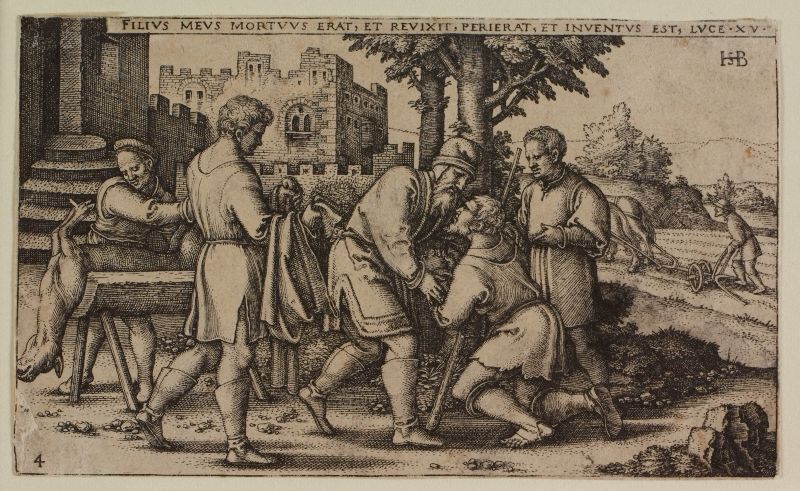
}
}
},
"audio_1": {
"type": "attachments",
"id": "audio_1",
"imgSizes": {
"kqedFullSize": {
"file": "https://ww2.kqed.org/news/wp-content/themes/KQED-unified/img/audio_bgs/background1.jpg"
}
}
},
"audio_2": {
"type": "attachments",
"id": "audio_2",
"imgSizes": {
"kqedFullSize": {
"file": "https://ww2.kqed.org/news/wp-content/themes/KQED-unified/img/audio_bgs/background2.jpg"
}
}
},
"audio_3": {
"type": "attachments",
"id": "audio_3",
"imgSizes": {
"kqedFullSize": {
"file": "https://ww2.kqed.org/news/wp-content/themes/KQED-unified/img/audio_bgs/background3.jpg"
}
}
},
"audio_4": {
"type": "attachments",
"id": "audio_4",
"imgSizes": {
"kqedFullSize": {
"file": "https://ww2.kqed.org/news/wp-content/themes/KQED-unified/img/audio_bgs/background4.jpg"
}
}
},
"placeholder": {
"type": "attachments",
"id": "placeholder",
"imgSizes": {
"thumbnail": {
"file": "https://cdn.kqed.org/wp-content/uploads/2024/12/KQED-Default-Image-816638274-2000x1333-1-160x107.jpg",
"width": 160,
"height": 107,
"mimeType": "image/jpeg"
},
"medium": {
"file": "https://cdn.kqed.org/wp-content/uploads/2024/12/KQED-Default-Image-816638274-2000x1333-1-800x533.jpg",
"width": 800,
"height": 533,
"mimeType": "image/jpeg"
},
"medium_large": {
"file": "https://cdn.kqed.org/wp-content/uploads/2024/12/KQED-Default-Image-816638274-2000x1333-1-768x512.jpg",
"width": 768,
"height": 512,
"mimeType": "image/jpeg"
},
"large": {
"file": "https://cdn.kqed.org/wp-content/uploads/2024/12/KQED-Default-Image-816638274-2000x1333-1-1020x680.jpg",
"width": 1020,
"height": 680,
"mimeType": "image/jpeg"
},
"1536x1536": {
"file": "https://cdn.kqed.org/wp-content/uploads/2024/12/KQED-Default-Image-816638274-2000x1333-1-1536x1024.jpg",
"width": 1536,
"height": 1024,
"mimeType": "image/jpeg"
},
"fd-lrg": {
"file": "https://cdn.kqed.org/wp-content/uploads/2024/12/KQED-Default-Image-816638274-2000x1333-1-1536x1024.jpg",
"width": 1536,
"height": 1024,
"mimeType": "image/jpeg"
},
"fd-med": {
"file": "https://cdn.kqed.org/wp-content/uploads/2024/12/KQED-Default-Image-816638274-2000x1333-1-1020x680.jpg",
"width": 1020,
"height": 680,
"mimeType": "image/jpeg"
},
"fd-sm": {
"file": "https://cdn.kqed.org/wp-content/uploads/2024/12/KQED-Default-Image-816638274-2000x1333-1-800x533.jpg",
"width": 800,
"height": 533,
"mimeType": "image/jpeg"
},
"post-thumbnail": {
"file": "https://cdn.kqed.org/wp-content/uploads/2024/12/KQED-Default-Image-816638274-2000x1333-1-672x372.jpg",
"width": 672,
"height": 372,
"mimeType": "image/jpeg"
},
"twentyfourteen-full-width": {
"file": "https://cdn.kqed.org/wp-content/uploads/2024/12/KQED-Default-Image-816638274-2000x1333-1-1038x576.jpg",
"width": 1038,
"height": 576,
"mimeType": "image/jpeg"
},
"xxsmall": {
"file": "https://cdn.kqed.org/wp-content/uploads/2024/12/KQED-Default-Image-816638274-2000x1333-1-160x107.jpg",
"width": 160,
"height": 107,
"mimeType": "image/jpeg"
},
"xsmall": {
"file": "https://cdn.kqed.org/wp-content/uploads/2024/12/KQED-Default-Image-816638274-2000x1333-1-672x372.jpg",
"width": 672,
"height": 372,
"mimeType": "image/jpeg"
},
"small": {
"file": "https://cdn.kqed.org/wp-content/uploads/2024/12/KQED-Default-Image-816638274-2000x1333-1-672x372.jpg",
"width": 672,
"height": 372,
"mimeType": "image/jpeg"
},
"xlarge": {
"file": "https://cdn.kqed.org/wp-content/uploads/2024/12/KQED-Default-Image-816638274-2000x1333-1-1020x680.jpg",
"width": 1020,
"height": 680,
"mimeType": "image/jpeg"
},
"full-width": {
"file": "https://cdn.kqed.org/wp-content/uploads/2024/12/KQED-Default-Image-816638274-2000x1333-1-1920x1280.jpg",
"width": 1920,
"height": 1280,
"mimeType": "image/jpeg"
},
"guest-author-32": {
"file": "https://cdn.kqed.org/wp-content/uploads/2025/01/KQED-Default-Image-816638274-1333x1333-1-160x160.jpg",
"width": 32,
"height": 32,
"mimeType": "image/jpeg"
},
"guest-author-50": {
"file": "https://cdn.kqed.org/wp-content/uploads/2025/01/KQED-Default-Image-816638274-1333x1333-1-160x160.jpg",
"width": 50,
"height": 50,
"mimeType": "image/jpeg"
},
"guest-author-64": {
"file": "https://cdn.kqed.org/wp-content/uploads/2025/01/KQED-Default-Image-816638274-1333x1333-1-160x160.jpg",
"width": 64,
"height": 64,
"mimeType": "image/jpeg"
},
"guest-author-96": {
"file": "https://cdn.kqed.org/wp-content/uploads/2025/01/KQED-Default-Image-816638274-1333x1333-1-160x160.jpg",
"width": 96,
"height": 96,
"mimeType": "image/jpeg"
},
"guest-author-128": {
"file": "https://cdn.kqed.org/wp-content/uploads/2025/01/KQED-Default-Image-816638274-1333x1333-1-160x160.jpg",
"width": 128,
"height": 128,
"mimeType": "image/jpeg"
},
"detail": {
"file": "https://cdn.kqed.org/wp-content/uploads/2025/01/KQED-Default-Image-816638274-1333x1333-1-160x160.jpg",
"width": 160,
"height": 160,
"mimeType": "image/jpeg"
},
"kqedFullSize": {
"file": "https://cdn.kqed.org/wp-content/uploads/2024/12/KQED-Default-Image-816638274-2000x1333-1.jpg",
"width": 2000,
"height": 1333
}
}
},
"arts_10933934": {
"type": "attachments",
"id": "arts_10933934",
"meta": {
"index": "attachments_1716263798",
"site": "arts",
"id": "10933934",
"found": true
},
"parent": 10933932,
"imgSizes": {
"thumbnail": {
"file": "https://ww2.kqed.org/app/uploads/sites/2/2015/09/Behams-Prodigal-Son-400x246.jpg",
"width": 400,
"mimeType": "image/jpeg",
"height": 246
},
"post-thumbnail": {
"file": "https://ww2.kqed.org/app/uploads/sites/2/2015/09/Behams-Prodigal-Son-672x372.jpg",
"width": 672,
"mimeType": "image/jpeg",
"height": 372
},
"kqedFullSize": {
"file": "https://ww2.kqed.org/app/uploads/sites/2/2015/09/Behams-Prodigal-Son.jpg",
"width": 800,
"height": 491
},
"guest-author-96": {
"file": "https://ww2.kqed.org/app/uploads/sites/2/2015/09/Behams-Prodigal-Son-96x96.jpg",
"width": 96,
"mimeType": "image/jpeg",
"height": 96
},
"medium": {
"file": "https://ww2.kqed.org/app/uploads/sites/2/2015/09/Behams-Prodigal-Son-800x491.jpg",
"width": 800,
"mimeType": "image/jpeg",
"height": 491
},
"guest-author-64": {
"file": "https://ww2.kqed.org/app/uploads/sites/2/2015/09/Behams-Prodigal-Son-64x64.jpg",
"width": 64,
"mimeType": "image/jpeg",
"height": 64
},
"detail": {
"file": "https://ww2.kqed.org/app/uploads/sites/2/2015/09/Behams-Prodigal-Son-75x75.jpg",
"width": 75,
"mimeType": "image/jpeg",
"height": 75
},
"guest-author-32": {
"file": "https://ww2.kqed.org/app/uploads/sites/2/2015/09/Behams-Prodigal-Son-32x32.jpg",
"width": 32,
"mimeType": "image/jpeg",
"height": 32
},
"guest-author-128": {
"file": "https://ww2.kqed.org/app/uploads/sites/2/2015/09/Behams-Prodigal-Son-128x128.jpg",
"width": 128,
"mimeType": "image/jpeg",
"height": 128
}
},
"publishDate": 1441296360,
"modified": 1441296536,
"caption": "An etching by Hans Beham Depicting the return of the prodigal son",
"description": "An etching by Hans Beham Depicting the return of the prodigal son",
"title": "Hans Beham\" etching the prodigal son",
"credit": "Cantor Arts Center",
"status": "inherit",
"isLoading": false,
"fetchFailed": false
},
"arts_10923109": {
"type": "attachments",
"id": "arts_10923109",
"meta": {
"index": "attachments_1716263798",
"site": "arts",
"id": "10923109",
"found": true
},
"parent": 10917154,
"imgSizes": {
"twentyfourteen-full-width": {
"file": "https://ww2.kqed.org/app/uploads/sites/2/2015/08/HieroDay2012-1013x576.jpg",
"width": 1013,
"mimeType": "image/jpeg",
"height": 576
},
"thumbnail": {
"file": "https://ww2.kqed.org/app/uploads/sites/2/2015/08/HieroDay2012-e1441263273939-400x225.jpg",
"width": 400,
"mimeType": "image/jpeg",
"height": 225
},
"fd-sm": {
"file": "https://ww2.kqed.org/app/uploads/sites/2/2015/08/HieroDay2012-e1441263273939-960x540.jpg",
"width": 960,
"mimeType": "image/jpeg",
"height": 540
},
"post-thumbnail": {
"file": "https://ww2.kqed.org/app/uploads/sites/2/2015/08/HieroDay2012-e1441263273939-672x372.jpg",
"width": 672,
"mimeType": "image/jpeg",
"height": 372
},
"kqedFullSize": {
"file": "https://ww2.kqed.org/app/uploads/sites/2/2015/08/HieroDay2012-e1441263273939.jpg",
"width": 1012,
"height": 569
},
"guest-author-96": {
"file": "https://ww2.kqed.org/app/uploads/sites/2/2015/08/HieroDay2012-e1441263273939-96x96.jpg",
"width": 96,
"mimeType": "image/jpeg",
"height": 96
},
"medium": {
"file": "https://ww2.kqed.org/app/uploads/sites/2/2015/08/HieroDay2012-e1441263273939-800x450.jpg",
"width": 800,
"mimeType": "image/jpeg",
"height": 450
},
"guest-author-64": {
"file": "https://ww2.kqed.org/app/uploads/sites/2/2015/08/HieroDay2012-e1441263273939-64x64.jpg",
"width": 64,
"mimeType": "image/jpeg",
"height": 64
},
"detail": {
"file": "https://ww2.kqed.org/app/uploads/sites/2/2015/08/HieroDay2012-e1441263273939-75x75.jpg",
"width": 75,
"mimeType": "image/jpeg",
"height": 75
},
"guest-author-32": {
"file": "https://ww2.kqed.org/app/uploads/sites/2/2015/08/HieroDay2012-e1441263273939-32x32.jpg",
"width": 32,
"mimeType": "image/jpeg",
"height": 32
},
"guest-author-128": {
"file": "https://ww2.kqed.org/app/uploads/sites/2/2015/08/HieroDay2012-e1441263273939-128x128.jpg",
"width": 128,
"mimeType": "image/jpeg",
"height": 128
}
},
"publishDate": 1440809967,
"modified": 1441263310,
"caption": "Hiero Day 2012.",
"description": "Hiero Day 2012, photo courtesy Ineffable / Hieroglyphics.",
"title": "HieroDay2012",
"credit": "Courtesy: Ineffable / Hieroglyphics.",
"status": "inherit",
"isLoading": false,
"fetchFailed": false
},
"arts_10928165": {
"type": "attachments",
"id": "arts_10928165",
"meta": {
"index": "attachments_1716263798",
"site": "arts",
"id": "10928165",
"found": true
},
"parent": 10928159,
"imgSizes": {
"thumbnail": {
"file": "https://ww2.kqed.org/app/uploads/sites/2/2015/08/eurydice5-400x267.jpg",
"width": 400,
"mimeType": "image/jpeg",
"height": 267
},
"post-thumbnail": {
"file": "https://ww2.kqed.org/app/uploads/sites/2/2015/08/eurydice5-672x372.jpg",
"width": 672,
"mimeType": "image/jpeg",
"height": 372
},
"kqedFullSize": {
"file": "https://ww2.kqed.org/app/uploads/sites/2/2015/08/eurydice5.jpg",
"width": 800,
"height": 534
},
"guest-author-96": {
"file": "https://ww2.kqed.org/app/uploads/sites/2/2015/08/eurydice5-96x96.jpg",
"width": 96,
"mimeType": "image/jpeg",
"height": 96
},
"medium": {
"file": "https://ww2.kqed.org/app/uploads/sites/2/2015/08/eurydice5-800x534.jpg",
"width": 800,
"mimeType": "image/jpeg",
"height": 534
},
"guest-author-64": {
"file": "https://ww2.kqed.org/app/uploads/sites/2/2015/08/eurydice5-64x64.jpg",
"width": 64,
"mimeType": "image/jpeg",
"height": 64
},
"detail": {
"file": "https://ww2.kqed.org/app/uploads/sites/2/2015/08/eurydice5-75x75.jpg",
"width": 75,
"mimeType": "image/jpeg",
"height": 75
},
"guest-author-32": {
"file": "https://ww2.kqed.org/app/uploads/sites/2/2015/08/eurydice5-32x32.jpg",
"width": 32,
"mimeType": "image/jpeg",
"height": 32
},
"guest-author-128": {
"file": "https://ww2.kqed.org/app/uploads/sites/2/2015/08/eurydice5-128x128.jpg",
"width": 128,
"mimeType": "image/jpeg",
"height": 128
}
},
"publishDate": 1441047993,
"modified": 1441048028,
"caption": "Megan Trout and Kenny Toll in Shotgun Players' \u003ci>Eurydice\u003c/i>. (Photo: Pak Han)",
"description": null,
"title": "eurydice5",
"credit": null,
"status": "inherit",
"isLoading": false,
"fetchFailed": false
},
"pop_17916": {
"type": "attachments",
"id": "pop_17916",
"meta": {
"index": "attachments_1716263798",
"site": "pop",
"id": "17916",
"found": true
},
"parent": 17914,
"imgSizes": {
"twentyfourteen-full-width": {
"file": "https://ww2.kqed.org/app/uploads/sites/12/2015/08/maxresdefault-1038x576.jpg",
"width": 1038,
"mimeType": "image/jpeg",
"height": 576
},
"thumbnail": {
"file": "https://ww2.kqed.org/app/uploads/sites/12/2015/08/maxresdefault-400x282.jpg",
"width": 400,
"mimeType": "image/jpeg",
"height": 282
},
"fd-sm": {
"file": "https://ww2.kqed.org/app/uploads/sites/12/2015/08/maxresdefault-960x677.jpg",
"width": 960,
"mimeType": "image/jpeg",
"height": 677
},
"post-thumbnail": {
"file": "https://ww2.kqed.org/app/uploads/sites/12/2015/08/maxresdefault-672x372.jpg",
"width": 672,
"mimeType": "image/jpeg",
"height": 372
},
"kqedFullSize": {
"file": "https://ww2.kqed.org/app/uploads/sites/12/2015/08/maxresdefault.jpg",
"width": 3000,
"height": 2115
},
"large": {
"file": "https://ww2.kqed.org/app/uploads/sites/12/2015/08/maxresdefault-1440x1015.jpg",
"width": 1440,
"mimeType": "image/jpeg",
"height": 1015
},
"guest-author-96": {
"file": "https://ww2.kqed.org/app/uploads/sites/12/2015/08/maxresdefault-96x96.jpg",
"width": 96,
"mimeType": "image/jpeg",
"height": 96
},
"medium": {
"file": "https://ww2.kqed.org/app/uploads/sites/12/2015/08/maxresdefault-800x564.jpg",
"width": 800,
"mimeType": "image/jpeg",
"height": 564
},
"guest-author-64": {
"file": "https://ww2.kqed.org/app/uploads/sites/12/2015/08/maxresdefault-64x64.jpg",
"width": 64,
"mimeType": "image/jpeg",
"height": 64
},
"guest-author-32": {
"file": "https://ww2.kqed.org/app/uploads/sites/12/2015/08/maxresdefault-32x32.jpg",
"width": 32,
"mimeType": "image/jpeg",
"height": 32
},
"fd-lrg": {
"file": "https://ww2.kqed.org/app/uploads/sites/12/2015/08/maxresdefault-1920x1354.jpg",
"width": 1920,
"mimeType": "image/jpeg",
"height": 1354
},
"fd-med": {
"file": "https://ww2.kqed.org/app/uploads/sites/12/2015/08/maxresdefault-1180x832.jpg",
"width": 1180,
"mimeType": "image/jpeg",
"height": 832
},
"detail": {
"file": "https://ww2.kqed.org/app/uploads/sites/12/2015/08/maxresdefault-75x75.jpg",
"width": 75,
"mimeType": "image/jpeg",
"height": 75
},
"guest-author-128": {
"file": "https://ww2.kqed.org/app/uploads/sites/12/2015/08/maxresdefault-128x128.jpg",
"width": 128,
"mimeType": "image/jpeg",
"height": 128
}
},
"publishDate": 1440789047,
"modified": 1441402405,
"caption": "'Burning Man: The Musical,' a real thing that will probably get very nicely funded because of course it will.",
"description": "'Burning Man: The Musical,' a real thing that will probably get very nicely funded because of course it will.",
"title": "maxresdefault",
"credit": null,
"status": "inherit",
"isLoading": false,
"fetchFailed": false
},
"arts_10919282": {
"type": "attachments",
"id": "arts_10919282",
"meta": {
"index": "attachments_1716263798",
"site": "arts",
"id": "10919282",
"found": true
},
"parent": 10919281,
"imgSizes": {
"twentyfourteen-full-width": {
"file": "https://ww2.kqed.org/app/uploads/sites/2/2015/08/BrendenGuy-5680-Credit-Kristen-Loken-1mb-e1440638453108-1038x576.jpg",
"width": 1038,
"mimeType": "image/jpeg",
"height": 576
},
"thumbnail": {
"file": "https://ww2.kqed.org/app/uploads/sites/2/2015/08/BrendenGuy-5680-Credit-Kristen-Loken-1mb-e1440638453108-400x225.jpg",
"width": 400,
"mimeType": "image/jpeg",
"height": 225
},
"fd-sm": {
"file": "https://ww2.kqed.org/app/uploads/sites/2/2015/08/BrendenGuy-5680-Credit-Kristen-Loken-1mb-e1440638453108-960x540.jpg",
"width": 960,
"mimeType": "image/jpeg",
"height": 540
},
"post-thumbnail": {
"file": "https://ww2.kqed.org/app/uploads/sites/2/2015/08/BrendenGuy-5680-Credit-Kristen-Loken-1mb-e1440638453108-672x372.jpg",
"width": 672,
"mimeType": "image/jpeg",
"height": 372
},
"kqedFullSize": {
"file": "https://ww2.kqed.org/app/uploads/sites/2/2015/08/BrendenGuy-5680-Credit-Kristen-Loken-1mb-e1440638453108.jpg",
"width": 2000,
"height": 1125
},
"large": {
"file": "https://ww2.kqed.org/app/uploads/sites/2/2015/08/BrendenGuy-5680-Credit-Kristen-Loken-1mb-e1440638453108-1180x664.jpg",
"width": 1180,
"mimeType": "image/jpeg",
"height": 664
},
"guest-author-96": {
"file": "https://ww2.kqed.org/app/uploads/sites/2/2015/08/BrendenGuy-5680-Credit-Kristen-Loken-1mb-e1440638453108-96x96.jpg",
"width": 96,
"mimeType": "image/jpeg",
"height": 96
},
"medium": {
"file": "https://ww2.kqed.org/app/uploads/sites/2/2015/08/BrendenGuy-5680-Credit-Kristen-Loken-1mb-e1440638453108-800x450.jpg",
"width": 800,
"mimeType": "image/jpeg",
"height": 450
},
"guest-author-64": {
"file": "https://ww2.kqed.org/app/uploads/sites/2/2015/08/BrendenGuy-5680-Credit-Kristen-Loken-1mb-e1440638453108-64x64.jpg",
"width": 64,
"mimeType": "image/jpeg",
"height": 64
},
"guest-author-32": {
"file": "https://ww2.kqed.org/app/uploads/sites/2/2015/08/BrendenGuy-5680-Credit-Kristen-Loken-1mb-e1440638453108-32x32.jpg",
"width": 32,
"mimeType": "image/jpeg",
"height": 32
},
"fd-lrg": {
"file": "https://ww2.kqed.org/app/uploads/sites/2/2015/08/BrendenGuy-5680-Credit-Kristen-Loken-1mb-e1440638453108-1920x1080.jpg",
"width": 1920,
"mimeType": "image/jpeg",
"height": 1080
},
"fd-med": {
"file": "https://ww2.kqed.org/app/uploads/sites/2/2015/08/BrendenGuy-5680-Credit-Kristen-Loken-1mb-e1440638453108-1180x664.jpg",
"width": 1180,
"mimeType": "image/jpeg",
"height": 664
},
"detail": {
"file": "https://ww2.kqed.org/app/uploads/sites/2/2015/08/BrendenGuy-5680-Credit-Kristen-Loken-1mb-e1440638453108-75x75.jpg",
"width": 75,
"mimeType": "image/jpeg",
"height": 75
},
"guest-author-128": {
"file": "https://ww2.kqed.org/app/uploads/sites/2/2015/08/BrendenGuy-5680-Credit-Kristen-Loken-1mb-e1440638453108-128x128.jpg",
"width": 128,
"mimeType": "image/jpeg",
"height": 128
}
},
"publishDate": 1440629679,
"modified": 1440642570,
"caption": "Clarinetist Brenden Guy. (Photo / Kristen Loken)",
"description": "Clarinetist Brenden Guy. (Photo / Kristen Loken)",
"title": "Clarinetist Brenden Guy",
"credit": null,
"status": "inherit",
"isLoading": false,
"fetchFailed": false
},
"arts_10915653": {
"type": "attachments",
"id": "arts_10915653",
"meta": {
"index": "attachments_1716263798",
"site": "arts",
"id": "10915653",
"found": true
},
"parent": 10915651,
"imgSizes": {
"thumbnail": {
"file": "https://ww2.kqed.org/app/uploads/sites/2/2015/08/fall-mainphoto-400x225.jpg",
"width": 400,
"mimeType": "image/jpeg",
"height": 225
},
"post-thumbnail": {
"file": "https://ww2.kqed.org/app/uploads/sites/2/2015/08/fall-mainphoto-672x372.jpg",
"width": 672,
"mimeType": "image/jpeg",
"height": 372
},
"kqedFullSize": {
"file": "https://ww2.kqed.org/app/uploads/sites/2/2015/08/fall-mainphoto.jpg",
"width": 800,
"height": 450
},
"guest-author-96": {
"file": "https://ww2.kqed.org/app/uploads/sites/2/2015/08/fall-mainphoto-96x96.jpg",
"width": 96,
"mimeType": "image/jpeg",
"height": 96
},
"medium": {
"file": "https://ww2.kqed.org/app/uploads/sites/2/2015/08/fall-mainphoto-800x450.jpg",
"width": 800,
"mimeType": "image/jpeg",
"height": 450
},
"guest-author-64": {
"file": "https://ww2.kqed.org/app/uploads/sites/2/2015/08/fall-mainphoto-64x64.jpg",
"width": 64,
"mimeType": "image/jpeg",
"height": 64
},
"detail": {
"file": "https://ww2.kqed.org/app/uploads/sites/2/2015/08/fall-mainphoto-75x75.jpg",
"width": 75,
"mimeType": "image/jpeg",
"height": 75
},
"guest-author-32": {
"file": "https://ww2.kqed.org/app/uploads/sites/2/2015/08/fall-mainphoto-32x32.jpg",
"width": 32,
"mimeType": "image/jpeg",
"height": 32
},
"guest-author-128": {
"file": "https://ww2.kqed.org/app/uploads/sites/2/2015/08/fall-mainphoto-128x128.jpg",
"width": 128,
"mimeType": "image/jpeg",
"height": 128
}
},
"publishDate": 1440463837,
"modified": 1440463960,
"caption": "The widows in Naatak’s new Hindi musical \u003ci>Vrindavan.\u003c/i> (Photo: Amit Basu)",
"description": null,
"title": "fall-mainphoto",
"credit": null,
"status": "inherit",
"isLoading": false,
"fetchFailed": false
},
"arts_10907419": {
"type": "attachments",
"id": "arts_10907419",
"meta": {
"index": "attachments_1716263798",
"site": "arts",
"id": "10907419",
"found": true
},
"parent": 10907338,
"imgSizes": {
"twentyfourteen-full-width": {
"file": "https://ww2.kqed.org/app/uploads/sites/2/2015/08/Gianni-Schicchi-2-1-e1440104373790-1038x576.jpg",
"width": 1038,
"mimeType": "image/jpeg",
"height": 576
},
"thumbnail": {
"file": "https://ww2.kqed.org/app/uploads/sites/2/2015/08/Gianni-Schicchi-2-1-e1440104373790-400x239.jpg",
"width": 400,
"mimeType": "image/jpeg",
"height": 239
},
"fd-sm": {
"file": "https://ww2.kqed.org/app/uploads/sites/2/2015/08/Gianni-Schicchi-2-1-e1440104373790-960x573.jpg",
"width": 960,
"mimeType": "image/jpeg",
"height": 573
},
"post-thumbnail": {
"file": "https://ww2.kqed.org/app/uploads/sites/2/2015/08/Gianni-Schicchi-2-1-e1440104373790-672x372.jpg",
"width": 672,
"mimeType": "image/jpeg",
"height": 372
},
"kqedFullSize": {
"file": "https://ww2.kqed.org/app/uploads/sites/2/2015/08/Gianni-Schicchi-2-1-e1440104373790.jpg",
"width": 5206,
"height": 3105
},
"large": {
"file": "https://ww2.kqed.org/app/uploads/sites/2/2015/08/Gianni-Schicchi-2-1-e1440104373790-1180x704.jpg",
"width": 1180,
"mimeType": "image/jpeg",
"height": 704
},
"guest-author-96": {
"file": "https://ww2.kqed.org/app/uploads/sites/2/2015/08/Gianni-Schicchi-2-1-e1440104373790-96x96.jpg",
"width": 96,
"mimeType": "image/jpeg",
"height": 96
},
"medium": {
"file": "https://ww2.kqed.org/app/uploads/sites/2/2015/08/Gianni-Schicchi-2-1-e1440104373790-800x477.jpg",
"width": 800,
"mimeType": "image/jpeg",
"height": 477
},
"guest-author-64": {
"file": "https://ww2.kqed.org/app/uploads/sites/2/2015/08/Gianni-Schicchi-2-1-e1440104373790-64x64.jpg",
"width": 64,
"mimeType": "image/jpeg",
"height": 64
},
"guest-author-32": {
"file": "https://ww2.kqed.org/app/uploads/sites/2/2015/08/Gianni-Schicchi-2-1-e1440104373790-32x32.jpg",
"width": 32,
"mimeType": "image/jpeg",
"height": 32
},
"fd-lrg": {
"file": "https://ww2.kqed.org/app/uploads/sites/2/2015/08/Gianni-Schicchi-2-1-e1440104373790-1920x1145.jpg",
"width": 1920,
"mimeType": "image/jpeg",
"height": 1145
},
"fd-med": {
"file": "https://ww2.kqed.org/app/uploads/sites/2/2015/08/Gianni-Schicchi-2-1-e1440104373790-1180x704.jpg",
"width": 1180,
"mimeType": "image/jpeg",
"height": 704
},
"detail": {
"file": "https://ww2.kqed.org/app/uploads/sites/2/2015/08/Gianni-Schicchi-2-1-e1440104373790-75x75.jpg",
"width": 75,
"mimeType": "image/jpeg",
"height": 75
},
"guest-author-128": {
"file": "https://ww2.kqed.org/app/uploads/sites/2/2015/08/Gianni-Schicchi-2-1-e1440104373790-128x128.jpg",
"width": 128,
"mimeType": "image/jpeg",
"height": 128
}
},
"publishDate": 1440099454,
"modified": 1440114245,
"caption": "Merola Opera Artists in a scene from Puccini's 'Gianni Schicchi' earlier this summer. The program's finale takes place this Saturday, Aug. 22.",
"description": "Merola Opera Artists in a scene from Puccini's 'Gianni Schicchi' earlier this summer.The program's finale takes place this Saturday, Aug. 22.",
"title": "Merola Opera Artists",
"credit": "Merola Opera Program",
"status": "inherit",
"isLoading": false,
"fetchFailed": false
},
"arts_10905783": {
"type": "attachments",
"id": "arts_10905783",
"meta": {
"index": "attachments_1716263798",
"site": "arts",
"id": "10905783",
"found": true
},
"parent": 10905687,
"imgSizes": {
"twentyfourteen-full-width": {
"file": "https://ww2.kqed.org/app/uploads/sites/2/2015/08/Eric-Ting-youtube-1038x576.jpg",
"width": 1038,
"mimeType": "image/jpeg",
"height": 576
},
"thumbnail": {
"file": "https://ww2.kqed.org/app/uploads/sites/2/2015/08/Eric-Ting-youtube-400x225.jpg",
"width": 400,
"mimeType": "image/jpeg",
"height": 225
},
"fd-sm": {
"file": "https://ww2.kqed.org/app/uploads/sites/2/2015/08/Eric-Ting-youtube-960x540.jpg",
"width": 960,
"mimeType": "image/jpeg",
"height": 540
},
"post-thumbnail": {
"file": "https://ww2.kqed.org/app/uploads/sites/2/2015/08/Eric-Ting-youtube-672x372.jpg",
"width": 672,
"mimeType": "image/jpeg",
"height": 372
},
"kqedFullSize": {
"file": "https://ww2.kqed.org/app/uploads/sites/2/2015/08/Eric-Ting-youtube.jpg",
"width": 1440,
"height": 810
},
"large": {
"file": "https://ww2.kqed.org/app/uploads/sites/2/2015/08/Eric-Ting-youtube-1180x664.jpg",
"width": 1180,
"mimeType": "image/jpeg",
"height": 664
},
"guest-author-96": {
"file": "https://ww2.kqed.org/app/uploads/sites/2/2015/08/Eric-Ting-youtube-96x96.jpg",
"width": 96,
"mimeType": "image/jpeg",
"height": 96
},
"medium": {
"file": "https://ww2.kqed.org/app/uploads/sites/2/2015/08/Eric-Ting-youtube-800x450.jpg",
"width": 800,
"mimeType": "image/jpeg",
"height": 450
},
"guest-author-64": {
"file": "https://ww2.kqed.org/app/uploads/sites/2/2015/08/Eric-Ting-youtube-64x64.jpg",
"width": 64,
"mimeType": "image/jpeg",
"height": 64
},
"guest-author-32": {
"file": "https://ww2.kqed.org/app/uploads/sites/2/2015/08/Eric-Ting-youtube-32x32.jpg",
"width": 32,
"mimeType": "image/jpeg",
"height": 32
},
"fd-med": {
"file": "https://ww2.kqed.org/app/uploads/sites/2/2015/08/Eric-Ting-youtube-1180x664.jpg",
"width": 1180,
"mimeType": "image/jpeg",
"height": 664
},
"detail": {
"file": "https://ww2.kqed.org/app/uploads/sites/2/2015/08/Eric-Ting-youtube-75x75.jpg",
"width": 75,
"mimeType": "image/jpeg",
"height": 75
},
"guest-author-128": {
"file": "https://ww2.kqed.org/app/uploads/sites/2/2015/08/Eric-Ting-youtube-128x128.jpg",
"width": 128,
"mimeType": "image/jpeg",
"height": 128
}
},
"publishDate": 1440026272,
"modified": 1440026277,
"caption": "Eric Ting, new artistic director at California Shakespeare Theater in Orinda",
"description": "Eric Ting, new artistic director at California Shakespeare Theater in Orinda",
"title": "Eric Ting youtube",
"credit": null,
"status": "inherit",
"isLoading": false,
"fetchFailed": false
},
"arts_10896132": {
"type": "attachments",
"id": "arts_10896132",
"meta": {
"index": "attachments_1716263798",
"site": "arts",
"id": "10896132",
"found": true
},
"parent": 10894950,
"imgSizes": {
"twentyfourteen-full-width": {
"file": "https://ww2.kqed.org/app/uploads/sites/2/2015/08/hGrHDTkCM4FFLrEs397uuTHyVV8iUzyJhM1ZqgM5DuwG6laMyt2Tx4_IEkZNPTDPbA2-aaULst6zOZAMDImrj8ugMpfeI1-GlGq8mXigjtsUjiwYnSIFq-mkPKIDOaIYo-e1439583760829-1038x576.jpg",
"width": 1038,
"mimeType": "image/jpeg",
"height": 576
},
"thumbnail": {
"file": "https://ww2.kqed.org/app/uploads/sites/2/2015/08/hGrHDTkCM4FFLrEs397uuTHyVV8iUzyJhM1ZqgM5DuwG6laMyt2Tx4_IEkZNPTDPbA2-aaULst6zOZAMDImrj8ugMpfeI1-GlGq8mXigjtsUjiwYnSIFq-mkPKIDOaIYo-e1439583760829-400x248.jpg",
"width": 400,
"mimeType": "image/jpeg",
"height": 248
},
"fd-sm": {
"file": "https://ww2.kqed.org/app/uploads/sites/2/2015/08/hGrHDTkCM4FFLrEs397uuTHyVV8iUzyJhM1ZqgM5DuwG6laMyt2Tx4_IEkZNPTDPbA2-aaULst6zOZAMDImrj8ugMpfeI1-GlGq8mXigjtsUjiwYnSIFq-mkPKIDOaIYo-e1439583760829-960x594.jpg",
"width": 960,
"mimeType": "image/jpeg",
"height": 594
},
"post-thumbnail": {
"file": "https://ww2.kqed.org/app/uploads/sites/2/2015/08/hGrHDTkCM4FFLrEs397uuTHyVV8iUzyJhM1ZqgM5DuwG6laMyt2Tx4_IEkZNPTDPbA2-aaULst6zOZAMDImrj8ugMpfeI1-GlGq8mXigjtsUjiwYnSIFq-mkPKIDOaIYo-e1439583760829-672x372.jpg",
"width": 672,
"mimeType": "image/jpeg",
"height": 372
},
"kqedFullSize": {
"file": "https://ww2.kqed.org/app/uploads/sites/2/2015/08/hGrHDTkCM4FFLrEs397uuTHyVV8iUzyJhM1ZqgM5DuwG6laMyt2Tx4_IEkZNPTDPbA2-aaULst6zOZAMDImrj8ugMpfeI1-GlGq8mXigjtsUjiwYnSIFq-mkPKIDOaIYo-e1439583760829.jpg",
"width": 1276,
"height": 790
},
"large": {
"file": "https://ww2.kqed.org/app/uploads/sites/2/2015/08/hGrHDTkCM4FFLrEs397uuTHyVV8iUzyJhM1ZqgM5DuwG6laMyt2Tx4_IEkZNPTDPbA2-aaULst6zOZAMDImrj8ugMpfeI1-GlGq8mXigjtsUjiwYnSIFq-mkPKIDOaIYo-e1439583760829-1180x731.jpg",
"width": 1180,
"mimeType": "image/jpeg",
"height": 731
},
"guest-author-96": {
"file": "https://ww2.kqed.org/app/uploads/sites/2/2015/08/hGrHDTkCM4FFLrEs397uuTHyVV8iUzyJhM1ZqgM5DuwG6laMyt2Tx4_IEkZNPTDPbA2-aaULst6zOZAMDImrj8ugMpfeI1-GlGq8mXigjtsUjiwYnSIFq-mkPKIDOaIYo-e1439583760829-96x96.jpg",
"width": 96,
"mimeType": "image/jpeg",
"height": 96
},
"medium": {
"file": "https://ww2.kqed.org/app/uploads/sites/2/2015/08/hGrHDTkCM4FFLrEs397uuTHyVV8iUzyJhM1ZqgM5DuwG6laMyt2Tx4_IEkZNPTDPbA2-aaULst6zOZAMDImrj8ugMpfeI1-GlGq8mXigjtsUjiwYnSIFq-mkPKIDOaIYo-e1439583760829-800x495.jpg",
"width": 800,
"mimeType": "image/jpeg",
"height": 495
},
"guest-author-64": {
"file": "https://ww2.kqed.org/app/uploads/sites/2/2015/08/hGrHDTkCM4FFLrEs397uuTHyVV8iUzyJhM1ZqgM5DuwG6laMyt2Tx4_IEkZNPTDPbA2-aaULst6zOZAMDImrj8ugMpfeI1-GlGq8mXigjtsUjiwYnSIFq-mkPKIDOaIYo-e1439583760829-64x64.jpg",
"width": 64,
"mimeType": "image/jpeg",
"height": 64
},
"guest-author-32": {
"file": "https://ww2.kqed.org/app/uploads/sites/2/2015/08/hGrHDTkCM4FFLrEs397uuTHyVV8iUzyJhM1ZqgM5DuwG6laMyt2Tx4_IEkZNPTDPbA2-aaULst6zOZAMDImrj8ugMpfeI1-GlGq8mXigjtsUjiwYnSIFq-mkPKIDOaIYo-e1439583760829-32x32.jpg",
"width": 32,
"mimeType": "image/jpeg",
"height": 32
},
"fd-med": {
"file": "https://ww2.kqed.org/app/uploads/sites/2/2015/08/hGrHDTkCM4FFLrEs397uuTHyVV8iUzyJhM1ZqgM5DuwG6laMyt2Tx4_IEkZNPTDPbA2-aaULst6zOZAMDImrj8ugMpfeI1-GlGq8mXigjtsUjiwYnSIFq-mkPKIDOaIYo-e1439583760829-1180x731.jpg",
"width": 1180,
"mimeType": "image/jpeg",
"height": 731
},
"detail": {
"file": "https://ww2.kqed.org/app/uploads/sites/2/2015/08/hGrHDTkCM4FFLrEs397uuTHyVV8iUzyJhM1ZqgM5DuwG6laMyt2Tx4_IEkZNPTDPbA2-aaULst6zOZAMDImrj8ugMpfeI1-GlGq8mXigjtsUjiwYnSIFq-mkPKIDOaIYo-e1439583760829-75x75.jpg",
"width": 75,
"mimeType": "image/jpeg",
"height": 75
},
"guest-author-128": {
"file": "https://ww2.kqed.org/app/uploads/sites/2/2015/08/hGrHDTkCM4FFLrEs397uuTHyVV8iUzyJhM1ZqgM5DuwG6laMyt2Tx4_IEkZNPTDPbA2-aaULst6zOZAMDImrj8ugMpfeI1-GlGq8mXigjtsUjiwYnSIFq-mkPKIDOaIYo-e1439583760829-128x128.jpg",
"width": 128,
"mimeType": "image/jpeg",
"height": 128
}
},
"publishDate": 1439583710,
"modified": 1439583741,
"caption": "(L to R) Danny Scheie as Lady Enid Hillcrest and Liam Vincent as Jane Twisden in California Shakespeare Theater’s The Mystery of Irma Vep, directed by Jonathan Moscone; photo by Kevin Berne. ",
"description": null,
"title": "hGrHDTkCM4FFLrEs397uuTHyVV8iUzyJhM1ZqgM5Duw,G6laMyt2Tx4_IEkZNPTDPbA2-aaULst6zOZAMDImrj8,ugMpfeI1-GlGq8mXigjtsUjiwYnSIFq-mkPKIDOaIYo",
"credit": null,
"status": "inherit",
"isLoading": false,
"fetchFailed": false
},
"arts_10894573": {
"type": "attachments",
"id": "arts_10894573",
"meta": {
"index": "attachments_1716263798",
"site": "arts",
"id": "10894573",
"found": true
},
"parent": 10894210,
"imgSizes": {
"twentyfourteen-full-width": {
"file": "https://ww2.kqed.org/app/uploads/sites/2/2015/08/OSFCover-1038x576.jpg",
"width": 1038,
"mimeType": "image/jpeg",
"height": 576
},
"thumbnail": {
"file": "https://ww2.kqed.org/app/uploads/sites/2/2015/08/OSFCover-400x225.jpg",
"width": 400,
"mimeType": "image/jpeg",
"height": 225
},
"fd-sm": {
"file": "https://ww2.kqed.org/app/uploads/sites/2/2015/08/OSFCover-960x540.jpg",
"width": 960,
"mimeType": "image/jpeg",
"height": 540
},
"post-thumbnail": {
"file": "https://ww2.kqed.org/app/uploads/sites/2/2015/08/OSFCover-672x372.jpg",
"width": 672,
"mimeType": "image/jpeg",
"height": 372
},
"kqedFullSize": {
"file": "https://ww2.kqed.org/app/uploads/sites/2/2015/08/OSFCover.jpg",
"width": 1920,
"height": 1080
},
"large": {
"file": "https://ww2.kqed.org/app/uploads/sites/2/2015/08/OSFCover-1180x664.jpg",
"width": 1180,
"mimeType": "image/jpeg",
"height": 664
},
"guest-author-96": {
"file": "https://ww2.kqed.org/app/uploads/sites/2/2015/08/OSFCover-96x96.jpg",
"width": 96,
"mimeType": "image/jpeg",
"height": 96
},
"medium": {
"file": "https://ww2.kqed.org/app/uploads/sites/2/2015/08/OSFCover-800x450.jpg",
"width": 800,
"mimeType": "image/jpeg",
"height": 450
},
"guest-author-64": {
"file": "https://ww2.kqed.org/app/uploads/sites/2/2015/08/OSFCover-64x64.jpg",
"width": 64,
"mimeType": "image/jpeg",
"height": 64
},
"guest-author-32": {
"file": "https://ww2.kqed.org/app/uploads/sites/2/2015/08/OSFCover-32x32.jpg",
"width": 32,
"mimeType": "image/jpeg",
"height": 32
},
"fd-lrg": {
"file": "https://ww2.kqed.org/app/uploads/sites/2/2015/08/OSFCover-1920x1080.jpg",
"width": 1920,
"mimeType": "image/jpeg",
"height": 1080
},
"fd-med": {
"file": "https://ww2.kqed.org/app/uploads/sites/2/2015/08/OSFCover-1180x664.jpg",
"width": 1180,
"mimeType": "image/jpeg",
"height": 664
},
"detail": {
"file": "https://ww2.kqed.org/app/uploads/sites/2/2015/08/OSFCover-75x75.jpg",
"width": 75,
"mimeType": "image/jpeg",
"height": 75
},
"guest-author-128": {
"file": "https://ww2.kqed.org/app/uploads/sites/2/2015/08/OSFCover-128x128.jpg",
"width": 128,
"mimeType": "image/jpeg",
"height": 128
}
},
"publishDate": 1439510997,
"modified": 1439511013,
"caption": "A scene from Oregon Shakespeare Festival's 2015 production of 'Head over Heels.' (Photo: Jenny Graham/Oregon Shakespeare Festival)",
"description": null,
"title": "OSFCover",
"credit": null,
"status": "inherit",
"isLoading": false,
"fetchFailed": false
},
"arts_10881875": {
"type": "attachments",
"id": "arts_10881875",
"meta": {
"index": "attachments_1716263798",
"site": "arts",
"id": "10881875",
"found": true
},
"parent": 10881799,
"imgSizes": {
"twentyfourteen-full-width": {
"file": "https://ww2.kqed.org/app/uploads/sites/2/2015/08/Mason_Bates-1038x576.jpg",
"width": 1038,
"mimeType": "image/jpeg",
"height": 576
},
"thumbnail": {
"file": "https://ww2.kqed.org/app/uploads/sites/2/2015/08/Mason_Bates-400x267.jpg",
"width": 400,
"mimeType": "image/jpeg",
"height": 267
},
"fd-sm": {
"file": "https://ww2.kqed.org/app/uploads/sites/2/2015/08/Mason_Bates-960x640.jpg",
"width": 960,
"mimeType": "image/jpeg",
"height": 640
},
"post-thumbnail": {
"file": "https://ww2.kqed.org/app/uploads/sites/2/2015/08/Mason_Bates-672x372.jpg",
"width": 672,
"mimeType": "image/jpeg",
"height": 372
},
"kqedFullSize": {
"file": "https://ww2.kqed.org/app/uploads/sites/2/2015/08/Mason_Bates.jpg",
"width": 1800,
"height": 1200
},
"large": {
"file": "https://ww2.kqed.org/app/uploads/sites/2/2015/08/Mason_Bates-1180x787.jpg",
"width": 1180,
"mimeType": "image/jpeg",
"height": 787
},
"guest-author-96": {
"file": "https://ww2.kqed.org/app/uploads/sites/2/2015/08/Mason_Bates-96x96.jpg",
"width": 96,
"mimeType": "image/jpeg",
"height": 96
},
"medium": {
"file": "https://ww2.kqed.org/app/uploads/sites/2/2015/08/Mason_Bates-800x533.jpg",
"width": 800,
"mimeType": "image/jpeg",
"height": 533
},
"guest-author-64": {
"file": "https://ww2.kqed.org/app/uploads/sites/2/2015/08/Mason_Bates-64x64.jpg",
"width": 64,
"mimeType": "image/jpeg",
"height": 64
},
"guest-author-32": {
"file": "https://ww2.kqed.org/app/uploads/sites/2/2015/08/Mason_Bates-32x32.jpg",
"width": 32,
"mimeType": "image/jpeg",
"height": 32
},
"fd-med": {
"file": "https://ww2.kqed.org/app/uploads/sites/2/2015/08/Mason_Bates-1180x787.jpg",
"width": 1180,
"mimeType": "image/jpeg",
"height": 787
},
"detail": {
"file": "https://ww2.kqed.org/app/uploads/sites/2/2015/08/Mason_Bates-75x75.jpg",
"width": 75,
"mimeType": "image/jpeg",
"height": 75
},
"guest-author-128": {
"file": "https://ww2.kqed.org/app/uploads/sites/2/2015/08/Mason_Bates-128x128.jpg",
"width": 128,
"mimeType": "image/jpeg",
"height": 128
}
},
"publishDate": 1438892554,
"modified": 1438892592,
"caption": "Composer Mason Bates.",
"description": "Composer Mason Bates.",
"title": "Mason_Bates",
"credit": "Photo courtesy of Ryan Close",
"status": "inherit",
"isLoading": false,
"fetchFailed": false
},
"arts_10863437": {
"type": "attachments",
"id": "arts_10863437",
"meta": {
"index": "attachments_1716263798",
"site": "arts",
"id": "10863437",
"found": true
},
"parent": 10863219,
"imgSizes": {
"twentyfourteen-full-width": {
"file": "https://ww2.kqed.org/app/uploads/sites/2/2015/07/Lulu-First-Scene-Hi-Res-1038x576.jpg",
"width": 1038,
"mimeType": "image/jpeg",
"height": 576
},
"thumbnail": {
"file": "https://ww2.kqed.org/app/uploads/sites/2/2015/07/Lulu-First-Scene-Hi-Res-400x267.jpg",
"width": 400,
"mimeType": "image/jpeg",
"height": 267
},
"fd-sm": {
"file": "https://ww2.kqed.org/app/uploads/sites/2/2015/07/Lulu-First-Scene-Hi-Res-960x640.jpg",
"width": 960,
"mimeType": "image/jpeg",
"height": 640
},
"post-thumbnail": {
"file": "https://ww2.kqed.org/app/uploads/sites/2/2015/07/Lulu-First-Scene-Hi-Res-672x372.jpg",
"width": 672,
"mimeType": "image/jpeg",
"height": 372
},
"kqedFullSize": {
"file": "https://ww2.kqed.org/app/uploads/sites/2/2015/07/Lulu-First-Scene-Hi-Res.jpg",
"width": 5666,
"height": 3777
},
"large": {
"file": "https://ww2.kqed.org/app/uploads/sites/2/2015/07/Lulu-First-Scene-Hi-Res-1180x787.jpg",
"width": 1180,
"mimeType": "image/jpeg",
"height": 787
},
"guest-author-96": {
"file": "https://ww2.kqed.org/app/uploads/sites/2/2015/07/Lulu-First-Scene-Hi-Res-96x96.jpg",
"width": 96,
"mimeType": "image/jpeg",
"height": 96
},
"medium": {
"file": "https://ww2.kqed.org/app/uploads/sites/2/2015/07/Lulu-First-Scene-Hi-Res-800x533.jpg",
"width": 800,
"mimeType": "image/jpeg",
"height": 533
},
"guest-author-64": {
"file": "https://ww2.kqed.org/app/uploads/sites/2/2015/07/Lulu-First-Scene-Hi-Res-64x64.jpg",
"width": 64,
"mimeType": "image/jpeg",
"height": 64
},
"guest-author-32": {
"file": "https://ww2.kqed.org/app/uploads/sites/2/2015/07/Lulu-First-Scene-Hi-Res-32x32.jpg",
"width": 32,
"mimeType": "image/jpeg",
"height": 32
},
"fd-lrg": {
"file": "https://ww2.kqed.org/app/uploads/sites/2/2015/07/Lulu-First-Scene-Hi-Res-1400x933.jpg",
"width": 1400,
"mimeType": "image/jpeg",
"height": 933
},
"fd-med": {
"file": "https://ww2.kqed.org/app/uploads/sites/2/2015/07/Lulu-First-Scene-Hi-Res-1180x787.jpg",
"width": 1180,
"mimeType": "image/jpeg",
"height": 787
},
"detail": {
"file": "https://ww2.kqed.org/app/uploads/sites/2/2015/07/Lulu-First-Scene-Hi-Res-75x75.jpg",
"width": 75,
"mimeType": "image/jpeg",
"height": 75
},
"guest-author-128": {
"file": "https://ww2.kqed.org/app/uploads/sites/2/2015/07/Lulu-First-Scene-Hi-Res-128x128.jpg",
"width": 128,
"mimeType": "image/jpeg",
"height": 128
}
},
"publishDate": 1438027572,
"modified": 1438105390,
"caption": "Philip Skinner and Emma McNairy star in West Edge Opera's Lulu.",
"description": "Philip Skinner and Emma McNairy star in West Edge Opera's Lulu.",
"title": "Lulu First Scene Hi Res",
"credit": "Photo: Lucille Lawrence/West Edge Opera",
"status": "inherit",
"isLoading": false,
"fetchFailed": false
}
},
"audioPlayerReducer": {
"postId": "stream_live",
"isPaused": true,
"isPlaying": false,
"pfsActive": false,
"pledgeModalIsOpen": true,
"playerDrawerIsOpen": false,
"liveAudioPlayStartedAt": 0,
"liveAudioPlayContext": ""
},
"authorsReducer": {
"cmusiker": {
"type": "authors",
"id": "32",
"meta": {
"index": "authors_1716337520",
"id": "32",
"found": true
},
"name": "Cy Musiker",
"firstName": "Cy",
"lastName": "Musiker",
"slug": "cmusiker",
"email": "cmusiker@kqed.org",
"display_author_email": false,
"staff_mastheads": [],
"title": "KQED Contributor",
"bio": "Cy Musiker is a former co-host of The Do List and a former reporter covering the arts for KQED News and The California Report. He loves live performance, especially great theater, jazz, roots music, anything by Mahler. Cy has an MJ from UC Berkeley's School of Journalism, and got his BA from Hampshire College. His work has been recognized by the Society for Professional Journalists with their Sigma Delta Chi Award for Public Service in Journalism. When he can, Cy likes to swim in Tomales Bay, run with his dog in the East Bay Hills, and hike the Sierra.",
"avatar": "https://secure.gravatar.com/avatar/05eaba5c5696ce8f062e4ea2df428a43?s=600&d=blank&r=g",
"twitter": null,
"facebook": null,
"instagram": null,
"linkedin": null,
"sites": [
{
"site": "arts",
"roles": [
"Contributor",
"subscriber"
]
},
{
"site": "news",
"roles": [
"author"
]
},
{
"site": "bayareabites",
"roles": [
"contributor"
]
}
],
"headData": {
"title": "Cy Musiker | KQED",
"description": "KQED Contributor",
"ogImgSrc": "https://secure.gravatar.com/avatar/05eaba5c5696ce8f062e4ea2df428a43?s=600&d=blank&r=g",
"twImgSrc": "https://secure.gravatar.com/avatar/05eaba5c5696ce8f062e4ea2df428a43?s=600&d=blank&r=g"
},
"isLoading": false,
"link": "/author/cmusiker"
},
"shurwitt": {
"type": "authors",
"id": "76",
"meta": {
"index": "authors_1716337520",
"id": "76",
"found": true
},
"name": "Sam Hurwitt",
"firstName": "Sam",
"lastName": "Hurwitt",
"slug": "shurwitt",
"email": "samhurwitt@yahoo.com",
"display_author_email": false,
"staff_mastheads": [],
"title": null,
"bio": "Sam Hurwitt is a freelance theater critic for \u003cem>KQED Arts\u003c/em>, the \u003ci>Marin Independent Journal \u003c/i>and the \u003cem>San Jose Mercury News\u003c/em> in addition to his own theater and culture blog, \u003ci>\u003ca href=\"http://theidiolect.com\">The Idiolect\u003c/a>\u003c/i>. You can find him on Twitter cleverly camouflaged as \u003ca href=\"http://twitter.com/shurwitt\">shurwitt\u003c/a>.",
"avatar": "https://secure.gravatar.com/avatar/d1a4f050e83a1dc4c0512ff16a0aacee?s=600&d=blank&r=g",
"twitter": null,
"facebook": null,
"instagram": null,
"linkedin": null,
"sites": [
{
"site": "arts",
"roles": [
"Contributor",
"contributor"
]
}
],
"headData": {
"title": "Sam Hurwitt | KQED",
"description": null,
"ogImgSrc": "https://secure.gravatar.com/avatar/d1a4f050e83a1dc4c0512ff16a0aacee?s=600&d=blank&r=g",
"twImgSrc": "https://secure.gravatar.com/avatar/d1a4f050e83a1dc4c0512ff16a0aacee?s=600&d=blank&r=g"
},
"isLoading": false,
"link": "/author/shurwitt"
},
"thedolist": {
"type": "authors",
"id": "3215",
"meta": {
"index": "authors_1716337520",
"id": "3215",
"found": true
},
"name": "The Do List",
"firstName": "Do",
"lastName": "List",
"slug": "thedolist",
"email": "harold.check+dolist@gmail.com",
"display_author_email": false,
"staff_mastheads": [],
"title": null,
"bio": "The Do List scours the Bay Area for superb and surprising performing arts events, with an eye for local talent, new discoveries, and fun opportunities across the price spectrum. Every Friday morning at 6:23 and 8:23am on KQED Radio, you can hear Do List regulars Cy Musiker and David Wiegand discuss the upcoming week's best picks.",
"avatar": "https://secure.gravatar.com/avatar/25ef8068d096493f649195742621360d?s=600&d=blank&r=g",
"twitter": null,
"facebook": null,
"instagram": null,
"linkedin": null,
"sites": [
{
"site": "arts",
"roles": [
"contributor"
]
}
],
"headData": {
"title": "The Do List | KQED",
"description": null,
"ogImgSrc": "https://secure.gravatar.com/avatar/25ef8068d096493f649195742621360d?s=600&d=blank&r=g",
"twImgSrc": "https://secure.gravatar.com/avatar/25ef8068d096493f649195742621360d?s=600&d=blank&r=g"
},
"isLoading": false,
"link": "/author/thedolist"
},
"esilvers": {
"type": "authors",
"id": "7237",
"meta": {
"index": "authors_1716337520",
"id": "7237",
"found": true
},
"name": "Emma Silvers",
"firstName": "Emma",
"lastName": "Silvers",
"slug": "esilvers",
"email": "esilvers@kqed.org",
"display_author_email": false,
"staff_mastheads": [],
"title": "KQED Contributor",
"bio": "Emma Silvers is an editor at KQED Arts and a former digital producer at KQED News. Born and raised in the Bay Area, she has previously been an arts and entertainment editor at the \u003cem>San Francisco Chronicle\u003c/em>, \u003cem>SF Weekly\u003c/em> and the \u003cem>San Francisco Bay Guardian.\u003c/em> \u003ca href=\"https://www.emmasilvers.com\">Her work\u003c/a> has also appeared in \u003cem>Rolling Stone\u003c/em>, Pitchfork and \u003cem>Mother Jones\u003c/em>. In 2017 she was the recipient of the Society of Professional Journalists-Northern California's award for arts and culture reporting. In 1993 she \u003ca href=\"https://www.kqed.org/pop/16759/wait-what-my-coworker-was-a-voice-over-hyperventilator-for-jurassic-park\">hyperventilated in \u003cem>Jurassic Park\u003c/em>\u003c/a>.",
"avatar": "https://secure.gravatar.com/avatar/247beada39b88ea5759db1f51dba05cf?s=600&d=blank&r=g",
"twitter": "emmaruthless",
"facebook": null,
"instagram": null,
"linkedin": null,
"sites": [
{
"site": "arts",
"roles": [
"editor"
]
},
{
"site": "news",
"roles": [
"editor"
]
},
{
"site": "pop",
"roles": [
"contributor"
]
},
{
"site": "bayareabites",
"roles": [
"editor"
]
},
{
"site": "food",
"roles": [
"contributor"
]
},
{
"site": "liveblog",
"roles": [
"editor"
]
}
],
"headData": {
"title": "Emma Silvers | KQED",
"description": "KQED Contributor",
"ogImgSrc": "https://secure.gravatar.com/avatar/247beada39b88ea5759db1f51dba05cf?s=600&d=blank&r=g",
"twImgSrc": "https://secure.gravatar.com/avatar/247beada39b88ea5759db1f51dba05cf?s=600&d=blank&r=g"
},
"isLoading": false,
"link": "/author/esilvers"
},
"cveltman": {
"type": "authors",
"id": "8608",
"meta": {
"index": "authors_1716337520",
"id": "8608",
"found": true
},
"name": "Chloe Veltman",
"firstName": "Chloe",
"lastName": "Veltman",
"slug": "cveltman",
"email": "cveltman@kqed.org",
"display_author_email": true,
"staff_mastheads": [],
"title": "Arts and Culture Reporter",
"bio": "Chloe Veltman is a former arts and culture reporter for KQED. Prior to joining the organization, she launched and led the arts bureau at Colorado Public Radio, served as the Bay Area's culture columnist for the New York Times, and was the founder, host and executive producer of VoiceBox, a national award-winning weekly podcast/radio show and live events series all about the human voice. Chloe is the recipient of numerous prizes, grants and fellowships including a Webby Award for her work on interactive storytelling, both the John S Knight Journalism Fellowship and Humanities Center Fellowship at Stanford University, the Sundance Arts Writing Fellowship and a Library of Congress Research Fellowship. She is the author of the book \"On Acting\" and has appeared as a guest lecturer at Yale University and the San Francisco Conservatory of Music among other institutions. She holds a BA in english literature from King's College, Cambridge, and a Masters in Dramaturgy from the Central School of Speech and Drama/Harvard Institute for Advanced Theater Training.\r\n\u003ca href=\"https://www.chloeveltman.com\">www.chloeveltman.com\u003c/a>",
"avatar": "https://secure.gravatar.com/avatar/55403394b00a1ddab683952c2eb2cf85?s=600&d=blank&r=g",
"twitter": "chloeveltman",
"facebook": null,
"instagram": null,
"linkedin": null,
"sites": [
{
"site": "arts",
"roles": []
},
{
"site": "news",
"roles": [
"author"
]
},
{
"site": "pop",
"roles": [
"editor"
]
},
{
"site": "science",
"roles": []
}
],
"headData": {
"title": "Chloe Veltman | KQED",
"description": "Arts and Culture Reporter",
"ogImgSrc": "https://secure.gravatar.com/avatar/55403394b00a1ddab683952c2eb2cf85?s=600&d=blank&r=g",
"twImgSrc": "https://secure.gravatar.com/avatar/55403394b00a1ddab683952c2eb2cf85?s=600&d=blank&r=g"
},
"isLoading": false,
"link": "/author/cveltman"
},
"ctiee": {
"type": "authors",
"id": "8660",
"meta": {
"index": "authors_1716337520",
"id": "8660",
"found": true
},
"name": "Charlise Tiee",
"firstName": "Charlise",
"lastName": "Tiee",
"slug": "ctiee",
"email": "snailwing@gmail.com",
"display_author_email": false,
"staff_mastheads": [],
"title": null,
"bio": "Bay Area-based writer and painter. Reviews performances of classical music and audience behavior at \u003ca href=\"http://operatattler.com\" target=\"_blank\">The Opera Tattler\u003c/a>.",
"avatar": "https://secure.gravatar.com/avatar/f1a0befa08b57c5871e7b99521309901?s=600&d=blank&r=g",
"twitter": null,
"facebook": null,
"instagram": null,
"linkedin": null,
"sites": [
{
"site": "arts",
"roles": [
"contributor"
]
}
],
"headData": {
"title": "Charlise Tiee | KQED",
"description": null,
"ogImgSrc": "https://secure.gravatar.com/avatar/f1a0befa08b57c5871e7b99521309901?s=600&d=blank&r=g",
"twImgSrc": "https://secure.gravatar.com/avatar/f1a0befa08b57c5871e7b99521309901?s=600&d=blank&r=g"
},
"isLoading": false,
"link": "/author/ctiee"
}
},
"pagesReducer": {
"arts_category_theater": {
"type": "terms",
"id": "arts_967",
"meta": {
"index": "terms_1716263798",
"site": "arts",
"id": "967",
"score": 12.286692
},
"featImg": null,
"name": "Theater",
"description": null,
"taxonomy": "category",
"headData": {
"twImgId": null,
"twTitle": null,
"ogTitle": null,
"ogImgId": null,
"twDescription": null,
"description": null,
"title": "Theater Archives | KQED Arts",
"ogDescription": null
},
"ttid": 985,
"slug": "theater",
"isLoading": false,
"title": "Theater",
"pageMeta": {
"site": "arts",
"WpPageTemplate": "page-topic-editorial",
"currentPage": 68
},
"blocks": [
{
"blockName": "kqed/post-list",
"attrs": {
"layout": "cardArticle2",
"query": "posts/arts?category=theater",
"seeMore": false,
"paginated": true,
"page": 68
}
},
{
"blockName": "kqed/ad"
}
]
}
},
"pfsSessionReducer": {},
"postsReducer": {
"stream_live": {
"type": "live",
"id": "stream_live",
"audioUrl": "https://streams.kqed.org/kqedradio",
"title": "Live Stream",
"excerpt": "Live Stream information currently unavailable.",
"link": "/radio",
"featImg": "",
"label": {
"name": "KQED Live",
"link": "/"
}
},
"stream_kqedNewscast": {
"type": "posts",
"id": "stream_kqedNewscast",
"audioUrl": "https://www.kqed.org/.stream/anon/radio/RDnews/newscast.mp3?_=1",
"title": "KQED Newscast",
"featImg": "",
"label": {
"name": "88.5 FM",
"link": "/"
}
},
"arts_10933932": {
"type": "posts",
"id": "arts_10933932",
"meta": {
"index": "posts_1716263798",
"site": "arts",
"id": "10933932",
"score": null,
"sort": [
1441317651000
]
},
"guestAuthors": [],
"slug": "fighting-the-empathy-deficit-how-the-arts-can-make-us-more-compassionate",
"title": "Fighting the Empathy Deficit: How the Arts Can Make Us More Compassionate",
"publishDate": 1441317651,
"format": "standard",
"headTitle": "Fighting the Empathy Deficit: How the Arts Can Make Us More Compassionate | KQED",
"labelTerm": {
"site": "arts"
},
"content": "\u003cp>\u003ca href=\"http://web.stanford.edu/group/religiouslife/cgi-bin/wordpress/about-orl/orl-staff/the-very-rev-dr-jane-shaw/\" target=\"_blank\" rel=\"noopener\">Stanford University’s Jane Shaw \u003c/a>is a kind of empathy activist.\u003c/p>\n\u003cp>“How do you make the leap,” she said a few days ago, “to understand the experience of another person is really what empathy’s about.\u003c/p>\n\u003cp>[soundcloud url=”https://api.soundcloud.com/tracks/222258730″ params=”color=ff5500&auto_play=false&hide_related=false&show_comments=true&show_user=true&show_reposts=false” width=”100%” height=”166″ iframe=”true” /]\u003c/p>\n\u003cp>Shaw, Stanford’s Dean for Religious Life, was showing me around a small-but-choice exhibit called \u003ca href=\"http://museum.stanford.edu/view/exhibition_sched_new.html#Empathy\" target=\"_blank\" rel=\"noopener\">\u003cem>Empathy\u003c/em>, \u003c/a>at Stanford’s \u003ca href=\"http://museum.stanford.edu/\" target=\"_blank\" rel=\"noopener\">Cantor Arts Center.\u003c/a>\u003c/p>\n\u003cfigure id=\"attachment_10933933\" class=\"wp-caption alignleft\" style=\"max-width: 400px\">\u003cimg loading=\"lazy\" decoding=\"async\" src=\"http://ww2.kqed.org/arts/wp-content/uploads/sites/2/2015/09/Jane-Shaw-e1441297287793-400x364.jpg\" alt=\"Jane Shaw, Dean for Religious Life at Stanford University\" width=\"400\" height=\"364\" class=\"size-thumbnail wp-image-10933933\">\u003cfigcaption class=\"wp-caption-text\">Jane Shaw, Dean for Religious Life at Stanford University \u003ccite>(Courtesy: Jane Shaw)\u003c/cite>\u003c/figcaption>\u003c/figure>\n\u003cp>The show is a companion piece to a class on empathy Shaw is teaching this fall, and a way for any museum goer to engage with a hot topic these days for religious scholars, neuroscientists, artists and politicians.\u003c/p>\n\u003cp>[ad fullwidth]\u003c/p>\n\u003cp>Everyone from President Barack Obama to social psychologists are reporting a deficit in empathy and or a lack of compassion among college students, and a corresponding rise in narcissism.\u003c/p>\n\u003cp>“We live in a pretty individualistic society,” Shaw said, “It’s all about the selfie… which is me, me, me, right?”\u003c/p>\n\u003cp>But Bay Area residents have a surprising number of ways to refresh their empathy skills through the arts, including Shaw’s exhibit.\u003c/p>\n\u003cp>There’s a pair of Diane Arbus photos: one of a tattooed man and another of female impersonator that Shaw notes raise issues about “the difference between objectifying the strange, and empathizing with the strange.”\u003c/p>\n\u003cp>The key images in the show may be a series of four etchings by Hans Beham, based on Jesus’ parable about the Prodigal Son.\u003c/p>\n\u003cp>The parable describes how the younger of two sons demands his inheritance, wastes it in wild living, then returns home, expecting to be punished. To his and his older brother’s surprise, the father greets the prodigal with open arms.\u003c/p>\n\u003cp>“I think the prodigal son story is important,” Shaw said, “because at different times we can all relate to all of the characters.\u003c/p>\n\u003cp>“Are we the father distraught by the son who’s gone off, and just unbelievably thrilled that the younger son has come home?” Shaw asks. “Or are we the older son who’s been good and dutiful, then when the younger son comes back, he’s the one who gets the fatted calf for him?”\u003c/p>\n\u003cp>The point, Shaw says, is not to judge, but to empathize — to put oneself in someone else’s shoes.\u003c/p>\n\u003cp>That’s an apt metaphor for the actress and playwright \u003ca href=\"https://live.stanford.edu/calendar/October-2015/all/all/all/Theater\" target=\"_blank\" rel=\"noopener\">Anna Deveare Smith\u003c/a>, who’ll be a guest lecturer for Shaw’s class. Smith is known for her documentary theater work about class and race, in which she embodies the words and physical tics of the people she interviews. She often works barefoot so she can better “walk in the words,” she says, “of her subjects.”\u003c/p>\n\u003cp>It’s a sign of the power of art, especially theater, to inspire empathy.\u003c/p>\n\u003cp>In fact Shaw’s class made me think about the preshow welcome I’ve often heard from Bill English, Artistic Director for San Francisco Playhouse.\u003c/p>\n\u003cp>“We like to think of ourselves as our community’s empathy gym,” is how Bill English opened a recent performance. “It’s a place where we come to work out our powers of compassion.\u003c/p>\n\u003cfigure id=\"attachment_10933935\" class=\"wp-caption alignright\" style=\"max-width: 361px\">\u003ca href=\"http://ww2.kqed.org/arts/wp-content/uploads/sites/2/2015/09/Bill-English-and-Susi-Damilano-e1441303876539.png\">\u003cimg loading=\"lazy\" decoding=\"async\" class=\"size-full wp-image-10933935\" src=\"http://ww2.kqed.org/arts/wp-content/uploads/sites/2/2015/09/Bill-English-and-Susi-Damilano-e1441303876539.png\" alt=\"San Francisco Playhouse Artistic Director Bill English and Executive Director Susi Damilano\" width=\"361\" height=\"216\">\u003c/a>\u003cfigcaption class=\"wp-caption-text\">San Francisco Playhouse Artistic Director Bill English and Executive Director Susi Damilano \u003ccite>(Courtesy San Francisco Playhouse)\u003c/cite>\u003c/figcaption>\u003c/figure>\n\u003cp>“We identify with these actors up here. And we feel what they feel, we love what they love, and we hope what they hope for. And it’s our belief we can take that spirit of unity that we build together in the dark, out into the streets, and make our world a better place one play at a time.”\u003c/p>\n\u003cp>A comment that draws both laughs and applause for its heartfelt idealism.\u003c/p>\n\u003cp>The funny thing is when English talks about theater as an empathy gym, he sounds like \u003ca href=\"http://ssnl.stanford.edu/people\" target=\"_blank\" rel=\"noopener\">Jamil Zaki,\u003c/a> a Stanford professor and neuropsychologist doing research on empathy using new tools like brain scans from an MRI.\u003c/p>\n\u003cp>“I think of lots of different forms of art as empathy boot camp,” Zaki said.\u003c/p>\n\u003cp>A few years ago Zaki looked at that \u003ca href=\"http://www.scientificamerican.com/article/what-me-care/\" target=\"_blank\" rel=\"noopener\">research showing that college students are less empathetic today than 30 years ago.\u003c/a>\u003c/p>\n\u003cp>“It’s a lot easier to insult someone in a YouTube comment section when you’re anonymous and they’re anonymous, and you don’t have to see their reaction, than when you’re right in front of them,” Zaki said.\u003c/p>\n\u003cp>“The arts act as an antidote to that estrangement,” Zaki added, “[and] provide you with a very low risk way of entering worlds and lives and minds that are far from what you would normally experience.”\u003c/p>\n\u003cp>One study found that reading literature, but not junk fiction, increases a person’s ability to be empathetic. Though Zaki wondered “does reading make you more empathetic, or does being more empathetic make you want to read more fiction?”\u003c/p>\n\u003cp>People, and some animals, come into the world ready for empathy, because we’re born with what are called mirror neurons. And Zaki believes the arts can stimulate those neurons.\u003c/p>\n\u003cp>“So if you see a painting of someone being whipped,” Zaki said. “Or they’re weeping profusely. Then you take on that state. I’m sure that applies to visual art. I’m absolutely sure it applies to performance art where they’re actually posing expressions and experiencing things in front of you.”\u003c/p>\n\u003cp>Zaki said he had that experience when he and his research team, took in the Pixar film \u003ca href=\"http://www.pixar.com/features_films/Inside-Out\" target=\"_blank\" rel=\"noopener\">“Inside Out.”\u003c/a>\u003c/p>\n\u003cp>The movie gives voice to the turbulent emotional life of a young girl whose parents move to San Francisco so her dad can join a startup.\u003c/p>\n\u003cp>Zaki said he made a connection he didn’t expect, because he and his wife are about to have a daughter.\u003c/p>\n\u003cp>“And I’m thinking about that little girl (in the movie) and her connection to her parents,” Zaki said. “I felt I connected with that at a much deeper level, than I would have before when we didn’t know we were having a kid. ”\u003c/p>\n\u003cp>That’s an easy form of empathy for us, Zaki said. But people can make far greater empathetic leaps.\u003c/p>\n\u003cp>“Empathy is often work,” said Zaki. “It’s an effort that we make to find the commonalities between yourself and someone else.”\u003c/p>\n\u003cp>That’s something University of San Francisco theater professor Christine Young observed when she used to teach in Iowa. She’d assign her students Tony Kushner’s Pulitzer Prize winning play \u003ca href=\"https://en.wikipedia.org/wiki/Angels_in_America:_A_Gay_Fantasia_on_National_Themes\" target=\"_blank\" rel=\"noopener\">Angels in America\u003c/a>, about the AIDS crisis, a gay Mormon, and many other things.\u003c/p>\n\u003cp>“And the same thing would happen every time,” she said. “Many of the students who had come from a conservative Christian background would initially object to the subject matter.”\u003c/p>\n\u003cp>But Young says, people would come to empathize with the struggles of the character of Louis, who abandons his lover when he learns he has AIDS.\u003c/p>\n\u003cp>“That’s one of the great gifts of that play is it helped a whole generation of people realize that the lives of gay people are just like the lives of heterosexual people. That the loss of a loved one is the same no matter who they are,” Young said.\u003c/p>\n\u003cp>And that sense that we’re all connected in some way is what Stanford’s Jane Shaw hopes to explore in her her empathy class and exhibit.\u003c/p>\n\u003cp>“The world’s problems,” Shaw said, “the world’s wars are because we don’t understand each other. So the more we can understand each other the better. The more we can step into each other’s shoes the better.”\u003c/p>\n\u003cp>[ad floatright]\u003c/p>\n\u003cp>The Cantor Arts Center show, \u003cem>Empathy\u003c/em>, continues through Jan. 25. Anna Deveare Smith does her residency as Stanford in October.\u003c/p>\n\n",
"blocks": [],
"excerpt": "\"I think of lots of different forms of art as empathy boot camp.\"",
"status": "publish",
"parent": 0,
"modified": 1726788397,
"stats": {
"hasAudio": false,
"hasVideo": false,
"hasChartOrMap": false,
"iframeSrcs": [],
"hasGoogleForm": false,
"hasGallery": false,
"hasHearkenModule": false,
"hasPolis": false,
"paragraphCount": 43,
"wordCount": 1428
},
"headData": {
"title": "Fighting the Empathy Deficit: How the Arts Can Make Us More Compassionate | KQED",
"description": ""I think of lots of different forms of art as empathy boot camp."",
"ogTitle": "",
"ogDescription": "",
"ogImgId": "",
"twTitle": "",
"twDescription": "",
"twImgId": "",
"schema": {
"@context": "https://schema.org",
"@type": "Article",
"headline": "Fighting the Empathy Deficit: How the Arts Can Make Us More Compassionate",
"datePublished": "2015-09-03T15:00:51-07:00",
"dateModified": "2024-09-19T16:26:37-07:00",
"image": "https://cdn.kqed.org/wp-content/uploads/2020/02/KQED-OG-Image@1x.png"
}
},
"sticky": false,
"path": "/arts/10933932/fighting-the-empathy-deficit-how-the-arts-can-make-us-more-compassionate",
"audioTrackLength": null,
"parsedContent": [
{
"type": "contentString",
"content": "\u003cdiv class=\"post-body\">\u003cp>\u003cp>\u003ca href=\"http://web.stanford.edu/group/religiouslife/cgi-bin/wordpress/about-orl/orl-staff/the-very-rev-dr-jane-shaw/\" target=\"_blank\" rel=\"noopener\">Stanford University’s Jane Shaw \u003c/a>is a kind of empathy activist.\u003c/p>\n\u003cp>“How do you make the leap,” she said a few days ago, “to understand the experience of another person is really what empathy’s about.\u003c/p>\n\u003cp>\u003c/p>\u003cp>\u003cdiv class='utils-parseShortcode-shortcodes-__shortcodes__shortcodeWrapper'>\n \u003ciframe width='”100%”' height='”166″'\n scrolling='no' frameborder='no'\n src='https://w.soundcloud.com/player/?url=”https://api.soundcloud.com/tracks/222258730″&visual=true&”color=ff5500&auto_play=false&hide_related=false&show_comments=true&show_user=true&show_reposts=false”'\n title='”https://api.soundcloud.com/tracks/222258730″'>\n \u003c/iframe>\n \u003c/div>\u003c/p>\u003cp>\u003c/p>\n\u003cp>Shaw, Stanford’s Dean for Religious Life, was showing me around a small-but-choice exhibit called \u003ca href=\"http://museum.stanford.edu/view/exhibition_sched_new.html#Empathy\" target=\"_blank\" rel=\"noopener\">\u003cem>Empathy\u003c/em>, \u003c/a>at Stanford’s \u003ca href=\"http://museum.stanford.edu/\" target=\"_blank\" rel=\"noopener\">Cantor Arts Center.\u003c/a>\u003c/p>\n\u003cfigure id=\"attachment_10933933\" class=\"wp-caption alignleft\" style=\"max-width: 400px\">\u003cimg loading=\"lazy\" decoding=\"async\" src=\"http://ww2.kqed.org/arts/wp-content/uploads/sites/2/2015/09/Jane-Shaw-e1441297287793-400x364.jpg\" alt=\"Jane Shaw, Dean for Religious Life at Stanford University\" width=\"400\" height=\"364\" class=\"size-thumbnail wp-image-10933933\">\u003cfigcaption class=\"wp-caption-text\">Jane Shaw, Dean for Religious Life at Stanford University \u003ccite>(Courtesy: Jane Shaw)\u003c/cite>\u003c/figcaption>\u003c/figure>\n\u003cp>The show is a companion piece to a class on empathy Shaw is teaching this fall, and a way for any museum goer to engage with a hot topic these days for religious scholars, neuroscientists, artists and politicians.\u003c/p>\n\u003cp>\u003c/p>\u003c/div>",
"attributes": {
"named": {},
"numeric": []
}
},
{
"type": "component",
"content": "",
"name": "ad",
"attributes": {
"named": {
"label": "fullwidth"
},
"numeric": [
"fullwidth"
]
}
},
{
"type": "contentString",
"content": "\u003cdiv class=\"post-body\">\u003cp>\u003c/p>\n\u003cp>Everyone from President Barack Obama to social psychologists are reporting a deficit in empathy and or a lack of compassion among college students, and a corresponding rise in narcissism.\u003c/p>\n\u003cp>“We live in a pretty individualistic society,” Shaw said, “It’s all about the selfie… which is me, me, me, right?”\u003c/p>\n\u003cp>But Bay Area residents have a surprising number of ways to refresh their empathy skills through the arts, including Shaw’s exhibit.\u003c/p>\n\u003cp>There’s a pair of Diane Arbus photos: one of a tattooed man and another of female impersonator that Shaw notes raise issues about “the difference between objectifying the strange, and empathizing with the strange.”\u003c/p>\n\u003cp>The key images in the show may be a series of four etchings by Hans Beham, based on Jesus’ parable about the Prodigal Son.\u003c/p>\n\u003cp>The parable describes how the younger of two sons demands his inheritance, wastes it in wild living, then returns home, expecting to be punished. To his and his older brother’s surprise, the father greets the prodigal with open arms.\u003c/p>\n\u003cp>“I think the prodigal son story is important,” Shaw said, “because at different times we can all relate to all of the characters.\u003c/p>\n\u003cp>“Are we the father distraught by the son who’s gone off, and just unbelievably thrilled that the younger son has come home?” Shaw asks. “Or are we the older son who’s been good and dutiful, then when the younger son comes back, he’s the one who gets the fatted calf for him?”\u003c/p>\n\u003cp>The point, Shaw says, is not to judge, but to empathize — to put oneself in someone else’s shoes.\u003c/p>\n\u003cp>That’s an apt metaphor for the actress and playwright \u003ca href=\"https://live.stanford.edu/calendar/October-2015/all/all/all/Theater\" target=\"_blank\" rel=\"noopener\">Anna Deveare Smith\u003c/a>, who’ll be a guest lecturer for Shaw’s class. Smith is known for her documentary theater work about class and race, in which she embodies the words and physical tics of the people she interviews. She often works barefoot so she can better “walk in the words,” she says, “of her subjects.”\u003c/p>\n\u003cp>It’s a sign of the power of art, especially theater, to inspire empathy.\u003c/p>\n\u003cp>In fact Shaw’s class made me think about the preshow welcome I’ve often heard from Bill English, Artistic Director for San Francisco Playhouse.\u003c/p>\n\u003cp>“We like to think of ourselves as our community’s empathy gym,” is how Bill English opened a recent performance. “It’s a place where we come to work out our powers of compassion.\u003c/p>\n\u003cfigure id=\"attachment_10933935\" class=\"wp-caption alignright\" style=\"max-width: 361px\">\u003ca href=\"http://ww2.kqed.org/arts/wp-content/uploads/sites/2/2015/09/Bill-English-and-Susi-Damilano-e1441303876539.png\">\u003cimg loading=\"lazy\" decoding=\"async\" class=\"size-full wp-image-10933935\" src=\"http://ww2.kqed.org/arts/wp-content/uploads/sites/2/2015/09/Bill-English-and-Susi-Damilano-e1441303876539.png\" alt=\"San Francisco Playhouse Artistic Director Bill English and Executive Director Susi Damilano\" width=\"361\" height=\"216\">\u003c/a>\u003cfigcaption class=\"wp-caption-text\">San Francisco Playhouse Artistic Director Bill English and Executive Director Susi Damilano \u003ccite>(Courtesy San Francisco Playhouse)\u003c/cite>\u003c/figcaption>\u003c/figure>\n\u003cp>“We identify with these actors up here. And we feel what they feel, we love what they love, and we hope what they hope for. And it’s our belief we can take that spirit of unity that we build together in the dark, out into the streets, and make our world a better place one play at a time.”\u003c/p>\n\u003cp>A comment that draws both laughs and applause for its heartfelt idealism.\u003c/p>\n\u003cp>The funny thing is when English talks about theater as an empathy gym, he sounds like \u003ca href=\"http://ssnl.stanford.edu/people\" target=\"_blank\" rel=\"noopener\">Jamil Zaki,\u003c/a> a Stanford professor and neuropsychologist doing research on empathy using new tools like brain scans from an MRI.\u003c/p>\n\u003cp>“I think of lots of different forms of art as empathy boot camp,” Zaki said.\u003c/p>\n\u003cp>A few years ago Zaki looked at that \u003ca href=\"http://www.scientificamerican.com/article/what-me-care/\" target=\"_blank\" rel=\"noopener\">research showing that college students are less empathetic today than 30 years ago.\u003c/a>\u003c/p>\n\u003cp>“It’s a lot easier to insult someone in a YouTube comment section when you’re anonymous and they’re anonymous, and you don’t have to see their reaction, than when you’re right in front of them,” Zaki said.\u003c/p>\n\u003cp>“The arts act as an antidote to that estrangement,” Zaki added, “[and] provide you with a very low risk way of entering worlds and lives and minds that are far from what you would normally experience.”\u003c/p>\n\u003cp>One study found that reading literature, but not junk fiction, increases a person’s ability to be empathetic. Though Zaki wondered “does reading make you more empathetic, or does being more empathetic make you want to read more fiction?”\u003c/p>\n\u003cp>People, and some animals, come into the world ready for empathy, because we’re born with what are called mirror neurons. And Zaki believes the arts can stimulate those neurons.\u003c/p>\n\u003cp>“So if you see a painting of someone being whipped,” Zaki said. “Or they’re weeping profusely. Then you take on that state. I’m sure that applies to visual art. I’m absolutely sure it applies to performance art where they’re actually posing expressions and experiencing things in front of you.”\u003c/p>\n\u003cp>Zaki said he had that experience when he and his research team, took in the Pixar film \u003ca href=\"http://www.pixar.com/features_films/Inside-Out\" target=\"_blank\" rel=\"noopener\">“Inside Out.”\u003c/a>\u003c/p>\n\u003cp>The movie gives voice to the turbulent emotional life of a young girl whose parents move to San Francisco so her dad can join a startup.\u003c/p>\n\u003cp>Zaki said he made a connection he didn’t expect, because he and his wife are about to have a daughter.\u003c/p>\n\u003cp>“And I’m thinking about that little girl (in the movie) and her connection to her parents,” Zaki said. “I felt I connected with that at a much deeper level, than I would have before when we didn’t know we were having a kid. ”\u003c/p>\n\u003cp>That’s an easy form of empathy for us, Zaki said. But people can make far greater empathetic leaps.\u003c/p>\n\u003cp>“Empathy is often work,” said Zaki. “It’s an effort that we make to find the commonalities between yourself and someone else.”\u003c/p>\n\u003cp>That’s something University of San Francisco theater professor Christine Young observed when she used to teach in Iowa. She’d assign her students Tony Kushner’s Pulitzer Prize winning play \u003ca href=\"https://en.wikipedia.org/wiki/Angels_in_America:_A_Gay_Fantasia_on_National_Themes\" target=\"_blank\" rel=\"noopener\">Angels in America\u003c/a>, about the AIDS crisis, a gay Mormon, and many other things.\u003c/p>\n\u003cp>“And the same thing would happen every time,” she said. “Many of the students who had come from a conservative Christian background would initially object to the subject matter.”\u003c/p>\n\u003cp>But Young says, people would come to empathize with the struggles of the character of Louis, who abandons his lover when he learns he has AIDS.\u003c/p>\n\u003cp>“That’s one of the great gifts of that play is it helped a whole generation of people realize that the lives of gay people are just like the lives of heterosexual people. That the loss of a loved one is the same no matter who they are,” Young said.\u003c/p>\n\u003cp>And that sense that we’re all connected in some way is what Stanford’s Jane Shaw hopes to explore in her her empathy class and exhibit.\u003c/p>\n\u003cp>“The world’s problems,” Shaw said, “the world’s wars are because we don’t understand each other. So the more we can understand each other the better. The more we can step into each other’s shoes the better.”\u003c/p>\n\u003cp>\u003c/p>\u003c/div>",
"attributes": {
"named": {},
"numeric": []
}
},
{
"type": "component",
"content": "",
"name": "ad",
"attributes": {
"named": {
"label": "floatright"
},
"numeric": [
"floatright"
]
}
},
{
"type": "contentString",
"content": "\u003cdiv class=\"post-body\">\u003cp>\u003c/p>\n\u003cp>The Cantor Arts Center show, \u003cem>Empathy\u003c/em>, continues through Jan. 25. Anna Deveare Smith does her residency as Stanford in October.\u003c/p>\n\n\u003c/div>\u003c/p>",
"attributes": {
"named": {},
"numeric": []
}
}
],
"link": "/arts/10933932/fighting-the-empathy-deficit-how-the-arts-can-make-us-more-compassionate",
"authors": [
"32"
],
"categories": [
"arts_235",
"arts_967",
"arts_990",
"arts_70"
],
"tags": [
"arts_596"
],
"featImg": "arts_10933934",
"label": "arts"
},
"arts_10917154": {
"type": "posts",
"id": "arts_10917154",
"meta": {
"index": "posts_1716263798",
"site": "arts",
"id": "10917154",
"score": null,
"sort": [
1441306829000
]
},
"guestAuthors": [],
"slug": "head-east-why-across-the-bay-is-the-place-to-be-this-fall",
"title": "Head East: Six Reasons Why Across the Bay is the Place to Be This Fall",
"publishDate": 1441306829,
"format": "standard",
"headTitle": "Head East: Six Reasons Why Across the Bay is the Place to Be This Fall | KQED",
"labelTerm": {
"site": "arts"
},
"content": "\u003cp>\u003ca href=\"http://kqed.org/fallarts\">\u003cimg loading=\"lazy\" decoding=\"async\" src=\"http://ww2.kqed.org/arts/wp-content/uploads/sites/2/2015/08/FallArtsPreview-2015-400x400-2-400x400.png\" alt=\"FallArtsPreview-2015-400x400-2\" width=\"300\" height=\"300\" class=\"alignright size-thumbnail wp-image-10915302\" srcset=\"https://cdn.kqed.org/wp-content/uploads/sites/2/2015/08/FallArtsPreview-2015-400x400-2.png 400w, https://cdn.kqed.org/wp-content/uploads/sites/2/2015/08/FallArtsPreview-2015-400x400-2-32x32.png 32w, https://cdn.kqed.org/wp-content/uploads/sites/2/2015/08/FallArtsPreview-2015-400x400-2-64x64.png 64w, https://cdn.kqed.org/wp-content/uploads/sites/2/2015/08/FallArtsPreview-2015-400x400-2-96x96.png 96w, https://cdn.kqed.org/wp-content/uploads/sites/2/2015/08/FallArtsPreview-2015-400x400-2-128x128.png 128w, https://cdn.kqed.org/wp-content/uploads/sites/2/2015/08/FallArtsPreview-2015-400x400-2-75x75.png 75w\" sizes=\"(max-width: 300px) 100vw, 300px\">\u003c/a>\u003c/p>\n\u003cp>East Bay dwellers: If you’re wary of those tired “Oakland is Brooklyn” comparisons, you’re not alone. The past few years of city folk landing in the East Bay after getting priced out of San Francisco has naturally led to more than a few breathless stories in the media about \u003cem>Oakland is hip now — check out all these new great bars and restaurants and happenings!\u003c/em>\u003c/p>\n\u003cp>In reality, as we East Bay natives know, our side of the Bay has always been cool. And, as September and October are the Bay Area’s real summer, it’s also hot — at least, about 10 degrees warmer than the city on a given day. Whether you’re on the lookout for thought-provoking theater, literary fetes, or live music that will keep you grooving into the wee hours, there’s something for you in the East Bay. Just keep it on the DL — we don’t need any more people to find out how good it is on this side.\u003c/p>\n\u003cdiv class=\"callout noborder\">\n\u003cfigure id=\"attachment_10917155\" class=\"wp-caption alignleft\" style=\"max-width: 400px\">\u003ca href=\"http://ww2.kqed.org/arts/wp-content/uploads/sites/2/2015/08/2_2869378617_hiero_day_9.3.12-423_web.jpg\">\u003cimg loading=\"lazy\" decoding=\"async\" class=\"size-thumbnail wp-image-10917155\" src=\"http://ww2.kqed.org/arts/wp-content/uploads/sites/2/2015/08/2_2869378617_hiero_day_9.3.12-423_web-400x267.jpg\" alt=\"Hiero Day 2012. (Photo courtesy Hieroglyphics)\" width=\"400\" height=\"267\" srcset=\"https://cdn.kqed.org/wp-content/uploads/sites/2/2015/08/2_2869378617_hiero_day_9.3.12-423_web-400x267.jpg 400w, https://cdn.kqed.org/wp-content/uploads/sites/2/2015/08/2_2869378617_hiero_day_9.3.12-423_web-800x534.jpg 800w, https://cdn.kqed.org/wp-content/uploads/sites/2/2015/08/2_2869378617_hiero_day_9.3.12-423_web-960x640.jpg 960w, https://cdn.kqed.org/wp-content/uploads/sites/2/2015/08/2_2869378617_hiero_day_9.3.12-423_web.jpg 1000w\" sizes=\"(max-width: 400px) 100vw, 400px\">\u003c/a>\u003cfigcaption class=\"wp-caption-text\">Hiero Day 2012. (Photo courtesy Hieroglyphics)\u003c/figcaption>\u003c/figure>\n\u003ch3>\u003cb>Hiero Day\u003c/b>\u003c/h3>\n\u003ch5>Sept. 7\u003cbr>\n3rd and Chestnut, Oakland, CA\u003cbr>\n\u003ca href=\"http://www.hieroday.com/\" target=\"_blank\" rel=\"noopener\">Tickets and Information\u003c/a>\u003c/h5>\n\u003cp>What began as a humble, hip-hop-centric street party four years ago has grown into a behemoth — in the best possible way. Thrown by the guys from homegrown Oakland hip-hop label Hieroglyphics (home to Del the Funkee Homosapien and Souls of Mischief, among others), Hiero Day is one part daylong music festival, two parts celebration of all things Oakland. Family-friendly, with a lineup of independent artists espousing some very Bay Area values (The Coup, Zion I) in addition to national artists pushing the limits of what hip-hop can be (Chicago rapper Psalm One should be as big as Lauryn Hill), it all goes down around 3rd and Chestnut, with sponsor Linden Street Brewery as non-musical epicenter. Last year’s party drew more than 22,000 people — plus an unannounced Deltron set — so come armed with sunblock and ready for anything. (Emma Silvers)\n\u003c/p>\u003c/div>\n\u003cdiv class=\"callout noborder\">\n\u003cfigure id=\"attachment_10917322\" class=\"wp-caption alignleft\" style=\"max-width: 400px\">\u003cimg loading=\"lazy\" decoding=\"async\" src=\"http://ww2.kqed.org/arts/wp-content/uploads/sites/2/2015/08/BurtynskyCover-400x225.jpg\" alt=\"Edward Burtynsky.\" width=\"400\" height=\"225\" class=\"size-thumbnail wp-image-10917322\" srcset=\"https://cdn.kqed.org/wp-content/uploads/sites/2/2015/08/BurtynskyCover-400x225.jpg 400w, https://cdn.kqed.org/wp-content/uploads/sites/2/2015/08/BurtynskyCover-800x450.jpg 800w, https://cdn.kqed.org/wp-content/uploads/sites/2/2015/08/BurtynskyCover.jpg 850w\" sizes=\"(max-width: 400px) 100vw, 400px\">\u003cfigcaption class=\"wp-caption-text\">Edward Burtynsky. \u003ccite>((Courtesy Nicholas Metivier Gallery, Toronto / Rena Bransten Gallery, San Francisco))\u003c/cite>\u003c/figcaption>\u003c/figure>\n\u003ch3>‘Art/Act’: Edward Burtynsky\u003c/h3>\n\u003ch5>Opening Sept. 18\u003cbr>\nDavid Brower Center\u003cbr>\n\u003ca href=\"http://www.browercenter.org/\" target=\"_blank\" rel=\"noopener\">Tickets and Information\u003c/a>\u003c/h5>\n\u003cp>Photographer Edward Burtynsky, known for his arresting images of altered landscapes, is the recipient of the David Brower Center’s Art/Act Award, an honor bestowed upon established artists devoting their practice to activism through art. In this exhibition, Burtynsky presents aerial photos from his series \u003ci>Water\u003c/i>, images of once-wet areas rendered desolate and visually entrancing by drought. Included are photographs of the Colorado River Delta in Mexico, Shasta Lake Reservoir and the Salt River Pima-Maricopa Indian Reservation. Additional images from the series \u003ci>Shipbreaking\u003c/i>, \u003ci>Tailings and Oil\u003c/i> and \u003ci>Quarries\u003c/i> document the devastating effects of humankind’s activities on the natural world. (Sarah Hotchkiss) \n\u003c/p>\u003c/div>\n\u003cdiv class=\"callout noborder\">\n\u003cfigure id=\"attachment_10917323\" class=\"wp-caption alignleft\" style=\"max-width: 400px\">\u003ca href=\"http://ww2.kqed.org/arts/wp-content/uploads/sites/2/2015/08/grace-jones-665x4001.png\">\u003cimg loading=\"lazy\" decoding=\"async\" class=\"size-thumbnail wp-image-10917323\" src=\"http://ww2.kqed.org/arts/wp-content/uploads/sites/2/2015/08/grace-jones-665x4001-400x241.png\" alt=\"Grace Jones performs at the Fox Theater Sept. 26.\" width=\"400\" height=\"241\" srcset=\"https://cdn.kqed.org/wp-content/uploads/sites/2/2015/08/grace-jones-665x4001-400x241.png 400w, https://cdn.kqed.org/wp-content/uploads/sites/2/2015/08/grace-jones-665x4001.png 665w\" sizes=\"(max-width: 400px) 100vw, 400px\">\u003c/a>\u003cfigcaption class=\"wp-caption-text\">Grace Jones performs at the Fox Theater Sept. 26.\u003c/figcaption>\u003c/figure>\n\u003ch3>Grace Jones\u003c/h3>\n\u003ch5>Sept. 26\u003cbr>\nFox Theater\u003cbr>\n\u003ca href=\"http://www.thefoxoakland.com/\" target=\"_blank\" rel=\"noopener\">Tickets and Information\u003c/a>\u003c/h5>\n\u003cp>Grace Jones burns in full androgynous Amazonian glory in \u003ca href=\"https://youtu.be/Wp5eCxlDWHo\">\u003cspan style=\"font-weight: 400\">this \u003c/span>\u003c/a>\u003cspan style=\"font-weight: 400\">1982 live neo- futuristic funk jam take on The Normal’s deadpan new wave classic “Warm Leatherette.” There’s the trademark glossy dark lipstick, the geometric flat-top, and those \u003c/span>\u003ca href=\"http://www.interviewmagazine.com/music/new-again-grace-jones/\">\u003cspan style=\"font-weight: 400\">eyes\u003c/span>\u003c/a>\u003cspan style=\"font-weight: 400\">, hidden behind sunglasses. Whether as a model, new wave synth-head, \u003c/span>\u003ca href=\"https://youtu.be/GqJrhgX5ZtE\">\u003cspan style=\"font-weight: 400\">disco queen, \u003c/span>\u003c/a>\u003cspan style=\"font-weight: 400\">or lissome \u003c/span>\u003ca href=\"https://youtu.be/WPkhh5JytYE\">\u003cspan style=\"font-weight: 400\">foe\u003c/span>\u003c/a>\u003cspan style=\"font-weight: 400\"> to Conan the Barbarian and James Bond, there’s no denying Miss Jones power. She’s written about her wildly stylish, iconoclastic, and influential life in a new memoir, out on September 29. Just before the book’s release, on Sept. 26, Jones brings her forceful presence to the Fox Theater. Latex, cigarettey monotone, and lasers shall ensue. (Kimberly Chun) \u003c/span>\n\u003c/p>\u003c/div>\n\u003cdiv class=\"callout noborder\">\n\u003cfigure id=\"attachment_10917153\" class=\"wp-caption alignleft\" style=\"max-width: 400px\">\u003ca href=\"http://ww2.kqed.org/arts/wp-content/uploads/sites/2/2015/08/ProductionStill5-1-e1440531332401.jpg\">\u003cimg loading=\"lazy\" decoding=\"async\" class=\"size-thumbnail wp-image-10917153\" src=\"http://ww2.kqed.org/arts/wp-content/uploads/sites/2/2015/08/ProductionStill5-1-e1440531332401-400x221.jpg\" alt=\"A still from 'Three to Infinity: Beyond Two Genders'\" width=\"400\" height=\"221\" srcset=\"https://cdn.kqed.org/wp-content/uploads/sites/2/2015/08/ProductionStill5-1-e1440531332401-400x221.jpg 400w, https://cdn.kqed.org/wp-content/uploads/sites/2/2015/08/ProductionStill5-1-e1440531332401.jpg 560w\" sizes=\"(max-width: 400px) 100vw, 400px\">\u003c/a>\u003cfigcaption class=\"wp-caption-text\">A still from ‘Three to Infinity: Beyond Two Genders’\u003c/figcaption>\u003c/figure>\n\u003ch3>\u003cem>Three to Infinity: Beyond Two Genders\u003c/em>\u003c/h3>\n\u003ch5>Oct. 3\u003cbr>\nThe New Parkway\u003cbr>\n\u003ca href=\"http://thenewparkway.com/wp/\" target=\"_blank\" rel=\"noopener\">Tickets and Information\u003c/a>\u003c/h5>\n\u003cp>With gay marriage finally legal in every state, it might seem that things are finally evening out for the LGBT community — until, of course, you consider the discrimination and dangers faced by trans people on a daily basis. Lonny Shavelson’s documentary explores the world of people who “identify as neither male nor female: agender, gender neutral, gender queer, and more.” At this screening, part of the New Parkway’s ongoing “Appreciating Diversity” film series, you might be surprised: viewers of all ages — and, naturally, all genders — will likely find someone in this film whose struggles feel all too familiar. (Emma Silvers)\n\u003c/p>\u003c/div>\n\u003cdiv class=\"callout noborder\">\n\u003cfigure id=\"attachment_10917426\" class=\"wp-caption alignleft\" style=\"max-width: 400px\">\u003ca href=\"http://ww2.kqed.org/arts/wp-content/uploads/sites/2/2015/08/Gang-of-four3.png\">\u003cimg loading=\"lazy\" decoding=\"async\" class=\"size-thumbnail wp-image-10917426\" src=\"http://ww2.kqed.org/arts/wp-content/uploads/sites/2/2015/08/Gang-of-four3-400x225.png\" alt=\"Gang of Four plays the New Parish in Oakland Oct. 17.\" width=\"400\" height=\"225\" srcset=\"https://cdn.kqed.org/wp-content/uploads/sites/2/2015/08/Gang-of-four3-400x225.png 400w, https://cdn.kqed.org/wp-content/uploads/sites/2/2015/08/Gang-of-four3.png 800w\" sizes=\"(max-width: 400px) 100vw, 400px\">\u003c/a>\u003cfigcaption class=\"wp-caption-text\">Gang of Four plays the New Parish in Oakland Oct. 17.\u003c/figcaption>\u003c/figure>\n\u003ch3>Gang of Four\u003c/h3>\n\u003ch5>Oct. 17\u003cbr>\nThe New Parish\u003cbr>\n\u003ca href=\"http://thenewparish.com/\" target=\"_blank\" rel=\"noopener\">Tickets and Information\u003c/a>\u003c/h5>\n\u003cp>It’s amazing to think that at one time in our history, a band like Gang Of Four would sell enough records to be a hit today. Tagged with the purposefully non-descriptive genre of “post-punk,” Gang Of Four led the charge of bringing punk out of the rock world and made it more intellectual. Keeping the Do-It-Yourself mindset at the forefront, they incorporated funky bass lines, jagged guitar riffs and aggressively political lyrics into punk, paving the way for other noteworthy bands such as the Pop Group, Delta 5, and The Birthday Party. As angular and in your face as the Gang of Four was, they influenced musicians varying from Flea of the Red Hot Chili Peppers to R.E.M.’s Michael Stipe. They reunited back in 2004, though nowadays guitarist Andy Gill is the only original member still playing with them. But a quick look at \u003ca href=\"https://www.youtube.com/watch?v=-vtFxiGrlLc\" target=\"_blank\" rel=\"noopener\">recent performances on YouTube,\u003c/a> and it’s obvious that they can still tap into the anger and confidence of their youth. (Kevin L. Jones) \n\u003c/p>\u003c/div>\n\u003cdiv class=\"callout noborder\">\n\u003cfigure id=\"attachment_10923025\" class=\"wp-caption alignleft\" style=\"max-width: 400px\">\u003ca href=\"http://ww2.kqed.org/arts/wp-content/uploads/sites/2/2015/08/Berkeley_Rep_Akhtar-e1440805470734-1920x9571.jpg\">\u003cimg loading=\"lazy\" decoding=\"async\" class=\"size-thumbnail wp-image-10923025\" src=\"http://ww2.kqed.org/arts/wp-content/uploads/sites/2/2015/08/Berkeley_Rep_Akhtar-e1440805470734-1920x9571-400x199.jpg\" alt=\"Ayad Akhtar's Pulitzer Prize-winning 'Disgraced' is the highlight of the Fall season at the Berkeley Rep.\" width=\"400\" height=\"199\" srcset=\"https://cdn.kqed.org/wp-content/uploads/sites/2/2015/08/Berkeley_Rep_Akhtar-e1440805470734-1920x9571-400x199.jpg 400w, https://cdn.kqed.org/wp-content/uploads/sites/2/2015/08/Berkeley_Rep_Akhtar-e1440805470734-1920x9571-800x399.jpg 800w, https://cdn.kqed.org/wp-content/uploads/sites/2/2015/08/Berkeley_Rep_Akhtar-e1440805470734-1920x9571-1180x588.jpg 1180w, https://cdn.kqed.org/wp-content/uploads/sites/2/2015/08/Berkeley_Rep_Akhtar-e1440805470734-1920x9571.jpg 1920w, https://cdn.kqed.org/wp-content/uploads/sites/2/2015/08/Berkeley_Rep_Akhtar-e1440805470734-1920x9571-960x479.jpg 960w\" sizes=\"(max-width: 400px) 100vw, 400px\">\u003c/a>\u003cfigcaption class=\"wp-caption-text\">Ayad Akhtar’s Pulitzer Prize-winning ‘Disgraced’ is the highlight of the Fall season at the Berkeley Rep.\u003c/figcaption>\u003c/figure>\n\u003ch3>\u003cem>Disgraced\u003c/em>\u003c/h3>\n\u003ch5>Opens Nov. 6\u003cbr>\nBerkeley Repertory Theatre\u003cbr>\n\u003ca href=\"http://www.berkeleyrep.org/\" target=\"_blank\" rel=\"noopener\">Tickets and Information\u003c/a>\u003c/h5>\n\u003cp>At a time when Republican presidential candidates like Sen. Ted Cruz seem intent on wielding the phrase “radical Islamic terrorism” like a cudgel, Ayad Akhtar’s Pulitzer Prize-winning one-act drama about identity, assimilation, and the Islamophobia hiding behind the comforts of the American Dream seems more relevant than ever. Amir Kapoor is a successful American-born Muslim mergers and acquisitions lawyer, his white wife Emily an artist whose art is touched by Islamic images and ideas. Distanced by his work from the religion he was raised in, Amir makes an unofficial court appearance in support of a local NYC imam who seems to be unjustly imprisoned for financing terrorist-supporting groups. It’s not exactly the stuff of silkily smooth dinner conversation when Amir invites an African American colleague home to dinner, along with her Jewish art dealer husband and the talk turns to racial profiling, faith, and trust in post-9/11 America. The hope, no doubt, is that the conversation continues beyond the confines of the stage when \u003ci>\u003cspan style=\"font-weight: 400\">Disgraced\u003c/span>\u003c/i>\u003cspan style=\"font-weight: 400\"> makes its West Coast premiere at Berkeley Rep. (Kimberly Chun) \u003c/span>\n\u003c/p>\u003c/div>\n\u003cp>\u003cb>Other fairs, fests, and events worth a look:\u003c/b>\u003c/p>\n\u003cp>Every Tuesday in September: The Seshen residency at Leo’s Music Club, Oakland\u003c/p>\n\u003cp>[ad fullwidth]\u003c/p>\n\u003cp>\u003cspan style=\"font-weight: 400\">Opening Sept. 16: \u003c/span>\u003ca href=\"http://ww2.kqed.org/arts/the-do-list/public-works-artists-interventions-1970s-now/\">\u003cspan style=\"font-weight: 400\">Public Works: Artists’ Interventions 1970s–Now\u003c/span>\u003c/a>\u003cspan style=\"font-weight: 400\">, Mills College, Oakland\u003c/span>\u003c/p>\n\u003cp>\u003cspan style=\"font-weight: 400\">Through Sept. 20: \u003ca href=\"http://ww2.kqed.org/arts/the-do-list/eurydice/\" target=\"_blank\" rel=\"noopener\">Shotgun Players present ‘Eurydice,’ \u003c/a>Berkeley\u003c/span>\u003c/p>\n\u003cp>\u003cspan style=\"font-weight: 400\">Sept. 18 – 20: \u003ca href=\"http://eatrealfest.com/\" target=\"_blank\" rel=\"noopener\">Eat Real Festival\u003c/a>, Oakland\u003c/span>\u003c/p>\n\u003cp>\u003cspan style=\"font-weight: 400\">Sept. 26: \u003ca href=\"http://www.bayareabluesfestival.com/\" target=\"_blank\" rel=\"noopener\">Bay Area Blues Festival\u003c/a>, Martinez\u003c/span>\u003c/p>\n\u003cp>\u003cspan style=\"font-weight: 400\">Oct. 14: \u003ca href=\"http://thenewparish.com/event.cfm?id=216805\" target=\"_blank\" rel=\"noopener\">Todd Barry\u003c/a> performs at the New Parish, Oakland\u003c/span>\u003c/p>\n\u003cp>[ad floatright]\u003c/p>\n\u003cp>\u003cspan style=\"font-weight: 400\">Oct. 17: \u003ca href=\"http://www.apeconcerts.com/event/938997-neil-young-promise-real-berkeley/\" target=\"_blank\" rel=\"noopener\">Neil Young \u003c/a>performs at the Greek Theatre, Berkeley\u003c/span>\u003c/p>\n\n",
"blocks": [],
"excerpt": "Whether you’re on the lookout for thought-provoking theater, literary fetes, or live music that will keep you grooving into the wee hours, there’s something for you in the East Bay this fall. ",
"status": "publish",
"parent": 0,
"modified": 1726702462,
"stats": {
"hasAudio": false,
"hasVideo": false,
"hasChartOrMap": false,
"iframeSrcs": [],
"hasGoogleForm": false,
"hasGallery": false,
"hasHearkenModule": false,
"hasPolis": false,
"paragraphCount": 19,
"wordCount": 1271
},
"headData": {
"title": "Head East: Six Reasons Why Across the Bay is the Place to Be This Fall | KQED",
"description": "Whether you’re on the lookout for thought-provoking theater, literary fetes, or live music that will keep you grooving into the wee hours, there’s something for you in the East Bay this fall. ",
"ogTitle": "",
"ogDescription": "",
"ogImgId": "",
"twTitle": "",
"twDescription": "",
"twImgId": "",
"schema": {
"@context": "https://schema.org",
"@type": "Article",
"headline": "Head East: Six Reasons Why Across the Bay is the Place to Be This Fall",
"datePublished": "2015-09-03T12:00:29-07:00",
"dateModified": "2024-09-18T16:34:22-07:00",
"image": "https://cdn.kqed.org/wp-content/uploads/2020/02/KQED-OG-Image@1x.png"
}
},
"sticky": false,
"path": "/arts/10917154/head-east-why-across-the-bay-is-the-place-to-be-this-fall",
"audioTrackLength": null,
"parsedContent": [
{
"type": "contentString",
"content": "\u003cdiv class=\"post-body\">\u003cp>\u003cp>\u003ca href=\"http://kqed.org/fallarts\">\u003cimg loading=\"lazy\" decoding=\"async\" src=\"http://ww2.kqed.org/arts/wp-content/uploads/sites/2/2015/08/FallArtsPreview-2015-400x400-2-400x400.png\" alt=\"FallArtsPreview-2015-400x400-2\" width=\"300\" height=\"300\" class=\"alignright size-thumbnail wp-image-10915302\" srcset=\"https://cdn.kqed.org/wp-content/uploads/sites/2/2015/08/FallArtsPreview-2015-400x400-2.png 400w, https://cdn.kqed.org/wp-content/uploads/sites/2/2015/08/FallArtsPreview-2015-400x400-2-32x32.png 32w, https://cdn.kqed.org/wp-content/uploads/sites/2/2015/08/FallArtsPreview-2015-400x400-2-64x64.png 64w, https://cdn.kqed.org/wp-content/uploads/sites/2/2015/08/FallArtsPreview-2015-400x400-2-96x96.png 96w, https://cdn.kqed.org/wp-content/uploads/sites/2/2015/08/FallArtsPreview-2015-400x400-2-128x128.png 128w, https://cdn.kqed.org/wp-content/uploads/sites/2/2015/08/FallArtsPreview-2015-400x400-2-75x75.png 75w\" sizes=\"(max-width: 300px) 100vw, 300px\">\u003c/a>\u003c/p>\n\u003cp>East Bay dwellers: If you’re wary of those tired “Oakland is Brooklyn” comparisons, you’re not alone. The past few years of city folk landing in the East Bay after getting priced out of San Francisco has naturally led to more than a few breathless stories in the media about \u003cem>Oakland is hip now — check out all these new great bars and restaurants and happenings!\u003c/em>\u003c/p>\n\u003cp>In reality, as we East Bay natives know, our side of the Bay has always been cool. And, as September and October are the Bay Area’s real summer, it’s also hot — at least, about 10 degrees warmer than the city on a given day. Whether you’re on the lookout for thought-provoking theater, literary fetes, or live music that will keep you grooving into the wee hours, there’s something for you in the East Bay. Just keep it on the DL — we don’t need any more people to find out how good it is on this side.\u003c/p>\n\u003cdiv class=\"callout noborder\">\n\u003cfigure id=\"attachment_10917155\" class=\"wp-caption alignleft\" style=\"max-width: 400px\">\u003ca href=\"http://ww2.kqed.org/arts/wp-content/uploads/sites/2/2015/08/2_2869378617_hiero_day_9.3.12-423_web.jpg\">\u003cimg loading=\"lazy\" decoding=\"async\" class=\"size-thumbnail wp-image-10917155\" src=\"http://ww2.kqed.org/arts/wp-content/uploads/sites/2/2015/08/2_2869378617_hiero_day_9.3.12-423_web-400x267.jpg\" alt=\"Hiero Day 2012. (Photo courtesy Hieroglyphics)\" width=\"400\" height=\"267\" srcset=\"https://cdn.kqed.org/wp-content/uploads/sites/2/2015/08/2_2869378617_hiero_day_9.3.12-423_web-400x267.jpg 400w, https://cdn.kqed.org/wp-content/uploads/sites/2/2015/08/2_2869378617_hiero_day_9.3.12-423_web-800x534.jpg 800w, https://cdn.kqed.org/wp-content/uploads/sites/2/2015/08/2_2869378617_hiero_day_9.3.12-423_web-960x640.jpg 960w, https://cdn.kqed.org/wp-content/uploads/sites/2/2015/08/2_2869378617_hiero_day_9.3.12-423_web.jpg 1000w\" sizes=\"(max-width: 400px) 100vw, 400px\">\u003c/a>\u003cfigcaption class=\"wp-caption-text\">Hiero Day 2012. (Photo courtesy Hieroglyphics)\u003c/figcaption>\u003c/figure>\n\u003ch3>\u003cb>Hiero Day\u003c/b>\u003c/h3>\n\u003ch5>Sept. 7\u003cbr>\n3rd and Chestnut, Oakland, CA\u003cbr>\n\u003ca href=\"http://www.hieroday.com/\" target=\"_blank\" rel=\"noopener\">Tickets and Information\u003c/a>\u003c/h5>\n\u003cp>What began as a humble, hip-hop-centric street party four years ago has grown into a behemoth — in the best possible way. Thrown by the guys from homegrown Oakland hip-hop label Hieroglyphics (home to Del the Funkee Homosapien and Souls of Mischief, among others), Hiero Day is one part daylong music festival, two parts celebration of all things Oakland. Family-friendly, with a lineup of independent artists espousing some very Bay Area values (The Coup, Zion I) in addition to national artists pushing the limits of what hip-hop can be (Chicago rapper Psalm One should be as big as Lauryn Hill), it all goes down around 3rd and Chestnut, with sponsor Linden Street Brewery as non-musical epicenter. Last year’s party drew more than 22,000 people — plus an unannounced Deltron set — so come armed with sunblock and ready for anything. (Emma Silvers)\n\u003c/p>\u003c/div>\n\u003cdiv class=\"callout noborder\">\n\u003cfigure id=\"attachment_10917322\" class=\"wp-caption alignleft\" style=\"max-width: 400px\">\u003cimg loading=\"lazy\" decoding=\"async\" src=\"http://ww2.kqed.org/arts/wp-content/uploads/sites/2/2015/08/BurtynskyCover-400x225.jpg\" alt=\"Edward Burtynsky.\" width=\"400\" height=\"225\" class=\"size-thumbnail wp-image-10917322\" srcset=\"https://cdn.kqed.org/wp-content/uploads/sites/2/2015/08/BurtynskyCover-400x225.jpg 400w, https://cdn.kqed.org/wp-content/uploads/sites/2/2015/08/BurtynskyCover-800x450.jpg 800w, https://cdn.kqed.org/wp-content/uploads/sites/2/2015/08/BurtynskyCover.jpg 850w\" sizes=\"(max-width: 400px) 100vw, 400px\">\u003cfigcaption class=\"wp-caption-text\">Edward Burtynsky. \u003ccite>((Courtesy Nicholas Metivier Gallery, Toronto / Rena Bransten Gallery, San Francisco))\u003c/cite>\u003c/figcaption>\u003c/figure>\n\u003ch3>‘Art/Act’: Edward Burtynsky\u003c/h3>\n\u003ch5>Opening Sept. 18\u003cbr>\nDavid Brower Center\u003cbr>\n\u003ca href=\"http://www.browercenter.org/\" target=\"_blank\" rel=\"noopener\">Tickets and Information\u003c/a>\u003c/h5>\n\u003cp>Photographer Edward Burtynsky, known for his arresting images of altered landscapes, is the recipient of the David Brower Center’s Art/Act Award, an honor bestowed upon established artists devoting their practice to activism through art. In this exhibition, Burtynsky presents aerial photos from his series \u003ci>Water\u003c/i>, images of once-wet areas rendered desolate and visually entrancing by drought. Included are photographs of the Colorado River Delta in Mexico, Shasta Lake Reservoir and the Salt River Pima-Maricopa Indian Reservation. Additional images from the series \u003ci>Shipbreaking\u003c/i>, \u003ci>Tailings and Oil\u003c/i> and \u003ci>Quarries\u003c/i> document the devastating effects of humankind’s activities on the natural world. (Sarah Hotchkiss) \n\u003c/p>\u003c/div>\n\u003cdiv class=\"callout noborder\">\n\u003cfigure id=\"attachment_10917323\" class=\"wp-caption alignleft\" style=\"max-width: 400px\">\u003ca href=\"http://ww2.kqed.org/arts/wp-content/uploads/sites/2/2015/08/grace-jones-665x4001.png\">\u003cimg loading=\"lazy\" decoding=\"async\" class=\"size-thumbnail wp-image-10917323\" src=\"http://ww2.kqed.org/arts/wp-content/uploads/sites/2/2015/08/grace-jones-665x4001-400x241.png\" alt=\"Grace Jones performs at the Fox Theater Sept. 26.\" width=\"400\" height=\"241\" srcset=\"https://cdn.kqed.org/wp-content/uploads/sites/2/2015/08/grace-jones-665x4001-400x241.png 400w, https://cdn.kqed.org/wp-content/uploads/sites/2/2015/08/grace-jones-665x4001.png 665w\" sizes=\"(max-width: 400px) 100vw, 400px\">\u003c/a>\u003cfigcaption class=\"wp-caption-text\">Grace Jones performs at the Fox Theater Sept. 26.\u003c/figcaption>\u003c/figure>\n\u003ch3>Grace Jones\u003c/h3>\n\u003ch5>Sept. 26\u003cbr>\nFox Theater\u003cbr>\n\u003ca href=\"http://www.thefoxoakland.com/\" target=\"_blank\" rel=\"noopener\">Tickets and Information\u003c/a>\u003c/h5>\n\u003cp>Grace Jones burns in full androgynous Amazonian glory in \u003ca href=\"https://youtu.be/Wp5eCxlDWHo\">\u003cspan style=\"font-weight: 400\">this \u003c/span>\u003c/a>\u003cspan style=\"font-weight: 400\">1982 live neo- futuristic funk jam take on The Normal’s deadpan new wave classic “Warm Leatherette.” There’s the trademark glossy dark lipstick, the geometric flat-top, and those \u003c/span>\u003ca href=\"http://www.interviewmagazine.com/music/new-again-grace-jones/\">\u003cspan style=\"font-weight: 400\">eyes\u003c/span>\u003c/a>\u003cspan style=\"font-weight: 400\">, hidden behind sunglasses. Whether as a model, new wave synth-head, \u003c/span>\u003ca href=\"https://youtu.be/GqJrhgX5ZtE\">\u003cspan style=\"font-weight: 400\">disco queen, \u003c/span>\u003c/a>\u003cspan style=\"font-weight: 400\">or lissome \u003c/span>\u003ca href=\"https://youtu.be/WPkhh5JytYE\">\u003cspan style=\"font-weight: 400\">foe\u003c/span>\u003c/a>\u003cspan style=\"font-weight: 400\"> to Conan the Barbarian and James Bond, there’s no denying Miss Jones power. She’s written about her wildly stylish, iconoclastic, and influential life in a new memoir, out on September 29. Just before the book’s release, on Sept. 26, Jones brings her forceful presence to the Fox Theater. Latex, cigarettey monotone, and lasers shall ensue. (Kimberly Chun) \u003c/span>\n\u003c/p>\u003c/div>\n\u003cdiv class=\"callout noborder\">\n\u003cfigure id=\"attachment_10917153\" class=\"wp-caption alignleft\" style=\"max-width: 400px\">\u003ca href=\"http://ww2.kqed.org/arts/wp-content/uploads/sites/2/2015/08/ProductionStill5-1-e1440531332401.jpg\">\u003cimg loading=\"lazy\" decoding=\"async\" class=\"size-thumbnail wp-image-10917153\" src=\"http://ww2.kqed.org/arts/wp-content/uploads/sites/2/2015/08/ProductionStill5-1-e1440531332401-400x221.jpg\" alt=\"A still from 'Three to Infinity: Beyond Two Genders'\" width=\"400\" height=\"221\" srcset=\"https://cdn.kqed.org/wp-content/uploads/sites/2/2015/08/ProductionStill5-1-e1440531332401-400x221.jpg 400w, https://cdn.kqed.org/wp-content/uploads/sites/2/2015/08/ProductionStill5-1-e1440531332401.jpg 560w\" sizes=\"(max-width: 400px) 100vw, 400px\">\u003c/a>\u003cfigcaption class=\"wp-caption-text\">A still from ‘Three to Infinity: Beyond Two Genders’\u003c/figcaption>\u003c/figure>\n\u003ch3>\u003cem>Three to Infinity: Beyond Two Genders\u003c/em>\u003c/h3>\n\u003ch5>Oct. 3\u003cbr>\nThe New Parkway\u003cbr>\n\u003ca href=\"http://thenewparkway.com/wp/\" target=\"_blank\" rel=\"noopener\">Tickets and Information\u003c/a>\u003c/h5>\n\u003cp>With gay marriage finally legal in every state, it might seem that things are finally evening out for the LGBT community — until, of course, you consider the discrimination and dangers faced by trans people on a daily basis. Lonny Shavelson’s documentary explores the world of people who “identify as neither male nor female: agender, gender neutral, gender queer, and more.” At this screening, part of the New Parkway’s ongoing “Appreciating Diversity” film series, you might be surprised: viewers of all ages — and, naturally, all genders — will likely find someone in this film whose struggles feel all too familiar. (Emma Silvers)\n\u003c/p>\u003c/div>\n\u003cdiv class=\"callout noborder\">\n\u003cfigure id=\"attachment_10917426\" class=\"wp-caption alignleft\" style=\"max-width: 400px\">\u003ca href=\"http://ww2.kqed.org/arts/wp-content/uploads/sites/2/2015/08/Gang-of-four3.png\">\u003cimg loading=\"lazy\" decoding=\"async\" class=\"size-thumbnail wp-image-10917426\" src=\"http://ww2.kqed.org/arts/wp-content/uploads/sites/2/2015/08/Gang-of-four3-400x225.png\" alt=\"Gang of Four plays the New Parish in Oakland Oct. 17.\" width=\"400\" height=\"225\" srcset=\"https://cdn.kqed.org/wp-content/uploads/sites/2/2015/08/Gang-of-four3-400x225.png 400w, https://cdn.kqed.org/wp-content/uploads/sites/2/2015/08/Gang-of-four3.png 800w\" sizes=\"(max-width: 400px) 100vw, 400px\">\u003c/a>\u003cfigcaption class=\"wp-caption-text\">Gang of Four plays the New Parish in Oakland Oct. 17.\u003c/figcaption>\u003c/figure>\n\u003ch3>Gang of Four\u003c/h3>\n\u003ch5>Oct. 17\u003cbr>\nThe New Parish\u003cbr>\n\u003ca href=\"http://thenewparish.com/\" target=\"_blank\" rel=\"noopener\">Tickets and Information\u003c/a>\u003c/h5>\n\u003cp>It’s amazing to think that at one time in our history, a band like Gang Of Four would sell enough records to be a hit today. Tagged with the purposefully non-descriptive genre of “post-punk,” Gang Of Four led the charge of bringing punk out of the rock world and made it more intellectual. Keeping the Do-It-Yourself mindset at the forefront, they incorporated funky bass lines, jagged guitar riffs and aggressively political lyrics into punk, paving the way for other noteworthy bands such as the Pop Group, Delta 5, and The Birthday Party. As angular and in your face as the Gang of Four was, they influenced musicians varying from Flea of the Red Hot Chili Peppers to R.E.M.’s Michael Stipe. They reunited back in 2004, though nowadays guitarist Andy Gill is the only original member still playing with them. But a quick look at \u003ca href=\"https://www.youtube.com/watch?v=-vtFxiGrlLc\" target=\"_blank\" rel=\"noopener\">recent performances on YouTube,\u003c/a> and it’s obvious that they can still tap into the anger and confidence of their youth. (Kevin L. Jones) \n\u003c/p>\u003c/div>\n\u003cdiv class=\"callout noborder\">\n\u003cfigure id=\"attachment_10923025\" class=\"wp-caption alignleft\" style=\"max-width: 400px\">\u003ca href=\"http://ww2.kqed.org/arts/wp-content/uploads/sites/2/2015/08/Berkeley_Rep_Akhtar-e1440805470734-1920x9571.jpg\">\u003cimg loading=\"lazy\" decoding=\"async\" class=\"size-thumbnail wp-image-10923025\" src=\"http://ww2.kqed.org/arts/wp-content/uploads/sites/2/2015/08/Berkeley_Rep_Akhtar-e1440805470734-1920x9571-400x199.jpg\" alt=\"Ayad Akhtar's Pulitzer Prize-winning 'Disgraced' is the highlight of the Fall season at the Berkeley Rep.\" width=\"400\" height=\"199\" srcset=\"https://cdn.kqed.org/wp-content/uploads/sites/2/2015/08/Berkeley_Rep_Akhtar-e1440805470734-1920x9571-400x199.jpg 400w, https://cdn.kqed.org/wp-content/uploads/sites/2/2015/08/Berkeley_Rep_Akhtar-e1440805470734-1920x9571-800x399.jpg 800w, https://cdn.kqed.org/wp-content/uploads/sites/2/2015/08/Berkeley_Rep_Akhtar-e1440805470734-1920x9571-1180x588.jpg 1180w, https://cdn.kqed.org/wp-content/uploads/sites/2/2015/08/Berkeley_Rep_Akhtar-e1440805470734-1920x9571.jpg 1920w, https://cdn.kqed.org/wp-content/uploads/sites/2/2015/08/Berkeley_Rep_Akhtar-e1440805470734-1920x9571-960x479.jpg 960w\" sizes=\"(max-width: 400px) 100vw, 400px\">\u003c/a>\u003cfigcaption class=\"wp-caption-text\">Ayad Akhtar’s Pulitzer Prize-winning ‘Disgraced’ is the highlight of the Fall season at the Berkeley Rep.\u003c/figcaption>\u003c/figure>\n\u003ch3>\u003cem>Disgraced\u003c/em>\u003c/h3>\n\u003ch5>Opens Nov. 6\u003cbr>\nBerkeley Repertory Theatre\u003cbr>\n\u003ca href=\"http://www.berkeleyrep.org/\" target=\"_blank\" rel=\"noopener\">Tickets and Information\u003c/a>\u003c/h5>\n\u003cp>At a time when Republican presidential candidates like Sen. Ted Cruz seem intent on wielding the phrase “radical Islamic terrorism” like a cudgel, Ayad Akhtar’s Pulitzer Prize-winning one-act drama about identity, assimilation, and the Islamophobia hiding behind the comforts of the American Dream seems more relevant than ever. Amir Kapoor is a successful American-born Muslim mergers and acquisitions lawyer, his white wife Emily an artist whose art is touched by Islamic images and ideas. Distanced by his work from the religion he was raised in, Amir makes an unofficial court appearance in support of a local NYC imam who seems to be unjustly imprisoned for financing terrorist-supporting groups. It’s not exactly the stuff of silkily smooth dinner conversation when Amir invites an African American colleague home to dinner, along with her Jewish art dealer husband and the talk turns to racial profiling, faith, and trust in post-9/11 America. The hope, no doubt, is that the conversation continues beyond the confines of the stage when \u003ci>\u003cspan style=\"font-weight: 400\">Disgraced\u003c/span>\u003c/i>\u003cspan style=\"font-weight: 400\"> makes its West Coast premiere at Berkeley Rep. (Kimberly Chun) \u003c/span>\n\u003c/p>\u003c/div>\n\u003cp>\u003cb>Other fairs, fests, and events worth a look:\u003c/b>\u003c/p>\n\u003cp>Every Tuesday in September: The Seshen residency at Leo’s Music Club, Oakland\u003c/p>\n\u003cp>\u003c/p>\u003c/div>",
"attributes": {
"named": {},
"numeric": []
}
},
{
"type": "component",
"content": "",
"name": "ad",
"attributes": {
"named": {
"label": "fullwidth"
},
"numeric": [
"fullwidth"
]
}
},
{
"type": "contentString",
"content": "\u003cdiv class=\"post-body\">\u003cp>\u003c/p>\n\u003cp>\u003cspan style=\"font-weight: 400\">Opening Sept. 16: \u003c/span>\u003ca href=\"http://ww2.kqed.org/arts/the-do-list/public-works-artists-interventions-1970s-now/\">\u003cspan style=\"font-weight: 400\">Public Works: Artists’ Interventions 1970s–Now\u003c/span>\u003c/a>\u003cspan style=\"font-weight: 400\">, Mills College, Oakland\u003c/span>\u003c/p>\n\u003cp>\u003cspan style=\"font-weight: 400\">Through Sept. 20: \u003ca href=\"http://ww2.kqed.org/arts/the-do-list/eurydice/\" target=\"_blank\" rel=\"noopener\">Shotgun Players present ‘Eurydice,’ \u003c/a>Berkeley\u003c/span>\u003c/p>\n\u003cp>\u003cspan style=\"font-weight: 400\">Sept. 18 – 20: \u003ca href=\"http://eatrealfest.com/\" target=\"_blank\" rel=\"noopener\">Eat Real Festival\u003c/a>, Oakland\u003c/span>\u003c/p>\n\u003cp>\u003cspan style=\"font-weight: 400\">Sept. 26: \u003ca href=\"http://www.bayareabluesfestival.com/\" target=\"_blank\" rel=\"noopener\">Bay Area Blues Festival\u003c/a>, Martinez\u003c/span>\u003c/p>\n\u003cp>\u003cspan style=\"font-weight: 400\">Oct. 14: \u003ca href=\"http://thenewparish.com/event.cfm?id=216805\" target=\"_blank\" rel=\"noopener\">Todd Barry\u003c/a> performs at the New Parish, Oakland\u003c/span>\u003c/p>\n\u003cp>\u003c/p>\u003c/div>",
"attributes": {
"named": {},
"numeric": []
}
},
{
"type": "component",
"content": "",
"name": "ad",
"attributes": {
"named": {
"label": "floatright"
},
"numeric": [
"floatright"
]
}
},
{
"type": "contentString",
"content": "\u003cdiv class=\"post-body\">\u003cp>\u003c/p>\n\u003cp>\u003cspan style=\"font-weight: 400\">Oct. 17: \u003ca href=\"http://www.apeconcerts.com/event/938997-neil-young-promise-real-berkeley/\" target=\"_blank\" rel=\"noopener\">Neil Young \u003c/a>performs at the Greek Theatre, Berkeley\u003c/span>\u003c/p>\n\n\u003c/div>\u003c/p>",
"attributes": {
"named": {},
"numeric": []
}
}
],
"link": "/arts/10917154/head-east-why-across-the-bay-is-the-place-to-be-this-fall",
"authors": [
"7237"
],
"categories": [
"arts_74",
"arts_69",
"arts_967"
],
"tags": [
"arts_1006",
"arts_1088",
"arts_596"
],
"featImg": "arts_10923109",
"label": "arts"
},
"arts_10928159": {
"type": "posts",
"id": "arts_10928159",
"meta": {
"index": "posts_1716263798",
"site": "arts",
"id": "10928159",
"score": null,
"sort": [
1441119609000
]
},
"parent": 0,
"labelTerm": {
"site": "arts",
"term": 140
},
"blocks": [],
"publishDate": 1441119609,
"format": "standard",
"title": "Shotgun's 'Eurydice' Finds Love in the Land of the Dead",
"headTitle": "Shotgun’s ‘Eurydice’ Finds Love in the Land of the Dead | KQED",
"content": "\u003caside class=\"event-info alignright\">\n\u003cfigure>\u003ca href=\"http://ww2.kqed.org/arts/programs/the-do-list/\">\u003cimg decoding=\"async\" src=\"http://ww2.kqed.org/wp-content/themes/KQED-unified/img/thedolist_icon.png\" alt=\"\" width=\"100\">\u003c/a>\u003c/figure>\n\u003ch3>\u003ca href=\"http://ww2.kqed.org/arts/the-do-list/Eurydice/\" target=\"_blank\" rel=\"noopener\">Event Information\u003c/a>\u003c/h3>\n\u003ch2>‘Eurydice’\u003c/h2>\n\u003cdiv class=\"event-desc\">Shotgun Players presents a bold, physical production of a play by Sarah Ruhl.\u003c/div>\n\u003cdiv class=\"event-dates\">\n\u003ch4>Through Oct. 4\u003c/h4>\n\u003c/div>\n\u003cdiv class=\"event-venue\">Ashby Stage\u003c/div>\n\u003cul>\n\u003cli>\u003ca href=\"http://ww2.kqed.org/arts/the-do-list/Eurydice/\" target=\"_blank\" rel=\"noopener\">Details and tickets\u003c/a>\u003c/li>\n\u003c/ul>\n\u003c/aside>\n\u003cp>The Bay Area theater scene is smitten with Sarah Ruhl. The upcoming seasons at Marin Theatre Company, San Francisco Playhouse and the playwright’s usual haunt, Berkeley Repertory Theatre, all boast new works by Ruhl in their local or West Coast premieres.\u003c/p>\n\u003cp>The Bay Area’s love affair with Ruhl’s work began in 2004 with Berkeley Rep’s luminous production of \u003cem>Eurydice\u003c/em> directed by her frequent collaborator Les Waters. A half-dozen smaller companies around the Bay have performed the play since then. But that first breathtaking introduction to Ruhl’s fanciful, bittersweet vision, packed with humor, tenderness and magical realism, remains impossible to forget.\u003c/p>\n\u003cp>A more sinister new production at Shotgun Players proves somehow to be equally indelible. Part of a season entirely made up of works by women, the Shotgun version is directed by Erika Chong Shuch, a choreographer who’s worked a lot with theater companies. Shuch’s staging is bold, aggressively physical and packed with stunning imagery.\u003c/p>\n\u003cfigure id=\"attachment_10928163\" class=\"wp-caption alignleft\" style=\"max-width: 800px\">\u003ca href=\"http://ww2.kqed.org/arts/wp-content/uploads/sites/2/2015/08/eurydice9.jpg\">\u003cimg loading=\"lazy\" decoding=\"async\" class=\"size-full wp-image-10928163\" src=\"http://ww2.kqed.org/arts/wp-content/uploads/sites/2/2015/08/eurydice9.jpg\" alt=\"Megan Trout, James Carpenter, Peter Griggs, Jeannine Anderson and Beth Wilmurt in Shotgun Players' Eurydice. (Photo: Pak Han)\" width=\"800\" height=\"534\" srcset=\"https://cdn.kqed.org/wp-content/uploads/sites/2/2015/08/eurydice9.jpg 800w, https://cdn.kqed.org/wp-content/uploads/sites/2/2015/08/eurydice9-400x267.jpg 400w\" sizes=\"(max-width: 800px) 100vw, 800px\">\u003c/a>\u003cfigcaption class=\"wp-caption-text\">Megan Trout, James Carpenter, Peter Griggs, Jeannine Anderson and Beth Wilmurt in Shotgun Players’ \u003ci>Eurydice\u003c/i>. (Photo: Pak Han)\u003c/figcaption>\u003c/figure>\n\u003cp>\u003cem>Eurydice\u003c/em> is a love story, but not the kind you might expect. The titular character is best known from Greek myth as the wife of the great poet-hero Orpheus who becomes the object of his quest when Eurydice dies and he goes down to the Underworld to retrieve her. Orpheus is told to head back home and his spouse will follow right behind him. But if he turns back to look at her, Eurydice will be lost forever.\u003c/p>\n\u003cp>The love between Megan Trout’s lively Eurydice and Kenny Toll’s dreamily preoccupied Orpheus is palpable. They talk philosophically of books and music while doing a playful, passionate dance involving wrestling, biting, choking and kissing. But this is not Orpheus’s story, and he fades into the background as soon as Eurydice descends into the Underworld.\u003c/p>\n\u003cp>[ad fullwidth]\u003c/p>\n\u003cp>This play is also a story about the love between fathers and daughters, and Eurydice’s touching reunion with her long-dead, nameless dad lies at its heart. James Carpenter exudes tenderness and stoic reserve as the father who has somehow managed to retain his memory of life and human language despite the requisite dunking in the river of forgetfulness that all the dead have to undergo.\u003c/p>\n\u003cp>Eurydice is not so fortunate. At first when she tries to speak, all that comes out are cacophonous bursts of thundering noise (the work of sound designer Matt Stines.) She doesn’t recognize her father either, or even the concept of a father. But he patiently teaches her. After all, they have all the time in the world.\u003c/p>\n\u003cfigure id=\"attachment_10928162\" class=\"wp-caption alignleft\" style=\"max-width: 800px\">\u003ca href=\"http://ww2.kqed.org/arts/wp-content/uploads/sites/2/2015/08/eurydice8.jpg\">\u003cimg loading=\"lazy\" decoding=\"async\" class=\"size-full wp-image-10928162\" src=\"http://ww2.kqed.org/arts/wp-content/uploads/sites/2/2015/08/eurydice8.jpg\" alt=\"Megan Trout as Eurydice in Shotgun Players' Eurydice. (Photo: Pak Han)\" width=\"800\" height=\"533\" srcset=\"https://cdn.kqed.org/wp-content/uploads/sites/2/2015/08/eurydice8.jpg 800w, https://cdn.kqed.org/wp-content/uploads/sites/2/2015/08/eurydice8-400x267.jpg 400w\" sizes=\"(max-width: 800px) 100vw, 800px\">\u003c/a>\u003cfigcaption class=\"wp-caption-text\">Megan Trout as Eurydice in Shotgun Players’ \u003ci>Eurydice\u003c/i>. (Photo: Pak Han)\u003c/figcaption>\u003c/figure>\n\u003cp>The land of the dead is far from a nice place. Sean Riley’s spectacular set is reminiscent of the interior of a very old ship, its rusty walls corroded green. There are metal pails everywhere, in tall stacks and on an elaborate pulley system that the father uses to create an outline of a room for his daughter in a land where rooms (and fathers) are forbidden. We know all the dos and don’ts because of a fretful chorus of stones who are always chiding father and daughter to knock it off and behave properly. There’s nothing particularly stone-like about the trio of grimly comical busybodies embodied by Jeannine Anderson, Peter Griggs and Beth Wilmurt in Christine Crook’s gaudy Burning Man-chic costumes, unless it’s their obstinate insistence on maintaining the status quo.\u003c/p>\n\u003cp>Eerily unnerving music pervades composed by Nils Frykdahl of the cult art-rock bands Idiot Flesh, Sleepytime Gorilla Museum and Faun Fables. Frykdahl also performs a major acting role in the play, perfectly cast as the Nasty Interesting Man, who stalks Eurydice with a predatory leer and insistent questioning about “interesting people.” Equal parts comical and menacing, Frykdahl morphs marvelously into the baby-talking, tricycle-riding Lord of the Underworld.\u003c/p>\n\u003cp>Despite the humor and compassion that permeates the piece, it’s more chilling than heartwarming. Like the will-he-or-won’t-he conclusion of the original Orpheus myth, Ruhl’s version hinges on free will, an especially remarkable thing in the afterlife, where choices are supposed to be a thing of the past. The play also explores the notions of fate and inevitability. After all, you can’t cheat death forever. Even if somehow Orpheus were to succeed in bringing Eurydice back to the land of the living, it would mean tearing her away from the touching, unlikely new home she’s built with her long-lost father in the land of the dead. It’s a heartbreaking piece, and Shotgun’s production drives the tragedy home with unforgettable emotional rawness.\u003c/p>\n\u003cp>\u003c/p>\n\u003cp>\u003cem>Eurydice\u003c/em> runs through Oct. 4, 2015 at Ashby Stage in Berkeley. For \u003ca href=\"https://shotgunplayers.org/Online/eurydice\">tickets and information\u003c/a> visit shotgunplayers.org.\u003c/p>\n\n",
"stats": {
"hasVideo": false,
"hasChartOrMap": false,
"hasAudio": false,
"hasPolis": false,
"wordCount": 885,
"hasGoogleForm": false,
"hasGallery": false,
"hasHearkenModule": false,
"iframeSrcs": [],
"paragraphCount": 13
},
"modified": 1705046454,
"excerpt": "Sarah Ruhl's mythic exploration of father-daughter love proves devastating in a new Shotgun production. ",
"headData": {
"twImgId": "",
"twTitle": "",
"ogTitle": "",
"ogImgId": "",
"twDescription": "",
"description": "Sarah Ruhl's mythic exploration of father-daughter love proves devastating in a new Shotgun production. ",
"title": "Shotgun's 'Eurydice' Finds Love in the Land of the Dead | KQED",
"ogDescription": "",
"schema": {
"@context": "https://schema.org",
"@type": "Article",
"headline": "Shotgun's 'Eurydice' Finds Love in the Land of the Dead",
"datePublished": "2015-09-01T08:00:09-07:00",
"dateModified": "2024-01-12T00:00:54-08:00",
"image": "https://cdn.kqed.org/wp-content/uploads/2020/02/KQED-OG-Image@1x.png"
}
},
"guestAuthors": [],
"slug": "shotguns-eurydice-finds-love-in-the-land-of-the-dead",
"status": "publish",
"sticky": false,
"path": "/arts/10928159/shotguns-eurydice-finds-love-in-the-land-of-the-dead",
"audioTrackLength": null,
"parsedContent": [
{
"type": "contentString",
"content": "\u003cdiv class=\"post-body\">\u003cp>\u003caside class=\"event-info alignright\">\n\u003cfigure>\u003ca href=\"http://ww2.kqed.org/arts/programs/the-do-list/\">\u003cimg decoding=\"async\" src=\"http://ww2.kqed.org/wp-content/themes/KQED-unified/img/thedolist_icon.png\" alt=\"\" width=\"100\">\u003c/a>\u003c/figure>\n\u003ch3>\u003ca href=\"http://ww2.kqed.org/arts/the-do-list/Eurydice/\" target=\"_blank\" rel=\"noopener\">Event Information\u003c/a>\u003c/h3>\n\u003ch2>‘Eurydice’\u003c/h2>\n\u003cdiv class=\"event-desc\">Shotgun Players presents a bold, physical production of a play by Sarah Ruhl.\u003c/div>\n\u003cdiv class=\"event-dates\">\n\u003ch4>Through Oct. 4\u003c/h4>\n\u003c/div>\n\u003cdiv class=\"event-venue\">Ashby Stage\u003c/div>\n\u003cul>\n\u003cli>\u003ca href=\"http://ww2.kqed.org/arts/the-do-list/Eurydice/\" target=\"_blank\" rel=\"noopener\">Details and tickets\u003c/a>\u003c/li>\n\u003c/ul>\n\u003c/aside>\n\u003cp>The Bay Area theater scene is smitten with Sarah Ruhl. The upcoming seasons at Marin Theatre Company, San Francisco Playhouse and the playwright’s usual haunt, Berkeley Repertory Theatre, all boast new works by Ruhl in their local or West Coast premieres.\u003c/p>\n\u003cp>The Bay Area’s love affair with Ruhl’s work began in 2004 with Berkeley Rep’s luminous production of \u003cem>Eurydice\u003c/em> directed by her frequent collaborator Les Waters. A half-dozen smaller companies around the Bay have performed the play since then. But that first breathtaking introduction to Ruhl’s fanciful, bittersweet vision, packed with humor, tenderness and magical realism, remains impossible to forget.\u003c/p>\n\u003cp>A more sinister new production at Shotgun Players proves somehow to be equally indelible. Part of a season entirely made up of works by women, the Shotgun version is directed by Erika Chong Shuch, a choreographer who’s worked a lot with theater companies. Shuch’s staging is bold, aggressively physical and packed with stunning imagery.\u003c/p>\n\u003cfigure id=\"attachment_10928163\" class=\"wp-caption alignleft\" style=\"max-width: 800px\">\u003ca href=\"http://ww2.kqed.org/arts/wp-content/uploads/sites/2/2015/08/eurydice9.jpg\">\u003cimg loading=\"lazy\" decoding=\"async\" class=\"size-full wp-image-10928163\" src=\"http://ww2.kqed.org/arts/wp-content/uploads/sites/2/2015/08/eurydice9.jpg\" alt=\"Megan Trout, James Carpenter, Peter Griggs, Jeannine Anderson and Beth Wilmurt in Shotgun Players' Eurydice. (Photo: Pak Han)\" width=\"800\" height=\"534\" srcset=\"https://cdn.kqed.org/wp-content/uploads/sites/2/2015/08/eurydice9.jpg 800w, https://cdn.kqed.org/wp-content/uploads/sites/2/2015/08/eurydice9-400x267.jpg 400w\" sizes=\"(max-width: 800px) 100vw, 800px\">\u003c/a>\u003cfigcaption class=\"wp-caption-text\">Megan Trout, James Carpenter, Peter Griggs, Jeannine Anderson and Beth Wilmurt in Shotgun Players’ \u003ci>Eurydice\u003c/i>. (Photo: Pak Han)\u003c/figcaption>\u003c/figure>\n\u003cp>\u003cem>Eurydice\u003c/em> is a love story, but not the kind you might expect. The titular character is best known from Greek myth as the wife of the great poet-hero Orpheus who becomes the object of his quest when Eurydice dies and he goes down to the Underworld to retrieve her. Orpheus is told to head back home and his spouse will follow right behind him. But if he turns back to look at her, Eurydice will be lost forever.\u003c/p>\n\u003cp>The love between Megan Trout’s lively Eurydice and Kenny Toll’s dreamily preoccupied Orpheus is palpable. They talk philosophically of books and music while doing a playful, passionate dance involving wrestling, biting, choking and kissing. But this is not Orpheus’s story, and he fades into the background as soon as Eurydice descends into the Underworld.\u003c/p>\n\u003cp>\u003c/p>\u003c/div>",
"attributes": {
"named": {},
"numeric": []
}
},
{
"type": "component",
"content": "",
"name": "ad",
"attributes": {
"named": {
"label": "fullwidth"
},
"numeric": [
"fullwidth"
]
}
},
{
"type": "contentString",
"content": "\u003cdiv class=\"post-body\">\u003cp>\u003c/p>\n\u003cp>This play is also a story about the love between fathers and daughters, and Eurydice’s touching reunion with her long-dead, nameless dad lies at its heart. James Carpenter exudes tenderness and stoic reserve as the father who has somehow managed to retain his memory of life and human language despite the requisite dunking in the river of forgetfulness that all the dead have to undergo.\u003c/p>\n\u003cp>Eurydice is not so fortunate. At first when she tries to speak, all that comes out are cacophonous bursts of thundering noise (the work of sound designer Matt Stines.) She doesn’t recognize her father either, or even the concept of a father. But he patiently teaches her. After all, they have all the time in the world.\u003c/p>\n\u003cfigure id=\"attachment_10928162\" class=\"wp-caption alignleft\" style=\"max-width: 800px\">\u003ca href=\"http://ww2.kqed.org/arts/wp-content/uploads/sites/2/2015/08/eurydice8.jpg\">\u003cimg loading=\"lazy\" decoding=\"async\" class=\"size-full wp-image-10928162\" src=\"http://ww2.kqed.org/arts/wp-content/uploads/sites/2/2015/08/eurydice8.jpg\" alt=\"Megan Trout as Eurydice in Shotgun Players' Eurydice. (Photo: Pak Han)\" width=\"800\" height=\"533\" srcset=\"https://cdn.kqed.org/wp-content/uploads/sites/2/2015/08/eurydice8.jpg 800w, https://cdn.kqed.org/wp-content/uploads/sites/2/2015/08/eurydice8-400x267.jpg 400w\" sizes=\"(max-width: 800px) 100vw, 800px\">\u003c/a>\u003cfigcaption class=\"wp-caption-text\">Megan Trout as Eurydice in Shotgun Players’ \u003ci>Eurydice\u003c/i>. (Photo: Pak Han)\u003c/figcaption>\u003c/figure>\n\u003cp>The land of the dead is far from a nice place. Sean Riley’s spectacular set is reminiscent of the interior of a very old ship, its rusty walls corroded green. There are metal pails everywhere, in tall stacks and on an elaborate pulley system that the father uses to create an outline of a room for his daughter in a land where rooms (and fathers) are forbidden. We know all the dos and don’ts because of a fretful chorus of stones who are always chiding father and daughter to knock it off and behave properly. There’s nothing particularly stone-like about the trio of grimly comical busybodies embodied by Jeannine Anderson, Peter Griggs and Beth Wilmurt in Christine Crook’s gaudy Burning Man-chic costumes, unless it’s their obstinate insistence on maintaining the status quo.\u003c/p>\n\u003cp>Eerily unnerving music pervades composed by Nils Frykdahl of the cult art-rock bands Idiot Flesh, Sleepytime Gorilla Museum and Faun Fables. Frykdahl also performs a major acting role in the play, perfectly cast as the Nasty Interesting Man, who stalks Eurydice with a predatory leer and insistent questioning about “interesting people.” Equal parts comical and menacing, Frykdahl morphs marvelously into the baby-talking, tricycle-riding Lord of the Underworld.\u003c/p>\n\u003cp>Despite the humor and compassion that permeates the piece, it’s more chilling than heartwarming. Like the will-he-or-won’t-he conclusion of the original Orpheus myth, Ruhl’s version hinges on free will, an especially remarkable thing in the afterlife, where choices are supposed to be a thing of the past. The play also explores the notions of fate and inevitability. After all, you can’t cheat death forever. Even if somehow Orpheus were to succeed in bringing Eurydice back to the land of the living, it would mean tearing her away from the touching, unlikely new home she’s built with her long-lost father in the land of the dead. It’s a heartbreaking piece, and Shotgun’s production drives the tragedy home with unforgettable emotional rawness.\u003c/p>\n\u003cp>\u003c/p>\n\u003cp>\u003cem>Eurydice\u003c/em> runs through Oct. 4, 2015 at Ashby Stage in Berkeley. For \u003ca href=\"https://shotgunplayers.org/Online/eurydice\">tickets and information\u003c/a> visit shotgunplayers.org.\u003c/p>\n\n\u003c/div>\u003c/p>",
"attributes": {
"named": {},
"numeric": []
}
}
],
"link": "/arts/10928159/shotguns-eurydice-finds-love-in-the-land-of-the-dead",
"authors": [
"76"
],
"programs": [
"arts_140"
],
"categories": [
"arts_967"
],
"tags": [
"arts_596",
"arts_769"
],
"featImg": "arts_10928165",
"label": "arts_140"
},
"pop_17914": {
"type": "posts",
"id": "pop_17914",
"meta": {
"index": "posts_1716263798",
"site": "pop",
"id": "17914",
"score": null,
"sort": [
1440789639000
]
},
"parent": 0,
"labelTerm": {
"site": "pop"
},
"blocks": [],
"publishDate": 1440789639,
"format": "standard",
"disqusTitle": "There's a Burning Man Musical Now Because of Course There Is",
"title": "There's a Burning Man Musical Now Because of Course There Is",
"headTitle": "KQED Pop | KQED Arts",
"content": "\u003cp>Are you allowed to complain about techies ruining Burning Man (or, wait, make fun of people who complain about techies ruining Burning Man) if you, yourself, work at Google?\u003c/p>\n\u003cp>That's just one of the burning (sorry) questions raised by this trailer for \u003cem>\u003ca href=\"https://www.youtube.com/watch?v=K0wLvHXjI-w\" target=\"_blank\">Burning Man: The Musical\u003c/a>, \u003c/em>a new theatrical work in progress from writer and Google employee Matt Werner, who recently unleashed a five-minute musical number from the play as part of his campaign to get the \u003ca href=\"https://www.kickstarter.com/projects/mattwerner/burning-man-the-musical\" target=\"_blank\">whole production funded. \u003c/a>\u003c/p>\n\u003cp>Featuring lyrics like \"I dreamed a dream of burns gone by/when the playa was clean, and techies stayed in SOMA,\" the whole thing feels a bit like anti-techie sentiment eating its own serpent tail...while also jumping over a shark? It's hard to describe (like Burning Man itself, maybe, which I've been told many times I just have to experience to understand).\u003c/p>\n\u003cp>Check it out below. In the meantime, I'll get back to preparing for Burning Man the way I always do: excitedly making a list of places to eat that usually have prohibitively long lines but won't, \u003cem>for one week only!! \u003c/em>It really is the most wonderful time of the year.\u003c/p>\n\u003cp>https://www.youtube.com/watch?v=K0wLvHXjI-w\u003c/p>\n\u003cp>[ad fullwidth]\u003c/p>\u003cp>\u003c/p>\n",
"disqusIdentifier": "17914 http://ww2.kqed.org/pop/?p=17914",
"disqusUrl": "https://ww2.kqed.org/pop/2015/08/28/theres-a-burning-man-musical-now-because-of-course-there-is/",
"stats": {
"hasVideo": true,
"hasChartOrMap": false,
"hasAudio": false,
"hasPolis": false,
"wordCount": 222,
"hasGoogleForm": false,
"hasGallery": false,
"hasHearkenModule": false,
"iframeSrcs": [],
"paragraphCount": 6
},
"modified": 1440790633,
"excerpt": "Featuring lyrics like \"I dreamed a dream of burns gone by/when the playa was clean, and techies stayed in SOMA.\"",
"headData": {
"twImgId": "",
"twTitle": "",
"ogTitle": "",
"ogImgId": "",
"twDescription": "",
"description": "Featuring lyrics like "I dreamed a dream of burns gone by/when the playa was clean, and techies stayed in SOMA."",
"title": "There's a Burning Man Musical Now Because of Course There Is | KQED",
"ogDescription": "",
"schema": {
"@context": "https://schema.org",
"@type": "Article",
"headline": "There's a Burning Man Musical Now Because of Course There Is",
"datePublished": "2015-08-28T12:20:39-07:00",
"dateModified": "2015-08-28T12:37:13-07:00",
"image": "https://cdn.kqed.org/wp-content/uploads/2020/02/KQED-OG-Image@1x.png"
}
},
"guestAuthors": [],
"slug": "theres-a-burning-man-musical-now-because-of-course-there-is",
"status": "publish",
"path": "/pop/17914/theres-a-burning-man-musical-now-because-of-course-there-is",
"audioTrackLength": null,
"parsedContent": [
{
"type": "contentString",
"content": "\u003cdiv class=\"post-body\">\u003cp>\u003cp>Are you allowed to complain about techies ruining Burning Man (or, wait, make fun of people who complain about techies ruining Burning Man) if you, yourself, work at Google?\u003c/p>\n\u003cp>That's just one of the burning (sorry) questions raised by this trailer for \u003cem>\u003ca href=\"https://www.youtube.com/watch?v=K0wLvHXjI-w\" target=\"_blank\">Burning Man: The Musical\u003c/a>, \u003c/em>a new theatrical work in progress from writer and Google employee Matt Werner, who recently unleashed a five-minute musical number from the play as part of his campaign to get the \u003ca href=\"https://www.kickstarter.com/projects/mattwerner/burning-man-the-musical\" target=\"_blank\">whole production funded. \u003c/a>\u003c/p>\n\u003cp>Featuring lyrics like \"I dreamed a dream of burns gone by/when the playa was clean, and techies stayed in SOMA,\" the whole thing feels a bit like anti-techie sentiment eating its own serpent tail...while also jumping over a shark? It's hard to describe (like Burning Man itself, maybe, which I've been told many times I just have to experience to understand).\u003c/p>\n\u003cp>Check it out below. In the meantime, I'll get back to preparing for Burning Man the way I always do: excitedly making a list of places to eat that usually have prohibitively long lines but won't, \u003cem>for one week only!! \u003c/em>It really is the most wonderful time of the year.\u003c/p>\u003c/p>\u003cp>\u003cspan class='utils-parseShortcode-shortcodes-__youtubeShortcode__embedYoutube'>\n \u003cspan class='utils-parseShortcode-shortcodes-__youtubeShortcode__embedYoutubeInside'>\n \u003ciframe\n loading='lazy'\n class='utils-parseShortcode-shortcodes-__youtubeShortcode__youtubePlayer'\n type='text/html'\n src='//www.youtube.com/embed/K0wLvHXjI-w'\n title='//www.youtube.com/embed/K0wLvHXjI-w'\n allowfullscreen='true'\n style='border:0;'>\u003c/iframe>\n \u003c/span>\n \u003c/span>\u003c/p>\u003cp>\u003cp>\u003c/p>\u003c/div>",
"attributes": {
"named": {},
"numeric": []
}
},
{
"type": "component",
"content": "",
"name": "ad",
"attributes": {
"named": {
"label": "fullwidth"
},
"numeric": [
"fullwidth"
]
}
},
{
"type": "contentString",
"content": "\u003cdiv class=\"post-body\">\u003cp>\u003c/p>\u003cp>\u003c/p>\n\u003c/div>\u003c/p>",
"attributes": {
"named": {},
"numeric": []
}
}
],
"link": "/pop/17914/theres-a-burning-man-musical-now-because-of-course-there-is",
"authors": [
"7237"
],
"categories": [
"pop_131",
"pop_1155",
"pop_1041"
],
"tags": [
"pop_14"
],
"featImg": "pop_17916",
"label": "pop"
},
"arts_10919442": {
"type": "posts",
"id": "arts_10919442",
"meta": {
"index": "posts_1716263798",
"site": "arts",
"id": "10919442",
"score": null,
"sort": [
1440727248000
]
},
"parent": 0,
"labelTerm": {
"site": "arts",
"term": 140
},
"blocks": [],
"publishDate": 1440727248,
"format": "audio",
"title": "Cy and David's Weekly Picks: Los Lonely Boys, Bands on Bicycles, and More",
"headTitle": "Cy and David’s Weekly Picks: Los Lonely Boys, Bands on Bicycles, and More | KQED",
"content": "\u003caside class=\"aligncenter\">\n\u003ch4>Cy Musiker and David Wiegand share their picks for great events around the Bay Area this week.\u003c/h4>\n\u003cp>http://www.kqed.org/.stream/anon/radio/thedolist/2015/08/TDL20150828.mp3\u003c/p>\n\u003c/aside>\n\u003cp>\u003cstrong>Friday, Aug. 28: \u003ca href=\"http://www.commonwealthclub.org/events/2015-08-28/death-interruptions\" target=\"_blank\" rel=\"noopener\">The Commonwealth Club Presents “Death With Interruptions,”\u003c/a>\u003c/strong> to wrap up their “Music Matters” series. \u003ca href=\"http://www.commonwealthclub.org/events/2015-08-28/death-interruptions\" target=\"_blank\" rel=\"noopener\">Details here. \u003c/a>\u003c/p>\n\u003cp>\u003cstrong>Friday, Aug. 28: \u003ca href=\"http://ww2.kqed.org/arts/the-do-list/los-lonely-boys/\" target=\"_blank\" rel=\"noopener\">Los Lonely Boys.\u003c/a> \u003c/strong>The three Garza brothers, Henry, Jojo and Ringo, mix a bit of conjunto into brown-eyed soul and blues-rock, perfect for a warm afternoon in the park in San Jose. \u003ca href=\"http://ww2.kqed.org/arts/the-do-list/los-lonely-boys/\" target=\"_blank\" rel=\"noopener\">Details here. \u003c/a>\u003c/p>\n\u003cp>\u003cstrong>Saturday, Aug. 29: \u003ca href=\"http://ww2.kqed.org/news/2015/08/23/bicicletas-por-la-pazs-rolling-revolution-with-a-beat\" target=\"_blank\" rel=\"noopener\">Bicicletas Por La Paz\u003c/a>.\u003c/strong> A mix of South American-angled funk, ska, reggae, \u003ci>rock en español\u003c/i> and rap — from a band that doubles as a bicycle advocacy and awareness collective. \u003ca href=\"http://ww2.kqed.org/news/2015/08/23/bicicletas-por-la-pazs-rolling-revolution-with-a-beat\" target=\"_blank\" rel=\"noopener\">Read more on the California Report here. \u003c/a>\u003c/p>\n\u003cp>\u003cstrong>Saturday, Aug. 29:\u003ca href=\"http://ww2.kqed.org/arts/the-do-list/curious-flights/\" target=\"_blank\" rel=\"noopener\"> Curious Flights. \u003c/a>\u003c/strong>San Francisco Conservatory of Music graduate Brenden Guy (a terrific clarinetist) curates this four-concert series featuring music that isn’t on everyone’s classical playlist — but should be.\u003ca href=\"http://ww2.kqed.org/arts/the-do-list/curious-flights/\" target=\"_blank\" rel=\"noopener\"> Details here. \u003c/a>\u003c/p>\n\u003cp>\u003cstrong>Opening Wednesday, Sept. 2:\u003ca href=\"http://ww2.kqed.org/arts/the-do-list/between-riverside-and-crazy/\" target=\"_blank\" rel=\"noopener\"> ‘Between Riverside and Crazy.’\u003c/a> \u003c/strong>Stephen Adly Guirgis’s playwon a Pulitzer Prize last year, and A-C-T opens its season with the first production outside of New York. \u003ca href=\"http://ww2.kqed.org/arts/the-do-list/between-riverside-and-crazy/\" target=\"_blank\" rel=\"noopener\">Details here. \u003c/a>\u003c/p>\n\u003cp>[ad fullwidth]\u003c/p>\u003cp>\u003c/p>\n",
"stats": {
"hasVideo": false,
"hasChartOrMap": false,
"hasAudio": true,
"hasPolis": false,
"wordCount": 226,
"hasGoogleForm": false,
"hasGallery": false,
"hasHearkenModule": false,
"iframeSrcs": [],
"paragraphCount": 7
},
"modified": 1705046475,
"excerpt": "Cy Musiker and David Wiegand share their picks for great events around the Bay Area this week.",
"headData": {
"twImgId": "",
"twTitle": "",
"ogTitle": "",
"ogImgId": "",
"twDescription": "",
"description": "Cy Musiker and David Wiegand share their picks for great events around the Bay Area this week.",
"title": "Cy and David's Weekly Picks: Los Lonely Boys, Bands on Bicycles, and More | KQED",
"ogDescription": "",
"schema": {
"@context": "https://schema.org",
"@type": "Article",
"headline": "Cy and David's Weekly Picks: Los Lonely Boys, Bands on Bicycles, and More",
"datePublished": "2015-08-27T19:00:48-07:00",
"dateModified": "2024-01-12T00:01:15-08:00",
"image": "https://cdn.kqed.org/wp-content/uploads/2020/02/KQED-OG-Image@1x.png"
}
},
"guestAuthors": [],
"slug": "cy-and-davids-weekly-picks-los-lonely-boys-bands-on-bicycles-and-more",
"status": "publish",
"audioUrl": "http://www.kqed.org/.stream/anon/radio/thedolist/2015/08/TDL20150828.mp3",
"sticky": false,
"path": "/arts/10919442/cy-and-davids-weekly-picks-los-lonely-boys-bands-on-bicycles-and-more",
"audioDuration": 444000,
"audioTrackLength": null,
"parsedContent": [
{
"type": "contentString",
"content": "\u003cdiv class=\"post-body\">\u003cp>\u003caside class=\"aligncenter\">\n\u003ch4>Cy Musiker and David Wiegand share their picks for great events around the Bay Area this week.\u003c/h4>\u003c/p>\u003c/div>",
"attributes": {
"named": {},
"numeric": []
}
},
{
"type": "component",
"content": "",
"name": "audioLink",
"attributes": {
"named": {
"src": "http://www.kqed.org/.stream/anon/radio/thedolist/2015/08/TDL20150828.mp3"
},
"numeric": []
}
},
{
"type": "contentString",
"content": "\u003cdiv class=\"post-body\">\u003cp>\u003c/aside>\n\u003cp>\u003cstrong>Friday, Aug. 28: \u003ca href=\"http://www.commonwealthclub.org/events/2015-08-28/death-interruptions\" target=\"_blank\" rel=\"noopener\">The Commonwealth Club Presents “Death With Interruptions,”\u003c/a>\u003c/strong> to wrap up their “Music Matters” series. \u003ca href=\"http://www.commonwealthclub.org/events/2015-08-28/death-interruptions\" target=\"_blank\" rel=\"noopener\">Details here. \u003c/a>\u003c/p>\n\u003cp>\u003cstrong>Friday, Aug. 28: \u003ca href=\"http://ww2.kqed.org/arts/the-do-list/los-lonely-boys/\" target=\"_blank\" rel=\"noopener\">Los Lonely Boys.\u003c/a> \u003c/strong>The three Garza brothers, Henry, Jojo and Ringo, mix a bit of conjunto into brown-eyed soul and blues-rock, perfect for a warm afternoon in the park in San Jose. \u003ca href=\"http://ww2.kqed.org/arts/the-do-list/los-lonely-boys/\" target=\"_blank\" rel=\"noopener\">Details here. \u003c/a>\u003c/p>\n\u003cp>\u003cstrong>Saturday, Aug. 29: \u003ca href=\"http://ww2.kqed.org/news/2015/08/23/bicicletas-por-la-pazs-rolling-revolution-with-a-beat\" target=\"_blank\" rel=\"noopener\">Bicicletas Por La Paz\u003c/a>.\u003c/strong> A mix of South American-angled funk, ska, reggae, \u003ci>rock en español\u003c/i> and rap — from a band that doubles as a bicycle advocacy and awareness collective. \u003ca href=\"http://ww2.kqed.org/news/2015/08/23/bicicletas-por-la-pazs-rolling-revolution-with-a-beat\" target=\"_blank\" rel=\"noopener\">Read more on the California Report here. \u003c/a>\u003c/p>\n\u003cp>\u003cstrong>Saturday, Aug. 29:\u003ca href=\"http://ww2.kqed.org/arts/the-do-list/curious-flights/\" target=\"_blank\" rel=\"noopener\"> Curious Flights. \u003c/a>\u003c/strong>San Francisco Conservatory of Music graduate Brenden Guy (a terrific clarinetist) curates this four-concert series featuring music that isn’t on everyone’s classical playlist — but should be.\u003ca href=\"http://ww2.kqed.org/arts/the-do-list/curious-flights/\" target=\"_blank\" rel=\"noopener\"> Details here. \u003c/a>\u003c/p>\n\u003cp>\u003cstrong>Opening Wednesday, Sept. 2:\u003ca href=\"http://ww2.kqed.org/arts/the-do-list/between-riverside-and-crazy/\" target=\"_blank\" rel=\"noopener\"> ‘Between Riverside and Crazy.’\u003c/a> \u003c/strong>Stephen Adly Guirgis’s playwon a Pulitzer Prize last year, and A-C-T opens its season with the first production outside of New York. \u003ca href=\"http://ww2.kqed.org/arts/the-do-list/between-riverside-and-crazy/\" target=\"_blank\" rel=\"noopener\">Details here. \u003c/a>\u003c/p>\n\u003cp>\u003c/p>\u003c/div>",
"attributes": {
"named": {},
"numeric": []
}
},
{
"type": "component",
"content": "",
"name": "ad",
"attributes": {
"named": {
"label": "fullwidth"
},
"numeric": [
"fullwidth"
]
}
},
{
"type": "contentString",
"content": "\u003cdiv class=\"post-body\">\u003cp>\u003c/p>\u003cp>\u003c/p>\n\u003c/div>\u003c/p>",
"attributes": {
"named": {},
"numeric": []
}
}
],
"link": "/arts/10919442/cy-and-davids-weekly-picks-los-lonely-boys-bands-on-bicycles-and-more",
"authors": [
"3215"
],
"programs": [
"arts_140"
],
"categories": [
"arts_69",
"arts_967"
],
"tags": [
"arts_1037",
"arts_596",
"arts_626"
],
"featImg": "arts_10919282",
"label": "arts_140"
},
"arts_10915651": {
"type": "posts",
"id": "arts_10915651",
"meta": {
"index": "posts_1716263798",
"site": "arts",
"id": "10915651",
"score": null,
"sort": [
1440514841000
]
},
"guestAuthors": [],
"slug": "fall-is-for-theater-five-glorious-bay-area-plays",
"title": "Fall is for Theater: Five Glorious Bay Area Plays",
"publishDate": 1440514841,
"format": "standard",
"headTitle": "Fall is for Theater: Five Glorious Bay Area Plays | KQED",
"labelTerm": {
"site": "arts"
},
"content": "\u003cp>\u003ca href=\"http://kqed.org/fallarts\">\u003cimg loading=\"lazy\" decoding=\"async\" src=\"http://ww2.kqed.org/arts/wp-content/uploads/sites/2/2015/08/FallArtsPreview-2015-400x400-2-400x400.png\" alt=\"FallArtsPreview-2015-400x400-2\" width=\"300\" height=\"300\" class=\"alignright size-thumbnail wp-image-10915302\" srcset=\"https://cdn.kqed.org/wp-content/uploads/sites/2/2015/08/FallArtsPreview-2015-400x400-2.png 400w, https://cdn.kqed.org/wp-content/uploads/sites/2/2015/08/FallArtsPreview-2015-400x400-2-32x32.png 32w, https://cdn.kqed.org/wp-content/uploads/sites/2/2015/08/FallArtsPreview-2015-400x400-2-64x64.png 64w, https://cdn.kqed.org/wp-content/uploads/sites/2/2015/08/FallArtsPreview-2015-400x400-2-96x96.png 96w, https://cdn.kqed.org/wp-content/uploads/sites/2/2015/08/FallArtsPreview-2015-400x400-2-128x128.png 128w, https://cdn.kqed.org/wp-content/uploads/sites/2/2015/08/FallArtsPreview-2015-400x400-2-75x75.png 75w\" sizes=\"(max-width: 300px) 100vw, 300px\">\u003c/a>\u003c/p>\n\u003cp>The fall’s an exciting time to be a Bay Area theatergoer. Most theaters are starting their new seasons and putting their best feet forward with a stunning selection of shows. We could easily name a dozen plays and musicals that are well worth seeing in the months to come, but here’s just a handful that we’re particularly eager to see.\u003c/p>\n\u003cdiv class=\"callout noborder\">\n\u003cfigure id=\"attachment_10915654\" class=\"wp-caption alignleft\" style=\"max-width: 800px\">\u003ca href=\"http://ww2.kqed.org/arts/wp-content/uploads/sites/2/2015/08/fall-oldest.jpg\">\u003cimg loading=\"lazy\" decoding=\"async\" class=\"wp-image-10915654 size-thumb\" src=\"http://ww2.kqed.org/arts/wp-content/uploads/sites/2/2015/08/fall-oldest.jpg\" alt=\"The Oldest Boy playwright Sarah Ruhl. (Photo: Courtesy of Marin Theatre Company)\" width=\"800\" height=\"546\" srcset=\"https://cdn.kqed.org/wp-content/uploads/sites/2/2015/08/fall-oldest.jpg 800w, https://cdn.kqed.org/wp-content/uploads/sites/2/2015/08/fall-oldest-400x273.jpg 400w\" sizes=\"(max-width: 800px) 100vw, 800px\">\u003c/a>\u003cfigcaption class=\"wp-caption-text\">\u003ci>The Oldest Boy\u003c/i> playwright Sarah Ruhl. (Photo courtesy of Marin Theatre Company)\u003c/figcaption>\u003c/figure>\n\u003ch3>\u003cem>The Oldest Boy\u003c/em>\u003c/h3>\n\u003ch5>Sept. 10 – Oct. 11\u003cbr>\nMarin Theatre Company\u003cbr>\n\u003ca href=\"http://www.marintheatre.org/productions/the-oldest-boy\" target=\"_blank\" rel=\"noopener\">Tickets and information\u003c/a>\u003c/h5>\n\u003cp>More often than not, new Sarah Ruhl plays have come to the Bay Area through Berkeley Repertory Theatre (including next year’s \u003cem>For Peter Pan on her 70th birthday\u003c/em>), so it’s refreshing to see multiple theaters bringing the MacArthur “Genius” Fellowship-winning playwright’s work to local stages. This season the Marin Theatre Company starts the ball rolling with \u003cem>The Oldest Boy\u003c/em>, and in November San Francisco Playhouse gets into the act with \u003cem>Stage Kiss\u003c/em>. But it’s the MTC production that is an absolute “not-miss”: in this play, which is seeing its West Coast premiere, an American woman grapples with the revelation that her 3-year-old might be a reincarnated Tibetan lama who may be needed elsewhere. MTC’s production is only the second of \u003cem>The Oldest Boy\u003c/em> after its 2014 premiere at Lincoln Center.\n\u003c/p>\u003c/div>\n\u003cdiv class=\"callout noborder\">\n\u003cfigure id=\"attachment_10915656\" class=\"wp-caption alignleft\" style=\"max-width: 800px\">\u003ca href=\"http://ww2.kqed.org/arts/wp-content/uploads/sites/2/2015/08/fall-Vrindavan1.jpg\">\u003cimg loading=\"lazy\" decoding=\"async\" class=\"wp-image-10915656 size-thumb\" src=\"http://ww2.kqed.org/arts/wp-content/uploads/sites/2/2015/08/fall-Vrindavan1.jpg\" alt=\"The widows in Naatak’s new Hindi musical Vrindavan. (Photo: Amit Basu)\" width=\"800\" height=\"533\" srcset=\"https://cdn.kqed.org/wp-content/uploads/sites/2/2015/08/fall-Vrindavan1.jpg 800w, https://cdn.kqed.org/wp-content/uploads/sites/2/2015/08/fall-Vrindavan1-400x267.jpg 400w\" sizes=\"(max-width: 800px) 100vw, 800px\">\u003c/a>\u003cfigcaption class=\"wp-caption-text\">The widows in Naatak’s new Hindi musical \u003ci>Vrindavan.\u003c/i> (Photo by Amit Basu)\u003c/figcaption>\u003c/figure>\n\u003ch3>\u003cem>Vrindavan\u003c/em>\u003c/h3>\n\u003ch5>Sept. 12 – 27\u003cbr>\nNaatak\u003cbr>\n\u003ca href=\"http://naatak.com/portfolio/vrindavan-2015/\" target=\"_blank\" rel=\"noopener\">Tickets and information\u003c/a>\u003c/h5>\n\u003cp>Santa Clara-based Naatak, America’s largest Indian theater company, marks its 20th year and its 50th production in a big way with a grand Bollywood-style musical. Written and directed by Sujit Saraf and performed in Hindi with English supertitles, \u003cem>Vrindavan\u003c/em> is a story of the titular Indian city that has become home to thousands of widows, who are forbidden to remarry and are left begging in the streets. The musical takes its inspiration from a real-life controversy last year in which the Bollywood-superstar-turned-member-of-Parliament Hema Malini asserted that the widows are more well-off than they appear, and should stay in Bengal and not crowd this holy city.\n\u003c/p>\u003c/div>\n\u003cdiv class=\"callout noborder\">\n\u003cfigure id=\"attachment_10915657\" class=\"wp-caption alignleft\" style=\"max-width: 800px\">\u003ca href=\"http://ww2.kqed.org/arts/wp-content/uploads/sites/2/2015/08/fall-monstress.jpg\">\u003cimg loading=\"lazy\" decoding=\"async\" class=\"size-thumb wp-image-10915657\" src=\"http://ww2.kqed.org/arts/wp-content/uploads/sites/2/2015/08/fall-monstress.jpg\" alt=\"Monstress cast members Ogie Zulueta and Jomar Tagatac at a recent workshop. (Photo: Alessandra Mello)\" width=\"800\" height=\"534\" srcset=\"https://cdn.kqed.org/wp-content/uploads/sites/2/2015/08/fall-monstress.jpg 800w, https://cdn.kqed.org/wp-content/uploads/sites/2/2015/08/fall-monstress-400x267.jpg 400w\" sizes=\"(max-width: 800px) 100vw, 800px\">\u003c/a>\u003cfigcaption class=\"wp-caption-text\">\u003ci>Monstress\u003c/i> cast members Ogie Zulueta and Jomar Tagatac at a recent workshop. (Photo by Alessandra Mello)\u003c/figcaption>\u003c/figure>\n\u003ch3>\u003cem>Monstress\u003c/em>\u003c/h3>\n\u003ch5>Sept. 16 – Nov. 22\u003cbr>\nAmerican Conservatory Theater\u003cbr>\n\u003ca href=\"http://www.act-sf.org/home/box_office/1516_season/monstress.html\" target=\"_blank\" rel=\"noopener\">Tickets and information\u003c/a>\u003c/h5>\n\u003cp>\u003cem>Monstress\u003c/em> stands out amid ACT’s season as a thoroughly San Francisco project from a company that doesn’t do a lot of those. Having both Philip Kan Gotanda and Camp Santo cofounder Sean San José adapting two Lysley Tenorio short stories — \u003ci>Monstress\u003c/i> and \u003ci>Save the I-Hotel\u003c/i>, both about Filipino American life in the city — ensures a fascinating alternate perspective on the Bay Area. Gotanda’s \u003cem>Save the I-Hotel\u003c/em> focuses on the 1970s eviction of Filipino residents from the International Hotel in the “Manilatown” neighborhood that was then centered on the edge of San Francisco’s Chinatown. San José’s \u003cem>Monstress \u003c/em>follows a Manila B-movie director lured to SF to work with a dodgy American filmmaker.\n\u003c/p>\u003c/div>\n\u003cdiv class=\"callout noborder\">\n\u003cfigure id=\"attachment_10915652\" class=\"wp-caption alignleft\" style=\"max-width: 800px\">\u003ca href=\"http://ww2.kqed.org/arts/wp-content/uploads/sites/2/2015/08/fall-ada2.jpg\">\u003cimg loading=\"lazy\" decoding=\"async\" class=\"wp-image-10915652 size-thumb\" src=\"http://ww2.kqed.org/arts/wp-content/uploads/sites/2/2015/08/fall-ada2.jpg\" alt=\"fall-ada2\" width=\"800\" height=\"673\" srcset=\"https://cdn.kqed.org/wp-content/uploads/sites/2/2015/08/fall-ada2.jpg 800w, https://cdn.kqed.org/wp-content/uploads/sites/2/2015/08/fall-ada2-400x337.jpg 400w, https://cdn.kqed.org/wp-content/uploads/sites/2/2015/08/fall-ada2-713x600.jpg 713w\" sizes=\"(max-width: 800px) 100vw, 800px\">\u003c/a>\u003cfigcaption class=\"wp-caption-text\">\u003ci>Ada and the Memory Engine\u003c/i> playwright Lauren Gunderson. (Photo courtesy of the playwright.)\u003c/figcaption>\u003c/figure>\n\u003ch3>\u003cem>Ada and the Memory Engine\u003c/em>\u003c/h3>\n\u003ch5>Oct. 17 – Nov. 22\u003cbr>\nCentral Works\u003cbr>\n\u003ca href=\"http://centralworks.org/ada-and-the-memory-engine/\" target=\"_blank\" rel=\"noopener\">Tickets and information\u003c/a>\u003c/h5>\n\u003cp>Prolific San Francisco playwright Lauren Gunderson returns to one of her favorite topics: overlooked female scientists of history. She’s already explored such characters in plays such as \u003cem>Silent Sky\u003c/em> and \u003cem>Emilie: La Marquise du Châtelet Defends Her Life Tonight.\u003c/em> For her latest work, which will see its world premiere in the Bay Area, she takes on the heady topic of Ada Lovelace, an early 19th century countess and estranged daughter of Lord Byron, who wrote the world’s first computer program in the 1840s. This is the 49th world premiere for Central Works, a Berkeley company that produces nothing but original works, and it features music by theatrical rock band the Kilbanes.\n\u003c/p>\u003c/div>\n\u003cdiv class=\"callout noborder\">\n\u003cfigure id=\"attachment_10915655\" class=\"wp-caption alignleft\" style=\"max-width: 800px\">\u003ca href=\"http://ww2.kqed.org/arts/wp-content/uploads/sites/2/2015/08/fall-rudemechs.jpg\">\u003cimg loading=\"lazy\" decoding=\"async\" class=\"size-thumb wp-image-10915655\" src=\"http://ww2.kqed.org/arts/wp-content/uploads/sites/2/2015/08/fall-rudemechs.jpg\" alt=\"Rude Mechanicals perform Stop Hitting Yourself at Cal Performances. (Photo: Bret Brookshire)\" width=\"800\" height=\"600\" srcset=\"https://cdn.kqed.org/wp-content/uploads/sites/2/2015/08/fall-rudemechs.jpg 800w, https://cdn.kqed.org/wp-content/uploads/sites/2/2015/08/fall-rudemechs-400x300.jpg 400w\" sizes=\"(max-width: 800px) 100vw, 800px\">\u003c/a>\u003cfigcaption class=\"wp-caption-text\">Rude Mechanicals perform \u003ci>Stop Hitting Yourself\u003c/i> at Cal Performances. (Photo by Bret Brookshire)\u003c/figcaption>\u003c/figure>\n\u003ch3>\u003cem>Stop Hitting Yourself\u003c/em>\u003c/h3>\n\u003ch5>Nov. 19 – 22\u003cbr>\nCal Performances\u003cbr>\n\u003ca href=\"https://calperformances.org/performances/2015-16/theater/rude-mechanicals-stop-hitting-yourself.php\" target=\"_blank\" rel=\"noopener\">Tickets and information\u003c/a>\u003c/h5>\n\u003cp>An acclaimed ensemble theater collective from Austin, Rude Mechanicals finally make their belated Bay Area debut with back-to-back shows at Z Space (\u003ca href=\"http://zspace.org/new-work/the-method-gun\" target=\"_blank\" rel=\"noopener\">\u003cem>The Method Gun\u003c/em>\u003c/a>) and Cal Performances. \u003cem>Stop Hitting Yourself\u003c/em> is a devised-theater extravaganza that combines political critique with big Busby Berkeley-style 1930s musicals in a story about a socialite trying to teach a wild man from the forest how to behave in high society.\n\u003c/p>\u003c/div>\n\u003cp>And a few shout outs for your further viewing pleasure:\u003c/p>\n\u003ch3>\u003cem>Blockbuster Season\u003c/em>\u003c/h3>\n\u003ch5>Sept. 25 – Oct. 18\u003cbr>\nMugwumpin\u003cbr>\n\u003ca href=\"http://www.mugwumpin.org/blockbuster-season/\" target=\"_blank\" rel=\"noopener\">Tickets and information\u003c/a>\u003c/h5>\n\u003ch3>\u003cem>In Love and Warcraft\u003c/em>\u003c/h3>\n\u003ch5>Nov. 12 – Dec. 12\u003cbr>\nCustom Made Theatre Co.\u003cbr>\n\u003ca href=\"http://www.custommade.org/20152016-season/\" target=\"_blank\" rel=\"noopener\">Tickets and information\u003c/a>\u003c/h5>\n\u003ch3>\u003cem>Emma\u003c/em>\u003c/h3>\n\u003ch5>Dec. 2 – Jan. 2\u003cbr>\nTheatreWorks\u003cbr>\n\u003ca href=\"http://www.theatreworks.org/shows/1516-season/emma\" target=\"_blank\" rel=\"noopener\">Tickets and information\u003c/a>\u003c/h5>\n\u003cp>[ad fullwidth]\u003c/p>\u003cp>\u003c/p>\n",
"blocks": [],
"excerpt": "The fall is a great time for theater in the Bay Area and this season is no different. ",
"status": "publish",
"parent": 0,
"modified": 1726702501,
"stats": {
"hasAudio": false,
"hasVideo": false,
"hasChartOrMap": false,
"iframeSrcs": [],
"hasGoogleForm": false,
"hasGallery": false,
"hasHearkenModule": false,
"hasPolis": false,
"paragraphCount": 10,
"wordCount": 828
},
"headData": {
"title": "Fall is for Theater: Five Glorious Bay Area Plays | KQED",
"description": "The fall is a great time for theater in the Bay Area and this season is no different. ",
"ogTitle": "",
"ogDescription": "",
"ogImgId": "",
"twTitle": "",
"twDescription": "",
"twImgId": "",
"schema": {
"@context": "https://schema.org",
"@type": "Article",
"headline": "Fall is for Theater: Five Glorious Bay Area Plays",
"datePublished": "2015-08-25T08:00:41-07:00",
"dateModified": "2024-09-18T16:35:01-07:00",
"image": "https://cdn.kqed.org/wp-content/uploads/2020/02/KQED-OG-Image@1x.png"
}
},
"sticky": false,
"path": "/arts/10915651/fall-is-for-theater-five-glorious-bay-area-plays",
"audioTrackLength": null,
"parsedContent": [
{
"type": "contentString",
"content": "\u003cdiv class=\"post-body\">\u003cp>\u003cp>\u003ca href=\"http://kqed.org/fallarts\">\u003cimg loading=\"lazy\" decoding=\"async\" src=\"http://ww2.kqed.org/arts/wp-content/uploads/sites/2/2015/08/FallArtsPreview-2015-400x400-2-400x400.png\" alt=\"FallArtsPreview-2015-400x400-2\" width=\"300\" height=\"300\" class=\"alignright size-thumbnail wp-image-10915302\" srcset=\"https://cdn.kqed.org/wp-content/uploads/sites/2/2015/08/FallArtsPreview-2015-400x400-2.png 400w, https://cdn.kqed.org/wp-content/uploads/sites/2/2015/08/FallArtsPreview-2015-400x400-2-32x32.png 32w, https://cdn.kqed.org/wp-content/uploads/sites/2/2015/08/FallArtsPreview-2015-400x400-2-64x64.png 64w, https://cdn.kqed.org/wp-content/uploads/sites/2/2015/08/FallArtsPreview-2015-400x400-2-96x96.png 96w, https://cdn.kqed.org/wp-content/uploads/sites/2/2015/08/FallArtsPreview-2015-400x400-2-128x128.png 128w, https://cdn.kqed.org/wp-content/uploads/sites/2/2015/08/FallArtsPreview-2015-400x400-2-75x75.png 75w\" sizes=\"(max-width: 300px) 100vw, 300px\">\u003c/a>\u003c/p>\n\u003cp>The fall’s an exciting time to be a Bay Area theatergoer. Most theaters are starting their new seasons and putting their best feet forward with a stunning selection of shows. We could easily name a dozen plays and musicals that are well worth seeing in the months to come, but here’s just a handful that we’re particularly eager to see.\u003c/p>\n\u003cdiv class=\"callout noborder\">\n\u003cfigure id=\"attachment_10915654\" class=\"wp-caption alignleft\" style=\"max-width: 800px\">\u003ca href=\"http://ww2.kqed.org/arts/wp-content/uploads/sites/2/2015/08/fall-oldest.jpg\">\u003cimg loading=\"lazy\" decoding=\"async\" class=\"wp-image-10915654 size-thumb\" src=\"http://ww2.kqed.org/arts/wp-content/uploads/sites/2/2015/08/fall-oldest.jpg\" alt=\"The Oldest Boy playwright Sarah Ruhl. (Photo: Courtesy of Marin Theatre Company)\" width=\"800\" height=\"546\" srcset=\"https://cdn.kqed.org/wp-content/uploads/sites/2/2015/08/fall-oldest.jpg 800w, https://cdn.kqed.org/wp-content/uploads/sites/2/2015/08/fall-oldest-400x273.jpg 400w\" sizes=\"(max-width: 800px) 100vw, 800px\">\u003c/a>\u003cfigcaption class=\"wp-caption-text\">\u003ci>The Oldest Boy\u003c/i> playwright Sarah Ruhl. (Photo courtesy of Marin Theatre Company)\u003c/figcaption>\u003c/figure>\n\u003ch3>\u003cem>The Oldest Boy\u003c/em>\u003c/h3>\n\u003ch5>Sept. 10 – Oct. 11\u003cbr>\nMarin Theatre Company\u003cbr>\n\u003ca href=\"http://www.marintheatre.org/productions/the-oldest-boy\" target=\"_blank\" rel=\"noopener\">Tickets and information\u003c/a>\u003c/h5>\n\u003cp>More often than not, new Sarah Ruhl plays have come to the Bay Area through Berkeley Repertory Theatre (including next year’s \u003cem>For Peter Pan on her 70th birthday\u003c/em>), so it’s refreshing to see multiple theaters bringing the MacArthur “Genius” Fellowship-winning playwright’s work to local stages. This season the Marin Theatre Company starts the ball rolling with \u003cem>The Oldest Boy\u003c/em>, and in November San Francisco Playhouse gets into the act with \u003cem>Stage Kiss\u003c/em>. But it’s the MTC production that is an absolute “not-miss”: in this play, which is seeing its West Coast premiere, an American woman grapples with the revelation that her 3-year-old might be a reincarnated Tibetan lama who may be needed elsewhere. MTC’s production is only the second of \u003cem>The Oldest Boy\u003c/em> after its 2014 premiere at Lincoln Center.\n\u003c/p>\u003c/div>\n\u003cdiv class=\"callout noborder\">\n\u003cfigure id=\"attachment_10915656\" class=\"wp-caption alignleft\" style=\"max-width: 800px\">\u003ca href=\"http://ww2.kqed.org/arts/wp-content/uploads/sites/2/2015/08/fall-Vrindavan1.jpg\">\u003cimg loading=\"lazy\" decoding=\"async\" class=\"wp-image-10915656 size-thumb\" src=\"http://ww2.kqed.org/arts/wp-content/uploads/sites/2/2015/08/fall-Vrindavan1.jpg\" alt=\"The widows in Naatak’s new Hindi musical Vrindavan. (Photo: Amit Basu)\" width=\"800\" height=\"533\" srcset=\"https://cdn.kqed.org/wp-content/uploads/sites/2/2015/08/fall-Vrindavan1.jpg 800w, https://cdn.kqed.org/wp-content/uploads/sites/2/2015/08/fall-Vrindavan1-400x267.jpg 400w\" sizes=\"(max-width: 800px) 100vw, 800px\">\u003c/a>\u003cfigcaption class=\"wp-caption-text\">The widows in Naatak’s new Hindi musical \u003ci>Vrindavan.\u003c/i> (Photo by Amit Basu)\u003c/figcaption>\u003c/figure>\n\u003ch3>\u003cem>Vrindavan\u003c/em>\u003c/h3>\n\u003ch5>Sept. 12 – 27\u003cbr>\nNaatak\u003cbr>\n\u003ca href=\"http://naatak.com/portfolio/vrindavan-2015/\" target=\"_blank\" rel=\"noopener\">Tickets and information\u003c/a>\u003c/h5>\n\u003cp>Santa Clara-based Naatak, America’s largest Indian theater company, marks its 20th year and its 50th production in a big way with a grand Bollywood-style musical. Written and directed by Sujit Saraf and performed in Hindi with English supertitles, \u003cem>Vrindavan\u003c/em> is a story of the titular Indian city that has become home to thousands of widows, who are forbidden to remarry and are left begging in the streets. The musical takes its inspiration from a real-life controversy last year in which the Bollywood-superstar-turned-member-of-Parliament Hema Malini asserted that the widows are more well-off than they appear, and should stay in Bengal and not crowd this holy city.\n\u003c/p>\u003c/div>\n\u003cdiv class=\"callout noborder\">\n\u003cfigure id=\"attachment_10915657\" class=\"wp-caption alignleft\" style=\"max-width: 800px\">\u003ca href=\"http://ww2.kqed.org/arts/wp-content/uploads/sites/2/2015/08/fall-monstress.jpg\">\u003cimg loading=\"lazy\" decoding=\"async\" class=\"size-thumb wp-image-10915657\" src=\"http://ww2.kqed.org/arts/wp-content/uploads/sites/2/2015/08/fall-monstress.jpg\" alt=\"Monstress cast members Ogie Zulueta and Jomar Tagatac at a recent workshop. (Photo: Alessandra Mello)\" width=\"800\" height=\"534\" srcset=\"https://cdn.kqed.org/wp-content/uploads/sites/2/2015/08/fall-monstress.jpg 800w, https://cdn.kqed.org/wp-content/uploads/sites/2/2015/08/fall-monstress-400x267.jpg 400w\" sizes=\"(max-width: 800px) 100vw, 800px\">\u003c/a>\u003cfigcaption class=\"wp-caption-text\">\u003ci>Monstress\u003c/i> cast members Ogie Zulueta and Jomar Tagatac at a recent workshop. (Photo by Alessandra Mello)\u003c/figcaption>\u003c/figure>\n\u003ch3>\u003cem>Monstress\u003c/em>\u003c/h3>\n\u003ch5>Sept. 16 – Nov. 22\u003cbr>\nAmerican Conservatory Theater\u003cbr>\n\u003ca href=\"http://www.act-sf.org/home/box_office/1516_season/monstress.html\" target=\"_blank\" rel=\"noopener\">Tickets and information\u003c/a>\u003c/h5>\n\u003cp>\u003cem>Monstress\u003c/em> stands out amid ACT’s season as a thoroughly San Francisco project from a company that doesn’t do a lot of those. Having both Philip Kan Gotanda and Camp Santo cofounder Sean San José adapting two Lysley Tenorio short stories — \u003ci>Monstress\u003c/i> and \u003ci>Save the I-Hotel\u003c/i>, both about Filipino American life in the city — ensures a fascinating alternate perspective on the Bay Area. Gotanda’s \u003cem>Save the I-Hotel\u003c/em> focuses on the 1970s eviction of Filipino residents from the International Hotel in the “Manilatown” neighborhood that was then centered on the edge of San Francisco’s Chinatown. San José’s \u003cem>Monstress \u003c/em>follows a Manila B-movie director lured to SF to work with a dodgy American filmmaker.\n\u003c/p>\u003c/div>\n\u003cdiv class=\"callout noborder\">\n\u003cfigure id=\"attachment_10915652\" class=\"wp-caption alignleft\" style=\"max-width: 800px\">\u003ca href=\"http://ww2.kqed.org/arts/wp-content/uploads/sites/2/2015/08/fall-ada2.jpg\">\u003cimg loading=\"lazy\" decoding=\"async\" class=\"wp-image-10915652 size-thumb\" src=\"http://ww2.kqed.org/arts/wp-content/uploads/sites/2/2015/08/fall-ada2.jpg\" alt=\"fall-ada2\" width=\"800\" height=\"673\" srcset=\"https://cdn.kqed.org/wp-content/uploads/sites/2/2015/08/fall-ada2.jpg 800w, https://cdn.kqed.org/wp-content/uploads/sites/2/2015/08/fall-ada2-400x337.jpg 400w, https://cdn.kqed.org/wp-content/uploads/sites/2/2015/08/fall-ada2-713x600.jpg 713w\" sizes=\"(max-width: 800px) 100vw, 800px\">\u003c/a>\u003cfigcaption class=\"wp-caption-text\">\u003ci>Ada and the Memory Engine\u003c/i> playwright Lauren Gunderson. (Photo courtesy of the playwright.)\u003c/figcaption>\u003c/figure>\n\u003ch3>\u003cem>Ada and the Memory Engine\u003c/em>\u003c/h3>\n\u003ch5>Oct. 17 – Nov. 22\u003cbr>\nCentral Works\u003cbr>\n\u003ca href=\"http://centralworks.org/ada-and-the-memory-engine/\" target=\"_blank\" rel=\"noopener\">Tickets and information\u003c/a>\u003c/h5>\n\u003cp>Prolific San Francisco playwright Lauren Gunderson returns to one of her favorite topics: overlooked female scientists of history. She’s already explored such characters in plays such as \u003cem>Silent Sky\u003c/em> and \u003cem>Emilie: La Marquise du Châtelet Defends Her Life Tonight.\u003c/em> For her latest work, which will see its world premiere in the Bay Area, she takes on the heady topic of Ada Lovelace, an early 19th century countess and estranged daughter of Lord Byron, who wrote the world’s first computer program in the 1840s. This is the 49th world premiere for Central Works, a Berkeley company that produces nothing but original works, and it features music by theatrical rock band the Kilbanes.\n\u003c/p>\u003c/div>\n\u003cdiv class=\"callout noborder\">\n\u003cfigure id=\"attachment_10915655\" class=\"wp-caption alignleft\" style=\"max-width: 800px\">\u003ca href=\"http://ww2.kqed.org/arts/wp-content/uploads/sites/2/2015/08/fall-rudemechs.jpg\">\u003cimg loading=\"lazy\" decoding=\"async\" class=\"size-thumb wp-image-10915655\" src=\"http://ww2.kqed.org/arts/wp-content/uploads/sites/2/2015/08/fall-rudemechs.jpg\" alt=\"Rude Mechanicals perform Stop Hitting Yourself at Cal Performances. (Photo: Bret Brookshire)\" width=\"800\" height=\"600\" srcset=\"https://cdn.kqed.org/wp-content/uploads/sites/2/2015/08/fall-rudemechs.jpg 800w, https://cdn.kqed.org/wp-content/uploads/sites/2/2015/08/fall-rudemechs-400x300.jpg 400w\" sizes=\"(max-width: 800px) 100vw, 800px\">\u003c/a>\u003cfigcaption class=\"wp-caption-text\">Rude Mechanicals perform \u003ci>Stop Hitting Yourself\u003c/i> at Cal Performances. (Photo by Bret Brookshire)\u003c/figcaption>\u003c/figure>\n\u003ch3>\u003cem>Stop Hitting Yourself\u003c/em>\u003c/h3>\n\u003ch5>Nov. 19 – 22\u003cbr>\nCal Performances\u003cbr>\n\u003ca href=\"https://calperformances.org/performances/2015-16/theater/rude-mechanicals-stop-hitting-yourself.php\" target=\"_blank\" rel=\"noopener\">Tickets and information\u003c/a>\u003c/h5>\n\u003cp>An acclaimed ensemble theater collective from Austin, Rude Mechanicals finally make their belated Bay Area debut with back-to-back shows at Z Space (\u003ca href=\"http://zspace.org/new-work/the-method-gun\" target=\"_blank\" rel=\"noopener\">\u003cem>The Method Gun\u003c/em>\u003c/a>) and Cal Performances. \u003cem>Stop Hitting Yourself\u003c/em> is a devised-theater extravaganza that combines political critique with big Busby Berkeley-style 1930s musicals in a story about a socialite trying to teach a wild man from the forest how to behave in high society.\n\u003c/p>\u003c/div>\n\u003cp>And a few shout outs for your further viewing pleasure:\u003c/p>\n\u003ch3>\u003cem>Blockbuster Season\u003c/em>\u003c/h3>\n\u003ch5>Sept. 25 – Oct. 18\u003cbr>\nMugwumpin\u003cbr>\n\u003ca href=\"http://www.mugwumpin.org/blockbuster-season/\" target=\"_blank\" rel=\"noopener\">Tickets and information\u003c/a>\u003c/h5>\n\u003ch3>\u003cem>In Love and Warcraft\u003c/em>\u003c/h3>\n\u003ch5>Nov. 12 – Dec. 12\u003cbr>\nCustom Made Theatre Co.\u003cbr>\n\u003ca href=\"http://www.custommade.org/20152016-season/\" target=\"_blank\" rel=\"noopener\">Tickets and information\u003c/a>\u003c/h5>\n\u003ch3>\u003cem>Emma\u003c/em>\u003c/h3>\n\u003ch5>Dec. 2 – Jan. 2\u003cbr>\nTheatreWorks\u003cbr>\n\u003ca href=\"http://www.theatreworks.org/shows/1516-season/emma\" target=\"_blank\" rel=\"noopener\">Tickets and information\u003c/a>\u003c/h5>\n\u003cp>\u003c/p>\u003c/div>",
"attributes": {
"named": {},
"numeric": []
}
},
{
"type": "component",
"content": "",
"name": "ad",
"attributes": {
"named": {
"label": "fullwidth"
},
"numeric": [
"fullwidth"
]
}
},
{
"type": "contentString",
"content": "\u003cdiv class=\"post-body\">\u003cp>\u003c/p>\u003cp>\u003c/p>\n\u003c/div>\u003c/p>",
"attributes": {
"named": {},
"numeric": []
}
}
],
"link": "/arts/10915651/fall-is-for-theater-five-glorious-bay-area-plays",
"authors": [
"76"
],
"categories": [
"arts_967"
],
"tags": [
"arts_1006",
"arts_596"
],
"featImg": "arts_10915653",
"label": "arts"
},
"arts_10907510": {
"type": "posts",
"id": "arts_10907510",
"meta": {
"index": "posts_1716263798",
"site": "arts",
"id": "10907510",
"score": null,
"sort": [
1440122454000
]
},
"parent": 0,
"labelTerm": {
"site": "arts",
"term": 140
},
"blocks": [],
"publishDate": 1440122454,
"format": "audio",
"title": "Cy and David's Picks: The Velvet Teen, Sinatra at the Movies, and More",
"headTitle": "Cy and David’s Picks: The Velvet Teen, Sinatra at the Movies, and More | KQED",
"content": "\u003caside class=\"aligncenter\">\n\u003ch4>Cy Musiker and David Wiegand share their picks for great events around the Bay Area this week.\u003c/h4>\n\u003c/aside>\n\u003cp>\u003cstrong>Opening Thursday, Aug. 20: \u003ca href=\"http://ww2.kqed.org/arts/the-do-list/eurydice/\" target=\"_blank\" rel=\"noopener\">‘Eurydice.’\u003c/a>\u003c/strong> Shotgun revives Sarah Ruhl’s luminous drama of a daughter and father reunited in the land of the dead. \u003ca href=\"http://ww2.kqed.org/arts/the-do-list/eurydice/\" target=\"_blank\" rel=\"noopener\">Details here. \u003c/a>\u003c/p>\n\u003cp>\u003cstrong>Friday, Aug. 21 – Sunday, Aug. 23: \u003ca href=\"http://ww2.kqed.org/arts/the-do-list/jazzy-films/\" target=\"_blank\" rel=\"noopener\">Jazzy Films\u003c/a>. \u003c/strong>A cinematic jazz feast for the eyes and ears, this series pairs classics like \u003cem>The Maltese Falcon\u003c/em> with music performed by local greats like drummer Antonio Sanchez. \u003ca href=\"http://ww2.kqed.org/arts/the-do-list/jazzy-films/\" target=\"_blank\" rel=\"noopener\">Details here. \u003c/a>\u003c/p>\n\u003cp>\u003cstrong>Friday, Aug. 21 – Saturday, Aug. 22: \u003ca href=\"http://ww2.kqed.org/arts/the-do-list/the-velvet-teen/\" target=\"_blank\" rel=\"noopener\">The Velvet Teen. \u003c/a>\u003c/strong>After a nine-year hiatus, Sonoma County’s own Judah Nagler brings his dreamy, sprawling baroque pop to stages in San Francisco and Petaluma. \u003ca href=\"http://ww2.kqed.org/arts/the-do-list/the-velvet-teen/\" target=\"_blank\" rel=\"noopener\">Details here.\u003c/a>\u003c/p>\n\u003cp>\u003cstrong>Friday, Aug. 21 – Sunday, Aug. 23: \u003ca href=\"http://ww2.kqed.org/arts/the-do-list/ring-a-ding-ding-the-movies-of-frank-sinatra/\" target=\"_blank\" rel=\"noopener\">Ring-A-Ding-Ding: The Movies of Frank Sinatra.\u003c/a> \u003c/strong>The Vogue marks the Chairman’s centenary with 11 time-capsule dramas and musicals. \u003ca href=\"http://ww2.kqed.org/arts/the-do-list/ring-a-ding-ding-the-movies-of-frank-sinatra/\" target=\"_blank\" rel=\"noopener\">Details here. \u003c/a>\u003c/p>\n\u003cp>\u003cstrong>Saturday, Aug. 22: \u003ca href=\"http://ww2.kqed.org/arts/the-do-list/merola-grand-finale/\" target=\"_blank\" rel=\"noopener\">Merola Opera Grand Finale.\u003c/a>\u003c/strong> Hear a star being born at this conclusion of the annual Merola Opera Program, a boot camp for young mezzos and basses. \u003ca href=\"http://ww2.kqed.org/arts/the-do-list/merola-grand-finale/\" target=\"_blank\" rel=\"noopener\">Details here. \u003c/a>\u003c/p>\n\u003cp>[ad fullwidth]\u003c/p>\n\u003cp>\u003c/p>\n\u003cp> \u003c/p>\n\n",
"stats": {
"hasVideo": false,
"hasChartOrMap": false,
"hasAudio": false,
"hasPolis": false,
"wordCount": 198,
"hasGoogleForm": false,
"hasGallery": false,
"hasHearkenModule": false,
"iframeSrcs": [],
"paragraphCount": 7
},
"modified": 1705046517,
"excerpt": "Cy Musiker and David Wiegand share their picks for great events around the Bay Area this week.",
"headData": {
"twImgId": "",
"twTitle": "",
"ogTitle": "",
"ogImgId": "",
"twDescription": "",
"description": "Cy Musiker and David Wiegand share their picks for great events around the Bay Area this week.",
"title": "Cy and David's Picks: The Velvet Teen, Sinatra at the Movies, and More | KQED",
"ogDescription": "",
"schema": {
"@context": "https://schema.org",
"@type": "Article",
"headline": "Cy and David's Picks: The Velvet Teen, Sinatra at the Movies, and More",
"datePublished": "2015-08-20T19:00:54-07:00",
"dateModified": "2024-01-12T00:01:57-08:00",
"image": "https://cdn.kqed.org/wp-content/uploads/2020/02/KQED-OG-Image@1x.png"
}
},
"guestAuthors": [],
"slug": "cy-and-davids-picks-the-velvet-teen-sinatra-at-the-movies-and-more",
"status": "publish",
"audioUrl": "https://soundcloud.com/kqed/baroque-rock",
"sticky": false,
"path": "/arts/10907510/cy-and-davids-picks-the-velvet-teen-sinatra-at-the-movies-and-more",
"audioTrackLength": null,
"parsedContent": [
{
"type": "contentString",
"content": "\u003cdiv class=\"post-body\">\u003cp>\u003caside class=\"aligncenter\">\n\u003ch4>Cy Musiker and David Wiegand share their picks for great events around the Bay Area this week.\u003c/h4>\n\u003c/aside>\n\u003cp>\u003cstrong>Opening Thursday, Aug. 20: \u003ca href=\"http://ww2.kqed.org/arts/the-do-list/eurydice/\" target=\"_blank\" rel=\"noopener\">‘Eurydice.’\u003c/a>\u003c/strong> Shotgun revives Sarah Ruhl’s luminous drama of a daughter and father reunited in the land of the dead. \u003ca href=\"http://ww2.kqed.org/arts/the-do-list/eurydice/\" target=\"_blank\" rel=\"noopener\">Details here. \u003c/a>\u003c/p>\n\u003cp>\u003cstrong>Friday, Aug. 21 – Sunday, Aug. 23: \u003ca href=\"http://ww2.kqed.org/arts/the-do-list/jazzy-films/\" target=\"_blank\" rel=\"noopener\">Jazzy Films\u003c/a>. \u003c/strong>A cinematic jazz feast for the eyes and ears, this series pairs classics like \u003cem>The Maltese Falcon\u003c/em> with music performed by local greats like drummer Antonio Sanchez. \u003ca href=\"http://ww2.kqed.org/arts/the-do-list/jazzy-films/\" target=\"_blank\" rel=\"noopener\">Details here. \u003c/a>\u003c/p>\n\u003cp>\u003cstrong>Friday, Aug. 21 – Saturday, Aug. 22: \u003ca href=\"http://ww2.kqed.org/arts/the-do-list/the-velvet-teen/\" target=\"_blank\" rel=\"noopener\">The Velvet Teen. \u003c/a>\u003c/strong>After a nine-year hiatus, Sonoma County’s own Judah Nagler brings his dreamy, sprawling baroque pop to stages in San Francisco and Petaluma. \u003ca href=\"http://ww2.kqed.org/arts/the-do-list/the-velvet-teen/\" target=\"_blank\" rel=\"noopener\">Details here.\u003c/a>\u003c/p>\n\u003cp>\u003cstrong>Friday, Aug. 21 – Sunday, Aug. 23: \u003ca href=\"http://ww2.kqed.org/arts/the-do-list/ring-a-ding-ding-the-movies-of-frank-sinatra/\" target=\"_blank\" rel=\"noopener\">Ring-A-Ding-Ding: The Movies of Frank Sinatra.\u003c/a> \u003c/strong>The Vogue marks the Chairman’s centenary with 11 time-capsule dramas and musicals. \u003ca href=\"http://ww2.kqed.org/arts/the-do-list/ring-a-ding-ding-the-movies-of-frank-sinatra/\" target=\"_blank\" rel=\"noopener\">Details here. \u003c/a>\u003c/p>\n\u003cp>\u003cstrong>Saturday, Aug. 22: \u003ca href=\"http://ww2.kqed.org/arts/the-do-list/merola-grand-finale/\" target=\"_blank\" rel=\"noopener\">Merola Opera Grand Finale.\u003c/a>\u003c/strong> Hear a star being born at this conclusion of the annual Merola Opera Program, a boot camp for young mezzos and basses. \u003ca href=\"http://ww2.kqed.org/arts/the-do-list/merola-grand-finale/\" target=\"_blank\" rel=\"noopener\">Details here. \u003c/a>\u003c/p>\n\u003cp>\u003c/p>\u003c/div>",
"attributes": {
"named": {},
"numeric": []
}
},
{
"type": "component",
"content": "",
"name": "ad",
"attributes": {
"named": {
"label": "fullwidth"
},
"numeric": [
"fullwidth"
]
}
},
{
"type": "contentString",
"content": "\u003cdiv class=\"post-body\">\u003cp>\u003c/p>\n\u003cp>\u003c/p>\n\u003cp> \u003c/p>\n\n\u003c/div>\u003c/p>",
"attributes": {
"named": {},
"numeric": []
}
}
],
"link": "/arts/10907510/cy-and-davids-picks-the-velvet-teen-sinatra-at-the-movies-and-more",
"authors": [
"3215"
],
"programs": [
"arts_140"
],
"categories": [
"arts_74",
"arts_69",
"arts_967"
],
"tags": [
"arts_596",
"arts_626"
],
"featImg": "arts_10907419",
"label": "arts_140"
},
"arts_10905687": {
"type": "posts",
"id": "arts_10905687",
"meta": {
"index": "posts_1716263798",
"site": "arts",
"id": "10905687",
"score": null,
"sort": [
1440024985000
]
},
"parent": 0,
"labelTerm": {
"site": "arts"
},
"blocks": [],
"publishDate": 1440024985,
"format": "standard",
"title": "Cal Shakes Chooses New Artistic Director",
"headTitle": "Cal Shakes Chooses New Artistic Director | KQED",
"content": "\u003cp>One of the Bay Area’s leading theater companies has a new artistic director. Orinda’s \u003ca href=\"http://www.calshakes.org\" target=\"_blank\" rel=\"noopener\">California Shakespeare Theater\u003c/a> (Cal Shakes) announced Wednesday that Eric Ting will join the company in November.\u003c/p>\n\u003cp>“He has this boundless enthusiasm for making art that is just contagious,” Cal Shakes managing director Susie Falk said.\u003c/p>\n\u003cp>Ting, 42, will become one of the few Chinese-Americans heading a major theater company.\u003c/p>\n\u003cp>Currently associate artistic director at the well-regarded Long Wharf Theater in New Haven, Ting takes over from Jon Moscone, whose 15 year tenure of Cal Shakes was marked not only by well-regarded productions of Shakespeare but also included dramas by modern playwrights — many of them of color.\u003c/p>\n\u003cp>Falk says CalShakes picked Ting partly because he’s committed to continuing those efforts.\u003c/p>\n\u003cp>[ad fullwidth]\u003c/p>\n\u003cp>“Making the work of Shakespeare and other classics available to more people,” Falk said of Ting’s approach. “[Ting believes] that this work belongs to everybody, and that theater shouldn’t be an elite experience.”\u003c/p>\n\u003cp>In a statement, Ting said he’s honored to join a theater company “whose mission and programming both on and off its stage so thoroughly embody what I believe a theater can and must be today.”\u003c/p>\n\u003cp>https://www.youtube.com/watch?v=v1sRg3udr4k\u003c/p>\n\u003cp>Falk said Ting will bring something new to the company. She said Moscone was often interested in how plays differed from each other, while Ting is more interested in their similarities. “Like when you put a play next to Shakespeare — how do those two plays talk to each other,” Falk said.\u003c/p>\n\u003cp>Ting studied directing and puppetry at West Virginia University, and then got an MFA from the International Actor Training Academy at the University of Tennessee.\u003c/p>\n\u003cp>Falk said Ting and Moscone are each picking two plays for the 2016 season, still to be announced.\u003c/p>\n\u003cp>“Eric Ting is an inspired choice for CalShakes,” said Brad Erickson, executive director of Theatre Bay Area, an umbrella organization for the region’s performing arts scene. “Eric is a well-known leader in the field who stands out for his dual commitment to bold artistry and the engagement of theater with the larger community and issues of social change.”\u003c/p>\n\u003cp>\u003c/p>\n\u003cp>Ting will officially take over as artistic director Nov. 1. But Falk expects it will take him a few months to settle in. The director, together with his wife and infant daughter will be moving from Brooklyn to the challenging East Bay real estate market.\u003c/p>\n\n",
"stats": {
"hasVideo": true,
"hasChartOrMap": false,
"hasAudio": false,
"hasPolis": false,
"wordCount": 440,
"hasGoogleForm": false,
"hasGallery": false,
"hasHearkenModule": false,
"iframeSrcs": [],
"paragraphCount": 14
},
"modified": 1705046528,
"excerpt": "Eric Ting succeeds Jonathan Moscone as the artistic head of the California Shakespeare, the company announced Wednesday.",
"headData": {
"twImgId": "",
"twTitle": "",
"ogTitle": "",
"ogImgId": "",
"twDescription": "",
"description": "Eric Ting succeeds Jonathan Moscone as the artistic head of the California Shakespeare, the company announced Wednesday.",
"title": "Cal Shakes Chooses New Artistic Director | KQED",
"ogDescription": "",
"schema": {
"@context": "https://schema.org",
"@type": "Article",
"headline": "Cal Shakes Chooses New Artistic Director",
"datePublished": "2015-08-19T15:56:25-07:00",
"dateModified": "2024-01-12T00:02:08-08:00",
"image": "https://cdn.kqed.org/wp-content/uploads/2020/02/KQED-OG-Image@1x.png"
}
},
"guestAuthors": [],
"slug": "new-artistic-director-for-cal-shakes",
"status": "publish",
"sticky": false,
"path": "/arts/10905687/new-artistic-director-for-cal-shakes",
"audioTrackLength": null,
"parsedContent": [
{
"type": "contentString",
"content": "\u003cdiv class=\"post-body\">\u003cp>\u003cp>One of the Bay Area’s leading theater companies has a new artistic director. Orinda’s \u003ca href=\"http://www.calshakes.org\" target=\"_blank\" rel=\"noopener\">California Shakespeare Theater\u003c/a> (Cal Shakes) announced Wednesday that Eric Ting will join the company in November.\u003c/p>\n\u003cp>“He has this boundless enthusiasm for making art that is just contagious,” Cal Shakes managing director Susie Falk said.\u003c/p>\n\u003cp>Ting, 42, will become one of the few Chinese-Americans heading a major theater company.\u003c/p>\n\u003cp>Currently associate artistic director at the well-regarded Long Wharf Theater in New Haven, Ting takes over from Jon Moscone, whose 15 year tenure of Cal Shakes was marked not only by well-regarded productions of Shakespeare but also included dramas by modern playwrights — many of them of color.\u003c/p>\n\u003cp>Falk says CalShakes picked Ting partly because he’s committed to continuing those efforts.\u003c/p>\n\u003cp>\u003c/p>\u003c/div>",
"attributes": {
"named": {},
"numeric": []
}
},
{
"type": "component",
"content": "",
"name": "ad",
"attributes": {
"named": {
"label": "fullwidth"
},
"numeric": [
"fullwidth"
]
}
},
{
"type": "contentString",
"content": "\u003cdiv class=\"post-body\">\u003cp>\u003c/p>\n\u003cp>“Making the work of Shakespeare and other classics available to more people,” Falk said of Ting’s approach. “[Ting believes] that this work belongs to everybody, and that theater shouldn’t be an elite experience.”\u003c/p>\n\u003cp>In a statement, Ting said he’s honored to join a theater company “whose mission and programming both on and off its stage so thoroughly embody what I believe a theater can and must be today.”\u003c/p>\u003c/p>\u003cp>\u003cspan class='utils-parseShortcode-shortcodes-__youtubeShortcode__embedYoutube'>\n \u003cspan class='utils-parseShortcode-shortcodes-__youtubeShortcode__embedYoutubeInside'>\n \u003ciframe\n loading='lazy'\n class='utils-parseShortcode-shortcodes-__youtubeShortcode__youtubePlayer'\n type='text/html'\n src='//www.youtube.com/embed/v1sRg3udr4k'\n title='//www.youtube.com/embed/v1sRg3udr4k'\n allowfullscreen='true'\n style='border:0;'>\u003c/iframe>\n \u003c/span>\n \u003c/span>\u003c/p>\u003cp>\u003cp>Falk said Ting will bring something new to the company. She said Moscone was often interested in how plays differed from each other, while Ting is more interested in their similarities. “Like when you put a play next to Shakespeare — how do those two plays talk to each other,” Falk said.\u003c/p>\n\u003cp>Ting studied directing and puppetry at West Virginia University, and then got an MFA from the International Actor Training Academy at the University of Tennessee.\u003c/p>\n\u003cp>Falk said Ting and Moscone are each picking two plays for the 2016 season, still to be announced.\u003c/p>\n\u003cp>“Eric Ting is an inspired choice for CalShakes,” said Brad Erickson, executive director of Theatre Bay Area, an umbrella organization for the region’s performing arts scene. “Eric is a well-known leader in the field who stands out for his dual commitment to bold artistry and the engagement of theater with the larger community and issues of social change.”\u003c/p>\n\u003cp>\u003c/p>\n\u003cp>Ting will officially take over as artistic director Nov. 1. But Falk expects it will take him a few months to settle in. The director, together with his wife and infant daughter will be moving from Brooklyn to the challenging East Bay real estate market.\u003c/p>\n\n\u003c/div>\u003c/p>",
"attributes": {
"named": {},
"numeric": []
}
}
],
"link": "/arts/10905687/new-artistic-director-for-cal-shakes",
"authors": [
"32"
],
"categories": [
"arts_235",
"arts_967"
],
"tags": [
"arts_596"
],
"featImg": "arts_10905783",
"label": "arts"
},
"arts_10894950": {
"type": "posts",
"id": "arts_10894950",
"meta": {
"index": "posts_1716263798",
"site": "arts",
"id": "10894950",
"score": null,
"sort": [
1439578824000
]
},
"parent": 0,
"labelTerm": {
"site": "arts",
"term": 140
},
"blocks": [],
"publishDate": 1439578824,
"format": "standard",
"title": "Telling Stories from Shakespeare and Changing the World",
"headTitle": "Telling Stories from Shakespeare and Changing the World | KQED",
"content": "\u003caside class=\"event-info alignright\">\n\u003cfigure>\u003ca href=\"http://ww2.kqed.org/arts/programs/the-do-list/\">\u003cimg decoding=\"async\" src=\"http://ww2.kqed.org/wp-content/themes/KQED-unified/img/thedolist_icon.png\" alt=\"\" width=\"100\">\u003c/a>\u003c/figure>\n\u003ch3>\u003ca href=\"http://ww2.kqed.org/arts/the-do-list/cal-shakes-presents-the-mystery-of-irma-vep/\" target=\"_blank\" rel=\"noopener\">Event Information\u003c/a>\u003c/h3>\n\u003ch2>Cal Shakes Presents ‘The Mystery of Irma Vep’\u003c/h2>\n\u003cdiv class=\"event-desc\">Jon Moscone goes out with a bang: Charles Ludlam’s ‘The Mystery of Irma Vep’ is a goofy, cross-dressing, quick-change spoof on classics of melodrama.\u003c/div>\n\u003cdiv class=\"event-dates\">\n\u003ch4>Through Sept. 6\u003c/h4>\n\u003c/div>\n\u003cdiv class=\"event-venue\">Bruns Amphitheater\u003c/div>\n\u003cul>\n\u003cli>\u003ca href=\"http://ww2.kqed.org/arts/the-do-list/cal-shakes-presents-the-mystery-of-irma-vep/\" target=\"_blank\" rel=\"noopener\">Details\u003c/a>\u003c/li>\n\u003c/ul>\n\u003c/aside>\n\u003cp>Jon Moscone is one of the Bay Area’s most innovative and entertaining theater directors, and soon a policy wonk.\u003c/p>\n\u003cp>Moscone is leaving \u003ca href=\"http://www.calshakes.org/\" target=\"_blank\" rel=\"noopener\">California Shakespeare Theater\u003c/a> in Orinda after 15 years. He joins San Francisco’s \u003ca href=\"http://www.ybca.org/\" target=\"_blank\" rel=\"noopener\">Yerba Buena Center\u003c/a> for the Arts as chief of civic engagement in September.\u003c/p>\n\u003cp>Moscone leaves CalShakes on a roll. The company has more than doubled its budget in his time there, with credit also to Executive Director Susie Falk. They also remodeled the theater and thoughtfully overhauled the company’s repertoire, adding a diverse set of classic and modern playwrights, from Hurston to Montoya.\u003c/p>\n\u003cp>And Moscone is offering a goodby gift to audiences, directing a beloved farce. Charles Ludlam’s \u003cem>The Mystery of Irma Vep\u003c/em> is a goofy, cross-dressing, quick-change spoof on classics of melodrama — think \u003cem>Rebecca\u003c/em> and \u003cem>Wuthering Heights\u003c/em>. Then mix with vampires.\u003c/p>\n\u003cp>I talked to Moscone this week by phone for a segment of \u003ca href=\"http://ww2.kqed.org/arts/programs/the-do-list/\" target=\"_blank\" rel=\"noopener\">The Do List\u003c/a>. He said his head was “spinning” from rehearsals for \u003cem>Mystery…\u003c/em>\u003c/p>\n\u003cp>[ad fullwidth]\u003c/p>\n\u003cp>\u003cstrong>Why choose this fabulous but very silly comedy for your final play at Cal Shakes?\u003c/strong>\u003c/p>\n\u003cp>I had chosen it prior to my decision to leave. But I did want to have something just joyful, and funny, and silly, and smart and theatrical. And yet it’s not a small play, because there are endless costume changes that happen within 10 to 15 seconds backstage.\u003c/p>\n\u003cp>So you’re essentially directing two plays. You’re directing an onstage play and an offstage play. And the number of people back there who are ripping wigs off, and pulling clothes off, and putting on high heels, while the actor is having to speak on a mic from offstage, makes it quite dizzying to direct and affects the performance on stage; because every time they come back on, you can feel this energy of what did they’re doing back there, which I think is built into [playwright Charles] Ludlam’s comic mechanism. It doesn’t feel safe. It requires virtuousity, and that’s why I love the piece so much.\u003c/p>\n\u003cfigure id=\"attachment_10894949\" class=\"wp-caption alignright\" style=\"max-width: 400px\">\u003ca href=\"http://ww2.kqed.org/arts/wp-content/uploads/sites/2/2015/08/Jon-Moscone.jpg\">\u003cimg loading=\"lazy\" decoding=\"async\" class=\"size-thumbnail wp-image-10894949\" src=\"http://ww2.kqed.org/arts/wp-content/uploads/sites/2/2015/08/Jon-Moscone-400x400.jpg\" alt=\"Jon Moscone\" width=\"400\" height=\"400\" srcset=\"https://cdn.kqed.org/wp-content/uploads/sites/2/2015/08/Jon-Moscone-400x400.jpg 400w, https://cdn.kqed.org/wp-content/uploads/sites/2/2015/08/Jon-Moscone-32x32.jpg 32w, https://cdn.kqed.org/wp-content/uploads/sites/2/2015/08/Jon-Moscone-64x64.jpg 64w, https://cdn.kqed.org/wp-content/uploads/sites/2/2015/08/Jon-Moscone-96x96.jpg 96w, https://cdn.kqed.org/wp-content/uploads/sites/2/2015/08/Jon-Moscone-128x128.jpg 128w, https://cdn.kqed.org/wp-content/uploads/sites/2/2015/08/Jon-Moscone-75x75.jpg 75w, https://cdn.kqed.org/wp-content/uploads/sites/2/2015/08/Jon-Moscone.jpg 450w\" sizes=\"(max-width: 400px) 100vw, 400px\">\u003c/a>\u003cfigcaption class=\"wp-caption-text\">Jon Moscone (Courtesy California Shakespeare Theater)\u003c/figcaption>\u003c/figure>\n\u003cp>\u003cstrong>And you’re working with Danny Scheie, a virtuoso performer and the versatile Liam Vincent.\u003c/strong>\u003c/p>\n\u003cp>I picked the show for Danny, and was fortunate to bring along Liam Vincent as his partner.\u003c/p>\n\u003cp>And Danny just knows how to take something to the edge in performance. And he understands all the layers of comedy in this play, in the same way he understands all of the layers of comedy inside a Shakespeare play. So he’s able to play all of them at once, and he does it all while looking quite beautiful in a dress.\u003c/p>\n\u003cp>\u003cstrong>Fifteen years at Cal Shakes. What do you remember most vividly from that stage in the golden hills?\u003c/strong>\u003c/p>\n\u003cp>Oh my. I think probably that’s stayed with me the longest is \u003cem>The Life and Adventures of \u003c/em>[David Edgar’s adaptation of Dickens’]\u003cem> Nicholas Nickleby\u003c/em>, which we did both parts of so it ran about seven hours total. And it was so ambitious. It was so batting above our skill level. And we achieved it. and it just opened up the doors to a whole new way of sharing work that isn’t from Shakespeare but can live next to it, and I’ll never forget that one.\u003c/p>\n\u003cp>\u003cstrong>You’ve mixed Shakespeare with later classics like Shaw, and with very much alive writers like Octavio Solis and Richard Montoya. What were you thinking?\u003c/strong>\u003c/p>\n\u003cp>The philosophy was always with Shakespeare to open up who was able to access it. We’re telling the story of now, even if we set the play in its original time frame. So I always believed that Shakespeare belonged to everybody. And once I worked through that, and was able to hire directors who would hire artists who would expand the vocabulary of who would get to tell the stories, I was then able to think about what other writers needed their stories told.\u003c/p>\n\u003cp>And I opened it up early on to [Anton] Chekhov, and George Bernard Shaw, and Oscar Wilde. But after a while I also realized that writers of color had not been included in our programming. And there were plenty of writers who had achieved classic status. Writers whose work endured. And that started with [Zora Neale] Hurston, And that continued with people like Octavio Solis, who is a contemporary playwright. But he wrote from Steinbeck (\u003cem>The Pastures of Heaven\u003c/em>), and Octavio’s work is magnificent and theatrical and inspired by Shakespeare. So I felt that the more I could root the belief in Shakespeare belonging to everybody, then I could expand who was able to tell the story, as long as their work as a writer and director and actor contained breadth and scope and depth.\u003c/p>\n\u003cp>We live in the Bay Area, and the Bay Area has a majority of people who are of color. And so for us to be reflective of the communities we serve, we can’t pick and choose who those communities are. And so the more we can do that and allow people to tell their stories, to tell the story of Shakespeare in their own voices, we’ll continue to keep Shakespeare alive, and keep theater alive in the ever more diverse Bay Area.\u003c/p>\n\u003cp>\u003cstrong>Your new job is chief of civic engagement for YBCA. What does that mean?\u003c/strong>\u003c/p>\n\u003cp>Civic engagement to me, as I have defined it with [YBCA Chief Executive Officer] Deborar Cullinan and [Director of Performing Arts] Marc Bamuthi Joseph, is about a creative citizenry. And a creative citizenry is one in which in which everyone has a capacity to make things better for their neighborhood, for their school, for their street and ultimately for their city.\u003c/p>\n\u003cp>\u003cstrong>It sounds like you’re defining not an arts program, but a public policy program.\u003c/strong>\u003c/p>\n\u003cp>You’re defining the program based on the impact you’re intending to have. It’s expanding art into sectors beyond artists. This will also include urban planners, the tech community, this will also include educators, designers, and architects, and citizens.\u003c/p>\n\u003cp>A civically engaged city is one where everyone votes. But beyond that, a civically engaged city is one where everybody has a say and a way into making things better.\u003c/p>\n\u003cp>[ad floatright]\u003c/p>\n\u003cp> \u003c/p>\n\n",
"stats": {
"hasVideo": false,
"hasChartOrMap": false,
"hasAudio": false,
"hasPolis": false,
"wordCount": 1137,
"hasGoogleForm": false,
"hasGallery": false,
"hasHearkenModule": false,
"iframeSrcs": [],
"paragraphCount": 24
},
"modified": 1705046561,
"excerpt": "\"So I always believed that Shakespeare belonged to everybody.\"",
"headData": {
"twImgId": "",
"twTitle": "",
"ogTitle": "",
"ogImgId": "",
"twDescription": "",
"description": ""So I always believed that Shakespeare belonged to everybody."",
"title": "Telling Stories from Shakespeare and Changing the World | KQED",
"ogDescription": "",
"schema": {
"@context": "https://schema.org",
"@type": "Article",
"headline": "Telling Stories from Shakespeare and Changing the World",
"datePublished": "2015-08-14T12:00:24-07:00",
"dateModified": "2024-01-12T00:02:41-08:00",
"image": "https://cdn.kqed.org/wp-content/uploads/2020/02/KQED-OG-Image@1x.png"
}
},
"guestAuthors": [],
"slug": "telling-stories-from-shakespeare-and-changing-the-world",
"status": "publish",
"sticky": false,
"path": "/arts/10894950/telling-stories-from-shakespeare-and-changing-the-world",
"audioTrackLength": null,
"parsedContent": [
{
"type": "contentString",
"content": "\u003cdiv class=\"post-body\">\u003cp>\u003caside class=\"event-info alignright\">\n\u003cfigure>\u003ca href=\"http://ww2.kqed.org/arts/programs/the-do-list/\">\u003cimg decoding=\"async\" src=\"http://ww2.kqed.org/wp-content/themes/KQED-unified/img/thedolist_icon.png\" alt=\"\" width=\"100\">\u003c/a>\u003c/figure>\n\u003ch3>\u003ca href=\"http://ww2.kqed.org/arts/the-do-list/cal-shakes-presents-the-mystery-of-irma-vep/\" target=\"_blank\" rel=\"noopener\">Event Information\u003c/a>\u003c/h3>\n\u003ch2>Cal Shakes Presents ‘The Mystery of Irma Vep’\u003c/h2>\n\u003cdiv class=\"event-desc\">Jon Moscone goes out with a bang: Charles Ludlam’s ‘The Mystery of Irma Vep’ is a goofy, cross-dressing, quick-change spoof on classics of melodrama.\u003c/div>\n\u003cdiv class=\"event-dates\">\n\u003ch4>Through Sept. 6\u003c/h4>\n\u003c/div>\n\u003cdiv class=\"event-venue\">Bruns Amphitheater\u003c/div>\n\u003cul>\n\u003cli>\u003ca href=\"http://ww2.kqed.org/arts/the-do-list/cal-shakes-presents-the-mystery-of-irma-vep/\" target=\"_blank\" rel=\"noopener\">Details\u003c/a>\u003c/li>\n\u003c/ul>\n\u003c/aside>\n\u003cp>Jon Moscone is one of the Bay Area’s most innovative and entertaining theater directors, and soon a policy wonk.\u003c/p>\n\u003cp>Moscone is leaving \u003ca href=\"http://www.calshakes.org/\" target=\"_blank\" rel=\"noopener\">California Shakespeare Theater\u003c/a> in Orinda after 15 years. He joins San Francisco’s \u003ca href=\"http://www.ybca.org/\" target=\"_blank\" rel=\"noopener\">Yerba Buena Center\u003c/a> for the Arts as chief of civic engagement in September.\u003c/p>\n\u003cp>Moscone leaves CalShakes on a roll. The company has more than doubled its budget in his time there, with credit also to Executive Director Susie Falk. They also remodeled the theater and thoughtfully overhauled the company’s repertoire, adding a diverse set of classic and modern playwrights, from Hurston to Montoya.\u003c/p>\n\u003cp>And Moscone is offering a goodby gift to audiences, directing a beloved farce. Charles Ludlam’s \u003cem>The Mystery of Irma Vep\u003c/em> is a goofy, cross-dressing, quick-change spoof on classics of melodrama — think \u003cem>Rebecca\u003c/em> and \u003cem>Wuthering Heights\u003c/em>. Then mix with vampires.\u003c/p>\n\u003cp>I talked to Moscone this week by phone for a segment of \u003ca href=\"http://ww2.kqed.org/arts/programs/the-do-list/\" target=\"_blank\" rel=\"noopener\">The Do List\u003c/a>. He said his head was “spinning” from rehearsals for \u003cem>Mystery…\u003c/em>\u003c/p>\n\u003cp>\u003c/p>\u003c/div>",
"attributes": {
"named": {},
"numeric": []
}
},
{
"type": "component",
"content": "",
"name": "ad",
"attributes": {
"named": {
"label": "fullwidth"
},
"numeric": [
"fullwidth"
]
}
},
{
"type": "contentString",
"content": "\u003cdiv class=\"post-body\">\u003cp>\u003c/p>\n\u003cp>\u003cstrong>Why choose this fabulous but very silly comedy for your final play at Cal Shakes?\u003c/strong>\u003c/p>\n\u003cp>I had chosen it prior to my decision to leave. But I did want to have something just joyful, and funny, and silly, and smart and theatrical. And yet it’s not a small play, because there are endless costume changes that happen within 10 to 15 seconds backstage.\u003c/p>\n\u003cp>So you’re essentially directing two plays. You’re directing an onstage play and an offstage play. And the number of people back there who are ripping wigs off, and pulling clothes off, and putting on high heels, while the actor is having to speak on a mic from offstage, makes it quite dizzying to direct and affects the performance on stage; because every time they come back on, you can feel this energy of what did they’re doing back there, which I think is built into [playwright Charles] Ludlam’s comic mechanism. It doesn’t feel safe. It requires virtuousity, and that’s why I love the piece so much.\u003c/p>\n\u003cfigure id=\"attachment_10894949\" class=\"wp-caption alignright\" style=\"max-width: 400px\">\u003ca href=\"http://ww2.kqed.org/arts/wp-content/uploads/sites/2/2015/08/Jon-Moscone.jpg\">\u003cimg loading=\"lazy\" decoding=\"async\" class=\"size-thumbnail wp-image-10894949\" src=\"http://ww2.kqed.org/arts/wp-content/uploads/sites/2/2015/08/Jon-Moscone-400x400.jpg\" alt=\"Jon Moscone\" width=\"400\" height=\"400\" srcset=\"https://cdn.kqed.org/wp-content/uploads/sites/2/2015/08/Jon-Moscone-400x400.jpg 400w, https://cdn.kqed.org/wp-content/uploads/sites/2/2015/08/Jon-Moscone-32x32.jpg 32w, https://cdn.kqed.org/wp-content/uploads/sites/2/2015/08/Jon-Moscone-64x64.jpg 64w, https://cdn.kqed.org/wp-content/uploads/sites/2/2015/08/Jon-Moscone-96x96.jpg 96w, https://cdn.kqed.org/wp-content/uploads/sites/2/2015/08/Jon-Moscone-128x128.jpg 128w, https://cdn.kqed.org/wp-content/uploads/sites/2/2015/08/Jon-Moscone-75x75.jpg 75w, https://cdn.kqed.org/wp-content/uploads/sites/2/2015/08/Jon-Moscone.jpg 450w\" sizes=\"(max-width: 400px) 100vw, 400px\">\u003c/a>\u003cfigcaption class=\"wp-caption-text\">Jon Moscone (Courtesy California Shakespeare Theater)\u003c/figcaption>\u003c/figure>\n\u003cp>\u003cstrong>And you’re working with Danny Scheie, a virtuoso performer and the versatile Liam Vincent.\u003c/strong>\u003c/p>\n\u003cp>I picked the show for Danny, and was fortunate to bring along Liam Vincent as his partner.\u003c/p>\n\u003cp>And Danny just knows how to take something to the edge in performance. And he understands all the layers of comedy in this play, in the same way he understands all of the layers of comedy inside a Shakespeare play. So he’s able to play all of them at once, and he does it all while looking quite beautiful in a dress.\u003c/p>\n\u003cp>\u003cstrong>Fifteen years at Cal Shakes. What do you remember most vividly from that stage in the golden hills?\u003c/strong>\u003c/p>\n\u003cp>Oh my. I think probably that’s stayed with me the longest is \u003cem>The Life and Adventures of \u003c/em>[David Edgar’s adaptation of Dickens’]\u003cem> Nicholas Nickleby\u003c/em>, which we did both parts of so it ran about seven hours total. And it was so ambitious. It was so batting above our skill level. And we achieved it. and it just opened up the doors to a whole new way of sharing work that isn’t from Shakespeare but can live next to it, and I’ll never forget that one.\u003c/p>\n\u003cp>\u003cstrong>You’ve mixed Shakespeare with later classics like Shaw, and with very much alive writers like Octavio Solis and Richard Montoya. What were you thinking?\u003c/strong>\u003c/p>\n\u003cp>The philosophy was always with Shakespeare to open up who was able to access it. We’re telling the story of now, even if we set the play in its original time frame. So I always believed that Shakespeare belonged to everybody. And once I worked through that, and was able to hire directors who would hire artists who would expand the vocabulary of who would get to tell the stories, I was then able to think about what other writers needed their stories told.\u003c/p>\n\u003cp>And I opened it up early on to [Anton] Chekhov, and George Bernard Shaw, and Oscar Wilde. But after a while I also realized that writers of color had not been included in our programming. And there were plenty of writers who had achieved classic status. Writers whose work endured. And that started with [Zora Neale] Hurston, And that continued with people like Octavio Solis, who is a contemporary playwright. But he wrote from Steinbeck (\u003cem>The Pastures of Heaven\u003c/em>), and Octavio’s work is magnificent and theatrical and inspired by Shakespeare. So I felt that the more I could root the belief in Shakespeare belonging to everybody, then I could expand who was able to tell the story, as long as their work as a writer and director and actor contained breadth and scope and depth.\u003c/p>\n\u003cp>We live in the Bay Area, and the Bay Area has a majority of people who are of color. And so for us to be reflective of the communities we serve, we can’t pick and choose who those communities are. And so the more we can do that and allow people to tell their stories, to tell the story of Shakespeare in their own voices, we’ll continue to keep Shakespeare alive, and keep theater alive in the ever more diverse Bay Area.\u003c/p>\n\u003cp>\u003cstrong>Your new job is chief of civic engagement for YBCA. What does that mean?\u003c/strong>\u003c/p>\n\u003cp>Civic engagement to me, as I have defined it with [YBCA Chief Executive Officer] Deborar Cullinan and [Director of Performing Arts] Marc Bamuthi Joseph, is about a creative citizenry. And a creative citizenry is one in which in which everyone has a capacity to make things better for their neighborhood, for their school, for their street and ultimately for their city.\u003c/p>\n\u003cp>\u003cstrong>It sounds like you’re defining not an arts program, but a public policy program.\u003c/strong>\u003c/p>\n\u003cp>You’re defining the program based on the impact you’re intending to have. It’s expanding art into sectors beyond artists. This will also include urban planners, the tech community, this will also include educators, designers, and architects, and citizens.\u003c/p>\n\u003cp>A civically engaged city is one where everyone votes. But beyond that, a civically engaged city is one where everybody has a say and a way into making things better.\u003c/p>\n\u003cp>\u003c/p>\u003c/div>",
"attributes": {
"named": {},
"numeric": []
}
},
{
"type": "component",
"content": "",
"name": "ad",
"attributes": {
"named": {
"label": "floatright"
},
"numeric": [
"floatright"
]
}
},
{
"type": "contentString",
"content": "\u003cdiv class=\"post-body\">\u003cp>\u003c/p>\n\u003cp> \u003c/p>\n\n\u003c/div>\u003c/p>",
"attributes": {
"named": {},
"numeric": []
}
}
],
"link": "/arts/10894950/telling-stories-from-shakespeare-and-changing-the-world",
"authors": [
"32"
],
"programs": [
"arts_140"
],
"categories": [
"arts_967"
],
"tags": [
"arts_1050",
"arts_596"
],
"featImg": "arts_10896132",
"label": "arts_140"
},
"arts_10894210": {
"type": "posts",
"id": "arts_10894210",
"meta": {
"index": "posts_1716263798",
"site": "arts",
"id": "10894210",
"score": null,
"sort": [
1439564438000
]
},
"parent": 0,
"labelTerm": {
"site": "arts"
},
"blocks": [],
"publishDate": 1439564438,
"format": "image",
"title": "Oregon Shakespeare Festival 2015: What to See, How to Eat, Where to Stay",
"headTitle": "Oregon Shakespeare Festival 2015: What to See, How to Eat, Where to Stay | KQED",
"content": "\u003cp>The internationally-renowned, 80-year-old \u003ca href=\"https://www.osfashland.org/\" target=\"_blank\" rel=\"noopener\">Oregon Shakespeare Festival\u003c/a> (OSF) isn’t really a festival in the traditional sense of the word. Like a Renaissance tragedy, it’s epically long — running this year from Feb. 27 to Nov. 1. And it doesn’t only focus on the works of William Shakespeare, as classics by other writers, musicals and new dramas complement the Bard’s titles.\u003c/p>\n\u003cp>Despite the misnomer, the high quality of OSF’s theatrical offerings and the bucolic nature of its surroundings draw playgoers from all over world each year, including many from the Bay Area. (Nearly a quarter of the audience comes from San Francisco and its surroundings, according to OSF data.)\u003c/p>\n\u003cp>Add to this the fact that Ashland, Oregon is among very few places in the world where you can get a discount at the local frozen yogurt shop simply by waving a theater ticket at the cash register, or have an in-depth conversation with a stranger in a bar about lighting design or the size of a lead actor’s codpiece, and you’ve got a compelling case to make the five-and-a-half-hour drive north.\u003c/p>\n\u003caside class=\"event-info alignright\">\n\u003cfigure>\u003ca href=\"http://ww2.kqed.org/arts/programs/the-do-list/\">\u003cimg decoding=\"async\" src=\"http://ww2.kqed.org/wp-content/themes/KQED-unified/img/thedolist_icon.png\" alt=\"\" width=\"100\">\u003c/a>\u003c/figure>\n\u003ch3>\u003ca href=\"http://ww2.kqed.org/arts/the-do-list/oregon-shakespeare-festival-2015/\" target=\"_blank\" rel=\"noopener\">Event Information\u003c/a>\u003c/h3>\n\u003ch2>‘Oregon Shakespeare Festival 2015’\u003c/h2>\n\u003cdiv class=\"event-desc\">The 80th anniversary season includes Shakespearean classics and new plays.\u003c/div>\n\u003cdiv class=\"event-dates\">\n\u003ch4>Through Nov. 1\u003c/h4>\n\u003c/div>\n\u003cdiv class=\"event-venue\">Various venues around Ashland, Oregon\u003c/div>\n\u003cul>\n\u003cli>\u003ca href=\"http://ww2.kqed.org/arts/the-do-list/oregon-shakespeare-festival-2015/\" target=\"_blank\" rel=\"noopener\">Details and tickets\u003c/a>\u003c/li>\n\u003c/ul>\n\u003c/aside>\n\u003cp>It’s a gorgeous drive — and easy to do too, if you take a pit-stop in Chico for gas and a more leisurely break in Shasta City. Grab a cup of coffee and a muffin or wrap from \u003ca href=\"http://www.yaks.com/\" target=\"_blank\" rel=\"noopener\">Wassayak’s\u003c/a> (“Yak’s”) coffee house and wander along the main drag under the gaze of Mount Shasta, which looms at over 14,000 feet above sea level. Flying is also an option. Rogue Valley International-Medford Airport is 16 miles outside Ashland. Or if you prefer to travel more like Cleopatra or King Henry V, you can find a spot to park your private jet at Ashland Municipal Airport.\u003c/p>\n\u003cp>Ashland is a tourist city, fueled by people who hike, bike and raft by day and eat out at restaurants and see shows at night. As such, the little town offers dozens of places to stay at all budget levels. But book early. Ashland’s \u003ca href=\"https://www.airbnb.com\" target=\"_blank\" rel=\"noopener\">Airbandb\u003c/a> options were full up a few weeks before I made my trip.\u003c/p>\n\u003cp>[ad fullwidth]\u003c/p>\n\u003cp>I ended up at the quirky 1940s \u003ca href=\"http://manormotel.net/\" target=\"_blank\" rel=\"noopener\">Manor Motel \u003c/a>on the north side of town, a 10-minute walk from the OSF’s trio of theaters. A suite with cute period fixtures and an endearingly ramshackle private garden ran me $145 a night. If you feel like splashing out, check in at the well-appointed and centrally-located \u003ca href=\"http://www.ashlandspringshotel.com/\" target=\"_blank\" rel=\"noopener\">Ashland Springs Hotel\u003c/a>, built in 1925. (Rooms there cost up to $269.) At the other end of the spectrum, there’s \u003ca href=\"http://www.theashlandhostel.com/\" target=\"_blank\" rel=\"noopener\">The Ashland Hostel\u003c/a>, where if you plan far enough ahead, you can score a bunk bed in a dorm for only $28. It’s handily close to the theaters for families, singles and groups. And the price is right, given that tickets to see plays at the festival range from $30 to $120.\u003c/p>\n\u003cp>Then there’s the food. Some of my favorites from this year’s weekend of play-going include breakfast at \u003ca href=\"http://www.brothersrestaurant.net/\" target=\"_blank\" rel=\"noopener\">Brothers’\u003c/a> (excellent omelettes and hash browns), ribs and strong hard cider at \u003ca href=\"http://www.homestatebbq.com/\" target=\"_blank\" rel=\"noopener\">Home State BBQ\u003c/a>, \u003ca href=\"http://www.taj-indiancuisine.com/\" target=\"_blank\" rel=\"noopener\">Taj Indian Cuisine\u003c/a>‘s flavorful curries, the river view from the deck and the cheesily-named but tasty Shakespeare-themed cocktails at \u003ca href=\"http://oberonstavern.com/\" target=\"_blank\" rel=\"noopener\">Oberon’s Tavern\u003c/a>, coffee and pastries at \u003ca href=\"http://www.mixashland.com/\" target=\"_blank\" rel=\"noopener\">Mix Bakeshop\u003c/a> and \u003ca href=\"http://smithfieldsashland.com/\" target=\"_blank\" rel=\"noopener\">Smithfield’s\u003c/a> for the unmissable bacon beignets.\u003c/p>\n\u003cp>Now to the plays. This year’s 11 productions include, among others, Shakespeare’s \u003cem>Antony and Cleopatra\u003c/em>,\u003cem> Much Ado About Nothing\u003c/em> and \u003cem>Pericles\u003c/em>, Eugene O’Neill’s \u003cem>Long Day’s Journey Into Night\u003c/em>, a world premiere musical — \u003cem>Head Over Heels\u003c/em> — by \u003cem>Avenue Q\u003c/em> creator Jeff Whitty featuring the songs of 1980s girl punk band The Go-Go’s, and \u003cem>Sweat\u003c/em>, a new drama by Pulitzer Prize-winning playwright Lynn Nottage. There’s also free performances most nights of the week at OSF’s outdoor “Green Stage.” I was happy to catch a Chinese dance display one evening, and a local rock band the next before heading into the main venues (OSF has three auditoriums all located right next door to each other) for my ticketed shows.\u003c/p>\n\u003cp>As for those shows: I didn’t adore every single thing I saw during my weekend of theatrical bingeing, but the five mini reviews below indicate that this year’s festival is well worth the effort. I only wish I could have stuck around for all the productions I couldn’t pack into three days.\u003c/p>\n\u003cfigure id=\"attachment_10894373\" class=\"wp-caption alignleft\" style=\"max-width: 640px\">\u003cimg loading=\"lazy\" decoding=\"async\" class=\"wp-image-10894373 size-large\" src=\"http://ww2.kqed.org/arts/wp-content/uploads/sites/2/2015/08/2015_Secret_Love_1_jg_0093-1180x786.jpg\" alt=\"A scene from 'Secret Love in Peach Blossom Land.' (Photo: Jenny Graham/Oregon Shakespeare Festival)\" width=\"640\" height=\"426\" srcset=\"https://cdn.kqed.org/wp-content/uploads/sites/2/2015/08/2015_Secret_Love_1_jg_0093-1180x786.jpg 1180w, https://cdn.kqed.org/wp-content/uploads/sites/2/2015/08/2015_Secret_Love_1_jg_0093-400x266.jpg 400w, https://cdn.kqed.org/wp-content/uploads/sites/2/2015/08/2015_Secret_Love_1_jg_0093-800x533.jpg 800w, https://cdn.kqed.org/wp-content/uploads/sites/2/2015/08/2015_Secret_Love_1_jg_0093-1920x1278.jpg 1920w, https://cdn.kqed.org/wp-content/uploads/sites/2/2015/08/2015_Secret_Love_1_jg_0093-960x639.jpg 960w\" sizes=\"(max-width: 640px) 100vw, 640px\">\u003cfigcaption class=\"wp-caption-text\">A scene from ‘Secret Love in Peach Blossom Land.’ (Photo: Jenny Graham/Oregon Shakespeare Festival)\u003c/figcaption>\u003c/figure>\n\u003ch3>Secret Love in Peach Blossom Land\u003c/h3>\n\u003cp>Soon after American-born, Taiwan-based director Stan Lai’s play first appeared in the mid-1980s, the world started paying serious attention to Taiwanese theater. That’s no surprise: The conceit of the plot — which revolves around dueling theater companies trying to rehearse two very different productions in the wake of a farcical scheduling error which forces them to compete for space — might be stagey. But as a metaphor for the complexity, chaos and confusion that ensued in the years following Taiwan’s independence from China in 1949, it’s both deeply entertaining and intellectually chewy.\u003c/p>\n\u003cp>In “Secret Love,” one of the plays-within-the-play, young lovers tragically separated by conflict come together in old age to lament and reminisce. Meanwhile, the other play — a satirical take on a classical Chinese drama “A Chronicle of the Peach Blossom Land” by the eminent 4th century poet Tao Yuanming — is a comedy involving a cuckolded husband’s journey to a utopian land populated by flowering fruit trees and butterfly-rehabilitating hippies.\u003c/p>\n\u003cp>OSF’s staging, the first professional production of the play in the United States, deftly draws out the parallels between the two theatrical endeavors. Both involve love triangles and a yearning for an ultimately unattainable Shangri-La. The meta-theatrical content is at times a little heavy-handed. But the crunchy combination of slapstick comedy versus quiet emotion and ancient versus modern theatrical forms keeps us thinking long after the harassed stage manager shows up at the end to throw both casts out onto the street.\u003c/p>\n\u003cfigure id=\"attachment_10894374\" class=\"wp-caption alignleft\" style=\"max-width: 640px\">\u003cimg loading=\"lazy\" decoding=\"async\" class=\"wp-image-10894374 size-large\" src=\"http://ww2.kqed.org/arts/wp-content/uploads/sites/2/2015/08/2015_Guys_2_jg_1151-1180x787.jpg\" alt=\"Miss Adelaide (Robin Goodrin Nordli) self-diagnoses her situation. Photo by Jenny Graham, Oregon Shakespeare Festival.\" width=\"640\" height=\"427\" srcset=\"https://cdn.kqed.org/wp-content/uploads/sites/2/2015/08/2015_Guys_2_jg_1151-1180x787.jpg 1180w, https://cdn.kqed.org/wp-content/uploads/sites/2/2015/08/2015_Guys_2_jg_1151-400x267.jpg 400w, https://cdn.kqed.org/wp-content/uploads/sites/2/2015/08/2015_Guys_2_jg_1151-800x533.jpg 800w, https://cdn.kqed.org/wp-content/uploads/sites/2/2015/08/2015_Guys_2_jg_1151-1920x1280.jpg 1920w, https://cdn.kqed.org/wp-content/uploads/sites/2/2015/08/2015_Guys_2_jg_1151-960x640.jpg 960w\" sizes=\"(max-width: 640px) 100vw, 640px\">\u003cfigcaption class=\"wp-caption-text\">A scene from ‘Guys and Dolls.’ (Photo: Jenny Graham/Oregon Shakespeare Festival.)\u003c/figcaption>\u003c/figure>\n\u003ch3>Guys and Dolls\u003c/h3>\n\u003cp>\u003cem>Guys and Dolls\u003c/em> is a product of its time. The brassy 1950 musical based on several stories by Damon Runyon follows an improbable romance between a rapacious gambler and prim salvation army organizer. Throughout, women are relegated to the roles of housewife or whore while men do nothing but tell lies and waste money. Yet just as Nathan Detroit and his low-life cronies can’t help rolling the dice, it’s hard not to fall in love with composer and lyricist Frank Loesser’s bombastic show tunes, like “Luck be a Lady Tonight” and “Sit Down, You’re Rockin’ the Boat.”\u003c/p>\n\u003cp>OSF’s infectious production combines energetic ensemble scenes choreographed by Daniel Pelzig with magnetic solo performances. Among the standouts in the formidable ensemble cast are Jeremy Peter Johnson as huckster-with-a-heart Sky Masterson and Robin Goodrin Nordli’s Adelaide — a showgirl enduring a 14-year-long courtship that gives her a perpetual sinus infection rather than a lifetime of connubial bliss. Mary Zimmerman adds further smarts to the show: In her program notes, the director says that if there’s one thing that unites all of the characters it’s the desire to “find a home, a haven and familial love.” This vision adds a touch of universal pathos that helps even jaded contemporary audiences to connect with the old-fashioned work.\u003c/p>\n\u003cfigure id=\"attachment_10894377\" class=\"wp-caption alignleft\" style=\"max-width: 640px\">\u003cimg loading=\"lazy\" decoding=\"async\" class=\"wp-image-10894377 size-large\" src=\"http://ww2.kqed.org/arts/wp-content/uploads/sites/2/2015/08/2015_Sweat_1_jg_0088-1180x785.jpg\" alt=\"The Oregon Shakespeare Festival. 2015. Sweat by Lynn Nottage. Directed by Kate Whoriskey. Scenic Design: John Lee Beatty. Costume Design: Jennifer Moeller. Lighting Design: Peter Kaczorowski. Video and Projections: Jeff Sugg. Sound Design: Michael Bodeen. Photo: Jenny Graham.\" width=\"640\" height=\"426\" srcset=\"https://cdn.kqed.org/wp-content/uploads/sites/2/2015/08/2015_Sweat_1_jg_0088-1180x785.jpg 1180w, https://cdn.kqed.org/wp-content/uploads/sites/2/2015/08/2015_Sweat_1_jg_0088-400x266.jpg 400w, https://cdn.kqed.org/wp-content/uploads/sites/2/2015/08/2015_Sweat_1_jg_0088-800x532.jpg 800w, https://cdn.kqed.org/wp-content/uploads/sites/2/2015/08/2015_Sweat_1_jg_0088-1920x1278.jpg 1920w, https://cdn.kqed.org/wp-content/uploads/sites/2/2015/08/2015_Sweat_1_jg_0088-960x639.jpg 960w\" sizes=\"(max-width: 640px) 100vw, 640px\">\u003cfigcaption class=\"wp-caption-text\">A scene from ‘Sweat.’ (Photo: Jenny Graham/Oregon Shakespeare Festival)\u003c/figcaption>\u003c/figure>\n\u003ch3>Sweat\u003c/h3>\n\u003cp>Lynn Nottage doesn’t shy away from difficult topics. The playwright’s 2008 drama \u003cem>Ruined\u003c/em> unflinchingly tackles the abuse of women during the Congolese civil war. With her new world premiere co-commissioned by OSF and Arena Stage in Washington DC, Nottage stays closer to home. Set in Reading, Pennsylvania, a post-industrial town ranked the poorest in the country by the 2011 census, \u003cem>Sweat\u003c/em> follows the misfortunes of a group of residents struggling to survive in a city where the main employer, a steel factory, is cutting costs.\u003c/p>\n\u003cp>Nottage, together with director Kate Whoriskey, conducted interviews with people in Reading to help shape the narrative. Yet despite the extensive background research and the high-stakes drama of the plot, which focuses on the lead up to a serious crime committed by two young men, one white and one black, the play feels as generic as John Lee Beatty’s set design of a neighborhood bar. From the vinyl upholstery on the seats to the sports memorabilia on the walls, this could be in any dive in any depressed North American city.\u003c/p>\n\u003cp>Similarly, Nottage has created symbols rather than characters. Oscar, a young Dominican busboy who hopes to improve his standard of living by getting a job at the factory, seems like a stand-in for so many disenfranchised Latino workers across the land; and Jason, an angry white supremacist whose main goal is to keep his job on the production line is similarly one-dimensional. Despite the play’s dramaturgical shortcomings, the cast manages to draw out the humanity in each character.\u003c/p>\n\u003cfigure id=\"attachment_10894378\" class=\"wp-caption alignleft\" style=\"max-width: 640px\">\u003cimg loading=\"lazy\" decoding=\"async\" class=\"wp-image-10894378 size-large\" src=\"http://ww2.kqed.org/arts/wp-content/uploads/sites/2/2015/08/2015_Pericles_2_jg_2056-1180x787.jpg\" alt=\"A scene from Pericles. \" width=\"640\" height=\"427\" srcset=\"https://cdn.kqed.org/wp-content/uploads/sites/2/2015/08/2015_Pericles_2_jg_2056-1180x787.jpg 1180w, https://cdn.kqed.org/wp-content/uploads/sites/2/2015/08/2015_Pericles_2_jg_2056-400x267.jpg 400w, https://cdn.kqed.org/wp-content/uploads/sites/2/2015/08/2015_Pericles_2_jg_2056-800x533.jpg 800w, https://cdn.kqed.org/wp-content/uploads/sites/2/2015/08/2015_Pericles_2_jg_2056-1920x1280.jpg 1920w, https://cdn.kqed.org/wp-content/uploads/sites/2/2015/08/2015_Pericles_2_jg_2056-960x640.jpg 960w\" sizes=\"(max-width: 640px) 100vw, 640px\">\u003cfigcaption class=\"wp-caption-text\">A scene from ‘Pericles.’ (Photo: Jenny Graham/Oregon Shakespeare Festival)\u003c/figcaption>\u003c/figure>\n\u003ch3>Pericles\u003c/h3>\n\u003cp>Shakespeare’s romance, \u003cem>Pericles\u003c/em>, takes the theatergoer on a fantastical trip. Over the course of five acts that follow the rough and tumble of a prince’s seemingly endless voyage across storm-toss’d seas, the story visits so many different Mediterranean locations that it gives us whiplash. Multiple living characters are mistaken for corpses. And in perhaps the most improbable of the work’s many improbable moments, the title character’s daughter suddenly gets carried off by a bunch of marauding pirates. Theater scholars and companies find the play baffling, so it doesn’t often get produced. Yet for all of its madness, in the right hands, \u003cem>Pericles\u003c/em> can be a deeply moving experience.\u003c/p>\n\u003cp>In his staging for OSF, director Joseph Haj rightly rolls with the drama’s many madcap punches. He draws out the play’s tender meditation on the themes of love, loss and reconciliation while mining some scenes — even one or two that don’t seem all that funny on the page, like Pericles’ courtship of his soon-to-be-wife, Thaisa — for broad humor. Helmed by the poised yet vulnerable Wayne T. Carr as Pericles, the multi-faceted ensemble cast leads the audience through the drama’s many swings of mood and place with ease.\u003c/p>\n\u003cp>The only thing wearying about this otherwise satisfying dramatic journey, is that the director takes the play’s opening words — “To sing a song that old was sung” — a little too literally. Singing rather than speaking lines can have a powerful effect when used sparingly, but overdoing the music undercuts the emotion of the story.\u003c/p>\n\u003cfigure id=\"attachment_10894379\" class=\"wp-caption alignleft\" style=\"max-width: 640px\">\u003cimg loading=\"lazy\" decoding=\"async\" class=\"wp-image-10894379 size-large\" src=\"http://ww2.kqed.org/arts/wp-content/uploads/sites/2/2015/08/2015_Much_Ado_2_jg_1153-1180x786.jpg\" alt=\"A scene from 'Much Ado About Nothing'\" width=\"640\" height=\"426\" srcset=\"https://cdn.kqed.org/wp-content/uploads/sites/2/2015/08/2015_Much_Ado_2_jg_1153-1180x786.jpg 1180w, https://cdn.kqed.org/wp-content/uploads/sites/2/2015/08/2015_Much_Ado_2_jg_1153-400x266.jpg 400w, https://cdn.kqed.org/wp-content/uploads/sites/2/2015/08/2015_Much_Ado_2_jg_1153-800x533.jpg 800w, https://cdn.kqed.org/wp-content/uploads/sites/2/2015/08/2015_Much_Ado_2_jg_1153-1920x1278.jpg 1920w, https://cdn.kqed.org/wp-content/uploads/sites/2/2015/08/2015_Much_Ado_2_jg_1153-960x639.jpg 960w\" sizes=\"(max-width: 640px) 100vw, 640px\">\u003cfigcaption class=\"wp-caption-text\">A scene from ‘Much Ado About Nothing.’ (Photo: Jenny Graham/Oregon Shakespeare Festival)\u003c/figcaption>\u003c/figure>\n\u003ch3>Much Ado About Nothing\u003c/h3>\n\u003cp>In Shakespeare’s plays, women who make trouble, like Beatrice in \u003cem>Much Ado About Nothing\u003c/em> and Kate in \u003cem>The Taming of the Shrew\u003c/em>, generally end up falling into line. But in Lileana Blain-Cruz’s thoughtful, boundary-pushing production of \u003cem>Much Ado\u003c/em>, it’s not Christiana Clark’s overbearing Beatrice who shapes our view of femininity, so much as the performers behind a couple of the stormy comedy’s less prominent characters.\u003c/p>\n\u003cp>As Hero, the “short daughter” of the powerful Governor of Messina, Leonato, Leah Anderson quietly yet passionately displays her displeasure with how she’s treated by the men who surround her and the patriarchal system that seeks to put her in her place as a wealthy, single woman of marriageable age.\u003c/p>\n\u003cp>In one of the OSF’s most innovative casting decisions to date, the wheelchair-based actress Regan Linton brings fire and ire to the role of Don John, who vindictively sets out to destroy the proposed marriage between Hero and the dashing young soldier Claudio. The part is normally played by a man. But in this production, Don John is a female soldier reeling from the effects of post traumatic stress syndrome (PTSD). Linton’s magnetic take on the character gives definition to the shady motives of her character.\u003c/p>\n\u003cp>[ad floatright]\u003c/p>\n\u003cp>The combined impact of all this female rebellion is one of utter disruption to the old world order of courtly love and military might. Set designer Scott Bradley evokes this idea in a visually powerful way towards the end of the play, when the hundreds of dangling floral garlands that have been hanging from the ceiling on a trellis of army camouflage netting all at once plummet to the floor. Far from being a fluffy love story, this \u003cem>Much Ado\u003c/em> is dark, dense and fresh.\u003c/p>\n\n",
"stats": {
"hasVideo": false,
"hasChartOrMap": false,
"hasAudio": false,
"hasPolis": false,
"wordCount": 2327,
"hasGoogleForm": false,
"hasGallery": false,
"hasHearkenModule": false,
"iframeSrcs": [],
"paragraphCount": 26
},
"modified": 1705046563,
"excerpt": null,
"headData": {
"twImgId": "",
"twTitle": "",
"ogTitle": "",
"ogImgId": "",
"twDescription": "",
"description": "The internationally-renowned, 80-year-old Oregon Shakespeare Festival (OSF) isn’t really a festival in the traditional sense of the word. Like a Renaissance tragedy, it's epically long -- running this year from Feb. 27 to Nov. 1. And it doesn’t only focus on the works of William Shakespeare, as classics by other writers, musicals and new dramas complement the Bard's",
"title": "Oregon Shakespeare Festival 2015: What to See, How to Eat, Where to Stay | KQED",
"ogDescription": "",
"schema": {
"@context": "https://schema.org",
"@type": "Article",
"headline": "Oregon Shakespeare Festival 2015: What to See, How to Eat, Where to Stay",
"datePublished": "2015-08-14T08:00:38-07:00",
"dateModified": "2024-01-12T00:02:43-08:00",
"image": "https://cdn.kqed.org/wp-content/uploads/2020/02/KQED-OG-Image@1x.png"
}
},
"guestAuthors": [],
"slug": "theater-fresh-air-and-froyo-at-the-oregon-shakespeare-festival",
"status": "publish",
"sticky": false,
"path": "/arts/10894210/theater-fresh-air-and-froyo-at-the-oregon-shakespeare-festival",
"audioTrackLength": null,
"parsedContent": [
{
"type": "contentString",
"content": "\u003cdiv class=\"post-body\">\u003cp>\u003cp>The internationally-renowned, 80-year-old \u003ca href=\"https://www.osfashland.org/\" target=\"_blank\" rel=\"noopener\">Oregon Shakespeare Festival\u003c/a> (OSF) isn’t really a festival in the traditional sense of the word. Like a Renaissance tragedy, it’s epically long — running this year from Feb. 27 to Nov. 1. And it doesn’t only focus on the works of William Shakespeare, as classics by other writers, musicals and new dramas complement the Bard’s titles.\u003c/p>\n\u003cp>Despite the misnomer, the high quality of OSF’s theatrical offerings and the bucolic nature of its surroundings draw playgoers from all over world each year, including many from the Bay Area. (Nearly a quarter of the audience comes from San Francisco and its surroundings, according to OSF data.)\u003c/p>\n\u003cp>Add to this the fact that Ashland, Oregon is among very few places in the world where you can get a discount at the local frozen yogurt shop simply by waving a theater ticket at the cash register, or have an in-depth conversation with a stranger in a bar about lighting design or the size of a lead actor’s codpiece, and you’ve got a compelling case to make the five-and-a-half-hour drive north.\u003c/p>\n\u003caside class=\"event-info alignright\">\n\u003cfigure>\u003ca href=\"http://ww2.kqed.org/arts/programs/the-do-list/\">\u003cimg decoding=\"async\" src=\"http://ww2.kqed.org/wp-content/themes/KQED-unified/img/thedolist_icon.png\" alt=\"\" width=\"100\">\u003c/a>\u003c/figure>\n\u003ch3>\u003ca href=\"http://ww2.kqed.org/arts/the-do-list/oregon-shakespeare-festival-2015/\" target=\"_blank\" rel=\"noopener\">Event Information\u003c/a>\u003c/h3>\n\u003ch2>‘Oregon Shakespeare Festival 2015’\u003c/h2>\n\u003cdiv class=\"event-desc\">The 80th anniversary season includes Shakespearean classics and new plays.\u003c/div>\n\u003cdiv class=\"event-dates\">\n\u003ch4>Through Nov. 1\u003c/h4>\n\u003c/div>\n\u003cdiv class=\"event-venue\">Various venues around Ashland, Oregon\u003c/div>\n\u003cul>\n\u003cli>\u003ca href=\"http://ww2.kqed.org/arts/the-do-list/oregon-shakespeare-festival-2015/\" target=\"_blank\" rel=\"noopener\">Details and tickets\u003c/a>\u003c/li>\n\u003c/ul>\n\u003c/aside>\n\u003cp>It’s a gorgeous drive — and easy to do too, if you take a pit-stop in Chico for gas and a more leisurely break in Shasta City. Grab a cup of coffee and a muffin or wrap from \u003ca href=\"http://www.yaks.com/\" target=\"_blank\" rel=\"noopener\">Wassayak’s\u003c/a> (“Yak’s”) coffee house and wander along the main drag under the gaze of Mount Shasta, which looms at over 14,000 feet above sea level. Flying is also an option. Rogue Valley International-Medford Airport is 16 miles outside Ashland. Or if you prefer to travel more like Cleopatra or King Henry V, you can find a spot to park your private jet at Ashland Municipal Airport.\u003c/p>\n\u003cp>Ashland is a tourist city, fueled by people who hike, bike and raft by day and eat out at restaurants and see shows at night. As such, the little town offers dozens of places to stay at all budget levels. But book early. Ashland’s \u003ca href=\"https://www.airbnb.com\" target=\"_blank\" rel=\"noopener\">Airbandb\u003c/a> options were full up a few weeks before I made my trip.\u003c/p>\n\u003cp>\u003c/p>\u003c/div>",
"attributes": {
"named": {},
"numeric": []
}
},
{
"type": "component",
"content": "",
"name": "ad",
"attributes": {
"named": {
"label": "fullwidth"
},
"numeric": [
"fullwidth"
]
}
},
{
"type": "contentString",
"content": "\u003cdiv class=\"post-body\">\u003cp>\u003c/p>\n\u003cp>I ended up at the quirky 1940s \u003ca href=\"http://manormotel.net/\" target=\"_blank\" rel=\"noopener\">Manor Motel \u003c/a>on the north side of town, a 10-minute walk from the OSF’s trio of theaters. A suite with cute period fixtures and an endearingly ramshackle private garden ran me $145 a night. If you feel like splashing out, check in at the well-appointed and centrally-located \u003ca href=\"http://www.ashlandspringshotel.com/\" target=\"_blank\" rel=\"noopener\">Ashland Springs Hotel\u003c/a>, built in 1925. (Rooms there cost up to $269.) At the other end of the spectrum, there’s \u003ca href=\"http://www.theashlandhostel.com/\" target=\"_blank\" rel=\"noopener\">The Ashland Hostel\u003c/a>, where if you plan far enough ahead, you can score a bunk bed in a dorm for only $28. It’s handily close to the theaters for families, singles and groups. And the price is right, given that tickets to see plays at the festival range from $30 to $120.\u003c/p>\n\u003cp>Then there’s the food. Some of my favorites from this year’s weekend of play-going include breakfast at \u003ca href=\"http://www.brothersrestaurant.net/\" target=\"_blank\" rel=\"noopener\">Brothers’\u003c/a> (excellent omelettes and hash browns), ribs and strong hard cider at \u003ca href=\"http://www.homestatebbq.com/\" target=\"_blank\" rel=\"noopener\">Home State BBQ\u003c/a>, \u003ca href=\"http://www.taj-indiancuisine.com/\" target=\"_blank\" rel=\"noopener\">Taj Indian Cuisine\u003c/a>‘s flavorful curries, the river view from the deck and the cheesily-named but tasty Shakespeare-themed cocktails at \u003ca href=\"http://oberonstavern.com/\" target=\"_blank\" rel=\"noopener\">Oberon’s Tavern\u003c/a>, coffee and pastries at \u003ca href=\"http://www.mixashland.com/\" target=\"_blank\" rel=\"noopener\">Mix Bakeshop\u003c/a> and \u003ca href=\"http://smithfieldsashland.com/\" target=\"_blank\" rel=\"noopener\">Smithfield’s\u003c/a> for the unmissable bacon beignets.\u003c/p>\n\u003cp>Now to the plays. This year’s 11 productions include, among others, Shakespeare’s \u003cem>Antony and Cleopatra\u003c/em>,\u003cem> Much Ado About Nothing\u003c/em> and \u003cem>Pericles\u003c/em>, Eugene O’Neill’s \u003cem>Long Day’s Journey Into Night\u003c/em>, a world premiere musical — \u003cem>Head Over Heels\u003c/em> — by \u003cem>Avenue Q\u003c/em> creator Jeff Whitty featuring the songs of 1980s girl punk band The Go-Go’s, and \u003cem>Sweat\u003c/em>, a new drama by Pulitzer Prize-winning playwright Lynn Nottage. There’s also free performances most nights of the week at OSF’s outdoor “Green Stage.” I was happy to catch a Chinese dance display one evening, and a local rock band the next before heading into the main venues (OSF has three auditoriums all located right next door to each other) for my ticketed shows.\u003c/p>\n\u003cp>As for those shows: I didn’t adore every single thing I saw during my weekend of theatrical bingeing, but the five mini reviews below indicate that this year’s festival is well worth the effort. I only wish I could have stuck around for all the productions I couldn’t pack into three days.\u003c/p>\n\u003cfigure id=\"attachment_10894373\" class=\"wp-caption alignleft\" style=\"max-width: 640px\">\u003cimg loading=\"lazy\" decoding=\"async\" class=\"wp-image-10894373 size-large\" src=\"http://ww2.kqed.org/arts/wp-content/uploads/sites/2/2015/08/2015_Secret_Love_1_jg_0093-1180x786.jpg\" alt=\"A scene from 'Secret Love in Peach Blossom Land.' (Photo: Jenny Graham/Oregon Shakespeare Festival)\" width=\"640\" height=\"426\" srcset=\"https://cdn.kqed.org/wp-content/uploads/sites/2/2015/08/2015_Secret_Love_1_jg_0093-1180x786.jpg 1180w, https://cdn.kqed.org/wp-content/uploads/sites/2/2015/08/2015_Secret_Love_1_jg_0093-400x266.jpg 400w, https://cdn.kqed.org/wp-content/uploads/sites/2/2015/08/2015_Secret_Love_1_jg_0093-800x533.jpg 800w, https://cdn.kqed.org/wp-content/uploads/sites/2/2015/08/2015_Secret_Love_1_jg_0093-1920x1278.jpg 1920w, https://cdn.kqed.org/wp-content/uploads/sites/2/2015/08/2015_Secret_Love_1_jg_0093-960x639.jpg 960w\" sizes=\"(max-width: 640px) 100vw, 640px\">\u003cfigcaption class=\"wp-caption-text\">A scene from ‘Secret Love in Peach Blossom Land.’ (Photo: Jenny Graham/Oregon Shakespeare Festival)\u003c/figcaption>\u003c/figure>\n\u003ch3>Secret Love in Peach Blossom Land\u003c/h3>\n\u003cp>Soon after American-born, Taiwan-based director Stan Lai’s play first appeared in the mid-1980s, the world started paying serious attention to Taiwanese theater. That’s no surprise: The conceit of the plot — which revolves around dueling theater companies trying to rehearse two very different productions in the wake of a farcical scheduling error which forces them to compete for space — might be stagey. But as a metaphor for the complexity, chaos and confusion that ensued in the years following Taiwan’s independence from China in 1949, it’s both deeply entertaining and intellectually chewy.\u003c/p>\n\u003cp>In “Secret Love,” one of the plays-within-the-play, young lovers tragically separated by conflict come together in old age to lament and reminisce. Meanwhile, the other play — a satirical take on a classical Chinese drama “A Chronicle of the Peach Blossom Land” by the eminent 4th century poet Tao Yuanming — is a comedy involving a cuckolded husband’s journey to a utopian land populated by flowering fruit trees and butterfly-rehabilitating hippies.\u003c/p>\n\u003cp>OSF’s staging, the first professional production of the play in the United States, deftly draws out the parallels between the two theatrical endeavors. Both involve love triangles and a yearning for an ultimately unattainable Shangri-La. The meta-theatrical content is at times a little heavy-handed. But the crunchy combination of slapstick comedy versus quiet emotion and ancient versus modern theatrical forms keeps us thinking long after the harassed stage manager shows up at the end to throw both casts out onto the street.\u003c/p>\n\u003cfigure id=\"attachment_10894374\" class=\"wp-caption alignleft\" style=\"max-width: 640px\">\u003cimg loading=\"lazy\" decoding=\"async\" class=\"wp-image-10894374 size-large\" src=\"http://ww2.kqed.org/arts/wp-content/uploads/sites/2/2015/08/2015_Guys_2_jg_1151-1180x787.jpg\" alt=\"Miss Adelaide (Robin Goodrin Nordli) self-diagnoses her situation. Photo by Jenny Graham, Oregon Shakespeare Festival.\" width=\"640\" height=\"427\" srcset=\"https://cdn.kqed.org/wp-content/uploads/sites/2/2015/08/2015_Guys_2_jg_1151-1180x787.jpg 1180w, https://cdn.kqed.org/wp-content/uploads/sites/2/2015/08/2015_Guys_2_jg_1151-400x267.jpg 400w, https://cdn.kqed.org/wp-content/uploads/sites/2/2015/08/2015_Guys_2_jg_1151-800x533.jpg 800w, https://cdn.kqed.org/wp-content/uploads/sites/2/2015/08/2015_Guys_2_jg_1151-1920x1280.jpg 1920w, https://cdn.kqed.org/wp-content/uploads/sites/2/2015/08/2015_Guys_2_jg_1151-960x640.jpg 960w\" sizes=\"(max-width: 640px) 100vw, 640px\">\u003cfigcaption class=\"wp-caption-text\">A scene from ‘Guys and Dolls.’ (Photo: Jenny Graham/Oregon Shakespeare Festival.)\u003c/figcaption>\u003c/figure>\n\u003ch3>Guys and Dolls\u003c/h3>\n\u003cp>\u003cem>Guys and Dolls\u003c/em> is a product of its time. The brassy 1950 musical based on several stories by Damon Runyon follows an improbable romance between a rapacious gambler and prim salvation army organizer. Throughout, women are relegated to the roles of housewife or whore while men do nothing but tell lies and waste money. Yet just as Nathan Detroit and his low-life cronies can’t help rolling the dice, it’s hard not to fall in love with composer and lyricist Frank Loesser’s bombastic show tunes, like “Luck be a Lady Tonight” and “Sit Down, You’re Rockin’ the Boat.”\u003c/p>\n\u003cp>OSF’s infectious production combines energetic ensemble scenes choreographed by Daniel Pelzig with magnetic solo performances. Among the standouts in the formidable ensemble cast are Jeremy Peter Johnson as huckster-with-a-heart Sky Masterson and Robin Goodrin Nordli’s Adelaide — a showgirl enduring a 14-year-long courtship that gives her a perpetual sinus infection rather than a lifetime of connubial bliss. Mary Zimmerman adds further smarts to the show: In her program notes, the director says that if there’s one thing that unites all of the characters it’s the desire to “find a home, a haven and familial love.” This vision adds a touch of universal pathos that helps even jaded contemporary audiences to connect with the old-fashioned work.\u003c/p>\n\u003cfigure id=\"attachment_10894377\" class=\"wp-caption alignleft\" style=\"max-width: 640px\">\u003cimg loading=\"lazy\" decoding=\"async\" class=\"wp-image-10894377 size-large\" src=\"http://ww2.kqed.org/arts/wp-content/uploads/sites/2/2015/08/2015_Sweat_1_jg_0088-1180x785.jpg\" alt=\"The Oregon Shakespeare Festival. 2015. Sweat by Lynn Nottage. Directed by Kate Whoriskey. Scenic Design: John Lee Beatty. Costume Design: Jennifer Moeller. Lighting Design: Peter Kaczorowski. Video and Projections: Jeff Sugg. Sound Design: Michael Bodeen. Photo: Jenny Graham.\" width=\"640\" height=\"426\" srcset=\"https://cdn.kqed.org/wp-content/uploads/sites/2/2015/08/2015_Sweat_1_jg_0088-1180x785.jpg 1180w, https://cdn.kqed.org/wp-content/uploads/sites/2/2015/08/2015_Sweat_1_jg_0088-400x266.jpg 400w, https://cdn.kqed.org/wp-content/uploads/sites/2/2015/08/2015_Sweat_1_jg_0088-800x532.jpg 800w, https://cdn.kqed.org/wp-content/uploads/sites/2/2015/08/2015_Sweat_1_jg_0088-1920x1278.jpg 1920w, https://cdn.kqed.org/wp-content/uploads/sites/2/2015/08/2015_Sweat_1_jg_0088-960x639.jpg 960w\" sizes=\"(max-width: 640px) 100vw, 640px\">\u003cfigcaption class=\"wp-caption-text\">A scene from ‘Sweat.’ (Photo: Jenny Graham/Oregon Shakespeare Festival)\u003c/figcaption>\u003c/figure>\n\u003ch3>Sweat\u003c/h3>\n\u003cp>Lynn Nottage doesn’t shy away from difficult topics. The playwright’s 2008 drama \u003cem>Ruined\u003c/em> unflinchingly tackles the abuse of women during the Congolese civil war. With her new world premiere co-commissioned by OSF and Arena Stage in Washington DC, Nottage stays closer to home. Set in Reading, Pennsylvania, a post-industrial town ranked the poorest in the country by the 2011 census, \u003cem>Sweat\u003c/em> follows the misfortunes of a group of residents struggling to survive in a city where the main employer, a steel factory, is cutting costs.\u003c/p>\n\u003cp>Nottage, together with director Kate Whoriskey, conducted interviews with people in Reading to help shape the narrative. Yet despite the extensive background research and the high-stakes drama of the plot, which focuses on the lead up to a serious crime committed by two young men, one white and one black, the play feels as generic as John Lee Beatty’s set design of a neighborhood bar. From the vinyl upholstery on the seats to the sports memorabilia on the walls, this could be in any dive in any depressed North American city.\u003c/p>\n\u003cp>Similarly, Nottage has created symbols rather than characters. Oscar, a young Dominican busboy who hopes to improve his standard of living by getting a job at the factory, seems like a stand-in for so many disenfranchised Latino workers across the land; and Jason, an angry white supremacist whose main goal is to keep his job on the production line is similarly one-dimensional. Despite the play’s dramaturgical shortcomings, the cast manages to draw out the humanity in each character.\u003c/p>\n\u003cfigure id=\"attachment_10894378\" class=\"wp-caption alignleft\" style=\"max-width: 640px\">\u003cimg loading=\"lazy\" decoding=\"async\" class=\"wp-image-10894378 size-large\" src=\"http://ww2.kqed.org/arts/wp-content/uploads/sites/2/2015/08/2015_Pericles_2_jg_2056-1180x787.jpg\" alt=\"A scene from Pericles. \" width=\"640\" height=\"427\" srcset=\"https://cdn.kqed.org/wp-content/uploads/sites/2/2015/08/2015_Pericles_2_jg_2056-1180x787.jpg 1180w, https://cdn.kqed.org/wp-content/uploads/sites/2/2015/08/2015_Pericles_2_jg_2056-400x267.jpg 400w, https://cdn.kqed.org/wp-content/uploads/sites/2/2015/08/2015_Pericles_2_jg_2056-800x533.jpg 800w, https://cdn.kqed.org/wp-content/uploads/sites/2/2015/08/2015_Pericles_2_jg_2056-1920x1280.jpg 1920w, https://cdn.kqed.org/wp-content/uploads/sites/2/2015/08/2015_Pericles_2_jg_2056-960x640.jpg 960w\" sizes=\"(max-width: 640px) 100vw, 640px\">\u003cfigcaption class=\"wp-caption-text\">A scene from ‘Pericles.’ (Photo: Jenny Graham/Oregon Shakespeare Festival)\u003c/figcaption>\u003c/figure>\n\u003ch3>Pericles\u003c/h3>\n\u003cp>Shakespeare’s romance, \u003cem>Pericles\u003c/em>, takes the theatergoer on a fantastical trip. Over the course of five acts that follow the rough and tumble of a prince’s seemingly endless voyage across storm-toss’d seas, the story visits so many different Mediterranean locations that it gives us whiplash. Multiple living characters are mistaken for corpses. And in perhaps the most improbable of the work’s many improbable moments, the title character’s daughter suddenly gets carried off by a bunch of marauding pirates. Theater scholars and companies find the play baffling, so it doesn’t often get produced. Yet for all of its madness, in the right hands, \u003cem>Pericles\u003c/em> can be a deeply moving experience.\u003c/p>\n\u003cp>In his staging for OSF, director Joseph Haj rightly rolls with the drama’s many madcap punches. He draws out the play’s tender meditation on the themes of love, loss and reconciliation while mining some scenes — even one or two that don’t seem all that funny on the page, like Pericles’ courtship of his soon-to-be-wife, Thaisa — for broad humor. Helmed by the poised yet vulnerable Wayne T. Carr as Pericles, the multi-faceted ensemble cast leads the audience through the drama’s many swings of mood and place with ease.\u003c/p>\n\u003cp>The only thing wearying about this otherwise satisfying dramatic journey, is that the director takes the play’s opening words — “To sing a song that old was sung” — a little too literally. Singing rather than speaking lines can have a powerful effect when used sparingly, but overdoing the music undercuts the emotion of the story.\u003c/p>\n\u003cfigure id=\"attachment_10894379\" class=\"wp-caption alignleft\" style=\"max-width: 640px\">\u003cimg loading=\"lazy\" decoding=\"async\" class=\"wp-image-10894379 size-large\" src=\"http://ww2.kqed.org/arts/wp-content/uploads/sites/2/2015/08/2015_Much_Ado_2_jg_1153-1180x786.jpg\" alt=\"A scene from 'Much Ado About Nothing'\" width=\"640\" height=\"426\" srcset=\"https://cdn.kqed.org/wp-content/uploads/sites/2/2015/08/2015_Much_Ado_2_jg_1153-1180x786.jpg 1180w, https://cdn.kqed.org/wp-content/uploads/sites/2/2015/08/2015_Much_Ado_2_jg_1153-400x266.jpg 400w, https://cdn.kqed.org/wp-content/uploads/sites/2/2015/08/2015_Much_Ado_2_jg_1153-800x533.jpg 800w, https://cdn.kqed.org/wp-content/uploads/sites/2/2015/08/2015_Much_Ado_2_jg_1153-1920x1278.jpg 1920w, https://cdn.kqed.org/wp-content/uploads/sites/2/2015/08/2015_Much_Ado_2_jg_1153-960x639.jpg 960w\" sizes=\"(max-width: 640px) 100vw, 640px\">\u003cfigcaption class=\"wp-caption-text\">A scene from ‘Much Ado About Nothing.’ (Photo: Jenny Graham/Oregon Shakespeare Festival)\u003c/figcaption>\u003c/figure>\n\u003ch3>Much Ado About Nothing\u003c/h3>\n\u003cp>In Shakespeare’s plays, women who make trouble, like Beatrice in \u003cem>Much Ado About Nothing\u003c/em> and Kate in \u003cem>The Taming of the Shrew\u003c/em>, generally end up falling into line. But in Lileana Blain-Cruz’s thoughtful, boundary-pushing production of \u003cem>Much Ado\u003c/em>, it’s not Christiana Clark’s overbearing Beatrice who shapes our view of femininity, so much as the performers behind a couple of the stormy comedy’s less prominent characters.\u003c/p>\n\u003cp>As Hero, the “short daughter” of the powerful Governor of Messina, Leonato, Leah Anderson quietly yet passionately displays her displeasure with how she’s treated by the men who surround her and the patriarchal system that seeks to put her in her place as a wealthy, single woman of marriageable age.\u003c/p>\n\u003cp>In one of the OSF’s most innovative casting decisions to date, the wheelchair-based actress Regan Linton brings fire and ire to the role of Don John, who vindictively sets out to destroy the proposed marriage between Hero and the dashing young soldier Claudio. The part is normally played by a man. But in this production, Don John is a female soldier reeling from the effects of post traumatic stress syndrome (PTSD). Linton’s magnetic take on the character gives definition to the shady motives of her character.\u003c/p>\n\u003cp>\u003c/p>\u003c/div>",
"attributes": {
"named": {},
"numeric": []
}
},
{
"type": "component",
"content": "",
"name": "ad",
"attributes": {
"named": {
"label": "floatright"
},
"numeric": [
"floatright"
]
}
},
{
"type": "contentString",
"content": "\u003cdiv class=\"post-body\">\u003cp>\u003c/p>\n\u003cp>The combined impact of all this female rebellion is one of utter disruption to the old world order of courtly love and military might. Set designer Scott Bradley evokes this idea in a visually powerful way towards the end of the play, when the hundreds of dangling floral garlands that have been hanging from the ceiling on a trellis of army camouflage netting all at once plummet to the floor. Far from being a fluffy love story, this \u003cem>Much Ado\u003c/em> is dark, dense and fresh.\u003c/p>\n\n\u003c/div>\u003c/p>",
"attributes": {
"named": {},
"numeric": []
}
}
],
"link": "/arts/10894210/theater-fresh-air-and-froyo-at-the-oregon-shakespeare-festival",
"authors": [
"8608"
],
"categories": [
"arts_967"
],
"tags": [
"arts_1006",
"arts_596"
],
"featImg": "arts_10894573",
"label": "arts"
},
"arts_10881799": {
"type": "posts",
"id": "arts_10881799",
"meta": {
"index": "posts_1716263798",
"site": "arts",
"id": "10881799",
"score": null,
"sort": [
1438959642000
]
},
"parent": 0,
"labelTerm": {
"site": "arts"
},
"blocks": [],
"publishDate": 1438959642,
"format": "standard",
"title": "Bay Area Composer Mason Bates to Create New Steve Jobs Opera",
"headTitle": "Bay Area Composer Mason Bates to Create New Steve Jobs Opera | KQED",
"content": "\u003cp>\u003cem>\u003ca href=\"http://www.imdb.com/title/tt2080374/\" target=\"_blank\" rel=\"noopener\">Steve Jobs\u003c/a>\u003c/em> the movie was recently filmed at San Francisco Opera, and now a Steve Jobs opera by a Bay Area-based composer will receive its world premiere in Santa Fe. The world-renowned Santa Fe Opera announced the commission of an opera about the iconic Bay Area tech entrepreneur for its 2017 season. \u003cem>The (R)evolution of Steve Jobs\u003c/em> will be composed by Burlingame resident \u003ca href=\"http://www.masonbates.com/\" target=\"_blank\" rel=\"noopener\">Mason Bates\u003c/a> with a libretto from \u003ca href=\"http://www.markcampbellwords.com/\">Mark Campbell\u003c/a>.\u003c/p>\n\u003cp>Bates is famous as a track suit wearing DJ and the second most performed living composer after John Adams, while Campbell is best known as the librettist for the opera \u003cem>\u003ca href=\"http://www.kevinputs.com/SilentNight/\" target=\"_blank\" rel=\"noopener\">Silent Night\u003c/a>\u003c/em>, which won a Pulitzer prize for composer Kevin Puts in 2012. Bates answered some questions about the Jobs work, his first opera.\u003c/p>\n\u003cp>\u003cstrong>What is it about Steve Jobs? Sure, he was charismatic and he was instrumental in getting Apple’s sleek products in everybody’s pockets. But isn’t there something vaguely ironic about an opera about someone whose work routinely interrupts classical music performances?\u003c/strong>\u003c/p>\n\u003cp>The ubiquity of his devices speaks to how much he changed human communication. How can you simplify the richness of our lives onto sleek little devices when people are so messy? That tension lies at the heart of the opera, as does Jobs’ journey from hippie to mogul to — ultimately — a someone with a deeper understanding of true human connection.\u003c/p>\n\u003cp>\u003cstrong>The opera will be workshopped this September in San Francisco in collaboration with Cal Performances at UC Berkeley, and with additional support from San Francisco Conservatory of Music. How does that work? Does that mean you will be working with students from those organizations?\u003c/strong>\u003c/p>\n\u003cp>[ad fullwidth]\u003c/p>\n\u003cp>The principal roles will be cast from Santa Fe Opera’s stunning apprentice program, and the ensemble singers will be SF Conservatory students. So yes, there will be a mix of students and professionals. The workshop will be private, I might add, simply because we want some privacy to make mistakes.\u003c/p>\n\u003cp>\u003cstrong>What is the structure of this opera? How many principal characters do you envision for the work? Will there be a chorus?\u003c/strong>\u003c/p>\n\u003cp>We didn’t see the need for a chorus in an opera that takes place, in many scenes at least, in a garage with a handful of people. The principal roles are Steve, his wife Laurene, Kobun [Kobun Chino Otogowa, Jobs’ spiritual advisor], Woz [early business partner Steve Wozniak], and girlfriend Chrisann [Brennan].\u003c/p>\n\u003cp>\u003cstrong>You use electronic sounds in your work and often perform with orchestras. Do you anticipate being in the pit for this opera?\u003c/strong>\u003c/p>\n\u003cp>Absolutely! I think many musicians see the opera pit as a magical place — unless of course you’ve played a thousand Broadway shows, in which case it’s the pits.\u003c/p>\n\u003cp>\u003cstrong>Santa Fe Opera performs at a stunning open-air theater in the desert near the town of Santa Fe. Are there special considerations for composing for this space?\u003c/strong>\u003c/p>\n\u003cp>There are some scenic opportunities. For example, the scenes between Jobs and spiritual advisor Kobun would be wonderful with a desert backdrop.\u003c/p>\n\u003cp>\u003cstrong>Are there contemporary operas that you particularly like or living composers you especially admire? \u003c/strong>\u003c/p>\n\u003cp>I like operas about people. Not products, not ideas. I like roles, and I like memorable music. The music needn’t be simple or tonal, but if it is distinctive enough to be remembered, the opera can impact you much more deeply. [Gyorgy] Ligeti has a wonderful opera called \u003cem>Le Grand Macabre\u003c/em>, and, on the other end of the stylistic spectrum, Mark Adamo has created stunning works that marry words and music so perfectly. Most of all, I love the operas of Benjamin Britten. Innovative music can bring to life compelling stories that haunt you.\u003c/p>\n\u003cp>\u003ci>Listen to a report filed by KQED’s Peter Jon Shuler about the Santa Fe Opera commissioning the opera about Jobs:\u003c/i>\u003c/p>\n\u003cp>\u003c/p>\n\u003cp>[soundcloud url=”https://api.soundcloud.com/tracks/218132185″ params=”color=ff5500&auto_play=false&hide_related=false&show_comments=true&show_user=true&show_reposts=false” width=”100%” height=”166″ iframe=”true” /]\u003c/p>\n\n",
"stats": {
"hasVideo": false,
"hasChartOrMap": false,
"hasAudio": false,
"hasPolis": false,
"wordCount": 709,
"hasGoogleForm": false,
"hasGallery": false,
"hasHearkenModule": false,
"iframeSrcs": [],
"paragraphCount": 18
},
"modified": 1705046616,
"excerpt": "A Q&A with the composer about 'The (R)evolution of Steve Jobs,' which will receive its world premiere in 2017 under the auspices of the Santa Fe Opera. ",
"headData": {
"twImgId": "",
"twTitle": "",
"ogTitle": "",
"ogImgId": "",
"twDescription": "",
"description": "A Q&A with the composer about 'The (R)evolution of Steve Jobs,' which will receive its world premiere in 2017 under the auspices of the Santa Fe Opera. ",
"title": "Bay Area Composer Mason Bates to Create New Steve Jobs Opera | KQED",
"ogDescription": "",
"schema": {
"@context": "https://schema.org",
"@type": "Article",
"headline": "Bay Area Composer Mason Bates to Create New Steve Jobs Opera",
"datePublished": "2015-08-07T08:00:42-07:00",
"dateModified": "2024-01-12T00:03:36-08:00",
"image": "https://cdn.kqed.org/wp-content/uploads/2020/02/KQED-OG-Image@1x.png"
}
},
"guestAuthors": [],
"slug": "bay-area-composer-mason-bates-to-create-new-steve-jobs-opera",
"status": "publish",
"templateType": "standard",
"excludeFromSiteSearch": "Include",
"featuredImageType": "standard",
"sticky": false,
"articleAge": "0",
"path": "/arts/10881799/bay-area-composer-mason-bates-to-create-new-steve-jobs-opera",
"audioTrackLength": null,
"parsedContent": [
{
"type": "contentString",
"content": "\u003cdiv class=\"post-body\">\u003cp>\u003cp>\u003cem>\u003ca href=\"http://www.imdb.com/title/tt2080374/\" target=\"_blank\" rel=\"noopener\">Steve Jobs\u003c/a>\u003c/em> the movie was recently filmed at San Francisco Opera, and now a Steve Jobs opera by a Bay Area-based composer will receive its world premiere in Santa Fe. The world-renowned Santa Fe Opera announced the commission of an opera about the iconic Bay Area tech entrepreneur for its 2017 season. \u003cem>The (R)evolution of Steve Jobs\u003c/em> will be composed by Burlingame resident \u003ca href=\"http://www.masonbates.com/\" target=\"_blank\" rel=\"noopener\">Mason Bates\u003c/a> with a libretto from \u003ca href=\"http://www.markcampbellwords.com/\">Mark Campbell\u003c/a>.\u003c/p>\n\u003cp>Bates is famous as a track suit wearing DJ and the second most performed living composer after John Adams, while Campbell is best known as the librettist for the opera \u003cem>\u003ca href=\"http://www.kevinputs.com/SilentNight/\" target=\"_blank\" rel=\"noopener\">Silent Night\u003c/a>\u003c/em>, which won a Pulitzer prize for composer Kevin Puts in 2012. Bates answered some questions about the Jobs work, his first opera.\u003c/p>\n\u003cp>\u003cstrong>What is it about Steve Jobs? Sure, he was charismatic and he was instrumental in getting Apple’s sleek products in everybody’s pockets. But isn’t there something vaguely ironic about an opera about someone whose work routinely interrupts classical music performances?\u003c/strong>\u003c/p>\n\u003cp>The ubiquity of his devices speaks to how much he changed human communication. How can you simplify the richness of our lives onto sleek little devices when people are so messy? That tension lies at the heart of the opera, as does Jobs’ journey from hippie to mogul to — ultimately — a someone with a deeper understanding of true human connection.\u003c/p>\n\u003cp>\u003cstrong>The opera will be workshopped this September in San Francisco in collaboration with Cal Performances at UC Berkeley, and with additional support from San Francisco Conservatory of Music. How does that work? Does that mean you will be working with students from those organizations?\u003c/strong>\u003c/p>\n\u003cp>\u003c/p>\u003c/div>",
"attributes": {
"named": {},
"numeric": []
}
},
{
"type": "component",
"content": "",
"name": "ad",
"attributes": {
"named": {
"label": "fullwidth"
},
"numeric": [
"fullwidth"
]
}
},
{
"type": "contentString",
"content": "\u003cdiv class=\"post-body\">\u003cp>\u003c/p>\n\u003cp>The principal roles will be cast from Santa Fe Opera’s stunning apprentice program, and the ensemble singers will be SF Conservatory students. So yes, there will be a mix of students and professionals. The workshop will be private, I might add, simply because we want some privacy to make mistakes.\u003c/p>\n\u003cp>\u003cstrong>What is the structure of this opera? How many principal characters do you envision for the work? Will there be a chorus?\u003c/strong>\u003c/p>\n\u003cp>We didn’t see the need for a chorus in an opera that takes place, in many scenes at least, in a garage with a handful of people. The principal roles are Steve, his wife Laurene, Kobun [Kobun Chino Otogowa, Jobs’ spiritual advisor], Woz [early business partner Steve Wozniak], and girlfriend Chrisann [Brennan].\u003c/p>\n\u003cp>\u003cstrong>You use electronic sounds in your work and often perform with orchestras. Do you anticipate being in the pit for this opera?\u003c/strong>\u003c/p>\n\u003cp>Absolutely! I think many musicians see the opera pit as a magical place — unless of course you’ve played a thousand Broadway shows, in which case it’s the pits.\u003c/p>\n\u003cp>\u003cstrong>Santa Fe Opera performs at a stunning open-air theater in the desert near the town of Santa Fe. Are there special considerations for composing for this space?\u003c/strong>\u003c/p>\n\u003cp>There are some scenic opportunities. For example, the scenes between Jobs and spiritual advisor Kobun would be wonderful with a desert backdrop.\u003c/p>\n\u003cp>\u003cstrong>Are there contemporary operas that you particularly like or living composers you especially admire? \u003c/strong>\u003c/p>\n\u003cp>I like operas about people. Not products, not ideas. I like roles, and I like memorable music. The music needn’t be simple or tonal, but if it is distinctive enough to be remembered, the opera can impact you much more deeply. [Gyorgy] Ligeti has a wonderful opera called \u003cem>Le Grand Macabre\u003c/em>, and, on the other end of the stylistic spectrum, Mark Adamo has created stunning works that marry words and music so perfectly. Most of all, I love the operas of Benjamin Britten. Innovative music can bring to life compelling stories that haunt you.\u003c/p>\n\u003cp>\u003ci>Listen to a report filed by KQED’s Peter Jon Shuler about the Santa Fe Opera commissioning the opera about Jobs:\u003c/i>\u003c/p>\n\u003cp>\u003c/p>\n\u003cp>\u003c/p>\u003cp>\u003cdiv class='utils-parseShortcode-shortcodes-__shortcodes__shortcodeWrapper'>\n \u003ciframe width='”100%”' height='”166″'\n scrolling='no' frameborder='no'\n src='https://w.soundcloud.com/player/?url=”https://api.soundcloud.com/tracks/218132185″&visual=true&”color=ff5500&auto_play=false&hide_related=false&show_comments=true&show_user=true&show_reposts=false”'\n title='”https://api.soundcloud.com/tracks/218132185″'>\n \u003c/iframe>\n \u003c/div>\u003c/p>\u003cp>\u003c/p>\n\n\u003c/div>\u003c/p>",
"attributes": {
"named": {},
"numeric": []
}
}
],
"link": "/arts/10881799/bay-area-composer-mason-bates-to-create-new-steve-jobs-opera",
"authors": [
"8660"
],
"categories": [
"arts_69",
"arts_235",
"arts_967"
],
"tags": [
"arts_596",
"arts_763",
"arts_989"
],
"featImg": "arts_10881875",
"label": "arts"
},
"arts_10863219": {
"type": "posts",
"id": "arts_10863219",
"meta": {
"index": "posts_1716263798",
"site": "arts",
"id": "10863219",
"score": null,
"sort": [
1438182031000
]
},
"parent": 0,
"labelTerm": {
"site": "arts",
"term": 140
},
"blocks": [],
"publishDate": 1438182031,
"format": "standard",
"title": "West Edge Presents Operas in Unexpected Oakland Locations",
"headTitle": "West Edge Presents Operas in Unexpected Oakland Locations | KQED",
"content": "\u003caside class=\"event-info alignright\">\n\u003cfigure>\u003ca href=\"http://ww2.kqed.org/arts/programs/the-do-list/\">\u003cimg decoding=\"async\" src=\"http://ww2.kqed.org/wp-content/themes/KQED-unified/img/thedolist_icon.png\" alt=\"\" width=\"100\">\u003c/a>\u003c/figure>\n\u003ch3>\u003ca href=\"http://ww2.kqed.org/arts/the-do-list/west-edge-opera-festival/\" target=\"_blank\" rel=\"noopener\">Event Information\u003c/a>\u003c/h3>\n\u003ch2>‘West Edge Opera Festival’\u003c/h2>\n\u003cdiv class=\"event-desc\">The now-nomadic opera company presents a trio of operas as part of this year’s festival.\u003c/div>\n\u003cdiv class=\"event-dates\">\n\u003ch4>Through Aug. 9\u003c/h4>\n\u003c/div>\n\u003cdiv class=\"event-venue\">Various locations in Oakland\u003c/div>\n\u003cul>\n\u003cli>\u003ca href=\"http://ww2.kqed.org/arts/the-do-list/west-edge-opera-festival/\" target=\"_blank\" rel=\"noopener\">Details and tickets\u003c/a>\u003c/li>\n\u003c/ul>\n\u003c/aside>\n\u003cp>Hardship seems to have only made West Edge Opera better, as evidenced by the brilliant opening of a three-opera festival last weekend. The operas are all unusual choices performed in unconventional locations.\u003c/p>\n\u003cp>Formerly known as Berkeley Opera, the company moved to El Cerrito in 2009 and subsequently changed names after being squeezed out of the Julia Morgan Theater because of scheduling conflicts. Emblematic of the Bay Area’s current rental crisis, West Edge was then priced out of a permanent venue in 2013.\u003c/p>\n\u003cp>The company is evidently making the most of its nomadic state, presenting three fine productions in three different Oakland venues that succeed because of — rather than in spite of — the awkward spaces in which the works are staged.\u003c/p>\n\u003cp>The festival began with Alban Berg’s \u003cem>Lulu\u003c/em> at a decaying Beaux-Arts train station in West Oakland on Saturday night.\u003cstrong> \u003c/strong>The 1935 opera centers on a predatory but charismatic woman who uses people for her own gain but ends up spiraling into prostitution herself. The vivid production features intense singing over a swirl of chaotic playing.\u003c/p>\n\u003cp>The deserted 16th Street Train Station suits Berg’s opera. Both the setting and the work are striking, yet neither could be described as agreeable. There is a beauty in the disrepair of the building as there is in the luridness of the opera.\u003c/p>\n\u003cp>[ad fullwidth]\u003c/p>\n\u003cp>The set is spare. There is one main room and two smaller ones upstage, with pink curtains to change some of the scenes. Titles projected above the stage do much of the work of letting us know when and where we are. Adding to the overall sense of economy is a black and white film that condenses the narrative such that some of the music can be cut. This keeps the length of the opera to under three hours.\u003c/p>\n\u003cp>The space looks cavernous, yet the singing still projects well. In the role of Lulu, Emma McNairy has clearly come into her own. Her commitment to the character is unequivocal and her sound is agile despite how easily those piercing high notes could have rung shrill or hollow.\u003cem>\u003cbr>\n\u003c/em>\u003c/p>\n\u003cp>Presented in a new reduced orchestration, Berg’s atonal music is challenging and the melodic lines are not always obvious. Music Director Jonathan Khuner leads a boisterous orchestra seated on the same level as the audience. \u003cstrong>\u003cbr>\n\u003c/strong>\u003c/p>\n\u003cp>No less captivating is the second opera in the festival, the West Coast premiere of Laura Kaminsky’s \u003cem>As One\u003c/em>. Held at the Oakland Metro, the home of erstwhile Oakland Opera Theater, this chamber opera requires the minimalistic forces of just two singers and a string quartet.\u003c/p>\n\u003cp>Based on the life of transgender filmmaker Kimberly Reed, the opera’s two singers play one character that comes to be named Hannah. We follow her from adolescence to young adulthood. A film by Reed, whose work has been shown at the Telluride Film Festival, also appears during the opera.\u003c/p>\n\u003cp>Artistic Director Mark Streshinsky’s staging makes efficient use of the space. The Oakland Metro is intimately appropriate for a work of this scale. But there is little air and so the venue becomes uncomfortably warm\u003cstrong>. \u003c/strong>The discomfort of audience parallels the distress of the main character.\u003c/p>\n\u003cp>The stage employs nine platforms arranged around the string players and conductor — The Friction string quartet and Bryan Nies — who sit in the center of the proceedings. This leaves mezzo-soprano Brenda Patterson (Hannah After) and baritone Dan Kempson (Hannah Before) to gamely hop about the platforms around the strident playing. The warm voices temper the strings, though both singers can fill the whole room.\u003c/p>\n\u003cp>Ten actors fill out the scenes and aid set changes, as does the film displayed on five upstage screens. The addition of video content can be overwhelming, as the voices alone are potent without the imagery\u003cstrong>. \u003c/strong> The immediacy of this in close quarters holds the attention.\u003cstrong>\u003cbr>\n\u003c/strong>\u003c/p>\n\u003cp>The tightly-wrought piece lasts a mere 80 minutes. The composer and librettists strike a good balance: the opera is serious, but there are humorous moments throughout. The protagonist is very human without being overly sentimentalized.\u003c/p>\n\u003cp>The final opera of the festival, Monteverdi’s \u003cem>Il ritorno d’Ulisse in Patria\u003c/em>, opens at American Steel Studios in Oakland this coming Saturday. Held in a former pipe factory, this Baroque work based on Homer’s \u003cem>Odyssey\u003c/em> will be performed in collaboration with MusicSources, a non-profit devoted to historically informed performances.\u003c/p>\n\u003cp>The gritty industrial space seems like it might be at odds with a 17th century piece. Given director Streshinsky’s previous unconventional Baroque productions, such as a comedic \u003cem>Xerxes\u003c/em> in 2010, he will embrace the contrasts. \u003cstrong>\u003cbr>\n\u003c/strong>\u003c/p>\n\u003cp>\u003c/p>\n\u003cp> \u003c/p>\n\n",
"stats": {
"hasVideo": false,
"hasChartOrMap": false,
"hasAudio": false,
"hasPolis": false,
"wordCount": 846,
"hasGoogleForm": false,
"hasGallery": false,
"hasHearkenModule": false,
"iframeSrcs": [],
"paragraphCount": 18
},
"modified": 1705046685,
"excerpt": "From Berg's 'Lulu' at a decaying Beaux-Arts train station to Monteverdi's 'Il ritorno d’Ulisse in Patria,' opens at American Steel Studios, the feisty East Bay opera company succeeds at being nomadic.",
"headData": {
"twImgId": "",
"twTitle": "",
"ogTitle": "",
"ogImgId": "",
"twDescription": "",
"description": "From Berg's 'Lulu' at a decaying Beaux-Arts train station to Monteverdi's 'Il ritorno d’Ulisse in Patria,' opens at American Steel Studios, the feisty East Bay opera company succeeds at being nomadic.",
"title": "West Edge Presents Operas in Unexpected Oakland Locations | KQED",
"ogDescription": "",
"schema": {
"@context": "https://schema.org",
"@type": "Article",
"headline": "West Edge Presents Operas in Unexpected Oakland Locations",
"datePublished": "2015-07-29T08:00:31-07:00",
"dateModified": "2024-01-12T00:04:45-08:00",
"image": "https://cdn.kqed.org/wp-content/uploads/2020/02/KQED-OG-Image@1x.png"
}
},
"guestAuthors": [],
"slug": "exceptional-opera-in-unexpected-places-from-west-edge",
"status": "publish",
"sticky": false,
"path": "/arts/10863219/exceptional-opera-in-unexpected-places-from-west-edge",
"audioTrackLength": null,
"parsedContent": [
{
"type": "contentString",
"content": "\u003cdiv class=\"post-body\">\u003cp>\u003caside class=\"event-info alignright\">\n\u003cfigure>\u003ca href=\"http://ww2.kqed.org/arts/programs/the-do-list/\">\u003cimg decoding=\"async\" src=\"http://ww2.kqed.org/wp-content/themes/KQED-unified/img/thedolist_icon.png\" alt=\"\" width=\"100\">\u003c/a>\u003c/figure>\n\u003ch3>\u003ca href=\"http://ww2.kqed.org/arts/the-do-list/west-edge-opera-festival/\" target=\"_blank\" rel=\"noopener\">Event Information\u003c/a>\u003c/h3>\n\u003ch2>‘West Edge Opera Festival’\u003c/h2>\n\u003cdiv class=\"event-desc\">The now-nomadic opera company presents a trio of operas as part of this year’s festival.\u003c/div>\n\u003cdiv class=\"event-dates\">\n\u003ch4>Through Aug. 9\u003c/h4>\n\u003c/div>\n\u003cdiv class=\"event-venue\">Various locations in Oakland\u003c/div>\n\u003cul>\n\u003cli>\u003ca href=\"http://ww2.kqed.org/arts/the-do-list/west-edge-opera-festival/\" target=\"_blank\" rel=\"noopener\">Details and tickets\u003c/a>\u003c/li>\n\u003c/ul>\n\u003c/aside>\n\u003cp>Hardship seems to have only made West Edge Opera better, as evidenced by the brilliant opening of a three-opera festival last weekend. The operas are all unusual choices performed in unconventional locations.\u003c/p>\n\u003cp>Formerly known as Berkeley Opera, the company moved to El Cerrito in 2009 and subsequently changed names after being squeezed out of the Julia Morgan Theater because of scheduling conflicts. Emblematic of the Bay Area’s current rental crisis, West Edge was then priced out of a permanent venue in 2013.\u003c/p>\n\u003cp>The company is evidently making the most of its nomadic state, presenting three fine productions in three different Oakland venues that succeed because of — rather than in spite of — the awkward spaces in which the works are staged.\u003c/p>\n\u003cp>The festival began with Alban Berg’s \u003cem>Lulu\u003c/em> at a decaying Beaux-Arts train station in West Oakland on Saturday night.\u003cstrong> \u003c/strong>The 1935 opera centers on a predatory but charismatic woman who uses people for her own gain but ends up spiraling into prostitution herself. The vivid production features intense singing over a swirl of chaotic playing.\u003c/p>\n\u003cp>The deserted 16th Street Train Station suits Berg’s opera. Both the setting and the work are striking, yet neither could be described as agreeable. There is a beauty in the disrepair of the building as there is in the luridness of the opera.\u003c/p>\n\u003cp>\u003c/p>\u003c/div>",
"attributes": {
"named": {},
"numeric": []
}
},
{
"type": "component",
"content": "",
"name": "ad",
"attributes": {
"named": {
"label": "fullwidth"
},
"numeric": [
"fullwidth"
]
}
},
{
"type": "contentString",
"content": "\u003cdiv class=\"post-body\">\u003cp>\u003c/p>\n\u003cp>The set is spare. There is one main room and two smaller ones upstage, with pink curtains to change some of the scenes. Titles projected above the stage do much of the work of letting us know when and where we are. Adding to the overall sense of economy is a black and white film that condenses the narrative such that some of the music can be cut. This keeps the length of the opera to under three hours.\u003c/p>\n\u003cp>The space looks cavernous, yet the singing still projects well. In the role of Lulu, Emma McNairy has clearly come into her own. Her commitment to the character is unequivocal and her sound is agile despite how easily those piercing high notes could have rung shrill or hollow.\u003cem>\u003cbr>\n\u003c/em>\u003c/p>\n\u003cp>Presented in a new reduced orchestration, Berg’s atonal music is challenging and the melodic lines are not always obvious. Music Director Jonathan Khuner leads a boisterous orchestra seated on the same level as the audience. \u003cstrong>\u003cbr>\n\u003c/strong>\u003c/p>\n\u003cp>No less captivating is the second opera in the festival, the West Coast premiere of Laura Kaminsky’s \u003cem>As One\u003c/em>. Held at the Oakland Metro, the home of erstwhile Oakland Opera Theater, this chamber opera requires the minimalistic forces of just two singers and a string quartet.\u003c/p>\n\u003cp>Based on the life of transgender filmmaker Kimberly Reed, the opera’s two singers play one character that comes to be named Hannah. We follow her from adolescence to young adulthood. A film by Reed, whose work has been shown at the Telluride Film Festival, also appears during the opera.\u003c/p>\n\u003cp>Artistic Director Mark Streshinsky’s staging makes efficient use of the space. The Oakland Metro is intimately appropriate for a work of this scale. But there is little air and so the venue becomes uncomfortably warm\u003cstrong>. \u003c/strong>The discomfort of audience parallels the distress of the main character.\u003c/p>\n\u003cp>The stage employs nine platforms arranged around the string players and conductor — The Friction string quartet and Bryan Nies — who sit in the center of the proceedings. This leaves mezzo-soprano Brenda Patterson (Hannah After) and baritone Dan Kempson (Hannah Before) to gamely hop about the platforms around the strident playing. The warm voices temper the strings, though both singers can fill the whole room.\u003c/p>\n\u003cp>Ten actors fill out the scenes and aid set changes, as does the film displayed on five upstage screens. The addition of video content can be overwhelming, as the voices alone are potent without the imagery\u003cstrong>. \u003c/strong> The immediacy of this in close quarters holds the attention.\u003cstrong>\u003cbr>\n\u003c/strong>\u003c/p>\n\u003cp>The tightly-wrought piece lasts a mere 80 minutes. The composer and librettists strike a good balance: the opera is serious, but there are humorous moments throughout. The protagonist is very human without being overly sentimentalized.\u003c/p>\n\u003cp>The final opera of the festival, Monteverdi’s \u003cem>Il ritorno d’Ulisse in Patria\u003c/em>, opens at American Steel Studios in Oakland this coming Saturday. Held in a former pipe factory, this Baroque work based on Homer’s \u003cem>Odyssey\u003c/em> will be performed in collaboration with MusicSources, a non-profit devoted to historically informed performances.\u003c/p>\n\u003cp>The gritty industrial space seems like it might be at odds with a 17th century piece. Given director Streshinsky’s previous unconventional Baroque productions, such as a comedic \u003cem>Xerxes\u003c/em> in 2010, he will embrace the contrasts. \u003cstrong>\u003cbr>\n\u003c/strong>\u003c/p>\n\u003cp>\u003c/p>\n\u003cp> \u003c/p>\n\n\u003c/div>\u003c/p>",
"attributes": {
"named": {},
"numeric": []
}
}
],
"link": "/arts/10863219/exceptional-opera-in-unexpected-places-from-west-edge",
"authors": [
"8660"
],
"programs": [
"arts_140"
],
"categories": [
"arts_69",
"arts_967"
],
"tags": [
"arts_596",
"arts_769"
],
"featImg": "arts_10863437",
"label": "arts_140"
}
},
"podcastsReducer": {
"isFetching": false,
"fetchFailed": false,
"hasFetched": false,
"podcasts": {}
},
"radioProgramsReducer": {
"isFetching": false,
"fetchFailed": false,
"hasFetched": false,
"radioPrograms": {}
},
"radioSearchSegmentsReducer": {},
"programsReducer": {
"all-things-considered": {
"id": "all-things-considered",
"title": "All Things Considered",
"info": "Every weekday, \u003cem>All Things Considered\u003c/em> hosts Robert Siegel, Audie Cornish, Ari Shapiro, and Kelly McEvers present the program's trademark mix of news, interviews, commentaries, reviews, and offbeat features. Michel Martin hosts on the weekends.",
"airtime": "MON-FRI 1pm-2pm, 4:30pm-6:30pm\u003cbr />SAT-SUN 5pm-6pm",
"imageSrc": "https://cdn.kqed.org/wp-content/uploads/2024/04/All-Things-Considered-Podcast-Tile-360x360-1.jpg",
"officialWebsiteLink": "https://www.npr.org/programs/all-things-considered/",
"meta": {
"site": "news",
"source": "npr"
},
"link": "/radio/program/all-things-considered"
},
"american-suburb-podcast": {
"id": "american-suburb-podcast",
"title": "American Suburb: The Podcast",
"tagline": "The flip side of gentrification, told through one town",
"info": "Gentrification is changing cities across America, forcing people from neighborhoods they have long called home. Call them the displaced. Now those priced out of the Bay Area are looking for a better life in an unlikely place. American Suburb follows this migration to one California town along the Delta, 45 miles from San Francisco. But is this once sleepy suburb ready for them?",
"imageSrc": "https://cdn.kqed.org/wp-content/uploads/2024/04/American-Suburb-Podcast-Tile-703x703-1.jpg",
"officialWebsiteLink": "/news/series/american-suburb-podcast",
"meta": {
"site": "news",
"source": "kqed",
"order": 19
},
"link": "/news/series/american-suburb-podcast/",
"subscribe": {
"npr": "https://rpb3r.app.goo.gl/RBrW",
"apple": "https://itunes.apple.com/WebObjects/MZStore.woa/wa/viewPodcast?mt=2&id=1287748328",
"tuneIn": "https://tunein.com/radio/American-Suburb-p1086805/",
"rss": "https://ww2.kqed.org/news/series/american-suburb-podcast/feed/podcast",
"google": "https://podcasts.google.com/feed/aHR0cHM6Ly9mZWVkcy5tZWdhcGhvbmUuZm0vS1FJTkMzMDExODgxNjA5"
}
},
"baycurious": {
"id": "baycurious",
"title": "Bay Curious",
"tagline": "Exploring the Bay Area, one question at a time",
"info": "KQED’s new podcast, Bay Curious, gets to the bottom of the mysteries — both profound and peculiar — that give the Bay Area its unique identity. And we’ll do it with your help! You ask the questions. You decide what Bay Curious investigates. And you join us on the journey to find the answers.",
"imageSrc": "https://cdn.kqed.org/wp-content/uploads/2024/04/Bay-Curious-Podcast-Tile-703x703-1.jpg",
"imageAlt": "KQED Bay Curious",
"officialWebsiteLink": "/news/series/baycurious",
"meta": {
"site": "news",
"source": "kqed",
"order": 3
},
"link": "/podcasts/baycurious",
"subscribe": {
"apple": "https://podcasts.apple.com/us/podcast/bay-curious/id1172473406",
"npr": "https://www.npr.org/podcasts/500557090/bay-curious",
"rss": "https://ww2.kqed.org/news/category/bay-curious-podcast/feed/podcast",
"amazon": "https://music.amazon.com/podcasts/9a90d476-aa04-455d-9a4c-0871ed6216d4/bay-curious",
"stitcher": "https://www.stitcher.com/podcast/kqed/bay-curious",
"spotify": "https://open.spotify.com/show/6O76IdmhixfijmhTZLIJ8k"
}
},
"bbc-world-service": {
"id": "bbc-world-service",
"title": "BBC World Service",
"info": "The day's top stories from BBC News compiled twice daily in the week, once at weekends.",
"airtime": "MON-FRI 9pm-10pm, TUE-FRI 1am-2am",
"imageSrc": "https://cdn.kqed.org/wp-content/uploads/2024/04/BBC-World-Service-Podcast-Tile-360x360-1.jpg",
"officialWebsiteLink": "https://www.bbc.co.uk/sounds/play/live:bbc_world_service",
"meta": {
"site": "news",
"source": "BBC World Service"
},
"link": "/radio/program/bbc-world-service",
"subscribe": {
"apple": "https://itunes.apple.com/us/podcast/global-news-podcast/id135067274?mt=2",
"tuneIn": "https://tunein.com/radio/BBC-World-Service-p455581/",
"rss": "https://podcasts.files.bbci.co.uk/p02nq0gn.rss"
}
},
"californiareport": {
"id": "californiareport",
"title": "The California Report",
"tagline": "California, day by day",
"info": "KQED’s statewide radio news program providing daily coverage of issues, trends and public policy decisions.",
"imageSrc": "https://cdn.kqed.org/wp-content/uploads/2024/04/The-California-Report-Podcast-Tile-703x703-1.jpg",
"imageAlt": "KQED The California Report",
"officialWebsiteLink": "/californiareport",
"meta": {
"site": "news",
"source": "kqed",
"order": 8
},
"link": "/californiareport",
"subscribe": {
"apple": "https://podcasts.apple.com/us/podcast/kqeds-the-california-report/id79681292",
"amazon": "https://music.amazon.com/podcasts/26099305-72af-4542-9dde-ac1807fe36d5/kqed-s-the-california-report",
"npr": "https://www.npr.org/podcasts/432285393/the-california-report",
"stitcher": "https://www.stitcher.com/podcast/kqedfm-kqeds-the-california-report-podcast-8838",
"rss": "https://ww2.kqed.org/news/tag/tcram/feed/podcast"
}
},
"californiareportmagazine": {
"id": "californiareportmagazine",
"title": "The California Report Magazine",
"tagline": "Your state, your stories",
"info": "Every week, The California Report Magazine takes you on a road trip for the ears: to visit the places and meet the people who make California unique. The in-depth storytelling podcast from the California Report.",
"airtime": "FRI 4:30pm-5pm, 6:30pm-7pm, 11pm-11:30pm",
"imageSrc": "https://cdn.kqed.org/wp-content/uploads/2024/04/The-California-Report-Magazine-Podcast-Tile-703x703-1.jpg",
"imageAlt": "KQED The California Report Magazine",
"officialWebsiteLink": "/californiareportmagazine",
"meta": {
"site": "news",
"source": "kqed",
"order": 10
},
"link": "/californiareportmagazine",
"subscribe": {
"apple": "https://podcasts.apple.com/us/podcast/the-california-report-magazine/id1314750545",
"google": "https://podcasts.google.com/feed/aHR0cHM6Ly9mZWVkcy5tZWdhcGhvbmUuZm0vS1FJTkM3NjkwNjk1OTAz",
"npr": "https://www.npr.org/podcasts/564733126/the-california-report-magazine",
"stitcher": "https://www.stitcher.com/podcast/kqed/the-california-report-magazine",
"rss": "https://ww2.kqed.org/news/tag/tcrmag/feed/podcast"
}
},
"city-arts": {
"id": "city-arts",
"title": "City Arts & Lectures",
"info": "A one-hour radio program to hear celebrated writers, artists and thinkers address contemporary ideas and values, often discussing the creative process. Please note: tapes or transcripts are not available",
"imageSrc": "https://ww2.kqed.org/radio/wp-content/uploads/sites/50/2018/05/cityartsandlecture-300x300.jpg",
"officialWebsiteLink": "https://www.cityarts.net/",
"airtime": "SUN 1pm-2pm, TUE 10pm, WED 1am",
"meta": {
"site": "news",
"source": "City Arts & Lectures"
},
"link": "https://www.cityarts.net",
"subscribe": {
"tuneIn": "https://tunein.com/radio/City-Arts-and-Lectures-p692/",
"rss": "https://www.cityarts.net/feed/"
}
},
"closealltabs": {
"id": "closealltabs",
"title": "Close All Tabs",
"tagline": "Your irreverent guide to the trends redefining our world",
"info": "Close All Tabs breaks down how digital culture shapes our world through thoughtful insights and irreverent humor.",
"imageSrc": "https://cdn.kqed.org/wp-content/uploads/2025/02/CAT_2_Tile-scaled.jpg",
"imageAlt": "KQED Close All Tabs",
"officialWebsiteLink": "/podcasts/closealltabs",
"meta": {
"site": "news",
"source": "kqed",
"order": 1
},
"link": "/podcasts/closealltabs",
"subscribe": {
"apple": "https://podcasts.apple.com/us/podcast/close-all-tabs/id214663465",
"rss": "https://feeds.megaphone.fm/KQINC6993880386",
"amazon": "https://music.amazon.com/podcasts/92d9d4ac-67a3-4eed-b10a-fb45d45b1ef2/close-all-tabs",
"spotify": "https://open.spotify.com/show/6LAJFHnGK1pYXYzv6SIol6?si=deb0cae19813417c"
}
},
"code-switch-life-kit": {
"id": "code-switch-life-kit",
"title": "Code Switch / Life Kit",
"info": "\u003cem>Code Switch\u003c/em>, which listeners will hear in the first part of the hour, has fearless and much-needed conversations about race. Hosted by journalists of color, the show tackles the subject of race head-on, exploring how it impacts every part of society — from politics and pop culture to history, sports and more.\u003cbr />\u003cbr />\u003cem>Life Kit\u003c/em>, which will be in the second part of the hour, guides you through spaces and feelings no one prepares you for — from finances to mental health, from workplace microaggressions to imposter syndrome, from relationships to parenting. The show features experts with real world experience and shares their knowledge. Because everyone needs a little help being human.\u003cbr />\u003cbr />\u003ca href=\"https://www.npr.org/podcasts/510312/codeswitch\">\u003cem>Code Switch\u003c/em> offical site and podcast\u003c/a>\u003cbr />\u003ca href=\"https://www.npr.org/lifekit\">\u003cem>Life Kit\u003c/em> offical site and podcast\u003c/a>\u003cbr />",
"airtime": "SUN 9pm-10pm",
"imageSrc": "https://cdn.kqed.org/wp-content/uploads/2024/04/Code-Switch-Life-Kit-Podcast-Tile-360x360-1.jpg",
"meta": {
"site": "radio",
"source": "npr"
},
"link": "/radio/program/code-switch-life-kit",
"subscribe": {
"apple": "https://podcasts.apple.com/podcast/1112190608?mt=2&at=11l79Y&ct=nprdirectory",
"google": "https://podcasts.google.com/feed/aHR0cHM6Ly93d3cubnByLm9yZy9yc3MvcG9kY2FzdC5waHA_aWQ9NTEwMzEy",
"spotify": "https://open.spotify.com/show/3bExJ9JQpkwNhoHvaIIuyV",
"rss": "https://feeds.npr.org/510312/podcast.xml"
}
},
"commonwealth-club": {
"id": "commonwealth-club",
"title": "Commonwealth Club of California Podcast",
"info": "The Commonwealth Club of California is the nation's oldest and largest public affairs forum. As a non-partisan forum, The Club brings to the public airwaves diverse viewpoints on important topics. The Club's weekly radio broadcast - the oldest in the U.S., dating back to 1924 - is carried across the nation on public radio stations and is now podcasting. Our website archive features audio of our recent programs, as well as selected speeches from our long and distinguished history. This podcast feed is usually updated twice a week and is always un-edited.",
"airtime": "THU 10pm, FRI 1am",
"imageSrc": "https://cdn.kqed.org/wp-content/uploads/2024/04/Commonwealth-Club-Podcast-Tile-360x360-1.jpg",
"officialWebsiteLink": "https://www.commonwealthclub.org/podcasts",
"meta": {
"site": "news",
"source": "Commonwealth Club of California"
},
"link": "/radio/program/commonwealth-club",
"subscribe": {
"apple": "https://itunes.apple.com/us/podcast/commonwealth-club-of-california-podcast/id976334034?mt=2",
"google": "https://podcasts.google.com/feed/aHR0cDovL3d3dy5jb21tb253ZWFsdGhjbHViLm9yZy9hdWRpby9wb2RjYXN0L3dlZWtseS54bWw",
"tuneIn": "https://tunein.com/radio/Commonwealth-Club-of-California-p1060/"
}
},
"forum": {
"id": "forum",
"title": "Forum",
"tagline": "The conversation starts here",
"info": "KQED’s live call-in program discussing local, state, national and international issues, as well as in-depth interviews.",
"airtime": "MON-FRI 9am-11am, 10pm-11pm",
"imageSrc": "https://cdn.kqed.org/wp-content/uploads/2024/04/Forum-Podcast-Tile-703x703-1.jpg",
"imageAlt": "KQED Forum with Mina Kim and Alexis Madrigal",
"officialWebsiteLink": "/forum",
"meta": {
"site": "news",
"source": "kqed",
"order": 9
},
"link": "/forum",
"subscribe": {
"apple": "https://podcasts.apple.com/us/podcast/kqeds-forum/id73329719",
"google": "https://podcasts.google.com/feed/aHR0cHM6Ly9mZWVkcy5tZWdhcGhvbmUuZm0vS1FJTkM5NTU3MzgxNjMz",
"npr": "https://www.npr.org/podcasts/432307980/forum",
"stitcher": "https://www.stitcher.com/podcast/kqedfm-kqeds-forum-podcast",
"rss": "https://feeds.megaphone.fm/KQINC9557381633"
}
},
"freakonomics-radio": {
"id": "freakonomics-radio",
"title": "Freakonomics Radio",
"info": "Freakonomics Radio is a one-hour award-winning podcast and public-radio project hosted by Stephen Dubner, with co-author Steve Levitt as a regular guest. It is produced in partnership with WNYC.",
"imageSrc": "https://ww2.kqed.org/news/wp-content/uploads/sites/10/2018/05/freakonomicsRadio.png",
"officialWebsiteLink": "http://freakonomics.com/",
"airtime": "SUN 1am-2am, SAT 3pm-4pm",
"meta": {
"site": "radio",
"source": "WNYC"
},
"link": "/radio/program/freakonomics-radio",
"subscribe": {
"npr": "https://rpb3r.app.goo.gl/4s8b",
"apple": "https://itunes.apple.com/us/podcast/freakonomics-radio/id354668519",
"tuneIn": "https://tunein.com/podcasts/WNYC-Podcasts/Freakonomics-Radio-p272293/",
"rss": "https://feeds.feedburner.com/freakonomicsradio"
}
},
"fresh-air": {
"id": "fresh-air",
"title": "Fresh Air",
"info": "Hosted by Terry Gross, \u003cem>Fresh Air from WHYY\u003c/em> is the Peabody Award-winning weekday magazine of contemporary arts and issues. One of public radio's most popular programs, Fresh Air features intimate conversations with today's biggest luminaries.",
"airtime": "MON-FRI 7pm-8pm",
"imageSrc": "https://cdn.kqed.org/wp-content/uploads/2024/04/Fresh-Air-Podcast-Tile-360x360-1.jpg",
"officialWebsiteLink": "https://www.npr.org/programs/fresh-air/",
"meta": {
"site": "radio",
"source": "npr"
},
"link": "/radio/program/fresh-air",
"subscribe": {
"npr": "https://rpb3r.app.goo.gl/4s8b",
"apple": "https://itunes.apple.com/WebObjects/MZStore.woa/wa/viewPodcast?s=143441&mt=2&id=214089682&at=11l79Y&ct=nprdirectory",
"tuneIn": "https://tunein.com/radio/Fresh-Air-p17/",
"rss": "https://feeds.npr.org/381444908/podcast.xml"
}
},
"here-and-now": {
"id": "here-and-now",
"title": "Here & Now",
"info": "A live production of NPR and WBUR Boston, in collaboration with stations across the country, Here & Now reflects the fluid world of news as it's happening in the middle of the day, with timely, in-depth news, interviews and conversation. Hosted by Robin Young, Jeremy Hobson and Tonya Mosley.",
"airtime": "MON-THU 11am-12pm",
"imageSrc": "https://cdn.kqed.org/wp-content/uploads/2024/04/Here-And-Now-Podcast-Tile-360x360-1.jpg",
"officialWebsiteLink": "http://www.wbur.org/hereandnow",
"meta": {
"site": "news",
"source": "npr"
},
"link": "/radio/program/here-and-now",
"subsdcribe": {
"apple": "https://itunes.apple.com/WebObjects/MZStore.woa/wa/viewPodcast?mt=2&id=426698661",
"tuneIn": "https://tunein.com/radio/Here--Now-p211/",
"rss": "https://feeds.npr.org/510051/podcast.xml"
}
},
"hidden-brain": {
"id": "hidden-brain",
"title": "Hidden Brain",
"info": "Shankar Vedantam uses science and storytelling to reveal the unconscious patterns that drive human behavior, shape our choices and direct our relationships.",
"imageSrc": "https://ww2.kqed.org/radio/wp-content/uploads/sites/50/2018/05/hiddenbrain.jpg",
"officialWebsiteLink": "https://www.npr.org/series/423302056/hidden-brain",
"airtime": "SUN 7pm-8pm",
"meta": {
"site": "news",
"source": "NPR"
},
"link": "/radio/program/hidden-brain",
"subscribe": {
"apple": "https://itunes.apple.com/us/podcast/hidden-brain/id1028908750?mt=2",
"tuneIn": "https://tunein.com/podcasts/Science-Podcasts/Hidden-Brain-p787503/",
"rss": "https://feeds.npr.org/510308/podcast.xml"
}
},
"how-i-built-this": {
"id": "how-i-built-this",
"title": "How I Built This with Guy Raz",
"info": "Guy Raz dives into the stories behind some of the world's best known companies. How I Built This weaves a narrative journey about innovators, entrepreneurs and idealists—and the movements they built.",
"imageSrc": "https://ww2.kqed.org/news/wp-content/uploads/sites/10/2018/05/howIBuiltThis.png",
"officialWebsiteLink": "https://www.npr.org/podcasts/510313/how-i-built-this",
"airtime": "SUN 7:30pm-8pm",
"meta": {
"site": "news",
"source": "npr"
},
"link": "/radio/program/how-i-built-this",
"subscribe": {
"npr": "https://rpb3r.app.goo.gl/3zxy",
"apple": "https://itunes.apple.com/us/podcast/how-i-built-this-with-guy-raz/id1150510297?mt=2",
"tuneIn": "https://tunein.com/podcasts/Arts--Culture-Podcasts/How-I-Built-This-p910896/",
"rss": "https://feeds.npr.org/510313/podcast.xml"
}
},
"hyphenacion": {
"id": "hyphenacion",
"title": "Hyphenación",
"tagline": "Where conversation and cultura meet",
"info": "What kind of no sabo word is Hyphenación? For us, it’s about living within a hyphenation. Like being a third-gen Mexican-American from the Texas border now living that Bay Area Chicano life. Like Xorje! Each week we bring together a couple of hyphenated Latinos to talk all about personal life choices: family, careers, relationships, belonging … everything is on the table. ",
"imageSrc": "https://cdn.kqed.org/wp-content/uploads/2025/03/Hyphenacion_FinalAssets_PodcastTile.png",
"imageAlt": "KQED Hyphenación",
"officialWebsiteLink": "/podcasts/hyphenacion",
"meta": {
"site": "news",
"source": "kqed",
"order": 15
},
"link": "/podcasts/hyphenacion",
"subscribe": {
"apple": "https://podcasts.apple.com/us/podcast/hyphenaci%C3%B3n/id1191591838",
"spotify": "https://open.spotify.com/show/2p3Fifq96nw9BPcmFdIq0o?si=39209f7b25774f38",
"youtube": "https://www.youtube.com/c/kqedarts",
"amazon": "https://music.amazon.com/podcasts/6c3dd23c-93fb-4aab-97ba-1725fa6315f1/hyphenaci%C3%B3n",
"rss": "https://feeds.megaphone.fm/KQINC2275451163"
}
},
"jerrybrown": {
"id": "jerrybrown",
"title": "The Political Mind of Jerry Brown",
"tagline": "Lessons from a lifetime in politics",
"info": "The Political Mind of Jerry Brown brings listeners the wisdom of the former Governor, Mayor, and presidential candidate. Scott Shafer interviewed Brown for more than 40 hours, covering the former governor's life and half-century in the political game – and Brown has some lessons he'd like to share. ",
"imageSrc": "https://cdn.kqed.org/wp-content/uploads/2024/04/The-Political-Mind-of-Jerry-Brown-Podcast-Tile-703x703-1.jpg",
"imageAlt": "KQED The Political Mind of Jerry Brown",
"officialWebsiteLink": "/podcasts/jerrybrown",
"meta": {
"site": "news",
"source": "kqed",
"order": 18
},
"link": "/podcasts/jerrybrown",
"subscribe": {
"npr": "https://www.npr.org/podcasts/790253322/the-political-mind-of-jerry-brown",
"apple": "https://itunes.apple.com/us/podcast/id1492194549",
"rss": "https://ww2.kqed.org/news/series/jerrybrown/feed/podcast/",
"tuneIn": "http://tun.in/pjGcK",
"stitcher": "https://www.stitcher.com/podcast/kqed/the-political-mind-of-jerry-brown",
"spotify": "https://open.spotify.com/show/54C1dmuyFyKMFttY6X2j6r?si=K8SgRCoISNK6ZbjpXrX5-w",
"amazon": "https://music.amazon.com/podcasts/44420f75-3b0e-4301-ab3b-16da6b09e543/the-political-mind-of-jerry-brown"
}
},
"latino-usa": {
"id": "latino-usa",
"title": "Latino USA",
"airtime": "MON 1am-2am, SUN 6pm-7pm",
"info": "Latino USA, the radio journal of news and culture, is the only national, English-language radio program produced from a Latino perspective.",
"imageSrc": "https://ww2.kqed.org/radio/wp-content/uploads/sites/50/2018/04/latinoUsa.jpg",
"officialWebsiteLink": "http://latinousa.org/",
"meta": {
"site": "news",
"source": "npr"
},
"link": "/radio/program/latino-usa",
"subscribe": {
"npr": "https://rpb3r.app.goo.gl/xtTd",
"apple": "https://itunes.apple.com/WebObjects/MZStore.woa/wa/viewPodcast?s=143441&mt=2&id=79681317&at=11l79Y&ct=nprdirectory",
"tuneIn": "https://tunein.com/radio/Latino-USA-p621/",
"rss": "https://feeds.npr.org/510016/podcast.xml"
}
},
"marketplace": {
"id": "marketplace",
"title": "Marketplace",
"info": "Our flagship program, helmed by Kai Ryssdal, examines what the day in money delivered, through stories, conversations, newsworthy numbers and more. Updated Monday through Friday at about 3:30 p.m. PT.",
"airtime": "MON-FRI 4pm-4:30pm, MON-WED 6:30pm-7pm",
"imageSrc": "https://cdn.kqed.org/wp-content/uploads/2024/04/Marketplace-Podcast-Tile-360x360-1.jpg",
"officialWebsiteLink": "https://www.marketplace.org/",
"meta": {
"site": "news",
"source": "American Public Media"
},
"link": "/radio/program/marketplace",
"subscribe": {
"apple": "https://itunes.apple.com/WebObjects/MZStore.woa/wa/viewPodcast?s=143441&mt=2&id=201853034&at=11l79Y&ct=nprdirectory",
"tuneIn": "https://tunein.com/radio/APM-Marketplace-p88/",
"rss": "https://feeds.publicradio.org/public_feeds/marketplace-pm/rss/rss"
}
},
"masters-of-scale": {
"id": "masters-of-scale",
"title": "Masters of Scale",
"info": "Masters of Scale is an original podcast in which LinkedIn co-founder and Greylock Partner Reid Hoffman sets out to describe and prove theories that explain how great entrepreneurs take their companies from zero to a gazillion in ingenious fashion.",
"airtime": "Every other Wednesday June 12 through October 16 at 8pm (repeats Thursdays at 2am)",
"imageSrc": "https://cdn.kqed.org/wp-content/uploads/2024/04/Masters-of-Scale-Podcast-Tile-360x360-1.jpg",
"officialWebsiteLink": "https://mastersofscale.com/",
"meta": {
"site": "radio",
"source": "WaitWhat"
},
"link": "/radio/program/masters-of-scale",
"subscribe": {
"apple": "http://mastersofscale.app.link/",
"rss": "https://rss.art19.com/masters-of-scale"
}
},
"mindshift": {
"id": "mindshift",
"title": "MindShift",
"tagline": "A podcast about the future of learning and how we raise our kids",
"info": "The MindShift podcast explores the innovations in education that are shaping how kids learn. Hosts Ki Sung and Katrina Schwartz introduce listeners to educators, researchers, parents and students who are developing effective ways to improve how kids learn. We cover topics like how fed-up administrators are developing surprising tactics to deal with classroom disruptions; how listening to podcasts are helping kids develop reading skills; the consequences of overparenting; and why interdisciplinary learning can engage students on all ends of the traditional achievement spectrum. This podcast is part of the MindShift education site, a division of KQED News. KQED is an NPR/PBS member station based in San Francisco. You can also visit the MindShift website for episodes and supplemental blog posts or tweet us \u003ca href=\"https://twitter.com/MindShiftKQED\">@MindShiftKQED\u003c/a> or visit us at \u003ca href=\"/mindshift\">MindShift.KQED.org\u003c/a>",
"imageSrc": "https://cdn.kqed.org/wp-content/uploads/2024/04/Mindshift-Podcast-Tile-703x703-1.jpg",
"imageAlt": "KQED MindShift: How We Will Learn",
"officialWebsiteLink": "/mindshift/",
"meta": {
"site": "news",
"source": "kqed",
"order": 12
},
"link": "/podcasts/mindshift",
"subscribe": {
"apple": "https://podcasts.apple.com/us/podcast/mindshift-podcast/id1078765985",
"google": "https://podcasts.google.com/feed/aHR0cHM6Ly9mZWVkcy5tZWdhcGhvbmUuZm0vS1FJTkM1NzY0NjAwNDI5",
"npr": "https://www.npr.org/podcasts/464615685/mind-shift-podcast",
"stitcher": "https://www.stitcher.com/podcast/kqed/stories-teachers-share",
"spotify": "https://open.spotify.com/show/0MxSpNYZKNprFLCl7eEtyx"
}
},
"morning-edition": {
"id": "morning-edition",
"title": "Morning Edition",
"info": "\u003cem>Morning Edition\u003c/em> takes listeners around the country and the world with multi-faceted stories and commentaries every weekday. Hosts Steve Inskeep, David Greene and Rachel Martin bring you the latest breaking news and features to prepare you for the day.",
"airtime": "MON-FRI 3am-9am",
"imageSrc": "https://cdn.kqed.org/wp-content/uploads/2024/04/Morning-Edition-Podcast-Tile-360x360-1.jpg",
"officialWebsiteLink": "https://www.npr.org/programs/morning-edition/",
"meta": {
"site": "news",
"source": "npr"
},
"link": "/radio/program/morning-edition"
},
"onourwatch": {
"id": "onourwatch",
"title": "On Our Watch",
"tagline": "Deeply-reported investigative journalism",
"info": "For decades, the process for how police police themselves has been inconsistent – if not opaque. In some states, like California, these proceedings were completely hidden. After a new police transparency law unsealed scores of internal affairs files, our reporters set out to examine these cases and the shadow world of police discipline. On Our Watch brings listeners into the rooms where officers are questioned and witnesses are interrogated to find out who this system is really protecting. Is it the officers, or the public they've sworn to serve?",
"imageSrc": "https://cdn.kqed.org/wp-content/uploads/2024/04/On-Our-Watch-Podcast-Tile-703x703-1.jpg",
"imageAlt": "On Our Watch from NPR and KQED",
"officialWebsiteLink": "/podcasts/onourwatch",
"meta": {
"site": "news",
"source": "kqed",
"order": 11
},
"link": "/podcasts/onourwatch",
"subscribe": {
"apple": "https://podcasts.apple.com/podcast/id1567098962",
"google": "https://podcasts.google.com/feed/aHR0cHM6Ly9mZWVkcy5ucHIub3JnLzUxMDM2MC9wb2RjYXN0LnhtbD9zYz1nb29nbGVwb2RjYXN0cw",
"npr": "https://rpb3r.app.goo.gl/onourwatch",
"spotify": "https://open.spotify.com/show/0OLWoyizopu6tY1XiuX70x",
"tuneIn": "https://tunein.com/radio/On-Our-Watch-p1436229/",
"stitcher": "https://www.stitcher.com/show/on-our-watch",
"rss": "https://feeds.npr.org/510360/podcast.xml"
}
},
"on-the-media": {
"id": "on-the-media",
"title": "On The Media",
"info": "Our weekly podcast explores how the media 'sausage' is made, casts an incisive eye on fluctuations in the marketplace of ideas, and examines threats to the freedom of information and expression in America and abroad. For one hour a week, the show tries to lift the veil from the process of \"making media,\" especially news media, because it's through that lens that we see the world and the world sees us",
"airtime": "SUN 2pm-3pm, MON 12am-1am",
"imageSrc": "https://ww2.kqed.org/radio/wp-content/uploads/sites/50/2018/04/onTheMedia.png",
"officialWebsiteLink": "https://www.wnycstudios.org/shows/otm",
"meta": {
"site": "news",
"source": "wnyc"
},
"link": "/radio/program/on-the-media",
"subscribe": {
"apple": "https://itunes.apple.com/us/podcast/on-the-media/id73330715?mt=2",
"tuneIn": "https://tunein.com/radio/On-the-Media-p69/",
"rss": "http://feeds.wnyc.org/onthemedia"
}
},
"pbs-newshour": {
"id": "pbs-newshour",
"title": "PBS NewsHour",
"info": "Analysis, background reports and updates from the PBS NewsHour putting today's news in context.",
"airtime": "MON-FRI 3pm-4pm",
"imageSrc": "https://cdn.kqed.org/wp-content/uploads/2024/04/PBS-News-Hour-Podcast-Tile-360x360-1.jpg",
"officialWebsiteLink": "https://www.pbs.org/newshour/",
"meta": {
"site": "news",
"source": "pbs"
},
"link": "/radio/program/pbs-newshour",
"subscribe": {
"apple": "https://itunes.apple.com/us/podcast/pbs-newshour-full-show/id394432287?mt=2",
"tuneIn": "https://tunein.com/radio/PBS-NewsHour---Full-Show-p425698/",
"rss": "https://www.pbs.org/newshour/feeds/rss/podcasts/show"
}
},
"perspectives": {
"id": "perspectives",
"title": "Perspectives",
"tagline": "KQED's series of daily listener commentaries since 1991",
"info": "KQED's series of daily listener commentaries since 1991.",
"imageSrc": "https://cdn.kqed.org/wp-content/uploads/2025/01/Perspectives_Tile_Final.jpg",
"imageAlt": "KQED Perspectives",
"officialWebsiteLink": "/perspectives/",
"meta": {
"site": "radio",
"source": "kqed",
"order": 14
},
"link": "/perspectives",
"subscribe": {
"apple": "https://podcasts.apple.com/us/podcast/id73801135",
"npr": "https://www.npr.org/podcasts/432309616/perspectives",
"rss": "https://ww2.kqed.org/perspectives/category/perspectives/feed/",
"google": "https://podcasts.google.com/feed/aHR0cHM6Ly93dzIua3FlZC5vcmcvcGVyc3BlY3RpdmVzL2NhdGVnb3J5L3BlcnNwZWN0aXZlcy9mZWVkLw"
}
},
"planet-money": {
"id": "planet-money",
"title": "Planet Money",
"info": "The economy explained. Imagine you could call up a friend and say, Meet me at the bar and tell me what's going on with the economy. Now imagine that's actually a fun evening.",
"airtime": "SUN 3pm-4pm",
"imageSrc": "https://ww2.kqed.org/radio/wp-content/uploads/sites/50/2018/04/planetmoney.jpg",
"officialWebsiteLink": "https://www.npr.org/sections/money/",
"meta": {
"site": "news",
"source": "npr"
},
"link": "/radio/program/planet-money",
"subscribe": {
"npr": "https://rpb3r.app.goo.gl/M4f5",
"apple": "https://itunes.apple.com/us/podcast/planet-money/id290783428?mt=2",
"tuneIn": "https://tunein.com/podcasts/Business--Economics-Podcasts/Planet-Money-p164680/",
"rss": "https://feeds.npr.org/510289/podcast.xml"
}
},
"politicalbreakdown": {
"id": "politicalbreakdown",
"title": "Political Breakdown",
"tagline": "Politics from a personal perspective",
"info": "Political Breakdown is a new series that explores the political intersection of California and the nation. Each week hosts Scott Shafer and Marisa Lagos are joined with a new special guest to unpack politics -- with personality — and offer an insider’s glimpse at how politics happens.",
"airtime": "THU 6:30pm-7pm",
"imageSrc": "https://cdn.kqed.org/wp-content/uploads/2024/04/Political-Breakdown-2024-Podcast-Tile-703x703-1.jpg",
"imageAlt": "KQED Political Breakdown",
"officialWebsiteLink": "/podcasts/politicalbreakdown",
"meta": {
"site": "radio",
"source": "kqed",
"order": 5
},
"link": "/podcasts/politicalbreakdown",
"subscribe": {
"apple": "https://podcasts.apple.com/us/podcast/political-breakdown/id1327641087",
"amazon": "https://music.amazon.com/podcasts/e0c2d153-ad36-4c8d-901d-f1da6a724824/political-breakdown",
"npr": "https://www.npr.org/podcasts/572155894/political-breakdown",
"stitcher": "https://www.stitcher.com/podcast/kqed/political-breakdown",
"spotify": "https://open.spotify.com/show/07RVyIjIdk2WDuVehvBMoN",
"rss": "https://ww2.kqed.org/news/tag/political-breakdown/feed/podcast"
}
},
"possible": {
"id": "possible",
"title": "Possible",
"info": "Possible is hosted by entrepreneur Reid Hoffman and writer Aria Finger. Together in Possible, Hoffman and Finger lead enlightening discussions about building a brighter collective future. The show features interviews with visionary guests like Trevor Noah, Sam Altman and Janette Sadik-Khan. Possible paints an optimistic portrait of the world we can create through science, policy, business, art and our shared humanity. It asks: What if everything goes right for once? How can we get there? Each episode also includes a short fiction story generated by advanced AI GPT-4, serving as a thought-provoking springboard to speculate how humanity could leverage technology for good.",
"airtime": "SUN 2pm",
"imageSrc": "https://cdn.kqed.org/wp-content/uploads/2024/04/Possible-Podcast-Tile-360x360-1.jpg",
"officialWebsiteLink": "https://www.possible.fm/",
"meta": {
"site": "news",
"source": "Possible"
},
"link": "/radio/program/possible",
"subscribe": {
"apple": "https://podcasts.apple.com/us/podcast/possible/id1677184070",
"spotify": "https://open.spotify.com/show/730YpdUSNlMyPQwNnyjp4k"
}
},
"pri-the-world": {
"id": "pri-the-world",
"title": "PRI's The World: Latest Edition",
"info": "Each weekday, host Marco Werman and his team of producers bring you the world's most interesting stories in an hour of radio that reminds us just how small our planet really is.",
"airtime": "MON-FRI 2pm-3pm",
"imageSrc": "https://cdn.kqed.org/wp-content/uploads/2024/04/The-World-Podcast-Tile-360x360-1.jpg",
"officialWebsiteLink": "https://www.pri.org/programs/the-world",
"meta": {
"site": "news",
"source": "PRI"
},
"link": "/radio/program/pri-the-world",
"subscribe": {
"apple": "https://itunes.apple.com/us/podcast/pris-the-world-latest-edition/id278196007?mt=2",
"tuneIn": "https://tunein.com/podcasts/News--Politics-Podcasts/PRIs-The-World-p24/",
"rss": "http://feeds.feedburner.com/pri/theworld"
}
},
"radiolab": {
"id": "radiolab",
"title": "Radiolab",
"info": "A two-time Peabody Award-winner, Radiolab is an investigation told through sounds and stories, and centered around one big idea. In the Radiolab world, information sounds like music and science and culture collide. Hosted by Jad Abumrad and Robert Krulwich, the show is designed for listeners who demand skepticism, but appreciate wonder. WNYC Studios is the producer of other leading podcasts including Freakonomics Radio, Death, Sex & Money, On the Media and many more.",
"airtime": "SUN 12am-1am, SAT 2pm-3pm",
"imageSrc": "https://ww2.kqed.org/radio/wp-content/uploads/sites/50/2018/04/radiolab1400.png",
"officialWebsiteLink": "https://www.wnycstudios.org/shows/radiolab/",
"meta": {
"site": "science",
"source": "WNYC"
},
"link": "/radio/program/radiolab",
"subscribe": {
"apple": "https://itunes.apple.com/us/podcast/radiolab/id152249110?mt=2",
"tuneIn": "https://tunein.com/radio/RadioLab-p68032/",
"rss": "https://feeds.wnyc.org/radiolab"
}
},
"reveal": {
"id": "reveal",
"title": "Reveal",
"info": "Created by The Center for Investigative Reporting and PRX, Reveal is public radios first one-hour weekly radio show and podcast dedicated to investigative reporting. Credible, fact based and without a partisan agenda, Reveal combines the power and artistry of driveway moment storytelling with data-rich reporting on critically important issues. The result is stories that inform and inspire, arming our listeners with information to right injustices, hold the powerful accountable and improve lives.Reveal is hosted by Al Letson and showcases the award-winning work of CIR and newsrooms large and small across the nation. In a radio and podcast market crowded with choices, Reveal focuses on important and often surprising stories that illuminate the world for our listeners.",
"airtime": "SAT 4pm-5pm",
"imageSrc": "https://ww2.kqed.org/radio/wp-content/uploads/sites/50/2018/04/reveal300px.png",
"officialWebsiteLink": "https://www.revealnews.org/episodes/",
"meta": {
"site": "news",
"source": "npr"
},
"link": "/radio/program/reveal",
"subscribe": {
"apple": "https://itunes.apple.com/us/podcast/reveal/id886009669",
"tuneIn": "https://tunein.com/radio/Reveal-p679597/",
"rss": "http://feeds.revealradio.org/revealpodcast"
}
},
"rightnowish": {
"id": "rightnowish",
"title": "Rightnowish",
"tagline": "Art is where you find it",
"info": "Rightnowish digs into life in the Bay Area right now… ish. Journalist Pendarvis Harshaw takes us to galleries painted on the sides of liquor stores in West Oakland. We'll dance in warehouses in the Bayview, make smoothies with kids in South Berkeley, and listen to classical music in a 1984 Cutlass Supreme in Richmond. Every week, Pen talks to movers and shakers about how the Bay Area shapes what they create, and how they shape the place we call home.",
"imageSrc": "https://cdn.kqed.org/wp-content/uploads/2024/04/Rightnowish-Podcast-Tile-500x500-1.jpg",
"imageAlt": "KQED Rightnowish with Pendarvis Harshaw",
"officialWebsiteLink": "/podcasts/rightnowish",
"meta": {
"site": "arts",
"source": "kqed",
"order": 16
},
"link": "/podcasts/rightnowish",
"subscribe": {
"npr": "https://www.npr.org/podcasts/721590300/rightnowish",
"rss": "https://ww2.kqed.org/arts/programs/rightnowish/feed/podcast",
"apple": "https://podcasts.apple.com/us/podcast/rightnowish/id1482187648",
"stitcher": "https://www.stitcher.com/podcast/kqed/rightnowish",
"google": "https://podcasts.google.com/feed/aHR0cHM6Ly9mZWVkcy5tZWdhcGhvbmUuZm0vS1FJTkMxMjU5MTY3NDc4",
"spotify": "https://open.spotify.com/show/7kEJuafTzTVan7B78ttz1I"
}
},
"science-friday": {
"id": "science-friday",
"title": "Science Friday",
"info": "Science Friday is a weekly science talk show, broadcast live over public radio stations nationwide. Each week, the show focuses on science topics that are in the news and tries to bring an educated, balanced discussion to bear on the scientific issues at hand. Panels of expert guests join host Ira Flatow, a veteran science journalist, to discuss science and to take questions from listeners during the call-in portion of the program.",
"airtime": "FRI 11am-1pm",
"imageSrc": "https://cdn.kqed.org/wp-content/uploads/2024/04/Science-Friday-Podcast-Tile-360x360-1.jpg",
"officialWebsiteLink": "https://www.wnycstudios.org/shows/science-friday",
"meta": {
"site": "news",
"source": "npr"
},
"link": "/radio/program/science-friday",
"subscribe": {
"apple": "https://itunes.apple.com/WebObjects/MZStore.woa/wa/viewPodcast?s=143441&mt=2&id=73329284&at=11l79Y&ct=nprdirectory",
"tuneIn": "https://tunein.com/radio/Science-Friday-p394/",
"rss": "http://feeds.wnyc.org/science-friday"
}
},
"snap-judgment": {
"id": "snap-judgment",
"title": "Snap Judgment",
"tagline": "Real stories with killer beats",
"info": "The Snap Judgment radio show and podcast mixes real stories with killer beats to produce cinematic, dramatic radio. Snap's musical brand of storytelling dares listeners to see the world through the eyes of another. This is storytelling... with a BEAT!! Snap first aired on public radio stations nationwide in July 2010. Today, Snap Judgment airs on over 450 public radio stations and is brought to the airwaves by KQED & PRX.",
"airtime": "SAT 1pm-2pm, 9pm-10pm",
"imageSrc": "https://cdn.kqed.org/wp-content/uploads/2024/05/Snap-Judgment-Podcast-Tile-703x703-1.jpg",
"imageAlt": "KQED Snap Judgment",
"officialWebsiteLink": "https://snapjudgment.org",
"meta": {
"site": "arts",
"source": "kqed",
"order": 4
},
"link": "https://snapjudgment.org",
"subscribe": {
"apple": "https://podcasts.apple.com/us/podcast/snap-judgment/id283657561",
"npr": "https://www.npr.org/podcasts/449018144/snap-judgment",
"stitcher": "https://www.pandora.com/podcast/snap-judgment/PC:241?source=stitcher-sunset",
"spotify": "https://open.spotify.com/show/3Cct7ZWmxHNAtLgBTqjC5v",
"rss": "https://snap.feed.snapjudgment.org/"
}
},
"soldout": {
"id": "soldout",
"title": "SOLD OUT: Rethinking Housing in America",
"tagline": "A new future for housing",
"info": "Sold Out: Rethinking Housing in America",
"imageSrc": "https://cdn.kqed.org/wp-content/uploads/2024/04/Sold-Out-Podcast-Tile-703x703-1.jpg",
"imageAlt": "KQED Sold Out: Rethinking Housing in America",
"officialWebsiteLink": "/podcasts/soldout",
"meta": {
"site": "news",
"source": "kqed",
"order": 13
},
"link": "/podcasts/soldout",
"subscribe": {
"npr": "https://www.npr.org/podcasts/911586047/s-o-l-d-o-u-t-a-new-future-for-housing",
"apple": "https://podcasts.apple.com/us/podcast/introducing-sold-out-rethinking-housing-in-america/id1531354937",
"rss": "https://feeds.megaphone.fm/soldout",
"spotify": "https://open.spotify.com/show/38dTBSk2ISFoPiyYNoKn1X",
"stitcher": "https://www.stitcher.com/podcast/kqed/sold-out-rethinking-housing-in-america",
"tunein": "https://tunein.com/radio/SOLD-OUT-Rethinking-Housing-in-America-p1365871/"
}
},
"spooked": {
"id": "spooked",
"title": "Spooked",
"tagline": "True-life supernatural stories",
"info": "",
"imageSrc": "https://cdn.kqed.org/wp-content/uploads/2024/10/Spooked-Podcast-Tile-703x703-1.jpg",
"imageAlt": "KQED Spooked",
"officialWebsiteLink": "https://spookedpodcast.org/",
"meta": {
"site": "news",
"source": "kqed",
"order": 7
},
"link": "https://spookedpodcast.org/",
"subscribe": {
"apple": "https://podcasts.apple.com/us/podcast/spooked/id1279361017",
"npr": "https://www.npr.org/podcasts/549547848/snap-judgment-presents-spooked",
"spotify": "https://open.spotify.com/show/76571Rfl3m7PLJQZKQIGCT",
"rss": "https://feeds.simplecast.com/TBotaapn"
}
},
"tech-nation": {
"id": "tech-nation",
"title": "Tech Nation Radio Podcast",
"info": "Tech Nation is a weekly public radio program, hosted by Dr. Moira Gunn. Founded in 1993, it has grown from a simple interview show to a multi-faceted production, featuring conversations with noted technology and science leaders, and a weekly science and technology-related commentary.",
"airtime": "FRI 10pm",
"imageSrc": "https://cdn.kqed.org/wp-content/uploads/2024/04/Tech-Nation-Radio-Podcast-Tile-360x360-1.jpg",
"officialWebsiteLink": "http://technation.podomatic.com/",
"meta": {
"site": "science",
"source": "Tech Nation Media"
},
"link": "/radio/program/tech-nation",
"subscribe": {
"rss": "https://technation.podomatic.com/rss2.xml"
}
},
"ted-radio-hour": {
"id": "ted-radio-hour",
"title": "TED Radio Hour",
"info": "The TED Radio Hour is a journey through fascinating ideas, astonishing inventions, fresh approaches to old problems, and new ways to think and create.",
"airtime": "SUN 3pm-4pm, SAT 10pm-11pm",
"imageSrc": "https://ww2.kqed.org/radio/wp-content/uploads/sites/50/2018/04/tedRadioHour.jpg",
"officialWebsiteLink": "https://www.npr.org/programs/ted-radio-hour/?showDate=2018-06-22",
"meta": {
"site": "news",
"source": "npr"
},
"link": "/radio/program/ted-radio-hour",
"subscribe": {
"npr": "https://rpb3r.app.goo.gl/8vsS",
"apple": "https://itunes.apple.com/WebObjects/MZStore.woa/wa/viewPodcast?s=143441&mt=2&id=523121474&at=11l79Y&ct=nprdirectory",
"tuneIn": "https://tunein.com/radio/TED-Radio-Hour-p418021/",
"rss": "https://feeds.npr.org/510298/podcast.xml"
}
},
"thebay": {
"id": "thebay",
"title": "The Bay",
"tagline": "Local news to keep you rooted",
"info": "Host Devin Katayama walks you through the biggest story of the day with reporters and newsmakers.",
"imageSrc": "https://cdn.kqed.org/wp-content/uploads/2024/04/The-Bay-Podcast-Tile-703x703-1.jpg",
"imageAlt": "KQED The Bay",
"officialWebsiteLink": "/podcasts/thebay",
"meta": {
"site": "radio",
"source": "kqed",
"order": 2
},
"link": "/podcasts/thebay",
"subscribe": {
"apple": "https://podcasts.apple.com/us/podcast/the-bay/id1350043452",
"amazon": "https://music.amazon.com/podcasts/d800ea4c-7a2c-42f2-b861-edaf78a5db0b/the-bay",
"npr": "https://www.npr.org/podcasts/586725995/the-bay",
"stitcher": "https://www.stitcher.com/podcast/kqed/the-bay",
"spotify": "https://open.spotify.com/show/4BIKBKIujizLHlIlBNaAqQ",
"rss": "https://feeds.megaphone.fm/KQINC8259786327"
}
},
"thelatest": {
"id": "thelatest",
"title": "The Latest",
"tagline": "Trusted local news in real time",
"info": "",
"imageSrc": "https://cdn.kqed.org/wp-content/uploads/2025/05/The-Latest-2025-Podcast-Tile-703x703-1.jpg",
"imageAlt": "KQED The Latest",
"officialWebsiteLink": "/thelatest",
"meta": {
"site": "news",
"source": "kqed",
"order": 6
},
"link": "/thelatest",
"subscribe": {
"apple": "https://podcasts.apple.com/us/podcast/the-latest-from-kqed/id1197721799",
"npr": "https://www.npr.org/podcasts/1257949365/the-latest-from-k-q-e-d",
"spotify": "https://open.spotify.com/show/5KIIXMgM9GTi5AepwOYvIZ?si=bd3053fec7244dba",
"rss": "https://feeds.megaphone.fm/KQINC9137121918"
}
},
"theleap": {
"id": "theleap",
"title": "The Leap",
"tagline": "What if you closed your eyes, and jumped?",
"info": "Stories about people making dramatic, risky changes, told by award-winning public radio reporter Judy Campbell.",
"imageSrc": "https://cdn.kqed.org/wp-content/uploads/2024/04/The-Leap-Podcast-Tile-703x703-1.jpg",
"imageAlt": "KQED The Leap",
"officialWebsiteLink": "/podcasts/theleap",
"meta": {
"site": "news",
"source": "kqed",
"order": 17
},
"link": "/podcasts/theleap",
"subscribe": {
"apple": "https://podcasts.apple.com/us/podcast/the-leap/id1046668171",
"npr": "https://www.npr.org/podcasts/447248267/the-leap",
"stitcher": "https://www.stitcher.com/podcast/kqed/the-leap",
"spotify": "https://open.spotify.com/show/3sSlVHHzU0ytLwuGs1SD1U",
"rss": "https://ww2.kqed.org/news/programs/the-leap/feed/podcast"
}
},
"the-moth-radio-hour": {
"id": "the-moth-radio-hour",
"title": "The Moth Radio Hour",
"info": "Since its launch in 1997, The Moth has presented thousands of true stories, told live and without notes, to standing-room-only crowds worldwide. Moth storytellers stand alone, under a spotlight, with only a microphone and a roomful of strangers. The storyteller and the audience embark on a high-wire act of shared experience which is both terrifying and exhilarating. Since 2008, The Moth podcast has featured many of our favorite stories told live on Moth stages around the country. For information on all of our programs and live events, visit themoth.org.",
"airtime": "SAT 8pm-9pm and SUN 11am-12pm",
"imageSrc": "https://ww2.kqed.org/radio/wp-content/uploads/sites/50/2018/04/theMoth.jpg",
"officialWebsiteLink": "https://themoth.org/",
"meta": {
"site": "arts",
"source": "prx"
},
"link": "/radio/program/the-moth-radio-hour",
"subscribe": {
"apple": "https://itunes.apple.com/us/podcast/the-moth-podcast/id275699983?mt=2",
"tuneIn": "https://tunein.com/radio/The-Moth-p273888/",
"rss": "http://feeds.themoth.org/themothpodcast"
}
},
"the-new-yorker-radio-hour": {
"id": "the-new-yorker-radio-hour",
"title": "The New Yorker Radio Hour",
"info": "The New Yorker Radio Hour is a weekly program presented by the magazine's editor, David Remnick, and produced by WNYC Studios and The New Yorker. Each episode features a diverse mix of interviews, profiles, storytelling, and an occasional burst of humor inspired by the magazine, and shaped by its writers, artists, and editors. This isn't a radio version of a magazine, but something all its own, reflecting the rich possibilities of audio storytelling and conversation. Theme music for the show was composed and performed by Merrill Garbus of tUnE-YArDs.",
"airtime": "SAT 10am-11am",
"imageSrc": "https://cdn.kqed.org/wp-content/uploads/2024/04/The-New-Yorker-Podcast-Tile-360x360-1.jpg",
"officialWebsiteLink": "https://www.wnycstudios.org/shows/tnyradiohour",
"meta": {
"site": "arts",
"source": "WNYC"
},
"link": "/radio/program/the-new-yorker-radio-hour",
"subscribe": {
"apple": "https://itunes.apple.com/us/podcast/id1050430296",
"tuneIn": "https://tunein.com/podcasts/WNYC-Podcasts/New-Yorker-Radio-Hour-p803804/",
"rss": "https://feeds.feedburner.com/newyorkerradiohour"
}
},
"the-sam-sanders-show": {
"id": "the-sam-sanders-show",
"title": "The Sam Sanders Show",
"info": "One of public radio's most dynamic voices, Sam Sanders helped launch The NPR Politics Podcast and hosted NPR's hit show It's Been A Minute. Now, the award-winning host returns with something brand new, The Sam Sanders Show. Every week, Sam Sanders and friends dig into the culture that shapes our lives: what's driving the biggest trends, how artists really think, and even the memes you can't stop scrolling past. Sam is beloved for his way of unpacking the world and bringing you up close to fresh currents and engaging conversations. The Sam Sanders Show is smart, funny and always a good time.",
"airtime": "FRI 12-1pm AND SAT 11am-12pm",
"imageSrc": "https://cdn.kqed.org/wp-content/uploads/2025/11/The-Sam-Sanders-Show-Podcast-Tile-400x400-1.jpg",
"officialWebsiteLink": "https://www.kcrw.com/shows/the-sam-sanders-show/latest",
"meta": {
"site": "arts",
"source": "KCRW"
},
"link": "https://www.kcrw.com/shows/the-sam-sanders-show/latest",
"subscribe": {
"rss": "https://feed.cdnstream1.com/zjb/feed/download/ac/28/59/ac28594c-e1d0-4231-8728-61865cdc80e8.xml"
}
},
"the-splendid-table": {
"id": "the-splendid-table",
"title": "The Splendid Table",
"info": "\u003cem>The Splendid Table\u003c/em> hosts our nation's conversations about cooking, sustainability and food culture.",
"imageSrc": "https://cdn.kqed.org/wp-content/uploads/2024/04/The-Splendid-Table-Podcast-Tile-360x360-1.jpg",
"officialWebsiteLink": "https://www.splendidtable.org/",
"airtime": "SUN 10-11 pm",
"meta": {
"site": "radio",
"source": "npr"
},
"link": "/radio/program/the-splendid-table"
},
"this-american-life": {
"id": "this-american-life",
"title": "This American Life",
"info": "This American Life is a weekly public radio show, heard by 2.2 million people on more than 500 stations. Another 2.5 million people download the weekly podcast. It is hosted by Ira Glass, produced in collaboration with Chicago Public Media, delivered to stations by PRX The Public Radio Exchange, and has won all of the major broadcasting awards.",
"airtime": "SAT 12pm-1pm, 7pm-8pm",
"imageSrc": "https://ww2.kqed.org/radio/wp-content/uploads/sites/50/2018/04/thisAmericanLife.png",
"officialWebsiteLink": "https://www.thisamericanlife.org/",
"meta": {
"site": "news",
"source": "wbez"
},
"link": "/radio/program/this-american-life",
"subscribe": {
"apple": "https://itunes.apple.com/WebObjects/MZStore.woa/wa/viewPodcast?s=143441&mt=2&id=201671138&at=11l79Y&ct=nprdirectory",
"rss": "https://www.thisamericanlife.org/podcast/rss.xml"
}
},
"tinydeskradio": {
"id": "tinydeskradio",
"title": "Tiny Desk Radio",
"info": "We're bringing the best of Tiny Desk to the airwaves, only on public radio.",
"airtime": "SUN 8pm and SAT 9pm",
"imageSrc": "https://cdn.kqed.org/wp-content/uploads/2025/04/300x300-For-Member-Station-Logo-Tiny-Desk-Radio-@2x.png",
"officialWebsiteLink": "https://www.npr.org/series/g-s1-52030/tiny-desk-radio",
"meta": {
"site": "news",
"source": "npr"
},
"link": "/radio/program/tinydeskradio",
"subscribe": {
"rss": "https://feeds.npr.org/g-s1-52030/rss.xml"
}
},
"wait-wait-dont-tell-me": {
"id": "wait-wait-dont-tell-me",
"title": "Wait Wait... Don't Tell Me!",
"info": "Peter Sagal and Bill Kurtis host the weekly NPR News quiz show alongside some of the best and brightest news and entertainment personalities.",
"airtime": "SUN 10am-11am, SAT 11am-12pm, SAT 6pm-7pm",
"imageSrc": "https://cdn.kqed.org/wp-content/uploads/2024/04/Wait-Wait-Podcast-Tile-300x300-1.jpg",
"officialWebsiteLink": "https://www.npr.org/programs/wait-wait-dont-tell-me/",
"meta": {
"site": "news",
"source": "npr"
},
"link": "/radio/program/wait-wait-dont-tell-me",
"subscribe": {
"npr": "https://rpb3r.app.goo.gl/Xogv",
"apple": "https://itunes.apple.com/WebObjects/MZStore.woa/wa/viewPodcast?s=143441&mt=2&id=121493804&at=11l79Y&ct=nprdirectory",
"tuneIn": "https://tunein.com/radio/Wait-Wait-Dont-Tell-Me-p46/",
"rss": "https://feeds.npr.org/344098539/podcast.xml"
}
},
"weekend-edition-saturday": {
"id": "weekend-edition-saturday",
"title": "Weekend Edition Saturday",
"info": "Weekend Edition Saturday wraps up the week's news and offers a mix of analysis and features on a wide range of topics, including arts, sports, entertainment, and human interest stories. The two-hour program is hosted by NPR's Peabody Award-winning Scott Simon.",
"airtime": "SAT 5am-10am",
"imageSrc": "https://cdn.kqed.org/wp-content/uploads/2024/04/Weekend-Edition-Podcast-Tile-360x360-1.jpg",
"officialWebsiteLink": "https://www.npr.org/programs/weekend-edition-saturday/",
"meta": {
"site": "news",
"source": "npr"
},
"link": "/radio/program/weekend-edition-saturday"
},
"weekend-edition-sunday": {
"id": "weekend-edition-sunday",
"title": "Weekend Edition Sunday",
"info": "Weekend Edition Sunday features interviews with newsmakers, artists, scientists, politicians, musicians, writers, theologians and historians. The program has covered news events from Nelson Mandela's 1990 release from a South African prison to the capture of Saddam Hussein.",
"airtime": "SUN 5am-10am",
"imageSrc": "https://cdn.kqed.org/wp-content/uploads/2024/04/Weekend-Edition-Podcast-Tile-360x360-1.jpg",
"officialWebsiteLink": "https://www.npr.org/programs/weekend-edition-sunday/",
"meta": {
"site": "news",
"source": "npr"
},
"link": "/radio/program/weekend-edition-sunday"
}
},
"racesReducer": {},
"racesGenElectionReducer": {},
"racesGenElection2026Reducer": {},
"racesGenElection2026PresidentialReducer": {},
"radioSchedulesReducer": {},
"listsReducer": {
"posts/arts?category=theater": {
"isFetching": false,
"latestQuery": {
"from": 804,
"size": 12
},
"vitalsOnly": false,
"totalRequested": 12,
"isLoading": false,
"isLoadingMore": true,
"total": {
"value": 983,
"relation": "eq"
},
"items": [
"arts_10933932",
"arts_10917154",
"arts_10928159",
"pop_17914",
"arts_10919442",
"arts_10915651",
"arts_10907510",
"arts_10905687",
"arts_10894950",
"arts_10894210",
"arts_10881799",
"arts_10863219"
],
"complete": true
}
},
"recallGuideReducer": {
"intros": {},
"policy": {},
"candidates": {}
},
"savedArticleReducer": {
"articles": [],
"status": {}
},
"newslettersReducer": {
"isFetching": false,
"fetchFailed": false,
"hasFetched": false,
"newsletters": {},
"isSubscribing": false,
"isUnsubscribing": false,
"subscribedNewsletters": {}
},
"termsReducer": {
"about": {
"name": "About",
"type": "terms",
"id": "about",
"slug": "about",
"link": "/about",
"taxonomy": "site"
},
"arts": {
"name": "Arts & Culture",
"grouping": [
"arts",
"pop",
"trulyca"
],
"description": "KQED Arts provides daily in-depth coverage of the Bay Area's music, art, film, performing arts, literature and arts news, as well as cultural commentary and criticism.",
"type": "terms",
"id": "arts",
"slug": "arts",
"link": "/arts",
"taxonomy": "site"
},
"artschool": {
"name": "Art School",
"parent": "arts",
"type": "terms",
"id": "artschool",
"slug": "artschool",
"link": "/artschool",
"taxonomy": "site"
},
"bayareabites": {
"name": "KQED food",
"grouping": [
"food",
"bayareabites",
"checkplease"
],
"parent": "food",
"type": "terms",
"id": "bayareabites",
"slug": "bayareabites",
"link": "/food",
"taxonomy": "site"
},
"bayareahiphop": {
"name": "Bay Area Hiphop",
"type": "terms",
"id": "bayareahiphop",
"slug": "bayareahiphop",
"link": "/bayareahiphop",
"taxonomy": "site"
},
"campaign21": {
"name": "Campaign 21",
"type": "terms",
"id": "campaign21",
"slug": "campaign21",
"link": "/campaign21",
"taxonomy": "site"
},
"careers": {
"name": "Careers",
"type": "terms",
"id": "careers",
"slug": "careers",
"link": "/careers",
"taxonomy": "site"
},
"checkplease": {
"name": "KQED food",
"grouping": [
"food",
"bayareabites",
"checkplease"
],
"parent": "food",
"type": "terms",
"id": "checkplease",
"slug": "checkplease",
"link": "/food",
"taxonomy": "site"
},
"education": {
"name": "Education",
"grouping": [
"education"
],
"type": "terms",
"id": "education",
"slug": "education",
"link": "/education",
"taxonomy": "site"
},
"elections": {
"name": "Elections",
"type": "terms",
"id": "elections",
"slug": "elections",
"link": "/elections",
"taxonomy": "site"
},
"events": {
"name": "Events",
"type": "terms",
"id": "events",
"slug": "events",
"link": "/events",
"taxonomy": "site"
},
"event": {
"name": "Event",
"alias": "events",
"type": "terms",
"id": "event",
"slug": "event",
"link": "/event",
"taxonomy": "site"
},
"filmschoolshorts": {
"name": "Film School Shorts",
"type": "terms",
"id": "filmschoolshorts",
"slug": "filmschoolshorts",
"link": "/filmschoolshorts",
"taxonomy": "site"
},
"food": {
"name": "KQED food",
"grouping": [
"food",
"bayareabites",
"checkplease"
],
"type": "terms",
"id": "food",
"slug": "food",
"link": "/food",
"taxonomy": "site"
},
"forum": {
"name": "Forum",
"relatedContentQuery": "posts/forum?",
"parent": "news",
"type": "terms",
"id": "forum",
"slug": "forum",
"link": "/forum",
"taxonomy": "site"
},
"futureofyou": {
"name": "Future of You",
"grouping": [
"science",
"futureofyou"
],
"parent": "science",
"type": "terms",
"id": "futureofyou",
"slug": "futureofyou",
"link": "/futureofyou",
"taxonomy": "site"
},
"jpepinheart": {
"name": "KQED food",
"relatedContentQuery": "posts/food,bayareabites,checkplease",
"parent": "food",
"type": "terms",
"id": "jpepinheart",
"slug": "jpepinheart",
"link": "/food",
"taxonomy": "site"
},
"liveblog": {
"name": "Live Blog",
"type": "terms",
"id": "liveblog",
"slug": "liveblog",
"link": "/liveblog",
"taxonomy": "site"
},
"livetv": {
"name": "Live TV",
"parent": "tv",
"type": "terms",
"id": "livetv",
"slug": "livetv",
"link": "/livetv",
"taxonomy": "site"
},
"lowdown": {
"name": "The Lowdown",
"relatedContentQuery": "posts/lowdown?",
"parent": "news",
"type": "terms",
"id": "lowdown",
"slug": "lowdown",
"link": "/lowdown",
"taxonomy": "site"
},
"mindshift": {
"name": "Mindshift",
"parent": "news",
"description": "MindShift explores the future of education by highlighting the innovative – and sometimes counterintuitive – ways educators and parents are helping all children succeed.",
"type": "terms",
"id": "mindshift",
"slug": "mindshift",
"link": "/mindshift",
"taxonomy": "site"
},
"news": {
"name": "News",
"grouping": [
"news",
"forum"
],
"type": "terms",
"id": "news",
"slug": "news",
"link": "/news",
"taxonomy": "site"
},
"newsletters": {
"name": "newsletters",
"type": "terms",
"id": "newsletters",
"slug": "newsletters",
"link": "/newsletters",
"taxonomy": "site"
},
"perspectives": {
"name": "Perspectives",
"parent": "radio",
"type": "terms",
"id": "perspectives",
"slug": "perspectives",
"link": "/perspectives",
"taxonomy": "site"
},
"podcasts": {
"name": "Podcasts",
"type": "terms",
"id": "podcasts",
"slug": "podcasts",
"link": "/podcasts",
"taxonomy": "site"
},
"pop": {
"name": "Pop",
"parent": "arts",
"type": "terms",
"id": "pop",
"slug": "pop",
"link": "/pop",
"taxonomy": "site"
},
"pressroom": {
"name": "Pressroom",
"type": "terms",
"id": "pressroom",
"slug": "pressroom",
"link": "/pressroom",
"taxonomy": "site"
},
"quest": {
"name": "Quest",
"parent": "science",
"type": "terms",
"id": "quest",
"slug": "quest",
"link": "/quest",
"taxonomy": "site"
},
"radio": {
"name": "Radio",
"grouping": [
"forum",
"perspectives"
],
"description": "Listen to KQED Public Radio – home of Forum and The California Report – on 88.5 FM in San Francisco, 89.3 FM in Sacramento, 88.3 FM in Santa Rosa and 88.1 FM in Martinez.",
"type": "terms",
"id": "radio",
"slug": "radio",
"link": "/radio",
"taxonomy": "site"
},
"root": {
"name": "KQED",
"image": "https://ww2.kqed.org/app/uploads/2020/02/KQED-OG-Image@1x.png",
"imageWidth": 1200,
"imageHeight": 630,
"headData": {
"title": "KQED | News, Radio, Podcasts, TV | Public Media for Northern California",
"description": "KQED provides public radio, television, and independent reporting on issues that matter to the Bay Area. We’re the NPR and PBS member station for Northern California."
},
"type": "terms",
"id": "root",
"slug": "root",
"link": "/root",
"taxonomy": "site"
},
"science": {
"name": "Science",
"grouping": [
"science",
"futureofyou"
],
"description": "KQED Science brings you award-winning science and environment coverage from the Bay Area and beyond.",
"type": "terms",
"id": "science",
"slug": "science",
"link": "/science",
"taxonomy": "site"
},
"stateofhealth": {
"name": "State of Health",
"parent": "science",
"type": "terms",
"id": "stateofhealth",
"slug": "stateofhealth",
"link": "/stateofhealth",
"taxonomy": "site"
},
"support": {
"name": "Support",
"type": "terms",
"id": "support",
"slug": "support",
"link": "/support",
"taxonomy": "site"
},
"thedolist": {
"name": "The Do List",
"parent": "arts",
"type": "terms",
"id": "thedolist",
"slug": "thedolist",
"link": "/thedolist",
"taxonomy": "site"
},
"trulyca": {
"name": "Truly CA",
"grouping": [
"arts",
"pop",
"trulyca"
],
"parent": "arts",
"type": "terms",
"id": "trulyca",
"slug": "trulyca",
"link": "/trulyca",
"taxonomy": "site"
},
"tv": {
"name": "TV",
"type": "terms",
"id": "tv",
"slug": "tv",
"link": "/tv",
"taxonomy": "site"
},
"voterguide": {
"name": "Voter Guide",
"parent": "elections",
"alias": "elections",
"type": "terms",
"id": "voterguide",
"slug": "voterguide",
"link": "/voterguide",
"taxonomy": "site"
},
"guiaelectoral": {
"name": "Guia Electoral",
"parent": "elections",
"alias": "elections",
"type": "terms",
"id": "guiaelectoral",
"slug": "guiaelectoral",
"link": "/guiaelectoral",
"taxonomy": "site"
},
"arts_category_theater": {
"isLoading": true
},
"arts_967": {
"type": "terms",
"id": "arts_967",
"meta": {
"index": "terms_1716263798",
"site": "arts",
"id": "967",
"found": true
},
"relationships": {},
"featImg": null,
"name": "Theater",
"description": null,
"taxonomy": "category",
"headData": {
"twImgId": null,
"twTitle": null,
"ogTitle": null,
"ogImgId": null,
"twDescription": null,
"description": null,
"title": "Theater Archives | KQED Arts",
"ogDescription": null
},
"ttid": 985,
"slug": "theater",
"isLoading": false,
"link": "/arts/category/theater"
},
"arts_235": {
"type": "terms",
"id": "arts_235",
"meta": {
"index": "terms_1716263798",
"site": "arts",
"id": "235",
"found": true
},
"relationships": {},
"featImg": null,
"name": "News",
"description": null,
"taxonomy": "category",
"headData": {
"twImgId": null,
"twTitle": null,
"ogTitle": null,
"ogImgId": null,
"twDescription": null,
"description": null,
"title": "News Archives | KQED Arts",
"ogDescription": null
},
"ttid": 236,
"slug": "news",
"isLoading": false,
"link": "/arts/category/news"
},
"arts_990": {
"type": "terms",
"id": "arts_990",
"meta": {
"index": "terms_1716263798",
"site": "arts",
"id": "990",
"found": true
},
"relationships": {},
"featImg": null,
"name": "TV",
"description": null,
"taxonomy": "category",
"headData": {
"twImgId": null,
"twTitle": null,
"ogTitle": null,
"ogImgId": null,
"twDescription": null,
"description": null,
"title": "TV Archives | KQED Arts",
"ogDescription": null
},
"ttid": 1008,
"slug": "tv",
"isLoading": false,
"link": "/arts/category/tv"
},
"arts_70": {
"type": "terms",
"id": "arts_70",
"meta": {
"index": "terms_1716263798",
"site": "arts",
"id": "70",
"found": true
},
"relationships": {},
"featImg": null,
"name": "Visual Arts",
"description": null,
"taxonomy": "category",
"headData": {
"twImgId": null,
"twTitle": null,
"ogTitle": null,
"ogImgId": null,
"twDescription": null,
"description": null,
"title": "Visual Arts Archives | KQED Arts",
"ogDescription": null
},
"ttid": 71,
"slug": "visualarts",
"isLoading": false,
"link": "/arts/category/visualarts"
},
"arts_596": {
"type": "terms",
"id": "arts_596",
"meta": {
"index": "terms_1716263798",
"site": "arts",
"id": "596",
"found": true
},
"relationships": {},
"featImg": null,
"name": "ntv",
"description": null,
"taxonomy": "tag",
"headData": {
"twImgId": null,
"twTitle": null,
"ogTitle": null,
"ogImgId": null,
"twDescription": null,
"description": null,
"title": "ntv Archives | KQED Arts",
"ogDescription": null
},
"ttid": 602,
"slug": "ntv",
"isLoading": false,
"link": "/arts/tag/ntv"
},
"arts_74": {
"type": "terms",
"id": "arts_74",
"meta": {
"index": "terms_1716263798",
"site": "arts",
"id": "74",
"found": true
},
"relationships": {},
"featImg": null,
"name": "Movies",
"description": null,
"taxonomy": "category",
"headData": {
"twImgId": null,
"twTitle": null,
"ogTitle": null,
"ogImgId": null,
"twDescription": null,
"description": null,
"title": "Movies Archives | KQED Arts",
"ogDescription": null
},
"ttid": 75,
"slug": "movies",
"isLoading": false,
"link": "/arts/category/movies"
},
"arts_69": {
"type": "terms",
"id": "arts_69",
"meta": {
"index": "terms_1716263798",
"site": "arts",
"id": "69",
"found": true
},
"relationships": {},
"featImg": null,
"name": "Music",
"description": null,
"taxonomy": "category",
"headData": {
"twImgId": null,
"twTitle": null,
"ogTitle": null,
"ogImgId": null,
"twDescription": null,
"description": null,
"title": "Music Archives | KQED Arts",
"ogDescription": null
},
"ttid": 70,
"slug": "music",
"isLoading": false,
"link": "/arts/category/music"
},
"arts_1006": {
"type": "terms",
"id": "arts_1006",
"meta": {
"index": "terms_1716263798",
"site": "arts",
"id": "1006",
"found": true
},
"relationships": {},
"featImg": null,
"name": "guide",
"description": null,
"taxonomy": "tag",
"headData": {
"twImgId": null,
"twTitle": null,
"ogTitle": null,
"ogImgId": null,
"twDescription": null,
"description": null,
"title": "guide Archives | KQED Arts",
"ogDescription": null
},
"ttid": 1023,
"slug": "guide",
"isLoading": false,
"link": "/arts/tag/guide"
},
"arts_1088": {
"type": "terms",
"id": "arts_1088",
"meta": {
"index": "terms_1716263798",
"site": "arts",
"id": "1088",
"found": true
},
"relationships": {},
"featImg": null,
"name": "Hiero Day",
"description": null,
"taxonomy": "tag",
"headData": {
"twImgId": null,
"twTitle": null,
"ogTitle": null,
"ogImgId": null,
"twDescription": null,
"description": null,
"title": "Hiero Day Archives | KQED Arts",
"ogDescription": null
},
"ttid": 1105,
"slug": "hiero-day",
"isLoading": false,
"link": "/arts/tag/hiero-day"
},
"arts_140": {
"type": "terms",
"id": "arts_140",
"meta": {
"index": "terms_1716263798",
"site": "arts",
"id": "140",
"found": true
},
"relationships": {},
"name": "The Do List",
"slug": "the-do-list",
"taxonomy": "program",
"description": null,
"featImg": "https://cdn.kqed.org/wp-content/uploads/sites/2/2015/11/The-Do-LIst-logo-2014-horizontal-015.png",
"headData": {
"title": "The Do List Archives | KQED Arts",
"description": null,
"ogTitle": null,
"ogDescription": null,
"ogImgId": null,
"twTitle": null,
"twDescription": null,
"twImgId": null
},
"ttid": 141,
"isLoading": false,
"link": "/arts/program/the-do-list"
},
"arts_769": {
"type": "terms",
"id": "arts_769",
"meta": {
"index": "terms_1716263798",
"site": "arts",
"id": "769",
"found": true
},
"relationships": {},
"featImg": null,
"name": "review",
"description": null,
"taxonomy": "tag",
"headData": {
"twImgId": null,
"twTitle": null,
"ogTitle": null,
"ogImgId": null,
"twDescription": null,
"description": null,
"title": "review Archives | KQED Arts",
"ogDescription": null
},
"ttid": 787,
"slug": "review",
"isLoading": false,
"link": "/arts/tag/review"
},
"pop_131": {
"type": "terms",
"id": "pop_131",
"meta": {
"index": "terms_1716263798",
"site": "pop",
"id": "131",
"found": true
},
"relationships": {},
"featImg": null,
"name": "Bay Area",
"description": null,
"taxonomy": "category",
"headData": {
"twImgId": null,
"twTitle": null,
"ogTitle": null,
"ogImgId": null,
"twDescription": null,
"description": null,
"title": "Bay Area Archives | KQED Arts",
"ogDescription": null
},
"ttid": 2698,
"slug": "bay-area",
"isLoading": false,
"link": "/pop/category/bay-area"
},
"pop_1155": {
"type": "terms",
"id": "pop_1155",
"meta": {
"index": "terms_1716263798",
"site": "pop",
"id": "1155",
"found": true
},
"relationships": {},
"featImg": null,
"name": "Tech Life",
"description": null,
"taxonomy": "category",
"headData": {
"twImgId": null,
"twTitle": null,
"ogTitle": null,
"ogImgId": null,
"twDescription": null,
"description": null,
"title": "Tech Life Archives | KQED Arts",
"ogDescription": null
},
"ttid": 1156,
"slug": "tech-life",
"isLoading": false,
"link": "/pop/category/tech-life"
},
"pop_1041": {
"type": "terms",
"id": "pop_1041",
"meta": {
"index": "terms_1716263798",
"site": "pop",
"id": "1041",
"found": true
},
"relationships": {},
"featImg": null,
"name": "Zeitgeist",
"description": null,
"taxonomy": "category",
"headData": {
"twImgId": null,
"twTitle": null,
"ogTitle": null,
"ogImgId": null,
"twDescription": null,
"description": null,
"title": "Zeitgeist Archives | KQED Arts",
"ogDescription": null
},
"ttid": 1042,
"slug": "zeitgeist",
"isLoading": false,
"link": "/pop/category/zeitgeist"
},
"pop_14": {
"type": "terms",
"id": "pop_14",
"meta": {
"index": "terms_1716263798",
"site": "pop",
"id": "14",
"found": true
},
"relationships": {},
"featImg": null,
"name": "Burning Man",
"description": null,
"taxonomy": "tag",
"headData": {
"twImgId": null,
"twTitle": null,
"ogTitle": null,
"ogImgId": null,
"twDescription": null,
"description": null,
"title": "Burning Man Archives | KQED Arts",
"ogDescription": null
},
"ttid": 14,
"slug": "burning-man",
"isLoading": false,
"link": "/pop/tag/burning-man"
},
"arts_1037": {
"type": "terms",
"id": "arts_1037",
"meta": {
"index": "terms_1716263798",
"site": "arts",
"id": "1037",
"found": true
},
"relationships": {},
"featImg": null,
"name": "audio",
"description": null,
"taxonomy": "tag",
"headData": {
"twImgId": null,
"twTitle": null,
"ogTitle": null,
"ogImgId": null,
"twDescription": null,
"description": null,
"title": "audio Archives | KQED Arts",
"ogDescription": null
},
"ttid": 1054,
"slug": "audio",
"isLoading": false,
"link": "/arts/tag/audio"
},
"arts_626": {
"type": "terms",
"id": "arts_626",
"meta": {
"index": "terms_1716263798",
"site": "arts",
"id": "626",
"found": true
},
"relationships": {},
"featImg": null,
"name": "the-do-list-featured",
"description": null,
"taxonomy": "tag",
"headData": {
"twImgId": null,
"twTitle": null,
"ogTitle": null,
"ogImgId": null,
"twDescription": null,
"description": null,
"title": "the-do-list-featured Archives | KQED Arts",
"ogDescription": null
},
"ttid": 634,
"slug": "the-do-list-featured",
"isLoading": false,
"link": "/arts/tag/the-do-list-featured"
},
"arts_1050": {
"type": "terms",
"id": "arts_1050",
"meta": {
"index": "terms_1716263798",
"site": "arts",
"id": "1050",
"found": true
},
"relationships": {},
"featImg": null,
"name": "interview",
"description": null,
"taxonomy": "tag",
"headData": {
"twImgId": null,
"twTitle": null,
"ogTitle": null,
"ogImgId": null,
"twDescription": null,
"description": null,
"title": "interview Archives | KQED Arts",
"ogDescription": null
},
"ttid": 1067,
"slug": "interview",
"isLoading": false,
"link": "/arts/tag/interview"
},
"arts_763": {
"type": "terms",
"id": "arts_763",
"meta": {
"index": "terms_1716263798",
"site": "arts",
"id": "763",
"found": true
},
"relationships": {},
"featImg": null,
"name": "Opera",
"description": null,
"taxonomy": "tag",
"headData": {
"twImgId": null,
"twTitle": null,
"ogTitle": null,
"ogImgId": null,
"twDescription": null,
"description": null,
"title": "Opera Archives | KQED Arts",
"ogDescription": null
},
"ttid": 781,
"slug": "opera",
"isLoading": false,
"link": "/arts/tag/opera"
},
"arts_989": {
"type": "terms",
"id": "arts_989",
"meta": {
"index": "terms_1716263798",
"site": "arts",
"id": "989",
"found": true
},
"relationships": {},
"featImg": null,
"name": "Q&A",
"description": null,
"taxonomy": "tag",
"headData": {
"twImgId": null,
"twTitle": null,
"ogTitle": null,
"ogImgId": null,
"twDescription": null,
"description": null,
"title": "Q&A Archives | KQED Arts",
"ogDescription": null
},
"ttid": 1007,
"slug": "qa",
"isLoading": false,
"link": "/arts/tag/qa"
}
},
"userPermissionsReducer": {
"wpLoggedIn": false
},
"eventsReducer": {},
"fssReducer": {},
"tvDailyScheduleReducer": {},
"tvWeeklyScheduleReducer": {},
"tvPrimetimeScheduleReducer": {},
"tvMonthlyScheduleReducer": {},
"userAccountReducer": {
"user": {
"email": null,
"emailStatus": "EMAIL_UNVALIDATED",
"loggedStatus": "LOGGED_OUT",
"loggingChecked": false,
"articles": [],
"firstName": null,
"lastName": null,
"phoneNumber": null,
"fetchingMembership": false,
"membershipError": false,
"memberships": [
{
"id": null,
"startDate": null,
"firstName": null,
"lastName": null,
"familyNumber": null,
"memberNumber": null,
"memberSince": null,
"expirationDate": null,
"pfsEligible": false,
"isSustaining": false,
"membershipLevel": "Prospect",
"membershipStatus": "Non Member",
"lastGiftDate": null,
"renewalDate": null,
"lastDonationAmount": null
}
]
},
"authModal": {
"isOpen": false,
"view": "LANDING_VIEW"
},
"error": null
},
"youthMediaReducer": {},
"checkPleaseReducer": {
"filterData": {
"region": {
"key": "Restaurant Region",
"filters": [
"Any Region"
]
},
"cuisine": {
"key": "Restaurant Cuisine",
"filters": [
"Any Cuisine"
]
}
},
"restaurantDataById": {},
"restaurantIdsSorted": [],
"error": null
},
"userAgentReducer": {
"userAgent": "Mozilla/5.0 AppleWebKit/537.36 (KHTML, like Gecko; compatible; ClaudeBot/1.0; +claudebot@anthropic.com)",
"isBot": true
},
"requestOutcomesReducer": {
"notFound": []
}
}