window.__IS_SSR__=true
window.__INITIAL_STATE__={
"attachmentsReducer": {
"audio_0": {
"type": "attachments",
"id": "audio_0",
"imgSizes": {
"kqedFullSize": {
"file": "https://ww2.kqed.org/news/wp-content/themes/KQED-unified/img/audio_bgs/background0.jpg"
}
}
},
"audio_1": {
"type": "attachments",
"id": "audio_1",
"imgSizes": {
"kqedFullSize": {
"file": "https://ww2.kqed.org/news/wp-content/themes/KQED-unified/img/audio_bgs/background1.jpg"
}
}
},
"audio_2": {
"type": "attachments",
"id": "audio_2",
"imgSizes": {
"kqedFullSize": {
"file": "https://ww2.kqed.org/news/wp-content/themes/KQED-unified/img/audio_bgs/background2.jpg"
}
}
},
"audio_3": {
"type": "attachments",
"id": "audio_3",
"imgSizes": {
"kqedFullSize": {
"file": "https://ww2.kqed.org/news/wp-content/themes/KQED-unified/img/audio_bgs/background3.jpg"
}
}
},
"audio_4": {
"type": "attachments",
"id": "audio_4",
"imgSizes": {
"kqedFullSize": {
"file": "https://ww2.kqed.org/news/wp-content/themes/KQED-unified/img/audio_bgs/background4.jpg"
}
}
},
"placeholder": {
"type": "attachments",
"id": "placeholder",
"imgSizes": {
"thumbnail": {
"file": "https://cdn.kqed.org/wp-content/uploads/2024/12/KQED-Default-Image-816638274-2000x1333-1-160x107.jpg",
"width": 160,
"height": 107,
"mimeType": "image/jpeg"
},
"medium": {
"file": "https://cdn.kqed.org/wp-content/uploads/2024/12/KQED-Default-Image-816638274-2000x1333-1-800x533.jpg",
"width": 800,
"height": 533,
"mimeType": "image/jpeg"
},
"medium_large": {
"file": "https://cdn.kqed.org/wp-content/uploads/2024/12/KQED-Default-Image-816638274-2000x1333-1-768x512.jpg",
"width": 768,
"height": 512,
"mimeType": "image/jpeg"
},
"large": {
"file": "https://cdn.kqed.org/wp-content/uploads/2024/12/KQED-Default-Image-816638274-2000x1333-1-1020x680.jpg",
"width": 1020,
"height": 680,
"mimeType": "image/jpeg"
},
"1536x1536": {
"file": "https://cdn.kqed.org/wp-content/uploads/2024/12/KQED-Default-Image-816638274-2000x1333-1-1536x1024.jpg",
"width": 1536,
"height": 1024,
"mimeType": "image/jpeg"
},
"fd-lrg": {
"file": "https://cdn.kqed.org/wp-content/uploads/2024/12/KQED-Default-Image-816638274-2000x1333-1-1536x1024.jpg",
"width": 1536,
"height": 1024,
"mimeType": "image/jpeg"
},
"fd-med": {
"file": "https://cdn.kqed.org/wp-content/uploads/2024/12/KQED-Default-Image-816638274-2000x1333-1-1020x680.jpg",
"width": 1020,
"height": 680,
"mimeType": "image/jpeg"
},
"fd-sm": {
"file": "https://cdn.kqed.org/wp-content/uploads/2024/12/KQED-Default-Image-816638274-2000x1333-1-800x533.jpg",
"width": 800,
"height": 533,
"mimeType": "image/jpeg"
},
"post-thumbnail": {
"file": "https://cdn.kqed.org/wp-content/uploads/2024/12/KQED-Default-Image-816638274-2000x1333-1-672x372.jpg",
"width": 672,
"height": 372,
"mimeType": "image/jpeg"
},
"twentyfourteen-full-width": {
"file": "https://cdn.kqed.org/wp-content/uploads/2024/12/KQED-Default-Image-816638274-2000x1333-1-1038x576.jpg",
"width": 1038,
"height": 576,
"mimeType": "image/jpeg"
},
"xxsmall": {
"file": "https://cdn.kqed.org/wp-content/uploads/2024/12/KQED-Default-Image-816638274-2000x1333-1-160x107.jpg",
"width": 160,
"height": 107,
"mimeType": "image/jpeg"
},
"xsmall": {
"file": "https://cdn.kqed.org/wp-content/uploads/2024/12/KQED-Default-Image-816638274-2000x1333-1-672x372.jpg",
"width": 672,
"height": 372,
"mimeType": "image/jpeg"
},
"small": {
"file": "https://cdn.kqed.org/wp-content/uploads/2024/12/KQED-Default-Image-816638274-2000x1333-1-672x372.jpg",
"width": 672,
"height": 372,
"mimeType": "image/jpeg"
},
"xlarge": {
"file": "https://cdn.kqed.org/wp-content/uploads/2024/12/KQED-Default-Image-816638274-2000x1333-1-1020x680.jpg",
"width": 1020,
"height": 680,
"mimeType": "image/jpeg"
},
"full-width": {
"file": "https://cdn.kqed.org/wp-content/uploads/2024/12/KQED-Default-Image-816638274-2000x1333-1-1920x1280.jpg",
"width": 1920,
"height": 1280,
"mimeType": "image/jpeg"
},
"guest-author-32": {
"file": "https://cdn.kqed.org/wp-content/uploads/2025/01/KQED-Default-Image-816638274-1333x1333-1-160x160.jpg",
"width": 32,
"height": 32,
"mimeType": "image/jpeg"
},
"guest-author-50": {
"file": "https://cdn.kqed.org/wp-content/uploads/2025/01/KQED-Default-Image-816638274-1333x1333-1-160x160.jpg",
"width": 50,
"height": 50,
"mimeType": "image/jpeg"
},
"guest-author-64": {
"file": "https://cdn.kqed.org/wp-content/uploads/2025/01/KQED-Default-Image-816638274-1333x1333-1-160x160.jpg",
"width": 64,
"height": 64,
"mimeType": "image/jpeg"
},
"guest-author-96": {
"file": "https://cdn.kqed.org/wp-content/uploads/2025/01/KQED-Default-Image-816638274-1333x1333-1-160x160.jpg",
"width": 96,
"height": 96,
"mimeType": "image/jpeg"
},
"guest-author-128": {
"file": "https://cdn.kqed.org/wp-content/uploads/2025/01/KQED-Default-Image-816638274-1333x1333-1-160x160.jpg",
"width": 128,
"height": 128,
"mimeType": "image/jpeg"
},
"detail": {
"file": "https://cdn.kqed.org/wp-content/uploads/2025/01/KQED-Default-Image-816638274-1333x1333-1-160x160.jpg",
"width": 160,
"height": 160,
"mimeType": "image/jpeg"
},
"kqedFullSize": {
"file": "https://cdn.kqed.org/wp-content/uploads/2024/12/KQED-Default-Image-816638274-2000x1333-1.jpg",
"width": 2000,
"height": 1333
}
}
},
"arts_13930073": {
"type": "attachments",
"id": "arts_13930073",
"meta": {
"index": "attachments_1716263798",
"site": "arts",
"id": "13930073",
"found": true
},
"parent": 13930072,
"imgSizes": {
"twentyfourteen-full-width": {
"file": "https://ww2.kqed.org/app/uploads/sites/2/2023/06/tf15_addams-family_sd-3520_custom-d28698aa44185fd344f954061f38c89d45313280-scaled-e1685991924341-1038x576.jpg",
"width": 1038,
"mimeType": "image/jpeg",
"height": 576
},
"thumbnail": {
"file": "https://ww2.kqed.org/app/uploads/sites/2/2023/06/tf15_addams-family_sd-3520_custom-d28698aa44185fd344f954061f38c89d45313280-scaled-e1685991924341-160x109.jpg",
"width": 160,
"mimeType": "image/jpeg",
"height": 109
},
"post-thumbnail": {
"file": "https://ww2.kqed.org/app/uploads/sites/2/2023/06/tf15_addams-family_sd-3520_custom-d28698aa44185fd344f954061f38c89d45313280-scaled-e1685991924341-672x372.jpg",
"width": 672,
"mimeType": "image/jpeg",
"height": 372
},
"kqedFullSize": {
"file": "https://ww2.kqed.org/app/uploads/sites/2/2023/06/tf15_addams-family_sd-3520_custom-d28698aa44185fd344f954061f38c89d45313280-scaled-e1685991924341.jpg",
"width": 1920,
"height": 1308
},
"2048x2048": {
"file": "https://ww2.kqed.org/app/uploads/sites/2/2023/06/tf15_addams-family_sd-3520_custom-d28698aa44185fd344f954061f38c89d45313280-2048x1396.jpg",
"width": 2048,
"mimeType": "image/jpeg",
"height": 1396
},
"large": {
"file": "https://ww2.kqed.org/app/uploads/sites/2/2023/06/tf15_addams-family_sd-3520_custom-d28698aa44185fd344f954061f38c89d45313280-scaled-e1685991924341-1020x695.jpg",
"width": 1020,
"mimeType": "image/jpeg",
"height": 695
},
"1536x1536": {
"file": "https://ww2.kqed.org/app/uploads/sites/2/2023/06/tf15_addams-family_sd-3520_custom-d28698aa44185fd344f954061f38c89d45313280-scaled-e1685991924341-1536x1046.jpg",
"width": 1536,
"mimeType": "image/jpeg",
"height": 1046
},
"full-width": {
"file": "https://ww2.kqed.org/app/uploads/sites/2/2023/06/tf15_addams-family_sd-3520_custom-d28698aa44185fd344f954061f38c89d45313280-1920x1308.jpg",
"width": 1920,
"mimeType": "image/jpeg",
"height": 1308
},
"medium": {
"file": "https://ww2.kqed.org/app/uploads/sites/2/2023/06/tf15_addams-family_sd-3520_custom-d28698aa44185fd344f954061f38c89d45313280-scaled-e1685991924341-800x545.jpg",
"width": 800,
"mimeType": "image/jpeg",
"height": 545
},
"medium_large": {
"file": "https://ww2.kqed.org/app/uploads/sites/2/2023/06/tf15_addams-family_sd-3520_custom-d28698aa44185fd344f954061f38c89d45313280-scaled-e1685991924341-768x523.jpg",
"width": 768,
"mimeType": "image/jpeg",
"height": 523
}
},
"publishDate": 1685990388,
"modified": 1685992068,
"caption": "Spring Woods High School in Houston, Texas, is one of the schools that put on a production of ‘The Addams Family.’",
"description": null,
"title": "Spring Woods High School in Houston, Texas, is one of the schools that put on a production of ‘The Addams Family.’",
"credit": "Susan Doremus/Educational Theatre Associaton",
"status": "inherit",
"altTag": "A teen girl dressed in a yellow floral 1940s-style dress stands on stage holding up jazz hands as a gold bowl seemingly floats in front of her. Other performers are gathered around and behind her.",
"isLoading": false,
"fetchFailed": false
},
"arts_13929764": {
"type": "attachments",
"id": "arts_13929764",
"meta": {
"index": "attachments_1716263798",
"site": "arts",
"id": "13929764",
"found": true
},
"parent": 0,
"imgSizes": {
"twentyfourteen-full-width": {
"file": "https://ww2.kqed.org/app/uploads/sites/2/2023/05/LRO_086-1038x576.jpg",
"width": 1038,
"mimeType": "image/jpeg",
"height": 576
},
"thumbnail": {
"file": "https://ww2.kqed.org/app/uploads/sites/2/2023/05/LRO_086-160x106.jpg",
"width": 160,
"mimeType": "image/jpeg",
"height": 106
},
"post-thumbnail": {
"file": "https://ww2.kqed.org/app/uploads/sites/2/2023/05/LRO_086-672x372.jpg",
"width": 672,
"mimeType": "image/jpeg",
"height": 372
},
"kqedFullSize": {
"file": "https://ww2.kqed.org/app/uploads/sites/2/2023/05/LRO_086-scaled.jpg",
"width": 2560,
"height": 1703
},
"2048x2048": {
"file": "https://ww2.kqed.org/app/uploads/sites/2/2023/05/LRO_086-2048x1362.jpg",
"width": 2048,
"mimeType": "image/jpeg",
"height": 1362
},
"large": {
"file": "https://ww2.kqed.org/app/uploads/sites/2/2023/05/LRO_086-1020x679.jpg",
"width": 1020,
"mimeType": "image/jpeg",
"height": 679
},
"1536x1536": {
"file": "https://ww2.kqed.org/app/uploads/sites/2/2023/05/LRO_086-1536x1022.jpg",
"width": 1536,
"mimeType": "image/jpeg",
"height": 1022
},
"full-width": {
"file": "https://ww2.kqed.org/app/uploads/sites/2/2023/05/LRO_086-1920x1277.jpg",
"width": 1920,
"mimeType": "image/jpeg",
"height": 1277
},
"medium": {
"file": "https://ww2.kqed.org/app/uploads/sites/2/2023/05/LRO_086-800x532.jpg",
"width": 800,
"mimeType": "image/jpeg",
"height": 532
},
"medium_large": {
"file": "https://ww2.kqed.org/app/uploads/sites/2/2023/05/LRO_086-768x511.jpg",
"width": 768,
"mimeType": "image/jpeg",
"height": 511
}
},
"publishDate": 1685125390,
"modified": 1685125592,
"caption": "Noah Lamanna (Eli) and Diego Lucano (Oskar) in the West Coast premiere of the\nNational Theatre of Scotland production of 'Let the Right One In,' performing at the Berkeley Rep through\nJune 25, 2023.",
"description": null,
"title": "LRO_086",
"credit": "Kevin Berne",
"status": "inherit",
"altTag": "two young people with dark hair on stage in a play",
"isLoading": false,
"fetchFailed": false
},
"arts_13929279": {
"type": "attachments",
"id": "arts_13929279",
"meta": {
"index": "attachments_1716263798",
"site": "arts",
"id": "13929279",
"found": true
},
"parent": 13929225,
"imgSizes": {
"twentyfourteen-full-width": {
"file": "https://ww2.kqed.org/app/uploads/sites/2/2023/05/INTO-THE-WOODS-1-1038x576.jpg",
"width": 1038,
"mimeType": "image/jpeg",
"height": 576
},
"thumbnail": {
"file": "https://ww2.kqed.org/app/uploads/sites/2/2023/05/INTO-THE-WOODS-1-160x107.jpg",
"width": 160,
"mimeType": "image/jpeg",
"height": 107
},
"post-thumbnail": {
"file": "https://ww2.kqed.org/app/uploads/sites/2/2023/05/INTO-THE-WOODS-1-672x372.jpg",
"width": 672,
"mimeType": "image/jpeg",
"height": 372
},
"kqedFullSize": {
"file": "https://ww2.kqed.org/app/uploads/sites/2/2023/05/INTO-THE-WOODS-1.jpg",
"width": 1600,
"height": 1066
},
"large": {
"file": "https://ww2.kqed.org/app/uploads/sites/2/2023/05/INTO-THE-WOODS-1-1020x680.jpg",
"width": 1020,
"mimeType": "image/jpeg",
"height": 680
},
"1536x1536": {
"file": "https://ww2.kqed.org/app/uploads/sites/2/2023/05/INTO-THE-WOODS-1-1536x1023.jpg",
"width": 1536,
"mimeType": "image/jpeg",
"height": 1023
},
"medium": {
"file": "https://ww2.kqed.org/app/uploads/sites/2/2023/05/INTO-THE-WOODS-1-800x533.jpg",
"width": 800,
"mimeType": "image/jpeg",
"height": 533
},
"medium_large": {
"file": "https://ww2.kqed.org/app/uploads/sites/2/2023/05/INTO-THE-WOODS-1-768x512.jpg",
"width": 768,
"mimeType": "image/jpeg",
"height": 512
}
},
"publishDate": 1684351322,
"modified": 1684354761,
"caption": "Aymee Garcia, Cole Thompson and Kennedy Kanagawa in 'Into the Woods.'",
"description": null,
"title": "INTO THE WOODS 1",
"credit": "Matthew Murphy and Evan Zimmerman",
"status": "inherit",
"altTag": "three people, a white woman, a Black man and a Japanese-American man in colorful outfits, perform on a stage with a fake animal skeleton of some kind",
"isLoading": false,
"fetchFailed": false
},
"arts_13850401": {
"type": "attachments",
"id": "arts_13850401",
"meta": {
"index": "attachments_1716263798",
"site": "arts",
"id": "13850401",
"found": true
},
"parent": 13850397,
"imgSizes": {
"twentyfourteen-full-width": {
"file": "https://ww2.kqed.org/app/uploads/sites/2/2019/02/ShePersistedGroup-1038x576.jpg",
"width": 1038,
"mimeType": "image/jpeg",
"height": 576
},
"thumbnail": {
"file": "https://ww2.kqed.org/app/uploads/sites/2/2019/02/ShePersistedGroup-160x90.jpg",
"width": 160,
"mimeType": "image/jpeg",
"height": 90
},
"post-thumbnail": {
"file": "https://ww2.kqed.org/app/uploads/sites/2/2019/02/ShePersistedGroup-672x372.jpg",
"width": 672,
"mimeType": "image/jpeg",
"height": 372
},
"kqedFullSize": {
"file": "https://ww2.kqed.org/app/uploads/sites/2/2019/02/ShePersistedGroup.jpg",
"width": 1100,
"height": 619
},
"large": {
"file": "https://ww2.kqed.org/app/uploads/sites/2/2019/02/ShePersistedGroup-1020x574.jpg",
"width": 1020,
"mimeType": "image/jpeg",
"height": 574
},
"guest-author-50": {
"file": "https://ww2.kqed.org/app/uploads/sites/2/2019/02/ShePersistedGroup-50x50.jpg",
"width": 50,
"mimeType": "image/jpeg",
"height": 50
},
"guest-author-96": {
"file": "https://ww2.kqed.org/app/uploads/sites/2/2019/02/ShePersistedGroup-96x96.jpg",
"width": 96,
"mimeType": "image/jpeg",
"height": 96
},
"medium": {
"file": "https://ww2.kqed.org/app/uploads/sites/2/2019/02/ShePersistedGroup-800x450.jpg",
"width": 800,
"mimeType": "image/jpeg",
"height": 450
},
"guest-author-64": {
"file": "https://ww2.kqed.org/app/uploads/sites/2/2019/02/ShePersistedGroup-64x64.jpg",
"width": 64,
"mimeType": "image/jpeg",
"height": 64
},
"guest-author-32": {
"file": "https://ww2.kqed.org/app/uploads/sites/2/2019/02/ShePersistedGroup-32x32.jpg",
"width": 32,
"mimeType": "image/jpeg",
"height": 32
},
"detail": {
"file": "https://ww2.kqed.org/app/uploads/sites/2/2019/02/ShePersistedGroup-150x150.jpg",
"width": 150,
"mimeType": "image/jpeg",
"height": 150
},
"medium_large": {
"file": "https://ww2.kqed.org/app/uploads/sites/2/2019/02/ShePersistedGroup-768x432.jpg",
"width": 768,
"mimeType": "image/jpeg",
"height": 432
},
"guest-author-128": {
"file": "https://ww2.kqed.org/app/uploads/sites/2/2019/02/ShePersistedGroup-128x128.jpg",
"width": 128,
"mimeType": "image/jpeg",
"height": 128
}
},
"publishDate": 1549614486,
"modified": 1684512953,
"caption": "The cast of 'She Persisted, the Musical,' an original adaptation of Chelsea Clinton's book about determined women in U.S. history, presented at Bay Area Children's Theatre in 2019.",
"description": "The cast of 'She Persisted, the Musical.'",
"title": "ShePersistedGroup",
"credit": "Bay Area Children's Theatre",
"status": "inherit",
"altTag": "The cast of 'She Persisted, the Musical.'",
"isLoading": false,
"fetchFailed": false
},
"arts_13929120": {
"type": "attachments",
"id": "arts_13929120",
"meta": {
"index": "attachments_1716263798",
"site": "arts",
"id": "13929120",
"found": true
},
"parent": 13929116,
"imgSizes": {
"twentyfourteen-full-width": {
"file": "https://ww2.kqed.org/app/uploads/sites/2/2023/05/Exhaustion.Arroyo.Press2_-1038x576.jpg",
"width": 1038,
"mimeType": "image/jpeg",
"height": 576
},
"thumbnail": {
"file": "https://ww2.kqed.org/app/uploads/sites/2/2023/05/Exhaustion.Arroyo.Press2_-160x106.jpg",
"width": 160,
"mimeType": "image/jpeg",
"height": 106
},
"post-thumbnail": {
"file": "https://ww2.kqed.org/app/uploads/sites/2/2023/05/Exhaustion.Arroyo.Press2_-672x372.jpg",
"width": 672,
"mimeType": "image/jpeg",
"height": 372
},
"kqedFullSize": {
"file": "https://ww2.kqed.org/app/uploads/sites/2/2023/05/Exhaustion.Arroyo.Press2_.jpg",
"width": 1503,
"height": 1000
},
"large": {
"file": "https://ww2.kqed.org/app/uploads/sites/2/2023/05/Exhaustion.Arroyo.Press2_-1020x679.jpg",
"width": 1020,
"mimeType": "image/jpeg",
"height": 679
},
"medium": {
"file": "https://ww2.kqed.org/app/uploads/sites/2/2023/05/Exhaustion.Arroyo.Press2_-800x532.jpg",
"width": 800,
"mimeType": "image/jpeg",
"height": 532
},
"medium_large": {
"file": "https://ww2.kqed.org/app/uploads/sites/2/2023/05/Exhaustion.Arroyo.Press2_-768x511.jpg",
"width": 768,
"mimeType": "image/jpeg",
"height": 511
}
},
"publishDate": 1683925244,
"modified": 1683925611,
"caption": "La Karen (Natalia Delgado) demands better service as the onsite manager (Edna Raia) prepares to approach in Cutting Ball Theater and IN THE MARGIN’s ‘Exhaustion Arroyo: Dancin’ Trees in the Ravine’ by W. Fran Astorga.",
"description": null,
"title": "Exhaustion.Arroyo.Press2",
"credit": "Ben Krantz",
"status": "inherit",
"altTag": null,
"isLoading": false,
"fetchFailed": false
},
"arts_13928287": {
"type": "attachments",
"id": "arts_13928287",
"meta": {
"index": "attachments_1716263798",
"site": "arts",
"id": "13928287",
"found": true
},
"parent": 13928279,
"imgSizes": {
"twentyfourteen-full-width": {
"file": "https://ww2.kqed.org/app/uploads/sites/2/2023/04/StageWerxhousepr-1038x576.jpg",
"width": 1038,
"mimeType": "image/jpeg",
"height": 576
},
"thumbnail": {
"file": "https://ww2.kqed.org/app/uploads/sites/2/2023/04/StageWerxhousepr-160x97.jpg",
"width": 160,
"mimeType": "image/jpeg",
"height": 97
},
"post-thumbnail": {
"file": "https://ww2.kqed.org/app/uploads/sites/2/2023/04/StageWerxhousepr-672x372.jpg",
"width": 672,
"mimeType": "image/jpeg",
"height": 372
},
"kqedFullSize": {
"file": "https://ww2.kqed.org/app/uploads/sites/2/2023/04/StageWerxhousepr-scaled.jpg",
"width": 2560,
"height": 1558
},
"2048x2048": {
"file": "https://ww2.kqed.org/app/uploads/sites/2/2023/04/StageWerxhousepr-2048x1246.jpg",
"width": 2048,
"mimeType": "image/jpeg",
"height": 1246
},
"large": {
"file": "https://ww2.kqed.org/app/uploads/sites/2/2023/04/StageWerxhousepr-1020x621.jpg",
"width": 1020,
"mimeType": "image/jpeg",
"height": 621
},
"1536x1536": {
"file": "https://ww2.kqed.org/app/uploads/sites/2/2023/04/StageWerxhousepr-1536x935.jpg",
"width": 1536,
"mimeType": "image/jpeg",
"height": 935
},
"full-width": {
"file": "https://ww2.kqed.org/app/uploads/sites/2/2023/04/StageWerxhousepr-1920x1168.jpg",
"width": 1920,
"mimeType": "image/jpeg",
"height": 1168
},
"medium": {
"file": "https://ww2.kqed.org/app/uploads/sites/2/2023/04/StageWerxhousepr-800x487.jpg",
"width": 800,
"mimeType": "image/jpeg",
"height": 487
},
"medium_large": {
"file": "https://ww2.kqed.org/app/uploads/sites/2/2023/04/StageWerxhousepr-768x467.jpg",
"width": 768,
"mimeType": "image/jpeg",
"height": 467
}
},
"publishDate": 1682460003,
"modified": 1682460123,
"caption": "An audience takes in a performance at Stage Werx Theatre.",
"description": null,
"title": "StageWerxhousepr",
"credit": "Ty Mckenzie",
"status": "inherit",
"altTag": "an audience of about 30 people, most of them wearing masks, is seen sitting in chairs watching a theatre performance",
"isLoading": false,
"fetchFailed": false
},
"arts_13928143": {
"type": "attachments",
"id": "arts_13928143",
"meta": {
"index": "attachments_1716263798",
"site": "arts",
"id": "13928143",
"found": true
},
"parent": 13928131,
"imgSizes": {
"twentyfourteen-full-width": {
"file": "https://ww2.kqed.org/app/uploads/sites/2/2023/04/cal-performances-parable-of-the-sower-walking-miles-by-ehud-lazin-1038x576.jpg",
"width": 1038,
"mimeType": "image/jpeg",
"height": 576
},
"thumbnail": {
"file": "https://ww2.kqed.org/app/uploads/sites/2/2023/04/cal-performances-parable-of-the-sower-walking-miles-by-ehud-lazin-160x107.jpg",
"width": 160,
"mimeType": "image/jpeg",
"height": 107
},
"post-thumbnail": {
"file": "https://ww2.kqed.org/app/uploads/sites/2/2023/04/cal-performances-parable-of-the-sower-walking-miles-by-ehud-lazin-672x372.jpg",
"width": 672,
"mimeType": "image/jpeg",
"height": 372
},
"kqedFullSize": {
"file": "https://ww2.kqed.org/app/uploads/sites/2/2023/04/cal-performances-parable-of-the-sower-walking-miles-by-ehud-lazin.jpg",
"width": 2000,
"height": 1333
},
"large": {
"file": "https://ww2.kqed.org/app/uploads/sites/2/2023/04/cal-performances-parable-of-the-sower-walking-miles-by-ehud-lazin-1020x680.jpg",
"width": 1020,
"mimeType": "image/jpeg",
"height": 680
},
"1536x1536": {
"file": "https://ww2.kqed.org/app/uploads/sites/2/2023/04/cal-performances-parable-of-the-sower-walking-miles-by-ehud-lazin-1536x1024.jpg",
"width": 1536,
"mimeType": "image/jpeg",
"height": 1024
},
"full-width": {
"file": "https://ww2.kqed.org/app/uploads/sites/2/2023/04/cal-performances-parable-of-the-sower-walking-miles-by-ehud-lazin-1920x1280.jpg",
"width": 1920,
"mimeType": "image/jpeg",
"height": 1280
},
"medium": {
"file": "https://ww2.kqed.org/app/uploads/sites/2/2023/04/cal-performances-parable-of-the-sower-walking-miles-by-ehud-lazin-800x533.jpg",
"width": 800,
"mimeType": "image/jpeg",
"height": 533
},
"medium_large": {
"file": "https://ww2.kqed.org/app/uploads/sites/2/2023/04/cal-performances-parable-of-the-sower-walking-miles-by-ehud-lazin-768x512.jpg",
"width": 768,
"mimeType": "image/jpeg",
"height": 512
}
},
"publishDate": 1682097616,
"modified": 1682097743,
"caption": "Octavia E. Butler’s 'Parable of the Sower' runs May 5-6 at Zellerbach Hall.",
"description": null,
"title": "cal-performances-parable-of-the-sower-walking-miles-by-ehud-lazin",
"credit": "Ehud Lazin",
"status": "inherit",
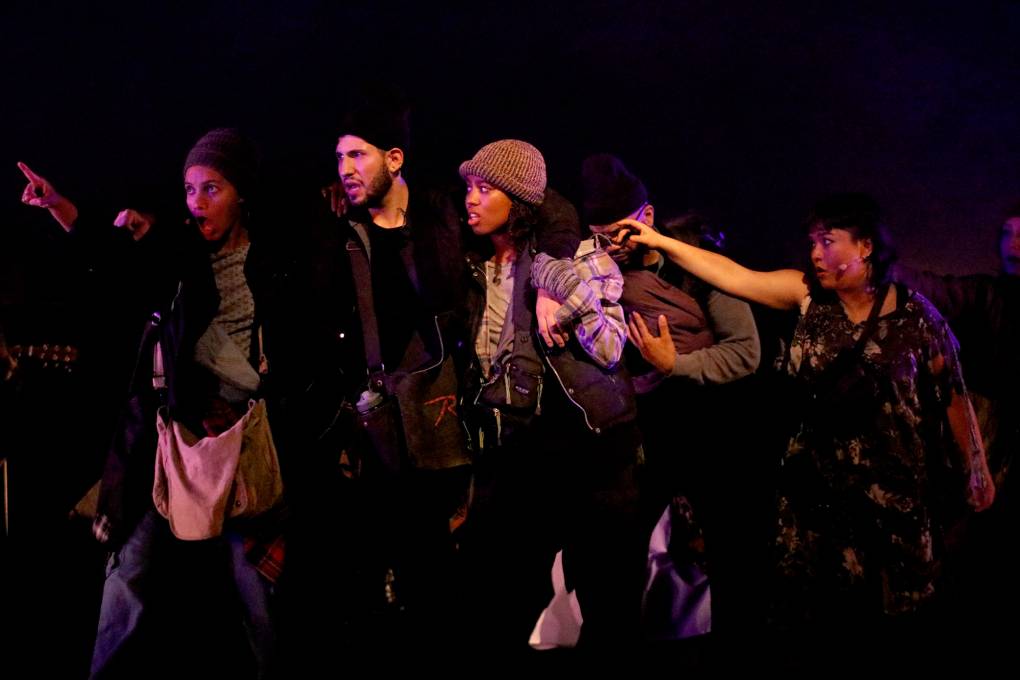
"altTag": "A group of actors portrays traveling apocalypse survivors from Octavia Butler's sci-fi classic 'Parable of the Sower.'",
"isLoading": false,
"fetchFailed": false
},
"arts_13928232": {
"type": "attachments",
"id": "arts_13928232",
"meta": {
"index": "attachments_1716263798",
"site": "arts",
"id": "13928232",
"found": true
},
"parent": 13928229,
"imgSizes": {
"twentyfourteen-full-width": {
"file": "https://ww2.kqed.org/app/uploads/sites/2/2023/04/GettyImages-542255232-1024x576.jpg",
"width": 1024,
"mimeType": "image/jpeg",
"height": 576
},
"thumbnail": {
"file": "https://ww2.kqed.org/app/uploads/sites/2/2023/04/GettyImages-542255232-160x114.jpg",
"width": 160,
"mimeType": "image/jpeg",
"height": 114
},
"post-thumbnail": {
"file": "https://ww2.kqed.org/app/uploads/sites/2/2023/04/GettyImages-542255232-672x372.jpg",
"width": 672,
"mimeType": "image/jpeg",
"height": 372
},
"kqedFullSize": {
"file": "https://ww2.kqed.org/app/uploads/sites/2/2023/04/GettyImages-542255232.jpg",
"width": 1024,
"height": 727
},
"large": {
"file": "https://ww2.kqed.org/app/uploads/sites/2/2023/04/GettyImages-542255232-1020x724.jpg",
"width": 1020,
"mimeType": "image/jpeg",
"height": 724
},
"medium": {
"file": "https://ww2.kqed.org/app/uploads/sites/2/2023/04/GettyImages-542255232-800x568.jpg",
"width": 800,
"mimeType": "image/jpeg",
"height": 568
},
"medium_large": {
"file": "https://ww2.kqed.org/app/uploads/sites/2/2023/04/GettyImages-542255232-768x545.jpg",
"width": 768,
"mimeType": "image/jpeg",
"height": 545
}
},
"publishDate": 1682434677,
"modified": 1682434746,
"caption": "American singer, actor, composer, author, and producer Harry Belafonte performing at the Olympia Hall in the 1960s. Belafonte died Tuesday at age 96. (Photo by James Andanson/Sygma via Getty Images)",
"description": null,
"title": "American Actor and Singer Harry Belafonte",
"credit": "James Andanson/Sygma via Getty Images",
"status": "inherit",
"altTag": null,
"isLoading": false,
"fetchFailed": false
},
"arts_11161564": {
"type": "attachments",
"id": "arts_11161564",
"meta": {
"index": "attachments_1716263798",
"site": "arts",
"id": "11161564",
"found": true
},
"parent": 11161452,
"imgSizes": {
"twentyfourteen-full-width": {
"file": "https://ww2.kqed.org/app/uploads/sites/2/2015/12/wmheklinabyjoseaguzmancolon1-e1450078611662-1038x576.jpg",
"width": 1038,
"mimeType": "image/jpeg",
"height": 576
},
"thumbnail": {
"file": "https://ww2.kqed.org/app/uploads/sites/2/2015/12/wmheklinabyjoseaguzmancolon1-e1450078611662-400x243.jpg",
"width": 400,
"mimeType": "image/jpeg",
"height": 243
},
"fd-sm": {
"file": "https://ww2.kqed.org/app/uploads/sites/2/2015/12/wmheklinabyjoseaguzmancolon1-e1450078611662-960x584.jpg",
"width": 960,
"mimeType": "image/jpeg",
"height": 584
},
"post-thumbnail": {
"file": "https://ww2.kqed.org/app/uploads/sites/2/2015/12/wmheklinabyjoseaguzmancolon1-e1450078611662-672x372.jpg",
"width": 672,
"mimeType": "image/jpeg",
"height": 372
},
"kqedFullSize": {
"file": "https://ww2.kqed.org/app/uploads/sites/2/2015/12/wmheklinabyjoseaguzmancolon1-e1450078611662.jpg",
"width": 3733,
"height": 2269
},
"large": {
"file": "https://ww2.kqed.org/app/uploads/sites/2/2015/12/wmheklinabyjoseaguzmancolon1-e1450078611662-1180x717.jpg",
"width": 1180,
"mimeType": "image/jpeg",
"height": 717
},
"guest-author-96": {
"file": "https://ww2.kqed.org/app/uploads/sites/2/2015/12/wmheklinabyjoseaguzmancolon1-e1450078611662-96x96.jpg",
"width": 96,
"mimeType": "image/jpeg",
"height": 96
},
"medium": {
"file": "https://ww2.kqed.org/app/uploads/sites/2/2015/12/wmheklinabyjoseaguzmancolon1-e1450078611662-800x486.jpg",
"width": 800,
"mimeType": "image/jpeg",
"height": 486
},
"guest-author-64": {
"file": "https://ww2.kqed.org/app/uploads/sites/2/2015/12/wmheklinabyjoseaguzmancolon1-e1450078611662-64x64.jpg",
"width": 64,
"mimeType": "image/jpeg",
"height": 64
},
"guest-author-32": {
"file": "https://ww2.kqed.org/app/uploads/sites/2/2015/12/wmheklinabyjoseaguzmancolon1-e1450078611662-32x32.jpg",
"width": 32,
"mimeType": "image/jpeg",
"height": 32
},
"fd-lrg": {
"file": "https://ww2.kqed.org/app/uploads/sites/2/2015/12/wmheklinabyjoseaguzmancolon1-e1450078611662-1920x1167.jpg",
"width": 1920,
"mimeType": "image/jpeg",
"height": 1167
},
"fd-med": {
"file": "https://ww2.kqed.org/app/uploads/sites/2/2015/12/wmheklinabyjoseaguzmancolon1-e1450078611662-1180x717.jpg",
"width": 1180,
"mimeType": "image/jpeg",
"height": 717
},
"detail": {
"file": "https://ww2.kqed.org/app/uploads/sites/2/2015/12/wmheklinabyjoseaguzmancolon1-e1450078611662-75x75.jpg",
"width": 75,
"mimeType": "image/jpeg",
"height": 75
},
"medium_large": {
"file": "https://ww2.kqed.org/app/uploads/sites/2/2015/12/wmheklinabyjoseaguzmancolon1-e1450078611662-768x467.jpg",
"width": 768,
"mimeType": "image/jpeg",
"height": 467
},
"guest-author-128": {
"file": "https://ww2.kqed.org/app/uploads/sites/2/2015/12/wmheklinabyjoseaguzmancolon1-e1450078611662-128x128.jpg",
"width": 128,
"mimeType": "image/jpeg",
"height": 128
}
},
"publishDate": 1450078457,
"modified": 1680557687,
"caption": "Heklina.",
"description": null,
"title": "wmheklinabyjoseaguzmancolon1",
"credit": "Jose Guzman-Colon",
"status": "inherit",
"altTag": null,
"isLoading": false,
"fetchFailed": false
},
"arts_13926454": {
"type": "attachments",
"id": "arts_13926454",
"meta": {
"index": "attachments_1716263798",
"site": "arts",
"id": "13926454",
"found": true
},
"parent": 13926451,
"imgSizes": {
"twentyfourteen-full-width": {
"file": "https://ww2.kqed.org/app/uploads/sites/2/2023/03/SFP_Clue_JessicaPalopoli3-1038x576.jpg",
"width": 1038,
"mimeType": "image/jpeg",
"height": 576
},
"thumbnail": {
"file": "https://ww2.kqed.org/app/uploads/sites/2/2023/03/SFP_Clue_JessicaPalopoli3-160x90.jpg",
"width": 160,
"mimeType": "image/jpeg",
"height": 90
},
"post-thumbnail": {
"file": "https://ww2.kqed.org/app/uploads/sites/2/2023/03/SFP_Clue_JessicaPalopoli3-672x372.jpg",
"width": 672,
"mimeType": "image/jpeg",
"height": 372
},
"kqedFullSize": {
"file": "https://ww2.kqed.org/app/uploads/sites/2/2023/03/SFP_Clue_JessicaPalopoli3.jpg",
"width": 1920,
"height": 1080
},
"large": {
"file": "https://ww2.kqed.org/app/uploads/sites/2/2023/03/SFP_Clue_JessicaPalopoli3-1020x574.jpg",
"width": 1020,
"mimeType": "image/jpeg",
"height": 574
},
"1536x1536": {
"file": "https://ww2.kqed.org/app/uploads/sites/2/2023/03/SFP_Clue_JessicaPalopoli3-1536x864.jpg",
"width": 1536,
"mimeType": "image/jpeg",
"height": 864
},
"medium": {
"file": "https://ww2.kqed.org/app/uploads/sites/2/2023/03/SFP_Clue_JessicaPalopoli3-800x450.jpg",
"width": 800,
"mimeType": "image/jpeg",
"height": 450
},
"medium_large": {
"file": "https://ww2.kqed.org/app/uploads/sites/2/2023/03/SFP_Clue_JessicaPalopoli3-768x432.jpg",
"width": 768,
"mimeType": "image/jpeg",
"height": 432
}
},
"publishDate": 1679070854,
"modified": 1679070935,
"caption": "The suspects (clockwise from upper left: Michael Ray Wisely, Michael Gene Sullivan, Greg Ayers, Stacy Ross, Renee Rogoff, and Courtney Walsh) receive potential murder weapons in San Francisco Playhouse's 'Clue.' ",
"description": null,
"title": "SFP_Clue_JessicaPalopoli3",
"credit": "Jessica Palopoli",
"status": "inherit",
"altTag": null,
"isLoading": false,
"fetchFailed": false
},
"arts_13925824": {
"type": "attachments",
"id": "arts_13925824",
"meta": {
"index": "attachments_1716263798",
"site": "arts",
"id": "13925824",
"found": true
},
"parent": 13925823,
"imgSizes": {
"twentyfourteen-full-width": {
"file": "https://ww2.kqed.org/app/uploads/sites/2/2023/03/CambodianRockBand1-1038x576.jpg",
"width": 1038,
"mimeType": "image/jpeg",
"height": 576
},
"thumbnail": {
"file": "https://ww2.kqed.org/app/uploads/sites/2/2023/03/CambodianRockBand1-160x107.jpg",
"width": 160,
"mimeType": "image/jpeg",
"height": 107
},
"post-thumbnail": {
"file": "https://ww2.kqed.org/app/uploads/sites/2/2023/03/CambodianRockBand1-672x372.jpg",
"width": 672,
"mimeType": "image/jpeg",
"height": 372
},
"kqedFullSize": {
"file": "https://ww2.kqed.org/app/uploads/sites/2/2023/03/CambodianRockBand1.jpg",
"width": 1920,
"height": 1280
},
"large": {
"file": "https://ww2.kqed.org/app/uploads/sites/2/2023/03/CambodianRockBand1-1020x680.jpg",
"width": 1020,
"mimeType": "image/jpeg",
"height": 680
},
"1536x1536": {
"file": "https://ww2.kqed.org/app/uploads/sites/2/2023/03/CambodianRockBand1-1536x1024.jpg",
"width": 1536,
"mimeType": "image/jpeg",
"height": 1024
},
"medium": {
"file": "https://ww2.kqed.org/app/uploads/sites/2/2023/03/CambodianRockBand1-800x533.jpg",
"width": 800,
"mimeType": "image/jpeg",
"height": 533
},
"medium_large": {
"file": "https://ww2.kqed.org/app/uploads/sites/2/2023/03/CambodianRockBand1-768x512.jpg",
"width": 768,
"mimeType": "image/jpeg",
"height": 512
}
},
"publishDate": 1677869327,
"modified": 1677869394,
"caption": "Geena Quintos and Jane Lui in Lauren Yee’s Cambodian Rock Band at Berkeley Repertory Theatre.",
"description": null,
"title": "CambodianRockBand1",
"credit": "Lynn Lane/Berkeley Repertory Theatre",
"status": "inherit",
"altTag": "A Cambodian woman in a red dress sings into a microphone while reaching to the ceiling; a keyboardist in dark blue lighting stands behind",
"isLoading": false,
"fetchFailed": false
},
"arts_13925289": {
"type": "attachments",
"id": "arts_13925289",
"meta": {
"index": "attachments_1716263798",
"site": "arts",
"id": "13925289",
"found": true
},
"parent": 13925284,
"imgSizes": {
"twentyfourteen-full-width": {
"file": "https://ww2.kqed.org/app/uploads/sites/2/2023/02/HED_121-1038x576.jpg",
"width": 1038,
"mimeType": "image/jpeg",
"height": 576
},
"thumbnail": {
"file": "https://ww2.kqed.org/app/uploads/sites/2/2023/02/HED_121-160x107.jpg",
"width": 160,
"mimeType": "image/jpeg",
"height": 107
},
"post-thumbnail": {
"file": "https://ww2.kqed.org/app/uploads/sites/2/2023/02/HED_121-672x372.jpg",
"width": 672,
"mimeType": "image/jpeg",
"height": 372
},
"kqedFullSize": {
"file": "https://ww2.kqed.org/app/uploads/sites/2/2023/02/HED_121.jpg",
"width": 2400,
"height": 1600
},
"2048x2048": {
"file": "https://ww2.kqed.org/app/uploads/sites/2/2023/02/HED_121-2048x1365.jpg",
"width": 2048,
"mimeType": "image/jpeg",
"height": 1365
},
"large": {
"file": "https://ww2.kqed.org/app/uploads/sites/2/2023/02/HED_121-1020x680.jpg",
"width": 1020,
"mimeType": "image/jpeg",
"height": 680
},
"1536x1536": {
"file": "https://ww2.kqed.org/app/uploads/sites/2/2023/02/HED_121-1536x1024.jpg",
"width": 1536,
"mimeType": "image/jpeg",
"height": 1024
},
"full-width": {
"file": "https://ww2.kqed.org/app/uploads/sites/2/2023/02/HED_121-1920x1280.jpg",
"width": 1920,
"mimeType": "image/jpeg",
"height": 1280
},
"medium": {
"file": "https://ww2.kqed.org/app/uploads/sites/2/2023/02/HED_121-800x533.jpg",
"width": 800,
"mimeType": "image/jpeg",
"height": 533
},
"medium_large": {
"file": "https://ww2.kqed.org/app/uploads/sites/2/2023/02/HED_121-768x512.jpg",
"width": 768,
"mimeType": "image/jpeg",
"height": 512
}
},
"publishDate": 1676659317,
"modified": 1676660160,
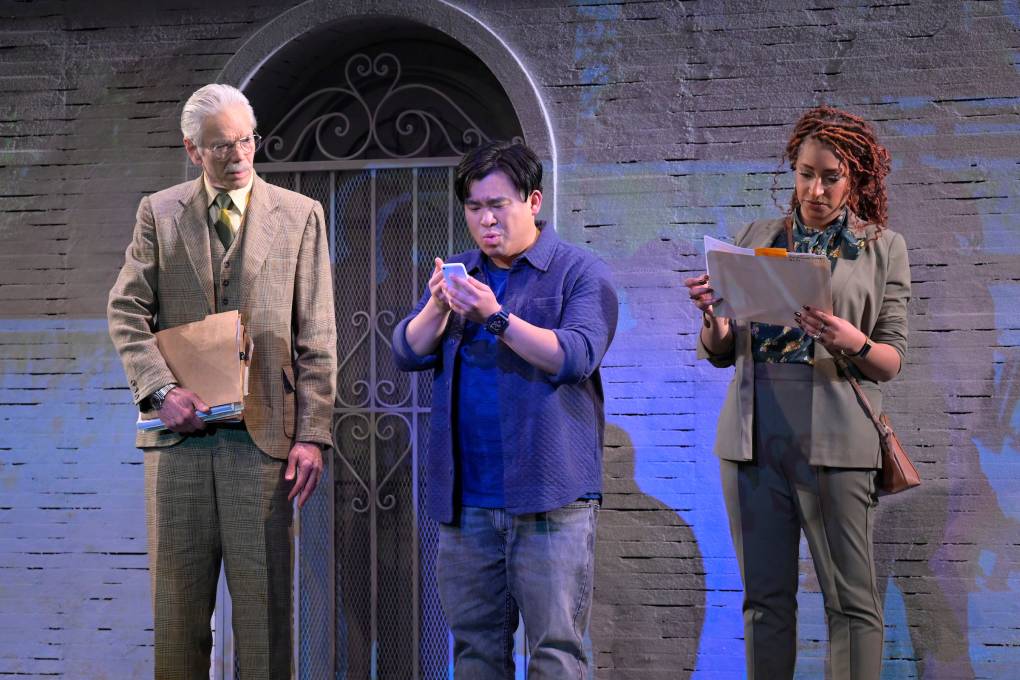
"caption": "(L–R): Charles Shaw Robinson (Detective), Phil Wong (Henry) and Sam Jackson (Jess) in the West Coast\npremiere of Christopher Chen’s 'The Headlands' at A.C.T.’s Toni Rembe Theater.",
"description": null,
"title": "HED_121",
"credit": "Kevin Berne",
"status": "inherit",
"altTag": "three people stand on a stage in a play -- an older white man, an Asian american younger man and a Black woman. they are looking at phones and pieces of paper",
"isLoading": false,
"fetchFailed": false
}
},
"audioPlayerReducer": {
"postId": "stream_live",
"isPaused": true,
"isPlaying": false,
"pfsActive": false,
"pledgeModalIsOpen": true,
"playerDrawerIsOpen": false,
"liveAudioPlayStartedAt": 0,
"liveAudioPlayContext": ""
},
"authorsReducer": {
"byline_arts_13930072": {
"type": "authors",
"id": "byline_arts_13930072",
"meta": {
"override": true
},
"slug": "byline_arts_13930072",
"name": "Elizabeth Blair",
"isLoading": false
},
"byline_arts_13928229": {
"type": "authors",
"id": "byline_arts_13928229",
"meta": {
"override": true
},
"slug": "byline_arts_13928229",
"name": "Hillel Italie, Associated Press",
"isLoading": false
},
"agilbert": {
"type": "authors",
"id": "86",
"meta": {
"index": "authors_1716337520",
"id": "86",
"found": true
},
"name": "Andrew Gilbert",
"firstName": "Andrew",
"lastName": "Gilbert",
"slug": "agilbert",
"email": "jazzscribe@aol.com",
"display_author_email": false,
"staff_mastheads": [],
"title": "KQED Contributor",
"bio": "A Los Angeles native based in the Berkeley area since 1996, Andrew Gilbert covers jazz, international music and dance for KQED's \u003ci>California Report, \u003c/i>the\u003ci> Mercury News\u003c/i>, \u003ci>San Francisco Chronicle\u003c/i>, \u003ci>Berkeleyside.com\u003c/i>, and other publications. He is available for weddings and bar and bat mitzvahs. #jazzscribe",
"avatar": "https://secure.gravatar.com/avatar/d7bcafdbefdd39e9a68f88724ca616eb4e7a5a6bff9cdfb62de652a1e1751471?s=600&d=blank&r=g",
"twitter": null,
"bluesky": null,
"facebook": null,
"instagram": null,
"linkedin": null,
"sites": [
{
"site": "arts",
"roles": [
"Contributor",
"author"
]
},
{
"site": "news",
"roles": [
"author"
]
}
],
"headData": {
"title": "Andrew Gilbert | KQED",
"description": "KQED Contributor",
"ogImgSrc": "https://secure.gravatar.com/avatar/d7bcafdbefdd39e9a68f88724ca616eb4e7a5a6bff9cdfb62de652a1e1751471?s=600&d=blank&r=g",
"twImgSrc": "https://secure.gravatar.com/avatar/d7bcafdbefdd39e9a68f88724ca616eb4e7a5a6bff9cdfb62de652a1e1751471?s=600&d=blank&r=g"
},
"isLoading": false,
"link": "/author/agilbert"
},
"gmeline": {
"type": "authors",
"id": "185",
"meta": {
"index": "authors_1716337520",
"id": "185",
"found": true
},
"name": "Gabe Meline",
"firstName": "Gabe",
"lastName": "Meline",
"slug": "gmeline",
"email": "gmeline@kqed.org",
"display_author_email": true,
"staff_mastheads": [
"arts"
],
"title": "Senior Editor, KQED Arts & Culture",
"bio": "Gabe Meline entered journalism at age 15 making photocopied zines, and has since earned awards from the Edward R. Murrow Awards, the Society for Professional Journalists, the Online Journalism Awards, the Association of Alternative Newsweeklies and the California Newspaper Publishers Association. Prior to KQED, he was the editor of the \u003cem>North Bay Bohemian\u003c/em> and a touring musician. He lives with his wife and daughter in his hometown of Santa Rosa, CA.",
"avatar": "https://secure.gravatar.com/avatar/5bebe57be0d8bc2dd318934feb47299e2d2d10cba28d09d8d7afb389a2ce2bdd?s=600&d=blank&r=g",
"twitter": null,
"bluesky": null,
"facebook": null,
"instagram": null,
"linkedin": null,
"sites": [
{
"site": "",
"roles": [
"editor"
]
},
{
"site": "arts",
"roles": [
"administrator"
]
},
{
"site": "artschool",
"roles": [
"editor"
]
},
{
"site": "news",
"roles": [
"author"
]
},
{
"site": "pop",
"roles": [
"editor"
]
},
{
"site": "bayareabites",
"roles": [
"editor"
]
},
{
"site": "food",
"roles": [
"editor"
]
},
{
"site": "forum",
"roles": [
"administrator"
]
},
{
"site": "liveblog",
"roles": [
"editor"
]
},
{
"site": "hiphop",
"roles": [
"editor"
]
}
],
"headData": {
"title": "Gabe Meline | KQED",
"description": "Senior Editor, KQED Arts & Culture",
"ogImgSrc": "https://secure.gravatar.com/avatar/5bebe57be0d8bc2dd318934feb47299e2d2d10cba28d09d8d7afb389a2ce2bdd?s=600&d=blank&r=g",
"twImgSrc": "https://secure.gravatar.com/avatar/5bebe57be0d8bc2dd318934feb47299e2d2d10cba28d09d8d7afb389a2ce2bdd?s=600&d=blank&r=g"
},
"isLoading": false,
"link": "/author/gmeline"
},
"aproehl": {
"type": "authors",
"id": "11296",
"meta": {
"index": "authors_1716337520",
"id": "11296",
"found": true
},
"name": "Ariana Proehl",
"firstName": "Ariana",
"lastName": "Proehl",
"slug": "aproehl",
"email": "aproehl@KQED.org",
"display_author_email": true,
"staff_mastheads": [
"news"
],
"title": "Culture Reporter, KQED",
"bio": "Ariana Proehl is a Culture Reporter and Host.",
"avatar": "https://secure.gravatar.com/avatar/c96b24567eb5bb3a4f8bb295ed53e232?s=600&d=blank&r=g",
"twitter": "ArianaProehl",
"facebook": null,
"instagram": null,
"linkedin": null,
"sites": [
{
"site": "arts",
"roles": []
},
{
"site": "news",
"roles": []
},
{
"site": "education",
"roles": []
},
{
"site": "forum",
"roles": []
}
],
"headData": {
"title": "Ariana Proehl | KQED",
"description": "Culture Reporter, KQED",
"ogImgSrc": "https://secure.gravatar.com/avatar/c96b24567eb5bb3a4f8bb295ed53e232?s=600&d=blank&r=g",
"twImgSrc": "https://secure.gravatar.com/avatar/c96b24567eb5bb3a4f8bb295ed53e232?s=600&d=blank&r=g"
},
"isLoading": false,
"link": "/author/aproehl"
},
"nvoynovskaya": {
"type": "authors",
"id": "11387",
"meta": {
"index": "authors_1716337520",
"id": "11387",
"found": true
},
"name": "Nastia Voynovskaya",
"firstName": "Nastia",
"lastName": "Voynovskaya",
"slug": "nvoynovskaya",
"email": "nvoynovskaya@kqed.org",
"display_author_email": false,
"staff_mastheads": [
"arts"
],
"title": "Editor and reporter",
"bio": "Nastia Voynovskaya is a reporter, editor and host at KQED Arts & Culture. She's been covering the arts in the Bay Area for over a decade, with a focus on music, queer culture, labor issues and grassroots organizing. She has edited KQED story series such as Trans Bay: A History of San Francisco's Gender-Diverse Community, and co-created KQED's Bay Area hip-hop history project, That's My Word. Nastia's work has been recognized by the Society of Professional Journalists and San Francisco Press Club. She regularly appears on podcasts and radio programs, including NPR's All Songs Considered, and hosts live events where music, culture and conversation meet.",
"avatar": "https://secure.gravatar.com/avatar/5025ee460e5a85d69ca20ea6c6f2f80d7e17795c828f61ea3aecfcd924e9042e?s=600&d=blank&r=g",
"twitter": null,
"bluesky": null,
"facebook": null,
"instagram": "https://www.instagram.com/nananastia/",
"linkedin": null,
"sites": [
{
"site": "",
"roles": [
"editor"
]
},
{
"site": "arts",
"roles": [
"administrator"
]
},
{
"site": "news",
"roles": [
"editor"
]
},
{
"site": "pop",
"roles": [
"administrator"
]
},
{
"site": "bayareabites",
"roles": [
"editor"
]
},
{
"site": "podcasts",
"roles": [
"editor"
]
},
{
"site": "hiphop",
"roles": [
"editor"
]
}
],
"headData": {
"title": "Nastia Voynovskaya | KQED",
"description": "Editor and reporter",
"ogImgSrc": "https://secure.gravatar.com/avatar/5025ee460e5a85d69ca20ea6c6f2f80d7e17795c828f61ea3aecfcd924e9042e?s=600&d=blank&r=g",
"twImgSrc": "https://secure.gravatar.com/avatar/5025ee460e5a85d69ca20ea6c6f2f80d7e17795c828f61ea3aecfcd924e9042e?s=600&d=blank&r=g"
},
"isLoading": false,
"link": "/author/nvoynovskaya"
},
"ngluckstern": {
"type": "authors",
"id": "11497",
"meta": {
"index": "authors_1716337520",
"id": "11497",
"found": true
},
"name": "Nicole Gluckstern",
"firstName": "Nicole",
"lastName": "Gluckstern",
"slug": "ngluckstern",
"email": "gluckstern.nicole@gmail.com",
"display_author_email": false,
"staff_mastheads": [],
"title": "KQED Contributor",
"bio": null,
"avatar": "https://secure.gravatar.com/avatar/2c3d593194017bfe811a998ad03140909de330b22abebf4889e1a564ce5b3495?s=600&d=blank&r=g",
"twitter": null,
"bluesky": null,
"facebook": null,
"instagram": null,
"linkedin": null,
"sites": [
{
"site": "arts",
"roles": [
"contributor"
]
}
],
"headData": {
"title": "Nicole Gluckstern | KQED",
"description": "KQED Contributor",
"ogImgSrc": "https://secure.gravatar.com/avatar/2c3d593194017bfe811a998ad03140909de330b22abebf4889e1a564ce5b3495?s=600&d=blank&r=g",
"twImgSrc": "https://secure.gravatar.com/avatar/2c3d593194017bfe811a998ad03140909de330b22abebf4889e1a564ce5b3495?s=600&d=blank&r=g"
},
"isLoading": false,
"link": "/author/ngluckstern"
},
"cbeale": {
"type": "authors",
"id": "11749",
"meta": {
"index": "authors_1716337520",
"id": "11749",
"found": true
},
"name": "Christopher Beale",
"firstName": "Christopher",
"lastName": "Beale",
"slug": "cbeale",
"email": "cbeale@kqed.org",
"display_author_email": true,
"staff_mastheads": [
"news"
],
"title": "Engineer/Producer/Reporter",
"bio": "\u003ca href=\"https://linktr.ee/realchrisjbeale\" rel=\"noopener noreferrer\">Christopher J. Beale\u003c/a> is an award winning journalist, audio engineer, and media host living in San Francisco. \r\n\r\nChristopher works primarily as an audio engineer at KQED and serves as the sound designer for both the Bay Curious and Rightnowish podcasts. He is the host and producer of the LGBTQIA podcast and radio segment \u003ca href=\"https://stereotypespodcast.org\">Stereotypes\u003c/a>.",
"avatar": "https://secure.gravatar.com/avatar/dc485bf84788eb7e7414eb638e72407e?s=600&d=blank&r=g",
"twitter": "realchrisjbeale",
"facebook": null,
"instagram": "http://instagram.com/realchrisjbeale",
"linkedin": null,
"sites": [
{
"site": "arts",
"roles": [
"contributor"
]
},
{
"site": "news",
"roles": [
"editor"
]
},
{
"site": "forum",
"roles": [
"editor"
]
}
],
"headData": {
"title": "Christopher Beale | KQED",
"description": "Engineer/Producer/Reporter",
"ogImgSrc": "https://secure.gravatar.com/avatar/dc485bf84788eb7e7414eb638e72407e?s=600&d=blank&r=g",
"twImgSrc": "https://secure.gravatar.com/avatar/dc485bf84788eb7e7414eb638e72407e?s=600&d=blank&r=g"
},
"isLoading": false,
"link": "/author/cbeale"
},
"djchavez": {
"type": "authors",
"id": "11905",
"meta": {
"index": "authors_1716337520",
"id": "11905",
"found": true
},
"name": "David John Chávez",
"firstName": "David John",
"lastName": "Chávez",
"slug": "djchavez",
"email": "theatrechavez@gmail.com",
"display_author_email": false,
"staff_mastheads": [],
"title": "KQED Contributor",
"bio": "Based in San José, David is a theater critic and reporter who who served as Executive Chair of the American Theatre Critics/Journalists Association (’22-’25), as well as a regular theater contributor to The Mercury News, San Francisco Chronicle, American Theatre Magazine and KQED, among other publications. He is a two-time juror for the Pulitzer Prize for Drama (’22-’23) and a 2020 fellow of the Eugene O'Neill National Critics Institute.",
"avatar": "https://secure.gravatar.com/avatar/5eaa3ce994228213820907c390795c28f7b97165c2b575f46d15fc9273a132b7?s=600&d=blank&r=g",
"twitter": null,
"bluesky": null,
"facebook": "https://www.facebook.com/bydavidjchavez",
"instagram": "https://www.instagram.com/davidjchavez/",
"linkedin": null,
"sites": [
{
"site": "arts",
"roles": [
"contributor"
]
}
],
"headData": {
"title": "David John Chávez | KQED",
"description": "KQED Contributor",
"ogImgSrc": "https://secure.gravatar.com/avatar/5eaa3ce994228213820907c390795c28f7b97165c2b575f46d15fc9273a132b7?s=600&d=blank&r=g",
"twImgSrc": "https://secure.gravatar.com/avatar/5eaa3ce994228213820907c390795c28f7b97165c2b575f46d15fc9273a132b7?s=600&d=blank&r=g"
},
"isLoading": false,
"link": "/author/djchavez"
}
},
"pagesReducer": {
"arts_category_theater": {
"type": "terms",
"id": "arts_967",
"meta": {
"index": "terms_1716263798",
"site": "arts",
"id": "967",
"score": 12.28665
},
"featImg": null,
"name": "Theater",
"description": null,
"taxonomy": "category",
"headData": {
"twImgId": null,
"twTitle": null,
"ogTitle": null,
"ogImgId": null,
"twDescription": null,
"description": null,
"title": "Theater Archives | KQED Arts",
"ogDescription": null
},
"ttid": 985,
"slug": "theater",
"isLoading": false,
"title": "Theater",
"pageMeta": {
"site": "arts",
"WpPageTemplate": "page-topic-editorial",
"currentPage": 12
},
"blocks": [
{
"blockName": "kqed/post-list",
"attrs": {
"layout": "cardArticle2",
"query": "posts/arts?category=theater",
"seeMore": false,
"paginated": true,
"page": 12
}
},
{
"blockName": "kqed/ad"
}
]
}
},
"pfsSessionReducer": {},
"postsReducer": {
"stream_live": {
"type": "live",
"id": "stream_live",
"audioUrl": "https://streams.kqed.org/kqedradio",
"title": "Live Stream",
"excerpt": "Live Stream information currently unavailable.",
"link": "/radio",
"featImg": "",
"label": {
"name": "KQED Live",
"link": "/"
}
},
"stream_kqedNewscast": {
"type": "posts",
"id": "stream_kqedNewscast",
"audioUrl": "https://www.kqed.org/.stream/anon/radio/RDnews/newscast.mp3?_=1",
"title": "KQED Newscast",
"featImg": "",
"label": {
"name": "88.5 FM",
"link": "/"
}
},
"arts_13930072": {
"type": "posts",
"id": "arts_13930072",
"meta": {
"index": "posts_1716263798",
"site": "arts",
"id": "13930072",
"score": null,
"sort": [
1685994187000
]
},
"parent": 0,
"labelTerm": {
"site": "arts",
"term": 137
},
"blocks": [],
"publishDate": 1685994187,
"format": "standard",
"title": "The Most Frequently Performed Plays and Musicals in High Schools This Year",
"headTitle": "The Most Frequently Performed Plays and Musicals in High Schools This Year | KQED",
"content": "\u003cp>The Educational Theatre Association has released its top-10 lists of plays and musicals performed in high schools during the 2022-2023 school year. More than 2,300 public and private high school teachers across the U.S. participated.\u003c/p>\n\u003cp>\u003cem>The Addams Family\u003c/em> topped the list of full-length musicals, followed by \u003cem>Mamma Mia!\u003c/em>\u003c/p>\n\u003cp>The No. 1 full length play was \u003cem>Clue,\u003c/em> followed by \u003cem>Puffs. \u003c/em>Disney’s\u003cem> Frozen JR\u003c/em> held the top spot among short musicals.\u003c/p>\n\u003cp>And \u003cem>10 Ways to Survive the Zombie Apocalypse \u003c/em>tied with \u003cem>Check Please \u003c/em>for the most popular short play.\u003c/p>\n\u003cp>You can see the \u003ca href=\"https://schooltheatre.org/2023-play-survey-reveals-most-popular-high-school-shows\">full list here\u003c/a>.\u003c/p>\n\u003cp>[ad fullwidth]\u003c/p>\n\u003cp>The \u003ca href=\"https://schooltheatre.org/\">EdTA\u003c/a> calls the survey a “snapshot” of both what’s popular with high school theater departments and “the educational climate.” Eighty five percent of respondents reported being, “at least somewhat concerned about censorship” and 67% said that, “censorship concerns” are influencing their selections for next year.\u003c/p>\n\u003ch3>Changing tastes and values reflected in the Play Survey\u003c/h3>\n\u003cp>Jennifer Katona, executive director of EdTA, believes \u003cem>The Addams Family\u003c/em>‘s popularity, “has a lot to do with our students love of the Netflix show \u003cem>Wednesday\u003c/em>.” Another hit this year: \u003cem>The SpongeBob Musical. \u003c/em>“It’s got a lot of music from a lot of different lyricists and musicians, so the students in the schools are really enjoying that one, too\u003cem>.”\u003c/em>\u003c/p>\n\u003cp>This is the first year\u003cem> Mean Girls: High School Version\u003c/em> has been licensed to schools and it jumped to the #10 spot of full-length musicals. It helps that the musical based on \u003ca href=\"https://www.npr.org/2018/04/06/599813454/on-broadway-they-wear-pink-mean-girls-is-now-a-musical\">Tina Fey’s popular movie\u003c/a> had a successful Broadway run not too long ago, and that the cast is largely female. High school theatre programs often attract more girls than boys.\u003c/p>\n\u003cp>[aside postid='education_536534']The annual Play Survey began in 1938. NPR’s Education Desk did an eye-opening \u003ca href=\"https://www.npr.org/sections/ed/2019/07/31/427138970/the-most-popular-high-school-plays-and-musicals\">analysis\u003c/a> of how high school plays have tracked over the survey’s 85 year history.\u003c/p>\n\u003cp>\u003ca href=\"https://www.npr.org/2021/02/13/967600332/returning-to-our-town-why-the-play-still-hits-home-after-80-years\">\u003cem>Our Town\u003c/em>\u003c/a>\u003cem>, \u003c/em>for example\u003cem>, \u003c/em>was consistently among the top 10 plays “by decade,” from the 1940s-2010s. In the last two surveys, Thornton Wilder’s eternal classic held the number 10 spot but didn’t make the list this year. Katona says high school drama departments are “diversifying their repertoires.”\u003c/p>\n\u003cp>“Schools have really made an effort to bring in different playwrights and have different representation of voices on their stages,” she says.\u003c/p>\n\u003ch3>Stymied over censorship concerns\u003c/h3>\n\u003cp>With school boards and local governments \u003ca href=\"https://www.npr.org/2023/03/09/1160731547/spelling-bee-high-school-theater\">cancelling\u003c/a> theater productions and banning books, the EdTA survey also found that drama teachers are nervous.\u003c/p>\n\u003cfigure id=\"attachment_13930074\" class=\"wp-caption aligncenter\" style=\"max-width: 800px\">\u003cimg loading=\"lazy\" decoding=\"async\" class=\"size-medium wp-image-13930074\" src=\"https://ww2.kqed.org/app/uploads/sites/2/2023/06/batb-thurs-283_enl-6230905e3bbe9394e482a55585f9aa1ac477e8ac-800x1202.jpg\" alt=\"A young man sits on the edge of a fake fountain on stage, with a young women resting her head on him. They are dressed in 18th century costume.\" width=\"800\" height=\"1202\" srcset=\"https://cdn.kqed.org/wp-content/uploads/sites/2/2023/06/batb-thurs-283_enl-6230905e3bbe9394e482a55585f9aa1ac477e8ac-800x1202.jpg 800w, https://cdn.kqed.org/wp-content/uploads/sites/2/2023/06/batb-thurs-283_enl-6230905e3bbe9394e482a55585f9aa1ac477e8ac-1020x1532.jpg 1020w, https://cdn.kqed.org/wp-content/uploads/sites/2/2023/06/batb-thurs-283_enl-6230905e3bbe9394e482a55585f9aa1ac477e8ac-160x240.jpg 160w, https://cdn.kqed.org/wp-content/uploads/sites/2/2023/06/batb-thurs-283_enl-6230905e3bbe9394e482a55585f9aa1ac477e8ac-768x1154.jpg 768w, https://cdn.kqed.org/wp-content/uploads/sites/2/2023/06/batb-thurs-283_enl-6230905e3bbe9394e482a55585f9aa1ac477e8ac-1023x1536.jpg 1023w, https://cdn.kqed.org/wp-content/uploads/sites/2/2023/06/batb-thurs-283_enl-6230905e3bbe9394e482a55585f9aa1ac477e8ac-1364x2048.jpg 1364w, https://cdn.kqed.org/wp-content/uploads/sites/2/2023/06/batb-thurs-283_enl-6230905e3bbe9394e482a55585f9aa1ac477e8ac-1920x2884.jpg 1920w, https://cdn.kqed.org/wp-content/uploads/sites/2/2023/06/batb-thurs-283_enl-6230905e3bbe9394e482a55585f9aa1ac477e8ac-scaled.jpg 1704w\" sizes=\"(max-width: 800px) 100vw, 800px\">\u003cfigcaption class=\"wp-caption-text\">Erik Martinez and Shelby Brown in New Albany High School’s production of Disney’s ‘Beauty and the Beast’ in New Albany, Ind. The show tied for fifth place (with ‘The Little Mermaid’) in the full-length musical category. \u003ccite>(Educational Theatre Association)\u003c/cite>\u003c/figcaption>\u003c/figure>\n\u003cp>“Teachers know that they need to be smart about what they’re putting on their stages,” says Katona, “They’re making choices that will allow them to keep their theater programs.” She adds, “Theater has always been a safe space for a lot of our students.”\u003c/p>\n\u003cp>Danny Issa teaches theater at Washington-Liberty High School in Arlington, Va. While he says, while he always involves students in the play selection process, he also makes sure school officials are well aware of content that some might find inappropriate.\u003c/p>\n\u003cp>[aside postid='arts_13928405']“The arts in general are in such a precarious position at all times. Are we going to have funding? Are we going to be able to make it through another season?” Issa reflects. “Just a single complaint from a parent can have a show pulled.” That includes losing, “all the money that you’ve pumped into a production.”\u003c/p>\n\u003cp>Still, Issa’s concerns did not stop him — and lots of other high school theater teachers — from staging \u003cem>Almost, Maine, \u003c/em>a play about love and relationships that includes gay characters\u003cem>. \u003c/em>\u003c/p>\n\u003cp>Despite facing challenges in \u003ca href=\"https://www.record-eagle.com/news/local_news/canceled-show-prompts-outcry/article_d52c9763-7814-5c6e-b7c0-e93de9fecbf5.html\">Michigan\u003c/a> and \u003ca href=\"https://www.wfae.org/arts-culture/2015-01-13/almost-maine-goes-on-without-school-support\">North Carolina\u003c/a> in recent years, \u003cem>Almost, Maine\u003c/em> held the No. 6 spot on this year’s list of full-length plays.\u003c/p>\n\u003ch3>High school theater programs are “rebounding from the pandemic”\u003c/h3>\n\u003cp>Culture wars aside, the Play Survey found that, on average, attendance is up and theater programs are ramping up production.\u003c/p>\n\u003cp>“The average audience size across all performances in a school season increased 13 percent over last year to 1,967,” EdTA writes in a statement.\u003c/p>\n\u003cfigure id=\"attachment_13930077\" class=\"wp-caption aligncenter\" style=\"max-width: 800px\">\u003cimg loading=\"lazy\" decoding=\"async\" class=\"size-medium wp-image-13930077\" src=\"https://ww2.kqed.org/app/uploads/sites/2/2023/06/Screen-Shot-2023-06-05-at-11.56.12-AM-800x514.png\" alt=\"A girl stands on a table in the center of a stage. Around her, other teens are gathered and mid-dance routine. 'Welcome to the Lion's Den' is projected above them on the stage.\" width=\"800\" height=\"514\" srcset=\"https://cdn.kqed.org/wp-content/uploads/sites/2/2023/06/Screen-Shot-2023-06-05-at-11.56.12-AM-800x514.png 800w, https://cdn.kqed.org/wp-content/uploads/sites/2/2023/06/Screen-Shot-2023-06-05-at-11.56.12-AM-1020x656.png 1020w, https://cdn.kqed.org/wp-content/uploads/sites/2/2023/06/Screen-Shot-2023-06-05-at-11.56.12-AM-160x103.png 160w, https://cdn.kqed.org/wp-content/uploads/sites/2/2023/06/Screen-Shot-2023-06-05-at-11.56.12-AM-768x494.png 768w, https://cdn.kqed.org/wp-content/uploads/sites/2/2023/06/Screen-Shot-2023-06-05-at-11.56.12-AM-1536x987.png 1536w, https://cdn.kqed.org/wp-content/uploads/sites/2/2023/06/Screen-Shot-2023-06-05-at-11.56.12-AM.png 1646w\" sizes=\"(max-width: 800px) 100vw, 800px\">\u003cfigcaption class=\"wp-caption-text\">‘Mean Girls: High School Version’ made its debut on the list this year in the full-length musical category. Above, a production at J.J. Pearce High School in Richardson, Texas. \u003ccite>(Educational Theatre Association)\u003c/cite>\u003c/figcaption>\u003c/figure>\n\u003cp>“Coming out of the pandemic, I think everyone was really excited to just be able to see theater again,” says Issa.\u003c/p>\n\u003cp>[aside postid='news_11947769']Washington-Liberty High School’s musical — \u003cem>The Prom\u003c/em> — sold more than $10,000 in tickets, up more than $4,000 from last year’s musical, according to Issa.\u003c/p>\n\u003cp>\u003cem>Almost, Maine\u003c/em> also did well\u003cem>. “\u003c/em>We ended up opening our balcony in the auditorium,” Issa says. “Just because of the sheer number of people that showed up for closing night.”\u003c/p>\n\u003cp>\u003c/p>\n\u003cp>\u003cem>Audio and \u003c/em>\u003ca href=\"http://npr.org/\">\u003cem>NPR.org\u003c/em>\u003c/a>\u003cem> versions of this story were edited by Rose Friedman and adapted to \u003c/em>\u003ca href=\"http://npr.org/\">\u003cem>NPR.org\u003c/em>\u003c/a>\u003cem> by Beth Novey.\u003c/em>\u003c/p>\n\u003cdiv class=\"fullattribution\">\u003cem>Copyright 2023 NPR. To see more, \u003ca href=\"https://www.npr.org\">visit NPR\u003c/a>.\u003cimg decoding=\"async\" src=\"https://www.google-analytics.com/__utm.gif?utmac=UA-5828686-4&utmdt=These+were+the+most+frequently+performed+plays+and+musicals+in+high+schools+this+year&utme=8(APIKey)9(MDAxOTAwOTE4MDEyMTkxMDAzNjczZDljZA004)\">\u003c/em>\u003c/div>\n\n",
"stats": {
"hasVideo": false,
"hasChartOrMap": false,
"hasAudio": false,
"hasPolis": false,
"wordCount": 927,
"hasGoogleForm": false,
"hasGallery": false,
"hasHearkenModule": false,
"iframeSrcs": [],
"paragraphCount": 25
},
"modified": 1705005419,
"excerpt": "‘The Addams Family,’ ‘Mamma Mia!’ and ‘Frozen JR’ were among the most popular shows, according to a new survey.",
"headData": {
"twImgId": "",
"twTitle": "The Most Frequently Performed Plays and Musicals in High Schools This Year",
"socialTitle": "‘The Addams Family’ is 2023’s Most Popular High School Musical %%page%% %%sep%% KQED",
"ogTitle": "The Most Frequently Performed Plays and Musicals in High Schools This Year",
"ogImgId": "",
"twDescription": "",
"description": "‘The Addams Family,’ ‘Mamma Mia!’ and ‘Frozen JR’ were among the most popular shows, according to a new survey.",
"title": "‘The Addams Family’ is 2023’s Most Popular High School Musical | KQED",
"ogDescription": "",
"schema": {
"@context": "https://schema.org",
"@type": "Article",
"headline": "The Most Frequently Performed Plays and Musicals in High Schools This Year",
"datePublished": "2023-06-05T12:43:07-07:00",
"dateModified": "2024-01-11T12:36:59-08:00",
"image": "https://cdn.kqed.org/wp-content/uploads/2020/02/KQED-OG-Image@1x.png"
}
},
"guestAuthors": [],
"slug": "most-popular-high-school-plays-musicals-addams-family-mamma-mia",
"status": "publish",
"nprApiLink": "http://api.npr.org/query?id=1179417838&apiKey=MDAxOTAwOTE4MDEyMTkxMDAzNjczZDljZA004",
"templateType": "standard",
"nprStoryDate": "Mon, 05 Jun 2023 07:01:37 -0400",
"excludeFromSiteSearch": "Include",
"nprLastModifiedDate": "Mon, 05 Jun 2023 07:01:37 -0400",
"featuredImageType": "standard",
"nprHtmlLink": "https://www.npr.org/2023/06/05/1179417838/most-popular-high-school-musical-play-2022-2023?ft=nprml&f=1179417838",
"nprAudio": "https://ondemand.npr.org/anon.npr-mp3/npr/me/2023/06/20230605_me_these_were_the_most_frequently_performed_plays_and_musicals_in_high_schools_this_year.mp3?orgId=1&topicId=1046&d=148&p=3&story=1179417838&ft=nprml&f=1179417838",
"nprImageAgency": "Educational Theatre Associaton",
"nprAudioM3u": "http://api.npr.org/m3u/11180089528-352412.m3u?orgId=1&topicId=1046&d=148&p=3&story=1179417838&ft=nprml&f=1179417838",
"nprStoryId": "1179417838",
"nprByline": "Elizabeth Blair",
"sticky": false,
"nprImageCredit": "Susan Doremus",
"showOnAuthorArchivePages": "No",
"articleAge": "0",
"nprRetrievedStory": "1",
"nprPubDate": "Mon, 05 Jun 2023 07:54:00 -0400",
"path": "/arts/13930072/most-popular-high-school-plays-musicals-addams-family-mamma-mia",
"audioUrl": "https://ondemand.npr.org/anon.npr-mp3/npr/me/2023/06/20230605_me_these_were_the_most_frequently_performed_plays_and_musicals_in_high_schools_this_year.mp3?orgId=1&topicId=1046&d=148&p=3&story=1179417838&ft=nprml&f=1179417838",
"audioTrackLength": null,
"parsedContent": [
{
"type": "contentString",
"content": "\u003cdiv class=\"post-body\">\u003cp>\u003cp>The Educational Theatre Association has released its top-10 lists of plays and musicals performed in high schools during the 2022-2023 school year. More than 2,300 public and private high school teachers across the U.S. participated.\u003c/p>\n\u003cp>\u003cem>The Addams Family\u003c/em> topped the list of full-length musicals, followed by \u003cem>Mamma Mia!\u003c/em>\u003c/p>\n\u003cp>The No. 1 full length play was \u003cem>Clue,\u003c/em> followed by \u003cem>Puffs. \u003c/em>Disney’s\u003cem> Frozen JR\u003c/em> held the top spot among short musicals.\u003c/p>\n\u003cp>And \u003cem>10 Ways to Survive the Zombie Apocalypse \u003c/em>tied with \u003cem>Check Please \u003c/em>for the most popular short play.\u003c/p>\n\u003cp>You can see the \u003ca href=\"https://schooltheatre.org/2023-play-survey-reveals-most-popular-high-school-shows\">full list here\u003c/a>.\u003c/p>\n\u003cp>\u003c/p>\u003c/div>",
"attributes": {
"named": {},
"numeric": []
}
},
{
"type": "component",
"content": "",
"name": "ad",
"attributes": {
"named": {
"label": "fullwidth"
},
"numeric": [
"fullwidth"
]
}
},
{
"type": "contentString",
"content": "\u003cdiv class=\"post-body\">\u003cp>\u003c/p>\n\u003cp>The \u003ca href=\"https://schooltheatre.org/\">EdTA\u003c/a> calls the survey a “snapshot” of both what’s popular with high school theater departments and “the educational climate.” Eighty five percent of respondents reported being, “at least somewhat concerned about censorship” and 67% said that, “censorship concerns” are influencing their selections for next year.\u003c/p>\n\u003ch3>Changing tastes and values reflected in the Play Survey\u003c/h3>\n\u003cp>Jennifer Katona, executive director of EdTA, believes \u003cem>The Addams Family\u003c/em>‘s popularity, “has a lot to do with our students love of the Netflix show \u003cem>Wednesday\u003c/em>.” Another hit this year: \u003cem>The SpongeBob Musical. \u003c/em>“It’s got a lot of music from a lot of different lyricists and musicians, so the students in the schools are really enjoying that one, too\u003cem>.”\u003c/em>\u003c/p>\n\u003cp>This is the first year\u003cem> Mean Girls: High School Version\u003c/em> has been licensed to schools and it jumped to the #10 spot of full-length musicals. It helps that the musical based on \u003ca href=\"https://www.npr.org/2018/04/06/599813454/on-broadway-they-wear-pink-mean-girls-is-now-a-musical\">Tina Fey’s popular movie\u003c/a> had a successful Broadway run not too long ago, and that the cast is largely female. High school theatre programs often attract more girls than boys.\u003c/p>\n\u003cp>\u003c/p>\u003c/div>",
"attributes": {
"named": {},
"numeric": []
}
},
{
"type": "component",
"content": "",
"name": "aside",
"attributes": {
"named": {
"postid": "education_536534",
"label": ""
},
"numeric": []
}
},
{
"type": "contentString",
"content": "\u003cdiv class=\"post-body\">\u003cp>The annual Play Survey began in 1938. NPR’s Education Desk did an eye-opening \u003ca href=\"https://www.npr.org/sections/ed/2019/07/31/427138970/the-most-popular-high-school-plays-and-musicals\">analysis\u003c/a> of how high school plays have tracked over the survey’s 85 year history.\u003c/p>\n\u003cp>\u003ca href=\"https://www.npr.org/2021/02/13/967600332/returning-to-our-town-why-the-play-still-hits-home-after-80-years\">\u003cem>Our Town\u003c/em>\u003c/a>\u003cem>, \u003c/em>for example\u003cem>, \u003c/em>was consistently among the top 10 plays “by decade,” from the 1940s-2010s. In the last two surveys, Thornton Wilder’s eternal classic held the number 10 spot but didn’t make the list this year. Katona says high school drama departments are “diversifying their repertoires.”\u003c/p>\n\u003cp>“Schools have really made an effort to bring in different playwrights and have different representation of voices on their stages,” she says.\u003c/p>\n\u003ch3>Stymied over censorship concerns\u003c/h3>\n\u003cp>With school boards and local governments \u003ca href=\"https://www.npr.org/2023/03/09/1160731547/spelling-bee-high-school-theater\">cancelling\u003c/a> theater productions and banning books, the EdTA survey also found that drama teachers are nervous.\u003c/p>\n\u003cfigure id=\"attachment_13930074\" class=\"wp-caption aligncenter\" style=\"max-width: 800px\">\u003cimg loading=\"lazy\" decoding=\"async\" class=\"size-medium wp-image-13930074\" src=\"https://ww2.kqed.org/app/uploads/sites/2/2023/06/batb-thurs-283_enl-6230905e3bbe9394e482a55585f9aa1ac477e8ac-800x1202.jpg\" alt=\"A young man sits on the edge of a fake fountain on stage, with a young women resting her head on him. They are dressed in 18th century costume.\" width=\"800\" height=\"1202\" srcset=\"https://cdn.kqed.org/wp-content/uploads/sites/2/2023/06/batb-thurs-283_enl-6230905e3bbe9394e482a55585f9aa1ac477e8ac-800x1202.jpg 800w, https://cdn.kqed.org/wp-content/uploads/sites/2/2023/06/batb-thurs-283_enl-6230905e3bbe9394e482a55585f9aa1ac477e8ac-1020x1532.jpg 1020w, https://cdn.kqed.org/wp-content/uploads/sites/2/2023/06/batb-thurs-283_enl-6230905e3bbe9394e482a55585f9aa1ac477e8ac-160x240.jpg 160w, https://cdn.kqed.org/wp-content/uploads/sites/2/2023/06/batb-thurs-283_enl-6230905e3bbe9394e482a55585f9aa1ac477e8ac-768x1154.jpg 768w, https://cdn.kqed.org/wp-content/uploads/sites/2/2023/06/batb-thurs-283_enl-6230905e3bbe9394e482a55585f9aa1ac477e8ac-1023x1536.jpg 1023w, https://cdn.kqed.org/wp-content/uploads/sites/2/2023/06/batb-thurs-283_enl-6230905e3bbe9394e482a55585f9aa1ac477e8ac-1364x2048.jpg 1364w, https://cdn.kqed.org/wp-content/uploads/sites/2/2023/06/batb-thurs-283_enl-6230905e3bbe9394e482a55585f9aa1ac477e8ac-1920x2884.jpg 1920w, https://cdn.kqed.org/wp-content/uploads/sites/2/2023/06/batb-thurs-283_enl-6230905e3bbe9394e482a55585f9aa1ac477e8ac-scaled.jpg 1704w\" sizes=\"(max-width: 800px) 100vw, 800px\">\u003cfigcaption class=\"wp-caption-text\">Erik Martinez and Shelby Brown in New Albany High School’s production of Disney’s ‘Beauty and the Beast’ in New Albany, Ind. The show tied for fifth place (with ‘The Little Mermaid’) in the full-length musical category. \u003ccite>(Educational Theatre Association)\u003c/cite>\u003c/figcaption>\u003c/figure>\n\u003cp>“Teachers know that they need to be smart about what they’re putting on their stages,” says Katona, “They’re making choices that will allow them to keep their theater programs.” She adds, “Theater has always been a safe space for a lot of our students.”\u003c/p>\n\u003cp>Danny Issa teaches theater at Washington-Liberty High School in Arlington, Va. While he says, while he always involves students in the play selection process, he also makes sure school officials are well aware of content that some might find inappropriate.\u003c/p>\n\u003cp>\u003c/p>\u003c/div>",
"attributes": {
"named": {},
"numeric": []
}
},
{
"type": "component",
"content": "",
"name": "aside",
"attributes": {
"named": {
"postid": "arts_13928405",
"label": ""
},
"numeric": []
}
},
{
"type": "contentString",
"content": "\u003cdiv class=\"post-body\">\u003cp>“The arts in general are in such a precarious position at all times. Are we going to have funding? Are we going to be able to make it through another season?” Issa reflects. “Just a single complaint from a parent can have a show pulled.” That includes losing, “all the money that you’ve pumped into a production.”\u003c/p>\n\u003cp>Still, Issa’s concerns did not stop him — and lots of other high school theater teachers — from staging \u003cem>Almost, Maine, \u003c/em>a play about love and relationships that includes gay characters\u003cem>. \u003c/em>\u003c/p>\n\u003cp>Despite facing challenges in \u003ca href=\"https://www.record-eagle.com/news/local_news/canceled-show-prompts-outcry/article_d52c9763-7814-5c6e-b7c0-e93de9fecbf5.html\">Michigan\u003c/a> and \u003ca href=\"https://www.wfae.org/arts-culture/2015-01-13/almost-maine-goes-on-without-school-support\">North Carolina\u003c/a> in recent years, \u003cem>Almost, Maine\u003c/em> held the No. 6 spot on this year’s list of full-length plays.\u003c/p>\n\u003ch3>High school theater programs are “rebounding from the pandemic”\u003c/h3>\n\u003cp>Culture wars aside, the Play Survey found that, on average, attendance is up and theater programs are ramping up production.\u003c/p>\n\u003cp>“The average audience size across all performances in a school season increased 13 percent over last year to 1,967,” EdTA writes in a statement.\u003c/p>\n\u003cfigure id=\"attachment_13930077\" class=\"wp-caption aligncenter\" style=\"max-width: 800px\">\u003cimg loading=\"lazy\" decoding=\"async\" class=\"size-medium wp-image-13930077\" src=\"https://ww2.kqed.org/app/uploads/sites/2/2023/06/Screen-Shot-2023-06-05-at-11.56.12-AM-800x514.png\" alt=\"A girl stands on a table in the center of a stage. Around her, other teens are gathered and mid-dance routine. 'Welcome to the Lion's Den' is projected above them on the stage.\" width=\"800\" height=\"514\" srcset=\"https://cdn.kqed.org/wp-content/uploads/sites/2/2023/06/Screen-Shot-2023-06-05-at-11.56.12-AM-800x514.png 800w, https://cdn.kqed.org/wp-content/uploads/sites/2/2023/06/Screen-Shot-2023-06-05-at-11.56.12-AM-1020x656.png 1020w, https://cdn.kqed.org/wp-content/uploads/sites/2/2023/06/Screen-Shot-2023-06-05-at-11.56.12-AM-160x103.png 160w, https://cdn.kqed.org/wp-content/uploads/sites/2/2023/06/Screen-Shot-2023-06-05-at-11.56.12-AM-768x494.png 768w, https://cdn.kqed.org/wp-content/uploads/sites/2/2023/06/Screen-Shot-2023-06-05-at-11.56.12-AM-1536x987.png 1536w, https://cdn.kqed.org/wp-content/uploads/sites/2/2023/06/Screen-Shot-2023-06-05-at-11.56.12-AM.png 1646w\" sizes=\"(max-width: 800px) 100vw, 800px\">\u003cfigcaption class=\"wp-caption-text\">‘Mean Girls: High School Version’ made its debut on the list this year in the full-length musical category. Above, a production at J.J. Pearce High School in Richardson, Texas. \u003ccite>(Educational Theatre Association)\u003c/cite>\u003c/figcaption>\u003c/figure>\n\u003cp>“Coming out of the pandemic, I think everyone was really excited to just be able to see theater again,” says Issa.\u003c/p>\n\u003cp>\u003c/p>\u003c/div>",
"attributes": {
"named": {},
"numeric": []
}
},
{
"type": "component",
"content": "",
"name": "aside",
"attributes": {
"named": {
"postid": "news_11947769",
"label": ""
},
"numeric": []
}
},
{
"type": "contentString",
"content": "\u003cdiv class=\"post-body\">\u003cp>Washington-Liberty High School’s musical — \u003cem>The Prom\u003c/em> — sold more than $10,000 in tickets, up more than $4,000 from last year’s musical, according to Issa.\u003c/p>\n\u003cp>\u003cem>Almost, Maine\u003c/em> also did well\u003cem>. “\u003c/em>We ended up opening our balcony in the auditorium,” Issa says. “Just because of the sheer number of people that showed up for closing night.”\u003c/p>\n\u003cp>\u003c/p>\n\u003cp>\u003cem>Audio and \u003c/em>\u003ca href=\"http://npr.org/\">\u003cem>NPR.org\u003c/em>\u003c/a>\u003cem> versions of this story were edited by Rose Friedman and adapted to \u003c/em>\u003ca href=\"http://npr.org/\">\u003cem>NPR.org\u003c/em>\u003c/a>\u003cem> by Beth Novey.\u003c/em>\u003c/p>\n\u003cdiv class=\"fullattribution\">\u003cem>Copyright 2023 NPR. To see more, \u003ca href=\"https://www.npr.org\">visit NPR\u003c/a>.\u003cimg decoding=\"async\" src=\"https://www.google-analytics.com/__utm.gif?utmac=UA-5828686-4&utmdt=These+were+the+most+frequently+performed+plays+and+musicals+in+high+schools+this+year&utme=8(APIKey)9(MDAxOTAwOTE4MDEyMTkxMDAzNjczZDljZA004)\">\u003c/em>\u003c/div>\n\n\u003c/div>\u003c/p>",
"attributes": {
"named": {},
"numeric": []
}
}
],
"link": "/arts/13930072/most-popular-high-school-plays-musicals-addams-family-mamma-mia",
"authors": [
"byline_arts_13930072"
],
"categories": [
"arts_1",
"arts_75",
"arts_967"
],
"tags": [
"arts_977",
"arts_13825"
],
"affiliates": [
"arts_137"
],
"featImg": "arts_13930073",
"label": "arts_137"
},
"arts_13929759": {
"type": "posts",
"id": "arts_13929759",
"meta": {
"index": "posts_1716263798",
"site": "arts",
"id": "13929759",
"score": null,
"sort": [
1685127824000
]
},
"guestAuthors": [],
"slug": "review-let-the-right-one-in-berkeley-rep",
"title": "At Berkeley Rep, ‘Let the Right One In’ Delivers a Scintillating Vampire Tale",
"publishDate": 1685127824,
"format": "standard",
"headTitle": "At Berkeley Rep, ‘Let the Right One In’ Delivers a Scintillating Vampire Tale | KQED",
"labelTerm": {
"site": "arts"
},
"content": "\u003cp>The National Theatre of Scotland’s production of\u003cem> Let the Right One In\u003c/em>, running at Berkeley Repertory Theatre through June 25, brings forth a thrilling vampire narrative where gore is merely a pit stop on the journey to deeper, more grueling themes.\u003c/p>\n\u003cp>Jack Thorne’s adapted script from John Ajvide Lindqvist’s 2004 novel (itself the source of two movie adaptations) is manifested convincingly by director John Tiffany, with associate director Steven Hoggett, offering a sharply skilled kinetic smorgasbord. Much like the creative team’s most recent project in the Bay Area, \u003cem>Harry Potter and the Cursed Child\u003c/em>, the production finds rays of light in the narrative’s darkness.[aside postid='arts_13929225']\u003c/p>\n\u003cp>Oskar (Diego Lucano) is a skinny, delicate child who doesn’t seem to fit anywhere. He navigates daily torture by a group of bullies, and every adult interaction yields a wasteland of disappointment. There’s his mom (Nicole Shalhoub), a woman who drinks at inopportune times while offering little warmth. His dad (Erik Hellman) lives away from home, only participating in Oskar’s drab life as needed. There’s also a teacher (Julius Thomas III), who ignores Oskar’s muted pleas for support.\u003c/p>\n\u003cfigure id=\"attachment_13929770\" class=\"wp-caption aligncenter\" style=\"max-width: 800px\">\u003ca href=\"https://ww2.kqed.org/app/uploads/sites/2/2023/05/LRO_010-scaled.jpg\">\u003cimg loading=\"lazy\" decoding=\"async\" class=\"size-medium wp-image-13929770\" src=\"https://ww2.kqed.org/app/uploads/sites/2/2023/05/LRO_010-800x532.jpg\" alt=\"two people on stage in a play\" width=\"800\" height=\"532\" srcset=\"https://cdn.kqed.org/wp-content/uploads/sites/2/2023/05/LRO_010-800x532.jpg 800w, https://cdn.kqed.org/wp-content/uploads/sites/2/2023/05/LRO_010-1020x679.jpg 1020w, https://cdn.kqed.org/wp-content/uploads/sites/2/2023/05/LRO_010-160x106.jpg 160w, https://cdn.kqed.org/wp-content/uploads/sites/2/2023/05/LRO_010-768x511.jpg 768w, https://cdn.kqed.org/wp-content/uploads/sites/2/2023/05/LRO_010-1536x1022.jpg 1536w, https://cdn.kqed.org/wp-content/uploads/sites/2/2023/05/LRO_010-2048x1363.jpg 2048w, https://cdn.kqed.org/wp-content/uploads/sites/2/2023/05/LRO_010-1920x1278.jpg 1920w\" sizes=\"auto, (max-width: 800px) 100vw, 800px\">\u003c/a>\u003cfigcaption class=\"wp-caption-text\">Erik Hellman (Kurt) and Diego Lucano (Oskar) in the West Coast premiere of the National Theatre of Scotland production of ‘Let the Right One In.’ \u003ccite>(Kevin Berne)\u003c/cite>\u003c/figcaption>\u003c/figure>\n\u003cp>Entering this scenario is Eli (Noah Lamanna), who strikes up a relationship of mutual desperation with Oskar. While Oskar is 12, and at some point will approach 13, Eli’s age is much more static — which seems to allow for greater insight into the more torturous aspects of pre-teen purgatory.\u003c/p>\n\u003cp>As bad as Oskar’s parental situation is, compared to Eli he’s practically being raised by Mike and Carol Brady. Although not explicitly stated, some specific type of abuse has been inflicted by Eli’s creepy father Hakan (Richard Topol). It doesn’t take much to see the yearning and devastation between Oskar and Eli in their sorrowful eyes; while Eli’s pair are gaunt and hollow, devoid of emotion, Oskar’s pupils speak of an undesirable solitude.\u003c/p>\n\u003cp>[ad fullwidth]\u003c/p>\n\u003cp>Yet what Eli needs does not live in Oskar’s eyes. Something much more necessary comes into view: a scratch at the cheekbone, where a tantalizing morsel of fresh blood teases Eli’s perverse palate. But in order to give in to hunger, and a violently growling stomach, Eli must ignore the human connection that Oskar’s damaged soul offers.\u003c/p>\n\u003cfigure id=\"attachment_13929769\" class=\"wp-caption aligncenter\" style=\"max-width: 800px\">\u003ca href=\"https://ww2.kqed.org/app/uploads/sites/2/2023/05/LRO_081-scaled.jpg\">\u003cimg loading=\"lazy\" decoding=\"async\" class=\"size-medium wp-image-13929769\" src=\"https://ww2.kqed.org/app/uploads/sites/2/2023/05/LRO_081-800x532.jpg\" alt=\"four people in blue light with fake snowfall on a stage in a play\" width=\"800\" height=\"532\" srcset=\"https://cdn.kqed.org/wp-content/uploads/sites/2/2023/05/LRO_081-800x532.jpg 800w, https://cdn.kqed.org/wp-content/uploads/sites/2/2023/05/LRO_081-1020x679.jpg 1020w, https://cdn.kqed.org/wp-content/uploads/sites/2/2023/05/LRO_081-160x106.jpg 160w, https://cdn.kqed.org/wp-content/uploads/sites/2/2023/05/LRO_081-768x511.jpg 768w, https://cdn.kqed.org/wp-content/uploads/sites/2/2023/05/LRO_081-1536x1022.jpg 1536w, https://cdn.kqed.org/wp-content/uploads/sites/2/2023/05/LRO_081-2048x1363.jpg 2048w, https://cdn.kqed.org/wp-content/uploads/sites/2/2023/05/LRO_081-1920x1278.jpg 1920w\" sizes=\"auto, (max-width: 800px) 100vw, 800px\">\u003c/a>\u003cfigcaption class=\"wp-caption-text\">L-R: Jon Demegillo, Nicole Shalhoub, Erik Hellman and Jack DiFalco in the West Coast premiere of the National Theatre of Scotland production of ‘Let the Right One In.’ \u003ccite>(Kevin Berne)\u003c/cite>\u003c/figcaption>\u003c/figure>\n\u003cp>The entire production is an exercise in scintillation. Chahine Yavroyan’s cool lighting design exudes a chill, as snowfall moves through hues of soft blue through the highly functional scenic marvel of Christine Jones. Yet the story truly soars in Jeremy Chernick’s magical special effects design, which is not for the squeamish. Blood drips, splats, pours and flows with high levels of violence, capturing live on stage so many harrowing touches that parallel the \u003ca href=\"https://www.rottentomatoes.com/m/let_the_right_one_in\" target=\"_blank\" rel=\"noopener\">phenomenal 2008 film adaptation\u003c/a>.\u003c/p>\n\u003cp>While the story offers many wonderful technical aspects (including a haunting soundscape from designer Gareth Fry that a few times dipped into unnecessary, excessive volume), the piece is led mightily by both Lucano and Lamanna. It is through the horrors of youth and their lack of agency that the story flourishes, their connection taking on both childlike and adult forms. There is the playful jostling at the candy counter with a less-than-amused cashier, or a giddy fascination with the Rubik’s Cube — and also a desire to lie next to each other and allow their persecuted skin to breathe uninterrupted.\u003c/p>\n\u003cfigure id=\"attachment_13929771\" class=\"wp-caption aligncenter\" style=\"max-width: 800px\">\u003ca href=\"https://ww2.kqed.org/app/uploads/sites/2/2023/05/LRO_214-1-scaled.jpg\">\u003cimg loading=\"lazy\" decoding=\"async\" class=\"size-medium wp-image-13929771\" src=\"https://ww2.kqed.org/app/uploads/sites/2/2023/05/LRO_214-1-800x1202.jpg\" alt=\"a young person with black hair and fake blood on their face in a play\" width=\"800\" height=\"1202\" srcset=\"https://cdn.kqed.org/wp-content/uploads/sites/2/2023/05/LRO_214-1-800x1202.jpg 800w, https://cdn.kqed.org/wp-content/uploads/sites/2/2023/05/LRO_214-1-1020x1533.jpg 1020w, https://cdn.kqed.org/wp-content/uploads/sites/2/2023/05/LRO_214-1-160x240.jpg 160w, https://cdn.kqed.org/wp-content/uploads/sites/2/2023/05/LRO_214-1-768x1154.jpg 768w, https://cdn.kqed.org/wp-content/uploads/sites/2/2023/05/LRO_214-1-1022x1536.jpg 1022w, https://cdn.kqed.org/wp-content/uploads/sites/2/2023/05/LRO_214-1-1363x2048.jpg 1363w, https://cdn.kqed.org/wp-content/uploads/sites/2/2023/05/LRO_214-1-1920x2885.jpg 1920w, https://cdn.kqed.org/wp-content/uploads/sites/2/2023/05/LRO_214-1-scaled.jpg 1703w\" sizes=\"auto, (max-width: 800px) 100vw, 800px\">\u003c/a>\u003cfigcaption class=\"wp-caption-text\">Noah Lamanna (Eli) in the West Coast premiere of the National Theatre of Scotland production of ‘Let the Right One In.’ \u003ccite>(Kevin Berne)\u003c/cite>\u003c/figcaption>\u003c/figure>\n\u003cp>Oskar and Eli’s deepest connection comes from joint trauma. The ironies of each existence is rich; unapologetic tenderness through brutality. Their contrast in movement is keen — Oskar’s cumbrous, awkward gait is a great foil for Eli’s more airy slithering through space. Yet they are both weighted down by unflinching circumstances and a desire for joy. That bliss ultimately concludes with a dark victory in the play’s waning moments. Bullies are only bullies until they get punched in the mouth — or perhaps something more sinister is afoot.\u003c/p>\n\u003cp>\u003cem>Let the Right One In\u003c/em> offers much to feed the soul, and marks a powerful examination of live theater’s magical capabilities. Every technical tool helps reveal delicious storytelling, using horror to reveal deep luminosity. And despite their perilous journey, Oskar and Eli’s future just might be bloody beautiful after all.\u003c/p>\n\u003cp>\u003cimg loading=\"lazy\" decoding=\"async\" class=\"aligncenter size-full wp-image-12127869\" src=\"https://ww2.kqed.org/app/uploads/sites/2/2016/09/Q.Logo_.Break_.jpg\" alt=\"\" width=\"800\" height=\"78\" srcset=\"https://cdn.kqed.org/wp-content/uploads/sites/2/2016/09/Q.Logo_.Break_.jpg 800w, https://cdn.kqed.org/wp-content/uploads/sites/2/2016/09/Q.Logo_.Break_-400x39.jpg 400w, https://cdn.kqed.org/wp-content/uploads/sites/2/2016/09/Q.Logo_.Break_-768x75.jpg 768w\" sizes=\"auto, (max-width: 800px) 100vw, 800px\">\u003c/p>\n\u003cp>\u003c/p>\n\u003cp>\u003cem>‘Let the Right One In’ runs through June 25 at the Berkeley Rep’s Roda Theatre. \u003ca href=\"https://www.berkeleyrep.org/shows/let-the-right-one-in\" target=\"_blank\" rel=\"noopener\">Tickets and more info here\u003c/a>.\u003c/em>\u003c/p>\n\n",
"blocks": [],
"excerpt": "Blood, hunger and the purgatory of adolescence intermingle in the production's West Coast premiere.",
"status": "publish",
"parent": 0,
"modified": 1736441646,
"stats": {
"hasAudio": false,
"hasVideo": false,
"hasChartOrMap": false,
"iframeSrcs": [],
"hasGoogleForm": false,
"hasGallery": false,
"hasHearkenModule": false,
"hasPolis": false,
"paragraphCount": 14,
"wordCount": 854
},
"headData": {
"title": "REVIEW: ‘Let The Right One In’ Scintillates at Berkeley Rep | KQED",
"description": "Blood, hunger and the purgatory of adolescence intermingle in the production's West Coast premiere.",
"ogTitle": "At Berkeley Rep, ‘Let the Right One In’ Delivers a Scintillating Vampire Tale",
"ogDescription": "Blood, hunger and the purgatory of adolescence intermingle in the production's West Coast premiere.",
"ogImgId": "",
"twTitle": "At Berkeley Rep, ‘Let the Right One In’ Delivers a Scintillating Vampire Tale",
"twDescription": "Blood, hunger and the purgatory of adolescence intermingle in the production's West Coast premiere.",
"twImgId": "",
"socialTitle": "REVIEW: ‘Let The Right One In’ Scintillates at Berkeley Rep%%page%% %%sep%% KQED",
"schema": {
"@context": "https://schema.org",
"@type": "Article",
"headline": "At Berkeley Rep, ‘Let the Right One In’ Delivers a Scintillating Vampire Tale",
"datePublished": "2023-05-26T12:03:44-07:00",
"dateModified": "2025-01-09T08:54:06-08:00",
"image": "https://cdn.kqed.org/wp-content/uploads/2020/02/KQED-OG-Image@1x.png"
}
},
"sticky": false,
"WpOldSlug": "at-berkeley-rep-let-the-right-one-in-delivers-a-scintillating-vampire-tale",
"templateType": "standard",
"featuredImageType": "standard",
"excludeFromSiteSearch": "Include",
"showOnAuthorArchivePages": "No",
"articleAge": "0",
"path": "/arts/13929759/review-let-the-right-one-in-berkeley-rep",
"audioTrackLength": null,
"parsedContent": [
{
"type": "contentString",
"content": "\u003cdiv class=\"post-body\">\u003cp>\u003cp>The National Theatre of Scotland’s production of\u003cem> Let the Right One In\u003c/em>, running at Berkeley Repertory Theatre through June 25, brings forth a thrilling vampire narrative where gore is merely a pit stop on the journey to deeper, more grueling themes.\u003c/p>\n\u003cp>Jack Thorne’s adapted script from John Ajvide Lindqvist’s 2004 novel (itself the source of two movie adaptations) is manifested convincingly by director John Tiffany, with associate director Steven Hoggett, offering a sharply skilled kinetic smorgasbord. Much like the creative team’s most recent project in the Bay Area, \u003cem>Harry Potter and the Cursed Child\u003c/em>, the production finds rays of light in the narrative’s darkness.\u003c/p>\u003c/div>",
"attributes": {
"named": {},
"numeric": []
}
},
{
"type": "component",
"content": "",
"name": "aside",
"attributes": {
"named": {
"postid": "arts_13929225",
"label": ""
},
"numeric": []
}
},
{
"type": "contentString",
"content": "\u003cdiv class=\"post-body\">\u003cp>\u003c/p>\n\u003cp>Oskar (Diego Lucano) is a skinny, delicate child who doesn’t seem to fit anywhere. He navigates daily torture by a group of bullies, and every adult interaction yields a wasteland of disappointment. There’s his mom (Nicole Shalhoub), a woman who drinks at inopportune times while offering little warmth. His dad (Erik Hellman) lives away from home, only participating in Oskar’s drab life as needed. There’s also a teacher (Julius Thomas III), who ignores Oskar’s muted pleas for support.\u003c/p>\n\u003cfigure id=\"attachment_13929770\" class=\"wp-caption aligncenter\" style=\"max-width: 800px\">\u003ca href=\"https://ww2.kqed.org/app/uploads/sites/2/2023/05/LRO_010-scaled.jpg\">\u003cimg loading=\"lazy\" decoding=\"async\" class=\"size-medium wp-image-13929770\" src=\"https://ww2.kqed.org/app/uploads/sites/2/2023/05/LRO_010-800x532.jpg\" alt=\"two people on stage in a play\" width=\"800\" height=\"532\" srcset=\"https://cdn.kqed.org/wp-content/uploads/sites/2/2023/05/LRO_010-800x532.jpg 800w, https://cdn.kqed.org/wp-content/uploads/sites/2/2023/05/LRO_010-1020x679.jpg 1020w, https://cdn.kqed.org/wp-content/uploads/sites/2/2023/05/LRO_010-160x106.jpg 160w, https://cdn.kqed.org/wp-content/uploads/sites/2/2023/05/LRO_010-768x511.jpg 768w, https://cdn.kqed.org/wp-content/uploads/sites/2/2023/05/LRO_010-1536x1022.jpg 1536w, https://cdn.kqed.org/wp-content/uploads/sites/2/2023/05/LRO_010-2048x1363.jpg 2048w, https://cdn.kqed.org/wp-content/uploads/sites/2/2023/05/LRO_010-1920x1278.jpg 1920w\" sizes=\"auto, (max-width: 800px) 100vw, 800px\">\u003c/a>\u003cfigcaption class=\"wp-caption-text\">Erik Hellman (Kurt) and Diego Lucano (Oskar) in the West Coast premiere of the National Theatre of Scotland production of ‘Let the Right One In.’ \u003ccite>(Kevin Berne)\u003c/cite>\u003c/figcaption>\u003c/figure>\n\u003cp>Entering this scenario is Eli (Noah Lamanna), who strikes up a relationship of mutual desperation with Oskar. While Oskar is 12, and at some point will approach 13, Eli’s age is much more static — which seems to allow for greater insight into the more torturous aspects of pre-teen purgatory.\u003c/p>\n\u003cp>As bad as Oskar’s parental situation is, compared to Eli he’s practically being raised by Mike and Carol Brady. Although not explicitly stated, some specific type of abuse has been inflicted by Eli’s creepy father Hakan (Richard Topol). It doesn’t take much to see the yearning and devastation between Oskar and Eli in their sorrowful eyes; while Eli’s pair are gaunt and hollow, devoid of emotion, Oskar’s pupils speak of an undesirable solitude.\u003c/p>\n\u003cp>\u003c/p>\u003c/div>",
"attributes": {
"named": {},
"numeric": []
}
},
{
"type": "component",
"content": "",
"name": "ad",
"attributes": {
"named": {
"label": "fullwidth"
},
"numeric": [
"fullwidth"
]
}
},
{
"type": "contentString",
"content": "\u003cdiv class=\"post-body\">\u003cp>\u003c/p>\n\u003cp>Yet what Eli needs does not live in Oskar’s eyes. Something much more necessary comes into view: a scratch at the cheekbone, where a tantalizing morsel of fresh blood teases Eli’s perverse palate. But in order to give in to hunger, and a violently growling stomach, Eli must ignore the human connection that Oskar’s damaged soul offers.\u003c/p>\n\u003cfigure id=\"attachment_13929769\" class=\"wp-caption aligncenter\" style=\"max-width: 800px\">\u003ca href=\"https://ww2.kqed.org/app/uploads/sites/2/2023/05/LRO_081-scaled.jpg\">\u003cimg loading=\"lazy\" decoding=\"async\" class=\"size-medium wp-image-13929769\" src=\"https://ww2.kqed.org/app/uploads/sites/2/2023/05/LRO_081-800x532.jpg\" alt=\"four people in blue light with fake snowfall on a stage in a play\" width=\"800\" height=\"532\" srcset=\"https://cdn.kqed.org/wp-content/uploads/sites/2/2023/05/LRO_081-800x532.jpg 800w, https://cdn.kqed.org/wp-content/uploads/sites/2/2023/05/LRO_081-1020x679.jpg 1020w, https://cdn.kqed.org/wp-content/uploads/sites/2/2023/05/LRO_081-160x106.jpg 160w, https://cdn.kqed.org/wp-content/uploads/sites/2/2023/05/LRO_081-768x511.jpg 768w, https://cdn.kqed.org/wp-content/uploads/sites/2/2023/05/LRO_081-1536x1022.jpg 1536w, https://cdn.kqed.org/wp-content/uploads/sites/2/2023/05/LRO_081-2048x1363.jpg 2048w, https://cdn.kqed.org/wp-content/uploads/sites/2/2023/05/LRO_081-1920x1278.jpg 1920w\" sizes=\"auto, (max-width: 800px) 100vw, 800px\">\u003c/a>\u003cfigcaption class=\"wp-caption-text\">L-R: Jon Demegillo, Nicole Shalhoub, Erik Hellman and Jack DiFalco in the West Coast premiere of the National Theatre of Scotland production of ‘Let the Right One In.’ \u003ccite>(Kevin Berne)\u003c/cite>\u003c/figcaption>\u003c/figure>\n\u003cp>The entire production is an exercise in scintillation. Chahine Yavroyan’s cool lighting design exudes a chill, as snowfall moves through hues of soft blue through the highly functional scenic marvel of Christine Jones. Yet the story truly soars in Jeremy Chernick’s magical special effects design, which is not for the squeamish. Blood drips, splats, pours and flows with high levels of violence, capturing live on stage so many harrowing touches that parallel the \u003ca href=\"https://www.rottentomatoes.com/m/let_the_right_one_in\" target=\"_blank\" rel=\"noopener\">phenomenal 2008 film adaptation\u003c/a>.\u003c/p>\n\u003cp>While the story offers many wonderful technical aspects (including a haunting soundscape from designer Gareth Fry that a few times dipped into unnecessary, excessive volume), the piece is led mightily by both Lucano and Lamanna. It is through the horrors of youth and their lack of agency that the story flourishes, their connection taking on both childlike and adult forms. There is the playful jostling at the candy counter with a less-than-amused cashier, or a giddy fascination with the Rubik’s Cube — and also a desire to lie next to each other and allow their persecuted skin to breathe uninterrupted.\u003c/p>\n\u003cfigure id=\"attachment_13929771\" class=\"wp-caption aligncenter\" style=\"max-width: 800px\">\u003ca href=\"https://ww2.kqed.org/app/uploads/sites/2/2023/05/LRO_214-1-scaled.jpg\">\u003cimg loading=\"lazy\" decoding=\"async\" class=\"size-medium wp-image-13929771\" src=\"https://ww2.kqed.org/app/uploads/sites/2/2023/05/LRO_214-1-800x1202.jpg\" alt=\"a young person with black hair and fake blood on their face in a play\" width=\"800\" height=\"1202\" srcset=\"https://cdn.kqed.org/wp-content/uploads/sites/2/2023/05/LRO_214-1-800x1202.jpg 800w, https://cdn.kqed.org/wp-content/uploads/sites/2/2023/05/LRO_214-1-1020x1533.jpg 1020w, https://cdn.kqed.org/wp-content/uploads/sites/2/2023/05/LRO_214-1-160x240.jpg 160w, https://cdn.kqed.org/wp-content/uploads/sites/2/2023/05/LRO_214-1-768x1154.jpg 768w, https://cdn.kqed.org/wp-content/uploads/sites/2/2023/05/LRO_214-1-1022x1536.jpg 1022w, https://cdn.kqed.org/wp-content/uploads/sites/2/2023/05/LRO_214-1-1363x2048.jpg 1363w, https://cdn.kqed.org/wp-content/uploads/sites/2/2023/05/LRO_214-1-1920x2885.jpg 1920w, https://cdn.kqed.org/wp-content/uploads/sites/2/2023/05/LRO_214-1-scaled.jpg 1703w\" sizes=\"auto, (max-width: 800px) 100vw, 800px\">\u003c/a>\u003cfigcaption class=\"wp-caption-text\">Noah Lamanna (Eli) in the West Coast premiere of the National Theatre of Scotland production of ‘Let the Right One In.’ \u003ccite>(Kevin Berne)\u003c/cite>\u003c/figcaption>\u003c/figure>\n\u003cp>Oskar and Eli’s deepest connection comes from joint trauma. The ironies of each existence is rich; unapologetic tenderness through brutality. Their contrast in movement is keen — Oskar’s cumbrous, awkward gait is a great foil for Eli’s more airy slithering through space. Yet they are both weighted down by unflinching circumstances and a desire for joy. That bliss ultimately concludes with a dark victory in the play’s waning moments. Bullies are only bullies until they get punched in the mouth — or perhaps something more sinister is afoot.\u003c/p>\n\u003cp>\u003cem>Let the Right One In\u003c/em> offers much to feed the soul, and marks a powerful examination of live theater’s magical capabilities. Every technical tool helps reveal delicious storytelling, using horror to reveal deep luminosity. And despite their perilous journey, Oskar and Eli’s future just might be bloody beautiful after all.\u003c/p>\n\u003cp>\u003cimg loading=\"lazy\" decoding=\"async\" class=\"aligncenter size-full wp-image-12127869\" src=\"https://ww2.kqed.org/app/uploads/sites/2/2016/09/Q.Logo_.Break_.jpg\" alt=\"\" width=\"800\" height=\"78\" srcset=\"https://cdn.kqed.org/wp-content/uploads/sites/2/2016/09/Q.Logo_.Break_.jpg 800w, https://cdn.kqed.org/wp-content/uploads/sites/2/2016/09/Q.Logo_.Break_-400x39.jpg 400w, https://cdn.kqed.org/wp-content/uploads/sites/2/2016/09/Q.Logo_.Break_-768x75.jpg 768w\" sizes=\"auto, (max-width: 800px) 100vw, 800px\">\u003c/p>\n\u003cp>\u003c/p>\n\u003cp>\u003cem>‘Let the Right One In’ runs through June 25 at the Berkeley Rep’s Roda Theatre. \u003ca href=\"https://www.berkeleyrep.org/shows/let-the-right-one-in\" target=\"_blank\" rel=\"noopener\">Tickets and more info here\u003c/a>.\u003c/em>\u003c/p>\n\n\u003c/div>\u003c/p>",
"attributes": {
"named": {},
"numeric": []
}
}
],
"link": "/arts/13929759/review-let-the-right-one-in-berkeley-rep",
"authors": [
"11905"
],
"categories": [
"arts_1",
"arts_967"
],
"tags": [
"arts_1237",
"arts_769"
],
"featImg": "arts_13929764",
"label": "arts"
},
"arts_13929225": {
"type": "posts",
"id": "arts_13929225",
"meta": {
"index": "posts_1716263798",
"site": "arts",
"id": "13929225",
"score": null,
"sort": [
1684785644000
]
},
"guestAuthors": [],
"slug": "bay-area-plays-musicals-summer",
"title": "10 Hot Tickets to Bay Area Plays and Musicals This Summer",
"publishDate": 1684785644,
"format": "aside",
"headTitle": "10 Hot Tickets to Bay Area Plays and Musicals This Summer | KQED",
"labelTerm": {},
"content": "\u003cp>\u003cem>\u003cstrong>Be sure to check out our full \u003ca href=\"https://www.kqed.org/summerguide2023\">2023 Summer Arts Guide to live music, movies, art, theater, festivals and more\u003c/a> in the Bay Area.\u003c/strong> \u003c/em>\u003c/p>\n\u003cp>Theater companies typically grind hard from September to June, and as a result, the summer months ease up a bit before the cycle starts again in the fall. This doesn’t mean the Bay Area theater scene is a barren wasteland over the summer; quite the opposite.\u003c/p>\n\u003cp>Bay Area stages this summer host a healthy mix of the classic and contemporary, along with world premieres and hearty musicals. Here are 10 shows from late May to early September that you don’t want to miss.\u003c/p>\n\u003cfigure id=\"attachment_13929271\" class=\"wp-caption aligncenter\" style=\"max-width: 800px\">\u003ca href=\"https://ww2.kqed.org/app/uploads/sites/2/2023/05/Caleb-Cabrera-and-Regina-Morones-and-Samuel-Prince-Credit-Robbie-Sweeny-DSC00159.jpg\">\u003cimg loading=\"lazy\" decoding=\"async\" class=\"size-medium wp-image-13929271\" src=\"https://ww2.kqed.org/app/uploads/sites/2/2023/05/Caleb-Cabrera-and-Regina-Morones-and-Samuel-Prince-Credit-Robbie-Sweeny-DSC00159-800x818.jpg\" alt=\"a photo of three people posed in front of a wooden door, two youngish Latino-appearing men with a Latina woman in an orange standing between them, looking at the camera\" width=\"800\" height=\"818\" srcset=\"https://cdn.kqed.org/wp-content/uploads/sites/2/2023/05/Caleb-Cabrera-and-Regina-Morones-and-Samuel-Prince-Credit-Robbie-Sweeny-DSC00159-800x818.jpg 800w, https://cdn.kqed.org/wp-content/uploads/sites/2/2023/05/Caleb-Cabrera-and-Regina-Morones-and-Samuel-Prince-Credit-Robbie-Sweeny-DSC00159-1020x1043.jpg 1020w, https://cdn.kqed.org/wp-content/uploads/sites/2/2023/05/Caleb-Cabrera-and-Regina-Morones-and-Samuel-Prince-Credit-Robbie-Sweeny-DSC00159-160x164.jpg 160w, https://cdn.kqed.org/wp-content/uploads/sites/2/2023/05/Caleb-Cabrera-and-Regina-Morones-and-Samuel-Prince-Credit-Robbie-Sweeny-DSC00159-768x785.jpg 768w, https://cdn.kqed.org/wp-content/uploads/sites/2/2023/05/Caleb-Cabrera-and-Regina-Morones-and-Samuel-Prince-Credit-Robbie-Sweeny-DSC00159-1502x1536.jpg 1502w, https://cdn.kqed.org/wp-content/uploads/sites/2/2023/05/Caleb-Cabrera-and-Regina-Morones-and-Samuel-Prince-Credit-Robbie-Sweeny-DSC00159-1920x1963.jpg 1920w, https://cdn.kqed.org/wp-content/uploads/sites/2/2023/05/Caleb-Cabrera-and-Regina-Morones-and-Samuel-Prince-Credit-Robbie-Sweeny-DSC00159.jpg 2000w\" sizes=\"(max-width: 800px) 100vw, 800px\">\u003c/a>\u003cfigcaption class=\"wp-caption-text\">Caleb Cabrera and Regina Morones and Samuel Prince in ‘Yerma.’ \u003ccite>(Robbie Sweeny)\u003c/cite>\u003c/figcaption>\u003c/figure>\n\u003ch2>‘\u003ca href=\"https://shotgunplayers.org/Online/default.asp\">Yerma\u003c/a>’\u003c/h2>\n\u003cp>\u003cem>Ashby Stage, Berkeley\u003cbr>\nMay 27–June 18, 2023\u003c/em>\u003c/p>\n\u003cp>Spanish poet Federico Garcia Lorca, whose passion explodes from the ink, has a special quality that knows no end. Lorca’s characters are not simply products of circumstance; they are wholly consumed by fate. His ideas and word combinations are incredibly thrilling.\u003c/p>\n\u003cp>[ad fullwidth]\u003c/p>\n\u003cp>In \u003cem>Yerma\u003c/em>, a play not as frequently produced as the two others in his Rural Trilogy, the title character is childless, desperately yearning to be a mother. Her desperation leads to her self-destruction, which parallels the tragedy of Lorca himself, killed in 1936 at the hands of a firing squad at age 38. \u003cem>Yerma\u003c/em> is the type of play that Shotgun Players does beautifully, with the immeasurable benefit of one of Spain’s greatest voices.\u003c/p>\n\u003cfigure id=\"attachment_13929279\" class=\"wp-caption aligncenter\" style=\"max-width: 800px\">\u003ca href=\"https://ww2.kqed.org/app/uploads/sites/2/2023/05/INTO-THE-WOODS-1.jpg\">\u003cimg loading=\"lazy\" decoding=\"async\" class=\"size-medium wp-image-13929279\" src=\"https://ww2.kqed.org/app/uploads/sites/2/2023/05/INTO-THE-WOODS-1-800x533.jpg\" alt=\"three people, a white woman, a Black man and a Japanese-American man in colorful outfits, perform on a stage with a fake animal skeleton of some kind\" width=\"800\" height=\"533\" srcset=\"https://cdn.kqed.org/wp-content/uploads/sites/2/2023/05/INTO-THE-WOODS-1-800x533.jpg 800w, https://cdn.kqed.org/wp-content/uploads/sites/2/2023/05/INTO-THE-WOODS-1-1020x680.jpg 1020w, https://cdn.kqed.org/wp-content/uploads/sites/2/2023/05/INTO-THE-WOODS-1-160x107.jpg 160w, https://cdn.kqed.org/wp-content/uploads/sites/2/2023/05/INTO-THE-WOODS-1-768x512.jpg 768w, https://cdn.kqed.org/wp-content/uploads/sites/2/2023/05/INTO-THE-WOODS-1-1536x1023.jpg 1536w, https://cdn.kqed.org/wp-content/uploads/sites/2/2023/05/INTO-THE-WOODS-1.jpg 1600w\" sizes=\"(max-width: 800px) 100vw, 800px\">\u003c/a>\u003cfigcaption class=\"wp-caption-text\">Aymee Garcia, Cole Thompson and Kennedy Kanagawa in ‘Into the Woods’ \u003ccite>(Matthew Murphy and Evan Zimmerman)\u003c/cite>\u003c/figcaption>\u003c/figure>\n\u003ch2>‘\u003ca href=\"https://sfcurran.com/\">Into the Woods\u003c/a>’\u003c/h2>\n\u003cp>\u003cem>The Curran, San Francisco\u003cbr>\nJune 20–25, 2023\u003c/em>\u003c/p>\n\u003cp>The Bay Area is a regular stop for national tours, but \u003cem>Into the Woods\u003c/em> offers an added bonus: multiple original cast members from the critically acclaimed Broadway production. The show opened in May of 2022 as a two-week run at the New York City Center before a Broadway transfer led to multiple extensions and six Tony Award nominations.\u003c/p>\n\u003cp>The masterpiece from James Lapine and Stephen Sondheim joins together multiple plots of various fairy tales of the Brothers Grimm — often with much darker consequences than their Disney counterparts. Making its way out West as well is the melancholy cow puppet Milky White, an aspect of the show that was all the rage in New York.\u003c/p>\n\u003cfigure id=\"attachment_13929281\" class=\"wp-caption aligncenter\" style=\"max-width: 800px\">\u003ca href=\"https://ww2.kqed.org/app/uploads/sites/2/2023/05/Elizabeth_Carter_Jenny-Graham-2.jpeg\">\u003cimg loading=\"lazy\" decoding=\"async\" class=\"size-medium wp-image-13929281\" src=\"https://ww2.kqed.org/app/uploads/sites/2/2023/05/Elizabeth_Carter_Jenny-Graham-2-800x533.jpeg\" alt=\"a young Black woman with curly hair poses for a portrait in a red dress\" width=\"800\" height=\"533\" srcset=\"https://cdn.kqed.org/wp-content/uploads/sites/2/2023/05/Elizabeth_Carter_Jenny-Graham-2-800x533.jpeg 800w, https://cdn.kqed.org/wp-content/uploads/sites/2/2023/05/Elizabeth_Carter_Jenny-Graham-2-1020x680.jpeg 1020w, https://cdn.kqed.org/wp-content/uploads/sites/2/2023/05/Elizabeth_Carter_Jenny-Graham-2-160x107.jpeg 160w, https://cdn.kqed.org/wp-content/uploads/sites/2/2023/05/Elizabeth_Carter_Jenny-Graham-2-768x512.jpeg 768w, https://cdn.kqed.org/wp-content/uploads/sites/2/2023/05/Elizabeth_Carter_Jenny-Graham-2-1536x1024.jpeg 1536w, https://cdn.kqed.org/wp-content/uploads/sites/2/2023/05/Elizabeth_Carter_Jenny-Graham-2-2048x1365.jpeg 2048w, https://cdn.kqed.org/wp-content/uploads/sites/2/2023/05/Elizabeth_Carter_Jenny-Graham-2-1920x1280.jpeg 1920w\" sizes=\"(max-width: 800px) 100vw, 800px\">\u003c/a>\u003cfigcaption class=\"wp-caption-text\">Longtime Bay Area performer Elizabeth Carter makes her TheatreWorks directorial debut with ‘Steel Magnolias.’ \u003ccite>(Jenny Graham)\u003c/cite>\u003c/figcaption>\u003c/figure>\n\u003ch2>‘\u003ca href=\"https://theatreworks.org/\">Steel Magnolias\u003c/a>’\u003c/h2>\n\u003cp>\u003cem>Mountain View Center for the Performing Arts\u003cbr>\nJune 7–July 2, 2023\u003c/em>\u003c/p>\n\u003cp>TheatreWorks Silicon Valley has been crafting great, innovative artistry for its recent productions, rethinking what a classic can be and infusing the work with components that expand a show’s inclusivity. (Exhibit A: their \u003cem>Little Shop of Horrors\u003c/em>, placed in San Francisco’s Chinatown, this past December.) This year, a play set in the South, which featured an all-white cast in the popular 1989 film, adapts the action into a Black-owned salon. Longtime Bay Area performer Elizabeth Carter directs.\u003c/p>\n\u003cfigure id=\"attachment_13929283\" class=\"wp-caption aligncenter\" style=\"max-width: 800px\">\u003ca href=\"https://ww2.kqed.org/app/uploads/sites/2/2023/05/SFP_AChorusLine_Alamy-scaled-1.jpeg\">\u003cimg loading=\"lazy\" decoding=\"async\" class=\"size-medium wp-image-13929283\" src=\"https://ww2.kqed.org/app/uploads/sites/2/2023/05/SFP_AChorusLine_Alamy-scaled-1-800x533.jpeg\" alt=\"a large group of people in top hats and shiny outfits perform a dance in a chorus line on stage\" width=\"800\" height=\"533\" srcset=\"https://cdn.kqed.org/wp-content/uploads/sites/2/2023/05/SFP_AChorusLine_Alamy-scaled-1-800x533.jpeg 800w, https://cdn.kqed.org/wp-content/uploads/sites/2/2023/05/SFP_AChorusLine_Alamy-scaled-1-1020x680.jpeg 1020w, https://cdn.kqed.org/wp-content/uploads/sites/2/2023/05/SFP_AChorusLine_Alamy-scaled-1-160x107.jpeg 160w, https://cdn.kqed.org/wp-content/uploads/sites/2/2023/05/SFP_AChorusLine_Alamy-scaled-1-768x512.jpeg 768w, https://cdn.kqed.org/wp-content/uploads/sites/2/2023/05/SFP_AChorusLine_Alamy-scaled-1-1536x1024.jpeg 1536w, https://cdn.kqed.org/wp-content/uploads/sites/2/2023/05/SFP_AChorusLine_Alamy-scaled-1-2048x1366.jpeg 2048w, https://cdn.kqed.org/wp-content/uploads/sites/2/2023/05/SFP_AChorusLine_Alamy-scaled-1-1920x1280.jpeg 1920w\" sizes=\"(max-width: 800px) 100vw, 800px\">\u003c/a>\u003cfigcaption class=\"wp-caption-text\">‘A Chorus Line’ at the London Palladium. San Francisco Playhouse closes its 20th anniversary season with the musical starting June 22. \u003ccite>(Alamy)\u003c/cite>\u003c/figcaption>\u003c/figure>\n\u003ch2>‘\u003ca href=\"https://www.sfplayhouse.org/sfph/2022-2023-season/a-chorus-line/\">A Chorus Line\u003c/a>’\u003c/h2>\n\u003cp>\u003cem>San Francisco Playhouse\u003cbr>\nJune 22–Sept. 9, 2023\u003c/em>\u003c/p>\n\u003cp>San Francisco Playhouse is going all in with its collection of musicals, offering up three in a 12-month span. One of the most decorated musicals in history, winning nine Tony awards and the Pulitzer Prize for drama in 1976, \u003cem>A Chorus Line\u003c/em> follows a colorful group of dancers vying for a coveted spot on a Broadway chorus line. Each dancer brings deep, personal stories with lots of humor and heartbreak. Despite their variety of backgrounds, each of the dancers ultimately asks the same question — if the dream were to end instantly after so much sacrifice, \u003ca href=\"https://www.youtube.com/watch?v=dwk0Sh3id4w\">are there any regrets\u003c/a>?\u003c/p>\n\u003cfigure id=\"attachment_13929284\" class=\"wp-caption aligncenter\" style=\"max-width: 800px\">\u003ca href=\"https://ww2.kqed.org/app/uploads/sites/2/2023/05/pasted-image-0.png\">\u003cimg loading=\"lazy\" decoding=\"async\" class=\"size-medium wp-image-13929284\" src=\"https://ww2.kqed.org/app/uploads/sites/2/2023/05/pasted-image-0-800x450.png\" alt=\"a group of four people, three Black women and one Black man, Questlove, smile for the camera\" width=\"800\" height=\"450\" srcset=\"https://cdn.kqed.org/wp-content/uploads/sites/2/2023/05/pasted-image-0-800x450.png 800w, https://cdn.kqed.org/wp-content/uploads/sites/2/2023/05/pasted-image-0-160x90.png 160w, https://cdn.kqed.org/wp-content/uploads/sites/2/2023/05/pasted-image-0-768x432.png 768w, https://cdn.kqed.org/wp-content/uploads/sites/2/2023/05/pasted-image-0.png 970w\" sizes=\"(max-width: 800px) 100vw, 800px\">\u003c/a>\u003cfigcaption class=\"wp-caption-text\">The team behind ‘Hippest Trip’: Dominique Morrisseau (book), Ahmir ‘Questlove’ Thompson (executive producer), Camille A. Brown (choreography), Kamilah Forbes (director). \u003ccite>(Nicola Goode)\u003c/cite>\u003c/figcaption>\u003c/figure>\n\u003ch2>‘\u003ca href=\"https://www.act-sf.org/whats-on/2023-24-season/soul-train/\">Hippest Trip — The Soul Train Musical\u003c/a>’\u003c/h2>\n\u003cp>\u003cem>Toni Rembe Theater, San Francisco\u003cbr>\nAug. 25–Oct. 1, 2023\u003c/em>\u003c/p>\n\u003cp>When Chicago disc jockey Joe Cobb pierced the television speaker with his dulcet falsetto screaming, “The soooooouuulllll train,” followed by Sid McCoy smoothly introducing “the hippest trip in America” while a colorful train \u003ca href=\"https://www.youtube.com/watch?v=f8osiVlz6Ws\">bounced along outer space\u003c/a>, you knew that Saturday morning was ready to commence with unbridled Black joy. Every ounce of \u003cem>Soul Train\u003c/em> is iconic — dapper host Don Cornelius, the \u003ca href=\"https://www.youtube.com/watch?v=lODBVM802H8\">Soul Train line\u003c/a>, prime fashion, and the show’s indelible role in popular culture.\u003c/p>\n\u003cp>This new musical, which finally premieres at A.C.T. after plenty of delays, is led by a dream team, including playwright Dominique Morrisseau and musician/Soul Train savant Ahmir “Questlove” Thompson. A long-anticipated world premiere, it’s poised to become the theatre event of the summer with high ambitions beyond the Bay Area.\u003c/p>\n\u003cfigure id=\"attachment_13929285\" class=\"wp-caption aligncenter\" style=\"max-width: 800px\">\u003ca href=\"https://ww2.kqed.org/app/uploads/sites/2/2023/05/Virginia_Wolf_h.jpg\">\u003cimg loading=\"lazy\" decoding=\"async\" class=\"size-medium wp-image-13929285\" src=\"https://ww2.kqed.org/app/uploads/sites/2/2023/05/Virginia_Wolf_h-800x533.jpg\" alt=\"a glass of water on a table in front of a woman's face, lit darkly; she has brown skin and black hair and is wearing dark lipstick\" width=\"800\" height=\"533\" srcset=\"https://cdn.kqed.org/wp-content/uploads/sites/2/2023/05/Virginia_Wolf_h-800x533.jpg 800w, https://cdn.kqed.org/wp-content/uploads/sites/2/2023/05/Virginia_Wolf_h-1020x680.jpg 1020w, https://cdn.kqed.org/wp-content/uploads/sites/2/2023/05/Virginia_Wolf_h-160x107.jpg 160w, https://cdn.kqed.org/wp-content/uploads/sites/2/2023/05/Virginia_Wolf_h-768x512.jpg 768w, https://cdn.kqed.org/wp-content/uploads/sites/2/2023/05/Virginia_Wolf_h.jpg 1500w\" sizes=\"(max-width: 800px) 100vw, 800px\">\u003c/a>\u003cfigcaption class=\"wp-caption-text\">Lisa Ramirez in ‘Who’s Afraid of Virginia Woolf.’ \u003ccite>(Ben Krantz Studio)\u003c/cite>\u003c/figcaption>\u003c/figure>\n\u003ch2>‘\u003ca href=\"https://oaklandtheaterproject.org/virginia\">Who’s Afraid of Virginia Woolf\u003c/a>’\u003c/h2>\n\u003cp>\u003cem>Flax Art & Design, Oakland\u003cbr>\nMay 26–June 18, 2023\u003c/em>\u003c/p>\n\u003cp>Long considered a masterpiece of the American theater, this unflinchingly comedic and profound work from Edward Albee follows middle-aged couple George and Martha, who invite a young professor and his wife over to their place for a nightcap; a dangerous round of fun and games ensues.\u003c/p>\n\u003cp>Oakland Theater Project is on a roll of late, producing gritty narratives from fresh playwrights while continuing to build upon a healthy repertory company of terrific artists. Popular company members Lisa Ramirez and Michael Socrates Moran perform and direct, respectively.\u003c/p>\n\u003cfigure id=\"attachment_13929286\" class=\"wp-caption aligncenter\" style=\"max-width: 800px\">\u003ca href=\"https://ww2.kqed.org/app/uploads/sites/2/2023/05/StachelAri_SergioPasquariello.jpg\">\u003cimg loading=\"lazy\" decoding=\"async\" class=\"size-medium wp-image-13929286\" src=\"https://ww2.kqed.org/app/uploads/sites/2/2023/05/StachelAri_SergioPasquariello-800x1201.jpg\" alt=\"a portrait of a man with light brown skin and a very short beard wearing a black t-shirt\" width=\"800\" height=\"1201\" srcset=\"https://cdn.kqed.org/wp-content/uploads/sites/2/2023/05/StachelAri_SergioPasquariello-800x1201.jpg 800w, https://cdn.kqed.org/wp-content/uploads/sites/2/2023/05/StachelAri_SergioPasquariello-1020x1531.jpg 1020w, https://cdn.kqed.org/wp-content/uploads/sites/2/2023/05/StachelAri_SergioPasquariello-160x240.jpg 160w, https://cdn.kqed.org/wp-content/uploads/sites/2/2023/05/StachelAri_SergioPasquariello-768x1153.jpg 768w, https://cdn.kqed.org/wp-content/uploads/sites/2/2023/05/StachelAri_SergioPasquariello-1023x1536.jpg 1023w, https://cdn.kqed.org/wp-content/uploads/sites/2/2023/05/StachelAri_SergioPasquariello.jpg 1066w\" sizes=\"(max-width: 800px) 100vw, 800px\">\u003c/a>\u003cfigcaption class=\"wp-caption-text\">Ari’el Stachel in ‘Out of Character’ \u003ccite>(Sergio Pasquariello)\u003c/cite>\u003c/figcaption>\u003c/figure>\n\u003ch2>‘\u003ca href=\"https://www.berkeleyrep.org/shows/out-of-character/\">Out of Character\u003c/a>’\u003c/h2>\n\u003cp>\u003cem>Berkeley Repertory Theatre\u003cbr>\nJune 23–July 20, 2023\u003c/em>\u003c/p>\n\u003cp>Seeing the beautiful musical \u003cem>The Band’s Visit\u003c/em> in 2017 was to witness an incredible set of performances from an all-star cast. One of those performers, the handsome Berkeley-raised talent Ari’el Stachel, \u003ca href=\"https://www.youtube.com/watch?v=GUW-yM2y53s\">made audiences swoon\u003c/a> as the confident musician Haled. That swooning was no accident; his performance landed him the 2018 Tony Award for best featured actor in a musical.\u003c/p>\n\u003cp>Stachel returns home for this solo debut, telling his story of the difficulties he faced as an Israeli American of Yemeni Jewish descent shortly after the 9/11 attacks. In keeping with the homegrown nature of the piece, the show was developed at the Rep’s Ground Floor and is directed by former artistic director Tony Taccone, who led the Rep for 33 years before retiring in 2019.\u003c/p>\n\u003cfigure id=\"attachment_13929288\" class=\"wp-caption aligncenter\" style=\"max-width: 800px\">\u003ca href=\"https://ww2.kqed.org/app/uploads/sites/2/2023/05/1-01_edited_edited.jpg\">\u003cimg loading=\"lazy\" decoding=\"async\" class=\"size-medium wp-image-13929288\" src=\"https://ww2.kqed.org/app/uploads/sites/2/2023/05/1-01_edited_edited-800x501.jpg\" alt=\"three people, a Black man in a suit, a Black woman in a white top and black pants and a Black woman in a peach dress, laugh while performing a reading in front of an applauding crowd\" width=\"800\" height=\"501\" srcset=\"https://cdn.kqed.org/wp-content/uploads/sites/2/2023/05/1-01_edited_edited-800x501.jpg 800w, https://cdn.kqed.org/wp-content/uploads/sites/2/2023/05/1-01_edited_edited-1020x639.jpg 1020w, https://cdn.kqed.org/wp-content/uploads/sites/2/2023/05/1-01_edited_edited-160x100.jpg 160w, https://cdn.kqed.org/wp-content/uploads/sites/2/2023/05/1-01_edited_edited-768x481.jpg 768w, https://cdn.kqed.org/wp-content/uploads/sites/2/2023/05/1-01_edited_edited-1536x962.jpg 1536w, https://cdn.kqed.org/wp-content/uploads/sites/2/2023/05/1-01_edited_edited.jpg 1599w\" sizes=\"(max-width: 800px) 100vw, 800px\">\u003c/a>\u003cfigcaption class=\"wp-caption-text\">Actor Rotimi Agbabiaka, playwright Traci Tolmaire and actor Ryan Nicole Austin perform a staged reading of ‘In the Evening by the Moonlight’ at the Museum of African Diaspora. \u003ccite>(Courtesy Lorraine Hansberry Theatre)\u003c/cite>\u003c/figcaption>\u003c/figure>\n\u003ch2>‘\u003ca href=\"https://www.lhtsf.org/\">In the Evening by the Moonlight\u003c/a>’\u003c/h2>\n\u003cp>\u003cem>Young Performer’s Theatre at Fort Mason, San Francisco\u003cbr>\nJune 15–July 2, 2023\u003c/em>\u003c/p>\n\u003cp>The Lorraine Hansberry Theatre is the home for this new play that imagines a conversation between three major figures: the theatre’s namesake, Lorraine Hansberry, Nina Simone and James Baldwin. The piece is set in Hansberry’s Waverly Place flat in New York, as the three icons confront a fearful future while expressing hopes for a revolution.\u003c/p>\n\u003cp>The play, which received a successful reading in April, is written by Traci Tolmaire, and co-created and directed by artistic director Margo Hall.\u003c/p>\n\u003cfigure id=\"attachment_13929291\" class=\"wp-caption aligncenter\" style=\"max-width: 800px\">\u003ca href=\"https://ww2.kqed.org/app/uploads/sites/2/2023/05/pasted-image-0-1.png\">\u003cimg loading=\"lazy\" decoding=\"async\" class=\"size-medium wp-image-13929291\" src=\"https://ww2.kqed.org/app/uploads/sites/2/2023/05/pasted-image-0-1-800x600.png\" alt=\"three white people, two men and one woman, smile for the camera while sitting in an empty theater\" width=\"800\" height=\"600\" srcset=\"https://cdn.kqed.org/wp-content/uploads/sites/2/2023/05/pasted-image-0-1-800x600.png 800w, https://cdn.kqed.org/wp-content/uploads/sites/2/2023/05/pasted-image-0-1-1020x765.png 1020w, https://cdn.kqed.org/wp-content/uploads/sites/2/2023/05/pasted-image-0-1-160x120.png 160w, https://cdn.kqed.org/wp-content/uploads/sites/2/2023/05/pasted-image-0-1-768x576.png 768w, https://cdn.kqed.org/wp-content/uploads/sites/2/2023/05/pasted-image-0-1-1536x1152.png 1536w, https://cdn.kqed.org/wp-content/uploads/sites/2/2023/05/pasted-image-0-1.png 1600w\" sizes=\"(max-width: 800px) 100vw, 800px\">\u003c/a>\u003cfigcaption class=\"wp-caption-text\">The team behind ‘Hamlet’ from the Marin Shakespeare Company, left to right: Jon Tracy (director), Bridgette Loriaux (‘Gertrude’) and Nick Musleh (‘Hamlet’). \u003ccite>(Jon Tracy)\u003c/cite>\u003c/figcaption>\u003c/figure>\n\u003ch2>‘\u003ca href=\"https://www.marinshakespeare.org/\">Hamlet\u003c/a>’\u003c/h2>\n\u003cp>\u003cem>Forest Meadows Amphitheatre, San Rafael\u003cbr>\nJune 16–July 16, 2023\u003c/em>\u003c/p>\n\u003cp>Nothing screams summer like Shakespeare in an outdoor setting, and the Marin Shakespeare Company has presented the Bard outside since 1989. Well-known Bay Area director Jon Tracy is taking over the reins as summer season artistic producer, and while he has directed for the company plenty, this is his debut in the new role.\u003c/p>\n\u003cp>The story of Hamlet has everything one can ask for in a drama — iconic characters, lust, betrayal, greed, humor and deception. To be or not to be in the house? Grabbing some Shakespeare on a beautiful North Bay night under the stars is a definite “to be.”\u003c/p>\n\u003cfigure id=\"attachment_13929293\" class=\"wp-caption aligncenter\" style=\"max-width: 800px\">\u003ca href=\"https://ww2.kqed.org/app/uploads/sites/2/2023/05/Timothy-Near_DavidAllenPhoto-scaled-1.jpeg\">\u003cimg loading=\"lazy\" decoding=\"async\" class=\"size-medium wp-image-13929293\" src=\"https://ww2.kqed.org/app/uploads/sites/2/2023/05/Timothy-Near_DavidAllenPhoto-scaled-1-800x1105.jpeg\" alt=\"\" width=\"800\" height=\"1105\" srcset=\"https://cdn.kqed.org/wp-content/uploads/sites/2/2023/05/Timothy-Near_DavidAllenPhoto-scaled-1-800x1105.jpeg 800w, https://cdn.kqed.org/wp-content/uploads/sites/2/2023/05/Timothy-Near_DavidAllenPhoto-scaled-1-1020x1408.jpeg 1020w, https://cdn.kqed.org/wp-content/uploads/sites/2/2023/05/Timothy-Near_DavidAllenPhoto-scaled-1-160x221.jpeg 160w, https://cdn.kqed.org/wp-content/uploads/sites/2/2023/05/Timothy-Near_DavidAllenPhoto-scaled-1-768x1060.jpeg 768w, https://cdn.kqed.org/wp-content/uploads/sites/2/2023/05/Timothy-Near_DavidAllenPhoto-scaled-1-1112x1536.jpeg 1112w, https://cdn.kqed.org/wp-content/uploads/sites/2/2023/05/Timothy-Near_DavidAllenPhoto-scaled-1-1483x2048.jpeg 1483w, https://cdn.kqed.org/wp-content/uploads/sites/2/2023/05/Timothy-Near_DavidAllenPhoto-scaled-1.jpeg 1854w\" sizes=\"(max-width: 800px) 100vw, 800px\">\u003c/a>\u003cfigcaption class=\"wp-caption-text\">Timothy Near, director of ‘The Road to Mecca.’ \u003ccite>(David Allen)\u003c/cite>\u003c/figcaption>\u003c/figure>\n\u003ch2>‘\u003ca href=\"http://www.zspace.org/\">The Road to Mecca\u003c/a>’\u003c/h2>\n\u003cp>\u003cem>Z Below, San Francisco\u003cbr>\nJune 4–30, 2023\u003c/em>\u003c/p>\n\u003cp>This work from Athol Fugard, long considered the greatest of South African playwrights, centers an aging Miss Helen, who fills her home and garden with sculptures made from junk after the death of her husband. As her mental health continues to deteriorate, two people — a local pastor and a young teacher — fight to determine the ultimate path of her perilous future.\u003c/p>\n\u003cp>[ad floatright]\u003c/p>\n\u003cp>The piece brings together a group of artists who last worked together on another Fugard piece at Z Below, \u003cem>A Lesson from Aloes\u003c/em>, in 2018. Timothy Near leads the three-hander, reuniting the longtime director with top acting talents Victor Talmadge and Wendy vanden Heuvel.\u003c/p>\n\n",
"blocks": [],
"excerpt": "This summer, local theatre stages host a mix of the classic and contemporary, alongside world premieres and hearty musicals.",
"status": "publish",
"parent": 0,
"modified": 1716520206,
"stats": {
"hasAudio": false,
"hasVideo": false,
"hasChartOrMap": false,
"iframeSrcs": [],
"hasGoogleForm": false,
"hasGallery": false,
"hasHearkenModule": false,
"hasPolis": false,
"paragraphCount": 33,
"wordCount": 1559
},
"headData": {
"title": "10 Hot Tickets to Bay Area Plays and Musicals This Summer | KQED",
"description": "This summer, local theatre stages host a mix of the classic and contemporary, alongside world premieres and hearty musicals.",
"ogTitle": "",
"ogDescription": "",
"ogImgId": "",
"twTitle": "",
"twDescription": "",
"twImgId": "",
"schema": {
"@context": "https://schema.org",
"@type": "Article",
"headline": "10 Hot Tickets to Bay Area Plays and Musicals This Summer",
"datePublished": "2023-05-22T13:00:44-07:00",
"dateModified": "2024-05-23T20:10:06-07:00",
"image": "https://cdn.kqed.org/wp-content/uploads/2020/02/KQED-OG-Image@1x.png"
}
},
"source": "Hot Summer Guide 2023",
"sourceUrl": "https://www.kqed.org/summerguide2023",
"sticky": false,
"templateType": "standard",
"featuredImageType": "standard",
"excludeFromSiteSearch": "Include",
"showOnAuthorArchivePages": "No",
"articleAge": "0",
"path": "/arts/13929225/bay-area-plays-musicals-summer",
"audioTrackLength": null,
"parsedContent": [
{
"type": "contentString",
"content": "\u003cdiv class=\"post-body\">\u003cp>\u003cp>\u003cem>\u003cstrong>Be sure to check out our full \u003ca href=\"https://www.kqed.org/summerguide2023\">2023 Summer Arts Guide to live music, movies, art, theater, festivals and more\u003c/a> in the Bay Area.\u003c/strong> \u003c/em>\u003c/p>\n\u003cp>Theater companies typically grind hard from September to June, and as a result, the summer months ease up a bit before the cycle starts again in the fall. This doesn’t mean the Bay Area theater scene is a barren wasteland over the summer; quite the opposite.\u003c/p>\n\u003cp>Bay Area stages this summer host a healthy mix of the classic and contemporary, along with world premieres and hearty musicals. Here are 10 shows from late May to early September that you don’t want to miss.\u003c/p>\n\u003cfigure id=\"attachment_13929271\" class=\"wp-caption aligncenter\" style=\"max-width: 800px\">\u003ca href=\"https://ww2.kqed.org/app/uploads/sites/2/2023/05/Caleb-Cabrera-and-Regina-Morones-and-Samuel-Prince-Credit-Robbie-Sweeny-DSC00159.jpg\">\u003cimg loading=\"lazy\" decoding=\"async\" class=\"size-medium wp-image-13929271\" src=\"https://ww2.kqed.org/app/uploads/sites/2/2023/05/Caleb-Cabrera-and-Regina-Morones-and-Samuel-Prince-Credit-Robbie-Sweeny-DSC00159-800x818.jpg\" alt=\"a photo of three people posed in front of a wooden door, two youngish Latino-appearing men with a Latina woman in an orange standing between them, looking at the camera\" width=\"800\" height=\"818\" srcset=\"https://cdn.kqed.org/wp-content/uploads/sites/2/2023/05/Caleb-Cabrera-and-Regina-Morones-and-Samuel-Prince-Credit-Robbie-Sweeny-DSC00159-800x818.jpg 800w, https://cdn.kqed.org/wp-content/uploads/sites/2/2023/05/Caleb-Cabrera-and-Regina-Morones-and-Samuel-Prince-Credit-Robbie-Sweeny-DSC00159-1020x1043.jpg 1020w, https://cdn.kqed.org/wp-content/uploads/sites/2/2023/05/Caleb-Cabrera-and-Regina-Morones-and-Samuel-Prince-Credit-Robbie-Sweeny-DSC00159-160x164.jpg 160w, https://cdn.kqed.org/wp-content/uploads/sites/2/2023/05/Caleb-Cabrera-and-Regina-Morones-and-Samuel-Prince-Credit-Robbie-Sweeny-DSC00159-768x785.jpg 768w, https://cdn.kqed.org/wp-content/uploads/sites/2/2023/05/Caleb-Cabrera-and-Regina-Morones-and-Samuel-Prince-Credit-Robbie-Sweeny-DSC00159-1502x1536.jpg 1502w, https://cdn.kqed.org/wp-content/uploads/sites/2/2023/05/Caleb-Cabrera-and-Regina-Morones-and-Samuel-Prince-Credit-Robbie-Sweeny-DSC00159-1920x1963.jpg 1920w, https://cdn.kqed.org/wp-content/uploads/sites/2/2023/05/Caleb-Cabrera-and-Regina-Morones-and-Samuel-Prince-Credit-Robbie-Sweeny-DSC00159.jpg 2000w\" sizes=\"(max-width: 800px) 100vw, 800px\">\u003c/a>\u003cfigcaption class=\"wp-caption-text\">Caleb Cabrera and Regina Morones and Samuel Prince in ‘Yerma.’ \u003ccite>(Robbie Sweeny)\u003c/cite>\u003c/figcaption>\u003c/figure>\n\u003ch2>‘\u003ca href=\"https://shotgunplayers.org/Online/default.asp\">Yerma\u003c/a>’\u003c/h2>\n\u003cp>\u003cem>Ashby Stage, Berkeley\u003cbr>\nMay 27–June 18, 2023\u003c/em>\u003c/p>\n\u003cp>Spanish poet Federico Garcia Lorca, whose passion explodes from the ink, has a special quality that knows no end. Lorca’s characters are not simply products of circumstance; they are wholly consumed by fate. His ideas and word combinations are incredibly thrilling.\u003c/p>\n\u003cp>\u003c/p>\u003c/div>",
"attributes": {
"named": {},
"numeric": []
}
},
{
"type": "component",
"content": "",
"name": "ad",
"attributes": {
"named": {
"label": "fullwidth"
},
"numeric": [
"fullwidth"
]
}
},
{
"type": "contentString",
"content": "\u003cdiv class=\"post-body\">\u003cp>\u003c/p>\n\u003cp>In \u003cem>Yerma\u003c/em>, a play not as frequently produced as the two others in his Rural Trilogy, the title character is childless, desperately yearning to be a mother. Her desperation leads to her self-destruction, which parallels the tragedy of Lorca himself, killed in 1936 at the hands of a firing squad at age 38. \u003cem>Yerma\u003c/em> is the type of play that Shotgun Players does beautifully, with the immeasurable benefit of one of Spain’s greatest voices.\u003c/p>\n\u003cfigure id=\"attachment_13929279\" class=\"wp-caption aligncenter\" style=\"max-width: 800px\">\u003ca href=\"https://ww2.kqed.org/app/uploads/sites/2/2023/05/INTO-THE-WOODS-1.jpg\">\u003cimg loading=\"lazy\" decoding=\"async\" class=\"size-medium wp-image-13929279\" src=\"https://ww2.kqed.org/app/uploads/sites/2/2023/05/INTO-THE-WOODS-1-800x533.jpg\" alt=\"three people, a white woman, a Black man and a Japanese-American man in colorful outfits, perform on a stage with a fake animal skeleton of some kind\" width=\"800\" height=\"533\" srcset=\"https://cdn.kqed.org/wp-content/uploads/sites/2/2023/05/INTO-THE-WOODS-1-800x533.jpg 800w, https://cdn.kqed.org/wp-content/uploads/sites/2/2023/05/INTO-THE-WOODS-1-1020x680.jpg 1020w, https://cdn.kqed.org/wp-content/uploads/sites/2/2023/05/INTO-THE-WOODS-1-160x107.jpg 160w, https://cdn.kqed.org/wp-content/uploads/sites/2/2023/05/INTO-THE-WOODS-1-768x512.jpg 768w, https://cdn.kqed.org/wp-content/uploads/sites/2/2023/05/INTO-THE-WOODS-1-1536x1023.jpg 1536w, https://cdn.kqed.org/wp-content/uploads/sites/2/2023/05/INTO-THE-WOODS-1.jpg 1600w\" sizes=\"(max-width: 800px) 100vw, 800px\">\u003c/a>\u003cfigcaption class=\"wp-caption-text\">Aymee Garcia, Cole Thompson and Kennedy Kanagawa in ‘Into the Woods’ \u003ccite>(Matthew Murphy and Evan Zimmerman)\u003c/cite>\u003c/figcaption>\u003c/figure>\n\u003ch2>‘\u003ca href=\"https://sfcurran.com/\">Into the Woods\u003c/a>’\u003c/h2>\n\u003cp>\u003cem>The Curran, San Francisco\u003cbr>\nJune 20–25, 2023\u003c/em>\u003c/p>\n\u003cp>The Bay Area is a regular stop for national tours, but \u003cem>Into the Woods\u003c/em> offers an added bonus: multiple original cast members from the critically acclaimed Broadway production. The show opened in May of 2022 as a two-week run at the New York City Center before a Broadway transfer led to multiple extensions and six Tony Award nominations.\u003c/p>\n\u003cp>The masterpiece from James Lapine and Stephen Sondheim joins together multiple plots of various fairy tales of the Brothers Grimm — often with much darker consequences than their Disney counterparts. Making its way out West as well is the melancholy cow puppet Milky White, an aspect of the show that was all the rage in New York.\u003c/p>\n\u003cfigure id=\"attachment_13929281\" class=\"wp-caption aligncenter\" style=\"max-width: 800px\">\u003ca href=\"https://ww2.kqed.org/app/uploads/sites/2/2023/05/Elizabeth_Carter_Jenny-Graham-2.jpeg\">\u003cimg loading=\"lazy\" decoding=\"async\" class=\"size-medium wp-image-13929281\" src=\"https://ww2.kqed.org/app/uploads/sites/2/2023/05/Elizabeth_Carter_Jenny-Graham-2-800x533.jpeg\" alt=\"a young Black woman with curly hair poses for a portrait in a red dress\" width=\"800\" height=\"533\" srcset=\"https://cdn.kqed.org/wp-content/uploads/sites/2/2023/05/Elizabeth_Carter_Jenny-Graham-2-800x533.jpeg 800w, https://cdn.kqed.org/wp-content/uploads/sites/2/2023/05/Elizabeth_Carter_Jenny-Graham-2-1020x680.jpeg 1020w, https://cdn.kqed.org/wp-content/uploads/sites/2/2023/05/Elizabeth_Carter_Jenny-Graham-2-160x107.jpeg 160w, https://cdn.kqed.org/wp-content/uploads/sites/2/2023/05/Elizabeth_Carter_Jenny-Graham-2-768x512.jpeg 768w, https://cdn.kqed.org/wp-content/uploads/sites/2/2023/05/Elizabeth_Carter_Jenny-Graham-2-1536x1024.jpeg 1536w, https://cdn.kqed.org/wp-content/uploads/sites/2/2023/05/Elizabeth_Carter_Jenny-Graham-2-2048x1365.jpeg 2048w, https://cdn.kqed.org/wp-content/uploads/sites/2/2023/05/Elizabeth_Carter_Jenny-Graham-2-1920x1280.jpeg 1920w\" sizes=\"(max-width: 800px) 100vw, 800px\">\u003c/a>\u003cfigcaption class=\"wp-caption-text\">Longtime Bay Area performer Elizabeth Carter makes her TheatreWorks directorial debut with ‘Steel Magnolias.’ \u003ccite>(Jenny Graham)\u003c/cite>\u003c/figcaption>\u003c/figure>\n\u003ch2>‘\u003ca href=\"https://theatreworks.org/\">Steel Magnolias\u003c/a>’\u003c/h2>\n\u003cp>\u003cem>Mountain View Center for the Performing Arts\u003cbr>\nJune 7–July 2, 2023\u003c/em>\u003c/p>\n\u003cp>TheatreWorks Silicon Valley has been crafting great, innovative artistry for its recent productions, rethinking what a classic can be and infusing the work with components that expand a show’s inclusivity. (Exhibit A: their \u003cem>Little Shop of Horrors\u003c/em>, placed in San Francisco’s Chinatown, this past December.) This year, a play set in the South, which featured an all-white cast in the popular 1989 film, adapts the action into a Black-owned salon. Longtime Bay Area performer Elizabeth Carter directs.\u003c/p>\n\u003cfigure id=\"attachment_13929283\" class=\"wp-caption aligncenter\" style=\"max-width: 800px\">\u003ca href=\"https://ww2.kqed.org/app/uploads/sites/2/2023/05/SFP_AChorusLine_Alamy-scaled-1.jpeg\">\u003cimg loading=\"lazy\" decoding=\"async\" class=\"size-medium wp-image-13929283\" src=\"https://ww2.kqed.org/app/uploads/sites/2/2023/05/SFP_AChorusLine_Alamy-scaled-1-800x533.jpeg\" alt=\"a large group of people in top hats and shiny outfits perform a dance in a chorus line on stage\" width=\"800\" height=\"533\" srcset=\"https://cdn.kqed.org/wp-content/uploads/sites/2/2023/05/SFP_AChorusLine_Alamy-scaled-1-800x533.jpeg 800w, https://cdn.kqed.org/wp-content/uploads/sites/2/2023/05/SFP_AChorusLine_Alamy-scaled-1-1020x680.jpeg 1020w, https://cdn.kqed.org/wp-content/uploads/sites/2/2023/05/SFP_AChorusLine_Alamy-scaled-1-160x107.jpeg 160w, https://cdn.kqed.org/wp-content/uploads/sites/2/2023/05/SFP_AChorusLine_Alamy-scaled-1-768x512.jpeg 768w, https://cdn.kqed.org/wp-content/uploads/sites/2/2023/05/SFP_AChorusLine_Alamy-scaled-1-1536x1024.jpeg 1536w, https://cdn.kqed.org/wp-content/uploads/sites/2/2023/05/SFP_AChorusLine_Alamy-scaled-1-2048x1366.jpeg 2048w, https://cdn.kqed.org/wp-content/uploads/sites/2/2023/05/SFP_AChorusLine_Alamy-scaled-1-1920x1280.jpeg 1920w\" sizes=\"(max-width: 800px) 100vw, 800px\">\u003c/a>\u003cfigcaption class=\"wp-caption-text\">‘A Chorus Line’ at the London Palladium. San Francisco Playhouse closes its 20th anniversary season with the musical starting June 22. \u003ccite>(Alamy)\u003c/cite>\u003c/figcaption>\u003c/figure>\n\u003ch2>‘\u003ca href=\"https://www.sfplayhouse.org/sfph/2022-2023-season/a-chorus-line/\">A Chorus Line\u003c/a>’\u003c/h2>\n\u003cp>\u003cem>San Francisco Playhouse\u003cbr>\nJune 22–Sept. 9, 2023\u003c/em>\u003c/p>\n\u003cp>San Francisco Playhouse is going all in with its collection of musicals, offering up three in a 12-month span. One of the most decorated musicals in history, winning nine Tony awards and the Pulitzer Prize for drama in 1976, \u003cem>A Chorus Line\u003c/em> follows a colorful group of dancers vying for a coveted spot on a Broadway chorus line. Each dancer brings deep, personal stories with lots of humor and heartbreak. Despite their variety of backgrounds, each of the dancers ultimately asks the same question — if the dream were to end instantly after so much sacrifice, \u003ca href=\"https://www.youtube.com/watch?v=dwk0Sh3id4w\">are there any regrets\u003c/a>?\u003c/p>\n\u003cfigure id=\"attachment_13929284\" class=\"wp-caption aligncenter\" style=\"max-width: 800px\">\u003ca href=\"https://ww2.kqed.org/app/uploads/sites/2/2023/05/pasted-image-0.png\">\u003cimg loading=\"lazy\" decoding=\"async\" class=\"size-medium wp-image-13929284\" src=\"https://ww2.kqed.org/app/uploads/sites/2/2023/05/pasted-image-0-800x450.png\" alt=\"a group of four people, three Black women and one Black man, Questlove, smile for the camera\" width=\"800\" height=\"450\" srcset=\"https://cdn.kqed.org/wp-content/uploads/sites/2/2023/05/pasted-image-0-800x450.png 800w, https://cdn.kqed.org/wp-content/uploads/sites/2/2023/05/pasted-image-0-160x90.png 160w, https://cdn.kqed.org/wp-content/uploads/sites/2/2023/05/pasted-image-0-768x432.png 768w, https://cdn.kqed.org/wp-content/uploads/sites/2/2023/05/pasted-image-0.png 970w\" sizes=\"(max-width: 800px) 100vw, 800px\">\u003c/a>\u003cfigcaption class=\"wp-caption-text\">The team behind ‘Hippest Trip’: Dominique Morrisseau (book), Ahmir ‘Questlove’ Thompson (executive producer), Camille A. Brown (choreography), Kamilah Forbes (director). \u003ccite>(Nicola Goode)\u003c/cite>\u003c/figcaption>\u003c/figure>\n\u003ch2>‘\u003ca href=\"https://www.act-sf.org/whats-on/2023-24-season/soul-train/\">Hippest Trip — The Soul Train Musical\u003c/a>’\u003c/h2>\n\u003cp>\u003cem>Toni Rembe Theater, San Francisco\u003cbr>\nAug. 25–Oct. 1, 2023\u003c/em>\u003c/p>\n\u003cp>When Chicago disc jockey Joe Cobb pierced the television speaker with his dulcet falsetto screaming, “The soooooouuulllll train,” followed by Sid McCoy smoothly introducing “the hippest trip in America” while a colorful train \u003ca href=\"https://www.youtube.com/watch?v=f8osiVlz6Ws\">bounced along outer space\u003c/a>, you knew that Saturday morning was ready to commence with unbridled Black joy. Every ounce of \u003cem>Soul Train\u003c/em> is iconic — dapper host Don Cornelius, the \u003ca href=\"https://www.youtube.com/watch?v=lODBVM802H8\">Soul Train line\u003c/a>, prime fashion, and the show’s indelible role in popular culture.\u003c/p>\n\u003cp>This new musical, which finally premieres at A.C.T. after plenty of delays, is led by a dream team, including playwright Dominique Morrisseau and musician/Soul Train savant Ahmir “Questlove” Thompson. A long-anticipated world premiere, it’s poised to become the theatre event of the summer with high ambitions beyond the Bay Area.\u003c/p>\n\u003cfigure id=\"attachment_13929285\" class=\"wp-caption aligncenter\" style=\"max-width: 800px\">\u003ca href=\"https://ww2.kqed.org/app/uploads/sites/2/2023/05/Virginia_Wolf_h.jpg\">\u003cimg loading=\"lazy\" decoding=\"async\" class=\"size-medium wp-image-13929285\" src=\"https://ww2.kqed.org/app/uploads/sites/2/2023/05/Virginia_Wolf_h-800x533.jpg\" alt=\"a glass of water on a table in front of a woman's face, lit darkly; she has brown skin and black hair and is wearing dark lipstick\" width=\"800\" height=\"533\" srcset=\"https://cdn.kqed.org/wp-content/uploads/sites/2/2023/05/Virginia_Wolf_h-800x533.jpg 800w, https://cdn.kqed.org/wp-content/uploads/sites/2/2023/05/Virginia_Wolf_h-1020x680.jpg 1020w, https://cdn.kqed.org/wp-content/uploads/sites/2/2023/05/Virginia_Wolf_h-160x107.jpg 160w, https://cdn.kqed.org/wp-content/uploads/sites/2/2023/05/Virginia_Wolf_h-768x512.jpg 768w, https://cdn.kqed.org/wp-content/uploads/sites/2/2023/05/Virginia_Wolf_h.jpg 1500w\" sizes=\"(max-width: 800px) 100vw, 800px\">\u003c/a>\u003cfigcaption class=\"wp-caption-text\">Lisa Ramirez in ‘Who’s Afraid of Virginia Woolf.’ \u003ccite>(Ben Krantz Studio)\u003c/cite>\u003c/figcaption>\u003c/figure>\n\u003ch2>‘\u003ca href=\"https://oaklandtheaterproject.org/virginia\">Who’s Afraid of Virginia Woolf\u003c/a>’\u003c/h2>\n\u003cp>\u003cem>Flax Art & Design, Oakland\u003cbr>\nMay 26–June 18, 2023\u003c/em>\u003c/p>\n\u003cp>Long considered a masterpiece of the American theater, this unflinchingly comedic and profound work from Edward Albee follows middle-aged couple George and Martha, who invite a young professor and his wife over to their place for a nightcap; a dangerous round of fun and games ensues.\u003c/p>\n\u003cp>Oakland Theater Project is on a roll of late, producing gritty narratives from fresh playwrights while continuing to build upon a healthy repertory company of terrific artists. Popular company members Lisa Ramirez and Michael Socrates Moran perform and direct, respectively.\u003c/p>\n\u003cfigure id=\"attachment_13929286\" class=\"wp-caption aligncenter\" style=\"max-width: 800px\">\u003ca href=\"https://ww2.kqed.org/app/uploads/sites/2/2023/05/StachelAri_SergioPasquariello.jpg\">\u003cimg loading=\"lazy\" decoding=\"async\" class=\"size-medium wp-image-13929286\" src=\"https://ww2.kqed.org/app/uploads/sites/2/2023/05/StachelAri_SergioPasquariello-800x1201.jpg\" alt=\"a portrait of a man with light brown skin and a very short beard wearing a black t-shirt\" width=\"800\" height=\"1201\" srcset=\"https://cdn.kqed.org/wp-content/uploads/sites/2/2023/05/StachelAri_SergioPasquariello-800x1201.jpg 800w, https://cdn.kqed.org/wp-content/uploads/sites/2/2023/05/StachelAri_SergioPasquariello-1020x1531.jpg 1020w, https://cdn.kqed.org/wp-content/uploads/sites/2/2023/05/StachelAri_SergioPasquariello-160x240.jpg 160w, https://cdn.kqed.org/wp-content/uploads/sites/2/2023/05/StachelAri_SergioPasquariello-768x1153.jpg 768w, https://cdn.kqed.org/wp-content/uploads/sites/2/2023/05/StachelAri_SergioPasquariello-1023x1536.jpg 1023w, https://cdn.kqed.org/wp-content/uploads/sites/2/2023/05/StachelAri_SergioPasquariello.jpg 1066w\" sizes=\"(max-width: 800px) 100vw, 800px\">\u003c/a>\u003cfigcaption class=\"wp-caption-text\">Ari’el Stachel in ‘Out of Character’ \u003ccite>(Sergio Pasquariello)\u003c/cite>\u003c/figcaption>\u003c/figure>\n\u003ch2>‘\u003ca href=\"https://www.berkeleyrep.org/shows/out-of-character/\">Out of Character\u003c/a>’\u003c/h2>\n\u003cp>\u003cem>Berkeley Repertory Theatre\u003cbr>\nJune 23–July 20, 2023\u003c/em>\u003c/p>\n\u003cp>Seeing the beautiful musical \u003cem>The Band’s Visit\u003c/em> in 2017 was to witness an incredible set of performances from an all-star cast. One of those performers, the handsome Berkeley-raised talent Ari’el Stachel, \u003ca href=\"https://www.youtube.com/watch?v=GUW-yM2y53s\">made audiences swoon\u003c/a> as the confident musician Haled. That swooning was no accident; his performance landed him the 2018 Tony Award for best featured actor in a musical.\u003c/p>\n\u003cp>Stachel returns home for this solo debut, telling his story of the difficulties he faced as an Israeli American of Yemeni Jewish descent shortly after the 9/11 attacks. In keeping with the homegrown nature of the piece, the show was developed at the Rep’s Ground Floor and is directed by former artistic director Tony Taccone, who led the Rep for 33 years before retiring in 2019.\u003c/p>\n\u003cfigure id=\"attachment_13929288\" class=\"wp-caption aligncenter\" style=\"max-width: 800px\">\u003ca href=\"https://ww2.kqed.org/app/uploads/sites/2/2023/05/1-01_edited_edited.jpg\">\u003cimg loading=\"lazy\" decoding=\"async\" class=\"size-medium wp-image-13929288\" src=\"https://ww2.kqed.org/app/uploads/sites/2/2023/05/1-01_edited_edited-800x501.jpg\" alt=\"three people, a Black man in a suit, a Black woman in a white top and black pants and a Black woman in a peach dress, laugh while performing a reading in front of an applauding crowd\" width=\"800\" height=\"501\" srcset=\"https://cdn.kqed.org/wp-content/uploads/sites/2/2023/05/1-01_edited_edited-800x501.jpg 800w, https://cdn.kqed.org/wp-content/uploads/sites/2/2023/05/1-01_edited_edited-1020x639.jpg 1020w, https://cdn.kqed.org/wp-content/uploads/sites/2/2023/05/1-01_edited_edited-160x100.jpg 160w, https://cdn.kqed.org/wp-content/uploads/sites/2/2023/05/1-01_edited_edited-768x481.jpg 768w, https://cdn.kqed.org/wp-content/uploads/sites/2/2023/05/1-01_edited_edited-1536x962.jpg 1536w, https://cdn.kqed.org/wp-content/uploads/sites/2/2023/05/1-01_edited_edited.jpg 1599w\" sizes=\"(max-width: 800px) 100vw, 800px\">\u003c/a>\u003cfigcaption class=\"wp-caption-text\">Actor Rotimi Agbabiaka, playwright Traci Tolmaire and actor Ryan Nicole Austin perform a staged reading of ‘In the Evening by the Moonlight’ at the Museum of African Diaspora. \u003ccite>(Courtesy Lorraine Hansberry Theatre)\u003c/cite>\u003c/figcaption>\u003c/figure>\n\u003ch2>‘\u003ca href=\"https://www.lhtsf.org/\">In the Evening by the Moonlight\u003c/a>’\u003c/h2>\n\u003cp>\u003cem>Young Performer’s Theatre at Fort Mason, San Francisco\u003cbr>\nJune 15–July 2, 2023\u003c/em>\u003c/p>\n\u003cp>The Lorraine Hansberry Theatre is the home for this new play that imagines a conversation between three major figures: the theatre’s namesake, Lorraine Hansberry, Nina Simone and James Baldwin. The piece is set in Hansberry’s Waverly Place flat in New York, as the three icons confront a fearful future while expressing hopes for a revolution.\u003c/p>\n\u003cp>The play, which received a successful reading in April, is written by Traci Tolmaire, and co-created and directed by artistic director Margo Hall.\u003c/p>\n\u003cfigure id=\"attachment_13929291\" class=\"wp-caption aligncenter\" style=\"max-width: 800px\">\u003ca href=\"https://ww2.kqed.org/app/uploads/sites/2/2023/05/pasted-image-0-1.png\">\u003cimg loading=\"lazy\" decoding=\"async\" class=\"size-medium wp-image-13929291\" src=\"https://ww2.kqed.org/app/uploads/sites/2/2023/05/pasted-image-0-1-800x600.png\" alt=\"three white people, two men and one woman, smile for the camera while sitting in an empty theater\" width=\"800\" height=\"600\" srcset=\"https://cdn.kqed.org/wp-content/uploads/sites/2/2023/05/pasted-image-0-1-800x600.png 800w, https://cdn.kqed.org/wp-content/uploads/sites/2/2023/05/pasted-image-0-1-1020x765.png 1020w, https://cdn.kqed.org/wp-content/uploads/sites/2/2023/05/pasted-image-0-1-160x120.png 160w, https://cdn.kqed.org/wp-content/uploads/sites/2/2023/05/pasted-image-0-1-768x576.png 768w, https://cdn.kqed.org/wp-content/uploads/sites/2/2023/05/pasted-image-0-1-1536x1152.png 1536w, https://cdn.kqed.org/wp-content/uploads/sites/2/2023/05/pasted-image-0-1.png 1600w\" sizes=\"(max-width: 800px) 100vw, 800px\">\u003c/a>\u003cfigcaption class=\"wp-caption-text\">The team behind ‘Hamlet’ from the Marin Shakespeare Company, left to right: Jon Tracy (director), Bridgette Loriaux (‘Gertrude’) and Nick Musleh (‘Hamlet’). \u003ccite>(Jon Tracy)\u003c/cite>\u003c/figcaption>\u003c/figure>\n\u003ch2>‘\u003ca href=\"https://www.marinshakespeare.org/\">Hamlet\u003c/a>’\u003c/h2>\n\u003cp>\u003cem>Forest Meadows Amphitheatre, San Rafael\u003cbr>\nJune 16–July 16, 2023\u003c/em>\u003c/p>\n\u003cp>Nothing screams summer like Shakespeare in an outdoor setting, and the Marin Shakespeare Company has presented the Bard outside since 1989. Well-known Bay Area director Jon Tracy is taking over the reins as summer season artistic producer, and while he has directed for the company plenty, this is his debut in the new role.\u003c/p>\n\u003cp>The story of Hamlet has everything one can ask for in a drama — iconic characters, lust, betrayal, greed, humor and deception. To be or not to be in the house? Grabbing some Shakespeare on a beautiful North Bay night under the stars is a definite “to be.”\u003c/p>\n\u003cfigure id=\"attachment_13929293\" class=\"wp-caption aligncenter\" style=\"max-width: 800px\">\u003ca href=\"https://ww2.kqed.org/app/uploads/sites/2/2023/05/Timothy-Near_DavidAllenPhoto-scaled-1.jpeg\">\u003cimg loading=\"lazy\" decoding=\"async\" class=\"size-medium wp-image-13929293\" src=\"https://ww2.kqed.org/app/uploads/sites/2/2023/05/Timothy-Near_DavidAllenPhoto-scaled-1-800x1105.jpeg\" alt=\"\" width=\"800\" height=\"1105\" srcset=\"https://cdn.kqed.org/wp-content/uploads/sites/2/2023/05/Timothy-Near_DavidAllenPhoto-scaled-1-800x1105.jpeg 800w, https://cdn.kqed.org/wp-content/uploads/sites/2/2023/05/Timothy-Near_DavidAllenPhoto-scaled-1-1020x1408.jpeg 1020w, https://cdn.kqed.org/wp-content/uploads/sites/2/2023/05/Timothy-Near_DavidAllenPhoto-scaled-1-160x221.jpeg 160w, https://cdn.kqed.org/wp-content/uploads/sites/2/2023/05/Timothy-Near_DavidAllenPhoto-scaled-1-768x1060.jpeg 768w, https://cdn.kqed.org/wp-content/uploads/sites/2/2023/05/Timothy-Near_DavidAllenPhoto-scaled-1-1112x1536.jpeg 1112w, https://cdn.kqed.org/wp-content/uploads/sites/2/2023/05/Timothy-Near_DavidAllenPhoto-scaled-1-1483x2048.jpeg 1483w, https://cdn.kqed.org/wp-content/uploads/sites/2/2023/05/Timothy-Near_DavidAllenPhoto-scaled-1.jpeg 1854w\" sizes=\"(max-width: 800px) 100vw, 800px\">\u003c/a>\u003cfigcaption class=\"wp-caption-text\">Timothy Near, director of ‘The Road to Mecca.’ \u003ccite>(David Allen)\u003c/cite>\u003c/figcaption>\u003c/figure>\n\u003ch2>‘\u003ca href=\"http://www.zspace.org/\">The Road to Mecca\u003c/a>’\u003c/h2>\n\u003cp>\u003cem>Z Below, San Francisco\u003cbr>\nJune 4–30, 2023\u003c/em>\u003c/p>\n\u003cp>This work from Athol Fugard, long considered the greatest of South African playwrights, centers an aging Miss Helen, who fills her home and garden with sculptures made from junk after the death of her husband. As her mental health continues to deteriorate, two people — a local pastor and a young teacher — fight to determine the ultimate path of her perilous future.\u003c/p>\n\u003cp>\u003c/p>\u003c/div>",
"attributes": {
"named": {},
"numeric": []
}
},
{
"type": "component",
"content": "",
"name": "ad",
"attributes": {
"named": {
"label": "floatright"
},
"numeric": [
"floatright"
]
}
},
{
"type": "contentString",
"content": "\u003cdiv class=\"post-body\">\u003cp>\u003c/p>\n\u003cp>The piece brings together a group of artists who last worked together on another Fugard piece at Z Below, \u003cem>A Lesson from Aloes\u003c/em>, in 2018. Timothy Near leads the three-hander, reuniting the longtime director with top acting talents Victor Talmadge and Wendy vanden Heuvel.\u003c/p>\n\n\u003c/div>\u003c/p>",
"attributes": {
"named": {},
"numeric": []
}
}
],
"link": "/arts/13929225/bay-area-plays-musicals-summer",
"authors": [
"11905"
],
"categories": [
"arts_1",
"arts_235",
"arts_967"
],
"tags": [
"arts_1237",
"arts_10278",
"arts_1321",
"arts_2360",
"arts_20565",
"arts_1072",
"arts_1815",
"arts_585"
],
"featImg": "arts_13929279",
"label": "source_arts_13929225"
},
"arts_13929386": {
"type": "posts",
"id": "arts_13929386",
"meta": {
"index": "posts_1716263798",
"site": "arts",
"id": "13929386",
"score": null,
"sort": [
1684513478000
]
},
"parent": 0,
"labelTerm": {
"site": "arts"
},
"blocks": [],
"publishDate": 1684513478,
"format": "standard",
"title": "Bay Area Children's Theatre to Close, Citing Financial Challenges",
"headTitle": "Bay Area Children’s Theatre to Close, Citing Financial Challenges | KQED",
"content": "\u003cp>After almost 20 years of presenting plays and hosting camps and classes for young actors, Bay Area Children’s Theatre (BACT) announced on Thursday that it will close, effective immediately.\u003c/p>\n\u003cp>“The Board of Directors has made the incredibly difficult decision to close Bay Area Children’s Theatre,” said BACT board president Christina Clark Bloodgood in a statement, adding that the board is “heartbroken” about the closure.\u003c/p>\n\u003cp>[aside postID='arts_13850397']BACT was founded in 2004 by Nina Meehan. In addition to its regular schedule, the company provided low-cost or free performances to school groups and disadvantaged youth. Over the past two decades, the company’s productions won 15 Theatre Bay Area awards.\u003c/p>\n\u003cp>“This organization has much to be proud of,” said Clark Bloodgood. “For nearly 20 years, BACT has brought joy to countless children and adults in the Bay Area and beyond.”\u003c/p>\n\u003cp>The Berkeley-based company cited the financial challenges of the COVID-19 pandemic as a turning point, as ongoing operating expenses added to the organization’s debt. A recent “Save Our Stage” campaign brought in funds, but came up short in overcoming “growing, insurmountable financial burdens.”\u003c/p>\n\u003cp>[ad fullwidth]\u003c/p>\n\u003cp>\u003c/p>\n\u003cp>Parents who have registered for now-canceled camps and classes, BACT says, are encouraged \u003ca href=\"https://docs.google.com/forms/d/e/1FAIpQLSckgkH74nuRTMLCeqgap1xh-SWTi2SKhimwWy6CroLbmI1C4w/viewform\">to fill out an online form\u003c/a>.\u003c/p>\n\n",
"stats": {
"hasVideo": false,
"hasChartOrMap": false,
"hasAudio": false,
"hasPolis": false,
"wordCount": 226,
"hasGoogleForm": false,
"hasGallery": false,
"hasHearkenModule": false,
"iframeSrcs": [],
"paragraphCount": 8
},
"modified": 1705005479,
"excerpt": "The Berkeley-based company, founded in 2004, cited pandemic challenges and \"insurmountable\" debt in its announcement Thursday.",
"headData": {
"twImgId": "",
"twTitle": "",
"ogTitle": "",
"ogImgId": "",
"twDescription": "",
"description": "The Berkeley-based company, founded in 2004, cited pandemic challenges and "insurmountable" debt in its announcement Thursday.",
"title": "Bay Area Children's Theatre to Close, Citing Financial Challenges | KQED",
"ogDescription": "",
"schema": {
"@context": "https://schema.org",
"@type": "Article",
"headline": "Bay Area Children's Theatre to Close, Citing Financial Challenges",
"datePublished": "2023-05-19T09:24:38-07:00",
"dateModified": "2024-01-11T12:37:59-08:00",
"image": "https://cdn.kqed.org/wp-content/uploads/2020/02/KQED-OG-Image@1x.png"
}
},
"guestAuthors": [],
"slug": "bay-area-childrens-theatre-to-close-citing-financial-challenges",
"status": "publish",
"templateType": "standard",
"excludeFromSiteSearch": "Include",
"featuredImageType": "standard",
"sticky": false,
"articleAge": "0",
"path": "/arts/13929386/bay-area-childrens-theatre-to-close-citing-financial-challenges",
"audioTrackLength": null,
"parsedContent": [
{
"type": "contentString",
"content": "\u003cdiv class=\"post-body\">\u003cp>\u003cp>After almost 20 years of presenting plays and hosting camps and classes for young actors, Bay Area Children’s Theatre (BACT) announced on Thursday that it will close, effective immediately.\u003c/p>\n\u003cp>“The Board of Directors has made the incredibly difficult decision to close Bay Area Children’s Theatre,” said BACT board president Christina Clark Bloodgood in a statement, adding that the board is “heartbroken” about the closure.\u003c/p>\n\u003cp>\u003c/p>\u003c/div>",
"attributes": {
"named": {},
"numeric": []
}
},
{
"type": "component",
"content": "",
"name": "aside",
"attributes": {
"named": {
"postid": "arts_13850397",
"label": ""
},
"numeric": []
}
},
{
"type": "contentString",
"content": "\u003cdiv class=\"post-body\">\u003cp>BACT was founded in 2004 by Nina Meehan. In addition to its regular schedule, the company provided low-cost or free performances to school groups and disadvantaged youth. Over the past two decades, the company’s productions won 15 Theatre Bay Area awards.\u003c/p>\n\u003cp>“This organization has much to be proud of,” said Clark Bloodgood. “For nearly 20 years, BACT has brought joy to countless children and adults in the Bay Area and beyond.”\u003c/p>\n\u003cp>The Berkeley-based company cited the financial challenges of the COVID-19 pandemic as a turning point, as ongoing operating expenses added to the organization’s debt. A recent “Save Our Stage” campaign brought in funds, but came up short in overcoming “growing, insurmountable financial burdens.”\u003c/p>\n\u003cp>\u003c/p>\u003c/div>",
"attributes": {
"named": {},
"numeric": []
}
},
{
"type": "component",
"content": "",
"name": "ad",
"attributes": {
"named": {
"label": "fullwidth"
},
"numeric": [
"fullwidth"
]
}
},
{
"type": "contentString",
"content": "\u003cdiv class=\"post-body\">\u003cp>\u003c/p>\n\u003cp>\u003c/p>\n\u003cp>Parents who have registered for now-canceled camps and classes, BACT says, are encouraged \u003ca href=\"https://docs.google.com/forms/d/e/1FAIpQLSckgkH74nuRTMLCeqgap1xh-SWTi2SKhimwWy6CroLbmI1C4w/viewform\">to fill out an online form\u003c/a>.\u003c/p>\n\n\u003c/div>\u003c/p>",
"attributes": {
"named": {},
"numeric": []
}
}
],
"link": "/arts/13929386/bay-area-childrens-theatre-to-close-citing-financial-challenges",
"authors": [
"185"
],
"categories": [
"arts_1",
"arts_235",
"arts_967"
],
"tags": [
"arts_6645",
"arts_10331"
],
"featImg": "arts_13850401",
"label": "arts"
},
"arts_13929116": {
"type": "posts",
"id": "arts_13929116",
"meta": {
"index": "posts_1716263798",
"site": "arts",
"id": "13929116",
"score": null,
"sort": [
1683926359000
]
},
"parent": 0,
"labelTerm": {
"site": "arts",
"term": 140
},
"blocks": [],
"publishDate": 1683926359,
"format": "audio",
"title": "Want Shrooms on That Pizza? In 'Exhaustion Arroyo,' the Answer Is Yes",
"headTitle": "Want Shrooms on That Pizza? In ‘Exhaustion Arroyo,’ the Answer Is Yes | KQED",
"content": "\u003cp>Playwright W. Fran Astorga’s \u003cem>Exhaustion Arroyo: Dancin’ Trees in the Ravine\u003c/em> is a trip — in both senses of the word. Running through May 21 at San Francisco’s Cutting Ball Theater, the play was inspired by an early pandemic experience in the Santa Cruz mountains.\u003c/p>\n\u003cp>“I was with some really creative friends… and we went into the woods and did shrooms. And that experience really stuck with me,” says Astorga, who also co-directs. \u003c/p>\n\u003cfigure id=\"attachment_13929121\" class=\"wp-caption aligncenter\" style=\"max-width: 800px\">\u003cimg loading=\"lazy\" decoding=\"async\" src=\"https://ww2.kqed.org/app/uploads/sites/2/2023/05/Exhaustion.Arroyo.Press1_-800x533.jpg\" alt=\"\" width=\"800\" height=\"533\" class=\"size-medium wp-image-13929121\" srcset=\"https://cdn.kqed.org/wp-content/uploads/sites/2/2023/05/Exhaustion.Arroyo.Press1_-800x533.jpg 800w, https://cdn.kqed.org/wp-content/uploads/sites/2/2023/05/Exhaustion.Arroyo.Press1_-1020x680.jpg 1020w, https://cdn.kqed.org/wp-content/uploads/sites/2/2023/05/Exhaustion.Arroyo.Press1_-160x107.jpg 160w, https://cdn.kqed.org/wp-content/uploads/sites/2/2023/05/Exhaustion.Arroyo.Press1_-768x512.jpg 768w, https://cdn.kqed.org/wp-content/uploads/sites/2/2023/05/Exhaustion.Arroyo.Press1_.jpg 1500w\" sizes=\"(max-width: 800px) 100vw, 800px\">\u003cfigcaption class=\"wp-caption-text\">Shroom (Natalia Delgado, middle left), replenishes los tres amigos Apé (Patricio Becerril, left), Chío (Pano Roditis, middle right) and Taki (Edna Raia, right) in Cutting Ball Theater and IN THE MARGIN’s ‘Exhaustion Arroyo: Dancin’ Trees in the Ravine’ by W. Fran Astorga. \u003ccite>(Ben Krantz)\u003c/cite>\u003c/figcaption>\u003c/figure>\n\u003cp>In the intimate 48-seat, circular theater made to look like a forest, it is fictional characters Taki, Chío and Apé, co-workers at a pizza place, who go on the psychedelic adventure. Underpinning the sometimes goofy physical comedy, though, is a meditation on inequality, the exploitation of essential workers and the importance of community care — drawn from Astorga’s own experience as an essential worker.\u003c/p>\n\u003cp>Performed in Spanglish, Astorga is intentional and unapologetic in rejecting the white, heteronormative gaze, which they’d had to cater to in past experiences working in theater. \u003c/p>\n\u003cp>“I come from a community in Stanislaus County [and] we transition between Spanish and English very fluently,” Astorga says. “And that’s what’s in the show: this dialect of the Central Valley that, in English, is slang from the Bay and slang from Southern California. And in Spanish, it’s like Spanglish slang, but also slang from specific parts of Mexico. So it’s like a really cool cultural blend.”\u003c/p>\n\u003cfigure id=\"attachment_13929122\" class=\"wp-caption aligncenter\" style=\"max-width: 800px\">\u003cimg loading=\"lazy\" decoding=\"async\" src=\"https://ww2.kqed.org/app/uploads/sites/2/2023/05/Exhaustion.Arroyo.Press6_-800x532.jpg\" alt=\"\" width=\"800\" height=\"532\" class=\"size-medium wp-image-13929122\" srcset=\"https://cdn.kqed.org/wp-content/uploads/sites/2/2023/05/Exhaustion.Arroyo.Press6_-800x532.jpg 800w, https://cdn.kqed.org/wp-content/uploads/sites/2/2023/05/Exhaustion.Arroyo.Press6_-1020x679.jpg 1020w, https://cdn.kqed.org/wp-content/uploads/sites/2/2023/05/Exhaustion.Arroyo.Press6_-160x106.jpg 160w, https://cdn.kqed.org/wp-content/uploads/sites/2/2023/05/Exhaustion.Arroyo.Press6_-768x511.jpg 768w, https://cdn.kqed.org/wp-content/uploads/sites/2/2023/05/Exhaustion.Arroyo.Press6_.jpg 1503w\" sizes=\"(max-width: 800px) 100vw, 800px\">\u003cfigcaption class=\"wp-caption-text\">(L–R) The burglar (Patricio Becerril) and Taki (Edna Raia) team up in fear of an even bigger threat — La Karen — in Cutting Ball Theater and IN THE MARGIN’s ‘Exhaustion Arroyo: Dancin’ Trees in the Ravine’ by W. Fran Astorga. \u003ccite>(Ben Krantz)\u003c/cite>\u003c/figcaption>\u003c/figure>\n\u003cp>\u003cem>Exhaustion Arroyo\u003c/em> also features the professional theater debut of actor and Santa Rosa native Patricio Becerril, who plays Apé. Becerril, who studied theater at Santa Rosa Junior College before finishing his degree at UC San Diego, says the play is unlike anything he’s done. \u003c/p>\n\u003cp>[ad fullwidth]\u003c/p>\n\u003cp>“It’s very clown-like, it’s very commedia dell’arte,” Becerril says. “So it’s not your traditional acting set on realism. It’s more animated. It’s just… wacky!”\u003c/p>\n\u003cp>Astorga says that wackiness and humor was necessary in taking on the heavier themes of the play: “It was important for me to like, speak to the experiences of my community in a joyful way, as opposed to a traumatic way.”\u003c/p>\n\u003cp>\u003cimg loading=\"lazy\" decoding=\"async\" src=\"https://ww2.kqed.org/app/uploads/sites/2/2017/03/Q.Logo_.Break_-400x39.jpg\" alt=\"\" width=\"400\" height=\"39\" class=\"aligncenter size-full wp-image-12904247\" srcset=\"https://cdn.kqed.org/wp-content/uploads/sites/2/2017/03/Q.Logo_.Break_-400x39.jpg 400w, https://cdn.kqed.org/wp-content/uploads/sites/2/2017/03/Q.Logo_.Break_-400x39-160x16.jpg 160w, https://cdn.kqed.org/wp-content/uploads/sites/2/2017/03/Q.Logo_.Break_-400x39-240x23.jpg 240w, https://cdn.kqed.org/wp-content/uploads/sites/2/2017/03/Q.Logo_.Break_-400x39-375x37.jpg 375w\" sizes=\"(max-width: 400px) 100vw, 400px\">\u003c/p>\n\u003cp>\u003c/p>\n\u003cp>\u003cem>‘Exhaustion Arroyo: Dancin’ Trees in the Ravine’ runs through May 21, 2023, at Cutting Ball Theater in San Francisco. \u003ca href=\"https://cuttingball.com/productions/exhaustion-arroyo\">Details here\u003c/a>.\u003c/em>\u003c/p>\n\n",
"stats": {
"hasVideo": false,
"hasChartOrMap": false,
"hasAudio": false,
"hasPolis": false,
"wordCount": 520,
"hasGoogleForm": false,
"hasGallery": false,
"hasHearkenModule": false,
"iframeSrcs": [],
"paragraphCount": 12
},
"modified": 1705005502,
"excerpt": "Psychedelics and essential workers meet in W. Fran Astorga's new play at Cutting Ball Theater.",
"headData": {
"twImgId": "",
"twTitle": "",
"ogTitle": "",
"ogImgId": "",
"twDescription": "",
"description": "Psychedelics and essential workers meet in W. Fran Astorga's new play at Cutting Ball Theater.",
"title": "Want Shrooms on That Pizza? In 'Exhaustion Arroyo,' the Answer Is Yes | KQED",
"ogDescription": "",
"schema": {
"@context": "https://schema.org",
"@type": "Article",
"headline": "Want Shrooms on That Pizza? In 'Exhaustion Arroyo,' the Answer Is Yes",
"datePublished": "2023-05-12T14:19:19-07:00",
"dateModified": "2024-01-11T12:38:22-08:00",
"image": "https://cdn.kqed.org/wp-content/uploads/2020/02/KQED-OG-Image@1x.png"
}
},
"guestAuthors": [],
"slug": "exhaustion-arroyo",
"status": "publish",
"templateType": "standard",
"audioUrl": "https://traffic.omny.fm/d/clips/0af137ef-751e-4b19-a055-aaef00d2d578/ffca7e9f-6831-4[…]f-aaef00f5a073/721b946e-d254-4ad6-8423-b000012111ca/audio.mp3",
"excludeFromSiteSearch": "Include",
"featuredImageType": "standard",
"sticky": false,
"articleAge": "0",
"path": "/arts/13929116/exhaustion-arroyo",
"audioTrackLength": null,
"parsedContent": [
{
"type": "contentString",
"content": "\u003cdiv class=\"post-body\">\u003cp>\u003cp>Playwright W. Fran Astorga’s \u003cem>Exhaustion Arroyo: Dancin’ Trees in the Ravine\u003c/em> is a trip — in both senses of the word. Running through May 21 at San Francisco’s Cutting Ball Theater, the play was inspired by an early pandemic experience in the Santa Cruz mountains.\u003c/p>\n\u003cp>“I was with some really creative friends… and we went into the woods and did shrooms. And that experience really stuck with me,” says Astorga, who also co-directs. \u003c/p>\n\u003cfigure id=\"attachment_13929121\" class=\"wp-caption aligncenter\" style=\"max-width: 800px\">\u003cimg loading=\"lazy\" decoding=\"async\" src=\"https://ww2.kqed.org/app/uploads/sites/2/2023/05/Exhaustion.Arroyo.Press1_-800x533.jpg\" alt=\"\" width=\"800\" height=\"533\" class=\"size-medium wp-image-13929121\" srcset=\"https://cdn.kqed.org/wp-content/uploads/sites/2/2023/05/Exhaustion.Arroyo.Press1_-800x533.jpg 800w, https://cdn.kqed.org/wp-content/uploads/sites/2/2023/05/Exhaustion.Arroyo.Press1_-1020x680.jpg 1020w, https://cdn.kqed.org/wp-content/uploads/sites/2/2023/05/Exhaustion.Arroyo.Press1_-160x107.jpg 160w, https://cdn.kqed.org/wp-content/uploads/sites/2/2023/05/Exhaustion.Arroyo.Press1_-768x512.jpg 768w, https://cdn.kqed.org/wp-content/uploads/sites/2/2023/05/Exhaustion.Arroyo.Press1_.jpg 1500w\" sizes=\"(max-width: 800px) 100vw, 800px\">\u003cfigcaption class=\"wp-caption-text\">Shroom (Natalia Delgado, middle left), replenishes los tres amigos Apé (Patricio Becerril, left), Chío (Pano Roditis, middle right) and Taki (Edna Raia, right) in Cutting Ball Theater and IN THE MARGIN’s ‘Exhaustion Arroyo: Dancin’ Trees in the Ravine’ by W. Fran Astorga. \u003ccite>(Ben Krantz)\u003c/cite>\u003c/figcaption>\u003c/figure>\n\u003cp>In the intimate 48-seat, circular theater made to look like a forest, it is fictional characters Taki, Chío and Apé, co-workers at a pizza place, who go on the psychedelic adventure. Underpinning the sometimes goofy physical comedy, though, is a meditation on inequality, the exploitation of essential workers and the importance of community care — drawn from Astorga’s own experience as an essential worker.\u003c/p>\n\u003cp>Performed in Spanglish, Astorga is intentional and unapologetic in rejecting the white, heteronormative gaze, which they’d had to cater to in past experiences working in theater. \u003c/p>\n\u003cp>“I come from a community in Stanislaus County [and] we transition between Spanish and English very fluently,” Astorga says. “And that’s what’s in the show: this dialect of the Central Valley that, in English, is slang from the Bay and slang from Southern California. And in Spanish, it’s like Spanglish slang, but also slang from specific parts of Mexico. So it’s like a really cool cultural blend.”\u003c/p>\n\u003cfigure id=\"attachment_13929122\" class=\"wp-caption aligncenter\" style=\"max-width: 800px\">\u003cimg loading=\"lazy\" decoding=\"async\" src=\"https://ww2.kqed.org/app/uploads/sites/2/2023/05/Exhaustion.Arroyo.Press6_-800x532.jpg\" alt=\"\" width=\"800\" height=\"532\" class=\"size-medium wp-image-13929122\" srcset=\"https://cdn.kqed.org/wp-content/uploads/sites/2/2023/05/Exhaustion.Arroyo.Press6_-800x532.jpg 800w, https://cdn.kqed.org/wp-content/uploads/sites/2/2023/05/Exhaustion.Arroyo.Press6_-1020x679.jpg 1020w, https://cdn.kqed.org/wp-content/uploads/sites/2/2023/05/Exhaustion.Arroyo.Press6_-160x106.jpg 160w, https://cdn.kqed.org/wp-content/uploads/sites/2/2023/05/Exhaustion.Arroyo.Press6_-768x511.jpg 768w, https://cdn.kqed.org/wp-content/uploads/sites/2/2023/05/Exhaustion.Arroyo.Press6_.jpg 1503w\" sizes=\"(max-width: 800px) 100vw, 800px\">\u003cfigcaption class=\"wp-caption-text\">(L–R) The burglar (Patricio Becerril) and Taki (Edna Raia) team up in fear of an even bigger threat — La Karen — in Cutting Ball Theater and IN THE MARGIN’s ‘Exhaustion Arroyo: Dancin’ Trees in the Ravine’ by W. Fran Astorga. \u003ccite>(Ben Krantz)\u003c/cite>\u003c/figcaption>\u003c/figure>\n\u003cp>\u003cem>Exhaustion Arroyo\u003c/em> also features the professional theater debut of actor and Santa Rosa native Patricio Becerril, who plays Apé. Becerril, who studied theater at Santa Rosa Junior College before finishing his degree at UC San Diego, says the play is unlike anything he’s done. \u003c/p>\n\u003cp>\u003c/p>\u003c/div>",
"attributes": {
"named": {},
"numeric": []
}
},
{
"type": "component",
"content": "",
"name": "ad",
"attributes": {
"named": {
"label": "fullwidth"
},
"numeric": [
"fullwidth"
]
}
},
{
"type": "contentString",
"content": "\u003cdiv class=\"post-body\">\u003cp>\u003c/p>\n\u003cp>“It’s very clown-like, it’s very commedia dell’arte,” Becerril says. “So it’s not your traditional acting set on realism. It’s more animated. It’s just… wacky!”\u003c/p>\n\u003cp>Astorga says that wackiness and humor was necessary in taking on the heavier themes of the play: “It was important for me to like, speak to the experiences of my community in a joyful way, as opposed to a traumatic way.”\u003c/p>\n\u003cp>\u003cimg loading=\"lazy\" decoding=\"async\" src=\"https://ww2.kqed.org/app/uploads/sites/2/2017/03/Q.Logo_.Break_-400x39.jpg\" alt=\"\" width=\"400\" height=\"39\" class=\"aligncenter size-full wp-image-12904247\" srcset=\"https://cdn.kqed.org/wp-content/uploads/sites/2/2017/03/Q.Logo_.Break_-400x39.jpg 400w, https://cdn.kqed.org/wp-content/uploads/sites/2/2017/03/Q.Logo_.Break_-400x39-160x16.jpg 160w, https://cdn.kqed.org/wp-content/uploads/sites/2/2017/03/Q.Logo_.Break_-400x39-240x23.jpg 240w, https://cdn.kqed.org/wp-content/uploads/sites/2/2017/03/Q.Logo_.Break_-400x39-375x37.jpg 375w\" sizes=\"(max-width: 400px) 100vw, 400px\">\u003c/p>\n\u003cp>\u003c/p>\n\u003cp>\u003cem>‘Exhaustion Arroyo: Dancin’ Trees in the Ravine’ runs through May 21, 2023, at Cutting Ball Theater in San Francisco. \u003ca href=\"https://cuttingball.com/productions/exhaustion-arroyo\">Details here\u003c/a>.\u003c/em>\u003c/p>\n\n\u003c/div>\u003c/p>",
"attributes": {
"named": {},
"numeric": []
}
}
],
"link": "/arts/13929116/exhaustion-arroyo",
"authors": [
"11296"
],
"programs": [
"arts_140"
],
"categories": [
"arts_1",
"arts_967"
],
"tags": [
"arts_1414",
"arts_3788",
"arts_585"
],
"featImg": "arts_13929120",
"label": "arts_140"
},
"arts_13928279": {
"type": "posts",
"id": "arts_13928279",
"meta": {
"index": "posts_1716263798",
"site": "arts",
"id": "13928279",
"score": null,
"sort": [
1682607658000
]
},
"guestAuthors": [],
"slug": "the-stages-keeping-sfs-indie-theatre-scene-alive",
"title": "The Stages Keeping SF’s Indie Theatre Scene Alive",
"publishDate": 1682607658,
"format": "standard",
"headTitle": "The Stages Keeping SF’s Indie Theatre Scene Alive | KQED",
"labelTerm": {
"site": "arts"
},
"content": "\u003cp>San Francisco’s independent theatre community was dealt two successive blows in the last six months: In December,\u003ca href=\"https://www.kqed.org/arts/13919459/exit-theatre-closed-tenderloin-san-francisco\"> EXIT Theatre’s complex on Eddy Street closed\u003c/a>, and just three months later \u003ca href=\"https://www.kqed.org/arts/13924185/pianofights-theatre-was-independent-creative-accessible-and-necessary\">Pianofight shuttered its multi-space venue\u003c/a> around the corner on Taylor. [aside label=\"Related Stories\" postID=\"arts_13924185,arts_13919459\"] This loss of seven distinctive Tenderloin stages will have profound repercussions on independent and emerging performers’ ability to produce and perform original, non-mainstream works for years to come.\u003c/p>\n\u003cp>But even in the face of this devastation, all is not lost for the future of independent performance in San Francisco. Multi-space, multi-purpose venues still exist all over the City, perhaps most prominently in the Mission District. Three of these — with a total of nine stages between them — offer both artistic freedom and unparalleled variety: Brava Theater Center, Project Artaud and Stage Werx. Here’s a primer on their history, values and offerings.\u003c/p>\n\u003cfigure id=\"attachment_13928288\" class=\"wp-caption aligncenter\" style=\"max-width: 800px\">\u003ca href=\"https://ww2.kqed.org/app/uploads/sites/2/2023/04/A9_06843-scaled.jpg\">\u003cimg loading=\"lazy\" decoding=\"async\" class=\"size-medium wp-image-13928288\" src=\"https://ww2.kqed.org/app/uploads/sites/2/2023/04/A9_06843-800x480.jpg\" alt=\"a young Black man wearing shorts and a long-sleeve shirt moves with his arms in the air on a pink-lit stage during a performance\" width=\"800\" height=\"480\" srcset=\"https://cdn.kqed.org/wp-content/uploads/sites/2/2023/04/A9_06843-800x480.jpg 800w, https://cdn.kqed.org/wp-content/uploads/sites/2/2023/04/A9_06843-1020x612.jpg 1020w, https://cdn.kqed.org/wp-content/uploads/sites/2/2023/04/A9_06843-160x96.jpg 160w, https://cdn.kqed.org/wp-content/uploads/sites/2/2023/04/A9_06843-768x461.jpg 768w, https://cdn.kqed.org/wp-content/uploads/sites/2/2023/04/A9_06843-1536x921.jpg 1536w, https://cdn.kqed.org/wp-content/uploads/sites/2/2023/04/A9_06843-2048x1229.jpg 2048w, https://cdn.kqed.org/wp-content/uploads/sites/2/2023/04/A9_06843-1920x1152.jpg 1920w\" sizes=\"(max-width: 800px) 100vw, 800px\">\u003c/a>\u003cfigcaption class=\"wp-caption-text\">Rotimi Agbabiaka performing in ‘MANIFESTO’ at Brava Theater Center in the Mission. \u003ccite>(Robbie Sweeny)\u003c/cite>\u003c/figcaption>\u003c/figure>\n\u003ch2>\u003ca href=\"https://www.brava.org/\">Brava Theater Center\u003c/a>: A mission for the Mission\u003c/h2>\n\u003cp>Founded in 1986 with a goal of supporting women and other marginalized voices in the arts, Mission-born organization Brava! for Women in the Arts moved into the former York Theatre at 2781 24th Street in 1996. The organization has successfully safeguarded the space against the forces of gentrification ever since. Brava currently manages three distinct spaces under this historic roof, and also supports a roster of resident artists and companies.\u003c/p>\n\u003cp>The venerable 360-seat Main Theater is where you can still see homegrown movies on occasion (such as 2009’s \u003cem>La Mission\u003c/em>, starring Benjamin Bratt, and 2015’s \u003cem>The Other Barrio\u003c/em>, scripted from a short story by former S.F. Poet Laureate Alejandro Murguia). Here, too, audiences can take in large-scale multidisciplinary works such as the acclaimed\u003ca href=\"https://www.kqed.org/arts/13880670/if-cities-could-dance-san-francisco-la-mezcla\"> \u003cem>Pachuquísmo\u003c/em> by Vanessa Sanchez and La Mezcla\u003c/a>. The 60-seat studio frequently hosts solo and small ensemble performances that range tonally from the hilarious to the sublime. And the catch-all 60-seat cabaret stage is where Mission District legends such as \u003ca href=\"https://www.kqed.org/arts/13883619/in-the-mission-performers-marga-gomez-and-campo-santo-stay-resilient\">Marga Gomez\u003c/a> and Monica Palacios, among others, currently hold court.\u003c/p>\n\u003cp>For resident artist \u003ca href=\"https://www.kqed.org/arts/13874641/man-vs-manifesto-rotimi-agbabiaka-explains-it-all-at-brava-theater-center\">Rotimi Agbabiaka\u003c/a>, Brava provides a level of artistic support unmatched by other spaces. Living in the nearby Castro District means that he can always pop in, and take in a show by a fellow resident, rehearse at odd hours in a space that allows him to “play and be loud,” and even use the office as a resource. Even during the height of the pandemic, Brava looked out for its resident artists, providing them a way to get out of the house and maintain their practice.\u003c/p>\n\u003cp>[ad fullwidth]\u003c/p>\n\u003cp>Rotimi speaks appreciatively of the relaxed nature of his relationship with the organization — of how inspired he is by his fellow resident artists, and especially of the flexibility it provides to create work at his own pace rather than on an organizationally-imposed deadline, or under a directive to produce commercially viable work.\u003c/p>\n\u003cp>“It’s a (kind of) freedom,” he remarks, “to not feel pressure to conform to a certain standard.”\u003c/p>\n\u003cfigure id=\"attachment_13928337\" class=\"wp-caption aligncenter\" style=\"max-width: 800px\">\u003ca href=\"https://ww2.kqed.org/app/uploads/sites/2/2023/04/124-Movie-screen-5_18-1-scaled.jpg\">\u003cimg loading=\"lazy\" decoding=\"async\" class=\"size-medium wp-image-13928337\" src=\"https://ww2.kqed.org/app/uploads/sites/2/2023/04/124-Movie-screen-5_18-1-800x600.jpg\" alt=\"a large room or performance space with folding chairs, high ceilings, and a wall full of windows with light streaming in\" width=\"800\" height=\"600\" srcset=\"https://cdn.kqed.org/wp-content/uploads/sites/2/2023/04/124-Movie-screen-5_18-1-800x600.jpg 800w, https://cdn.kqed.org/wp-content/uploads/sites/2/2023/04/124-Movie-screen-5_18-1-1020x765.jpg 1020w, https://cdn.kqed.org/wp-content/uploads/sites/2/2023/04/124-Movie-screen-5_18-1-160x120.jpg 160w, https://cdn.kqed.org/wp-content/uploads/sites/2/2023/04/124-Movie-screen-5_18-1-768x576.jpg 768w, https://cdn.kqed.org/wp-content/uploads/sites/2/2023/04/124-Movie-screen-5_18-1-1536x1152.jpg 1536w, https://cdn.kqed.org/wp-content/uploads/sites/2/2023/04/124-Movie-screen-5_18-1-2048x1536.jpg 2048w, https://cdn.kqed.org/wp-content/uploads/sites/2/2023/04/124-Movie-screen-5_18-1-1920x1440.jpg 1920w\" sizes=\"(max-width: 800px) 100vw, 800px\">\u003c/a>\u003cfigcaption class=\"wp-caption-text\">SPACE 124 at Project Artaud. \u003ccite>(Courtesy SPACE 124)\u003c/cite>\u003c/figcaption>\u003c/figure>\n\u003ch2>\u003ca href=\"https://projectartaud.org/\">Project Artaud\u003c/a>: Collective power writ large\u003c/h2>\n\u003cp>Founded in 1971, Project Artaud (499 Alabama St.) is one of the oldest artist-run live-work spaces in the country. It serves as home to almost 100 members who run the project collectively while also maintaining their individual artistic and creative practice.\u003c/p>\n\u003cp>As might be expected from an organization named for the influential French theatre-maker Antonin Artaud, building performance spaces was an important part of the project founders’ vision. Today the impressive industrial edifice (once home to the American Can Company) houses several public performance venues which are renter-managed, and one — SPACE 124 — managed by the project.\u003c/p>\n\u003cp>As each space and theatre company operate independently of each other, Project Artaud is a place of infinite possibility. On any given week audiences might discover the highly specialized work of Theatre of Yugen, a touring powerhouse or a new musical at the 244-seat Z Space, gripping new work by local playwrights at Z Below, a feast of dance works at the Joe Goode annex, or the exhilarating heights of an aerial-driven performance at SPACE 124.\u003c/p>\n\u003cp>While each space has its own vibe and its own audience base, cross-pollination is a part of the general ecosystem. \u003ca href=\"https://www.foolsfury.org/fury-factory-festival\">Fury Factory\u003c/a> — a biennial festival of ensemble performance curated by foolsFURY before they disbanded in 2021 — cleverly made use of their proximity, presenting multiple touring and local artists, workshops and conversations simultaneously and within extremely close walking distance of each other. But even without a festival on the premises, the venues are tied together by a shared history and Project Artaud’s focus on collectively creating and preserving artistic space.\u003c/p>\n\u003cp>“I’m so glad I was a part of that time,” reflects Lizzy Spicuzza, a member of Project Artaud since the early 80s, and the current program manager of SPACE 124. “It’s part of my history too.”\u003c/p>\n\u003cfigure id=\"attachment_13928338\" class=\"wp-caption aligncenter\" style=\"max-width: 800px\">\u003ca href=\"https://ww2.kqed.org/app/uploads/sites/2/2023/04/SW-Audiene-accessible-scaled.jpg\">\u003cimg loading=\"lazy\" decoding=\"async\" class=\"size-medium wp-image-13928338\" src=\"https://ww2.kqed.org/app/uploads/sites/2/2023/04/SW-Audiene-accessible-800x600.jpg\" alt=\"an empty theater with about 70 seats is seen from the stage\" width=\"800\" height=\"600\" srcset=\"https://cdn.kqed.org/wp-content/uploads/sites/2/2023/04/SW-Audiene-accessible-800x600.jpg 800w, https://cdn.kqed.org/wp-content/uploads/sites/2/2023/04/SW-Audiene-accessible-1020x765.jpg 1020w, https://cdn.kqed.org/wp-content/uploads/sites/2/2023/04/SW-Audiene-accessible-160x120.jpg 160w, https://cdn.kqed.org/wp-content/uploads/sites/2/2023/04/SW-Audiene-accessible-768x576.jpg 768w, https://cdn.kqed.org/wp-content/uploads/sites/2/2023/04/SW-Audiene-accessible-1536x1152.jpg 1536w, https://cdn.kqed.org/wp-content/uploads/sites/2/2023/04/SW-Audiene-accessible-2048x1536.jpg 2048w, https://cdn.kqed.org/wp-content/uploads/sites/2/2023/04/SW-Audiene-accessible-1920x1440.jpg 1920w\" sizes=\"(max-width: 800px) 100vw, 800px\">\u003c/a>\u003cfigcaption class=\"wp-caption-text\">Stage Werx Theatre offers a 70-seat room in the heart of the Mission. \u003ccite>(Ty Mckenzie)\u003c/cite>\u003c/figcaption>\u003c/figure>\n\u003ch2>\u003ca href=\"https://www.stagewerx.org/\">Stage Werx Theatre\u003c/a>: The house of ‘yes, and’\u003c/h2>\n\u003cp>Stage Werx Theatre, located at 446 Valencia Street, is not a multi-stage venue. But from a glance at its offerings, you’d be forgiven for thinking it must be — it plays host to such a vast array of performers and performance styles.\u003c/p>\n\u003cp>Want to put on a musical centering an allergy to cats? Explore the surrealistic medium of the Exquisite Corpse as an ensemble production? Read the works of H.P. Lovecraft while naked onstage? Stage Werx proprietor \u003ca href=\"https://www.kqed.org/arts/10827367/backstage-heroes-ty-mckenzie\">Ty Mckenzie\u003c/a>, a staple of San Francisco’s underground, will not tell you “no.”\u003c/p>\n\u003cp>As the seemingly tireless engine working behind the scenes to create this supportive microcosm, Mckenzie has had to learn to do it all in order to (literally) keep the lights (literally) on.\u003c/p>\n\u003cp>“The only thing I don’t do is plumbing,” she says of her workload. “I can plumb but I have drawn a line. I do everything else — from accounting to producing, electrical to roof repair.”\u003c/p>\n\u003cp>One longtime staple of the Stage Werx calendar is improv, including (until this year) \u003ca href=\"https://endgamesimprov.com/\">Endgames Improv\u003c/a>, and currently the delightfully madcap \u003ca href=\"http://picklewater.com/cirque-oui-et/\">Cirque Oui-Et\u003c/a>! (or Circus Yes-And), who blend their longform improv shows with burlesque, puppetry, drag and clown. And much like an improv show all its own, the guiding principle of Stage Werx could be similarly described as a “yes, and.”\u003c/p>\n\u003cp>The human embodiment of this principle, Mckenzie still does not pay herself for her work at Werx, choosing instead to focus on the ephemeral rewards of a job well done — and the satisfaction of supporting local artists.\u003c/p>\n\u003cp>“I love the work they do here, and it infuses me with boundless energy to provide a clean, well-run, state-of-the-art performance space so they can focus on their craft. It’s a love-love situation,” she says. “And who doesn’t want to spend their days surrounded by love?”\u003c/p>\n\u003cp>[ad floatright]\u003c/p>\n\u003cp>\u003cimg loading=\"lazy\" decoding=\"async\" class=\"aligncenter size-full wp-image-12127869\" src=\"https://ww2.kqed.org/app/uploads/sites/2/2016/09/Q.Logo_.Break_.jpg\" alt=\"\" width=\"800\" height=\"78\" srcset=\"https://cdn.kqed.org/wp-content/uploads/sites/2/2016/09/Q.Logo_.Break_.jpg 800w, https://cdn.kqed.org/wp-content/uploads/sites/2/2016/09/Q.Logo_.Break_-400x39.jpg 400w, https://cdn.kqed.org/wp-content/uploads/sites/2/2016/09/Q.Logo_.Break_-768x75.jpg 768w\" sizes=\"(max-width: 800px) 100vw, 800px\">\u003c/p>\n\n",
"blocks": [],
"excerpt": "Despite great losses, the city's performance community supports its surviving artists with a handful of important spaces.",
"status": "publish",
"parent": 0,
"modified": 1726758736,
"stats": {
"hasAudio": false,
"hasVideo": false,
"hasChartOrMap": false,
"iframeSrcs": [],
"hasGoogleForm": false,
"hasGallery": false,
"hasHearkenModule": false,
"hasPolis": false,
"paragraphCount": 22,
"wordCount": 1232
},
"headData": {
"title": "The Stages Keeping SF’s Indie Theatre Scene Alive | KQED",
"description": "Despite great losses, the city's performance community supports its surviving artists with a handful of important spaces.",
"ogTitle": "",
"ogDescription": "",
"ogImgId": "",
"twTitle": "",
"twDescription": "",
"twImgId": "",
"schema": {
"@context": "https://schema.org",
"@type": "Article",
"headline": "The Stages Keeping SF’s Indie Theatre Scene Alive",
"datePublished": "2023-04-27T08:00:58-07:00",
"dateModified": "2024-09-19T08:12:16-07:00",
"image": "https://cdn.kqed.org/wp-content/uploads/2020/02/KQED-OG-Image@1x.png"
}
},
"sticky": false,
"excludeFromSiteSearch": "Include",
"articleAge": "0",
"path": "/arts/13928279/the-stages-keeping-sfs-indie-theatre-scene-alive",
"audioTrackLength": null,
"parsedContent": [
{
"type": "contentString",
"content": "\u003cdiv class=\"post-body\">\u003cp>\u003cp>San Francisco’s independent theatre community was dealt two successive blows in the last six months: In December,\u003ca href=\"https://www.kqed.org/arts/13919459/exit-theatre-closed-tenderloin-san-francisco\"> EXIT Theatre’s complex on Eddy Street closed\u003c/a>, and just three months later \u003ca href=\"https://www.kqed.org/arts/13924185/pianofights-theatre-was-independent-creative-accessible-and-necessary\">Pianofight shuttered its multi-space venue\u003c/a> around the corner on Taylor. \u003c/p>\u003c/div>",
"attributes": {
"named": {},
"numeric": []
}
},
{
"type": "component",
"content": "",
"name": "aside",
"attributes": {
"named": {
"label": "Related Stories ",
"postid": "arts_13924185,arts_13919459"
},
"numeric": []
}
},
{
"type": "contentString",
"content": "\u003cdiv class=\"post-body\">\u003cp> This loss of seven distinctive Tenderloin stages will have profound repercussions on independent and emerging performers’ ability to produce and perform original, non-mainstream works for years to come.\u003c/p>\n\u003cp>But even in the face of this devastation, all is not lost for the future of independent performance in San Francisco. Multi-space, multi-purpose venues still exist all over the City, perhaps most prominently in the Mission District. Three of these — with a total of nine stages between them — offer both artistic freedom and unparalleled variety: Brava Theater Center, Project Artaud and Stage Werx. Here’s a primer on their history, values and offerings.\u003c/p>\n\u003cfigure id=\"attachment_13928288\" class=\"wp-caption aligncenter\" style=\"max-width: 800px\">\u003ca href=\"https://ww2.kqed.org/app/uploads/sites/2/2023/04/A9_06843-scaled.jpg\">\u003cimg loading=\"lazy\" decoding=\"async\" class=\"size-medium wp-image-13928288\" src=\"https://ww2.kqed.org/app/uploads/sites/2/2023/04/A9_06843-800x480.jpg\" alt=\"a young Black man wearing shorts and a long-sleeve shirt moves with his arms in the air on a pink-lit stage during a performance\" width=\"800\" height=\"480\" srcset=\"https://cdn.kqed.org/wp-content/uploads/sites/2/2023/04/A9_06843-800x480.jpg 800w, https://cdn.kqed.org/wp-content/uploads/sites/2/2023/04/A9_06843-1020x612.jpg 1020w, https://cdn.kqed.org/wp-content/uploads/sites/2/2023/04/A9_06843-160x96.jpg 160w, https://cdn.kqed.org/wp-content/uploads/sites/2/2023/04/A9_06843-768x461.jpg 768w, https://cdn.kqed.org/wp-content/uploads/sites/2/2023/04/A9_06843-1536x921.jpg 1536w, https://cdn.kqed.org/wp-content/uploads/sites/2/2023/04/A9_06843-2048x1229.jpg 2048w, https://cdn.kqed.org/wp-content/uploads/sites/2/2023/04/A9_06843-1920x1152.jpg 1920w\" sizes=\"(max-width: 800px) 100vw, 800px\">\u003c/a>\u003cfigcaption class=\"wp-caption-text\">Rotimi Agbabiaka performing in ‘MANIFESTO’ at Brava Theater Center in the Mission. \u003ccite>(Robbie Sweeny)\u003c/cite>\u003c/figcaption>\u003c/figure>\n\u003ch2>\u003ca href=\"https://www.brava.org/\">Brava Theater Center\u003c/a>: A mission for the Mission\u003c/h2>\n\u003cp>Founded in 1986 with a goal of supporting women and other marginalized voices in the arts, Mission-born organization Brava! for Women in the Arts moved into the former York Theatre at 2781 24th Street in 1996. The organization has successfully safeguarded the space against the forces of gentrification ever since. Brava currently manages three distinct spaces under this historic roof, and also supports a roster of resident artists and companies.\u003c/p>\n\u003cp>The venerable 360-seat Main Theater is where you can still see homegrown movies on occasion (such as 2009’s \u003cem>La Mission\u003c/em>, starring Benjamin Bratt, and 2015’s \u003cem>The Other Barrio\u003c/em>, scripted from a short story by former S.F. Poet Laureate Alejandro Murguia). Here, too, audiences can take in large-scale multidisciplinary works such as the acclaimed\u003ca href=\"https://www.kqed.org/arts/13880670/if-cities-could-dance-san-francisco-la-mezcla\"> \u003cem>Pachuquísmo\u003c/em> by Vanessa Sanchez and La Mezcla\u003c/a>. The 60-seat studio frequently hosts solo and small ensemble performances that range tonally from the hilarious to the sublime. And the catch-all 60-seat cabaret stage is where Mission District legends such as \u003ca href=\"https://www.kqed.org/arts/13883619/in-the-mission-performers-marga-gomez-and-campo-santo-stay-resilient\">Marga Gomez\u003c/a> and Monica Palacios, among others, currently hold court.\u003c/p>\n\u003cp>For resident artist \u003ca href=\"https://www.kqed.org/arts/13874641/man-vs-manifesto-rotimi-agbabiaka-explains-it-all-at-brava-theater-center\">Rotimi Agbabiaka\u003c/a>, Brava provides a level of artistic support unmatched by other spaces. Living in the nearby Castro District means that he can always pop in, and take in a show by a fellow resident, rehearse at odd hours in a space that allows him to “play and be loud,” and even use the office as a resource. Even during the height of the pandemic, Brava looked out for its resident artists, providing them a way to get out of the house and maintain their practice.\u003c/p>\n\u003cp>\u003c/p>\u003c/div>",
"attributes": {
"named": {},
"numeric": []
}
},
{
"type": "component",
"content": "",
"name": "ad",
"attributes": {
"named": {
"label": "fullwidth"
},
"numeric": [
"fullwidth"
]
}
},
{
"type": "contentString",
"content": "\u003cdiv class=\"post-body\">\u003cp>\u003c/p>\n\u003cp>Rotimi speaks appreciatively of the relaxed nature of his relationship with the organization — of how inspired he is by his fellow resident artists, and especially of the flexibility it provides to create work at his own pace rather than on an organizationally-imposed deadline, or under a directive to produce commercially viable work.\u003c/p>\n\u003cp>“It’s a (kind of) freedom,” he remarks, “to not feel pressure to conform to a certain standard.”\u003c/p>\n\u003cfigure id=\"attachment_13928337\" class=\"wp-caption aligncenter\" style=\"max-width: 800px\">\u003ca href=\"https://ww2.kqed.org/app/uploads/sites/2/2023/04/124-Movie-screen-5_18-1-scaled.jpg\">\u003cimg loading=\"lazy\" decoding=\"async\" class=\"size-medium wp-image-13928337\" src=\"https://ww2.kqed.org/app/uploads/sites/2/2023/04/124-Movie-screen-5_18-1-800x600.jpg\" alt=\"a large room or performance space with folding chairs, high ceilings, and a wall full of windows with light streaming in\" width=\"800\" height=\"600\" srcset=\"https://cdn.kqed.org/wp-content/uploads/sites/2/2023/04/124-Movie-screen-5_18-1-800x600.jpg 800w, https://cdn.kqed.org/wp-content/uploads/sites/2/2023/04/124-Movie-screen-5_18-1-1020x765.jpg 1020w, https://cdn.kqed.org/wp-content/uploads/sites/2/2023/04/124-Movie-screen-5_18-1-160x120.jpg 160w, https://cdn.kqed.org/wp-content/uploads/sites/2/2023/04/124-Movie-screen-5_18-1-768x576.jpg 768w, https://cdn.kqed.org/wp-content/uploads/sites/2/2023/04/124-Movie-screen-5_18-1-1536x1152.jpg 1536w, https://cdn.kqed.org/wp-content/uploads/sites/2/2023/04/124-Movie-screen-5_18-1-2048x1536.jpg 2048w, https://cdn.kqed.org/wp-content/uploads/sites/2/2023/04/124-Movie-screen-5_18-1-1920x1440.jpg 1920w\" sizes=\"(max-width: 800px) 100vw, 800px\">\u003c/a>\u003cfigcaption class=\"wp-caption-text\">SPACE 124 at Project Artaud. \u003ccite>(Courtesy SPACE 124)\u003c/cite>\u003c/figcaption>\u003c/figure>\n\u003ch2>\u003ca href=\"https://projectartaud.org/\">Project Artaud\u003c/a>: Collective power writ large\u003c/h2>\n\u003cp>Founded in 1971, Project Artaud (499 Alabama St.) is one of the oldest artist-run live-work spaces in the country. It serves as home to almost 100 members who run the project collectively while also maintaining their individual artistic and creative practice.\u003c/p>\n\u003cp>As might be expected from an organization named for the influential French theatre-maker Antonin Artaud, building performance spaces was an important part of the project founders’ vision. Today the impressive industrial edifice (once home to the American Can Company) houses several public performance venues which are renter-managed, and one — SPACE 124 — managed by the project.\u003c/p>\n\u003cp>As each space and theatre company operate independently of each other, Project Artaud is a place of infinite possibility. On any given week audiences might discover the highly specialized work of Theatre of Yugen, a touring powerhouse or a new musical at the 244-seat Z Space, gripping new work by local playwrights at Z Below, a feast of dance works at the Joe Goode annex, or the exhilarating heights of an aerial-driven performance at SPACE 124.\u003c/p>\n\u003cp>While each space has its own vibe and its own audience base, cross-pollination is a part of the general ecosystem. \u003ca href=\"https://www.foolsfury.org/fury-factory-festival\">Fury Factory\u003c/a> — a biennial festival of ensemble performance curated by foolsFURY before they disbanded in 2021 — cleverly made use of their proximity, presenting multiple touring and local artists, workshops and conversations simultaneously and within extremely close walking distance of each other. But even without a festival on the premises, the venues are tied together by a shared history and Project Artaud’s focus on collectively creating and preserving artistic space.\u003c/p>\n\u003cp>“I’m so glad I was a part of that time,” reflects Lizzy Spicuzza, a member of Project Artaud since the early 80s, and the current program manager of SPACE 124. “It’s part of my history too.”\u003c/p>\n\u003cfigure id=\"attachment_13928338\" class=\"wp-caption aligncenter\" style=\"max-width: 800px\">\u003ca href=\"https://ww2.kqed.org/app/uploads/sites/2/2023/04/SW-Audiene-accessible-scaled.jpg\">\u003cimg loading=\"lazy\" decoding=\"async\" class=\"size-medium wp-image-13928338\" src=\"https://ww2.kqed.org/app/uploads/sites/2/2023/04/SW-Audiene-accessible-800x600.jpg\" alt=\"an empty theater with about 70 seats is seen from the stage\" width=\"800\" height=\"600\" srcset=\"https://cdn.kqed.org/wp-content/uploads/sites/2/2023/04/SW-Audiene-accessible-800x600.jpg 800w, https://cdn.kqed.org/wp-content/uploads/sites/2/2023/04/SW-Audiene-accessible-1020x765.jpg 1020w, https://cdn.kqed.org/wp-content/uploads/sites/2/2023/04/SW-Audiene-accessible-160x120.jpg 160w, https://cdn.kqed.org/wp-content/uploads/sites/2/2023/04/SW-Audiene-accessible-768x576.jpg 768w, https://cdn.kqed.org/wp-content/uploads/sites/2/2023/04/SW-Audiene-accessible-1536x1152.jpg 1536w, https://cdn.kqed.org/wp-content/uploads/sites/2/2023/04/SW-Audiene-accessible-2048x1536.jpg 2048w, https://cdn.kqed.org/wp-content/uploads/sites/2/2023/04/SW-Audiene-accessible-1920x1440.jpg 1920w\" sizes=\"(max-width: 800px) 100vw, 800px\">\u003c/a>\u003cfigcaption class=\"wp-caption-text\">Stage Werx Theatre offers a 70-seat room in the heart of the Mission. \u003ccite>(Ty Mckenzie)\u003c/cite>\u003c/figcaption>\u003c/figure>\n\u003ch2>\u003ca href=\"https://www.stagewerx.org/\">Stage Werx Theatre\u003c/a>: The house of ‘yes, and’\u003c/h2>\n\u003cp>Stage Werx Theatre, located at 446 Valencia Street, is not a multi-stage venue. But from a glance at its offerings, you’d be forgiven for thinking it must be — it plays host to such a vast array of performers and performance styles.\u003c/p>\n\u003cp>Want to put on a musical centering an allergy to cats? Explore the surrealistic medium of the Exquisite Corpse as an ensemble production? Read the works of H.P. Lovecraft while naked onstage? Stage Werx proprietor \u003ca href=\"https://www.kqed.org/arts/10827367/backstage-heroes-ty-mckenzie\">Ty Mckenzie\u003c/a>, a staple of San Francisco’s underground, will not tell you “no.”\u003c/p>\n\u003cp>As the seemingly tireless engine working behind the scenes to create this supportive microcosm, Mckenzie has had to learn to do it all in order to (literally) keep the lights (literally) on.\u003c/p>\n\u003cp>“The only thing I don’t do is plumbing,” she says of her workload. “I can plumb but I have drawn a line. I do everything else — from accounting to producing, electrical to roof repair.”\u003c/p>\n\u003cp>One longtime staple of the Stage Werx calendar is improv, including (until this year) \u003ca href=\"https://endgamesimprov.com/\">Endgames Improv\u003c/a>, and currently the delightfully madcap \u003ca href=\"http://picklewater.com/cirque-oui-et/\">Cirque Oui-Et\u003c/a>! (or Circus Yes-And), who blend their longform improv shows with burlesque, puppetry, drag and clown. And much like an improv show all its own, the guiding principle of Stage Werx could be similarly described as a “yes, and.”\u003c/p>\n\u003cp>The human embodiment of this principle, Mckenzie still does not pay herself for her work at Werx, choosing instead to focus on the ephemeral rewards of a job well done — and the satisfaction of supporting local artists.\u003c/p>\n\u003cp>“I love the work they do here, and it infuses me with boundless energy to provide a clean, well-run, state-of-the-art performance space so they can focus on their craft. It’s a love-love situation,” she says. “And who doesn’t want to spend their days surrounded by love?”\u003c/p>\n\u003cp>\u003c/p>\u003c/div>",
"attributes": {
"named": {},
"numeric": []
}
},
{
"type": "component",
"content": "",
"name": "ad",
"attributes": {
"named": {
"label": "floatright"
},
"numeric": [
"floatright"
]
}
},
{
"type": "contentString",
"content": "\u003cdiv class=\"post-body\">\u003cp>\u003c/p>\n\u003cp>\u003cimg loading=\"lazy\" decoding=\"async\" class=\"aligncenter size-full wp-image-12127869\" src=\"https://ww2.kqed.org/app/uploads/sites/2/2016/09/Q.Logo_.Break_.jpg\" alt=\"\" width=\"800\" height=\"78\" srcset=\"https://cdn.kqed.org/wp-content/uploads/sites/2/2016/09/Q.Logo_.Break_.jpg 800w, https://cdn.kqed.org/wp-content/uploads/sites/2/2016/09/Q.Logo_.Break_-400x39.jpg 400w, https://cdn.kqed.org/wp-content/uploads/sites/2/2016/09/Q.Logo_.Break_-768x75.jpg 768w\" sizes=\"(max-width: 800px) 100vw, 800px\">\u003c/p>\n\n\u003c/div>\u003c/p>",
"attributes": {
"named": {},
"numeric": []
}
}
],
"link": "/arts/13928279/the-stages-keeping-sfs-indie-theatre-scene-alive",
"authors": [
"11497"
],
"categories": [
"arts_1",
"arts_967"
],
"tags": [
"arts_1072"
],
"featImg": "arts_13928287",
"label": "arts"
},
"arts_13928131": {
"type": "posts",
"id": "arts_13928131",
"meta": {
"index": "posts_1716263798",
"site": "arts",
"id": "13928131",
"score": null,
"sort": [
1682438436000
]
},
"parent": 0,
"labelTerm": {
"site": "arts",
"term": 140
},
"blocks": [],
"publishDate": 1682438436,
"format": "standard",
"title": "Octavia Butler’s Prescient ‘Parable of the Sower’ Comes Alive as an Opera",
"headTitle": "Octavia Butler’s Prescient ‘Parable of the Sower’ Comes Alive as an Opera | KQED",
"content": "\u003cp>\u003cem>All that you touch\u003c/em>\u003c/p>\n\u003cp>\u003cem>You Change.\u003c/em>\u003c/p>\n\u003cp>\u003cem>All that you Change\u003c/em>\u003c/p>\n\u003cp>\u003cem>Changes you.\u003c/em>\u003c/p>\n\u003cp>\u003cem>The only lasting truth\u003c/em>\u003c/p>\n\u003cp>\u003cem>Is Change.\u003c/em>\u003c/p>\n\u003cp>\u003cem>God\u003c/em>\u003c/p>\n\u003cp>\u003cem>Is Change.\u003c/em>\u003c/p>\n\u003cp>\u003cem> \u003c/em>\u003cem>Earthseed: The Books of the Living\u003c/em>\u003c/p>\n\u003cp>\u003cem> \u003c/em>\u003cem>Saturday, July 20, 2024\u003c/em>\u003c/p>\n\u003cp>One thing that’s changed since Octavia E. Butler first published her 1993 dystopian masterpiece \u003cem>Parable of the Sower\u003c/em> is that her prescience has come more clearly and disturbingly into focus. Hailed as a landmark of Afrofuturism, the novel and its sequel, 1998’s \u003cem>Parable of the Talents\u003c/em>, read increasingly like tomorrow’s headlines.\u003c/p>\n\u003cp>Unfolding in the journal of teenaged Lauren Olamina, a character with all the revelatory power of Huck Finn, the Joads and other American castoffs forced to hit the road for survival, \u003cem>Parable of the Sower \u003c/em>describes California as a chaotic landscape where water is privatized and the weather is more unstable and extreme due to global warming.\u003c/p>\n\u003cp>Law and order has broken down as new illegal drugs drive people to commit wanton acts of destruction. Anyone without protections afforded by wealth is subject to looting and violence at the hands of the dispossessed. Did I mention that the novel opens on July 20, 2024?\u003c/p>\n\u003cp>For vocalist, guitarist and composer Toshi Reagon and her legendary mother, civil rights activist, scholar and Sweet Honey in the Rock founder Bernice Johnson Reagon, that impending date served as a beacon. They’ve been developing the music for decades, and ended up bringing \u003cem>Parable of the Sower\u003c/em> to the stage as a “congregational opera.” Co-directed by Eric Ting and Signe V. Harriday, the latest production makes its Bay Area premiere \u003ca href=\"https://calperformances.org/events/2022-23/illuminations-human-and-machine/octavia-e-butlers-parable-of-the-sower/\">May 5 and 6 at UC Berkeley’s Zellerbach Hall\u003c/a>, presented by Cal Performances.\u003c/p>\n\u003cp>https://youtu.be/Ds1rNB2jJB8\u003c/p>\n\u003cp>Toshi Reagon, a life-long science fiction fan who read \u003cem>Parable\u003c/em> when it was first published, saw Butler’s story as a creative challenge. “I thought \u003cem>Parable\u003c/em> would be innovative for us to witness,” she says, noting that the unspecified apocalypse that sets the scene for the novel seemed a long way off in 1993. “I thought, ‘That’s terrible, but that can’t happen.’”\u003c/p>\n\u003cp>In recent years, however, events have made her feel “a desperation to get it out. I didn’t want to go into 2024 without something in my hand,” she says, particularly as the news increasingly came to echo Butler’s tale. “There is no way we can all be okay with the way governments are leading the planet. Octavia makes the options so clear. You take these steps or you’re on the highway.”\u003c/p>\n\u003cp>Part of what sets \u003cem>Parable\u003c/em> apart from other classic dystopian tales like George Orwell’s \u003cem>1984\u003c/em>, Aldous Huxley’s \u003cem>Brave New World\u003c/em> and Cormac McCarthy’s \u003cem>The Road\u003c/em> is that Butler offers far more than a vision of Hobbesian humanity at its worst. She also details a path forward, via Lauren’s epigraphic philosophy about change as the universe’s governing force. Teased out and applied to envisioning a new society, her creed resonates deeply with African American music’s deepest roots, spirituals and blues, which defined, healed and sustained embattled communities through extreme depredations.\u003c/p>\n\u003cfigure id=\"attachment_13928145\" class=\"wp-caption aligncenter\" style=\"max-width: 800px\">\u003cimg loading=\"lazy\" decoding=\"async\" class=\"size-medium wp-image-13928145\" src=\"https://ww2.kqed.org/app/uploads/sites/2/2023/04/cal-performances-toshi-reagon-by-reed-hutchinson-800x533.jpeg\" alt=\"Toshi Reagon plays her acoustic guitar on a dimly lit theater stage.\" width=\"800\" height=\"533\" srcset=\"https://cdn.kqed.org/wp-content/uploads/sites/2/2023/04/cal-performances-toshi-reagon-by-reed-hutchinson-800x533.jpeg 800w, https://cdn.kqed.org/wp-content/uploads/sites/2/2023/04/cal-performances-toshi-reagon-by-reed-hutchinson-1020x680.jpeg 1020w, https://cdn.kqed.org/wp-content/uploads/sites/2/2023/04/cal-performances-toshi-reagon-by-reed-hutchinson-160x107.jpeg 160w, https://cdn.kqed.org/wp-content/uploads/sites/2/2023/04/cal-performances-toshi-reagon-by-reed-hutchinson-768x512.jpeg 768w, https://cdn.kqed.org/wp-content/uploads/sites/2/2023/04/cal-performances-toshi-reagon-by-reed-hutchinson-1536x1024.jpeg 1536w, https://cdn.kqed.org/wp-content/uploads/sites/2/2023/04/cal-performances-toshi-reagon-by-reed-hutchinson.jpeg 1800w\" sizes=\"(max-width: 800px) 100vw, 800px\">\u003cfigcaption class=\"wp-caption-text\">Toshi Reagon in Octavia E. Butler’s ‘Parable of the Sower,’ which premieres in the Bay Area May 5 and 6 at UC Berkeley’s Zellerbach Hall. \u003ccite>(Reed Hutchinson)\u003c/cite>\u003c/figcaption>\u003c/figure>\n\u003cp>If there’s anything Toshi wants people to understand about \u003cem>Parable\u003c/em> it’s that “it really is an opera,” she says. “It is not a musical. No one is going to stop and talk to you. We sing for a few hours, and we definitely follow the arc of the book. The first half of the story is in a community where the trouble is coming. The second half is in the unknown, trying to get somewhere else and survive. There’s a lot of narrative, so even if you didn’t read the books the story is recognizable.”\u003c/p>\n\u003cp>\u003cem>Parable’s\u003c/em> birth was midwifed by Toni Morrison. In the late 1990s, she invited Bernice Johnson Reagon to teach an Atelier course at Princeton University. Given all her responsibilities \u003cspan style=\"font-weight: 400\">— \u003c/span>Sweet Honey in the Rock was touring internationally \u003cspan style=\"font-weight: 400\">— \u003c/span>Toshi took over from her mom to teach half the semester. After noticing Princeton’s numerous student a cappella ensembles, she realized the time was ripe to start writing music for \u003cem>Parable\u003c/em>. [aside postid='arts_13928016']\u003c/p>\n\u003cp>The Reagons ended up composing dozens of songs, though it wasn’t until about five years later that they started to shape the material into a narrative. A workshop in 2008 set it on course for a premiere at the New York City Opera, but the company ended up folding in 2013 (it returned from bankruptcy three years later). The public first got a glimpse at some of the material in 2014 when Toshi Reagon closed her annual birthday concert at Joe’s Pub with a set of \u003cem>Parable\u003c/em> songs.\u003c/p>\n\u003cp>“She presented three acts of music, and one was of this show no one had heard,” says Eric Ting, who recently stepped down after a brilliant seven-year run as artistic director at Cal Shakes. His wife Meiyin Wang was director of New York’s Under the Radar Festival at the time, and quickly booked the Reagons to present a concert version of \u003cem>Parable\u003c/em> at the Public Theatre in 2015.\u003c/p>\n\u003cp>Ting came on as director, “someone who could shepherd a narrative out of this huge collection of songs,” he says. “We started with four hours of content and that was only a fraction of what they’d written! There’s still music that I’ve never heard, and Toshi has brought plenty of new music to the project.”\u003c/p>\n\u003cp>[ad fullwidth]\u003c/p>\n\u003cp>Part of the challenge was threading the needle in adapting beloved literary works with ardent followings while creating an opera accessible to people who’ve never read Butler. During Ting’s tenure at Cal Shakes, he brought Toshi in to do a developmental workshop, but the production she envisioned was too ambitious for the company to tackle.\u003c/p>\n\u003cp>“It’s a big show, 15 performers, a five-piece rock band, and they all travel from out of town, so there are flights and rooms,” Ting says. “That was one of the challenges.”\u003c/p>\n\u003cp>https://youtu.be/Wie63mAbm8s\u003c/p>\n\u003cp>\u003cem>Parable\u003c/em>’s extended development speaks both to Reagon’s dogged commitment and the opera’s organic evolution. In the past few years, Cal Performances has presented several disappointing \u003ca href=\"https://datebook.sfchronicle.com/theater/review-marquee-name-grand-venue-host-amateur-hour-in-angelique-kidjos-yemandja\">high-profile shows\u003c/a> that were rushed into Zellerbach without the necessary time and resources. Reagon formed her own production company and steadily pushed the boulder up the mountain with her team, honing the work year after year. \u003c/p>\n\u003cp>Reagon often creates ancillary programming around the production, community building that she calls \u003ca href=\"https://www.bowdoin.edu/parable-path-maine/\">the Parable Path\u003c/a>. Whenever possible she sets up a residency at a theater, and often holds song sessions, teaching people \u003cem>Parable\u003c/em> pieces so they can join in the production. There wasn’t time to develop many Parable Path activities for the Cal Performances engagement, but she’s got her eye on coming back to the Bay Area. Ultimately, \u003cem>Parable of the Sower\u003c/em> reflects the novels upon which its based, drawing strength from sacred and vernacular Black culture to offer a path away from societal collapse.\u003c/p>\n\u003cp>“I think the innovation in terms of contemporary performance is that we don’t see the work itself as a whole,” Toshi says. “So much is about urging or challenging our communities to confront the fragility of the world we live in. How we survive is so tied up in how we relate to each other.”\u003c/p>\n\u003cp>\u003cimg loading=\"lazy\" decoding=\"async\" class=\"aligncenter size-medium wp-image-12127869\" src=\"https://ww2.kqed.org/app/uploads/sites/2/2016/09/Q.Logo_.Break_-800x78.jpg\" alt=\"\" width=\"800\" height=\"78\" srcset=\"https://cdn.kqed.org/wp-content/uploads/sites/2/2016/09/Q.Logo_.Break_.jpg 800w, https://cdn.kqed.org/wp-content/uploads/sites/2/2016/09/Q.Logo_.Break_-400x39.jpg 400w, https://cdn.kqed.org/wp-content/uploads/sites/2/2016/09/Q.Logo_.Break_-768x75.jpg 768w\" sizes=\"(max-width: 800px) 100vw, 800px\">\u003c/p>\n\u003cp>Parable of the Sower \u003cem>makes its Bay Area debut at Zellerbach Hall at UC Berkeley on May 5 and 6. \u003ca href=\"https://calperformances.org/events/2022-23/illuminations-human-and-machine/octavia-e-butlers-parable-of-the-sower/\">Details here\u003c/a>.\u003c/em>\u003c/p>\n\u003cp>[ad floatright]\u003c/p>\n",
"stats": {
"hasVideo": false,
"hasChartOrMap": false,
"hasAudio": false,
"hasPolis": false,
"wordCount": 1348,
"hasGoogleForm": false,
"hasGallery": false,
"hasHearkenModule": false,
"iframeSrcs": [],
"paragraphCount": 29
},
"modified": 1705005590,
"excerpt": "Toshi and Bernice Johnson Reagon's adaptation of the sci-fi classic makes its Bay Area debut May 5-6.",
"headData": {
"twImgId": "",
"twTitle": "",
"ogTitle": "",
"ogImgId": "",
"twDescription": "",
"description": "Toshi and Bernice Johnson Reagon's adaptation of the sci-fi classic makes its Bay Area debut May 5-6.",
"title": "Octavia Butler’s Prescient ‘Parable of the Sower’ Comes Alive as an Opera | KQED",
"ogDescription": "",
"schema": {
"@context": "https://schema.org",
"@type": "Article",
"headline": "Octavia Butler’s Prescient ‘Parable of the Sower’ Comes Alive as an Opera",
"datePublished": "2023-04-25T09:00:36-07:00",
"dateModified": "2024-01-11T12:39:50-08:00",
"image": "https://cdn.kqed.org/wp-content/uploads/2020/02/KQED-OG-Image@1x.png"
}
},
"guestAuthors": [],
"slug": "octavia-butlers-parable-sower-cal-performances-toshi-reagon",
"status": "publish",
"templateType": "standard",
"excludeFromSiteSearch": "Include",
"featuredImageType": "standard",
"sticky": false,
"articleAge": "0",
"path": "/arts/13928131/octavia-butlers-parable-sower-cal-performances-toshi-reagon",
"audioTrackLength": null,
"parsedContent": [
{
"type": "contentString",
"content": "\u003cdiv class=\"post-body\">\u003cp>\u003cp>\u003cem>All that you touch\u003c/em>\u003c/p>\n\u003cp>\u003cem>You Change.\u003c/em>\u003c/p>\n\u003cp>\u003cem>All that you Change\u003c/em>\u003c/p>\n\u003cp>\u003cem>Changes you.\u003c/em>\u003c/p>\n\u003cp>\u003cem>The only lasting truth\u003c/em>\u003c/p>\n\u003cp>\u003cem>Is Change.\u003c/em>\u003c/p>\n\u003cp>\u003cem>God\u003c/em>\u003c/p>\n\u003cp>\u003cem>Is Change.\u003c/em>\u003c/p>\n\u003cp>\u003cem> \u003c/em>\u003cem>Earthseed: The Books of the Living\u003c/em>\u003c/p>\n\u003cp>\u003cem> \u003c/em>\u003cem>Saturday, July 20, 2024\u003c/em>\u003c/p>\n\u003cp>One thing that’s changed since Octavia E. Butler first published her 1993 dystopian masterpiece \u003cem>Parable of the Sower\u003c/em> is that her prescience has come more clearly and disturbingly into focus. Hailed as a landmark of Afrofuturism, the novel and its sequel, 1998’s \u003cem>Parable of the Talents\u003c/em>, read increasingly like tomorrow’s headlines.\u003c/p>\n\u003cp>Unfolding in the journal of teenaged Lauren Olamina, a character with all the revelatory power of Huck Finn, the Joads and other American castoffs forced to hit the road for survival, \u003cem>Parable of the Sower \u003c/em>describes California as a chaotic landscape where water is privatized and the weather is more unstable and extreme due to global warming.\u003c/p>\n\u003cp>Law and order has broken down as new illegal drugs drive people to commit wanton acts of destruction. Anyone without protections afforded by wealth is subject to looting and violence at the hands of the dispossessed. Did I mention that the novel opens on July 20, 2024?\u003c/p>\n\u003cp>For vocalist, guitarist and composer Toshi Reagon and her legendary mother, civil rights activist, scholar and Sweet Honey in the Rock founder Bernice Johnson Reagon, that impending date served as a beacon. They’ve been developing the music for decades, and ended up bringing \u003cem>Parable of the Sower\u003c/em> to the stage as a “congregational opera.” Co-directed by Eric Ting and Signe V. Harriday, the latest production makes its Bay Area premiere \u003ca href=\"https://calperformances.org/events/2022-23/illuminations-human-and-machine/octavia-e-butlers-parable-of-the-sower/\">May 5 and 6 at UC Berkeley’s Zellerbach Hall\u003c/a>, presented by Cal Performances.\u003c/p>\u003c/p>\u003cp>\u003cspan class='utils-parseShortcode-shortcodes-__youtubeShortcode__embedYoutube'>\n \u003cspan class='utils-parseShortcode-shortcodes-__youtubeShortcode__embedYoutubeInside'>\n \u003ciframe\n loading='lazy'\n class='utils-parseShortcode-shortcodes-__youtubeShortcode__youtubePlayer'\n type='text/html'\n src='//www.youtube.com/embed/Ds1rNB2jJB8'\n title='//www.youtube.com/embed/Ds1rNB2jJB8'\n allowfullscreen='true'\n style='border:0;'>\u003c/iframe>\n \u003c/span>\n \u003c/span>\u003c/p>\u003cp>\u003cp>Toshi Reagon, a life-long science fiction fan who read \u003cem>Parable\u003c/em> when it was first published, saw Butler’s story as a creative challenge. “I thought \u003cem>Parable\u003c/em> would be innovative for us to witness,” she says, noting that the unspecified apocalypse that sets the scene for the novel seemed a long way off in 1993. “I thought, ‘That’s terrible, but that can’t happen.’”\u003c/p>\n\u003cp>In recent years, however, events have made her feel “a desperation to get it out. I didn’t want to go into 2024 without something in my hand,” she says, particularly as the news increasingly came to echo Butler’s tale. “There is no way we can all be okay with the way governments are leading the planet. Octavia makes the options so clear. You take these steps or you’re on the highway.”\u003c/p>\n\u003cp>Part of what sets \u003cem>Parable\u003c/em> apart from other classic dystopian tales like George Orwell’s \u003cem>1984\u003c/em>, Aldous Huxley’s \u003cem>Brave New World\u003c/em> and Cormac McCarthy’s \u003cem>The Road\u003c/em> is that Butler offers far more than a vision of Hobbesian humanity at its worst. She also details a path forward, via Lauren’s epigraphic philosophy about change as the universe’s governing force. Teased out and applied to envisioning a new society, her creed resonates deeply with African American music’s deepest roots, spirituals and blues, which defined, healed and sustained embattled communities through extreme depredations.\u003c/p>\n\u003cfigure id=\"attachment_13928145\" class=\"wp-caption aligncenter\" style=\"max-width: 800px\">\u003cimg loading=\"lazy\" decoding=\"async\" class=\"size-medium wp-image-13928145\" src=\"https://ww2.kqed.org/app/uploads/sites/2/2023/04/cal-performances-toshi-reagon-by-reed-hutchinson-800x533.jpeg\" alt=\"Toshi Reagon plays her acoustic guitar on a dimly lit theater stage.\" width=\"800\" height=\"533\" srcset=\"https://cdn.kqed.org/wp-content/uploads/sites/2/2023/04/cal-performances-toshi-reagon-by-reed-hutchinson-800x533.jpeg 800w, https://cdn.kqed.org/wp-content/uploads/sites/2/2023/04/cal-performances-toshi-reagon-by-reed-hutchinson-1020x680.jpeg 1020w, https://cdn.kqed.org/wp-content/uploads/sites/2/2023/04/cal-performances-toshi-reagon-by-reed-hutchinson-160x107.jpeg 160w, https://cdn.kqed.org/wp-content/uploads/sites/2/2023/04/cal-performances-toshi-reagon-by-reed-hutchinson-768x512.jpeg 768w, https://cdn.kqed.org/wp-content/uploads/sites/2/2023/04/cal-performances-toshi-reagon-by-reed-hutchinson-1536x1024.jpeg 1536w, https://cdn.kqed.org/wp-content/uploads/sites/2/2023/04/cal-performances-toshi-reagon-by-reed-hutchinson.jpeg 1800w\" sizes=\"(max-width: 800px) 100vw, 800px\">\u003cfigcaption class=\"wp-caption-text\">Toshi Reagon in Octavia E. Butler’s ‘Parable of the Sower,’ which premieres in the Bay Area May 5 and 6 at UC Berkeley’s Zellerbach Hall. \u003ccite>(Reed Hutchinson)\u003c/cite>\u003c/figcaption>\u003c/figure>\n\u003cp>If there’s anything Toshi wants people to understand about \u003cem>Parable\u003c/em> it’s that “it really is an opera,” she says. “It is not a musical. No one is going to stop and talk to you. We sing for a few hours, and we definitely follow the arc of the book. The first half of the story is in a community where the trouble is coming. The second half is in the unknown, trying to get somewhere else and survive. There’s a lot of narrative, so even if you didn’t read the books the story is recognizable.”\u003c/p>\n\u003cp>\u003cem>Parable’s\u003c/em> birth was midwifed by Toni Morrison. In the late 1990s, she invited Bernice Johnson Reagon to teach an Atelier course at Princeton University. Given all her responsibilities \u003cspan style=\"font-weight: 400\">— \u003c/span>Sweet Honey in the Rock was touring internationally \u003cspan style=\"font-weight: 400\">— \u003c/span>Toshi took over from her mom to teach half the semester. After noticing Princeton’s numerous student a cappella ensembles, she realized the time was ripe to start writing music for \u003cem>Parable\u003c/em>. \u003c/p>\u003c/div>",
"attributes": {
"named": {},
"numeric": []
}
},
{
"type": "component",
"content": "",
"name": "aside",
"attributes": {
"named": {
"postid": "arts_13928016",
"label": ""
},
"numeric": []
}
},
{
"type": "contentString",
"content": "\u003cdiv class=\"post-body\">\u003cp>\u003c/p>\n\u003cp>The Reagons ended up composing dozens of songs, though it wasn’t until about five years later that they started to shape the material into a narrative. A workshop in 2008 set it on course for a premiere at the New York City Opera, but the company ended up folding in 2013 (it returned from bankruptcy three years later). The public first got a glimpse at some of the material in 2014 when Toshi Reagon closed her annual birthday concert at Joe’s Pub with a set of \u003cem>Parable\u003c/em> songs.\u003c/p>\n\u003cp>“She presented three acts of music, and one was of this show no one had heard,” says Eric Ting, who recently stepped down after a brilliant seven-year run as artistic director at Cal Shakes. His wife Meiyin Wang was director of New York’s Under the Radar Festival at the time, and quickly booked the Reagons to present a concert version of \u003cem>Parable\u003c/em> at the Public Theatre in 2015.\u003c/p>\n\u003cp>Ting came on as director, “someone who could shepherd a narrative out of this huge collection of songs,” he says. “We started with four hours of content and that was only a fraction of what they’d written! There’s still music that I’ve never heard, and Toshi has brought plenty of new music to the project.”\u003c/p>\n\u003cp>\u003c/p>\u003c/div>",
"attributes": {
"named": {},
"numeric": []
}
},
{
"type": "component",
"content": "",
"name": "ad",
"attributes": {
"named": {
"label": "fullwidth"
},
"numeric": [
"fullwidth"
]
}
},
{
"type": "contentString",
"content": "\u003cdiv class=\"post-body\">\u003cp>\u003c/p>\n\u003cp>Part of the challenge was threading the needle in adapting beloved literary works with ardent followings while creating an opera accessible to people who’ve never read Butler. During Ting’s tenure at Cal Shakes, he brought Toshi in to do a developmental workshop, but the production she envisioned was too ambitious for the company to tackle.\u003c/p>\n\u003cp>“It’s a big show, 15 performers, a five-piece rock band, and they all travel from out of town, so there are flights and rooms,” Ting says. “That was one of the challenges.”\u003c/p>\u003c/p>\u003cp>\u003cspan class='utils-parseShortcode-shortcodes-__youtubeShortcode__embedYoutube'>\n \u003cspan class='utils-parseShortcode-shortcodes-__youtubeShortcode__embedYoutubeInside'>\n \u003ciframe\n loading='lazy'\n class='utils-parseShortcode-shortcodes-__youtubeShortcode__youtubePlayer'\n type='text/html'\n src='//www.youtube.com/embed/Wie63mAbm8s'\n title='//www.youtube.com/embed/Wie63mAbm8s'\n allowfullscreen='true'\n style='border:0;'>\u003c/iframe>\n \u003c/span>\n \u003c/span>\u003c/p>\u003cp>\u003cp>\u003cem>Parable\u003c/em>’s extended development speaks both to Reagon’s dogged commitment and the opera’s organic evolution. In the past few years, Cal Performances has presented several disappointing \u003ca href=\"https://datebook.sfchronicle.com/theater/review-marquee-name-grand-venue-host-amateur-hour-in-angelique-kidjos-yemandja\">high-profile shows\u003c/a> that were rushed into Zellerbach without the necessary time and resources. Reagon formed her own production company and steadily pushed the boulder up the mountain with her team, honing the work year after year. \u003c/p>\n\u003cp>Reagon often creates ancillary programming around the production, community building that she calls \u003ca href=\"https://www.bowdoin.edu/parable-path-maine/\">the Parable Path\u003c/a>. Whenever possible she sets up a residency at a theater, and often holds song sessions, teaching people \u003cem>Parable\u003c/em> pieces so they can join in the production. There wasn’t time to develop many Parable Path activities for the Cal Performances engagement, but she’s got her eye on coming back to the Bay Area. Ultimately, \u003cem>Parable of the Sower\u003c/em> reflects the novels upon which its based, drawing strength from sacred and vernacular Black culture to offer a path away from societal collapse.\u003c/p>\n\u003cp>“I think the innovation in terms of contemporary performance is that we don’t see the work itself as a whole,” Toshi says. “So much is about urging or challenging our communities to confront the fragility of the world we live in. How we survive is so tied up in how we relate to each other.”\u003c/p>\n\u003cp>\u003cimg loading=\"lazy\" decoding=\"async\" class=\"aligncenter size-medium wp-image-12127869\" src=\"https://ww2.kqed.org/app/uploads/sites/2/2016/09/Q.Logo_.Break_-800x78.jpg\" alt=\"\" width=\"800\" height=\"78\" srcset=\"https://cdn.kqed.org/wp-content/uploads/sites/2/2016/09/Q.Logo_.Break_.jpg 800w, https://cdn.kqed.org/wp-content/uploads/sites/2/2016/09/Q.Logo_.Break_-400x39.jpg 400w, https://cdn.kqed.org/wp-content/uploads/sites/2/2016/09/Q.Logo_.Break_-768x75.jpg 768w\" sizes=\"(max-width: 800px) 100vw, 800px\">\u003c/p>\n\u003cp>Parable of the Sower \u003cem>makes its Bay Area debut at Zellerbach Hall at UC Berkeley on May 5 and 6. \u003ca href=\"https://calperformances.org/events/2022-23/illuminations-human-and-machine/octavia-e-butlers-parable-of-the-sower/\">Details here\u003c/a>.\u003c/em>\u003c/p>\n\u003cp>\u003c/p>\u003c/div>",
"attributes": {
"named": {},
"numeric": []
}
},
{
"type": "component",
"content": "",
"name": "ad",
"attributes": {
"named": {
"label": "floatright"
},
"numeric": [
"floatright"
]
}
},
{
"type": "contentString",
"content": "\u003cdiv class=\"post-body\">\u003cp>\u003c/p>\n\u003c/div>\u003c/p>",
"attributes": {
"named": {},
"numeric": []
}
}
],
"link": "/arts/13928131/octavia-butlers-parable-sower-cal-performances-toshi-reagon",
"authors": [
"86"
],
"programs": [
"arts_140"
],
"categories": [
"arts_1",
"arts_967"
],
"tags": [
"arts_928",
"arts_2435",
"arts_10278",
"arts_1884",
"arts_585",
"arts_2880"
],
"featImg": "arts_13928143",
"label": "arts_140"
},
"arts_13928229": {
"type": "posts",
"id": "arts_13928229",
"meta": {
"index": "posts_1716263798",
"site": "arts",
"id": "13928229",
"score": null,
"sort": [
1682435054000
]
},
"parent": 0,
"labelTerm": {
"site": "arts"
},
"blocks": [],
"publishDate": 1682435054,
"format": "standard",
"title": "Harry Belafonte, Civil Rights Giant and Humanitarian Entertainer, Dies at 96",
"headTitle": "Harry Belafonte, Civil Rights Giant and Humanitarian Entertainer, Dies at 96 | KQED",
"content": "\u003cp>Harry Belafonte, the civil rights and entertainment giant who began as a groundbreaking actor and singer and became an activist, humanitarian and conscience of the world, has died. He was 96.\u003c/p>\n\u003cp>Belafonte died Tuesday of congestive heart failure at his New York home, his wife Pamela by his side, said Ken Sunshine, of public relations firm Sunshine Sachs Morgan & Lylis.\u003c/p>\n\u003cp>With his glowing, handsome face and silky-husky voice, Belafonte was one of the first Black performers to gain a wide following on film and to sell a million records as a singer; many still know him for his signature hit “\u003ca href=\"https://www.youtube.com/watch?v=H5dpBWlRANE\">Banana Boat Song (Day-O)\u003c/a>,” and its call of “Day-O! Daaaaay-O.” But he forged a greater legacy once he scaled back his performing career in the 1960s and lived out his hero Paul Robeson’s decree that artists are “gatekeepers of truth.”\u003c/p>\n\u003cp>https://www.youtube.com/watch?v=H5dpBWlRANE\u003c/p>\n\u003cp>He stands as the model and the epitome of the celebrity activist. Few kept up with Belafonte’s time and commitment and none his stature as a meeting point among Hollywood, Washington and the civil rights movement.\u003c/p>\n\u003cp>[ad fullwidth]\u003c/p>\n\u003cp>Belafonte not only participated in protest marches and benefit concerts, but helped organize and raise support for them. He worked closely with his friend and generational peer the Rev. Martin Luther King Jr., often intervening on his behalf with both politicians and fellow entertainers and helping him financially. He risked his life and livelihood and set high standards for younger Black celebrities, scolding Jay Z and Beyoncé for failing to meet their “social responsibilities,” and mentoring Usher, Common, Danny Glover and many others. In Spike Lee’s 2018 film \u003cem>BlacKkKlansman\u003c/em>, he was fittingly cast as an elder statesman schooling young activists about the country’s past.\u003c/p>\n\u003cp>Belafonte’s friend, civil rights leader Andrew Young, would note that Belafonte was the rare person to grow more radical with age. He was ever engaged and unyielding, willing to take on Southern segregationists, Northern liberals, the billionaire Koch brothers and the country’s first Black president, Barack Obama, whom Belafonte would remember asking to cut him “some slack.”\u003c/p>\n\u003cp>Belafonte responded, “What makes you think that’s not what I’ve been doing?”\u003c/p>\n\u003cfigure id=\"attachment_13928238\" class=\"wp-caption aligncenter\" style=\"max-width: 800px\">\u003cimg loading=\"lazy\" decoding=\"async\" src=\"https://ww2.kqed.org/app/uploads/sites/2/2023/04/GettyImages-621734964-800x533.jpg\" alt=\"\" width=\"800\" height=\"533\" class=\"size-medium wp-image-13928238\" srcset=\"https://cdn.kqed.org/wp-content/uploads/sites/2/2023/04/GettyImages-621734964-800x533.jpg 800w, https://cdn.kqed.org/wp-content/uploads/sites/2/2023/04/GettyImages-621734964-1020x679.jpg 1020w, https://cdn.kqed.org/wp-content/uploads/sites/2/2023/04/GettyImages-621734964-160x107.jpg 160w, https://cdn.kqed.org/wp-content/uploads/sites/2/2023/04/GettyImages-621734964-768x512.jpg 768w, https://cdn.kqed.org/wp-content/uploads/sites/2/2023/04/GettyImages-621734964.jpg 1024w\" sizes=\"(max-width: 800px) 100vw, 800px\">\u003cfigcaption class=\"wp-caption-text\">Harry Belafonte attends the 2016 Library Lions gala at New York Public Library on November 7, 2016 in New York City. \u003ccite>(Gary Gershoff/WireImage)\u003c/cite>\u003c/figcaption>\u003c/figure>\n\u003cp>Belafonte had been a major artist since the 1950s. He won a Tony Award in 1954 for his starring role in John Murray Anderson’s \u003cem>Almanac\u003c/em> and five years later became the first Black performer to win an Emmy for the TV special “Tonight with Harry Belafonte.”\u003c/p>\n\u003cp>In 1954, he co-starred with Dorothy Dandridge in the Otto Preminger-directed musical \u003cem>Carmen Jones\u003c/em>, a popular breakthrough for an all-Black cast. The 1957 movie \u003cem>Island in the Sun\u003c/em> was banned in several Southern cities, where theater owners were threatened by the Ku Klux Klan because of the film’s interracial romance between Belafonte and Joan Fontaine.\u003c/p>\n\u003cp>His \u003cem>Calypso\u003c/em>, released in 1955, became the first officially certified million-selling album by a solo performer, and started a national infatuation with Caribbean rhythms (Belafonte was nicknamed, reluctantly, the “King of Calypso″). Admirers of Belafonte included a young Bob Dylan, who debuted on record in the early ’60s by playing harmonica on Belafonte’s “\u003ca href=\"https://www.youtube.com/watch?v=sRVlYpDAOEI\">Midnight Special\u003c/a>.”\u003c/p>\n\u003cp>“Harry was the best balladeer in the land and everybody knew it,” Dylan later wrote. “He was a fantastic artist, sang about lovers and slaves — chain gang workers, saints and sinners and children. … Harry was that rare type of character that radiates greatness, and you hope that some of it rubs off on you.”\u003c/p>\n\u003cp>https://www.youtube.com/watch?v=kMXBJW1PuU8\u003c/p>\n\u003cp>Belafonte befriended King in the spring of 1956 after the young civil rights leader called and asked for a meeting. They spoke for hours, and Belafonte would remember feeling King raised him to the “higher plane of social protest.” Then at the peak of his singing career, Belafonte was soon producing a benefit concert for the bus boycott in Montgomery, Alabama that helped make King a national figure. By the early 1960s, he had decided to make civil rights his priority.\u003c/p>\n\u003cp>“I was having almost daily talks with Martin,” Belafonte wrote in his memoir \u003cem>My Song\u003c/em>, published in 2011. “I realized that the movement was more important than anything else.”\u003c/p>\n\u003cp>The Kennedys were among the first politicians to seek his opinions, which he willingly shared. John F. Kennedy, at a time when Blacks were as likely to vote for Republicans as for Democrats, was so anxious for his support that during the 1960 election he visited Belafonte at his Manhattan home. Belafonte schooled Kennedy on the importance of King, and arranged for them to speak.\u003c/p>\n\u003cp>“I was quite taken by the fact that he (Kennedy) knew so little about the Black community,” Belafonte told NBC in 2013. “He knew the headlines of the day, but he wasn’t really anywhere nuanced or detailed on the depth of Black anguish or what our struggle’s really about.”\u003c/p>\n\u003cp>Belafonte would often criticize the Kennedys for their reluctance to challenge the Southern segregationists who were then a substantial part of the Democratic Party. He argued with Attorney General Robert F. Kennedy, the president’s brother, over the government’s failure to protect the “Freedom Riders” trying to integrate bus stations. He was among the Black activists at a widely publicized meeting with the attorney general, when playwright Lorraine Hansberry and others stunned Kennedy by questioning whether the country even deserved Black allegiance.\u003c/p>\n\u003cp>“Bobby turned red at that. I had never seen him so shaken,” Belafonte later wrote.\u003c/p>\n\u003cfigure id=\"attachment_13928235\" class=\"wp-caption aligncenter\" style=\"max-width: 800px\">\u003cimg loading=\"lazy\" decoding=\"async\" src=\"https://ww2.kqed.org/app/uploads/sites/2/2023/04/GettyImages-3226639-800x652.jpg\" alt=\"Two Black men in the 1960s dressed in formal evening wear.\" width=\"800\" height=\"652\" class=\"size-medium wp-image-13928235\" srcset=\"https://cdn.kqed.org/wp-content/uploads/sites/2/2023/04/GettyImages-3226639-800x652.jpg 800w, https://cdn.kqed.org/wp-content/uploads/sites/2/2023/04/GettyImages-3226639-1020x831.jpg 1020w, https://cdn.kqed.org/wp-content/uploads/sites/2/2023/04/GettyImages-3226639-160x130.jpg 160w, https://cdn.kqed.org/wp-content/uploads/sites/2/2023/04/GettyImages-3226639-768x626.jpg 768w, https://cdn.kqed.org/wp-content/uploads/sites/2/2023/04/GettyImages-3226639.jpg 1024w\" sizes=\"(max-width: 800px) 100vw, 800px\">\u003cfigcaption class=\"wp-caption-text\">American actor and singer Harry Belafonte with American actor Sidney Poitier at the New York premiere of director George Stevens’ film, ‘The Greatest Story Ever Told,’ in which Poitier starred, New York City, circa 1965. \u003ccite>(Photo by Hulton Archive/Getty Images)\u003c/cite>\u003c/figcaption>\u003c/figure>\n\u003cp>In 1963, Belafonte was deeply involved with the March on Washington. He recruited his close friend Sidney Poitier, Paul Newman and other celebrities and persuaded the left-wing Marlon Brando to co-chair the Hollywood delegation with the more conservative Charlton Heston, a pairing designed to appeal to the broadest possible audience. In 1964, he and Poitier personally delivered tens of thousands of dollar to activists in Mississippi after three “Freedom Summer” volunteers were murdered — the two celebrities were chased by car at one point by members of the KKK. The following year, he brought in Tony Bennett, Joan Baez and other singers to perform for the marchers in Selma, Alabama.\u003c/p>\n\u003cp>When King was assassinated, in 1968, Belafonte helped pick out the suit he was buried in, sat next to his widow, Coretta, at the funeral, and continued to support his family, in part through an insurance policy he had taken out on King in his lifetime.\u003c/p>\n\u003cp>“Much of my political outlook was already in place when I encountered Dr. King,” Belafonte later wrote. “I was well on my way and utterly committed to the civil rights struggle. I came to him with expectations and he affirmed them.”\u003c/p>\n\u003cp>King’s death left Belafonte isolated from the civil rights community. He was turned off by the separatist beliefs of Stokely Carmichael and other “Black Power” activists and had little chemistry with King’s designated successor, the Rev. Ralph Abernathy. But the entertainer’s causes extended well beyond the U.S.\u003c/p>\n\u003cp>He mentored South African singer and activist Miriam Makeba and helped introduce her to American audiences, the two winning a Grammy in 1964 for the concert record \u003cem>An Evening With Belafonte/Makeba\u003c/em>. He coordinated Nelson Mandela’s first visit to the U.S. since being released from prison in 1990. A few years earlier, he initiated the all-star, million-selling “We Are the World” recording, the Grammy-winning charity song for famine relief in Africa.\u003c/p>\n\u003cp>Belafonte’s early life and career paralleled those of Poitier, who died in 2022. Both spent part of their childhoods in the Caribbean and ended up in New York. Both served in the military during World War II, acted in the American Negro Theatre and then broke into film. Poitier shared his belief in civil rights, but still dedicated much of his time to acting, a source of some tension between them. While Poitier had a sustained and historic run in the 1960s as a leading man and box office success, Belafonte grew tired of acting and turned down parts he regarded as “neutered.”\u003c/p>\n\u003cp>“Sidney radiated a truly saintly dignity and calm. Not me,” Belafonte wrote in his memoir. “I didn’t want to tone down my sexuality, either. Sidney did that in every role he took.”\u003c/p>\n\u003cfigure id=\"attachment_13928231\" class=\"wp-caption aligncenter\" style=\"max-width: 800px\">\u003cimg loading=\"lazy\" decoding=\"async\" src=\"https://ww2.kqed.org/app/uploads/sites/2/2023/04/GettyImages-883555460-800x514.jpg\" alt=\"A man in a dark jacket holds up a peace sign against overhead wires\" width=\"800\" height=\"514\" class=\"size-medium wp-image-13928231\" srcset=\"https://cdn.kqed.org/wp-content/uploads/sites/2/2023/04/GettyImages-883555460-800x514.jpg 800w, https://cdn.kqed.org/wp-content/uploads/sites/2/2023/04/GettyImages-883555460-1020x655.jpg 1020w, https://cdn.kqed.org/wp-content/uploads/sites/2/2023/04/GettyImages-883555460-160x103.jpg 160w, https://cdn.kqed.org/wp-content/uploads/sites/2/2023/04/GettyImages-883555460-768x494.jpg 768w, https://cdn.kqed.org/wp-content/uploads/sites/2/2023/04/GettyImages-883555460.jpg 1024w\" sizes=\"(max-width: 800px) 100vw, 800px\">\u003cfigcaption class=\"wp-caption-text\">Harry Belafonte joins more than 300,000 people in the hitherto biggest peace demonstration in Germany, October 1981. \u003ccite>(Klaus Roseullstein bild via Getty Images)\u003c/cite>\u003c/figcaption>\u003c/figure>\n\u003cp>Belafonte was very much a human being. He acknowledged extra-marital affairs, negligence as a parent and a frightening temper, driven by lifelong insecurity. “Woe to the musician who missed his cue, or the agent who fouled up a booking,” he confided.\u003c/p>\n\u003cp>In his memoir, he chastised Poitier for a “radical breach″ by backing out on a commitment to star as Mandela in a TV miniseries Belafonte had conceived, then agreeing to play Mandela for a rival production. He became so estranged from King’s widow and children that he was not asked to speak at her funeral. In 2013, he sued three of King’s children over control of some of the civil rights leader’s personal papers. In his memoir, he would allege that the King children were more interested in “selling trinkets and memorabilia” than in serious thought.\u003c/p>\n\u003cp>He made news years earlier when he compared Colin Powell, the first Black secretary of state, to a slave “permitted to come into the house of the master” for his service in the George W. Bush administration. He was in Washington in January 2009 as Obama was inaugurated, officiating along with Baez and others at a gala called the Inaugural Peace Ball. But Belafonte would later criticize Obama for failing to live up to his promise and lacking “fundamental empathy with the dispossessed, be they white or Black.”\u003c/p>\n\u003cp>Belafonte did occasionally serve in government, as cultural adviser for the Peace Corps during the Kennedy administration and decades later as goodwill ambassador for UNICEF. For his film and music career, he received the motion picture academy’s Jean Hersholt Humanitarian Award, a National Medal of Arts, a Grammy for lifetime achievement and numerous other honorary prizes. He found special pleasure in winning a New York Film Critics Award in 1996 for his work as a gangster in Robert Altman’s \u003cem>Kansas City\u003c/em>.\u003c/p>\n\u003cp>“I’m as proud of that film critics’ award as I am of all my gold records,” he wrote in his memoir.\u003c/p>\n\u003cp>He was married three times, most recently to photographer Pamela Frank, and had four children. Three of them — Shari, David and Gina — became actors.\u003c/p>\n\u003cp>https://www.youtube.com/watch?v=Zh1ow6zKapQ\u003c/p>\n\u003cp>Harry Belafonte was born Harold George Bellanfanti Jr. in 1927, in a community of West Indians in Harlem. His father was a seaman and cook with Dutch and Jamaican ancestry and his mother, part Scottish, worked as a domestic. Both parents were undocumented immigrants and Belafonte recalled living “an underground life, as criminals of a sort, on the run.”\u003c/p>\n\u003cp>The household was violent: Belafonte sustained brutal beatings from his father, and he was sent to live for several years with relatives in Jamaica. Belafonte was a poor reader — he was probably dyslexic, he later realized — and dropped out of high school, soon joining the Navy. While in the service, he read \u003cem>Color and Democracy\u003c/em> by the Black scholar W.E.B. Du Bois and was deeply affected, calling it the start of his political education.\u003c/p>\n\u003cp>After the war, he found a job in New York as an assistant janitor for some apartment buildings. One tenant liked him enough to give him free tickets to a play at the American Negro Theatre, a community repertory for black performers. Belafonte was so impressed that he joined as a volunteer, then as an actor. Poitier was a peer, both of them “skinny, brooding and vulnerable within our hard shells of self-protection,” Belafonte later wrote.\u003c/p>\n\u003cp>Belafonte met Brando, Walter Matthau and other future stars while taking acting classes at the New School for Social Research. Brando was an inspiration as an actor, and he and Belafonte became close, sometimes riding on Brando’s motorcycle or double dating or playing congas together at parties. Over the years, Belafonte’s political and artistic lives would lead to friendships with everyone from Frank Sinatra and Lester Young to Eleanor Roosevelt and Fidel Castro.\u003c/p>\n\u003cfigure id=\"attachment_13928230\" class=\"wp-caption aligncenter\" style=\"max-width: 800px\">\u003cimg loading=\"lazy\" decoding=\"async\" src=\"https://ww2.kqed.org/app/uploads/sites/2/2023/04/GettyImages-50409742-800x779.jpg\" alt=\"A man in a suit stands against a brick building in the 1960s\" width=\"800\" height=\"779\" class=\"size-medium wp-image-13928230\" srcset=\"https://cdn.kqed.org/wp-content/uploads/sites/2/2023/04/GettyImages-50409742-800x779.jpg 800w, https://cdn.kqed.org/wp-content/uploads/sites/2/2023/04/GettyImages-50409742-1020x993.jpg 1020w, https://cdn.kqed.org/wp-content/uploads/sites/2/2023/04/GettyImages-50409742-160x156.jpg 160w, https://cdn.kqed.org/wp-content/uploads/sites/2/2023/04/GettyImages-50409742-768x748.jpg 768w, https://cdn.kqed.org/wp-content/uploads/sites/2/2023/04/GettyImages-50409742.jpg 1024w\" sizes=\"(max-width: 800px) 100vw, 800px\">\u003cfigcaption class=\"wp-caption-text\">Singer Harry Belafonte in his film debut as Mr. Williams, School Principal, in ‘Bright Road.’ \u003ccite>(John Swope/Getty Images)\u003c/cite>\u003c/figcaption>\u003c/figure>\n\u003cp>His early stage credits included \u003cem>Days of Our Youth\u003c/em> and Sean O’Casey’s \u003cem>Juno and the Peacock\u003c/em>, a play Belafonte remembered less because of his own performance than because of a backstage visitor, Robeson, the actor, singer and activist.\u003c/p>\n\u003cp>“What I remember more than anything Robeson said, was the love he radiated, and the profound responsibility he felt, as an actor, to use his platform as a bully pulpit,″ Belafonte wrote in his memoir. His friendship with Robeson and support for left-wing causes eventually brought trouble from the government. FBI agents visited him at home and allegations of Communism nearly cost him an appearance on \u003cem>The Ed Sullivan Show\u003c/em>. Leftists suspected, and Belafonte emphatically denied, that he had named names of suspected Communists so he could perform on Sullivan’s show.\u003c/p>\n\u003cp>By the 1950s, Belafonte was also singing, finding gigs at the Blue Note, the Vanguard and other clubs — he was backed for one performance by Charlie Parker and Max Roach — and becoming immersed in folk, blues, jazz and the calypso he had heard while living in Jamaica. Starting in 1954, he released such top 10 albums as \u003cem>Mark Twain and Other Folk Favorites\u003c/em> and \u003cem>Belafonte\u003c/em>, and his popular singles included “Mathilda,” “Jamaica Farewell″ and “The Banana Boat Song,” a reworked Caribbean ballad that was a late addition to his “Calypso″ record.\u003c/p>\n\u003cp>“We found ourselves one or two songs short, so we threw in `Day-O’ as filler,″ Belafonte wrote in his memoir.\u003c/p>\n\u003cp>https://www.youtube.com/watch?v=DYYkJ0kwNss\u003c/p>\n\u003cp>He was a superstar, but one criticized, and occasionally sued, for taking traditional material and not sharing the profits. Belafonte expressed regret and also worried about being typecast as a calypso singer, declining for years to sing “Day-O″ live after he gave television performances against banana boat backdrops.\u003c/p>\n\u003cp>Belafonte was the rare young artist to think about the business side of show business. He started one of the first all-Black music publishing companies. He produced plays, movies and TV shows, including Off-Broadway’s \u003cem>To Be Young, Gifted, and Black\u003c/em>, in 1969. He was the first Black person to produce for TV.\u003c/p>\n\u003cp>Belafonte made history in 1968 by filling in for Johnny Carson on the “Tonight” show for a full week. Later that year, a simple, spontaneous gesture led to another milestone. Appearing on a taped TV special starring Petula Clark, Belafonte joined the British singer on the anti-war song “On the Path of Glory.” At one point, Clark placed a hand on Belafonte’s arm. The show’s sponsor, Chrysler, demanded the segment be reshot. Clark and Belafonte resisted, successfully, and for the first time a man and woman of different colors touched on national television.\u003c/p>\n\u003cp>In the 1970s, he returned to movie acting, co-starring with Poitier in \u003cem>Buck and the Preacher\u003c/em>, a commercial flop, and the raucous and popular comedy \u003cem>Uptown Saturday Night\u003c/em>. His other film credits include \u003cem>Bobby\u003c/em>, \u003cem>White Man’s Burden\u003c/em>, and cameos in Altman’s \u003cem>The Player\u003c/em> and \u003cem>Ready to Wear\u003c/em>. He also appeared in the Altman-directed TV series \u003cem>Tanner on Tanner\u003c/em> and was among those interviewed for \u003cem>When the Levees Broke\u003c/em>, Spike Lee’s HBO documentary about Hurricane Katrina. In 2011, HBO aired a documentary about Belafonte, \u003cem>Sing Your Song\u003c/em>.\u003c/p>\n\u003cp>Mindful to the end that he grew up in poverty, Belafonte did not think of himself as an artist who became an activist, but an activist who happened to be an artist.\u003c/p>\n\u003cp>“When you grow up, son,” Belafonte remembered his mother telling him, “never go to bed at night knowing that there was something you could have done during the day to strike a blow against injustice and you didn’t do it.”\u003c/p>\n\u003cp>[ad floatright]\u003c/p>\n\u003cp>In addition to his wife, Belafonte is survived by his children Adrienne Belafonte Biesemeyer, Shari Belafonte, Gina Belafonte and David Belafonte; two stepchildren, Sarah Frank and Lindsey Frank; and eight grandchildren.\u003c/p>\n\n",
"stats": {
"hasVideo": true,
"hasChartOrMap": false,
"hasAudio": false,
"hasPolis": false,
"wordCount": 2937,
"hasGoogleForm": false,
"hasGallery": false,
"hasHearkenModule": false,
"iframeSrcs": [],
"paragraphCount": 47
},
"modified": 1705005591,
"excerpt": "The groundbreaking actor, singer and activist dedicated his life to fighting injustice and inequality across the world.",
"headData": {
"twImgId": "",
"twTitle": "",
"ogTitle": "",
"ogImgId": "",
"twDescription": "",
"description": "The groundbreaking actor, singer and activist dedicated his life to fighting injustice and inequality across the world.",
"title": "Harry Belafonte, Civil Rights Giant and Humanitarian Entertainer, Dies at 96 | KQED",
"ogDescription": "",
"schema": {
"@context": "https://schema.org",
"@type": "Article",
"headline": "Harry Belafonte, Civil Rights Giant and Humanitarian Entertainer, Dies at 96",
"datePublished": "2023-04-25T08:04:14-07:00",
"dateModified": "2024-01-11T12:39:51-08:00",
"image": "https://cdn.kqed.org/wp-content/uploads/2020/02/KQED-OG-Image@1x.png"
}
},
"guestAuthors": [],
"slug": "harry-belafonte-dies",
"status": "publish",
"templateType": "standard",
"nprByline": "Hillel Italie, Associated Press",
"excludeFromSiteSearch": "Include",
"featuredImageType": "standard",
"sticky": false,
"showOnAuthorArchivePages": "No",
"articleAge": "0",
"path": "/arts/13928229/harry-belafonte-dies",
"audioTrackLength": null,
"parsedContent": [
{
"type": "contentString",
"content": "\u003cdiv class=\"post-body\">\u003cp>\u003cp>Harry Belafonte, the civil rights and entertainment giant who began as a groundbreaking actor and singer and became an activist, humanitarian and conscience of the world, has died. He was 96.\u003c/p>\n\u003cp>Belafonte died Tuesday of congestive heart failure at his New York home, his wife Pamela by his side, said Ken Sunshine, of public relations firm Sunshine Sachs Morgan & Lylis.\u003c/p>\n\u003cp>With his glowing, handsome face and silky-husky voice, Belafonte was one of the first Black performers to gain a wide following on film and to sell a million records as a singer; many still know him for his signature hit “\u003ca href=\"https://www.youtube.com/watch?v=H5dpBWlRANE\">Banana Boat Song (Day-O)\u003c/a>,” and its call of “Day-O! Daaaaay-O.” But he forged a greater legacy once he scaled back his performing career in the 1960s and lived out his hero Paul Robeson’s decree that artists are “gatekeepers of truth.”\u003c/p>\u003c/p>\u003cp>\u003cspan class='utils-parseShortcode-shortcodes-__youtubeShortcode__embedYoutube'>\n \u003cspan class='utils-parseShortcode-shortcodes-__youtubeShortcode__embedYoutubeInside'>\n \u003ciframe\n loading='lazy'\n class='utils-parseShortcode-shortcodes-__youtubeShortcode__youtubePlayer'\n type='text/html'\n src='//www.youtube.com/embed/H5dpBWlRANE'\n title='//www.youtube.com/embed/H5dpBWlRANE'\n allowfullscreen='true'\n style='border:0;'>\u003c/iframe>\n \u003c/span>\n \u003c/span>\u003c/p>\u003cp>\u003cp>He stands as the model and the epitome of the celebrity activist. Few kept up with Belafonte’s time and commitment and none his stature as a meeting point among Hollywood, Washington and the civil rights movement.\u003c/p>\n\u003cp>\u003c/p>\u003c/div>",
"attributes": {
"named": {},
"numeric": []
}
},
{
"type": "component",
"content": "",
"name": "ad",
"attributes": {
"named": {
"label": "fullwidth"
},
"numeric": [
"fullwidth"
]
}
},
{
"type": "contentString",
"content": "\u003cdiv class=\"post-body\">\u003cp>\u003c/p>\n\u003cp>Belafonte not only participated in protest marches and benefit concerts, but helped organize and raise support for them. He worked closely with his friend and generational peer the Rev. Martin Luther King Jr., often intervening on his behalf with both politicians and fellow entertainers and helping him financially. He risked his life and livelihood and set high standards for younger Black celebrities, scolding Jay Z and Beyoncé for failing to meet their “social responsibilities,” and mentoring Usher, Common, Danny Glover and many others. In Spike Lee’s 2018 film \u003cem>BlacKkKlansman\u003c/em>, he was fittingly cast as an elder statesman schooling young activists about the country’s past.\u003c/p>\n\u003cp>Belafonte’s friend, civil rights leader Andrew Young, would note that Belafonte was the rare person to grow more radical with age. He was ever engaged and unyielding, willing to take on Southern segregationists, Northern liberals, the billionaire Koch brothers and the country’s first Black president, Barack Obama, whom Belafonte would remember asking to cut him “some slack.”\u003c/p>\n\u003cp>Belafonte responded, “What makes you think that’s not what I’ve been doing?”\u003c/p>\n\u003cfigure id=\"attachment_13928238\" class=\"wp-caption aligncenter\" style=\"max-width: 800px\">\u003cimg loading=\"lazy\" decoding=\"async\" src=\"https://ww2.kqed.org/app/uploads/sites/2/2023/04/GettyImages-621734964-800x533.jpg\" alt=\"\" width=\"800\" height=\"533\" class=\"size-medium wp-image-13928238\" srcset=\"https://cdn.kqed.org/wp-content/uploads/sites/2/2023/04/GettyImages-621734964-800x533.jpg 800w, https://cdn.kqed.org/wp-content/uploads/sites/2/2023/04/GettyImages-621734964-1020x679.jpg 1020w, https://cdn.kqed.org/wp-content/uploads/sites/2/2023/04/GettyImages-621734964-160x107.jpg 160w, https://cdn.kqed.org/wp-content/uploads/sites/2/2023/04/GettyImages-621734964-768x512.jpg 768w, https://cdn.kqed.org/wp-content/uploads/sites/2/2023/04/GettyImages-621734964.jpg 1024w\" sizes=\"(max-width: 800px) 100vw, 800px\">\u003cfigcaption class=\"wp-caption-text\">Harry Belafonte attends the 2016 Library Lions gala at New York Public Library on November 7, 2016 in New York City. \u003ccite>(Gary Gershoff/WireImage)\u003c/cite>\u003c/figcaption>\u003c/figure>\n\u003cp>Belafonte had been a major artist since the 1950s. He won a Tony Award in 1954 for his starring role in John Murray Anderson’s \u003cem>Almanac\u003c/em> and five years later became the first Black performer to win an Emmy for the TV special “Tonight with Harry Belafonte.”\u003c/p>\n\u003cp>In 1954, he co-starred with Dorothy Dandridge in the Otto Preminger-directed musical \u003cem>Carmen Jones\u003c/em>, a popular breakthrough for an all-Black cast. The 1957 movie \u003cem>Island in the Sun\u003c/em> was banned in several Southern cities, where theater owners were threatened by the Ku Klux Klan because of the film’s interracial romance between Belafonte and Joan Fontaine.\u003c/p>\n\u003cp>His \u003cem>Calypso\u003c/em>, released in 1955, became the first officially certified million-selling album by a solo performer, and started a national infatuation with Caribbean rhythms (Belafonte was nicknamed, reluctantly, the “King of Calypso″). Admirers of Belafonte included a young Bob Dylan, who debuted on record in the early ’60s by playing harmonica on Belafonte’s “\u003ca href=\"https://www.youtube.com/watch?v=sRVlYpDAOEI\">Midnight Special\u003c/a>.”\u003c/p>\n\u003cp>“Harry was the best balladeer in the land and everybody knew it,” Dylan later wrote. “He was a fantastic artist, sang about lovers and slaves — chain gang workers, saints and sinners and children. … Harry was that rare type of character that radiates greatness, and you hope that some of it rubs off on you.”\u003c/p>\u003c/p>\u003cp>\u003cspan class='utils-parseShortcode-shortcodes-__youtubeShortcode__embedYoutube'>\n \u003cspan class='utils-parseShortcode-shortcodes-__youtubeShortcode__embedYoutubeInside'>\n \u003ciframe\n loading='lazy'\n class='utils-parseShortcode-shortcodes-__youtubeShortcode__youtubePlayer'\n type='text/html'\n src='//www.youtube.com/embed/kMXBJW1PuU8'\n title='//www.youtube.com/embed/kMXBJW1PuU8'\n allowfullscreen='true'\n style='border:0;'>\u003c/iframe>\n \u003c/span>\n \u003c/span>\u003c/p>\u003cp>\u003cp>Belafonte befriended King in the spring of 1956 after the young civil rights leader called and asked for a meeting. They spoke for hours, and Belafonte would remember feeling King raised him to the “higher plane of social protest.” Then at the peak of his singing career, Belafonte was soon producing a benefit concert for the bus boycott in Montgomery, Alabama that helped make King a national figure. By the early 1960s, he had decided to make civil rights his priority.\u003c/p>\n\u003cp>“I was having almost daily talks with Martin,” Belafonte wrote in his memoir \u003cem>My Song\u003c/em>, published in 2011. “I realized that the movement was more important than anything else.”\u003c/p>\n\u003cp>The Kennedys were among the first politicians to seek his opinions, which he willingly shared. John F. Kennedy, at a time when Blacks were as likely to vote for Republicans as for Democrats, was so anxious for his support that during the 1960 election he visited Belafonte at his Manhattan home. Belafonte schooled Kennedy on the importance of King, and arranged for them to speak.\u003c/p>\n\u003cp>“I was quite taken by the fact that he (Kennedy) knew so little about the Black community,” Belafonte told NBC in 2013. “He knew the headlines of the day, but he wasn’t really anywhere nuanced or detailed on the depth of Black anguish or what our struggle’s really about.”\u003c/p>\n\u003cp>Belafonte would often criticize the Kennedys for their reluctance to challenge the Southern segregationists who were then a substantial part of the Democratic Party. He argued with Attorney General Robert F. Kennedy, the president’s brother, over the government’s failure to protect the “Freedom Riders” trying to integrate bus stations. He was among the Black activists at a widely publicized meeting with the attorney general, when playwright Lorraine Hansberry and others stunned Kennedy by questioning whether the country even deserved Black allegiance.\u003c/p>\n\u003cp>“Bobby turned red at that. I had never seen him so shaken,” Belafonte later wrote.\u003c/p>\n\u003cfigure id=\"attachment_13928235\" class=\"wp-caption aligncenter\" style=\"max-width: 800px\">\u003cimg loading=\"lazy\" decoding=\"async\" src=\"https://ww2.kqed.org/app/uploads/sites/2/2023/04/GettyImages-3226639-800x652.jpg\" alt=\"Two Black men in the 1960s dressed in formal evening wear.\" width=\"800\" height=\"652\" class=\"size-medium wp-image-13928235\" srcset=\"https://cdn.kqed.org/wp-content/uploads/sites/2/2023/04/GettyImages-3226639-800x652.jpg 800w, https://cdn.kqed.org/wp-content/uploads/sites/2/2023/04/GettyImages-3226639-1020x831.jpg 1020w, https://cdn.kqed.org/wp-content/uploads/sites/2/2023/04/GettyImages-3226639-160x130.jpg 160w, https://cdn.kqed.org/wp-content/uploads/sites/2/2023/04/GettyImages-3226639-768x626.jpg 768w, https://cdn.kqed.org/wp-content/uploads/sites/2/2023/04/GettyImages-3226639.jpg 1024w\" sizes=\"(max-width: 800px) 100vw, 800px\">\u003cfigcaption class=\"wp-caption-text\">American actor and singer Harry Belafonte with American actor Sidney Poitier at the New York premiere of director George Stevens’ film, ‘The Greatest Story Ever Told,’ in which Poitier starred, New York City, circa 1965. \u003ccite>(Photo by Hulton Archive/Getty Images)\u003c/cite>\u003c/figcaption>\u003c/figure>\n\u003cp>In 1963, Belafonte was deeply involved with the March on Washington. He recruited his close friend Sidney Poitier, Paul Newman and other celebrities and persuaded the left-wing Marlon Brando to co-chair the Hollywood delegation with the more conservative Charlton Heston, a pairing designed to appeal to the broadest possible audience. In 1964, he and Poitier personally delivered tens of thousands of dollar to activists in Mississippi after three “Freedom Summer” volunteers were murdered — the two celebrities were chased by car at one point by members of the KKK. The following year, he brought in Tony Bennett, Joan Baez and other singers to perform for the marchers in Selma, Alabama.\u003c/p>\n\u003cp>When King was assassinated, in 1968, Belafonte helped pick out the suit he was buried in, sat next to his widow, Coretta, at the funeral, and continued to support his family, in part through an insurance policy he had taken out on King in his lifetime.\u003c/p>\n\u003cp>“Much of my political outlook was already in place when I encountered Dr. King,” Belafonte later wrote. “I was well on my way and utterly committed to the civil rights struggle. I came to him with expectations and he affirmed them.”\u003c/p>\n\u003cp>King’s death left Belafonte isolated from the civil rights community. He was turned off by the separatist beliefs of Stokely Carmichael and other “Black Power” activists and had little chemistry with King’s designated successor, the Rev. Ralph Abernathy. But the entertainer’s causes extended well beyond the U.S.\u003c/p>\n\u003cp>He mentored South African singer and activist Miriam Makeba and helped introduce her to American audiences, the two winning a Grammy in 1964 for the concert record \u003cem>An Evening With Belafonte/Makeba\u003c/em>. He coordinated Nelson Mandela’s first visit to the U.S. since being released from prison in 1990. A few years earlier, he initiated the all-star, million-selling “We Are the World” recording, the Grammy-winning charity song for famine relief in Africa.\u003c/p>\n\u003cp>Belafonte’s early life and career paralleled those of Poitier, who died in 2022. Both spent part of their childhoods in the Caribbean and ended up in New York. Both served in the military during World War II, acted in the American Negro Theatre and then broke into film. Poitier shared his belief in civil rights, but still dedicated much of his time to acting, a source of some tension between them. While Poitier had a sustained and historic run in the 1960s as a leading man and box office success, Belafonte grew tired of acting and turned down parts he regarded as “neutered.”\u003c/p>\n\u003cp>“Sidney radiated a truly saintly dignity and calm. Not me,” Belafonte wrote in his memoir. “I didn’t want to tone down my sexuality, either. Sidney did that in every role he took.”\u003c/p>\n\u003cfigure id=\"attachment_13928231\" class=\"wp-caption aligncenter\" style=\"max-width: 800px\">\u003cimg loading=\"lazy\" decoding=\"async\" src=\"https://ww2.kqed.org/app/uploads/sites/2/2023/04/GettyImages-883555460-800x514.jpg\" alt=\"A man in a dark jacket holds up a peace sign against overhead wires\" width=\"800\" height=\"514\" class=\"size-medium wp-image-13928231\" srcset=\"https://cdn.kqed.org/wp-content/uploads/sites/2/2023/04/GettyImages-883555460-800x514.jpg 800w, https://cdn.kqed.org/wp-content/uploads/sites/2/2023/04/GettyImages-883555460-1020x655.jpg 1020w, https://cdn.kqed.org/wp-content/uploads/sites/2/2023/04/GettyImages-883555460-160x103.jpg 160w, https://cdn.kqed.org/wp-content/uploads/sites/2/2023/04/GettyImages-883555460-768x494.jpg 768w, https://cdn.kqed.org/wp-content/uploads/sites/2/2023/04/GettyImages-883555460.jpg 1024w\" sizes=\"(max-width: 800px) 100vw, 800px\">\u003cfigcaption class=\"wp-caption-text\">Harry Belafonte joins more than 300,000 people in the hitherto biggest peace demonstration in Germany, October 1981. \u003ccite>(Klaus Roseullstein bild via Getty Images)\u003c/cite>\u003c/figcaption>\u003c/figure>\n\u003cp>Belafonte was very much a human being. He acknowledged extra-marital affairs, negligence as a parent and a frightening temper, driven by lifelong insecurity. “Woe to the musician who missed his cue, or the agent who fouled up a booking,” he confided.\u003c/p>\n\u003cp>In his memoir, he chastised Poitier for a “radical breach″ by backing out on a commitment to star as Mandela in a TV miniseries Belafonte had conceived, then agreeing to play Mandela for a rival production. He became so estranged from King’s widow and children that he was not asked to speak at her funeral. In 2013, he sued three of King’s children over control of some of the civil rights leader’s personal papers. In his memoir, he would allege that the King children were more interested in “selling trinkets and memorabilia” than in serious thought.\u003c/p>\n\u003cp>He made news years earlier when he compared Colin Powell, the first Black secretary of state, to a slave “permitted to come into the house of the master” for his service in the George W. Bush administration. He was in Washington in January 2009 as Obama was inaugurated, officiating along with Baez and others at a gala called the Inaugural Peace Ball. But Belafonte would later criticize Obama for failing to live up to his promise and lacking “fundamental empathy with the dispossessed, be they white or Black.”\u003c/p>\n\u003cp>Belafonte did occasionally serve in government, as cultural adviser for the Peace Corps during the Kennedy administration and decades later as goodwill ambassador for UNICEF. For his film and music career, he received the motion picture academy’s Jean Hersholt Humanitarian Award, a National Medal of Arts, a Grammy for lifetime achievement and numerous other honorary prizes. He found special pleasure in winning a New York Film Critics Award in 1996 for his work as a gangster in Robert Altman’s \u003cem>Kansas City\u003c/em>.\u003c/p>\n\u003cp>“I’m as proud of that film critics’ award as I am of all my gold records,” he wrote in his memoir.\u003c/p>\n\u003cp>He was married three times, most recently to photographer Pamela Frank, and had four children. Three of them — Shari, David and Gina — became actors.\u003c/p>\u003c/p>\u003cp>\u003cspan class='utils-parseShortcode-shortcodes-__youtubeShortcode__embedYoutube'>\n \u003cspan class='utils-parseShortcode-shortcodes-__youtubeShortcode__embedYoutubeInside'>\n \u003ciframe\n loading='lazy'\n class='utils-parseShortcode-shortcodes-__youtubeShortcode__youtubePlayer'\n type='text/html'\n src='//www.youtube.com/embed/Zh1ow6zKapQ'\n title='//www.youtube.com/embed/Zh1ow6zKapQ'\n allowfullscreen='true'\n style='border:0;'>\u003c/iframe>\n \u003c/span>\n \u003c/span>\u003c/p>\u003cp>\u003cp>Harry Belafonte was born Harold George Bellanfanti Jr. in 1927, in a community of West Indians in Harlem. His father was a seaman and cook with Dutch and Jamaican ancestry and his mother, part Scottish, worked as a domestic. Both parents were undocumented immigrants and Belafonte recalled living “an underground life, as criminals of a sort, on the run.”\u003c/p>\n\u003cp>The household was violent: Belafonte sustained brutal beatings from his father, and he was sent to live for several years with relatives in Jamaica. Belafonte was a poor reader — he was probably dyslexic, he later realized — and dropped out of high school, soon joining the Navy. While in the service, he read \u003cem>Color and Democracy\u003c/em> by the Black scholar W.E.B. Du Bois and was deeply affected, calling it the start of his political education.\u003c/p>\n\u003cp>After the war, he found a job in New York as an assistant janitor for some apartment buildings. One tenant liked him enough to give him free tickets to a play at the American Negro Theatre, a community repertory for black performers. Belafonte was so impressed that he joined as a volunteer, then as an actor. Poitier was a peer, both of them “skinny, brooding and vulnerable within our hard shells of self-protection,” Belafonte later wrote.\u003c/p>\n\u003cp>Belafonte met Brando, Walter Matthau and other future stars while taking acting classes at the New School for Social Research. Brando was an inspiration as an actor, and he and Belafonte became close, sometimes riding on Brando’s motorcycle or double dating or playing congas together at parties. Over the years, Belafonte’s political and artistic lives would lead to friendships with everyone from Frank Sinatra and Lester Young to Eleanor Roosevelt and Fidel Castro.\u003c/p>\n\u003cfigure id=\"attachment_13928230\" class=\"wp-caption aligncenter\" style=\"max-width: 800px\">\u003cimg loading=\"lazy\" decoding=\"async\" src=\"https://ww2.kqed.org/app/uploads/sites/2/2023/04/GettyImages-50409742-800x779.jpg\" alt=\"A man in a suit stands against a brick building in the 1960s\" width=\"800\" height=\"779\" class=\"size-medium wp-image-13928230\" srcset=\"https://cdn.kqed.org/wp-content/uploads/sites/2/2023/04/GettyImages-50409742-800x779.jpg 800w, https://cdn.kqed.org/wp-content/uploads/sites/2/2023/04/GettyImages-50409742-1020x993.jpg 1020w, https://cdn.kqed.org/wp-content/uploads/sites/2/2023/04/GettyImages-50409742-160x156.jpg 160w, https://cdn.kqed.org/wp-content/uploads/sites/2/2023/04/GettyImages-50409742-768x748.jpg 768w, https://cdn.kqed.org/wp-content/uploads/sites/2/2023/04/GettyImages-50409742.jpg 1024w\" sizes=\"(max-width: 800px) 100vw, 800px\">\u003cfigcaption class=\"wp-caption-text\">Singer Harry Belafonte in his film debut as Mr. Williams, School Principal, in ‘Bright Road.’ \u003ccite>(John Swope/Getty Images)\u003c/cite>\u003c/figcaption>\u003c/figure>\n\u003cp>His early stage credits included \u003cem>Days of Our Youth\u003c/em> and Sean O’Casey’s \u003cem>Juno and the Peacock\u003c/em>, a play Belafonte remembered less because of his own performance than because of a backstage visitor, Robeson, the actor, singer and activist.\u003c/p>\n\u003cp>“What I remember more than anything Robeson said, was the love he radiated, and the profound responsibility he felt, as an actor, to use his platform as a bully pulpit,″ Belafonte wrote in his memoir. His friendship with Robeson and support for left-wing causes eventually brought trouble from the government. FBI agents visited him at home and allegations of Communism nearly cost him an appearance on \u003cem>The Ed Sullivan Show\u003c/em>. Leftists suspected, and Belafonte emphatically denied, that he had named names of suspected Communists so he could perform on Sullivan’s show.\u003c/p>\n\u003cp>By the 1950s, Belafonte was also singing, finding gigs at the Blue Note, the Vanguard and other clubs — he was backed for one performance by Charlie Parker and Max Roach — and becoming immersed in folk, blues, jazz and the calypso he had heard while living in Jamaica. Starting in 1954, he released such top 10 albums as \u003cem>Mark Twain and Other Folk Favorites\u003c/em> and \u003cem>Belafonte\u003c/em>, and his popular singles included “Mathilda,” “Jamaica Farewell″ and “The Banana Boat Song,” a reworked Caribbean ballad that was a late addition to his “Calypso″ record.\u003c/p>\n\u003cp>“We found ourselves one or two songs short, so we threw in `Day-O’ as filler,″ Belafonte wrote in his memoir.\u003c/p>\u003c/p>\u003cp>\u003cspan class='utils-parseShortcode-shortcodes-__youtubeShortcode__embedYoutube'>\n \u003cspan class='utils-parseShortcode-shortcodes-__youtubeShortcode__embedYoutubeInside'>\n \u003ciframe\n loading='lazy'\n class='utils-parseShortcode-shortcodes-__youtubeShortcode__youtubePlayer'\n type='text/html'\n src='//www.youtube.com/embed/DYYkJ0kwNss'\n title='//www.youtube.com/embed/DYYkJ0kwNss'\n allowfullscreen='true'\n style='border:0;'>\u003c/iframe>\n \u003c/span>\n \u003c/span>\u003c/p>\u003cp>\u003cp>He was a superstar, but one criticized, and occasionally sued, for taking traditional material and not sharing the profits. Belafonte expressed regret and also worried about being typecast as a calypso singer, declining for years to sing “Day-O″ live after he gave television performances against banana boat backdrops.\u003c/p>\n\u003cp>Belafonte was the rare young artist to think about the business side of show business. He started one of the first all-Black music publishing companies. He produced plays, movies and TV shows, including Off-Broadway’s \u003cem>To Be Young, Gifted, and Black\u003c/em>, in 1969. He was the first Black person to produce for TV.\u003c/p>\n\u003cp>Belafonte made history in 1968 by filling in for Johnny Carson on the “Tonight” show for a full week. Later that year, a simple, spontaneous gesture led to another milestone. Appearing on a taped TV special starring Petula Clark, Belafonte joined the British singer on the anti-war song “On the Path of Glory.” At one point, Clark placed a hand on Belafonte’s arm. The show’s sponsor, Chrysler, demanded the segment be reshot. Clark and Belafonte resisted, successfully, and for the first time a man and woman of different colors touched on national television.\u003c/p>\n\u003cp>In the 1970s, he returned to movie acting, co-starring with Poitier in \u003cem>Buck and the Preacher\u003c/em>, a commercial flop, and the raucous and popular comedy \u003cem>Uptown Saturday Night\u003c/em>. His other film credits include \u003cem>Bobby\u003c/em>, \u003cem>White Man’s Burden\u003c/em>, and cameos in Altman’s \u003cem>The Player\u003c/em> and \u003cem>Ready to Wear\u003c/em>. He also appeared in the Altman-directed TV series \u003cem>Tanner on Tanner\u003c/em> and was among those interviewed for \u003cem>When the Levees Broke\u003c/em>, Spike Lee’s HBO documentary about Hurricane Katrina. In 2011, HBO aired a documentary about Belafonte, \u003cem>Sing Your Song\u003c/em>.\u003c/p>\n\u003cp>Mindful to the end that he grew up in poverty, Belafonte did not think of himself as an artist who became an activist, but an activist who happened to be an artist.\u003c/p>\n\u003cp>“When you grow up, son,” Belafonte remembered his mother telling him, “never go to bed at night knowing that there was something you could have done during the day to strike a blow against injustice and you didn’t do it.”\u003c/p>\n\u003cp>\u003c/p>\u003c/div>",
"attributes": {
"named": {},
"numeric": []
}
},
{
"type": "component",
"content": "",
"name": "ad",
"attributes": {
"named": {
"label": "floatright"
},
"numeric": [
"floatright"
]
}
},
{
"type": "contentString",
"content": "\u003cdiv class=\"post-body\">\u003cp>\u003c/p>\n\u003cp>In addition to his wife, Belafonte is survived by his children Adrienne Belafonte Biesemeyer, Shari Belafonte, Gina Belafonte and David Belafonte; two stepchildren, Sarah Frank and Lindsey Frank; and eight grandchildren.\u003c/p>\n\n\u003c/div>\u003c/p>",
"attributes": {
"named": {},
"numeric": []
}
}
],
"link": "/arts/13928229/harry-belafonte-dies",
"authors": [
"byline_arts_13928229"
],
"categories": [
"arts_1",
"arts_74",
"arts_69",
"arts_235",
"arts_1564",
"arts_967",
"arts_990"
],
"tags": [
"arts_10278"
],
"featImg": "arts_13928232",
"label": "arts"
},
"arts_13927233": {
"type": "posts",
"id": "arts_13927233",
"meta": {
"index": "posts_1716263798",
"site": "arts",
"id": "13927233",
"score": null,
"sort": [
1680558814000
]
},
"guestAuthors": [],
"slug": "heklina-dies-drag-legend-san-francsico",
"title": "Heklina, San Francisco Drag Legend, Has Died in London",
"publishDate": 1680558814,
"format": "standard",
"headTitle": "Heklina, San Francisco Drag Legend, Has Died in London | KQED",
"labelTerm": {
"site": "arts"
},
"content": "\u003cp>Heklina, the San Francisco drag legend and longtime performer at clubs around the city, has died in London, according to multiple reports.\u003c/p>\n\u003cp>In \u003ca href=\"https://www.facebook.com/joshuagrannell/posts/pfbid02KjDojuS1c3sNoGwranKLk9FKkfunAZYLBj3GD3qJhiKW5t7kmqVRsCDfdqoUWHWel\">a Facebook post\u003c/a> on Monday, friend and colleague Peaches Christ wrote, “I am shocked and horrified to bring this news to you. … This morning, in London, England, I went to collect my dear friend Heklina, who is co-starring with me in a ‘Mommie Queerest’ show here, and found her dead. I do not know the cause of death yet. I know this is shocking news and I am beyond stunned.”\u003c/p>\n\u003cp>London’s Soho Theatre, where Peaches Christ and Heklina had been performing together in “Mommie Queerest,” also \u003ca href=\"https://twitter.com/sohotheatre/status/1642989190072680451\">posted a message\u003c/a> of being “in shock and incredibly saddened with news of Heklina’s passing. Our thoughts are with Peaches, Mommie Queerest company, Heklina’s family, friends + their wider community.”\u003c/p>\n\u003cp>\u003cem>\u003cstrong>Watch a short documentary on Heklina here\u003c/strong>:\u003c/em>\u003cbr>\nhttps://www.youtube.com/watch?v=61qbUimYg9g\u003c/p>\n\u003cp>Heklina co-founded popular drag club Oasis, regularly performed at El Rio and The Stud, and was the creator and hostess of the long-running show Trannyshack (later called Mother). Heklina appeared regularly in drag parodies of popular television shows like \u003cem>Sex in the City\u003c/em>, \u003cem>Golden Girls\u003c/em> and \u003cem>Roseanne\u003c/em>, and produced and hosted a party called Daytime Realness — with the tagline “Dancing, Drag & Disorder” — most recently at El Rio just weeks ago, on March 19.\u003c/p>\n\u003cp>[ad fullwidth]\u003c/p>\n\u003cp>“We at El Rio are absolutely devastated to hear of the passing of Heklina,” wrote El Rio co-owner Lynne Angel in an email to KQED. “She was a huge part of our extended family and we will miss her terribly. The mark she made on the San Francisco drag and performance scene is incomparable. We were blessed to work with her often and she was a joy to witness both on stage and off. May she be surrounded by cats, ’80s New Wave and football butts eternally. Rest in Power to one of the best.”\u003c/p>\n\u003cp>Heklina was born in Minneapolis, and was raised in New York, New England and Iceland. After a stint in the Navy, Heklina moved to San Francisco; in an interview segment from a KQED documentary in 2015, Heklina recalled that “immediately I fell in love with it, and I felt right at home.”\u003c/p>\n\u003cfigure id=\"attachment_12242568\" class=\"wp-caption aligncenter\" style=\"max-width: 800px\">\u003cimg loading=\"lazy\" decoding=\"async\" class=\"size-medium wp-image-12242568\" src=\"https://ww2.kqed.org/app/uploads/sites/2/2016/10/heklina-2015-800x533.jpg\" alt=\"Heklina\" width=\"800\" height=\"533\" srcset=\"https://cdn.kqed.org/wp-content/uploads/sites/2/2016/10/heklina-2015-800x533.jpg 800w, https://cdn.kqed.org/wp-content/uploads/sites/2/2016/10/heklina-2015-160x107.jpg 160w, https://cdn.kqed.org/wp-content/uploads/sites/2/2016/10/heklina-2015-768x512.jpg 768w, https://cdn.kqed.org/wp-content/uploads/sites/2/2016/10/heklina-2015-1020x680.jpg 1020w, https://cdn.kqed.org/wp-content/uploads/sites/2/2016/10/heklina-2015-1920x1280.jpg 1920w, https://cdn.kqed.org/wp-content/uploads/sites/2/2016/10/heklina-2015-1180x787.jpg 1180w, https://cdn.kqed.org/wp-content/uploads/sites/2/2016/10/heklina-2015-960x640.jpg 960w, https://cdn.kqed.org/wp-content/uploads/sites/2/2016/10/heklina-2015-240x160.jpg 240w, https://cdn.kqed.org/wp-content/uploads/sites/2/2016/10/heklina-2015-375x250.jpg 375w, https://cdn.kqed.org/wp-content/uploads/sites/2/2016/10/heklina-2015-520x347.jpg 520w\" sizes=\"(max-width: 800px) 100vw, 800px\">\u003cfigcaption class=\"wp-caption-text\">Heklina, pictured here in a promotional photo for one of many events at Oasis. \u003ccite>(Nick Ice)\u003c/cite>\u003c/figcaption>\u003c/figure>\n\u003cp>“I met Heklina around 1995 — which now feels like many generations past, just a year before she started her weekly party T-Shack at The Stud,” veteran drag performer Juanita MORE! wrote in an email to KQED. “I performed on the second week of the club, not caring or taking any consideration about what the theme was — and that’s how our friendship rolled. … We respected and knew what each other was great at doing. We cracked each other up all the time. The sound of her laugh will be missed greatly by everyone.”\u003c/p>\n\u003cp>[aside postID='arts_10134691']Artist and filmmaker Leo Herrera started working for Heklina as a photographer shortly after he first moved to San Francisco in 2003; Herrera was 21 at the time. By then, Trannyshack had become a San Francisco drag institution, and Heklina took Herrera under her wing. “Trannyshack brought drag back to its transgressive roots, and its roots of political resistance,” Herrera said. “There was a lot of healing that happened in the spaces that Heklina created, especially for folks that had come out of the AIDS crisis, and had moved from really homophobic places, like it was for me and my brother.”\u003c/p>\n\u003cp>Herrera says Heklina influenced a generation of artists — both drag performers and others like him who’ve gone on to make an impact in other fields. “I think a lot of us always strived to get her approval because it was really hard to. But once you got one of her deep cackles, you knew you had done something right.”\u003c/p>\n\u003cp>https://twitter.com/sfoasis/status/1643009770927042560\u003c/p>\n\u003cp>News of Heklina’s passing devastated the drag community in San Francisco and beyond. “I kept thinking it was an April Fool’s joke, it doesn’t make sense. I spoke to her the day before yesterday when she was heading to England from Iceland,” Oasis owner D’Arcy Drollinger told the \u003ca href=\"https://datebook.sfchronicle.com/entertainment/drag-performer-heklina-reported-dead-in-london\">\u003ci>San Francisco Chronicle\u003c/i>\u003c/a>. “But it is confirmed, it is real.”\u003c/p>\n\u003cp>By Monday afternoon, a tearful crowd gathered for an informal memorial at Oasis, which Heklina co-owned until 2019. “She was a powerhouse. And she also had a soft side, and a vulnerable side, that I was lucky enough to get to know,” booking manager Carissa Hatchel, who performs as Snaxx, told KQED. “She was a very complicated person, and was very, very important to so many people in the community for so many decades now.”\u003c/p>\n\u003cp>“I started drag about eight years ago, and Heklina was one of the first queens I ever saw,” said Oasis performer Nicki Jizz. “She was unfiltered, she was unapologetically Heklina. She said whatever came to her mind. She didn’t care what anyone thought — which is a great trait for a drag performer.”\u003c/p>\n\u003cp>In a statement, State Senator Scott Wiener said he first saw Heklina perform in the 1990s, and was “devastated” by the news.\u003c/p>\n\u003cp>“Heklina was an icon in the truest sense — funny, caring, outrageous, and brave,” Wiener wrote. “I’ve rarely worked with someone as fierce, creative, and dedicated. … She was the soul of San Francisco, and it’s hard to imagine the city without her.”\u003c/p>\n\u003cp>Herrera echoed the sentiments of many on Monday that Heklina was synonymous with the best of drag tradition.\u003c/p>\n\u003cp>“A successful artist embodies their medium, so when we think of a brush or an instrument, we think of their name,” he said. “And I think for many of us, when we hear drag, we’re going to think of Heklina. She embodied the oldest and most powerful kind of drag that was about survival and political freedom, and I think we’re all going to miss that very much.”\u003c/p>\n\u003cp>\u003cimg loading=\"lazy\" decoding=\"async\" class=\"aligncenter size-medium wp-image-12127869\" src=\"https://ww2.kqed.org/app/uploads/sites/2/2016/09/Q.Logo_.Break_-800x78.jpg\" alt=\"\" width=\"800\" height=\"78\" srcset=\"https://cdn.kqed.org/wp-content/uploads/sites/2/2016/09/Q.Logo_.Break_.jpg 800w, https://cdn.kqed.org/wp-content/uploads/sites/2/2016/09/Q.Logo_.Break_-400x39.jpg 400w, https://cdn.kqed.org/wp-content/uploads/sites/2/2016/09/Q.Logo_.Break_-768x75.jpg 768w\" sizes=\"(max-width: 800px) 100vw, 800px\">\u003c/p>\n\u003cp>\u003c/p>\n\u003cp>\u003cem>\u003ca href=\"https://www.kqed.org/author/scottshafer\">Scott Shafer\u003c/a> contributed to this report. \u003c/em>\u003c/p>\n\n",
"blocks": [],
"excerpt": "Heklina was a well-known drag performer on stages at San Francisco clubs like Oasis, El Rio and The Stud.",
"status": "publish",
"parent": 0,
"modified": 1726758835,
"stats": {
"hasAudio": false,
"hasVideo": false,
"hasChartOrMap": false,
"iframeSrcs": [],
"hasGoogleForm": false,
"hasGallery": false,
"hasHearkenModule": false,
"hasPolis": false,
"paragraphCount": 21,
"wordCount": 1086
},
"headData": {
"title": "Heklina, San Francisco Drag Legend, Has Died in London | KQED",
"description": "Heklina was a well-known drag performer on stages at San Francisco clubs like Oasis, El Rio and The Stud.",
"ogTitle": "",
"ogDescription": "",
"ogImgId": "",
"twTitle": "",
"twDescription": "",
"twImgId": "",
"schema": {
"@context": "https://schema.org",
"@type": "Article",
"headline": "Heklina, San Francisco Drag Legend, Has Died in London",
"datePublished": "2023-04-03T14:53:34-07:00",
"dateModified": "2024-09-19T08:13:55-07:00",
"image": "https://cdn.kqed.org/wp-content/uploads/2020/02/KQED-OG-Image@1x.png"
}
},
"sticky": false,
"WpOldSlug": "heklina-san-francisco-drag-legend-has-reportedly-died-in-london",
"templateType": "standard",
"featuredImageType": "standard",
"excludeFromSiteSearch": "Include",
"articleAge": "0",
"path": "/arts/13927233/heklina-dies-drag-legend-san-francsico",
"audioTrackLength": null,
"parsedContent": [
{
"type": "contentString",
"content": "\u003cdiv class=\"post-body\">\u003cp>\u003cp>Heklina, the San Francisco drag legend and longtime performer at clubs around the city, has died in London, according to multiple reports.\u003c/p>\n\u003cp>In \u003ca href=\"https://www.facebook.com/joshuagrannell/posts/pfbid02KjDojuS1c3sNoGwranKLk9FKkfunAZYLBj3GD3qJhiKW5t7kmqVRsCDfdqoUWHWel\">a Facebook post\u003c/a> on Monday, friend and colleague Peaches Christ wrote, “I am shocked and horrified to bring this news to you. … This morning, in London, England, I went to collect my dear friend Heklina, who is co-starring with me in a ‘Mommie Queerest’ show here, and found her dead. I do not know the cause of death yet. I know this is shocking news and I am beyond stunned.”\u003c/p>\n\u003cp>London’s Soho Theatre, where Peaches Christ and Heklina had been performing together in “Mommie Queerest,” also \u003ca href=\"https://twitter.com/sohotheatre/status/1642989190072680451\">posted a message\u003c/a> of being “in shock and incredibly saddened with news of Heklina’s passing. Our thoughts are with Peaches, Mommie Queerest company, Heklina’s family, friends + their wider community.”\u003c/p>\n\u003cp>\u003cem>\u003cstrong>Watch a short documentary on Heklina here\u003c/strong>:\u003c/em>\u003cbr>\u003c/p>\u003cp>\u003cspan class='utils-parseShortcode-shortcodes-__youtubeShortcode__embedYoutube'>\n \u003cspan class='utils-parseShortcode-shortcodes-__youtubeShortcode__embedYoutubeInside'>\n \u003ciframe\n loading='lazy'\n class='utils-parseShortcode-shortcodes-__youtubeShortcode__youtubePlayer'\n type='text/html'\n src='//www.youtube.com/embed/61qbUimYg9g'\n title='//www.youtube.com/embed/61qbUimYg9g'\n allowfullscreen='true'\n style='border:0;'>\u003c/iframe>\n \u003c/span>\n \u003c/span>\u003c/p>\u003cp>\u003cp>Heklina co-founded popular drag club Oasis, regularly performed at El Rio and The Stud, and was the creator and hostess of the long-running show Trannyshack (later called Mother). Heklina appeared regularly in drag parodies of popular television shows like \u003cem>Sex in the City\u003c/em>, \u003cem>Golden Girls\u003c/em> and \u003cem>Roseanne\u003c/em>, and produced and hosted a party called Daytime Realness — with the tagline “Dancing, Drag & Disorder” — most recently at El Rio just weeks ago, on March 19.\u003c/p>\n\u003cp>\u003c/p>\u003c/div>",
"attributes": {
"named": {},
"numeric": []
}
},
{
"type": "component",
"content": "",
"name": "ad",
"attributes": {
"named": {
"label": "fullwidth"
},
"numeric": [
"fullwidth"
]
}
},
{
"type": "contentString",
"content": "\u003cdiv class=\"post-body\">\u003cp>\u003c/p>\n\u003cp>“We at El Rio are absolutely devastated to hear of the passing of Heklina,” wrote El Rio co-owner Lynne Angel in an email to KQED. “She was a huge part of our extended family and we will miss her terribly. The mark she made on the San Francisco drag and performance scene is incomparable. We were blessed to work with her often and she was a joy to witness both on stage and off. May she be surrounded by cats, ’80s New Wave and football butts eternally. Rest in Power to one of the best.”\u003c/p>\n\u003cp>Heklina was born in Minneapolis, and was raised in New York, New England and Iceland. After a stint in the Navy, Heklina moved to San Francisco; in an interview segment from a KQED documentary in 2015, Heklina recalled that “immediately I fell in love with it, and I felt right at home.”\u003c/p>\n\u003cfigure id=\"attachment_12242568\" class=\"wp-caption aligncenter\" style=\"max-width: 800px\">\u003cimg loading=\"lazy\" decoding=\"async\" class=\"size-medium wp-image-12242568\" src=\"https://ww2.kqed.org/app/uploads/sites/2/2016/10/heklina-2015-800x533.jpg\" alt=\"Heklina\" width=\"800\" height=\"533\" srcset=\"https://cdn.kqed.org/wp-content/uploads/sites/2/2016/10/heklina-2015-800x533.jpg 800w, https://cdn.kqed.org/wp-content/uploads/sites/2/2016/10/heklina-2015-160x107.jpg 160w, https://cdn.kqed.org/wp-content/uploads/sites/2/2016/10/heklina-2015-768x512.jpg 768w, https://cdn.kqed.org/wp-content/uploads/sites/2/2016/10/heklina-2015-1020x680.jpg 1020w, https://cdn.kqed.org/wp-content/uploads/sites/2/2016/10/heklina-2015-1920x1280.jpg 1920w, https://cdn.kqed.org/wp-content/uploads/sites/2/2016/10/heklina-2015-1180x787.jpg 1180w, https://cdn.kqed.org/wp-content/uploads/sites/2/2016/10/heklina-2015-960x640.jpg 960w, https://cdn.kqed.org/wp-content/uploads/sites/2/2016/10/heklina-2015-240x160.jpg 240w, https://cdn.kqed.org/wp-content/uploads/sites/2/2016/10/heklina-2015-375x250.jpg 375w, https://cdn.kqed.org/wp-content/uploads/sites/2/2016/10/heklina-2015-520x347.jpg 520w\" sizes=\"(max-width: 800px) 100vw, 800px\">\u003cfigcaption class=\"wp-caption-text\">Heklina, pictured here in a promotional photo for one of many events at Oasis. \u003ccite>(Nick Ice)\u003c/cite>\u003c/figcaption>\u003c/figure>\n\u003cp>“I met Heklina around 1995 — which now feels like many generations past, just a year before she started her weekly party T-Shack at The Stud,” veteran drag performer Juanita MORE! wrote in an email to KQED. “I performed on the second week of the club, not caring or taking any consideration about what the theme was — and that’s how our friendship rolled. … We respected and knew what each other was great at doing. We cracked each other up all the time. The sound of her laugh will be missed greatly by everyone.”\u003c/p>\n\u003cp>\u003c/p>\u003c/div>",
"attributes": {
"named": {},
"numeric": []
}
},
{
"type": "component",
"content": "",
"name": "aside",
"attributes": {
"named": {
"postid": "arts_10134691",
"label": ""
},
"numeric": []
}
},
{
"type": "contentString",
"content": "\u003cdiv class=\"post-body\">\u003cp>Artist and filmmaker Leo Herrera started working for Heklina as a photographer shortly after he first moved to San Francisco in 2003; Herrera was 21 at the time. By then, Trannyshack had become a San Francisco drag institution, and Heklina took Herrera under her wing. “Trannyshack brought drag back to its transgressive roots, and its roots of political resistance,” Herrera said. “There was a lot of healing that happened in the spaces that Heklina created, especially for folks that had come out of the AIDS crisis, and had moved from really homophobic places, like it was for me and my brother.”\u003c/p>\n\u003cp>Herrera says Heklina influenced a generation of artists — both drag performers and others like him who’ve gone on to make an impact in other fields. “I think a lot of us always strived to get her approval because it was really hard to. But once you got one of her deep cackles, you knew you had done something right.”\u003c/p>\u003c/p>\u003c/div>",
"attributes": {
"named": {},
"numeric": []
}
},
{
"type": "component",
"content": "",
"name": "singleTwitterStatus",
"attributes": {
"named": {
"id": "1643009770927042560"
},
"numeric": []
}
},
{
"type": "contentString",
"content": "\u003cdiv class=\"post-body\">\u003cp>\n\u003cp>News of Heklina’s passing devastated the drag community in San Francisco and beyond. “I kept thinking it was an April Fool’s joke, it doesn’t make sense. I spoke to her the day before yesterday when she was heading to England from Iceland,” Oasis owner D’Arcy Drollinger told the \u003ca href=\"https://datebook.sfchronicle.com/entertainment/drag-performer-heklina-reported-dead-in-london\">\u003ci>San Francisco Chronicle\u003c/i>\u003c/a>. “But it is confirmed, it is real.”\u003c/p>\n\u003cp>By Monday afternoon, a tearful crowd gathered for an informal memorial at Oasis, which Heklina co-owned until 2019. “She was a powerhouse. And she also had a soft side, and a vulnerable side, that I was lucky enough to get to know,” booking manager Carissa Hatchel, who performs as Snaxx, told KQED. “She was a very complicated person, and was very, very important to so many people in the community for so many decades now.”\u003c/p>\n\u003cp>“I started drag about eight years ago, and Heklina was one of the first queens I ever saw,” said Oasis performer Nicki Jizz. “She was unfiltered, she was unapologetically Heklina. She said whatever came to her mind. She didn’t care what anyone thought — which is a great trait for a drag performer.”\u003c/p>\n\u003cp>In a statement, State Senator Scott Wiener said he first saw Heklina perform in the 1990s, and was “devastated” by the news.\u003c/p>\n\u003cp>“Heklina was an icon in the truest sense — funny, caring, outrageous, and brave,” Wiener wrote. “I’ve rarely worked with someone as fierce, creative, and dedicated. … She was the soul of San Francisco, and it’s hard to imagine the city without her.”\u003c/p>\n\u003cp>Herrera echoed the sentiments of many on Monday that Heklina was synonymous with the best of drag tradition.\u003c/p>\n\u003cp>“A successful artist embodies their medium, so when we think of a brush or an instrument, we think of their name,” he said. “And I think for many of us, when we hear drag, we’re going to think of Heklina. She embodied the oldest and most powerful kind of drag that was about survival and political freedom, and I think we’re all going to miss that very much.”\u003c/p>\n\u003cp>\u003cimg loading=\"lazy\" decoding=\"async\" class=\"aligncenter size-medium wp-image-12127869\" src=\"https://ww2.kqed.org/app/uploads/sites/2/2016/09/Q.Logo_.Break_-800x78.jpg\" alt=\"\" width=\"800\" height=\"78\" srcset=\"https://cdn.kqed.org/wp-content/uploads/sites/2/2016/09/Q.Logo_.Break_.jpg 800w, https://cdn.kqed.org/wp-content/uploads/sites/2/2016/09/Q.Logo_.Break_-400x39.jpg 400w, https://cdn.kqed.org/wp-content/uploads/sites/2/2016/09/Q.Logo_.Break_-768x75.jpg 768w\" sizes=\"(max-width: 800px) 100vw, 800px\">\u003c/p>\n\u003cp>\u003c/p>\n\u003cp>\u003cem>\u003ca href=\"https://www.kqed.org/author/scottshafer\">Scott Shafer\u003c/a> contributed to this report. \u003c/em>\u003c/p>\n\n\u003c/div>\u003c/p>",
"attributes": {
"named": {},
"numeric": []
}
}
],
"link": "/arts/13927233/heklina-dies-drag-legend-san-francsico",
"authors": [
"11387",
"185"
],
"categories": [
"arts_1",
"arts_69",
"arts_235",
"arts_1564",
"arts_967"
],
"tags": [
"arts_1556",
"arts_10342",
"arts_1328",
"arts_3226",
"arts_10555"
],
"featImg": "arts_11161564",
"label": "arts"
},
"arts_13926451": {
"type": "posts",
"id": "arts_13926451",
"meta": {
"index": "posts_1716263798",
"site": "arts",
"id": "13926451",
"score": null,
"sort": [
1679071636000
]
},
"parent": 0,
"labelTerm": {
"site": "arts",
"term": 140
},
"blocks": [],
"publishDate": 1679071636,
"format": "standard",
"title": "Classic Whodunit 'Clue' Given New Life at SF Playhouse",
"headTitle": "Classic Whodunit ‘Clue’ Given New Life at SF Playhouse | KQED",
"content": "\u003cp>In 2023, audiences still love a whodunit, and San Francisco Playhouse is staging one of the best: \u003cem>Clue\u003c/em>. \u003c/p>\n\u003cp>Was it Professor Plum in the library with the candlestick? Miss Scarlet in the study with the knife? Or maybe it was the butler or the maid? Those familiar with \u003cem>Clue\u003c/em> from either the Hasbro board game or 1985 film will recognize the familiar setting and characters, but San Francisco Playhouse’s staging and hilarious cast make this production a nostalgic journey worth taking.\u003c/p>\n\u003cp>The mystery begins upon arrival at San Francisco Playhouse, where clues are scattered around the theater for pre-show sleuthing. Those who solve this mystery receive access to a special cocktail at the bar — a setting designed to get one thinking and drinking before the real mystery unfolds on stage.\u003c/p>\n\u003cp>Once inside the theater, playgoers are greeted by the foreboding Boddy Manor, with its wings and hidden rooms. San Francisco Playhouse makes great use of their limited space with a set that truly comes to life when the show begins.\u003c/p>\n\u003cp>The familiar characters of \u003cem>Clue\u003c/em> are given new life by actors like Renee Rogoff (as Mrs. White), who steals the show several times with hilarious facial expressions. Dorian Lockett brings a cleverness and an air of mystery to the butler Wadsworth; veteran actor Michael Ray Wisely’s charming and aloof Colonel Mustard is unforgettable; and Stacy Ross’ Mrs. Peacock is just plain uncomfortable to watch… in a good way.\u003c/p>\n\u003cp>[ad fullwidth]\u003c/p>\n\u003cp>\u003c/p>\n\u003cp>In the 90-minute \u003cem>Clue\u003c/em>, the creative team at San Francisco Playhouse — led by director and theater co-founder Susi Damiliano — have staged a hilarious piece of theater that runs through April 22, 2023. \u003ca href=\"https://www.sfplayhouse.org/sfph/\">Details here\u003c/a>.\u003c/p>\n\n",
"stats": {
"hasVideo": false,
"hasChartOrMap": false,
"hasAudio": false,
"hasPolis": false,
"wordCount": 286,
"hasGoogleForm": false,
"hasGallery": false,
"hasHearkenModule": false,
"iframeSrcs": [],
"paragraphCount": 8
},
"modified": 1705005725,
"excerpt": "A strong cast and set make this return to Boddy Manor a journey worth taking.",
"headData": {
"twImgId": "",
"twTitle": "",
"ogTitle": "",
"ogImgId": "",
"twDescription": "",
"description": "A strong cast and set make this return to Boddy Manor a journey worth taking.",
"title": "Classic Whodunit 'Clue' Given New Life at SF Playhouse | KQED",
"ogDescription": "",
"schema": {
"@context": "https://schema.org",
"@type": "Article",
"headline": "Classic Whodunit 'Clue' Given New Life at SF Playhouse",
"datePublished": "2023-03-17T09:47:16-07:00",
"dateModified": "2024-01-11T12:42:05-08:00",
"image": "https://cdn.kqed.org/wp-content/uploads/2020/02/KQED-OG-Image@1x.png"
}
},
"guestAuthors": [],
"slug": "classic-whodunit-clue-given-new-life-at-sf-playhouse",
"status": "publish",
"templateType": "standard",
"excludeFromSiteSearch": "Include",
"featuredImageType": "standard",
"sticky": false,
"articleAge": "0",
"path": "/arts/13926451/classic-whodunit-clue-given-new-life-at-sf-playhouse",
"audioTrackLength": null,
"parsedContent": [
{
"type": "contentString",
"content": "\u003cdiv class=\"post-body\">\u003cp>\u003cp>In 2023, audiences still love a whodunit, and San Francisco Playhouse is staging one of the best: \u003cem>Clue\u003c/em>. \u003c/p>\n\u003cp>Was it Professor Plum in the library with the candlestick? Miss Scarlet in the study with the knife? Or maybe it was the butler or the maid? Those familiar with \u003cem>Clue\u003c/em> from either the Hasbro board game or 1985 film will recognize the familiar setting and characters, but San Francisco Playhouse’s staging and hilarious cast make this production a nostalgic journey worth taking.\u003c/p>\n\u003cp>The mystery begins upon arrival at San Francisco Playhouse, where clues are scattered around the theater for pre-show sleuthing. Those who solve this mystery receive access to a special cocktail at the bar — a setting designed to get one thinking and drinking before the real mystery unfolds on stage.\u003c/p>\n\u003cp>Once inside the theater, playgoers are greeted by the foreboding Boddy Manor, with its wings and hidden rooms. San Francisco Playhouse makes great use of their limited space with a set that truly comes to life when the show begins.\u003c/p>\n\u003cp>The familiar characters of \u003cem>Clue\u003c/em> are given new life by actors like Renee Rogoff (as Mrs. White), who steals the show several times with hilarious facial expressions. Dorian Lockett brings a cleverness and an air of mystery to the butler Wadsworth; veteran actor Michael Ray Wisely’s charming and aloof Colonel Mustard is unforgettable; and Stacy Ross’ Mrs. Peacock is just plain uncomfortable to watch… in a good way.\u003c/p>\n\u003cp>\u003c/p>\u003c/div>",
"attributes": {
"named": {},
"numeric": []
}
},
{
"type": "component",
"content": "",
"name": "ad",
"attributes": {
"named": {
"label": "fullwidth"
},
"numeric": [
"fullwidth"
]
}
},
{
"type": "contentString",
"content": "\u003cdiv class=\"post-body\">\u003cp>\u003c/p>\n\u003cp>\u003c/p>\n\u003cp>In the 90-minute \u003cem>Clue\u003c/em>, the creative team at San Francisco Playhouse — led by director and theater co-founder Susi Damiliano — have staged a hilarious piece of theater that runs through April 22, 2023. \u003ca href=\"https://www.sfplayhouse.org/sfph/\">Details here\u003c/a>.\u003c/p>\n\n\u003c/div>\u003c/p>",
"attributes": {
"named": {},
"numeric": []
}
}
],
"link": "/arts/13926451/classic-whodunit-clue-given-new-life-at-sf-playhouse",
"authors": [
"11749"
],
"programs": [
"arts_140"
],
"categories": [
"arts_967"
],
"tags": [
"arts_1321",
"arts_585"
],
"featImg": "arts_13926454",
"label": "arts_140"
},
"arts_13925823": {
"type": "posts",
"id": "arts_13925823",
"meta": {
"index": "posts_1716263798",
"site": "arts",
"id": "13925823",
"score": null,
"sort": [
1677870962000
]
},
"guestAuthors": [],
"slug": "cambodian-rock-band-berkeley-rep-review",
"title": "In ‘Cambodian Rock Band,’ Joy Rises From Brutality",
"publishDate": 1677870962,
"format": "standard",
"headTitle": "In ‘Cambodian Rock Band,’ Joy Rises From Brutality | KQED",
"labelTerm": {
"term": 140,
"site": "arts"
},
"content": "\u003cp>On the surface of \u003cem>Cambodian Rock Band\u003c/em>, recently opened at Berkeley Rep, The Cyclos are set ablaze; the band’s celestial sound and Khmer-language lyrics flutter to the heavens as each musician drills every urgent note into a personal psalm. Just below that surface, though, is impending extinction, forcing every member to shred with desolate desperation. Mere moments away, the soul of a band awaits sickening silence built from the darkness of genocide.\u003c/p>\n\u003cp>This melding of concepts, drawn from the Khmer Rouge and the ultimate fate of Cambodia’s thriving rock music scene in the ’60s and ’70s, is given an intricate dramatization by the scintillating pen of San Francisco native Lauren Yee. \u003cem>Cambodian Rock Band\u003c/em>, running through April 2 at Berkeley Repertory Theatre, is both harrowing and healing in equal measure. \u003c/p>\n\u003cp>The piece’s arcs explore familial secrets, generational trauma and the searing honesty between an immigrant father and his American daughter, all informed by exquisite Cambodian rock music crafted by the real-life band Dengue Fever. Yee’s plotting is masterful, a showcase of craft, and her storyline dips and darts within the constellations of artful magic.\u003c/p>\n\u003cfigure id=\"attachment_13925825\" class=\"wp-caption aligncenter\" style=\"max-width: 800px\">\u003cimg loading=\"lazy\" decoding=\"async\" src=\"https://ww2.kqed.org/app/uploads/sites/2/2023/03/CambodianRockBand3-800x533.jpg\" alt=\"A group of five friends raise bottles of beer in celebration, dressed in 1960s fashions\" width=\"800\" height=\"533\" class=\"size-medium wp-image-13925825\" srcset=\"https://cdn.kqed.org/wp-content/uploads/sites/2/2023/03/CambodianRockBand3-800x533.jpg 800w, https://cdn.kqed.org/wp-content/uploads/sites/2/2023/03/CambodianRockBand3-1020x680.jpg 1020w, https://cdn.kqed.org/wp-content/uploads/sites/2/2023/03/CambodianRockBand3-160x107.jpg 160w, https://cdn.kqed.org/wp-content/uploads/sites/2/2023/03/CambodianRockBand3-768x512.jpg 768w, https://cdn.kqed.org/wp-content/uploads/sites/2/2023/03/CambodianRockBand3-1536x1024.jpg 1536w, https://cdn.kqed.org/wp-content/uploads/sites/2/2023/03/CambodianRockBand3.jpg 1920w\" sizes=\"(max-width: 800px) 100vw, 800px\">\u003cfigcaption class=\"wp-caption-text\">Joe Ngo, Geena Quintos, Abraham Kim, Jane Lui, and Moses Villarama in Lauren Yee’s Cambodian Rock Band at Berkeley Repertory Theatre. \u003ccite>(Lynn Lane/Berkeley Repertory Theatre)\u003c/cite>\u003c/figcaption>\u003c/figure>\n\u003cp>The narrative’s power lives within its secrets, revealed succinctly in an emotionally abundant second act. Neary (Geena Quintos), a lawyer, has spent two years in the heart of Cambodia, hot on the trail to prosecute a brutal Khmer Rouge official. Her father Chum (Joe Ngo) maxes out a credit card to visit his shocked daughter, and the visit — rooted in massive loss many years prior — becomes an increasingly personal mission.\u003c/p>\n\u003cp>\u003cem>Cambodian Rock Band\u003c/em> sets many tones. Certainly, there’s nothing funny about the brutality of genocide, and Yee’s details of the evacuation by influential cultural figures, including the musicians of capital city Phnom Penh, are deeply distressing. And yet Yee’s wit is in fine form, with plenty of humor through dark subtlety.\u003c/p>\n\u003cp>[ad fullwidth]\u003c/p>\n\u003cp>Director Chay Yew frames his sublimely magnificent cast with exquisite precision, assisted mightily by Takeshi Kata’s scenic design, loaded with infinite surprises. Rock music lurches the story into the ether; as lead vocalist Sothea, the cherubic Quintos reaches divinity with each regal note. Meanwhile, hard choices of survival are made, unlocking demons that Chum must carry in his suitcase while escaping the Khmer Rouge to the United States. Survival, then redemption, awaits. \u003c/p>\n\u003cfigure id=\"attachment_13925826\" class=\"wp-caption aligncenter\" style=\"max-width: 800px\">\u003cimg loading=\"lazy\" decoding=\"async\" src=\"https://ww2.kqed.org/app/uploads/sites/2/2023/03/CambodianRockBand2-800x533.jpg\" alt=\"A young Cambodian woman and her father sit side-by-side, lower legs in a brightly lit hole in a stage\" width=\"800\" height=\"533\" class=\"size-medium wp-image-13925826\" srcset=\"https://cdn.kqed.org/wp-content/uploads/sites/2/2023/03/CambodianRockBand2-800x533.jpg 800w, https://cdn.kqed.org/wp-content/uploads/sites/2/2023/03/CambodianRockBand2-1020x680.jpg 1020w, https://cdn.kqed.org/wp-content/uploads/sites/2/2023/03/CambodianRockBand2-160x107.jpg 160w, https://cdn.kqed.org/wp-content/uploads/sites/2/2023/03/CambodianRockBand2-768x512.jpg 768w, https://cdn.kqed.org/wp-content/uploads/sites/2/2023/03/CambodianRockBand2-1536x1024.jpg 1536w, https://cdn.kqed.org/wp-content/uploads/sites/2/2023/03/CambodianRockBand2.jpg 1920w\" sizes=\"(max-width: 800px) 100vw, 800px\">\u003cfigcaption class=\"wp-caption-text\">Geena Quintos as Neary and Joe Ngo as Chum in Lauren Yee’s Cambodian Rock Band at Berkeley Repertory Theatre. \u003ccite>(Lynn Lane/Berkeley Repertory Theatre)\u003c/cite>\u003c/figcaption>\u003c/figure>\n\u003cp>As Chum, Ngo offers an astounding coup de maître, bringing major skill to his wide-ranging performance as both a 51-year-old father and his younger, ideal counterpart. He is gregariously committed to both his physical humor as a bumbling dad, and to his torment as internal and external conflicts rip him to pieces. He finds terrific rhythms when he and Quintos disclose their own longstanding pain, and he beautifully espouses wisdom to his daughter. Yee, who writes about father-daughter relationships as well as any playwright working today, provides the sentiments, while Ngo explodes them with organic truth. \u003c/p>\n\u003cp>The band as a whole is quintessential cool. Moses Villarama cuts a massive figure — only outsized by his hair — as stoic bassist Leng, and later engages in the same self-preservation of his fellow natives. Jane Lui kills throughout as the scintillating bandleader, joined by the gleeful drummer Abraham Kim. And Bay Area favorite Francis Jue, as Duch, delivers his typical terrific turn, an interpretation built from sparkling irony: the wider the smile, the crueler the intention.[ad alignright]\u003c/p>\n\u003cp>For all the intricate storytelling in \u003cem>Cambodian Rock Band\u003c/em>, its rousing finale gives the people what they want. There’s little in this world more joyful than a live tune cranked to 11 after experiencing brutal depredation while newly converted Cambodian rock fans get on their feet to worship their heroes. \u003c/p>\n\u003cp>Tears that sting can lead to souls that sing. \u003c/p>\n\u003cp>\u003cimg loading=\"lazy\" decoding=\"async\" src=\"https://ww2.kqed.org/app/uploads/sites/2/2017/03/Q.Logo_.Break_-400x39.jpg\" alt=\"\" width=\"400\" height=\"39\" class=\"aligncenter size-full wp-image-12904247\" srcset=\"https://cdn.kqed.org/wp-content/uploads/sites/2/2017/03/Q.Logo_.Break_-400x39.jpg 400w, https://cdn.kqed.org/wp-content/uploads/sites/2/2017/03/Q.Logo_.Break_-400x39-160x16.jpg 160w, https://cdn.kqed.org/wp-content/uploads/sites/2/2017/03/Q.Logo_.Break_-400x39-240x23.jpg 240w, https://cdn.kqed.org/wp-content/uploads/sites/2/2017/03/Q.Logo_.Break_-400x39-375x37.jpg 375w\" sizes=\"(max-width: 400px) 100vw, 400px\">\u003c/p>\n\u003cp>\u003cem>‘Cambodian Rock Band’ runs through Sunday, April 2, at Berkeley Repertory Theatre in Berkeley. \u003ca href=\"https://www.berkeleyrep.org/shows/cambodian-rock-band/\">Details here\u003c/a>. \u003c/em>\u003c/p>\n\u003cp>\u003c/p>\n",
"blocks": [],
"excerpt": "Lauren Yee’s latest at Berkeley Rep offers a painful family story with cathartic release. ",
"status": "publish",
"parent": 0,
"modified": 1716520132,
"stats": {
"hasAudio": false,
"hasVideo": false,
"hasChartOrMap": false,
"iframeSrcs": [],
"hasGoogleForm": false,
"hasGallery": false,
"hasHearkenModule": false,
"hasPolis": false,
"paragraphCount": 14,
"wordCount": 719
},
"headData": {
"title": "REVIEW: In ‘Cambodian Rock Band,’ Joy Rises From Brutality | KQED",
"description": "Lauren Yee’s latest at Berkeley Rep offers a painful family story — with cathartic release.",
"ogTitle": "",
"ogDescription": "",
"ogImgId": "",
"twTitle": "",
"twDescription": "",
"twImgId": "",
"socialTitle": "REVIEW: In ‘Cambodian Rock Band,’ Joy Rises From Brutality %%page%% %%sep%% KQED",
"socialDescription": "Lauren Yee’s latest at Berkeley Rep offers a painful family story — with cathartic release.",
"schema": {
"@context": "https://schema.org",
"@type": "Article",
"headline": "In ‘Cambodian Rock Band,’ Joy Rises From Brutality",
"datePublished": "2023-03-03T11:16:02-08:00",
"dateModified": "2024-05-23T20:08:52-07:00",
"image": "https://cdn.kqed.org/wp-content/uploads/2020/02/KQED-OG-Image@1x.png"
}
},
"sticky": false,
"templateType": "standard",
"featuredImageType": "standard",
"excludeFromSiteSearch": "Include",
"showOnAuthorArchivePages": "No",
"articleAge": "0",
"path": "/arts/13925823/cambodian-rock-band-berkeley-rep-review",
"audioTrackLength": null,
"parsedContent": [
{
"type": "contentString",
"content": "\u003cdiv class=\"post-body\">\u003cp>\u003cp>On the surface of \u003cem>Cambodian Rock Band\u003c/em>, recently opened at Berkeley Rep, The Cyclos are set ablaze; the band’s celestial sound and Khmer-language lyrics flutter to the heavens as each musician drills every urgent note into a personal psalm. Just below that surface, though, is impending extinction, forcing every member to shred with desolate desperation. Mere moments away, the soul of a band awaits sickening silence built from the darkness of genocide.\u003c/p>\n\u003cp>This melding of concepts, drawn from the Khmer Rouge and the ultimate fate of Cambodia’s thriving rock music scene in the ’60s and ’70s, is given an intricate dramatization by the scintillating pen of San Francisco native Lauren Yee. \u003cem>Cambodian Rock Band\u003c/em>, running through April 2 at Berkeley Repertory Theatre, is both harrowing and healing in equal measure. \u003c/p>\n\u003cp>The piece’s arcs explore familial secrets, generational trauma and the searing honesty between an immigrant father and his American daughter, all informed by exquisite Cambodian rock music crafted by the real-life band Dengue Fever. Yee’s plotting is masterful, a showcase of craft, and her storyline dips and darts within the constellations of artful magic.\u003c/p>\n\u003cfigure id=\"attachment_13925825\" class=\"wp-caption aligncenter\" style=\"max-width: 800px\">\u003cimg loading=\"lazy\" decoding=\"async\" src=\"https://ww2.kqed.org/app/uploads/sites/2/2023/03/CambodianRockBand3-800x533.jpg\" alt=\"A group of five friends raise bottles of beer in celebration, dressed in 1960s fashions\" width=\"800\" height=\"533\" class=\"size-medium wp-image-13925825\" srcset=\"https://cdn.kqed.org/wp-content/uploads/sites/2/2023/03/CambodianRockBand3-800x533.jpg 800w, https://cdn.kqed.org/wp-content/uploads/sites/2/2023/03/CambodianRockBand3-1020x680.jpg 1020w, https://cdn.kqed.org/wp-content/uploads/sites/2/2023/03/CambodianRockBand3-160x107.jpg 160w, https://cdn.kqed.org/wp-content/uploads/sites/2/2023/03/CambodianRockBand3-768x512.jpg 768w, https://cdn.kqed.org/wp-content/uploads/sites/2/2023/03/CambodianRockBand3-1536x1024.jpg 1536w, https://cdn.kqed.org/wp-content/uploads/sites/2/2023/03/CambodianRockBand3.jpg 1920w\" sizes=\"(max-width: 800px) 100vw, 800px\">\u003cfigcaption class=\"wp-caption-text\">Joe Ngo, Geena Quintos, Abraham Kim, Jane Lui, and Moses Villarama in Lauren Yee’s Cambodian Rock Band at Berkeley Repertory Theatre. \u003ccite>(Lynn Lane/Berkeley Repertory Theatre)\u003c/cite>\u003c/figcaption>\u003c/figure>\n\u003cp>The narrative’s power lives within its secrets, revealed succinctly in an emotionally abundant second act. Neary (Geena Quintos), a lawyer, has spent two years in the heart of Cambodia, hot on the trail to prosecute a brutal Khmer Rouge official. Her father Chum (Joe Ngo) maxes out a credit card to visit his shocked daughter, and the visit — rooted in massive loss many years prior — becomes an increasingly personal mission.\u003c/p>\n\u003cp>\u003cem>Cambodian Rock Band\u003c/em> sets many tones. Certainly, there’s nothing funny about the brutality of genocide, and Yee’s details of the evacuation by influential cultural figures, including the musicians of capital city Phnom Penh, are deeply distressing. And yet Yee’s wit is in fine form, with plenty of humor through dark subtlety.\u003c/p>\n\u003cp>\u003c/p>\u003c/div>",
"attributes": {
"named": {},
"numeric": []
}
},
{
"type": "component",
"content": "",
"name": "ad",
"attributes": {
"named": {
"label": "fullwidth"
},
"numeric": [
"fullwidth"
]
}
},
{
"type": "contentString",
"content": "\u003cdiv class=\"post-body\">\u003cp>\u003c/p>\n\u003cp>Director Chay Yew frames his sublimely magnificent cast with exquisite precision, assisted mightily by Takeshi Kata’s scenic design, loaded with infinite surprises. Rock music lurches the story into the ether; as lead vocalist Sothea, the cherubic Quintos reaches divinity with each regal note. Meanwhile, hard choices of survival are made, unlocking demons that Chum must carry in his suitcase while escaping the Khmer Rouge to the United States. Survival, then redemption, awaits. \u003c/p>\n\u003cfigure id=\"attachment_13925826\" class=\"wp-caption aligncenter\" style=\"max-width: 800px\">\u003cimg loading=\"lazy\" decoding=\"async\" src=\"https://ww2.kqed.org/app/uploads/sites/2/2023/03/CambodianRockBand2-800x533.jpg\" alt=\"A young Cambodian woman and her father sit side-by-side, lower legs in a brightly lit hole in a stage\" width=\"800\" height=\"533\" class=\"size-medium wp-image-13925826\" srcset=\"https://cdn.kqed.org/wp-content/uploads/sites/2/2023/03/CambodianRockBand2-800x533.jpg 800w, https://cdn.kqed.org/wp-content/uploads/sites/2/2023/03/CambodianRockBand2-1020x680.jpg 1020w, https://cdn.kqed.org/wp-content/uploads/sites/2/2023/03/CambodianRockBand2-160x107.jpg 160w, https://cdn.kqed.org/wp-content/uploads/sites/2/2023/03/CambodianRockBand2-768x512.jpg 768w, https://cdn.kqed.org/wp-content/uploads/sites/2/2023/03/CambodianRockBand2-1536x1024.jpg 1536w, https://cdn.kqed.org/wp-content/uploads/sites/2/2023/03/CambodianRockBand2.jpg 1920w\" sizes=\"(max-width: 800px) 100vw, 800px\">\u003cfigcaption class=\"wp-caption-text\">Geena Quintos as Neary and Joe Ngo as Chum in Lauren Yee’s Cambodian Rock Band at Berkeley Repertory Theatre. \u003ccite>(Lynn Lane/Berkeley Repertory Theatre)\u003c/cite>\u003c/figcaption>\u003c/figure>\n\u003cp>As Chum, Ngo offers an astounding coup de maître, bringing major skill to his wide-ranging performance as both a 51-year-old father and his younger, ideal counterpart. He is gregariously committed to both his physical humor as a bumbling dad, and to his torment as internal and external conflicts rip him to pieces. He finds terrific rhythms when he and Quintos disclose their own longstanding pain, and he beautifully espouses wisdom to his daughter. Yee, who writes about father-daughter relationships as well as any playwright working today, provides the sentiments, while Ngo explodes them with organic truth. \u003c/p>\n\u003cp>The band as a whole is quintessential cool. Moses Villarama cuts a massive figure — only outsized by his hair — as stoic bassist Leng, and later engages in the same self-preservation of his fellow natives. Jane Lui kills throughout as the scintillating bandleader, joined by the gleeful drummer Abraham Kim. And Bay Area favorite Francis Jue, as Duch, delivers his typical terrific turn, an interpretation built from sparkling irony: the wider the smile, the crueler the intention.\u003c/p>\u003c/div>",
"attributes": {
"named": {},
"numeric": []
}
},
{
"type": "component",
"content": "",
"name": "ad",
"attributes": {
"named": {
"label": "alignright"
},
"numeric": [
"alignright"
]
}
},
{
"type": "contentString",
"content": "\u003cdiv class=\"post-body\">\u003cp>\u003c/p>\n\u003cp>For all the intricate storytelling in \u003cem>Cambodian Rock Band\u003c/em>, its rousing finale gives the people what they want. There’s little in this world more joyful than a live tune cranked to 11 after experiencing brutal depredation while newly converted Cambodian rock fans get on their feet to worship their heroes. \u003c/p>\n\u003cp>Tears that sting can lead to souls that sing. \u003c/p>\n\u003cp>\u003cimg loading=\"lazy\" decoding=\"async\" src=\"https://ww2.kqed.org/app/uploads/sites/2/2017/03/Q.Logo_.Break_-400x39.jpg\" alt=\"\" width=\"400\" height=\"39\" class=\"aligncenter size-full wp-image-12904247\" srcset=\"https://cdn.kqed.org/wp-content/uploads/sites/2/2017/03/Q.Logo_.Break_-400x39.jpg 400w, https://cdn.kqed.org/wp-content/uploads/sites/2/2017/03/Q.Logo_.Break_-400x39-160x16.jpg 160w, https://cdn.kqed.org/wp-content/uploads/sites/2/2017/03/Q.Logo_.Break_-400x39-240x23.jpg 240w, https://cdn.kqed.org/wp-content/uploads/sites/2/2017/03/Q.Logo_.Break_-400x39-375x37.jpg 375w\" sizes=\"(max-width: 400px) 100vw, 400px\">\u003c/p>\n\u003cp>\u003cem>‘Cambodian Rock Band’ runs through Sunday, April 2, at Berkeley Repertory Theatre in Berkeley. \u003ca href=\"https://www.berkeleyrep.org/shows/cambodian-rock-band/\">Details here\u003c/a>. \u003c/em>\u003c/p>\n\u003cp>\u003c/p>\n\u003c/div>\u003c/p>",
"attributes": {
"named": {},
"numeric": []
}
}
],
"link": "/arts/13925823/cambodian-rock-band-berkeley-rep-review",
"authors": [
"11905"
],
"programs": [
"arts_140"
],
"categories": [
"arts_1",
"arts_967"
],
"tags": [
"arts_1237",
"arts_585"
],
"featImg": "arts_13925824",
"label": "arts_140"
},
"arts_13925284": {
"type": "posts",
"id": "arts_13925284",
"meta": {
"index": "posts_1716263798",
"site": "arts",
"id": "13925284",
"score": null,
"sort": [
1676665655000
]
},
"guestAuthors": [],
"slug": "act-the-headlands-christopher-chen-review",
"title": "ACT’s ‘The Headlands’ Maps SF Through Fog, Flashbacks and a Cold Case",
"publishDate": 1676665655,
"format": "standard",
"headTitle": "ACT’s ‘The Headlands’ Maps SF Through Fog, Flashbacks and a Cold Case | KQED",
"labelTerm": {
"term": 140,
"site": "arts"
},
"content": "\u003cp>When Dashiell Hammett wrote his great San Francisco noir \u003cem>The Maltese Falcon\u003c/em>, he drew upon his deep knowledge of the City to imbue it with ruthless realism and site-specific detail. Even today you can walk in Hammett’s footsteps from the Tenderloin to downtown, and glimpse traces of the City as it was, a character as integral to the plot of the novel as Sam Spade.\u003c/p>\n\u003cp>In Christopher Chen’s new play \u003ca href=\"https://www.act-sf.org/whats-on/202223-season/the-headlands/\">\u003cem>The Headlands\u003c/em>\u003c/a> — a family drama with a murder mystery at its heart — San Francisco similarly plays a starring role. It is no mere backdrop to the narrative, but an active participant in it. [aside postid='arts_13923665']\u003c/p>\n\u003cp>A born-and-raised San Franciscan, Chen meticulously uncovers parts of the City little referenced in the guidebooks and travelogues. His protagonist Henry (Phil Wong), a self-described “amateur sleuth,” traverses a landscape hauntingly familiar to longtime residents: a childhood spent in a stucco-clad, single-family home in the Outer Sunset, followed by a tech job and condo on the Embarcadero (“I’m part of the problem,” Henry admits sheepishly). In flashbacks, his parents meet-cute on an overgrown overlook in Land’s End and canoodle at the base of Coit Tower. His father George (Johnny M. Wu) attempts to bond with a young Henry by taking him on hikes in the Marin Headlands, where they can look across the water and see the City basking in its own self-referential glow.\u003c/p>\n\u003cp>But just as San Francisco provides a picturesque container for Henry’s fonder memories, it also delivers the fog which obfuscates their uncomfortable truths. As an adult, Henry is only beginning to discover these truths, secrets contained within the low-voiced half conversations around the kitchen table: the quiet melancholy of his father looking out of the window at night. The abiding mystery of his death by gunshot, a violence that shocked their insular community. A mystery now decades-old — and no closer to being solved than it was on the first day his body was discovered. [aside postid='arts_13925249']\u003c/p>\n\u003cp>Tautly directed by A.C.T.’s artistic director Pam MacKinnon, \u003cem>The Headlands\u003c/em> reveals itself sedately, bit by tantalizing bit. Alexander V. Nichols’ set is deceptively simple, an almost aggressively blank wall that cleverly morphs into the interiors and exteriors of a series of iconic San Francisco homes, streetscapes and hilltops, thanks to a few choice furnishings and a series of well-executed projections. This is a quintessential Christopher Chen play: an homage to Noir — but with fewer fedoras and more earnest heartache. It’s a labyrinth of unexpected twists and contradictory perspectives that keep you guessing until the very end.\u003c/p>\n\u003cp>[ad fullwidth]\u003c/p>\n\u003cp>In a satisfying demonstration of restraint, Chen’s characters say as much with their silences as most might with a loquacious monologue. In one scene, Henry and his girlfriend Jess (Sam Jackson) conduct a lengthy disagreement primarily through their nervous tics: a jiggling foot, an avoidance of eye contact, an anxious swallow of beer. In another, George stands silently at the aforementioned window, reduced to a shadow, trapped in what his wife, Leena, later describes as “despair.” He’s an unknowable cipher to his son, then and now.\u003c/p>\n\u003cfigure id=\"attachment_13925297\" class=\"wp-caption aligncenter\" style=\"max-width: 800px\">\u003ca href=\"https://ww2.kqed.org/app/uploads/sites/2/2023/02/HED_052.jpg\">\u003cimg loading=\"lazy\" decoding=\"async\" class=\"size-medium wp-image-13925297\" src=\"https://ww2.kqed.org/app/uploads/sites/2/2023/02/HED_052-800x532.jpg\" alt=\"three people on a stage, an Asian man, a Black woman and an older Asian woman, smiling at each other as they sit\" width=\"800\" height=\"532\" srcset=\"https://cdn.kqed.org/wp-content/uploads/sites/2/2023/02/HED_052-800x532.jpg 800w, https://cdn.kqed.org/wp-content/uploads/sites/2/2023/02/HED_052-1020x679.jpg 1020w, https://cdn.kqed.org/wp-content/uploads/sites/2/2023/02/HED_052-160x106.jpg 160w, https://cdn.kqed.org/wp-content/uploads/sites/2/2023/02/HED_052-768x511.jpg 768w, https://cdn.kqed.org/wp-content/uploads/sites/2/2023/02/HED_052-1536x1022.jpg 1536w, https://cdn.kqed.org/wp-content/uploads/sites/2/2023/02/HED_052-2048x1363.jpg 2048w, https://cdn.kqed.org/wp-content/uploads/sites/2/2023/02/HED_052-1920x1278.jpg 1920w\" sizes=\"(max-width: 800px) 100vw, 800px\">\u003c/a>\u003cfigcaption class=\"wp-caption-text\">Phil Wong (Henry), Sam Jackson (Jess) and Keiko Shimosato Carreiro (Older Leena) in the West\u003cbr>Coast premiere of Christopher Chen’s ‘The Headlands.’ \u003ccite>(Kevin Berne)\u003c/cite>\u003c/figcaption>\u003c/figure>\n\u003cp>It’s Leena — played younger by Erin Mei-Ling Stuart and older by Keiko Shimosato Carreiro — who provides the first essential clues for Henry’s quest to learn more about his father’s unexplained death. It may be his watchful, silent father at the window around which Henry builds his first vague hypotheses, but it’s the ellipses between his mother’s often quotidian conversations that conceal the most.\u003c/p>\n\u003cp>Watching Stuart and Carreiro trade this role back and forth throughout the play is especially enjoyable. They both so skillfully bring complementary facets of Leena to life that she becomes by far the most fully-realized character in the play. It’s a characterization that deepens with every revelation, surfaced behind the mischievous grin of a young woman falling in love, the wounded eyes of a grieving mother, the offhand remark of a widow at dinner. [aside postid='arts_13925067']\u003c/p>\n\u003cp>While Leena frequently wears her heart on her sleeve, Henry struggles to identify his own complicated emotions surrounding his family history and his place within it. As Henry, Wong vacillates between emulating the stillness of Wu’s father figure and Stuart’s ebullience — a delicate balance. As the mysterious Tom, A.C.T. regular Jomar Tagatac imbues his unpredictable role with the most menace. But no character is more menacing than the troubling void at the heart of this whodunit — a void that each character attempts to fill with their own particular spin, never quite landing on a unified version of the narrative.\u003c/p>\n\u003cp>Theater-goers looking for the full genre experience of a ham-fisted, hard-boiled pulp fiction replete with fast cars, faster romance and impenetrable lingo may find the chilly environs of \u003cem>The Headlands\u003c/em> not quite to their taste. But for those of us who revel in our own secret San Franciscos — internal terrains of beloved sandwich shops, local breweries and breathtaking vistas — spending time investigating Christopher Chen’s through his precise playwriting is a pleasure.\u003c/p>\n\u003cp>\u003cimg loading=\"lazy\" decoding=\"async\" class=\"aligncenter size-full wp-image-12127869\" src=\"https://ww2.kqed.org/app/uploads/sites/2/2016/09/Q.Logo_.Break_.jpg\" alt=\"\" width=\"800\" height=\"78\" srcset=\"https://cdn.kqed.org/wp-content/uploads/sites/2/2016/09/Q.Logo_.Break_.jpg 800w, https://cdn.kqed.org/wp-content/uploads/sites/2/2016/09/Q.Logo_.Break_-400x39.jpg 400w, https://cdn.kqed.org/wp-content/uploads/sites/2/2016/09/Q.Logo_.Break_-768x75.jpg 768w\" sizes=\"(max-width: 800px) 100vw, 800px\">\u003c/p>\n\u003cp>\u003c/p>\n\u003cp>\u003cem>\u003ca href=\"https://www.act-sf.org/\" target=\"_blank\" rel=\"noopener\">‘The Headlands’ plays at A.C.T.\u003c/a> through March 5. \u003c/em>\u003c/p>\n\n",
"blocks": [],
"excerpt": "In Christopher Chen's murder-mystery play, the City comes to life as a character in its own right.",
"status": "publish",
"parent": 0,
"modified": 1726758924,
"stats": {
"hasAudio": false,
"hasVideo": false,
"hasChartOrMap": false,
"iframeSrcs": [],
"hasGoogleForm": false,
"hasGallery": false,
"hasHearkenModule": false,
"hasPolis": false,
"paragraphCount": 14,
"wordCount": 936
},
"headData": {
"title": "ACT’s ‘The Headlands’ Maps SF Through Fog, Flashbacks and a Cold Case | KQED",
"description": "In Christopher Chen's murder-mystery play, the City comes to life as a character in its own right.",
"ogTitle": "",
"ogDescription": "",
"ogImgId": "",
"twTitle": "",
"twDescription": "",
"twImgId": "",
"schema": {
"@context": "https://schema.org",
"@type": "Article",
"headline": "ACT’s ‘The Headlands’ Maps SF Through Fog, Flashbacks and a Cold Case",
"datePublished": "2023-02-17T12:27:35-08:00",
"dateModified": "2024-09-19T08:15:24-07:00",
"image": "https://cdn.kqed.org/wp-content/uploads/2020/02/KQED-OG-Image@1x.png"
}
},
"sticky": false,
"templateType": "standard",
"featuredImageType": "standard",
"excludeFromSiteSearch": "Include",
"articleAge": "0",
"path": "/arts/13925284/act-the-headlands-christopher-chen-review",
"audioTrackLength": null,
"parsedContent": [
{
"type": "contentString",
"content": "\u003cdiv class=\"post-body\">\u003cp>\u003cp>When Dashiell Hammett wrote his great San Francisco noir \u003cem>The Maltese Falcon\u003c/em>, he drew upon his deep knowledge of the City to imbue it with ruthless realism and site-specific detail. Even today you can walk in Hammett’s footsteps from the Tenderloin to downtown, and glimpse traces of the City as it was, a character as integral to the plot of the novel as Sam Spade.\u003c/p>\n\u003cp>In Christopher Chen’s new play \u003ca href=\"https://www.act-sf.org/whats-on/202223-season/the-headlands/\">\u003cem>The Headlands\u003c/em>\u003c/a> — a family drama with a murder mystery at its heart — San Francisco similarly plays a starring role. It is no mere backdrop to the narrative, but an active participant in it. \u003c/p>\u003c/div>",
"attributes": {
"named": {},
"numeric": []
}
},
{
"type": "component",
"content": "",
"name": "aside",
"attributes": {
"named": {
"postid": "arts_13923665",
"label": ""
},
"numeric": []
}
},
{
"type": "contentString",
"content": "\u003cdiv class=\"post-body\">\u003cp>\u003c/p>\n\u003cp>A born-and-raised San Franciscan, Chen meticulously uncovers parts of the City little referenced in the guidebooks and travelogues. His protagonist Henry (Phil Wong), a self-described “amateur sleuth,” traverses a landscape hauntingly familiar to longtime residents: a childhood spent in a stucco-clad, single-family home in the Outer Sunset, followed by a tech job and condo on the Embarcadero (“I’m part of the problem,” Henry admits sheepishly). In flashbacks, his parents meet-cute on an overgrown overlook in Land’s End and canoodle at the base of Coit Tower. His father George (Johnny M. Wu) attempts to bond with a young Henry by taking him on hikes in the Marin Headlands, where they can look across the water and see the City basking in its own self-referential glow.\u003c/p>\n\u003cp>But just as San Francisco provides a picturesque container for Henry’s fonder memories, it also delivers the fog which obfuscates their uncomfortable truths. As an adult, Henry is only beginning to discover these truths, secrets contained within the low-voiced half conversations around the kitchen table: the quiet melancholy of his father looking out of the window at night. The abiding mystery of his death by gunshot, a violence that shocked their insular community. A mystery now decades-old — and no closer to being solved than it was on the first day his body was discovered. \u003c/p>\u003c/div>",
"attributes": {
"named": {},
"numeric": []
}
},
{
"type": "component",
"content": "",
"name": "aside",
"attributes": {
"named": {
"postid": "arts_13925249",
"label": ""
},
"numeric": []
}
},
{
"type": "contentString",
"content": "\u003cdiv class=\"post-body\">\u003cp>\u003c/p>\n\u003cp>Tautly directed by A.C.T.’s artistic director Pam MacKinnon, \u003cem>The Headlands\u003c/em> reveals itself sedately, bit by tantalizing bit. Alexander V. Nichols’ set is deceptively simple, an almost aggressively blank wall that cleverly morphs into the interiors and exteriors of a series of iconic San Francisco homes, streetscapes and hilltops, thanks to a few choice furnishings and a series of well-executed projections. This is a quintessential Christopher Chen play: an homage to Noir — but with fewer fedoras and more earnest heartache. It’s a labyrinth of unexpected twists and contradictory perspectives that keep you guessing until the very end.\u003c/p>\n\u003cp>\u003c/p>\u003c/div>",
"attributes": {
"named": {},
"numeric": []
}
},
{
"type": "component",
"content": "",
"name": "ad",
"attributes": {
"named": {
"label": "fullwidth"
},
"numeric": [
"fullwidth"
]
}
},
{
"type": "contentString",
"content": "\u003cdiv class=\"post-body\">\u003cp>\u003c/p>\n\u003cp>In a satisfying demonstration of restraint, Chen’s characters say as much with their silences as most might with a loquacious monologue. In one scene, Henry and his girlfriend Jess (Sam Jackson) conduct a lengthy disagreement primarily through their nervous tics: a jiggling foot, an avoidance of eye contact, an anxious swallow of beer. In another, George stands silently at the aforementioned window, reduced to a shadow, trapped in what his wife, Leena, later describes as “despair.” He’s an unknowable cipher to his son, then and now.\u003c/p>\n\u003cfigure id=\"attachment_13925297\" class=\"wp-caption aligncenter\" style=\"max-width: 800px\">\u003ca href=\"https://ww2.kqed.org/app/uploads/sites/2/2023/02/HED_052.jpg\">\u003cimg loading=\"lazy\" decoding=\"async\" class=\"size-medium wp-image-13925297\" src=\"https://ww2.kqed.org/app/uploads/sites/2/2023/02/HED_052-800x532.jpg\" alt=\"three people on a stage, an Asian man, a Black woman and an older Asian woman, smiling at each other as they sit\" width=\"800\" height=\"532\" srcset=\"https://cdn.kqed.org/wp-content/uploads/sites/2/2023/02/HED_052-800x532.jpg 800w, https://cdn.kqed.org/wp-content/uploads/sites/2/2023/02/HED_052-1020x679.jpg 1020w, https://cdn.kqed.org/wp-content/uploads/sites/2/2023/02/HED_052-160x106.jpg 160w, https://cdn.kqed.org/wp-content/uploads/sites/2/2023/02/HED_052-768x511.jpg 768w, https://cdn.kqed.org/wp-content/uploads/sites/2/2023/02/HED_052-1536x1022.jpg 1536w, https://cdn.kqed.org/wp-content/uploads/sites/2/2023/02/HED_052-2048x1363.jpg 2048w, https://cdn.kqed.org/wp-content/uploads/sites/2/2023/02/HED_052-1920x1278.jpg 1920w\" sizes=\"(max-width: 800px) 100vw, 800px\">\u003c/a>\u003cfigcaption class=\"wp-caption-text\">Phil Wong (Henry), Sam Jackson (Jess) and Keiko Shimosato Carreiro (Older Leena) in the West\u003cbr>Coast premiere of Christopher Chen’s ‘The Headlands.’ \u003ccite>(Kevin Berne)\u003c/cite>\u003c/figcaption>\u003c/figure>\n\u003cp>It’s Leena — played younger by Erin Mei-Ling Stuart and older by Keiko Shimosato Carreiro — who provides the first essential clues for Henry’s quest to learn more about his father’s unexplained death. It may be his watchful, silent father at the window around which Henry builds his first vague hypotheses, but it’s the ellipses between his mother’s often quotidian conversations that conceal the most.\u003c/p>\n\u003cp>Watching Stuart and Carreiro trade this role back and forth throughout the play is especially enjoyable. They both so skillfully bring complementary facets of Leena to life that she becomes by far the most fully-realized character in the play. It’s a characterization that deepens with every revelation, surfaced behind the mischievous grin of a young woman falling in love, the wounded eyes of a grieving mother, the offhand remark of a widow at dinner. \u003c/p>\u003c/div>",
"attributes": {
"named": {},
"numeric": []
}
},
{
"type": "component",
"content": "",
"name": "aside",
"attributes": {
"named": {
"postid": "arts_13925067",
"label": ""
},
"numeric": []
}
},
{
"type": "contentString",
"content": "\u003cdiv class=\"post-body\">\u003cp>\u003c/p>\n\u003cp>While Leena frequently wears her heart on her sleeve, Henry struggles to identify his own complicated emotions surrounding his family history and his place within it. As Henry, Wong vacillates between emulating the stillness of Wu’s father figure and Stuart’s ebullience — a delicate balance. As the mysterious Tom, A.C.T. regular Jomar Tagatac imbues his unpredictable role with the most menace. But no character is more menacing than the troubling void at the heart of this whodunit — a void that each character attempts to fill with their own particular spin, never quite landing on a unified version of the narrative.\u003c/p>\n\u003cp>Theater-goers looking for the full genre experience of a ham-fisted, hard-boiled pulp fiction replete with fast cars, faster romance and impenetrable lingo may find the chilly environs of \u003cem>The Headlands\u003c/em> not quite to their taste. But for those of us who revel in our own secret San Franciscos — internal terrains of beloved sandwich shops, local breweries and breathtaking vistas — spending time investigating Christopher Chen’s through his precise playwriting is a pleasure.\u003c/p>\n\u003cp>\u003cimg loading=\"lazy\" decoding=\"async\" class=\"aligncenter size-full wp-image-12127869\" src=\"https://ww2.kqed.org/app/uploads/sites/2/2016/09/Q.Logo_.Break_.jpg\" alt=\"\" width=\"800\" height=\"78\" srcset=\"https://cdn.kqed.org/wp-content/uploads/sites/2/2016/09/Q.Logo_.Break_.jpg 800w, https://cdn.kqed.org/wp-content/uploads/sites/2/2016/09/Q.Logo_.Break_-400x39.jpg 400w, https://cdn.kqed.org/wp-content/uploads/sites/2/2016/09/Q.Logo_.Break_-768x75.jpg 768w\" sizes=\"(max-width: 800px) 100vw, 800px\">\u003c/p>\n\u003cp>\u003c/p>\n\u003cp>\u003cem>\u003ca href=\"https://www.act-sf.org/\" target=\"_blank\" rel=\"noopener\">‘The Headlands’ plays at A.C.T.\u003c/a> through March 5. \u003c/em>\u003c/p>\n\n\u003c/div>\u003c/p>",
"attributes": {
"named": {},
"numeric": []
}
}
],
"link": "/arts/13925284/act-the-headlands-christopher-chen-review",
"authors": [
"11497"
],
"programs": [
"arts_140"
],
"categories": [
"arts_1",
"arts_967"
],
"tags": [
"arts_1238",
"arts_1175",
"arts_10278",
"arts_769",
"arts_1072",
"arts_585"
],
"featImg": "arts_13925289",
"label": "arts_140"
}
},
"podcastsReducer": {
"isFetching": false,
"fetchFailed": false,
"hasFetched": false,
"podcasts": {}
},
"radioProgramsReducer": {
"isFetching": false,
"fetchFailed": false,
"hasFetched": false,
"radioPrograms": {}
},
"radioSearchSegmentsReducer": {},
"programsReducer": {
"all-things-considered": {
"id": "all-things-considered",
"title": "All Things Considered",
"info": "Every weekday, \u003cem>All Things Considered\u003c/em> hosts Robert Siegel, Audie Cornish, Ari Shapiro, and Kelly McEvers present the program's trademark mix of news, interviews, commentaries, reviews, and offbeat features. Michel Martin hosts on the weekends.",
"airtime": "MON-FRI 1pm-2pm, 4:30pm-6:30pm\u003cbr />SAT-SUN 5pm-6pm",
"imageSrc": "https://cdn.kqed.org/wp-content/uploads/2024/04/All-Things-Considered-Podcast-Tile-360x360-1.jpg",
"officialWebsiteLink": "https://www.npr.org/programs/all-things-considered/",
"meta": {
"site": "news",
"source": "npr"
},
"link": "/radio/program/all-things-considered"
},
"american-suburb-podcast": {
"id": "american-suburb-podcast",
"title": "American Suburb: The Podcast",
"tagline": "The flip side of gentrification, told through one town",
"info": "Gentrification is changing cities across America, forcing people from neighborhoods they have long called home. Call them the displaced. Now those priced out of the Bay Area are looking for a better life in an unlikely place. American Suburb follows this migration to one California town along the Delta, 45 miles from San Francisco. But is this once sleepy suburb ready for them?",
"imageSrc": "https://cdn.kqed.org/wp-content/uploads/2024/04/American-Suburb-Podcast-Tile-703x703-1.jpg",
"officialWebsiteLink": "/news/series/american-suburb-podcast",
"meta": {
"site": "news",
"source": "kqed",
"order": 19
},
"link": "/news/series/american-suburb-podcast/",
"subscribe": {
"npr": "https://rpb3r.app.goo.gl/RBrW",
"apple": "https://itunes.apple.com/WebObjects/MZStore.woa/wa/viewPodcast?mt=2&id=1287748328",
"tuneIn": "https://tunein.com/radio/American-Suburb-p1086805/",
"rss": "https://ww2.kqed.org/news/series/american-suburb-podcast/feed/podcast",
"google": "https://podcasts.google.com/feed/aHR0cHM6Ly9mZWVkcy5tZWdhcGhvbmUuZm0vS1FJTkMzMDExODgxNjA5"
}
},
"baycurious": {
"id": "baycurious",
"title": "Bay Curious",
"tagline": "Exploring the Bay Area, one question at a time",
"info": "KQED’s new podcast, Bay Curious, gets to the bottom of the mysteries — both profound and peculiar — that give the Bay Area its unique identity. And we’ll do it with your help! You ask the questions. You decide what Bay Curious investigates. And you join us on the journey to find the answers.",
"imageSrc": "https://cdn.kqed.org/wp-content/uploads/2024/04/Bay-Curious-Podcast-Tile-703x703-1.jpg",
"imageAlt": "KQED Bay Curious",
"officialWebsiteLink": "/news/series/baycurious",
"meta": {
"site": "news",
"source": "kqed",
"order": 3
},
"link": "/podcasts/baycurious",
"subscribe": {
"apple": "https://podcasts.apple.com/us/podcast/bay-curious/id1172473406",
"npr": "https://www.npr.org/podcasts/500557090/bay-curious",
"rss": "https://ww2.kqed.org/news/category/bay-curious-podcast/feed/podcast",
"amazon": "https://music.amazon.com/podcasts/9a90d476-aa04-455d-9a4c-0871ed6216d4/bay-curious",
"stitcher": "https://www.stitcher.com/podcast/kqed/bay-curious",
"spotify": "https://open.spotify.com/show/6O76IdmhixfijmhTZLIJ8k"
}
},
"bbc-world-service": {
"id": "bbc-world-service",
"title": "BBC World Service",
"info": "The day's top stories from BBC News compiled twice daily in the week, once at weekends.",
"airtime": "MON-FRI 9pm-10pm, TUE-FRI 1am-2am",
"imageSrc": "https://cdn.kqed.org/wp-content/uploads/2024/04/BBC-World-Service-Podcast-Tile-360x360-1.jpg",
"officialWebsiteLink": "https://www.bbc.co.uk/sounds/play/live:bbc_world_service",
"meta": {
"site": "news",
"source": "BBC World Service"
},
"link": "/radio/program/bbc-world-service",
"subscribe": {
"apple": "https://itunes.apple.com/us/podcast/global-news-podcast/id135067274?mt=2",
"tuneIn": "https://tunein.com/radio/BBC-World-Service-p455581/",
"rss": "https://podcasts.files.bbci.co.uk/p02nq0gn.rss"
}
},
"californiareport": {
"id": "californiareport",
"title": "The California Report",
"tagline": "California, day by day",
"info": "KQED’s statewide radio news program providing daily coverage of issues, trends and public policy decisions.",
"imageSrc": "https://cdn.kqed.org/wp-content/uploads/2024/04/The-California-Report-Podcast-Tile-703x703-1.jpg",
"imageAlt": "KQED The California Report",
"officialWebsiteLink": "/californiareport",
"meta": {
"site": "news",
"source": "kqed",
"order": 8
},
"link": "/californiareport",
"subscribe": {
"apple": "https://podcasts.apple.com/us/podcast/kqeds-the-california-report/id79681292",
"amazon": "https://music.amazon.com/podcasts/26099305-72af-4542-9dde-ac1807fe36d5/kqed-s-the-california-report",
"npr": "https://www.npr.org/podcasts/432285393/the-california-report",
"stitcher": "https://www.stitcher.com/podcast/kqedfm-kqeds-the-california-report-podcast-8838",
"rss": "https://ww2.kqed.org/news/tag/tcram/feed/podcast"
}
},
"californiareportmagazine": {
"id": "californiareportmagazine",
"title": "The California Report Magazine",
"tagline": "Your state, your stories",
"info": "Every week, The California Report Magazine takes you on a road trip for the ears: to visit the places and meet the people who make California unique. The in-depth storytelling podcast from the California Report.",
"airtime": "FRI 4:30pm-5pm, 6:30pm-7pm, 11pm-11:30pm",
"imageSrc": "https://cdn.kqed.org/wp-content/uploads/2024/04/The-California-Report-Magazine-Podcast-Tile-703x703-1.jpg",
"imageAlt": "KQED The California Report Magazine",
"officialWebsiteLink": "/californiareportmagazine",
"meta": {
"site": "news",
"source": "kqed",
"order": 10
},
"link": "/californiareportmagazine",
"subscribe": {
"apple": "https://podcasts.apple.com/us/podcast/the-california-report-magazine/id1314750545",
"google": "https://podcasts.google.com/feed/aHR0cHM6Ly9mZWVkcy5tZWdhcGhvbmUuZm0vS1FJTkM3NjkwNjk1OTAz",
"npr": "https://www.npr.org/podcasts/564733126/the-california-report-magazine",
"stitcher": "https://www.stitcher.com/podcast/kqed/the-california-report-magazine",
"rss": "https://ww2.kqed.org/news/tag/tcrmag/feed/podcast"
}
},
"city-arts": {
"id": "city-arts",
"title": "City Arts & Lectures",
"info": "A one-hour radio program to hear celebrated writers, artists and thinkers address contemporary ideas and values, often discussing the creative process. Please note: tapes or transcripts are not available",
"imageSrc": "https://ww2.kqed.org/radio/wp-content/uploads/sites/50/2018/05/cityartsandlecture-300x300.jpg",
"officialWebsiteLink": "https://www.cityarts.net/",
"airtime": "SUN 1pm-2pm, TUE 10pm, WED 1am",
"meta": {
"site": "news",
"source": "City Arts & Lectures"
},
"link": "https://www.cityarts.net",
"subscribe": {
"tuneIn": "https://tunein.com/radio/City-Arts-and-Lectures-p692/",
"rss": "https://www.cityarts.net/feed/"
}
},
"closealltabs": {
"id": "closealltabs",
"title": "Close All Tabs",
"tagline": "Your irreverent guide to the trends redefining our world",
"info": "Close All Tabs breaks down how digital culture shapes our world through thoughtful insights and irreverent humor.",
"imageSrc": "https://cdn.kqed.org/wp-content/uploads/2025/02/CAT_2_Tile-scaled.jpg",
"imageAlt": "KQED Close All Tabs",
"officialWebsiteLink": "/podcasts/closealltabs",
"meta": {
"site": "news",
"source": "kqed",
"order": 1
},
"link": "/podcasts/closealltabs",
"subscribe": {
"apple": "https://podcasts.apple.com/us/podcast/close-all-tabs/id214663465",
"rss": "https://feeds.megaphone.fm/KQINC6993880386",
"amazon": "https://music.amazon.com/podcasts/92d9d4ac-67a3-4eed-b10a-fb45d45b1ef2/close-all-tabs",
"spotify": "https://open.spotify.com/show/6LAJFHnGK1pYXYzv6SIol6?si=deb0cae19813417c"
}
},
"code-switch-life-kit": {
"id": "code-switch-life-kit",
"title": "Code Switch / Life Kit",
"info": "\u003cem>Code Switch\u003c/em>, which listeners will hear in the first part of the hour, has fearless and much-needed conversations about race. Hosted by journalists of color, the show tackles the subject of race head-on, exploring how it impacts every part of society — from politics and pop culture to history, sports and more.\u003cbr />\u003cbr />\u003cem>Life Kit\u003c/em>, which will be in the second part of the hour, guides you through spaces and feelings no one prepares you for — from finances to mental health, from workplace microaggressions to imposter syndrome, from relationships to parenting. The show features experts with real world experience and shares their knowledge. Because everyone needs a little help being human.\u003cbr />\u003cbr />\u003ca href=\"https://www.npr.org/podcasts/510312/codeswitch\">\u003cem>Code Switch\u003c/em> offical site and podcast\u003c/a>\u003cbr />\u003ca href=\"https://www.npr.org/lifekit\">\u003cem>Life Kit\u003c/em> offical site and podcast\u003c/a>\u003cbr />",
"airtime": "SUN 9pm-10pm",
"imageSrc": "https://cdn.kqed.org/wp-content/uploads/2024/04/Code-Switch-Life-Kit-Podcast-Tile-360x360-1.jpg",
"meta": {
"site": "radio",
"source": "npr"
},
"link": "/radio/program/code-switch-life-kit",
"subscribe": {
"apple": "https://podcasts.apple.com/podcast/1112190608?mt=2&at=11l79Y&ct=nprdirectory",
"google": "https://podcasts.google.com/feed/aHR0cHM6Ly93d3cubnByLm9yZy9yc3MvcG9kY2FzdC5waHA_aWQ9NTEwMzEy",
"spotify": "https://open.spotify.com/show/3bExJ9JQpkwNhoHvaIIuyV",
"rss": "https://feeds.npr.org/510312/podcast.xml"
}
},
"commonwealth-club": {
"id": "commonwealth-club",
"title": "Commonwealth Club of California Podcast",
"info": "The Commonwealth Club of California is the nation's oldest and largest public affairs forum. As a non-partisan forum, The Club brings to the public airwaves diverse viewpoints on important topics. The Club's weekly radio broadcast - the oldest in the U.S., dating back to 1924 - is carried across the nation on public radio stations and is now podcasting. Our website archive features audio of our recent programs, as well as selected speeches from our long and distinguished history. This podcast feed is usually updated twice a week and is always un-edited.",
"airtime": "THU 10pm, FRI 1am",
"imageSrc": "https://cdn.kqed.org/wp-content/uploads/2024/04/Commonwealth-Club-Podcast-Tile-360x360-1.jpg",
"officialWebsiteLink": "https://www.commonwealthclub.org/podcasts",
"meta": {
"site": "news",
"source": "Commonwealth Club of California"
},
"link": "/radio/program/commonwealth-club",
"subscribe": {
"apple": "https://itunes.apple.com/us/podcast/commonwealth-club-of-california-podcast/id976334034?mt=2",
"google": "https://podcasts.google.com/feed/aHR0cDovL3d3dy5jb21tb253ZWFsdGhjbHViLm9yZy9hdWRpby9wb2RjYXN0L3dlZWtseS54bWw",
"tuneIn": "https://tunein.com/radio/Commonwealth-Club-of-California-p1060/"
}
},
"forum": {
"id": "forum",
"title": "Forum",
"tagline": "The conversation starts here",
"info": "KQED’s live call-in program discussing local, state, national and international issues, as well as in-depth interviews.",
"airtime": "MON-FRI 9am-11am, 10pm-11pm",
"imageSrc": "https://cdn.kqed.org/wp-content/uploads/2024/04/Forum-Podcast-Tile-703x703-1.jpg",
"imageAlt": "KQED Forum with Mina Kim and Alexis Madrigal",
"officialWebsiteLink": "/forum",
"meta": {
"site": "news",
"source": "kqed",
"order": 9
},
"link": "/forum",
"subscribe": {
"apple": "https://podcasts.apple.com/us/podcast/kqeds-forum/id73329719",
"google": "https://podcasts.google.com/feed/aHR0cHM6Ly9mZWVkcy5tZWdhcGhvbmUuZm0vS1FJTkM5NTU3MzgxNjMz",
"npr": "https://www.npr.org/podcasts/432307980/forum",
"stitcher": "https://www.stitcher.com/podcast/kqedfm-kqeds-forum-podcast",
"rss": "https://feeds.megaphone.fm/KQINC9557381633"
}
},
"freakonomics-radio": {
"id": "freakonomics-radio",
"title": "Freakonomics Radio",
"info": "Freakonomics Radio is a one-hour award-winning podcast and public-radio project hosted by Stephen Dubner, with co-author Steve Levitt as a regular guest. It is produced in partnership with WNYC.",
"imageSrc": "https://ww2.kqed.org/news/wp-content/uploads/sites/10/2018/05/freakonomicsRadio.png",
"officialWebsiteLink": "http://freakonomics.com/",
"airtime": "SUN 1am-2am, SAT 3pm-4pm",
"meta": {
"site": "radio",
"source": "WNYC"
},
"link": "/radio/program/freakonomics-radio",
"subscribe": {
"npr": "https://rpb3r.app.goo.gl/4s8b",
"apple": "https://itunes.apple.com/us/podcast/freakonomics-radio/id354668519",
"tuneIn": "https://tunein.com/podcasts/WNYC-Podcasts/Freakonomics-Radio-p272293/",
"rss": "https://feeds.feedburner.com/freakonomicsradio"
}
},
"fresh-air": {
"id": "fresh-air",
"title": "Fresh Air",
"info": "Hosted by Terry Gross, \u003cem>Fresh Air from WHYY\u003c/em> is the Peabody Award-winning weekday magazine of contemporary arts and issues. One of public radio's most popular programs, Fresh Air features intimate conversations with today's biggest luminaries.",
"airtime": "MON-FRI 7pm-8pm",
"imageSrc": "https://cdn.kqed.org/wp-content/uploads/2024/04/Fresh-Air-Podcast-Tile-360x360-1.jpg",
"officialWebsiteLink": "https://www.npr.org/programs/fresh-air/",
"meta": {
"site": "radio",
"source": "npr"
},
"link": "/radio/program/fresh-air",
"subscribe": {
"npr": "https://rpb3r.app.goo.gl/4s8b",
"apple": "https://itunes.apple.com/WebObjects/MZStore.woa/wa/viewPodcast?s=143441&mt=2&id=214089682&at=11l79Y&ct=nprdirectory",
"tuneIn": "https://tunein.com/radio/Fresh-Air-p17/",
"rss": "https://feeds.npr.org/381444908/podcast.xml"
}
},
"here-and-now": {
"id": "here-and-now",
"title": "Here & Now",
"info": "A live production of NPR and WBUR Boston, in collaboration with stations across the country, Here & Now reflects the fluid world of news as it's happening in the middle of the day, with timely, in-depth news, interviews and conversation. Hosted by Robin Young, Jeremy Hobson and Tonya Mosley.",
"airtime": "MON-THU 11am-12pm",
"imageSrc": "https://cdn.kqed.org/wp-content/uploads/2024/04/Here-And-Now-Podcast-Tile-360x360-1.jpg",
"officialWebsiteLink": "http://www.wbur.org/hereandnow",
"meta": {
"site": "news",
"source": "npr"
},
"link": "/radio/program/here-and-now",
"subsdcribe": {
"apple": "https://itunes.apple.com/WebObjects/MZStore.woa/wa/viewPodcast?mt=2&id=426698661",
"tuneIn": "https://tunein.com/radio/Here--Now-p211/",
"rss": "https://feeds.npr.org/510051/podcast.xml"
}
},
"hidden-brain": {
"id": "hidden-brain",
"title": "Hidden Brain",
"info": "Shankar Vedantam uses science and storytelling to reveal the unconscious patterns that drive human behavior, shape our choices and direct our relationships.",
"imageSrc": "https://ww2.kqed.org/radio/wp-content/uploads/sites/50/2018/05/hiddenbrain.jpg",
"officialWebsiteLink": "https://www.npr.org/series/423302056/hidden-brain",
"airtime": "SUN 7pm-8pm",
"meta": {
"site": "news",
"source": "NPR"
},
"link": "/radio/program/hidden-brain",
"subscribe": {
"apple": "https://itunes.apple.com/us/podcast/hidden-brain/id1028908750?mt=2",
"tuneIn": "https://tunein.com/podcasts/Science-Podcasts/Hidden-Brain-p787503/",
"rss": "https://feeds.npr.org/510308/podcast.xml"
}
},
"how-i-built-this": {
"id": "how-i-built-this",
"title": "How I Built This with Guy Raz",
"info": "Guy Raz dives into the stories behind some of the world's best known companies. How I Built This weaves a narrative journey about innovators, entrepreneurs and idealists—and the movements they built.",
"imageSrc": "https://ww2.kqed.org/news/wp-content/uploads/sites/10/2018/05/howIBuiltThis.png",
"officialWebsiteLink": "https://www.npr.org/podcasts/510313/how-i-built-this",
"airtime": "SUN 7:30pm-8pm",
"meta": {
"site": "news",
"source": "npr"
},
"link": "/radio/program/how-i-built-this",
"subscribe": {
"npr": "https://rpb3r.app.goo.gl/3zxy",
"apple": "https://itunes.apple.com/us/podcast/how-i-built-this-with-guy-raz/id1150510297?mt=2",
"tuneIn": "https://tunein.com/podcasts/Arts--Culture-Podcasts/How-I-Built-This-p910896/",
"rss": "https://feeds.npr.org/510313/podcast.xml"
}
},
"hyphenacion": {
"id": "hyphenacion",
"title": "Hyphenación",
"tagline": "Where conversation and cultura meet",
"info": "What kind of no sabo word is Hyphenación? For us, it’s about living within a hyphenation. Like being a third-gen Mexican-American from the Texas border now living that Bay Area Chicano life. Like Xorje! Each week we bring together a couple of hyphenated Latinos to talk all about personal life choices: family, careers, relationships, belonging … everything is on the table. ",
"imageSrc": "https://cdn.kqed.org/wp-content/uploads/2025/03/Hyphenacion_FinalAssets_PodcastTile.png",
"imageAlt": "KQED Hyphenación",
"officialWebsiteLink": "/podcasts/hyphenacion",
"meta": {
"site": "news",
"source": "kqed",
"order": 15
},
"link": "/podcasts/hyphenacion",
"subscribe": {
"apple": "https://podcasts.apple.com/us/podcast/hyphenaci%C3%B3n/id1191591838",
"spotify": "https://open.spotify.com/show/2p3Fifq96nw9BPcmFdIq0o?si=39209f7b25774f38",
"youtube": "https://www.youtube.com/c/kqedarts",
"amazon": "https://music.amazon.com/podcasts/6c3dd23c-93fb-4aab-97ba-1725fa6315f1/hyphenaci%C3%B3n",
"rss": "https://feeds.megaphone.fm/KQINC2275451163"
}
},
"jerrybrown": {
"id": "jerrybrown",
"title": "The Political Mind of Jerry Brown",
"tagline": "Lessons from a lifetime in politics",
"info": "The Political Mind of Jerry Brown brings listeners the wisdom of the former Governor, Mayor, and presidential candidate. Scott Shafer interviewed Brown for more than 40 hours, covering the former governor's life and half-century in the political game – and Brown has some lessons he'd like to share. ",
"imageSrc": "https://cdn.kqed.org/wp-content/uploads/2024/04/The-Political-Mind-of-Jerry-Brown-Podcast-Tile-703x703-1.jpg",
"imageAlt": "KQED The Political Mind of Jerry Brown",
"officialWebsiteLink": "/podcasts/jerrybrown",
"meta": {
"site": "news",
"source": "kqed",
"order": 18
},
"link": "/podcasts/jerrybrown",
"subscribe": {
"npr": "https://www.npr.org/podcasts/790253322/the-political-mind-of-jerry-brown",
"apple": "https://itunes.apple.com/us/podcast/id1492194549",
"rss": "https://ww2.kqed.org/news/series/jerrybrown/feed/podcast/",
"tuneIn": "http://tun.in/pjGcK",
"stitcher": "https://www.stitcher.com/podcast/kqed/the-political-mind-of-jerry-brown",
"spotify": "https://open.spotify.com/show/54C1dmuyFyKMFttY6X2j6r?si=K8SgRCoISNK6ZbjpXrX5-w",
"amazon": "https://music.amazon.com/podcasts/44420f75-3b0e-4301-ab3b-16da6b09e543/the-political-mind-of-jerry-brown"
}
},
"latino-usa": {
"id": "latino-usa",
"title": "Latino USA",
"airtime": "MON 1am-2am, SUN 6pm-7pm",
"info": "Latino USA, the radio journal of news and culture, is the only national, English-language radio program produced from a Latino perspective.",
"imageSrc": "https://ww2.kqed.org/radio/wp-content/uploads/sites/50/2018/04/latinoUsa.jpg",
"officialWebsiteLink": "http://latinousa.org/",
"meta": {
"site": "news",
"source": "npr"
},
"link": "/radio/program/latino-usa",
"subscribe": {
"npr": "https://rpb3r.app.goo.gl/xtTd",
"apple": "https://itunes.apple.com/WebObjects/MZStore.woa/wa/viewPodcast?s=143441&mt=2&id=79681317&at=11l79Y&ct=nprdirectory",
"tuneIn": "https://tunein.com/radio/Latino-USA-p621/",
"rss": "https://feeds.npr.org/510016/podcast.xml"
}
},
"marketplace": {
"id": "marketplace",
"title": "Marketplace",
"info": "Our flagship program, helmed by Kai Ryssdal, examines what the day in money delivered, through stories, conversations, newsworthy numbers and more. Updated Monday through Friday at about 3:30 p.m. PT.",
"airtime": "MON-FRI 4pm-4:30pm, MON-WED 6:30pm-7pm",
"imageSrc": "https://cdn.kqed.org/wp-content/uploads/2024/04/Marketplace-Podcast-Tile-360x360-1.jpg",
"officialWebsiteLink": "https://www.marketplace.org/",
"meta": {
"site": "news",
"source": "American Public Media"
},
"link": "/radio/program/marketplace",
"subscribe": {
"apple": "https://itunes.apple.com/WebObjects/MZStore.woa/wa/viewPodcast?s=143441&mt=2&id=201853034&at=11l79Y&ct=nprdirectory",
"tuneIn": "https://tunein.com/radio/APM-Marketplace-p88/",
"rss": "https://feeds.publicradio.org/public_feeds/marketplace-pm/rss/rss"
}
},
"masters-of-scale": {
"id": "masters-of-scale",
"title": "Masters of Scale",
"info": "Masters of Scale is an original podcast in which LinkedIn co-founder and Greylock Partner Reid Hoffman sets out to describe and prove theories that explain how great entrepreneurs take their companies from zero to a gazillion in ingenious fashion.",
"airtime": "Every other Wednesday June 12 through October 16 at 8pm (repeats Thursdays at 2am)",
"imageSrc": "https://cdn.kqed.org/wp-content/uploads/2024/04/Masters-of-Scale-Podcast-Tile-360x360-1.jpg",
"officialWebsiteLink": "https://mastersofscale.com/",
"meta": {
"site": "radio",
"source": "WaitWhat"
},
"link": "/radio/program/masters-of-scale",
"subscribe": {
"apple": "http://mastersofscale.app.link/",
"rss": "https://rss.art19.com/masters-of-scale"
}
},
"mindshift": {
"id": "mindshift",
"title": "MindShift",
"tagline": "A podcast about the future of learning and how we raise our kids",
"info": "The MindShift podcast explores the innovations in education that are shaping how kids learn. Hosts Ki Sung and Katrina Schwartz introduce listeners to educators, researchers, parents and students who are developing effective ways to improve how kids learn. We cover topics like how fed-up administrators are developing surprising tactics to deal with classroom disruptions; how listening to podcasts are helping kids develop reading skills; the consequences of overparenting; and why interdisciplinary learning can engage students on all ends of the traditional achievement spectrum. This podcast is part of the MindShift education site, a division of KQED News. KQED is an NPR/PBS member station based in San Francisco. You can also visit the MindShift website for episodes and supplemental blog posts or tweet us \u003ca href=\"https://twitter.com/MindShiftKQED\">@MindShiftKQED\u003c/a> or visit us at \u003ca href=\"/mindshift\">MindShift.KQED.org\u003c/a>",
"imageSrc": "https://cdn.kqed.org/wp-content/uploads/2024/04/Mindshift-Podcast-Tile-703x703-1.jpg",
"imageAlt": "KQED MindShift: How We Will Learn",
"officialWebsiteLink": "/mindshift/",
"meta": {
"site": "news",
"source": "kqed",
"order": 12
},
"link": "/podcasts/mindshift",
"subscribe": {
"apple": "https://podcasts.apple.com/us/podcast/mindshift-podcast/id1078765985",
"google": "https://podcasts.google.com/feed/aHR0cHM6Ly9mZWVkcy5tZWdhcGhvbmUuZm0vS1FJTkM1NzY0NjAwNDI5",
"npr": "https://www.npr.org/podcasts/464615685/mind-shift-podcast",
"stitcher": "https://www.stitcher.com/podcast/kqed/stories-teachers-share",
"spotify": "https://open.spotify.com/show/0MxSpNYZKNprFLCl7eEtyx"
}
},
"morning-edition": {
"id": "morning-edition",
"title": "Morning Edition",
"info": "\u003cem>Morning Edition\u003c/em> takes listeners around the country and the world with multi-faceted stories and commentaries every weekday. Hosts Steve Inskeep, David Greene and Rachel Martin bring you the latest breaking news and features to prepare you for the day.",
"airtime": "MON-FRI 3am-9am",
"imageSrc": "https://cdn.kqed.org/wp-content/uploads/2024/04/Morning-Edition-Podcast-Tile-360x360-1.jpg",
"officialWebsiteLink": "https://www.npr.org/programs/morning-edition/",
"meta": {
"site": "news",
"source": "npr"
},
"link": "/radio/program/morning-edition"
},
"onourwatch": {
"id": "onourwatch",
"title": "On Our Watch",
"tagline": "Deeply-reported investigative journalism",
"info": "For decades, the process for how police police themselves has been inconsistent – if not opaque. In some states, like California, these proceedings were completely hidden. After a new police transparency law unsealed scores of internal affairs files, our reporters set out to examine these cases and the shadow world of police discipline. On Our Watch brings listeners into the rooms where officers are questioned and witnesses are interrogated to find out who this system is really protecting. Is it the officers, or the public they've sworn to serve?",
"imageSrc": "https://cdn.kqed.org/wp-content/uploads/2024/04/On-Our-Watch-Podcast-Tile-703x703-1.jpg",
"imageAlt": "On Our Watch from NPR and KQED",
"officialWebsiteLink": "/podcasts/onourwatch",
"meta": {
"site": "news",
"source": "kqed",
"order": 11
},
"link": "/podcasts/onourwatch",
"subscribe": {
"apple": "https://podcasts.apple.com/podcast/id1567098962",
"google": "https://podcasts.google.com/feed/aHR0cHM6Ly9mZWVkcy5ucHIub3JnLzUxMDM2MC9wb2RjYXN0LnhtbD9zYz1nb29nbGVwb2RjYXN0cw",
"npr": "https://rpb3r.app.goo.gl/onourwatch",
"spotify": "https://open.spotify.com/show/0OLWoyizopu6tY1XiuX70x",
"tuneIn": "https://tunein.com/radio/On-Our-Watch-p1436229/",
"stitcher": "https://www.stitcher.com/show/on-our-watch",
"rss": "https://feeds.npr.org/510360/podcast.xml"
}
},
"on-the-media": {
"id": "on-the-media",
"title": "On The Media",
"info": "Our weekly podcast explores how the media 'sausage' is made, casts an incisive eye on fluctuations in the marketplace of ideas, and examines threats to the freedom of information and expression in America and abroad. For one hour a week, the show tries to lift the veil from the process of \"making media,\" especially news media, because it's through that lens that we see the world and the world sees us",
"airtime": "SUN 2pm-3pm, MON 12am-1am",
"imageSrc": "https://ww2.kqed.org/radio/wp-content/uploads/sites/50/2018/04/onTheMedia.png",
"officialWebsiteLink": "https://www.wnycstudios.org/shows/otm",
"meta": {
"site": "news",
"source": "wnyc"
},
"link": "/radio/program/on-the-media",
"subscribe": {
"apple": "https://itunes.apple.com/us/podcast/on-the-media/id73330715?mt=2",
"tuneIn": "https://tunein.com/radio/On-the-Media-p69/",
"rss": "http://feeds.wnyc.org/onthemedia"
}
},
"pbs-newshour": {
"id": "pbs-newshour",
"title": "PBS NewsHour",
"info": "Analysis, background reports and updates from the PBS NewsHour putting today's news in context.",
"airtime": "MON-FRI 3pm-4pm",
"imageSrc": "https://cdn.kqed.org/wp-content/uploads/2024/04/PBS-News-Hour-Podcast-Tile-360x360-1.jpg",
"officialWebsiteLink": "https://www.pbs.org/newshour/",
"meta": {
"site": "news",
"source": "pbs"
},
"link": "/radio/program/pbs-newshour",
"subscribe": {
"apple": "https://itunes.apple.com/us/podcast/pbs-newshour-full-show/id394432287?mt=2",
"tuneIn": "https://tunein.com/radio/PBS-NewsHour---Full-Show-p425698/",
"rss": "https://www.pbs.org/newshour/feeds/rss/podcasts/show"
}
},
"perspectives": {
"id": "perspectives",
"title": "Perspectives",
"tagline": "KQED's series of daily listener commentaries since 1991",
"info": "KQED's series of daily listener commentaries since 1991.",
"imageSrc": "https://cdn.kqed.org/wp-content/uploads/2025/01/Perspectives_Tile_Final.jpg",
"imageAlt": "KQED Perspectives",
"officialWebsiteLink": "/perspectives/",
"meta": {
"site": "radio",
"source": "kqed",
"order": 14
},
"link": "/perspectives",
"subscribe": {
"apple": "https://podcasts.apple.com/us/podcast/id73801135",
"npr": "https://www.npr.org/podcasts/432309616/perspectives",
"rss": "https://ww2.kqed.org/perspectives/category/perspectives/feed/",
"google": "https://podcasts.google.com/feed/aHR0cHM6Ly93dzIua3FlZC5vcmcvcGVyc3BlY3RpdmVzL2NhdGVnb3J5L3BlcnNwZWN0aXZlcy9mZWVkLw"
}
},
"planet-money": {
"id": "planet-money",
"title": "Planet Money",
"info": "The economy explained. Imagine you could call up a friend and say, Meet me at the bar and tell me what's going on with the economy. Now imagine that's actually a fun evening.",
"airtime": "SUN 3pm-4pm",
"imageSrc": "https://ww2.kqed.org/radio/wp-content/uploads/sites/50/2018/04/planetmoney.jpg",
"officialWebsiteLink": "https://www.npr.org/sections/money/",
"meta": {
"site": "news",
"source": "npr"
},
"link": "/radio/program/planet-money",
"subscribe": {
"npr": "https://rpb3r.app.goo.gl/M4f5",
"apple": "https://itunes.apple.com/us/podcast/planet-money/id290783428?mt=2",
"tuneIn": "https://tunein.com/podcasts/Business--Economics-Podcasts/Planet-Money-p164680/",
"rss": "https://feeds.npr.org/510289/podcast.xml"
}
},
"politicalbreakdown": {
"id": "politicalbreakdown",
"title": "Political Breakdown",
"tagline": "Politics from a personal perspective",
"info": "Political Breakdown is a new series that explores the political intersection of California and the nation. Each week hosts Scott Shafer and Marisa Lagos are joined with a new special guest to unpack politics -- with personality — and offer an insider’s glimpse at how politics happens.",
"airtime": "THU 6:30pm-7pm",
"imageSrc": "https://cdn.kqed.org/wp-content/uploads/2024/04/Political-Breakdown-2024-Podcast-Tile-703x703-1.jpg",
"imageAlt": "KQED Political Breakdown",
"officialWebsiteLink": "/podcasts/politicalbreakdown",
"meta": {
"site": "radio",
"source": "kqed",
"order": 5
},
"link": "/podcasts/politicalbreakdown",
"subscribe": {
"apple": "https://podcasts.apple.com/us/podcast/political-breakdown/id1327641087",
"amazon": "https://music.amazon.com/podcasts/e0c2d153-ad36-4c8d-901d-f1da6a724824/political-breakdown",
"npr": "https://www.npr.org/podcasts/572155894/political-breakdown",
"stitcher": "https://www.stitcher.com/podcast/kqed/political-breakdown",
"spotify": "https://open.spotify.com/show/07RVyIjIdk2WDuVehvBMoN",
"rss": "https://ww2.kqed.org/news/tag/political-breakdown/feed/podcast"
}
},
"possible": {
"id": "possible",
"title": "Possible",
"info": "Possible is hosted by entrepreneur Reid Hoffman and writer Aria Finger. Together in Possible, Hoffman and Finger lead enlightening discussions about building a brighter collective future. The show features interviews with visionary guests like Trevor Noah, Sam Altman and Janette Sadik-Khan. Possible paints an optimistic portrait of the world we can create through science, policy, business, art and our shared humanity. It asks: What if everything goes right for once? How can we get there? Each episode also includes a short fiction story generated by advanced AI GPT-4, serving as a thought-provoking springboard to speculate how humanity could leverage technology for good.",
"airtime": "SUN 2pm",
"imageSrc": "https://cdn.kqed.org/wp-content/uploads/2024/04/Possible-Podcast-Tile-360x360-1.jpg",
"officialWebsiteLink": "https://www.possible.fm/",
"meta": {
"site": "news",
"source": "Possible"
},
"link": "/radio/program/possible",
"subscribe": {
"apple": "https://podcasts.apple.com/us/podcast/possible/id1677184070",
"spotify": "https://open.spotify.com/show/730YpdUSNlMyPQwNnyjp4k"
}
},
"pri-the-world": {
"id": "pri-the-world",
"title": "PRI's The World: Latest Edition",
"info": "Each weekday, host Marco Werman and his team of producers bring you the world's most interesting stories in an hour of radio that reminds us just how small our planet really is.",
"airtime": "MON-FRI 2pm-3pm",
"imageSrc": "https://cdn.kqed.org/wp-content/uploads/2024/04/The-World-Podcast-Tile-360x360-1.jpg",
"officialWebsiteLink": "https://www.pri.org/programs/the-world",
"meta": {
"site": "news",
"source": "PRI"
},
"link": "/radio/program/pri-the-world",
"subscribe": {
"apple": "https://itunes.apple.com/us/podcast/pris-the-world-latest-edition/id278196007?mt=2",
"tuneIn": "https://tunein.com/podcasts/News--Politics-Podcasts/PRIs-The-World-p24/",
"rss": "http://feeds.feedburner.com/pri/theworld"
}
},
"radiolab": {
"id": "radiolab",
"title": "Radiolab",
"info": "A two-time Peabody Award-winner, Radiolab is an investigation told through sounds and stories, and centered around one big idea. In the Radiolab world, information sounds like music and science and culture collide. Hosted by Jad Abumrad and Robert Krulwich, the show is designed for listeners who demand skepticism, but appreciate wonder. WNYC Studios is the producer of other leading podcasts including Freakonomics Radio, Death, Sex & Money, On the Media and many more.",
"airtime": "SUN 12am-1am, SAT 2pm-3pm",
"imageSrc": "https://ww2.kqed.org/radio/wp-content/uploads/sites/50/2018/04/radiolab1400.png",
"officialWebsiteLink": "https://www.wnycstudios.org/shows/radiolab/",
"meta": {
"site": "science",
"source": "WNYC"
},
"link": "/radio/program/radiolab",
"subscribe": {
"apple": "https://itunes.apple.com/us/podcast/radiolab/id152249110?mt=2",
"tuneIn": "https://tunein.com/radio/RadioLab-p68032/",
"rss": "https://feeds.wnyc.org/radiolab"
}
},
"reveal": {
"id": "reveal",
"title": "Reveal",
"info": "Created by The Center for Investigative Reporting and PRX, Reveal is public radios first one-hour weekly radio show and podcast dedicated to investigative reporting. Credible, fact based and without a partisan agenda, Reveal combines the power and artistry of driveway moment storytelling with data-rich reporting on critically important issues. The result is stories that inform and inspire, arming our listeners with information to right injustices, hold the powerful accountable and improve lives.Reveal is hosted by Al Letson and showcases the award-winning work of CIR and newsrooms large and small across the nation. In a radio and podcast market crowded with choices, Reveal focuses on important and often surprising stories that illuminate the world for our listeners.",
"airtime": "SAT 4pm-5pm",
"imageSrc": "https://ww2.kqed.org/radio/wp-content/uploads/sites/50/2018/04/reveal300px.png",
"officialWebsiteLink": "https://www.revealnews.org/episodes/",
"meta": {
"site": "news",
"source": "npr"
},
"link": "/radio/program/reveal",
"subscribe": {
"apple": "https://itunes.apple.com/us/podcast/reveal/id886009669",
"tuneIn": "https://tunein.com/radio/Reveal-p679597/",
"rss": "http://feeds.revealradio.org/revealpodcast"
}
},
"rightnowish": {
"id": "rightnowish",
"title": "Rightnowish",
"tagline": "Art is where you find it",
"info": "Rightnowish digs into life in the Bay Area right now… ish. Journalist Pendarvis Harshaw takes us to galleries painted on the sides of liquor stores in West Oakland. We'll dance in warehouses in the Bayview, make smoothies with kids in South Berkeley, and listen to classical music in a 1984 Cutlass Supreme in Richmond. Every week, Pen talks to movers and shakers about how the Bay Area shapes what they create, and how they shape the place we call home.",
"imageSrc": "https://cdn.kqed.org/wp-content/uploads/2024/04/Rightnowish-Podcast-Tile-500x500-1.jpg",
"imageAlt": "KQED Rightnowish with Pendarvis Harshaw",
"officialWebsiteLink": "/podcasts/rightnowish",
"meta": {
"site": "arts",
"source": "kqed",
"order": 16
},
"link": "/podcasts/rightnowish",
"subscribe": {
"npr": "https://www.npr.org/podcasts/721590300/rightnowish",
"rss": "https://ww2.kqed.org/arts/programs/rightnowish/feed/podcast",
"apple": "https://podcasts.apple.com/us/podcast/rightnowish/id1482187648",
"stitcher": "https://www.stitcher.com/podcast/kqed/rightnowish",
"google": "https://podcasts.google.com/feed/aHR0cHM6Ly9mZWVkcy5tZWdhcGhvbmUuZm0vS1FJTkMxMjU5MTY3NDc4",
"spotify": "https://open.spotify.com/show/7kEJuafTzTVan7B78ttz1I"
}
},
"science-friday": {
"id": "science-friday",
"title": "Science Friday",
"info": "Science Friday is a weekly science talk show, broadcast live over public radio stations nationwide. Each week, the show focuses on science topics that are in the news and tries to bring an educated, balanced discussion to bear on the scientific issues at hand. Panels of expert guests join host Ira Flatow, a veteran science journalist, to discuss science and to take questions from listeners during the call-in portion of the program.",
"airtime": "FRI 11am-1pm",
"imageSrc": "https://cdn.kqed.org/wp-content/uploads/2024/04/Science-Friday-Podcast-Tile-360x360-1.jpg",
"officialWebsiteLink": "https://www.wnycstudios.org/shows/science-friday",
"meta": {
"site": "news",
"source": "npr"
},
"link": "/radio/program/science-friday",
"subscribe": {
"apple": "https://itunes.apple.com/WebObjects/MZStore.woa/wa/viewPodcast?s=143441&mt=2&id=73329284&at=11l79Y&ct=nprdirectory",
"tuneIn": "https://tunein.com/radio/Science-Friday-p394/",
"rss": "http://feeds.wnyc.org/science-friday"
}
},
"snap-judgment": {
"id": "snap-judgment",
"title": "Snap Judgment",
"tagline": "Real stories with killer beats",
"info": "The Snap Judgment radio show and podcast mixes real stories with killer beats to produce cinematic, dramatic radio. Snap's musical brand of storytelling dares listeners to see the world through the eyes of another. This is storytelling... with a BEAT!! Snap first aired on public radio stations nationwide in July 2010. Today, Snap Judgment airs on over 450 public radio stations and is brought to the airwaves by KQED & PRX.",
"airtime": "SAT 1pm-2pm, 9pm-10pm",
"imageSrc": "https://cdn.kqed.org/wp-content/uploads/2024/05/Snap-Judgment-Podcast-Tile-703x703-1.jpg",
"imageAlt": "KQED Snap Judgment",
"officialWebsiteLink": "https://snapjudgment.org",
"meta": {
"site": "arts",
"source": "kqed",
"order": 4
},
"link": "https://snapjudgment.org",
"subscribe": {
"apple": "https://podcasts.apple.com/us/podcast/snap-judgment/id283657561",
"npr": "https://www.npr.org/podcasts/449018144/snap-judgment",
"stitcher": "https://www.pandora.com/podcast/snap-judgment/PC:241?source=stitcher-sunset",
"spotify": "https://open.spotify.com/show/3Cct7ZWmxHNAtLgBTqjC5v",
"rss": "https://snap.feed.snapjudgment.org/"
}
},
"soldout": {
"id": "soldout",
"title": "SOLD OUT: Rethinking Housing in America",
"tagline": "A new future for housing",
"info": "Sold Out: Rethinking Housing in America",
"imageSrc": "https://cdn.kqed.org/wp-content/uploads/2024/04/Sold-Out-Podcast-Tile-703x703-1.jpg",
"imageAlt": "KQED Sold Out: Rethinking Housing in America",
"officialWebsiteLink": "/podcasts/soldout",
"meta": {
"site": "news",
"source": "kqed",
"order": 13
},
"link": "/podcasts/soldout",
"subscribe": {
"npr": "https://www.npr.org/podcasts/911586047/s-o-l-d-o-u-t-a-new-future-for-housing",
"apple": "https://podcasts.apple.com/us/podcast/introducing-sold-out-rethinking-housing-in-america/id1531354937",
"rss": "https://feeds.megaphone.fm/soldout",
"spotify": "https://open.spotify.com/show/38dTBSk2ISFoPiyYNoKn1X",
"stitcher": "https://www.stitcher.com/podcast/kqed/sold-out-rethinking-housing-in-america",
"tunein": "https://tunein.com/radio/SOLD-OUT-Rethinking-Housing-in-America-p1365871/"
}
},
"spooked": {
"id": "spooked",
"title": "Spooked",
"tagline": "True-life supernatural stories",
"info": "",
"imageSrc": "https://cdn.kqed.org/wp-content/uploads/2024/10/Spooked-Podcast-Tile-703x703-1.jpg",
"imageAlt": "KQED Spooked",
"officialWebsiteLink": "https://spookedpodcast.org/",
"meta": {
"site": "news",
"source": "kqed",
"order": 7
},
"link": "https://spookedpodcast.org/",
"subscribe": {
"apple": "https://podcasts.apple.com/us/podcast/spooked/id1279361017",
"npr": "https://www.npr.org/podcasts/549547848/snap-judgment-presents-spooked",
"spotify": "https://open.spotify.com/show/76571Rfl3m7PLJQZKQIGCT",
"rss": "https://feeds.simplecast.com/TBotaapn"
}
},
"tech-nation": {
"id": "tech-nation",
"title": "Tech Nation Radio Podcast",
"info": "Tech Nation is a weekly public radio program, hosted by Dr. Moira Gunn. Founded in 1993, it has grown from a simple interview show to a multi-faceted production, featuring conversations with noted technology and science leaders, and a weekly science and technology-related commentary.",
"airtime": "FRI 10pm",
"imageSrc": "https://cdn.kqed.org/wp-content/uploads/2024/04/Tech-Nation-Radio-Podcast-Tile-360x360-1.jpg",
"officialWebsiteLink": "http://technation.podomatic.com/",
"meta": {
"site": "science",
"source": "Tech Nation Media"
},
"link": "/radio/program/tech-nation",
"subscribe": {
"rss": "https://technation.podomatic.com/rss2.xml"
}
},
"ted-radio-hour": {
"id": "ted-radio-hour",
"title": "TED Radio Hour",
"info": "The TED Radio Hour is a journey through fascinating ideas, astonishing inventions, fresh approaches to old problems, and new ways to think and create.",
"airtime": "SUN 3pm-4pm, SAT 10pm-11pm",
"imageSrc": "https://ww2.kqed.org/radio/wp-content/uploads/sites/50/2018/04/tedRadioHour.jpg",
"officialWebsiteLink": "https://www.npr.org/programs/ted-radio-hour/?showDate=2018-06-22",
"meta": {
"site": "news",
"source": "npr"
},
"link": "/radio/program/ted-radio-hour",
"subscribe": {
"npr": "https://rpb3r.app.goo.gl/8vsS",
"apple": "https://itunes.apple.com/WebObjects/MZStore.woa/wa/viewPodcast?s=143441&mt=2&id=523121474&at=11l79Y&ct=nprdirectory",
"tuneIn": "https://tunein.com/radio/TED-Radio-Hour-p418021/",
"rss": "https://feeds.npr.org/510298/podcast.xml"
}
},
"thebay": {
"id": "thebay",
"title": "The Bay",
"tagline": "Local news to keep you rooted",
"info": "Host Devin Katayama walks you through the biggest story of the day with reporters and newsmakers.",
"imageSrc": "https://cdn.kqed.org/wp-content/uploads/2024/04/The-Bay-Podcast-Tile-703x703-1.jpg",
"imageAlt": "KQED The Bay",
"officialWebsiteLink": "/podcasts/thebay",
"meta": {
"site": "radio",
"source": "kqed",
"order": 2
},
"link": "/podcasts/thebay",
"subscribe": {
"apple": "https://podcasts.apple.com/us/podcast/the-bay/id1350043452",
"amazon": "https://music.amazon.com/podcasts/d800ea4c-7a2c-42f2-b861-edaf78a5db0b/the-bay",
"npr": "https://www.npr.org/podcasts/586725995/the-bay",
"stitcher": "https://www.stitcher.com/podcast/kqed/the-bay",
"spotify": "https://open.spotify.com/show/4BIKBKIujizLHlIlBNaAqQ",
"rss": "https://feeds.megaphone.fm/KQINC8259786327"
}
},
"thelatest": {
"id": "thelatest",
"title": "The Latest",
"tagline": "Trusted local news in real time",
"info": "",
"imageSrc": "https://cdn.kqed.org/wp-content/uploads/2025/05/The-Latest-2025-Podcast-Tile-703x703-1.jpg",
"imageAlt": "KQED The Latest",
"officialWebsiteLink": "/thelatest",
"meta": {
"site": "news",
"source": "kqed",
"order": 6
},
"link": "/thelatest",
"subscribe": {
"apple": "https://podcasts.apple.com/us/podcast/the-latest-from-kqed/id1197721799",
"npr": "https://www.npr.org/podcasts/1257949365/the-latest-from-k-q-e-d",
"spotify": "https://open.spotify.com/show/5KIIXMgM9GTi5AepwOYvIZ?si=bd3053fec7244dba",
"rss": "https://feeds.megaphone.fm/KQINC9137121918"
}
},
"theleap": {
"id": "theleap",
"title": "The Leap",
"tagline": "What if you closed your eyes, and jumped?",
"info": "Stories about people making dramatic, risky changes, told by award-winning public radio reporter Judy Campbell.",
"imageSrc": "https://cdn.kqed.org/wp-content/uploads/2024/04/The-Leap-Podcast-Tile-703x703-1.jpg",
"imageAlt": "KQED The Leap",
"officialWebsiteLink": "/podcasts/theleap",
"meta": {
"site": "news",
"source": "kqed",
"order": 17
},
"link": "/podcasts/theleap",
"subscribe": {
"apple": "https://podcasts.apple.com/us/podcast/the-leap/id1046668171",
"npr": "https://www.npr.org/podcasts/447248267/the-leap",
"stitcher": "https://www.stitcher.com/podcast/kqed/the-leap",
"spotify": "https://open.spotify.com/show/3sSlVHHzU0ytLwuGs1SD1U",
"rss": "https://ww2.kqed.org/news/programs/the-leap/feed/podcast"
}
},
"the-moth-radio-hour": {
"id": "the-moth-radio-hour",
"title": "The Moth Radio Hour",
"info": "Since its launch in 1997, The Moth has presented thousands of true stories, told live and without notes, to standing-room-only crowds worldwide. Moth storytellers stand alone, under a spotlight, with only a microphone and a roomful of strangers. The storyteller and the audience embark on a high-wire act of shared experience which is both terrifying and exhilarating. Since 2008, The Moth podcast has featured many of our favorite stories told live on Moth stages around the country. For information on all of our programs and live events, visit themoth.org.",
"airtime": "SAT 8pm-9pm and SUN 11am-12pm",
"imageSrc": "https://ww2.kqed.org/radio/wp-content/uploads/sites/50/2018/04/theMoth.jpg",
"officialWebsiteLink": "https://themoth.org/",
"meta": {
"site": "arts",
"source": "prx"
},
"link": "/radio/program/the-moth-radio-hour",
"subscribe": {
"apple": "https://itunes.apple.com/us/podcast/the-moth-podcast/id275699983?mt=2",
"tuneIn": "https://tunein.com/radio/The-Moth-p273888/",
"rss": "http://feeds.themoth.org/themothpodcast"
}
},
"the-new-yorker-radio-hour": {
"id": "the-new-yorker-radio-hour",
"title": "The New Yorker Radio Hour",
"info": "The New Yorker Radio Hour is a weekly program presented by the magazine's editor, David Remnick, and produced by WNYC Studios and The New Yorker. Each episode features a diverse mix of interviews, profiles, storytelling, and an occasional burst of humor inspired by the magazine, and shaped by its writers, artists, and editors. This isn't a radio version of a magazine, but something all its own, reflecting the rich possibilities of audio storytelling and conversation. Theme music for the show was composed and performed by Merrill Garbus of tUnE-YArDs.",
"airtime": "SAT 10am-11am",
"imageSrc": "https://cdn.kqed.org/wp-content/uploads/2024/04/The-New-Yorker-Podcast-Tile-360x360-1.jpg",
"officialWebsiteLink": "https://www.wnycstudios.org/shows/tnyradiohour",
"meta": {
"site": "arts",
"source": "WNYC"
},
"link": "/radio/program/the-new-yorker-radio-hour",
"subscribe": {
"apple": "https://itunes.apple.com/us/podcast/id1050430296",
"tuneIn": "https://tunein.com/podcasts/WNYC-Podcasts/New-Yorker-Radio-Hour-p803804/",
"rss": "https://feeds.feedburner.com/newyorkerradiohour"
}
},
"the-sam-sanders-show": {
"id": "the-sam-sanders-show",
"title": "The Sam Sanders Show",
"info": "One of public radio's most dynamic voices, Sam Sanders helped launch The NPR Politics Podcast and hosted NPR's hit show It's Been A Minute. Now, the award-winning host returns with something brand new, The Sam Sanders Show. Every week, Sam Sanders and friends dig into the culture that shapes our lives: what's driving the biggest trends, how artists really think, and even the memes you can't stop scrolling past. Sam is beloved for his way of unpacking the world and bringing you up close to fresh currents and engaging conversations. The Sam Sanders Show is smart, funny and always a good time.",
"airtime": "FRI 12-1pm AND SAT 11am-12pm",
"imageSrc": "https://cdn.kqed.org/wp-content/uploads/2025/11/The-Sam-Sanders-Show-Podcast-Tile-400x400-1.jpg",
"officialWebsiteLink": "https://www.kcrw.com/shows/the-sam-sanders-show/latest",
"meta": {
"site": "arts",
"source": "KCRW"
},
"link": "https://www.kcrw.com/shows/the-sam-sanders-show/latest",
"subscribe": {
"rss": "https://feed.cdnstream1.com/zjb/feed/download/ac/28/59/ac28594c-e1d0-4231-8728-61865cdc80e8.xml"
}
},
"the-splendid-table": {
"id": "the-splendid-table",
"title": "The Splendid Table",
"info": "\u003cem>The Splendid Table\u003c/em> hosts our nation's conversations about cooking, sustainability and food culture.",
"imageSrc": "https://cdn.kqed.org/wp-content/uploads/2024/04/The-Splendid-Table-Podcast-Tile-360x360-1.jpg",
"officialWebsiteLink": "https://www.splendidtable.org/",
"airtime": "SUN 10-11 pm",
"meta": {
"site": "radio",
"source": "npr"
},
"link": "/radio/program/the-splendid-table"
},
"this-american-life": {
"id": "this-american-life",
"title": "This American Life",
"info": "This American Life is a weekly public radio show, heard by 2.2 million people on more than 500 stations. Another 2.5 million people download the weekly podcast. It is hosted by Ira Glass, produced in collaboration with Chicago Public Media, delivered to stations by PRX The Public Radio Exchange, and has won all of the major broadcasting awards.",
"airtime": "SAT 12pm-1pm, 7pm-8pm",
"imageSrc": "https://ww2.kqed.org/radio/wp-content/uploads/sites/50/2018/04/thisAmericanLife.png",
"officialWebsiteLink": "https://www.thisamericanlife.org/",
"meta": {
"site": "news",
"source": "wbez"
},
"link": "/radio/program/this-american-life",
"subscribe": {
"apple": "https://itunes.apple.com/WebObjects/MZStore.woa/wa/viewPodcast?s=143441&mt=2&id=201671138&at=11l79Y&ct=nprdirectory",
"rss": "https://www.thisamericanlife.org/podcast/rss.xml"
}
},
"tinydeskradio": {
"id": "tinydeskradio",
"title": "Tiny Desk Radio",
"info": "We're bringing the best of Tiny Desk to the airwaves, only on public radio.",
"airtime": "SUN 8pm and SAT 9pm",
"imageSrc": "https://cdn.kqed.org/wp-content/uploads/2025/04/300x300-For-Member-Station-Logo-Tiny-Desk-Radio-@2x.png",
"officialWebsiteLink": "https://www.npr.org/series/g-s1-52030/tiny-desk-radio",
"meta": {
"site": "news",
"source": "npr"
},
"link": "/radio/program/tinydeskradio",
"subscribe": {
"rss": "https://feeds.npr.org/g-s1-52030/rss.xml"
}
},
"wait-wait-dont-tell-me": {
"id": "wait-wait-dont-tell-me",
"title": "Wait Wait... Don't Tell Me!",
"info": "Peter Sagal and Bill Kurtis host the weekly NPR News quiz show alongside some of the best and brightest news and entertainment personalities.",
"airtime": "SUN 10am-11am, SAT 11am-12pm, SAT 6pm-7pm",
"imageSrc": "https://cdn.kqed.org/wp-content/uploads/2024/04/Wait-Wait-Podcast-Tile-300x300-1.jpg",
"officialWebsiteLink": "https://www.npr.org/programs/wait-wait-dont-tell-me/",
"meta": {
"site": "news",
"source": "npr"
},
"link": "/radio/program/wait-wait-dont-tell-me",
"subscribe": {
"npr": "https://rpb3r.app.goo.gl/Xogv",
"apple": "https://itunes.apple.com/WebObjects/MZStore.woa/wa/viewPodcast?s=143441&mt=2&id=121493804&at=11l79Y&ct=nprdirectory",
"tuneIn": "https://tunein.com/radio/Wait-Wait-Dont-Tell-Me-p46/",
"rss": "https://feeds.npr.org/344098539/podcast.xml"
}
},
"weekend-edition-saturday": {
"id": "weekend-edition-saturday",
"title": "Weekend Edition Saturday",
"info": "Weekend Edition Saturday wraps up the week's news and offers a mix of analysis and features on a wide range of topics, including arts, sports, entertainment, and human interest stories. The two-hour program is hosted by NPR's Peabody Award-winning Scott Simon.",
"airtime": "SAT 5am-10am",
"imageSrc": "https://cdn.kqed.org/wp-content/uploads/2024/04/Weekend-Edition-Podcast-Tile-360x360-1.jpg",
"officialWebsiteLink": "https://www.npr.org/programs/weekend-edition-saturday/",
"meta": {
"site": "news",
"source": "npr"
},
"link": "/radio/program/weekend-edition-saturday"
},
"weekend-edition-sunday": {
"id": "weekend-edition-sunday",
"title": "Weekend Edition Sunday",
"info": "Weekend Edition Sunday features interviews with newsmakers, artists, scientists, politicians, musicians, writers, theologians and historians. The program has covered news events from Nelson Mandela's 1990 release from a South African prison to the capture of Saddam Hussein.",
"airtime": "SUN 5am-10am",
"imageSrc": "https://cdn.kqed.org/wp-content/uploads/2024/04/Weekend-Edition-Podcast-Tile-360x360-1.jpg",
"officialWebsiteLink": "https://www.npr.org/programs/weekend-edition-sunday/",
"meta": {
"site": "news",
"source": "npr"
},
"link": "/radio/program/weekend-edition-sunday"
}
},
"racesReducer": {},
"racesGenElectionReducer": {},
"racesGenElection2026Reducer": {},
"racesGenElection2026PresidentialReducer": {},
"radioSchedulesReducer": {},
"listsReducer": {
"posts/arts?category=theater": {
"isFetching": false,
"latestQuery": {
"from": 132,
"size": 12
},
"vitalsOnly": false,
"totalRequested": 12,
"isLoading": false,
"isLoadingMore": true,
"total": {
"value": 983,
"relation": "eq"
},
"items": [
"arts_13930072",
"arts_13929759",
"arts_13929225",
"arts_13929386",
"arts_13929116",
"arts_13928279",
"arts_13928131",
"arts_13928229",
"arts_13927233",
"arts_13926451",
"arts_13925823",
"arts_13925284"
],
"complete": true
}
},
"recallGuideReducer": {
"intros": {},
"policy": {},
"candidates": {}
},
"savedArticleReducer": {
"articles": [],
"status": {}
},
"newslettersReducer": {
"isFetching": false,
"fetchFailed": false,
"hasFetched": false,
"newsletters": {},
"isSubscribing": false,
"isUnsubscribing": false,
"subscribedNewsletters": {}
},
"termsReducer": {
"about": {
"name": "About",
"type": "terms",
"id": "about",
"slug": "about",
"link": "/about",
"taxonomy": "site"
},
"arts": {
"name": "Arts & Culture",
"grouping": [
"arts",
"pop",
"trulyca"
],
"description": "KQED Arts provides daily in-depth coverage of the Bay Area's music, art, film, performing arts, literature and arts news, as well as cultural commentary and criticism.",
"type": "terms",
"id": "arts",
"slug": "arts",
"link": "/arts",
"taxonomy": "site"
},
"artschool": {
"name": "Art School",
"parent": "arts",
"type": "terms",
"id": "artschool",
"slug": "artschool",
"link": "/artschool",
"taxonomy": "site"
},
"bayareabites": {
"name": "KQED food",
"grouping": [
"food",
"bayareabites",
"checkplease"
],
"parent": "food",
"type": "terms",
"id": "bayareabites",
"slug": "bayareabites",
"link": "/food",
"taxonomy": "site"
},
"bayareahiphop": {
"name": "Bay Area Hiphop",
"type": "terms",
"id": "bayareahiphop",
"slug": "bayareahiphop",
"link": "/bayareahiphop",
"taxonomy": "site"
},
"campaign21": {
"name": "Campaign 21",
"type": "terms",
"id": "campaign21",
"slug": "campaign21",
"link": "/campaign21",
"taxonomy": "site"
},
"careers": {
"name": "Careers",
"type": "terms",
"id": "careers",
"slug": "careers",
"link": "/careers",
"taxonomy": "site"
},
"checkplease": {
"name": "KQED food",
"grouping": [
"food",
"bayareabites",
"checkplease"
],
"parent": "food",
"type": "terms",
"id": "checkplease",
"slug": "checkplease",
"link": "/food",
"taxonomy": "site"
},
"education": {
"name": "Education",
"grouping": [
"education"
],
"type": "terms",
"id": "education",
"slug": "education",
"link": "/education",
"taxonomy": "site"
},
"elections": {
"name": "Elections",
"type": "terms",
"id": "elections",
"slug": "elections",
"link": "/elections",
"taxonomy": "site"
},
"events": {
"name": "Events",
"type": "terms",
"id": "events",
"slug": "events",
"link": "/events",
"taxonomy": "site"
},
"event": {
"name": "Event",
"alias": "events",
"type": "terms",
"id": "event",
"slug": "event",
"link": "/event",
"taxonomy": "site"
},
"filmschoolshorts": {
"name": "Film School Shorts",
"type": "terms",
"id": "filmschoolshorts",
"slug": "filmschoolshorts",
"link": "/filmschoolshorts",
"taxonomy": "site"
},
"food": {
"name": "KQED food",
"grouping": [
"food",
"bayareabites",
"checkplease"
],
"type": "terms",
"id": "food",
"slug": "food",
"link": "/food",
"taxonomy": "site"
},
"forum": {
"name": "Forum",
"relatedContentQuery": "posts/forum?",
"parent": "news",
"type": "terms",
"id": "forum",
"slug": "forum",
"link": "/forum",
"taxonomy": "site"
},
"futureofyou": {
"name": "Future of You",
"grouping": [
"science",
"futureofyou"
],
"parent": "science",
"type": "terms",
"id": "futureofyou",
"slug": "futureofyou",
"link": "/futureofyou",
"taxonomy": "site"
},
"jpepinheart": {
"name": "KQED food",
"relatedContentQuery": "posts/food,bayareabites,checkplease",
"parent": "food",
"type": "terms",
"id": "jpepinheart",
"slug": "jpepinheart",
"link": "/food",
"taxonomy": "site"
},
"liveblog": {
"name": "Live Blog",
"type": "terms",
"id": "liveblog",
"slug": "liveblog",
"link": "/liveblog",
"taxonomy": "site"
},
"livetv": {
"name": "Live TV",
"parent": "tv",
"type": "terms",
"id": "livetv",
"slug": "livetv",
"link": "/livetv",
"taxonomy": "site"
},
"lowdown": {
"name": "The Lowdown",
"relatedContentQuery": "posts/lowdown?",
"parent": "news",
"type": "terms",
"id": "lowdown",
"slug": "lowdown",
"link": "/lowdown",
"taxonomy": "site"
},
"mindshift": {
"name": "Mindshift",
"parent": "news",
"description": "MindShift explores the future of education by highlighting the innovative – and sometimes counterintuitive – ways educators and parents are helping all children succeed.",
"type": "terms",
"id": "mindshift",
"slug": "mindshift",
"link": "/mindshift",
"taxonomy": "site"
},
"news": {
"name": "News",
"grouping": [
"news",
"forum"
],
"type": "terms",
"id": "news",
"slug": "news",
"link": "/news",
"taxonomy": "site"
},
"newsletters": {
"name": "newsletters",
"type": "terms",
"id": "newsletters",
"slug": "newsletters",
"link": "/newsletters",
"taxonomy": "site"
},
"perspectives": {
"name": "Perspectives",
"parent": "radio",
"type": "terms",
"id": "perspectives",
"slug": "perspectives",
"link": "/perspectives",
"taxonomy": "site"
},
"podcasts": {
"name": "Podcasts",
"type": "terms",
"id": "podcasts",
"slug": "podcasts",
"link": "/podcasts",
"taxonomy": "site"
},
"pop": {
"name": "Pop",
"parent": "arts",
"type": "terms",
"id": "pop",
"slug": "pop",
"link": "/pop",
"taxonomy": "site"
},
"pressroom": {
"name": "Pressroom",
"type": "terms",
"id": "pressroom",
"slug": "pressroom",
"link": "/pressroom",
"taxonomy": "site"
},
"quest": {
"name": "Quest",
"parent": "science",
"type": "terms",
"id": "quest",
"slug": "quest",
"link": "/quest",
"taxonomy": "site"
},
"radio": {
"name": "Radio",
"grouping": [
"forum",
"perspectives"
],
"description": "Listen to KQED Public Radio – home of Forum and The California Report – on 88.5 FM in San Francisco, 89.3 FM in Sacramento, 88.3 FM in Santa Rosa and 88.1 FM in Martinez.",
"type": "terms",
"id": "radio",
"slug": "radio",
"link": "/radio",
"taxonomy": "site"
},
"root": {
"name": "KQED",
"image": "https://ww2.kqed.org/app/uploads/2020/02/KQED-OG-Image@1x.png",
"imageWidth": 1200,
"imageHeight": 630,
"headData": {
"title": "KQED | News, Radio, Podcasts, TV | Public Media for Northern California",
"description": "KQED provides public radio, television, and independent reporting on issues that matter to the Bay Area. We’re the NPR and PBS member station for Northern California."
},
"type": "terms",
"id": "root",
"slug": "root",
"link": "/root",
"taxonomy": "site"
},
"science": {
"name": "Science",
"grouping": [
"science",
"futureofyou"
],
"description": "KQED Science brings you award-winning science and environment coverage from the Bay Area and beyond.",
"type": "terms",
"id": "science",
"slug": "science",
"link": "/science",
"taxonomy": "site"
},
"stateofhealth": {
"name": "State of Health",
"parent": "science",
"type": "terms",
"id": "stateofhealth",
"slug": "stateofhealth",
"link": "/stateofhealth",
"taxonomy": "site"
},
"support": {
"name": "Support",
"type": "terms",
"id": "support",
"slug": "support",
"link": "/support",
"taxonomy": "site"
},
"thedolist": {
"name": "The Do List",
"parent": "arts",
"type": "terms",
"id": "thedolist",
"slug": "thedolist",
"link": "/thedolist",
"taxonomy": "site"
},
"trulyca": {
"name": "Truly CA",
"grouping": [
"arts",
"pop",
"trulyca"
],
"parent": "arts",
"type": "terms",
"id": "trulyca",
"slug": "trulyca",
"link": "/trulyca",
"taxonomy": "site"
},
"tv": {
"name": "TV",
"type": "terms",
"id": "tv",
"slug": "tv",
"link": "/tv",
"taxonomy": "site"
},
"voterguide": {
"name": "Voter Guide",
"parent": "elections",
"alias": "elections",
"type": "terms",
"id": "voterguide",
"slug": "voterguide",
"link": "/voterguide",
"taxonomy": "site"
},
"guiaelectoral": {
"name": "Guia Electoral",
"parent": "elections",
"alias": "elections",
"type": "terms",
"id": "guiaelectoral",
"slug": "guiaelectoral",
"link": "/guiaelectoral",
"taxonomy": "site"
},
"arts_category_theater": {
"isLoading": true
},
"arts_967": {
"type": "terms",
"id": "arts_967",
"meta": {
"index": "terms_1716263798",
"site": "arts",
"id": "967",
"found": true
},
"relationships": {},
"featImg": null,
"name": "Theater",
"description": null,
"taxonomy": "category",
"headData": {
"twImgId": null,
"twTitle": null,
"ogTitle": null,
"ogImgId": null,
"twDescription": null,
"description": null,
"title": "Theater Archives | KQED Arts",
"ogDescription": null
},
"ttid": 985,
"slug": "theater",
"isLoading": false,
"link": "/arts/category/theater"
},
"source_arts_13929225": {
"type": "terms",
"id": "source_arts_13929225",
"meta": {
"override": true
},
"name": "Hot Summer Guide 2023",
"link": "https://www.kqed.org/summerguide2023",
"isLoading": false
},
"arts_1": {
"type": "terms",
"id": "arts_1",
"meta": {
"index": "terms_1716263798",
"site": "arts",
"id": "1",
"found": true
},
"relationships": {},
"featImg": null,
"name": "Arts",
"description": null,
"taxonomy": "category",
"headData": {
"twImgId": null,
"twTitle": null,
"ogTitle": null,
"ogImgId": null,
"twDescription": null,
"description": null,
"title": "Arts Archives | KQED Arts",
"ogDescription": null
},
"ttid": 1,
"slug": "arts",
"isLoading": false,
"link": "/arts/category/arts"
},
"arts_75": {
"type": "terms",
"id": "arts_75",
"meta": {
"index": "terms_1716263798",
"site": "arts",
"id": "75",
"found": true
},
"relationships": {},
"featImg": null,
"name": "Pop Culture",
"description": null,
"taxonomy": "category",
"headData": {
"twImgId": null,
"twTitle": null,
"ogTitle": null,
"ogImgId": null,
"twDescription": null,
"description": null,
"title": "Pop Culture Archives | KQED Arts",
"ogDescription": null
},
"ttid": 76,
"slug": "popculture",
"isLoading": false,
"link": "/arts/category/popculture"
},
"arts_977": {
"type": "terms",
"id": "arts_977",
"meta": {
"index": "terms_1716263798",
"site": "arts",
"id": "977",
"found": true
},
"relationships": {},
"name": "Film",
"slug": "film",
"taxonomy": "tag",
"description": null,
"featImg": null,
"headData": {
"title": "Film Archives | KQED Arts",
"description": null,
"ogTitle": null,
"ogDescription": null,
"ogImgId": null,
"twTitle": null,
"twDescription": null,
"twImgId": null
},
"ttid": 995,
"isLoading": false,
"link": "/arts/tag/film"
},
"arts_13825": {
"type": "terms",
"id": "arts_13825",
"meta": {
"index": "terms_1716263798",
"site": "arts",
"id": "13825",
"found": true
},
"relationships": {},
"featImg": null,
"name": "musicals",
"description": null,
"taxonomy": "tag",
"headData": {
"twImgId": null,
"twTitle": null,
"ogTitle": null,
"ogImgId": null,
"twDescription": null,
"description": null,
"title": "musicals Archives | KQED Arts",
"ogDescription": null
},
"ttid": 13837,
"slug": "musicals",
"isLoading": false,
"link": "/arts/tag/musicals"
},
"arts_137": {
"type": "terms",
"id": "arts_137",
"meta": {
"index": "terms_1716263798",
"site": "arts",
"id": "137",
"found": true
},
"relationships": {},
"featImg": "https://ww2.kqed.org/app/uploads/sites/2/2014/04/logo-npr-lg1.png",
"name": "NPR",
"description": null,
"taxonomy": "affiliate",
"headData": {
"twImgId": null,
"twTitle": null,
"ogTitle": null,
"ogImgId": null,
"twDescription": null,
"description": null,
"title": "NPR Archives | KQED Arts",
"ogDescription": null
},
"ttid": 138,
"slug": "npr",
"isLoading": false,
"link": "/arts/affiliate/npr"
},
"arts_1237": {
"type": "terms",
"id": "arts_1237",
"meta": {
"index": "terms_1716263798",
"site": "arts",
"id": "1237",
"found": true
},
"relationships": {},
"featImg": null,
"name": "Berkeley Rep",
"description": null,
"taxonomy": "tag",
"headData": {
"twImgId": null,
"twTitle": null,
"ogTitle": null,
"ogImgId": null,
"twDescription": null,
"description": null,
"title": "Berkeley Rep Archives | KQED Arts",
"ogDescription": null
},
"ttid": 1249,
"slug": "berkeley-rep",
"isLoading": false,
"link": "/arts/tag/berkeley-rep"
},
"arts_769": {
"type": "terms",
"id": "arts_769",
"meta": {
"index": "terms_1716263798",
"site": "arts",
"id": "769",
"found": true
},
"relationships": {},
"featImg": null,
"name": "review",
"description": null,
"taxonomy": "tag",
"headData": {
"twImgId": null,
"twTitle": null,
"ogTitle": null,
"ogImgId": null,
"twDescription": null,
"description": null,
"title": "review Archives | KQED Arts",
"ogDescription": null
},
"ttid": 787,
"slug": "review",
"isLoading": false,
"link": "/arts/tag/review"
},
"arts_235": {
"type": "terms",
"id": "arts_235",
"meta": {
"index": "terms_1716263798",
"site": "arts",
"id": "235",
"found": true
},
"relationships": {},
"featImg": null,
"name": "News",
"description": null,
"taxonomy": "category",
"headData": {
"twImgId": null,
"twTitle": null,
"ogTitle": null,
"ogImgId": null,
"twDescription": null,
"description": null,
"title": "News Archives | KQED Arts",
"ogDescription": null
},
"ttid": 236,
"slug": "news",
"isLoading": false,
"link": "/arts/category/news"
},
"arts_10278": {
"type": "terms",
"id": "arts_10278",
"meta": {
"index": "terms_1716263798",
"site": "arts",
"id": "10278",
"found": true
},
"relationships": {},
"featImg": null,
"name": "featured-arts",
"description": null,
"taxonomy": "tag",
"headData": {
"twImgId": null,
"twTitle": null,
"ogTitle": null,
"ogImgId": null,
"twDescription": null,
"description": null,
"title": "featured-arts Archives | KQED Arts",
"ogDescription": null
},
"ttid": 10290,
"slug": "featured-arts",
"isLoading": false,
"link": "/arts/tag/featured-arts"
},
"arts_1321": {
"type": "terms",
"id": "arts_1321",
"meta": {
"index": "terms_1716263798",
"site": "arts",
"id": "1321",
"found": true
},
"relationships": {},
"featImg": null,
"name": "San Francisco Playhouse",
"description": null,
"taxonomy": "tag",
"headData": {
"twImgId": null,
"twTitle": null,
"ogTitle": null,
"ogImgId": null,
"twDescription": null,
"description": null,
"title": "San Francisco Playhouse Archives | KQED Arts",
"ogDescription": null
},
"ttid": 1333,
"slug": "san-francisco-playhouse",
"isLoading": false,
"link": "/arts/tag/san-francisco-playhouse"
},
"arts_2360": {
"type": "terms",
"id": "arts_2360",
"meta": {
"index": "terms_1716263798",
"site": "arts",
"id": "2360",
"found": true
},
"relationships": {},
"featImg": null,
"name": "Shotgun Players",
"description": null,
"taxonomy": "tag",
"headData": {
"twImgId": null,
"twTitle": null,
"socialTitle": "Experience Raw & Daring Theatre: Shotgun Players, Berkeley's Gem",
"ogTitle": null,
"ogImgId": null,
"twDescription": null,
"description": "Dive into the electrifying world of Shotgun Players, Berkeley's acclaimed theatre company. Discover immersive productions & intimate experiences.",
"metaRobotsNoIndex": "index",
"title": "Experience Raw & Daring Theatre: Shotgun Players, Berkeley's Gem",
"ogDescription": null
},
"ttid": 2372,
"slug": "shotgun-players",
"isLoading": false,
"link": "/arts/tag/shotgun-players"
},
"arts_20565": {
"type": "terms",
"id": "arts_20565",
"meta": {
"index": "terms_1716263798",
"site": "arts",
"id": "20565",
"found": true
},
"relationships": {},
"featImg": null,
"name": "summerguide2023",
"description": null,
"taxonomy": "tag",
"headData": {
"twImgId": null,
"twTitle": null,
"ogTitle": null,
"ogImgId": null,
"twDescription": null,
"description": null,
"title": "summerguide2023 Archives | KQED Arts",
"ogDescription": null
},
"ttid": 20577,
"slug": "summerguide2023",
"isLoading": false,
"link": "/arts/tag/summerguide2023"
},
"arts_1072": {
"type": "terms",
"id": "arts_1072",
"meta": {
"index": "terms_1716263798",
"site": "arts",
"id": "1072",
"found": true
},
"relationships": {},
"featImg": null,
"name": "theater",
"description": null,
"taxonomy": "tag",
"headData": {
"twImgId": null,
"twTitle": null,
"ogTitle": null,
"ogImgId": null,
"twDescription": null,
"description": null,
"title": "theater Archives | KQED Arts",
"ogDescription": null
},
"ttid": 1089,
"slug": "theater",
"isLoading": false,
"link": "/arts/tag/theater"
},
"arts_1815": {
"type": "terms",
"id": "arts_1815",
"meta": {
"index": "terms_1716263798",
"site": "arts",
"id": "1815",
"found": true
},
"relationships": {},
"featImg": null,
"name": "theatreworks silicon valley",
"description": null,
"taxonomy": "tag",
"headData": {
"twImgId": null,
"twTitle": null,
"ogTitle": null,
"ogImgId": null,
"twDescription": null,
"description": null,
"title": "theatreworks silicon valley Archives | KQED Arts",
"ogDescription": null
},
"ttid": 1827,
"slug": "theatreworks-silicon-valley",
"isLoading": false,
"link": "/arts/tag/theatreworks-silicon-valley"
},
"arts_585": {
"type": "terms",
"id": "arts_585",
"meta": {
"index": "terms_1716263798",
"site": "arts",
"id": "585",
"found": true
},
"relationships": {},
"featImg": null,
"name": "thedolist",
"description": null,
"taxonomy": "tag",
"headData": {
"twImgId": null,
"twTitle": null,
"ogTitle": null,
"ogImgId": null,
"twDescription": null,
"description": null,
"title": "thedolist Archives | KQED Arts",
"ogDescription": null
},
"ttid": 590,
"slug": "thedolist",
"isLoading": false,
"link": "/arts/tag/thedolist"
},
"arts_6645": {
"type": "terms",
"id": "arts_6645",
"meta": {
"index": "terms_1716263798",
"site": "arts",
"id": "6645",
"found": true
},
"relationships": {},
"featImg": null,
"name": "children's theater",
"description": null,
"taxonomy": "tag",
"headData": {
"twImgId": null,
"twTitle": null,
"ogTitle": null,
"ogImgId": null,
"twDescription": null,
"description": null,
"title": "children's theater Archives | KQED Arts",
"ogDescription": null
},
"ttid": 6657,
"slug": "childrens-theater",
"isLoading": false,
"link": "/arts/tag/childrens-theater"
},
"arts_10331": {
"type": "terms",
"id": "arts_10331",
"meta": {
"index": "terms_1716263798",
"site": "arts",
"id": "10331",
"found": true
},
"relationships": {},
"featImg": null,
"name": "closures",
"description": null,
"taxonomy": "tag",
"headData": {
"twImgId": null,
"twTitle": null,
"ogTitle": null,
"ogImgId": null,
"twDescription": null,
"description": null,
"title": "closures Archives | KQED Arts",
"ogDescription": null
},
"ttid": 10343,
"slug": "closures",
"isLoading": false,
"link": "/arts/tag/closures"
},
"arts_140": {
"type": "terms",
"id": "arts_140",
"meta": {
"index": "terms_1716263798",
"site": "arts",
"id": "140",
"found": true
},
"relationships": {},
"name": "The Do List",
"slug": "the-do-list",
"taxonomy": "program",
"description": null,
"featImg": "https://cdn.kqed.org/wp-content/uploads/sites/2/2015/11/The-Do-LIst-logo-2014-horizontal-015.png",
"headData": {
"title": "The Do List Archives | KQED Arts",
"description": null,
"ogTitle": null,
"ogDescription": null,
"ogImgId": null,
"twTitle": null,
"twDescription": null,
"twImgId": null
},
"ttid": 141,
"isLoading": false,
"link": "/arts/program/the-do-list"
},
"arts_1414": {
"type": "terms",
"id": "arts_1414",
"meta": {
"index": "terms_1716263798",
"site": "arts",
"id": "1414",
"found": true
},
"relationships": {},
"featImg": null,
"name": "Cutting Ball Theater",
"description": null,
"taxonomy": "tag",
"headData": {
"twImgId": null,
"twTitle": null,
"ogTitle": null,
"ogImgId": null,
"twDescription": null,
"description": null,
"title": "Cutting Ball Theater Archives | KQED Arts",
"ogDescription": null
},
"ttid": 1426,
"slug": "cutting-ball-theater",
"isLoading": false,
"link": "/arts/tag/cutting-ball-theater"
},
"arts_3788": {
"type": "terms",
"id": "arts_3788",
"meta": {
"index": "terms_1716263798",
"site": "arts",
"id": "3788",
"found": true
},
"relationships": {},
"featImg": null,
"name": "drugs",
"description": null,
"taxonomy": "tag",
"headData": {
"twImgId": null,
"twTitle": null,
"ogTitle": null,
"ogImgId": null,
"twDescription": null,
"description": null,
"title": "drugs Archives | KQED Arts",
"ogDescription": null
},
"ttid": 3800,
"slug": "drugs",
"isLoading": false,
"link": "/arts/tag/drugs"
},
"arts_928": {
"type": "terms",
"id": "arts_928",
"meta": {
"index": "terms_1716263798",
"site": "arts",
"id": "928",
"found": true
},
"relationships": {},
"featImg": null,
"name": "books",
"description": null,
"taxonomy": "tag",
"headData": {
"twImgId": null,
"twTitle": null,
"ogTitle": null,
"ogImgId": null,
"twDescription": null,
"description": null,
"title": "books Archives | KQED Arts",
"ogDescription": null
},
"ttid": 946,
"slug": "books",
"isLoading": false,
"link": "/arts/tag/books"
},
"arts_2435": {
"type": "terms",
"id": "arts_2435",
"meta": {
"index": "terms_1716263798",
"site": "arts",
"id": "2435",
"found": true
},
"relationships": {},
"featImg": null,
"name": "Cal Performances",
"description": null,
"taxonomy": "tag",
"headData": {
"twImgId": null,
"twTitle": null,
"ogTitle": null,
"ogImgId": null,
"twDescription": null,
"description": null,
"title": "Cal Performances Archives | KQED Arts",
"ogDescription": null
},
"ttid": 2447,
"slug": "cal-performances",
"isLoading": false,
"link": "/arts/tag/cal-performances"
},
"arts_1884": {
"type": "terms",
"id": "arts_1884",
"meta": {
"index": "terms_1716263798",
"site": "arts",
"id": "1884",
"found": true
},
"relationships": {},
"featImg": null,
"name": "science fiction",
"description": null,
"taxonomy": "tag",
"headData": {
"twImgId": null,
"twTitle": null,
"ogTitle": null,
"ogImgId": null,
"twDescription": null,
"description": null,
"title": "science fiction Archives | KQED Arts",
"ogDescription": null
},
"ttid": 1896,
"slug": "science-fiction",
"isLoading": false,
"link": "/arts/tag/science-fiction"
},
"arts_2880": {
"type": "terms",
"id": "arts_2880",
"meta": {
"index": "terms_1716263798",
"site": "arts",
"id": "2880",
"found": true
},
"relationships": {},
"featImg": null,
"name": "Zellerbach Hall",
"description": null,
"taxonomy": "tag",
"headData": {
"twImgId": null,
"twTitle": null,
"ogTitle": null,
"ogImgId": null,
"twDescription": null,
"description": null,
"title": "Zellerbach Hall Archives | KQED Arts",
"ogDescription": null
},
"ttid": 2892,
"slug": "zellerbach-hall",
"isLoading": false,
"link": "/arts/tag/zellerbach-hall"
},
"arts_74": {
"type": "terms",
"id": "arts_74",
"meta": {
"index": "terms_1716263798",
"site": "arts",
"id": "74",
"found": true
},
"relationships": {},
"featImg": null,
"name": "Movies",
"description": null,
"taxonomy": "category",
"headData": {
"twImgId": null,
"twTitle": null,
"ogTitle": null,
"ogImgId": null,
"twDescription": null,
"description": null,
"title": "Movies Archives | KQED Arts",
"ogDescription": null
},
"ttid": 75,
"slug": "movies",
"isLoading": false,
"link": "/arts/category/movies"
},
"arts_69": {
"type": "terms",
"id": "arts_69",
"meta": {
"index": "terms_1716263798",
"site": "arts",
"id": "69",
"found": true
},
"relationships": {},
"featImg": null,
"name": "Music",
"description": null,
"taxonomy": "category",
"headData": {
"twImgId": null,
"twTitle": null,
"ogTitle": null,
"ogImgId": null,
"twDescription": null,
"description": null,
"title": "Music Archives | KQED Arts",
"ogDescription": null
},
"ttid": 70,
"slug": "music",
"isLoading": false,
"link": "/arts/category/music"
},
"arts_1564": {
"type": "terms",
"id": "arts_1564",
"meta": {
"index": "terms_1716263798",
"site": "arts",
"id": "1564",
"found": true
},
"relationships": {},
"featImg": null,
"name": "Remembrance",
"description": null,
"taxonomy": "category",
"headData": {
"twImgId": null,
"twTitle": null,
"ogTitle": null,
"ogImgId": null,
"twDescription": null,
"description": null,
"title": "Remembrance Archives | KQED Arts",
"ogDescription": null
},
"ttid": 1576,
"slug": "remembrance",
"isLoading": false,
"link": "/arts/category/remembrance"
},
"arts_990": {
"type": "terms",
"id": "arts_990",
"meta": {
"index": "terms_1716263798",
"site": "arts",
"id": "990",
"found": true
},
"relationships": {},
"featImg": null,
"name": "TV",
"description": null,
"taxonomy": "category",
"headData": {
"twImgId": null,
"twTitle": null,
"ogTitle": null,
"ogImgId": null,
"twDescription": null,
"description": null,
"title": "TV Archives | KQED Arts",
"ogDescription": null
},
"ttid": 1008,
"slug": "tv",
"isLoading": false,
"link": "/arts/category/tv"
},
"arts_1556": {
"type": "terms",
"id": "arts_1556",
"meta": {
"index": "terms_1716263798",
"site": "arts",
"id": "1556",
"found": true
},
"relationships": {},
"featImg": null,
"name": "drag",
"description": null,
"taxonomy": "tag",
"headData": {
"twImgId": null,
"twTitle": null,
"ogTitle": null,
"ogImgId": null,
"twDescription": null,
"description": null,
"title": "drag Archives | KQED Arts",
"ogDescription": null
},
"ttid": 1568,
"slug": "drag",
"isLoading": false,
"link": "/arts/tag/drag"
},
"arts_10342": {
"type": "terms",
"id": "arts_10342",
"meta": {
"index": "terms_1716263798",
"site": "arts",
"id": "10342",
"found": true
},
"relationships": {},
"featImg": null,
"name": "editorspick",
"description": null,
"taxonomy": "tag",
"headData": {
"twImgId": null,
"twTitle": null,
"ogTitle": null,
"ogImgId": null,
"twDescription": null,
"description": null,
"title": "editorspick Archives | KQED Arts",
"ogDescription": null
},
"ttid": 10354,
"slug": "editorspick",
"isLoading": false,
"link": "/arts/tag/editorspick"
},
"arts_1328": {
"type": "terms",
"id": "arts_1328",
"meta": {
"index": "terms_1716263798",
"site": "arts",
"id": "1328",
"found": true
},
"relationships": {},
"featImg": null,
"name": "heklina",
"description": null,
"taxonomy": "tag",
"headData": {
"twImgId": null,
"twTitle": null,
"ogTitle": null,
"ogImgId": null,
"twDescription": null,
"description": null,
"title": "heklina Archives | KQED Arts",
"ogDescription": null
},
"ttid": 1340,
"slug": "heklina",
"isLoading": false,
"link": "/arts/tag/heklina"
},
"arts_3226": {
"type": "terms",
"id": "arts_3226",
"meta": {
"index": "terms_1716263798",
"site": "arts",
"id": "3226",
"found": true
},
"relationships": {},
"name": "LGBTQ+",
"slug": "lgbtq",
"taxonomy": "tag",
"description": null,
"featImg": null,
"headData": {
"title": "LGBTQ+ | KQED Arts",
"description": null,
"ogTitle": null,
"ogDescription": null,
"ogImgId": null,
"twTitle": null,
"twDescription": null,
"twImgId": null
},
"ttid": 3238,
"isLoading": false,
"link": "/arts/tag/lgbtq"
},
"arts_10555": {
"type": "terms",
"id": "arts_10555",
"meta": {
"index": "terms_1716263798",
"site": "arts",
"id": "10555",
"found": true
},
"relationships": {},
"featImg": null,
"name": "Oasis",
"description": null,
"taxonomy": "tag",
"headData": {
"twImgId": null,
"twTitle": null,
"ogTitle": null,
"ogImgId": null,
"twDescription": null,
"description": null,
"title": "Oasis Archives | KQED Arts",
"ogDescription": null
},
"ttid": 10567,
"slug": "oasis",
"isLoading": false,
"link": "/arts/tag/oasis"
},
"arts_1238": {
"type": "terms",
"id": "arts_1238",
"meta": {
"index": "terms_1716263798",
"site": "arts",
"id": "1238",
"found": true
},
"relationships": {},
"featImg": null,
"name": "ACT",
"description": null,
"taxonomy": "tag",
"headData": {
"twImgId": null,
"twTitle": null,
"ogTitle": null,
"ogImgId": null,
"twDescription": null,
"description": null,
"title": "ACT Archives | KQED Arts",
"ogDescription": null
},
"ttid": 1250,
"slug": "act",
"isLoading": false,
"link": "/arts/tag/act"
},
"arts_1175": {
"type": "terms",
"id": "arts_1175",
"meta": {
"index": "terms_1716263798",
"site": "arts",
"id": "1175",
"found": true
},
"relationships": {},
"featImg": null,
"name": "American Conservatory Theater",
"description": null,
"taxonomy": "tag",
"headData": {
"twImgId": null,
"twTitle": null,
"ogTitle": null,
"ogImgId": null,
"twDescription": null,
"description": null,
"title": "American Conservatory Theater Archives | KQED Arts",
"ogDescription": null
},
"ttid": 1187,
"slug": "american-conservatory-theater",
"isLoading": false,
"link": "/arts/tag/american-conservatory-theater"
}
},
"userPermissionsReducer": {
"wpLoggedIn": false
},
"eventsReducer": {},
"fssReducer": {},
"tvDailyScheduleReducer": {},
"tvWeeklyScheduleReducer": {},
"tvPrimetimeScheduleReducer": {},
"tvMonthlyScheduleReducer": {},
"userAccountReducer": {
"user": {
"email": null,
"emailStatus": "EMAIL_UNVALIDATED",
"loggedStatus": "LOGGED_OUT",
"loggingChecked": false,
"articles": [],
"firstName": null,
"lastName": null,
"phoneNumber": null,
"fetchingMembership": false,
"membershipError": false,
"memberships": [
{
"id": null,
"startDate": null,
"firstName": null,
"lastName": null,
"familyNumber": null,
"memberNumber": null,
"memberSince": null,
"expirationDate": null,
"pfsEligible": false,
"isSustaining": false,
"membershipLevel": "Prospect",
"membershipStatus": "Non Member",
"lastGiftDate": null,
"renewalDate": null,
"lastDonationAmount": null
}
]
},
"authModal": {
"isOpen": false,
"view": "LANDING_VIEW"
},
"error": null
},
"youthMediaReducer": {},
"checkPleaseReducer": {
"filterData": {
"region": {
"key": "Restaurant Region",
"filters": [
"Any Region"
]
},
"cuisine": {
"key": "Restaurant Cuisine",
"filters": [
"Any Cuisine"
]
}
},
"restaurantDataById": {},
"restaurantIdsSorted": [],
"error": null
},
"userAgentReducer": {
"userAgent": "Mozilla/5.0 AppleWebKit/537.36 (KHTML, like Gecko; compatible; ClaudeBot/1.0; +claudebot@anthropic.com)",
"isBot": true
},
"requestOutcomesReducer": {
"notFound": []
}
}