window.__IS_SSR__=true
window.__INITIAL_STATE__={
"attachmentsReducer": {
"audio_0": {
"type": "attachments",
"id": "audio_0",
"imgSizes": {
"kqedFullSize": {
"file": "https://ww2.kqed.org/news/wp-content/themes/KQED-unified/img/audio_bgs/background0.jpg"
}
}
},
"audio_1": {
"type": "attachments",
"id": "audio_1",
"imgSizes": {
"kqedFullSize": {
"file": "https://ww2.kqed.org/news/wp-content/themes/KQED-unified/img/audio_bgs/background1.jpg"
}
}
},
"audio_2": {
"type": "attachments",
"id": "audio_2",
"imgSizes": {
"kqedFullSize": {
"file": "https://ww2.kqed.org/news/wp-content/themes/KQED-unified/img/audio_bgs/background2.jpg"
}
}
},
"audio_3": {
"type": "attachments",
"id": "audio_3",
"imgSizes": {
"kqedFullSize": {
"file": "https://ww2.kqed.org/news/wp-content/themes/KQED-unified/img/audio_bgs/background3.jpg"
}
}
},
"audio_4": {
"type": "attachments",
"id": "audio_4",
"imgSizes": {
"kqedFullSize": {
"file": "https://ww2.kqed.org/news/wp-content/themes/KQED-unified/img/audio_bgs/background4.jpg"
}
}
},
"placeholder": {
"type": "attachments",
"id": "placeholder",
"imgSizes": {
"thumbnail": {
"file": "https://cdn.kqed.org/wp-content/uploads/2024/12/KQED-Default-Image-816638274-2000x1333-1-160x107.jpg",
"width": 160,
"height": 107,
"mimeType": "image/jpeg"
},
"medium": {
"file": "https://cdn.kqed.org/wp-content/uploads/2024/12/KQED-Default-Image-816638274-2000x1333-1-800x533.jpg",
"width": 800,
"height": 533,
"mimeType": "image/jpeg"
},
"medium_large": {
"file": "https://cdn.kqed.org/wp-content/uploads/2024/12/KQED-Default-Image-816638274-2000x1333-1-768x512.jpg",
"width": 768,
"height": 512,
"mimeType": "image/jpeg"
},
"large": {
"file": "https://cdn.kqed.org/wp-content/uploads/2024/12/KQED-Default-Image-816638274-2000x1333-1-1020x680.jpg",
"width": 1020,
"height": 680,
"mimeType": "image/jpeg"
},
"1536x1536": {
"file": "https://cdn.kqed.org/wp-content/uploads/2024/12/KQED-Default-Image-816638274-2000x1333-1-1536x1024.jpg",
"width": 1536,
"height": 1024,
"mimeType": "image/jpeg"
},
"fd-lrg": {
"file": "https://cdn.kqed.org/wp-content/uploads/2024/12/KQED-Default-Image-816638274-2000x1333-1-1536x1024.jpg",
"width": 1536,
"height": 1024,
"mimeType": "image/jpeg"
},
"fd-med": {
"file": "https://cdn.kqed.org/wp-content/uploads/2024/12/KQED-Default-Image-816638274-2000x1333-1-1020x680.jpg",
"width": 1020,
"height": 680,
"mimeType": "image/jpeg"
},
"fd-sm": {
"file": "https://cdn.kqed.org/wp-content/uploads/2024/12/KQED-Default-Image-816638274-2000x1333-1-800x533.jpg",
"width": 800,
"height": 533,
"mimeType": "image/jpeg"
},
"post-thumbnail": {
"file": "https://cdn.kqed.org/wp-content/uploads/2024/12/KQED-Default-Image-816638274-2000x1333-1-672x372.jpg",
"width": 672,
"height": 372,
"mimeType": "image/jpeg"
},
"twentyfourteen-full-width": {
"file": "https://cdn.kqed.org/wp-content/uploads/2024/12/KQED-Default-Image-816638274-2000x1333-1-1038x576.jpg",
"width": 1038,
"height": 576,
"mimeType": "image/jpeg"
},
"xxsmall": {
"file": "https://cdn.kqed.org/wp-content/uploads/2024/12/KQED-Default-Image-816638274-2000x1333-1-160x107.jpg",
"width": 160,
"height": 107,
"mimeType": "image/jpeg"
},
"xsmall": {
"file": "https://cdn.kqed.org/wp-content/uploads/2024/12/KQED-Default-Image-816638274-2000x1333-1-672x372.jpg",
"width": 672,
"height": 372,
"mimeType": "image/jpeg"
},
"small": {
"file": "https://cdn.kqed.org/wp-content/uploads/2024/12/KQED-Default-Image-816638274-2000x1333-1-672x372.jpg",
"width": 672,
"height": 372,
"mimeType": "image/jpeg"
},
"xlarge": {
"file": "https://cdn.kqed.org/wp-content/uploads/2024/12/KQED-Default-Image-816638274-2000x1333-1-1020x680.jpg",
"width": 1020,
"height": 680,
"mimeType": "image/jpeg"
},
"full-width": {
"file": "https://cdn.kqed.org/wp-content/uploads/2024/12/KQED-Default-Image-816638274-2000x1333-1-1920x1280.jpg",
"width": 1920,
"height": 1280,
"mimeType": "image/jpeg"
},
"guest-author-32": {
"file": "https://cdn.kqed.org/wp-content/uploads/2025/01/KQED-Default-Image-816638274-1333x1333-1-160x160.jpg",
"width": 32,
"height": 32,
"mimeType": "image/jpeg"
},
"guest-author-50": {
"file": "https://cdn.kqed.org/wp-content/uploads/2025/01/KQED-Default-Image-816638274-1333x1333-1-160x160.jpg",
"width": 50,
"height": 50,
"mimeType": "image/jpeg"
},
"guest-author-64": {
"file": "https://cdn.kqed.org/wp-content/uploads/2025/01/KQED-Default-Image-816638274-1333x1333-1-160x160.jpg",
"width": 64,
"height": 64,
"mimeType": "image/jpeg"
},
"guest-author-96": {
"file": "https://cdn.kqed.org/wp-content/uploads/2025/01/KQED-Default-Image-816638274-1333x1333-1-160x160.jpg",
"width": 96,
"height": 96,
"mimeType": "image/jpeg"
},
"guest-author-128": {
"file": "https://cdn.kqed.org/wp-content/uploads/2025/01/KQED-Default-Image-816638274-1333x1333-1-160x160.jpg",
"width": 128,
"height": 128,
"mimeType": "image/jpeg"
},
"detail": {
"file": "https://cdn.kqed.org/wp-content/uploads/2025/01/KQED-Default-Image-816638274-1333x1333-1-160x160.jpg",
"width": 160,
"height": 160,
"mimeType": "image/jpeg"
},
"kqedFullSize": {
"file": "https://cdn.kqed.org/wp-content/uploads/2024/12/KQED-Default-Image-816638274-2000x1333-1.jpg",
"width": 2000,
"height": 1333
}
}
},
"arts_13924128": {
"type": "attachments",
"id": "arts_13924128",
"meta": {
"index": "attachments_1716263798",
"site": "arts",
"id": "13924128",
"found": true
},
"parent": 13924126,
"imgSizes": {
"twentyfourteen-full-width": {
"file": "https://ww2.kqed.org/app/uploads/sites/2/2023/01/HipHopPreschool.SQ_-1038x576.jpg",
"width": 1038,
"mimeType": "image/jpeg",
"height": 576
},
"thumbnail": {
"file": "https://ww2.kqed.org/app/uploads/sites/2/2023/01/HipHopPreschool.SQ_-160x160.jpg",
"width": 160,
"mimeType": "image/jpeg",
"height": 160
},
"post-thumbnail": {
"file": "https://ww2.kqed.org/app/uploads/sites/2/2023/01/HipHopPreschool.SQ_-672x372.jpg",
"width": 672,
"mimeType": "image/jpeg",
"height": 372
},
"kqedFullSize": {
"file": "https://ww2.kqed.org/app/uploads/sites/2/2023/01/HipHopPreschool.SQ_.jpg",
"width": 1920,
"height": 1920
},
"large": {
"file": "https://ww2.kqed.org/app/uploads/sites/2/2023/01/HipHopPreschool.SQ_-1020x1020.jpg",
"width": 1020,
"mimeType": "image/jpeg",
"height": 1020
},
"1536x1536": {
"file": "https://ww2.kqed.org/app/uploads/sites/2/2023/01/HipHopPreschool.SQ_-1536x1536.jpg",
"width": 1536,
"mimeType": "image/jpeg",
"height": 1536
},
"medium": {
"file": "https://ww2.kqed.org/app/uploads/sites/2/2023/01/HipHopPreschool.SQ_-800x800.jpg",
"width": 800,
"mimeType": "image/jpeg",
"height": 800
},
"medium_large": {
"file": "https://ww2.kqed.org/app/uploads/sites/2/2023/01/HipHopPreschool.SQ_-768x768.jpg",
"width": 768,
"mimeType": "image/jpeg",
"height": 768
}
},
"publishDate": 1674596688,
"modified": 1674596688,
"caption": null,
"description": null,
"title": "HipHopPreschool.SQ",
"credit": null,
"status": "inherit",
"altTag": null,
"isLoading": false,
"fetchFailed": false
},
"arts_13900299": {
"type": "attachments",
"id": "arts_13900299",
"meta": {
"index": "attachments_1716263798",
"site": "arts",
"id": "13900299",
"found": true
},
"parent": 13900292,
"imgSizes": {
"twentyfourteen-full-width": {
"file": "https://ww2.kqed.org/app/uploads/sites/2/2021/07/PianoFightSF_Party_photocredit_PianoFight-1038x576.jpg",
"width": 1038,
"mimeType": "image/jpeg",
"height": 576
},
"thumbnail": {
"file": "https://ww2.kqed.org/app/uploads/sites/2/2021/07/PianoFightSF_Party_photocredit_PianoFight-160x107.jpg",
"width": 160,
"mimeType": "image/jpeg",
"height": 107
},
"post-thumbnail": {
"file": "https://ww2.kqed.org/app/uploads/sites/2/2021/07/PianoFightSF_Party_photocredit_PianoFight-672x372.jpg",
"width": 672,
"mimeType": "image/jpeg",
"height": 372
},
"kqedFullSize": {
"file": "https://ww2.kqed.org/app/uploads/sites/2/2021/07/PianoFightSF_Party_photocredit_PianoFight.jpg",
"width": 2000,
"height": 1333
},
"large": {
"file": "https://ww2.kqed.org/app/uploads/sites/2/2021/07/PianoFightSF_Party_photocredit_PianoFight-1020x680.jpg",
"width": 1020,
"mimeType": "image/jpeg",
"height": 680
},
"1536x1536": {
"file": "https://ww2.kqed.org/app/uploads/sites/2/2021/07/PianoFightSF_Party_photocredit_PianoFight-1536x1024.jpg",
"width": 1536,
"mimeType": "image/jpeg",
"height": 1024
},
"full-width": {
"file": "https://ww2.kqed.org/app/uploads/sites/2/2021/07/PianoFightSF_Party_photocredit_PianoFight-1920x1280.jpg",
"width": 1920,
"mimeType": "image/jpeg",
"height": 1280
},
"medium": {
"file": "https://ww2.kqed.org/app/uploads/sites/2/2021/07/PianoFightSF_Party_photocredit_PianoFight-800x533.jpg",
"width": 800,
"mimeType": "image/jpeg",
"height": 533
},
"medium_large": {
"file": "https://ww2.kqed.org/app/uploads/sites/2/2021/07/PianoFightSF_Party_photocredit_PianoFight-768x512.jpg",
"width": 768,
"mimeType": "image/jpeg",
"height": 512
}
},
"publishDate": 1627331952,
"modified": 1674680011,
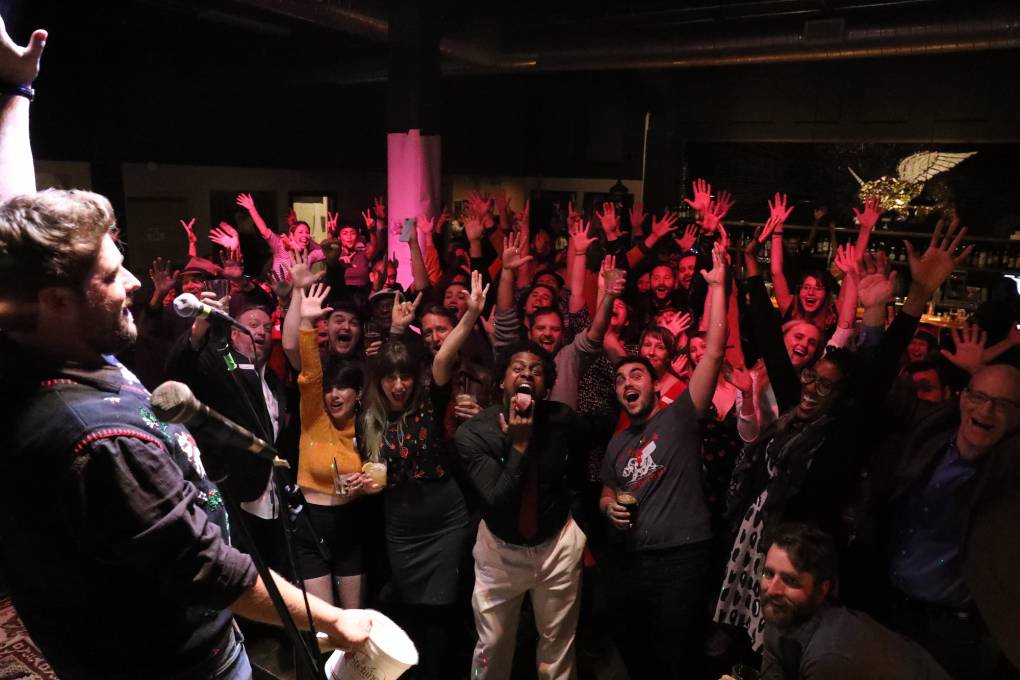
"caption": "Party-goers revel at PianoFight in San Francisco, with co-founder and artistic director Rob Ready presiding onstage. The venue announced its permanent closure this week. ",
"description": "Party-goers revel at PianoFight in San Francisco, with Rob Ready presiding onstage",
"title": "PianoFightSF_Party_photocredit_PianoFight",
"credit": "courtesy of PianoFight",
"status": "inherit",
"altTag": "a white man speaks into a microphone on stage in a darkly lit room while the audience cheers, lit by pink light",
"isLoading": false,
"fetchFailed": false
},
"arts_13921893": {
"type": "attachments",
"id": "arts_13921893",
"meta": {
"index": "attachments_1716263798",
"site": "arts",
"id": "13921893",
"found": true
},
"parent": 13921890,
"imgSizes": {
"twentyfourteen-full-width": {
"file": "https://ww2.kqed.org/app/uploads/sites/2/2022/11/Traviata.16.9-1038x576.jpg",
"width": 1038,
"mimeType": "image/jpeg",
"height": 576
},
"thumbnail": {
"file": "https://ww2.kqed.org/app/uploads/sites/2/2022/11/Traviata.16.9-160x90.jpg",
"width": 160,
"mimeType": "image/jpeg",
"height": 90
},
"post-thumbnail": {
"file": "https://ww2.kqed.org/app/uploads/sites/2/2022/11/Traviata.16.9-672x372.jpg",
"width": 672,
"mimeType": "image/jpeg",
"height": 372
},
"kqedFullSize": {
"file": "https://ww2.kqed.org/app/uploads/sites/2/2022/11/Traviata.16.9.jpg",
"width": 1920,
"height": 1080
},
"large": {
"file": "https://ww2.kqed.org/app/uploads/sites/2/2022/11/Traviata.16.9-1020x574.jpg",
"width": 1020,
"mimeType": "image/jpeg",
"height": 574
},
"1536x1536": {
"file": "https://ww2.kqed.org/app/uploads/sites/2/2022/11/Traviata.16.9-1536x864.jpg",
"width": 1536,
"mimeType": "image/jpeg",
"height": 864
},
"medium": {
"file": "https://ww2.kqed.org/app/uploads/sites/2/2022/11/Traviata.16.9-800x450.jpg",
"width": 800,
"mimeType": "image/jpeg",
"height": 450
},
"medium_large": {
"file": "https://ww2.kqed.org/app/uploads/sites/2/2022/11/Traviata.16.9-768x432.jpg",
"width": 768,
"mimeType": "image/jpeg",
"height": 432
}
},
"publishDate": 1669161467,
"modified": 1669161738,
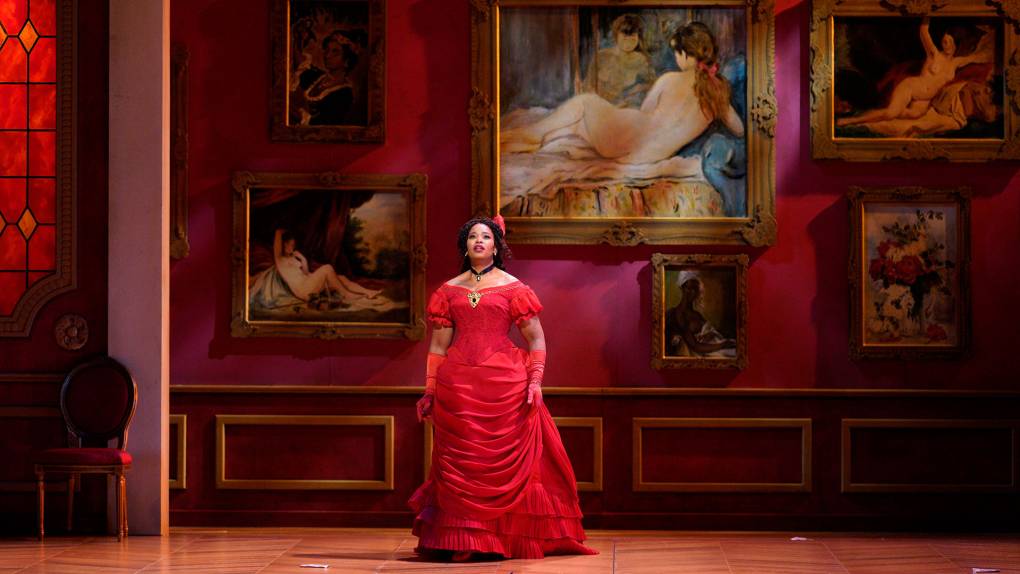
"caption": "Pretty Yende as Violetta in Verdi's 'La Traviata' at San Francisco Opera.",
"description": null,
"title": "Traviata.16.9",
"credit": "Cory Weaver",
"status": "inherit",
"altTag": "A Black woman in a red dress stands against a parlor wall of deep red, adorned with paintings",
"isLoading": false,
"fetchFailed": false
},
"arts_13921572": {
"type": "attachments",
"id": "arts_13921572",
"meta": {
"index": "attachments_1716263798",
"site": "arts",
"id": "13921572",
"found": true
},
"parent": 13921567,
"imgSizes": {
"twentyfourteen-full-width": {
"file": "https://ww2.kqed.org/app/uploads/sites/2/2022/11/GreatComet_Ensemble_Credit_BenjaminKrantz-1038x576.jpg",
"width": 1038,
"mimeType": "image/jpeg",
"height": 576
},
"thumbnail": {
"file": "https://ww2.kqed.org/app/uploads/sites/2/2022/11/GreatComet_Ensemble_Credit_BenjaminKrantz-160x107.jpg",
"width": 160,
"mimeType": "image/jpeg",
"height": 107
},
"post-thumbnail": {
"file": "https://ww2.kqed.org/app/uploads/sites/2/2022/11/GreatComet_Ensemble_Credit_BenjaminKrantz-672x372.jpg",
"width": 672,
"mimeType": "image/jpeg",
"height": 372
},
"kqedFullSize": {
"file": "https://ww2.kqed.org/app/uploads/sites/2/2022/11/GreatComet_Ensemble_Credit_BenjaminKrantz.jpg",
"width": 2000,
"height": 1333
},
"large": {
"file": "https://ww2.kqed.org/app/uploads/sites/2/2022/11/GreatComet_Ensemble_Credit_BenjaminKrantz-1020x680.jpg",
"width": 1020,
"mimeType": "image/jpeg",
"height": 680
},
"1536x1536": {
"file": "https://ww2.kqed.org/app/uploads/sites/2/2022/11/GreatComet_Ensemble_Credit_BenjaminKrantz-1536x1024.jpg",
"width": 1536,
"mimeType": "image/jpeg",
"height": 1024
},
"full-width": {
"file": "https://ww2.kqed.org/app/uploads/sites/2/2022/11/GreatComet_Ensemble_Credit_BenjaminKrantz-1920x1280.jpg",
"width": 1920,
"mimeType": "image/jpeg",
"height": 1280
},
"medium": {
"file": "https://ww2.kqed.org/app/uploads/sites/2/2022/11/GreatComet_Ensemble_Credit_BenjaminKrantz-800x533.jpg",
"width": 800,
"mimeType": "image/jpeg",
"height": 533
},
"medium_large": {
"file": "https://ww2.kqed.org/app/uploads/sites/2/2022/11/GreatComet_Ensemble_Credit_BenjaminKrantz-768x512.jpg",
"width": 768,
"mimeType": "image/jpeg",
"height": 512
}
},
"publishDate": 1668448859,
"modified": 1668448993,
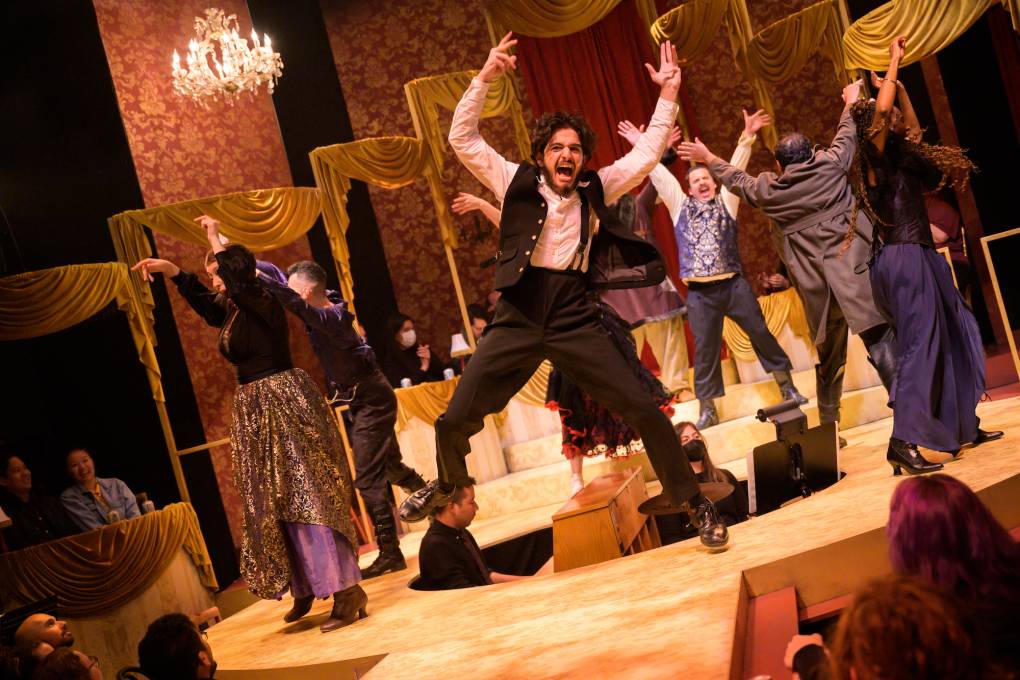
"caption": "Shotgun Players ensemble cast for Natasha, Pierre & the Great Comet of 1812, by Dave Malloy",
"description": "Shotgun Players ensemble cast for the Great Comet of 1812 dancing onstage and leaping into the air with arms raised in stage jubilation.",
"title": "GreatComet_Ensemble_Credit_BenjaminKrantz",
"credit": "Benjamin Krantz",
"status": "inherit",
"altTag": "Shotgun Players ensemble cast for the Great Comet of 1812 dancing onstage and leaping into the air with arms raised in stage jubilation",
"isLoading": false,
"fetchFailed": false
},
"arts_13921335": {
"type": "attachments",
"id": "arts_13921335",
"meta": {
"index": "attachments_1716263798",
"site": "arts",
"id": "13921335",
"found": true
},
"parent": 13921333,
"imgSizes": {
"twentyfourteen-full-width": {
"file": "https://ww2.kqed.org/app/uploads/sites/2/2022/11/colonialism-is-terrible-rehearsal-1038x576.jpg",
"width": 1038,
"mimeType": "image/jpeg",
"height": 576
},
"thumbnail": {
"file": "https://ww2.kqed.org/app/uploads/sites/2/2022/11/colonialism-is-terrible-rehearsal-160x90.jpg",
"width": 160,
"mimeType": "image/jpeg",
"height": 90
},
"post-thumbnail": {
"file": "https://ww2.kqed.org/app/uploads/sites/2/2022/11/colonialism-is-terrible-rehearsal-672x372.jpg",
"width": 672,
"mimeType": "image/jpeg",
"height": 372
},
"kqedFullSize": {
"file": "https://ww2.kqed.org/app/uploads/sites/2/2022/11/colonialism-is-terrible-rehearsal-scaled.jpg",
"width": 2560,
"height": 1440
},
"2048x2048": {
"file": "https://ww2.kqed.org/app/uploads/sites/2/2022/11/colonialism-is-terrible-rehearsal-2048x1152.jpg",
"width": 2048,
"mimeType": "image/jpeg",
"height": 1152
},
"large": {
"file": "https://ww2.kqed.org/app/uploads/sites/2/2022/11/colonialism-is-terrible-rehearsal-1020x574.jpg",
"width": 1020,
"mimeType": "image/jpeg",
"height": 574
},
"1536x1536": {
"file": "https://ww2.kqed.org/app/uploads/sites/2/2022/11/colonialism-is-terrible-rehearsal-1536x864.jpg",
"width": 1536,
"mimeType": "image/jpeg",
"height": 864
},
"full-width": {
"file": "https://ww2.kqed.org/app/uploads/sites/2/2022/11/colonialism-is-terrible-rehearsal-1920x1080.jpg",
"width": 1920,
"mimeType": "image/jpeg",
"height": 1080
},
"medium": {
"file": "https://ww2.kqed.org/app/uploads/sites/2/2022/11/colonialism-is-terrible-rehearsal-800x450.jpg",
"width": 800,
"mimeType": "image/jpeg",
"height": 450
},
"medium_large": {
"file": "https://ww2.kqed.org/app/uploads/sites/2/2022/11/colonialism-is-terrible-rehearsal-768x432.jpg",
"width": 768,
"mimeType": "image/jpeg",
"height": 432
}
},
"publishDate": 1667588349,
"modified": 1667588566,
"caption": "Actors Nicole Tung, Elissa Beth Stebbins and Anthony Doan rehearse a scene in Dustin Chinn's new play, 'Colonialism Is Terrible, But Pho Is Delicious,' at the Aurora Theatre in Berkeley.",
"description": null,
"title": "colonialism is terrible - rehearsal",
"credit": "Courtesy of Dustin Chinn",
"status": "inherit",
"altTag": "Three actors in 19th century colonial costumes rehearse a scene in a play.",
"isLoading": false,
"fetchFailed": false
},
"arts_13919583": {
"type": "attachments",
"id": "arts_13919583",
"meta": {
"index": "attachments_1716263798",
"site": "arts",
"id": "13919583",
"found": true
},
"parent": 13919522,
"imgSizes": {
"twentyfourteen-full-width": {
"file": "https://ww2.kqed.org/app/uploads/sites/2/2022/09/LER_137_COVER-1038x576.jpg",
"width": 1038,
"mimeType": "image/jpeg",
"height": 576
},
"thumbnail": {
"file": "https://ww2.kqed.org/app/uploads/sites/2/2022/09/LER_137_COVER-160x90.jpg",
"width": 160,
"mimeType": "image/jpeg",
"height": 90
},
"post-thumbnail": {
"file": "https://ww2.kqed.org/app/uploads/sites/2/2022/09/LER_137_COVER-672x372.jpg",
"width": 672,
"mimeType": "image/jpeg",
"height": 372
},
"kqedFullSize": {
"file": "https://ww2.kqed.org/app/uploads/sites/2/2022/09/LER_137_COVER.jpg",
"width": 1920,
"height": 1080
},
"large": {
"file": "https://ww2.kqed.org/app/uploads/sites/2/2022/09/LER_137_COVER-1020x574.jpg",
"width": 1020,
"mimeType": "image/jpeg",
"height": 574
},
"1536x1536": {
"file": "https://ww2.kqed.org/app/uploads/sites/2/2022/09/LER_137_COVER-1536x864.jpg",
"width": 1536,
"mimeType": "image/jpeg",
"height": 864
},
"medium": {
"file": "https://ww2.kqed.org/app/uploads/sites/2/2022/09/LER_137_COVER-800x450.jpg",
"width": 800,
"mimeType": "image/jpeg",
"height": 450
},
"medium_large": {
"file": "https://ww2.kqed.org/app/uploads/sites/2/2022/09/LER_137_COVER-768x432.jpg",
"width": 768,
"mimeType": "image/jpeg",
"height": 432
}
},
"publishDate": 1663968576,
"modified": 1663968787,
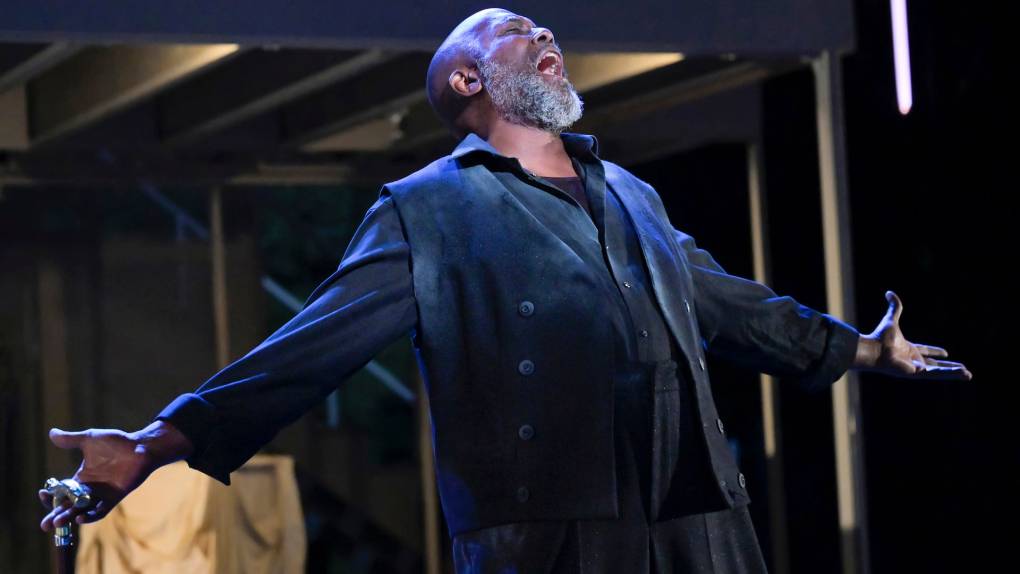
"caption": "The cast of 'LEAR,' the world premiere modern-verse translation of William Shakespeare’s King Lear by playwright and Oakland-native Marcus Gardley, with James A. Williams as King Lear at center.",
"description": null,
"title": "LER_137_COVER",
"credit": null,
"status": "inherit",
"altTag": null,
"isLoading": false,
"fetchFailed": false
},
"arts_13919470": {
"type": "attachments",
"id": "arts_13919470",
"meta": {
"index": "attachments_1716263798",
"site": "arts",
"id": "13919470",
"found": true
},
"parent": 13919459,
"imgSizes": {
"twentyfourteen-full-width": {
"file": "https://ww2.kqed.org/app/uploads/sites/2/2022/09/macbitch-by-the-breadbox-2-by-alandra-hileman-_1_-960x576.jpg",
"width": 960,
"mimeType": "image/jpeg",
"height": 576
},
"thumbnail": {
"file": "https://ww2.kqed.org/app/uploads/sites/2/2022/09/macbitch-by-the-breadbox-2-by-alandra-hileman-_1_-160x106.jpg",
"width": 160,
"mimeType": "image/jpeg",
"height": 106
},
"post-thumbnail": {
"file": "https://ww2.kqed.org/app/uploads/sites/2/2022/09/macbitch-by-the-breadbox-2-by-alandra-hileman-_1_-672x372.jpg",
"width": 672,
"mimeType": "image/jpeg",
"height": 372
},
"kqedFullSize": {
"file": "https://ww2.kqed.org/app/uploads/sites/2/2022/09/macbitch-by-the-breadbox-2-by-alandra-hileman-_1_.jpg",
"width": 960,
"height": 637
},
"medium": {
"file": "https://ww2.kqed.org/app/uploads/sites/2/2022/09/macbitch-by-the-breadbox-2-by-alandra-hileman-_1_-800x531.jpg",
"width": 800,
"mimeType": "image/jpeg",
"height": 531
},
"medium_large": {
"file": "https://ww2.kqed.org/app/uploads/sites/2/2022/09/macbitch-by-the-breadbox-2-by-alandra-hileman-_1_-768x510.jpg",
"width": 768,
"mimeType": "image/jpeg",
"height": 510
}
},
"publishDate": 1663819350,
"modified": 1663819447,
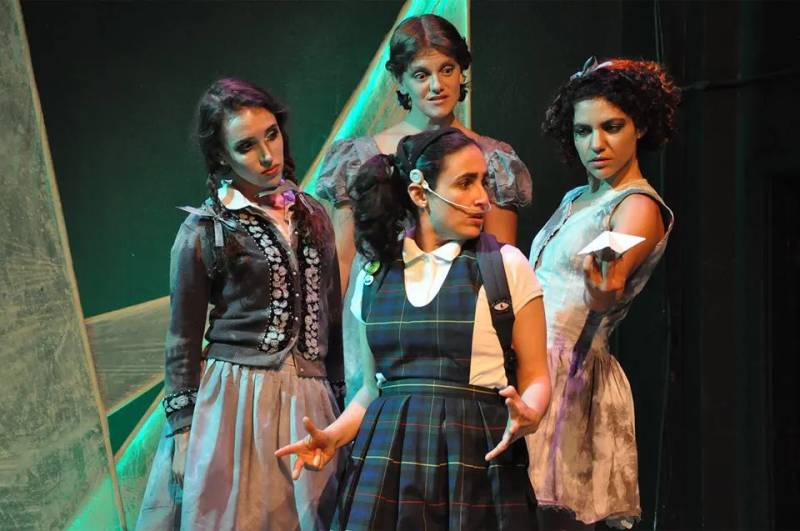
"caption": "Ladybird (María Ascensión Leigh, center) and the Witches (L-R: Jessica Waldman, Mikka Bonel, Carla Pauli) in 'MacBitch' by The Breadbox at EXIT Theatre in 2017.",
"description": null,
"title": "macbitch-by-the-breadbox-2-by-alandra-hileman-_1_",
"credit": "Alandra Hileman",
"status": "inherit",
"altTag": "four women on stage in schoolgirl costumes in a play",
"isLoading": false,
"fetchFailed": false
},
"arts_13919298": {
"type": "attachments",
"id": "arts_13919298",
"meta": {
"index": "attachments_1716263798",
"site": "arts",
"id": "13919298",
"found": true
},
"parent": 13919294,
"imgSizes": {
"twentyfourteen-full-width": {
"file": "https://ww2.kqed.org/app/uploads/sites/2/2022/09/rembe-1038x576.jpg",
"width": 1038,
"mimeType": "image/jpeg",
"height": 576
},
"thumbnail": {
"file": "https://ww2.kqed.org/app/uploads/sites/2/2022/09/rembe-160x107.jpg",
"width": 160,
"mimeType": "image/jpeg",
"height": 107
},
"post-thumbnail": {
"file": "https://ww2.kqed.org/app/uploads/sites/2/2022/09/rembe-672x372.jpg",
"width": 672,
"mimeType": "image/jpeg",
"height": 372
},
"kqedFullSize": {
"file": "https://ww2.kqed.org/app/uploads/sites/2/2022/09/rembe.jpg",
"width": 1200,
"height": 799
},
"large": {
"file": "https://ww2.kqed.org/app/uploads/sites/2/2022/09/rembe-1020x679.jpg",
"width": 1020,
"mimeType": "image/jpeg",
"height": 679
},
"medium": {
"file": "https://ww2.kqed.org/app/uploads/sites/2/2022/09/rembe-800x533.jpg",
"width": 800,
"mimeType": "image/jpeg",
"height": 533
},
"medium_large": {
"file": "https://ww2.kqed.org/app/uploads/sites/2/2022/09/rembe-768x511.jpg",
"width": 768,
"mimeType": "image/jpeg",
"height": 511
}
},
"publishDate": 1663626242,
"modified": 1663626309,
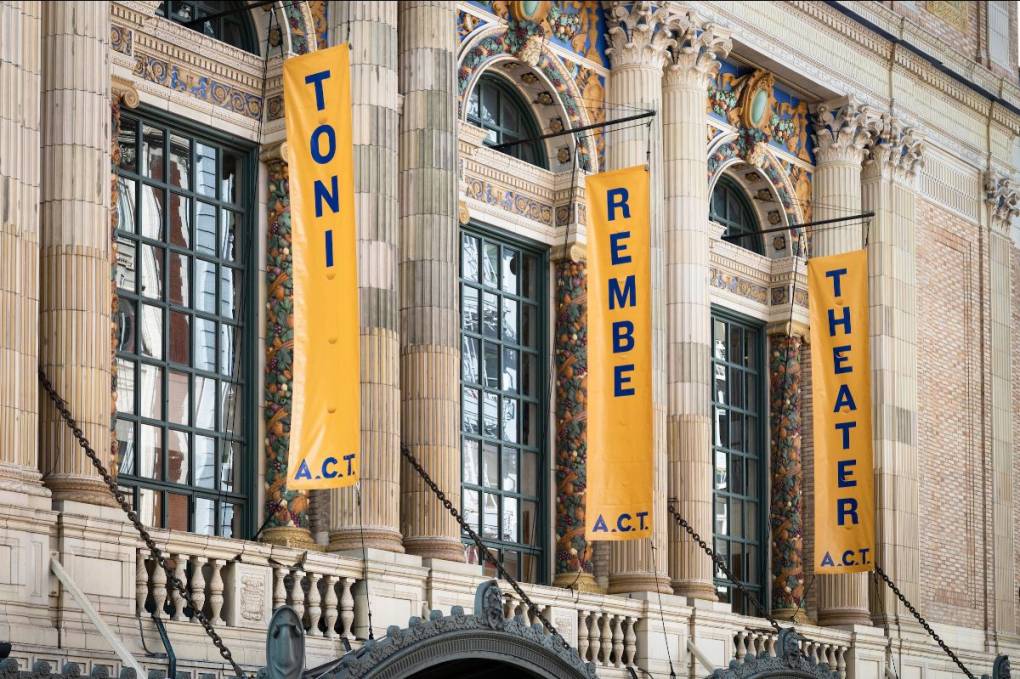
"caption": "Banners along the facade of the former Geary Theater announce the building's new name. ",
"description": null,
"title": "rembe",
"credit": "Kevin Berne / A.C.T.",
"status": "inherit",
"altTag": null,
"isLoading": false,
"fetchFailed": false
},
"arts_13919277": {
"type": "attachments",
"id": "arts_13919277",
"meta": {
"index": "attachments_1716263798",
"site": "arts",
"id": "13919277",
"found": true
},
"parent": 13919101,
"imgSizes": {
"twentyfourteen-full-width": {
"file": "https://ww2.kqed.org/app/uploads/sites/2/2022/09/AntonyCleopatra.MAIN_-1038x576.jpg",
"width": 1038,
"mimeType": "image/jpeg",
"height": 576
},
"thumbnail": {
"file": "https://ww2.kqed.org/app/uploads/sites/2/2022/09/AntonyCleopatra.MAIN_-160x107.jpg",
"width": 160,
"mimeType": "image/jpeg",
"height": 107
},
"post-thumbnail": {
"file": "https://ww2.kqed.org/app/uploads/sites/2/2022/09/AntonyCleopatra.MAIN_-672x372.jpg",
"width": 672,
"mimeType": "image/jpeg",
"height": 372
},
"kqedFullSize": {
"file": "https://ww2.kqed.org/app/uploads/sites/2/2022/09/AntonyCleopatra.MAIN_.jpg",
"width": 1920,
"height": 1280
},
"large": {
"file": "https://ww2.kqed.org/app/uploads/sites/2/2022/09/AntonyCleopatra.MAIN_-1020x680.jpg",
"width": 1020,
"mimeType": "image/jpeg",
"height": 680
},
"1536x1536": {
"file": "https://ww2.kqed.org/app/uploads/sites/2/2022/09/AntonyCleopatra.MAIN_-1536x1024.jpg",
"width": 1536,
"mimeType": "image/jpeg",
"height": 1024
},
"medium": {
"file": "https://ww2.kqed.org/app/uploads/sites/2/2022/09/AntonyCleopatra.MAIN_-800x533.jpg",
"width": 800,
"mimeType": "image/jpeg",
"height": 533
},
"medium_large": {
"file": "https://ww2.kqed.org/app/uploads/sites/2/2022/09/AntonyCleopatra.MAIN_-768x512.jpg",
"width": 768,
"mimeType": "image/jpeg",
"height": 512
}
},
"publishDate": 1663607032,
"modified": 1663607097,
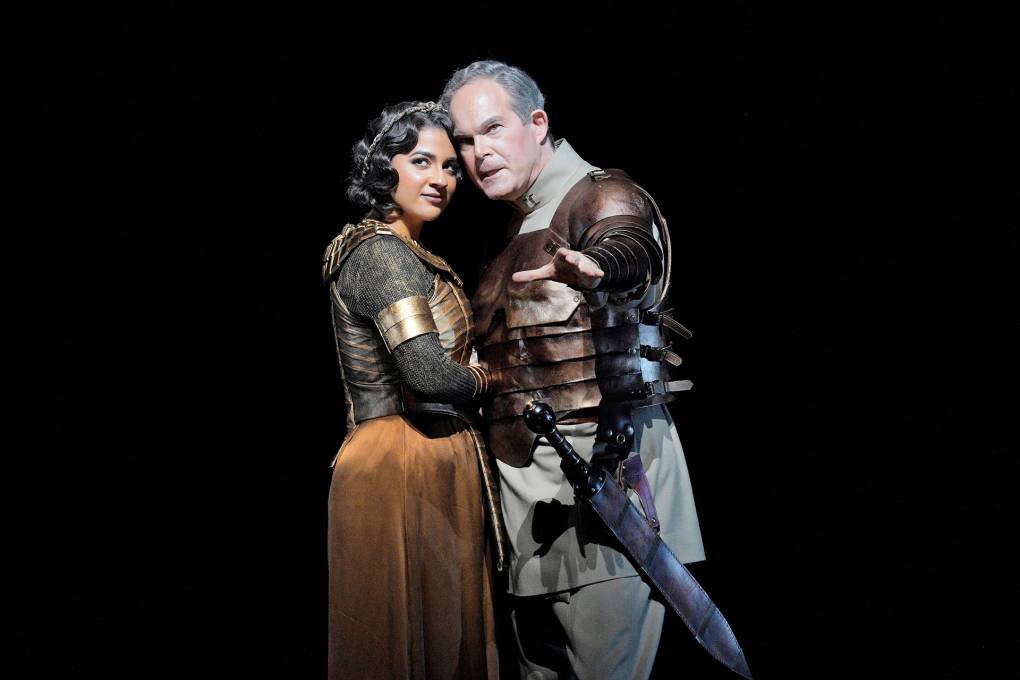
"caption": "Amina Edris and Gerald Finley in the title roles of John Adams' 'Antony and Cleopatra.'",
"description": null,
"title": "AntonyCleopatra.MAIN",
"credit": "Cory Weaver/San Francisco Opera",
"status": "inherit",
"altTag": "A woman and a man, both in armor, huddle close to each other, looking out toward the camera",
"isLoading": false,
"fetchFailed": false
},
"arts_13918339": {
"type": "attachments",
"id": "arts_13918339",
"meta": {
"index": "attachments_1716263798",
"site": "arts",
"id": "13918339",
"found": true
},
"parent": 13918308,
"imgSizes": {
"twentyfourteen-full-width": {
"file": "https://ww2.kqed.org/app/uploads/sites/2/2022/09/RajivNema_as_Raavan_photo_by_KyleAdler-1038x576.jpeg",
"width": 1038,
"mimeType": "image/jpeg",
"height": 576
},
"thumbnail": {
"file": "https://ww2.kqed.org/app/uploads/sites/2/2022/09/RajivNema_as_Raavan_photo_by_KyleAdler-160x84.jpeg",
"width": 160,
"mimeType": "image/jpeg",
"height": 84
},
"post-thumbnail": {
"file": "https://ww2.kqed.org/app/uploads/sites/2/2022/09/RajivNema_as_Raavan_photo_by_KyleAdler-672x372.jpeg",
"width": 672,
"mimeType": "image/jpeg",
"height": 372
},
"kqedFullSize": {
"file": "https://ww2.kqed.org/app/uploads/sites/2/2022/09/RajivNema_as_Raavan_photo_by_KyleAdler.jpeg",
"width": 1920,
"height": 1006
},
"large": {
"file": "https://ww2.kqed.org/app/uploads/sites/2/2022/09/RajivNema_as_Raavan_photo_by_KyleAdler-1020x534.jpeg",
"width": 1020,
"mimeType": "image/jpeg",
"height": 534
},
"1536x1536": {
"file": "https://ww2.kqed.org/app/uploads/sites/2/2022/09/RajivNema_as_Raavan_photo_by_KyleAdler-1536x805.jpeg",
"width": 1536,
"mimeType": "image/jpeg",
"height": 805
},
"medium": {
"file": "https://ww2.kqed.org/app/uploads/sites/2/2022/09/RajivNema_as_Raavan_photo_by_KyleAdler-800x419.jpeg",
"width": 800,
"mimeType": "image/jpeg",
"height": 419
},
"medium_large": {
"file": "https://ww2.kqed.org/app/uploads/sites/2/2022/09/RajivNema_as_Raavan_photo_by_KyleAdler-768x402.jpeg",
"width": 768,
"mimeType": "image/jpeg",
"height": 402
}
},
"publishDate": 1661890400,
"modified": 1662075638,
"caption": "Rajiv Nema plays Raavan in Ramayan, the 100th production of the South Bay theater company Naatak.",
"description": "Rajiv Nema plays Raavan in Ramayan, the 100th production of the South Bay theater company Naatak.",
"title": "RajivNema_as_Raavan_photo_by_KyleAdler",
"credit": "Photo by Kyler Adler / digital art by Vikas Dhurka",
"status": "inherit",
"altTag": "A playful row of human heads, all from the same actor, depicting multiple facial expressions.",
"isLoading": false,
"fetchFailed": false
},
"arts_13918495": {
"type": "attachments",
"id": "arts_13918495",
"meta": {
"index": "attachments_1716263798",
"site": "arts",
"id": "13918495",
"found": true
},
"parent": 13918445,
"imgSizes": {
"twentyfourteen-full-width": {
"file": "https://ww2.kqed.org/app/uploads/sites/2/2022/08/RedShades-1-1038x576.jpg",
"width": 1038,
"mimeType": "image/jpeg",
"height": 576
},
"thumbnail": {
"file": "https://ww2.kqed.org/app/uploads/sites/2/2022/08/RedShades-1-160x90.jpg",
"width": 160,
"mimeType": "image/jpeg",
"height": 90
},
"post-thumbnail": {
"file": "https://ww2.kqed.org/app/uploads/sites/2/2022/08/RedShades-1-672x372.jpg",
"width": 672,
"mimeType": "image/jpeg",
"height": 372
},
"kqedFullSize": {
"file": "https://ww2.kqed.org/app/uploads/sites/2/2022/08/RedShades-1.jpg",
"width": 1920,
"height": 1080
},
"large": {
"file": "https://ww2.kqed.org/app/uploads/sites/2/2022/08/RedShades-1-1020x574.jpg",
"width": 1020,
"mimeType": "image/jpeg",
"height": 574
},
"1536x1536": {
"file": "https://ww2.kqed.org/app/uploads/sites/2/2022/08/RedShades-1-1536x864.jpg",
"width": 1536,
"mimeType": "image/jpeg",
"height": 864
},
"medium": {
"file": "https://ww2.kqed.org/app/uploads/sites/2/2022/08/RedShades-1-800x450.jpg",
"width": 800,
"mimeType": "image/jpeg",
"height": 450
},
"medium_large": {
"file": "https://ww2.kqed.org/app/uploads/sites/2/2022/08/RedShades-1-768x432.jpg",
"width": 768,
"mimeType": "image/jpeg",
"height": 432
}
},
"publishDate": 1662008295,
"modified": 1662009215,
"caption": "Tommy Clifford-Carlos as Ida in 'The Red Shades,' in which a trans teen escapes her small town and finds herself among a gang of trans superheroes in the Tenderloin. ",
"description": null,
"title": "RedShades",
"credit": "Tristan Crane",
"status": "inherit",
"altTag": null,
"isLoading": false,
"fetchFailed": false
},
"arts_13902885": {
"type": "attachments",
"id": "arts_13902885",
"meta": {
"index": "attachments_1716263798",
"site": "arts",
"id": "13902885",
"found": true
},
"parent": 13902915,
"imgSizes": {
"thumbnail": {
"file": "https://ww2.kqed.org/app/uploads/sites/2/2021/09/D7A3965-160x107.jpg",
"width": 160,
"mimeType": "image/jpeg",
"height": 107
},
"post-thumbnail": {
"file": "https://ww2.kqed.org/app/uploads/sites/2/2021/09/D7A3965-672x372.jpg",
"width": 672,
"mimeType": "image/jpeg",
"height": 372
},
"kqedFullSize": {
"file": "https://ww2.kqed.org/app/uploads/sites/2/2021/09/D7A3965.jpg",
"width": 800,
"height": 533
},
"medium_large": {
"file": "https://ww2.kqed.org/app/uploads/sites/2/2021/09/D7A3965-768x512.jpg",
"width": 768,
"mimeType": "image/jpeg",
"height": 512
}
},
"publishDate": 1631505950,
"modified": 1660711720,
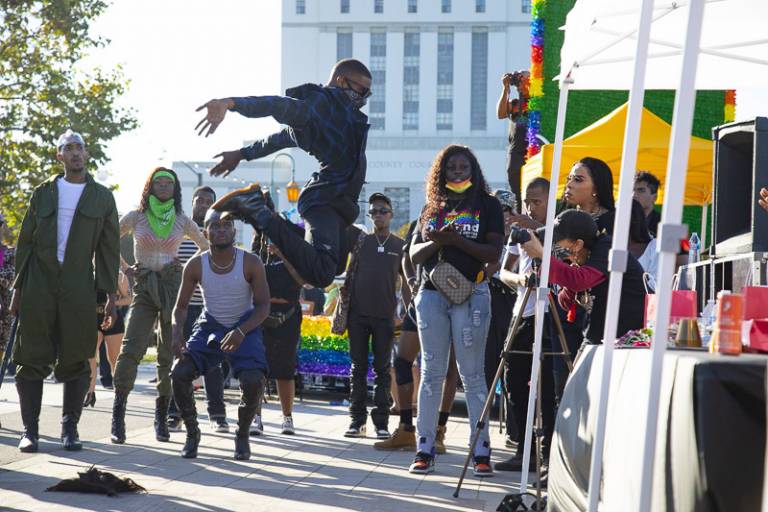
"caption": "\"Set it off\" OTA Performance contest at the Back with a Vengeance Ball at Lake Merritt Amphitheater on Saturday, Sept. 11, 2021. ",
"description": "\"Set it off\" OTA Performance contest at Back with a Vengeance Ball at Lake Merritt Amphitheater on Saturday, Sept. 11, 2021. ",
"title": "\"Set it off\" OTA Performance contest at Back with a Vengeance Ball at Lake Merritt Amphitheater on Saturday, Sept. 11, 2021.",
"credit": "Estefany Gonzalez ",
"status": "inherit",
"altTag": null,
"isLoading": false,
"fetchFailed": false
}
},
"audioPlayerReducer": {
"postId": "stream_live",
"isPaused": true,
"isPlaying": false,
"pfsActive": false,
"pledgeModalIsOpen": true,
"playerDrawerIsOpen": false,
"liveAudioPlayStartedAt": 0,
"liveAudioPlayContext": ""
},
"authorsReducer": {
"byline_arts_13924185": {
"type": "authors",
"id": "byline_arts_13924185",
"meta": {
"override": true
},
"slug": "byline_arts_13924185",
"name": "Charles Lewis III",
"isLoading": false
},
"byline_arts_13919459": {
"type": "authors",
"id": "byline_arts_13919459",
"meta": {
"override": true
},
"slug": "byline_arts_13919459",
"name": "Charles Lewis III",
"isLoading": false
},
"gmeline": {
"type": "authors",
"id": "185",
"meta": {
"index": "authors_1716337520",
"id": "185",
"found": true
},
"name": "Gabe Meline",
"firstName": "Gabe",
"lastName": "Meline",
"slug": "gmeline",
"email": "gmeline@kqed.org",
"display_author_email": true,
"staff_mastheads": [
"arts"
],
"title": "Senior Editor, KQED Arts & Culture",
"bio": "Gabe Meline entered journalism at age 15 making photocopied zines, and has since earned awards from the Edward R. Murrow Awards, the Society for Professional Journalists, the Online Journalism Awards, the Association of Alternative Newsweeklies and the California Newspaper Publishers Association. Prior to KQED, he was the editor of the \u003cem>North Bay Bohemian\u003c/em> and a touring musician. He lives with his wife and daughter in his hometown of Santa Rosa, CA.",
"avatar": "https://secure.gravatar.com/avatar/5bebe57be0d8bc2dd318934feb47299e2d2d10cba28d09d8d7afb389a2ce2bdd?s=600&d=blank&r=g",
"twitter": null,
"bluesky": null,
"facebook": null,
"instagram": null,
"linkedin": null,
"sites": [
{
"site": "",
"roles": [
"editor"
]
},
{
"site": "arts",
"roles": [
"administrator"
]
},
{
"site": "artschool",
"roles": [
"editor"
]
},
{
"site": "news",
"roles": [
"author"
]
},
{
"site": "pop",
"roles": [
"editor"
]
},
{
"site": "bayareabites",
"roles": [
"editor"
]
},
{
"site": "food",
"roles": [
"editor"
]
},
{
"site": "forum",
"roles": [
"administrator"
]
},
{
"site": "liveblog",
"roles": [
"editor"
]
},
{
"site": "hiphop",
"roles": [
"editor"
]
}
],
"headData": {
"title": "Gabe Meline | KQED",
"description": "Senior Editor, KQED Arts & Culture",
"ogImgSrc": "https://secure.gravatar.com/avatar/5bebe57be0d8bc2dd318934feb47299e2d2d10cba28d09d8d7afb389a2ce2bdd?s=600&d=blank&r=g",
"twImgSrc": "https://secure.gravatar.com/avatar/5bebe57be0d8bc2dd318934feb47299e2d2d10cba28d09d8d7afb389a2ce2bdd?s=600&d=blank&r=g"
},
"isLoading": false,
"link": "/author/gmeline"
},
"rachael-myrow": {
"type": "authors",
"id": "251",
"meta": {
"index": "authors_1716337520",
"id": "251",
"found": true
},
"name": "Rachael Myrow",
"firstName": "Rachael",
"lastName": "Myrow",
"slug": "rachael-myrow",
"email": "rmyrow@kqed.org",
"display_author_email": true,
"staff_mastheads": [
"news"
],
"title": "Senior Editor of KQED's Silicon Valley News Desk",
"bio": "• I write and edit stories about how Silicon Valley power and policies shape everyday life in California. I’m also passionate about making Bay Area history and culture more accessible to a broad public. • I’ve been a journalist for most of my life, starting in high school with The Franklin Press in Los Angeles, where I grew up. While earning my first degree in English at UC Berkeley, I got my start in public radio at KALX-FM. After completing a second degree in journalism at Cal, I landed my first professional job at Marketplace, then moved on to KPCC (now LAist), and then KQED, where I hosted The California Report for more than seven years. • My reporting has appeared on NPR, The World, WBUR’s \u003ci>Here & Now\u003c/i>, and the BBC. I also guest host for KQED’s \u003ci>Forum\u003c/i>, as well as the Commonwealth Club in San Francisco. • I speak periodically on media, democracy and technology issues, and do voiceover work for documentaries and educational video projects. • Outside of the studio, you'll find me hiking Bay Area trails and whipping up Insta-ready meals in my kitchen. • I do not accept gifts, money, or favors from anyone connected to my reporting, I don't pay people for information, and I do not support or donate to political causes. • I strive to treat the people I report on with fairness, honesty, and respect. I also recognize there are often multiple sides to a story and work to verify information through multiple sources and documentation. If I get something wrong, I correct it.",
"avatar": "https://secure.gravatar.com/avatar/3ed8a3c5f26025e4a805ba634cda8cd764906b97438a6d9ce216b044e340da4e?s=600&d=blank&r=g",
"twitter": "rachaelmyrow",
"bluesky": null,
"facebook": null,
"instagram": null,
"linkedin": "https://www.linkedin.com/in/rachaelmyrow/",
"sites": [
{
"site": "arts",
"roles": [
"administrator"
]
},
{
"site": "news",
"roles": [
"edit_others_posts",
"editor"
]
},
{
"site": "futureofyou",
"roles": [
"editor"
]
},
{
"site": "bayareabites",
"roles": [
"editor"
]
},
{
"site": "stateofhealth",
"roles": [
"editor"
]
},
{
"site": "science",
"roles": [
"editor"
]
},
{
"site": "food",
"roles": [
"editor"
]
},
{
"site": "forum",
"roles": [
"editor"
]
},
{
"site": "liveblog",
"roles": [
"author"
]
}
],
"headData": {
"title": "Rachael Myrow | KQED",
"description": "Senior Editor of KQED's Silicon Valley News Desk",
"ogImgSrc": "https://secure.gravatar.com/avatar/3ed8a3c5f26025e4a805ba634cda8cd764906b97438a6d9ce216b044e340da4e?s=600&d=blank&r=g",
"twImgSrc": "https://secure.gravatar.com/avatar/3ed8a3c5f26025e4a805ba634cda8cd764906b97438a6d9ce216b044e340da4e?s=600&d=blank&r=g"
},
"isLoading": false,
"link": "/author/rachael-myrow"
},
"ralexandra": {
"type": "authors",
"id": "11242",
"meta": {
"index": "authors_1716337520",
"id": "11242",
"found": true
},
"name": "Rae Alexandra",
"firstName": "Rae",
"lastName": "Alexandra",
"slug": "ralexandra",
"email": "ralexandra@kqed.org",
"display_author_email": true,
"staff_mastheads": [],
"title": "Reporter/Producer",
"bio": "Rae Alexandra is a Reporter/Producer for KQED Arts & Culture, and the creator/author of the \u003ca href=\"https://www.kqed.org/arts/program/rebel-girls-from-bay-area-history\">Rebel Girls From Bay Area History\u003c/a> and \u003ca href=\"https://www.kqed.org/bizarrebayarea\">Bizarre Bay Area\u003c/a> series. Her debut book, \u003ca href=\"https://citylights.com/politics-current-events-history/unsung-heroines35-women-who-changed/\">Unsung Heroines: 35 Women Who Changed the Bay Area\u003c/a> was published by City Lights in March 2026. In 2023, Rae was awarded an SPJ Excellence in Journalism Award for Arts & Culture. Rae was born and raised in Wales and subsequently — even after two decades in Northern California — still uses phrases that regularly baffle her coworkers.",
"avatar": "https://secure.gravatar.com/avatar/edfee8176c80cc0a382b051190f5341997df378a934a5774dcb0977732dfd401?s=600&d=blank&r=g",
"twitter": null,
"bluesky": null,
"facebook": null,
"instagram": null,
"linkedin": null,
"sites": [
{
"site": "arts",
"roles": [
"subscriber"
]
},
{
"site": "news",
"roles": [
"subscriber"
]
},
{
"site": "pop",
"roles": [
"subscriber"
]
},
{
"site": "bayareabites",
"roles": [
"subscriber"
]
},
{
"site": "science",
"roles": [
"subscriber"
]
}
],
"headData": {
"title": "Rae Alexandra | KQED",
"description": "Reporter/Producer",
"ogImgSrc": "https://secure.gravatar.com/avatar/edfee8176c80cc0a382b051190f5341997df378a934a5774dcb0977732dfd401?s=600&d=blank&r=g",
"twImgSrc": "https://secure.gravatar.com/avatar/edfee8176c80cc0a382b051190f5341997df378a934a5774dcb0977732dfd401?s=600&d=blank&r=g"
},
"isLoading": false,
"link": "/author/ralexandra"
},
"aproehl": {
"type": "authors",
"id": "11296",
"meta": {
"index": "authors_1716337520",
"id": "11296",
"found": true
},
"name": "Ariana Proehl",
"firstName": "Ariana",
"lastName": "Proehl",
"slug": "aproehl",
"email": "aproehl@KQED.org",
"display_author_email": true,
"staff_mastheads": [
"news"
],
"title": "Culture Reporter, KQED",
"bio": "Ariana Proehl is a Culture Reporter and Host.",
"avatar": "https://secure.gravatar.com/avatar/c96b24567eb5bb3a4f8bb295ed53e232?s=600&d=blank&r=g",
"twitter": "ArianaProehl",
"facebook": null,
"instagram": null,
"linkedin": null,
"sites": [
{
"site": "arts",
"roles": []
},
{
"site": "news",
"roles": []
},
{
"site": "education",
"roles": []
},
{
"site": "forum",
"roles": []
}
],
"headData": {
"title": "Ariana Proehl | KQED",
"description": "Culture Reporter, KQED",
"ogImgSrc": "https://secure.gravatar.com/avatar/c96b24567eb5bb3a4f8bb295ed53e232?s=600&d=blank&r=g",
"twImgSrc": "https://secure.gravatar.com/avatar/c96b24567eb5bb3a4f8bb295ed53e232?s=600&d=blank&r=g"
},
"isLoading": false,
"link": "/author/aproehl"
},
"ngluckstern": {
"type": "authors",
"id": "11497",
"meta": {
"index": "authors_1716337520",
"id": "11497",
"found": true
},
"name": "Nicole Gluckstern",
"firstName": "Nicole",
"lastName": "Gluckstern",
"slug": "ngluckstern",
"email": "gluckstern.nicole@gmail.com",
"display_author_email": false,
"staff_mastheads": [],
"title": "KQED Contributor",
"bio": null,
"avatar": "https://secure.gravatar.com/avatar/2c3d593194017bfe811a998ad03140909de330b22abebf4889e1a564ce5b3495?s=600&d=blank&r=g",
"twitter": null,
"bluesky": null,
"facebook": null,
"instagram": null,
"linkedin": null,
"sites": [
{
"site": "arts",
"roles": [
"contributor"
]
}
],
"headData": {
"title": "Nicole Gluckstern | KQED",
"description": "KQED Contributor",
"ogImgSrc": "https://secure.gravatar.com/avatar/2c3d593194017bfe811a998ad03140909de330b22abebf4889e1a564ce5b3495?s=600&d=blank&r=g",
"twImgSrc": "https://secure.gravatar.com/avatar/2c3d593194017bfe811a998ad03140909de330b22abebf4889e1a564ce5b3495?s=600&d=blank&r=g"
},
"isLoading": false,
"link": "/author/ngluckstern"
},
"ltsai": {
"type": "authors",
"id": "11743",
"meta": {
"index": "authors_1716337520",
"id": "11743",
"found": true
},
"name": "Luke Tsai",
"firstName": "Luke",
"lastName": "Tsai",
"slug": "ltsai",
"email": "ltsai@kqed.org",
"display_author_email": true,
"staff_mastheads": [
"arts"
],
"title": "Food Editor",
"bio": "Luke Tsai is KQED's food editor and resident stinky tofu connoisseur. Prior to KQED, he was an editor at Eater SF, \u003cem>San Francisco \u003c/em>magazine, and the \u003cem>East Bay Express\u003c/em>, and his work has also appeared in TASTE, the \u003cem>San Francisco Chronicle\u003c/em>, and the \u003cem>Best Food Writing\u003c/em> anthology. When he isn't writing or editing, you'll find him eating most everything he can get his hands on.",
"avatar": "https://secure.gravatar.com/avatar/1e59b45bf191526e7339d6ba46e33a57b2030d25c27660ecc64ea3cb863e34f7?s=600&d=blank&r=g",
"twitter": "theluketsai",
"bluesky": null,
"facebook": null,
"instagram": null,
"linkedin": null,
"sites": [
{
"site": "",
"roles": [
"editor"
]
},
{
"site": "arts",
"roles": [
"administrator"
]
},
{
"site": "news",
"roles": [
"editor",
"contributor"
]
},
{
"site": "bayareabites",
"roles": [
"editor"
]
},
{
"site": "food",
"roles": [
"editor"
]
}
],
"headData": {
"title": "Luke Tsai | KQED",
"description": "Food Editor",
"ogImgSrc": "https://secure.gravatar.com/avatar/1e59b45bf191526e7339d6ba46e33a57b2030d25c27660ecc64ea3cb863e34f7?s=600&d=blank&r=g",
"twImgSrc": "https://secure.gravatar.com/avatar/1e59b45bf191526e7339d6ba46e33a57b2030d25c27660ecc64ea3cb863e34f7?s=600&d=blank&r=g"
},
"isLoading": false,
"link": "/author/ltsai"
},
"earnold": {
"type": "authors",
"id": "11839",
"meta": {
"index": "authors_1716337520",
"id": "11839",
"found": true
},
"name": "Eric Arnold",
"firstName": "Eric",
"lastName": "Arnold",
"slug": "earnold",
"email": "earnold@kqed.org",
"display_author_email": false,
"staff_mastheads": [],
"title": "Contributing Editor, 'That's My Word'",
"bio": "Eric Arnold has covered hip-hop locally and nationally for over 30 years. Formerly the managing editor of \u003cem>4080\u003c/em> and columnist for \u003cem>The Source\u003c/em>, he chronicled hyphy’s rise and fall, co-curated the Oakland Museum of California’s first hip-hop exhibit in 2018 and won a 2022 Northern California Emmy Award for a mini-documentary on Oakland’s Boogaloo dance culture. He is a contributing editor for \u003cem>That’s My Word\u003c/em>, KQED's series on the history of Bay Area hip-hop.",
"avatar": "https://secure.gravatar.com/avatar/ede45b04898456ad0893a2811e78b0a2?s=600&d=blank&r=g",
"twitter": null,
"facebook": null,
"instagram": null,
"linkedin": null,
"sites": [
{
"site": "arts",
"roles": [
"contributor"
]
},
{
"site": "news",
"roles": [
"contributor"
]
},
{
"site": "hiphop",
"roles": [
"contributor"
]
}
],
"headData": {
"title": "Eric Arnold | KQED",
"description": "Contributing Editor, 'That's My Word'",
"ogImgSrc": "https://secure.gravatar.com/avatar/ede45b04898456ad0893a2811e78b0a2?s=600&d=blank&r=g",
"twImgSrc": "https://secure.gravatar.com/avatar/ede45b04898456ad0893a2811e78b0a2?s=600&d=blank&r=g"
},
"isLoading": false,
"link": "/author/earnold"
},
"djchavez": {
"type": "authors",
"id": "11905",
"meta": {
"index": "authors_1716337520",
"id": "11905",
"found": true
},
"name": "David John Chávez",
"firstName": "David John",
"lastName": "Chávez",
"slug": "djchavez",
"email": "theatrechavez@gmail.com",
"display_author_email": false,
"staff_mastheads": [],
"title": "KQED Contributor",
"bio": "Based in San José, David is a theater critic and reporter who who served as Executive Chair of the American Theatre Critics/Journalists Association (’22-’25), as well as a regular theater contributor to The Mercury News, San Francisco Chronicle, American Theatre Magazine and KQED, among other publications. He is a two-time juror for the Pulitzer Prize for Drama (’22-’23) and a 2020 fellow of the Eugene O'Neill National Critics Institute.",
"avatar": "https://secure.gravatar.com/avatar/5eaa3ce994228213820907c390795c28f7b97165c2b575f46d15fc9273a132b7?s=600&d=blank&r=g",
"twitter": null,
"bluesky": null,
"facebook": "https://www.facebook.com/bydavidjchavez",
"instagram": "https://www.instagram.com/davidjchavez/",
"linkedin": null,
"sites": [
{
"site": "arts",
"roles": [
"contributor"
]
}
],
"headData": {
"title": "David John Chávez | KQED",
"description": "KQED Contributor",
"ogImgSrc": "https://secure.gravatar.com/avatar/5eaa3ce994228213820907c390795c28f7b97165c2b575f46d15fc9273a132b7?s=600&d=blank&r=g",
"twImgSrc": "https://secure.gravatar.com/avatar/5eaa3ce994228213820907c390795c28f7b97165c2b575f46d15fc9273a132b7?s=600&d=blank&r=g"
},
"isLoading": false,
"link": "/author/djchavez"
}
},
"pagesReducer": {
"arts_category_theater": {
"type": "terms",
"id": "arts_967",
"meta": {
"index": "terms_1716263798",
"site": "arts",
"id": "967",
"score": 12.286692
},
"featImg": null,
"name": "Theater",
"description": null,
"taxonomy": "category",
"headData": {
"twImgId": null,
"twTitle": null,
"ogTitle": null,
"ogImgId": null,
"twDescription": null,
"description": null,
"title": "Theater Archives | KQED Arts",
"ogDescription": null
},
"ttid": 985,
"slug": "theater",
"isLoading": false,
"title": "Theater",
"pageMeta": {
"site": "arts",
"WpPageTemplate": "page-topic-editorial",
"currentPage": 13
},
"blocks": [
{
"blockName": "kqed/post-list",
"attrs": {
"layout": "cardArticle2",
"query": "posts/arts?category=theater",
"seeMore": false,
"paginated": true,
"page": 13
}
},
{
"blockName": "kqed/ad"
}
]
}
},
"pfsSessionReducer": {},
"postsReducer": {
"stream_live": {
"type": "live",
"id": "stream_live",
"audioUrl": "https://streams.kqed.org/kqedradio",
"title": "Live Stream",
"excerpt": "Live Stream information currently unavailable.",
"link": "/radio",
"featImg": "",
"label": {
"name": "KQED Live",
"link": "/"
}
},
"stream_kqedNewscast": {
"type": "posts",
"id": "stream_kqedNewscast",
"audioUrl": "https://www.kqed.org/.stream/anon/radio/RDnews/newscast.mp3?_=1",
"title": "KQED Newscast",
"featImg": "",
"label": {
"name": "88.5 FM",
"link": "/"
}
},
"arts_13924126": {
"type": "posts",
"id": "arts_13924126",
"meta": {
"index": "posts_1716263798",
"site": "arts",
"id": "13924126",
"score": null,
"sort": [
1675282142000
]
},
"guestAuthors": [],
"slug": "the-bay-area-was-hip-hop-before-there-was-hip-hop",
"title": "The Bay Area Was Hip-Hop Before There Was Hip-Hop",
"publishDate": 1675282142,
"format": "aside",
"headTitle": "The Bay Area Was Hip-Hop Before There Was Hip-Hop | KQED",
"labelTerm": {},
"content": "\u003cfigure id=\"attachment_13924127\" class=\"wp-caption aligncenter\" style=\"max-width: 800px\">\u003cimg loading=\"lazy\" decoding=\"async\" class=\"size-medium wp-image-13924127\" src=\"https://ww2.kqed.org/app/uploads/sites/2/2023/01/HipHopPreschool.16.9-800x450.jpg\" alt=\"\" width=\"800\" height=\"450\" srcset=\"https://cdn.kqed.org/wp-content/uploads/sites/2/2023/01/HipHopPreschool.16.9-800x450.jpg 800w, https://cdn.kqed.org/wp-content/uploads/sites/2/2023/01/HipHopPreschool.16.9-1020x574.jpg 1020w, https://cdn.kqed.org/wp-content/uploads/sites/2/2023/01/HipHopPreschool.16.9-160x90.jpg 160w, https://cdn.kqed.org/wp-content/uploads/sites/2/2023/01/HipHopPreschool.16.9-768x432.jpg 768w, https://cdn.kqed.org/wp-content/uploads/sites/2/2023/01/HipHopPreschool.16.9-1536x864.jpg 1536w, https://cdn.kqed.org/wp-content/uploads/sites/2/2023/01/HipHopPreschool.16.9.jpg 1920w\" sizes=\"auto, (max-width: 800px) 100vw, 800px\">\u003cfigcaption class=\"wp-caption-text\">Clockwise from upper left: Women of the Black Panther Party (BAMPFA/Pirkle Jones Foundation); the Black Resurgents (artist photo); Ntozake Shange (John Kisch Archive/Getty Images); Sun Ra in ‘Space is the Place’ (Harte Recordings); Sly Stone (CBS Records).\u003c/figcaption>\u003c/figure>\n\u003cp>\u003cb>\u003ci>Editor’s note:\u003c/i>\u003c/b>\u003ci>\u003cspan style=\"font-weight: 400\"> This story is part of\u003c/span>\u003c/i>\u003ca href=\"http://kqed.org/bayareahiphop\"> \u003cspan style=\"font-weight: 400\">That’s My Word\u003c/span>\u003c/a>\u003ci>\u003cspan style=\"font-weight: 400\">, KQED’s year-long exploration of \u003ca href=\"https://www.kqed.org/bayareahiphop\">Bay Area hip-hop\u003c/a> history, with new content dropping all throughout 2023.\u003c/span>\u003c/i>\u003c/p>\n\u003cp>\u003cem>“People in the house, this is just for you/ A little rap to make you boogaloo”\u003c/em>\u003cbr>\n—The Sugarhill Gang, 1979\u003c/p>\n\u003cp>Grandmaster Caz, the Bronx pioneer who ghostwrote the Sugarhill Gang’s groundbreaking 1979 single “\u003ca href=\"https://www.youtube.com/watch?v=rKTUAESacQM\">Rapper’s Delight\u003c/a>,” once said, “Hip-hop didn’t invent anything. Hop-hop reinvented everything.”\u003c/p>\n\u003cp>That statement rings truer than ever as we approach the 50th anniversary of Kool Herc’s first party in the Bronx, where the globally influential music and culture were born. And it especially rings true here in the Bay Area.\u003c/p>\n\u003cp>Hip-hop wasn’t fully formed in 1973. In fact, it didn’t have an official name until 1982, the year the \u003ci>Village Voice\u003c/i> published a \u003ca href=\"https://digital.library.cornell.edu/catalog/ss:16057641\">profile of Zulu Nation founder Afrika Bambaataa\u003c/a>. Before Bambaataa joined the Black Spades street gang as a teenager, he hung out at the local Black Panther Information Center, and “his political leanings were encouraged by the appearance of songs like ‘Say It Loud, I’m Black and I’m Proud’ by James Brown and ‘Stand!’ by Sly and the Family Stone,” Steven Hager wrote.\u003c/p>\n\u003cp>[ad fullwidth]\u003c/p>\n\u003cp>In other words, two of the three cultural influences cited in one of the earliest known print references to hip-hop are from the Bay Area. Oh word? Say that then.\u003c/p>\n\u003cp>No one would dispute that hip-hop emerged from the Bronx, or that James Brown was one of its godfathers. But the impact the Bay Area had on hip-hop’s early sound, aesthetic and ideology is less widely recognized. A thorough exploration of the Bay’s cultural and political movements of the 1960s and ’70s strongly suggests the Bay was hip-hop before there was hip-hop.\u003c/p>\n\u003cfigure id=\"attachment_13924550\" class=\"wp-caption aligncenter\" style=\"max-width: 800px\">\u003cimg loading=\"lazy\" decoding=\"async\" class=\"size-medium wp-image-13924550\" src=\"https://ww2.kqed.org/app/uploads/sites/2/2023/01/HueyNewton.SlyStone.ShomariSmith-800x426.jpg\" alt=\"illustrations of huey newton and sly stone\" width=\"800\" height=\"426\" srcset=\"https://cdn.kqed.org/wp-content/uploads/sites/2/2023/01/HueyNewton.SlyStone.ShomariSmith-800x426.jpg 800w, https://cdn.kqed.org/wp-content/uploads/sites/2/2023/01/HueyNewton.SlyStone.ShomariSmith-1020x543.jpg 1020w, https://cdn.kqed.org/wp-content/uploads/sites/2/2023/01/HueyNewton.SlyStone.ShomariSmith-160x85.jpg 160w, https://cdn.kqed.org/wp-content/uploads/sites/2/2023/01/HueyNewton.SlyStone.ShomariSmith-768x409.jpg 768w, https://cdn.kqed.org/wp-content/uploads/sites/2/2023/01/HueyNewton.SlyStone.ShomariSmith-1536x818.jpg 1536w, https://cdn.kqed.org/wp-content/uploads/sites/2/2023/01/HueyNewton.SlyStone.ShomariSmith.jpg 1920w\" sizes=\"auto, (max-width: 800px) 100vw, 800px\">\u003cfigcaption class=\"wp-caption-text\">In the Bay Area, both Huey Newton and Sly Stone (L–R) helped sow the seeds of what would later be referred to as hip-hop. \u003ccite>(Illustrations by Shomari Smith)\u003c/cite>\u003c/figcaption>\u003c/figure>\n\u003cp>Consider this: Before he became a funk superstar, Sly Stone was a fast-talking radio personality whose \u003ca href=\"https://soundcloud.com/djstef415/sly-stone-on-ksol-1967\">on-air patter\u003c/a>, laden with hep phrases, took the form of rapping before rap music. When it came to dance, the Bay Area had boogaloo, robotting and strutting, whose innovative moves preceded b-boying by almost 10 years. (There’s even evidence of breakdancing crews at local talent shows prior to nationwide releases of \u003cem>Breakin’\u003c/em> and \u003cem>Beat Street\u003c/em>.)\u003c/p>\n\u003cp>The \u003ca href=\"https://en.wikipedia.org/wiki/Wall_of_Respect\">community mural movement\u003c/a>, which parallels the \u003ca href=\"https://blogs.cuit.columbia.edu/ijt2106/moment-of-departure/the-emergence-of-modern-graffiti/\">modern graffiti movement\u003c/a>, took root in the Bay before wildstyle frescoes appeared on New York subway trains. The Bay Area’s \u003ca href=\"https://legionsofboom.com/\">Filipino American mobile DJ scene\u003c/a> dates back to garage parties in the 1970s in South San Francisco and Daly City.\u003c/p>\n\u003cp>Consider also that the iconography of hip-hop was shaped by Bay Area activists, as well as street-level archetypes of badmen and tricksters whose legend became \u003ca href=\"https://www.youtube.com/watch?v=CsXK4_D6ByA\">urban folklore\u003c/a>. A key reason the Bay Area became an early adopter of hip-hop was because its culture not only anticipated its arrival, but contributed to its essence during its developmental stages.\u003c/p>\n\u003cfigure id=\"attachment_13924289\" class=\"wp-caption aligncenter\" style=\"max-width: 615px\">\u003cimg loading=\"lazy\" decoding=\"async\" class=\"size-full wp-image-13924289\" src=\"https://ww2.kqed.org/app/uploads/sites/2/2023/01/BPP2.png\" alt=\"\" width=\"615\" height=\"829\" srcset=\"https://cdn.kqed.org/wp-content/uploads/sites/2/2023/01/BPP2.png 615w, https://cdn.kqed.org/wp-content/uploads/sites/2/2023/01/BPP2-160x216.png 160w\" sizes=\"auto, (max-width: 615px) 100vw, 615px\">\u003cfigcaption class=\"wp-caption-text\">A 1971 flyer for a Black Panther Party rally calling for Bobby Seale, Ericka Huggins, Angela Davis and Ruchell Magee to be freed from prison. \u003ccite>(Courtesy of Black Panther Party Alumni Legacy Network)\u003c/cite>\u003c/figcaption>\u003c/figure>\n\u003ch2>The Black Panthers lay hip-hop’s ideological foundation\u003c/h2>\n\u003cp>Hip-hop began as an underground artform created by inner city youth with few resources, who were dynamic in how they expressed their style and identity. Much of its ideology and political viewpoints were shaped by the Black Panthers, who were founded in Oakland in 1966 and grew to 38 national chapters within two years.\u003c/p>\n\u003cp>The Black Panthers had a distinct influence on people like dancer Will “Mr. Penguin” Randolph, an early practitioner of boogaloo and co-founder of the dance crew the \u003ca href=\"https://www.blackresurgents.com/\">Black Resurgents.\u003c/a> Randolph, who grew up in East Oakland, remembers how the Panthers used culture to engage young people and push their revolutionary message.\u003c/p>\n\u003cp>“They had all these rallies with Elaine Brown and different people, and the Black Resurgents were the unofficial official dance group,” Randolph says. “And they would use us to draw the adults in to talk about the city’s plight politically. It was just phenomenal.” [aside postid='arts_13923938']\u003c/p>\n\u003cp>\u003ca href=\"https://www.kqed.org/arts/13851531/a-brief-history-of-the-lumpen-the-black-panthers-revolutionary-funk-band\" target=\"_blank\" rel=\"noopener\">The Lumpen\u003c/a>, a Black Panther-affiliated touring funk band, spread the party’s message around the country. It’s no coincidence that groups like the Chi-Lites, the O’Jays and the Isley Brothers began to reference Panther talking points on songs like “\u003ca href=\"https://youtu.be/qEwMaeN2x-c\" target=\"_blank\" rel=\"noopener\">Give More Power to the People\u003c/a>,” “\u003ca href=\"https://youtu.be/uebYua_vdPc\" target=\"_blank\" rel=\"noopener\">Give the People What They Want\u003c/a>” and “\u003ca href=\"https://youtu.be/8QZvoOqUkqw\" target=\"_blank\" rel=\"noopener\">Fight the Power\u003c/a>.”\u003c/p>\n\u003cp>“You have to consider that the Black Panther ideology was steeped in, as are most cultural ideas, in the music of the day,” Randolph says. “The grittiness of the blue collar town of Oakland, and the rise of the ideology of the Black Panther Party, and the rise of the funk music of the town all came together.”\u003c/p>\n\u003cp>In the hip-hop era, children of Black Panthers like Tupac Shakur and Digital Underground’s Money B — known as “Panther cubs” — would be the ones to carry the Panthers’ vision for Black liberation forward. There’s no “\u003ca href=\"https://youtu.be/zfuF2jOeUx8\" target=\"_blank\" rel=\"noopener\">Rebel of the Underground\u003c/a>,” an early agitprop Tupac song, without the Black Panthers. No “Break the Grip of Shame,” the classic 1990 single by San Francisco rapper Paris, either.\u003c/p>\n\u003cp>https://youtu.be/HJ96GPtnH70\u003c/p>\n\u003cp>Hip-hop activism’s cornerstone issues, police reform and the prison-industrial complex, contain obvious through-lines back to the Black Panthers. In 1966, the Panthers’ manifesto, the Ten-Point Program, stated, “We Want An Immediate End to Police Brutality and the Murder of Black People,” followed by a call for “all Black People (to) be released from the many jails and prisons.”\u003c/p>\n\u003cp>N.W.A’s “Fuck Tha Police” seemed outrageous in 1989, but became prescient three years later, when LAPD officers were caught on video beating Rodney King. Political rappers like Public Enemy and KRS-One often harbored strong anti-police views, which were shared by such less-likely sources as New York’s L.L. Cool J and Houston’s UGK, on down to Vallejo’s The Mac.\u003c/p>\n\u003cp>Before the NYPD killing of Amadou Diallo inspired the Hip Hop for Respect project in 2000, the 1995 death of Aaron Williams in SFPD custody led to hip-hop activist organization Third Eye Movement protesting the SF Police Commission, and later resisting California’s Juvenile Crime initiative, Prop. 21. In 2009, Mistah F.A.B., Boots Riley and other local hip-hop artists took part in \u003ca href=\"https://www.kqed.org/arts/13847704/after-oscar-grant-oakland-artists-inspired-a-new-generation-of-activists\" target=\"_blank\" rel=\"noopener\">protests against Oscar Grant’s killing\u003c/a> by BART police.\u003c/p>\n\u003cp>More recently, the 2016 \u003ca href=\"https://www.kqed.org/arts/11537324/equiptos-hunger-strike-the-importance-of-art-in-social-change\" target=\"_blank\" rel=\"noopener\">Frisco Five\u003c/a> hunger strike, spearheaded by rapper Equipto, resulted in SFPD reform. In 2020, \u003ca href=\"https://www.kqed.org/arts/13881529/photos-black-lives-matter-murals-call-for-justice-on-oaklands-walls\" target=\"_blank\" rel=\"noopener\">graffiti artists and muralists took to the Oakland streets\u003c/a> in response to George Floyd’s murder.\u003c/p>\n\u003cp>Over the past decade, activists have rallied around the Black Lives Matter movement, and it’s no coincidence that the phrase was first coined by Black Lives Matter cofounder Alicia Garza, in Oakland, the home of the Panthers.\u003c/p>\n\u003cfigure id=\"attachment_12159957\" class=\"wp-caption aligncenter\" style=\"max-width: 398px\">\u003cimg loading=\"lazy\" decoding=\"async\" class=\"size-medium wp-image-12159957\" src=\"https://ww2.kqed.org/app/uploads/sites/2/2016/10/H95.18.802-398x600.jpg\" alt=\"Lonnie Wilson, untitled (Black Panthers at Alameda County Courthouse), July 14, 1968. Gelatin silver photograph, 14 x 9.5 in. The Oakland Tribune Collection, the Oakland Museum of California, Gift of ANG Newspapers\" width=\"398\" height=\"600\" srcset=\"https://cdn.kqed.org/wp-content/uploads/sites/2/2016/10/H95.18.802-398x600.jpg 398w, https://cdn.kqed.org/wp-content/uploads/sites/2/2016/10/H95.18.802-400x602.jpg 400w, https://cdn.kqed.org/wp-content/uploads/sites/2/2016/10/H95.18.802-768x1156.jpg 768w, https://cdn.kqed.org/wp-content/uploads/sites/2/2016/10/H95.18.802-784x1180.jpg 784w, https://cdn.kqed.org/wp-content/uploads/sites/2/2016/10/H95.18.802-1180x1777.jpg 1180w, https://cdn.kqed.org/wp-content/uploads/sites/2/2016/10/H95.18.802-960x1446.jpg 960w, https://cdn.kqed.org/wp-content/uploads/sites/2/2016/10/H95.18.802.jpg 1793w\" sizes=\"auto, (max-width: 398px) 100vw, 398px\">\u003cfigcaption class=\"wp-caption-text\">Lonnie Wilson, untitled (Black Panthers at Alameda County Courthouse), July 14, 1968. Gelatin silver photograph, 14 x 9.5 in. The Oakland Tribune Collection, the Oakland Museum of California, Gift of ANG Newspapers. \u003ccite>(Courtesy of the Oakland Museum of California)\u003c/cite>\u003c/figcaption>\u003c/figure>\n\u003ch2>Before conscious rap, funk brought the message\u003c/h2>\n\u003cp>In the Bay Area, funk music was inextricably linked to the revolutionary movements of the 1960s. Beyond the Black Panthers were the Brown Berets, the Third World Liberation Front and the anti-Vietnam War movement, all animating young people to fight against an oppressive social order. One artist that emerged from this climate and eventually became one of hip-hop’s major influences was Sly Stone. A Vallejo-raised champion of multiculturalism and progressive social values, Sly transformed Black music during the ’60s and ’70s.\u003c/p>\n\u003cp>\u003c!-- iframe plugin v.4.3 wordpress.org/plugins/iframe/ -->\u003cbr>\n\u003ciframe style=\"border-radius:12px\" src=\"https://open.spotify.com/embed/playlist/6QO0SJgNdiPaDRpwHMPySi?utm_source=generator\" width=\"100%\" height=\"352\" frameborder=\"0\" allowfullscreen allow=\"autoplay; clipboard-write; encrypted-media; fullscreen; picture-in-picture\" loading=\"lazy\" scrolling=\"yes\" class=\"iframe-class\">\u003c/iframe>\u003c/p>\n\u003cp>Sly’s records often contained social commentary that mixed the personal with the political. “Stand!” is an anthem of self-determination positing that freedom is attainable “at least in your mind if you want to be”; Sly released similarly-themed songs like “\u003ca href=\"https://youtu.be/l8sz_7TPWE0\" target=\"_blank\" rel=\"noopener\">You Can Make It If You Try\u003c/a>,” “\u003ca href=\"https://youtu.be/HMQQcniF2Bg\" target=\"_blank\" rel=\"noopener\">Underdog\u003c/a>” and “\u003ca href=\"https://youtu.be/Ruq2HJGs31g\" target=\"_blank\" rel=\"noopener\">Skin I’m In\u003c/a>.”\u003c/p>\n\u003cp>In addition to his contributions to hip-hop’s lexicon — Sly and the Family Stone’s album \u003ci>Fresh\u003c/i> predates hip-hop’s popularizing of the term by at least a decade — there’s the music itself, which has become part of hip-hop’s genetic code. According to online sample databases, Sly and The Family Stone’s music has been sampled an astounding 967 times — up there with James Brown and the Meters.\u003c/p>\n\u003cp>Greg Errico’s drums on “\u003ca href=\"https://youtu.be/42YGprrAOj0\" target=\"_blank\" rel=\"noopener\">Sing A Simple Song\u003c/a>” alone have resurfaced in gangsta, alternative and even international rap songs, including Digital Underground’s “\u003ca href=\"https://youtu.be/PBsjggc5jHM\" target=\"_blank\" rel=\"noopener\">The Humpty Dance\u003c/a>,” Tupac’s “\u003ca href=\"https://youtu.be/skg0w8DpEe4\" target=\"_blank\" rel=\"noopener\">Temptations\u003c/a>,” Public Enemy’s “\u003ca href=\"https://youtu.be/mmo3HFa2vjg\" target=\"_blank\" rel=\"noopener\">Fight the Power\u003c/a>,” KRS-One’s “\u003ca href=\"https://youtu.be/9ZrAYxWPN6c\" target=\"_blank\" rel=\"noopener\">Sound of Da Police\u003c/a>,” A Tribe Called Quest’s “\u003ca href=\"https://youtu.be/cxN4nKk2cfk\" target=\"_blank\" rel=\"noopener\">Jazz\u003c/a>” and countless others.\u003c/p>\n\u003cp>Family Stone bassist and Oakland native Larry Graham’s slap-bass technique, prominently displayed on 1968’s “\u003ca href=\"https://youtu.be/N5BP2KlPD4U\" target=\"_blank\" rel=\"noopener\">Thank You (Falettinme Be Mice Elf Again)\u003c/a>,” became a defining characteristic of funk, later used by musicians like Bootsy Collins as well as Chic’s Bernard Edwards, whose “Good Times” bassline would later drive “Rapper’s Delight.” [pullquote size='large']No one would dispute that hip-hop emerged from the Bronx, or that James Brown was one of its godfathers. But the impact the Bay Area had on hip-hop’s early sound, aesthetic and ideology is less widely recognized.[/pullquote]\u003c/p>\n\u003cp>Sly also created a template for the artist-producer and independent label entrepreneur. He produced other artists for his short-lived Stone Flower label, often playing every musical instrument. His production of Little Sister’s “Somebody’s Watching You” became the first Top 40 hit to use electronic drums — a staple of nearly all hip-hop production.\u003c/p>\n\u003cp>“I feel like particularly with Sly, [he’s] part of the whole kind of mashup of the streets and the church,” says Lateef Daumont, a Panther cub best known as hip-hop artist Lateef the Truthspeaker of the Quannum collective. “They just had all of the things that would be blueprints for hip-hop later on — even business-wise, in a lot of ways.”\u003c/p>\n\u003cp>“Sly was the integrationist,” says author and educator Cecil Brown, a Berkeley resident during the ’70s who taught at Merritt College’s former campus on Grove Street (now Martin Luther King Jr. Way) in Oakland. “Also, Sly had an element of militancy in him, too, that was \u003cem>not\u003c/em> flower power, you know? It was like, ‘We got something that is going to make us feel better, and that belongs to us.’”\u003c/p>\n\u003cfigure id=\"attachment_13898274\" class=\"wp-caption aligncenter\" style=\"max-width: 800px\">\u003cimg loading=\"lazy\" decoding=\"async\" class=\"size-medium wp-image-13898274\" src=\"https://ww2.kqed.org/app/uploads/sites/2/2021/06/0SUMMER_OF_SOUL_-_Sly_Stone._Courtesy_of_Mass_Distraction_Media_1-800x450.jpg\" alt=\"\" width=\"800\" height=\"450\" srcset=\"https://cdn.kqed.org/wp-content/uploads/sites/2/2021/06/0SUMMER_OF_SOUL_-_Sly_Stone._Courtesy_of_Mass_Distraction_Media_1-800x450.jpg 800w, https://cdn.kqed.org/wp-content/uploads/sites/2/2021/06/0SUMMER_OF_SOUL_-_Sly_Stone._Courtesy_of_Mass_Distraction_Media_1-1020x574.jpg 1020w, https://cdn.kqed.org/wp-content/uploads/sites/2/2021/06/0SUMMER_OF_SOUL_-_Sly_Stone._Courtesy_of_Mass_Distraction_Media_1-160x90.jpg 160w, https://cdn.kqed.org/wp-content/uploads/sites/2/2021/06/0SUMMER_OF_SOUL_-_Sly_Stone._Courtesy_of_Mass_Distraction_Media_1-768x432.jpg 768w, https://cdn.kqed.org/wp-content/uploads/sites/2/2021/06/0SUMMER_OF_SOUL_-_Sly_Stone._Courtesy_of_Mass_Distraction_Media_1-1536x864.jpg 1536w, https://cdn.kqed.org/wp-content/uploads/sites/2/2021/06/0SUMMER_OF_SOUL_-_Sly_Stone._Courtesy_of_Mass_Distraction_Media_1-2048x1152.jpg 2048w, https://cdn.kqed.org/wp-content/uploads/sites/2/2021/06/0SUMMER_OF_SOUL_-_Sly_Stone._Courtesy_of_Mass_Distraction_Media_1-1920x1080.jpg 1920w\" sizes=\"auto, (max-width: 800px) 100vw, 800px\">\u003cfigcaption class=\"wp-caption-text\">Sly Stone in a still from Questlove’s new film ‘Summer of Soul.’ \u003ccite>(Courtesy of Mass Distraction Media)\u003c/cite>\u003c/figcaption>\u003c/figure>\n\u003cp>Remarkably, Stone was able to cross over to the pop charts while maintaining an unapologetically Black identity. In a \u003ca href=\"https://www.youtube.com/watch?v=zDOyaGvOyPk\">1974 clip from \u003ci>The Mike Douglas Show\u003c/i>\u003c/a>, Sly is asked if his young, white middle-class fans know what he’s singing about. “Yeah, they know,” he says. Hip-hop exemplifies the same paradigm: It appeals to white youth precisely because it offers entry into a different cultural space, with its own reference points and vernacular.\u003c/p>\n\u003cp>Just as The Coup’s Boots Riley performed his song “\u003ca href=\"https://youtu.be/_2bkG0wwdXc\" target=\"_blank\" rel=\"noopener\">Underdogs\u003c/a>” during the Occupy Oakland demonstrations of 2011, Sly occasionally performed at Black Panther rallies while living in Oakland. His ear-to-the-street perspective, containing equal parts optimism and cynicism, is evidenced by the No. 1 album \u003ci>There’s A Riot Goin’ On\u003c/i>, released in 1971. As cultural critic Okla Jones wrote on the occasion of the album’s 50th anniversary, “America was a nation in transition, feeling the effects of the previous decade. The shadow of Dr. King’s assassination loomed over the Black community, and the Vietnam War divided an entire country. What Sly and the Family Stone’s fifth album did was give a voice to a new generation yearning to be heard.”\u003c/p>\n\u003cp>This dynamic — young people speaking their minds and determining their own identities through cultural expression — not only defined the early ’70s but connected the funk era to the rap era. Once you depart from the New York-centric breakbeat aesthetic, funk becomes \u003cem>the\u003c/em> defining element of hip-hop’s sound, particularly in the Southern United States and parts of the Midwest, and especially in the Bay Area.\u003c/p>\n\u003cfigure id=\"attachment_13851562\" class=\"wp-caption aligncenter\" style=\"max-width: 800px\">\u003cimg loading=\"lazy\" decoding=\"async\" class=\"size-medium wp-image-13851562\" src=\"https://ww2.kqed.org/app/uploads/sites/2/2019/02/lumpen_stage-800x523.jpg\" alt=\"The Lumpen performed between 1970 and 1972; afterwards, Black Panther Party leadership assigned its members to other roles within the organization.\" width=\"800\" height=\"523\" srcset=\"https://cdn.kqed.org/wp-content/uploads/sites/2/2019/02/lumpen_stage.jpg 800w, https://cdn.kqed.org/wp-content/uploads/sites/2/2019/02/lumpen_stage-160x105.jpg 160w, https://cdn.kqed.org/wp-content/uploads/sites/2/2019/02/lumpen_stage-768x502.jpg 768w\" sizes=\"auto, (max-width: 800px) 100vw, 800px\">\u003cfigcaption class=\"wp-caption-text\">The Black Panther funk band The Lumpen performed between 1970 and 1972; afterwards, party leadership assigned its members to other roles within the organization. \u003ccite>(Courtesy of itsabouttime.com)\u003c/cite>\u003c/figcaption>\u003c/figure>\n\u003ch2>Before breaking, the Bay had boogaloo\u003c/h2>\n\u003cp>The dance style known as Oakland boogaloo began in the 1960s with R&B and soul as its soundtrack, but the emergence of funk raised the bar for creative expression. “The thumping of the bass and the snapping of the snare drum and the thumping of the bass drum, you started to see people doing this free-form movement, with a hit and with body contortions,” says Will Randolph, whose group the Black Resurgents once performed during a 1977 Parliament concert at the Oakland Coliseum Arena, where they emerged from the iconic mothership in front of more than 10,000 fans.\u003c/p>\n\u003cp>“When you talk about hip-hop dance, primarily people think of breaking and popping,” Randolph says. “When you talk about street dance on a nationwide level prior to hip-hop dance coming out of primarily New York, you have this whole West Coast sea of dance and street dance. The Bay Area in particular is really the debut for hip-hop.”\u003c/p>\n\u003cp>https://youtu.be/IUdS6kxw2aI\u003c/p>\n\u003cp>From the mid-1960s to the early ’70s, years before hip-hop had a name, Oakland groups like the Black Resurgents, One Plus One, the Black Messengers and Pirate and the Easy Walkers perfected moves that would become part of the hip-hop dance vernacular.\u003c/p>\n\u003cp>“What I’m saying is that boogaloo, robotting, and strutting dance styles predate hip-hop as a culture, as a name, and even hip-hop dance as an artform,” says Randolph. (In 1990’s “\u003ca href=\"https://www.youtube.com/watch?v=QDApdzFa3OI\">U Make Me Want Some\u003c/a>,” Mac Dre’s mentor and namesake The Mac even raps: “You can do the boogaloo / Like they used to do in 1972.”)\u003c/p>\n\u003cp>As boogaloo branched off into Richmond robotting and San Francisco strutting in the mid-1970s to become the predominant form of urban youth culture in the Bay Area, dancers adopted the sartorial flamboyance associated with pimps, incorporating top hats, canes and pointy-toed shoes into their aesthetic. White gloves created a mesmerizing effect under blacklight during performances in dark halls.\u003c/p>\n\u003cp>Fueled by talent show competitions, which brought local fame and popularity, the artform continued to develop into the early ’80s. Synchronized group routines, costumes, and stage props all became part of the mix. Most routines developed for competitions were performed just once. Some groups practiced in secret so no one could steal their moves. (The Black Resurgents were an exception; they were known to practice in front of an open window, often drawing crowds from their neighborhood.)\u003c/p>\n\u003cp>Coded signals between dancers would indicate they were participants in the same culture and ready to battle at a moment’s notice, such as popping one’s collar — which later became a signature hallmark of Bay Area hip-hop expression. Being known as a boogaloo, strutter or robotter also conferred social status, and could give practitioners a ghetto pass through hostile territory or nullify threats of violence altogether.\u003c/p>\n\u003cp>As boogaloo spread in the latter half of the ’70s to San Jose, Sacramento, Fresno and Los Angeles, a move originally known as “The Oakland Hit” became the “pop,” and blended with the locking style indigenous to Southern California. Pop-locking was born.\u003c/p>\n\u003cfigure id=\"attachment_13924302\" class=\"wp-caption aligncenter\" style=\"max-width: 800px\">\u003cimg loading=\"lazy\" decoding=\"async\" class=\"size-medium wp-image-13924302\" src=\"https://ww2.kqed.org/app/uploads/sites/2/2023/01/n5cCK1s8-800x609.jpg\" alt=\"\" width=\"800\" height=\"609\" srcset=\"https://cdn.kqed.org/wp-content/uploads/sites/2/2023/01/n5cCK1s8-800x609.jpg 800w, https://cdn.kqed.org/wp-content/uploads/sites/2/2023/01/n5cCK1s8-160x122.jpg 160w, https://cdn.kqed.org/wp-content/uploads/sites/2/2023/01/n5cCK1s8-768x584.jpg 768w, https://cdn.kqed.org/wp-content/uploads/sites/2/2023/01/n5cCK1s8.jpg 924w\" sizes=\"auto, (max-width: 800px) 100vw, 800px\">\u003cfigcaption class=\"wp-caption-text\">The Black Resurgents on ‘The Jay Payton Show,’ July 18, 1976. \u003ccite>(Courtesy AAMLO)\u003c/cite>\u003c/figcaption>\u003c/figure>\n\u003cp>But the Bay Area’s contributions didn’t make the history books. In 1979, the Electric Boogaloos \u003ca href=\"https://www.youtube.com/watch?v=rkejPbx9zSI\">appeared on \u003ci>Soul Train\u003c/i>\u003c/a> and were erroneously announced as the originators of boogaloo by host Don Cornelius. Boogaloo also spread to New York through Bay Area dancers like Jerry Rentie, who served active military duty there, but wasn’t recognized as a distinct style by New York rappers like Run-DMC, who said “let the poppers pop and the breakers break” on 1984’s “Rock Box.”\u003c/p>\n\u003cp>The Northern California origins of popping became further obscured when breakdancing arrived on the West Coast in the early ’80s, and boogaloo, strutting, robotting, popping and breaking were all subsumed into the amalgamation of hip-hop dance. In “\u003ca href=\"https://youtu.be/HshF2AOx4VM\" target=\"_blank\" rel=\"noopener\">West Coast Pop Lock\u003c/a>,” a 1982 hit for Ronnie Hudson that most know as the hook of Tupac’s “California Love,” Hudson shouts out Los Angeles, Watts and Compton — with no mention of Oakland at all.\u003c/p>\n\u003ch2>Pimp culture becomes pop culture\u003c/h2>\n\u003cp>Another key influence on hip-hop was Richard Pryor, who moved to Berkeley in 1969 and soaked up the city’s counterculture vibe. Pryor performed locally at venues like Laney College, and, similar to Tupac, key parts of his development came from the Bay Area before he moved to L.A. and became a superstar.\u003c/p>\n\u003cp>Pryor has been sampled in rap more than 400 times, which speaks to his street-level Black cultural perspective that placed more emphasis on barbershops, juke joints and strip clubs than churches and schools. And it was Pryor’s involvement in a 1973 movie, filmed in Oakland, that would cement his relationship to Bay Area hip-hop.\u003c/p>\n\u003cfigure id=\"attachment_13924297\" class=\"wp-caption aligncenter\" style=\"max-width: 800px\">\u003cimg loading=\"lazy\" decoding=\"async\" class=\"size-medium wp-image-13924297\" src=\"https://ww2.kqed.org/app/uploads/sites/2/2023/01/GettyImages-1137109661-800x1217.jpg\" alt=\"\" width=\"800\" height=\"1217\" srcset=\"https://cdn.kqed.org/wp-content/uploads/sites/2/2023/01/GettyImages-1137109661-800x1217.jpg 800w, https://cdn.kqed.org/wp-content/uploads/sites/2/2023/01/GettyImages-1137109661-1020x1551.jpg 1020w, https://cdn.kqed.org/wp-content/uploads/sites/2/2023/01/GettyImages-1137109661-160x243.jpg 160w, https://cdn.kqed.org/wp-content/uploads/sites/2/2023/01/GettyImages-1137109661-768x1168.jpg 768w, https://cdn.kqed.org/wp-content/uploads/sites/2/2023/01/GettyImages-1137109661-1010x1536.jpg 1010w, https://cdn.kqed.org/wp-content/uploads/sites/2/2023/01/GettyImages-1137109661-1347x2048.jpg 1347w, https://cdn.kqed.org/wp-content/uploads/sites/2/2023/01/GettyImages-1137109661-1920x2920.jpg 1920w, https://cdn.kqed.org/wp-content/uploads/sites/2/2023/01/GettyImages-1137109661-scaled.jpg 1683w\" sizes=\"auto, (max-width: 800px) 100vw, 800px\">\u003cfigcaption class=\"wp-caption-text\">The Mack, US poster, top from left: Max Julien, Richard Pryor, from a 1977 re-release of the film. \u003ccite>(Photo by LMPC via Getty Images)\u003c/cite>\u003c/figcaption>\u003c/figure>\n\u003cp>\u003ci>The Mack\u003c/i> is ostensibly a cautionary tale about the rise and fall of a pimp named Goldie (Max Julien), yet it glorified the illegal sex trade and the flamboyant pimp lifestyle. The movie’s lead was based directly on the notorious Oakland pimp and drug dealer Frank Ward, and infamously featured several real-life pimps and sex workers, in exchange for cameo roles for Ward and his brothers.\u003c/p>\n\u003cp>In \u003cem>The Mack\u003c/em>, Pryor played Slim, Goldie’s partner. Another character, Fat Man, coincidentally had the same initials as infamous Oakland drug kingpin Felix Mitchell. With Goldie’s brother Olinga as a Panther-esque Black nationalist, the film’s subtext hints at the real-life tension between the Black Panthers and Oakland’s gangster underworld. It’s a dynamic that foreshadowed the divisions between conscious and gangsta rap, and predated the way Tupac and many Bay Area rappers mixed elements of both.\u003c/p>\n\u003cp>When Melvin Van Peebles’ directorial debut \u003ci>Sweet Sweetback’s Baadasssss Song\u003c/i> was released in 1971, Panther leaders used their widely circulated newspaper to encourage Party members to see the film, which also featured the all-Black East Bay Dragons motorcycle club. “No distributors were supporting it,” says the Lumpen’s Dr. Saturu Ned, who worked in the Party’s newspaper office before he became a musician. “Because of the Black Panther Party, millions of people went to see the movie.”\u003c/p>\n\u003cp>\u003ci>Sweet Sweetback\u003c/i> birthed the so-called blaxploitation films of this era, championing a gritty view of street life with an undercurrent of anti-authoritarianism. The genre became a key reference point for hip-hop, along with the Panthers’ messages of Black power and resistance. [aside postid='arts_13923766']\u003c/p>\n\u003ch2>Hip-hop’s inspiration from the criminal underworld\u003c/h2>\n\u003cp>Without a doubt, one of hip-hop’s overarching themes has been the criminal underworld and the archetype of the pimp/player/hustler as hero and ghetto superstar. This, too, has significant ties to the Bay Area, and especially Oakland, which counts among its rap classics MC Pooh’s \u003ci>Life of a Criminal\u003c/i> and Too Short’s \u003ci>Born to Mack\u003c/i>.\u003c/p>\n\u003cp>In the Bay Area, a systemic devastation of Black neighborhoods created a formula for poverty. Blue-collar industrial jobs left after World War II, and the “urban renewal” of the ’60s and ’70s demolished homes and businesses in San Francisco as well as Oakland. For some, the underground economy became an appealing means of upward mobility.\u003c/p>\n\u003cp>Felix Mitchell operated out of the San Antonio Villa, a.k.a. 6-9 Ville, in East Oakland, which became the headquarters for the “69 Mob,” a criminal organization that established a nationwide heroin distribution network and employed young children as lookouts. The housing project’s notoriety extended well beyond Mitchell’s death in 1986: in 1992, the rapper Seagram released the single “The Ville,” which references “the M.O.B.” — an acronym for My Other Brother, the “official” name of Mitchell’s gang.\u003c/p>\n\u003cp>In the ’70s, the Black Panthers operated a school and community center just a few blocks from 6-9 Ville. This led to conflict over control of the neighborhood. Ned recalls that intakes at the community center for heroin overdoses were common, while the Black Resurgents’ Randolph, who lived nearby on Sunnyside and 82nd Avenue, remembers gun battles sometimes erupting between the two factions.\u003c/p>\n\u003cp>In the post-Felix Mitchell crack cocaine era, rapping about pimping, drug dealing, drive-by shootings and sideshows all became part of Oakland’s hip-hop lexicon — see Dru Down and the Luniz’ “Ice Cream Man,” Richie Rich’s “Sideshow” and “Half Thang,” or Dru Down’s “Pimp of the Year,” which stayed on the Billboard charts for 24 weeks and would often evoke boisterous sing-alongs when played in local clubs.\u003c/p>\n\u003cp>https://youtu.be/qnVtwzaw6lM\u003c/p>\n\u003cp>Mitchell himself had reportedly popularized drive-by shootings, becoming one of the inspirations for the Nino Brown character in the 1991 movie \u003ci>New Jack City\u003c/i>, which featured a hip-hop soundtrack.. And Mitchell’s rival, Milton “Mickey Mo” Moore, financed the first rap record to come out of the Bay Area: Motorcycle Mike’s “Super Rat.”\u003c/p>\n\u003cp>So while Philadelphia’s Schooly-D and L.A.’s Ice-T are often credited as the first gangsta rap artists, the genre has been heavily influenced by Bay Area criminal icons like Moore, Ward, Mitchell and San Francisco’s Fillmore Slim. Just like the Panthers predated conscious rap and progressive politics, the Bay basically been gangsta for years.\u003c/p>\n\u003ch2>Afrofuturism is at the heart of hip-hop’s imagination\u003c/h2>\n\u003cp>Not all hip-hop artists follow a street playbook. Nearly as influential as \u003ci>The Mack\u003c/i> was Sun Ra’s 1974 cult classic \u003ci>Space is the Place\u003c/i>, filmed at locations in Oakland, including the current Merritt College campus. Its origins date back to a 1971 \u003ca href=\"https://www.openculture.com/2014/07/full-lecture-and-reading-list-from-sun-ras-1971-uc-berkeley-course.html\">lecture course\u003c/a> given by Sun Ra at UC Berkeley, titled “The Black Man in the Cosmos.” The film’s convoluted plot depicts Ra as a time-traveling jazz musician who engages in a game of tarot with an “overseer” to decide the fate of the Black race. Ra eventually wins the contest thanks to his use of sound vibrations during a free jazz concert, boards a spaceship joined by young African Americans he’s recruited from Oakland, and travels to a better world.\u003c/p>\n\u003cp>Afrofuturistic themes in \u003ci>Space is the Place\u003c/i> not only preceded Parliament’s \u003ci>Clones of Dr. Funkenstein\u003c/i> and \u003ci>Mothership Connection\u003c/i> albums, but established a cultural precedent for those themes to be revisited by hip-hop, first in the electro-funk era, and subsequently through abstract, esoteric, spiritually and conceptually minded rappers and producers. In the Bay Area, Hieroglyphics’ Del the Funky Homosapien would imagine dystopian futures worthy of anime treatments; Blackalicious’ work would contain themes of technology as a means of liberation; and Zion I’s lyrics would reach towards spiritual enlightenment.\u003c/p>\n\u003cfigure id=\"attachment_13924298\" class=\"wp-caption aligncenter\" style=\"max-width: 800px\">\u003cimg loading=\"lazy\" decoding=\"async\" class=\"size-medium wp-image-13924298\" src=\"https://ww2.kqed.org/app/uploads/sites/2/2023/01/GettyImages-486166770-800x516.jpg\" alt=\"\" width=\"800\" height=\"516\" srcset=\"https://cdn.kqed.org/wp-content/uploads/sites/2/2023/01/GettyImages-486166770-800x516.jpg 800w, https://cdn.kqed.org/wp-content/uploads/sites/2/2023/01/GettyImages-486166770-1020x657.jpg 1020w, https://cdn.kqed.org/wp-content/uploads/sites/2/2023/01/GettyImages-486166770-160x103.jpg 160w, https://cdn.kqed.org/wp-content/uploads/sites/2/2023/01/GettyImages-486166770-768x495.jpg 768w, https://cdn.kqed.org/wp-content/uploads/sites/2/2023/01/GettyImages-486166770.jpg 1024w\" sizes=\"auto, (max-width: 800px) 100vw, 800px\">\u003cfigcaption class=\"wp-caption-text\">Sun Ra and his Sun Ra Archestra perform with a steel sculpture on September 23, 1978, at Hill Auditorium in Ann Arbor, Michigan. \u003ccite>(Leni Sinclair/Getty Images)\u003c/cite>\u003c/figcaption>\u003c/figure>\n\u003cp>Sun Ra was part of the Black Arts Movement (BAM) of the 1960s, which began in Harlem but was grounded in the Bay Area. Influential author, writer and BAM co-founder Amiri Bakara moved from New York in 1962 to teach at San Francisco State University; in 1964, he worked with a young graphic designer named Emory Douglas on set design for a play in San Francisco. Three years later, Douglas met Bobby Seale and Huey Newton at the Black Door, a Black-operated theater known for presenting avant-garde productions, and became the Black Panther’s minister of culture.\u003c/p>\n\u003cp>Douglas’ revolutionary illustrations were featured in the Panther newspaper, and went on to influence politically-minded graffiti artists and muralists worldwide, including in San Francisco’s famed Clarion Alley. The Coup’s logo, depicting a mother carrying a child in a sling while holding a rifle, is a \u003ca href=\"http://american-studies-uea.blogspot.com/2021/05/the-art-of-emory-douglas-and-asali.html\">direct descendant of Douglas’ work\u003c/a>. And during the late ’80s, a flourishing of political graffiti around the anti-apartheid movement crested into bold statements against police brutality and Christopher Columbus by Bay Area aerosol legends Mike Dream, Spie and the TDK collective in the early ’90s.\u003c/p>\n\u003cp>Baraka later became a founding board member of Oakland’s Eastside Arts Alliance, whose annual Malcolm X Jazz Arts Festival in San Antonio Park has featured hip-hop freestyle rhyme and dance cyphers, live painting in honor of Mike Dream, tributes to boogaloo, and performances by The Coup and the Last Poets’ Umar Bin Hassan. Meanwhile, Baraka’s daughter Dominique DiPrima would become the KRON-TV host of the popular Bay Area hip-hop show \u003cem>Home Turf\u003c/em>. [aside postid='arts_13906176']\u003c/p>\n\u003ch2>Spoken word, feminism\u003c/h2>\n\u003cp>From the Black Arts Movement lineage comes a local emphasis on spoken word poetry and alternative theater. This legacy of artistic expression ultimately connects pioneering poet/playwright Ntozake Shange to the hip-hop inspired Oakland poet Chinaka Hodge, and to the field of hip-hop theater explored by Marc Bamuthi Joseph in the Bay.\u003c/p>\n\u003cp>In her 1976 choreopoem \u003cem>for colored girls who’ve considered suicide/when the rainbow is enuf\u003c/em>, first performed at a lesbian bar on Solano Avenue in Albany, Shange foreshadowed women in hip-hop’s existential struggle with sexuality, self-affirmation and self-love while dealing with misogyny, toxic relationships and Black female identity. In “No More Love Poems pt 1,” Shange’s Lady in Orange describes “being left screaming in a street full of lunatics whispering slut, \u003cem>beeitch\u003c/em>…” — pronouncing the word with the same drawn-out intonation as Too Short would a decade later.\u003c/p>\n\u003cfigure id=\"attachment_13924299\" class=\"wp-caption aligncenter\" style=\"max-width: 801px\">\u003cimg loading=\"lazy\" decoding=\"async\" class=\"size-full wp-image-13924299\" src=\"https://ww2.kqed.org/app/uploads/sites/2/2023/01/801px-Ntozake_Shange_Reid_Lecture_Women_Issues_Luncheon_Womens_Center_November_1978_Crisco_edit.jpg\" alt=\"\" width=\"801\" height=\"1023\" srcset=\"https://cdn.kqed.org/wp-content/uploads/sites/2/2023/01/801px-Ntozake_Shange_Reid_Lecture_Women_Issues_Luncheon_Womens_Center_November_1978_Crisco_edit.jpg 801w, https://cdn.kqed.org/wp-content/uploads/sites/2/2023/01/801px-Ntozake_Shange_Reid_Lecture_Women_Issues_Luncheon_Womens_Center_November_1978_Crisco_edit-160x204.jpg 160w, https://cdn.kqed.org/wp-content/uploads/sites/2/2023/01/801px-Ntozake_Shange_Reid_Lecture_Women_Issues_Luncheon_Womens_Center_November_1978_Crisco_edit-768x981.jpg 768w\" sizes=\"auto, (max-width: 801px) 100vw, 801px\">\u003cfigcaption class=\"wp-caption-text\">Ntozake Shange in 1978. \u003ccite>(Barnard College/Wikimedia Commons)\u003c/cite>\u003c/figcaption>\u003c/figure>\n\u003cp>These same themes are present to some degree in the music of Bay Area women in funk — a list that includes Little Sister, Sugar Pie DeSanto, the Brides of Funkenstein, and Betty Davis (who recorded her first two albums in San Francisco with Bay Area musicians). The Pointer Sisters, the Oakland group whose career began with the self-affirming hit “\u003ca href=\"https://youtu.be/F2U1OUxXSMM\" target=\"_blank\" rel=\"noopener\">Yes We Can Can\u003c/a>,” would later be referenced by Ice Cube, the Treacherous Three and Salt-n-Pepa.\u003c/p>\n\u003cp>As SF State professor and cultural anthropologist Dawn-Elissa Fischer points out, the tradition extends even further back. “Some of the ideas that Angela Davis and Patricia Collins write about in terms of the impact of blues women — when we talk about the Panthers, we want to remember, while there are obvious ties, there’s this longer tradition of posting, boasting and rapping in the work of blues women in the Bay Area and elsewhere.” The same ideas and themes of the blues era, she says, were magnified and amplified during the funk era, and again in the hip-hop era.\u003c/p>\n\u003cp>Fischer, a contributor to \u003cem>The Smithsonian Anthology of Hip-Hop and Rap\u003c/em> and an advisor on KQED’s \u003ci>That’s My Word\u003c/i>, regularly studies funk music as well as contemporary rap in her work, connecting dots between generational movements. She maintains the funky divas of the 1970s provided not only an artistic blueprint for rappers like the Conscious Daughters to talk about gender, sexuality and reproductive rights, but an aesthetic influence as well. Local emcee Coco Peila, she says, is an example of both, along with Mystic, Suga-T and Ryan Nicole.\u003c/p>\n\u003cp>In looking critically at the intersection of funk, boogaloo, and the Black Panthers, Fischer says, “There was a lot of labor, gender and sexuality components of all of these movements, and specifically various forms of Black power. And \u003ca href=\"https://www.kqed.org/news/11858928/west-oakland-mural-honors-women-of-black-panther-party\" target=\"_blank\" rel=\"noopener\">Black women are a critical part of this paradigm\u003c/a>.”\u003c/p>\n\u003cp>The legacy of these movements is not only part of hip-hop history and American history, but Bay Area history specifically. What made these movements so significant and generational in their influence was their intersectional longevity. Funk, boogaloo, and social movements all spoke to each other throughout their existence. That dialogue has become a longer discussion with the advent of hip-hop, which, as it’s evolved, has carried along with it the aesthetics of past movements \u003cspan style=\"font-weight: 400\">—\u003c/span> be they Afros and boots, Black Power salutes, or tick-tocking robot moves over bass grooves.\u003c/p>\n\u003cp>[ad floatright]\u003c/p>\n\u003cp>\u003cimg loading=\"lazy\" decoding=\"async\" class=\"aligncenter size-medium wp-image-11687704\" src=\"https://ww2.kqed.org/app/uploads/sites/2/2016/06/Turntable.Break_-800x60.jpg\" alt=\"\" width=\"800\" height=\"60\" srcset=\"https://cdn.kqed.org/wp-content/uploads/sites/2/2016/06/Turntable.Break_.jpg 800w, https://cdn.kqed.org/wp-content/uploads/sites/2/2016/06/Turntable.Break_-400x30.jpg 400w, https://cdn.kqed.org/wp-content/uploads/sites/2/2016/06/Turntable.Break_-768x58.jpg 768w\" sizes=\"auto, (max-width: 800px) 100vw, 800px\">\u003c/p>\n\n",
"blocks": [],
"excerpt": "In the ’60s and ’70s, the Black Panthers, boogaloo dancers and Sly Stone anticipated the arrival of hip-hop.",
"status": "publish",
"parent": 0,
"modified": 1759872897,
"stats": {
"hasAudio": false,
"hasVideo": false,
"hasChartOrMap": false,
"iframeSrcs": [],
"hasGoogleForm": false,
"hasGallery": false,
"hasHearkenModule": false,
"hasPolis": false,
"paragraphCount": 71,
"wordCount": 5145
},
"headData": {
"title": "The Bay Area Was Hip-Hop Before There Was Hip-Hop | KQED",
"description": "In the ’60s and ’70s, the Black Panthers, boogaloo dancers and Sly Stone anticipated the arrival of hip-hop.",
"ogTitle": "",
"ogDescription": "",
"ogImgId": "",
"twTitle": "",
"twDescription": "",
"twImgId": "",
"schema": {
"@context": "https://schema.org",
"@type": "Article",
"headline": "The Bay Area Was Hip-Hop Before There Was Hip-Hop",
"datePublished": "2023-02-01T12:09:02-08:00",
"dateModified": "2025-10-07T14:34:57-07:00",
"image": "https://cdn.kqed.org/wp-content/uploads/2020/02/KQED-OG-Image@1x.png"
}
},
"primaryCategory": {
"termId": 1,
"slug": "arts",
"name": "Arts"
},
"source": "That's My Word",
"sourceUrl": "http://kqed.org/bayareahiphop",
"sticky": false,
"templateType": "standard",
"featuredImageType": "standard",
"excludeFromSiteSearch": "Include",
"articleAge": "0",
"path": "/arts/13924126/the-bay-area-was-hip-hop-before-there-was-hip-hop",
"audioTrackLength": null,
"parsedContent": [
{
"type": "contentString",
"content": "\u003cdiv class=\"post-body\">\u003cp>\u003cfigure id=\"attachment_13924127\" class=\"wp-caption aligncenter\" style=\"max-width: 800px\">\u003cimg loading=\"lazy\" decoding=\"async\" class=\"size-medium wp-image-13924127\" src=\"https://ww2.kqed.org/app/uploads/sites/2/2023/01/HipHopPreschool.16.9-800x450.jpg\" alt=\"\" width=\"800\" height=\"450\" srcset=\"https://cdn.kqed.org/wp-content/uploads/sites/2/2023/01/HipHopPreschool.16.9-800x450.jpg 800w, https://cdn.kqed.org/wp-content/uploads/sites/2/2023/01/HipHopPreschool.16.9-1020x574.jpg 1020w, https://cdn.kqed.org/wp-content/uploads/sites/2/2023/01/HipHopPreschool.16.9-160x90.jpg 160w, https://cdn.kqed.org/wp-content/uploads/sites/2/2023/01/HipHopPreschool.16.9-768x432.jpg 768w, https://cdn.kqed.org/wp-content/uploads/sites/2/2023/01/HipHopPreschool.16.9-1536x864.jpg 1536w, https://cdn.kqed.org/wp-content/uploads/sites/2/2023/01/HipHopPreschool.16.9.jpg 1920w\" sizes=\"auto, (max-width: 800px) 100vw, 800px\">\u003cfigcaption class=\"wp-caption-text\">Clockwise from upper left: Women of the Black Panther Party (BAMPFA/Pirkle Jones Foundation); the Black Resurgents (artist photo); Ntozake Shange (John Kisch Archive/Getty Images); Sun Ra in ‘Space is the Place’ (Harte Recordings); Sly Stone (CBS Records).\u003c/figcaption>\u003c/figure>\n\u003cp>\u003cb>\u003ci>Editor’s note:\u003c/i>\u003c/b>\u003ci>\u003cspan style=\"font-weight: 400\"> This story is part of\u003c/span>\u003c/i>\u003ca href=\"http://kqed.org/bayareahiphop\"> \u003cspan style=\"font-weight: 400\">That’s My Word\u003c/span>\u003c/a>\u003ci>\u003cspan style=\"font-weight: 400\">, KQED’s year-long exploration of \u003ca href=\"https://www.kqed.org/bayareahiphop\">Bay Area hip-hop\u003c/a> history, with new content dropping all throughout 2023.\u003c/span>\u003c/i>\u003c/p>\n\u003cp>\u003cem>“People in the house, this is just for you/ A little rap to make you boogaloo”\u003c/em>\u003cbr>\n—The Sugarhill Gang, 1979\u003c/p>\n\u003cp>Grandmaster Caz, the Bronx pioneer who ghostwrote the Sugarhill Gang’s groundbreaking 1979 single “\u003ca href=\"https://www.youtube.com/watch?v=rKTUAESacQM\">Rapper’s Delight\u003c/a>,” once said, “Hip-hop didn’t invent anything. Hop-hop reinvented everything.”\u003c/p>\n\u003cp>That statement rings truer than ever as we approach the 50th anniversary of Kool Herc’s first party in the Bronx, where the globally influential music and culture were born. And it especially rings true here in the Bay Area.\u003c/p>\n\u003cp>Hip-hop wasn’t fully formed in 1973. In fact, it didn’t have an official name until 1982, the year the \u003ci>Village Voice\u003c/i> published a \u003ca href=\"https://digital.library.cornell.edu/catalog/ss:16057641\">profile of Zulu Nation founder Afrika Bambaataa\u003c/a>. Before Bambaataa joined the Black Spades street gang as a teenager, he hung out at the local Black Panther Information Center, and “his political leanings were encouraged by the appearance of songs like ‘Say It Loud, I’m Black and I’m Proud’ by James Brown and ‘Stand!’ by Sly and the Family Stone,” Steven Hager wrote.\u003c/p>\n\u003cp>\u003c/p>\u003c/div>",
"attributes": {
"named": {},
"numeric": []
}
},
{
"type": "component",
"content": "",
"name": "ad",
"attributes": {
"named": {
"label": "fullwidth"
},
"numeric": [
"fullwidth"
]
}
},
{
"type": "contentString",
"content": "\u003cdiv class=\"post-body\">\u003cp>\u003c/p>\n\u003cp>In other words, two of the three cultural influences cited in one of the earliest known print references to hip-hop are from the Bay Area. Oh word? Say that then.\u003c/p>\n\u003cp>No one would dispute that hip-hop emerged from the Bronx, or that James Brown was one of its godfathers. But the impact the Bay Area had on hip-hop’s early sound, aesthetic and ideology is less widely recognized. A thorough exploration of the Bay’s cultural and political movements of the 1960s and ’70s strongly suggests the Bay was hip-hop before there was hip-hop.\u003c/p>\n\u003cfigure id=\"attachment_13924550\" class=\"wp-caption aligncenter\" style=\"max-width: 800px\">\u003cimg loading=\"lazy\" decoding=\"async\" class=\"size-medium wp-image-13924550\" src=\"https://ww2.kqed.org/app/uploads/sites/2/2023/01/HueyNewton.SlyStone.ShomariSmith-800x426.jpg\" alt=\"illustrations of huey newton and sly stone\" width=\"800\" height=\"426\" srcset=\"https://cdn.kqed.org/wp-content/uploads/sites/2/2023/01/HueyNewton.SlyStone.ShomariSmith-800x426.jpg 800w, https://cdn.kqed.org/wp-content/uploads/sites/2/2023/01/HueyNewton.SlyStone.ShomariSmith-1020x543.jpg 1020w, https://cdn.kqed.org/wp-content/uploads/sites/2/2023/01/HueyNewton.SlyStone.ShomariSmith-160x85.jpg 160w, https://cdn.kqed.org/wp-content/uploads/sites/2/2023/01/HueyNewton.SlyStone.ShomariSmith-768x409.jpg 768w, https://cdn.kqed.org/wp-content/uploads/sites/2/2023/01/HueyNewton.SlyStone.ShomariSmith-1536x818.jpg 1536w, https://cdn.kqed.org/wp-content/uploads/sites/2/2023/01/HueyNewton.SlyStone.ShomariSmith.jpg 1920w\" sizes=\"auto, (max-width: 800px) 100vw, 800px\">\u003cfigcaption class=\"wp-caption-text\">In the Bay Area, both Huey Newton and Sly Stone (L–R) helped sow the seeds of what would later be referred to as hip-hop. \u003ccite>(Illustrations by Shomari Smith)\u003c/cite>\u003c/figcaption>\u003c/figure>\n\u003cp>Consider this: Before he became a funk superstar, Sly Stone was a fast-talking radio personality whose \u003ca href=\"https://soundcloud.com/djstef415/sly-stone-on-ksol-1967\">on-air patter\u003c/a>, laden with hep phrases, took the form of rapping before rap music. When it came to dance, the Bay Area had boogaloo, robotting and strutting, whose innovative moves preceded b-boying by almost 10 years. (There’s even evidence of breakdancing crews at local talent shows prior to nationwide releases of \u003cem>Breakin’\u003c/em> and \u003cem>Beat Street\u003c/em>.)\u003c/p>\n\u003cp>The \u003ca href=\"https://en.wikipedia.org/wiki/Wall_of_Respect\">community mural movement\u003c/a>, which parallels the \u003ca href=\"https://blogs.cuit.columbia.edu/ijt2106/moment-of-departure/the-emergence-of-modern-graffiti/\">modern graffiti movement\u003c/a>, took root in the Bay before wildstyle frescoes appeared on New York subway trains. The Bay Area’s \u003ca href=\"https://legionsofboom.com/\">Filipino American mobile DJ scene\u003c/a> dates back to garage parties in the 1970s in South San Francisco and Daly City.\u003c/p>\n\u003cp>Consider also that the iconography of hip-hop was shaped by Bay Area activists, as well as street-level archetypes of badmen and tricksters whose legend became \u003ca href=\"https://www.youtube.com/watch?v=CsXK4_D6ByA\">urban folklore\u003c/a>. A key reason the Bay Area became an early adopter of hip-hop was because its culture not only anticipated its arrival, but contributed to its essence during its developmental stages.\u003c/p>\n\u003cfigure id=\"attachment_13924289\" class=\"wp-caption aligncenter\" style=\"max-width: 615px\">\u003cimg loading=\"lazy\" decoding=\"async\" class=\"size-full wp-image-13924289\" src=\"https://ww2.kqed.org/app/uploads/sites/2/2023/01/BPP2.png\" alt=\"\" width=\"615\" height=\"829\" srcset=\"https://cdn.kqed.org/wp-content/uploads/sites/2/2023/01/BPP2.png 615w, https://cdn.kqed.org/wp-content/uploads/sites/2/2023/01/BPP2-160x216.png 160w\" sizes=\"auto, (max-width: 615px) 100vw, 615px\">\u003cfigcaption class=\"wp-caption-text\">A 1971 flyer for a Black Panther Party rally calling for Bobby Seale, Ericka Huggins, Angela Davis and Ruchell Magee to be freed from prison. \u003ccite>(Courtesy of Black Panther Party Alumni Legacy Network)\u003c/cite>\u003c/figcaption>\u003c/figure>\n\u003ch2>The Black Panthers lay hip-hop’s ideological foundation\u003c/h2>\n\u003cp>Hip-hop began as an underground artform created by inner city youth with few resources, who were dynamic in how they expressed their style and identity. Much of its ideology and political viewpoints were shaped by the Black Panthers, who were founded in Oakland in 1966 and grew to 38 national chapters within two years.\u003c/p>\n\u003cp>The Black Panthers had a distinct influence on people like dancer Will “Mr. Penguin” Randolph, an early practitioner of boogaloo and co-founder of the dance crew the \u003ca href=\"https://www.blackresurgents.com/\">Black Resurgents.\u003c/a> Randolph, who grew up in East Oakland, remembers how the Panthers used culture to engage young people and push their revolutionary message.\u003c/p>\n\u003cp>“They had all these rallies with Elaine Brown and different people, and the Black Resurgents were the unofficial official dance group,” Randolph says. “And they would use us to draw the adults in to talk about the city’s plight politically. It was just phenomenal.” \u003c/p>\u003c/div>",
"attributes": {
"named": {},
"numeric": []
}
},
{
"type": "component",
"content": "",
"name": "aside",
"attributes": {
"named": {
"postid": "arts_13923938",
"label": ""
},
"numeric": []
}
},
{
"type": "contentString",
"content": "\u003cdiv class=\"post-body\">\u003cp>\u003c/p>\n\u003cp>\u003ca href=\"https://www.kqed.org/arts/13851531/a-brief-history-of-the-lumpen-the-black-panthers-revolutionary-funk-band\" target=\"_blank\" rel=\"noopener\">The Lumpen\u003c/a>, a Black Panther-affiliated touring funk band, spread the party’s message around the country. It’s no coincidence that groups like the Chi-Lites, the O’Jays and the Isley Brothers began to reference Panther talking points on songs like “\u003ca href=\"https://youtu.be/qEwMaeN2x-c\" target=\"_blank\" rel=\"noopener\">Give More Power to the People\u003c/a>,” “\u003ca href=\"https://youtu.be/uebYua_vdPc\" target=\"_blank\" rel=\"noopener\">Give the People What They Want\u003c/a>” and “\u003ca href=\"https://youtu.be/8QZvoOqUkqw\" target=\"_blank\" rel=\"noopener\">Fight the Power\u003c/a>.”\u003c/p>\n\u003cp>“You have to consider that the Black Panther ideology was steeped in, as are most cultural ideas, in the music of the day,” Randolph says. “The grittiness of the blue collar town of Oakland, and the rise of the ideology of the Black Panther Party, and the rise of the funk music of the town all came together.”\u003c/p>\n\u003cp>In the hip-hop era, children of Black Panthers like Tupac Shakur and Digital Underground’s Money B — known as “Panther cubs” — would be the ones to carry the Panthers’ vision for Black liberation forward. There’s no “\u003ca href=\"https://youtu.be/zfuF2jOeUx8\" target=\"_blank\" rel=\"noopener\">Rebel of the Underground\u003c/a>,” an early agitprop Tupac song, without the Black Panthers. No “Break the Grip of Shame,” the classic 1990 single by San Francisco rapper Paris, either.\u003c/p>\u003c/p>\u003cp>\u003cspan class='utils-parseShortcode-shortcodes-__youtubeShortcode__embedYoutube'>\n \u003cspan class='utils-parseShortcode-shortcodes-__youtubeShortcode__embedYoutubeInside'>\n \u003ciframe\n loading='lazy'\n class='utils-parseShortcode-shortcodes-__youtubeShortcode__youtubePlayer'\n type='text/html'\n src='//www.youtube.com/embed/HJ96GPtnH70'\n title='//www.youtube.com/embed/HJ96GPtnH70'\n allowfullscreen='true'\n style='border:0;'>\u003c/iframe>\n \u003c/span>\n \u003c/span>\u003c/p>\u003cp>\u003cp>Hip-hop activism’s cornerstone issues, police reform and the prison-industrial complex, contain obvious through-lines back to the Black Panthers. In 1966, the Panthers’ manifesto, the Ten-Point Program, stated, “We Want An Immediate End to Police Brutality and the Murder of Black People,” followed by a call for “all Black People (to) be released from the many jails and prisons.”\u003c/p>\n\u003cp>N.W.A’s “Fuck Tha Police” seemed outrageous in 1989, but became prescient three years later, when LAPD officers were caught on video beating Rodney King. Political rappers like Public Enemy and KRS-One often harbored strong anti-police views, which were shared by such less-likely sources as New York’s L.L. Cool J and Houston’s UGK, on down to Vallejo’s The Mac.\u003c/p>\n\u003cp>Before the NYPD killing of Amadou Diallo inspired the Hip Hop for Respect project in 2000, the 1995 death of Aaron Williams in SFPD custody led to hip-hop activist organization Third Eye Movement protesting the SF Police Commission, and later resisting California’s Juvenile Crime initiative, Prop. 21. In 2009, Mistah F.A.B., Boots Riley and other local hip-hop artists took part in \u003ca href=\"https://www.kqed.org/arts/13847704/after-oscar-grant-oakland-artists-inspired-a-new-generation-of-activists\" target=\"_blank\" rel=\"noopener\">protests against Oscar Grant’s killing\u003c/a> by BART police.\u003c/p>\n\u003cp>More recently, the 2016 \u003ca href=\"https://www.kqed.org/arts/11537324/equiptos-hunger-strike-the-importance-of-art-in-social-change\" target=\"_blank\" rel=\"noopener\">Frisco Five\u003c/a> hunger strike, spearheaded by rapper Equipto, resulted in SFPD reform. In 2020, \u003ca href=\"https://www.kqed.org/arts/13881529/photos-black-lives-matter-murals-call-for-justice-on-oaklands-walls\" target=\"_blank\" rel=\"noopener\">graffiti artists and muralists took to the Oakland streets\u003c/a> in response to George Floyd’s murder.\u003c/p>\n\u003cp>Over the past decade, activists have rallied around the Black Lives Matter movement, and it’s no coincidence that the phrase was first coined by Black Lives Matter cofounder Alicia Garza, in Oakland, the home of the Panthers.\u003c/p>\n\u003cfigure id=\"attachment_12159957\" class=\"wp-caption aligncenter\" style=\"max-width: 398px\">\u003cimg loading=\"lazy\" decoding=\"async\" class=\"size-medium wp-image-12159957\" src=\"https://ww2.kqed.org/app/uploads/sites/2/2016/10/H95.18.802-398x600.jpg\" alt=\"Lonnie Wilson, untitled (Black Panthers at Alameda County Courthouse), July 14, 1968. Gelatin silver photograph, 14 x 9.5 in. The Oakland Tribune Collection, the Oakland Museum of California, Gift of ANG Newspapers\" width=\"398\" height=\"600\" srcset=\"https://cdn.kqed.org/wp-content/uploads/sites/2/2016/10/H95.18.802-398x600.jpg 398w, https://cdn.kqed.org/wp-content/uploads/sites/2/2016/10/H95.18.802-400x602.jpg 400w, https://cdn.kqed.org/wp-content/uploads/sites/2/2016/10/H95.18.802-768x1156.jpg 768w, https://cdn.kqed.org/wp-content/uploads/sites/2/2016/10/H95.18.802-784x1180.jpg 784w, https://cdn.kqed.org/wp-content/uploads/sites/2/2016/10/H95.18.802-1180x1777.jpg 1180w, https://cdn.kqed.org/wp-content/uploads/sites/2/2016/10/H95.18.802-960x1446.jpg 960w, https://cdn.kqed.org/wp-content/uploads/sites/2/2016/10/H95.18.802.jpg 1793w\" sizes=\"auto, (max-width: 398px) 100vw, 398px\">\u003cfigcaption class=\"wp-caption-text\">Lonnie Wilson, untitled (Black Panthers at Alameda County Courthouse), July 14, 1968. Gelatin silver photograph, 14 x 9.5 in. The Oakland Tribune Collection, the Oakland Museum of California, Gift of ANG Newspapers. \u003ccite>(Courtesy of the Oakland Museum of California)\u003c/cite>\u003c/figcaption>\u003c/figure>\n\u003ch2>Before conscious rap, funk brought the message\u003c/h2>\n\u003cp>In the Bay Area, funk music was inextricably linked to the revolutionary movements of the 1960s. Beyond the Black Panthers were the Brown Berets, the Third World Liberation Front and the anti-Vietnam War movement, all animating young people to fight against an oppressive social order. One artist that emerged from this climate and eventually became one of hip-hop’s major influences was Sly Stone. A Vallejo-raised champion of multiculturalism and progressive social values, Sly transformed Black music during the ’60s and ’70s.\u003c/p>\n\u003cp>\u003c!-- iframe plugin v.4.3 wordpress.org/plugins/iframe/ -->\u003cbr>\n\u003ciframe style=\"border-radius:12px\" src=\"https://open.spotify.com/embed/playlist/6QO0SJgNdiPaDRpwHMPySi?utm_source=generator\" width=\"100%\" height=\"352\" frameborder=\"0\" allowfullscreen allow=\"autoplay; clipboard-write; encrypted-media; fullscreen; picture-in-picture\" loading=\"lazy\" scrolling=\"yes\" class=\"iframe-class\">\u003c/iframe>\u003c/p>\n\u003cp>Sly’s records often contained social commentary that mixed the personal with the political. “Stand!” is an anthem of self-determination positing that freedom is attainable “at least in your mind if you want to be”; Sly released similarly-themed songs like “\u003ca href=\"https://youtu.be/l8sz_7TPWE0\" target=\"_blank\" rel=\"noopener\">You Can Make It If You Try\u003c/a>,” “\u003ca href=\"https://youtu.be/HMQQcniF2Bg\" target=\"_blank\" rel=\"noopener\">Underdog\u003c/a>” and “\u003ca href=\"https://youtu.be/Ruq2HJGs31g\" target=\"_blank\" rel=\"noopener\">Skin I’m In\u003c/a>.”\u003c/p>\n\u003cp>In addition to his contributions to hip-hop’s lexicon — Sly and the Family Stone’s album \u003ci>Fresh\u003c/i> predates hip-hop’s popularizing of the term by at least a decade — there’s the music itself, which has become part of hip-hop’s genetic code. According to online sample databases, Sly and The Family Stone’s music has been sampled an astounding 967 times — up there with James Brown and the Meters.\u003c/p>\n\u003cp>Greg Errico’s drums on “\u003ca href=\"https://youtu.be/42YGprrAOj0\" target=\"_blank\" rel=\"noopener\">Sing A Simple Song\u003c/a>” alone have resurfaced in gangsta, alternative and even international rap songs, including Digital Underground’s “\u003ca href=\"https://youtu.be/PBsjggc5jHM\" target=\"_blank\" rel=\"noopener\">The Humpty Dance\u003c/a>,” Tupac’s “\u003ca href=\"https://youtu.be/skg0w8DpEe4\" target=\"_blank\" rel=\"noopener\">Temptations\u003c/a>,” Public Enemy’s “\u003ca href=\"https://youtu.be/mmo3HFa2vjg\" target=\"_blank\" rel=\"noopener\">Fight the Power\u003c/a>,” KRS-One’s “\u003ca href=\"https://youtu.be/9ZrAYxWPN6c\" target=\"_blank\" rel=\"noopener\">Sound of Da Police\u003c/a>,” A Tribe Called Quest’s “\u003ca href=\"https://youtu.be/cxN4nKk2cfk\" target=\"_blank\" rel=\"noopener\">Jazz\u003c/a>” and countless others.\u003c/p>\n\u003cp>Family Stone bassist and Oakland native Larry Graham’s slap-bass technique, prominently displayed on 1968’s “\u003ca href=\"https://youtu.be/N5BP2KlPD4U\" target=\"_blank\" rel=\"noopener\">Thank You (Falettinme Be Mice Elf Again)\u003c/a>,” became a defining characteristic of funk, later used by musicians like Bootsy Collins as well as Chic’s Bernard Edwards, whose “Good Times” bassline would later drive “Rapper’s Delight.” \u003c/p>\u003c/div>",
"attributes": {
"named": {},
"numeric": []
}
},
{
"type": "component",
"content": "No one would dispute that hip-hop emerged from the Bronx, or that James Brown was one of its godfathers. But the impact the Bay Area had on hip-hop’s early sound, aesthetic and ideology is less widely recognized.",
"name": "pullquote",
"attributes": {
"named": {
"size": "large",
"label": ""
},
"numeric": []
}
},
{
"type": "contentString",
"content": "\u003cdiv class=\"post-body\">\u003cp>\u003c/p>\n\u003cp>Sly also created a template for the artist-producer and independent label entrepreneur. He produced other artists for his short-lived Stone Flower label, often playing every musical instrument. His production of Little Sister’s “Somebody’s Watching You” became the first Top 40 hit to use electronic drums — a staple of nearly all hip-hop production.\u003c/p>\n\u003cp>“I feel like particularly with Sly, [he’s] part of the whole kind of mashup of the streets and the church,” says Lateef Daumont, a Panther cub best known as hip-hop artist Lateef the Truthspeaker of the Quannum collective. “They just had all of the things that would be blueprints for hip-hop later on — even business-wise, in a lot of ways.”\u003c/p>\n\u003cp>“Sly was the integrationist,” says author and educator Cecil Brown, a Berkeley resident during the ’70s who taught at Merritt College’s former campus on Grove Street (now Martin Luther King Jr. Way) in Oakland. “Also, Sly had an element of militancy in him, too, that was \u003cem>not\u003c/em> flower power, you know? It was like, ‘We got something that is going to make us feel better, and that belongs to us.’”\u003c/p>\n\u003cfigure id=\"attachment_13898274\" class=\"wp-caption aligncenter\" style=\"max-width: 800px\">\u003cimg loading=\"lazy\" decoding=\"async\" class=\"size-medium wp-image-13898274\" src=\"https://ww2.kqed.org/app/uploads/sites/2/2021/06/0SUMMER_OF_SOUL_-_Sly_Stone._Courtesy_of_Mass_Distraction_Media_1-800x450.jpg\" alt=\"\" width=\"800\" height=\"450\" srcset=\"https://cdn.kqed.org/wp-content/uploads/sites/2/2021/06/0SUMMER_OF_SOUL_-_Sly_Stone._Courtesy_of_Mass_Distraction_Media_1-800x450.jpg 800w, https://cdn.kqed.org/wp-content/uploads/sites/2/2021/06/0SUMMER_OF_SOUL_-_Sly_Stone._Courtesy_of_Mass_Distraction_Media_1-1020x574.jpg 1020w, https://cdn.kqed.org/wp-content/uploads/sites/2/2021/06/0SUMMER_OF_SOUL_-_Sly_Stone._Courtesy_of_Mass_Distraction_Media_1-160x90.jpg 160w, https://cdn.kqed.org/wp-content/uploads/sites/2/2021/06/0SUMMER_OF_SOUL_-_Sly_Stone._Courtesy_of_Mass_Distraction_Media_1-768x432.jpg 768w, https://cdn.kqed.org/wp-content/uploads/sites/2/2021/06/0SUMMER_OF_SOUL_-_Sly_Stone._Courtesy_of_Mass_Distraction_Media_1-1536x864.jpg 1536w, https://cdn.kqed.org/wp-content/uploads/sites/2/2021/06/0SUMMER_OF_SOUL_-_Sly_Stone._Courtesy_of_Mass_Distraction_Media_1-2048x1152.jpg 2048w, https://cdn.kqed.org/wp-content/uploads/sites/2/2021/06/0SUMMER_OF_SOUL_-_Sly_Stone._Courtesy_of_Mass_Distraction_Media_1-1920x1080.jpg 1920w\" sizes=\"auto, (max-width: 800px) 100vw, 800px\">\u003cfigcaption class=\"wp-caption-text\">Sly Stone in a still from Questlove’s new film ‘Summer of Soul.’ \u003ccite>(Courtesy of Mass Distraction Media)\u003c/cite>\u003c/figcaption>\u003c/figure>\n\u003cp>Remarkably, Stone was able to cross over to the pop charts while maintaining an unapologetically Black identity. In a \u003ca href=\"https://www.youtube.com/watch?v=zDOyaGvOyPk\">1974 clip from \u003ci>The Mike Douglas Show\u003c/i>\u003c/a>, Sly is asked if his young, white middle-class fans know what he’s singing about. “Yeah, they know,” he says. Hip-hop exemplifies the same paradigm: It appeals to white youth precisely because it offers entry into a different cultural space, with its own reference points and vernacular.\u003c/p>\n\u003cp>Just as The Coup’s Boots Riley performed his song “\u003ca href=\"https://youtu.be/_2bkG0wwdXc\" target=\"_blank\" rel=\"noopener\">Underdogs\u003c/a>” during the Occupy Oakland demonstrations of 2011, Sly occasionally performed at Black Panther rallies while living in Oakland. His ear-to-the-street perspective, containing equal parts optimism and cynicism, is evidenced by the No. 1 album \u003ci>There’s A Riot Goin’ On\u003c/i>, released in 1971. As cultural critic Okla Jones wrote on the occasion of the album’s 50th anniversary, “America was a nation in transition, feeling the effects of the previous decade. The shadow of Dr. King’s assassination loomed over the Black community, and the Vietnam War divided an entire country. What Sly and the Family Stone’s fifth album did was give a voice to a new generation yearning to be heard.”\u003c/p>\n\u003cp>This dynamic — young people speaking their minds and determining their own identities through cultural expression — not only defined the early ’70s but connected the funk era to the rap era. Once you depart from the New York-centric breakbeat aesthetic, funk becomes \u003cem>the\u003c/em> defining element of hip-hop’s sound, particularly in the Southern United States and parts of the Midwest, and especially in the Bay Area.\u003c/p>\n\u003cfigure id=\"attachment_13851562\" class=\"wp-caption aligncenter\" style=\"max-width: 800px\">\u003cimg loading=\"lazy\" decoding=\"async\" class=\"size-medium wp-image-13851562\" src=\"https://ww2.kqed.org/app/uploads/sites/2/2019/02/lumpen_stage-800x523.jpg\" alt=\"The Lumpen performed between 1970 and 1972; afterwards, Black Panther Party leadership assigned its members to other roles within the organization.\" width=\"800\" height=\"523\" srcset=\"https://cdn.kqed.org/wp-content/uploads/sites/2/2019/02/lumpen_stage.jpg 800w, https://cdn.kqed.org/wp-content/uploads/sites/2/2019/02/lumpen_stage-160x105.jpg 160w, https://cdn.kqed.org/wp-content/uploads/sites/2/2019/02/lumpen_stage-768x502.jpg 768w\" sizes=\"auto, (max-width: 800px) 100vw, 800px\">\u003cfigcaption class=\"wp-caption-text\">The Black Panther funk band The Lumpen performed between 1970 and 1972; afterwards, party leadership assigned its members to other roles within the organization. \u003ccite>(Courtesy of itsabouttime.com)\u003c/cite>\u003c/figcaption>\u003c/figure>\n\u003ch2>Before breaking, the Bay had boogaloo\u003c/h2>\n\u003cp>The dance style known as Oakland boogaloo began in the 1960s with R&B and soul as its soundtrack, but the emergence of funk raised the bar for creative expression. “The thumping of the bass and the snapping of the snare drum and the thumping of the bass drum, you started to see people doing this free-form movement, with a hit and with body contortions,” says Will Randolph, whose group the Black Resurgents once performed during a 1977 Parliament concert at the Oakland Coliseum Arena, where they emerged from the iconic mothership in front of more than 10,000 fans.\u003c/p>\n\u003cp>“When you talk about hip-hop dance, primarily people think of breaking and popping,” Randolph says. “When you talk about street dance on a nationwide level prior to hip-hop dance coming out of primarily New York, you have this whole West Coast sea of dance and street dance. The Bay Area in particular is really the debut for hip-hop.”\u003c/p>\u003c/p>\u003cp>\u003cspan class='utils-parseShortcode-shortcodes-__youtubeShortcode__embedYoutube'>\n \u003cspan class='utils-parseShortcode-shortcodes-__youtubeShortcode__embedYoutubeInside'>\n \u003ciframe\n loading='lazy'\n class='utils-parseShortcode-shortcodes-__youtubeShortcode__youtubePlayer'\n type='text/html'\n src='//www.youtube.com/embed/IUdS6kxw2aI'\n title='//www.youtube.com/embed/IUdS6kxw2aI'\n allowfullscreen='true'\n style='border:0;'>\u003c/iframe>\n \u003c/span>\n \u003c/span>\u003c/p>\u003cp>\u003cp>From the mid-1960s to the early ’70s, years before hip-hop had a name, Oakland groups like the Black Resurgents, One Plus One, the Black Messengers and Pirate and the Easy Walkers perfected moves that would become part of the hip-hop dance vernacular.\u003c/p>\n\u003cp>“What I’m saying is that boogaloo, robotting, and strutting dance styles predate hip-hop as a culture, as a name, and even hip-hop dance as an artform,” says Randolph. (In 1990’s “\u003ca href=\"https://www.youtube.com/watch?v=QDApdzFa3OI\">U Make Me Want Some\u003c/a>,” Mac Dre’s mentor and namesake The Mac even raps: “You can do the boogaloo / Like they used to do in 1972.”)\u003c/p>\n\u003cp>As boogaloo branched off into Richmond robotting and San Francisco strutting in the mid-1970s to become the predominant form of urban youth culture in the Bay Area, dancers adopted the sartorial flamboyance associated with pimps, incorporating top hats, canes and pointy-toed shoes into their aesthetic. White gloves created a mesmerizing effect under blacklight during performances in dark halls.\u003c/p>\n\u003cp>Fueled by talent show competitions, which brought local fame and popularity, the artform continued to develop into the early ’80s. Synchronized group routines, costumes, and stage props all became part of the mix. Most routines developed for competitions were performed just once. Some groups practiced in secret so no one could steal their moves. (The Black Resurgents were an exception; they were known to practice in front of an open window, often drawing crowds from their neighborhood.)\u003c/p>\n\u003cp>Coded signals between dancers would indicate they were participants in the same culture and ready to battle at a moment’s notice, such as popping one’s collar — which later became a signature hallmark of Bay Area hip-hop expression. Being known as a boogaloo, strutter or robotter also conferred social status, and could give practitioners a ghetto pass through hostile territory or nullify threats of violence altogether.\u003c/p>\n\u003cp>As boogaloo spread in the latter half of the ’70s to San Jose, Sacramento, Fresno and Los Angeles, a move originally known as “The Oakland Hit” became the “pop,” and blended with the locking style indigenous to Southern California. Pop-locking was born.\u003c/p>\n\u003cfigure id=\"attachment_13924302\" class=\"wp-caption aligncenter\" style=\"max-width: 800px\">\u003cimg loading=\"lazy\" decoding=\"async\" class=\"size-medium wp-image-13924302\" src=\"https://ww2.kqed.org/app/uploads/sites/2/2023/01/n5cCK1s8-800x609.jpg\" alt=\"\" width=\"800\" height=\"609\" srcset=\"https://cdn.kqed.org/wp-content/uploads/sites/2/2023/01/n5cCK1s8-800x609.jpg 800w, https://cdn.kqed.org/wp-content/uploads/sites/2/2023/01/n5cCK1s8-160x122.jpg 160w, https://cdn.kqed.org/wp-content/uploads/sites/2/2023/01/n5cCK1s8-768x584.jpg 768w, https://cdn.kqed.org/wp-content/uploads/sites/2/2023/01/n5cCK1s8.jpg 924w\" sizes=\"auto, (max-width: 800px) 100vw, 800px\">\u003cfigcaption class=\"wp-caption-text\">The Black Resurgents on ‘The Jay Payton Show,’ July 18, 1976. \u003ccite>(Courtesy AAMLO)\u003c/cite>\u003c/figcaption>\u003c/figure>\n\u003cp>But the Bay Area’s contributions didn’t make the history books. In 1979, the Electric Boogaloos \u003ca href=\"https://www.youtube.com/watch?v=rkejPbx9zSI\">appeared on \u003ci>Soul Train\u003c/i>\u003c/a> and were erroneously announced as the originators of boogaloo by host Don Cornelius. Boogaloo also spread to New York through Bay Area dancers like Jerry Rentie, who served active military duty there, but wasn’t recognized as a distinct style by New York rappers like Run-DMC, who said “let the poppers pop and the breakers break” on 1984’s “Rock Box.”\u003c/p>\n\u003cp>The Northern California origins of popping became further obscured when breakdancing arrived on the West Coast in the early ’80s, and boogaloo, strutting, robotting, popping and breaking were all subsumed into the amalgamation of hip-hop dance. In “\u003ca href=\"https://youtu.be/HshF2AOx4VM\" target=\"_blank\" rel=\"noopener\">West Coast Pop Lock\u003c/a>,” a 1982 hit for Ronnie Hudson that most know as the hook of Tupac’s “California Love,” Hudson shouts out Los Angeles, Watts and Compton — with no mention of Oakland at all.\u003c/p>\n\u003ch2>Pimp culture becomes pop culture\u003c/h2>\n\u003cp>Another key influence on hip-hop was Richard Pryor, who moved to Berkeley in 1969 and soaked up the city’s counterculture vibe. Pryor performed locally at venues like Laney College, and, similar to Tupac, key parts of his development came from the Bay Area before he moved to L.A. and became a superstar.\u003c/p>\n\u003cp>Pryor has been sampled in rap more than 400 times, which speaks to his street-level Black cultural perspective that placed more emphasis on barbershops, juke joints and strip clubs than churches and schools. And it was Pryor’s involvement in a 1973 movie, filmed in Oakland, that would cement his relationship to Bay Area hip-hop.\u003c/p>\n\u003cfigure id=\"attachment_13924297\" class=\"wp-caption aligncenter\" style=\"max-width: 800px\">\u003cimg loading=\"lazy\" decoding=\"async\" class=\"size-medium wp-image-13924297\" src=\"https://ww2.kqed.org/app/uploads/sites/2/2023/01/GettyImages-1137109661-800x1217.jpg\" alt=\"\" width=\"800\" height=\"1217\" srcset=\"https://cdn.kqed.org/wp-content/uploads/sites/2/2023/01/GettyImages-1137109661-800x1217.jpg 800w, https://cdn.kqed.org/wp-content/uploads/sites/2/2023/01/GettyImages-1137109661-1020x1551.jpg 1020w, https://cdn.kqed.org/wp-content/uploads/sites/2/2023/01/GettyImages-1137109661-160x243.jpg 160w, https://cdn.kqed.org/wp-content/uploads/sites/2/2023/01/GettyImages-1137109661-768x1168.jpg 768w, https://cdn.kqed.org/wp-content/uploads/sites/2/2023/01/GettyImages-1137109661-1010x1536.jpg 1010w, https://cdn.kqed.org/wp-content/uploads/sites/2/2023/01/GettyImages-1137109661-1347x2048.jpg 1347w, https://cdn.kqed.org/wp-content/uploads/sites/2/2023/01/GettyImages-1137109661-1920x2920.jpg 1920w, https://cdn.kqed.org/wp-content/uploads/sites/2/2023/01/GettyImages-1137109661-scaled.jpg 1683w\" sizes=\"auto, (max-width: 800px) 100vw, 800px\">\u003cfigcaption class=\"wp-caption-text\">The Mack, US poster, top from left: Max Julien, Richard Pryor, from a 1977 re-release of the film. \u003ccite>(Photo by LMPC via Getty Images)\u003c/cite>\u003c/figcaption>\u003c/figure>\n\u003cp>\u003ci>The Mack\u003c/i> is ostensibly a cautionary tale about the rise and fall of a pimp named Goldie (Max Julien), yet it glorified the illegal sex trade and the flamboyant pimp lifestyle. The movie’s lead was based directly on the notorious Oakland pimp and drug dealer Frank Ward, and infamously featured several real-life pimps and sex workers, in exchange for cameo roles for Ward and his brothers.\u003c/p>\n\u003cp>In \u003cem>The Mack\u003c/em>, Pryor played Slim, Goldie’s partner. Another character, Fat Man, coincidentally had the same initials as infamous Oakland drug kingpin Felix Mitchell. With Goldie’s brother Olinga as a Panther-esque Black nationalist, the film’s subtext hints at the real-life tension between the Black Panthers and Oakland’s gangster underworld. It’s a dynamic that foreshadowed the divisions between conscious and gangsta rap, and predated the way Tupac and many Bay Area rappers mixed elements of both.\u003c/p>\n\u003cp>When Melvin Van Peebles’ directorial debut \u003ci>Sweet Sweetback’s Baadasssss Song\u003c/i> was released in 1971, Panther leaders used their widely circulated newspaper to encourage Party members to see the film, which also featured the all-Black East Bay Dragons motorcycle club. “No distributors were supporting it,” says the Lumpen’s Dr. Saturu Ned, who worked in the Party’s newspaper office before he became a musician. “Because of the Black Panther Party, millions of people went to see the movie.”\u003c/p>\n\u003cp>\u003ci>Sweet Sweetback\u003c/i> birthed the so-called blaxploitation films of this era, championing a gritty view of street life with an undercurrent of anti-authoritarianism. The genre became a key reference point for hip-hop, along with the Panthers’ messages of Black power and resistance. \u003c/p>\u003c/div>",
"attributes": {
"named": {},
"numeric": []
}
},
{
"type": "component",
"content": "",
"name": "aside",
"attributes": {
"named": {
"postid": "arts_13923766",
"label": ""
},
"numeric": []
}
},
{
"type": "contentString",
"content": "\u003cdiv class=\"post-body\">\u003cp>\u003c/p>\n\u003ch2>Hip-hop’s inspiration from the criminal underworld\u003c/h2>\n\u003cp>Without a doubt, one of hip-hop’s overarching themes has been the criminal underworld and the archetype of the pimp/player/hustler as hero and ghetto superstar. This, too, has significant ties to the Bay Area, and especially Oakland, which counts among its rap classics MC Pooh’s \u003ci>Life of a Criminal\u003c/i> and Too Short’s \u003ci>Born to Mack\u003c/i>.\u003c/p>\n\u003cp>In the Bay Area, a systemic devastation of Black neighborhoods created a formula for poverty. Blue-collar industrial jobs left after World War II, and the “urban renewal” of the ’60s and ’70s demolished homes and businesses in San Francisco as well as Oakland. For some, the underground economy became an appealing means of upward mobility.\u003c/p>\n\u003cp>Felix Mitchell operated out of the San Antonio Villa, a.k.a. 6-9 Ville, in East Oakland, which became the headquarters for the “69 Mob,” a criminal organization that established a nationwide heroin distribution network and employed young children as lookouts. The housing project’s notoriety extended well beyond Mitchell’s death in 1986: in 1992, the rapper Seagram released the single “The Ville,” which references “the M.O.B.” — an acronym for My Other Brother, the “official” name of Mitchell’s gang.\u003c/p>\n\u003cp>In the ’70s, the Black Panthers operated a school and community center just a few blocks from 6-9 Ville. This led to conflict over control of the neighborhood. Ned recalls that intakes at the community center for heroin overdoses were common, while the Black Resurgents’ Randolph, who lived nearby on Sunnyside and 82nd Avenue, remembers gun battles sometimes erupting between the two factions.\u003c/p>\n\u003cp>In the post-Felix Mitchell crack cocaine era, rapping about pimping, drug dealing, drive-by shootings and sideshows all became part of Oakland’s hip-hop lexicon — see Dru Down and the Luniz’ “Ice Cream Man,” Richie Rich’s “Sideshow” and “Half Thang,” or Dru Down’s “Pimp of the Year,” which stayed on the Billboard charts for 24 weeks and would often evoke boisterous sing-alongs when played in local clubs.\u003c/p>\u003c/p>\u003cp>\u003cspan class='utils-parseShortcode-shortcodes-__youtubeShortcode__embedYoutube'>\n \u003cspan class='utils-parseShortcode-shortcodes-__youtubeShortcode__embedYoutubeInside'>\n \u003ciframe\n loading='lazy'\n class='utils-parseShortcode-shortcodes-__youtubeShortcode__youtubePlayer'\n type='text/html'\n src='//www.youtube.com/embed/qnVtwzaw6lM'\n title='//www.youtube.com/embed/qnVtwzaw6lM'\n allowfullscreen='true'\n style='border:0;'>\u003c/iframe>\n \u003c/span>\n \u003c/span>\u003c/p>\u003cp>\u003cp>Mitchell himself had reportedly popularized drive-by shootings, becoming one of the inspirations for the Nino Brown character in the 1991 movie \u003ci>New Jack City\u003c/i>, which featured a hip-hop soundtrack.. And Mitchell’s rival, Milton “Mickey Mo” Moore, financed the first rap record to come out of the Bay Area: Motorcycle Mike’s “Super Rat.”\u003c/p>\n\u003cp>So while Philadelphia’s Schooly-D and L.A.’s Ice-T are often credited as the first gangsta rap artists, the genre has been heavily influenced by Bay Area criminal icons like Moore, Ward, Mitchell and San Francisco’s Fillmore Slim. Just like the Panthers predated conscious rap and progressive politics, the Bay basically been gangsta for years.\u003c/p>\n\u003ch2>Afrofuturism is at the heart of hip-hop’s imagination\u003c/h2>\n\u003cp>Not all hip-hop artists follow a street playbook. Nearly as influential as \u003ci>The Mack\u003c/i> was Sun Ra’s 1974 cult classic \u003ci>Space is the Place\u003c/i>, filmed at locations in Oakland, including the current Merritt College campus. Its origins date back to a 1971 \u003ca href=\"https://www.openculture.com/2014/07/full-lecture-and-reading-list-from-sun-ras-1971-uc-berkeley-course.html\">lecture course\u003c/a> given by Sun Ra at UC Berkeley, titled “The Black Man in the Cosmos.” The film’s convoluted plot depicts Ra as a time-traveling jazz musician who engages in a game of tarot with an “overseer” to decide the fate of the Black race. Ra eventually wins the contest thanks to his use of sound vibrations during a free jazz concert, boards a spaceship joined by young African Americans he’s recruited from Oakland, and travels to a better world.\u003c/p>\n\u003cp>Afrofuturistic themes in \u003ci>Space is the Place\u003c/i> not only preceded Parliament’s \u003ci>Clones of Dr. Funkenstein\u003c/i> and \u003ci>Mothership Connection\u003c/i> albums, but established a cultural precedent for those themes to be revisited by hip-hop, first in the electro-funk era, and subsequently through abstract, esoteric, spiritually and conceptually minded rappers and producers. In the Bay Area, Hieroglyphics’ Del the Funky Homosapien would imagine dystopian futures worthy of anime treatments; Blackalicious’ work would contain themes of technology as a means of liberation; and Zion I’s lyrics would reach towards spiritual enlightenment.\u003c/p>\n\u003cfigure id=\"attachment_13924298\" class=\"wp-caption aligncenter\" style=\"max-width: 800px\">\u003cimg loading=\"lazy\" decoding=\"async\" class=\"size-medium wp-image-13924298\" src=\"https://ww2.kqed.org/app/uploads/sites/2/2023/01/GettyImages-486166770-800x516.jpg\" alt=\"\" width=\"800\" height=\"516\" srcset=\"https://cdn.kqed.org/wp-content/uploads/sites/2/2023/01/GettyImages-486166770-800x516.jpg 800w, https://cdn.kqed.org/wp-content/uploads/sites/2/2023/01/GettyImages-486166770-1020x657.jpg 1020w, https://cdn.kqed.org/wp-content/uploads/sites/2/2023/01/GettyImages-486166770-160x103.jpg 160w, https://cdn.kqed.org/wp-content/uploads/sites/2/2023/01/GettyImages-486166770-768x495.jpg 768w, https://cdn.kqed.org/wp-content/uploads/sites/2/2023/01/GettyImages-486166770.jpg 1024w\" sizes=\"auto, (max-width: 800px) 100vw, 800px\">\u003cfigcaption class=\"wp-caption-text\">Sun Ra and his Sun Ra Archestra perform with a steel sculpture on September 23, 1978, at Hill Auditorium in Ann Arbor, Michigan. \u003ccite>(Leni Sinclair/Getty Images)\u003c/cite>\u003c/figcaption>\u003c/figure>\n\u003cp>Sun Ra was part of the Black Arts Movement (BAM) of the 1960s, which began in Harlem but was grounded in the Bay Area. Influential author, writer and BAM co-founder Amiri Bakara moved from New York in 1962 to teach at San Francisco State University; in 1964, he worked with a young graphic designer named Emory Douglas on set design for a play in San Francisco. Three years later, Douglas met Bobby Seale and Huey Newton at the Black Door, a Black-operated theater known for presenting avant-garde productions, and became the Black Panther’s minister of culture.\u003c/p>\n\u003cp>Douglas’ revolutionary illustrations were featured in the Panther newspaper, and went on to influence politically-minded graffiti artists and muralists worldwide, including in San Francisco’s famed Clarion Alley. The Coup’s logo, depicting a mother carrying a child in a sling while holding a rifle, is a \u003ca href=\"http://american-studies-uea.blogspot.com/2021/05/the-art-of-emory-douglas-and-asali.html\">direct descendant of Douglas’ work\u003c/a>. And during the late ’80s, a flourishing of political graffiti around the anti-apartheid movement crested into bold statements against police brutality and Christopher Columbus by Bay Area aerosol legends Mike Dream, Spie and the TDK collective in the early ’90s.\u003c/p>\n\u003cp>Baraka later became a founding board member of Oakland’s Eastside Arts Alliance, whose annual Malcolm X Jazz Arts Festival in San Antonio Park has featured hip-hop freestyle rhyme and dance cyphers, live painting in honor of Mike Dream, tributes to boogaloo, and performances by The Coup and the Last Poets’ Umar Bin Hassan. Meanwhile, Baraka’s daughter Dominique DiPrima would become the KRON-TV host of the popular Bay Area hip-hop show \u003cem>Home Turf\u003c/em>. \u003c/p>\u003c/div>",
"attributes": {
"named": {},
"numeric": []
}
},
{
"type": "component",
"content": "",
"name": "aside",
"attributes": {
"named": {
"postid": "arts_13906176",
"label": ""
},
"numeric": []
}
},
{
"type": "contentString",
"content": "\u003cdiv class=\"post-body\">\u003cp>\u003c/p>\n\u003ch2>Spoken word, feminism\u003c/h2>\n\u003cp>From the Black Arts Movement lineage comes a local emphasis on spoken word poetry and alternative theater. This legacy of artistic expression ultimately connects pioneering poet/playwright Ntozake Shange to the hip-hop inspired Oakland poet Chinaka Hodge, and to the field of hip-hop theater explored by Marc Bamuthi Joseph in the Bay.\u003c/p>\n\u003cp>In her 1976 choreopoem \u003cem>for colored girls who’ve considered suicide/when the rainbow is enuf\u003c/em>, first performed at a lesbian bar on Solano Avenue in Albany, Shange foreshadowed women in hip-hop’s existential struggle with sexuality, self-affirmation and self-love while dealing with misogyny, toxic relationships and Black female identity. In “No More Love Poems pt 1,” Shange’s Lady in Orange describes “being left screaming in a street full of lunatics whispering slut, \u003cem>beeitch\u003c/em>…” — pronouncing the word with the same drawn-out intonation as Too Short would a decade later.\u003c/p>\n\u003cfigure id=\"attachment_13924299\" class=\"wp-caption aligncenter\" style=\"max-width: 801px\">\u003cimg loading=\"lazy\" decoding=\"async\" class=\"size-full wp-image-13924299\" src=\"https://ww2.kqed.org/app/uploads/sites/2/2023/01/801px-Ntozake_Shange_Reid_Lecture_Women_Issues_Luncheon_Womens_Center_November_1978_Crisco_edit.jpg\" alt=\"\" width=\"801\" height=\"1023\" srcset=\"https://cdn.kqed.org/wp-content/uploads/sites/2/2023/01/801px-Ntozake_Shange_Reid_Lecture_Women_Issues_Luncheon_Womens_Center_November_1978_Crisco_edit.jpg 801w, https://cdn.kqed.org/wp-content/uploads/sites/2/2023/01/801px-Ntozake_Shange_Reid_Lecture_Women_Issues_Luncheon_Womens_Center_November_1978_Crisco_edit-160x204.jpg 160w, https://cdn.kqed.org/wp-content/uploads/sites/2/2023/01/801px-Ntozake_Shange_Reid_Lecture_Women_Issues_Luncheon_Womens_Center_November_1978_Crisco_edit-768x981.jpg 768w\" sizes=\"auto, (max-width: 801px) 100vw, 801px\">\u003cfigcaption class=\"wp-caption-text\">Ntozake Shange in 1978. \u003ccite>(Barnard College/Wikimedia Commons)\u003c/cite>\u003c/figcaption>\u003c/figure>\n\u003cp>These same themes are present to some degree in the music of Bay Area women in funk — a list that includes Little Sister, Sugar Pie DeSanto, the Brides of Funkenstein, and Betty Davis (who recorded her first two albums in San Francisco with Bay Area musicians). The Pointer Sisters, the Oakland group whose career began with the self-affirming hit “\u003ca href=\"https://youtu.be/F2U1OUxXSMM\" target=\"_blank\" rel=\"noopener\">Yes We Can Can\u003c/a>,” would later be referenced by Ice Cube, the Treacherous Three and Salt-n-Pepa.\u003c/p>\n\u003cp>As SF State professor and cultural anthropologist Dawn-Elissa Fischer points out, the tradition extends even further back. “Some of the ideas that Angela Davis and Patricia Collins write about in terms of the impact of blues women — when we talk about the Panthers, we want to remember, while there are obvious ties, there’s this longer tradition of posting, boasting and rapping in the work of blues women in the Bay Area and elsewhere.” The same ideas and themes of the blues era, she says, were magnified and amplified during the funk era, and again in the hip-hop era.\u003c/p>\n\u003cp>Fischer, a contributor to \u003cem>The Smithsonian Anthology of Hip-Hop and Rap\u003c/em> and an advisor on KQED’s \u003ci>That’s My Word\u003c/i>, regularly studies funk music as well as contemporary rap in her work, connecting dots between generational movements. She maintains the funky divas of the 1970s provided not only an artistic blueprint for rappers like the Conscious Daughters to talk about gender, sexuality and reproductive rights, but an aesthetic influence as well. Local emcee Coco Peila, she says, is an example of both, along with Mystic, Suga-T and Ryan Nicole.\u003c/p>\n\u003cp>In looking critically at the intersection of funk, boogaloo, and the Black Panthers, Fischer says, “There was a lot of labor, gender and sexuality components of all of these movements, and specifically various forms of Black power. And \u003ca href=\"https://www.kqed.org/news/11858928/west-oakland-mural-honors-women-of-black-panther-party\" target=\"_blank\" rel=\"noopener\">Black women are a critical part of this paradigm\u003c/a>.”\u003c/p>\n\u003cp>The legacy of these movements is not only part of hip-hop history and American history, but Bay Area history specifically. What made these movements so significant and generational in their influence was their intersectional longevity. Funk, boogaloo, and social movements all spoke to each other throughout their existence. That dialogue has become a longer discussion with the advent of hip-hop, which, as it’s evolved, has carried along with it the aesthetics of past movements \u003cspan style=\"font-weight: 400\">—\u003c/span> be they Afros and boots, Black Power salutes, or tick-tocking robot moves over bass grooves.\u003c/p>\n\u003cp>\u003c/p>\u003c/div>",
"attributes": {
"named": {},
"numeric": []
}
},
{
"type": "component",
"content": "",
"name": "ad",
"attributes": {
"named": {
"label": "floatright"
},
"numeric": [
"floatright"
]
}
},
{
"type": "contentString",
"content": "\u003cdiv class=\"post-body\">\u003cp>\u003c/p>\n\u003cp>\u003cimg loading=\"lazy\" decoding=\"async\" class=\"aligncenter size-medium wp-image-11687704\" src=\"https://ww2.kqed.org/app/uploads/sites/2/2016/06/Turntable.Break_-800x60.jpg\" alt=\"\" width=\"800\" height=\"60\" srcset=\"https://cdn.kqed.org/wp-content/uploads/sites/2/2016/06/Turntable.Break_.jpg 800w, https://cdn.kqed.org/wp-content/uploads/sites/2/2016/06/Turntable.Break_-400x30.jpg 400w, https://cdn.kqed.org/wp-content/uploads/sites/2/2016/06/Turntable.Break_-768x58.jpg 768w\" sizes=\"auto, (max-width: 800px) 100vw, 800px\">\u003c/p>\n\n\u003c/div>\u003c/p>",
"attributes": {
"named": {},
"numeric": []
}
}
],
"link": "/arts/13924126/the-bay-area-was-hip-hop-before-there-was-hip-hop",
"authors": [
"11839"
],
"series": [
"arts_22314"
],
"categories": [
"arts_1",
"arts_966",
"arts_76",
"arts_7862",
"arts_74",
"arts_69",
"arts_75",
"arts_967",
"arts_990",
"arts_70"
],
"tags": [
"arts_1346",
"arts_879",
"arts_14230",
"arts_10278",
"arts_10422",
"arts_831",
"arts_1420",
"arts_19579",
"arts_4730",
"arts_19347",
"arts_4269"
],
"featImg": "arts_13924128",
"label": "source_arts_13924126"
},
"arts_13924185": {
"type": "posts",
"id": "arts_13924185",
"meta": {
"index": "posts_1716263798",
"site": "arts",
"id": "13924185",
"score": null,
"sort": [
1674686323000
]
},
"guestAuthors": [],
"slug": "pianofights-theatre-was-independent-creative-accessible-and-necessary",
"title": "PianoFight’s Theatre Was Independent, Creative, Accessible — and Necessary",
"publishDate": 1674686323,
"format": "standard",
"headTitle": "PianoFight’s Theatre Was Independent, Creative, Accessible — and Necessary | KQED",
"labelTerm": {},
"content": "\u003cp>Reading \u003ca href=\"https://www.pianofight.com/closing-up-shop/\">the announcement\u003c/a> that PianoFight is closing its SF and Oakland venues was akin to watching a family heirloom fall in slow motion: You think if you move fast enough you can catch it, but by the time you reach out your hands, it’s already shattered on the ground.\u003c/p>\n\u003cp>[aside label=\"Related Stories\" postID=\"arts_13919459\"]Perhaps I should have seen it coming. After all, I’ve been writing about the troupe-turned-multi-venue company for \u003ca href=\"https://thethinkingmansidiot.wordpress.com/2015/01/26/theater-around-the-bay-talk-is-sheep/\">nearly a decade\u003c/a>. I wrote about PianoFight’s battle to open a new theatre space in SF, about that venue’s evolution into a community hub — and, always, about how much fun it was to attend and perform in shows in that building. Now, I have to write about it shutting down, the story I never wanted to do.\u003c/p>\n\u003cp>Before PianoFight even had one venue, I knew founders Rob Ready and Dan Williams, along with Financial Director Kevin Fink, from when we all regularly performed in the Off-Market Theatre in the mid-2000s. They were the raucous guys across the hall who had the sketch comedy troupe ShitShow (later MissionCTRL), the choose-your-own-adventure play \u003ci>Forking\u003c/i>, and did the short play competition ShortLived, where the winner had their entry made into a full production the following year.\u003c/p>\n\u003cp>I finally worked with them in 2010 as part of their group-collab comedy \u003ci>Ménage-À-Plot: A Surf-N-Turf Adventure\u003c/i> (in which three writers linked with three directors to make three different short plays that all mashed together in the same location). The show was crass, goofy, and featured an inexplicable dance number set to “Total Eclipse of the Heart.” It was one of the most fun times I’ve ever had.\u003c/p>\n\u003cfigure id=\"attachment_13924210\" class=\"wp-caption aligncenter\" style=\"max-width: 800px\">\u003ca href=\"https://ww2.kqed.org/app/uploads/sites/2/2023/01/GettyImages-1409024520.jpg\">\u003cimg loading=\"lazy\" decoding=\"async\" class=\"size-medium wp-image-13924210\" src=\"https://ww2.kqed.org/app/uploads/sites/2/2023/01/GettyImages-1409024520-800x535.jpg\" alt=\"a bar is packed with people laughing and drinking drinks\" width=\"800\" height=\"535\" srcset=\"https://cdn.kqed.org/wp-content/uploads/sites/2/2023/01/GettyImages-1409024520-800x535.jpg 800w, https://cdn.kqed.org/wp-content/uploads/sites/2/2023/01/GettyImages-1409024520-1020x682.jpg 1020w, https://cdn.kqed.org/wp-content/uploads/sites/2/2023/01/GettyImages-1409024520-160x107.jpg 160w, https://cdn.kqed.org/wp-content/uploads/sites/2/2023/01/GettyImages-1409024520-768x514.jpg 768w, https://cdn.kqed.org/wp-content/uploads/sites/2/2023/01/GettyImages-1409024520.jpg 1024w\" sizes=\"(max-width: 800px) 100vw, 800px\">\u003c/a>\u003cfigcaption class=\"wp-caption-text\">Guests enjoy food and drinks at PianoFight’s bar in the Tenderloin in 2015. \u003ccite>(Carlos Avila Gonzalez/The San Francisco Chronicle via Getty Images)\u003c/cite>\u003c/figcaption>\u003c/figure>\n\u003cp>It wasn’t long before the guys began pitching the idea of having their own venue, complete with a full restaurant. See, one of the things people often overlook about going to the theatre is what to do after the show. Sure, several venues allow drinks, but you’re still crowding the lobby, and indie companies are likely just renting. Mingling is even tougher in SoMa and the Tenderloin, where your companions may complain about a great bar being a dive (The Tempest), being too far away (The White Horse) or too expensive (Parc 55).\u003c/p>\n\u003cp>[ad fullwidth]\u003c/p>\n\u003cp>That was PianoFight’s advantage: for one, the company allowed — nay, encouraged — patrons (and performers) to get soused up before, during and after a show. And two, the space was always open to the public. Strangers passing by would pop in to buy drinks and sandwiches as they sat for free music they saw on the cabaret stage through the window (leave your tips in the funny hat). Actors and audience members could chat after a show over a shared bowl of curly fries. Anyone and everyone could feel comfortable sharing the gender-neutral restrooms. It was an annual venue for SF Sketchfest, a photo-op for mayors Lee and Breed and an invaluable resource for the unhoused community via a partnership with \u003ca href=\"https://www.codetenderloin.org/\">Code Tenderloin\u003c/a>.\u003c/p>\n\u003cp>The often-insular nature of the theatre industry frequently leaves creators — especially avant-garde and indie creators — at a loss for how to get “regular” people to discover their work. PianoFight did that by merely existing. If you think that sounds easy, then you’ve never worked in theatre before.\u003c/p>\n\u003cfigure id=\"attachment_13832495\" class=\"wp-caption aligncenter\" style=\"max-width: 800px\">\u003ca href=\"https://ww2.kqed.org/app/uploads/sites/2/2018/05/PianoFightSHORTLIVED2017Winners_photoDanielBurke.jpg\">\u003cimg loading=\"lazy\" decoding=\"async\" class=\"size-medium wp-image-13832495\" src=\"https://ww2.kqed.org/app/uploads/sites/2/2018/05/PianoFightSHORTLIVED2017Winners_photoDanielBurke-800x534.jpg\" alt=\"two actors perform in 'viking' costumes on stage\" width=\"800\" height=\"534\" srcset=\"https://cdn.kqed.org/wp-content/uploads/sites/2/2018/05/PianoFightSHORTLIVED2017Winners_photoDanielBurke-800x534.jpg 800w, https://cdn.kqed.org/wp-content/uploads/sites/2/2018/05/PianoFightSHORTLIVED2017Winners_photoDanielBurke-160x107.jpg 160w, https://cdn.kqed.org/wp-content/uploads/sites/2/2018/05/PianoFightSHORTLIVED2017Winners_photoDanielBurke-768x512.jpg 768w, https://cdn.kqed.org/wp-content/uploads/sites/2/2018/05/PianoFightSHORTLIVED2017Winners_photoDanielBurke-960x640.jpg 960w, https://cdn.kqed.org/wp-content/uploads/sites/2/2018/05/PianoFightSHORTLIVED2017Winners_photoDanielBurke-240x160.jpg 240w, https://cdn.kqed.org/wp-content/uploads/sites/2/2018/05/PianoFightSHORTLIVED2017Winners_photoDanielBurke-375x250.jpg 375w, https://cdn.kqed.org/wp-content/uploads/sites/2/2018/05/PianoFightSHORTLIVED2017Winners_photoDanielBurke-520x347.jpg 520w, https://cdn.kqed.org/wp-content/uploads/sites/2/2018/05/PianoFightSHORTLIVED2017Winners_photoDanielBurke.jpg 1000w\" sizes=\"(max-width: 800px) 100vw, 800px\">\u003c/a>\u003cfigcaption class=\"wp-caption-text\">Andrew Chung and Marissa Skudlarek, 2017’s Shortlived winners, perform ‘All the Worlds Are Stages,’ written by Ruben Gijalva & directed by Alejandro Torres, at PianoFight. \u003ccite>(Daniel Burke)\u003c/cite>\u003c/figcaption>\u003c/figure>\n\u003cp>My PianoFight memories are so varied because I was often there in a variety of roles: actor, director, writer, tech and even box office rep.\u003c/p>\n\u003cp>I was in the now-defunct troupe that created “Pint Sized Plays.” I’ve watched drag queens and \u003ci>Game of Thrones\u003c/i> premieres; I watched \u003ci>ShortLived\u003c/i> with my then-girlfriend on the main stage and sweated it out as Captain Hook on the poorly-ventilated smaller stage. I had countless drinks beneath the bar’s gorgeous “Californicorn” mural (PF’s logo is the California bear with wings and a unicorn horn), created by the amazing Molly Benson.\u003c/p>\n\u003cp>Of course, the pandemic changed everything for theatre, \u003ca href=\"https://www.sfexaminer.com/culture/the-fight-isn-t-over-for-this-san-francisco-venue/article_9bc5e4eb-92e8-5668-94f2-78579c2695de.html\">PianoFight included\u003c/a>. The vaccine rollout of 2021 seemed to suggest a return to normalcy — until the Delta variant canceled those plans. When the company expanded by purchasing The Flight Deck in Oakland, it was a reason to be optimistic. But as it turns out, that just means losing two vital venues instead of one.\u003c/p>\n\u003cfigure id=\"attachment_13900296\" class=\"wp-caption aligncenter\" style=\"max-width: 800px\">\u003ca href=\"https://ww2.kqed.org/app/uploads/sites/2/2021/07/PianoFightSF_spaceprom_PhotoCredit_PianoFight.jpg\">\u003cimg loading=\"lazy\" decoding=\"async\" class=\"size-medium wp-image-13900296\" src=\"https://ww2.kqed.org/app/uploads/sites/2/2021/07/PianoFightSF_spaceprom_PhotoCredit_PianoFight-800x533.jpg\" alt=\"a party with neon lights and foam fingers\" width=\"800\" height=\"533\" srcset=\"https://cdn.kqed.org/wp-content/uploads/sites/2/2021/07/PianoFightSF_spaceprom_PhotoCredit_PianoFight-800x533.jpg 800w, https://cdn.kqed.org/wp-content/uploads/sites/2/2021/07/PianoFightSF_spaceprom_PhotoCredit_PianoFight-1020x680.jpg 1020w, https://cdn.kqed.org/wp-content/uploads/sites/2/2021/07/PianoFightSF_spaceprom_PhotoCredit_PianoFight-160x107.jpg 160w, https://cdn.kqed.org/wp-content/uploads/sites/2/2021/07/PianoFightSF_spaceprom_PhotoCredit_PianoFight-768x512.jpg 768w, https://cdn.kqed.org/wp-content/uploads/sites/2/2021/07/PianoFightSF_spaceprom_PhotoCredit_PianoFight-1536x1024.jpg 1536w, https://cdn.kqed.org/wp-content/uploads/sites/2/2021/07/PianoFightSF_spaceprom_PhotoCredit_PianoFight-1920x1280.jpg 1920w, https://cdn.kqed.org/wp-content/uploads/sites/2/2021/07/PianoFightSF_spaceprom_PhotoCredit_PianoFight.jpg 2000w\" sizes=\"(max-width: 800px) 100vw, 800px\">\u003c/a>\u003cfigcaption class=\"wp-caption-text\">‘Space Prom’ at PianoFight SF. \u003ccite>(Courtesy of PianoFight)\u003c/cite>\u003c/figcaption>\u003c/figure>\n\u003cp>In fact, it isn’t lost on me that PianoFight’s closure announcement came the same day as that of Harvey’s in The Castro (and the day state Democrats proposed a wealth tax). In a city with more billionaire residents than any other on Earth, independent, non-franchise businesses are being left to fend for themselves. And they’re losing.\u003c/p>\n\u003cp>It’s been almost a decade since I crashed on Rob Ready’s sofa and saw the 144 Taylor Street blueprints on his wall. That blueprint would bring me in touch with strangers who remain great friends and an untold number of performers and techs who entertained the hell out of me.\u003c/p>\n\u003cp>Even at my most optimistic, I’m hard-pressed to find a silver lining in the closure of PianoFight. It’s not just that it was a performance venue — sadly, we’ve gotten used to those vanishing — but the fact that it was, for lack of a better term, “everything else”: an after-work bar; a pre-show place for a drink; a welcome stage for burgeoning stand-ups, musicians, whomever. It was a community. And the back-to-back loss of both EXIT Theatre and PianoFight leaves a void.\u003c/p>\n\u003cp>These places were warm. Voids are very, very cold.\u003c/p>\n\u003cp>\u003cimg loading=\"lazy\" decoding=\"async\" class=\"aligncenter size-full wp-image-12127869\" src=\"https://ww2.kqed.org/app/uploads/sites/2/2016/09/Q.Logo_.Break_.jpg\" alt=\"\" width=\"800\" height=\"78\" srcset=\"https://cdn.kqed.org/wp-content/uploads/sites/2/2016/09/Q.Logo_.Break_.jpg 800w, https://cdn.kqed.org/wp-content/uploads/sites/2/2016/09/Q.Logo_.Break_-400x39.jpg 400w, https://cdn.kqed.org/wp-content/uploads/sites/2/2016/09/Q.Logo_.Break_-768x75.jpg 768w\" sizes=\"(max-width: 800px) 100vw, 800px\">\u003c/p>\n\u003cp>\u003c/p>\n\u003cp>\u003cem>PianoFight’s venues will officially shutter March 18, according to the founders’ announcement. \u003ca href=\"https://www.pianofight.com/show-calendar/\">Find the current show calendar here\u003c/a>.\u003c/em>\u003c/p>\n\n",
"blocks": [],
"excerpt": "The scrappy Bay Area company delivered something special: a performance space that really was for everyone. ",
"status": "publish",
"parent": 0,
"modified": 1726759086,
"stats": {
"hasAudio": false,
"hasVideo": false,
"hasChartOrMap": false,
"iframeSrcs": [],
"hasGoogleForm": false,
"hasGallery": false,
"hasHearkenModule": false,
"hasPolis": false,
"paragraphCount": 18,
"wordCount": 1065
},
"headData": {
"title": "PianoFight’s Theatre Was Independent, Creative, Accessible — and Necessary | KQED",
"description": "The scrappy Bay Area company delivered something special: a performance space that really was for everyone. ",
"ogTitle": "",
"ogDescription": "",
"ogImgId": "",
"twTitle": "",
"twDescription": "",
"twImgId": "",
"schema": {
"@context": "https://schema.org",
"@type": "Article",
"headline": "PianoFight’s Theatre Was Independent, Creative, Accessible — and Necessary",
"datePublished": "2023-01-25T14:38:43-08:00",
"dateModified": "2024-09-19T08:18:06-07:00",
"image": "https://cdn.kqed.org/wp-content/uploads/2020/02/KQED-OG-Image@1x.png"
}
},
"source": "Food",
"sourceUrl": "https://www.kqed.org/food",
"sticky": false,
"nprByline": "Charles Lewis III",
"excludeFromSiteSearch": "Include",
"showOnAuthorArchivePages": "No",
"articleAge": "0",
"path": "/arts/13924185/pianofights-theatre-was-independent-creative-accessible-and-necessary",
"audioTrackLength": null,
"parsedContent": [
{
"type": "contentString",
"content": "\u003cdiv class=\"post-body\">\u003cp>\u003cp>Reading \u003ca href=\"https://www.pianofight.com/closing-up-shop/\">the announcement\u003c/a> that PianoFight is closing its SF and Oakland venues was akin to watching a family heirloom fall in slow motion: You think if you move fast enough you can catch it, but by the time you reach out your hands, it’s already shattered on the ground.\u003c/p>\n\u003cp>\u003c/p>\u003c/div>",
"attributes": {
"named": {},
"numeric": []
}
},
{
"type": "component",
"content": "",
"name": "aside",
"attributes": {
"named": {
"label": "Related Stories ",
"postid": "arts_13919459"
},
"numeric": []
}
},
{
"type": "contentString",
"content": "\u003cdiv class=\"post-body\">\u003cp>Perhaps I should have seen it coming. After all, I’ve been writing about the troupe-turned-multi-venue company for \u003ca href=\"https://thethinkingmansidiot.wordpress.com/2015/01/26/theater-around-the-bay-talk-is-sheep/\">nearly a decade\u003c/a>. I wrote about PianoFight’s battle to open a new theatre space in SF, about that venue’s evolution into a community hub — and, always, about how much fun it was to attend and perform in shows in that building. Now, I have to write about it shutting down, the story I never wanted to do.\u003c/p>\n\u003cp>Before PianoFight even had one venue, I knew founders Rob Ready and Dan Williams, along with Financial Director Kevin Fink, from when we all regularly performed in the Off-Market Theatre in the mid-2000s. They were the raucous guys across the hall who had the sketch comedy troupe ShitShow (later MissionCTRL), the choose-your-own-adventure play \u003ci>Forking\u003c/i>, and did the short play competition ShortLived, where the winner had their entry made into a full production the following year.\u003c/p>\n\u003cp>I finally worked with them in 2010 as part of their group-collab comedy \u003ci>Ménage-À-Plot: A Surf-N-Turf Adventure\u003c/i> (in which three writers linked with three directors to make three different short plays that all mashed together in the same location). The show was crass, goofy, and featured an inexplicable dance number set to “Total Eclipse of the Heart.” It was one of the most fun times I’ve ever had.\u003c/p>\n\u003cfigure id=\"attachment_13924210\" class=\"wp-caption aligncenter\" style=\"max-width: 800px\">\u003ca href=\"https://ww2.kqed.org/app/uploads/sites/2/2023/01/GettyImages-1409024520.jpg\">\u003cimg loading=\"lazy\" decoding=\"async\" class=\"size-medium wp-image-13924210\" src=\"https://ww2.kqed.org/app/uploads/sites/2/2023/01/GettyImages-1409024520-800x535.jpg\" alt=\"a bar is packed with people laughing and drinking drinks\" width=\"800\" height=\"535\" srcset=\"https://cdn.kqed.org/wp-content/uploads/sites/2/2023/01/GettyImages-1409024520-800x535.jpg 800w, https://cdn.kqed.org/wp-content/uploads/sites/2/2023/01/GettyImages-1409024520-1020x682.jpg 1020w, https://cdn.kqed.org/wp-content/uploads/sites/2/2023/01/GettyImages-1409024520-160x107.jpg 160w, https://cdn.kqed.org/wp-content/uploads/sites/2/2023/01/GettyImages-1409024520-768x514.jpg 768w, https://cdn.kqed.org/wp-content/uploads/sites/2/2023/01/GettyImages-1409024520.jpg 1024w\" sizes=\"(max-width: 800px) 100vw, 800px\">\u003c/a>\u003cfigcaption class=\"wp-caption-text\">Guests enjoy food and drinks at PianoFight’s bar in the Tenderloin in 2015. \u003ccite>(Carlos Avila Gonzalez/The San Francisco Chronicle via Getty Images)\u003c/cite>\u003c/figcaption>\u003c/figure>\n\u003cp>It wasn’t long before the guys began pitching the idea of having their own venue, complete with a full restaurant. See, one of the things people often overlook about going to the theatre is what to do after the show. Sure, several venues allow drinks, but you’re still crowding the lobby, and indie companies are likely just renting. Mingling is even tougher in SoMa and the Tenderloin, where your companions may complain about a great bar being a dive (The Tempest), being too far away (The White Horse) or too expensive (Parc 55).\u003c/p>\n\u003cp>\u003c/p>\u003c/div>",
"attributes": {
"named": {},
"numeric": []
}
},
{
"type": "component",
"content": "",
"name": "ad",
"attributes": {
"named": {
"label": "fullwidth"
},
"numeric": [
"fullwidth"
]
}
},
{
"type": "contentString",
"content": "\u003cdiv class=\"post-body\">\u003cp>\u003c/p>\n\u003cp>That was PianoFight’s advantage: for one, the company allowed — nay, encouraged — patrons (and performers) to get soused up before, during and after a show. And two, the space was always open to the public. Strangers passing by would pop in to buy drinks and sandwiches as they sat for free music they saw on the cabaret stage through the window (leave your tips in the funny hat). Actors and audience members could chat after a show over a shared bowl of curly fries. Anyone and everyone could feel comfortable sharing the gender-neutral restrooms. It was an annual venue for SF Sketchfest, a photo-op for mayors Lee and Breed and an invaluable resource for the unhoused community via a partnership with \u003ca href=\"https://www.codetenderloin.org/\">Code Tenderloin\u003c/a>.\u003c/p>\n\u003cp>The often-insular nature of the theatre industry frequently leaves creators — especially avant-garde and indie creators — at a loss for how to get “regular” people to discover their work. PianoFight did that by merely existing. If you think that sounds easy, then you’ve never worked in theatre before.\u003c/p>\n\u003cfigure id=\"attachment_13832495\" class=\"wp-caption aligncenter\" style=\"max-width: 800px\">\u003ca href=\"https://ww2.kqed.org/app/uploads/sites/2/2018/05/PianoFightSHORTLIVED2017Winners_photoDanielBurke.jpg\">\u003cimg loading=\"lazy\" decoding=\"async\" class=\"size-medium wp-image-13832495\" src=\"https://ww2.kqed.org/app/uploads/sites/2/2018/05/PianoFightSHORTLIVED2017Winners_photoDanielBurke-800x534.jpg\" alt=\"two actors perform in 'viking' costumes on stage\" width=\"800\" height=\"534\" srcset=\"https://cdn.kqed.org/wp-content/uploads/sites/2/2018/05/PianoFightSHORTLIVED2017Winners_photoDanielBurke-800x534.jpg 800w, https://cdn.kqed.org/wp-content/uploads/sites/2/2018/05/PianoFightSHORTLIVED2017Winners_photoDanielBurke-160x107.jpg 160w, https://cdn.kqed.org/wp-content/uploads/sites/2/2018/05/PianoFightSHORTLIVED2017Winners_photoDanielBurke-768x512.jpg 768w, https://cdn.kqed.org/wp-content/uploads/sites/2/2018/05/PianoFightSHORTLIVED2017Winners_photoDanielBurke-960x640.jpg 960w, https://cdn.kqed.org/wp-content/uploads/sites/2/2018/05/PianoFightSHORTLIVED2017Winners_photoDanielBurke-240x160.jpg 240w, https://cdn.kqed.org/wp-content/uploads/sites/2/2018/05/PianoFightSHORTLIVED2017Winners_photoDanielBurke-375x250.jpg 375w, https://cdn.kqed.org/wp-content/uploads/sites/2/2018/05/PianoFightSHORTLIVED2017Winners_photoDanielBurke-520x347.jpg 520w, https://cdn.kqed.org/wp-content/uploads/sites/2/2018/05/PianoFightSHORTLIVED2017Winners_photoDanielBurke.jpg 1000w\" sizes=\"(max-width: 800px) 100vw, 800px\">\u003c/a>\u003cfigcaption class=\"wp-caption-text\">Andrew Chung and Marissa Skudlarek, 2017’s Shortlived winners, perform ‘All the Worlds Are Stages,’ written by Ruben Gijalva & directed by Alejandro Torres, at PianoFight. \u003ccite>(Daniel Burke)\u003c/cite>\u003c/figcaption>\u003c/figure>\n\u003cp>My PianoFight memories are so varied because I was often there in a variety of roles: actor, director, writer, tech and even box office rep.\u003c/p>\n\u003cp>I was in the now-defunct troupe that created “Pint Sized Plays.” I’ve watched drag queens and \u003ci>Game of Thrones\u003c/i> premieres; I watched \u003ci>ShortLived\u003c/i> with my then-girlfriend on the main stage and sweated it out as Captain Hook on the poorly-ventilated smaller stage. I had countless drinks beneath the bar’s gorgeous “Californicorn” mural (PF’s logo is the California bear with wings and a unicorn horn), created by the amazing Molly Benson.\u003c/p>\n\u003cp>Of course, the pandemic changed everything for theatre, \u003ca href=\"https://www.sfexaminer.com/culture/the-fight-isn-t-over-for-this-san-francisco-venue/article_9bc5e4eb-92e8-5668-94f2-78579c2695de.html\">PianoFight included\u003c/a>. The vaccine rollout of 2021 seemed to suggest a return to normalcy — until the Delta variant canceled those plans. When the company expanded by purchasing The Flight Deck in Oakland, it was a reason to be optimistic. But as it turns out, that just means losing two vital venues instead of one.\u003c/p>\n\u003cfigure id=\"attachment_13900296\" class=\"wp-caption aligncenter\" style=\"max-width: 800px\">\u003ca href=\"https://ww2.kqed.org/app/uploads/sites/2/2021/07/PianoFightSF_spaceprom_PhotoCredit_PianoFight.jpg\">\u003cimg loading=\"lazy\" decoding=\"async\" class=\"size-medium wp-image-13900296\" src=\"https://ww2.kqed.org/app/uploads/sites/2/2021/07/PianoFightSF_spaceprom_PhotoCredit_PianoFight-800x533.jpg\" alt=\"a party with neon lights and foam fingers\" width=\"800\" height=\"533\" srcset=\"https://cdn.kqed.org/wp-content/uploads/sites/2/2021/07/PianoFightSF_spaceprom_PhotoCredit_PianoFight-800x533.jpg 800w, https://cdn.kqed.org/wp-content/uploads/sites/2/2021/07/PianoFightSF_spaceprom_PhotoCredit_PianoFight-1020x680.jpg 1020w, https://cdn.kqed.org/wp-content/uploads/sites/2/2021/07/PianoFightSF_spaceprom_PhotoCredit_PianoFight-160x107.jpg 160w, https://cdn.kqed.org/wp-content/uploads/sites/2/2021/07/PianoFightSF_spaceprom_PhotoCredit_PianoFight-768x512.jpg 768w, https://cdn.kqed.org/wp-content/uploads/sites/2/2021/07/PianoFightSF_spaceprom_PhotoCredit_PianoFight-1536x1024.jpg 1536w, https://cdn.kqed.org/wp-content/uploads/sites/2/2021/07/PianoFightSF_spaceprom_PhotoCredit_PianoFight-1920x1280.jpg 1920w, https://cdn.kqed.org/wp-content/uploads/sites/2/2021/07/PianoFightSF_spaceprom_PhotoCredit_PianoFight.jpg 2000w\" sizes=\"(max-width: 800px) 100vw, 800px\">\u003c/a>\u003cfigcaption class=\"wp-caption-text\">‘Space Prom’ at PianoFight SF. \u003ccite>(Courtesy of PianoFight)\u003c/cite>\u003c/figcaption>\u003c/figure>\n\u003cp>In fact, it isn’t lost on me that PianoFight’s closure announcement came the same day as that of Harvey’s in The Castro (and the day state Democrats proposed a wealth tax). In a city with more billionaire residents than any other on Earth, independent, non-franchise businesses are being left to fend for themselves. And they’re losing.\u003c/p>\n\u003cp>It’s been almost a decade since I crashed on Rob Ready’s sofa and saw the 144 Taylor Street blueprints on his wall. That blueprint would bring me in touch with strangers who remain great friends and an untold number of performers and techs who entertained the hell out of me.\u003c/p>\n\u003cp>Even at my most optimistic, I’m hard-pressed to find a silver lining in the closure of PianoFight. It’s not just that it was a performance venue — sadly, we’ve gotten used to those vanishing — but the fact that it was, for lack of a better term, “everything else”: an after-work bar; a pre-show place for a drink; a welcome stage for burgeoning stand-ups, musicians, whomever. It was a community. And the back-to-back loss of both EXIT Theatre and PianoFight leaves a void.\u003c/p>\n\u003cp>These places were warm. Voids are very, very cold.\u003c/p>\n\u003cp>\u003cimg loading=\"lazy\" decoding=\"async\" class=\"aligncenter size-full wp-image-12127869\" src=\"https://ww2.kqed.org/app/uploads/sites/2/2016/09/Q.Logo_.Break_.jpg\" alt=\"\" width=\"800\" height=\"78\" srcset=\"https://cdn.kqed.org/wp-content/uploads/sites/2/2016/09/Q.Logo_.Break_.jpg 800w, https://cdn.kqed.org/wp-content/uploads/sites/2/2016/09/Q.Logo_.Break_-400x39.jpg 400w, https://cdn.kqed.org/wp-content/uploads/sites/2/2016/09/Q.Logo_.Break_-768x75.jpg 768w\" sizes=\"(max-width: 800px) 100vw, 800px\">\u003c/p>\n\u003cp>\u003c/p>\n\u003cp>\u003cem>PianoFight’s venues will officially shutter March 18, according to the founders’ announcement. \u003ca href=\"https://www.pianofight.com/show-calendar/\">Find the current show calendar here\u003c/a>.\u003c/em>\u003c/p>\n\n\u003c/div>\u003c/p>",
"attributes": {
"named": {},
"numeric": []
}
}
],
"link": "/arts/13924185/pianofights-theatre-was-independent-creative-accessible-and-necessary",
"authors": [
"byline_arts_13924185"
],
"categories": [
"arts_1",
"arts_967"
],
"tags": [
"arts_4876",
"arts_10331",
"arts_11080",
"arts_10426",
"arts_1072"
],
"featImg": "arts_13900299",
"label": "source_arts_13924185"
},
"arts_13921890": {
"type": "posts",
"id": "arts_13921890",
"meta": {
"index": "posts_1716263798",
"site": "arts",
"id": "13921890",
"score": null,
"sort": [
1669222800000
]
},
"parent": 0,
"labelTerm": {
"site": "arts",
"term": 140
},
"blocks": [],
"publishDate": 1669222800,
"format": "aside",
"title": "A Tale of Two 'Traviatas'",
"headTitle": "A Tale of Two ‘Traviatas’ | KQED",
"content": "\u003cfigure id=\"attachment_13921894\" class=\"wp-caption aligncenter\" style=\"max-width: 1920px\">\u003cimg loading=\"lazy\" decoding=\"async\" src=\"https://ww2.kqed.org/app/uploads/sites/2/2022/11/Traviata.MAIN_.jpg\" alt=\"A Black woman in a red dress stands against a parlor wall of deep red, adorned with paintings\" width=\"1920\" height=\"1280\" class=\"size-full wp-image-13921894\" srcset=\"https://cdn.kqed.org/wp-content/uploads/sites/2/2022/11/Traviata.MAIN_.jpg 1920w, https://cdn.kqed.org/wp-content/uploads/sites/2/2022/11/Traviata.MAIN_-800x533.jpg 800w, https://cdn.kqed.org/wp-content/uploads/sites/2/2022/11/Traviata.MAIN_-1020x680.jpg 1020w, https://cdn.kqed.org/wp-content/uploads/sites/2/2022/11/Traviata.MAIN_-160x107.jpg 160w, https://cdn.kqed.org/wp-content/uploads/sites/2/2022/11/Traviata.MAIN_-768x512.jpg 768w, https://cdn.kqed.org/wp-content/uploads/sites/2/2022/11/Traviata.MAIN_-1536x1024.jpg 1536w\" sizes=\"(max-width: 1920px) 100vw, 1920px\">\u003cfigcaption class=\"wp-caption-text\">Pretty Yende as Violetta in Verdi’s ‘La Traviata’ at San Francisco Opera. \u003ccite>(Cory Weaver)\u003c/cite>\u003c/figcaption>\u003c/figure>\n\u003cp>I’m used to New York looking down on the Bay Area, but I never realized until recently that its condescension extended to, of all things, opera. \u003c/p>\n\u003cp>Scene: I’m at Lincoln Center in New York a couple weeks ago to see Verdi’s \u003cem>La Traviata\u003c/em>, and a man nearby strikes up a conversation. When he learns I’m from the Bay Area, he furrows his brow: “Oh, I have heard about San Francisco opera. Not so good.” \u003c/p>\n\u003cp>[aside postID='arts_13919101']Coupled with \u003ci>The New York Times\u003c/i> \u003ca href=\"https://www.nytimes.com/2022/09/11/arts/music/john-adams-antony-cleopatra-opera.html\">weirdly slamming\u003c/a> Berkeley-based composer John Adams’ San Francisco premiere of \u003cem>Antony and Cleopatra\u003c/em>, a original and engrossing work, I had to wonder: what gives?\u003c/p>\n\u003cp>Seeing \u003cem>La Traviata\u003c/em> as a first-time visitor to the Met in New York, I couldn’t help but be a little awed by its elegant red-and-white lobby, ascending chandeliers and famous facade. As for the top-notch performance of Nadine Sierra as Violetta? It brought me to tears. \u003c/p>\n\u003cp>But if the package comes with haughtiness, like so many things in New York do (see: the Yankees’ fanbase, Notorious B.I.G. zealots, \u003ca href=\"https://www.nytimes.com/2022/08/29/arts/design/san-francisco-art-market.html\">whatever this Grade-A horse manure is\u003c/a>), then gimme San Francisco’s brand of opera any day.\u003c/p>\n\u003cfigure id=\"attachment_13921896\" class=\"wp-caption aligncenter\" style=\"max-width: 1920px\">\u003cimg loading=\"lazy\" decoding=\"async\" src=\"https://ww2.kqed.org/app/uploads/sites/2/2022/11/LaTraviataGroup.jpg\" alt=\"A Black woman in a blue dress stands above a crowd engaged in revelry \" width=\"1920\" height=\"1280\" class=\"size-full wp-image-13921896\" srcset=\"https://cdn.kqed.org/wp-content/uploads/sites/2/2022/11/LaTraviataGroup.jpg 1920w, https://cdn.kqed.org/wp-content/uploads/sites/2/2022/11/LaTraviataGroup-800x533.jpg 800w, https://cdn.kqed.org/wp-content/uploads/sites/2/2022/11/LaTraviataGroup-1020x680.jpg 1020w, https://cdn.kqed.org/wp-content/uploads/sites/2/2022/11/LaTraviataGroup-160x107.jpg 160w, https://cdn.kqed.org/wp-content/uploads/sites/2/2022/11/LaTraviataGroup-768x512.jpg 768w, https://cdn.kqed.org/wp-content/uploads/sites/2/2022/11/LaTraviataGroup-1536x1024.jpg 1536w\" sizes=\"(max-width: 1920px) 100vw, 1920px\">\u003cfigcaption class=\"wp-caption-text\">Pretty Yende as Violetta among members of the ensemble in Verdi’s ‘La Traviata’ at San Francisco Opera. \u003ccite>(Cory Weaver)\u003c/cite>\u003c/figcaption>\u003c/figure>\n\u003cp>I decided to see \u003cem>La Traviata\u003c/em> again, at SF Opera, just a week after seeing it at the Met, to compare. The primary difference is that the casting is simply more interesting. At the Met, Sierra may have the more gossamer timbre. But in San Francisco, soprano Pretty Yende brings a wholly different dimension to the role, extracting more of the wonder and pathos of Violetta’s predicament. (Jonathan Tetelman as Alfredo and Simone Piazzola as Giorgio, both making their SF Opera debuts, deliver convincing performances as well.)\u003c/p>\n\u003cp>[ad fullwidth]\u003c/p>\n\u003cp>The set in New York? Virtually unchanging, save for some furniture swaps, as well as towers of wooden lattice to convey “the country.” In San Francisco, meanwhile, the audience audibly gasped when the curtain rose on the beautiful, decor-laden deep red set for Act II’s party scene. \u003c/p>\n\u003cp>San Francisco’s \u003cem>Traviata\u003c/em> is also directed by a woman, Shawna Lucey — which, considering its tensions over a woman’s place in society and the men who have the power to reduce it, should be the rule for every staging of \u003cem>La Traviata\u003c/em>. \u003c/p>\n\u003cp>In short, the Met is nice, but we’ve got something special here in the Bay Area. I can guarantee one other difference, too: unlike at the Met, a cup of coffee and a cookie at intermission won’t set you back $19.\u003c/p>\n\u003cp>\u003cimg loading=\"lazy\" decoding=\"async\" src=\"https://ww2.kqed.org/app/uploads/sites/2/2017/03/Q.Logo_.Break_-400x39.jpg\" alt=\"\" width=\"400\" height=\"39\" class=\"aligncenter size-full wp-image-12904247\" srcset=\"https://cdn.kqed.org/wp-content/uploads/sites/2/2017/03/Q.Logo_.Break_-400x39.jpg 400w, https://cdn.kqed.org/wp-content/uploads/sites/2/2017/03/Q.Logo_.Break_-400x39-160x16.jpg 160w, https://cdn.kqed.org/wp-content/uploads/sites/2/2017/03/Q.Logo_.Break_-400x39-240x23.jpg 240w, https://cdn.kqed.org/wp-content/uploads/sites/2/2017/03/Q.Logo_.Break_-400x39-375x37.jpg 375w\" sizes=\"(max-width: 400px) 100vw, 400px\">\u003c/p>\n\u003cp>\u003c/p>\n\u003cp>\u003cem>‘La Traviata’ runs through Saturday, Dec. 3, at the War Memorial Opera House in San Francisco. \u003ca href=\"https://www.sfopera.com/operas/la-traviata/\">Details here\u003c/a>.\u003c/em>\u003c/p>\n\n",
"stats": {
"hasVideo": false,
"hasChartOrMap": false,
"hasAudio": false,
"hasPolis": false,
"wordCount": 509,
"hasGoogleForm": false,
"hasGallery": false,
"hasHearkenModule": false,
"iframeSrcs": [],
"paragraphCount": 13
},
"modified": 1705006132,
"excerpt": "A report on seeing both the Met’s ‘La Traviata’ and SF Opera’s ‘La Traviata’ in the same week.",
"headData": {
"twImgId": "",
"twTitle": "",
"socialTitle": "‘La Traviata’ Review: NY Has Nothing on SF Opera %%page%% %%sep%% KQED",
"ogTitle": "",
"ogImgId": "",
"twDescription": "",
"description": "A report on seeing both the Met’s ‘La Traviata’ and SF Opera’s ‘La Traviata’ in the same week.",
"title": "‘La Traviata’ Review: NY Has Nothing on SF Opera | KQED",
"ogDescription": "",
"schema": {
"@context": "https://schema.org",
"@type": "Article",
"headline": "A Tale of Two 'Traviatas'",
"datePublished": "2022-11-23T09:00:00-08:00",
"dateModified": "2024-01-11T12:48:52-08:00",
"image": "https://cdn.kqed.org/wp-content/uploads/2020/02/KQED-OG-Image@1x.png"
}
},
"guestAuthors": [],
"slug": "la-traviata-sf-opera-versus-ny-met",
"status": "publish",
"templateType": "standard",
"excludeFromSiteSearch": "Include",
"featuredImageType": "standard",
"sticky": false,
"path": "/arts/13921890/la-traviata-sf-opera-versus-ny-met",
"audioTrackLength": null,
"parsedContent": [
{
"type": "contentString",
"content": "\u003cdiv class=\"post-body\">\u003cp>\u003cfigure id=\"attachment_13921894\" class=\"wp-caption aligncenter\" style=\"max-width: 1920px\">\u003cimg loading=\"lazy\" decoding=\"async\" src=\"https://ww2.kqed.org/app/uploads/sites/2/2022/11/Traviata.MAIN_.jpg\" alt=\"A Black woman in a red dress stands against a parlor wall of deep red, adorned with paintings\" width=\"1920\" height=\"1280\" class=\"size-full wp-image-13921894\" srcset=\"https://cdn.kqed.org/wp-content/uploads/sites/2/2022/11/Traviata.MAIN_.jpg 1920w, https://cdn.kqed.org/wp-content/uploads/sites/2/2022/11/Traviata.MAIN_-800x533.jpg 800w, https://cdn.kqed.org/wp-content/uploads/sites/2/2022/11/Traviata.MAIN_-1020x680.jpg 1020w, https://cdn.kqed.org/wp-content/uploads/sites/2/2022/11/Traviata.MAIN_-160x107.jpg 160w, https://cdn.kqed.org/wp-content/uploads/sites/2/2022/11/Traviata.MAIN_-768x512.jpg 768w, https://cdn.kqed.org/wp-content/uploads/sites/2/2022/11/Traviata.MAIN_-1536x1024.jpg 1536w\" sizes=\"(max-width: 1920px) 100vw, 1920px\">\u003cfigcaption class=\"wp-caption-text\">Pretty Yende as Violetta in Verdi’s ‘La Traviata’ at San Francisco Opera. \u003ccite>(Cory Weaver)\u003c/cite>\u003c/figcaption>\u003c/figure>\n\u003cp>I’m used to New York looking down on the Bay Area, but I never realized until recently that its condescension extended to, of all things, opera. \u003c/p>\n\u003cp>Scene: I’m at Lincoln Center in New York a couple weeks ago to see Verdi’s \u003cem>La Traviata\u003c/em>, and a man nearby strikes up a conversation. When he learns I’m from the Bay Area, he furrows his brow: “Oh, I have heard about San Francisco opera. Not so good.” \u003c/p>\n\u003cp>\u003c/p>\u003c/div>",
"attributes": {
"named": {},
"numeric": []
}
},
{
"type": "component",
"content": "",
"name": "aside",
"attributes": {
"named": {
"postid": "arts_13919101",
"label": ""
},
"numeric": []
}
},
{
"type": "contentString",
"content": "\u003cdiv class=\"post-body\">\u003cp>Coupled with \u003ci>The New York Times\u003c/i> \u003ca href=\"https://www.nytimes.com/2022/09/11/arts/music/john-adams-antony-cleopatra-opera.html\">weirdly slamming\u003c/a> Berkeley-based composer John Adams’ San Francisco premiere of \u003cem>Antony and Cleopatra\u003c/em>, a original and engrossing work, I had to wonder: what gives?\u003c/p>\n\u003cp>Seeing \u003cem>La Traviata\u003c/em> as a first-time visitor to the Met in New York, I couldn’t help but be a little awed by its elegant red-and-white lobby, ascending chandeliers and famous facade. As for the top-notch performance of Nadine Sierra as Violetta? It brought me to tears. \u003c/p>\n\u003cp>But if the package comes with haughtiness, like so many things in New York do (see: the Yankees’ fanbase, Notorious B.I.G. zealots, \u003ca href=\"https://www.nytimes.com/2022/08/29/arts/design/san-francisco-art-market.html\">whatever this Grade-A horse manure is\u003c/a>), then gimme San Francisco’s brand of opera any day.\u003c/p>\n\u003cfigure id=\"attachment_13921896\" class=\"wp-caption aligncenter\" style=\"max-width: 1920px\">\u003cimg loading=\"lazy\" decoding=\"async\" src=\"https://ww2.kqed.org/app/uploads/sites/2/2022/11/LaTraviataGroup.jpg\" alt=\"A Black woman in a blue dress stands above a crowd engaged in revelry \" width=\"1920\" height=\"1280\" class=\"size-full wp-image-13921896\" srcset=\"https://cdn.kqed.org/wp-content/uploads/sites/2/2022/11/LaTraviataGroup.jpg 1920w, https://cdn.kqed.org/wp-content/uploads/sites/2/2022/11/LaTraviataGroup-800x533.jpg 800w, https://cdn.kqed.org/wp-content/uploads/sites/2/2022/11/LaTraviataGroup-1020x680.jpg 1020w, https://cdn.kqed.org/wp-content/uploads/sites/2/2022/11/LaTraviataGroup-160x107.jpg 160w, https://cdn.kqed.org/wp-content/uploads/sites/2/2022/11/LaTraviataGroup-768x512.jpg 768w, https://cdn.kqed.org/wp-content/uploads/sites/2/2022/11/LaTraviataGroup-1536x1024.jpg 1536w\" sizes=\"(max-width: 1920px) 100vw, 1920px\">\u003cfigcaption class=\"wp-caption-text\">Pretty Yende as Violetta among members of the ensemble in Verdi’s ‘La Traviata’ at San Francisco Opera. \u003ccite>(Cory Weaver)\u003c/cite>\u003c/figcaption>\u003c/figure>\n\u003cp>I decided to see \u003cem>La Traviata\u003c/em> again, at SF Opera, just a week after seeing it at the Met, to compare. The primary difference is that the casting is simply more interesting. At the Met, Sierra may have the more gossamer timbre. But in San Francisco, soprano Pretty Yende brings a wholly different dimension to the role, extracting more of the wonder and pathos of Violetta’s predicament. (Jonathan Tetelman as Alfredo and Simone Piazzola as Giorgio, both making their SF Opera debuts, deliver convincing performances as well.)\u003c/p>\n\u003cp>\u003c/p>\u003c/div>",
"attributes": {
"named": {},
"numeric": []
}
},
{
"type": "component",
"content": "",
"name": "ad",
"attributes": {
"named": {
"label": "fullwidth"
},
"numeric": [
"fullwidth"
]
}
},
{
"type": "contentString",
"content": "\u003cdiv class=\"post-body\">\u003cp>\u003c/p>\n\u003cp>The set in New York? Virtually unchanging, save for some furniture swaps, as well as towers of wooden lattice to convey “the country.” In San Francisco, meanwhile, the audience audibly gasped when the curtain rose on the beautiful, decor-laden deep red set for Act II’s party scene. \u003c/p>\n\u003cp>San Francisco’s \u003cem>Traviata\u003c/em> is also directed by a woman, Shawna Lucey — which, considering its tensions over a woman’s place in society and the men who have the power to reduce it, should be the rule for every staging of \u003cem>La Traviata\u003c/em>. \u003c/p>\n\u003cp>In short, the Met is nice, but we’ve got something special here in the Bay Area. I can guarantee one other difference, too: unlike at the Met, a cup of coffee and a cookie at intermission won’t set you back $19.\u003c/p>\n\u003cp>\u003cimg loading=\"lazy\" decoding=\"async\" src=\"https://ww2.kqed.org/app/uploads/sites/2/2017/03/Q.Logo_.Break_-400x39.jpg\" alt=\"\" width=\"400\" height=\"39\" class=\"aligncenter size-full wp-image-12904247\" srcset=\"https://cdn.kqed.org/wp-content/uploads/sites/2/2017/03/Q.Logo_.Break_-400x39.jpg 400w, https://cdn.kqed.org/wp-content/uploads/sites/2/2017/03/Q.Logo_.Break_-400x39-160x16.jpg 160w, https://cdn.kqed.org/wp-content/uploads/sites/2/2017/03/Q.Logo_.Break_-400x39-240x23.jpg 240w, https://cdn.kqed.org/wp-content/uploads/sites/2/2017/03/Q.Logo_.Break_-400x39-375x37.jpg 375w\" sizes=\"(max-width: 400px) 100vw, 400px\">\u003c/p>\n\u003cp>\u003c/p>\n\u003cp>\u003cem>‘La Traviata’ runs through Saturday, Dec. 3, at the War Memorial Opera House in San Francisco. \u003ca href=\"https://www.sfopera.com/operas/la-traviata/\">Details here\u003c/a>.\u003c/em>\u003c/p>\n\n\u003c/div>\u003c/p>",
"attributes": {
"named": {},
"numeric": []
}
}
],
"link": "/arts/13921890/la-traviata-sf-opera-versus-ny-met",
"authors": [
"185"
],
"programs": [
"arts_140"
],
"categories": [
"arts_1",
"arts_69",
"arts_967"
],
"tags": [
"arts_13090",
"arts_763",
"arts_3316",
"arts_585"
],
"featImg": "arts_13921893",
"label": "arts_140"
},
"arts_13921567": {
"type": "posts",
"id": "arts_13921567",
"meta": {
"index": "posts_1716263798",
"site": "arts",
"id": "13921567",
"score": null,
"sort": [
1668618036000
]
},
"parent": 0,
"labelTerm": {
"site": "arts",
"term": 140
},
"blocks": [],
"publishDate": 1668618036,
"format": "standard",
"title": "'Natasha, Pierre & the Great Comet of 1812' a Grand Reunion for Dave Malloy and Shotgun Players",
"headTitle": "‘Natasha, Pierre & the Great Comet of 1812’ a Grand Reunion for Dave Malloy and Shotgun Players | KQED",
"content": "\u003cp>It’s been a good year for composer and playsmith Dave Malloy reconnecting to the Bay Area. His chamber musical \u003cem>Octet\u003c/em> had a Berkeley Rep run in the spring, and, last week, his highly-anticipated West Coast premiere of \u003cem>Natasha, Pierre & the Great Comet of 1812 \u003c/em>opened for previews at the Ashby Stage. Once a Shotgun Players regular — having co-developed \u003cem>Beowulf, a Thousand Years of Baggage\u003c/em> in 2008, and \u003cem>Beardo\u003c/em> in 2011 — Malloy’s triumphal return feels almost pre-ordained. \u003c/p>\n\u003cp>Watch enough theatre in the Bay Area and you start to identify how one moment in an artist’s trajectory connects to another, years, sometimes decades down the line. In \u003cem>Great Comet\u003c/em> are reverberations of Malloy’s earlier works: A riff on a literary manuscript of great importance (in this case, \u003cem>War and Peace\u003c/em>), a reuniting with Imperial Russia, a rock-inflected score revealing the emotional layers of each character before they’re expressed in verse, and a playful quality infusing the action with an undercurrent of genial bonhomie, no matter its weight.\u003c/p>\n\u003cfigure id=\"attachment_13921570\" class=\"wp-caption aligncenter\" style=\"max-width: 800px\">\u003cimg loading=\"lazy\" decoding=\"async\" class=\"size-medium wp-image-13921570\" src=\"https://ww2.kqed.org/app/uploads/sites/2/2022/11/GreatComet_JacquelineDennis_Credit_BenjaminKrantz-800x533.jpg\" alt=\"Jacqueline Dennis, a Black woman in a pink satin ballgown, stands centerstage in blue lighti, singing with her arms outstretched beneath a large chandelier\" width=\"800\" height=\"533\" srcset=\"https://cdn.kqed.org/wp-content/uploads/sites/2/2022/11/GreatComet_JacquelineDennis_Credit_BenjaminKrantz-800x533.jpg 800w, https://cdn.kqed.org/wp-content/uploads/sites/2/2022/11/GreatComet_JacquelineDennis_Credit_BenjaminKrantz-1020x680.jpg 1020w, https://cdn.kqed.org/wp-content/uploads/sites/2/2022/11/GreatComet_JacquelineDennis_Credit_BenjaminKrantz-160x107.jpg 160w, https://cdn.kqed.org/wp-content/uploads/sites/2/2022/11/GreatComet_JacquelineDennis_Credit_BenjaminKrantz-768x512.jpg 768w, https://cdn.kqed.org/wp-content/uploads/sites/2/2022/11/GreatComet_JacquelineDennis_Credit_BenjaminKrantz.jpg 1200w\" sizes=\"(max-width: 800px) 100vw, 800px\">\u003cfigcaption class=\"wp-caption-text\">Jacqueline Dennis as Natasha in ‘Natasha, Pierre & the Great Comet of 1812,’ by Dave Malloy. \u003ccite>(Benjamin Krantz)\u003c/cite>\u003c/figcaption>\u003c/figure>\n\u003cp>This gaiety makes itself known even before the play begins. A Nina Ball-designed banquet table-cum-catwalk stretches from the stage into the center of the room, with the audience seated on either side. An enormous chandelier commands the space from above, a lone chair upholstered in red satin sits at one end of the runway, and the world’s smallest orchestra pit — containing just two musicians — peeks up from its center. (From here, music director Daniel Alley conducts and plays an upright piano while actors spin and prance all around.) Some audience members have come in costume (those who do get free drinks), jello shots are on the menu, and Russian electronica pumps through the sound system. It all adds up to a modern-day approximation of aristocratic decadence circa 1812.\u003c/p>\n\u003cp>Right from the top, Malloy makes this small foray into Tolstoy’s masterpiece as breezy and accessible as possible. There’s no need to have done the reading beforehand. The characters are each introduced by their defining characteristic. Natasha (Jacqueline Dennis) is “young.” Marya (Michelle Ianiro) is “old-school.” Anatole (Nick Rodrigues) is “hot.” His sister Hélène (Angel Adedokun) is a “slut.” And Andrey (James Mayagoitia) — Natasha’s fiancé — “isn’t here.”\u003c/p>\n\u003cfigure id=\"attachment_13921569\" class=\"wp-caption aligncenter\" style=\"max-width: 600px\">\u003cimg loading=\"lazy\" decoding=\"async\" class=\"size-medium wp-image-13921569\" src=\"https://ww2.kqed.org/app/uploads/sites/2/2022/11/GreatComet_AngelAdedokun_Credit_BenjaminKrantz-800x1200.jpg\" alt=\"Angel Adedokun walks down a long catwalk, her hand raised in the air. She is a slender Black woman with long textured hair and a purple silk dress and black boots. The ensemble dances behind her.\" width=\"600\" height=\"900\" srcset=\"https://cdn.kqed.org/wp-content/uploads/sites/2/2022/11/GreatComet_AngelAdedokun_Credit_BenjaminKrantz-800x1200.jpg 800w, https://cdn.kqed.org/wp-content/uploads/sites/2/2022/11/GreatComet_AngelAdedokun_Credit_BenjaminKrantz-1020x1530.jpg 1020w, https://cdn.kqed.org/wp-content/uploads/sites/2/2022/11/GreatComet_AngelAdedokun_Credit_BenjaminKrantz-160x240.jpg 160w, https://cdn.kqed.org/wp-content/uploads/sites/2/2022/11/GreatComet_AngelAdedokun_Credit_BenjaminKrantz-768x1152.jpg 768w, https://cdn.kqed.org/wp-content/uploads/sites/2/2022/11/GreatComet_AngelAdedokun_Credit_BenjaminKrantz-1024x1536.jpg 1024w, https://cdn.kqed.org/wp-content/uploads/sites/2/2022/11/GreatComet_AngelAdedokun_Credit_BenjaminKrantz.jpg 1200w\" sizes=\"(max-width: 600px) 100vw, 600px\">\u003cfigcaption class=\"wp-caption-text\">Angel Adedokun as Hélène owning the runway in ‘Natasha, Pierre & the Great Comet of 1812,’ \u003ccite>(Benjamin Krantz)\u003c/cite>\u003c/figcaption>\u003c/figure>\n\u003cp>From this point the story follows a predictable, almost melodramatic path. Natasha falls for the rakish Anaotle. Marya (and most of Moscovian society) is appalled. Hélène is an active participant in orchestrating their impending elopement. And Pierre (Albert Hodge) — Hélène’s beleaguered husband, whose satined seat at the center of the room affords him the best, most voyeuristic view into the lives of his play-mates — quietly turns the pages of his leather-bound copy of \u003cem>War and Peace\u003c/em> as its rambunctious contents unfold on the stage in front of him.\u003c/p>\n\u003cp>[ad fullwidth]\u003c/p>\n\u003cp>As Natasha, Jacqueline Dennis is a delightful anchor for the staged tempests of Tolstoy. Wearing her ill-advised desire for Anatole as freshly as the virginal rose she wears in her hair, Dennis shines with a celestial radiance that brightens and enhances each performer pulled into her orbit. These include a blissfully lovely duet with her winsome cousin Sonya (Veronica Renner); a blushing acceptance of the effects of her evident charms on Moscow’s elite, gathered around her at the opera; and the rakish whims of Anatole transformed almost to gentleness by her illuminating presence.\u003c/p>\n\u003cfigure id=\"attachment_13921571\" class=\"wp-caption aligncenter\" style=\"max-width: 800px\">\u003cimg loading=\"lazy\" decoding=\"async\" class=\"size-medium wp-image-13921571\" src=\"https://ww2.kqed.org/app/uploads/sites/2/2022/11/GreatComet_NickRodrigues_Credit_BenjaminKrantz-800x533.jpg\" alt=\"Nick Rodrigues wearing a loose purple silk shirt and tight black trousers holds out his hand and smiles.\" width=\"800\" height=\"533\" srcset=\"https://cdn.kqed.org/wp-content/uploads/sites/2/2022/11/GreatComet_NickRodrigues_Credit_BenjaminKrantz-800x533.jpg 800w, https://cdn.kqed.org/wp-content/uploads/sites/2/2022/11/GreatComet_NickRodrigues_Credit_BenjaminKrantz-1020x680.jpg 1020w, https://cdn.kqed.org/wp-content/uploads/sites/2/2022/11/GreatComet_NickRodrigues_Credit_BenjaminKrantz-160x107.jpg 160w, https://cdn.kqed.org/wp-content/uploads/sites/2/2022/11/GreatComet_NickRodrigues_Credit_BenjaminKrantz-768x512.jpg 768w, https://cdn.kqed.org/wp-content/uploads/sites/2/2022/11/GreatComet_NickRodrigues_Credit_BenjaminKrantz.jpg 1200w\" sizes=\"(max-width: 800px) 100vw, 800px\">\u003cfigcaption class=\"wp-caption-text\">Anatole is hot. Nick Rodrigues as Anatole in ‘Natasha, Pierre & the Great Comet of 1812,’ by Dave Malloy. \u003ccite>(Benjamin Krantz)\u003c/cite>\u003c/figcaption>\u003c/figure>\n\u003cp>In turn, Nick Rodrigues as Anatole cuts a very convincing cad. His vocals, while sometimes shaky, combine with superlative cheekbones to lend him the blazing sex appeal of a Wham!-era George Michael. Equally matched for heat and charm, Angel Adedokun as Hélène steals almost every scene she’s present in, even when it’s merely as a witness to the forward motion of unstoppable events. She struts down the catwalk like she owns it, flirts outrageously with every person within a 100-foot radius, and pounds out the beat of Anatole’s own overheated heart on a drum as he capriciously plots Natasha’s inevitable downfall.\u003c/p>\n\u003cfigure id=\"attachment_13921568\" class=\"wp-caption aligncenter\" style=\"max-width: 600px\">\u003cimg loading=\"lazy\" decoding=\"async\" class=\"size-medium wp-image-13921568\" src=\"https://ww2.kqed.org/app/uploads/sites/2/2022/11/GreatComet_AlbertHodge_Credit_BenjaminKrantz-800x1200.jpg\" alt=\"Albert Hodge, a Black Man in a furcoat and a brown suit and red satin tie looks into the distance, a red curtain behind him.\" width=\"600\" height=\"900\" srcset=\"https://cdn.kqed.org/wp-content/uploads/sites/2/2022/11/GreatComet_AlbertHodge_Credit_BenjaminKrantz-800x1200.jpg 800w, https://cdn.kqed.org/wp-content/uploads/sites/2/2022/11/GreatComet_AlbertHodge_Credit_BenjaminKrantz-1020x1530.jpg 1020w, https://cdn.kqed.org/wp-content/uploads/sites/2/2022/11/GreatComet_AlbertHodge_Credit_BenjaminKrantz-160x240.jpg 160w, https://cdn.kqed.org/wp-content/uploads/sites/2/2022/11/GreatComet_AlbertHodge_Credit_BenjaminKrantz-768x1152.jpg 768w, https://cdn.kqed.org/wp-content/uploads/sites/2/2022/11/GreatComet_AlbertHodge_Credit_BenjaminKrantz-1024x1536.jpg 1024w, https://cdn.kqed.org/wp-content/uploads/sites/2/2022/11/GreatComet_AlbertHodge_Credit_BenjaminKrantz.jpg 1200w\" sizes=\"(max-width: 600px) 100vw, 600px\">\u003cfigcaption class=\"wp-caption-text\">Albert Hodge as Pierre in ‘Natasha, Pierre & the Great Comet of 1812,’ by Dave Malloy. \u003ccite>(Benjamin Krantz)\u003c/cite>\u003c/figcaption>\u003c/figure>\n\u003cp>Through all of the tumult and drama and excess, Pierre watches, often silently, from his corner of the room. When he joins the others, he drinks too much and speaks too loudly — a barroom philosophizer with a maudlin streak. And yet, Albert Hodge imbues his Pierre with a gravitas befitting his centrality to the plot. Despite (or perhaps because of) his less dignified moments, one can’t help but to root for things to finally work out in his favor. And so they do, when the long tail of the play comes back around to meet itself on the other side of intermission, like that of the titular Great Comet that dazzles both the nineteenth-century countryside and the twenty-first century theatre set. A brilliant beacon heralding a new age. Or, at least, a new path forward for Pierre and for his well-wishers, past and present.\u003c/p>\n\u003cp>\u003cimg loading=\"lazy\" decoding=\"async\" src=\"https://ww2.kqed.org/app/uploads/sites/2/2017/03/Q.Logo_.Break_-400x39.jpg\" alt=\"\" width=\"400\" height=\"39\" class=\"aligncenter size-full wp-image-12904247\" srcset=\"https://cdn.kqed.org/wp-content/uploads/sites/2/2017/03/Q.Logo_.Break_-400x39.jpg 400w, https://cdn.kqed.org/wp-content/uploads/sites/2/2017/03/Q.Logo_.Break_-400x39-160x16.jpg 160w, https://cdn.kqed.org/wp-content/uploads/sites/2/2017/03/Q.Logo_.Break_-400x39-240x23.jpg 240w, https://cdn.kqed.org/wp-content/uploads/sites/2/2017/03/Q.Logo_.Break_-400x39-375x37.jpg 375w\" sizes=\"(max-width: 400px) 100vw, 400px\">\u003c/p>\n\u003cp>\u003c/p>\n\u003cp>\u003cem>‘Natasha, Pierre & the Great Comet of 1812’ runs through Jan. 15, 2023, at Ashby Stage in Berkeley. \u003ca href=\"http://shotgunplayers.org/online/article/great-comet\">Details here.\u003c/a>\u003c/em>\u003c/p>\n\n",
"stats": {
"hasVideo": false,
"hasChartOrMap": false,
"hasAudio": false,
"hasPolis": false,
"wordCount": 985,
"hasGoogleForm": false,
"hasGallery": false,
"hasHearkenModule": false,
"iframeSrcs": [],
"paragraphCount": 12
},
"modified": 1705006154,
"excerpt": "With an elaborate set in tow, Dave Malloy's return to the Bay Area offers a joyful adaptation of 'War and Peace.'",
"headData": {
"twImgId": "",
"twTitle": "Review: 'Natasha, Pierre & the Great Comet of 1812' is Elegant, Elaborate at Shotgun Players",
"socialTitle": "Review: 'Natasha, Pierre & the Great Comet of 1812' is Elegant, Elaborate at Shotgun Players %%page%% %%sep%% KQED",
"ogTitle": "Review: 'Natasha, Pierre & the Great Comet of 1812' is Elegant, Elaborate at Shotgun Players",
"ogImgId": "",
"twDescription": "",
"description": "With an elaborate set in tow, Dave Malloy's return to the Bay Area offers a joyful adaptation of 'War and Peace.'",
"title": "Review: 'Natasha, Pierre & the Great Comet of 1812' is Elegant, Elaborate at Shotgun Players | KQED",
"ogDescription": "",
"schema": {
"@context": "https://schema.org",
"@type": "Article",
"headline": "'Natasha, Pierre & the Great Comet of 1812' a Grand Reunion for Dave Malloy and Shotgun Players",
"datePublished": "2022-11-16T09:00:36-08:00",
"dateModified": "2024-01-11T12:49:14-08:00",
"image": "https://cdn.kqed.org/wp-content/uploads/2020/02/KQED-OG-Image@1x.png"
}
},
"guestAuthors": [],
"slug": "review-natasha-pierre-the-great-comet-of-1812-dave-malloy-shotgun-players",
"status": "publish",
"templateType": "standard",
"excludeFromSiteSearch": "Include",
"featuredImageType": "standard",
"sticky": false,
"path": "/arts/13921567/review-natasha-pierre-the-great-comet-of-1812-dave-malloy-shotgun-players",
"audioTrackLength": null,
"parsedContent": [
{
"type": "contentString",
"content": "\u003cdiv class=\"post-body\">\u003cp>\u003cp>It’s been a good year for composer and playsmith Dave Malloy reconnecting to the Bay Area. His chamber musical \u003cem>Octet\u003c/em> had a Berkeley Rep run in the spring, and, last week, his highly-anticipated West Coast premiere of \u003cem>Natasha, Pierre & the Great Comet of 1812 \u003c/em>opened for previews at the Ashby Stage. Once a Shotgun Players regular — having co-developed \u003cem>Beowulf, a Thousand Years of Baggage\u003c/em> in 2008, and \u003cem>Beardo\u003c/em> in 2011 — Malloy’s triumphal return feels almost pre-ordained. \u003c/p>\n\u003cp>Watch enough theatre in the Bay Area and you start to identify how one moment in an artist’s trajectory connects to another, years, sometimes decades down the line. In \u003cem>Great Comet\u003c/em> are reverberations of Malloy’s earlier works: A riff on a literary manuscript of great importance (in this case, \u003cem>War and Peace\u003c/em>), a reuniting with Imperial Russia, a rock-inflected score revealing the emotional layers of each character before they’re expressed in verse, and a playful quality infusing the action with an undercurrent of genial bonhomie, no matter its weight.\u003c/p>\n\u003cfigure id=\"attachment_13921570\" class=\"wp-caption aligncenter\" style=\"max-width: 800px\">\u003cimg loading=\"lazy\" decoding=\"async\" class=\"size-medium wp-image-13921570\" src=\"https://ww2.kqed.org/app/uploads/sites/2/2022/11/GreatComet_JacquelineDennis_Credit_BenjaminKrantz-800x533.jpg\" alt=\"Jacqueline Dennis, a Black woman in a pink satin ballgown, stands centerstage in blue lighti, singing with her arms outstretched beneath a large chandelier\" width=\"800\" height=\"533\" srcset=\"https://cdn.kqed.org/wp-content/uploads/sites/2/2022/11/GreatComet_JacquelineDennis_Credit_BenjaminKrantz-800x533.jpg 800w, https://cdn.kqed.org/wp-content/uploads/sites/2/2022/11/GreatComet_JacquelineDennis_Credit_BenjaminKrantz-1020x680.jpg 1020w, https://cdn.kqed.org/wp-content/uploads/sites/2/2022/11/GreatComet_JacquelineDennis_Credit_BenjaminKrantz-160x107.jpg 160w, https://cdn.kqed.org/wp-content/uploads/sites/2/2022/11/GreatComet_JacquelineDennis_Credit_BenjaminKrantz-768x512.jpg 768w, https://cdn.kqed.org/wp-content/uploads/sites/2/2022/11/GreatComet_JacquelineDennis_Credit_BenjaminKrantz.jpg 1200w\" sizes=\"(max-width: 800px) 100vw, 800px\">\u003cfigcaption class=\"wp-caption-text\">Jacqueline Dennis as Natasha in ‘Natasha, Pierre & the Great Comet of 1812,’ by Dave Malloy. \u003ccite>(Benjamin Krantz)\u003c/cite>\u003c/figcaption>\u003c/figure>\n\u003cp>This gaiety makes itself known even before the play begins. A Nina Ball-designed banquet table-cum-catwalk stretches from the stage into the center of the room, with the audience seated on either side. An enormous chandelier commands the space from above, a lone chair upholstered in red satin sits at one end of the runway, and the world’s smallest orchestra pit — containing just two musicians — peeks up from its center. (From here, music director Daniel Alley conducts and plays an upright piano while actors spin and prance all around.) Some audience members have come in costume (those who do get free drinks), jello shots are on the menu, and Russian electronica pumps through the sound system. It all adds up to a modern-day approximation of aristocratic decadence circa 1812.\u003c/p>\n\u003cp>Right from the top, Malloy makes this small foray into Tolstoy’s masterpiece as breezy and accessible as possible. There’s no need to have done the reading beforehand. The characters are each introduced by their defining characteristic. Natasha (Jacqueline Dennis) is “young.” Marya (Michelle Ianiro) is “old-school.” Anatole (Nick Rodrigues) is “hot.” His sister Hélène (Angel Adedokun) is a “slut.” And Andrey (James Mayagoitia) — Natasha’s fiancé — “isn’t here.”\u003c/p>\n\u003cfigure id=\"attachment_13921569\" class=\"wp-caption aligncenter\" style=\"max-width: 600px\">\u003cimg loading=\"lazy\" decoding=\"async\" class=\"size-medium wp-image-13921569\" src=\"https://ww2.kqed.org/app/uploads/sites/2/2022/11/GreatComet_AngelAdedokun_Credit_BenjaminKrantz-800x1200.jpg\" alt=\"Angel Adedokun walks down a long catwalk, her hand raised in the air. She is a slender Black woman with long textured hair and a purple silk dress and black boots. The ensemble dances behind her.\" width=\"600\" height=\"900\" srcset=\"https://cdn.kqed.org/wp-content/uploads/sites/2/2022/11/GreatComet_AngelAdedokun_Credit_BenjaminKrantz-800x1200.jpg 800w, https://cdn.kqed.org/wp-content/uploads/sites/2/2022/11/GreatComet_AngelAdedokun_Credit_BenjaminKrantz-1020x1530.jpg 1020w, https://cdn.kqed.org/wp-content/uploads/sites/2/2022/11/GreatComet_AngelAdedokun_Credit_BenjaminKrantz-160x240.jpg 160w, https://cdn.kqed.org/wp-content/uploads/sites/2/2022/11/GreatComet_AngelAdedokun_Credit_BenjaminKrantz-768x1152.jpg 768w, https://cdn.kqed.org/wp-content/uploads/sites/2/2022/11/GreatComet_AngelAdedokun_Credit_BenjaminKrantz-1024x1536.jpg 1024w, https://cdn.kqed.org/wp-content/uploads/sites/2/2022/11/GreatComet_AngelAdedokun_Credit_BenjaminKrantz.jpg 1200w\" sizes=\"(max-width: 600px) 100vw, 600px\">\u003cfigcaption class=\"wp-caption-text\">Angel Adedokun as Hélène owning the runway in ‘Natasha, Pierre & the Great Comet of 1812,’ \u003ccite>(Benjamin Krantz)\u003c/cite>\u003c/figcaption>\u003c/figure>\n\u003cp>From this point the story follows a predictable, almost melodramatic path. Natasha falls for the rakish Anaotle. Marya (and most of Moscovian society) is appalled. Hélène is an active participant in orchestrating their impending elopement. And Pierre (Albert Hodge) — Hélène’s beleaguered husband, whose satined seat at the center of the room affords him the best, most voyeuristic view into the lives of his play-mates — quietly turns the pages of his leather-bound copy of \u003cem>War and Peace\u003c/em> as its rambunctious contents unfold on the stage in front of him.\u003c/p>\n\u003cp>\u003c/p>\u003c/div>",
"attributes": {
"named": {},
"numeric": []
}
},
{
"type": "component",
"content": "",
"name": "ad",
"attributes": {
"named": {
"label": "fullwidth"
},
"numeric": [
"fullwidth"
]
}
},
{
"type": "contentString",
"content": "\u003cdiv class=\"post-body\">\u003cp>\u003c/p>\n\u003cp>As Natasha, Jacqueline Dennis is a delightful anchor for the staged tempests of Tolstoy. Wearing her ill-advised desire for Anatole as freshly as the virginal rose she wears in her hair, Dennis shines with a celestial radiance that brightens and enhances each performer pulled into her orbit. These include a blissfully lovely duet with her winsome cousin Sonya (Veronica Renner); a blushing acceptance of the effects of her evident charms on Moscow’s elite, gathered around her at the opera; and the rakish whims of Anatole transformed almost to gentleness by her illuminating presence.\u003c/p>\n\u003cfigure id=\"attachment_13921571\" class=\"wp-caption aligncenter\" style=\"max-width: 800px\">\u003cimg loading=\"lazy\" decoding=\"async\" class=\"size-medium wp-image-13921571\" src=\"https://ww2.kqed.org/app/uploads/sites/2/2022/11/GreatComet_NickRodrigues_Credit_BenjaminKrantz-800x533.jpg\" alt=\"Nick Rodrigues wearing a loose purple silk shirt and tight black trousers holds out his hand and smiles.\" width=\"800\" height=\"533\" srcset=\"https://cdn.kqed.org/wp-content/uploads/sites/2/2022/11/GreatComet_NickRodrigues_Credit_BenjaminKrantz-800x533.jpg 800w, https://cdn.kqed.org/wp-content/uploads/sites/2/2022/11/GreatComet_NickRodrigues_Credit_BenjaminKrantz-1020x680.jpg 1020w, https://cdn.kqed.org/wp-content/uploads/sites/2/2022/11/GreatComet_NickRodrigues_Credit_BenjaminKrantz-160x107.jpg 160w, https://cdn.kqed.org/wp-content/uploads/sites/2/2022/11/GreatComet_NickRodrigues_Credit_BenjaminKrantz-768x512.jpg 768w, https://cdn.kqed.org/wp-content/uploads/sites/2/2022/11/GreatComet_NickRodrigues_Credit_BenjaminKrantz.jpg 1200w\" sizes=\"(max-width: 800px) 100vw, 800px\">\u003cfigcaption class=\"wp-caption-text\">Anatole is hot. Nick Rodrigues as Anatole in ‘Natasha, Pierre & the Great Comet of 1812,’ by Dave Malloy. \u003ccite>(Benjamin Krantz)\u003c/cite>\u003c/figcaption>\u003c/figure>\n\u003cp>In turn, Nick Rodrigues as Anatole cuts a very convincing cad. His vocals, while sometimes shaky, combine with superlative cheekbones to lend him the blazing sex appeal of a Wham!-era George Michael. Equally matched for heat and charm, Angel Adedokun as Hélène steals almost every scene she’s present in, even when it’s merely as a witness to the forward motion of unstoppable events. She struts down the catwalk like she owns it, flirts outrageously with every person within a 100-foot radius, and pounds out the beat of Anatole’s own overheated heart on a drum as he capriciously plots Natasha’s inevitable downfall.\u003c/p>\n\u003cfigure id=\"attachment_13921568\" class=\"wp-caption aligncenter\" style=\"max-width: 600px\">\u003cimg loading=\"lazy\" decoding=\"async\" class=\"size-medium wp-image-13921568\" src=\"https://ww2.kqed.org/app/uploads/sites/2/2022/11/GreatComet_AlbertHodge_Credit_BenjaminKrantz-800x1200.jpg\" alt=\"Albert Hodge, a Black Man in a furcoat and a brown suit and red satin tie looks into the distance, a red curtain behind him.\" width=\"600\" height=\"900\" srcset=\"https://cdn.kqed.org/wp-content/uploads/sites/2/2022/11/GreatComet_AlbertHodge_Credit_BenjaminKrantz-800x1200.jpg 800w, https://cdn.kqed.org/wp-content/uploads/sites/2/2022/11/GreatComet_AlbertHodge_Credit_BenjaminKrantz-1020x1530.jpg 1020w, https://cdn.kqed.org/wp-content/uploads/sites/2/2022/11/GreatComet_AlbertHodge_Credit_BenjaminKrantz-160x240.jpg 160w, https://cdn.kqed.org/wp-content/uploads/sites/2/2022/11/GreatComet_AlbertHodge_Credit_BenjaminKrantz-768x1152.jpg 768w, https://cdn.kqed.org/wp-content/uploads/sites/2/2022/11/GreatComet_AlbertHodge_Credit_BenjaminKrantz-1024x1536.jpg 1024w, https://cdn.kqed.org/wp-content/uploads/sites/2/2022/11/GreatComet_AlbertHodge_Credit_BenjaminKrantz.jpg 1200w\" sizes=\"(max-width: 600px) 100vw, 600px\">\u003cfigcaption class=\"wp-caption-text\">Albert Hodge as Pierre in ‘Natasha, Pierre & the Great Comet of 1812,’ by Dave Malloy. \u003ccite>(Benjamin Krantz)\u003c/cite>\u003c/figcaption>\u003c/figure>\n\u003cp>Through all of the tumult and drama and excess, Pierre watches, often silently, from his corner of the room. When he joins the others, he drinks too much and speaks too loudly — a barroom philosophizer with a maudlin streak. And yet, Albert Hodge imbues his Pierre with a gravitas befitting his centrality to the plot. Despite (or perhaps because of) his less dignified moments, one can’t help but to root for things to finally work out in his favor. And so they do, when the long tail of the play comes back around to meet itself on the other side of intermission, like that of the titular Great Comet that dazzles both the nineteenth-century countryside and the twenty-first century theatre set. A brilliant beacon heralding a new age. Or, at least, a new path forward for Pierre and for his well-wishers, past and present.\u003c/p>\n\u003cp>\u003cimg loading=\"lazy\" decoding=\"async\" src=\"https://ww2.kqed.org/app/uploads/sites/2/2017/03/Q.Logo_.Break_-400x39.jpg\" alt=\"\" width=\"400\" height=\"39\" class=\"aligncenter size-full wp-image-12904247\" srcset=\"https://cdn.kqed.org/wp-content/uploads/sites/2/2017/03/Q.Logo_.Break_-400x39.jpg 400w, https://cdn.kqed.org/wp-content/uploads/sites/2/2017/03/Q.Logo_.Break_-400x39-160x16.jpg 160w, https://cdn.kqed.org/wp-content/uploads/sites/2/2017/03/Q.Logo_.Break_-400x39-240x23.jpg 240w, https://cdn.kqed.org/wp-content/uploads/sites/2/2017/03/Q.Logo_.Break_-400x39-375x37.jpg 375w\" sizes=\"(max-width: 400px) 100vw, 400px\">\u003c/p>\n\u003cp>\u003c/p>\n\u003cp>\u003cem>‘Natasha, Pierre & the Great Comet of 1812’ runs through Jan. 15, 2023, at Ashby Stage in Berkeley. \u003ca href=\"http://shotgunplayers.org/online/article/great-comet\">Details here.\u003c/a>\u003c/em>\u003c/p>\n\n\u003c/div>\u003c/p>",
"attributes": {
"named": {},
"numeric": []
}
}
],
"link": "/arts/13921567/review-natasha-pierre-the-great-comet-of-1812-dave-malloy-shotgun-players",
"authors": [
"11497"
],
"programs": [
"arts_140"
],
"categories": [
"arts_1",
"arts_967"
],
"tags": [
"arts_1270",
"arts_10278",
"arts_2360",
"arts_1072",
"arts_585"
],
"featImg": "arts_13921572",
"label": "arts_140"
},
"arts_13921333": {
"type": "posts",
"id": "arts_13921333",
"meta": {
"index": "posts_1716263798",
"site": "arts",
"id": "13921333",
"score": null,
"sort": [
1667590468000
]
},
"parent": 0,
"labelTerm": {},
"blocks": [],
"publishDate": 1667590468,
"format": "standard",
"title": "‘Colonialism Is Terrible, But Pho Is Delicious’ Is a Play About Food and Ownership",
"headTitle": "‘Colonialism Is Terrible, But Pho Is Delicious’ Is a Play About Food and Ownership | KQED",
"content": "\u003cp>If you ask playwright Dustin Chinn for his Joker origin story, he might point to that time in 2016 when \u003ci>Bon Appétit \u003c/i>released a video entitled “\u003ca href=\"https://www.facebook.com/a11in/videos/10155292990304897/?t=0\">PSA: This Is How You Should Be Eating Pho\u003c/a>.”\u003c/p>\n\u003cp>You might remember the one — the white chef in a backwards baseball cap confidently dismissing anyone who adds hoisin or Sriracha to their pho broth while, in the \u003ci>very next breath\u003c/i>, explaining that he’ll squeeze as many limes into his broth as the restaurant is willing to give him (!!).\u003c/p>\n\u003cp>It was one of those classic internet moments: There was the swift backlash (much of it from Vietnamese Americans righteously peeved at some dude-bro telling them they’d been doing it wrong this whole time), the \u003ca href=\"https://www.cosmopolitan.com/food-cocktails/news/a63868/bon-appetit-pho-controversy/\">defensive non-apology\u003c/a> and, eventually, a \u003ca href=\"https://www.bonappetit.com/story/how-you-should-eating-pho\">lengthier \u003ci>mea culpa\u003c/i>\u003c/a>. For Chinn, who is Chinese American, the incident helped spark a years-long obsession with questions of appropriation, colonialism and cultural ownership in food. Eventually, it culminated in his latest play, \u003ca href=\"https://auroratheatre.org/Pho\">\u003ci>Colonialism Is Terrible, But Pho Is Delicious\u003c/i>\u003c/a>, which debuts this week at the \u003ca href=\"https://auroratheatre.org/\">Aurora Theatre Company\u003c/a> in Berkeley under the direction of Oanh Nguyen.\u003c/p>\n\u003cfigure id=\"attachment_13921339\" class=\"wp-caption alignright\" style=\"max-width: 240px\">\u003cimg loading=\"lazy\" decoding=\"async\" class=\"wp-image-13921339\" src=\"https://ww2.kqed.org/app/uploads/sites/2/2022/11/dustin-chinn-headshot-160x224.jpg\" alt=\"Headshot of an Asian man in a hoodie.\" width=\"240\" height=\"336\" srcset=\"https://cdn.kqed.org/wp-content/uploads/sites/2/2022/11/dustin-chinn-headshot-160x224.jpg 160w, https://cdn.kqed.org/wp-content/uploads/sites/2/2022/11/dustin-chinn-headshot-768x1075.jpg 768w, https://cdn.kqed.org/wp-content/uploads/sites/2/2022/11/dustin-chinn-headshot.jpg 800w\" sizes=\"(max-width: 240px) 100vw, 240px\">\u003cfigcaption class=\"wp-caption-text\">Playwright Dustin Chinn. \u003ccite>(Courtesy of the Aurora Theatre)\u003c/cite>\u003c/figcaption>\u003c/figure>\n\u003cp data-wp-editing=\"1\">“I think what struck me about [the video] was this particular brand of arrogance to suggest that there is a ‘right’ way [to eat pho]. And also for someone coming from the outsider perspective, who didn’t grow up in the tradition, to claim that they had ownership of it — wow, I don’t know where that comes from,” Chinn says. “Where do you cross the line to where you say, ‘I’ve got this. I’ve got this down’?”\u003c/p>\n\u003cp>The play is set up as a triptych, exploring the aforementioned themes of appropriation and ownership through scenes taken from three imagined moments in the history of pho. The first is a retelling of the dish’s creation story, which is at least partly apocryphal. Chinn’s version focuses on a French aristocrat living in Hanoi during the late 19th century, when the city was the colonial capital of French Indochina. He hires a Vietnamese cook, who has to learn how to prepare pot-au-feu, the French stew that some people believe is the dish that eventually evolved into Vietnamese pho (though this is \u003ca href=\"https://www.splendidtable.org/story/2017/03/06/evolution-of-pho-a-modern-dish-born-of-multicultural-traditions\">widely disputed\u003c/a>).\u003c/p>\n\u003cp>[ad fullwidth]\u003c/p>\n\u003cp>The second scene takes place in 1999 in Ho Chi Minh City, on the eve of President Bill Clinton’s visit — and right as Burger King was about to open the first American burger franchises in Vietnam. It focuses on two Americans visiting a pho cart, never having tried the dish before.\u003c/p>\n\u003cp>Finally, the last scene takes us to a Vietnamese restaurant in today’s rapidly gentrifying Brooklyn — a restaurant that, in a callback to the infamous \u003ci>Bon Appétit\u003c/i> video, refuses to provide any sauce to accompany its pho.\u003c/p>\n\u003cp>Each of the scenes deals with colonialism and the power dynamics that come into play when one culture adapts or borrows from another culture’s cuisine. Each explores questions of what kind of food is considered “fancy” and who profits — and how much they profit — off the sale and popularization of that food.\u003c/p>\n\u003cp>Chinn, for his part, doesn’t consider himself a “hardliner.” He doesn’t believe there should be any one-size-fits-all rule about who is “allowed” to cook certain types of food. He says he’s more interested in questions than in messages. That’s also why he says he wrote the play as a comedy rather than a straightforward drama.\u003c/p>\n\u003cp>[aside postID='arts_13905293,arts_13895488,arts_13914750']“I’m a Chinese American writing about Vietnamese themes,” Chinn says. “This play is not about what it means to be Vietnamese. This play is more about the gray areas within these discussions of authorship and cultural ownership.”\u003c/p>\n\u003cp>What he’s hoping is that the play will attract people who don’t typically go to the theater but who do feel invested in these kinds of issues around food culture. After all, he says, food is the one cultural topic that people get uniquely passionate about — to the point that there are some who consider it “hacky” when writers use food as a shorthand for culture.\u003c/p>\n\u003cp>For Chinn, however, it’s for good reason that food evokes those kinds of primal feelings in people. “It’s something you engage with every day, more than literature or even music. It encompasses things about family and daily needs,” Chinn says. “In lieu of religion, people get very religious about food.”\u003c/p>\n\u003cp>\u003cimg loading=\"lazy\" decoding=\"async\" class=\"aligncenter size-full wp-image-12904247\" src=\"https://ww2.kqed.org/app/uploads/sites/2/2017/03/Q.Logo_.Break_-400x39.jpg\" alt=\"\" width=\"400\" height=\"39\" srcset=\"https://cdn.kqed.org/wp-content/uploads/sites/2/2017/03/Q.Logo_.Break_-400x39.jpg 400w, https://cdn.kqed.org/wp-content/uploads/sites/2/2017/03/Q.Logo_.Break_-400x39-160x16.jpg 160w, https://cdn.kqed.org/wp-content/uploads/sites/2/2017/03/Q.Logo_.Break_-400x39-240x23.jpg 240w, https://cdn.kqed.org/wp-content/uploads/sites/2/2017/03/Q.Logo_.Break_-400x39-375x37.jpg 375w\" sizes=\"(max-width: 400px) 100vw, 400px\">\u003c/p>\n\u003cp>\u003c/p>\n\u003cp>Colonialism Is Terrible, But Pho Is Delicious\u003ci> is in previews until Nov. 10 at the Aurora Theatre Company (2081 Addison St., Berkeley). The official opening night is Thursday, Nov. 10 at 8 p.m., and the play runs until Dec. 4. You can \u003c/i>\u003ca href=\"https://tickets.auroratheatre.org/TheatreManager/1/online?event=0\">\u003ci>buy tickets online\u003c/i>\u003c/a>\u003ci>. \u003c/i>\u003c/p>\n\n",
"stats": {
"hasVideo": false,
"hasChartOrMap": false,
"hasAudio": false,
"hasPolis": false,
"wordCount": 853,
"hasGoogleForm": false,
"hasGallery": false,
"hasHearkenModule": false,
"iframeSrcs": [],
"paragraphCount": 15
},
"modified": 1705006181,
"excerpt": "Dustin Chinn’s new comedy at Berkeley’s Aurora Theatre was inspired by recent controversies around cultural appropriation.",
"headData": {
"twImgId": "",
"twTitle": "",
"ogTitle": "",
"ogImgId": "",
"twDescription": "",
"description": "Dustin Chinn’s new comedy at Berkeley’s Aurora Theatre was inspired by recent controversies around cultural appropriation.",
"title": "‘Colonialism Is Terrible, But Pho Is Delicious’ Is a Play About Food and Ownership | KQED",
"ogDescription": "",
"schema": {
"@context": "https://schema.org",
"@type": "Article",
"headline": "‘Colonialism Is Terrible, But Pho Is Delicious’ Is a Play About Food and Ownership",
"datePublished": "2022-11-04T12:34:28-07:00",
"dateModified": "2024-01-11T12:49:41-08:00",
"image": "https://cdn.kqed.org/wp-content/uploads/2020/02/KQED-OG-Image@1x.png"
}
},
"guestAuthors": [],
"slug": "colonialism-is-terrible-but-pho-is-delicious-is-a-play-about-food-and-ownership",
"status": "publish",
"sourceUrl": "https://www.kqed.org/food",
"excludeFromSiteSearch": "Include",
"sticky": false,
"source": "Food",
"path": "/arts/13921333/colonialism-is-terrible-but-pho-is-delicious-is-a-play-about-food-and-ownership",
"audioTrackLength": null,
"parsedContent": [
{
"type": "contentString",
"content": "\u003cdiv class=\"post-body\">\u003cp>\u003cp>If you ask playwright Dustin Chinn for his Joker origin story, he might point to that time in 2016 when \u003ci>Bon Appétit \u003c/i>released a video entitled “\u003ca href=\"https://www.facebook.com/a11in/videos/10155292990304897/?t=0\">PSA: This Is How You Should Be Eating Pho\u003c/a>.”\u003c/p>\n\u003cp>You might remember the one — the white chef in a backwards baseball cap confidently dismissing anyone who adds hoisin or Sriracha to their pho broth while, in the \u003ci>very next breath\u003c/i>, explaining that he’ll squeeze as many limes into his broth as the restaurant is willing to give him (!!).\u003c/p>\n\u003cp>It was one of those classic internet moments: There was the swift backlash (much of it from Vietnamese Americans righteously peeved at some dude-bro telling them they’d been doing it wrong this whole time), the \u003ca href=\"https://www.cosmopolitan.com/food-cocktails/news/a63868/bon-appetit-pho-controversy/\">defensive non-apology\u003c/a> and, eventually, a \u003ca href=\"https://www.bonappetit.com/story/how-you-should-eating-pho\">lengthier \u003ci>mea culpa\u003c/i>\u003c/a>. For Chinn, who is Chinese American, the incident helped spark a years-long obsession with questions of appropriation, colonialism and cultural ownership in food. Eventually, it culminated in his latest play, \u003ca href=\"https://auroratheatre.org/Pho\">\u003ci>Colonialism Is Terrible, But Pho Is Delicious\u003c/i>\u003c/a>, which debuts this week at the \u003ca href=\"https://auroratheatre.org/\">Aurora Theatre Company\u003c/a> in Berkeley under the direction of Oanh Nguyen.\u003c/p>\n\u003cfigure id=\"attachment_13921339\" class=\"wp-caption alignright\" style=\"max-width: 240px\">\u003cimg loading=\"lazy\" decoding=\"async\" class=\"wp-image-13921339\" src=\"https://ww2.kqed.org/app/uploads/sites/2/2022/11/dustin-chinn-headshot-160x224.jpg\" alt=\"Headshot of an Asian man in a hoodie.\" width=\"240\" height=\"336\" srcset=\"https://cdn.kqed.org/wp-content/uploads/sites/2/2022/11/dustin-chinn-headshot-160x224.jpg 160w, https://cdn.kqed.org/wp-content/uploads/sites/2/2022/11/dustin-chinn-headshot-768x1075.jpg 768w, https://cdn.kqed.org/wp-content/uploads/sites/2/2022/11/dustin-chinn-headshot.jpg 800w\" sizes=\"(max-width: 240px) 100vw, 240px\">\u003cfigcaption class=\"wp-caption-text\">Playwright Dustin Chinn. \u003ccite>(Courtesy of the Aurora Theatre)\u003c/cite>\u003c/figcaption>\u003c/figure>\n\u003cp data-wp-editing=\"1\">“I think what struck me about [the video] was this particular brand of arrogance to suggest that there is a ‘right’ way [to eat pho]. And also for someone coming from the outsider perspective, who didn’t grow up in the tradition, to claim that they had ownership of it — wow, I don’t know where that comes from,” Chinn says. “Where do you cross the line to where you say, ‘I’ve got this. I’ve got this down’?”\u003c/p>\n\u003cp>The play is set up as a triptych, exploring the aforementioned themes of appropriation and ownership through scenes taken from three imagined moments in the history of pho. The first is a retelling of the dish’s creation story, which is at least partly apocryphal. Chinn’s version focuses on a French aristocrat living in Hanoi during the late 19th century, when the city was the colonial capital of French Indochina. He hires a Vietnamese cook, who has to learn how to prepare pot-au-feu, the French stew that some people believe is the dish that eventually evolved into Vietnamese pho (though this is \u003ca href=\"https://www.splendidtable.org/story/2017/03/06/evolution-of-pho-a-modern-dish-born-of-multicultural-traditions\">widely disputed\u003c/a>).\u003c/p>\n\u003cp>\u003c/p>\u003c/div>",
"attributes": {
"named": {},
"numeric": []
}
},
{
"type": "component",
"content": "",
"name": "ad",
"attributes": {
"named": {
"label": "fullwidth"
},
"numeric": [
"fullwidth"
]
}
},
{
"type": "contentString",
"content": "\u003cdiv class=\"post-body\">\u003cp>\u003c/p>\n\u003cp>The second scene takes place in 1999 in Ho Chi Minh City, on the eve of President Bill Clinton’s visit — and right as Burger King was about to open the first American burger franchises in Vietnam. It focuses on two Americans visiting a pho cart, never having tried the dish before.\u003c/p>\n\u003cp>Finally, the last scene takes us to a Vietnamese restaurant in today’s rapidly gentrifying Brooklyn — a restaurant that, in a callback to the infamous \u003ci>Bon Appétit\u003c/i> video, refuses to provide any sauce to accompany its pho.\u003c/p>\n\u003cp>Each of the scenes deals with colonialism and the power dynamics that come into play when one culture adapts or borrows from another culture’s cuisine. Each explores questions of what kind of food is considered “fancy” and who profits — and how much they profit — off the sale and popularization of that food.\u003c/p>\n\u003cp>Chinn, for his part, doesn’t consider himself a “hardliner.” He doesn’t believe there should be any one-size-fits-all rule about who is “allowed” to cook certain types of food. He says he’s more interested in questions than in messages. That’s also why he says he wrote the play as a comedy rather than a straightforward drama.\u003c/p>\n\u003cp>\u003c/p>\u003c/div>",
"attributes": {
"named": {},
"numeric": []
}
},
{
"type": "component",
"content": "",
"name": "aside",
"attributes": {
"named": {
"postid": "arts_13905293,arts_13895488,arts_13914750",
"label": ""
},
"numeric": []
}
},
{
"type": "contentString",
"content": "\u003cdiv class=\"post-body\">\u003cp>“I’m a Chinese American writing about Vietnamese themes,” Chinn says. “This play is not about what it means to be Vietnamese. This play is more about the gray areas within these discussions of authorship and cultural ownership.”\u003c/p>\n\u003cp>What he’s hoping is that the play will attract people who don’t typically go to the theater but who do feel invested in these kinds of issues around food culture. After all, he says, food is the one cultural topic that people get uniquely passionate about — to the point that there are some who consider it “hacky” when writers use food as a shorthand for culture.\u003c/p>\n\u003cp>For Chinn, however, it’s for good reason that food evokes those kinds of primal feelings in people. “It’s something you engage with every day, more than literature or even music. It encompasses things about family and daily needs,” Chinn says. “In lieu of religion, people get very religious about food.”\u003c/p>\n\u003cp>\u003cimg loading=\"lazy\" decoding=\"async\" class=\"aligncenter size-full wp-image-12904247\" src=\"https://ww2.kqed.org/app/uploads/sites/2/2017/03/Q.Logo_.Break_-400x39.jpg\" alt=\"\" width=\"400\" height=\"39\" srcset=\"https://cdn.kqed.org/wp-content/uploads/sites/2/2017/03/Q.Logo_.Break_-400x39.jpg 400w, https://cdn.kqed.org/wp-content/uploads/sites/2/2017/03/Q.Logo_.Break_-400x39-160x16.jpg 160w, https://cdn.kqed.org/wp-content/uploads/sites/2/2017/03/Q.Logo_.Break_-400x39-240x23.jpg 240w, https://cdn.kqed.org/wp-content/uploads/sites/2/2017/03/Q.Logo_.Break_-400x39-375x37.jpg 375w\" sizes=\"(max-width: 400px) 100vw, 400px\">\u003c/p>\n\u003cp>\u003c/p>\n\u003cp>Colonialism Is Terrible, But Pho Is Delicious\u003ci> is in previews until Nov. 10 at the Aurora Theatre Company (2081 Addison St., Berkeley). The official opening night is Thursday, Nov. 10 at 8 p.m., and the play runs until Dec. 4. You can \u003c/i>\u003ca href=\"https://tickets.auroratheatre.org/TheatreManager/1/online?event=0\">\u003ci>buy tickets online\u003c/i>\u003c/a>\u003ci>. \u003c/i>\u003c/p>\n\n\u003c/div>\u003c/p>",
"attributes": {
"named": {},
"numeric": []
}
}
],
"link": "/arts/13921333/colonialism-is-terrible-but-pho-is-delicious-is-a-play-about-food-and-ownership",
"authors": [
"11743"
],
"programs": [
"arts_140"
],
"categories": [
"arts_1",
"arts_12276",
"arts_967"
],
"tags": [
"arts_1270",
"arts_10278",
"arts_19019",
"arts_3652",
"arts_1072",
"arts_585",
"arts_2473",
"arts_15126"
],
"featImg": "arts_13921335",
"label": "source_arts_13921333"
},
"arts_13919522": {
"type": "posts",
"id": "arts_13919522",
"meta": {
"index": "posts_1716263798",
"site": "arts",
"id": "13919522",
"score": null,
"sort": [
1663968845000
]
},
"parent": 0,
"labelTerm": {
"site": "arts",
"term": 140
},
"blocks": [],
"publishDate": 1663968845,
"format": "audio",
"title": "Marcus Gardley’s ‘LEAR’ is a Culturally Rich Re-Imagining of Shakespeare",
"headTitle": "Marcus Gardley’s ‘LEAR’ is a Culturally Rich Re-Imagining of Shakespeare | KQED",
"content": "\u003cp>When King Lear, played by James A. Williams, first appears on stage, he wears a long fur coat. His crown: a black fedora with gold ribbon trim. It’s a distinctly Black regalness that makes you think Teddy Pendergrass, not Anthony Hopkins. The scene is San Francisco’s Fillmore District in 1969–a time of “urban renewal,” which led to gentrification and the upheaval of Black communities.\u003c/p>\n\u003cp>These are the makings of Marcus Gardley’s \u003cem>\u003ca href=\"https://calshakes.org/lear/\" target=\"_blank\" rel=\"noopener noreferrer\">LEAR\u003c/a>\u003c/em>, a modern-verse adaptation of Shakespeare’s famous tragedy, about an aging king who mentally comes undone. Gardley, an Obie-winning playwright who was born in Oakland, stays true to the original story and plot line of \u003cem>King Lear\u003c/em> but gives it his signature stamp of poetic lyricism steeped in Black culture.\u003c/p>\n\u003cp>At the intimate yet towering Bruns Amphitheater, the soft sound of crickets is our silence and the starry night sky is our ceiling. The single set, by San Francisco scenic designer Tanya Orellana, is a cream-colored, open-faced two-story house that feels modern yet classic, walking the same line that Gardley does in his text.\u003c/p>\n\u003cfigure id=\"attachment_13919519\" class=\"wp-caption aligncenter\" style=\"max-width: 1920px\">\u003cimg loading=\"lazy\" decoding=\"async\" class=\"size-full wp-image-13919519\" src=\"https://ww2.kqed.org/app/uploads/sites/2/2022/09/LER_225.jpg\" alt=\"Dancers in foreground, actors on second story of modernist style home on stage\" width=\"1920\" height=\"1278\" srcset=\"https://cdn.kqed.org/wp-content/uploads/sites/2/2022/09/LER_225.jpg 1920w, https://cdn.kqed.org/wp-content/uploads/sites/2/2022/09/LER_225-800x533.jpg 800w, https://cdn.kqed.org/wp-content/uploads/sites/2/2022/09/LER_225-1020x679.jpg 1020w, https://cdn.kqed.org/wp-content/uploads/sites/2/2022/09/LER_225-160x107.jpg 160w, https://cdn.kqed.org/wp-content/uploads/sites/2/2022/09/LER_225-768x511.jpg 768w, https://cdn.kqed.org/wp-content/uploads/sites/2/2022/09/LER_225-1536x1022.jpg 1536w\" sizes=\"(max-width: 1920px) 100vw, 1920px\">\u003cfigcaption class=\"wp-caption-text\">The cast of Marcus Gardley’s ‘LEAR.’ \u003ccite>(Kevin Berne)\u003c/cite>\u003c/figcaption>\u003c/figure>\n\u003cp>Gardley’s interpretation gives birth to empowered performances across the entire cast, which is co-directed by fellow Oakland-born Dawn Monique Williams, alongside departing CalShakes artistic director, Eric Ting. The Black Queen, played by Verlina Brown, is striking in all white when she narrates the opening of the play, letting the audience know to essentially freak what you heard about that \u003cem>other\u003c/em> King Lear. She then seamlessly slips into a beautiful singing voice that returns later in the play for the occasional jazzy interlude.\u003c/p>\n\u003cp>Acclaimed San Francisco-based jazz musician Marcus Shelby, who wrote the music for LEAR, plays his upright bass in an upper room of the house, alongside Scott Larson on trombone. This subtle but integral sonic backdrop aids the audience in moving from tender moments to funny exchanges to a few violent fight scenes. It also firmly plants the audience in late ’60s Fillmore, a.k.a. the “Harlem of the West.”\u003c/p>\n\u003cp>[ad fullwidth]\u003c/p>\n\u003cp>Sam Jackson shines as Lear’s youngest daughter Cordelia and even more so as The Comic, whose styling is reminiscent of Morris Day as she delivers jokes as biting in social commentary as they are funny. That Gardley renames the character “The Comic” instead of Shakespeare’s “The Fool”–Lear’s comedic court jester-slash-adviser–is a small yet noteworthy update. It’s a nod to the role comics often play as truth-tellers in the Black community, and society as a whole.\u003c/p>\n\u003cfigure id=\"attachment_13919518\" class=\"wp-caption aligncenter\" style=\"max-width: 1920px\">\u003cimg loading=\"lazy\" decoding=\"async\" class=\"size-full wp-image-13919518\" src=\"https://ww2.kqed.org/app/uploads/sites/2/2022/09/LER_062.jpg\" alt=\"A Black man in a fedora with a cane sits and smiles\" width=\"1920\" height=\"1278\" srcset=\"https://cdn.kqed.org/wp-content/uploads/sites/2/2022/09/LER_062.jpg 1920w, https://cdn.kqed.org/wp-content/uploads/sites/2/2022/09/LER_062-800x533.jpg 800w, https://cdn.kqed.org/wp-content/uploads/sites/2/2022/09/LER_062-1020x679.jpg 1020w, https://cdn.kqed.org/wp-content/uploads/sites/2/2022/09/LER_062-160x107.jpg 160w, https://cdn.kqed.org/wp-content/uploads/sites/2/2022/09/LER_062-768x511.jpg 768w, https://cdn.kqed.org/wp-content/uploads/sites/2/2022/09/LER_062-1536x1022.jpg 1536w\" sizes=\"(max-width: 1920px) 100vw, 1920px\">\u003cfigcaption class=\"wp-caption-text\">James A. Williams as King Lear in Marcus Gardley’s ‘LEAR,’ at Cal Shakes. \u003ccite>(Kevin Berne)\u003c/cite>\u003c/figcaption>\u003c/figure>\n\u003cp>The rousing, closing monologue by Kent, played by Cathleen Riddley in another standout performance, feels like a sermon, offering critiques on the use of power and the treatment of Black women in society. It stirred me and quite a few other Black women in the audience to punctuate the on-stage monologue with a “say it!” when Kent, who’s asked to lead the kingdom following Lear’s death, points out how Black women always seem to be the ones tapped clean up the mess others have left behind (\u003cem>mmhmm!\u003c/em>).\u003c/p>\n\u003cp>As the lights go down and the standing ovation ensues, you don’t feel like you’ve been at a two and a half-hour play–yes, two and a half hours, it’s still Shakespeare after all. Rather, you feel the energy of the performance and the obvious pride and love Gardley and company have for Black culture and Black people, beating warm in your chest.\u003c/p>\n\u003cp>And it’s a feeling so good, like one audience member told me, you just might want to come back and experience it all over again.\u003c/p>\n\u003cp>\u003cimg loading=\"lazy\" decoding=\"async\" class=\"aligncenter size-full wp-image-12127869\" src=\"https://ww2.kqed.org/app/uploads/sites/2/2016/09/Q.Logo_.Break_.jpg\" alt=\"\" width=\"800\" height=\"78\" srcset=\"https://cdn.kqed.org/wp-content/uploads/sites/2/2016/09/Q.Logo_.Break_.jpg 800w, https://cdn.kqed.org/wp-content/uploads/sites/2/2016/09/Q.Logo_.Break_-400x39.jpg 400w, https://cdn.kqed.org/wp-content/uploads/sites/2/2016/09/Q.Logo_.Break_-768x75.jpg 768w\" sizes=\"(max-width: 800px) 100vw, 800px\">\u003c/p>\n\u003cp>\u003c/p>\n\u003cp>\u003ci>‘LEAR’ plays at the Bruns Amphitheater in Orinda through Oct. 2, 2022. \u003ca href=\"https://calshakes.org/lear/\" target=\"_blank\" rel=\"noopener noreferrer\">Details here\u003c/a>.\u003c/i>\u003c/p>\n\n",
"stats": {
"hasVideo": false,
"hasChartOrMap": false,
"hasAudio": false,
"hasPolis": false,
"wordCount": 687,
"hasGoogleForm": false,
"hasGallery": false,
"hasHearkenModule": false,
"iframeSrcs": [],
"paragraphCount": 13
},
"modified": 1705006341,
"excerpt": "The poetic and lyrical adaptation takes place in 1969 in the Fillmore District, steeped in a love for Black culture. ",
"headData": {
"twImgId": "",
"twTitle": "Marcus Gardley’s ‘LEAR’ is a Culturally Rich Re-Imagining of Shakespeare",
"socialTitle": "Cal Shakes’ ‘LEAR’: A Rich Re-Imagining of Shakespeare %%page%% %%sep%% KQED",
"ogTitle": "Marcus Gardley’s ‘LEAR’ is a Culturally Rich Re-Imagining of Shakespeare",
"ogImgId": "",
"twDescription": "",
"description": "The poetic and lyrical adaptation takes place in 1969 in the Fillmore District, steeped in a love for Black culture. ",
"title": "Cal Shakes’ ‘LEAR’: A Rich Re-Imagining of Shakespeare | KQED",
"ogDescription": "",
"schema": {
"@context": "https://schema.org",
"@type": "Article",
"headline": "Marcus Gardley’s ‘LEAR’ is a Culturally Rich Re-Imagining of Shakespeare",
"datePublished": "2022-09-23T14:34:05-07:00",
"dateModified": "2024-01-11T12:52:21-08:00",
"image": "https://cdn.kqed.org/wp-content/uploads/2020/02/KQED-OG-Image@1x.png"
}
},
"guestAuthors": [],
"slug": "lear-cal-shakes-marcus-gardley-bruns-ampitheater",
"status": "publish",
"templateType": "standard",
"audioUrl": "https://traffic.omny.fm/d/clips/0af137ef-751e-4b19-a055-aaef00d2d578/ffca7e9f-6831-4[…]f-aaef00f5a073/eb695af1-7d0b-423e-88c2-af18011c558e/audio.mp3",
"excludeFromSiteSearch": "Include",
"featuredImageType": "standard",
"sticky": false,
"showOnAuthorArchivePages": "No",
"WpOldSlug": "marcus-gardleys-lear-is-a-culturally-rich-re-imagining-of-shakespeare",
"path": "/arts/13919522/lear-cal-shakes-marcus-gardley-bruns-ampitheater",
"audioTrackLength": null,
"parsedContent": [
{
"type": "contentString",
"content": "\u003cdiv class=\"post-body\">\u003cp>\u003cp>When King Lear, played by James A. Williams, first appears on stage, he wears a long fur coat. His crown: a black fedora with gold ribbon trim. It’s a distinctly Black regalness that makes you think Teddy Pendergrass, not Anthony Hopkins. The scene is San Francisco’s Fillmore District in 1969–a time of “urban renewal,” which led to gentrification and the upheaval of Black communities.\u003c/p>\n\u003cp>These are the makings of Marcus Gardley’s \u003cem>\u003ca href=\"https://calshakes.org/lear/\" target=\"_blank\" rel=\"noopener noreferrer\">LEAR\u003c/a>\u003c/em>, a modern-verse adaptation of Shakespeare’s famous tragedy, about an aging king who mentally comes undone. Gardley, an Obie-winning playwright who was born in Oakland, stays true to the original story and plot line of \u003cem>King Lear\u003c/em> but gives it his signature stamp of poetic lyricism steeped in Black culture.\u003c/p>\n\u003cp>At the intimate yet towering Bruns Amphitheater, the soft sound of crickets is our silence and the starry night sky is our ceiling. The single set, by San Francisco scenic designer Tanya Orellana, is a cream-colored, open-faced two-story house that feels modern yet classic, walking the same line that Gardley does in his text.\u003c/p>\n\u003cfigure id=\"attachment_13919519\" class=\"wp-caption aligncenter\" style=\"max-width: 1920px\">\u003cimg loading=\"lazy\" decoding=\"async\" class=\"size-full wp-image-13919519\" src=\"https://ww2.kqed.org/app/uploads/sites/2/2022/09/LER_225.jpg\" alt=\"Dancers in foreground, actors on second story of modernist style home on stage\" width=\"1920\" height=\"1278\" srcset=\"https://cdn.kqed.org/wp-content/uploads/sites/2/2022/09/LER_225.jpg 1920w, https://cdn.kqed.org/wp-content/uploads/sites/2/2022/09/LER_225-800x533.jpg 800w, https://cdn.kqed.org/wp-content/uploads/sites/2/2022/09/LER_225-1020x679.jpg 1020w, https://cdn.kqed.org/wp-content/uploads/sites/2/2022/09/LER_225-160x107.jpg 160w, https://cdn.kqed.org/wp-content/uploads/sites/2/2022/09/LER_225-768x511.jpg 768w, https://cdn.kqed.org/wp-content/uploads/sites/2/2022/09/LER_225-1536x1022.jpg 1536w\" sizes=\"(max-width: 1920px) 100vw, 1920px\">\u003cfigcaption class=\"wp-caption-text\">The cast of Marcus Gardley’s ‘LEAR.’ \u003ccite>(Kevin Berne)\u003c/cite>\u003c/figcaption>\u003c/figure>\n\u003cp>Gardley’s interpretation gives birth to empowered performances across the entire cast, which is co-directed by fellow Oakland-born Dawn Monique Williams, alongside departing CalShakes artistic director, Eric Ting. The Black Queen, played by Verlina Brown, is striking in all white when she narrates the opening of the play, letting the audience know to essentially freak what you heard about that \u003cem>other\u003c/em> King Lear. She then seamlessly slips into a beautiful singing voice that returns later in the play for the occasional jazzy interlude.\u003c/p>\n\u003cp>Acclaimed San Francisco-based jazz musician Marcus Shelby, who wrote the music for LEAR, plays his upright bass in an upper room of the house, alongside Scott Larson on trombone. This subtle but integral sonic backdrop aids the audience in moving from tender moments to funny exchanges to a few violent fight scenes. It also firmly plants the audience in late ’60s Fillmore, a.k.a. the “Harlem of the West.”\u003c/p>\n\u003cp>\u003c/p>\u003c/div>",
"attributes": {
"named": {},
"numeric": []
}
},
{
"type": "component",
"content": "",
"name": "ad",
"attributes": {
"named": {
"label": "fullwidth"
},
"numeric": [
"fullwidth"
]
}
},
{
"type": "contentString",
"content": "\u003cdiv class=\"post-body\">\u003cp>\u003c/p>\n\u003cp>Sam Jackson shines as Lear’s youngest daughter Cordelia and even more so as The Comic, whose styling is reminiscent of Morris Day as she delivers jokes as biting in social commentary as they are funny. That Gardley renames the character “The Comic” instead of Shakespeare’s “The Fool”–Lear’s comedic court jester-slash-adviser–is a small yet noteworthy update. It’s a nod to the role comics often play as truth-tellers in the Black community, and society as a whole.\u003c/p>\n\u003cfigure id=\"attachment_13919518\" class=\"wp-caption aligncenter\" style=\"max-width: 1920px\">\u003cimg loading=\"lazy\" decoding=\"async\" class=\"size-full wp-image-13919518\" src=\"https://ww2.kqed.org/app/uploads/sites/2/2022/09/LER_062.jpg\" alt=\"A Black man in a fedora with a cane sits and smiles\" width=\"1920\" height=\"1278\" srcset=\"https://cdn.kqed.org/wp-content/uploads/sites/2/2022/09/LER_062.jpg 1920w, https://cdn.kqed.org/wp-content/uploads/sites/2/2022/09/LER_062-800x533.jpg 800w, https://cdn.kqed.org/wp-content/uploads/sites/2/2022/09/LER_062-1020x679.jpg 1020w, https://cdn.kqed.org/wp-content/uploads/sites/2/2022/09/LER_062-160x107.jpg 160w, https://cdn.kqed.org/wp-content/uploads/sites/2/2022/09/LER_062-768x511.jpg 768w, https://cdn.kqed.org/wp-content/uploads/sites/2/2022/09/LER_062-1536x1022.jpg 1536w\" sizes=\"(max-width: 1920px) 100vw, 1920px\">\u003cfigcaption class=\"wp-caption-text\">James A. Williams as King Lear in Marcus Gardley’s ‘LEAR,’ at Cal Shakes. \u003ccite>(Kevin Berne)\u003c/cite>\u003c/figcaption>\u003c/figure>\n\u003cp>The rousing, closing monologue by Kent, played by Cathleen Riddley in another standout performance, feels like a sermon, offering critiques on the use of power and the treatment of Black women in society. It stirred me and quite a few other Black women in the audience to punctuate the on-stage monologue with a “say it!” when Kent, who’s asked to lead the kingdom following Lear’s death, points out how Black women always seem to be the ones tapped clean up the mess others have left behind (\u003cem>mmhmm!\u003c/em>).\u003c/p>\n\u003cp>As the lights go down and the standing ovation ensues, you don’t feel like you’ve been at a two and a half-hour play–yes, two and a half hours, it’s still Shakespeare after all. Rather, you feel the energy of the performance and the obvious pride and love Gardley and company have for Black culture and Black people, beating warm in your chest.\u003c/p>\n\u003cp>And it’s a feeling so good, like one audience member told me, you just might want to come back and experience it all over again.\u003c/p>\n\u003cp>\u003cimg loading=\"lazy\" decoding=\"async\" class=\"aligncenter size-full wp-image-12127869\" src=\"https://ww2.kqed.org/app/uploads/sites/2/2016/09/Q.Logo_.Break_.jpg\" alt=\"\" width=\"800\" height=\"78\" srcset=\"https://cdn.kqed.org/wp-content/uploads/sites/2/2016/09/Q.Logo_.Break_.jpg 800w, https://cdn.kqed.org/wp-content/uploads/sites/2/2016/09/Q.Logo_.Break_-400x39.jpg 400w, https://cdn.kqed.org/wp-content/uploads/sites/2/2016/09/Q.Logo_.Break_-768x75.jpg 768w\" sizes=\"(max-width: 800px) 100vw, 800px\">\u003c/p>\n\u003cp>\u003c/p>\n\u003cp>\u003ci>‘LEAR’ plays at the Bruns Amphitheater in Orinda through Oct. 2, 2022. \u003ca href=\"https://calshakes.org/lear/\" target=\"_blank\" rel=\"noopener noreferrer\">Details here\u003c/a>.\u003c/i>\u003c/p>\n\n\u003c/div>\u003c/p>",
"attributes": {
"named": {},
"numeric": []
}
}
],
"link": "/arts/13919522/lear-cal-shakes-marcus-gardley-bruns-ampitheater",
"authors": [
"11296"
],
"programs": [
"arts_140"
],
"categories": [
"arts_1",
"arts_967"
],
"tags": [
"arts_1890",
"arts_10278",
"arts_2087",
"arts_1072",
"arts_585"
],
"featImg": "arts_13919583",
"label": "arts_140"
},
"arts_13919459": {
"type": "posts",
"id": "arts_13919459",
"meta": {
"index": "posts_1716263798",
"site": "arts",
"id": "13919459",
"score": null,
"sort": [
1663872126000
]
},
"parent": 0,
"labelTerm": {
"site": "arts"
},
"blocks": [],
"publishDate": 1663872126,
"format": "standard",
"title": "San Francisco’s Beloved EXIT Theatre Takes a Final Bow",
"headTitle": "San Francisco’s Beloved EXIT Theatre Takes a Final Bow | KQED",
"content": "\u003cp>My first offhand memory of EXIT Theatre doesn’t even take place there. It was at the Potrero Stage in 2018, when I was there to review a show, and I was approached by EXIT Theatre’s publicist. She’d read my reviews—something that always surprises me—and wanted to add me to EXIT’s press list. Having spent the last eight years frequenting the Tenderloin venue, I wasn’t about to refuse. To say the least, I was happy.\u003c/p>\n\u003cp>I had the exact opposite emotion last month, when I learned that EXIT founder Christina Augello is \u003ca href=\"https://datebook.sfchronicle.com/theater/s-f-s-exit-theatre-to-close-ending-40-years-of-small-weird-events-on-eddy-street\">closing the Eddy Street venue for good\u003c/a>. I know that it’s neither the first nor last San Francisco business to close during this still-ongoing pandemic, but for frequent EXIT performers and patrons (I’ve been both), the news was an absolute gut-punch.\u003c/p>\n\u003cp>We all knew EXIT’s origins, and how Augello started performing in the lobby of a Tenderloin residential hotel in 1983. We journalists who reported on the venue knew to \u003ca href=\"https://web.archive.org/web/20191228190326/http:/theexit.org:80/press-room/\" target=\"_blank\" rel=\"noopener noreferrer\">always call it\u003c/a> “EXIT Theatre,” no “the.” We knew that the firefighter’s hat above the cafe was temporarily taken down when a firefighter took offense (it was put back up a month or two later). And, of course, we knew it was the one and only home of the San Francisco Fringe Festival.\u003c/p>\n\u003cfigure id=\"attachment_13807994\" class=\"wp-caption aligncenter\" style=\"max-width: 800px\">\u003ca href=\"https://ww2.kqed.org/app/uploads/sites/2/2017/09/Youfuckingearnedit-e1504938744570.jpg\">\u003cimg loading=\"lazy\" decoding=\"async\" class=\"size-medium wp-image-13807994\" src=\"https://ww2.kqed.org/app/uploads/sites/2/2017/09/Youfuckingearnedit-e1504938744570-800x454.jpg\" alt='(L to R) Sabrina Wenske and Cara McClendon in \"You Fuckin Earned It\" at the SF Fringe Festival.' width=\"800\" height=\"454\" srcset=\"https://cdn.kqed.org/wp-content/uploads/sites/2/2017/09/Youfuckingearnedit-e1504938744570-800x454.jpg 800w, https://cdn.kqed.org/wp-content/uploads/sites/2/2017/09/Youfuckingearnedit-e1504938744570-160x91.jpg 160w, https://cdn.kqed.org/wp-content/uploads/sites/2/2017/09/Youfuckingearnedit-e1504938744570-768x436.jpg 768w, https://cdn.kqed.org/wp-content/uploads/sites/2/2017/09/Youfuckingearnedit-e1504938744570-1020x579.jpg 1020w, https://cdn.kqed.org/wp-content/uploads/sites/2/2017/09/Youfuckingearnedit-e1504938744570-960x545.jpg 960w, https://cdn.kqed.org/wp-content/uploads/sites/2/2017/09/Youfuckingearnedit-e1504938744570-240x136.jpg 240w, https://cdn.kqed.org/wp-content/uploads/sites/2/2017/09/Youfuckingearnedit-e1504938744570-375x213.jpg 375w, https://cdn.kqed.org/wp-content/uploads/sites/2/2017/09/Youfuckingearnedit-e1504938744570-520x295.jpg 520w, https://cdn.kqed.org/wp-content/uploads/sites/2/2017/09/Youfuckingearnedit-e1504938744570.jpg 1049w\" sizes=\"(max-width: 800px) 100vw, 800px\">\u003c/a>\u003cfigcaption class=\"wp-caption-text\">(L to R) Sabrina Wenske and Cara McClendon in ‘You Fuckin Earned It’ at the San Francisco Fringe Festival at EXIT Theatre. \u003ccite>(Courtesy Shoot That Clown)\u003c/cite>\u003c/figcaption>\u003c/figure>\n\u003cp>What few outsiders knew was exactly why we regulars referred to it as “the heart of San Francisco’s indie theater scene.”\u003c/p>\n\u003cp>Its Eddy Street location puts EXIT just two blocks south of what’s considered the proper heart of San Francisco’s theater district, home to the Curran and Geary Theaters. That’s where you’ll find all the Geary Boulevard tourist traps: countless restaurants; an abundance of art galleries; and who knows how many hotels—all within walking distance of Union Square. It’s where people expect to see world-renowned shows and take a lot of photos.\u003c/p>\n\u003cp>[ad fullwidth]\u003c/p>\n\u003cp>EXIT, by contrast, is the place where I, as an actor, would hear about critics not seeing my show because they wouldn’t travel through the “gauntlet” of the Tenderloin. (EXIT’s the place where I once arrived for a show, left briefly to get a bite, and returned to find the front display window smashed.)\u003c/p>\n\u003cp>Keeping out the wealthy riff-raff was always part of its appeal. Everyone at EXIT was someone who wanted to be there.\u003c/p>\n\u003cfigure id=\"attachment_13919468\" class=\"wp-caption aligncenter\" style=\"max-width: 600px\">\u003ca href=\"https://ww2.kqed.org/app/uploads/sites/2/2022/09/50816373361_687d568ee7_k.jpg\">\u003cimg loading=\"lazy\" decoding=\"async\" class=\"size-medium wp-image-13919468\" src=\"https://ww2.kqed.org/app/uploads/sites/2/2022/09/50816373361_687d568ee7_k-800x858.jpg\" alt=\"a shuttered venue with a sign that reads 'EXIT Theatre'\" width=\"600\" height=\"643\" srcset=\"https://cdn.kqed.org/wp-content/uploads/sites/2/2022/09/50816373361_687d568ee7_k-800x858.jpg 800w, https://cdn.kqed.org/wp-content/uploads/sites/2/2022/09/50816373361_687d568ee7_k-1020x1094.jpg 1020w, https://cdn.kqed.org/wp-content/uploads/sites/2/2022/09/50816373361_687d568ee7_k-160x172.jpg 160w, https://cdn.kqed.org/wp-content/uploads/sites/2/2022/09/50816373361_687d568ee7_k-768x824.jpg 768w, https://cdn.kqed.org/wp-content/uploads/sites/2/2022/09/50816373361_687d568ee7_k.jpg 1146w\" sizes=\"(max-width: 600px) 100vw, 600px\">\u003c/a>\u003cfigcaption class=\"wp-caption-text\">The humble exterior of EXIT Theatre, seen shuttered in 2021. The venue’s location in the Tenderloin was part of what kept its spirit intact. \u003ccite>(Charles Lewis III)\u003c/cite>\u003c/figcaption>\u003c/figure>\n\u003cp>Its four stages—the main stage, the black box EXIT Stage Left, the smaller EXIT Studio, and EXIT Cafe cabaret stage—welcomed all the eccentrics and iconoclasts who had almost no chance of appearing on one of those fancier stages a few blocks north. A single night could feature a hard-hitting racial drama, a drag show, a magic act and “DIVA or Die” Burlesque, all under the same roof. Located within walking distance of the Powell BART station and boasting \u003ca href=\"https://web.archive.org/web/20200117065208/http:/www.theexit.org/rental-info/\">reasonably priced stage rentals\u003c/a>, it’s no mystery why broke artists flocked to the storefront fourplex, where paying audiences could absorb our work while consuming microwaved taquitos and sake cocktails, both often served by the wonderful Donna Fujita.\u003c/p>\n\u003cp>Eventually, one wound up at EXIT so frequently that they started working there in some capacity. Artistically, I’ve been there as an actor, producer, writer, director, set builder, and lighting operator. As a volunteer, I’ve been door greeter (with four stages, you soon find that patrons get lost even when you specify) and stage cleaner. And I did, well, \u003ca href=\"https://thethinkingmansidiot.wordpress.com/2014/09/22/theater-around-the-bay-first-time-a-fringin/\">whatever I could\u003c/a> at SF Fringe. While I remain critical of the “paying in experience” cliché, the sense of community inside that building was an experience that couldn’t be bought or found anywhere else, even in a city renowned for off-the-wall art.\u003c/p>\n\u003cfigure id=\"attachment_12471535\" class=\"wp-caption aligncenter\" style=\"max-width: 800px\">\u003ca href=\"https://ww2.kqed.org/app/uploads/sites/2/2016/12/Paradise-Street-2-e1481529663220.jpg\">\u003cimg loading=\"lazy\" decoding=\"async\" class=\"size-medium wp-image-12471535\" src=\"https://ww2.kqed.org/app/uploads/sites/2/2016/12/Paradise-Street-2-e1481529663220-800x450.jpg\" alt=\"Quinn (Lyle McReddie) and Caroline (Jeunée Simon) contemplate some strange events in the Exit Theater's production of 'Paradise Street' by Clive Barker.\" width=\"800\" height=\"450\" srcset=\"https://cdn.kqed.org/wp-content/uploads/sites/2/2016/12/Paradise-Street-2-e1481529663220-800x450.jpg 800w, https://cdn.kqed.org/wp-content/uploads/sites/2/2016/12/Paradise-Street-2-e1481529663220-160x90.jpg 160w, https://cdn.kqed.org/wp-content/uploads/sites/2/2016/12/Paradise-Street-2-e1481529663220-768x432.jpg 768w, https://cdn.kqed.org/wp-content/uploads/sites/2/2016/12/Paradise-Street-2-e1481529663220-1020x574.jpg 1020w, https://cdn.kqed.org/wp-content/uploads/sites/2/2016/12/Paradise-Street-2-e1481529663220-1920x1080.jpg 1920w, https://cdn.kqed.org/wp-content/uploads/sites/2/2016/12/Paradise-Street-2-e1481529663220-1180x664.jpg 1180w, https://cdn.kqed.org/wp-content/uploads/sites/2/2016/12/Paradise-Street-2-e1481529663220-960x540.jpg 960w, https://cdn.kqed.org/wp-content/uploads/sites/2/2016/12/Paradise-Street-2-e1481529663220-240x135.jpg 240w, https://cdn.kqed.org/wp-content/uploads/sites/2/2016/12/Paradise-Street-2-e1481529663220-375x211.jpg 375w, https://cdn.kqed.org/wp-content/uploads/sites/2/2016/12/Paradise-Street-2-e1481529663220-520x293.jpg 520w, https://cdn.kqed.org/wp-content/uploads/sites/2/2016/12/Paradise-Street-2-e1481529663220.jpg 2048w\" sizes=\"(max-width: 800px) 100vw, 800px\">\u003c/a>\u003cfigcaption class=\"wp-caption-text\">Quinn (Lyle McReddie) and Caroline (Jeunée Simon) contemplate some strange events in EXIT Theatre’s production of ‘Paradise Street’ by Clive Barker in 2016. \u003ccite>(Jay Yamada)\u003c/cite>\u003c/figcaption>\u003c/figure>\n\u003cp>I’m sorry to say that I haven’t been inside the venue since the pandemic started. (Even though I’m COVID-cautious, I regret missing the final Fringe.) When \u003ca href=\"https://localnewsmatters.org/2020/09/30/the-price-of-survival-whats-the-future-of-san-franciscos-indie-performance-spaces/\">I interviewed Christina in late 2020\u003c/a>, while all theaters were closed, I was inspired by her statement that theater would soon “rise from the ashes,” bringing back the sense of community we’d lost to cancellations and closures. Yet I wound up \u003ca href=\"https://localnewsmatters.org/2021/08/18/berkeley-rep-exit-and-other-theaters-halt-reopening-plans-in-response-to-covid-surge/\">reporting about more EXIT shutdowns\u003c/a>.\u003c/p>\n\u003cp>This one is the last. And it hurts.\u003c/p>\n\u003cp>Yes, Christina suggests EXIT (with a satellite venue in Arcata) will continue as a “\u003ca href=\"https://datebook.sfchronicle.com/theater/s-f-s-exit-theatre-to-close-ending-40-years-of-small-weird-events-on-eddy-street\">nomadic\u003c/a>” company, but that’s little comfort for those of us who always knew where to go. Companies like Lorraine Hansberry Theatre, Impact Theatre, Ubuntu Theatre (now Oakland Theater Project) and Ragged Wing Ensemble all vacated their longtime venues when prices got too high. Sure, it’s great to see PianoFight and CounterPulse trying to buy their buildings, but that doesn’t make the loss of EXIT hurt any less. In an increasingly expensive Bay Area, it’s one less go-to venue for eccentric and non-conforming art.\u003c/p>\n\u003cp>\u003c/p>\n\u003cp>I’m hopeful EXIT Theatre will rise from the ashes in a new location. I just hate not knowing where—or if—it’ll be.\u003c/p>\n\n",
"stats": {
"hasVideo": false,
"hasChartOrMap": false,
"hasAudio": false,
"hasPolis": false,
"wordCount": 988,
"hasGoogleForm": false,
"hasGallery": false,
"hasHearkenModule": false,
"iframeSrcs": [],
"paragraphCount": 15
},
"modified": 1705006350,
"excerpt": "With four stages and a stubbornly DIY spirit, the Tenderloin venue was more than home to the Fringe Festival—it was the heart of the city's indie theater scene, writes actor-director Charles Lewis III.",
"headData": {
"twImgId": "",
"twTitle": "What EXIT Theatre's Closure Means for SF's Cultural Landscape",
"socialTitle": "What EXIT Theatre's Closure Means for SF's Cultural Landscape %%page%% %%sep%% KQED",
"ogTitle": "What EXIT Theatre's Closure Means for SF's Cultural Landscape",
"ogImgId": "",
"twDescription": "",
"description": "With four stages and a stubbornly DIY spirit, the Tenderloin venue was more than home to the Fringe Festival—it was the heart of the city's indie theater scene, writes actor-director Charles Lewis III.",
"title": "What EXIT Theatre's Closure Means for SF's Cultural Landscape | KQED",
"ogDescription": "",
"schema": {
"@context": "https://schema.org",
"@type": "Article",
"headline": "San Francisco’s Beloved EXIT Theatre Takes a Final Bow",
"datePublished": "2022-09-22T11:42:06-07:00",
"dateModified": "2024-01-11T12:52:30-08:00",
"image": "https://cdn.kqed.org/wp-content/uploads/2020/02/KQED-OG-Image@1x.png"
}
},
"guestAuthors": [],
"slug": "exit-theatre-closed-tenderloin-san-francisco",
"status": "publish",
"templateType": "standard",
"nprByline": "Charles Lewis III",
"excludeFromSiteSearch": "Include",
"featuredImageType": "standard",
"sticky": false,
"showOnAuthorArchivePages": "No",
"path": "/arts/13919459/exit-theatre-closed-tenderloin-san-francisco",
"audioTrackLength": null,
"parsedContent": [
{
"type": "contentString",
"content": "\u003cdiv class=\"post-body\">\u003cp>\u003cp>My first offhand memory of EXIT Theatre doesn’t even take place there. It was at the Potrero Stage in 2018, when I was there to review a show, and I was approached by EXIT Theatre’s publicist. She’d read my reviews—something that always surprises me—and wanted to add me to EXIT’s press list. Having spent the last eight years frequenting the Tenderloin venue, I wasn’t about to refuse. To say the least, I was happy.\u003c/p>\n\u003cp>I had the exact opposite emotion last month, when I learned that EXIT founder Christina Augello is \u003ca href=\"https://datebook.sfchronicle.com/theater/s-f-s-exit-theatre-to-close-ending-40-years-of-small-weird-events-on-eddy-street\">closing the Eddy Street venue for good\u003c/a>. I know that it’s neither the first nor last San Francisco business to close during this still-ongoing pandemic, but for frequent EXIT performers and patrons (I’ve been both), the news was an absolute gut-punch.\u003c/p>\n\u003cp>We all knew EXIT’s origins, and how Augello started performing in the lobby of a Tenderloin residential hotel in 1983. We journalists who reported on the venue knew to \u003ca href=\"https://web.archive.org/web/20191228190326/http:/theexit.org:80/press-room/\" target=\"_blank\" rel=\"noopener noreferrer\">always call it\u003c/a> “EXIT Theatre,” no “the.” We knew that the firefighter’s hat above the cafe was temporarily taken down when a firefighter took offense (it was put back up a month or two later). And, of course, we knew it was the one and only home of the San Francisco Fringe Festival.\u003c/p>\n\u003cfigure id=\"attachment_13807994\" class=\"wp-caption aligncenter\" style=\"max-width: 800px\">\u003ca href=\"https://ww2.kqed.org/app/uploads/sites/2/2017/09/Youfuckingearnedit-e1504938744570.jpg\">\u003cimg loading=\"lazy\" decoding=\"async\" class=\"size-medium wp-image-13807994\" src=\"https://ww2.kqed.org/app/uploads/sites/2/2017/09/Youfuckingearnedit-e1504938744570-800x454.jpg\" alt='(L to R) Sabrina Wenske and Cara McClendon in \"You Fuckin Earned It\" at the SF Fringe Festival.' width=\"800\" height=\"454\" srcset=\"https://cdn.kqed.org/wp-content/uploads/sites/2/2017/09/Youfuckingearnedit-e1504938744570-800x454.jpg 800w, https://cdn.kqed.org/wp-content/uploads/sites/2/2017/09/Youfuckingearnedit-e1504938744570-160x91.jpg 160w, https://cdn.kqed.org/wp-content/uploads/sites/2/2017/09/Youfuckingearnedit-e1504938744570-768x436.jpg 768w, https://cdn.kqed.org/wp-content/uploads/sites/2/2017/09/Youfuckingearnedit-e1504938744570-1020x579.jpg 1020w, https://cdn.kqed.org/wp-content/uploads/sites/2/2017/09/Youfuckingearnedit-e1504938744570-960x545.jpg 960w, https://cdn.kqed.org/wp-content/uploads/sites/2/2017/09/Youfuckingearnedit-e1504938744570-240x136.jpg 240w, https://cdn.kqed.org/wp-content/uploads/sites/2/2017/09/Youfuckingearnedit-e1504938744570-375x213.jpg 375w, https://cdn.kqed.org/wp-content/uploads/sites/2/2017/09/Youfuckingearnedit-e1504938744570-520x295.jpg 520w, https://cdn.kqed.org/wp-content/uploads/sites/2/2017/09/Youfuckingearnedit-e1504938744570.jpg 1049w\" sizes=\"(max-width: 800px) 100vw, 800px\">\u003c/a>\u003cfigcaption class=\"wp-caption-text\">(L to R) Sabrina Wenske and Cara McClendon in ‘You Fuckin Earned It’ at the San Francisco Fringe Festival at EXIT Theatre. \u003ccite>(Courtesy Shoot That Clown)\u003c/cite>\u003c/figcaption>\u003c/figure>\n\u003cp>What few outsiders knew was exactly why we regulars referred to it as “the heart of San Francisco’s indie theater scene.”\u003c/p>\n\u003cp>Its Eddy Street location puts EXIT just two blocks south of what’s considered the proper heart of San Francisco’s theater district, home to the Curran and Geary Theaters. That’s where you’ll find all the Geary Boulevard tourist traps: countless restaurants; an abundance of art galleries; and who knows how many hotels—all within walking distance of Union Square. It’s where people expect to see world-renowned shows and take a lot of photos.\u003c/p>\n\u003cp>\u003c/p>\u003c/div>",
"attributes": {
"named": {},
"numeric": []
}
},
{
"type": "component",
"content": "",
"name": "ad",
"attributes": {
"named": {
"label": "fullwidth"
},
"numeric": [
"fullwidth"
]
}
},
{
"type": "contentString",
"content": "\u003cdiv class=\"post-body\">\u003cp>\u003c/p>\n\u003cp>EXIT, by contrast, is the place where I, as an actor, would hear about critics not seeing my show because they wouldn’t travel through the “gauntlet” of the Tenderloin. (EXIT’s the place where I once arrived for a show, left briefly to get a bite, and returned to find the front display window smashed.)\u003c/p>\n\u003cp>Keeping out the wealthy riff-raff was always part of its appeal. Everyone at EXIT was someone who wanted to be there.\u003c/p>\n\u003cfigure id=\"attachment_13919468\" class=\"wp-caption aligncenter\" style=\"max-width: 600px\">\u003ca href=\"https://ww2.kqed.org/app/uploads/sites/2/2022/09/50816373361_687d568ee7_k.jpg\">\u003cimg loading=\"lazy\" decoding=\"async\" class=\"size-medium wp-image-13919468\" src=\"https://ww2.kqed.org/app/uploads/sites/2/2022/09/50816373361_687d568ee7_k-800x858.jpg\" alt=\"a shuttered venue with a sign that reads 'EXIT Theatre'\" width=\"600\" height=\"643\" srcset=\"https://cdn.kqed.org/wp-content/uploads/sites/2/2022/09/50816373361_687d568ee7_k-800x858.jpg 800w, https://cdn.kqed.org/wp-content/uploads/sites/2/2022/09/50816373361_687d568ee7_k-1020x1094.jpg 1020w, https://cdn.kqed.org/wp-content/uploads/sites/2/2022/09/50816373361_687d568ee7_k-160x172.jpg 160w, https://cdn.kqed.org/wp-content/uploads/sites/2/2022/09/50816373361_687d568ee7_k-768x824.jpg 768w, https://cdn.kqed.org/wp-content/uploads/sites/2/2022/09/50816373361_687d568ee7_k.jpg 1146w\" sizes=\"(max-width: 600px) 100vw, 600px\">\u003c/a>\u003cfigcaption class=\"wp-caption-text\">The humble exterior of EXIT Theatre, seen shuttered in 2021. The venue’s location in the Tenderloin was part of what kept its spirit intact. \u003ccite>(Charles Lewis III)\u003c/cite>\u003c/figcaption>\u003c/figure>\n\u003cp>Its four stages—the main stage, the black box EXIT Stage Left, the smaller EXIT Studio, and EXIT Cafe cabaret stage—welcomed all the eccentrics and iconoclasts who had almost no chance of appearing on one of those fancier stages a few blocks north. A single night could feature a hard-hitting racial drama, a drag show, a magic act and “DIVA or Die” Burlesque, all under the same roof. Located within walking distance of the Powell BART station and boasting \u003ca href=\"https://web.archive.org/web/20200117065208/http:/www.theexit.org/rental-info/\">reasonably priced stage rentals\u003c/a>, it’s no mystery why broke artists flocked to the storefront fourplex, where paying audiences could absorb our work while consuming microwaved taquitos and sake cocktails, both often served by the wonderful Donna Fujita.\u003c/p>\n\u003cp>Eventually, one wound up at EXIT so frequently that they started working there in some capacity. Artistically, I’ve been there as an actor, producer, writer, director, set builder, and lighting operator. As a volunteer, I’ve been door greeter (with four stages, you soon find that patrons get lost even when you specify) and stage cleaner. And I did, well, \u003ca href=\"https://thethinkingmansidiot.wordpress.com/2014/09/22/theater-around-the-bay-first-time-a-fringin/\">whatever I could\u003c/a> at SF Fringe. While I remain critical of the “paying in experience” cliché, the sense of community inside that building was an experience that couldn’t be bought or found anywhere else, even in a city renowned for off-the-wall art.\u003c/p>\n\u003cfigure id=\"attachment_12471535\" class=\"wp-caption aligncenter\" style=\"max-width: 800px\">\u003ca href=\"https://ww2.kqed.org/app/uploads/sites/2/2016/12/Paradise-Street-2-e1481529663220.jpg\">\u003cimg loading=\"lazy\" decoding=\"async\" class=\"size-medium wp-image-12471535\" src=\"https://ww2.kqed.org/app/uploads/sites/2/2016/12/Paradise-Street-2-e1481529663220-800x450.jpg\" alt=\"Quinn (Lyle McReddie) and Caroline (Jeunée Simon) contemplate some strange events in the Exit Theater's production of 'Paradise Street' by Clive Barker.\" width=\"800\" height=\"450\" srcset=\"https://cdn.kqed.org/wp-content/uploads/sites/2/2016/12/Paradise-Street-2-e1481529663220-800x450.jpg 800w, https://cdn.kqed.org/wp-content/uploads/sites/2/2016/12/Paradise-Street-2-e1481529663220-160x90.jpg 160w, https://cdn.kqed.org/wp-content/uploads/sites/2/2016/12/Paradise-Street-2-e1481529663220-768x432.jpg 768w, https://cdn.kqed.org/wp-content/uploads/sites/2/2016/12/Paradise-Street-2-e1481529663220-1020x574.jpg 1020w, https://cdn.kqed.org/wp-content/uploads/sites/2/2016/12/Paradise-Street-2-e1481529663220-1920x1080.jpg 1920w, https://cdn.kqed.org/wp-content/uploads/sites/2/2016/12/Paradise-Street-2-e1481529663220-1180x664.jpg 1180w, https://cdn.kqed.org/wp-content/uploads/sites/2/2016/12/Paradise-Street-2-e1481529663220-960x540.jpg 960w, https://cdn.kqed.org/wp-content/uploads/sites/2/2016/12/Paradise-Street-2-e1481529663220-240x135.jpg 240w, https://cdn.kqed.org/wp-content/uploads/sites/2/2016/12/Paradise-Street-2-e1481529663220-375x211.jpg 375w, https://cdn.kqed.org/wp-content/uploads/sites/2/2016/12/Paradise-Street-2-e1481529663220-520x293.jpg 520w, https://cdn.kqed.org/wp-content/uploads/sites/2/2016/12/Paradise-Street-2-e1481529663220.jpg 2048w\" sizes=\"(max-width: 800px) 100vw, 800px\">\u003c/a>\u003cfigcaption class=\"wp-caption-text\">Quinn (Lyle McReddie) and Caroline (Jeunée Simon) contemplate some strange events in EXIT Theatre’s production of ‘Paradise Street’ by Clive Barker in 2016. \u003ccite>(Jay Yamada)\u003c/cite>\u003c/figcaption>\u003c/figure>\n\u003cp>I’m sorry to say that I haven’t been inside the venue since the pandemic started. (Even though I’m COVID-cautious, I regret missing the final Fringe.) When \u003ca href=\"https://localnewsmatters.org/2020/09/30/the-price-of-survival-whats-the-future-of-san-franciscos-indie-performance-spaces/\">I interviewed Christina in late 2020\u003c/a>, while all theaters were closed, I was inspired by her statement that theater would soon “rise from the ashes,” bringing back the sense of community we’d lost to cancellations and closures. Yet I wound up \u003ca href=\"https://localnewsmatters.org/2021/08/18/berkeley-rep-exit-and-other-theaters-halt-reopening-plans-in-response-to-covid-surge/\">reporting about more EXIT shutdowns\u003c/a>.\u003c/p>\n\u003cp>This one is the last. And it hurts.\u003c/p>\n\u003cp>Yes, Christina suggests EXIT (with a satellite venue in Arcata) will continue as a “\u003ca href=\"https://datebook.sfchronicle.com/theater/s-f-s-exit-theatre-to-close-ending-40-years-of-small-weird-events-on-eddy-street\">nomadic\u003c/a>” company, but that’s little comfort for those of us who always knew where to go. Companies like Lorraine Hansberry Theatre, Impact Theatre, Ubuntu Theatre (now Oakland Theater Project) and Ragged Wing Ensemble all vacated their longtime venues when prices got too high. Sure, it’s great to see PianoFight and CounterPulse trying to buy their buildings, but that doesn’t make the loss of EXIT hurt any less. In an increasingly expensive Bay Area, it’s one less go-to venue for eccentric and non-conforming art.\u003c/p>\n\u003cp>\u003c/p>\n\u003cp>I’m hopeful EXIT Theatre will rise from the ashes in a new location. I just hate not knowing where—or if—it’ll be.\u003c/p>\n\n\u003c/div>\u003c/p>",
"attributes": {
"named": {},
"numeric": []
}
}
],
"link": "/arts/13919459/exit-theatre-closed-tenderloin-san-francisco",
"authors": [
"byline_arts_13919459"
],
"categories": [
"arts_1",
"arts_967"
],
"tags": [
"arts_10331",
"arts_1018",
"arts_10278",
"arts_1020",
"arts_1072"
],
"featImg": "arts_13919470",
"label": "arts"
},
"arts_13919294": {
"type": "posts",
"id": "arts_13919294",
"meta": {
"index": "posts_1716263798",
"site": "arts",
"id": "13919294",
"score": null,
"sort": [
1663627485000
]
},
"parent": 0,
"labelTerm": {
"site": "arts"
},
"blocks": [],
"publishDate": 1663627485,
"format": "standard",
"title": "The Geary Theater Has a New Name: The Toni Rembe Theater",
"headTitle": "The Geary Theater Has a New Name: The Toni Rembe Theater | KQED",
"content": "\u003cp>San Francisco’s Geary Theater is getting a new name.\u003c/p>\n\u003cp>The theater, built in 1910 as the Columbia Theater, will be renamed the Toni Rembe Theater, after the San Francisco philanthropist.\u003c/p>\n\u003cp>American Conservatory Theater (A.C.T.), which operates the building, made the announcement on Monday. The renaming is “in recognition of a $35 million gift from an anonymous donor,” the largest single gift in A.C.T.’s history.\u003c/p>\n\u003cp>“The funds provided are transformational for the future of American Conservatory Theater and the impact of our programming throughout the San Francisco Bay Area,” A.C.T. Executive Director Jennifer Bielstein said in a statement. “Toni is a role model, and we are honored to recognize her in such a deserving and significant way.”\u003c/p>\n\u003cp>A.C.T. has made the theater at 415 Geary Street its home since 1967. In 1989, the theater suffered major damage from the Loma Prieta earthquake, requiring a $28.5 million restoration.\u003c/p>\n\u003cfigure id=\"attachment_13919301\" class=\"wp-caption aligncenter\" style=\"max-width: 600px\">\u003cimg loading=\"lazy\" decoding=\"async\" class=\"size-full wp-image-13919301\" src=\"https://ww2.kqed.org/app/uploads/sites/2/2022/09/9e2af0cc-6f4a-0d8d-2869-55ff3e90f438.jpg\" alt=\"\" width=\"600\" height=\"900\">\u003cfigcaption class=\"wp-caption-text\">Banners along the facade of the former Geary Theater announce the building’s new name. \u003ccite>(Kevin Berne / A.C.T.)\u003c/cite>\u003c/figcaption>\u003c/figure>\n\u003cp>The renaming of the Geary Theater follows other high-profile venue name changes in San Francisco, such as the 2019 renaming of the Giants’ ballpark, previously known as AT&T Park, to Oracle Park. Other renamings are not so corporate, including a 2018 renaming of the Nourse Auditorium, home to City Arts & Lectures. That theater is now known as the Sydney Goldstein Theater, in honor of City Arts & Lectures’ late founder.\u003c/p>\n\u003cp>[ad fullwidth]\u003c/p>\n\u003cp>Pam MacKinnon, A.C.T.’s artistic director, said in a statement: “Toni Rembe has been central to the health and wellbeing of the Bay Area theater scene. Her wide-ranging artistic taste and appreciation of artists and the special act of audiences coming together for a story make her a true theater lover.”\u003c/p>\n\u003cp>\u003c/p>\n\u003cp>Rembe, president of the van Lӧben Sels/Rembe Rock Foundation, has served on A.C.T.’s Board of Trustees for over 20 years. She is a past president and chair of A.C.T.’s board, a past president of the Commonwealth Club, and a a retired partner at Pillsbury Winthrop Shaw Pittman LLP.\u003c/p>\n\n",
"stats": {
"hasVideo": false,
"hasChartOrMap": false,
"hasAudio": false,
"hasPolis": false,
"wordCount": 380,
"hasGoogleForm": false,
"hasGallery": false,
"hasHearkenModule": false,
"iframeSrcs": [],
"paragraphCount": 10
},
"modified": 1705006366,
"excerpt": "The renaming of the 112-year-old theater comes after a $35 million gift to American Conservatory Theater.",
"headData": {
"twImgId": "",
"twTitle": "",
"ogTitle": "",
"ogImgId": "",
"twDescription": "",
"description": "The renaming of the 112-year-old theater comes after a $35 million gift to American Conservatory Theater.",
"title": "The Geary Theater Has a New Name: The Toni Rembe Theater | KQED",
"ogDescription": "",
"schema": {
"@context": "https://schema.org",
"@type": "Article",
"headline": "The Geary Theater Has a New Name: The Toni Rembe Theater",
"datePublished": "2022-09-19T15:44:45-07:00",
"dateModified": "2024-01-11T12:52:46-08:00",
"image": "https://cdn.kqed.org/wp-content/uploads/2020/02/KQED-OG-Image@1x.png"
}
},
"guestAuthors": [],
"slug": "geary-theater-new-name-toni-rembe-act",
"status": "publish",
"templateType": "standard",
"excludeFromSiteSearch": "Include",
"featuredImageType": "standard",
"sticky": false,
"path": "/arts/13919294/geary-theater-new-name-toni-rembe-act",
"audioTrackLength": null,
"parsedContent": [
{
"type": "contentString",
"content": "\u003cdiv class=\"post-body\">\u003cp>\u003cp>San Francisco’s Geary Theater is getting a new name.\u003c/p>\n\u003cp>The theater, built in 1910 as the Columbia Theater, will be renamed the Toni Rembe Theater, after the San Francisco philanthropist.\u003c/p>\n\u003cp>American Conservatory Theater (A.C.T.), which operates the building, made the announcement on Monday. The renaming is “in recognition of a $35 million gift from an anonymous donor,” the largest single gift in A.C.T.’s history.\u003c/p>\n\u003cp>“The funds provided are transformational for the future of American Conservatory Theater and the impact of our programming throughout the San Francisco Bay Area,” A.C.T. Executive Director Jennifer Bielstein said in a statement. “Toni is a role model, and we are honored to recognize her in such a deserving and significant way.”\u003c/p>\n\u003cp>A.C.T. has made the theater at 415 Geary Street its home since 1967. In 1989, the theater suffered major damage from the Loma Prieta earthquake, requiring a $28.5 million restoration.\u003c/p>\n\u003cfigure id=\"attachment_13919301\" class=\"wp-caption aligncenter\" style=\"max-width: 600px\">\u003cimg loading=\"lazy\" decoding=\"async\" class=\"size-full wp-image-13919301\" src=\"https://ww2.kqed.org/app/uploads/sites/2/2022/09/9e2af0cc-6f4a-0d8d-2869-55ff3e90f438.jpg\" alt=\"\" width=\"600\" height=\"900\">\u003cfigcaption class=\"wp-caption-text\">Banners along the facade of the former Geary Theater announce the building’s new name. \u003ccite>(Kevin Berne / A.C.T.)\u003c/cite>\u003c/figcaption>\u003c/figure>\n\u003cp>The renaming of the Geary Theater follows other high-profile venue name changes in San Francisco, such as the 2019 renaming of the Giants’ ballpark, previously known as AT&T Park, to Oracle Park. Other renamings are not so corporate, including a 2018 renaming of the Nourse Auditorium, home to City Arts & Lectures. That theater is now known as the Sydney Goldstein Theater, in honor of City Arts & Lectures’ late founder.\u003c/p>\n\u003cp>\u003c/p>\u003c/div>",
"attributes": {
"named": {},
"numeric": []
}
},
{
"type": "component",
"content": "",
"name": "ad",
"attributes": {
"named": {
"label": "fullwidth"
},
"numeric": [
"fullwidth"
]
}
},
{
"type": "contentString",
"content": "\u003cdiv class=\"post-body\">\u003cp>\u003c/p>\n\u003cp>Pam MacKinnon, A.C.T.’s artistic director, said in a statement: “Toni Rembe has been central to the health and wellbeing of the Bay Area theater scene. Her wide-ranging artistic taste and appreciation of artists and the special act of audiences coming together for a story make her a true theater lover.”\u003c/p>\n\u003cp>\u003c/p>\n\u003cp>Rembe, president of the van Lӧben Sels/Rembe Rock Foundation, has served on A.C.T.’s Board of Trustees for over 20 years. She is a past president and chair of A.C.T.’s board, a past president of the Commonwealth Club, and a a retired partner at Pillsbury Winthrop Shaw Pittman LLP.\u003c/p>\n\n\u003c/div>\u003c/p>",
"attributes": {
"named": {},
"numeric": []
}
}
],
"link": "/arts/13919294/geary-theater-new-name-toni-rembe-act",
"authors": [
"185"
],
"categories": [
"arts_1",
"arts_235",
"arts_967"
],
"tags": [
"arts_1238",
"arts_1175",
"arts_2883",
"arts_1072"
],
"featImg": "arts_13919298",
"label": "arts"
},
"arts_13919101": {
"type": "posts",
"id": "arts_13919101",
"meta": {
"index": "posts_1716263798",
"site": "arts",
"id": "13919101",
"score": null,
"sort": [
1663608367000
]
},
"parent": 0,
"labelTerm": {
"site": "arts",
"term": 140
},
"blocks": [],
"publishDate": 1663608367,
"format": "audio",
"title": "‘Antony and Cleopatra’ Soars With John Adams’ Tense Delights",
"headTitle": "‘Antony and Cleopatra’ Soars With John Adams’ Tense Delights | KQED",
"content": "\u003cp>The Berkeley-based composer John Adams is known for operas about recent events, be it his breakthrough \u003cem>\u003ca href=\"https://www.youtube.com/watch?v=G72JjpMEdKs\" rel=\"noopener noreferrer\" target=\"_blank\">Nixon in China\u003c/a>\u003c/em>, or its follow-up, \u003cem>\u003ca href=\"https://www.kqed.org/news/10344417/the-reading-list-protesters-target-berkeley-composers-opera\" rel=\"noopener noreferrer\" target=\"_blank\">The Death of Klinghoffer\u003c/a>\u003c/em>. So with a world premiere in San Francisco of his new opera, based on the story of Antony and Cleopatra, people may wonder: how will this distinctly modern composer tackle one of the world’s oldest and most famous love stories?\u003c/p>\n\u003cp>The answer depends on just how much you associate love with light, happy melodies and swooning duets, largely absent in \u003cem>Antony and Cleopatra\u003c/em>. The opera, which opened Sept. 10, leans into the story’s political battles rather than the romance between the two title characters, played by Anima Edris and Gerald Finley. Their romantic chemistry is reflected less on stage than in the text, adapted from Shakespeare—and even then, their love seems to blossom more in death than in life.\u003c/p>\n\u003cp>[aside postID='arts_12731274']But for those who see \u003cem>Antony and Cleopatra\u003c/em> as a tragedy, or an epic of the Roman empire, this opera delivers in spades. Adams’ rich score is filled with tension, which culminates in a fiery speech by Paul Appelby as Caesar, accompanied by a large choir. The set design opens and closes like a medium-format camera around the stage, whisking the audience back and forth between Rome and Egypt. At one point, characters hover above the stage, appearing to walk in the clouds, and Adams’ use of repetition and rhythm drives the action.\u003c/p>\n\u003cp>And, at the end, we get Cleopatra, alone in anguish of her love for Antony: “His delights were dolphin-like,” she sings. “They showed his back above the element they lived in.” Adams’ adaptation of \u003cem>Antony and Cleopatra\u003c/em> has several of these extraordinary, dolphin-like delights, and it’s worth seeing before it heads to the Met in New York.\u003c/p>\n\u003cp>\u003cimg loading=\"lazy\" decoding=\"async\" src=\"https://ww2.kqed.org/app/uploads/sites/2/2017/03/Q.Logo_.Break_-400x39.jpg\" alt=\"\" width=\"400\" height=\"39\" class=\"aligncenter size-full wp-image-12904247\" srcset=\"https://cdn.kqed.org/wp-content/uploads/sites/2/2017/03/Q.Logo_.Break_-400x39.jpg 400w, https://cdn.kqed.org/wp-content/uploads/sites/2/2017/03/Q.Logo_.Break_-400x39-160x16.jpg 160w, https://cdn.kqed.org/wp-content/uploads/sites/2/2017/03/Q.Logo_.Break_-400x39-240x23.jpg 240w, https://cdn.kqed.org/wp-content/uploads/sites/2/2017/03/Q.Logo_.Break_-400x39-375x37.jpg 375w\" sizes=\"(max-width: 400px) 100vw, 400px\" />\u003c/p>\n\u003cp>\u003cem>‘Antony and Cleopatra’ runs through Oct. 5th at the War Memorial Opera House in San Francisco. \u003ca href=\"https://www.sfopera.com/operas/antony-and-cleopatra/\" rel=\"noopener noreferrer\" target=\"_blank\">Details here\u003c/a>.\u003c/em>\u003c/p>\n",
"stats": {
"hasVideo": false,
"hasChartOrMap": false,
"hasAudio": false,
"hasPolis": false,
"wordCount": 326,
"hasGoogleForm": false,
"hasGallery": false,
"hasHearkenModule": false,
"iframeSrcs": [],
"paragraphCount": 6
},
"modified": 1705006368,
"excerpt": "In a world premiere at SF Opera, Adams' new opera emphasizes the story's political overtones. ",
"headData": {
"twImgId": "",
"twTitle": "REVIEW: ‘Antony and Cleopatra’ Soars With John Adams’ Tense Delights at SF Opera",
"socialTitle": "REVIEW: ‘Antony and Cleopatra’ Soars With John Adams’ Tense Delights at SF Opera %%page%% %%sep%% KQED",
"ogTitle": "REVIEW: ‘Antony and Cleopatra’ Soars With John Adams’ Tense Delights at SF Opera",
"ogImgId": "",
"twDescription": "",
"description": "In a world premiere at SF Opera, Adams' new opera emphasizes the story's political overtones. ",
"title": "REVIEW: ‘Antony and Cleopatra’ Soars With John Adams’ Tense Delights at SF Opera | KQED",
"ogDescription": "",
"schema": {
"@context": "https://schema.org",
"@type": "Article",
"headline": "‘Antony and Cleopatra’ Soars With John Adams’ Tense Delights",
"datePublished": "2022-09-19T10:26:07-07:00",
"dateModified": "2024-01-11T12:52:48-08:00",
"image": "https://cdn.kqed.org/wp-content/uploads/2020/02/KQED-OG-Image@1x.png"
}
},
"guestAuthors": [],
"slug": "antony-and-cleopatra-john-adams-review",
"status": "publish",
"templateType": "standard",
"audioUrl": "https://traffic.omny.fm/d/clips/0af137ef-751e-4b19-a055-aaef00d2d578/ffca7e9f-6831-4[…]f-aaef00f5a073/79aefa07-a701-4199-a1e8-af1101651dd6/audio.mp3",
"excludeFromSiteSearch": "Include",
"featuredImageType": "standard",
"sticky": false,
"path": "/arts/13919101/antony-and-cleopatra-john-adams-review",
"audioTrackLength": null,
"parsedContent": [
{
"type": "contentString",
"content": "\u003cdiv class=\"post-body\">\u003cp>\u003cp>The Berkeley-based composer John Adams is known for operas about recent events, be it his breakthrough \u003cem>\u003ca href=\"https://www.youtube.com/watch?v=G72JjpMEdKs\" rel=\"noopener noreferrer\" target=\"_blank\">Nixon in China\u003c/a>\u003c/em>, or its follow-up, \u003cem>\u003ca href=\"https://www.kqed.org/news/10344417/the-reading-list-protesters-target-berkeley-composers-opera\" rel=\"noopener noreferrer\" target=\"_blank\">The Death of Klinghoffer\u003c/a>\u003c/em>. So with a world premiere in San Francisco of his new opera, based on the story of Antony and Cleopatra, people may wonder: how will this distinctly modern composer tackle one of the world’s oldest and most famous love stories?\u003c/p>\n\u003cp>The answer depends on just how much you associate love with light, happy melodies and swooning duets, largely absent in \u003cem>Antony and Cleopatra\u003c/em>. The opera, which opened Sept. 10, leans into the story’s political battles rather than the romance between the two title characters, played by Anima Edris and Gerald Finley. Their romantic chemistry is reflected less on stage than in the text, adapted from Shakespeare—and even then, their love seems to blossom more in death than in life.\u003c/p>\n\u003cp>\u003c/p>\u003c/div>",
"attributes": {
"named": {},
"numeric": []
}
},
{
"type": "component",
"content": "",
"name": "aside",
"attributes": {
"named": {
"postid": "arts_12731274",
"label": ""
},
"numeric": []
}
},
{
"type": "contentString",
"content": "\u003cdiv class=\"post-body\">\u003cp>But for those who see \u003cem>Antony and Cleopatra\u003c/em> as a tragedy, or an epic of the Roman empire, this opera delivers in spades. Adams’ rich score is filled with tension, which culminates in a fiery speech by Paul Appelby as Caesar, accompanied by a large choir. The set design opens and closes like a medium-format camera around the stage, whisking the audience back and forth between Rome and Egypt. At one point, characters hover above the stage, appearing to walk in the clouds, and Adams’ use of repetition and rhythm drives the action.\u003c/p>\n\u003cp>And, at the end, we get Cleopatra, alone in anguish of her love for Antony: “His delights were dolphin-like,” she sings. “They showed his back above the element they lived in.” Adams’ adaptation of \u003cem>Antony and Cleopatra\u003c/em> has several of these extraordinary, dolphin-like delights, and it’s worth seeing before it heads to the Met in New York.\u003c/p>\n\u003cp>\u003cimg loading=\"lazy\" decoding=\"async\" src=\"https://ww2.kqed.org/app/uploads/sites/2/2017/03/Q.Logo_.Break_-400x39.jpg\" alt=\"\" width=\"400\" height=\"39\" class=\"aligncenter size-full wp-image-12904247\" srcset=\"https://cdn.kqed.org/wp-content/uploads/sites/2/2017/03/Q.Logo_.Break_-400x39.jpg 400w, https://cdn.kqed.org/wp-content/uploads/sites/2/2017/03/Q.Logo_.Break_-400x39-160x16.jpg 160w, https://cdn.kqed.org/wp-content/uploads/sites/2/2017/03/Q.Logo_.Break_-400x39-240x23.jpg 240w, https://cdn.kqed.org/wp-content/uploads/sites/2/2017/03/Q.Logo_.Break_-400x39-375x37.jpg 375w\" sizes=\"(max-width: 400px) 100vw, 400px\" />\u003c/p>\n\u003cp>\u003cem>‘Antony and Cleopatra’ runs through Oct. 5th at the War Memorial Opera House in San Francisco. \u003ca href=\"https://www.sfopera.com/operas/antony-and-cleopatra/\" rel=\"noopener noreferrer\" target=\"_blank\">Details here\u003c/a>.\u003c/em>\u003c/p>\n\u003c/div>\u003c/p>",
"attributes": {
"named": {},
"numeric": []
}
}
],
"link": "/arts/13919101/antony-and-cleopatra-john-adams-review",
"authors": [
"185"
],
"programs": [
"arts_140"
],
"categories": [
"arts_1",
"arts_69",
"arts_967"
],
"tags": [
"arts_10278",
"arts_1677",
"arts_763",
"arts_3316",
"arts_585"
],
"featImg": "arts_13919277",
"label": "arts_140"
},
"arts_13918308": {
"type": "posts",
"id": "arts_13918308",
"meta": {
"index": "posts_1716263798",
"site": "arts",
"id": "13918308",
"score": null,
"sort": [
1662066856000
]
},
"parent": 0,
"labelTerm": {
"site": "arts"
},
"blocks": [],
"publishDate": 1662066856,
"format": "audio",
"title": "South Bay’s Naatak Debuts Its 100th Theater Production: The Epic ‘Ramayan’",
"headTitle": "South Bay’s Naatak Debuts Its 100th Theater Production: The Epic ‘Ramayan’ | KQED",
"content": "\u003cp>The Bay Area is home to one of the largest Indian American communities in the country\u003cspan style=\"font-weight: 400\">—\u003c/span>and, as it happens, one of the largest amateur Indian American theater companies. \u003ca href=\"https://www.naatak.org/\" target=\"_blank\" rel=\"noopener noreferrer\">Naatak\u003c/a>\u003cspan style=\"font-weight: 400\">—\u003c/span>which means theater, or drama, in Hindi—is about to stage its 100th production.\u003c/p>\n\u003cp>In this COVID-era world, where small arts organizations continue to struggle, it’s worth taking a moment to note the remarkable resiliency of a theater troupe launched by a couple of college students back in 1996. One of them was Sujit Saraf, who is still today the artistic director of Naatak.\u003c/p>\n\u003cp>“A close friend of mine and I were doing our Ph.D.s at Berkeley and Stanford. We had done a fair amount of theater as undergraduates in India, in Delhi. We thought it would be wonderful to recreate those days,” he says at a recent rehearsal in the modest warehouse space the theater rents in Santa Clara. “And we held an audition, and the first audition was held in my dorm at U.C. Berkeley.”\u003c/p>\n\u003cp>27 years later, Naatak is still going strong—as a volunteer operation. There’s nobody on payroll. Ticket sales go to covering costs.\u003c/p>\n\u003cfigure id=\"attachment_13918340\" class=\"wp-caption aligncenter\" style=\"max-width: 2541px\">\u003cimg loading=\"lazy\" decoding=\"async\" class=\"size-full wp-image-13918340\" src=\"https://ww2.kqed.org/app/uploads/sites/2/2022/09/MedhaAcharya_ArchanaKamath_SushmitaShrikanth_photo_by_Kyle_Adler-2-scaled.jpg\" alt=\"Three Indian dancers in bright orange costumes pose together\" width=\"2541\" height=\"2560\" srcset=\"https://cdn.kqed.org/wp-content/uploads/sites/2/2022/09/MedhaAcharya_ArchanaKamath_SushmitaShrikanth_photo_by_Kyle_Adler-2-scaled.jpg 2541w, https://cdn.kqed.org/wp-content/uploads/sites/2/2022/09/MedhaAcharya_ArchanaKamath_SushmitaShrikanth_photo_by_Kyle_Adler-2-800x806.jpg 800w, https://cdn.kqed.org/wp-content/uploads/sites/2/2022/09/MedhaAcharya_ArchanaKamath_SushmitaShrikanth_photo_by_Kyle_Adler-2-1020x1028.jpg 1020w, https://cdn.kqed.org/wp-content/uploads/sites/2/2022/09/MedhaAcharya_ArchanaKamath_SushmitaShrikanth_photo_by_Kyle_Adler-2-160x161.jpg 160w, https://cdn.kqed.org/wp-content/uploads/sites/2/2022/09/MedhaAcharya_ArchanaKamath_SushmitaShrikanth_photo_by_Kyle_Adler-2-768x774.jpg 768w, https://cdn.kqed.org/wp-content/uploads/sites/2/2022/09/MedhaAcharya_ArchanaKamath_SushmitaShrikanth_photo_by_Kyle_Adler-2-1524x1536.jpg 1524w, https://cdn.kqed.org/wp-content/uploads/sites/2/2022/09/MedhaAcharya_ArchanaKamath_SushmitaShrikanth_photo_by_Kyle_Adler-2-2032x2048.jpg 2032w, https://cdn.kqed.org/wp-content/uploads/sites/2/2022/09/MedhaAcharya_ArchanaKamath_SushmitaShrikanth_photo_by_Kyle_Adler-2-1920x1935.jpg 1920w\" sizes=\"(max-width: 2541px) 100vw, 2541px\">\u003cfigcaption class=\"wp-caption-text\">Medha Acharya, Archana Kamath and Sushmita Shrikanth will perform in ‘Ramayan,’ the 100th production by South Bay theater company Naatak. \u003ccite>(Photo: Courtesy of Kyle Adler )\u003c/cite>\u003c/figcaption>\u003c/figure>\n\u003cp>“I run a little software development company. I do this [Naatak] in my off hours,” says Saraf. “I’m a techie, I’m an engineer, like, I would say, 90% of Nataak members and perhaps even 80% of Naatak’s audience.”\u003c/p>\n\u003cp>[ad fullwidth]\u003c/p>\n\u003cp>In other words, Silicon Valley has provided the free labor, and also the \u003ca href=\"https://www.kqed.org/arts/11511800/south-indian-arts-scene-booms-in-silicon-valley\" target=\"_blank\" rel=\"noopener noreferrer\">audiences\u003c/a>, for a host of productions over the years that include original work, Western classics with Indian American flair and Indian classics.\u003c/p>\n\u003cp>Naatak’s 100th production will be \u003cem>Ramayan\u003c/em>, attributed to the poet Valmiki (who may be a composite of several poets, not unlike the ancient Greek Homer). The version Naatak will be performing is known as the \u003cem>Tulasi Ramayan\u003c/em> by the poet Tulsidas, an abridged version crafted by Saraf himself. [aside postid='arts_13918445']\u003c/p>\n\u003cp>“We chose one of our two great epics which have permeated into the Indian consciousness over 2,500 years,” says Saraf, who added you cannot grow up in India without being exposed to \u003cem>Ramayan\u003c/em>.\u003c/p>\n\u003cp>It’s about a prince’s quest to rescue his beloved wife from the clutches of a demon king with the help of an army of monkeys and bears.\u003c/p>\n\u003cfigure id=\"attachment_13918344\" class=\"wp-caption aligncenter\" style=\"max-width: 2191px\">\u003cimg loading=\"lazy\" decoding=\"async\" class=\"size-full wp-image-13918344\" src=\"https://ww2.kqed.org/app/uploads/sites/2/2022/09/image-1-scaled.jpeg\" alt=\"Two men in classical Indian costume pretend to fight each other\" width=\"2191\" height=\"2560\" srcset=\"https://cdn.kqed.org/wp-content/uploads/sites/2/2022/09/image-1-scaled.jpeg 2191w, https://cdn.kqed.org/wp-content/uploads/sites/2/2022/09/image-1-800x935.jpeg 800w, https://cdn.kqed.org/wp-content/uploads/sites/2/2022/09/image-1-1020x1192.jpeg 1020w, https://cdn.kqed.org/wp-content/uploads/sites/2/2022/09/image-1-160x187.jpeg 160w, https://cdn.kqed.org/wp-content/uploads/sites/2/2022/09/image-1-768x897.jpeg 768w, https://cdn.kqed.org/wp-content/uploads/sites/2/2022/09/image-1-1314x1536.jpeg 1314w, https://cdn.kqed.org/wp-content/uploads/sites/2/2022/09/image-1-1753x2048.jpeg 1753w, https://cdn.kqed.org/wp-content/uploads/sites/2/2022/09/image-1-1920x2244.jpeg 1920w\" sizes=\"(max-width: 2191px) 100vw, 2191px\">\u003cfigcaption class=\"wp-caption-text\">Abhishek Sharma and Dinesh Rao will play the brothers Bali and Sugreev in ‘Ramayan,’ the 100th production of South Bay theater company Naatak. \u003ccite>(Photo: Courtesy of Naatak)\u003c/cite>\u003c/figcaption>\u003c/figure>\n\u003cp>“I grew up with stories of the \u003cem>Ramayan\u003c/em>,” he adds. “My mother recited one of the seven chapters in \u003cem>Ramayan\u003c/em> every day of her life, from the age of 12, when she learned it, to the age of 61 when she died.”\u003c/p>\n\u003cp>Saraf says the story resonates with Indian and Indian American audience members alike, who have demonstrated an appetite for a wide variety of works in a wide variety of of languages; in Hindi, Tamil and Telugu, as well as ancient Awadhi. “However, the vast majority of our plays are in Hindi,” Saraf says.\u003c/p>\n\u003cp>[aside postid='arts_13866378']And pre-COVID, he observed that, the bigger the Naatak production, the bigger the audience. “People like musicals.” People also like to \u003cem>perform\u003c/em> musicals, and as the troupe has become more experienced over the years, Naatak is game to produce ever more ambitious works. “This play would not be possible at this scale 15 years ago,” Saraf says.\u003c/p>\n\u003cp>Soumya Agastya, the producer and dance director for this production of \u003cem>Ramayan\u003c/em>, says that, here in the South Bay, there’s a wealth of classically trained musicians and dancers to call upon.\u003c/p>\n\u003cfigure id=\"attachment_13918342\" class=\"wp-caption aligncenter\" style=\"max-width: 1286px\">\u003cimg loading=\"lazy\" decoding=\"async\" class=\"size-full wp-image-13918342\" src=\"https://ww2.kqed.org/app/uploads/sites/2/2022/09/Pic-1-Musicians.png\" alt=\"A row of singers and musicians rehearses in a warehouse\" width=\"1286\" height=\"700\" srcset=\"https://cdn.kqed.org/wp-content/uploads/sites/2/2022/09/Pic-1-Musicians.png 1286w, https://cdn.kqed.org/wp-content/uploads/sites/2/2022/09/Pic-1-Musicians-800x435.png 800w, https://cdn.kqed.org/wp-content/uploads/sites/2/2022/09/Pic-1-Musicians-1020x555.png 1020w, https://cdn.kqed.org/wp-content/uploads/sites/2/2022/09/Pic-1-Musicians-160x87.png 160w, https://cdn.kqed.org/wp-content/uploads/sites/2/2022/09/Pic-1-Musicians-768x418.png 768w\" sizes=\"(max-width: 1286px) 100vw, 1286px\">\u003cfigcaption class=\"wp-caption-text\">Ambhranee Yakkundi, Tanmayi Rao, Savitha Gayathri, Nachiketa Yakkundi, Anitha Dixit, Surya Saraf, Amit Shenoy, Ajay Sundar Raj (partially cut off) rehearse ‘Ramayan’ ahead of its performance in September 2022. \u003ccite>(Photo: Courtesy of Naatak)\u003c/cite>\u003c/figcaption>\u003c/figure>\n\u003cp>“I host the dance auditions and I always ask them to be six years classically trained, in Bharatanatyam or Kuchipudi,” she says. “Those are the two dance forms of classical dance that we’re using today.”\u003c/p>\n\u003cp>[aside postid='arts_12808122']By day, Agastya’s an account manager in sales for Synopsis, a software company in Mountain View. Nights and weekends? Her heart belongs to Naatak. For the last 25 years, in fact. “When you do all of this hard work, and you put out a product and you have, like, 3-4,000 people who watch it and they come to you and say that was an outstanding production, or you guys did a fabulous job. Oh, it’s so rewarding. So satisfying. It’s really worth it, every bit of sweat that we put into this I think is all worth that,” Agastya says.\u003c/p>\n\u003cp>\u003ca href=\"http://www.ganapriya.com/ny/ny.html\" target=\"_blank\" rel=\"noopener noreferrer\">Nachiketa Yakkundi\u003c/a> would agree. The Oracle software engineer has performed all over India and North America, and runs a music school in Cupertino. And he’s also in charge of the music for this production. “It is so fulfilling. It touches the heart,” he says. “It is very much what I love doing, and applying what I love already to something that is so tangible. And we have all these youngsters who are so enthusiastic.”\u003c/p>\n\u003cp>An estimated 1,000 people have worked with Naatak over the years. “Our musicians and dancers are very well trained,” Saraf says, adding most of Naatak’s actors are experienced too, having performed in dozens of plays over the years. “You obviously acquire certain skills. We’ve done this many, many, many times, so we do feel that the quality of our productions is superb.”\u003c/p>\n\u003cfigure id=\"attachment_13918343\" class=\"wp-caption aligncenter\" style=\"max-width: 2560px\">\u003cimg loading=\"lazy\" decoding=\"async\" class=\"size-full wp-image-13918343\" src=\"https://ww2.kqed.org/app/uploads/sites/2/2022/09/image-scaled.jpeg\" alt=\"A headshot of a middle-aged, Indian-American man\" width=\"2560\" height=\"2560\" srcset=\"https://cdn.kqed.org/wp-content/uploads/sites/2/2022/09/image-scaled.jpeg 2560w, https://cdn.kqed.org/wp-content/uploads/sites/2/2022/09/image-800x800.jpeg 800w, https://cdn.kqed.org/wp-content/uploads/sites/2/2022/09/image-1020x1020.jpeg 1020w, https://cdn.kqed.org/wp-content/uploads/sites/2/2022/09/image-160x160.jpeg 160w, https://cdn.kqed.org/wp-content/uploads/sites/2/2022/09/image-768x768.jpeg 768w, https://cdn.kqed.org/wp-content/uploads/sites/2/2022/09/image-1536x1536.jpeg 1536w, https://cdn.kqed.org/wp-content/uploads/sites/2/2022/09/image-2048x2048.jpeg 2048w, https://cdn.kqed.org/wp-content/uploads/sites/2/2022/09/image-1920x1920.jpeg 1920w\" sizes=\"(max-width: 2560px) 100vw, 2560px\">\u003cfigcaption class=\"wp-caption-text\">Sujit Saraf is co-founder and artistic director of the South Bay theater company, Naatak. \u003ccite>(Photo: Courtesy of Naatak)\u003c/cite>\u003c/figcaption>\u003c/figure>\n\u003cp>[aside postid='arts_10971776']The pandemic has been hard on Naatak. Like other theater companies, they switched to Zoom for a year and a half. Even after a year after lockdowns lifted, Saraf estimates ticket sales are off by about 30%. But there’s nobody on the company’s payroll and no overhead except for the warehouse space in Santa Clara. “When we shut down, our only loss was the useless rent we were paying in these two spaces,” says Saraf. “Also over the years, we have been extremely frugal with our money. So we are not in any danger of shutting down.”\u003c/p>\n\u003cp>As other live entertainment operations wheeze on their last legs, Saraf says he can see the volunteer-run Naatak outlasting two or three more pandemics, and maybe even his own retirement, when that day comes. [aside postid='arts_13917757']\u003c/p>\n\u003cp>“Well, I’ve become older, but the average age in Naatak has not increased much,” Saraf says. “Some of the new people call me ‘sir’ because they see my gray hair, and they are aware of my age, so they feel a certain distance from me. I’m waiting for the day they call me ‘uncle.’ That’s when I think it will be the time to hang up!”\u003c/p>\n\u003cp>But not quite yet.\u003c/p>\n\u003cp>\u003cimg loading=\"lazy\" decoding=\"async\" class=\"aligncenter size-medium wp-image-12127869\" src=\"https://ww2.kqed.org/app/uploads/sites/2/2016/09/Q.Logo_.Break_-800x78.jpg\" alt=\"\" width=\"800\" height=\"78\" srcset=\"https://cdn.kqed.org/wp-content/uploads/sites/2/2016/09/Q.Logo_.Break_.jpg 800w, https://cdn.kqed.org/wp-content/uploads/sites/2/2016/09/Q.Logo_.Break_-400x39.jpg 400w, https://cdn.kqed.org/wp-content/uploads/sites/2/2016/09/Q.Logo_.Break_-768x75.jpg 768w\" sizes=\"(max-width: 800px) 100vw, 800px\">\u003c/p>\n\u003cp>[ad floatright]\u003c/p>\n\u003cp>\u003cem>\u003ca href=\"https://www.naatak.org/2022-ramayan/\" target=\"_blank\" rel=\"noopener noreferrer\">Naatak performs \u003c/a>\u003c/em>\u003ca href=\"https://www.naatak.org/2022-ramayan/\" target=\"_blank\" rel=\"noopener noreferrer\">Ramayan\u003c/a>\u003cem> at Cubberley Theatre in Palo Alto September 4-25, 2022. \u003c/em>\u003c/p>\n\n",
"stats": {
"hasVideo": false,
"hasChartOrMap": false,
"hasAudio": false,
"hasPolis": false,
"wordCount": 1270,
"hasGoogleForm": false,
"hasGallery": false,
"hasHearkenModule": false,
"iframeSrcs": [],
"paragraphCount": 25
},
"modified": 1705006421,
"excerpt": "The Indian American theater company is a Silicon Valley engineer's labor of love, powered by volunteers.",
"headData": {
"twImgId": "",
"twTitle": "",
"ogTitle": "",
"ogImgId": "",
"twDescription": "",
"description": "The Indian American theater company is a Silicon Valley engineer's labor of love, powered by volunteers.",
"title": "South Bay’s Naatak Debuts Its 100th Theater Production: The Epic ‘Ramayan’ | KQED",
"ogDescription": "",
"schema": {
"@context": "https://schema.org",
"@type": "Article",
"headline": "South Bay’s Naatak Debuts Its 100th Theater Production: The Epic ‘Ramayan’",
"datePublished": "2022-09-01T14:14:16-07:00",
"dateModified": "2024-01-11T12:53:41-08:00",
"image": "https://cdn.kqed.org/wp-content/uploads/2020/02/KQED-OG-Image@1x.png"
}
},
"guestAuthors": [],
"slug": "south-bays-naatak-debuts-its-100th-theater-production-the-epic-ramayan",
"status": "publish",
"templateType": "standard",
"audioUrl": "https://traffic.omny.fm/d/clips/0af137ef-751e-4b19-a055-aaef00d2d578/ffca7e9f-6831-4[…]f-aaef00f5a073/3cf94dbf-3875-49b0-b5e6-af0401232438/audio.mp3",
"excludeFromSiteSearch": "Include",
"featuredImageType": "standard",
"sticky": false,
"path": "/arts/13918308/south-bays-naatak-debuts-its-100th-theater-production-the-epic-ramayan",
"audioTrackLength": null,
"parsedContent": [
{
"type": "contentString",
"content": "\u003cdiv class=\"post-body\">\u003cp>\u003cp>The Bay Area is home to one of the largest Indian American communities in the country\u003cspan style=\"font-weight: 400\">—\u003c/span>and, as it happens, one of the largest amateur Indian American theater companies. \u003ca href=\"https://www.naatak.org/\" target=\"_blank\" rel=\"noopener noreferrer\">Naatak\u003c/a>\u003cspan style=\"font-weight: 400\">—\u003c/span>which means theater, or drama, in Hindi—is about to stage its 100th production.\u003c/p>\n\u003cp>In this COVID-era world, where small arts organizations continue to struggle, it’s worth taking a moment to note the remarkable resiliency of a theater troupe launched by a couple of college students back in 1996. One of them was Sujit Saraf, who is still today the artistic director of Naatak.\u003c/p>\n\u003cp>“A close friend of mine and I were doing our Ph.D.s at Berkeley and Stanford. We had done a fair amount of theater as undergraduates in India, in Delhi. We thought it would be wonderful to recreate those days,” he says at a recent rehearsal in the modest warehouse space the theater rents in Santa Clara. “And we held an audition, and the first audition was held in my dorm at U.C. Berkeley.”\u003c/p>\n\u003cp>27 years later, Naatak is still going strong—as a volunteer operation. There’s nobody on payroll. Ticket sales go to covering costs.\u003c/p>\n\u003cfigure id=\"attachment_13918340\" class=\"wp-caption aligncenter\" style=\"max-width: 2541px\">\u003cimg loading=\"lazy\" decoding=\"async\" class=\"size-full wp-image-13918340\" src=\"https://ww2.kqed.org/app/uploads/sites/2/2022/09/MedhaAcharya_ArchanaKamath_SushmitaShrikanth_photo_by_Kyle_Adler-2-scaled.jpg\" alt=\"Three Indian dancers in bright orange costumes pose together\" width=\"2541\" height=\"2560\" srcset=\"https://cdn.kqed.org/wp-content/uploads/sites/2/2022/09/MedhaAcharya_ArchanaKamath_SushmitaShrikanth_photo_by_Kyle_Adler-2-scaled.jpg 2541w, https://cdn.kqed.org/wp-content/uploads/sites/2/2022/09/MedhaAcharya_ArchanaKamath_SushmitaShrikanth_photo_by_Kyle_Adler-2-800x806.jpg 800w, https://cdn.kqed.org/wp-content/uploads/sites/2/2022/09/MedhaAcharya_ArchanaKamath_SushmitaShrikanth_photo_by_Kyle_Adler-2-1020x1028.jpg 1020w, https://cdn.kqed.org/wp-content/uploads/sites/2/2022/09/MedhaAcharya_ArchanaKamath_SushmitaShrikanth_photo_by_Kyle_Adler-2-160x161.jpg 160w, https://cdn.kqed.org/wp-content/uploads/sites/2/2022/09/MedhaAcharya_ArchanaKamath_SushmitaShrikanth_photo_by_Kyle_Adler-2-768x774.jpg 768w, https://cdn.kqed.org/wp-content/uploads/sites/2/2022/09/MedhaAcharya_ArchanaKamath_SushmitaShrikanth_photo_by_Kyle_Adler-2-1524x1536.jpg 1524w, https://cdn.kqed.org/wp-content/uploads/sites/2/2022/09/MedhaAcharya_ArchanaKamath_SushmitaShrikanth_photo_by_Kyle_Adler-2-2032x2048.jpg 2032w, https://cdn.kqed.org/wp-content/uploads/sites/2/2022/09/MedhaAcharya_ArchanaKamath_SushmitaShrikanth_photo_by_Kyle_Adler-2-1920x1935.jpg 1920w\" sizes=\"(max-width: 2541px) 100vw, 2541px\">\u003cfigcaption class=\"wp-caption-text\">Medha Acharya, Archana Kamath and Sushmita Shrikanth will perform in ‘Ramayan,’ the 100th production by South Bay theater company Naatak. \u003ccite>(Photo: Courtesy of Kyle Adler )\u003c/cite>\u003c/figcaption>\u003c/figure>\n\u003cp>“I run a little software development company. I do this [Naatak] in my off hours,” says Saraf. “I’m a techie, I’m an engineer, like, I would say, 90% of Nataak members and perhaps even 80% of Naatak’s audience.”\u003c/p>\n\u003cp>\u003c/p>\u003c/div>",
"attributes": {
"named": {},
"numeric": []
}
},
{
"type": "component",
"content": "",
"name": "ad",
"attributes": {
"named": {
"label": "fullwidth"
},
"numeric": [
"fullwidth"
]
}
},
{
"type": "contentString",
"content": "\u003cdiv class=\"post-body\">\u003cp>\u003c/p>\n\u003cp>In other words, Silicon Valley has provided the free labor, and also the \u003ca href=\"https://www.kqed.org/arts/11511800/south-indian-arts-scene-booms-in-silicon-valley\" target=\"_blank\" rel=\"noopener noreferrer\">audiences\u003c/a>, for a host of productions over the years that include original work, Western classics with Indian American flair and Indian classics.\u003c/p>\n\u003cp>Naatak’s 100th production will be \u003cem>Ramayan\u003c/em>, attributed to the poet Valmiki (who may be a composite of several poets, not unlike the ancient Greek Homer). The version Naatak will be performing is known as the \u003cem>Tulasi Ramayan\u003c/em> by the poet Tulsidas, an abridged version crafted by Saraf himself. \u003c/p>\u003c/div>",
"attributes": {
"named": {},
"numeric": []
}
},
{
"type": "component",
"content": "",
"name": "aside",
"attributes": {
"named": {
"postid": "arts_13918445",
"label": ""
},
"numeric": []
}
},
{
"type": "contentString",
"content": "\u003cdiv class=\"post-body\">\u003cp>\u003c/p>\n\u003cp>“We chose one of our two great epics which have permeated into the Indian consciousness over 2,500 years,” says Saraf, who added you cannot grow up in India without being exposed to \u003cem>Ramayan\u003c/em>.\u003c/p>\n\u003cp>It’s about a prince’s quest to rescue his beloved wife from the clutches of a demon king with the help of an army of monkeys and bears.\u003c/p>\n\u003cfigure id=\"attachment_13918344\" class=\"wp-caption aligncenter\" style=\"max-width: 2191px\">\u003cimg loading=\"lazy\" decoding=\"async\" class=\"size-full wp-image-13918344\" src=\"https://ww2.kqed.org/app/uploads/sites/2/2022/09/image-1-scaled.jpeg\" alt=\"Two men in classical Indian costume pretend to fight each other\" width=\"2191\" height=\"2560\" srcset=\"https://cdn.kqed.org/wp-content/uploads/sites/2/2022/09/image-1-scaled.jpeg 2191w, https://cdn.kqed.org/wp-content/uploads/sites/2/2022/09/image-1-800x935.jpeg 800w, https://cdn.kqed.org/wp-content/uploads/sites/2/2022/09/image-1-1020x1192.jpeg 1020w, https://cdn.kqed.org/wp-content/uploads/sites/2/2022/09/image-1-160x187.jpeg 160w, https://cdn.kqed.org/wp-content/uploads/sites/2/2022/09/image-1-768x897.jpeg 768w, https://cdn.kqed.org/wp-content/uploads/sites/2/2022/09/image-1-1314x1536.jpeg 1314w, https://cdn.kqed.org/wp-content/uploads/sites/2/2022/09/image-1-1753x2048.jpeg 1753w, https://cdn.kqed.org/wp-content/uploads/sites/2/2022/09/image-1-1920x2244.jpeg 1920w\" sizes=\"(max-width: 2191px) 100vw, 2191px\">\u003cfigcaption class=\"wp-caption-text\">Abhishek Sharma and Dinesh Rao will play the brothers Bali and Sugreev in ‘Ramayan,’ the 100th production of South Bay theater company Naatak. \u003ccite>(Photo: Courtesy of Naatak)\u003c/cite>\u003c/figcaption>\u003c/figure>\n\u003cp>“I grew up with stories of the \u003cem>Ramayan\u003c/em>,” he adds. “My mother recited one of the seven chapters in \u003cem>Ramayan\u003c/em> every day of her life, from the age of 12, when she learned it, to the age of 61 when she died.”\u003c/p>\n\u003cp>Saraf says the story resonates with Indian and Indian American audience members alike, who have demonstrated an appetite for a wide variety of works in a wide variety of of languages; in Hindi, Tamil and Telugu, as well as ancient Awadhi. “However, the vast majority of our plays are in Hindi,” Saraf says.\u003c/p>\n\u003cp>\u003c/p>\u003c/div>",
"attributes": {
"named": {},
"numeric": []
}
},
{
"type": "component",
"content": "",
"name": "aside",
"attributes": {
"named": {
"postid": "arts_13866378",
"label": ""
},
"numeric": []
}
},
{
"type": "contentString",
"content": "\u003cdiv class=\"post-body\">\u003cp>And pre-COVID, he observed that, the bigger the Naatak production, the bigger the audience. “People like musicals.” People also like to \u003cem>perform\u003c/em> musicals, and as the troupe has become more experienced over the years, Naatak is game to produce ever more ambitious works. “This play would not be possible at this scale 15 years ago,” Saraf says.\u003c/p>\n\u003cp>Soumya Agastya, the producer and dance director for this production of \u003cem>Ramayan\u003c/em>, says that, here in the South Bay, there’s a wealth of classically trained musicians and dancers to call upon.\u003c/p>\n\u003cfigure id=\"attachment_13918342\" class=\"wp-caption aligncenter\" style=\"max-width: 1286px\">\u003cimg loading=\"lazy\" decoding=\"async\" class=\"size-full wp-image-13918342\" src=\"https://ww2.kqed.org/app/uploads/sites/2/2022/09/Pic-1-Musicians.png\" alt=\"A row of singers and musicians rehearses in a warehouse\" width=\"1286\" height=\"700\" srcset=\"https://cdn.kqed.org/wp-content/uploads/sites/2/2022/09/Pic-1-Musicians.png 1286w, https://cdn.kqed.org/wp-content/uploads/sites/2/2022/09/Pic-1-Musicians-800x435.png 800w, https://cdn.kqed.org/wp-content/uploads/sites/2/2022/09/Pic-1-Musicians-1020x555.png 1020w, https://cdn.kqed.org/wp-content/uploads/sites/2/2022/09/Pic-1-Musicians-160x87.png 160w, https://cdn.kqed.org/wp-content/uploads/sites/2/2022/09/Pic-1-Musicians-768x418.png 768w\" sizes=\"(max-width: 1286px) 100vw, 1286px\">\u003cfigcaption class=\"wp-caption-text\">Ambhranee Yakkundi, Tanmayi Rao, Savitha Gayathri, Nachiketa Yakkundi, Anitha Dixit, Surya Saraf, Amit Shenoy, Ajay Sundar Raj (partially cut off) rehearse ‘Ramayan’ ahead of its performance in September 2022. \u003ccite>(Photo: Courtesy of Naatak)\u003c/cite>\u003c/figcaption>\u003c/figure>\n\u003cp>“I host the dance auditions and I always ask them to be six years classically trained, in Bharatanatyam or Kuchipudi,” she says. “Those are the two dance forms of classical dance that we’re using today.”\u003c/p>\n\u003cp>\u003c/p>\u003c/div>",
"attributes": {
"named": {},
"numeric": []
}
},
{
"type": "component",
"content": "",
"name": "aside",
"attributes": {
"named": {
"postid": "arts_12808122",
"label": ""
},
"numeric": []
}
},
{
"type": "contentString",
"content": "\u003cdiv class=\"post-body\">\u003cp>By day, Agastya’s an account manager in sales for Synopsis, a software company in Mountain View. Nights and weekends? Her heart belongs to Naatak. For the last 25 years, in fact. “When you do all of this hard work, and you put out a product and you have, like, 3-4,000 people who watch it and they come to you and say that was an outstanding production, or you guys did a fabulous job. Oh, it’s so rewarding. So satisfying. It’s really worth it, every bit of sweat that we put into this I think is all worth that,” Agastya says.\u003c/p>\n\u003cp>\u003ca href=\"http://www.ganapriya.com/ny/ny.html\" target=\"_blank\" rel=\"noopener noreferrer\">Nachiketa Yakkundi\u003c/a> would agree. The Oracle software engineer has performed all over India and North America, and runs a music school in Cupertino. And he’s also in charge of the music for this production. “It is so fulfilling. It touches the heart,” he says. “It is very much what I love doing, and applying what I love already to something that is so tangible. And we have all these youngsters who are so enthusiastic.”\u003c/p>\n\u003cp>An estimated 1,000 people have worked with Naatak over the years. “Our musicians and dancers are very well trained,” Saraf says, adding most of Naatak’s actors are experienced too, having performed in dozens of plays over the years. “You obviously acquire certain skills. We’ve done this many, many, many times, so we do feel that the quality of our productions is superb.”\u003c/p>\n\u003cfigure id=\"attachment_13918343\" class=\"wp-caption aligncenter\" style=\"max-width: 2560px\">\u003cimg loading=\"lazy\" decoding=\"async\" class=\"size-full wp-image-13918343\" src=\"https://ww2.kqed.org/app/uploads/sites/2/2022/09/image-scaled.jpeg\" alt=\"A headshot of a middle-aged, Indian-American man\" width=\"2560\" height=\"2560\" srcset=\"https://cdn.kqed.org/wp-content/uploads/sites/2/2022/09/image-scaled.jpeg 2560w, https://cdn.kqed.org/wp-content/uploads/sites/2/2022/09/image-800x800.jpeg 800w, https://cdn.kqed.org/wp-content/uploads/sites/2/2022/09/image-1020x1020.jpeg 1020w, https://cdn.kqed.org/wp-content/uploads/sites/2/2022/09/image-160x160.jpeg 160w, https://cdn.kqed.org/wp-content/uploads/sites/2/2022/09/image-768x768.jpeg 768w, https://cdn.kqed.org/wp-content/uploads/sites/2/2022/09/image-1536x1536.jpeg 1536w, https://cdn.kqed.org/wp-content/uploads/sites/2/2022/09/image-2048x2048.jpeg 2048w, https://cdn.kqed.org/wp-content/uploads/sites/2/2022/09/image-1920x1920.jpeg 1920w\" sizes=\"(max-width: 2560px) 100vw, 2560px\">\u003cfigcaption class=\"wp-caption-text\">Sujit Saraf is co-founder and artistic director of the South Bay theater company, Naatak. \u003ccite>(Photo: Courtesy of Naatak)\u003c/cite>\u003c/figcaption>\u003c/figure>\n\u003cp>\u003c/p>\u003c/div>",
"attributes": {
"named": {},
"numeric": []
}
},
{
"type": "component",
"content": "",
"name": "aside",
"attributes": {
"named": {
"postid": "arts_10971776",
"label": ""
},
"numeric": []
}
},
{
"type": "contentString",
"content": "\u003cdiv class=\"post-body\">\u003cp>The pandemic has been hard on Naatak. Like other theater companies, they switched to Zoom for a year and a half. Even after a year after lockdowns lifted, Saraf estimates ticket sales are off by about 30%. But there’s nobody on the company’s payroll and no overhead except for the warehouse space in Santa Clara. “When we shut down, our only loss was the useless rent we were paying in these two spaces,” says Saraf. “Also over the years, we have been extremely frugal with our money. So we are not in any danger of shutting down.”\u003c/p>\n\u003cp>As other live entertainment operations wheeze on their last legs, Saraf says he can see the volunteer-run Naatak outlasting two or three more pandemics, and maybe even his own retirement, when that day comes. \u003c/p>\u003c/div>",
"attributes": {
"named": {},
"numeric": []
}
},
{
"type": "component",
"content": "",
"name": "aside",
"attributes": {
"named": {
"postid": "arts_13917757",
"label": ""
},
"numeric": []
}
},
{
"type": "contentString",
"content": "\u003cdiv class=\"post-body\">\u003cp>\u003c/p>\n\u003cp>“Well, I’ve become older, but the average age in Naatak has not increased much,” Saraf says. “Some of the new people call me ‘sir’ because they see my gray hair, and they are aware of my age, so they feel a certain distance from me. I’m waiting for the day they call me ‘uncle.’ That’s when I think it will be the time to hang up!”\u003c/p>\n\u003cp>But not quite yet.\u003c/p>\n\u003cp>\u003cimg loading=\"lazy\" decoding=\"async\" class=\"aligncenter size-medium wp-image-12127869\" src=\"https://ww2.kqed.org/app/uploads/sites/2/2016/09/Q.Logo_.Break_-800x78.jpg\" alt=\"\" width=\"800\" height=\"78\" srcset=\"https://cdn.kqed.org/wp-content/uploads/sites/2/2016/09/Q.Logo_.Break_.jpg 800w, https://cdn.kqed.org/wp-content/uploads/sites/2/2016/09/Q.Logo_.Break_-400x39.jpg 400w, https://cdn.kqed.org/wp-content/uploads/sites/2/2016/09/Q.Logo_.Break_-768x75.jpg 768w\" sizes=\"(max-width: 800px) 100vw, 800px\">\u003c/p>\n\u003cp>\u003c/p>\u003c/div>",
"attributes": {
"named": {},
"numeric": []
}
},
{
"type": "component",
"content": "",
"name": "ad",
"attributes": {
"named": {
"label": "floatright"
},
"numeric": [
"floatright"
]
}
},
{
"type": "contentString",
"content": "\u003cdiv class=\"post-body\">\u003cp>\u003c/p>\n\u003cp>\u003cem>\u003ca href=\"https://www.naatak.org/2022-ramayan/\" target=\"_blank\" rel=\"noopener noreferrer\">Naatak performs \u003c/a>\u003c/em>\u003ca href=\"https://www.naatak.org/2022-ramayan/\" target=\"_blank\" rel=\"noopener noreferrer\">Ramayan\u003c/a>\u003cem> at Cubberley Theatre in Palo Alto September 4-25, 2022. \u003c/em>\u003c/p>\n\n\u003c/div>\u003c/p>",
"attributes": {
"named": {},
"numeric": []
}
}
],
"link": "/arts/13918308/south-bays-naatak-debuts-its-100th-theater-production-the-epic-ramayan",
"authors": [
"251"
],
"categories": [
"arts_1",
"arts_235",
"arts_967"
],
"tags": [
"arts_879",
"arts_10278",
"arts_16154",
"arts_4642",
"arts_3001",
"arts_585"
],
"featImg": "arts_13918339",
"label": "arts"
},
"arts_13918445": {
"type": "posts",
"id": "arts_13918445",
"meta": {
"index": "posts_1716263798",
"site": "arts",
"id": "13918445",
"score": null,
"sort": [
1662048021000
]
},
"guestAuthors": [],
"slug": "bay-area-theatre-fall-preview-2022",
"title": "This Fall, the (Real, In-Person!) Play’s the Thing",
"publishDate": 1662048021,
"format": "standard",
"headTitle": "This Fall, the (Real, In-Person!) Play’s the Thing | KQED",
"labelTerm": {},
"content": "\u003cp>\u003ca href=\"https://www.kqed.org/fallarts2022\" rel=\"noopener noreferrer\" target=\"_blank\">\u003cem>\u003cstrong>Find more of KQED’s picks for the best Fall 2022 events here\u003c/strong>\u003c/em>\u003c/a>.\u003c/p>\n\u003cp>Returning to theater regularly after the heights of the pandemic is all about getting comfortable with new normals. Showing your vax card, slapping a little sticker on your shirt as proof of checking in and masking up while taking in a staged story are all small sacrifices—ones well worth making in order to support theater companies in the Bay.\u003c/p>\n\u003cp>This fall lineup of shows has something for everyone, from intimate, narrative-driven gatherings to mammoth regional and world premieres—as well as a prodigal child triumphantly returning to the Bay Area.\u003c/p>\n\u003cp>Here are 11 shows you don’t want to miss this fall.\u003c/p>\n\u003cfigure id=\"attachment_13918390\" class=\"wp-caption aligncenter\" style=\"max-width: 800px\">\u003ca href=\"https://ww2.kqed.org/app/uploads/sites/2/2022/08/Lear.Marcus-Gardley.jpeg\">\u003cimg loading=\"lazy\" decoding=\"async\" class=\"size-medium wp-image-13918390\" src=\"https://ww2.kqed.org/app/uploads/sites/2/2022/08/Lear.Marcus-Gardley-800x534.jpeg\" alt=\"an African American man in jeans a red shirt smiles while posing in front of a wooden fence\" width=\"800\" height=\"534\" srcset=\"https://cdn.kqed.org/wp-content/uploads/sites/2/2022/08/Lear.Marcus-Gardley-800x534.jpeg 800w, https://cdn.kqed.org/wp-content/uploads/sites/2/2022/08/Lear.Marcus-Gardley-1020x681.jpeg 1020w, https://cdn.kqed.org/wp-content/uploads/sites/2/2022/08/Lear.Marcus-Gardley-160x107.jpeg 160w, https://cdn.kqed.org/wp-content/uploads/sites/2/2022/08/Lear.Marcus-Gardley-768x512.jpeg 768w, https://cdn.kqed.org/wp-content/uploads/sites/2/2022/08/Lear.Marcus-Gardley.jpeg 1280w\" sizes=\"(max-width: 800px) 100vw, 800px\">\u003c/a>\u003cfigcaption class=\"wp-caption-text\">Oakland native Marcus Gardley will debut his modern-day verse translation of William Shakespeare’s ‘King Lear’ at Cal Shakes in Orinda. \u003ccite>(Courtesy California Shakespeare Theater)\u003c/cite>\u003c/figcaption>\u003c/figure>\n\u003ch2>‘\u003ca href=\"https://calshakes.org/\">Lear\u003c/a>’\u003c/h2>\n\u003cp>\u003cem>Sept. 7-Oct. 2\u003cbr>\nBruns Amphitheater, Orinda\u003c/em>\u003c/p>\n\u003cp>Playwright and poet Marcus Gardley has achieved an impressive national profile, and is now lending his talents to constructing a modern-day verse translation of William Shakespeare’s \u003cem>King Lear\u003c/em>. The West Oakland native is part of an incredible East Bay crew crafting the show, including fellow Oaklander Dawn Monique Williams, who’s co-directing the piece with outgoing artistic director Eric Ting, departing Cal Shakes after seven years at the helm.\u003cbr>\nThe company partnered with Oakland Theater Project to tell the story of Lear, a man whose loyalties to two of his three daughters lead to his self-destruction. San Francisco-based jazz icon Marcus Shelby lends original, live compositions to the production.\u003c/p>\n\u003cfigure id=\"attachment_13918386\" class=\"wp-caption aligncenter\" style=\"max-width: 800px\">\u003ca href=\"https://ww2.kqed.org/app/uploads/sites/2/2022/08/The-Ripple-The-Wave.anderson-christina.jpg\">\u003cimg loading=\"lazy\" decoding=\"async\" class=\"size-medium wp-image-13918386\" src=\"https://ww2.kqed.org/app/uploads/sites/2/2022/08/The-Ripple-The-Wave.anderson-christina-800x500.jpg\" alt=\"An African AMerican woman in black shirt and glasses smiles in a portrait\" width=\"800\" height=\"500\" srcset=\"https://cdn.kqed.org/wp-content/uploads/sites/2/2022/08/The-Ripple-The-Wave.anderson-christina-800x500.jpg 800w, https://cdn.kqed.org/wp-content/uploads/sites/2/2022/08/The-Ripple-The-Wave.anderson-christina-1020x637.jpg 1020w, https://cdn.kqed.org/wp-content/uploads/sites/2/2022/08/The-Ripple-The-Wave.anderson-christina-160x100.jpg 160w, https://cdn.kqed.org/wp-content/uploads/sites/2/2022/08/The-Ripple-The-Wave.anderson-christina-768x480.jpg 768w, https://cdn.kqed.org/wp-content/uploads/sites/2/2022/08/The-Ripple-The-Wave.anderson-christina.jpg 1143w\" sizes=\"(max-width: 800px) 100vw, 800px\">\u003c/a>\u003cfigcaption class=\"wp-caption-text\">Playwright Christina Anderson \u003ccite>(Courtesy Berkeley Repertory Theatre)\u003c/cite>\u003c/figcaption>\u003c/figure>\n\u003ch2>‘\u003ca href=\"https://www.berkeleyrep.org/\">The Ripple, the Wave that Carried Me Home\u003c/a>’\u003c/h2>\n\u003cp>\u003cem>Sept. 9-Oct. 16\u003c/em>\u003cbr>\n\u003cem>Berkeley Repertory Theatre\u003c/em>\u003c/p>\n\u003cp>This long-anticipated world premiere was developed at Berkeley Rep’s Center for the Creation and Development of New Work, named the Ground Floor. The show, written by Tony nominee Christina Anderson and co-produced with Chicago’s Goodman Theatre, follows Janice as she wrestles with her childhood and her parents’ activism; themes include political inheritance, racial justice and family forgiveness.\u003c/p>\n\u003cfigure id=\"attachment_13918383\" class=\"wp-caption aligncenter\" style=\"max-width: 800px\">\u003ca href=\"https://ww2.kqed.org/app/uploads/sites/2/2022/08/Passengers.jpg\">\u003cimg loading=\"lazy\" decoding=\"async\" class=\"size-medium wp-image-13918383\" src=\"https://ww2.kqed.org/app/uploads/sites/2/2022/08/Passengers-800x533.jpg\" alt=\"five people in a play pretend to be on a train\" width=\"800\" height=\"533\" srcset=\"https://cdn.kqed.org/wp-content/uploads/sites/2/2022/08/Passengers-800x533.jpg 800w, https://cdn.kqed.org/wp-content/uploads/sites/2/2022/08/Passengers-1020x680.jpg 1020w, https://cdn.kqed.org/wp-content/uploads/sites/2/2022/08/Passengers-160x107.jpg 160w, https://cdn.kqed.org/wp-content/uploads/sites/2/2022/08/Passengers-768x512.jpg 768w, https://cdn.kqed.org/wp-content/uploads/sites/2/2022/08/Passengers-1536x1023.jpg 1536w, https://cdn.kqed.org/wp-content/uploads/sites/2/2022/08/Passengers.jpg 1600w\" sizes=\"(max-width: 800px) 100vw, 800px\">\u003c/a>\u003cfigcaption class=\"wp-caption-text\">The 7 Fingers Creative Collective open ‘Passengers’ at American Conservatory Theater Sept. 15. \u003ccite>(Courtesy of A.C.T.)\u003c/cite>\u003c/figcaption>\u003c/figure>\n\u003ch2>‘\u003ca href=\"https://www.act-sf.org/whats-on/202223-season/passengers/\">Passengers\u003c/a>’\u003c/h2>\n\u003cp>\u003cem>Sept. 15-Oct. 9\u003cbr>\nThe Geary Theater\u003c/em>\u003c/p>\n\u003cp>The 7 Fingers Creative Collective has made a strong footprint in the Bay Area, bringing back the legendary venue Club Fugazi with their love-letter production of \u003cem>Dear San Francisco\u003c/em>, focusing on mind-blowing circus acts and live music. Now, founding co-artistic director Shana Carroll has written, directed and choreographed the new production \u003cem>Passengers\u003c/em>, telling a story about transit in all its forms through circus arts, dance, song, acrobatics and theater.\u003c/p>\n\u003cp>[ad fullwidth]\u003c/p>\n\u003cfigure id=\"attachment_13918385\" class=\"wp-caption aligncenter\" style=\"max-width: 800px\">\u003ca href=\"https://ww2.kqed.org/app/uploads/sites/2/2022/08/Indecent.jpg\">\u003cimg loading=\"lazy\" decoding=\"async\" class=\"size-medium wp-image-13918385\" src=\"https://ww2.kqed.org/app/uploads/sites/2/2022/08/Indecent-800x533.jpg\" alt=\"two women in white outfits dance in front of a brick wall in a play\" width=\"800\" height=\"533\" srcset=\"https://cdn.kqed.org/wp-content/uploads/sites/2/2022/08/Indecent-800x533.jpg 800w, https://cdn.kqed.org/wp-content/uploads/sites/2/2022/08/Indecent-1020x680.jpg 1020w, https://cdn.kqed.org/wp-content/uploads/sites/2/2022/08/Indecent-160x107.jpg 160w, https://cdn.kqed.org/wp-content/uploads/sites/2/2022/08/Indecent-768x512.jpg 768w, https://cdn.kqed.org/wp-content/uploads/sites/2/2022/08/Indecent-1536x1024.jpg 1536w, https://cdn.kqed.org/wp-content/uploads/sites/2/2022/08/Indecent.jpg 1920w\" sizes=\"(max-width: 800px) 100vw, 800px\">\u003c/a>\u003cfigcaption class=\"wp-caption-text\">From left, Rivka Borek and Malka Wallick in ‘Indecent,’ which opens at the San Francisco Playhouse Sept. 22. \u003ccite>(Jessica Palopoli)\u003c/cite>\u003c/figcaption>\u003c/figure>\n\u003ch2>‘\u003ca href=\"https://www.sfplayhouse.org/sfph/\">Indecent\u003c/a>’\u003c/h2>\n\u003cp>\u003cem>Sept. 22-Nov. 5\u003cbr>\nSan Francisco Playhouse\u003c/em>\u003c/p>\n\u003cp>The Bay Area premiere of highly decorated and Pulitzer-winning playwright Paula Vogel (\u003cem>How I Learned to Drive\u003c/em>) explores the story of Sholem Asch and his debut of \u003cem>The God of Vengeance\u003c/em>, in 1922, which polarized Broadway, ultimately leading to the \u003ca href=\"https://web.uwm.edu/yiddish-stage/10-things-you-need-to-know-about-god-of-vengeance\">arrests of cast members and an obscenity trial\u003c/a>. The score is loaded with traditional Eastern European Jewish music, or klezmer, and is co-produced with the Bay Area’s Yiddish Theatre Ensemble.\u003c/p>\n\u003cfigure id=\"attachment_13918381\" class=\"wp-caption aligncenter\" style=\"max-width: 800px\">\u003ca href=\"https://ww2.kqed.org/app/uploads/sites/2/2022/08/LanguageofWildBerries.jpg\">\u003cimg loading=\"lazy\" decoding=\"async\" class=\"size-full wp-image-13918381\" src=\"https://ww2.kqed.org/app/uploads/sites/2/2022/08/LanguageofWildBerries.jpg\" alt=\"two women smile in side by side portraits, one in a yellow head scarf\" width=\"800\" height=\"400\" srcset=\"https://cdn.kqed.org/wp-content/uploads/sites/2/2022/08/LanguageofWildBerries.jpg 800w, https://cdn.kqed.org/wp-content/uploads/sites/2/2022/08/LanguageofWildBerries-160x80.jpg 160w, https://cdn.kqed.org/wp-content/uploads/sites/2/2022/08/LanguageofWildBerries-768x384.jpg 768w\" sizes=\"(max-width: 800px) 100vw, 800px\">\u003c/a>\u003cfigcaption class=\"wp-caption-text\">From left to right, ‘The Language of Wild Berries’ translator-director Torange Yeghiazarian and playwright Naghmeh Samini. \u003ccite>(Courtesy Golden Thread)\u003c/cite>\u003c/figcaption>\u003c/figure>\n\u003ch2>‘\u003ca href=\"https://goldenthread.org/\">The Language of Wild Berries\u003c/a>’\u003c/h2>\n\u003cp>\u003cem>Oct. 13-Nov. 6\u003cbr>\nPotrero Stage, San Francisco\u003c/em>\u003c/p>\n\u003cp>Like so many performing arts groups in March of 2020, Golden Thread was forced to rethink and ultimately postpone their upcoming production—\u003cem>The Language of Wild Berries\u003c/em> is a long time in the making. Written by Iranian playwright Naghmeh Samini and translated by Torange Yeghiazarian, the play’s plot revolves around the 10th wedding anniversary of Donya and Davood, who return to their honeymoon spot on the Caspian Sea to celebrate. But there is an eerie factor, as they are now followed by a mysterious stranger who forces the couple to deeply examine their marriage both present and past. The company’s answer two years ago was to release the show as a radio play, but Golden Thread is now ready for the in-person production in its U.S. premiere, which provides a glimpse into the lives of contemporary Iranians.\u003c/p>\n\u003cfigure id=\"attachment_13918382\" class=\"wp-caption aligncenter\" style=\"max-width: 800px\">\u003ca href=\"https://ww2.kqed.org/app/uploads/sites/2/2022/08/RedShades.jpg\">\u003cimg loading=\"lazy\" decoding=\"async\" class=\"wp-image-13918382 size-medium\" src=\"https://ww2.kqed.org/app/uploads/sites/2/2022/08/RedShades-800x533.jpg\" alt=\"\" width=\"800\" height=\"533\" srcset=\"https://cdn.kqed.org/wp-content/uploads/sites/2/2022/08/RedShades-800x533.jpg 800w, https://cdn.kqed.org/wp-content/uploads/sites/2/2022/08/RedShades-1020x680.jpg 1020w, https://cdn.kqed.org/wp-content/uploads/sites/2/2022/08/RedShades-160x107.jpg 160w, https://cdn.kqed.org/wp-content/uploads/sites/2/2022/08/RedShades-768x512.jpg 768w, https://cdn.kqed.org/wp-content/uploads/sites/2/2022/08/RedShades-1536x1024.jpg 1536w, https://cdn.kqed.org/wp-content/uploads/sites/2/2022/08/RedShades.jpg 1920w\" sizes=\"(max-width: 800px) 100vw, 800px\">\u003c/a>\u003cfigcaption class=\"wp-caption-text\">Tommy Clifford-Carlos as Ida in ‘The Red Shades,’ in which a trans teen escapes her small town and finds herself among a gang of trans superheroes in the Tenderloin. \u003ccite>(Tristan Crane)\u003c/cite>\u003c/figcaption>\u003c/figure>\n\u003ch2>‘\u003ca href=\"http://www.zspace.org/\">The Red Shades: A Trans Superhero Rock Opera\u003c/a>’\u003c/h2>\n\u003cp>\u003cem>Oct. 13-Nov. 5\u003cbr>\nZ Space, San Francisco\u003cbr>\n\u003c/em>\u003cbr>\nThe world premiere of \u003cem>The Red Shades\u003c/em> takes the thrill of musical theater and fuses it with a rock concert. The story follows transgender teen girl Ida, who escapes from her small town to a gang of trans superheroes in the Tenderloin. Leading the show are two incredible forces—the fantastic Edris Cooper-Anifowoshe co-directs with phenomenal multi-hyphenate Rotimi Agbabiaka, who is coming off performing multiple roles in a glitzy production of \u003cem>Midsummer Night’s Dream\u003c/em> in Washington, D.C.\u003c/p>\n\u003cfigure id=\"attachment_13918384\" class=\"wp-caption aligncenter\" style=\"max-width: 800px\">\u003ca href=\"https://ww2.kqed.org/app/uploads/sites/2/2022/08/Book-of-Sand.LisaRamirez.jpg\">\u003cimg loading=\"lazy\" decoding=\"async\" class=\"size-medium wp-image-13918384\" src=\"https://ww2.kqed.org/app/uploads/sites/2/2022/08/Book-of-Sand.LisaRamirez-800x552.jpg\" alt=\"a woman with dark gray hair in a gray suit poses with her chin in her hand in front of trees\" width=\"800\" height=\"552\" srcset=\"https://cdn.kqed.org/wp-content/uploads/sites/2/2022/08/Book-of-Sand.LisaRamirez-800x552.jpg 800w, https://cdn.kqed.org/wp-content/uploads/sites/2/2022/08/Book-of-Sand.LisaRamirez-1020x704.jpg 1020w, https://cdn.kqed.org/wp-content/uploads/sites/2/2022/08/Book-of-Sand.LisaRamirez-160x110.jpg 160w, https://cdn.kqed.org/wp-content/uploads/sites/2/2022/08/Book-of-Sand.LisaRamirez-768x530.jpg 768w, https://cdn.kqed.org/wp-content/uploads/sites/2/2022/08/Book-of-Sand.LisaRamirez-1536x1060.jpg 1536w, https://cdn.kqed.org/wp-content/uploads/sites/2/2022/08/Book-of-Sand.LisaRamirez.jpg 1600w\" sizes=\"(max-width: 800px) 100vw, 800px\">\u003c/a>\u003cfigcaption class=\"wp-caption-text\">Oakland Theater Project associate artistic director Lisa Ramirez’s play, ‘Book of Sand,’ is inspired by Jorge Luis Borges’ 1975 short story. \u003ccite>(Courtesy Oakland Theater Project)\u003c/cite>\u003c/figcaption>\u003c/figure>\n\u003ch2>‘\u003ca href=\"https://ci.ovationtix.com/35459/production/1092708\">Book of Sand\u003c/a>’\u003c/h2>\n\u003cp>\u003cem>Oct. 28-Nov. 20\u003cbr>\nThe Oakland Theater at Flax Art & Design\u003c/em>\u003c/p>\n\u003cp>A mysterious book, an unknown language, and an infinite number of pages are the backbone of the narrative, inspired by Argentine author Jorge Luis Borges’ short story from 1975. The piece of magical realism is the basis for the company’s wonderful associate artistic director Lisa Ramirez and her script to ask many profound questions about beginnings, endings and the journey to achieve peace.\u003c/p>\n\u003cfigure id=\"attachment_13918380\" class=\"wp-caption aligncenter\" style=\"max-width: 800px\">\u003ca href=\"https://ww2.kqed.org/app/uploads/sites/2/2022/08/River-Bride.jpg\">\u003cimg loading=\"lazy\" decoding=\"async\" class=\"size-medium wp-image-13918380\" src=\"https://ww2.kqed.org/app/uploads/sites/2/2022/08/River-Bride-800x600.jpg\" alt=\"a woman with black hair in a pink top poses in a restaurant booth\" width=\"800\" height=\"600\" srcset=\"https://cdn.kqed.org/wp-content/uploads/sites/2/2022/08/River-Bride-800x600.jpg 800w, https://cdn.kqed.org/wp-content/uploads/sites/2/2022/08/River-Bride-1020x765.jpg 1020w, https://cdn.kqed.org/wp-content/uploads/sites/2/2022/08/River-Bride-160x120.jpg 160w, https://cdn.kqed.org/wp-content/uploads/sites/2/2022/08/River-Bride-768x576.jpg 768w, https://cdn.kqed.org/wp-content/uploads/sites/2/2022/08/River-Bride-1536x1152.jpg 1536w, https://cdn.kqed.org/wp-content/uploads/sites/2/2022/08/River-Bride.jpg 1920w\" sizes=\"(max-width: 800px) 100vw, 800px\">\u003c/a>\u003cfigcaption class=\"wp-caption-text\">Marisela Treviño Orta, playwright of ‘River Bride,’ which opens at the 6th Street Playhouse in Santa Rosa Nov. 3. \u003ccite>(Courtesy Marisela Treviño Orta)\u003c/cite>\u003c/figcaption>\u003c/figure>\n\u003ch2>‘\u003ca href=\"https://6thstreetplayhouse.com/shows/2022-23/the-river-bride-la-novia-del-rio/\">The River Bride\u003c/a>’\u003c/h2>\n\u003cp>\u003cem>Nov. 3-20\u003cbr>\n6th Street Playhouse, Santa Rosa\u003c/em>\u003c/p>\n\u003cp>\u003cem>The River Bride\u003c/em> is a highly produced work by Texas native Marisela Treviño Orta, who spent many years honing her craft in the Bay Area and received her MFA at the University of San Francisco; the piece was developed in San Rafael at Alter Theater’s AlterLab in 2013 before making its world premiere at the Oregon Shakespeare Festival in 2016. Its story takes place over three days before a wedding, when a handsome man is fished from the Amazon River, forcing two sisters into potentially dangerous choices. Amazon folklore and magical realism inform this powerful tale of love and transformation.\u003c/p>\n\u003cfigure id=\"attachment_13918388\" class=\"wp-caption aligncenter\" style=\"max-width: 800px\">\u003ca href=\"https://ww2.kqed.org/app/uploads/sites/2/2022/08/Natasha.Pierre.jpg\">\u003cimg loading=\"lazy\" decoding=\"async\" class=\"size-medium wp-image-13918388\" src=\"https://ww2.kqed.org/app/uploads/sites/2/2022/08/Natasha.Pierre-800x465.jpg\" alt=\"a man in a colorful red and grey jacket and black hat stands looking defiant in a portrait\" width=\"800\" height=\"465\" srcset=\"https://cdn.kqed.org/wp-content/uploads/sites/2/2022/08/Natasha.Pierre-800x465.jpg 800w, https://cdn.kqed.org/wp-content/uploads/sites/2/2022/08/Natasha.Pierre-1020x593.jpg 1020w, https://cdn.kqed.org/wp-content/uploads/sites/2/2022/08/Natasha.Pierre-160x93.jpg 160w, https://cdn.kqed.org/wp-content/uploads/sites/2/2022/08/Natasha.Pierre-768x447.jpg 768w, https://cdn.kqed.org/wp-content/uploads/sites/2/2022/08/Natasha.Pierre.jpg 1200w\" sizes=\"(max-width: 800px) 100vw, 800px\">\u003c/a>\u003cfigcaption class=\"wp-caption-text\">Albert Hodge plays Pierre in the Shotgun Players’ production of ‘Natasha, Pierre & the Great Comet of 1812’ at the Ashby Stage in Berkeley beginning Nov. 5. \u003ccite>(Benjamin Krantz/Shotgun Players)\u003c/cite>\u003c/figcaption>\u003c/figure>\n\u003ch2>‘\u003ca href=\"https://shotgunplayers.org/Online/default.asp?doWork::WScontent::loadArticle=Load&BOparam::WScontent::loadArticle::article_id=75468815-60C2-4313-920F-CAF102016CFA&menu_id=48FA49FA-9662-4A5C-B77F-0D14F007E1A5\">Natasha, Pierre & the Great Comet of 1812\u003c/a>’\u003c/h2>\n\u003cp>\u003cem>Ashby Stage, Berkeley\u003cbr>\nNov. 5-Dec. 30\u003c/em>\u003c/p>\n\u003cp>The daring artists at Shotgun Players take on the highly acclaimed musical, which got its start in 2012 at the phenomenal Ars Nova in Lower Manhattan. A snippet of Leo Tolstoy’s epic novel \u003cem>War and Peace\u003c/em> is the basis for composer Dave Malloy’s adaptation focusing on Natasha, a young woman in search of her fiancé in 19th-century Russia, and middle-aged soul Pierre, a man awash in regrets. A standard setup in the Ashby is out the window, and in its place are cabaret tables topped with Russian vodka, and a scintillating set from designer Nina Ball.\u003c/p>\n\u003cfigure id=\"attachment_13918389\" class=\"wp-caption aligncenter\" style=\"max-width: 800px\">\u003ca href=\"https://ww2.kqed.org/app/uploads/sites/2/2022/08/ainttooproud.jpeg\">\u003cimg loading=\"lazy\" decoding=\"async\" class=\"size-medium wp-image-13918389\" src=\"https://ww2.kqed.org/app/uploads/sites/2/2022/08/ainttooproud-800x450.jpeg\" alt=\"a group of men dressed as the Motown group the Temptations stand around a piano and sing\" width=\"800\" height=\"450\" srcset=\"https://cdn.kqed.org/wp-content/uploads/sites/2/2022/08/ainttooproud-800x450.jpeg 800w, https://cdn.kqed.org/wp-content/uploads/sites/2/2022/08/ainttooproud-1020x574.jpeg 1020w, https://cdn.kqed.org/wp-content/uploads/sites/2/2022/08/ainttooproud-160x90.jpeg 160w, https://cdn.kqed.org/wp-content/uploads/sites/2/2022/08/ainttooproud-768x432.jpeg 768w, https://cdn.kqed.org/wp-content/uploads/sites/2/2022/08/ainttooproud.jpeg 1180w\" sizes=\"(max-width: 800px) 100vw, 800px\">\u003c/a>\u003cfigcaption class=\"wp-caption-text\">(L to R) Smokey Robinson (Christian Thompson), David Ruffin (Ephraim Sykes), Melvin Franklin (Jared Joseph), Otis Williams (Derrick Baskin), Eddie Kendricks (Jeremy Pope) and Paul Williams (James Harkness) build a tune in ‘Ain’t Too Proud,’ which made its world premiere at Berkeley Rep in 2017 before landing in New York City two years later. \u003ccite>(Kevin Berne)\u003c/cite>\u003c/figcaption>\u003c/figure>\n\u003ch2>‘\u003ca href=\"https://broadwaysf.com/Online/default.asp\">Ain’t Too Proud: The Life and Times of the Temptations\u003c/a>‘\u003c/h2>\n\u003cp>\u003cem>Nov. 9-Dec. 4\u003cbr>\nGolden Gate Theatre, San Francisco\u003c/em>\u003c/p>\n\u003cp>A touring show might be an odd choice for a region’s top fall theatre picks, but \u003cem>Ain’t Too Proud \u003c/em>has a rich history in the Bay Area. It made its world premiere at the Berkeley Repertory Theatre in 2017 and became the Rep’s highest grossing production before transferring to multiple cities and then Broadway. The show was nominated for 12 Tonys, but only snagged one, which honored Sergio Trujillo’s scintillating choreography. It went strong for a year in New York until COVID-19 wreaked havoc everywhere; the musical then struggled to find its footing after re-opening in October of 2021, closing for good in January. Still, a plethora of feel-good hits and some delightful insight into the story of the iconic Motown group make for a fun evening of nostalgia—and a second chance to score tickets after the Rep’s multiple sold-out extensions.\u003c/p>\n\u003cfigure id=\"attachment_13918387\" class=\"wp-caption aligncenter\" style=\"max-width: 800px\">\u003ca href=\"https://ww2.kqed.org/app/uploads/sites/2/2022/08/Thanksgiving-Play.jpg\">\u003cimg loading=\"lazy\" decoding=\"async\" class=\"size-medium wp-image-13918387\" src=\"https://ww2.kqed.org/app/uploads/sites/2/2022/08/Thanksgiving-Play-800x533.jpg\" alt=\"a woman dressed in grey sits in a folding chair outside a small trailer\" width=\"800\" height=\"533\" srcset=\"https://cdn.kqed.org/wp-content/uploads/sites/2/2022/08/Thanksgiving-Play-800x533.jpg 800w, https://cdn.kqed.org/wp-content/uploads/sites/2/2022/08/Thanksgiving-Play-1020x680.jpg 1020w, https://cdn.kqed.org/wp-content/uploads/sites/2/2022/08/Thanksgiving-Play-160x107.jpg 160w, https://cdn.kqed.org/wp-content/uploads/sites/2/2022/08/Thanksgiving-Play-768x512.jpg 768w, https://cdn.kqed.org/wp-content/uploads/sites/2/2022/08/Thanksgiving-Play-1536x1024.jpg 1536w, https://cdn.kqed.org/wp-content/uploads/sites/2/2022/08/Thanksgiving-Play.jpg 1920w\" sizes=\"(max-width: 800px) 100vw, 800px\">\u003c/a>\u003cfigcaption class=\"wp-caption-text\">Playwright Larissa Fasthorse, whose satirical ‘Thanksgiving Play’ opens Nov. 17 at the City Lights Theater Company in San Jose. \u003ccite>(John D. & Catherine T. MacArthur Foundation)\u003c/cite>\u003c/figcaption>\u003c/figure>\n\u003ch2>‘\u003ca href=\"https://cltc.org/\">The Thanksgiving Play\u003c/a>’\u003c/h2>\n\u003cp>\u003cem>Nov. 17-Dec. 18\u003cbr>\nCity Lights Theater Company, San Jose\u003c/em>\u003c/p>\n\u003cp>The venerable 40-year-old South Bay company takes on MacArthur “Genius Grant” recipient Larissa Fasthorse’s satirical send-up. The play focuses on a group of white teaching artists tasked with creating a Thanksgiving pageant. Their mission: honor both the holiday and Native American Heritage Month while displaying cultural sensitivity towards everyone and everything. The searing one-act play is slated for Broadway in the spring of 2023, produced by non-profit theater Second Stage, who stated that Fasthorse will be the first female Native American playwright to land on the Great White Way.\u003c/p>\n\u003cp>[ad floatright]\u003c/p>\n",
"blocks": [],
"excerpt": "Daring new works, a transgender rock musical, a Shakespeare adaptation and more return to the Bay Area's stages this fall.",
"status": "publish",
"parent": 0,
"modified": 1716520078,
"stats": {
"hasAudio": false,
"hasVideo": false,
"hasChartOrMap": false,
"iframeSrcs": [],
"hasGoogleForm": false,
"hasGallery": false,
"hasHearkenModule": false,
"hasPolis": false,
"paragraphCount": 27,
"wordCount": 1687
},
"headData": {
"title": "Bay Area Theatre Preview: This Fall, the (Real, In-Person!) Play's the Thing | KQED",
"description": "Daring new works, a transgender rock musical, a Shakespeare adaptation and more return to the Bay Area's stages this fall.",
"ogTitle": "",
"ogDescription": "",
"ogImgId": "",
"twTitle": "",
"twDescription": "",
"twImgId": "",
"socialTitle": "Bay Area Theatre Preview: This Fall, the (Real, In-Person!) Play's the Thing %%page%% %%sep%% KQED",
"schema": {
"@context": "https://schema.org",
"@type": "Article",
"headline": "This Fall, the (Real, In-Person!) Play’s the Thing",
"datePublished": "2022-09-01T09:00:21-07:00",
"dateModified": "2024-05-23T20:07:58-07:00",
"image": "https://cdn.kqed.org/wp-content/uploads/2020/02/KQED-OG-Image@1x.png"
}
},
"source": "Fall Arts Guide 2022",
"sourceUrl": "https://www.kqed.org/fallarts2022",
"sticky": false,
"WpOldSlug": "this-fall-the-real-in-person-plays-the-thing",
"templateType": "standard",
"featuredImageType": "standard",
"excludeFromSiteSearch": "Include",
"showOnAuthorArchivePages": "No",
"articleAge": "0",
"path": "/arts/13918445/bay-area-theatre-fall-preview-2022",
"audioTrackLength": null,
"parsedContent": [
{
"type": "contentString",
"content": "\u003cdiv class=\"post-body\">\u003cp>\u003cp>\u003ca href=\"https://www.kqed.org/fallarts2022\" rel=\"noopener noreferrer\" target=\"_blank\">\u003cem>\u003cstrong>Find more of KQED’s picks for the best Fall 2022 events here\u003c/strong>\u003c/em>\u003c/a>.\u003c/p>\n\u003cp>Returning to theater regularly after the heights of the pandemic is all about getting comfortable with new normals. Showing your vax card, slapping a little sticker on your shirt as proof of checking in and masking up while taking in a staged story are all small sacrifices—ones well worth making in order to support theater companies in the Bay.\u003c/p>\n\u003cp>This fall lineup of shows has something for everyone, from intimate, narrative-driven gatherings to mammoth regional and world premieres—as well as a prodigal child triumphantly returning to the Bay Area.\u003c/p>\n\u003cp>Here are 11 shows you don’t want to miss this fall.\u003c/p>\n\u003cfigure id=\"attachment_13918390\" class=\"wp-caption aligncenter\" style=\"max-width: 800px\">\u003ca href=\"https://ww2.kqed.org/app/uploads/sites/2/2022/08/Lear.Marcus-Gardley.jpeg\">\u003cimg loading=\"lazy\" decoding=\"async\" class=\"size-medium wp-image-13918390\" src=\"https://ww2.kqed.org/app/uploads/sites/2/2022/08/Lear.Marcus-Gardley-800x534.jpeg\" alt=\"an African American man in jeans a red shirt smiles while posing in front of a wooden fence\" width=\"800\" height=\"534\" srcset=\"https://cdn.kqed.org/wp-content/uploads/sites/2/2022/08/Lear.Marcus-Gardley-800x534.jpeg 800w, https://cdn.kqed.org/wp-content/uploads/sites/2/2022/08/Lear.Marcus-Gardley-1020x681.jpeg 1020w, https://cdn.kqed.org/wp-content/uploads/sites/2/2022/08/Lear.Marcus-Gardley-160x107.jpeg 160w, https://cdn.kqed.org/wp-content/uploads/sites/2/2022/08/Lear.Marcus-Gardley-768x512.jpeg 768w, https://cdn.kqed.org/wp-content/uploads/sites/2/2022/08/Lear.Marcus-Gardley.jpeg 1280w\" sizes=\"(max-width: 800px) 100vw, 800px\">\u003c/a>\u003cfigcaption class=\"wp-caption-text\">Oakland native Marcus Gardley will debut his modern-day verse translation of William Shakespeare’s ‘King Lear’ at Cal Shakes in Orinda. \u003ccite>(Courtesy California Shakespeare Theater)\u003c/cite>\u003c/figcaption>\u003c/figure>\n\u003ch2>‘\u003ca href=\"https://calshakes.org/\">Lear\u003c/a>’\u003c/h2>\n\u003cp>\u003cem>Sept. 7-Oct. 2\u003cbr>\nBruns Amphitheater, Orinda\u003c/em>\u003c/p>\n\u003cp>Playwright and poet Marcus Gardley has achieved an impressive national profile, and is now lending his talents to constructing a modern-day verse translation of William Shakespeare’s \u003cem>King Lear\u003c/em>. The West Oakland native is part of an incredible East Bay crew crafting the show, including fellow Oaklander Dawn Monique Williams, who’s co-directing the piece with outgoing artistic director Eric Ting, departing Cal Shakes after seven years at the helm.\u003cbr>\nThe company partnered with Oakland Theater Project to tell the story of Lear, a man whose loyalties to two of his three daughters lead to his self-destruction. San Francisco-based jazz icon Marcus Shelby lends original, live compositions to the production.\u003c/p>\n\u003cfigure id=\"attachment_13918386\" class=\"wp-caption aligncenter\" style=\"max-width: 800px\">\u003ca href=\"https://ww2.kqed.org/app/uploads/sites/2/2022/08/The-Ripple-The-Wave.anderson-christina.jpg\">\u003cimg loading=\"lazy\" decoding=\"async\" class=\"size-medium wp-image-13918386\" src=\"https://ww2.kqed.org/app/uploads/sites/2/2022/08/The-Ripple-The-Wave.anderson-christina-800x500.jpg\" alt=\"An African AMerican woman in black shirt and glasses smiles in a portrait\" width=\"800\" height=\"500\" srcset=\"https://cdn.kqed.org/wp-content/uploads/sites/2/2022/08/The-Ripple-The-Wave.anderson-christina-800x500.jpg 800w, https://cdn.kqed.org/wp-content/uploads/sites/2/2022/08/The-Ripple-The-Wave.anderson-christina-1020x637.jpg 1020w, https://cdn.kqed.org/wp-content/uploads/sites/2/2022/08/The-Ripple-The-Wave.anderson-christina-160x100.jpg 160w, https://cdn.kqed.org/wp-content/uploads/sites/2/2022/08/The-Ripple-The-Wave.anderson-christina-768x480.jpg 768w, https://cdn.kqed.org/wp-content/uploads/sites/2/2022/08/The-Ripple-The-Wave.anderson-christina.jpg 1143w\" sizes=\"(max-width: 800px) 100vw, 800px\">\u003c/a>\u003cfigcaption class=\"wp-caption-text\">Playwright Christina Anderson \u003ccite>(Courtesy Berkeley Repertory Theatre)\u003c/cite>\u003c/figcaption>\u003c/figure>\n\u003ch2>‘\u003ca href=\"https://www.berkeleyrep.org/\">The Ripple, the Wave that Carried Me Home\u003c/a>’\u003c/h2>\n\u003cp>\u003cem>Sept. 9-Oct. 16\u003c/em>\u003cbr>\n\u003cem>Berkeley Repertory Theatre\u003c/em>\u003c/p>\n\u003cp>This long-anticipated world premiere was developed at Berkeley Rep’s Center for the Creation and Development of New Work, named the Ground Floor. The show, written by Tony nominee Christina Anderson and co-produced with Chicago’s Goodman Theatre, follows Janice as she wrestles with her childhood and her parents’ activism; themes include political inheritance, racial justice and family forgiveness.\u003c/p>\n\u003cfigure id=\"attachment_13918383\" class=\"wp-caption aligncenter\" style=\"max-width: 800px\">\u003ca href=\"https://ww2.kqed.org/app/uploads/sites/2/2022/08/Passengers.jpg\">\u003cimg loading=\"lazy\" decoding=\"async\" class=\"size-medium wp-image-13918383\" src=\"https://ww2.kqed.org/app/uploads/sites/2/2022/08/Passengers-800x533.jpg\" alt=\"five people in a play pretend to be on a train\" width=\"800\" height=\"533\" srcset=\"https://cdn.kqed.org/wp-content/uploads/sites/2/2022/08/Passengers-800x533.jpg 800w, https://cdn.kqed.org/wp-content/uploads/sites/2/2022/08/Passengers-1020x680.jpg 1020w, https://cdn.kqed.org/wp-content/uploads/sites/2/2022/08/Passengers-160x107.jpg 160w, https://cdn.kqed.org/wp-content/uploads/sites/2/2022/08/Passengers-768x512.jpg 768w, https://cdn.kqed.org/wp-content/uploads/sites/2/2022/08/Passengers-1536x1023.jpg 1536w, https://cdn.kqed.org/wp-content/uploads/sites/2/2022/08/Passengers.jpg 1600w\" sizes=\"(max-width: 800px) 100vw, 800px\">\u003c/a>\u003cfigcaption class=\"wp-caption-text\">The 7 Fingers Creative Collective open ‘Passengers’ at American Conservatory Theater Sept. 15. \u003ccite>(Courtesy of A.C.T.)\u003c/cite>\u003c/figcaption>\u003c/figure>\n\u003ch2>‘\u003ca href=\"https://www.act-sf.org/whats-on/202223-season/passengers/\">Passengers\u003c/a>’\u003c/h2>\n\u003cp>\u003cem>Sept. 15-Oct. 9\u003cbr>\nThe Geary Theater\u003c/em>\u003c/p>\n\u003cp>The 7 Fingers Creative Collective has made a strong footprint in the Bay Area, bringing back the legendary venue Club Fugazi with their love-letter production of \u003cem>Dear San Francisco\u003c/em>, focusing on mind-blowing circus acts and live music. Now, founding co-artistic director Shana Carroll has written, directed and choreographed the new production \u003cem>Passengers\u003c/em>, telling a story about transit in all its forms through circus arts, dance, song, acrobatics and theater.\u003c/p>\n\u003cp>\u003c/p>\u003c/div>",
"attributes": {
"named": {},
"numeric": []
}
},
{
"type": "component",
"content": "",
"name": "ad",
"attributes": {
"named": {
"label": "fullwidth"
},
"numeric": [
"fullwidth"
]
}
},
{
"type": "contentString",
"content": "\u003cdiv class=\"post-body\">\u003cp>\u003c/p>\n\u003cfigure id=\"attachment_13918385\" class=\"wp-caption aligncenter\" style=\"max-width: 800px\">\u003ca href=\"https://ww2.kqed.org/app/uploads/sites/2/2022/08/Indecent.jpg\">\u003cimg loading=\"lazy\" decoding=\"async\" class=\"size-medium wp-image-13918385\" src=\"https://ww2.kqed.org/app/uploads/sites/2/2022/08/Indecent-800x533.jpg\" alt=\"two women in white outfits dance in front of a brick wall in a play\" width=\"800\" height=\"533\" srcset=\"https://cdn.kqed.org/wp-content/uploads/sites/2/2022/08/Indecent-800x533.jpg 800w, https://cdn.kqed.org/wp-content/uploads/sites/2/2022/08/Indecent-1020x680.jpg 1020w, https://cdn.kqed.org/wp-content/uploads/sites/2/2022/08/Indecent-160x107.jpg 160w, https://cdn.kqed.org/wp-content/uploads/sites/2/2022/08/Indecent-768x512.jpg 768w, https://cdn.kqed.org/wp-content/uploads/sites/2/2022/08/Indecent-1536x1024.jpg 1536w, https://cdn.kqed.org/wp-content/uploads/sites/2/2022/08/Indecent.jpg 1920w\" sizes=\"(max-width: 800px) 100vw, 800px\">\u003c/a>\u003cfigcaption class=\"wp-caption-text\">From left, Rivka Borek and Malka Wallick in ‘Indecent,’ which opens at the San Francisco Playhouse Sept. 22. \u003ccite>(Jessica Palopoli)\u003c/cite>\u003c/figcaption>\u003c/figure>\n\u003ch2>‘\u003ca href=\"https://www.sfplayhouse.org/sfph/\">Indecent\u003c/a>’\u003c/h2>\n\u003cp>\u003cem>Sept. 22-Nov. 5\u003cbr>\nSan Francisco Playhouse\u003c/em>\u003c/p>\n\u003cp>The Bay Area premiere of highly decorated and Pulitzer-winning playwright Paula Vogel (\u003cem>How I Learned to Drive\u003c/em>) explores the story of Sholem Asch and his debut of \u003cem>The God of Vengeance\u003c/em>, in 1922, which polarized Broadway, ultimately leading to the \u003ca href=\"https://web.uwm.edu/yiddish-stage/10-things-you-need-to-know-about-god-of-vengeance\">arrests of cast members and an obscenity trial\u003c/a>. The score is loaded with traditional Eastern European Jewish music, or klezmer, and is co-produced with the Bay Area’s Yiddish Theatre Ensemble.\u003c/p>\n\u003cfigure id=\"attachment_13918381\" class=\"wp-caption aligncenter\" style=\"max-width: 800px\">\u003ca href=\"https://ww2.kqed.org/app/uploads/sites/2/2022/08/LanguageofWildBerries.jpg\">\u003cimg loading=\"lazy\" decoding=\"async\" class=\"size-full wp-image-13918381\" src=\"https://ww2.kqed.org/app/uploads/sites/2/2022/08/LanguageofWildBerries.jpg\" alt=\"two women smile in side by side portraits, one in a yellow head scarf\" width=\"800\" height=\"400\" srcset=\"https://cdn.kqed.org/wp-content/uploads/sites/2/2022/08/LanguageofWildBerries.jpg 800w, https://cdn.kqed.org/wp-content/uploads/sites/2/2022/08/LanguageofWildBerries-160x80.jpg 160w, https://cdn.kqed.org/wp-content/uploads/sites/2/2022/08/LanguageofWildBerries-768x384.jpg 768w\" sizes=\"(max-width: 800px) 100vw, 800px\">\u003c/a>\u003cfigcaption class=\"wp-caption-text\">From left to right, ‘The Language of Wild Berries’ translator-director Torange Yeghiazarian and playwright Naghmeh Samini. \u003ccite>(Courtesy Golden Thread)\u003c/cite>\u003c/figcaption>\u003c/figure>\n\u003ch2>‘\u003ca href=\"https://goldenthread.org/\">The Language of Wild Berries\u003c/a>’\u003c/h2>\n\u003cp>\u003cem>Oct. 13-Nov. 6\u003cbr>\nPotrero Stage, San Francisco\u003c/em>\u003c/p>\n\u003cp>Like so many performing arts groups in March of 2020, Golden Thread was forced to rethink and ultimately postpone their upcoming production—\u003cem>The Language of Wild Berries\u003c/em> is a long time in the making. Written by Iranian playwright Naghmeh Samini and translated by Torange Yeghiazarian, the play’s plot revolves around the 10th wedding anniversary of Donya and Davood, who return to their honeymoon spot on the Caspian Sea to celebrate. But there is an eerie factor, as they are now followed by a mysterious stranger who forces the couple to deeply examine their marriage both present and past. The company’s answer two years ago was to release the show as a radio play, but Golden Thread is now ready for the in-person production in its U.S. premiere, which provides a glimpse into the lives of contemporary Iranians.\u003c/p>\n\u003cfigure id=\"attachment_13918382\" class=\"wp-caption aligncenter\" style=\"max-width: 800px\">\u003ca href=\"https://ww2.kqed.org/app/uploads/sites/2/2022/08/RedShades.jpg\">\u003cimg loading=\"lazy\" decoding=\"async\" class=\"wp-image-13918382 size-medium\" src=\"https://ww2.kqed.org/app/uploads/sites/2/2022/08/RedShades-800x533.jpg\" alt=\"\" width=\"800\" height=\"533\" srcset=\"https://cdn.kqed.org/wp-content/uploads/sites/2/2022/08/RedShades-800x533.jpg 800w, https://cdn.kqed.org/wp-content/uploads/sites/2/2022/08/RedShades-1020x680.jpg 1020w, https://cdn.kqed.org/wp-content/uploads/sites/2/2022/08/RedShades-160x107.jpg 160w, https://cdn.kqed.org/wp-content/uploads/sites/2/2022/08/RedShades-768x512.jpg 768w, https://cdn.kqed.org/wp-content/uploads/sites/2/2022/08/RedShades-1536x1024.jpg 1536w, https://cdn.kqed.org/wp-content/uploads/sites/2/2022/08/RedShades.jpg 1920w\" sizes=\"(max-width: 800px) 100vw, 800px\">\u003c/a>\u003cfigcaption class=\"wp-caption-text\">Tommy Clifford-Carlos as Ida in ‘The Red Shades,’ in which a trans teen escapes her small town and finds herself among a gang of trans superheroes in the Tenderloin. \u003ccite>(Tristan Crane)\u003c/cite>\u003c/figcaption>\u003c/figure>\n\u003ch2>‘\u003ca href=\"http://www.zspace.org/\">The Red Shades: A Trans Superhero Rock Opera\u003c/a>’\u003c/h2>\n\u003cp>\u003cem>Oct. 13-Nov. 5\u003cbr>\nZ Space, San Francisco\u003cbr>\n\u003c/em>\u003cbr>\nThe world premiere of \u003cem>The Red Shades\u003c/em> takes the thrill of musical theater and fuses it with a rock concert. The story follows transgender teen girl Ida, who escapes from her small town to a gang of trans superheroes in the Tenderloin. Leading the show are two incredible forces—the fantastic Edris Cooper-Anifowoshe co-directs with phenomenal multi-hyphenate Rotimi Agbabiaka, who is coming off performing multiple roles in a glitzy production of \u003cem>Midsummer Night’s Dream\u003c/em> in Washington, D.C.\u003c/p>\n\u003cfigure id=\"attachment_13918384\" class=\"wp-caption aligncenter\" style=\"max-width: 800px\">\u003ca href=\"https://ww2.kqed.org/app/uploads/sites/2/2022/08/Book-of-Sand.LisaRamirez.jpg\">\u003cimg loading=\"lazy\" decoding=\"async\" class=\"size-medium wp-image-13918384\" src=\"https://ww2.kqed.org/app/uploads/sites/2/2022/08/Book-of-Sand.LisaRamirez-800x552.jpg\" alt=\"a woman with dark gray hair in a gray suit poses with her chin in her hand in front of trees\" width=\"800\" height=\"552\" srcset=\"https://cdn.kqed.org/wp-content/uploads/sites/2/2022/08/Book-of-Sand.LisaRamirez-800x552.jpg 800w, https://cdn.kqed.org/wp-content/uploads/sites/2/2022/08/Book-of-Sand.LisaRamirez-1020x704.jpg 1020w, https://cdn.kqed.org/wp-content/uploads/sites/2/2022/08/Book-of-Sand.LisaRamirez-160x110.jpg 160w, https://cdn.kqed.org/wp-content/uploads/sites/2/2022/08/Book-of-Sand.LisaRamirez-768x530.jpg 768w, https://cdn.kqed.org/wp-content/uploads/sites/2/2022/08/Book-of-Sand.LisaRamirez-1536x1060.jpg 1536w, https://cdn.kqed.org/wp-content/uploads/sites/2/2022/08/Book-of-Sand.LisaRamirez.jpg 1600w\" sizes=\"(max-width: 800px) 100vw, 800px\">\u003c/a>\u003cfigcaption class=\"wp-caption-text\">Oakland Theater Project associate artistic director Lisa Ramirez’s play, ‘Book of Sand,’ is inspired by Jorge Luis Borges’ 1975 short story. \u003ccite>(Courtesy Oakland Theater Project)\u003c/cite>\u003c/figcaption>\u003c/figure>\n\u003ch2>‘\u003ca href=\"https://ci.ovationtix.com/35459/production/1092708\">Book of Sand\u003c/a>’\u003c/h2>\n\u003cp>\u003cem>Oct. 28-Nov. 20\u003cbr>\nThe Oakland Theater at Flax Art & Design\u003c/em>\u003c/p>\n\u003cp>A mysterious book, an unknown language, and an infinite number of pages are the backbone of the narrative, inspired by Argentine author Jorge Luis Borges’ short story from 1975. The piece of magical realism is the basis for the company’s wonderful associate artistic director Lisa Ramirez and her script to ask many profound questions about beginnings, endings and the journey to achieve peace.\u003c/p>\n\u003cfigure id=\"attachment_13918380\" class=\"wp-caption aligncenter\" style=\"max-width: 800px\">\u003ca href=\"https://ww2.kqed.org/app/uploads/sites/2/2022/08/River-Bride.jpg\">\u003cimg loading=\"lazy\" decoding=\"async\" class=\"size-medium wp-image-13918380\" src=\"https://ww2.kqed.org/app/uploads/sites/2/2022/08/River-Bride-800x600.jpg\" alt=\"a woman with black hair in a pink top poses in a restaurant booth\" width=\"800\" height=\"600\" srcset=\"https://cdn.kqed.org/wp-content/uploads/sites/2/2022/08/River-Bride-800x600.jpg 800w, https://cdn.kqed.org/wp-content/uploads/sites/2/2022/08/River-Bride-1020x765.jpg 1020w, https://cdn.kqed.org/wp-content/uploads/sites/2/2022/08/River-Bride-160x120.jpg 160w, https://cdn.kqed.org/wp-content/uploads/sites/2/2022/08/River-Bride-768x576.jpg 768w, https://cdn.kqed.org/wp-content/uploads/sites/2/2022/08/River-Bride-1536x1152.jpg 1536w, https://cdn.kqed.org/wp-content/uploads/sites/2/2022/08/River-Bride.jpg 1920w\" sizes=\"(max-width: 800px) 100vw, 800px\">\u003c/a>\u003cfigcaption class=\"wp-caption-text\">Marisela Treviño Orta, playwright of ‘River Bride,’ which opens at the 6th Street Playhouse in Santa Rosa Nov. 3. \u003ccite>(Courtesy Marisela Treviño Orta)\u003c/cite>\u003c/figcaption>\u003c/figure>\n\u003ch2>‘\u003ca href=\"https://6thstreetplayhouse.com/shows/2022-23/the-river-bride-la-novia-del-rio/\">The River Bride\u003c/a>’\u003c/h2>\n\u003cp>\u003cem>Nov. 3-20\u003cbr>\n6th Street Playhouse, Santa Rosa\u003c/em>\u003c/p>\n\u003cp>\u003cem>The River Bride\u003c/em> is a highly produced work by Texas native Marisela Treviño Orta, who spent many years honing her craft in the Bay Area and received her MFA at the University of San Francisco; the piece was developed in San Rafael at Alter Theater’s AlterLab in 2013 before making its world premiere at the Oregon Shakespeare Festival in 2016. Its story takes place over three days before a wedding, when a handsome man is fished from the Amazon River, forcing two sisters into potentially dangerous choices. Amazon folklore and magical realism inform this powerful tale of love and transformation.\u003c/p>\n\u003cfigure id=\"attachment_13918388\" class=\"wp-caption aligncenter\" style=\"max-width: 800px\">\u003ca href=\"https://ww2.kqed.org/app/uploads/sites/2/2022/08/Natasha.Pierre.jpg\">\u003cimg loading=\"lazy\" decoding=\"async\" class=\"size-medium wp-image-13918388\" src=\"https://ww2.kqed.org/app/uploads/sites/2/2022/08/Natasha.Pierre-800x465.jpg\" alt=\"a man in a colorful red and grey jacket and black hat stands looking defiant in a portrait\" width=\"800\" height=\"465\" srcset=\"https://cdn.kqed.org/wp-content/uploads/sites/2/2022/08/Natasha.Pierre-800x465.jpg 800w, https://cdn.kqed.org/wp-content/uploads/sites/2/2022/08/Natasha.Pierre-1020x593.jpg 1020w, https://cdn.kqed.org/wp-content/uploads/sites/2/2022/08/Natasha.Pierre-160x93.jpg 160w, https://cdn.kqed.org/wp-content/uploads/sites/2/2022/08/Natasha.Pierre-768x447.jpg 768w, https://cdn.kqed.org/wp-content/uploads/sites/2/2022/08/Natasha.Pierre.jpg 1200w\" sizes=\"(max-width: 800px) 100vw, 800px\">\u003c/a>\u003cfigcaption class=\"wp-caption-text\">Albert Hodge plays Pierre in the Shotgun Players’ production of ‘Natasha, Pierre & the Great Comet of 1812’ at the Ashby Stage in Berkeley beginning Nov. 5. \u003ccite>(Benjamin Krantz/Shotgun Players)\u003c/cite>\u003c/figcaption>\u003c/figure>\n\u003ch2>‘\u003ca href=\"https://shotgunplayers.org/Online/default.asp?doWork::WScontent::loadArticle=Load&BOparam::WScontent::loadArticle::article_id=75468815-60C2-4313-920F-CAF102016CFA&menu_id=48FA49FA-9662-4A5C-B77F-0D14F007E1A5\">Natasha, Pierre & the Great Comet of 1812\u003c/a>’\u003c/h2>\n\u003cp>\u003cem>Ashby Stage, Berkeley\u003cbr>\nNov. 5-Dec. 30\u003c/em>\u003c/p>\n\u003cp>The daring artists at Shotgun Players take on the highly acclaimed musical, which got its start in 2012 at the phenomenal Ars Nova in Lower Manhattan. A snippet of Leo Tolstoy’s epic novel \u003cem>War and Peace\u003c/em> is the basis for composer Dave Malloy’s adaptation focusing on Natasha, a young woman in search of her fiancé in 19th-century Russia, and middle-aged soul Pierre, a man awash in regrets. A standard setup in the Ashby is out the window, and in its place are cabaret tables topped with Russian vodka, and a scintillating set from designer Nina Ball.\u003c/p>\n\u003cfigure id=\"attachment_13918389\" class=\"wp-caption aligncenter\" style=\"max-width: 800px\">\u003ca href=\"https://ww2.kqed.org/app/uploads/sites/2/2022/08/ainttooproud.jpeg\">\u003cimg loading=\"lazy\" decoding=\"async\" class=\"size-medium wp-image-13918389\" src=\"https://ww2.kqed.org/app/uploads/sites/2/2022/08/ainttooproud-800x450.jpeg\" alt=\"a group of men dressed as the Motown group the Temptations stand around a piano and sing\" width=\"800\" height=\"450\" srcset=\"https://cdn.kqed.org/wp-content/uploads/sites/2/2022/08/ainttooproud-800x450.jpeg 800w, https://cdn.kqed.org/wp-content/uploads/sites/2/2022/08/ainttooproud-1020x574.jpeg 1020w, https://cdn.kqed.org/wp-content/uploads/sites/2/2022/08/ainttooproud-160x90.jpeg 160w, https://cdn.kqed.org/wp-content/uploads/sites/2/2022/08/ainttooproud-768x432.jpeg 768w, https://cdn.kqed.org/wp-content/uploads/sites/2/2022/08/ainttooproud.jpeg 1180w\" sizes=\"(max-width: 800px) 100vw, 800px\">\u003c/a>\u003cfigcaption class=\"wp-caption-text\">(L to R) Smokey Robinson (Christian Thompson), David Ruffin (Ephraim Sykes), Melvin Franklin (Jared Joseph), Otis Williams (Derrick Baskin), Eddie Kendricks (Jeremy Pope) and Paul Williams (James Harkness) build a tune in ‘Ain’t Too Proud,’ which made its world premiere at Berkeley Rep in 2017 before landing in New York City two years later. \u003ccite>(Kevin Berne)\u003c/cite>\u003c/figcaption>\u003c/figure>\n\u003ch2>‘\u003ca href=\"https://broadwaysf.com/Online/default.asp\">Ain’t Too Proud: The Life and Times of the Temptations\u003c/a>‘\u003c/h2>\n\u003cp>\u003cem>Nov. 9-Dec. 4\u003cbr>\nGolden Gate Theatre, San Francisco\u003c/em>\u003c/p>\n\u003cp>A touring show might be an odd choice for a region’s top fall theatre picks, but \u003cem>Ain’t Too Proud \u003c/em>has a rich history in the Bay Area. It made its world premiere at the Berkeley Repertory Theatre in 2017 and became the Rep’s highest grossing production before transferring to multiple cities and then Broadway. The show was nominated for 12 Tonys, but only snagged one, which honored Sergio Trujillo’s scintillating choreography. It went strong for a year in New York until COVID-19 wreaked havoc everywhere; the musical then struggled to find its footing after re-opening in October of 2021, closing for good in January. Still, a plethora of feel-good hits and some delightful insight into the story of the iconic Motown group make for a fun evening of nostalgia—and a second chance to score tickets after the Rep’s multiple sold-out extensions.\u003c/p>\n\u003cfigure id=\"attachment_13918387\" class=\"wp-caption aligncenter\" style=\"max-width: 800px\">\u003ca href=\"https://ww2.kqed.org/app/uploads/sites/2/2022/08/Thanksgiving-Play.jpg\">\u003cimg loading=\"lazy\" decoding=\"async\" class=\"size-medium wp-image-13918387\" src=\"https://ww2.kqed.org/app/uploads/sites/2/2022/08/Thanksgiving-Play-800x533.jpg\" alt=\"a woman dressed in grey sits in a folding chair outside a small trailer\" width=\"800\" height=\"533\" srcset=\"https://cdn.kqed.org/wp-content/uploads/sites/2/2022/08/Thanksgiving-Play-800x533.jpg 800w, https://cdn.kqed.org/wp-content/uploads/sites/2/2022/08/Thanksgiving-Play-1020x680.jpg 1020w, https://cdn.kqed.org/wp-content/uploads/sites/2/2022/08/Thanksgiving-Play-160x107.jpg 160w, https://cdn.kqed.org/wp-content/uploads/sites/2/2022/08/Thanksgiving-Play-768x512.jpg 768w, https://cdn.kqed.org/wp-content/uploads/sites/2/2022/08/Thanksgiving-Play-1536x1024.jpg 1536w, https://cdn.kqed.org/wp-content/uploads/sites/2/2022/08/Thanksgiving-Play.jpg 1920w\" sizes=\"(max-width: 800px) 100vw, 800px\">\u003c/a>\u003cfigcaption class=\"wp-caption-text\">Playwright Larissa Fasthorse, whose satirical ‘Thanksgiving Play’ opens Nov. 17 at the City Lights Theater Company in San Jose. \u003ccite>(John D. & Catherine T. MacArthur Foundation)\u003c/cite>\u003c/figcaption>\u003c/figure>\n\u003ch2>‘\u003ca href=\"https://cltc.org/\">The Thanksgiving Play\u003c/a>’\u003c/h2>\n\u003cp>\u003cem>Nov. 17-Dec. 18\u003cbr>\nCity Lights Theater Company, San Jose\u003c/em>\u003c/p>\n\u003cp>The venerable 40-year-old South Bay company takes on MacArthur “Genius Grant” recipient Larissa Fasthorse’s satirical send-up. The play focuses on a group of white teaching artists tasked with creating a Thanksgiving pageant. Their mission: honor both the holiday and Native American Heritage Month while displaying cultural sensitivity towards everyone and everything. The searing one-act play is slated for Broadway in the spring of 2023, produced by non-profit theater Second Stage, who stated that Fasthorse will be the first female Native American playwright to land on the Great White Way.\u003c/p>\n\u003cp>\u003c/p>\u003c/div>",
"attributes": {
"named": {},
"numeric": []
}
},
{
"type": "component",
"content": "",
"name": "ad",
"attributes": {
"named": {
"label": "floatright"
},
"numeric": [
"floatright"
]
}
},
{
"type": "contentString",
"content": "\u003cdiv class=\"post-body\">\u003cp>\u003c/p>\n\u003c/div>\u003c/p>",
"attributes": {
"named": {},
"numeric": []
}
}
],
"link": "/arts/13918445/bay-area-theatre-fall-preview-2022",
"authors": [
"11905"
],
"categories": [
"arts_1",
"arts_967"
],
"tags": [
"arts_4876",
"arts_1237",
"arts_3343",
"arts_18294",
"arts_18457",
"arts_10278",
"arts_1321",
"arts_2087",
"arts_1072",
"arts_585",
"arts_1240"
],
"featImg": "arts_13918495",
"label": "source_arts_13918445"
},
"arts_13916390": {
"type": "posts",
"id": "arts_13916390",
"meta": {
"index": "posts_1716263798",
"site": "arts",
"id": "13916390",
"score": null,
"sort": [
1661888225000
]
},
"guestAuthors": [],
"slug": "fall-guide-free-events-bay-area-2022",
"title": "Fun on a Budget: 8 Free Fall Events in the Bay Area",
"publishDate": 1661888225,
"format": "standard",
"headTitle": "Fun on a Budget: 8 Free Fall Events in the Bay Area | KQED",
"labelTerm": {},
"content": "\u003cp>\u003ca href=\"https://www.kqed.org/fallarts2022\" target=\"_blank\" rel=\"noopener noreferrer\">\u003cem>\u003cstrong>Find more of KQED’s picks for the best Fall 2022 events here\u003c/strong>\u003c/em>\u003c/a>.\u003c/p>\n\u003cp>Gas prices. Sky-high inflation. The Millennial inability to stop buying lattes and avocado toast. (\u003cem>I kid!\u003c/em>)\u003c/p>\n\u003cp>The year 2022 has been rough on wallets across the country, and our wallets also happen to be sitting (half-empty) in one of its most expensive regions. (San Francisco, Oakland and San Jose all made the list of top-10 most expensive American cities.)\u003c/p>\n\u003cp>What does that mean? It means we all need as much free stuff as possible. And luckily for us, there are a lot of great events coming up that won’t cost you a dime to attend. Movies, art, dance, live music, parties, theater—we’ve got you covered. Bay Area rents may break the bank, but there’s a wealth of fun things to do that won’t.\u003c/p>\n\u003cdiv class=\"mceTemp\">\u003c/div>\n\u003cfigure id=\"attachment_13917591\" class=\"wp-caption aligncenter\" style=\"max-width: 800px\">\u003cimg loading=\"lazy\" decoding=\"async\" class=\"size-medium wp-image-13917591\" src=\"https://ww2.kqed.org/app/uploads/sites/2/2022/08/Screen-Shot-2022-08-12-at-12.31.28-PM-800x530.png\" alt=\"A Black dancer in open black shirt and tight black shorts, lays on a wooden platform, arms outstretched dramatically, with one leg kicked upwards and pointed out. Crowds watch on from the sidelines.\" width=\"800\" height=\"530\" srcset=\"https://cdn.kqed.org/wp-content/uploads/sites/2/2022/08/Screen-Shot-2022-08-12-at-12.31.28-PM-800x530.png 800w, https://cdn.kqed.org/wp-content/uploads/sites/2/2022/08/Screen-Shot-2022-08-12-at-12.31.28-PM-1020x675.png 1020w, https://cdn.kqed.org/wp-content/uploads/sites/2/2022/08/Screen-Shot-2022-08-12-at-12.31.28-PM-160x106.png 160w, https://cdn.kqed.org/wp-content/uploads/sites/2/2022/08/Screen-Shot-2022-08-12-at-12.31.28-PM-768x508.png 768w, https://cdn.kqed.org/wp-content/uploads/sites/2/2022/08/Screen-Shot-2022-08-12-at-12.31.28-PM-1536x1017.png 1536w, https://cdn.kqed.org/wp-content/uploads/sites/2/2022/08/Screen-Shot-2022-08-12-at-12.31.28-PM.png 1592w\" sizes=\"(max-width: 800px) 100vw, 800px\">\u003cfigcaption class=\"wp-caption-text\">A performer strikes a pose at 2021’s Open To All Ball at Lake Merritt Amphitheater. \u003ccite>(Estefany Gonzalez)\u003c/cite>\u003c/figcaption>\u003c/figure>\n\u003ch2>\u003ca href=\"https://www.facebook.com/events/1198327271019474/\" target=\"_blank\" rel=\"noopener noreferrer\">Hella Hyphy Ball\u003c/a>\u003c/h2>\n\u003cp>\u003cem>Lake Merritt Amphitheater, Oakland\u003c/em>\u003cbr>\n\u003cem>Sept. 10, 1pm–7pm\u003c/em>\u003c/p>\n\u003cp>[ad fullwidth]\u003c/p>\n\u003cp>The follow-up to 2021’s dazzling \u003ca href=\"https://www.kqed.org/arts/13902915/photos-lgbtq-oakland-shows-out-at-the-open-to-all-vogue-ball\" target=\"_blank\" rel=\"noopener noreferrer\">Open to All Ball\u003c/a> is set to transform the shores of Lake Merritt once more into ballroom bliss. This year’s ball carries the same ethos as the last one: everyone—and they do mean absolutely everyone—is welcome. The 2022 theme, however, is brand new, and hella Oakland: hyphy. That will influence every category in this year’s contests, from performance soundtracks to the all-important runway fashions.\u003c/p>\n\u003cp>As usual, there are big prizes to be won, including $1,000 cash awards for categories including Realness, Face and Runway, and a $4,000 prize for the Tag Team performance. This year’s grand finale promises to be next-level thanks to the caveat that teams must include at least one hyphy move in their presentation. So … serve and turf?\u003c/p>\n\u003cfigure id=\"attachment_13917640\" class=\"wp-caption aligncenter\" style=\"max-width: 800px\">\u003cimg loading=\"lazy\" decoding=\"async\" class=\"size-medium wp-image-13917640\" src=\"https://ww2.kqed.org/app/uploads/sites/2/2022/08/Screen-Shot-2022-08-15-at-2.29.48-PM-1-800x517.png\" alt=\"A Black woman in black and white striped dress, sits on a stool with her feet up, laughing as she holds an acoustic guitar on her lap.\" width=\"800\" height=\"517\">\u003cfigcaption class=\"wp-caption-text\">Meklit, an Ethiopia-born, Bay Area-dwelling singer, blends African and American blues, jazz and folk sounds with a constantly surprising level of grace and magnetism. And she’s on the Hardly Strictly lineup this year. \u003ccite>(NPR)\u003c/cite>\u003c/figcaption>\u003c/figure>\n\u003ch2>\u003ca href=\"https://www.hardlystrictlybluegrass.com/\" target=\"_blank\" rel=\"noopener noreferrer\">Hardly Strictly Bluegrass\u003c/a>\u003c/h2>\n\u003cp>\u003cem>Golden Gate Park, San Francisco\u003c/em>\u003cbr>\n\u003cem>Sept. 30-Oct. 2\u003c/em>\u003c/p>\n\u003cp>After a two-year absence from Golden Gate Park, Hardly Strictly is set for a triumphant return this October with a lineup that offers something for nearly every mood and taste.\u003c/p>\n\u003cp>Festival veterans like Emmylou Harris (in her 22nd HSB appearance!) and Buddy Miller (in his 17th!) will be present, accounted for and offering warm fuzzy feelings to fend off the fog. Marcus Mumford and Talking Heads’ Jerry Harrison and Adrian Belew check the mainstream-appeal boxes. And local flavor comes in the form of Tré Burt (Sacramento), Meklit (San Francisco), Brothers Comatose (North Bay) and A.J. Lee and Blue Summit (South Bay).\u003c/p>\n\u003cp>But as usual, HSB will also be serving up fantastic artists from around the country. So far, this year’s must-not-miss list includes: the heart-wrenching but always uplifting Allison Russell, the retro-soul stylings of Lucius and the bluegrass-rooted Afrofuturism of Jake Blount. In a lineup that has long been proud to stray beyond the confines of traditional bluegrass, Blount is a one-man example of why it’s so exciting to do just that.\u003c/p>\n\u003cfigure id=\"attachment_13917608\" class=\"wp-caption aligncenter\" style=\"max-width: 800px\">\u003cimg loading=\"lazy\" decoding=\"async\" class=\"size-medium wp-image-13917608\" src=\"https://ww2.kqed.org/app/uploads/sites/2/2022/08/Screen-Shot-2022-08-12-at-3.08.11-PM-800x542.png\" alt=\"A father and son walk hand-in-hand towards a group of parents and children playing with bubbles. Behind them, various stalls can be seen lining the street.\" width=\"800\" height=\"542\">\u003cfigcaption class=\"wp-caption-text\">Noise Pop’s 20th Street Block Party will take place on Valencia St. this year. \u003ccite>(Instagram/ @noisepop)\u003c/cite>\u003c/figcaption>\u003c/figure>\n\u003ch2>\u003ca href=\"http://www.20thstreetblockparty.com/\" target=\"_blank\" rel=\"noopener noreferrer\">Noise Pop’s 20th Street Block Party\u003c/a>\u003c/h2>\n\u003cp>\u003cem>Valencia Street between 18th and 21st Streets, San Francisco\u003c/em>\u003cbr>\n\u003cem>Oct. 15, 12pm-6pm\u003c/em>\u003c/p>\n\u003cp>This family-friendly free-for-all will take over three whole blocks of Valencia Street to bring live music, food, local arts and crafts, and a whole lot of fun, to the Mission. The location may be slightly different in 2022, but the vibe will remain the same as the prior eight years: a love letter to the diversity and creativity of the Mission District.\u003c/p>\n\u003cp>Proceeds collected at this year’s community gathering will assist two great nonprofits in continuing their work in the neighborhood. \u003ca href=\"https://826valencia.org/\" target=\"_blank\" rel=\"noopener noreferrer\">826 Valencia\u003c/a> (a.k.a. the Pirate Supply Store) will use all donations to further their mission of making sure under-resourced kids get a tutoring boost so they can become great writers. And \u003ca href=\"https://lacocinasf.org/\" target=\"_blank\" rel=\"noopener noreferrer\">La Cocina\u003c/a> will keep working toward equity in business ownership, providing mentorship and affordable kitchen space to female and BIPOC entrepreneurs.\u003c/p>\n\u003cfigure id=\"attachment_13917609\" class=\"wp-caption aligncenter\" style=\"max-width: 800px\">\u003cimg loading=\"lazy\" decoding=\"async\" class=\"size-medium wp-image-13917609\" src=\"https://ww2.kqed.org/app/uploads/sites/2/2022/08/Screen-Shot-2022-08-12-at-3.37.26-PM-800x486.png\" alt=\"Three South Asian women sitting in a row laughing.\" width=\"800\" height=\"486\">\u003cfigcaption class=\"wp-caption-text\">Attendees taking in a show at Cupertino’s Diwali: Festival of Lights. \u003ccite>(Cupertino Chamber of Commerce)\u003c/cite>\u003c/figcaption>\u003c/figure>\n\u003ch2>\u003ca href=\"https://www.facebook.com/bayareadiwalifestival\" target=\"_blank\" rel=\"noopener noreferrer\">Diwali Festival of Lights\u003c/a>\u003c/h2>\n\u003cp>\u003cem>Memorial Park, Cupertino\u003c/em>\u003cbr>\n\u003cem>Oct. 8, 11am-6pm\u003c/em>\u003c/p>\n\u003cp>Sure, this festival is happening a full 15 days before Diwali’s five-day celebration even starts, but it’s never too soon to get excited about light triumphing over darkness.\u003c/p>\n\u003cp>Beyond honoring the holiday itself, Cupertino’s Festival of Lights is a celebration of all things Desi. The plethora of colorful dance displays—a journey through classical \u003ca href=\"https://en.wikipedia.org/wiki/Bharatanatyam\" target=\"_blank\" rel=\"noopener noreferrer\">Bharatanatyam\u003c/a> to modern \u003ca href=\"https://en.wikipedia.org/wiki/Bhangra_(dance)#Bhangra_today\" target=\"_blank\" rel=\"noopener noreferrer\">Bhangra\u003c/a>—are worth the journey alone. But the spicy and aromatic street food on hand also satisfies rumbling stomachs, the stalls have plenty to keep dedicated shoppers busy and the \u003ca href=\"https://en.wikipedia.org/wiki/Rangoli\" target=\"_blank\" rel=\"noopener noreferrer\">Rangoli\u003c/a> art displays are just mesmerizing. Plus, there’s even a Kids Zone that usually includes some pretty ridiculous physical challenges. (If you’ve ever wanted to stick your child in a giant hamster ball, this is the place to do it.)\u003c/p>\n\u003cp>To cap it all, there’s even free parking. Just head to De Anza College’s A and B lots.\u003c/p>\n\u003cfigure id=\"attachment_13917731\" class=\"wp-caption aligncenter\" style=\"max-width: 800px\">\u003cimg loading=\"lazy\" decoding=\"async\" class=\"size-medium wp-image-13917731\" src=\"https://ww2.kqed.org/app/uploads/sites/2/2022/08/Screen-Shot-2022-08-16-at-2.07.55-PM-800x601.png\" alt=\"A grid of 12 squares showing different styles of paintings and crafts.\" width=\"800\" height=\"601\">\u003cfigcaption class=\"wp-caption-text\">A tiny portion of the artists showing at San Francisco Open Studios. \u003ccite>(Courtesy of SFOS)\u003c/cite>\u003c/figcaption>\u003c/figure>\n\u003ch2>\u003ca href=\"https://www.artspan.org/sfos-schedule\" target=\"_blank\" rel=\"noopener noreferrer\">San Francisco\u003c/a> / \u003ca href=\"https://eastbayopenstudios.com/\" target=\"_blank\" rel=\"noopener noreferrer\">East Bay Open Studios\u003c/a>\u003c/h2>\n\u003cp>\u003cem>Locations TBD. (Check \u003ca href=\"https://www.artspan.org/visit-sf-open-studios/navigating-sfos\" target=\"_blank\" rel=\"noopener noreferrer\">SFOS\u003c/a> and \u003ca href=\"https://eastbayopenstudios.com/2022-event-schedule/\" target=\"_blank\" rel=\"noopener noreferrer\">EBOS\u003c/a> websites for directories.)\u003c/em>\u003cbr>\n\u003cem>San Francisco: Oct. 23-Nov. 13\u003cbr>\nEast Bay: Nov. 5-13\u003c/em>\u003c/p>\n\u003cp>Whether you approach them as casual neighborhood strolls or regimented exercises complete with maps and schedules, the Open Studios events on both sides of the Bay are worthy of your attention. Taking place across four weekends in San Francisco and two in the East Bay, Open Studios is a chance to get to know the artists in your area, support them and see some truly great work. (There’s usually a surprising amount of free cookies involved too…)\u003c/p>\n\u003cp>Wandering between home studios, artist collective spaces, back yards and garages doesn’t just feel like a treasure hunt—it also offers a glimpse into how Bay Area artists live and survive. It’s inspiring to witness not just the eclectic array of talent on display, but the resourcefulness of many of our local creators. And if you can’t make it out to meet them in person, the SFOS website offers \u003ca href=\"https://www.artspan.org/vast\" target=\"_blank\" rel=\"noopener noreferrer\">virtual tours of selected artists’ studios\u003c/a>.\u003c/p>\n\u003cp>While the Open Studios events themselves are free, don’t expect to come home empty-handed.\u003c/p>\n\u003cfigure id=\"attachment_13917656\" class=\"wp-caption aligncenter\" style=\"max-width: 800px\">\u003cimg loading=\"lazy\" decoding=\"async\" class=\"size-medium wp-image-13917656\" src=\"https://ww2.kqed.org/app/uploads/sites/2/2022/08/Screen-Shot-2022-08-15-at-7.58.18-PM-800x557.png\" alt=\"A woman in her twenties with black hair, wearing midriff-baring punky clothes, throws her arms above her head and sticks her tongue out in a rebellious gesture.\" width=\"800\" height=\"557\" srcset=\"https://cdn.kqed.org/wp-content/uploads/sites/2/2022/08/Screen-Shot-2022-08-15-at-7.58.18-PM-800x557.png 800w, https://cdn.kqed.org/wp-content/uploads/sites/2/2022/08/Screen-Shot-2022-08-15-at-7.58.18-PM-1020x710.png 1020w, https://cdn.kqed.org/wp-content/uploads/sites/2/2022/08/Screen-Shot-2022-08-15-at-7.58.18-PM-160x111.png 160w, https://cdn.kqed.org/wp-content/uploads/sites/2/2022/08/Screen-Shot-2022-08-15-at-7.58.18-PM-768x535.png 768w, https://cdn.kqed.org/wp-content/uploads/sites/2/2022/08/Screen-Shot-2022-08-15-at-7.58.18-PM-1536x1070.png 1536w, https://cdn.kqed.org/wp-content/uploads/sites/2/2022/08/Screen-Shot-2022-08-15-at-7.58.18-PM.png 1700w\" sizes=\"(max-width: 800px) 100vw, 800px\">\u003cfigcaption class=\"wp-caption-text\">Livia Gomes Demarchi as Beatrice in San Francisco Shakespeare Festival’s 40th Anniversary production of ‘Much Ado About Nothing.’ \u003ccite>(Jay Yamada)\u003c/cite>\u003c/figcaption>\u003c/figure>\n\u003ch2>\u003ca href=\"https://www.sfshakes.org/?fbclid=IwAR3OD5c8Cx3CbwJ02gSUOBcfQYf8GDYCLFp5fKvmK-wulGkee84ucXcZF_c\" target=\"_blank\" rel=\"noopener noreferrer\">Shakespeare in the Park\u003c/a>\u003c/h2>\n\u003cp>\u003cem>Jerry Garcia Amphitheater, MacLaren Park, San Francisco\u003c/em>\u003cbr>\n\u003cem>Sept. 3-11, 2pm\u003c/em>\u003c/p>\n\u003cp>\u003cem>Much Ado About Nothing\u003c/em> can be quite the challenging prospect for modern audiences—particularly the women watching. After all, it’s difficult to glean much enjoyment from watching female characters getting treated terribly by the men in their midst for 160 minutes, only to have everything wrapped up in a neat little bow in the end.\u003c/p>\n\u003cp>This year’s production by the San Francisco Shakespeare Festival however, promises to be a more palatable take on a dated classic. With a distinctly ’90s aesthetic, a run time of just 90 minutes (no intermission) and modernized versions of familiar characters, this \u003cem>Much Ado\u003c/em> promises something a little different from more traditional productions. Think: Beatrice in lip-liner and a dog collar, a grunge rendition of “Sigh No More” and Benedick out participating in protest marches. No, really.\u003c/p>\n\u003cp>If you missed this \u003cem>Much Ado About Nothing\u003c/em> in Cupertino and Redwood City and can’t make it to McLaren Park either, don’t worry. A version of the production will be made \u003ca href=\"https://www.youtube.com/watch?v=cB1obsLLZe8\" target=\"_blank\" rel=\"noopener noreferrer\">available online\u003c/a> at a later date, complete with closed captions.\u003c/p>\n\u003cfigure id=\"attachment_13917732\" class=\"wp-caption aligncenter\" style=\"max-width: 800px\">\u003cimg loading=\"lazy\" decoding=\"async\" class=\"size-medium wp-image-13917732\" src=\"https://ww2.kqed.org/app/uploads/sites/2/2022/08/Screen-Shot-2022-08-16-at-2.12.16-PM-800x520.png\" alt=\"Dancers - three female, one male - wearing traditional Mexican clothes smile as they perform on a small stage.\" width=\"800\" height=\"520\" srcset=\"https://cdn.kqed.org/wp-content/uploads/sites/2/2022/08/Screen-Shot-2022-08-16-at-2.12.16-PM-800x520.png 800w, https://cdn.kqed.org/wp-content/uploads/sites/2/2022/08/Screen-Shot-2022-08-16-at-2.12.16-PM-1020x663.png 1020w, https://cdn.kqed.org/wp-content/uploads/sites/2/2022/08/Screen-Shot-2022-08-16-at-2.12.16-PM-160x104.png 160w, https://cdn.kqed.org/wp-content/uploads/sites/2/2022/08/Screen-Shot-2022-08-16-at-2.12.16-PM-768x499.png 768w, https://cdn.kqed.org/wp-content/uploads/sites/2/2022/08/Screen-Shot-2022-08-16-at-2.12.16-PM.png 1458w\" sizes=\"(max-width: 800px) 100vw, 800px\">\u003cfigcaption class=\"wp-caption-text\">Dancers performing the Jarabe Tapatío at the Solano Avenue Stroll. \u003ccite>(Courtesy of Solano Avenue Stroll)\u003c/cite>\u003c/figcaption>\u003c/figure>\n\u003ch2>\u003ca href=\"https://www.solanoavenueassn.org/\" target=\"_blank\" rel=\"noopener noreferrer\">Solano Avenue Stroll\u003c/a>\u003c/h2>\n\u003cp>\u003cem>Solano Avenue, Albany and Berkeley\u003c/em>\u003cbr>\n\u003cem>Sept. 11, 10am-5pm\u003c/em>\u003c/p>\n\u003cp>Finally! The Stroll is back after a two-year absence, and it promises to be just as huge as it always was. It will still occupy an entire, fully pedestrianized mile of Solano Avenue in a colorful celebration of both Albany and Berkeley that starts with an opening ceremony and mini-parade. The day-long celebration fills the street with music, dancing and scores of local businesses, artists and makers selling their wares—including, of course, enough food booths to feed the thousands of people who usually attend.\u003c/p>\n\u003cp>Because of its scale, the Solano Avenue Stroll can be a little overwhelming at peak times, but it’s worth getting there early so you can take your time with it all. A free shuttle from North Berkeley BART will get you there without parking hassles.\u003c/p>\n\u003cfigure id=\"attachment_13917733\" class=\"wp-caption aligncenter\" style=\"max-width: 800px\">\u003cimg loading=\"lazy\" decoding=\"async\" class=\"size-medium wp-image-13917733\" src=\"https://ww2.kqed.org/app/uploads/sites/2/2022/08/Screen-Shot-2022-08-16-at-4.53.09-PM-800x512.png\" alt=\"Many people gather on the slanted lawn in front of a large screen surrounded on all sides with trees.\" width=\"800\" height=\"512\" srcset=\"https://cdn.kqed.org/wp-content/uploads/sites/2/2022/08/Screen-Shot-2022-08-16-at-4.53.09-PM-800x512.png 800w, https://cdn.kqed.org/wp-content/uploads/sites/2/2022/08/Screen-Shot-2022-08-16-at-4.53.09-PM-1020x653.png 1020w, https://cdn.kqed.org/wp-content/uploads/sites/2/2022/08/Screen-Shot-2022-08-16-at-4.53.09-PM-160x102.png 160w, https://cdn.kqed.org/wp-content/uploads/sites/2/2022/08/Screen-Shot-2022-08-16-at-4.53.09-PM-768x492.png 768w, https://cdn.kqed.org/wp-content/uploads/sites/2/2022/08/Screen-Shot-2022-08-16-at-4.53.09-PM-1536x984.png 1536w, https://cdn.kqed.org/wp-content/uploads/sites/2/2022/08/Screen-Shot-2022-08-16-at-4.53.09-PM.png 1568w\" sizes=\"(max-width: 800px) 100vw, 800px\">\u003cfigcaption class=\"wp-caption-text\">Sundown Cinema at Jerry Garcia Amphitheater at McLaren Park. \u003ccite>(Instagram/ @dothebay)\u003c/cite>\u003c/figcaption>\u003c/figure>\n\u003ch2>\u003ca href=\"https://secure.sfparksalliance.org/event/sundown-cinema-member-seating-sister-act-2/e405348\" target=\"_blank\" rel=\"noopener noreferrer\">Sundown Cinema\u003c/a>\u003c/h2>\n\u003cp>\u003cem>Alamo Square, Crane Cove, Jerry Garcia Amphitheater, San Francisco\u003c/em>\u003cbr>\n\u003cem>Sept. 9-Oct.21, 5pm\u003c/em>\u003c/p>\n\u003cp>The Bay Area is awash with unique little movie theaters; we are truly blessed in this regard. But for a few weeks every fall, big screens pop up around San Francisco that give even our cutest theaters a run for their money. (If you’ve ever watched a movie in Alamo Square Park with the sun setting behind the Painted Ladies, you already know what’s up.)\u003c/p>\n\u003cp>[ad floatright]\u003c/p>\n\u003cp>This rest of this season’s Sundown Cinema will feature \u003cem>Raiders of the Lost Ark\u003c/em> at Alamo Square (Sept. 9), \u003cem>Shang Chi & The Legend of the Ten Rings\u003c/em> at Crane Cove (Sept. 30) and \u003cem>Addams Family Values\u003c/em> at the Jerry Garcia Amphitheater (Oct. 21). Perfect for family picnics, date night and people who love wearing their Patagonias to chilly park excursions.\u003c/p>\n\n",
"blocks": [],
"excerpt": "Who needs free movies, art, dance, live music, parties and theater? All of us, that's who.",
"status": "publish",
"parent": 0,
"modified": 1726771177,
"stats": {
"hasAudio": false,
"hasVideo": false,
"hasChartOrMap": false,
"iframeSrcs": [],
"hasGoogleForm": false,
"hasGallery": false,
"hasHearkenModule": false,
"hasPolis": false,
"paragraphCount": 34,
"wordCount": 1708
},
"headData": {
"title": "Fun on a Budget: 8 Free Fall Events in the Bay Area | KQED",
"description": "Who needs free movies, art, dance, live music, parties and theater? All of us, that's who.",
"ogTitle": "",
"ogDescription": "",
"ogImgId": "",
"twTitle": "",
"twDescription": "",
"twImgId": "",
"schema": {
"@context": "https://schema.org",
"@type": "Article",
"headline": "Fun on a Budget: 8 Free Fall Events in the Bay Area",
"datePublished": "2022-08-30T12:37:05-07:00",
"dateModified": "2024-09-19T11:39:37-07:00",
"image": "https://cdn.kqed.org/wp-content/uploads/2020/02/KQED-OG-Image@1x.png"
}
},
"source": "Fall Arts Guide 2022",
"sourceUrl": "https://www.kqed.org/fallarts2022",
"sticky": false,
"templateType": "standard",
"featuredImageType": "standard",
"excludeFromSiteSearch": "Include",
"path": "/arts/13916390/fall-guide-free-events-bay-area-2022",
"audioTrackLength": null,
"parsedContent": [
{
"type": "contentString",
"content": "\u003cdiv class=\"post-body\">\u003cp>\u003cp>\u003ca href=\"https://www.kqed.org/fallarts2022\" target=\"_blank\" rel=\"noopener noreferrer\">\u003cem>\u003cstrong>Find more of KQED’s picks for the best Fall 2022 events here\u003c/strong>\u003c/em>\u003c/a>.\u003c/p>\n\u003cp>Gas prices. Sky-high inflation. The Millennial inability to stop buying lattes and avocado toast. (\u003cem>I kid!\u003c/em>)\u003c/p>\n\u003cp>The year 2022 has been rough on wallets across the country, and our wallets also happen to be sitting (half-empty) in one of its most expensive regions. (San Francisco, Oakland and San Jose all made the list of top-10 most expensive American cities.)\u003c/p>\n\u003cp>What does that mean? It means we all need as much free stuff as possible. And luckily for us, there are a lot of great events coming up that won’t cost you a dime to attend. Movies, art, dance, live music, parties, theater—we’ve got you covered. Bay Area rents may break the bank, but there’s a wealth of fun things to do that won’t.\u003c/p>\n\u003cdiv class=\"mceTemp\">\u003c/div>\n\u003cfigure id=\"attachment_13917591\" class=\"wp-caption aligncenter\" style=\"max-width: 800px\">\u003cimg loading=\"lazy\" decoding=\"async\" class=\"size-medium wp-image-13917591\" src=\"https://ww2.kqed.org/app/uploads/sites/2/2022/08/Screen-Shot-2022-08-12-at-12.31.28-PM-800x530.png\" alt=\"A Black dancer in open black shirt and tight black shorts, lays on a wooden platform, arms outstretched dramatically, with one leg kicked upwards and pointed out. Crowds watch on from the sidelines.\" width=\"800\" height=\"530\" srcset=\"https://cdn.kqed.org/wp-content/uploads/sites/2/2022/08/Screen-Shot-2022-08-12-at-12.31.28-PM-800x530.png 800w, https://cdn.kqed.org/wp-content/uploads/sites/2/2022/08/Screen-Shot-2022-08-12-at-12.31.28-PM-1020x675.png 1020w, https://cdn.kqed.org/wp-content/uploads/sites/2/2022/08/Screen-Shot-2022-08-12-at-12.31.28-PM-160x106.png 160w, https://cdn.kqed.org/wp-content/uploads/sites/2/2022/08/Screen-Shot-2022-08-12-at-12.31.28-PM-768x508.png 768w, https://cdn.kqed.org/wp-content/uploads/sites/2/2022/08/Screen-Shot-2022-08-12-at-12.31.28-PM-1536x1017.png 1536w, https://cdn.kqed.org/wp-content/uploads/sites/2/2022/08/Screen-Shot-2022-08-12-at-12.31.28-PM.png 1592w\" sizes=\"(max-width: 800px) 100vw, 800px\">\u003cfigcaption class=\"wp-caption-text\">A performer strikes a pose at 2021’s Open To All Ball at Lake Merritt Amphitheater. \u003ccite>(Estefany Gonzalez)\u003c/cite>\u003c/figcaption>\u003c/figure>\n\u003ch2>\u003ca href=\"https://www.facebook.com/events/1198327271019474/\" target=\"_blank\" rel=\"noopener noreferrer\">Hella Hyphy Ball\u003c/a>\u003c/h2>\n\u003cp>\u003cem>Lake Merritt Amphitheater, Oakland\u003c/em>\u003cbr>\n\u003cem>Sept. 10, 1pm–7pm\u003c/em>\u003c/p>\n\u003cp>\u003c/p>\u003c/div>",
"attributes": {
"named": {},
"numeric": []
}
},
{
"type": "component",
"content": "",
"name": "ad",
"attributes": {
"named": {
"label": "fullwidth"
},
"numeric": [
"fullwidth"
]
}
},
{
"type": "contentString",
"content": "\u003cdiv class=\"post-body\">\u003cp>\u003c/p>\n\u003cp>The follow-up to 2021’s dazzling \u003ca href=\"https://www.kqed.org/arts/13902915/photos-lgbtq-oakland-shows-out-at-the-open-to-all-vogue-ball\" target=\"_blank\" rel=\"noopener noreferrer\">Open to All Ball\u003c/a> is set to transform the shores of Lake Merritt once more into ballroom bliss. This year’s ball carries the same ethos as the last one: everyone—and they do mean absolutely everyone—is welcome. The 2022 theme, however, is brand new, and hella Oakland: hyphy. That will influence every category in this year’s contests, from performance soundtracks to the all-important runway fashions.\u003c/p>\n\u003cp>As usual, there are big prizes to be won, including $1,000 cash awards for categories including Realness, Face and Runway, and a $4,000 prize for the Tag Team performance. This year’s grand finale promises to be next-level thanks to the caveat that teams must include at least one hyphy move in their presentation. So … serve and turf?\u003c/p>\n\u003cfigure id=\"attachment_13917640\" class=\"wp-caption aligncenter\" style=\"max-width: 800px\">\u003cimg loading=\"lazy\" decoding=\"async\" class=\"size-medium wp-image-13917640\" src=\"https://ww2.kqed.org/app/uploads/sites/2/2022/08/Screen-Shot-2022-08-15-at-2.29.48-PM-1-800x517.png\" alt=\"A Black woman in black and white striped dress, sits on a stool with her feet up, laughing as she holds an acoustic guitar on her lap.\" width=\"800\" height=\"517\">\u003cfigcaption class=\"wp-caption-text\">Meklit, an Ethiopia-born, Bay Area-dwelling singer, blends African and American blues, jazz and folk sounds with a constantly surprising level of grace and magnetism. And she’s on the Hardly Strictly lineup this year. \u003ccite>(NPR)\u003c/cite>\u003c/figcaption>\u003c/figure>\n\u003ch2>\u003ca href=\"https://www.hardlystrictlybluegrass.com/\" target=\"_blank\" rel=\"noopener noreferrer\">Hardly Strictly Bluegrass\u003c/a>\u003c/h2>\n\u003cp>\u003cem>Golden Gate Park, San Francisco\u003c/em>\u003cbr>\n\u003cem>Sept. 30-Oct. 2\u003c/em>\u003c/p>\n\u003cp>After a two-year absence from Golden Gate Park, Hardly Strictly is set for a triumphant return this October with a lineup that offers something for nearly every mood and taste.\u003c/p>\n\u003cp>Festival veterans like Emmylou Harris (in her 22nd HSB appearance!) and Buddy Miller (in his 17th!) will be present, accounted for and offering warm fuzzy feelings to fend off the fog. Marcus Mumford and Talking Heads’ Jerry Harrison and Adrian Belew check the mainstream-appeal boxes. And local flavor comes in the form of Tré Burt (Sacramento), Meklit (San Francisco), Brothers Comatose (North Bay) and A.J. Lee and Blue Summit (South Bay).\u003c/p>\n\u003cp>But as usual, HSB will also be serving up fantastic artists from around the country. So far, this year’s must-not-miss list includes: the heart-wrenching but always uplifting Allison Russell, the retro-soul stylings of Lucius and the bluegrass-rooted Afrofuturism of Jake Blount. In a lineup that has long been proud to stray beyond the confines of traditional bluegrass, Blount is a one-man example of why it’s so exciting to do just that.\u003c/p>\n\u003cfigure id=\"attachment_13917608\" class=\"wp-caption aligncenter\" style=\"max-width: 800px\">\u003cimg loading=\"lazy\" decoding=\"async\" class=\"size-medium wp-image-13917608\" src=\"https://ww2.kqed.org/app/uploads/sites/2/2022/08/Screen-Shot-2022-08-12-at-3.08.11-PM-800x542.png\" alt=\"A father and son walk hand-in-hand towards a group of parents and children playing with bubbles. Behind them, various stalls can be seen lining the street.\" width=\"800\" height=\"542\">\u003cfigcaption class=\"wp-caption-text\">Noise Pop’s 20th Street Block Party will take place on Valencia St. this year. \u003ccite>(Instagram/ @noisepop)\u003c/cite>\u003c/figcaption>\u003c/figure>\n\u003ch2>\u003ca href=\"http://www.20thstreetblockparty.com/\" target=\"_blank\" rel=\"noopener noreferrer\">Noise Pop’s 20th Street Block Party\u003c/a>\u003c/h2>\n\u003cp>\u003cem>Valencia Street between 18th and 21st Streets, San Francisco\u003c/em>\u003cbr>\n\u003cem>Oct. 15, 12pm-6pm\u003c/em>\u003c/p>\n\u003cp>This family-friendly free-for-all will take over three whole blocks of Valencia Street to bring live music, food, local arts and crafts, and a whole lot of fun, to the Mission. The location may be slightly different in 2022, but the vibe will remain the same as the prior eight years: a love letter to the diversity and creativity of the Mission District.\u003c/p>\n\u003cp>Proceeds collected at this year’s community gathering will assist two great nonprofits in continuing their work in the neighborhood. \u003ca href=\"https://826valencia.org/\" target=\"_blank\" rel=\"noopener noreferrer\">826 Valencia\u003c/a> (a.k.a. the Pirate Supply Store) will use all donations to further their mission of making sure under-resourced kids get a tutoring boost so they can become great writers. And \u003ca href=\"https://lacocinasf.org/\" target=\"_blank\" rel=\"noopener noreferrer\">La Cocina\u003c/a> will keep working toward equity in business ownership, providing mentorship and affordable kitchen space to female and BIPOC entrepreneurs.\u003c/p>\n\u003cfigure id=\"attachment_13917609\" class=\"wp-caption aligncenter\" style=\"max-width: 800px\">\u003cimg loading=\"lazy\" decoding=\"async\" class=\"size-medium wp-image-13917609\" src=\"https://ww2.kqed.org/app/uploads/sites/2/2022/08/Screen-Shot-2022-08-12-at-3.37.26-PM-800x486.png\" alt=\"Three South Asian women sitting in a row laughing.\" width=\"800\" height=\"486\">\u003cfigcaption class=\"wp-caption-text\">Attendees taking in a show at Cupertino’s Diwali: Festival of Lights. \u003ccite>(Cupertino Chamber of Commerce)\u003c/cite>\u003c/figcaption>\u003c/figure>\n\u003ch2>\u003ca href=\"https://www.facebook.com/bayareadiwalifestival\" target=\"_blank\" rel=\"noopener noreferrer\">Diwali Festival of Lights\u003c/a>\u003c/h2>\n\u003cp>\u003cem>Memorial Park, Cupertino\u003c/em>\u003cbr>\n\u003cem>Oct. 8, 11am-6pm\u003c/em>\u003c/p>\n\u003cp>Sure, this festival is happening a full 15 days before Diwali’s five-day celebration even starts, but it’s never too soon to get excited about light triumphing over darkness.\u003c/p>\n\u003cp>Beyond honoring the holiday itself, Cupertino’s Festival of Lights is a celebration of all things Desi. The plethora of colorful dance displays—a journey through classical \u003ca href=\"https://en.wikipedia.org/wiki/Bharatanatyam\" target=\"_blank\" rel=\"noopener noreferrer\">Bharatanatyam\u003c/a> to modern \u003ca href=\"https://en.wikipedia.org/wiki/Bhangra_(dance)#Bhangra_today\" target=\"_blank\" rel=\"noopener noreferrer\">Bhangra\u003c/a>—are worth the journey alone. But the spicy and aromatic street food on hand also satisfies rumbling stomachs, the stalls have plenty to keep dedicated shoppers busy and the \u003ca href=\"https://en.wikipedia.org/wiki/Rangoli\" target=\"_blank\" rel=\"noopener noreferrer\">Rangoli\u003c/a> art displays are just mesmerizing. Plus, there’s even a Kids Zone that usually includes some pretty ridiculous physical challenges. (If you’ve ever wanted to stick your child in a giant hamster ball, this is the place to do it.)\u003c/p>\n\u003cp>To cap it all, there’s even free parking. Just head to De Anza College’s A and B lots.\u003c/p>\n\u003cfigure id=\"attachment_13917731\" class=\"wp-caption aligncenter\" style=\"max-width: 800px\">\u003cimg loading=\"lazy\" decoding=\"async\" class=\"size-medium wp-image-13917731\" src=\"https://ww2.kqed.org/app/uploads/sites/2/2022/08/Screen-Shot-2022-08-16-at-2.07.55-PM-800x601.png\" alt=\"A grid of 12 squares showing different styles of paintings and crafts.\" width=\"800\" height=\"601\">\u003cfigcaption class=\"wp-caption-text\">A tiny portion of the artists showing at San Francisco Open Studios. \u003ccite>(Courtesy of SFOS)\u003c/cite>\u003c/figcaption>\u003c/figure>\n\u003ch2>\u003ca href=\"https://www.artspan.org/sfos-schedule\" target=\"_blank\" rel=\"noopener noreferrer\">San Francisco\u003c/a> / \u003ca href=\"https://eastbayopenstudios.com/\" target=\"_blank\" rel=\"noopener noreferrer\">East Bay Open Studios\u003c/a>\u003c/h2>\n\u003cp>\u003cem>Locations TBD. (Check \u003ca href=\"https://www.artspan.org/visit-sf-open-studios/navigating-sfos\" target=\"_blank\" rel=\"noopener noreferrer\">SFOS\u003c/a> and \u003ca href=\"https://eastbayopenstudios.com/2022-event-schedule/\" target=\"_blank\" rel=\"noopener noreferrer\">EBOS\u003c/a> websites for directories.)\u003c/em>\u003cbr>\n\u003cem>San Francisco: Oct. 23-Nov. 13\u003cbr>\nEast Bay: Nov. 5-13\u003c/em>\u003c/p>\n\u003cp>Whether you approach them as casual neighborhood strolls or regimented exercises complete with maps and schedules, the Open Studios events on both sides of the Bay are worthy of your attention. Taking place across four weekends in San Francisco and two in the East Bay, Open Studios is a chance to get to know the artists in your area, support them and see some truly great work. (There’s usually a surprising amount of free cookies involved too…)\u003c/p>\n\u003cp>Wandering between home studios, artist collective spaces, back yards and garages doesn’t just feel like a treasure hunt—it also offers a glimpse into how Bay Area artists live and survive. It’s inspiring to witness not just the eclectic array of talent on display, but the resourcefulness of many of our local creators. And if you can’t make it out to meet them in person, the SFOS website offers \u003ca href=\"https://www.artspan.org/vast\" target=\"_blank\" rel=\"noopener noreferrer\">virtual tours of selected artists’ studios\u003c/a>.\u003c/p>\n\u003cp>While the Open Studios events themselves are free, don’t expect to come home empty-handed.\u003c/p>\n\u003cfigure id=\"attachment_13917656\" class=\"wp-caption aligncenter\" style=\"max-width: 800px\">\u003cimg loading=\"lazy\" decoding=\"async\" class=\"size-medium wp-image-13917656\" src=\"https://ww2.kqed.org/app/uploads/sites/2/2022/08/Screen-Shot-2022-08-15-at-7.58.18-PM-800x557.png\" alt=\"A woman in her twenties with black hair, wearing midriff-baring punky clothes, throws her arms above her head and sticks her tongue out in a rebellious gesture.\" width=\"800\" height=\"557\" srcset=\"https://cdn.kqed.org/wp-content/uploads/sites/2/2022/08/Screen-Shot-2022-08-15-at-7.58.18-PM-800x557.png 800w, https://cdn.kqed.org/wp-content/uploads/sites/2/2022/08/Screen-Shot-2022-08-15-at-7.58.18-PM-1020x710.png 1020w, https://cdn.kqed.org/wp-content/uploads/sites/2/2022/08/Screen-Shot-2022-08-15-at-7.58.18-PM-160x111.png 160w, https://cdn.kqed.org/wp-content/uploads/sites/2/2022/08/Screen-Shot-2022-08-15-at-7.58.18-PM-768x535.png 768w, https://cdn.kqed.org/wp-content/uploads/sites/2/2022/08/Screen-Shot-2022-08-15-at-7.58.18-PM-1536x1070.png 1536w, https://cdn.kqed.org/wp-content/uploads/sites/2/2022/08/Screen-Shot-2022-08-15-at-7.58.18-PM.png 1700w\" sizes=\"(max-width: 800px) 100vw, 800px\">\u003cfigcaption class=\"wp-caption-text\">Livia Gomes Demarchi as Beatrice in San Francisco Shakespeare Festival’s 40th Anniversary production of ‘Much Ado About Nothing.’ \u003ccite>(Jay Yamada)\u003c/cite>\u003c/figcaption>\u003c/figure>\n\u003ch2>\u003ca href=\"https://www.sfshakes.org/?fbclid=IwAR3OD5c8Cx3CbwJ02gSUOBcfQYf8GDYCLFp5fKvmK-wulGkee84ucXcZF_c\" target=\"_blank\" rel=\"noopener noreferrer\">Shakespeare in the Park\u003c/a>\u003c/h2>\n\u003cp>\u003cem>Jerry Garcia Amphitheater, MacLaren Park, San Francisco\u003c/em>\u003cbr>\n\u003cem>Sept. 3-11, 2pm\u003c/em>\u003c/p>\n\u003cp>\u003cem>Much Ado About Nothing\u003c/em> can be quite the challenging prospect for modern audiences—particularly the women watching. After all, it’s difficult to glean much enjoyment from watching female characters getting treated terribly by the men in their midst for 160 minutes, only to have everything wrapped up in a neat little bow in the end.\u003c/p>\n\u003cp>This year’s production by the San Francisco Shakespeare Festival however, promises to be a more palatable take on a dated classic. With a distinctly ’90s aesthetic, a run time of just 90 minutes (no intermission) and modernized versions of familiar characters, this \u003cem>Much Ado\u003c/em> promises something a little different from more traditional productions. Think: Beatrice in lip-liner and a dog collar, a grunge rendition of “Sigh No More” and Benedick out participating in protest marches. No, really.\u003c/p>\n\u003cp>If you missed this \u003cem>Much Ado About Nothing\u003c/em> in Cupertino and Redwood City and can’t make it to McLaren Park either, don’t worry. A version of the production will be made \u003ca href=\"https://www.youtube.com/watch?v=cB1obsLLZe8\" target=\"_blank\" rel=\"noopener noreferrer\">available online\u003c/a> at a later date, complete with closed captions.\u003c/p>\n\u003cfigure id=\"attachment_13917732\" class=\"wp-caption aligncenter\" style=\"max-width: 800px\">\u003cimg loading=\"lazy\" decoding=\"async\" class=\"size-medium wp-image-13917732\" src=\"https://ww2.kqed.org/app/uploads/sites/2/2022/08/Screen-Shot-2022-08-16-at-2.12.16-PM-800x520.png\" alt=\"Dancers - three female, one male - wearing traditional Mexican clothes smile as they perform on a small stage.\" width=\"800\" height=\"520\" srcset=\"https://cdn.kqed.org/wp-content/uploads/sites/2/2022/08/Screen-Shot-2022-08-16-at-2.12.16-PM-800x520.png 800w, https://cdn.kqed.org/wp-content/uploads/sites/2/2022/08/Screen-Shot-2022-08-16-at-2.12.16-PM-1020x663.png 1020w, https://cdn.kqed.org/wp-content/uploads/sites/2/2022/08/Screen-Shot-2022-08-16-at-2.12.16-PM-160x104.png 160w, https://cdn.kqed.org/wp-content/uploads/sites/2/2022/08/Screen-Shot-2022-08-16-at-2.12.16-PM-768x499.png 768w, https://cdn.kqed.org/wp-content/uploads/sites/2/2022/08/Screen-Shot-2022-08-16-at-2.12.16-PM.png 1458w\" sizes=\"(max-width: 800px) 100vw, 800px\">\u003cfigcaption class=\"wp-caption-text\">Dancers performing the Jarabe Tapatío at the Solano Avenue Stroll. \u003ccite>(Courtesy of Solano Avenue Stroll)\u003c/cite>\u003c/figcaption>\u003c/figure>\n\u003ch2>\u003ca href=\"https://www.solanoavenueassn.org/\" target=\"_blank\" rel=\"noopener noreferrer\">Solano Avenue Stroll\u003c/a>\u003c/h2>\n\u003cp>\u003cem>Solano Avenue, Albany and Berkeley\u003c/em>\u003cbr>\n\u003cem>Sept. 11, 10am-5pm\u003c/em>\u003c/p>\n\u003cp>Finally! The Stroll is back after a two-year absence, and it promises to be just as huge as it always was. It will still occupy an entire, fully pedestrianized mile of Solano Avenue in a colorful celebration of both Albany and Berkeley that starts with an opening ceremony and mini-parade. The day-long celebration fills the street with music, dancing and scores of local businesses, artists and makers selling their wares—including, of course, enough food booths to feed the thousands of people who usually attend.\u003c/p>\n\u003cp>Because of its scale, the Solano Avenue Stroll can be a little overwhelming at peak times, but it’s worth getting there early so you can take your time with it all. A free shuttle from North Berkeley BART will get you there without parking hassles.\u003c/p>\n\u003cfigure id=\"attachment_13917733\" class=\"wp-caption aligncenter\" style=\"max-width: 800px\">\u003cimg loading=\"lazy\" decoding=\"async\" class=\"size-medium wp-image-13917733\" src=\"https://ww2.kqed.org/app/uploads/sites/2/2022/08/Screen-Shot-2022-08-16-at-4.53.09-PM-800x512.png\" alt=\"Many people gather on the slanted lawn in front of a large screen surrounded on all sides with trees.\" width=\"800\" height=\"512\" srcset=\"https://cdn.kqed.org/wp-content/uploads/sites/2/2022/08/Screen-Shot-2022-08-16-at-4.53.09-PM-800x512.png 800w, https://cdn.kqed.org/wp-content/uploads/sites/2/2022/08/Screen-Shot-2022-08-16-at-4.53.09-PM-1020x653.png 1020w, https://cdn.kqed.org/wp-content/uploads/sites/2/2022/08/Screen-Shot-2022-08-16-at-4.53.09-PM-160x102.png 160w, https://cdn.kqed.org/wp-content/uploads/sites/2/2022/08/Screen-Shot-2022-08-16-at-4.53.09-PM-768x492.png 768w, https://cdn.kqed.org/wp-content/uploads/sites/2/2022/08/Screen-Shot-2022-08-16-at-4.53.09-PM-1536x984.png 1536w, https://cdn.kqed.org/wp-content/uploads/sites/2/2022/08/Screen-Shot-2022-08-16-at-4.53.09-PM.png 1568w\" sizes=\"(max-width: 800px) 100vw, 800px\">\u003cfigcaption class=\"wp-caption-text\">Sundown Cinema at Jerry Garcia Amphitheater at McLaren Park. \u003ccite>(Instagram/ @dothebay)\u003c/cite>\u003c/figcaption>\u003c/figure>\n\u003ch2>\u003ca href=\"https://secure.sfparksalliance.org/event/sundown-cinema-member-seating-sister-act-2/e405348\" target=\"_blank\" rel=\"noopener noreferrer\">Sundown Cinema\u003c/a>\u003c/h2>\n\u003cp>\u003cem>Alamo Square, Crane Cove, Jerry Garcia Amphitheater, San Francisco\u003c/em>\u003cbr>\n\u003cem>Sept. 9-Oct.21, 5pm\u003c/em>\u003c/p>\n\u003cp>The Bay Area is awash with unique little movie theaters; we are truly blessed in this regard. But for a few weeks every fall, big screens pop up around San Francisco that give even our cutest theaters a run for their money. (If you’ve ever watched a movie in Alamo Square Park with the sun setting behind the Painted Ladies, you already know what’s up.)\u003c/p>\n\u003cp>\u003c/p>\u003c/div>",
"attributes": {
"named": {},
"numeric": []
}
},
{
"type": "component",
"content": "",
"name": "ad",
"attributes": {
"named": {
"label": "floatright"
},
"numeric": [
"floatright"
]
}
},
{
"type": "contentString",
"content": "\u003cdiv class=\"post-body\">\u003cp>\u003c/p>\n\u003cp>This rest of this season’s Sundown Cinema will feature \u003cem>Raiders of the Lost Ark\u003c/em> at Alamo Square (Sept. 9), \u003cem>Shang Chi & The Legend of the Ten Rings\u003c/em> at Crane Cove (Sept. 30) and \u003cem>Addams Family Values\u003c/em> at the Jerry Garcia Amphitheater (Oct. 21). Perfect for family picnics, date night and people who love wearing their Patagonias to chilly park excursions.\u003c/p>\n\n\u003c/div>\u003c/p>",
"attributes": {
"named": {},
"numeric": []
}
}
],
"link": "/arts/13916390/fall-guide-free-events-bay-area-2022",
"authors": [
"11242"
],
"categories": [
"arts_1",
"arts_966",
"arts_76",
"arts_74",
"arts_69",
"arts_967"
],
"tags": [
"arts_18294",
"arts_18457",
"arts_10278",
"arts_2688",
"arts_1143",
"arts_8501",
"arts_585"
],
"featImg": "arts_13902885",
"label": "source_arts_13916390"
}
},
"podcastsReducer": {
"isFetching": false,
"fetchFailed": false,
"hasFetched": false,
"podcasts": {}
},
"radioProgramsReducer": {
"isFetching": false,
"fetchFailed": false,
"hasFetched": false,
"radioPrograms": {}
},
"radioSearchSegmentsReducer": {},
"programsReducer": {
"all-things-considered": {
"id": "all-things-considered",
"title": "All Things Considered",
"info": "Every weekday, \u003cem>All Things Considered\u003c/em> hosts Robert Siegel, Audie Cornish, Ari Shapiro, and Kelly McEvers present the program's trademark mix of news, interviews, commentaries, reviews, and offbeat features. Michel Martin hosts on the weekends.",
"airtime": "MON-FRI 1pm-2pm, 4:30pm-6:30pm\u003cbr />SAT-SUN 5pm-6pm",
"imageSrc": "https://cdn.kqed.org/wp-content/uploads/2024/04/All-Things-Considered-Podcast-Tile-360x360-1.jpg",
"officialWebsiteLink": "https://www.npr.org/programs/all-things-considered/",
"meta": {
"site": "news",
"source": "npr"
},
"link": "/radio/program/all-things-considered"
},
"american-suburb-podcast": {
"id": "american-suburb-podcast",
"title": "American Suburb: The Podcast",
"tagline": "The flip side of gentrification, told through one town",
"info": "Gentrification is changing cities across America, forcing people from neighborhoods they have long called home. Call them the displaced. Now those priced out of the Bay Area are looking for a better life in an unlikely place. American Suburb follows this migration to one California town along the Delta, 45 miles from San Francisco. But is this once sleepy suburb ready for them?",
"imageSrc": "https://cdn.kqed.org/wp-content/uploads/2024/04/American-Suburb-Podcast-Tile-703x703-1.jpg",
"officialWebsiteLink": "/news/series/american-suburb-podcast",
"meta": {
"site": "news",
"source": "kqed",
"order": 19
},
"link": "/news/series/american-suburb-podcast/",
"subscribe": {
"npr": "https://rpb3r.app.goo.gl/RBrW",
"apple": "https://itunes.apple.com/WebObjects/MZStore.woa/wa/viewPodcast?mt=2&id=1287748328",
"tuneIn": "https://tunein.com/radio/American-Suburb-p1086805/",
"rss": "https://ww2.kqed.org/news/series/american-suburb-podcast/feed/podcast",
"google": "https://podcasts.google.com/feed/aHR0cHM6Ly9mZWVkcy5tZWdhcGhvbmUuZm0vS1FJTkMzMDExODgxNjA5"
}
},
"baycurious": {
"id": "baycurious",
"title": "Bay Curious",
"tagline": "Exploring the Bay Area, one question at a time",
"info": "KQED’s new podcast, Bay Curious, gets to the bottom of the mysteries — both profound and peculiar — that give the Bay Area its unique identity. And we’ll do it with your help! You ask the questions. You decide what Bay Curious investigates. And you join us on the journey to find the answers.",
"imageSrc": "https://cdn.kqed.org/wp-content/uploads/2024/04/Bay-Curious-Podcast-Tile-703x703-1.jpg",
"imageAlt": "KQED Bay Curious",
"officialWebsiteLink": "/news/series/baycurious",
"meta": {
"site": "news",
"source": "kqed",
"order": 3
},
"link": "/podcasts/baycurious",
"subscribe": {
"apple": "https://podcasts.apple.com/us/podcast/bay-curious/id1172473406",
"npr": "https://www.npr.org/podcasts/500557090/bay-curious",
"rss": "https://ww2.kqed.org/news/category/bay-curious-podcast/feed/podcast",
"amazon": "https://music.amazon.com/podcasts/9a90d476-aa04-455d-9a4c-0871ed6216d4/bay-curious",
"stitcher": "https://www.stitcher.com/podcast/kqed/bay-curious",
"spotify": "https://open.spotify.com/show/6O76IdmhixfijmhTZLIJ8k"
}
},
"bbc-world-service": {
"id": "bbc-world-service",
"title": "BBC World Service",
"info": "The day's top stories from BBC News compiled twice daily in the week, once at weekends.",
"airtime": "MON-FRI 9pm-10pm, TUE-FRI 1am-2am",
"imageSrc": "https://cdn.kqed.org/wp-content/uploads/2024/04/BBC-World-Service-Podcast-Tile-360x360-1.jpg",
"officialWebsiteLink": "https://www.bbc.co.uk/sounds/play/live:bbc_world_service",
"meta": {
"site": "news",
"source": "BBC World Service"
},
"link": "/radio/program/bbc-world-service",
"subscribe": {
"apple": "https://itunes.apple.com/us/podcast/global-news-podcast/id135067274?mt=2",
"tuneIn": "https://tunein.com/radio/BBC-World-Service-p455581/",
"rss": "https://podcasts.files.bbci.co.uk/p02nq0gn.rss"
}
},
"californiareport": {
"id": "californiareport",
"title": "The California Report",
"tagline": "California, day by day",
"info": "KQED’s statewide radio news program providing daily coverage of issues, trends and public policy decisions.",
"imageSrc": "https://cdn.kqed.org/wp-content/uploads/2024/04/The-California-Report-Podcast-Tile-703x703-1.jpg",
"imageAlt": "KQED The California Report",
"officialWebsiteLink": "/californiareport",
"meta": {
"site": "news",
"source": "kqed",
"order": 8
},
"link": "/californiareport",
"subscribe": {
"apple": "https://podcasts.apple.com/us/podcast/kqeds-the-california-report/id79681292",
"amazon": "https://music.amazon.com/podcasts/26099305-72af-4542-9dde-ac1807fe36d5/kqed-s-the-california-report",
"npr": "https://www.npr.org/podcasts/432285393/the-california-report",
"stitcher": "https://www.stitcher.com/podcast/kqedfm-kqeds-the-california-report-podcast-8838",
"rss": "https://ww2.kqed.org/news/tag/tcram/feed/podcast"
}
},
"californiareportmagazine": {
"id": "californiareportmagazine",
"title": "The California Report Magazine",
"tagline": "Your state, your stories",
"info": "Every week, The California Report Magazine takes you on a road trip for the ears: to visit the places and meet the people who make California unique. The in-depth storytelling podcast from the California Report.",
"airtime": "FRI 4:30pm-5pm, 6:30pm-7pm, 11pm-11:30pm",
"imageSrc": "https://cdn.kqed.org/wp-content/uploads/2024/04/The-California-Report-Magazine-Podcast-Tile-703x703-1.jpg",
"imageAlt": "KQED The California Report Magazine",
"officialWebsiteLink": "/californiareportmagazine",
"meta": {
"site": "news",
"source": "kqed",
"order": 10
},
"link": "/californiareportmagazine",
"subscribe": {
"apple": "https://podcasts.apple.com/us/podcast/the-california-report-magazine/id1314750545",
"google": "https://podcasts.google.com/feed/aHR0cHM6Ly9mZWVkcy5tZWdhcGhvbmUuZm0vS1FJTkM3NjkwNjk1OTAz",
"npr": "https://www.npr.org/podcasts/564733126/the-california-report-magazine",
"stitcher": "https://www.stitcher.com/podcast/kqed/the-california-report-magazine",
"rss": "https://ww2.kqed.org/news/tag/tcrmag/feed/podcast"
}
},
"city-arts": {
"id": "city-arts",
"title": "City Arts & Lectures",
"info": "A one-hour radio program to hear celebrated writers, artists and thinkers address contemporary ideas and values, often discussing the creative process. Please note: tapes or transcripts are not available",
"imageSrc": "https://ww2.kqed.org/radio/wp-content/uploads/sites/50/2018/05/cityartsandlecture-300x300.jpg",
"officialWebsiteLink": "https://www.cityarts.net/",
"airtime": "SUN 1pm-2pm, TUE 10pm, WED 1am",
"meta": {
"site": "news",
"source": "City Arts & Lectures"
},
"link": "https://www.cityarts.net",
"subscribe": {
"tuneIn": "https://tunein.com/radio/City-Arts-and-Lectures-p692/",
"rss": "https://www.cityarts.net/feed/"
}
},
"closealltabs": {
"id": "closealltabs",
"title": "Close All Tabs",
"tagline": "Your irreverent guide to the trends redefining our world",
"info": "Close All Tabs breaks down how digital culture shapes our world through thoughtful insights and irreverent humor.",
"imageSrc": "https://cdn.kqed.org/wp-content/uploads/2025/02/CAT_2_Tile-scaled.jpg",
"imageAlt": "KQED Close All Tabs",
"officialWebsiteLink": "/podcasts/closealltabs",
"meta": {
"site": "news",
"source": "kqed",
"order": 1
},
"link": "/podcasts/closealltabs",
"subscribe": {
"apple": "https://podcasts.apple.com/us/podcast/close-all-tabs/id214663465",
"rss": "https://feeds.megaphone.fm/KQINC6993880386",
"amazon": "https://music.amazon.com/podcasts/92d9d4ac-67a3-4eed-b10a-fb45d45b1ef2/close-all-tabs",
"spotify": "https://open.spotify.com/show/6LAJFHnGK1pYXYzv6SIol6?si=deb0cae19813417c"
}
},
"code-switch-life-kit": {
"id": "code-switch-life-kit",
"title": "Code Switch / Life Kit",
"info": "\u003cem>Code Switch\u003c/em>, which listeners will hear in the first part of the hour, has fearless and much-needed conversations about race. Hosted by journalists of color, the show tackles the subject of race head-on, exploring how it impacts every part of society — from politics and pop culture to history, sports and more.\u003cbr />\u003cbr />\u003cem>Life Kit\u003c/em>, which will be in the second part of the hour, guides you through spaces and feelings no one prepares you for — from finances to mental health, from workplace microaggressions to imposter syndrome, from relationships to parenting. The show features experts with real world experience and shares their knowledge. Because everyone needs a little help being human.\u003cbr />\u003cbr />\u003ca href=\"https://www.npr.org/podcasts/510312/codeswitch\">\u003cem>Code Switch\u003c/em> offical site and podcast\u003c/a>\u003cbr />\u003ca href=\"https://www.npr.org/lifekit\">\u003cem>Life Kit\u003c/em> offical site and podcast\u003c/a>\u003cbr />",
"airtime": "SUN 9pm-10pm",
"imageSrc": "https://cdn.kqed.org/wp-content/uploads/2024/04/Code-Switch-Life-Kit-Podcast-Tile-360x360-1.jpg",
"meta": {
"site": "radio",
"source": "npr"
},
"link": "/radio/program/code-switch-life-kit",
"subscribe": {
"apple": "https://podcasts.apple.com/podcast/1112190608?mt=2&at=11l79Y&ct=nprdirectory",
"google": "https://podcasts.google.com/feed/aHR0cHM6Ly93d3cubnByLm9yZy9yc3MvcG9kY2FzdC5waHA_aWQ9NTEwMzEy",
"spotify": "https://open.spotify.com/show/3bExJ9JQpkwNhoHvaIIuyV",
"rss": "https://feeds.npr.org/510312/podcast.xml"
}
},
"commonwealth-club": {
"id": "commonwealth-club",
"title": "Commonwealth Club of California Podcast",
"info": "The Commonwealth Club of California is the nation's oldest and largest public affairs forum. As a non-partisan forum, The Club brings to the public airwaves diverse viewpoints on important topics. The Club's weekly radio broadcast - the oldest in the U.S., dating back to 1924 - is carried across the nation on public radio stations and is now podcasting. Our website archive features audio of our recent programs, as well as selected speeches from our long and distinguished history. This podcast feed is usually updated twice a week and is always un-edited.",
"airtime": "THU 10pm, FRI 1am",
"imageSrc": "https://cdn.kqed.org/wp-content/uploads/2024/04/Commonwealth-Club-Podcast-Tile-360x360-1.jpg",
"officialWebsiteLink": "https://www.commonwealthclub.org/podcasts",
"meta": {
"site": "news",
"source": "Commonwealth Club of California"
},
"link": "/radio/program/commonwealth-club",
"subscribe": {
"apple": "https://itunes.apple.com/us/podcast/commonwealth-club-of-california-podcast/id976334034?mt=2",
"google": "https://podcasts.google.com/feed/aHR0cDovL3d3dy5jb21tb253ZWFsdGhjbHViLm9yZy9hdWRpby9wb2RjYXN0L3dlZWtseS54bWw",
"tuneIn": "https://tunein.com/radio/Commonwealth-Club-of-California-p1060/"
}
},
"forum": {
"id": "forum",
"title": "Forum",
"tagline": "The conversation starts here",
"info": "KQED’s live call-in program discussing local, state, national and international issues, as well as in-depth interviews.",
"airtime": "MON-FRI 9am-11am, 10pm-11pm",
"imageSrc": "https://cdn.kqed.org/wp-content/uploads/2024/04/Forum-Podcast-Tile-703x703-1.jpg",
"imageAlt": "KQED Forum with Mina Kim and Alexis Madrigal",
"officialWebsiteLink": "/forum",
"meta": {
"site": "news",
"source": "kqed",
"order": 9
},
"link": "/forum",
"subscribe": {
"apple": "https://podcasts.apple.com/us/podcast/kqeds-forum/id73329719",
"google": "https://podcasts.google.com/feed/aHR0cHM6Ly9mZWVkcy5tZWdhcGhvbmUuZm0vS1FJTkM5NTU3MzgxNjMz",
"npr": "https://www.npr.org/podcasts/432307980/forum",
"stitcher": "https://www.stitcher.com/podcast/kqedfm-kqeds-forum-podcast",
"rss": "https://feeds.megaphone.fm/KQINC9557381633"
}
},
"freakonomics-radio": {
"id": "freakonomics-radio",
"title": "Freakonomics Radio",
"info": "Freakonomics Radio is a one-hour award-winning podcast and public-radio project hosted by Stephen Dubner, with co-author Steve Levitt as a regular guest. It is produced in partnership with WNYC.",
"imageSrc": "https://ww2.kqed.org/news/wp-content/uploads/sites/10/2018/05/freakonomicsRadio.png",
"officialWebsiteLink": "http://freakonomics.com/",
"airtime": "SUN 1am-2am, SAT 3pm-4pm",
"meta": {
"site": "radio",
"source": "WNYC"
},
"link": "/radio/program/freakonomics-radio",
"subscribe": {
"npr": "https://rpb3r.app.goo.gl/4s8b",
"apple": "https://itunes.apple.com/us/podcast/freakonomics-radio/id354668519",
"tuneIn": "https://tunein.com/podcasts/WNYC-Podcasts/Freakonomics-Radio-p272293/",
"rss": "https://feeds.feedburner.com/freakonomicsradio"
}
},
"fresh-air": {
"id": "fresh-air",
"title": "Fresh Air",
"info": "Hosted by Terry Gross, \u003cem>Fresh Air from WHYY\u003c/em> is the Peabody Award-winning weekday magazine of contemporary arts and issues. One of public radio's most popular programs, Fresh Air features intimate conversations with today's biggest luminaries.",
"airtime": "MON-FRI 7pm-8pm",
"imageSrc": "https://cdn.kqed.org/wp-content/uploads/2024/04/Fresh-Air-Podcast-Tile-360x360-1.jpg",
"officialWebsiteLink": "https://www.npr.org/programs/fresh-air/",
"meta": {
"site": "radio",
"source": "npr"
},
"link": "/radio/program/fresh-air",
"subscribe": {
"npr": "https://rpb3r.app.goo.gl/4s8b",
"apple": "https://itunes.apple.com/WebObjects/MZStore.woa/wa/viewPodcast?s=143441&mt=2&id=214089682&at=11l79Y&ct=nprdirectory",
"tuneIn": "https://tunein.com/radio/Fresh-Air-p17/",
"rss": "https://feeds.npr.org/381444908/podcast.xml"
}
},
"here-and-now": {
"id": "here-and-now",
"title": "Here & Now",
"info": "A live production of NPR and WBUR Boston, in collaboration with stations across the country, Here & Now reflects the fluid world of news as it's happening in the middle of the day, with timely, in-depth news, interviews and conversation. Hosted by Robin Young, Jeremy Hobson and Tonya Mosley.",
"airtime": "MON-THU 11am-12pm",
"imageSrc": "https://cdn.kqed.org/wp-content/uploads/2024/04/Here-And-Now-Podcast-Tile-360x360-1.jpg",
"officialWebsiteLink": "http://www.wbur.org/hereandnow",
"meta": {
"site": "news",
"source": "npr"
},
"link": "/radio/program/here-and-now",
"subsdcribe": {
"apple": "https://itunes.apple.com/WebObjects/MZStore.woa/wa/viewPodcast?mt=2&id=426698661",
"tuneIn": "https://tunein.com/radio/Here--Now-p211/",
"rss": "https://feeds.npr.org/510051/podcast.xml"
}
},
"hidden-brain": {
"id": "hidden-brain",
"title": "Hidden Brain",
"info": "Shankar Vedantam uses science and storytelling to reveal the unconscious patterns that drive human behavior, shape our choices and direct our relationships.",
"imageSrc": "https://ww2.kqed.org/radio/wp-content/uploads/sites/50/2018/05/hiddenbrain.jpg",
"officialWebsiteLink": "https://www.npr.org/series/423302056/hidden-brain",
"airtime": "SUN 7pm-8pm",
"meta": {
"site": "news",
"source": "NPR"
},
"link": "/radio/program/hidden-brain",
"subscribe": {
"apple": "https://itunes.apple.com/us/podcast/hidden-brain/id1028908750?mt=2",
"tuneIn": "https://tunein.com/podcasts/Science-Podcasts/Hidden-Brain-p787503/",
"rss": "https://feeds.npr.org/510308/podcast.xml"
}
},
"how-i-built-this": {
"id": "how-i-built-this",
"title": "How I Built This with Guy Raz",
"info": "Guy Raz dives into the stories behind some of the world's best known companies. How I Built This weaves a narrative journey about innovators, entrepreneurs and idealists—and the movements they built.",
"imageSrc": "https://ww2.kqed.org/news/wp-content/uploads/sites/10/2018/05/howIBuiltThis.png",
"officialWebsiteLink": "https://www.npr.org/podcasts/510313/how-i-built-this",
"airtime": "SUN 7:30pm-8pm",
"meta": {
"site": "news",
"source": "npr"
},
"link": "/radio/program/how-i-built-this",
"subscribe": {
"npr": "https://rpb3r.app.goo.gl/3zxy",
"apple": "https://itunes.apple.com/us/podcast/how-i-built-this-with-guy-raz/id1150510297?mt=2",
"tuneIn": "https://tunein.com/podcasts/Arts--Culture-Podcasts/How-I-Built-This-p910896/",
"rss": "https://feeds.npr.org/510313/podcast.xml"
}
},
"hyphenacion": {
"id": "hyphenacion",
"title": "Hyphenación",
"tagline": "Where conversation and cultura meet",
"info": "What kind of no sabo word is Hyphenación? For us, it’s about living within a hyphenation. Like being a third-gen Mexican-American from the Texas border now living that Bay Area Chicano life. Like Xorje! Each week we bring together a couple of hyphenated Latinos to talk all about personal life choices: family, careers, relationships, belonging … everything is on the table. ",
"imageSrc": "https://cdn.kqed.org/wp-content/uploads/2025/03/Hyphenacion_FinalAssets_PodcastTile.png",
"imageAlt": "KQED Hyphenación",
"officialWebsiteLink": "/podcasts/hyphenacion",
"meta": {
"site": "news",
"source": "kqed",
"order": 15
},
"link": "/podcasts/hyphenacion",
"subscribe": {
"apple": "https://podcasts.apple.com/us/podcast/hyphenaci%C3%B3n/id1191591838",
"spotify": "https://open.spotify.com/show/2p3Fifq96nw9BPcmFdIq0o?si=39209f7b25774f38",
"youtube": "https://www.youtube.com/c/kqedarts",
"amazon": "https://music.amazon.com/podcasts/6c3dd23c-93fb-4aab-97ba-1725fa6315f1/hyphenaci%C3%B3n",
"rss": "https://feeds.megaphone.fm/KQINC2275451163"
}
},
"jerrybrown": {
"id": "jerrybrown",
"title": "The Political Mind of Jerry Brown",
"tagline": "Lessons from a lifetime in politics",
"info": "The Political Mind of Jerry Brown brings listeners the wisdom of the former Governor, Mayor, and presidential candidate. Scott Shafer interviewed Brown for more than 40 hours, covering the former governor's life and half-century in the political game – and Brown has some lessons he'd like to share. ",
"imageSrc": "https://cdn.kqed.org/wp-content/uploads/2024/04/The-Political-Mind-of-Jerry-Brown-Podcast-Tile-703x703-1.jpg",
"imageAlt": "KQED The Political Mind of Jerry Brown",
"officialWebsiteLink": "/podcasts/jerrybrown",
"meta": {
"site": "news",
"source": "kqed",
"order": 18
},
"link": "/podcasts/jerrybrown",
"subscribe": {
"npr": "https://www.npr.org/podcasts/790253322/the-political-mind-of-jerry-brown",
"apple": "https://itunes.apple.com/us/podcast/id1492194549",
"rss": "https://ww2.kqed.org/news/series/jerrybrown/feed/podcast/",
"tuneIn": "http://tun.in/pjGcK",
"stitcher": "https://www.stitcher.com/podcast/kqed/the-political-mind-of-jerry-brown",
"spotify": "https://open.spotify.com/show/54C1dmuyFyKMFttY6X2j6r?si=K8SgRCoISNK6ZbjpXrX5-w",
"amazon": "https://music.amazon.com/podcasts/44420f75-3b0e-4301-ab3b-16da6b09e543/the-political-mind-of-jerry-brown"
}
},
"latino-usa": {
"id": "latino-usa",
"title": "Latino USA",
"airtime": "MON 1am-2am, SUN 6pm-7pm",
"info": "Latino USA, the radio journal of news and culture, is the only national, English-language radio program produced from a Latino perspective.",
"imageSrc": "https://ww2.kqed.org/radio/wp-content/uploads/sites/50/2018/04/latinoUsa.jpg",
"officialWebsiteLink": "http://latinousa.org/",
"meta": {
"site": "news",
"source": "npr"
},
"link": "/radio/program/latino-usa",
"subscribe": {
"npr": "https://rpb3r.app.goo.gl/xtTd",
"apple": "https://itunes.apple.com/WebObjects/MZStore.woa/wa/viewPodcast?s=143441&mt=2&id=79681317&at=11l79Y&ct=nprdirectory",
"tuneIn": "https://tunein.com/radio/Latino-USA-p621/",
"rss": "https://feeds.npr.org/510016/podcast.xml"
}
},
"marketplace": {
"id": "marketplace",
"title": "Marketplace",
"info": "Our flagship program, helmed by Kai Ryssdal, examines what the day in money delivered, through stories, conversations, newsworthy numbers and more. Updated Monday through Friday at about 3:30 p.m. PT.",
"airtime": "MON-FRI 4pm-4:30pm, MON-WED 6:30pm-7pm",
"imageSrc": "https://cdn.kqed.org/wp-content/uploads/2024/04/Marketplace-Podcast-Tile-360x360-1.jpg",
"officialWebsiteLink": "https://www.marketplace.org/",
"meta": {
"site": "news",
"source": "American Public Media"
},
"link": "/radio/program/marketplace",
"subscribe": {
"apple": "https://itunes.apple.com/WebObjects/MZStore.woa/wa/viewPodcast?s=143441&mt=2&id=201853034&at=11l79Y&ct=nprdirectory",
"tuneIn": "https://tunein.com/radio/APM-Marketplace-p88/",
"rss": "https://feeds.publicradio.org/public_feeds/marketplace-pm/rss/rss"
}
},
"masters-of-scale": {
"id": "masters-of-scale",
"title": "Masters of Scale",
"info": "Masters of Scale is an original podcast in which LinkedIn co-founder and Greylock Partner Reid Hoffman sets out to describe and prove theories that explain how great entrepreneurs take their companies from zero to a gazillion in ingenious fashion.",
"airtime": "Every other Wednesday June 12 through October 16 at 8pm (repeats Thursdays at 2am)",
"imageSrc": "https://cdn.kqed.org/wp-content/uploads/2024/04/Masters-of-Scale-Podcast-Tile-360x360-1.jpg",
"officialWebsiteLink": "https://mastersofscale.com/",
"meta": {
"site": "radio",
"source": "WaitWhat"
},
"link": "/radio/program/masters-of-scale",
"subscribe": {
"apple": "http://mastersofscale.app.link/",
"rss": "https://rss.art19.com/masters-of-scale"
}
},
"mindshift": {
"id": "mindshift",
"title": "MindShift",
"tagline": "A podcast about the future of learning and how we raise our kids",
"info": "The MindShift podcast explores the innovations in education that are shaping how kids learn. Hosts Ki Sung and Katrina Schwartz introduce listeners to educators, researchers, parents and students who are developing effective ways to improve how kids learn. We cover topics like how fed-up administrators are developing surprising tactics to deal with classroom disruptions; how listening to podcasts are helping kids develop reading skills; the consequences of overparenting; and why interdisciplinary learning can engage students on all ends of the traditional achievement spectrum. This podcast is part of the MindShift education site, a division of KQED News. KQED is an NPR/PBS member station based in San Francisco. You can also visit the MindShift website for episodes and supplemental blog posts or tweet us \u003ca href=\"https://twitter.com/MindShiftKQED\">@MindShiftKQED\u003c/a> or visit us at \u003ca href=\"/mindshift\">MindShift.KQED.org\u003c/a>",
"imageSrc": "https://cdn.kqed.org/wp-content/uploads/2024/04/Mindshift-Podcast-Tile-703x703-1.jpg",
"imageAlt": "KQED MindShift: How We Will Learn",
"officialWebsiteLink": "/mindshift/",
"meta": {
"site": "news",
"source": "kqed",
"order": 12
},
"link": "/podcasts/mindshift",
"subscribe": {
"apple": "https://podcasts.apple.com/us/podcast/mindshift-podcast/id1078765985",
"google": "https://podcasts.google.com/feed/aHR0cHM6Ly9mZWVkcy5tZWdhcGhvbmUuZm0vS1FJTkM1NzY0NjAwNDI5",
"npr": "https://www.npr.org/podcasts/464615685/mind-shift-podcast",
"stitcher": "https://www.stitcher.com/podcast/kqed/stories-teachers-share",
"spotify": "https://open.spotify.com/show/0MxSpNYZKNprFLCl7eEtyx"
}
},
"morning-edition": {
"id": "morning-edition",
"title": "Morning Edition",
"info": "\u003cem>Morning Edition\u003c/em> takes listeners around the country and the world with multi-faceted stories and commentaries every weekday. Hosts Steve Inskeep, David Greene and Rachel Martin bring you the latest breaking news and features to prepare you for the day.",
"airtime": "MON-FRI 3am-9am",
"imageSrc": "https://cdn.kqed.org/wp-content/uploads/2024/04/Morning-Edition-Podcast-Tile-360x360-1.jpg",
"officialWebsiteLink": "https://www.npr.org/programs/morning-edition/",
"meta": {
"site": "news",
"source": "npr"
},
"link": "/radio/program/morning-edition"
},
"onourwatch": {
"id": "onourwatch",
"title": "On Our Watch",
"tagline": "Deeply-reported investigative journalism",
"info": "For decades, the process for how police police themselves has been inconsistent – if not opaque. In some states, like California, these proceedings were completely hidden. After a new police transparency law unsealed scores of internal affairs files, our reporters set out to examine these cases and the shadow world of police discipline. On Our Watch brings listeners into the rooms where officers are questioned and witnesses are interrogated to find out who this system is really protecting. Is it the officers, or the public they've sworn to serve?",
"imageSrc": "https://cdn.kqed.org/wp-content/uploads/2024/04/On-Our-Watch-Podcast-Tile-703x703-1.jpg",
"imageAlt": "On Our Watch from NPR and KQED",
"officialWebsiteLink": "/podcasts/onourwatch",
"meta": {
"site": "news",
"source": "kqed",
"order": 11
},
"link": "/podcasts/onourwatch",
"subscribe": {
"apple": "https://podcasts.apple.com/podcast/id1567098962",
"google": "https://podcasts.google.com/feed/aHR0cHM6Ly9mZWVkcy5ucHIub3JnLzUxMDM2MC9wb2RjYXN0LnhtbD9zYz1nb29nbGVwb2RjYXN0cw",
"npr": "https://rpb3r.app.goo.gl/onourwatch",
"spotify": "https://open.spotify.com/show/0OLWoyizopu6tY1XiuX70x",
"tuneIn": "https://tunein.com/radio/On-Our-Watch-p1436229/",
"stitcher": "https://www.stitcher.com/show/on-our-watch",
"rss": "https://feeds.npr.org/510360/podcast.xml"
}
},
"on-the-media": {
"id": "on-the-media",
"title": "On The Media",
"info": "Our weekly podcast explores how the media 'sausage' is made, casts an incisive eye on fluctuations in the marketplace of ideas, and examines threats to the freedom of information and expression in America and abroad. For one hour a week, the show tries to lift the veil from the process of \"making media,\" especially news media, because it's through that lens that we see the world and the world sees us",
"airtime": "SUN 2pm-3pm, MON 12am-1am",
"imageSrc": "https://ww2.kqed.org/radio/wp-content/uploads/sites/50/2018/04/onTheMedia.png",
"officialWebsiteLink": "https://www.wnycstudios.org/shows/otm",
"meta": {
"site": "news",
"source": "wnyc"
},
"link": "/radio/program/on-the-media",
"subscribe": {
"apple": "https://itunes.apple.com/us/podcast/on-the-media/id73330715?mt=2",
"tuneIn": "https://tunein.com/radio/On-the-Media-p69/",
"rss": "http://feeds.wnyc.org/onthemedia"
}
},
"pbs-newshour": {
"id": "pbs-newshour",
"title": "PBS NewsHour",
"info": "Analysis, background reports and updates from the PBS NewsHour putting today's news in context.",
"airtime": "MON-FRI 3pm-4pm",
"imageSrc": "https://cdn.kqed.org/wp-content/uploads/2024/04/PBS-News-Hour-Podcast-Tile-360x360-1.jpg",
"officialWebsiteLink": "https://www.pbs.org/newshour/",
"meta": {
"site": "news",
"source": "pbs"
},
"link": "/radio/program/pbs-newshour",
"subscribe": {
"apple": "https://itunes.apple.com/us/podcast/pbs-newshour-full-show/id394432287?mt=2",
"tuneIn": "https://tunein.com/radio/PBS-NewsHour---Full-Show-p425698/",
"rss": "https://www.pbs.org/newshour/feeds/rss/podcasts/show"
}
},
"perspectives": {
"id": "perspectives",
"title": "Perspectives",
"tagline": "KQED's series of daily listener commentaries since 1991",
"info": "KQED's series of daily listener commentaries since 1991.",
"imageSrc": "https://cdn.kqed.org/wp-content/uploads/2025/01/Perspectives_Tile_Final.jpg",
"imageAlt": "KQED Perspectives",
"officialWebsiteLink": "/perspectives/",
"meta": {
"site": "radio",
"source": "kqed",
"order": 14
},
"link": "/perspectives",
"subscribe": {
"apple": "https://podcasts.apple.com/us/podcast/id73801135",
"npr": "https://www.npr.org/podcasts/432309616/perspectives",
"rss": "https://ww2.kqed.org/perspectives/category/perspectives/feed/",
"google": "https://podcasts.google.com/feed/aHR0cHM6Ly93dzIua3FlZC5vcmcvcGVyc3BlY3RpdmVzL2NhdGVnb3J5L3BlcnNwZWN0aXZlcy9mZWVkLw"
}
},
"planet-money": {
"id": "planet-money",
"title": "Planet Money",
"info": "The economy explained. Imagine you could call up a friend and say, Meet me at the bar and tell me what's going on with the economy. Now imagine that's actually a fun evening.",
"airtime": "SUN 3pm-4pm",
"imageSrc": "https://ww2.kqed.org/radio/wp-content/uploads/sites/50/2018/04/planetmoney.jpg",
"officialWebsiteLink": "https://www.npr.org/sections/money/",
"meta": {
"site": "news",
"source": "npr"
},
"link": "/radio/program/planet-money",
"subscribe": {
"npr": "https://rpb3r.app.goo.gl/M4f5",
"apple": "https://itunes.apple.com/us/podcast/planet-money/id290783428?mt=2",
"tuneIn": "https://tunein.com/podcasts/Business--Economics-Podcasts/Planet-Money-p164680/",
"rss": "https://feeds.npr.org/510289/podcast.xml"
}
},
"politicalbreakdown": {
"id": "politicalbreakdown",
"title": "Political Breakdown",
"tagline": "Politics from a personal perspective",
"info": "Political Breakdown is a new series that explores the political intersection of California and the nation. Each week hosts Scott Shafer and Marisa Lagos are joined with a new special guest to unpack politics -- with personality — and offer an insider’s glimpse at how politics happens.",
"airtime": "THU 6:30pm-7pm",
"imageSrc": "https://cdn.kqed.org/wp-content/uploads/2024/04/Political-Breakdown-2024-Podcast-Tile-703x703-1.jpg",
"imageAlt": "KQED Political Breakdown",
"officialWebsiteLink": "/podcasts/politicalbreakdown",
"meta": {
"site": "radio",
"source": "kqed",
"order": 5
},
"link": "/podcasts/politicalbreakdown",
"subscribe": {
"apple": "https://podcasts.apple.com/us/podcast/political-breakdown/id1327641087",
"amazon": "https://music.amazon.com/podcasts/e0c2d153-ad36-4c8d-901d-f1da6a724824/political-breakdown",
"npr": "https://www.npr.org/podcasts/572155894/political-breakdown",
"stitcher": "https://www.stitcher.com/podcast/kqed/political-breakdown",
"spotify": "https://open.spotify.com/show/07RVyIjIdk2WDuVehvBMoN",
"rss": "https://ww2.kqed.org/news/tag/political-breakdown/feed/podcast"
}
},
"possible": {
"id": "possible",
"title": "Possible",
"info": "Possible is hosted by entrepreneur Reid Hoffman and writer Aria Finger. Together in Possible, Hoffman and Finger lead enlightening discussions about building a brighter collective future. The show features interviews with visionary guests like Trevor Noah, Sam Altman and Janette Sadik-Khan. Possible paints an optimistic portrait of the world we can create through science, policy, business, art and our shared humanity. It asks: What if everything goes right for once? How can we get there? Each episode also includes a short fiction story generated by advanced AI GPT-4, serving as a thought-provoking springboard to speculate how humanity could leverage technology for good.",
"airtime": "SUN 2pm",
"imageSrc": "https://cdn.kqed.org/wp-content/uploads/2024/04/Possible-Podcast-Tile-360x360-1.jpg",
"officialWebsiteLink": "https://www.possible.fm/",
"meta": {
"site": "news",
"source": "Possible"
},
"link": "/radio/program/possible",
"subscribe": {
"apple": "https://podcasts.apple.com/us/podcast/possible/id1677184070",
"spotify": "https://open.spotify.com/show/730YpdUSNlMyPQwNnyjp4k"
}
},
"pri-the-world": {
"id": "pri-the-world",
"title": "PRI's The World: Latest Edition",
"info": "Each weekday, host Marco Werman and his team of producers bring you the world's most interesting stories in an hour of radio that reminds us just how small our planet really is.",
"airtime": "MON-FRI 2pm-3pm",
"imageSrc": "https://cdn.kqed.org/wp-content/uploads/2024/04/The-World-Podcast-Tile-360x360-1.jpg",
"officialWebsiteLink": "https://www.pri.org/programs/the-world",
"meta": {
"site": "news",
"source": "PRI"
},
"link": "/radio/program/pri-the-world",
"subscribe": {
"apple": "https://itunes.apple.com/us/podcast/pris-the-world-latest-edition/id278196007?mt=2",
"tuneIn": "https://tunein.com/podcasts/News--Politics-Podcasts/PRIs-The-World-p24/",
"rss": "http://feeds.feedburner.com/pri/theworld"
}
},
"radiolab": {
"id": "radiolab",
"title": "Radiolab",
"info": "A two-time Peabody Award-winner, Radiolab is an investigation told through sounds and stories, and centered around one big idea. In the Radiolab world, information sounds like music and science and culture collide. Hosted by Jad Abumrad and Robert Krulwich, the show is designed for listeners who demand skepticism, but appreciate wonder. WNYC Studios is the producer of other leading podcasts including Freakonomics Radio, Death, Sex & Money, On the Media and many more.",
"airtime": "SUN 12am-1am, SAT 2pm-3pm",
"imageSrc": "https://ww2.kqed.org/radio/wp-content/uploads/sites/50/2018/04/radiolab1400.png",
"officialWebsiteLink": "https://www.wnycstudios.org/shows/radiolab/",
"meta": {
"site": "science",
"source": "WNYC"
},
"link": "/radio/program/radiolab",
"subscribe": {
"apple": "https://itunes.apple.com/us/podcast/radiolab/id152249110?mt=2",
"tuneIn": "https://tunein.com/radio/RadioLab-p68032/",
"rss": "https://feeds.wnyc.org/radiolab"
}
},
"reveal": {
"id": "reveal",
"title": "Reveal",
"info": "Created by The Center for Investigative Reporting and PRX, Reveal is public radios first one-hour weekly radio show and podcast dedicated to investigative reporting. Credible, fact based and without a partisan agenda, Reveal combines the power and artistry of driveway moment storytelling with data-rich reporting on critically important issues. The result is stories that inform and inspire, arming our listeners with information to right injustices, hold the powerful accountable and improve lives.Reveal is hosted by Al Letson and showcases the award-winning work of CIR and newsrooms large and small across the nation. In a radio and podcast market crowded with choices, Reveal focuses on important and often surprising stories that illuminate the world for our listeners.",
"airtime": "SAT 4pm-5pm",
"imageSrc": "https://ww2.kqed.org/radio/wp-content/uploads/sites/50/2018/04/reveal300px.png",
"officialWebsiteLink": "https://www.revealnews.org/episodes/",
"meta": {
"site": "news",
"source": "npr"
},
"link": "/radio/program/reveal",
"subscribe": {
"apple": "https://itunes.apple.com/us/podcast/reveal/id886009669",
"tuneIn": "https://tunein.com/radio/Reveal-p679597/",
"rss": "http://feeds.revealradio.org/revealpodcast"
}
},
"rightnowish": {
"id": "rightnowish",
"title": "Rightnowish",
"tagline": "Art is where you find it",
"info": "Rightnowish digs into life in the Bay Area right now… ish. Journalist Pendarvis Harshaw takes us to galleries painted on the sides of liquor stores in West Oakland. We'll dance in warehouses in the Bayview, make smoothies with kids in South Berkeley, and listen to classical music in a 1984 Cutlass Supreme in Richmond. Every week, Pen talks to movers and shakers about how the Bay Area shapes what they create, and how they shape the place we call home.",
"imageSrc": "https://cdn.kqed.org/wp-content/uploads/2024/04/Rightnowish-Podcast-Tile-500x500-1.jpg",
"imageAlt": "KQED Rightnowish with Pendarvis Harshaw",
"officialWebsiteLink": "/podcasts/rightnowish",
"meta": {
"site": "arts",
"source": "kqed",
"order": 16
},
"link": "/podcasts/rightnowish",
"subscribe": {
"npr": "https://www.npr.org/podcasts/721590300/rightnowish",
"rss": "https://ww2.kqed.org/arts/programs/rightnowish/feed/podcast",
"apple": "https://podcasts.apple.com/us/podcast/rightnowish/id1482187648",
"stitcher": "https://www.stitcher.com/podcast/kqed/rightnowish",
"google": "https://podcasts.google.com/feed/aHR0cHM6Ly9mZWVkcy5tZWdhcGhvbmUuZm0vS1FJTkMxMjU5MTY3NDc4",
"spotify": "https://open.spotify.com/show/7kEJuafTzTVan7B78ttz1I"
}
},
"science-friday": {
"id": "science-friday",
"title": "Science Friday",
"info": "Science Friday is a weekly science talk show, broadcast live over public radio stations nationwide. Each week, the show focuses on science topics that are in the news and tries to bring an educated, balanced discussion to bear on the scientific issues at hand. Panels of expert guests join host Ira Flatow, a veteran science journalist, to discuss science and to take questions from listeners during the call-in portion of the program.",
"airtime": "FRI 11am-1pm",
"imageSrc": "https://cdn.kqed.org/wp-content/uploads/2024/04/Science-Friday-Podcast-Tile-360x360-1.jpg",
"officialWebsiteLink": "https://www.wnycstudios.org/shows/science-friday",
"meta": {
"site": "news",
"source": "npr"
},
"link": "/radio/program/science-friday",
"subscribe": {
"apple": "https://itunes.apple.com/WebObjects/MZStore.woa/wa/viewPodcast?s=143441&mt=2&id=73329284&at=11l79Y&ct=nprdirectory",
"tuneIn": "https://tunein.com/radio/Science-Friday-p394/",
"rss": "http://feeds.wnyc.org/science-friday"
}
},
"snap-judgment": {
"id": "snap-judgment",
"title": "Snap Judgment",
"tagline": "Real stories with killer beats",
"info": "The Snap Judgment radio show and podcast mixes real stories with killer beats to produce cinematic, dramatic radio. Snap's musical brand of storytelling dares listeners to see the world through the eyes of another. This is storytelling... with a BEAT!! Snap first aired on public radio stations nationwide in July 2010. Today, Snap Judgment airs on over 450 public radio stations and is brought to the airwaves by KQED & PRX.",
"airtime": "SAT 1pm-2pm, 9pm-10pm",
"imageSrc": "https://cdn.kqed.org/wp-content/uploads/2024/05/Snap-Judgment-Podcast-Tile-703x703-1.jpg",
"imageAlt": "KQED Snap Judgment",
"officialWebsiteLink": "https://snapjudgment.org",
"meta": {
"site": "arts",
"source": "kqed",
"order": 4
},
"link": "https://snapjudgment.org",
"subscribe": {
"apple": "https://podcasts.apple.com/us/podcast/snap-judgment/id283657561",
"npr": "https://www.npr.org/podcasts/449018144/snap-judgment",
"stitcher": "https://www.pandora.com/podcast/snap-judgment/PC:241?source=stitcher-sunset",
"spotify": "https://open.spotify.com/show/3Cct7ZWmxHNAtLgBTqjC5v",
"rss": "https://snap.feed.snapjudgment.org/"
}
},
"soldout": {
"id": "soldout",
"title": "SOLD OUT: Rethinking Housing in America",
"tagline": "A new future for housing",
"info": "Sold Out: Rethinking Housing in America",
"imageSrc": "https://cdn.kqed.org/wp-content/uploads/2024/04/Sold-Out-Podcast-Tile-703x703-1.jpg",
"imageAlt": "KQED Sold Out: Rethinking Housing in America",
"officialWebsiteLink": "/podcasts/soldout",
"meta": {
"site": "news",
"source": "kqed",
"order": 13
},
"link": "/podcasts/soldout",
"subscribe": {
"npr": "https://www.npr.org/podcasts/911586047/s-o-l-d-o-u-t-a-new-future-for-housing",
"apple": "https://podcasts.apple.com/us/podcast/introducing-sold-out-rethinking-housing-in-america/id1531354937",
"rss": "https://feeds.megaphone.fm/soldout",
"spotify": "https://open.spotify.com/show/38dTBSk2ISFoPiyYNoKn1X",
"stitcher": "https://www.stitcher.com/podcast/kqed/sold-out-rethinking-housing-in-america",
"tunein": "https://tunein.com/radio/SOLD-OUT-Rethinking-Housing-in-America-p1365871/"
}
},
"spooked": {
"id": "spooked",
"title": "Spooked",
"tagline": "True-life supernatural stories",
"info": "",
"imageSrc": "https://cdn.kqed.org/wp-content/uploads/2024/10/Spooked-Podcast-Tile-703x703-1.jpg",
"imageAlt": "KQED Spooked",
"officialWebsiteLink": "https://spookedpodcast.org/",
"meta": {
"site": "news",
"source": "kqed",
"order": 7
},
"link": "https://spookedpodcast.org/",
"subscribe": {
"apple": "https://podcasts.apple.com/us/podcast/spooked/id1279361017",
"npr": "https://www.npr.org/podcasts/549547848/snap-judgment-presents-spooked",
"spotify": "https://open.spotify.com/show/76571Rfl3m7PLJQZKQIGCT",
"rss": "https://feeds.simplecast.com/TBotaapn"
}
},
"tech-nation": {
"id": "tech-nation",
"title": "Tech Nation Radio Podcast",
"info": "Tech Nation is a weekly public radio program, hosted by Dr. Moira Gunn. Founded in 1993, it has grown from a simple interview show to a multi-faceted production, featuring conversations with noted technology and science leaders, and a weekly science and technology-related commentary.",
"airtime": "FRI 10pm",
"imageSrc": "https://cdn.kqed.org/wp-content/uploads/2024/04/Tech-Nation-Radio-Podcast-Tile-360x360-1.jpg",
"officialWebsiteLink": "http://technation.podomatic.com/",
"meta": {
"site": "science",
"source": "Tech Nation Media"
},
"link": "/radio/program/tech-nation",
"subscribe": {
"rss": "https://technation.podomatic.com/rss2.xml"
}
},
"ted-radio-hour": {
"id": "ted-radio-hour",
"title": "TED Radio Hour",
"info": "The TED Radio Hour is a journey through fascinating ideas, astonishing inventions, fresh approaches to old problems, and new ways to think and create.",
"airtime": "SUN 3pm-4pm, SAT 10pm-11pm",
"imageSrc": "https://ww2.kqed.org/radio/wp-content/uploads/sites/50/2018/04/tedRadioHour.jpg",
"officialWebsiteLink": "https://www.npr.org/programs/ted-radio-hour/?showDate=2018-06-22",
"meta": {
"site": "news",
"source": "npr"
},
"link": "/radio/program/ted-radio-hour",
"subscribe": {
"npr": "https://rpb3r.app.goo.gl/8vsS",
"apple": "https://itunes.apple.com/WebObjects/MZStore.woa/wa/viewPodcast?s=143441&mt=2&id=523121474&at=11l79Y&ct=nprdirectory",
"tuneIn": "https://tunein.com/radio/TED-Radio-Hour-p418021/",
"rss": "https://feeds.npr.org/510298/podcast.xml"
}
},
"thebay": {
"id": "thebay",
"title": "The Bay",
"tagline": "Local news to keep you rooted",
"info": "Host Devin Katayama walks you through the biggest story of the day with reporters and newsmakers.",
"imageSrc": "https://cdn.kqed.org/wp-content/uploads/2024/04/The-Bay-Podcast-Tile-703x703-1.jpg",
"imageAlt": "KQED The Bay",
"officialWebsiteLink": "/podcasts/thebay",
"meta": {
"site": "radio",
"source": "kqed",
"order": 2
},
"link": "/podcasts/thebay",
"subscribe": {
"apple": "https://podcasts.apple.com/us/podcast/the-bay/id1350043452",
"amazon": "https://music.amazon.com/podcasts/d800ea4c-7a2c-42f2-b861-edaf78a5db0b/the-bay",
"npr": "https://www.npr.org/podcasts/586725995/the-bay",
"stitcher": "https://www.stitcher.com/podcast/kqed/the-bay",
"spotify": "https://open.spotify.com/show/4BIKBKIujizLHlIlBNaAqQ",
"rss": "https://feeds.megaphone.fm/KQINC8259786327"
}
},
"thelatest": {
"id": "thelatest",
"title": "The Latest",
"tagline": "Trusted local news in real time",
"info": "",
"imageSrc": "https://cdn.kqed.org/wp-content/uploads/2025/05/The-Latest-2025-Podcast-Tile-703x703-1.jpg",
"imageAlt": "KQED The Latest",
"officialWebsiteLink": "/thelatest",
"meta": {
"site": "news",
"source": "kqed",
"order": 6
},
"link": "/thelatest",
"subscribe": {
"apple": "https://podcasts.apple.com/us/podcast/the-latest-from-kqed/id1197721799",
"npr": "https://www.npr.org/podcasts/1257949365/the-latest-from-k-q-e-d",
"spotify": "https://open.spotify.com/show/5KIIXMgM9GTi5AepwOYvIZ?si=bd3053fec7244dba",
"rss": "https://feeds.megaphone.fm/KQINC9137121918"
}
},
"theleap": {
"id": "theleap",
"title": "The Leap",
"tagline": "What if you closed your eyes, and jumped?",
"info": "Stories about people making dramatic, risky changes, told by award-winning public radio reporter Judy Campbell.",
"imageSrc": "https://cdn.kqed.org/wp-content/uploads/2024/04/The-Leap-Podcast-Tile-703x703-1.jpg",
"imageAlt": "KQED The Leap",
"officialWebsiteLink": "/podcasts/theleap",
"meta": {
"site": "news",
"source": "kqed",
"order": 17
},
"link": "/podcasts/theleap",
"subscribe": {
"apple": "https://podcasts.apple.com/us/podcast/the-leap/id1046668171",
"npr": "https://www.npr.org/podcasts/447248267/the-leap",
"stitcher": "https://www.stitcher.com/podcast/kqed/the-leap",
"spotify": "https://open.spotify.com/show/3sSlVHHzU0ytLwuGs1SD1U",
"rss": "https://ww2.kqed.org/news/programs/the-leap/feed/podcast"
}
},
"the-moth-radio-hour": {
"id": "the-moth-radio-hour",
"title": "The Moth Radio Hour",
"info": "Since its launch in 1997, The Moth has presented thousands of true stories, told live and without notes, to standing-room-only crowds worldwide. Moth storytellers stand alone, under a spotlight, with only a microphone and a roomful of strangers. The storyteller and the audience embark on a high-wire act of shared experience which is both terrifying and exhilarating. Since 2008, The Moth podcast has featured many of our favorite stories told live on Moth stages around the country. For information on all of our programs and live events, visit themoth.org.",
"airtime": "SAT 8pm-9pm and SUN 11am-12pm",
"imageSrc": "https://ww2.kqed.org/radio/wp-content/uploads/sites/50/2018/04/theMoth.jpg",
"officialWebsiteLink": "https://themoth.org/",
"meta": {
"site": "arts",
"source": "prx"
},
"link": "/radio/program/the-moth-radio-hour",
"subscribe": {
"apple": "https://itunes.apple.com/us/podcast/the-moth-podcast/id275699983?mt=2",
"tuneIn": "https://tunein.com/radio/The-Moth-p273888/",
"rss": "http://feeds.themoth.org/themothpodcast"
}
},
"the-new-yorker-radio-hour": {
"id": "the-new-yorker-radio-hour",
"title": "The New Yorker Radio Hour",
"info": "The New Yorker Radio Hour is a weekly program presented by the magazine's editor, David Remnick, and produced by WNYC Studios and The New Yorker. Each episode features a diverse mix of interviews, profiles, storytelling, and an occasional burst of humor inspired by the magazine, and shaped by its writers, artists, and editors. This isn't a radio version of a magazine, but something all its own, reflecting the rich possibilities of audio storytelling and conversation. Theme music for the show was composed and performed by Merrill Garbus of tUnE-YArDs.",
"airtime": "SAT 10am-11am",
"imageSrc": "https://cdn.kqed.org/wp-content/uploads/2024/04/The-New-Yorker-Podcast-Tile-360x360-1.jpg",
"officialWebsiteLink": "https://www.wnycstudios.org/shows/tnyradiohour",
"meta": {
"site": "arts",
"source": "WNYC"
},
"link": "/radio/program/the-new-yorker-radio-hour",
"subscribe": {
"apple": "https://itunes.apple.com/us/podcast/id1050430296",
"tuneIn": "https://tunein.com/podcasts/WNYC-Podcasts/New-Yorker-Radio-Hour-p803804/",
"rss": "https://feeds.feedburner.com/newyorkerradiohour"
}
},
"the-sam-sanders-show": {
"id": "the-sam-sanders-show",
"title": "The Sam Sanders Show",
"info": "One of public radio's most dynamic voices, Sam Sanders helped launch The NPR Politics Podcast and hosted NPR's hit show It's Been A Minute. Now, the award-winning host returns with something brand new, The Sam Sanders Show. Every week, Sam Sanders and friends dig into the culture that shapes our lives: what's driving the biggest trends, how artists really think, and even the memes you can't stop scrolling past. Sam is beloved for his way of unpacking the world and bringing you up close to fresh currents and engaging conversations. The Sam Sanders Show is smart, funny and always a good time.",
"airtime": "FRI 12-1pm AND SAT 11am-12pm",
"imageSrc": "https://cdn.kqed.org/wp-content/uploads/2025/11/The-Sam-Sanders-Show-Podcast-Tile-400x400-1.jpg",
"officialWebsiteLink": "https://www.kcrw.com/shows/the-sam-sanders-show/latest",
"meta": {
"site": "arts",
"source": "KCRW"
},
"link": "https://www.kcrw.com/shows/the-sam-sanders-show/latest",
"subscribe": {
"rss": "https://feed.cdnstream1.com/zjb/feed/download/ac/28/59/ac28594c-e1d0-4231-8728-61865cdc80e8.xml"
}
},
"the-splendid-table": {
"id": "the-splendid-table",
"title": "The Splendid Table",
"info": "\u003cem>The Splendid Table\u003c/em> hosts our nation's conversations about cooking, sustainability and food culture.",
"imageSrc": "https://cdn.kqed.org/wp-content/uploads/2024/04/The-Splendid-Table-Podcast-Tile-360x360-1.jpg",
"officialWebsiteLink": "https://www.splendidtable.org/",
"airtime": "SUN 10-11 pm",
"meta": {
"site": "radio",
"source": "npr"
},
"link": "/radio/program/the-splendid-table"
},
"this-american-life": {
"id": "this-american-life",
"title": "This American Life",
"info": "This American Life is a weekly public radio show, heard by 2.2 million people on more than 500 stations. Another 2.5 million people download the weekly podcast. It is hosted by Ira Glass, produced in collaboration with Chicago Public Media, delivered to stations by PRX The Public Radio Exchange, and has won all of the major broadcasting awards.",
"airtime": "SAT 12pm-1pm, 7pm-8pm",
"imageSrc": "https://ww2.kqed.org/radio/wp-content/uploads/sites/50/2018/04/thisAmericanLife.png",
"officialWebsiteLink": "https://www.thisamericanlife.org/",
"meta": {
"site": "news",
"source": "wbez"
},
"link": "/radio/program/this-american-life",
"subscribe": {
"apple": "https://itunes.apple.com/WebObjects/MZStore.woa/wa/viewPodcast?s=143441&mt=2&id=201671138&at=11l79Y&ct=nprdirectory",
"rss": "https://www.thisamericanlife.org/podcast/rss.xml"
}
},
"tinydeskradio": {
"id": "tinydeskradio",
"title": "Tiny Desk Radio",
"info": "We're bringing the best of Tiny Desk to the airwaves, only on public radio.",
"airtime": "SUN 8pm and SAT 9pm",
"imageSrc": "https://cdn.kqed.org/wp-content/uploads/2025/04/300x300-For-Member-Station-Logo-Tiny-Desk-Radio-@2x.png",
"officialWebsiteLink": "https://www.npr.org/series/g-s1-52030/tiny-desk-radio",
"meta": {
"site": "news",
"source": "npr"
},
"link": "/radio/program/tinydeskradio",
"subscribe": {
"rss": "https://feeds.npr.org/g-s1-52030/rss.xml"
}
},
"wait-wait-dont-tell-me": {
"id": "wait-wait-dont-tell-me",
"title": "Wait Wait... Don't Tell Me!",
"info": "Peter Sagal and Bill Kurtis host the weekly NPR News quiz show alongside some of the best and brightest news and entertainment personalities.",
"airtime": "SUN 10am-11am, SAT 11am-12pm, SAT 6pm-7pm",
"imageSrc": "https://cdn.kqed.org/wp-content/uploads/2024/04/Wait-Wait-Podcast-Tile-300x300-1.jpg",
"officialWebsiteLink": "https://www.npr.org/programs/wait-wait-dont-tell-me/",
"meta": {
"site": "news",
"source": "npr"
},
"link": "/radio/program/wait-wait-dont-tell-me",
"subscribe": {
"npr": "https://rpb3r.app.goo.gl/Xogv",
"apple": "https://itunes.apple.com/WebObjects/MZStore.woa/wa/viewPodcast?s=143441&mt=2&id=121493804&at=11l79Y&ct=nprdirectory",
"tuneIn": "https://tunein.com/radio/Wait-Wait-Dont-Tell-Me-p46/",
"rss": "https://feeds.npr.org/344098539/podcast.xml"
}
},
"weekend-edition-saturday": {
"id": "weekend-edition-saturday",
"title": "Weekend Edition Saturday",
"info": "Weekend Edition Saturday wraps up the week's news and offers a mix of analysis and features on a wide range of topics, including arts, sports, entertainment, and human interest stories. The two-hour program is hosted by NPR's Peabody Award-winning Scott Simon.",
"airtime": "SAT 5am-10am",
"imageSrc": "https://cdn.kqed.org/wp-content/uploads/2024/04/Weekend-Edition-Podcast-Tile-360x360-1.jpg",
"officialWebsiteLink": "https://www.npr.org/programs/weekend-edition-saturday/",
"meta": {
"site": "news",
"source": "npr"
},
"link": "/radio/program/weekend-edition-saturday"
},
"weekend-edition-sunday": {
"id": "weekend-edition-sunday",
"title": "Weekend Edition Sunday",
"info": "Weekend Edition Sunday features interviews with newsmakers, artists, scientists, politicians, musicians, writers, theologians and historians. The program has covered news events from Nelson Mandela's 1990 release from a South African prison to the capture of Saddam Hussein.",
"airtime": "SUN 5am-10am",
"imageSrc": "https://cdn.kqed.org/wp-content/uploads/2024/04/Weekend-Edition-Podcast-Tile-360x360-1.jpg",
"officialWebsiteLink": "https://www.npr.org/programs/weekend-edition-sunday/",
"meta": {
"site": "news",
"source": "npr"
},
"link": "/radio/program/weekend-edition-sunday"
}
},
"racesReducer": {},
"racesGenElectionReducer": {},
"racesGenElection2026Reducer": {},
"racesGenElection2026PresidentialReducer": {},
"radioSchedulesReducer": {},
"listsReducer": {
"posts/arts?category=theater": {
"isFetching": false,
"latestQuery": {
"from": 144,
"size": 12
},
"vitalsOnly": false,
"totalRequested": 12,
"isLoading": false,
"isLoadingMore": true,
"total": {
"value": 983,
"relation": "eq"
},
"items": [
"arts_13924126",
"arts_13924185",
"arts_13921890",
"arts_13921567",
"arts_13921333",
"arts_13919522",
"arts_13919459",
"arts_13919294",
"arts_13919101",
"arts_13918308",
"arts_13918445",
"arts_13916390"
],
"complete": true
}
},
"recallGuideReducer": {
"intros": {},
"policy": {},
"candidates": {}
},
"savedArticleReducer": {
"articles": [],
"status": {}
},
"newslettersReducer": {
"isFetching": false,
"fetchFailed": false,
"hasFetched": false,
"newsletters": {},
"isSubscribing": false,
"isUnsubscribing": false,
"subscribedNewsletters": {}
},
"termsReducer": {
"about": {
"name": "About",
"type": "terms",
"id": "about",
"slug": "about",
"link": "/about",
"taxonomy": "site"
},
"arts": {
"name": "Arts & Culture",
"grouping": [
"arts",
"pop",
"trulyca"
],
"description": "KQED Arts provides daily in-depth coverage of the Bay Area's music, art, film, performing arts, literature and arts news, as well as cultural commentary and criticism.",
"type": "terms",
"id": "arts",
"slug": "arts",
"link": "/arts",
"taxonomy": "site"
},
"artschool": {
"name": "Art School",
"parent": "arts",
"type": "terms",
"id": "artschool",
"slug": "artschool",
"link": "/artschool",
"taxonomy": "site"
},
"bayareabites": {
"name": "KQED food",
"grouping": [
"food",
"bayareabites",
"checkplease"
],
"parent": "food",
"type": "terms",
"id": "bayareabites",
"slug": "bayareabites",
"link": "/food",
"taxonomy": "site"
},
"bayareahiphop": {
"name": "Bay Area Hiphop",
"type": "terms",
"id": "bayareahiphop",
"slug": "bayareahiphop",
"link": "/bayareahiphop",
"taxonomy": "site"
},
"campaign21": {
"name": "Campaign 21",
"type": "terms",
"id": "campaign21",
"slug": "campaign21",
"link": "/campaign21",
"taxonomy": "site"
},
"careers": {
"name": "Careers",
"type": "terms",
"id": "careers",
"slug": "careers",
"link": "/careers",
"taxonomy": "site"
},
"checkplease": {
"name": "KQED food",
"grouping": [
"food",
"bayareabites",
"checkplease"
],
"parent": "food",
"type": "terms",
"id": "checkplease",
"slug": "checkplease",
"link": "/food",
"taxonomy": "site"
},
"education": {
"name": "Education",
"grouping": [
"education"
],
"type": "terms",
"id": "education",
"slug": "education",
"link": "/education",
"taxonomy": "site"
},
"elections": {
"name": "Elections",
"type": "terms",
"id": "elections",
"slug": "elections",
"link": "/elections",
"taxonomy": "site"
},
"events": {
"name": "Events",
"type": "terms",
"id": "events",
"slug": "events",
"link": "/events",
"taxonomy": "site"
},
"event": {
"name": "Event",
"alias": "events",
"type": "terms",
"id": "event",
"slug": "event",
"link": "/event",
"taxonomy": "site"
},
"filmschoolshorts": {
"name": "Film School Shorts",
"type": "terms",
"id": "filmschoolshorts",
"slug": "filmschoolshorts",
"link": "/filmschoolshorts",
"taxonomy": "site"
},
"food": {
"name": "KQED food",
"grouping": [
"food",
"bayareabites",
"checkplease"
],
"type": "terms",
"id": "food",
"slug": "food",
"link": "/food",
"taxonomy": "site"
},
"forum": {
"name": "Forum",
"relatedContentQuery": "posts/forum?",
"parent": "news",
"type": "terms",
"id": "forum",
"slug": "forum",
"link": "/forum",
"taxonomy": "site"
},
"futureofyou": {
"name": "Future of You",
"grouping": [
"science",
"futureofyou"
],
"parent": "science",
"type": "terms",
"id": "futureofyou",
"slug": "futureofyou",
"link": "/futureofyou",
"taxonomy": "site"
},
"jpepinheart": {
"name": "KQED food",
"relatedContentQuery": "posts/food,bayareabites,checkplease",
"parent": "food",
"type": "terms",
"id": "jpepinheart",
"slug": "jpepinheart",
"link": "/food",
"taxonomy": "site"
},
"liveblog": {
"name": "Live Blog",
"type": "terms",
"id": "liveblog",
"slug": "liveblog",
"link": "/liveblog",
"taxonomy": "site"
},
"livetv": {
"name": "Live TV",
"parent": "tv",
"type": "terms",
"id": "livetv",
"slug": "livetv",
"link": "/livetv",
"taxonomy": "site"
},
"lowdown": {
"name": "The Lowdown",
"relatedContentQuery": "posts/lowdown?",
"parent": "news",
"type": "terms",
"id": "lowdown",
"slug": "lowdown",
"link": "/lowdown",
"taxonomy": "site"
},
"mindshift": {
"name": "Mindshift",
"parent": "news",
"description": "MindShift explores the future of education by highlighting the innovative – and sometimes counterintuitive – ways educators and parents are helping all children succeed.",
"type": "terms",
"id": "mindshift",
"slug": "mindshift",
"link": "/mindshift",
"taxonomy": "site"
},
"news": {
"name": "News",
"grouping": [
"news",
"forum"
],
"type": "terms",
"id": "news",
"slug": "news",
"link": "/news",
"taxonomy": "site"
},
"newsletters": {
"name": "newsletters",
"type": "terms",
"id": "newsletters",
"slug": "newsletters",
"link": "/newsletters",
"taxonomy": "site"
},
"perspectives": {
"name": "Perspectives",
"parent": "radio",
"type": "terms",
"id": "perspectives",
"slug": "perspectives",
"link": "/perspectives",
"taxonomy": "site"
},
"podcasts": {
"name": "Podcasts",
"type": "terms",
"id": "podcasts",
"slug": "podcasts",
"link": "/podcasts",
"taxonomy": "site"
},
"pop": {
"name": "Pop",
"parent": "arts",
"type": "terms",
"id": "pop",
"slug": "pop",
"link": "/pop",
"taxonomy": "site"
},
"pressroom": {
"name": "Pressroom",
"type": "terms",
"id": "pressroom",
"slug": "pressroom",
"link": "/pressroom",
"taxonomy": "site"
},
"quest": {
"name": "Quest",
"parent": "science",
"type": "terms",
"id": "quest",
"slug": "quest",
"link": "/quest",
"taxonomy": "site"
},
"radio": {
"name": "Radio",
"grouping": [
"forum",
"perspectives"
],
"description": "Listen to KQED Public Radio – home of Forum and The California Report – on 88.5 FM in San Francisco, 89.3 FM in Sacramento, 88.3 FM in Santa Rosa and 88.1 FM in Martinez.",
"type": "terms",
"id": "radio",
"slug": "radio",
"link": "/radio",
"taxonomy": "site"
},
"root": {
"name": "KQED",
"image": "https://ww2.kqed.org/app/uploads/2020/02/KQED-OG-Image@1x.png",
"imageWidth": 1200,
"imageHeight": 630,
"headData": {
"title": "KQED | News, Radio, Podcasts, TV | Public Media for Northern California",
"description": "KQED provides public radio, television, and independent reporting on issues that matter to the Bay Area. We’re the NPR and PBS member station for Northern California."
},
"type": "terms",
"id": "root",
"slug": "root",
"link": "/root",
"taxonomy": "site"
},
"science": {
"name": "Science",
"grouping": [
"science",
"futureofyou"
],
"description": "KQED Science brings you award-winning science and environment coverage from the Bay Area and beyond.",
"type": "terms",
"id": "science",
"slug": "science",
"link": "/science",
"taxonomy": "site"
},
"stateofhealth": {
"name": "State of Health",
"parent": "science",
"type": "terms",
"id": "stateofhealth",
"slug": "stateofhealth",
"link": "/stateofhealth",
"taxonomy": "site"
},
"support": {
"name": "Support",
"type": "terms",
"id": "support",
"slug": "support",
"link": "/support",
"taxonomy": "site"
},
"thedolist": {
"name": "The Do List",
"parent": "arts",
"type": "terms",
"id": "thedolist",
"slug": "thedolist",
"link": "/thedolist",
"taxonomy": "site"
},
"trulyca": {
"name": "Truly CA",
"grouping": [
"arts",
"pop",
"trulyca"
],
"parent": "arts",
"type": "terms",
"id": "trulyca",
"slug": "trulyca",
"link": "/trulyca",
"taxonomy": "site"
},
"tv": {
"name": "TV",
"type": "terms",
"id": "tv",
"slug": "tv",
"link": "/tv",
"taxonomy": "site"
},
"voterguide": {
"name": "Voter Guide",
"parent": "elections",
"alias": "elections",
"type": "terms",
"id": "voterguide",
"slug": "voterguide",
"link": "/voterguide",
"taxonomy": "site"
},
"guiaelectoral": {
"name": "Guia Electoral",
"parent": "elections",
"alias": "elections",
"type": "terms",
"id": "guiaelectoral",
"slug": "guiaelectoral",
"link": "/guiaelectoral",
"taxonomy": "site"
},
"arts_category_theater": {
"isLoading": true
},
"arts_967": {
"type": "terms",
"id": "arts_967",
"meta": {
"index": "terms_1716263798",
"site": "arts",
"id": "967",
"found": true
},
"relationships": {},
"featImg": null,
"name": "Theater",
"description": null,
"taxonomy": "category",
"headData": {
"twImgId": null,
"twTitle": null,
"ogTitle": null,
"ogImgId": null,
"twDescription": null,
"description": null,
"title": "Theater Archives | KQED Arts",
"ogDescription": null
},
"ttid": 985,
"slug": "theater",
"isLoading": false,
"link": "/arts/category/theater"
},
"source_arts_13924126": {
"type": "terms",
"id": "source_arts_13924126",
"meta": {
"override": true
},
"name": "That's My Word",
"link": "http://kqed.org/bayareahiphop",
"isLoading": false
},
"source_arts_13924185": {
"type": "terms",
"id": "source_arts_13924185",
"meta": {
"override": true
},
"name": "Food",
"link": "https://www.kqed.org/food",
"isLoading": false
},
"source_arts_13921333": {
"type": "terms",
"id": "source_arts_13921333",
"meta": {
"override": true
},
"name": "Food",
"link": "https://www.kqed.org/food",
"isLoading": false
},
"source_arts_13918445": {
"type": "terms",
"id": "source_arts_13918445",
"meta": {
"override": true
},
"name": "Fall Arts Guide 2022",
"link": "https://www.kqed.org/fallarts2022",
"isLoading": false
},
"source_arts_13916390": {
"type": "terms",
"id": "source_arts_13916390",
"meta": {
"override": true
},
"name": "Fall Arts Guide 2022",
"link": "https://www.kqed.org/fallarts2022",
"isLoading": false
},
"arts_22314": {
"type": "terms",
"id": "arts_22314",
"meta": {
"index": "terms_1716263798",
"site": "arts",
"id": "22314",
"found": true
},
"relationships": {},
"name": "That’s My Word",
"slug": "thats-my-word",
"taxonomy": "series",
"description": null,
"featImg": null,
"headData": {
"title": "That’s My Word | KQED Arts",
"description": null,
"ogTitle": null,
"ogDescription": null,
"ogImgId": null,
"twTitle": null,
"twDescription": null,
"twImgId": null
},
"ttid": 22326,
"isLoading": false,
"link": "/arts/series/thats-my-word"
},
"arts_1": {
"type": "terms",
"id": "arts_1",
"meta": {
"index": "terms_1716263798",
"site": "arts",
"id": "1",
"found": true
},
"relationships": {},
"featImg": null,
"name": "Arts",
"description": null,
"taxonomy": "category",
"headData": {
"twImgId": null,
"twTitle": null,
"ogTitle": null,
"ogImgId": null,
"twDescription": null,
"description": null,
"title": "Arts Archives | KQED Arts",
"ogDescription": null
},
"ttid": 1,
"slug": "arts",
"isLoading": false,
"link": "/arts/category/arts"
},
"arts_966": {
"type": "terms",
"id": "arts_966",
"meta": {
"index": "terms_1716263798",
"site": "arts",
"id": "966",
"found": true
},
"relationships": {},
"featImg": null,
"name": "Dance",
"description": null,
"taxonomy": "category",
"headData": {
"twImgId": null,
"twTitle": null,
"ogTitle": null,
"ogImgId": null,
"twDescription": null,
"description": null,
"title": "Dance Archives | KQED Arts",
"ogDescription": null
},
"ttid": 984,
"slug": "dance",
"isLoading": false,
"link": "/arts/category/dance"
},
"arts_76": {
"type": "terms",
"id": "arts_76",
"meta": {
"index": "terms_1716263798",
"site": "arts",
"id": "76",
"found": true
},
"relationships": {},
"featImg": null,
"name": "Fashion/Design",
"description": null,
"taxonomy": "category",
"headData": {
"twImgId": null,
"twTitle": null,
"ogTitle": null,
"ogImgId": null,
"twDescription": null,
"description": null,
"title": "Fashion/Design Archives | KQED Arts",
"ogDescription": null
},
"ttid": 77,
"slug": "design",
"isLoading": false,
"link": "/arts/category/design"
},
"arts_7862": {
"type": "terms",
"id": "arts_7862",
"meta": {
"index": "terms_1716263798",
"site": "arts",
"id": "7862",
"found": true
},
"relationships": {},
"featImg": null,
"name": "History",
"description": null,
"taxonomy": "category",
"headData": {
"twImgId": null,
"twTitle": null,
"ogTitle": null,
"ogImgId": null,
"twDescription": null,
"description": null,
"title": "History Archives | KQED Arts",
"ogDescription": null
},
"ttid": 7874,
"slug": "history",
"isLoading": false,
"link": "/arts/category/history"
},
"arts_74": {
"type": "terms",
"id": "arts_74",
"meta": {
"index": "terms_1716263798",
"site": "arts",
"id": "74",
"found": true
},
"relationships": {},
"featImg": null,
"name": "Movies",
"description": null,
"taxonomy": "category",
"headData": {
"twImgId": null,
"twTitle": null,
"ogTitle": null,
"ogImgId": null,
"twDescription": null,
"description": null,
"title": "Movies Archives | KQED Arts",
"ogDescription": null
},
"ttid": 75,
"slug": "movies",
"isLoading": false,
"link": "/arts/category/movies"
},
"arts_69": {
"type": "terms",
"id": "arts_69",
"meta": {
"index": "terms_1716263798",
"site": "arts",
"id": "69",
"found": true
},
"relationships": {},
"featImg": null,
"name": "Music",
"description": null,
"taxonomy": "category",
"headData": {
"twImgId": null,
"twTitle": null,
"ogTitle": null,
"ogImgId": null,
"twDescription": null,
"description": null,
"title": "Music Archives | KQED Arts",
"ogDescription": null
},
"ttid": 70,
"slug": "music",
"isLoading": false,
"link": "/arts/category/music"
},
"arts_75": {
"type": "terms",
"id": "arts_75",
"meta": {
"index": "terms_1716263798",
"site": "arts",
"id": "75",
"found": true
},
"relationships": {},
"featImg": null,
"name": "Pop Culture",
"description": null,
"taxonomy": "category",
"headData": {
"twImgId": null,
"twTitle": null,
"ogTitle": null,
"ogImgId": null,
"twDescription": null,
"description": null,
"title": "Pop Culture Archives | KQED Arts",
"ogDescription": null
},
"ttid": 76,
"slug": "popculture",
"isLoading": false,
"link": "/arts/category/popculture"
},
"arts_990": {
"type": "terms",
"id": "arts_990",
"meta": {
"index": "terms_1716263798",
"site": "arts",
"id": "990",
"found": true
},
"relationships": {},
"featImg": null,
"name": "TV",
"description": null,
"taxonomy": "category",
"headData": {
"twImgId": null,
"twTitle": null,
"ogTitle": null,
"ogImgId": null,
"twDescription": null,
"description": null,
"title": "TV Archives | KQED Arts",
"ogDescription": null
},
"ttid": 1008,
"slug": "tv",
"isLoading": false,
"link": "/arts/category/tv"
},
"arts_70": {
"type": "terms",
"id": "arts_70",
"meta": {
"index": "terms_1716263798",
"site": "arts",
"id": "70",
"found": true
},
"relationships": {},
"featImg": null,
"name": "Visual Arts",
"description": null,
"taxonomy": "category",
"headData": {
"twImgId": null,
"twTitle": null,
"ogTitle": null,
"ogImgId": null,
"twDescription": null,
"description": null,
"title": "Visual Arts Archives | KQED Arts",
"ogDescription": null
},
"ttid": 71,
"slug": "visualarts",
"isLoading": false,
"link": "/arts/category/visualarts"
},
"arts_1346": {
"type": "terms",
"id": "arts_1346",
"meta": {
"index": "terms_1716263798",
"site": "arts",
"id": "1346",
"found": true
},
"relationships": {},
"featImg": null,
"name": "Black Panthers",
"description": null,
"taxonomy": "tag",
"headData": {
"twImgId": null,
"twTitle": null,
"ogTitle": null,
"ogImgId": null,
"twDescription": null,
"description": null,
"title": "Black Panthers Archives | KQED Arts",
"ogDescription": null
},
"ttid": 1358,
"slug": "black-panthers",
"isLoading": false,
"link": "/arts/tag/black-panthers"
},
"arts_879": {
"type": "terms",
"id": "arts_879",
"meta": {
"index": "terms_1716263798",
"site": "arts",
"id": "879",
"found": true
},
"relationships": {},
"featImg": null,
"name": "dance",
"description": "Covering dance events in the Bay Area and more.",
"taxonomy": "tag",
"headData": {
"twImgId": null,
"twTitle": null,
"ogTitle": null,
"ogImgId": null,
"twDescription": null,
"description": "Covering dance events in the Bay Area and more.",
"title": "dance Archives | KQED Arts",
"ogDescription": null
},
"ttid": 897,
"slug": "dance",
"isLoading": false,
"link": "/arts/tag/dance"
},
"arts_14230": {
"type": "terms",
"id": "arts_14230",
"meta": {
"index": "terms_1716263798",
"site": "arts",
"id": "14230",
"found": true
},
"relationships": {},
"featImg": null,
"name": "digital underground",
"description": null,
"taxonomy": "tag",
"headData": {
"twImgId": null,
"twTitle": null,
"ogTitle": null,
"ogImgId": null,
"twDescription": null,
"description": null,
"title": "digital underground Archives | KQED Arts",
"ogDescription": null
},
"ttid": 14242,
"slug": "digital-underground",
"isLoading": false,
"link": "/arts/tag/digital-underground"
},
"arts_10278": {
"type": "terms",
"id": "arts_10278",
"meta": {
"index": "terms_1716263798",
"site": "arts",
"id": "10278",
"found": true
},
"relationships": {},
"featImg": null,
"name": "featured-arts",
"description": null,
"taxonomy": "tag",
"headData": {
"twImgId": null,
"twTitle": null,
"ogTitle": null,
"ogImgId": null,
"twDescription": null,
"description": null,
"title": "featured-arts Archives | KQED Arts",
"ogDescription": null
},
"ttid": 10290,
"slug": "featured-arts",
"isLoading": false,
"link": "/arts/tag/featured-arts"
},
"arts_10422": {
"type": "terms",
"id": "arts_10422",
"meta": {
"index": "terms_1716263798",
"site": "arts",
"id": "10422",
"found": true
},
"relationships": {},
"featImg": null,
"name": "featured-news",
"description": null,
"taxonomy": "tag",
"headData": {
"twImgId": null,
"twTitle": null,
"ogTitle": null,
"ogImgId": null,
"twDescription": null,
"description": null,
"title": "featured-news Archives | KQED Arts",
"ogDescription": null
},
"ttid": 10434,
"slug": "featured-news",
"isLoading": false,
"link": "/arts/tag/featured-news"
},
"arts_831": {
"type": "terms",
"id": "arts_831",
"meta": {
"index": "terms_1716263798",
"site": "arts",
"id": "831",
"found": true
},
"relationships": {},
"featImg": null,
"name": "Hip Hop",
"description": null,
"taxonomy": "tag",
"headData": {
"twImgId": null,
"twTitle": null,
"socialTitle": "Fresh Off the Streets: Get Amped by the Bay's Hottest Hip-Hop Stories",
"ogTitle": null,
"ogImgId": null,
"twDescription": null,
"description": "Discover rising stars, hidden gems, and live events that'll keep your head nodding. Find your next favorite local hip hop artist right here.",
"metaRobotsNoIndex": "index",
"title": "Fresh Off the Streets: Get Amped by the Bay's Hottest Hip-Hop Stories",
"ogDescription": null
},
"ttid": 849,
"slug": "hip-hop",
"isLoading": false,
"link": "/arts/tag/hip-hop"
},
"arts_1420": {
"type": "terms",
"id": "arts_1420",
"meta": {
"index": "terms_1716263798",
"site": "arts",
"id": "1420",
"found": true
},
"relationships": {},
"featImg": null,
"name": "jazz",
"description": null,
"taxonomy": "tag",
"headData": {
"twImgId": null,
"twTitle": null,
"ogTitle": null,
"ogImgId": null,
"twDescription": null,
"description": null,
"title": "jazz Archives | KQED Arts",
"ogDescription": null
},
"ttid": 1432,
"slug": "jazz",
"isLoading": false,
"link": "/arts/tag/jazz"
},
"arts_19579": {
"type": "terms",
"id": "arts_19579",
"meta": {
"index": "terms_1716263798",
"site": "arts",
"id": "19579",
"found": true
},
"relationships": {},
"featImg": null,
"name": "pimp culture",
"description": null,
"taxonomy": "tag",
"headData": {
"twImgId": null,
"twTitle": null,
"ogTitle": null,
"ogImgId": null,
"twDescription": null,
"description": null,
"title": "pimp culture Archives | KQED Arts",
"ogDescription": null
},
"ttid": 19591,
"slug": "pimp-culture",
"isLoading": false,
"link": "/arts/tag/pimp-culture"
},
"arts_4730": {
"type": "terms",
"id": "arts_4730",
"meta": {
"index": "terms_1716263798",
"site": "arts",
"id": "4730",
"found": true
},
"relationships": {},
"featImg": null,
"name": "police",
"description": null,
"taxonomy": "tag",
"headData": {
"twImgId": null,
"twTitle": null,
"ogTitle": null,
"ogImgId": null,
"twDescription": null,
"description": null,
"title": "police Archives | KQED Arts",
"ogDescription": null
},
"ttid": 4742,
"slug": "police",
"isLoading": false,
"link": "/arts/tag/police"
},
"arts_19347": {
"type": "terms",
"id": "arts_19347",
"meta": {
"index": "terms_1716263798",
"site": "arts",
"id": "19347",
"found": true
},
"relationships": {},
"featImg": null,
"name": "tmw-latest",
"description": null,
"taxonomy": "tag",
"headData": {
"twImgId": null,
"twTitle": null,
"ogTitle": null,
"ogImgId": null,
"twDescription": null,
"description": null,
"title": "tmw-latest Archives | KQED Arts",
"ogDescription": null
},
"ttid": 19359,
"slug": "tmw-latest",
"isLoading": false,
"link": "/arts/tag/tmw-latest"
},
"arts_4269": {
"type": "terms",
"id": "arts_4269",
"meta": {
"index": "terms_1716263798",
"site": "arts",
"id": "4269",
"found": true
},
"relationships": {},
"featImg": null,
"name": "tupac shakur",
"description": null,
"taxonomy": "tag",
"headData": {
"twImgId": null,
"twTitle": null,
"ogTitle": null,
"ogImgId": null,
"twDescription": null,
"description": null,
"title": "tupac shakur Archives | KQED Arts",
"ogDescription": null
},
"ttid": 4281,
"slug": "tupac-shakur",
"isLoading": false,
"link": "/arts/tag/tupac-shakur"
},
"arts_4876": {
"type": "terms",
"id": "arts_4876",
"meta": {
"index": "terms_1716263798",
"site": "arts",
"id": "4876",
"found": true
},
"relationships": {},
"featImg": null,
"name": "bay area theater",
"description": null,
"taxonomy": "tag",
"headData": {
"twImgId": null,
"twTitle": null,
"ogTitle": null,
"ogImgId": null,
"twDescription": null,
"description": null,
"title": "bay area theater Archives | KQED Arts",
"ogDescription": null
},
"ttid": 4888,
"slug": "bay-area-theater",
"isLoading": false,
"link": "/arts/tag/bay-area-theater"
},
"arts_10331": {
"type": "terms",
"id": "arts_10331",
"meta": {
"index": "terms_1716263798",
"site": "arts",
"id": "10331",
"found": true
},
"relationships": {},
"featImg": null,
"name": "closures",
"description": null,
"taxonomy": "tag",
"headData": {
"twImgId": null,
"twTitle": null,
"ogTitle": null,
"ogImgId": null,
"twDescription": null,
"description": null,
"title": "closures Archives | KQED Arts",
"ogDescription": null
},
"ttid": 10343,
"slug": "closures",
"isLoading": false,
"link": "/arts/tag/closures"
},
"arts_11080": {
"type": "terms",
"id": "arts_11080",
"meta": {
"index": "terms_1716263798",
"site": "arts",
"id": "11080",
"found": true
},
"relationships": {},
"featImg": null,
"name": "independent venues",
"description": null,
"taxonomy": "tag",
"headData": {
"twImgId": null,
"twTitle": null,
"ogTitle": null,
"ogImgId": null,
"twDescription": null,
"description": null,
"title": "independent venues Archives | KQED Arts",
"ogDescription": null
},
"ttid": 11092,
"slug": "independent-venues",
"isLoading": false,
"link": "/arts/tag/independent-venues"
},
"arts_10426": {
"type": "terms",
"id": "arts_10426",
"meta": {
"index": "terms_1716263798",
"site": "arts",
"id": "10426",
"found": true
},
"relationships": {},
"featImg": null,
"name": "personal essay",
"description": null,
"taxonomy": "tag",
"headData": {
"twImgId": null,
"twTitle": null,
"ogTitle": null,
"ogImgId": null,
"twDescription": null,
"description": null,
"title": "personal essay Archives | KQED Arts",
"ogDescription": null
},
"ttid": 10438,
"slug": "personal-essay",
"isLoading": false,
"link": "/arts/tag/personal-essay"
},
"arts_1072": {
"type": "terms",
"id": "arts_1072",
"meta": {
"index": "terms_1716263798",
"site": "arts",
"id": "1072",
"found": true
},
"relationships": {},
"featImg": null,
"name": "theater",
"description": null,
"taxonomy": "tag",
"headData": {
"twImgId": null,
"twTitle": null,
"ogTitle": null,
"ogImgId": null,
"twDescription": null,
"description": null,
"title": "theater Archives | KQED Arts",
"ogDescription": null
},
"ttid": 1089,
"slug": "theater",
"isLoading": false,
"link": "/arts/tag/theater"
},
"arts_140": {
"type": "terms",
"id": "arts_140",
"meta": {
"index": "terms_1716263798",
"site": "arts",
"id": "140",
"found": true
},
"relationships": {},
"name": "The Do List",
"slug": "the-do-list",
"taxonomy": "program",
"description": null,
"featImg": "https://cdn.kqed.org/wp-content/uploads/sites/2/2015/11/The-Do-LIst-logo-2014-horizontal-015.png",
"headData": {
"title": "The Do List Archives | KQED Arts",
"description": null,
"ogTitle": null,
"ogDescription": null,
"ogImgId": null,
"twTitle": null,
"twDescription": null,
"twImgId": null
},
"ttid": 141,
"isLoading": false,
"link": "/arts/program/the-do-list"
},
"arts_13090": {
"type": "terms",
"id": "arts_13090",
"meta": {
"index": "terms_1716263798",
"site": "arts",
"id": "13090",
"found": true
},
"relationships": {},
"featImg": null,
"name": "New York City",
"description": null,
"taxonomy": "tag",
"headData": {
"twImgId": null,
"twTitle": null,
"ogTitle": null,
"ogImgId": null,
"twDescription": null,
"description": null,
"title": "New York City Archives | KQED Arts",
"ogDescription": null
},
"ttid": 13102,
"slug": "new-york-city",
"isLoading": false,
"link": "/arts/tag/new-york-city"
},
"arts_763": {
"type": "terms",
"id": "arts_763",
"meta": {
"index": "terms_1716263798",
"site": "arts",
"id": "763",
"found": true
},
"relationships": {},
"featImg": null,
"name": "Opera",
"description": null,
"taxonomy": "tag",
"headData": {
"twImgId": null,
"twTitle": null,
"ogTitle": null,
"ogImgId": null,
"twDescription": null,
"description": null,
"title": "Opera Archives | KQED Arts",
"ogDescription": null
},
"ttid": 781,
"slug": "opera",
"isLoading": false,
"link": "/arts/tag/opera"
},
"arts_3316": {
"type": "terms",
"id": "arts_3316",
"meta": {
"index": "terms_1716263798",
"site": "arts",
"id": "3316",
"found": true
},
"relationships": {},
"featImg": null,
"name": "SF Opera",
"description": null,
"taxonomy": "tag",
"headData": {
"twImgId": null,
"twTitle": null,
"ogTitle": null,
"ogImgId": null,
"twDescription": null,
"description": null,
"title": "SF Opera Archives | KQED Arts",
"ogDescription": null
},
"ttid": 3328,
"slug": "sf-opera",
"isLoading": false,
"link": "/arts/tag/sf-opera"
},
"arts_585": {
"type": "terms",
"id": "arts_585",
"meta": {
"index": "terms_1716263798",
"site": "arts",
"id": "585",
"found": true
},
"relationships": {},
"featImg": null,
"name": "thedolist",
"description": null,
"taxonomy": "tag",
"headData": {
"twImgId": null,
"twTitle": null,
"ogTitle": null,
"ogImgId": null,
"twDescription": null,
"description": null,
"title": "thedolist Archives | KQED Arts",
"ogDescription": null
},
"ttid": 590,
"slug": "thedolist",
"isLoading": false,
"link": "/arts/tag/thedolist"
},
"arts_1270": {
"type": "terms",
"id": "arts_1270",
"meta": {
"index": "terms_1716263798",
"site": "arts",
"id": "1270",
"found": true
},
"relationships": {},
"featImg": null,
"name": "Berkeley",
"description": null,
"taxonomy": "tag",
"headData": {
"twImgId": null,
"twTitle": null,
"ogTitle": null,
"ogImgId": null,
"twDescription": null,
"description": null,
"title": "Berkeley Archives | KQED Arts",
"ogDescription": null
},
"ttid": 1282,
"slug": "berkeley",
"isLoading": false,
"link": "/arts/tag/berkeley"
},
"arts_2360": {
"type": "terms",
"id": "arts_2360",
"meta": {
"index": "terms_1716263798",
"site": "arts",
"id": "2360",
"found": true
},
"relationships": {},
"featImg": null,
"name": "Shotgun Players",
"description": null,
"taxonomy": "tag",
"headData": {
"twImgId": null,
"twTitle": null,
"socialTitle": "Experience Raw & Daring Theatre: Shotgun Players, Berkeley's Gem",
"ogTitle": null,
"ogImgId": null,
"twDescription": null,
"description": "Dive into the electrifying world of Shotgun Players, Berkeley's acclaimed theatre company. Discover immersive productions & intimate experiences.",
"metaRobotsNoIndex": "index",
"title": "Experience Raw & Daring Theatre: Shotgun Players, Berkeley's Gem",
"ogDescription": null
},
"ttid": 2372,
"slug": "shotgun-players",
"isLoading": false,
"link": "/arts/tag/shotgun-players"
},
"arts_12276": {
"type": "terms",
"id": "arts_12276",
"meta": {
"index": "terms_1716263798",
"site": "arts",
"id": "12276",
"found": true
},
"relationships": {},
"featImg": null,
"name": "Food",
"description": null,
"taxonomy": "category",
"headData": {
"twImgId": null,
"twTitle": null,
"ogTitle": null,
"ogImgId": null,
"twDescription": null,
"description": "Explore the Bay Area culinary scene through KQED's food stories, recipes, dining experiences, and stories from the diverse tastemakers that define the Bay's cuisines.",
"title": "Bay Area Food Archives, Articles, News, and Reviews | KQED",
"ogDescription": null
},
"ttid": 12288,
"slug": "food",
"isLoading": false,
"link": "/arts/category/food"
},
"arts_19019": {
"type": "terms",
"id": "arts_19019",
"meta": {
"index": "terms_1716263798",
"site": "arts",
"id": "19019",
"found": true
},
"relationships": {},
"featImg": null,
"name": "pho",
"description": null,
"taxonomy": "tag",
"headData": {
"twImgId": null,
"twTitle": null,
"ogTitle": null,
"ogImgId": null,
"twDescription": null,
"description": null,
"title": "pho Archives | KQED Arts",
"ogDescription": null
},
"ttid": 19031,
"slug": "pho",
"isLoading": false,
"link": "/arts/tag/pho"
},
"arts_3652": {
"type": "terms",
"id": "arts_3652",
"meta": {
"index": "terms_1716263798",
"site": "arts",
"id": "3652",
"found": true
},
"relationships": {},
"featImg": null,
"name": "racism",
"description": null,
"taxonomy": "tag",
"headData": {
"twImgId": null,
"twTitle": null,
"ogTitle": null,
"ogImgId": null,
"twDescription": null,
"description": null,
"title": "racism Archives | KQED Arts",
"ogDescription": null
},
"ttid": 3664,
"slug": "racism",
"isLoading": false,
"link": "/arts/tag/racism"
},
"arts_2473": {
"type": "terms",
"id": "arts_2473",
"meta": {
"index": "terms_1716263798",
"site": "arts",
"id": "2473",
"found": true
},
"relationships": {},
"featImg": null,
"name": "Vietnam",
"description": null,
"taxonomy": "tag",
"headData": {
"twImgId": null,
"twTitle": null,
"ogTitle": null,
"ogImgId": null,
"twDescription": null,
"description": null,
"title": "Vietnam Archives | KQED Arts",
"ogDescription": null
},
"ttid": 2485,
"slug": "vietnam",
"isLoading": false,
"link": "/arts/tag/vietnam"
},
"arts_15126": {
"type": "terms",
"id": "arts_15126",
"meta": {
"index": "terms_1716263798",
"site": "arts",
"id": "15126",
"found": true
},
"relationships": {},
"featImg": null,
"name": "vietnamese food",
"description": null,
"taxonomy": "tag",
"headData": {
"twImgId": null,
"twTitle": null,
"ogTitle": null,
"ogImgId": null,
"twDescription": null,
"description": null,
"title": "vietnamese food Archives | KQED Arts",
"ogDescription": null
},
"ttid": 15138,
"slug": "vietnamese-food",
"isLoading": false,
"link": "/arts/tag/vietnamese-food"
},
"arts_1890": {
"type": "terms",
"id": "arts_1890",
"meta": {
"index": "terms_1716263798",
"site": "arts",
"id": "1890",
"found": true
},
"relationships": {},
"featImg": null,
"name": "cal shakes",
"description": null,
"taxonomy": "tag",
"headData": {
"twImgId": null,
"twTitle": null,
"ogTitle": null,
"ogImgId": null,
"twDescription": null,
"description": null,
"title": "cal shakes Archives | KQED Arts",
"ogDescription": null
},
"ttid": 1902,
"slug": "cal-shakes",
"isLoading": false,
"link": "/arts/tag/cal-shakes"
},
"arts_2087": {
"type": "terms",
"id": "arts_2087",
"meta": {
"index": "terms_1716263798",
"site": "arts",
"id": "2087",
"found": true
},
"relationships": {},
"featImg": null,
"name": "shakespeare",
"description": null,
"taxonomy": "tag",
"headData": {
"twImgId": null,
"twTitle": null,
"ogTitle": null,
"ogImgId": null,
"twDescription": null,
"description": null,
"title": "shakespeare Archives | KQED Arts",
"ogDescription": null
},
"ttid": 2099,
"slug": "shakespeare",
"isLoading": false,
"link": "/arts/tag/shakespeare"
},
"arts_1018": {
"type": "terms",
"id": "arts_1018",
"meta": {
"index": "terms_1716263798",
"site": "arts",
"id": "1018",
"found": true
},
"relationships": {},
"featImg": null,
"name": "Counterpulse",
"description": null,
"taxonomy": "tag",
"headData": {
"twImgId": null,
"twTitle": null,
"ogTitle": null,
"ogImgId": null,
"twDescription": null,
"description": null,
"title": "Counterpulse Archives | KQED Arts",
"ogDescription": null
},
"ttid": 1035,
"slug": "counterpulse",
"isLoading": false,
"link": "/arts/tag/counterpulse"
},
"arts_1020": {
"type": "terms",
"id": "arts_1020",
"meta": {
"index": "terms_1716263798",
"site": "arts",
"id": "1020",
"found": true
},
"relationships": {},
"featImg": null,
"name": "Tenderloin",
"description": null,
"taxonomy": "tag",
"headData": {
"twImgId": null,
"twTitle": null,
"ogTitle": null,
"ogImgId": null,
"twDescription": null,
"description": null,
"title": "Tenderloin Archives | KQED Arts",
"ogDescription": null
},
"ttid": 1037,
"slug": "tenderloin",
"isLoading": false,
"link": "/arts/tag/tenderloin"
},
"arts_235": {
"type": "terms",
"id": "arts_235",
"meta": {
"index": "terms_1716263798",
"site": "arts",
"id": "235",
"found": true
},
"relationships": {},
"featImg": null,
"name": "News",
"description": null,
"taxonomy": "category",
"headData": {
"twImgId": null,
"twTitle": null,
"ogTitle": null,
"ogImgId": null,
"twDescription": null,
"description": null,
"title": "News Archives | KQED Arts",
"ogDescription": null
},
"ttid": 236,
"slug": "news",
"isLoading": false,
"link": "/arts/category/news"
},
"arts_1238": {
"type": "terms",
"id": "arts_1238",
"meta": {
"index": "terms_1716263798",
"site": "arts",
"id": "1238",
"found": true
},
"relationships": {},
"featImg": null,
"name": "ACT",
"description": null,
"taxonomy": "tag",
"headData": {
"twImgId": null,
"twTitle": null,
"ogTitle": null,
"ogImgId": null,
"twDescription": null,
"description": null,
"title": "ACT Archives | KQED Arts",
"ogDescription": null
},
"ttid": 1250,
"slug": "act",
"isLoading": false,
"link": "/arts/tag/act"
},
"arts_1175": {
"type": "terms",
"id": "arts_1175",
"meta": {
"index": "terms_1716263798",
"site": "arts",
"id": "1175",
"found": true
},
"relationships": {},
"featImg": null,
"name": "American Conservatory Theater",
"description": null,
"taxonomy": "tag",
"headData": {
"twImgId": null,
"twTitle": null,
"ogTitle": null,
"ogImgId": null,
"twDescription": null,
"description": null,
"title": "American Conservatory Theater Archives | KQED Arts",
"ogDescription": null
},
"ttid": 1187,
"slug": "american-conservatory-theater",
"isLoading": false,
"link": "/arts/tag/american-conservatory-theater"
},
"arts_2883": {
"type": "terms",
"id": "arts_2883",
"meta": {
"index": "terms_1716263798",
"site": "arts",
"id": "2883",
"found": true
},
"relationships": {},
"featImg": null,
"name": "city arts and lectures",
"description": null,
"taxonomy": "tag",
"headData": {
"twImgId": null,
"twTitle": null,
"ogTitle": null,
"ogImgId": null,
"twDescription": null,
"description": "City Arts & Lectures is the Bay Area's premier forum for the arts, presenting live talks with today's leading artists, writers, thinkers, and performers.",
"title": "City Arts and Lectures Archives | KQED Arts",
"ogDescription": null
},
"ttid": 2895,
"slug": "city-arts-and-lectures",
"isLoading": false,
"link": "/arts/tag/city-arts-and-lectures"
},
"arts_1677": {
"type": "terms",
"id": "arts_1677",
"meta": {
"index": "terms_1716263798",
"site": "arts",
"id": "1677",
"found": true
},
"relationships": {},
"featImg": null,
"name": "john adams",
"description": null,
"taxonomy": "tag",
"headData": {
"twImgId": null,
"twTitle": null,
"ogTitle": null,
"ogImgId": null,
"twDescription": null,
"description": null,
"title": "john adams Archives | KQED Arts",
"ogDescription": null
},
"ttid": 1689,
"slug": "john-adams",
"isLoading": false,
"link": "/arts/tag/john-adams"
},
"arts_16154": {
"type": "terms",
"id": "arts_16154",
"meta": {
"index": "terms_1716263798",
"site": "arts",
"id": "16154",
"found": true
},
"relationships": {},
"featImg": null,
"name": "Indian diaspora",
"description": null,
"taxonomy": "tag",
"headData": {
"twImgId": null,
"twTitle": null,
"ogTitle": null,
"ogImgId": null,
"twDescription": null,
"description": null,
"title": "Indian diaspora Archives | KQED Arts",
"ogDescription": null
},
"ttid": 16166,
"slug": "indian-diaspora",
"isLoading": false,
"link": "/arts/tag/indian-diaspora"
},
"arts_4642": {
"type": "terms",
"id": "arts_4642",
"meta": {
"index": "terms_1716263798",
"site": "arts",
"id": "4642",
"found": true
},
"relationships": {},
"featImg": null,
"name": "Rachael Myrow",
"description": null,
"taxonomy": "tag",
"headData": {
"twImgId": null,
"twTitle": null,
"ogTitle": null,
"ogImgId": null,
"twDescription": null,
"description": null,
"title": "Rachael Myrow Archives | KQED Arts",
"ogDescription": null
},
"ttid": 4654,
"slug": "rachael-myrow",
"isLoading": false,
"link": "/arts/tag/rachael-myrow"
},
"arts_3001": {
"type": "terms",
"id": "arts_3001",
"meta": {
"index": "terms_1716263798",
"site": "arts",
"id": "3001",
"found": true
},
"relationships": {},
"featImg": null,
"name": "silicon valley",
"description": null,
"taxonomy": "tag",
"headData": {
"twImgId": null,
"twTitle": null,
"ogTitle": null,
"ogImgId": null,
"twDescription": null,
"description": null,
"title": "silicon valley Archives | KQED Arts",
"ogDescription": null
},
"ttid": 3013,
"slug": "silicon-valley",
"isLoading": false,
"link": "/arts/tag/silicon-valley"
},
"arts_1237": {
"type": "terms",
"id": "arts_1237",
"meta": {
"index": "terms_1716263798",
"site": "arts",
"id": "1237",
"found": true
},
"relationships": {},
"featImg": null,
"name": "Berkeley Rep",
"description": null,
"taxonomy": "tag",
"headData": {
"twImgId": null,
"twTitle": null,
"ogTitle": null,
"ogImgId": null,
"twDescription": null,
"description": null,
"title": "Berkeley Rep Archives | KQED Arts",
"ogDescription": null
},
"ttid": 1249,
"slug": "berkeley-rep",
"isLoading": false,
"link": "/arts/tag/berkeley-rep"
},
"arts_3343": {
"type": "terms",
"id": "arts_3343",
"meta": {
"index": "terms_1716263798",
"site": "arts",
"id": "3343",
"found": true
},
"relationships": {},
"featImg": null,
"name": "City Lights Theater Company",
"description": null,
"taxonomy": "tag",
"headData": {
"twImgId": null,
"twTitle": null,
"ogTitle": null,
"ogImgId": null,
"twDescription": null,
"description": null,
"title": "City Lights Theater Company Archives | KQED Arts",
"ogDescription": null
},
"ttid": 3355,
"slug": "city-lights-theater-company",
"isLoading": false,
"link": "/arts/tag/city-lights-theater-company"
},
"arts_18294": {
"type": "terms",
"id": "arts_18294",
"meta": {
"index": "terms_1716263798",
"site": "arts",
"id": "18294",
"found": true
},
"relationships": {},
"featImg": null,
"name": "fall arts 2022",
"description": null,
"taxonomy": "tag",
"headData": {
"twImgId": null,
"twTitle": null,
"ogTitle": null,
"ogImgId": null,
"twDescription": null,
"description": null,
"title": "fall arts 2022 Archives | KQED Arts",
"ogDescription": null
},
"ttid": 18306,
"slug": "fall-arts-2022",
"isLoading": false,
"link": "/arts/tag/fall-arts-2022"
},
"arts_18457": {
"type": "terms",
"id": "arts_18457",
"meta": {
"index": "terms_1716263798",
"site": "arts",
"id": "18457",
"found": true
},
"relationships": {},
"featImg": null,
"name": "fallarts2022",
"description": null,
"taxonomy": "tag",
"headData": {
"twImgId": null,
"twTitle": null,
"ogTitle": null,
"ogImgId": null,
"twDescription": null,
"description": null,
"title": "fallarts2022 Archives | KQED Arts",
"ogDescription": null
},
"ttid": 18469,
"slug": "fallarts2022",
"isLoading": false,
"link": "/arts/tag/fallarts2022"
},
"arts_1321": {
"type": "terms",
"id": "arts_1321",
"meta": {
"index": "terms_1716263798",
"site": "arts",
"id": "1321",
"found": true
},
"relationships": {},
"featImg": null,
"name": "San Francisco Playhouse",
"description": null,
"taxonomy": "tag",
"headData": {
"twImgId": null,
"twTitle": null,
"ogTitle": null,
"ogImgId": null,
"twDescription": null,
"description": null,
"title": "San Francisco Playhouse Archives | KQED Arts",
"ogDescription": null
},
"ttid": 1333,
"slug": "san-francisco-playhouse",
"isLoading": false,
"link": "/arts/tag/san-francisco-playhouse"
},
"arts_1240": {
"type": "terms",
"id": "arts_1240",
"meta": {
"index": "terms_1716263798",
"site": "arts",
"id": "1240",
"found": true
},
"relationships": {},
"featImg": null,
"name": "Z Space",
"description": null,
"taxonomy": "tag",
"headData": {
"twImgId": null,
"twTitle": null,
"ogTitle": null,
"ogImgId": null,
"twDescription": null,
"description": null,
"title": "Z Space Archives | KQED Arts",
"ogDescription": null
},
"ttid": 1252,
"slug": "z-space",
"isLoading": false,
"link": "/arts/tag/z-space"
},
"arts_2688": {
"type": "terms",
"id": "arts_2688",
"meta": {
"index": "terms_1716263798",
"site": "arts",
"id": "2688",
"found": true
},
"relationships": {},
"featImg": null,
"name": "Hardly Strictly Bluegrass",
"description": null,
"taxonomy": "tag",
"headData": {
"twImgId": null,
"twTitle": null,
"ogTitle": null,
"ogImgId": null,
"twDescription": null,
"description": null,
"title": "Hardly Strictly Bluegrass Archives | KQED Arts",
"ogDescription": null
},
"ttid": 2700,
"slug": "hardly-strictly-bluegrass",
"isLoading": false,
"link": "/arts/tag/hardly-strictly-bluegrass"
},
"arts_1143": {
"type": "terms",
"id": "arts_1143",
"meta": {
"index": "terms_1716263798",
"site": "arts",
"id": "1143",
"found": true
},
"relationships": {},
"featImg": null,
"name": "Oakland",
"description": null,
"taxonomy": "tag",
"headData": {
"twImgId": null,
"twTitle": null,
"ogTitle": null,
"ogImgId": null,
"twDescription": null,
"description": null,
"title": "Oakland Archives | KQED Arts",
"ogDescription": null
},
"ttid": 692,
"slug": "oakland",
"isLoading": false,
"link": "/arts/tag/oakland"
},
"arts_8501": {
"type": "terms",
"id": "arts_8501",
"meta": {
"index": "terms_1716263798",
"site": "arts",
"id": "8501",
"found": true
},
"relationships": {},
"featImg": null,
"name": "religion",
"description": null,
"taxonomy": "tag",
"headData": {
"twImgId": null,
"twTitle": null,
"ogTitle": null,
"ogImgId": null,
"twDescription": null,
"description": null,
"title": "religion Archives | KQED Arts",
"ogDescription": null
},
"ttid": 8513,
"slug": "religion",
"isLoading": false,
"link": "/arts/tag/religion"
}
},
"userPermissionsReducer": {
"wpLoggedIn": false
},
"eventsReducer": {},
"fssReducer": {},
"tvDailyScheduleReducer": {},
"tvWeeklyScheduleReducer": {},
"tvPrimetimeScheduleReducer": {},
"tvMonthlyScheduleReducer": {},
"userAccountReducer": {
"user": {
"email": null,
"emailStatus": "EMAIL_UNVALIDATED",
"loggedStatus": "LOGGED_OUT",
"loggingChecked": false,
"articles": [],
"firstName": null,
"lastName": null,
"phoneNumber": null,
"fetchingMembership": false,
"membershipError": false,
"memberships": [
{
"id": null,
"startDate": null,
"firstName": null,
"lastName": null,
"familyNumber": null,
"memberNumber": null,
"memberSince": null,
"expirationDate": null,
"pfsEligible": false,
"isSustaining": false,
"membershipLevel": "Prospect",
"membershipStatus": "Non Member",
"lastGiftDate": null,
"renewalDate": null,
"lastDonationAmount": null
}
]
},
"authModal": {
"isOpen": false,
"view": "LANDING_VIEW"
},
"error": null
},
"youthMediaReducer": {},
"checkPleaseReducer": {
"filterData": {
"region": {
"key": "Restaurant Region",
"filters": [
"Any Region"
]
},
"cuisine": {
"key": "Restaurant Cuisine",
"filters": [
"Any Cuisine"
]
}
},
"restaurantDataById": {},
"restaurantIdsSorted": [],
"error": null
},
"userAgentReducer": {
"userAgent": "Mozilla/5.0 AppleWebKit/537.36 (KHTML, like Gecko; compatible; ClaudeBot/1.0; +claudebot@anthropic.com)",
"isBot": true
},
"requestOutcomesReducer": {
"notFound": []
}
}