window.__IS_SSR__=true
window.__INITIAL_STATE__={
"attachmentsReducer": {
"audio_0": {
"type": "attachments",
"id": "audio_0",
"imgSizes": {
"kqedFullSize": {
"file": "https://ww2.kqed.org/news/wp-content/themes/KQED-unified/img/audio_bgs/background0.jpg"
}
}
},
"audio_1": {
"type": "attachments",
"id": "audio_1",
"imgSizes": {
"kqedFullSize": {
"file": "https://ww2.kqed.org/news/wp-content/themes/KQED-unified/img/audio_bgs/background1.jpg"
}
}
},
"audio_2": {
"type": "attachments",
"id": "audio_2",
"imgSizes": {
"kqedFullSize": {
"file": "https://ww2.kqed.org/news/wp-content/themes/KQED-unified/img/audio_bgs/background2.jpg"
}
}
},
"audio_3": {
"type": "attachments",
"id": "audio_3",
"imgSizes": {
"kqedFullSize": {
"file": "https://ww2.kqed.org/news/wp-content/themes/KQED-unified/img/audio_bgs/background3.jpg"
}
}
},
"audio_4": {
"type": "attachments",
"id": "audio_4",
"imgSizes": {
"kqedFullSize": {
"file": "https://ww2.kqed.org/news/wp-content/themes/KQED-unified/img/audio_bgs/background4.jpg"
}
}
},
"placeholder": {
"type": "attachments",
"id": "placeholder",
"imgSizes": {
"thumbnail": {
"file": "https://cdn.kqed.org/wp-content/uploads/2024/12/KQED-Default-Image-816638274-2000x1333-1-160x107.jpg",
"width": 160,
"height": 107,
"mimeType": "image/jpeg"
},
"medium": {
"file": "https://cdn.kqed.org/wp-content/uploads/2024/12/KQED-Default-Image-816638274-2000x1333-1-800x533.jpg",
"width": 800,
"height": 533,
"mimeType": "image/jpeg"
},
"medium_large": {
"file": "https://cdn.kqed.org/wp-content/uploads/2024/12/KQED-Default-Image-816638274-2000x1333-1-768x512.jpg",
"width": 768,
"height": 512,
"mimeType": "image/jpeg"
},
"large": {
"file": "https://cdn.kqed.org/wp-content/uploads/2024/12/KQED-Default-Image-816638274-2000x1333-1-1020x680.jpg",
"width": 1020,
"height": 680,
"mimeType": "image/jpeg"
},
"1536x1536": {
"file": "https://cdn.kqed.org/wp-content/uploads/2024/12/KQED-Default-Image-816638274-2000x1333-1-1536x1024.jpg",
"width": 1536,
"height": 1024,
"mimeType": "image/jpeg"
},
"fd-lrg": {
"file": "https://cdn.kqed.org/wp-content/uploads/2024/12/KQED-Default-Image-816638274-2000x1333-1-1536x1024.jpg",
"width": 1536,
"height": 1024,
"mimeType": "image/jpeg"
},
"fd-med": {
"file": "https://cdn.kqed.org/wp-content/uploads/2024/12/KQED-Default-Image-816638274-2000x1333-1-1020x680.jpg",
"width": 1020,
"height": 680,
"mimeType": "image/jpeg"
},
"fd-sm": {
"file": "https://cdn.kqed.org/wp-content/uploads/2024/12/KQED-Default-Image-816638274-2000x1333-1-800x533.jpg",
"width": 800,
"height": 533,
"mimeType": "image/jpeg"
},
"post-thumbnail": {
"file": "https://cdn.kqed.org/wp-content/uploads/2024/12/KQED-Default-Image-816638274-2000x1333-1-672x372.jpg",
"width": 672,
"height": 372,
"mimeType": "image/jpeg"
},
"twentyfourteen-full-width": {
"file": "https://cdn.kqed.org/wp-content/uploads/2024/12/KQED-Default-Image-816638274-2000x1333-1-1038x576.jpg",
"width": 1038,
"height": 576,
"mimeType": "image/jpeg"
},
"xxsmall": {
"file": "https://cdn.kqed.org/wp-content/uploads/2024/12/KQED-Default-Image-816638274-2000x1333-1-160x107.jpg",
"width": 160,
"height": 107,
"mimeType": "image/jpeg"
},
"xsmall": {
"file": "https://cdn.kqed.org/wp-content/uploads/2024/12/KQED-Default-Image-816638274-2000x1333-1-672x372.jpg",
"width": 672,
"height": 372,
"mimeType": "image/jpeg"
},
"small": {
"file": "https://cdn.kqed.org/wp-content/uploads/2024/12/KQED-Default-Image-816638274-2000x1333-1-672x372.jpg",
"width": 672,
"height": 372,
"mimeType": "image/jpeg"
},
"xlarge": {
"file": "https://cdn.kqed.org/wp-content/uploads/2024/12/KQED-Default-Image-816638274-2000x1333-1-1020x680.jpg",
"width": 1020,
"height": 680,
"mimeType": "image/jpeg"
},
"full-width": {
"file": "https://cdn.kqed.org/wp-content/uploads/2024/12/KQED-Default-Image-816638274-2000x1333-1-1920x1280.jpg",
"width": 1920,
"height": 1280,
"mimeType": "image/jpeg"
},
"guest-author-32": {
"file": "https://cdn.kqed.org/wp-content/uploads/2025/01/KQED-Default-Image-816638274-1333x1333-1-160x160.jpg",
"width": 32,
"height": 32,
"mimeType": "image/jpeg"
},
"guest-author-50": {
"file": "https://cdn.kqed.org/wp-content/uploads/2025/01/KQED-Default-Image-816638274-1333x1333-1-160x160.jpg",
"width": 50,
"height": 50,
"mimeType": "image/jpeg"
},
"guest-author-64": {
"file": "https://cdn.kqed.org/wp-content/uploads/2025/01/KQED-Default-Image-816638274-1333x1333-1-160x160.jpg",
"width": 64,
"height": 64,
"mimeType": "image/jpeg"
},
"guest-author-96": {
"file": "https://cdn.kqed.org/wp-content/uploads/2025/01/KQED-Default-Image-816638274-1333x1333-1-160x160.jpg",
"width": 96,
"height": 96,
"mimeType": "image/jpeg"
},
"guest-author-128": {
"file": "https://cdn.kqed.org/wp-content/uploads/2025/01/KQED-Default-Image-816638274-1333x1333-1-160x160.jpg",
"width": 128,
"height": 128,
"mimeType": "image/jpeg"
},
"detail": {
"file": "https://cdn.kqed.org/wp-content/uploads/2025/01/KQED-Default-Image-816638274-1333x1333-1-160x160.jpg",
"width": 160,
"height": 160,
"mimeType": "image/jpeg"
},
"kqedFullSize": {
"file": "https://cdn.kqed.org/wp-content/uploads/2024/12/KQED-Default-Image-816638274-2000x1333-1.jpg",
"width": 2000,
"height": 1333
}
}
},
"arts_13931025": {
"type": "attachments",
"id": "arts_13931025",
"meta": {
"index": "attachments_1716263798",
"site": "arts",
"id": "13931025",
"found": true
},
"parent": 13931016,
"imgSizes": {
"twentyfourteen-full-width": {
"file": "https://ww2.kqed.org/app/uploads/sites/2/2023/06/Copy-of-Pass-The-Aux-template-22-1038x576.jpg",
"width": 1038,
"mimeType": "image/jpeg",
"height": 576
},
"thumbnail": {
"file": "https://ww2.kqed.org/app/uploads/sites/2/2023/06/Copy-of-Pass-The-Aux-template-22-160x90.jpg",
"width": 160,
"mimeType": "image/jpeg",
"height": 90
},
"post-thumbnail": {
"file": "https://ww2.kqed.org/app/uploads/sites/2/2023/06/Copy-of-Pass-The-Aux-template-22-672x372.jpg",
"width": 672,
"mimeType": "image/jpeg",
"height": 372
},
"kqedFullSize": {
"file": "https://ww2.kqed.org/app/uploads/sites/2/2023/06/Copy-of-Pass-The-Aux-template-22.jpg",
"width": 1920,
"height": 1080
},
"large": {
"file": "https://ww2.kqed.org/app/uploads/sites/2/2023/06/Copy-of-Pass-The-Aux-template-22-1020x574.jpg",
"width": 1020,
"mimeType": "image/jpeg",
"height": 574
},
"1536x1536": {
"file": "https://ww2.kqed.org/app/uploads/sites/2/2023/06/Copy-of-Pass-The-Aux-template-22-1536x864.jpg",
"width": 1536,
"mimeType": "image/jpeg",
"height": 864
},
"medium": {
"file": "https://ww2.kqed.org/app/uploads/sites/2/2023/06/Copy-of-Pass-The-Aux-template-22-800x450.jpg",
"width": 800,
"mimeType": "image/jpeg",
"height": 450
},
"medium_large": {
"file": "https://ww2.kqed.org/app/uploads/sites/2/2023/06/Copy-of-Pass-The-Aux-template-22-768x432.jpg",
"width": 768,
"mimeType": "image/jpeg",
"height": 432
}
},
"publishDate": 1687989901,
"modified": 1687990901,
"caption": "The Strangers consist of Lateef the Truthspeaker (left), Hervé Salters (center) and Leeroy (right).",
"description": null,
"title": "Copy of Pass The Aux template (22)",
"credit": "Jules & Adele Salters",
"status": "inherit",
"altTag": "three musicians stand in a darkened room with neon lighting",
"isLoading": false,
"fetchFailed": false
},
"arts_13930890": {
"type": "attachments",
"id": "arts_13930890",
"meta": {
"index": "attachments_1716263798",
"site": "arts",
"id": "13930890",
"found": true
},
"parent": 13930886,
"imgSizes": {
"twentyfourteen-full-width": {
"file": "https://ww2.kqed.org/app/uploads/sites/2/2023/06/Episode-1-—-Wordpress-Thumbnail-1038x576.png",
"width": 1038,
"mimeType": "image/png",
"height": 576
},
"thumbnail": {
"file": "https://ww2.kqed.org/app/uploads/sites/2/2023/06/Episode-1-—-Wordpress-Thumbnail-160x160.png",
"width": 160,
"mimeType": "image/png",
"height": 160
},
"post-thumbnail": {
"file": "https://ww2.kqed.org/app/uploads/sites/2/2023/06/Episode-1-—-Wordpress-Thumbnail-672x372.png",
"width": 672,
"mimeType": "image/png",
"height": 372
},
"kqedFullSize": {
"file": "https://ww2.kqed.org/app/uploads/sites/2/2023/06/Episode-1-—-Wordpress-Thumbnail.png",
"width": 1080,
"height": 1080
},
"large": {
"file": "https://ww2.kqed.org/app/uploads/sites/2/2023/06/Episode-1-—-Wordpress-Thumbnail-1020x1020.png",
"width": 1020,
"mimeType": "image/png",
"height": 1020
},
"medium": {
"file": "https://ww2.kqed.org/app/uploads/sites/2/2023/06/Episode-1-—-Wordpress-Thumbnail-800x800.png",
"width": 800,
"mimeType": "image/png",
"height": 800
},
"medium_large": {
"file": "https://ww2.kqed.org/app/uploads/sites/2/2023/06/Episode-1-—-Wordpress-Thumbnail-768x768.png",
"width": 768,
"mimeType": "image/png",
"height": 768
}
},
"publishDate": 1687557363,
"modified": 1687557519,
"caption": "Maddy Clifford, RyanNicole and Coco Peila lead necessary conversations about hip-hop and misogynoir in our new vodcast, 'What's Pimpin'?'",
"description": null,
"title": "Episode 1 — Wordpress Thumbnail",
"credit": "Photo: DIFF WORKS LLC, illustration: Becca Kao",
"status": "inherit",
"altTag": "Three Black women in colorful clothing sit in front of microphones while laughing.",
"isLoading": false,
"fetchFailed": false
},
"arts_13930892": {
"type": "attachments",
"id": "arts_13930892",
"meta": {
"index": "attachments_1716263798",
"site": "arts",
"id": "13930892",
"found": true
},
"parent": 13930886,
"imgSizes": {
"twentyfourteen-full-width": {
"file": "https://ww2.kqed.org/app/uploads/sites/2/2023/06/Episode-1-—-Wordpress-Thumbnail-1-1038x576.png",
"width": 1038,
"mimeType": "image/png",
"height": 576
},
"thumbnail": {
"file": "https://ww2.kqed.org/app/uploads/sites/2/2023/06/Episode-1-—-Wordpress-Thumbnail-1-160x90.png",
"width": 160,
"mimeType": "image/png",
"height": 90
},
"post-thumbnail": {
"file": "https://ww2.kqed.org/app/uploads/sites/2/2023/06/Episode-1-—-Wordpress-Thumbnail-1-672x372.png",
"width": 672,
"mimeType": "image/png",
"height": 372
},
"kqedFullSize": {
"file": "https://ww2.kqed.org/app/uploads/sites/2/2023/06/Episode-1-—-Wordpress-Thumbnail-1.png",
"width": 1920,
"height": 1080
},
"large": {
"file": "https://ww2.kqed.org/app/uploads/sites/2/2023/06/Episode-1-—-Wordpress-Thumbnail-1-1020x574.png",
"width": 1020,
"mimeType": "image/png",
"height": 574
},
"1536x1536": {
"file": "https://ww2.kqed.org/app/uploads/sites/2/2023/06/Episode-1-—-Wordpress-Thumbnail-1-1536x864.png",
"width": 1536,
"mimeType": "image/png",
"height": 864
},
"medium": {
"file": "https://ww2.kqed.org/app/uploads/sites/2/2023/06/Episode-1-—-Wordpress-Thumbnail-1-800x450.png",
"width": 800,
"mimeType": "image/png",
"height": 450
},
"medium_large": {
"file": "https://ww2.kqed.org/app/uploads/sites/2/2023/06/Episode-1-—-Wordpress-Thumbnail-1-768x432.png",
"width": 768,
"mimeType": "image/png",
"height": 432
}
},
"publishDate": 1687557651,
"modified": 1687557679,
"caption": "Maddy Clifford, RyanNicole and Coco Peila lead necessary conversations about hip-hop and misogynoir in our new vodcast, 'What's Pimpin'?'",
"description": null,
"title": "Episode 1 — Wordpress Thumbnail (1)",
"credit": "Photo: DIFF WORKS LLC, illustration: Becca Kao",
"status": "inherit",
"altTag": "Three Black women in colorful clothing sit in front of microphones while laughing.",
"isLoading": false,
"fetchFailed": false
},
"arts_13930964": {
"type": "attachments",
"id": "arts_13930964",
"meta": {
"index": "attachments_1716263798",
"site": "arts",
"id": "13930964",
"found": true
},
"parent": 13930923,
"imgSizes": {
"twentyfourteen-full-width": {
"file": "https://ww2.kqed.org/app/uploads/sites/2/2023/06/tuneyards.16.9-1038x576.jpg",
"width": 1038,
"mimeType": "image/jpeg",
"height": 576
},
"thumbnail": {
"file": "https://ww2.kqed.org/app/uploads/sites/2/2023/06/tuneyards.16.9-160x90.jpg",
"width": 160,
"mimeType": "image/jpeg",
"height": 90
},
"post-thumbnail": {
"file": "https://ww2.kqed.org/app/uploads/sites/2/2023/06/tuneyards.16.9-672x372.jpg",
"width": 672,
"mimeType": "image/jpeg",
"height": 372
},
"kqedFullSize": {
"file": "https://ww2.kqed.org/app/uploads/sites/2/2023/06/tuneyards.16.9.jpg",
"width": 1920,
"height": 1080
},
"large": {
"file": "https://ww2.kqed.org/app/uploads/sites/2/2023/06/tuneyards.16.9-1020x574.jpg",
"width": 1020,
"mimeType": "image/jpeg",
"height": 574
},
"1536x1536": {
"file": "https://ww2.kqed.org/app/uploads/sites/2/2023/06/tuneyards.16.9-1536x864.jpg",
"width": 1536,
"mimeType": "image/jpeg",
"height": 864
},
"medium": {
"file": "https://ww2.kqed.org/app/uploads/sites/2/2023/06/tuneyards.16.9-800x450.jpg",
"width": 800,
"mimeType": "image/jpeg",
"height": 450
},
"medium_large": {
"file": "https://ww2.kqed.org/app/uploads/sites/2/2023/06/tuneyards.16.9-768x432.jpg",
"width": 768,
"mimeType": "image/jpeg",
"height": 432
}
},
"publishDate": 1687891860,
"modified": 1687901040,
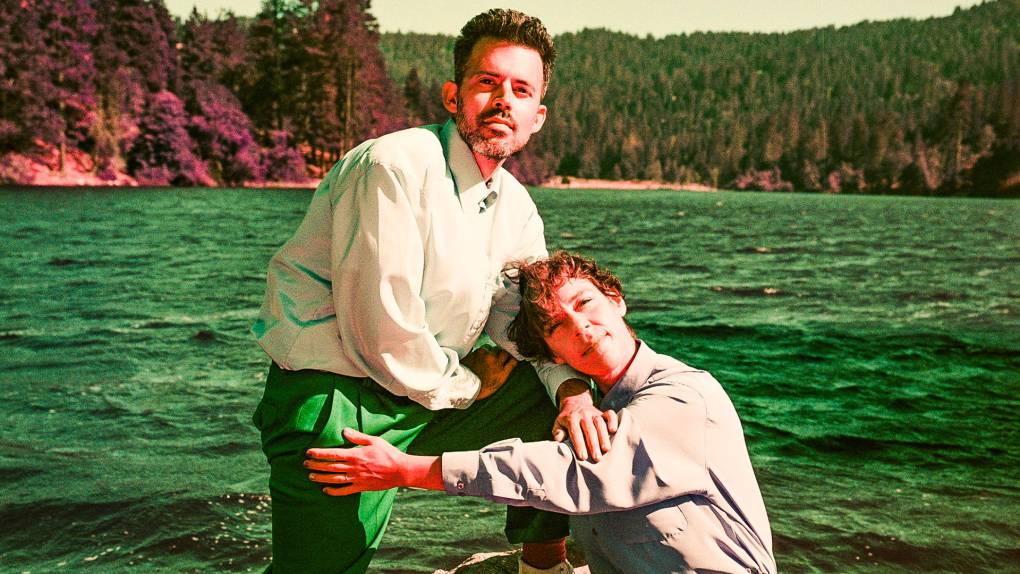
"caption": "Nate Brenner and Merrill Garbus are Tune-Yards, whose experimental indie pop sets the tone for Boots Riley's new show, 'I'm A Virgo.'",
"description": null,
"title": "tuneyards.16.9",
"credit": "Pooneh Ghana",
"status": "inherit",
"altTag": "a white man and woman pose on a rock in front of a lake",
"isLoading": false,
"fetchFailed": false
},
"arts_13930915": {
"type": "attachments",
"id": "arts_13930915",
"meta": {
"index": "attachments_1716263798",
"site": "arts",
"id": "13930915",
"found": true
},
"parent": 13930908,
"imgSizes": {
"twentyfourteen-full-width": {
"file": "https://ww2.kqed.org/app/uploads/sites/2/2023/06/GettyImages-1502130231-scaled-e1687808335341-1038x576.jpg",
"width": 1038,
"mimeType": "image/jpeg",
"height": 576
},
"thumbnail": {
"file": "https://ww2.kqed.org/app/uploads/sites/2/2023/06/GettyImages-1502130231-scaled-e1687808335341-160x118.jpg",
"width": 160,
"mimeType": "image/jpeg",
"height": 118
},
"post-thumbnail": {
"file": "https://ww2.kqed.org/app/uploads/sites/2/2023/06/GettyImages-1502130231-scaled-e1687808335341-672x372.jpg",
"width": 672,
"mimeType": "image/jpeg",
"height": 372
},
"kqedFullSize": {
"file": "https://ww2.kqed.org/app/uploads/sites/2/2023/06/GettyImages-1502130231-scaled-e1687808335341.jpg",
"width": 1920,
"height": 1415
},
"2048x2048": {
"file": "https://ww2.kqed.org/app/uploads/sites/2/2023/06/GettyImages-1502130231-2048x1508.jpg",
"width": 2048,
"mimeType": "image/jpeg",
"height": 1508
},
"large": {
"file": "https://ww2.kqed.org/app/uploads/sites/2/2023/06/GettyImages-1502130231-scaled-e1687808335341-1020x752.jpg",
"width": 1020,
"mimeType": "image/jpeg",
"height": 752
},
"1536x1536": {
"file": "https://ww2.kqed.org/app/uploads/sites/2/2023/06/GettyImages-1502130231-scaled-e1687808335341-1536x1132.jpg",
"width": 1536,
"mimeType": "image/jpeg",
"height": 1132
},
"full-width": {
"file": "https://ww2.kqed.org/app/uploads/sites/2/2023/06/GettyImages-1502130231-1920x1414.jpg",
"width": 1920,
"mimeType": "image/jpeg",
"height": 1414
},
"medium": {
"file": "https://ww2.kqed.org/app/uploads/sites/2/2023/06/GettyImages-1502130231-scaled-e1687808335341-800x590.jpg",
"width": 800,
"mimeType": "image/jpeg",
"height": 590
},
"medium_large": {
"file": "https://ww2.kqed.org/app/uploads/sites/2/2023/06/GettyImages-1502130231-scaled-e1687808335341-768x566.jpg",
"width": 768,
"mimeType": "image/jpeg",
"height": 566
}
},
"publishDate": 1687808297,
"modified": 1687808509,
"caption": "Sean Combs' son King Combs performs onstage during the BET Awards in Los Angeles, June 25, 2023.",
"description": null,
"title": "Sean Combs' son King Combs performs onstage during the BET Awards in Los Angeles, June 25, 2023.",
"credit": "Paras Griffin/Getty Images for BET",
"status": "inherit",
"altTag": "A young Black man waves onstage while smiling broadly. Behind him are five dancers clapping and smiling.",
"isLoading": false,
"fetchFailed": false
},
"arts_13930875": {
"type": "attachments",
"id": "arts_13930875",
"meta": {
"index": "attachments_1716263798",
"site": "arts",
"id": "13930875",
"found": true
},
"parent": 13930570,
"imgSizes": {
"twentyfourteen-full-width": {
"file": "https://ww2.kqed.org/app/uploads/sites/2/2023/06/GettyImages-1171359512-1038x576.jpg",
"width": 1038,
"mimeType": "image/jpeg",
"height": 576
},
"thumbnail": {
"file": "https://ww2.kqed.org/app/uploads/sites/2/2023/06/GettyImages-1171359512-160x108.jpg",
"width": 160,
"mimeType": "image/jpeg",
"height": 108
},
"post-thumbnail": {
"file": "https://ww2.kqed.org/app/uploads/sites/2/2023/06/GettyImages-1171359512-672x372.jpg",
"width": 672,
"mimeType": "image/jpeg",
"height": 372
},
"kqedFullSize": {
"file": "https://ww2.kqed.org/app/uploads/sites/2/2023/06/GettyImages-1171359512-scaled.jpg",
"width": 2560,
"height": 1723
},
"2048x2048": {
"file": "https://ww2.kqed.org/app/uploads/sites/2/2023/06/GettyImages-1171359512-2048x1378.jpg",
"width": 2048,
"mimeType": "image/jpeg",
"height": 1378
},
"large": {
"file": "https://ww2.kqed.org/app/uploads/sites/2/2023/06/GettyImages-1171359512-1020x686.jpg",
"width": 1020,
"mimeType": "image/jpeg",
"height": 686
},
"1536x1536": {
"file": "https://ww2.kqed.org/app/uploads/sites/2/2023/06/GettyImages-1171359512-1536x1034.jpg",
"width": 1536,
"mimeType": "image/jpeg",
"height": 1034
},
"full-width": {
"file": "https://ww2.kqed.org/app/uploads/sites/2/2023/06/GettyImages-1171359512-1920x1292.jpg",
"width": 1920,
"mimeType": "image/jpeg",
"height": 1292
},
"medium": {
"file": "https://ww2.kqed.org/app/uploads/sites/2/2023/06/GettyImages-1171359512-800x538.jpg",
"width": 800,
"mimeType": "image/jpeg",
"height": 538
},
"medium_large": {
"file": "https://ww2.kqed.org/app/uploads/sites/2/2023/06/GettyImages-1171359512-768x517.jpg",
"width": 768,
"mimeType": "image/jpeg",
"height": 517
}
},
"publishDate": 1687550769,
"modified": 1687550928,
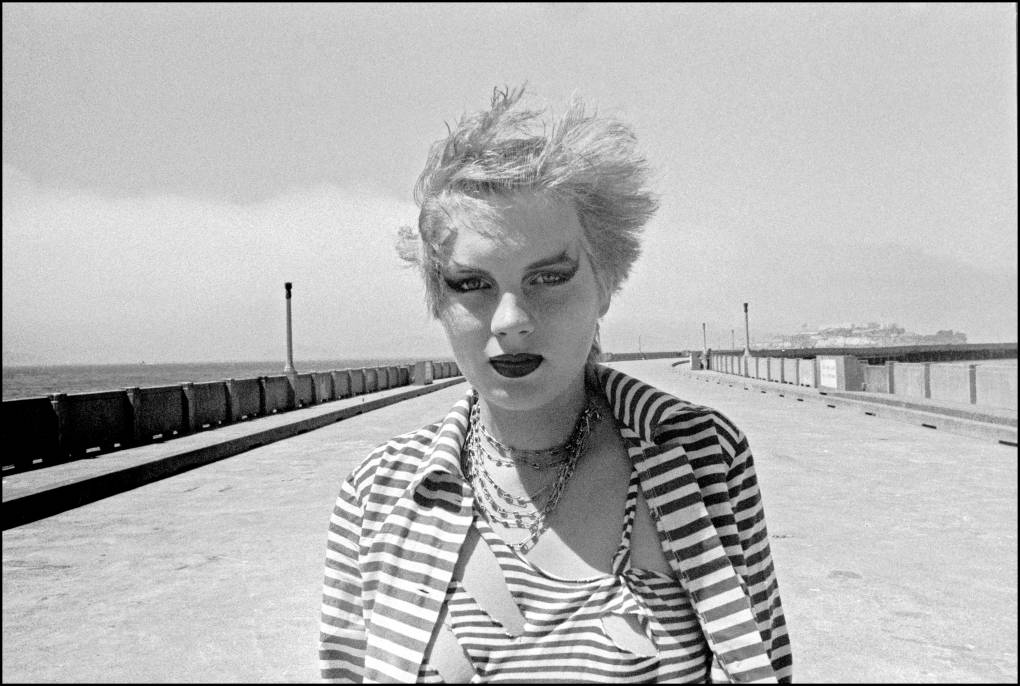
"caption": "Avengers frontwoman Penelope Houston at Fisherman's Wharf in 1977.",
"description": null,
"title": "Avengers frontwoman Penelope Houston at Fisherman's Wharf in 1977.",
"credit": "Ruby Ray/ Getty Images",
"status": "inherit",
"altTag": "A white woman wearing black lipstick and heavy eyeliner stands windswept on the shoreline. Her bleached blond hair is short and she is wearing a safety pin necklace and ripped striped shirt and jacket.",
"isLoading": false,
"fetchFailed": false
},
"arts_13930819": {
"type": "attachments",
"id": "arts_13930819",
"meta": {
"index": "attachments_1716263798",
"site": "arts",
"id": "13930819",
"found": true
},
"parent": 13930747,
"imgSizes": {
"twentyfourteen-full-width": {
"file": "https://ww2.kqed.org/app/uploads/sites/2/2023/06/AMW-bone-down-809x576.jpg",
"width": 809,
"mimeType": "image/jpeg",
"height": 576
},
"thumbnail": {
"file": "https://ww2.kqed.org/app/uploads/sites/2/2023/06/AMW-bone-down-160x157.jpg",
"width": 160,
"mimeType": "image/jpeg",
"height": 157
},
"post-thumbnail": {
"file": "https://ww2.kqed.org/app/uploads/sites/2/2023/06/AMW-bone-down-672x372.jpg",
"width": 672,
"mimeType": "image/jpeg",
"height": 372
},
"kqedFullSize": {
"file": "https://ww2.kqed.org/app/uploads/sites/2/2023/06/AMW-bone-down.jpg",
"width": 809,
"height": 794
},
"medium": {
"file": "https://ww2.kqed.org/app/uploads/sites/2/2023/06/AMW-bone-down-800x785.jpg",
"width": 800,
"mimeType": "image/jpeg",
"height": 785
},
"medium_large": {
"file": "https://ww2.kqed.org/app/uploads/sites/2/2023/06/AMW-bone-down-768x754.jpg",
"width": 768,
"mimeType": "image/jpeg",
"height": 754
}
},
"publishDate": 1687470101,
"modified": 1687470348,
"caption": "Dr. Angela Wellman looks directly into the camera as she plays her trombone.",
"description": "Dr. Angela Wellman looks directly into the camera as she plays her trombone. ",
"title": "Dr. Angela Wellman looks directly into the camera as she plays her trombone.",
"credit": "Via Dr. Angela Wellman",
"status": "inherit",
"altTag": "Dr. Angela Wellman looks directly into the camera as she plays her trombone.",
"isLoading": false,
"fetchFailed": false
},
"arts_13930785": {
"type": "attachments",
"id": "arts_13930785",
"meta": {
"index": "attachments_1716263798",
"site": "arts",
"id": "13930785",
"found": true
},
"title": "LoveOnHaight_SummerOfMusic_COVER",
"publishDate": 1687450731,
"status": "inherit",
"parent": 13930763,
"modified": 1753903603,
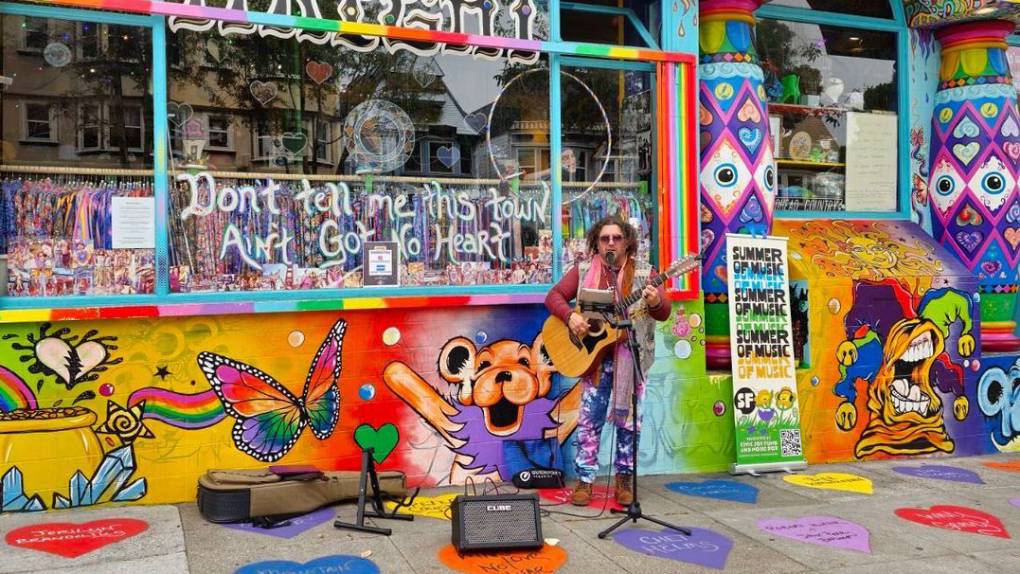
"caption": "Troubadour Fools performs in front of Love on Haight, 2023.",
"credit": "Courtesy of Love on Haight",
"altTag": "Guitar player sings into mic in front of brightly painted psychedelic storefront.",
"description": null,
"imgSizes": {
"medium": {
"file": "https://cdn.kqed.org/wp-content/uploads/sites/2/2023/06/LoveOnHaight_SummerOfMusic_COVER-800x450.jpg",
"width": 800,
"height": 450,
"mimeType": "image/jpeg"
},
"large": {
"file": "https://cdn.kqed.org/wp-content/uploads/sites/2/2023/06/LoveOnHaight_SummerOfMusic_COVER-1020x574.jpg",
"width": 1020,
"height": 574,
"mimeType": "image/jpeg"
},
"thumbnail": {
"file": "https://cdn.kqed.org/wp-content/uploads/sites/2/2023/06/LoveOnHaight_SummerOfMusic_COVER-160x90.jpg",
"width": 160,
"height": 90,
"mimeType": "image/jpeg"
},
"medium_large": {
"file": "https://cdn.kqed.org/wp-content/uploads/sites/2/2023/06/LoveOnHaight_SummerOfMusic_COVER-768x432.jpg",
"width": 768,
"height": 432,
"mimeType": "image/jpeg"
},
"post-thumbnail": {
"file": "https://cdn.kqed.org/wp-content/uploads/sites/2/2023/06/LoveOnHaight_SummerOfMusic_COVER-672x372.jpg",
"width": 672,
"height": 372,
"mimeType": "image/jpeg"
},
"twentyfourteen-full-width": {
"file": "https://cdn.kqed.org/wp-content/uploads/sites/2/2023/06/LoveOnHaight_SummerOfMusic_COVER-1038x576.jpg",
"width": 1038,
"height": 576,
"mimeType": "image/jpeg"
},
"kqedFullSize": {
"file": "https://cdn.kqed.org/wp-content/uploads/sites/2/2023/06/LoveOnHaight_SummerOfMusic_COVER.jpg",
"width": 1077,
"height": 606
}
},
"isLoading": false,
"fetchFailed": false
},
"arts_13930748": {
"type": "attachments",
"id": "arts_13930748",
"meta": {
"index": "attachments_1716263798",
"site": "arts",
"id": "13930748",
"found": true
},
"parent": 13930686,
"imgSizes": {
"twentyfourteen-full-width": {
"file": "https://ww2.kqed.org/app/uploads/sites/2/2023/06/2004_0702macdreb-day0014-square-1038x576.jpg",
"width": 1038,
"mimeType": "image/jpeg",
"height": 576
},
"thumbnail": {
"file": "https://ww2.kqed.org/app/uploads/sites/2/2023/06/2004_0702macdreb-day0014-square-160x160.jpg",
"width": 160,
"mimeType": "image/jpeg",
"height": 160
},
"post-thumbnail": {
"file": "https://ww2.kqed.org/app/uploads/sites/2/2023/06/2004_0702macdreb-day0014-square-672x372.jpg",
"width": 672,
"mimeType": "image/jpeg",
"height": 372
},
"kqedFullSize": {
"file": "https://ww2.kqed.org/app/uploads/sites/2/2023/06/2004_0702macdreb-day0014-square.jpg",
"width": 1068,
"height": 1068
},
"large": {
"file": "https://ww2.kqed.org/app/uploads/sites/2/2023/06/2004_0702macdreb-day0014-square-1020x1020.jpg",
"width": 1020,
"mimeType": "image/jpeg",
"height": 1020
},
"medium": {
"file": "https://ww2.kqed.org/app/uploads/sites/2/2023/06/2004_0702macdreb-day0014-square-800x800.jpg",
"width": 800,
"mimeType": "image/jpeg",
"height": 800
},
"medium_large": {
"file": "https://ww2.kqed.org/app/uploads/sites/2/2023/06/2004_0702macdreb-day0014-square-768x768.jpg",
"width": 768,
"mimeType": "image/jpeg",
"height": 768
}
},
"publishDate": 1687366643,
"modified": 1695926691,
"caption": "Mac Dre performs in 2004. His Thizz Entertainment label, founded in 1999, put out his best-known albums, as well as releases from Mistah F.A.B., The Jacka, J Diggs and more.",
"description": null,
"title": "2004_0702macdreb-day0014-square",
"credit": "D-Ray",
"status": "inherit",
"altTag": "Mac Dre performs on stage in 2004, wearing giant sunglasses, a striped polo shirt and Adidas jacket. Men on stage are going dumb, dancing and singing along to the lyrics.",
"isLoading": false,
"fetchFailed": false
},
"arts_13930575": {
"type": "attachments",
"id": "arts_13930575",
"meta": {
"index": "attachments_1716263798",
"site": "arts",
"id": "13930575",
"found": true
},
"parent": 13930574,
"imgSizes": {
"twentyfourteen-full-width": {
"file": "https://ww2.kqed.org/app/uploads/sites/2/2023/06/Photo-2-by-Andrew-Peralta-@xt3chniqs-1038x576.jpeg",
"width": 1038,
"mimeType": "image/jpeg",
"height": 576
},
"thumbnail": {
"file": "https://ww2.kqed.org/app/uploads/sites/2/2023/06/Photo-2-by-Andrew-Peralta-@xt3chniqs-160x131.jpeg",
"width": 160,
"mimeType": "image/jpeg",
"height": 131
},
"post-thumbnail": {
"file": "https://ww2.kqed.org/app/uploads/sites/2/2023/06/Photo-2-by-Andrew-Peralta-@xt3chniqs-672x372.jpeg",
"width": 672,
"mimeType": "image/jpeg",
"height": 372
},
"kqedFullSize": {
"file": "https://ww2.kqed.org/app/uploads/sites/2/2023/06/Photo-2-by-Andrew-Peralta-@xt3chniqs-scaled.jpeg",
"width": 2560,
"height": 2091
},
"2048x2048": {
"file": "https://ww2.kqed.org/app/uploads/sites/2/2023/06/Photo-2-by-Andrew-Peralta-@xt3chniqs-2048x1673.jpeg",
"width": 2048,
"mimeType": "image/jpeg",
"height": 1673
},
"large": {
"file": "https://ww2.kqed.org/app/uploads/sites/2/2023/06/Photo-2-by-Andrew-Peralta-@xt3chniqs-1020x833.jpeg",
"width": 1020,
"mimeType": "image/jpeg",
"height": 833
},
"1536x1536": {
"file": "https://ww2.kqed.org/app/uploads/sites/2/2023/06/Photo-2-by-Andrew-Peralta-@xt3chniqs-1536x1255.jpeg",
"width": 1536,
"mimeType": "image/jpeg",
"height": 1255
},
"full-width": {
"file": "https://ww2.kqed.org/app/uploads/sites/2/2023/06/Photo-2-by-Andrew-Peralta-@xt3chniqs-1920x1568.jpeg",
"width": 1920,
"mimeType": "image/jpeg",
"height": 1568
},
"medium": {
"file": "https://ww2.kqed.org/app/uploads/sites/2/2023/06/Photo-2-by-Andrew-Peralta-@xt3chniqs-800x653.jpeg",
"width": 800,
"mimeType": "image/jpeg",
"height": 653
},
"medium_large": {
"file": "https://ww2.kqed.org/app/uploads/sites/2/2023/06/Photo-2-by-Andrew-Peralta-@xt3chniqs-768x627.jpeg",
"width": 768,
"mimeType": "image/jpeg",
"height": 627
}
},
"publishDate": 1686861590,
"modified": 1686861713,
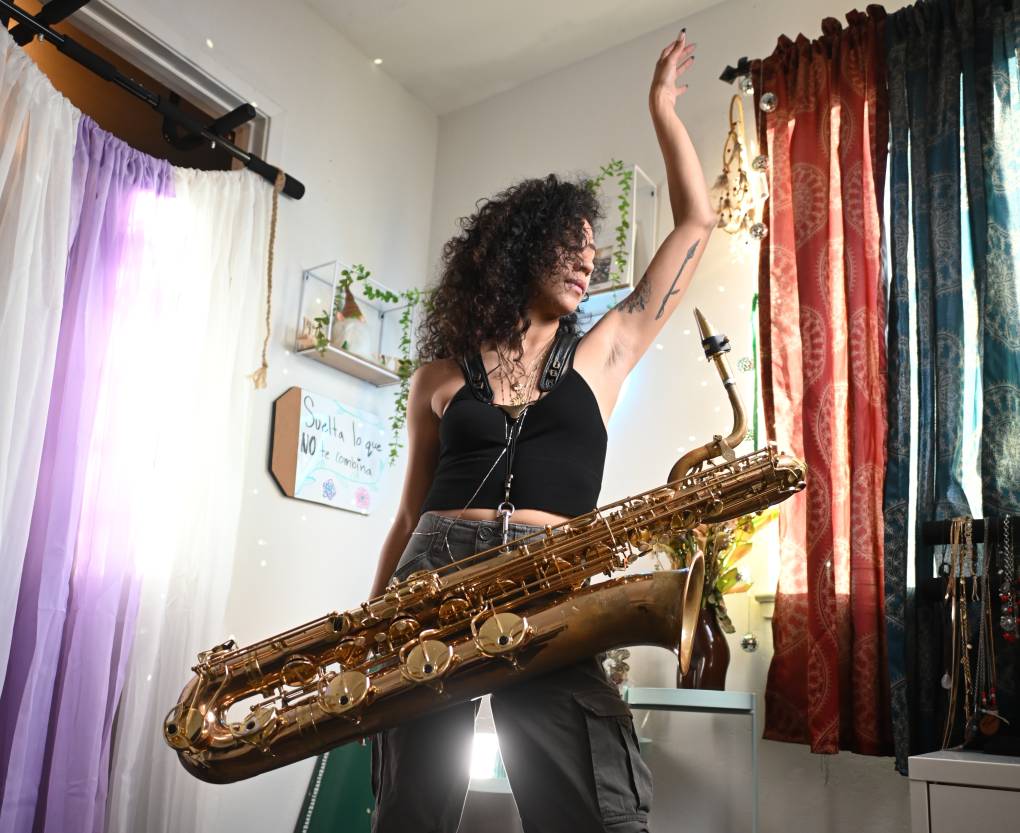
"caption": "Lidia Rodriguez is a premiere baritone saxophonist based in San Jose by way of Stockton. ",
"description": null,
"title": "Photo 2 by Andrew Peralta @xt3chniqs",
"credit": "Andrew Peralta ",
"status": "inherit",
"altTag": "Lidia rodriguez poses with her baritone saxaphone hanging off her neck. Her right hand is raised and she looks off camera.",
"isLoading": false,
"fetchFailed": false
},
"arts_13930440": {
"type": "attachments",
"id": "arts_13930440",
"meta": {
"index": "attachments_1716263798",
"site": "arts",
"id": "13930440",
"found": true
},
"parent": 13930439,
"imgSizes": {
"twentyfourteen-full-width": {
"file": "https://ww2.kqed.org/app/uploads/sites/2/2023/06/GettyImages-1155593058-scaled-e1686678612646-1038x576.jpg",
"width": 1038,
"mimeType": "image/jpeg",
"height": 576
},
"thumbnail": {
"file": "https://ww2.kqed.org/app/uploads/sites/2/2023/06/GettyImages-1155593058-scaled-e1686678612646-160x113.jpg",
"width": 160,
"mimeType": "image/jpeg",
"height": 113
},
"post-thumbnail": {
"file": "https://ww2.kqed.org/app/uploads/sites/2/2023/06/GettyImages-1155593058-scaled-e1686678612646-672x372.jpg",
"width": 672,
"mimeType": "image/jpeg",
"height": 372
},
"kqedFullSize": {
"file": "https://ww2.kqed.org/app/uploads/sites/2/2023/06/GettyImages-1155593058-scaled-e1686678612646.jpg",
"width": 1920,
"height": 1350
},
"2048x2048": {
"file": "https://ww2.kqed.org/app/uploads/sites/2/2023/06/GettyImages-1155593058-2048x1440.jpg",
"width": 2048,
"mimeType": "image/jpeg",
"height": 1440
},
"large": {
"file": "https://ww2.kqed.org/app/uploads/sites/2/2023/06/GettyImages-1155593058-scaled-e1686678612646-1020x717.jpg",
"width": 1020,
"mimeType": "image/jpeg",
"height": 717
},
"1536x1536": {
"file": "https://ww2.kqed.org/app/uploads/sites/2/2023/06/GettyImages-1155593058-scaled-e1686678612646-1536x1080.jpg",
"width": 1536,
"mimeType": "image/jpeg",
"height": 1080
},
"full-width": {
"file": "https://ww2.kqed.org/app/uploads/sites/2/2023/06/GettyImages-1155593058-1920x1350.jpg",
"width": 1920,
"mimeType": "image/jpeg",
"height": 1350
},
"medium": {
"file": "https://ww2.kqed.org/app/uploads/sites/2/2023/06/GettyImages-1155593058-scaled-e1686678612646-800x563.jpg",
"width": 800,
"mimeType": "image/jpeg",
"height": 563
},
"medium_large": {
"file": "https://ww2.kqed.org/app/uploads/sites/2/2023/06/GettyImages-1155593058-scaled-e1686678612646-768x540.jpg",
"width": 768,
"mimeType": "image/jpeg",
"height": 540
}
},
"publishDate": 1686678591,
"modified": 1686678733,
"caption": "Tina Turner onstage in the Netherlands in 1990.",
"description": null,
"title": "Tina Turner onstage in the Netherlands in 1990.",
"credit": "Rob Verhorst/ Redferns",
"status": "inherit",
"altTag": "A Black woman with big highlighted hair gestures wildly onstage. She is wearing a silver mini dress.",
"isLoading": false,
"fetchFailed": false
},
"arts_13930359": {
"type": "attachments",
"id": "arts_13930359",
"meta": {
"index": "attachments_1716263798",
"site": "arts",
"id": "13930359",
"found": true
},
"parent": 13930358,
"imgSizes": {
"twentyfourteen-full-width": {
"file": "https://ww2.kqed.org/app/uploads/sites/2/2023/06/misc_23_019_jm_dsp_0269-3-0-3ff153507640790e5104733cf18e1fcd3b3bde8c-scaled-e1686344883172-1038x576.jpg",
"width": 1038,
"mimeType": "image/jpeg",
"height": 576
},
"thumbnail": {
"file": "https://ww2.kqed.org/app/uploads/sites/2/2023/06/misc_23_019_jm_dsp_0269-3-0-3ff153507640790e5104733cf18e1fcd3b3bde8c-scaled-e1686344883172-160x120.jpg",
"width": 160,
"mimeType": "image/jpeg",
"height": 120
},
"post-thumbnail": {
"file": "https://ww2.kqed.org/app/uploads/sites/2/2023/06/misc_23_019_jm_dsp_0269-3-0-3ff153507640790e5104733cf18e1fcd3b3bde8c-scaled-e1686344883172-672x372.jpg",
"width": 672,
"mimeType": "image/jpeg",
"height": 372
},
"kqedFullSize": {
"file": "https://ww2.kqed.org/app/uploads/sites/2/2023/06/misc_23_019_jm_dsp_0269-3-0-3ff153507640790e5104733cf18e1fcd3b3bde8c-scaled-e1686344883172.jpg",
"width": 1920,
"height": 1441
},
"2048x2048": {
"file": "https://ww2.kqed.org/app/uploads/sites/2/2023/06/misc_23_019_jm_dsp_0269-3-0-3ff153507640790e5104733cf18e1fcd3b3bde8c-2048x1536.jpg",
"width": 2048,
"mimeType": "image/jpeg",
"height": 1536
},
"large": {
"file": "https://ww2.kqed.org/app/uploads/sites/2/2023/06/misc_23_019_jm_dsp_0269-3-0-3ff153507640790e5104733cf18e1fcd3b3bde8c-scaled-e1686344883172-1020x766.jpg",
"width": 1020,
"mimeType": "image/jpeg",
"height": 766
},
"1536x1536": {
"file": "https://ww2.kqed.org/app/uploads/sites/2/2023/06/misc_23_019_jm_dsp_0269-3-0-3ff153507640790e5104733cf18e1fcd3b3bde8c-scaled-e1686344883172-1536x1153.jpg",
"width": 1536,
"mimeType": "image/jpeg",
"height": 1153
},
"full-width": {
"file": "https://ww2.kqed.org/app/uploads/sites/2/2023/06/misc_23_019_jm_dsp_0269-3-0-3ff153507640790e5104733cf18e1fcd3b3bde8c-1920x1440.jpg",
"width": 1920,
"mimeType": "image/jpeg",
"height": 1440
},
"medium": {
"file": "https://ww2.kqed.org/app/uploads/sites/2/2023/06/misc_23_019_jm_dsp_0269-3-0-3ff153507640790e5104733cf18e1fcd3b3bde8c-scaled-e1686344883172-800x600.jpg",
"width": 800,
"mimeType": "image/jpeg",
"height": 600
},
"medium_large": {
"file": "https://ww2.kqed.org/app/uploads/sites/2/2023/06/misc_23_019_jm_dsp_0269-3-0-3ff153507640790e5104733cf18e1fcd3b3bde8c-scaled-e1686344883172-768x576.jpg",
"width": 768,
"mimeType": "image/jpeg",
"height": 576
}
},
"publishDate": 1686344714,
"modified": 1686344993,
"caption": "On her new album, ‘The Age of Pleasure,’ Janelle Monáe concocts a vision of sensuality that is open to complication but goes down easy.",
"description": null,
"title": "On her new album, ‘The Age of Pleasure,’ Janelle Monáe concocts a vision of sensuality that is open to complication but goes down easy.",
"credit": "Mason Rose/Courtesy of the artist",
"status": "inherit",
"altTag": "An attractive Black woman in her thirties stands, shocked expression on her face wearing a round white sun hat. She is topless, her hands covering her breasts.",
"isLoading": false,
"fetchFailed": false
},
"arts_13930276": {
"type": "attachments",
"id": "arts_13930276",
"meta": {
"index": "attachments_1716263798",
"site": "arts",
"id": "13930276",
"found": true
},
"parent": 13930273,
"imgSizes": {
"twentyfourteen-full-width": {
"file": "https://ww2.kqed.org/app/uploads/sites/2/2023/06/Screenshot-2023-06-08-at-9.39.18-AM-1038x576.png",
"width": 1038,
"mimeType": "image/png",
"height": 576
},
"thumbnail": {
"file": "https://ww2.kqed.org/app/uploads/sites/2/2023/06/Screenshot-2023-06-08-at-9.39.18-AM-160x88.png",
"width": 160,
"mimeType": "image/png",
"height": 88
},
"post-thumbnail": {
"file": "https://ww2.kqed.org/app/uploads/sites/2/2023/06/Screenshot-2023-06-08-at-9.39.18-AM-672x372.png",
"width": 672,
"mimeType": "image/png",
"height": 372
},
"kqedFullSize": {
"file": "https://ww2.kqed.org/app/uploads/sites/2/2023/06/Screenshot-2023-06-08-at-9.39.18-AM.png",
"width": 2492,
"height": 1368
},
"2048x2048": {
"file": "https://ww2.kqed.org/app/uploads/sites/2/2023/06/Screenshot-2023-06-08-at-9.39.18-AM-2048x1124.png",
"width": 2048,
"mimeType": "image/png",
"height": 1124
},
"large": {
"file": "https://ww2.kqed.org/app/uploads/sites/2/2023/06/Screenshot-2023-06-08-at-9.39.18-AM-1020x560.png",
"width": 1020,
"mimeType": "image/png",
"height": 560
},
"1536x1536": {
"file": "https://ww2.kqed.org/app/uploads/sites/2/2023/06/Screenshot-2023-06-08-at-9.39.18-AM-1536x843.png",
"width": 1536,
"mimeType": "image/png",
"height": 843
},
"full-width": {
"file": "https://ww2.kqed.org/app/uploads/sites/2/2023/06/Screenshot-2023-06-08-at-9.39.18-AM-1920x1054.png",
"width": 1920,
"mimeType": "image/png",
"height": 1054
},
"medium": {
"file": "https://ww2.kqed.org/app/uploads/sites/2/2023/06/Screenshot-2023-06-08-at-9.39.18-AM-800x439.png",
"width": 800,
"mimeType": "image/png",
"height": 439
},
"medium_large": {
"file": "https://ww2.kqed.org/app/uploads/sites/2/2023/06/Screenshot-2023-06-08-at-9.39.18-AM-768x422.png",
"width": 768,
"mimeType": "image/png",
"height": 422
}
},
"publishDate": 1686242385,
"modified": 1686242412,
"caption": "Greg Bridges is photographed in black and white as he sits behind a microphone and soundboard at KPFA studios in Berkeley, while hosting a jazz radio show.",
"description": "Greg Bridges is photographed in black and white as he sits behind a microphone and soundboard at KPFA studios in Berkeley, while hosting a jazz radio show.",
"title": "Greg Bridges is photographed in black and white as he sits behind a microphone and soundboard at KPFA studios in Berkeley, while hosting a jazz radio show.",
"credit": "Pendarvis Harshaw",
"status": "inherit",
"altTag": "Greg Bridges is photographed in black and white as he sits behind a microphone and soundboard at KPFA studios in Berkeley, while hosting a jazz radio show.",
"isLoading": false,
"fetchFailed": false
}
},
"audioPlayerReducer": {
"postId": "stream_live",
"isPaused": true,
"isPlaying": false,
"pfsActive": false,
"pledgeModalIsOpen": true,
"playerDrawerIsOpen": false,
"liveAudioPlayStartedAt": 0,
"liveAudioPlayContext": ""
},
"authorsReducer": {
"byline_arts_13930886": {
"type": "authors",
"id": "byline_arts_13930886",
"meta": {
"override": true
},
"slug": "byline_arts_13930886",
"name": "KQED Arts & Culture",
"isLoading": false
},
"byline_arts_13930908": {
"type": "authors",
"id": "byline_arts_13930908",
"meta": {
"override": true
},
"slug": "byline_arts_13930908",
"name": "Jonathan Landrum Jr.",
"isLoading": false
},
"byline_arts_13930439": {
"type": "authors",
"id": "byline_arts_13930439",
"meta": {
"override": true
},
"slug": "byline_arts_13930439",
"name": "Mark Kennedy, Associated Press",
"isLoading": false
},
"byline_arts_13930358": {
"type": "authors",
"id": "byline_arts_13930358",
"meta": {
"override": true
},
"slug": "byline_arts_13930358",
"name": "Ann Powers",
"isLoading": false
},
"shotchkiss": {
"type": "authors",
"id": "61",
"meta": {
"index": "authors_1716337520",
"id": "61",
"found": true
},
"name": "Sarah Hotchkiss",
"firstName": "Sarah",
"lastName": "Hotchkiss",
"slug": "shotchkiss",
"email": "shotchkiss@kqed.org",
"display_author_email": true,
"staff_mastheads": [
"arts"
],
"title": "Senior Editor",
"bio": "Sarah Hotchkiss is a San Francisco \u003ca href=\"http://www.sarahhotchkiss.com\">artist\u003c/a> and arts writer. In 2019, she received the Dorothea & Leo Rabkin Foundation grant for visual art journalism and in 2020 she received a Society of Professional Journalists, Northern California award for excellence in arts and culture reporting.",
"avatar": "https://secure.gravatar.com/avatar/bc662df144b3d27fd8b1b6f1c2a420d34e91e53154d411bb7ad353cc8b6cea8d?s=600&d=blank&r=g",
"twitter": null,
"bluesky": null,
"facebook": null,
"instagram": null,
"linkedin": null,
"sites": [
{
"site": "",
"roles": [
"editor"
]
},
{
"site": "arts",
"roles": [
"Contributor",
"administrator"
]
},
{
"site": "artschool",
"roles": [
"administrator"
]
},
{
"site": "news",
"roles": [
"editor"
]
},
{
"site": "pop",
"roles": [
"administrator"
]
},
{
"site": "bayareabites",
"roles": [
"editor"
]
},
{
"site": "spark",
"roles": [
"editor"
]
},
{
"site": "checkplease",
"roles": [
"editor"
]
}
],
"headData": {
"title": "Sarah Hotchkiss | KQED",
"description": "Senior Editor",
"ogImgSrc": "https://secure.gravatar.com/avatar/bc662df144b3d27fd8b1b6f1c2a420d34e91e53154d411bb7ad353cc8b6cea8d?s=600&d=blank&r=g",
"twImgSrc": "https://secure.gravatar.com/avatar/bc662df144b3d27fd8b1b6f1c2a420d34e91e53154d411bb7ad353cc8b6cea8d?s=600&d=blank&r=g"
},
"isLoading": false,
"link": "/author/shotchkiss"
},
"tamarapalmer": {
"type": "authors",
"id": "5111",
"meta": {
"index": "authors_1716337520",
"id": "5111",
"found": true
},
"name": "Tamara Palmer",
"firstName": "Tamara",
"lastName": "Palmer",
"slug": "tamarapalmer",
"email": "countryfriedsoul@gmail.com",
"display_author_email": false,
"staff_mastheads": [],
"title": "KQED Contributor",
"bio": "I'm a professional DJ, freelance writer, recipe developer and independent publisher of zines about music and food. You'll find my byline in a wide range of news, tech and entertainment publications. My first book \u003ci>Country Fried Soul: Adventures in Dirty South Hip-Hop\u003c/i> was published in 2005, and a more personal West Coast anthology called \u003ci>California Love\u003c/i> is planned for 2023.",
"avatar": "https://secure.gravatar.com/avatar/c8befc278d4c9854b7bbbaa2b9b37a3acb2a834e69d071b638644f0a1739362d?s=600&d=blank&r=g",
"twitter": null,
"bluesky": null,
"facebook": null,
"instagram": null,
"linkedin": null,
"sites": [
{
"site": "arts",
"roles": [
"contributor"
]
},
{
"site": "bayareabites",
"roles": [
"subscriber"
]
}
],
"headData": {
"title": "Tamara Palmer | KQED",
"description": "KQED Contributor",
"ogImgSrc": "https://secure.gravatar.com/avatar/c8befc278d4c9854b7bbbaa2b9b37a3acb2a834e69d071b638644f0a1739362d?s=600&d=blank&r=g",
"twImgSrc": "https://secure.gravatar.com/avatar/c8befc278d4c9854b7bbbaa2b9b37a3acb2a834e69d071b638644f0a1739362d?s=600&d=blank&r=g"
},
"isLoading": false,
"link": "/author/tamarapalmer"
},
"esilvers": {
"type": "authors",
"id": "7237",
"meta": {
"index": "authors_1716337520",
"id": "7237",
"found": true
},
"name": "Emma Silvers",
"firstName": "Emma",
"lastName": "Silvers",
"slug": "esilvers",
"email": "esilvers@kqed.org",
"display_author_email": false,
"staff_mastheads": [],
"title": "KQED Contributor",
"bio": "Emma Silvers is an editor at KQED Arts and a former digital producer at KQED News. Born and raised in the Bay Area, she has previously been an arts and entertainment editor at the \u003cem>San Francisco Chronicle\u003c/em>, \u003cem>SF Weekly\u003c/em> and the \u003cem>San Francisco Bay Guardian.\u003c/em> \u003ca href=\"https://www.emmasilvers.com\">Her work\u003c/a> has also appeared in \u003cem>Rolling Stone\u003c/em>, Pitchfork and \u003cem>Mother Jones\u003c/em>. In 2017 she was the recipient of the Society of Professional Journalists-Northern California's award for arts and culture reporting. In 1993 she \u003ca href=\"https://www.kqed.org/pop/16759/wait-what-my-coworker-was-a-voice-over-hyperventilator-for-jurassic-park\">hyperventilated in \u003cem>Jurassic Park\u003c/em>\u003c/a>.",
"avatar": "https://secure.gravatar.com/avatar/247beada39b88ea5759db1f51dba05cf?s=600&d=blank&r=g",
"twitter": "emmaruthless",
"facebook": null,
"instagram": null,
"linkedin": null,
"sites": [
{
"site": "arts",
"roles": [
"editor"
]
},
{
"site": "news",
"roles": [
"editor"
]
},
{
"site": "pop",
"roles": [
"contributor"
]
},
{
"site": "bayareabites",
"roles": [
"editor"
]
},
{
"site": "food",
"roles": [
"contributor"
]
},
{
"site": "liveblog",
"roles": [
"editor"
]
}
],
"headData": {
"title": "Emma Silvers | KQED",
"description": "KQED Contributor",
"ogImgSrc": "https://secure.gravatar.com/avatar/247beada39b88ea5759db1f51dba05cf?s=600&d=blank&r=g",
"twImgSrc": "https://secure.gravatar.com/avatar/247beada39b88ea5759db1f51dba05cf?s=600&d=blank&r=g"
},
"isLoading": false,
"link": "/author/esilvers"
},
"ralexandra": {
"type": "authors",
"id": "11242",
"meta": {
"index": "authors_1716337520",
"id": "11242",
"found": true
},
"name": "Rae Alexandra",
"firstName": "Rae",
"lastName": "Alexandra",
"slug": "ralexandra",
"email": "ralexandra@kqed.org",
"display_author_email": true,
"staff_mastheads": [],
"title": "Reporter/Producer",
"bio": "Rae Alexandra is a Reporter/Producer for KQED Arts & Culture, and the creator/author of the \u003ca href=\"https://www.kqed.org/arts/program/rebel-girls-from-bay-area-history\">Rebel Girls From Bay Area History\u003c/a> and \u003ca href=\"https://www.kqed.org/bizarrebayarea\">Bizarre Bay Area\u003c/a> series. Her debut book, \u003ca href=\"https://citylights.com/politics-current-events-history/unsung-heroines35-women-who-changed/\">Unsung Heroines: 35 Women Who Changed the Bay Area\u003c/a> was published by City Lights in March 2026. In 2023, Rae was awarded an SPJ Excellence in Journalism Award for Arts & Culture. Rae was born and raised in Wales and subsequently — even after two decades in Northern California — still uses phrases that regularly baffle her coworkers.",
"avatar": "https://secure.gravatar.com/avatar/edfee8176c80cc0a382b051190f5341997df378a934a5774dcb0977732dfd401?s=600&d=blank&r=g",
"twitter": null,
"bluesky": null,
"facebook": null,
"instagram": null,
"linkedin": null,
"sites": [
{
"site": "arts",
"roles": [
"subscriber"
]
},
{
"site": "news",
"roles": [
"subscriber"
]
},
{
"site": "pop",
"roles": [
"subscriber"
]
},
{
"site": "bayareabites",
"roles": [
"subscriber"
]
},
{
"site": "science",
"roles": [
"subscriber"
]
}
],
"headData": {
"title": "Rae Alexandra | KQED",
"description": "Reporter/Producer",
"ogImgSrc": "https://secure.gravatar.com/avatar/edfee8176c80cc0a382b051190f5341997df378a934a5774dcb0977732dfd401?s=600&d=blank&r=g",
"twImgSrc": "https://secure.gravatar.com/avatar/edfee8176c80cc0a382b051190f5341997df378a934a5774dcb0977732dfd401?s=600&d=blank&r=g"
},
"isLoading": false,
"link": "/author/ralexandra"
},
"ogpenn": {
"type": "authors",
"id": "11491",
"meta": {
"index": "authors_1716337520",
"id": "11491",
"found": true
},
"name": "Pendarvis Harshaw",
"firstName": "Pendarvis",
"lastName": "Harshaw",
"slug": "ogpenn",
"email": "ogpenn@gmail.com",
"display_author_email": false,
"staff_mastheads": [
"arts"
],
"title": "Community Engagement Reporter",
"bio": "Pendarvis Harshaw is an educator, host and writer with KQED Arts.",
"avatar": "https://secure.gravatar.com/avatar/972b77ee8e3f346ae2b00622661187fbfabd059b5693bbdc1475ea7a722fd4cd?s=600&d=blank&r=g",
"twitter": null,
"bluesky": null,
"facebook": null,
"instagram": "ogpenn",
"linkedin": null,
"sites": [
{
"site": "arts",
"roles": [
"administrator"
]
},
{
"site": "news",
"roles": [
"editor"
]
},
{
"site": "bayareabites",
"roles": [
"author"
]
},
{
"site": "hiphop",
"roles": [
"editor"
]
}
],
"headData": {
"title": "Pendarvis Harshaw | KQED",
"description": "Community Engagement Reporter",
"ogImgSrc": "https://secure.gravatar.com/avatar/972b77ee8e3f346ae2b00622661187fbfabd059b5693bbdc1475ea7a722fd4cd?s=600&d=blank&r=g",
"twImgSrc": "https://secure.gravatar.com/avatar/972b77ee8e3f346ae2b00622661187fbfabd059b5693bbdc1475ea7a722fd4cd?s=600&d=blank&r=g"
},
"isLoading": false,
"link": "/author/ogpenn"
},
"mmedina": {
"type": "authors",
"id": "11528",
"meta": {
"index": "authors_1716337520",
"id": "11528",
"found": true
},
"name": "Marisol Medina-Cadena",
"firstName": "Marisol",
"lastName": "Medina-Cadena",
"slug": "mmedina",
"email": "mmedina@KQED.org",
"display_author_email": true,
"staff_mastheads": [],
"title": "Producer, Rightnowish Podcast",
"bio": "Marisol Medina-Cadena is a radio reporter and podcast producer. Before working at KQED, she produced for PBS member station, KCET, in Los Angeles. In 2017, Marisol won an Emmy Award for her work on the televised documentary, \u003cem>City Rising\u003c/em>, examining California's affordable housing crisis and the historical roots of gentrification.",
"avatar": "https://secure.gravatar.com/avatar/6c3db46a1cabb5e1fe9a365b5f4e681e?s=600&d=blank&r=g",
"twitter": "marisolreports",
"facebook": null,
"instagram": null,
"linkedin": null,
"sites": [
{
"site": "arts",
"roles": []
},
{
"site": "news",
"roles": [
"edit_others_posts"
]
}
],
"headData": {
"title": "Marisol Medina-Cadena | KQED",
"description": "Producer, Rightnowish Podcast",
"ogImgSrc": "https://secure.gravatar.com/avatar/6c3db46a1cabb5e1fe9a365b5f4e681e?s=600&d=blank&r=g",
"twImgSrc": "https://secure.gravatar.com/avatar/6c3db46a1cabb5e1fe9a365b5f4e681e?s=600&d=blank&r=g"
},
"isLoading": false,
"link": "/author/mmedina"
},
"achazaro": {
"type": "authors",
"id": "11748",
"meta": {
"index": "authors_1716337520",
"id": "11748",
"found": true
},
"name": "Alan Chazaro",
"firstName": "Alan",
"lastName": "Chazaro",
"slug": "achazaro",
"email": "agchazaro@gmail.com",
"display_author_email": true,
"staff_mastheads": [],
"title": "Food Writer and Reporter",
"bio": "Alan Chazaro is the author of \u003cem>This Is Not a Frank Ocean Cover Album\u003c/em> (Black Lawrence Press, 2019), \u003cem>Piñata Theory\u003c/em> (Black Lawrence Press, 2020), and \u003cem>Notes from the Eastern Span of the Bay Bridge\u003c/em> (Ghost City Press, 2021). He is a graduate of June Jordan’s Poetry for the People program at UC Berkeley and a former Lawrence Ferlinghetti Fellow at the University of San Francisco. He writes about sports, food, art, music, education, and culture while repping the Bay on \u003ca href=\"https://twitter.com/alan_chazaro\">Twitter\u003c/a> and \u003ca href=\"https://www.instagram.com/alan_chazaro/?hl=en\">Instagram\u003c/a> at @alan_chazaro.",
"avatar": "https://secure.gravatar.com/avatar/ea8b6dd970fc5c29e7a188e7d5861df7?s=600&d=blank&r=g",
"twitter": "alan_chazaro",
"facebook": null,
"instagram": null,
"linkedin": null,
"sites": [
{
"site": "arts",
"roles": [
"contributor"
]
},
{
"site": "news",
"roles": [
"editor"
]
}
],
"headData": {
"title": "Alan Chazaro | KQED",
"description": "Food Writer and Reporter",
"ogImgSrc": "https://secure.gravatar.com/avatar/ea8b6dd970fc5c29e7a188e7d5861df7?s=600&d=blank&r=g",
"twImgSrc": "https://secure.gravatar.com/avatar/ea8b6dd970fc5c29e7a188e7d5861df7?s=600&d=blank&r=g"
},
"isLoading": false,
"link": "/author/achazaro"
}
},
"pagesReducer": {
"arts_category_music": {
"type": "terms",
"id": "arts_69",
"meta": {
"index": "terms_1716263798",
"site": "arts",
"id": "69",
"score": 10.851607
},
"featImg": null,
"name": "Music",
"description": null,
"taxonomy": "category",
"headData": {
"twImgId": null,
"twTitle": null,
"ogTitle": null,
"ogImgId": null,
"twDescription": null,
"description": null,
"title": "Music Archives | KQED Arts",
"ogDescription": null
},
"ttid": 70,
"slug": "music",
"isLoading": false,
"title": "Music",
"pageMeta": {
"site": "arts",
"WpPageTemplate": "page-topic-editorial",
"currentPage": 75
},
"blocks": [
{
"blockName": "kqed/post-list",
"attrs": {
"layout": "cardArticle2",
"query": "posts/arts?category=music",
"seeMore": false,
"paginated": true,
"page": 75
}
},
{
"blockName": "kqed/ad"
}
]
}
},
"pfsSessionReducer": {},
"postsReducer": {
"stream_live": {
"type": "live",
"id": "stream_live",
"audioUrl": "https://streams.kqed.org/kqedradio",
"title": "Live Stream",
"excerpt": "Live Stream information currently unavailable.",
"link": "/radio",
"featImg": "",
"label": {
"name": "KQED Live",
"link": "/"
}
},
"stream_kqedNewscast": {
"type": "posts",
"id": "stream_kqedNewscast",
"audioUrl": "https://www.kqed.org/.stream/anon/radio/RDnews/newscast.mp3?_=1",
"title": "KQED Newscast",
"featImg": "",
"label": {
"name": "88.5 FM",
"link": "/"
}
},
"arts_13931016": {
"type": "posts",
"id": "arts_13931016",
"meta": {
"index": "posts_1716263798",
"site": "arts",
"id": "13931016",
"score": null,
"sort": [
1688059951000
]
},
"guestAuthors": [],
"slug": "oakland-meets-paris-in-the-strangers-fizzy-new-summer-anthem-movin-lateef-the-truthspeaker",
"title": "The Strangers Deliver a Bouncy, Bilingual Summer Anthem",
"publishDate": 1688059951,
"format": "standard",
"headTitle": "The Strangers Deliver a Bouncy, Bilingual Summer Anthem | KQED",
"labelTerm": {},
"content": "\u003cp>If you’re looking for a fun, fizzy summer anthem with electro-pop optimism at its core, the newly formed group The Strangers have you covered with their debut single, “Movin’.”\u003c/p>\n\u003cp>In their inaugural effort, this eclectic crew — which consists of Oakland rapper \u003ca href=\"https://www.instagram.com/truthspeaker/?hl=en\">Lateef the Truthspeaker\u003c/a>, Parisian emcee \u003ca href=\"https://www.instagram.com/leeroystagram/?hl=en\">Leeroy\u003c/a> and Berlin-based producer Hervé Salters, also known as General Elektriks — delivers a memorable teaser for their upcoming album, slated for this September.[aside postid='arts_13929861']\u003c/p>\n\u003cp>With an upbeat tempo and boom-bap lyricism, the song unites three artists from around the globe for a feel-good track that essentially promotes being outdoors and literally moving more. It’s perfectly timed for warm-weather outings and is clean enough to play for the entire family, which gives it an endearing touch.\u003c/p>\n\u003cp>It’s the kind of song that makes you want to get out of bed and move purposefully along with your day: “Handle all my bidness grab my coffee and my breakfast/ and my bag already packed so now I’m heading for the exit,” Lateef spits on the opening verse, like an experienced father on his way out the front door to put in an afternoon of work.\u003c/p>\n\u003cp>https://www.youtube.com/watch?v=Z8A-450oBm8\u003c/p>\n\u003cp>\u003cspan style=\"color: #ffffff\">p\u003c/span>\u003cbr>\nLateef, a celebrated Oakland wordsmith and \u003ca href=\"https://www.kqed.org/arts/13929861/latyrx-lateef-lyrics-born-solesides-quannum\">founding Latyrx member\u003c/a>, first tapped into the Parisian arts scene when he was touring Europe in the ’90s. That’s when he met Salters, a French native and the keyboardist for Blackalicious, the famed Sacramento hip-hop duo consisting of \u003ca href=\"https://www.kqed.org/arts/13899416/the-gift-of-gab-5-songs-to-know-by-the-blackalicious-legend\">Gift of Gab\u003c/a> and Chief Xcel. At the time, Leeroy was a member of France’s Wu-Tang-esque mega group of the decade, \u003ca href=\"https://www.instagram.com/saian.supacrew/?hl=en\">Saian Supa Crew\u003c/a>, who toured with Lateef and Salters.\u003c/p>\n\u003cp>But while they’ve shared stages, the trio never actually made music together until now. The old friends reconnected at last year’s Marseille Jazz Festival in France, then re-configured themselves like updated Transformers to do what they do best: rap over cool beats.\u003c/p>\n\u003cp>“Movin’” offers a glimpse into their funky fusion of modern sound, punctuated by Lateef’s rapid-fire delivery in English and Leeroy’s curvy flows in French. It’s all held together by the appealing bippity bop bounce of Salters on keyboard production.\u003c/p>\n\u003cp>For now, I’ll be moving along to their tune and waiting patiently until their extended project drops.\u003c/p>\n\u003cp>\u003cimg loading=\"lazy\" decoding=\"async\" class=\"alignnone size-medium wp-image-12127869\" src=\"https://ww2.kqed.org/app/uploads/sites/2/2016/09/Q.Logo_.Break_-800x78.jpg\" alt=\"\" width=\"800\" height=\"78\" srcset=\"https://cdn.kqed.org/wp-content/uploads/sites/2/2016/09/Q.Logo_.Break_.jpg 800w, https://cdn.kqed.org/wp-content/uploads/sites/2/2016/09/Q.Logo_.Break_-400x39.jpg 400w, https://cdn.kqed.org/wp-content/uploads/sites/2/2016/09/Q.Logo_.Break_-768x75.jpg 768w\" sizes=\"(max-width: 800px) 100vw, 800px\">\u003c/p>\n\u003cp>\u003ci>The Strangers’ debut single, \u003c/i>\u003ca href=\"https://open.spotify.com/artist/7pzxl4apBrrS6xfwP0EMCT?si=2t_E_SXDSN2Wm8_n0xoDAQ\">\u003ci>‘Movin,’ is available on all streaming platforms\u003c/i>\u003c/a>\u003ci>.\u003c/i>\u003c/p>\n\u003cp>[ad fullwidth]\u003c/p>\n\u003cp>\u003c/p>\n",
"blocks": [],
"excerpt": "Lateef the Truthspeaker, French emcee Leeroy and Berlin producer General Elektriks deliver an upbeat glimpse of a new project.",
"status": "publish",
"parent": 0,
"modified": 1726758498,
"stats": {
"hasAudio": false,
"hasVideo": true,
"hasChartOrMap": false,
"iframeSrcs": [],
"hasGoogleForm": false,
"hasGallery": false,
"hasHearkenModule": false,
"hasPolis": false,
"paragraphCount": 12,
"wordCount": 433
},
"headData": {
"title": "The Strangers Deliver a Bouncy, Bilingual Summer Anthem | KQED",
"description": "Lateef the Truthspeaker, French emcee Leeroy and Berlin producer General Elektriks deliver an upbeat glimpse of a new project.",
"ogTitle": "",
"ogDescription": "",
"ogImgId": "",
"twTitle": "",
"twDescription": "",
"twImgId": "",
"schema": {
"@context": "https://schema.org",
"@type": "Article",
"headline": "The Strangers Deliver a Bouncy, Bilingual Summer Anthem",
"datePublished": "2023-06-29T10:32:31-07:00",
"dateModified": "2024-09-19T08:08:18-07:00",
"image": "https://cdn.kqed.org/wp-content/uploads/2020/02/KQED-OG-Image@1x.png"
}
},
"source": "pass the aux",
"sourceUrl": "https://www.kqed.org/passtheaux",
"sticky": false,
"excludeFromSiteSearch": "Include",
"articleAge": "0",
"path": "/arts/13931016/oakland-meets-paris-in-the-strangers-fizzy-new-summer-anthem-movin-lateef-the-truthspeaker",
"audioTrackLength": null,
"parsedContent": [
{
"type": "contentString",
"content": "\u003cdiv class=\"post-body\">\u003cp>\u003cp>If you’re looking for a fun, fizzy summer anthem with electro-pop optimism at its core, the newly formed group The Strangers have you covered with their debut single, “Movin’.”\u003c/p>\n\u003cp>In their inaugural effort, this eclectic crew — which consists of Oakland rapper \u003ca href=\"https://www.instagram.com/truthspeaker/?hl=en\">Lateef the Truthspeaker\u003c/a>, Parisian emcee \u003ca href=\"https://www.instagram.com/leeroystagram/?hl=en\">Leeroy\u003c/a> and Berlin-based producer Hervé Salters, also known as General Elektriks — delivers a memorable teaser for their upcoming album, slated for this September.\u003c/p>\u003c/div>",
"attributes": {
"named": {},
"numeric": []
}
},
{
"type": "component",
"content": "",
"name": "aside",
"attributes": {
"named": {
"postid": "arts_13929861",
"label": ""
},
"numeric": []
}
},
{
"type": "contentString",
"content": "\u003cdiv class=\"post-body\">\u003cp>\u003c/p>\n\u003cp>With an upbeat tempo and boom-bap lyricism, the song unites three artists from around the globe for a feel-good track that essentially promotes being outdoors and literally moving more. It’s perfectly timed for warm-weather outings and is clean enough to play for the entire family, which gives it an endearing touch.\u003c/p>\n\u003cp>It’s the kind of song that makes you want to get out of bed and move purposefully along with your day: “Handle all my bidness grab my coffee and my breakfast/ and my bag already packed so now I’m heading for the exit,” Lateef spits on the opening verse, like an experienced father on his way out the front door to put in an afternoon of work.\u003c/p>\u003c/p>\u003cp>\u003cspan class='utils-parseShortcode-shortcodes-__youtubeShortcode__embedYoutube'>\n \u003cspan class='utils-parseShortcode-shortcodes-__youtubeShortcode__embedYoutubeInside'>\n \u003ciframe\n loading='lazy'\n class='utils-parseShortcode-shortcodes-__youtubeShortcode__youtubePlayer'\n type='text/html'\n src='//www.youtube.com/embed/Z8A-450oBm8'\n title='//www.youtube.com/embed/Z8A-450oBm8'\n allowfullscreen='true'\n style='border:0;'>\u003c/iframe>\n \u003c/span>\n \u003c/span>\u003c/p>\u003cp>\u003cp>\u003cspan style=\"color: #ffffff\">p\u003c/span>\u003cbr>\nLateef, a celebrated Oakland wordsmith and \u003ca href=\"https://www.kqed.org/arts/13929861/latyrx-lateef-lyrics-born-solesides-quannum\">founding Latyrx member\u003c/a>, first tapped into the Parisian arts scene when he was touring Europe in the ’90s. That’s when he met Salters, a French native and the keyboardist for Blackalicious, the famed Sacramento hip-hop duo consisting of \u003ca href=\"https://www.kqed.org/arts/13899416/the-gift-of-gab-5-songs-to-know-by-the-blackalicious-legend\">Gift of Gab\u003c/a> and Chief Xcel. At the time, Leeroy was a member of France’s Wu-Tang-esque mega group of the decade, \u003ca href=\"https://www.instagram.com/saian.supacrew/?hl=en\">Saian Supa Crew\u003c/a>, who toured with Lateef and Salters.\u003c/p>\n\u003cp>But while they’ve shared stages, the trio never actually made music together until now. The old friends reconnected at last year’s Marseille Jazz Festival in France, then re-configured themselves like updated Transformers to do what they do best: rap over cool beats.\u003c/p>\n\u003cp>“Movin’” offers a glimpse into their funky fusion of modern sound, punctuated by Lateef’s rapid-fire delivery in English and Leeroy’s curvy flows in French. It’s all held together by the appealing bippity bop bounce of Salters on keyboard production.\u003c/p>\n\u003cp>For now, I’ll be moving along to their tune and waiting patiently until their extended project drops.\u003c/p>\n\u003cp>\u003cimg loading=\"lazy\" decoding=\"async\" class=\"alignnone size-medium wp-image-12127869\" src=\"https://ww2.kqed.org/app/uploads/sites/2/2016/09/Q.Logo_.Break_-800x78.jpg\" alt=\"\" width=\"800\" height=\"78\" srcset=\"https://cdn.kqed.org/wp-content/uploads/sites/2/2016/09/Q.Logo_.Break_.jpg 800w, https://cdn.kqed.org/wp-content/uploads/sites/2/2016/09/Q.Logo_.Break_-400x39.jpg 400w, https://cdn.kqed.org/wp-content/uploads/sites/2/2016/09/Q.Logo_.Break_-768x75.jpg 768w\" sizes=\"(max-width: 800px) 100vw, 800px\">\u003c/p>\n\u003cp>\u003ci>The Strangers’ debut single, \u003c/i>\u003ca href=\"https://open.spotify.com/artist/7pzxl4apBrrS6xfwP0EMCT?si=2t_E_SXDSN2Wm8_n0xoDAQ\">\u003ci>‘Movin,’ is available on all streaming platforms\u003c/i>\u003c/a>\u003ci>.\u003c/i>\u003c/p>\n\u003cp>\u003c/p>\u003c/div>",
"attributes": {
"named": {},
"numeric": []
}
},
{
"type": "component",
"content": "",
"name": "ad",
"attributes": {
"named": {
"label": "fullwidth"
},
"numeric": [
"fullwidth"
]
}
},
{
"type": "contentString",
"content": "\u003cdiv class=\"post-body\">\u003cp>\u003c/p>\n\u003cp>\u003c/p>\n\u003c/div>\u003c/p>",
"attributes": {
"named": {},
"numeric": []
}
}
],
"link": "/arts/13931016/oakland-meets-paris-in-the-strangers-fizzy-new-summer-anthem-movin-lateef-the-truthspeaker",
"authors": [
"11748"
],
"categories": [
"arts_1",
"arts_69"
],
"tags": [
"arts_831",
"arts_17319",
"arts_20720",
"arts_1143",
"arts_13240"
],
"featImg": "arts_13931025",
"label": "source_arts_13931016"
},
"arts_13930886": {
"type": "posts",
"id": "arts_13930886",
"meta": {
"index": "posts_1716263798",
"site": "arts",
"id": "13930886",
"score": null,
"sort": [
1687964467000
]
},
"guestAuthors": [],
"slug": "madlines-coco-peila-ryannicole-whats-pimpin-vodcast-1",
"title": "Watch: ‘What’s Pimpin’?’ Takes on Misogynoir in Bay Area Hip-Hop",
"publishDate": 1687964467,
"format": "video",
"headTitle": "Watch: ‘What’s Pimpin’?’ Takes on Misogynoir in Bay Area Hip-Hop | KQED",
"labelTerm": {},
"content": "\u003cp>\u003cb>\u003ci>Editor’s note:\u003c/i>\u003c/b>\u003ci> This story is part of \u003c/i>\u003ca href=\"http://kqed.org/bayareahiphop\">That’s My Word\u003c/a>\u003ci>, KQED’s year-long exploration of \u003ca href=\"https://www.kqed.org/bayareahiphop\">Bay Area hip-hop history\u003c/a>, with new content dropping all throughout 2023.\u003c/i>\u003c/p>\n\u003cp>Picture this: You’re on the dance floor at a Bay Area function, and “\u003ca href=\"https://youtu.be/6vE6oUc0t4o\">Feelin’ Myself\u003c/a>” by Mac Dre pumps through the speakers. The whole room erupts with joy, and everyone chants the lyrics: “I’m sicker than SARS / higher than Mars.” Then the beat stops and the crowd screams: “And I treat my bitch like an ATM card!”\u003c/p>\n\u003cp>There’s power in this ritual, which has been a mainstay at local clubs and house parties since Mac Dre’s hyphy anthem came out in 2004. The music allows us to \u003ca href=\"https://www.kqed.org/arts/13929461/at-mistah-f-a-b-s-hyphy-tour-going-dumb-was-spiritual\">partake in a collective experience\u003c/a>, and to feel a sense of Bay Area pride at a crucial time when so many have been pushed out of this unaffordable region.\u003c/p>\n\u003cp>But, scratching below the surface, “Feelin’ Myself” and many of our beloved, local ’90s and 2000s anthems — Dru Down’s “\u003ca href=\"https://youtu.be/HzaqvldQO3I\">Pimp of the Year\u003c/a>,” D-Lo’s “\u003ca href=\"https://youtu.be/HzaqvldQO3I\">No Hoe\u003c/a>” — contain casual references to violence against and the exploitation of women.\u003c/p>\n\u003cp>Pimp culture is in Bay Area hip-hop’s DNA as much as the liberation politics of the Black Panthers. Some of the region’s \u003ca href=\"https://www.kqed.org/arts/13924126/the-bay-area-was-hip-hop-before-there-was-hip-hop\">earliest rappers based their personas on blaxploitation films\u003c/a> like 1973’s \u003cem>The Mack\u003c/em>, which was shot in Oakland and featured real-life pimps and sex workers. Not to mention, \u003ca href=\"https://www.kqed.org/arts/13925761/magic-mike-richmond-calvin-t-rap-hip-hop\">some of these original MCs \u003cem>were\u003c/em> actual pimps\u003c/a>. As hip-hop \u003ca href=\"https://www.kqed.org/arts/13927349/bay-area-hip-hop-1980s\">became a commercial force in the late ’80s\u003c/a>, albums like Too Short’s \u003cem>Born to Mack\u003c/em> helped define the Bay Area’s style and identity for the rest of the nation.\u003c/p>\n\u003cp>[ad fullwidth]\u003c/p>\n\u003cp>But considering that the Bay Area is an international hub for sex trafficking, this art reflects a dangerous reality.\u003c/p>\n\u003cp>In our new vodcast, \u003cem>What’s Pimpin’?\u003c/em>, women rappers and activists \u003ca href=\"https://www.instagram.com/mad.lines/\">Maddy Clifford\u003c/a> (aka MADlines), \u003ca href=\"https://www.cocopeila.com/\">Coco Peila\u003c/a> and \u003ca href=\"https://www.msryannicole.com/\">RyanNicole\u003c/a> take back the mic. Across three episodes, the three hosts facilitate candid discussions about the disproportionate rates of violence Black women face, and how systemic racism and wealth inequality breed desperate conditions where pimp culture thrives. They also get deep, drawing from their personal experiences of moving through an Oakland rap scene that at times espouses both misogynistic and revolutionary ideals. [aside postid='arts_13930867,arts_13931295,arts_13931108']\u003c/p>\n\u003cp>As Clifford writes in her essay, “\u003ca href=\"https://www.kqed.org/arts/13930867/whats-pimpin-culture-hip-hop-rap-sexism-misogynoir-black-women\">It’s Time to Unpack Pimp Culture in Bay Area Hip-Hop\u003c/a>,” pimp culture has roots in the exploitative power dynamics that have been part of American culture since colonialism and slavery: “We can sugarcoat the truth, but at the root, pimp culture is about exploitation. Ignoring this reality risks harming some of the most marginalized people in the Bay Area. I’m talking about poor folks, and about Black, brown and Indigenous women, in addition to LGBTQ people. I promise you, they’re already paying the ultimate price.”\u003c/p>\n\u003cp>Stay tuned for \u003cem>What’s Pimpin’? \u003c/em>episodes two and three dropping on July 5 and July 12. \u003cem>\u003cspan style=\"font-weight: 400\">— Nastia Voynovskaya, lead producer\u003c/span>\u003c/em>\u003c/p>\n\u003cp>\u003cimg loading=\"lazy\" decoding=\"async\" class=\"aligncenter size-medium wp-image-11687704\" src=\"https://ww2.kqed.org/app/uploads/sites/2/2016/06/Turntable.Break_-800x60.jpg\" alt=\"\" width=\"800\" height=\"60\" srcset=\"https://cdn.kqed.org/wp-content/uploads/sites/2/2016/06/Turntable.Break_.jpg 800w, https://cdn.kqed.org/wp-content/uploads/sites/2/2016/06/Turntable.Break_-400x30.jpg 400w, https://cdn.kqed.org/wp-content/uploads/sites/2/2016/06/Turntable.Break_-768x58.jpg 768w\" sizes=\"(max-width: 800px) 100vw, 800px\">\u003c/p>\n\u003cp>\u003c/p>\n\u003cp>\u003cem>If you or anyone you know is experiencing sexual violence, you can get free, confidential help from the \u003ca href=\"https://www.rainn.org/\">RAINN\u003c/a> hotline at 800-656-4673 or via chat at \u003ca href=\"http://online.rainn.org\">online.rainn.org\u003c/a>. The \u003ca href=\"https://humantraffickinghotline.org/en\">National Human Trafficking Hotline\u003c/a> is available at 888-373-7888 or via text message at 233733.\u003c/em>\u003c/p>\n\n",
"blocks": [],
"excerpt": "MADlines, RyanNicole and Coco Peila discuss pimp culture, and open up about their experiences in rap.",
"status": "publish",
"parent": 0,
"modified": 1726790680,
"stats": {
"hasAudio": false,
"hasVideo": false,
"hasChartOrMap": false,
"iframeSrcs": [],
"hasGoogleForm": false,
"hasGallery": false,
"hasHearkenModule": false,
"hasPolis": false,
"paragraphCount": 13,
"wordCount": 602
},
"headData": {
"title": "Watch: 'What's Pimpin'?' Takes on Misogynoir in Bay Area Hip-Hop | KQED",
"description": "MADlines, RyanNicole and Coco Peila discuss pimp culture, and open up about their experiences in rap.",
"ogTitle": "",
"ogDescription": "",
"ogImgId": "arts_13930892",
"twTitle": "",
"twDescription": "",
"twImgId": "arts_13930892",
"socialTitle": "Watch: 'What's Pimpin'?' Takes on Misogynoir in Bay Area Hip-Hop %%page%% %%sep%% KQED",
"schema": {
"@context": "https://schema.org",
"@type": "Article",
"headline": "Watch: ‘What’s Pimpin’?’ Takes on Misogynoir in Bay Area Hip-Hop",
"datePublished": "2023-06-28T08:01:07-07:00",
"dateModified": "2024-09-19T17:04:40-07:00",
"image": "https://cdn.kqed.org/wp-content/uploads/2020/02/KQED-OG-Image@1x.png"
}
},
"videoEmbed": "https://youtu.be/OU6ko1Qb97o",
"source": "That's My Word",
"sourceUrl": "https://www.kqed.org/bayareahiphop",
"sticky": false,
"nprByline": "KQED Arts & Culture",
"templateType": "standard",
"featuredImageType": "standard",
"excludeFromSiteSearch": "Include",
"showOnAuthorArchivePages": "Yes",
"articleAge": "0",
"path": "/arts/13930886/madlines-coco-peila-ryannicole-whats-pimpin-vodcast-1",
"audioTrackLength": null,
"parsedContent": [
{
"type": "contentString",
"content": "\u003cdiv class=\"post-body\">\u003cp>\u003cp>\u003cb>\u003ci>Editor’s note:\u003c/i>\u003c/b>\u003ci> This story is part of \u003c/i>\u003ca href=\"http://kqed.org/bayareahiphop\">That’s My Word\u003c/a>\u003ci>, KQED’s year-long exploration of \u003ca href=\"https://www.kqed.org/bayareahiphop\">Bay Area hip-hop history\u003c/a>, with new content dropping all throughout 2023.\u003c/i>\u003c/p>\n\u003cp>Picture this: You’re on the dance floor at a Bay Area function, and “\u003ca href=\"https://youtu.be/6vE6oUc0t4o\">Feelin’ Myself\u003c/a>” by Mac Dre pumps through the speakers. The whole room erupts with joy, and everyone chants the lyrics: “I’m sicker than SARS / higher than Mars.” Then the beat stops and the crowd screams: “And I treat my bitch like an ATM card!”\u003c/p>\n\u003cp>There’s power in this ritual, which has been a mainstay at local clubs and house parties since Mac Dre’s hyphy anthem came out in 2004. The music allows us to \u003ca href=\"https://www.kqed.org/arts/13929461/at-mistah-f-a-b-s-hyphy-tour-going-dumb-was-spiritual\">partake in a collective experience\u003c/a>, and to feel a sense of Bay Area pride at a crucial time when so many have been pushed out of this unaffordable region.\u003c/p>\n\u003cp>But, scratching below the surface, “Feelin’ Myself” and many of our beloved, local ’90s and 2000s anthems — Dru Down’s “\u003ca href=\"https://youtu.be/HzaqvldQO3I\">Pimp of the Year\u003c/a>,” D-Lo’s “\u003ca href=\"https://youtu.be/HzaqvldQO3I\">No Hoe\u003c/a>” — contain casual references to violence against and the exploitation of women.\u003c/p>\n\u003cp>Pimp culture is in Bay Area hip-hop’s DNA as much as the liberation politics of the Black Panthers. Some of the region’s \u003ca href=\"https://www.kqed.org/arts/13924126/the-bay-area-was-hip-hop-before-there-was-hip-hop\">earliest rappers based their personas on blaxploitation films\u003c/a> like 1973’s \u003cem>The Mack\u003c/em>, which was shot in Oakland and featured real-life pimps and sex workers. Not to mention, \u003ca href=\"https://www.kqed.org/arts/13925761/magic-mike-richmond-calvin-t-rap-hip-hop\">some of these original MCs \u003cem>were\u003c/em> actual pimps\u003c/a>. As hip-hop \u003ca href=\"https://www.kqed.org/arts/13927349/bay-area-hip-hop-1980s\">became a commercial force in the late ’80s\u003c/a>, albums like Too Short’s \u003cem>Born to Mack\u003c/em> helped define the Bay Area’s style and identity for the rest of the nation.\u003c/p>\n\u003cp>\u003c/p>\u003c/div>",
"attributes": {
"named": {},
"numeric": []
}
},
{
"type": "component",
"content": "",
"name": "ad",
"attributes": {
"named": {
"label": "fullwidth"
},
"numeric": [
"fullwidth"
]
}
},
{
"type": "contentString",
"content": "\u003cdiv class=\"post-body\">\u003cp>\u003c/p>\n\u003cp>But considering that the Bay Area is an international hub for sex trafficking, this art reflects a dangerous reality.\u003c/p>\n\u003cp>In our new vodcast, \u003cem>What’s Pimpin’?\u003c/em>, women rappers and activists \u003ca href=\"https://www.instagram.com/mad.lines/\">Maddy Clifford\u003c/a> (aka MADlines), \u003ca href=\"https://www.cocopeila.com/\">Coco Peila\u003c/a> and \u003ca href=\"https://www.msryannicole.com/\">RyanNicole\u003c/a> take back the mic. Across three episodes, the three hosts facilitate candid discussions about the disproportionate rates of violence Black women face, and how systemic racism and wealth inequality breed desperate conditions where pimp culture thrives. They also get deep, drawing from their personal experiences of moving through an Oakland rap scene that at times espouses both misogynistic and revolutionary ideals. \u003c/p>\u003c/div>",
"attributes": {
"named": {},
"numeric": []
}
},
{
"type": "component",
"content": "",
"name": "aside",
"attributes": {
"named": {
"postid": "arts_13930867,arts_13931295,arts_13931108",
"label": ""
},
"numeric": []
}
},
{
"type": "contentString",
"content": "\u003cdiv class=\"post-body\">\u003cp>\u003c/p>\n\u003cp>As Clifford writes in her essay, “\u003ca href=\"https://www.kqed.org/arts/13930867/whats-pimpin-culture-hip-hop-rap-sexism-misogynoir-black-women\">It’s Time to Unpack Pimp Culture in Bay Area Hip-Hop\u003c/a>,” pimp culture has roots in the exploitative power dynamics that have been part of American culture since colonialism and slavery: “We can sugarcoat the truth, but at the root, pimp culture is about exploitation. Ignoring this reality risks harming some of the most marginalized people in the Bay Area. I’m talking about poor folks, and about Black, brown and Indigenous women, in addition to LGBTQ people. I promise you, they’re already paying the ultimate price.”\u003c/p>\n\u003cp>Stay tuned for \u003cem>What’s Pimpin’? \u003c/em>episodes two and three dropping on July 5 and July 12. \u003cem>\u003cspan style=\"font-weight: 400\">— Nastia Voynovskaya, lead producer\u003c/span>\u003c/em>\u003c/p>\n\u003cp>\u003cimg loading=\"lazy\" decoding=\"async\" class=\"aligncenter size-medium wp-image-11687704\" src=\"https://ww2.kqed.org/app/uploads/sites/2/2016/06/Turntable.Break_-800x60.jpg\" alt=\"\" width=\"800\" height=\"60\" srcset=\"https://cdn.kqed.org/wp-content/uploads/sites/2/2016/06/Turntable.Break_.jpg 800w, https://cdn.kqed.org/wp-content/uploads/sites/2/2016/06/Turntable.Break_-400x30.jpg 400w, https://cdn.kqed.org/wp-content/uploads/sites/2/2016/06/Turntable.Break_-768x58.jpg 768w\" sizes=\"(max-width: 800px) 100vw, 800px\">\u003c/p>\n\u003cp>\u003c/p>\n\u003cp>\u003cem>If you or anyone you know is experiencing sexual violence, you can get free, confidential help from the \u003ca href=\"https://www.rainn.org/\">RAINN\u003c/a> hotline at 800-656-4673 or via chat at \u003ca href=\"http://online.rainn.org\">online.rainn.org\u003c/a>. The \u003ca href=\"https://humantraffickinghotline.org/en\">National Human Trafficking Hotline\u003c/a> is available at 888-373-7888 or via text message at 233733.\u003c/em>\u003c/p>\n\n\u003c/div>\u003c/p>",
"attributes": {
"named": {},
"numeric": []
}
}
],
"link": "/arts/13930886/madlines-coco-peila-ryannicole-whats-pimpin-vodcast-1",
"authors": [
"byline_arts_13930886"
],
"series": [
"arts_22314"
],
"categories": [
"arts_1",
"arts_2303",
"arts_69"
],
"tags": [
"arts_11374",
"arts_8505",
"arts_10342",
"arts_10278",
"arts_17464",
"arts_19579",
"arts_19347",
"arts_3478",
"arts_20984"
],
"featImg": "arts_13930890",
"label": "source_arts_13930886"
},
"arts_13930923": {
"type": "posts",
"id": "arts_13930923",
"meta": {
"index": "posts_1716263798",
"site": "arts",
"id": "13930923",
"score": null,
"sort": [
1687899384000
]
},
"guestAuthors": [],
"slug": "tune-yards-boots-riley-im-a-virgo",
"title": "How Tune-Yards Became the House Band for the Boots Riley Cinematic Universe",
"publishDate": 1687899384,
"format": "aside",
"headTitle": "How Tune-Yards Became the House Band for the Boots Riley Cinematic Universe | KQED",
"labelTerm": {
"site": "arts"
},
"content": "\u003cfigure id=\"attachment_13930965\" class=\"wp-caption aligncenter\" style=\"max-width: 800px\">\u003cimg loading=\"lazy\" decoding=\"async\" class=\"size-medium wp-image-13930965\" src=\"https://ww2.kqed.org/app/uploads/sites/2/2023/06/tuneyards.square-800x800.jpg\" alt=\"a white man and a woman pose on a rock in front of a lake\" width=\"800\" height=\"800\" srcset=\"https://cdn.kqed.org/wp-content/uploads/sites/2/2023/06/tuneyards.square-800x800.jpg 800w, https://cdn.kqed.org/wp-content/uploads/sites/2/2023/06/tuneyards.square-1020x1020.jpg 1020w, https://cdn.kqed.org/wp-content/uploads/sites/2/2023/06/tuneyards.square-160x160.jpg 160w, https://cdn.kqed.org/wp-content/uploads/sites/2/2023/06/tuneyards.square-768x768.jpg 768w, https://cdn.kqed.org/wp-content/uploads/sites/2/2023/06/tuneyards.square-1536x1536.jpg 1536w, https://cdn.kqed.org/wp-content/uploads/sites/2/2023/06/tuneyards.square-1920x1920.jpg 1920w, https://cdn.kqed.org/wp-content/uploads/sites/2/2023/06/tuneyards.square.jpg 1976w\" sizes=\"(max-width: 800px) 100vw, 800px\">\u003cfigcaption class=\"wp-caption-text\">Nate Brenner and Merrill Garbus are Tune-Yards, whose experimental indie pop sets the tone for Boots Riley’s new show, ‘I’m A Virgo.’ \u003ccite>(Pooneh Ghana)\u003c/cite>\u003c/figcaption>\u003c/figure>\n\u003cp>Given the many delightfully strange elements packed into \u003ca href=\"https://www.google.com/url?q=https://www.kqed.org/arts/13836455/in-sorry-to-bother-you-an-alternate-universe-oakland-is-still-true-and-familiar&sa=D&source=docs&ust=1687838246775907&usg=AOvVaw1djNgiIIFJwO-81Fyq3ZsQ\">\u003cem>Sorry to Bother You\u003c/em>\u003c/a>, Boots Riley’s 2018 directorial debut, one could be forgiven for overlooking its musical score. But from start to finish, the vocal-looped compositions created by Tune-Yards (Merrill Garbus and Nate Brenner) play a key role in bringing Riley’s surreal version of Oakland to life.\u003c/p>\n\u003cp>[aside postid='arts_13836455']The same is true in \u003cem>I’m A Virgo\u003c/em>, Riley’s new series for Amazon Prime, which debuted on June 23 to rave reviews. The story, which follows a 13-foot-tall 19-year-old named Cootie (Jharrel Jerome) as he first discovers life outside his house, spans tones and genres; the plot contains elements of a superhero story, a heist movie, a romance, a buddy movie — there’s even an animated show-within-the-show.\u003c/p>\n\u003cp>What’s consistent is the score, which works subtly but powerfully, almost as its own character. No one in modern pop music uses vocals as an instrument quite the way Tune-Yards does. Garbus’ voice surrounds the viewer, becoming a siren, then percussion; it’s layered into a Greek chorus; its timbre shifts nimbly with the show’s mood. The effect here is expansive — it adds weight to the storyline’s central tragedy, brings a light sweetness to Cootie’s experience of falling in love, and imbues action scenes with a colorful, off-kilter urgency.\u003c/p>\n\u003cp>https://www.youtube.com/watch?v=DYfpWY330mM\u003c/p>\n\u003cp>\u003cspan style=\"color: #ffffff\">p\u003c/span>\u003c/p>\n\u003cp>\u003cem>Virgo\u003c/em> also seems to confirm that Tune-Yards has become the house band for the Boots Riley cinematic universe — the Danny Elfman to his Tim Burton, if you will — which means we can likely expect more from the partnership in years to come. (Riley has said he thinks of \u003cem>Sorry to Bother You\u003c/em> and \u003cem>I’m A Virgo\u003c/em> as tracks No. 1 and 2 in a \u003ca href=\"https://www.rollingstone.com/tv-movies/tv-movie-features/boots-riley-interview-im-a-virgo-anti-capitalist-revolution-amazon-prime-1234772623/\">seven- or eight-track “cinematic album.”\u003c/a>)\u003c/p>\n\u003cp>While Garbus and Brenner work on material for a new Tune-Yards record, the score to \u003cem>I’m A Virgo\u003c/em> should be released on vinyl later this year. We called them up to hear more.\u003c/p>\n\u003cp>\u003cem>This interview has been edited for length and clarity.\u003c/em>\u003c/p>\n\u003cp>\u003cstrong>Emma Silvers: How did you and Boots meet? Were you fans of each other’s work first?\u003c/strong>\u003c/p>\n\u003cp>\u003cstrong>Nate Brenner:\u003c/strong> I believe \u003ca href=\"https://www.instagram.com/gabbylalamusic/?hl=en\">Gabby [La La]\u003c/a>, his wife, liked Tune-Yards, and showed him some of our music. And then maybe he saw us at Stern Grove? But the first time we really met was New Year’s Eve 2012, when he opened for Erykah Badu at the Fox. His energy when he performed was just unbelievable.\u003c/p>\n\u003cp>\u003cstrong>Merrill Garbus: \u003c/strong>[His son] Django was only a couple months old at the time, and he was like, wearing him, with the little headphones on, hanging out between sets at the Fox.\u003c/p>\n\u003cp>[aside postid='arts_13927554']I grew up on the East Coast, so I only knew of the Coup peripherally, but once I started listening it was just completely up my alley. Coming from where I come from — my grandparents kind of hovered around the communism of New York Jews in the ’40s and ’50s, and I have a background in a lot of the stuff that I was hearing in the music.\u003c/p>\n\u003cp>\u003cstrong>Had you ever scored a film before \u003cem>Sorry to Bother You\u003c/em>? How did that part of your partnership begin?\u003c/strong>\u003c/p>\n\u003cp>\u003cstrong>Merrill Garbus:\u003c/strong> He was like “I’m making a movie, and I want you to do the music. Can I send you the screenplay?” A lot of times when people say they want Tune-Yards to score something, they mean they want us to write “Bizness” over again, or they want us to write “Water Fountain” over again. But with Boots, I had a feeling he was like, “No, I want all the weird of you.”\u003c/p>\n\u003cp>Honestly, it sounded too amazing to ever be made into a movie. But I was like, sure, I’ll make some weird music. So we started demoing and recording, and we’d meet at Awaken Cafe and just talk. He wanted a lot of my vocals, and I was using a lot of this harmonizer pedal I was into at that time.\u003c/p>\n\u003cp>But no, we had never scored a film before. If you had asked me before if I wanted to, I probably would have been like “Ha! Sure.” But — maybe because I didn’t go to school for music — it always seemed out of the realm of possibility for me.\u003c/p>\n\u003cp>https://www.instagram.com/reel/CtsDLj7g_oF/?hl=en\u003c/p>\n\u003cp>\u003cstrong>What was your process like for the \u003cem>I’m A Virgo\u003c/em> score?\u003c/strong>\u003c/p>\n\u003cp>\u003cstrong>Nate Brenner:\u003c/strong> We had a lot of time before they even started filming, on both \u003cem>Sorry to Bother You\u003c/em> and \u003cem>I’m A Virgo\u003c/em>. We uploaded probably 100 demos to a SoundCloud, and he was still writing the script while he was listening to those. So he’d be like, ‘Oh, that was cool, you guys sent me that thing and I changed the script to fit it.’ I think he also wound up playing demos for the cast as they were shooting.\u003c/p>\n\u003cp>\u003cstrong>Merrill Garbus:\u003c/strong> Boots is really clear about the sounds in his head, including instrumentation. When he told us the concept of the show, I was like ‘Oh, do you want superhero music?’ and he was like ‘No, I don’t. Here is what I want.’ And he gave us a couple references that were wildly different than what I ever would have conceived of: carillon bells; the 1956 Japanese film\u003cem> Street of Shame\u003c/em>, with music by [avant-garde composer] Toshiro Mayuzumi; \u003cem>Cape Fear\u003c/em>.\u003c/p>\n\u003cp>\u003cstrong>Nate Brenner:\u003c/strong> Throughout the process he’d text us at, like, midnight on a Sunday, being like “Check this out! I don’t want it to sound \u003cem>like\u003c/em> this, but maybe have a similar vibe…”\u003c/p>\n\u003cfigure id=\"attachment_13931048\" class=\"wp-caption aligncenter\" style=\"max-width: 800px\">\u003ca href=\"https://ww2.kqed.org/app/uploads/sites/2/2023/06/vrgo_s1_ut_100_221024_leepet-00563.jpeg\">\u003cimg loading=\"lazy\" decoding=\"async\" class=\"size-medium wp-image-13931048\" src=\"https://ww2.kqed.org/app/uploads/sites/2/2023/06/vrgo_s1_ut_100_221024_leepet-00563-800x534.jpeg\" alt=\"a man and a woman in a music studio, the woman is wearing headphones and sitting at a computer and giving a thumbs up\" width=\"800\" height=\"534\" srcset=\"https://cdn.kqed.org/wp-content/uploads/sites/2/2023/06/vrgo_s1_ut_100_221024_leepet-00563-800x534.jpeg 800w, https://cdn.kqed.org/wp-content/uploads/sites/2/2023/06/vrgo_s1_ut_100_221024_leepet-00563-1020x680.jpeg 1020w, https://cdn.kqed.org/wp-content/uploads/sites/2/2023/06/vrgo_s1_ut_100_221024_leepet-00563-160x107.jpeg 160w, https://cdn.kqed.org/wp-content/uploads/sites/2/2023/06/vrgo_s1_ut_100_221024_leepet-00563-768x512.jpeg 768w, https://cdn.kqed.org/wp-content/uploads/sites/2/2023/06/vrgo_s1_ut_100_221024_leepet-00563.jpeg 1499w\" sizes=\"(max-width: 800px) 100vw, 800px\">\u003c/a>\u003cfigcaption class=\"wp-caption-text\">Tune-Yards at their studio, working on the score for ‘I’m A Virgo.’ \u003ccite>(Pete Lee)\u003c/cite>\u003c/figcaption>\u003c/figure>\n\u003cp>\u003cstrong>Merrill Garbus:\u003c/strong> Having a really strong melody was important to him. He didn’t want it to be abstract music. But he also didn’t want it to be repetitive, like in \u003cem>White Lotus\u003c/em> where you hear the theme over and over again and you can’t get it out of your head … so a lot of the intuition about how to be musicians scoring a television show went out the window. As it did with \u003cem>Sorry to Bother You\u003c/em>. We’d be like “Well, typically in movie scores they do this…” and he’d be like, “Erase that from your mind! I don’t want to do typical movie music.”\u003c/p>\n\u003cp>\u003cstrong>Nate Brenner:\u003c/strong> Also, he remembers \u003cem>everything\u003c/em>. He’d come over, like, two nights a week after our kid went to bed, and we’d play him something, and he’d give us notes. “OK, what if we tried a tambourine on this one?” And then we’d have a million things to do, and he’s busy, but four weeks later he’d be like “Let’s hear that tambourine.” He’s always throwing out so many ideas, you think he can’t possibly be keeping track of all of them. But he is.\u003c/p>\n\u003cp>https://www.instagram.com/p/CtkKuRkyH8U/\u003c/p>\n\u003cp>\u003cstrong>This show is set in a surreal version of Oakland. Were you consciously thinking about the sound of the Town when you were writing this score?\u003c/strong>\u003c/p>\n\u003cp>\u003cstrong>Merrill Garbus:\u003c/strong> I think about Oakland and Oakland music traditions all the time, with the discomfort and self-consciousness of not growing up here, having moved here in 2009. I think Nate and Boots share a lot more of the George Clinton and Bootsy [Collins] thing, Nate grew up listening to that music. But I came to the Coup late, I came to E-40 late. I grew up on the East Coast with New York hip-hop and, like, Dave Matthews Band, the music of suburban Connecticut.\u003c/p>\n\u003cp>Which is all to say, with the exception of the our very first record, all our albums — the music that has really made Tune-Yards Tune-Yards — has been when I’ve lived in Oakland, and it’s \u003cem>always\u003c/em> me trying to figure myself out here, myself as a white person here. I almost want to say “as an expat.”[aside postid='arts_13894750']\u003c/p>\n\u003cp>With this show, though, I thought a lot about wanting to honor the fact that he asked \u003cem>us\u003c/em> to do this, he wanted Tune-Yards music. So we’re gonna do Tune-Yards music, knowing that Oakland is being filtered through us. Or maybe we’re being filtered through Oakland. Also, the references he gave us were so out there — like, from a Japanese film from the ’50s. If he wanted music that came from Oakland, he knows how to do that. But he wanted the world. He wants everything.\u003c/p>\n\u003cfigure id=\"attachment_13931049\" class=\"wp-caption aligncenter\" style=\"max-width: 800px\">\u003ca href=\"https://ww2.kqed.org/app/uploads/sites/2/2023/06/iav-1705.jpeg\">\u003cimg loading=\"lazy\" decoding=\"async\" class=\"size-medium wp-image-13931049\" src=\"https://ww2.kqed.org/app/uploads/sites/2/2023/06/iav-1705-800x534.jpeg\" alt=\"a woman sitting on the floor and a man sitting on a couch in a music studio\" width=\"800\" height=\"534\" srcset=\"https://cdn.kqed.org/wp-content/uploads/sites/2/2023/06/iav-1705-800x534.jpeg 800w, https://cdn.kqed.org/wp-content/uploads/sites/2/2023/06/iav-1705-1020x680.jpeg 1020w, https://cdn.kqed.org/wp-content/uploads/sites/2/2023/06/iav-1705-160x107.jpeg 160w, https://cdn.kqed.org/wp-content/uploads/sites/2/2023/06/iav-1705-768x512.jpeg 768w, https://cdn.kqed.org/wp-content/uploads/sites/2/2023/06/iav-1705.jpeg 1499w\" sizes=\"(max-width: 800px) 100vw, 800px\">\u003c/a>\u003cfigcaption class=\"wp-caption-text\">Merrill Garbus and Boots Riley, working on the score for ‘I’m A Virgo.’ \u003ccite>(Pete Lee)\u003c/cite>\u003c/figcaption>\u003c/figure>\n\u003cp>\u003cstrong>Were there any particularly challenging scenes or elements?\u003c/strong>\u003c/p>\n\u003cp>\u003cstrong>Merrill Garbus:\u003c/strong> Definitely the psychic theater [a few segments in which Jones, an organizer played by Kara Young, delivers monologues about capitalism]. The last one is like seven and a half minutes of a character breaking down the exploitative and racist nature of capitalism. It really needs the music to help an audience stick around for that — even though Kara’s acting is amazing, and it’s extremely dynamic. But that’s another problem: how do you use music to move it along and also not get in the way of the dialogue?\u003c/p>\n\u003cp>https://www.youtube.com/watch?v=lpagmvYZKRc\u003c/p>\n\u003cp>\u003cspan style=\"color: #ffffff\">p\u003c/span>\u003c/p>\n\u003cp>\u003cstrong>Those scenes are so wild to watch — for me, there was an element of “I can’t believe this is real, that this is going to be on a TV show distributed by Amazon.”\u003c/strong>\u003c/p>\n\u003cp>\u003cstrong>Merrill Garbus:\u003c/strong> It’s definitely the first time I’ve seen an organizer as the main character in a TV show. There are just so many things [in this show that] we haven’t seen in mainstream culture. But there are organizers all over this country. And now someone could see that and think, ‘Oh, I want to do that in my community. I’ve never seen it before.’ It feels really instructive of how to use art in a way that can tap into people’s imaginations, open them up to different futures.\u003c/p>\n\u003cp>I’ll just say I hope this continues to be the time in our lives where we get to keep working with Boots Riley. \u003cem>Sorry to Bother You\u003c/em> was a big change for me, and how I related to music. I think that indie pop, Pitchfork-y world of the mid-2000s that Tune-Yards came up in — I started to feel kind of constricted as an artist, as a creator. And it’s so satisfying to see Boots kind of bloom in pop culture at this particular moment in time. Just to be around him and be part of his creative universe has really opened my mind … It’s reinvigorated my sense of curiosity and inventiveness and wanting to do things that have never been done before.\u003c/p>\n\u003cp>We worked harder on \u003cem>I’m A Virgo\u003c/em> than we have in a really long time, up late at night after our kid went to bed. Even just the amount of music that we wrote … it was all super intense.\u003c/p>\n\u003cp>\u003cstrong>Nate Brenner: \u003c/strong>It’s one of those where, when you’re in the middle of it, you’re like, oh, we need a vacation as soon as this is over. But then when it’s over you’re like … what am I doing? And you just want to be working on it again.\u003c/p>\n\u003cp>\u003cimg loading=\"lazy\" decoding=\"async\" class=\"aligncenter size-full wp-image-12127869\" src=\"https://ww2.kqed.org/app/uploads/sites/2/2016/09/Q.Logo_.Break_.jpg\" alt=\"\" width=\"800\" height=\"78\" srcset=\"https://cdn.kqed.org/wp-content/uploads/sites/2/2016/09/Q.Logo_.Break_.jpg 800w, https://cdn.kqed.org/wp-content/uploads/sites/2/2016/09/Q.Logo_.Break_-400x39.jpg 400w, https://cdn.kqed.org/wp-content/uploads/sites/2/2016/09/Q.Logo_.Break_-768x75.jpg 768w\" sizes=\"(max-width: 800px) 100vw, 800px\">\u003c/p>\n\u003cp>\u003cem>‘I’m A Virgo’ is streaming now on Amazon Prime. Tune-Yards is scheduled to perform at Gundlach Bundschu Winery in Sonoma on Aug. 22 and at the Center for the Arts in Grass Valley on Aug. 23; \u003ca href=\"https://tune-yards.com/tourdates/\">details here\u003c/a>. \u003c/em>\u003c/p>\n\u003cp>[ad fullwidth]\u003c/p>\n\u003cp>[ad floatright]\u003c/p>\n",
"blocks": [],
"excerpt": "The Oakland indie pop duo discusses their score for the rapper-activist-filmmaker's wild new show, 'I'm A Virgo.'",
"status": "publish",
"parent": 0,
"modified": 1726758510,
"stats": {
"hasAudio": false,
"hasVideo": true,
"hasChartOrMap": false,
"iframeSrcs": [],
"hasGoogleForm": false,
"hasGallery": false,
"hasHearkenModule": false,
"hasPolis": false,
"paragraphCount": 37,
"wordCount": 2132
},
"headData": {
"title": "How Tune-Yards Became the House Band for the Boots Riley Cinematic Universe | KQED",
"description": "The Oakland indie pop duo discusses their score for the rapper-activist-filmmaker's wild new show, 'I'm A Virgo.'",
"ogTitle": "",
"ogDescription": "",
"ogImgId": "",
"twTitle": "",
"twDescription": "",
"twImgId": "",
"schema": {
"@context": "https://schema.org",
"@type": "Article",
"headline": "How Tune-Yards Became the House Band for the Boots Riley Cinematic Universe",
"datePublished": "2023-06-27T13:56:24-07:00",
"dateModified": "2024-09-19T08:08:30-07:00",
"image": "https://cdn.kqed.org/wp-content/uploads/2020/02/KQED-OG-Image@1x.png"
}
},
"sticky": false,
"templateType": "standard",
"featuredImageType": "standard",
"excludeFromSiteSearch": "Include",
"articleAge": "0",
"path": "/arts/13930923/tune-yards-boots-riley-im-a-virgo",
"audioTrackLength": null,
"parsedContent": [
{
"type": "contentString",
"content": "\u003cdiv class=\"post-body\">\u003cp>\u003cfigure id=\"attachment_13930965\" class=\"wp-caption aligncenter\" style=\"max-width: 800px\">\u003cimg loading=\"lazy\" decoding=\"async\" class=\"size-medium wp-image-13930965\" src=\"https://ww2.kqed.org/app/uploads/sites/2/2023/06/tuneyards.square-800x800.jpg\" alt=\"a white man and a woman pose on a rock in front of a lake\" width=\"800\" height=\"800\" srcset=\"https://cdn.kqed.org/wp-content/uploads/sites/2/2023/06/tuneyards.square-800x800.jpg 800w, https://cdn.kqed.org/wp-content/uploads/sites/2/2023/06/tuneyards.square-1020x1020.jpg 1020w, https://cdn.kqed.org/wp-content/uploads/sites/2/2023/06/tuneyards.square-160x160.jpg 160w, https://cdn.kqed.org/wp-content/uploads/sites/2/2023/06/tuneyards.square-768x768.jpg 768w, https://cdn.kqed.org/wp-content/uploads/sites/2/2023/06/tuneyards.square-1536x1536.jpg 1536w, https://cdn.kqed.org/wp-content/uploads/sites/2/2023/06/tuneyards.square-1920x1920.jpg 1920w, https://cdn.kqed.org/wp-content/uploads/sites/2/2023/06/tuneyards.square.jpg 1976w\" sizes=\"(max-width: 800px) 100vw, 800px\">\u003cfigcaption class=\"wp-caption-text\">Nate Brenner and Merrill Garbus are Tune-Yards, whose experimental indie pop sets the tone for Boots Riley’s new show, ‘I’m A Virgo.’ \u003ccite>(Pooneh Ghana)\u003c/cite>\u003c/figcaption>\u003c/figure>\n\u003cp>Given the many delightfully strange elements packed into \u003ca href=\"https://www.google.com/url?q=https://www.kqed.org/arts/13836455/in-sorry-to-bother-you-an-alternate-universe-oakland-is-still-true-and-familiar&sa=D&source=docs&ust=1687838246775907&usg=AOvVaw1djNgiIIFJwO-81Fyq3ZsQ\">\u003cem>Sorry to Bother You\u003c/em>\u003c/a>, Boots Riley’s 2018 directorial debut, one could be forgiven for overlooking its musical score. But from start to finish, the vocal-looped compositions created by Tune-Yards (Merrill Garbus and Nate Brenner) play a key role in bringing Riley’s surreal version of Oakland to life.\u003c/p>\n\u003cp>\u003c/p>\u003c/div>",
"attributes": {
"named": {},
"numeric": []
}
},
{
"type": "component",
"content": "",
"name": "aside",
"attributes": {
"named": {
"postid": "arts_13836455",
"label": ""
},
"numeric": []
}
},
{
"type": "contentString",
"content": "\u003cdiv class=\"post-body\">\u003cp>The same is true in \u003cem>I’m A Virgo\u003c/em>, Riley’s new series for Amazon Prime, which debuted on June 23 to rave reviews. The story, which follows a 13-foot-tall 19-year-old named Cootie (Jharrel Jerome) as he first discovers life outside his house, spans tones and genres; the plot contains elements of a superhero story, a heist movie, a romance, a buddy movie — there’s even an animated show-within-the-show.\u003c/p>\n\u003cp>What’s consistent is the score, which works subtly but powerfully, almost as its own character. No one in modern pop music uses vocals as an instrument quite the way Tune-Yards does. Garbus’ voice surrounds the viewer, becoming a siren, then percussion; it’s layered into a Greek chorus; its timbre shifts nimbly with the show’s mood. The effect here is expansive — it adds weight to the storyline’s central tragedy, brings a light sweetness to Cootie’s experience of falling in love, and imbues action scenes with a colorful, off-kilter urgency.\u003c/p>\u003c/p>\u003cp>\u003cspan class='utils-parseShortcode-shortcodes-__youtubeShortcode__embedYoutube'>\n \u003cspan class='utils-parseShortcode-shortcodes-__youtubeShortcode__embedYoutubeInside'>\n \u003ciframe\n loading='lazy'\n class='utils-parseShortcode-shortcodes-__youtubeShortcode__youtubePlayer'\n type='text/html'\n src='//www.youtube.com/embed/DYfpWY330mM'\n title='//www.youtube.com/embed/DYfpWY330mM'\n allowfullscreen='true'\n style='border:0;'>\u003c/iframe>\n \u003c/span>\n \u003c/span>\u003c/p>\u003cp>\u003cp>\u003cspan style=\"color: #ffffff\">p\u003c/span>\u003c/p>\n\u003cp>\u003cem>Virgo\u003c/em> also seems to confirm that Tune-Yards has become the house band for the Boots Riley cinematic universe — the Danny Elfman to his Tim Burton, if you will — which means we can likely expect more from the partnership in years to come. (Riley has said he thinks of \u003cem>Sorry to Bother You\u003c/em> and \u003cem>I’m A Virgo\u003c/em> as tracks No. 1 and 2 in a \u003ca href=\"https://www.rollingstone.com/tv-movies/tv-movie-features/boots-riley-interview-im-a-virgo-anti-capitalist-revolution-amazon-prime-1234772623/\">seven- or eight-track “cinematic album.”\u003c/a>)\u003c/p>\n\u003cp>While Garbus and Brenner work on material for a new Tune-Yards record, the score to \u003cem>I’m A Virgo\u003c/em> should be released on vinyl later this year. We called them up to hear more.\u003c/p>\n\u003cp>\u003cem>This interview has been edited for length and clarity.\u003c/em>\u003c/p>\n\u003cp>\u003cstrong>Emma Silvers: How did you and Boots meet? Were you fans of each other’s work first?\u003c/strong>\u003c/p>\n\u003cp>\u003cstrong>Nate Brenner:\u003c/strong> I believe \u003ca href=\"https://www.instagram.com/gabbylalamusic/?hl=en\">Gabby [La La]\u003c/a>, his wife, liked Tune-Yards, and showed him some of our music. And then maybe he saw us at Stern Grove? But the first time we really met was New Year’s Eve 2012, when he opened for Erykah Badu at the Fox. His energy when he performed was just unbelievable.\u003c/p>\n\u003cp>\u003cstrong>Merrill Garbus: \u003c/strong>[His son] Django was only a couple months old at the time, and he was like, wearing him, with the little headphones on, hanging out between sets at the Fox.\u003c/p>\n\u003cp>\u003c/p>\u003c/div>",
"attributes": {
"named": {},
"numeric": []
}
},
{
"type": "component",
"content": "",
"name": "aside",
"attributes": {
"named": {
"postid": "arts_13927554",
"label": ""
},
"numeric": []
}
},
{
"type": "contentString",
"content": "\u003cdiv class=\"post-body\">\u003cp>I grew up on the East Coast, so I only knew of the Coup peripherally, but once I started listening it was just completely up my alley. Coming from where I come from — my grandparents kind of hovered around the communism of New York Jews in the ’40s and ’50s, and I have a background in a lot of the stuff that I was hearing in the music.\u003c/p>\n\u003cp>\u003cstrong>Had you ever scored a film before \u003cem>Sorry to Bother You\u003c/em>? How did that part of your partnership begin?\u003c/strong>\u003c/p>\n\u003cp>\u003cstrong>Merrill Garbus:\u003c/strong> He was like “I’m making a movie, and I want you to do the music. Can I send you the screenplay?” A lot of times when people say they want Tune-Yards to score something, they mean they want us to write “Bizness” over again, or they want us to write “Water Fountain” over again. But with Boots, I had a feeling he was like, “No, I want all the weird of you.”\u003c/p>\n\u003cp>Honestly, it sounded too amazing to ever be made into a movie. But I was like, sure, I’ll make some weird music. So we started demoing and recording, and we’d meet at Awaken Cafe and just talk. He wanted a lot of my vocals, and I was using a lot of this harmonizer pedal I was into at that time.\u003c/p>\n\u003cp>But no, we had never scored a film before. If you had asked me before if I wanted to, I probably would have been like “Ha! Sure.” But — maybe because I didn’t go to school for music — it always seemed out of the realm of possibility for me.\u003c/p>\u003c/p>\u003c/div>",
"attributes": {
"named": {},
"numeric": []
}
},
{
"type": "component",
"content": "",
"name": "instagramLink",
"attributes": {
"named": {
"instagramUrl": "https://www.instagram.com/reel/CtsDLj7g_oF/?hl=en"
},
"numeric": []
}
},
{
"type": "contentString",
"content": "\u003cdiv class=\"post-body\">\u003cp>\u003cp>\u003cstrong>What was your process like for the \u003cem>I’m A Virgo\u003c/em> score?\u003c/strong>\u003c/p>\n\u003cp>\u003cstrong>Nate Brenner:\u003c/strong> We had a lot of time before they even started filming, on both \u003cem>Sorry to Bother You\u003c/em> and \u003cem>I’m A Virgo\u003c/em>. We uploaded probably 100 demos to a SoundCloud, and he was still writing the script while he was listening to those. So he’d be like, ‘Oh, that was cool, you guys sent me that thing and I changed the script to fit it.’ I think he also wound up playing demos for the cast as they were shooting.\u003c/p>\n\u003cp>\u003cstrong>Merrill Garbus:\u003c/strong> Boots is really clear about the sounds in his head, including instrumentation. When he told us the concept of the show, I was like ‘Oh, do you want superhero music?’ and he was like ‘No, I don’t. Here is what I want.’ And he gave us a couple references that were wildly different than what I ever would have conceived of: carillon bells; the 1956 Japanese film\u003cem> Street of Shame\u003c/em>, with music by [avant-garde composer] Toshiro Mayuzumi; \u003cem>Cape Fear\u003c/em>.\u003c/p>\n\u003cp>\u003cstrong>Nate Brenner:\u003c/strong> Throughout the process he’d text us at, like, midnight on a Sunday, being like “Check this out! I don’t want it to sound \u003cem>like\u003c/em> this, but maybe have a similar vibe…”\u003c/p>\n\u003cfigure id=\"attachment_13931048\" class=\"wp-caption aligncenter\" style=\"max-width: 800px\">\u003ca href=\"https://ww2.kqed.org/app/uploads/sites/2/2023/06/vrgo_s1_ut_100_221024_leepet-00563.jpeg\">\u003cimg loading=\"lazy\" decoding=\"async\" class=\"size-medium wp-image-13931048\" src=\"https://ww2.kqed.org/app/uploads/sites/2/2023/06/vrgo_s1_ut_100_221024_leepet-00563-800x534.jpeg\" alt=\"a man and a woman in a music studio, the woman is wearing headphones and sitting at a computer and giving a thumbs up\" width=\"800\" height=\"534\" srcset=\"https://cdn.kqed.org/wp-content/uploads/sites/2/2023/06/vrgo_s1_ut_100_221024_leepet-00563-800x534.jpeg 800w, https://cdn.kqed.org/wp-content/uploads/sites/2/2023/06/vrgo_s1_ut_100_221024_leepet-00563-1020x680.jpeg 1020w, https://cdn.kqed.org/wp-content/uploads/sites/2/2023/06/vrgo_s1_ut_100_221024_leepet-00563-160x107.jpeg 160w, https://cdn.kqed.org/wp-content/uploads/sites/2/2023/06/vrgo_s1_ut_100_221024_leepet-00563-768x512.jpeg 768w, https://cdn.kqed.org/wp-content/uploads/sites/2/2023/06/vrgo_s1_ut_100_221024_leepet-00563.jpeg 1499w\" sizes=\"(max-width: 800px) 100vw, 800px\">\u003c/a>\u003cfigcaption class=\"wp-caption-text\">Tune-Yards at their studio, working on the score for ‘I’m A Virgo.’ \u003ccite>(Pete Lee)\u003c/cite>\u003c/figcaption>\u003c/figure>\n\u003cp>\u003cstrong>Merrill Garbus:\u003c/strong> Having a really strong melody was important to him. He didn’t want it to be abstract music. But he also didn’t want it to be repetitive, like in \u003cem>White Lotus\u003c/em> where you hear the theme over and over again and you can’t get it out of your head … so a lot of the intuition about how to be musicians scoring a television show went out the window. As it did with \u003cem>Sorry to Bother You\u003c/em>. We’d be like “Well, typically in movie scores they do this…” and he’d be like, “Erase that from your mind! I don’t want to do typical movie music.”\u003c/p>\n\u003cp>\u003cstrong>Nate Brenner:\u003c/strong> Also, he remembers \u003cem>everything\u003c/em>. He’d come over, like, two nights a week after our kid went to bed, and we’d play him something, and he’d give us notes. “OK, what if we tried a tambourine on this one?” And then we’d have a million things to do, and he’s busy, but four weeks later he’d be like “Let’s hear that tambourine.” He’s always throwing out so many ideas, you think he can’t possibly be keeping track of all of them. But he is.\u003c/p>\u003c/p>\u003c/div>",
"attributes": {
"named": {},
"numeric": []
}
},
{
"type": "component",
"content": "",
"name": "instagramLink",
"attributes": {
"named": {
"instagramUrl": "https://www.instagram.com/p/CtkKuRkyH8U/"
},
"numeric": []
}
},
{
"type": "contentString",
"content": "\u003cdiv class=\"post-body\">\u003cp>\u003cp>\u003cstrong>This show is set in a surreal version of Oakland. Were you consciously thinking about the sound of the Town when you were writing this score?\u003c/strong>\u003c/p>\n\u003cp>\u003cstrong>Merrill Garbus:\u003c/strong> I think about Oakland and Oakland music traditions all the time, with the discomfort and self-consciousness of not growing up here, having moved here in 2009. I think Nate and Boots share a lot more of the George Clinton and Bootsy [Collins] thing, Nate grew up listening to that music. But I came to the Coup late, I came to E-40 late. I grew up on the East Coast with New York hip-hop and, like, Dave Matthews Band, the music of suburban Connecticut.\u003c/p>\n\u003cp>Which is all to say, with the exception of the our very first record, all our albums — the music that has really made Tune-Yards Tune-Yards — has been when I’ve lived in Oakland, and it’s \u003cem>always\u003c/em> me trying to figure myself out here, myself as a white person here. I almost want to say “as an expat.”\u003c/p>\u003c/div>",
"attributes": {
"named": {},
"numeric": []
}
},
{
"type": "component",
"content": "",
"name": "aside",
"attributes": {
"named": {
"postid": "arts_13894750",
"label": ""
},
"numeric": []
}
},
{
"type": "contentString",
"content": "\u003cdiv class=\"post-body\">\u003cp>\u003c/p>\n\u003cp>With this show, though, I thought a lot about wanting to honor the fact that he asked \u003cem>us\u003c/em> to do this, he wanted Tune-Yards music. So we’re gonna do Tune-Yards music, knowing that Oakland is being filtered through us. Or maybe we’re being filtered through Oakland. Also, the references he gave us were so out there — like, from a Japanese film from the ’50s. If he wanted music that came from Oakland, he knows how to do that. But he wanted the world. He wants everything.\u003c/p>\n\u003cfigure id=\"attachment_13931049\" class=\"wp-caption aligncenter\" style=\"max-width: 800px\">\u003ca href=\"https://ww2.kqed.org/app/uploads/sites/2/2023/06/iav-1705.jpeg\">\u003cimg loading=\"lazy\" decoding=\"async\" class=\"size-medium wp-image-13931049\" src=\"https://ww2.kqed.org/app/uploads/sites/2/2023/06/iav-1705-800x534.jpeg\" alt=\"a woman sitting on the floor and a man sitting on a couch in a music studio\" width=\"800\" height=\"534\" srcset=\"https://cdn.kqed.org/wp-content/uploads/sites/2/2023/06/iav-1705-800x534.jpeg 800w, https://cdn.kqed.org/wp-content/uploads/sites/2/2023/06/iav-1705-1020x680.jpeg 1020w, https://cdn.kqed.org/wp-content/uploads/sites/2/2023/06/iav-1705-160x107.jpeg 160w, https://cdn.kqed.org/wp-content/uploads/sites/2/2023/06/iav-1705-768x512.jpeg 768w, https://cdn.kqed.org/wp-content/uploads/sites/2/2023/06/iav-1705.jpeg 1499w\" sizes=\"(max-width: 800px) 100vw, 800px\">\u003c/a>\u003cfigcaption class=\"wp-caption-text\">Merrill Garbus and Boots Riley, working on the score for ‘I’m A Virgo.’ \u003ccite>(Pete Lee)\u003c/cite>\u003c/figcaption>\u003c/figure>\n\u003cp>\u003cstrong>Were there any particularly challenging scenes or elements?\u003c/strong>\u003c/p>\n\u003cp>\u003cstrong>Merrill Garbus:\u003c/strong> Definitely the psychic theater [a few segments in which Jones, an organizer played by Kara Young, delivers monologues about capitalism]. The last one is like seven and a half minutes of a character breaking down the exploitative and racist nature of capitalism. It really needs the music to help an audience stick around for that — even though Kara’s acting is amazing, and it’s extremely dynamic. But that’s another problem: how do you use music to move it along and also not get in the way of the dialogue?\u003c/p>\u003c/p>\u003cp>\u003cspan class='utils-parseShortcode-shortcodes-__youtubeShortcode__embedYoutube'>\n \u003cspan class='utils-parseShortcode-shortcodes-__youtubeShortcode__embedYoutubeInside'>\n \u003ciframe\n loading='lazy'\n class='utils-parseShortcode-shortcodes-__youtubeShortcode__youtubePlayer'\n type='text/html'\n src='//www.youtube.com/embed/lpagmvYZKRc'\n title='//www.youtube.com/embed/lpagmvYZKRc'\n allowfullscreen='true'\n style='border:0;'>\u003c/iframe>\n \u003c/span>\n \u003c/span>\u003c/p>\u003cp>\u003cp>\u003cspan style=\"color: #ffffff\">p\u003c/span>\u003c/p>\n\u003cp>\u003cstrong>Those scenes are so wild to watch — for me, there was an element of “I can’t believe this is real, that this is going to be on a TV show distributed by Amazon.”\u003c/strong>\u003c/p>\n\u003cp>\u003cstrong>Merrill Garbus:\u003c/strong> It’s definitely the first time I’ve seen an organizer as the main character in a TV show. There are just so many things [in this show that] we haven’t seen in mainstream culture. But there are organizers all over this country. And now someone could see that and think, ‘Oh, I want to do that in my community. I’ve never seen it before.’ It feels really instructive of how to use art in a way that can tap into people’s imaginations, open them up to different futures.\u003c/p>\n\u003cp>I’ll just say I hope this continues to be the time in our lives where we get to keep working with Boots Riley. \u003cem>Sorry to Bother You\u003c/em> was a big change for me, and how I related to music. I think that indie pop, Pitchfork-y world of the mid-2000s that Tune-Yards came up in — I started to feel kind of constricted as an artist, as a creator. And it’s so satisfying to see Boots kind of bloom in pop culture at this particular moment in time. Just to be around him and be part of his creative universe has really opened my mind … It’s reinvigorated my sense of curiosity and inventiveness and wanting to do things that have never been done before.\u003c/p>\n\u003cp>We worked harder on \u003cem>I’m A Virgo\u003c/em> than we have in a really long time, up late at night after our kid went to bed. Even just the amount of music that we wrote … it was all super intense.\u003c/p>\n\u003cp>\u003cstrong>Nate Brenner: \u003c/strong>It’s one of those where, when you’re in the middle of it, you’re like, oh, we need a vacation as soon as this is over. But then when it’s over you’re like … what am I doing? And you just want to be working on it again.\u003c/p>\n\u003cp>\u003cimg loading=\"lazy\" decoding=\"async\" class=\"aligncenter size-full wp-image-12127869\" src=\"https://ww2.kqed.org/app/uploads/sites/2/2016/09/Q.Logo_.Break_.jpg\" alt=\"\" width=\"800\" height=\"78\" srcset=\"https://cdn.kqed.org/wp-content/uploads/sites/2/2016/09/Q.Logo_.Break_.jpg 800w, https://cdn.kqed.org/wp-content/uploads/sites/2/2016/09/Q.Logo_.Break_-400x39.jpg 400w, https://cdn.kqed.org/wp-content/uploads/sites/2/2016/09/Q.Logo_.Break_-768x75.jpg 768w\" sizes=\"(max-width: 800px) 100vw, 800px\">\u003c/p>\n\u003cp>\u003cem>‘I’m A Virgo’ is streaming now on Amazon Prime. Tune-Yards is scheduled to perform at Gundlach Bundschu Winery in Sonoma on Aug. 22 and at the Center for the Arts in Grass Valley on Aug. 23; \u003ca href=\"https://tune-yards.com/tourdates/\">details here\u003c/a>. \u003c/em>\u003c/p>\n\u003cp>\u003c/p>\u003c/div>",
"attributes": {
"named": {},
"numeric": []
}
},
{
"type": "component",
"content": "",
"name": "ad",
"attributes": {
"named": {
"label": "fullwidth"
},
"numeric": [
"fullwidth"
]
}
},
{
"type": "contentString",
"content": "\u003cdiv class=\"post-body\">\u003cp>\u003c/p>\n\u003cp>\u003c/p>\u003c/div>",
"attributes": {
"named": {},
"numeric": []
}
},
{
"type": "component",
"content": "",
"name": "ad",
"attributes": {
"named": {
"label": "floatright"
},
"numeric": [
"floatright"
]
}
},
{
"type": "contentString",
"content": "\u003cdiv class=\"post-body\">\u003cp>\u003c/p>\n\u003c/div>\u003c/p>",
"attributes": {
"named": {},
"numeric": []
}
}
],
"link": "/arts/13930923/tune-yards-boots-riley-im-a-virgo",
"authors": [
"7237"
],
"categories": [
"arts_1",
"arts_69",
"arts_990"
],
"tags": [
"arts_10589",
"arts_14347",
"arts_11374",
"arts_1998",
"arts_10342",
"arts_3607",
"arts_10278",
"arts_977",
"arts_1050",
"arts_1143",
"arts_10521",
"arts_989",
"arts_1584"
],
"featImg": "arts_13930964",
"label": "arts"
},
"arts_13930908": {
"type": "posts",
"id": "arts_13930908",
"meta": {
"index": "posts_1716263798",
"site": "arts",
"id": "13930908",
"score": null,
"sort": [
1687809499000
]
},
"parent": 0,
"labelTerm": {
"site": "arts"
},
"blocks": [],
"publishDate": 1687809499,
"format": "standard",
"title": "After the BET Awards, a Look Back at How the Network Helped Hip-Hop Grow",
"headTitle": "After the BET Awards, a Look Back at How the Network Helped Hip-Hop Grow | KQED",
"content": "\u003cp>\u003cem>Rap City. 106 & Park\u003c/em>. And even, \u003cem>Uncut\u003c/em>.\u003c/p>\n\u003cp>From innovative to provocative, BET has played a crucial role in creating several influential programs that helped spread hip-hop to millions of homes across the globe. Other than its rival show \u003cem>Yo! MTV Raps\u003c/em>, the network known as Black Entertainment Television took up the mantle — despite some reluctance — to showcase a misunderstood rap culture decades before it became today’s most popular music genre.\u003c/p>\n\u003cp>[aside postid='arts_13929900']For many, BET became a safe place for those within hip-hop to express their artistry, although not without criticism. Through it all, the network has been a mainstay for established and emerging rap artists.\u003c/p>\n\u003cp>It all came together during the BET Awards on Sunday. Show officials celebrated the genre’s 50th anniversary during the telecast dubbed as a “non-stop Hip-Hop Party.” It also comes at a pivotal time for the network, which will be soon be sold. Several Black entrepreneurs and celebrities, including Tyler Perry, media executive Byron Allen and rapper-entrepreneur Diddy, are interested in purchasing the network.\u003c/p>\n\u003cp>The new owner will acquire an important cultural fixture, one whose success was partially built on how it elevated hip-hop.\u003c/p>\n\u003cfigure id=\"attachment_13930909\" class=\"wp-caption aligncenter\" style=\"max-width: 800px\">\u003cimg loading=\"lazy\" decoding=\"async\" class=\"size-medium wp-image-13930909\" src=\"https://ww2.kqed.org/app/uploads/sites/2/2023/06/GettyImages-1436964378-scaled-e1687805985366-800x533.jpg\" alt=\"An attractive middle-aged Black man smiles on a red carpet. He is wearing black-rimmed glasses and a tuxedo.\" width=\"800\" height=\"533\" srcset=\"https://cdn.kqed.org/wp-content/uploads/sites/2/2023/06/GettyImages-1436964378-scaled-e1687805985366-800x533.jpg 800w, https://cdn.kqed.org/wp-content/uploads/sites/2/2023/06/GettyImages-1436964378-scaled-e1687805985366-1020x680.jpg 1020w, https://cdn.kqed.org/wp-content/uploads/sites/2/2023/06/GettyImages-1436964378-scaled-e1687805985366-160x107.jpg 160w, https://cdn.kqed.org/wp-content/uploads/sites/2/2023/06/GettyImages-1436964378-scaled-e1687805985366-768x512.jpg 768w, https://cdn.kqed.org/wp-content/uploads/sites/2/2023/06/GettyImages-1436964378-scaled-e1687805985366-1536x1024.jpg 1536w, https://cdn.kqed.org/wp-content/uploads/sites/2/2023/06/GettyImages-1436964378-scaled-e1687805985366.jpg 1920w\" sizes=\"(max-width: 800px) 100vw, 800px\">\u003cfigcaption class=\"wp-caption-text\">Tyler Perry in 2022. The entrepreneur has expressed an interest in purchasing BET. \u003ccite>(Axelle/Bauer-Griffin/FilmMagic)\u003c/cite>\u003c/figcaption>\u003c/figure>\n\u003cp>“BET was a big platform for hip-hop and urban music overall,” said E-40. His song “Tired of Being Stepped On” with the rap group The Click appeared on BET’s \u003cem>Video Soul,\u003c/em> which was created in 1981 at a time when MTV refused to play videos by most African Americans. The rapper recalled how guest host Jamie Foxx dissed The Click’s song but the comedian’s critical words didn’t faze him. He felt his group gained important exposure to promote their “unorthodox” West Coast rap style.\u003c/p>\n\u003cp>[ad fullwidth]\u003c/p>\n\u003cp>“The network really stepped up. We needed that,” said E-40, who also made a few appearances on another BET show called \u003cem>Rap City\u003c/em>, which featured hip-hop music videos, interviews and freestyles booth sessions with big names including Jay-Z, Lil Wayne and MC Lyte. The show, which highlighted popular and up-and-coming rappers, became the longest-running hip-hop TV show in history.\u003cbr>\nE-40 credited BET founder Robert Johnson for giving hip-hop a chance. Johnson built the brand into the leading TV network for Black Americans in hopes of creating content geared toward jazz, comedy and gospel. But at the time, he and other founders were unsure about featuring a rap show, believing the genre would be short lived.\u003c/p>\n\u003cp>Rival MTV’s \u003cem>Yo! MTV Raps\u003c/em>, however, showed that hip-hop had staying power.\u003c/p>\n\u003cfigure id=\"attachment_13930910\" class=\"wp-caption aligncenter\" style=\"max-width: 800px\">\u003cimg loading=\"lazy\" decoding=\"async\" class=\"size-medium wp-image-13930910\" src=\"https://ww2.kqed.org/app/uploads/sites/2/2023/06/GettyImages-1502095663-scaled-e1687806273125-800x533.jpg\" alt=\"A rapper performs on stage with a small crowd behind him. He wears a bucket hat, sunglasses and large gold medallion.\" width=\"800\" height=\"533\" srcset=\"https://cdn.kqed.org/wp-content/uploads/sites/2/2023/06/GettyImages-1502095663-scaled-e1687806273125-800x533.jpg 800w, https://cdn.kqed.org/wp-content/uploads/sites/2/2023/06/GettyImages-1502095663-scaled-e1687806273125-1020x680.jpg 1020w, https://cdn.kqed.org/wp-content/uploads/sites/2/2023/06/GettyImages-1502095663-scaled-e1687806273125-160x107.jpg 160w, https://cdn.kqed.org/wp-content/uploads/sites/2/2023/06/GettyImages-1502095663-scaled-e1687806273125-768x512.jpg 768w, https://cdn.kqed.org/wp-content/uploads/sites/2/2023/06/GettyImages-1502095663-scaled-e1687806273125-1536x1024.jpg 1536w, https://cdn.kqed.org/wp-content/uploads/sites/2/2023/06/GettyImages-1502095663-scaled-e1687806273125.jpg 1920w\" sizes=\"(max-width: 800px) 100vw, 800px\">\u003cfigcaption class=\"wp-caption-text\">E-40 at the 2023 BET Awards in Los Angeles. \u003ccite>(Paras Griffin/Getty Images for BET)\u003c/cite>\u003c/figcaption>\u003c/figure>\n\u003cp>“After kind of a brief initial hesitancy, the founders of BET really understood how hip-hop was transforming culture overall and specifically Black entertainment,” said Scott M. Mills, BET’s president and CEO.\u003c/p>\n\u003cp>“They rapidly embraced hip-hop as part of the mission of BET,” he said. “You went from BET having shows with no hip-hop artists or music to artists and music starting to trickle through shows to this full evolution of creating dedicated shows, celebrating hip-hop music, artists and culture.”\u003c/p>\n\u003cp>[aside postid='arts_13927349']BET’s decision to embrace hip-hop literally paid off: Johnson and his then-wife, Sheila, sold the network to Viacom in 2000 for $3 billion — which made them the nation’s first Black billionaires. He remained CEO until 2006.\u003c/p>\n\u003cp>After the sale, BET continued to beef up its content with reality shows and the network’s flagship program \u003cem>106 & Park\u003c/em>, a weekday show that started in 2000 and lasted for more than a decade. The show thrived with a video countdown, interviews and performances. A year later, the network started the BET Awards then the BET Hip-Hop Awards.\u003c/p>\n\u003cp>For Lil Jon, he certainly benefitted from appearing on \u003cem>106 & Park\u003c/em>. One day, the rapper-producer joined the show’s audience during the time when he had a hard time getting music on BET.\u003c/p>\n\u003cp>https://www.youtube.com/watch?v=9BeuGfuFIA8\u003c/p>\n\u003cp>Lil Jon had no clue \u003cem>106 & Park\u003c/em> co-host A.J. Calloway would notice him sitting in the crowd before he shouted out his name. The exposure helped him become more recognizable, particularly to the BET brass — who he says initially struggled to grasp the concept of his crunk music, which eventually gained mainstream appeal.\u003c/p>\n\u003cp>“We strived to be on \u003cem>Rap City.\u003c/em> We strived to be on \u003cem>106 & Park\u003c/em>,” Lil Jon said. “A.J. knew who I was, because he would go to the South and host things. He knew the power of my music … They would show me in the audience throughout the whole show. It was what they call an impression in the advertising world. It was a way for me to be around people at BET. They started to see and get familiar with me, and they wanted to look out for me. BET was just a place where we would get support from our community.”\u003c/p>\n\u003cp>[aside postid='arts_13929861']Like Lil Jon, other hip-hop artists took advantage of the exposure from BET — which often highlighted positive images of Black people through shows such as \u003cem>Teen Summit\u003c/em> and \u003cem>106 & Park\u003c/em>. But in the early-2000s, the network started to take an odd turn as several popular figures — from filmmaker Spike Lee to Public Enemy’s Chuck D — heavily criticized the channel’s content for depicting African Americans in a negative light.\u003c/p>\n\u003cp>Many took aim at the now-defunct \u003cem>BET: Uncut\u003c/em>, a late-night mature program that contained highly sexual content such as Ludacris’ “Booty Poppin” music video. The tipping point came after Nelly’s “Tip Drill” video featured women simulating sex acts with themselves while men grabbed their bodies.\u003c/p>\n\u003cp>\u003cem>Uncut\u003c/em> normally finished airing early Sunday just hours before the network’s faith-based programs began.\u003c/p>\n\u003cp>At the time, Big Boi of Outkast was taken aback by some of the raunchy content, calling it “distasteful” and “soft porn.” Other political figures and activists showed their displeasure. Co-founder Sheila Johnson even said in a 2010 interview that she was ashamed of BET, suggesting that no one, including her own children, should watch the channel.\u003c/p>\n\u003cp>After the backlash, BET took a new approach. The company researched what their viewers wanted to see and created a lineup of more family-oriented shows such as \u003cem>Reed Between the Lines\u003c/em> and \u003cem>Let’s\u003c/em> \u003cem>Stay Together\u003c/em>.\u003c/p>\n\u003cp>“If you look at it, hip-hop is like a huge family,” said Roxanne Shante. “You’re going to have family members that do things that’s necessarily not my thing.”\u003c/p>\n\u003cfigure id=\"attachment_13930911\" class=\"wp-caption aligncenter\" style=\"max-width: 800px\">\u003cimg loading=\"lazy\" decoding=\"async\" class=\"size-medium wp-image-13930911\" src=\"https://ww2.kqed.org/app/uploads/sites/2/2023/06/GettyImages-1491748126-scaled-e1687807323886-800x533.jpg\" alt=\"A Black woman stands onstage smiling broadly. She is wearing an off the shoulder red gown and holding her hands out in a half shrug.\" width=\"800\" height=\"533\" srcset=\"https://cdn.kqed.org/wp-content/uploads/sites/2/2023/06/GettyImages-1491748126-scaled-e1687807323886-800x533.jpg 800w, https://cdn.kqed.org/wp-content/uploads/sites/2/2023/06/GettyImages-1491748126-scaled-e1687807323886-1020x680.jpg 1020w, https://cdn.kqed.org/wp-content/uploads/sites/2/2023/06/GettyImages-1491748126-scaled-e1687807323886-160x107.jpg 160w, https://cdn.kqed.org/wp-content/uploads/sites/2/2023/06/GettyImages-1491748126-scaled-e1687807323886-768x512.jpg 768w, https://cdn.kqed.org/wp-content/uploads/sites/2/2023/06/GettyImages-1491748126-scaled-e1687807323886-1536x1024.jpg 1536w, https://cdn.kqed.org/wp-content/uploads/sites/2/2023/06/GettyImages-1491748126-scaled-e1687807323886.jpg 1920w\" sizes=\"(max-width: 800px) 100vw, 800px\">\u003cfigcaption class=\"wp-caption-text\">Roxanne Shante at the 2023 Black Music Honors in Atlanta, Georgia. \u003ccite>(Nykieria Chaney/ Getty Images)\u003c/cite>\u003c/figcaption>\u003c/figure>\n\u003cp>“But who am I to criticize what they go through? It’s a form of expression,” said the “Roxanne’s Revenge” rapper. “I think BET has shown its ability to go with that form of expression. Now, people are expressing themselves in a different way. And now, they cater to a different audience and started to show different programming.”\u003c/p>\n\u003cp>[aside postid='arts_13925931']Despite controversy, Mills said a symbolic relationship was kept between BET and the hip-hop community. He said the network has a chance to break new artists through the BET Hip-Hop Awards while showcasing the more popular ones at the BET Awards. He shouted out veteran rapper and Oscar-nominated actor Queen Latifah, who recently hosted the NAACP Image Awards this year.\u003c/p>\n\u003cp>“When you look at artists today, they’re profoundly talented,” he said. “The evolution of people deciding how they want to show up to the world is something that ultimately, I think we have to embrace. One thing about hip-hop, it’s always changing. We’re in the moment today, and that moment will evolve to whatever comes next.”\u003c/p>\n\u003cp>Mills said BET is exploring ways to bring back \u003cem>106 & Park\u003c/em> as a possible residency live show.\u003c/p>\n\u003cp>With a new buyer looking to purchase BET soon, the network’s future focus and how much it emphasizes hip-hop will be closely watched.\u003c/p>\n\u003cfigure id=\"attachment_13930912\" class=\"wp-caption aligncenter\" style=\"max-width: 800px\">\u003cimg loading=\"lazy\" decoding=\"async\" class=\"size-medium wp-image-13930912\" src=\"https://ww2.kqed.org/app/uploads/sites/2/2023/06/GettyImages-1502158893-scaled-e1687807420908-800x534.jpg\" alt=\"A bald Black man stands on a red carpet wearing white pants and a polo jersey. He is clasping his hands together.\" width=\"800\" height=\"534\" srcset=\"https://cdn.kqed.org/wp-content/uploads/sites/2/2023/06/GettyImages-1502158893-scaled-e1687807420908-800x534.jpg 800w, https://cdn.kqed.org/wp-content/uploads/sites/2/2023/06/GettyImages-1502158893-scaled-e1687807420908-1020x681.jpg 1020w, https://cdn.kqed.org/wp-content/uploads/sites/2/2023/06/GettyImages-1502158893-scaled-e1687807420908-160x107.jpg 160w, https://cdn.kqed.org/wp-content/uploads/sites/2/2023/06/GettyImages-1502158893-scaled-e1687807420908-768x512.jpg 768w, https://cdn.kqed.org/wp-content/uploads/sites/2/2023/06/GettyImages-1502158893-scaled-e1687807420908-1536x1025.jpg 1536w, https://cdn.kqed.org/wp-content/uploads/sites/2/2023/06/GettyImages-1502158893-scaled-e1687807420908.jpg 1920w\" sizes=\"(max-width: 800px) 100vw, 800px\">\u003cfigcaption class=\"wp-caption-text\">Too Short arrives at the 2023 BET Awards in Los Angeles. \u003ccite>(Aaron J. Thornton/Getty Images)\u003c/cite>\u003c/figcaption>\u003c/figure>\n\u003cp>Rapper Too Short said BET should continue to serve the Black community’s needs.\u003c/p>\n\u003cp>“\u003cem>Teen Summit\u003c/em> was the best show ever,” he said. “Just for kids to sit there and have an intellectual conversation every Saturday morning. That was amazing to see Black kids thinking intelligently and debating with each other and an audience tapping in.\u003c/p>\n\u003cp>“I don’t know why anybody doesn’t think that kind of programming is needed right now. I think BET just needs to be the community. Don’t show me an aspect. The whole thing. Be Black entertainment.”\u003c/p>\n\u003cp>[ad floatright]\u003c/p>\n\u003cp>\u003cem>Copyright 2023 Associated Press. To see more, \u003ca href=\"https://apnews.com/\" rel=\"noopener\">visit AP\u003c/a>.\u003c/em>\u003c/p>\n\n",
"stats": {
"hasVideo": true,
"hasChartOrMap": false,
"hasAudio": false,
"hasPolis": false,
"wordCount": 1570,
"hasGoogleForm": false,
"hasGallery": false,
"hasHearkenModule": false,
"iframeSrcs": [],
"paragraphCount": 32
},
"modified": 1705005342,
"excerpt": "“You went from BET having shows with no hip-hop to this full evolution of dedicated shows celebrating the music and culture.”",
"headData": {
"twImgId": "",
"twTitle": "After the BET Awards, a Look Back at How the Network Helped Hip-Hop Grow",
"socialTitle": "How BET Took Hip-Hop to the Mainstream%%page%% %%sep%% KQED",
"ogTitle": "After the BET Awards, a Look Back at How the Network Helped Hip-Hop Grow",
"ogImgId": "",
"twDescription": "",
"description": "“You went from BET having shows with no hip-hop to this full evolution of dedicated shows celebrating the music and culture.”",
"title": "How BET Took Hip-Hop to the Mainstream | KQED",
"ogDescription": "",
"schema": {
"@context": "https://schema.org",
"@type": "Article",
"headline": "After the BET Awards, a Look Back at How the Network Helped Hip-Hop Grow",
"datePublished": "2023-06-26T12:58:19-07:00",
"dateModified": "2024-01-11T12:35:42-08:00",
"image": "https://cdn.kqed.org/wp-content/uploads/2020/02/KQED-OG-Image@1x.png"
}
},
"guestAuthors": [],
"slug": "after-the-bet-awards-a-look-back-at-how-the-network-helped-hip-hop-grow",
"status": "publish",
"templateType": "standard",
"nprByline": "Jonathan Landrum Jr.",
"excludeFromSiteSearch": "Include",
"featuredImageType": "standard",
"sticky": false,
"showOnAuthorArchivePages": "No",
"articleAge": "0",
"path": "/arts/13930908/after-the-bet-awards-a-look-back-at-how-the-network-helped-hip-hop-grow",
"audioTrackLength": null,
"parsedContent": [
{
"type": "contentString",
"content": "\u003cdiv class=\"post-body\">\u003cp>\u003cp>\u003cem>Rap City. 106 & Park\u003c/em>. And even, \u003cem>Uncut\u003c/em>.\u003c/p>\n\u003cp>From innovative to provocative, BET has played a crucial role in creating several influential programs that helped spread hip-hop to millions of homes across the globe. Other than its rival show \u003cem>Yo! MTV Raps\u003c/em>, the network known as Black Entertainment Television took up the mantle — despite some reluctance — to showcase a misunderstood rap culture decades before it became today’s most popular music genre.\u003c/p>\n\u003cp>\u003c/p>\u003c/div>",
"attributes": {
"named": {},
"numeric": []
}
},
{
"type": "component",
"content": "",
"name": "aside",
"attributes": {
"named": {
"postid": "arts_13929900",
"label": ""
},
"numeric": []
}
},
{
"type": "contentString",
"content": "\u003cdiv class=\"post-body\">\u003cp>For many, BET became a safe place for those within hip-hop to express their artistry, although not without criticism. Through it all, the network has been a mainstay for established and emerging rap artists.\u003c/p>\n\u003cp>It all came together during the BET Awards on Sunday. Show officials celebrated the genre’s 50th anniversary during the telecast dubbed as a “non-stop Hip-Hop Party.” It also comes at a pivotal time for the network, which will be soon be sold. Several Black entrepreneurs and celebrities, including Tyler Perry, media executive Byron Allen and rapper-entrepreneur Diddy, are interested in purchasing the network.\u003c/p>\n\u003cp>The new owner will acquire an important cultural fixture, one whose success was partially built on how it elevated hip-hop.\u003c/p>\n\u003cfigure id=\"attachment_13930909\" class=\"wp-caption aligncenter\" style=\"max-width: 800px\">\u003cimg loading=\"lazy\" decoding=\"async\" class=\"size-medium wp-image-13930909\" src=\"https://ww2.kqed.org/app/uploads/sites/2/2023/06/GettyImages-1436964378-scaled-e1687805985366-800x533.jpg\" alt=\"An attractive middle-aged Black man smiles on a red carpet. He is wearing black-rimmed glasses and a tuxedo.\" width=\"800\" height=\"533\" srcset=\"https://cdn.kqed.org/wp-content/uploads/sites/2/2023/06/GettyImages-1436964378-scaled-e1687805985366-800x533.jpg 800w, https://cdn.kqed.org/wp-content/uploads/sites/2/2023/06/GettyImages-1436964378-scaled-e1687805985366-1020x680.jpg 1020w, https://cdn.kqed.org/wp-content/uploads/sites/2/2023/06/GettyImages-1436964378-scaled-e1687805985366-160x107.jpg 160w, https://cdn.kqed.org/wp-content/uploads/sites/2/2023/06/GettyImages-1436964378-scaled-e1687805985366-768x512.jpg 768w, https://cdn.kqed.org/wp-content/uploads/sites/2/2023/06/GettyImages-1436964378-scaled-e1687805985366-1536x1024.jpg 1536w, https://cdn.kqed.org/wp-content/uploads/sites/2/2023/06/GettyImages-1436964378-scaled-e1687805985366.jpg 1920w\" sizes=\"(max-width: 800px) 100vw, 800px\">\u003cfigcaption class=\"wp-caption-text\">Tyler Perry in 2022. The entrepreneur has expressed an interest in purchasing BET. \u003ccite>(Axelle/Bauer-Griffin/FilmMagic)\u003c/cite>\u003c/figcaption>\u003c/figure>\n\u003cp>“BET was a big platform for hip-hop and urban music overall,” said E-40. His song “Tired of Being Stepped On” with the rap group The Click appeared on BET’s \u003cem>Video Soul,\u003c/em> which was created in 1981 at a time when MTV refused to play videos by most African Americans. The rapper recalled how guest host Jamie Foxx dissed The Click’s song but the comedian’s critical words didn’t faze him. He felt his group gained important exposure to promote their “unorthodox” West Coast rap style.\u003c/p>\n\u003cp>\u003c/p>\u003c/div>",
"attributes": {
"named": {},
"numeric": []
}
},
{
"type": "component",
"content": "",
"name": "ad",
"attributes": {
"named": {
"label": "fullwidth"
},
"numeric": [
"fullwidth"
]
}
},
{
"type": "contentString",
"content": "\u003cdiv class=\"post-body\">\u003cp>\u003c/p>\n\u003cp>“The network really stepped up. We needed that,” said E-40, who also made a few appearances on another BET show called \u003cem>Rap City\u003c/em>, which featured hip-hop music videos, interviews and freestyles booth sessions with big names including Jay-Z, Lil Wayne and MC Lyte. The show, which highlighted popular and up-and-coming rappers, became the longest-running hip-hop TV show in history.\u003cbr>\nE-40 credited BET founder Robert Johnson for giving hip-hop a chance. Johnson built the brand into the leading TV network for Black Americans in hopes of creating content geared toward jazz, comedy and gospel. But at the time, he and other founders were unsure about featuring a rap show, believing the genre would be short lived.\u003c/p>\n\u003cp>Rival MTV’s \u003cem>Yo! MTV Raps\u003c/em>, however, showed that hip-hop had staying power.\u003c/p>\n\u003cfigure id=\"attachment_13930910\" class=\"wp-caption aligncenter\" style=\"max-width: 800px\">\u003cimg loading=\"lazy\" decoding=\"async\" class=\"size-medium wp-image-13930910\" src=\"https://ww2.kqed.org/app/uploads/sites/2/2023/06/GettyImages-1502095663-scaled-e1687806273125-800x533.jpg\" alt=\"A rapper performs on stage with a small crowd behind him. He wears a bucket hat, sunglasses and large gold medallion.\" width=\"800\" height=\"533\" srcset=\"https://cdn.kqed.org/wp-content/uploads/sites/2/2023/06/GettyImages-1502095663-scaled-e1687806273125-800x533.jpg 800w, https://cdn.kqed.org/wp-content/uploads/sites/2/2023/06/GettyImages-1502095663-scaled-e1687806273125-1020x680.jpg 1020w, https://cdn.kqed.org/wp-content/uploads/sites/2/2023/06/GettyImages-1502095663-scaled-e1687806273125-160x107.jpg 160w, https://cdn.kqed.org/wp-content/uploads/sites/2/2023/06/GettyImages-1502095663-scaled-e1687806273125-768x512.jpg 768w, https://cdn.kqed.org/wp-content/uploads/sites/2/2023/06/GettyImages-1502095663-scaled-e1687806273125-1536x1024.jpg 1536w, https://cdn.kqed.org/wp-content/uploads/sites/2/2023/06/GettyImages-1502095663-scaled-e1687806273125.jpg 1920w\" sizes=\"(max-width: 800px) 100vw, 800px\">\u003cfigcaption class=\"wp-caption-text\">E-40 at the 2023 BET Awards in Los Angeles. \u003ccite>(Paras Griffin/Getty Images for BET)\u003c/cite>\u003c/figcaption>\u003c/figure>\n\u003cp>“After kind of a brief initial hesitancy, the founders of BET really understood how hip-hop was transforming culture overall and specifically Black entertainment,” said Scott M. Mills, BET’s president and CEO.\u003c/p>\n\u003cp>“They rapidly embraced hip-hop as part of the mission of BET,” he said. “You went from BET having shows with no hip-hop artists or music to artists and music starting to trickle through shows to this full evolution of creating dedicated shows, celebrating hip-hop music, artists and culture.”\u003c/p>\n\u003cp>\u003c/p>\u003c/div>",
"attributes": {
"named": {},
"numeric": []
}
},
{
"type": "component",
"content": "",
"name": "aside",
"attributes": {
"named": {
"postid": "arts_13927349",
"label": ""
},
"numeric": []
}
},
{
"type": "contentString",
"content": "\u003cdiv class=\"post-body\">\u003cp>BET’s decision to embrace hip-hop literally paid off: Johnson and his then-wife, Sheila, sold the network to Viacom in 2000 for $3 billion — which made them the nation’s first Black billionaires. He remained CEO until 2006.\u003c/p>\n\u003cp>After the sale, BET continued to beef up its content with reality shows and the network’s flagship program \u003cem>106 & Park\u003c/em>, a weekday show that started in 2000 and lasted for more than a decade. The show thrived with a video countdown, interviews and performances. A year later, the network started the BET Awards then the BET Hip-Hop Awards.\u003c/p>\n\u003cp>For Lil Jon, he certainly benefitted from appearing on \u003cem>106 & Park\u003c/em>. One day, the rapper-producer joined the show’s audience during the time when he had a hard time getting music on BET.\u003c/p>\u003c/p>\u003cp>\u003cspan class='utils-parseShortcode-shortcodes-__youtubeShortcode__embedYoutube'>\n \u003cspan class='utils-parseShortcode-shortcodes-__youtubeShortcode__embedYoutubeInside'>\n \u003ciframe\n loading='lazy'\n class='utils-parseShortcode-shortcodes-__youtubeShortcode__youtubePlayer'\n type='text/html'\n src='//www.youtube.com/embed/9BeuGfuFIA8'\n title='//www.youtube.com/embed/9BeuGfuFIA8'\n allowfullscreen='true'\n style='border:0;'>\u003c/iframe>\n \u003c/span>\n \u003c/span>\u003c/p>\u003cp>\u003cp>Lil Jon had no clue \u003cem>106 & Park\u003c/em> co-host A.J. Calloway would notice him sitting in the crowd before he shouted out his name. The exposure helped him become more recognizable, particularly to the BET brass — who he says initially struggled to grasp the concept of his crunk music, which eventually gained mainstream appeal.\u003c/p>\n\u003cp>“We strived to be on \u003cem>Rap City.\u003c/em> We strived to be on \u003cem>106 & Park\u003c/em>,” Lil Jon said. “A.J. knew who I was, because he would go to the South and host things. He knew the power of my music … They would show me in the audience throughout the whole show. It was what they call an impression in the advertising world. It was a way for me to be around people at BET. They started to see and get familiar with me, and they wanted to look out for me. BET was just a place where we would get support from our community.”\u003c/p>\n\u003cp>\u003c/p>\u003c/div>",
"attributes": {
"named": {},
"numeric": []
}
},
{
"type": "component",
"content": "",
"name": "aside",
"attributes": {
"named": {
"postid": "arts_13929861",
"label": ""
},
"numeric": []
}
},
{
"type": "contentString",
"content": "\u003cdiv class=\"post-body\">\u003cp>Like Lil Jon, other hip-hop artists took advantage of the exposure from BET — which often highlighted positive images of Black people through shows such as \u003cem>Teen Summit\u003c/em> and \u003cem>106 & Park\u003c/em>. But in the early-2000s, the network started to take an odd turn as several popular figures — from filmmaker Spike Lee to Public Enemy’s Chuck D — heavily criticized the channel’s content for depicting African Americans in a negative light.\u003c/p>\n\u003cp>Many took aim at the now-defunct \u003cem>BET: Uncut\u003c/em>, a late-night mature program that contained highly sexual content such as Ludacris’ “Booty Poppin” music video. The tipping point came after Nelly’s “Tip Drill” video featured women simulating sex acts with themselves while men grabbed their bodies.\u003c/p>\n\u003cp>\u003cem>Uncut\u003c/em> normally finished airing early Sunday just hours before the network’s faith-based programs began.\u003c/p>\n\u003cp>At the time, Big Boi of Outkast was taken aback by some of the raunchy content, calling it “distasteful” and “soft porn.” Other political figures and activists showed their displeasure. Co-founder Sheila Johnson even said in a 2010 interview that she was ashamed of BET, suggesting that no one, including her own children, should watch the channel.\u003c/p>\n\u003cp>After the backlash, BET took a new approach. The company researched what their viewers wanted to see and created a lineup of more family-oriented shows such as \u003cem>Reed Between the Lines\u003c/em> and \u003cem>Let’s\u003c/em> \u003cem>Stay Together\u003c/em>.\u003c/p>\n\u003cp>“If you look at it, hip-hop is like a huge family,” said Roxanne Shante. “You’re going to have family members that do things that’s necessarily not my thing.”\u003c/p>\n\u003cfigure id=\"attachment_13930911\" class=\"wp-caption aligncenter\" style=\"max-width: 800px\">\u003cimg loading=\"lazy\" decoding=\"async\" class=\"size-medium wp-image-13930911\" src=\"https://ww2.kqed.org/app/uploads/sites/2/2023/06/GettyImages-1491748126-scaled-e1687807323886-800x533.jpg\" alt=\"A Black woman stands onstage smiling broadly. She is wearing an off the shoulder red gown and holding her hands out in a half shrug.\" width=\"800\" height=\"533\" srcset=\"https://cdn.kqed.org/wp-content/uploads/sites/2/2023/06/GettyImages-1491748126-scaled-e1687807323886-800x533.jpg 800w, https://cdn.kqed.org/wp-content/uploads/sites/2/2023/06/GettyImages-1491748126-scaled-e1687807323886-1020x680.jpg 1020w, https://cdn.kqed.org/wp-content/uploads/sites/2/2023/06/GettyImages-1491748126-scaled-e1687807323886-160x107.jpg 160w, https://cdn.kqed.org/wp-content/uploads/sites/2/2023/06/GettyImages-1491748126-scaled-e1687807323886-768x512.jpg 768w, https://cdn.kqed.org/wp-content/uploads/sites/2/2023/06/GettyImages-1491748126-scaled-e1687807323886-1536x1024.jpg 1536w, https://cdn.kqed.org/wp-content/uploads/sites/2/2023/06/GettyImages-1491748126-scaled-e1687807323886.jpg 1920w\" sizes=\"(max-width: 800px) 100vw, 800px\">\u003cfigcaption class=\"wp-caption-text\">Roxanne Shante at the 2023 Black Music Honors in Atlanta, Georgia. \u003ccite>(Nykieria Chaney/ Getty Images)\u003c/cite>\u003c/figcaption>\u003c/figure>\n\u003cp>“But who am I to criticize what they go through? It’s a form of expression,” said the “Roxanne’s Revenge” rapper. “I think BET has shown its ability to go with that form of expression. Now, people are expressing themselves in a different way. And now, they cater to a different audience and started to show different programming.”\u003c/p>\n\u003cp>\u003c/p>\u003c/div>",
"attributes": {
"named": {},
"numeric": []
}
},
{
"type": "component",
"content": "",
"name": "aside",
"attributes": {
"named": {
"postid": "arts_13925931",
"label": ""
},
"numeric": []
}
},
{
"type": "contentString",
"content": "\u003cdiv class=\"post-body\">\u003cp>Despite controversy, Mills said a symbolic relationship was kept between BET and the hip-hop community. He said the network has a chance to break new artists through the BET Hip-Hop Awards while showcasing the more popular ones at the BET Awards. He shouted out veteran rapper and Oscar-nominated actor Queen Latifah, who recently hosted the NAACP Image Awards this year.\u003c/p>\n\u003cp>“When you look at artists today, they’re profoundly talented,” he said. “The evolution of people deciding how they want to show up to the world is something that ultimately, I think we have to embrace. One thing about hip-hop, it’s always changing. We’re in the moment today, and that moment will evolve to whatever comes next.”\u003c/p>\n\u003cp>Mills said BET is exploring ways to bring back \u003cem>106 & Park\u003c/em> as a possible residency live show.\u003c/p>\n\u003cp>With a new buyer looking to purchase BET soon, the network’s future focus and how much it emphasizes hip-hop will be closely watched.\u003c/p>\n\u003cfigure id=\"attachment_13930912\" class=\"wp-caption aligncenter\" style=\"max-width: 800px\">\u003cimg loading=\"lazy\" decoding=\"async\" class=\"size-medium wp-image-13930912\" src=\"https://ww2.kqed.org/app/uploads/sites/2/2023/06/GettyImages-1502158893-scaled-e1687807420908-800x534.jpg\" alt=\"A bald Black man stands on a red carpet wearing white pants and a polo jersey. He is clasping his hands together.\" width=\"800\" height=\"534\" srcset=\"https://cdn.kqed.org/wp-content/uploads/sites/2/2023/06/GettyImages-1502158893-scaled-e1687807420908-800x534.jpg 800w, https://cdn.kqed.org/wp-content/uploads/sites/2/2023/06/GettyImages-1502158893-scaled-e1687807420908-1020x681.jpg 1020w, https://cdn.kqed.org/wp-content/uploads/sites/2/2023/06/GettyImages-1502158893-scaled-e1687807420908-160x107.jpg 160w, https://cdn.kqed.org/wp-content/uploads/sites/2/2023/06/GettyImages-1502158893-scaled-e1687807420908-768x512.jpg 768w, https://cdn.kqed.org/wp-content/uploads/sites/2/2023/06/GettyImages-1502158893-scaled-e1687807420908-1536x1025.jpg 1536w, https://cdn.kqed.org/wp-content/uploads/sites/2/2023/06/GettyImages-1502158893-scaled-e1687807420908.jpg 1920w\" sizes=\"(max-width: 800px) 100vw, 800px\">\u003cfigcaption class=\"wp-caption-text\">Too Short arrives at the 2023 BET Awards in Los Angeles. \u003ccite>(Aaron J. Thornton/Getty Images)\u003c/cite>\u003c/figcaption>\u003c/figure>\n\u003cp>Rapper Too Short said BET should continue to serve the Black community’s needs.\u003c/p>\n\u003cp>“\u003cem>Teen Summit\u003c/em> was the best show ever,” he said. “Just for kids to sit there and have an intellectual conversation every Saturday morning. That was amazing to see Black kids thinking intelligently and debating with each other and an audience tapping in.\u003c/p>\n\u003cp>“I don’t know why anybody doesn’t think that kind of programming is needed right now. I think BET just needs to be the community. Don’t show me an aspect. The whole thing. Be Black entertainment.”\u003c/p>\n\u003cp>\u003c/p>\u003c/div>",
"attributes": {
"named": {},
"numeric": []
}
},
{
"type": "component",
"content": "",
"name": "ad",
"attributes": {
"named": {
"label": "floatright"
},
"numeric": [
"floatright"
]
}
},
{
"type": "contentString",
"content": "\u003cdiv class=\"post-body\">\u003cp>\u003c/p>\n\u003cp>\u003cem>Copyright 2023 Associated Press. To see more, \u003ca href=\"https://apnews.com/\" rel=\"noopener\">visit AP\u003c/a>.\u003c/em>\u003c/p>\n\n\u003c/div>\u003c/p>",
"attributes": {
"named": {},
"numeric": []
}
}
],
"link": "/arts/13930908/after-the-bet-awards-a-look-back-at-how-the-network-helped-hip-hop-grow",
"authors": [
"byline_arts_13930908"
],
"categories": [
"arts_1",
"arts_69",
"arts_75",
"arts_990"
],
"tags": [
"arts_9943",
"arts_1601",
"arts_831",
"arts_20994",
"arts_3478"
],
"featImg": "arts_13930915",
"label": "arts"
},
"arts_13930570": {
"type": "posts",
"id": "arts_13930570",
"meta": {
"index": "posts_1716263798",
"site": "arts",
"id": "13930570",
"score": null,
"sort": [
1687556803000
]
},
"guestAuthors": [],
"slug": "hit-girls-bay-area-punk-avengers-frightwig-penelope-houston-jen-larson-sfpl",
"title": "‘Hit Girls’ Explores Early, Female-Led Bay Area Punk at the San Francisco Library",
"publishDate": 1687556803,
"format": "standard",
"headTitle": "‘Hit Girls’ Explores Early, Female-Led Bay Area Punk at the San Francisco Library | KQED",
"labelTerm": {
"term": 140,
"site": "arts"
},
"content": "\u003cp>In January, 2023, Jen B. Larson released \u003ca href=\"https://bookshop.org/p/books/hit-girls-women-of-punk-in-the-usa-1975-1983-jen-b-larson/17273216?ean=9781627311236\">\u003cem>Hit Girls: Women of Punk in the USA, 1975-1983\u003c/em>\u003c/a>. The book was a comprehensive overview of the under-sung female artists who lit up punk scenes across America in the genre’s earliest days. Broken down by region, the “West Coast (North)” section of the book compiled some of the Bay Area’s most influential women, including members of Avengers, Frightwig, The Nuns, Romeo Void, Mary Monday and the Bitches and many more.\u003c/p>\n\u003cp>[aside postid='arts_13902953']This week, in support of \u003cem>Hit Girls,\u003c/em> Larson is appearing at the San Francisco Public Library in conversation with \u003ca href=\"http://frightwig.org/?page_id=36\">Frightwig\u003c/a>‘s Deanna Mitchell and Avengers’ \u003ca href=\"https://www.penelope.net/\">Penelope Houston\u003c/a>. (They will be moderated by \u003ca href=\"https://www.sfai.edu/bios/nicholas-gamso\">Nicholas Gamso\u003c/a>.) Houston is no stranger to the venue; she’s both a longtime library employee and the person responsible for starting a punk rock archive at the San Francisco History Center. (Houston also recently showcased some of her own art on the sixth floor, featuring \u003ca href=\"https://www.kqed.org/arts/13926347/identities-penelope-houston-xandra-ibarra-mugshots-sfpl\">historic mugshots from San Francisco\u003c/a>.)\u003c/p>\n\u003cp>[aside postid='arts_13928586']Together, the women will be sharing anecdotes and discussing what the Bay Area punk community was like in its earliest days, as well as examining its influence on later periods of punk and riot grrrl. A slideshow will highlight other female punk artists of the period, as well as fans and figures from the scene. Larson will also expand on the making of \u003cem>Hit Girls\u003c/em> and what she learned in the writing, research and interview process.\u003c/p>\n\u003cdiv>\n\u003cp>As \u003cem>Hit Girls\u003c/em> emphasizes repeatedly in its pages, the earliest days of punk, particularly in San Francisco, were some of the most open, experimental and beautifully chaotic times for the genre. The combination of Mitchell and Houston’s firsthand experiences with Larson’s expertise is sure to make this a fascinating look back at what made it all so special.\u003c/p>\n\u003cp>As musician and actress \u003ca href=\"https://en.wikipedia.org/wiki/Ann_Magnuson\">Ann Magnuson\u003c/a> wrote so passionately in the foreword to \u003cem>Hit Girls\u003c/em>:\u003c/p>\n\u003cblockquote>\u003cp>[These artists] were dismembering the old concepts of womanhood — to a primal beat … It was as if all the female Beatles fans screaming in the stands at Shea Stadium fled the bleachers, trampled the cops and rushed the stage, pushing aside the Fab Four, grabbing their instruments and proclaiming ‘I don’t wanna hold your hand, I wanna play your guitar.’ Danger is still in the air.\u003c/p>\u003c/blockquote>\n\u003cp>\u003cimg loading=\"lazy\" decoding=\"async\" class=\"aligncenter size-medium wp-image-12127869\" src=\"https://ww2.kqed.org/arts/wp-content/uploads/sites/2/2016/09/Q.Logo_.Break_-800x78.jpg\" alt=\"\" width=\"800\" height=\"78\" srcset=\"https://cdn.kqed.org/wp-content/uploads/sites/2/2016/09/Q.Logo_.Break_.jpg 800w, https://cdn.kqed.org/wp-content/uploads/sites/2/2016/09/Q.Logo_.Break_-400x39.jpg 400w, https://cdn.kqed.org/wp-content/uploads/sites/2/2016/09/Q.Logo_.Break_-768x75.jpg 768w\" sizes=\"(max-width: 800px) 100vw, 800px\">\u003c/p>\n\u003c/div>\n\u003cdiv>\n\u003cp>\u003cem>Jen B. Larson will be in conversation with Deanna Mitchell and Penelope Houston at the San Francisco Public Library (100 Larkin St.) on Thursday, June 29 at 3:30 p.m. \u003ca href=\"https://sfpl.org/events/2023/06/29/panel-hit-girls-women-punk-usa-1975-1983\">Details here\u003c/a>. Houston’s band Avengers will be performing at Mosswood Meltdown (Mosswood Park, Oakland) on Sunday, July 2. \u003ca href=\"https://mosswoodmeltdown.com/\">Details here\u003c/a>.\u003c/em>\u003c/p>\n\u003c/div>\n\u003cp>[ad fullwidth]\u003c/p>\u003cp>\u003c/p>\n",
"blocks": [],
"excerpt": "Avengers and Frightwig members will discuss their experiences of early Bay Area punk with author Jen Larson on June 29.",
"status": "publish",
"parent": 0,
"modified": 1726771098,
"stats": {
"hasAudio": false,
"hasVideo": false,
"hasChartOrMap": false,
"iframeSrcs": [],
"hasGoogleForm": false,
"hasGallery": false,
"hasHearkenModule": false,
"hasPolis": false,
"paragraphCount": 10,
"wordCount": 457
},
"headData": {
"title": "Event: ‘Hit Girls’ at SFPL Explores the Women of Early Punk | KQED",
"description": "Avengers and Frightwig members will discuss their experiences of early Bay Area punk with author Jen Larson on June 29.",
"ogTitle": "‘Hit Girls’ Explores Early, Female-Led Bay Area Punk at the San Francisco Library",
"ogDescription": "",
"ogImgId": "",
"twTitle": "‘Hit Girls’ Explores Early, Female-Led Bay Area Punk at the San Francisco Library",
"twDescription": "",
"twImgId": "",
"socialTitle": "Event: ‘Hit Girls’ at SFPL Explores the Women of Early Punk %%page%% %%sep%% KQED",
"schema": {
"@context": "https://schema.org",
"@type": "Article",
"headline": "‘Hit Girls’ Explores Early, Female-Led Bay Area Punk at the San Francisco Library",
"datePublished": "2023-06-23T14:46:43-07:00",
"dateModified": "2024-09-19T11:38:18-07:00",
"image": "https://cdn.kqed.org/wp-content/uploads/2020/02/KQED-OG-Image@1x.png"
}
},
"sticky": false,
"templateType": "standard",
"featuredImageType": "standard",
"excludeFromSiteSearch": "Include",
"articleAge": "0",
"path": "/arts/13930570/hit-girls-bay-area-punk-avengers-frightwig-penelope-houston-jen-larson-sfpl",
"audioTrackLength": null,
"parsedContent": [
{
"type": "contentString",
"content": "\u003cdiv class=\"post-body\">\u003cp>\u003cp>In January, 2023, Jen B. Larson released \u003ca href=\"https://bookshop.org/p/books/hit-girls-women-of-punk-in-the-usa-1975-1983-jen-b-larson/17273216?ean=9781627311236\">\u003cem>Hit Girls: Women of Punk in the USA, 1975-1983\u003c/em>\u003c/a>. The book was a comprehensive overview of the under-sung female artists who lit up punk scenes across America in the genre’s earliest days. Broken down by region, the “West Coast (North)” section of the book compiled some of the Bay Area’s most influential women, including members of Avengers, Frightwig, The Nuns, Romeo Void, Mary Monday and the Bitches and many more.\u003c/p>\n\u003cp>\u003c/p>\u003c/div>",
"attributes": {
"named": {},
"numeric": []
}
},
{
"type": "component",
"content": "",
"name": "aside",
"attributes": {
"named": {
"postid": "arts_13902953",
"label": ""
},
"numeric": []
}
},
{
"type": "contentString",
"content": "\u003cdiv class=\"post-body\">\u003cp>This week, in support of \u003cem>Hit Girls,\u003c/em> Larson is appearing at the San Francisco Public Library in conversation with \u003ca href=\"http://frightwig.org/?page_id=36\">Frightwig\u003c/a>‘s Deanna Mitchell and Avengers’ \u003ca href=\"https://www.penelope.net/\">Penelope Houston\u003c/a>. (They will be moderated by \u003ca href=\"https://www.sfai.edu/bios/nicholas-gamso\">Nicholas Gamso\u003c/a>.) Houston is no stranger to the venue; she’s both a longtime library employee and the person responsible for starting a punk rock archive at the San Francisco History Center. (Houston also recently showcased some of her own art on the sixth floor, featuring \u003ca href=\"https://www.kqed.org/arts/13926347/identities-penelope-houston-xandra-ibarra-mugshots-sfpl\">historic mugshots from San Francisco\u003c/a>.)\u003c/p>\n\u003cp>\u003c/p>\u003c/div>",
"attributes": {
"named": {},
"numeric": []
}
},
{
"type": "component",
"content": "",
"name": "aside",
"attributes": {
"named": {
"postid": "arts_13928586",
"label": ""
},
"numeric": []
}
},
{
"type": "contentString",
"content": "\u003cdiv class=\"post-body\">\u003cp>Together, the women will be sharing anecdotes and discussing what the Bay Area punk community was like in its earliest days, as well as examining its influence on later periods of punk and riot grrrl. A slideshow will highlight other female punk artists of the period, as well as fans and figures from the scene. Larson will also expand on the making of \u003cem>Hit Girls\u003c/em> and what she learned in the writing, research and interview process.\u003c/p>\n\u003cdiv>\n\u003cp>As \u003cem>Hit Girls\u003c/em> emphasizes repeatedly in its pages, the earliest days of punk, particularly in San Francisco, were some of the most open, experimental and beautifully chaotic times for the genre. The combination of Mitchell and Houston’s firsthand experiences with Larson’s expertise is sure to make this a fascinating look back at what made it all so special.\u003c/p>\n\u003cp>As musician and actress \u003ca href=\"https://en.wikipedia.org/wiki/Ann_Magnuson\">Ann Magnuson\u003c/a> wrote so passionately in the foreword to \u003cem>Hit Girls\u003c/em>:\u003c/p>\n\u003cblockquote>\u003cp>[These artists] were dismembering the old concepts of womanhood — to a primal beat … It was as if all the female Beatles fans screaming in the stands at Shea Stadium fled the bleachers, trampled the cops and rushed the stage, pushing aside the Fab Four, grabbing their instruments and proclaiming ‘I don’t wanna hold your hand, I wanna play your guitar.’ Danger is still in the air.\u003c/p>\u003c/blockquote>\n\u003cp>\u003cimg loading=\"lazy\" decoding=\"async\" class=\"aligncenter size-medium wp-image-12127869\" src=\"https://ww2.kqed.org/arts/wp-content/uploads/sites/2/2016/09/Q.Logo_.Break_-800x78.jpg\" alt=\"\" width=\"800\" height=\"78\" srcset=\"https://cdn.kqed.org/wp-content/uploads/sites/2/2016/09/Q.Logo_.Break_.jpg 800w, https://cdn.kqed.org/wp-content/uploads/sites/2/2016/09/Q.Logo_.Break_-400x39.jpg 400w, https://cdn.kqed.org/wp-content/uploads/sites/2/2016/09/Q.Logo_.Break_-768x75.jpg 768w\" sizes=\"(max-width: 800px) 100vw, 800px\">\u003c/p>\n\u003c/div>\n\u003cdiv>\n\u003cp>\u003cem>Jen B. Larson will be in conversation with Deanna Mitchell and Penelope Houston at the San Francisco Public Library (100 Larkin St.) on Thursday, June 29 at 3:30 p.m. \u003ca href=\"https://sfpl.org/events/2023/06/29/panel-hit-girls-women-punk-usa-1975-1983\">Details here\u003c/a>. Houston’s band Avengers will be performing at Mosswood Meltdown (Mosswood Park, Oakland) on Sunday, July 2. \u003ca href=\"https://mosswoodmeltdown.com/\">Details here\u003c/a>.\u003c/em>\u003c/p>\n\u003c/div>\n\u003cp>\u003c/p>\u003c/div>",
"attributes": {
"named": {},
"numeric": []
}
},
{
"type": "component",
"content": "",
"name": "ad",
"attributes": {
"named": {
"label": "fullwidth"
},
"numeric": [
"fullwidth"
]
}
},
{
"type": "contentString",
"content": "\u003cdiv class=\"post-body\">\u003cp>\u003c/p>\u003cp>\u003c/p>\n\u003c/div>\u003c/p>",
"attributes": {
"named": {},
"numeric": []
}
}
],
"link": "/arts/13930570/hit-girls-bay-area-punk-avengers-frightwig-penelope-houston-jen-larson-sfpl",
"authors": [
"11242"
],
"programs": [
"arts_140"
],
"categories": [
"arts_1",
"arts_73",
"arts_69"
],
"tags": [
"arts_11374",
"arts_9964",
"arts_10278",
"arts_977",
"arts_913",
"arts_585"
],
"featImg": "arts_13930875",
"label": "arts_140"
},
"arts_13930747": {
"type": "posts",
"id": "arts_13930747",
"meta": {
"index": "posts_1716263798",
"site": "arts",
"id": "13930747",
"score": null,
"sort": [
1687514425000
]
},
"parent": 0,
"labelTerm": {
"site": "arts",
"term": 8720
},
"blocks": [],
"publishDate": 1687514425,
"format": "audio",
"title": "Liner Notes: Dr. Angela Wellman and Music Of The Highest Order",
"headTitle": "Liner Notes: Dr. Angela Wellman and Music Of The Highest Order | KQED",
"content": "\u003cp>In 2005, \u003ca style=\"color: #41a62a\" href=\"https://www.instagram.com/wellmanangela/\" target=\"_blank\" rel=\"noopener\">Dr. Angela Wellman\u003c/a>, an acclaimed trombonist, founded the \u003ca href=\"https://opcclasses.squarespace.com/\" target=\"_blank\" rel=\"noopener\">Oakland Public Conservatory of Music\u003c/a>. For nearly 20 years, the institution has provided musical lessons for people of all backgrounds, with a specific aim at teaching young African American students.\u003c/p>\n\u003cp>Earlier this year, Dr. Wellman earned her PhD from the University of Wisconsin-Madison. Her dissertation focused on the work of the institution she founded two decades ago, diving deep into the ways racism impedes music education for Black students.\u003c/p>\n\u003cfigure id=\"attachment_13930820\" class=\"wp-caption aligncenter\" style=\"max-width: 800px\">\u003cimg loading=\"lazy\" decoding=\"async\" class=\"wp-image-13930820 size-medium\" src=\"https://ww2.kqed.org/app/uploads/sites/2/2023/06/AMW-graduation-2-800x1531.jpg\" alt=\"Dr. Angela Wellman\" width=\"800\" height=\"1531\" srcset=\"https://cdn.kqed.org/wp-content/uploads/sites/2/2023/06/AMW-graduation-2-800x1531.jpg 800w, https://cdn.kqed.org/wp-content/uploads/sites/2/2023/06/AMW-graduation-2-1020x1952.jpg 1020w, https://cdn.kqed.org/wp-content/uploads/sites/2/2023/06/AMW-graduation-2-160x306.jpg 160w, https://cdn.kqed.org/wp-content/uploads/sites/2/2023/06/AMW-graduation-2-768x1470.jpg 768w, https://cdn.kqed.org/wp-content/uploads/sites/2/2023/06/AMW-graduation-2-803x1536.jpg 803w, https://cdn.kqed.org/wp-content/uploads/sites/2/2023/06/AMW-graduation-2.jpg 1070w\" sizes=\"(max-width: 800px) 100vw, 800px\">\u003cfigcaption class=\"wp-caption-text\">Dr. Angela Wellman, pictured in her doctoral tam and gown, earned her PhD from the University of Wisconsin-Madison in May, 2023. \u003ccite>(Via Dr. Angela Wellman )\u003c/cite>\u003c/figcaption>\u003c/figure>\n\u003cp>Dr. Wellman, a “\u003cspan style=\"font-weight: 400\">music education activist,” has a highly decorated resume. She’s a former recipient of the National Endowment for the Arts Jazz Study Fellowship. She’s been honored with the Cultural Key to the City of Oakland, and earlier this year she was inducted into the\u003c/span> \u003ca href=\"https://www.acgov.org/whof/inductees/2023/Wellman.htm\" target=\"_blank\" rel=\"noopener\">Alameda County Women’s Hall of Fame\u003c/a>.\u003c/p>\n\u003cp>But before all of that, she was a 6th grader in Kansas City, Missouri, learning about an instrument called a trombone. The seeds planted during grade school sprouted while she was a junior college student, as she got paid opportunities to play music in her community through the \u003cspan style=\"font-weight: 400\">\u003ca href=\"https://www.congress.gov/bill/93rd-congress/house-bill/17526?s=1&r=5\" target=\"_blank\" rel=\"noopener\">Comprehensive Employment Training Act\u003c/a> (CETA).\u003c/span>\u003c/p>\n\u003cfigure id=\"attachment_13930825\" class=\"wp-caption aligncenter\" style=\"max-width: 300px\">\u003cimg loading=\"lazy\" decoding=\"async\" class=\"size-full wp-image-13930825\" src=\"https://ww2.kqed.org/app/uploads/sites/2/2023/06/Angie-Young-KC-New-Breed-Orchestra-1.jpg\" alt=\"Archival photo of Dr. Angela Wellman playing the trombone in Kansas City's New Breed Orchestra.\" width=\"300\" height=\"441\" srcset=\"https://cdn.kqed.org/wp-content/uploads/sites/2/2023/06/Angie-Young-KC-New-Breed-Orchestra-1.jpg 300w, https://cdn.kqed.org/wp-content/uploads/sites/2/2023/06/Angie-Young-KC-New-Breed-Orchestra-1-160x235.jpg 160w\" sizes=\"(max-width: 300px) 100vw, 300px\">\u003cfigcaption class=\"wp-caption-text\">Archival photo of Dr. Angela Wellman playing the trombone in Kansas City’s New Breed Orchestra. \u003ccite>(Via Dr. Angela Wellman)\u003c/cite>\u003c/figcaption>\u003c/figure>\n\u003cp>\u003cspan style=\"font-weight: 400\">Reflecting on what she has accomplished and how she got to where she is today, she can clearly see how it all started with access. \u003c/span>\u003cspan style=\"font-weight: 400\">This week on Rightnowish, Dr. Wellman shares with us some wisdom from her travels as a musician, a touch of family history and her definition of jazz– music of the highest order. \u003c/span>\u003c/p>\n\u003cp>\u003c!-- iframe plugin v.4.3 wordpress.org/plugins/iframe/ -->\u003cbr>\n\u003ciframe loading=\"lazy\" frameborder=\"0\" height=\"200\" scrolling=\"no\" src=\"https://playlist.megaphone.fm/?e=KQINC8994929597&light=true\" width=\"100%\" class=\"iframe-class\">\u003c/iframe>\u003c/p>\n\u003cp>\u003ca href=\"https://bit.ly/46kvuqR\">Read the transcript\u003c/a>\u003c/p>\n\u003cp>Lightly edited excerpts of my conversation with Dr. Angela Wellman\u003c/p>\n\u003cp>\u003cstrong>HARSHAW:\u003c/strong> As an activist and music educator, you founded the Oakland Public Conservatory of Music. Can you talk to me about what it is?\u003c/p>\n\u003cp>\u003cstrong>WELLMAN:\u003c/strong> People have thought that the Public Conservatory is a jazz school, but it isn’t. It is a school of music of the people. When I founded the Oakland Public Conservatory of Music, it was really to lift up the musical practices and traditions that are eons old that exist here in the Bay Area.\u003c/p>\n\u003cp>This thing called jazz is an important tradition in the Bay Area. I also saw a real lack of opportunities for young people, particularly to study with master musicians. So that’s what I was interested in and continue to be interested in, really just supplying an access to music to underserved people, particularly Black and brown people.\u003c/p>\n\u003cp>[aside tag ='liner-notes' label= 'More From the Liner Notes Series' num='5']\u003c/p>\n\u003cp>\u003cstrong>HARSHAW:\u003c/strong> You threw something out there and I’m gonna follow up on it. You said, “this thing we call jazz” and I need to know your definition of the word. What do you define as jazz ?\u003c/p>\n\u003cp>\u003cstrong>WELLMAN:\u003c/strong> I really don’t like to use that term and I only use it because that’s the term of the marketplace. It’s just another way of saying a certain kind of, you know, Black music.\u003c/p>\n\u003cp>Jazz is a particular kind of groove. If I’m going to think about it in terms of how we understand it, it is a very high order music. It’s not for the faint of heart, if you’re going to really be a jazz musician. It is to me the highest musical form that exists in our country.\u003c/p>\n\u003cp>To really excel and master this thing called jazz, one has to go into very deep study, the same kind of years and deep study as a doctor or surgeon. A surgeon has to really be precise and clear and careful, same way with a jazz musician who’s up on stage.\u003c/p>\n\u003cp>Your technique has to be solid. You also have to have really well developed knowledge and understanding of harmony and theory in order to be able to, in the moment, communicate effectively, clearly, beautifully, melodically, lyrically, rhythmically, and democratically with all of the musicians that you are playing with. Jazz to me is a very high order, scientific almost, methodology of expression of blackness in music.\u003c/p>\n\u003cp>\u003cimg loading=\"lazy\" decoding=\"async\" class=\"aligncenter size-full wp-image-12127869\" src=\"https://ww2.kqed.org/app/uploads/sites/2/2016/09/Q.Logo_.Break_.jpg\" alt=\"\" width=\"800\" height=\"78\" srcset=\"https://cdn.kqed.org/wp-content/uploads/sites/2/2016/09/Q.Logo_.Break_.jpg 800w, https://cdn.kqed.org/wp-content/uploads/sites/2/2016/09/Q.Logo_.Break_-400x39.jpg 400w, https://cdn.kqed.org/wp-content/uploads/sites/2/2016/09/Q.Logo_.Break_-768x75.jpg 768w\" sizes=\"(max-width: 800px) 100vw, 800px\">\u003c/p>\n\u003cp>\u003cstrong>\u003cem>Rightnowish is an arts and culture podcast produced at KQED. Listen to it wherever you get your podcasts or click the play button at the top of this page and subscribe to the show on \u003ca href=\"https://www.npr.org/podcasts/721590300/rightnowish\">NPR One\u003c/a>, \u003ca href=\"https://open.spotify.com/show/7kEJuafTzTVan7B78ttz1I\">Spotify\u003c/a>, \u003ca href=\"https://podcasts.apple.com/us/podcast/rightnowish/id1482187648\">Apple Podcasts\u003c/a>, \u003ca href=\"https://tunein.com/podcasts/Arts--Culture-Podcasts/Rightnowish-p1258245/\">TuneIn\u003c/a>, \u003ca href=\"https://www.stitcher.com/podcast/kqed/rightnowish\">Stitcher\u003c/a> or wherever you get your podcasts. \u003c/em>\u003c/strong>\u003c/p>\n\u003cp>[ad fullwidth]=\u003c/p>\n\u003cp>\u003c/p>\n",
"stats": {
"hasVideo": false,
"hasChartOrMap": false,
"hasAudio": true,
"hasPolis": false,
"wordCount": 780,
"hasGoogleForm": false,
"hasGallery": false,
"hasHearkenModule": false,
"iframeSrcs": [],
"paragraphCount": 21
},
"modified": 1710986670,
"excerpt": "Trombonist Dr. Angela Wellman increases access to musical education with the Oakland Public Conservatory of Music. ",
"headData": {
"twImgId": "",
"twTitle": "",
"ogTitle": "",
"ogImgId": "",
"twDescription": "",
"description": "Trombonist and activist, Dr. Angela Wellman, founded the Oakland Public Conservatory of Music to increase access to musical education for Black and brown children.",
"socialDescription": "Trombonist and activist, Dr. Angela Wellman, founded the Oakland Public Conservatory of Music to increase access to musical education for Black and brown children.",
"title": "Liner Notes: Dr. Angela Wellman and Music Of The Highest Order | KQED",
"ogDescription": "",
"schema": {
"@context": "https://schema.org",
"@type": "Article",
"headline": "Liner Notes: Dr. Angela Wellman and Music Of The Highest Order",
"datePublished": "2023-06-23T03:00:25-07:00",
"dateModified": "2024-03-20T19:04:30-07:00",
"image": "https://cdn.kqed.org/wp-content/uploads/2020/02/KQED-OG-Image@1x.png"
}
},
"guestAuthors": [],
"slug": "liner-notes-dr-angela-wellman-and-music-of-the-highest-order",
"status": "publish",
"audioUrl": "https://www.podtrac.com/pts/redirect.mp3/chrt.fm/track/G6C7C3/traffic.megaphone.fm/KQINC8994929597.mp3?updated=1687474301",
"excludeFromSiteSearch": "Include",
"sticky": false,
"articleAge": "0",
"path": "/arts/13930747/liner-notes-dr-angela-wellman-and-music-of-the-highest-order",
"audioTrackLength": null,
"parsedContent": [
{
"type": "contentString",
"content": "\u003cdiv class=\"post-body\">\u003cp>\u003cp>In 2005, \u003ca style=\"color: #41a62a\" href=\"https://www.instagram.com/wellmanangela/\" target=\"_blank\" rel=\"noopener\">Dr. Angela Wellman\u003c/a>, an acclaimed trombonist, founded the \u003ca href=\"https://opcclasses.squarespace.com/\" target=\"_blank\" rel=\"noopener\">Oakland Public Conservatory of Music\u003c/a>. For nearly 20 years, the institution has provided musical lessons for people of all backgrounds, with a specific aim at teaching young African American students.\u003c/p>\n\u003cp>Earlier this year, Dr. Wellman earned her PhD from the University of Wisconsin-Madison. Her dissertation focused on the work of the institution she founded two decades ago, diving deep into the ways racism impedes music education for Black students.\u003c/p>\n\u003cfigure id=\"attachment_13930820\" class=\"wp-caption aligncenter\" style=\"max-width: 800px\">\u003cimg loading=\"lazy\" decoding=\"async\" class=\"wp-image-13930820 size-medium\" src=\"https://ww2.kqed.org/app/uploads/sites/2/2023/06/AMW-graduation-2-800x1531.jpg\" alt=\"Dr. Angela Wellman\" width=\"800\" height=\"1531\" srcset=\"https://cdn.kqed.org/wp-content/uploads/sites/2/2023/06/AMW-graduation-2-800x1531.jpg 800w, https://cdn.kqed.org/wp-content/uploads/sites/2/2023/06/AMW-graduation-2-1020x1952.jpg 1020w, https://cdn.kqed.org/wp-content/uploads/sites/2/2023/06/AMW-graduation-2-160x306.jpg 160w, https://cdn.kqed.org/wp-content/uploads/sites/2/2023/06/AMW-graduation-2-768x1470.jpg 768w, https://cdn.kqed.org/wp-content/uploads/sites/2/2023/06/AMW-graduation-2-803x1536.jpg 803w, https://cdn.kqed.org/wp-content/uploads/sites/2/2023/06/AMW-graduation-2.jpg 1070w\" sizes=\"(max-width: 800px) 100vw, 800px\">\u003cfigcaption class=\"wp-caption-text\">Dr. Angela Wellman, pictured in her doctoral tam and gown, earned her PhD from the University of Wisconsin-Madison in May, 2023. \u003ccite>(Via Dr. Angela Wellman )\u003c/cite>\u003c/figcaption>\u003c/figure>\n\u003cp>Dr. Wellman, a “\u003cspan style=\"font-weight: 400\">music education activist,” has a highly decorated resume. She’s a former recipient of the National Endowment for the Arts Jazz Study Fellowship. She’s been honored with the Cultural Key to the City of Oakland, and earlier this year she was inducted into the\u003c/span> \u003ca href=\"https://www.acgov.org/whof/inductees/2023/Wellman.htm\" target=\"_blank\" rel=\"noopener\">Alameda County Women’s Hall of Fame\u003c/a>.\u003c/p>\n\u003cp>But before all of that, she was a 6th grader in Kansas City, Missouri, learning about an instrument called a trombone. The seeds planted during grade school sprouted while she was a junior college student, as she got paid opportunities to play music in her community through the \u003cspan style=\"font-weight: 400\">\u003ca href=\"https://www.congress.gov/bill/93rd-congress/house-bill/17526?s=1&r=5\" target=\"_blank\" rel=\"noopener\">Comprehensive Employment Training Act\u003c/a> (CETA).\u003c/span>\u003c/p>\n\u003cfigure id=\"attachment_13930825\" class=\"wp-caption aligncenter\" style=\"max-width: 300px\">\u003cimg loading=\"lazy\" decoding=\"async\" class=\"size-full wp-image-13930825\" src=\"https://ww2.kqed.org/app/uploads/sites/2/2023/06/Angie-Young-KC-New-Breed-Orchestra-1.jpg\" alt=\"Archival photo of Dr. Angela Wellman playing the trombone in Kansas City's New Breed Orchestra.\" width=\"300\" height=\"441\" srcset=\"https://cdn.kqed.org/wp-content/uploads/sites/2/2023/06/Angie-Young-KC-New-Breed-Orchestra-1.jpg 300w, https://cdn.kqed.org/wp-content/uploads/sites/2/2023/06/Angie-Young-KC-New-Breed-Orchestra-1-160x235.jpg 160w\" sizes=\"(max-width: 300px) 100vw, 300px\">\u003cfigcaption class=\"wp-caption-text\">Archival photo of Dr. Angela Wellman playing the trombone in Kansas City’s New Breed Orchestra. \u003ccite>(Via Dr. Angela Wellman)\u003c/cite>\u003c/figcaption>\u003c/figure>\n\u003cp>\u003cspan style=\"font-weight: 400\">Reflecting on what she has accomplished and how she got to where she is today, she can clearly see how it all started with access. \u003c/span>\u003cspan style=\"font-weight: 400\">This week on Rightnowish, Dr. Wellman shares with us some wisdom from her travels as a musician, a touch of family history and her definition of jazz– music of the highest order. \u003c/span>\u003c/p>\n\u003cp>\u003c!-- iframe plugin v.4.3 wordpress.org/plugins/iframe/ -->\u003cbr>\n\u003ciframe loading=\"lazy\" frameborder=\"0\" height=\"200\" scrolling=\"no\" src=\"https://playlist.megaphone.fm/?e=KQINC8994929597&light=true\" width=\"100%\" class=\"iframe-class\">\u003c/iframe>\u003c/p>\n\u003cp>\u003ca href=\"https://bit.ly/46kvuqR\">Read the transcript\u003c/a>\u003c/p>\n\u003cp>Lightly edited excerpts of my conversation with Dr. Angela Wellman\u003c/p>\n\u003cp>\u003cstrong>HARSHAW:\u003c/strong> As an activist and music educator, you founded the Oakland Public Conservatory of Music. Can you talk to me about what it is?\u003c/p>\n\u003cp>\u003cstrong>WELLMAN:\u003c/strong> People have thought that the Public Conservatory is a jazz school, but it isn’t. It is a school of music of the people. When I founded the Oakland Public Conservatory of Music, it was really to lift up the musical practices and traditions that are eons old that exist here in the Bay Area.\u003c/p>\n\u003cp>This thing called jazz is an important tradition in the Bay Area. I also saw a real lack of opportunities for young people, particularly to study with master musicians. So that’s what I was interested in and continue to be interested in, really just supplying an access to music to underserved people, particularly Black and brown people.\u003c/p>\n\u003cp>\u003c/p>\u003c/div>",
"attributes": {
"named": {},
"numeric": []
}
},
{
"type": "component",
"content": "",
"name": "aside",
"attributes": {
"named": {
"tag": "liner-notes",
"label": "More From the Liner Notes Series ",
"num": "5"
},
"numeric": []
}
},
{
"type": "contentString",
"content": "\u003cdiv class=\"post-body\">\u003cp>\u003c/p>\n\u003cp>\u003cstrong>HARSHAW:\u003c/strong> You threw something out there and I’m gonna follow up on it. You said, “this thing we call jazz” and I need to know your definition of the word. What do you define as jazz ?\u003c/p>\n\u003cp>\u003cstrong>WELLMAN:\u003c/strong> I really don’t like to use that term and I only use it because that’s the term of the marketplace. It’s just another way of saying a certain kind of, you know, Black music.\u003c/p>\n\u003cp>Jazz is a particular kind of groove. If I’m going to think about it in terms of how we understand it, it is a very high order music. It’s not for the faint of heart, if you’re going to really be a jazz musician. It is to me the highest musical form that exists in our country.\u003c/p>\n\u003cp>To really excel and master this thing called jazz, one has to go into very deep study, the same kind of years and deep study as a doctor or surgeon. A surgeon has to really be precise and clear and careful, same way with a jazz musician who’s up on stage.\u003c/p>\n\u003cp>Your technique has to be solid. You also have to have really well developed knowledge and understanding of harmony and theory in order to be able to, in the moment, communicate effectively, clearly, beautifully, melodically, lyrically, rhythmically, and democratically with all of the musicians that you are playing with. Jazz to me is a very high order, scientific almost, methodology of expression of blackness in music.\u003c/p>\n\u003cp>\u003cimg loading=\"lazy\" decoding=\"async\" class=\"aligncenter size-full wp-image-12127869\" src=\"https://ww2.kqed.org/app/uploads/sites/2/2016/09/Q.Logo_.Break_.jpg\" alt=\"\" width=\"800\" height=\"78\" srcset=\"https://cdn.kqed.org/wp-content/uploads/sites/2/2016/09/Q.Logo_.Break_.jpg 800w, https://cdn.kqed.org/wp-content/uploads/sites/2/2016/09/Q.Logo_.Break_-400x39.jpg 400w, https://cdn.kqed.org/wp-content/uploads/sites/2/2016/09/Q.Logo_.Break_-768x75.jpg 768w\" sizes=\"(max-width: 800px) 100vw, 800px\">\u003c/p>\n\u003cp>\u003cstrong>\u003cem>Rightnowish is an arts and culture podcast produced at KQED. Listen to it wherever you get your podcasts or click the play button at the top of this page and subscribe to the show on \u003ca href=\"https://www.npr.org/podcasts/721590300/rightnowish\">NPR One\u003c/a>, \u003ca href=\"https://open.spotify.com/show/7kEJuafTzTVan7B78ttz1I\">Spotify\u003c/a>, \u003ca href=\"https://podcasts.apple.com/us/podcast/rightnowish/id1482187648\">Apple Podcasts\u003c/a>, \u003ca href=\"https://tunein.com/podcasts/Arts--Culture-Podcasts/Rightnowish-p1258245/\">TuneIn\u003c/a>, \u003ca href=\"https://www.stitcher.com/podcast/kqed/rightnowish\">Stitcher\u003c/a> or wherever you get your podcasts. \u003c/em>\u003c/strong>\u003c/p>\n\u003cp>\u003c/p>\u003c/div>",
"attributes": {
"named": {},
"numeric": []
}
},
{
"type": "component",
"content": "",
"name": "ad",
"attributes": {
"named": {
"label": "fullwidth"
},
"numeric": [
"fullwidth"
]
}
},
{
"type": "contentString",
"content": "\u003cdiv class=\"post-body\">\u003cp>=\u003c/p>\n\u003cp>\u003c/p>\n\u003c/div>\u003c/p>",
"attributes": {
"named": {},
"numeric": []
}
}
],
"link": "/arts/13930747/liner-notes-dr-angela-wellman-and-music-of-the-highest-order",
"authors": [
"11491"
],
"programs": [
"arts_8720"
],
"categories": [
"arts_1",
"arts_69",
"arts_21759"
],
"tags": [
"arts_1420",
"arts_22035",
"arts_1143",
"arts_6764"
],
"featImg": "arts_13930819",
"label": "arts_8720"
},
"arts_13930763": {
"type": "posts",
"id": "arts_13930763",
"meta": {
"index": "posts_1716263798",
"site": "arts",
"id": "13930763",
"score": null,
"sort": [
1687451439000
]
},
"parent": 0,
"labelTerm": {
"site": "arts"
},
"blocks": [],
"publishDate": 1687451439,
"format": "standard",
"title": "Saturday Concerts Inside SF Shops Turn 2023 into a Summer of Music",
"headTitle": "Saturday Concerts Inside SF Shops Turn 2023 into a Summer of Music | KQED",
"content": "\u003cp>In San Francisco, we’ve always had the dinnertime mariachi, the street busker and the Hippie Hill drum circle — music to chance across, sit with and spontaneously enjoy. This is one of the great pleasures (or nuisances, if you’re a grump) of city living: casual live performances without the formality of ticketing or stage.\u003c/p>\n\u003cp>This summer, there are even more opportunities for stumbled-upon sounds thanks to a series of pop-up performances throughout the city every Saturday, 2–5 p.m. Sponsored by the newly formed Civic Joy Fund and produced in partnership with Noise Pop, \u003ca href=\"https://www.summerofmusicsf.com/\">Summer of Music\u003c/a> puts local musicians into businesses across nine neighborhoods: Bayview, the Castro, Chinatown, Richmond’s Clement Street, Bernal’s Cortland Avenue, Divisadero, Haight Street, Polk Street and Valencia.\u003c/p>\n\u003cfigure id=\"attachment_13930789\" class=\"wp-caption aligncenter\" style=\"max-width: 1080px\">\u003cimg loading=\"lazy\" decoding=\"async\" src=\"https://ww2.kqed.org/app/uploads/sites/2/2023/06/image001.jpeg\" alt='Outline of San Francisco with colorful circles naming neighborhoods and \"Summer of Music\" logo in lower left corner' width=\"1080\" height=\"1080\" class=\"size-full wp-image-13930789\" srcset=\"https://cdn.kqed.org/wp-content/uploads/sites/2/2023/06/image001.jpeg 1080w, https://cdn.kqed.org/wp-content/uploads/sites/2/2023/06/image001-800x800.jpeg 800w, https://cdn.kqed.org/wp-content/uploads/sites/2/2023/06/image001-1020x1020.jpeg 1020w, https://cdn.kqed.org/wp-content/uploads/sites/2/2023/06/image001-160x160.jpeg 160w, https://cdn.kqed.org/wp-content/uploads/sites/2/2023/06/image001-768x768.jpeg 768w\" sizes=\"(max-width: 1080px) 100vw, 1080px\">\u003cfigcaption class=\"wp-caption-text\">The Saturday concerts will continue through Sept. 2. \u003ccite>(Courtesy of Noise Pop)\u003c/cite>\u003c/figcaption>\u003c/figure>\n\u003cp>The mini concerts aren’t just reserved for coffee shops — an \u003ca href=\"https://www.mendels.com/\">art supply store\u003c/a>, a \u003ca href=\"https://www.hightrailscycles.com/\">bike shop\u003c/a>, a \u003ca href=\"https://biritemarket.com/\">grocery store\u003c/a> and a \u003ca href=\"https://californiastreetcannabis.com/\">weed dispensary\u003c/a> pepper the list. Last weekend, at the series’ June 17 kickoff, I caught \u003ca href=\"https://www.instagram.com/briancbelknap/?hl=en\">Brian Belknap\u003c/a> setting up his “One Man Swamp Band” at Bayview’s \u003ca href=\"https://www.grattawines.com/\">Gratta Wines\u003c/a>. The sun was shining, my prosciutto panino was perfectly crispy and I kicked myself for not being able to stick around for his classic street music act.\u003c/p>\n\u003cp>But forewarned is forearmed, so take a look at the lineups — each Saturday’s performers will be announced the week of. A bingo card doesn’t yet exist to mark a visit to every neighborhood (or, for the ambitious, each local business), but we have until Sept. 2 to collect them all.\u003c/p>\n\u003cp>The program is also \u003ca href=\"https://docs.google.com/forms/d/e/1FAIpQLScSfuw-Uj63DOkmZgy6r0g1J5-hRKedvZwGHsTZ1IRF2yA_ew/viewform\">looking for additional musicians\u003c/a> to fill out the schedule, offering $50 an hour for the gig. (This means: tip generously.)\u003c/p>\n\u003cp>[ad fullwidth]\u003c/p>\u003cp>\u003c/p>\n",
"stats": {
"hasVideo": false,
"hasChartOrMap": false,
"hasAudio": false,
"hasPolis": false,
"wordCount": 312,
"hasGoogleForm": false,
"hasGallery": false,
"hasHearkenModule": false,
"iframeSrcs": [],
"paragraphCount": 7
},
"modified": 1705005355,
"excerpt": "Noise Pop and the City Joy Fund are pairing local musicians with neighborhood shops across the city. ",
"headData": {
"twImgId": "",
"twTitle": "Saturday Concerts Inside SF Shops Turn 2023 Into a Summer of Music",
"socialTitle": "‘Summer of Music’ Brings Mini Concerts to San Francisco Shops %%page%% %%sep%% KQED",
"ogTitle": "Saturday Concerts Inside SF Shops Turn 2023 Into a Summer of Music",
"ogImgId": "",
"twDescription": "",
"description": "Noise Pop and the City Joy Fund are pairing local musicians with neighborhood shops across the city. ",
"title": "‘Summer of Music’ Brings Mini Concerts to San Francisco Shops | KQED",
"ogDescription": "",
"schema": {
"@context": "https://schema.org",
"@type": "Article",
"headline": "Saturday Concerts Inside SF Shops Turn 2023 into a Summer of Music",
"datePublished": "2023-06-22T09:30:39-07:00",
"dateModified": "2024-01-11T12:35:55-08:00",
"image": "https://cdn.kqed.org/wp-content/uploads/2020/02/KQED-OG-Image@1x.png"
}
},
"guestAuthors": [],
"slug": "summer-of-music-2023-saturday-concerts-sf-noise-pop",
"status": "publish",
"templateType": "standard",
"excludeFromSiteSearch": "Include",
"featuredImageType": "standard",
"sticky": false,
"articleAge": "0",
"path": "/arts/13930763/summer-of-music-2023-saturday-concerts-sf-noise-pop",
"audioTrackLength": null,
"parsedContent": [
{
"type": "contentString",
"content": "\u003cdiv class=\"post-body\">\u003cp>\u003cp>In San Francisco, we’ve always had the dinnertime mariachi, the street busker and the Hippie Hill drum circle — music to chance across, sit with and spontaneously enjoy. This is one of the great pleasures (or nuisances, if you’re a grump) of city living: casual live performances without the formality of ticketing or stage.\u003c/p>\n\u003cp>This summer, there are even more opportunities for stumbled-upon sounds thanks to a series of pop-up performances throughout the city every Saturday, 2–5 p.m. Sponsored by the newly formed Civic Joy Fund and produced in partnership with Noise Pop, \u003ca href=\"https://www.summerofmusicsf.com/\">Summer of Music\u003c/a> puts local musicians into businesses across nine neighborhoods: Bayview, the Castro, Chinatown, Richmond’s Clement Street, Bernal’s Cortland Avenue, Divisadero, Haight Street, Polk Street and Valencia.\u003c/p>\n\u003cfigure id=\"attachment_13930789\" class=\"wp-caption aligncenter\" style=\"max-width: 1080px\">\u003cimg loading=\"lazy\" decoding=\"async\" src=\"https://ww2.kqed.org/app/uploads/sites/2/2023/06/image001.jpeg\" alt='Outline of San Francisco with colorful circles naming neighborhoods and \"Summer of Music\" logo in lower left corner' width=\"1080\" height=\"1080\" class=\"size-full wp-image-13930789\" srcset=\"https://cdn.kqed.org/wp-content/uploads/sites/2/2023/06/image001.jpeg 1080w, https://cdn.kqed.org/wp-content/uploads/sites/2/2023/06/image001-800x800.jpeg 800w, https://cdn.kqed.org/wp-content/uploads/sites/2/2023/06/image001-1020x1020.jpeg 1020w, https://cdn.kqed.org/wp-content/uploads/sites/2/2023/06/image001-160x160.jpeg 160w, https://cdn.kqed.org/wp-content/uploads/sites/2/2023/06/image001-768x768.jpeg 768w\" sizes=\"(max-width: 1080px) 100vw, 1080px\">\u003cfigcaption class=\"wp-caption-text\">The Saturday concerts will continue through Sept. 2. \u003ccite>(Courtesy of Noise Pop)\u003c/cite>\u003c/figcaption>\u003c/figure>\n\u003cp>The mini concerts aren’t just reserved for coffee shops — an \u003ca href=\"https://www.mendels.com/\">art supply store\u003c/a>, a \u003ca href=\"https://www.hightrailscycles.com/\">bike shop\u003c/a>, a \u003ca href=\"https://biritemarket.com/\">grocery store\u003c/a> and a \u003ca href=\"https://californiastreetcannabis.com/\">weed dispensary\u003c/a> pepper the list. Last weekend, at the series’ June 17 kickoff, I caught \u003ca href=\"https://www.instagram.com/briancbelknap/?hl=en\">Brian Belknap\u003c/a> setting up his “One Man Swamp Band” at Bayview’s \u003ca href=\"https://www.grattawines.com/\">Gratta Wines\u003c/a>. The sun was shining, my prosciutto panino was perfectly crispy and I kicked myself for not being able to stick around for his classic street music act.\u003c/p>\n\u003cp>But forewarned is forearmed, so take a look at the lineups — each Saturday’s performers will be announced the week of. A bingo card doesn’t yet exist to mark a visit to every neighborhood (or, for the ambitious, each local business), but we have until Sept. 2 to collect them all.\u003c/p>\n\u003cp>The program is also \u003ca href=\"https://docs.google.com/forms/d/e/1FAIpQLScSfuw-Uj63DOkmZgy6r0g1J5-hRKedvZwGHsTZ1IRF2yA_ew/viewform\">looking for additional musicians\u003c/a> to fill out the schedule, offering $50 an hour for the gig. (This means: tip generously.)\u003c/p>\n\u003cp>\u003c/p>\u003c/div>",
"attributes": {
"named": {},
"numeric": []
}
},
{
"type": "component",
"content": "",
"name": "ad",
"attributes": {
"named": {
"label": "fullwidth"
},
"numeric": [
"fullwidth"
]
}
},
{
"type": "contentString",
"content": "\u003cdiv class=\"post-body\">\u003cp>\u003c/p>\u003cp>\u003c/p>\n\u003c/div>\u003c/p>",
"attributes": {
"named": {},
"numeric": []
}
}
],
"link": "/arts/13930763/summer-of-music-2023-saturday-concerts-sf-noise-pop",
"authors": [
"61"
],
"categories": [
"arts_1",
"arts_69"
],
"tags": [
"arts_1694"
],
"featImg": "arts_13930785",
"label": "arts"
},
"arts_13930686": {
"type": "posts",
"id": "arts_13930686",
"meta": {
"index": "posts_1716263798",
"site": "arts",
"id": "13930686",
"score": null,
"sort": [
1687366851000
]
},
"guestAuthors": [],
"slug": "thizz-entertainment-dj-mix-mac-dre-vallejo-rap-hyphy",
"title": "Listen: Our Thizz DJ Mix Honors Mac Dre’s Complicated, Posthumous Empire",
"publishDate": 1687366851,
"format": "standard",
"headTitle": "Listen: Our Thizz DJ Mix Honors Mac Dre’s Complicated, Posthumous Empire | KQED",
"labelTerm": {},
"content": "\u003cp>\u003cb>\u003ci>Editor’s note:\u003c/i>\u003c/b>\u003ci> This story is part of\u003c/i>\u003ca href=\"http://kqed.org/bayareahiphop\"> That’s My Word\u003c/a>\u003ci>, KQED’s year-long exploration of \u003ca href=\"https://www.kqed.org/bayareahiphop\">Bay Area hip-hop history\u003c/a>, with new content dropping all throughout 2023. \u003c/i>\u003c/p>\n\u003cp>\u003cspan style=\"font-weight: 400\">After March’s \u003c/span>\u003ca href=\"https://www.kqed.org/arts/13927070/listen-our-thats-my-word-dj-mix-honors-36-years-of-women-in-hip-hop\">\u003cspan style=\"font-weight: 400\">special DJ mix\u003c/span>\u003c/a>\u003cspan style=\"font-weight: 400\"> paying tribute to 36 years of incredible women rappers, DJs and producers from the Bay Area, my latest mix for KQED concerns a decidedly more male-dominated subject: Thizz Entertainment, the record label founded by Mac Dre in 1999. (Since his untimely death in 2004, Thizz has been run by his mother, “Mac Wanda” Salvatto.)\u003c/span>\u003c/p>\n\u003cp>\u003cspan style=\"font-weight: 400\">Although his rap career began in 1989, Mac Dre is best known for his work from the early-to-mid-2000s: party-pitched music that showed the world a fun slice of Bay Area street life. He captured the electric energy of the post-grind afterparty, and the standouts of his many posthumous songs lean into the deep, live funk slung in the East Bay for decades.\u003c/span>\u003c/p>\n\u003cp>\u003c!-- iframe plugin v.4.3 wordpress.org/plugins/iframe/ -->\u003cbr>\n\u003ciframe loading=\"lazy\" width=\"100%\" height=\"120\" src=\"https://www.mixcloud.com/widget/iframe/?hide_cover=1&feed=%2Fteemoney415%2Fthizz%2F\" frameborder=\"0\" scrolling=\"yes\" class=\"iframe-class\">\u003c/iframe>\u003c/p>\n\u003cp>\u003cspan style=\"font-weight: 400\">If you’re into true crime or soap operas, the list of people who have claimed to be affiliated with Thizz Entertainment (rightfully or not) after Mac Dre’s demise offers substance for several movies. It’s easy to go down a rabbit hole of conspiracy theories and interviews on YouTube, and hard to crawl out.\u003c/span>\u003c/p>\n\u003cp>[ad fullwidth]\u003c/p>\n\u003cp>\u003cspan style=\"font-weight: 400\">The term “thizz” was originally slang for ecstasy, which Mac Dre dabbled in thanks to the local rave scene. The loved-up stimulant was a staple of the \u003ca href=\"https://www.kqed.org/arts/13924109/stream-we-were-hyphy-documentary\">hyphy movement\u003c/a>. And it would continue to figure into the Thizz Entertainment storyline long after Mac Dre’s death, most notably in a \u003c/span>\u003ca href=\"https://www.npr.org/sections/therecord/2013/09/09/220682752/federal-drug-case-ensnares-the-home-of-hyphy\">\u003cspan style=\"font-weight: 400\">2012 federal drug bust\u003c/span>\u003c/a>\u003cspan style=\"font-weight: 400\"> of men who sold ecstasy and said they represented Thizz. Salvatto quickly moved to distance Thizz Entertainment from the subjects of the drug probe.\u003c/span>\u003c/p>\n\u003cp>\u003cspan style=\"font-weight: 400\">“I worked very hard to clean up and maintain a legitimate label and business for my son,” she told \u003c/span>\u003ca href=\"https://www.mercurynews.com/2012/04/25/mac-dres-mother-distances-her-sons-label-thizz-entertainment-from-drug-probe/\">\u003ci>\u003cspan style=\"font-weight: 400\">The Mercury News\u003c/span>\u003c/i>\u003c/a>\u003cspan style=\"font-weight: 400\">. “I don’t want to confuse what we do with our fans.”\u003c/span>\u003c/p>\n\u003cp>\u003cspan style=\"font-weight: 400\">Assembling a DJ mix like this as a woman was an interesting creative exercise. The label had few female artists. We’re mostly referred to as “skirts” and “crevices” in the catalog, and the misogyny is on 1800 Jose Cuervo pretty much all the time. Pimping and drug dealing are more popular topics than partying, but, like J Diggs says, he’s “\u003ca href=\"https://www.youtube.com/watch?v=A6S37wb4tFo\">Really Not a Rapper\u003c/a>,” and that can describe many of the men who’ve released tracks on Thizz.[aside postid='arts_13929461']\u003c/span>\u003c/p>\n\u003cp>\u003cspan style=\"font-weight: 400\">Thizz Entertainment’s discography is vast: Discogs counts \u003ca href=\"https://www.discogs.com/label/46457-Thizz-Entertainment\">178 different releases\u003c/a>, though it’s difficult to tell how many of those aren’t official. As a hip-hop and dance music DJ, I tend to gravitate towards the happier and more drugged-out sound that Mac Dre popularized. I’ve also long appreciated that there are a lot of \u003c/span>\u003ca href=\"https://www.kqed.org/arts/13925958/bay-area-west-coast-south-rap-hip-hop-master-p-no-limit\">\u003cspan style=\"font-weight: 400\">Bay Area and Southern rap connections\u003c/span>\u003c/a>\u003cspan style=\"font-weight: 400\"> in the vast Thizzcography, including a whole “chopped and screwed” collection.\u003c/span>\u003cspan style=\"font-weight: 400\"> (Sadly, the \u003c/span>\u003ci>\u003cspan style=\"font-weight: 400\">Merry Thizzmas\u003c/span>\u003c/i>\u003cspan style=\"font-weight: 400\"> compilation featuring Lil Wayne isn’t available on iTunes.)\u003c/span>\u003c/p>\n\u003cp>\u003cspan style=\"font-weight: 400\">If you thought Tupac Shakur had a lot of posthumous works, you’ll be impressed with Mac Dre’s output in the afterlife (perhaps unsurprising if you know that he \u003ca href=\"http://www.kqed.org/bayareahiphop/timeline#mac-dre-records-songs-from-jail-over-the-phone\">once recorded a whole album over a jail telephone\u003c/a>). My favorite by far is “Roll Wit” featuring Zion I, a song with even more weight since the 2021 passing of the group’s MC \u003ca href=\"https://www.kqed.org/arts/13920198/zumbi-zion-i-improper-restraint-at-hospital\">Steve “Zumbi” Gaines\u003c/a>.\u003c/span>\u003c/p>\n\u003cp>\u003cspan style=\"font-weight: 400\"> This isn’t a purely hyphy mix — the label veered away from the sound when the scene did, though you’ll hear some peak hyphy fun in there for sure. And please note that one selection in the set, “Angel in the Sky” by Mac Dre’s “Thizzelle Dance” guest stars Sumthin Terrible, was released on their own Stupid Ent label and not Thizz; it’s included as an example of one of the more sincere posthumous tribute songs to Andre Hicks. [aside postid='arts_13924109']\u003c/span>\u003c/p>\n\u003cp>\u003cspan style=\"font-weight: 400\">Mixcloud.com, which hosts this DJ mix, places restrictions on how many songs can be included from a single artist or album release. But the spirit of Mac Dre still flows through every selection in the set, which begins and ends with his voice from \u003c/span>\u003ci>\u003cspan style=\"font-weight: 400\">Treal T.V.\u003c/span>\u003c/i>\u003cspan style=\"font-weight: 400\">, his cult-favorite DVD that dropped in September 2003. I recorded it all live with love on two turntables and Serato DJ Pro software.\u003c/span>\u003c/p>\n\u003cp>\u003cspan style=\"font-weight: 400\">While you can find Mac Dre mixtapes online, I haven’t yet seen a Thizz-themed mix that pays respect to this fascinating and complicated label. That changes right now, because Thizz iz what it iz!\u003c/span>\u003c/p>\n\u003ch2>Tracklist\u003c/h2>\n\u003cp>\u003cspan style=\"font-weight: 400\">Intro — \u003cem>Treal T.V.\u003c/em>\u003c/span>\u003c/p>\n\u003cp>\u003cspan style=\"font-weight: 400\">Mac Dre featuring Sumthin Terrible, “Thizzelle Dance” (2002)\u003c/span>\u003c/p>\n\u003cp>\u003cspan style=\"font-weight: 400\">Mac Dre, “Feelin’ Myself” (2004)\u003c/span>\u003c/p>\n\u003cp>\u003cspan style=\"font-weight: 400\">Mistah F.A.B. featuring Turf Talk and E-40, “Super Sic Wit It” (2005)\u003c/span>\u003c/p>\n\u003cp>\u003cspan style=\"font-weight: 400\">Keak Da Sneak, “Eatin’” (2006)\u003c/span>\u003c/p>\n\u003cp>\u003cspan style=\"font-weight: 400\">Dubee AKA Sugawolf, “Thizz Overdose” (2010)\u003c/span>\u003c/p>\n\u003cp>\u003cspan style=\"font-weight: 400\">Mac Mall, “Mac to the Future” (2014) \u003c/span>\u003c/p>\n\u003cp>\u003cspan style=\"font-weight: 400\">Mac Mall, “Mac Dre T-Shirt” (2009)\u003c/span>\u003c/p>\n\u003cp>\u003cspan style=\"font-weight: 400\">J Diggs, “Really Not a Rapper” (2005)\u003c/span>\u003c/p>\n\u003cp>\u003cspan style=\"font-weight: 400\">Blu Davinci featuring Dru Down, J Diggs & Yukmouth, “Locked Up” (2005)\u003c/span>\u003c/p>\n\u003cp>\u003cspan style=\"font-weight: 400\">Fendi Boys & Johnny Cash, “Thizz How We Talk” (2011)\u003c/span>\u003c/p>\n\u003cp>\u003cspan style=\"font-weight: 400\">Farm Boyz, “All N Da Doe” (2009)\u003c/span>\u003c/p>\n\u003cp>\u003cspan style=\"font-weight: 400\">Rydah J. Klyde, “Hustlin” and “Thizz Kids” (2005)\u003c/span>\u003c/p>\n\u003cp>\u003cspan style=\"font-weight: 400\">Mistah F.A.B. featuring J. Nash, “Nation of Thizzlam” (2006)\u003c/span>\u003c/p>\n\u003cp>\u003cspan style=\"font-weight: 400\">Husalah featuring Cutthoat Committee, “Song 4 You” (2010)\u003c/span>\u003c/p>\n\u003cp>\u003cspan style=\"font-weight: 400\">Sumthin Terrible, “Angel in the Sky” (2006)\u003c/span>\u003c/p>\n\u003cp>\u003cspan style=\"font-weight: 400\">The Jacka, “Want It All” (2011)\u003c/span>\u003c/p>\n\u003cp>\u003cspan style=\"font-weight: 400\">Mac Dre featuring Zion I, “Roll Wit” (2008)\u003c/span>\u003c/p>\n\u003cp>\u003c/p>\n\u003cp>\u003cspan style=\"font-weight: 400\">Outro — \u003cem>Treal T.V.\u003c/em>\u003c/span>\u003c/p>\n\n",
"blocks": [],
"excerpt": "His party-pitched music showed the world a fun slice of Bay Area street life — and created a movement. ",
"status": "publish",
"parent": 0,
"modified": 1726790685,
"stats": {
"hasAudio": false,
"hasVideo": false,
"hasChartOrMap": true,
"iframeSrcs": [
"https://www.mixcloud.com/widget/iframe/"
],
"hasGoogleForm": false,
"hasGallery": false,
"hasHearkenModule": false,
"hasPolis": false,
"paragraphCount": 34,
"wordCount": 1002
},
"headData": {
"title": "Listen: Our Thizz DJ Mix Honors Mac Dre’s Complicated, Posthumous Empire | KQED",
"description": "His party-pitched music showed the world a fun slice of Bay Area street life — and created a movement. ",
"ogTitle": "",
"ogDescription": "",
"ogImgId": "",
"twTitle": "",
"twDescription": "",
"twImgId": "",
"schema": {
"@context": "https://schema.org",
"@type": "Article",
"headline": "Listen: Our Thizz DJ Mix Honors Mac Dre’s Complicated, Posthumous Empire",
"datePublished": "2023-06-21T10:00:51-07:00",
"dateModified": "2024-09-19T17:04:45-07:00",
"image": "https://cdn.kqed.org/wp-content/uploads/2020/02/KQED-OG-Image@1x.png"
}
},
"source": "That's My Word",
"sourceUrl": "kqed.org/bayareahiphop",
"sticky": false,
"templateType": "standard",
"featuredImageType": "standard",
"excludeFromSiteSearch": "Include",
"articleAge": "0",
"path": "/arts/13930686/thizz-entertainment-dj-mix-mac-dre-vallejo-rap-hyphy",
"audioTrackLength": null,
"parsedContent": [
{
"type": "contentString",
"content": "\u003cdiv class=\"post-body\">\u003cp>\u003cp>\u003cb>\u003ci>Editor’s note:\u003c/i>\u003c/b>\u003ci> This story is part of\u003c/i>\u003ca href=\"http://kqed.org/bayareahiphop\"> That’s My Word\u003c/a>\u003ci>, KQED’s year-long exploration of \u003ca href=\"https://www.kqed.org/bayareahiphop\">Bay Area hip-hop history\u003c/a>, with new content dropping all throughout 2023. \u003c/i>\u003c/p>\n\u003cp>\u003cspan style=\"font-weight: 400\">After March’s \u003c/span>\u003ca href=\"https://www.kqed.org/arts/13927070/listen-our-thats-my-word-dj-mix-honors-36-years-of-women-in-hip-hop\">\u003cspan style=\"font-weight: 400\">special DJ mix\u003c/span>\u003c/a>\u003cspan style=\"font-weight: 400\"> paying tribute to 36 years of incredible women rappers, DJs and producers from the Bay Area, my latest mix for KQED concerns a decidedly more male-dominated subject: Thizz Entertainment, the record label founded by Mac Dre in 1999. (Since his untimely death in 2004, Thizz has been run by his mother, “Mac Wanda” Salvatto.)\u003c/span>\u003c/p>\n\u003cp>\u003cspan style=\"font-weight: 400\">Although his rap career began in 1989, Mac Dre is best known for his work from the early-to-mid-2000s: party-pitched music that showed the world a fun slice of Bay Area street life. He captured the electric energy of the post-grind afterparty, and the standouts of his many posthumous songs lean into the deep, live funk slung in the East Bay for decades.\u003c/span>\u003c/p>\n\u003cp>\u003c!-- iframe plugin v.4.3 wordpress.org/plugins/iframe/ -->\u003cbr>\n\u003ciframe loading=\"lazy\" width=\"100%\" height=\"120\" src=\"https://www.mixcloud.com/widget/iframe/?hide_cover=1&feed=%2Fteemoney415%2Fthizz%2F\" frameborder=\"0\" scrolling=\"yes\" class=\"iframe-class\">\u003c/iframe>\u003c/p>\n\u003cp>\u003cspan style=\"font-weight: 400\">If you’re into true crime or soap operas, the list of people who have claimed to be affiliated with Thizz Entertainment (rightfully or not) after Mac Dre’s demise offers substance for several movies. It’s easy to go down a rabbit hole of conspiracy theories and interviews on YouTube, and hard to crawl out.\u003c/span>\u003c/p>\n\u003cp>\u003c/p>\u003c/div>",
"attributes": {
"named": {},
"numeric": []
}
},
{
"type": "component",
"content": "",
"name": "ad",
"attributes": {
"named": {
"label": "fullwidth"
},
"numeric": [
"fullwidth"
]
}
},
{
"type": "contentString",
"content": "\u003cdiv class=\"post-body\">\u003cp>\u003c/p>\n\u003cp>\u003cspan style=\"font-weight: 400\">The term “thizz” was originally slang for ecstasy, which Mac Dre dabbled in thanks to the local rave scene. The loved-up stimulant was a staple of the \u003ca href=\"https://www.kqed.org/arts/13924109/stream-we-were-hyphy-documentary\">hyphy movement\u003c/a>. And it would continue to figure into the Thizz Entertainment storyline long after Mac Dre’s death, most notably in a \u003c/span>\u003ca href=\"https://www.npr.org/sections/therecord/2013/09/09/220682752/federal-drug-case-ensnares-the-home-of-hyphy\">\u003cspan style=\"font-weight: 400\">2012 federal drug bust\u003c/span>\u003c/a>\u003cspan style=\"font-weight: 400\"> of men who sold ecstasy and said they represented Thizz. Salvatto quickly moved to distance Thizz Entertainment from the subjects of the drug probe.\u003c/span>\u003c/p>\n\u003cp>\u003cspan style=\"font-weight: 400\">“I worked very hard to clean up and maintain a legitimate label and business for my son,” she told \u003c/span>\u003ca href=\"https://www.mercurynews.com/2012/04/25/mac-dres-mother-distances-her-sons-label-thizz-entertainment-from-drug-probe/\">\u003ci>\u003cspan style=\"font-weight: 400\">The Mercury News\u003c/span>\u003c/i>\u003c/a>\u003cspan style=\"font-weight: 400\">. “I don’t want to confuse what we do with our fans.”\u003c/span>\u003c/p>\n\u003cp>\u003cspan style=\"font-weight: 400\">Assembling a DJ mix like this as a woman was an interesting creative exercise. The label had few female artists. We’re mostly referred to as “skirts” and “crevices” in the catalog, and the misogyny is on 1800 Jose Cuervo pretty much all the time. Pimping and drug dealing are more popular topics than partying, but, like J Diggs says, he’s “\u003ca href=\"https://www.youtube.com/watch?v=A6S37wb4tFo\">Really Not a Rapper\u003c/a>,” and that can describe many of the men who’ve released tracks on Thizz.\u003c/p>\u003c/div>",
"attributes": {
"named": {},
"numeric": []
}
},
{
"type": "component",
"content": "",
"name": "aside",
"attributes": {
"named": {
"postid": "arts_13929461",
"label": ""
},
"numeric": []
}
},
{
"type": "contentString",
"content": "\u003cdiv class=\"post-body\">\u003cp>\u003c/span>\u003c/p>\n\u003cp>\u003cspan style=\"font-weight: 400\">Thizz Entertainment’s discography is vast: Discogs counts \u003ca href=\"https://www.discogs.com/label/46457-Thizz-Entertainment\">178 different releases\u003c/a>, though it’s difficult to tell how many of those aren’t official. As a hip-hop and dance music DJ, I tend to gravitate towards the happier and more drugged-out sound that Mac Dre popularized. I’ve also long appreciated that there are a lot of \u003c/span>\u003ca href=\"https://www.kqed.org/arts/13925958/bay-area-west-coast-south-rap-hip-hop-master-p-no-limit\">\u003cspan style=\"font-weight: 400\">Bay Area and Southern rap connections\u003c/span>\u003c/a>\u003cspan style=\"font-weight: 400\"> in the vast Thizzcography, including a whole “chopped and screwed” collection.\u003c/span>\u003cspan style=\"font-weight: 400\"> (Sadly, the \u003c/span>\u003ci>\u003cspan style=\"font-weight: 400\">Merry Thizzmas\u003c/span>\u003c/i>\u003cspan style=\"font-weight: 400\"> compilation featuring Lil Wayne isn’t available on iTunes.)\u003c/span>\u003c/p>\n\u003cp>\u003cspan style=\"font-weight: 400\">If you thought Tupac Shakur had a lot of posthumous works, you’ll be impressed with Mac Dre’s output in the afterlife (perhaps unsurprising if you know that he \u003ca href=\"http://www.kqed.org/bayareahiphop/timeline#mac-dre-records-songs-from-jail-over-the-phone\">once recorded a whole album over a jail telephone\u003c/a>). My favorite by far is “Roll Wit” featuring Zion I, a song with even more weight since the 2021 passing of the group’s MC \u003ca href=\"https://www.kqed.org/arts/13920198/zumbi-zion-i-improper-restraint-at-hospital\">Steve “Zumbi” Gaines\u003c/a>.\u003c/span>\u003c/p>\n\u003cp>\u003cspan style=\"font-weight: 400\"> This isn’t a purely hyphy mix — the label veered away from the sound when the scene did, though you’ll hear some peak hyphy fun in there for sure. And please note that one selection in the set, “Angel in the Sky” by Mac Dre’s “Thizzelle Dance” guest stars Sumthin Terrible, was released on their own Stupid Ent label and not Thizz; it’s included as an example of one of the more sincere posthumous tribute songs to Andre Hicks. \u003c/p>\u003c/div>",
"attributes": {
"named": {},
"numeric": []
}
},
{
"type": "component",
"content": "",
"name": "aside",
"attributes": {
"named": {
"postid": "arts_13924109",
"label": ""
},
"numeric": []
}
},
{
"type": "contentString",
"content": "\u003cdiv class=\"post-body\">\u003cp>\u003c/span>\u003c/p>\n\u003cp>\u003cspan style=\"font-weight: 400\">Mixcloud.com, which hosts this DJ mix, places restrictions on how many songs can be included from a single artist or album release. But the spirit of Mac Dre still flows through every selection in the set, which begins and ends with his voice from \u003c/span>\u003ci>\u003cspan style=\"font-weight: 400\">Treal T.V.\u003c/span>\u003c/i>\u003cspan style=\"font-weight: 400\">, his cult-favorite DVD that dropped in September 2003. I recorded it all live with love on two turntables and Serato DJ Pro software.\u003c/span>\u003c/p>\n\u003cp>\u003cspan style=\"font-weight: 400\">While you can find Mac Dre mixtapes online, I haven’t yet seen a Thizz-themed mix that pays respect to this fascinating and complicated label. That changes right now, because Thizz iz what it iz!\u003c/span>\u003c/p>\n\u003ch2>Tracklist\u003c/h2>\n\u003cp>\u003cspan style=\"font-weight: 400\">Intro — \u003cem>Treal T.V.\u003c/em>\u003c/span>\u003c/p>\n\u003cp>\u003cspan style=\"font-weight: 400\">Mac Dre featuring Sumthin Terrible, “Thizzelle Dance” (2002)\u003c/span>\u003c/p>\n\u003cp>\u003cspan style=\"font-weight: 400\">Mac Dre, “Feelin’ Myself” (2004)\u003c/span>\u003c/p>\n\u003cp>\u003cspan style=\"font-weight: 400\">Mistah F.A.B. featuring Turf Talk and E-40, “Super Sic Wit It” (2005)\u003c/span>\u003c/p>\n\u003cp>\u003cspan style=\"font-weight: 400\">Keak Da Sneak, “Eatin’” (2006)\u003c/span>\u003c/p>\n\u003cp>\u003cspan style=\"font-weight: 400\">Dubee AKA Sugawolf, “Thizz Overdose” (2010)\u003c/span>\u003c/p>\n\u003cp>\u003cspan style=\"font-weight: 400\">Mac Mall, “Mac to the Future” (2014) \u003c/span>\u003c/p>\n\u003cp>\u003cspan style=\"font-weight: 400\">Mac Mall, “Mac Dre T-Shirt” (2009)\u003c/span>\u003c/p>\n\u003cp>\u003cspan style=\"font-weight: 400\">J Diggs, “Really Not a Rapper” (2005)\u003c/span>\u003c/p>\n\u003cp>\u003cspan style=\"font-weight: 400\">Blu Davinci featuring Dru Down, J Diggs & Yukmouth, “Locked Up” (2005)\u003c/span>\u003c/p>\n\u003cp>\u003cspan style=\"font-weight: 400\">Fendi Boys & Johnny Cash, “Thizz How We Talk” (2011)\u003c/span>\u003c/p>\n\u003cp>\u003cspan style=\"font-weight: 400\">Farm Boyz, “All N Da Doe” (2009)\u003c/span>\u003c/p>\n\u003cp>\u003cspan style=\"font-weight: 400\">Rydah J. Klyde, “Hustlin” and “Thizz Kids” (2005)\u003c/span>\u003c/p>\n\u003cp>\u003cspan style=\"font-weight: 400\">Mistah F.A.B. featuring J. Nash, “Nation of Thizzlam” (2006)\u003c/span>\u003c/p>\n\u003cp>\u003cspan style=\"font-weight: 400\">Husalah featuring Cutthoat Committee, “Song 4 You” (2010)\u003c/span>\u003c/p>\n\u003cp>\u003cspan style=\"font-weight: 400\">Sumthin Terrible, “Angel in the Sky” (2006)\u003c/span>\u003c/p>\n\u003cp>\u003cspan style=\"font-weight: 400\">The Jacka, “Want It All” (2011)\u003c/span>\u003c/p>\n\u003cp>\u003cspan style=\"font-weight: 400\">Mac Dre featuring Zion I, “Roll Wit” (2008)\u003c/span>\u003c/p>\n\u003cp>\u003c/p>\n\u003cp>\u003cspan style=\"font-weight: 400\">Outro — \u003cem>Treal T.V.\u003c/em>\u003c/span>\u003c/p>\n\n\u003c/div>\u003c/p>",
"attributes": {
"named": {},
"numeric": []
}
}
],
"link": "/arts/13930686/thizz-entertainment-dj-mix-mac-dre-vallejo-rap-hyphy",
"authors": [
"5111"
],
"series": [
"arts_22314"
],
"categories": [
"arts_1",
"arts_69"
],
"tags": [
"arts_8505",
"arts_10278",
"arts_2640",
"arts_17464",
"arts_19347"
],
"featImg": "arts_13930748",
"label": "source_arts_13930686"
},
"arts_13930574": {
"type": "posts",
"id": "arts_13930574",
"meta": {
"index": "posts_1716263798",
"site": "arts",
"id": "13930574",
"score": null,
"sort": [
1686909632000
]
},
"parent": 0,
"labelTerm": {
"site": "arts",
"term": 8720
},
"blocks": [],
"publishDate": 1686909632,
"format": "audio",
"title": "Liner Notes: Peace, Love, and Sax With Lidia Rodriguez",
"headTitle": "Liner Notes: Peace, Love, and Sax With Lidia Rodriguez | KQED",
"content": "\u003cp>Dimming one’s light in the face of haters is not something \u003ca href=\"https://www.lidiapeacelovesax.com/\">Lidia Rodriguez\u003c/a> knows how to do. Whenever she gets comments from guys about her size or gender, the baritone player is quick to clap back with a joke and prove them wrong. \u003cspan style=\"font-weight: 400\">“When I’m playing my bari sax, I feel huge. I feel powerful. I feel seven feet tall. I feel like no one could tell me s**t. Like I feel so good about myself.”\u003c/span>\u003c/p>\n\u003cp>Lidia Rodriguez is a musical force performing and recording across genre. She gets down playing cumbia with \u003ca href=\"http://lamisanegra.squarespace.com/\">La Misa Negra\u003c/a>, rocks stages with electronic group \u003ca href=\"https://www.madamegandhi.com/\">Madame Gandhi\u003c/a>, and even goes dumb while performing with the Golden State Warriors brass band, the \u003ca href=\"https://www.instagram.com/baybluenotes/?hl=en\">Bay Blue Notes\u003c/a>.\u003c/p>\n\u003cp>Growing up in Mudville a.k.a Stockton, and later attending San Jose State, Lidia says she is a product of public music education. Now, as an educator herself, teaching bilingual music lessons, Lidia is not only training the next generation of musicians but also nurturing students to be self compassionate and authentically themselves.\u003c/p>\n\u003cp>On this week’s Rightnowish, Lidia Rodriguez talks about the power of showing up as her full self (a queer and Latina saxophonist) in music spaces and her mission to spread the power of “peace, love and sax.”\u003c/p>\n\u003cfigure id=\"attachment_13930578\" class=\"wp-caption alignnone\" style=\"max-width: 685px\">\u003cimg loading=\"lazy\" decoding=\"async\" class=\"wp-image-13930578 size-full\" style=\"background-color: transparent;font-weight: bold;color: #767676\" src=\"https://ww2.kqed.org/app/uploads/sites/2/2023/06/Photo-by-Patric-Carver-@pc.photo_.rock_.jpeg\" alt=\"Lidia is on stage in front of a mic stand with her flute and baritone saxophone on stands. Green stage light reflects off her curly hair\" width=\"685\" height=\"1023\" srcset=\"https://cdn.kqed.org/wp-content/uploads/sites/2/2023/06/Photo-by-Patric-Carver-@pc.photo_.rock_.jpeg 685w, https://cdn.kqed.org/wp-content/uploads/sites/2/2023/06/Photo-by-Patric-Carver-@pc.photo_.rock_-160x239.jpeg 160w\" sizes=\"(max-width: 685px) 100vw, 685px\">\u003cfigcaption class=\"wp-caption-text\">Lidia Rodriguez on stage performing with the band, Madame Gandhi. \u003ccite>(Patric Carver)\u003c/cite>\u003c/figcaption>\u003c/figure>\n\u003cp>\u003c!-- iframe plugin v.4.3 wordpress.org/plugins/iframe/ -->\u003cbr>\n\u003ciframe loading=\"lazy\" frameborder=\"0\" height=\"200\" scrolling=\"no\" src=\"https://playlist.megaphone.fm/?e=KQINC2510938176&light=true\" width=\"100%\" class=\"iframe-class\">\u003c/iframe>\u003c/p>\n\u003cp>\u003ca href=\"https://bit.ly/3Xi0oMz\">Read the transcript\u003c/a>\u003c/p>\n\u003cp>Below are lightly edited excerpts of my conversation with Lidia Rodriguez.\u003c/p>\n\u003cp>\u003cb>MEDINA-CADENA:\u003c/b>\u003cspan style=\"font-weight: 400\"> Yeah, the baritone sax is like such a unique instrument. For people who don’t know, it’s the biggest of all the saxophones. It’s like… plays the lower notes and it’s actually the heaviest. So like, why were you called to the baritone saxophone? \u003c/span>\u003c/p>\n\u003cp>\u003cb>RODRIGUEZ:\u003c/b>\u003cspan style=\"font-weight: 400\"> I can remember wanting to play it because I actually saw another female. She was playing bari sax while my sister was in a jazz band. And I always thought, Wow, she just sounds so big. Her sound is just so amazing. I always wanted to sound really big. So that was my first inspiration. \u003c/span>\u003c/p>\n\u003cp>\u003cb>MEDINA-CADENA:\u003c/b>\u003cspan style=\"font-weight: 400\"> Is that common within saxophone players to call the baritone, “bari?” I just think that’s such a cute nickname. \u003c/span>\u003c/p>\n\u003cp>\u003cb>RODRIGUEZ:\u003c/b> \u003cb> “\u003c/b>\u003cspan style=\"font-weight: 400\">Bari” sax is super common. And in high school, there was like actually a few of us, a few female bari sax players, and we call ourselves the ‘Bari Babes.’ Which I thought was super cute because it wasn’t very common to have female bari players, but in that one section of our city, of those high schools, it was pretty much only female bari sax players. \u003c/span>\u003c/p>\n\u003cp>\u003cspan style=\"font-weight: 400\">I had never seen a male bari sax player in a high school until I started to go to other high schools, like competitions and stuff. So it was almost kind of a club of us until I started to see the real world and notice there’s not a lot of us out there, actually. \u003c/span>\u003c/p>\n\u003cp>\u003cb>RODRIGUEZ:\u003c/b>\u003cspan style=\"font-weight: 400\"> For me, what makes you a bari sax player or what makes you a tenor and alto player if you choose to specialize in one, is the instrument that makes you feel the happiest. It’s the one that you feel like you can produce the best sound, the most controlled sound, the biggest, and even control it as much to get the smallest sound possible. And I just had the biggest skill set in my bari sax.\u003c/span>\u003cbr>\n[aside tag ='liner-notes' label= 'More From the Liner Notes Series' num='5']\u003c/p>\n\u003cp>\u003cb>MEDINA-CADENA: \u003c/b>\u003cspan style=\"font-weight: 400\">What it’s like to play for The Warriors and for a crowd like that? \u003c/span>\u003c/p>\n\u003cp>\u003cb>RODRIGUEZ:\u003c/b>\u003cspan style=\"font-weight: 400\"> Playing for The Warriors is just the funnest time! I actually broke my neck strap, the thing that holds your saxophone up around your neck. I was jumping around, playing my saxophone way too hard that I broke my neck strap twice. That’s how fun that gig is. Like, they let us jump, yell. They can we can literally yell “warriorsssss” like, as loud as we want to and it’s just the most beautiful energy. \u003c/span>\u003cspan style=\"font-weight: 400\">They have us playing Mac Dre. We play E-40. Like they have a really lovely repertoire that they give to us. \u003c/span>\u003c/p>\n\u003cp>\u003cb>MEDINA-CADENA\u003c/b>\u003cspan style=\"font-weight: 400\">: Outside of playing and recording and collaborating, you are teaching music as well to K through to 5th grade students. And I saw this like really sweet TikTok video you made and the caption said, “When you become the queer androgynous Latina teacher you needed as a kid,” and then like, you’re in the background just like rocking and like your curls are just like, shaking. Can you say more about this? \u003c/span>\u003c/p>\n\u003cp>\u003cb>RODRIGUEZ:\u003c/b>\u003cspan style=\"font-weight: 400\"> Yeah, so it was like a day where I was like, wow, you really have to take a step back and realize what you’re actually giving to the kids besides music, you know?\u003c/span> \u003cspan style=\"font-weight: 400\">One of the first classes I taught, I remember I went around in the name game was like, What’s your first name? And what is something you like about yourself? And I don’t I don’t actually remember anyone ever asking me that when I was little, “What’s something you love about yourself that you just, like, really dig? \u003c/span>\u003c/p>\n\u003cp>\u003cspan style=\"font-weight: 400\">So what I love about myself is I love that I am very kind and I love my big, messy hair. And then it’s kinda the way I teach, and kind of just give that positivity everywhere else. like once you grow that seed of self esteem, they’ll get a branch, and then later on, they’ll actually have a full tree of self-esteem instead of adults constantly cutting them down. And I feel like for me, I just want to have a whole, you know, generation of trees because I’ve been teaching since 2016.\u003c/span>\u003c/p>\n\u003cp>\u003cb>MEDINA-CADENA\u003c/b>\u003cspan style=\"font-weight: 400\">: What message are you communicating through the music you’re performing? \u003c/span>\u003c/p>\n\u003cp>\u003cb>RODRIGUEZ:\u003c/b>\u003cspan style=\"font-weight: 400\"> There is not a lot of bari sax players so I feel even more special and rare that I’m a female bari sax player. So that in itself gives me a lot of power and I feel like that’s what I like to exude when I’m playing. That’s the message is the power of being yourself so genuinely that it’s almost an act of revolution.\u003c/span>\u003c/p>\n\u003cp>\u003cimg loading=\"lazy\" decoding=\"async\" class=\"aligncenter size-full wp-image-12127869\" src=\"https://ww2.kqed.org/app/uploads/sites/2/2016/09/Q.Logo_.Break_.jpg\" alt=\"\" width=\"800\" height=\"78\" srcset=\"https://cdn.kqed.org/wp-content/uploads/sites/2/2016/09/Q.Logo_.Break_.jpg 800w, https://cdn.kqed.org/wp-content/uploads/sites/2/2016/09/Q.Logo_.Break_-400x39.jpg 400w, https://cdn.kqed.org/wp-content/uploads/sites/2/2016/09/Q.Logo_.Break_-768x75.jpg 768w\" sizes=\"(max-width: 800px) 100vw, 800px\">\u003c/p>\n\u003cp>\u003cstrong>\u003cem>Rightnowish is an arts and culture podcast produced at KQED. Listen to it wherever you get your podcasts or click the play button at the top of this page and subscribe to the show on \u003ca href=\"https://www.npr.org/podcasts/721590300/rightnowish\">NPR One\u003c/a>, \u003ca href=\"https://open.spotify.com/show/7kEJuafTzTVan7B78ttz1I\">Spotify\u003c/a>, \u003ca href=\"https://podcasts.apple.com/us/podcast/rightnowish/id1482187648\">Apple Podcasts\u003c/a>, \u003ca href=\"https://tunein.com/podcasts/Arts--Culture-Podcasts/Rightnowish-p1258245/\">TuneIn\u003c/a>, \u003ca href=\"https://www.stitcher.com/podcast/kqed/rightnowish\">Stitcher\u003c/a> or wherever you get your podcasts. \u003c/em>\u003c/strong>\u003c/p>\n\u003cp>[ad fullwidth]=\u003c/p>\n\u003cp>[ad floatright]\u003c/p>\n",
"stats": {
"hasVideo": false,
"hasChartOrMap": false,
"hasAudio": true,
"hasPolis": false,
"wordCount": 1176,
"hasGoogleForm": false,
"hasGallery": false,
"hasHearkenModule": false,
"iframeSrcs": [],
"paragraphCount": 24
},
"modified": 1710986612,
"excerpt": "Lidia Rodriguez is a baritone saxophonist and music educator who spreads peace and love through her sax.",
"headData": {
"twImgId": "",
"twTitle": "",
"ogTitle": "",
"ogImgId": "",
"twDescription": "",
"description": "Lidia Rodriguez talks about the power of showing up as her full self (a queer and Latina saxophonist) in music spaces and her mission to spread the power of "peace, love and sax."",
"socialDescription": "Lidia Rodriguez talks about the power of showing up as her full self (a queer and Latina saxophonist) in music spaces and her mission to spread the power of "peace, love and sax."",
"title": "Liner Notes: Peace, Love, and Sax With Lidia Rodriguez | KQED",
"ogDescription": "",
"schema": {
"@context": "https://schema.org",
"@type": "Article",
"headline": "Liner Notes: Peace, Love, and Sax With Lidia Rodriguez",
"datePublished": "2023-06-16T03:00:32-07:00",
"dateModified": "2024-03-20T19:03:32-07:00",
"image": "https://cdn.kqed.org/wp-content/uploads/2020/02/KQED-OG-Image@1x.png"
}
},
"guestAuthors": [],
"slug": "liner-notes-peace-love-and-sax-with-lidia-rodriguez",
"status": "publish",
"audioUrl": "https://www.podtrac.com/pts/redirect.mp3/chrt.fm/track/G6C7C3/traffic.megaphone.fm/KQINC2510938176.mp3?updated=1686879623",
"excludeFromSiteSearch": "Include",
"sticky": false,
"articleAge": "0",
"path": "/arts/13930574/liner-notes-peace-love-and-sax-with-lidia-rodriguez",
"audioTrackLength": null,
"parsedContent": [
{
"type": "contentString",
"content": "\u003cdiv class=\"post-body\">\u003cp>\u003cp>Dimming one’s light in the face of haters is not something \u003ca href=\"https://www.lidiapeacelovesax.com/\">Lidia Rodriguez\u003c/a> knows how to do. Whenever she gets comments from guys about her size or gender, the baritone player is quick to clap back with a joke and prove them wrong. \u003cspan style=\"font-weight: 400\">“When I’m playing my bari sax, I feel huge. I feel powerful. I feel seven feet tall. I feel like no one could tell me s**t. Like I feel so good about myself.”\u003c/span>\u003c/p>\n\u003cp>Lidia Rodriguez is a musical force performing and recording across genre. She gets down playing cumbia with \u003ca href=\"http://lamisanegra.squarespace.com/\">La Misa Negra\u003c/a>, rocks stages with electronic group \u003ca href=\"https://www.madamegandhi.com/\">Madame Gandhi\u003c/a>, and even goes dumb while performing with the Golden State Warriors brass band, the \u003ca href=\"https://www.instagram.com/baybluenotes/?hl=en\">Bay Blue Notes\u003c/a>.\u003c/p>\n\u003cp>Growing up in Mudville a.k.a Stockton, and later attending San Jose State, Lidia says she is a product of public music education. Now, as an educator herself, teaching bilingual music lessons, Lidia is not only training the next generation of musicians but also nurturing students to be self compassionate and authentically themselves.\u003c/p>\n\u003cp>On this week’s Rightnowish, Lidia Rodriguez talks about the power of showing up as her full self (a queer and Latina saxophonist) in music spaces and her mission to spread the power of “peace, love and sax.”\u003c/p>\n\u003cfigure id=\"attachment_13930578\" class=\"wp-caption alignnone\" style=\"max-width: 685px\">\u003cimg loading=\"lazy\" decoding=\"async\" class=\"wp-image-13930578 size-full\" style=\"background-color: transparent;font-weight: bold;color: #767676\" src=\"https://ww2.kqed.org/app/uploads/sites/2/2023/06/Photo-by-Patric-Carver-@pc.photo_.rock_.jpeg\" alt=\"Lidia is on stage in front of a mic stand with her flute and baritone saxophone on stands. Green stage light reflects off her curly hair\" width=\"685\" height=\"1023\" srcset=\"https://cdn.kqed.org/wp-content/uploads/sites/2/2023/06/Photo-by-Patric-Carver-@pc.photo_.rock_.jpeg 685w, https://cdn.kqed.org/wp-content/uploads/sites/2/2023/06/Photo-by-Patric-Carver-@pc.photo_.rock_-160x239.jpeg 160w\" sizes=\"(max-width: 685px) 100vw, 685px\">\u003cfigcaption class=\"wp-caption-text\">Lidia Rodriguez on stage performing with the band, Madame Gandhi. \u003ccite>(Patric Carver)\u003c/cite>\u003c/figcaption>\u003c/figure>\n\u003cp>\u003c!-- iframe plugin v.4.3 wordpress.org/plugins/iframe/ -->\u003cbr>\n\u003ciframe loading=\"lazy\" frameborder=\"0\" height=\"200\" scrolling=\"no\" src=\"https://playlist.megaphone.fm/?e=KQINC2510938176&light=true\" width=\"100%\" class=\"iframe-class\">\u003c/iframe>\u003c/p>\n\u003cp>\u003ca href=\"https://bit.ly/3Xi0oMz\">Read the transcript\u003c/a>\u003c/p>\n\u003cp>Below are lightly edited excerpts of my conversation with Lidia Rodriguez.\u003c/p>\n\u003cp>\u003cb>MEDINA-CADENA:\u003c/b>\u003cspan style=\"font-weight: 400\"> Yeah, the baritone sax is like such a unique instrument. For people who don’t know, it’s the biggest of all the saxophones. It’s like… plays the lower notes and it’s actually the heaviest. So like, why were you called to the baritone saxophone? \u003c/span>\u003c/p>\n\u003cp>\u003cb>RODRIGUEZ:\u003c/b>\u003cspan style=\"font-weight: 400\"> I can remember wanting to play it because I actually saw another female. She was playing bari sax while my sister was in a jazz band. And I always thought, Wow, she just sounds so big. Her sound is just so amazing. I always wanted to sound really big. So that was my first inspiration. \u003c/span>\u003c/p>\n\u003cp>\u003cb>MEDINA-CADENA:\u003c/b>\u003cspan style=\"font-weight: 400\"> Is that common within saxophone players to call the baritone, “bari?” I just think that’s such a cute nickname. \u003c/span>\u003c/p>\n\u003cp>\u003cb>RODRIGUEZ:\u003c/b> \u003cb> “\u003c/b>\u003cspan style=\"font-weight: 400\">Bari” sax is super common. And in high school, there was like actually a few of us, a few female bari sax players, and we call ourselves the ‘Bari Babes.’ Which I thought was super cute because it wasn’t very common to have female bari players, but in that one section of our city, of those high schools, it was pretty much only female bari sax players. \u003c/span>\u003c/p>\n\u003cp>\u003cspan style=\"font-weight: 400\">I had never seen a male bari sax player in a high school until I started to go to other high schools, like competitions and stuff. So it was almost kind of a club of us until I started to see the real world and notice there’s not a lot of us out there, actually. \u003c/span>\u003c/p>\n\u003cp>\u003cb>RODRIGUEZ:\u003c/b>\u003cspan style=\"font-weight: 400\"> For me, what makes you a bari sax player or what makes you a tenor and alto player if you choose to specialize in one, is the instrument that makes you feel the happiest. It’s the one that you feel like you can produce the best sound, the most controlled sound, the biggest, and even control it as much to get the smallest sound possible. And I just had the biggest skill set in my bari sax.\u003c/span>\u003cbr>\n\u003c/p>\u003c/div>",
"attributes": {
"named": {},
"numeric": []
}
},
{
"type": "component",
"content": "",
"name": "aside",
"attributes": {
"named": {
"tag": "liner-notes",
"label": "More From the Liner Notes Series ",
"num": "5"
},
"numeric": []
}
},
{
"type": "contentString",
"content": "\u003cdiv class=\"post-body\">\u003cp>\u003c/p>\n\u003cp>\u003cb>MEDINA-CADENA: \u003c/b>\u003cspan style=\"font-weight: 400\">What it’s like to play for The Warriors and for a crowd like that? \u003c/span>\u003c/p>\n\u003cp>\u003cb>RODRIGUEZ:\u003c/b>\u003cspan style=\"font-weight: 400\"> Playing for The Warriors is just the funnest time! I actually broke my neck strap, the thing that holds your saxophone up around your neck. I was jumping around, playing my saxophone way too hard that I broke my neck strap twice. That’s how fun that gig is. Like, they let us jump, yell. They can we can literally yell “warriorsssss” like, as loud as we want to and it’s just the most beautiful energy. \u003c/span>\u003cspan style=\"font-weight: 400\">They have us playing Mac Dre. We play E-40. Like they have a really lovely repertoire that they give to us. \u003c/span>\u003c/p>\n\u003cp>\u003cb>MEDINA-CADENA\u003c/b>\u003cspan style=\"font-weight: 400\">: Outside of playing and recording and collaborating, you are teaching music as well to K through to 5th grade students. And I saw this like really sweet TikTok video you made and the caption said, “When you become the queer androgynous Latina teacher you needed as a kid,” and then like, you’re in the background just like rocking and like your curls are just like, shaking. Can you say more about this? \u003c/span>\u003c/p>\n\u003cp>\u003cb>RODRIGUEZ:\u003c/b>\u003cspan style=\"font-weight: 400\"> Yeah, so it was like a day where I was like, wow, you really have to take a step back and realize what you’re actually giving to the kids besides music, you know?\u003c/span> \u003cspan style=\"font-weight: 400\">One of the first classes I taught, I remember I went around in the name game was like, What’s your first name? And what is something you like about yourself? And I don’t I don’t actually remember anyone ever asking me that when I was little, “What’s something you love about yourself that you just, like, really dig? \u003c/span>\u003c/p>\n\u003cp>\u003cspan style=\"font-weight: 400\">So what I love about myself is I love that I am very kind and I love my big, messy hair. And then it’s kinda the way I teach, and kind of just give that positivity everywhere else. like once you grow that seed of self esteem, they’ll get a branch, and then later on, they’ll actually have a full tree of self-esteem instead of adults constantly cutting them down. And I feel like for me, I just want to have a whole, you know, generation of trees because I’ve been teaching since 2016.\u003c/span>\u003c/p>\n\u003cp>\u003cb>MEDINA-CADENA\u003c/b>\u003cspan style=\"font-weight: 400\">: What message are you communicating through the music you’re performing? \u003c/span>\u003c/p>\n\u003cp>\u003cb>RODRIGUEZ:\u003c/b>\u003cspan style=\"font-weight: 400\"> There is not a lot of bari sax players so I feel even more special and rare that I’m a female bari sax player. So that in itself gives me a lot of power and I feel like that’s what I like to exude when I’m playing. That’s the message is the power of being yourself so genuinely that it’s almost an act of revolution.\u003c/span>\u003c/p>\n\u003cp>\u003cimg loading=\"lazy\" decoding=\"async\" class=\"aligncenter size-full wp-image-12127869\" src=\"https://ww2.kqed.org/app/uploads/sites/2/2016/09/Q.Logo_.Break_.jpg\" alt=\"\" width=\"800\" height=\"78\" srcset=\"https://cdn.kqed.org/wp-content/uploads/sites/2/2016/09/Q.Logo_.Break_.jpg 800w, https://cdn.kqed.org/wp-content/uploads/sites/2/2016/09/Q.Logo_.Break_-400x39.jpg 400w, https://cdn.kqed.org/wp-content/uploads/sites/2/2016/09/Q.Logo_.Break_-768x75.jpg 768w\" sizes=\"(max-width: 800px) 100vw, 800px\">\u003c/p>\n\u003cp>\u003cstrong>\u003cem>Rightnowish is an arts and culture podcast produced at KQED. Listen to it wherever you get your podcasts or click the play button at the top of this page and subscribe to the show on \u003ca href=\"https://www.npr.org/podcasts/721590300/rightnowish\">NPR One\u003c/a>, \u003ca href=\"https://open.spotify.com/show/7kEJuafTzTVan7B78ttz1I\">Spotify\u003c/a>, \u003ca href=\"https://podcasts.apple.com/us/podcast/rightnowish/id1482187648\">Apple Podcasts\u003c/a>, \u003ca href=\"https://tunein.com/podcasts/Arts--Culture-Podcasts/Rightnowish-p1258245/\">TuneIn\u003c/a>, \u003ca href=\"https://www.stitcher.com/podcast/kqed/rightnowish\">Stitcher\u003c/a> or wherever you get your podcasts. \u003c/em>\u003c/strong>\u003c/p>\n\u003cp>\u003c/p>\u003c/div>",
"attributes": {
"named": {},
"numeric": []
}
},
{
"type": "component",
"content": "",
"name": "ad",
"attributes": {
"named": {
"label": "fullwidth"
},
"numeric": [
"fullwidth"
]
}
},
{
"type": "contentString",
"content": "\u003cdiv class=\"post-body\">\u003cp>=\u003c/p>\n\u003cp>\u003c/p>\u003c/div>",
"attributes": {
"named": {},
"numeric": []
}
},
{
"type": "component",
"content": "",
"name": "ad",
"attributes": {
"named": {
"label": "floatright"
},
"numeric": [
"floatright"
]
}
},
{
"type": "contentString",
"content": "\u003cdiv class=\"post-body\">\u003cp>\u003c/p>\n\u003c/div>\u003c/p>",
"attributes": {
"named": {},
"numeric": []
}
}
],
"link": "/arts/13930574/liner-notes-peace-love-and-sax-with-lidia-rodriguez",
"authors": [
"11528"
],
"programs": [
"arts_8720"
],
"categories": [
"arts_1",
"arts_69",
"arts_21759"
],
"tags": [
"arts_8355",
"arts_1420",
"arts_2519",
"arts_5747",
"arts_22035",
"arts_4640",
"arts_1084"
],
"featImg": "arts_13930575",
"label": "arts_8720"
},
"arts_13930439": {
"type": "posts",
"id": "arts_13930439",
"meta": {
"index": "posts_1716263798",
"site": "arts",
"id": "13930439",
"score": null,
"sort": [
1686681211000
]
},
"parent": 0,
"labelTerm": {
"site": "arts",
"term": 140
},
"blocks": [],
"publishDate": 1686681211,
"format": "standard",
"title": "Tina Turner Musical Gains Extra Meaning in the Wake of the Rock Icon’s Death",
"headTitle": "Tina Turner Musical Gains Extra Meaning in the Wake of the Rock Icon’s Death | KQED",
"content": "\u003cp>The national tour of Broadway’s \u003cem>Tina — The Tina Turner Musical\u003c/em> makes its California debut this week, arriving as a poignant, \u003ca href=\"https://www.kqed.org/arts/13929587/tina-turner-rock-and-roll-icon-dies-at-83\">posthumous celebration\u003c/a> following the rock music icon’s death last month.\u003c/p>\n\u003cp>[aside postid='arts_13929587']\u003cem>Tina\u003c/em> opens in Los Angeles at the Hollywood Pantages Theatre on Wednesday, steps away from her Hollywood Walk of Fame star and where she recorded for Capitol Records. It plays there until July 9, followed by two weeks at Segerstrom Center the Arts in Costa Mesa and stops in San Diego, San Francisco and San Jose later this summer.\u003c/p>\n\u003cp>“We have always wanted to put audiences in the room with her and it’s obviously going to have even more of a special meaning now that she is gone from us physically,” says Katori Hall, co-writer of the musical.\u003c/p>\n\u003cp>“But her energy, her spirit, obviously has been interwoven into our creative processes. And I pray that we’ll always be able to give every audience member a little piece of Tina when they come to the show.”\u003c/p>\n\u003cfigure id=\"attachment_13930442\" class=\"wp-caption aligncenter\" style=\"max-width: 800px\">\u003cimg loading=\"lazy\" decoding=\"async\" class=\"size-medium wp-image-13930442\" src=\"https://ww2.kqed.org/app/uploads/sites/2/2023/06/GettyImages-1444899941-scaled-e1686679496507-800x483.jpg\" alt=\"A Black woman, smiling broadly, dances wildly, arms raised in the air. She is wearing a gold tassled mini dress and has a line of gleeful backing dancers waving and clapping behind her.\" width=\"800\" height=\"483\" srcset=\"https://cdn.kqed.org/wp-content/uploads/sites/2/2023/06/GettyImages-1444899941-scaled-e1686679496507-800x483.jpg 800w, https://cdn.kqed.org/wp-content/uploads/sites/2/2023/06/GettyImages-1444899941-scaled-e1686679496507-1020x615.jpg 1020w, https://cdn.kqed.org/wp-content/uploads/sites/2/2023/06/GettyImages-1444899941-scaled-e1686679496507-160x97.jpg 160w, https://cdn.kqed.org/wp-content/uploads/sites/2/2023/06/GettyImages-1444899941-scaled-e1686679496507-768x463.jpg 768w, https://cdn.kqed.org/wp-content/uploads/sites/2/2023/06/GettyImages-1444899941-scaled-e1686679496507-1536x926.jpg 1536w, https://cdn.kqed.org/wp-content/uploads/sites/2/2023/06/GettyImages-1444899941-scaled-e1686679496507.jpg 1920w\" sizes=\"(max-width: 800px) 100vw, 800px\">\u003cfigcaption class=\"wp-caption-text\">Naomi Rodgers plays Tina Turner in ’Tina — The Tina Turner Musical.’ Here, she performs a number at Philadelphia’s Thanksgiving Day Parade, 2022. \u003ccite>(Gilbert Carrasquillo/GC Images)\u003c/cite>\u003c/figcaption>\u003c/figure>\n\u003cp>Turner, who survived a horrifying marriage to triumph in middle age with such hits as “What’s Love Got to Do With It” and “Better Be Good To Me,” died last month in Küsnacht near Zurich. She was 83.\u003c/p>\n\u003cp>[ad fullwidth]\u003c/p>\n\u003cp>After California, the tour continues its multi-year national journey, visiting 37 more cities across North America next season. It has been touring regularly since fall 2022. There are also productions running on London’s West End, as well as in Sydney, Australia, and Stuttgart, Germany.\u003c/p>\n\u003cp>[aside postid='arts_13897052']The musical traces the highs and lows of the two-time Rock & Roll Hall of Fame inductee, including her hellish marriage scarred by domestic violence and the rise as a beloved solo artist with songs like “Private Dancer,” ″River Deep, Mountain High,” “The Best” and “Proud Mary.”\u003c/p>\n\u003cp>\u003cem>Tina\u003c/em> captured 12 Tony nominations, including an eventual best actress winning trophy for Adrienne Warren in the title role. Hall wrote the book with Frank Ketelaar and Kees Prins.\u003c/p>\n\u003cfigure id=\"attachment_13930441\" class=\"wp-caption aligncenter\" style=\"max-width: 800px\">\u003cimg loading=\"lazy\" decoding=\"async\" class=\"size-medium wp-image-13930441\" src=\"https://ww2.kqed.org/app/uploads/sites/2/2023/06/GettyImages-862434658-scaled-e1686679054406-800x572.jpg\" alt=\"A senior Black woman wearing red blouse and black pants warmly embraces a younger, smiling Black woman wearing white top and black pants. They are standing on a stage with the word Tina lit up behind them.\" width=\"800\" height=\"572\" srcset=\"https://cdn.kqed.org/wp-content/uploads/sites/2/2023/06/GettyImages-862434658-scaled-e1686679054406-800x572.jpg 800w, https://cdn.kqed.org/wp-content/uploads/sites/2/2023/06/GettyImages-862434658-scaled-e1686679054406-1020x729.jpg 1020w, https://cdn.kqed.org/wp-content/uploads/sites/2/2023/06/GettyImages-862434658-scaled-e1686679054406-160x114.jpg 160w, https://cdn.kqed.org/wp-content/uploads/sites/2/2023/06/GettyImages-862434658-scaled-e1686679054406-768x549.jpg 768w, https://cdn.kqed.org/wp-content/uploads/sites/2/2023/06/GettyImages-862434658-scaled-e1686679054406-1536x1098.jpg 1536w, https://cdn.kqed.org/wp-content/uploads/sites/2/2023/06/GettyImages-862434658-scaled-e1686679054406.jpg 1920w\" sizes=\"(max-width: 800px) 100vw, 800px\">\u003cfigcaption class=\"wp-caption-text\">Tina Turner and Adrienne Warren during the ‘TINA — The Tina Turner Musical’ photocall in London, October 2017. \u003ccite>(Eamonn M. McCormack/Getty Images)\u003c/cite>\u003c/figcaption>\u003c/figure>\n\u003cp>Two actors share the role of Turner on the road — Naomi Rodgers and Zurin Villanueva, each playing four of the eight performances a week. Also co-starring are Roderick Lawrence, Roz White, Carla R. Stewart and Lael Van Keuren.\u003c/p>\n\u003cp>Tour organizers realized by seeing Warren as Turner on Broadway that not just one actor could play the demanding role on the road, says Hall.\u003c/p>\n\u003cp>[aside postid='arts_13894392']“We saw how hard it is on the body. It’s the physicality, it’s the singing, but it’s also just the emotional heft every night one has to put upon their shoulders and go through, two hours plus of the life of Tina Turner.”\u003c/p>\n\u003cp>Hall recalls finding out that Turner had died when she woke up with messages flooding her phone. Her mind went back to the time when Turner attended \u003cem>Tina\u003c/em> on Broadway.\u003c/p>\n\u003cp>“When she walked through the door, to see people get on their feet and give her a standing ovation, I was so grateful that she was able to feel that energy and feel that love on the American side of the pond before she passed,” says Hall.\u003c/p>\n\u003cp>“I think it was just a beautiful gift that we were able to give her in that moment and to be in the room breathing with her and witnessing that love just showering down from the balcony.”\u003c/p>\n\u003cp>\u003cimg loading=\"lazy\" decoding=\"async\" class=\"aligncenter size-medium wp-image-12127869\" src=\"https://ww2.kqed.org/arts/wp-content/uploads/sites/2/2016/09/Q.Logo_.Break_-800x78.jpg\" alt=\"\" width=\"800\" height=\"78\" srcset=\"https://cdn.kqed.org/wp-content/uploads/sites/2/2016/09/Q.Logo_.Break_.jpg 800w, https://cdn.kqed.org/wp-content/uploads/sites/2/2016/09/Q.Logo_.Break_-400x39.jpg 400w, https://cdn.kqed.org/wp-content/uploads/sites/2/2016/09/Q.Logo_.Break_-768x75.jpg 768w\" sizes=\"(max-width: 800px) 100vw, 800px\">\u003c/p>\n\u003cp>\u003c/p>\n\u003cp>\u003cem>‘Tina — The Tina Turner Musical’ will be at San Francisco’s Golden Gate Theater, Aug. 1—27, 2023 (\u003ca href=\"https://www.goldengatetheatresf.com/tina-turner-musical-tickets/\">tickets here\u003c/a>) and San Jose’s Center for the Performing Arts, Aug. 29—Sept. 3, 2023 (\u003ca href=\"https://sanjosetheaters.org/calendar/#event=tina-the-tina-turner-musical-broadway-san-jose;instance=20230829000000?popup=1\">details here\u003c/a>).\u003c/em>\u003c/p>\n\n",
"stats": {
"hasVideo": false,
"hasChartOrMap": false,
"hasAudio": false,
"hasPolis": false,
"wordCount": 701,
"hasGoogleForm": false,
"hasGallery": false,
"hasHearkenModule": false,
"iframeSrcs": [],
"paragraphCount": 18
},
"modified": 1705005385,
"excerpt": "‘Tina — The Tina Turner Musical’ is coming to San Francisco in August and San Jose in September.",
"headData": {
"twImgId": "",
"twTitle": "Tina Turner Musical Gains Extra Meaning in the Wake of the Rock Icon’s Death",
"socialTitle": "‘The Tina Turner Musical’ is Coming to San Francisco, San Jose %%page%% %%sep%% KQED",
"ogTitle": "Tina Turner Musical Gains Extra Meaning in the Wake of the Rock Icon’s Death",
"ogImgId": "",
"twDescription": "",
"description": "‘Tina — The Tina Turner Musical’ is coming to San Francisco in August and San Jose in September.",
"title": "‘The Tina Turner Musical’ is Coming to San Francisco, San Jose | KQED",
"ogDescription": "",
"schema": {
"@context": "https://schema.org",
"@type": "Article",
"headline": "Tina Turner Musical Gains Extra Meaning in the Wake of the Rock Icon’s Death",
"datePublished": "2023-06-13T11:33:31-07:00",
"dateModified": "2024-01-11T12:36:25-08:00",
"image": "https://cdn.kqed.org/wp-content/uploads/2020/02/KQED-OG-Image@1x.png"
}
},
"guestAuthors": [],
"slug": "tina-turner-musical-san-francisco-san-jose-golden-gate-theater-center-performing-arts",
"status": "publish",
"templateType": "standard",
"nprByline": "Mark Kennedy, Associated Press",
"excludeFromSiteSearch": "Include",
"featuredImageType": "standard",
"sticky": false,
"showOnAuthorArchivePages": "No",
"articleAge": "0",
"path": "/arts/13930439/tina-turner-musical-san-francisco-san-jose-golden-gate-theater-center-performing-arts",
"audioTrackLength": null,
"parsedContent": [
{
"type": "contentString",
"content": "\u003cdiv class=\"post-body\">\u003cp>\u003cp>The national tour of Broadway’s \u003cem>Tina — The Tina Turner Musical\u003c/em> makes its California debut this week, arriving as a poignant, \u003ca href=\"https://www.kqed.org/arts/13929587/tina-turner-rock-and-roll-icon-dies-at-83\">posthumous celebration\u003c/a> following the rock music icon’s death last month.\u003c/p>\n\u003cp>\u003c/p>\u003c/div>",
"attributes": {
"named": {},
"numeric": []
}
},
{
"type": "component",
"content": "",
"name": "aside",
"attributes": {
"named": {
"postid": "arts_13929587",
"label": ""
},
"numeric": []
}
},
{
"type": "contentString",
"content": "\u003cdiv class=\"post-body\">\u003cp>\u003cem>Tina\u003c/em> opens in Los Angeles at the Hollywood Pantages Theatre on Wednesday, steps away from her Hollywood Walk of Fame star and where she recorded for Capitol Records. It plays there until July 9, followed by two weeks at Segerstrom Center the Arts in Costa Mesa and stops in San Diego, San Francisco and San Jose later this summer.\u003c/p>\n\u003cp>“We have always wanted to put audiences in the room with her and it’s obviously going to have even more of a special meaning now that she is gone from us physically,” says Katori Hall, co-writer of the musical.\u003c/p>\n\u003cp>“But her energy, her spirit, obviously has been interwoven into our creative processes. And I pray that we’ll always be able to give every audience member a little piece of Tina when they come to the show.”\u003c/p>\n\u003cfigure id=\"attachment_13930442\" class=\"wp-caption aligncenter\" style=\"max-width: 800px\">\u003cimg loading=\"lazy\" decoding=\"async\" class=\"size-medium wp-image-13930442\" src=\"https://ww2.kqed.org/app/uploads/sites/2/2023/06/GettyImages-1444899941-scaled-e1686679496507-800x483.jpg\" alt=\"A Black woman, smiling broadly, dances wildly, arms raised in the air. She is wearing a gold tassled mini dress and has a line of gleeful backing dancers waving and clapping behind her.\" width=\"800\" height=\"483\" srcset=\"https://cdn.kqed.org/wp-content/uploads/sites/2/2023/06/GettyImages-1444899941-scaled-e1686679496507-800x483.jpg 800w, https://cdn.kqed.org/wp-content/uploads/sites/2/2023/06/GettyImages-1444899941-scaled-e1686679496507-1020x615.jpg 1020w, https://cdn.kqed.org/wp-content/uploads/sites/2/2023/06/GettyImages-1444899941-scaled-e1686679496507-160x97.jpg 160w, https://cdn.kqed.org/wp-content/uploads/sites/2/2023/06/GettyImages-1444899941-scaled-e1686679496507-768x463.jpg 768w, https://cdn.kqed.org/wp-content/uploads/sites/2/2023/06/GettyImages-1444899941-scaled-e1686679496507-1536x926.jpg 1536w, https://cdn.kqed.org/wp-content/uploads/sites/2/2023/06/GettyImages-1444899941-scaled-e1686679496507.jpg 1920w\" sizes=\"(max-width: 800px) 100vw, 800px\">\u003cfigcaption class=\"wp-caption-text\">Naomi Rodgers plays Tina Turner in ’Tina — The Tina Turner Musical.’ Here, she performs a number at Philadelphia’s Thanksgiving Day Parade, 2022. \u003ccite>(Gilbert Carrasquillo/GC Images)\u003c/cite>\u003c/figcaption>\u003c/figure>\n\u003cp>Turner, who survived a horrifying marriage to triumph in middle age with such hits as “What’s Love Got to Do With It” and “Better Be Good To Me,” died last month in Küsnacht near Zurich. She was 83.\u003c/p>\n\u003cp>\u003c/p>\u003c/div>",
"attributes": {
"named": {},
"numeric": []
}
},
{
"type": "component",
"content": "",
"name": "ad",
"attributes": {
"named": {
"label": "fullwidth"
},
"numeric": [
"fullwidth"
]
}
},
{
"type": "contentString",
"content": "\u003cdiv class=\"post-body\">\u003cp>\u003c/p>\n\u003cp>After California, the tour continues its multi-year national journey, visiting 37 more cities across North America next season. It has been touring regularly since fall 2022. There are also productions running on London’s West End, as well as in Sydney, Australia, and Stuttgart, Germany.\u003c/p>\n\u003cp>\u003c/p>\u003c/div>",
"attributes": {
"named": {},
"numeric": []
}
},
{
"type": "component",
"content": "",
"name": "aside",
"attributes": {
"named": {
"postid": "arts_13897052",
"label": ""
},
"numeric": []
}
},
{
"type": "contentString",
"content": "\u003cdiv class=\"post-body\">\u003cp>The musical traces the highs and lows of the two-time Rock & Roll Hall of Fame inductee, including her hellish marriage scarred by domestic violence and the rise as a beloved solo artist with songs like “Private Dancer,” ″River Deep, Mountain High,” “The Best” and “Proud Mary.”\u003c/p>\n\u003cp>\u003cem>Tina\u003c/em> captured 12 Tony nominations, including an eventual best actress winning trophy for Adrienne Warren in the title role. Hall wrote the book with Frank Ketelaar and Kees Prins.\u003c/p>\n\u003cfigure id=\"attachment_13930441\" class=\"wp-caption aligncenter\" style=\"max-width: 800px\">\u003cimg loading=\"lazy\" decoding=\"async\" class=\"size-medium wp-image-13930441\" src=\"https://ww2.kqed.org/app/uploads/sites/2/2023/06/GettyImages-862434658-scaled-e1686679054406-800x572.jpg\" alt=\"A senior Black woman wearing red blouse and black pants warmly embraces a younger, smiling Black woman wearing white top and black pants. They are standing on a stage with the word Tina lit up behind them.\" width=\"800\" height=\"572\" srcset=\"https://cdn.kqed.org/wp-content/uploads/sites/2/2023/06/GettyImages-862434658-scaled-e1686679054406-800x572.jpg 800w, https://cdn.kqed.org/wp-content/uploads/sites/2/2023/06/GettyImages-862434658-scaled-e1686679054406-1020x729.jpg 1020w, https://cdn.kqed.org/wp-content/uploads/sites/2/2023/06/GettyImages-862434658-scaled-e1686679054406-160x114.jpg 160w, https://cdn.kqed.org/wp-content/uploads/sites/2/2023/06/GettyImages-862434658-scaled-e1686679054406-768x549.jpg 768w, https://cdn.kqed.org/wp-content/uploads/sites/2/2023/06/GettyImages-862434658-scaled-e1686679054406-1536x1098.jpg 1536w, https://cdn.kqed.org/wp-content/uploads/sites/2/2023/06/GettyImages-862434658-scaled-e1686679054406.jpg 1920w\" sizes=\"(max-width: 800px) 100vw, 800px\">\u003cfigcaption class=\"wp-caption-text\">Tina Turner and Adrienne Warren during the ‘TINA — The Tina Turner Musical’ photocall in London, October 2017. \u003ccite>(Eamonn M. McCormack/Getty Images)\u003c/cite>\u003c/figcaption>\u003c/figure>\n\u003cp>Two actors share the role of Turner on the road — Naomi Rodgers and Zurin Villanueva, each playing four of the eight performances a week. Also co-starring are Roderick Lawrence, Roz White, Carla R. Stewart and Lael Van Keuren.\u003c/p>\n\u003cp>Tour organizers realized by seeing Warren as Turner on Broadway that not just one actor could play the demanding role on the road, says Hall.\u003c/p>\n\u003cp>\u003c/p>\u003c/div>",
"attributes": {
"named": {},
"numeric": []
}
},
{
"type": "component",
"content": "",
"name": "aside",
"attributes": {
"named": {
"postid": "arts_13894392",
"label": ""
},
"numeric": []
}
},
{
"type": "contentString",
"content": "\u003cdiv class=\"post-body\">\u003cp>“We saw how hard it is on the body. It’s the physicality, it’s the singing, but it’s also just the emotional heft every night one has to put upon their shoulders and go through, two hours plus of the life of Tina Turner.”\u003c/p>\n\u003cp>Hall recalls finding out that Turner had died when she woke up with messages flooding her phone. Her mind went back to the time when Turner attended \u003cem>Tina\u003c/em> on Broadway.\u003c/p>\n\u003cp>“When she walked through the door, to see people get on their feet and give her a standing ovation, I was so grateful that she was able to feel that energy and feel that love on the American side of the pond before she passed,” says Hall.\u003c/p>\n\u003cp>“I think it was just a beautiful gift that we were able to give her in that moment and to be in the room breathing with her and witnessing that love just showering down from the balcony.”\u003c/p>\n\u003cp>\u003cimg loading=\"lazy\" decoding=\"async\" class=\"aligncenter size-medium wp-image-12127869\" src=\"https://ww2.kqed.org/arts/wp-content/uploads/sites/2/2016/09/Q.Logo_.Break_-800x78.jpg\" alt=\"\" width=\"800\" height=\"78\" srcset=\"https://cdn.kqed.org/wp-content/uploads/sites/2/2016/09/Q.Logo_.Break_.jpg 800w, https://cdn.kqed.org/wp-content/uploads/sites/2/2016/09/Q.Logo_.Break_-400x39.jpg 400w, https://cdn.kqed.org/wp-content/uploads/sites/2/2016/09/Q.Logo_.Break_-768x75.jpg 768w\" sizes=\"(max-width: 800px) 100vw, 800px\">\u003c/p>\n\u003cp>\u003c/p>\n\u003cp>\u003cem>‘Tina — The Tina Turner Musical’ will be at San Francisco’s Golden Gate Theater, Aug. 1—27, 2023 (\u003ca href=\"https://www.goldengatetheatresf.com/tina-turner-musical-tickets/\">tickets here\u003c/a>) and San Jose’s Center for the Performing Arts, Aug. 29—Sept. 3, 2023 (\u003ca href=\"https://sanjosetheaters.org/calendar/#event=tina-the-tina-turner-musical-broadway-san-jose;instance=20230829000000?popup=1\">details here\u003c/a>).\u003c/em>\u003c/p>\n\n\u003c/div>\u003c/p>",
"attributes": {
"named": {},
"numeric": []
}
}
],
"link": "/arts/13930439/tina-turner-musical-san-francisco-san-jose-golden-gate-theater-center-performing-arts",
"authors": [
"byline_arts_13930439"
],
"programs": [
"arts_140"
],
"categories": [
"arts_1",
"arts_69",
"arts_75",
"arts_967"
],
"tags": [
"arts_10278",
"arts_13825",
"arts_1072",
"arts_585",
"arts_13842",
"arts_12942"
],
"featImg": "arts_13930440",
"label": "arts_140"
},
"arts_13930358": {
"type": "posts",
"id": "arts_13930358",
"meta": {
"index": "posts_1716263798",
"site": "arts",
"id": "13930358",
"score": null,
"sort": [
1686345176000
]
},
"parent": 0,
"labelTerm": {
"site": "arts",
"term": 137
},
"blocks": [],
"publishDate": 1686345176,
"format": "standard",
"title": "Janelle Monáe Wants You ... to Enter the ‘Pleasure’ Zone",
"headTitle": "Janelle Monáe Wants You … to Enter the ‘Pleasure’ Zone | KQED",
"content": "\u003cp>In the already uncomfortably hot summer of 2023, talk of pleasure can hit like a forbidden tonic, providing relief from a steady diet of grief, outrage and anxiety. Janelle Monáe’s new album \u003cem>The Age of Pleasure\u003c/em> presents itself as both that stimulant and a guidebook, a compact compendium of fantasies and pep talks designed to encourage listeners to relax into the dopamine-rushed present tense.\u003c/p>\n\u003cp>“If I could f*** me right here right now I would do that,” the singer-actor-conceptualist turned libertine lifestyle coach sings in “Water Slide,” a reggaefied mid-record romp that plays with swimming metaphors — \u003cem>backstroke, freestyle, surfing on the thing like it’s high tide \u003c/em>— to invoke a tipsy kind of arousal that lingers delightfully, requiring no release. A floating feeling, like being drawn into a swimming pool’s lazy river. Or like getting intimate without an end goal in mind, in a safe space with someone you love. “I could spend the whole day in it,” Monáe swoons, and by “it” she means pleasure itself.\u003c/p>\n\u003cp>https://www.youtube.com/watch?v=Ag7Ul4U_dSI\u003c/p>\n\u003cp>In Monáe’s world pleasure means some obvious things — material comfort, self-love, carefully maintained ties with intimates and an open-ended approach to alluring strangers. Musically, these values find expression in a certain cadence, that \u003cem>clavé \u003c/em>groove that unfolds the way sexual excitement does, slowing time down and speeding it up all at once. Monáe and her collaborators in the Wondaland Arts Society ground \u003cem>The Age of Pleasure\u003c/em> in the complex yet accessible rhythms of \u003ca href=\"https://www.rollingstone.com/music/music-features/afrobeats-global-rise-1282575/\">Afrobeats\u003c/a> (some prefer Afropop), the diasporic dance music that shares sonic borders with global Latin pop and Caribbean riddims.\u003c/p>\n\u003cp>[aside postid='arts_13929970']Afrobeats is the ground of much current mainstream pop, recasting hip-hop on the global stage in ways that are both historically minded — the presence of Nigerian scion\u003ca href=\"https://www.seunkuti.net/\"> Seun Kuti \u003c/a>and Egypt 80 on this album accomplish that goal — and \u003cem>au courant\u003c/em>. Monáe queers the trend with lyrics that celebrate same-sex encounters and polyamory and by filling \u003cem>Pleasure\u003c/em>‘s songs with quick turns, interludes and echoes, creating a sinuous inflorescence evocative of many women’s responsive patterns and the polymorphous attention blur of a friendly orgy.\u003c/p>\n\u003cp>[ad fullwidth]\u003c/p>\n\u003cp>If this sounds like a lot, Monáe and her collaborators make sure it goes down easy. \u003cem>The Age of Pleasure\u003c/em> is just over 30 minutes long and its structure is clean and tight. Supposedly an autobiographical departure from her previous character-driven concept albums, this neat set still displays an actor’s sensibility. It unfolds in three acts, with a bold opening, a complicated middle and a pleasing denouement. But unlike her earlier Cindi Mayweather trilogy, with its hugely detailed world-building and heady ideas about power, race and humanity itself, \u003cem>The Age of Pleasure \u003c/em>is contained, naturalistic and circular. It’s a round, a story that’s not linear but grounded in an ebb and flow, again like a woman’s sensuality — and in service of a utopian eroticism that runs on true mutual recognition.\u003c/p>\n\u003cp>https://www.youtube.com/watch?v=kEaclTJZCKc\u003c/p>\n\u003cp>True to her style and accommodating an instrument that’s more chameleonic than stunningly distinctive, Monáe puts on many voices throughout \u003cem>The Age of Pleasure\u003c/em>. The first four tracks are flexes, runway struts redolent of the ballroom (and, inevitably, Beyoncé’s \u003cem>Renaissance\u003c/em>). The dominant voice here is that of a haughty rapper who also likes to play. Monáe doesn’t walk, she floats; she’s on her champagne s***, phenomenal, so hot she’s \u003cem>haute\u003c/em>. This is the warm-up, the infusion of pride required to pursue pleasure without too much risk of being exploited. “I’m looking at a thousand versions of myself, and we’re all fine as f***,” Monáe spits over an avant-funk beat, ready to grab her besties and go on the prowl. Flipping a line from decadent \u003ca href=\"https://www.youtube.com/watch?v=EZiISc7Ej84&t=90s\">\u003cem>Euphoria\u003c/em>\u003c/a>, she speaks up for seductiveness as a strength instead of a destabilizing element.\u003c/p>\n\u003cp>[aside postid='arts_13930122']Her excursions occupy the album’s middle and most interesting section, a set of mid-tempo grooves that turn inward to describe a queer experience of pleasure. An interlude featuring Saint Grace Jones murmuring in French sets up the section; then comes “Lipstick Lover,” the summery reggae single that hovers in the air like a throwaway while establishing Monáe’s all-important perspective. “I like lipstick on my neck,” Monáe chants in the chorus, not only making clear that she wants queer fun but pointing toward erogenous zones that unseat Afropop and hip-hop’s \u003ca href=\"https://www.teenvogue.com/story/afrobeats-industry-needs-to-confront-its-bias-against-female-artists\">phallocentric tendencies\u003c/a>.\u003c/p>\n\u003cp>Even more effective is “The Rush,” its half time dancehall riddim and airy harmonies sounding like what being turned on feels like, steadily yet sneakily intensifying on a wave of Monáe’s murmurs with extra strokes from \u003ca href=\"https://www.npr.org/1180152530\">Amaarae\u003c/a> and Nia Long. “I get that \u003cem>feelin’\u003c/em>,” she repeats, redirecting her thought processes below her neck over a bed of what the credits describe as “percolating freaquencies.” Feeling becomes a way of thinking. Next comes “Water Slide,” its drenched metaphors accentuating the music’s body consciousness.\u003c/p>\n\u003cp>https://www.youtube.com/watch?v=jppx-EFJ818\u003c/p>\n\u003cp>The final turn in \u003cem>The Age of Pleasure \u003c/em>complicates pleasure by showing how it’s a two- (or three-) way street that can get a little bumpy. The insistence of “Know Better,” a lover’s plea built around densely multi-tracked vocals from Monáe and Nigerian crooner \u003ca href=\"https://www.youtube.com/watch?v=qNbAu0IZhKQ\">Ckay\u003c/a>, reminds the listener that pleasure demands consent. That song drifts right into “Paid In Pleasure,” a sticky allegory that lets in some perversion, turning sex’s sometimes transactional nature into a fetish. (Monáe’s early mentor Prince would have enjoyed this one.) Our sensual hero recovers her wits on the final two tracks — the adorable ode to throupling “Only Have Eyes 42,” which quotes a doo wop classic to swathe polyamory in innocence, and the brief, tender “A Dry Red,” which shows that Monaé can do yearning as convincingly as she can pose or purr, and begins the album’s cycle of awakening, pursuit and connection again.\u003c/p>\n\u003cp>[aside postid='arts_13927403']For all its narrative flair, \u003cem>The Age of Pleasure\u003c/em> is actually more about making space than telling a story, and that’s why this album is more instantly beguiling than her previous releases, whose high concepts could result in a certain chilliness. Monáe has called this space an oasis, and its sheltering vibes are paramount. The album’s rollout, via a \u003cem>Rolling Stone \u003c/em>cover and the \u003ca href=\"https://www.youtube.com/watch?v=Y7S6wLP_vsY\">“Lipstick Lover” video\u003c/a>, has centered on Wondaland West, the communal Los Angeles manse where Monáe is housemother, with its party-ready courtyard that \u003cem>Rolling Stone\u003c/em>‘s Mankaprr Conteh \u003ca href=\"https://www.rollingstone.com/music/music-features/janelle-monae-the-age-of-pleasure-album-interview-1234736254/\">described\u003c/a> as “magnificent, with its tranquil pool in the center and troves of nooks, crannies, outdoor baths, and citrus trees” — an Eden where slipping away with a special someone is as possible as joining in on a group hug. During lockdown, in collaboration with the diasporic roving party Everyday People, Monáe began hosting gatherings. \u003cem>The Age of Pleasure\u003c/em> reflects this communal experience, asserting that the only way pleasure can flower is in well-tended gardens where people can relax into themselves. For BIPOC and queer people, such places have often been difficult to find, and they are currently under siege. \u003cem>The Age of Pleasure \u003c/em>establishes its utopia to illuminate the need for more mundane versions of it to multiply.\u003c/p>\n\u003cp>The term “pleasure zone” has different meanings; it designates sensitive parts of the body, but also spaces where people can step outside the grind of their daily lives and play. Postmodern theory names certain characteristics of these spaces: They are sheltering, flexible and whimsical, allowing visitors to try on customarily unavailable modes of being. Access to such spaces has often been denied BIPOC and queer people; the history of the swimming pool, Monáe’s favorite metaphor, is stained with the blood of racist segregation. That’s why imagining — and creating — such oases matters so much, and why, for all its lightness, \u003cem>The Age of Pleasure\u003c/em> is profoundly political. As these songs move from Lagos polyrhythms to Atlanta \u003ca href=\"https://www.youtube.com/watch?v=vXmqauitBkM\">hip-hop horns\u003c/a> to variations on \u003ca href=\"https://www.youtube.com/watch?v=au7W8tbSFtU\">earlier pop twists\u003c/a> on dance floor innovation like executive producer Diddy’s long-lost project Dirty Money, \u003cem>The Age of Pleasure\u003c/em> conjures a dream of frictionless fluidity where any fantasy might be pursued, any identity embraced, safely. The myriad images of water add to the feeling of escaping gravity — and it’s definitely pool water, teal blue and protected from dangerous undertows, where a leg can press against a thigh on a floatie with no danger of pulling anyone under.\u003c/p>\n\u003cp>[ad floatright]\u003c/p>\n\u003cp>Janelle Monáe’s supreme ability to contain herself, to meld with the roles she takes on, is her main strength and shortcoming as a performer. She has achieved much as an actress by disappearing into roles that \u003ca href=\"https://www.netflix.com/tudum/articles/janelle-monae-character-glass-onion-costumes\">require her to don disguises\u003c/a>, \u003ca href=\"https://www.youtube.com/watch?v=W3FxDJz_HDg\">help others disguise themselves\u003c/a>, keep secrets and find power \u003ca href=\"https://www.youtube.com/watch?v=lXz94_CRzAU\">on the margins\u003c/a>. Her music has sometimes lacked a strong charismatic center as she’s pursued different characters and plotlines. On \u003cem>The Age of Pleasure\u003c/em> she experiments with a new role — that of her own fine self, alive in a body and eager to feel as much as she can. This allows her to put aside the highly dramatic expressiveness to which she’s not suited and instead dwell in that liquid experience of suggestiveness and seduction where gestures speak louder than words. Monáe still seems to resist intense emotions — heartache, for example, doesn’t surface anywhere here, and despite all the kissing and licking and offers to keep her lovers coming, she doesn’t hit any orgasmic notes herself. Instead, she and the Wondaland crew offer an alternative to all that: a wet dream of a better world.\u003c/p>\n\u003cdiv class=\"fullattribution\">\u003cem>Copyright 2023 NPR. To see more, \u003ca href=\"https://www.npr.org\">visit NPR\u003c/a>.\u003cimg decoding=\"async\" src=\"https://www.google-analytics.com/__utm.gif?utmac=UA-5828686-4&utmdt=Janelle+Mon%C3%A1e+wants+you+...+to+enter+the+%27Pleasure%27+zone&utme=8(APIKey)9(MDAxOTAwOTE4MDEyMTkxMDAzNjczZDljZA004)\">\u003c/em>\u003c/div>\n\n",
"stats": {
"hasVideo": true,
"hasChartOrMap": false,
"hasAudio": false,
"hasPolis": false,
"wordCount": 1755,
"hasGoogleForm": false,
"hasGallery": false,
"hasHearkenModule": false,
"iframeSrcs": [],
"paragraphCount": 14
},
"modified": 1705005392,
"excerpt": "On her new album, ‘The Age of Pleasure’, Janelle Monáe wants to stop thinking and start feeling. ",
"headData": {
"twImgId": "",
"twTitle": "",
"ogTitle": "",
"ogImgId": "",
"twDescription": "",
"description": "On her new album, ‘The Age of Pleasure’, Janelle Monáe wants to stop thinking and start feeling. ",
"title": "Janelle Monáe Wants You ... to Enter the ‘Pleasure’ Zone | KQED",
"ogDescription": "",
"schema": {
"@context": "https://schema.org",
"@type": "Article",
"headline": "Janelle Monáe Wants You ... to Enter the ‘Pleasure’ Zone",
"datePublished": "2023-06-09T14:12:56-07:00",
"dateModified": "2024-01-11T12:36:32-08:00",
"image": "https://cdn.kqed.org/wp-content/uploads/2020/02/KQED-OG-Image@1x.png"
}
},
"guestAuthors": [],
"slug": "janelle-monae-wants-you-to-enter-the-pleasure-zone",
"status": "publish",
"nprApiLink": "http://api.npr.org/query?id=1180153004&apiKey=MDAxOTAwOTE4MDEyMTkxMDAzNjczZDljZA004",
"templateType": "standard",
"nprStoryDate": "Thu, 08 Jun 2023 05:11:00 -0400",
"excludeFromSiteSearch": "Include",
"nprLastModifiedDate": "Thu, 08 Jun 2023 05:11:00 -0400",
"featuredImageType": "standard",
"nprHtmlLink": "https://www.npr.org/2023/06/08/1180153004/janelle-monae-the-age-of-pleasure-review?ft=nprml&f=1180153004",
"nprImageAgency": "Courtesy of the artist",
"nprStoryId": "1180153004",
"nprByline": "Ann Powers",
"sticky": false,
"nprImageCredit": "Mason Rose",
"showOnAuthorArchivePages": "No",
"articleAge": "0",
"nprRetrievedStory": "1",
"nprPubDate": "Thu, 08 Jun 2023 05:11:00 -0400",
"path": "/arts/13930358/janelle-monae-wants-you-to-enter-the-pleasure-zone",
"audioTrackLength": null,
"parsedContent": [
{
"type": "contentString",
"content": "\u003cdiv class=\"post-body\">\u003cp>\u003cp>In the already uncomfortably hot summer of 2023, talk of pleasure can hit like a forbidden tonic, providing relief from a steady diet of grief, outrage and anxiety. Janelle Monáe’s new album \u003cem>The Age of Pleasure\u003c/em> presents itself as both that stimulant and a guidebook, a compact compendium of fantasies and pep talks designed to encourage listeners to relax into the dopamine-rushed present tense.\u003c/p>\n\u003cp>“If I could f*** me right here right now I would do that,” the singer-actor-conceptualist turned libertine lifestyle coach sings in “Water Slide,” a reggaefied mid-record romp that plays with swimming metaphors — \u003cem>backstroke, freestyle, surfing on the thing like it’s high tide \u003c/em>— to invoke a tipsy kind of arousal that lingers delightfully, requiring no release. A floating feeling, like being drawn into a swimming pool’s lazy river. Or like getting intimate without an end goal in mind, in a safe space with someone you love. “I could spend the whole day in it,” Monáe swoons, and by “it” she means pleasure itself.\u003c/p>\u003c/p>\u003cp>\u003cspan class='utils-parseShortcode-shortcodes-__youtubeShortcode__embedYoutube'>\n \u003cspan class='utils-parseShortcode-shortcodes-__youtubeShortcode__embedYoutubeInside'>\n \u003ciframe\n loading='lazy'\n class='utils-parseShortcode-shortcodes-__youtubeShortcode__youtubePlayer'\n type='text/html'\n src='//www.youtube.com/embed/Ag7Ul4U_dSI'\n title='//www.youtube.com/embed/Ag7Ul4U_dSI'\n allowfullscreen='true'\n style='border:0;'>\u003c/iframe>\n \u003c/span>\n \u003c/span>\u003c/p>\u003cp>\u003cp>In Monáe’s world pleasure means some obvious things — material comfort, self-love, carefully maintained ties with intimates and an open-ended approach to alluring strangers. Musically, these values find expression in a certain cadence, that \u003cem>clavé \u003c/em>groove that unfolds the way sexual excitement does, slowing time down and speeding it up all at once. Monáe and her collaborators in the Wondaland Arts Society ground \u003cem>The Age of Pleasure\u003c/em> in the complex yet accessible rhythms of \u003ca href=\"https://www.rollingstone.com/music/music-features/afrobeats-global-rise-1282575/\">Afrobeats\u003c/a> (some prefer Afropop), the diasporic dance music that shares sonic borders with global Latin pop and Caribbean riddims.\u003c/p>\n\u003cp>\u003c/p>\u003c/div>",
"attributes": {
"named": {},
"numeric": []
}
},
{
"type": "component",
"content": "",
"name": "aside",
"attributes": {
"named": {
"postid": "arts_13929970",
"label": ""
},
"numeric": []
}
},
{
"type": "contentString",
"content": "\u003cdiv class=\"post-body\">\u003cp>Afrobeats is the ground of much current mainstream pop, recasting hip-hop on the global stage in ways that are both historically minded — the presence of Nigerian scion\u003ca href=\"https://www.seunkuti.net/\"> Seun Kuti \u003c/a>and Egypt 80 on this album accomplish that goal — and \u003cem>au courant\u003c/em>. Monáe queers the trend with lyrics that celebrate same-sex encounters and polyamory and by filling \u003cem>Pleasure\u003c/em>‘s songs with quick turns, interludes and echoes, creating a sinuous inflorescence evocative of many women’s responsive patterns and the polymorphous attention blur of a friendly orgy.\u003c/p>\n\u003cp>\u003c/p>\u003c/div>",
"attributes": {
"named": {},
"numeric": []
}
},
{
"type": "component",
"content": "",
"name": "ad",
"attributes": {
"named": {
"label": "fullwidth"
},
"numeric": [
"fullwidth"
]
}
},
{
"type": "contentString",
"content": "\u003cdiv class=\"post-body\">\u003cp>\u003c/p>\n\u003cp>If this sounds like a lot, Monáe and her collaborators make sure it goes down easy. \u003cem>The Age of Pleasure\u003c/em> is just over 30 minutes long and its structure is clean and tight. Supposedly an autobiographical departure from her previous character-driven concept albums, this neat set still displays an actor’s sensibility. It unfolds in three acts, with a bold opening, a complicated middle and a pleasing denouement. But unlike her earlier Cindi Mayweather trilogy, with its hugely detailed world-building and heady ideas about power, race and humanity itself, \u003cem>The Age of Pleasure \u003c/em>is contained, naturalistic and circular. It’s a round, a story that’s not linear but grounded in an ebb and flow, again like a woman’s sensuality — and in service of a utopian eroticism that runs on true mutual recognition.\u003c/p>\u003c/p>\u003cp>\u003cspan class='utils-parseShortcode-shortcodes-__youtubeShortcode__embedYoutube'>\n \u003cspan class='utils-parseShortcode-shortcodes-__youtubeShortcode__embedYoutubeInside'>\n \u003ciframe\n loading='lazy'\n class='utils-parseShortcode-shortcodes-__youtubeShortcode__youtubePlayer'\n type='text/html'\n src='//www.youtube.com/embed/kEaclTJZCKc'\n title='//www.youtube.com/embed/kEaclTJZCKc'\n allowfullscreen='true'\n style='border:0;'>\u003c/iframe>\n \u003c/span>\n \u003c/span>\u003c/p>\u003cp>\u003cp>True to her style and accommodating an instrument that’s more chameleonic than stunningly distinctive, Monáe puts on many voices throughout \u003cem>The Age of Pleasure\u003c/em>. The first four tracks are flexes, runway struts redolent of the ballroom (and, inevitably, Beyoncé’s \u003cem>Renaissance\u003c/em>). The dominant voice here is that of a haughty rapper who also likes to play. Monáe doesn’t walk, she floats; she’s on her champagne s***, phenomenal, so hot she’s \u003cem>haute\u003c/em>. This is the warm-up, the infusion of pride required to pursue pleasure without too much risk of being exploited. “I’m looking at a thousand versions of myself, and we’re all fine as f***,” Monáe spits over an avant-funk beat, ready to grab her besties and go on the prowl. Flipping a line from decadent \u003ca href=\"https://www.youtube.com/watch?v=EZiISc7Ej84&t=90s\">\u003cem>Euphoria\u003c/em>\u003c/a>, she speaks up for seductiveness as a strength instead of a destabilizing element.\u003c/p>\n\u003cp>\u003c/p>\u003c/div>",
"attributes": {
"named": {},
"numeric": []
}
},
{
"type": "component",
"content": "",
"name": "aside",
"attributes": {
"named": {
"postid": "arts_13930122",
"label": ""
},
"numeric": []
}
},
{
"type": "contentString",
"content": "\u003cdiv class=\"post-body\">\u003cp>Her excursions occupy the album’s middle and most interesting section, a set of mid-tempo grooves that turn inward to describe a queer experience of pleasure. An interlude featuring Saint Grace Jones murmuring in French sets up the section; then comes “Lipstick Lover,” the summery reggae single that hovers in the air like a throwaway while establishing Monáe’s all-important perspective. “I like lipstick on my neck,” Monáe chants in the chorus, not only making clear that she wants queer fun but pointing toward erogenous zones that unseat Afropop and hip-hop’s \u003ca href=\"https://www.teenvogue.com/story/afrobeats-industry-needs-to-confront-its-bias-against-female-artists\">phallocentric tendencies\u003c/a>.\u003c/p>\n\u003cp>Even more effective is “The Rush,” its half time dancehall riddim and airy harmonies sounding like what being turned on feels like, steadily yet sneakily intensifying on a wave of Monáe’s murmurs with extra strokes from \u003ca href=\"https://www.npr.org/1180152530\">Amaarae\u003c/a> and Nia Long. “I get that \u003cem>feelin’\u003c/em>,” she repeats, redirecting her thought processes below her neck over a bed of what the credits describe as “percolating freaquencies.” Feeling becomes a way of thinking. Next comes “Water Slide,” its drenched metaphors accentuating the music’s body consciousness.\u003c/p>\u003c/p>\u003cp>\u003cspan class='utils-parseShortcode-shortcodes-__youtubeShortcode__embedYoutube'>\n \u003cspan class='utils-parseShortcode-shortcodes-__youtubeShortcode__embedYoutubeInside'>\n \u003ciframe\n loading='lazy'\n class='utils-parseShortcode-shortcodes-__youtubeShortcode__youtubePlayer'\n type='text/html'\n src='//www.youtube.com/embed/jppx-EFJ818'\n title='//www.youtube.com/embed/jppx-EFJ818'\n allowfullscreen='true'\n style='border:0;'>\u003c/iframe>\n \u003c/span>\n \u003c/span>\u003c/p>\u003cp>\u003cp>The final turn in \u003cem>The Age of Pleasure \u003c/em>complicates pleasure by showing how it’s a two- (or three-) way street that can get a little bumpy. The insistence of “Know Better,” a lover’s plea built around densely multi-tracked vocals from Monáe and Nigerian crooner \u003ca href=\"https://www.youtube.com/watch?v=qNbAu0IZhKQ\">Ckay\u003c/a>, reminds the listener that pleasure demands consent. That song drifts right into “Paid In Pleasure,” a sticky allegory that lets in some perversion, turning sex’s sometimes transactional nature into a fetish. (Monáe’s early mentor Prince would have enjoyed this one.) Our sensual hero recovers her wits on the final two tracks — the adorable ode to throupling “Only Have Eyes 42,” which quotes a doo wop classic to swathe polyamory in innocence, and the brief, tender “A Dry Red,” which shows that Monaé can do yearning as convincingly as she can pose or purr, and begins the album’s cycle of awakening, pursuit and connection again.\u003c/p>\n\u003cp>\u003c/p>\u003c/div>",
"attributes": {
"named": {},
"numeric": []
}
},
{
"type": "component",
"content": "",
"name": "aside",
"attributes": {
"named": {
"postid": "arts_13927403",
"label": ""
},
"numeric": []
}
},
{
"type": "contentString",
"content": "\u003cdiv class=\"post-body\">\u003cp>For all its narrative flair, \u003cem>The Age of Pleasure\u003c/em> is actually more about making space than telling a story, and that’s why this album is more instantly beguiling than her previous releases, whose high concepts could result in a certain chilliness. Monáe has called this space an oasis, and its sheltering vibes are paramount. The album’s rollout, via a \u003cem>Rolling Stone \u003c/em>cover and the \u003ca href=\"https://www.youtube.com/watch?v=Y7S6wLP_vsY\">“Lipstick Lover” video\u003c/a>, has centered on Wondaland West, the communal Los Angeles manse where Monáe is housemother, with its party-ready courtyard that \u003cem>Rolling Stone\u003c/em>‘s Mankaprr Conteh \u003ca href=\"https://www.rollingstone.com/music/music-features/janelle-monae-the-age-of-pleasure-album-interview-1234736254/\">described\u003c/a> as “magnificent, with its tranquil pool in the center and troves of nooks, crannies, outdoor baths, and citrus trees” — an Eden where slipping away with a special someone is as possible as joining in on a group hug. During lockdown, in collaboration with the diasporic roving party Everyday People, Monáe began hosting gatherings. \u003cem>The Age of Pleasure\u003c/em> reflects this communal experience, asserting that the only way pleasure can flower is in well-tended gardens where people can relax into themselves. For BIPOC and queer people, such places have often been difficult to find, and they are currently under siege. \u003cem>The Age of Pleasure \u003c/em>establishes its utopia to illuminate the need for more mundane versions of it to multiply.\u003c/p>\n\u003cp>The term “pleasure zone” has different meanings; it designates sensitive parts of the body, but also spaces where people can step outside the grind of their daily lives and play. Postmodern theory names certain characteristics of these spaces: They are sheltering, flexible and whimsical, allowing visitors to try on customarily unavailable modes of being. Access to such spaces has often been denied BIPOC and queer people; the history of the swimming pool, Monáe’s favorite metaphor, is stained with the blood of racist segregation. That’s why imagining — and creating — such oases matters so much, and why, for all its lightness, \u003cem>The Age of Pleasure\u003c/em> is profoundly political. As these songs move from Lagos polyrhythms to Atlanta \u003ca href=\"https://www.youtube.com/watch?v=vXmqauitBkM\">hip-hop horns\u003c/a> to variations on \u003ca href=\"https://www.youtube.com/watch?v=au7W8tbSFtU\">earlier pop twists\u003c/a> on dance floor innovation like executive producer Diddy’s long-lost project Dirty Money, \u003cem>The Age of Pleasure\u003c/em> conjures a dream of frictionless fluidity where any fantasy might be pursued, any identity embraced, safely. The myriad images of water add to the feeling of escaping gravity — and it’s definitely pool water, teal blue and protected from dangerous undertows, where a leg can press against a thigh on a floatie with no danger of pulling anyone under.\u003c/p>\n\u003cp>\u003c/p>\u003c/div>",
"attributes": {
"named": {},
"numeric": []
}
},
{
"type": "component",
"content": "",
"name": "ad",
"attributes": {
"named": {
"label": "floatright"
},
"numeric": [
"floatright"
]
}
},
{
"type": "contentString",
"content": "\u003cdiv class=\"post-body\">\u003cp>\u003c/p>\n\u003cp>Janelle Monáe’s supreme ability to contain herself, to meld with the roles she takes on, is her main strength and shortcoming as a performer. She has achieved much as an actress by disappearing into roles that \u003ca href=\"https://www.netflix.com/tudum/articles/janelle-monae-character-glass-onion-costumes\">require her to don disguises\u003c/a>, \u003ca href=\"https://www.youtube.com/watch?v=W3FxDJz_HDg\">help others disguise themselves\u003c/a>, keep secrets and find power \u003ca href=\"https://www.youtube.com/watch?v=lXz94_CRzAU\">on the margins\u003c/a>. Her music has sometimes lacked a strong charismatic center as she’s pursued different characters and plotlines. On \u003cem>The Age of Pleasure\u003c/em> she experiments with a new role — that of her own fine self, alive in a body and eager to feel as much as she can. This allows her to put aside the highly dramatic expressiveness to which she’s not suited and instead dwell in that liquid experience of suggestiveness and seduction where gestures speak louder than words. Monáe still seems to resist intense emotions — heartache, for example, doesn’t surface anywhere here, and despite all the kissing and licking and offers to keep her lovers coming, she doesn’t hit any orgasmic notes herself. Instead, she and the Wondaland crew offer an alternative to all that: a wet dream of a better world.\u003c/p>\n\u003cdiv class=\"fullattribution\">\u003cem>Copyright 2023 NPR. To see more, \u003ca href=\"https://www.npr.org\">visit NPR\u003c/a>.\u003cimg decoding=\"async\" src=\"https://www.google-analytics.com/__utm.gif?utmac=UA-5828686-4&utmdt=Janelle+Mon%C3%A1e+wants+you+...+to+enter+the+%27Pleasure%27+zone&utme=8(APIKey)9(MDAxOTAwOTE4MDEyMTkxMDAzNjczZDljZA004)\">\u003c/em>\u003c/div>\n\n\u003c/div>\u003c/p>",
"attributes": {
"named": {},
"numeric": []
}
}
],
"link": "/arts/13930358/janelle-monae-wants-you-to-enter-the-pleasure-zone",
"authors": [
"byline_arts_13930358"
],
"categories": [
"arts_1",
"arts_69",
"arts_75"
],
"tags": [
"arts_4001",
"arts_3226",
"arts_924",
"arts_956",
"arts_20228"
],
"affiliates": [
"arts_137"
],
"featImg": "arts_13930359",
"label": "arts_137"
},
"arts_13930273": {
"type": "posts",
"id": "arts_13930273",
"meta": {
"index": "posts_1716263798",
"site": "arts",
"id": "13930273",
"score": null,
"sort": [
1686304828000
]
},
"parent": 0,
"labelTerm": {
"site": "arts",
"term": 8720
},
"blocks": [],
"publishDate": 1686304828,
"format": "audio",
"title": "Liner Notes: Jazz Advocate, Greg Bridges",
"headTitle": "Liner Notes: Jazz Advocate, Greg Bridges | KQED",
"content": "\u003cp>Welcome to the first episode of Liner Notes, the Rightnowish podcast series all about jazz in the Bay Area. We’re starting this off with a conversation with someone who has a wealth of knowledge, especially when it comes to jazz, \u003ca href=\"https://www.instagram.com/g1rhythm/\" target=\"_blank\" rel=\"noopener\">Greg Bridges.\u003c/a>\u003c/p>\n\u003cp>As a journalist and longtime radio host at Bay Area radio stations KCSM and KPFA, Greg is steeped in Bay Area jazz history. As a reoccurring host of events like the San Jose Jazz Festival, he also has his finger on the current pulse of the culture. But this isn’t just a career choice, he was born into the world of jazz.\u003c/p>\n\u003cfigure id=\"attachment_13930285\" class=\"wp-caption aligncenter\" style=\"max-width: 800px\">\u003cimg loading=\"lazy\" decoding=\"async\" class=\"wp-image-13930285 size-medium\" title=\"Pendarvis Harshaw\" src=\"https://ww2.kqed.org/app/uploads/sites/2/2023/06/GregBridges-800x534.jpg\" alt=\"Greg Bridges, out in community at the 2013 Life is Living Festival in West Oakland. \" width=\"800\" height=\"534\" srcset=\"https://cdn.kqed.org/wp-content/uploads/sites/2/2023/06/GregBridges-800x534.jpg 800w, https://cdn.kqed.org/wp-content/uploads/sites/2/2023/06/GregBridges-1020x680.jpg 1020w, https://cdn.kqed.org/wp-content/uploads/sites/2/2023/06/GregBridges-160x107.jpg 160w, https://cdn.kqed.org/wp-content/uploads/sites/2/2023/06/GregBridges-768x512.jpg 768w, https://cdn.kqed.org/wp-content/uploads/sites/2/2023/06/GregBridges-1536x1024.jpg 1536w, https://cdn.kqed.org/wp-content/uploads/sites/2/2023/06/GregBridges.jpg 1600w\" sizes=\"(max-width: 800px) 100vw, 800px\">\u003cfigcaption class=\"wp-caption-text\">Greg Bridges, out in community at the 2013 Life is Living Festival in West Oakland. \u003ccite>(Pendarvis Harshaw)\u003c/cite>\u003c/figcaption>\u003c/figure>\n\u003cp>His father, \u003cspan style=\"font-weight: 400\">Oliver Johnson, played the drums with other notable musicians like Bobby Hutcherson, Dexter Gordon and Pharaoh Sanders. \u003c/span>\u003cspan style=\"font-weight: 400\">Now the musical legacy continues as Greg’s \u003c/span>children, Simone a.k.a. \u003ca href=\"https://www.instagram.com/nappy_nina/?hl=en\" target=\"_blank\" rel=\"noopener\">Nappy Nina\u003c/a> is a hip-hop artist, and his son Miles a.k.a. Théo Mode is a guitarist in the grunge punk band \u003ca href=\"https://www.instagram.com/webabyfang/?hl=en\" target=\"_blank\" rel=\"noopener\">babyfang.\u003c/a>\u003c/p>\n\u003cp>In this episode, Greg shares some family history and gives us the lay of the land when it comes to jazz in the Bay, he also shares some of the stories behind key cultural institutions and the secret ingredient that makes the Bay Area’s jazz scene unique.\u003c/p>\n\u003cp>\u003c!-- iframe plugin v.4.3 wordpress.org/plugins/iframe/ -->\u003cbr>\n\u003ciframe loading=\"lazy\" frameborder=\"0\" height=\"200\" scrolling=\"no\" src=\"https://playlist.megaphone.fm/?e=KQINC4300364745&light=true\" width=\"100%\" class=\"iframe-class\">\u003c/iframe>\u003c/p>\n\u003cp>\u003ca href=\"https://bit.ly/3ChSR6M\">Read the transcript\u003c/a>\u003c/p>\n\u003cp>Below are lightly edited excerpts of my conversation with Greg Bridges\u003c/p>\n\u003cp>HARSHAW: The “jazz voice.” When did you know that you had the “jazz voice?”\u003c/p>\n\u003cp>GREG BRIDGES, GUEST: I didn’t really know that I had, like a “jazz voice” per say. When I was in high school, I’d get comments that maybe I sounded older than I was.\u003cbr>\nEven as a kid, I wanted to work in radio, and most of my heroes were cats that were on like KDIA, KBLX, the old KSOL, KSAN, things like that and I would hear them and try and imitate some of them. You know, cats like Nick Harper, “Big Daddy” Roy Lee Freeman.\u003c/p>\n\u003cp>You know, I guess through imitating them I kind of developed a little something.\u003c/p>\n\u003cp>HARSHAW: What is it that makes the Bay Area’s jazz scene unique?\u003c/p>\n\u003cp>BRIDGES: There’s a bit of everything here, you know, everything that goes into jazz. There is, of course, you know the Black and the African-American experience that’s here. There’s also the Cuban influences, the Latin Influences, the Asian-American influences. There’s so much, so many different flavors here in the Bay Area and it all comes together, to make its own individual space or to blend in and create something totally new.\u003c/p>\n\u003cp>[aside tag ='liner-notes' label= 'More From the Liner Notes Series' num='5']\u003c/p>\n\u003cp>HARSHAW: With that said, since there are so many different flavors and angles and ways people take this thing called “jazz,” what is your definition of jazz?\u003c/p>\n\u003cp>BRIDGES: Freedom. Because even though musicians, you know, they learn their instruments, they learn their craft, they learn the theory of music. There is still a freedom of expression that there aren’t real rules for. There aren’t real boundaries. For me, jazz and what It stands for is freedom.\u003c/p>\n\u003cp>HARSHAW: You as a DJ, as a host, as a journalist, what’s your responsibility to the Bay Area’s jazz scene?\u003c/p>\n\u003cp>BRIDGES: I feel that my responsibility is to make sure that artists get heard, to make sure that people know who these artists are that they’re listening to. To know how, when and where they can see them and pick up the music.\u003c/p>\n\u003cp>My responsibility is to continue talking about this music, man, you know?\u003c/p>\n\u003cp>HARSHAW: The old saying is, what’s that, beating the drum?\u003c/p>\n\u003cp>BRIDGES: Beating the drum\u003c/p>\n\u003cp>\u003cimg loading=\"lazy\" decoding=\"async\" class=\"aligncenter size-full wp-image-12127869\" src=\"https://ww2.kqed.org/app/uploads/sites/2/2016/09/Q.Logo_.Break_.jpg\" alt=\"\" width=\"800\" height=\"78\" srcset=\"https://cdn.kqed.org/wp-content/uploads/sites/2/2016/09/Q.Logo_.Break_.jpg 800w, https://cdn.kqed.org/wp-content/uploads/sites/2/2016/09/Q.Logo_.Break_-400x39.jpg 400w, https://cdn.kqed.org/wp-content/uploads/sites/2/2016/09/Q.Logo_.Break_-768x75.jpg 768w\" sizes=\"(max-width: 800px) 100vw, 800px\">\u003c/p>\n\u003cp>\u003cstrong>\u003cem>Rightnowish is an arts and culture podcast produced at KQED. Listen to it wherever you get your podcasts or click the play button at the top of this page and subscribe to the show on \u003ca href=\"https://www.npr.org/podcasts/721590300/rightnowish\">NPR One\u003c/a>, \u003ca href=\"https://open.spotify.com/show/7kEJuafTzTVan7B78ttz1I\">Spotify\u003c/a>, \u003ca href=\"https://podcasts.apple.com/us/podcast/rightnowish/id1482187648\">Apple Podcasts\u003c/a>, \u003ca href=\"https://tunein.com/podcasts/Arts--Culture-Podcasts/Rightnowish-p1258245/\">TuneIn\u003c/a>, \u003ca href=\"https://www.stitcher.com/podcast/kqed/rightnowish\">Stitcher\u003c/a> or wherever you get your podcasts. \u003c/em>\u003c/strong>\u003c/p>\n\u003cp>[ad fullwidth]=\u003c/p>\n\u003cp>\u003c/p>\n",
"stats": {
"hasVideo": false,
"hasChartOrMap": false,
"hasAudio": true,
"hasPolis": false,
"wordCount": 711,
"hasGoogleForm": false,
"hasGallery": false,
"hasHearkenModule": false,
"iframeSrcs": [],
"paragraphCount": 24
},
"modified": 1710986446,
"excerpt": "Journalist and longtime radio host,Greg Bridges talks about raising visibility on Bay Area Jazz culture.",
"headData": {
"twImgId": "",
"twTitle": "",
"ogTitle": "",
"ogImgId": "",
"twDescription": "",
"description": "Journalist and longtime radio host,Greg Bridges talks about raising visibility on Bay Area Jazz culture.",
"socialDescription": "Journalist and longtime radio host,Greg Bridges talks about raising visibility on Bay Area Jazz culture.",
"title": "Liner Notes: Jazz Advocate, Greg Bridges | KQED",
"ogDescription": "",
"schema": {
"@context": "https://schema.org",
"@type": "Article",
"headline": "Liner Notes: Jazz Advocate, Greg Bridges",
"datePublished": "2023-06-09T03:00:28-07:00",
"dateModified": "2024-03-20T19:00:46-07:00",
"image": "https://cdn.kqed.org/wp-content/uploads/2020/02/KQED-OG-Image@1x.png"
}
},
"guestAuthors": [],
"slug": "liner-notes-greg-bridges-and-the-jazz-voice",
"status": "publish",
"audioUrl": "https://www.podtrac.com/pts/redirect.mp3/chrt.fm/track/G6C7C3/traffic.megaphone.fm/KQINC4300364745.mp3?updated=1686266094",
"excludeFromSiteSearch": "Include",
"sticky": false,
"subhead": "Host Greg Bridges lays out the Bay Area's jazz landscape. ",
"articleAge": "0",
"path": "/arts/13930273/liner-notes-greg-bridges-and-the-jazz-voice",
"audioTrackLength": null,
"parsedContent": [
{
"type": "contentString",
"content": "\u003cdiv class=\"post-body\">\u003cp>\u003cp>Welcome to the first episode of Liner Notes, the Rightnowish podcast series all about jazz in the Bay Area. We’re starting this off with a conversation with someone who has a wealth of knowledge, especially when it comes to jazz, \u003ca href=\"https://www.instagram.com/g1rhythm/\" target=\"_blank\" rel=\"noopener\">Greg Bridges.\u003c/a>\u003c/p>\n\u003cp>As a journalist and longtime radio host at Bay Area radio stations KCSM and KPFA, Greg is steeped in Bay Area jazz history. As a reoccurring host of events like the San Jose Jazz Festival, he also has his finger on the current pulse of the culture. But this isn’t just a career choice, he was born into the world of jazz.\u003c/p>\n\u003cfigure id=\"attachment_13930285\" class=\"wp-caption aligncenter\" style=\"max-width: 800px\">\u003cimg loading=\"lazy\" decoding=\"async\" class=\"wp-image-13930285 size-medium\" title=\"Pendarvis Harshaw\" src=\"https://ww2.kqed.org/app/uploads/sites/2/2023/06/GregBridges-800x534.jpg\" alt=\"Greg Bridges, out in community at the 2013 Life is Living Festival in West Oakland. \" width=\"800\" height=\"534\" srcset=\"https://cdn.kqed.org/wp-content/uploads/sites/2/2023/06/GregBridges-800x534.jpg 800w, https://cdn.kqed.org/wp-content/uploads/sites/2/2023/06/GregBridges-1020x680.jpg 1020w, https://cdn.kqed.org/wp-content/uploads/sites/2/2023/06/GregBridges-160x107.jpg 160w, https://cdn.kqed.org/wp-content/uploads/sites/2/2023/06/GregBridges-768x512.jpg 768w, https://cdn.kqed.org/wp-content/uploads/sites/2/2023/06/GregBridges-1536x1024.jpg 1536w, https://cdn.kqed.org/wp-content/uploads/sites/2/2023/06/GregBridges.jpg 1600w\" sizes=\"(max-width: 800px) 100vw, 800px\">\u003cfigcaption class=\"wp-caption-text\">Greg Bridges, out in community at the 2013 Life is Living Festival in West Oakland. \u003ccite>(Pendarvis Harshaw)\u003c/cite>\u003c/figcaption>\u003c/figure>\n\u003cp>His father, \u003cspan style=\"font-weight: 400\">Oliver Johnson, played the drums with other notable musicians like Bobby Hutcherson, Dexter Gordon and Pharaoh Sanders. \u003c/span>\u003cspan style=\"font-weight: 400\">Now the musical legacy continues as Greg’s \u003c/span>children, Simone a.k.a. \u003ca href=\"https://www.instagram.com/nappy_nina/?hl=en\" target=\"_blank\" rel=\"noopener\">Nappy Nina\u003c/a> is a hip-hop artist, and his son Miles a.k.a. Théo Mode is a guitarist in the grunge punk band \u003ca href=\"https://www.instagram.com/webabyfang/?hl=en\" target=\"_blank\" rel=\"noopener\">babyfang.\u003c/a>\u003c/p>\n\u003cp>In this episode, Greg shares some family history and gives us the lay of the land when it comes to jazz in the Bay, he also shares some of the stories behind key cultural institutions and the secret ingredient that makes the Bay Area’s jazz scene unique.\u003c/p>\n\u003cp>\u003c!-- iframe plugin v.4.3 wordpress.org/plugins/iframe/ -->\u003cbr>\n\u003ciframe loading=\"lazy\" frameborder=\"0\" height=\"200\" scrolling=\"no\" src=\"https://playlist.megaphone.fm/?e=KQINC4300364745&light=true\" width=\"100%\" class=\"iframe-class\">\u003c/iframe>\u003c/p>\n\u003cp>\u003ca href=\"https://bit.ly/3ChSR6M\">Read the transcript\u003c/a>\u003c/p>\n\u003cp>Below are lightly edited excerpts of my conversation with Greg Bridges\u003c/p>\n\u003cp>HARSHAW: The “jazz voice.” When did you know that you had the “jazz voice?”\u003c/p>\n\u003cp>GREG BRIDGES, GUEST: I didn’t really know that I had, like a “jazz voice” per say. When I was in high school, I’d get comments that maybe I sounded older than I was.\u003cbr>\nEven as a kid, I wanted to work in radio, and most of my heroes were cats that were on like KDIA, KBLX, the old KSOL, KSAN, things like that and I would hear them and try and imitate some of them. You know, cats like Nick Harper, “Big Daddy” Roy Lee Freeman.\u003c/p>\n\u003cp>You know, I guess through imitating them I kind of developed a little something.\u003c/p>\n\u003cp>HARSHAW: What is it that makes the Bay Area’s jazz scene unique?\u003c/p>\n\u003cp>BRIDGES: There’s a bit of everything here, you know, everything that goes into jazz. There is, of course, you know the Black and the African-American experience that’s here. There’s also the Cuban influences, the Latin Influences, the Asian-American influences. There’s so much, so many different flavors here in the Bay Area and it all comes together, to make its own individual space or to blend in and create something totally new.\u003c/p>\n\u003cp>\u003c/p>\u003c/div>",
"attributes": {
"named": {},
"numeric": []
}
},
{
"type": "component",
"content": "",
"name": "aside",
"attributes": {
"named": {
"tag": "liner-notes",
"label": "More From the Liner Notes Series ",
"num": "5"
},
"numeric": []
}
},
{
"type": "contentString",
"content": "\u003cdiv class=\"post-body\">\u003cp>\u003c/p>\n\u003cp>HARSHAW: With that said, since there are so many different flavors and angles and ways people take this thing called “jazz,” what is your definition of jazz?\u003c/p>\n\u003cp>BRIDGES: Freedom. Because even though musicians, you know, they learn their instruments, they learn their craft, they learn the theory of music. There is still a freedom of expression that there aren’t real rules for. There aren’t real boundaries. For me, jazz and what It stands for is freedom.\u003c/p>\n\u003cp>HARSHAW: You as a DJ, as a host, as a journalist, what’s your responsibility to the Bay Area’s jazz scene?\u003c/p>\n\u003cp>BRIDGES: I feel that my responsibility is to make sure that artists get heard, to make sure that people know who these artists are that they’re listening to. To know how, when and where they can see them and pick up the music.\u003c/p>\n\u003cp>My responsibility is to continue talking about this music, man, you know?\u003c/p>\n\u003cp>HARSHAW: The old saying is, what’s that, beating the drum?\u003c/p>\n\u003cp>BRIDGES: Beating the drum\u003c/p>\n\u003cp>\u003cimg loading=\"lazy\" decoding=\"async\" class=\"aligncenter size-full wp-image-12127869\" src=\"https://ww2.kqed.org/app/uploads/sites/2/2016/09/Q.Logo_.Break_.jpg\" alt=\"\" width=\"800\" height=\"78\" srcset=\"https://cdn.kqed.org/wp-content/uploads/sites/2/2016/09/Q.Logo_.Break_.jpg 800w, https://cdn.kqed.org/wp-content/uploads/sites/2/2016/09/Q.Logo_.Break_-400x39.jpg 400w, https://cdn.kqed.org/wp-content/uploads/sites/2/2016/09/Q.Logo_.Break_-768x75.jpg 768w\" sizes=\"(max-width: 800px) 100vw, 800px\">\u003c/p>\n\u003cp>\u003cstrong>\u003cem>Rightnowish is an arts and culture podcast produced at KQED. Listen to it wherever you get your podcasts or click the play button at the top of this page and subscribe to the show on \u003ca href=\"https://www.npr.org/podcasts/721590300/rightnowish\">NPR One\u003c/a>, \u003ca href=\"https://open.spotify.com/show/7kEJuafTzTVan7B78ttz1I\">Spotify\u003c/a>, \u003ca href=\"https://podcasts.apple.com/us/podcast/rightnowish/id1482187648\">Apple Podcasts\u003c/a>, \u003ca href=\"https://tunein.com/podcasts/Arts--Culture-Podcasts/Rightnowish-p1258245/\">TuneIn\u003c/a>, \u003ca href=\"https://www.stitcher.com/podcast/kqed/rightnowish\">Stitcher\u003c/a> or wherever you get your podcasts. \u003c/em>\u003c/strong>\u003c/p>\n\u003cp>\u003c/p>\u003c/div>",
"attributes": {
"named": {},
"numeric": []
}
},
{
"type": "component",
"content": "",
"name": "ad",
"attributes": {
"named": {
"label": "fullwidth"
},
"numeric": [
"fullwidth"
]
}
},
{
"type": "contentString",
"content": "\u003cdiv class=\"post-body\">\u003cp>=\u003c/p>\n\u003cp>\u003c/p>\n\u003c/div>\u003c/p>",
"attributes": {
"named": {},
"numeric": []
}
}
],
"link": "/arts/13930273/liner-notes-greg-bridges-and-the-jazz-voice",
"authors": [
"11491",
"11528"
],
"programs": [
"arts_8720"
],
"categories": [
"arts_1",
"arts_69",
"arts_21759"
],
"tags": [
"arts_8355",
"arts_831",
"arts_1420",
"arts_22035",
"arts_6764"
],
"featImg": "arts_13930276",
"label": "arts_8720"
}
},
"podcastsReducer": {
"isFetching": false,
"fetchFailed": false,
"hasFetched": false,
"podcasts": {}
},
"radioProgramsReducer": {
"isFetching": false,
"fetchFailed": false,
"hasFetched": false,
"radioPrograms": {}
},
"radioSearchSegmentsReducer": {},
"programsReducer": {
"all-things-considered": {
"id": "all-things-considered",
"title": "All Things Considered",
"info": "Every weekday, \u003cem>All Things Considered\u003c/em> hosts Robert Siegel, Audie Cornish, Ari Shapiro, and Kelly McEvers present the program's trademark mix of news, interviews, commentaries, reviews, and offbeat features. Michel Martin hosts on the weekends.",
"airtime": "MON-FRI 1pm-2pm, 4:30pm-6:30pm\u003cbr />SAT-SUN 5pm-6pm",
"imageSrc": "https://cdn.kqed.org/wp-content/uploads/2024/04/All-Things-Considered-Podcast-Tile-360x360-1.jpg",
"officialWebsiteLink": "https://www.npr.org/programs/all-things-considered/",
"meta": {
"site": "news",
"source": "npr"
},
"link": "/radio/program/all-things-considered"
},
"american-suburb-podcast": {
"id": "american-suburb-podcast",
"title": "American Suburb: The Podcast",
"tagline": "The flip side of gentrification, told through one town",
"info": "Gentrification is changing cities across America, forcing people from neighborhoods they have long called home. Call them the displaced. Now those priced out of the Bay Area are looking for a better life in an unlikely place. American Suburb follows this migration to one California town along the Delta, 45 miles from San Francisco. But is this once sleepy suburb ready for them?",
"imageSrc": "https://cdn.kqed.org/wp-content/uploads/2024/04/American-Suburb-Podcast-Tile-703x703-1.jpg",
"officialWebsiteLink": "/news/series/american-suburb-podcast",
"meta": {
"site": "news",
"source": "kqed",
"order": 19
},
"link": "/news/series/american-suburb-podcast/",
"subscribe": {
"npr": "https://rpb3r.app.goo.gl/RBrW",
"apple": "https://itunes.apple.com/WebObjects/MZStore.woa/wa/viewPodcast?mt=2&id=1287748328",
"tuneIn": "https://tunein.com/radio/American-Suburb-p1086805/",
"rss": "https://ww2.kqed.org/news/series/american-suburb-podcast/feed/podcast",
"google": "https://podcasts.google.com/feed/aHR0cHM6Ly9mZWVkcy5tZWdhcGhvbmUuZm0vS1FJTkMzMDExODgxNjA5"
}
},
"baycurious": {
"id": "baycurious",
"title": "Bay Curious",
"tagline": "Exploring the Bay Area, one question at a time",
"info": "KQED’s new podcast, Bay Curious, gets to the bottom of the mysteries — both profound and peculiar — that give the Bay Area its unique identity. And we’ll do it with your help! You ask the questions. You decide what Bay Curious investigates. And you join us on the journey to find the answers.",
"imageSrc": "https://cdn.kqed.org/wp-content/uploads/2024/04/Bay-Curious-Podcast-Tile-703x703-1.jpg",
"imageAlt": "KQED Bay Curious",
"officialWebsiteLink": "/news/series/baycurious",
"meta": {
"site": "news",
"source": "kqed",
"order": 3
},
"link": "/podcasts/baycurious",
"subscribe": {
"apple": "https://podcasts.apple.com/us/podcast/bay-curious/id1172473406",
"npr": "https://www.npr.org/podcasts/500557090/bay-curious",
"rss": "https://ww2.kqed.org/news/category/bay-curious-podcast/feed/podcast",
"amazon": "https://music.amazon.com/podcasts/9a90d476-aa04-455d-9a4c-0871ed6216d4/bay-curious",
"stitcher": "https://www.stitcher.com/podcast/kqed/bay-curious",
"spotify": "https://open.spotify.com/show/6O76IdmhixfijmhTZLIJ8k"
}
},
"bbc-world-service": {
"id": "bbc-world-service",
"title": "BBC World Service",
"info": "The day's top stories from BBC News compiled twice daily in the week, once at weekends.",
"airtime": "MON-FRI 9pm-10pm, TUE-FRI 1am-2am",
"imageSrc": "https://cdn.kqed.org/wp-content/uploads/2024/04/BBC-World-Service-Podcast-Tile-360x360-1.jpg",
"officialWebsiteLink": "https://www.bbc.co.uk/sounds/play/live:bbc_world_service",
"meta": {
"site": "news",
"source": "BBC World Service"
},
"link": "/radio/program/bbc-world-service",
"subscribe": {
"apple": "https://itunes.apple.com/us/podcast/global-news-podcast/id135067274?mt=2",
"tuneIn": "https://tunein.com/radio/BBC-World-Service-p455581/",
"rss": "https://podcasts.files.bbci.co.uk/p02nq0gn.rss"
}
},
"californiareport": {
"id": "californiareport",
"title": "The California Report",
"tagline": "California, day by day",
"info": "KQED’s statewide radio news program providing daily coverage of issues, trends and public policy decisions.",
"imageSrc": "https://cdn.kqed.org/wp-content/uploads/2024/04/The-California-Report-Podcast-Tile-703x703-1.jpg",
"imageAlt": "KQED The California Report",
"officialWebsiteLink": "/californiareport",
"meta": {
"site": "news",
"source": "kqed",
"order": 8
},
"link": "/californiareport",
"subscribe": {
"apple": "https://podcasts.apple.com/us/podcast/kqeds-the-california-report/id79681292",
"amazon": "https://music.amazon.com/podcasts/26099305-72af-4542-9dde-ac1807fe36d5/kqed-s-the-california-report",
"npr": "https://www.npr.org/podcasts/432285393/the-california-report",
"stitcher": "https://www.stitcher.com/podcast/kqedfm-kqeds-the-california-report-podcast-8838",
"rss": "https://ww2.kqed.org/news/tag/tcram/feed/podcast"
}
},
"californiareportmagazine": {
"id": "californiareportmagazine",
"title": "The California Report Magazine",
"tagline": "Your state, your stories",
"info": "Every week, The California Report Magazine takes you on a road trip for the ears: to visit the places and meet the people who make California unique. The in-depth storytelling podcast from the California Report.",
"airtime": "FRI 4:30pm-5pm, 6:30pm-7pm, 11pm-11:30pm",
"imageSrc": "https://cdn.kqed.org/wp-content/uploads/2024/04/The-California-Report-Magazine-Podcast-Tile-703x703-1.jpg",
"imageAlt": "KQED The California Report Magazine",
"officialWebsiteLink": "/californiareportmagazine",
"meta": {
"site": "news",
"source": "kqed",
"order": 10
},
"link": "/californiareportmagazine",
"subscribe": {
"apple": "https://podcasts.apple.com/us/podcast/the-california-report-magazine/id1314750545",
"google": "https://podcasts.google.com/feed/aHR0cHM6Ly9mZWVkcy5tZWdhcGhvbmUuZm0vS1FJTkM3NjkwNjk1OTAz",
"npr": "https://www.npr.org/podcasts/564733126/the-california-report-magazine",
"stitcher": "https://www.stitcher.com/podcast/kqed/the-california-report-magazine",
"rss": "https://ww2.kqed.org/news/tag/tcrmag/feed/podcast"
}
},
"city-arts": {
"id": "city-arts",
"title": "City Arts & Lectures",
"info": "A one-hour radio program to hear celebrated writers, artists and thinkers address contemporary ideas and values, often discussing the creative process. Please note: tapes or transcripts are not available",
"imageSrc": "https://ww2.kqed.org/radio/wp-content/uploads/sites/50/2018/05/cityartsandlecture-300x300.jpg",
"officialWebsiteLink": "https://www.cityarts.net/",
"airtime": "SUN 1pm-2pm, TUE 10pm, WED 1am",
"meta": {
"site": "news",
"source": "City Arts & Lectures"
},
"link": "https://www.cityarts.net",
"subscribe": {
"tuneIn": "https://tunein.com/radio/City-Arts-and-Lectures-p692/",
"rss": "https://www.cityarts.net/feed/"
}
},
"closealltabs": {
"id": "closealltabs",
"title": "Close All Tabs",
"tagline": "Your irreverent guide to the trends redefining our world",
"info": "Close All Tabs breaks down how digital culture shapes our world through thoughtful insights and irreverent humor.",
"imageSrc": "https://cdn.kqed.org/wp-content/uploads/2025/02/CAT_2_Tile-scaled.jpg",
"imageAlt": "KQED Close All Tabs",
"officialWebsiteLink": "/podcasts/closealltabs",
"meta": {
"site": "news",
"source": "kqed",
"order": 1
},
"link": "/podcasts/closealltabs",
"subscribe": {
"apple": "https://podcasts.apple.com/us/podcast/close-all-tabs/id214663465",
"rss": "https://feeds.megaphone.fm/KQINC6993880386",
"amazon": "https://music.amazon.com/podcasts/92d9d4ac-67a3-4eed-b10a-fb45d45b1ef2/close-all-tabs",
"spotify": "https://open.spotify.com/show/6LAJFHnGK1pYXYzv6SIol6?si=deb0cae19813417c"
}
},
"code-switch-life-kit": {
"id": "code-switch-life-kit",
"title": "Code Switch / Life Kit",
"info": "\u003cem>Code Switch\u003c/em>, which listeners will hear in the first part of the hour, has fearless and much-needed conversations about race. Hosted by journalists of color, the show tackles the subject of race head-on, exploring how it impacts every part of society — from politics and pop culture to history, sports and more.\u003cbr />\u003cbr />\u003cem>Life Kit\u003c/em>, which will be in the second part of the hour, guides you through spaces and feelings no one prepares you for — from finances to mental health, from workplace microaggressions to imposter syndrome, from relationships to parenting. The show features experts with real world experience and shares their knowledge. Because everyone needs a little help being human.\u003cbr />\u003cbr />\u003ca href=\"https://www.npr.org/podcasts/510312/codeswitch\">\u003cem>Code Switch\u003c/em> offical site and podcast\u003c/a>\u003cbr />\u003ca href=\"https://www.npr.org/lifekit\">\u003cem>Life Kit\u003c/em> offical site and podcast\u003c/a>\u003cbr />",
"airtime": "SUN 9pm-10pm",
"imageSrc": "https://cdn.kqed.org/wp-content/uploads/2024/04/Code-Switch-Life-Kit-Podcast-Tile-360x360-1.jpg",
"meta": {
"site": "radio",
"source": "npr"
},
"link": "/radio/program/code-switch-life-kit",
"subscribe": {
"apple": "https://podcasts.apple.com/podcast/1112190608?mt=2&at=11l79Y&ct=nprdirectory",
"google": "https://podcasts.google.com/feed/aHR0cHM6Ly93d3cubnByLm9yZy9yc3MvcG9kY2FzdC5waHA_aWQ9NTEwMzEy",
"spotify": "https://open.spotify.com/show/3bExJ9JQpkwNhoHvaIIuyV",
"rss": "https://feeds.npr.org/510312/podcast.xml"
}
},
"commonwealth-club": {
"id": "commonwealth-club",
"title": "Commonwealth Club of California Podcast",
"info": "The Commonwealth Club of California is the nation's oldest and largest public affairs forum. As a non-partisan forum, The Club brings to the public airwaves diverse viewpoints on important topics. The Club's weekly radio broadcast - the oldest in the U.S., dating back to 1924 - is carried across the nation on public radio stations and is now podcasting. Our website archive features audio of our recent programs, as well as selected speeches from our long and distinguished history. This podcast feed is usually updated twice a week and is always un-edited.",
"airtime": "THU 10pm, FRI 1am",
"imageSrc": "https://cdn.kqed.org/wp-content/uploads/2024/04/Commonwealth-Club-Podcast-Tile-360x360-1.jpg",
"officialWebsiteLink": "https://www.commonwealthclub.org/podcasts",
"meta": {
"site": "news",
"source": "Commonwealth Club of California"
},
"link": "/radio/program/commonwealth-club",
"subscribe": {
"apple": "https://itunes.apple.com/us/podcast/commonwealth-club-of-california-podcast/id976334034?mt=2",
"google": "https://podcasts.google.com/feed/aHR0cDovL3d3dy5jb21tb253ZWFsdGhjbHViLm9yZy9hdWRpby9wb2RjYXN0L3dlZWtseS54bWw",
"tuneIn": "https://tunein.com/radio/Commonwealth-Club-of-California-p1060/"
}
},
"forum": {
"id": "forum",
"title": "Forum",
"tagline": "The conversation starts here",
"info": "KQED’s live call-in program discussing local, state, national and international issues, as well as in-depth interviews.",
"airtime": "MON-FRI 9am-11am, 10pm-11pm",
"imageSrc": "https://cdn.kqed.org/wp-content/uploads/2024/04/Forum-Podcast-Tile-703x703-1.jpg",
"imageAlt": "KQED Forum with Mina Kim and Alexis Madrigal",
"officialWebsiteLink": "/forum",
"meta": {
"site": "news",
"source": "kqed",
"order": 9
},
"link": "/forum",
"subscribe": {
"apple": "https://podcasts.apple.com/us/podcast/kqeds-forum/id73329719",
"google": "https://podcasts.google.com/feed/aHR0cHM6Ly9mZWVkcy5tZWdhcGhvbmUuZm0vS1FJTkM5NTU3MzgxNjMz",
"npr": "https://www.npr.org/podcasts/432307980/forum",
"stitcher": "https://www.stitcher.com/podcast/kqedfm-kqeds-forum-podcast",
"rss": "https://feeds.megaphone.fm/KQINC9557381633"
}
},
"freakonomics-radio": {
"id": "freakonomics-radio",
"title": "Freakonomics Radio",
"info": "Freakonomics Radio is a one-hour award-winning podcast and public-radio project hosted by Stephen Dubner, with co-author Steve Levitt as a regular guest. It is produced in partnership with WNYC.",
"imageSrc": "https://ww2.kqed.org/news/wp-content/uploads/sites/10/2018/05/freakonomicsRadio.png",
"officialWebsiteLink": "http://freakonomics.com/",
"airtime": "SUN 1am-2am, SAT 3pm-4pm",
"meta": {
"site": "radio",
"source": "WNYC"
},
"link": "/radio/program/freakonomics-radio",
"subscribe": {
"npr": "https://rpb3r.app.goo.gl/4s8b",
"apple": "https://itunes.apple.com/us/podcast/freakonomics-radio/id354668519",
"tuneIn": "https://tunein.com/podcasts/WNYC-Podcasts/Freakonomics-Radio-p272293/",
"rss": "https://feeds.feedburner.com/freakonomicsradio"
}
},
"fresh-air": {
"id": "fresh-air",
"title": "Fresh Air",
"info": "Hosted by Terry Gross, \u003cem>Fresh Air from WHYY\u003c/em> is the Peabody Award-winning weekday magazine of contemporary arts and issues. One of public radio's most popular programs, Fresh Air features intimate conversations with today's biggest luminaries.",
"airtime": "MON-FRI 7pm-8pm",
"imageSrc": "https://cdn.kqed.org/wp-content/uploads/2024/04/Fresh-Air-Podcast-Tile-360x360-1.jpg",
"officialWebsiteLink": "https://www.npr.org/programs/fresh-air/",
"meta": {
"site": "radio",
"source": "npr"
},
"link": "/radio/program/fresh-air",
"subscribe": {
"npr": "https://rpb3r.app.goo.gl/4s8b",
"apple": "https://itunes.apple.com/WebObjects/MZStore.woa/wa/viewPodcast?s=143441&mt=2&id=214089682&at=11l79Y&ct=nprdirectory",
"tuneIn": "https://tunein.com/radio/Fresh-Air-p17/",
"rss": "https://feeds.npr.org/381444908/podcast.xml"
}
},
"here-and-now": {
"id": "here-and-now",
"title": "Here & Now",
"info": "A live production of NPR and WBUR Boston, in collaboration with stations across the country, Here & Now reflects the fluid world of news as it's happening in the middle of the day, with timely, in-depth news, interviews and conversation. Hosted by Robin Young, Jeremy Hobson and Tonya Mosley.",
"airtime": "MON-THU 11am-12pm",
"imageSrc": "https://cdn.kqed.org/wp-content/uploads/2024/04/Here-And-Now-Podcast-Tile-360x360-1.jpg",
"officialWebsiteLink": "http://www.wbur.org/hereandnow",
"meta": {
"site": "news",
"source": "npr"
},
"link": "/radio/program/here-and-now",
"subsdcribe": {
"apple": "https://itunes.apple.com/WebObjects/MZStore.woa/wa/viewPodcast?mt=2&id=426698661",
"tuneIn": "https://tunein.com/radio/Here--Now-p211/",
"rss": "https://feeds.npr.org/510051/podcast.xml"
}
},
"hidden-brain": {
"id": "hidden-brain",
"title": "Hidden Brain",
"info": "Shankar Vedantam uses science and storytelling to reveal the unconscious patterns that drive human behavior, shape our choices and direct our relationships.",
"imageSrc": "https://ww2.kqed.org/radio/wp-content/uploads/sites/50/2018/05/hiddenbrain.jpg",
"officialWebsiteLink": "https://www.npr.org/series/423302056/hidden-brain",
"airtime": "SUN 7pm-8pm",
"meta": {
"site": "news",
"source": "NPR"
},
"link": "/radio/program/hidden-brain",
"subscribe": {
"apple": "https://itunes.apple.com/us/podcast/hidden-brain/id1028908750?mt=2",
"tuneIn": "https://tunein.com/podcasts/Science-Podcasts/Hidden-Brain-p787503/",
"rss": "https://feeds.npr.org/510308/podcast.xml"
}
},
"how-i-built-this": {
"id": "how-i-built-this",
"title": "How I Built This with Guy Raz",
"info": "Guy Raz dives into the stories behind some of the world's best known companies. How I Built This weaves a narrative journey about innovators, entrepreneurs and idealists—and the movements they built.",
"imageSrc": "https://ww2.kqed.org/news/wp-content/uploads/sites/10/2018/05/howIBuiltThis.png",
"officialWebsiteLink": "https://www.npr.org/podcasts/510313/how-i-built-this",
"airtime": "SUN 7:30pm-8pm",
"meta": {
"site": "news",
"source": "npr"
},
"link": "/radio/program/how-i-built-this",
"subscribe": {
"npr": "https://rpb3r.app.goo.gl/3zxy",
"apple": "https://itunes.apple.com/us/podcast/how-i-built-this-with-guy-raz/id1150510297?mt=2",
"tuneIn": "https://tunein.com/podcasts/Arts--Culture-Podcasts/How-I-Built-This-p910896/",
"rss": "https://feeds.npr.org/510313/podcast.xml"
}
},
"hyphenacion": {
"id": "hyphenacion",
"title": "Hyphenación",
"tagline": "Where conversation and cultura meet",
"info": "What kind of no sabo word is Hyphenación? For us, it’s about living within a hyphenation. Like being a third-gen Mexican-American from the Texas border now living that Bay Area Chicano life. Like Xorje! Each week we bring together a couple of hyphenated Latinos to talk all about personal life choices: family, careers, relationships, belonging … everything is on the table. ",
"imageSrc": "https://cdn.kqed.org/wp-content/uploads/2025/03/Hyphenacion_FinalAssets_PodcastTile.png",
"imageAlt": "KQED Hyphenación",
"officialWebsiteLink": "/podcasts/hyphenacion",
"meta": {
"site": "news",
"source": "kqed",
"order": 15
},
"link": "/podcasts/hyphenacion",
"subscribe": {
"apple": "https://podcasts.apple.com/us/podcast/hyphenaci%C3%B3n/id1191591838",
"spotify": "https://open.spotify.com/show/2p3Fifq96nw9BPcmFdIq0o?si=39209f7b25774f38",
"youtube": "https://www.youtube.com/c/kqedarts",
"amazon": "https://music.amazon.com/podcasts/6c3dd23c-93fb-4aab-97ba-1725fa6315f1/hyphenaci%C3%B3n",
"rss": "https://feeds.megaphone.fm/KQINC2275451163"
}
},
"jerrybrown": {
"id": "jerrybrown",
"title": "The Political Mind of Jerry Brown",
"tagline": "Lessons from a lifetime in politics",
"info": "The Political Mind of Jerry Brown brings listeners the wisdom of the former Governor, Mayor, and presidential candidate. Scott Shafer interviewed Brown for more than 40 hours, covering the former governor's life and half-century in the political game – and Brown has some lessons he'd like to share. ",
"imageSrc": "https://cdn.kqed.org/wp-content/uploads/2024/04/The-Political-Mind-of-Jerry-Brown-Podcast-Tile-703x703-1.jpg",
"imageAlt": "KQED The Political Mind of Jerry Brown",
"officialWebsiteLink": "/podcasts/jerrybrown",
"meta": {
"site": "news",
"source": "kqed",
"order": 18
},
"link": "/podcasts/jerrybrown",
"subscribe": {
"npr": "https://www.npr.org/podcasts/790253322/the-political-mind-of-jerry-brown",
"apple": "https://itunes.apple.com/us/podcast/id1492194549",
"rss": "https://ww2.kqed.org/news/series/jerrybrown/feed/podcast/",
"tuneIn": "http://tun.in/pjGcK",
"stitcher": "https://www.stitcher.com/podcast/kqed/the-political-mind-of-jerry-brown",
"spotify": "https://open.spotify.com/show/54C1dmuyFyKMFttY6X2j6r?si=K8SgRCoISNK6ZbjpXrX5-w",
"amazon": "https://music.amazon.com/podcasts/44420f75-3b0e-4301-ab3b-16da6b09e543/the-political-mind-of-jerry-brown"
}
},
"latino-usa": {
"id": "latino-usa",
"title": "Latino USA",
"airtime": "MON 1am-2am, SUN 6pm-7pm",
"info": "Latino USA, the radio journal of news and culture, is the only national, English-language radio program produced from a Latino perspective.",
"imageSrc": "https://ww2.kqed.org/radio/wp-content/uploads/sites/50/2018/04/latinoUsa.jpg",
"officialWebsiteLink": "http://latinousa.org/",
"meta": {
"site": "news",
"source": "npr"
},
"link": "/radio/program/latino-usa",
"subscribe": {
"npr": "https://rpb3r.app.goo.gl/xtTd",
"apple": "https://itunes.apple.com/WebObjects/MZStore.woa/wa/viewPodcast?s=143441&mt=2&id=79681317&at=11l79Y&ct=nprdirectory",
"tuneIn": "https://tunein.com/radio/Latino-USA-p621/",
"rss": "https://feeds.npr.org/510016/podcast.xml"
}
},
"marketplace": {
"id": "marketplace",
"title": "Marketplace",
"info": "Our flagship program, helmed by Kai Ryssdal, examines what the day in money delivered, through stories, conversations, newsworthy numbers and more. Updated Monday through Friday at about 3:30 p.m. PT.",
"airtime": "MON-FRI 4pm-4:30pm, MON-WED 6:30pm-7pm",
"imageSrc": "https://cdn.kqed.org/wp-content/uploads/2024/04/Marketplace-Podcast-Tile-360x360-1.jpg",
"officialWebsiteLink": "https://www.marketplace.org/",
"meta": {
"site": "news",
"source": "American Public Media"
},
"link": "/radio/program/marketplace",
"subscribe": {
"apple": "https://itunes.apple.com/WebObjects/MZStore.woa/wa/viewPodcast?s=143441&mt=2&id=201853034&at=11l79Y&ct=nprdirectory",
"tuneIn": "https://tunein.com/radio/APM-Marketplace-p88/",
"rss": "https://feeds.publicradio.org/public_feeds/marketplace-pm/rss/rss"
}
},
"masters-of-scale": {
"id": "masters-of-scale",
"title": "Masters of Scale",
"info": "Masters of Scale is an original podcast in which LinkedIn co-founder and Greylock Partner Reid Hoffman sets out to describe and prove theories that explain how great entrepreneurs take their companies from zero to a gazillion in ingenious fashion.",
"airtime": "Every other Wednesday June 12 through October 16 at 8pm (repeats Thursdays at 2am)",
"imageSrc": "https://cdn.kqed.org/wp-content/uploads/2024/04/Masters-of-Scale-Podcast-Tile-360x360-1.jpg",
"officialWebsiteLink": "https://mastersofscale.com/",
"meta": {
"site": "radio",
"source": "WaitWhat"
},
"link": "/radio/program/masters-of-scale",
"subscribe": {
"apple": "http://mastersofscale.app.link/",
"rss": "https://rss.art19.com/masters-of-scale"
}
},
"mindshift": {
"id": "mindshift",
"title": "MindShift",
"tagline": "A podcast about the future of learning and how we raise our kids",
"info": "The MindShift podcast explores the innovations in education that are shaping how kids learn. Hosts Ki Sung and Katrina Schwartz introduce listeners to educators, researchers, parents and students who are developing effective ways to improve how kids learn. We cover topics like how fed-up administrators are developing surprising tactics to deal with classroom disruptions; how listening to podcasts are helping kids develop reading skills; the consequences of overparenting; and why interdisciplinary learning can engage students on all ends of the traditional achievement spectrum. This podcast is part of the MindShift education site, a division of KQED News. KQED is an NPR/PBS member station based in San Francisco. You can also visit the MindShift website for episodes and supplemental blog posts or tweet us \u003ca href=\"https://twitter.com/MindShiftKQED\">@MindShiftKQED\u003c/a> or visit us at \u003ca href=\"/mindshift\">MindShift.KQED.org\u003c/a>",
"imageSrc": "https://cdn.kqed.org/wp-content/uploads/2024/04/Mindshift-Podcast-Tile-703x703-1.jpg",
"imageAlt": "KQED MindShift: How We Will Learn",
"officialWebsiteLink": "/mindshift/",
"meta": {
"site": "news",
"source": "kqed",
"order": 12
},
"link": "/podcasts/mindshift",
"subscribe": {
"apple": "https://podcasts.apple.com/us/podcast/mindshift-podcast/id1078765985",
"google": "https://podcasts.google.com/feed/aHR0cHM6Ly9mZWVkcy5tZWdhcGhvbmUuZm0vS1FJTkM1NzY0NjAwNDI5",
"npr": "https://www.npr.org/podcasts/464615685/mind-shift-podcast",
"stitcher": "https://www.stitcher.com/podcast/kqed/stories-teachers-share",
"spotify": "https://open.spotify.com/show/0MxSpNYZKNprFLCl7eEtyx"
}
},
"morning-edition": {
"id": "morning-edition",
"title": "Morning Edition",
"info": "\u003cem>Morning Edition\u003c/em> takes listeners around the country and the world with multi-faceted stories and commentaries every weekday. Hosts Steve Inskeep, David Greene and Rachel Martin bring you the latest breaking news and features to prepare you for the day.",
"airtime": "MON-FRI 3am-9am",
"imageSrc": "https://cdn.kqed.org/wp-content/uploads/2024/04/Morning-Edition-Podcast-Tile-360x360-1.jpg",
"officialWebsiteLink": "https://www.npr.org/programs/morning-edition/",
"meta": {
"site": "news",
"source": "npr"
},
"link": "/radio/program/morning-edition"
},
"onourwatch": {
"id": "onourwatch",
"title": "On Our Watch",
"tagline": "Deeply-reported investigative journalism",
"info": "For decades, the process for how police police themselves has been inconsistent – if not opaque. In some states, like California, these proceedings were completely hidden. After a new police transparency law unsealed scores of internal affairs files, our reporters set out to examine these cases and the shadow world of police discipline. On Our Watch brings listeners into the rooms where officers are questioned and witnesses are interrogated to find out who this system is really protecting. Is it the officers, or the public they've sworn to serve?",
"imageSrc": "https://cdn.kqed.org/wp-content/uploads/2024/04/On-Our-Watch-Podcast-Tile-703x703-1.jpg",
"imageAlt": "On Our Watch from NPR and KQED",
"officialWebsiteLink": "/podcasts/onourwatch",
"meta": {
"site": "news",
"source": "kqed",
"order": 11
},
"link": "/podcasts/onourwatch",
"subscribe": {
"apple": "https://podcasts.apple.com/podcast/id1567098962",
"google": "https://podcasts.google.com/feed/aHR0cHM6Ly9mZWVkcy5ucHIub3JnLzUxMDM2MC9wb2RjYXN0LnhtbD9zYz1nb29nbGVwb2RjYXN0cw",
"npr": "https://rpb3r.app.goo.gl/onourwatch",
"spotify": "https://open.spotify.com/show/0OLWoyizopu6tY1XiuX70x",
"tuneIn": "https://tunein.com/radio/On-Our-Watch-p1436229/",
"stitcher": "https://www.stitcher.com/show/on-our-watch",
"rss": "https://feeds.npr.org/510360/podcast.xml"
}
},
"on-the-media": {
"id": "on-the-media",
"title": "On The Media",
"info": "Our weekly podcast explores how the media 'sausage' is made, casts an incisive eye on fluctuations in the marketplace of ideas, and examines threats to the freedom of information and expression in America and abroad. For one hour a week, the show tries to lift the veil from the process of \"making media,\" especially news media, because it's through that lens that we see the world and the world sees us",
"airtime": "SUN 2pm-3pm, MON 12am-1am",
"imageSrc": "https://ww2.kqed.org/radio/wp-content/uploads/sites/50/2018/04/onTheMedia.png",
"officialWebsiteLink": "https://www.wnycstudios.org/shows/otm",
"meta": {
"site": "news",
"source": "wnyc"
},
"link": "/radio/program/on-the-media",
"subscribe": {
"apple": "https://itunes.apple.com/us/podcast/on-the-media/id73330715?mt=2",
"tuneIn": "https://tunein.com/radio/On-the-Media-p69/",
"rss": "http://feeds.wnyc.org/onthemedia"
}
},
"pbs-newshour": {
"id": "pbs-newshour",
"title": "PBS NewsHour",
"info": "Analysis, background reports and updates from the PBS NewsHour putting today's news in context.",
"airtime": "MON-FRI 3pm-4pm",
"imageSrc": "https://cdn.kqed.org/wp-content/uploads/2024/04/PBS-News-Hour-Podcast-Tile-360x360-1.jpg",
"officialWebsiteLink": "https://www.pbs.org/newshour/",
"meta": {
"site": "news",
"source": "pbs"
},
"link": "/radio/program/pbs-newshour",
"subscribe": {
"apple": "https://itunes.apple.com/us/podcast/pbs-newshour-full-show/id394432287?mt=2",
"tuneIn": "https://tunein.com/radio/PBS-NewsHour---Full-Show-p425698/",
"rss": "https://www.pbs.org/newshour/feeds/rss/podcasts/show"
}
},
"perspectives": {
"id": "perspectives",
"title": "Perspectives",
"tagline": "KQED's series of daily listener commentaries since 1991",
"info": "KQED's series of daily listener commentaries since 1991.",
"imageSrc": "https://cdn.kqed.org/wp-content/uploads/2025/01/Perspectives_Tile_Final.jpg",
"imageAlt": "KQED Perspectives",
"officialWebsiteLink": "/perspectives/",
"meta": {
"site": "radio",
"source": "kqed",
"order": 14
},
"link": "/perspectives",
"subscribe": {
"apple": "https://podcasts.apple.com/us/podcast/id73801135",
"npr": "https://www.npr.org/podcasts/432309616/perspectives",
"rss": "https://ww2.kqed.org/perspectives/category/perspectives/feed/",
"google": "https://podcasts.google.com/feed/aHR0cHM6Ly93dzIua3FlZC5vcmcvcGVyc3BlY3RpdmVzL2NhdGVnb3J5L3BlcnNwZWN0aXZlcy9mZWVkLw"
}
},
"planet-money": {
"id": "planet-money",
"title": "Planet Money",
"info": "The economy explained. Imagine you could call up a friend and say, Meet me at the bar and tell me what's going on with the economy. Now imagine that's actually a fun evening.",
"airtime": "SUN 3pm-4pm",
"imageSrc": "https://ww2.kqed.org/radio/wp-content/uploads/sites/50/2018/04/planetmoney.jpg",
"officialWebsiteLink": "https://www.npr.org/sections/money/",
"meta": {
"site": "news",
"source": "npr"
},
"link": "/radio/program/planet-money",
"subscribe": {
"npr": "https://rpb3r.app.goo.gl/M4f5",
"apple": "https://itunes.apple.com/us/podcast/planet-money/id290783428?mt=2",
"tuneIn": "https://tunein.com/podcasts/Business--Economics-Podcasts/Planet-Money-p164680/",
"rss": "https://feeds.npr.org/510289/podcast.xml"
}
},
"politicalbreakdown": {
"id": "politicalbreakdown",
"title": "Political Breakdown",
"tagline": "Politics from a personal perspective",
"info": "Political Breakdown is a new series that explores the political intersection of California and the nation. Each week hosts Scott Shafer and Marisa Lagos are joined with a new special guest to unpack politics -- with personality — and offer an insider’s glimpse at how politics happens.",
"airtime": "THU 6:30pm-7pm",
"imageSrc": "https://cdn.kqed.org/wp-content/uploads/2024/04/Political-Breakdown-2024-Podcast-Tile-703x703-1.jpg",
"imageAlt": "KQED Political Breakdown",
"officialWebsiteLink": "/podcasts/politicalbreakdown",
"meta": {
"site": "radio",
"source": "kqed",
"order": 5
},
"link": "/podcasts/politicalbreakdown",
"subscribe": {
"apple": "https://podcasts.apple.com/us/podcast/political-breakdown/id1327641087",
"amazon": "https://music.amazon.com/podcasts/e0c2d153-ad36-4c8d-901d-f1da6a724824/political-breakdown",
"npr": "https://www.npr.org/podcasts/572155894/political-breakdown",
"stitcher": "https://www.stitcher.com/podcast/kqed/political-breakdown",
"spotify": "https://open.spotify.com/show/07RVyIjIdk2WDuVehvBMoN",
"rss": "https://ww2.kqed.org/news/tag/political-breakdown/feed/podcast"
}
},
"possible": {
"id": "possible",
"title": "Possible",
"info": "Possible is hosted by entrepreneur Reid Hoffman and writer Aria Finger. Together in Possible, Hoffman and Finger lead enlightening discussions about building a brighter collective future. The show features interviews with visionary guests like Trevor Noah, Sam Altman and Janette Sadik-Khan. Possible paints an optimistic portrait of the world we can create through science, policy, business, art and our shared humanity. It asks: What if everything goes right for once? How can we get there? Each episode also includes a short fiction story generated by advanced AI GPT-4, serving as a thought-provoking springboard to speculate how humanity could leverage technology for good.",
"airtime": "SUN 2pm",
"imageSrc": "https://cdn.kqed.org/wp-content/uploads/2024/04/Possible-Podcast-Tile-360x360-1.jpg",
"officialWebsiteLink": "https://www.possible.fm/",
"meta": {
"site": "news",
"source": "Possible"
},
"link": "/radio/program/possible",
"subscribe": {
"apple": "https://podcasts.apple.com/us/podcast/possible/id1677184070",
"spotify": "https://open.spotify.com/show/730YpdUSNlMyPQwNnyjp4k"
}
},
"pri-the-world": {
"id": "pri-the-world",
"title": "PRI's The World: Latest Edition",
"info": "Each weekday, host Marco Werman and his team of producers bring you the world's most interesting stories in an hour of radio that reminds us just how small our planet really is.",
"airtime": "MON-FRI 2pm-3pm",
"imageSrc": "https://cdn.kqed.org/wp-content/uploads/2024/04/The-World-Podcast-Tile-360x360-1.jpg",
"officialWebsiteLink": "https://www.pri.org/programs/the-world",
"meta": {
"site": "news",
"source": "PRI"
},
"link": "/radio/program/pri-the-world",
"subscribe": {
"apple": "https://itunes.apple.com/us/podcast/pris-the-world-latest-edition/id278196007?mt=2",
"tuneIn": "https://tunein.com/podcasts/News--Politics-Podcasts/PRIs-The-World-p24/",
"rss": "http://feeds.feedburner.com/pri/theworld"
}
},
"radiolab": {
"id": "radiolab",
"title": "Radiolab",
"info": "A two-time Peabody Award-winner, Radiolab is an investigation told through sounds and stories, and centered around one big idea. In the Radiolab world, information sounds like music and science and culture collide. Hosted by Jad Abumrad and Robert Krulwich, the show is designed for listeners who demand skepticism, but appreciate wonder. WNYC Studios is the producer of other leading podcasts including Freakonomics Radio, Death, Sex & Money, On the Media and many more.",
"airtime": "SUN 12am-1am, SAT 2pm-3pm",
"imageSrc": "https://ww2.kqed.org/radio/wp-content/uploads/sites/50/2018/04/radiolab1400.png",
"officialWebsiteLink": "https://www.wnycstudios.org/shows/radiolab/",
"meta": {
"site": "science",
"source": "WNYC"
},
"link": "/radio/program/radiolab",
"subscribe": {
"apple": "https://itunes.apple.com/us/podcast/radiolab/id152249110?mt=2",
"tuneIn": "https://tunein.com/radio/RadioLab-p68032/",
"rss": "https://feeds.wnyc.org/radiolab"
}
},
"reveal": {
"id": "reveal",
"title": "Reveal",
"info": "Created by The Center for Investigative Reporting and PRX, Reveal is public radios first one-hour weekly radio show and podcast dedicated to investigative reporting. Credible, fact based and without a partisan agenda, Reveal combines the power and artistry of driveway moment storytelling with data-rich reporting on critically important issues. The result is stories that inform and inspire, arming our listeners with information to right injustices, hold the powerful accountable and improve lives.Reveal is hosted by Al Letson and showcases the award-winning work of CIR and newsrooms large and small across the nation. In a radio and podcast market crowded with choices, Reveal focuses on important and often surprising stories that illuminate the world for our listeners.",
"airtime": "SAT 4pm-5pm",
"imageSrc": "https://ww2.kqed.org/radio/wp-content/uploads/sites/50/2018/04/reveal300px.png",
"officialWebsiteLink": "https://www.revealnews.org/episodes/",
"meta": {
"site": "news",
"source": "npr"
},
"link": "/radio/program/reveal",
"subscribe": {
"apple": "https://itunes.apple.com/us/podcast/reveal/id886009669",
"tuneIn": "https://tunein.com/radio/Reveal-p679597/",
"rss": "http://feeds.revealradio.org/revealpodcast"
}
},
"rightnowish": {
"id": "rightnowish",
"title": "Rightnowish",
"tagline": "Art is where you find it",
"info": "Rightnowish digs into life in the Bay Area right now… ish. Journalist Pendarvis Harshaw takes us to galleries painted on the sides of liquor stores in West Oakland. We'll dance in warehouses in the Bayview, make smoothies with kids in South Berkeley, and listen to classical music in a 1984 Cutlass Supreme in Richmond. Every week, Pen talks to movers and shakers about how the Bay Area shapes what they create, and how they shape the place we call home.",
"imageSrc": "https://cdn.kqed.org/wp-content/uploads/2024/04/Rightnowish-Podcast-Tile-500x500-1.jpg",
"imageAlt": "KQED Rightnowish with Pendarvis Harshaw",
"officialWebsiteLink": "/podcasts/rightnowish",
"meta": {
"site": "arts",
"source": "kqed",
"order": 16
},
"link": "/podcasts/rightnowish",
"subscribe": {
"npr": "https://www.npr.org/podcasts/721590300/rightnowish",
"rss": "https://ww2.kqed.org/arts/programs/rightnowish/feed/podcast",
"apple": "https://podcasts.apple.com/us/podcast/rightnowish/id1482187648",
"stitcher": "https://www.stitcher.com/podcast/kqed/rightnowish",
"google": "https://podcasts.google.com/feed/aHR0cHM6Ly9mZWVkcy5tZWdhcGhvbmUuZm0vS1FJTkMxMjU5MTY3NDc4",
"spotify": "https://open.spotify.com/show/7kEJuafTzTVan7B78ttz1I"
}
},
"science-friday": {
"id": "science-friday",
"title": "Science Friday",
"info": "Science Friday is a weekly science talk show, broadcast live over public radio stations nationwide. Each week, the show focuses on science topics that are in the news and tries to bring an educated, balanced discussion to bear on the scientific issues at hand. Panels of expert guests join host Ira Flatow, a veteran science journalist, to discuss science and to take questions from listeners during the call-in portion of the program.",
"airtime": "FRI 11am-1pm",
"imageSrc": "https://cdn.kqed.org/wp-content/uploads/2024/04/Science-Friday-Podcast-Tile-360x360-1.jpg",
"officialWebsiteLink": "https://www.wnycstudios.org/shows/science-friday",
"meta": {
"site": "news",
"source": "npr"
},
"link": "/radio/program/science-friday",
"subscribe": {
"apple": "https://itunes.apple.com/WebObjects/MZStore.woa/wa/viewPodcast?s=143441&mt=2&id=73329284&at=11l79Y&ct=nprdirectory",
"tuneIn": "https://tunein.com/radio/Science-Friday-p394/",
"rss": "http://feeds.wnyc.org/science-friday"
}
},
"snap-judgment": {
"id": "snap-judgment",
"title": "Snap Judgment",
"tagline": "Real stories with killer beats",
"info": "The Snap Judgment radio show and podcast mixes real stories with killer beats to produce cinematic, dramatic radio. Snap's musical brand of storytelling dares listeners to see the world through the eyes of another. This is storytelling... with a BEAT!! Snap first aired on public radio stations nationwide in July 2010. Today, Snap Judgment airs on over 450 public radio stations and is brought to the airwaves by KQED & PRX.",
"airtime": "SAT 1pm-2pm, 9pm-10pm",
"imageSrc": "https://cdn.kqed.org/wp-content/uploads/2024/05/Snap-Judgment-Podcast-Tile-703x703-1.jpg",
"imageAlt": "KQED Snap Judgment",
"officialWebsiteLink": "https://snapjudgment.org",
"meta": {
"site": "arts",
"source": "kqed",
"order": 4
},
"link": "https://snapjudgment.org",
"subscribe": {
"apple": "https://podcasts.apple.com/us/podcast/snap-judgment/id283657561",
"npr": "https://www.npr.org/podcasts/449018144/snap-judgment",
"stitcher": "https://www.pandora.com/podcast/snap-judgment/PC:241?source=stitcher-sunset",
"spotify": "https://open.spotify.com/show/3Cct7ZWmxHNAtLgBTqjC5v",
"rss": "https://snap.feed.snapjudgment.org/"
}
},
"soldout": {
"id": "soldout",
"title": "SOLD OUT: Rethinking Housing in America",
"tagline": "A new future for housing",
"info": "Sold Out: Rethinking Housing in America",
"imageSrc": "https://cdn.kqed.org/wp-content/uploads/2024/04/Sold-Out-Podcast-Tile-703x703-1.jpg",
"imageAlt": "KQED Sold Out: Rethinking Housing in America",
"officialWebsiteLink": "/podcasts/soldout",
"meta": {
"site": "news",
"source": "kqed",
"order": 13
},
"link": "/podcasts/soldout",
"subscribe": {
"npr": "https://www.npr.org/podcasts/911586047/s-o-l-d-o-u-t-a-new-future-for-housing",
"apple": "https://podcasts.apple.com/us/podcast/introducing-sold-out-rethinking-housing-in-america/id1531354937",
"rss": "https://feeds.megaphone.fm/soldout",
"spotify": "https://open.spotify.com/show/38dTBSk2ISFoPiyYNoKn1X",
"stitcher": "https://www.stitcher.com/podcast/kqed/sold-out-rethinking-housing-in-america",
"tunein": "https://tunein.com/radio/SOLD-OUT-Rethinking-Housing-in-America-p1365871/"
}
},
"spooked": {
"id": "spooked",
"title": "Spooked",
"tagline": "True-life supernatural stories",
"info": "",
"imageSrc": "https://cdn.kqed.org/wp-content/uploads/2024/10/Spooked-Podcast-Tile-703x703-1.jpg",
"imageAlt": "KQED Spooked",
"officialWebsiteLink": "https://spookedpodcast.org/",
"meta": {
"site": "news",
"source": "kqed",
"order": 7
},
"link": "https://spookedpodcast.org/",
"subscribe": {
"apple": "https://podcasts.apple.com/us/podcast/spooked/id1279361017",
"npr": "https://www.npr.org/podcasts/549547848/snap-judgment-presents-spooked",
"spotify": "https://open.spotify.com/show/76571Rfl3m7PLJQZKQIGCT",
"rss": "https://feeds.simplecast.com/TBotaapn"
}
},
"tech-nation": {
"id": "tech-nation",
"title": "Tech Nation Radio Podcast",
"info": "Tech Nation is a weekly public radio program, hosted by Dr. Moira Gunn. Founded in 1993, it has grown from a simple interview show to a multi-faceted production, featuring conversations with noted technology and science leaders, and a weekly science and technology-related commentary.",
"airtime": "FRI 10pm",
"imageSrc": "https://cdn.kqed.org/wp-content/uploads/2024/04/Tech-Nation-Radio-Podcast-Tile-360x360-1.jpg",
"officialWebsiteLink": "http://technation.podomatic.com/",
"meta": {
"site": "science",
"source": "Tech Nation Media"
},
"link": "/radio/program/tech-nation",
"subscribe": {
"rss": "https://technation.podomatic.com/rss2.xml"
}
},
"ted-radio-hour": {
"id": "ted-radio-hour",
"title": "TED Radio Hour",
"info": "The TED Radio Hour is a journey through fascinating ideas, astonishing inventions, fresh approaches to old problems, and new ways to think and create.",
"airtime": "SUN 3pm-4pm, SAT 10pm-11pm",
"imageSrc": "https://ww2.kqed.org/radio/wp-content/uploads/sites/50/2018/04/tedRadioHour.jpg",
"officialWebsiteLink": "https://www.npr.org/programs/ted-radio-hour/?showDate=2018-06-22",
"meta": {
"site": "news",
"source": "npr"
},
"link": "/radio/program/ted-radio-hour",
"subscribe": {
"npr": "https://rpb3r.app.goo.gl/8vsS",
"apple": "https://itunes.apple.com/WebObjects/MZStore.woa/wa/viewPodcast?s=143441&mt=2&id=523121474&at=11l79Y&ct=nprdirectory",
"tuneIn": "https://tunein.com/radio/TED-Radio-Hour-p418021/",
"rss": "https://feeds.npr.org/510298/podcast.xml"
}
},
"thebay": {
"id": "thebay",
"title": "The Bay",
"tagline": "Local news to keep you rooted",
"info": "Host Devin Katayama walks you through the biggest story of the day with reporters and newsmakers.",
"imageSrc": "https://cdn.kqed.org/wp-content/uploads/2024/04/The-Bay-Podcast-Tile-703x703-1.jpg",
"imageAlt": "KQED The Bay",
"officialWebsiteLink": "/podcasts/thebay",
"meta": {
"site": "radio",
"source": "kqed",
"order": 2
},
"link": "/podcasts/thebay",
"subscribe": {
"apple": "https://podcasts.apple.com/us/podcast/the-bay/id1350043452",
"amazon": "https://music.amazon.com/podcasts/d800ea4c-7a2c-42f2-b861-edaf78a5db0b/the-bay",
"npr": "https://www.npr.org/podcasts/586725995/the-bay",
"stitcher": "https://www.stitcher.com/podcast/kqed/the-bay",
"spotify": "https://open.spotify.com/show/4BIKBKIujizLHlIlBNaAqQ",
"rss": "https://feeds.megaphone.fm/KQINC8259786327"
}
},
"thelatest": {
"id": "thelatest",
"title": "The Latest",
"tagline": "Trusted local news in real time",
"info": "",
"imageSrc": "https://cdn.kqed.org/wp-content/uploads/2025/05/The-Latest-2025-Podcast-Tile-703x703-1.jpg",
"imageAlt": "KQED The Latest",
"officialWebsiteLink": "/thelatest",
"meta": {
"site": "news",
"source": "kqed",
"order": 6
},
"link": "/thelatest",
"subscribe": {
"apple": "https://podcasts.apple.com/us/podcast/the-latest-from-kqed/id1197721799",
"npr": "https://www.npr.org/podcasts/1257949365/the-latest-from-k-q-e-d",
"spotify": "https://open.spotify.com/show/5KIIXMgM9GTi5AepwOYvIZ?si=bd3053fec7244dba",
"rss": "https://feeds.megaphone.fm/KQINC9137121918"
}
},
"theleap": {
"id": "theleap",
"title": "The Leap",
"tagline": "What if you closed your eyes, and jumped?",
"info": "Stories about people making dramatic, risky changes, told by award-winning public radio reporter Judy Campbell.",
"imageSrc": "https://cdn.kqed.org/wp-content/uploads/2024/04/The-Leap-Podcast-Tile-703x703-1.jpg",
"imageAlt": "KQED The Leap",
"officialWebsiteLink": "/podcasts/theleap",
"meta": {
"site": "news",
"source": "kqed",
"order": 17
},
"link": "/podcasts/theleap",
"subscribe": {
"apple": "https://podcasts.apple.com/us/podcast/the-leap/id1046668171",
"npr": "https://www.npr.org/podcasts/447248267/the-leap",
"stitcher": "https://www.stitcher.com/podcast/kqed/the-leap",
"spotify": "https://open.spotify.com/show/3sSlVHHzU0ytLwuGs1SD1U",
"rss": "https://ww2.kqed.org/news/programs/the-leap/feed/podcast"
}
},
"the-moth-radio-hour": {
"id": "the-moth-radio-hour",
"title": "The Moth Radio Hour",
"info": "Since its launch in 1997, The Moth has presented thousands of true stories, told live and without notes, to standing-room-only crowds worldwide. Moth storytellers stand alone, under a spotlight, with only a microphone and a roomful of strangers. The storyteller and the audience embark on a high-wire act of shared experience which is both terrifying and exhilarating. Since 2008, The Moth podcast has featured many of our favorite stories told live on Moth stages around the country. For information on all of our programs and live events, visit themoth.org.",
"airtime": "SAT 8pm-9pm and SUN 11am-12pm",
"imageSrc": "https://ww2.kqed.org/radio/wp-content/uploads/sites/50/2018/04/theMoth.jpg",
"officialWebsiteLink": "https://themoth.org/",
"meta": {
"site": "arts",
"source": "prx"
},
"link": "/radio/program/the-moth-radio-hour",
"subscribe": {
"apple": "https://itunes.apple.com/us/podcast/the-moth-podcast/id275699983?mt=2",
"tuneIn": "https://tunein.com/radio/The-Moth-p273888/",
"rss": "http://feeds.themoth.org/themothpodcast"
}
},
"the-new-yorker-radio-hour": {
"id": "the-new-yorker-radio-hour",
"title": "The New Yorker Radio Hour",
"info": "The New Yorker Radio Hour is a weekly program presented by the magazine's editor, David Remnick, and produced by WNYC Studios and The New Yorker. Each episode features a diverse mix of interviews, profiles, storytelling, and an occasional burst of humor inspired by the magazine, and shaped by its writers, artists, and editors. This isn't a radio version of a magazine, but something all its own, reflecting the rich possibilities of audio storytelling and conversation. Theme music for the show was composed and performed by Merrill Garbus of tUnE-YArDs.",
"airtime": "SAT 10am-11am",
"imageSrc": "https://cdn.kqed.org/wp-content/uploads/2024/04/The-New-Yorker-Podcast-Tile-360x360-1.jpg",
"officialWebsiteLink": "https://www.wnycstudios.org/shows/tnyradiohour",
"meta": {
"site": "arts",
"source": "WNYC"
},
"link": "/radio/program/the-new-yorker-radio-hour",
"subscribe": {
"apple": "https://itunes.apple.com/us/podcast/id1050430296",
"tuneIn": "https://tunein.com/podcasts/WNYC-Podcasts/New-Yorker-Radio-Hour-p803804/",
"rss": "https://feeds.feedburner.com/newyorkerradiohour"
}
},
"the-sam-sanders-show": {
"id": "the-sam-sanders-show",
"title": "The Sam Sanders Show",
"info": "One of public radio's most dynamic voices, Sam Sanders helped launch The NPR Politics Podcast and hosted NPR's hit show It's Been A Minute. Now, the award-winning host returns with something brand new, The Sam Sanders Show. Every week, Sam Sanders and friends dig into the culture that shapes our lives: what's driving the biggest trends, how artists really think, and even the memes you can't stop scrolling past. Sam is beloved for his way of unpacking the world and bringing you up close to fresh currents and engaging conversations. The Sam Sanders Show is smart, funny and always a good time.",
"airtime": "FRI 12-1pm AND SAT 11am-12pm",
"imageSrc": "https://cdn.kqed.org/wp-content/uploads/2025/11/The-Sam-Sanders-Show-Podcast-Tile-400x400-1.jpg",
"officialWebsiteLink": "https://www.kcrw.com/shows/the-sam-sanders-show/latest",
"meta": {
"site": "arts",
"source": "KCRW"
},
"link": "https://www.kcrw.com/shows/the-sam-sanders-show/latest",
"subscribe": {
"rss": "https://feed.cdnstream1.com/zjb/feed/download/ac/28/59/ac28594c-e1d0-4231-8728-61865cdc80e8.xml"
}
},
"the-splendid-table": {
"id": "the-splendid-table",
"title": "The Splendid Table",
"info": "\u003cem>The Splendid Table\u003c/em> hosts our nation's conversations about cooking, sustainability and food culture.",
"imageSrc": "https://cdn.kqed.org/wp-content/uploads/2024/04/The-Splendid-Table-Podcast-Tile-360x360-1.jpg",
"officialWebsiteLink": "https://www.splendidtable.org/",
"airtime": "SUN 10-11 pm",
"meta": {
"site": "radio",
"source": "npr"
},
"link": "/radio/program/the-splendid-table"
},
"this-american-life": {
"id": "this-american-life",
"title": "This American Life",
"info": "This American Life is a weekly public radio show, heard by 2.2 million people on more than 500 stations. Another 2.5 million people download the weekly podcast. It is hosted by Ira Glass, produced in collaboration with Chicago Public Media, delivered to stations by PRX The Public Radio Exchange, and has won all of the major broadcasting awards.",
"airtime": "SAT 12pm-1pm, 7pm-8pm",
"imageSrc": "https://ww2.kqed.org/radio/wp-content/uploads/sites/50/2018/04/thisAmericanLife.png",
"officialWebsiteLink": "https://www.thisamericanlife.org/",
"meta": {
"site": "news",
"source": "wbez"
},
"link": "/radio/program/this-american-life",
"subscribe": {
"apple": "https://itunes.apple.com/WebObjects/MZStore.woa/wa/viewPodcast?s=143441&mt=2&id=201671138&at=11l79Y&ct=nprdirectory",
"rss": "https://www.thisamericanlife.org/podcast/rss.xml"
}
},
"tinydeskradio": {
"id": "tinydeskradio",
"title": "Tiny Desk Radio",
"info": "We're bringing the best of Tiny Desk to the airwaves, only on public radio.",
"airtime": "SUN 8pm and SAT 9pm",
"imageSrc": "https://cdn.kqed.org/wp-content/uploads/2025/04/300x300-For-Member-Station-Logo-Tiny-Desk-Radio-@2x.png",
"officialWebsiteLink": "https://www.npr.org/series/g-s1-52030/tiny-desk-radio",
"meta": {
"site": "news",
"source": "npr"
},
"link": "/radio/program/tinydeskradio",
"subscribe": {
"rss": "https://feeds.npr.org/g-s1-52030/rss.xml"
}
},
"wait-wait-dont-tell-me": {
"id": "wait-wait-dont-tell-me",
"title": "Wait Wait... Don't Tell Me!",
"info": "Peter Sagal and Bill Kurtis host the weekly NPR News quiz show alongside some of the best and brightest news and entertainment personalities.",
"airtime": "SUN 10am-11am, SAT 11am-12pm, SAT 6pm-7pm",
"imageSrc": "https://cdn.kqed.org/wp-content/uploads/2024/04/Wait-Wait-Podcast-Tile-300x300-1.jpg",
"officialWebsiteLink": "https://www.npr.org/programs/wait-wait-dont-tell-me/",
"meta": {
"site": "news",
"source": "npr"
},
"link": "/radio/program/wait-wait-dont-tell-me",
"subscribe": {
"npr": "https://rpb3r.app.goo.gl/Xogv",
"apple": "https://itunes.apple.com/WebObjects/MZStore.woa/wa/viewPodcast?s=143441&mt=2&id=121493804&at=11l79Y&ct=nprdirectory",
"tuneIn": "https://tunein.com/radio/Wait-Wait-Dont-Tell-Me-p46/",
"rss": "https://feeds.npr.org/344098539/podcast.xml"
}
},
"weekend-edition-saturday": {
"id": "weekend-edition-saturday",
"title": "Weekend Edition Saturday",
"info": "Weekend Edition Saturday wraps up the week's news and offers a mix of analysis and features on a wide range of topics, including arts, sports, entertainment, and human interest stories. The two-hour program is hosted by NPR's Peabody Award-winning Scott Simon.",
"airtime": "SAT 5am-10am",
"imageSrc": "https://cdn.kqed.org/wp-content/uploads/2024/04/Weekend-Edition-Podcast-Tile-360x360-1.jpg",
"officialWebsiteLink": "https://www.npr.org/programs/weekend-edition-saturday/",
"meta": {
"site": "news",
"source": "npr"
},
"link": "/radio/program/weekend-edition-saturday"
},
"weekend-edition-sunday": {
"id": "weekend-edition-sunday",
"title": "Weekend Edition Sunday",
"info": "Weekend Edition Sunday features interviews with newsmakers, artists, scientists, politicians, musicians, writers, theologians and historians. The program has covered news events from Nelson Mandela's 1990 release from a South African prison to the capture of Saddam Hussein.",
"airtime": "SUN 5am-10am",
"imageSrc": "https://cdn.kqed.org/wp-content/uploads/2024/04/Weekend-Edition-Podcast-Tile-360x360-1.jpg",
"officialWebsiteLink": "https://www.npr.org/programs/weekend-edition-sunday/",
"meta": {
"site": "news",
"source": "npr"
},
"link": "/radio/program/weekend-edition-sunday"
}
},
"racesReducer": {},
"racesGenElectionReducer": {},
"racesGenElection2026Reducer": {},
"racesGenElection2026PresidentialReducer": {},
"radioSchedulesReducer": {},
"listsReducer": {
"posts/arts?category=music": {
"isFetching": false,
"latestQuery": {
"from": 888,
"size": 12
},
"vitalsOnly": false,
"totalRequested": 12,
"isLoading": false,
"isLoadingMore": true,
"total": {
"value": 4931,
"relation": "eq"
},
"items": [
"arts_13931016",
"arts_13930886",
"arts_13930923",
"arts_13930908",
"arts_13930570",
"arts_13930747",
"arts_13930763",
"arts_13930686",
"arts_13930574",
"arts_13930439",
"arts_13930358",
"arts_13930273"
],
"complete": true
}
},
"recallGuideReducer": {
"intros": {},
"policy": {},
"candidates": {}
},
"savedArticleReducer": {
"articles": [],
"status": {}
},
"newslettersReducer": {
"isFetching": false,
"fetchFailed": false,
"hasFetched": false,
"newsletters": {},
"isSubscribing": false,
"isUnsubscribing": false,
"subscribedNewsletters": {}
},
"termsReducer": {
"about": {
"name": "About",
"type": "terms",
"id": "about",
"slug": "about",
"link": "/about",
"taxonomy": "site"
},
"arts": {
"name": "Arts & Culture",
"grouping": [
"arts",
"pop",
"trulyca"
],
"description": "KQED Arts provides daily in-depth coverage of the Bay Area's music, art, film, performing arts, literature and arts news, as well as cultural commentary and criticism.",
"type": "terms",
"id": "arts",
"slug": "arts",
"link": "/arts",
"taxonomy": "site"
},
"artschool": {
"name": "Art School",
"parent": "arts",
"type": "terms",
"id": "artschool",
"slug": "artschool",
"link": "/artschool",
"taxonomy": "site"
},
"bayareabites": {
"name": "KQED food",
"grouping": [
"food",
"bayareabites",
"checkplease"
],
"parent": "food",
"type": "terms",
"id": "bayareabites",
"slug": "bayareabites",
"link": "/food",
"taxonomy": "site"
},
"bayareahiphop": {
"name": "Bay Area Hiphop",
"type": "terms",
"id": "bayareahiphop",
"slug": "bayareahiphop",
"link": "/bayareahiphop",
"taxonomy": "site"
},
"campaign21": {
"name": "Campaign 21",
"type": "terms",
"id": "campaign21",
"slug": "campaign21",
"link": "/campaign21",
"taxonomy": "site"
},
"careers": {
"name": "Careers",
"type": "terms",
"id": "careers",
"slug": "careers",
"link": "/careers",
"taxonomy": "site"
},
"checkplease": {
"name": "KQED food",
"grouping": [
"food",
"bayareabites",
"checkplease"
],
"parent": "food",
"type": "terms",
"id": "checkplease",
"slug": "checkplease",
"link": "/food",
"taxonomy": "site"
},
"education": {
"name": "Education",
"grouping": [
"education"
],
"type": "terms",
"id": "education",
"slug": "education",
"link": "/education",
"taxonomy": "site"
},
"elections": {
"name": "Elections",
"type": "terms",
"id": "elections",
"slug": "elections",
"link": "/elections",
"taxonomy": "site"
},
"events": {
"name": "Events",
"type": "terms",
"id": "events",
"slug": "events",
"link": "/events",
"taxonomy": "site"
},
"event": {
"name": "Event",
"alias": "events",
"type": "terms",
"id": "event",
"slug": "event",
"link": "/event",
"taxonomy": "site"
},
"filmschoolshorts": {
"name": "Film School Shorts",
"type": "terms",
"id": "filmschoolshorts",
"slug": "filmschoolshorts",
"link": "/filmschoolshorts",
"taxonomy": "site"
},
"food": {
"name": "KQED food",
"grouping": [
"food",
"bayareabites",
"checkplease"
],
"type": "terms",
"id": "food",
"slug": "food",
"link": "/food",
"taxonomy": "site"
},
"forum": {
"name": "Forum",
"relatedContentQuery": "posts/forum?",
"parent": "news",
"type": "terms",
"id": "forum",
"slug": "forum",
"link": "/forum",
"taxonomy": "site"
},
"futureofyou": {
"name": "Future of You",
"grouping": [
"science",
"futureofyou"
],
"parent": "science",
"type": "terms",
"id": "futureofyou",
"slug": "futureofyou",
"link": "/futureofyou",
"taxonomy": "site"
},
"jpepinheart": {
"name": "KQED food",
"relatedContentQuery": "posts/food,bayareabites,checkplease",
"parent": "food",
"type": "terms",
"id": "jpepinheart",
"slug": "jpepinheart",
"link": "/food",
"taxonomy": "site"
},
"liveblog": {
"name": "Live Blog",
"type": "terms",
"id": "liveblog",
"slug": "liveblog",
"link": "/liveblog",
"taxonomy": "site"
},
"livetv": {
"name": "Live TV",
"parent": "tv",
"type": "terms",
"id": "livetv",
"slug": "livetv",
"link": "/livetv",
"taxonomy": "site"
},
"lowdown": {
"name": "The Lowdown",
"relatedContentQuery": "posts/lowdown?",
"parent": "news",
"type": "terms",
"id": "lowdown",
"slug": "lowdown",
"link": "/lowdown",
"taxonomy": "site"
},
"mindshift": {
"name": "Mindshift",
"parent": "news",
"description": "MindShift explores the future of education by highlighting the innovative – and sometimes counterintuitive – ways educators and parents are helping all children succeed.",
"type": "terms",
"id": "mindshift",
"slug": "mindshift",
"link": "/mindshift",
"taxonomy": "site"
},
"news": {
"name": "News",
"grouping": [
"news",
"forum"
],
"type": "terms",
"id": "news",
"slug": "news",
"link": "/news",
"taxonomy": "site"
},
"newsletters": {
"name": "newsletters",
"type": "terms",
"id": "newsletters",
"slug": "newsletters",
"link": "/newsletters",
"taxonomy": "site"
},
"perspectives": {
"name": "Perspectives",
"parent": "radio",
"type": "terms",
"id": "perspectives",
"slug": "perspectives",
"link": "/perspectives",
"taxonomy": "site"
},
"podcasts": {
"name": "Podcasts",
"type": "terms",
"id": "podcasts",
"slug": "podcasts",
"link": "/podcasts",
"taxonomy": "site"
},
"pop": {
"name": "Pop",
"parent": "arts",
"type": "terms",
"id": "pop",
"slug": "pop",
"link": "/pop",
"taxonomy": "site"
},
"pressroom": {
"name": "Pressroom",
"type": "terms",
"id": "pressroom",
"slug": "pressroom",
"link": "/pressroom",
"taxonomy": "site"
},
"quest": {
"name": "Quest",
"parent": "science",
"type": "terms",
"id": "quest",
"slug": "quest",
"link": "/quest",
"taxonomy": "site"
},
"radio": {
"name": "Radio",
"grouping": [
"forum",
"perspectives"
],
"description": "Listen to KQED Public Radio – home of Forum and The California Report – on 88.5 FM in San Francisco, 89.3 FM in Sacramento, 88.3 FM in Santa Rosa and 88.1 FM in Martinez.",
"type": "terms",
"id": "radio",
"slug": "radio",
"link": "/radio",
"taxonomy": "site"
},
"root": {
"name": "KQED",
"image": "https://ww2.kqed.org/app/uploads/2020/02/KQED-OG-Image@1x.png",
"imageWidth": 1200,
"imageHeight": 630,
"headData": {
"title": "KQED | News, Radio, Podcasts, TV | Public Media for Northern California",
"description": "KQED provides public radio, television, and independent reporting on issues that matter to the Bay Area. We’re the NPR and PBS member station for Northern California."
},
"type": "terms",
"id": "root",
"slug": "root",
"link": "/root",
"taxonomy": "site"
},
"science": {
"name": "Science",
"grouping": [
"science",
"futureofyou"
],
"description": "KQED Science brings you award-winning science and environment coverage from the Bay Area and beyond.",
"type": "terms",
"id": "science",
"slug": "science",
"link": "/science",
"taxonomy": "site"
},
"stateofhealth": {
"name": "State of Health",
"parent": "science",
"type": "terms",
"id": "stateofhealth",
"slug": "stateofhealth",
"link": "/stateofhealth",
"taxonomy": "site"
},
"support": {
"name": "Support",
"type": "terms",
"id": "support",
"slug": "support",
"link": "/support",
"taxonomy": "site"
},
"thedolist": {
"name": "The Do List",
"parent": "arts",
"type": "terms",
"id": "thedolist",
"slug": "thedolist",
"link": "/thedolist",
"taxonomy": "site"
},
"trulyca": {
"name": "Truly CA",
"grouping": [
"arts",
"pop",
"trulyca"
],
"parent": "arts",
"type": "terms",
"id": "trulyca",
"slug": "trulyca",
"link": "/trulyca",
"taxonomy": "site"
},
"tv": {
"name": "TV",
"type": "terms",
"id": "tv",
"slug": "tv",
"link": "/tv",
"taxonomy": "site"
},
"voterguide": {
"name": "Voter Guide",
"parent": "elections",
"alias": "elections",
"type": "terms",
"id": "voterguide",
"slug": "voterguide",
"link": "/voterguide",
"taxonomy": "site"
},
"guiaelectoral": {
"name": "Guia Electoral",
"parent": "elections",
"alias": "elections",
"type": "terms",
"id": "guiaelectoral",
"slug": "guiaelectoral",
"link": "/guiaelectoral",
"taxonomy": "site"
},
"arts_category_music": {
"isLoading": true
},
"arts_69": {
"type": "terms",
"id": "arts_69",
"meta": {
"index": "terms_1716263798",
"site": "arts",
"id": "69",
"found": true
},
"relationships": {},
"featImg": null,
"name": "Music",
"description": null,
"taxonomy": "category",
"headData": {
"twImgId": null,
"twTitle": null,
"ogTitle": null,
"ogImgId": null,
"twDescription": null,
"description": null,
"title": "Music Archives | KQED Arts",
"ogDescription": null
},
"ttid": 70,
"slug": "music",
"isLoading": false,
"link": "/arts/category/music"
},
"source_arts_13931016": {
"type": "terms",
"id": "source_arts_13931016",
"meta": {
"override": true
},
"name": "pass the aux",
"link": "https://www.kqed.org/passtheaux",
"isLoading": false
},
"source_arts_13930886": {
"type": "terms",
"id": "source_arts_13930886",
"meta": {
"override": true
},
"name": "That's My Word",
"link": "https://www.kqed.org/bayareahiphop",
"isLoading": false
},
"source_arts_13930686": {
"type": "terms",
"id": "source_arts_13930686",
"meta": {
"override": true
},
"name": "That's My Word",
"link": "kqed.org/bayareahiphop",
"isLoading": false
},
"arts_1": {
"type": "terms",
"id": "arts_1",
"meta": {
"index": "terms_1716263798",
"site": "arts",
"id": "1",
"found": true
},
"relationships": {},
"featImg": null,
"name": "Arts",
"description": null,
"taxonomy": "category",
"headData": {
"twImgId": null,
"twTitle": null,
"ogTitle": null,
"ogImgId": null,
"twDescription": null,
"description": null,
"title": "Arts Archives | KQED Arts",
"ogDescription": null
},
"ttid": 1,
"slug": "arts",
"isLoading": false,
"link": "/arts/category/arts"
},
"arts_831": {
"type": "terms",
"id": "arts_831",
"meta": {
"index": "terms_1716263798",
"site": "arts",
"id": "831",
"found": true
},
"relationships": {},
"featImg": null,
"name": "Hip Hop",
"description": null,
"taxonomy": "tag",
"headData": {
"twImgId": null,
"twTitle": null,
"socialTitle": "Fresh Off the Streets: Get Amped by the Bay's Hottest Hip-Hop Stories",
"ogTitle": null,
"ogImgId": null,
"twDescription": null,
"description": "Discover rising stars, hidden gems, and live events that'll keep your head nodding. Find your next favorite local hip hop artist right here.",
"metaRobotsNoIndex": "index",
"title": "Fresh Off the Streets: Get Amped by the Bay's Hottest Hip-Hop Stories",
"ogDescription": null
},
"ttid": 849,
"slug": "hip-hop",
"isLoading": false,
"link": "/arts/tag/hip-hop"
},
"arts_17319": {
"type": "terms",
"id": "arts_17319",
"meta": {
"index": "terms_1716263798",
"site": "arts",
"id": "17319",
"found": true
},
"relationships": {},
"featImg": null,
"name": "Lateef the Truthspeaker",
"description": null,
"taxonomy": "tag",
"headData": {
"twImgId": null,
"twTitle": null,
"ogTitle": null,
"ogImgId": null,
"twDescription": null,
"description": null,
"title": "Lateef the Truthspeaker Archives | KQED Arts",
"ogDescription": null
},
"ttid": 17331,
"slug": "lateef-the-truthspeaker",
"isLoading": false,
"link": "/arts/tag/lateef-the-truthspeaker"
},
"arts_20720": {
"type": "terms",
"id": "arts_20720",
"meta": {
"index": "terms_1716263798",
"site": "arts",
"id": "20720",
"found": true
},
"relationships": {},
"featImg": null,
"name": "latyrx",
"description": null,
"taxonomy": "tag",
"headData": {
"twImgId": null,
"twTitle": null,
"ogTitle": null,
"ogImgId": null,
"twDescription": null,
"description": null,
"title": "latyrx Archives | KQED Arts",
"ogDescription": null
},
"ttid": 20732,
"slug": "latyrx",
"isLoading": false,
"link": "/arts/tag/latyrx"
},
"arts_1143": {
"type": "terms",
"id": "arts_1143",
"meta": {
"index": "terms_1716263798",
"site": "arts",
"id": "1143",
"found": true
},
"relationships": {},
"featImg": null,
"name": "Oakland",
"description": null,
"taxonomy": "tag",
"headData": {
"twImgId": null,
"twTitle": null,
"ogTitle": null,
"ogImgId": null,
"twDescription": null,
"description": null,
"title": "Oakland Archives | KQED Arts",
"ogDescription": null
},
"ttid": 692,
"slug": "oakland",
"isLoading": false,
"link": "/arts/tag/oakland"
},
"arts_13240": {
"type": "terms",
"id": "arts_13240",
"meta": {
"index": "terms_1716263798",
"site": "arts",
"id": "13240",
"found": true
},
"relationships": {},
"featImg": null,
"name": "Pass the Aux",
"description": null,
"taxonomy": "tag",
"headData": {
"twImgId": null,
"twTitle": null,
"socialTitle": "Bay Area Beats: Discover New Music with KQED's Pass the Aux",
"ogTitle": null,
"ogImgId": null,
"twDescription": null,
"description": "Discover rising stars, genre-bending gems, and local legends recommended by our music experts. Tune in, crank it up, and find your next musical obsession.",
"metaRobotsNoIndex": "index",
"title": "Bay Area Beats: Discover New Music with KQED's Pass the Aux",
"ogDescription": null
},
"ttid": 13252,
"slug": "pass-the-aux",
"isLoading": false,
"link": "/arts/tag/pass-the-aux"
},
"arts_22314": {
"type": "terms",
"id": "arts_22314",
"meta": {
"index": "terms_1716263798",
"site": "arts",
"id": "22314",
"found": true
},
"relationships": {},
"name": "That’s My Word",
"slug": "thats-my-word",
"taxonomy": "series",
"description": null,
"featImg": null,
"headData": {
"title": "That’s My Word | KQED Arts",
"description": null,
"ogTitle": null,
"ogDescription": null,
"ogImgId": null,
"twTitle": null,
"twDescription": null,
"twImgId": null
},
"ttid": 22326,
"isLoading": false,
"link": "/arts/series/thats-my-word"
},
"arts_2303": {
"type": "terms",
"id": "arts_2303",
"meta": {
"index": "terms_1716263798",
"site": "arts",
"id": "2303",
"found": true
},
"relationships": {},
"featImg": null,
"name": "Commentary",
"description": null,
"taxonomy": "category",
"headData": {
"twImgId": null,
"twTitle": null,
"ogTitle": null,
"ogImgId": null,
"twDescription": null,
"description": null,
"title": "Commentary Archives | KQED Arts",
"ogDescription": null
},
"ttid": 2315,
"slug": "commentary",
"isLoading": false,
"link": "/arts/category/commentary"
},
"arts_11374": {
"type": "terms",
"id": "arts_11374",
"meta": {
"index": "terms_1716263798",
"site": "arts",
"id": "11374",
"found": true
},
"relationships": {},
"featImg": null,
"name": "arts-featured",
"description": null,
"taxonomy": "tag",
"headData": {
"twImgId": null,
"twTitle": null,
"ogTitle": null,
"ogImgId": null,
"twDescription": null,
"description": null,
"title": "arts-featured Archives | KQED Arts",
"ogDescription": null
},
"ttid": 11386,
"slug": "arts-featured",
"isLoading": false,
"link": "/arts/tag/arts-featured"
},
"arts_8505": {
"type": "terms",
"id": "arts_8505",
"meta": {
"index": "terms_1716263798",
"site": "arts",
"id": "8505",
"found": true
},
"relationships": {},
"featImg": null,
"name": "bay area hip-hop",
"description": null,
"taxonomy": "tag",
"headData": {
"twImgId": null,
"twTitle": null,
"ogTitle": null,
"ogImgId": null,
"twDescription": null,
"description": null,
"title": "bay area hip-hop Archives | KQED Arts",
"ogDescription": null
},
"ttid": 8517,
"slug": "bay-area-hip-hop",
"isLoading": false,
"link": "/arts/tag/bay-area-hip-hop"
},
"arts_10342": {
"type": "terms",
"id": "arts_10342",
"meta": {
"index": "terms_1716263798",
"site": "arts",
"id": "10342",
"found": true
},
"relationships": {},
"featImg": null,
"name": "editorspick",
"description": null,
"taxonomy": "tag",
"headData": {
"twImgId": null,
"twTitle": null,
"ogTitle": null,
"ogImgId": null,
"twDescription": null,
"description": null,
"title": "editorspick Archives | KQED Arts",
"ogDescription": null
},
"ttid": 10354,
"slug": "editorspick",
"isLoading": false,
"link": "/arts/tag/editorspick"
},
"arts_10278": {
"type": "terms",
"id": "arts_10278",
"meta": {
"index": "terms_1716263798",
"site": "arts",
"id": "10278",
"found": true
},
"relationships": {},
"featImg": null,
"name": "featured-arts",
"description": null,
"taxonomy": "tag",
"headData": {
"twImgId": null,
"twTitle": null,
"ogTitle": null,
"ogImgId": null,
"twDescription": null,
"description": null,
"title": "featured-arts Archives | KQED Arts",
"ogDescription": null
},
"ttid": 10290,
"slug": "featured-arts",
"isLoading": false,
"link": "/arts/tag/featured-arts"
},
"arts_17464": {
"type": "terms",
"id": "arts_17464",
"meta": {
"index": "terms_1716263798",
"site": "arts",
"id": "17464",
"found": true
},
"relationships": {},
"featImg": null,
"name": "Mac Dre",
"description": null,
"taxonomy": "tag",
"headData": {
"twImgId": null,
"twTitle": null,
"ogTitle": null,
"ogImgId": null,
"twDescription": null,
"description": null,
"title": "Mac Dre Archives | KQED Arts",
"ogDescription": null
},
"ttid": 17476,
"slug": "mac-dre",
"isLoading": false,
"link": "/arts/tag/mac-dre"
},
"arts_19579": {
"type": "terms",
"id": "arts_19579",
"meta": {
"index": "terms_1716263798",
"site": "arts",
"id": "19579",
"found": true
},
"relationships": {},
"featImg": null,
"name": "pimp culture",
"description": null,
"taxonomy": "tag",
"headData": {
"twImgId": null,
"twTitle": null,
"ogTitle": null,
"ogImgId": null,
"twDescription": null,
"description": null,
"title": "pimp culture Archives | KQED Arts",
"ogDescription": null
},
"ttid": 19591,
"slug": "pimp-culture",
"isLoading": false,
"link": "/arts/tag/pimp-culture"
},
"arts_19347": {
"type": "terms",
"id": "arts_19347",
"meta": {
"index": "terms_1716263798",
"site": "arts",
"id": "19347",
"found": true
},
"relationships": {},
"featImg": null,
"name": "tmw-latest",
"description": null,
"taxonomy": "tag",
"headData": {
"twImgId": null,
"twTitle": null,
"ogTitle": null,
"ogImgId": null,
"twDescription": null,
"description": null,
"title": "tmw-latest Archives | KQED Arts",
"ogDescription": null
},
"ttid": 19359,
"slug": "tmw-latest",
"isLoading": false,
"link": "/arts/tag/tmw-latest"
},
"arts_3478": {
"type": "terms",
"id": "arts_3478",
"meta": {
"index": "terms_1716263798",
"site": "arts",
"id": "3478",
"found": true
},
"relationships": {},
"featImg": null,
"name": "Too Short",
"description": null,
"taxonomy": "tag",
"headData": {
"twImgId": null,
"twTitle": null,
"ogTitle": null,
"ogImgId": null,
"twDescription": null,
"description": null,
"title": "Too Short Archives | KQED Arts",
"ogDescription": null
},
"ttid": 3490,
"slug": "too-short",
"isLoading": false,
"link": "/arts/tag/too-short"
},
"arts_20984": {
"type": "terms",
"id": "arts_20984",
"meta": {
"index": "terms_1716263798",
"site": "arts",
"id": "20984",
"found": true
},
"relationships": {
"ogImgId": {
"data": {
"type": "attachments",
"id": "arts_13931365"
}
},
"twImgId": {
"data": {
"type": "attachments",
"id": "arts_13931365"
}
}
},
"featImg": null,
"name": "What’s Pimpin’?",
"description": "In our YouTube series \u003ci>What’s Pimpin’?\u003c/i>, MCs Maddy Clifford, Coco Peila and RyanNicole have candid conversations about pimp culture in Bay Area hip-hop, and ask tough questions about how Black women are treated in rap and beyond.",
"taxonomy": "tag",
"headData": {
"twImgId": "arts_13931365",
"twTitle": null,
"ogTitle": null,
"ogImgId": "arts_13931365",
"twDescription": null,
"description": "In our YouTube series What’s Pimpin’?, MCs Maddy Clifford, Coco Peila and RyanNicole have candid conversations about pimp culture in Bay Area hip-hop, and ask tough questions about how Black women are treated in rap and beyond.",
"title": "What’s Pimpin’? Archives | KQED Arts",
"ogDescription": null
},
"ttid": 20996,
"slug": "whats-pimpin",
"isLoading": false,
"link": "/arts/tag/whats-pimpin"
},
"arts_990": {
"type": "terms",
"id": "arts_990",
"meta": {
"index": "terms_1716263798",
"site": "arts",
"id": "990",
"found": true
},
"relationships": {},
"featImg": null,
"name": "TV",
"description": null,
"taxonomy": "category",
"headData": {
"twImgId": null,
"twTitle": null,
"ogTitle": null,
"ogImgId": null,
"twDescription": null,
"description": null,
"title": "TV Archives | KQED Arts",
"ogDescription": null
},
"ttid": 1008,
"slug": "tv",
"isLoading": false,
"link": "/arts/category/tv"
},
"arts_10589": {
"type": "terms",
"id": "arts_10589",
"meta": {
"index": "terms_1716263798",
"site": "arts",
"id": "10589",
"found": true
},
"relationships": {},
"featImg": null,
"name": "&Music",
"description": null,
"taxonomy": "tag",
"headData": {
"twImgId": null,
"twTitle": null,
"ogTitle": null,
"ogImgId": null,
"twDescription": null,
"description": null,
"title": "&Music Archives | KQED Arts",
"ogDescription": null
},
"ttid": 10601,
"slug": "music",
"isLoading": false,
"link": "/arts/tag/music"
},
"arts_14347": {
"type": "terms",
"id": "arts_14347",
"meta": {
"index": "terms_1716263798",
"site": "arts",
"id": "14347",
"found": true
},
"relationships": {},
"featImg": null,
"name": "Amazon Studios",
"description": null,
"taxonomy": "tag",
"headData": {
"twImgId": null,
"twTitle": null,
"ogTitle": null,
"ogImgId": null,
"twDescription": null,
"description": null,
"title": "Amazon Studios Archives | KQED Arts",
"ogDescription": null
},
"ttid": 14359,
"slug": "amazon-studios",
"isLoading": false,
"link": "/arts/tag/amazon-studios"
},
"arts_1998": {
"type": "terms",
"id": "arts_1998",
"meta": {
"index": "terms_1716263798",
"site": "arts",
"id": "1998",
"found": true
},
"relationships": {},
"featImg": null,
"name": "Boots Riley",
"description": null,
"taxonomy": "tag",
"headData": {
"twImgId": null,
"twTitle": null,
"ogTitle": null,
"ogImgId": null,
"twDescription": null,
"description": null,
"title": "Boots Riley Archives | KQED Arts",
"ogDescription": null
},
"ttid": 2010,
"slug": "boots-riley",
"isLoading": false,
"link": "/arts/tag/boots-riley"
},
"arts_3607": {
"type": "terms",
"id": "arts_3607",
"meta": {
"index": "terms_1716263798",
"site": "arts",
"id": "3607",
"found": true
},
"relationships": {},
"featImg": null,
"name": "experimental music",
"description": null,
"taxonomy": "tag",
"headData": {
"twImgId": null,
"twTitle": null,
"ogTitle": null,
"ogImgId": null,
"twDescription": null,
"description": null,
"title": "experimental music Archives | KQED Arts",
"ogDescription": null
},
"ttid": 3619,
"slug": "experimental-music",
"isLoading": false,
"link": "/arts/tag/experimental-music"
},
"arts_977": {
"type": "terms",
"id": "arts_977",
"meta": {
"index": "terms_1716263798",
"site": "arts",
"id": "977",
"found": true
},
"relationships": {},
"name": "Film",
"slug": "film",
"taxonomy": "tag",
"description": null,
"featImg": null,
"headData": {
"title": "Film Archives | KQED Arts",
"description": null,
"ogTitle": null,
"ogDescription": null,
"ogImgId": null,
"twTitle": null,
"twDescription": null,
"twImgId": null
},
"ttid": 995,
"isLoading": false,
"link": "/arts/tag/film"
},
"arts_1050": {
"type": "terms",
"id": "arts_1050",
"meta": {
"index": "terms_1716263798",
"site": "arts",
"id": "1050",
"found": true
},
"relationships": {},
"featImg": null,
"name": "interview",
"description": null,
"taxonomy": "tag",
"headData": {
"twImgId": null,
"twTitle": null,
"ogTitle": null,
"ogImgId": null,
"twDescription": null,
"description": null,
"title": "interview Archives | KQED Arts",
"ogDescription": null
},
"ttid": 1067,
"slug": "interview",
"isLoading": false,
"link": "/arts/tag/interview"
},
"arts_10521": {
"type": "terms",
"id": "arts_10521",
"meta": {
"index": "terms_1716263798",
"site": "arts",
"id": "10521",
"found": true
},
"relationships": {},
"featImg": null,
"name": "Prime Video",
"description": null,
"taxonomy": "tag",
"headData": {
"twImgId": null,
"twTitle": null,
"ogTitle": null,
"ogImgId": null,
"twDescription": null,
"description": null,
"title": "Prime Video Archives | KQED Arts",
"ogDescription": null
},
"ttid": 10533,
"slug": "prime-video",
"isLoading": false,
"link": "/arts/tag/prime-video"
},
"arts_989": {
"type": "terms",
"id": "arts_989",
"meta": {
"index": "terms_1716263798",
"site": "arts",
"id": "989",
"found": true
},
"relationships": {},
"featImg": null,
"name": "Q&A",
"description": null,
"taxonomy": "tag",
"headData": {
"twImgId": null,
"twTitle": null,
"ogTitle": null,
"ogImgId": null,
"twDescription": null,
"description": null,
"title": "Q&A Archives | KQED Arts",
"ogDescription": null
},
"ttid": 1007,
"slug": "qa",
"isLoading": false,
"link": "/arts/tag/qa"
},
"arts_1584": {
"type": "terms",
"id": "arts_1584",
"meta": {
"index": "terms_1716263798",
"site": "arts",
"id": "1584",
"found": true
},
"relationships": {},
"featImg": null,
"name": "tune-yards",
"description": null,
"taxonomy": "tag",
"headData": {
"twImgId": null,
"twTitle": null,
"ogTitle": null,
"ogImgId": null,
"twDescription": null,
"description": null,
"title": "tune-yards Archives | KQED Arts",
"ogDescription": null
},
"ttid": 1596,
"slug": "tune-yards",
"isLoading": false,
"link": "/arts/tag/tune-yards"
},
"arts_75": {
"type": "terms",
"id": "arts_75",
"meta": {
"index": "terms_1716263798",
"site": "arts",
"id": "75",
"found": true
},
"relationships": {},
"featImg": null,
"name": "Pop Culture",
"description": null,
"taxonomy": "category",
"headData": {
"twImgId": null,
"twTitle": null,
"ogTitle": null,
"ogImgId": null,
"twDescription": null,
"description": null,
"title": "Pop Culture Archives | KQED Arts",
"ogDescription": null
},
"ttid": 76,
"slug": "popculture",
"isLoading": false,
"link": "/arts/category/popculture"
},
"arts_9943": {
"type": "terms",
"id": "arts_9943",
"meta": {
"index": "terms_1716263798",
"site": "arts",
"id": "9943",
"found": true
},
"relationships": {},
"featImg": null,
"name": "Awards",
"description": null,
"taxonomy": "tag",
"headData": {
"twImgId": null,
"twTitle": null,
"ogTitle": null,
"ogImgId": null,
"twDescription": null,
"description": null,
"title": "Awards Archives | KQED Arts",
"ogDescription": null
},
"ttid": 9955,
"slug": "awards",
"isLoading": false,
"link": "/arts/tag/awards"
},
"arts_1601": {
"type": "terms",
"id": "arts_1601",
"meta": {
"index": "terms_1716263798",
"site": "arts",
"id": "1601",
"found": true
},
"relationships": {},
"featImg": null,
"name": "E-40",
"description": null,
"taxonomy": "tag",
"headData": {
"twImgId": null,
"twTitle": null,
"ogTitle": null,
"ogImgId": null,
"twDescription": null,
"description": null,
"title": "E-40 Archives | KQED Arts",
"ogDescription": null
},
"ttid": 1613,
"slug": "e-40",
"isLoading": false,
"link": "/arts/tag/e-40"
},
"arts_20994": {
"type": "terms",
"id": "arts_20994",
"meta": {
"index": "terms_1716263798",
"site": "arts",
"id": "20994",
"found": true
},
"relationships": {},
"featImg": null,
"name": "Roxanne Shante",
"description": null,
"taxonomy": "tag",
"headData": {
"twImgId": null,
"twTitle": null,
"ogTitle": null,
"ogImgId": null,
"twDescription": null,
"description": null,
"title": "Roxanne Shante Archives | KQED Arts",
"ogDescription": null
},
"ttid": 21006,
"slug": "roxanne-shante",
"isLoading": false,
"link": "/arts/tag/roxanne-shante"
},
"arts_140": {
"type": "terms",
"id": "arts_140",
"meta": {
"index": "terms_1716263798",
"site": "arts",
"id": "140",
"found": true
},
"relationships": {},
"name": "The Do List",
"slug": "the-do-list",
"taxonomy": "program",
"description": null,
"featImg": "https://cdn.kqed.org/wp-content/uploads/sites/2/2015/11/The-Do-LIst-logo-2014-horizontal-015.png",
"headData": {
"title": "The Do List Archives | KQED Arts",
"description": null,
"ogTitle": null,
"ogDescription": null,
"ogImgId": null,
"twTitle": null,
"twDescription": null,
"twImgId": null
},
"ttid": 141,
"isLoading": false,
"link": "/arts/program/the-do-list"
},
"arts_73": {
"type": "terms",
"id": "arts_73",
"meta": {
"index": "terms_1716263798",
"site": "arts",
"id": "73",
"found": true
},
"relationships": {},
"featImg": null,
"name": "Books",
"description": null,
"taxonomy": "category",
"headData": {
"twImgId": null,
"twTitle": null,
"ogTitle": null,
"ogImgId": null,
"twDescription": null,
"description": null,
"title": "Books Archives | KQED Arts",
"ogDescription": null
},
"ttid": 74,
"slug": "literature",
"isLoading": false,
"link": "/arts/category/literature"
},
"arts_9964": {
"type": "terms",
"id": "arts_9964",
"meta": {
"index": "terms_1716263798",
"site": "arts",
"id": "9964",
"found": true
},
"relationships": {},
"featImg": null,
"name": "bay area punk",
"description": null,
"taxonomy": "tag",
"headData": {
"twImgId": null,
"twTitle": null,
"ogTitle": null,
"ogImgId": null,
"twDescription": null,
"description": null,
"title": "bay area punk Archives | KQED Arts",
"ogDescription": null
},
"ttid": 9976,
"slug": "bay-area-punk",
"isLoading": false,
"link": "/arts/tag/bay-area-punk"
},
"arts_913": {
"type": "terms",
"id": "arts_913",
"meta": {
"index": "terms_1716263798",
"site": "arts",
"id": "913",
"found": true
},
"relationships": {},
"featImg": null,
"name": "punk",
"description": null,
"taxonomy": "tag",
"headData": {
"twImgId": null,
"twTitle": null,
"ogTitle": null,
"ogImgId": null,
"twDescription": null,
"description": null,
"title": "punk Archives | KQED Arts",
"ogDescription": null
},
"ttid": 931,
"slug": "punk",
"isLoading": false,
"link": "/arts/tag/punk"
},
"arts_585": {
"type": "terms",
"id": "arts_585",
"meta": {
"index": "terms_1716263798",
"site": "arts",
"id": "585",
"found": true
},
"relationships": {},
"featImg": null,
"name": "thedolist",
"description": null,
"taxonomy": "tag",
"headData": {
"twImgId": null,
"twTitle": null,
"ogTitle": null,
"ogImgId": null,
"twDescription": null,
"description": null,
"title": "thedolist Archives | KQED Arts",
"ogDescription": null
},
"ttid": 590,
"slug": "thedolist",
"isLoading": false,
"link": "/arts/tag/thedolist"
},
"arts_8720": {
"type": "terms",
"id": "arts_8720",
"meta": {
"index": "terms_1716263798",
"site": "arts",
"id": "8720",
"found": true
},
"relationships": {},
"featImg": null,
"name": "Rightnowish",
"description": null,
"taxonomy": "program",
"headData": {
"twImgId": null,
"twTitle": null,
"ogTitle": null,
"ogImgId": null,
"twDescription": null,
"description": null,
"title": "Rightnowish Archives | KQED Arts",
"ogDescription": null
},
"ttid": 8732,
"slug": "rightnowish",
"isLoading": false,
"link": "/arts/program/rightnowish"
},
"arts_21759": {
"type": "terms",
"id": "arts_21759",
"meta": {
"index": "terms_1716263798",
"site": "arts",
"id": "21759",
"found": true
},
"relationships": {},
"featImg": null,
"name": "Podcast",
"description": null,
"taxonomy": "category",
"headData": {
"twImgId": null,
"twTitle": null,
"ogTitle": null,
"ogImgId": null,
"twDescription": null,
"description": null,
"title": "Podcast Archives | KQED Arts",
"ogDescription": null
},
"ttid": 21771,
"slug": "podcast",
"isLoading": false,
"link": "/arts/category/podcast"
},
"arts_1420": {
"type": "terms",
"id": "arts_1420",
"meta": {
"index": "terms_1716263798",
"site": "arts",
"id": "1420",
"found": true
},
"relationships": {},
"featImg": null,
"name": "jazz",
"description": null,
"taxonomy": "tag",
"headData": {
"twImgId": null,
"twTitle": null,
"ogTitle": null,
"ogImgId": null,
"twDescription": null,
"description": null,
"title": "jazz Archives | KQED Arts",
"ogDescription": null
},
"ttid": 1432,
"slug": "jazz",
"isLoading": false,
"link": "/arts/tag/jazz"
},
"arts_22035": {
"type": "terms",
"id": "arts_22035",
"meta": {
"index": "terms_1716263798",
"site": "arts",
"id": "22035",
"found": true
},
"relationships": {},
"featImg": null,
"name": "liner-notes",
"description": null,
"taxonomy": "tag",
"headData": {
"twImgId": null,
"twTitle": null,
"ogTitle": null,
"ogImgId": null,
"twDescription": null,
"description": null,
"title": "liner-notes Archives | KQED Arts",
"ogDescription": null
},
"ttid": 22047,
"slug": "liner-notes",
"isLoading": false,
"link": "/arts/tag/liner-notes"
},
"arts_6764": {
"type": "terms",
"id": "arts_6764",
"meta": {
"index": "terms_1716263798",
"site": "arts",
"id": "6764",
"found": true
},
"relationships": {},
"featImg": "https://ww2.kqed.org/app/uploads/sites/2/2019/02/Rightnowish-Link-for-Social.jpg",
"name": "Rightnowish",
"description": "Art is where you find it. Each week, follow lifelong Oaklander, Pendarvis Harshaw, on a brief but memorable trip through the Bay Area’s creative hubs. ",
"taxonomy": "tag",
"headData": {
"twImgId": null,
"twTitle": null,
"ogTitle": null,
"ogImgId": null,
"twDescription": null,
"description": "Art is where you find it. Each week, follow lifelong Oaklander, Pendarvis Harshaw, on a brief but memorable trip through the Bay Area’s creative hubs.",
"title": "Rightnowish Archives | KQED Arts",
"ogDescription": null
},
"ttid": 6776,
"slug": "rightnowish",
"isLoading": false,
"link": "/arts/tag/rightnowish"
},
"arts_1694": {
"type": "terms",
"id": "arts_1694",
"meta": {
"index": "terms_1716263798",
"site": "arts",
"id": "1694",
"found": true
},
"relationships": {},
"featImg": null,
"name": "music festivals",
"description": null,
"taxonomy": "tag",
"headData": {
"twImgId": null,
"twTitle": null,
"ogTitle": null,
"ogImgId": null,
"twDescription": null,
"description": null,
"title": "music festivals Archives | KQED Arts",
"ogDescription": null
},
"ttid": 1706,
"slug": "music-festivals",
"isLoading": false,
"link": "/arts/tag/music-festivals"
},
"arts_2640": {
"type": "terms",
"id": "arts_2640",
"meta": {
"index": "terms_1716263798",
"site": "arts",
"id": "2640",
"found": true
},
"relationships": {},
"featImg": null,
"name": "history",
"description": null,
"taxonomy": "tag",
"headData": {
"twImgId": null,
"twTitle": null,
"ogTitle": null,
"ogImgId": null,
"twDescription": null,
"description": null,
"title": "history Archives | KQED Arts",
"ogDescription": null
},
"ttid": 2652,
"slug": "history",
"isLoading": false,
"link": "/arts/tag/history"
},
"arts_8355": {
"type": "terms",
"id": "arts_8355",
"meta": {
"index": "terms_1716263798",
"site": "arts",
"id": "8355",
"found": true
},
"relationships": {},
"featImg": null,
"name": "bay area jazz",
"description": null,
"taxonomy": "tag",
"headData": {
"twImgId": null,
"twTitle": null,
"ogTitle": null,
"ogImgId": null,
"twDescription": null,
"description": null,
"title": "bay area jazz Archives | KQED Arts",
"ogDescription": null
},
"ttid": 8367,
"slug": "bay-area-jazz",
"isLoading": false,
"link": "/arts/tag/bay-area-jazz"
},
"arts_2519": {
"type": "terms",
"id": "arts_2519",
"meta": {
"index": "terms_1716263798",
"site": "arts",
"id": "2519",
"found": true
},
"relationships": {},
"featImg": null,
"name": "Latin music",
"description": null,
"taxonomy": "tag",
"headData": {
"twImgId": null,
"twTitle": null,
"ogTitle": null,
"ogImgId": null,
"twDescription": null,
"description": null,
"title": "Latin music Archives | KQED Arts",
"ogDescription": null
},
"ttid": 2531,
"slug": "latin-music",
"isLoading": false,
"link": "/arts/tag/latin-music"
},
"arts_5747": {
"type": "terms",
"id": "arts_5747",
"meta": {
"index": "terms_1716263798",
"site": "arts",
"id": "5747",
"found": true
},
"relationships": {},
"featImg": null,
"name": "latinx",
"description": null,
"taxonomy": "tag",
"headData": {
"twImgId": null,
"twTitle": null,
"ogTitle": null,
"ogImgId": null,
"twDescription": null,
"description": null,
"title": "latinx Archives | KQED Arts",
"ogDescription": null
},
"ttid": 5759,
"slug": "latinx",
"isLoading": false,
"link": "/arts/tag/latinx"
},
"arts_4640": {
"type": "terms",
"id": "arts_4640",
"meta": {
"index": "terms_1716263798",
"site": "arts",
"id": "4640",
"found": true
},
"relationships": {},
"featImg": null,
"name": "queer",
"description": null,
"taxonomy": "tag",
"headData": {
"twImgId": null,
"twTitle": null,
"ogTitle": null,
"ogImgId": null,
"twDescription": null,
"description": null,
"title": "queer Archives | KQED Arts",
"ogDescription": null
},
"ttid": 4652,
"slug": "queer",
"isLoading": false,
"link": "/arts/tag/queer"
},
"arts_1084": {
"type": "terms",
"id": "arts_1084",
"meta": {
"index": "terms_1716263798",
"site": "arts",
"id": "1084",
"found": true
},
"relationships": {},
"featImg": null,
"name": "San Jose",
"description": null,
"taxonomy": "tag",
"headData": {
"twImgId": null,
"twTitle": null,
"ogTitle": null,
"ogImgId": null,
"twDescription": null,
"description": null,
"title": "San Jose Archives | KQED Arts",
"ogDescription": null
},
"ttid": 1101,
"slug": "san-jose",
"isLoading": false,
"link": "/arts/tag/san-jose"
},
"arts_967": {
"type": "terms",
"id": "arts_967",
"meta": {
"index": "terms_1716263798",
"site": "arts",
"id": "967",
"found": true
},
"relationships": {},
"featImg": null,
"name": "Theater",
"description": null,
"taxonomy": "category",
"headData": {
"twImgId": null,
"twTitle": null,
"ogTitle": null,
"ogImgId": null,
"twDescription": null,
"description": null,
"title": "Theater Archives | KQED Arts",
"ogDescription": null
},
"ttid": 985,
"slug": "theater",
"isLoading": false,
"link": "/arts/category/theater"
},
"arts_13825": {
"type": "terms",
"id": "arts_13825",
"meta": {
"index": "terms_1716263798",
"site": "arts",
"id": "13825",
"found": true
},
"relationships": {},
"featImg": null,
"name": "musicals",
"description": null,
"taxonomy": "tag",
"headData": {
"twImgId": null,
"twTitle": null,
"ogTitle": null,
"ogImgId": null,
"twDescription": null,
"description": null,
"title": "musicals Archives | KQED Arts",
"ogDescription": null
},
"ttid": 13837,
"slug": "musicals",
"isLoading": false,
"link": "/arts/tag/musicals"
},
"arts_1072": {
"type": "terms",
"id": "arts_1072",
"meta": {
"index": "terms_1716263798",
"site": "arts",
"id": "1072",
"found": true
},
"relationships": {},
"featImg": null,
"name": "theater",
"description": null,
"taxonomy": "tag",
"headData": {
"twImgId": null,
"twTitle": null,
"ogTitle": null,
"ogImgId": null,
"twDescription": null,
"description": null,
"title": "theater Archives | KQED Arts",
"ogDescription": null
},
"ttid": 1089,
"slug": "theater",
"isLoading": false,
"link": "/arts/tag/theater"
},
"arts_13842": {
"type": "terms",
"id": "arts_13842",
"meta": {
"index": "terms_1716263798",
"site": "arts",
"id": "13842",
"found": true
},
"relationships": {},
"featImg": null,
"name": "TINA",
"description": null,
"taxonomy": "tag",
"headData": {
"twImgId": null,
"twTitle": null,
"ogTitle": null,
"ogImgId": null,
"twDescription": null,
"description": null,
"title": "TINA Archives | KQED Arts",
"ogDescription": null
},
"ttid": 13854,
"slug": "tina",
"isLoading": false,
"link": "/arts/tag/tina"
},
"arts_12942": {
"type": "terms",
"id": "arts_12942",
"meta": {
"index": "terms_1716263798",
"site": "arts",
"id": "12942",
"found": true
},
"relationships": {},
"featImg": null,
"name": "Tina Turner",
"description": null,
"taxonomy": "tag",
"headData": {
"twImgId": null,
"twTitle": null,
"ogTitle": null,
"ogImgId": null,
"twDescription": null,
"description": null,
"title": "Tina Turner Archives | KQED Arts",
"ogDescription": null
},
"ttid": 12954,
"slug": "tina-turner",
"isLoading": false,
"link": "/arts/tag/tina-turner"
},
"arts_4001": {
"type": "terms",
"id": "arts_4001",
"meta": {
"index": "terms_1716263798",
"site": "arts",
"id": "4001",
"found": true
},
"relationships": {},
"featImg": null,
"name": "janelle monae",
"description": null,
"taxonomy": "tag",
"headData": {
"twImgId": null,
"twTitle": null,
"ogTitle": null,
"ogImgId": null,
"twDescription": null,
"description": null,
"title": "janelle monae Archives | KQED Arts",
"ogDescription": null
},
"ttid": 4013,
"slug": "janelle-monae",
"isLoading": false,
"link": "/arts/tag/janelle-monae"
},
"arts_3226": {
"type": "terms",
"id": "arts_3226",
"meta": {
"index": "terms_1716263798",
"site": "arts",
"id": "3226",
"found": true
},
"relationships": {},
"name": "LGBTQ+",
"slug": "lgbtq",
"taxonomy": "tag",
"description": null,
"featImg": null,
"headData": {
"title": "LGBTQ+ | KQED Arts",
"description": null,
"ogTitle": null,
"ogDescription": null,
"ogImgId": null,
"twTitle": null,
"twDescription": null,
"twImgId": null
},
"ttid": 3238,
"isLoading": false,
"link": "/arts/tag/lgbtq"
},
"arts_924": {
"type": "terms",
"id": "arts_924",
"meta": {
"index": "terms_1716263798",
"site": "arts",
"id": "924",
"found": true
},
"relationships": {},
"featImg": null,
"name": "R&B",
"description": null,
"taxonomy": "tag",
"headData": {
"twImgId": null,
"twTitle": null,
"ogTitle": null,
"ogImgId": null,
"twDescription": null,
"description": null,
"title": "R&B Archives | KQED Arts",
"ogDescription": null
},
"ttid": 942,
"slug": "rb",
"isLoading": false,
"link": "/arts/tag/rb"
},
"arts_956": {
"type": "terms",
"id": "arts_956",
"meta": {
"index": "terms_1716263798",
"site": "arts",
"id": "956",
"found": true
},
"relationships": {},
"featImg": null,
"name": "Soul",
"description": null,
"taxonomy": "tag",
"headData": {
"twImgId": null,
"twTitle": null,
"ogTitle": null,
"ogImgId": null,
"twDescription": null,
"description": null,
"title": "Soul Archives | KQED Arts",
"ogDescription": null
},
"ttid": 974,
"slug": "soul",
"isLoading": false,
"link": "/arts/tag/soul"
},
"arts_20228": {
"type": "terms",
"id": "arts_20228",
"meta": {
"index": "terms_1716263798",
"site": "arts",
"id": "20228",
"found": true
},
"relationships": {},
"featImg": null,
"name": "world music",
"description": null,
"taxonomy": "tag",
"headData": {
"twImgId": null,
"twTitle": null,
"ogTitle": null,
"ogImgId": null,
"twDescription": null,
"description": null,
"title": "world music Archives | KQED Arts",
"ogDescription": null
},
"ttid": 20240,
"slug": "world-music",
"isLoading": false,
"link": "/arts/tag/world-music"
},
"arts_137": {
"type": "terms",
"id": "arts_137",
"meta": {
"index": "terms_1716263798",
"site": "arts",
"id": "137",
"found": true
},
"relationships": {},
"featImg": "https://ww2.kqed.org/app/uploads/sites/2/2014/04/logo-npr-lg1.png",
"name": "NPR",
"description": null,
"taxonomy": "affiliate",
"headData": {
"twImgId": null,
"twTitle": null,
"ogTitle": null,
"ogImgId": null,
"twDescription": null,
"description": null,
"title": "NPR Archives | KQED Arts",
"ogDescription": null
},
"ttid": 138,
"slug": "npr",
"isLoading": false,
"link": "/arts/affiliate/npr"
}
},
"userPermissionsReducer": {
"wpLoggedIn": false
},
"eventsReducer": {},
"fssReducer": {},
"tvDailyScheduleReducer": {},
"tvWeeklyScheduleReducer": {},
"tvPrimetimeScheduleReducer": {},
"tvMonthlyScheduleReducer": {},
"userAccountReducer": {
"user": {
"email": null,
"emailStatus": "EMAIL_UNVALIDATED",
"loggedStatus": "LOGGED_OUT",
"loggingChecked": false,
"articles": [],
"firstName": null,
"lastName": null,
"phoneNumber": null,
"fetchingMembership": false,
"membershipError": false,
"memberships": [
{
"id": null,
"startDate": null,
"firstName": null,
"lastName": null,
"familyNumber": null,
"memberNumber": null,
"memberSince": null,
"expirationDate": null,
"pfsEligible": false,
"isSustaining": false,
"membershipLevel": "Prospect",
"membershipStatus": "Non Member",
"lastGiftDate": null,
"renewalDate": null,
"lastDonationAmount": null
}
]
},
"authModal": {
"isOpen": false,
"view": "LANDING_VIEW"
},
"error": null
},
"youthMediaReducer": {},
"checkPleaseReducer": {
"filterData": {
"region": {
"key": "Restaurant Region",
"filters": [
"Any Region"
]
},
"cuisine": {
"key": "Restaurant Cuisine",
"filters": [
"Any Cuisine"
]
}
},
"restaurantDataById": {},
"restaurantIdsSorted": [],
"error": null
},
"userAgentReducer": {
"userAgent": "Mozilla/5.0 AppleWebKit/537.36 (KHTML, like Gecko; compatible; ClaudeBot/1.0; +claudebot@anthropic.com)",
"isBot": true
},
"requestOutcomesReducer": {
"notFound": []
}
}