window.__IS_SSR__=true
window.__INITIAL_STATE__={
"attachmentsReducer": {
"audio_0": {
"type": "attachments",
"id": "audio_0",
"imgSizes": {
"kqedFullSize": {
"file": "https://ww2.kqed.org/news/wp-content/themes/KQED-unified/img/audio_bgs/background0.jpg"
}
}
},
"audio_1": {
"type": "attachments",
"id": "audio_1",
"imgSizes": {
"kqedFullSize": {
"file": "https://ww2.kqed.org/news/wp-content/themes/KQED-unified/img/audio_bgs/background1.jpg"
}
}
},
"audio_2": {
"type": "attachments",
"id": "audio_2",
"imgSizes": {
"kqedFullSize": {
"file": "https://ww2.kqed.org/news/wp-content/themes/KQED-unified/img/audio_bgs/background2.jpg"
}
}
},
"audio_3": {
"type": "attachments",
"id": "audio_3",
"imgSizes": {
"kqedFullSize": {
"file": "https://ww2.kqed.org/news/wp-content/themes/KQED-unified/img/audio_bgs/background3.jpg"
}
}
},
"audio_4": {
"type": "attachments",
"id": "audio_4",
"imgSizes": {
"kqedFullSize": {
"file": "https://ww2.kqed.org/news/wp-content/themes/KQED-unified/img/audio_bgs/background4.jpg"
}
}
},
"placeholder": {
"type": "attachments",
"id": "placeholder",
"imgSizes": {
"thumbnail": {
"file": "https://cdn.kqed.org/wp-content/uploads/2024/12/KQED-Default-Image-816638274-2000x1333-1-160x107.jpg",
"width": 160,
"height": 107,
"mimeType": "image/jpeg"
},
"medium": {
"file": "https://cdn.kqed.org/wp-content/uploads/2024/12/KQED-Default-Image-816638274-2000x1333-1-800x533.jpg",
"width": 800,
"height": 533,
"mimeType": "image/jpeg"
},
"medium_large": {
"file": "https://cdn.kqed.org/wp-content/uploads/2024/12/KQED-Default-Image-816638274-2000x1333-1-768x512.jpg",
"width": 768,
"height": 512,
"mimeType": "image/jpeg"
},
"large": {
"file": "https://cdn.kqed.org/wp-content/uploads/2024/12/KQED-Default-Image-816638274-2000x1333-1-1020x680.jpg",
"width": 1020,
"height": 680,
"mimeType": "image/jpeg"
},
"1536x1536": {
"file": "https://cdn.kqed.org/wp-content/uploads/2024/12/KQED-Default-Image-816638274-2000x1333-1-1536x1024.jpg",
"width": 1536,
"height": 1024,
"mimeType": "image/jpeg"
},
"fd-lrg": {
"file": "https://cdn.kqed.org/wp-content/uploads/2024/12/KQED-Default-Image-816638274-2000x1333-1-1536x1024.jpg",
"width": 1536,
"height": 1024,
"mimeType": "image/jpeg"
},
"fd-med": {
"file": "https://cdn.kqed.org/wp-content/uploads/2024/12/KQED-Default-Image-816638274-2000x1333-1-1020x680.jpg",
"width": 1020,
"height": 680,
"mimeType": "image/jpeg"
},
"fd-sm": {
"file": "https://cdn.kqed.org/wp-content/uploads/2024/12/KQED-Default-Image-816638274-2000x1333-1-800x533.jpg",
"width": 800,
"height": 533,
"mimeType": "image/jpeg"
},
"post-thumbnail": {
"file": "https://cdn.kqed.org/wp-content/uploads/2024/12/KQED-Default-Image-816638274-2000x1333-1-672x372.jpg",
"width": 672,
"height": 372,
"mimeType": "image/jpeg"
},
"twentyfourteen-full-width": {
"file": "https://cdn.kqed.org/wp-content/uploads/2024/12/KQED-Default-Image-816638274-2000x1333-1-1038x576.jpg",
"width": 1038,
"height": 576,
"mimeType": "image/jpeg"
},
"xxsmall": {
"file": "https://cdn.kqed.org/wp-content/uploads/2024/12/KQED-Default-Image-816638274-2000x1333-1-160x107.jpg",
"width": 160,
"height": 107,
"mimeType": "image/jpeg"
},
"xsmall": {
"file": "https://cdn.kqed.org/wp-content/uploads/2024/12/KQED-Default-Image-816638274-2000x1333-1-672x372.jpg",
"width": 672,
"height": 372,
"mimeType": "image/jpeg"
},
"small": {
"file": "https://cdn.kqed.org/wp-content/uploads/2024/12/KQED-Default-Image-816638274-2000x1333-1-672x372.jpg",
"width": 672,
"height": 372,
"mimeType": "image/jpeg"
},
"xlarge": {
"file": "https://cdn.kqed.org/wp-content/uploads/2024/12/KQED-Default-Image-816638274-2000x1333-1-1020x680.jpg",
"width": 1020,
"height": 680,
"mimeType": "image/jpeg"
},
"full-width": {
"file": "https://cdn.kqed.org/wp-content/uploads/2024/12/KQED-Default-Image-816638274-2000x1333-1-1920x1280.jpg",
"width": 1920,
"height": 1280,
"mimeType": "image/jpeg"
},
"guest-author-32": {
"file": "https://cdn.kqed.org/wp-content/uploads/2025/01/KQED-Default-Image-816638274-1333x1333-1-160x160.jpg",
"width": 32,
"height": 32,
"mimeType": "image/jpeg"
},
"guest-author-50": {
"file": "https://cdn.kqed.org/wp-content/uploads/2025/01/KQED-Default-Image-816638274-1333x1333-1-160x160.jpg",
"width": 50,
"height": 50,
"mimeType": "image/jpeg"
},
"guest-author-64": {
"file": "https://cdn.kqed.org/wp-content/uploads/2025/01/KQED-Default-Image-816638274-1333x1333-1-160x160.jpg",
"width": 64,
"height": 64,
"mimeType": "image/jpeg"
},
"guest-author-96": {
"file": "https://cdn.kqed.org/wp-content/uploads/2025/01/KQED-Default-Image-816638274-1333x1333-1-160x160.jpg",
"width": 96,
"height": 96,
"mimeType": "image/jpeg"
},
"guest-author-128": {
"file": "https://cdn.kqed.org/wp-content/uploads/2025/01/KQED-Default-Image-816638274-1333x1333-1-160x160.jpg",
"width": 128,
"height": 128,
"mimeType": "image/jpeg"
},
"detail": {
"file": "https://cdn.kqed.org/wp-content/uploads/2025/01/KQED-Default-Image-816638274-1333x1333-1-160x160.jpg",
"width": 160,
"height": 160,
"mimeType": "image/jpeg"
},
"kqedFullSize": {
"file": "https://cdn.kqed.org/wp-content/uploads/2024/12/KQED-Default-Image-816638274-2000x1333-1.jpg",
"width": 2000,
"height": 1333
}
}
},
"arts_13835971": {
"type": "attachments",
"id": "arts_13835971",
"meta": {
"index": "attachments_1716263798",
"site": "arts",
"id": "13835971",
"found": true
},
"parent": 13835968,
"imgSizes": {
"small": {
"file": "https://ww2.kqed.org/app/uploads/sites/2/2018/06/Brunnhilde.WithWomen-520x347.jpg",
"width": 520,
"mimeType": "image/jpeg",
"height": 347
},
"twentyfourteen-full-width": {
"file": "https://ww2.kqed.org/app/uploads/sites/2/2018/06/Brunnhilde.WithWomen-1038x576.jpg",
"width": 1038,
"mimeType": "image/jpeg",
"height": 576
},
"thumbnail": {
"file": "https://ww2.kqed.org/app/uploads/sites/2/2018/06/Brunnhilde.WithWomen-160x107.jpg",
"width": 160,
"mimeType": "image/jpeg",
"height": 107
},
"fd-sm": {
"file": "https://ww2.kqed.org/app/uploads/sites/2/2018/06/Brunnhilde.WithWomen-960x641.jpg",
"width": 960,
"mimeType": "image/jpeg",
"height": 641
},
"post-thumbnail": {
"file": "https://ww2.kqed.org/app/uploads/sites/2/2018/06/Brunnhilde.WithWomen-672x372.jpg",
"width": 672,
"mimeType": "image/jpeg",
"height": 372
},
"xsmall": {
"file": "https://ww2.kqed.org/app/uploads/sites/2/2018/06/Brunnhilde.WithWomen-375x250.jpg",
"width": 375,
"mimeType": "image/jpeg",
"height": 250
},
"kqedFullSize": {
"file": "https://ww2.kqed.org/app/uploads/sites/2/2018/06/Brunnhilde.WithWomen.jpg",
"width": 1600,
"height": 1068
},
"large": {
"file": "https://ww2.kqed.org/app/uploads/sites/2/2018/06/Brunnhilde.WithWomen-1020x681.jpg",
"width": 1020,
"mimeType": "image/jpeg",
"height": 681
},
"xlarge": {
"file": "https://ww2.kqed.org/app/uploads/sites/2/2018/06/Brunnhilde.WithWomen-1180x788.jpg",
"width": 1180,
"mimeType": "image/jpeg",
"height": 788
},
"complete_open_graph": {
"file": "https://ww2.kqed.org/app/uploads/sites/2/2018/06/Brunnhilde.WithWomen-1200x801.jpg",
"width": 1200,
"mimeType": "image/jpeg",
"height": 801
},
"guest-author-50": {
"file": "https://ww2.kqed.org/app/uploads/sites/2/2018/06/Brunnhilde.WithWomen-50x50.jpg",
"width": 50,
"mimeType": "image/jpeg",
"height": 50
},
"guest-author-96": {
"file": "https://ww2.kqed.org/app/uploads/sites/2/2018/06/Brunnhilde.WithWomen-96x96.jpg",
"width": 96,
"mimeType": "image/jpeg",
"height": 96
},
"medium": {
"file": "https://ww2.kqed.org/app/uploads/sites/2/2018/06/Brunnhilde.WithWomen-800x534.jpg",
"width": 800,
"mimeType": "image/jpeg",
"height": 534
},
"guest-author-64": {
"file": "https://ww2.kqed.org/app/uploads/sites/2/2018/06/Brunnhilde.WithWomen-64x64.jpg",
"width": 64,
"mimeType": "image/jpeg",
"height": 64
},
"guest-author-32": {
"file": "https://ww2.kqed.org/app/uploads/sites/2/2018/06/Brunnhilde.WithWomen-32x32.jpg",
"width": 32,
"mimeType": "image/jpeg",
"height": 32
},
"fd-med": {
"file": "https://ww2.kqed.org/app/uploads/sites/2/2018/06/Brunnhilde.WithWomen-1180x788.jpg",
"width": 1180,
"mimeType": "image/jpeg",
"height": 788
},
"detail": {
"file": "https://ww2.kqed.org/app/uploads/sites/2/2018/06/Brunnhilde.WithWomen-150x150.jpg",
"width": 150,
"mimeType": "image/jpeg",
"height": 150
},
"medium_large": {
"file": "https://ww2.kqed.org/app/uploads/sites/2/2018/06/Brunnhilde.WithWomen-768x513.jpg",
"width": 768,
"mimeType": "image/jpeg",
"height": 513
},
"guest-author-128": {
"file": "https://ww2.kqed.org/app/uploads/sites/2/2018/06/Brunnhilde.WithWomen-128x128.jpg",
"width": 128,
"mimeType": "image/jpeg",
"height": 128
},
"xxsmall": {
"file": "https://ww2.kqed.org/app/uploads/sites/2/2018/06/Brunnhilde.WithWomen-240x160.jpg",
"width": 240,
"mimeType": "image/jpeg",
"height": 160
}
},
"publishDate": 1530006275,
"modified": 1614967479,
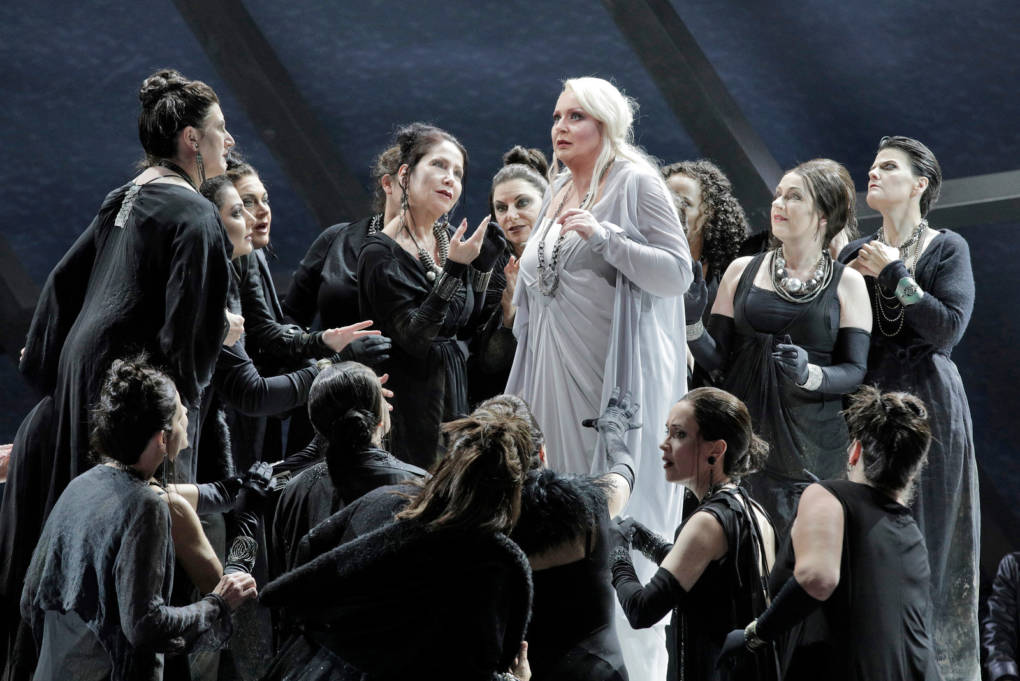
"caption": "Iréne Theorin as Brünnhilde with members of the San Franciso Opera Chorus in Wagner's 'Götterdämmerung,' part of the Ring cycle at SF Opera.",
"description": "Iréne Theorin as Brünnhilde with members of the San Franciso Opera Chorus in Wagner's 'Götterdämmerung.'",
"title": "Brunnhilde.WithWomen",
"credit": "Cory Weaver/San Francisco Opera",
"status": "inherit",
"altTag": "Iréne Theorin as Brünnhilde with members of the San Franciso Opera Chorus in Wagner's 'Götterdämmerung.'",
"isLoading": false,
"fetchFailed": false
},
"arts_13893533": {
"type": "attachments",
"id": "arts_13893533",
"meta": {
"index": "attachments_1716263798",
"site": "arts",
"id": "13893533",
"found": true
},
"parent": 13893523,
"imgSizes": {
"thumbnail": {
"file": "https://ww2.kqed.org/app/uploads/sites/2/2021/03/ThisIsTheLife-160x100.jpg",
"width": 160,
"mimeType": "image/jpeg",
"height": 100
},
"post-thumbnail": {
"file": "https://ww2.kqed.org/app/uploads/sites/2/2021/03/ThisIsTheLife-672x372.jpg",
"width": 672,
"mimeType": "image/jpeg",
"height": 372
},
"kqedFullSize": {
"file": "https://ww2.kqed.org/app/uploads/sites/2/2021/03/ThisIsTheLife.jpg",
"width": 800,
"height": 500
},
"medium_large": {
"file": "https://ww2.kqed.org/app/uploads/sites/2/2021/03/ThisIsTheLife-768x480.jpg",
"width": 768,
"mimeType": "image/jpeg",
"height": 480
}
},
"publishDate": 1614799695,
"modified": 1614799742,
"caption": "Chali 2na performing at the Good Life Cafe in a still from 'This is the Life,' directed by Ava DuVernay.",
"description": "Chali 2na performing at the Good Life Cafe in a still from 'This is the Life,' directed by Ava DuVernay.",
"title": "ThisIsTheLife",
"credit": "Forward Movement",
"status": "inherit",
"altTag": "Chali 2na performing at the Good Life Cafe in a still from 'This is the Life,' directed by Ava DuVernay.",
"isLoading": false,
"fetchFailed": false
},
"arts_13893406": {
"type": "attachments",
"id": "arts_13893406",
"meta": {
"index": "attachments_1716263798",
"site": "arts",
"id": "13893406",
"found": true
},
"parent": 13893405,
"imgSizes": {
"twentyfourteen-full-width": {
"file": "https://ww2.kqed.org/app/uploads/sites/2/2021/02/SFJAZZ.Panel_-1000x576.jpg",
"width": 1000,
"mimeType": "image/jpeg",
"height": 576
},
"thumbnail": {
"file": "https://ww2.kqed.org/app/uploads/sites/2/2021/02/SFJAZZ.Panel_-160x100.jpg",
"width": 160,
"mimeType": "image/jpeg",
"height": 100
},
"post-thumbnail": {
"file": "https://ww2.kqed.org/app/uploads/sites/2/2021/02/SFJAZZ.Panel_-672x372.jpg",
"width": 672,
"mimeType": "image/jpeg",
"height": 372
},
"kqedFullSize": {
"file": "https://ww2.kqed.org/app/uploads/sites/2/2021/02/SFJAZZ.Panel_.jpg",
"width": 1000,
"height": 625
},
"medium": {
"file": "https://ww2.kqed.org/app/uploads/sites/2/2021/02/SFJAZZ.Panel_-800x500.jpg",
"width": 800,
"mimeType": "image/jpeg",
"height": 500
},
"medium_large": {
"file": "https://ww2.kqed.org/app/uploads/sites/2/2021/02/SFJAZZ.Panel_-768x480.jpg",
"width": 768,
"mimeType": "image/jpeg",
"height": 480
}
},
"publishDate": 1614363351,
"modified": 1614363414,
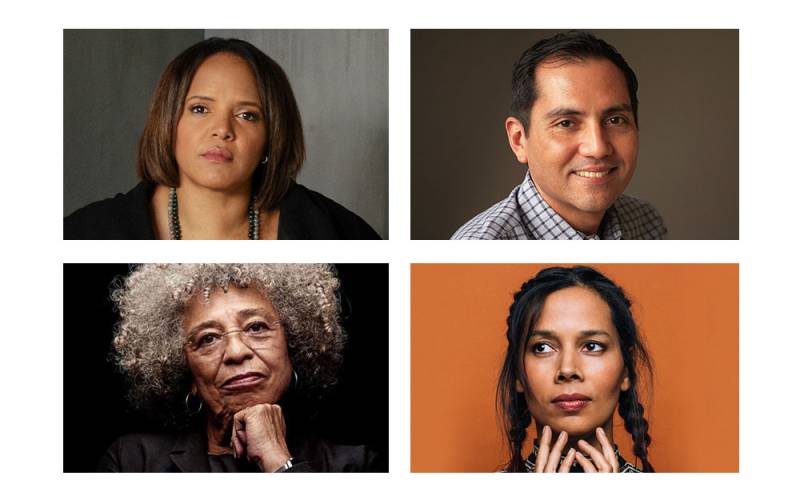
"caption": "Clockwise from upper left, Terri Lyne Carrington, Nate Chinen, Rhiannon Giddens and Angela Davis.",
"description": null,
"title": "SFJAZZ.Panel",
"credit": null,
"status": "inherit",
"altTag": null,
"isLoading": false,
"fetchFailed": false
},
"arts_13892761": {
"type": "attachments",
"id": "arts_13892761",
"meta": {
"index": "attachments_1716263798",
"site": "arts",
"id": "13892761",
"found": true
},
"parent": 13892744,
"imgSizes": {
"twentyfourteen-full-width": {
"file": "https://ww2.kqed.org/app/uploads/sites/2/2021/02/GettyImages-2921125-1038x576.jpg",
"width": 1038,
"mimeType": "image/jpeg",
"height": 576
},
"thumbnail": {
"file": "https://ww2.kqed.org/app/uploads/sites/2/2021/02/GettyImages-2921125-160x112.jpg",
"width": 160,
"mimeType": "image/jpeg",
"height": 112
},
"post-thumbnail": {
"file": "https://ww2.kqed.org/app/uploads/sites/2/2021/02/GettyImages-2921125-672x372.jpg",
"width": 672,
"mimeType": "image/jpeg",
"height": 372
},
"kqedFullSize": {
"file": "https://ww2.kqed.org/app/uploads/sites/2/2021/02/GettyImages-2921125-scaled.jpg",
"width": 2560,
"height": 1789
},
"2048x2048": {
"file": "https://ww2.kqed.org/app/uploads/sites/2/2021/02/GettyImages-2921125-2048x1432.jpg",
"width": 2048,
"mimeType": "image/jpeg",
"height": 1432
},
"large": {
"file": "https://ww2.kqed.org/app/uploads/sites/2/2021/02/GettyImages-2921125-1020x713.jpg",
"width": 1020,
"mimeType": "image/jpeg",
"height": 713
},
"1536x1536": {
"file": "https://ww2.kqed.org/app/uploads/sites/2/2021/02/GettyImages-2921125-1536x1074.jpg",
"width": 1536,
"mimeType": "image/jpeg",
"height": 1074
},
"full-width": {
"file": "https://ww2.kqed.org/app/uploads/sites/2/2021/02/GettyImages-2921125-1920x1342.jpg",
"width": 1920,
"mimeType": "image/jpeg",
"height": 1342
},
"medium": {
"file": "https://ww2.kqed.org/app/uploads/sites/2/2021/02/GettyImages-2921125-800x559.jpg",
"width": 800,
"mimeType": "image/jpeg",
"height": 559
},
"medium_large": {
"file": "https://ww2.kqed.org/app/uploads/sites/2/2021/02/GettyImages-2921125-768x537.jpg",
"width": 768,
"mimeType": "image/jpeg",
"height": 537
}
},
"publishDate": 1613158025,
"modified": 1613158177,
"caption": "Justin Timberlake and Janet Jackson, pre-wardrobe malfunction, during the 2004 Super Bowl halftime show in Houston.",
"description": "Justin Timberlake and Janet Jackson, pre-wardrobe malfunction, during the 2004 Super Bowl halftime show in Houston.",
"title": "Justin Timberlake and Janet Jackson, pre-wardrobe malfunction, during the 2004 Super Bowl halftime show in Houston.",
"credit": "Donald Miralle/Getty Images",
"status": "inherit",
"altTag": "Justin Timberlake and Janet Jackson, pre-wardrobe malfunction, during the 2004 Super Bowl halftime show in Houston.",
"isLoading": false,
"fetchFailed": false
},
"arts_13892615": {
"type": "attachments",
"id": "arts_13892615",
"meta": {
"index": "attachments_1716263798",
"site": "arts",
"id": "13892615",
"found": true
},
"parent": 13892610,
"imgSizes": {
"thumbnail": {
"file": "https://ww2.kqed.org/app/uploads/sites/2/2021/02/149037941_441816527002848_6286401150199967138_n-160x107.jpg",
"width": 160,
"mimeType": "image/jpeg",
"height": 107
},
"kqedFullSize": {
"file": "https://ww2.kqed.org/app/uploads/sites/2/2021/02/149037941_441816527002848_6286401150199967138_n.jpg",
"width": 480,
"height": 320
}
},
"publishDate": 1613021722,
"modified": 1613021787,
"caption": "Champ Green stands in front of a food truck wearing a baseball cap and an apron. ",
"description": "Champ Green stands in front of a food truck wearing a baseball cap and an apron. ",
"title": "Champ Green stands in front of a food truck wearing a baseball cap and an apron.",
"credit": "Nicholas Stennet",
"status": "inherit",
"altTag": "Champ Green stands in front of a food truck wearing a baseball cap and an apron.",
"isLoading": false,
"fetchFailed": false
},
"arts_13892667": {
"type": "attachments",
"id": "arts_13892667",
"meta": {
"index": "attachments_1716263798",
"site": "arts",
"id": "13892667",
"found": true
},
"parent": 13892665,
"imgSizes": {
"twentyfourteen-full-width": {
"file": "https://ww2.kqed.org/app/uploads/sites/2/2021/02/RS47195_nova-1-qut-1038x576.jpg",
"width": 1038,
"mimeType": "image/jpeg",
"height": 576
},
"thumbnail": {
"file": "https://ww2.kqed.org/app/uploads/sites/2/2021/02/RS47195_nova-1-qut-160x120.jpg",
"width": 160,
"mimeType": "image/jpeg",
"height": 120
},
"post-thumbnail": {
"file": "https://ww2.kqed.org/app/uploads/sites/2/2021/02/RS47195_nova-1-qut-672x372.jpg",
"width": 672,
"mimeType": "image/jpeg",
"height": 372
},
"kqedFullSize": {
"file": "https://ww2.kqed.org/app/uploads/sites/2/2021/02/RS47195_nova-1-qut.jpg",
"width": 1920,
"height": 1440
},
"large": {
"file": "https://ww2.kqed.org/app/uploads/sites/2/2021/02/RS47195_nova-1-qut-1020x765.jpg",
"width": 1020,
"mimeType": "image/jpeg",
"height": 765
},
"1536x1536": {
"file": "https://ww2.kqed.org/app/uploads/sites/2/2021/02/RS47195_nova-1-qut-1536x1152.jpg",
"width": 1536,
"mimeType": "image/jpeg",
"height": 1152
},
"medium": {
"file": "https://ww2.kqed.org/app/uploads/sites/2/2021/02/RS47195_nova-1-qut-800x600.jpg",
"width": 800,
"mimeType": "image/jpeg",
"height": 600
},
"medium_large": {
"file": "https://ww2.kqed.org/app/uploads/sites/2/2021/02/RS47195_nova-1-qut-768x576.jpg",
"width": 768,
"mimeType": "image/jpeg",
"height": 576
}
},
"publishDate": 1613077283,
"modified": 1613077376,
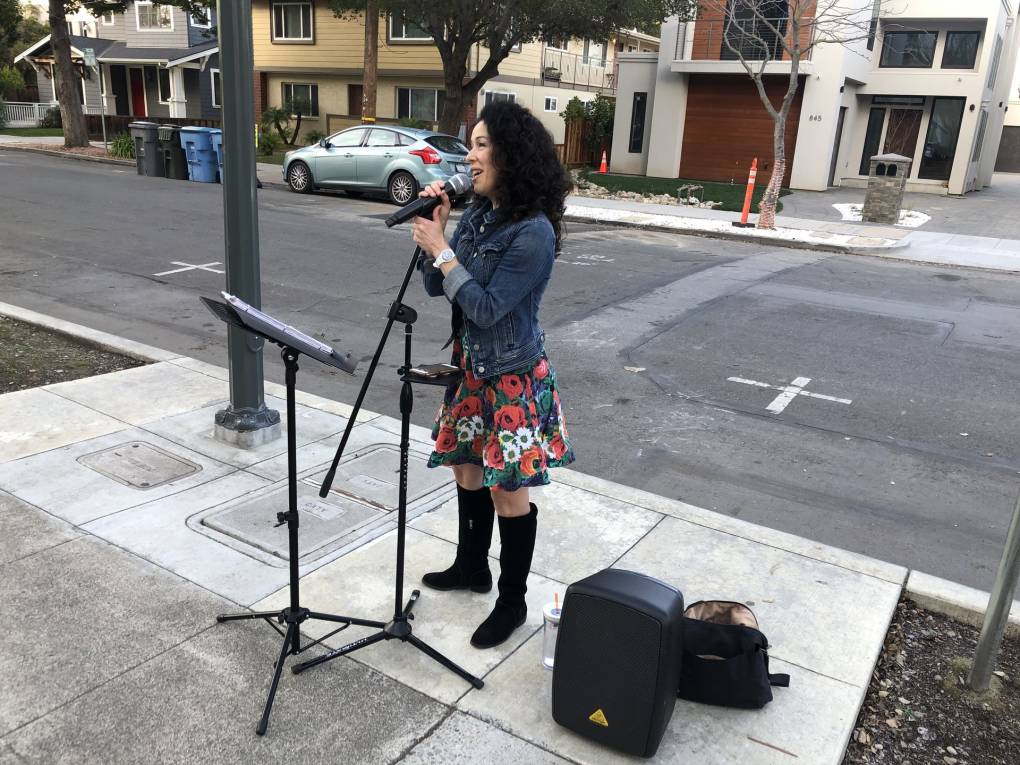
"caption": "Singer Nova Jimenez serenades seniors from the sidewalk outside Channing House, a retirement community in Palo Alto, on Feb. 7, 2021.",
"description": "Singer Nova Jimenez serenades seniors from the sidewalk outside Channing House, a retirement community in Palo Alto, on Feb. 7, 2021.",
"title": "RS47195_nova 1-qut",
"credit": "Chloe Veltman/KQED",
"status": "inherit",
"altTag": null,
"isLoading": false,
"fetchFailed": false
},
"arts_13892696": {
"type": "attachments",
"id": "arts_13892696",
"meta": {
"index": "attachments_1716263798",
"site": "arts",
"id": "13892696",
"found": true
},
"parent": 13892695,
"imgSizes": {
"twentyfourteen-full-width": {
"file": "https://ww2.kqed.org/app/uploads/sites/2/2021/02/gettyimages-1059659278_custom-001f0baa370055d37d8e8647b8128ea5681d96de-1038x576.jpg",
"width": 1038,
"mimeType": "image/jpeg",
"height": 576
},
"thumbnail": {
"file": "https://ww2.kqed.org/app/uploads/sites/2/2021/02/gettyimages-1059659278_custom-001f0baa370055d37d8e8647b8128ea5681d96de-160x115.jpg",
"width": 160,
"mimeType": "image/jpeg",
"height": 115
},
"post-thumbnail": {
"file": "https://ww2.kqed.org/app/uploads/sites/2/2021/02/gettyimages-1059659278_custom-001f0baa370055d37d8e8647b8128ea5681d96de-672x372.jpg",
"width": 672,
"mimeType": "image/jpeg",
"height": 372
},
"kqedFullSize": {
"file": "https://ww2.kqed.org/app/uploads/sites/2/2021/02/gettyimages-1059659278_custom-001f0baa370055d37d8e8647b8128ea5681d96de-scaled.jpg",
"width": 2560,
"height": 1832
},
"2048x2048": {
"file": "https://ww2.kqed.org/app/uploads/sites/2/2021/02/gettyimages-1059659278_custom-001f0baa370055d37d8e8647b8128ea5681d96de-2048x1466.jpg",
"width": 2048,
"mimeType": "image/jpeg",
"height": 1466
},
"large": {
"file": "https://ww2.kqed.org/app/uploads/sites/2/2021/02/gettyimages-1059659278_custom-001f0baa370055d37d8e8647b8128ea5681d96de-1020x730.jpg",
"width": 1020,
"mimeType": "image/jpeg",
"height": 730
},
"1536x1536": {
"file": "https://ww2.kqed.org/app/uploads/sites/2/2021/02/gettyimages-1059659278_custom-001f0baa370055d37d8e8647b8128ea5681d96de-1536x1099.jpg",
"width": 1536,
"mimeType": "image/jpeg",
"height": 1099
},
"full-width": {
"file": "https://ww2.kqed.org/app/uploads/sites/2/2021/02/gettyimages-1059659278_custom-001f0baa370055d37d8e8647b8128ea5681d96de-1920x1374.jpg",
"width": 1920,
"mimeType": "image/jpeg",
"height": 1374
},
"medium": {
"file": "https://ww2.kqed.org/app/uploads/sites/2/2021/02/gettyimages-1059659278_custom-001f0baa370055d37d8e8647b8128ea5681d96de-800x573.jpg",
"width": 800,
"mimeType": "image/jpeg",
"height": 573
},
"medium_large": {
"file": "https://ww2.kqed.org/app/uploads/sites/2/2021/02/gettyimages-1059659278_custom-001f0baa370055d37d8e8647b8128ea5681d96de-768x550.jpg",
"width": 768,
"mimeType": "image/jpeg",
"height": 550
}
},
"publishDate": 1613085506,
"modified": 1613085595,
"caption": "Chick Corea, seen here performing in Turin, Italy in 2018, died Feb. 9.",
"description": "TURIN, ITALY - NOVEMBER 09: American piano player Chick Corea performs live at the OGR Jazz Club on November 9, 2018 at Officine Grandi Riparazioni in Turin, Italy. (Photo by Giorgio Perottino/Getty Images for OGR )",
"title": "Chick Corea, seen here performing in Turin, Italy in 2018, died Feb. 9.",
"credit": "Giorgio Perottino/Getty Images for OGR",
"status": "inherit",
"altTag": "Chick Corea, seen here performing in Turin, Italy in 2018, died Feb. 9.",
"isLoading": false,
"fetchFailed": false
},
"arts_13892666": {
"type": "attachments",
"id": "arts_13892666",
"meta": {
"index": "attachments_1716263798",
"site": "arts",
"id": "13892666",
"found": true
},
"parent": 13892656,
"imgSizes": {
"twentyfourteen-full-width": {
"file": "https://ww2.kqed.org/app/uploads/sites/2/2021/02/GettyImages-1188142778-1038x576.jpg",
"width": 1038,
"mimeType": "image/jpeg",
"height": 576
},
"thumbnail": {
"file": "https://ww2.kqed.org/app/uploads/sites/2/2021/02/GettyImages-1188142778-160x107.jpg",
"width": 160,
"mimeType": "image/jpeg",
"height": 107
},
"post-thumbnail": {
"file": "https://ww2.kqed.org/app/uploads/sites/2/2021/02/GettyImages-1188142778-672x372.jpg",
"width": 672,
"mimeType": "image/jpeg",
"height": 372
},
"kqedFullSize": {
"file": "https://ww2.kqed.org/app/uploads/sites/2/2021/02/GettyImages-1188142778-scaled.jpg",
"width": 2560,
"height": 1707
},
"2048x2048": {
"file": "https://ww2.kqed.org/app/uploads/sites/2/2021/02/GettyImages-1188142778-2048x1365.jpg",
"width": 2048,
"mimeType": "image/jpeg",
"height": 1365
},
"large": {
"file": "https://ww2.kqed.org/app/uploads/sites/2/2021/02/GettyImages-1188142778-1020x680.jpg",
"width": 1020,
"mimeType": "image/jpeg",
"height": 680
},
"1536x1536": {
"file": "https://ww2.kqed.org/app/uploads/sites/2/2021/02/GettyImages-1188142778-1536x1024.jpg",
"width": 1536,
"mimeType": "image/jpeg",
"height": 1024
},
"full-width": {
"file": "https://ww2.kqed.org/app/uploads/sites/2/2021/02/GettyImages-1188142778-1920x1280.jpg",
"width": 1920,
"mimeType": "image/jpeg",
"height": 1280
},
"medium": {
"file": "https://ww2.kqed.org/app/uploads/sites/2/2021/02/GettyImages-1188142778-800x533.jpg",
"width": 800,
"mimeType": "image/jpeg",
"height": 533
},
"medium_large": {
"file": "https://ww2.kqed.org/app/uploads/sites/2/2021/02/GettyImages-1188142778-768x512.jpg",
"width": 768,
"mimeType": "image/jpeg",
"height": 512
}
},
"publishDate": 1613077119,
"modified": 1689901040,
"caption": "Taylor Swift pictured at Billboard's 2019 Woman of the Year in Los Angeles. ",
"description": "Taylor Swift pictured at Billboard's 2019 Woman of the Year in Los Angeles 2019. ",
"title": "Taylor Swift pictured at Billboard's 2019 Woman of the Year in Los Angeles 2019.",
"credit": "VALERIE MACON/AFP via Getty Images",
"status": "inherit",
"altTag": "Taylor Swift pictured at Billboard's 2019 Woman of the Year in Los Angeles 2019.",
"isLoading": false,
"fetchFailed": false
},
"arts_13892490": {
"type": "attachments",
"id": "arts_13892490",
"meta": {
"index": "attachments_1716263798",
"site": "arts",
"id": "13892490",
"found": true
},
"parent": 13892489,
"imgSizes": {
"twentyfourteen-full-width": {
"file": "https://ww2.kqed.org/app/uploads/sites/2/2021/02/maryanne-amacher-courtesy-of-peggy-weil_wide-65252ab30c247d21bce2fd9323352b5810b50382-1038x576.jpg",
"width": 1038,
"mimeType": "image/jpeg",
"height": 576
},
"thumbnail": {
"file": "https://ww2.kqed.org/app/uploads/sites/2/2021/02/maryanne-amacher-courtesy-of-peggy-weil_wide-65252ab30c247d21bce2fd9323352b5810b50382-160x90.jpg",
"width": 160,
"mimeType": "image/jpeg",
"height": 90
},
"post-thumbnail": {
"file": "https://ww2.kqed.org/app/uploads/sites/2/2021/02/maryanne-amacher-courtesy-of-peggy-weil_wide-65252ab30c247d21bce2fd9323352b5810b50382-672x372.jpg",
"width": 672,
"mimeType": "image/jpeg",
"height": 372
},
"kqedFullSize": {
"file": "https://ww2.kqed.org/app/uploads/sites/2/2021/02/maryanne-amacher-courtesy-of-peggy-weil_wide-65252ab30c247d21bce2fd9323352b5810b50382.jpg",
"width": 1596,
"height": 898
},
"large": {
"file": "https://ww2.kqed.org/app/uploads/sites/2/2021/02/maryanne-amacher-courtesy-of-peggy-weil_wide-65252ab30c247d21bce2fd9323352b5810b50382-1020x574.jpg",
"width": 1020,
"mimeType": "image/jpeg",
"height": 574
},
"1536x1536": {
"file": "https://ww2.kqed.org/app/uploads/sites/2/2021/02/maryanne-amacher-courtesy-of-peggy-weil_wide-65252ab30c247d21bce2fd9323352b5810b50382-1536x864.jpg",
"width": 1536,
"mimeType": "image/jpeg",
"height": 864
},
"medium": {
"file": "https://ww2.kqed.org/app/uploads/sites/2/2021/02/maryanne-amacher-courtesy-of-peggy-weil_wide-65252ab30c247d21bce2fd9323352b5810b50382-800x450.jpg",
"width": 800,
"mimeType": "image/jpeg",
"height": 450
},
"medium_large": {
"file": "https://ww2.kqed.org/app/uploads/sites/2/2021/02/maryanne-amacher-courtesy-of-peggy-weil_wide-65252ab30c247d21bce2fd9323352b5810b50382-768x432.jpg",
"width": 768,
"mimeType": "image/jpeg",
"height": 432
}
},
"publishDate": 1612914190,
"modified": 1612914697,
"caption": "Maryanne Amacher, an artist and composer, is one of the women featured in the new documentary 'Sisters with Transistors.'",
"description": "Maryanne Amacher, an artist and composer, is one of the women featured in the new documentary 'Sisters with Transistors.'",
"title": "Maryanne Amacher, an artist and composer, is one of the women featured in the new documentary 'Sisters with Transistors.'",
"credit": "Peggy Weil/Courtesy of the artist",
"status": "inherit",
"altTag": "Maryanne Amacher, an artist and composer, is one of the women featured in the new documentary 'Sisters with Transistors.'",
"isLoading": false,
"fetchFailed": false
},
"arts_13892288": {
"type": "attachments",
"id": "arts_13892288",
"meta": {
"index": "attachments_1716263798",
"site": "arts",
"id": "13892288",
"found": true
},
"parent": 13892200,
"imgSizes": {
"twentyfourteen-full-width": {
"file": "https://ww2.kqed.org/app/uploads/sites/2/2021/02/Screen-Shot-2021-02-04-at-7.09.11-PM-1038x576.png",
"width": 1038,
"mimeType": "image/png",
"height": 576
},
"thumbnail": {
"file": "https://ww2.kqed.org/app/uploads/sites/2/2021/02/Screen-Shot-2021-02-04-at-7.09.11-PM-160x112.png",
"width": 160,
"mimeType": "image/png",
"height": 112
},
"post-thumbnail": {
"file": "https://ww2.kqed.org/app/uploads/sites/2/2021/02/Screen-Shot-2021-02-04-at-7.09.11-PM-672x372.png",
"width": 672,
"mimeType": "image/png",
"height": 372
},
"kqedFullSize": {
"file": "https://ww2.kqed.org/app/uploads/sites/2/2021/02/Screen-Shot-2021-02-04-at-7.09.11-PM.png",
"width": 1322,
"height": 924
},
"large": {
"file": "https://ww2.kqed.org/app/uploads/sites/2/2021/02/Screen-Shot-2021-02-04-at-7.09.11-PM-1020x713.png",
"width": 1020,
"mimeType": "image/png",
"height": 713
},
"medium": {
"file": "https://ww2.kqed.org/app/uploads/sites/2/2021/02/Screen-Shot-2021-02-04-at-7.09.11-PM-800x559.png",
"width": 800,
"mimeType": "image/png",
"height": 559
},
"medium_large": {
"file": "https://ww2.kqed.org/app/uploads/sites/2/2021/02/Screen-Shot-2021-02-04-at-7.09.11-PM-768x537.png",
"width": 768,
"mimeType": "image/png",
"height": 537
}
},
"publishDate": 1612494565,
"modified": 1612494595,
"caption": "Jada Imani sits in front of a couple of palm trees as she poses for a photo. ",
"description": "Jada Imani sits in front of a couple of palm trees as she poses for a photo. ",
"title": "Jada Imani sits in front of a couple of palm trees as she poses for a photo.",
"credit": "13thElement",
"status": "inherit",
"altTag": "Jada Imani sits in front of a couple of palm trees as she poses for a photo.",
"isLoading": false,
"fetchFailed": false
},
"arts_13892203": {
"type": "attachments",
"id": "arts_13892203",
"meta": {
"index": "attachments_1716263798",
"site": "arts",
"id": "13892203",
"found": true
},
"parent": 13892202,
"imgSizes": {
"twentyfourteen-full-width": {
"file": "https://ww2.kqed.org/app/uploads/sites/2/2021/02/coltrane_thumb_wide-9be1c760f0e8e3252fe480af2a0b043433cbf152-1038x576.png",
"width": 1038,
"mimeType": "image/png",
"height": 576
},
"thumbnail": {
"file": "https://ww2.kqed.org/app/uploads/sites/2/2021/02/coltrane_thumb_wide-9be1c760f0e8e3252fe480af2a0b043433cbf152-160x90.png",
"width": 160,
"mimeType": "image/png",
"height": 90
},
"post-thumbnail": {
"file": "https://ww2.kqed.org/app/uploads/sites/2/2021/02/coltrane_thumb_wide-9be1c760f0e8e3252fe480af2a0b043433cbf152-672x372.png",
"width": 672,
"mimeType": "image/png",
"height": 372
},
"kqedFullSize": {
"file": "https://ww2.kqed.org/app/uploads/sites/2/2021/02/coltrane_thumb_wide-9be1c760f0e8e3252fe480af2a0b043433cbf152.png",
"width": 3233,
"height": 1818
},
"2048x2048": {
"file": "https://ww2.kqed.org/app/uploads/sites/2/2021/02/coltrane_thumb_wide-9be1c760f0e8e3252fe480af2a0b043433cbf152-2048x1152.png",
"width": 2048,
"mimeType": "image/png",
"height": 1152
},
"large": {
"file": "https://ww2.kqed.org/app/uploads/sites/2/2021/02/coltrane_thumb_wide-9be1c760f0e8e3252fe480af2a0b043433cbf152-1020x574.png",
"width": 1020,
"mimeType": "image/png",
"height": 574
},
"1536x1536": {
"file": "https://ww2.kqed.org/app/uploads/sites/2/2021/02/coltrane_thumb_wide-9be1c760f0e8e3252fe480af2a0b043433cbf152-1536x864.png",
"width": 1536,
"mimeType": "image/png",
"height": 864
},
"full-width": {
"file": "https://ww2.kqed.org/app/uploads/sites/2/2021/02/coltrane_thumb_wide-9be1c760f0e8e3252fe480af2a0b043433cbf152-1920x1080.png",
"width": 1920,
"mimeType": "image/png",
"height": 1080
},
"medium": {
"file": "https://ww2.kqed.org/app/uploads/sites/2/2021/02/coltrane_thumb_wide-9be1c760f0e8e3252fe480af2a0b043433cbf152-800x450.png",
"width": 800,
"mimeType": "image/png",
"height": 450
},
"medium_large": {
"file": "https://ww2.kqed.org/app/uploads/sites/2/2021/02/coltrane_thumb_wide-9be1c760f0e8e3252fe480af2a0b043433cbf152-768x432.png",
"width": 768,
"mimeType": "image/png",
"height": 432
}
},
"publishDate": 1612459495,
"modified": 1612459495,
"caption": null,
"description": null,
"title": "Saint Coltrane: The Church Built On A Love Supreme.",
"credit": null,
"status": "inherit",
"altTag": null,
"isLoading": false,
"fetchFailed": false
},
"arts_13892076": {
"type": "attachments",
"id": "arts_13892076",
"meta": {
"index": "attachments_1716263798",
"site": "arts",
"id": "13892076",
"found": true
},
"parent": 13892036,
"imgSizes": {
"thumbnail": {
"file": "https://ww2.kqed.org/app/uploads/sites/2/2021/02/QueenIminah-160x90.jpg",
"width": 160,
"mimeType": "image/jpeg",
"height": 90
},
"post-thumbnail": {
"file": "https://ww2.kqed.org/app/uploads/sites/2/2021/02/QueenIminah-672x372.jpg",
"width": 672,
"mimeType": "image/jpeg",
"height": 372
},
"kqedFullSize": {
"file": "https://ww2.kqed.org/app/uploads/sites/2/2021/02/QueenIminah.jpg",
"width": 800,
"height": 450
},
"medium_large": {
"file": "https://ww2.kqed.org/app/uploads/sites/2/2021/02/QueenIminah-768x432.jpg",
"width": 768,
"mimeType": "image/jpeg",
"height": 432
}
},
"publishDate": 1612221731,
"modified": 1612286603,
"caption": null,
"description": null,
"title": "QueenIminah",
"credit": "GLM Studios",
"status": "inherit",
"altTag": null,
"isLoading": false,
"fetchFailed": false
}
},
"audioPlayerReducer": {
"postId": "stream_live",
"isPaused": true,
"isPlaying": false,
"pfsActive": false,
"pledgeModalIsOpen": true,
"playerDrawerIsOpen": false,
"liveAudioPlayStartedAt": 0,
"liveAudioPlayContext": ""
},
"authorsReducer": {
"byline_arts_13892695": {
"type": "authors",
"id": "byline_arts_13892695",
"meta": {
"override": true
},
"slug": "byline_arts_13892695",
"name": "Nate Chinen and Anastasia Tsioulcas",
"isLoading": false
},
"byline_arts_13892656": {
"type": "authors",
"id": "byline_arts_13892656",
"meta": {
"override": true
},
"slug": "byline_arts_13892656",
"name": "Stephen Thompson",
"isLoading": false
},
"byline_arts_13892489": {
"type": "authors",
"id": "byline_arts_13892489",
"meta": {
"override": true
},
"slug": "byline_arts_13892489",
"name": "Allyson McCabe",
"isLoading": false
},
"byline_arts_13892202": {
"type": "authors",
"id": "byline_arts_13892202",
"meta": {
"override": true
},
"slug": "byline_arts_13892202",
"name": "Nate Chinen",
"isLoading": false
},
"gmeline": {
"type": "authors",
"id": "185",
"meta": {
"index": "authors_1716337520",
"id": "185",
"found": true
},
"name": "Gabe Meline",
"firstName": "Gabe",
"lastName": "Meline",
"slug": "gmeline",
"email": "gmeline@kqed.org",
"display_author_email": true,
"staff_mastheads": [
"arts"
],
"title": "Senior Editor, KQED Arts & Culture",
"bio": "Gabe Meline entered journalism at age 15 making photocopied zines, and has since earned awards from the Edward R. Murrow Awards, the Society for Professional Journalists, the Online Journalism Awards, the Association of Alternative Newsweeklies and the California Newspaper Publishers Association. Prior to KQED, he was the editor of the \u003cem>North Bay Bohemian\u003c/em> and a touring musician. He lives with his wife and daughter in his hometown of Santa Rosa, CA.",
"avatar": "https://secure.gravatar.com/avatar/5bebe57be0d8bc2dd318934feb47299e2d2d10cba28d09d8d7afb389a2ce2bdd?s=600&d=blank&r=g",
"twitter": null,
"bluesky": null,
"facebook": null,
"instagram": null,
"linkedin": null,
"sites": [
{
"site": "",
"roles": [
"editor"
]
},
{
"site": "arts",
"roles": [
"administrator"
]
},
{
"site": "artschool",
"roles": [
"editor"
]
},
{
"site": "news",
"roles": [
"author"
]
},
{
"site": "pop",
"roles": [
"editor"
]
},
{
"site": "bayareabites",
"roles": [
"editor"
]
},
{
"site": "food",
"roles": [
"editor"
]
},
{
"site": "forum",
"roles": [
"administrator"
]
},
{
"site": "liveblog",
"roles": [
"editor"
]
},
{
"site": "hiphop",
"roles": [
"editor"
]
}
],
"headData": {
"title": "Gabe Meline | KQED",
"description": "Senior Editor, KQED Arts & Culture",
"ogImgSrc": "https://secure.gravatar.com/avatar/5bebe57be0d8bc2dd318934feb47299e2d2d10cba28d09d8d7afb389a2ce2bdd?s=600&d=blank&r=g",
"twImgSrc": "https://secure.gravatar.com/avatar/5bebe57be0d8bc2dd318934feb47299e2d2d10cba28d09d8d7afb389a2ce2bdd?s=600&d=blank&r=g"
},
"isLoading": false,
"link": "/author/gmeline"
},
"cveltman": {
"type": "authors",
"id": "8608",
"meta": {
"index": "authors_1716337520",
"id": "8608",
"found": true
},
"name": "Chloe Veltman",
"firstName": "Chloe",
"lastName": "Veltman",
"slug": "cveltman",
"email": "cveltman@kqed.org",
"display_author_email": true,
"staff_mastheads": [],
"title": "Arts and Culture Reporter",
"bio": "Chloe Veltman is a former arts and culture reporter for KQED. Prior to joining the organization, she launched and led the arts bureau at Colorado Public Radio, served as the Bay Area's culture columnist for the New York Times, and was the founder, host and executive producer of VoiceBox, a national award-winning weekly podcast/radio show and live events series all about the human voice. Chloe is the recipient of numerous prizes, grants and fellowships including a Webby Award for her work on interactive storytelling, both the John S Knight Journalism Fellowship and Humanities Center Fellowship at Stanford University, the Sundance Arts Writing Fellowship and a Library of Congress Research Fellowship. She is the author of the book \"On Acting\" and has appeared as a guest lecturer at Yale University and the San Francisco Conservatory of Music among other institutions. She holds a BA in english literature from King's College, Cambridge, and a Masters in Dramaturgy from the Central School of Speech and Drama/Harvard Institute for Advanced Theater Training.\r\n\u003ca href=\"https://www.chloeveltman.com\">www.chloeveltman.com\u003c/a>",
"avatar": "https://secure.gravatar.com/avatar/55403394b00a1ddab683952c2eb2cf85?s=600&d=blank&r=g",
"twitter": "chloeveltman",
"facebook": null,
"instagram": null,
"linkedin": null,
"sites": [
{
"site": "arts",
"roles": []
},
{
"site": "news",
"roles": [
"author"
]
},
{
"site": "pop",
"roles": [
"editor"
]
},
{
"site": "science",
"roles": []
}
],
"headData": {
"title": "Chloe Veltman | KQED",
"description": "Arts and Culture Reporter",
"ogImgSrc": "https://secure.gravatar.com/avatar/55403394b00a1ddab683952c2eb2cf85?s=600&d=blank&r=g",
"twImgSrc": "https://secure.gravatar.com/avatar/55403394b00a1ddab683952c2eb2cf85?s=600&d=blank&r=g"
},
"isLoading": false,
"link": "/author/cveltman"
},
"ralexandra": {
"type": "authors",
"id": "11242",
"meta": {
"index": "authors_1716337520",
"id": "11242",
"found": true
},
"name": "Rae Alexandra",
"firstName": "Rae",
"lastName": "Alexandra",
"slug": "ralexandra",
"email": "ralexandra@kqed.org",
"display_author_email": true,
"staff_mastheads": [],
"title": "Reporter/Producer",
"bio": "Rae Alexandra is a Reporter/Producer for KQED Arts & Culture, and the creator/author of the \u003ca href=\"https://www.kqed.org/arts/program/rebel-girls-from-bay-area-history\">Rebel Girls From Bay Area History\u003c/a> and \u003ca href=\"https://www.kqed.org/bizarrebayarea\">Bizarre Bay Area\u003c/a> series. Her debut book, \u003ca href=\"https://citylights.com/politics-current-events-history/unsung-heroines35-women-who-changed/\">Unsung Heroines: 35 Women Who Changed the Bay Area\u003c/a> was published by City Lights in March 2026. In 2023, Rae was awarded an SPJ Excellence in Journalism Award for Arts & Culture. Rae was born and raised in Wales and subsequently — even after two decades in Northern California — still uses phrases that regularly baffle her coworkers.",
"avatar": "https://secure.gravatar.com/avatar/edfee8176c80cc0a382b051190f5341997df378a934a5774dcb0977732dfd401?s=600&d=blank&r=g",
"twitter": null,
"bluesky": null,
"facebook": null,
"instagram": null,
"linkedin": null,
"sites": [
{
"site": "arts",
"roles": [
"subscriber"
]
},
{
"site": "news",
"roles": [
"subscriber"
]
},
{
"site": "pop",
"roles": [
"subscriber"
]
},
{
"site": "bayareabites",
"roles": [
"subscriber"
]
},
{
"site": "science",
"roles": [
"subscriber"
]
}
],
"headData": {
"title": "Rae Alexandra | KQED",
"description": "Reporter/Producer",
"ogImgSrc": "https://secure.gravatar.com/avatar/edfee8176c80cc0a382b051190f5341997df378a934a5774dcb0977732dfd401?s=600&d=blank&r=g",
"twImgSrc": "https://secure.gravatar.com/avatar/edfee8176c80cc0a382b051190f5341997df378a934a5774dcb0977732dfd401?s=600&d=blank&r=g"
},
"isLoading": false,
"link": "/author/ralexandra"
},
"ogpenn": {
"type": "authors",
"id": "11491",
"meta": {
"index": "authors_1716337520",
"id": "11491",
"found": true
},
"name": "Pendarvis Harshaw",
"firstName": "Pendarvis",
"lastName": "Harshaw",
"slug": "ogpenn",
"email": "ogpenn@gmail.com",
"display_author_email": false,
"staff_mastheads": [
"arts"
],
"title": "Community Engagement Reporter",
"bio": "Pendarvis Harshaw is an educator, host and writer with KQED Arts.",
"avatar": "https://secure.gravatar.com/avatar/972b77ee8e3f346ae2b00622661187fbfabd059b5693bbdc1475ea7a722fd4cd?s=600&d=blank&r=g",
"twitter": null,
"bluesky": null,
"facebook": null,
"instagram": "ogpenn",
"linkedin": null,
"sites": [
{
"site": "arts",
"roles": [
"administrator"
]
},
{
"site": "news",
"roles": [
"editor"
]
},
{
"site": "bayareabites",
"roles": [
"author"
]
},
{
"site": "hiphop",
"roles": [
"editor"
]
}
],
"headData": {
"title": "Pendarvis Harshaw | KQED",
"description": "Community Engagement Reporter",
"ogImgSrc": "https://secure.gravatar.com/avatar/972b77ee8e3f346ae2b00622661187fbfabd059b5693bbdc1475ea7a722fd4cd?s=600&d=blank&r=g",
"twImgSrc": "https://secure.gravatar.com/avatar/972b77ee8e3f346ae2b00622661187fbfabd059b5693bbdc1475ea7a722fd4cd?s=600&d=blank&r=g"
},
"isLoading": false,
"link": "/author/ogpenn"
},
"mmedina": {
"type": "authors",
"id": "11528",
"meta": {
"index": "authors_1716337520",
"id": "11528",
"found": true
},
"name": "Marisol Medina-Cadena",
"firstName": "Marisol",
"lastName": "Medina-Cadena",
"slug": "mmedina",
"email": "mmedina@KQED.org",
"display_author_email": true,
"staff_mastheads": [],
"title": "Producer, Rightnowish Podcast",
"bio": "Marisol Medina-Cadena is a radio reporter and podcast producer. Before working at KQED, she produced for PBS member station, KCET, in Los Angeles. In 2017, Marisol won an Emmy Award for her work on the televised documentary, \u003cem>City Rising\u003c/em>, examining California's affordable housing crisis and the historical roots of gentrification.",
"avatar": "https://secure.gravatar.com/avatar/6c3db46a1cabb5e1fe9a365b5f4e681e?s=600&d=blank&r=g",
"twitter": "marisolreports",
"facebook": null,
"instagram": null,
"linkedin": null,
"sites": [
{
"site": "arts",
"roles": []
},
{
"site": "news",
"roles": [
"edit_others_posts"
]
}
],
"headData": {
"title": "Marisol Medina-Cadena | KQED",
"description": "Producer, Rightnowish Podcast",
"ogImgSrc": "https://secure.gravatar.com/avatar/6c3db46a1cabb5e1fe9a365b5f4e681e?s=600&d=blank&r=g",
"twImgSrc": "https://secure.gravatar.com/avatar/6c3db46a1cabb5e1fe9a365b5f4e681e?s=600&d=blank&r=g"
},
"isLoading": false,
"link": "/author/mmedina"
},
"sgetachew": {
"type": "authors",
"id": "11734",
"meta": {
"index": "authors_1716337520",
"id": "11734",
"found": true
},
"name": "Samuel Getachew",
"firstName": "Samuel",
"lastName": "Getachew",
"slug": "sgetachew",
"email": "sgetachew@kqed.org",
"display_author_email": false,
"staff_mastheads": [],
"title": "KQED Contributor",
"bio": "\u003cspan style=\"font-weight: 400;\">Samuel Getachew is an 18-year-old poet and writer from Oakland, California. He is the 2019 Oakland Youth Poet Laureate, a 2020 Finalist for National Youth Poet Laureate, and a 4-time YoungArts Winner. His writing has been published in Teen Vogue, the New York Times, the Washington Post, and more. He will attend Yale University in the fall of 2021.\u003c/span>",
"avatar": "https://secure.gravatar.com/avatar/ebad3dcf2295975cfe77698fa670a089?s=600&d=blank&r=g",
"twitter": null,
"facebook": null,
"instagram": null,
"linkedin": null,
"sites": [
{
"site": "arts",
"roles": [
"subscriber"
]
}
],
"headData": {
"title": "Samuel Getachew | KQED",
"description": "KQED Contributor",
"ogImgSrc": "https://secure.gravatar.com/avatar/ebad3dcf2295975cfe77698fa670a089?s=600&d=blank&r=g",
"twImgSrc": "https://secure.gravatar.com/avatar/ebad3dcf2295975cfe77698fa670a089?s=600&d=blank&r=g"
},
"isLoading": false,
"link": "/author/sgetachew"
}
},
"pagesReducer": {
"arts_category_music": {
"type": "terms",
"id": "arts_69",
"meta": {
"index": "terms_1716263798",
"site": "arts",
"id": "69",
"score": 10.851818
},
"featImg": null,
"name": "Music",
"description": null,
"taxonomy": "category",
"headData": {
"twImgId": null,
"twTitle": null,
"ogTitle": null,
"ogImgId": null,
"twDescription": null,
"description": null,
"title": "Music Archives | KQED Arts",
"ogDescription": null
},
"ttid": 70,
"slug": "music",
"isLoading": false,
"title": "Music",
"pageMeta": {
"site": "arts",
"WpPageTemplate": "page-topic-editorial",
"currentPage": 111
},
"blocks": [
{
"blockName": "kqed/post-list",
"attrs": {
"layout": "cardArticle2",
"query": "posts/arts?category=music",
"seeMore": false,
"paginated": true,
"page": 111
}
},
{
"blockName": "kqed/ad"
}
]
}
},
"pfsSessionReducer": {},
"postsReducer": {
"stream_live": {
"type": "live",
"id": "stream_live",
"audioUrl": "https://streams.kqed.org/kqedradio",
"title": "Live Stream",
"excerpt": "Live Stream information currently unavailable.",
"link": "/radio",
"featImg": "",
"label": {
"name": "KQED Live",
"link": "/"
}
},
"stream_kqedNewscast": {
"type": "posts",
"id": "stream_kqedNewscast",
"audioUrl": "https://www.kqed.org/.stream/anon/radio/RDnews/newscast.mp3?_=1",
"title": "KQED Newscast",
"featImg": "",
"label": {
"name": "88.5 FM",
"link": "/"
}
},
"arts_13893676": {
"type": "posts",
"id": "arts_13893676",
"meta": {
"index": "posts_1716263798",
"site": "arts",
"id": "13893676",
"score": null,
"sort": [
1614975984000
]
},
"parent": 0,
"labelTerm": {
"site": "arts",
"term": 140
},
"blocks": [],
"publishDate": 1614975984,
"format": "standard",
"title": "SF Opera’s ‘The Ring’ Streams All Throughout March—For Free",
"headTitle": "SF Opera’s ‘The Ring’ Streams All Throughout March—For Free | KQED",
"content": "\u003cp>You’ve probably never wondered what the classical composer Richard Wagner has in common with the Grateful Dead. I never did, myself. But in 2018, when I saw San Francisco Opera’s production of the \u003cem>Ring\u003c/em> cycle—Wagner’s 17-hour epic opera of gods, nymphs, giants and valkyries—I couldn’t help but notice the crowd in the $10 standing-room-only peanut gallery at the War Memorial Opera House. These were people decked in flamboyant outfits, who’d camped out in line for cheap tickets, who sometimes slept on the floor during intermissions and who, I learned, \u003ca href=\"https://www.cbc.ca/radio/sunday/the-sunday-edition-for-october-27-2019-1.5335017/ring-heads-of-the-world-unite-1.5335022\" target=\"_blank\" rel=\"noopener noreferrer\">regularly traveled around the world\u003c/a> to see as many stagings of \u003cem>The Ring\u003c/em> as possible.\u003c/p>\n\u003cp>In other words: They were Deadheads. But for opera.\u003c/p>\n\u003cp>After \u003ca href=\"https://www.kqed.org/arts/13835968/how-crazy-do-you-have-to-be-to-sit-through-15-hours-of-opera\" target=\"_blank\" rel=\"noopener noreferrer\">being transformed by \u003cem>The Ring\u003c/em>\u003c/a>, especially director Francesca Zambello’s dynamic, modern staging of it, I understood where they were coming from. Like a dewy-eyed Deadhead waxing rhapsodic about Jerry Garcia, I turned into a proselytizing \u003cem>Ring\u003c/em> zealot, urging anyone within earshot to give this slow-moving, 17-hour, 162-year-old opera a chance.\u003c/p>\n\u003cfigure id=\"attachment_13835972\" class=\"wp-caption aligncenter\" style=\"max-width: 800px\">\u003cimg loading=\"lazy\" decoding=\"async\" class=\"size-medium wp-image-13835972\" src=\"https://ww2.kqed.org/app/uploads/sites/2/2018/06/SiegfriedBrunnhildeSleeping-800x533.jpg\" alt=\"Iréne Theorin as Brünnhilde and Daniel Brenna as the title role in Wagner's 'Siegfried.'\" width=\"800\" height=\"533\" srcset=\"https://cdn.kqed.org/wp-content/uploads/sites/2/2018/06/SiegfriedBrunnhildeSleeping-800x533.jpg 800w, https://cdn.kqed.org/wp-content/uploads/sites/2/2018/06/SiegfriedBrunnhildeSleeping-160x107.jpg 160w, https://cdn.kqed.org/wp-content/uploads/sites/2/2018/06/SiegfriedBrunnhildeSleeping-768x512.jpg 768w, https://cdn.kqed.org/wp-content/uploads/sites/2/2018/06/SiegfriedBrunnhildeSleeping-1020x680.jpg 1020w, https://cdn.kqed.org/wp-content/uploads/sites/2/2018/06/SiegfriedBrunnhildeSleeping-1200x800.jpg 1200w, https://cdn.kqed.org/wp-content/uploads/sites/2/2018/06/SiegfriedBrunnhildeSleeping-1180x786.jpg 1180w, https://cdn.kqed.org/wp-content/uploads/sites/2/2018/06/SiegfriedBrunnhildeSleeping-960x640.jpg 960w, https://cdn.kqed.org/wp-content/uploads/sites/2/2018/06/SiegfriedBrunnhildeSleeping-240x160.jpg 240w, https://cdn.kqed.org/wp-content/uploads/sites/2/2018/06/SiegfriedBrunnhildeSleeping-375x250.jpg 375w, https://cdn.kqed.org/wp-content/uploads/sites/2/2018/06/SiegfriedBrunnhildeSleeping-520x346.jpg 520w, https://cdn.kqed.org/wp-content/uploads/sites/2/2018/06/SiegfriedBrunnhildeSleeping.jpg 1600w\" sizes=\"(max-width: 800px) 100vw, 800px\">\u003cfigcaption class=\"wp-caption-text\">Iréne Theorin as Brünnhilde and Daniel Brenna as the title role in Wagner’s ‘Siegfried.’ \u003ccite>(Cory Weaver/San Francisco Opera)\u003c/cite>\u003c/figcaption>\u003c/figure>\n\u003cp>Which is why I’m here to tell you: \u003cem>The Ring\u003c/em> is coming back. For free. All through the month of March, San Francisco Opera is streaming its 2018 production of \u003cem>The Ring\u003c/em>, in its entirety—one of each four parts each weekend, \u003ca href=\"https://sfopera.com/\" target=\"_blank\" rel=\"noopener noreferrer\">online\u003c/a>. For those that couldn’t score a miracle ticket in 2018, it’s the perfect opportunity to see this thrilling staging.\u003c/p>\n\u003cp>In addition, SF Opera is hosting \u003cem>The Ring Festival\u003c/em>, a series of talks and interviews from actors, authors and those behind the scenes all about \u003cem>The Ring\u003c/em>‘s themes and impact. Those streams are just $15 each, and also run through the month.\u003c/p>\n\u003cp>[ad fullwidth]\u003c/p>\n\u003cp>And who knows? After March, you too might be putting on a horned helmet and waiting in line at the Opera House next time \u003cem>The Ring\u003c/em> comes around… and you might even see me there.\u003c/p>\n\u003cp>\u003c/p>\n\u003cp>\u003cem>‘The Ring’ streams for free, one installment each weekend, in March. \u003ca href=\"https://sfopera.com/\" target=\"_blank\" rel=\"noopener noreferrer\">Details here\u003c/a>.\u003c/em>\u003c/p>\n\n",
"stats": {
"hasVideo": false,
"hasChartOrMap": false,
"hasAudio": false,
"hasPolis": false,
"wordCount": 381,
"hasGoogleForm": false,
"hasGallery": false,
"hasHearkenModule": false,
"iframeSrcs": [],
"paragraphCount": 9
},
"modified": 1705019387,
"excerpt": "Believe me: the slow-moving, 17-hour, 162-year-old opera is worth your time.",
"headData": {
"twImgId": "",
"twTitle": "",
"ogTitle": "",
"ogImgId": "",
"twDescription": "",
"description": "Believe me: the slow-moving, 17-hour, 162-year-old opera is worth your time.",
"title": "SF Opera’s ‘The Ring’ Streams All Throughout March—For Free | KQED",
"ogDescription": "",
"schema": {
"@context": "https://schema.org",
"@type": "Article",
"headline": "SF Opera’s ‘The Ring’ Streams All Throughout March—For Free",
"datePublished": "2021-03-05T12:26:24-08:00",
"dateModified": "2024-01-11T16:29:47-08:00",
"image": "https://cdn.kqed.org/wp-content/uploads/2020/02/KQED-OG-Image@1x.png"
}
},
"guestAuthors": [],
"slug": "sf-operas-the-ring-streams-all-throughout-march-for-free",
"status": "publish",
"templateType": "standard",
"featuredImageType": "standard",
"sticky": false,
"path": "/arts/13893676/sf-operas-the-ring-streams-all-throughout-march-for-free",
"audioTrackLength": null,
"parsedContent": [
{
"type": "contentString",
"content": "\u003cdiv class=\"post-body\">\u003cp>\u003cp>You’ve probably never wondered what the classical composer Richard Wagner has in common with the Grateful Dead. I never did, myself. But in 2018, when I saw San Francisco Opera’s production of the \u003cem>Ring\u003c/em> cycle—Wagner’s 17-hour epic opera of gods, nymphs, giants and valkyries—I couldn’t help but notice the crowd in the $10 standing-room-only peanut gallery at the War Memorial Opera House. These were people decked in flamboyant outfits, who’d camped out in line for cheap tickets, who sometimes slept on the floor during intermissions and who, I learned, \u003ca href=\"https://www.cbc.ca/radio/sunday/the-sunday-edition-for-october-27-2019-1.5335017/ring-heads-of-the-world-unite-1.5335022\" target=\"_blank\" rel=\"noopener noreferrer\">regularly traveled around the world\u003c/a> to see as many stagings of \u003cem>The Ring\u003c/em> as possible.\u003c/p>\n\u003cp>In other words: They were Deadheads. But for opera.\u003c/p>\n\u003cp>After \u003ca href=\"https://www.kqed.org/arts/13835968/how-crazy-do-you-have-to-be-to-sit-through-15-hours-of-opera\" target=\"_blank\" rel=\"noopener noreferrer\">being transformed by \u003cem>The Ring\u003c/em>\u003c/a>, especially director Francesca Zambello’s dynamic, modern staging of it, I understood where they were coming from. Like a dewy-eyed Deadhead waxing rhapsodic about Jerry Garcia, I turned into a proselytizing \u003cem>Ring\u003c/em> zealot, urging anyone within earshot to give this slow-moving, 17-hour, 162-year-old opera a chance.\u003c/p>\n\u003cfigure id=\"attachment_13835972\" class=\"wp-caption aligncenter\" style=\"max-width: 800px\">\u003cimg loading=\"lazy\" decoding=\"async\" class=\"size-medium wp-image-13835972\" src=\"https://ww2.kqed.org/app/uploads/sites/2/2018/06/SiegfriedBrunnhildeSleeping-800x533.jpg\" alt=\"Iréne Theorin as Brünnhilde and Daniel Brenna as the title role in Wagner's 'Siegfried.'\" width=\"800\" height=\"533\" srcset=\"https://cdn.kqed.org/wp-content/uploads/sites/2/2018/06/SiegfriedBrunnhildeSleeping-800x533.jpg 800w, https://cdn.kqed.org/wp-content/uploads/sites/2/2018/06/SiegfriedBrunnhildeSleeping-160x107.jpg 160w, https://cdn.kqed.org/wp-content/uploads/sites/2/2018/06/SiegfriedBrunnhildeSleeping-768x512.jpg 768w, https://cdn.kqed.org/wp-content/uploads/sites/2/2018/06/SiegfriedBrunnhildeSleeping-1020x680.jpg 1020w, https://cdn.kqed.org/wp-content/uploads/sites/2/2018/06/SiegfriedBrunnhildeSleeping-1200x800.jpg 1200w, https://cdn.kqed.org/wp-content/uploads/sites/2/2018/06/SiegfriedBrunnhildeSleeping-1180x786.jpg 1180w, https://cdn.kqed.org/wp-content/uploads/sites/2/2018/06/SiegfriedBrunnhildeSleeping-960x640.jpg 960w, https://cdn.kqed.org/wp-content/uploads/sites/2/2018/06/SiegfriedBrunnhildeSleeping-240x160.jpg 240w, https://cdn.kqed.org/wp-content/uploads/sites/2/2018/06/SiegfriedBrunnhildeSleeping-375x250.jpg 375w, https://cdn.kqed.org/wp-content/uploads/sites/2/2018/06/SiegfriedBrunnhildeSleeping-520x346.jpg 520w, https://cdn.kqed.org/wp-content/uploads/sites/2/2018/06/SiegfriedBrunnhildeSleeping.jpg 1600w\" sizes=\"(max-width: 800px) 100vw, 800px\">\u003cfigcaption class=\"wp-caption-text\">Iréne Theorin as Brünnhilde and Daniel Brenna as the title role in Wagner’s ‘Siegfried.’ \u003ccite>(Cory Weaver/San Francisco Opera)\u003c/cite>\u003c/figcaption>\u003c/figure>\n\u003cp>Which is why I’m here to tell you: \u003cem>The Ring\u003c/em> is coming back. For free. All through the month of March, San Francisco Opera is streaming its 2018 production of \u003cem>The Ring\u003c/em>, in its entirety—one of each four parts each weekend, \u003ca href=\"https://sfopera.com/\" target=\"_blank\" rel=\"noopener noreferrer\">online\u003c/a>. For those that couldn’t score a miracle ticket in 2018, it’s the perfect opportunity to see this thrilling staging.\u003c/p>\n\u003cp>In addition, SF Opera is hosting \u003cem>The Ring Festival\u003c/em>, a series of talks and interviews from actors, authors and those behind the scenes all about \u003cem>The Ring\u003c/em>‘s themes and impact. Those streams are just $15 each, and also run through the month.\u003c/p>\n\u003cp>\u003c/p>\u003c/div>",
"attributes": {
"named": {},
"numeric": []
}
},
{
"type": "component",
"content": "",
"name": "ad",
"attributes": {
"named": {
"label": "fullwidth"
},
"numeric": [
"fullwidth"
]
}
},
{
"type": "contentString",
"content": "\u003cdiv class=\"post-body\">\u003cp>\u003c/p>\n\u003cp>And who knows? After March, you too might be putting on a horned helmet and waiting in line at the Opera House next time \u003cem>The Ring\u003c/em> comes around… and you might even see me there.\u003c/p>\n\u003cp>\u003c/p>\n\u003cp>\u003cem>‘The Ring’ streams for free, one installment each weekend, in March. \u003ca href=\"https://sfopera.com/\" target=\"_blank\" rel=\"noopener noreferrer\">Details here\u003c/a>.\u003c/em>\u003c/p>\n\n\u003c/div>\u003c/p>",
"attributes": {
"named": {},
"numeric": []
}
}
],
"link": "/arts/13893676/sf-operas-the-ring-streams-all-throughout-march-for-free",
"authors": [
"185"
],
"programs": [
"arts_140"
],
"categories": [
"arts_1",
"arts_69",
"arts_967"
],
"tags": [
"arts_10278",
"arts_10318",
"arts_763",
"arts_3316",
"arts_5196",
"arts_585"
],
"featImg": "arts_13835971",
"label": "arts_140"
},
"arts_13893523": {
"type": "posts",
"id": "arts_13893523",
"meta": {
"index": "posts_1716263798",
"site": "arts",
"id": "13893523",
"score": null,
"sort": [
1614804763000
]
},
"parent": 0,
"labelTerm": {
"site": "arts",
"term": 140
},
"blocks": [],
"publishDate": 1614804763,
"format": "standard",
"title": "Ava DuVernay's Early Hip-Hop Documentary 'This is the Life' Hits Streaming",
"headTitle": "Ava DuVernay’s Early Hip-Hop Documentary ‘This is the Life’ Hits Streaming | KQED",
"content": "\u003cp>At this point, Ava DuVernay is a household name, having directed such films as \u003cem>Selma\u003c/em>, \u003cem>13th\u003c/em> and \u003cem>A Wrinkle in Time\u003c/em>. So I was surprised to learn recently that I heard DuVernay’s voice long before I ever saw her movies. It was on a 1995 album called \u003cem>\u003ca href=\"https://www.youtube.com/watch?v=X2n3sf9ZePY&list=PLADGP63QuBum58OBO9Pq3H-GiVBGcEpJq\" rel=\"noopener noreferrer\" target=\"_blank\">Project Blowed\u003c/a>\u003c/em>, when she appeared on a track called “Don’t Get it Twisted” with her hip-hop duo Figures of Speech.\u003c/p>\n\u003cp>Figures of Speech sprung from a fertile group of rappers and DJs that coalesced around the Good Life Cafe, a health food restaurant in Los Angeles that held weekly open mics attracting the city’s underground hip-hop talent. The songs, stories and synergy of the Good Life are at the center of one of DuVernay’s earliest documentaries, \u003cem>This Is The Life\u003c/em>, which has finally just hit Netflix. \u003c/p>\n\u003cp>\u003ciframe loading=\"lazy\" src=\"https://player.vimeo.com/video/225235608\" width=\"640\" height=\"480\" frameborder=\"0\" allow=\"autoplay; fullscreen; picture-in-picture\" allowfullscreen>\u003c/iframe>\u003c/p>\n\u003cp>The Good Life’s era spanned the 1990s, and its syncopated, jazzy and uber-lyrical music stood as a foil to popular street-oriented artists of the day like Dr. Dre and N.W.A. Hip-hop obsessives watching the film will find gold here—early footage of artists like Freestyle Fellowship, Jurassic 5 and C.V.E.; backyard parties; rappers breaking the cafe’s rule of no swearing on the mic; and fond, funny remembrances by those who were there.\u003c/p>\n\u003cp>But even a casual viewer of \u003cem>This is the Life\u003c/em> will get a sense of something bigger: namely, the way great art can grow and cross-pollinate in a tight-knit scene. The tiny cafe packed in men and women from an array of racial and religious backgrounds, and the ripple effect (on national groups like Outkast and Bone Thugs-n-Harmony) is an object lesson in the power of a diverse community working together.\u003c/p>\n\u003cp>[ad fullwidth]\u003c/p>\n\u003cp>As DuVernay herself says in the documentary: “The only equalizer was being dope.”\u003c/p>\n\u003cp>\u003cimg loading=\"lazy\" decoding=\"async\" src=\"https://ww2.kqed.org/app/uploads/sites/2/2016/09/Q.Logo_.Break_-800x78.jpg\" alt=\"\" width=\"800\" height=\"78\" class=\"aligncenter size-medium wp-image-12127869\" srcset=\"https://cdn.kqed.org/wp-content/uploads/sites/2/2016/09/Q.Logo_.Break_.jpg 800w, https://cdn.kqed.org/wp-content/uploads/sites/2/2016/09/Q.Logo_.Break_-400x39.jpg 400w, https://cdn.kqed.org/wp-content/uploads/sites/2/2016/09/Q.Logo_.Break_-768x75.jpg 768w\" sizes=\"(max-width: 800px) 100vw, 800px\">\u003c/p>\n\u003cp>\u003c/p>\n\u003cp>\u003cem>This is the Life is \u003ca href=\"https://www.netflix.com/title/80151952\" rel=\"noopener noreferrer\" target=\"_blank\">streaming on Netflix now\u003c/a>. \u003c/em>\u003c/p>\n\n",
"stats": {
"hasVideo": true,
"hasChartOrMap": false,
"hasAudio": false,
"hasPolis": false,
"wordCount": 330,
"hasGoogleForm": false,
"hasGallery": false,
"hasHearkenModule": false,
"iframeSrcs": [],
"paragraphCount": 10
},
"modified": 1705019400,
"excerpt": "The film chronicles a tight-knit scene specializing in syncopated, jazzy, uber-lyrical underground rap. ",
"headData": {
"twImgId": "",
"twTitle": "",
"ogTitle": "",
"ogImgId": "",
"twDescription": "",
"description": "The film chronicles a tight-knit scene specializing in syncopated, jazzy, uber-lyrical underground rap. ",
"title": "Ava DuVernay's Early Hip-Hop Documentary 'This is the Life' Hits Streaming | KQED",
"ogDescription": "",
"schema": {
"@context": "https://schema.org",
"@type": "Article",
"headline": "Ava DuVernay's Early Hip-Hop Documentary 'This is the Life' Hits Streaming",
"datePublished": "2021-03-03T12:52:43-08:00",
"dateModified": "2024-01-11T16:30:00-08:00",
"image": "https://cdn.kqed.org/wp-content/uploads/2020/02/KQED-OG-Image@1x.png"
}
},
"guestAuthors": [],
"slug": "ava-duvernays-early-hip-hop-documentary-this-is-the-life-hits-streaming",
"status": "publish",
"templateType": "standard",
"featuredImageType": "standard",
"sticky": false,
"path": "/arts/13893523/ava-duvernays-early-hip-hop-documentary-this-is-the-life-hits-streaming",
"audioTrackLength": null,
"parsedContent": [
{
"type": "contentString",
"content": "\u003cdiv class=\"post-body\">\u003cp>\u003cp>At this point, Ava DuVernay is a household name, having directed such films as \u003cem>Selma\u003c/em>, \u003cem>13th\u003c/em> and \u003cem>A Wrinkle in Time\u003c/em>. So I was surprised to learn recently that I heard DuVernay’s voice long before I ever saw her movies. It was on a 1995 album called \u003cem>\u003ca href=\"https://www.youtube.com/watch?v=X2n3sf9ZePY&list=PLADGP63QuBum58OBO9Pq3H-GiVBGcEpJq\" rel=\"noopener noreferrer\" target=\"_blank\">Project Blowed\u003c/a>\u003c/em>, when she appeared on a track called “Don’t Get it Twisted” with her hip-hop duo Figures of Speech.\u003c/p>\n\u003cp>Figures of Speech sprung from a fertile group of rappers and DJs that coalesced around the Good Life Cafe, a health food restaurant in Los Angeles that held weekly open mics attracting the city’s underground hip-hop talent. The songs, stories and synergy of the Good Life are at the center of one of DuVernay’s earliest documentaries, \u003cem>This Is The Life\u003c/em>, which has finally just hit Netflix. \u003c/p>\n\u003cp>\u003ciframe loading=\"lazy\" src=\"https://player.vimeo.com/video/225235608\" width=\"640\" height=\"480\" frameborder=\"0\" allow=\"autoplay; fullscreen; picture-in-picture\" allowfullscreen>\u003c/iframe>\u003c/p>\n\u003cp>The Good Life’s era spanned the 1990s, and its syncopated, jazzy and uber-lyrical music stood as a foil to popular street-oriented artists of the day like Dr. Dre and N.W.A. Hip-hop obsessives watching the film will find gold here—early footage of artists like Freestyle Fellowship, Jurassic 5 and C.V.E.; backyard parties; rappers breaking the cafe’s rule of no swearing on the mic; and fond, funny remembrances by those who were there.\u003c/p>\n\u003cp>But even a casual viewer of \u003cem>This is the Life\u003c/em> will get a sense of something bigger: namely, the way great art can grow and cross-pollinate in a tight-knit scene. The tiny cafe packed in men and women from an array of racial and religious backgrounds, and the ripple effect (on national groups like Outkast and Bone Thugs-n-Harmony) is an object lesson in the power of a diverse community working together.\u003c/p>\n\u003cp>\u003c/p>\u003c/div>",
"attributes": {
"named": {},
"numeric": []
}
},
{
"type": "component",
"content": "",
"name": "ad",
"attributes": {
"named": {
"label": "fullwidth"
},
"numeric": [
"fullwidth"
]
}
},
{
"type": "contentString",
"content": "\u003cdiv class=\"post-body\">\u003cp>\u003c/p>\n\u003cp>As DuVernay herself says in the documentary: “The only equalizer was being dope.”\u003c/p>\n\u003cp>\u003cimg loading=\"lazy\" decoding=\"async\" src=\"https://ww2.kqed.org/app/uploads/sites/2/2016/09/Q.Logo_.Break_-800x78.jpg\" alt=\"\" width=\"800\" height=\"78\" class=\"aligncenter size-medium wp-image-12127869\" srcset=\"https://cdn.kqed.org/wp-content/uploads/sites/2/2016/09/Q.Logo_.Break_.jpg 800w, https://cdn.kqed.org/wp-content/uploads/sites/2/2016/09/Q.Logo_.Break_-400x39.jpg 400w, https://cdn.kqed.org/wp-content/uploads/sites/2/2016/09/Q.Logo_.Break_-768x75.jpg 768w\" sizes=\"(max-width: 800px) 100vw, 800px\">\u003c/p>\n\u003cp>\u003c/p>\n\u003cp>\u003cem>This is the Life is \u003ca href=\"https://www.netflix.com/title/80151952\" rel=\"noopener noreferrer\" target=\"_blank\">streaming on Netflix now\u003c/a>. \u003c/em>\u003c/p>\n\n\u003c/div>\u003c/p>",
"attributes": {
"named": {},
"numeric": []
}
}
],
"link": "/arts/13893523/ava-duvernays-early-hip-hop-documentary-this-is-the-life-hits-streaming",
"authors": [
"185"
],
"programs": [
"arts_140"
],
"categories": [
"arts_1",
"arts_74",
"arts_69"
],
"tags": [
"arts_3850",
"arts_10278",
"arts_831",
"arts_4681",
"arts_974"
],
"featImg": "arts_13893533",
"label": "arts_140"
},
"arts_13893405": {
"type": "posts",
"id": "arts_13893405",
"meta": {
"index": "posts_1716263798",
"site": "arts",
"id": "13893405",
"score": null,
"sort": [
1614363750000
]
},
"parent": 0,
"labelTerm": {
"site": "arts",
"term": 140
},
"blocks": [],
"publishDate": 1614363750,
"format": "standard",
"title": "An All-Star Panel Discusses Jazz and Race",
"headTitle": "An All-Star Panel Discusses Jazz and Race | KQED",
"content": "\u003cp>On Sunday, Feb. 28, SFJAZZ wraps up Black History Month with an online panel discussion examining the historical context and current state of jazz music. Featuring four world-renowned musicians, writers, critics and educators, the two-hour long event also includes a Q&A session during which viewers can submit questions to the panelists.[aside postID='arts_13891079']\u003c/p>\n\u003cp>Iconic author, educator and activist Angela Davis, known for her civil rights work and pioneering black feminist theory, is joined by music critic, author, and jazz journalist Nate Chinen, a 13-time winner of the Helen Dance-Robert Palmer Award for Excellence in Writing from the Jazz Journalists Association. Grammy-winning vocalist and multi-instrumentalist Rhiannon Giddens and Grammy-winning composer and drummer Terri Lynne Carrington also join the panel, offering a unique perspective as musicians themselves. Carrington was recently named a 2021 Jazz Master by the National Endowment for the Arts, the highest honor bestowed on jazz musicians in the United States.\u003c/p>\n\u003cp>Moderated by social psychologist, educator, author and SFJAZZ Board trustee Claude Steele, the panel offer their perspectives on the connections between jazz music and race, as well as the contemporary state of the genre. From the genesis of jazz to its impact on social movements today, the star-studded conversation promises to be thought-provoking and insightful. \u003c/p>\n\u003cp>\u003cimg loading=\"lazy\" decoding=\"async\" src=\"https://ww2.kqed.org/app/uploads/sites/2/2016/09/Q.Logo_.Break_-800x78.jpg\" alt=\"\" width=\"800\" height=\"78\" class=\"aligncenter size-medium wp-image-12127869\" srcset=\"https://cdn.kqed.org/wp-content/uploads/sites/2/2016/09/Q.Logo_.Break_.jpg 800w, https://cdn.kqed.org/wp-content/uploads/sites/2/2016/09/Q.Logo_.Break_-400x39.jpg 400w, https://cdn.kqed.org/wp-content/uploads/sites/2/2016/09/Q.Logo_.Break_-768x75.jpg 768w\" sizes=\"(max-width: 800px) 100vw, 800px\">\u003c/p>\n\u003cp>\u003cem>SFJAZZ’s panel on jazz and race streams Sunday, Feb. 28, from 11am-1pm Pacific Time. Tickets are free; registration required. \u003ca href=\"https://www.sfjazz.org/sfjazz-digital/jazz-race-panel-discussion\" rel=\"noopener noreferrer\" target=\"_blank\">Details here\u003c/a>.\u003c/em>\u003c/p>\n\u003cp>[ad fullwidth]\u003c/p>\u003cp>\u003c/p>\n",
"stats": {
"hasVideo": false,
"hasChartOrMap": false,
"hasAudio": false,
"hasPolis": false,
"wordCount": 244,
"hasGoogleForm": false,
"hasGallery": false,
"hasHearkenModule": false,
"iframeSrcs": [],
"paragraphCount": 7
},
"modified": 1705019417,
"excerpt": "Angela Davis, Terri Lyne Carrington, Nate Chinen and Rhiannon Giddens discuss the state of the art form.",
"headData": {
"twImgId": "",
"twTitle": "",
"ogTitle": "",
"ogImgId": "",
"twDescription": "",
"description": "Angela Davis, Terri Lyne Carrington, Nate Chinen and Rhiannon Giddens discuss the state of the art form.",
"title": "An All-Star Panel Discusses Jazz and Race | KQED",
"ogDescription": "",
"schema": {
"@context": "https://schema.org",
"@type": "Article",
"headline": "An All-Star Panel Discusses Jazz and Race",
"datePublished": "2021-02-26T10:22:30-08:00",
"dateModified": "2024-01-11T16:30:17-08:00",
"image": "https://cdn.kqed.org/wp-content/uploads/2020/02/KQED-OG-Image@1x.png"
}
},
"guestAuthors": [],
"slug": "an-all-star-panel-discusses-jazz-and-race",
"status": "publish",
"templateType": "standard",
"featuredImageType": "standard",
"sticky": false,
"path": "/arts/13893405/an-all-star-panel-discusses-jazz-and-race",
"audioTrackLength": null,
"parsedContent": [
{
"type": "contentString",
"content": "\u003cdiv class=\"post-body\">\u003cp>\u003cp>On Sunday, Feb. 28, SFJAZZ wraps up Black History Month with an online panel discussion examining the historical context and current state of jazz music. Featuring four world-renowned musicians, writers, critics and educators, the two-hour long event also includes a Q&A session during which viewers can submit questions to the panelists.\u003c/p>\u003c/div>",
"attributes": {
"named": {},
"numeric": []
}
},
{
"type": "component",
"content": "",
"name": "aside",
"attributes": {
"named": {
"postid": "arts_13891079",
"label": ""
},
"numeric": []
}
},
{
"type": "contentString",
"content": "\u003cdiv class=\"post-body\">\u003cp>\u003c/p>\n\u003cp>Iconic author, educator and activist Angela Davis, known for her civil rights work and pioneering black feminist theory, is joined by music critic, author, and jazz journalist Nate Chinen, a 13-time winner of the Helen Dance-Robert Palmer Award for Excellence in Writing from the Jazz Journalists Association. Grammy-winning vocalist and multi-instrumentalist Rhiannon Giddens and Grammy-winning composer and drummer Terri Lynne Carrington also join the panel, offering a unique perspective as musicians themselves. Carrington was recently named a 2021 Jazz Master by the National Endowment for the Arts, the highest honor bestowed on jazz musicians in the United States.\u003c/p>\n\u003cp>Moderated by social psychologist, educator, author and SFJAZZ Board trustee Claude Steele, the panel offer their perspectives on the connections between jazz music and race, as well as the contemporary state of the genre. From the genesis of jazz to its impact on social movements today, the star-studded conversation promises to be thought-provoking and insightful. \u003c/p>\n\u003cp>\u003cimg loading=\"lazy\" decoding=\"async\" src=\"https://ww2.kqed.org/app/uploads/sites/2/2016/09/Q.Logo_.Break_-800x78.jpg\" alt=\"\" width=\"800\" height=\"78\" class=\"aligncenter size-medium wp-image-12127869\" srcset=\"https://cdn.kqed.org/wp-content/uploads/sites/2/2016/09/Q.Logo_.Break_.jpg 800w, https://cdn.kqed.org/wp-content/uploads/sites/2/2016/09/Q.Logo_.Break_-400x39.jpg 400w, https://cdn.kqed.org/wp-content/uploads/sites/2/2016/09/Q.Logo_.Break_-768x75.jpg 768w\" sizes=\"(max-width: 800px) 100vw, 800px\">\u003c/p>\n\u003cp>\u003cem>SFJAZZ’s panel on jazz and race streams Sunday, Feb. 28, from 11am-1pm Pacific Time. Tickets are free; registration required. \u003ca href=\"https://www.sfjazz.org/sfjazz-digital/jazz-race-panel-discussion\" rel=\"noopener noreferrer\" target=\"_blank\">Details here\u003c/a>.\u003c/em>\u003c/p>\n\u003cp>\u003c/p>\u003c/div>",
"attributes": {
"named": {},
"numeric": []
}
},
{
"type": "component",
"content": "",
"name": "ad",
"attributes": {
"named": {
"label": "fullwidth"
},
"numeric": [
"fullwidth"
]
}
},
{
"type": "contentString",
"content": "\u003cdiv class=\"post-body\">\u003cp>\u003c/p>\u003cp>\u003c/p>\n\u003c/div>\u003c/p>",
"attributes": {
"named": {},
"numeric": []
}
}
],
"link": "/arts/13893405/an-all-star-panel-discusses-jazz-and-race",
"authors": [
"11734"
],
"programs": [
"arts_140"
],
"categories": [
"arts_1",
"arts_69"
],
"tags": [
"arts_4906",
"arts_1420",
"arts_13599",
"arts_2048",
"arts_585"
],
"featImg": "arts_13893406",
"label": "arts_140"
},
"arts_13892744": {
"type": "posts",
"id": "arts_13892744",
"meta": {
"index": "posts_1716263798",
"site": "arts",
"id": "13892744",
"score": null,
"sort": [
1613162286000
]
},
"parent": 0,
"labelTerm": {
"site": "arts"
},
"blocks": [],
"publishDate": 1613162286,
"format": "standard",
"title": "Justin Timberlake (Finally!) Apologizes to Janet Jackson and Britney Spears",
"headTitle": "Justin Timberlake (Finally!) Apologizes to Janet Jackson and Britney Spears | KQED",
"content": "\u003cp>News that hell froze over arrived on Instagram first thing this morning when Justin Timberlake issued an apology to both Britney Spears and Janet Jackson. Timberlake’s statement landed 19 years years after he blamed Britney Spears for the couple’s breakup (via the \u003ca href=\"https://www.youtube.com/watch?v=DksSPZTZES0\" target=\"_blank\" rel=\"noopener noreferrer\">“Cry Me A River” video\u003c/a>), and 16 years after he left Janet Jackson to fend for herself after\u003cem> that\u003c/em> Super Bowl performance. [aside postid='pop_20175']\u003c/p>\n\u003cp>“I am deeply sorry for the times in my life where my actions contributed to the problem, where I spoke out of turn, or did not speak up for what was right,” he wrote. “I specifically want to apologize to Britney Spears and Janet Jackson both individually, because I care and respect these women and I know I failed.”\u003c/p>\n\u003cp>https://www.instagram.com/p/CLMxYbGhTno/\u003c/p>\n\u003cp>The apologies arrive less than a week after \u003cem>The New York Times’\u003c/em> \u003ca href=\"https://www.youtube.com/watch?v=lKwQOPpbFhs\" target=\"_blank\" rel=\"noopener noreferrer\">\u003cem>Framing Britney Spears\u003c/em>\u003c/a> documentary, which shows how the media subjected Spears to relentless scrutiny for apparently breaking Timberlake’s heart in the early 2000s. Meanwhile, Timberlake contributed to misogynistic discussions around Spears’ virginity. In an interview clip resurfaced in the doc, a radio host asks Timberlake, “Did you f–k Britney Spears?” Timberlake gleefully responds, “Okay, I did it!” [aside postid='pop_33345']\u003c/p>\n\u003cp>Timberlake’s \u003ca href=\"https://www.instagram.com/justintimberlake/\" target=\"_blank\" rel=\"noopener noreferrer\">Instagram\u003c/a> began getting bombarded by angry Spears fans as soon as the doc arrived on FX and Hulu on Monday. A Feb. 6 post in which the singer is seen playing football with Tom Brady received comments including: “APOLOGIZE TO THE WOMAN WHO STARTED YOUR SOLO CAREER” and “#FreeBritney.” When one Instagram user named @zeynabbbb__ commented, “Came here to see all the Britney comments,” it was liked almost 9,000 times.\u003c/p>\n\u003cp>[ad fullwidth]\u003c/p>\n\u003cp>The comments on Timberlake’s Instagram also quickly progressed to include Janet Jackson. “Remember Janet Jackson,” one said. “It’s Janet Jackson Appreciation Day,” read another. Social media has been bombarded with anti-Timberlake posts during every Super Bowl since he was welcomed back to the halftime show with open arms in 2018. By contrast, Jackson has remained persona non grata at the event since 2004.\u003c/p>\n\u003cp>One 2006 clip of Jackson talking to Oprah Winfrey about how Timberlake treated her after their 2004 “wardrobe malfunction” was in heavy circulation on Twitter this week.\u003c/p>\n\u003cp>https://youtu.be/up-353i_VNg\u003c/p>\n\u003cp>“They did put all the emphasis on me, as opposed to us,” Jackson said at the time. “Friendship is very important to me and certain things you just don’t do to friends,” she continued, adding that she felt Timberlake left her hanging “during that whole fiasco.” [aside postid='pop_28030']\u003c/p>\n\u003cp>In his apology on Friday, Timberlake acknowledged the privilege that has allowed him to skate through both the Britney and Janet controversies professionally unscathed. “The industry is flawed,” he wrote. “It sets men, especially white men, up for success. It’s designed this way. As a man in a privileged position I have to be vocal about this. Because of my ignorance, I didn’t recognize it for all that it was while it was happening in my own life.”\u003c/p>\n\u003cp>\u003c/p>\n\u003cp>Timberlake’s statement was greeted with widespread support on Instagram. However, some commenters remained cautious. “Hope you’re reaching out to them too,” @mrshermaberberian wrote, “and not just doing this as a PR stunt.”\u003c/p>\n\n",
"stats": {
"hasVideo": false,
"hasChartOrMap": false,
"hasAudio": false,
"hasPolis": false,
"wordCount": 596,
"hasGoogleForm": false,
"hasGallery": false,
"hasHearkenModule": false,
"iframeSrcs": [],
"paragraphCount": 11
},
"modified": 1705019475,
"excerpt": "The apology comes after the 'Framing Britney Spears' documentary got Timberlake bombarded with negative comments.",
"headData": {
"twImgId": "",
"twTitle": "",
"ogTitle": "",
"ogImgId": "",
"twDescription": "",
"description": "The apology comes after the 'Framing Britney Spears' documentary got Timberlake bombarded with negative comments.",
"title": "Justin Timberlake (Finally!) Apologizes to Janet Jackson and Britney Spears | KQED",
"ogDescription": "",
"schema": {
"@context": "https://schema.org",
"@type": "Article",
"headline": "Justin Timberlake (Finally!) Apologizes to Janet Jackson and Britney Spears",
"datePublished": "2021-02-12T12:38:06-08:00",
"dateModified": "2024-01-11T16:31:15-08:00",
"image": "https://cdn.kqed.org/wp-content/uploads/2020/02/KQED-OG-Image@1x.png"
}
},
"guestAuthors": [],
"slug": "justin-timberlake-finally-apologizes-to-janet-jackson-and-britney-spears",
"status": "publish",
"templateType": "standard",
"featuredImageType": "standard",
"sticky": false,
"path": "/arts/13892744/justin-timberlake-finally-apologizes-to-janet-jackson-and-britney-spears",
"audioTrackLength": null,
"parsedContent": [
{
"type": "contentString",
"content": "\u003cdiv class=\"post-body\">\u003cp>\u003cp>News that hell froze over arrived on Instagram first thing this morning when Justin Timberlake issued an apology to both Britney Spears and Janet Jackson. Timberlake’s statement landed 19 years years after he blamed Britney Spears for the couple’s breakup (via the \u003ca href=\"https://www.youtube.com/watch?v=DksSPZTZES0\" target=\"_blank\" rel=\"noopener noreferrer\">“Cry Me A River” video\u003c/a>), and 16 years after he left Janet Jackson to fend for herself after\u003cem> that\u003c/em> Super Bowl performance. \u003c/p>\u003c/div>",
"attributes": {
"named": {},
"numeric": []
}
},
{
"type": "component",
"content": "",
"name": "aside",
"attributes": {
"named": {
"postid": "pop_20175",
"label": ""
},
"numeric": []
}
},
{
"type": "contentString",
"content": "\u003cdiv class=\"post-body\">\u003cp>\u003c/p>\n\u003cp>“I am deeply sorry for the times in my life where my actions contributed to the problem, where I spoke out of turn, or did not speak up for what was right,” he wrote. “I specifically want to apologize to Britney Spears and Janet Jackson both individually, because I care and respect these women and I know I failed.”\u003c/p>\u003c/p>\u003c/div>",
"attributes": {
"named": {},
"numeric": []
}
},
{
"type": "component",
"content": "",
"name": "instagramLink",
"attributes": {
"named": {
"instagramUrl": "https://www.instagram.com/p/CLMxYbGhTno/"
},
"numeric": []
}
},
{
"type": "contentString",
"content": "\u003cdiv class=\"post-body\">\u003cp>\u003cp>The apologies arrive less than a week after \u003cem>The New York Times’\u003c/em> \u003ca href=\"https://www.youtube.com/watch?v=lKwQOPpbFhs\" target=\"_blank\" rel=\"noopener noreferrer\">\u003cem>Framing Britney Spears\u003c/em>\u003c/a> documentary, which shows how the media subjected Spears to relentless scrutiny for apparently breaking Timberlake’s heart in the early 2000s. Meanwhile, Timberlake contributed to misogynistic discussions around Spears’ virginity. In an interview clip resurfaced in the doc, a radio host asks Timberlake, “Did you f–k Britney Spears?” Timberlake gleefully responds, “Okay, I did it!” \u003c/p>\u003c/div>",
"attributes": {
"named": {},
"numeric": []
}
},
{
"type": "component",
"content": "",
"name": "aside",
"attributes": {
"named": {
"postid": "pop_33345",
"label": ""
},
"numeric": []
}
},
{
"type": "contentString",
"content": "\u003cdiv class=\"post-body\">\u003cp>\u003c/p>\n\u003cp>Timberlake’s \u003ca href=\"https://www.instagram.com/justintimberlake/\" target=\"_blank\" rel=\"noopener noreferrer\">Instagram\u003c/a> began getting bombarded by angry Spears fans as soon as the doc arrived on FX and Hulu on Monday. A Feb. 6 post in which the singer is seen playing football with Tom Brady received comments including: “APOLOGIZE TO THE WOMAN WHO STARTED YOUR SOLO CAREER” and “#FreeBritney.” When one Instagram user named @zeynabbbb__ commented, “Came here to see all the Britney comments,” it was liked almost 9,000 times.\u003c/p>\n\u003cp>\u003c/p>\u003c/div>",
"attributes": {
"named": {},
"numeric": []
}
},
{
"type": "component",
"content": "",
"name": "ad",
"attributes": {
"named": {
"label": "fullwidth"
},
"numeric": [
"fullwidth"
]
}
},
{
"type": "contentString",
"content": "\u003cdiv class=\"post-body\">\u003cp>\u003c/p>\n\u003cp>The comments on Timberlake’s Instagram also quickly progressed to include Janet Jackson. “Remember Janet Jackson,” one said. “It’s Janet Jackson Appreciation Day,” read another. Social media has been bombarded with anti-Timberlake posts during every Super Bowl since he was welcomed back to the halftime show with open arms in 2018. By contrast, Jackson has remained persona non grata at the event since 2004.\u003c/p>\n\u003cp>One 2006 clip of Jackson talking to Oprah Winfrey about how Timberlake treated her after their 2004 “wardrobe malfunction” was in heavy circulation on Twitter this week.\u003c/p>\u003c/p>\u003cp>\u003cspan class='utils-parseShortcode-shortcodes-__youtubeShortcode__embedYoutube'>\n \u003cspan class='utils-parseShortcode-shortcodes-__youtubeShortcode__embedYoutubeInside'>\n \u003ciframe\n loading='lazy'\n class='utils-parseShortcode-shortcodes-__youtubeShortcode__youtubePlayer'\n type='text/html'\n src='//www.youtube.com/embed/up-353i_VNg'\n title='//www.youtube.com/embed/up-353i_VNg'\n allowfullscreen='true'\n style='border:0;'>\u003c/iframe>\n \u003c/span>\n \u003c/span>\u003c/p>\u003cp>\u003cp>“They did put all the emphasis on me, as opposed to us,” Jackson said at the time. “Friendship is very important to me and certain things you just don’t do to friends,” she continued, adding that she felt Timberlake left her hanging “during that whole fiasco.” \u003c/p>\u003c/div>",
"attributes": {
"named": {},
"numeric": []
}
},
{
"type": "component",
"content": "",
"name": "aside",
"attributes": {
"named": {
"postid": "pop_28030",
"label": ""
},
"numeric": []
}
},
{
"type": "contentString",
"content": "\u003cdiv class=\"post-body\">\u003cp>\u003c/p>\n\u003cp>In his apology on Friday, Timberlake acknowledged the privilege that has allowed him to skate through both the Britney and Janet controversies professionally unscathed. “The industry is flawed,” he wrote. “It sets men, especially white men, up for success. It’s designed this way. As a man in a privileged position I have to be vocal about this. Because of my ignorance, I didn’t recognize it for all that it was while it was happening in my own life.”\u003c/p>\n\u003cp>\u003c/p>\n\u003cp>Timberlake’s statement was greeted with widespread support on Instagram. However, some commenters remained cautious. “Hope you’re reaching out to them too,” @mrshermaberberian wrote, “and not just doing this as a PR stunt.”\u003c/p>\n\n\u003c/div>\u003c/p>",
"attributes": {
"named": {},
"numeric": []
}
}
],
"link": "/arts/13892744/justin-timberlake-finally-apologizes-to-janet-jackson-and-britney-spears",
"authors": [
"11242"
],
"categories": [
"arts_1",
"arts_69",
"arts_75"
],
"tags": [
"arts_13475",
"arts_10387",
"arts_10278",
"arts_8237",
"arts_5234",
"arts_2098",
"arts_4417",
"arts_6125",
"arts_6012",
"arts_4506",
"arts_5422"
],
"featImg": "arts_13892761",
"label": "arts"
},
"arts_13892610": {
"type": "posts",
"id": "arts_13892610",
"meta": {
"index": "posts_1716263798",
"site": "arts",
"id": "13892610",
"score": null,
"sort": [
1613127606000
]
},
"parent": 0,
"labelTerm": {},
"blocks": [],
"publishDate": 1613127606,
"format": "standard",
"title": "Musicians To Know: Bay Area Rapper Champ Green Isn’t Stingy with the Rhythm or the Wisdom",
"headTitle": "Musicians To Know: Bay Area Rapper Champ Green Isn’t Stingy with the Rhythm or the Wisdom | KQED",
"content": "\u003cp>\u003ci data-stringify-type=\"italic\">Over 4 weeks, \u003c/i>\u003ci data-stringify-type=\"italic\">\u003ca class=\"c-link\" href=\"https://www.kqed.org/arts/13891641/four-bay-area-musicians-to-know-right-nowish\" target=\"_blank\" rel=\"noopener noreferrer\" data-stringify-link=\"https://www.kqed.org/arts/13891641/four-bay-area-musicians-to-know-right-nowish\" data-sk=\"tooltip_parent\">Rightnowish is featuring artists with local roots\u003c/a>\u003c/i>\u003ci data-stringify-type=\"italic\"> who are taking the sounds of the Bay to a national stage.\u003cbr>\n\u003c/i>\u003c/p>\n\u003cp>\u003c!-- iframe plugin v.4.3 wordpress.org/plugins/iframe/ -->\u003cbr>\n\u003ciframe loading=\"lazy\" frameborder=\"0\" height=\"200\" scrolling=\"no\" src=\"https://playlist.megaphone.fm?e=KQINC3715528401&light=true\" width=\"100%\" class=\"iframe-class\">\u003c/iframe>\u003c/p>\n\u003cp>\u003ca href=\"https://www.instagram.com/champgreen/\" target=\"_blank\" rel=\"noopener noreferrer\">Champ Green\u003c/a> is probably your favorite Bay Area rapper’s favorite rapper. He’s been putting in work for some time, and over the past calendar year he’s been on a music-making mission. And he’s not showing any signs of slowing.\u003c/p>\n\u003cfigure id=\"attachment_13892652\" class=\"wp-caption alignright\" style=\"max-width: 800px\">\u003cimg loading=\"lazy\" decoding=\"async\" class=\"wp-image-13892652 size-medium\" src=\"https://ww2.kqed.org/app/uploads/sites/2/2021/02/0-1-1-800x718.jpg\" alt='An illustration of Champ Green on the outside of a \"Hella Nuts\" Grounded Walnut Meat bag. You can see him smiling in the bottom right corner of the bag as he bites into a burger.' width=\"800\" height=\"718\" srcset=\"https://cdn.kqed.org/wp-content/uploads/sites/2/2021/02/0-1-1-800x718.jpg 800w, https://cdn.kqed.org/wp-content/uploads/sites/2/2021/02/0-1-1-1020x916.jpg 1020w, https://cdn.kqed.org/wp-content/uploads/sites/2/2021/02/0-1-1-160x144.jpg 160w, https://cdn.kqed.org/wp-content/uploads/sites/2/2021/02/0-1-1-768x690.jpg 768w, https://cdn.kqed.org/wp-content/uploads/sites/2/2021/02/0-1-1.jpg 1439w\" sizes=\"(max-width: 800px) 100vw, 800px\">\u003cfigcaption class=\"wp-caption-text\">An illustration of Champ Green on the outside of “Hella Nuts” \u003ccite>(Mieko Scott)\u003c/cite>\u003c/figcaption>\u003c/figure>\n\u003cp>His clever wordplay and wisdom-filled rhymes can be found on a project \u003ca href=\"https://rootsandbranches.bandcamp.com/track/seed-15\" target=\"_blank\" rel=\"noopener noreferrer\">with DJ Basta\u003c/a>, a recent single and video \u003ca href=\"https://www.youtube.com/watch?v=tdzxSP1RWjc\" target=\"_blank\" rel=\"noopener noreferrer\">with Mistah FAB\u003c/a>, and multiple tracks with \u003ca href=\"https://www.instagram.com/grandnationxl_/\" target=\"_blank\" rel=\"noopener noreferrer\">the Grand Nationxl collective\u003c/a>. And next week he’s scheduled to release \u003cem>Pleasantly Plump 2\u003c/em> \u003ca href=\"https://www.instagram.com/p/CLFoxt8sgek/\" target=\"_blank\" rel=\"noopener noreferrer\">with DJ Twelvz\u003c/a>.\u003c/p>\n\u003cp>While his wordplay is on tracks, his face is on food. You can find him smiling on the packaging of the local plant-based food company \u003ca href=\"https://www.instagram.com/hella_nuts/\" target=\"_blank\" rel=\"noopener noreferrer\">Hella Nuts,\u003c/a> breaking stereotypes on what health looks like.\u003c/p>\n\u003cp>On top of all that, Champ, a friend of mine, is the walking embodiment of love. His latest project, \u003cem>Agape Elephant in The Room\u003c/em>, which dropped in December, is a testament to that love– and how it often gets overlooked.\u003c/p>\n\u003cp>Even with the competitive nature of the rap game, Champ says love has to be acknowledged. Today we talk about how Champ got love from his mother, game from the Town, and with each bar he spits he gives it all back.\u003c/p>\n\u003cfigure id=\"attachment_13892632\" class=\"wp-caption alignnone\" style=\"max-width: 800px\">\u003cimg loading=\"lazy\" decoding=\"async\" class=\"size-medium wp-image-13892632\" src=\"https://ww2.kqed.org/app/uploads/sites/2/2021/02/137117814_752315915397210_7949189052426708347_n-800x800.jpg\" alt=\"Champ Green, wearing a beanie cap and glasses, stands in a field with some small trees in the background.\" width=\"800\" height=\"800\" srcset=\"https://cdn.kqed.org/wp-content/uploads/sites/2/2021/02/137117814_752315915397210_7949189052426708347_n-800x800.jpg 800w, https://cdn.kqed.org/wp-content/uploads/sites/2/2021/02/137117814_752315915397210_7949189052426708347_n-160x160.jpg 160w, https://cdn.kqed.org/wp-content/uploads/sites/2/2021/02/137117814_752315915397210_7949189052426708347_n-768x768.jpg 768w, https://cdn.kqed.org/wp-content/uploads/sites/2/2021/02/137117814_752315915397210_7949189052426708347_n.jpg 828w\" sizes=\"(max-width: 800px) 100vw, 800px\">\u003cfigcaption class=\"wp-caption-text\">Champ Green, wearing a beanie cap and glasses, stands in a field with some small trees in the background. \u003ccite>(Courtesy of Champ Gree)\u003c/cite>\u003c/figcaption>\u003c/figure>\n\u003cp>\u003cstrong>Below are lightly edited excerpts of my conversation with Champ Green.\u003c/strong>\u003c/p>\n\u003cp>\u003cem>Pen: Your most recent project was “Agape Elephant in the Room.” Why was that the title?\u003c/em>\u003c/p>\n\u003cp>Champ Green: It derived from the elephant in the room, so everybody says they don’t see the elephant, right? But it’s plain as day. So I’m the elephant with the big love in the room. Depending on the way you view it, either, I’m a problem or I’m the problem solver.\u003c/p>\n\u003cp>\u003cem>Pen: And for our folks who are unclear, what does agape mean?\u003c/em>\u003c/p>\n\u003cp>Champ Green: Unconditional love and the love of God, give you the unconditional love, that’s agape.\u003c/p>\n\u003cp>\u003cem>Pen: Looking at what you’re doing right now with Grand Nationxl collective, it seems like there’s a lot of love in that collective. You’re working with 10-dozen producers?\u003c/em>\u003c/p>\n\u003cp>Champ Green: I’ve been blessed to be a part of teams who kind of run ocean 12 or 13 or 11 game, which in order to get the job done, we have to be very, very good, or excellent. It’s like a real life Henry Ford machine. So the assembly line is heavy with a plethora of knowledge, a plethora of game and a potluck of camaraderie to the point where we get the job done and pull off the heist, respectfully.\u003c/p>\n\u003cp>\u003cem>Pen: Respectfully [[laughs]]… the Bay Area it breeds a lot of linguists, ya know obviously E40 is of it. But did the Bay influence [your wordplay ability] as well?\u003c/em>\u003c/p>\n\u003cp>Champ Green: Of course, most definitely. I think also, when we speak of hip hop, I’m damn, near just as old as hip hop. I think I’m forty two. So I have front row seats to the game. Right. And then I had three older siblings and I was just able to be saturated in it.\u003c/p>\n\u003cp>Champ Green: And also growing up in Oakland, every turf got their own little slang… it could be a bunch of your partners, y’all say what your little slick word, and then it could spread like wildfire because one of your partners may stay in the West and the other partner me stay in a Deep East and the other partna stay in Richmond and it’ll become a thing. So, in the words of Mac Mall, “serving game is my occupation.”\u003c/p>\n\u003cp>\u003cem>Pen: But you individually have a lexicon that you go through that you pull from. And I just wanted to break down just a couple of terms that I want to hear you define them. So when you say things like “…Who’s selling peanuts?… They going to George Washington Carve they niche out out this game.” What does that mean?\u003c/em>\u003c/p>\n\u003cp>Champ Green: Everybody’s always focused on the big, you know, “I need to do it big like this”, but a peanut is small. So, I mean, you gotta start small to get big, but who really going to sell some peanuts who really gonna be on the front line in this underground railroad. You know, speaking the Sojourner Truth…\u003c/p>\n\u003cp>\u003cem>Pen: Essentially like, who’s selling peanuts, who’s doing the grunt work with historical context?\u003c/em>\u003c/p>\n\u003cp>Champ Green: Exactly… Then the inventor of peanut butter is George Washington Carver, right? He came up with roasted peanuts, peanuts in different ways. So how are you going to George Washington carve your niche out?\u003c/p>\n\u003cp>\u003cem>Pen: In your latest album, Agape Elephant in the Room, you released a single with Ian Kelly on that single. You have just crazy wordplay back and forth. That I wanted to quote, I might get it wrong so correct me if I do, but you go “longitude, latitude, horizontal, parallel telephone next person nextel communicate plant seed bean stock sky high sky’s limit moonwalk. HBCU…” The way that one thing leads to the next from the outside perspective, is almost like looking at a slinky go down stairs.\u003c/em>\u003c/p>\n\u003cp>Champ Green: OK\u003c/p>\n\u003cp>\u003cem>Pen: From the inside. How does your brain work ?\u003c/em>\u003c/p>\n\u003cp>Champ Green: Umm So, so I’m left handed. Right.\u003c/p>\n\u003cp>\u003cem>Pen: [laughs]\u003c/em>\u003c/p>\n\u003cp>Champ Green: Right, so i’m coming from the other side of the brain. But at the same time, my dominant hand is my left hand. But like, I play basketball and I shoot with my right. So I’ll be serving ambidextrous game at the same time in rare form.\u003c/p>\n\u003cp>\u003cimg loading=\"lazy\" decoding=\"async\" class=\"aligncenter size-full wp-image-12127869\" src=\"https://ww2.kqed.org/app/uploads/sites/2/2016/09/Q.Logo_.Break_.jpg\" alt=\"\" width=\"800\" height=\"78\" srcset=\"https://cdn.kqed.org/wp-content/uploads/sites/2/2016/09/Q.Logo_.Break_.jpg 800w, https://cdn.kqed.org/wp-content/uploads/sites/2/2016/09/Q.Logo_.Break_-400x39.jpg 400w, https://cdn.kqed.org/wp-content/uploads/sites/2/2016/09/Q.Logo_.Break_-768x75.jpg 768w\" sizes=\"(max-width: 800px) 100vw, 800px\">\u003c/p>\n\u003cp>\u003cstrong>\u003cem>Rightnowish is an arts and culture podcast produced at KQED. Listen to it wherever you get your podcasts or click the play button at the top of this page and subscribe to the show on \u003ca href=\"https://www.npr.org/podcasts/721590300/rightnowish\">NPR One\u003c/a>, \u003ca href=\"https://open.spotify.com/show/7kEJuafTzTVan7B78ttz1I\">Spotify\u003c/a>, \u003ca href=\"https://podcasts.apple.com/us/podcast/rightnowish/id1482187648\">Apple Podcasts\u003c/a>, \u003ca href=\"https://tunein.com/podcasts/Arts--Culture-Podcasts/Rightnowish-p1258245/\">TuneIn\u003c/a>, \u003ca href=\"https://www.stitcher.com/podcast/kqed/rightnowish\">Stitcher\u003c/a> or wherever you get your podcasts. \u003c/em>\u003c/strong>\u003c/p>\n\u003cp>[ad fullwidth]\u003c/p>\n\u003cp>[ad floatright]\u003c/p>\n",
"stats": {
"hasVideo": false,
"hasChartOrMap": false,
"hasAudio": true,
"hasPolis": false,
"wordCount": 1104,
"hasGoogleForm": false,
"hasGallery": false,
"hasHearkenModule": false,
"iframeSrcs": [],
"paragraphCount": 31
},
"modified": 1705019480,
"excerpt": "You can't ignore it. The elephant in the room is love. ",
"headData": {
"twImgId": "",
"twTitle": "",
"ogTitle": "",
"ogImgId": "",
"twDescription": "",
"description": "You can't ignore it. The elephant in the room is love. ",
"title": "Musicians To Know: Bay Area Rapper Champ Green Isn’t Stingy with the Rhythm or the Wisdom | KQED",
"ogDescription": "",
"schema": {
"@context": "https://schema.org",
"@type": "Article",
"headline": "Musicians To Know: Bay Area Rapper Champ Green Isn’t Stingy with the Rhythm or the Wisdom",
"datePublished": "2021-02-12T03:00:06-08:00",
"dateModified": "2024-01-11T16:31:20-08:00",
"image": "https://cdn.kqed.org/wp-content/uploads/2020/02/KQED-OG-Image@1x.png"
}
},
"guestAuthors": [],
"slug": "musicians-to-know-bay-area-rapper-champ-green-isnt-stingy-with-the-rhythm-or-the-wisdom",
"status": "publish",
"sourceUrl": "https://www.kqed.org/podcasts/rightnowish",
"audioUrl": "https://www.podtrac.com/pts/redirect.mp3/traffic.megaphone.fm/KQINC3715528401.mp3?updated=1613084007",
"excludeFromSiteSearch": "Include",
"sticky": false,
"source": "Rightnowish",
"path": "/arts/13892610/musicians-to-know-bay-area-rapper-champ-green-isnt-stingy-with-the-rhythm-or-the-wisdom",
"audioTrackLength": null,
"parsedContent": [
{
"type": "contentString",
"content": "\u003cdiv class=\"post-body\">\u003cp>\u003cp>\u003ci data-stringify-type=\"italic\">Over 4 weeks, \u003c/i>\u003ci data-stringify-type=\"italic\">\u003ca class=\"c-link\" href=\"https://www.kqed.org/arts/13891641/four-bay-area-musicians-to-know-right-nowish\" target=\"_blank\" rel=\"noopener noreferrer\" data-stringify-link=\"https://www.kqed.org/arts/13891641/four-bay-area-musicians-to-know-right-nowish\" data-sk=\"tooltip_parent\">Rightnowish is featuring artists with local roots\u003c/a>\u003c/i>\u003ci data-stringify-type=\"italic\"> who are taking the sounds of the Bay to a national stage.\u003cbr>\n\u003c/i>\u003c/p>\n\u003cp>\u003c!-- iframe plugin v.4.3 wordpress.org/plugins/iframe/ -->\u003cbr>\n\u003ciframe loading=\"lazy\" frameborder=\"0\" height=\"200\" scrolling=\"no\" src=\"https://playlist.megaphone.fm?e=KQINC3715528401&light=true\" width=\"100%\" class=\"iframe-class\">\u003c/iframe>\u003c/p>\n\u003cp>\u003ca href=\"https://www.instagram.com/champgreen/\" target=\"_blank\" rel=\"noopener noreferrer\">Champ Green\u003c/a> is probably your favorite Bay Area rapper’s favorite rapper. He’s been putting in work for some time, and over the past calendar year he’s been on a music-making mission. And he’s not showing any signs of slowing.\u003c/p>\n\u003cfigure id=\"attachment_13892652\" class=\"wp-caption alignright\" style=\"max-width: 800px\">\u003cimg loading=\"lazy\" decoding=\"async\" class=\"wp-image-13892652 size-medium\" src=\"https://ww2.kqed.org/app/uploads/sites/2/2021/02/0-1-1-800x718.jpg\" alt='An illustration of Champ Green on the outside of a \"Hella Nuts\" Grounded Walnut Meat bag. You can see him smiling in the bottom right corner of the bag as he bites into a burger.' width=\"800\" height=\"718\" srcset=\"https://cdn.kqed.org/wp-content/uploads/sites/2/2021/02/0-1-1-800x718.jpg 800w, https://cdn.kqed.org/wp-content/uploads/sites/2/2021/02/0-1-1-1020x916.jpg 1020w, https://cdn.kqed.org/wp-content/uploads/sites/2/2021/02/0-1-1-160x144.jpg 160w, https://cdn.kqed.org/wp-content/uploads/sites/2/2021/02/0-1-1-768x690.jpg 768w, https://cdn.kqed.org/wp-content/uploads/sites/2/2021/02/0-1-1.jpg 1439w\" sizes=\"(max-width: 800px) 100vw, 800px\">\u003cfigcaption class=\"wp-caption-text\">An illustration of Champ Green on the outside of “Hella Nuts” \u003ccite>(Mieko Scott)\u003c/cite>\u003c/figcaption>\u003c/figure>\n\u003cp>His clever wordplay and wisdom-filled rhymes can be found on a project \u003ca href=\"https://rootsandbranches.bandcamp.com/track/seed-15\" target=\"_blank\" rel=\"noopener noreferrer\">with DJ Basta\u003c/a>, a recent single and video \u003ca href=\"https://www.youtube.com/watch?v=tdzxSP1RWjc\" target=\"_blank\" rel=\"noopener noreferrer\">with Mistah FAB\u003c/a>, and multiple tracks with \u003ca href=\"https://www.instagram.com/grandnationxl_/\" target=\"_blank\" rel=\"noopener noreferrer\">the Grand Nationxl collective\u003c/a>. And next week he’s scheduled to release \u003cem>Pleasantly Plump 2\u003c/em> \u003ca href=\"https://www.instagram.com/p/CLFoxt8sgek/\" target=\"_blank\" rel=\"noopener noreferrer\">with DJ Twelvz\u003c/a>.\u003c/p>\n\u003cp>While his wordplay is on tracks, his face is on food. You can find him smiling on the packaging of the local plant-based food company \u003ca href=\"https://www.instagram.com/hella_nuts/\" target=\"_blank\" rel=\"noopener noreferrer\">Hella Nuts,\u003c/a> breaking stereotypes on what health looks like.\u003c/p>\n\u003cp>On top of all that, Champ, a friend of mine, is the walking embodiment of love. His latest project, \u003cem>Agape Elephant in The Room\u003c/em>, which dropped in December, is a testament to that love– and how it often gets overlooked.\u003c/p>\n\u003cp>Even with the competitive nature of the rap game, Champ says love has to be acknowledged. Today we talk about how Champ got love from his mother, game from the Town, and with each bar he spits he gives it all back.\u003c/p>\n\u003cfigure id=\"attachment_13892632\" class=\"wp-caption alignnone\" style=\"max-width: 800px\">\u003cimg loading=\"lazy\" decoding=\"async\" class=\"size-medium wp-image-13892632\" src=\"https://ww2.kqed.org/app/uploads/sites/2/2021/02/137117814_752315915397210_7949189052426708347_n-800x800.jpg\" alt=\"Champ Green, wearing a beanie cap and glasses, stands in a field with some small trees in the background.\" width=\"800\" height=\"800\" srcset=\"https://cdn.kqed.org/wp-content/uploads/sites/2/2021/02/137117814_752315915397210_7949189052426708347_n-800x800.jpg 800w, https://cdn.kqed.org/wp-content/uploads/sites/2/2021/02/137117814_752315915397210_7949189052426708347_n-160x160.jpg 160w, https://cdn.kqed.org/wp-content/uploads/sites/2/2021/02/137117814_752315915397210_7949189052426708347_n-768x768.jpg 768w, https://cdn.kqed.org/wp-content/uploads/sites/2/2021/02/137117814_752315915397210_7949189052426708347_n.jpg 828w\" sizes=\"(max-width: 800px) 100vw, 800px\">\u003cfigcaption class=\"wp-caption-text\">Champ Green, wearing a beanie cap and glasses, stands in a field with some small trees in the background. \u003ccite>(Courtesy of Champ Gree)\u003c/cite>\u003c/figcaption>\u003c/figure>\n\u003cp>\u003cstrong>Below are lightly edited excerpts of my conversation with Champ Green.\u003c/strong>\u003c/p>\n\u003cp>\u003cem>Pen: Your most recent project was “Agape Elephant in the Room.” Why was that the title?\u003c/em>\u003c/p>\n\u003cp>Champ Green: It derived from the elephant in the room, so everybody says they don’t see the elephant, right? But it’s plain as day. So I’m the elephant with the big love in the room. Depending on the way you view it, either, I’m a problem or I’m the problem solver.\u003c/p>\n\u003cp>\u003cem>Pen: And for our folks who are unclear, what does agape mean?\u003c/em>\u003c/p>\n\u003cp>Champ Green: Unconditional love and the love of God, give you the unconditional love, that’s agape.\u003c/p>\n\u003cp>\u003cem>Pen: Looking at what you’re doing right now with Grand Nationxl collective, it seems like there’s a lot of love in that collective. You’re working with 10-dozen producers?\u003c/em>\u003c/p>\n\u003cp>Champ Green: I’ve been blessed to be a part of teams who kind of run ocean 12 or 13 or 11 game, which in order to get the job done, we have to be very, very good, or excellent. It’s like a real life Henry Ford machine. So the assembly line is heavy with a plethora of knowledge, a plethora of game and a potluck of camaraderie to the point where we get the job done and pull off the heist, respectfully.\u003c/p>\n\u003cp>\u003cem>Pen: Respectfully [[laughs]]… the Bay Area it breeds a lot of linguists, ya know obviously E40 is of it. But did the Bay influence [your wordplay ability] as well?\u003c/em>\u003c/p>\n\u003cp>Champ Green: Of course, most definitely. I think also, when we speak of hip hop, I’m damn, near just as old as hip hop. I think I’m forty two. So I have front row seats to the game. Right. And then I had three older siblings and I was just able to be saturated in it.\u003c/p>\n\u003cp>Champ Green: And also growing up in Oakland, every turf got their own little slang… it could be a bunch of your partners, y’all say what your little slick word, and then it could spread like wildfire because one of your partners may stay in the West and the other partner me stay in a Deep East and the other partna stay in Richmond and it’ll become a thing. So, in the words of Mac Mall, “serving game is my occupation.”\u003c/p>\n\u003cp>\u003cem>Pen: But you individually have a lexicon that you go through that you pull from. And I just wanted to break down just a couple of terms that I want to hear you define them. So when you say things like “…Who’s selling peanuts?… They going to George Washington Carve they niche out out this game.” What does that mean?\u003c/em>\u003c/p>\n\u003cp>Champ Green: Everybody’s always focused on the big, you know, “I need to do it big like this”, but a peanut is small. So, I mean, you gotta start small to get big, but who really going to sell some peanuts who really gonna be on the front line in this underground railroad. You know, speaking the Sojourner Truth…\u003c/p>\n\u003cp>\u003cem>Pen: Essentially like, who’s selling peanuts, who’s doing the grunt work with historical context?\u003c/em>\u003c/p>\n\u003cp>Champ Green: Exactly… Then the inventor of peanut butter is George Washington Carver, right? He came up with roasted peanuts, peanuts in different ways. So how are you going to George Washington carve your niche out?\u003c/p>\n\u003cp>\u003cem>Pen: In your latest album, Agape Elephant in the Room, you released a single with Ian Kelly on that single. You have just crazy wordplay back and forth. That I wanted to quote, I might get it wrong so correct me if I do, but you go “longitude, latitude, horizontal, parallel telephone next person nextel communicate plant seed bean stock sky high sky’s limit moonwalk. HBCU…” The way that one thing leads to the next from the outside perspective, is almost like looking at a slinky go down stairs.\u003c/em>\u003c/p>\n\u003cp>Champ Green: OK\u003c/p>\n\u003cp>\u003cem>Pen: From the inside. How does your brain work ?\u003c/em>\u003c/p>\n\u003cp>Champ Green: Umm So, so I’m left handed. Right.\u003c/p>\n\u003cp>\u003cem>Pen: [laughs]\u003c/em>\u003c/p>\n\u003cp>Champ Green: Right, so i’m coming from the other side of the brain. But at the same time, my dominant hand is my left hand. But like, I play basketball and I shoot with my right. So I’ll be serving ambidextrous game at the same time in rare form.\u003c/p>\n\u003cp>\u003cimg loading=\"lazy\" decoding=\"async\" class=\"aligncenter size-full wp-image-12127869\" src=\"https://ww2.kqed.org/app/uploads/sites/2/2016/09/Q.Logo_.Break_.jpg\" alt=\"\" width=\"800\" height=\"78\" srcset=\"https://cdn.kqed.org/wp-content/uploads/sites/2/2016/09/Q.Logo_.Break_.jpg 800w, https://cdn.kqed.org/wp-content/uploads/sites/2/2016/09/Q.Logo_.Break_-400x39.jpg 400w, https://cdn.kqed.org/wp-content/uploads/sites/2/2016/09/Q.Logo_.Break_-768x75.jpg 768w\" sizes=\"(max-width: 800px) 100vw, 800px\">\u003c/p>\n\u003cp>\u003cstrong>\u003cem>Rightnowish is an arts and culture podcast produced at KQED. Listen to it wherever you get your podcasts or click the play button at the top of this page and subscribe to the show on \u003ca href=\"https://www.npr.org/podcasts/721590300/rightnowish\">NPR One\u003c/a>, \u003ca href=\"https://open.spotify.com/show/7kEJuafTzTVan7B78ttz1I\">Spotify\u003c/a>, \u003ca href=\"https://podcasts.apple.com/us/podcast/rightnowish/id1482187648\">Apple Podcasts\u003c/a>, \u003ca href=\"https://tunein.com/podcasts/Arts--Culture-Podcasts/Rightnowish-p1258245/\">TuneIn\u003c/a>, \u003ca href=\"https://www.stitcher.com/podcast/kqed/rightnowish\">Stitcher\u003c/a> or wherever you get your podcasts. \u003c/em>\u003c/strong>\u003c/p>\n\u003cp>\u003c/p>\u003c/div>",
"attributes": {
"named": {},
"numeric": []
}
},
{
"type": "component",
"content": "",
"name": "ad",
"attributes": {
"named": {
"label": "fullwidth"
},
"numeric": [
"fullwidth"
]
}
},
{
"type": "contentString",
"content": "\u003cdiv class=\"post-body\">\u003cp>\u003c/p>\n\u003cp>\u003c/p>\u003c/div>",
"attributes": {
"named": {},
"numeric": []
}
},
{
"type": "component",
"content": "",
"name": "ad",
"attributes": {
"named": {
"label": "floatright"
},
"numeric": [
"floatright"
]
}
},
{
"type": "contentString",
"content": "\u003cdiv class=\"post-body\">\u003cp>\u003c/p>\n\u003c/div>\u003c/p>",
"attributes": {
"named": {},
"numeric": []
}
}
],
"link": "/arts/13892610/musicians-to-know-bay-area-rapper-champ-green-isnt-stingy-with-the-rhythm-or-the-wisdom",
"authors": [
"11491",
"11528"
],
"programs": [
"arts_8720"
],
"categories": [
"arts_1",
"arts_69",
"arts_21759"
],
"tags": [
"arts_1118",
"arts_9598",
"arts_831",
"arts_1768",
"arts_18816",
"arts_18834",
"arts_1143",
"arts_6764"
],
"featImg": "arts_13892615",
"label": "source_arts_13892610"
},
"arts_13892665": {
"type": "posts",
"id": "arts_13892665",
"meta": {
"index": "posts_1716263798",
"site": "arts",
"id": "13892665",
"score": null,
"sort": [
1613086388000
]
},
"parent": 0,
"labelTerm": {
"site": "arts"
},
"blocks": [],
"publishDate": 1613086388,
"format": "audio",
"title": "Sidewalk Serenade Brings Valentine's Day Spirit to Seniors Stuck Indoors at Channing House",
"headTitle": "Sidewalk Serenade Brings Valentine’s Day Spirit to Seniors Stuck Indoors at Channing House | KQED",
"content": "\u003cp>Nova Jimenez sets up her mic, music stand and portable amp on the sidewalk across the parking lot from \u003ca href=\"https://channinghouse.org/\" target=\"_blank\" rel=\"noopener noreferrer\">Channing House\u003c/a>, where around 250 seniors call the austere, 11-storey concrete building in Palo Alto home.\u003c/p>\n\u003cp>“Hello, Channing House! Oh, dear friends, I’m so happy to see you!” says the singer into her mic. “I come to sing for you a few Valentine’s Day songs and some inspirational songs. Let’s get started!”\u003c/p>\n\u003cp>Jiminez is no stranger to this type of concert — she’s spent nearly every weekend since last May performing her “sidewalk serenades” for frontline workers and isolated individuals in the San Francisco Bay Area as a response to the COVID-19 pandemic.\u003c/p>\n\u003cp>The professional soprano’s varied repertoire includes the Italian opera composer Ruggero Leoncavallo’s “Mattinata,” the vintage American musical number “The Way You Look Tonight” by Jerome Kern and Dorothy Fields, and “Show Yourself” from \u003cem>Frozen 2\u003c/em> by Kristen Anderson-Lopez and Bobby Lopez.\u003c/p>\n\u003cp>https://www.youtube.com/watch?v=FTnuzqNb1JQ\u003c/p>\n\u003cp>[ad fullwidth]\u003c/p>\n\u003cp>This is the third time Jimenez has sung outside Channing House since the pandemic started. She had previously performed \u003cem>inside\u003c/em> the senior residential facility, as part of its live events series. (The series, like all of the facility’s live events, was canceled last spring as lockdown orders went into effect.)\u003c/p>\n\u003cp>Dozens of residents appear on their balconies and in the parking lot to listen, as they did when the singer last serenaded them, around the holidays.\u003c/p>\n\u003cp>“We enjoyed it very much at Christmas!” says resident George Young.\u003c/p>\n\u003cp>“It was just so touching to hear her sing and also to see the residents out on their balconies enjoying her performance,” says Channing House CEO Rhonda Bekkedahl. “Any time we get a little bright spot in our day during these times, it’s just a really wonderful thing.”\u003c/p>\n\u003cfigure id=\"attachment_13892681\" class=\"wp-caption alignright\" style=\"max-width: 800px\">\u003cimg loading=\"lazy\" decoding=\"async\" class=\"size-medium wp-image-13892681\" src=\"https://ww2.kqed.org/app/uploads/sites/2/2021/02/RS47196_channing-house-qut-800x600.jpg\" alt=\"\" width=\"800\" height=\"600\" srcset=\"https://cdn.kqed.org/wp-content/uploads/sites/2/2021/02/RS47196_channing-house-qut-800x600.jpg 800w, https://cdn.kqed.org/wp-content/uploads/sites/2/2021/02/RS47196_channing-house-qut-1020x765.jpg 1020w, https://cdn.kqed.org/wp-content/uploads/sites/2/2021/02/RS47196_channing-house-qut-160x120.jpg 160w, https://cdn.kqed.org/wp-content/uploads/sites/2/2021/02/RS47196_channing-house-qut-768x576.jpg 768w, https://cdn.kqed.org/wp-content/uploads/sites/2/2021/02/RS47196_channing-house-qut-1536x1152.jpg 1536w, https://cdn.kqed.org/wp-content/uploads/sites/2/2021/02/RS47196_channing-house-qut.jpg 1920w\" sizes=\"(max-width: 800px) 100vw, 800px\">\u003cfigcaption class=\"wp-caption-text\">Around 250 seniors live at Channing House in Palo Alto. Some of them took to their balconies to hear Nova Jimenez sing. \u003ccite>(Chloe Veltman/KQED)\u003c/cite>\u003c/figcaption>\u003c/figure>\n\u003cp>This time, wearing a dress emblazoned with red peonies and white daisies, Jimenez exudes the spirit of springtime and romance as she launches into crowd-pleasing classics like “La Vie En Rose.”\u003c/p>\n\u003cp>But life has been far from rosy for the residents of Channing House this past year. They’ve endured two COVID-19 outbreaks. Five people have died. It’s been a time of loss and confinement.\u003c/p>\n\u003cp>“The residents are really limited in what they can do,” says Bekkedahl. “We’re not allowed to permit any visitors to come into the building. So that’s been a real challenge. It’s just been the hardest time.”\u003c/p>\n\u003cp>Jimenez’s sidewalk serenades provide the residents with a much-needed break.\u003c/p>\n\u003cp>“It’s a little bit of a breath of fresh air from the outside world,” says resident Tom Fiene. “We’ve been pretty well isolated here for many months.”\u003c/p>\n\u003cp>“She’s got a lot of pizzazz and she’s just fun,” says his wife, Nancy Fiene. “We were up on our balcony when she was here before and we were dancing up there, but we decided to come down here this time.”\u003c/p>\n\u003cfigure id=\"attachment_13892682\" class=\"wp-caption alignright\" style=\"max-width: 800px\">\u003cimg loading=\"lazy\" decoding=\"async\" class=\"size-medium wp-image-13892682\" src=\"https://ww2.kqed.org/app/uploads/sites/2/2021/02/RS47193_george-nancy-tom-qut-800x600.jpg\" alt=\"\" width=\"800\" height=\"600\" srcset=\"https://cdn.kqed.org/wp-content/uploads/sites/2/2021/02/RS47193_george-nancy-tom-qut-800x600.jpg 800w, https://cdn.kqed.org/wp-content/uploads/sites/2/2021/02/RS47193_george-nancy-tom-qut-1020x765.jpg 1020w, https://cdn.kqed.org/wp-content/uploads/sites/2/2021/02/RS47193_george-nancy-tom-qut-160x120.jpg 160w, https://cdn.kqed.org/wp-content/uploads/sites/2/2021/02/RS47193_george-nancy-tom-qut-768x576.jpg 768w, https://cdn.kqed.org/wp-content/uploads/sites/2/2021/02/RS47193_george-nancy-tom-qut-1536x1152.jpg 1536w, https://cdn.kqed.org/wp-content/uploads/sites/2/2021/02/RS47193_george-nancy-tom-qut.jpg 1920w\" sizes=\"(max-width: 800px) 100vw, 800px\">\u003cfigcaption class=\"wp-caption-text\">Channing House residents George Young, Nancy Fiene and Tom Fiene. \u003ccite>(Chloe Veltman/KQED)\u003c/cite>\u003c/figcaption>\u003c/figure>\n\u003cp>Jimenez says she’s always turned to singing in difficult times. It’s the first thing she did, alone at home, when the pandemic hit.\u003c/p>\n\u003cp>“And then here I am singing by myself, and I thought, well, maybe, maybe someone wants to hear me? I don’t know,” she says.\u003c/p>\n\u003cp>The singer placed an ad on the online community site NextDoor offering her services for free to frontline workers, or anyone homebound or isolated due to the pandemic, and in need of a little uplift.\u003c/p>\n\u003cp>The response has been enthusiastic. Jimenez says she’s performed more than 50 outdoor serenades during the pandemic, for audiences as varied as E.R. doctors and nurses, mail workers and nursery school kids and teachers.\u003c/p>\n\u003cp>The latest concert at Channing House even involves a singalong.\u003c/p>\n\u003cp>“I want you to feel like you’re going to just let it out and sing to the heavens!” instructs Jimenez before explaining how to sing the chorus from “A Brand New Day”, a number from the 1974 musical \u003cem>The Wiz\u003c/em>.\u003c/p>\n\u003cp>This optimistic song might resonate with the residents of Channing House, because they just recently received the COVID-19 vaccine.\u003c/p>\n\u003cp>“I can’t wait till I can come in person and sing for you all in your beautiful auditorium again,” Jimenez tells her audience.\u003c/p>\n\u003cp>\u003c/p>\n\u003cp>Maybe it won’t be too long before the singer will be able to say farewell to the sidewalk and bring her serenade indoors.\u003c/p>\n\n",
"stats": {
"hasVideo": true,
"hasChartOrMap": false,
"hasAudio": false,
"hasPolis": false,
"wordCount": 842,
"hasGoogleForm": false,
"hasGallery": false,
"hasHearkenModule": false,
"iframeSrcs": [],
"paragraphCount": 25
},
"modified": 1705019486,
"excerpt": "Singer Nova Jimenez has spent nearly every weekend since last May performing songs for frontline workers and isolated individuals in the Bay Area as a response to the COVID-19 pandemic.",
"headData": {
"twImgId": "",
"twTitle": "",
"ogTitle": "",
"ogImgId": "",
"twDescription": "",
"description": "Singer Nova Jimenez has spent nearly every weekend since last May performing songs for frontline workers and isolated individuals in the Bay Area as a response to the COVID-19 pandemic.",
"title": "Sidewalk Serenade Brings Valentine's Day Spirit to Seniors Stuck Indoors at Channing House | KQED",
"ogDescription": "",
"schema": {
"@context": "https://schema.org",
"@type": "Article",
"headline": "Sidewalk Serenade Brings Valentine's Day Spirit to Seniors Stuck Indoors at Channing House",
"datePublished": "2021-02-11T15:33:08-08:00",
"dateModified": "2024-01-11T16:31:26-08:00",
"image": "https://cdn.kqed.org/wp-content/uploads/2020/02/KQED-OG-Image@1x.png"
}
},
"guestAuthors": [],
"slug": "sidewalk-serenade-brings-valentines-day-spirit-to-seniors-stuck-indoors-at-channing-house",
"status": "publish",
"templateType": "standard",
"audioUrl": "https://traffic.omny.fm/d/clips/0af137ef-751e-4b19-a055-aaef00d2d578/ffca7e9f-6831-4[…]f-aaef00f5a073/856b885f-9739-482d-ad30-accd010522c0/audio.mp3",
"featuredImageType": "standard",
"sticky": false,
"path": "/arts/13892665/sidewalk-serenade-brings-valentines-day-spirit-to-seniors-stuck-indoors-at-channing-house",
"audioDuration": 221000,
"audioTrackLength": null,
"parsedContent": [
{
"type": "contentString",
"content": "\u003cdiv class=\"post-body\">\u003cp>\u003cp>Nova Jimenez sets up her mic, music stand and portable amp on the sidewalk across the parking lot from \u003ca href=\"https://channinghouse.org/\" target=\"_blank\" rel=\"noopener noreferrer\">Channing House\u003c/a>, where around 250 seniors call the austere, 11-storey concrete building in Palo Alto home.\u003c/p>\n\u003cp>“Hello, Channing House! Oh, dear friends, I’m so happy to see you!” says the singer into her mic. “I come to sing for you a few Valentine’s Day songs and some inspirational songs. Let’s get started!”\u003c/p>\n\u003cp>Jiminez is no stranger to this type of concert — she’s spent nearly every weekend since last May performing her “sidewalk serenades” for frontline workers and isolated individuals in the San Francisco Bay Area as a response to the COVID-19 pandemic.\u003c/p>\n\u003cp>The professional soprano’s varied repertoire includes the Italian opera composer Ruggero Leoncavallo’s “Mattinata,” the vintage American musical number “The Way You Look Tonight” by Jerome Kern and Dorothy Fields, and “Show Yourself” from \u003cem>Frozen 2\u003c/em> by Kristen Anderson-Lopez and Bobby Lopez.\u003c/p>\u003c/p>\u003cp>\u003cspan class='utils-parseShortcode-shortcodes-__youtubeShortcode__embedYoutube'>\n \u003cspan class='utils-parseShortcode-shortcodes-__youtubeShortcode__embedYoutubeInside'>\n \u003ciframe\n loading='lazy'\n class='utils-parseShortcode-shortcodes-__youtubeShortcode__youtubePlayer'\n type='text/html'\n src='//www.youtube.com/embed/FTnuzqNb1JQ'\n title='//www.youtube.com/embed/FTnuzqNb1JQ'\n allowfullscreen='true'\n style='border:0;'>\u003c/iframe>\n \u003c/span>\n \u003c/span>\u003c/p>\u003cp>\u003cp>\u003c/p>\u003c/div>",
"attributes": {
"named": {},
"numeric": []
}
},
{
"type": "component",
"content": "",
"name": "ad",
"attributes": {
"named": {
"label": "fullwidth"
},
"numeric": [
"fullwidth"
]
}
},
{
"type": "contentString",
"content": "\u003cdiv class=\"post-body\">\u003cp>\u003c/p>\n\u003cp>This is the third time Jimenez has sung outside Channing House since the pandemic started. She had previously performed \u003cem>inside\u003c/em> the senior residential facility, as part of its live events series. (The series, like all of the facility’s live events, was canceled last spring as lockdown orders went into effect.)\u003c/p>\n\u003cp>Dozens of residents appear on their balconies and in the parking lot to listen, as they did when the singer last serenaded them, around the holidays.\u003c/p>\n\u003cp>“We enjoyed it very much at Christmas!” says resident George Young.\u003c/p>\n\u003cp>“It was just so touching to hear her sing and also to see the residents out on their balconies enjoying her performance,” says Channing House CEO Rhonda Bekkedahl. “Any time we get a little bright spot in our day during these times, it’s just a really wonderful thing.”\u003c/p>\n\u003cfigure id=\"attachment_13892681\" class=\"wp-caption alignright\" style=\"max-width: 800px\">\u003cimg loading=\"lazy\" decoding=\"async\" class=\"size-medium wp-image-13892681\" src=\"https://ww2.kqed.org/app/uploads/sites/2/2021/02/RS47196_channing-house-qut-800x600.jpg\" alt=\"\" width=\"800\" height=\"600\" srcset=\"https://cdn.kqed.org/wp-content/uploads/sites/2/2021/02/RS47196_channing-house-qut-800x600.jpg 800w, https://cdn.kqed.org/wp-content/uploads/sites/2/2021/02/RS47196_channing-house-qut-1020x765.jpg 1020w, https://cdn.kqed.org/wp-content/uploads/sites/2/2021/02/RS47196_channing-house-qut-160x120.jpg 160w, https://cdn.kqed.org/wp-content/uploads/sites/2/2021/02/RS47196_channing-house-qut-768x576.jpg 768w, https://cdn.kqed.org/wp-content/uploads/sites/2/2021/02/RS47196_channing-house-qut-1536x1152.jpg 1536w, https://cdn.kqed.org/wp-content/uploads/sites/2/2021/02/RS47196_channing-house-qut.jpg 1920w\" sizes=\"(max-width: 800px) 100vw, 800px\">\u003cfigcaption class=\"wp-caption-text\">Around 250 seniors live at Channing House in Palo Alto. Some of them took to their balconies to hear Nova Jimenez sing. \u003ccite>(Chloe Veltman/KQED)\u003c/cite>\u003c/figcaption>\u003c/figure>\n\u003cp>This time, wearing a dress emblazoned with red peonies and white daisies, Jimenez exudes the spirit of springtime and romance as she launches into crowd-pleasing classics like “La Vie En Rose.”\u003c/p>\n\u003cp>But life has been far from rosy for the residents of Channing House this past year. They’ve endured two COVID-19 outbreaks. Five people have died. It’s been a time of loss and confinement.\u003c/p>\n\u003cp>“The residents are really limited in what they can do,” says Bekkedahl. “We’re not allowed to permit any visitors to come into the building. So that’s been a real challenge. It’s just been the hardest time.”\u003c/p>\n\u003cp>Jimenez’s sidewalk serenades provide the residents with a much-needed break.\u003c/p>\n\u003cp>“It’s a little bit of a breath of fresh air from the outside world,” says resident Tom Fiene. “We’ve been pretty well isolated here for many months.”\u003c/p>\n\u003cp>“She’s got a lot of pizzazz and she’s just fun,” says his wife, Nancy Fiene. “We were up on our balcony when she was here before and we were dancing up there, but we decided to come down here this time.”\u003c/p>\n\u003cfigure id=\"attachment_13892682\" class=\"wp-caption alignright\" style=\"max-width: 800px\">\u003cimg loading=\"lazy\" decoding=\"async\" class=\"size-medium wp-image-13892682\" src=\"https://ww2.kqed.org/app/uploads/sites/2/2021/02/RS47193_george-nancy-tom-qut-800x600.jpg\" alt=\"\" width=\"800\" height=\"600\" srcset=\"https://cdn.kqed.org/wp-content/uploads/sites/2/2021/02/RS47193_george-nancy-tom-qut-800x600.jpg 800w, https://cdn.kqed.org/wp-content/uploads/sites/2/2021/02/RS47193_george-nancy-tom-qut-1020x765.jpg 1020w, https://cdn.kqed.org/wp-content/uploads/sites/2/2021/02/RS47193_george-nancy-tom-qut-160x120.jpg 160w, https://cdn.kqed.org/wp-content/uploads/sites/2/2021/02/RS47193_george-nancy-tom-qut-768x576.jpg 768w, https://cdn.kqed.org/wp-content/uploads/sites/2/2021/02/RS47193_george-nancy-tom-qut-1536x1152.jpg 1536w, https://cdn.kqed.org/wp-content/uploads/sites/2/2021/02/RS47193_george-nancy-tom-qut.jpg 1920w\" sizes=\"(max-width: 800px) 100vw, 800px\">\u003cfigcaption class=\"wp-caption-text\">Channing House residents George Young, Nancy Fiene and Tom Fiene. \u003ccite>(Chloe Veltman/KQED)\u003c/cite>\u003c/figcaption>\u003c/figure>\n\u003cp>Jimenez says she’s always turned to singing in difficult times. It’s the first thing she did, alone at home, when the pandemic hit.\u003c/p>\n\u003cp>“And then here I am singing by myself, and I thought, well, maybe, maybe someone wants to hear me? I don’t know,” she says.\u003c/p>\n\u003cp>The singer placed an ad on the online community site NextDoor offering her services for free to frontline workers, or anyone homebound or isolated due to the pandemic, and in need of a little uplift.\u003c/p>\n\u003cp>The response has been enthusiastic. Jimenez says she’s performed more than 50 outdoor serenades during the pandemic, for audiences as varied as E.R. doctors and nurses, mail workers and nursery school kids and teachers.\u003c/p>\n\u003cp>The latest concert at Channing House even involves a singalong.\u003c/p>\n\u003cp>“I want you to feel like you’re going to just let it out and sing to the heavens!” instructs Jimenez before explaining how to sing the chorus from “A Brand New Day”, a number from the 1974 musical \u003cem>The Wiz\u003c/em>.\u003c/p>\n\u003cp>This optimistic song might resonate with the residents of Channing House, because they just recently received the COVID-19 vaccine.\u003c/p>\n\u003cp>“I can’t wait till I can come in person and sing for you all in your beautiful auditorium again,” Jimenez tells her audience.\u003c/p>\n\u003cp>\u003c/p>\n\u003cp>Maybe it won’t be too long before the singer will be able to say farewell to the sidewalk and bring her serenade indoors.\u003c/p>\n\n\u003c/div>\u003c/p>",
"attributes": {
"named": {},
"numeric": []
}
}
],
"link": "/arts/13892665/sidewalk-serenade-brings-valentines-day-spirit-to-seniors-stuck-indoors-at-channing-house",
"authors": [
"8608"
],
"categories": [
"arts_1",
"arts_69"
],
"tags": [
"arts_10126",
"arts_1315"
],
"featImg": "arts_13892667",
"label": "arts"
},
"arts_13892695": {
"type": "posts",
"id": "arts_13892695",
"meta": {
"index": "posts_1716263798",
"site": "arts",
"id": "13892695",
"score": null,
"sort": [
1613085732000
]
},
"parent": 0,
"labelTerm": {
"site": "arts"
},
"blocks": [],
"publishDate": 1613085732,
"format": "standard",
"title": "Chick Corea, Jazz Fusion Pioneer, Dies of Cancer At 79",
"headTitle": "Chick Corea, Jazz Fusion Pioneer, Dies of Cancer At 79 | KQED",
"content": "\u003cp>The keyboardist, composer and bandleader Chick Corea — one of the most revered figures in contemporary jazz, but whose work spanned fusion to classical — died on Feb. 9 at age 79. \u003c/p>\n\u003cp>Dan Muse from Chick Corea Productions confirmed his death to NPR on Thursday afternoon. Corea’s team also reported his death on \u003ca href=\"https://www.facebook.com/chickcorea/posts/10158422599898924\">social media\u003c/a>, saying that he died from “a rare form of cancer which was only discovered very recently.” No other details about his illness and death were shared.\u003c/p>\n\u003cp>Always curious, Corea created work that limned many musical currents. Born June 12, 1941, in Chelsea, Mass., he grew up playing piano and drums and listening to bebop, as well as classical music. After moving to New York as a young man, he played with Cuban percussionist Mongo Santamaria and played with Miles Davis at the dawn of jazz fusion — performing on electric piano on such albums as \u003cem>In a Silent Way\u003c/em>, \u003cem>Bitches Brew\u003c/em> and \u003cem>Miles Davis at the Fillmore\u003c/em>. His own band Return to Forever (with Stanley Clarke on bass, vocalist Flora Purim, drummer Airto Moreira and reeds player Joe Farrell) was an important marker for fusion music.\u003c/p>\n\u003cp>As well as being named a \u003ca href=\"https://www.arts.gov/honors/jazz/chick-corea\">Jazz Master\u003c/a> by the National Endowment for the Arts in 2006, Corea won \u003ca href=\"https://www.grammy.com/grammys/artists/chick-corea/9341\">23 Grammys\u003c/a> (as well as being nominated 67 times). In 2018, he told \u003ca href=\"https://www.npr.org/2018/10/31/662519569/chick-corea-back-in-boston\">\u003cem>Jazz Night in America\u003c/em>\u003c/a> about what he believed his role as an artist was: “We have a mission to go out there and be an antidote to war, and all of the dark side of what happens on Planet Earth. We’re the ones that go in and remind people about their creativity.”\u003c/p>\n\u003cp>The social media announcement of his death included words from Corea himself: “I want to thank all of those along my journey who have helped keep the music fires burning bright. It is my hope that those who have an inkling to play, write, perform or otherwise, do so. If not for yourself then for the rest of us. It’s not only that the world needs more artists, it’s also just a lot of fun.\u003c/p>\n\u003cp>[ad fullwidth]\u003c/p>\n\u003cp>“And to my amazing musician friends who have been like family to me as long as I’ve known you: It has been a blessing and an honor learning from and playing with all of you. My mission has always been to bring the joy of creating anywhere I could, and to have done so with all the artists that I admire so dearly — this has been the richness of my life.”\u003c/p>\n\u003cp>\u003c/p>\n\u003cp>https://youtu.be/15IHNYq6stw\u003c/p>\n\u003cdiv class=\"fullattribution\">Copyright 2021 NPR. To see more, visit \u003ca href=\"https://www.npr.org\" rel=\"noopener noreferrer\" target=\"_blank\">NPR\u003c/a>.\u003cimg decoding=\"async\" src=\"https://www.google-analytics.com/__utm.gif?utmac=UA-5828686-4&utmdt=Chick+Corea%2C+Jazz+Fusion+Pioneer%2C+Has+Died+Of+Cancer+At+79&utme=8(APIKey)9(MDAxOTAwOTE4MDEyMTkxMDAzNjczZDljZA004)\">\u003c/div>\n\n",
"stats": {
"hasVideo": false,
"hasChartOrMap": false,
"hasAudio": false,
"hasPolis": false,
"wordCount": 453,
"hasGoogleForm": false,
"hasGallery": false,
"hasHearkenModule": false,
"iframeSrcs": [],
"paragraphCount": 8
},
"modified": 1705019487,
"excerpt": "The wide-ranging keyboardist, composer and bandleader died on Feb. 9 of cancer. One of the fathers of jazz fusion, his work spanned from acoustic jazz to his own interpretations of Mozart.",
"headData": {
"twImgId": "",
"twTitle": "",
"ogTitle": "",
"ogImgId": "",
"twDescription": "",
"description": "The wide-ranging keyboardist, composer and bandleader died on Feb. 9 of cancer. One of the fathers of jazz fusion, his work spanned from acoustic jazz to his own interpretations of Mozart.",
"title": "Chick Corea, Jazz Fusion Pioneer, Dies of Cancer At 79 | KQED",
"ogDescription": "",
"schema": {
"@context": "https://schema.org",
"@type": "Article",
"headline": "Chick Corea, Jazz Fusion Pioneer, Dies of Cancer At 79",
"datePublished": "2021-02-11T15:22:12-08:00",
"dateModified": "2024-01-11T16:31:27-08:00",
"image": "https://cdn.kqed.org/wp-content/uploads/2020/02/KQED-OG-Image@1x.png"
}
},
"guestAuthors": [],
"slug": "chick-corea-jazz-fusion-pioneer-dies-of-cancer-at-79",
"status": "publish",
"nprApiLink": "http://api.npr.org/query?id=967082282&apiKey=MDAxOTAwOTE4MDEyMTkxMDAzNjczZDljZA004",
"templateType": "standard",
"nprStoryDate": "Thu, 11 Feb 2021 17:02:00 -0500",
"nprLastModifiedDate": "Thu, 11 Feb 2021 17:42:36 -0500",
"featuredImageType": "standard",
"nprHtmlLink": "https://www.npr.org/2021/02/11/967082282/chick-corea-jazz-fusion-pioneer-has-died-of-cancer-at-79?ft=nprml&f=967082282",
"nprImageAgency": "Getty Images for OGR",
"nprStoryId": "967082282",
"nprByline": "Nate Chinen and Anastasia Tsioulcas",
"sticky": false,
"nprImageCredit": "Giorgio Perottino",
"nprRetrievedStory": "1",
"nprPubDate": "Thu, 11 Feb 2021 17:38:00 -0500",
"path": "/arts/13892695/chick-corea-jazz-fusion-pioneer-dies-of-cancer-at-79",
"audioTrackLength": null,
"parsedContent": [
{
"type": "contentString",
"content": "\u003cdiv class=\"post-body\">\u003cp>\u003cp>The keyboardist, composer and bandleader Chick Corea — one of the most revered figures in contemporary jazz, but whose work spanned fusion to classical — died on Feb. 9 at age 79. \u003c/p>\n\u003cp>Dan Muse from Chick Corea Productions confirmed his death to NPR on Thursday afternoon. Corea’s team also reported his death on \u003ca href=\"https://www.facebook.com/chickcorea/posts/10158422599898924\">social media\u003c/a>, saying that he died from “a rare form of cancer which was only discovered very recently.” No other details about his illness and death were shared.\u003c/p>\n\u003cp>Always curious, Corea created work that limned many musical currents. Born June 12, 1941, in Chelsea, Mass., he grew up playing piano and drums and listening to bebop, as well as classical music. After moving to New York as a young man, he played with Cuban percussionist Mongo Santamaria and played with Miles Davis at the dawn of jazz fusion — performing on electric piano on such albums as \u003cem>In a Silent Way\u003c/em>, \u003cem>Bitches Brew\u003c/em> and \u003cem>Miles Davis at the Fillmore\u003c/em>. His own band Return to Forever (with Stanley Clarke on bass, vocalist Flora Purim, drummer Airto Moreira and reeds player Joe Farrell) was an important marker for fusion music.\u003c/p>\n\u003cp>As well as being named a \u003ca href=\"https://www.arts.gov/honors/jazz/chick-corea\">Jazz Master\u003c/a> by the National Endowment for the Arts in 2006, Corea won \u003ca href=\"https://www.grammy.com/grammys/artists/chick-corea/9341\">23 Grammys\u003c/a> (as well as being nominated 67 times). In 2018, he told \u003ca href=\"https://www.npr.org/2018/10/31/662519569/chick-corea-back-in-boston\">\u003cem>Jazz Night in America\u003c/em>\u003c/a> about what he believed his role as an artist was: “We have a mission to go out there and be an antidote to war, and all of the dark side of what happens on Planet Earth. We’re the ones that go in and remind people about their creativity.”\u003c/p>\n\u003cp>The social media announcement of his death included words from Corea himself: “I want to thank all of those along my journey who have helped keep the music fires burning bright. It is my hope that those who have an inkling to play, write, perform or otherwise, do so. If not for yourself then for the rest of us. It’s not only that the world needs more artists, it’s also just a lot of fun.\u003c/p>\n\u003cp>\u003c/p>\u003c/div>",
"attributes": {
"named": {},
"numeric": []
}
},
{
"type": "component",
"content": "",
"name": "ad",
"attributes": {
"named": {
"label": "fullwidth"
},
"numeric": [
"fullwidth"
]
}
},
{
"type": "contentString",
"content": "\u003cdiv class=\"post-body\">\u003cp>\u003c/p>\n\u003cp>“And to my amazing musician friends who have been like family to me as long as I’ve known you: It has been a blessing and an honor learning from and playing with all of you. My mission has always been to bring the joy of creating anywhere I could, and to have done so with all the artists that I admire so dearly — this has been the richness of my life.”\u003c/p>\n\u003cp>\u003c/p>\u003c/p>\u003cp>\u003cspan class='utils-parseShortcode-shortcodes-__youtubeShortcode__embedYoutube'>\n \u003cspan class='utils-parseShortcode-shortcodes-__youtubeShortcode__embedYoutubeInside'>\n \u003ciframe\n loading='lazy'\n class='utils-parseShortcode-shortcodes-__youtubeShortcode__youtubePlayer'\n type='text/html'\n src='//www.youtube.com/embed/15IHNYq6stw'\n title='//www.youtube.com/embed/15IHNYq6stw'\n allowfullscreen='true'\n style='border:0;'>\u003c/iframe>\n \u003c/span>\n \u003c/span>\u003c/p>\u003cp>\u003cdiv class=\"fullattribution\">Copyright 2021 NPR. To see more, visit \u003ca href=\"https://www.npr.org\" rel=\"noopener noreferrer\" target=\"_blank\">NPR\u003c/a>.\u003cimg decoding=\"async\" src=\"https://www.google-analytics.com/__utm.gif?utmac=UA-5828686-4&utmdt=Chick+Corea%2C+Jazz+Fusion+Pioneer%2C+Has+Died+Of+Cancer+At+79&utme=8(APIKey)9(MDAxOTAwOTE4MDEyMTkxMDAzNjczZDljZA004)\">\u003c/div>\n\n\u003c/div>\u003c/p>",
"attributes": {
"named": {},
"numeric": []
}
}
],
"link": "/arts/13892695/chick-corea-jazz-fusion-pioneer-dies-of-cancer-at-79",
"authors": [
"byline_arts_13892695"
],
"categories": [
"arts_1",
"arts_69",
"arts_235",
"arts_1564"
],
"tags": [
"arts_1420"
],
"featImg": "arts_13892696",
"label": "arts"
},
"arts_13892656": {
"type": "posts",
"id": "arts_13892656",
"meta": {
"index": "posts_1716263798",
"site": "arts",
"id": "13892656",
"score": null,
"sort": [
1613079544000
]
},
"parent": 0,
"labelTerm": {
"site": "arts",
"term": 137
},
"blocks": [],
"publishDate": 1613079544,
"format": "standard",
"title": "Taylor Swift Announces Remake of 'Fearless,' Due in April",
"headTitle": "Taylor Swift Announces Remake of ‘Fearless,’ Due in April | KQED",
"content": "\u003cp>\u003ca href=\"https://www.npr.org/artists/120581188/taylor-swift\" target=\"_blank\" rel=\"noopener noreferrer\">Taylor Swift\u003c/a> has kept famously busy in pandemic times: On the heels of 2019’s \u003cem>Lover\u003c/em> and a 2020 Netflix documentary, she’s released two albums in the past seven months alone, all while fighting a public battle for control of her past recordings. Now, she’s got another announcement: She’s releasing a rerecorded and expanded version of her 2008 album \u003cem>Fearless\u003c/em> in April, titled \u003cem>Fearless (Taylor’s Version)\u003c/em>. At midnight Friday, she’ll drop its first single, “Love Story (Taylor’s Version).” It’s one of 26 songs slated for the \u003cem>Fearless\u003c/em> remake, which will include re-recordings of not only the original album, but also \u003cem>Fearless\u003c/em>‘ many outtakes and bonus tracks. Six have never been released in any form. In a Twitter post Thursday morning, Swift provided some context for the new recordings.\u003c/p>\n\u003cp>https://twitter.com/taylorswift13/status/1359854050544615425\u003c/p>\n\u003cp>“I’ve spoken a lot about why I’m remaking my first six albums,” she wrote, “but the way I’ve chosen to do this will hopefully help illuminate where I’m coming from. Artists should own their own work for so many reasons, but the most screamingly obvious one is that the artist is the only one who really knows that body of work. For example, only I know which songs I wrote that almost made the \u003cem>Fearless\u003c/em> album. Songs I absolutely adored, but were held back for different reasons (don’t want too many breakup songs, don’t want too many down tempo songs, can’t fit that many songs on a physical CD).” [aside postid='arts_13874070']\u003c/p>\n\u003cp>Swift has feuded publicly with her former label, Big Machine, which released her first six albums, including \u003cem>Fearless\u003c/em>. The singer \u003ca href=\"https://www.npr.org/2019/08/22/753393630/look-what-they-made-her-do-taylor-swift-to-re-record-her-catalog\" target=\"_blank\" rel=\"noopener noreferrer\">announced in 2019\u003c/a> that she’d record and release new versions of that music as a way of regaining control after Big Machine was sold to an umbrella company owned by Scooter Braun, an industry figure with whom Swift has had many public differences.\u003c/p>\n\u003cp>The original \u003cem>Fearless\u003c/em> won Album of the Year at the 2009 Grammy Awards. Next month, she’ll learn if 2020’s \u003cem>folklore\u003c/em> meets the same fate: That record earned her six Grammy nominations, including Album of the Year.\u003c/p>\n\u003cp>[ad fullwidth]\u003c/p>\n\u003cp>\u003c/p>\n\u003cp>https://www.youtube.com/watch?v=8xg3vE8Ie_E\u003c/p>\n\u003cdiv class=\"fullattribution\">\u003cem>Copyright 2021 NPR. To see more, visit \u003ca href=\"https://www.npr.org\" target=\"_blank\" rel=\"noopener noreferrer\">NPR\u003c/a>.\u003cimg decoding=\"async\" src=\"https://www.google-analytics.com/__utm.gif?utmac=UA-5828686-4&utmdt=Taylor+Swift+Announces+Remake+Of+%27Fearless%2C%27+Due+In+April&utme=8(APIKey)9(MDAxOTAwOTE4MDEyMTkxMDAzNjczZDljZA004)\">\u003c/em>\u003c/div>\n\n",
"stats": {
"hasVideo": true,
"hasChartOrMap": false,
"hasAudio": false,
"hasPolis": false,
"wordCount": 405,
"hasGoogleForm": false,
"hasGallery": false,
"hasHearkenModule": false,
"iframeSrcs": [],
"paragraphCount": 6
},
"modified": 1705019489,
"excerpt": "Swift's first rerecorded album 'Fearless (Taylor's Version),' follows a long struggle to regain control of her master recordings.",
"headData": {
"twImgId": "",
"twTitle": "",
"ogTitle": "",
"ogImgId": "",
"twDescription": "",
"description": "Swift's first rerecorded album 'Fearless (Taylor's Version),' follows a long struggle to regain control of her master recordings.",
"title": "Taylor Swift Announces Remake of 'Fearless,' Due in April | KQED",
"ogDescription": "",
"schema": {
"@context": "https://schema.org",
"@type": "Article",
"headline": "Taylor Swift Announces Remake of 'Fearless,' Due in April",
"datePublished": "2021-02-11T13:39:04-08:00",
"dateModified": "2024-01-11T16:31:29-08:00",
"image": "https://cdn.kqed.org/wp-content/uploads/2020/02/KQED-OG-Image@1x.png"
}
},
"guestAuthors": [],
"slug": "taylor-swift-announces-remake-of-fearless-due-in-april",
"status": "publish",
"nprApiLink": "http://api.npr.org/query?id=966892168&apiKey=MDAxOTAwOTE4MDEyMTkxMDAzNjczZDljZA004",
"templateType": "standard",
"nprStoryDate": "Thu, 11 Feb 2021 11:46:44 -0500",
"nprLastModifiedDate": "Thu, 11 Feb 2021 11:47:16 -0500",
"featuredImageType": "standard",
"nprHtmlLink": "https://www.npr.org/2021/02/11/966892168/taylor-swift-announces-remake-of-fearless-due-in-april?ft=nprml&f=966892168",
"nprImageAgency": "Courtesy of the artist",
"nprStoryId": "966892168",
"nprByline": "Stephen Thompson",
"sticky": false,
"nprImageCredit": "Beth Garrabrant",
"nprRetrievedStory": "1",
"nprPubDate": "Thu, 11 Feb 2021 11:46:00 -0500",
"path": "/arts/13892656/taylor-swift-announces-remake-of-fearless-due-in-april",
"audioTrackLength": null,
"parsedContent": [
{
"type": "contentString",
"content": "\u003cdiv class=\"post-body\">\u003cp>\u003cp>\u003ca href=\"https://www.npr.org/artists/120581188/taylor-swift\" target=\"_blank\" rel=\"noopener noreferrer\">Taylor Swift\u003c/a> has kept famously busy in pandemic times: On the heels of 2019’s \u003cem>Lover\u003c/em> and a 2020 Netflix documentary, she’s released two albums in the past seven months alone, all while fighting a public battle for control of her past recordings. Now, she’s got another announcement: She’s releasing a rerecorded and expanded version of her 2008 album \u003cem>Fearless\u003c/em> in April, titled \u003cem>Fearless (Taylor’s Version)\u003c/em>. At midnight Friday, she’ll drop its first single, “Love Story (Taylor’s Version).” It’s one of 26 songs slated for the \u003cem>Fearless\u003c/em> remake, which will include re-recordings of not only the original album, but also \u003cem>Fearless\u003c/em>‘ many outtakes and bonus tracks. Six have never been released in any form. In a Twitter post Thursday morning, Swift provided some context for the new recordings.\u003c/p>\u003c/p>\u003c/div>",
"attributes": {
"named": {},
"numeric": []
}
},
{
"type": "component",
"content": "",
"name": "singleTwitterStatus",
"attributes": {
"named": {
"id": "1359854050544615425"
},
"numeric": []
}
},
{
"type": "contentString",
"content": "\u003cdiv class=\"post-body\">\u003cp>\n\u003cp>“I’ve spoken a lot about why I’m remaking my first six albums,” she wrote, “but the way I’ve chosen to do this will hopefully help illuminate where I’m coming from. Artists should own their own work for so many reasons, but the most screamingly obvious one is that the artist is the only one who really knows that body of work. For example, only I know which songs I wrote that almost made the \u003cem>Fearless\u003c/em> album. Songs I absolutely adored, but were held back for different reasons (don’t want too many breakup songs, don’t want too many down tempo songs, can’t fit that many songs on a physical CD).” \u003c/p>\u003c/div>",
"attributes": {
"named": {},
"numeric": []
}
},
{
"type": "component",
"content": "",
"name": "aside",
"attributes": {
"named": {
"postid": "arts_13874070",
"label": ""
},
"numeric": []
}
},
{
"type": "contentString",
"content": "\u003cdiv class=\"post-body\">\u003cp>\u003c/p>\n\u003cp>Swift has feuded publicly with her former label, Big Machine, which released her first six albums, including \u003cem>Fearless\u003c/em>. The singer \u003ca href=\"https://www.npr.org/2019/08/22/753393630/look-what-they-made-her-do-taylor-swift-to-re-record-her-catalog\" target=\"_blank\" rel=\"noopener noreferrer\">announced in 2019\u003c/a> that she’d record and release new versions of that music as a way of regaining control after Big Machine was sold to an umbrella company owned by Scooter Braun, an industry figure with whom Swift has had many public differences.\u003c/p>\n\u003cp>The original \u003cem>Fearless\u003c/em> won Album of the Year at the 2009 Grammy Awards. Next month, she’ll learn if 2020’s \u003cem>folklore\u003c/em> meets the same fate: That record earned her six Grammy nominations, including Album of the Year.\u003c/p>\n\u003cp>\u003c/p>\u003c/div>",
"attributes": {
"named": {},
"numeric": []
}
},
{
"type": "component",
"content": "",
"name": "ad",
"attributes": {
"named": {
"label": "fullwidth"
},
"numeric": [
"fullwidth"
]
}
},
{
"type": "contentString",
"content": "\u003cdiv class=\"post-body\">\u003cp>\u003c/p>\n\u003cp>\u003c/p>\u003c/p>\u003cp>\u003cspan class='utils-parseShortcode-shortcodes-__youtubeShortcode__embedYoutube'>\n \u003cspan class='utils-parseShortcode-shortcodes-__youtubeShortcode__embedYoutubeInside'>\n \u003ciframe\n loading='lazy'\n class='utils-parseShortcode-shortcodes-__youtubeShortcode__youtubePlayer'\n type='text/html'\n src='//www.youtube.com/embed/8xg3vE8Ie_E'\n title='//www.youtube.com/embed/8xg3vE8Ie_E'\n allowfullscreen='true'\n style='border:0;'>\u003c/iframe>\n \u003c/span>\n \u003c/span>\u003c/p>\u003cp>\u003cdiv class=\"fullattribution\">\u003cem>Copyright 2021 NPR. To see more, visit \u003ca href=\"https://www.npr.org\" target=\"_blank\" rel=\"noopener noreferrer\">NPR\u003c/a>.\u003cimg decoding=\"async\" src=\"https://www.google-analytics.com/__utm.gif?utmac=UA-5828686-4&utmdt=Taylor+Swift+Announces+Remake+Of+%27Fearless%2C%27+Due+In+April&utme=8(APIKey)9(MDAxOTAwOTE4MDEyMTkxMDAzNjczZDljZA004)\">\u003c/em>\u003c/div>\n\n\u003c/div>\u003c/p>",
"attributes": {
"named": {},
"numeric": []
}
}
],
"link": "/arts/13892656/taylor-swift-announces-remake-of-fearless-due-in-april",
"authors": [
"byline_arts_13892656"
],
"categories": [
"arts_1",
"arts_69",
"arts_75"
],
"tags": [
"arts_977",
"arts_9845",
"arts_3026"
],
"affiliates": [
"arts_137"
],
"featImg": "arts_13892666",
"label": "arts_137"
},
"arts_13892489": {
"type": "posts",
"id": "arts_13892489",
"meta": {
"index": "posts_1716263798",
"site": "arts",
"id": "13892489",
"score": null,
"sort": [
1612915114000
]
},
"parent": 0,
"labelTerm": {
"site": "arts",
"term": 137
},
"blocks": [],
"publishDate": 1612915114,
"format": "standard",
"title": "'Sisters With Transistors' Traces Female Pioneers of Electronic Music",
"headTitle": "‘Sisters With Transistors’ Traces Female Pioneers of Electronic Music | KQED",
"content": "\u003cp>In the 1920s, the Russian physicist Leon Theremin debuted an electronic instrument that could be played without any physical contact. Players stood in front of a box and waved their hands over antennas, \u003ca href=\"https://www.youtube.com/watch?v=w5qf9O6c20o\" target=\"_blank\" rel=\"noopener noreferrer\">summoning otherworldly sounds\u003c/a> seemingly from thin air. The theremin might have been regarded as a passing novelty if not for the late \u003ca href=\"http://nadiareisenberg-clararockmore.org/clara-rockmore-biography/\" target=\"_blank\" rel=\"noopener noreferrer\">Clara Rockmore\u003c/a>, a virtuoso who helped to refine the instrument’s design, and wowed concert hall audiences with her performances.\u003c/p>\n\u003cp>https://www.youtube.com/watch?v=pSzTPGlNa5U\u003c/p>\n\u003cp>Rockmore is but a single figure in a long line of women who have changed the shape and sound of modern music—often invisibly, says filmmaker Lisa Rovner. “I think when most people think of electronic music, in most cases they’ll picture men pushing the buttons, the knobs, and the boundaries.” [aside postid='pop_92372']\u003c/p>\n\u003cp>Rovner’s new documentary, \u003ca href=\"https://sisterswithtransistors.com/\" target=\"_blank\" rel=\"noopener noreferrer\">\u003cem>Sisters with Transistors\u003c/em>\u003c/a>, corrects the record. Narrated by \u003ca href=\"https://laurieanderson.com/\" target=\"_blank\" rel=\"noopener noreferrer\">Laurie Anderson\u003c/a>, the film celebrates the achievements of early pioneers such as Daphne Oram, who was hired by the BBC as a studio engineer in the 1940s. After hours, Oram began recording and manipulating sounds on magnetic tape, experiments that led to the co-founding of the BBC’s Radiophonic Workshop in 1958. Another pioneer, Delia Derbyshire, crafted sounds for nearly 200 BBC programs, including the \u003ca href=\"https://youtu.be/75V4ClJZME4\" target=\"_blank\" rel=\"noopener noreferrer\">iconic theme music for the sci-fi series \u003cem>Doctor Who\u003c/em>\u003c/a>\u003cem>,\u003c/em> which debuted in 1963.\u003c/p>\n\u003cp>Modular synthesizers soon followed, and the development of the first commercially available models was guided by women. \u003ca href=\"http://www.wendycarlos.com/\" target=\"_blank\" rel=\"noopener noreferrer\">Wendy Carlos\u003c/a> advised Robert Moog on the design of the first keyboard-based model, and introduced it to the general public on her 1968 album, \u003cem>Switched-On Bach\u003c/em>, which sold more than a million copies. \u003ca href=\"https://www.sevwave.com/\" target=\"_blank\" rel=\"noopener noreferrer\">Suzanne Ciani\u003c/a> realized the \u003ca href=\"https://youtu.be/7vZGeHBfxU0\" target=\"_blank\" rel=\"noopener noreferrer\">creative potential\u003c/a> of a contemporaneous system designed by Don Buchla, which allowed artists to patch components together to control characteristics of sound such as pitch and timbre.\u003c/p>\n\u003cp>[ad fullwidth]\u003c/p>\n\u003cp>Juilliard-trained composer \u003ca href=\"http://retiary.org/ls/index.html\" target=\"_blank\" rel=\"noopener noreferrer\">Laurie Spiegel\u003c/a> describes these technologies as revolutionary. “The way composing was previously done was you wrote on a piece of paper, with a pencil, a set of instructions for someone else to make music,” she recalls. Free to realize her own creative vision, Spiegel programmed computer-based music generation systems while working as a researcher at Bell Labs in the 1970s. She was able to fashion \u003ca href=\"https://www.youtube.com/watch?v=BUgSJt7Q7gw\" target=\"_blank\" rel=\"noopener noreferrer\">entirely new sounds, as well as variations within sound itself\u003c/a>, and share her music directly with audiences.\u003c/p>\n\u003cp>https://www.youtube.com/watch?v=22PRZO2HnJE\u003c/p>\n\u003cp>In 1977, Spiegel’s work caught the attention of NASA. Her \u003ca href=\"https://youtu.be/ErT83n_YdGs\" target=\"_blank\" rel=\"noopener noreferrer\">musical interpretation\u003c/a> of Johannes Kepler’s “Harmonices Mundi” was included on the Voyager Golden Records, launched into space to represent all of humankind. However, she is quick to point out that she is too often seen as an anomaly. Spiegel recalled being part of an active community of women who were affiliated with university-based and non-profit electronic music studios in and around New York City. Some of those studios, such as \u003ca href=\"https://www.harvestworks.org/mission/\" target=\"_blank\" rel=\"noopener noreferrer\">Harvestworks\u003c/a>, are still around today. [aside postid='arts_13892242']\u003c/p>\n\u003cp>In a sense, all music is “electronic” now, since digital technology is a ubiquitous part of how tracks and albums are made and consumed. But composer Yvette Janine Jackson, \u003ca href=\"https://www.fridmangallery.com/product-page/yvette-janine-jackson-freedom\" target=\"_blank\" rel=\"noopener noreferrer\">whose work explores historical events and current social issues\u003c/a>, says there is still plenty of room for innovation and legacy building.\u003c/p>\n\u003cp>“My creative journey with electronic music has been centered around trying to find a voice,” says Jackson, “an African American voice, a queer voice, a female voice, the intersection of these voices.” She hopes tomorrow’s creators will have expanded access to tools, and receive greater recognition for their work.\u003c/p>\n\u003cp>\u003c/p>\n\u003cp>Having premiered at SXSW in 2020, \u003cem>Sisters with Transistors\u003c/em> has screened at prestigious U.S. and international festivals, including Sundance and the AFI. It is slated for national release on virtual cinema platforms early this spring.\u003c/p>\n\u003cdiv class=\"fullattribution\">\u003cem>Copyright 2021 NPR. To see more, visit \u003ca href=\"https://www.npr.org\" target=\"_blank\" rel=\"noopener noreferrer\">NPR\u003c/a>.\u003cimg decoding=\"async\" src=\"https://www.google-analytics.com/__utm.gif?utmac=UA-5828686-4&utmdt=%27Sisters+With+Transistors%27%3A+Pioneers+Of+Electronic+Music&utme=8(APIKey)9(MDAxOTAwOTE4MDEyMTkxMDAzNjczZDljZA004)\">\u003c/em>\u003c/div>\n\n",
"stats": {
"hasVideo": true,
"hasChartOrMap": false,
"hasAudio": false,
"hasPolis": false,
"wordCount": 663,
"hasGoogleForm": false,
"hasGallery": false,
"hasHearkenModule": false,
"iframeSrcs": [],
"paragraphCount": 11
},
"modified": 1705019508,
"excerpt": "The documentary tells the story of the roles women played—and continue to play—in the creation and development of electronic music.",
"headData": {
"twImgId": "",
"twTitle": "",
"ogTitle": "",
"ogImgId": "",
"twDescription": "",
"description": "The documentary tells the story of the roles women played—and continue to play—in the creation and development of electronic music.",
"title": "'Sisters With Transistors' Traces Female Pioneers of Electronic Music | KQED",
"ogDescription": "",
"schema": {
"@context": "https://schema.org",
"@type": "Article",
"headline": "'Sisters With Transistors' Traces Female Pioneers of Electronic Music",
"datePublished": "2021-02-09T15:58:34-08:00",
"dateModified": "2024-01-11T16:31:48-08:00",
"image": "https://cdn.kqed.org/wp-content/uploads/2020/02/KQED-OG-Image@1x.png"
}
},
"guestAuthors": [],
"slug": "sisters-with-transistors-traces-female-pioneers-of-electronic-music",
"status": "publish",
"nprApiLink": "http://api.npr.org/query?id=963206642&apiKey=MDAxOTAwOTE4MDEyMTkxMDAzNjczZDljZA004",
"templateType": "standard",
"nprStoryDate": "Tue, 09 Feb 2021 16:21:00 -0500",
"nprLastModifiedDate": "Tue, 09 Feb 2021 17:53:58 -0500",
"featuredImageType": "standard",
"nprHtmlLink": "https://www.npr.org/2021/02/09/963206642/sisters-with-transistors-pioneers-of-electronic-music?ft=nprml&f=963206642",
"nprAudio": "https://ondemand.npr.org/anon.npr-mp3/npr/atc/2021/02/20210209_atc_sisters_with_transistors_pioneers_of_electronic_music.mp3?orgId=1&topicId=613820055&d=328&p=2&story=963206642&ft=nprml&f=963206642",
"nprImageAgency": "Courtesy of the artist",
"nprAudioM3u": "http://api.npr.org/m3u/1965966868-5cd56a.m3u?orgId=1&topicId=613820055&d=328&p=2&story=963206642&ft=nprml&f=963206642",
"nprStoryId": "963206642",
"nprByline": "Allyson McCabe",
"sticky": false,
"nprImageCredit": "Peggy Weil",
"nprRetrievedStory": "1",
"nprPubDate": "Tue, 09 Feb 2021 16:27:00 -0500",
"path": "/arts/13892489/sisters-with-transistors-traces-female-pioneers-of-electronic-music",
"audioUrl": "https://ondemand.npr.org/anon.npr-mp3/npr/atc/2021/02/20210209_atc_sisters_with_transistors_pioneers_of_electronic_music.mp3?orgId=1&topicId=613820055&d=328&p=2&story=963206642&ft=nprml&f=963206642",
"audioTrackLength": null,
"parsedContent": [
{
"type": "contentString",
"content": "\u003cdiv class=\"post-body\">\u003cp>\u003cp>In the 1920s, the Russian physicist Leon Theremin debuted an electronic instrument that could be played without any physical contact. Players stood in front of a box and waved their hands over antennas, \u003ca href=\"https://www.youtube.com/watch?v=w5qf9O6c20o\" target=\"_blank\" rel=\"noopener noreferrer\">summoning otherworldly sounds\u003c/a> seemingly from thin air. The theremin might have been regarded as a passing novelty if not for the late \u003ca href=\"http://nadiareisenberg-clararockmore.org/clara-rockmore-biography/\" target=\"_blank\" rel=\"noopener noreferrer\">Clara Rockmore\u003c/a>, a virtuoso who helped to refine the instrument’s design, and wowed concert hall audiences with her performances.\u003c/p>\u003c/p>\u003cp>\u003cspan class='utils-parseShortcode-shortcodes-__youtubeShortcode__embedYoutube'>\n \u003cspan class='utils-parseShortcode-shortcodes-__youtubeShortcode__embedYoutubeInside'>\n \u003ciframe\n loading='lazy'\n class='utils-parseShortcode-shortcodes-__youtubeShortcode__youtubePlayer'\n type='text/html'\n src='//www.youtube.com/embed/pSzTPGlNa5U'\n title='//www.youtube.com/embed/pSzTPGlNa5U'\n allowfullscreen='true'\n style='border:0;'>\u003c/iframe>\n \u003c/span>\n \u003c/span>\u003c/p>\u003cp>\u003cp>Rockmore is but a single figure in a long line of women who have changed the shape and sound of modern music—often invisibly, says filmmaker Lisa Rovner. “I think when most people think of electronic music, in most cases they’ll picture men pushing the buttons, the knobs, and the boundaries.” \u003c/p>\u003c/div>",
"attributes": {
"named": {},
"numeric": []
}
},
{
"type": "component",
"content": "",
"name": "aside",
"attributes": {
"named": {
"postid": "pop_92372",
"label": ""
},
"numeric": []
}
},
{
"type": "contentString",
"content": "\u003cdiv class=\"post-body\">\u003cp>\u003c/p>\n\u003cp>Rovner’s new documentary, \u003ca href=\"https://sisterswithtransistors.com/\" target=\"_blank\" rel=\"noopener noreferrer\">\u003cem>Sisters with Transistors\u003c/em>\u003c/a>, corrects the record. Narrated by \u003ca href=\"https://laurieanderson.com/\" target=\"_blank\" rel=\"noopener noreferrer\">Laurie Anderson\u003c/a>, the film celebrates the achievements of early pioneers such as Daphne Oram, who was hired by the BBC as a studio engineer in the 1940s. After hours, Oram began recording and manipulating sounds on magnetic tape, experiments that led to the co-founding of the BBC’s Radiophonic Workshop in 1958. Another pioneer, Delia Derbyshire, crafted sounds for nearly 200 BBC programs, including the \u003ca href=\"https://youtu.be/75V4ClJZME4\" target=\"_blank\" rel=\"noopener noreferrer\">iconic theme music for the sci-fi series \u003cem>Doctor Who\u003c/em>\u003c/a>\u003cem>,\u003c/em> which debuted in 1963.\u003c/p>\n\u003cp>Modular synthesizers soon followed, and the development of the first commercially available models was guided by women. \u003ca href=\"http://www.wendycarlos.com/\" target=\"_blank\" rel=\"noopener noreferrer\">Wendy Carlos\u003c/a> advised Robert Moog on the design of the first keyboard-based model, and introduced it to the general public on her 1968 album, \u003cem>Switched-On Bach\u003c/em>, which sold more than a million copies. \u003ca href=\"https://www.sevwave.com/\" target=\"_blank\" rel=\"noopener noreferrer\">Suzanne Ciani\u003c/a> realized the \u003ca href=\"https://youtu.be/7vZGeHBfxU0\" target=\"_blank\" rel=\"noopener noreferrer\">creative potential\u003c/a> of a contemporaneous system designed by Don Buchla, which allowed artists to patch components together to control characteristics of sound such as pitch and timbre.\u003c/p>\n\u003cp>\u003c/p>\u003c/div>",
"attributes": {
"named": {},
"numeric": []
}
},
{
"type": "component",
"content": "",
"name": "ad",
"attributes": {
"named": {
"label": "fullwidth"
},
"numeric": [
"fullwidth"
]
}
},
{
"type": "contentString",
"content": "\u003cdiv class=\"post-body\">\u003cp>\u003c/p>\n\u003cp>Juilliard-trained composer \u003ca href=\"http://retiary.org/ls/index.html\" target=\"_blank\" rel=\"noopener noreferrer\">Laurie Spiegel\u003c/a> describes these technologies as revolutionary. “The way composing was previously done was you wrote on a piece of paper, with a pencil, a set of instructions for someone else to make music,” she recalls. Free to realize her own creative vision, Spiegel programmed computer-based music generation systems while working as a researcher at Bell Labs in the 1970s. She was able to fashion \u003ca href=\"https://www.youtube.com/watch?v=BUgSJt7Q7gw\" target=\"_blank\" rel=\"noopener noreferrer\">entirely new sounds, as well as variations within sound itself\u003c/a>, and share her music directly with audiences.\u003c/p>\u003c/p>\u003cp>\u003cspan class='utils-parseShortcode-shortcodes-__youtubeShortcode__embedYoutube'>\n \u003cspan class='utils-parseShortcode-shortcodes-__youtubeShortcode__embedYoutubeInside'>\n \u003ciframe\n loading='lazy'\n class='utils-parseShortcode-shortcodes-__youtubeShortcode__youtubePlayer'\n type='text/html'\n src='//www.youtube.com/embed/22PRZO2HnJE'\n title='//www.youtube.com/embed/22PRZO2HnJE'\n allowfullscreen='true'\n style='border:0;'>\u003c/iframe>\n \u003c/span>\n \u003c/span>\u003c/p>\u003cp>\u003cp>In 1977, Spiegel’s work caught the attention of NASA. Her \u003ca href=\"https://youtu.be/ErT83n_YdGs\" target=\"_blank\" rel=\"noopener noreferrer\">musical interpretation\u003c/a> of Johannes Kepler’s “Harmonices Mundi” was included on the Voyager Golden Records, launched into space to represent all of humankind. However, she is quick to point out that she is too often seen as an anomaly. Spiegel recalled being part of an active community of women who were affiliated with university-based and non-profit electronic music studios in and around New York City. Some of those studios, such as \u003ca href=\"https://www.harvestworks.org/mission/\" target=\"_blank\" rel=\"noopener noreferrer\">Harvestworks\u003c/a>, are still around today. \u003c/p>\u003c/div>",
"attributes": {
"named": {},
"numeric": []
}
},
{
"type": "component",
"content": "",
"name": "aside",
"attributes": {
"named": {
"postid": "arts_13892242",
"label": ""
},
"numeric": []
}
},
{
"type": "contentString",
"content": "\u003cdiv class=\"post-body\">\u003cp>\u003c/p>\n\u003cp>In a sense, all music is “electronic” now, since digital technology is a ubiquitous part of how tracks and albums are made and consumed. But composer Yvette Janine Jackson, \u003ca href=\"https://www.fridmangallery.com/product-page/yvette-janine-jackson-freedom\" target=\"_blank\" rel=\"noopener noreferrer\">whose work explores historical events and current social issues\u003c/a>, says there is still plenty of room for innovation and legacy building.\u003c/p>\n\u003cp>“My creative journey with electronic music has been centered around trying to find a voice,” says Jackson, “an African American voice, a queer voice, a female voice, the intersection of these voices.” She hopes tomorrow’s creators will have expanded access to tools, and receive greater recognition for their work.\u003c/p>\n\u003cp>\u003c/p>\n\u003cp>Having premiered at SXSW in 2020, \u003cem>Sisters with Transistors\u003c/em> has screened at prestigious U.S. and international festivals, including Sundance and the AFI. It is slated for national release on virtual cinema platforms early this spring.\u003c/p>\n\u003cdiv class=\"fullattribution\">\u003cem>Copyright 2021 NPR. To see more, visit \u003ca href=\"https://www.npr.org\" target=\"_blank\" rel=\"noopener noreferrer\">NPR\u003c/a>.\u003cimg decoding=\"async\" src=\"https://www.google-analytics.com/__utm.gif?utmac=UA-5828686-4&utmdt=%27Sisters+With+Transistors%27%3A+Pioneers+Of+Electronic+Music&utme=8(APIKey)9(MDAxOTAwOTE4MDEyMTkxMDAzNjczZDljZA004)\">\u003c/em>\u003c/div>\n\n\u003c/div>\u003c/p>",
"attributes": {
"named": {},
"numeric": []
}
}
],
"link": "/arts/13892489/sisters-with-transistors-traces-female-pioneers-of-electronic-music",
"authors": [
"byline_arts_13892489"
],
"categories": [
"arts_1",
"arts_74",
"arts_69"
],
"tags": [
"arts_1501"
],
"affiliates": [
"arts_137"
],
"featImg": "arts_13892490",
"label": "arts_137"
},
"arts_13892200": {
"type": "posts",
"id": "arts_13892200",
"meta": {
"index": "posts_1716263798",
"site": "arts",
"id": "13892200",
"score": null,
"sort": [
1612522846000
]
},
"parent": 0,
"labelTerm": {},
"blocks": [],
"publishDate": 1612522846,
"format": "aside",
"title": "Musicians to Know: Jada Imani on Vibing with Hawaiian Frogs and Riffing Off Mac Dre",
"headTitle": "Musicians to Know: Jada Imani on Vibing with Hawaiian Frogs and Riffing Off Mac Dre | KQED",
"content": "\u003cfigure id=\"attachment_13892201\" class=\"wp-caption alignnone\" style=\"max-width: 800px\">\u003cimg loading=\"lazy\" decoding=\"async\" class=\"size-medium wp-image-13892201\" src=\"https://ww2.kqed.org/app/uploads/sites/2/2021/02/0-1-800x1199.jpg\" alt=\"Jada Imani sits in front of a couple of palm trees as she poses for a photo.\" width=\"800\" height=\"1199\" srcset=\"https://cdn.kqed.org/wp-content/uploads/sites/2/2021/02/0-1-800x1199.jpg 800w, https://cdn.kqed.org/wp-content/uploads/sites/2/2021/02/0-1-160x240.jpg 160w, https://cdn.kqed.org/wp-content/uploads/sites/2/2021/02/0-1-768x1151.jpg 768w, https://cdn.kqed.org/wp-content/uploads/sites/2/2021/02/0-1.jpg 862w\" sizes=\"(max-width: 800px) 100vw, 800px\">\u003cfigcaption class=\"wp-caption-text\">Jada Imani sits in front of a couple of palm trees as she poses for a photo. \u003ccite>(13thElement)\u003c/cite>\u003c/figcaption>\u003c/figure>\n\u003cp>\u003ci data-stringify-type=\"italic\">Over 4 weeks, \u003c/i>\u003ci data-stringify-type=\"italic\">\u003ca class=\"c-link\" href=\"https://www.kqed.org/arts/13891641/four-bay-area-musicians-to-know-right-nowish\" target=\"_blank\" rel=\"noopener noreferrer\" data-stringify-link=\"https://www.kqed.org/arts/13891641/four-bay-area-musicians-to-know-right-nowish\" data-sk=\"tooltip_parent\">Rightnowish is featuring artists with local roots\u003c/a>\u003c/i>\u003ci data-stringify-type=\"italic\"> who are taking the sounds of the Bay to a national stage.\u003c/i>\u003c/p>\n\u003cp>\u003c!-- iframe plugin v.4.3 wordpress.org/plugins/iframe/ -->\u003cbr>\n\u003ciframe loading=\"lazy\" frameborder=\"0\" height=\"200\" scrolling=\"no\" src=\"https://playlist.megaphone.fm?e=KQINC2592114794\" width=\"100%\" class=\"iframe-class\">\u003c/iframe>\u003c/p>\n\u003cp>Neo-soul and hip-hop artist \u003ca href=\"https://www.jadaimani.info/\" target=\"_blank\" rel=\"noopener noreferrer\">Jada Imani\u003c/a> gets her inspiration from a range of lived experiences: parking tickets, lessons from her parents, and Mac Dre lyrics.\u003c/p>\n\u003cp>Despite the pandemic, Jada has been dropping three-track EPs every first Friday since October, and plans to continue to do so until March. It’s a legacy of the collaborations and vibe she cultivated while organizing and hosting First Friday events at the \u003ca href=\"https://www.facebook.com/ABC4JUSTICE/\" target=\"_blank\" rel=\"noopener noreferrer\">Alan Blueford Center\u003c/a> in Oakland for over 3 years.\u003c/p>\n\u003cp>While honoring her origins, she’s also incorporating inspiration from her new surroundings — like Hawaiian tree frogs.\u003c/p>\n\u003cp>This week on Rightnowish we talk to Jada Imani about astrology, ‘high vibration clapbacks’ and how music was her access to culture when she was a small girl in a small town.\u003c/p>\n\u003cfigure id=\"attachment_13892214\" class=\"wp-caption alignnone\" style=\"max-width: 800px\">\u003cimg loading=\"lazy\" decoding=\"async\" class=\"size-medium wp-image-13892214\" src=\"https://ww2.kqed.org/app/uploads/sites/2/2021/02/0-2-800x1199.jpg\" alt=\"Jada Imani wears a mustard yellow jacket and poses holding a multicolored umbrella. \" width=\"800\" height=\"1199\" srcset=\"https://cdn.kqed.org/wp-content/uploads/sites/2/2021/02/0-2-800x1199.jpg 800w, https://cdn.kqed.org/wp-content/uploads/sites/2/2021/02/0-2-160x240.jpg 160w, https://cdn.kqed.org/wp-content/uploads/sites/2/2021/02/0-2-768x1151.jpg 768w, https://cdn.kqed.org/wp-content/uploads/sites/2/2021/02/0-2.jpg 862w\" sizes=\"(max-width: 800px) 100vw, 800px\">\u003cfigcaption class=\"wp-caption-text\">Jada Imani wears a mustard yellow jacket and poses holding a multicolored umbrella. \u003ccite>(13thElement)\u003c/cite>\u003c/figcaption>\u003c/figure>\n\u003cp>\u003c!-- iframe plugin v.4.3 wordpress.org/plugins/iframe/ -->\u003cbr>\n\u003ciframe loading=\"lazy\" src=\"https://open.spotify.com/embed/playlist/6ok3fmGwvwmuyGvuWxlv3Q\" width=\"100%\" height=\"380\" frameborder=\"0\" allowtransparency=\"true\" scrolling=\"yes\" class=\"iframe-class\">\u003c/iframe>\u003c/p>\n\u003cp>\u003cstrong>Below are lightly edited excerpts of my conversation with Jada Imani.\u003c/strong>\u003c/p>\n\u003cp>\u003cem>PEN: Where did you start learning about hip hop culture?\u003c/em>\u003c/p>\n\u003cp>JADA: I was born into it because my parents were both very young hip hop heads when they had us. And music was the only thing that we really had to grasp on to when it came to culture… We moved to the Bay when I was about 10 years old. But before that, we were in kind of the rural Midwest, in this little town called Belleville, right outside of east St. Louis. There wasn’t much happening, it was kind of desolate in a way. So it was hip hop and music that gave me life.\u003c/p>\n\u003cp>JADA: I think both of my parents have always been very conscious of the world they live in… And my dad especially was always very radical and very pro Black. And just like ‘you need to understand the world is not set up for us.’ And the music was the medium that he taught me through…\u003c/p>\n\u003cp>\u003cem>PEN: How has the Bay influenced your art?\u003c/em>\u003c/p>\n\u003cp>JADA: Oh, my gosh, in so many ways! The Bay taught me how to dance! The Bay has also influenced a lot of my style and the ability to rock thrift shops, not because that’s all you can afford growing up, but because you can make that fly.\u003c/p>\n\u003cp>JADA: One thing that I really admire about the Bay is that there is a strong activist history and there’s also a strong hyphy history. And when we’re talking about bringing those sounds together, like, what does it mean to talk about identity and power over a Bay slap rap? But, yeah, it’s hard to say what the Bay hasn’t done for me. I owe so much to the Bay [laughs] Especially with the first project we sampled Mac Dre, and it was like an ode to the Bay and that was like part of the tone.\u003c/p>\n\u003cp>\u003cem>PEN: You mentioned the Mac Dre line… That’s what inspired me to ask that question. You sampled the line “sometimes I’m not myself, sometimes I’m another man.”\u003c/em>\u003c/p>\n\u003cp>JADA: I really enjoyed that line in particular because he was like, you don’t know who I am. Or I can recreate who I am, or like, you might see me one way because of the body I live in, but, you know, what else is there? Also it’s just like some like sassy clapping back against misogyny. I was like sixteen feeling myself. Because so much of the reason why I feel like I couldn’t talk is because I was born into a girl’s body, and so much of what inspires me to write is clapping back at the patriarchy.\u003c/p>\n\u003cp>\u003cem>PEN: It’s a high vibration clapback, if you will.\u003c/em>\u003c/p>\n\u003cp>JADA: HA! Let’s go! High vibration clap back. I love it.\u003c/p>\n\u003cp>PEN: But another line that stands out to me correct me if I butcher it… “reading looks reading books, reading minds, reading charts.” Did I say that right?\u003c/p>\n\u003cp>JADA: “Reading books, reading charts, read myself, it’s a work of art, way more work than to fall apart…”\u003c/p>\n\u003cp>JADA: I was really– and I still am– an astrology nerd. So reading birth charts was part of my hustle when I didn’t want to get a nine to five and I wanted to only do things I genuinely enjoyed. I read birth charts for people. And then reading myself, you know, introspection is hard work, but you can’t let yourself fall apart. You got to keep reading into it.\u003c/p>\n\u003cp>\u003cem>PEN: … So, you’re calling us from Hawaii right now, where you’ve been for months, is it influencing the music that you’re producing?\u003c/em>\u003c/p>\n\u003cp>JADA: That’s such a big question because I’m constantly processing it… how few black folks are here. I see more white folks than brown folks, indigenous folks out here. And I’m like, who gets to be here, who doesn’t and why? I’m really grateful to have the access to the kind of retreat that I need to grow and heal from my own, like, hurts and things. And I’m hella grateful for that… And in terms of the overarching narrative that’s going on here with the history of colonization and how it shows up in the present day. I think about it all the time. There’s colonization all over, in the Bay, like there’s gentrification, all these things. But it hits different here. You know, it really does.\u003c/p>\n\u003cp>JADA: … The coqui frogs are really loud at night. They sound like birds. And so when I’m recording at night, they get into the recordings of the songs. And so it ended up being the whole soundscape of an EP… Literally sounds of rainforest entering the music now [laughs]\u003c/p>\n\u003cp>\u003cem>PEN: So being that your parents put a seed in you in terms of like hip hop history, culture, the importance of the art. What role do you play?\u003c/em>\u003c/p>\n\u003cp>JADA: I think I’m a weaver of community, like to hold space and open space whether it be the community center or a cafe where folks can cipher, for poets or hip hop artists to come together and see each other’s craft and like, love on each other…\u003c/p>\n\u003cp>\u003cimg loading=\"lazy\" decoding=\"async\" class=\"aligncenter size-full wp-image-12127869\" src=\"https://ww2.kqed.org/app/uploads/sites/2/2016/09/Q.Logo_.Break_.jpg\" alt=\"\" width=\"800\" height=\"78\" srcset=\"https://cdn.kqed.org/wp-content/uploads/sites/2/2016/09/Q.Logo_.Break_.jpg 800w, https://cdn.kqed.org/wp-content/uploads/sites/2/2016/09/Q.Logo_.Break_-400x39.jpg 400w, https://cdn.kqed.org/wp-content/uploads/sites/2/2016/09/Q.Logo_.Break_-768x75.jpg 768w\" sizes=\"(max-width: 800px) 100vw, 800px\">\u003c/p>\n\u003cp>\u003cstrong>\u003cem>Rightnowish is an arts and culture podcast produced at KQED. Listen to it wherever you get your podcasts or click the play button at the top of this page and subscribe to the show on \u003ca href=\"https://www.npr.org/podcasts/721590300/rightnowish\">NPR One\u003c/a>, \u003ca href=\"https://open.spotify.com/show/7kEJuafTzTVan7B78ttz1I\">Spotify\u003c/a>, \u003ca href=\"https://podcasts.apple.com/us/podcast/rightnowish/id1482187648\">Apple Podcasts\u003c/a>, \u003ca href=\"https://tunein.com/podcasts/Arts--Culture-Podcasts/Rightnowish-p1258245/\">TuneIn\u003c/a>, \u003ca href=\"https://www.stitcher.com/podcast/kqed/rightnowish\">Stitcher\u003c/a> or wherever you get your podcasts. \u003c/em>\u003c/strong>\u003c/p>\n\u003cp>[ad fullwidth]\u003c/p>\n\u003cp>[ad floatright]\u003c/p>\n",
"stats": {
"hasVideo": false,
"hasChartOrMap": false,
"hasAudio": true,
"hasPolis": false,
"wordCount": 1197,
"hasGoogleForm": false,
"hasGallery": false,
"hasHearkenModule": false,
"iframeSrcs": [],
"paragraphCount": 30
},
"modified": 1705019532,
"excerpt": "Neo-soul and hip-hop artist Jada Imani is dropping a new EP every first Friday for six months straight. ",
"headData": {
"twImgId": "",
"twTitle": "",
"ogTitle": "",
"ogImgId": "",
"twDescription": "",
"description": "Neo-soul and hip-hop artist Jada Imani is dropping a new EP every first Friday for six months straight. ",
"title": "Musicians to Know: Jada Imani on Vibing with Hawaiian Frogs and Riffing Off Mac Dre | KQED",
"ogDescription": "",
"schema": {
"@context": "https://schema.org",
"@type": "Article",
"headline": "Musicians to Know: Jada Imani on Vibing with Hawaiian Frogs and Riffing Off Mac Dre",
"datePublished": "2021-02-05T03:00:46-08:00",
"dateModified": "2024-01-11T16:32:12-08:00",
"image": "https://cdn.kqed.org/wp-content/uploads/2020/02/KQED-OG-Image@1x.png"
}
},
"guestAuthors": [],
"slug": "musicians-to-know-jada-imani-on-vibing-with-hawaiian-frogs-and-riffing-off-mac-dre",
"status": "publish",
"sourceUrl": "https://www.kqed.org/podcasts/rightnowish",
"audioUrl": "https://www.podtrac.com/pts/redirect.mp3/traffic.megaphone.fm/KQINC2592114794.mp3",
"excludeFromSiteSearch": "Include",
"sticky": false,
"source": "Rightnowish",
"path": "/arts/13892200/musicians-to-know-jada-imani-on-vibing-with-hawaiian-frogs-and-riffing-off-mac-dre",
"audioTrackLength": null,
"parsedContent": [
{
"type": "contentString",
"content": "\u003cdiv class=\"post-body\">\u003cp>\u003cfigure id=\"attachment_13892201\" class=\"wp-caption alignnone\" style=\"max-width: 800px\">\u003cimg loading=\"lazy\" decoding=\"async\" class=\"size-medium wp-image-13892201\" src=\"https://ww2.kqed.org/app/uploads/sites/2/2021/02/0-1-800x1199.jpg\" alt=\"Jada Imani sits in front of a couple of palm trees as she poses for a photo.\" width=\"800\" height=\"1199\" srcset=\"https://cdn.kqed.org/wp-content/uploads/sites/2/2021/02/0-1-800x1199.jpg 800w, https://cdn.kqed.org/wp-content/uploads/sites/2/2021/02/0-1-160x240.jpg 160w, https://cdn.kqed.org/wp-content/uploads/sites/2/2021/02/0-1-768x1151.jpg 768w, https://cdn.kqed.org/wp-content/uploads/sites/2/2021/02/0-1.jpg 862w\" sizes=\"(max-width: 800px) 100vw, 800px\">\u003cfigcaption class=\"wp-caption-text\">Jada Imani sits in front of a couple of palm trees as she poses for a photo. \u003ccite>(13thElement)\u003c/cite>\u003c/figcaption>\u003c/figure>\n\u003cp>\u003ci data-stringify-type=\"italic\">Over 4 weeks, \u003c/i>\u003ci data-stringify-type=\"italic\">\u003ca class=\"c-link\" href=\"https://www.kqed.org/arts/13891641/four-bay-area-musicians-to-know-right-nowish\" target=\"_blank\" rel=\"noopener noreferrer\" data-stringify-link=\"https://www.kqed.org/arts/13891641/four-bay-area-musicians-to-know-right-nowish\" data-sk=\"tooltip_parent\">Rightnowish is featuring artists with local roots\u003c/a>\u003c/i>\u003ci data-stringify-type=\"italic\"> who are taking the sounds of the Bay to a national stage.\u003c/i>\u003c/p>\n\u003cp>\u003c!-- iframe plugin v.4.3 wordpress.org/plugins/iframe/ -->\u003cbr>\n\u003ciframe loading=\"lazy\" frameborder=\"0\" height=\"200\" scrolling=\"no\" src=\"https://playlist.megaphone.fm?e=KQINC2592114794\" width=\"100%\" class=\"iframe-class\">\u003c/iframe>\u003c/p>\n\u003cp>Neo-soul and hip-hop artist \u003ca href=\"https://www.jadaimani.info/\" target=\"_blank\" rel=\"noopener noreferrer\">Jada Imani\u003c/a> gets her inspiration from a range of lived experiences: parking tickets, lessons from her parents, and Mac Dre lyrics.\u003c/p>\n\u003cp>Despite the pandemic, Jada has been dropping three-track EPs every first Friday since October, and plans to continue to do so until March. It’s a legacy of the collaborations and vibe she cultivated while organizing and hosting First Friday events at the \u003ca href=\"https://www.facebook.com/ABC4JUSTICE/\" target=\"_blank\" rel=\"noopener noreferrer\">Alan Blueford Center\u003c/a> in Oakland for over 3 years.\u003c/p>\n\u003cp>While honoring her origins, she’s also incorporating inspiration from her new surroundings — like Hawaiian tree frogs.\u003c/p>\n\u003cp>This week on Rightnowish we talk to Jada Imani about astrology, ‘high vibration clapbacks’ and how music was her access to culture when she was a small girl in a small town.\u003c/p>\n\u003cfigure id=\"attachment_13892214\" class=\"wp-caption alignnone\" style=\"max-width: 800px\">\u003cimg loading=\"lazy\" decoding=\"async\" class=\"size-medium wp-image-13892214\" src=\"https://ww2.kqed.org/app/uploads/sites/2/2021/02/0-2-800x1199.jpg\" alt=\"Jada Imani wears a mustard yellow jacket and poses holding a multicolored umbrella. \" width=\"800\" height=\"1199\" srcset=\"https://cdn.kqed.org/wp-content/uploads/sites/2/2021/02/0-2-800x1199.jpg 800w, https://cdn.kqed.org/wp-content/uploads/sites/2/2021/02/0-2-160x240.jpg 160w, https://cdn.kqed.org/wp-content/uploads/sites/2/2021/02/0-2-768x1151.jpg 768w, https://cdn.kqed.org/wp-content/uploads/sites/2/2021/02/0-2.jpg 862w\" sizes=\"(max-width: 800px) 100vw, 800px\">\u003cfigcaption class=\"wp-caption-text\">Jada Imani wears a mustard yellow jacket and poses holding a multicolored umbrella. \u003ccite>(13thElement)\u003c/cite>\u003c/figcaption>\u003c/figure>\n\u003cp>\u003c!-- iframe plugin v.4.3 wordpress.org/plugins/iframe/ -->\u003cbr>\n\u003ciframe loading=\"lazy\" src=\"https://open.spotify.com/embed/playlist/6ok3fmGwvwmuyGvuWxlv3Q\" width=\"100%\" height=\"380\" frameborder=\"0\" allowtransparency=\"true\" scrolling=\"yes\" class=\"iframe-class\">\u003c/iframe>\u003c/p>\n\u003cp>\u003cstrong>Below are lightly edited excerpts of my conversation with Jada Imani.\u003c/strong>\u003c/p>\n\u003cp>\u003cem>PEN: Where did you start learning about hip hop culture?\u003c/em>\u003c/p>\n\u003cp>JADA: I was born into it because my parents were both very young hip hop heads when they had us. And music was the only thing that we really had to grasp on to when it came to culture… We moved to the Bay when I was about 10 years old. But before that, we were in kind of the rural Midwest, in this little town called Belleville, right outside of east St. Louis. There wasn’t much happening, it was kind of desolate in a way. So it was hip hop and music that gave me life.\u003c/p>\n\u003cp>JADA: I think both of my parents have always been very conscious of the world they live in… And my dad especially was always very radical and very pro Black. And just like ‘you need to understand the world is not set up for us.’ And the music was the medium that he taught me through…\u003c/p>\n\u003cp>\u003cem>PEN: How has the Bay influenced your art?\u003c/em>\u003c/p>\n\u003cp>JADA: Oh, my gosh, in so many ways! The Bay taught me how to dance! The Bay has also influenced a lot of my style and the ability to rock thrift shops, not because that’s all you can afford growing up, but because you can make that fly.\u003c/p>\n\u003cp>JADA: One thing that I really admire about the Bay is that there is a strong activist history and there’s also a strong hyphy history. And when we’re talking about bringing those sounds together, like, what does it mean to talk about identity and power over a Bay slap rap? But, yeah, it’s hard to say what the Bay hasn’t done for me. I owe so much to the Bay [laughs] Especially with the first project we sampled Mac Dre, and it was like an ode to the Bay and that was like part of the tone.\u003c/p>\n\u003cp>\u003cem>PEN: You mentioned the Mac Dre line… That’s what inspired me to ask that question. You sampled the line “sometimes I’m not myself, sometimes I’m another man.”\u003c/em>\u003c/p>\n\u003cp>JADA: I really enjoyed that line in particular because he was like, you don’t know who I am. Or I can recreate who I am, or like, you might see me one way because of the body I live in, but, you know, what else is there? Also it’s just like some like sassy clapping back against misogyny. I was like sixteen feeling myself. Because so much of the reason why I feel like I couldn’t talk is because I was born into a girl’s body, and so much of what inspires me to write is clapping back at the patriarchy.\u003c/p>\n\u003cp>\u003cem>PEN: It’s a high vibration clapback, if you will.\u003c/em>\u003c/p>\n\u003cp>JADA: HA! Let’s go! High vibration clap back. I love it.\u003c/p>\n\u003cp>PEN: But another line that stands out to me correct me if I butcher it… “reading looks reading books, reading minds, reading charts.” Did I say that right?\u003c/p>\n\u003cp>JADA: “Reading books, reading charts, read myself, it’s a work of art, way more work than to fall apart…”\u003c/p>\n\u003cp>JADA: I was really– and I still am– an astrology nerd. So reading birth charts was part of my hustle when I didn’t want to get a nine to five and I wanted to only do things I genuinely enjoyed. I read birth charts for people. And then reading myself, you know, introspection is hard work, but you can’t let yourself fall apart. You got to keep reading into it.\u003c/p>\n\u003cp>\u003cem>PEN: … So, you’re calling us from Hawaii right now, where you’ve been for months, is it influencing the music that you’re producing?\u003c/em>\u003c/p>\n\u003cp>JADA: That’s such a big question because I’m constantly processing it… how few black folks are here. I see more white folks than brown folks, indigenous folks out here. And I’m like, who gets to be here, who doesn’t and why? I’m really grateful to have the access to the kind of retreat that I need to grow and heal from my own, like, hurts and things. And I’m hella grateful for that… And in terms of the overarching narrative that’s going on here with the history of colonization and how it shows up in the present day. I think about it all the time. There’s colonization all over, in the Bay, like there’s gentrification, all these things. But it hits different here. You know, it really does.\u003c/p>\n\u003cp>JADA: … The coqui frogs are really loud at night. They sound like birds. And so when I’m recording at night, they get into the recordings of the songs. And so it ended up being the whole soundscape of an EP… Literally sounds of rainforest entering the music now [laughs]\u003c/p>\n\u003cp>\u003cem>PEN: So being that your parents put a seed in you in terms of like hip hop history, culture, the importance of the art. What role do you play?\u003c/em>\u003c/p>\n\u003cp>JADA: I think I’m a weaver of community, like to hold space and open space whether it be the community center or a cafe where folks can cipher, for poets or hip hop artists to come together and see each other’s craft and like, love on each other…\u003c/p>\n\u003cp>\u003cimg loading=\"lazy\" decoding=\"async\" class=\"aligncenter size-full wp-image-12127869\" src=\"https://ww2.kqed.org/app/uploads/sites/2/2016/09/Q.Logo_.Break_.jpg\" alt=\"\" width=\"800\" height=\"78\" srcset=\"https://cdn.kqed.org/wp-content/uploads/sites/2/2016/09/Q.Logo_.Break_.jpg 800w, https://cdn.kqed.org/wp-content/uploads/sites/2/2016/09/Q.Logo_.Break_-400x39.jpg 400w, https://cdn.kqed.org/wp-content/uploads/sites/2/2016/09/Q.Logo_.Break_-768x75.jpg 768w\" sizes=\"(max-width: 800px) 100vw, 800px\">\u003c/p>\n\u003cp>\u003cstrong>\u003cem>Rightnowish is an arts and culture podcast produced at KQED. Listen to it wherever you get your podcasts or click the play button at the top of this page and subscribe to the show on \u003ca href=\"https://www.npr.org/podcasts/721590300/rightnowish\">NPR One\u003c/a>, \u003ca href=\"https://open.spotify.com/show/7kEJuafTzTVan7B78ttz1I\">Spotify\u003c/a>, \u003ca href=\"https://podcasts.apple.com/us/podcast/rightnowish/id1482187648\">Apple Podcasts\u003c/a>, \u003ca href=\"https://tunein.com/podcasts/Arts--Culture-Podcasts/Rightnowish-p1258245/\">TuneIn\u003c/a>, \u003ca href=\"https://www.stitcher.com/podcast/kqed/rightnowish\">Stitcher\u003c/a> or wherever you get your podcasts. \u003c/em>\u003c/strong>\u003c/p>\n\u003cp>\u003c/p>\u003c/div>",
"attributes": {
"named": {},
"numeric": []
}
},
{
"type": "component",
"content": "",
"name": "ad",
"attributes": {
"named": {
"label": "fullwidth"
},
"numeric": [
"fullwidth"
]
}
},
{
"type": "contentString",
"content": "\u003cdiv class=\"post-body\">\u003cp>\u003c/p>\n\u003cp>\u003c/p>\u003c/div>",
"attributes": {
"named": {},
"numeric": []
}
},
{
"type": "component",
"content": "",
"name": "ad",
"attributes": {
"named": {
"label": "floatright"
},
"numeric": [
"floatright"
]
}
},
{
"type": "contentString",
"content": "\u003cdiv class=\"post-body\">\u003cp>\u003c/p>\n\u003c/div>\u003c/p>",
"attributes": {
"named": {},
"numeric": []
}
}
],
"link": "/arts/13892200/musicians-to-know-jada-imani-on-vibing-with-hawaiian-frogs-and-riffing-off-mac-dre",
"authors": [
"11491",
"11528"
],
"programs": [
"arts_8720"
],
"categories": [
"arts_69",
"arts_21759"
],
"tags": [
"arts_1118",
"arts_13363",
"arts_11028",
"arts_18816",
"arts_18834",
"arts_1143",
"arts_924",
"arts_6764"
],
"featImg": "arts_13892288",
"label": "source_arts_13892200"
},
"arts_13892202": {
"type": "posts",
"id": "arts_13892202",
"meta": {
"index": "posts_1716263798",
"site": "arts",
"id": "13892202",
"score": null,
"sort": [
1612462116000
]
},
"parent": 0,
"labelTerm": {
"site": "arts"
},
"blocks": [],
"publishDate": 1612462116,
"format": "video",
"title": "Watch 'Saint Coltrane,' a Short Film About the San Francisco Church Built On 'A Love Supreme'",
"headTitle": "Watch ‘Saint Coltrane,’ a Short Film About the San Francisco Church Built On ‘A Love Supreme’ | KQED",
"content": "\u003cblockquote>\n\u003cp>\u003cem>I have seen God – I have seen ungodly – none can be greater – none can compare to God.\u003c/em>\u003c/p>\n\u003c/blockquote>\n\u003cp>\u003ca href=\"https://www.npr.org/artists/15394783/john-coltrane\">John Coltrane\u003c/a> composed these words in December 1964, as part of a poem he called \u003cem>A Love Supreme. \u003c/em>He included the poem in the inside gatefold of an album by the same name, released the following year. That same year, a young couple in San Francisco heard Coltrane in concert, sharing a jolt of higher purpose when he seemed to fix them in his sights with the bell of his saxophone.\u003c/p>\n\u003cp>That couple, Franzo and Marina King, went on to \u003ca href=\"https://www.npr.org/2020/09/23/915846867/five-decades-on-an-eclectic-church-preaches-the-message-of-john-coltrane\">establish a church\u003c/a> devoted to Coltrane and his spiritual message, incorporating \u003cem>A Love Supreme \u003c/em>as their chief liturgical text. Their house of worship — known today as the St. John Will-I-Am Coltrane African Orthodox Church — has survived decades of change in a gentrifying city, while making a few notable revisions to its charter.\u003c/p>\n\u003cp>In this 20-minute documentary short, \u003cem>Jazz Night in America\u003c/em> pays a visit to the Coltrane Church, thoughtfully tracing its winding history — including a tumultuous period when Alice Coltrane, John’s widow, bestowed and then revoked her support. We’ll delve into the spiritual mysteries of \u003cem>A Love Supreme, \u003c/em>from “Acknowledgment” to “Psalm,” and consider what it means to be of service — to a calling, to a community, and to the music that sparked it all. \u003c/p>\n\u003cdiv class=\"fullattribution\">\u003cem>Copyright 2021 WBGO and Jazz At Lincoln Center. To see more, visit \u003ca href=\"http://www.npr.org/series/347139849/jazz-night-in-america\">WBGO and Jazz At Lincoln Center\u003c/a>\u003c/em>.\u003cimg decoding=\"async\" src=\"https://www.google-analytics.com/__utm.gif?utmac=UA-5828686-4&utmdt=Saint+Coltrane%3A+The+Church+Built+On+%27A+Love+Supreme%27&utme=8(APIKey)9(MDAxOTAwOTE4MDEyMTkxMDAzNjczZDljZA004)\">\u003c/div>\n\u003cp>[ad fullwidth]\u003c/p>\u003cp>\u003c/p>\n",
"stats": {
"hasVideo": false,
"hasChartOrMap": false,
"hasAudio": false,
"hasPolis": false,
"wordCount": 260,
"hasGoogleForm": false,
"hasGallery": false,
"hasHearkenModule": false,
"iframeSrcs": [],
"paragraphCount": 6
},
"modified": 1705019542,
"excerpt": "Jazz Night in America visits the St. John Will-I-Am Coltrane African Orthodox Church in this 20-minute documentary.",
"headData": {
"twImgId": "",
"twTitle": "",
"ogTitle": "",
"ogImgId": "",
"twDescription": "",
"description": "Jazz Night in America visits the St. John Will-I-Am Coltrane African Orthodox Church in this 20-minute documentary.",
"title": "Watch 'Saint Coltrane,' a Short Film About the San Francisco Church Built On 'A Love Supreme' | KQED",
"ogDescription": "",
"schema": {
"@context": "https://schema.org",
"@type": "Article",
"headline": "Watch 'Saint Coltrane,' a Short Film About the San Francisco Church Built On 'A Love Supreme'",
"datePublished": "2021-02-04T10:08:36-08:00",
"dateModified": "2024-01-11T16:32:22-08:00",
"image": "https://cdn.kqed.org/wp-content/uploads/2020/02/KQED-OG-Image@1x.png"
}
},
"guestAuthors": [],
"slug": "watch-saint-coltrane-a-short-film-about-the-san-francisco-church-built-on-a-love-supreme",
"status": "publish",
"nprApiLink": "http://api.npr.org/query?id=961773250&apiKey=MDAxOTAwOTE4MDEyMTkxMDAzNjczZDljZA004",
"templateType": "standard",
"videoEmbed": "https://www.youtube.com/watch?v=MAgJ-igwuSQ",
"nprStoryDate": "Tue, 02 Feb 2021 15:29:00 -0500",
"nprLastModifiedDate": "Tue, 02 Feb 2021 18:07:08 -0500",
"featuredImageType": "standard",
"nprHtmlLink": "https://www.npr.org/2021/02/02/961773250/saint-coltrane-the-church-built-on-a-love-supreme?ft=nprml&f=961773250",
"nprImageAgency": "Mark Doox",
"nprStoryId": "961773250",
"nprByline": "Nate Chinen",
"sticky": false,
"nprImageCredit": " ",
"nprRetrievedStory": "1",
"nprPubDate": "Tue, 02 Feb 2021 18:07:00 -0500",
"path": "/arts/13892202/watch-saint-coltrane-a-short-film-about-the-san-francisco-church-built-on-a-love-supreme",
"audioTrackLength": null,
"parsedContent": [
{
"type": "contentString",
"content": "\u003cdiv class=\"post-body\">\u003cp>\u003cblockquote>\n\u003cp>\u003cem>I have seen God – I have seen ungodly – none can be greater – none can compare to God.\u003c/em>\u003c/p>\n\u003c/blockquote>\n\u003cp>\u003ca href=\"https://www.npr.org/artists/15394783/john-coltrane\">John Coltrane\u003c/a> composed these words in December 1964, as part of a poem he called \u003cem>A Love Supreme. \u003c/em>He included the poem in the inside gatefold of an album by the same name, released the following year. That same year, a young couple in San Francisco heard Coltrane in concert, sharing a jolt of higher purpose when he seemed to fix them in his sights with the bell of his saxophone.\u003c/p>\n\u003cp>That couple, Franzo and Marina King, went on to \u003ca href=\"https://www.npr.org/2020/09/23/915846867/five-decades-on-an-eclectic-church-preaches-the-message-of-john-coltrane\">establish a church\u003c/a> devoted to Coltrane and his spiritual message, incorporating \u003cem>A Love Supreme \u003c/em>as their chief liturgical text. Their house of worship — known today as the St. John Will-I-Am Coltrane African Orthodox Church — has survived decades of change in a gentrifying city, while making a few notable revisions to its charter.\u003c/p>\n\u003cp>In this 20-minute documentary short, \u003cem>Jazz Night in America\u003c/em> pays a visit to the Coltrane Church, thoughtfully tracing its winding history — including a tumultuous period when Alice Coltrane, John’s widow, bestowed and then revoked her support. We’ll delve into the spiritual mysteries of \u003cem>A Love Supreme, \u003c/em>from “Acknowledgment” to “Psalm,” and consider what it means to be of service — to a calling, to a community, and to the music that sparked it all. \u003c/p>\n\u003cdiv class=\"fullattribution\">\u003cem>Copyright 2021 WBGO and Jazz At Lincoln Center. To see more, visit \u003ca href=\"http://www.npr.org/series/347139849/jazz-night-in-america\">WBGO and Jazz At Lincoln Center\u003c/a>\u003c/em>.\u003cimg decoding=\"async\" src=\"https://www.google-analytics.com/__utm.gif?utmac=UA-5828686-4&utmdt=Saint+Coltrane%3A+The+Church+Built+On+%27A+Love+Supreme%27&utme=8(APIKey)9(MDAxOTAwOTE4MDEyMTkxMDAzNjczZDljZA004)\">\u003c/div>\n\u003cp>\u003c/p>\u003c/div>",
"attributes": {
"named": {},
"numeric": []
}
},
{
"type": "component",
"content": "",
"name": "ad",
"attributes": {
"named": {
"label": "fullwidth"
},
"numeric": [
"fullwidth"
]
}
},
{
"type": "contentString",
"content": "\u003cdiv class=\"post-body\">\u003cp>\u003c/p>\u003cp>\u003c/p>\n\u003c/div>\u003c/p>",
"attributes": {
"named": {},
"numeric": []
}
}
],
"link": "/arts/13892202/watch-saint-coltrane-a-short-film-about-the-san-francisco-church-built-on-a-love-supreme",
"authors": [
"byline_arts_13892202"
],
"categories": [
"arts_1",
"arts_69"
],
"tags": [
"arts_1420",
"arts_2269"
],
"featImg": "arts_13892203",
"label": "arts"
},
"arts_13892036": {
"type": "posts",
"id": "arts_13892036",
"meta": {
"index": "posts_1716263798",
"site": "arts",
"id": "13892036",
"score": null,
"sort": [
1612281619000
]
},
"parent": 0,
"labelTerm": {
"site": "arts",
"term": 140
},
"blocks": [],
"publishDate": 1612281619,
"format": "aside",
"title": "Queen Iminah’s Musical Journey Through the African Diaspora",
"headTitle": "Queen Iminah’s Musical Journey Through the African Diaspora | KQED",
"content": "\u003cfigure id=\"attachment_13892039\" class=\"wp-caption aligncenter\" style=\"max-width: 800px\">\u003cimg loading=\"lazy\" decoding=\"async\" class=\"size-medium wp-image-13892039\" src=\"https://ww2.kqed.org/app/uploads/sites/2/2021/02/0-4-800x660.jpg\" alt=\"Queen Iminah's new EP is a love letter from—and to—the African diaspora.\" width=\"800\" height=\"660\" srcset=\"https://cdn.kqed.org/wp-content/uploads/sites/2/2021/02/0-4-800x660.jpg 800w, https://cdn.kqed.org/wp-content/uploads/sites/2/2021/02/0-4-1020x841.jpg 1020w, https://cdn.kqed.org/wp-content/uploads/sites/2/2021/02/0-4-160x132.jpg 160w, https://cdn.kqed.org/wp-content/uploads/sites/2/2021/02/0-4-768x633.jpg 768w, https://cdn.kqed.org/wp-content/uploads/sites/2/2021/02/0-4-1536x1267.jpg 1536w, https://cdn.kqed.org/wp-content/uploads/sites/2/2021/02/0-4.jpg 1734w\" sizes=\"(max-width: 800px) 100vw, 800px\">\u003cfigcaption class=\"wp-caption-text\">Queen Iminah’s new EP is a love letter from—and to—the African diaspora. \u003ccite>(GLM Studios)\u003c/cite>\u003c/figcaption>\u003c/figure>\n\u003cp>Let’s start Black History Month with a dose of something to dance to, coming directly from the African Diaspora.\u003c/p>\n\u003cp>On Saturday, Feb. 6, Oakland’s \u003ca href=\"https://www.instagram.com/queen_iminah/\" target=\"_blank\" rel=\"noopener noreferrer\">Queen Iminah\u003c/a> will perform music from her debut project \u003cem>From Ghetto 2 Goddess\u003c/em> via livestream from \u003ca href=\"https://www.eventbrite.com/e/queen-iminah-tickets-136717590995\" target=\"_blank\" rel=\"noopener noreferrer\">San Francisco’s Great American Music Hall\u003c/a>.\u003c/p>\n\u003cp>The six-track EP is a blend of what some might call hip-hop, reggae, Afrobeat and R&B. Queen Iminah simply calls it “\u003cspan style=\"font-weight: 400\">melanated music.” Or better yet, “born-again African soul.”\u003c/span>\u003c/p>\n\u003cp>Just by looking at the EP’s featured artists—Ghana’s \u003ca href=\"https://twitter.com/ponobiom\" target=\"_blank\" rel=\"noopener noreferrer\">Yaa Pono\u003c/a>, Brooklyn’s \u003ca href=\"https://www.blakkamoore.com/\">Jahdan Blakkamoore\u003c/a> (originally from Guyana), and Oakland’s \u003ca href=\"https://www.instagram.com/dwaynewigginsofficial/\" target=\"_blank\" rel=\"noopener noreferrer\">D’wayne Wiggins\u003c/a>—a common thread emerges of the African diaspora. That theme carries over to the recording process, which occurred in studios in Ghana, Nigeria, Brooklyn and Oakland.[aside postID='bayareabites_139725']\u003c/p>\n\u003cp>“It all represents my lineage,” says Queen Iminah, who is African American and Jamaican, and became an ordained priestess in the Yoruba tradition after traveling to Nigeria.\u003c/p>\n\u003cp>[ad fullwidth]\u003c/p>\n\u003cp>Along with her bloodline and culture, the artist brings her passion as an academic to her craft as well. “People are educated through their art,” says Queen Iminah, who is the head of Oakland Unified School District’s \u003ca href=\"https://www.ousd.org/Page/15707\" target=\"_blank\" rel=\"noopener noreferrer\">African American Female Excellence program\u003c/a>.\u003c/p>\n\u003cp>True to form, her music is both spiritually enlightening and intellectually inspiring.\u003c/p>\n\u003cp>The song “Osun” comes on like a jam session, heavy on the percussion; Queen Iminah’s repetitive praise of the deity’s name makes me wonder if there’s even a difference between prayer and song. It helps that the track-ending guitar solo sounds like the strings were plucked from the heavens.\u003c/p>\n\u003cp>As a song more grounded in worldly ills, “Ife Me” is an uptempo reminder of the need for consensual respect, communication, and understanding in any relationship. “Yes means yes, and no means no / respect is key for us to grow,” sings Queen Iminah. And if you’re looking for a song to use as curriculum this month—or any month—I suggest “Warrior Queen.” It’s another uptempo recording, full of lyrics honoring women who lived as warriors, in many forms of the word.\u003c/p>\n\u003cfigure id=\"attachment_13892042\" class=\"wp-caption aligncenter\" style=\"max-width: 640px\">\u003cimg loading=\"lazy\" decoding=\"async\" class=\"size-large wp-image-13892042\" src=\"https://ww2.kqed.org/app/uploads/sites/2/2021/02/0-5-1020x1212.jpg\" alt=\"Queen Iminah plays the drums while wearing a guitar over her shoulder.\" width=\"640\" height=\"760\" srcset=\"https://cdn.kqed.org/wp-content/uploads/sites/2/2021/02/0-5-1020x1212.jpg 1020w, https://cdn.kqed.org/wp-content/uploads/sites/2/2021/02/0-5-800x951.jpg 800w, https://cdn.kqed.org/wp-content/uploads/sites/2/2021/02/0-5-160x190.jpg 160w, https://cdn.kqed.org/wp-content/uploads/sites/2/2021/02/0-5-768x913.jpg 768w, https://cdn.kqed.org/wp-content/uploads/sites/2/2021/02/0-5.jpg 1203w\" sizes=\"(max-width: 640px) 100vw, 640px\">\u003cfigcaption class=\"wp-caption-text\">Queen Iminah. \u003ccite>(Carol Dutra)\u003c/cite>\u003c/figcaption>\u003c/figure>\n\u003cp>African American luminaries\u003ca href=\"https://www.nytimes.com/1997/06/24/nyregion/betty-shabazz-a-rights-voice-dies-of-burns.html\" target=\"_blank\" rel=\"noopener noreferrer\"> Betty Shabazz\u003c/a>,\u003ca href=\"https://www.pbs.org/wgbh/americanexperience/features/freedomsummer-hamer/\" target=\"_blank\" rel=\"noopener noreferrer\"> Fannie Lou Hamer\u003c/a> and \u003ca href=\"https://www.npr.org/sections/president-biden-takes-office/2021/01/25/960417969/biden-administration-will-speed-up-efforts-to-put-harriet-tubman-on-20-bill\" target=\"_blank\" rel=\"noopener noreferrer\">Harriet Tubman\u003c/a> are mentioned on the same four-and-a-half-minute track as the \u003ca href=\"https://www.smithsonianmag.com/history/the-queen-who-would-be-king-130328511/\" target=\"_blank\" rel=\"noopener noreferrer\">Egyptian pharaoh Hatshepsut\u003c/a>; \u003ca href=\"https://www.metmuseum.org/toah/hd/pwmn_2/hd_pwmn_2.htm\" target=\"_blank\" rel=\"noopener noreferrer\"> Queen Nzinga\u003c/a>, who once ruled the Kingdoms of Ndongo and Matamba (modern day Angola); and \u003ca href=\"https://www.bbc.com/news/av/world-africa-44772345\" target=\"_blank\" rel=\"noopener noreferrer\">Yaa Asantewaa\u003c/a>, the Ghanaian warrior queen who fought against British colonizers in the 1800s.\u003c/p>\n\u003cp>\u003cem>From Ghetto 2 Goddess\u003c/em>, which officially drops in March, is named for what Queen Iminah describes as her “personal journey of ascension.” She says the term isn’t about being better than anyone—it just reflects her own experience in going from “hanging out in strip clubs and throwing my life away” to traveling the world, developing educational workshops and focusing on her art.\u003c/p>\n\u003cp>She’s been \u003ca href=\"https://www.instagram.com/p/CD-wudQsK4Q/\" target=\"_blank\" rel=\"noopener noreferrer\">open about her experiences\u003c/a> in the past, and hopes to continue to discuss her philosophy with the young women she works with, as well as anyone looking to better themselves and their community—especially people of the African Diaspora.\u003c/p>\n\u003cp>“It’s about breaking out of temporary oppression,” says Queen Iminah. “And embracing the multifaceted origins of humanity; all of the spectrums we come from.”\u003c/p>\n\u003cp>\u003cimg loading=\"lazy\" decoding=\"async\" class=\"aligncenter size-full wp-image-12127869\" src=\"https://ww2.kqed.org/app/uploads/sites/2/2016/09/Q.Logo_.Break_.jpg\" alt=\"\" width=\"800\" height=\"78\" srcset=\"https://cdn.kqed.org/wp-content/uploads/sites/2/2016/09/Q.Logo_.Break_.jpg 800w, https://cdn.kqed.org/wp-content/uploads/sites/2/2016/09/Q.Logo_.Break_-400x39.jpg 400w, https://cdn.kqed.org/wp-content/uploads/sites/2/2016/09/Q.Logo_.Break_-768x75.jpg 768w\" sizes=\"(max-width: 800px) 100vw, 800px\">\u003c/p>\n\u003cp>\u003c/p>\n\u003cp>\u003cem>Queen Iminah is joined by Jahi of Public Enemy’s PE 2.0 for a livestream on Saturday, Feb. 6, live from the Great American Music Hall. \u003ca href=\"https://www.slimspresents.com/e/queen-iminah-136717590995/\" target=\"_blank\" rel=\"noopener noreferrer\">Details here\u003c/a>. \u003c/em>\u003c/p>\n\n",
"stats": {
"hasVideo": false,
"hasChartOrMap": false,
"hasAudio": false,
"hasPolis": false,
"wordCount": 650,
"hasGoogleForm": false,
"hasGallery": false,
"hasHearkenModule": false,
"iframeSrcs": [],
"paragraphCount": 17
},
"modified": 1705019552,
"excerpt": "\"Melanated music\" maker Queen Iminah highlights personal growth in her latest EP, 'From Ghetto 2 Goddess.'",
"headData": {
"twImgId": "",
"twTitle": "",
"ogTitle": "",
"ogImgId": "",
"twDescription": "",
"description": ""Melanated music" maker Queen Iminah highlights personal growth in her latest EP, 'From Ghetto 2 Goddess.'",
"title": "Queen Iminah’s Musical Journey Through the African Diaspora | KQED",
"ogDescription": "",
"schema": {
"@context": "https://schema.org",
"@type": "Article",
"headline": "Queen Iminah’s Musical Journey Through the African Diaspora",
"datePublished": "2021-02-02T08:00:19-08:00",
"dateModified": "2024-01-11T16:32:32-08:00",
"image": "https://cdn.kqed.org/wp-content/uploads/2020/02/KQED-OG-Image@1x.png"
}
},
"guestAuthors": [],
"slug": "queen-iminahs-musical-journey-through-the-african-diaspora",
"status": "publish",
"templateType": "standard",
"featuredImageType": "standard",
"sticky": false,
"path": "/arts/13892036/queen-iminahs-musical-journey-through-the-african-diaspora",
"audioTrackLength": null,
"parsedContent": [
{
"type": "contentString",
"content": "\u003cdiv class=\"post-body\">\u003cp>\u003cfigure id=\"attachment_13892039\" class=\"wp-caption aligncenter\" style=\"max-width: 800px\">\u003cimg loading=\"lazy\" decoding=\"async\" class=\"size-medium wp-image-13892039\" src=\"https://ww2.kqed.org/app/uploads/sites/2/2021/02/0-4-800x660.jpg\" alt=\"Queen Iminah's new EP is a love letter from—and to—the African diaspora.\" width=\"800\" height=\"660\" srcset=\"https://cdn.kqed.org/wp-content/uploads/sites/2/2021/02/0-4-800x660.jpg 800w, https://cdn.kqed.org/wp-content/uploads/sites/2/2021/02/0-4-1020x841.jpg 1020w, https://cdn.kqed.org/wp-content/uploads/sites/2/2021/02/0-4-160x132.jpg 160w, https://cdn.kqed.org/wp-content/uploads/sites/2/2021/02/0-4-768x633.jpg 768w, https://cdn.kqed.org/wp-content/uploads/sites/2/2021/02/0-4-1536x1267.jpg 1536w, https://cdn.kqed.org/wp-content/uploads/sites/2/2021/02/0-4.jpg 1734w\" sizes=\"(max-width: 800px) 100vw, 800px\">\u003cfigcaption class=\"wp-caption-text\">Queen Iminah’s new EP is a love letter from—and to—the African diaspora. \u003ccite>(GLM Studios)\u003c/cite>\u003c/figcaption>\u003c/figure>\n\u003cp>Let’s start Black History Month with a dose of something to dance to, coming directly from the African Diaspora.\u003c/p>\n\u003cp>On Saturday, Feb. 6, Oakland’s \u003ca href=\"https://www.instagram.com/queen_iminah/\" target=\"_blank\" rel=\"noopener noreferrer\">Queen Iminah\u003c/a> will perform music from her debut project \u003cem>From Ghetto 2 Goddess\u003c/em> via livestream from \u003ca href=\"https://www.eventbrite.com/e/queen-iminah-tickets-136717590995\" target=\"_blank\" rel=\"noopener noreferrer\">San Francisco’s Great American Music Hall\u003c/a>.\u003c/p>\n\u003cp>The six-track EP is a blend of what some might call hip-hop, reggae, Afrobeat and R&B. Queen Iminah simply calls it “\u003cspan style=\"font-weight: 400\">melanated music.” Or better yet, “born-again African soul.”\u003c/span>\u003c/p>\n\u003cp>Just by looking at the EP’s featured artists—Ghana’s \u003ca href=\"https://twitter.com/ponobiom\" target=\"_blank\" rel=\"noopener noreferrer\">Yaa Pono\u003c/a>, Brooklyn’s \u003ca href=\"https://www.blakkamoore.com/\">Jahdan Blakkamoore\u003c/a> (originally from Guyana), and Oakland’s \u003ca href=\"https://www.instagram.com/dwaynewigginsofficial/\" target=\"_blank\" rel=\"noopener noreferrer\">D’wayne Wiggins\u003c/a>—a common thread emerges of the African diaspora. That theme carries over to the recording process, which occurred in studios in Ghana, Nigeria, Brooklyn and Oakland.\u003c/p>\u003c/div>",
"attributes": {
"named": {},
"numeric": []
}
},
{
"type": "component",
"content": "",
"name": "aside",
"attributes": {
"named": {
"postid": "bayareabites_139725",
"label": ""
},
"numeric": []
}
},
{
"type": "contentString",
"content": "\u003cdiv class=\"post-body\">\u003cp>\u003c/p>\n\u003cp>“It all represents my lineage,” says Queen Iminah, who is African American and Jamaican, and became an ordained priestess in the Yoruba tradition after traveling to Nigeria.\u003c/p>\n\u003cp>\u003c/p>\u003c/div>",
"attributes": {
"named": {},
"numeric": []
}
},
{
"type": "component",
"content": "",
"name": "ad",
"attributes": {
"named": {
"label": "fullwidth"
},
"numeric": [
"fullwidth"
]
}
},
{
"type": "contentString",
"content": "\u003cdiv class=\"post-body\">\u003cp>\u003c/p>\n\u003cp>Along with her bloodline and culture, the artist brings her passion as an academic to her craft as well. “People are educated through their art,” says Queen Iminah, who is the head of Oakland Unified School District’s \u003ca href=\"https://www.ousd.org/Page/15707\" target=\"_blank\" rel=\"noopener noreferrer\">African American Female Excellence program\u003c/a>.\u003c/p>\n\u003cp>True to form, her music is both spiritually enlightening and intellectually inspiring.\u003c/p>\n\u003cp>The song “Osun” comes on like a jam session, heavy on the percussion; Queen Iminah’s repetitive praise of the deity’s name makes me wonder if there’s even a difference between prayer and song. It helps that the track-ending guitar solo sounds like the strings were plucked from the heavens.\u003c/p>\n\u003cp>As a song more grounded in worldly ills, “Ife Me” is an uptempo reminder of the need for consensual respect, communication, and understanding in any relationship. “Yes means yes, and no means no / respect is key for us to grow,” sings Queen Iminah. And if you’re looking for a song to use as curriculum this month—or any month—I suggest “Warrior Queen.” It’s another uptempo recording, full of lyrics honoring women who lived as warriors, in many forms of the word.\u003c/p>\n\u003cfigure id=\"attachment_13892042\" class=\"wp-caption aligncenter\" style=\"max-width: 640px\">\u003cimg loading=\"lazy\" decoding=\"async\" class=\"size-large wp-image-13892042\" src=\"https://ww2.kqed.org/app/uploads/sites/2/2021/02/0-5-1020x1212.jpg\" alt=\"Queen Iminah plays the drums while wearing a guitar over her shoulder.\" width=\"640\" height=\"760\" srcset=\"https://cdn.kqed.org/wp-content/uploads/sites/2/2021/02/0-5-1020x1212.jpg 1020w, https://cdn.kqed.org/wp-content/uploads/sites/2/2021/02/0-5-800x951.jpg 800w, https://cdn.kqed.org/wp-content/uploads/sites/2/2021/02/0-5-160x190.jpg 160w, https://cdn.kqed.org/wp-content/uploads/sites/2/2021/02/0-5-768x913.jpg 768w, https://cdn.kqed.org/wp-content/uploads/sites/2/2021/02/0-5.jpg 1203w\" sizes=\"(max-width: 640px) 100vw, 640px\">\u003cfigcaption class=\"wp-caption-text\">Queen Iminah. \u003ccite>(Carol Dutra)\u003c/cite>\u003c/figcaption>\u003c/figure>\n\u003cp>African American luminaries\u003ca href=\"https://www.nytimes.com/1997/06/24/nyregion/betty-shabazz-a-rights-voice-dies-of-burns.html\" target=\"_blank\" rel=\"noopener noreferrer\"> Betty Shabazz\u003c/a>,\u003ca href=\"https://www.pbs.org/wgbh/americanexperience/features/freedomsummer-hamer/\" target=\"_blank\" rel=\"noopener noreferrer\"> Fannie Lou Hamer\u003c/a> and \u003ca href=\"https://www.npr.org/sections/president-biden-takes-office/2021/01/25/960417969/biden-administration-will-speed-up-efforts-to-put-harriet-tubman-on-20-bill\" target=\"_blank\" rel=\"noopener noreferrer\">Harriet Tubman\u003c/a> are mentioned on the same four-and-a-half-minute track as the \u003ca href=\"https://www.smithsonianmag.com/history/the-queen-who-would-be-king-130328511/\" target=\"_blank\" rel=\"noopener noreferrer\">Egyptian pharaoh Hatshepsut\u003c/a>; \u003ca href=\"https://www.metmuseum.org/toah/hd/pwmn_2/hd_pwmn_2.htm\" target=\"_blank\" rel=\"noopener noreferrer\"> Queen Nzinga\u003c/a>, who once ruled the Kingdoms of Ndongo and Matamba (modern day Angola); and \u003ca href=\"https://www.bbc.com/news/av/world-africa-44772345\" target=\"_blank\" rel=\"noopener noreferrer\">Yaa Asantewaa\u003c/a>, the Ghanaian warrior queen who fought against British colonizers in the 1800s.\u003c/p>\n\u003cp>\u003cem>From Ghetto 2 Goddess\u003c/em>, which officially drops in March, is named for what Queen Iminah describes as her “personal journey of ascension.” She says the term isn’t about being better than anyone—it just reflects her own experience in going from “hanging out in strip clubs and throwing my life away” to traveling the world, developing educational workshops and focusing on her art.\u003c/p>\n\u003cp>She’s been \u003ca href=\"https://www.instagram.com/p/CD-wudQsK4Q/\" target=\"_blank\" rel=\"noopener noreferrer\">open about her experiences\u003c/a> in the past, and hopes to continue to discuss her philosophy with the young women she works with, as well as anyone looking to better themselves and their community—especially people of the African Diaspora.\u003c/p>\n\u003cp>“It’s about breaking out of temporary oppression,” says Queen Iminah. “And embracing the multifaceted origins of humanity; all of the spectrums we come from.”\u003c/p>\n\u003cp>\u003cimg loading=\"lazy\" decoding=\"async\" class=\"aligncenter size-full wp-image-12127869\" src=\"https://ww2.kqed.org/app/uploads/sites/2/2016/09/Q.Logo_.Break_.jpg\" alt=\"\" width=\"800\" height=\"78\" srcset=\"https://cdn.kqed.org/wp-content/uploads/sites/2/2016/09/Q.Logo_.Break_.jpg 800w, https://cdn.kqed.org/wp-content/uploads/sites/2/2016/09/Q.Logo_.Break_-400x39.jpg 400w, https://cdn.kqed.org/wp-content/uploads/sites/2/2016/09/Q.Logo_.Break_-768x75.jpg 768w\" sizes=\"(max-width: 800px) 100vw, 800px\">\u003c/p>\n\u003cp>\u003c/p>\n\u003cp>\u003cem>Queen Iminah is joined by Jahi of Public Enemy’s PE 2.0 for a livestream on Saturday, Feb. 6, live from the Great American Music Hall. \u003ca href=\"https://www.slimspresents.com/e/queen-iminah-136717590995/\" target=\"_blank\" rel=\"noopener noreferrer\">Details here\u003c/a>. \u003c/em>\u003c/p>\n\n\u003c/div>\u003c/p>",
"attributes": {
"named": {},
"numeric": []
}
}
],
"link": "/arts/13892036/queen-iminahs-musical-journey-through-the-african-diaspora",
"authors": [
"11491"
],
"programs": [
"arts_140"
],
"categories": [
"arts_1",
"arts_69"
],
"tags": [
"arts_2438",
"arts_1143"
],
"featImg": "arts_13892076",
"label": "arts_140"
}
},
"podcastsReducer": {
"isFetching": false,
"fetchFailed": false,
"hasFetched": false,
"podcasts": {}
},
"radioProgramsReducer": {
"isFetching": false,
"fetchFailed": false,
"hasFetched": false,
"radioPrograms": {}
},
"radioSearchSegmentsReducer": {},
"programsReducer": {
"all-things-considered": {
"id": "all-things-considered",
"title": "All Things Considered",
"info": "Every weekday, \u003cem>All Things Considered\u003c/em> hosts Robert Siegel, Audie Cornish, Ari Shapiro, and Kelly McEvers present the program's trademark mix of news, interviews, commentaries, reviews, and offbeat features. Michel Martin hosts on the weekends.",
"airtime": "MON-FRI 1pm-2pm, 4:30pm-6:30pm\u003cbr />SAT-SUN 5pm-6pm",
"imageSrc": "https://cdn.kqed.org/wp-content/uploads/2024/04/All-Things-Considered-Podcast-Tile-360x360-1.jpg",
"officialWebsiteLink": "https://www.npr.org/programs/all-things-considered/",
"meta": {
"site": "news",
"source": "npr"
},
"link": "/radio/program/all-things-considered"
},
"american-suburb-podcast": {
"id": "american-suburb-podcast",
"title": "American Suburb: The Podcast",
"tagline": "The flip side of gentrification, told through one town",
"info": "Gentrification is changing cities across America, forcing people from neighborhoods they have long called home. Call them the displaced. Now those priced out of the Bay Area are looking for a better life in an unlikely place. American Suburb follows this migration to one California town along the Delta, 45 miles from San Francisco. But is this once sleepy suburb ready for them?",
"imageSrc": "https://cdn.kqed.org/wp-content/uploads/2024/04/American-Suburb-Podcast-Tile-703x703-1.jpg",
"officialWebsiteLink": "/news/series/american-suburb-podcast",
"meta": {
"site": "news",
"source": "kqed",
"order": 19
},
"link": "/news/series/american-suburb-podcast/",
"subscribe": {
"npr": "https://rpb3r.app.goo.gl/RBrW",
"apple": "https://itunes.apple.com/WebObjects/MZStore.woa/wa/viewPodcast?mt=2&id=1287748328",
"tuneIn": "https://tunein.com/radio/American-Suburb-p1086805/",
"rss": "https://ww2.kqed.org/news/series/american-suburb-podcast/feed/podcast",
"google": "https://podcasts.google.com/feed/aHR0cHM6Ly9mZWVkcy5tZWdhcGhvbmUuZm0vS1FJTkMzMDExODgxNjA5"
}
},
"baycurious": {
"id": "baycurious",
"title": "Bay Curious",
"tagline": "Exploring the Bay Area, one question at a time",
"info": "KQED’s new podcast, Bay Curious, gets to the bottom of the mysteries — both profound and peculiar — that give the Bay Area its unique identity. And we’ll do it with your help! You ask the questions. You decide what Bay Curious investigates. And you join us on the journey to find the answers.",
"imageSrc": "https://cdn.kqed.org/wp-content/uploads/2024/04/Bay-Curious-Podcast-Tile-703x703-1.jpg",
"imageAlt": "KQED Bay Curious",
"officialWebsiteLink": "/news/series/baycurious",
"meta": {
"site": "news",
"source": "kqed",
"order": 3
},
"link": "/podcasts/baycurious",
"subscribe": {
"apple": "https://podcasts.apple.com/us/podcast/bay-curious/id1172473406",
"npr": "https://www.npr.org/podcasts/500557090/bay-curious",
"rss": "https://ww2.kqed.org/news/category/bay-curious-podcast/feed/podcast",
"amazon": "https://music.amazon.com/podcasts/9a90d476-aa04-455d-9a4c-0871ed6216d4/bay-curious",
"stitcher": "https://www.stitcher.com/podcast/kqed/bay-curious",
"spotify": "https://open.spotify.com/show/6O76IdmhixfijmhTZLIJ8k"
}
},
"bbc-world-service": {
"id": "bbc-world-service",
"title": "BBC World Service",
"info": "The day's top stories from BBC News compiled twice daily in the week, once at weekends.",
"airtime": "MON-FRI 9pm-10pm, TUE-FRI 1am-2am",
"imageSrc": "https://cdn.kqed.org/wp-content/uploads/2024/04/BBC-World-Service-Podcast-Tile-360x360-1.jpg",
"officialWebsiteLink": "https://www.bbc.co.uk/sounds/play/live:bbc_world_service",
"meta": {
"site": "news",
"source": "BBC World Service"
},
"link": "/radio/program/bbc-world-service",
"subscribe": {
"apple": "https://itunes.apple.com/us/podcast/global-news-podcast/id135067274?mt=2",
"tuneIn": "https://tunein.com/radio/BBC-World-Service-p455581/",
"rss": "https://podcasts.files.bbci.co.uk/p02nq0gn.rss"
}
},
"californiareport": {
"id": "californiareport",
"title": "The California Report",
"tagline": "California, day by day",
"info": "KQED’s statewide radio news program providing daily coverage of issues, trends and public policy decisions.",
"imageSrc": "https://cdn.kqed.org/wp-content/uploads/2024/04/The-California-Report-Podcast-Tile-703x703-1.jpg",
"imageAlt": "KQED The California Report",
"officialWebsiteLink": "/californiareport",
"meta": {
"site": "news",
"source": "kqed",
"order": 8
},
"link": "/californiareport",
"subscribe": {
"apple": "https://podcasts.apple.com/us/podcast/kqeds-the-california-report/id79681292",
"amazon": "https://music.amazon.com/podcasts/26099305-72af-4542-9dde-ac1807fe36d5/kqed-s-the-california-report",
"npr": "https://www.npr.org/podcasts/432285393/the-california-report",
"stitcher": "https://www.stitcher.com/podcast/kqedfm-kqeds-the-california-report-podcast-8838",
"rss": "https://ww2.kqed.org/news/tag/tcram/feed/podcast"
}
},
"californiareportmagazine": {
"id": "californiareportmagazine",
"title": "The California Report Magazine",
"tagline": "Your state, your stories",
"info": "Every week, The California Report Magazine takes you on a road trip for the ears: to visit the places and meet the people who make California unique. The in-depth storytelling podcast from the California Report.",
"airtime": "FRI 4:30pm-5pm, 6:30pm-7pm, 11pm-11:30pm",
"imageSrc": "https://cdn.kqed.org/wp-content/uploads/2024/04/The-California-Report-Magazine-Podcast-Tile-703x703-1.jpg",
"imageAlt": "KQED The California Report Magazine",
"officialWebsiteLink": "/californiareportmagazine",
"meta": {
"site": "news",
"source": "kqed",
"order": 10
},
"link": "/californiareportmagazine",
"subscribe": {
"apple": "https://podcasts.apple.com/us/podcast/the-california-report-magazine/id1314750545",
"google": "https://podcasts.google.com/feed/aHR0cHM6Ly9mZWVkcy5tZWdhcGhvbmUuZm0vS1FJTkM3NjkwNjk1OTAz",
"npr": "https://www.npr.org/podcasts/564733126/the-california-report-magazine",
"stitcher": "https://www.stitcher.com/podcast/kqed/the-california-report-magazine",
"rss": "https://ww2.kqed.org/news/tag/tcrmag/feed/podcast"
}
},
"city-arts": {
"id": "city-arts",
"title": "City Arts & Lectures",
"info": "A one-hour radio program to hear celebrated writers, artists and thinkers address contemporary ideas and values, often discussing the creative process. Please note: tapes or transcripts are not available",
"imageSrc": "https://ww2.kqed.org/radio/wp-content/uploads/sites/50/2018/05/cityartsandlecture-300x300.jpg",
"officialWebsiteLink": "https://www.cityarts.net/",
"airtime": "SUN 1pm-2pm, TUE 10pm, WED 1am",
"meta": {
"site": "news",
"source": "City Arts & Lectures"
},
"link": "https://www.cityarts.net",
"subscribe": {
"tuneIn": "https://tunein.com/radio/City-Arts-and-Lectures-p692/",
"rss": "https://www.cityarts.net/feed/"
}
},
"closealltabs": {
"id": "closealltabs",
"title": "Close All Tabs",
"tagline": "Your irreverent guide to the trends redefining our world",
"info": "Close All Tabs breaks down how digital culture shapes our world through thoughtful insights and irreverent humor.",
"imageSrc": "https://cdn.kqed.org/wp-content/uploads/2025/02/CAT_2_Tile-scaled.jpg",
"imageAlt": "KQED Close All Tabs",
"officialWebsiteLink": "/podcasts/closealltabs",
"meta": {
"site": "news",
"source": "kqed",
"order": 1
},
"link": "/podcasts/closealltabs",
"subscribe": {
"apple": "https://podcasts.apple.com/us/podcast/close-all-tabs/id214663465",
"rss": "https://feeds.megaphone.fm/KQINC6993880386",
"amazon": "https://music.amazon.com/podcasts/92d9d4ac-67a3-4eed-b10a-fb45d45b1ef2/close-all-tabs",
"spotify": "https://open.spotify.com/show/6LAJFHnGK1pYXYzv6SIol6?si=deb0cae19813417c"
}
},
"code-switch-life-kit": {
"id": "code-switch-life-kit",
"title": "Code Switch / Life Kit",
"info": "\u003cem>Code Switch\u003c/em>, which listeners will hear in the first part of the hour, has fearless and much-needed conversations about race. Hosted by journalists of color, the show tackles the subject of race head-on, exploring how it impacts every part of society — from politics and pop culture to history, sports and more.\u003cbr />\u003cbr />\u003cem>Life Kit\u003c/em>, which will be in the second part of the hour, guides you through spaces and feelings no one prepares you for — from finances to mental health, from workplace microaggressions to imposter syndrome, from relationships to parenting. The show features experts with real world experience and shares their knowledge. Because everyone needs a little help being human.\u003cbr />\u003cbr />\u003ca href=\"https://www.npr.org/podcasts/510312/codeswitch\">\u003cem>Code Switch\u003c/em> offical site and podcast\u003c/a>\u003cbr />\u003ca href=\"https://www.npr.org/lifekit\">\u003cem>Life Kit\u003c/em> offical site and podcast\u003c/a>\u003cbr />",
"airtime": "SUN 9pm-10pm",
"imageSrc": "https://cdn.kqed.org/wp-content/uploads/2024/04/Code-Switch-Life-Kit-Podcast-Tile-360x360-1.jpg",
"meta": {
"site": "radio",
"source": "npr"
},
"link": "/radio/program/code-switch-life-kit",
"subscribe": {
"apple": "https://podcasts.apple.com/podcast/1112190608?mt=2&at=11l79Y&ct=nprdirectory",
"google": "https://podcasts.google.com/feed/aHR0cHM6Ly93d3cubnByLm9yZy9yc3MvcG9kY2FzdC5waHA_aWQ9NTEwMzEy",
"spotify": "https://open.spotify.com/show/3bExJ9JQpkwNhoHvaIIuyV",
"rss": "https://feeds.npr.org/510312/podcast.xml"
}
},
"commonwealth-club": {
"id": "commonwealth-club",
"title": "Commonwealth Club of California Podcast",
"info": "The Commonwealth Club of California is the nation's oldest and largest public affairs forum. As a non-partisan forum, The Club brings to the public airwaves diverse viewpoints on important topics. The Club's weekly radio broadcast - the oldest in the U.S., dating back to 1924 - is carried across the nation on public radio stations and is now podcasting. Our website archive features audio of our recent programs, as well as selected speeches from our long and distinguished history. This podcast feed is usually updated twice a week and is always un-edited.",
"airtime": "THU 10pm, FRI 1am",
"imageSrc": "https://cdn.kqed.org/wp-content/uploads/2024/04/Commonwealth-Club-Podcast-Tile-360x360-1.jpg",
"officialWebsiteLink": "https://www.commonwealthclub.org/podcasts",
"meta": {
"site": "news",
"source": "Commonwealth Club of California"
},
"link": "/radio/program/commonwealth-club",
"subscribe": {
"apple": "https://itunes.apple.com/us/podcast/commonwealth-club-of-california-podcast/id976334034?mt=2",
"google": "https://podcasts.google.com/feed/aHR0cDovL3d3dy5jb21tb253ZWFsdGhjbHViLm9yZy9hdWRpby9wb2RjYXN0L3dlZWtseS54bWw",
"tuneIn": "https://tunein.com/radio/Commonwealth-Club-of-California-p1060/"
}
},
"forum": {
"id": "forum",
"title": "Forum",
"tagline": "The conversation starts here",
"info": "KQED’s live call-in program discussing local, state, national and international issues, as well as in-depth interviews.",
"airtime": "MON-FRI 9am-11am, 10pm-11pm",
"imageSrc": "https://cdn.kqed.org/wp-content/uploads/2024/04/Forum-Podcast-Tile-703x703-1.jpg",
"imageAlt": "KQED Forum with Mina Kim and Alexis Madrigal",
"officialWebsiteLink": "/forum",
"meta": {
"site": "news",
"source": "kqed",
"order": 9
},
"link": "/forum",
"subscribe": {
"apple": "https://podcasts.apple.com/us/podcast/kqeds-forum/id73329719",
"google": "https://podcasts.google.com/feed/aHR0cHM6Ly9mZWVkcy5tZWdhcGhvbmUuZm0vS1FJTkM5NTU3MzgxNjMz",
"npr": "https://www.npr.org/podcasts/432307980/forum",
"stitcher": "https://www.stitcher.com/podcast/kqedfm-kqeds-forum-podcast",
"rss": "https://feeds.megaphone.fm/KQINC9557381633"
}
},
"freakonomics-radio": {
"id": "freakonomics-radio",
"title": "Freakonomics Radio",
"info": "Freakonomics Radio is a one-hour award-winning podcast and public-radio project hosted by Stephen Dubner, with co-author Steve Levitt as a regular guest. It is produced in partnership with WNYC.",
"imageSrc": "https://ww2.kqed.org/news/wp-content/uploads/sites/10/2018/05/freakonomicsRadio.png",
"officialWebsiteLink": "http://freakonomics.com/",
"airtime": "SUN 1am-2am, SAT 3pm-4pm",
"meta": {
"site": "radio",
"source": "WNYC"
},
"link": "/radio/program/freakonomics-radio",
"subscribe": {
"npr": "https://rpb3r.app.goo.gl/4s8b",
"apple": "https://itunes.apple.com/us/podcast/freakonomics-radio/id354668519",
"tuneIn": "https://tunein.com/podcasts/WNYC-Podcasts/Freakonomics-Radio-p272293/",
"rss": "https://feeds.feedburner.com/freakonomicsradio"
}
},
"fresh-air": {
"id": "fresh-air",
"title": "Fresh Air",
"info": "Hosted by Terry Gross, \u003cem>Fresh Air from WHYY\u003c/em> is the Peabody Award-winning weekday magazine of contemporary arts and issues. One of public radio's most popular programs, Fresh Air features intimate conversations with today's biggest luminaries.",
"airtime": "MON-FRI 7pm-8pm",
"imageSrc": "https://cdn.kqed.org/wp-content/uploads/2024/04/Fresh-Air-Podcast-Tile-360x360-1.jpg",
"officialWebsiteLink": "https://www.npr.org/programs/fresh-air/",
"meta": {
"site": "radio",
"source": "npr"
},
"link": "/radio/program/fresh-air",
"subscribe": {
"npr": "https://rpb3r.app.goo.gl/4s8b",
"apple": "https://itunes.apple.com/WebObjects/MZStore.woa/wa/viewPodcast?s=143441&mt=2&id=214089682&at=11l79Y&ct=nprdirectory",
"tuneIn": "https://tunein.com/radio/Fresh-Air-p17/",
"rss": "https://feeds.npr.org/381444908/podcast.xml"
}
},
"here-and-now": {
"id": "here-and-now",
"title": "Here & Now",
"info": "A live production of NPR and WBUR Boston, in collaboration with stations across the country, Here & Now reflects the fluid world of news as it's happening in the middle of the day, with timely, in-depth news, interviews and conversation. Hosted by Robin Young, Jeremy Hobson and Tonya Mosley.",
"airtime": "MON-THU 11am-12pm",
"imageSrc": "https://cdn.kqed.org/wp-content/uploads/2024/04/Here-And-Now-Podcast-Tile-360x360-1.jpg",
"officialWebsiteLink": "http://www.wbur.org/hereandnow",
"meta": {
"site": "news",
"source": "npr"
},
"link": "/radio/program/here-and-now",
"subsdcribe": {
"apple": "https://itunes.apple.com/WebObjects/MZStore.woa/wa/viewPodcast?mt=2&id=426698661",
"tuneIn": "https://tunein.com/radio/Here--Now-p211/",
"rss": "https://feeds.npr.org/510051/podcast.xml"
}
},
"hidden-brain": {
"id": "hidden-brain",
"title": "Hidden Brain",
"info": "Shankar Vedantam uses science and storytelling to reveal the unconscious patterns that drive human behavior, shape our choices and direct our relationships.",
"imageSrc": "https://ww2.kqed.org/radio/wp-content/uploads/sites/50/2018/05/hiddenbrain.jpg",
"officialWebsiteLink": "https://www.npr.org/series/423302056/hidden-brain",
"airtime": "SUN 7pm-8pm",
"meta": {
"site": "news",
"source": "NPR"
},
"link": "/radio/program/hidden-brain",
"subscribe": {
"apple": "https://itunes.apple.com/us/podcast/hidden-brain/id1028908750?mt=2",
"tuneIn": "https://tunein.com/podcasts/Science-Podcasts/Hidden-Brain-p787503/",
"rss": "https://feeds.npr.org/510308/podcast.xml"
}
},
"how-i-built-this": {
"id": "how-i-built-this",
"title": "How I Built This with Guy Raz",
"info": "Guy Raz dives into the stories behind some of the world's best known companies. How I Built This weaves a narrative journey about innovators, entrepreneurs and idealists—and the movements they built.",
"imageSrc": "https://ww2.kqed.org/news/wp-content/uploads/sites/10/2018/05/howIBuiltThis.png",
"officialWebsiteLink": "https://www.npr.org/podcasts/510313/how-i-built-this",
"airtime": "SUN 7:30pm-8pm",
"meta": {
"site": "news",
"source": "npr"
},
"link": "/radio/program/how-i-built-this",
"subscribe": {
"npr": "https://rpb3r.app.goo.gl/3zxy",
"apple": "https://itunes.apple.com/us/podcast/how-i-built-this-with-guy-raz/id1150510297?mt=2",
"tuneIn": "https://tunein.com/podcasts/Arts--Culture-Podcasts/How-I-Built-This-p910896/",
"rss": "https://feeds.npr.org/510313/podcast.xml"
}
},
"hyphenacion": {
"id": "hyphenacion",
"title": "Hyphenación",
"tagline": "Where conversation and cultura meet",
"info": "What kind of no sabo word is Hyphenación? For us, it’s about living within a hyphenation. Like being a third-gen Mexican-American from the Texas border now living that Bay Area Chicano life. Like Xorje! Each week we bring together a couple of hyphenated Latinos to talk all about personal life choices: family, careers, relationships, belonging … everything is on the table. ",
"imageSrc": "https://cdn.kqed.org/wp-content/uploads/2025/03/Hyphenacion_FinalAssets_PodcastTile.png",
"imageAlt": "KQED Hyphenación",
"officialWebsiteLink": "/podcasts/hyphenacion",
"meta": {
"site": "news",
"source": "kqed",
"order": 15
},
"link": "/podcasts/hyphenacion",
"subscribe": {
"apple": "https://podcasts.apple.com/us/podcast/hyphenaci%C3%B3n/id1191591838",
"spotify": "https://open.spotify.com/show/2p3Fifq96nw9BPcmFdIq0o?si=39209f7b25774f38",
"youtube": "https://www.youtube.com/c/kqedarts",
"amazon": "https://music.amazon.com/podcasts/6c3dd23c-93fb-4aab-97ba-1725fa6315f1/hyphenaci%C3%B3n",
"rss": "https://feeds.megaphone.fm/KQINC2275451163"
}
},
"jerrybrown": {
"id": "jerrybrown",
"title": "The Political Mind of Jerry Brown",
"tagline": "Lessons from a lifetime in politics",
"info": "The Political Mind of Jerry Brown brings listeners the wisdom of the former Governor, Mayor, and presidential candidate. Scott Shafer interviewed Brown for more than 40 hours, covering the former governor's life and half-century in the political game – and Brown has some lessons he'd like to share. ",
"imageSrc": "https://cdn.kqed.org/wp-content/uploads/2024/04/The-Political-Mind-of-Jerry-Brown-Podcast-Tile-703x703-1.jpg",
"imageAlt": "KQED The Political Mind of Jerry Brown",
"officialWebsiteLink": "/podcasts/jerrybrown",
"meta": {
"site": "news",
"source": "kqed",
"order": 18
},
"link": "/podcasts/jerrybrown",
"subscribe": {
"npr": "https://www.npr.org/podcasts/790253322/the-political-mind-of-jerry-brown",
"apple": "https://itunes.apple.com/us/podcast/id1492194549",
"rss": "https://ww2.kqed.org/news/series/jerrybrown/feed/podcast/",
"tuneIn": "http://tun.in/pjGcK",
"stitcher": "https://www.stitcher.com/podcast/kqed/the-political-mind-of-jerry-brown",
"spotify": "https://open.spotify.com/show/54C1dmuyFyKMFttY6X2j6r?si=K8SgRCoISNK6ZbjpXrX5-w",
"amazon": "https://music.amazon.com/podcasts/44420f75-3b0e-4301-ab3b-16da6b09e543/the-political-mind-of-jerry-brown"
}
},
"latino-usa": {
"id": "latino-usa",
"title": "Latino USA",
"airtime": "MON 1am-2am, SUN 6pm-7pm",
"info": "Latino USA, the radio journal of news and culture, is the only national, English-language radio program produced from a Latino perspective.",
"imageSrc": "https://ww2.kqed.org/radio/wp-content/uploads/sites/50/2018/04/latinoUsa.jpg",
"officialWebsiteLink": "http://latinousa.org/",
"meta": {
"site": "news",
"source": "npr"
},
"link": "/radio/program/latino-usa",
"subscribe": {
"npr": "https://rpb3r.app.goo.gl/xtTd",
"apple": "https://itunes.apple.com/WebObjects/MZStore.woa/wa/viewPodcast?s=143441&mt=2&id=79681317&at=11l79Y&ct=nprdirectory",
"tuneIn": "https://tunein.com/radio/Latino-USA-p621/",
"rss": "https://feeds.npr.org/510016/podcast.xml"
}
},
"marketplace": {
"id": "marketplace",
"title": "Marketplace",
"info": "Our flagship program, helmed by Kai Ryssdal, examines what the day in money delivered, through stories, conversations, newsworthy numbers and more. Updated Monday through Friday at about 3:30 p.m. PT.",
"airtime": "MON-FRI 4pm-4:30pm, MON-WED 6:30pm-7pm",
"imageSrc": "https://cdn.kqed.org/wp-content/uploads/2024/04/Marketplace-Podcast-Tile-360x360-1.jpg",
"officialWebsiteLink": "https://www.marketplace.org/",
"meta": {
"site": "news",
"source": "American Public Media"
},
"link": "/radio/program/marketplace",
"subscribe": {
"apple": "https://itunes.apple.com/WebObjects/MZStore.woa/wa/viewPodcast?s=143441&mt=2&id=201853034&at=11l79Y&ct=nprdirectory",
"tuneIn": "https://tunein.com/radio/APM-Marketplace-p88/",
"rss": "https://feeds.publicradio.org/public_feeds/marketplace-pm/rss/rss"
}
},
"masters-of-scale": {
"id": "masters-of-scale",
"title": "Masters of Scale",
"info": "Masters of Scale is an original podcast in which LinkedIn co-founder and Greylock Partner Reid Hoffman sets out to describe and prove theories that explain how great entrepreneurs take their companies from zero to a gazillion in ingenious fashion.",
"airtime": "Every other Wednesday June 12 through October 16 at 8pm (repeats Thursdays at 2am)",
"imageSrc": "https://cdn.kqed.org/wp-content/uploads/2024/04/Masters-of-Scale-Podcast-Tile-360x360-1.jpg",
"officialWebsiteLink": "https://mastersofscale.com/",
"meta": {
"site": "radio",
"source": "WaitWhat"
},
"link": "/radio/program/masters-of-scale",
"subscribe": {
"apple": "http://mastersofscale.app.link/",
"rss": "https://rss.art19.com/masters-of-scale"
}
},
"mindshift": {
"id": "mindshift",
"title": "MindShift",
"tagline": "A podcast about the future of learning and how we raise our kids",
"info": "The MindShift podcast explores the innovations in education that are shaping how kids learn. Hosts Ki Sung and Katrina Schwartz introduce listeners to educators, researchers, parents and students who are developing effective ways to improve how kids learn. We cover topics like how fed-up administrators are developing surprising tactics to deal with classroom disruptions; how listening to podcasts are helping kids develop reading skills; the consequences of overparenting; and why interdisciplinary learning can engage students on all ends of the traditional achievement spectrum. This podcast is part of the MindShift education site, a division of KQED News. KQED is an NPR/PBS member station based in San Francisco. You can also visit the MindShift website for episodes and supplemental blog posts or tweet us \u003ca href=\"https://twitter.com/MindShiftKQED\">@MindShiftKQED\u003c/a> or visit us at \u003ca href=\"/mindshift\">MindShift.KQED.org\u003c/a>",
"imageSrc": "https://cdn.kqed.org/wp-content/uploads/2024/04/Mindshift-Podcast-Tile-703x703-1.jpg",
"imageAlt": "KQED MindShift: How We Will Learn",
"officialWebsiteLink": "/mindshift/",
"meta": {
"site": "news",
"source": "kqed",
"order": 12
},
"link": "/podcasts/mindshift",
"subscribe": {
"apple": "https://podcasts.apple.com/us/podcast/mindshift-podcast/id1078765985",
"google": "https://podcasts.google.com/feed/aHR0cHM6Ly9mZWVkcy5tZWdhcGhvbmUuZm0vS1FJTkM1NzY0NjAwNDI5",
"npr": "https://www.npr.org/podcasts/464615685/mind-shift-podcast",
"stitcher": "https://www.stitcher.com/podcast/kqed/stories-teachers-share",
"spotify": "https://open.spotify.com/show/0MxSpNYZKNprFLCl7eEtyx"
}
},
"morning-edition": {
"id": "morning-edition",
"title": "Morning Edition",
"info": "\u003cem>Morning Edition\u003c/em> takes listeners around the country and the world with multi-faceted stories and commentaries every weekday. Hosts Steve Inskeep, David Greene and Rachel Martin bring you the latest breaking news and features to prepare you for the day.",
"airtime": "MON-FRI 3am-9am",
"imageSrc": "https://cdn.kqed.org/wp-content/uploads/2024/04/Morning-Edition-Podcast-Tile-360x360-1.jpg",
"officialWebsiteLink": "https://www.npr.org/programs/morning-edition/",
"meta": {
"site": "news",
"source": "npr"
},
"link": "/radio/program/morning-edition"
},
"onourwatch": {
"id": "onourwatch",
"title": "On Our Watch",
"tagline": "Deeply-reported investigative journalism",
"info": "For decades, the process for how police police themselves has been inconsistent – if not opaque. In some states, like California, these proceedings were completely hidden. After a new police transparency law unsealed scores of internal affairs files, our reporters set out to examine these cases and the shadow world of police discipline. On Our Watch brings listeners into the rooms where officers are questioned and witnesses are interrogated to find out who this system is really protecting. Is it the officers, or the public they've sworn to serve?",
"imageSrc": "https://cdn.kqed.org/wp-content/uploads/2024/04/On-Our-Watch-Podcast-Tile-703x703-1.jpg",
"imageAlt": "On Our Watch from NPR and KQED",
"officialWebsiteLink": "/podcasts/onourwatch",
"meta": {
"site": "news",
"source": "kqed",
"order": 11
},
"link": "/podcasts/onourwatch",
"subscribe": {
"apple": "https://podcasts.apple.com/podcast/id1567098962",
"google": "https://podcasts.google.com/feed/aHR0cHM6Ly9mZWVkcy5ucHIub3JnLzUxMDM2MC9wb2RjYXN0LnhtbD9zYz1nb29nbGVwb2RjYXN0cw",
"npr": "https://rpb3r.app.goo.gl/onourwatch",
"spotify": "https://open.spotify.com/show/0OLWoyizopu6tY1XiuX70x",
"tuneIn": "https://tunein.com/radio/On-Our-Watch-p1436229/",
"stitcher": "https://www.stitcher.com/show/on-our-watch",
"rss": "https://feeds.npr.org/510360/podcast.xml"
}
},
"on-the-media": {
"id": "on-the-media",
"title": "On The Media",
"info": "Our weekly podcast explores how the media 'sausage' is made, casts an incisive eye on fluctuations in the marketplace of ideas, and examines threats to the freedom of information and expression in America and abroad. For one hour a week, the show tries to lift the veil from the process of \"making media,\" especially news media, because it's through that lens that we see the world and the world sees us",
"airtime": "SUN 2pm-3pm, MON 12am-1am",
"imageSrc": "https://ww2.kqed.org/radio/wp-content/uploads/sites/50/2018/04/onTheMedia.png",
"officialWebsiteLink": "https://www.wnycstudios.org/shows/otm",
"meta": {
"site": "news",
"source": "wnyc"
},
"link": "/radio/program/on-the-media",
"subscribe": {
"apple": "https://itunes.apple.com/us/podcast/on-the-media/id73330715?mt=2",
"tuneIn": "https://tunein.com/radio/On-the-Media-p69/",
"rss": "http://feeds.wnyc.org/onthemedia"
}
},
"pbs-newshour": {
"id": "pbs-newshour",
"title": "PBS NewsHour",
"info": "Analysis, background reports and updates from the PBS NewsHour putting today's news in context.",
"airtime": "MON-FRI 3pm-4pm",
"imageSrc": "https://cdn.kqed.org/wp-content/uploads/2024/04/PBS-News-Hour-Podcast-Tile-360x360-1.jpg",
"officialWebsiteLink": "https://www.pbs.org/newshour/",
"meta": {
"site": "news",
"source": "pbs"
},
"link": "/radio/program/pbs-newshour",
"subscribe": {
"apple": "https://itunes.apple.com/us/podcast/pbs-newshour-full-show/id394432287?mt=2",
"tuneIn": "https://tunein.com/radio/PBS-NewsHour---Full-Show-p425698/",
"rss": "https://www.pbs.org/newshour/feeds/rss/podcasts/show"
}
},
"perspectives": {
"id": "perspectives",
"title": "Perspectives",
"tagline": "KQED's series of daily listener commentaries since 1991",
"info": "KQED's series of daily listener commentaries since 1991.",
"imageSrc": "https://cdn.kqed.org/wp-content/uploads/2025/01/Perspectives_Tile_Final.jpg",
"imageAlt": "KQED Perspectives",
"officialWebsiteLink": "/perspectives/",
"meta": {
"site": "radio",
"source": "kqed",
"order": 14
},
"link": "/perspectives",
"subscribe": {
"apple": "https://podcasts.apple.com/us/podcast/id73801135",
"npr": "https://www.npr.org/podcasts/432309616/perspectives",
"rss": "https://ww2.kqed.org/perspectives/category/perspectives/feed/",
"google": "https://podcasts.google.com/feed/aHR0cHM6Ly93dzIua3FlZC5vcmcvcGVyc3BlY3RpdmVzL2NhdGVnb3J5L3BlcnNwZWN0aXZlcy9mZWVkLw"
}
},
"planet-money": {
"id": "planet-money",
"title": "Planet Money",
"info": "The economy explained. Imagine you could call up a friend and say, Meet me at the bar and tell me what's going on with the economy. Now imagine that's actually a fun evening.",
"airtime": "SUN 3pm-4pm",
"imageSrc": "https://ww2.kqed.org/radio/wp-content/uploads/sites/50/2018/04/planetmoney.jpg",
"officialWebsiteLink": "https://www.npr.org/sections/money/",
"meta": {
"site": "news",
"source": "npr"
},
"link": "/radio/program/planet-money",
"subscribe": {
"npr": "https://rpb3r.app.goo.gl/M4f5",
"apple": "https://itunes.apple.com/us/podcast/planet-money/id290783428?mt=2",
"tuneIn": "https://tunein.com/podcasts/Business--Economics-Podcasts/Planet-Money-p164680/",
"rss": "https://feeds.npr.org/510289/podcast.xml"
}
},
"politicalbreakdown": {
"id": "politicalbreakdown",
"title": "Political Breakdown",
"tagline": "Politics from a personal perspective",
"info": "Political Breakdown is a new series that explores the political intersection of California and the nation. Each week hosts Scott Shafer and Marisa Lagos are joined with a new special guest to unpack politics -- with personality — and offer an insider’s glimpse at how politics happens.",
"airtime": "THU 6:30pm-7pm",
"imageSrc": "https://cdn.kqed.org/wp-content/uploads/2024/04/Political-Breakdown-2024-Podcast-Tile-703x703-1.jpg",
"imageAlt": "KQED Political Breakdown",
"officialWebsiteLink": "/podcasts/politicalbreakdown",
"meta": {
"site": "radio",
"source": "kqed",
"order": 5
},
"link": "/podcasts/politicalbreakdown",
"subscribe": {
"apple": "https://podcasts.apple.com/us/podcast/political-breakdown/id1327641087",
"amazon": "https://music.amazon.com/podcasts/e0c2d153-ad36-4c8d-901d-f1da6a724824/political-breakdown",
"npr": "https://www.npr.org/podcasts/572155894/political-breakdown",
"stitcher": "https://www.stitcher.com/podcast/kqed/political-breakdown",
"spotify": "https://open.spotify.com/show/07RVyIjIdk2WDuVehvBMoN",
"rss": "https://ww2.kqed.org/news/tag/political-breakdown/feed/podcast"
}
},
"possible": {
"id": "possible",
"title": "Possible",
"info": "Possible is hosted by entrepreneur Reid Hoffman and writer Aria Finger. Together in Possible, Hoffman and Finger lead enlightening discussions about building a brighter collective future. The show features interviews with visionary guests like Trevor Noah, Sam Altman and Janette Sadik-Khan. Possible paints an optimistic portrait of the world we can create through science, policy, business, art and our shared humanity. It asks: What if everything goes right for once? How can we get there? Each episode also includes a short fiction story generated by advanced AI GPT-4, serving as a thought-provoking springboard to speculate how humanity could leverage technology for good.",
"airtime": "SUN 2pm",
"imageSrc": "https://cdn.kqed.org/wp-content/uploads/2024/04/Possible-Podcast-Tile-360x360-1.jpg",
"officialWebsiteLink": "https://www.possible.fm/",
"meta": {
"site": "news",
"source": "Possible"
},
"link": "/radio/program/possible",
"subscribe": {
"apple": "https://podcasts.apple.com/us/podcast/possible/id1677184070",
"spotify": "https://open.spotify.com/show/730YpdUSNlMyPQwNnyjp4k"
}
},
"pri-the-world": {
"id": "pri-the-world",
"title": "PRI's The World: Latest Edition",
"info": "Each weekday, host Marco Werman and his team of producers bring you the world's most interesting stories in an hour of radio that reminds us just how small our planet really is.",
"airtime": "MON-FRI 2pm-3pm",
"imageSrc": "https://cdn.kqed.org/wp-content/uploads/2024/04/The-World-Podcast-Tile-360x360-1.jpg",
"officialWebsiteLink": "https://www.pri.org/programs/the-world",
"meta": {
"site": "news",
"source": "PRI"
},
"link": "/radio/program/pri-the-world",
"subscribe": {
"apple": "https://itunes.apple.com/us/podcast/pris-the-world-latest-edition/id278196007?mt=2",
"tuneIn": "https://tunein.com/podcasts/News--Politics-Podcasts/PRIs-The-World-p24/",
"rss": "http://feeds.feedburner.com/pri/theworld"
}
},
"radiolab": {
"id": "radiolab",
"title": "Radiolab",
"info": "A two-time Peabody Award-winner, Radiolab is an investigation told through sounds and stories, and centered around one big idea. In the Radiolab world, information sounds like music and science and culture collide. Hosted by Jad Abumrad and Robert Krulwich, the show is designed for listeners who demand skepticism, but appreciate wonder. WNYC Studios is the producer of other leading podcasts including Freakonomics Radio, Death, Sex & Money, On the Media and many more.",
"airtime": "SUN 12am-1am, SAT 2pm-3pm",
"imageSrc": "https://ww2.kqed.org/radio/wp-content/uploads/sites/50/2018/04/radiolab1400.png",
"officialWebsiteLink": "https://www.wnycstudios.org/shows/radiolab/",
"meta": {
"site": "science",
"source": "WNYC"
},
"link": "/radio/program/radiolab",
"subscribe": {
"apple": "https://itunes.apple.com/us/podcast/radiolab/id152249110?mt=2",
"tuneIn": "https://tunein.com/radio/RadioLab-p68032/",
"rss": "https://feeds.wnyc.org/radiolab"
}
},
"reveal": {
"id": "reveal",
"title": "Reveal",
"info": "Created by The Center for Investigative Reporting and PRX, Reveal is public radios first one-hour weekly radio show and podcast dedicated to investigative reporting. Credible, fact based and without a partisan agenda, Reveal combines the power and artistry of driveway moment storytelling with data-rich reporting on critically important issues. The result is stories that inform and inspire, arming our listeners with information to right injustices, hold the powerful accountable and improve lives.Reveal is hosted by Al Letson and showcases the award-winning work of CIR and newsrooms large and small across the nation. In a radio and podcast market crowded with choices, Reveal focuses on important and often surprising stories that illuminate the world for our listeners.",
"airtime": "SAT 4pm-5pm",
"imageSrc": "https://ww2.kqed.org/radio/wp-content/uploads/sites/50/2018/04/reveal300px.png",
"officialWebsiteLink": "https://www.revealnews.org/episodes/",
"meta": {
"site": "news",
"source": "npr"
},
"link": "/radio/program/reveal",
"subscribe": {
"apple": "https://itunes.apple.com/us/podcast/reveal/id886009669",
"tuneIn": "https://tunein.com/radio/Reveal-p679597/",
"rss": "http://feeds.revealradio.org/revealpodcast"
}
},
"rightnowish": {
"id": "rightnowish",
"title": "Rightnowish",
"tagline": "Art is where you find it",
"info": "Rightnowish digs into life in the Bay Area right now… ish. Journalist Pendarvis Harshaw takes us to galleries painted on the sides of liquor stores in West Oakland. We'll dance in warehouses in the Bayview, make smoothies with kids in South Berkeley, and listen to classical music in a 1984 Cutlass Supreme in Richmond. Every week, Pen talks to movers and shakers about how the Bay Area shapes what they create, and how they shape the place we call home.",
"imageSrc": "https://cdn.kqed.org/wp-content/uploads/2024/04/Rightnowish-Podcast-Tile-500x500-1.jpg",
"imageAlt": "KQED Rightnowish with Pendarvis Harshaw",
"officialWebsiteLink": "/podcasts/rightnowish",
"meta": {
"site": "arts",
"source": "kqed",
"order": 16
},
"link": "/podcasts/rightnowish",
"subscribe": {
"npr": "https://www.npr.org/podcasts/721590300/rightnowish",
"rss": "https://ww2.kqed.org/arts/programs/rightnowish/feed/podcast",
"apple": "https://podcasts.apple.com/us/podcast/rightnowish/id1482187648",
"stitcher": "https://www.stitcher.com/podcast/kqed/rightnowish",
"google": "https://podcasts.google.com/feed/aHR0cHM6Ly9mZWVkcy5tZWdhcGhvbmUuZm0vS1FJTkMxMjU5MTY3NDc4",
"spotify": "https://open.spotify.com/show/7kEJuafTzTVan7B78ttz1I"
}
},
"science-friday": {
"id": "science-friday",
"title": "Science Friday",
"info": "Science Friday is a weekly science talk show, broadcast live over public radio stations nationwide. Each week, the show focuses on science topics that are in the news and tries to bring an educated, balanced discussion to bear on the scientific issues at hand. Panels of expert guests join host Ira Flatow, a veteran science journalist, to discuss science and to take questions from listeners during the call-in portion of the program.",
"airtime": "FRI 11am-1pm",
"imageSrc": "https://cdn.kqed.org/wp-content/uploads/2024/04/Science-Friday-Podcast-Tile-360x360-1.jpg",
"officialWebsiteLink": "https://www.wnycstudios.org/shows/science-friday",
"meta": {
"site": "news",
"source": "npr"
},
"link": "/radio/program/science-friday",
"subscribe": {
"apple": "https://itunes.apple.com/WebObjects/MZStore.woa/wa/viewPodcast?s=143441&mt=2&id=73329284&at=11l79Y&ct=nprdirectory",
"tuneIn": "https://tunein.com/radio/Science-Friday-p394/",
"rss": "http://feeds.wnyc.org/science-friday"
}
},
"snap-judgment": {
"id": "snap-judgment",
"title": "Snap Judgment",
"tagline": "Real stories with killer beats",
"info": "The Snap Judgment radio show and podcast mixes real stories with killer beats to produce cinematic, dramatic radio. Snap's musical brand of storytelling dares listeners to see the world through the eyes of another. This is storytelling... with a BEAT!! Snap first aired on public radio stations nationwide in July 2010. Today, Snap Judgment airs on over 450 public radio stations and is brought to the airwaves by KQED & PRX.",
"airtime": "SAT 1pm-2pm, 9pm-10pm",
"imageSrc": "https://cdn.kqed.org/wp-content/uploads/2024/05/Snap-Judgment-Podcast-Tile-703x703-1.jpg",
"imageAlt": "KQED Snap Judgment",
"officialWebsiteLink": "https://snapjudgment.org",
"meta": {
"site": "arts",
"source": "kqed",
"order": 4
},
"link": "https://snapjudgment.org",
"subscribe": {
"apple": "https://podcasts.apple.com/us/podcast/snap-judgment/id283657561",
"npr": "https://www.npr.org/podcasts/449018144/snap-judgment",
"stitcher": "https://www.pandora.com/podcast/snap-judgment/PC:241?source=stitcher-sunset",
"spotify": "https://open.spotify.com/show/3Cct7ZWmxHNAtLgBTqjC5v",
"rss": "https://snap.feed.snapjudgment.org/"
}
},
"soldout": {
"id": "soldout",
"title": "SOLD OUT: Rethinking Housing in America",
"tagline": "A new future for housing",
"info": "Sold Out: Rethinking Housing in America",
"imageSrc": "https://cdn.kqed.org/wp-content/uploads/2024/04/Sold-Out-Podcast-Tile-703x703-1.jpg",
"imageAlt": "KQED Sold Out: Rethinking Housing in America",
"officialWebsiteLink": "/podcasts/soldout",
"meta": {
"site": "news",
"source": "kqed",
"order": 13
},
"link": "/podcasts/soldout",
"subscribe": {
"npr": "https://www.npr.org/podcasts/911586047/s-o-l-d-o-u-t-a-new-future-for-housing",
"apple": "https://podcasts.apple.com/us/podcast/introducing-sold-out-rethinking-housing-in-america/id1531354937",
"rss": "https://feeds.megaphone.fm/soldout",
"spotify": "https://open.spotify.com/show/38dTBSk2ISFoPiyYNoKn1X",
"stitcher": "https://www.stitcher.com/podcast/kqed/sold-out-rethinking-housing-in-america",
"tunein": "https://tunein.com/radio/SOLD-OUT-Rethinking-Housing-in-America-p1365871/"
}
},
"spooked": {
"id": "spooked",
"title": "Spooked",
"tagline": "True-life supernatural stories",
"info": "",
"imageSrc": "https://cdn.kqed.org/wp-content/uploads/2024/10/Spooked-Podcast-Tile-703x703-1.jpg",
"imageAlt": "KQED Spooked",
"officialWebsiteLink": "https://spookedpodcast.org/",
"meta": {
"site": "news",
"source": "kqed",
"order": 7
},
"link": "https://spookedpodcast.org/",
"subscribe": {
"apple": "https://podcasts.apple.com/us/podcast/spooked/id1279361017",
"npr": "https://www.npr.org/podcasts/549547848/snap-judgment-presents-spooked",
"spotify": "https://open.spotify.com/show/76571Rfl3m7PLJQZKQIGCT",
"rss": "https://feeds.simplecast.com/TBotaapn"
}
},
"tech-nation": {
"id": "tech-nation",
"title": "Tech Nation Radio Podcast",
"info": "Tech Nation is a weekly public radio program, hosted by Dr. Moira Gunn. Founded in 1993, it has grown from a simple interview show to a multi-faceted production, featuring conversations with noted technology and science leaders, and a weekly science and technology-related commentary.",
"airtime": "FRI 10pm",
"imageSrc": "https://cdn.kqed.org/wp-content/uploads/2024/04/Tech-Nation-Radio-Podcast-Tile-360x360-1.jpg",
"officialWebsiteLink": "http://technation.podomatic.com/",
"meta": {
"site": "science",
"source": "Tech Nation Media"
},
"link": "/radio/program/tech-nation",
"subscribe": {
"rss": "https://technation.podomatic.com/rss2.xml"
}
},
"ted-radio-hour": {
"id": "ted-radio-hour",
"title": "TED Radio Hour",
"info": "The TED Radio Hour is a journey through fascinating ideas, astonishing inventions, fresh approaches to old problems, and new ways to think and create.",
"airtime": "SUN 3pm-4pm, SAT 10pm-11pm",
"imageSrc": "https://ww2.kqed.org/radio/wp-content/uploads/sites/50/2018/04/tedRadioHour.jpg",
"officialWebsiteLink": "https://www.npr.org/programs/ted-radio-hour/?showDate=2018-06-22",
"meta": {
"site": "news",
"source": "npr"
},
"link": "/radio/program/ted-radio-hour",
"subscribe": {
"npr": "https://rpb3r.app.goo.gl/8vsS",
"apple": "https://itunes.apple.com/WebObjects/MZStore.woa/wa/viewPodcast?s=143441&mt=2&id=523121474&at=11l79Y&ct=nprdirectory",
"tuneIn": "https://tunein.com/radio/TED-Radio-Hour-p418021/",
"rss": "https://feeds.npr.org/510298/podcast.xml"
}
},
"thebay": {
"id": "thebay",
"title": "The Bay",
"tagline": "Local news to keep you rooted",
"info": "Host Devin Katayama walks you through the biggest story of the day with reporters and newsmakers.",
"imageSrc": "https://cdn.kqed.org/wp-content/uploads/2024/04/The-Bay-Podcast-Tile-703x703-1.jpg",
"imageAlt": "KQED The Bay",
"officialWebsiteLink": "/podcasts/thebay",
"meta": {
"site": "radio",
"source": "kqed",
"order": 2
},
"link": "/podcasts/thebay",
"subscribe": {
"apple": "https://podcasts.apple.com/us/podcast/the-bay/id1350043452",
"amazon": "https://music.amazon.com/podcasts/d800ea4c-7a2c-42f2-b861-edaf78a5db0b/the-bay",
"npr": "https://www.npr.org/podcasts/586725995/the-bay",
"stitcher": "https://www.stitcher.com/podcast/kqed/the-bay",
"spotify": "https://open.spotify.com/show/4BIKBKIujizLHlIlBNaAqQ",
"rss": "https://feeds.megaphone.fm/KQINC8259786327"
}
},
"thelatest": {
"id": "thelatest",
"title": "The Latest",
"tagline": "Trusted local news in real time",
"info": "",
"imageSrc": "https://cdn.kqed.org/wp-content/uploads/2025/05/The-Latest-2025-Podcast-Tile-703x703-1.jpg",
"imageAlt": "KQED The Latest",
"officialWebsiteLink": "/thelatest",
"meta": {
"site": "news",
"source": "kqed",
"order": 6
},
"link": "/thelatest",
"subscribe": {
"apple": "https://podcasts.apple.com/us/podcast/the-latest-from-kqed/id1197721799",
"npr": "https://www.npr.org/podcasts/1257949365/the-latest-from-k-q-e-d",
"spotify": "https://open.spotify.com/show/5KIIXMgM9GTi5AepwOYvIZ?si=bd3053fec7244dba",
"rss": "https://feeds.megaphone.fm/KQINC9137121918"
}
},
"theleap": {
"id": "theleap",
"title": "The Leap",
"tagline": "What if you closed your eyes, and jumped?",
"info": "Stories about people making dramatic, risky changes, told by award-winning public radio reporter Judy Campbell.",
"imageSrc": "https://cdn.kqed.org/wp-content/uploads/2024/04/The-Leap-Podcast-Tile-703x703-1.jpg",
"imageAlt": "KQED The Leap",
"officialWebsiteLink": "/podcasts/theleap",
"meta": {
"site": "news",
"source": "kqed",
"order": 17
},
"link": "/podcasts/theleap",
"subscribe": {
"apple": "https://podcasts.apple.com/us/podcast/the-leap/id1046668171",
"npr": "https://www.npr.org/podcasts/447248267/the-leap",
"stitcher": "https://www.stitcher.com/podcast/kqed/the-leap",
"spotify": "https://open.spotify.com/show/3sSlVHHzU0ytLwuGs1SD1U",
"rss": "https://ww2.kqed.org/news/programs/the-leap/feed/podcast"
}
},
"the-moth-radio-hour": {
"id": "the-moth-radio-hour",
"title": "The Moth Radio Hour",
"info": "Since its launch in 1997, The Moth has presented thousands of true stories, told live and without notes, to standing-room-only crowds worldwide. Moth storytellers stand alone, under a spotlight, with only a microphone and a roomful of strangers. The storyteller and the audience embark on a high-wire act of shared experience which is both terrifying and exhilarating. Since 2008, The Moth podcast has featured many of our favorite stories told live on Moth stages around the country. For information on all of our programs and live events, visit themoth.org.",
"airtime": "SAT 8pm-9pm and SUN 11am-12pm",
"imageSrc": "https://ww2.kqed.org/radio/wp-content/uploads/sites/50/2018/04/theMoth.jpg",
"officialWebsiteLink": "https://themoth.org/",
"meta": {
"site": "arts",
"source": "prx"
},
"link": "/radio/program/the-moth-radio-hour",
"subscribe": {
"apple": "https://itunes.apple.com/us/podcast/the-moth-podcast/id275699983?mt=2",
"tuneIn": "https://tunein.com/radio/The-Moth-p273888/",
"rss": "http://feeds.themoth.org/themothpodcast"
}
},
"the-new-yorker-radio-hour": {
"id": "the-new-yorker-radio-hour",
"title": "The New Yorker Radio Hour",
"info": "The New Yorker Radio Hour is a weekly program presented by the magazine's editor, David Remnick, and produced by WNYC Studios and The New Yorker. Each episode features a diverse mix of interviews, profiles, storytelling, and an occasional burst of humor inspired by the magazine, and shaped by its writers, artists, and editors. This isn't a radio version of a magazine, but something all its own, reflecting the rich possibilities of audio storytelling and conversation. Theme music for the show was composed and performed by Merrill Garbus of tUnE-YArDs.",
"airtime": "SAT 10am-11am",
"imageSrc": "https://cdn.kqed.org/wp-content/uploads/2024/04/The-New-Yorker-Podcast-Tile-360x360-1.jpg",
"officialWebsiteLink": "https://www.wnycstudios.org/shows/tnyradiohour",
"meta": {
"site": "arts",
"source": "WNYC"
},
"link": "/radio/program/the-new-yorker-radio-hour",
"subscribe": {
"apple": "https://itunes.apple.com/us/podcast/id1050430296",
"tuneIn": "https://tunein.com/podcasts/WNYC-Podcasts/New-Yorker-Radio-Hour-p803804/",
"rss": "https://feeds.feedburner.com/newyorkerradiohour"
}
},
"the-sam-sanders-show": {
"id": "the-sam-sanders-show",
"title": "The Sam Sanders Show",
"info": "One of public radio's most dynamic voices, Sam Sanders helped launch The NPR Politics Podcast and hosted NPR's hit show It's Been A Minute. Now, the award-winning host returns with something brand new, The Sam Sanders Show. Every week, Sam Sanders and friends dig into the culture that shapes our lives: what's driving the biggest trends, how artists really think, and even the memes you can't stop scrolling past. Sam is beloved for his way of unpacking the world and bringing you up close to fresh currents and engaging conversations. The Sam Sanders Show is smart, funny and always a good time.",
"airtime": "FRI 12-1pm AND SAT 11am-12pm",
"imageSrc": "https://cdn.kqed.org/wp-content/uploads/2025/11/The-Sam-Sanders-Show-Podcast-Tile-400x400-1.jpg",
"officialWebsiteLink": "https://www.kcrw.com/shows/the-sam-sanders-show/latest",
"meta": {
"site": "arts",
"source": "KCRW"
},
"link": "https://www.kcrw.com/shows/the-sam-sanders-show/latest",
"subscribe": {
"rss": "https://feed.cdnstream1.com/zjb/feed/download/ac/28/59/ac28594c-e1d0-4231-8728-61865cdc80e8.xml"
}
},
"the-splendid-table": {
"id": "the-splendid-table",
"title": "The Splendid Table",
"info": "\u003cem>The Splendid Table\u003c/em> hosts our nation's conversations about cooking, sustainability and food culture.",
"imageSrc": "https://cdn.kqed.org/wp-content/uploads/2024/04/The-Splendid-Table-Podcast-Tile-360x360-1.jpg",
"officialWebsiteLink": "https://www.splendidtable.org/",
"airtime": "SUN 10-11 pm",
"meta": {
"site": "radio",
"source": "npr"
},
"link": "/radio/program/the-splendid-table"
},
"this-american-life": {
"id": "this-american-life",
"title": "This American Life",
"info": "This American Life is a weekly public radio show, heard by 2.2 million people on more than 500 stations. Another 2.5 million people download the weekly podcast. It is hosted by Ira Glass, produced in collaboration with Chicago Public Media, delivered to stations by PRX The Public Radio Exchange, and has won all of the major broadcasting awards.",
"airtime": "SAT 12pm-1pm, 7pm-8pm",
"imageSrc": "https://ww2.kqed.org/radio/wp-content/uploads/sites/50/2018/04/thisAmericanLife.png",
"officialWebsiteLink": "https://www.thisamericanlife.org/",
"meta": {
"site": "news",
"source": "wbez"
},
"link": "/radio/program/this-american-life",
"subscribe": {
"apple": "https://itunes.apple.com/WebObjects/MZStore.woa/wa/viewPodcast?s=143441&mt=2&id=201671138&at=11l79Y&ct=nprdirectory",
"rss": "https://www.thisamericanlife.org/podcast/rss.xml"
}
},
"tinydeskradio": {
"id": "tinydeskradio",
"title": "Tiny Desk Radio",
"info": "We're bringing the best of Tiny Desk to the airwaves, only on public radio.",
"airtime": "SUN 8pm and SAT 9pm",
"imageSrc": "https://cdn.kqed.org/wp-content/uploads/2025/04/300x300-For-Member-Station-Logo-Tiny-Desk-Radio-@2x.png",
"officialWebsiteLink": "https://www.npr.org/series/g-s1-52030/tiny-desk-radio",
"meta": {
"site": "news",
"source": "npr"
},
"link": "/radio/program/tinydeskradio",
"subscribe": {
"rss": "https://feeds.npr.org/g-s1-52030/rss.xml"
}
},
"wait-wait-dont-tell-me": {
"id": "wait-wait-dont-tell-me",
"title": "Wait Wait... Don't Tell Me!",
"info": "Peter Sagal and Bill Kurtis host the weekly NPR News quiz show alongside some of the best and brightest news and entertainment personalities.",
"airtime": "SUN 10am-11am, SAT 11am-12pm, SAT 6pm-7pm",
"imageSrc": "https://cdn.kqed.org/wp-content/uploads/2024/04/Wait-Wait-Podcast-Tile-300x300-1.jpg",
"officialWebsiteLink": "https://www.npr.org/programs/wait-wait-dont-tell-me/",
"meta": {
"site": "news",
"source": "npr"
},
"link": "/radio/program/wait-wait-dont-tell-me",
"subscribe": {
"npr": "https://rpb3r.app.goo.gl/Xogv",
"apple": "https://itunes.apple.com/WebObjects/MZStore.woa/wa/viewPodcast?s=143441&mt=2&id=121493804&at=11l79Y&ct=nprdirectory",
"tuneIn": "https://tunein.com/radio/Wait-Wait-Dont-Tell-Me-p46/",
"rss": "https://feeds.npr.org/344098539/podcast.xml"
}
},
"weekend-edition-saturday": {
"id": "weekend-edition-saturday",
"title": "Weekend Edition Saturday",
"info": "Weekend Edition Saturday wraps up the week's news and offers a mix of analysis and features on a wide range of topics, including arts, sports, entertainment, and human interest stories. The two-hour program is hosted by NPR's Peabody Award-winning Scott Simon.",
"airtime": "SAT 5am-10am",
"imageSrc": "https://cdn.kqed.org/wp-content/uploads/2024/04/Weekend-Edition-Podcast-Tile-360x360-1.jpg",
"officialWebsiteLink": "https://www.npr.org/programs/weekend-edition-saturday/",
"meta": {
"site": "news",
"source": "npr"
},
"link": "/radio/program/weekend-edition-saturday"
},
"weekend-edition-sunday": {
"id": "weekend-edition-sunday",
"title": "Weekend Edition Sunday",
"info": "Weekend Edition Sunday features interviews with newsmakers, artists, scientists, politicians, musicians, writers, theologians and historians. The program has covered news events from Nelson Mandela's 1990 release from a South African prison to the capture of Saddam Hussein.",
"airtime": "SUN 5am-10am",
"imageSrc": "https://cdn.kqed.org/wp-content/uploads/2024/04/Weekend-Edition-Podcast-Tile-360x360-1.jpg",
"officialWebsiteLink": "https://www.npr.org/programs/weekend-edition-sunday/",
"meta": {
"site": "news",
"source": "npr"
},
"link": "/radio/program/weekend-edition-sunday"
}
},
"racesReducer": {},
"racesGenElectionReducer": {},
"racesGenElection2026Reducer": {},
"racesGenElection2026PresidentialReducer": {},
"radioSchedulesReducer": {},
"listsReducer": {
"posts/arts?category=music": {
"isFetching": false,
"latestQuery": {
"from": 1320,
"size": 12
},
"vitalsOnly": false,
"totalRequested": 12,
"isLoading": false,
"isLoadingMore": true,
"total": {
"value": 4933,
"relation": "eq"
},
"items": [
"arts_13893676",
"arts_13893523",
"arts_13893405",
"arts_13892744",
"arts_13892610",
"arts_13892665",
"arts_13892695",
"arts_13892656",
"arts_13892489",
"arts_13892200",
"arts_13892202",
"arts_13892036"
],
"complete": true
}
},
"recallGuideReducer": {
"intros": {},
"policy": {},
"candidates": {}
},
"savedArticleReducer": {
"articles": [],
"status": {}
},
"newslettersReducer": {
"isFetching": false,
"fetchFailed": false,
"hasFetched": false,
"newsletters": {},
"isSubscribing": false,
"isUnsubscribing": false,
"subscribedNewsletters": {}
},
"termsReducer": {
"about": {
"name": "About",
"type": "terms",
"id": "about",
"slug": "about",
"link": "/about",
"taxonomy": "site"
},
"arts": {
"name": "Arts & Culture",
"grouping": [
"arts",
"pop",
"trulyca"
],
"description": "KQED Arts provides daily in-depth coverage of the Bay Area's music, art, film, performing arts, literature and arts news, as well as cultural commentary and criticism.",
"type": "terms",
"id": "arts",
"slug": "arts",
"link": "/arts",
"taxonomy": "site"
},
"artschool": {
"name": "Art School",
"parent": "arts",
"type": "terms",
"id": "artschool",
"slug": "artschool",
"link": "/artschool",
"taxonomy": "site"
},
"bayareabites": {
"name": "KQED food",
"grouping": [
"food",
"bayareabites",
"checkplease"
],
"parent": "food",
"type": "terms",
"id": "bayareabites",
"slug": "bayareabites",
"link": "/food",
"taxonomy": "site"
},
"bayareahiphop": {
"name": "Bay Area Hiphop",
"type": "terms",
"id": "bayareahiphop",
"slug": "bayareahiphop",
"link": "/bayareahiphop",
"taxonomy": "site"
},
"campaign21": {
"name": "Campaign 21",
"type": "terms",
"id": "campaign21",
"slug": "campaign21",
"link": "/campaign21",
"taxonomy": "site"
},
"careers": {
"name": "Careers",
"type": "terms",
"id": "careers",
"slug": "careers",
"link": "/careers",
"taxonomy": "site"
},
"checkplease": {
"name": "KQED food",
"grouping": [
"food",
"bayareabites",
"checkplease"
],
"parent": "food",
"type": "terms",
"id": "checkplease",
"slug": "checkplease",
"link": "/food",
"taxonomy": "site"
},
"education": {
"name": "Education",
"grouping": [
"education"
],
"type": "terms",
"id": "education",
"slug": "education",
"link": "/education",
"taxonomy": "site"
},
"elections": {
"name": "Elections",
"type": "terms",
"id": "elections",
"slug": "elections",
"link": "/elections",
"taxonomy": "site"
},
"events": {
"name": "Events",
"type": "terms",
"id": "events",
"slug": "events",
"link": "/events",
"taxonomy": "site"
},
"event": {
"name": "Event",
"alias": "events",
"type": "terms",
"id": "event",
"slug": "event",
"link": "/event",
"taxonomy": "site"
},
"filmschoolshorts": {
"name": "Film School Shorts",
"type": "terms",
"id": "filmschoolshorts",
"slug": "filmschoolshorts",
"link": "/filmschoolshorts",
"taxonomy": "site"
},
"food": {
"name": "KQED food",
"grouping": [
"food",
"bayareabites",
"checkplease"
],
"type": "terms",
"id": "food",
"slug": "food",
"link": "/food",
"taxonomy": "site"
},
"forum": {
"name": "Forum",
"relatedContentQuery": "posts/forum?",
"parent": "news",
"type": "terms",
"id": "forum",
"slug": "forum",
"link": "/forum",
"taxonomy": "site"
},
"futureofyou": {
"name": "Future of You",
"grouping": [
"science",
"futureofyou"
],
"parent": "science",
"type": "terms",
"id": "futureofyou",
"slug": "futureofyou",
"link": "/futureofyou",
"taxonomy": "site"
},
"jpepinheart": {
"name": "KQED food",
"relatedContentQuery": "posts/food,bayareabites,checkplease",
"parent": "food",
"type": "terms",
"id": "jpepinheart",
"slug": "jpepinheart",
"link": "/food",
"taxonomy": "site"
},
"liveblog": {
"name": "Live Blog",
"type": "terms",
"id": "liveblog",
"slug": "liveblog",
"link": "/liveblog",
"taxonomy": "site"
},
"livetv": {
"name": "Live TV",
"parent": "tv",
"type": "terms",
"id": "livetv",
"slug": "livetv",
"link": "/livetv",
"taxonomy": "site"
},
"lowdown": {
"name": "The Lowdown",
"relatedContentQuery": "posts/lowdown?",
"parent": "news",
"type": "terms",
"id": "lowdown",
"slug": "lowdown",
"link": "/lowdown",
"taxonomy": "site"
},
"mindshift": {
"name": "Mindshift",
"parent": "news",
"description": "MindShift explores the future of education by highlighting the innovative – and sometimes counterintuitive – ways educators and parents are helping all children succeed.",
"type": "terms",
"id": "mindshift",
"slug": "mindshift",
"link": "/mindshift",
"taxonomy": "site"
},
"news": {
"name": "News",
"grouping": [
"news",
"forum"
],
"type": "terms",
"id": "news",
"slug": "news",
"link": "/news",
"taxonomy": "site"
},
"newsletters": {
"name": "newsletters",
"type": "terms",
"id": "newsletters",
"slug": "newsletters",
"link": "/newsletters",
"taxonomy": "site"
},
"perspectives": {
"name": "Perspectives",
"parent": "radio",
"type": "terms",
"id": "perspectives",
"slug": "perspectives",
"link": "/perspectives",
"taxonomy": "site"
},
"podcasts": {
"name": "Podcasts",
"type": "terms",
"id": "podcasts",
"slug": "podcasts",
"link": "/podcasts",
"taxonomy": "site"
},
"pop": {
"name": "Pop",
"parent": "arts",
"type": "terms",
"id": "pop",
"slug": "pop",
"link": "/pop",
"taxonomy": "site"
},
"pressroom": {
"name": "Pressroom",
"type": "terms",
"id": "pressroom",
"slug": "pressroom",
"link": "/pressroom",
"taxonomy": "site"
},
"quest": {
"name": "Quest",
"parent": "science",
"type": "terms",
"id": "quest",
"slug": "quest",
"link": "/quest",
"taxonomy": "site"
},
"radio": {
"name": "Radio",
"grouping": [
"forum",
"perspectives"
],
"description": "Listen to KQED Public Radio – home of Forum and The California Report – on 88.5 FM in San Francisco, 89.3 FM in Sacramento, 88.3 FM in Santa Rosa and 88.1 FM in Martinez.",
"type": "terms",
"id": "radio",
"slug": "radio",
"link": "/radio",
"taxonomy": "site"
},
"root": {
"name": "KQED",
"image": "https://ww2.kqed.org/app/uploads/2020/02/KQED-OG-Image@1x.png",
"imageWidth": 1200,
"imageHeight": 630,
"headData": {
"title": "KQED | News, Radio, Podcasts, TV | Public Media for Northern California",
"description": "KQED provides public radio, television, and independent reporting on issues that matter to the Bay Area. We’re the NPR and PBS member station for Northern California."
},
"type": "terms",
"id": "root",
"slug": "root",
"link": "/root",
"taxonomy": "site"
},
"science": {
"name": "Science",
"grouping": [
"science",
"futureofyou"
],
"description": "KQED Science brings you award-winning science and environment coverage from the Bay Area and beyond.",
"type": "terms",
"id": "science",
"slug": "science",
"link": "/science",
"taxonomy": "site"
},
"stateofhealth": {
"name": "State of Health",
"parent": "science",
"type": "terms",
"id": "stateofhealth",
"slug": "stateofhealth",
"link": "/stateofhealth",
"taxonomy": "site"
},
"support": {
"name": "Support",
"type": "terms",
"id": "support",
"slug": "support",
"link": "/support",
"taxonomy": "site"
},
"thedolist": {
"name": "The Do List",
"parent": "arts",
"type": "terms",
"id": "thedolist",
"slug": "thedolist",
"link": "/thedolist",
"taxonomy": "site"
},
"trulyca": {
"name": "Truly CA",
"grouping": [
"arts",
"pop",
"trulyca"
],
"parent": "arts",
"type": "terms",
"id": "trulyca",
"slug": "trulyca",
"link": "/trulyca",
"taxonomy": "site"
},
"tv": {
"name": "TV",
"type": "terms",
"id": "tv",
"slug": "tv",
"link": "/tv",
"taxonomy": "site"
},
"voterguide": {
"name": "Voter Guide",
"parent": "elections",
"alias": "elections",
"type": "terms",
"id": "voterguide",
"slug": "voterguide",
"link": "/voterguide",
"taxonomy": "site"
},
"guiaelectoral": {
"name": "Guia Electoral",
"parent": "elections",
"alias": "elections",
"type": "terms",
"id": "guiaelectoral",
"slug": "guiaelectoral",
"link": "/guiaelectoral",
"taxonomy": "site"
},
"arts_category_music": {
"isLoading": true
},
"arts_69": {
"type": "terms",
"id": "arts_69",
"meta": {
"index": "terms_1716263798",
"site": "arts",
"id": "69",
"found": true
},
"relationships": {},
"featImg": null,
"name": "Music",
"description": null,
"taxonomy": "category",
"headData": {
"twImgId": null,
"twTitle": null,
"ogTitle": null,
"ogImgId": null,
"twDescription": null,
"description": null,
"title": "Music Archives | KQED Arts",
"ogDescription": null
},
"ttid": 70,
"slug": "music",
"isLoading": false,
"link": "/arts/category/music"
},
"source_arts_13892610": {
"type": "terms",
"id": "source_arts_13892610",
"meta": {
"override": true
},
"name": "Rightnowish",
"link": "https://www.kqed.org/podcasts/rightnowish",
"isLoading": false
},
"source_arts_13892200": {
"type": "terms",
"id": "source_arts_13892200",
"meta": {
"override": true
},
"name": "Rightnowish",
"link": "https://www.kqed.org/podcasts/rightnowish",
"isLoading": false
},
"arts_140": {
"type": "terms",
"id": "arts_140",
"meta": {
"index": "terms_1716263798",
"site": "arts",
"id": "140",
"found": true
},
"relationships": {},
"name": "The Do List",
"slug": "the-do-list",
"taxonomy": "program",
"description": null,
"featImg": "https://cdn.kqed.org/wp-content/uploads/sites/2/2015/11/The-Do-LIst-logo-2014-horizontal-015.png",
"headData": {
"title": "The Do List Archives | KQED Arts",
"description": null,
"ogTitle": null,
"ogDescription": null,
"ogImgId": null,
"twTitle": null,
"twDescription": null,
"twImgId": null
},
"ttid": 141,
"isLoading": false,
"link": "/arts/program/the-do-list"
},
"arts_1": {
"type": "terms",
"id": "arts_1",
"meta": {
"index": "terms_1716263798",
"site": "arts",
"id": "1",
"found": true
},
"relationships": {},
"featImg": null,
"name": "Arts",
"description": null,
"taxonomy": "category",
"headData": {
"twImgId": null,
"twTitle": null,
"ogTitle": null,
"ogImgId": null,
"twDescription": null,
"description": null,
"title": "Arts Archives | KQED Arts",
"ogDescription": null
},
"ttid": 1,
"slug": "arts",
"isLoading": false,
"link": "/arts/category/arts"
},
"arts_967": {
"type": "terms",
"id": "arts_967",
"meta": {
"index": "terms_1716263798",
"site": "arts",
"id": "967",
"found": true
},
"relationships": {},
"featImg": null,
"name": "Theater",
"description": null,
"taxonomy": "category",
"headData": {
"twImgId": null,
"twTitle": null,
"ogTitle": null,
"ogImgId": null,
"twDescription": null,
"description": null,
"title": "Theater Archives | KQED Arts",
"ogDescription": null
},
"ttid": 985,
"slug": "theater",
"isLoading": false,
"link": "/arts/category/theater"
},
"arts_10278": {
"type": "terms",
"id": "arts_10278",
"meta": {
"index": "terms_1716263798",
"site": "arts",
"id": "10278",
"found": true
},
"relationships": {},
"featImg": null,
"name": "featured-arts",
"description": null,
"taxonomy": "tag",
"headData": {
"twImgId": null,
"twTitle": null,
"ogTitle": null,
"ogImgId": null,
"twDescription": null,
"description": null,
"title": "featured-arts Archives | KQED Arts",
"ogDescription": null
},
"ttid": 10290,
"slug": "featured-arts",
"isLoading": false,
"link": "/arts/tag/featured-arts"
},
"arts_10318": {
"type": "terms",
"id": "arts_10318",
"meta": {
"index": "terms_1716263798",
"site": "arts",
"id": "10318",
"found": true
},
"relationships": {},
"featImg": null,
"name": "livestreaming",
"description": null,
"taxonomy": "tag",
"headData": {
"twImgId": null,
"twTitle": null,
"ogTitle": null,
"ogImgId": null,
"twDescription": null,
"description": null,
"title": "livestreaming Archives | KQED Arts",
"ogDescription": null
},
"ttid": 10330,
"slug": "livestreaming",
"isLoading": false,
"link": "/arts/tag/livestreaming"
},
"arts_763": {
"type": "terms",
"id": "arts_763",
"meta": {
"index": "terms_1716263798",
"site": "arts",
"id": "763",
"found": true
},
"relationships": {},
"featImg": null,
"name": "Opera",
"description": null,
"taxonomy": "tag",
"headData": {
"twImgId": null,
"twTitle": null,
"ogTitle": null,
"ogImgId": null,
"twDescription": null,
"description": null,
"title": "Opera Archives | KQED Arts",
"ogDescription": null
},
"ttid": 781,
"slug": "opera",
"isLoading": false,
"link": "/arts/tag/opera"
},
"arts_3316": {
"type": "terms",
"id": "arts_3316",
"meta": {
"index": "terms_1716263798",
"site": "arts",
"id": "3316",
"found": true
},
"relationships": {},
"featImg": null,
"name": "SF Opera",
"description": null,
"taxonomy": "tag",
"headData": {
"twImgId": null,
"twTitle": null,
"ogTitle": null,
"ogImgId": null,
"twDescription": null,
"description": null,
"title": "SF Opera Archives | KQED Arts",
"ogDescription": null
},
"ttid": 3328,
"slug": "sf-opera",
"isLoading": false,
"link": "/arts/tag/sf-opera"
},
"arts_5196": {
"type": "terms",
"id": "arts_5196",
"meta": {
"index": "terms_1716263798",
"site": "arts",
"id": "5196",
"found": true
},
"relationships": {},
"featImg": null,
"name": "the ring",
"description": null,
"taxonomy": "tag",
"headData": {
"twImgId": null,
"twTitle": null,
"ogTitle": null,
"ogImgId": null,
"twDescription": null,
"description": null,
"title": "the ring Archives | KQED Arts",
"ogDescription": null
},
"ttid": 5208,
"slug": "the-ring",
"isLoading": false,
"link": "/arts/tag/the-ring"
},
"arts_585": {
"type": "terms",
"id": "arts_585",
"meta": {
"index": "terms_1716263798",
"site": "arts",
"id": "585",
"found": true
},
"relationships": {},
"featImg": null,
"name": "thedolist",
"description": null,
"taxonomy": "tag",
"headData": {
"twImgId": null,
"twTitle": null,
"ogTitle": null,
"ogImgId": null,
"twDescription": null,
"description": null,
"title": "thedolist Archives | KQED Arts",
"ogDescription": null
},
"ttid": 590,
"slug": "thedolist",
"isLoading": false,
"link": "/arts/tag/thedolist"
},
"arts_74": {
"type": "terms",
"id": "arts_74",
"meta": {
"index": "terms_1716263798",
"site": "arts",
"id": "74",
"found": true
},
"relationships": {},
"featImg": null,
"name": "Movies",
"description": null,
"taxonomy": "category",
"headData": {
"twImgId": null,
"twTitle": null,
"ogTitle": null,
"ogImgId": null,
"twDescription": null,
"description": null,
"title": "Movies Archives | KQED Arts",
"ogDescription": null
},
"ttid": 75,
"slug": "movies",
"isLoading": false,
"link": "/arts/category/movies"
},
"arts_3850": {
"type": "terms",
"id": "arts_3850",
"meta": {
"index": "terms_1716263798",
"site": "arts",
"id": "3850",
"found": true
},
"relationships": {},
"featImg": null,
"name": "ava duvernay",
"description": null,
"taxonomy": "tag",
"headData": {
"twImgId": null,
"twTitle": null,
"ogTitle": null,
"ogImgId": null,
"twDescription": null,
"description": null,
"title": "ava duvernay Archives | KQED Arts",
"ogDescription": null
},
"ttid": 3862,
"slug": "ava-duvernay",
"isLoading": false,
"link": "/arts/tag/ava-duvernay"
},
"arts_831": {
"type": "terms",
"id": "arts_831",
"meta": {
"index": "terms_1716263798",
"site": "arts",
"id": "831",
"found": true
},
"relationships": {},
"featImg": null,
"name": "Hip Hop",
"description": null,
"taxonomy": "tag",
"headData": {
"twImgId": null,
"twTitle": null,
"socialTitle": "Fresh Off the Streets: Get Amped by the Bay's Hottest Hip-Hop Stories",
"ogTitle": null,
"ogImgId": null,
"twDescription": null,
"description": "Discover rising stars, hidden gems, and live events that'll keep your head nodding. Find your next favorite local hip hop artist right here.",
"metaRobotsNoIndex": "index",
"title": "Fresh Off the Streets: Get Amped by the Bay's Hottest Hip-Hop Stories",
"ogDescription": null
},
"ttid": 849,
"slug": "hip-hop",
"isLoading": false,
"link": "/arts/tag/hip-hop"
},
"arts_4681": {
"type": "terms",
"id": "arts_4681",
"meta": {
"index": "terms_1716263798",
"site": "arts",
"id": "4681",
"found": true
},
"relationships": {},
"featImg": null,
"name": "los angeles",
"description": null,
"taxonomy": "tag",
"headData": {
"twImgId": null,
"twTitle": null,
"ogTitle": null,
"ogImgId": null,
"twDescription": null,
"description": null,
"title": "los angeles Archives | KQED Arts",
"ogDescription": null
},
"ttid": 4693,
"slug": "los-angeles",
"isLoading": false,
"link": "/arts/tag/los-angeles"
},
"arts_974": {
"type": "terms",
"id": "arts_974",
"meta": {
"index": "terms_1716263798",
"site": "arts",
"id": "974",
"found": true
},
"relationships": {},
"featImg": null,
"name": "rap",
"description": null,
"taxonomy": "tag",
"headData": {
"twImgId": null,
"twTitle": null,
"ogTitle": null,
"ogImgId": null,
"twDescription": null,
"description": null,
"title": "rap Archives | KQED Arts",
"ogDescription": null
},
"ttid": 992,
"slug": "rap",
"isLoading": false,
"link": "/arts/tag/rap"
},
"arts_4906": {
"type": "terms",
"id": "arts_4906",
"meta": {
"index": "terms_1716263798",
"site": "arts",
"id": "4906",
"found": true
},
"relationships": {},
"featImg": null,
"name": "angela davis",
"description": null,
"taxonomy": "tag",
"headData": {
"twImgId": null,
"twTitle": null,
"ogTitle": null,
"ogImgId": null,
"twDescription": null,
"description": null,
"title": "angela davis Archives | KQED Arts",
"ogDescription": null
},
"ttid": 4918,
"slug": "angela-davis",
"isLoading": false,
"link": "/arts/tag/angela-davis"
},
"arts_1420": {
"type": "terms",
"id": "arts_1420",
"meta": {
"index": "terms_1716263798",
"site": "arts",
"id": "1420",
"found": true
},
"relationships": {},
"featImg": null,
"name": "jazz",
"description": null,
"taxonomy": "tag",
"headData": {
"twImgId": null,
"twTitle": null,
"ogTitle": null,
"ogImgId": null,
"twDescription": null,
"description": null,
"title": "jazz Archives | KQED Arts",
"ogDescription": null
},
"ttid": 1432,
"slug": "jazz",
"isLoading": false,
"link": "/arts/tag/jazz"
},
"arts_13599": {
"type": "terms",
"id": "arts_13599",
"meta": {
"index": "terms_1716263798",
"site": "arts",
"id": "13599",
"found": true
},
"relationships": {},
"featImg": null,
"name": "rhiannon giddens",
"description": null,
"taxonomy": "tag",
"headData": {
"twImgId": null,
"twTitle": null,
"ogTitle": null,
"ogImgId": null,
"twDescription": null,
"description": null,
"title": "rhiannon giddens Archives | KQED Arts",
"ogDescription": null
},
"ttid": 13611,
"slug": "rhiannon-giddens",
"isLoading": false,
"link": "/arts/tag/rhiannon-giddens"
},
"arts_2048": {
"type": "terms",
"id": "arts_2048",
"meta": {
"index": "terms_1716263798",
"site": "arts",
"id": "2048",
"found": true
},
"relationships": {},
"featImg": null,
"name": "SFJAZZ",
"description": null,
"taxonomy": "tag",
"headData": {
"twImgId": null,
"twTitle": null,
"ogTitle": null,
"ogImgId": null,
"twDescription": null,
"description": null,
"title": "SFJAZZ Archives | KQED Arts",
"ogDescription": null
},
"ttid": 2060,
"slug": "sfjazz",
"isLoading": false,
"link": "/arts/tag/sfjazz"
},
"arts_75": {
"type": "terms",
"id": "arts_75",
"meta": {
"index": "terms_1716263798",
"site": "arts",
"id": "75",
"found": true
},
"relationships": {},
"featImg": null,
"name": "Pop Culture",
"description": null,
"taxonomy": "category",
"headData": {
"twImgId": null,
"twTitle": null,
"ogTitle": null,
"ogImgId": null,
"twDescription": null,
"description": null,
"title": "Pop Culture Archives | KQED Arts",
"ogDescription": null
},
"ttid": 76,
"slug": "popculture",
"isLoading": false,
"link": "/arts/category/popculture"
},
"arts_13475": {
"type": "terms",
"id": "arts_13475",
"meta": {
"index": "terms_1716263798",
"site": "arts",
"id": "13475",
"found": true
},
"relationships": {},
"featImg": null,
"name": "#FreeBritney",
"description": null,
"taxonomy": "tag",
"headData": {
"twImgId": null,
"twTitle": null,
"ogTitle": null,
"ogImgId": null,
"twDescription": null,
"description": null,
"title": "#FreeBritney Archives | KQED Arts",
"ogDescription": null
},
"ttid": 13487,
"slug": "freebritney",
"isLoading": false,
"link": "/arts/tag/freebritney"
},
"arts_10387": {
"type": "terms",
"id": "arts_10387",
"meta": {
"index": "terms_1716263798",
"site": "arts",
"id": "10387",
"found": true
},
"relationships": {},
"featImg": null,
"name": "Britney Spears",
"description": null,
"taxonomy": "tag",
"headData": {
"twImgId": null,
"twTitle": null,
"ogTitle": null,
"ogImgId": null,
"twDescription": null,
"description": null,
"title": "Britney Spears Archives | KQED Arts",
"ogDescription": null
},
"ttid": 10399,
"slug": "britney-spears",
"isLoading": false,
"link": "/arts/tag/britney-spears"
},
"arts_8237": {
"type": "terms",
"id": "arts_8237",
"meta": {
"index": "terms_1716263798",
"site": "arts",
"id": "8237",
"found": true
},
"relationships": {},
"featImg": null,
"name": "FX",
"description": null,
"taxonomy": "tag",
"headData": {
"twImgId": null,
"twTitle": null,
"ogTitle": null,
"ogImgId": null,
"twDescription": null,
"description": null,
"title": "FX Archives | KQED Arts",
"ogDescription": null
},
"ttid": 8249,
"slug": "fx",
"isLoading": false,
"link": "/arts/tag/fx"
},
"arts_5234": {
"type": "terms",
"id": "arts_5234",
"meta": {
"index": "terms_1716263798",
"site": "arts",
"id": "5234",
"found": true
},
"relationships": {},
"featImg": null,
"name": "Hulu",
"description": null,
"taxonomy": "tag",
"headData": {
"twImgId": null,
"twTitle": null,
"ogTitle": null,
"ogImgId": null,
"twDescription": null,
"description": null,
"title": "Hulu Archives | KQED Arts",
"ogDescription": null
},
"ttid": 5246,
"slug": "hulu",
"isLoading": false,
"link": "/arts/tag/hulu"
},
"arts_2098": {
"type": "terms",
"id": "arts_2098",
"meta": {
"index": "terms_1716263798",
"site": "arts",
"id": "2098",
"found": true
},
"relationships": {},
"featImg": null,
"name": "instagram",
"description": null,
"taxonomy": "tag",
"headData": {
"twImgId": null,
"twTitle": null,
"ogTitle": null,
"ogImgId": null,
"twDescription": null,
"description": null,
"title": "instagram Archives | KQED Arts",
"ogDescription": null
},
"ttid": 2110,
"slug": "instagram",
"isLoading": false,
"link": "/arts/tag/instagram"
},
"arts_4417": {
"type": "terms",
"id": "arts_4417",
"meta": {
"index": "terms_1716263798",
"site": "arts",
"id": "4417",
"found": true
},
"relationships": {},
"featImg": null,
"name": "janet jackson",
"description": null,
"taxonomy": "tag",
"headData": {
"twImgId": null,
"twTitle": null,
"ogTitle": null,
"ogImgId": null,
"twDescription": null,
"description": null,
"title": "janet jackson Archives | KQED Arts",
"ogDescription": null
},
"ttid": 4429,
"slug": "janet-jackson",
"isLoading": false,
"link": "/arts/tag/janet-jackson"
},
"arts_6125": {
"type": "terms",
"id": "arts_6125",
"meta": {
"index": "terms_1716263798",
"site": "arts",
"id": "6125",
"found": true
},
"relationships": {},
"featImg": null,
"name": "new york times",
"description": null,
"taxonomy": "tag",
"headData": {
"twImgId": null,
"twTitle": null,
"ogTitle": null,
"ogImgId": null,
"twDescription": null,
"description": null,
"title": "new york times Archives | KQED Arts",
"ogDescription": null
},
"ttid": 6137,
"slug": "new-york-times",
"isLoading": false,
"link": "/arts/tag/new-york-times"
},
"arts_6012": {
"type": "terms",
"id": "arts_6012",
"meta": {
"index": "terms_1716263798",
"site": "arts",
"id": "6012",
"found": true
},
"relationships": {},
"featImg": null,
"name": "pop music",
"description": null,
"taxonomy": "tag",
"headData": {
"twImgId": null,
"twTitle": null,
"ogTitle": null,
"ogImgId": null,
"twDescription": null,
"description": null,
"title": "pop music Archives | KQED Arts",
"ogDescription": null
},
"ttid": 6024,
"slug": "pop-music",
"isLoading": false,
"link": "/arts/tag/pop-music"
},
"arts_4506": {
"type": "terms",
"id": "arts_4506",
"meta": {
"index": "terms_1716263798",
"site": "arts",
"id": "4506",
"found": true
},
"relationships": {},
"featImg": null,
"name": "Sports",
"description": null,
"taxonomy": "tag",
"headData": {
"twImgId": null,
"twTitle": null,
"ogTitle": null,
"ogImgId": null,
"twDescription": null,
"description": null,
"title": "Sports Archives | KQED Arts",
"ogDescription": null
},
"ttid": 4518,
"slug": "sports",
"isLoading": false,
"link": "/arts/tag/sports"
},
"arts_5422": {
"type": "terms",
"id": "arts_5422",
"meta": {
"index": "terms_1716263798",
"site": "arts",
"id": "5422",
"found": true
},
"relationships": {},
"featImg": null,
"name": "television",
"description": null,
"taxonomy": "tag",
"headData": {
"twImgId": null,
"twTitle": null,
"ogTitle": null,
"ogImgId": null,
"twDescription": null,
"description": null,
"title": "television Archives | KQED Arts",
"ogDescription": null
},
"ttid": 5434,
"slug": "television",
"isLoading": false,
"link": "/arts/tag/television"
},
"arts_8720": {
"type": "terms",
"id": "arts_8720",
"meta": {
"index": "terms_1716263798",
"site": "arts",
"id": "8720",
"found": true
},
"relationships": {},
"featImg": null,
"name": "Rightnowish",
"description": null,
"taxonomy": "program",
"headData": {
"twImgId": null,
"twTitle": null,
"ogTitle": null,
"ogImgId": null,
"twDescription": null,
"description": null,
"title": "Rightnowish Archives | KQED Arts",
"ogDescription": null
},
"ttid": 8732,
"slug": "rightnowish",
"isLoading": false,
"link": "/arts/program/rightnowish"
},
"arts_21759": {
"type": "terms",
"id": "arts_21759",
"meta": {
"index": "terms_1716263798",
"site": "arts",
"id": "21759",
"found": true
},
"relationships": {},
"featImg": null,
"name": "Podcast",
"description": null,
"taxonomy": "category",
"headData": {
"twImgId": null,
"twTitle": null,
"ogTitle": null,
"ogImgId": null,
"twDescription": null,
"description": null,
"title": "Podcast Archives | KQED Arts",
"ogDescription": null
},
"ttid": 21771,
"slug": "podcast",
"isLoading": false,
"link": "/arts/category/podcast"
},
"arts_1118": {
"type": "terms",
"id": "arts_1118",
"meta": {
"index": "terms_1716263798",
"site": "arts",
"id": "1118",
"found": true
},
"relationships": {},
"featImg": null,
"name": "featured",
"description": null,
"taxonomy": "tag",
"headData": {
"twImgId": null,
"twTitle": null,
"ogTitle": null,
"ogImgId": null,
"twDescription": null,
"description": null,
"title": "featured Archives | KQED Arts",
"ogDescription": null
},
"ttid": 1135,
"slug": "featured",
"isLoading": false,
"link": "/arts/tag/featured"
},
"arts_9598": {
"type": "terms",
"id": "arts_9598",
"meta": {
"index": "terms_1716263798",
"site": "arts",
"id": "9598",
"found": true
},
"relationships": {},
"featImg": null,
"name": "health",
"description": null,
"taxonomy": "tag",
"headData": {
"twImgId": null,
"twTitle": null,
"ogTitle": null,
"ogImgId": null,
"twDescription": null,
"description": null,
"title": "health Archives | KQED Arts",
"ogDescription": null
},
"ttid": 9610,
"slug": "health",
"isLoading": false,
"link": "/arts/tag/health"
},
"arts_1768": {
"type": "terms",
"id": "arts_1768",
"meta": {
"index": "terms_1716263798",
"site": "arts",
"id": "1768",
"found": true
},
"relationships": {},
"featImg": null,
"name": "mistah fab",
"description": null,
"taxonomy": "tag",
"headData": {
"twImgId": null,
"twTitle": null,
"ogTitle": null,
"ogImgId": null,
"twDescription": null,
"description": null,
"title": "mistah fab Archives | KQED Arts",
"ogDescription": null
},
"ttid": 1780,
"slug": "mistah-fab",
"isLoading": false,
"link": "/arts/tag/mistah-fab"
},
"arts_18816": {
"type": "terms",
"id": "arts_18816",
"meta": {
"index": "terms_1716263798",
"site": "arts",
"id": "18816",
"found": true
},
"relationships": {},
"featImg": null,
"name": "Musicians To Know",
"description": null,
"taxonomy": "tag",
"headData": {
"twImgId": null,
"twTitle": null,
"ogTitle": null,
"ogImgId": null,
"twDescription": null,
"description": null,
"title": "Musicians To Know Archives | KQED Arts",
"ogDescription": null
},
"ttid": 18828,
"slug": "musicians-to-know",
"isLoading": false,
"link": "/arts/tag/musicians-to-know"
},
"arts_18834": {
"type": "terms",
"id": "arts_18834",
"meta": {
"index": "terms_1716263798",
"site": "arts",
"id": "18834",
"found": true
},
"relationships": {},
"featImg": null,
"name": "musicianstoknow",
"description": null,
"taxonomy": "tag",
"headData": {
"twImgId": null,
"twTitle": null,
"ogTitle": null,
"ogImgId": null,
"twDescription": null,
"description": null,
"title": "musicianstoknow Archives | KQED Arts",
"ogDescription": null
},
"ttid": 18846,
"slug": "musicianstoknow",
"isLoading": false,
"link": "/arts/tag/musicianstoknow"
},
"arts_1143": {
"type": "terms",
"id": "arts_1143",
"meta": {
"index": "terms_1716263798",
"site": "arts",
"id": "1143",
"found": true
},
"relationships": {},
"featImg": null,
"name": "Oakland",
"description": null,
"taxonomy": "tag",
"headData": {
"twImgId": null,
"twTitle": null,
"ogTitle": null,
"ogImgId": null,
"twDescription": null,
"description": null,
"title": "Oakland Archives | KQED Arts",
"ogDescription": null
},
"ttid": 692,
"slug": "oakland",
"isLoading": false,
"link": "/arts/tag/oakland"
},
"arts_6764": {
"type": "terms",
"id": "arts_6764",
"meta": {
"index": "terms_1716263798",
"site": "arts",
"id": "6764",
"found": true
},
"relationships": {},
"featImg": "https://ww2.kqed.org/app/uploads/sites/2/2019/02/Rightnowish-Link-for-Social.jpg",
"name": "Rightnowish",
"description": "Art is where you find it. Each week, follow lifelong Oaklander, Pendarvis Harshaw, on a brief but memorable trip through the Bay Area’s creative hubs. ",
"taxonomy": "tag",
"headData": {
"twImgId": null,
"twTitle": null,
"ogTitle": null,
"ogImgId": null,
"twDescription": null,
"description": "Art is where you find it. Each week, follow lifelong Oaklander, Pendarvis Harshaw, on a brief but memorable trip through the Bay Area’s creative hubs.",
"title": "Rightnowish Archives | KQED Arts",
"ogDescription": null
},
"ttid": 6776,
"slug": "rightnowish",
"isLoading": false,
"link": "/arts/tag/rightnowish"
},
"arts_10126": {
"type": "terms",
"id": "arts_10126",
"meta": {
"index": "terms_1716263798",
"site": "arts",
"id": "10126",
"found": true
},
"relationships": {},
"featImg": null,
"name": "coronavirus",
"description": null,
"taxonomy": "tag",
"headData": {
"twImgId": null,
"twTitle": null,
"ogTitle": null,
"ogImgId": null,
"twDescription": null,
"description": null,
"title": "coronavirus Archives | KQED Arts",
"ogDescription": null
},
"ttid": 10138,
"slug": "coronavirus",
"isLoading": false,
"link": "/arts/tag/coronavirus"
},
"arts_1315": {
"type": "terms",
"id": "arts_1315",
"meta": {
"index": "terms_1716263798",
"site": "arts",
"id": "1315",
"found": true
},
"relationships": {},
"featImg": null,
"name": "Palo Alto",
"description": null,
"taxonomy": "tag",
"headData": {
"twImgId": null,
"twTitle": null,
"ogTitle": null,
"ogImgId": null,
"twDescription": null,
"description": null,
"title": "Palo Alto Archives | KQED Arts",
"ogDescription": null
},
"ttid": 1327,
"slug": "palo-alto",
"isLoading": false,
"link": "/arts/tag/palo-alto"
},
"arts_235": {
"type": "terms",
"id": "arts_235",
"meta": {
"index": "terms_1716263798",
"site": "arts",
"id": "235",
"found": true
},
"relationships": {},
"featImg": null,
"name": "News",
"description": null,
"taxonomy": "category",
"headData": {
"twImgId": null,
"twTitle": null,
"ogTitle": null,
"ogImgId": null,
"twDescription": null,
"description": null,
"title": "News Archives | KQED Arts",
"ogDescription": null
},
"ttid": 236,
"slug": "news",
"isLoading": false,
"link": "/arts/category/news"
},
"arts_1564": {
"type": "terms",
"id": "arts_1564",
"meta": {
"index": "terms_1716263798",
"site": "arts",
"id": "1564",
"found": true
},
"relationships": {},
"featImg": null,
"name": "Remembrance",
"description": null,
"taxonomy": "category",
"headData": {
"twImgId": null,
"twTitle": null,
"ogTitle": null,
"ogImgId": null,
"twDescription": null,
"description": null,
"title": "Remembrance Archives | KQED Arts",
"ogDescription": null
},
"ttid": 1576,
"slug": "remembrance",
"isLoading": false,
"link": "/arts/category/remembrance"
},
"arts_977": {
"type": "terms",
"id": "arts_977",
"meta": {
"index": "terms_1716263798",
"site": "arts",
"id": "977",
"found": true
},
"relationships": {},
"name": "Film",
"slug": "film",
"taxonomy": "tag",
"description": null,
"featImg": null,
"headData": {
"title": "Film Archives | KQED Arts",
"description": null,
"ogTitle": null,
"ogDescription": null,
"ogImgId": null,
"twTitle": null,
"twDescription": null,
"twImgId": null
},
"ttid": 995,
"isLoading": false,
"link": "/arts/tag/film"
},
"arts_9845": {
"type": "terms",
"id": "arts_9845",
"meta": {
"index": "terms_1716263798",
"site": "arts",
"id": "9845",
"found": true
},
"relationships": {},
"featImg": null,
"name": "Miss Americana",
"description": null,
"taxonomy": "tag",
"headData": {
"twImgId": null,
"twTitle": null,
"ogTitle": null,
"ogImgId": null,
"twDescription": null,
"description": null,
"title": "Miss Americana Archives | KQED Arts",
"ogDescription": null
},
"ttid": 9857,
"slug": "miss-americana",
"isLoading": false,
"link": "/arts/tag/miss-americana"
},
"arts_3026": {
"type": "terms",
"id": "arts_3026",
"meta": {
"index": "terms_1716263798",
"site": "arts",
"id": "3026",
"found": true
},
"relationships": {},
"featImg": null,
"name": "Taylor Swift",
"description": null,
"taxonomy": "tag",
"headData": {
"twImgId": null,
"twTitle": null,
"ogTitle": null,
"ogImgId": null,
"twDescription": null,
"description": null,
"title": "Taylor Swift Archives | KQED Arts",
"ogDescription": null
},
"ttid": 3038,
"slug": "taylor-swift",
"isLoading": false,
"link": "/arts/tag/taylor-swift"
},
"arts_137": {
"type": "terms",
"id": "arts_137",
"meta": {
"index": "terms_1716263798",
"site": "arts",
"id": "137",
"found": true
},
"relationships": {},
"featImg": "https://ww2.kqed.org/app/uploads/sites/2/2014/04/logo-npr-lg1.png",
"name": "NPR",
"description": null,
"taxonomy": "affiliate",
"headData": {
"twImgId": null,
"twTitle": null,
"ogTitle": null,
"ogImgId": null,
"twDescription": null,
"description": null,
"title": "NPR Archives | KQED Arts",
"ogDescription": null
},
"ttid": 138,
"slug": "npr",
"isLoading": false,
"link": "/arts/affiliate/npr"
},
"arts_1501": {
"type": "terms",
"id": "arts_1501",
"meta": {
"index": "terms_1716263798",
"site": "arts",
"id": "1501",
"found": true
},
"relationships": {},
"featImg": null,
"name": "electronic music",
"description": null,
"taxonomy": "tag",
"headData": {
"twImgId": null,
"twTitle": null,
"ogTitle": null,
"ogImgId": null,
"twDescription": null,
"description": null,
"title": "electronic music Archives | KQED Arts",
"ogDescription": null
},
"ttid": 1513,
"slug": "electronic-music",
"isLoading": false,
"link": "/arts/tag/electronic-music"
},
"arts_13363": {
"type": "terms",
"id": "arts_13363",
"meta": {
"index": "terms_1716263798",
"site": "arts",
"id": "13363",
"found": true
},
"relationships": {},
"featImg": null,
"name": "First Friday",
"description": null,
"taxonomy": "tag",
"headData": {
"twImgId": null,
"twTitle": null,
"ogTitle": null,
"ogImgId": null,
"twDescription": null,
"description": null,
"title": "First Friday Archives | KQED Arts",
"ogDescription": null
},
"ttid": 13375,
"slug": "first-friday",
"isLoading": false,
"link": "/arts/tag/first-friday"
},
"arts_11028": {
"type": "terms",
"id": "arts_11028",
"meta": {
"index": "terms_1716263798",
"site": "arts",
"id": "11028",
"found": true
},
"relationships": {},
"featImg": null,
"name": "Jada Imani",
"description": null,
"taxonomy": "tag",
"headData": {
"twImgId": null,
"twTitle": null,
"ogTitle": null,
"ogImgId": null,
"twDescription": null,
"description": null,
"title": "Jada Imani Archives | KQED Arts",
"ogDescription": null
},
"ttid": 11040,
"slug": "jada-imani",
"isLoading": false,
"link": "/arts/tag/jada-imani"
},
"arts_924": {
"type": "terms",
"id": "arts_924",
"meta": {
"index": "terms_1716263798",
"site": "arts",
"id": "924",
"found": true
},
"relationships": {},
"featImg": null,
"name": "R&B",
"description": null,
"taxonomy": "tag",
"headData": {
"twImgId": null,
"twTitle": null,
"ogTitle": null,
"ogImgId": null,
"twDescription": null,
"description": null,
"title": "R&B Archives | KQED Arts",
"ogDescription": null
},
"ttid": 942,
"slug": "rb",
"isLoading": false,
"link": "/arts/tag/rb"
},
"arts_2269": {
"type": "terms",
"id": "arts_2269",
"meta": {
"index": "terms_1716263798",
"site": "arts",
"id": "2269",
"found": true
},
"relationships": {},
"featImg": null,
"name": "john coltrane",
"description": null,
"taxonomy": "tag",
"headData": {
"twImgId": null,
"twTitle": null,
"ogTitle": null,
"ogImgId": null,
"twDescription": null,
"description": null,
"title": "john coltrane Archives | KQED Arts",
"ogDescription": null
},
"ttid": 2281,
"slug": "john-coltrane",
"isLoading": false,
"link": "/arts/tag/john-coltrane"
},
"arts_2438": {
"type": "terms",
"id": "arts_2438",
"meta": {
"index": "terms_1716263798",
"site": "arts",
"id": "2438",
"found": true
},
"relationships": {},
"featImg": null,
"name": "African diaspora",
"description": null,
"taxonomy": "tag",
"headData": {
"twImgId": null,
"twTitle": null,
"ogTitle": null,
"ogImgId": null,
"twDescription": null,
"description": null,
"title": "African diaspora Archives | KQED Arts",
"ogDescription": null
},
"ttid": 2450,
"slug": "african-diaspora",
"isLoading": false,
"link": "/arts/tag/african-diaspora"
}
},
"userPermissionsReducer": {
"wpLoggedIn": false
},
"eventsReducer": {},
"fssReducer": {},
"tvDailyScheduleReducer": {},
"tvWeeklyScheduleReducer": {},
"tvPrimetimeScheduleReducer": {},
"tvMonthlyScheduleReducer": {},
"userAccountReducer": {
"user": {
"email": null,
"emailStatus": "EMAIL_UNVALIDATED",
"loggedStatus": "LOGGED_OUT",
"loggingChecked": false,
"articles": [],
"firstName": null,
"lastName": null,
"phoneNumber": null,
"fetchingMembership": false,
"membershipError": false,
"memberships": [
{
"id": null,
"startDate": null,
"firstName": null,
"lastName": null,
"familyNumber": null,
"memberNumber": null,
"memberSince": null,
"expirationDate": null,
"pfsEligible": false,
"isSustaining": false,
"membershipLevel": "Prospect",
"membershipStatus": "Non Member",
"lastGiftDate": null,
"renewalDate": null,
"lastDonationAmount": null
}
]
},
"authModal": {
"isOpen": false,
"view": "LANDING_VIEW"
},
"error": null
},
"youthMediaReducer": {},
"checkPleaseReducer": {
"filterData": {
"region": {
"key": "Restaurant Region",
"filters": [
"Any Region"
]
},
"cuisine": {
"key": "Restaurant Cuisine",
"filters": [
"Any Cuisine"
]
}
},
"restaurantDataById": {},
"restaurantIdsSorted": [],
"error": null
},
"userAgentReducer": {
"userAgent": "Mozilla/5.0 AppleWebKit/537.36 (KHTML, like Gecko; compatible; ClaudeBot/1.0; +claudebot@anthropic.com)",
"isBot": true
},
"requestOutcomesReducer": {
"notFound": []
}
}