window.__IS_SSR__=true
window.__INITIAL_STATE__={
"attachmentsReducer": {
"audio_0": {
"type": "attachments",
"id": "audio_0",
"imgSizes": {
"kqedFullSize": {
"file": "https://ww2.kqed.org/news/wp-content/themes/KQED-unified/img/audio_bgs/background0.jpg"
}
}
},
"audio_1": {
"type": "attachments",
"id": "audio_1",
"imgSizes": {
"kqedFullSize": {
"file": "https://ww2.kqed.org/news/wp-content/themes/KQED-unified/img/audio_bgs/background1.jpg"
}
}
},
"audio_2": {
"type": "attachments",
"id": "audio_2",
"imgSizes": {
"kqedFullSize": {
"file": "https://ww2.kqed.org/news/wp-content/themes/KQED-unified/img/audio_bgs/background2.jpg"
}
}
},
"audio_3": {
"type": "attachments",
"id": "audio_3",
"imgSizes": {
"kqedFullSize": {
"file": "https://ww2.kqed.org/news/wp-content/themes/KQED-unified/img/audio_bgs/background3.jpg"
}
}
},
"audio_4": {
"type": "attachments",
"id": "audio_4",
"imgSizes": {
"kqedFullSize": {
"file": "https://ww2.kqed.org/news/wp-content/themes/KQED-unified/img/audio_bgs/background4.jpg"
}
}
},
"placeholder": {
"type": "attachments",
"id": "placeholder",
"imgSizes": {
"thumbnail": {
"file": "https://cdn.kqed.org/wp-content/uploads/2024/12/KQED-Default-Image-816638274-2000x1333-1-160x107.jpg",
"width": 160,
"height": 107,
"mimeType": "image/jpeg"
},
"medium": {
"file": "https://cdn.kqed.org/wp-content/uploads/2024/12/KQED-Default-Image-816638274-2000x1333-1-800x533.jpg",
"width": 800,
"height": 533,
"mimeType": "image/jpeg"
},
"medium_large": {
"file": "https://cdn.kqed.org/wp-content/uploads/2024/12/KQED-Default-Image-816638274-2000x1333-1-768x512.jpg",
"width": 768,
"height": 512,
"mimeType": "image/jpeg"
},
"large": {
"file": "https://cdn.kqed.org/wp-content/uploads/2024/12/KQED-Default-Image-816638274-2000x1333-1-1020x680.jpg",
"width": 1020,
"height": 680,
"mimeType": "image/jpeg"
},
"1536x1536": {
"file": "https://cdn.kqed.org/wp-content/uploads/2024/12/KQED-Default-Image-816638274-2000x1333-1-1536x1024.jpg",
"width": 1536,
"height": 1024,
"mimeType": "image/jpeg"
},
"fd-lrg": {
"file": "https://cdn.kqed.org/wp-content/uploads/2024/12/KQED-Default-Image-816638274-2000x1333-1-1536x1024.jpg",
"width": 1536,
"height": 1024,
"mimeType": "image/jpeg"
},
"fd-med": {
"file": "https://cdn.kqed.org/wp-content/uploads/2024/12/KQED-Default-Image-816638274-2000x1333-1-1020x680.jpg",
"width": 1020,
"height": 680,
"mimeType": "image/jpeg"
},
"fd-sm": {
"file": "https://cdn.kqed.org/wp-content/uploads/2024/12/KQED-Default-Image-816638274-2000x1333-1-800x533.jpg",
"width": 800,
"height": 533,
"mimeType": "image/jpeg"
},
"post-thumbnail": {
"file": "https://cdn.kqed.org/wp-content/uploads/2024/12/KQED-Default-Image-816638274-2000x1333-1-672x372.jpg",
"width": 672,
"height": 372,
"mimeType": "image/jpeg"
},
"twentyfourteen-full-width": {
"file": "https://cdn.kqed.org/wp-content/uploads/2024/12/KQED-Default-Image-816638274-2000x1333-1-1038x576.jpg",
"width": 1038,
"height": 576,
"mimeType": "image/jpeg"
},
"xxsmall": {
"file": "https://cdn.kqed.org/wp-content/uploads/2024/12/KQED-Default-Image-816638274-2000x1333-1-160x107.jpg",
"width": 160,
"height": 107,
"mimeType": "image/jpeg"
},
"xsmall": {
"file": "https://cdn.kqed.org/wp-content/uploads/2024/12/KQED-Default-Image-816638274-2000x1333-1-672x372.jpg",
"width": 672,
"height": 372,
"mimeType": "image/jpeg"
},
"small": {
"file": "https://cdn.kqed.org/wp-content/uploads/2024/12/KQED-Default-Image-816638274-2000x1333-1-672x372.jpg",
"width": 672,
"height": 372,
"mimeType": "image/jpeg"
},
"xlarge": {
"file": "https://cdn.kqed.org/wp-content/uploads/2024/12/KQED-Default-Image-816638274-2000x1333-1-1020x680.jpg",
"width": 1020,
"height": 680,
"mimeType": "image/jpeg"
},
"full-width": {
"file": "https://cdn.kqed.org/wp-content/uploads/2024/12/KQED-Default-Image-816638274-2000x1333-1-1920x1280.jpg",
"width": 1920,
"height": 1280,
"mimeType": "image/jpeg"
},
"guest-author-32": {
"file": "https://cdn.kqed.org/wp-content/uploads/2025/01/KQED-Default-Image-816638274-1333x1333-1-160x160.jpg",
"width": 32,
"height": 32,
"mimeType": "image/jpeg"
},
"guest-author-50": {
"file": "https://cdn.kqed.org/wp-content/uploads/2025/01/KQED-Default-Image-816638274-1333x1333-1-160x160.jpg",
"width": 50,
"height": 50,
"mimeType": "image/jpeg"
},
"guest-author-64": {
"file": "https://cdn.kqed.org/wp-content/uploads/2025/01/KQED-Default-Image-816638274-1333x1333-1-160x160.jpg",
"width": 64,
"height": 64,
"mimeType": "image/jpeg"
},
"guest-author-96": {
"file": "https://cdn.kqed.org/wp-content/uploads/2025/01/KQED-Default-Image-816638274-1333x1333-1-160x160.jpg",
"width": 96,
"height": 96,
"mimeType": "image/jpeg"
},
"guest-author-128": {
"file": "https://cdn.kqed.org/wp-content/uploads/2025/01/KQED-Default-Image-816638274-1333x1333-1-160x160.jpg",
"width": 128,
"height": 128,
"mimeType": "image/jpeg"
},
"detail": {
"file": "https://cdn.kqed.org/wp-content/uploads/2025/01/KQED-Default-Image-816638274-1333x1333-1-160x160.jpg",
"width": 160,
"height": 160,
"mimeType": "image/jpeg"
},
"kqedFullSize": {
"file": "https://cdn.kqed.org/wp-content/uploads/2024/12/KQED-Default-Image-816638274-2000x1333-1.jpg",
"width": 2000,
"height": 1333
}
}
},
"arts_13829870": {
"type": "attachments",
"id": "arts_13829870",
"meta": {
"index": "attachments_1716263798",
"site": "arts",
"id": "13829870",
"found": true
},
"parent": 13829584,
"imgSizes": {
"small": {
"file": "https://ww2.kqed.org/app/uploads/sites/2/2018/04/bookssidepolitics-520x350.jpg",
"width": 520,
"mimeType": "image/jpeg",
"height": 350
},
"twentyfourteen-full-width": {
"file": "https://ww2.kqed.org/app/uploads/sites/2/2018/04/bookssidepolitics-1038x576.jpg",
"width": 1038,
"mimeType": "image/jpeg",
"height": 576
},
"thumbnail": {
"file": "https://ww2.kqed.org/app/uploads/sites/2/2018/04/bookssidepolitics-160x108.jpg",
"width": 160,
"mimeType": "image/jpeg",
"height": 108
},
"fd-sm": {
"file": "https://ww2.kqed.org/app/uploads/sites/2/2018/04/bookssidepolitics-960x647.jpg",
"width": 960,
"mimeType": "image/jpeg",
"height": 647
},
"post-thumbnail": {
"file": "https://ww2.kqed.org/app/uploads/sites/2/2018/04/bookssidepolitics-672x372.jpg",
"width": 672,
"mimeType": "image/jpeg",
"height": 372
},
"xsmall": {
"file": "https://ww2.kqed.org/app/uploads/sites/2/2018/04/bookssidepolitics-375x253.jpg",
"width": 375,
"mimeType": "image/jpeg",
"height": 253
},
"kqedFullSize": {
"file": "https://ww2.kqed.org/app/uploads/sites/2/2018/04/bookssidepolitics.jpg",
"width": 2048,
"height": 1380
},
"large": {
"file": "https://ww2.kqed.org/app/uploads/sites/2/2018/04/bookssidepolitics-1020x687.jpg",
"width": 1020,
"mimeType": "image/jpeg",
"height": 687
},
"xlarge": {
"file": "https://ww2.kqed.org/app/uploads/sites/2/2018/04/bookssidepolitics-1180x795.jpg",
"width": 1180,
"mimeType": "image/jpeg",
"height": 795
},
"complete_open_graph": {
"file": "https://ww2.kqed.org/app/uploads/sites/2/2018/04/bookssidepolitics-1200x809.jpg",
"width": 1200,
"mimeType": "image/jpeg",
"height": 809
},
"guest-author-50": {
"file": "https://ww2.kqed.org/app/uploads/sites/2/2018/04/bookssidepolitics-50x50.jpg",
"width": 50,
"mimeType": "image/jpeg",
"height": 50
},
"guest-author-96": {
"file": "https://ww2.kqed.org/app/uploads/sites/2/2018/04/bookssidepolitics-96x96.jpg",
"width": 96,
"mimeType": "image/jpeg",
"height": 96
},
"medium": {
"file": "https://ww2.kqed.org/app/uploads/sites/2/2018/04/bookssidepolitics-800x539.jpg",
"width": 800,
"mimeType": "image/jpeg",
"height": 539
},
"guest-author-64": {
"file": "https://ww2.kqed.org/app/uploads/sites/2/2018/04/bookssidepolitics-64x64.jpg",
"width": 64,
"mimeType": "image/jpeg",
"height": 64
},
"guest-author-32": {
"file": "https://ww2.kqed.org/app/uploads/sites/2/2018/04/bookssidepolitics-32x32.jpg",
"width": 32,
"mimeType": "image/jpeg",
"height": 32
},
"fd-lrg": {
"file": "https://ww2.kqed.org/app/uploads/sites/2/2018/04/bookssidepolitics-1920x1294.jpg",
"width": 1920,
"mimeType": "image/jpeg",
"height": 1294
},
"fd-med": {
"file": "https://ww2.kqed.org/app/uploads/sites/2/2018/04/bookssidepolitics-1180x795.jpg",
"width": 1180,
"mimeType": "image/jpeg",
"height": 795
},
"full-width": {
"file": "https://ww2.kqed.org/app/uploads/sites/2/2018/04/bookssidepolitics-1920x1294.jpg",
"width": 1920,
"mimeType": "image/jpeg",
"height": 1294
},
"detail": {
"file": "https://ww2.kqed.org/app/uploads/sites/2/2018/04/bookssidepolitics-150x150.jpg",
"width": 150,
"mimeType": "image/jpeg",
"height": 150
},
"medium_large": {
"file": "https://ww2.kqed.org/app/uploads/sites/2/2018/04/bookssidepolitics-768x518.jpg",
"width": 768,
"mimeType": "image/jpeg",
"height": 518
},
"guest-author-128": {
"file": "https://ww2.kqed.org/app/uploads/sites/2/2018/04/bookssidepolitics-128x128.jpg",
"width": 128,
"mimeType": "image/jpeg",
"height": 128
},
"xxsmall": {
"file": "https://ww2.kqed.org/app/uploads/sites/2/2018/04/bookssidepolitics-240x162.jpg",
"width": 240,
"mimeType": "image/jpeg",
"height": 162
}
},
"publishDate": 1524116586,
"modified": 1524116586,
"caption": null,
"description": null,
"title": "bookssidepolitics",
"credit": null,
"status": "inherit",
"isLoading": false,
"fetchFailed": false
},
"arts_13829965": {
"type": "attachments",
"id": "arts_13829965",
"meta": {
"index": "attachments_1716263798",
"site": "arts",
"id": "13829965",
"found": true
},
"parent": 13829940,
"imgSizes": {
"small": {
"file": "https://ww2.kqed.org/app/uploads/sites/2/2018/04/MArgaret-Atwood-520x293.jpg",
"width": 520,
"mimeType": "image/jpeg",
"height": 293
},
"twentyfourteen-full-width": {
"file": "https://ww2.kqed.org/app/uploads/sites/2/2018/04/MArgaret-Atwood-1038x576.jpg",
"width": 1038,
"mimeType": "image/jpeg",
"height": 576
},
"thumbnail": {
"file": "https://ww2.kqed.org/app/uploads/sites/2/2018/04/MArgaret-Atwood-160x90.jpg",
"width": 160,
"mimeType": "image/jpeg",
"height": 90
},
"fd-sm": {
"file": "https://ww2.kqed.org/app/uploads/sites/2/2018/04/MArgaret-Atwood-960x540.jpg",
"width": 960,
"mimeType": "image/jpeg",
"height": 540
},
"post-thumbnail": {
"file": "https://ww2.kqed.org/app/uploads/sites/2/2018/04/MArgaret-Atwood-672x372.jpg",
"width": 672,
"mimeType": "image/jpeg",
"height": 372
},
"xsmall": {
"file": "https://ww2.kqed.org/app/uploads/sites/2/2018/04/MArgaret-Atwood-375x211.jpg",
"width": 375,
"mimeType": "image/jpeg",
"height": 211
},
"kqedFullSize": {
"file": "https://ww2.kqed.org/app/uploads/sites/2/2018/04/MArgaret-Atwood.jpg",
"width": 1920,
"height": 1080
},
"large": {
"file": "https://ww2.kqed.org/app/uploads/sites/2/2018/04/MArgaret-Atwood-1020x574.jpg",
"width": 1020,
"mimeType": "image/jpeg",
"height": 574
},
"xlarge": {
"file": "https://ww2.kqed.org/app/uploads/sites/2/2018/04/MArgaret-Atwood-1180x664.jpg",
"width": 1180,
"mimeType": "image/jpeg",
"height": 664
},
"complete_open_graph": {
"file": "https://ww2.kqed.org/app/uploads/sites/2/2018/04/MArgaret-Atwood-1200x675.jpg",
"width": 1200,
"mimeType": "image/jpeg",
"height": 675
},
"guest-author-50": {
"file": "https://ww2.kqed.org/app/uploads/sites/2/2018/04/MArgaret-Atwood-50x50.jpg",
"width": 50,
"mimeType": "image/jpeg",
"height": 50
},
"guest-author-96": {
"file": "https://ww2.kqed.org/app/uploads/sites/2/2018/04/MArgaret-Atwood-96x96.jpg",
"width": 96,
"mimeType": "image/jpeg",
"height": 96
},
"medium": {
"file": "https://ww2.kqed.org/app/uploads/sites/2/2018/04/MArgaret-Atwood-800x450.jpg",
"width": 800,
"mimeType": "image/jpeg",
"height": 450
},
"guest-author-64": {
"file": "https://ww2.kqed.org/app/uploads/sites/2/2018/04/MArgaret-Atwood-64x64.jpg",
"width": 64,
"mimeType": "image/jpeg",
"height": 64
},
"guest-author-32": {
"file": "https://ww2.kqed.org/app/uploads/sites/2/2018/04/MArgaret-Atwood-32x32.jpg",
"width": 32,
"mimeType": "image/jpeg",
"height": 32
},
"fd-lrg": {
"file": "https://ww2.kqed.org/app/uploads/sites/2/2018/04/MArgaret-Atwood-1920x1080.jpg",
"width": 1920,
"mimeType": "image/jpeg",
"height": 1080
},
"fd-med": {
"file": "https://ww2.kqed.org/app/uploads/sites/2/2018/04/MArgaret-Atwood-1180x664.jpg",
"width": 1180,
"mimeType": "image/jpeg",
"height": 664
},
"full-width": {
"file": "https://ww2.kqed.org/app/uploads/sites/2/2018/04/MArgaret-Atwood-1920x1080.jpg",
"width": 1920,
"mimeType": "image/jpeg",
"height": 1080
},
"detail": {
"file": "https://ww2.kqed.org/app/uploads/sites/2/2018/04/MArgaret-Atwood-150x150.jpg",
"width": 150,
"mimeType": "image/jpeg",
"height": 150
},
"medium_large": {
"file": "https://ww2.kqed.org/app/uploads/sites/2/2018/04/MArgaret-Atwood-768x432.jpg",
"width": 768,
"mimeType": "image/jpeg",
"height": 432
},
"guest-author-128": {
"file": "https://ww2.kqed.org/app/uploads/sites/2/2018/04/MArgaret-Atwood-128x128.jpg",
"width": 128,
"mimeType": "image/jpeg",
"height": 128
},
"xxsmall": {
"file": "https://ww2.kqed.org/app/uploads/sites/2/2018/04/MArgaret-Atwood-240x135.jpg",
"width": 240,
"mimeType": "image/jpeg",
"height": 135
}
},
"publishDate": 1524173453,
"modified": 1524173963,
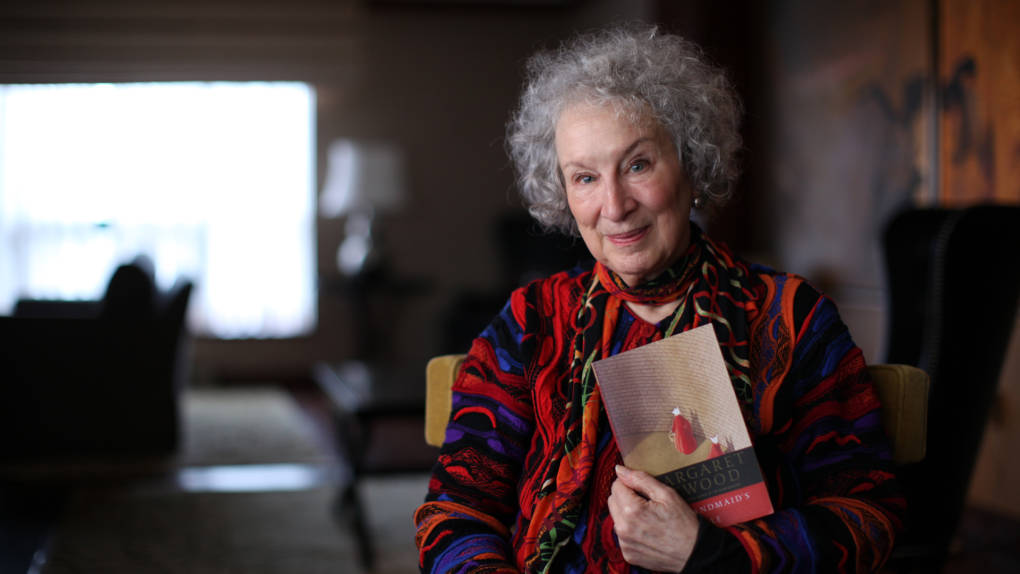
"caption": "Margaret Atwood",
"description": "Margaret Atwood",
"title": "Margaret Atwood",
"credit": "Courtesy of PBS ",
"status": "inherit",
"isLoading": false,
"fetchFailed": false
},
"arts_13829540": {
"type": "attachments",
"id": "arts_13829540",
"meta": {
"index": "attachments_1716263798",
"site": "arts",
"id": "13829540",
"found": true
},
"parent": 13829539,
"imgSizes": {
"small": {
"file": "https://ww2.kqed.org/app/uploads/sites/2/2018/04/gettyimages-922462102_custom-62c989e150c595ced4e24feb8de7a9f219abcd09-520x346.jpg",
"width": 520,
"mimeType": "image/jpeg",
"height": 346
},
"twentyfourteen-full-width": {
"file": "https://ww2.kqed.org/app/uploads/sites/2/2018/04/gettyimages-922462102_custom-62c989e150c595ced4e24feb8de7a9f219abcd09-1038x576.jpg",
"width": 1038,
"mimeType": "image/jpeg",
"height": 576
},
"thumbnail": {
"file": "https://ww2.kqed.org/app/uploads/sites/2/2018/04/gettyimages-922462102_custom-62c989e150c595ced4e24feb8de7a9f219abcd09-160x107.jpg",
"width": 160,
"mimeType": "image/jpeg",
"height": 107
},
"fd-sm": {
"file": "https://ww2.kqed.org/app/uploads/sites/2/2018/04/gettyimages-922462102_custom-62c989e150c595ced4e24feb8de7a9f219abcd09-960x639.jpg",
"width": 960,
"mimeType": "image/jpeg",
"height": 639
},
"post-thumbnail": {
"file": "https://ww2.kqed.org/app/uploads/sites/2/2018/04/gettyimages-922462102_custom-62c989e150c595ced4e24feb8de7a9f219abcd09-672x372.jpg",
"width": 672,
"mimeType": "image/jpeg",
"height": 372
},
"xsmall": {
"file": "https://ww2.kqed.org/app/uploads/sites/2/2018/04/gettyimages-922462102_custom-62c989e150c595ced4e24feb8de7a9f219abcd09-375x250.jpg",
"width": 375,
"mimeType": "image/jpeg",
"height": 250
},
"kqedFullSize": {
"file": "https://ww2.kqed.org/app/uploads/sites/2/2018/04/gettyimages-922462102_custom-62c989e150c595ced4e24feb8de7a9f219abcd09.jpg",
"width": 2048,
"height": 1364
},
"large": {
"file": "https://ww2.kqed.org/app/uploads/sites/2/2018/04/gettyimages-922462102_custom-62c989e150c595ced4e24feb8de7a9f219abcd09-1020x679.jpg",
"width": 1020,
"mimeType": "image/jpeg",
"height": 679
},
"xlarge": {
"file": "https://ww2.kqed.org/app/uploads/sites/2/2018/04/gettyimages-922462102_custom-62c989e150c595ced4e24feb8de7a9f219abcd09-1180x786.jpg",
"width": 1180,
"mimeType": "image/jpeg",
"height": 786
},
"complete_open_graph": {
"file": "https://ww2.kqed.org/app/uploads/sites/2/2018/04/gettyimages-922462102_custom-62c989e150c595ced4e24feb8de7a9f219abcd09-1200x799.jpg",
"width": 1200,
"mimeType": "image/jpeg",
"height": 799
},
"guest-author-50": {
"file": "https://ww2.kqed.org/app/uploads/sites/2/2018/04/gettyimages-922462102_custom-62c989e150c595ced4e24feb8de7a9f219abcd09-50x50.jpg",
"width": 50,
"mimeType": "image/jpeg",
"height": 50
},
"guest-author-96": {
"file": "https://ww2.kqed.org/app/uploads/sites/2/2018/04/gettyimages-922462102_custom-62c989e150c595ced4e24feb8de7a9f219abcd09-96x96.jpg",
"width": 96,
"mimeType": "image/jpeg",
"height": 96
},
"medium": {
"file": "https://ww2.kqed.org/app/uploads/sites/2/2018/04/gettyimages-922462102_custom-62c989e150c595ced4e24feb8de7a9f219abcd09-800x533.jpg",
"width": 800,
"mimeType": "image/jpeg",
"height": 533
},
"guest-author-64": {
"file": "https://ww2.kqed.org/app/uploads/sites/2/2018/04/gettyimages-922462102_custom-62c989e150c595ced4e24feb8de7a9f219abcd09-64x64.jpg",
"width": 64,
"mimeType": "image/jpeg",
"height": 64
},
"guest-author-32": {
"file": "https://ww2.kqed.org/app/uploads/sites/2/2018/04/gettyimages-922462102_custom-62c989e150c595ced4e24feb8de7a9f219abcd09-32x32.jpg",
"width": 32,
"mimeType": "image/jpeg",
"height": 32
},
"fd-lrg": {
"file": "https://ww2.kqed.org/app/uploads/sites/2/2018/04/gettyimages-922462102_custom-62c989e150c595ced4e24feb8de7a9f219abcd09-1920x1278.jpg",
"width": 1920,
"mimeType": "image/jpeg",
"height": 1278
},
"fd-med": {
"file": "https://ww2.kqed.org/app/uploads/sites/2/2018/04/gettyimages-922462102_custom-62c989e150c595ced4e24feb8de7a9f219abcd09-1180x786.jpg",
"width": 1180,
"mimeType": "image/jpeg",
"height": 786
},
"full-width": {
"file": "https://ww2.kqed.org/app/uploads/sites/2/2018/04/gettyimages-922462102_custom-62c989e150c595ced4e24feb8de7a9f219abcd09-1920x1278.jpg",
"width": 1920,
"mimeType": "image/jpeg",
"height": 1278
},
"detail": {
"file": "https://ww2.kqed.org/app/uploads/sites/2/2018/04/gettyimages-922462102_custom-62c989e150c595ced4e24feb8de7a9f219abcd09-150x150.jpg",
"width": 150,
"mimeType": "image/jpeg",
"height": 150
},
"medium_large": {
"file": "https://ww2.kqed.org/app/uploads/sites/2/2018/04/gettyimages-922462102_custom-62c989e150c595ced4e24feb8de7a9f219abcd09-768x511.jpg",
"width": 768,
"mimeType": "image/jpeg",
"height": 511
},
"guest-author-128": {
"file": "https://ww2.kqed.org/app/uploads/sites/2/2018/04/gettyimages-922462102_custom-62c989e150c595ced4e24feb8de7a9f219abcd09-128x128.jpg",
"width": 128,
"mimeType": "image/jpeg",
"height": 128
},
"xxsmall": {
"file": "https://ww2.kqed.org/app/uploads/sites/2/2018/04/gettyimages-922462102_custom-62c989e150c595ced4e24feb8de7a9f219abcd09-240x160.jpg",
"width": 240,
"mimeType": "image/jpeg",
"height": 160
}
},
"publishDate": 1523917797,
"modified": 1652465023,
"caption": "Kendrick Lamar live in London in 2018.",
"description": "Kendrick Lamar, whose album DAMN. won this year's Pulitzer Prize for music, performs in London earlier this year.",
"title": "Kendrick Lamar, whose album DAMN. won this year's Pulitzer Prize for music, performs in London earlier this year.",
"credit": "Daniel Leal-Olivas/AFP/Getty Images",
"status": "inherit",
"altTag": "Kendrick Lamar, whose album DAMN. won this year's Pulitzer Prize for music, performs in London earlier this year.",
"isLoading": false,
"fetchFailed": false
},
"arts_13828734": {
"type": "attachments",
"id": "arts_13828734",
"meta": {
"index": "attachments_1716263798",
"site": "arts",
"id": "13828734",
"found": true
},
"parent": 13828728,
"imgSizes": {
"small": {
"file": "https://ww2.kqed.org/app/uploads/sites/2/2018/04/OED-520x333.jpg",
"width": 520,
"mimeType": "image/jpeg",
"height": 333
},
"twentyfourteen-full-width": {
"file": "https://ww2.kqed.org/app/uploads/sites/2/2018/04/OED-1038x576.jpg",
"width": 1038,
"mimeType": "image/jpeg",
"height": 576
},
"thumbnail": {
"file": "https://ww2.kqed.org/app/uploads/sites/2/2018/04/OED-160x102.jpg",
"width": 160,
"mimeType": "image/jpeg",
"height": 102
},
"fd-sm": {
"file": "https://ww2.kqed.org/app/uploads/sites/2/2018/04/OED-960x614.jpg",
"width": 960,
"mimeType": "image/jpeg",
"height": 614
},
"post-thumbnail": {
"file": "https://ww2.kqed.org/app/uploads/sites/2/2018/04/OED-672x372.jpg",
"width": 672,
"mimeType": "image/jpeg",
"height": 372
},
"xsmall": {
"file": "https://ww2.kqed.org/app/uploads/sites/2/2018/04/OED-375x240.jpg",
"width": 375,
"mimeType": "image/jpeg",
"height": 240
},
"kqedFullSize": {
"file": "https://ww2.kqed.org/app/uploads/sites/2/2018/04/OED.jpg",
"width": 2048,
"height": 1311
},
"large": {
"file": "https://ww2.kqed.org/app/uploads/sites/2/2018/04/OED-1020x653.jpg",
"width": 1020,
"mimeType": "image/jpeg",
"height": 653
},
"xlarge": {
"file": "https://ww2.kqed.org/app/uploads/sites/2/2018/04/OED-1180x755.jpg",
"width": 1180,
"mimeType": "image/jpeg",
"height": 755
},
"guest-author-50": {
"file": "https://ww2.kqed.org/app/uploads/sites/2/2018/04/OED-50x50.jpg",
"width": 50,
"mimeType": "image/jpeg",
"height": 50
},
"guest-author-96": {
"file": "https://ww2.kqed.org/app/uploads/sites/2/2018/04/OED-96x96.jpg",
"width": 96,
"mimeType": "image/jpeg",
"height": 96
},
"medium": {
"file": "https://ww2.kqed.org/app/uploads/sites/2/2018/04/OED-800x512.jpg",
"width": 800,
"mimeType": "image/jpeg",
"height": 512
},
"guest-author-64": {
"file": "https://ww2.kqed.org/app/uploads/sites/2/2018/04/OED-64x64.jpg",
"width": 64,
"mimeType": "image/jpeg",
"height": 64
},
"guest-author-32": {
"file": "https://ww2.kqed.org/app/uploads/sites/2/2018/04/OED-32x32.jpg",
"width": 32,
"mimeType": "image/jpeg",
"height": 32
},
"fd-lrg": {
"file": "https://ww2.kqed.org/app/uploads/sites/2/2018/04/OED-1920x1229.jpg",
"width": 1920,
"mimeType": "image/jpeg",
"height": 1229
},
"fd-med": {
"file": "https://ww2.kqed.org/app/uploads/sites/2/2018/04/OED-1180x755.jpg",
"width": 1180,
"mimeType": "image/jpeg",
"height": 755
},
"full-width": {
"file": "https://ww2.kqed.org/app/uploads/sites/2/2018/04/OED-1920x1229.jpg",
"width": 1920,
"mimeType": "image/jpeg",
"height": 1229
},
"detail": {
"file": "https://ww2.kqed.org/app/uploads/sites/2/2018/04/OED-150x150.jpg",
"width": 150,
"mimeType": "image/jpeg",
"height": 150
},
"medium_large": {
"file": "https://ww2.kqed.org/app/uploads/sites/2/2018/04/OED-768x492.jpg",
"width": 768,
"mimeType": "image/jpeg",
"height": 492
},
"guest-author-128": {
"file": "https://ww2.kqed.org/app/uploads/sites/2/2018/04/OED-128x128.jpg",
"width": 128,
"mimeType": "image/jpeg",
"height": 128
},
"xxsmall": {
"file": "https://ww2.kqed.org/app/uploads/sites/2/2018/04/OED-240x154.jpg",
"width": 240,
"mimeType": "image/jpeg",
"height": 154
}
},
"publishDate": 1522895739,
"modified": 1522895838,
"caption": "Photo collage by Ingrid Rojas Contreras. The Oxford English Dictionary. Wikimedia commons. ",
"description": null,
"title": "OED",
"credit": null,
"status": "inherit",
"isLoading": false,
"fetchFailed": false
},
"arts_13828670": {
"type": "attachments",
"id": "arts_13828670",
"meta": {
"index": "attachments_1716263798",
"site": "arts",
"id": "13828670",
"found": true
},
"parent": 13828634,
"imgSizes": {
"small": {
"file": "https://ww2.kqed.org/app/uploads/sites/2/2018/04/RS30269_Screen-Shot-2018-04-04-at-4.22.28-PM-qut-520x382.jpg",
"width": 520,
"mimeType": "image/jpeg",
"height": 382
},
"twentyfourteen-full-width": {
"file": "https://ww2.kqed.org/app/uploads/sites/2/2018/04/RS30269_Screen-Shot-2018-04-04-at-4.22.28-PM-qut-1038x576.jpg",
"width": 1038,
"mimeType": "image/jpeg",
"height": 576
},
"thumbnail": {
"file": "https://ww2.kqed.org/app/uploads/sites/2/2018/04/RS30269_Screen-Shot-2018-04-04-at-4.22.28-PM-qut-160x117.jpg",
"width": 160,
"mimeType": "image/jpeg",
"height": 117
},
"fd-sm": {
"file": "https://ww2.kqed.org/app/uploads/sites/2/2018/04/RS30269_Screen-Shot-2018-04-04-at-4.22.28-PM-qut-960x705.jpg",
"width": 960,
"mimeType": "image/jpeg",
"height": 705
},
"post-thumbnail": {
"file": "https://ww2.kqed.org/app/uploads/sites/2/2018/04/RS30269_Screen-Shot-2018-04-04-at-4.22.28-PM-qut-672x372.jpg",
"width": 672,
"mimeType": "image/jpeg",
"height": 372
},
"xsmall": {
"file": "https://ww2.kqed.org/app/uploads/sites/2/2018/04/RS30269_Screen-Shot-2018-04-04-at-4.22.28-PM-qut-375x275.jpg",
"width": 375,
"mimeType": "image/jpeg",
"height": 275
},
"kqedFullSize": {
"file": "https://ww2.kqed.org/app/uploads/sites/2/2018/04/RS30269_Screen-Shot-2018-04-04-at-4.22.28-PM-qut.jpg",
"width": 1278,
"height": 938
},
"large": {
"file": "https://ww2.kqed.org/app/uploads/sites/2/2018/04/RS30269_Screen-Shot-2018-04-04-at-4.22.28-PM-qut-1020x749.jpg",
"width": 1020,
"mimeType": "image/jpeg",
"height": 749
},
"xlarge": {
"file": "https://ww2.kqed.org/app/uploads/sites/2/2018/04/RS30269_Screen-Shot-2018-04-04-at-4.22.28-PM-qut-1180x866.jpg",
"width": 1180,
"mimeType": "image/jpeg",
"height": 866
},
"guest-author-50": {
"file": "https://ww2.kqed.org/app/uploads/sites/2/2018/04/RS30269_Screen-Shot-2018-04-04-at-4.22.28-PM-qut-50x50.jpg",
"width": 50,
"mimeType": "image/jpeg",
"height": 50
},
"guest-author-96": {
"file": "https://ww2.kqed.org/app/uploads/sites/2/2018/04/RS30269_Screen-Shot-2018-04-04-at-4.22.28-PM-qut-96x96.jpg",
"width": 96,
"mimeType": "image/jpeg",
"height": 96
},
"medium": {
"file": "https://ww2.kqed.org/app/uploads/sites/2/2018/04/RS30269_Screen-Shot-2018-04-04-at-4.22.28-PM-qut-800x587.jpg",
"width": 800,
"mimeType": "image/jpeg",
"height": 587
},
"guest-author-64": {
"file": "https://ww2.kqed.org/app/uploads/sites/2/2018/04/RS30269_Screen-Shot-2018-04-04-at-4.22.28-PM-qut-64x64.jpg",
"width": 64,
"mimeType": "image/jpeg",
"height": 64
},
"guest-author-32": {
"file": "https://ww2.kqed.org/app/uploads/sites/2/2018/04/RS30269_Screen-Shot-2018-04-04-at-4.22.28-PM-qut-32x32.jpg",
"width": 32,
"mimeType": "image/jpeg",
"height": 32
},
"fd-med": {
"file": "https://ww2.kqed.org/app/uploads/sites/2/2018/04/RS30269_Screen-Shot-2018-04-04-at-4.22.28-PM-qut-1180x866.jpg",
"width": 1180,
"mimeType": "image/jpeg",
"height": 866
},
"detail": {
"file": "https://ww2.kqed.org/app/uploads/sites/2/2018/04/RS30269_Screen-Shot-2018-04-04-at-4.22.28-PM-qut-150x150.jpg",
"width": 150,
"mimeType": "image/jpeg",
"height": 150
},
"medium_large": {
"file": "https://ww2.kqed.org/app/uploads/sites/2/2018/04/RS30269_Screen-Shot-2018-04-04-at-4.22.28-PM-qut-768x564.jpg",
"width": 768,
"mimeType": "image/jpeg",
"height": 564
},
"guest-author-128": {
"file": "https://ww2.kqed.org/app/uploads/sites/2/2018/04/RS30269_Screen-Shot-2018-04-04-at-4.22.28-PM-qut-128x128.jpg",
"width": 128,
"mimeType": "image/jpeg",
"height": 128
},
"xxsmall": {
"file": "https://ww2.kqed.org/app/uploads/sites/2/2018/04/RS30269_Screen-Shot-2018-04-04-at-4.22.28-PM-qut-240x176.jpg",
"width": 240,
"mimeType": "image/jpeg",
"height": 176
}
},
"publishDate": 1522884445,
"modified": 1522884494,
"caption": "Who doesn't need an autograph from Nichelle Nichols. She was cast by Gene Roddenberry to create Chief Communications Officer Lt. Uhura, fourth in command of the Starship Enterprise, in his legendary TV series Star Trek. It was, in the words of Dr. Martin Luther King – “The first non-stereotypical role portrayed by a black woman in television history.” ",
"description": "Who doesn't need an autograph from Nichelle Nichols. She was cast by Gene Roddenberry to create Chief Communications Officer Lt. Uhura, fourth in command of the Starship Enterprise, in his legendary TV series Star Trek. It was, in the words of Dr. Martin Luther King – “The first non-stereotypical role portrayed by a black woman in television history.” ",
"title": "RS30269_Screen Shot 2018-04-04 at 4.22.28 PM-qut",
"credit": "Photo: Courtesy of the Silicon Valley Comic Con",
"status": "inherit",
"isLoading": false,
"fetchFailed": false
},
"arts_13827689": {
"type": "attachments",
"id": "arts_13827689",
"meta": {
"index": "attachments_1716263798",
"site": "arts",
"id": "13827689",
"found": true
},
"parent": 13827688,
"imgSizes": {
"small": {
"file": "https://ww2.kqed.org/app/uploads/sites/2/2018/03/love-simon-dom-df-08349_rgb_wide-2c96e64d7e02e6b492e8826f0a097e2af4a60ff6-520x292.jpg",
"width": 520,
"mimeType": "image/jpeg",
"height": 292
},
"twentyfourteen-full-width": {
"file": "https://ww2.kqed.org/app/uploads/sites/2/2018/03/love-simon-dom-df-08349_rgb_wide-2c96e64d7e02e6b492e8826f0a097e2af4a60ff6-1038x576.jpg",
"width": 1038,
"mimeType": "image/jpeg",
"height": 576
},
"thumbnail": {
"file": "https://ww2.kqed.org/app/uploads/sites/2/2018/03/love-simon-dom-df-08349_rgb_wide-2c96e64d7e02e6b492e8826f0a097e2af4a60ff6-160x90.jpg",
"width": 160,
"mimeType": "image/jpeg",
"height": 90
},
"fd-sm": {
"file": "https://ww2.kqed.org/app/uploads/sites/2/2018/03/love-simon-dom-df-08349_rgb_wide-2c96e64d7e02e6b492e8826f0a097e2af4a60ff6-960x540.jpg",
"width": 960,
"mimeType": "image/jpeg",
"height": 540
},
"post-thumbnail": {
"file": "https://ww2.kqed.org/app/uploads/sites/2/2018/03/love-simon-dom-df-08349_rgb_wide-2c96e64d7e02e6b492e8826f0a097e2af4a60ff6-672x372.jpg",
"width": 672,
"mimeType": "image/jpeg",
"height": 372
},
"xsmall": {
"file": "https://ww2.kqed.org/app/uploads/sites/2/2018/03/love-simon-dom-df-08349_rgb_wide-2c96e64d7e02e6b492e8826f0a097e2af4a60ff6-375x211.jpg",
"width": 375,
"mimeType": "image/jpeg",
"height": 211
},
"kqedFullSize": {
"file": "https://ww2.kqed.org/app/uploads/sites/2/2018/03/love-simon-dom-df-08349_rgb_wide-2c96e64d7e02e6b492e8826f0a097e2af4a60ff6.jpg",
"width": 2048,
"height": 1152
},
"large": {
"file": "https://ww2.kqed.org/app/uploads/sites/2/2018/03/love-simon-dom-df-08349_rgb_wide-2c96e64d7e02e6b492e8826f0a097e2af4a60ff6-1020x574.jpg",
"width": 1020,
"mimeType": "image/jpeg",
"height": 574
},
"xlarge": {
"file": "https://ww2.kqed.org/app/uploads/sites/2/2018/03/love-simon-dom-df-08349_rgb_wide-2c96e64d7e02e6b492e8826f0a097e2af4a60ff6-1180x663.jpg",
"width": 1180,
"mimeType": "image/jpeg",
"height": 663
},
"guest-author-50": {
"file": "https://ww2.kqed.org/app/uploads/sites/2/2018/03/love-simon-dom-df-08349_rgb_wide-2c96e64d7e02e6b492e8826f0a097e2af4a60ff6-50x50.jpg",
"width": 50,
"mimeType": "image/jpeg",
"height": 50
},
"guest-author-96": {
"file": "https://ww2.kqed.org/app/uploads/sites/2/2018/03/love-simon-dom-df-08349_rgb_wide-2c96e64d7e02e6b492e8826f0a097e2af4a60ff6-96x96.jpg",
"width": 96,
"mimeType": "image/jpeg",
"height": 96
},
"medium": {
"file": "https://ww2.kqed.org/app/uploads/sites/2/2018/03/love-simon-dom-df-08349_rgb_wide-2c96e64d7e02e6b492e8826f0a097e2af4a60ff6-800x450.jpg",
"width": 800,
"mimeType": "image/jpeg",
"height": 450
},
"guest-author-64": {
"file": "https://ww2.kqed.org/app/uploads/sites/2/2018/03/love-simon-dom-df-08349_rgb_wide-2c96e64d7e02e6b492e8826f0a097e2af4a60ff6-64x64.jpg",
"width": 64,
"mimeType": "image/jpeg",
"height": 64
},
"guest-author-32": {
"file": "https://ww2.kqed.org/app/uploads/sites/2/2018/03/love-simon-dom-df-08349_rgb_wide-2c96e64d7e02e6b492e8826f0a097e2af4a60ff6-32x32.jpg",
"width": 32,
"mimeType": "image/jpeg",
"height": 32
},
"fd-lrg": {
"file": "https://ww2.kqed.org/app/uploads/sites/2/2018/03/love-simon-dom-df-08349_rgb_wide-2c96e64d7e02e6b492e8826f0a097e2af4a60ff6-1920x1080.jpg",
"width": 1920,
"mimeType": "image/jpeg",
"height": 1080
},
"fd-med": {
"file": "https://ww2.kqed.org/app/uploads/sites/2/2018/03/love-simon-dom-df-08349_rgb_wide-2c96e64d7e02e6b492e8826f0a097e2af4a60ff6-1180x663.jpg",
"width": 1180,
"mimeType": "image/jpeg",
"height": 663
},
"full-width": {
"file": "https://ww2.kqed.org/app/uploads/sites/2/2018/03/love-simon-dom-df-08349_rgb_wide-2c96e64d7e02e6b492e8826f0a097e2af4a60ff6-1920x1080.jpg",
"width": 1920,
"mimeType": "image/jpeg",
"height": 1080
},
"detail": {
"file": "https://ww2.kqed.org/app/uploads/sites/2/2018/03/love-simon-dom-df-08349_rgb_wide-2c96e64d7e02e6b492e8826f0a097e2af4a60ff6-150x150.jpg",
"width": 150,
"mimeType": "image/jpeg",
"height": 150
},
"medium_large": {
"file": "https://ww2.kqed.org/app/uploads/sites/2/2018/03/love-simon-dom-df-08349_rgb_wide-2c96e64d7e02e6b492e8826f0a097e2af4a60ff6-768x432.jpg",
"width": 768,
"mimeType": "image/jpeg",
"height": 432
},
"guest-author-128": {
"file": "https://ww2.kqed.org/app/uploads/sites/2/2018/03/love-simon-dom-df-08349_rgb_wide-2c96e64d7e02e6b492e8826f0a097e2af4a60ff6-128x128.jpg",
"width": 128,
"mimeType": "image/jpeg",
"height": 128
},
"xxsmall": {
"file": "https://ww2.kqed.org/app/uploads/sites/2/2018/03/love-simon-dom-df-08349_rgb_wide-2c96e64d7e02e6b492e8826f0a097e2af4a60ff6-240x135.jpg",
"width": 240,
"mimeType": "image/jpeg",
"height": 135
}
},
"publishDate": 1521664832,
"modified": 1521665542,
"caption": "Nick Robinson stars in 'Love, Simon' — a high-school-set tale of social media, first love, and coming out.",
"description": "Nick Robinson stars in 'Love, Simon' — a high-school-set tale of social media, first love, and coming out.",
"title": "Nick Robinson stars in 'Love, Simon — a high-school-set tale of social media, first love, and coming out.",
"credit": "Ben Rothstein/20th Century Fox",
"status": "inherit",
"isLoading": false,
"fetchFailed": false
},
"arts_13827775": {
"type": "attachments",
"id": "arts_13827775",
"meta": {
"index": "attachments_1716263798",
"site": "arts",
"id": "13827775",
"found": true
},
"parent": 13827764,
"imgSizes": {
"small": {
"file": "https://ww2.kqed.org/app/uploads/sites/2/2018/03/EsmeAndBrontez-520x347.jpg",
"width": 520,
"mimeType": "image/jpeg",
"height": 347
},
"twentyfourteen-full-width": {
"file": "https://ww2.kqed.org/app/uploads/sites/2/2018/03/EsmeAndBrontez-1038x576.jpg",
"width": 1038,
"mimeType": "image/jpeg",
"height": 576
},
"thumbnail": {
"file": "https://ww2.kqed.org/app/uploads/sites/2/2018/03/EsmeAndBrontez-160x107.jpg",
"width": 160,
"mimeType": "image/jpeg",
"height": 107
},
"fd-sm": {
"file": "https://ww2.kqed.org/app/uploads/sites/2/2018/03/EsmeAndBrontez-960x640.jpg",
"width": 960,
"mimeType": "image/jpeg",
"height": 640
},
"post-thumbnail": {
"file": "https://ww2.kqed.org/app/uploads/sites/2/2018/03/EsmeAndBrontez-672x372.jpg",
"width": 672,
"mimeType": "image/jpeg",
"height": 372
},
"xsmall": {
"file": "https://ww2.kqed.org/app/uploads/sites/2/2018/03/EsmeAndBrontez-375x250.jpg",
"width": 375,
"mimeType": "image/jpeg",
"height": 250
},
"kqedFullSize": {
"file": "https://ww2.kqed.org/app/uploads/sites/2/2018/03/EsmeAndBrontez.jpg",
"width": 1920,
"height": 1280
},
"large": {
"file": "https://ww2.kqed.org/app/uploads/sites/2/2018/03/EsmeAndBrontez-1020x680.jpg",
"width": 1020,
"mimeType": "image/jpeg",
"height": 680
},
"xlarge": {
"file": "https://ww2.kqed.org/app/uploads/sites/2/2018/03/EsmeAndBrontez-1180x787.jpg",
"width": 1180,
"mimeType": "image/jpeg",
"height": 787
},
"guest-author-50": {
"file": "https://ww2.kqed.org/app/uploads/sites/2/2018/03/EsmeAndBrontez-50x50.jpg",
"width": 50,
"mimeType": "image/jpeg",
"height": 50
},
"guest-author-96": {
"file": "https://ww2.kqed.org/app/uploads/sites/2/2018/03/EsmeAndBrontez-96x96.jpg",
"width": 96,
"mimeType": "image/jpeg",
"height": 96
},
"medium": {
"file": "https://ww2.kqed.org/app/uploads/sites/2/2018/03/EsmeAndBrontez-800x533.jpg",
"width": 800,
"mimeType": "image/jpeg",
"height": 533
},
"guest-author-64": {
"file": "https://ww2.kqed.org/app/uploads/sites/2/2018/03/EsmeAndBrontez-64x64.jpg",
"width": 64,
"mimeType": "image/jpeg",
"height": 64
},
"guest-author-32": {
"file": "https://ww2.kqed.org/app/uploads/sites/2/2018/03/EsmeAndBrontez-32x32.jpg",
"width": 32,
"mimeType": "image/jpeg",
"height": 32
},
"fd-lrg": {
"file": "https://ww2.kqed.org/app/uploads/sites/2/2018/03/EsmeAndBrontez-1920x1280.jpg",
"width": 1920,
"mimeType": "image/jpeg",
"height": 1280
},
"fd-med": {
"file": "https://ww2.kqed.org/app/uploads/sites/2/2018/03/EsmeAndBrontez-1180x787.jpg",
"width": 1180,
"mimeType": "image/jpeg",
"height": 787
},
"full-width": {
"file": "https://ww2.kqed.org/app/uploads/sites/2/2018/03/EsmeAndBrontez-1920x1280.jpg",
"width": 1920,
"mimeType": "image/jpeg",
"height": 1280
},
"detail": {
"file": "https://ww2.kqed.org/app/uploads/sites/2/2018/03/EsmeAndBrontez-150x150.jpg",
"width": 150,
"mimeType": "image/jpeg",
"height": 150
},
"medium_large": {
"file": "https://ww2.kqed.org/app/uploads/sites/2/2018/03/EsmeAndBrontez-768x512.jpg",
"width": 768,
"mimeType": "image/jpeg",
"height": 512
},
"guest-author-128": {
"file": "https://ww2.kqed.org/app/uploads/sites/2/2018/03/EsmeAndBrontez-128x128.jpg",
"width": 128,
"mimeType": "image/jpeg",
"height": 128
},
"xxsmall": {
"file": "https://ww2.kqed.org/app/uploads/sites/2/2018/03/EsmeAndBrontez-240x160.jpg",
"width": 240,
"mimeType": "image/jpeg",
"height": 160
}
},
"publishDate": 1521748299,
"modified": 1521748379,
"caption": "Esmé Weijun Wang and Brontez Purnell",
"description": "Esmé Weijun Wang and Brontez Purnell",
"title": "EsmeAndBrontez",
"credit": "Kristin Cofer/Matt Hunt",
"status": "inherit",
"isLoading": false,
"fetchFailed": false
},
"arts_13827242": {
"type": "attachments",
"id": "arts_13827242",
"meta": {
"index": "attachments_1716263798",
"site": "arts",
"id": "13827242",
"found": true
},
"parent": 0,
"imgSizes": {
"small": {
"file": "https://ww2.kqed.org/app/uploads/sites/2/2018/03/Eggers.2-520x293.jpg",
"width": 520,
"mimeType": "image/jpeg",
"height": 293
},
"twentyfourteen-full-width": {
"file": "https://ww2.kqed.org/app/uploads/sites/2/2018/03/Eggers.2-1038x576.jpg",
"width": 1038,
"mimeType": "image/jpeg",
"height": 576
},
"thumbnail": {
"file": "https://ww2.kqed.org/app/uploads/sites/2/2018/03/Eggers.2-160x90.jpg",
"width": 160,
"mimeType": "image/jpeg",
"height": 90
},
"fd-sm": {
"file": "https://ww2.kqed.org/app/uploads/sites/2/2018/03/Eggers.2-960x540.jpg",
"width": 960,
"mimeType": "image/jpeg",
"height": 540
},
"post-thumbnail": {
"file": "https://ww2.kqed.org/app/uploads/sites/2/2018/03/Eggers.2-672x372.jpg",
"width": 672,
"mimeType": "image/jpeg",
"height": 372
},
"xsmall": {
"file": "https://ww2.kqed.org/app/uploads/sites/2/2018/03/Eggers.2-375x211.jpg",
"width": 375,
"mimeType": "image/jpeg",
"height": 211
},
"kqedFullSize": {
"file": "https://ww2.kqed.org/app/uploads/sites/2/2018/03/Eggers.2.jpg",
"width": 1920,
"height": 1080
},
"large": {
"file": "https://ww2.kqed.org/app/uploads/sites/2/2018/03/Eggers.2-1020x574.jpg",
"width": 1020,
"mimeType": "image/jpeg",
"height": 574
},
"xlarge": {
"file": "https://ww2.kqed.org/app/uploads/sites/2/2018/03/Eggers.2-1180x664.jpg",
"width": 1180,
"mimeType": "image/jpeg",
"height": 664
},
"guest-author-50": {
"file": "https://ww2.kqed.org/app/uploads/sites/2/2018/03/Eggers.2-50x50.jpg",
"width": 50,
"mimeType": "image/jpeg",
"height": 50
},
"guest-author-96": {
"file": "https://ww2.kqed.org/app/uploads/sites/2/2018/03/Eggers.2-96x96.jpg",
"width": 96,
"mimeType": "image/jpeg",
"height": 96
},
"medium": {
"file": "https://ww2.kqed.org/app/uploads/sites/2/2018/03/Eggers.2-800x450.jpg",
"width": 800,
"mimeType": "image/jpeg",
"height": 450
},
"guest-author-64": {
"file": "https://ww2.kqed.org/app/uploads/sites/2/2018/03/Eggers.2-64x64.jpg",
"width": 64,
"mimeType": "image/jpeg",
"height": 64
},
"guest-author-32": {
"file": "https://ww2.kqed.org/app/uploads/sites/2/2018/03/Eggers.2-32x32.jpg",
"width": 32,
"mimeType": "image/jpeg",
"height": 32
},
"fd-lrg": {
"file": "https://ww2.kqed.org/app/uploads/sites/2/2018/03/Eggers.2-1920x1080.jpg",
"width": 1920,
"mimeType": "image/jpeg",
"height": 1080
},
"fd-med": {
"file": "https://ww2.kqed.org/app/uploads/sites/2/2018/03/Eggers.2-1180x664.jpg",
"width": 1180,
"mimeType": "image/jpeg",
"height": 664
},
"full-width": {
"file": "https://ww2.kqed.org/app/uploads/sites/2/2018/03/Eggers.2-1920x1080.jpg",
"width": 1920,
"mimeType": "image/jpeg",
"height": 1080
},
"detail": {
"file": "https://ww2.kqed.org/app/uploads/sites/2/2018/03/Eggers.2-150x150.jpg",
"width": 150,
"mimeType": "image/jpeg",
"height": 150
},
"medium_large": {
"file": "https://ww2.kqed.org/app/uploads/sites/2/2018/03/Eggers.2-768x432.jpg",
"width": 768,
"mimeType": "image/jpeg",
"height": 432
},
"guest-author-128": {
"file": "https://ww2.kqed.org/app/uploads/sites/2/2018/03/Eggers.2-128x128.jpg",
"width": 128,
"mimeType": "image/jpeg",
"height": 128
},
"xxsmall": {
"file": "https://ww2.kqed.org/app/uploads/sites/2/2018/03/Eggers.2-240x135.jpg",
"width": 240,
"mimeType": "image/jpeg",
"height": 135
}
},
"publishDate": 1521059164,
"modified": 1521059198,
"caption": "Dave Eggers poses in a studio at KQED after his interview for the BBC Arts Hour.",
"description": "Dave Eggers poses in a studio at KQED after his interview for the BBC Arts Hour.",
"title": "Eggers.2",
"credit": "Chloe Veltman/KQED",
"status": "inherit",
"isLoading": false,
"fetchFailed": false
},
"arts_13827189": {
"type": "attachments",
"id": "arts_13827189",
"meta": {
"index": "attachments_1716263798",
"site": "arts",
"id": "13827189",
"found": true
},
"parent": 13827133,
"imgSizes": {
"small": {
"file": "https://ww2.kqed.org/app/uploads/sites/2/2018/03/RadGirlsCan-520x293.jpg",
"width": 520,
"mimeType": "image/jpeg",
"height": 293
},
"twentyfourteen-full-width": {
"file": "https://ww2.kqed.org/app/uploads/sites/2/2018/03/RadGirlsCan-1038x576.jpg",
"width": 1038,
"mimeType": "image/jpeg",
"height": 576
},
"thumbnail": {
"file": "https://ww2.kqed.org/app/uploads/sites/2/2018/03/RadGirlsCan-160x90.jpg",
"width": 160,
"mimeType": "image/jpeg",
"height": 90
},
"fd-sm": {
"file": "https://ww2.kqed.org/app/uploads/sites/2/2018/03/RadGirlsCan-960x540.jpg",
"width": 960,
"mimeType": "image/jpeg",
"height": 540
},
"post-thumbnail": {
"file": "https://ww2.kqed.org/app/uploads/sites/2/2018/03/RadGirlsCan-672x372.jpg",
"width": 672,
"mimeType": "image/jpeg",
"height": 372
},
"xsmall": {
"file": "https://ww2.kqed.org/app/uploads/sites/2/2018/03/RadGirlsCan-375x211.jpg",
"width": 375,
"mimeType": "image/jpeg",
"height": 211
},
"kqedFullSize": {
"file": "https://ww2.kqed.org/app/uploads/sites/2/2018/03/RadGirlsCan.jpg",
"width": 1100,
"height": 619
},
"large": {
"file": "https://ww2.kqed.org/app/uploads/sites/2/2018/03/RadGirlsCan-1020x574.jpg",
"width": 1020,
"mimeType": "image/jpeg",
"height": 574
},
"guest-author-50": {
"file": "https://ww2.kqed.org/app/uploads/sites/2/2018/03/RadGirlsCan-50x50.jpg",
"width": 50,
"mimeType": "image/jpeg",
"height": 50
},
"guest-author-96": {
"file": "https://ww2.kqed.org/app/uploads/sites/2/2018/03/RadGirlsCan-96x96.jpg",
"width": 96,
"mimeType": "image/jpeg",
"height": 96
},
"medium": {
"file": "https://ww2.kqed.org/app/uploads/sites/2/2018/03/RadGirlsCan-800x450.jpg",
"width": 800,
"mimeType": "image/jpeg",
"height": 450
},
"guest-author-64": {
"file": "https://ww2.kqed.org/app/uploads/sites/2/2018/03/RadGirlsCan-64x64.jpg",
"width": 64,
"mimeType": "image/jpeg",
"height": 64
},
"guest-author-32": {
"file": "https://ww2.kqed.org/app/uploads/sites/2/2018/03/RadGirlsCan-32x32.jpg",
"width": 32,
"mimeType": "image/jpeg",
"height": 32
},
"detail": {
"file": "https://ww2.kqed.org/app/uploads/sites/2/2018/03/RadGirlsCan-150x150.jpg",
"width": 150,
"mimeType": "image/jpeg",
"height": 150
},
"medium_large": {
"file": "https://ww2.kqed.org/app/uploads/sites/2/2018/03/RadGirlsCan-768x432.jpg",
"width": 768,
"mimeType": "image/jpeg",
"height": 432
},
"guest-author-128": {
"file": "https://ww2.kqed.org/app/uploads/sites/2/2018/03/RadGirlsCan-128x128.jpg",
"width": 128,
"mimeType": "image/jpeg",
"height": 128
},
"xxsmall": {
"file": "https://ww2.kqed.org/app/uploads/sites/2/2018/03/RadGirlsCan-240x135.jpg",
"width": 240,
"mimeType": "image/jpeg",
"height": 135
}
},
"publishDate": 1520987553,
"modified": 1520987620,
"caption": "Cover detail of 'Rad Girls Can' by Kate Schatz and Miriam Klein Stahl.",
"description": "Cover of 'Rad Girls Can' by Kate Schatz and Miriam Klein Stahl ",
"title": "RadGirlsCan",
"credit": "Miriam Klein Stahl",
"status": "inherit",
"isLoading": false,
"fetchFailed": false
},
"arts_13826852": {
"type": "attachments",
"id": "arts_13826852",
"meta": {
"index": "attachments_1716263798",
"site": "arts",
"id": "13826852",
"found": true
},
"parent": 13826851,
"imgSizes": {
"small": {
"file": "https://ww2.kqed.org/app/uploads/sites/2/2018/03/ap_18060198407608-3daab064c4deb678105aac347f5079c556fc54fa-520x390.jpg",
"width": 520,
"mimeType": "image/jpeg",
"height": 390
},
"twentyfourteen-full-width": {
"file": "https://ww2.kqed.org/app/uploads/sites/2/2018/03/ap_18060198407608-3daab064c4deb678105aac347f5079c556fc54fa-1038x576.jpg",
"width": 1038,
"mimeType": "image/jpeg",
"height": 576
},
"thumbnail": {
"file": "https://ww2.kqed.org/app/uploads/sites/2/2018/03/ap_18060198407608-3daab064c4deb678105aac347f5079c556fc54fa-160x120.jpg",
"width": 160,
"mimeType": "image/jpeg",
"height": 120
},
"fd-sm": {
"file": "https://ww2.kqed.org/app/uploads/sites/2/2018/03/ap_18060198407608-3daab064c4deb678105aac347f5079c556fc54fa-960x720.jpg",
"width": 960,
"mimeType": "image/jpeg",
"height": 720
},
"post-thumbnail": {
"file": "https://ww2.kqed.org/app/uploads/sites/2/2018/03/ap_18060198407608-3daab064c4deb678105aac347f5079c556fc54fa-672x372.jpg",
"width": 672,
"mimeType": "image/jpeg",
"height": 372
},
"xsmall": {
"file": "https://ww2.kqed.org/app/uploads/sites/2/2018/03/ap_18060198407608-3daab064c4deb678105aac347f5079c556fc54fa-375x281.jpg",
"width": 375,
"mimeType": "image/jpeg",
"height": 281
},
"kqedFullSize": {
"file": "https://ww2.kqed.org/app/uploads/sites/2/2018/03/ap_18060198407608-3daab064c4deb678105aac347f5079c556fc54fa.jpg",
"width": 2048,
"height": 1536
},
"large": {
"file": "https://ww2.kqed.org/app/uploads/sites/2/2018/03/ap_18060198407608-3daab064c4deb678105aac347f5079c556fc54fa-1020x765.jpg",
"width": 1020,
"mimeType": "image/jpeg",
"height": 765
},
"xlarge": {
"file": "https://ww2.kqed.org/app/uploads/sites/2/2018/03/ap_18060198407608-3daab064c4deb678105aac347f5079c556fc54fa-1180x885.jpg",
"width": 1180,
"mimeType": "image/jpeg",
"height": 885
},
"guest-author-50": {
"file": "https://ww2.kqed.org/app/uploads/sites/2/2018/03/ap_18060198407608-3daab064c4deb678105aac347f5079c556fc54fa-50x50.jpg",
"width": 50,
"mimeType": "image/jpeg",
"height": 50
},
"guest-author-96": {
"file": "https://ww2.kqed.org/app/uploads/sites/2/2018/03/ap_18060198407608-3daab064c4deb678105aac347f5079c556fc54fa-96x96.jpg",
"width": 96,
"mimeType": "image/jpeg",
"height": 96
},
"medium": {
"file": "https://ww2.kqed.org/app/uploads/sites/2/2018/03/ap_18060198407608-3daab064c4deb678105aac347f5079c556fc54fa-800x600.jpg",
"width": 800,
"mimeType": "image/jpeg",
"height": 600
},
"guest-author-64": {
"file": "https://ww2.kqed.org/app/uploads/sites/2/2018/03/ap_18060198407608-3daab064c4deb678105aac347f5079c556fc54fa-64x64.jpg",
"width": 64,
"mimeType": "image/jpeg",
"height": 64
},
"guest-author-32": {
"file": "https://ww2.kqed.org/app/uploads/sites/2/2018/03/ap_18060198407608-3daab064c4deb678105aac347f5079c556fc54fa-32x32.jpg",
"width": 32,
"mimeType": "image/jpeg",
"height": 32
},
"fd-lrg": {
"file": "https://ww2.kqed.org/app/uploads/sites/2/2018/03/ap_18060198407608-3daab064c4deb678105aac347f5079c556fc54fa-1920x1440.jpg",
"width": 1920,
"mimeType": "image/jpeg",
"height": 1440
},
"fd-med": {
"file": "https://ww2.kqed.org/app/uploads/sites/2/2018/03/ap_18060198407608-3daab064c4deb678105aac347f5079c556fc54fa-1180x885.jpg",
"width": 1180,
"mimeType": "image/jpeg",
"height": 885
},
"full-width": {
"file": "https://ww2.kqed.org/app/uploads/sites/2/2018/03/ap_18060198407608-3daab064c4deb678105aac347f5079c556fc54fa-1920x1440.jpg",
"width": 1920,
"mimeType": "image/jpeg",
"height": 1440
},
"detail": {
"file": "https://ww2.kqed.org/app/uploads/sites/2/2018/03/ap_18060198407608-3daab064c4deb678105aac347f5079c556fc54fa-150x150.jpg",
"width": 150,
"mimeType": "image/jpeg",
"height": 150
},
"medium_large": {
"file": "https://ww2.kqed.org/app/uploads/sites/2/2018/03/ap_18060198407608-3daab064c4deb678105aac347f5079c556fc54fa-768x576.jpg",
"width": 768,
"mimeType": "image/jpeg",
"height": 576
},
"guest-author-128": {
"file": "https://ww2.kqed.org/app/uploads/sites/2/2018/03/ap_18060198407608-3daab064c4deb678105aac347f5079c556fc54fa-128x128.jpg",
"width": 128,
"mimeType": "image/jpeg",
"height": 128
},
"xxsmall": {
"file": "https://ww2.kqed.org/app/uploads/sites/2/2018/03/ap_18060198407608-3daab064c4deb678105aac347f5079c556fc54fa-240x180.jpg",
"width": 240,
"mimeType": "image/jpeg",
"height": 180
}
},
"publishDate": 1520641571,
"modified": 1520641778,
"caption": "In the wake of multiple sexual harassment allegations against him, writer Sherman Alexie has declined the 2018 Carnegie Medal.",
"description": "In the wake of multiple sexual harassment allegations against him, writer Sherman Alexie has declined the 2018 Carnegie Medal.",
"title": "In the wake of multiple sexual harassment allegations against him, writer Sherman Alexie has declined the 2018 Carnegie Medal.",
"credit": "Elaine Thompson/AP",
"status": "inherit",
"isLoading": false,
"fetchFailed": false
},
"arts_13826370": {
"type": "attachments",
"id": "arts_13826370",
"meta": {
"index": "attachments_1716263798",
"site": "arts",
"id": "13826370",
"found": true
},
"parent": 13826359,
"imgSizes": {
"small": {
"file": "https://ww2.kqed.org/app/uploads/sites/2/2018/03/Sherman-Alexie-2-520x293.jpg",
"width": 520,
"mimeType": "image/jpeg",
"height": 293
},
"twentyfourteen-full-width": {
"file": "https://ww2.kqed.org/app/uploads/sites/2/2018/03/Sherman-Alexie-2-1038x576.jpg",
"width": 1038,
"mimeType": "image/jpeg",
"height": 576
},
"thumbnail": {
"file": "https://ww2.kqed.org/app/uploads/sites/2/2018/03/Sherman-Alexie-2-160x90.jpg",
"width": 160,
"mimeType": "image/jpeg",
"height": 90
},
"fd-sm": {
"file": "https://ww2.kqed.org/app/uploads/sites/2/2018/03/Sherman-Alexie-2-960x540.jpg",
"width": 960,
"mimeType": "image/jpeg",
"height": 540
},
"post-thumbnail": {
"file": "https://ww2.kqed.org/app/uploads/sites/2/2018/03/Sherman-Alexie-2-672x372.jpg",
"width": 672,
"mimeType": "image/jpeg",
"height": 372
},
"xsmall": {
"file": "https://ww2.kqed.org/app/uploads/sites/2/2018/03/Sherman-Alexie-2-375x211.jpg",
"width": 375,
"mimeType": "image/jpeg",
"height": 211
},
"kqedFullSize": {
"file": "https://ww2.kqed.org/app/uploads/sites/2/2018/03/Sherman-Alexie-2.jpg",
"width": 1920,
"height": 1080
},
"large": {
"file": "https://ww2.kqed.org/app/uploads/sites/2/2018/03/Sherman-Alexie-2-1020x574.jpg",
"width": 1020,
"mimeType": "image/jpeg",
"height": 574
},
"xlarge": {
"file": "https://ww2.kqed.org/app/uploads/sites/2/2018/03/Sherman-Alexie-2-1180x664.jpg",
"width": 1180,
"mimeType": "image/jpeg",
"height": 664
},
"guest-author-50": {
"file": "https://ww2.kqed.org/app/uploads/sites/2/2018/03/Sherman-Alexie-2-50x50.jpg",
"width": 50,
"mimeType": "image/jpeg",
"height": 50
},
"guest-author-96": {
"file": "https://ww2.kqed.org/app/uploads/sites/2/2018/03/Sherman-Alexie-2-96x96.jpg",
"width": 96,
"mimeType": "image/jpeg",
"height": 96
},
"medium": {
"file": "https://ww2.kqed.org/app/uploads/sites/2/2018/03/Sherman-Alexie-2-800x450.jpg",
"width": 800,
"mimeType": "image/jpeg",
"height": 450
},
"guest-author-64": {
"file": "https://ww2.kqed.org/app/uploads/sites/2/2018/03/Sherman-Alexie-2-64x64.jpg",
"width": 64,
"mimeType": "image/jpeg",
"height": 64
},
"guest-author-32": {
"file": "https://ww2.kqed.org/app/uploads/sites/2/2018/03/Sherman-Alexie-2-32x32.jpg",
"width": 32,
"mimeType": "image/jpeg",
"height": 32
},
"fd-lrg": {
"file": "https://ww2.kqed.org/app/uploads/sites/2/2018/03/Sherman-Alexie-2-1920x1080.jpg",
"width": 1920,
"mimeType": "image/jpeg",
"height": 1080
},
"fd-med": {
"file": "https://ww2.kqed.org/app/uploads/sites/2/2018/03/Sherman-Alexie-2-1180x664.jpg",
"width": 1180,
"mimeType": "image/jpeg",
"height": 664
},
"full-width": {
"file": "https://ww2.kqed.org/app/uploads/sites/2/2018/03/Sherman-Alexie-2-1920x1080.jpg",
"width": 1920,
"mimeType": "image/jpeg",
"height": 1080
},
"detail": {
"file": "https://ww2.kqed.org/app/uploads/sites/2/2018/03/Sherman-Alexie-2-150x150.jpg",
"width": 150,
"mimeType": "image/jpeg",
"height": 150
},
"medium_large": {
"file": "https://ww2.kqed.org/app/uploads/sites/2/2018/03/Sherman-Alexie-2-768x432.jpg",
"width": 768,
"mimeType": "image/jpeg",
"height": 432
},
"guest-author-128": {
"file": "https://ww2.kqed.org/app/uploads/sites/2/2018/03/Sherman-Alexie-2-128x128.jpg",
"width": 128,
"mimeType": "image/jpeg",
"height": 128
},
"xxsmall": {
"file": "https://ww2.kqed.org/app/uploads/sites/2/2018/03/Sherman-Alexie-2-240x135.jpg",
"width": 240,
"mimeType": "image/jpeg",
"height": 135
}
},
"publishDate": 1520304811,
"modified": 1520304938,
"caption": "(L-R) Writer Sherman Alexie and host Craig Ferguson speak during a segment of \"The Late Late Show with Craig Ferguson\" at CBS Television City on September 10, 2007 in Los Angeles, California. ",
"description": "(L-R) Writer Sherman Alexie and host Craig Ferguson speak during a segment of \"The Late Late Show with Craig Ferguson\" at CBS Television City on September 10, 2007 in Los Angeles, California. ",
"title": "50 Cent Performs On The Late Late Show With Craig Ferguson",
"credit": "Frederick M. Brown/Getty Images",
"status": "inherit",
"isLoading": false,
"fetchFailed": false
}
},
"audioPlayerReducer": {
"postId": "stream_live",
"isPaused": true,
"isPlaying": false,
"pfsActive": false,
"pledgeModalIsOpen": true,
"playerDrawerIsOpen": false,
"liveAudioPlayStartedAt": 0,
"liveAudioPlayContext": ""
},
"authorsReducer": {
"byline_arts_13829539": {
"type": "authors",
"id": "byline_arts_13829539",
"meta": {
"override": true
},
"slug": "byline_arts_13829539",
"name": "Colin Dwyer",
"isLoading": false
},
"byline_arts_13827688": {
"type": "authors",
"id": "byline_arts_13827688",
"meta": {
"override": true
},
"slug": "byline_arts_13827688",
"name": "Glen Weldon",
"isLoading": false
},
"byline_arts_13826851": {
"type": "authors",
"id": "byline_arts_13826851",
"meta": {
"override": true
},
"slug": "byline_arts_13826851",
"name": "Vanessa Romo",
"isLoading": false
},
"byline_arts_13826359": {
"type": "authors",
"id": "byline_arts_13826359",
"meta": {
"override": true
},
"slug": "byline_arts_13826359",
"name": "Lynn Neary",
"isLoading": false
},
"irojascontreras": {
"type": "authors",
"id": "78",
"meta": {
"index": "authors_1716337520",
"id": "78",
"found": true
},
"name": "Ingrid Rojas Contreras",
"firstName": "Ingrid",
"lastName": "Rojas Contreras",
"slug": "irojascontreras",
"email": "ingrid.rojas.c@gmail.com",
"display_author_email": false,
"staff_mastheads": [],
"title": null,
"bio": "Ingrid Rojas Contreras lives in San Francisco with her books. Her debut novel\u003cem> Fruit of the Drunken Tree \u003c/em>is forthcoming from Doubleday (Summer 2018). Find more at \u003ca href=\"http://www.ingridrojascontreras.com\">www.ingridrojascontreras.com\u003c/a>.",
"avatar": "https://secure.gravatar.com/avatar/908d94de9342e71b9d5ceaa8152a16a0?s=600&d=blank&r=g",
"twitter": null,
"facebook": null,
"instagram": null,
"linkedin": null,
"sites": [
{
"site": "arts",
"roles": [
"Contributor",
"contributor"
]
}
],
"headData": {
"title": "Ingrid Rojas Contreras | KQED",
"description": null,
"ogImgSrc": "https://secure.gravatar.com/avatar/908d94de9342e71b9d5ceaa8152a16a0?s=600&d=blank&r=g",
"twImgSrc": "https://secure.gravatar.com/avatar/908d94de9342e71b9d5ceaa8152a16a0?s=600&d=blank&r=g"
},
"isLoading": false,
"link": "/author/irojascontreras"
},
"kqedarts": {
"type": "authors",
"id": "92",
"meta": {
"index": "authors_1716337520",
"id": "92",
"found": true
},
"name": "KQED Arts",
"firstName": "KQED",
"lastName": "Arts",
"slug": "kqedarts",
"email": "arts@kqed.org",
"display_author_email": false,
"staff_mastheads": [],
"title": "KQED Staff",
"bio": null,
"avatar": "https://secure.gravatar.com/avatar/321c9ebfeb7736f9e55366a6d3399ab0?s=600&d=blank&r=g",
"twitter": null,
"facebook": null,
"instagram": "https://www.instagram.com/kqed_arts/",
"linkedin": null,
"sites": [
{
"site": "arts",
"roles": [
"contributor"
]
},
{
"site": "pop",
"roles": [
"contributor"
]
},
{
"site": "science",
"roles": [
"author"
]
},
{
"site": "food",
"roles": [
"contributor"
]
}
],
"headData": {
"title": "KQED Arts | KQED",
"description": "KQED Staff",
"ogImgSrc": "https://secure.gravatar.com/avatar/321c9ebfeb7736f9e55366a6d3399ab0?s=600&d=blank&r=g",
"twImgSrc": "https://secure.gravatar.com/avatar/321c9ebfeb7736f9e55366a6d3399ab0?s=600&d=blank&r=g"
},
"isLoading": false,
"link": "/author/kqedarts"
},
"kjones": {
"type": "authors",
"id": "93",
"meta": {
"index": "authors_1716337520",
"id": "93",
"found": true
},
"name": "Kevin L. Jones",
"firstName": "Kevin",
"lastName": "Jones",
"slug": "kjones",
"email": "kjones@kqed.org",
"display_author_email": false,
"staff_mastheads": [],
"title": null,
"bio": null,
"avatar": "https://secure.gravatar.com/avatar/12c65b5633ed39d0a59bb7f497eff645?s=600&d=blank&r=g",
"twitter": null,
"facebook": null,
"instagram": null,
"linkedin": null,
"sites": [
{
"site": "arts",
"roles": [
"subscriber"
]
},
{
"site": "styleguide",
"roles": [
"contributor"
]
},
{
"site": "artschool",
"roles": [
"subscriber"
]
},
{
"site": "news",
"roles": [
"subscriber"
]
},
{
"site": "pop",
"roles": [
"subscriber"
]
}
],
"headData": {
"title": "Kevin L. Jones | KQED",
"description": null,
"ogImgSrc": "https://secure.gravatar.com/avatar/12c65b5633ed39d0a59bb7f497eff645?s=600&d=blank&r=g",
"twImgSrc": "https://secure.gravatar.com/avatar/12c65b5633ed39d0a59bb7f497eff645?s=600&d=blank&r=g"
},
"isLoading": false,
"link": "/author/kjones"
},
"rachael-myrow": {
"type": "authors",
"id": "251",
"meta": {
"index": "authors_1716337520",
"id": "251",
"found": true
},
"name": "Rachael Myrow",
"firstName": "Rachael",
"lastName": "Myrow",
"slug": "rachael-myrow",
"email": "rmyrow@kqed.org",
"display_author_email": true,
"staff_mastheads": [
"news"
],
"title": "Senior Editor of KQED's Silicon Valley News Desk",
"bio": "• I write and edit stories about how Silicon Valley power and policies shape everyday life in California. I’m also passionate about making Bay Area history and culture more accessible to a broad public. • I’ve been a journalist for most of my life, starting in high school with The Franklin Press in Los Angeles, where I grew up. While earning my first degree in English at UC Berkeley, I got my start in public radio at KALX-FM. After completing a second degree in journalism at Cal, I landed my first professional job at Marketplace, then moved on to KPCC (now LAist), and then KQED, where I hosted The California Report for more than seven years. • My reporting has appeared on NPR, The World, WBUR’s \u003ci>Here & Now\u003c/i>, and the BBC. I also guest host for KQED’s \u003ci>Forum\u003c/i>, as well as the Commonwealth Club in San Francisco. • I speak periodically on media, democracy and technology issues, and do voiceover work for documentaries and educational video projects. • Outside of the studio, you'll find me hiking Bay Area trails and whipping up Insta-ready meals in my kitchen. • I do not accept gifts, money, or favors from anyone connected to my reporting, I don't pay people for information, and I do not support or donate to political causes. • I strive to treat the people I report on with fairness, honesty, and respect. I also recognize there are often multiple sides to a story and work to verify information through multiple sources and documentation. If I get something wrong, I correct it.",
"avatar": "https://secure.gravatar.com/avatar/3ed8a3c5f26025e4a805ba634cda8cd764906b97438a6d9ce216b044e340da4e?s=600&d=blank&r=g",
"twitter": "rachaelmyrow",
"bluesky": null,
"facebook": null,
"instagram": null,
"linkedin": "https://www.linkedin.com/in/rachaelmyrow/",
"sites": [
{
"site": "arts",
"roles": [
"administrator"
]
},
{
"site": "news",
"roles": [
"edit_others_posts",
"editor"
]
},
{
"site": "futureofyou",
"roles": [
"editor"
]
},
{
"site": "bayareabites",
"roles": [
"editor"
]
},
{
"site": "stateofhealth",
"roles": [
"editor"
]
},
{
"site": "science",
"roles": [
"editor"
]
},
{
"site": "food",
"roles": [
"editor"
]
},
{
"site": "forum",
"roles": [
"editor"
]
},
{
"site": "liveblog",
"roles": [
"author"
]
}
],
"headData": {
"title": "Rachael Myrow | KQED",
"description": "Senior Editor of KQED's Silicon Valley News Desk",
"ogImgSrc": "https://secure.gravatar.com/avatar/3ed8a3c5f26025e4a805ba634cda8cd764906b97438a6d9ce216b044e340da4e?s=600&d=blank&r=g",
"twImgSrc": "https://secure.gravatar.com/avatar/3ed8a3c5f26025e4a805ba634cda8cd764906b97438a6d9ce216b044e340da4e?s=600&d=blank&r=g"
},
"isLoading": false,
"link": "/author/rachael-myrow"
},
"cveltman": {
"type": "authors",
"id": "8608",
"meta": {
"index": "authors_1716337520",
"id": "8608",
"found": true
},
"name": "Chloe Veltman",
"firstName": "Chloe",
"lastName": "Veltman",
"slug": "cveltman",
"email": "cveltman@kqed.org",
"display_author_email": true,
"staff_mastheads": [],
"title": "Arts and Culture Reporter",
"bio": "Chloe Veltman is a former arts and culture reporter for KQED. Prior to joining the organization, she launched and led the arts bureau at Colorado Public Radio, served as the Bay Area's culture columnist for the New York Times, and was the founder, host and executive producer of VoiceBox, a national award-winning weekly podcast/radio show and live events series all about the human voice. Chloe is the recipient of numerous prizes, grants and fellowships including a Webby Award for her work on interactive storytelling, both the John S Knight Journalism Fellowship and Humanities Center Fellowship at Stanford University, the Sundance Arts Writing Fellowship and a Library of Congress Research Fellowship. She is the author of the book \"On Acting\" and has appeared as a guest lecturer at Yale University and the San Francisco Conservatory of Music among other institutions. She holds a BA in english literature from King's College, Cambridge, and a Masters in Dramaturgy from the Central School of Speech and Drama/Harvard Institute for Advanced Theater Training.\r\n\u003ca href=\"https://www.chloeveltman.com\">www.chloeveltman.com\u003c/a>",
"avatar": "https://secure.gravatar.com/avatar/55403394b00a1ddab683952c2eb2cf85?s=600&d=blank&r=g",
"twitter": "chloeveltman",
"facebook": null,
"instagram": null,
"linkedin": null,
"sites": [
{
"site": "arts",
"roles": []
},
{
"site": "news",
"roles": [
"author"
]
},
{
"site": "pop",
"roles": [
"editor"
]
},
{
"site": "science",
"roles": []
}
],
"headData": {
"title": "Chloe Veltman | KQED",
"description": "Arts and Culture Reporter",
"ogImgSrc": "https://secure.gravatar.com/avatar/55403394b00a1ddab683952c2eb2cf85?s=600&d=blank&r=g",
"twImgSrc": "https://secure.gravatar.com/avatar/55403394b00a1ddab683952c2eb2cf85?s=600&d=blank&r=g"
},
"isLoading": false,
"link": "/author/cveltman"
}
},
"pagesReducer": {
"arts_category_literature": {
"type": "terms",
"id": "arts_73",
"meta": {
"index": "terms_1716263798",
"site": "arts",
"id": "73",
"score": 12.797771
},
"featImg": null,
"name": "Books",
"description": null,
"taxonomy": "category",
"headData": {
"twImgId": null,
"twTitle": null,
"ogTitle": null,
"ogImgId": null,
"twDescription": null,
"description": null,
"title": "Books Archives | KQED Arts",
"ogDescription": null
},
"ttid": 74,
"slug": "literature",
"isLoading": false,
"title": "Books",
"pageMeta": {
"site": "arts",
"WpPageTemplate": "page-topic-editorial",
"currentPage": 69
},
"blocks": [
{
"blockName": "kqed/post-list",
"attrs": {
"layout": "cardArticle2",
"query": "posts/arts?category=literature",
"seeMore": false,
"paginated": true,
"page": 69
}
},
{
"blockName": "kqed/ad"
}
]
}
},
"pfsSessionReducer": {},
"postsReducer": {
"stream_live": {
"type": "live",
"id": "stream_live",
"audioUrl": "https://streams.kqed.org/kqedradio",
"title": "Live Stream",
"excerpt": "Live Stream information currently unavailable.",
"link": "/radio",
"featImg": "",
"label": {
"name": "KQED Live",
"link": "/"
}
},
"stream_kqedNewscast": {
"type": "posts",
"id": "stream_kqedNewscast",
"audioUrl": "https://www.kqed.org/.stream/anon/radio/RDnews/newscast.mp3?_=1",
"title": "KQED Newscast",
"featImg": "",
"label": {
"name": "88.5 FM",
"link": "/"
}
},
"arts_13829584": {
"type": "posts",
"id": "arts_13829584",
"meta": {
"index": "posts_1716263798",
"site": "arts",
"id": "13829584",
"score": null,
"sort": [
1524409219000
]
},
"guestAuthors": [],
"slug": "the-bay-area-book-festival-serves-literature-with-a-side-of-activism",
"title": "The Bay Area Book Festival Serves Literature with a Side of Activism",
"publishDate": 1524409219,
"format": "image",
"headTitle": "The Bay Area Book Festival Serves Literature with a Side of Activism | KQED",
"labelTerm": {
"site": "arts"
},
"content": "\u003cp>Here in the Bay Area, we like our literary scene with a side of activism, so it’s fitting that this year’s Bay Area Book Festival remains resolutely political yet hopeful.\u003c/p>\n\u003cp>The fourth annual festival, taking place Apr. 28-29, is infused with the very values omnipresent in the region’s literary conversations — those of political power on the page, the power of literature to transform, and how books can spark social change.\u003c/p>\n\u003cp>Here are five events you cannot miss during this packed weekend.\u003c/p>\n\u003cp>\u003cimg loading=\"lazy\" decoding=\"async\" class=\"aligncenter size-full wp-image-13829871\" src=\"https://ww2.kqed.org/arts/wp-content/uploads/sites/2/2018/04/thereandbreak.jpg\" alt=\"\" width=\"2048\" height=\"1380\" srcset=\"https://cdn.kqed.org/wp-content/uploads/sites/2/2018/04/thereandbreak.jpg 2048w, https://cdn.kqed.org/wp-content/uploads/sites/2/2018/04/thereandbreak-160x108.jpg 160w, https://cdn.kqed.org/wp-content/uploads/sites/2/2018/04/thereandbreak-800x539.jpg 800w, https://cdn.kqed.org/wp-content/uploads/sites/2/2018/04/thereandbreak-768x518.jpg 768w, https://cdn.kqed.org/wp-content/uploads/sites/2/2018/04/thereandbreak-1020x687.jpg 1020w, https://cdn.kqed.org/wp-content/uploads/sites/2/2018/04/thereandbreak-1200x809.jpg 1200w, https://cdn.kqed.org/wp-content/uploads/sites/2/2018/04/thereandbreak-1920x1294.jpg 1920w, https://cdn.kqed.org/wp-content/uploads/sites/2/2018/04/thereandbreak-1180x795.jpg 1180w, https://cdn.kqed.org/wp-content/uploads/sites/2/2018/04/thereandbreak-960x647.jpg 960w, https://cdn.kqed.org/wp-content/uploads/sites/2/2018/04/thereandbreak-240x162.jpg 240w, https://cdn.kqed.org/wp-content/uploads/sites/2/2018/04/thereandbreak-375x253.jpg 375w, https://cdn.kqed.org/wp-content/uploads/sites/2/2018/04/thereandbreak-520x350.jpg 520w\" sizes=\"(max-width: 2048px) 100vw, 2048px\">\u003c/p>\n\u003ch3>Native Voices Changing the Story\u003c/h3>\n\u003cp>\u003cem>Sat., Apr. 26. The Brower Center – Goldman Theater (2150 Allston Way, Berkeley). 11:45am – 1:00pm.\u003cstrong> \u003c/strong>\u003c/em>\u003cem>More information and tickets \u003ca href=\"https://baybookfest.secure.force.com/ticket/#sections_a0F1N00000ohJCD\">here.\u003c/a>\u003c/em>\u003c/p>\n\u003cp>[ad fullwidth]\u003c/p>\n\u003cp>Tommy Orange just \u003ca href=\"https://www.newyorker.com/podcast/the-authors-voice/tommy-orange-reads-the-state\">published\u003c/a> a \u003cem>New Yorker\u003c/em> story that is a stunning preview of his forthcoming novel, \u003cem>There There\u003c/em>, the strength of which\u003cem> \u003c/em>would force me follow him to the ends of the earth. Orange joins Katharena Vermette for a reading and conversation. Vermette is the author of \u003cem>The Break\u003c/em>, a thriller that pieces together the pain and trauma that women inherit. The first 100 audience members to arrive receive an excerpt of Orange’s book, which the rest of us mortals will have to wait for until June. This is bound to be a comet of an event.\u003c/p>\n\u003cp>\u003cimg loading=\"lazy\" decoding=\"async\" class=\"aligncenter size-full wp-image-13829872\" src=\"https://ww2.kqed.org/arts/wp-content/uploads/sites/2/2018/04/vietthanhnguyen.jpg\" alt=\"\" width=\"2048\" height=\"1380\" srcset=\"https://cdn.kqed.org/wp-content/uploads/sites/2/2018/04/vietthanhnguyen.jpg 2048w, https://cdn.kqed.org/wp-content/uploads/sites/2/2018/04/vietthanhnguyen-160x108.jpg 160w, https://cdn.kqed.org/wp-content/uploads/sites/2/2018/04/vietthanhnguyen-800x539.jpg 800w, https://cdn.kqed.org/wp-content/uploads/sites/2/2018/04/vietthanhnguyen-768x518.jpg 768w, https://cdn.kqed.org/wp-content/uploads/sites/2/2018/04/vietthanhnguyen-1020x687.jpg 1020w, https://cdn.kqed.org/wp-content/uploads/sites/2/2018/04/vietthanhnguyen-1200x809.jpg 1200w, https://cdn.kqed.org/wp-content/uploads/sites/2/2018/04/vietthanhnguyen-1920x1294.jpg 1920w, https://cdn.kqed.org/wp-content/uploads/sites/2/2018/04/vietthanhnguyen-1180x795.jpg 1180w, https://cdn.kqed.org/wp-content/uploads/sites/2/2018/04/vietthanhnguyen-960x647.jpg 960w, https://cdn.kqed.org/wp-content/uploads/sites/2/2018/04/vietthanhnguyen-240x162.jpg 240w, https://cdn.kqed.org/wp-content/uploads/sites/2/2018/04/vietthanhnguyen-375x253.jpg 375w, https://cdn.kqed.org/wp-content/uploads/sites/2/2018/04/vietthanhnguyen-520x350.jpg 520w\" sizes=\"(max-width: 2048px) 100vw, 2048px\">\u003c/p>\n\u003ch3>Viet Thanh Nguyen on Art and Politics\u003c/h3>\n\u003cp>\u003cem>Sat., Apr. 26. Freight & Salvage (2020 Addison St., Berkeley). 1:30pm – 2:45pm. More information and tickets \u003ca href=\"https://baybookfest.secure.force.com/ticket/#sections_a0F1N00000ohJEE\">here\u003c/a>.\u003c/em>\u003c/p>\n\u003cp>This is not a drill: Viet Thanh Nguyen (whom we can claim as ours because he is a UC Berkeley doctoral alum) will be speaking about art and politics with Karen Tei Yamashita. Yamashita is the author of the incandescent and deliciously experimental \u003cem>I Hotel\u003c/em>. Viet Thanh Nguyen received the Pulitzer Prize for his debut novel, \u003cem>The Sympathizer\u003c/em>. You can expect gems from their conversation, like this one from Thanh Nguyen’s \u003cem>Nothing Ever Dies\u003c/em>: “All wars are fought twice, the first time on the battlefield, the second time in memory.” Nguyen and Yamashita will discuss the role of the writer in society, the importance of art in politics, and the power of the written word.\u003c/p>\n\u003cp>\u003cimg loading=\"lazy\" decoding=\"async\" class=\"aligncenter size-full wp-image-13829873\" src=\"https://ww2.kqed.org/arts/wp-content/uploads/sites/2/2018/04/lidia.jpg\" alt=\"\" width=\"2048\" height=\"1380\" srcset=\"https://cdn.kqed.org/wp-content/uploads/sites/2/2018/04/lidia.jpg 2048w, https://cdn.kqed.org/wp-content/uploads/sites/2/2018/04/lidia-160x108.jpg 160w, https://cdn.kqed.org/wp-content/uploads/sites/2/2018/04/lidia-800x539.jpg 800w, https://cdn.kqed.org/wp-content/uploads/sites/2/2018/04/lidia-768x518.jpg 768w, https://cdn.kqed.org/wp-content/uploads/sites/2/2018/04/lidia-1020x687.jpg 1020w, https://cdn.kqed.org/wp-content/uploads/sites/2/2018/04/lidia-1200x809.jpg 1200w, https://cdn.kqed.org/wp-content/uploads/sites/2/2018/04/lidia-1920x1294.jpg 1920w, https://cdn.kqed.org/wp-content/uploads/sites/2/2018/04/lidia-1180x795.jpg 1180w, https://cdn.kqed.org/wp-content/uploads/sites/2/2018/04/lidia-960x647.jpg 960w, https://cdn.kqed.org/wp-content/uploads/sites/2/2018/04/lidia-240x162.jpg 240w, https://cdn.kqed.org/wp-content/uploads/sites/2/2018/04/lidia-375x253.jpg 375w, https://cdn.kqed.org/wp-content/uploads/sites/2/2018/04/lidia-520x350.jpg 520w\" sizes=\"(max-width: 2048px) 100vw, 2048px\">\u003c/p>\n\u003ch3>Lidia Yuknavitch in Person: On Fearlessness, Truth, and Misfits\u003c/h3>\n\u003cp>\u003cem>Sat., Apr. 28. Freight & Salvage (2020 Addison St., Berkeley). \u003cspan class=\"hours\">5pm – 6pm. More information and tickets \u003ca class=\"button small\" href=\"https://baybookfest.secure.force.com/ticket/#sections_a0F1N00000ohcKg\" target=\"_blank\" rel=\"noopener\">here\u003c/a>.\u003c/span> \u003c/em>\u003c/p>\n\u003cp>Lidia Yuknavitch’s had me bewitched with her memoir \u003cem>The Chronology of Water\u003c/em>. Recently, she has bewitched two million people with her TED talk, \u003cem>\u003ca href=\"https://www.ted.com/talks/lidia_yuknavitch_the_beauty_of_being_a_misfit\">The Beauty of Being a Misfit\u003c/a>.\u003c/em> Yuknavitch speaks beautifully about not fitting in:\u003c/p>\n\u003cblockquote>\u003cp>\u003cem>There’s a myth in most cultures about following your dreams. It’s called the hero’s journey. But I prefer a different myth, that’s slightly to the side of that or underneath it. It’s called the misfit’s myth. And it goes like this: even at the moment of your failure, right then, you are beautiful. You don’t know it yet, but you have the ability to reinvent yourself endlessly. That’s your beauty.\u003c/em>\u003c/p>\u003c/blockquote>\n\u003cp>\u003cem>The Misfit’s Manifesto\u003c/em> is Yuknavitch’s latest and is based on this powerful talk. She will be interviewed by Daphne Gottlieb, the fierce performance poet and author of \u003cem>Pretty Much Dead.\u003c/em>\u003c/p>\n\u003cp>\u003cimg loading=\"lazy\" decoding=\"async\" class=\"aligncenter size-full wp-image-13829874\" src=\"https://ww2.kqed.org/arts/wp-content/uploads/sites/2/2018/04/angels.jpg\" alt=\"\" width=\"2048\" height=\"1380\" srcset=\"https://cdn.kqed.org/wp-content/uploads/sites/2/2018/04/angels.jpg 2048w, https://cdn.kqed.org/wp-content/uploads/sites/2/2018/04/angels-160x108.jpg 160w, https://cdn.kqed.org/wp-content/uploads/sites/2/2018/04/angels-800x539.jpg 800w, https://cdn.kqed.org/wp-content/uploads/sites/2/2018/04/angels-768x518.jpg 768w, https://cdn.kqed.org/wp-content/uploads/sites/2/2018/04/angels-1020x687.jpg 1020w, https://cdn.kqed.org/wp-content/uploads/sites/2/2018/04/angels-1200x809.jpg 1200w, https://cdn.kqed.org/wp-content/uploads/sites/2/2018/04/angels-1920x1294.jpg 1920w, https://cdn.kqed.org/wp-content/uploads/sites/2/2018/04/angels-1180x795.jpg 1180w, https://cdn.kqed.org/wp-content/uploads/sites/2/2018/04/angels-960x647.jpg 960w, https://cdn.kqed.org/wp-content/uploads/sites/2/2018/04/angels-240x162.jpg 240w, https://cdn.kqed.org/wp-content/uploads/sites/2/2018/04/angels-375x253.jpg 375w, https://cdn.kqed.org/wp-content/uploads/sites/2/2018/04/angels-520x350.jpg 520w\" sizes=\"(max-width: 2048px) 100vw, 2048px\">\u003c/p>\n\u003ch3>The Impact of Angels in America on LGBTQ Literature\u003c/h3>\n\u003cp>\u003cem>Sun., Apr. 29. Berkeley Repertory Theatre, School of Theatre (2071 Addison St, Berkeley). 11:45am – 1:00pm. More information and tickets \u003ca href=\"https://baybookfest.secure.force.com/ticket/#sections_a0F1N00000oxxK4UAI\">here\u003c/a>.\u003c/em>\u003c/p>\n\u003cp>While this year’s Bay Area Book Festival programming offers a slew of panels dedicated to the power of women and to issues of immigration, activism, and the environment, queer perspectives are largely missing. This event, therefore, deserves special mention. Featuring Baruch Porras-Hernandez, K.M. Soehnlein, Brian Thorstenson, and Sarah Rose Leonard, this panel promises to be a fascinating roundtable discussion about Tony Kushner’s play \u003cem>Angels in America,\u003c/em> and how this momentous play, which unabashedly portrays gay men as heroes, impacted LGBTQ literature. \u003cem>Angels in America\u003c/em> is \u003ca href=\"https://www.kqed.org/arts/13829770/angels-in-america-returns-to-its-bay-area-birthplace\" target=\"_blank\" rel=\"noopener\">currently playing at the Berkeley Repertory Theatre\u003c/a>, so opportunities abound to engage, or re-engage, with this play.\u003c/p>\n\u003cp>\u003cimg loading=\"lazy\" decoding=\"async\" class=\"aligncenter size-full wp-image-13829875\" src=\"https://ww2.kqed.org/arts/wp-content/uploads/sites/2/2018/04/hopedirect.jpg\" alt=\"\" width=\"2048\" height=\"1380\" srcset=\"https://cdn.kqed.org/wp-content/uploads/sites/2/2018/04/hopedirect.jpg 2048w, https://cdn.kqed.org/wp-content/uploads/sites/2/2018/04/hopedirect-160x108.jpg 160w, https://cdn.kqed.org/wp-content/uploads/sites/2/2018/04/hopedirect-800x539.jpg 800w, https://cdn.kqed.org/wp-content/uploads/sites/2/2018/04/hopedirect-768x518.jpg 768w, https://cdn.kqed.org/wp-content/uploads/sites/2/2018/04/hopedirect-1020x687.jpg 1020w, https://cdn.kqed.org/wp-content/uploads/sites/2/2018/04/hopedirect-1200x809.jpg 1200w, https://cdn.kqed.org/wp-content/uploads/sites/2/2018/04/hopedirect-1920x1294.jpg 1920w, https://cdn.kqed.org/wp-content/uploads/sites/2/2018/04/hopedirect-1180x795.jpg 1180w, https://cdn.kqed.org/wp-content/uploads/sites/2/2018/04/hopedirect-960x647.jpg 960w, https://cdn.kqed.org/wp-content/uploads/sites/2/2018/04/hopedirect-240x162.jpg 240w, https://cdn.kqed.org/wp-content/uploads/sites/2/2018/04/hopedirect-375x253.jpg 375w, https://cdn.kqed.org/wp-content/uploads/sites/2/2018/04/hopedirect-520x350.jpg 520w\" sizes=\"(max-width: 2048px) 100vw, 2048px\">\u003c/p>\n\u003ch3>Smart Activism: History and Hope, with L.A. Kauffman and Rebecca Solnit\u003c/h3>\n\u003cp>\u003cem>Sun., Apr. 29. San Francisco Chronicle Stage in the Park at 2:30pm – 3:45pm. Free.\u003c/em>\u003c/p>\n\u003cp>There is no one you want to learn about activism from more than these two. No matter the circumstance, Rebecca Solnit’s wit, powers of observation, and literary prowess always point to true north. There hasn’t been a Solnit book that I have not wildly enjoyed. She is the author of the activist handbook \u003cem>Hope in the Dark\u003c/em>, as well as the mordantly clever \u003cem>Men Explain Things to Me\u003c/em>, and more recently, \u003cem>The Mother of All Questions — \u003c/em>a sharp essay collection about the contemporary state of feminism. L.A. Kauffman’s first book, \u003cem>Direct Action\u003c/em>, is a history of protest of which \u003cem>Vice’s\u003c/em> Philip Eil wrote, “If direct action is ‘a laboratory for political experimentation and innovation,’ as Kauffman argues in the introduction, then this is the lab report.” Kauffman and Solnit will discuss how past movements used tactics to catalyze change, how to hope in the dark, and how to act on that hope.\u003c/p>\n\u003cp>\u003cimg loading=\"lazy\" decoding=\"async\" class=\"aligncenter size-full wp-image-12935470\" src=\"https://ww2.kqed.org/arts/wp-content/uploads/sites/2/2017/03/Spine-1.jpg\" alt=\"\" width=\"800\" height=\"42\" srcset=\"https://cdn.kqed.org/wp-content/uploads/sites/2/2017/03/Spine-1.jpg 800w, https://cdn.kqed.org/wp-content/uploads/sites/2/2017/03/Spine-1-160x8.jpg 160w, https://cdn.kqed.org/wp-content/uploads/sites/2/2017/03/Spine-1-768x40.jpg 768w, https://cdn.kqed.org/wp-content/uploads/sites/2/2017/03/Spine-1-240x13.jpg 240w, https://cdn.kqed.org/wp-content/uploads/sites/2/2017/03/Spine-1-375x20.jpg 375w, https://cdn.kqed.org/wp-content/uploads/sites/2/2017/03/Spine-1-520x27.jpg 520w\" sizes=\"(max-width: 800px) 100vw, 800px\">\u003c/p>\n\u003cp>\u003cem>For the full schedule, visit Bay Area Book Festival \u003ca href=\"https://www.baybookfest.org\">online\u003c/a>. \u003c/em>\u003c/p>\n\u003cp>\u003c/p>\n\u003cp>\u003cem>The Spine is a bi-weekly column. Catch us here back in two weeks.\u003c/em>\u003c/p>\n\n",
"blocks": [],
"excerpt": "Panels cover a variety of topics, including histories of protest, 'Angels in America' and LGBTQ lit, Native American fiction, and more. ",
"status": "publish",
"parent": 0,
"modified": 1726700053,
"stats": {
"hasAudio": false,
"hasVideo": false,
"hasChartOrMap": false,
"iframeSrcs": [],
"hasGoogleForm": false,
"hasGallery": false,
"hasHearkenModule": false,
"hasPolis": false,
"paragraphCount": 25,
"wordCount": 945
},
"headData": {
"title": "The Bay Area Book Festival Serves Literature with a Side of Activism | KQED",
"description": "Panels cover a variety of topics, including histories of protest, 'Angels in America' and LGBTQ lit, Native American fiction, and more. ",
"ogTitle": "",
"ogDescription": "",
"ogImgId": "",
"twTitle": "",
"twDescription": "",
"twImgId": "",
"schema": {
"@context": "https://schema.org",
"@type": "Article",
"headline": "The Bay Area Book Festival Serves Literature with a Side of Activism",
"datePublished": "2018-04-22T08:00:19-07:00",
"dateModified": "2024-09-18T15:54:13-07:00",
"image": "https://cdn.kqed.org/wp-content/uploads/2020/02/KQED-OG-Image@1x.png"
}
},
"sticky": false,
"path": "/arts/13829584/the-bay-area-book-festival-serves-literature-with-a-side-of-activism",
"audioTrackLength": null,
"parsedContent": [
{
"type": "contentString",
"content": "\u003cdiv class=\"post-body\">\u003cp>\u003cp>Here in the Bay Area, we like our literary scene with a side of activism, so it’s fitting that this year’s Bay Area Book Festival remains resolutely political yet hopeful.\u003c/p>\n\u003cp>The fourth annual festival, taking place Apr. 28-29, is infused with the very values omnipresent in the region’s literary conversations — those of political power on the page, the power of literature to transform, and how books can spark social change.\u003c/p>\n\u003cp>Here are five events you cannot miss during this packed weekend.\u003c/p>\n\u003cp>\u003cimg loading=\"lazy\" decoding=\"async\" class=\"aligncenter size-full wp-image-13829871\" src=\"https://ww2.kqed.org/arts/wp-content/uploads/sites/2/2018/04/thereandbreak.jpg\" alt=\"\" width=\"2048\" height=\"1380\" srcset=\"https://cdn.kqed.org/wp-content/uploads/sites/2/2018/04/thereandbreak.jpg 2048w, https://cdn.kqed.org/wp-content/uploads/sites/2/2018/04/thereandbreak-160x108.jpg 160w, https://cdn.kqed.org/wp-content/uploads/sites/2/2018/04/thereandbreak-800x539.jpg 800w, https://cdn.kqed.org/wp-content/uploads/sites/2/2018/04/thereandbreak-768x518.jpg 768w, https://cdn.kqed.org/wp-content/uploads/sites/2/2018/04/thereandbreak-1020x687.jpg 1020w, https://cdn.kqed.org/wp-content/uploads/sites/2/2018/04/thereandbreak-1200x809.jpg 1200w, https://cdn.kqed.org/wp-content/uploads/sites/2/2018/04/thereandbreak-1920x1294.jpg 1920w, https://cdn.kqed.org/wp-content/uploads/sites/2/2018/04/thereandbreak-1180x795.jpg 1180w, https://cdn.kqed.org/wp-content/uploads/sites/2/2018/04/thereandbreak-960x647.jpg 960w, https://cdn.kqed.org/wp-content/uploads/sites/2/2018/04/thereandbreak-240x162.jpg 240w, https://cdn.kqed.org/wp-content/uploads/sites/2/2018/04/thereandbreak-375x253.jpg 375w, https://cdn.kqed.org/wp-content/uploads/sites/2/2018/04/thereandbreak-520x350.jpg 520w\" sizes=\"(max-width: 2048px) 100vw, 2048px\">\u003c/p>\n\u003ch3>Native Voices Changing the Story\u003c/h3>\n\u003cp>\u003cem>Sat., Apr. 26. The Brower Center – Goldman Theater (2150 Allston Way, Berkeley). 11:45am – 1:00pm.\u003cstrong> \u003c/strong>\u003c/em>\u003cem>More information and tickets \u003ca href=\"https://baybookfest.secure.force.com/ticket/#sections_a0F1N00000ohJCD\">here.\u003c/a>\u003c/em>\u003c/p>\n\u003cp>\u003c/p>\u003c/div>",
"attributes": {
"named": {},
"numeric": []
}
},
{
"type": "component",
"content": "",
"name": "ad",
"attributes": {
"named": {
"label": "fullwidth"
},
"numeric": [
"fullwidth"
]
}
},
{
"type": "contentString",
"content": "\u003cdiv class=\"post-body\">\u003cp>\u003c/p>\n\u003cp>Tommy Orange just \u003ca href=\"https://www.newyorker.com/podcast/the-authors-voice/tommy-orange-reads-the-state\">published\u003c/a> a \u003cem>New Yorker\u003c/em> story that is a stunning preview of his forthcoming novel, \u003cem>There There\u003c/em>, the strength of which\u003cem> \u003c/em>would force me follow him to the ends of the earth. Orange joins Katharena Vermette for a reading and conversation. Vermette is the author of \u003cem>The Break\u003c/em>, a thriller that pieces together the pain and trauma that women inherit. The first 100 audience members to arrive receive an excerpt of Orange’s book, which the rest of us mortals will have to wait for until June. This is bound to be a comet of an event.\u003c/p>\n\u003cp>\u003cimg loading=\"lazy\" decoding=\"async\" class=\"aligncenter size-full wp-image-13829872\" src=\"https://ww2.kqed.org/arts/wp-content/uploads/sites/2/2018/04/vietthanhnguyen.jpg\" alt=\"\" width=\"2048\" height=\"1380\" srcset=\"https://cdn.kqed.org/wp-content/uploads/sites/2/2018/04/vietthanhnguyen.jpg 2048w, https://cdn.kqed.org/wp-content/uploads/sites/2/2018/04/vietthanhnguyen-160x108.jpg 160w, https://cdn.kqed.org/wp-content/uploads/sites/2/2018/04/vietthanhnguyen-800x539.jpg 800w, https://cdn.kqed.org/wp-content/uploads/sites/2/2018/04/vietthanhnguyen-768x518.jpg 768w, https://cdn.kqed.org/wp-content/uploads/sites/2/2018/04/vietthanhnguyen-1020x687.jpg 1020w, https://cdn.kqed.org/wp-content/uploads/sites/2/2018/04/vietthanhnguyen-1200x809.jpg 1200w, https://cdn.kqed.org/wp-content/uploads/sites/2/2018/04/vietthanhnguyen-1920x1294.jpg 1920w, https://cdn.kqed.org/wp-content/uploads/sites/2/2018/04/vietthanhnguyen-1180x795.jpg 1180w, https://cdn.kqed.org/wp-content/uploads/sites/2/2018/04/vietthanhnguyen-960x647.jpg 960w, https://cdn.kqed.org/wp-content/uploads/sites/2/2018/04/vietthanhnguyen-240x162.jpg 240w, https://cdn.kqed.org/wp-content/uploads/sites/2/2018/04/vietthanhnguyen-375x253.jpg 375w, https://cdn.kqed.org/wp-content/uploads/sites/2/2018/04/vietthanhnguyen-520x350.jpg 520w\" sizes=\"(max-width: 2048px) 100vw, 2048px\">\u003c/p>\n\u003ch3>Viet Thanh Nguyen on Art and Politics\u003c/h3>\n\u003cp>\u003cem>Sat., Apr. 26. Freight & Salvage (2020 Addison St., Berkeley). 1:30pm – 2:45pm. More information and tickets \u003ca href=\"https://baybookfest.secure.force.com/ticket/#sections_a0F1N00000ohJEE\">here\u003c/a>.\u003c/em>\u003c/p>\n\u003cp>This is not a drill: Viet Thanh Nguyen (whom we can claim as ours because he is a UC Berkeley doctoral alum) will be speaking about art and politics with Karen Tei Yamashita. Yamashita is the author of the incandescent and deliciously experimental \u003cem>I Hotel\u003c/em>. Viet Thanh Nguyen received the Pulitzer Prize for his debut novel, \u003cem>The Sympathizer\u003c/em>. You can expect gems from their conversation, like this one from Thanh Nguyen’s \u003cem>Nothing Ever Dies\u003c/em>: “All wars are fought twice, the first time on the battlefield, the second time in memory.” Nguyen and Yamashita will discuss the role of the writer in society, the importance of art in politics, and the power of the written word.\u003c/p>\n\u003cp>\u003cimg loading=\"lazy\" decoding=\"async\" class=\"aligncenter size-full wp-image-13829873\" src=\"https://ww2.kqed.org/arts/wp-content/uploads/sites/2/2018/04/lidia.jpg\" alt=\"\" width=\"2048\" height=\"1380\" srcset=\"https://cdn.kqed.org/wp-content/uploads/sites/2/2018/04/lidia.jpg 2048w, https://cdn.kqed.org/wp-content/uploads/sites/2/2018/04/lidia-160x108.jpg 160w, https://cdn.kqed.org/wp-content/uploads/sites/2/2018/04/lidia-800x539.jpg 800w, https://cdn.kqed.org/wp-content/uploads/sites/2/2018/04/lidia-768x518.jpg 768w, https://cdn.kqed.org/wp-content/uploads/sites/2/2018/04/lidia-1020x687.jpg 1020w, https://cdn.kqed.org/wp-content/uploads/sites/2/2018/04/lidia-1200x809.jpg 1200w, https://cdn.kqed.org/wp-content/uploads/sites/2/2018/04/lidia-1920x1294.jpg 1920w, https://cdn.kqed.org/wp-content/uploads/sites/2/2018/04/lidia-1180x795.jpg 1180w, https://cdn.kqed.org/wp-content/uploads/sites/2/2018/04/lidia-960x647.jpg 960w, https://cdn.kqed.org/wp-content/uploads/sites/2/2018/04/lidia-240x162.jpg 240w, https://cdn.kqed.org/wp-content/uploads/sites/2/2018/04/lidia-375x253.jpg 375w, https://cdn.kqed.org/wp-content/uploads/sites/2/2018/04/lidia-520x350.jpg 520w\" sizes=\"(max-width: 2048px) 100vw, 2048px\">\u003c/p>\n\u003ch3>Lidia Yuknavitch in Person: On Fearlessness, Truth, and Misfits\u003c/h3>\n\u003cp>\u003cem>Sat., Apr. 28. Freight & Salvage (2020 Addison St., Berkeley). \u003cspan class=\"hours\">5pm – 6pm. More information and tickets \u003ca class=\"button small\" href=\"https://baybookfest.secure.force.com/ticket/#sections_a0F1N00000ohcKg\" target=\"_blank\" rel=\"noopener\">here\u003c/a>.\u003c/span> \u003c/em>\u003c/p>\n\u003cp>Lidia Yuknavitch’s had me bewitched with her memoir \u003cem>The Chronology of Water\u003c/em>. Recently, she has bewitched two million people with her TED talk, \u003cem>\u003ca href=\"https://www.ted.com/talks/lidia_yuknavitch_the_beauty_of_being_a_misfit\">The Beauty of Being a Misfit\u003c/a>.\u003c/em> Yuknavitch speaks beautifully about not fitting in:\u003c/p>\n\u003cblockquote>\u003cp>\u003cem>There’s a myth in most cultures about following your dreams. It’s called the hero’s journey. But I prefer a different myth, that’s slightly to the side of that or underneath it. It’s called the misfit’s myth. And it goes like this: even at the moment of your failure, right then, you are beautiful. You don’t know it yet, but you have the ability to reinvent yourself endlessly. That’s your beauty.\u003c/em>\u003c/p>\u003c/blockquote>\n\u003cp>\u003cem>The Misfit’s Manifesto\u003c/em> is Yuknavitch’s latest and is based on this powerful talk. She will be interviewed by Daphne Gottlieb, the fierce performance poet and author of \u003cem>Pretty Much Dead.\u003c/em>\u003c/p>\n\u003cp>\u003cimg loading=\"lazy\" decoding=\"async\" class=\"aligncenter size-full wp-image-13829874\" src=\"https://ww2.kqed.org/arts/wp-content/uploads/sites/2/2018/04/angels.jpg\" alt=\"\" width=\"2048\" height=\"1380\" srcset=\"https://cdn.kqed.org/wp-content/uploads/sites/2/2018/04/angels.jpg 2048w, https://cdn.kqed.org/wp-content/uploads/sites/2/2018/04/angels-160x108.jpg 160w, https://cdn.kqed.org/wp-content/uploads/sites/2/2018/04/angels-800x539.jpg 800w, https://cdn.kqed.org/wp-content/uploads/sites/2/2018/04/angels-768x518.jpg 768w, https://cdn.kqed.org/wp-content/uploads/sites/2/2018/04/angels-1020x687.jpg 1020w, https://cdn.kqed.org/wp-content/uploads/sites/2/2018/04/angels-1200x809.jpg 1200w, https://cdn.kqed.org/wp-content/uploads/sites/2/2018/04/angels-1920x1294.jpg 1920w, https://cdn.kqed.org/wp-content/uploads/sites/2/2018/04/angels-1180x795.jpg 1180w, https://cdn.kqed.org/wp-content/uploads/sites/2/2018/04/angels-960x647.jpg 960w, https://cdn.kqed.org/wp-content/uploads/sites/2/2018/04/angels-240x162.jpg 240w, https://cdn.kqed.org/wp-content/uploads/sites/2/2018/04/angels-375x253.jpg 375w, https://cdn.kqed.org/wp-content/uploads/sites/2/2018/04/angels-520x350.jpg 520w\" sizes=\"(max-width: 2048px) 100vw, 2048px\">\u003c/p>\n\u003ch3>The Impact of Angels in America on LGBTQ Literature\u003c/h3>\n\u003cp>\u003cem>Sun., Apr. 29. Berkeley Repertory Theatre, School of Theatre (2071 Addison St, Berkeley). 11:45am – 1:00pm. More information and tickets \u003ca href=\"https://baybookfest.secure.force.com/ticket/#sections_a0F1N00000oxxK4UAI\">here\u003c/a>.\u003c/em>\u003c/p>\n\u003cp>While this year’s Bay Area Book Festival programming offers a slew of panels dedicated to the power of women and to issues of immigration, activism, and the environment, queer perspectives are largely missing. This event, therefore, deserves special mention. Featuring Baruch Porras-Hernandez, K.M. Soehnlein, Brian Thorstenson, and Sarah Rose Leonard, this panel promises to be a fascinating roundtable discussion about Tony Kushner’s play \u003cem>Angels in America,\u003c/em> and how this momentous play, which unabashedly portrays gay men as heroes, impacted LGBTQ literature. \u003cem>Angels in America\u003c/em> is \u003ca href=\"https://www.kqed.org/arts/13829770/angels-in-america-returns-to-its-bay-area-birthplace\" target=\"_blank\" rel=\"noopener\">currently playing at the Berkeley Repertory Theatre\u003c/a>, so opportunities abound to engage, or re-engage, with this play.\u003c/p>\n\u003cp>\u003cimg loading=\"lazy\" decoding=\"async\" class=\"aligncenter size-full wp-image-13829875\" src=\"https://ww2.kqed.org/arts/wp-content/uploads/sites/2/2018/04/hopedirect.jpg\" alt=\"\" width=\"2048\" height=\"1380\" srcset=\"https://cdn.kqed.org/wp-content/uploads/sites/2/2018/04/hopedirect.jpg 2048w, https://cdn.kqed.org/wp-content/uploads/sites/2/2018/04/hopedirect-160x108.jpg 160w, https://cdn.kqed.org/wp-content/uploads/sites/2/2018/04/hopedirect-800x539.jpg 800w, https://cdn.kqed.org/wp-content/uploads/sites/2/2018/04/hopedirect-768x518.jpg 768w, https://cdn.kqed.org/wp-content/uploads/sites/2/2018/04/hopedirect-1020x687.jpg 1020w, https://cdn.kqed.org/wp-content/uploads/sites/2/2018/04/hopedirect-1200x809.jpg 1200w, https://cdn.kqed.org/wp-content/uploads/sites/2/2018/04/hopedirect-1920x1294.jpg 1920w, https://cdn.kqed.org/wp-content/uploads/sites/2/2018/04/hopedirect-1180x795.jpg 1180w, https://cdn.kqed.org/wp-content/uploads/sites/2/2018/04/hopedirect-960x647.jpg 960w, https://cdn.kqed.org/wp-content/uploads/sites/2/2018/04/hopedirect-240x162.jpg 240w, https://cdn.kqed.org/wp-content/uploads/sites/2/2018/04/hopedirect-375x253.jpg 375w, https://cdn.kqed.org/wp-content/uploads/sites/2/2018/04/hopedirect-520x350.jpg 520w\" sizes=\"(max-width: 2048px) 100vw, 2048px\">\u003c/p>\n\u003ch3>Smart Activism: History and Hope, with L.A. Kauffman and Rebecca Solnit\u003c/h3>\n\u003cp>\u003cem>Sun., Apr. 29. San Francisco Chronicle Stage in the Park at 2:30pm – 3:45pm. Free.\u003c/em>\u003c/p>\n\u003cp>There is no one you want to learn about activism from more than these two. No matter the circumstance, Rebecca Solnit’s wit, powers of observation, and literary prowess always point to true north. There hasn’t been a Solnit book that I have not wildly enjoyed. She is the author of the activist handbook \u003cem>Hope in the Dark\u003c/em>, as well as the mordantly clever \u003cem>Men Explain Things to Me\u003c/em>, and more recently, \u003cem>The Mother of All Questions — \u003c/em>a sharp essay collection about the contemporary state of feminism. L.A. Kauffman’s first book, \u003cem>Direct Action\u003c/em>, is a history of protest of which \u003cem>Vice’s\u003c/em> Philip Eil wrote, “If direct action is ‘a laboratory for political experimentation and innovation,’ as Kauffman argues in the introduction, then this is the lab report.” Kauffman and Solnit will discuss how past movements used tactics to catalyze change, how to hope in the dark, and how to act on that hope.\u003c/p>\n\u003cp>\u003cimg loading=\"lazy\" decoding=\"async\" class=\"aligncenter size-full wp-image-12935470\" src=\"https://ww2.kqed.org/arts/wp-content/uploads/sites/2/2017/03/Spine-1.jpg\" alt=\"\" width=\"800\" height=\"42\" srcset=\"https://cdn.kqed.org/wp-content/uploads/sites/2/2017/03/Spine-1.jpg 800w, https://cdn.kqed.org/wp-content/uploads/sites/2/2017/03/Spine-1-160x8.jpg 160w, https://cdn.kqed.org/wp-content/uploads/sites/2/2017/03/Spine-1-768x40.jpg 768w, https://cdn.kqed.org/wp-content/uploads/sites/2/2017/03/Spine-1-240x13.jpg 240w, https://cdn.kqed.org/wp-content/uploads/sites/2/2017/03/Spine-1-375x20.jpg 375w, https://cdn.kqed.org/wp-content/uploads/sites/2/2017/03/Spine-1-520x27.jpg 520w\" sizes=\"(max-width: 800px) 100vw, 800px\">\u003c/p>\n\u003cp>\u003cem>For the full schedule, visit Bay Area Book Festival \u003ca href=\"https://www.baybookfest.org\">online\u003c/a>. \u003c/em>\u003c/p>\n\u003cp>\u003c/p>\n\u003cp>\u003cem>The Spine is a bi-weekly column. Catch us here back in two weeks.\u003c/em>\u003c/p>\n\n\u003c/div>\u003c/p>",
"attributes": {
"named": {},
"numeric": []
}
}
],
"link": "/arts/13829584/the-bay-area-book-festival-serves-literature-with-a-side-of-activism",
"authors": [
"78"
],
"categories": [
"arts_73"
],
"tags": [
"arts_4574",
"arts_1118",
"arts_596"
],
"featImg": "arts_13829870",
"label": "arts"
},
"arts_13829940": {
"type": "posts",
"id": "arts_13829940",
"meta": {
"index": "posts_1716263798",
"site": "arts",
"id": "13829940",
"score": null,
"sort": [
1524232844000
]
},
"guestAuthors": [],
"slug": "introducing-the-great-american-read-and-100-best-loved-novels",
"title": "Introducing the 'Great American Read' and 100 Best-Loved Novels",
"publishDate": 1524232844,
"format": "standard",
"headTitle": "Introducing the ‘Great American Read’ and 100 Best-Loved Novels | KQED",
"labelTerm": {
"site": "arts"
},
"content": "\u003cp>If you were asked to name a novel that changed your life, what would you say?\u003c/p>\n\u003cp>\u003cem>The Great American Read\u003c/em>, a new eight-part PBS series and nationwide campaign that explores the joy of books, will travel the country to find America’s best-loved novel.\u003c/p>\n\u003cp>“The power of reading is extraordinary,” says host Meredith Vieira, author and 14-time Emmy Award winner. “It allows us to escape to new worlds, introduces us to a diverse range of people, opens our minds to different ideas, and allows us to keep learning no matter our age or background.”\u003c/p>\n\u003cp>https://www.youtube.com/watch?v=MRCF_qIPvnM\u003c/p>\n\u003cp>Produced by PBS in partnership with Nutopia, \u003cem>The Great American Read\u003c/em> explores the power of literature through the lens of America’s 100 best-loved novels, as chosen by viewers. An announcement of all 100 books — selected from a demographically representative national survey — will be made available to the public on Friday, April 20. \u003ca href=\"http://www.pbs.org/the-great-american-read/home/\" target=\"_blank\" rel=\"noopener\">See the list here\u003c/a>.\u003c/p>\n\u003cp>[ad fullwidth]\u003c/p>\n\u003cp>The launch episode of \u003cem>The Great American Read \u003c/em>airs on May 22 at 8pm on KQED 9. Voting will open in tandem with the two-hour premiere and will continue throughout the summer, leading up to the grand finale in October 2018, when America’s most beloved book will be chosen.\u003c/p>\n\u003cp>\u003cimg loading=\"lazy\" decoding=\"async\" class=\"alignright size-medium wp-image-13829967\" src=\"https://ww2.kqed.org/arts/wp-content/uploads/sites/2/2018/04/tgar_we_can_do_it_deliver-800x1000.jpg\" alt=\"\" width=\"800\" height=\"1000\" srcset=\"https://cdn.kqed.org/wp-content/uploads/sites/2/2018/04/tgar_we_can_do_it_deliver-800x1000.jpg 800w, https://cdn.kqed.org/wp-content/uploads/sites/2/2018/04/tgar_we_can_do_it_deliver-160x200.jpg 160w, https://cdn.kqed.org/wp-content/uploads/sites/2/2018/04/tgar_we_can_do_it_deliver-768x960.jpg 768w, https://cdn.kqed.org/wp-content/uploads/sites/2/2018/04/tgar_we_can_do_it_deliver-1020x1275.jpg 1020w, https://cdn.kqed.org/wp-content/uploads/sites/2/2018/04/tgar_we_can_do_it_deliver-960x1200.jpg 960w, https://cdn.kqed.org/wp-content/uploads/sites/2/2018/04/tgar_we_can_do_it_deliver-240x300.jpg 240w, https://cdn.kqed.org/wp-content/uploads/sites/2/2018/04/tgar_we_can_do_it_deliver-375x469.jpg 375w, https://cdn.kqed.org/wp-content/uploads/sites/2/2018/04/tgar_we_can_do_it_deliver-520x650.jpg 520w, https://cdn.kqed.org/wp-content/uploads/sites/2/2018/04/tgar_we_can_do_it_deliver.jpg 1080w\" sizes=\"(max-width: 800px) 100vw, 800px\">\u003c/p>\n\u003cp>To spark conversation about the books that have shaped us, both as individuals and as a society, viewers will hear from a variety of sources about what the novels on the top-100 list can tell us about our diverse nation, our shared values, our cultural identities, and the common themes that tie us together. A star-studded cast of beloved authors, celebrities, and notable figures — including Margaret Atwood, Chelsea Clinton, Junot Díaz, Morgan Freeman, George R. R. Martin, Shaquille O’Neal, Sarah Jessica Parker, and Gabrielle Union — will share their personal stories and connections with their favorite titles.\u003c/p>\n\u003cp>KQED will celebrate the love of literature with special programming this summer. Listen to \u003cem>Perspectives\u003c/em> segments dedicated to how books changed the lives of Bay Area residents and tune in to Forum for intimate chats with local authors to discover their literary inspirations and personal favorites. Also, stay tuned for special \u003cem>Great American Read\u003c/em> coverage from KQED Arts, KQED Science, KQED Food, and more.\u003c/p>\n\u003cp>Visit \u003ca href=\"http://www.pbs.org/the-great-american-read/home/\" target=\"_blank\" rel=\"noopener\">pbs.org/greatamericanread\u003c/a> to cast your vote starting Tues., May 22, and share your favorite titles from the list of top 100 books on Facebook and Instagram using the hashtag #GreatReadPBS.\u003cbr>\n\u003cimg loading=\"lazy\" decoding=\"async\" class=\"aligncenter size-medium wp-image-12127869\" src=\"https://ww2.kqed.org/arts/wp-content/uploads/sites/2/2016/09/Q.Logo_.Break_-800x78.jpg\" alt=\"\" width=\"800\" height=\"78\" srcset=\"https://cdn.kqed.org/wp-content/uploads/sites/2/2016/09/Q.Logo_.Break_.jpg 800w, https://cdn.kqed.org/wp-content/uploads/sites/2/2016/09/Q.Logo_.Break_-400x39.jpg 400w, https://cdn.kqed.org/wp-content/uploads/sites/2/2016/09/Q.Logo_.Break_-768x75.jpg 768w\" sizes=\"(max-width: 800px) 100vw, 800px\">\u003c/p>\n\u003cp>\u003c/p>\n\u003cp>\u003cem>The Great American Read premieres Tues., May 22, at 8pm on KQED 9.\u003c/em>\u003c/p>\n\n",
"blocks": [],
"excerpt": "'The Great American Read,' a new eight-part television series and nationwide campaign that explores the power of reading, takes viewers on a journey across the country to find America’s best-loved novel.",
"status": "publish",
"parent": 0,
"modified": 1726702988,
"stats": {
"hasAudio": false,
"hasVideo": true,
"hasChartOrMap": false,
"iframeSrcs": [],
"hasGoogleForm": false,
"hasGallery": false,
"hasHearkenModule": false,
"hasPolis": false,
"paragraphCount": 12,
"wordCount": 439
},
"headData": {
"title": "Introducing the 'Great American Read' and 100 Best-Loved Novels | KQED",
"description": "'The Great American Read,' a new eight-part television series and nationwide campaign that explores the power of reading, takes viewers on a journey across the country to find America’s best-loved novel.",
"ogTitle": "",
"ogDescription": "",
"ogImgId": "",
"twTitle": "",
"twDescription": "",
"twImgId": "",
"schema": {
"@context": "https://schema.org",
"@type": "Article",
"headline": "Introducing the 'Great American Read' and 100 Best-Loved Novels",
"datePublished": "2018-04-20T07:00:44-07:00",
"dateModified": "2024-09-18T16:43:08-07:00",
"image": "https://cdn.kqed.org/wp-content/uploads/2020/02/KQED-OG-Image@1x.png"
}
},
"sticky": false,
"path": "/arts/13829940/introducing-the-great-american-read-and-100-best-loved-novels",
"audioTrackLength": null,
"parsedContent": [
{
"type": "contentString",
"content": "\u003cdiv class=\"post-body\">\u003cp>\u003cp>If you were asked to name a novel that changed your life, what would you say?\u003c/p>\n\u003cp>\u003cem>The Great American Read\u003c/em>, a new eight-part PBS series and nationwide campaign that explores the joy of books, will travel the country to find America’s best-loved novel.\u003c/p>\n\u003cp>“The power of reading is extraordinary,” says host Meredith Vieira, author and 14-time Emmy Award winner. “It allows us to escape to new worlds, introduces us to a diverse range of people, opens our minds to different ideas, and allows us to keep learning no matter our age or background.”\u003c/p>\u003c/p>\u003cp>\u003cspan class='utils-parseShortcode-shortcodes-__youtubeShortcode__embedYoutube'>\n \u003cspan class='utils-parseShortcode-shortcodes-__youtubeShortcode__embedYoutubeInside'>\n \u003ciframe\n loading='lazy'\n class='utils-parseShortcode-shortcodes-__youtubeShortcode__youtubePlayer'\n type='text/html'\n src='//www.youtube.com/embed/MRCF_qIPvnM'\n title='//www.youtube.com/embed/MRCF_qIPvnM'\n allowfullscreen='true'\n style='border:0;'>\u003c/iframe>\n \u003c/span>\n \u003c/span>\u003c/p>\u003cp>\u003cp>Produced by PBS in partnership with Nutopia, \u003cem>The Great American Read\u003c/em> explores the power of literature through the lens of America’s 100 best-loved novels, as chosen by viewers. An announcement of all 100 books — selected from a demographically representative national survey — will be made available to the public on Friday, April 20. \u003ca href=\"http://www.pbs.org/the-great-american-read/home/\" target=\"_blank\" rel=\"noopener\">See the list here\u003c/a>.\u003c/p>\n\u003cp>\u003c/p>\u003c/div>",
"attributes": {
"named": {},
"numeric": []
}
},
{
"type": "component",
"content": "",
"name": "ad",
"attributes": {
"named": {
"label": "fullwidth"
},
"numeric": [
"fullwidth"
]
}
},
{
"type": "contentString",
"content": "\u003cdiv class=\"post-body\">\u003cp>\u003c/p>\n\u003cp>The launch episode of \u003cem>The Great American Read \u003c/em>airs on May 22 at 8pm on KQED 9. Voting will open in tandem with the two-hour premiere and will continue throughout the summer, leading up to the grand finale in October 2018, when America’s most beloved book will be chosen.\u003c/p>\n\u003cp>\u003cimg loading=\"lazy\" decoding=\"async\" class=\"alignright size-medium wp-image-13829967\" src=\"https://ww2.kqed.org/arts/wp-content/uploads/sites/2/2018/04/tgar_we_can_do_it_deliver-800x1000.jpg\" alt=\"\" width=\"800\" height=\"1000\" srcset=\"https://cdn.kqed.org/wp-content/uploads/sites/2/2018/04/tgar_we_can_do_it_deliver-800x1000.jpg 800w, https://cdn.kqed.org/wp-content/uploads/sites/2/2018/04/tgar_we_can_do_it_deliver-160x200.jpg 160w, https://cdn.kqed.org/wp-content/uploads/sites/2/2018/04/tgar_we_can_do_it_deliver-768x960.jpg 768w, https://cdn.kqed.org/wp-content/uploads/sites/2/2018/04/tgar_we_can_do_it_deliver-1020x1275.jpg 1020w, https://cdn.kqed.org/wp-content/uploads/sites/2/2018/04/tgar_we_can_do_it_deliver-960x1200.jpg 960w, https://cdn.kqed.org/wp-content/uploads/sites/2/2018/04/tgar_we_can_do_it_deliver-240x300.jpg 240w, https://cdn.kqed.org/wp-content/uploads/sites/2/2018/04/tgar_we_can_do_it_deliver-375x469.jpg 375w, https://cdn.kqed.org/wp-content/uploads/sites/2/2018/04/tgar_we_can_do_it_deliver-520x650.jpg 520w, https://cdn.kqed.org/wp-content/uploads/sites/2/2018/04/tgar_we_can_do_it_deliver.jpg 1080w\" sizes=\"(max-width: 800px) 100vw, 800px\">\u003c/p>\n\u003cp>To spark conversation about the books that have shaped us, both as individuals and as a society, viewers will hear from a variety of sources about what the novels on the top-100 list can tell us about our diverse nation, our shared values, our cultural identities, and the common themes that tie us together. A star-studded cast of beloved authors, celebrities, and notable figures — including Margaret Atwood, Chelsea Clinton, Junot Díaz, Morgan Freeman, George R. R. Martin, Shaquille O’Neal, Sarah Jessica Parker, and Gabrielle Union — will share their personal stories and connections with their favorite titles.\u003c/p>\n\u003cp>KQED will celebrate the love of literature with special programming this summer. Listen to \u003cem>Perspectives\u003c/em> segments dedicated to how books changed the lives of Bay Area residents and tune in to Forum for intimate chats with local authors to discover their literary inspirations and personal favorites. Also, stay tuned for special \u003cem>Great American Read\u003c/em> coverage from KQED Arts, KQED Science, KQED Food, and more.\u003c/p>\n\u003cp>Visit \u003ca href=\"http://www.pbs.org/the-great-american-read/home/\" target=\"_blank\" rel=\"noopener\">pbs.org/greatamericanread\u003c/a> to cast your vote starting Tues., May 22, and share your favorite titles from the list of top 100 books on Facebook and Instagram using the hashtag #GreatReadPBS.\u003cbr>\n\u003cimg loading=\"lazy\" decoding=\"async\" class=\"aligncenter size-medium wp-image-12127869\" src=\"https://ww2.kqed.org/arts/wp-content/uploads/sites/2/2016/09/Q.Logo_.Break_-800x78.jpg\" alt=\"\" width=\"800\" height=\"78\" srcset=\"https://cdn.kqed.org/wp-content/uploads/sites/2/2016/09/Q.Logo_.Break_.jpg 800w, https://cdn.kqed.org/wp-content/uploads/sites/2/2016/09/Q.Logo_.Break_-400x39.jpg 400w, https://cdn.kqed.org/wp-content/uploads/sites/2/2016/09/Q.Logo_.Break_-768x75.jpg 768w\" sizes=\"(max-width: 800px) 100vw, 800px\">\u003c/p>\n\u003cp>\u003c/p>\n\u003cp>\u003cem>The Great American Read premieres Tues., May 22, at 8pm on KQED 9.\u003c/em>\u003c/p>\n\n\u003c/div>\u003c/p>",
"attributes": {
"named": {},
"numeric": []
}
}
],
"link": "/arts/13829940/introducing-the-great-american-read-and-100-best-loved-novels",
"authors": [
"92"
],
"categories": [
"arts_73",
"arts_235"
],
"tags": [
"arts_928",
"arts_1118",
"arts_4566",
"arts_4567",
"arts_596",
"arts_4565"
],
"featImg": "arts_13829965",
"label": "arts"
},
"arts_13829539": {
"type": "posts",
"id": "arts_13829539",
"meta": {
"index": "posts_1716263798",
"site": "arts",
"id": "13829539",
"score": null,
"sort": [
1523919832000
]
},
"parent": 0,
"labelTerm": {
"site": "arts",
"term": 137
},
"blocks": [],
"publishDate": 1523919832,
"format": "video",
"title": "Kendrick Lamar, 'Press Democrat' Claim Pulitzers. Here's the Full List of Winners",
"headTitle": "Kendrick Lamar, ‘Press Democrat’ Claim Pulitzers. Here’s the Full List of Winners | KQED",
"content": "\u003cp>\u003cstrong>Updated at 4:44 p.m. ET\u003c/strong>\u003c/p>\n\u003cp>Out of more than 2,400 submissions, distinguished projects in just 21 categories earned gold Monday as winners of the 2018 Pulitzer Prizes.\u003c/p>\n\u003cp>“They include books, music and drama that inform us, that challenge our conventional notions of creative expression and that push us to consider and embrace new ideas and perspectives,” Pulitzer administrator Dana Canedy said during the announcement at Columbia University in New York City. \u003c/p>\n\u003cp>“In the journalism categories, yet again this year, winners uphold the highest purpose of a free and independent press,” she added. “Even in the most trying of times, these courageous inspiring and committed journalists and their news organizations are undaunted in their mission in support of the Fourth Estate.”\u003c/p>\n\u003cp>Among the winners are photographers and investigators, commentators and cartoonists, authors and scholars. Watch the announcement at the link above, and find the winners — together with judges’ explanation about why they won — in the list below.\u003c/p>\n\u003chr>\n\u003ch3>Journalism\u003c/h3>\n\u003cul>\n\u003cli>\u003cstrong>Public Service:\u003c/strong> jointly awarded to \u003cem>The New York Times\u003c/em>, for reporting led by Jodi Kantor and Megan Twohey, and \u003cem>The New Yorker\u003c/em>, for reporting by Ronan Farrow. \n\u003cp>“For explosive, impactful journalism that exposed powerful and wealthy sexual predators — including allegations against one of Hollywood’s most influential producers — bringing them to account for long-suppressed claims of coercion, brutality and victim-silencing, thus spurring a worldwide reckoning about sexual abuse of women.”\u003c/p>\u003c/li>\n\u003cp>\u003c/p>\n\u003cli>\u003cstrong>Breaking News Reporting:\u003c/strong> The staff of the Santa Rosa \u003cem>Press Democrat.\u003c/em>\n\u003cp>“For lucid and tenacious coverage of historic wildfires that ravaged the city of Santa Rosa and Sonoma County, and for expertly utilizing an array of tools, including photography, video and social media platforms to bring clarity to its readers in real time and in subsequent in-depth reporting for investigative reporting.”\u003c/p>\u003c/li>\n\u003cp>\u003c/p>\n\u003cli>\u003cstrong>Investigative Reporting:\u003c/strong> The staff of \u003cem>The Washington Post.\u003c/em>\u003cbr>\n“For purposeful and relentless reporting that changed the course of a Senate race in Alabama, revealing a candidate’s alleged past sexual harassment of teenage girls and subsequent efforts to undermine the journalism that exposed it.”\u003c/li>\n\u003cp>\u003c/p>\n\u003cli>\u003cstrong>Explanatory Reporting:\u003c/strong> Jointly awarded to the staffs of the \u003cem>Arizona Republic\u003c/em> and the USA Today Network.\u003cbr>“For vivid and timely reporting that masterfully combined text, video, podcasts and virtual reality to examine from multiple perspectives the difficulties and unintended consequences of fulfilling President Trump’s pledge to construct a wall along the U.S. border with Mexico.”\u003c/li>\n\u003cp>\u003c/p>\n\u003cli>\u003cstrong>Local Reporting: \u003c/strong>The staff of the \u003cem>Cincinnati Enquirer.\u003c/em>\u003cbr>\n“For a riveting and insightful narrative and video documenting seven days of greater Cincinnati’s heroin epidemic revealing how the deadly addiction has ravaged families and communities.”\u003c/li>\n\u003cp>\u003c/p>\n\u003cli>\u003cstrong>National Reporting:\u003c/strong> Jointly awarded to the staffs of \u003cem>The New York Times\u003c/em> and \u003cem>The Washington Post.\u003c/em>\u003cbr>\n“For deeply sourced, relentlessly reported coverage in the public interest that dramatically furthered the nation’s understanding of Russian interference in the 2016 election and its connections to the Trump campaign. The president-elect’s transition team and his eventual administration.”\u003c/li>\n\u003cp>\u003c/p>\n\u003cli>\u003cstrong>International Reporting:\u003c/strong> Claire Baldwin, Andrew R.C. Marshall and Manuel Mogato of Reuters.\u003cbr>“For relentless reporting that exposed the brutal killing campaign behind Philippine President Rodrigo Duterte’s war on drugs.”\u003c/li>\n\u003cp>\u003c/p>\n\u003cli>\u003cstrong>Feature Writing:\u003c/strong> Rachel Kaadzi Ghansah for \u003cem>GQ.\u003cbr>\u003c/em>“For an unforgettable portrait of murderer Dylann Roof, using a unique and powerful mix of reportage, first-person reflection and analysis of historical and cultural forces behind his killing of nine people inside Emanuel AME Church in Charleston, S.C.”\u003c/li>\n\u003cp>\u003c/p>\n\u003cli>\u003cstrong>Commentary:\u003c/strong> John Archibald of the Alabama Media Group.\u003cbr>“For lyrical and courageous commentary that is rooted in Alabama but has a national resonance, in scrutinizing corrupt politicians, championing the rights of women and calling out hypocrisy for criticism.”\u003c/li>\n\u003cp>\u003c/p>\n\u003cli>\u003cstrong>Criticism:\u003c/strong> Jerry Saltz of \u003cem>New York Magazine.\u003c/em>\u003cbr>\n“For a robust body of work that conveyed a canny and often daring perspective on visual arts in America, encompassing the personal, the political, the pure and the profane.”\u003c/li>\n\u003cp>\u003c/p>\n\u003cli>\u003cstrong>Editorial Writing:\u003c/strong> Andie Dominick of \u003cem>The Des Moines Register.\u003c/em> \u003cbr>\n“For examining in a clear, indignant voice free of cliché or sentimentality, the damaging consequences for poor Iowa residents of privatizing the state’s administration of Medicaid.”\u003c/li>\n\u003cp>\u003c/p>\n\u003cli>\u003cstrong>Editorial Cartooning:\u003c/strong> Jake Halpern and Michael Sloan for \u003cem>The New York Times.\u003c/em> \u003cbr>\n“For an emotionally powerful series told in graphic narrative form that chronicled the daily struggles of a real-life family of refugees and its fear of deportation.”\u003c/li>\n\u003cp>\u003c/p>\n\u003cli>\u003cstrong>Breaking News Photography:\u003c/strong> Ryan Kelly of \u003cem>The Daily Progress\u003c/em> in Charlottesville, Va. \u003cbr>\n“For a chilling image that reflected the photographer’s reflexes and concentration, in capturing the moment of impact of a car during a racially charged protests in Charlottesville, Va.”\u003c/li>\n\u003cp>\u003c/p>\n\u003cli>\u003cstrong>Feature Photography:\u003c/strong> The photography staff of Reuters. \u003cbr>\n“For shocking photos that expose the world to the violence Rohingya refugees face in fleeing Myanmar.”\u003c/li>\n\u003cp>\u003c/p>\n\u003c/ul>\n\u003ch3>Letters, Drama and Music\u003c/h3>\n\u003cul>\n\u003cli>\u003cstrong>Fiction:\u003c/strong> \u003cem>Less\u003c/em>, Andrew Sean Greer.\u003cbr>\n“For a generous book, musical in its prose and expansive in its structure and range, about growing older and the essential nature of love.”\u003c/li>\n\u003cp>\u003c/p>\n\u003cli>\u003cstrong>Drama:\u003c/strong> \u003cem>Cost of Living\u003c/em>, by Martyna Majok.\u003cbr>\n“An honest, original work that invites audiences to examine diverse perspectives of privilege and human connection through two pairs of mismatched individuals: a former trucker and his recently paralyzed ex-wife, and an arrogant young man with cerebral palsy and his new caregiver.”\u003c/li>\n\u003cp>\u003c/p>\n\u003cli>\u003cstrong>History:\u003c/strong> \u003cem>The Gulf: The Making of an American Sea\u003c/em>, by Jack E. Davis. \u003cbr>\n“An important environmental history of the Gulf of Mexico that brings critical attention to the Earth’s 10th largest body of water and one of the planet’s most diverse and productive marine ecosystems.”\u003c/li>\n\u003cp>\u003c/p>\n\u003cli>\u003cstrong>Biography:\u003c/strong> \u003cem>Prairie Fires: The American Dreams of Laura Ingalls Wilder\u003c/em>, by Caroline Fraser. \u003cbr>\n“A deeply resourced and elegantly written portrait of Laura Ingalls Wilder, author of \u003cem>The Little House on the Prairie\u003c/em> series, that describes how Wilder transfers transformed her family’s story of poverty, failure and struggle into an uplifting tale of self-reliance, familial love and perseverance.”\u003c/li>\n\u003cp>\u003c/p>\n\u003cli>\u003cstrong>Poetry: \u003c/strong>\u003cem>Half-light\u003c/em>, by Frank Bidart. \u003cbr>\n“A volume of unyielding ambition and remarkable scope that mixes long, dramatic poems with short, elliptical lyrics, building on classical mythology and reinventing forms of desire that defy societal norms.”\u003c/li>\n\u003cp>\u003c/p>\n\u003cli>\u003cstrong>General Nonfiction:\u003c/strong> \u003cem>Locking Up Our Own: Crime and Punishment in Black America\u003c/em>, by James Forman Jr. \n\u003cp>“An examination of the historical roots of contemporary criminal justice in the United States, based on vast experience and deep knowledge of the legal system, and its often devastating consequences for citizens and communities of color.”\u003c/p>\u003c/li>\n\u003cp>\u003c/p>\n\u003cli>\u003cstrong>Music:\u003c/strong> \u003cem>DAMN.\u003c/em>, by Kendrick Lamar. \n\u003cp>“A virtuosic song collection unified by its vernacular authenticity and rhythmic dynamism that offers affecting vignettes capturing the complexity of modern African-American life.”\u003c/p>\u003c/li>\n\u003cp>\u003c/p>\n\u003c/ul>\n\u003cdiv class=\"fullattribution\">Copyright 2018 NPR. To see more, visit http://www.npr.org/.\u003cimg decoding=\"async\" src=\"https://www.google-analytics.com/__utm.gif?utmac=UA-5828686-4&utmdt=Kendrick+Lamar%2C+%27Press+Democrat%27+Claim+Pulitzers.+Here%27s+The+Full+List+Of+Winners&utme=8(APIKey)9(MDAxOTAwOTE4MDEyMTkxMDAzNjczZDljZA004)\">\u003c/div>\n\u003cp>[ad fullwidth]\u003c/p>\u003cp>[ad floatright]\u003c/p>\n",
"stats": {
"hasVideo": false,
"hasChartOrMap": false,
"hasAudio": false,
"hasPolis": false,
"wordCount": 1165,
"hasGoogleForm": false,
"hasGallery": false,
"hasHearkenModule": false,
"iframeSrcs": [],
"paragraphCount": 32
},
"modified": 1705028072,
"excerpt": "Lamar joins the staffs of \u003cem>The New York Times\u003c/em> and \u003cem>The Washington Post\u003c/em> as this year's prize winners. See the list of winners and watch Monday's announcement ceremony here.",
"headData": {
"twImgId": "",
"twTitle": "",
"ogTitle": "",
"ogImgId": "",
"twDescription": "",
"description": "Lamar joins the staffs of The New York Times and The Washington Post as this year's prize winners. See the list of winners and watch Monday's announcement ceremony here.",
"title": "Kendrick Lamar, 'Press Democrat' Claim Pulitzers. Here's the Full List of Winners | KQED",
"ogDescription": "",
"schema": {
"@context": "https://schema.org",
"@type": "Article",
"headline": "Kendrick Lamar, 'Press Democrat' Claim Pulitzers. Here's the Full List of Winners",
"datePublished": "2018-04-16T16:03:52-07:00",
"dateModified": "2024-01-11T18:54:32-08:00",
"image": "https://cdn.kqed.org/wp-content/uploads/2020/02/KQED-OG-Image@1x.png"
}
},
"guestAuthors": [],
"slug": "kendrick-lamar-press-democrat-claim-pulitzers-heres-the-full-list-of-winners",
"status": "publish",
"nprApiLink": "http://api.npr.org/query?id=602917273&apiKey=MDAxOTAwOTE4MDEyMTkxMDAzNjczZDljZA004",
"videoEmbed": "https://www.youtube.com/watch?v=ALQv-VTb0TI",
"nprByline": "Colin Dwyer",
"nprStoryDate": "Mon, 16 Apr 2018 14:58:00 -0400",
"nprLastModifiedDate": "Mon, 16 Apr 2018 17:48:13 -0400",
"sticky": false,
"nprHtmlLink": "https://www.npr.org/sections/thetwo-way/2018/04/16/602917273/watch-live-here-are-the-winners-of-the-2018-pulitzer-prizes?ft=nprml&f=602917273",
"nprImageAgency": "AFP/Getty Images",
"nprImageCredit": "Daniel Leal-Olivas",
"nprStoryId": "602917273",
"nprRetrievedStory": "1",
"nprPubDate": "Mon, 16 Apr 2018 17:48:00 -0400",
"path": "/arts/13829539/kendrick-lamar-press-democrat-claim-pulitzers-heres-the-full-list-of-winners",
"audioTrackLength": null,
"parsedContent": [
{
"type": "contentString",
"content": "\u003cdiv class=\"post-body\">\u003cp>\u003cp>\u003cstrong>Updated at 4:44 p.m. ET\u003c/strong>\u003c/p>\n\u003cp>Out of more than 2,400 submissions, distinguished projects in just 21 categories earned gold Monday as winners of the 2018 Pulitzer Prizes.\u003c/p>\n\u003cp>“They include books, music and drama that inform us, that challenge our conventional notions of creative expression and that push us to consider and embrace new ideas and perspectives,” Pulitzer administrator Dana Canedy said during the announcement at Columbia University in New York City. \u003c/p>\n\u003cp>“In the journalism categories, yet again this year, winners uphold the highest purpose of a free and independent press,” she added. “Even in the most trying of times, these courageous inspiring and committed journalists and their news organizations are undaunted in their mission in support of the Fourth Estate.”\u003c/p>\n\u003cp>Among the winners are photographers and investigators, commentators and cartoonists, authors and scholars. Watch the announcement at the link above, and find the winners — together with judges’ explanation about why they won — in the list below.\u003c/p>\n\u003chr>\n\u003ch3>Journalism\u003c/h3>\n\u003cul>\n\u003cli>\u003cstrong>Public Service:\u003c/strong> jointly awarded to \u003cem>The New York Times\u003c/em>, for reporting led by Jodi Kantor and Megan Twohey, and \u003cem>The New Yorker\u003c/em>, for reporting by Ronan Farrow. \n\u003cp>“For explosive, impactful journalism that exposed powerful and wealthy sexual predators — including allegations against one of Hollywood’s most influential producers — bringing them to account for long-suppressed claims of coercion, brutality and victim-silencing, thus spurring a worldwide reckoning about sexual abuse of women.”\u003c/p>\u003c/li>\n\u003cp>\u003c/p>\n\u003cli>\u003cstrong>Breaking News Reporting:\u003c/strong> The staff of the Santa Rosa \u003cem>Press Democrat.\u003c/em>\n\u003cp>“For lucid and tenacious coverage of historic wildfires that ravaged the city of Santa Rosa and Sonoma County, and for expertly utilizing an array of tools, including photography, video and social media platforms to bring clarity to its readers in real time and in subsequent in-depth reporting for investigative reporting.”\u003c/p>\u003c/li>\n\u003cp>\u003c/p>\n\u003cli>\u003cstrong>Investigative Reporting:\u003c/strong> The staff of \u003cem>The Washington Post.\u003c/em>\u003cbr>\n“For purposeful and relentless reporting that changed the course of a Senate race in Alabama, revealing a candidate’s alleged past sexual harassment of teenage girls and subsequent efforts to undermine the journalism that exposed it.”\u003c/li>\n\u003cp>\u003c/p>\n\u003cli>\u003cstrong>Explanatory Reporting:\u003c/strong> Jointly awarded to the staffs of the \u003cem>Arizona Republic\u003c/em> and the USA Today Network.\u003cbr>“For vivid and timely reporting that masterfully combined text, video, podcasts and virtual reality to examine from multiple perspectives the difficulties and unintended consequences of fulfilling President Trump’s pledge to construct a wall along the U.S. border with Mexico.”\u003c/li>\n\u003cp>\u003c/p>\n\u003cli>\u003cstrong>Local Reporting: \u003c/strong>The staff of the \u003cem>Cincinnati Enquirer.\u003c/em>\u003cbr>\n“For a riveting and insightful narrative and video documenting seven days of greater Cincinnati’s heroin epidemic revealing how the deadly addiction has ravaged families and communities.”\u003c/li>\n\u003cp>\u003c/p>\n\u003cli>\u003cstrong>National Reporting:\u003c/strong> Jointly awarded to the staffs of \u003cem>The New York Times\u003c/em> and \u003cem>The Washington Post.\u003c/em>\u003cbr>\n“For deeply sourced, relentlessly reported coverage in the public interest that dramatically furthered the nation’s understanding of Russian interference in the 2016 election and its connections to the Trump campaign. The president-elect’s transition team and his eventual administration.”\u003c/li>\n\u003cp>\u003c/p>\n\u003cli>\u003cstrong>International Reporting:\u003c/strong> Claire Baldwin, Andrew R.C. Marshall and Manuel Mogato of Reuters.\u003cbr>“For relentless reporting that exposed the brutal killing campaign behind Philippine President Rodrigo Duterte’s war on drugs.”\u003c/li>\n\u003cp>\u003c/p>\n\u003cli>\u003cstrong>Feature Writing:\u003c/strong> Rachel Kaadzi Ghansah for \u003cem>GQ.\u003cbr>\u003c/em>“For an unforgettable portrait of murderer Dylann Roof, using a unique and powerful mix of reportage, first-person reflection and analysis of historical and cultural forces behind his killing of nine people inside Emanuel AME Church in Charleston, S.C.”\u003c/li>\n\u003cp>\u003c/p>\n\u003cli>\u003cstrong>Commentary:\u003c/strong> John Archibald of the Alabama Media Group.\u003cbr>“For lyrical and courageous commentary that is rooted in Alabama but has a national resonance, in scrutinizing corrupt politicians, championing the rights of women and calling out hypocrisy for criticism.”\u003c/li>\n\u003cp>\u003c/p>\n\u003cli>\u003cstrong>Criticism:\u003c/strong> Jerry Saltz of \u003cem>New York Magazine.\u003c/em>\u003cbr>\n“For a robust body of work that conveyed a canny and often daring perspective on visual arts in America, encompassing the personal, the political, the pure and the profane.”\u003c/li>\n\u003cp>\u003c/p>\n\u003cli>\u003cstrong>Editorial Writing:\u003c/strong> Andie Dominick of \u003cem>The Des Moines Register.\u003c/em> \u003cbr>\n“For examining in a clear, indignant voice free of cliché or sentimentality, the damaging consequences for poor Iowa residents of privatizing the state’s administration of Medicaid.”\u003c/li>\n\u003cp>\u003c/p>\n\u003cli>\u003cstrong>Editorial Cartooning:\u003c/strong> Jake Halpern and Michael Sloan for \u003cem>The New York Times.\u003c/em> \u003cbr>\n“For an emotionally powerful series told in graphic narrative form that chronicled the daily struggles of a real-life family of refugees and its fear of deportation.”\u003c/li>\n\u003cp>\u003c/p>\n\u003cli>\u003cstrong>Breaking News Photography:\u003c/strong> Ryan Kelly of \u003cem>The Daily Progress\u003c/em> in Charlottesville, Va. \u003cbr>\n“For a chilling image that reflected the photographer’s reflexes and concentration, in capturing the moment of impact of a car during a racially charged protests in Charlottesville, Va.”\u003c/li>\n\u003cp>\u003c/p>\n\u003cli>\u003cstrong>Feature Photography:\u003c/strong> The photography staff of Reuters. \u003cbr>\n“For shocking photos that expose the world to the violence Rohingya refugees face in fleeing Myanmar.”\u003c/li>\n\u003cp>\u003c/p>\n\u003c/ul>\n\u003ch3>Letters, Drama and Music\u003c/h3>\n\u003cul>\n\u003cli>\u003cstrong>Fiction:\u003c/strong> \u003cem>Less\u003c/em>, Andrew Sean Greer.\u003cbr>\n“For a generous book, musical in its prose and expansive in its structure and range, about growing older and the essential nature of love.”\u003c/li>\n\u003cp>\u003c/p>\n\u003cli>\u003cstrong>Drama:\u003c/strong> \u003cem>Cost of Living\u003c/em>, by Martyna Majok.\u003cbr>\n“An honest, original work that invites audiences to examine diverse perspectives of privilege and human connection through two pairs of mismatched individuals: a former trucker and his recently paralyzed ex-wife, and an arrogant young man with cerebral palsy and his new caregiver.”\u003c/li>\n\u003cp>\u003c/p>\n\u003cli>\u003cstrong>History:\u003c/strong> \u003cem>The Gulf: The Making of an American Sea\u003c/em>, by Jack E. Davis. \u003cbr>\n“An important environmental history of the Gulf of Mexico that brings critical attention to the Earth’s 10th largest body of water and one of the planet’s most diverse and productive marine ecosystems.”\u003c/li>\n\u003cp>\u003c/p>\n\u003cli>\u003cstrong>Biography:\u003c/strong> \u003cem>Prairie Fires: The American Dreams of Laura Ingalls Wilder\u003c/em>, by Caroline Fraser. \u003cbr>\n“A deeply resourced and elegantly written portrait of Laura Ingalls Wilder, author of \u003cem>The Little House on the Prairie\u003c/em> series, that describes how Wilder transfers transformed her family’s story of poverty, failure and struggle into an uplifting tale of self-reliance, familial love and perseverance.”\u003c/li>\n\u003cp>\u003c/p>\n\u003cli>\u003cstrong>Poetry: \u003c/strong>\u003cem>Half-light\u003c/em>, by Frank Bidart. \u003cbr>\n“A volume of unyielding ambition and remarkable scope that mixes long, dramatic poems with short, elliptical lyrics, building on classical mythology and reinventing forms of desire that defy societal norms.”\u003c/li>\n\u003cp>\u003c/p>\n\u003cli>\u003cstrong>General Nonfiction:\u003c/strong> \u003cem>Locking Up Our Own: Crime and Punishment in Black America\u003c/em>, by James Forman Jr. \n\u003cp>“An examination of the historical roots of contemporary criminal justice in the United States, based on vast experience and deep knowledge of the legal system, and its often devastating consequences for citizens and communities of color.”\u003c/p>\u003c/li>\n\u003cp>\u003c/p>\n\u003cli>\u003cstrong>Music:\u003c/strong> \u003cem>DAMN.\u003c/em>, by Kendrick Lamar. \n\u003cp>“A virtuosic song collection unified by its vernacular authenticity and rhythmic dynamism that offers affecting vignettes capturing the complexity of modern African-American life.”\u003c/p>\u003c/li>\n\u003cp>\u003c/p>\n\u003c/ul>\n\u003cdiv class=\"fullattribution\">Copyright 2018 NPR. To see more, visit http://www.npr.org/.\u003cimg decoding=\"async\" src=\"https://www.google-analytics.com/__utm.gif?utmac=UA-5828686-4&utmdt=Kendrick+Lamar%2C+%27Press+Democrat%27+Claim+Pulitzers.+Here%27s+The+Full+List+Of+Winners&utme=8(APIKey)9(MDAxOTAwOTE4MDEyMTkxMDAzNjczZDljZA004)\">\u003c/div>\n\u003cp>\u003c/p>\u003c/div>",
"attributes": {
"named": {},
"numeric": []
}
},
{
"type": "component",
"content": "",
"name": "ad",
"attributes": {
"named": {
"label": "fullwidth"
},
"numeric": [
"fullwidth"
]
}
},
{
"type": "contentString",
"content": "\u003cdiv class=\"post-body\">\u003cp>\u003c/p>\u003cp>\u003c/p>\u003c/div>",
"attributes": {
"named": {},
"numeric": []
}
},
{
"type": "component",
"content": "",
"name": "ad",
"attributes": {
"named": {
"label": "floatright"
},
"numeric": [
"floatright"
]
}
},
{
"type": "contentString",
"content": "\u003cdiv class=\"post-body\">\u003cp>\u003c/p>\n\u003c/div>\u003c/p>",
"attributes": {
"named": {},
"numeric": []
}
}
],
"link": "/arts/13829539/kendrick-lamar-press-democrat-claim-pulitzers-heres-the-full-list-of-winners",
"authors": [
"byline_arts_13829539"
],
"categories": [
"arts_1",
"arts_73",
"arts_69",
"arts_235",
"arts_967"
],
"affiliates": [
"arts_137"
],
"featImg": "arts_13829540",
"label": "arts_137"
},
"arts_13828983": {
"type": "posts",
"id": "arts_13828983",
"meta": {
"index": "posts_1716263798",
"site": "arts",
"id": "13828983",
"score": null,
"sort": [
1523654148000
]
},
"guestAuthors": [],
"slug": "on-the-trail-of-the-woman-who-performed-50000-illegal-abortions",
"title": "On the Trail of the Woman who Performed 50,000 Illegal Abortions",
"publishDate": 1523654148,
"format": "audio",
"headTitle": "On the Trail of the Woman who Performed 50,000 Illegal Abortions | KQED",
"labelTerm": {
"site": "arts"
},
"content": "\u003cp>In a jewel-box mansion in the heart of San Francisco’s Mission District, artifacts tell a fascinating story involving a secret abortion clinic, hidden cash, police raids, Hollywood starlets, and a highly-publicized trial that went to the Supreme Court.\u003c/p>\n\u003cp>Among the relics is a pair of Victorian-era forceps. The slender metal tool, one of close to 20 medical instruments unearthed at the property years ago by people who used to live there, once belonged to Inez Burns.\u003c/p>\n\u003cfigure id=\"attachment_13829072\" class=\"wp-caption aligncenter\" style=\"max-width: 800px\">\u003cimg loading=\"lazy\" decoding=\"async\" class=\"size-medium wp-image-13829072\" src=\"https://ww2.kqed.org/arts/wp-content/uploads/sites/2/2018/04/IMG-0100-800x600.jpg\" alt=\"A collection of medical instruments that once belonged to Inez Burns.\" width=\"800\" height=\"600\" srcset=\"https://cdn.kqed.org/wp-content/uploads/sites/2/2018/04/IMG-0100-800x600.jpg 800w, https://cdn.kqed.org/wp-content/uploads/sites/2/2018/04/IMG-0100-160x120.jpg 160w, https://cdn.kqed.org/wp-content/uploads/sites/2/2018/04/IMG-0100-768x576.jpg 768w, https://cdn.kqed.org/wp-content/uploads/sites/2/2018/04/IMG-0100-1020x765.jpg 1020w, https://cdn.kqed.org/wp-content/uploads/sites/2/2018/04/IMG-0100-1920x1440.jpg 1920w, https://cdn.kqed.org/wp-content/uploads/sites/2/2018/04/IMG-0100-1180x885.jpg 1180w, https://cdn.kqed.org/wp-content/uploads/sites/2/2018/04/IMG-0100-960x720.jpg 960w, https://cdn.kqed.org/wp-content/uploads/sites/2/2018/04/IMG-0100-240x180.jpg 240w, https://cdn.kqed.org/wp-content/uploads/sites/2/2018/04/IMG-0100-375x281.jpg 375w, https://cdn.kqed.org/wp-content/uploads/sites/2/2018/04/IMG-0100-520x390.jpg 520w, https://cdn.kqed.org/wp-content/uploads/sites/2/2018/04/IMG-0100.jpg 2048w\" sizes=\"(max-width: 800px) 100vw, 800px\">\u003cfigcaption class=\"wp-caption-text\">A collection of medical instruments that once belonged to Inez Burns. \u003ccite>(Photo: Chloe Veltman/KQED)\u003c/cite>\u003c/figcaption>\u003c/figure>\n\u003cp>In the first half of the 20th century, Burns was one of California’s most sought-after abortionists. She is said to have terminated around 50,000 pregnancies in San Francisco during her long career using these tools — at a time when doing so could land you in prison.\u003c/p>\n\u003cp>Jeff and Diane Cerf bought Burns’ former home in 1999. They enjoy showing visitors the instruments, as well as the nooks where the abortionist hid her cash.\u003c/p>\n\u003cp>“There’s a part of the wall where the baseboard opens up,” Jeff Cerf says. “So she had a little hiding spot there. But we haven’t found any money.”\u003c/p>\n\u003cp>[ad fullwidth]\u003c/p>\n\u003cp>The couple knows a little about their home’s most infamous inhabitant: that she threw wild parties and made a vast fortune performing up to twenty abortions a day; that her patients included everyone from housewives to celebrities like Olympic skater and film-star Sonja Henie.\u003c/p>\n\u003cp>But they don’t know Burns like \u003ca href=\"https://en.wikipedia.org/wiki/Stephen_G._Bloom\" target=\"_blank\" rel=\"noopener\">Stephen Bloom\u003c/a> does.\u003c/p>\n\u003cfigure id=\"attachment_13829073\" class=\"wp-caption aligncenter\" style=\"max-width: 800px\">\u003cimg loading=\"lazy\" decoding=\"async\" class=\"size-medium wp-image-13829073\" src=\"https://ww2.kqed.org/arts/wp-content/uploads/sites/2/2018/04/IMG-0115-800x600.jpg\" alt=\"Author Stephen Bloom shares his knowledge of Inez Burns with Jeff and Diane Cerf. The Cerfs are the present owners of the mansion that once belonged to Burns.\" width=\"800\" height=\"600\" srcset=\"https://cdn.kqed.org/wp-content/uploads/sites/2/2018/04/IMG-0115-800x600.jpg 800w, https://cdn.kqed.org/wp-content/uploads/sites/2/2018/04/IMG-0115-160x120.jpg 160w, https://cdn.kqed.org/wp-content/uploads/sites/2/2018/04/IMG-0115-768x576.jpg 768w, https://cdn.kqed.org/wp-content/uploads/sites/2/2018/04/IMG-0115-1020x765.jpg 1020w, https://cdn.kqed.org/wp-content/uploads/sites/2/2018/04/IMG-0115-1920x1440.jpg 1920w, https://cdn.kqed.org/wp-content/uploads/sites/2/2018/04/IMG-0115-1180x885.jpg 1180w, https://cdn.kqed.org/wp-content/uploads/sites/2/2018/04/IMG-0115-960x720.jpg 960w, https://cdn.kqed.org/wp-content/uploads/sites/2/2018/04/IMG-0115-240x180.jpg 240w, https://cdn.kqed.org/wp-content/uploads/sites/2/2018/04/IMG-0115-375x281.jpg 375w, https://cdn.kqed.org/wp-content/uploads/sites/2/2018/04/IMG-0115-520x390.jpg 520w, https://cdn.kqed.org/wp-content/uploads/sites/2/2018/04/IMG-0115.jpg 2048w\" sizes=\"(max-width: 800px) 100vw, 800px\">\u003cfigcaption class=\"wp-caption-text\">Author Stephen Bloom shares his knowledge of Inez Burns with Jeff and Diane Cerf. The Cerfs are the present owners of the mansion that once belonged to Burns. \u003ccite>(Photo: Chloe Veltman/KQED)\u003c/cite>\u003c/figcaption>\u003c/figure>\n\u003cp>Bloom is a journalism professor at the University of Iowa and the author of a painstakingly researched new book about the abortionist, \u003ca href=\"https://www.amazon.com/dp/B072MFMG1D/ref=dp-kindle-redirect?_encoding=UTF8&btkr=1\" target=\"_blank\" rel=\"noopener\">\u003cem>The Audacity of Inez Burns\u003c/em>\u003c/a>. Bloom and I are spending the day together visiting some of the sites associated with Burns’ formidable life. “I’ve been in love with Inez for 20 years,” Bloom tells me as we set out from KQED’s headquarters.\u003c/p>\n\u003cp>Burns (birthname, Inez Ingenthron) was born to a poor German immigrant family in 1886 in San Francisco’s then-grimy South of Market neighborhood. Her father was an alcoholic, and her mother, a taskmaster. “Her mother didn’t believe in education,” Bloom says. “She believed that girls and boys needed to work.”\u003c/p>\n\u003cp>So at 17, with good looks but otherwise no real prospects, Burns landed her first job as a manicurist at the barbershop in San Francisco’s luxurious \u003ca href=\"https://www.sfpalace.com/\" target=\"_blank\" rel=\"noopener\">Palace Hotel\u003c/a>.\u003c/p>\n\u003cp>Bloom and I stop in at what used to be the Palace’s barbershop. Today it’s \u003ca href=\"https://flatiron-wines.com/sf_store/\" target=\"_blank\" rel=\"noopener\">Flatiron Wines\u003c/a>, a high-end liquor store. Over a glass of wine, we chat with manager Beau Rapier.\u003c/p>\n\u003cfigure id=\"attachment_13829077\" class=\"wp-caption aligncenter\" style=\"max-width: 800px\">\u003cimg loading=\"lazy\" decoding=\"async\" class=\"size-medium wp-image-13829077\" src=\"https://ww2.kqed.org/arts/wp-content/uploads/sites/2/2018/04/IMG-0096-800x600.jpg\" alt=\"Author Stephen Bloom shares details about Inez Burns' story with Beau Rapier, the manager of Flatiron Wines. The liquor store now stands on the site where the Palace Hotel's barbershop used to be. It was where Burns' worked as a manicurist.\" width=\"800\" height=\"600\" srcset=\"https://cdn.kqed.org/wp-content/uploads/sites/2/2018/04/IMG-0096-800x600.jpg 800w, https://cdn.kqed.org/wp-content/uploads/sites/2/2018/04/IMG-0096-160x120.jpg 160w, https://cdn.kqed.org/wp-content/uploads/sites/2/2018/04/IMG-0096-768x576.jpg 768w, https://cdn.kqed.org/wp-content/uploads/sites/2/2018/04/IMG-0096-1020x765.jpg 1020w, https://cdn.kqed.org/wp-content/uploads/sites/2/2018/04/IMG-0096-1920x1440.jpg 1920w, https://cdn.kqed.org/wp-content/uploads/sites/2/2018/04/IMG-0096-1180x885.jpg 1180w, https://cdn.kqed.org/wp-content/uploads/sites/2/2018/04/IMG-0096-960x720.jpg 960w, https://cdn.kqed.org/wp-content/uploads/sites/2/2018/04/IMG-0096-240x180.jpg 240w, https://cdn.kqed.org/wp-content/uploads/sites/2/2018/04/IMG-0096-375x281.jpg 375w, https://cdn.kqed.org/wp-content/uploads/sites/2/2018/04/IMG-0096-520x390.jpg 520w, https://cdn.kqed.org/wp-content/uploads/sites/2/2018/04/IMG-0096.jpg 2048w\" sizes=\"(max-width: 800px) 100vw, 800px\">\u003cfigcaption class=\"wp-caption-text\">Author Stephen Bloom shares details about Inez Burns’ story with Beau Rapier, the manager of Flatiron Wines. The liquor store now stands on the site where the Palace Hotel’s barbershop used to be. It was where Burns’ worked as a manicurist. \u003ccite>(Photo: Chloe Veltman/KQED)\u003c/cite>\u003c/figcaption>\u003c/figure>\n\u003cp>At the turn of the last century, wealthy men liked getting their nails done by pretty young women. The alabaster-skinned, auburn-haired Inez Burns quickly became popular among the clientele.\u003c/p>\n\u003cp>“She buffed and polished the nails of a lot of important people,” Bloom tells Rapier.\u003c/p>\n\u003cp>One such high-roller was Dr. Eugene West. Bloom says West was three times the young manicurist’s age and a notorious ladies’ man. He was also a notorious abortionist. The two started dating and eventually West taught Burns his trade.\u003c/p>\n\u003cp>“Dr. West realized that Inez had the touch and really was able to perform the abortions as well as Dr. West,” Bloom says. “This is how Inez got her beginning as an abortionist.”\u003c/p>\n\u003cp>“So she learned how to do the abortions from the doctor that she was dating?” says Rapier, incredulous.\u003c/p>\n\u003cfigure id=\"attachment_13829087\" class=\"wp-caption aligncenter\" style=\"max-width: 800px\">\u003cimg loading=\"lazy\" decoding=\"async\" class=\"wp-image-13829087 size-medium\" src=\"https://ww2.kqed.org/arts/wp-content/uploads/sites/2/2018/04/Screen-Shot-2017-11-29-at-8.00.06-PM-800x354.png\" alt=\"Inez Burns launched her career in the early years of the 20th century. Many prospective customers would find their way to her when they landed in San Francisco at the Ferry Building. This image dates from Sep., 1912.\" width=\"800\" height=\"354\" srcset=\"https://cdn.kqed.org/wp-content/uploads/sites/2/2018/04/Screen-Shot-2017-11-29-at-8.00.06-PM-800x354.png 800w, https://cdn.kqed.org/wp-content/uploads/sites/2/2018/04/Screen-Shot-2017-11-29-at-8.00.06-PM-160x71.png 160w, https://cdn.kqed.org/wp-content/uploads/sites/2/2018/04/Screen-Shot-2017-11-29-at-8.00.06-PM-768x340.png 768w, https://cdn.kqed.org/wp-content/uploads/sites/2/2018/04/Screen-Shot-2017-11-29-at-8.00.06-PM-240x106.png 240w, https://cdn.kqed.org/wp-content/uploads/sites/2/2018/04/Screen-Shot-2017-11-29-at-8.00.06-PM-375x166.png 375w, https://cdn.kqed.org/wp-content/uploads/sites/2/2018/04/Screen-Shot-2017-11-29-at-8.00.06-PM-520x230.png 520w, https://cdn.kqed.org/wp-content/uploads/sites/2/2018/04/Screen-Shot-2017-11-29-at-8.00.06-PM.png 836w\" sizes=\"(max-width: 800px) 100vw, 800px\">\u003cfigcaption class=\"wp-caption-text\">Inez Burns launched her career in the early years of the 20th century. Many prospective customers would find their way to her when they landed in San Francisco at the Ferry Building. This image dates from Sep., 1912. \u003ccite>(Photo: Library of Congress, LC-USZ62-137812)\u003c/cite>\u003c/figcaption>\u003c/figure>\n\u003cp>In the pre \u003ca href=\"https://en.wikipedia.org/wiki/Roe_v._Wade\" target=\"_blank\" rel=\"noopener\">Roe vs. Wade\u003c/a> era, cities like San Francisco were flush with practitioners of varying degrees of skill and legitimacy. They plied their trade under the table while cops and lawmakers took kickbacks and turned a blind eye. It was a dangerous business, leaving many women injured and sometimes dead.\u003c/p>\n\u003cp>\u003cspan style=\"font-weight: 400\">“A lot of women showed up in emergency rooms with failed abortions with injuries as a result of very botched abortions by very inept practitioners,” says Carole Joffe, a professor in the department of obstetrics, gynecology and reproductive sciences at the \u003ca href=\"https://obgyn.ucsf.edu/san-francisco-general-hospital/carole-joffe-phd\" target=\"_blank\" rel=\"noopener\">University of California San Francisco\u003c/a> and an expert on reproductive history.\u003c/span>\u003c/p>\n\u003cp>But Burns was meticulous and scrupulously hygienic. Before long, word got around. In 1927, she set up her own clinic in San Francisco’s Lower Haight neighborhood.\u003c/p>\n\u003cp>Bloom and I visit the apartment building that used to house Burns’ clinic. Bloom says Burns had no shortage of customers willing to pay her hundreds of dollars in cash to get them out of trouble. “It wasn’t unusual for Inez to arrive here and find five or six women in a line waiting for her to arrive in the morning,” Bloom says.\u003c/p>\n\u003cp>The building is a little run down, with narrow corridors and few distinguishing features. Bloom says the place looked very different in Burns’s day. “There were Chippendale chairs,” Bloom says. “There were Persian carpets.”\u003c/p>\n\u003cfigure id=\"attachment_13828984\" class=\"wp-caption aligncenter\" style=\"max-width: 800px\">\u003cimg loading=\"lazy\" decoding=\"async\" class=\"size-medium wp-image-13828984\" src=\"https://ww2.kqed.org/arts/wp-content/uploads/sites/2/2018/04/Pat-Brown--800x1442.jpg\" alt='Edmund G. \"Pat\" Brown, 1939' width=\"800\" height=\"1442\" srcset=\"https://cdn.kqed.org/wp-content/uploads/sites/2/2018/04/Pat-Brown--800x1442.jpg 800w, https://cdn.kqed.org/wp-content/uploads/sites/2/2018/04/Pat-Brown--160x288.jpg 160w, https://cdn.kqed.org/wp-content/uploads/sites/2/2018/04/Pat-Brown--768x1385.jpg 768w, https://cdn.kqed.org/wp-content/uploads/sites/2/2018/04/Pat-Brown--1020x1839.jpg 1020w, https://cdn.kqed.org/wp-content/uploads/sites/2/2018/04/Pat-Brown--1180x2127.jpg 1180w, https://cdn.kqed.org/wp-content/uploads/sites/2/2018/04/Pat-Brown--960x1731.jpg 960w, https://cdn.kqed.org/wp-content/uploads/sites/2/2018/04/Pat-Brown--240x433.jpg 240w, https://cdn.kqed.org/wp-content/uploads/sites/2/2018/04/Pat-Brown--375x676.jpg 375w, https://cdn.kqed.org/wp-content/uploads/sites/2/2018/04/Pat-Brown--520x937.jpg 520w, https://cdn.kqed.org/wp-content/uploads/sites/2/2018/04/Pat-Brown-.jpg 1136w\" sizes=\"(max-width: 800px) 100vw, 800px\">\u003cfigcaption class=\"wp-caption-text\">Edmund G. “Pat” Brown, 1939 \u003ccite>(Photo: Courtesy of San Francisco History Center, San Francisco Public Library)\u003c/cite>\u003c/figcaption>\u003c/figure>\n\u003cp>Bloom says Burns was in it for the money and rarely provided discounts. The clinic was one of many properties she owned all over California thanks to the millions she made.\u003c/p>\n\u003cp>That fortune bought her friends in high places including politicians and lawmakers. Her longtime, live-in lover was Joe Burns, a former assemblyman. But she couldn’t buy off ambitious district attorney \u003ca href=\"http://governors.library.ca.gov/32-pbrown.html\" target=\"_blank\" rel=\"noopener\">Edmund G. “Pat” Brown\u003c/a>, father of current California governor Jerry Brown.\u003c/p>\n\u003cp>“I did enforce the law, but I tried to enforce it rather selectively in the sense that I didn’t call the press and say ‘I’m going out on a crusade against whores or against abortionists or against gamblers,'” Brown said in an interview for the \u003ca href=\"http://digitalassets.lib.berkeley.edu/rohoia/ucb/text/yearsofgrowthlaw00browrich.pdf\" target=\"_blank\" rel=\"noopener\">Governmental History Documentation Project\u003c/a>. “I just quietly waited for an incident.”\u003c/p>\n\u003cp>That incident happened in 1945. Brown had attempted a couple of unsuccessful raids on Burns’ clinic that year. She had been tipped off and gotten away. But the third time, an undercover cop posing as a patient exposed Burns and she was arrested.\u003c/p>\n\u003cp>“Police confiscated oxygen tanks, instruments, actual beds,” author Stephen Bloom says. “They were all hauled over to the courthouse and were used as exhibits during the trial.”\u003c/p>\n\u003cfigure id=\"attachment_13829076\" class=\"wp-caption aligncenter\" style=\"max-width: 800px\">\u003cimg loading=\"lazy\" decoding=\"async\" class=\"size-medium wp-image-13829076\" src=\"https://ww2.kqed.org/arts/wp-content/uploads/sites/2/2018/04/IMG-0078-800x600.jpg\" alt=\"Author Stephen Bloom standing in the federal courthouse in San Francisco. Burns was tried there for tax evasion.\" width=\"800\" height=\"600\" srcset=\"https://cdn.kqed.org/wp-content/uploads/sites/2/2018/04/IMG-0078-800x600.jpg 800w, https://cdn.kqed.org/wp-content/uploads/sites/2/2018/04/IMG-0078-160x120.jpg 160w, https://cdn.kqed.org/wp-content/uploads/sites/2/2018/04/IMG-0078-768x576.jpg 768w, https://cdn.kqed.org/wp-content/uploads/sites/2/2018/04/IMG-0078-1020x765.jpg 1020w, https://cdn.kqed.org/wp-content/uploads/sites/2/2018/04/IMG-0078-1920x1440.jpg 1920w, https://cdn.kqed.org/wp-content/uploads/sites/2/2018/04/IMG-0078-1180x885.jpg 1180w, https://cdn.kqed.org/wp-content/uploads/sites/2/2018/04/IMG-0078-960x720.jpg 960w, https://cdn.kqed.org/wp-content/uploads/sites/2/2018/04/IMG-0078-240x180.jpg 240w, https://cdn.kqed.org/wp-content/uploads/sites/2/2018/04/IMG-0078-375x281.jpg 375w, https://cdn.kqed.org/wp-content/uploads/sites/2/2018/04/IMG-0078-520x390.jpg 520w, https://cdn.kqed.org/wp-content/uploads/sites/2/2018/04/IMG-0078.jpg 2048w\" sizes=\"(max-width: 800px) 100vw, 800px\">\u003cfigcaption class=\"wp-caption-text\">Author Stephen Bloom standing in the federal courthouse in San Francisco. Burns was tried there for tax evasion. \u003ccite>(Photo: Chloe Veltman/KQED)\u003c/cite>\u003c/figcaption>\u003c/figure>\n\u003cp>But convicting Burns wasn’t easy. In the first two trials, the jury members couldn’t agree on her culpability. “The grand jury met twice and they found nothing wrong with what she was doing, or at least there wasn’t enough evidence to indict her,” Bloom says.\u003c/p>\n\u003cp>But Brown was persistent in his efforts to make\u003cspan style=\"font-weight: 400\"> an example of Burns in his crusade against vice. “\u003c/span>\u003cspan style=\"font-weight: 400\">I took her out of business, yes,” Brown admitted in \u003ca href=\"http://digitalassets.lib.berkeley.edu/rohoia/ucb/text/warrenfellowconst00earlrich.pdf\" target=\"_blank\" rel=\"noopener\">another\u003c/a>\u003c/span>\u003cspan style=\"font-weight: 400\"> interview. “\u003c/span>\u003cspan style=\"font-weight: 400\">She was also corrupting the police department. We had substantial evidence that she was paying off about $400 a day to the police.”\u003c/span>\u003c/p>\n\u003cp>Burns’ luck finally ran out on Sep. 26, 1946, when she was convicted for performing illegal abortions. At 61, Burns served the first of her two state sentences. There were federal convictions too, for tax evasion. She was in and out of prison several times in her old age.\u003c/p>\n\u003cp>An appeal went all the way to the Supreme Court. But the justices declined to review the conviction.\u003c/p>\n\u003cp>Bloom says Burns ended up paying the U.S. government $800,000 in back taxes (roughly equivalent to $8 million in today’s money.) Burns was left penniless. She passed away in a nursing home a few miles south of San Francisco in 1976. She was 89.\u003c/p>\n\u003cfigure id=\"attachment_13828980\" class=\"wp-caption aligncenter\" style=\"max-width: 800px\">\u003cimg loading=\"lazy\" decoding=\"async\" class=\"size-medium wp-image-13828980\" src=\"https://ww2.kqed.org/arts/wp-content/uploads/sites/2/2018/04/INEZ-AT-WEDDING-1976-800x600.jpg\" alt=\"Inez Burns at a family wedding, standing third to left, 1966\" width=\"800\" height=\"600\">\u003cfigcaption class=\"wp-caption-text\">Inez Burns at a family wedding, standing third to left, 1966\u003c/figcaption>\u003c/figure>\n\u003cp>Meanwhile, Brown’s quest against corruption and vice paid off. He was elected California attorney general and then governor, in 1959.\u003c/p>\n\u003cp>[ad floatright]\u003c/p>\n\u003cp>The Supreme Court legalized a woman’s right to an abortion in 1973. But Burns wasn’t particularly happy about the way things were heading. “Scores of women will die,” she told a newspaper reporter at the time the Roe vs Wade case was pending at the Supreme Court. “It will be quite a while before physicians who have not been trained for this type of surgery will be able to do it well and safely.”\u003c/p>\n\n",
"blocks": [],
"excerpt": "Inez Burns had no shortage of customers willing to pay her hundreds in cash to get them out of trouble. ",
"status": "publish",
"parent": 0,
"modified": 1726771164,
"stats": {
"hasAudio": false,
"hasVideo": false,
"hasChartOrMap": false,
"iframeSrcs": [],
"hasGoogleForm": false,
"hasGallery": false,
"hasHearkenModule": false,
"hasPolis": false,
"paragraphCount": 35,
"wordCount": 1590
},
"headData": {
"title": "On the Trail of the Woman who Performed 50,000 Illegal Abortions | KQED",
"description": "Inez Burns had no shortage of customers willing to pay her hundreds in cash to get them out of trouble. ",
"ogTitle": "",
"ogDescription": "",
"ogImgId": "",
"twTitle": "",
"twDescription": "",
"twImgId": "",
"schema": {
"@context": "https://schema.org",
"@type": "Article",
"headline": "On the Trail of the Woman who Performed 50,000 Illegal Abortions",
"datePublished": "2018-04-13T14:15:48-07:00",
"dateModified": "2024-09-19T11:39:24-07:00",
"image": "https://cdn.kqed.org/wp-content/uploads/2020/02/KQED-OG-Image@1x.png"
}
},
"audioUrl": "https://www.kqed.org/.stream/anon/radio/tcrmag/2018/04/VeltmanInezBurns.mp3",
"sticky": false,
"path": "/arts/13828983/on-the-trail-of-the-woman-who-performed-50000-illegal-abortions",
"audioTrackLength": null,
"parsedContent": [
{
"type": "contentString",
"content": "\u003cdiv class=\"post-body\">\u003cp>\u003cp>In a jewel-box mansion in the heart of San Francisco’s Mission District, artifacts tell a fascinating story involving a secret abortion clinic, hidden cash, police raids, Hollywood starlets, and a highly-publicized trial that went to the Supreme Court.\u003c/p>\n\u003cp>Among the relics is a pair of Victorian-era forceps. The slender metal tool, one of close to 20 medical instruments unearthed at the property years ago by people who used to live there, once belonged to Inez Burns.\u003c/p>\n\u003cfigure id=\"attachment_13829072\" class=\"wp-caption aligncenter\" style=\"max-width: 800px\">\u003cimg loading=\"lazy\" decoding=\"async\" class=\"size-medium wp-image-13829072\" src=\"https://ww2.kqed.org/arts/wp-content/uploads/sites/2/2018/04/IMG-0100-800x600.jpg\" alt=\"A collection of medical instruments that once belonged to Inez Burns.\" width=\"800\" height=\"600\" srcset=\"https://cdn.kqed.org/wp-content/uploads/sites/2/2018/04/IMG-0100-800x600.jpg 800w, https://cdn.kqed.org/wp-content/uploads/sites/2/2018/04/IMG-0100-160x120.jpg 160w, https://cdn.kqed.org/wp-content/uploads/sites/2/2018/04/IMG-0100-768x576.jpg 768w, https://cdn.kqed.org/wp-content/uploads/sites/2/2018/04/IMG-0100-1020x765.jpg 1020w, https://cdn.kqed.org/wp-content/uploads/sites/2/2018/04/IMG-0100-1920x1440.jpg 1920w, https://cdn.kqed.org/wp-content/uploads/sites/2/2018/04/IMG-0100-1180x885.jpg 1180w, https://cdn.kqed.org/wp-content/uploads/sites/2/2018/04/IMG-0100-960x720.jpg 960w, https://cdn.kqed.org/wp-content/uploads/sites/2/2018/04/IMG-0100-240x180.jpg 240w, https://cdn.kqed.org/wp-content/uploads/sites/2/2018/04/IMG-0100-375x281.jpg 375w, https://cdn.kqed.org/wp-content/uploads/sites/2/2018/04/IMG-0100-520x390.jpg 520w, https://cdn.kqed.org/wp-content/uploads/sites/2/2018/04/IMG-0100.jpg 2048w\" sizes=\"(max-width: 800px) 100vw, 800px\">\u003cfigcaption class=\"wp-caption-text\">A collection of medical instruments that once belonged to Inez Burns. \u003ccite>(Photo: Chloe Veltman/KQED)\u003c/cite>\u003c/figcaption>\u003c/figure>\n\u003cp>In the first half of the 20th century, Burns was one of California’s most sought-after abortionists. She is said to have terminated around 50,000 pregnancies in San Francisco during her long career using these tools — at a time when doing so could land you in prison.\u003c/p>\n\u003cp>Jeff and Diane Cerf bought Burns’ former home in 1999. They enjoy showing visitors the instruments, as well as the nooks where the abortionist hid her cash.\u003c/p>\n\u003cp>“There’s a part of the wall where the baseboard opens up,” Jeff Cerf says. “So she had a little hiding spot there. But we haven’t found any money.”\u003c/p>\n\u003cp>\u003c/p>\u003c/div>",
"attributes": {
"named": {},
"numeric": []
}
},
{
"type": "component",
"content": "",
"name": "ad",
"attributes": {
"named": {
"label": "fullwidth"
},
"numeric": [
"fullwidth"
]
}
},
{
"type": "contentString",
"content": "\u003cdiv class=\"post-body\">\u003cp>\u003c/p>\n\u003cp>The couple knows a little about their home’s most infamous inhabitant: that she threw wild parties and made a vast fortune performing up to twenty abortions a day; that her patients included everyone from housewives to celebrities like Olympic skater and film-star Sonja Henie.\u003c/p>\n\u003cp>But they don’t know Burns like \u003ca href=\"https://en.wikipedia.org/wiki/Stephen_G._Bloom\" target=\"_blank\" rel=\"noopener\">Stephen Bloom\u003c/a> does.\u003c/p>\n\u003cfigure id=\"attachment_13829073\" class=\"wp-caption aligncenter\" style=\"max-width: 800px\">\u003cimg loading=\"lazy\" decoding=\"async\" class=\"size-medium wp-image-13829073\" src=\"https://ww2.kqed.org/arts/wp-content/uploads/sites/2/2018/04/IMG-0115-800x600.jpg\" alt=\"Author Stephen Bloom shares his knowledge of Inez Burns with Jeff and Diane Cerf. The Cerfs are the present owners of the mansion that once belonged to Burns.\" width=\"800\" height=\"600\" srcset=\"https://cdn.kqed.org/wp-content/uploads/sites/2/2018/04/IMG-0115-800x600.jpg 800w, https://cdn.kqed.org/wp-content/uploads/sites/2/2018/04/IMG-0115-160x120.jpg 160w, https://cdn.kqed.org/wp-content/uploads/sites/2/2018/04/IMG-0115-768x576.jpg 768w, https://cdn.kqed.org/wp-content/uploads/sites/2/2018/04/IMG-0115-1020x765.jpg 1020w, https://cdn.kqed.org/wp-content/uploads/sites/2/2018/04/IMG-0115-1920x1440.jpg 1920w, https://cdn.kqed.org/wp-content/uploads/sites/2/2018/04/IMG-0115-1180x885.jpg 1180w, https://cdn.kqed.org/wp-content/uploads/sites/2/2018/04/IMG-0115-960x720.jpg 960w, https://cdn.kqed.org/wp-content/uploads/sites/2/2018/04/IMG-0115-240x180.jpg 240w, https://cdn.kqed.org/wp-content/uploads/sites/2/2018/04/IMG-0115-375x281.jpg 375w, https://cdn.kqed.org/wp-content/uploads/sites/2/2018/04/IMG-0115-520x390.jpg 520w, https://cdn.kqed.org/wp-content/uploads/sites/2/2018/04/IMG-0115.jpg 2048w\" sizes=\"(max-width: 800px) 100vw, 800px\">\u003cfigcaption class=\"wp-caption-text\">Author Stephen Bloom shares his knowledge of Inez Burns with Jeff and Diane Cerf. The Cerfs are the present owners of the mansion that once belonged to Burns. \u003ccite>(Photo: Chloe Veltman/KQED)\u003c/cite>\u003c/figcaption>\u003c/figure>\n\u003cp>Bloom is a journalism professor at the University of Iowa and the author of a painstakingly researched new book about the abortionist, \u003ca href=\"https://www.amazon.com/dp/B072MFMG1D/ref=dp-kindle-redirect?_encoding=UTF8&btkr=1\" target=\"_blank\" rel=\"noopener\">\u003cem>The Audacity of Inez Burns\u003c/em>\u003c/a>. Bloom and I are spending the day together visiting some of the sites associated with Burns’ formidable life. “I’ve been in love with Inez for 20 years,” Bloom tells me as we set out from KQED’s headquarters.\u003c/p>\n\u003cp>Burns (birthname, Inez Ingenthron) was born to a poor German immigrant family in 1886 in San Francisco’s then-grimy South of Market neighborhood. Her father was an alcoholic, and her mother, a taskmaster. “Her mother didn’t believe in education,” Bloom says. “She believed that girls and boys needed to work.”\u003c/p>\n\u003cp>So at 17, with good looks but otherwise no real prospects, Burns landed her first job as a manicurist at the barbershop in San Francisco’s luxurious \u003ca href=\"https://www.sfpalace.com/\" target=\"_blank\" rel=\"noopener\">Palace Hotel\u003c/a>.\u003c/p>\n\u003cp>Bloom and I stop in at what used to be the Palace’s barbershop. Today it’s \u003ca href=\"https://flatiron-wines.com/sf_store/\" target=\"_blank\" rel=\"noopener\">Flatiron Wines\u003c/a>, a high-end liquor store. Over a glass of wine, we chat with manager Beau Rapier.\u003c/p>\n\u003cfigure id=\"attachment_13829077\" class=\"wp-caption aligncenter\" style=\"max-width: 800px\">\u003cimg loading=\"lazy\" decoding=\"async\" class=\"size-medium wp-image-13829077\" src=\"https://ww2.kqed.org/arts/wp-content/uploads/sites/2/2018/04/IMG-0096-800x600.jpg\" alt=\"Author Stephen Bloom shares details about Inez Burns' story with Beau Rapier, the manager of Flatiron Wines. The liquor store now stands on the site where the Palace Hotel's barbershop used to be. It was where Burns' worked as a manicurist.\" width=\"800\" height=\"600\" srcset=\"https://cdn.kqed.org/wp-content/uploads/sites/2/2018/04/IMG-0096-800x600.jpg 800w, https://cdn.kqed.org/wp-content/uploads/sites/2/2018/04/IMG-0096-160x120.jpg 160w, https://cdn.kqed.org/wp-content/uploads/sites/2/2018/04/IMG-0096-768x576.jpg 768w, https://cdn.kqed.org/wp-content/uploads/sites/2/2018/04/IMG-0096-1020x765.jpg 1020w, https://cdn.kqed.org/wp-content/uploads/sites/2/2018/04/IMG-0096-1920x1440.jpg 1920w, https://cdn.kqed.org/wp-content/uploads/sites/2/2018/04/IMG-0096-1180x885.jpg 1180w, https://cdn.kqed.org/wp-content/uploads/sites/2/2018/04/IMG-0096-960x720.jpg 960w, https://cdn.kqed.org/wp-content/uploads/sites/2/2018/04/IMG-0096-240x180.jpg 240w, https://cdn.kqed.org/wp-content/uploads/sites/2/2018/04/IMG-0096-375x281.jpg 375w, https://cdn.kqed.org/wp-content/uploads/sites/2/2018/04/IMG-0096-520x390.jpg 520w, https://cdn.kqed.org/wp-content/uploads/sites/2/2018/04/IMG-0096.jpg 2048w\" sizes=\"(max-width: 800px) 100vw, 800px\">\u003cfigcaption class=\"wp-caption-text\">Author Stephen Bloom shares details about Inez Burns’ story with Beau Rapier, the manager of Flatiron Wines. The liquor store now stands on the site where the Palace Hotel’s barbershop used to be. It was where Burns’ worked as a manicurist. \u003ccite>(Photo: Chloe Veltman/KQED)\u003c/cite>\u003c/figcaption>\u003c/figure>\n\u003cp>At the turn of the last century, wealthy men liked getting their nails done by pretty young women. The alabaster-skinned, auburn-haired Inez Burns quickly became popular among the clientele.\u003c/p>\n\u003cp>“She buffed and polished the nails of a lot of important people,” Bloom tells Rapier.\u003c/p>\n\u003cp>One such high-roller was Dr. Eugene West. Bloom says West was three times the young manicurist’s age and a notorious ladies’ man. He was also a notorious abortionist. The two started dating and eventually West taught Burns his trade.\u003c/p>\n\u003cp>“Dr. West realized that Inez had the touch and really was able to perform the abortions as well as Dr. West,” Bloom says. “This is how Inez got her beginning as an abortionist.”\u003c/p>\n\u003cp>“So she learned how to do the abortions from the doctor that she was dating?” says Rapier, incredulous.\u003c/p>\n\u003cfigure id=\"attachment_13829087\" class=\"wp-caption aligncenter\" style=\"max-width: 800px\">\u003cimg loading=\"lazy\" decoding=\"async\" class=\"wp-image-13829087 size-medium\" src=\"https://ww2.kqed.org/arts/wp-content/uploads/sites/2/2018/04/Screen-Shot-2017-11-29-at-8.00.06-PM-800x354.png\" alt=\"Inez Burns launched her career in the early years of the 20th century. Many prospective customers would find their way to her when they landed in San Francisco at the Ferry Building. This image dates from Sep., 1912.\" width=\"800\" height=\"354\" srcset=\"https://cdn.kqed.org/wp-content/uploads/sites/2/2018/04/Screen-Shot-2017-11-29-at-8.00.06-PM-800x354.png 800w, https://cdn.kqed.org/wp-content/uploads/sites/2/2018/04/Screen-Shot-2017-11-29-at-8.00.06-PM-160x71.png 160w, https://cdn.kqed.org/wp-content/uploads/sites/2/2018/04/Screen-Shot-2017-11-29-at-8.00.06-PM-768x340.png 768w, https://cdn.kqed.org/wp-content/uploads/sites/2/2018/04/Screen-Shot-2017-11-29-at-8.00.06-PM-240x106.png 240w, https://cdn.kqed.org/wp-content/uploads/sites/2/2018/04/Screen-Shot-2017-11-29-at-8.00.06-PM-375x166.png 375w, https://cdn.kqed.org/wp-content/uploads/sites/2/2018/04/Screen-Shot-2017-11-29-at-8.00.06-PM-520x230.png 520w, https://cdn.kqed.org/wp-content/uploads/sites/2/2018/04/Screen-Shot-2017-11-29-at-8.00.06-PM.png 836w\" sizes=\"(max-width: 800px) 100vw, 800px\">\u003cfigcaption class=\"wp-caption-text\">Inez Burns launched her career in the early years of the 20th century. Many prospective customers would find their way to her when they landed in San Francisco at the Ferry Building. This image dates from Sep., 1912. \u003ccite>(Photo: Library of Congress, LC-USZ62-137812)\u003c/cite>\u003c/figcaption>\u003c/figure>\n\u003cp>In the pre \u003ca href=\"https://en.wikipedia.org/wiki/Roe_v._Wade\" target=\"_blank\" rel=\"noopener\">Roe vs. Wade\u003c/a> era, cities like San Francisco were flush with practitioners of varying degrees of skill and legitimacy. They plied their trade under the table while cops and lawmakers took kickbacks and turned a blind eye. It was a dangerous business, leaving many women injured and sometimes dead.\u003c/p>\n\u003cp>\u003cspan style=\"font-weight: 400\">“A lot of women showed up in emergency rooms with failed abortions with injuries as a result of very botched abortions by very inept practitioners,” says Carole Joffe, a professor in the department of obstetrics, gynecology and reproductive sciences at the \u003ca href=\"https://obgyn.ucsf.edu/san-francisco-general-hospital/carole-joffe-phd\" target=\"_blank\" rel=\"noopener\">University of California San Francisco\u003c/a> and an expert on reproductive history.\u003c/span>\u003c/p>\n\u003cp>But Burns was meticulous and scrupulously hygienic. Before long, word got around. In 1927, she set up her own clinic in San Francisco’s Lower Haight neighborhood.\u003c/p>\n\u003cp>Bloom and I visit the apartment building that used to house Burns’ clinic. Bloom says Burns had no shortage of customers willing to pay her hundreds of dollars in cash to get them out of trouble. “It wasn’t unusual for Inez to arrive here and find five or six women in a line waiting for her to arrive in the morning,” Bloom says.\u003c/p>\n\u003cp>The building is a little run down, with narrow corridors and few distinguishing features. Bloom says the place looked very different in Burns’s day. “There were Chippendale chairs,” Bloom says. “There were Persian carpets.”\u003c/p>\n\u003cfigure id=\"attachment_13828984\" class=\"wp-caption aligncenter\" style=\"max-width: 800px\">\u003cimg loading=\"lazy\" decoding=\"async\" class=\"size-medium wp-image-13828984\" src=\"https://ww2.kqed.org/arts/wp-content/uploads/sites/2/2018/04/Pat-Brown--800x1442.jpg\" alt='Edmund G. \"Pat\" Brown, 1939' width=\"800\" height=\"1442\" srcset=\"https://cdn.kqed.org/wp-content/uploads/sites/2/2018/04/Pat-Brown--800x1442.jpg 800w, https://cdn.kqed.org/wp-content/uploads/sites/2/2018/04/Pat-Brown--160x288.jpg 160w, https://cdn.kqed.org/wp-content/uploads/sites/2/2018/04/Pat-Brown--768x1385.jpg 768w, https://cdn.kqed.org/wp-content/uploads/sites/2/2018/04/Pat-Brown--1020x1839.jpg 1020w, https://cdn.kqed.org/wp-content/uploads/sites/2/2018/04/Pat-Brown--1180x2127.jpg 1180w, https://cdn.kqed.org/wp-content/uploads/sites/2/2018/04/Pat-Brown--960x1731.jpg 960w, https://cdn.kqed.org/wp-content/uploads/sites/2/2018/04/Pat-Brown--240x433.jpg 240w, https://cdn.kqed.org/wp-content/uploads/sites/2/2018/04/Pat-Brown--375x676.jpg 375w, https://cdn.kqed.org/wp-content/uploads/sites/2/2018/04/Pat-Brown--520x937.jpg 520w, https://cdn.kqed.org/wp-content/uploads/sites/2/2018/04/Pat-Brown-.jpg 1136w\" sizes=\"(max-width: 800px) 100vw, 800px\">\u003cfigcaption class=\"wp-caption-text\">Edmund G. “Pat” Brown, 1939 \u003ccite>(Photo: Courtesy of San Francisco History Center, San Francisco Public Library)\u003c/cite>\u003c/figcaption>\u003c/figure>\n\u003cp>Bloom says Burns was in it for the money and rarely provided discounts. The clinic was one of many properties she owned all over California thanks to the millions she made.\u003c/p>\n\u003cp>That fortune bought her friends in high places including politicians and lawmakers. Her longtime, live-in lover was Joe Burns, a former assemblyman. But she couldn’t buy off ambitious district attorney \u003ca href=\"http://governors.library.ca.gov/32-pbrown.html\" target=\"_blank\" rel=\"noopener\">Edmund G. “Pat” Brown\u003c/a>, father of current California governor Jerry Brown.\u003c/p>\n\u003cp>“I did enforce the law, but I tried to enforce it rather selectively in the sense that I didn’t call the press and say ‘I’m going out on a crusade against whores or against abortionists or against gamblers,'” Brown said in an interview for the \u003ca href=\"http://digitalassets.lib.berkeley.edu/rohoia/ucb/text/yearsofgrowthlaw00browrich.pdf\" target=\"_blank\" rel=\"noopener\">Governmental History Documentation Project\u003c/a>. “I just quietly waited for an incident.”\u003c/p>\n\u003cp>That incident happened in 1945. Brown had attempted a couple of unsuccessful raids on Burns’ clinic that year. She had been tipped off and gotten away. But the third time, an undercover cop posing as a patient exposed Burns and she was arrested.\u003c/p>\n\u003cp>“Police confiscated oxygen tanks, instruments, actual beds,” author Stephen Bloom says. “They were all hauled over to the courthouse and were used as exhibits during the trial.”\u003c/p>\n\u003cfigure id=\"attachment_13829076\" class=\"wp-caption aligncenter\" style=\"max-width: 800px\">\u003cimg loading=\"lazy\" decoding=\"async\" class=\"size-medium wp-image-13829076\" src=\"https://ww2.kqed.org/arts/wp-content/uploads/sites/2/2018/04/IMG-0078-800x600.jpg\" alt=\"Author Stephen Bloom standing in the federal courthouse in San Francisco. Burns was tried there for tax evasion.\" width=\"800\" height=\"600\" srcset=\"https://cdn.kqed.org/wp-content/uploads/sites/2/2018/04/IMG-0078-800x600.jpg 800w, https://cdn.kqed.org/wp-content/uploads/sites/2/2018/04/IMG-0078-160x120.jpg 160w, https://cdn.kqed.org/wp-content/uploads/sites/2/2018/04/IMG-0078-768x576.jpg 768w, https://cdn.kqed.org/wp-content/uploads/sites/2/2018/04/IMG-0078-1020x765.jpg 1020w, https://cdn.kqed.org/wp-content/uploads/sites/2/2018/04/IMG-0078-1920x1440.jpg 1920w, https://cdn.kqed.org/wp-content/uploads/sites/2/2018/04/IMG-0078-1180x885.jpg 1180w, https://cdn.kqed.org/wp-content/uploads/sites/2/2018/04/IMG-0078-960x720.jpg 960w, https://cdn.kqed.org/wp-content/uploads/sites/2/2018/04/IMG-0078-240x180.jpg 240w, https://cdn.kqed.org/wp-content/uploads/sites/2/2018/04/IMG-0078-375x281.jpg 375w, https://cdn.kqed.org/wp-content/uploads/sites/2/2018/04/IMG-0078-520x390.jpg 520w, https://cdn.kqed.org/wp-content/uploads/sites/2/2018/04/IMG-0078.jpg 2048w\" sizes=\"(max-width: 800px) 100vw, 800px\">\u003cfigcaption class=\"wp-caption-text\">Author Stephen Bloom standing in the federal courthouse in San Francisco. Burns was tried there for tax evasion. \u003ccite>(Photo: Chloe Veltman/KQED)\u003c/cite>\u003c/figcaption>\u003c/figure>\n\u003cp>But convicting Burns wasn’t easy. In the first two trials, the jury members couldn’t agree on her culpability. “The grand jury met twice and they found nothing wrong with what she was doing, or at least there wasn’t enough evidence to indict her,” Bloom says.\u003c/p>\n\u003cp>But Brown was persistent in his efforts to make\u003cspan style=\"font-weight: 400\"> an example of Burns in his crusade against vice. “\u003c/span>\u003cspan style=\"font-weight: 400\">I took her out of business, yes,” Brown admitted in \u003ca href=\"http://digitalassets.lib.berkeley.edu/rohoia/ucb/text/warrenfellowconst00earlrich.pdf\" target=\"_blank\" rel=\"noopener\">another\u003c/a>\u003c/span>\u003cspan style=\"font-weight: 400\"> interview. “\u003c/span>\u003cspan style=\"font-weight: 400\">She was also corrupting the police department. We had substantial evidence that she was paying off about $400 a day to the police.”\u003c/span>\u003c/p>\n\u003cp>Burns’ luck finally ran out on Sep. 26, 1946, when she was convicted for performing illegal abortions. At 61, Burns served the first of her two state sentences. There were federal convictions too, for tax evasion. She was in and out of prison several times in her old age.\u003c/p>\n\u003cp>An appeal went all the way to the Supreme Court. But the justices declined to review the conviction.\u003c/p>\n\u003cp>Bloom says Burns ended up paying the U.S. government $800,000 in back taxes (roughly equivalent to $8 million in today’s money.) Burns was left penniless. She passed away in a nursing home a few miles south of San Francisco in 1976. She was 89.\u003c/p>\n\u003cfigure id=\"attachment_13828980\" class=\"wp-caption aligncenter\" style=\"max-width: 800px\">\u003cimg loading=\"lazy\" decoding=\"async\" class=\"size-medium wp-image-13828980\" src=\"https://ww2.kqed.org/arts/wp-content/uploads/sites/2/2018/04/INEZ-AT-WEDDING-1976-800x600.jpg\" alt=\"Inez Burns at a family wedding, standing third to left, 1966\" width=\"800\" height=\"600\">\u003cfigcaption class=\"wp-caption-text\">Inez Burns at a family wedding, standing third to left, 1966\u003c/figcaption>\u003c/figure>\n\u003cp>Meanwhile, Brown’s quest against corruption and vice paid off. He was elected California attorney general and then governor, in 1959.\u003c/p>\n\u003cp>\u003c/p>\u003c/div>",
"attributes": {
"named": {},
"numeric": []
}
},
{
"type": "component",
"content": "",
"name": "ad",
"attributes": {
"named": {
"label": "floatright"
},
"numeric": [
"floatright"
]
}
},
{
"type": "contentString",
"content": "\u003cdiv class=\"post-body\">\u003cp>\u003c/p>\n\u003cp>The Supreme Court legalized a woman’s right to an abortion in 1973. But Burns wasn’t particularly happy about the way things were heading. “Scores of women will die,” she told a newspaper reporter at the time the Roe vs Wade case was pending at the Supreme Court. “It will be quite a while before physicians who have not been trained for this type of surgery will be able to do it well and safely.”\u003c/p>\n\n\u003c/div>\u003c/p>",
"attributes": {
"named": {},
"numeric": []
}
}
],
"link": "/arts/13828983/on-the-trail-of-the-woman-who-performed-50000-illegal-abortions",
"authors": [
"8608"
],
"categories": [
"arts_73",
"arts_235"
],
"tags": [
"arts_1037",
"arts_1119",
"arts_1118",
"arts_746",
"arts_596"
],
"label": "arts"
},
"arts_13828728": {
"type": "posts",
"id": "arts_13828728",
"meta": {
"index": "posts_1716263798",
"site": "arts",
"id": "13828728",
"score": null,
"sort": [
1523199638000
]
},
"guestAuthors": [],
"slug": "jez-burrowss-poetic-short-fiction-remixes-the-dictionary",
"title": "Jez Burrows's Poetic Short Fiction Remixes the Dictionary",
"publishDate": 1523199638,
"format": "image",
"headTitle": "Jez Burrows’s Poetic Short Fiction Remixes the Dictionary | KQED",
"labelTerm": {
"site": "arts"
},
"content": "\u003cp>Jorge Luis Borges once demeaned the dictionary, writing, “It is often forgotten that [dictionaries] are artificial repositories, put together well after the languages they define. The roots of language are irrational and of a magical nature.”\u003c/p>\n\u003cp>I don’t disagree with Borges — I love dictionaries precisely for the reasons he outlines. One can crack one open and, at the sight of the neat classification of meanings, imagine and nearly hallucinate the scent of formaldehyde no doubt involved in the dissection of keeping a living thing splayed out, labeled, and explained away.\u003c/p>\n\u003cfigure id=\"attachment_13828749\" class=\"wp-caption aligncenter\" style=\"max-width: 1460px\">\u003cimg loading=\"lazy\" decoding=\"async\" class=\"size-full wp-image-13828749\" src=\"https://ww2.kqed.org/arts/wp-content/uploads/sites/2/2018/04/jez-0-1460-0-0.jpg\" alt=\"\" width=\"1460\" height=\"974\" srcset=\"https://cdn.kqed.org/wp-content/uploads/sites/2/2018/04/jez-0-1460-0-0.jpg 1460w, https://cdn.kqed.org/wp-content/uploads/sites/2/2018/04/jez-0-1460-0-0-160x107.jpg 160w, https://cdn.kqed.org/wp-content/uploads/sites/2/2018/04/jez-0-1460-0-0-800x534.jpg 800w, https://cdn.kqed.org/wp-content/uploads/sites/2/2018/04/jez-0-1460-0-0-768x512.jpg 768w, https://cdn.kqed.org/wp-content/uploads/sites/2/2018/04/jez-0-1460-0-0-1020x680.jpg 1020w, https://cdn.kqed.org/wp-content/uploads/sites/2/2018/04/jez-0-1460-0-0-1180x787.jpg 1180w, https://cdn.kqed.org/wp-content/uploads/sites/2/2018/04/jez-0-1460-0-0-960x640.jpg 960w, https://cdn.kqed.org/wp-content/uploads/sites/2/2018/04/jez-0-1460-0-0-240x160.jpg 240w, https://cdn.kqed.org/wp-content/uploads/sites/2/2018/04/jez-0-1460-0-0-375x250.jpg 375w, https://cdn.kqed.org/wp-content/uploads/sites/2/2018/04/jez-0-1460-0-0-520x347.jpg 520w\" sizes=\"(max-width: 1460px) 100vw, 1460px\">\u003cfigcaption class=\"wp-caption-text\">Photo by Daniel Agee.\u003c/figcaption>\u003c/figure>\n\u003cp>Jez Burrows, a British designer, illustrator, and writer living in San Francisco, opened a dictionary in 2015 and looked up the word “study.” The Oxford English Dictionary, defines it as “a state of contemplation or musing; a state of mental abstraction; a reverie.” But it wasn’t the definition that caught his eye, rather it was the example sentence:\u003c/p>\n\u003cblockquote>\u003cp>\u003cem>“He perched on the edge of his seat, a \u003cspan style=\"text-decoration: underline\">study\u003c/span> in confusion and misery.”\u003c/em>\u003c/p>\u003c/blockquote>\n\u003cp>To Burrows, the sentence, with its unexpected drama, glowed with “the incongruity of a neon sign in a renaissance painting.” He was taken by this solitary man adrift in the dictionary and perhaps not wanting to leave him to his own devices, kept him company by adjoining him to another example sentence:\u003c/p>\n\u003cblockquote>\u003cp>He perched on the edge of the bed, a \u003cspan style=\"text-decoration: underline\">study\u003c/span> in confusion and misery, a \u003cspan style=\"text-decoration: underline\">study\u003c/span> of a man devoured by his own mediocrity.\u003c/p>\u003c/blockquote>\n\u003cp>\u003cem>\u003cimg loading=\"lazy\" decoding=\"async\" class=\"alignright wp-image-13828751 size-thumbnail\" src=\"https://ww2.kqed.org/arts/wp-content/uploads/sites/2/2018/04/DictionaryStories-160x253.jpg\" alt=\"\" width=\"160\" height=\"253\" srcset=\"https://cdn.kqed.org/wp-content/uploads/sites/2/2018/04/DictionaryStories-160x253.jpg 160w, https://cdn.kqed.org/wp-content/uploads/sites/2/2018/04/DictionaryStories-800x1267.jpg 800w, https://cdn.kqed.org/wp-content/uploads/sites/2/2018/04/DictionaryStories-768x1216.jpg 768w, https://cdn.kqed.org/wp-content/uploads/sites/2/2018/04/DictionaryStories-1020x1616.jpg 1020w, https://cdn.kqed.org/wp-content/uploads/sites/2/2018/04/DictionaryStories-960x1521.jpg 960w, https://cdn.kqed.org/wp-content/uploads/sites/2/2018/04/DictionaryStories-240x380.jpg 240w, https://cdn.kqed.org/wp-content/uploads/sites/2/2018/04/DictionaryStories-375x594.jpg 375w, https://cdn.kqed.org/wp-content/uploads/sites/2/2018/04/DictionaryStories-520x824.jpg 520w, https://cdn.kqed.org/wp-content/uploads/sites/2/2018/04/DictionaryStories.jpg 1060w\" sizes=\"(max-width: 160px) 100vw, 160px\">Dictionary Stories\u003c/em> by Jez Burrows is an exercise in creative limitation. Composed of example sentences from twelve different dictionaries, this story collection is a chaotically engaging work. The stories in this collection boast quite a range — from enthralling to entertaining, mildly titillating to moving, philosophical to chuckle-worthy. The writing is of course, and quite literally, exemplary. But the art of this book is in Burrow’s enjoyable, incongruous collage that sums up to a meaningful whole. Here is one story “Madame Eva,” under the section \u003cem>Prophecy\u003c/em>:\u003c/p>\n\u003cblockquote>\u003cp>“You’ll never \u003cspan style=\"text-decoration: underline\">amount\u003c/span> to anything.” Her voice was flat and \u003cspan style=\"text-decoration: underline\">emotionless\u003c/span>.\u003c/p>\n\u003cp> \u003c/p>\n\u003cp>They sat looking at each other \u003cspan style=\"text-decoration: underline\">without\u003c/span> speaking. He \u003cspan style=\"text-decoration: underline\">slap\u003c/span>ped down a fiver. She considered him coolly \u003cspan style=\"text-decoration: underline\">for\u003c/span> a moment. \u003cspan style=\"text-decoration: underline\">Madame\u003c/span> Eva bent once more over the crystal ball. Her eyes \u003cspan style=\"text-decoration: underline\">dilated\u003c/span> in the dark. She sat back and \u003cspan style=\"text-decoration: underline\">exhaled\u003c/span> deeply.\u003c/p>\n\u003cp> \u003c/p>\n\u003cp>“You’ll \u003cspan style=\"text-decoration: underline\">get\u003c/span> used to it.”\u003c/p>\u003c/blockquote>\n\u003cp>I swooned for most of the short passages, appreciating how Burrows’ sense of collage often found depth in this specific length. Dictionaries, in their mastery of catalog, are well suited for making lists, and Burrows’ lists were majestic. In “Sample Problems: Intermediate Mathematics for Poets” Burrows writes:\u003c/p>\n\u003cblockquote>\u003cp>What is the \u003cspan style=\"text-decoration: underline\">volume\u003c/span> of a cube with sides 3 centimeters long, \u003cspan style=\"text-decoration: underline\">one\u003c/span>\u003cem> afternoon in late October, as the sunset \u003cspan style=\"text-decoration: underline\">tinges\u003c/span> the lake with pink?\u003c/em>\u003c/p>\u003c/blockquote>\n\u003cp>With this collection, I was inundated with the desire to lay the book down and think a while. Indeed, \u003cem>Dictionary Stories\u003c/em> is made to be read slowly and intermittently. It is one of those books to be kept bedside and opened to a page at random to read one story before going to sleep.\u003c/p>\n\u003cp>[ad fullwidth]\u003c/p>\n\u003cp>However, I was glad to have kept reading at length, for I was awash again with this captivating mathematical problem:\u003c/p>\n\u003cblockquote>\u003cp>At a \u003cspan style=\"text-decoration: underline\">latitude\u003c/span> of 51\u003cb>°\u003c/b> north and a longitude of 2\u003cb>° \u003c/b>west, Mary \u003cspan style=\"text-decoration: underline\">laid\u003c/span> a clean square of white toweling carefully on the grass. She was \u003cspan style=\"text-decoration: underline\">like\u003c/span> a child. Care\u003cspan style=\"text-decoration: underline\">ful\u003c/span>. Thought\u003cspan style=\"text-decoration: underline\">ful\u003c/span>. Beauti\u003cspan style=\"text-decoration: underline\">ful\u003c/span>. Find the cube \u003cspan style=\"text-decoration: underline\">root\u003c/span> of the result.\u003c/p>\u003c/blockquote>\n\u003cp>While collage of first person narration proved to be a challenging task for Burrows — some read like poorly-glued sentences — my favorite one happens to be in first person, under \u003cem>Hallucination\u003c/em>.\u003c/p>\n\u003cblockquote>\u003cp>We were \u003cspan style=\"text-decoration: underline\">face to face\u003c/span> with death during the avalanche. The storm moved in \u003cspan style=\"text-decoration: underline\">fast and furious\u003c/span>, the lights \u003cspan style=\"text-decoration: underline\">flickered\u003c/span>, and suddenly it was dark. The snow was so heavy, we feared the roof would \u003cspan style=\"text-decoration: underline\">fall in\u003c/span>. Now we’ve been snowed in for a week, and everyone has \u003cspan style=\"text-decoration: underline\">cabin fever [\u003c/span>…]\u003c/p>\n\u003cp>I thought I saw my father, but I must have been \u003cspan style=\"text-decoration: underline\">seeing things\u003c/span>; he died twenty years ago. He was playing \u003cspan style=\"text-decoration: underline\">chess\u003c/span> with his uncle. He was dressed in \u003cspan style=\"text-decoration: underline\">white\u003c/span> from head to toe. When he saw me, he \u003cspan style=\"text-decoration: underline\">smiled\u003c/span>. I asked him \u003cspan style=\"text-decoration: underline\">when\u003c/span> he was coming back, I asked him but he didn’t \u003cspan style=\"text-decoration: underline\">answer\u003c/span>. He just dropped two sugar \u003cspan style=\"text-decoration: underline\">cubes\u003c/span> into his coffee, and blew on his hands to \u003cspan style=\"text-decoration: underline\">warm\u003c/span> them up.\u003c/p>\u003c/blockquote>\n\u003cp>\u003cem>Dictionary Stories\u003c/em> is a moving work. If you need me, I might be found playing in a corner with my dictionary.\u003c/p>\n\u003cp>\u003cimg loading=\"lazy\" decoding=\"async\" class=\"aligncenter size-full wp-image-12935470\" src=\"https://ww2.kqed.org/arts/wp-content/uploads/sites/2/2017/03/Spine-1.jpg\" alt=\"\" width=\"800\" height=\"42\" srcset=\"https://cdn.kqed.org/wp-content/uploads/sites/2/2017/03/Spine-1.jpg 800w, https://cdn.kqed.org/wp-content/uploads/sites/2/2017/03/Spine-1-160x8.jpg 160w, https://cdn.kqed.org/wp-content/uploads/sites/2/2017/03/Spine-1-768x40.jpg 768w, https://cdn.kqed.org/wp-content/uploads/sites/2/2017/03/Spine-1-240x13.jpg 240w, https://cdn.kqed.org/wp-content/uploads/sites/2/2017/03/Spine-1-375x20.jpg 375w, https://cdn.kqed.org/wp-content/uploads/sites/2/2017/03/Spine-1-520x27.jpg 520w\" sizes=\"(max-width: 800px) 100vw, 800px\">\u003c/p>\n\u003cp>\u003cem>Jez Burrows \u003ca href=\"http://www.booksmith.com/event/booksmith-jez-burrows-dictionary-stories\">celebrates\u003c/a> the release of Dictionary Stories Tuesday, April 10 at 7:30 p.m. at the Booksmith (1644 Haight St) in San Francisco. \u003c/em>\u003c/p>\n\u003cp>\u003c/p>\n\u003cp>\u003cem>The Spine is a biweekly column. Catch us back here in two weeks.\u003c/em>\u003c/p>\n\n",
"blocks": [],
"excerpt": "The San Francisco-based author's new book, 'Dictionary Stories,' is a chaotically engaging work composed of example sentences from twelve different dictionaries.",
"status": "publish",
"parent": 0,
"modified": 1726700062,
"stats": {
"hasAudio": false,
"hasVideo": false,
"hasChartOrMap": false,
"iframeSrcs": [],
"hasGoogleForm": false,
"hasGallery": false,
"hasHearkenModule": false,
"hasPolis": false,
"paragraphCount": 24,
"wordCount": 857
},
"headData": {
"title": "Jez Burrows's Poetic Short Fiction Remixes the Dictionary | KQED",
"description": "The San Francisco-based author's new book, 'Dictionary Stories,' is a chaotically engaging work composed of example sentences from twelve different dictionaries.",
"ogTitle": "",
"ogDescription": "",
"ogImgId": "",
"twTitle": "",
"twDescription": "",
"twImgId": "",
"schema": {
"@context": "https://schema.org",
"@type": "Article",
"headline": "Jez Burrows's Poetic Short Fiction Remixes the Dictionary",
"datePublished": "2018-04-08T08:00:38-07:00",
"dateModified": "2024-09-18T15:54:22-07:00",
"image": "https://cdn.kqed.org/wp-content/uploads/2020/02/KQED-OG-Image@1x.png"
}
},
"sticky": false,
"path": "/arts/13828728/jez-burrowss-poetic-short-fiction-remixes-the-dictionary",
"audioTrackLength": null,
"parsedContent": [
{
"type": "contentString",
"content": "\u003cdiv class=\"post-body\">\u003cp>\u003cp>Jorge Luis Borges once demeaned the dictionary, writing, “It is often forgotten that [dictionaries] are artificial repositories, put together well after the languages they define. The roots of language are irrational and of a magical nature.”\u003c/p>\n\u003cp>I don’t disagree with Borges — I love dictionaries precisely for the reasons he outlines. One can crack one open and, at the sight of the neat classification of meanings, imagine and nearly hallucinate the scent of formaldehyde no doubt involved in the dissection of keeping a living thing splayed out, labeled, and explained away.\u003c/p>\n\u003cfigure id=\"attachment_13828749\" class=\"wp-caption aligncenter\" style=\"max-width: 1460px\">\u003cimg loading=\"lazy\" decoding=\"async\" class=\"size-full wp-image-13828749\" src=\"https://ww2.kqed.org/arts/wp-content/uploads/sites/2/2018/04/jez-0-1460-0-0.jpg\" alt=\"\" width=\"1460\" height=\"974\" srcset=\"https://cdn.kqed.org/wp-content/uploads/sites/2/2018/04/jez-0-1460-0-0.jpg 1460w, https://cdn.kqed.org/wp-content/uploads/sites/2/2018/04/jez-0-1460-0-0-160x107.jpg 160w, https://cdn.kqed.org/wp-content/uploads/sites/2/2018/04/jez-0-1460-0-0-800x534.jpg 800w, https://cdn.kqed.org/wp-content/uploads/sites/2/2018/04/jez-0-1460-0-0-768x512.jpg 768w, https://cdn.kqed.org/wp-content/uploads/sites/2/2018/04/jez-0-1460-0-0-1020x680.jpg 1020w, https://cdn.kqed.org/wp-content/uploads/sites/2/2018/04/jez-0-1460-0-0-1180x787.jpg 1180w, https://cdn.kqed.org/wp-content/uploads/sites/2/2018/04/jez-0-1460-0-0-960x640.jpg 960w, https://cdn.kqed.org/wp-content/uploads/sites/2/2018/04/jez-0-1460-0-0-240x160.jpg 240w, https://cdn.kqed.org/wp-content/uploads/sites/2/2018/04/jez-0-1460-0-0-375x250.jpg 375w, https://cdn.kqed.org/wp-content/uploads/sites/2/2018/04/jez-0-1460-0-0-520x347.jpg 520w\" sizes=\"(max-width: 1460px) 100vw, 1460px\">\u003cfigcaption class=\"wp-caption-text\">Photo by Daniel Agee.\u003c/figcaption>\u003c/figure>\n\u003cp>Jez Burrows, a British designer, illustrator, and writer living in San Francisco, opened a dictionary in 2015 and looked up the word “study.” The Oxford English Dictionary, defines it as “a state of contemplation or musing; a state of mental abstraction; a reverie.” But it wasn’t the definition that caught his eye, rather it was the example sentence:\u003c/p>\n\u003cblockquote>\u003cp>\u003cem>“He perched on the edge of his seat, a \u003cspan style=\"text-decoration: underline\">study\u003c/span> in confusion and misery.”\u003c/em>\u003c/p>\u003c/blockquote>\n\u003cp>To Burrows, the sentence, with its unexpected drama, glowed with “the incongruity of a neon sign in a renaissance painting.” He was taken by this solitary man adrift in the dictionary and perhaps not wanting to leave him to his own devices, kept him company by adjoining him to another example sentence:\u003c/p>\n\u003cblockquote>\u003cp>He perched on the edge of the bed, a \u003cspan style=\"text-decoration: underline\">study\u003c/span> in confusion and misery, a \u003cspan style=\"text-decoration: underline\">study\u003c/span> of a man devoured by his own mediocrity.\u003c/p>\u003c/blockquote>\n\u003cp>\u003cem>\u003cimg loading=\"lazy\" decoding=\"async\" class=\"alignright wp-image-13828751 size-thumbnail\" src=\"https://ww2.kqed.org/arts/wp-content/uploads/sites/2/2018/04/DictionaryStories-160x253.jpg\" alt=\"\" width=\"160\" height=\"253\" srcset=\"https://cdn.kqed.org/wp-content/uploads/sites/2/2018/04/DictionaryStories-160x253.jpg 160w, https://cdn.kqed.org/wp-content/uploads/sites/2/2018/04/DictionaryStories-800x1267.jpg 800w, https://cdn.kqed.org/wp-content/uploads/sites/2/2018/04/DictionaryStories-768x1216.jpg 768w, https://cdn.kqed.org/wp-content/uploads/sites/2/2018/04/DictionaryStories-1020x1616.jpg 1020w, https://cdn.kqed.org/wp-content/uploads/sites/2/2018/04/DictionaryStories-960x1521.jpg 960w, https://cdn.kqed.org/wp-content/uploads/sites/2/2018/04/DictionaryStories-240x380.jpg 240w, https://cdn.kqed.org/wp-content/uploads/sites/2/2018/04/DictionaryStories-375x594.jpg 375w, https://cdn.kqed.org/wp-content/uploads/sites/2/2018/04/DictionaryStories-520x824.jpg 520w, https://cdn.kqed.org/wp-content/uploads/sites/2/2018/04/DictionaryStories.jpg 1060w\" sizes=\"(max-width: 160px) 100vw, 160px\">Dictionary Stories\u003c/em> by Jez Burrows is an exercise in creative limitation. Composed of example sentences from twelve different dictionaries, this story collection is a chaotically engaging work. The stories in this collection boast quite a range — from enthralling to entertaining, mildly titillating to moving, philosophical to chuckle-worthy. The writing is of course, and quite literally, exemplary. But the art of this book is in Burrow’s enjoyable, incongruous collage that sums up to a meaningful whole. Here is one story “Madame Eva,” under the section \u003cem>Prophecy\u003c/em>:\u003c/p>\n\u003cblockquote>\u003cp>“You’ll never \u003cspan style=\"text-decoration: underline\">amount\u003c/span> to anything.” Her voice was flat and \u003cspan style=\"text-decoration: underline\">emotionless\u003c/span>.\u003c/p>\n\u003cp> \u003c/p>\n\u003cp>They sat looking at each other \u003cspan style=\"text-decoration: underline\">without\u003c/span> speaking. He \u003cspan style=\"text-decoration: underline\">slap\u003c/span>ped down a fiver. She considered him coolly \u003cspan style=\"text-decoration: underline\">for\u003c/span> a moment. \u003cspan style=\"text-decoration: underline\">Madame\u003c/span> Eva bent once more over the crystal ball. Her eyes \u003cspan style=\"text-decoration: underline\">dilated\u003c/span> in the dark. She sat back and \u003cspan style=\"text-decoration: underline\">exhaled\u003c/span> deeply.\u003c/p>\n\u003cp> \u003c/p>\n\u003cp>“You’ll \u003cspan style=\"text-decoration: underline\">get\u003c/span> used to it.”\u003c/p>\u003c/blockquote>\n\u003cp>I swooned for most of the short passages, appreciating how Burrows’ sense of collage often found depth in this specific length. Dictionaries, in their mastery of catalog, are well suited for making lists, and Burrows’ lists were majestic. In “Sample Problems: Intermediate Mathematics for Poets” Burrows writes:\u003c/p>\n\u003cblockquote>\u003cp>What is the \u003cspan style=\"text-decoration: underline\">volume\u003c/span> of a cube with sides 3 centimeters long, \u003cspan style=\"text-decoration: underline\">one\u003c/span>\u003cem> afternoon in late October, as the sunset \u003cspan style=\"text-decoration: underline\">tinges\u003c/span> the lake with pink?\u003c/em>\u003c/p>\u003c/blockquote>\n\u003cp>With this collection, I was inundated with the desire to lay the book down and think a while. Indeed, \u003cem>Dictionary Stories\u003c/em> is made to be read slowly and intermittently. It is one of those books to be kept bedside and opened to a page at random to read one story before going to sleep.\u003c/p>\n\u003cp>\u003c/p>\u003c/div>",
"attributes": {
"named": {},
"numeric": []
}
},
{
"type": "component",
"content": "",
"name": "ad",
"attributes": {
"named": {
"label": "fullwidth"
},
"numeric": [
"fullwidth"
]
}
},
{
"type": "contentString",
"content": "\u003cdiv class=\"post-body\">\u003cp>\u003c/p>\n\u003cp>However, I was glad to have kept reading at length, for I was awash again with this captivating mathematical problem:\u003c/p>\n\u003cblockquote>\u003cp>At a \u003cspan style=\"text-decoration: underline\">latitude\u003c/span> of 51\u003cb>°\u003c/b> north and a longitude of 2\u003cb>° \u003c/b>west, Mary \u003cspan style=\"text-decoration: underline\">laid\u003c/span> a clean square of white toweling carefully on the grass. She was \u003cspan style=\"text-decoration: underline\">like\u003c/span> a child. Care\u003cspan style=\"text-decoration: underline\">ful\u003c/span>. Thought\u003cspan style=\"text-decoration: underline\">ful\u003c/span>. Beauti\u003cspan style=\"text-decoration: underline\">ful\u003c/span>. Find the cube \u003cspan style=\"text-decoration: underline\">root\u003c/span> of the result.\u003c/p>\u003c/blockquote>\n\u003cp>While collage of first person narration proved to be a challenging task for Burrows — some read like poorly-glued sentences — my favorite one happens to be in first person, under \u003cem>Hallucination\u003c/em>.\u003c/p>\n\u003cblockquote>\u003cp>We were \u003cspan style=\"text-decoration: underline\">face to face\u003c/span> with death during the avalanche. The storm moved in \u003cspan style=\"text-decoration: underline\">fast and furious\u003c/span>, the lights \u003cspan style=\"text-decoration: underline\">flickered\u003c/span>, and suddenly it was dark. The snow was so heavy, we feared the roof would \u003cspan style=\"text-decoration: underline\">fall in\u003c/span>. Now we’ve been snowed in for a week, and everyone has \u003cspan style=\"text-decoration: underline\">cabin fever [\u003c/span>…]\u003c/p>\n\u003cp>I thought I saw my father, but I must have been \u003cspan style=\"text-decoration: underline\">seeing things\u003c/span>; he died twenty years ago. He was playing \u003cspan style=\"text-decoration: underline\">chess\u003c/span> with his uncle. He was dressed in \u003cspan style=\"text-decoration: underline\">white\u003c/span> from head to toe. When he saw me, he \u003cspan style=\"text-decoration: underline\">smiled\u003c/span>. I asked him \u003cspan style=\"text-decoration: underline\">when\u003c/span> he was coming back, I asked him but he didn’t \u003cspan style=\"text-decoration: underline\">answer\u003c/span>. He just dropped two sugar \u003cspan style=\"text-decoration: underline\">cubes\u003c/span> into his coffee, and blew on his hands to \u003cspan style=\"text-decoration: underline\">warm\u003c/span> them up.\u003c/p>\u003c/blockquote>\n\u003cp>\u003cem>Dictionary Stories\u003c/em> is a moving work. If you need me, I might be found playing in a corner with my dictionary.\u003c/p>\n\u003cp>\u003cimg loading=\"lazy\" decoding=\"async\" class=\"aligncenter size-full wp-image-12935470\" src=\"https://ww2.kqed.org/arts/wp-content/uploads/sites/2/2017/03/Spine-1.jpg\" alt=\"\" width=\"800\" height=\"42\" srcset=\"https://cdn.kqed.org/wp-content/uploads/sites/2/2017/03/Spine-1.jpg 800w, https://cdn.kqed.org/wp-content/uploads/sites/2/2017/03/Spine-1-160x8.jpg 160w, https://cdn.kqed.org/wp-content/uploads/sites/2/2017/03/Spine-1-768x40.jpg 768w, https://cdn.kqed.org/wp-content/uploads/sites/2/2017/03/Spine-1-240x13.jpg 240w, https://cdn.kqed.org/wp-content/uploads/sites/2/2017/03/Spine-1-375x20.jpg 375w, https://cdn.kqed.org/wp-content/uploads/sites/2/2017/03/Spine-1-520x27.jpg 520w\" sizes=\"(max-width: 800px) 100vw, 800px\">\u003c/p>\n\u003cp>\u003cem>Jez Burrows \u003ca href=\"http://www.booksmith.com/event/booksmith-jez-burrows-dictionary-stories\">celebrates\u003c/a> the release of Dictionary Stories Tuesday, April 10 at 7:30 p.m. at the Booksmith (1644 Haight St) in San Francisco. \u003c/em>\u003c/p>\n\u003cp>\u003c/p>\n\u003cp>\u003cem>The Spine is a biweekly column. Catch us back here in two weeks.\u003c/em>\u003c/p>\n\n\u003c/div>\u003c/p>",
"attributes": {
"named": {},
"numeric": []
}
}
],
"link": "/arts/13828728/jez-burrowss-poetic-short-fiction-remixes-the-dictionary",
"authors": [
"78"
],
"categories": [
"arts_73"
],
"tags": [
"arts_928",
"arts_1118",
"arts_596"
],
"featImg": "arts_13828734",
"label": "arts"
},
"arts_13828634": {
"type": "posts",
"id": "arts_13828634",
"meta": {
"index": "posts_1716263798",
"site": "arts",
"id": "13828634",
"score": null,
"sort": [
1522885903000
]
},
"guestAuthors": [],
"slug": "science-parties-with-pop-culture-at-silicon-valley-comic-con-2018",
"title": "Science Parties with Pop Culture at Silicon Valley Comic Con 2018",
"publishDate": 1522885903,
"format": "standard",
"headTitle": "Science Parties with Pop Culture at Silicon Valley Comic Con 2018 | KQED",
"labelTerm": {
"term": 140,
"site": "arts"
},
"content": "\u003cp>Say hello to \u003ca href=\"http://www.svcomiccon.com/\" target=\"_blank\" rel=\"noopener\">Silicon Valley Comic Con 3.0\u003c/a>.\u003c/p>\n\u003cp>This weekend, the streets of downtown San Jose will be packed with science geeks. You’re probably thinking, “This is new, how?” Well, some of them will be wearing costumes. But also, this comic con is very much different from the others worldwide in the sense it’s the baby of The Woz, Steve Wozniak of Apple fame.\u003c/p>\n\u003cp>“From the very beginning we chose to incorporate science and technology as much as we focus on pop culture. There is this union between the two, but we extend that much further,” Silicon Valley Comic Con chairman Trip Hunter said.\u003c/p>\n\u003cp>Along those lines, Silicon Valley’s Comic Con goes to extra lengths to pay tribute to real world heroes whose names are not as familiar to the public as the stars of film and television. For example, astronaut Dr. Mae Jemison, the first African American woman to go into space, will give a talk about human interstellar travel, introduced by \u003cem>Star Trek’s\u003c/em> Nichelle Nichols, who was the first African American woman to travel to space on TV.\u003c/p>\n\u003cfigure id=\"attachment_13828679\" class=\"wp-caption aligncenter\" style=\"max-width: 800px\">\u003cimg loading=\"lazy\" decoding=\"async\" class=\"size-medium wp-image-13828679\" src=\"https://ww2.kqed.org/arts/wp-content/uploads/sites/2/2018/04/Woz_StanLee_OnStage1-800x661.jpg\" alt=\"Steve Wozniak and Stan Lee, two accomplished giants, one in technology, the other in science fiction, geek out at the Silicon Valley Comic Con.\" width=\"800\" height=\"661\" srcset=\"https://cdn.kqed.org/wp-content/uploads/sites/2/2018/04/Woz_StanLee_OnStage1-800x661.jpg 800w, https://cdn.kqed.org/wp-content/uploads/sites/2/2018/04/Woz_StanLee_OnStage1-160x132.jpg 160w, https://cdn.kqed.org/wp-content/uploads/sites/2/2018/04/Woz_StanLee_OnStage1-768x634.jpg 768w, https://cdn.kqed.org/wp-content/uploads/sites/2/2018/04/Woz_StanLee_OnStage1-1020x842.jpg 1020w, https://cdn.kqed.org/wp-content/uploads/sites/2/2018/04/Woz_StanLee_OnStage1-1920x1586.jpg 1920w, https://cdn.kqed.org/wp-content/uploads/sites/2/2018/04/Woz_StanLee_OnStage1-1180x974.jpg 1180w, https://cdn.kqed.org/wp-content/uploads/sites/2/2018/04/Woz_StanLee_OnStage1-960x793.jpg 960w, https://cdn.kqed.org/wp-content/uploads/sites/2/2018/04/Woz_StanLee_OnStage1-240x198.jpg 240w, https://cdn.kqed.org/wp-content/uploads/sites/2/2018/04/Woz_StanLee_OnStage1-375x310.jpg 375w, https://cdn.kqed.org/wp-content/uploads/sites/2/2018/04/Woz_StanLee_OnStage1-520x429.jpg 520w, https://cdn.kqed.org/wp-content/uploads/sites/2/2018/04/Woz_StanLee_OnStage1.jpg 2048w\" sizes=\"auto, (max-width: 800px) 100vw, 800px\">\u003cfigcaption class=\"wp-caption-text\">Steve Wozniak and Stan Lee, two accomplished giants, one in technology, the other in science fiction, geek out at the Silicon Valley Comic Con. \u003ccite>(Photo: Courtesy of Silicon Valley Comic Con)\u003c/cite>\u003c/figcaption>\u003c/figure>\n\u003cp>“There are not that many public platforms for scientists delivering this size of a crowd,” Hunter noted, adding he feels a strong drive to inspire the event’s youngest attendees, from that 8-year-old experimenting with nuclear fission in his garage to that kid who just needs to know that science is cool.\u003c/p>\n\u003cp>[ad fullwidth]\u003c/p>\n\u003cp>Last year, at a panel called “Women in STEM,” astrophysicist \u003ca href=\"http://jannalevin.com\" target=\"_blank\" rel=\"noopener\">Janna Levin\u003c/a> spoke about black holes. Hunter thrills at the thought of the email he received afterward from a 15-year-old girl who wrote, “Until I went to that panel, I didn’t know what to do with my life.”\u003c/p>\n\u003cp>Hunter estimates the vast majority of the 60,000 people who annually attend are local. “90 percent California.” I’d add that 100 percent are from this galaxy, but who can tell when so many people are in costume?\u003c/p>\n\u003cp>So don’t get the idea science crowds out cos play and pop culture at SVCC. You can bet the blockbuster film \u003cem>Black Panther\u003c/em> is on everybody’s lips and there will be a capacity crowd to hear pop culture critic \u003ca href=\"http://www.svcomiccon.com/index.php/guest/evan-narcisse/\" target=\"_blank\" rel=\"noopener\">Evan Narcisse\u003c/a>, talk about writing for Marvel Comics, including the \u003cem>Rise of the Black Panther\u003c/em> series. (The fourth issue just came out this week.)\u003c/p>\n\u003cfigure id=\"attachment_13828682\" class=\"wp-caption aligncenter\" style=\"max-width: 800px\">\u003cimg loading=\"lazy\" decoding=\"async\" class=\"size-medium wp-image-13828682\" src=\"https://ww2.kqed.org/arts/wp-content/uploads/sites/2/2018/04/Evan20Narcisse20Black20Panther-800x571.jpg\" alt=\"Evan Narcisse will probably be busy getting autographs at the Silicon Valley Comic Con, when he isn't busy giving then to Black Panther fans.\" width=\"800\" height=\"571\" srcset=\"https://cdn.kqed.org/wp-content/uploads/sites/2/2018/04/Evan20Narcisse20Black20Panther.jpg 800w, https://cdn.kqed.org/wp-content/uploads/sites/2/2018/04/Evan20Narcisse20Black20Panther-160x114.jpg 160w, https://cdn.kqed.org/wp-content/uploads/sites/2/2018/04/Evan20Narcisse20Black20Panther-768x548.jpg 768w, https://cdn.kqed.org/wp-content/uploads/sites/2/2018/04/Evan20Narcisse20Black20Panther-240x171.jpg 240w, https://cdn.kqed.org/wp-content/uploads/sites/2/2018/04/Evan20Narcisse20Black20Panther-375x268.jpg 375w, https://cdn.kqed.org/wp-content/uploads/sites/2/2018/04/Evan20Narcisse20Black20Panther-520x371.jpg 520w\" sizes=\"auto, (max-width: 800px) 100vw, 800px\">\u003cfigcaption class=\"wp-caption-text\">Evan Narcisse will probably be busy getting autographs at the Silicon Valley Comic Con, when he isn’t busy giving then to Black Panther fans. \u003ccite>(Photo: Courtesy of Silicon Valley Comic Con)\u003c/cite>\u003c/figcaption>\u003c/figure>\n\u003cp>Is Narcisse a Comic Con enthusiast? Do you have to ask? “The best part of the experience has been meeting people who are reading the work and enjoying it, but also I’m going to get the chance to moderate some panels with people whose work I’ve loved my entire life and enjoy what’s it’s like to be a nerd in 2018,” Narcisse told me.\u003c/p>\n\u003cp>He’ll probably also find a way to point out how the success of \u003cem>Black Panther\u003c/em> has dramatically proven, as he told me, “how if you give a wide latitude and agency to people of color — and black people, specifically — and trust and resources, you can reap similar benefits as what Marvel and Disney have.”\u003c/p>\n\u003cp>Silicon Valley Comic Con runs April 6-8 at the San Jose Convention Center. \u003ca href=\"http://www.svcomiccon.com\" target=\"_blank\" rel=\"noopener\">Details here.\u003c/a>\u003c/p>\n\u003cp>\u003c/p>\n\u003cp>\u003cimg loading=\"lazy\" decoding=\"async\" class=\"aligncenter size-full wp-image-12127869\" src=\"https://ww2.kqed.org/arts/wp-content/uploads/sites/2/2016/09/Q.Logo_.Break_.jpg\" alt=\"\" width=\"800\" height=\"78\" srcset=\"https://cdn.kqed.org/wp-content/uploads/sites/2/2016/09/Q.Logo_.Break_.jpg 800w, https://cdn.kqed.org/wp-content/uploads/sites/2/2016/09/Q.Logo_.Break_-400x39.jpg 400w, https://cdn.kqed.org/wp-content/uploads/sites/2/2016/09/Q.Logo_.Break_-768x75.jpg 768w\" sizes=\"auto, (max-width: 800px) 100vw, 800px\">\u003c/p>\n\n",
"blocks": [],
"excerpt": "Science is front and center at Silicon Valley Comic Con 2018, but so is a lot of cos play and flat out hero worship.",
"status": "publish",
"parent": 0,
"modified": 1738179366,
"stats": {
"hasAudio": false,
"hasVideo": false,
"hasChartOrMap": false,
"iframeSrcs": [],
"hasGoogleForm": false,
"hasGallery": false,
"hasHearkenModule": false,
"hasPolis": false,
"paragraphCount": 14,
"wordCount": 635
},
"headData": {
"title": "Science Parties with Pop Culture at Silicon Valley Comic Con 2018 | KQED",
"description": "Science is front and center at Silicon Valley Comic Con 2018, but so is a lot of cos play and flat out hero worship.",
"ogTitle": "",
"ogDescription": "",
"ogImgId": "",
"twTitle": "",
"twDescription": "",
"twImgId": "",
"schema": {
"@context": "https://schema.org",
"@type": "Article",
"headline": "Science Parties with Pop Culture at Silicon Valley Comic Con 2018",
"datePublished": "2018-04-04T16:51:43-07:00",
"dateModified": "2025-01-29T11:36:06-08:00",
"image": "https://cdn.kqed.org/wp-content/uploads/2020/02/KQED-OG-Image@1x.png"
}
},
"sticky": false,
"excludeFromSiteSearch": "Include",
"articleAge": "0",
"path": "/arts/13828634/science-parties-with-pop-culture-at-silicon-valley-comic-con-2018",
"audioTrackLength": null,
"parsedContent": [
{
"type": "contentString",
"content": "\u003cdiv class=\"post-body\">\u003cp>\u003cp>Say hello to \u003ca href=\"http://www.svcomiccon.com/\" target=\"_blank\" rel=\"noopener\">Silicon Valley Comic Con 3.0\u003c/a>.\u003c/p>\n\u003cp>This weekend, the streets of downtown San Jose will be packed with science geeks. You’re probably thinking, “This is new, how?” Well, some of them will be wearing costumes. But also, this comic con is very much different from the others worldwide in the sense it’s the baby of The Woz, Steve Wozniak of Apple fame.\u003c/p>\n\u003cp>“From the very beginning we chose to incorporate science and technology as much as we focus on pop culture. There is this union between the two, but we extend that much further,” Silicon Valley Comic Con chairman Trip Hunter said.\u003c/p>\n\u003cp>Along those lines, Silicon Valley’s Comic Con goes to extra lengths to pay tribute to real world heroes whose names are not as familiar to the public as the stars of film and television. For example, astronaut Dr. Mae Jemison, the first African American woman to go into space, will give a talk about human interstellar travel, introduced by \u003cem>Star Trek’s\u003c/em> Nichelle Nichols, who was the first African American woman to travel to space on TV.\u003c/p>\n\u003cfigure id=\"attachment_13828679\" class=\"wp-caption aligncenter\" style=\"max-width: 800px\">\u003cimg loading=\"lazy\" decoding=\"async\" class=\"size-medium wp-image-13828679\" src=\"https://ww2.kqed.org/arts/wp-content/uploads/sites/2/2018/04/Woz_StanLee_OnStage1-800x661.jpg\" alt=\"Steve Wozniak and Stan Lee, two accomplished giants, one in technology, the other in science fiction, geek out at the Silicon Valley Comic Con.\" width=\"800\" height=\"661\" srcset=\"https://cdn.kqed.org/wp-content/uploads/sites/2/2018/04/Woz_StanLee_OnStage1-800x661.jpg 800w, https://cdn.kqed.org/wp-content/uploads/sites/2/2018/04/Woz_StanLee_OnStage1-160x132.jpg 160w, https://cdn.kqed.org/wp-content/uploads/sites/2/2018/04/Woz_StanLee_OnStage1-768x634.jpg 768w, https://cdn.kqed.org/wp-content/uploads/sites/2/2018/04/Woz_StanLee_OnStage1-1020x842.jpg 1020w, https://cdn.kqed.org/wp-content/uploads/sites/2/2018/04/Woz_StanLee_OnStage1-1920x1586.jpg 1920w, https://cdn.kqed.org/wp-content/uploads/sites/2/2018/04/Woz_StanLee_OnStage1-1180x974.jpg 1180w, https://cdn.kqed.org/wp-content/uploads/sites/2/2018/04/Woz_StanLee_OnStage1-960x793.jpg 960w, https://cdn.kqed.org/wp-content/uploads/sites/2/2018/04/Woz_StanLee_OnStage1-240x198.jpg 240w, https://cdn.kqed.org/wp-content/uploads/sites/2/2018/04/Woz_StanLee_OnStage1-375x310.jpg 375w, https://cdn.kqed.org/wp-content/uploads/sites/2/2018/04/Woz_StanLee_OnStage1-520x429.jpg 520w, https://cdn.kqed.org/wp-content/uploads/sites/2/2018/04/Woz_StanLee_OnStage1.jpg 2048w\" sizes=\"auto, (max-width: 800px) 100vw, 800px\">\u003cfigcaption class=\"wp-caption-text\">Steve Wozniak and Stan Lee, two accomplished giants, one in technology, the other in science fiction, geek out at the Silicon Valley Comic Con. \u003ccite>(Photo: Courtesy of Silicon Valley Comic Con)\u003c/cite>\u003c/figcaption>\u003c/figure>\n\u003cp>“There are not that many public platforms for scientists delivering this size of a crowd,” Hunter noted, adding he feels a strong drive to inspire the event’s youngest attendees, from that 8-year-old experimenting with nuclear fission in his garage to that kid who just needs to know that science is cool.\u003c/p>\n\u003cp>\u003c/p>\u003c/div>",
"attributes": {
"named": {},
"numeric": []
}
},
{
"type": "component",
"content": "",
"name": "ad",
"attributes": {
"named": {
"label": "fullwidth"
},
"numeric": [
"fullwidth"
]
}
},
{
"type": "contentString",
"content": "\u003cdiv class=\"post-body\">\u003cp>\u003c/p>\n\u003cp>Last year, at a panel called “Women in STEM,” astrophysicist \u003ca href=\"http://jannalevin.com\" target=\"_blank\" rel=\"noopener\">Janna Levin\u003c/a> spoke about black holes. Hunter thrills at the thought of the email he received afterward from a 15-year-old girl who wrote, “Until I went to that panel, I didn’t know what to do with my life.”\u003c/p>\n\u003cp>Hunter estimates the vast majority of the 60,000 people who annually attend are local. “90 percent California.” I’d add that 100 percent are from this galaxy, but who can tell when so many people are in costume?\u003c/p>\n\u003cp>So don’t get the idea science crowds out cos play and pop culture at SVCC. You can bet the blockbuster film \u003cem>Black Panther\u003c/em> is on everybody’s lips and there will be a capacity crowd to hear pop culture critic \u003ca href=\"http://www.svcomiccon.com/index.php/guest/evan-narcisse/\" target=\"_blank\" rel=\"noopener\">Evan Narcisse\u003c/a>, talk about writing for Marvel Comics, including the \u003cem>Rise of the Black Panther\u003c/em> series. (The fourth issue just came out this week.)\u003c/p>\n\u003cfigure id=\"attachment_13828682\" class=\"wp-caption aligncenter\" style=\"max-width: 800px\">\u003cimg loading=\"lazy\" decoding=\"async\" class=\"size-medium wp-image-13828682\" src=\"https://ww2.kqed.org/arts/wp-content/uploads/sites/2/2018/04/Evan20Narcisse20Black20Panther-800x571.jpg\" alt=\"Evan Narcisse will probably be busy getting autographs at the Silicon Valley Comic Con, when he isn't busy giving then to Black Panther fans.\" width=\"800\" height=\"571\" srcset=\"https://cdn.kqed.org/wp-content/uploads/sites/2/2018/04/Evan20Narcisse20Black20Panther.jpg 800w, https://cdn.kqed.org/wp-content/uploads/sites/2/2018/04/Evan20Narcisse20Black20Panther-160x114.jpg 160w, https://cdn.kqed.org/wp-content/uploads/sites/2/2018/04/Evan20Narcisse20Black20Panther-768x548.jpg 768w, https://cdn.kqed.org/wp-content/uploads/sites/2/2018/04/Evan20Narcisse20Black20Panther-240x171.jpg 240w, https://cdn.kqed.org/wp-content/uploads/sites/2/2018/04/Evan20Narcisse20Black20Panther-375x268.jpg 375w, https://cdn.kqed.org/wp-content/uploads/sites/2/2018/04/Evan20Narcisse20Black20Panther-520x371.jpg 520w\" sizes=\"auto, (max-width: 800px) 100vw, 800px\">\u003cfigcaption class=\"wp-caption-text\">Evan Narcisse will probably be busy getting autographs at the Silicon Valley Comic Con, when he isn’t busy giving then to Black Panther fans. \u003ccite>(Photo: Courtesy of Silicon Valley Comic Con)\u003c/cite>\u003c/figcaption>\u003c/figure>\n\u003cp>Is Narcisse a Comic Con enthusiast? Do you have to ask? “The best part of the experience has been meeting people who are reading the work and enjoying it, but also I’m going to get the chance to moderate some panels with people whose work I’ve loved my entire life and enjoy what’s it’s like to be a nerd in 2018,” Narcisse told me.\u003c/p>\n\u003cp>He’ll probably also find a way to point out how the success of \u003cem>Black Panther\u003c/em> has dramatically proven, as he told me, “how if you give a wide latitude and agency to people of color — and black people, specifically — and trust and resources, you can reap similar benefits as what Marvel and Disney have.”\u003c/p>\n\u003cp>Silicon Valley Comic Con runs April 6-8 at the San Jose Convention Center. \u003ca href=\"http://www.svcomiccon.com\" target=\"_blank\" rel=\"noopener\">Details here.\u003c/a>\u003c/p>\n\u003cp>\u003c/p>\n\u003cp>\u003cimg loading=\"lazy\" decoding=\"async\" class=\"aligncenter size-full wp-image-12127869\" src=\"https://ww2.kqed.org/arts/wp-content/uploads/sites/2/2016/09/Q.Logo_.Break_.jpg\" alt=\"\" width=\"800\" height=\"78\" srcset=\"https://cdn.kqed.org/wp-content/uploads/sites/2/2016/09/Q.Logo_.Break_.jpg 800w, https://cdn.kqed.org/wp-content/uploads/sites/2/2016/09/Q.Logo_.Break_-400x39.jpg 400w, https://cdn.kqed.org/wp-content/uploads/sites/2/2016/09/Q.Logo_.Break_-768x75.jpg 768w\" sizes=\"auto, (max-width: 800px) 100vw, 800px\">\u003c/p>\n\n\u003c/div>\u003c/p>",
"attributes": {
"named": {},
"numeric": []
}
}
],
"link": "/arts/13828634/science-parties-with-pop-culture-at-silicon-valley-comic-con-2018",
"authors": [
"251"
],
"programs": [
"arts_140"
],
"categories": [
"arts_73",
"arts_74",
"arts_75",
"arts_990"
],
"tags": [
"arts_1942",
"arts_3001",
"arts_1334"
],
"featImg": "arts_13828670",
"label": "arts_140"
},
"arts_13827688": {
"type": "posts",
"id": "arts_13827688",
"meta": {
"index": "posts_1716263798",
"site": "arts",
"id": "13827688",
"score": null,
"sort": [
1521817254000
]
},
"parent": 0,
"labelTerm": {
"site": "arts"
},
"blocks": [],
"publishDate": 1521817254,
"format": "standard",
"title": "A Gay Teen Romance, Sealed With A Peck: 'Love, Simon'",
"headTitle": "A Gay Teen Romance, Sealed With A Peck: ‘Love, Simon’ | KQED",
"content": "\u003cp>“I’m just like you,” says gay 17-year-old Simon Spier (straight 22-year-old Nick Robinson), by way of introduction. We assume, at first, that he’s just getting his Ferris Bueller on and introducing himself to the audience, but it turns out he’s instead replying, via pseudonymous e-mail account, to an anonymous blog post written by one of his schoolmates. A correspondence ensues between their respective, most secret selves, as both Simon and the young man he calls “Blue” are still in the closet. Their sweet, sincere e-mail exchange, full of nervous confessions, mutual support and music playlists, makes up the epistolary backbone of \u003cem>Love, Simon\u003c/em>, a mainstream gay high-school romance that’s causing some people — both within and without the 20th Century Fox PR department — to call it “groundbreaking.”\u003c/p>\n\u003cp>https://youtu.be/E0cbWdlQg_8\u003c/p>\n\u003cp>It \u003cem>is \u003c/em>that, in a way, so long as we’re careful to get specific about just which patch of cinematic ground is truly getting excavated, here. Certainly, high-school romances have been piling up for decades now. In recent years, we’ve amassed a much smaller but not inconsiderate amount of gay high-school movies, from the broad (1999’s \u003cem>But I’m A Cheerleader\u003c/em>), to the raunchy (2006’s \u003cem>Another Gay Movie\u003c/em>), to those that plant their feet in just-be-true-to-yourself uplift (2006’s \u003cem>The Curiosity of Chance\u003c/em>; this year’s \u003cem>Freak Show\u003c/em>).\u003c/p>\n\u003cp>It’s also worth noting that there have been more than a few swoony gay high-school romances — though admittedly these tend to get imported from places like Great Britain (1996’s \u003cem>Beautiful Thing\u003c/em>) and Brazil (2016’s \u003cem>The Way He Looks\u003c/em>).\u003c/p>\n\u003cp>If \u003cem>Love, Simon\u003c/em> is a mainstream gay high-school romance (and it is) then clearly the word that’s doing the \u003cem>real \u003c/em>groundbreaking work — the one that’s truly operating the jackhammer — isn’t \u003cem>romance\u003c/em>, or \u003cem>high-school\u003c/em>, or even \u003cem>gay\u003c/em>; it’s \u003cem>mainstream\u003c/em>.\u003c/p>\n\u003cp>[ad fullwidth]\u003c/p>\n\u003cp>Those previous films focusing on the romantic/sexual travails and triumphs of queer kids were scrappy independent/international productions, and whatever public reception they got was fueled by film festival buzz, a handful of reviews and word of mouth. \u003cem>Love, Simon\u003c/em> is a major studio release, backed by the full might and majesty of 20th Century Fox’s marketing and promotional departments. It has been ruthlessly engineered, its every rough edge rock-tumbled to a polished, smooth perfection, so as to better sail over the nation’s art-houses and land squarely in the American multiplex.\u003c/p>\n\u003cp>Teams of professionals have ergonomically designed it for mass consumption. Everything about it is charming and palatable, cute and inoffensive. It is a gay coming-out story set squarely in a world of upscale suburban homes, where parents who buy their kids Subarus — complete with the giant hood-ribbon you only see in car commercials — can be counted upon to be tearfully understanding, when the time comes. It’s a world where bullying happens, when it happens, in a strangely feckless manner that gets swiftly and permanently dealt with by concerned, acutely observant teachers.\u003c/p>\n\u003cp>In other words, it’s pure fantasy.\u003c/p>\n\u003cp>In \u003cem>other \u003c/em>other words, it’s a mainstream high-school romance, just exactly like the scores of mainstream high-school romances that have come before.\u003c/p>\n\u003cp>Consider: In \u003cem>Love, Simon\u003c/em>, our hero and his friends mouth dialogue that vacillates between \u003cem>Buffy\u003c/em>-clever and Disney Channel-twee. [Check!] A blackmail scheme drives the plot [Check!], forcing Simon to ally himself with a character we’re meant to find both repellent and endearing (which: yep to the former, nope to the latter). [Check!] There is a my-parents-are-away house party. [Check!] Over the course of the film, love triangles and least one love rhombus bloom [Check! Check!], none of which seem particularly convincing. [Check!] The climactic kiss is neither sensual nor erotic — it’s a peck, a place-holder, just another rom-com box to be dutifully [Check!]ed.\u003c/p>\n\u003cp>And yet.\u003c/p>\n\u003cp>If that’s the task the film sets for itself, why begrudge its efficiency at achieving it? Yes, \u003cem>Love, Simon \u003c/em>does everything it can do to parboil the flavor, color, consistency and fabulousness out of its queer romance, until all that’s left is the familiar beige, featureless pap of overcooked heterosexual teen rom-coms. But that’s … kind of the point. Why shouldn’t queer kids get the chance to see generic, mass-produced versions of themselves onscreen, overcoming minor obstacles on their path to True Love(tm)?\u003c/p>\n\u003cp>They absolutely should, and with \u003cem>Love, Simon\u003c/em> (and the films that will certainly follow it) they will.\u003c/p>\n\u003cp>But while they’re watching it, they — and the friends and family members they bring along with them — will get to see something else. Something about which the film, gratifyingly, is much more specific, and thoughtful and acutely detailed. Because while the romance elements of \u003cem>Love, Simon\u003c/em> will earn it headlines and, perhaps more importantly, butts-in-seats, it’s the film’s quieter, deeper coming-out storyline that forms its true emotional center.\u003c/p>\n\u003cp>It’s here where the unquestioned privilege of the film’s main character becomes a feature, not a bug. He doesn’t remain in the closet out of fear of being rejected by family and friends, or because it would place him at physical, social or financial risk. No, he resists confessing his sexuality because to do so would mean his perfect suburban life would change. That’s a small, smart, sharply observed detail. Screenwriters Elizabeth Berger and Isaac Aptaker (and Becky Albertalli, who wrote the 2015 YA novel on which the film is based) have clearly done their homework; they know that the closet is not just a lonely and secretive place, but in cases like Simon’s, it’s a toxically selfish one too.\u003c/p>\n\u003cp>When he \u003cem>does \u003c/em>decide to crack the closet door, those scenes play out with an unforced immediacy and realness; the vaguely diffident quality Robinson brings to Simon charges those looooong silences, enriches them. Anyone who’s been on either side of that particular conversation will likely find themselves involuntarily holding their breath.\u003c/p>\n\u003cp>\u003cem>Love, Simon \u003c/em>can do some good in the world, and it likely will — but perhaps not the precise kind of good it thinks it will. The audience at my pre-release screening dependably oohed and aahed as the film churned through its various romantic feints and reveals. But the moment that a character finally spoke the words “I’m gay,” they did more than murmur.\u003c/p>\n\u003cp>[ad floatright]\u003c/p>\n\u003cp>They cheered.\u003c/p>\n\u003cdiv class=\"fullattribution\">Copyright 2018 NPR. To see more, visit http://www.npr.org/.\u003cimg decoding=\"async\" src=\"https://www.google-analytics.com/__utm.gif?utmac=UA-5828686-4&utmdt=A+Gay+Teen+Romance%2C+Sealed+With+A+Peck%3A+%27Love%2C+Simon%27&utme=8(APIKey)9(MDAxOTAwOTE4MDEyMTkxMDAzNjczZDljZA004)\">\u003c/div>\n\n",
"stats": {
"hasVideo": false,
"hasChartOrMap": false,
"hasAudio": false,
"hasPolis": false,
"wordCount": 1162,
"hasGoogleForm": false,
"hasGallery": false,
"hasHearkenModule": false,
"iframeSrcs": [],
"paragraphCount": 19
},
"modified": 1705028206,
"excerpt": "Come for the rom-com elements, familiar and dutiful though they are. Stay for the film's sensitive, specific and closely observed coming-out storyline, which feels new — and important.",
"headData": {
"twImgId": "",
"twTitle": "",
"ogTitle": "",
"ogImgId": "",
"twDescription": "",
"description": "Come for the rom-com elements, familiar and dutiful though they are. Stay for the film's sensitive, specific and closely observed coming-out storyline, which feels new — and important.",
"title": "A Gay Teen Romance, Sealed With A Peck: 'Love, Simon' | KQED",
"ogDescription": "",
"schema": {
"@context": "https://schema.org",
"@type": "Article",
"headline": "A Gay Teen Romance, Sealed With A Peck: 'Love, Simon'",
"datePublished": "2018-03-23T08:00:54-07:00",
"dateModified": "2024-01-11T18:56:46-08:00",
"image": "https://cdn.kqed.org/wp-content/uploads/2020/02/KQED-OG-Image@1x.png"
}
},
"guestAuthors": [],
"slug": "a-gay-teen-romance-sealed-with-a-peck-love-simon",
"status": "publish",
"nprApiLink": "http://api.npr.org/query?id=592937764&apiKey=MDAxOTAwOTE4MDEyMTkxMDAzNjczZDljZA004",
"nprByline": "Glen Weldon",
"nprStoryDate": "Thu, 15 Mar 2018 17:00:00 -0400",
"nprLastModifiedDate": "Fri, 16 Mar 2018 12:28:52 -0400",
"sticky": false,
"nprHtmlLink": "https://www.npr.org/sections/monkeysee/2018/03/15/592937764/a-gay-teen-romance-sealed-with-a-peck-love-simon?ft=nprml&f=592937764",
"nprImageAgency": "20th Century Fox",
"nprImageCredit": "Ben Rothstein",
"nprStoryId": "592937764",
"nprRetrievedStory": "1",
"nprPubDate": "Fri, 16 Mar 2018 12:28:00 -0400",
"path": "/arts/13827688/a-gay-teen-romance-sealed-with-a-peck-love-simon",
"audioTrackLength": null,
"parsedContent": [
{
"type": "contentString",
"content": "\u003cdiv class=\"post-body\">\u003cp>\u003cp>“I’m just like you,” says gay 17-year-old Simon Spier (straight 22-year-old Nick Robinson), by way of introduction. We assume, at first, that he’s just getting his Ferris Bueller on and introducing himself to the audience, but it turns out he’s instead replying, via pseudonymous e-mail account, to an anonymous blog post written by one of his schoolmates. A correspondence ensues between their respective, most secret selves, as both Simon and the young man he calls “Blue” are still in the closet. Their sweet, sincere e-mail exchange, full of nervous confessions, mutual support and music playlists, makes up the epistolary backbone of \u003cem>Love, Simon\u003c/em>, a mainstream gay high-school romance that’s causing some people — both within and without the 20th Century Fox PR department — to call it “groundbreaking.”\u003c/p>\u003c/p>\u003cp>\u003cspan class='utils-parseShortcode-shortcodes-__youtubeShortcode__embedYoutube'>\n \u003cspan class='utils-parseShortcode-shortcodes-__youtubeShortcode__embedYoutubeInside'>\n \u003ciframe\n loading='lazy'\n class='utils-parseShortcode-shortcodes-__youtubeShortcode__youtubePlayer'\n type='text/html'\n src='//www.youtube.com/embed/E0cbWdlQg_8'\n title='//www.youtube.com/embed/E0cbWdlQg_8'\n allowfullscreen='true'\n style='border:0;'>\u003c/iframe>\n \u003c/span>\n \u003c/span>\u003c/p>\u003cp>\u003cp>It \u003cem>is \u003c/em>that, in a way, so long as we’re careful to get specific about just which patch of cinematic ground is truly getting excavated, here. Certainly, high-school romances have been piling up for decades now. In recent years, we’ve amassed a much smaller but not inconsiderate amount of gay high-school movies, from the broad (1999’s \u003cem>But I’m A Cheerleader\u003c/em>), to the raunchy (2006’s \u003cem>Another Gay Movie\u003c/em>), to those that plant their feet in just-be-true-to-yourself uplift (2006’s \u003cem>The Curiosity of Chance\u003c/em>; this year’s \u003cem>Freak Show\u003c/em>).\u003c/p>\n\u003cp>It’s also worth noting that there have been more than a few swoony gay high-school romances — though admittedly these tend to get imported from places like Great Britain (1996’s \u003cem>Beautiful Thing\u003c/em>) and Brazil (2016’s \u003cem>The Way He Looks\u003c/em>).\u003c/p>\n\u003cp>If \u003cem>Love, Simon\u003c/em> is a mainstream gay high-school romance (and it is) then clearly the word that’s doing the \u003cem>real \u003c/em>groundbreaking work — the one that’s truly operating the jackhammer — isn’t \u003cem>romance\u003c/em>, or \u003cem>high-school\u003c/em>, or even \u003cem>gay\u003c/em>; it’s \u003cem>mainstream\u003c/em>.\u003c/p>\n\u003cp>\u003c/p>\u003c/div>",
"attributes": {
"named": {},
"numeric": []
}
},
{
"type": "component",
"content": "",
"name": "ad",
"attributes": {
"named": {
"label": "fullwidth"
},
"numeric": [
"fullwidth"
]
}
},
{
"type": "contentString",
"content": "\u003cdiv class=\"post-body\">\u003cp>\u003c/p>\n\u003cp>Those previous films focusing on the romantic/sexual travails and triumphs of queer kids were scrappy independent/international productions, and whatever public reception they got was fueled by film festival buzz, a handful of reviews and word of mouth. \u003cem>Love, Simon\u003c/em> is a major studio release, backed by the full might and majesty of 20th Century Fox’s marketing and promotional departments. It has been ruthlessly engineered, its every rough edge rock-tumbled to a polished, smooth perfection, so as to better sail over the nation’s art-houses and land squarely in the American multiplex.\u003c/p>\n\u003cp>Teams of professionals have ergonomically designed it for mass consumption. Everything about it is charming and palatable, cute and inoffensive. It is a gay coming-out story set squarely in a world of upscale suburban homes, where parents who buy their kids Subarus — complete with the giant hood-ribbon you only see in car commercials — can be counted upon to be tearfully understanding, when the time comes. It’s a world where bullying happens, when it happens, in a strangely feckless manner that gets swiftly and permanently dealt with by concerned, acutely observant teachers.\u003c/p>\n\u003cp>In other words, it’s pure fantasy.\u003c/p>\n\u003cp>In \u003cem>other \u003c/em>other words, it’s a mainstream high-school romance, just exactly like the scores of mainstream high-school romances that have come before.\u003c/p>\n\u003cp>Consider: In \u003cem>Love, Simon\u003c/em>, our hero and his friends mouth dialogue that vacillates between \u003cem>Buffy\u003c/em>-clever and Disney Channel-twee. [Check!] A blackmail scheme drives the plot [Check!], forcing Simon to ally himself with a character we’re meant to find both repellent and endearing (which: yep to the former, nope to the latter). [Check!] There is a my-parents-are-away house party. [Check!] Over the course of the film, love triangles and least one love rhombus bloom [Check! Check!], none of which seem particularly convincing. [Check!] The climactic kiss is neither sensual nor erotic — it’s a peck, a place-holder, just another rom-com box to be dutifully [Check!]ed.\u003c/p>\n\u003cp>And yet.\u003c/p>\n\u003cp>If that’s the task the film sets for itself, why begrudge its efficiency at achieving it? Yes, \u003cem>Love, Simon \u003c/em>does everything it can do to parboil the flavor, color, consistency and fabulousness out of its queer romance, until all that’s left is the familiar beige, featureless pap of overcooked heterosexual teen rom-coms. But that’s … kind of the point. Why shouldn’t queer kids get the chance to see generic, mass-produced versions of themselves onscreen, overcoming minor obstacles on their path to True Love(tm)?\u003c/p>\n\u003cp>They absolutely should, and with \u003cem>Love, Simon\u003c/em> (and the films that will certainly follow it) they will.\u003c/p>\n\u003cp>But while they’re watching it, they — and the friends and family members they bring along with them — will get to see something else. Something about which the film, gratifyingly, is much more specific, and thoughtful and acutely detailed. Because while the romance elements of \u003cem>Love, Simon\u003c/em> will earn it headlines and, perhaps more importantly, butts-in-seats, it’s the film’s quieter, deeper coming-out storyline that forms its true emotional center.\u003c/p>\n\u003cp>It’s here where the unquestioned privilege of the film’s main character becomes a feature, not a bug. He doesn’t remain in the closet out of fear of being rejected by family and friends, or because it would place him at physical, social or financial risk. No, he resists confessing his sexuality because to do so would mean his perfect suburban life would change. That’s a small, smart, sharply observed detail. Screenwriters Elizabeth Berger and Isaac Aptaker (and Becky Albertalli, who wrote the 2015 YA novel on which the film is based) have clearly done their homework; they know that the closet is not just a lonely and secretive place, but in cases like Simon’s, it’s a toxically selfish one too.\u003c/p>\n\u003cp>When he \u003cem>does \u003c/em>decide to crack the closet door, those scenes play out with an unforced immediacy and realness; the vaguely diffident quality Robinson brings to Simon charges those looooong silences, enriches them. Anyone who’s been on either side of that particular conversation will likely find themselves involuntarily holding their breath.\u003c/p>\n\u003cp>\u003cem>Love, Simon \u003c/em>can do some good in the world, and it likely will — but perhaps not the precise kind of good it thinks it will. The audience at my pre-release screening dependably oohed and aahed as the film churned through its various romantic feints and reveals. But the moment that a character finally spoke the words “I’m gay,” they did more than murmur.\u003c/p>\n\u003cp>\u003c/p>\u003c/div>",
"attributes": {
"named": {},
"numeric": []
}
},
{
"type": "component",
"content": "",
"name": "ad",
"attributes": {
"named": {
"label": "floatright"
},
"numeric": [
"floatright"
]
}
},
{
"type": "contentString",
"content": "\u003cdiv class=\"post-body\">\u003cp>\u003c/p>\n\u003cp>They cheered.\u003c/p>\n\u003cdiv class=\"fullattribution\">Copyright 2018 NPR. To see more, visit http://www.npr.org/.\u003cimg decoding=\"async\" src=\"https://www.google-analytics.com/__utm.gif?utmac=UA-5828686-4&utmdt=A+Gay+Teen+Romance%2C+Sealed+With+A+Peck%3A+%27Love%2C+Simon%27&utme=8(APIKey)9(MDAxOTAwOTE4MDEyMTkxMDAzNjczZDljZA004)\">\u003c/div>\n\n\u003c/div>\u003c/p>",
"attributes": {
"named": {},
"numeric": []
}
}
],
"link": "/arts/13827688/a-gay-teen-romance-sealed-with-a-peck-love-simon",
"authors": [
"byline_arts_13827688"
],
"categories": [
"arts_73",
"arts_74"
],
"tags": [
"arts_1118",
"arts_769"
],
"featImg": "arts_13827689",
"label": "arts"
},
"arts_13827764": {
"type": "posts",
"id": "arts_13827764",
"meta": {
"index": "posts_1716263798",
"site": "arts",
"id": "13827764",
"score": null,
"sort": [
1521762401000
]
},
"guestAuthors": [],
"slug": "local-authors-win-50000-whiting-award-for-emerging-writers",
"title": "Local Authors Win $50,000 Whiting Award for Emerging Writers",
"publishDate": 1521762401,
"format": "standard",
"headTitle": "Local Authors Win $50,000 Whiting Award for Emerging Writers | KQED",
"labelTerm": {
"site": "arts"
},
"content": "\u003cp>Bay Area writers Brontez Purnell and Esmé Weijun Wang both won the prestigious Whiting Award for Emerging Authors Wednesday.\u003c/p>\n\u003cp>This year’s 10 recipients learned they won at a ceremony in Manhattan Wednesday night. Each winner receives $50,000 from the \u003ca href=\"https://www.whiting.org/\" rel=\"noopener\" target=\"_blank\">Whiting Foundation\u003c/a>, a New York-based nonprofit that supports the arts.\u003c/p>\n\u003cp>[contextly_sidebar id=”OFBRtuwX8jbV5PVaXUtt16g9ngPSxQo2″]\u003c/p>\n\u003cp>Nobel laureate Toni Morrison was scheduled to speak at the ceremony but a snowstorm kept her from attending. Poet Elizabeth Alexander read Morrison’s prepared remarks, in which the 87-year-old author of books like \u003ci>Beloved\u003c/i> noted that as a descendant of slaves, she knew well “the struggle to be allowed to learn to read.” She also included a line from her novel \u003ci>The Bluest Eye,\u003c/i> which Morrison said she used to “attract or repulse or simply shock the reader — anything to get her or his attention.”\u003c/p>\n\u003cp>“My sincere congratulations to the winners of the 2018 Whiting Award come from an intimate knowledge of the power and difficulty of the task,” Morrison noted.\u003c/p>\n\u003cp>[ad fullwidth]\u003c/p>\n\u003cp>Established in 1985 by Whiting Foundation, the $50,000 prize is awarded to writers to help “fulfill the promise of superior literary work.” Previous winners include Michael Cunningham, Jonathan Franzen and Jorie Graham.\u003c/p>\n\u003cp>Purnell, who won the Whiting Award for his 2017 novel \u003ci>Since I Laid My Burden Down\u003c/i>, lives in Oakland, where he is a fixture in the local queer-punk-art scene. Other books of his include \u003ca href=\"https://www.kqed.org/arts/10139643/gimme-action-bay-area-comic-artist-janelle-hessig-publishes-first-book\" rel=\"noopener\" target=\"_blank\">\u003ci>The Cruising Diaries\u003c/i>\u003c/a> and \u003ci>Johnny Would You Love Me If My Dick Were Bigger.\u003c/i> He’s also the singer of the band Younger Lovers and is the founder of the Brontez Purnell Dance Company.\u003c/p>\n\u003cp>\u003ci>Since I Laid My Burden Down\u003c/i> follows DeShawn, a queer black punk in Oakland who goes home to Alabama for a funeral. A transplant from Alabama himself, Purnell has said the book is not real, but that his life and DeShawn’s intersect. (Read an excerpt from the book at the \u003ca href=\"https://www.theparisreview.org/blog/2018/03/21/2018-whiting-awards-brontez-purnell-fiction/\" rel=\"noopener\" target=\"_blank\">\u003cem>Paris Review\u003c/em>\u003c/a>.)\u003c/p>\n\u003cp>“It zigs and zags so much that I actually could not give you a percentage,” Purnell told the \u003ca href=\"https://www.sfchronicle.com/books/article/Brontez-Purnell-s-novel-overlaps-his-queer-12230029.php\" rel=\"noopener\" target=\"_blank\">San Francisco Chronicle last year\u003c/a>. “There’s no way to quantify it because it’s really hard, and I don’t think it would help you understand any more.”\u003c/p>\n\u003cp>Wang, who won the Whiting Award for her nonfiction work, is the author of \u003cem>The Border of Paradise,\u003c/em> one of NPR’s \u003ca href=\"https://www.npr.org/2016/04/14/471622069/gothic-family-drama-at-the-border-of-paradise\" rel=\"noopener\" target=\"_blank\">favorite books of 2016\u003c/a>. A first generation Taiwanese-American who came to San Francisco via the Midwest, Wang wrote her first essay for the Toast while waiting for \u003ci>Border\u003c/i> to be published. The essay received “remarkable feedback,” which led her to write more.\u003c/p>\n\u003cp>Since then, she’s been published in \u003ci>The Believer,\u003c/i> Salon and other publications. Her collection of essays called, \u003cem>The Collected Schizophrenias\u003c/em> won the 2016 \u003ca href=\"https://www.graywolfpress.org/blogs/esme-weijun-wang-wins-graywolf-press-nonfiction-prize\" rel=\"noopener\" target=\"_blank\">Graywolf Press Nonfiction Prize,\u003c/a> which she completed while battling Lyme disease. (Read an excerpt from her essay collection at the \u003ca href=\"https://www.theparisreview.org/blog/2018/03/21/2018-whiting-awards-esme-weijun-wang-nonfiction/\" rel=\"noopener\" target=\"_blank\">\u003cem>Paris Review\u003c/em>\u003c/a>.)\u003c/p>\n\u003cp>“Lyme has taken so much from me, including the ability to sit at a laptop for hours at a time,” Wang told the \u003ca href=\"http://prairieschooner.unl.edu/blog/be-patient-keep-working-be-persistent-interview-esm%C3%A9-weijun-wang\" rel=\"noopener\" target=\"_blank\">\u003ci>Prarie Schooner,\u003c/i>\u003c/a> a national literary quarterly published by University of Nebraska-Lincoln. “Because the disease has impacted my brain, my cognition is also affected. I’ve had to go about writing in a very different way because of the limitations of my body.”\u003c/p>\n\u003cp>Other 2018 Whiting Award honorees included poets Tommy Pico and Rickey Laurentiis, dramatist Nathan Alan Davis, poet-nonfiction writer Anne Boyer, novelists Patty Yumi Cottrell and Weike Wang, and playwrights Antoinette Nwandu and Hansol Jung. \u003c/p>\n\u003cp>\u003c/p>\n\u003cp>\u003ci>The Associated Press contributed to this report.\u003c/i>\u003c/p>\n\n",
"blocks": [],
"excerpt": "Bay Area writers Brontez Purnell and Esmé Weijun Wang both won the prestigious Whiting Award for Emerging Authors.",
"status": "publish",
"parent": 0,
"modified": 1726705279,
"stats": {
"hasAudio": false,
"hasVideo": false,
"hasChartOrMap": false,
"iframeSrcs": [],
"hasGoogleForm": false,
"hasGallery": false,
"hasHearkenModule": false,
"hasPolis": false,
"paragraphCount": 16,
"wordCount": 625
},
"headData": {
"title": "Local Authors Win $50,000 Whiting Award for Emerging Writers | KQED",
"description": "Bay Area writers Brontez Purnell and Esmé Weijun Wang both won the prestigious Whiting Award for Emerging Authors.",
"ogTitle": "",
"ogDescription": "",
"ogImgId": "",
"twTitle": "",
"twDescription": "",
"twImgId": "",
"schema": {
"@context": "https://schema.org",
"@type": "Article",
"headline": "Local Authors Win $50,000 Whiting Award for Emerging Writers",
"datePublished": "2018-03-22T16:46:41-07:00",
"dateModified": "2024-09-18T17:21:19-07:00",
"image": "https://cdn.kqed.org/wp-content/uploads/2020/02/KQED-OG-Image@1x.png"
}
},
"sticky": false,
"path": "/arts/13827764/local-authors-win-50000-whiting-award-for-emerging-writers",
"audioTrackLength": null,
"parsedContent": [
{
"type": "contentString",
"content": "\u003cdiv class=\"post-body\">\u003cp>\u003cp>Bay Area writers Brontez Purnell and Esmé Weijun Wang both won the prestigious Whiting Award for Emerging Authors Wednesday.\u003c/p>\n\u003cp>This year’s 10 recipients learned they won at a ceremony in Manhattan Wednesday night. Each winner receives $50,000 from the \u003ca href=\"https://www.whiting.org/\" rel=\"noopener\" target=\"_blank\">Whiting Foundation\u003c/a>, a New York-based nonprofit that supports the arts.\u003c/p>\n\u003cp>\u003c/p>\u003cp>\u003c/p>\u003cp>\u003c/p>\n\u003cp>Nobel laureate Toni Morrison was scheduled to speak at the ceremony but a snowstorm kept her from attending. Poet Elizabeth Alexander read Morrison’s prepared remarks, in which the 87-year-old author of books like \u003ci>Beloved\u003c/i> noted that as a descendant of slaves, she knew well “the struggle to be allowed to learn to read.” She also included a line from her novel \u003ci>The Bluest Eye,\u003c/i> which Morrison said she used to “attract or repulse or simply shock the reader — anything to get her or his attention.”\u003c/p>\n\u003cp>“My sincere congratulations to the winners of the 2018 Whiting Award come from an intimate knowledge of the power and difficulty of the task,” Morrison noted.\u003c/p>\n\u003cp>\u003c/p>\u003c/div>",
"attributes": {
"named": {},
"numeric": []
}
},
{
"type": "component",
"content": "",
"name": "ad",
"attributes": {
"named": {
"label": "fullwidth"
},
"numeric": [
"fullwidth"
]
}
},
{
"type": "contentString",
"content": "\u003cdiv class=\"post-body\">\u003cp>\u003c/p>\n\u003cp>Established in 1985 by Whiting Foundation, the $50,000 prize is awarded to writers to help “fulfill the promise of superior literary work.” Previous winners include Michael Cunningham, Jonathan Franzen and Jorie Graham.\u003c/p>\n\u003cp>Purnell, who won the Whiting Award for his 2017 novel \u003ci>Since I Laid My Burden Down\u003c/i>, lives in Oakland, where he is a fixture in the local queer-punk-art scene. Other books of his include \u003ca href=\"https://www.kqed.org/arts/10139643/gimme-action-bay-area-comic-artist-janelle-hessig-publishes-first-book\" rel=\"noopener\" target=\"_blank\">\u003ci>The Cruising Diaries\u003c/i>\u003c/a> and \u003ci>Johnny Would You Love Me If My Dick Were Bigger.\u003c/i> He’s also the singer of the band Younger Lovers and is the founder of the Brontez Purnell Dance Company.\u003c/p>\n\u003cp>\u003ci>Since I Laid My Burden Down\u003c/i> follows DeShawn, a queer black punk in Oakland who goes home to Alabama for a funeral. A transplant from Alabama himself, Purnell has said the book is not real, but that his life and DeShawn’s intersect. (Read an excerpt from the book at the \u003ca href=\"https://www.theparisreview.org/blog/2018/03/21/2018-whiting-awards-brontez-purnell-fiction/\" rel=\"noopener\" target=\"_blank\">\u003cem>Paris Review\u003c/em>\u003c/a>.)\u003c/p>\n\u003cp>“It zigs and zags so much that I actually could not give you a percentage,” Purnell told the \u003ca href=\"https://www.sfchronicle.com/books/article/Brontez-Purnell-s-novel-overlaps-his-queer-12230029.php\" rel=\"noopener\" target=\"_blank\">San Francisco Chronicle last year\u003c/a>. “There’s no way to quantify it because it’s really hard, and I don’t think it would help you understand any more.”\u003c/p>\n\u003cp>Wang, who won the Whiting Award for her nonfiction work, is the author of \u003cem>The Border of Paradise,\u003c/em> one of NPR’s \u003ca href=\"https://www.npr.org/2016/04/14/471622069/gothic-family-drama-at-the-border-of-paradise\" rel=\"noopener\" target=\"_blank\">favorite books of 2016\u003c/a>. A first generation Taiwanese-American who came to San Francisco via the Midwest, Wang wrote her first essay for the Toast while waiting for \u003ci>Border\u003c/i> to be published. The essay received “remarkable feedback,” which led her to write more.\u003c/p>\n\u003cp>Since then, she’s been published in \u003ci>The Believer,\u003c/i> Salon and other publications. Her collection of essays called, \u003cem>The Collected Schizophrenias\u003c/em> won the 2016 \u003ca href=\"https://www.graywolfpress.org/blogs/esme-weijun-wang-wins-graywolf-press-nonfiction-prize\" rel=\"noopener\" target=\"_blank\">Graywolf Press Nonfiction Prize,\u003c/a> which she completed while battling Lyme disease. (Read an excerpt from her essay collection at the \u003ca href=\"https://www.theparisreview.org/blog/2018/03/21/2018-whiting-awards-esme-weijun-wang-nonfiction/\" rel=\"noopener\" target=\"_blank\">\u003cem>Paris Review\u003c/em>\u003c/a>.)\u003c/p>\n\u003cp>“Lyme has taken so much from me, including the ability to sit at a laptop for hours at a time,” Wang told the \u003ca href=\"http://prairieschooner.unl.edu/blog/be-patient-keep-working-be-persistent-interview-esm%C3%A9-weijun-wang\" rel=\"noopener\" target=\"_blank\">\u003ci>Prarie Schooner,\u003c/i>\u003c/a> a national literary quarterly published by University of Nebraska-Lincoln. “Because the disease has impacted my brain, my cognition is also affected. I’ve had to go about writing in a very different way because of the limitations of my body.”\u003c/p>\n\u003cp>Other 2018 Whiting Award honorees included poets Tommy Pico and Rickey Laurentiis, dramatist Nathan Alan Davis, poet-nonfiction writer Anne Boyer, novelists Patty Yumi Cottrell and Weike Wang, and playwrights Antoinette Nwandu and Hansol Jung. \u003c/p>\n\u003cp>\u003c/p>\n\u003cp>\u003ci>The Associated Press contributed to this report.\u003c/i>\u003c/p>\n\n\u003c/div>\u003c/p>",
"attributes": {
"named": {},
"numeric": []
}
}
],
"link": "/arts/13827764/local-authors-win-50000-whiting-award-for-emerging-writers",
"authors": [
"93"
],
"categories": [
"arts_73",
"arts_235"
],
"tags": [
"arts_1448",
"arts_1831",
"arts_4358"
],
"featImg": "arts_13827775",
"label": "arts"
},
"arts_13827154": {
"type": "posts",
"id": "arts_13827154",
"meta": {
"index": "posts_1716263798",
"site": "arts",
"id": "13827154",
"score": null,
"sort": [
1521064818000
]
},
"guestAuthors": [],
"slug": "why-dave-eggers-still-believes-in-the-american-dream",
"title": "Why Dave Eggers Still Believes in the American Dream",
"publishDate": 1521064818,
"format": "standard",
"headTitle": "Why Dave Eggers Still Believes in the American Dream | KQED",
"labelTerm": {
"site": "arts"
},
"content": "\u003cp>Most artists and writers in the United States gave up on the “American Dream” long ago. As the comedian George Carlin joked, “It’s called the American dream because you have to be asleep to believe it.”\u003c/p>\n\u003cp>But not Dave Eggers.\u003c/p>\n\u003cp>The bestselling author is on a mission to keep the American ideal of hard-scrabble success alive, as I found out when I recently interviewed Eggers at KQED on behalf of the \u003ca href=\"http://www.bbc.co.uk/programmes/p016tmg0\">\u003cem>BBC Arts Hour\u003c/em>\u003c/a>‘s upcoming San Francisco broadcast and live show.\u003c/p>\n\u003cp>What follows are edited excerpts from our conversation, which focused in large part on two of Eggers’ most Bay Area-centric works: the new non-fiction book \u003cem>The Monk of Mokha\u003c/em>, and the 2013 novel \u003cem>The Circle\u003c/em>.\u003c/p>\n\u003cp>\u003cstrong>What inspired you to write \u003cem>The Monk of Mokha\u003c/em>, which follows the adventures of a young San Francisco coffee entrepreneur of Yemeni heritage, Mokhtar Alkanshali, and his daring escape from war-torn Yemen?\u003c/strong>\u003c/p>\n\u003cp>[ad fullwidth]\u003c/p>\n\u003cp>We first met when Mokhtar was about 23 through a mutual friend of ours. It was a couple of years later that I’d been reading about the Americans stuck in Yemen. There had already been a few articles about Mokhtar crossing the Red Sea to get out of Yemen. So we got back in touch, and he told me this incredible story of how he got out. I think I was initially drawn to this incredible bravery that he exhibited. And also I’m always driven a little bit by outrage when our government doesn’t take care of its own people. \u003cimg loading=\"lazy\" decoding=\"async\" class=\"size-full wp-image-13818740 alignright\" src=\"https://ww2.kqed.org/arts/wp-content/uploads/sites/2/2018/01/monkofmokha.jpg\" alt=\"\" width=\"326\" height=\"499\" srcset=\"https://cdn.kqed.org/wp-content/uploads/sites/2/2018/01/monkofmokha.jpg 326w, https://cdn.kqed.org/wp-content/uploads/sites/2/2018/01/monkofmokha-160x245.jpg 160w, https://cdn.kqed.org/wp-content/uploads/sites/2/2018/01/monkofmokha-240x367.jpg 240w\" sizes=\"(max-width: 326px) 100vw, 326px\">And so that got me interested right away.\u003c/p>\n\u003cp>But the coffee part, I had no interest in originally. I was never able to discern differences in quality in coffee. But he sort of gave me a very quick crash-course education in coffee cultivation, and why it matters that we care where our food comes from. And now Mokhtar is bringing a very new awareness about direct trade. I hope everybody looks out for consumer rights.\u003c/p>\n\u003cp>\u003cstrong>Yemeni coffee certainly isn’t cheap. I had treated myself to a cup imported by Mokhtar’s company this morning at Equator Coffee on Market Street — for research purposes (ahem!). It cost $14. It’s $16 a cup at Blue Bottle, I hear. Why the nosebleed prices?\u003c/strong>\u003c/p>\n\u003cp>Let me ask you this: if you go to a restaurant here in San Francisco and you get a glass of nice wine even from Napa, 30 miles up the road, it might cost 15 bucks, right? But this coffee from Yemen has gone 6,000 miles and through war zones and over the sea and represents hundreds of years of expertise in the Yemeni highlands where they invented coffee cultivation. I don’t know if every cup of coffee should cost $14, but maybe it shouldn’t cost $2.50 if everybody along that supply chain is being paid fairly. The weird thing is that the coffee, or anything you eat or drink, starts to taste better if you’re thinking about the people who make it. One of the big ambitions of Mokhtar’s in the book is to get a fair price for these farmers.\u003c/p>\n\u003cp>\u003cstrong>This is the latest in a series of books you’ve written about immigrants to the U.S. The others being \u003cem>What is the What,\u003c/em> a novel about a young Sudanese refugee, and \u003cem>Zeitoun\u003c/em>, an account of a Syrian American’s experience of Hurricane Katrina. How important is it for you to use your profile as a writer to give voice to the marginalized?\u003c/strong>\u003c/p>\n\u003cp>I never conceived it as a series. But I am attracted to stories of courage. I feel like we’re obviously in a period of unprecedented fear, ignorance, paranoia and xenophobia unlike anything in my lifetime. These stories sometimes can remind us of who we are at our best and also at the core.\u003c/p>\n\u003cp>\u003cstrong>These books are all about people who are striving for the American Dream against really harsh odds. So what do you think there is that’s really new and different to say about the American Dream at this time?\u003c/strong>\u003c/p>\n\u003cp>Sometimes people think it’s some old cliché or it’s no longer true. But it’s absolutely true. Every day immigrants are keeping it alive. They’re the ones that exemplify what it means. There are millions of stories of the American Dream dreamed well. But more so than any time in the last 40 years, that dream is under threat. These DREAMers are being vilainized. I am almost in a state of paralysis some days because I cannot figure out why so many young people would be put in such peril. So many families being torn apart. It is the cruelest time in my lifetime, where cruelty and inhumanity are being expressed as a matter of policy from the White House. That’s something brand new.\u003c/p>\n\u003cp>\u003cstrong>Let’s talk about another book of yours set in the Bay Area, and also about entrepreneurism: your novel \u003cem>The Circle\u003c/em>. It was adapted into a movie starring Tom Hanks and Emma Watson, and it’s about a sinister Internet giant and a young woman who gets caught up in its culture. What prompted you to write about the tech industry?\u003c/strong>\u003c/p>\n\u003cp>I got here in 1992. So I saw the rise of the Bay Area as a tech mecca. I saw what the early Internet achieved — the incredible democratization of access to information, the easy way you could communicate with people around the world. Then, maybe 10 or 15 years ago, it started changing a little bit. The consolidation of wealth, the hoarding of power, the surveillance aspect of it and the intrusion on privacy aspect of it, I didn’t see coming.\u003c/p>\n\u003cfigure id=\"attachment_11868103\" class=\"wp-caption aligncenter\" style=\"max-width: 402px\">\u003cimg loading=\"lazy\" decoding=\"async\" class=\"size-medium wp-image-11868103\" src=\"https://ww2.kqed.org/arts/wp-content/uploads/sites/2/2016/07/Eggers-CREDIT-TO-Em-J-Staples-402x600.jpg\" alt=\"\" width=\"402\" height=\"600\">\u003cfigcaption class=\"wp-caption-text\">Dave Eggers. (Photo Credit: Em-J Staples)\u003c/figcaption>\u003c/figure>\n\u003cp>It seemed more and more sinister, and it took on this darker and darker tinge. So I thought it was maybe time to write something about it from the point of view of the most idealistic young person who gets her dream job at one of these tech companies, but slowly sees the walls close in around her.\u003c/p>\n\u003cp>\u003cstrong>Since the novel was published in 2013, we’ve seen some fairly shocking revelations about mass surveillance globally, not to mention the gathering of information by the National Security Agency here in the U.S. When you first began work on \u003cem>The Circle\u003c/em>, did you imagine the extent of this issue?\u003c/strong>\u003c/p>\n\u003cp>I did. I was trying to imagine the worst-case scenario. So my goal every day was to scare the hell out of myself. I’ve been shocked at how humanity has undergone a radical evolution. In the 1980s and ’90s, we did have certain presumptions about privacy — that our conversations were private, that our correspondence was private. Most of that is gone now. The people who work at these companies are some of the best and brightest. They’re largely idealistic people too, and they do latch on to the good that is done. I think there is a blind spot about some of the not-so-good. There’s an unwillingness to face the fact that they do have the power to turn things back from some of these abuses of privacy and human rights. They have the power to improve these platforms.\u003c/p>\n\u003cp>\u003cstrong>To what extent do you think it’s within the technology industry’s power to really shape the creative and cultural landscape of this region and the world more broadly?\u003c/strong>\u003c/p>\n\u003cp>I think that the Internet companies have to own up to the fact that they contributed a lot to the hollowing out of the creative middle class. Because we expect everything online to be free, creators have suffered greatly in the last 20 years. And I think everything needs to sort of slow down for a minute. If the goal isn’t just clicks or eyeballs, but actually the improvement of humankind, then the companies have to actually rethink a lot. It isn’t just about speed. And it isn’t just about numbers. It is really about morality, ethics and all of these things that were never part of the growth of these companies. And now we have a broken system. We almost broke democracy 18 months ago. We have a society that is drowning in mistrust.\u003c/p>\n\u003cp>\u003cstrong>Any cause for hope?\u003c/strong>\u003c/p>\n\u003cp>Really, I am eternally optimistic. When \u003cem>The Circle\u003c/em> first came out, I would go to colleges and the students were thinking I was some old crank that was judging their way of life and judging social media. But in the last year, it changed completely. I used to have maybe 10 kids come up to me and say “yeah, you’re speaking to me. I’m as scared as you are.” And now, it’s like 100 percent want to talk about this.\u003c/p>\n\u003cp>\u003cimg loading=\"lazy\" decoding=\"async\" class=\"aligncenter size-medium wp-image-12127869\" src=\"https://ww2.kqed.org/arts/wp-content/uploads/sites/2/2016/09/Q.Logo_.Break_-800x78.jpg\" alt=\"\" width=\"800\" height=\"78\" srcset=\"https://cdn.kqed.org/wp-content/uploads/sites/2/2016/09/Q.Logo_.Break_.jpg 800w, https://cdn.kqed.org/wp-content/uploads/sites/2/2016/09/Q.Logo_.Break_-400x39.jpg 400w, https://cdn.kqed.org/wp-content/uploads/sites/2/2016/09/Q.Logo_.Break_-768x75.jpg 768w\" sizes=\"(max-width: 800px) 100vw, 800px\">\u003c/p>\n\u003cp>[ad floatright]\u003c/p>\n\u003cp>\u003cem>The BBC Arts Hour comes to San Francisco’s Gray Area Foundation Theatre on Thursday, Mar. 15. Tickets and information \u003ca href=\"https://grayarea.org/event/bbc-world-service-arts-hour-tour-san-francisco/\" target=\"_blank\" rel=\"noopener\">here\u003c/a>.\u003c/em>\u003c/p>\n\n",
"blocks": [],
"excerpt": "The bestselling author is on a mission to keep the ideal of hard-scrabble success alive.\r\n",
"status": "publish",
"parent": 0,
"modified": 1726703002,
"stats": {
"hasAudio": false,
"hasVideo": false,
"hasChartOrMap": false,
"iframeSrcs": [],
"hasGoogleForm": false,
"hasGallery": false,
"hasHearkenModule": false,
"hasPolis": false,
"paragraphCount": 26,
"wordCount": 1549
},
"headData": {
"title": "Why Dave Eggers Still Believes in the American Dream | KQED",
"description": "The bestselling author is on a mission to keep the ideal of hard-scrabble success alive.\r\n",
"ogTitle": "",
"ogDescription": "",
"ogImgId": "",
"twTitle": "",
"twDescription": "",
"twImgId": "",
"schema": {
"@context": "https://schema.org",
"@type": "Article",
"headline": "Why Dave Eggers Still Believes in the American Dream",
"datePublished": "2018-03-14T15:00:18-07:00",
"dateModified": "2024-09-18T16:43:22-07:00",
"image": "https://cdn.kqed.org/wp-content/uploads/2020/02/KQED-OG-Image@1x.png"
}
},
"sticky": false,
"path": "/arts/13827154/why-dave-eggers-still-believes-in-the-american-dream",
"audioTrackLength": null,
"parsedContent": [
{
"type": "contentString",
"content": "\u003cdiv class=\"post-body\">\u003cp>\u003cp>Most artists and writers in the United States gave up on the “American Dream” long ago. As the comedian George Carlin joked, “It’s called the American dream because you have to be asleep to believe it.”\u003c/p>\n\u003cp>But not Dave Eggers.\u003c/p>\n\u003cp>The bestselling author is on a mission to keep the American ideal of hard-scrabble success alive, as I found out when I recently interviewed Eggers at KQED on behalf of the \u003ca href=\"http://www.bbc.co.uk/programmes/p016tmg0\">\u003cem>BBC Arts Hour\u003c/em>\u003c/a>‘s upcoming San Francisco broadcast and live show.\u003c/p>\n\u003cp>What follows are edited excerpts from our conversation, which focused in large part on two of Eggers’ most Bay Area-centric works: the new non-fiction book \u003cem>The Monk of Mokha\u003c/em>, and the 2013 novel \u003cem>The Circle\u003c/em>.\u003c/p>\n\u003cp>\u003cstrong>What inspired you to write \u003cem>The Monk of Mokha\u003c/em>, which follows the adventures of a young San Francisco coffee entrepreneur of Yemeni heritage, Mokhtar Alkanshali, and his daring escape from war-torn Yemen?\u003c/strong>\u003c/p>\n\u003cp>\u003c/p>\u003c/div>",
"attributes": {
"named": {},
"numeric": []
}
},
{
"type": "component",
"content": "",
"name": "ad",
"attributes": {
"named": {
"label": "fullwidth"
},
"numeric": [
"fullwidth"
]
}
},
{
"type": "contentString",
"content": "\u003cdiv class=\"post-body\">\u003cp>\u003c/p>\n\u003cp>We first met when Mokhtar was about 23 through a mutual friend of ours. It was a couple of years later that I’d been reading about the Americans stuck in Yemen. There had already been a few articles about Mokhtar crossing the Red Sea to get out of Yemen. So we got back in touch, and he told me this incredible story of how he got out. I think I was initially drawn to this incredible bravery that he exhibited. And also I’m always driven a little bit by outrage when our government doesn’t take care of its own people. \u003cimg loading=\"lazy\" decoding=\"async\" class=\"size-full wp-image-13818740 alignright\" src=\"https://ww2.kqed.org/arts/wp-content/uploads/sites/2/2018/01/monkofmokha.jpg\" alt=\"\" width=\"326\" height=\"499\" srcset=\"https://cdn.kqed.org/wp-content/uploads/sites/2/2018/01/monkofmokha.jpg 326w, https://cdn.kqed.org/wp-content/uploads/sites/2/2018/01/monkofmokha-160x245.jpg 160w, https://cdn.kqed.org/wp-content/uploads/sites/2/2018/01/monkofmokha-240x367.jpg 240w\" sizes=\"(max-width: 326px) 100vw, 326px\">And so that got me interested right away.\u003c/p>\n\u003cp>But the coffee part, I had no interest in originally. I was never able to discern differences in quality in coffee. But he sort of gave me a very quick crash-course education in coffee cultivation, and why it matters that we care where our food comes from. And now Mokhtar is bringing a very new awareness about direct trade. I hope everybody looks out for consumer rights.\u003c/p>\n\u003cp>\u003cstrong>Yemeni coffee certainly isn’t cheap. I had treated myself to a cup imported by Mokhtar’s company this morning at Equator Coffee on Market Street — for research purposes (ahem!). It cost $14. It’s $16 a cup at Blue Bottle, I hear. Why the nosebleed prices?\u003c/strong>\u003c/p>\n\u003cp>Let me ask you this: if you go to a restaurant here in San Francisco and you get a glass of nice wine even from Napa, 30 miles up the road, it might cost 15 bucks, right? But this coffee from Yemen has gone 6,000 miles and through war zones and over the sea and represents hundreds of years of expertise in the Yemeni highlands where they invented coffee cultivation. I don’t know if every cup of coffee should cost $14, but maybe it shouldn’t cost $2.50 if everybody along that supply chain is being paid fairly. The weird thing is that the coffee, or anything you eat or drink, starts to taste better if you’re thinking about the people who make it. One of the big ambitions of Mokhtar’s in the book is to get a fair price for these farmers.\u003c/p>\n\u003cp>\u003cstrong>This is the latest in a series of books you’ve written about immigrants to the U.S. The others being \u003cem>What is the What,\u003c/em> a novel about a young Sudanese refugee, and \u003cem>Zeitoun\u003c/em>, an account of a Syrian American’s experience of Hurricane Katrina. How important is it for you to use your profile as a writer to give voice to the marginalized?\u003c/strong>\u003c/p>\n\u003cp>I never conceived it as a series. But I am attracted to stories of courage. I feel like we’re obviously in a period of unprecedented fear, ignorance, paranoia and xenophobia unlike anything in my lifetime. These stories sometimes can remind us of who we are at our best and also at the core.\u003c/p>\n\u003cp>\u003cstrong>These books are all about people who are striving for the American Dream against really harsh odds. So what do you think there is that’s really new and different to say about the American Dream at this time?\u003c/strong>\u003c/p>\n\u003cp>Sometimes people think it’s some old cliché or it’s no longer true. But it’s absolutely true. Every day immigrants are keeping it alive. They’re the ones that exemplify what it means. There are millions of stories of the American Dream dreamed well. But more so than any time in the last 40 years, that dream is under threat. These DREAMers are being vilainized. I am almost in a state of paralysis some days because I cannot figure out why so many young people would be put in such peril. So many families being torn apart. It is the cruelest time in my lifetime, where cruelty and inhumanity are being expressed as a matter of policy from the White House. That’s something brand new.\u003c/p>\n\u003cp>\u003cstrong>Let’s talk about another book of yours set in the Bay Area, and also about entrepreneurism: your novel \u003cem>The Circle\u003c/em>. It was adapted into a movie starring Tom Hanks and Emma Watson, and it’s about a sinister Internet giant and a young woman who gets caught up in its culture. What prompted you to write about the tech industry?\u003c/strong>\u003c/p>\n\u003cp>I got here in 1992. So I saw the rise of the Bay Area as a tech mecca. I saw what the early Internet achieved — the incredible democratization of access to information, the easy way you could communicate with people around the world. Then, maybe 10 or 15 years ago, it started changing a little bit. The consolidation of wealth, the hoarding of power, the surveillance aspect of it and the intrusion on privacy aspect of it, I didn’t see coming.\u003c/p>\n\u003cfigure id=\"attachment_11868103\" class=\"wp-caption aligncenter\" style=\"max-width: 402px\">\u003cimg loading=\"lazy\" decoding=\"async\" class=\"size-medium wp-image-11868103\" src=\"https://ww2.kqed.org/arts/wp-content/uploads/sites/2/2016/07/Eggers-CREDIT-TO-Em-J-Staples-402x600.jpg\" alt=\"\" width=\"402\" height=\"600\">\u003cfigcaption class=\"wp-caption-text\">Dave Eggers. (Photo Credit: Em-J Staples)\u003c/figcaption>\u003c/figure>\n\u003cp>It seemed more and more sinister, and it took on this darker and darker tinge. So I thought it was maybe time to write something about it from the point of view of the most idealistic young person who gets her dream job at one of these tech companies, but slowly sees the walls close in around her.\u003c/p>\n\u003cp>\u003cstrong>Since the novel was published in 2013, we’ve seen some fairly shocking revelations about mass surveillance globally, not to mention the gathering of information by the National Security Agency here in the U.S. When you first began work on \u003cem>The Circle\u003c/em>, did you imagine the extent of this issue?\u003c/strong>\u003c/p>\n\u003cp>I did. I was trying to imagine the worst-case scenario. So my goal every day was to scare the hell out of myself. I’ve been shocked at how humanity has undergone a radical evolution. In the 1980s and ’90s, we did have certain presumptions about privacy — that our conversations were private, that our correspondence was private. Most of that is gone now. The people who work at these companies are some of the best and brightest. They’re largely idealistic people too, and they do latch on to the good that is done. I think there is a blind spot about some of the not-so-good. There’s an unwillingness to face the fact that they do have the power to turn things back from some of these abuses of privacy and human rights. They have the power to improve these platforms.\u003c/p>\n\u003cp>\u003cstrong>To what extent do you think it’s within the technology industry’s power to really shape the creative and cultural landscape of this region and the world more broadly?\u003c/strong>\u003c/p>\n\u003cp>I think that the Internet companies have to own up to the fact that they contributed a lot to the hollowing out of the creative middle class. Because we expect everything online to be free, creators have suffered greatly in the last 20 years. And I think everything needs to sort of slow down for a minute. If the goal isn’t just clicks or eyeballs, but actually the improvement of humankind, then the companies have to actually rethink a lot. It isn’t just about speed. And it isn’t just about numbers. It is really about morality, ethics and all of these things that were never part of the growth of these companies. And now we have a broken system. We almost broke democracy 18 months ago. We have a society that is drowning in mistrust.\u003c/p>\n\u003cp>\u003cstrong>Any cause for hope?\u003c/strong>\u003c/p>\n\u003cp>Really, I am eternally optimistic. When \u003cem>The Circle\u003c/em> first came out, I would go to colleges and the students were thinking I was some old crank that was judging their way of life and judging social media. But in the last year, it changed completely. I used to have maybe 10 kids come up to me and say “yeah, you’re speaking to me. I’m as scared as you are.” And now, it’s like 100 percent want to talk about this.\u003c/p>\n\u003cp>\u003cimg loading=\"lazy\" decoding=\"async\" class=\"aligncenter size-medium wp-image-12127869\" src=\"https://ww2.kqed.org/arts/wp-content/uploads/sites/2/2016/09/Q.Logo_.Break_-800x78.jpg\" alt=\"\" width=\"800\" height=\"78\" srcset=\"https://cdn.kqed.org/wp-content/uploads/sites/2/2016/09/Q.Logo_.Break_.jpg 800w, https://cdn.kqed.org/wp-content/uploads/sites/2/2016/09/Q.Logo_.Break_-400x39.jpg 400w, https://cdn.kqed.org/wp-content/uploads/sites/2/2016/09/Q.Logo_.Break_-768x75.jpg 768w\" sizes=\"(max-width: 800px) 100vw, 800px\">\u003c/p>\n\u003cp>\u003c/p>\u003c/div>",
"attributes": {
"named": {},
"numeric": []
}
},
{
"type": "component",
"content": "",
"name": "ad",
"attributes": {
"named": {
"label": "floatright"
},
"numeric": [
"floatright"
]
}
},
{
"type": "contentString",
"content": "\u003cdiv class=\"post-body\">\u003cp>\u003c/p>\n\u003cp>\u003cem>The BBC Arts Hour comes to San Francisco’s Gray Area Foundation Theatre on Thursday, Mar. 15. Tickets and information \u003ca href=\"https://grayarea.org/event/bbc-world-service-arts-hour-tour-san-francisco/\" target=\"_blank\" rel=\"noopener\">here\u003c/a>.\u003c/em>\u003c/p>\n\n\u003c/div>\u003c/p>",
"attributes": {
"named": {},
"numeric": []
}
}
],
"link": "/arts/13827154/why-dave-eggers-still-believes-in-the-american-dream",
"authors": [
"8608"
],
"categories": [
"arts_73",
"arts_235"
],
"tags": [
"arts_928",
"arts_1119",
"arts_1118",
"arts_596",
"arts_4360"
],
"featImg": "arts_13827242",
"label": "arts"
},
"arts_13827133": {
"type": "posts",
"id": "arts_13827133",
"meta": {
"index": "posts_1716263798",
"site": "arts",
"id": "13827133",
"score": null,
"sort": [
1520987893000
]
},
"guestAuthors": [],
"slug": "next-book-in-rad-women-series-coming-this-summer",
"title": "Next Book in 'Rad Women' Series Coming this Summer",
"publishDate": 1520987893,
"format": "standard",
"headTitle": "Next Book in ‘Rad Women’ Series Coming this Summer | KQED",
"labelTerm": {
"site": "arts"
},
"content": "\u003cp>The Bay Area-based duo behind the \u003ci>New York Times\u003c/i> best-selling \u003ci>Rad Women\u003c/i> books have announced the third installment in the series, \u003ci>\u003ca href=\"http://www.radgirlscan.com/buy/rad-girls-can/\" rel=\"noopener\" target=\"_blank\">Rad Girls Can\u003c/a>,\u003c/i> coming this summer.\u003c/p>\n\u003cfigure id=\"attachment_13827162\" class=\"wp-caption alignright\" style=\"max-width: 720px\">\u003cimg loading=\"lazy\" decoding=\"async\" src=\"https://ww2.kqed.org/arts/wp-content/uploads/sites/2/2018/03/Stahl-and-Shatz.jpg\" alt=\"Kate Schatz and Miriam Klein Stahl\" width=\"720\" height=\"960\" class=\"size-full wp-image-13827162\" srcset=\"https://cdn.kqed.org/wp-content/uploads/sites/2/2018/03/Stahl-and-Shatz.jpg 720w, https://cdn.kqed.org/wp-content/uploads/sites/2/2018/03/Stahl-and-Shatz-160x213.jpg 160w, https://cdn.kqed.org/wp-content/uploads/sites/2/2018/03/Stahl-and-Shatz-240x320.jpg 240w, https://cdn.kqed.org/wp-content/uploads/sites/2/2018/03/Stahl-and-Shatz-375x500.jpg 375w, https://cdn.kqed.org/wp-content/uploads/sites/2/2018/03/Stahl-and-Shatz-520x693.jpg 520w\" sizes=\"(max-width: 720px) 100vw, 720px\">\u003cfigcaption class=\"wp-caption-text\">Kate Schatz and Miriam Klein Stahl in 2018 \u003ccite>(Casey Orr)\u003c/cite>\u003c/figcaption>\u003c/figure>\n\u003cp>The new illustrated book from author Kate Schatz and artist Miriam Klein Stahl continues the theme of the series’ previous titles: telling inspiring stories of accomplished women. In \u003cem>Rad Girls Can,\u003c/em> all of the profiles are about “incredible girls who’ve done great things before the age of 20,” according to Schatz.\u003c/p>\n\u003cp>“Some are from ancient history, some are now grown women, and many in the book are young women right now, in 2018, taking charge and leading the way in all kinds of fields,” Schatz said.\u003c/p>\n\u003cp>Schatz said that she and Stahl didn’t mean for their first book, 2015’s \u003ci>Rad American Women A to Z,\u003c/i> to kick off an entire series. A teacher and \u003ca href=\"http://www.kateschatz.com/\" rel=\"noopener\" target=\"_blank\">published author\u003c/a>, Schatz says she initially collaborated on the book with Stahl, \u003ca href=\"http://www.miriamkleinstahl.com/about\" rel=\"noopener\" target=\"_blank\">an artist\u003c/a> and co-founder of the Arts and Humanities Academy at Berkeley High School, because Schatz wanted a book about empowered women for her daughter to read. \u003c/p>\n\u003cp>“But after its unexpected success, we quickly realized that we were on to something,” Schatz said. “And that something is an ongoing desire for bold, honest, accessible books that celebrate diverse women and all they’ve done and can do.”\u003c/p>\n\u003cp>[ad fullwidth]\u003c/p>\n\u003cp>Schatz and Stahl went on to publish the second in the series, \u003ci>Rad Women Worldwide,\u003c/i> the following year. It, too, became a bestseller. Last year, the pair released an illustrated journal called \u003ci>My Rad Life\u003c/i> that “encourages its owners to think, create, reflect, and explore their own radness.”\u003c/p>\n\u003cp>After the release of \u003ci>Rad Girls Can\u003c/i> in July, Schatz and Stahl say they plan to work on more books. There’s even hope that the series could be converted into a television show. \u003c/p>\n\u003cp>“That would be rad,” Schatz said. \u003c/p>\n\u003cp>\u003cimg loading=\"lazy\" decoding=\"async\" src=\"https://ww2.kqed.org/arts/wp-content/uploads/sites/2/2016/09/Q.Logo_.Break_-800x78.jpg\" alt=\"\" width=\"800\" height=\"78\" class=\"aligncenter size-medium wp-image-12127869\" srcset=\"https://cdn.kqed.org/wp-content/uploads/sites/2/2016/09/Q.Logo_.Break_.jpg 800w, https://cdn.kqed.org/wp-content/uploads/sites/2/2016/09/Q.Logo_.Break_-400x39.jpg 400w, https://cdn.kqed.org/wp-content/uploads/sites/2/2016/09/Q.Logo_.Break_-768x75.jpg 768w\" sizes=\"(max-width: 800px) 100vw, 800px\">\u003c/p>\n\u003cp>\u003cem>Schatz and Stahl celebrate the release of ‘Rad Girls Can’ at \u003ca href=\"http://www.laurelbookstore.com/\" rel=\"noopener\" target=\"_blank\">Laurel Book Store\u003c/a> in Oakland on July 17, and at \u003ca href=\"http://www.booksmith.com/\" rel=\"noopener\" target=\"_blank\">The Booksmith\u003c/a> in San Francisco on July 19. \u003c/em>\u003c/p>\n\u003cp>\u003c/p>\n\u003cp>‘Rad Girls Can’ is \u003ca href=\"http://www.radgirlscan.com/buy/rad-girls-can/\" rel=\"noopener\" target=\"_blank\">released July 17\u003c/a>.\u003c/p>\n\n",
"blocks": [],
"excerpt": "The duo behind 'Rad American Women A to Z' release their third collection of illustrated stories about empowered women this July.",
"status": "publish",
"parent": 0,
"modified": 1726706649,
"stats": {
"hasAudio": false,
"hasVideo": false,
"hasChartOrMap": false,
"iframeSrcs": [],
"hasGoogleForm": false,
"hasGallery": false,
"hasHearkenModule": false,
"hasPolis": false,
"paragraphCount": 13,
"wordCount": 384
},
"headData": {
"title": "Next Book in 'Rad Women' Series Coming this Summer | KQED",
"description": "The duo behind 'Rad American Women A to Z' release their third collection of illustrated stories about empowered women this July.",
"ogTitle": "",
"ogDescription": "",
"ogImgId": "",
"twTitle": "",
"twDescription": "",
"twImgId": "",
"schema": {
"@context": "https://schema.org",
"@type": "Article",
"headline": "Next Book in 'Rad Women' Series Coming this Summer",
"datePublished": "2018-03-13T17:38:13-07:00",
"dateModified": "2024-09-18T17:44:09-07:00",
"image": "https://cdn.kqed.org/wp-content/uploads/2020/02/KQED-OG-Image@1x.png"
}
},
"sticky": false,
"path": "/arts/13827133/next-book-in-rad-women-series-coming-this-summer",
"audioTrackLength": null,
"parsedContent": [
{
"type": "contentString",
"content": "\u003cdiv class=\"post-body\">\u003cp>\u003cp>The Bay Area-based duo behind the \u003ci>New York Times\u003c/i> best-selling \u003ci>Rad Women\u003c/i> books have announced the third installment in the series, \u003ci>\u003ca href=\"http://www.radgirlscan.com/buy/rad-girls-can/\" rel=\"noopener\" target=\"_blank\">Rad Girls Can\u003c/a>,\u003c/i> coming this summer.\u003c/p>\n\u003cfigure id=\"attachment_13827162\" class=\"wp-caption alignright\" style=\"max-width: 720px\">\u003cimg loading=\"lazy\" decoding=\"async\" src=\"https://ww2.kqed.org/arts/wp-content/uploads/sites/2/2018/03/Stahl-and-Shatz.jpg\" alt=\"Kate Schatz and Miriam Klein Stahl\" width=\"720\" height=\"960\" class=\"size-full wp-image-13827162\" srcset=\"https://cdn.kqed.org/wp-content/uploads/sites/2/2018/03/Stahl-and-Shatz.jpg 720w, https://cdn.kqed.org/wp-content/uploads/sites/2/2018/03/Stahl-and-Shatz-160x213.jpg 160w, https://cdn.kqed.org/wp-content/uploads/sites/2/2018/03/Stahl-and-Shatz-240x320.jpg 240w, https://cdn.kqed.org/wp-content/uploads/sites/2/2018/03/Stahl-and-Shatz-375x500.jpg 375w, https://cdn.kqed.org/wp-content/uploads/sites/2/2018/03/Stahl-and-Shatz-520x693.jpg 520w\" sizes=\"(max-width: 720px) 100vw, 720px\">\u003cfigcaption class=\"wp-caption-text\">Kate Schatz and Miriam Klein Stahl in 2018 \u003ccite>(Casey Orr)\u003c/cite>\u003c/figcaption>\u003c/figure>\n\u003cp>The new illustrated book from author Kate Schatz and artist Miriam Klein Stahl continues the theme of the series’ previous titles: telling inspiring stories of accomplished women. In \u003cem>Rad Girls Can,\u003c/em> all of the profiles are about “incredible girls who’ve done great things before the age of 20,” according to Schatz.\u003c/p>\n\u003cp>“Some are from ancient history, some are now grown women, and many in the book are young women right now, in 2018, taking charge and leading the way in all kinds of fields,” Schatz said.\u003c/p>\n\u003cp>Schatz said that she and Stahl didn’t mean for their first book, 2015’s \u003ci>Rad American Women A to Z,\u003c/i> to kick off an entire series. A teacher and \u003ca href=\"http://www.kateschatz.com/\" rel=\"noopener\" target=\"_blank\">published author\u003c/a>, Schatz says she initially collaborated on the book with Stahl, \u003ca href=\"http://www.miriamkleinstahl.com/about\" rel=\"noopener\" target=\"_blank\">an artist\u003c/a> and co-founder of the Arts and Humanities Academy at Berkeley High School, because Schatz wanted a book about empowered women for her daughter to read. \u003c/p>\n\u003cp>“But after its unexpected success, we quickly realized that we were on to something,” Schatz said. “And that something is an ongoing desire for bold, honest, accessible books that celebrate diverse women and all they’ve done and can do.”\u003c/p>\n\u003cp>\u003c/p>\u003c/div>",
"attributes": {
"named": {},
"numeric": []
}
},
{
"type": "component",
"content": "",
"name": "ad",
"attributes": {
"named": {
"label": "fullwidth"
},
"numeric": [
"fullwidth"
]
}
},
{
"type": "contentString",
"content": "\u003cdiv class=\"post-body\">\u003cp>\u003c/p>\n\u003cp>Schatz and Stahl went on to publish the second in the series, \u003ci>Rad Women Worldwide,\u003c/i> the following year. It, too, became a bestseller. Last year, the pair released an illustrated journal called \u003ci>My Rad Life\u003c/i> that “encourages its owners to think, create, reflect, and explore their own radness.”\u003c/p>\n\u003cp>After the release of \u003ci>Rad Girls Can\u003c/i> in July, Schatz and Stahl say they plan to work on more books. There’s even hope that the series could be converted into a television show. \u003c/p>\n\u003cp>“That would be rad,” Schatz said. \u003c/p>\n\u003cp>\u003cimg loading=\"lazy\" decoding=\"async\" src=\"https://ww2.kqed.org/arts/wp-content/uploads/sites/2/2016/09/Q.Logo_.Break_-800x78.jpg\" alt=\"\" width=\"800\" height=\"78\" class=\"aligncenter size-medium wp-image-12127869\" srcset=\"https://cdn.kqed.org/wp-content/uploads/sites/2/2016/09/Q.Logo_.Break_.jpg 800w, https://cdn.kqed.org/wp-content/uploads/sites/2/2016/09/Q.Logo_.Break_-400x39.jpg 400w, https://cdn.kqed.org/wp-content/uploads/sites/2/2016/09/Q.Logo_.Break_-768x75.jpg 768w\" sizes=\"(max-width: 800px) 100vw, 800px\">\u003c/p>\n\u003cp>\u003cem>Schatz and Stahl celebrate the release of ‘Rad Girls Can’ at \u003ca href=\"http://www.laurelbookstore.com/\" rel=\"noopener\" target=\"_blank\">Laurel Book Store\u003c/a> in Oakland on July 17, and at \u003ca href=\"http://www.booksmith.com/\" rel=\"noopener\" target=\"_blank\">The Booksmith\u003c/a> in San Francisco on July 19. \u003c/em>\u003c/p>\n\u003cp>\u003c/p>\n\u003cp>‘Rad Girls Can’ is \u003ca href=\"http://www.radgirlscan.com/buy/rad-girls-can/\" rel=\"noopener\" target=\"_blank\">released July 17\u003c/a>.\u003c/p>\n\n\u003c/div>\u003c/p>",
"attributes": {
"named": {},
"numeric": []
}
}
],
"link": "/arts/13827133/next-book-in-rad-women-series-coming-this-summer",
"authors": [
"93"
],
"categories": [
"arts_73",
"arts_235"
],
"tags": [
"arts_1448",
"arts_596",
"arts_4358"
],
"featImg": "arts_13827189",
"label": "arts"
},
"arts_13826851": {
"type": "posts",
"id": "arts_13826851",
"meta": {
"index": "posts_1716263798",
"site": "arts",
"id": "13826851",
"score": null,
"sort": [
1520641810000
]
},
"guestAuthors": [],
"slug": "beset-by-sexual-harassment-claims-sherman-alexie-declines-literary-prize",
"title": "Beset by Sexual Harassment Claims, Sherman Alexie Declines Literary Prize",
"publishDate": 1520641810,
"format": "standard",
"headTitle": "Beset by Sexual Harassment Claims, Sherman Alexie Declines Literary Prize | KQED",
"labelTerm": {
"term": 137,
"site": "arts"
},
"content": "\u003cp>Writer Sherman Alexie has decided not to accept a prestigious literary prize he was awarded in February, as he faces multiple allegations of sexual harassment. \u003c/p>\n\u003cp>Alexie, one of the country’s best known Native American writers, was chosen for the Carnegie Medal and a $5,000 prize by the American Library Association for his nonfiction book about his mother, \u003ca href=\"https://www.npr.org/2017/06/24/533969802/fresh-air-weekend-roxane-gay-and-sherman-alexie\">\u003cem>You Don’t Have to Say You Love Me: A Memoir\u003c/em>\u003c/a>. The association plans to hand out a slate of awards at its annual conference in June.\u003c/p>\n\u003cp>In a statement issued Friday the association wrote, “We acknowledge [Alexie’s] decision and will not award the Carnegie nonfiction medal in 2018.”\u003c/p>\n\u003cp>“The ALA believes that every person has the right to a safe environment free from sexual harassment,” the group added. \u003c/p>\n\u003cp>As NPR’s Lynn Neary \u003ca href=\"https://www.npr.org/2018/03/05/589909379/it-just-felt-very-wrong-sherman-alexies-accusers-go-on-the-record\">reported\u003c/a>, a number of women, including three who spoke on the record to the network, have accused Alexie of predatory behavior ranging from inappropriate comments to unwanted sexual advances. \u003c/p>\n\u003cp>[ad fullwidth]\u003c/p>\n\u003cp>After rumors about his behavior began circulating on social media last week, Alexie \u003ca href=\"https://assets.documentcloud.org/documents/4391069/Sherman-Alexie-Statement.pdf\">issued a statement\u003c/a> admitting he “has harmed” others, after rumors and allegations began to circulate about sexual harassment. He also acknowledged “there are women telling the truth,” and he apologized to the people he has hurt, without providing specific details. \u003c/p>\n\u003cp>But he also said he had “no recollection of physically or verbally threatening anybody or their careers.”\u003c/p>\n\u003cp>\u003c/p>\n\u003cp>The ALA pledged to support “members members, their colleagues, and their community members” in addressing sexual harassment issues by providing resources and referral services on its \u003ca href=\"http://www.ala.org/educationcareers/harassment-resources\">website\u003c/a>. \u003c/p>\n\u003cdiv class=\"fullattribution\">Copyright 2018 NPR. To see more, visit http://www.npr.org/.\u003cimg decoding=\"async\" src=\"https://www.google-analytics.com/__utm.gif?utmac=UA-5828686-4&utmdt=Beset+By+Sexual+Harassment+Claims%2C+Sherman+Alexie+Declines+Literary+Prize&utme=8(APIKey)9(MDAxOTAwOTE4MDEyMTkxMDAzNjczZDljZA004)\">\u003c/div>\n\n",
"blocks": [],
"excerpt": "The American Library Association acknowledges the writer's decision not to accept the Carnegie Medal for nonfiction. He was chosen for his memoir about his mother. ",
"status": "publish",
"parent": 0,
"modified": 1726703015,
"stats": {
"hasAudio": false,
"hasVideo": false,
"hasChartOrMap": false,
"iframeSrcs": [],
"hasGoogleForm": false,
"hasGallery": false,
"hasHearkenModule": false,
"hasPolis": false,
"paragraphCount": 10,
"wordCount": 289
},
"headData": {
"title": "Beset by Sexual Harassment Claims, Sherman Alexie Declines Literary Prize | KQED",
"description": "The American Library Association acknowledges the writer's decision not to accept the Carnegie Medal for nonfiction. He was chosen for his memoir about his mother. ",
"ogTitle": "",
"ogDescription": "",
"ogImgId": "",
"twTitle": "",
"twDescription": "",
"twImgId": "",
"schema": {
"@context": "https://schema.org",
"@type": "Article",
"headline": "Beset by Sexual Harassment Claims, Sherman Alexie Declines Literary Prize",
"datePublished": "2018-03-09T16:30:10-08:00",
"dateModified": "2024-09-18T16:43:35-07:00",
"image": "https://cdn.kqed.org/wp-content/uploads/2020/02/KQED-OG-Image@1x.png"
}
},
"sticky": false,
"nprImageCredit": "Elaine Thompson",
"nprByline": "Vanessa Romo",
"nprImageAgency": "AP",
"nprStoryId": "592480180",
"nprApiLink": "http://api.npr.org/query?id=592480180&apiKey=MDAxOTAwOTE4MDEyMTkxMDAzNjczZDljZA004",
"nprHtmlLink": "https://www.npr.org/sections/thetwo-way/2018/03/09/592480180/beset-by-sexual-harassment-claims-sherman-alexie-declines-literary-prize?ft=nprml&f=592480180",
"nprRetrievedStory": "1",
"nprPubDate": "Fri, 09 Mar 2018 18:42:00 -0500",
"nprStoryDate": "Fri, 09 Mar 2018 18:42:55 -0500",
"nprLastModifiedDate": "Fri, 09 Mar 2018 18:43:06 -0500",
"path": "/arts/13826851/beset-by-sexual-harassment-claims-sherman-alexie-declines-literary-prize",
"audioTrackLength": null,
"parsedContent": [
{
"type": "contentString",
"content": "\u003cdiv class=\"post-body\">\u003cp>\u003cp>Writer Sherman Alexie has decided not to accept a prestigious literary prize he was awarded in February, as he faces multiple allegations of sexual harassment. \u003c/p>\n\u003cp>Alexie, one of the country’s best known Native American writers, was chosen for the Carnegie Medal and a $5,000 prize by the American Library Association for his nonfiction book about his mother, \u003ca href=\"https://www.npr.org/2017/06/24/533969802/fresh-air-weekend-roxane-gay-and-sherman-alexie\">\u003cem>You Don’t Have to Say You Love Me: A Memoir\u003c/em>\u003c/a>. The association plans to hand out a slate of awards at its annual conference in June.\u003c/p>\n\u003cp>In a statement issued Friday the association wrote, “We acknowledge [Alexie’s] decision and will not award the Carnegie nonfiction medal in 2018.”\u003c/p>\n\u003cp>“The ALA believes that every person has the right to a safe environment free from sexual harassment,” the group added. \u003c/p>\n\u003cp>As NPR’s Lynn Neary \u003ca href=\"https://www.npr.org/2018/03/05/589909379/it-just-felt-very-wrong-sherman-alexies-accusers-go-on-the-record\">reported\u003c/a>, a number of women, including three who spoke on the record to the network, have accused Alexie of predatory behavior ranging from inappropriate comments to unwanted sexual advances. \u003c/p>\n\u003cp>\u003c/p>\u003c/div>",
"attributes": {
"named": {},
"numeric": []
}
},
{
"type": "component",
"content": "",
"name": "ad",
"attributes": {
"named": {
"label": "fullwidth"
},
"numeric": [
"fullwidth"
]
}
},
{
"type": "contentString",
"content": "\u003cdiv class=\"post-body\">\u003cp>\u003c/p>\n\u003cp>After rumors about his behavior began circulating on social media last week, Alexie \u003ca href=\"https://assets.documentcloud.org/documents/4391069/Sherman-Alexie-Statement.pdf\">issued a statement\u003c/a> admitting he “has harmed” others, after rumors and allegations began to circulate about sexual harassment. He also acknowledged “there are women telling the truth,” and he apologized to the people he has hurt, without providing specific details. \u003c/p>\n\u003cp>But he also said he had “no recollection of physically or verbally threatening anybody or their careers.”\u003c/p>\n\u003cp>\u003c/p>\n\u003cp>The ALA pledged to support “members members, their colleagues, and their community members” in addressing sexual harassment issues by providing resources and referral services on its \u003ca href=\"http://www.ala.org/educationcareers/harassment-resources\">website\u003c/a>. \u003c/p>\n\u003cdiv class=\"fullattribution\">Copyright 2018 NPR. To see more, visit http://www.npr.org/.\u003cimg decoding=\"async\" src=\"https://www.google-analytics.com/__utm.gif?utmac=UA-5828686-4&utmdt=Beset+By+Sexual+Harassment+Claims%2C+Sherman+Alexie+Declines+Literary+Prize&utme=8(APIKey)9(MDAxOTAwOTE4MDEyMTkxMDAzNjczZDljZA004)\">\u003c/div>\n\n\u003c/div>\u003c/p>",
"attributes": {
"named": {},
"numeric": []
}
}
],
"link": "/arts/13826851/beset-by-sexual-harassment-claims-sherman-alexie-declines-literary-prize",
"authors": [
"byline_arts_13826851"
],
"categories": [
"arts_73",
"arts_235"
],
"tags": [
"arts_1448",
"arts_596",
"arts_4358"
],
"affiliates": [
"arts_137"
],
"featImg": "arts_13826852",
"label": "arts_137"
},
"arts_13826359": {
"type": "posts",
"id": "arts_13826359",
"meta": {
"index": "posts_1716263798",
"site": "arts",
"id": "13826359",
"score": null,
"sort": [
1520302991000
]
},
"guestAuthors": [],
"slug": "it-just-felt-very-wrong-sherman-alexies-accusers-go-on-the-record",
"title": "'It Just Felt Very Wrong:' Sherman Alexie's Accusers Go on the Record",
"publishDate": 1520302991,
"format": "standard",
"headTitle": "‘It Just Felt Very Wrong:’ Sherman Alexie’s Accusers Go on the Record | KQED",
"labelTerm": {
"term": 137,
"site": "arts"
},
"content": "\u003cp>Writer Sherman Alexie last week \u003ca href=\"https://assets.documentcloud.org/documents/4391069/Sherman-Alexie-Statement.pdf\" target=\"_blank\" rel=\"noopener\">issued a statement\u003c/a> admitting he “has harmed” others, after rumors and allegations began to circulate about sexual harassment. Without providing details, Alexie said “there are women telling the truth,” and apologized to the people he has hurt. Now, some of those women have come forward to speak to NPR about their experiences with him.\u003c/p>\n\u003cp>Alexie may not be a household name, but he is one of the country’s best known Native American poets and writers, with a charismatic personality and a large following. He won the National Book Award in 2007 for his young adult novel \u003cem>The Absolutely True Diary of a Part Time Indian\u003c/em>, and wrote the screenplay for the film \u003cem>Smoke Signals\u003c/em>, based on one of his stories. So the news about him has rocked the worlds of both Native American and children’s literature.\u003c/p>\n\u003cp>In those circles, “well, he’s a rock star,” says children’s book author Anne Ursu. After the Harvey Weinstein sexual harassment story broke, Ursu decided to survey women in the children’s book business to see if they too had experienced such problems — just as many media companies, including NPR, have. \u003ca href=\"https://medium.com/@anneursu_10179/sexual-harassment-in-the-childrens-book-industry-3417048ccde2\" target=\"_blank\" rel=\"noopener\">Ursu’s story, which she published in February on the website Medium\u003c/a>, contributed to the whisper of sexual scandal that was already building around some well-known authors — including Alexie. Ursu says some of the most popular kids’ book writers used the power of their celebrity to seduce women.\u003c/p>\n\u003cp>“If you are an aspiring author and you go to a reading of someone who is famous and beloved and whose work you admire, and he suddenly takes an interest in you and your work, and he thinks you’re special, and you start emailing, and he wants to mentor you — and then suddenly it turns out all he wanted to do is have sex with you. Those writers are left utterly devastated.”\u003c/p>\n\u003cp>The rumors about Alexie were already growing louder when, about a week ago, Seattle-based writer Litsa Dremousis began tweeting about him, calling on women to share their stories. NPR — like other news organizations — reached out to her. She told us she’d had an affair with Alexie, but had remained friends with him until the stories about his sexual behavior surfaced. In his statement, Alexie denounced Dremousis. But before that, NPR began interviewing the women she referred to us.\u003c/p>\n\u003cp>[ad fullwidth]\u003c/p>\n\u003cp>“It’s a story about power, and abuse of power,” says Jeanine Walker, one of three women who came forward on the record, and whose stories NPR has corroborated with several sources. In all, ten women spoke to NPR about Alexie — who is a married man. Most of the women wanted to remain anonymous, but a clear pattern emerged: The women reported behavior ranging from inappropriate comments both in private and in public, to flirting that veered suddenly into sexual territory, unwanted sexual advances and consensual sexual relations that ended abruptly. The women said Alexie had traded on his literary celebrity to lure them into uncomfortable sexual situations.\u003c/p>\n\u003cp>“Of course, I was really excited, I mean, Sherman Alexie, he’s interested in my poems,” Walker says. She’s a poet and teacher who was managing a Writers in the Schools program in Seattle when she arranged to have Alexie visit a classroom. Afterwards, Alexie said he had checked out her poetry online, and asked her to send him a manuscript.\u003c/p>\n\u003cp>Alexie never got back to her on the poems, but they did become friendly. Walker says it was strictly platonic. One day, they met to play basketball at a court in his office building. Afterwards, Walker went to change her clothes in a restroom in his office. “When I turned around he was right behind me, and just like physically very much in my space. And leaned towards me and said, ‘Can I kiss you?’ I said no and backed away, and he kept moving forward and was like, laughing and smiling and sweaty and whatever, and he said ‘It’s just, we’re playing basketball, you remind me of the girlfriends I had in high school.’ And I just said ‘Well, we’re not in high school, Sherman.'”\u003c/p>\n\u003cp>Alexie later apologized, and Walker says she stayed in touch with him for a while. She sent him her poems again — but never got anything but a quick comment and a promise of more to come. She says Alexie is a big deal in her hometown of Seattle. “And he’s connected to the organization I work for, and if he had never expressed an interest in my poems I probably wouldn’t have pursued spending any time with him. But he did express an interest. And so then when I discover that interest is actually physical, it just felt very wrong.”\u003c/p>\n\u003cp>Erika Wurth was a 22-year-old aspiring writer when she first met Alexie. As a Native American, he was a hero to her, and she hoped he might become a mentor. About a year after their first meeting, he suggested she come to one of his readings in Colorado. She went, and afterwards walked back to his hotel with him — after chatting in the lobby, she started to leave, “and he jumps over the coffee table and begins trying to kiss me,” she says. “And I went into a state of non-reality. I had almost no sexual experience, I couldn’t believe it. And he’s like, ‘Come to my room.'”\u003c/p>\n\u003cp>Wurth did, and ended up on his bed. “He’s kind of taking my clothes off and kissing me,” she remembers. “And I’m kind of like stock still, trying to convince myself this is OK. It’s not working, and eventually I say, because I am kind of scared of this situation, ‘I’m a virgin.’ But it got really weird, because then he’s still trying to work me over, and I’m just stock still, and I think at that point, in my opinion, he realized that if he wanted to have sex with me he would have to violate me, he’d have to rape me. And he did stop.”\u003c/p>\n\u003cp>Wurth says she stayed in touch with Alexie, hoping he would still be her mentor — or at least apologize. Several years later, they had a second sexual encounter which also ended badly. Eventually, he did give her a positive quote for her first book, and a letter of recommendation — which she now thinks was to keep her quiet. Their relationship became contentious, and after a series of angry emails, Wurth decided to cut ties with him, disillusioned by the way he treated her. “Never admitting what he’d done, never apologizing. And I just was like, I don’t ever want to be around this guy again. He’s poisonous. He’s not OK.” \u003c/p>\n\u003cp>Alexie has enormous influence on the careers of Native American writers, and Wurth worries about what he may say about her to others in the business. So does Elissa Washuta. She met Alexie when she was getting ready to publish her first book, and was hoping that he could help her with it. She went out one night with a group of people that included Alexie. She was chatting with him when “seemingly apropos of nothing, Sherman told me that he could have sex with me if he wanted to,” she says. “But he used a stronger word, beginning with F. You know, he had not said it quietly, he had not whispered it. It seemed that the men we were talking to could have heard it. I couldn’t believe that somebody would say something to me like that. This older man who I didn’t know, who was much more powerful than me.”\u003c/p>\n\u003cp>Washuta says that although she was worried that the other men who were with them — all part of the local literary scene — had heard Alexie, she didn’t have the nerve to say anything about it at the time. “I felt I really needed his approval and I needed his help in order to get this book off the ground. And so as uncomfortable as I was, I felt I could laugh off that comment in a way. But I still felt that he had so much power that I should probably not make a fuss about this.”\u003c/p>\n\u003cp>Eventually, Washuta and Alexie became colleagues at the Institute of American Indian Arts. They got along, but she says that once, on a work trip to Santa Fe, he tried to lure her to his hotel room. Later, they had a disagreement over an essay of hers — Alexie implied she had plagiarized his work, and Washuta became fearful that he would ruin her career. When she got another job, she decided to cut her ties to the Institute because Alexie was a powerful member of the faculty. “I think we did some really good work there. And I’m sure they continue to do really good work there. But I’m not a part of it. And that feels so lonely. I’m incredibly sad about it.”\u003c/p>\n\u003cp>As the allegations against Alexie began to surface, the Institute changed the name of its Sherman Alexie Scholarship to the M.F.A. Alumni Scholarship. Alexie has not responded to our multiple efforts to contact him. It is clear from his statement that he is angry at Litsa Dremousis, whose tweets prompted these women to come forward.\u003c/p>\n\u003cp>But if Alexie is angry, so are the women — which is why they’re willing to talk. Their stories are complicated and messy, as much about the power they felt he had over them as they are about sex. And how to change that power dynamic may be where the conversation has to go from here.\u003c/p>\n\u003cp>[ad floatright]\u003c/p>\n\u003cp>\u003cem>This story was edited for radio by Rose Friedman, and adapted for the Web by Petra Mayer.\u003c/em> \u003c/p>\n\u003cdiv class=\"fullattribution\">Copyright 2018 NPR. To see more, visit http://www.npr.org/.\u003cimg decoding=\"async\" src=\"https://www.google-analytics.com/__utm.gif?utmac=UA-5828686-4&utmdt=%27It+Just+Felt+Very+Wrong%3A%27+Sherman+Alexie%27s+Accusers+Go+On+The+Record&utme=8(APIKey)9(MDAxOTAwOTE4MDEyMTkxMDAzNjczZDljZA004)\">\u003c/div>\n\n",
"blocks": [],
"excerpt": "Author Sherman Alexie issued a statement in his own defense last week after allegations of sexual harassment began to circulate online. Now, several of the women accusing him are speaking to NPR.",
"status": "publish",
"parent": 0,
"modified": 1726703020,
"stats": {
"hasAudio": false,
"hasVideo": false,
"hasChartOrMap": false,
"iframeSrcs": [],
"hasGoogleForm": false,
"hasGallery": false,
"hasHearkenModule": false,
"hasPolis": false,
"paragraphCount": 20,
"wordCount": 1757
},
"headData": {
"title": "'It Just Felt Very Wrong:' Sherman Alexie's Accusers Go on the Record | KQED",
"description": "Author Sherman Alexie issued a statement in his own defense last week after allegations of sexual harassment began to circulate online. Now, several of the women accusing him are speaking to NPR.",
"ogTitle": "",
"ogDescription": "",
"ogImgId": "",
"twTitle": "",
"twDescription": "",
"twImgId": "",
"schema": {
"@context": "https://schema.org",
"@type": "Article",
"headline": "'It Just Felt Very Wrong:' Sherman Alexie's Accusers Go on the Record",
"datePublished": "2018-03-05T18:23:11-08:00",
"dateModified": "2024-09-18T16:43:40-07:00",
"image": "https://cdn.kqed.org/wp-content/uploads/2020/02/KQED-OG-Image@1x.png"
}
},
"sticky": false,
"nprImageCredit": "Elaine Thompson",
"nprByline": "Lynn Neary",
"nprImageAgency": "AP",
"nprStoryId": "589909379",
"nprApiLink": "http://api.npr.org/query?id=589909379&apiKey=MDAxOTAwOTE4MDEyMTkxMDAzNjczZDljZA004",
"nprHtmlLink": "https://www.npr.org/2018/03/05/589909379/it-just-felt-very-wrong-sherman-alexies-accusers-go-on-the-record?ft=nprml&f=589909379",
"nprRetrievedStory": "1",
"nprPubDate": "Mon, 05 Mar 2018 20:30:00 -0500",
"nprStoryDate": "Mon, 05 Mar 2018 15:44:00 -0500",
"nprLastModifiedDate": "Mon, 05 Mar 2018 17:58:16 -0500",
"nprAudio": "https://ondemand.npr.org/anon.npr-mp3/npr/atc/2018/03/20180305_atc_it_just_felt_very_wrong_sherman_alexies_accusers_go_on_the_record.mp3?orgId=1&topicId=1032&p=2&story=589909379&ft=nprml&f=589909379",
"nprAudioM3u": "http://api.npr.org/m3u/1590974687-1d5413.m3u?orgId=1&topicId=1032&p=2&story=589909379&ft=nprml&f=589909379",
"path": "/arts/13826359/it-just-felt-very-wrong-sherman-alexies-accusers-go-on-the-record",
"audioUrl": "https://ondemand.npr.org/anon.npr-mp3/npr/atc/2018/03/20180305_atc_it_just_felt_very_wrong_sherman_alexies_accusers_go_on_the_record.mp3?orgId=1&topicId=1032&p=2&story=589909379&ft=nprml&f=589909379",
"audioTrackLength": null,
"parsedContent": [
{
"type": "contentString",
"content": "\u003cdiv class=\"post-body\">\u003cp>\u003cp>Writer Sherman Alexie last week \u003ca href=\"https://assets.documentcloud.org/documents/4391069/Sherman-Alexie-Statement.pdf\" target=\"_blank\" rel=\"noopener\">issued a statement\u003c/a> admitting he “has harmed” others, after rumors and allegations began to circulate about sexual harassment. Without providing details, Alexie said “there are women telling the truth,” and apologized to the people he has hurt. Now, some of those women have come forward to speak to NPR about their experiences with him.\u003c/p>\n\u003cp>Alexie may not be a household name, but he is one of the country’s best known Native American poets and writers, with a charismatic personality and a large following. He won the National Book Award in 2007 for his young adult novel \u003cem>The Absolutely True Diary of a Part Time Indian\u003c/em>, and wrote the screenplay for the film \u003cem>Smoke Signals\u003c/em>, based on one of his stories. So the news about him has rocked the worlds of both Native American and children’s literature.\u003c/p>\n\u003cp>In those circles, “well, he’s a rock star,” says children’s book author Anne Ursu. After the Harvey Weinstein sexual harassment story broke, Ursu decided to survey women in the children’s book business to see if they too had experienced such problems — just as many media companies, including NPR, have. \u003ca href=\"https://medium.com/@anneursu_10179/sexual-harassment-in-the-childrens-book-industry-3417048ccde2\" target=\"_blank\" rel=\"noopener\">Ursu’s story, which she published in February on the website Medium\u003c/a>, contributed to the whisper of sexual scandal that was already building around some well-known authors — including Alexie. Ursu says some of the most popular kids’ book writers used the power of their celebrity to seduce women.\u003c/p>\n\u003cp>“If you are an aspiring author and you go to a reading of someone who is famous and beloved and whose work you admire, and he suddenly takes an interest in you and your work, and he thinks you’re special, and you start emailing, and he wants to mentor you — and then suddenly it turns out all he wanted to do is have sex with you. Those writers are left utterly devastated.”\u003c/p>\n\u003cp>The rumors about Alexie were already growing louder when, about a week ago, Seattle-based writer Litsa Dremousis began tweeting about him, calling on women to share their stories. NPR — like other news organizations — reached out to her. She told us she’d had an affair with Alexie, but had remained friends with him until the stories about his sexual behavior surfaced. In his statement, Alexie denounced Dremousis. But before that, NPR began interviewing the women she referred to us.\u003c/p>\n\u003cp>\u003c/p>\u003c/div>",
"attributes": {
"named": {},
"numeric": []
}
},
{
"type": "component",
"content": "",
"name": "ad",
"attributes": {
"named": {
"label": "fullwidth"
},
"numeric": [
"fullwidth"
]
}
},
{
"type": "contentString",
"content": "\u003cdiv class=\"post-body\">\u003cp>\u003c/p>\n\u003cp>“It’s a story about power, and abuse of power,” says Jeanine Walker, one of three women who came forward on the record, and whose stories NPR has corroborated with several sources. In all, ten women spoke to NPR about Alexie — who is a married man. Most of the women wanted to remain anonymous, but a clear pattern emerged: The women reported behavior ranging from inappropriate comments both in private and in public, to flirting that veered suddenly into sexual territory, unwanted sexual advances and consensual sexual relations that ended abruptly. The women said Alexie had traded on his literary celebrity to lure them into uncomfortable sexual situations.\u003c/p>\n\u003cp>“Of course, I was really excited, I mean, Sherman Alexie, he’s interested in my poems,” Walker says. She’s a poet and teacher who was managing a Writers in the Schools program in Seattle when she arranged to have Alexie visit a classroom. Afterwards, Alexie said he had checked out her poetry online, and asked her to send him a manuscript.\u003c/p>\n\u003cp>Alexie never got back to her on the poems, but they did become friendly. Walker says it was strictly platonic. One day, they met to play basketball at a court in his office building. Afterwards, Walker went to change her clothes in a restroom in his office. “When I turned around he was right behind me, and just like physically very much in my space. And leaned towards me and said, ‘Can I kiss you?’ I said no and backed away, and he kept moving forward and was like, laughing and smiling and sweaty and whatever, and he said ‘It’s just, we’re playing basketball, you remind me of the girlfriends I had in high school.’ And I just said ‘Well, we’re not in high school, Sherman.'”\u003c/p>\n\u003cp>Alexie later apologized, and Walker says she stayed in touch with him for a while. She sent him her poems again — but never got anything but a quick comment and a promise of more to come. She says Alexie is a big deal in her hometown of Seattle. “And he’s connected to the organization I work for, and if he had never expressed an interest in my poems I probably wouldn’t have pursued spending any time with him. But he did express an interest. And so then when I discover that interest is actually physical, it just felt very wrong.”\u003c/p>\n\u003cp>Erika Wurth was a 22-year-old aspiring writer when she first met Alexie. As a Native American, he was a hero to her, and she hoped he might become a mentor. About a year after their first meeting, he suggested she come to one of his readings in Colorado. She went, and afterwards walked back to his hotel with him — after chatting in the lobby, she started to leave, “and he jumps over the coffee table and begins trying to kiss me,” she says. “And I went into a state of non-reality. I had almost no sexual experience, I couldn’t believe it. And he’s like, ‘Come to my room.'”\u003c/p>\n\u003cp>Wurth did, and ended up on his bed. “He’s kind of taking my clothes off and kissing me,” she remembers. “And I’m kind of like stock still, trying to convince myself this is OK. It’s not working, and eventually I say, because I am kind of scared of this situation, ‘I’m a virgin.’ But it got really weird, because then he’s still trying to work me over, and I’m just stock still, and I think at that point, in my opinion, he realized that if he wanted to have sex with me he would have to violate me, he’d have to rape me. And he did stop.”\u003c/p>\n\u003cp>Wurth says she stayed in touch with Alexie, hoping he would still be her mentor — or at least apologize. Several years later, they had a second sexual encounter which also ended badly. Eventually, he did give her a positive quote for her first book, and a letter of recommendation — which she now thinks was to keep her quiet. Their relationship became contentious, and after a series of angry emails, Wurth decided to cut ties with him, disillusioned by the way he treated her. “Never admitting what he’d done, never apologizing. And I just was like, I don’t ever want to be around this guy again. He’s poisonous. He’s not OK.” \u003c/p>\n\u003cp>Alexie has enormous influence on the careers of Native American writers, and Wurth worries about what he may say about her to others in the business. So does Elissa Washuta. She met Alexie when she was getting ready to publish her first book, and was hoping that he could help her with it. She went out one night with a group of people that included Alexie. She was chatting with him when “seemingly apropos of nothing, Sherman told me that he could have sex with me if he wanted to,” she says. “But he used a stronger word, beginning with F. You know, he had not said it quietly, he had not whispered it. It seemed that the men we were talking to could have heard it. I couldn’t believe that somebody would say something to me like that. This older man who I didn’t know, who was much more powerful than me.”\u003c/p>\n\u003cp>Washuta says that although she was worried that the other men who were with them — all part of the local literary scene — had heard Alexie, she didn’t have the nerve to say anything about it at the time. “I felt I really needed his approval and I needed his help in order to get this book off the ground. And so as uncomfortable as I was, I felt I could laugh off that comment in a way. But I still felt that he had so much power that I should probably not make a fuss about this.”\u003c/p>\n\u003cp>Eventually, Washuta and Alexie became colleagues at the Institute of American Indian Arts. They got along, but she says that once, on a work trip to Santa Fe, he tried to lure her to his hotel room. Later, they had a disagreement over an essay of hers — Alexie implied she had plagiarized his work, and Washuta became fearful that he would ruin her career. When she got another job, she decided to cut her ties to the Institute because Alexie was a powerful member of the faculty. “I think we did some really good work there. And I’m sure they continue to do really good work there. But I’m not a part of it. And that feels so lonely. I’m incredibly sad about it.”\u003c/p>\n\u003cp>As the allegations against Alexie began to surface, the Institute changed the name of its Sherman Alexie Scholarship to the M.F.A. Alumni Scholarship. Alexie has not responded to our multiple efforts to contact him. It is clear from his statement that he is angry at Litsa Dremousis, whose tweets prompted these women to come forward.\u003c/p>\n\u003cp>But if Alexie is angry, so are the women — which is why they’re willing to talk. Their stories are complicated and messy, as much about the power they felt he had over them as they are about sex. And how to change that power dynamic may be where the conversation has to go from here.\u003c/p>\n\u003cp>\u003c/p>\u003c/div>",
"attributes": {
"named": {},
"numeric": []
}
},
{
"type": "component",
"content": "",
"name": "ad",
"attributes": {
"named": {
"label": "floatright"
},
"numeric": [
"floatright"
]
}
},
{
"type": "contentString",
"content": "\u003cdiv class=\"post-body\">\u003cp>\u003c/p>\n\u003cp>\u003cem>This story was edited for radio by Rose Friedman, and adapted for the Web by Petra Mayer.\u003c/em> \u003c/p>\n\u003cdiv class=\"fullattribution\">Copyright 2018 NPR. To see more, visit http://www.npr.org/.\u003cimg decoding=\"async\" src=\"https://www.google-analytics.com/__utm.gif?utmac=UA-5828686-4&utmdt=%27It+Just+Felt+Very+Wrong%3A%27+Sherman+Alexie%27s+Accusers+Go+On+The+Record&utme=8(APIKey)9(MDAxOTAwOTE4MDEyMTkxMDAzNjczZDljZA004)\">\u003c/div>\n\n\u003c/div>\u003c/p>",
"attributes": {
"named": {},
"numeric": []
}
}
],
"link": "/arts/13826359/it-just-felt-very-wrong-sherman-alexies-accusers-go-on-the-record",
"authors": [
"byline_arts_13826359"
],
"categories": [
"arts_73",
"arts_235"
],
"tags": [
"arts_1448",
"arts_1118",
"arts_596",
"arts_4358"
],
"affiliates": [
"arts_137"
],
"featImg": "arts_13826370",
"label": "arts_137"
}
},
"podcastsReducer": {
"isFetching": false,
"fetchFailed": false,
"hasFetched": false,
"podcasts": {}
},
"radioProgramsReducer": {
"isFetching": false,
"fetchFailed": false,
"hasFetched": false,
"radioPrograms": {}
},
"radioSearchSegmentsReducer": {},
"programsReducer": {
"all-things-considered": {
"id": "all-things-considered",
"title": "All Things Considered",
"info": "Every weekday, \u003cem>All Things Considered\u003c/em> hosts Robert Siegel, Audie Cornish, Ari Shapiro, and Kelly McEvers present the program's trademark mix of news, interviews, commentaries, reviews, and offbeat features. Michel Martin hosts on the weekends.",
"airtime": "MON-FRI 1pm-2pm, 4:30pm-6:30pm\u003cbr />SAT-SUN 5pm-6pm",
"imageSrc": "https://cdn.kqed.org/wp-content/uploads/2024/04/All-Things-Considered-Podcast-Tile-360x360-1.jpg",
"officialWebsiteLink": "https://www.npr.org/programs/all-things-considered/",
"meta": {
"site": "news",
"source": "npr"
},
"link": "/radio/program/all-things-considered"
},
"american-suburb-podcast": {
"id": "american-suburb-podcast",
"title": "American Suburb: The Podcast",
"tagline": "The flip side of gentrification, told through one town",
"info": "Gentrification is changing cities across America, forcing people from neighborhoods they have long called home. Call them the displaced. Now those priced out of the Bay Area are looking for a better life in an unlikely place. American Suburb follows this migration to one California town along the Delta, 45 miles from San Francisco. But is this once sleepy suburb ready for them?",
"imageSrc": "https://cdn.kqed.org/wp-content/uploads/2024/04/American-Suburb-Podcast-Tile-703x703-1.jpg",
"officialWebsiteLink": "/news/series/american-suburb-podcast",
"meta": {
"site": "news",
"source": "kqed",
"order": 19
},
"link": "/news/series/american-suburb-podcast/",
"subscribe": {
"npr": "https://rpb3r.app.goo.gl/RBrW",
"apple": "https://itunes.apple.com/WebObjects/MZStore.woa/wa/viewPodcast?mt=2&id=1287748328",
"tuneIn": "https://tunein.com/radio/American-Suburb-p1086805/",
"rss": "https://ww2.kqed.org/news/series/american-suburb-podcast/feed/podcast",
"google": "https://podcasts.google.com/feed/aHR0cHM6Ly9mZWVkcy5tZWdhcGhvbmUuZm0vS1FJTkMzMDExODgxNjA5"
}
},
"baycurious": {
"id": "baycurious",
"title": "Bay Curious",
"tagline": "Exploring the Bay Area, one question at a time",
"info": "KQED’s new podcast, Bay Curious, gets to the bottom of the mysteries — both profound and peculiar — that give the Bay Area its unique identity. And we’ll do it with your help! You ask the questions. You decide what Bay Curious investigates. And you join us on the journey to find the answers.",
"imageSrc": "https://cdn.kqed.org/wp-content/uploads/2024/04/Bay-Curious-Podcast-Tile-703x703-1.jpg",
"imageAlt": "KQED Bay Curious",
"officialWebsiteLink": "/news/series/baycurious",
"meta": {
"site": "news",
"source": "kqed",
"order": 3
},
"link": "/podcasts/baycurious",
"subscribe": {
"apple": "https://podcasts.apple.com/us/podcast/bay-curious/id1172473406",
"npr": "https://www.npr.org/podcasts/500557090/bay-curious",
"rss": "https://ww2.kqed.org/news/category/bay-curious-podcast/feed/podcast",
"amazon": "https://music.amazon.com/podcasts/9a90d476-aa04-455d-9a4c-0871ed6216d4/bay-curious",
"stitcher": "https://www.stitcher.com/podcast/kqed/bay-curious",
"spotify": "https://open.spotify.com/show/6O76IdmhixfijmhTZLIJ8k"
}
},
"bbc-world-service": {
"id": "bbc-world-service",
"title": "BBC World Service",
"info": "The day's top stories from BBC News compiled twice daily in the week, once at weekends.",
"airtime": "MON-FRI 9pm-10pm, TUE-FRI 1am-2am",
"imageSrc": "https://cdn.kqed.org/wp-content/uploads/2024/04/BBC-World-Service-Podcast-Tile-360x360-1.jpg",
"officialWebsiteLink": "https://www.bbc.co.uk/sounds/play/live:bbc_world_service",
"meta": {
"site": "news",
"source": "BBC World Service"
},
"link": "/radio/program/bbc-world-service",
"subscribe": {
"apple": "https://itunes.apple.com/us/podcast/global-news-podcast/id135067274?mt=2",
"tuneIn": "https://tunein.com/radio/BBC-World-Service-p455581/",
"rss": "https://podcasts.files.bbci.co.uk/p02nq0gn.rss"
}
},
"californiareport": {
"id": "californiareport",
"title": "The California Report",
"tagline": "California, day by day",
"info": "KQED’s statewide radio news program providing daily coverage of issues, trends and public policy decisions.",
"imageSrc": "https://cdn.kqed.org/wp-content/uploads/2024/04/The-California-Report-Podcast-Tile-703x703-1.jpg",
"imageAlt": "KQED The California Report",
"officialWebsiteLink": "/californiareport",
"meta": {
"site": "news",
"source": "kqed",
"order": 8
},
"link": "/californiareport",
"subscribe": {
"apple": "https://podcasts.apple.com/us/podcast/kqeds-the-california-report/id79681292",
"amazon": "https://music.amazon.com/podcasts/26099305-72af-4542-9dde-ac1807fe36d5/kqed-s-the-california-report",
"npr": "https://www.npr.org/podcasts/432285393/the-california-report",
"stitcher": "https://www.stitcher.com/podcast/kqedfm-kqeds-the-california-report-podcast-8838",
"rss": "https://ww2.kqed.org/news/tag/tcram/feed/podcast"
}
},
"californiareportmagazine": {
"id": "californiareportmagazine",
"title": "The California Report Magazine",
"tagline": "Your state, your stories",
"info": "Every week, The California Report Magazine takes you on a road trip for the ears: to visit the places and meet the people who make California unique. The in-depth storytelling podcast from the California Report.",
"airtime": "FRI 4:30pm-5pm, 6:30pm-7pm, 11pm-11:30pm",
"imageSrc": "https://cdn.kqed.org/wp-content/uploads/2024/04/The-California-Report-Magazine-Podcast-Tile-703x703-1.jpg",
"imageAlt": "KQED The California Report Magazine",
"officialWebsiteLink": "/californiareportmagazine",
"meta": {
"site": "news",
"source": "kqed",
"order": 10
},
"link": "/californiareportmagazine",
"subscribe": {
"apple": "https://podcasts.apple.com/us/podcast/the-california-report-magazine/id1314750545",
"google": "https://podcasts.google.com/feed/aHR0cHM6Ly9mZWVkcy5tZWdhcGhvbmUuZm0vS1FJTkM3NjkwNjk1OTAz",
"npr": "https://www.npr.org/podcasts/564733126/the-california-report-magazine",
"stitcher": "https://www.stitcher.com/podcast/kqed/the-california-report-magazine",
"rss": "https://ww2.kqed.org/news/tag/tcrmag/feed/podcast"
}
},
"city-arts": {
"id": "city-arts",
"title": "City Arts & Lectures",
"info": "A one-hour radio program to hear celebrated writers, artists and thinkers address contemporary ideas and values, often discussing the creative process. Please note: tapes or transcripts are not available",
"imageSrc": "https://ww2.kqed.org/radio/wp-content/uploads/sites/50/2018/05/cityartsandlecture-300x300.jpg",
"officialWebsiteLink": "https://www.cityarts.net/",
"airtime": "SUN 1pm-2pm, TUE 10pm, WED 1am",
"meta": {
"site": "news",
"source": "City Arts & Lectures"
},
"link": "https://www.cityarts.net",
"subscribe": {
"tuneIn": "https://tunein.com/radio/City-Arts-and-Lectures-p692/",
"rss": "https://www.cityarts.net/feed/"
}
},
"closealltabs": {
"id": "closealltabs",
"title": "Close All Tabs",
"tagline": "Your irreverent guide to the trends redefining our world",
"info": "Close All Tabs breaks down how digital culture shapes our world through thoughtful insights and irreverent humor.",
"imageSrc": "https://cdn.kqed.org/wp-content/uploads/2025/02/CAT_2_Tile-scaled.jpg",
"imageAlt": "KQED Close All Tabs",
"officialWebsiteLink": "/podcasts/closealltabs",
"meta": {
"site": "news",
"source": "kqed",
"order": 1
},
"link": "/podcasts/closealltabs",
"subscribe": {
"apple": "https://podcasts.apple.com/us/podcast/close-all-tabs/id214663465",
"rss": "https://feeds.megaphone.fm/KQINC6993880386",
"amazon": "https://music.amazon.com/podcasts/92d9d4ac-67a3-4eed-b10a-fb45d45b1ef2/close-all-tabs",
"spotify": "https://open.spotify.com/show/6LAJFHnGK1pYXYzv6SIol6?si=deb0cae19813417c"
}
},
"code-switch-life-kit": {
"id": "code-switch-life-kit",
"title": "Code Switch / Life Kit",
"info": "\u003cem>Code Switch\u003c/em>, which listeners will hear in the first part of the hour, has fearless and much-needed conversations about race. Hosted by journalists of color, the show tackles the subject of race head-on, exploring how it impacts every part of society — from politics and pop culture to history, sports and more.\u003cbr />\u003cbr />\u003cem>Life Kit\u003c/em>, which will be in the second part of the hour, guides you through spaces and feelings no one prepares you for — from finances to mental health, from workplace microaggressions to imposter syndrome, from relationships to parenting. The show features experts with real world experience and shares their knowledge. Because everyone needs a little help being human.\u003cbr />\u003cbr />\u003ca href=\"https://www.npr.org/podcasts/510312/codeswitch\">\u003cem>Code Switch\u003c/em> offical site and podcast\u003c/a>\u003cbr />\u003ca href=\"https://www.npr.org/lifekit\">\u003cem>Life Kit\u003c/em> offical site and podcast\u003c/a>\u003cbr />",
"airtime": "SUN 9pm-10pm",
"imageSrc": "https://cdn.kqed.org/wp-content/uploads/2024/04/Code-Switch-Life-Kit-Podcast-Tile-360x360-1.jpg",
"meta": {
"site": "radio",
"source": "npr"
},
"link": "/radio/program/code-switch-life-kit",
"subscribe": {
"apple": "https://podcasts.apple.com/podcast/1112190608?mt=2&at=11l79Y&ct=nprdirectory",
"google": "https://podcasts.google.com/feed/aHR0cHM6Ly93d3cubnByLm9yZy9yc3MvcG9kY2FzdC5waHA_aWQ9NTEwMzEy",
"spotify": "https://open.spotify.com/show/3bExJ9JQpkwNhoHvaIIuyV",
"rss": "https://feeds.npr.org/510312/podcast.xml"
}
},
"commonwealth-club": {
"id": "commonwealth-club",
"title": "Commonwealth Club of California Podcast",
"info": "The Commonwealth Club of California is the nation's oldest and largest public affairs forum. As a non-partisan forum, The Club brings to the public airwaves diverse viewpoints on important topics. The Club's weekly radio broadcast - the oldest in the U.S., dating back to 1924 - is carried across the nation on public radio stations and is now podcasting. Our website archive features audio of our recent programs, as well as selected speeches from our long and distinguished history. This podcast feed is usually updated twice a week and is always un-edited.",
"airtime": "THU 10pm, FRI 1am",
"imageSrc": "https://cdn.kqed.org/wp-content/uploads/2024/04/Commonwealth-Club-Podcast-Tile-360x360-1.jpg",
"officialWebsiteLink": "https://www.commonwealthclub.org/podcasts",
"meta": {
"site": "news",
"source": "Commonwealth Club of California"
},
"link": "/radio/program/commonwealth-club",
"subscribe": {
"apple": "https://itunes.apple.com/us/podcast/commonwealth-club-of-california-podcast/id976334034?mt=2",
"google": "https://podcasts.google.com/feed/aHR0cDovL3d3dy5jb21tb253ZWFsdGhjbHViLm9yZy9hdWRpby9wb2RjYXN0L3dlZWtseS54bWw",
"tuneIn": "https://tunein.com/radio/Commonwealth-Club-of-California-p1060/"
}
},
"forum": {
"id": "forum",
"title": "Forum",
"tagline": "The conversation starts here",
"info": "KQED’s live call-in program discussing local, state, national and international issues, as well as in-depth interviews.",
"airtime": "MON-FRI 9am-11am, 10pm-11pm",
"imageSrc": "https://cdn.kqed.org/wp-content/uploads/2024/04/Forum-Podcast-Tile-703x703-1.jpg",
"imageAlt": "KQED Forum with Mina Kim and Alexis Madrigal",
"officialWebsiteLink": "/forum",
"meta": {
"site": "news",
"source": "kqed",
"order": 9
},
"link": "/forum",
"subscribe": {
"apple": "https://podcasts.apple.com/us/podcast/kqeds-forum/id73329719",
"google": "https://podcasts.google.com/feed/aHR0cHM6Ly9mZWVkcy5tZWdhcGhvbmUuZm0vS1FJTkM5NTU3MzgxNjMz",
"npr": "https://www.npr.org/podcasts/432307980/forum",
"stitcher": "https://www.stitcher.com/podcast/kqedfm-kqeds-forum-podcast",
"rss": "https://feeds.megaphone.fm/KQINC9557381633"
}
},
"freakonomics-radio": {
"id": "freakonomics-radio",
"title": "Freakonomics Radio",
"info": "Freakonomics Radio is a one-hour award-winning podcast and public-radio project hosted by Stephen Dubner, with co-author Steve Levitt as a regular guest. It is produced in partnership with WNYC.",
"imageSrc": "https://ww2.kqed.org/news/wp-content/uploads/sites/10/2018/05/freakonomicsRadio.png",
"officialWebsiteLink": "http://freakonomics.com/",
"airtime": "SUN 1am-2am, SAT 3pm-4pm",
"meta": {
"site": "radio",
"source": "WNYC"
},
"link": "/radio/program/freakonomics-radio",
"subscribe": {
"npr": "https://rpb3r.app.goo.gl/4s8b",
"apple": "https://itunes.apple.com/us/podcast/freakonomics-radio/id354668519",
"tuneIn": "https://tunein.com/podcasts/WNYC-Podcasts/Freakonomics-Radio-p272293/",
"rss": "https://feeds.feedburner.com/freakonomicsradio"
}
},
"fresh-air": {
"id": "fresh-air",
"title": "Fresh Air",
"info": "Hosted by Terry Gross, \u003cem>Fresh Air from WHYY\u003c/em> is the Peabody Award-winning weekday magazine of contemporary arts and issues. One of public radio's most popular programs, Fresh Air features intimate conversations with today's biggest luminaries.",
"airtime": "MON-FRI 7pm-8pm",
"imageSrc": "https://cdn.kqed.org/wp-content/uploads/2024/04/Fresh-Air-Podcast-Tile-360x360-1.jpg",
"officialWebsiteLink": "https://www.npr.org/programs/fresh-air/",
"meta": {
"site": "radio",
"source": "npr"
},
"link": "/radio/program/fresh-air",
"subscribe": {
"npr": "https://rpb3r.app.goo.gl/4s8b",
"apple": "https://itunes.apple.com/WebObjects/MZStore.woa/wa/viewPodcast?s=143441&mt=2&id=214089682&at=11l79Y&ct=nprdirectory",
"tuneIn": "https://tunein.com/radio/Fresh-Air-p17/",
"rss": "https://feeds.npr.org/381444908/podcast.xml"
}
},
"here-and-now": {
"id": "here-and-now",
"title": "Here & Now",
"info": "A live production of NPR and WBUR Boston, in collaboration with stations across the country, Here & Now reflects the fluid world of news as it's happening in the middle of the day, with timely, in-depth news, interviews and conversation. Hosted by Robin Young, Jeremy Hobson and Tonya Mosley.",
"airtime": "MON-THU 11am-12pm",
"imageSrc": "https://cdn.kqed.org/wp-content/uploads/2024/04/Here-And-Now-Podcast-Tile-360x360-1.jpg",
"officialWebsiteLink": "http://www.wbur.org/hereandnow",
"meta": {
"site": "news",
"source": "npr"
},
"link": "/radio/program/here-and-now",
"subsdcribe": {
"apple": "https://itunes.apple.com/WebObjects/MZStore.woa/wa/viewPodcast?mt=2&id=426698661",
"tuneIn": "https://tunein.com/radio/Here--Now-p211/",
"rss": "https://feeds.npr.org/510051/podcast.xml"
}
},
"hidden-brain": {
"id": "hidden-brain",
"title": "Hidden Brain",
"info": "Shankar Vedantam uses science and storytelling to reveal the unconscious patterns that drive human behavior, shape our choices and direct our relationships.",
"imageSrc": "https://ww2.kqed.org/radio/wp-content/uploads/sites/50/2018/05/hiddenbrain.jpg",
"officialWebsiteLink": "https://www.npr.org/series/423302056/hidden-brain",
"airtime": "SUN 7pm-8pm",
"meta": {
"site": "news",
"source": "NPR"
},
"link": "/radio/program/hidden-brain",
"subscribe": {
"apple": "https://itunes.apple.com/us/podcast/hidden-brain/id1028908750?mt=2",
"tuneIn": "https://tunein.com/podcasts/Science-Podcasts/Hidden-Brain-p787503/",
"rss": "https://feeds.npr.org/510308/podcast.xml"
}
},
"how-i-built-this": {
"id": "how-i-built-this",
"title": "How I Built This with Guy Raz",
"info": "Guy Raz dives into the stories behind some of the world's best known companies. How I Built This weaves a narrative journey about innovators, entrepreneurs and idealists—and the movements they built.",
"imageSrc": "https://ww2.kqed.org/news/wp-content/uploads/sites/10/2018/05/howIBuiltThis.png",
"officialWebsiteLink": "https://www.npr.org/podcasts/510313/how-i-built-this",
"airtime": "SUN 7:30pm-8pm",
"meta": {
"site": "news",
"source": "npr"
},
"link": "/radio/program/how-i-built-this",
"subscribe": {
"npr": "https://rpb3r.app.goo.gl/3zxy",
"apple": "https://itunes.apple.com/us/podcast/how-i-built-this-with-guy-raz/id1150510297?mt=2",
"tuneIn": "https://tunein.com/podcasts/Arts--Culture-Podcasts/How-I-Built-This-p910896/",
"rss": "https://feeds.npr.org/510313/podcast.xml"
}
},
"hyphenacion": {
"id": "hyphenacion",
"title": "Hyphenación",
"tagline": "Where conversation and cultura meet",
"info": "What kind of no sabo word is Hyphenación? For us, it’s about living within a hyphenation. Like being a third-gen Mexican-American from the Texas border now living that Bay Area Chicano life. Like Xorje! Each week we bring together a couple of hyphenated Latinos to talk all about personal life choices: family, careers, relationships, belonging … everything is on the table. ",
"imageSrc": "https://cdn.kqed.org/wp-content/uploads/2025/03/Hyphenacion_FinalAssets_PodcastTile.png",
"imageAlt": "KQED Hyphenación",
"officialWebsiteLink": "/podcasts/hyphenacion",
"meta": {
"site": "news",
"source": "kqed",
"order": 15
},
"link": "/podcasts/hyphenacion",
"subscribe": {
"apple": "https://podcasts.apple.com/us/podcast/hyphenaci%C3%B3n/id1191591838",
"spotify": "https://open.spotify.com/show/2p3Fifq96nw9BPcmFdIq0o?si=39209f7b25774f38",
"youtube": "https://www.youtube.com/c/kqedarts",
"amazon": "https://music.amazon.com/podcasts/6c3dd23c-93fb-4aab-97ba-1725fa6315f1/hyphenaci%C3%B3n",
"rss": "https://feeds.megaphone.fm/KQINC2275451163"
}
},
"jerrybrown": {
"id": "jerrybrown",
"title": "The Political Mind of Jerry Brown",
"tagline": "Lessons from a lifetime in politics",
"info": "The Political Mind of Jerry Brown brings listeners the wisdom of the former Governor, Mayor, and presidential candidate. Scott Shafer interviewed Brown for more than 40 hours, covering the former governor's life and half-century in the political game – and Brown has some lessons he'd like to share. ",
"imageSrc": "https://cdn.kqed.org/wp-content/uploads/2024/04/The-Political-Mind-of-Jerry-Brown-Podcast-Tile-703x703-1.jpg",
"imageAlt": "KQED The Political Mind of Jerry Brown",
"officialWebsiteLink": "/podcasts/jerrybrown",
"meta": {
"site": "news",
"source": "kqed",
"order": 18
},
"link": "/podcasts/jerrybrown",
"subscribe": {
"npr": "https://www.npr.org/podcasts/790253322/the-political-mind-of-jerry-brown",
"apple": "https://itunes.apple.com/us/podcast/id1492194549",
"rss": "https://ww2.kqed.org/news/series/jerrybrown/feed/podcast/",
"tuneIn": "http://tun.in/pjGcK",
"stitcher": "https://www.stitcher.com/podcast/kqed/the-political-mind-of-jerry-brown",
"spotify": "https://open.spotify.com/show/54C1dmuyFyKMFttY6X2j6r?si=K8SgRCoISNK6ZbjpXrX5-w",
"amazon": "https://music.amazon.com/podcasts/44420f75-3b0e-4301-ab3b-16da6b09e543/the-political-mind-of-jerry-brown"
}
},
"latino-usa": {
"id": "latino-usa",
"title": "Latino USA",
"airtime": "MON 1am-2am, SUN 6pm-7pm",
"info": "Latino USA, the radio journal of news and culture, is the only national, English-language radio program produced from a Latino perspective.",
"imageSrc": "https://ww2.kqed.org/radio/wp-content/uploads/sites/50/2018/04/latinoUsa.jpg",
"officialWebsiteLink": "http://latinousa.org/",
"meta": {
"site": "news",
"source": "npr"
},
"link": "/radio/program/latino-usa",
"subscribe": {
"npr": "https://rpb3r.app.goo.gl/xtTd",
"apple": "https://itunes.apple.com/WebObjects/MZStore.woa/wa/viewPodcast?s=143441&mt=2&id=79681317&at=11l79Y&ct=nprdirectory",
"tuneIn": "https://tunein.com/radio/Latino-USA-p621/",
"rss": "https://feeds.npr.org/510016/podcast.xml"
}
},
"marketplace": {
"id": "marketplace",
"title": "Marketplace",
"info": "Our flagship program, helmed by Kai Ryssdal, examines what the day in money delivered, through stories, conversations, newsworthy numbers and more. Updated Monday through Friday at about 3:30 p.m. PT.",
"airtime": "MON-FRI 4pm-4:30pm, MON-WED 6:30pm-7pm",
"imageSrc": "https://cdn.kqed.org/wp-content/uploads/2024/04/Marketplace-Podcast-Tile-360x360-1.jpg",
"officialWebsiteLink": "https://www.marketplace.org/",
"meta": {
"site": "news",
"source": "American Public Media"
},
"link": "/radio/program/marketplace",
"subscribe": {
"apple": "https://itunes.apple.com/WebObjects/MZStore.woa/wa/viewPodcast?s=143441&mt=2&id=201853034&at=11l79Y&ct=nprdirectory",
"tuneIn": "https://tunein.com/radio/APM-Marketplace-p88/",
"rss": "https://feeds.publicradio.org/public_feeds/marketplace-pm/rss/rss"
}
},
"masters-of-scale": {
"id": "masters-of-scale",
"title": "Masters of Scale",
"info": "Masters of Scale is an original podcast in which LinkedIn co-founder and Greylock Partner Reid Hoffman sets out to describe and prove theories that explain how great entrepreneurs take their companies from zero to a gazillion in ingenious fashion.",
"airtime": "Every other Wednesday June 12 through October 16 at 8pm (repeats Thursdays at 2am)",
"imageSrc": "https://cdn.kqed.org/wp-content/uploads/2024/04/Masters-of-Scale-Podcast-Tile-360x360-1.jpg",
"officialWebsiteLink": "https://mastersofscale.com/",
"meta": {
"site": "radio",
"source": "WaitWhat"
},
"link": "/radio/program/masters-of-scale",
"subscribe": {
"apple": "http://mastersofscale.app.link/",
"rss": "https://rss.art19.com/masters-of-scale"
}
},
"mindshift": {
"id": "mindshift",
"title": "MindShift",
"tagline": "A podcast about the future of learning and how we raise our kids",
"info": "The MindShift podcast explores the innovations in education that are shaping how kids learn. Hosts Ki Sung and Katrina Schwartz introduce listeners to educators, researchers, parents and students who are developing effective ways to improve how kids learn. We cover topics like how fed-up administrators are developing surprising tactics to deal with classroom disruptions; how listening to podcasts are helping kids develop reading skills; the consequences of overparenting; and why interdisciplinary learning can engage students on all ends of the traditional achievement spectrum. This podcast is part of the MindShift education site, a division of KQED News. KQED is an NPR/PBS member station based in San Francisco. You can also visit the MindShift website for episodes and supplemental blog posts or tweet us \u003ca href=\"https://twitter.com/MindShiftKQED\">@MindShiftKQED\u003c/a> or visit us at \u003ca href=\"/mindshift\">MindShift.KQED.org\u003c/a>",
"imageSrc": "https://cdn.kqed.org/wp-content/uploads/2024/04/Mindshift-Podcast-Tile-703x703-1.jpg",
"imageAlt": "KQED MindShift: How We Will Learn",
"officialWebsiteLink": "/mindshift/",
"meta": {
"site": "news",
"source": "kqed",
"order": 12
},
"link": "/podcasts/mindshift",
"subscribe": {
"apple": "https://podcasts.apple.com/us/podcast/mindshift-podcast/id1078765985",
"google": "https://podcasts.google.com/feed/aHR0cHM6Ly9mZWVkcy5tZWdhcGhvbmUuZm0vS1FJTkM1NzY0NjAwNDI5",
"npr": "https://www.npr.org/podcasts/464615685/mind-shift-podcast",
"stitcher": "https://www.stitcher.com/podcast/kqed/stories-teachers-share",
"spotify": "https://open.spotify.com/show/0MxSpNYZKNprFLCl7eEtyx"
}
},
"morning-edition": {
"id": "morning-edition",
"title": "Morning Edition",
"info": "\u003cem>Morning Edition\u003c/em> takes listeners around the country and the world with multi-faceted stories and commentaries every weekday. Hosts Steve Inskeep, David Greene and Rachel Martin bring you the latest breaking news and features to prepare you for the day.",
"airtime": "MON-FRI 3am-9am",
"imageSrc": "https://cdn.kqed.org/wp-content/uploads/2024/04/Morning-Edition-Podcast-Tile-360x360-1.jpg",
"officialWebsiteLink": "https://www.npr.org/programs/morning-edition/",
"meta": {
"site": "news",
"source": "npr"
},
"link": "/radio/program/morning-edition"
},
"onourwatch": {
"id": "onourwatch",
"title": "On Our Watch",
"tagline": "Deeply-reported investigative journalism",
"info": "For decades, the process for how police police themselves has been inconsistent – if not opaque. In some states, like California, these proceedings were completely hidden. After a new police transparency law unsealed scores of internal affairs files, our reporters set out to examine these cases and the shadow world of police discipline. On Our Watch brings listeners into the rooms where officers are questioned and witnesses are interrogated to find out who this system is really protecting. Is it the officers, or the public they've sworn to serve?",
"imageSrc": "https://cdn.kqed.org/wp-content/uploads/2024/04/On-Our-Watch-Podcast-Tile-703x703-1.jpg",
"imageAlt": "On Our Watch from NPR and KQED",
"officialWebsiteLink": "/podcasts/onourwatch",
"meta": {
"site": "news",
"source": "kqed",
"order": 11
},
"link": "/podcasts/onourwatch",
"subscribe": {
"apple": "https://podcasts.apple.com/podcast/id1567098962",
"google": "https://podcasts.google.com/feed/aHR0cHM6Ly9mZWVkcy5ucHIub3JnLzUxMDM2MC9wb2RjYXN0LnhtbD9zYz1nb29nbGVwb2RjYXN0cw",
"npr": "https://rpb3r.app.goo.gl/onourwatch",
"spotify": "https://open.spotify.com/show/0OLWoyizopu6tY1XiuX70x",
"tuneIn": "https://tunein.com/radio/On-Our-Watch-p1436229/",
"stitcher": "https://www.stitcher.com/show/on-our-watch",
"rss": "https://feeds.npr.org/510360/podcast.xml"
}
},
"on-the-media": {
"id": "on-the-media",
"title": "On The Media",
"info": "Our weekly podcast explores how the media 'sausage' is made, casts an incisive eye on fluctuations in the marketplace of ideas, and examines threats to the freedom of information and expression in America and abroad. For one hour a week, the show tries to lift the veil from the process of \"making media,\" especially news media, because it's through that lens that we see the world and the world sees us",
"airtime": "SUN 2pm-3pm, MON 12am-1am",
"imageSrc": "https://ww2.kqed.org/radio/wp-content/uploads/sites/50/2018/04/onTheMedia.png",
"officialWebsiteLink": "https://www.wnycstudios.org/shows/otm",
"meta": {
"site": "news",
"source": "wnyc"
},
"link": "/radio/program/on-the-media",
"subscribe": {
"apple": "https://itunes.apple.com/us/podcast/on-the-media/id73330715?mt=2",
"tuneIn": "https://tunein.com/radio/On-the-Media-p69/",
"rss": "http://feeds.wnyc.org/onthemedia"
}
},
"pbs-newshour": {
"id": "pbs-newshour",
"title": "PBS NewsHour",
"info": "Analysis, background reports and updates from the PBS NewsHour putting today's news in context.",
"airtime": "MON-FRI 3pm-4pm",
"imageSrc": "https://cdn.kqed.org/wp-content/uploads/2024/04/PBS-News-Hour-Podcast-Tile-360x360-1.jpg",
"officialWebsiteLink": "https://www.pbs.org/newshour/",
"meta": {
"site": "news",
"source": "pbs"
},
"link": "/radio/program/pbs-newshour",
"subscribe": {
"apple": "https://itunes.apple.com/us/podcast/pbs-newshour-full-show/id394432287?mt=2",
"tuneIn": "https://tunein.com/radio/PBS-NewsHour---Full-Show-p425698/",
"rss": "https://www.pbs.org/newshour/feeds/rss/podcasts/show"
}
},
"perspectives": {
"id": "perspectives",
"title": "Perspectives",
"tagline": "KQED's series of daily listener commentaries since 1991",
"info": "KQED's series of daily listener commentaries since 1991.",
"imageSrc": "https://cdn.kqed.org/wp-content/uploads/2025/01/Perspectives_Tile_Final.jpg",
"imageAlt": "KQED Perspectives",
"officialWebsiteLink": "/perspectives/",
"meta": {
"site": "radio",
"source": "kqed",
"order": 14
},
"link": "/perspectives",
"subscribe": {
"apple": "https://podcasts.apple.com/us/podcast/id73801135",
"npr": "https://www.npr.org/podcasts/432309616/perspectives",
"rss": "https://ww2.kqed.org/perspectives/category/perspectives/feed/",
"google": "https://podcasts.google.com/feed/aHR0cHM6Ly93dzIua3FlZC5vcmcvcGVyc3BlY3RpdmVzL2NhdGVnb3J5L3BlcnNwZWN0aXZlcy9mZWVkLw"
}
},
"planet-money": {
"id": "planet-money",
"title": "Planet Money",
"info": "The economy explained. Imagine you could call up a friend and say, Meet me at the bar and tell me what's going on with the economy. Now imagine that's actually a fun evening.",
"airtime": "SUN 3pm-4pm",
"imageSrc": "https://ww2.kqed.org/radio/wp-content/uploads/sites/50/2018/04/planetmoney.jpg",
"officialWebsiteLink": "https://www.npr.org/sections/money/",
"meta": {
"site": "news",
"source": "npr"
},
"link": "/radio/program/planet-money",
"subscribe": {
"npr": "https://rpb3r.app.goo.gl/M4f5",
"apple": "https://itunes.apple.com/us/podcast/planet-money/id290783428?mt=2",
"tuneIn": "https://tunein.com/podcasts/Business--Economics-Podcasts/Planet-Money-p164680/",
"rss": "https://feeds.npr.org/510289/podcast.xml"
}
},
"politicalbreakdown": {
"id": "politicalbreakdown",
"title": "Political Breakdown",
"tagline": "Politics from a personal perspective",
"info": "Political Breakdown is a new series that explores the political intersection of California and the nation. Each week hosts Scott Shafer and Marisa Lagos are joined with a new special guest to unpack politics -- with personality — and offer an insider’s glimpse at how politics happens.",
"airtime": "THU 6:30pm-7pm",
"imageSrc": "https://cdn.kqed.org/wp-content/uploads/2024/04/Political-Breakdown-2024-Podcast-Tile-703x703-1.jpg",
"imageAlt": "KQED Political Breakdown",
"officialWebsiteLink": "/podcasts/politicalbreakdown",
"meta": {
"site": "radio",
"source": "kqed",
"order": 5
},
"link": "/podcasts/politicalbreakdown",
"subscribe": {
"apple": "https://podcasts.apple.com/us/podcast/political-breakdown/id1327641087",
"amazon": "https://music.amazon.com/podcasts/e0c2d153-ad36-4c8d-901d-f1da6a724824/political-breakdown",
"npr": "https://www.npr.org/podcasts/572155894/political-breakdown",
"stitcher": "https://www.stitcher.com/podcast/kqed/political-breakdown",
"spotify": "https://open.spotify.com/show/07RVyIjIdk2WDuVehvBMoN",
"rss": "https://ww2.kqed.org/news/tag/political-breakdown/feed/podcast"
}
},
"possible": {
"id": "possible",
"title": "Possible",
"info": "Possible is hosted by entrepreneur Reid Hoffman and writer Aria Finger. Together in Possible, Hoffman and Finger lead enlightening discussions about building a brighter collective future. The show features interviews with visionary guests like Trevor Noah, Sam Altman and Janette Sadik-Khan. Possible paints an optimistic portrait of the world we can create through science, policy, business, art and our shared humanity. It asks: What if everything goes right for once? How can we get there? Each episode also includes a short fiction story generated by advanced AI GPT-4, serving as a thought-provoking springboard to speculate how humanity could leverage technology for good.",
"airtime": "SUN 2pm",
"imageSrc": "https://cdn.kqed.org/wp-content/uploads/2024/04/Possible-Podcast-Tile-360x360-1.jpg",
"officialWebsiteLink": "https://www.possible.fm/",
"meta": {
"site": "news",
"source": "Possible"
},
"link": "/radio/program/possible",
"subscribe": {
"apple": "https://podcasts.apple.com/us/podcast/possible/id1677184070",
"spotify": "https://open.spotify.com/show/730YpdUSNlMyPQwNnyjp4k"
}
},
"pri-the-world": {
"id": "pri-the-world",
"title": "PRI's The World: Latest Edition",
"info": "Each weekday, host Marco Werman and his team of producers bring you the world's most interesting stories in an hour of radio that reminds us just how small our planet really is.",
"airtime": "MON-FRI 2pm-3pm",
"imageSrc": "https://cdn.kqed.org/wp-content/uploads/2024/04/The-World-Podcast-Tile-360x360-1.jpg",
"officialWebsiteLink": "https://www.pri.org/programs/the-world",
"meta": {
"site": "news",
"source": "PRI"
},
"link": "/radio/program/pri-the-world",
"subscribe": {
"apple": "https://itunes.apple.com/us/podcast/pris-the-world-latest-edition/id278196007?mt=2",
"tuneIn": "https://tunein.com/podcasts/News--Politics-Podcasts/PRIs-The-World-p24/",
"rss": "http://feeds.feedburner.com/pri/theworld"
}
},
"radiolab": {
"id": "radiolab",
"title": "Radiolab",
"info": "A two-time Peabody Award-winner, Radiolab is an investigation told through sounds and stories, and centered around one big idea. In the Radiolab world, information sounds like music and science and culture collide. Hosted by Jad Abumrad and Robert Krulwich, the show is designed for listeners who demand skepticism, but appreciate wonder. WNYC Studios is the producer of other leading podcasts including Freakonomics Radio, Death, Sex & Money, On the Media and many more.",
"airtime": "SUN 12am-1am, SAT 2pm-3pm",
"imageSrc": "https://ww2.kqed.org/radio/wp-content/uploads/sites/50/2018/04/radiolab1400.png",
"officialWebsiteLink": "https://www.wnycstudios.org/shows/radiolab/",
"meta": {
"site": "science",
"source": "WNYC"
},
"link": "/radio/program/radiolab",
"subscribe": {
"apple": "https://itunes.apple.com/us/podcast/radiolab/id152249110?mt=2",
"tuneIn": "https://tunein.com/radio/RadioLab-p68032/",
"rss": "https://feeds.wnyc.org/radiolab"
}
},
"reveal": {
"id": "reveal",
"title": "Reveal",
"info": "Created by The Center for Investigative Reporting and PRX, Reveal is public radios first one-hour weekly radio show and podcast dedicated to investigative reporting. Credible, fact based and without a partisan agenda, Reveal combines the power and artistry of driveway moment storytelling with data-rich reporting on critically important issues. The result is stories that inform and inspire, arming our listeners with information to right injustices, hold the powerful accountable and improve lives.Reveal is hosted by Al Letson and showcases the award-winning work of CIR and newsrooms large and small across the nation. In a radio and podcast market crowded with choices, Reveal focuses on important and often surprising stories that illuminate the world for our listeners.",
"airtime": "SAT 4pm-5pm",
"imageSrc": "https://ww2.kqed.org/radio/wp-content/uploads/sites/50/2018/04/reveal300px.png",
"officialWebsiteLink": "https://www.revealnews.org/episodes/",
"meta": {
"site": "news",
"source": "npr"
},
"link": "/radio/program/reveal",
"subscribe": {
"apple": "https://itunes.apple.com/us/podcast/reveal/id886009669",
"tuneIn": "https://tunein.com/radio/Reveal-p679597/",
"rss": "http://feeds.revealradio.org/revealpodcast"
}
},
"rightnowish": {
"id": "rightnowish",
"title": "Rightnowish",
"tagline": "Art is where you find it",
"info": "Rightnowish digs into life in the Bay Area right now… ish. Journalist Pendarvis Harshaw takes us to galleries painted on the sides of liquor stores in West Oakland. We'll dance in warehouses in the Bayview, make smoothies with kids in South Berkeley, and listen to classical music in a 1984 Cutlass Supreme in Richmond. Every week, Pen talks to movers and shakers about how the Bay Area shapes what they create, and how they shape the place we call home.",
"imageSrc": "https://cdn.kqed.org/wp-content/uploads/2024/04/Rightnowish-Podcast-Tile-500x500-1.jpg",
"imageAlt": "KQED Rightnowish with Pendarvis Harshaw",
"officialWebsiteLink": "/podcasts/rightnowish",
"meta": {
"site": "arts",
"source": "kqed",
"order": 16
},
"link": "/podcasts/rightnowish",
"subscribe": {
"npr": "https://www.npr.org/podcasts/721590300/rightnowish",
"rss": "https://ww2.kqed.org/arts/programs/rightnowish/feed/podcast",
"apple": "https://podcasts.apple.com/us/podcast/rightnowish/id1482187648",
"stitcher": "https://www.stitcher.com/podcast/kqed/rightnowish",
"google": "https://podcasts.google.com/feed/aHR0cHM6Ly9mZWVkcy5tZWdhcGhvbmUuZm0vS1FJTkMxMjU5MTY3NDc4",
"spotify": "https://open.spotify.com/show/7kEJuafTzTVan7B78ttz1I"
}
},
"science-friday": {
"id": "science-friday",
"title": "Science Friday",
"info": "Science Friday is a weekly science talk show, broadcast live over public radio stations nationwide. Each week, the show focuses on science topics that are in the news and tries to bring an educated, balanced discussion to bear on the scientific issues at hand. Panels of expert guests join host Ira Flatow, a veteran science journalist, to discuss science and to take questions from listeners during the call-in portion of the program.",
"airtime": "FRI 11am-1pm",
"imageSrc": "https://cdn.kqed.org/wp-content/uploads/2024/04/Science-Friday-Podcast-Tile-360x360-1.jpg",
"officialWebsiteLink": "https://www.wnycstudios.org/shows/science-friday",
"meta": {
"site": "news",
"source": "npr"
},
"link": "/radio/program/science-friday",
"subscribe": {
"apple": "https://itunes.apple.com/WebObjects/MZStore.woa/wa/viewPodcast?s=143441&mt=2&id=73329284&at=11l79Y&ct=nprdirectory",
"tuneIn": "https://tunein.com/radio/Science-Friday-p394/",
"rss": "http://feeds.wnyc.org/science-friday"
}
},
"snap-judgment": {
"id": "snap-judgment",
"title": "Snap Judgment",
"tagline": "Real stories with killer beats",
"info": "The Snap Judgment radio show and podcast mixes real stories with killer beats to produce cinematic, dramatic radio. Snap's musical brand of storytelling dares listeners to see the world through the eyes of another. This is storytelling... with a BEAT!! Snap first aired on public radio stations nationwide in July 2010. Today, Snap Judgment airs on over 450 public radio stations and is brought to the airwaves by KQED & PRX.",
"airtime": "SAT 1pm-2pm, 9pm-10pm",
"imageSrc": "https://cdn.kqed.org/wp-content/uploads/2024/05/Snap-Judgment-Podcast-Tile-703x703-1.jpg",
"imageAlt": "KQED Snap Judgment",
"officialWebsiteLink": "https://snapjudgment.org",
"meta": {
"site": "arts",
"source": "kqed",
"order": 4
},
"link": "https://snapjudgment.org",
"subscribe": {
"apple": "https://podcasts.apple.com/us/podcast/snap-judgment/id283657561",
"npr": "https://www.npr.org/podcasts/449018144/snap-judgment",
"stitcher": "https://www.pandora.com/podcast/snap-judgment/PC:241?source=stitcher-sunset",
"spotify": "https://open.spotify.com/show/3Cct7ZWmxHNAtLgBTqjC5v",
"rss": "https://snap.feed.snapjudgment.org/"
}
},
"soldout": {
"id": "soldout",
"title": "SOLD OUT: Rethinking Housing in America",
"tagline": "A new future for housing",
"info": "Sold Out: Rethinking Housing in America",
"imageSrc": "https://cdn.kqed.org/wp-content/uploads/2024/04/Sold-Out-Podcast-Tile-703x703-1.jpg",
"imageAlt": "KQED Sold Out: Rethinking Housing in America",
"officialWebsiteLink": "/podcasts/soldout",
"meta": {
"site": "news",
"source": "kqed",
"order": 13
},
"link": "/podcasts/soldout",
"subscribe": {
"npr": "https://www.npr.org/podcasts/911586047/s-o-l-d-o-u-t-a-new-future-for-housing",
"apple": "https://podcasts.apple.com/us/podcast/introducing-sold-out-rethinking-housing-in-america/id1531354937",
"rss": "https://feeds.megaphone.fm/soldout",
"spotify": "https://open.spotify.com/show/38dTBSk2ISFoPiyYNoKn1X",
"stitcher": "https://www.stitcher.com/podcast/kqed/sold-out-rethinking-housing-in-america",
"tunein": "https://tunein.com/radio/SOLD-OUT-Rethinking-Housing-in-America-p1365871/"
}
},
"spooked": {
"id": "spooked",
"title": "Spooked",
"tagline": "True-life supernatural stories",
"info": "",
"imageSrc": "https://cdn.kqed.org/wp-content/uploads/2024/10/Spooked-Podcast-Tile-703x703-1.jpg",
"imageAlt": "KQED Spooked",
"officialWebsiteLink": "https://spookedpodcast.org/",
"meta": {
"site": "news",
"source": "kqed",
"order": 7
},
"link": "https://spookedpodcast.org/",
"subscribe": {
"apple": "https://podcasts.apple.com/us/podcast/spooked/id1279361017",
"npr": "https://www.npr.org/podcasts/549547848/snap-judgment-presents-spooked",
"spotify": "https://open.spotify.com/show/76571Rfl3m7PLJQZKQIGCT",
"rss": "https://feeds.simplecast.com/TBotaapn"
}
},
"tech-nation": {
"id": "tech-nation",
"title": "Tech Nation Radio Podcast",
"info": "Tech Nation is a weekly public radio program, hosted by Dr. Moira Gunn. Founded in 1993, it has grown from a simple interview show to a multi-faceted production, featuring conversations with noted technology and science leaders, and a weekly science and technology-related commentary.",
"airtime": "FRI 10pm",
"imageSrc": "https://cdn.kqed.org/wp-content/uploads/2024/04/Tech-Nation-Radio-Podcast-Tile-360x360-1.jpg",
"officialWebsiteLink": "http://technation.podomatic.com/",
"meta": {
"site": "science",
"source": "Tech Nation Media"
},
"link": "/radio/program/tech-nation",
"subscribe": {
"rss": "https://technation.podomatic.com/rss2.xml"
}
},
"ted-radio-hour": {
"id": "ted-radio-hour",
"title": "TED Radio Hour",
"info": "The TED Radio Hour is a journey through fascinating ideas, astonishing inventions, fresh approaches to old problems, and new ways to think and create.",
"airtime": "SUN 3pm-4pm, SAT 10pm-11pm",
"imageSrc": "https://ww2.kqed.org/radio/wp-content/uploads/sites/50/2018/04/tedRadioHour.jpg",
"officialWebsiteLink": "https://www.npr.org/programs/ted-radio-hour/?showDate=2018-06-22",
"meta": {
"site": "news",
"source": "npr"
},
"link": "/radio/program/ted-radio-hour",
"subscribe": {
"npr": "https://rpb3r.app.goo.gl/8vsS",
"apple": "https://itunes.apple.com/WebObjects/MZStore.woa/wa/viewPodcast?s=143441&mt=2&id=523121474&at=11l79Y&ct=nprdirectory",
"tuneIn": "https://tunein.com/radio/TED-Radio-Hour-p418021/",
"rss": "https://feeds.npr.org/510298/podcast.xml"
}
},
"thebay": {
"id": "thebay",
"title": "The Bay",
"tagline": "Local news to keep you rooted",
"info": "Host Devin Katayama walks you through the biggest story of the day with reporters and newsmakers.",
"imageSrc": "https://cdn.kqed.org/wp-content/uploads/2024/04/The-Bay-Podcast-Tile-703x703-1.jpg",
"imageAlt": "KQED The Bay",
"officialWebsiteLink": "/podcasts/thebay",
"meta": {
"site": "radio",
"source": "kqed",
"order": 2
},
"link": "/podcasts/thebay",
"subscribe": {
"apple": "https://podcasts.apple.com/us/podcast/the-bay/id1350043452",
"amazon": "https://music.amazon.com/podcasts/d800ea4c-7a2c-42f2-b861-edaf78a5db0b/the-bay",
"npr": "https://www.npr.org/podcasts/586725995/the-bay",
"stitcher": "https://www.stitcher.com/podcast/kqed/the-bay",
"spotify": "https://open.spotify.com/show/4BIKBKIujizLHlIlBNaAqQ",
"rss": "https://feeds.megaphone.fm/KQINC8259786327"
}
},
"thelatest": {
"id": "thelatest",
"title": "The Latest",
"tagline": "Trusted local news in real time",
"info": "",
"imageSrc": "https://cdn.kqed.org/wp-content/uploads/2025/05/The-Latest-2025-Podcast-Tile-703x703-1.jpg",
"imageAlt": "KQED The Latest",
"officialWebsiteLink": "/thelatest",
"meta": {
"site": "news",
"source": "kqed",
"order": 6
},
"link": "/thelatest",
"subscribe": {
"apple": "https://podcasts.apple.com/us/podcast/the-latest-from-kqed/id1197721799",
"npr": "https://www.npr.org/podcasts/1257949365/the-latest-from-k-q-e-d",
"spotify": "https://open.spotify.com/show/5KIIXMgM9GTi5AepwOYvIZ?si=bd3053fec7244dba",
"rss": "https://feeds.megaphone.fm/KQINC9137121918"
}
},
"theleap": {
"id": "theleap",
"title": "The Leap",
"tagline": "What if you closed your eyes, and jumped?",
"info": "Stories about people making dramatic, risky changes, told by award-winning public radio reporter Judy Campbell.",
"imageSrc": "https://cdn.kqed.org/wp-content/uploads/2024/04/The-Leap-Podcast-Tile-703x703-1.jpg",
"imageAlt": "KQED The Leap",
"officialWebsiteLink": "/podcasts/theleap",
"meta": {
"site": "news",
"source": "kqed",
"order": 17
},
"link": "/podcasts/theleap",
"subscribe": {
"apple": "https://podcasts.apple.com/us/podcast/the-leap/id1046668171",
"npr": "https://www.npr.org/podcasts/447248267/the-leap",
"stitcher": "https://www.stitcher.com/podcast/kqed/the-leap",
"spotify": "https://open.spotify.com/show/3sSlVHHzU0ytLwuGs1SD1U",
"rss": "https://ww2.kqed.org/news/programs/the-leap/feed/podcast"
}
},
"the-moth-radio-hour": {
"id": "the-moth-radio-hour",
"title": "The Moth Radio Hour",
"info": "Since its launch in 1997, The Moth has presented thousands of true stories, told live and without notes, to standing-room-only crowds worldwide. Moth storytellers stand alone, under a spotlight, with only a microphone and a roomful of strangers. The storyteller and the audience embark on a high-wire act of shared experience which is both terrifying and exhilarating. Since 2008, The Moth podcast has featured many of our favorite stories told live on Moth stages around the country. For information on all of our programs and live events, visit themoth.org.",
"airtime": "SAT 8pm-9pm and SUN 11am-12pm",
"imageSrc": "https://ww2.kqed.org/radio/wp-content/uploads/sites/50/2018/04/theMoth.jpg",
"officialWebsiteLink": "https://themoth.org/",
"meta": {
"site": "arts",
"source": "prx"
},
"link": "/radio/program/the-moth-radio-hour",
"subscribe": {
"apple": "https://itunes.apple.com/us/podcast/the-moth-podcast/id275699983?mt=2",
"tuneIn": "https://tunein.com/radio/The-Moth-p273888/",
"rss": "http://feeds.themoth.org/themothpodcast"
}
},
"the-new-yorker-radio-hour": {
"id": "the-new-yorker-radio-hour",
"title": "The New Yorker Radio Hour",
"info": "The New Yorker Radio Hour is a weekly program presented by the magazine's editor, David Remnick, and produced by WNYC Studios and The New Yorker. Each episode features a diverse mix of interviews, profiles, storytelling, and an occasional burst of humor inspired by the magazine, and shaped by its writers, artists, and editors. This isn't a radio version of a magazine, but something all its own, reflecting the rich possibilities of audio storytelling and conversation. Theme music for the show was composed and performed by Merrill Garbus of tUnE-YArDs.",
"airtime": "SAT 10am-11am",
"imageSrc": "https://cdn.kqed.org/wp-content/uploads/2024/04/The-New-Yorker-Podcast-Tile-360x360-1.jpg",
"officialWebsiteLink": "https://www.wnycstudios.org/shows/tnyradiohour",
"meta": {
"site": "arts",
"source": "WNYC"
},
"link": "/radio/program/the-new-yorker-radio-hour",
"subscribe": {
"apple": "https://itunes.apple.com/us/podcast/id1050430296",
"tuneIn": "https://tunein.com/podcasts/WNYC-Podcasts/New-Yorker-Radio-Hour-p803804/",
"rss": "https://feeds.feedburner.com/newyorkerradiohour"
}
},
"the-sam-sanders-show": {
"id": "the-sam-sanders-show",
"title": "The Sam Sanders Show",
"info": "One of public radio's most dynamic voices, Sam Sanders helped launch The NPR Politics Podcast and hosted NPR's hit show It's Been A Minute. Now, the award-winning host returns with something brand new, The Sam Sanders Show. Every week, Sam Sanders and friends dig into the culture that shapes our lives: what's driving the biggest trends, how artists really think, and even the memes you can't stop scrolling past. Sam is beloved for his way of unpacking the world and bringing you up close to fresh currents and engaging conversations. The Sam Sanders Show is smart, funny and always a good time.",
"airtime": "FRI 12-1pm AND SAT 11am-12pm",
"imageSrc": "https://cdn.kqed.org/wp-content/uploads/2025/11/The-Sam-Sanders-Show-Podcast-Tile-400x400-1.jpg",
"officialWebsiteLink": "https://www.kcrw.com/shows/the-sam-sanders-show/latest",
"meta": {
"site": "arts",
"source": "KCRW"
},
"link": "https://www.kcrw.com/shows/the-sam-sanders-show/latest",
"subscribe": {
"rss": "https://feed.cdnstream1.com/zjb/feed/download/ac/28/59/ac28594c-e1d0-4231-8728-61865cdc80e8.xml"
}
},
"the-splendid-table": {
"id": "the-splendid-table",
"title": "The Splendid Table",
"info": "\u003cem>The Splendid Table\u003c/em> hosts our nation's conversations about cooking, sustainability and food culture.",
"imageSrc": "https://cdn.kqed.org/wp-content/uploads/2024/04/The-Splendid-Table-Podcast-Tile-360x360-1.jpg",
"officialWebsiteLink": "https://www.splendidtable.org/",
"airtime": "SUN 10-11 pm",
"meta": {
"site": "radio",
"source": "npr"
},
"link": "/radio/program/the-splendid-table"
},
"this-american-life": {
"id": "this-american-life",
"title": "This American Life",
"info": "This American Life is a weekly public radio show, heard by 2.2 million people on more than 500 stations. Another 2.5 million people download the weekly podcast. It is hosted by Ira Glass, produced in collaboration with Chicago Public Media, delivered to stations by PRX The Public Radio Exchange, and has won all of the major broadcasting awards.",
"airtime": "SAT 12pm-1pm, 7pm-8pm",
"imageSrc": "https://ww2.kqed.org/radio/wp-content/uploads/sites/50/2018/04/thisAmericanLife.png",
"officialWebsiteLink": "https://www.thisamericanlife.org/",
"meta": {
"site": "news",
"source": "wbez"
},
"link": "/radio/program/this-american-life",
"subscribe": {
"apple": "https://itunes.apple.com/WebObjects/MZStore.woa/wa/viewPodcast?s=143441&mt=2&id=201671138&at=11l79Y&ct=nprdirectory",
"rss": "https://www.thisamericanlife.org/podcast/rss.xml"
}
},
"tinydeskradio": {
"id": "tinydeskradio",
"title": "Tiny Desk Radio",
"info": "We're bringing the best of Tiny Desk to the airwaves, only on public radio.",
"airtime": "SUN 8pm and SAT 9pm",
"imageSrc": "https://cdn.kqed.org/wp-content/uploads/2025/04/300x300-For-Member-Station-Logo-Tiny-Desk-Radio-@2x.png",
"officialWebsiteLink": "https://www.npr.org/series/g-s1-52030/tiny-desk-radio",
"meta": {
"site": "news",
"source": "npr"
},
"link": "/radio/program/tinydeskradio",
"subscribe": {
"rss": "https://feeds.npr.org/g-s1-52030/rss.xml"
}
},
"wait-wait-dont-tell-me": {
"id": "wait-wait-dont-tell-me",
"title": "Wait Wait... Don't Tell Me!",
"info": "Peter Sagal and Bill Kurtis host the weekly NPR News quiz show alongside some of the best and brightest news and entertainment personalities.",
"airtime": "SUN 10am-11am, SAT 11am-12pm, SAT 6pm-7pm",
"imageSrc": "https://cdn.kqed.org/wp-content/uploads/2024/04/Wait-Wait-Podcast-Tile-300x300-1.jpg",
"officialWebsiteLink": "https://www.npr.org/programs/wait-wait-dont-tell-me/",
"meta": {
"site": "news",
"source": "npr"
},
"link": "/radio/program/wait-wait-dont-tell-me",
"subscribe": {
"npr": "https://rpb3r.app.goo.gl/Xogv",
"apple": "https://itunes.apple.com/WebObjects/MZStore.woa/wa/viewPodcast?s=143441&mt=2&id=121493804&at=11l79Y&ct=nprdirectory",
"tuneIn": "https://tunein.com/radio/Wait-Wait-Dont-Tell-Me-p46/",
"rss": "https://feeds.npr.org/344098539/podcast.xml"
}
},
"weekend-edition-saturday": {
"id": "weekend-edition-saturday",
"title": "Weekend Edition Saturday",
"info": "Weekend Edition Saturday wraps up the week's news and offers a mix of analysis and features on a wide range of topics, including arts, sports, entertainment, and human interest stories. The two-hour program is hosted by NPR's Peabody Award-winning Scott Simon.",
"airtime": "SAT 5am-10am",
"imageSrc": "https://cdn.kqed.org/wp-content/uploads/2024/04/Weekend-Edition-Podcast-Tile-360x360-1.jpg",
"officialWebsiteLink": "https://www.npr.org/programs/weekend-edition-saturday/",
"meta": {
"site": "news",
"source": "npr"
},
"link": "/radio/program/weekend-edition-saturday"
},
"weekend-edition-sunday": {
"id": "weekend-edition-sunday",
"title": "Weekend Edition Sunday",
"info": "Weekend Edition Sunday features interviews with newsmakers, artists, scientists, politicians, musicians, writers, theologians and historians. The program has covered news events from Nelson Mandela's 1990 release from a South African prison to the capture of Saddam Hussein.",
"airtime": "SUN 5am-10am",
"imageSrc": "https://cdn.kqed.org/wp-content/uploads/2024/04/Weekend-Edition-Podcast-Tile-360x360-1.jpg",
"officialWebsiteLink": "https://www.npr.org/programs/weekend-edition-sunday/",
"meta": {
"site": "news",
"source": "npr"
},
"link": "/radio/program/weekend-edition-sunday"
}
},
"racesReducer": {},
"racesGenElectionReducer": {},
"racesGenElection2026Reducer": {},
"racesGenElection2026PresidentialReducer": {},
"radioSchedulesReducer": {},
"listsReducer": {
"posts/arts?category=literature": {
"isFetching": false,
"latestQuery": {
"from": 816,
"size": 12
},
"vitalsOnly": false,
"totalRequested": 12,
"isLoading": false,
"isLoadingMore": true,
"total": {
"value": 1928,
"relation": "eq"
},
"items": [
"arts_13829584",
"arts_13829940",
"arts_13829539",
"arts_13828983",
"arts_13828728",
"arts_13828634",
"arts_13827688",
"arts_13827764",
"arts_13827154",
"arts_13827133",
"arts_13826851",
"arts_13826359"
],
"complete": true
}
},
"recallGuideReducer": {
"intros": {},
"policy": {},
"candidates": {}
},
"savedArticleReducer": {
"articles": [],
"status": {}
},
"newslettersReducer": {
"isFetching": false,
"fetchFailed": false,
"hasFetched": false,
"newsletters": {},
"isSubscribing": false,
"isUnsubscribing": false,
"subscribedNewsletters": {}
},
"termsReducer": {
"about": {
"name": "About",
"type": "terms",
"id": "about",
"slug": "about",
"link": "/about",
"taxonomy": "site"
},
"arts": {
"name": "Arts & Culture",
"grouping": [
"arts",
"pop",
"trulyca"
],
"description": "KQED Arts provides daily in-depth coverage of the Bay Area's music, art, film, performing arts, literature and arts news, as well as cultural commentary and criticism.",
"type": "terms",
"id": "arts",
"slug": "arts",
"link": "/arts",
"taxonomy": "site"
},
"artschool": {
"name": "Art School",
"parent": "arts",
"type": "terms",
"id": "artschool",
"slug": "artschool",
"link": "/artschool",
"taxonomy": "site"
},
"bayareabites": {
"name": "KQED food",
"grouping": [
"food",
"bayareabites",
"checkplease"
],
"parent": "food",
"type": "terms",
"id": "bayareabites",
"slug": "bayareabites",
"link": "/food",
"taxonomy": "site"
},
"bayareahiphop": {
"name": "Bay Area Hiphop",
"type": "terms",
"id": "bayareahiphop",
"slug": "bayareahiphop",
"link": "/bayareahiphop",
"taxonomy": "site"
},
"campaign21": {
"name": "Campaign 21",
"type": "terms",
"id": "campaign21",
"slug": "campaign21",
"link": "/campaign21",
"taxonomy": "site"
},
"careers": {
"name": "Careers",
"type": "terms",
"id": "careers",
"slug": "careers",
"link": "/careers",
"taxonomy": "site"
},
"checkplease": {
"name": "KQED food",
"grouping": [
"food",
"bayareabites",
"checkplease"
],
"parent": "food",
"type": "terms",
"id": "checkplease",
"slug": "checkplease",
"link": "/food",
"taxonomy": "site"
},
"education": {
"name": "Education",
"grouping": [
"education"
],
"type": "terms",
"id": "education",
"slug": "education",
"link": "/education",
"taxonomy": "site"
},
"elections": {
"name": "Elections",
"type": "terms",
"id": "elections",
"slug": "elections",
"link": "/elections",
"taxonomy": "site"
},
"events": {
"name": "Events",
"type": "terms",
"id": "events",
"slug": "events",
"link": "/events",
"taxonomy": "site"
},
"event": {
"name": "Event",
"alias": "events",
"type": "terms",
"id": "event",
"slug": "event",
"link": "/event",
"taxonomy": "site"
},
"filmschoolshorts": {
"name": "Film School Shorts",
"type": "terms",
"id": "filmschoolshorts",
"slug": "filmschoolshorts",
"link": "/filmschoolshorts",
"taxonomy": "site"
},
"food": {
"name": "KQED food",
"grouping": [
"food",
"bayareabites",
"checkplease"
],
"type": "terms",
"id": "food",
"slug": "food",
"link": "/food",
"taxonomy": "site"
},
"forum": {
"name": "Forum",
"relatedContentQuery": "posts/forum?",
"parent": "news",
"type": "terms",
"id": "forum",
"slug": "forum",
"link": "/forum",
"taxonomy": "site"
},
"futureofyou": {
"name": "Future of You",
"grouping": [
"science",
"futureofyou"
],
"parent": "science",
"type": "terms",
"id": "futureofyou",
"slug": "futureofyou",
"link": "/futureofyou",
"taxonomy": "site"
},
"jpepinheart": {
"name": "KQED food",
"relatedContentQuery": "posts/food,bayareabites,checkplease",
"parent": "food",
"type": "terms",
"id": "jpepinheart",
"slug": "jpepinheart",
"link": "/food",
"taxonomy": "site"
},
"liveblog": {
"name": "Live Blog",
"type": "terms",
"id": "liveblog",
"slug": "liveblog",
"link": "/liveblog",
"taxonomy": "site"
},
"livetv": {
"name": "Live TV",
"parent": "tv",
"type": "terms",
"id": "livetv",
"slug": "livetv",
"link": "/livetv",
"taxonomy": "site"
},
"lowdown": {
"name": "The Lowdown",
"relatedContentQuery": "posts/lowdown?",
"parent": "news",
"type": "terms",
"id": "lowdown",
"slug": "lowdown",
"link": "/lowdown",
"taxonomy": "site"
},
"mindshift": {
"name": "Mindshift",
"parent": "news",
"description": "MindShift explores the future of education by highlighting the innovative – and sometimes counterintuitive – ways educators and parents are helping all children succeed.",
"type": "terms",
"id": "mindshift",
"slug": "mindshift",
"link": "/mindshift",
"taxonomy": "site"
},
"news": {
"name": "News",
"grouping": [
"news",
"forum"
],
"type": "terms",
"id": "news",
"slug": "news",
"link": "/news",
"taxonomy": "site"
},
"newsletters": {
"name": "newsletters",
"type": "terms",
"id": "newsletters",
"slug": "newsletters",
"link": "/newsletters",
"taxonomy": "site"
},
"perspectives": {
"name": "Perspectives",
"parent": "radio",
"type": "terms",
"id": "perspectives",
"slug": "perspectives",
"link": "/perspectives",
"taxonomy": "site"
},
"podcasts": {
"name": "Podcasts",
"type": "terms",
"id": "podcasts",
"slug": "podcasts",
"link": "/podcasts",
"taxonomy": "site"
},
"pop": {
"name": "Pop",
"parent": "arts",
"type": "terms",
"id": "pop",
"slug": "pop",
"link": "/pop",
"taxonomy": "site"
},
"pressroom": {
"name": "Pressroom",
"type": "terms",
"id": "pressroom",
"slug": "pressroom",
"link": "/pressroom",
"taxonomy": "site"
},
"quest": {
"name": "Quest",
"parent": "science",
"type": "terms",
"id": "quest",
"slug": "quest",
"link": "/quest",
"taxonomy": "site"
},
"radio": {
"name": "Radio",
"grouping": [
"forum",
"perspectives"
],
"description": "Listen to KQED Public Radio – home of Forum and The California Report – on 88.5 FM in San Francisco, 89.3 FM in Sacramento, 88.3 FM in Santa Rosa and 88.1 FM in Martinez.",
"type": "terms",
"id": "radio",
"slug": "radio",
"link": "/radio",
"taxonomy": "site"
},
"root": {
"name": "KQED",
"image": "https://ww2.kqed.org/app/uploads/2020/02/KQED-OG-Image@1x.png",
"imageWidth": 1200,
"imageHeight": 630,
"headData": {
"title": "KQED | News, Radio, Podcasts, TV | Public Media for Northern California",
"description": "KQED provides public radio, television, and independent reporting on issues that matter to the Bay Area. We’re the NPR and PBS member station for Northern California."
},
"type": "terms",
"id": "root",
"slug": "root",
"link": "/root",
"taxonomy": "site"
},
"science": {
"name": "Science",
"grouping": [
"science",
"futureofyou"
],
"description": "KQED Science brings you award-winning science and environment coverage from the Bay Area and beyond.",
"type": "terms",
"id": "science",
"slug": "science",
"link": "/science",
"taxonomy": "site"
},
"stateofhealth": {
"name": "State of Health",
"parent": "science",
"type": "terms",
"id": "stateofhealth",
"slug": "stateofhealth",
"link": "/stateofhealth",
"taxonomy": "site"
},
"support": {
"name": "Support",
"type": "terms",
"id": "support",
"slug": "support",
"link": "/support",
"taxonomy": "site"
},
"thedolist": {
"name": "The Do List",
"parent": "arts",
"type": "terms",
"id": "thedolist",
"slug": "thedolist",
"link": "/thedolist",
"taxonomy": "site"
},
"trulyca": {
"name": "Truly CA",
"grouping": [
"arts",
"pop",
"trulyca"
],
"parent": "arts",
"type": "terms",
"id": "trulyca",
"slug": "trulyca",
"link": "/trulyca",
"taxonomy": "site"
},
"tv": {
"name": "TV",
"type": "terms",
"id": "tv",
"slug": "tv",
"link": "/tv",
"taxonomy": "site"
},
"voterguide": {
"name": "Voter Guide",
"parent": "elections",
"alias": "elections",
"type": "terms",
"id": "voterguide",
"slug": "voterguide",
"link": "/voterguide",
"taxonomy": "site"
},
"guiaelectoral": {
"name": "Guia Electoral",
"parent": "elections",
"alias": "elections",
"type": "terms",
"id": "guiaelectoral",
"slug": "guiaelectoral",
"link": "/guiaelectoral",
"taxonomy": "site"
},
"arts_category_literature": {
"isLoading": true
},
"arts_73": {
"type": "terms",
"id": "arts_73",
"meta": {
"index": "terms_1716263798",
"site": "arts",
"id": "73",
"found": true
},
"relationships": {},
"featImg": null,
"name": "Books",
"description": null,
"taxonomy": "category",
"headData": {
"twImgId": null,
"twTitle": null,
"ogTitle": null,
"ogImgId": null,
"twDescription": null,
"description": null,
"title": "Books Archives | KQED Arts",
"ogDescription": null
},
"ttid": 74,
"slug": "literature",
"isLoading": false,
"link": "/arts/category/literature"
},
"arts_4574": {
"type": "terms",
"id": "arts_4574",
"meta": {
"index": "terms_1716263798",
"site": "arts",
"id": "4574",
"found": true
},
"relationships": {},
"featImg": null,
"name": "bay area book festival",
"description": null,
"taxonomy": "tag",
"headData": {
"twImgId": null,
"twTitle": null,
"ogTitle": null,
"ogImgId": null,
"twDescription": null,
"description": null,
"title": "bay area book festival Archives | KQED Arts",
"ogDescription": null
},
"ttid": 4586,
"slug": "bay-area-book-festival",
"isLoading": false,
"link": "/arts/tag/bay-area-book-festival"
},
"arts_1118": {
"type": "terms",
"id": "arts_1118",
"meta": {
"index": "terms_1716263798",
"site": "arts",
"id": "1118",
"found": true
},
"relationships": {},
"featImg": null,
"name": "featured",
"description": null,
"taxonomy": "tag",
"headData": {
"twImgId": null,
"twTitle": null,
"ogTitle": null,
"ogImgId": null,
"twDescription": null,
"description": null,
"title": "featured Archives | KQED Arts",
"ogDescription": null
},
"ttid": 1135,
"slug": "featured",
"isLoading": false,
"link": "/arts/tag/featured"
},
"arts_596": {
"type": "terms",
"id": "arts_596",
"meta": {
"index": "terms_1716263798",
"site": "arts",
"id": "596",
"found": true
},
"relationships": {},
"featImg": null,
"name": "ntv",
"description": null,
"taxonomy": "tag",
"headData": {
"twImgId": null,
"twTitle": null,
"ogTitle": null,
"ogImgId": null,
"twDescription": null,
"description": null,
"title": "ntv Archives | KQED Arts",
"ogDescription": null
},
"ttid": 602,
"slug": "ntv",
"isLoading": false,
"link": "/arts/tag/ntv"
},
"arts_235": {
"type": "terms",
"id": "arts_235",
"meta": {
"index": "terms_1716263798",
"site": "arts",
"id": "235",
"found": true
},
"relationships": {},
"featImg": null,
"name": "News",
"description": null,
"taxonomy": "category",
"headData": {
"twImgId": null,
"twTitle": null,
"ogTitle": null,
"ogImgId": null,
"twDescription": null,
"description": null,
"title": "News Archives | KQED Arts",
"ogDescription": null
},
"ttid": 236,
"slug": "news",
"isLoading": false,
"link": "/arts/category/news"
},
"arts_928": {
"type": "terms",
"id": "arts_928",
"meta": {
"index": "terms_1716263798",
"site": "arts",
"id": "928",
"found": true
},
"relationships": {},
"featImg": null,
"name": "books",
"description": null,
"taxonomy": "tag",
"headData": {
"twImgId": null,
"twTitle": null,
"ogTitle": null,
"ogImgId": null,
"twDescription": null,
"description": null,
"title": "books Archives | KQED Arts",
"ogDescription": null
},
"ttid": 946,
"slug": "books",
"isLoading": false,
"link": "/arts/tag/books"
},
"arts_4566": {
"type": "terms",
"id": "arts_4566",
"meta": {
"index": "terms_1716263798",
"site": "arts",
"id": "4566",
"found": true
},
"relationships": {},
"featImg": null,
"name": "literature",
"description": null,
"taxonomy": "tag",
"headData": {
"twImgId": null,
"twTitle": null,
"ogTitle": null,
"ogImgId": null,
"twDescription": null,
"description": null,
"title": "literature Archives | KQED Arts",
"ogDescription": null
},
"ttid": 4578,
"slug": "literature",
"isLoading": false,
"link": "/arts/tag/literature"
},
"arts_4567": {
"type": "terms",
"id": "arts_4567",
"meta": {
"index": "terms_1716263798",
"site": "arts",
"id": "4567",
"found": true
},
"relationships": {},
"featImg": null,
"name": "novels",
"description": null,
"taxonomy": "tag",
"headData": {
"twImgId": null,
"twTitle": null,
"ogTitle": null,
"ogImgId": null,
"twDescription": null,
"description": null,
"title": "novels Archives | KQED Arts",
"ogDescription": null
},
"ttid": 4579,
"slug": "novels",
"isLoading": false,
"link": "/arts/tag/novels"
},
"arts_4565": {
"type": "terms",
"id": "arts_4565",
"meta": {
"index": "terms_1716263798",
"site": "arts",
"id": "4565",
"found": true
},
"relationships": {},
"featImg": null,
"name": "pbs",
"description": null,
"taxonomy": "tag",
"headData": {
"twImgId": null,
"twTitle": null,
"ogTitle": null,
"ogImgId": null,
"twDescription": null,
"description": null,
"title": "pbs Archives | KQED Arts",
"ogDescription": null
},
"ttid": 4577,
"slug": "pbs",
"isLoading": false,
"link": "/arts/tag/pbs"
},
"arts_1": {
"type": "terms",
"id": "arts_1",
"meta": {
"index": "terms_1716263798",
"site": "arts",
"id": "1",
"found": true
},
"relationships": {},
"featImg": null,
"name": "Arts",
"description": null,
"taxonomy": "category",
"headData": {
"twImgId": null,
"twTitle": null,
"ogTitle": null,
"ogImgId": null,
"twDescription": null,
"description": null,
"title": "Arts Archives | KQED Arts",
"ogDescription": null
},
"ttid": 1,
"slug": "arts",
"isLoading": false,
"link": "/arts/category/arts"
},
"arts_69": {
"type": "terms",
"id": "arts_69",
"meta": {
"index": "terms_1716263798",
"site": "arts",
"id": "69",
"found": true
},
"relationships": {},
"featImg": null,
"name": "Music",
"description": null,
"taxonomy": "category",
"headData": {
"twImgId": null,
"twTitle": null,
"ogTitle": null,
"ogImgId": null,
"twDescription": null,
"description": null,
"title": "Music Archives | KQED Arts",
"ogDescription": null
},
"ttid": 70,
"slug": "music",
"isLoading": false,
"link": "/arts/category/music"
},
"arts_967": {
"type": "terms",
"id": "arts_967",
"meta": {
"index": "terms_1716263798",
"site": "arts",
"id": "967",
"found": true
},
"relationships": {},
"featImg": null,
"name": "Theater",
"description": null,
"taxonomy": "category",
"headData": {
"twImgId": null,
"twTitle": null,
"ogTitle": null,
"ogImgId": null,
"twDescription": null,
"description": null,
"title": "Theater Archives | KQED Arts",
"ogDescription": null
},
"ttid": 985,
"slug": "theater",
"isLoading": false,
"link": "/arts/category/theater"
},
"arts_137": {
"type": "terms",
"id": "arts_137",
"meta": {
"index": "terms_1716263798",
"site": "arts",
"id": "137",
"found": true
},
"relationships": {},
"featImg": "https://ww2.kqed.org/app/uploads/sites/2/2014/04/logo-npr-lg1.png",
"name": "NPR",
"description": null,
"taxonomy": "affiliate",
"headData": {
"twImgId": null,
"twTitle": null,
"ogTitle": null,
"ogImgId": null,
"twDescription": null,
"description": null,
"title": "NPR Archives | KQED Arts",
"ogDescription": null
},
"ttid": 138,
"slug": "npr",
"isLoading": false,
"link": "/arts/affiliate/npr"
},
"arts_1037": {
"type": "terms",
"id": "arts_1037",
"meta": {
"index": "terms_1716263798",
"site": "arts",
"id": "1037",
"found": true
},
"relationships": {},
"featImg": null,
"name": "audio",
"description": null,
"taxonomy": "tag",
"headData": {
"twImgId": null,
"twTitle": null,
"ogTitle": null,
"ogImgId": null,
"twDescription": null,
"description": null,
"title": "audio Archives | KQED Arts",
"ogDescription": null
},
"ttid": 1054,
"slug": "audio",
"isLoading": false,
"link": "/arts/tag/audio"
},
"arts_1119": {
"type": "terms",
"id": "arts_1119",
"meta": {
"index": "terms_1716263798",
"site": "arts",
"id": "1119",
"found": true
},
"relationships": {},
"featImg": null,
"name": "feature",
"description": null,
"taxonomy": "tag",
"headData": {
"twImgId": null,
"twTitle": null,
"ogTitle": null,
"ogImgId": null,
"twDescription": null,
"description": null,
"title": "feature Archives | KQED Arts",
"ogDescription": null
},
"ttid": 1136,
"slug": "feature",
"isLoading": false,
"link": "/arts/tag/feature"
},
"arts_746": {
"type": "terms",
"id": "arts_746",
"meta": {
"index": "terms_1716263798",
"site": "arts",
"id": "746",
"found": true
},
"relationships": {},
"featImg": null,
"name": "news",
"description": null,
"taxonomy": "tag",
"headData": {
"twImgId": null,
"twTitle": null,
"ogTitle": null,
"ogImgId": null,
"twDescription": null,
"description": null,
"title": "news Archives | KQED Arts",
"ogDescription": null
},
"ttid": 764,
"slug": "news-2",
"isLoading": false,
"link": "/arts/tag/news-2"
},
"arts_140": {
"type": "terms",
"id": "arts_140",
"meta": {
"index": "terms_1716263798",
"site": "arts",
"id": "140",
"found": true
},
"relationships": {},
"name": "The Do List",
"slug": "the-do-list",
"taxonomy": "program",
"description": null,
"featImg": "https://cdn.kqed.org/wp-content/uploads/sites/2/2015/11/The-Do-LIst-logo-2014-horizontal-015.png",
"headData": {
"title": "The Do List Archives | KQED Arts",
"description": null,
"ogTitle": null,
"ogDescription": null,
"ogImgId": null,
"twTitle": null,
"twDescription": null,
"twImgId": null
},
"ttid": 141,
"isLoading": false,
"link": "/arts/program/the-do-list"
},
"arts_74": {
"type": "terms",
"id": "arts_74",
"meta": {
"index": "terms_1716263798",
"site": "arts",
"id": "74",
"found": true
},
"relationships": {},
"featImg": null,
"name": "Movies",
"description": null,
"taxonomy": "category",
"headData": {
"twImgId": null,
"twTitle": null,
"ogTitle": null,
"ogImgId": null,
"twDescription": null,
"description": null,
"title": "Movies Archives | KQED Arts",
"ogDescription": null
},
"ttid": 75,
"slug": "movies",
"isLoading": false,
"link": "/arts/category/movies"
},
"arts_75": {
"type": "terms",
"id": "arts_75",
"meta": {
"index": "terms_1716263798",
"site": "arts",
"id": "75",
"found": true
},
"relationships": {},
"featImg": null,
"name": "Pop Culture",
"description": null,
"taxonomy": "category",
"headData": {
"twImgId": null,
"twTitle": null,
"ogTitle": null,
"ogImgId": null,
"twDescription": null,
"description": null,
"title": "Pop Culture Archives | KQED Arts",
"ogDescription": null
},
"ttid": 76,
"slug": "popculture",
"isLoading": false,
"link": "/arts/category/popculture"
},
"arts_990": {
"type": "terms",
"id": "arts_990",
"meta": {
"index": "terms_1716263798",
"site": "arts",
"id": "990",
"found": true
},
"relationships": {},
"featImg": null,
"name": "TV",
"description": null,
"taxonomy": "category",
"headData": {
"twImgId": null,
"twTitle": null,
"ogTitle": null,
"ogImgId": null,
"twDescription": null,
"description": null,
"title": "TV Archives | KQED Arts",
"ogDescription": null
},
"ttid": 1008,
"slug": "tv",
"isLoading": false,
"link": "/arts/category/tv"
},
"arts_1942": {
"type": "terms",
"id": "arts_1942",
"meta": {
"index": "terms_1716263798",
"site": "arts",
"id": "1942",
"found": true
},
"relationships": {},
"featImg": null,
"name": "comics",
"description": null,
"taxonomy": "tag",
"headData": {
"twImgId": null,
"twTitle": null,
"ogTitle": null,
"ogImgId": null,
"twDescription": null,
"description": null,
"title": "comics Archives | KQED Arts",
"ogDescription": null
},
"ttid": 1954,
"slug": "comics",
"isLoading": false,
"link": "/arts/tag/comics"
},
"arts_3001": {
"type": "terms",
"id": "arts_3001",
"meta": {
"index": "terms_1716263798",
"site": "arts",
"id": "3001",
"found": true
},
"relationships": {},
"featImg": null,
"name": "silicon valley",
"description": null,
"taxonomy": "tag",
"headData": {
"twImgId": null,
"twTitle": null,
"ogTitle": null,
"ogImgId": null,
"twDescription": null,
"description": null,
"title": "silicon valley Archives | KQED Arts",
"ogDescription": null
},
"ttid": 3013,
"slug": "silicon-valley",
"isLoading": false,
"link": "/arts/tag/silicon-valley"
},
"arts_1334": {
"type": "terms",
"id": "arts_1334",
"meta": {
"index": "terms_1716263798",
"site": "arts",
"id": "1334",
"found": true
},
"relationships": {},
"featImg": null,
"name": "the do list",
"description": null,
"taxonomy": "tag",
"headData": {
"twImgId": null,
"twTitle": null,
"ogTitle": null,
"ogImgId": null,
"twDescription": null,
"description": null,
"title": "the do list Archives | KQED Arts",
"ogDescription": null
},
"ttid": 1346,
"slug": "the-do-list",
"isLoading": false,
"link": "/arts/tag/the-do-list"
},
"arts_769": {
"type": "terms",
"id": "arts_769",
"meta": {
"index": "terms_1716263798",
"site": "arts",
"id": "769",
"found": true
},
"relationships": {},
"featImg": null,
"name": "review",
"description": null,
"taxonomy": "tag",
"headData": {
"twImgId": null,
"twTitle": null,
"ogTitle": null,
"ogImgId": null,
"twDescription": null,
"description": null,
"title": "review Archives | KQED Arts",
"ogDescription": null
},
"ttid": 787,
"slug": "review",
"isLoading": false,
"link": "/arts/tag/review"
},
"arts_1448": {
"type": "terms",
"id": "arts_1448",
"meta": {
"index": "terms_1716263798",
"site": "arts",
"id": "1448",
"found": true
},
"relationships": {},
"featImg": null,
"name": "art wire",
"description": null,
"taxonomy": "tag",
"headData": {
"twImgId": null,
"twTitle": null,
"ogTitle": null,
"ogImgId": null,
"twDescription": null,
"description": null,
"title": "art wire Archives | KQED Arts",
"ogDescription": null
},
"ttid": 1460,
"slug": "art-wire",
"isLoading": false,
"link": "/arts/tag/art-wire"
},
"arts_1831": {
"type": "terms",
"id": "arts_1831",
"meta": {
"index": "terms_1716263798",
"site": "arts",
"id": "1831",
"found": true
},
"relationships": {},
"featImg": null,
"name": "brontez purnell",
"description": null,
"taxonomy": "tag",
"headData": {
"twImgId": null,
"twTitle": null,
"ogTitle": null,
"ogImgId": null,
"twDescription": null,
"description": null,
"title": "brontez purnell Archives | KQED Arts",
"ogDescription": null
},
"ttid": 1843,
"slug": "brontez-purnell",
"isLoading": false,
"link": "/arts/tag/brontez-purnell"
},
"arts_4358": {
"type": "terms",
"id": "arts_4358",
"meta": {
"index": "terms_1716263798",
"site": "arts",
"id": "4358",
"found": true
},
"relationships": {},
"featImg": null,
"name": "TGAR news",
"description": null,
"taxonomy": "tag",
"headData": {
"twImgId": null,
"twTitle": null,
"ogTitle": null,
"ogImgId": null,
"twDescription": null,
"description": null,
"title": "TGAR news Archives | KQED Arts",
"ogDescription": null
},
"ttid": 4370,
"slug": "tgar-news",
"isLoading": false,
"link": "/arts/tag/tgar-news"
},
"arts_4360": {
"type": "terms",
"id": "arts_4360",
"meta": {
"index": "terms_1716263798",
"site": "arts",
"id": "4360",
"found": true
},
"relationships": {},
"featImg": null,
"name": "TGAR-int",
"description": null,
"taxonomy": "tag",
"headData": {
"twImgId": null,
"twTitle": null,
"ogTitle": null,
"ogImgId": null,
"twDescription": null,
"description": null,
"title": "TGAR-int Archives | KQED Arts",
"ogDescription": null
},
"ttid": 4372,
"slug": "tgar-int",
"isLoading": false,
"link": "/arts/tag/tgar-int"
}
},
"userPermissionsReducer": {
"wpLoggedIn": false
},
"eventsReducer": {},
"fssReducer": {},
"tvDailyScheduleReducer": {},
"tvWeeklyScheduleReducer": {},
"tvPrimetimeScheduleReducer": {},
"tvMonthlyScheduleReducer": {},
"userAccountReducer": {
"user": {
"email": null,
"emailStatus": "EMAIL_UNVALIDATED",
"loggedStatus": "LOGGED_OUT",
"loggingChecked": false,
"articles": [],
"firstName": null,
"lastName": null,
"phoneNumber": null,
"fetchingMembership": false,
"membershipError": false,
"memberships": [
{
"id": null,
"startDate": null,
"firstName": null,
"lastName": null,
"familyNumber": null,
"memberNumber": null,
"memberSince": null,
"expirationDate": null,
"pfsEligible": false,
"isSustaining": false,
"membershipLevel": "Prospect",
"membershipStatus": "Non Member",
"lastGiftDate": null,
"renewalDate": null,
"lastDonationAmount": null
}
]
},
"authModal": {
"isOpen": false,
"view": "LANDING_VIEW"
},
"error": null
},
"youthMediaReducer": {},
"checkPleaseReducer": {
"filterData": {
"region": {
"key": "Restaurant Region",
"filters": [
"Any Region"
]
},
"cuisine": {
"key": "Restaurant Cuisine",
"filters": [
"Any Cuisine"
]
}
},
"restaurantDataById": {},
"restaurantIdsSorted": [],
"error": null
},
"userAgentReducer": {
"userAgent": "Mozilla/5.0 AppleWebKit/537.36 (KHTML, like Gecko; compatible; ClaudeBot/1.0; +claudebot@anthropic.com)",
"isBot": true
},
"requestOutcomesReducer": {
"notFound": []
}
}