window.__IS_SSR__=true
window.__INITIAL_STATE__={
"attachmentsReducer": {
"audio_0": {
"type": "attachments",
"id": "audio_0",
"imgSizes": {
"kqedFullSize": {
"file": "https://ww2.kqed.org/news/wp-content/themes/KQED-unified/img/audio_bgs/background0.jpg"
}
}
},
"audio_1": {
"type": "attachments",
"id": "audio_1",
"imgSizes": {
"kqedFullSize": {
"file": "https://ww2.kqed.org/news/wp-content/themes/KQED-unified/img/audio_bgs/background1.jpg"
}
}
},
"audio_2": {
"type": "attachments",
"id": "audio_2",
"imgSizes": {
"kqedFullSize": {
"file": "https://ww2.kqed.org/news/wp-content/themes/KQED-unified/img/audio_bgs/background2.jpg"
}
}
},
"audio_3": {
"type": "attachments",
"id": "audio_3",
"imgSizes": {
"kqedFullSize": {
"file": "https://ww2.kqed.org/news/wp-content/themes/KQED-unified/img/audio_bgs/background3.jpg"
}
}
},
"audio_4": {
"type": "attachments",
"id": "audio_4",
"imgSizes": {
"kqedFullSize": {
"file": "https://ww2.kqed.org/news/wp-content/themes/KQED-unified/img/audio_bgs/background4.jpg"
}
}
},
"placeholder": {
"type": "attachments",
"id": "placeholder",
"imgSizes": {
"thumbnail": {
"file": "https://cdn.kqed.org/wp-content/uploads/2024/12/KQED-Default-Image-816638274-2000x1333-1-160x107.jpg",
"width": 160,
"height": 107,
"mimeType": "image/jpeg"
},
"medium": {
"file": "https://cdn.kqed.org/wp-content/uploads/2024/12/KQED-Default-Image-816638274-2000x1333-1-800x533.jpg",
"width": 800,
"height": 533,
"mimeType": "image/jpeg"
},
"medium_large": {
"file": "https://cdn.kqed.org/wp-content/uploads/2024/12/KQED-Default-Image-816638274-2000x1333-1-768x512.jpg",
"width": 768,
"height": 512,
"mimeType": "image/jpeg"
},
"large": {
"file": "https://cdn.kqed.org/wp-content/uploads/2024/12/KQED-Default-Image-816638274-2000x1333-1-1020x680.jpg",
"width": 1020,
"height": 680,
"mimeType": "image/jpeg"
},
"1536x1536": {
"file": "https://cdn.kqed.org/wp-content/uploads/2024/12/KQED-Default-Image-816638274-2000x1333-1-1536x1024.jpg",
"width": 1536,
"height": 1024,
"mimeType": "image/jpeg"
},
"fd-lrg": {
"file": "https://cdn.kqed.org/wp-content/uploads/2024/12/KQED-Default-Image-816638274-2000x1333-1-1536x1024.jpg",
"width": 1536,
"height": 1024,
"mimeType": "image/jpeg"
},
"fd-med": {
"file": "https://cdn.kqed.org/wp-content/uploads/2024/12/KQED-Default-Image-816638274-2000x1333-1-1020x680.jpg",
"width": 1020,
"height": 680,
"mimeType": "image/jpeg"
},
"fd-sm": {
"file": "https://cdn.kqed.org/wp-content/uploads/2024/12/KQED-Default-Image-816638274-2000x1333-1-800x533.jpg",
"width": 800,
"height": 533,
"mimeType": "image/jpeg"
},
"post-thumbnail": {
"file": "https://cdn.kqed.org/wp-content/uploads/2024/12/KQED-Default-Image-816638274-2000x1333-1-672x372.jpg",
"width": 672,
"height": 372,
"mimeType": "image/jpeg"
},
"twentyfourteen-full-width": {
"file": "https://cdn.kqed.org/wp-content/uploads/2024/12/KQED-Default-Image-816638274-2000x1333-1-1038x576.jpg",
"width": 1038,
"height": 576,
"mimeType": "image/jpeg"
},
"xxsmall": {
"file": "https://cdn.kqed.org/wp-content/uploads/2024/12/KQED-Default-Image-816638274-2000x1333-1-160x107.jpg",
"width": 160,
"height": 107,
"mimeType": "image/jpeg"
},
"xsmall": {
"file": "https://cdn.kqed.org/wp-content/uploads/2024/12/KQED-Default-Image-816638274-2000x1333-1-672x372.jpg",
"width": 672,
"height": 372,
"mimeType": "image/jpeg"
},
"small": {
"file": "https://cdn.kqed.org/wp-content/uploads/2024/12/KQED-Default-Image-816638274-2000x1333-1-672x372.jpg",
"width": 672,
"height": 372,
"mimeType": "image/jpeg"
},
"xlarge": {
"file": "https://cdn.kqed.org/wp-content/uploads/2024/12/KQED-Default-Image-816638274-2000x1333-1-1020x680.jpg",
"width": 1020,
"height": 680,
"mimeType": "image/jpeg"
},
"full-width": {
"file": "https://cdn.kqed.org/wp-content/uploads/2024/12/KQED-Default-Image-816638274-2000x1333-1-1920x1280.jpg",
"width": 1920,
"height": 1280,
"mimeType": "image/jpeg"
},
"guest-author-32": {
"file": "https://cdn.kqed.org/wp-content/uploads/2025/01/KQED-Default-Image-816638274-1333x1333-1-160x160.jpg",
"width": 32,
"height": 32,
"mimeType": "image/jpeg"
},
"guest-author-50": {
"file": "https://cdn.kqed.org/wp-content/uploads/2025/01/KQED-Default-Image-816638274-1333x1333-1-160x160.jpg",
"width": 50,
"height": 50,
"mimeType": "image/jpeg"
},
"guest-author-64": {
"file": "https://cdn.kqed.org/wp-content/uploads/2025/01/KQED-Default-Image-816638274-1333x1333-1-160x160.jpg",
"width": 64,
"height": 64,
"mimeType": "image/jpeg"
},
"guest-author-96": {
"file": "https://cdn.kqed.org/wp-content/uploads/2025/01/KQED-Default-Image-816638274-1333x1333-1-160x160.jpg",
"width": 96,
"height": 96,
"mimeType": "image/jpeg"
},
"guest-author-128": {
"file": "https://cdn.kqed.org/wp-content/uploads/2025/01/KQED-Default-Image-816638274-1333x1333-1-160x160.jpg",
"width": 128,
"height": 128,
"mimeType": "image/jpeg"
},
"detail": {
"file": "https://cdn.kqed.org/wp-content/uploads/2025/01/KQED-Default-Image-816638274-1333x1333-1-160x160.jpg",
"width": 160,
"height": 160,
"mimeType": "image/jpeg"
},
"kqedFullSize": {
"file": "https://cdn.kqed.org/wp-content/uploads/2024/12/KQED-Default-Image-816638274-2000x1333-1.jpg",
"width": 2000,
"height": 1333
}
}
},
"arts_13876711": {
"type": "attachments",
"id": "arts_13876711",
"meta": {
"index": "attachments_1716263798",
"site": "arts",
"id": "13876711",
"found": true
},
"parent": 13876710,
"imgSizes": {
"twentyfourteen-full-width": {
"file": "https://ww2.kqed.org/app/uploads/sites/2/2020/03/solnit-faa00a8fc30cb6dcc5cc6d6ccf5ca38debce52cf-1038x576.jpg",
"width": 1038,
"mimeType": "image/jpeg",
"height": 576
},
"thumbnail": {
"file": "https://ww2.kqed.org/app/uploads/sites/2/2020/03/solnit-faa00a8fc30cb6dcc5cc6d6ccf5ca38debce52cf-160x120.jpg",
"width": 160,
"mimeType": "image/jpeg",
"height": 120
},
"post-thumbnail": {
"file": "https://ww2.kqed.org/app/uploads/sites/2/2020/03/solnit-faa00a8fc30cb6dcc5cc6d6ccf5ca38debce52cf-672x372.jpg",
"width": 672,
"mimeType": "image/jpeg",
"height": 372
},
"kqedFullSize": {
"file": "https://ww2.kqed.org/app/uploads/sites/2/2020/03/solnit-faa00a8fc30cb6dcc5cc6d6ccf5ca38debce52cf.jpg",
"width": 1680,
"height": 1262
},
"large": {
"file": "https://ww2.kqed.org/app/uploads/sites/2/2020/03/solnit-faa00a8fc30cb6dcc5cc6d6ccf5ca38debce52cf-1020x766.jpg",
"width": 1020,
"mimeType": "image/jpeg",
"height": 766
},
"medium": {
"file": "https://ww2.kqed.org/app/uploads/sites/2/2020/03/solnit-faa00a8fc30cb6dcc5cc6d6ccf5ca38debce52cf-800x601.jpg",
"width": 800,
"mimeType": "image/jpeg",
"height": 601
},
"medium_large": {
"file": "https://ww2.kqed.org/app/uploads/sites/2/2020/03/solnit-faa00a8fc30cb6dcc5cc6d6ccf5ca38debce52cf-768x577.jpg",
"width": 768,
"mimeType": "image/jpeg",
"height": 577
}
},
"publishDate": 1584283858,
"modified": 1584283858,
"caption": null,
"description": "\u003cem>Recollections of My Nonexistence: A Memoir,\u003c/em> by Rebecca Solnit",
"title": "Recollections of My Nonexistence: A Memoir, by Rebecca Solnit",
"credit": null,
"status": "inherit",
"isLoading": false,
"fetchFailed": false
},
"arts_13876102": {
"type": "attachments",
"id": "arts_13876102",
"meta": {
"index": "attachments_1716263798",
"site": "arts",
"id": "13876102",
"found": true
},
"parent": 13876101,
"imgSizes": {
"twentyfourteen-full-width": {
"file": "https://ww2.kqed.org/app/uploads/sites/2/2020/03/gettyimages-530479254-53a2cac55e90e57346be8c52609e5ebd157283c3-930x576.jpg",
"width": 930,
"mimeType": "image/jpeg",
"height": 576
},
"thumbnail": {
"file": "https://ww2.kqed.org/app/uploads/sites/2/2020/03/gettyimages-530479254-53a2cac55e90e57346be8c52609e5ebd157283c3-160x120.jpg",
"width": 160,
"mimeType": "image/jpeg",
"height": 120
},
"post-thumbnail": {
"file": "https://ww2.kqed.org/app/uploads/sites/2/2020/03/gettyimages-530479254-53a2cac55e90e57346be8c52609e5ebd157283c3-672x372.jpg",
"width": 672,
"mimeType": "image/jpeg",
"height": 372
},
"kqedFullSize": {
"file": "https://ww2.kqed.org/app/uploads/sites/2/2020/03/gettyimages-530479254-53a2cac55e90e57346be8c52609e5ebd157283c3.jpg",
"width": 930,
"height": 698
},
"medium": {
"file": "https://ww2.kqed.org/app/uploads/sites/2/2020/03/gettyimages-530479254-53a2cac55e90e57346be8c52609e5ebd157283c3-800x600.jpg",
"width": 800,
"mimeType": "image/jpeg",
"height": 600
},
"medium_large": {
"file": "https://ww2.kqed.org/app/uploads/sites/2/2020/03/gettyimages-530479254-53a2cac55e90e57346be8c52609e5ebd157283c3-768x576.jpg",
"width": 768,
"mimeType": "image/jpeg",
"height": 576
}
},
"publishDate": 1583528065,
"modified": 1583528152,
"caption": "Woody Allen has been accused of sexual abuse by his daughter; he denies the allegations.",
"description": "Woody Allen has been accused of sexual abuse by his daughter; he denies the allegations.",
"title": "Woody Allen has been accused of sexual abuse by his daughter; he denies the allegations.",
"credit": "Pascal Le Segretain/Getty Images",
"status": "inherit",
"isLoading": false,
"fetchFailed": false
},
"arts_13875907": {
"type": "attachments",
"id": "arts_13875907",
"meta": {
"index": "attachments_1716263798",
"site": "arts",
"id": "13875907",
"found": true
},
"parent": 13875906,
"imgSizes": {
"twentyfourteen-full-width": {
"file": "https://ww2.kqed.org/app/uploads/sites/2/2020/03/chapter-20_paro-takstaug-monestary-bhutan-2012_wide-b5926b69815cc48f5dc16a007e3b2403928e5cd1-1038x576.jpg",
"width": 1038,
"mimeType": "image/jpeg",
"height": 576
},
"thumbnail": {
"file": "https://ww2.kqed.org/app/uploads/sites/2/2020/03/chapter-20_paro-takstaug-monestary-bhutan-2012_wide-b5926b69815cc48f5dc16a007e3b2403928e5cd1-160x90.jpg",
"width": 160,
"mimeType": "image/jpeg",
"height": 90
},
"post-thumbnail": {
"file": "https://ww2.kqed.org/app/uploads/sites/2/2020/03/chapter-20_paro-takstaug-monestary-bhutan-2012_wide-b5926b69815cc48f5dc16a007e3b2403928e5cd1-672x372.jpg",
"width": 672,
"mimeType": "image/jpeg",
"height": 372
},
"kqedFullSize": {
"file": "https://ww2.kqed.org/app/uploads/sites/2/2020/03/chapter-20_paro-takstaug-monestary-bhutan-2012_wide-b5926b69815cc48f5dc16a007e3b2403928e5cd1-e1583265259776.jpg",
"width": 1920,
"height": 1079
},
"large": {
"file": "https://ww2.kqed.org/app/uploads/sites/2/2020/03/chapter-20_paro-takstaug-monestary-bhutan-2012_wide-b5926b69815cc48f5dc16a007e3b2403928e5cd1-1020x573.jpg",
"width": 1020,
"mimeType": "image/jpeg",
"height": 573
},
"full-width": {
"file": "https://ww2.kqed.org/app/uploads/sites/2/2020/03/chapter-20_paro-takstaug-monestary-bhutan-2012_wide-b5926b69815cc48f5dc16a007e3b2403928e5cd1-1920x1079.jpg",
"width": 1920,
"mimeType": "image/jpeg",
"height": 1079
},
"medium": {
"file": "https://ww2.kqed.org/app/uploads/sites/2/2020/03/chapter-20_paro-takstaug-monestary-bhutan-2012_wide-b5926b69815cc48f5dc16a007e3b2403928e5cd1-800x450.jpg",
"width": 800,
"mimeType": "image/jpeg",
"height": 450
},
"medium_large": {
"file": "https://ww2.kqed.org/app/uploads/sites/2/2020/03/chapter-20_paro-takstaug-monestary-bhutan-2012_wide-b5926b69815cc48f5dc16a007e3b2403928e5cd1-768x432.jpg",
"width": 768,
"mimeType": "image/jpeg",
"height": 432
}
},
"publishDate": 1583264925,
"modified": 1583265298,
"caption": "Roman Dial and his son, Cody Roman, regularly took adventure trips together. \"I kind of hoped that he would be an outdoors partner for me for life,\" Dial says of his son.",
"description": "Roman Dial and his son, Cody Roman, regularly took adventure trips together. \"I kind of hoped that he would be an outdoors partner for me for life,\" Dial says of his son.",
"title": "Roman Dial and his son, Cody Roman, regularly took adventure trips together. \"I kind of hoped that he would be an outdoors partner for me for life,\" Dial says of his son.",
"credit": "Courtesy of Harper Collins",
"status": "inherit",
"isLoading": false,
"fetchFailed": false
},
"arts_13875725": {
"type": "attachments",
"id": "arts_13875725",
"meta": {
"index": "attachments_1716263798",
"site": "arts",
"id": "13875725",
"found": true
},
"parent": 13875724,
"imgSizes": {
"twentyfourteen-full-width": {
"file": "https://ww2.kqed.org/app/uploads/sites/2/2020/02/image-from-ios-10585fcbee391da5fb72420732c2fb90453da1ce-1038x576.jpg",
"width": 1038,
"mimeType": "image/jpeg",
"height": 576
},
"thumbnail": {
"file": "https://ww2.kqed.org/app/uploads/sites/2/2020/02/image-from-ios-10585fcbee391da5fb72420732c2fb90453da1ce-160x120.jpg",
"width": 160,
"mimeType": "image/jpeg",
"height": 120
},
"post-thumbnail": {
"file": "https://ww2.kqed.org/app/uploads/sites/2/2020/02/image-from-ios-10585fcbee391da5fb72420732c2fb90453da1ce-672x372.jpg",
"width": 672,
"mimeType": "image/jpeg",
"height": 372
},
"kqedFullSize": {
"file": "https://ww2.kqed.org/app/uploads/sites/2/2020/02/image-from-ios-10585fcbee391da5fb72420732c2fb90453da1ce.jpg",
"width": 2712,
"height": 2034
},
"large": {
"file": "https://ww2.kqed.org/app/uploads/sites/2/2020/02/image-from-ios-10585fcbee391da5fb72420732c2fb90453da1ce-1020x765.jpg",
"width": 1020,
"mimeType": "image/jpeg",
"height": 765
},
"full-width": {
"file": "https://ww2.kqed.org/app/uploads/sites/2/2020/02/image-from-ios-10585fcbee391da5fb72420732c2fb90453da1ce-1920x1440.jpg",
"width": 1920,
"mimeType": "image/jpeg",
"height": 1440
},
"medium": {
"file": "https://ww2.kqed.org/app/uploads/sites/2/2020/02/image-from-ios-10585fcbee391da5fb72420732c2fb90453da1ce-800x600.jpg",
"width": 800,
"mimeType": "image/jpeg",
"height": 600
},
"medium_large": {
"file": "https://ww2.kqed.org/app/uploads/sites/2/2020/02/image-from-ios-10585fcbee391da5fb72420732c2fb90453da1ce-768x576.jpg",
"width": 768,
"mimeType": "image/jpeg",
"height": 576
}
},
"publishDate": 1582938038,
"modified": 1582938038,
"caption": null,
"description": "\u003cem>Hood Feminism: Notes from the Women That a Movement Forgot,\u003c/em> by Mikki Kendall",
"title": "Hood Feminism: Notes from the Women That a Movement Forgot, by Mikki Kendall",
"credit": null,
"status": "inherit",
"isLoading": false,
"fetchFailed": false
},
"arts_13875323": {
"type": "attachments",
"id": "arts_13875323",
"meta": {
"index": "attachments_1716263798",
"site": "arts",
"id": "13875323",
"found": true
},
"parent": 13875319,
"imgSizes": {
"twentyfourteen-full-width": {
"file": "https://ww2.kqed.org/app/uploads/sites/2/2020/02/MayaonTV-1038x576.jpg",
"width": 1038,
"mimeType": "image/jpeg",
"height": 576
},
"thumbnail": {
"file": "https://ww2.kqed.org/app/uploads/sites/2/2020/02/MayaonTV-160x90.jpg",
"width": 160,
"mimeType": "image/jpeg",
"height": 90
},
"post-thumbnail": {
"file": "https://ww2.kqed.org/app/uploads/sites/2/2020/02/MayaonTV-672x372.jpg",
"width": 672,
"mimeType": "image/jpeg",
"height": 372
},
"kqedFullSize": {
"file": "https://ww2.kqed.org/app/uploads/sites/2/2020/02/MayaonTV.jpg",
"width": 1920,
"height": 1080
},
"large": {
"file": "https://ww2.kqed.org/app/uploads/sites/2/2020/02/MayaonTV-1020x574.jpg",
"width": 1020,
"mimeType": "image/jpeg",
"height": 574
},
"full-width": {
"file": "https://ww2.kqed.org/app/uploads/sites/2/2020/02/MayaonTV-1920x1080.jpg",
"width": 1920,
"mimeType": "image/jpeg",
"height": 1080
},
"medium": {
"file": "https://ww2.kqed.org/app/uploads/sites/2/2020/02/MayaonTV-800x450.jpg",
"width": 800,
"mimeType": "image/jpeg",
"height": 450
},
"medium_large": {
"file": "https://ww2.kqed.org/app/uploads/sites/2/2020/02/MayaonTV-768x432.jpg",
"width": 768,
"mimeType": "image/jpeg",
"height": 432
}
},
"publishDate": 1582315236,
"modified": 1582315263,
"caption": null,
"description": "Maya Angelou on KQED in 1968.",
"title": "MayaonTV",
"credit": null,
"status": "inherit",
"isLoading": false,
"fetchFailed": false
},
"arts_13875123": {
"type": "attachments",
"id": "arts_13875123",
"meta": {
"index": "attachments_1716263798",
"site": "arts",
"id": "13875123",
"found": true
},
"parent": 13928445,
"imgSizes": {
"twentyfourteen-full-width": {
"file": "https://ww2.kqed.org/app/uploads/sites/2/2020/02/DSC8425-1038x576.jpg",
"width": 1038,
"mimeType": "image/jpeg",
"height": 576
},
"thumbnail": {
"file": "https://ww2.kqed.org/app/uploads/sites/2/2020/02/DSC8425-160x107.jpg",
"width": 160,
"mimeType": "image/jpeg",
"height": 107
},
"post-thumbnail": {
"file": "https://ww2.kqed.org/app/uploads/sites/2/2020/02/DSC8425-672x372.jpg",
"width": 672,
"mimeType": "image/jpeg",
"height": 372
},
"kqedFullSize": {
"file": "https://ww2.kqed.org/app/uploads/sites/2/2020/02/DSC8425.jpg",
"width": 1616,
"height": 1080
},
"large": {
"file": "https://ww2.kqed.org/app/uploads/sites/2/2020/02/DSC8425-1020x682.jpg",
"width": 1020,
"mimeType": "image/jpeg",
"height": 682
},
"medium": {
"file": "https://ww2.kqed.org/app/uploads/sites/2/2020/02/DSC8425-800x535.jpg",
"width": 800,
"mimeType": "image/jpeg",
"height": 535
},
"medium_large": {
"file": "https://ww2.kqed.org/app/uploads/sites/2/2020/02/DSC8425-768x513.jpg",
"width": 768,
"mimeType": "image/jpeg",
"height": 513
}
},
"publishDate": 1582112214,
"modified": 1682966419,
"caption": "Dorothy Lazard, head librarian in the Oakland Public Library’s History Center.",
"description": "Dorothy Lazard, head librarian in the Oakland Public Library’s History Center.",
"title": "Dorothy Lazard, head librarian in the Oakland Public Library’s History Center.",
"credit": "Pendarvis Harshaw/KQED",
"status": "inherit",
"altTag": "An older Black woman with short hair wears glasses, a pink sweater and a light scarf, smiling in a library",
"isLoading": false,
"fetchFailed": false
},
"arts_13874849": {
"type": "attachments",
"id": "arts_13874849",
"meta": {
"index": "attachments_1716263798",
"site": "arts",
"id": "13874849",
"found": true
},
"parent": 13874840,
"imgSizes": {
"twentyfourteen-full-width": {
"file": "https://ww2.kqed.org/app/uploads/sites/2/2020/02/Black-History-Month--1038x576.jpg",
"width": 1038,
"mimeType": "image/jpeg",
"height": 576
},
"thumbnail": {
"file": "https://ww2.kqed.org/app/uploads/sites/2/2020/02/Black-History-Month--160x96.jpg",
"width": 160,
"mimeType": "image/jpeg",
"height": 96
},
"post-thumbnail": {
"file": "https://ww2.kqed.org/app/uploads/sites/2/2020/02/Black-History-Month--672x372.jpg",
"width": 672,
"mimeType": "image/jpeg",
"height": 372
},
"kqedFullSize": {
"file": "https://ww2.kqed.org/app/uploads/sites/2/2020/02/Black-History-Month-.jpg",
"width": 1200,
"height": 720
},
"large": {
"file": "https://ww2.kqed.org/app/uploads/sites/2/2020/02/Black-History-Month--1020x612.jpg",
"width": 1020,
"mimeType": "image/jpeg",
"height": 612
},
"medium": {
"file": "https://ww2.kqed.org/app/uploads/sites/2/2020/02/Black-History-Month--800x480.jpg",
"width": 800,
"mimeType": "image/jpeg",
"height": 480
},
"medium_large": {
"file": "https://ww2.kqed.org/app/uploads/sites/2/2020/02/Black-History-Month--768x461.jpg",
"width": 768,
"mimeType": "image/jpeg",
"height": 461
}
},
"publishDate": 1581536674,
"modified": 1581536736,
"caption": "'Little Legends: Exceptional Men in Black History' by Vashti Harrison.",
"description": "'Little Legends: Exceptional Men in Black History' by Vashti Harrison.",
"title": "'Little Legends: Exceptional Men in Black History' by Vashti Harrison.",
"credit": null,
"status": "inherit",
"isLoading": false,
"fetchFailed": false
},
"arts_13875364": {
"type": "attachments",
"id": "arts_13875364",
"meta": {
"index": "attachments_1716263798",
"site": "arts",
"id": "13875364",
"found": true
},
"parent": 13874757,
"imgSizes": {
"twentyfourteen-full-width": {
"file": "https://ww2.kqed.org/app/uploads/sites/2/2020/02/blood-quantum-1920-1038x576.jpg",
"width": 1038,
"mimeType": "image/jpeg",
"height": 576
},
"thumbnail": {
"file": "https://ww2.kqed.org/app/uploads/sites/2/2020/02/blood-quantum-1920-160x107.jpg",
"width": 160,
"mimeType": "image/jpeg",
"height": 107
},
"post-thumbnail": {
"file": "https://ww2.kqed.org/app/uploads/sites/2/2020/02/blood-quantum-1920-672x372.jpg",
"width": 672,
"mimeType": "image/jpeg",
"height": 372
},
"kqedFullSize": {
"file": "https://ww2.kqed.org/app/uploads/sites/2/2020/02/blood-quantum-1920.jpg",
"width": 1920,
"height": 1280
},
"large": {
"file": "https://ww2.kqed.org/app/uploads/sites/2/2020/02/blood-quantum-1920-1020x680.jpg",
"width": 1020,
"mimeType": "image/jpeg",
"height": 680
},
"full-width": {
"file": "https://ww2.kqed.org/app/uploads/sites/2/2020/02/blood-quantum-1920-1920x1280.jpg",
"width": 1920,
"mimeType": "image/jpeg",
"height": 1280
},
"medium": {
"file": "https://ww2.kqed.org/app/uploads/sites/2/2020/02/blood-quantum-1920-800x533.jpg",
"width": 800,
"mimeType": "image/jpeg",
"height": 533
},
"medium_large": {
"file": "https://ww2.kqed.org/app/uploads/sites/2/2020/02/blood-quantum-1920-768x512.jpg",
"width": 768,
"mimeType": "image/jpeg",
"height": 512
}
},
"publishDate": 1582562673,
"modified": 1582562697,
"caption": "Today's stories about disease—like 'The Walking Dead' or 'Blood Quantum' with its zombies—tend to be rooted in political and social realities.",
"description": "Today's stories about disease—like 'The Walking Dead' or 'Blood Quantum' with its zombies—tend to be rooted in political and social realities.",
"title": "blood-quantum-1920",
"credit": null,
"status": "inherit",
"isLoading": false,
"fetchFailed": false
},
"arts_13874571": {
"type": "attachments",
"id": "arts_13874571",
"meta": {
"index": "attachments_1716263798",
"site": "arts",
"id": "13874571",
"found": true
},
"parent": 13874570,
"imgSizes": {
"twentyfourteen-full-width": {
"file": "https://ww2.kqed.org/app/uploads/sites/2/2020/02/diverseeditions_wide-dbd7dc49edea8f1d1bee8fa4166c88aa4428a78c-1038x576.png",
"width": 1038,
"mimeType": "image/png",
"height": 576
},
"thumbnail": {
"file": "https://ww2.kqed.org/app/uploads/sites/2/2020/02/diverseeditions_wide-dbd7dc49edea8f1d1bee8fa4166c88aa4428a78c-160x90.png",
"width": 160,
"mimeType": "image/png",
"height": 90
},
"post-thumbnail": {
"file": "https://ww2.kqed.org/app/uploads/sites/2/2020/02/diverseeditions_wide-dbd7dc49edea8f1d1bee8fa4166c88aa4428a78c-672x372.png",
"width": 672,
"mimeType": "image/png",
"height": 372
},
"kqedFullSize": {
"file": "https://ww2.kqed.org/app/uploads/sites/2/2020/02/diverseeditions_wide-dbd7dc49edea8f1d1bee8fa4166c88aa4428a78c-e1581033866982.png",
"width": 1175,
"height": 660
},
"large": {
"file": "https://ww2.kqed.org/app/uploads/sites/2/2020/02/diverseeditions_wide-dbd7dc49edea8f1d1bee8fa4166c88aa4428a78c-1020x573.png",
"width": 1020,
"mimeType": "image/png",
"height": 573
},
"medium": {
"file": "https://ww2.kqed.org/app/uploads/sites/2/2020/02/diverseeditions_wide-dbd7dc49edea8f1d1bee8fa4166c88aa4428a78c-800x449.png",
"width": 800,
"mimeType": "image/png",
"height": 449
},
"medium_large": {
"file": "https://ww2.kqed.org/app/uploads/sites/2/2020/02/diverseeditions_wide-dbd7dc49edea8f1d1bee8fa4166c88aa4428a78c-768x431.png",
"width": 768,
"mimeType": "image/png",
"height": 431
}
},
"publishDate": 1581032967,
"modified": 1581033893,
"caption": "Barnes & Noble has canceled its Black History Month plans to re-release classic novels with cover art depicting characters as people of color, following online criticism.",
"description": "Barnes & Noble has canceled its Black History Month plans to re-release classic novels with cover art depicting characters as people of color, following online criticism.",
"title": "Barnes & Noble has canceled its Black History Month plans to re-release classic novels with cover art depicting characters as people of color, following online criticism.",
"credit": null,
"status": "inherit",
"isLoading": false,
"fetchFailed": false
},
"arts_13874426": {
"type": "attachments",
"id": "arts_13874426",
"meta": {
"index": "attachments_1716263798",
"site": "arts",
"id": "13874426",
"found": true
},
"parent": 13874422,
"imgSizes": {
"twentyfourteen-full-width": {
"file": "https://ww2.kqed.org/app/uploads/sites/2/2020/02/elia-pellegrini-eZms_ZKn7C8-unsplash-1038x576.jpg",
"width": 1038,
"mimeType": "image/jpeg",
"height": 576
},
"thumbnail": {
"file": "https://ww2.kqed.org/app/uploads/sites/2/2020/02/elia-pellegrini-eZms_ZKn7C8-unsplash-160x90.jpg",
"width": 160,
"mimeType": "image/jpeg",
"height": 90
},
"post-thumbnail": {
"file": "https://ww2.kqed.org/app/uploads/sites/2/2020/02/elia-pellegrini-eZms_ZKn7C8-unsplash-672x372.jpg",
"width": 672,
"mimeType": "image/jpeg",
"height": 372
},
"kqedFullSize": {
"file": "https://ww2.kqed.org/app/uploads/sites/2/2020/02/elia-pellegrini-eZms_ZKn7C8-unsplash-e1580930530595.jpg",
"width": 1920,
"height": 1078
},
"large": {
"file": "https://ww2.kqed.org/app/uploads/sites/2/2020/02/elia-pellegrini-eZms_ZKn7C8-unsplash-1020x573.jpg",
"width": 1020,
"mimeType": "image/jpeg",
"height": 573
},
"full-width": {
"file": "https://ww2.kqed.org/app/uploads/sites/2/2020/02/elia-pellegrini-eZms_ZKn7C8-unsplash-1920x1078.jpg",
"width": 1920,
"mimeType": "image/jpeg",
"height": 1078
},
"medium": {
"file": "https://ww2.kqed.org/app/uploads/sites/2/2020/02/elia-pellegrini-eZms_ZKn7C8-unsplash-800x449.jpg",
"width": 800,
"mimeType": "image/jpeg",
"height": 449
},
"medium_large": {
"file": "https://ww2.kqed.org/app/uploads/sites/2/2020/02/elia-pellegrini-eZms_ZKn7C8-unsplash-768x431.jpg",
"width": 768,
"mimeType": "image/jpeg",
"height": 431
}
},
"publishDate": 1580930510,
"modified": 1580930558,
"caption": null,
"description": null,
"title": "elia-pellegrini-eZms_ZKn7C8-unsplash",
"credit": "Elia Pellegrini/Unsplash",
"status": "inherit",
"isLoading": false,
"fetchFailed": false
},
"arts_13873826": {
"type": "attachments",
"id": "arts_13873826",
"meta": {
"index": "attachments_1716263798",
"site": "arts",
"id": "13873826",
"found": true
},
"parent": 13873823,
"imgSizes": {
"twentyfourteen-full-width": {
"file": "https://ww2.kqed.org/app/uploads/sites/2/2020/01/american-dirt_pm_wide-3ae02bee51cc53fe925dac2cf7d59866ee35334f-1038x576.jpg",
"width": 1038,
"mimeType": "image/jpeg",
"height": 576
},
"thumbnail": {
"file": "https://ww2.kqed.org/app/uploads/sites/2/2020/01/american-dirt_pm_wide-3ae02bee51cc53fe925dac2cf7d59866ee35334f-160x90.jpg",
"width": 160,
"mimeType": "image/jpeg",
"height": 90
},
"post-thumbnail": {
"file": "https://ww2.kqed.org/app/uploads/sites/2/2020/01/american-dirt_pm_wide-3ae02bee51cc53fe925dac2cf7d59866ee35334f-672x372.jpg",
"width": 672,
"mimeType": "image/jpeg",
"height": 372
},
"kqedFullSize": {
"file": "https://ww2.kqed.org/app/uploads/sites/2/2020/01/american-dirt_pm_wide-3ae02bee51cc53fe925dac2cf7d59866ee35334f.jpg",
"width": 1400,
"height": 787
},
"large": {
"file": "https://ww2.kqed.org/app/uploads/sites/2/2020/01/american-dirt_pm_wide-3ae02bee51cc53fe925dac2cf7d59866ee35334f-1020x573.jpg",
"width": 1020,
"mimeType": "image/jpeg",
"height": 573
},
"complete_open_graph": {
"file": "https://ww2.kqed.org/app/uploads/sites/2/2020/01/american-dirt_pm_wide-3ae02bee51cc53fe925dac2cf7d59866ee35334f-1200x675.jpg",
"width": 1200,
"mimeType": "image/jpeg",
"height": 675
},
"medium": {
"file": "https://ww2.kqed.org/app/uploads/sites/2/2020/01/american-dirt_pm_wide-3ae02bee51cc53fe925dac2cf7d59866ee35334f-800x450.jpg",
"width": 800,
"mimeType": "image/jpeg",
"height": 450
},
"medium_large": {
"file": "https://ww2.kqed.org/app/uploads/sites/2/2020/01/american-dirt_pm_wide-3ae02bee51cc53fe925dac2cf7d59866ee35334f-768x432.jpg",
"width": 768,
"mimeType": "image/jpeg",
"height": 432
}
},
"publishDate": 1579884243,
"modified": 1579884262,
"caption": "American Dirt, by Jeanine Cummins",
"description": "American Dirt, by Jeanine Cummins",
"title": "american-dirt_pm",
"credit": "NPR",
"status": "inherit",
"isLoading": false,
"fetchFailed": false
},
"arts_13874009": {
"type": "attachments",
"id": "arts_13874009",
"meta": {
"index": "attachments_1716263798",
"site": "arts",
"id": "13874009",
"found": true
},
"parent": 13874006,
"imgSizes": {
"twentyfourteen-full-width": {
"file": "https://ww2.kqed.org/app/uploads/sites/2/2020/01/41fc1c276252ca9544e2975b58cdcac4-1038x576.jpg",
"width": 1038,
"mimeType": "image/jpeg",
"height": 576
},
"thumbnail": {
"file": "https://ww2.kqed.org/app/uploads/sites/2/2020/01/41fc1c276252ca9544e2975b58cdcac4-160x115.jpg",
"width": 160,
"mimeType": "image/jpeg",
"height": 115
},
"post-thumbnail": {
"file": "https://ww2.kqed.org/app/uploads/sites/2/2020/01/41fc1c276252ca9544e2975b58cdcac4-672x372.jpg",
"width": 672,
"mimeType": "image/jpeg",
"height": 372
},
"kqedFullSize": {
"file": "https://ww2.kqed.org/app/uploads/sites/2/2020/01/41fc1c276252ca9544e2975b58cdcac4-e1580245723479.jpg",
"width": 1920,
"height": 1381
},
"large": {
"file": "https://ww2.kqed.org/app/uploads/sites/2/2020/01/41fc1c276252ca9544e2975b58cdcac4-1020x734.jpg",
"width": 1020,
"mimeType": "image/jpeg",
"height": 734
},
"complete_open_graph": {
"file": "https://ww2.kqed.org/app/uploads/sites/2/2020/01/41fc1c276252ca9544e2975b58cdcac4-1200x863.jpg",
"width": 1200,
"mimeType": "image/jpeg",
"height": 863
},
"full-width": {
"file": "https://ww2.kqed.org/app/uploads/sites/2/2020/01/41fc1c276252ca9544e2975b58cdcac4-1920x1381.jpg",
"width": 1920,
"mimeType": "image/jpeg",
"height": 1381
},
"medium": {
"file": "https://ww2.kqed.org/app/uploads/sites/2/2020/01/41fc1c276252ca9544e2975b58cdcac4-800x575.jpg",
"width": 800,
"mimeType": "image/jpeg",
"height": 575
},
"medium_large": {
"file": "https://ww2.kqed.org/app/uploads/sites/2/2020/01/41fc1c276252ca9544e2975b58cdcac4-768x552.jpg",
"width": 768,
"mimeType": "image/jpeg",
"height": 552
}
},
"publishDate": 1580245619,
"modified": 1580245715,
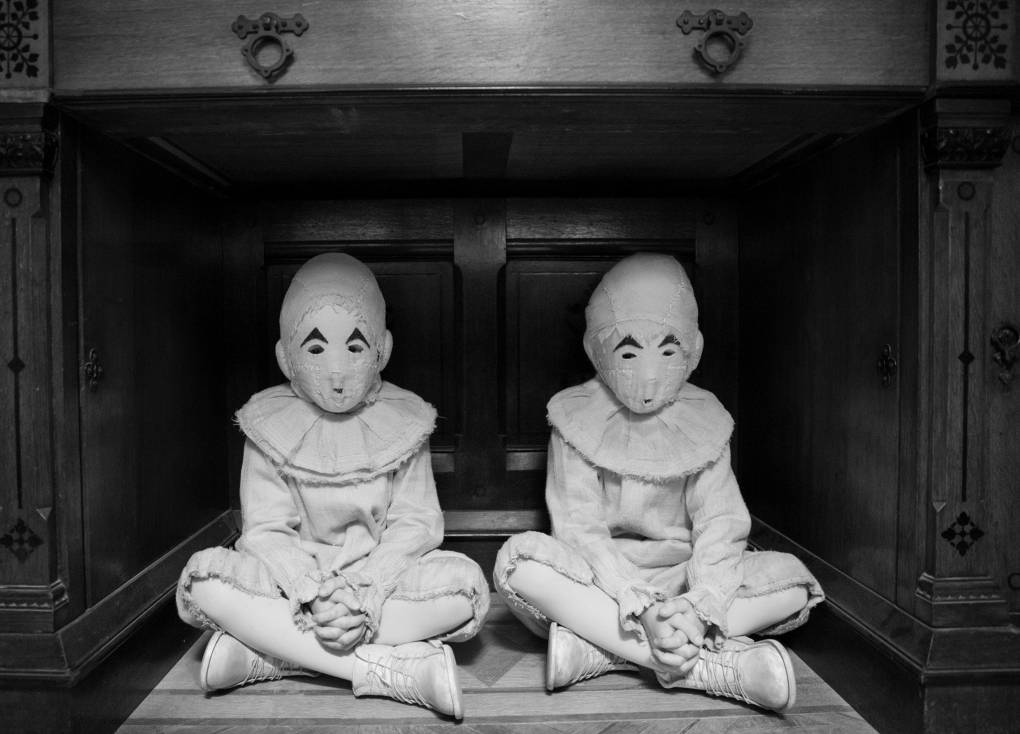
"caption": "\"The Masked Ballerinas,\" as portrayed in the 2016 movie adaptation of 'Miss Peregrine's Home for Peculiar Children.'",
"description": "\"The Masked Ballerinas,\" as portrayed in the 2016 movie adaptation of 'Miss Peregrine's Home for Peculiar Children.'",
"title": "\"The Masked Ballerinas,\" as portrayed in the 2016 movie adaptation of 'Miss Peregrine's Home for Peculiar Children.'",
"credit": null,
"status": "inherit",
"isLoading": false,
"fetchFailed": false
}
},
"audioPlayerReducer": {
"postId": "stream_live",
"isPaused": true,
"isPlaying": false,
"pfsActive": false,
"pledgeModalIsOpen": true,
"playerDrawerIsOpen": false,
"liveAudioPlayStartedAt": 0,
"liveAudioPlayContext": ""
},
"authorsReducer": {
"byline_arts_13876710": {
"type": "authors",
"id": "byline_arts_13876710",
"meta": {
"override": true
},
"slug": "byline_arts_13876710",
"name": "Annalisa Quinn",
"isLoading": false
},
"byline_arts_13876101": {
"type": "authors",
"id": "byline_arts_13876101",
"meta": {
"override": true
},
"slug": "byline_arts_13876101",
"name": "Anastasia Tsioulcas",
"isLoading": false
},
"byline_arts_13875906": {
"type": "authors",
"id": "byline_arts_13875906",
"meta": {
"override": true
},
"slug": "byline_arts_13875906",
"name": "Dave Davies",
"isLoading": false
},
"byline_arts_13875724": {
"type": "authors",
"id": "byline_arts_13875724",
"meta": {
"override": true
},
"slug": "byline_arts_13875724",
"name": "Ericka Taylor",
"isLoading": false
},
"byline_arts_13874840": {
"type": "authors",
"id": "byline_arts_13874840",
"meta": {
"override": true
},
"slug": "byline_arts_13874840",
"name": "David Greene",
"isLoading": false
},
"byline_arts_13874757": {
"type": "authors",
"id": "byline_arts_13874757",
"meta": {
"override": true
},
"slug": "byline_arts_13874757",
"name": "Neda Ulaby",
"isLoading": false
},
"byline_arts_13874570": {
"type": "authors",
"id": "byline_arts_13874570",
"meta": {
"override": true
},
"slug": "byline_arts_13874570",
"name": "Audie Cornish",
"isLoading": false
},
"byline_arts_13874422": {
"type": "authors",
"id": "byline_arts_13874422",
"meta": {
"override": true
},
"slug": "byline_arts_13874422",
"name": "Maureen Corrigan",
"isLoading": false
},
"byline_arts_13874082": {
"type": "authors",
"id": "byline_arts_13874082",
"meta": {
"override": true
},
"slug": "byline_arts_13874082",
"name": "Hillel Italie, Associated Press",
"isLoading": false
},
"byline_arts_13874006": {
"type": "authors",
"id": "byline_arts_13874006",
"meta": {
"override": true
},
"slug": "byline_arts_13874006",
"name": "Juanita Giles",
"isLoading": false
},
"gmeline": {
"type": "authors",
"id": "185",
"meta": {
"index": "authors_1716337520",
"id": "185",
"found": true
},
"name": "Gabe Meline",
"firstName": "Gabe",
"lastName": "Meline",
"slug": "gmeline",
"email": "gmeline@kqed.org",
"display_author_email": true,
"staff_mastheads": [
"arts"
],
"title": "Senior Editor, KQED Arts & Culture",
"bio": "Gabe Meline entered journalism at age 15 making photocopied zines, and has since earned awards from the Edward R. Murrow Awards, the Society for Professional Journalists, the Online Journalism Awards, the Association of Alternative Newsweeklies and the California Newspaper Publishers Association. Prior to KQED, he was the editor of the \u003cem>North Bay Bohemian\u003c/em> and a touring musician. He lives with his wife and daughter in his hometown of Santa Rosa, CA.",
"avatar": "https://secure.gravatar.com/avatar/5bebe57be0d8bc2dd318934feb47299e2d2d10cba28d09d8d7afb389a2ce2bdd?s=600&d=blank&r=g",
"twitter": null,
"bluesky": null,
"facebook": null,
"instagram": null,
"linkedin": null,
"sites": [
{
"site": "",
"roles": [
"editor"
]
},
{
"site": "arts",
"roles": [
"administrator"
]
},
{
"site": "artschool",
"roles": [
"editor"
]
},
{
"site": "news",
"roles": [
"author"
]
},
{
"site": "pop",
"roles": [
"editor"
]
},
{
"site": "bayareabites",
"roles": [
"editor"
]
},
{
"site": "food",
"roles": [
"editor"
]
},
{
"site": "forum",
"roles": [
"administrator"
]
},
{
"site": "liveblog",
"roles": [
"editor"
]
},
{
"site": "hiphop",
"roles": [
"editor"
]
}
],
"headData": {
"title": "Gabe Meline | KQED",
"description": "Senior Editor, KQED Arts & Culture",
"ogImgSrc": "https://secure.gravatar.com/avatar/5bebe57be0d8bc2dd318934feb47299e2d2d10cba28d09d8d7afb389a2ce2bdd?s=600&d=blank&r=g",
"twImgSrc": "https://secure.gravatar.com/avatar/5bebe57be0d8bc2dd318934feb47299e2d2d10cba28d09d8d7afb389a2ce2bdd?s=600&d=blank&r=g"
},
"isLoading": false,
"link": "/author/gmeline"
},
"ogpenn": {
"type": "authors",
"id": "11491",
"meta": {
"index": "authors_1716337520",
"id": "11491",
"found": true
},
"name": "Pendarvis Harshaw",
"firstName": "Pendarvis",
"lastName": "Harshaw",
"slug": "ogpenn",
"email": "ogpenn@gmail.com",
"display_author_email": false,
"staff_mastheads": [
"arts"
],
"title": "Community Engagement Reporter",
"bio": "Pendarvis Harshaw is an educator, host and writer with KQED Arts.",
"avatar": "https://secure.gravatar.com/avatar/972b77ee8e3f346ae2b00622661187fbfabd059b5693bbdc1475ea7a722fd4cd?s=600&d=blank&r=g",
"twitter": null,
"bluesky": null,
"facebook": null,
"instagram": "ogpenn",
"linkedin": null,
"sites": [
{
"site": "arts",
"roles": [
"administrator"
]
},
{
"site": "news",
"roles": [
"editor"
]
},
{
"site": "bayareabites",
"roles": [
"author"
]
},
{
"site": "hiphop",
"roles": [
"editor"
]
}
],
"headData": {
"title": "Pendarvis Harshaw | KQED",
"description": "Community Engagement Reporter",
"ogImgSrc": "https://secure.gravatar.com/avatar/972b77ee8e3f346ae2b00622661187fbfabd059b5693bbdc1475ea7a722fd4cd?s=600&d=blank&r=g",
"twImgSrc": "https://secure.gravatar.com/avatar/972b77ee8e3f346ae2b00622661187fbfabd059b5693bbdc1475ea7a722fd4cd?s=600&d=blank&r=g"
},
"isLoading": false,
"link": "/author/ogpenn"
}
},
"pagesReducer": {
"arts_category_literature": {
"type": "terms",
"id": "arts_73",
"meta": {
"index": "terms_1716263798",
"site": "arts",
"id": "73",
"score": 12.797728
},
"featImg": null,
"name": "Books",
"description": null,
"taxonomy": "category",
"headData": {
"twImgId": null,
"twTitle": null,
"ogTitle": null,
"ogImgId": null,
"twDescription": null,
"description": null,
"title": "Books Archives | KQED Arts",
"ogDescription": null
},
"ttid": 74,
"slug": "literature",
"isLoading": false,
"title": "Books",
"pageMeta": {
"site": "arts",
"WpPageTemplate": "page-topic-editorial",
"currentPage": 56
},
"blocks": [
{
"blockName": "kqed/post-list",
"attrs": {
"layout": "cardArticle2",
"query": "posts/arts?category=literature",
"seeMore": false,
"paginated": true,
"page": 56
}
},
{
"blockName": "kqed/ad"
}
]
}
},
"pfsSessionReducer": {},
"postsReducer": {
"stream_live": {
"type": "live",
"id": "stream_live",
"audioUrl": "https://streams.kqed.org/kqedradio",
"title": "Live Stream",
"excerpt": "Live Stream information currently unavailable.",
"link": "/radio",
"featImg": "",
"label": {
"name": "KQED Live",
"link": "/"
}
},
"stream_kqedNewscast": {
"type": "posts",
"id": "stream_kqedNewscast",
"audioUrl": "https://www.kqed.org/.stream/anon/radio/RDnews/newscast.mp3?_=1",
"title": "KQED Newscast",
"featImg": "",
"label": {
"name": "88.5 FM",
"link": "/"
}
},
"arts_13876710": {
"type": "posts",
"id": "arts_13876710",
"meta": {
"index": "posts_1716263798",
"site": "arts",
"id": "13876710",
"score": null,
"sort": [
1584363604000
]
},
"parent": 0,
"labelTerm": {
"site": "arts"
},
"blocks": [],
"publishDate": 1584363604,
"format": "standard",
"title": "In 'Recollections Of My Nonexistence,' Rebecca Solnit Once Again Tackles Gender Bias",
"headTitle": "In ‘Recollections Of My Nonexistence,’ Rebecca Solnit Once Again Tackles Gender Bias | KQED",
"content": "\u003cp>In her now famous essay, “Men Explain Things to Me,” Rebecca Solnit describes a party in a ski chalet, at which she told the owner of the chalet that she had just written a book about the photographer Eadweard Muybridge.\u003c/p>\n\u003cp>“And have you heard about the \u003cem>very important \u003c/em>Muybridge book that came out this year?” he asked. The man then held forth about this book for several minutes before Solnit realized he was talking about \u003cem>her\u003c/em> book. When this fact is finally, effortfully, conveyed to him, he went “ashen.”\u003c/p>\n\u003cp>“I like incidents of that sort,” Solnit writes, “when forces that are usually so sneaky and hard to point out slither out of the grass and are as obvious as, say, an anaconda that’s eaten a cow or an elephant turd on the carpet.”\u003c/p>\n\u003cp>Solnit opens her new book, \u003cem>Recollections of My Nonexistence\u003c/em>, which examines these forces and the ways that women work to counter them, with a description of a Victorian writing desk. It was given to her by a friend, who had recently been “stabbed fifteen times by an ex-boyfriend to punish her for leaving him,” she writes\u003cem>. \u003c/em>The friend survived; her ex was never prosecuted.\u003c/p>\n\u003cp>“Someone tried to silence her,” Solnit writes. “Then she gave me a platform for my voice. Now I wonder if everything I have ever written is a counterweight to that attempt to reduce a young woman to nothing.”\u003c/p>\n\u003cp>[ad fullwidth]\u003c/p>\n\u003cp>\u003cem>Prima facie\u003c/em>, the presentation of women’s writing as a counterbalance to violent misogyny seems absurdly insufficient, like bringing a collection of Gloria Steinem essays to a gunfight. What does the knife-wielding boyfriend care if Solnit writes thousands of gracefully recursive sentences about environmentalism, art, and feminism on a desk given to her by a woman he once tried to kill? On hearing yet another invocation of the power of women’s voices, it is easy to wonder, along with the writer Moira Donegan, who reviewed Solnit’s last book for \u003cem>The New Yorker \u003c/em>in 2017, “if telling these stories had the power to change the way women are treated, why do we still have so many stories to tell?”\u003c/p>\n\u003cp>In “Men Explain Things to Me,” Solnit follows the ski chalet anecdote with a story about listening to a boyfriend’s uncle describe, “as though it were a light and amusing subject,” how a neighbor had once “come running out of her house naked in the middle of the night screaming that her husband was trying to kill her.” Solnit asked how he knew that his neighbor’s husband wasn’t trying to kill her. “He explained, patiently, that they were respectable middle-class people. Therefore, her-husband-trying-to-kill-her was simply not a credible explanation for her fleeing the house yelling that her husband was trying to kill her. That she was crazy, on the other hand….”\u003c/p>\n\u003cp>Solnit’s body of work makes the case that the uncles and the ski chalet owners of the world, though not the same as the murderers and the rapists, enable them by creating a culture where women aren’t considered credible, whether it comes to pioneering English photographers or to whether or not their own husbands are trying to kill them. In this book, she clarifies that having a voice is “not just the animal capacity to utter sounds,” but the combination of “audibility, credibility, and consequence.”\u003c/p>\n\u003cp>Many of the arguments in \u003cem>Recollections of My Nonexistence\u003c/em> might feel familiar or even obvious, which is due in part to Solnit’s own influence in the last few years. A friend called this the “Blade Runner” problem, in which something is so influential that it comes to seem cliched. Solnit has valiantly been making the case that misogynist speech and violence are on a spectrum for decades, long before mainstream acceptance of the idea — so calling it stale now feels eminently unfair. (There have also, of course, been books by other authors on these themes: Maggie Nelson’s \u003cem>The Red Parts\u003c/em> — which uses the murder of Nelson’s aunt to show how popular culture enables misogynist violence — is more probing, self-aware, and eloquent than Solnit’s new book).\u003c/p>\n\u003cp>Here, Solnit describes the threat of sexual violence as a kind of atmospheric phenomenon, an accumulated weight of episodes and images rather than a particular threat. This gives the book a kind of mistiness, although you can see why Solnit might tire of litigating particular misogynistic incidents, even when they reveal a broader pattern. After all, if a listener is unconvinced, any example can be argued away as an aberration, an exception, and not indicative of a wider culture.\u003c/p>\n\u003cp>But no: “Legions of women were being killed in movies, in songs, in novels, and in the world, and each death was a little wound, a little weight, a little message that it could have been me,” Solnit writes. “I once encountered a Buddhist saint who had worn tokens devotees gave him; they loaded him up, tiny token by tiny token until he was dragging hundreds of pounds of clinking griefs. We wore those horror stories as a secret weight, a set of shackles, that dragged along everywhere we went.” (The reference to weights recalls Solnit’s earlier claim that her writing represented a counterweight to her friend’s stabbing — I picture Solnit pitching page after page onto some kind of cosmic scale, hoping to tip the balance).\u003c/p>\n\u003cp>In \u003cem>Recollections of My Nonexistence\u003c/em>, Solnit implies that just as the illness can be both dramatic and also cumulative, gradual, and imperceptible, so might be the cure. And things that feel insufficient — writing, talking, walking, teaching — do in fact represent tiny counterweights, which together shift the course of culture.\u003c/p>\n\u003cp>In literature, writing sometimes aspires to the permanence of marble (Thus Shakespeare, confidently: “Not marble nor the gilded monuments / Of princes shall outlive this powerful rhyme”). But Solnit argues for a different model: “[P]erhaps the best thing creative work can do is to compost into the soil so that, unremembered, it becomes the food of a new era, or rather, devoured, digested, the very consciousness of that era. Marble lasts, but soil feeds.”\u003c/p>\n\u003cp>Solnit has not lived a particularly unremembered life — she has been a public writer and speaker and thinker for many years. But this book defends the value of fighting privately, too, in conversation and in communities. My favorite glimpse of that fight comes in the acknowledgments, where, alongside thanks to various editors and friends, Solnit writes, “Thank you to the handsome bikers at the Denny’s on the I-5 north of Los Angeles who listened and let me convince them that Anita Hill was telling the truth, one morning at a shared table in October 1991.”\u003c/p>\n\u003cp>Hill — who spoke publicly in 1991 and was not listened to — is now a law professor at Brandeis, someone who teaches courses with titles like “Gender Equity Policies and Litigation,” and is professionally listened to by young people studying law. Her choice to use her voice not only once, spectacularly, in the Senate hearings where she was humiliated, and interrogated, and dismissed, but every day in her teaching, seems like the best case for Solnit’s faith in quieter, cumulative change.\u003c/p>\n\u003cp>[ad floatright]\u003c/p>\n\u003cp>All the writing, thinking, teaching, and talking encompassed by the phrase “women’s voices” will not stop the next person who wants to stab his girlfriend fifteen times. But it suggests the possibility that when the next young woman has to stand up and talk about what happened to her, she might have different lawyers, might have a different jury, and might even find on it an aging biker, willing to be convinced. \u003c/p>\n\u003cdiv class=\"fullattribution\">Copyright 2020 NPR. To see more, visit \u003ca href=\"https://www.npr.org\" rel=\"noopener noreferrer\" target=\"_blank\">NPR\u003c/a>.\u003cimg decoding=\"async\" src=\"https://www.google-analytics.com/__utm.gif?utmac=UA-5828686-4&utmdt=In+%27Recollections+Of+My+Nonexistence%2C%27+Rebecca+Solnit+Once+Again+Tackles+Gender+Bias&utme=8(APIKey)9(MDAxOTAwOTE4MDEyMTkxMDAzNjczZDljZA004)\">\u003c/div>\n\n",
"stats": {
"hasVideo": false,
"hasChartOrMap": false,
"hasAudio": false,
"hasPolis": false,
"wordCount": 1362,
"hasGoogleForm": false,
"hasGallery": false,
"hasHearkenModule": false,
"iframeSrcs": [],
"paragraphCount": 18
},
"modified": 1705021086,
"excerpt": "The Bay Area writer's new memoir examines life among a culture where women aren't considered credible.",
"headData": {
"twImgId": "",
"twTitle": "",
"ogTitle": "",
"ogImgId": "",
"twDescription": "",
"description": "The Bay Area writer's new memoir examines life among a culture where women aren't considered credible.",
"title": "In 'Recollections Of My Nonexistence,' Rebecca Solnit Once Again Tackles Gender Bias | KQED",
"ogDescription": "",
"schema": {
"@context": "https://schema.org",
"@type": "Article",
"headline": "In 'Recollections Of My Nonexistence,' Rebecca Solnit Once Again Tackles Gender Bias",
"datePublished": "2020-03-16T06:00:04-07:00",
"dateModified": "2024-01-11T16:58:06-08:00",
"image": "https://cdn.kqed.org/wp-content/uploads/2020/02/KQED-OG-Image@1x.png"
}
},
"guestAuthors": [],
"slug": "in-recollections-of-my-nonexistence-rebecca-solnit-once-again-tackles-gender-bias",
"status": "publish",
"nprApiLink": "http://api.npr.org/query?id=814460230&apiKey=MDAxOTAwOTE4MDEyMTkxMDAzNjczZDljZA004",
"templateType": "standard",
"nprByline": "Annalisa Quinn",
"nprStoryDate": "Thu, 12 Mar 2020 04:59:00 -0400",
"nprLastModifiedDate": "Thu, 12 Mar 2020 12:33:25 -0400",
"featuredImageType": "standard",
"sticky": false,
"nprHtmlLink": "https://www.npr.org/2020/03/12/814460230/in-recollections-of-my-nonexistence-rebecca-solnit-once-again-tackles-gender-bia?ft=nprml&f=814460230",
"nprImageAgency": "Viking",
"nprStoryId": "814460230",
"nprRetrievedStory": "1",
"nprPubDate": "Thu, 12 Mar 2020 12:33:00 -0400",
"path": "/arts/13876710/in-recollections-of-my-nonexistence-rebecca-solnit-once-again-tackles-gender-bias",
"audioTrackLength": null,
"parsedContent": [
{
"type": "contentString",
"content": "\u003cdiv class=\"post-body\">\u003cp>\u003cp>In her now famous essay, “Men Explain Things to Me,” Rebecca Solnit describes a party in a ski chalet, at which she told the owner of the chalet that she had just written a book about the photographer Eadweard Muybridge.\u003c/p>\n\u003cp>“And have you heard about the \u003cem>very important \u003c/em>Muybridge book that came out this year?” he asked. The man then held forth about this book for several minutes before Solnit realized he was talking about \u003cem>her\u003c/em> book. When this fact is finally, effortfully, conveyed to him, he went “ashen.”\u003c/p>\n\u003cp>“I like incidents of that sort,” Solnit writes, “when forces that are usually so sneaky and hard to point out slither out of the grass and are as obvious as, say, an anaconda that’s eaten a cow or an elephant turd on the carpet.”\u003c/p>\n\u003cp>Solnit opens her new book, \u003cem>Recollections of My Nonexistence\u003c/em>, which examines these forces and the ways that women work to counter them, with a description of a Victorian writing desk. It was given to her by a friend, who had recently been “stabbed fifteen times by an ex-boyfriend to punish her for leaving him,” she writes\u003cem>. \u003c/em>The friend survived; her ex was never prosecuted.\u003c/p>\n\u003cp>“Someone tried to silence her,” Solnit writes. “Then she gave me a platform for my voice. Now I wonder if everything I have ever written is a counterweight to that attempt to reduce a young woman to nothing.”\u003c/p>\n\u003cp>\u003c/p>\u003c/div>",
"attributes": {
"named": {},
"numeric": []
}
},
{
"type": "component",
"content": "",
"name": "ad",
"attributes": {
"named": {
"label": "fullwidth"
},
"numeric": [
"fullwidth"
]
}
},
{
"type": "contentString",
"content": "\u003cdiv class=\"post-body\">\u003cp>\u003c/p>\n\u003cp>\u003cem>Prima facie\u003c/em>, the presentation of women’s writing as a counterbalance to violent misogyny seems absurdly insufficient, like bringing a collection of Gloria Steinem essays to a gunfight. What does the knife-wielding boyfriend care if Solnit writes thousands of gracefully recursive sentences about environmentalism, art, and feminism on a desk given to her by a woman he once tried to kill? On hearing yet another invocation of the power of women’s voices, it is easy to wonder, along with the writer Moira Donegan, who reviewed Solnit’s last book for \u003cem>The New Yorker \u003c/em>in 2017, “if telling these stories had the power to change the way women are treated, why do we still have so many stories to tell?”\u003c/p>\n\u003cp>In “Men Explain Things to Me,” Solnit follows the ski chalet anecdote with a story about listening to a boyfriend’s uncle describe, “as though it were a light and amusing subject,” how a neighbor had once “come running out of her house naked in the middle of the night screaming that her husband was trying to kill her.” Solnit asked how he knew that his neighbor’s husband wasn’t trying to kill her. “He explained, patiently, that they were respectable middle-class people. Therefore, her-husband-trying-to-kill-her was simply not a credible explanation for her fleeing the house yelling that her husband was trying to kill her. That she was crazy, on the other hand….”\u003c/p>\n\u003cp>Solnit’s body of work makes the case that the uncles and the ski chalet owners of the world, though not the same as the murderers and the rapists, enable them by creating a culture where women aren’t considered credible, whether it comes to pioneering English photographers or to whether or not their own husbands are trying to kill them. In this book, she clarifies that having a voice is “not just the animal capacity to utter sounds,” but the combination of “audibility, credibility, and consequence.”\u003c/p>\n\u003cp>Many of the arguments in \u003cem>Recollections of My Nonexistence\u003c/em> might feel familiar or even obvious, which is due in part to Solnit’s own influence in the last few years. A friend called this the “Blade Runner” problem, in which something is so influential that it comes to seem cliched. Solnit has valiantly been making the case that misogynist speech and violence are on a spectrum for decades, long before mainstream acceptance of the idea — so calling it stale now feels eminently unfair. (There have also, of course, been books by other authors on these themes: Maggie Nelson’s \u003cem>The Red Parts\u003c/em> — which uses the murder of Nelson’s aunt to show how popular culture enables misogynist violence — is more probing, self-aware, and eloquent than Solnit’s new book).\u003c/p>\n\u003cp>Here, Solnit describes the threat of sexual violence as a kind of atmospheric phenomenon, an accumulated weight of episodes and images rather than a particular threat. This gives the book a kind of mistiness, although you can see why Solnit might tire of litigating particular misogynistic incidents, even when they reveal a broader pattern. After all, if a listener is unconvinced, any example can be argued away as an aberration, an exception, and not indicative of a wider culture.\u003c/p>\n\u003cp>But no: “Legions of women were being killed in movies, in songs, in novels, and in the world, and each death was a little wound, a little weight, a little message that it could have been me,” Solnit writes. “I once encountered a Buddhist saint who had worn tokens devotees gave him; they loaded him up, tiny token by tiny token until he was dragging hundreds of pounds of clinking griefs. We wore those horror stories as a secret weight, a set of shackles, that dragged along everywhere we went.” (The reference to weights recalls Solnit’s earlier claim that her writing represented a counterweight to her friend’s stabbing — I picture Solnit pitching page after page onto some kind of cosmic scale, hoping to tip the balance).\u003c/p>\n\u003cp>In \u003cem>Recollections of My Nonexistence\u003c/em>, Solnit implies that just as the illness can be both dramatic and also cumulative, gradual, and imperceptible, so might be the cure. And things that feel insufficient — writing, talking, walking, teaching — do in fact represent tiny counterweights, which together shift the course of culture.\u003c/p>\n\u003cp>In literature, writing sometimes aspires to the permanence of marble (Thus Shakespeare, confidently: “Not marble nor the gilded monuments / Of princes shall outlive this powerful rhyme”). But Solnit argues for a different model: “[P]erhaps the best thing creative work can do is to compost into the soil so that, unremembered, it becomes the food of a new era, or rather, devoured, digested, the very consciousness of that era. Marble lasts, but soil feeds.”\u003c/p>\n\u003cp>Solnit has not lived a particularly unremembered life — she has been a public writer and speaker and thinker for many years. But this book defends the value of fighting privately, too, in conversation and in communities. My favorite glimpse of that fight comes in the acknowledgments, where, alongside thanks to various editors and friends, Solnit writes, “Thank you to the handsome bikers at the Denny’s on the I-5 north of Los Angeles who listened and let me convince them that Anita Hill was telling the truth, one morning at a shared table in October 1991.”\u003c/p>\n\u003cp>Hill — who spoke publicly in 1991 and was not listened to — is now a law professor at Brandeis, someone who teaches courses with titles like “Gender Equity Policies and Litigation,” and is professionally listened to by young people studying law. Her choice to use her voice not only once, spectacularly, in the Senate hearings where she was humiliated, and interrogated, and dismissed, but every day in her teaching, seems like the best case for Solnit’s faith in quieter, cumulative change.\u003c/p>\n\u003cp>\u003c/p>\u003c/div>",
"attributes": {
"named": {},
"numeric": []
}
},
{
"type": "component",
"content": "",
"name": "ad",
"attributes": {
"named": {
"label": "floatright"
},
"numeric": [
"floatright"
]
}
},
{
"type": "contentString",
"content": "\u003cdiv class=\"post-body\">\u003cp>\u003c/p>\n\u003cp>All the writing, thinking, teaching, and talking encompassed by the phrase “women’s voices” will not stop the next person who wants to stab his girlfriend fifteen times. But it suggests the possibility that when the next young woman has to stand up and talk about what happened to her, she might have different lawyers, might have a different jury, and might even find on it an aging biker, willing to be convinced. \u003c/p>\n\u003cdiv class=\"fullattribution\">Copyright 2020 NPR. To see more, visit \u003ca href=\"https://www.npr.org\" rel=\"noopener noreferrer\" target=\"_blank\">NPR\u003c/a>.\u003cimg decoding=\"async\" src=\"https://www.google-analytics.com/__utm.gif?utmac=UA-5828686-4&utmdt=In+%27Recollections+Of+My+Nonexistence%2C%27+Rebecca+Solnit+Once+Again+Tackles+Gender+Bias&utme=8(APIKey)9(MDAxOTAwOTE4MDEyMTkxMDAzNjczZDljZA004)\">\u003c/div>\n\n\u003c/div>\u003c/p>",
"attributes": {
"named": {},
"numeric": []
}
}
],
"link": "/arts/13876710/in-recollections-of-my-nonexistence-rebecca-solnit-once-again-tackles-gender-bias",
"authors": [
"byline_arts_13876710"
],
"categories": [
"arts_73"
],
"tags": [
"arts_7446",
"arts_928",
"arts_585"
],
"featImg": "arts_13876711",
"label": "arts"
},
"arts_13876101": {
"type": "posts",
"id": "arts_13876101",
"meta": {
"index": "posts_1716263798",
"site": "arts",
"id": "13876101",
"score": null,
"sort": [
1583528257000
]
},
"guestAuthors": [],
"slug": "woody-allens-book-will-not-be-published-after-hachette-employees-object",
"title": "Woody Allen's Book Will Not Be Published After Hachette Employees Object",
"publishDate": 1583528257,
"format": "standard",
"headTitle": "Woody Allen’s Book Will Not Be Published After Hachette Employees Object | KQED",
"labelTerm": {
"term": 137,
"site": "arts"
},
"content": "\u003cp>\u003cstrong>Updated Friday at 3:10 p.m. ET\u003c/strong>\u003c/p>\n\u003cp>On Friday afternoon, Hachette Book Group (HBG) announced publicly and to its employees that it will not publish Woody Allen’s memoir, \u003cem>Apropos of Nothing\u003c/em>, as planned next month.\u003c/p>\n\u003cp>In a statement to NPR, the publisher said: “Hachette Book Group has decided that it will not publish Woody Allen’s memoir \u003cem>A Propos of Nothing\u003c/em>, originally scheduled for sale in April 2020, and will return all rights to the author.”\u003c/p>\n\u003cp>“The decision to cancel Mr. Allen’s book was a difficult one. At HBG we take our relationships with authors very seriously, and do not cancel books lightly. We have published and will continue to publish many challenging books. As publishers, we make sure every day in our work that different voices and conflicting points of views can be heard.”\u003c/p>\n\u003cp>“Also, as a company, we are committed to offering a stimulating, supportive and open work environment for all our staff. Over the past few days, HBG leadership had extensive conversations with our staff and others. After listening, we came to the conclusion that moving forward with publication would not be feasible for HBG.”\u003c/p>\n\u003cp>[ad fullwidth]\u003c/p>\n\u003cp>The decision was announced to HBG’s employees as well at a brief town-hall meeting on Friday afternoon.\u003c/p>\n\u003cp>On Thursday afternoon, dozens of employees of the publishing imprints Grand Central Publishing and Little, Brown staged a walkout in both New York and Boston to protest Grand Central’s decision to publish Allen’s book.\u003c/p>\n\u003cp>Both imprints are owned by Hachette Book Group, the same house that published journalist Ronan Farrow’s \u003cem>Catch and Kill\u003c/em>. The walkout comes after Farrow \u003ca href=\"https://twitter.com/RonanFarrow/status/1234999252381618178\">announced\u003c/a> on Tuesday that he felt he could no longer work with HBG after the Allen acquisition.\u003c/p>\n\u003cp>Farrow is Allen’s son with actress Mia Farrow; his sister, Dylan Farrow, \u003ca href=\"https://www.vanityfair.com/style/2013/10/mia-farrow-children-family-scandal\">has accused\u003c/a> Allen of having sexually abused her as a child. Allen has long denied her allegations.\u003c/p>\n\u003cp>In his statement, Farrow wrote in part that HBG “concealed the decision from me and its own employees while we were working on \u003cem>Catch and Kill\u003c/em> — a book about how powerful men, including Woody Allen, avoid accountability for sexual abuse.”\u003c/p>\n\u003cp>[aside postID='news_11781549'label='Ronan Farrow on 'Catch and Kill,' the Weinstein Scandal and Investigative Journalism']\u003c/p>\n\u003cp>Dylan Farrow also released a \u003ca href=\"https://twitter.com/RealDylanFarrow/status/1234649622670430208/photo/1\">statement\u003c/a> on Monday evening, in which she said in part: “Hachette’s publishing of Woody Allen’s memoir is deeply upsetting to me personally and an utter betrayal of my brother whose brave reporting, capitalized on by Hachette, gave voice to numerous survivors of sexual assault by powerful men. … This provides yet another example of the profound privilege that power, money and notoriety affords. Hachette’s complicity in this should be called out for what it is and they should have to answer for it.”\u003c/p>\n\u003cp>Employees at both HBG’s New York and Boston offices participated in the Thursday walkout. Many also sent out an auto-reply email that read in part: “We stand in solidarity with Ronan Farrow, Dylan Farrow and survivors of sexual assault.” Those \u003ca href=\"https://twitter.com/davidfolkenflik/status/1235680790920523794?s=20\">include\u003c/a> Little, Brown executive editor Vanessa Mobley, who was the editor of \u003cem>Catch and Kill\u003c/em>.\u003c/p>\n\u003cp>In a statement sent to NPR Thursday afternoon, HBG CEO Michael Pietsch said: “We respect and understand the perspective of our employees who have decided to express their concern over the publication of this book. We will engage our staff in a fuller discussion about this at the earliest opportunity.”\u003c/p>\n\u003cp>NPR reached out for comment to Allen’s agent, who did not respond as of publication time.\u003c/p>\n\u003cp>The \u003cem>New York Post\u003c/em> \u003ca href=\"https://pagesix.com/2020/03/05/litlte-brown-staff-stages-walkout-in-support-of-ronan-and-dylan-farrow/\">reported\u003c/a> that HBG employees approached the company’s human resources department on Thursday afternoon to complain about the planned publication of Allen’s book. A Hachette employee told NPR that HBG’s CEO, Michael Pietsch, attempted to hold a town hall meeting on Thursday to discuss the issue, but the employees walked out before the meeting was held.\u003c/p>\n\u003cp>Farrow’s agent, \u003ca href=\"https://www.janklowandnesbit.com/people/lynn-nesbit\">Lynn Nesbit\u003c/a>, told NPR on Thursday, “I feel moved almost to tears by the walkout. It was such a brave gesture to management who, in my opinion, made such a misguided decision.”\u003c/p>\n\u003cp>Signing Allen, she said, was “a betrayal of Ronan, of the women in his book, of the issues in the book and of the staff of this publisher.” She added that Farrow is “grateful for the support of his colleagues at Little, Brown.”\u003c/p>\n\u003cp>Last year, \u003cem>The New York Times \u003c/em>reported that Allen had tried to sell the memoir to several major publishing houses, “only to be met with indifference or \u003ca href=\"https://www.nytimes.com/2019/05/02/movies/woody-allen-memoir.html\">hard passes\u003c/a>“; one source told NPR on Thursday afternoon that the title had been considered “radioactive” in the publishing world.\u003c/p>\n\u003cp>\u003c/p>\n\u003cp>Farrow also said in his Tuesday statement that HBG had not fact-checked Allen’s memoir nor did it contact Dylan Farrow for any response. “It also shows a lack of ethics and compassion for victims of sexual abuse, regardless of any personal connection or breach of trust here. … I’ve also told Hachette that a publisher that would conduct itself in this way is one I can’t work with in good conscience.”\u003c/p>\n\u003cdiv class=\"fullattribution\">Copyright 2020 \u003ca href=\"https://www.npr.org\">NPR\u003c/a>.\u003c/div>\n\n",
"blocks": [],
"excerpt": "On Friday afternoon, Hachette Book Group announced that it would no longer be publishing Allen's book. The decision comes after Ronan Farrow announced he could no longer work with his publisher.",
"status": "publish",
"parent": 0,
"modified": 1726704403,
"stats": {
"hasAudio": false,
"hasVideo": false,
"hasChartOrMap": false,
"iframeSrcs": [],
"hasGoogleForm": false,
"hasGallery": false,
"hasHearkenModule": false,
"hasPolis": false,
"paragraphCount": 22,
"wordCount": 903
},
"headData": {
"title": "Woody Allen's Book Will Not Be Published After Hachette Employees Object | KQED",
"description": "On Friday afternoon, Hachette Book Group announced that it would no longer be publishing Allen's book. The decision comes after Ronan Farrow announced he could no longer work with his publisher.",
"ogTitle": "",
"ogDescription": "",
"ogImgId": "",
"twTitle": "",
"twDescription": "",
"twImgId": "",
"schema": {
"@context": "https://schema.org",
"@type": "Article",
"headline": "Woody Allen's Book Will Not Be Published After Hachette Employees Object",
"datePublished": "2020-03-06T12:57:37-08:00",
"dateModified": "2024-09-18T17:06:43-07:00",
"image": "https://cdn.kqed.org/wp-content/uploads/2020/02/KQED-OG-Image@1x.png"
}
},
"sticky": false,
"nprImageCredit": "Pascal Le Segretain",
"nprByline": "Anastasia Tsioulcas",
"nprImageAgency": "Getty Images",
"nprStoryId": "812687472",
"nprApiLink": "http://api.npr.org/query?id=812687472&apiKey=MDAxOTAwOTE4MDEyMTkxMDAzNjczZDljZA004",
"nprHtmlLink": "https://www.npr.org/2020/03/06/812687472/after-woody-allens-memoir-was-signed-book-publisher-s-employees-walk-out?ft=nprml&f=812687472",
"nprRetrievedStory": "1",
"nprPubDate": "Fri, 06 Mar 2020 15:27:00 -0500",
"nprStoryDate": "Fri, 06 Mar 2020 15:27:06 -0500",
"nprLastModifiedDate": "Fri, 06 Mar 2020 15:27:10 -0500",
"path": "/arts/13876101/woody-allens-book-will-not-be-published-after-hachette-employees-object",
"audioTrackLength": null,
"parsedContent": [
{
"type": "contentString",
"content": "\u003cdiv class=\"post-body\">\u003cp>\u003cp>\u003cstrong>Updated Friday at 3:10 p.m. ET\u003c/strong>\u003c/p>\n\u003cp>On Friday afternoon, Hachette Book Group (HBG) announced publicly and to its employees that it will not publish Woody Allen’s memoir, \u003cem>Apropos of Nothing\u003c/em>, as planned next month.\u003c/p>\n\u003cp>In a statement to NPR, the publisher said: “Hachette Book Group has decided that it will not publish Woody Allen’s memoir \u003cem>A Propos of Nothing\u003c/em>, originally scheduled for sale in April 2020, and will return all rights to the author.”\u003c/p>\n\u003cp>“The decision to cancel Mr. Allen’s book was a difficult one. At HBG we take our relationships with authors very seriously, and do not cancel books lightly. We have published and will continue to publish many challenging books. As publishers, we make sure every day in our work that different voices and conflicting points of views can be heard.”\u003c/p>\n\u003cp>“Also, as a company, we are committed to offering a stimulating, supportive and open work environment for all our staff. Over the past few days, HBG leadership had extensive conversations with our staff and others. After listening, we came to the conclusion that moving forward with publication would not be feasible for HBG.”\u003c/p>\n\u003cp>\u003c/p>\u003c/div>",
"attributes": {
"named": {},
"numeric": []
}
},
{
"type": "component",
"content": "",
"name": "ad",
"attributes": {
"named": {
"label": "fullwidth"
},
"numeric": [
"fullwidth"
]
}
},
{
"type": "contentString",
"content": "\u003cdiv class=\"post-body\">\u003cp>\u003c/p>\n\u003cp>The decision was announced to HBG’s employees as well at a brief town-hall meeting on Friday afternoon.\u003c/p>\n\u003cp>On Thursday afternoon, dozens of employees of the publishing imprints Grand Central Publishing and Little, Brown staged a walkout in both New York and Boston to protest Grand Central’s decision to publish Allen’s book.\u003c/p>\n\u003cp>Both imprints are owned by Hachette Book Group, the same house that published journalist Ronan Farrow’s \u003cem>Catch and Kill\u003c/em>. The walkout comes after Farrow \u003ca href=\"https://twitter.com/RonanFarrow/status/1234999252381618178\">announced\u003c/a> on Tuesday that he felt he could no longer work with HBG after the Allen acquisition.\u003c/p>\n\u003cp>Farrow is Allen’s son with actress Mia Farrow; his sister, Dylan Farrow, \u003ca href=\"https://www.vanityfair.com/style/2013/10/mia-farrow-children-family-scandal\">has accused\u003c/a> Allen of having sexually abused her as a child. Allen has long denied her allegations.\u003c/p>\n\u003cp>In his statement, Farrow wrote in part that HBG “concealed the decision from me and its own employees while we were working on \u003cem>Catch and Kill\u003c/em> — a book about how powerful men, including Woody Allen, avoid accountability for sexual abuse.”\u003c/p>\n\u003cp>\u003c/p>\u003c/div>",
"attributes": {
"named": {},
"numeric": []
}
},
{
"type": "component",
"content": "",
"name": "aside",
"attributes": {
"named": {
"label": "postID='news_11781549'label='Ronan Farrow on 'Catch and Kill,' the Weinstein Scandal and Investigative Journalism'"
},
"numeric": [
"postID='news_11781549'label='Ronan",
"Farrow",
"on",
"'Catch",
"and",
"Kill,'",
"the",
"Weinstein",
"Scandal",
"and",
"Investigative",
"Journalism'"
]
}
},
{
"type": "contentString",
"content": "\u003cdiv class=\"post-body\">\u003cp>\u003c/p>\n\u003cp>Dylan Farrow also released a \u003ca href=\"https://twitter.com/RealDylanFarrow/status/1234649622670430208/photo/1\">statement\u003c/a> on Monday evening, in which she said in part: “Hachette’s publishing of Woody Allen’s memoir is deeply upsetting to me personally and an utter betrayal of my brother whose brave reporting, capitalized on by Hachette, gave voice to numerous survivors of sexual assault by powerful men. … This provides yet another example of the profound privilege that power, money and notoriety affords. Hachette’s complicity in this should be called out for what it is and they should have to answer for it.”\u003c/p>\n\u003cp>Employees at both HBG’s New York and Boston offices participated in the Thursday walkout. Many also sent out an auto-reply email that read in part: “We stand in solidarity with Ronan Farrow, Dylan Farrow and survivors of sexual assault.” Those \u003ca href=\"https://twitter.com/davidfolkenflik/status/1235680790920523794?s=20\">include\u003c/a> Little, Brown executive editor Vanessa Mobley, who was the editor of \u003cem>Catch and Kill\u003c/em>.\u003c/p>\n\u003cp>In a statement sent to NPR Thursday afternoon, HBG CEO Michael Pietsch said: “We respect and understand the perspective of our employees who have decided to express their concern over the publication of this book. We will engage our staff in a fuller discussion about this at the earliest opportunity.”\u003c/p>\n\u003cp>NPR reached out for comment to Allen’s agent, who did not respond as of publication time.\u003c/p>\n\u003cp>The \u003cem>New York Post\u003c/em> \u003ca href=\"https://pagesix.com/2020/03/05/litlte-brown-staff-stages-walkout-in-support-of-ronan-and-dylan-farrow/\">reported\u003c/a> that HBG employees approached the company’s human resources department on Thursday afternoon to complain about the planned publication of Allen’s book. A Hachette employee told NPR that HBG’s CEO, Michael Pietsch, attempted to hold a town hall meeting on Thursday to discuss the issue, but the employees walked out before the meeting was held.\u003c/p>\n\u003cp>Farrow’s agent, \u003ca href=\"https://www.janklowandnesbit.com/people/lynn-nesbit\">Lynn Nesbit\u003c/a>, told NPR on Thursday, “I feel moved almost to tears by the walkout. It was such a brave gesture to management who, in my opinion, made such a misguided decision.”\u003c/p>\n\u003cp>Signing Allen, she said, was “a betrayal of Ronan, of the women in his book, of the issues in the book and of the staff of this publisher.” She added that Farrow is “grateful for the support of his colleagues at Little, Brown.”\u003c/p>\n\u003cp>Last year, \u003cem>The New York Times \u003c/em>reported that Allen had tried to sell the memoir to several major publishing houses, “only to be met with indifference or \u003ca href=\"https://www.nytimes.com/2019/05/02/movies/woody-allen-memoir.html\">hard passes\u003c/a>“; one source told NPR on Thursday afternoon that the title had been considered “radioactive” in the publishing world.\u003c/p>\n\u003cp>\u003c/p>\n\u003cp>Farrow also said in his Tuesday statement that HBG had not fact-checked Allen’s memoir nor did it contact Dylan Farrow for any response. “It also shows a lack of ethics and compassion for victims of sexual abuse, regardless of any personal connection or breach of trust here. … I’ve also told Hachette that a publisher that would conduct itself in this way is one I can’t work with in good conscience.”\u003c/p>\n\u003cdiv class=\"fullattribution\">Copyright 2020 \u003ca href=\"https://www.npr.org\">NPR\u003c/a>.\u003c/div>\n\n\u003c/div>\u003c/p>",
"attributes": {
"named": {},
"numeric": []
}
}
],
"link": "/arts/13876101/woody-allens-book-will-not-be-published-after-hachette-employees-object",
"authors": [
"byline_arts_13876101"
],
"categories": [
"arts_73",
"arts_235"
],
"tags": [
"arts_1962",
"arts_596",
"arts_5050"
],
"affiliates": [
"arts_137"
],
"featImg": "arts_13876102",
"label": "arts_137"
},
"arts_13875906": {
"type": "posts",
"id": "arts_13875906",
"meta": {
"index": "posts_1716263798",
"site": "arts",
"id": "13875906",
"score": null,
"sort": [
1583265786000
]
},
"parent": 0,
"labelTerm": {
"site": "arts",
"term": 137
},
"blocks": [],
"publishDate": 1583265786,
"format": "standard",
"title": "A Father Recounts His Search For the Son Who Vanished in the Wilderness",
"headTitle": "A Father Recounts His Search For the Son Who Vanished in the Wilderness | KQED",
"content": "\u003cp>In 2014, wilderness explorer Roman Dial experienced every parent’s nightmare when he learned that his son, then 27, was missing in a remote Central American rainforest, thousands of miles away.\u003c/p>\n\u003cp>Dial, a professor of mathematics and biology at Alaska Pacific University, is known for his skills in mountaineering, rafting and backcountry endurance racing. He shared those passions with his son, Cody Roman, who went by the name Roman. Over the years, father and son embarked on exotic adventures together, once packrafting in Australia, another time venturing into Arctic Alaska.\u003c/p>\n\u003cp>“He was a great outdoorsman,” Dial says of his son. “I kind of hoped that he would be an outdoors partner for me for life.”\u003c/p>\n\u003cp>In the months before he disappeared, the younger Roman had been exploring the jungles of Central America. The last email he sent to his father indicated that he would be traveling alone into the Osa Peninsula in southwestern Costa Rica for four or five days. When two weeks passed and Dial hadn’t heard from his son, he knew something was wrong.\u003c/p>\n\u003cp>“I was racked with a lot of feelings, like terror and guilt and urgency,” Dial says. “I got an airplane ticket to fly [to Costa Rica] the next day.”\u003c/p>\n\u003cp>[ad fullwidth]\u003c/p>\n\u003cp>Dial’s frantic search for his son lasted nearly two years, during which time he hired a private investigator, hacked through dense jungle and sorted through confusing, contradictory tips from locals. He even engaged with a reality TV crew to explore the possibility of foul play in the disappearance.\u003c/p>\n\u003cp>Finally, in 2016, a Costa Rican miner found Roman’s body in the jungle. “It was in a shallow canyon that was only about half a mile from where I’d camped multiple times looking for him,” Dial says. There was no sign of foul play.\u003c/p>\n\u003cp>Dial’s new book, \u003cem>The Adventurer’s Son,\u003c/em> is an account of his search for Roman, as well as a reflection on the risks of extreme wilderness adventures.\u003c/p>\n\u003chr>\n\u003ch3>\u003cstrong>Interview highlights \u003c/strong>\u003c/h3>\n\u003cp>\u003cstrong>\u003cimg loading=\"lazy\" decoding=\"async\" class=\"size-full wp-image-13875910 alignright\" src=\"https://ww2.kqed.org/app/uploads/sites/2/2020/03/Screen-Shot-2020-03-03-at-11.55.47-AM.png\" alt=\"\" width=\"303\" height=\"448\" srcset=\"https://cdn.kqed.org/wp-content/uploads/sites/2/2020/03/Screen-Shot-2020-03-03-at-11.55.47-AM.png 303w, https://cdn.kqed.org/wp-content/uploads/sites/2/2020/03/Screen-Shot-2020-03-03-at-11.55.47-AM-160x237.png 160w\" sizes=\"(max-width: 303px) 100vw, 303px\">On his action plan when he began looking for Roman in Costa Rica\u003c/strong>\u003c/p>\n\u003cp>I called the embassy and I said, “My son is missing,” but I wasn’t hoping they were going to do anything. I wanted to go down there and do everything that I could. I thought it was my responsibility, not theirs. When I got there, I discovered that they weren’t even looking where I said he planned to go. They were pursuing this lead where somebody had seen my son, they claimed with this local drug dealer [Pata de Lora] walking on a trail outside of the park, and that just didn’t add up to me. My son’s been sending these emails for months about these wild adventures he’s been going on, and he’d said explicitly that he eschewed guides, and here he was with a guide on a tourist trail outside of the park? It just didn’t add up. But everybody treated me as if I was just a typical parent who didn’t really know their child.\u003c/p>\n\u003cp>\u003cstrong>On imagining the perils his son faced in the rainforest \u003c/strong>\u003c/p>\n\u003cp>My Ph.D. is in tropical rainforest ecology, and I’ve done research in jungles in Asia, in Australia, Central America and South America, and so I was aware of the hazards in the jungle. I could imagine that he was bitten by a snake. … You can see a poisonous snake once every few days, practically. … There’s the great big bushmaster and there’s a little palm viper—a little short little viper that hangs from bushes about eye level, and people tend to get bit in the face or the neck by these things. …\u003c/p>\n\u003cp>I thought he could have slipped, because he’s off trail. He could have slipped and broken a leg and he could have sepsis, because things go bad when infections happen quickly in the tropics. … I’ve been in the rainforest enough to realize that when it rains and the wind blows, that trees fall down and it becomes very dangerous. Then there was also the possibility [of foul play], because this place [is] lawless. [There are] people moving drugs, it’s got people mining for gold. And once you break one law, it’s easier to break other laws, so there was also the possibility of foul play.\u003c/p>\n\u003cp>\u003cstrong>On agreeing to work with a former DEA investigator and TV production company that wanted to solve the mystery and do a TV show about his son’s disappearance \u003c/strong>\u003c/p>\n\u003cp>There were three cameramen and bright lights … [the investigator said] “Look, this is really hard to tell you, but we found out that your son was abducted by miners and then he was murdered.” And then he paused. He said, “This is the hardest part to tell you. He was dismembered and fed to the sharks in the ocean.” And it was all predicated on the Pata de Lora [drug dealer] story. …\u003c/p>\n\u003cp>I was just shocked because here I had come down and I signed up for this TV show hoping that they would be able to help me, but instead, all they had done is sort of staged this really dramatic moment … with the cameras rolling, they had this expert investigator tell me that my son had been murdered and dismembered and fed to sharks. And all I could think of is, “Oh, no. Another Pata de Lora story. This is not the guy that I want.” So it felt really exploitative right there.\u003c/p>\n\u003cp> \u003c/p>\n\u003cp>\u003cstrong>On learning that his son’s body had been found\u003c/strong>\u003c/p>\n\u003cfigure id=\"attachment_13875911\" class=\"wp-caption alignright\" style=\"max-width: 302px\">\u003cimg loading=\"lazy\" decoding=\"async\" class=\"size-full wp-image-13875911\" src=\"https://ww2.kqed.org/app/uploads/sites/2/2020/03/Screen-Shot-2020-03-03-at-11.58.21-AM.png\" alt=\"Roman Dial is a professor of mathematics and biology at Alaska Pacific University.\" width=\"302\" height=\"192\" srcset=\"https://cdn.kqed.org/wp-content/uploads/sites/2/2020/03/Screen-Shot-2020-03-03-at-11.58.21-AM.png 302w, https://cdn.kqed.org/wp-content/uploads/sites/2/2020/03/Screen-Shot-2020-03-03-at-11.58.21-AM-160x102.png 160w\" sizes=\"(max-width: 302px) 100vw, 302px\">\u003cfigcaption class=\"wp-caption-text\">Roman Dial is a professor of mathematics and biology at Alaska Pacific University. \u003ccite>(Ben Weissenbach/Courtesy of Harper Collins)\u003c/cite>\u003c/figcaption>\u003c/figure>\n\u003cp>The consul general at the embassy … said, “Roman, a body has been found near Dos Brazos, and we think it may be your son. There was some camping gear there.” … I fly down to Costa Rica immediately. I want to get to this site before they start bringing stuff up. And the next day … the embassy sends me some texts and it’s their photographs of the equipment that they’ve found at the site. And sure enough, it’s all my son’s stuff. I’d made a poster of equipment that he would have had, like a reward poster. There were the green shoes that I put on the poster. And there was the sleeping pad that was yellow on one side and silver on the other. There was that in one of these photographs. And there was the backpack that I’d found that he’d bought in a North Face store in San Jose. … There was a blue headlamp that I’d given him in Anchorage. And there was the compass that I’d given him in Anchorage. And there was his stuff. And it was him.\u003c/p>\n\u003cp>\u003cstrong>On what he believes happened to Roman \u003c/strong>\u003c/p>\n\u003cp>[The forensic anthropologist] said, “We looked at the bones and there’s no sign of trauma. There were no machete hack marks on the bones. There were no bullet fractures.” … It seemed like he hadn’t been murdered. I can’t see why somebody would have murdered him in the bottom of this canyon. It looked to me like maybe a tree had fallen on him or one of the rangers said they thought that a snake had bitten him because they found a fer-de-lance [snake] down there, and fer-de-lances, they live in the same area, small area their whole life. They don’t go very far.\u003c/p>\n\u003cp>\u003cstrong>On how the tragedy of losing his son has made him rethink risky adventures \u003c/strong>\u003c/p>\n\u003cp>I’ve never been much of a soloist myself. I’ve done some solo trips, but I don’t enjoy them that much. I’d rather share things with people. … But what this whole … process has shown me is that for 40 years I was extremely selfish in that I would go out and do risky things because it was a thrill that made me feel good, and I never really realized that when we die, we’re dead and we don’t feel anything. And the people we leave behind, the people who love us the most, those are the people who hurt the most.\u003c/p>\n\u003cp>[ad floatright]\u003c/p>\n\u003cp>\u003cem>Sam Briger and Thea Chaloner produced and edited the audio of this interview. Bridget Bentz, Molly Seavy-Nesper and Meghan Sullivan adapted it for the Web.\u003c/em>\u003c/p>\n\u003cdiv class=\"fullattribution\">\u003cem>Copyright 2020 Fresh Air. To see more, visit \u003ca href=\"http://www.npr.org/programs/fresh-air/\">Fresh Air\u003c/a>.\u003cimg decoding=\"async\" src=\"https://www.google-analytics.com/__utm.gif?utmac=UA-5828686-4&utmdt=A+Father+Recounts+His+Search+For+The+Son+Who+Vanished+In+Costa+Rican+Wilderness&utme=8(APIKey)9(MDAxOTAwOTE4MDEyMTkxMDAzNjczZDljZA004)\">\u003c/em>\u003c/div>\n\n",
"stats": {
"hasVideo": false,
"hasChartOrMap": false,
"hasAudio": false,
"hasPolis": false,
"wordCount": 1498,
"hasGoogleForm": false,
"hasGallery": false,
"hasHearkenModule": false,
"iframeSrcs": [],
"paragraphCount": 25
},
"modified": 1705021175,
"excerpt": "Roman Dial hoped his son would be his outdoor partner for life. But that dream ended when his son disappeared in a Central American wilderness. Dial's new book is 'The Adventurer's Son.'",
"headData": {
"twImgId": "",
"twTitle": "",
"ogTitle": "",
"ogImgId": "",
"twDescription": "",
"description": "Roman Dial hoped his son would be his outdoor partner for life. But that dream ended when his son disappeared in a Central American wilderness. Dial's new book is 'The Adventurer's Son.'",
"title": "A Father Recounts His Search For the Son Who Vanished in the Wilderness | KQED",
"ogDescription": "",
"schema": {
"@context": "https://schema.org",
"@type": "Article",
"headline": "A Father Recounts His Search For the Son Who Vanished in the Wilderness",
"datePublished": "2020-03-03T12:03:06-08:00",
"dateModified": "2024-01-11T16:59:35-08:00",
"image": "https://cdn.kqed.org/wp-content/uploads/2020/02/KQED-OG-Image@1x.png"
}
},
"guestAuthors": [],
"slug": "a-father-recounts-his-search-for-the-son-who-vanished-in-the-wilderness",
"status": "publish",
"nprApiLink": "http://api.npr.org/query?id=811397071&apiKey=MDAxOTAwOTE4MDEyMTkxMDAzNjczZDljZA004",
"templateType": "standard",
"nprStoryDate": "Tue, 03 Mar 2020 12:30:00 -0500",
"nprLastModifiedDate": "Tue, 03 Mar 2020 14:09:41 -0500",
"featuredImageType": "standard",
"nprHtmlLink": "https://www.npr.org/2020/03/03/811397071/a-father-recounts-his-search-for-the-son-who-vanished-in-costa-rican-wilderness?ft=nprml&f=811397071",
"nprAudio": "https://ondemand.npr.org/anon.npr-mp3/npr/fa/2020/03/20200303_fa_01.mp3?orgId=427869011&topicId=1033&d=2261&p=13&story=811397071&ft=nprml&f=811397071",
"nprImageAgency": "Courtesy of Harper Collins",
"nprAudioM3u": "http://api.npr.org/m3u/1811642255-f0987e.m3u?orgId=427869011&topicId=1033&d=2261&p=13&story=811397071&ft=nprml&f=811397071",
"nprStoryId": "811397071",
"nprByline": "Dave Davies",
"sticky": false,
"nprRetrievedStory": "1",
"nprPubDate": "Tue, 03 Mar 2020 14:09:00 -0500",
"path": "/arts/13875906/a-father-recounts-his-search-for-the-son-who-vanished-in-the-wilderness",
"audioUrl": "https://ondemand.npr.org/anon.npr-mp3/npr/fa/2020/03/20200303_fa_01.mp3?orgId=427869011&topicId=1033&d=2261&p=13&story=811397071&ft=nprml&f=811397071",
"audioTrackLength": null,
"parsedContent": [
{
"type": "contentString",
"content": "\u003cdiv class=\"post-body\">\u003cp>\u003cp>In 2014, wilderness explorer Roman Dial experienced every parent’s nightmare when he learned that his son, then 27, was missing in a remote Central American rainforest, thousands of miles away.\u003c/p>\n\u003cp>Dial, a professor of mathematics and biology at Alaska Pacific University, is known for his skills in mountaineering, rafting and backcountry endurance racing. He shared those passions with his son, Cody Roman, who went by the name Roman. Over the years, father and son embarked on exotic adventures together, once packrafting in Australia, another time venturing into Arctic Alaska.\u003c/p>\n\u003cp>“He was a great outdoorsman,” Dial says of his son. “I kind of hoped that he would be an outdoors partner for me for life.”\u003c/p>\n\u003cp>In the months before he disappeared, the younger Roman had been exploring the jungles of Central America. The last email he sent to his father indicated that he would be traveling alone into the Osa Peninsula in southwestern Costa Rica for four or five days. When two weeks passed and Dial hadn’t heard from his son, he knew something was wrong.\u003c/p>\n\u003cp>“I was racked with a lot of feelings, like terror and guilt and urgency,” Dial says. “I got an airplane ticket to fly [to Costa Rica] the next day.”\u003c/p>\n\u003cp>\u003c/p>\u003c/div>",
"attributes": {
"named": {},
"numeric": []
}
},
{
"type": "component",
"content": "",
"name": "ad",
"attributes": {
"named": {
"label": "fullwidth"
},
"numeric": [
"fullwidth"
]
}
},
{
"type": "contentString",
"content": "\u003cdiv class=\"post-body\">\u003cp>\u003c/p>\n\u003cp>Dial’s frantic search for his son lasted nearly two years, during which time he hired a private investigator, hacked through dense jungle and sorted through confusing, contradictory tips from locals. He even engaged with a reality TV crew to explore the possibility of foul play in the disappearance.\u003c/p>\n\u003cp>Finally, in 2016, a Costa Rican miner found Roman’s body in the jungle. “It was in a shallow canyon that was only about half a mile from where I’d camped multiple times looking for him,” Dial says. There was no sign of foul play.\u003c/p>\n\u003cp>Dial’s new book, \u003cem>The Adventurer’s Son,\u003c/em> is an account of his search for Roman, as well as a reflection on the risks of extreme wilderness adventures.\u003c/p>\n\u003chr>\n\u003ch3>\u003cstrong>Interview highlights \u003c/strong>\u003c/h3>\n\u003cp>\u003cstrong>\u003cimg loading=\"lazy\" decoding=\"async\" class=\"size-full wp-image-13875910 alignright\" src=\"https://ww2.kqed.org/app/uploads/sites/2/2020/03/Screen-Shot-2020-03-03-at-11.55.47-AM.png\" alt=\"\" width=\"303\" height=\"448\" srcset=\"https://cdn.kqed.org/wp-content/uploads/sites/2/2020/03/Screen-Shot-2020-03-03-at-11.55.47-AM.png 303w, https://cdn.kqed.org/wp-content/uploads/sites/2/2020/03/Screen-Shot-2020-03-03-at-11.55.47-AM-160x237.png 160w\" sizes=\"(max-width: 303px) 100vw, 303px\">On his action plan when he began looking for Roman in Costa Rica\u003c/strong>\u003c/p>\n\u003cp>I called the embassy and I said, “My son is missing,” but I wasn’t hoping they were going to do anything. I wanted to go down there and do everything that I could. I thought it was my responsibility, not theirs. When I got there, I discovered that they weren’t even looking where I said he planned to go. They were pursuing this lead where somebody had seen my son, they claimed with this local drug dealer [Pata de Lora] walking on a trail outside of the park, and that just didn’t add up to me. My son’s been sending these emails for months about these wild adventures he’s been going on, and he’d said explicitly that he eschewed guides, and here he was with a guide on a tourist trail outside of the park? It just didn’t add up. But everybody treated me as if I was just a typical parent who didn’t really know their child.\u003c/p>\n\u003cp>\u003cstrong>On imagining the perils his son faced in the rainforest \u003c/strong>\u003c/p>\n\u003cp>My Ph.D. is in tropical rainforest ecology, and I’ve done research in jungles in Asia, in Australia, Central America and South America, and so I was aware of the hazards in the jungle. I could imagine that he was bitten by a snake. … You can see a poisonous snake once every few days, practically. … There’s the great big bushmaster and there’s a little palm viper—a little short little viper that hangs from bushes about eye level, and people tend to get bit in the face or the neck by these things. …\u003c/p>\n\u003cp>I thought he could have slipped, because he’s off trail. He could have slipped and broken a leg and he could have sepsis, because things go bad when infections happen quickly in the tropics. … I’ve been in the rainforest enough to realize that when it rains and the wind blows, that trees fall down and it becomes very dangerous. Then there was also the possibility [of foul play], because this place [is] lawless. [There are] people moving drugs, it’s got people mining for gold. And once you break one law, it’s easier to break other laws, so there was also the possibility of foul play.\u003c/p>\n\u003cp>\u003cstrong>On agreeing to work with a former DEA investigator and TV production company that wanted to solve the mystery and do a TV show about his son’s disappearance \u003c/strong>\u003c/p>\n\u003cp>There were three cameramen and bright lights … [the investigator said] “Look, this is really hard to tell you, but we found out that your son was abducted by miners and then he was murdered.” And then he paused. He said, “This is the hardest part to tell you. He was dismembered and fed to the sharks in the ocean.” And it was all predicated on the Pata de Lora [drug dealer] story. …\u003c/p>\n\u003cp>I was just shocked because here I had come down and I signed up for this TV show hoping that they would be able to help me, but instead, all they had done is sort of staged this really dramatic moment … with the cameras rolling, they had this expert investigator tell me that my son had been murdered and dismembered and fed to sharks. And all I could think of is, “Oh, no. Another Pata de Lora story. This is not the guy that I want.” So it felt really exploitative right there.\u003c/p>\n\u003cp> \u003c/p>\n\u003cp>\u003cstrong>On learning that his son’s body had been found\u003c/strong>\u003c/p>\n\u003cfigure id=\"attachment_13875911\" class=\"wp-caption alignright\" style=\"max-width: 302px\">\u003cimg loading=\"lazy\" decoding=\"async\" class=\"size-full wp-image-13875911\" src=\"https://ww2.kqed.org/app/uploads/sites/2/2020/03/Screen-Shot-2020-03-03-at-11.58.21-AM.png\" alt=\"Roman Dial is a professor of mathematics and biology at Alaska Pacific University.\" width=\"302\" height=\"192\" srcset=\"https://cdn.kqed.org/wp-content/uploads/sites/2/2020/03/Screen-Shot-2020-03-03-at-11.58.21-AM.png 302w, https://cdn.kqed.org/wp-content/uploads/sites/2/2020/03/Screen-Shot-2020-03-03-at-11.58.21-AM-160x102.png 160w\" sizes=\"(max-width: 302px) 100vw, 302px\">\u003cfigcaption class=\"wp-caption-text\">Roman Dial is a professor of mathematics and biology at Alaska Pacific University. \u003ccite>(Ben Weissenbach/Courtesy of Harper Collins)\u003c/cite>\u003c/figcaption>\u003c/figure>\n\u003cp>The consul general at the embassy … said, “Roman, a body has been found near Dos Brazos, and we think it may be your son. There was some camping gear there.” … I fly down to Costa Rica immediately. I want to get to this site before they start bringing stuff up. And the next day … the embassy sends me some texts and it’s their photographs of the equipment that they’ve found at the site. And sure enough, it’s all my son’s stuff. I’d made a poster of equipment that he would have had, like a reward poster. There were the green shoes that I put on the poster. And there was the sleeping pad that was yellow on one side and silver on the other. There was that in one of these photographs. And there was the backpack that I’d found that he’d bought in a North Face store in San Jose. … There was a blue headlamp that I’d given him in Anchorage. And there was the compass that I’d given him in Anchorage. And there was his stuff. And it was him.\u003c/p>\n\u003cp>\u003cstrong>On what he believes happened to Roman \u003c/strong>\u003c/p>\n\u003cp>[The forensic anthropologist] said, “We looked at the bones and there’s no sign of trauma. There were no machete hack marks on the bones. There were no bullet fractures.” … It seemed like he hadn’t been murdered. I can’t see why somebody would have murdered him in the bottom of this canyon. It looked to me like maybe a tree had fallen on him or one of the rangers said they thought that a snake had bitten him because they found a fer-de-lance [snake] down there, and fer-de-lances, they live in the same area, small area their whole life. They don’t go very far.\u003c/p>\n\u003cp>\u003cstrong>On how the tragedy of losing his son has made him rethink risky adventures \u003c/strong>\u003c/p>\n\u003cp>I’ve never been much of a soloist myself. I’ve done some solo trips, but I don’t enjoy them that much. I’d rather share things with people. … But what this whole … process has shown me is that for 40 years I was extremely selfish in that I would go out and do risky things because it was a thrill that made me feel good, and I never really realized that when we die, we’re dead and we don’t feel anything. And the people we leave behind, the people who love us the most, those are the people who hurt the most.\u003c/p>\n\u003cp>\u003c/p>\u003c/div>",
"attributes": {
"named": {},
"numeric": []
}
},
{
"type": "component",
"content": "",
"name": "ad",
"attributes": {
"named": {
"label": "floatright"
},
"numeric": [
"floatright"
]
}
},
{
"type": "contentString",
"content": "\u003cdiv class=\"post-body\">\u003cp>\u003c/p>\n\u003cp>\u003cem>Sam Briger and Thea Chaloner produced and edited the audio of this interview. Bridget Bentz, Molly Seavy-Nesper and Meghan Sullivan adapted it for the Web.\u003c/em>\u003c/p>\n\u003cdiv class=\"fullattribution\">\u003cem>Copyright 2020 Fresh Air. To see more, visit \u003ca href=\"http://www.npr.org/programs/fresh-air/\">Fresh Air\u003c/a>.\u003cimg decoding=\"async\" src=\"https://www.google-analytics.com/__utm.gif?utmac=UA-5828686-4&utmdt=A+Father+Recounts+His+Search+For+The+Son+Who+Vanished+In+Costa+Rican+Wilderness&utme=8(APIKey)9(MDAxOTAwOTE4MDEyMTkxMDAzNjczZDljZA004)\">\u003c/em>\u003c/div>\n\n\u003c/div>\u003c/p>",
"attributes": {
"named": {},
"numeric": []
}
}
],
"link": "/arts/13875906/a-father-recounts-his-search-for-the-son-who-vanished-in-the-wilderness",
"authors": [
"byline_arts_13875906"
],
"categories": [
"arts_73"
],
"tags": [
"arts_7085"
],
"affiliates": [
"arts_137"
],
"featImg": "arts_13875907",
"label": "arts_137"
},
"arts_13875724": {
"type": "posts",
"id": "arts_13875724",
"meta": {
"index": "posts_1716263798",
"site": "arts",
"id": "13875724",
"score": null,
"sort": [
1583164831000
]
},
"parent": 0,
"labelTerm": {
"site": "arts"
},
"blocks": [],
"publishDate": 1583164831,
"format": "standard",
"title": "'Hood Feminism' Is A Call For Solidarity In A Less-Than-Inclusive Movement",
"headTitle": "‘Hood Feminism’ Is A Call For Solidarity In A Less-Than-Inclusive Movement | KQED",
"content": "\u003cp>If you’re someone who claims the mantel of feminism, who believes in the innate equality of all genders, who thinks that solidarity among communities of women is a core component of the world you want to live in, I strongly encourage you to read Mikki Kendall’s debut essay collection, \u003cem>Hood Feminism: Notes from the Women That a Movement Forgot\u003c/em>. (Also, if you’re not one of those someones, I really think you should read \u003cem>Hood Feminism\u003c/em>.)\u003c/p>\n\u003cp>As the subtitle makes clear, Kendall’s central thesis is that mainstream feminism in the United States has been anything but inclusive, despite being “a movement that draws much of its strength from the claim that it represents over half of the world’s population.” In prose that is clean, crisp, and cutting, Kendall reveals how feminism has both failed to take into account populations too often excluded from the banner of feminism and failed to consider the breadth of issues affecting the daily lives of millions of women.\u003c/p>\n\u003cp>Many of the book’s essays focus on these overlooked issues, with chapters examining how gun violence, hunger, poverty, education, housing, reproductive justice, and more are all feminist issues. Others, such as “Black Girls Don’t Have Eating Disorders” and “The Hood Doesn’t Hate Smart People,” challenge harmful myths that, in the case of the former, can lead to young women not getting the help and support they need and, in the latter, perpetuate race- and class-based stereotypes. Regardless of the topic, each chapter is designed to “focus largely on the experiences of the marginalized, and address the issues faced by most women, instead of the issues that only concern a few — as has been the common practice of feminists to date — because tackling those larger issues is key to equality for all women.”\u003c/p>\n\u003cp>Securing that equality, Kendall argues, requires that women accept some inconvenient truths, specifically “the distinct likelihood that some women are oppressing others…. [W]hite women can oppress women of color, straight women can oppress lesbian women, cis women can oppress trans women, and so on.” If feminism is to truly represent all women, it must resist the “tendency to assume that all women are experiencing the same struggles [which] has led us to a place where reproductive health imagery centers on cisgender able-bodied women to the exclusion of those who are trans, intersex, or otherwise inhabiting bodies that don’t fit the narrow idea that genitalia dictates gender.”\u003c/p>\n\u003cp>Those already familiar with Kendall as a leader in Black feminist thought won’t be surprised that \u003cem>Hood Feminism\u003c/em> is grounded in intersectionality, a term coined by Prof. Kimberlé Williams Crenshaw to reflect how race and gender combine to impact Black women in the criminal justice system. The term continues to be used to express how our various multiple identities necessarily result in different experiences and priorities. Kendall posits that “an intersectional approach to feminism is key to improving relationships between communities of women, so that some measure of true solidarity can happen.”\u003c/p>\n\u003cp>[ad fullwidth]\u003c/p>\n\u003cp>\u003cem>Hood Feminism\u003c/em> is replete with examples of when such solidarity has been lacking. Kendall recalls that when “videos from multiple cities emerged of young Black girls being brutally body slammed by a school officer, mainstream feminist groups barely reacted. Instead, the work of advocating for her rights and the rights of others like her fell solely to racial justice organizations.” She lifts up the hypocrisy of a feminism that claims to be opposed to violence against women and yet accepts “the hypersexualization of women of color under the guise of empowerment” that makes it possible for white women to “think ‘sexy Pocahontas’ is an empowering look instead of a lingering fetishization of the rape of a child.” [aside postID='arts_13875290,arts_13873759,arts_13874735' label='Read more']\u003c/p>\n\u003cp>Throughout, Kendall thoughtfully and deliberately takes mainstream feminism to task for failing to take on the fight of Black maternal mortality, for an overdependence on carceral solutions, for not “considering who is being put at risk by the ways that racist tropes are bolstered in feminist circles,” especially when considering that “white men are the most likely of all groups of men to commit sexual assault.”\u003c/p>\n\u003cp>If \u003cem>Hood Feminism\u003c/em> is a searing indictment of mainstream feminism, it is also an invitation. For every case in which Kendall highlights problematic practices, she offers guidance for how we can all do better. In recognizing hunger as a feminist issue, she encourages us to “stop acting like food insecurity is a sin or a shame for an individual and treat it rightfully as an indictment of our society.” She urges people to reexamine the language they use in the political sphere, noting that “when we frame the working class as only being white people in rural areas, when we talk about the economic anxieties of that group as justification for their votes in 2016 and 2017, we ignore the very real harm done not only to inner-city communities of color, but to all communities of color here and abroad.”\u003c/p>\n\u003cp>She focuses again and again on the need to expand the range of what is considered a feminist issue. For example, women are disproportionately affected by housing instability, so “feminism can’t afford to leave any woman behind — not cis, trans, disabled, sex workers, you name it — and their housing has to be treated as a priority by every organization that advocates for the rights of women.”\u003c/p>\n\u003cp>Even as she acknowledges that the path will be difficult, Kendall lays out in \u003cem>Hood Feminism\u003c/em> a way to reach a more encompassing, intersectional feminism. Kendall reminds us that “true feminist solidarity across racial lines means being willing to protect each other, speaking up when the missing women are not from your community, and calling out ways that predatory violence can span multiple communities.”\u003c/p>\n\u003cp>That will require serious work, but it is the work that any of us who call ourselves feminists must commit to. We must recognize, as Kendall does when she quotes the poet Gwendolyn Brooks: “We are each other’s harvest; we are each other’s business; we are each other’s magnitude and bond.”\u003c/p>\n\u003cp>[ad floatright]\u003c/p>\n\u003cp>\u003cem>Ericka Taylor is the organizing director for DC Working Families and a freelance writer. Her work has appeared in\u003c/em> Bloom, The Millions, \u003cem>and\u003c/em> Willow Springs.\u003c/p>\n\u003cdiv class=\"fullattribution\">Copyright 2020 \u003ca href=\"http://npr.org\">NPR\u003c/a>.\u003c/div>\n\n",
"stats": {
"hasVideo": false,
"hasChartOrMap": false,
"hasAudio": false,
"hasPolis": false,
"wordCount": 1110,
"hasGoogleForm": false,
"hasGallery": false,
"hasHearkenModule": false,
"iframeSrcs": [],
"paragraphCount": 14
},
"modified": 1705021193,
"excerpt": "Mikki Kendall reveals how feminism has often failed to consider populations too often excluded from the movement's banner.",
"headData": {
"twImgId": "",
"twTitle": "",
"ogTitle": "",
"ogImgId": "",
"twDescription": "",
"description": "Mikki Kendall reveals how feminism has often failed to consider populations too often excluded from the movement's banner.",
"title": "'Hood Feminism' Is A Call For Solidarity In A Less-Than-Inclusive Movement | KQED",
"ogDescription": "",
"schema": {
"@context": "https://schema.org",
"@type": "Article",
"headline": "'Hood Feminism' Is A Call For Solidarity In A Less-Than-Inclusive Movement",
"datePublished": "2020-03-02T08:00:31-08:00",
"dateModified": "2024-01-11T16:59:53-08:00",
"image": "https://cdn.kqed.org/wp-content/uploads/2020/02/KQED-OG-Image@1x.png"
}
},
"guestAuthors": [],
"slug": "hood-feminism-is-a-call-for-solidarity-in-a-less-than-inclusive-movement",
"status": "publish",
"nprApiLink": "http://api.npr.org/query?id=808943234&apiKey=MDAxOTAwOTE4MDEyMTkxMDAzNjczZDljZA004",
"templateType": "standard",
"nprStoryDate": "Wed, 26 Feb 2020 04:59:28 -0500",
"nprLastModifiedDate": "Wed, 26 Feb 2020 04:59:28 -0500",
"featuredImageType": "standard",
"nprHtmlLink": "https://www.npr.org/2020/02/26/808943234/hood-feminism-is-a-call-for-solidarity-in-a-less-than-inclusive-movement?ft=nprml&f=808943234",
"nprImageAgency": "NPR",
"nprStoryId": "808943234",
"nprByline": "Ericka Taylor",
"sticky": false,
"nprImageCredit": "Beth Novey",
"nprRetrievedStory": "1",
"nprPubDate": "Wed, 26 Feb 2020 04:59:00 -0500",
"path": "/arts/13875724/hood-feminism-is-a-call-for-solidarity-in-a-less-than-inclusive-movement",
"audioTrackLength": null,
"parsedContent": [
{
"type": "contentString",
"content": "\u003cdiv class=\"post-body\">\u003cp>\u003cp>If you’re someone who claims the mantel of feminism, who believes in the innate equality of all genders, who thinks that solidarity among communities of women is a core component of the world you want to live in, I strongly encourage you to read Mikki Kendall’s debut essay collection, \u003cem>Hood Feminism: Notes from the Women That a Movement Forgot\u003c/em>. (Also, if you’re not one of those someones, I really think you should read \u003cem>Hood Feminism\u003c/em>.)\u003c/p>\n\u003cp>As the subtitle makes clear, Kendall’s central thesis is that mainstream feminism in the United States has been anything but inclusive, despite being “a movement that draws much of its strength from the claim that it represents over half of the world’s population.” In prose that is clean, crisp, and cutting, Kendall reveals how feminism has both failed to take into account populations too often excluded from the banner of feminism and failed to consider the breadth of issues affecting the daily lives of millions of women.\u003c/p>\n\u003cp>Many of the book’s essays focus on these overlooked issues, with chapters examining how gun violence, hunger, poverty, education, housing, reproductive justice, and more are all feminist issues. Others, such as “Black Girls Don’t Have Eating Disorders” and “The Hood Doesn’t Hate Smart People,” challenge harmful myths that, in the case of the former, can lead to young women not getting the help and support they need and, in the latter, perpetuate race- and class-based stereotypes. Regardless of the topic, each chapter is designed to “focus largely on the experiences of the marginalized, and address the issues faced by most women, instead of the issues that only concern a few — as has been the common practice of feminists to date — because tackling those larger issues is key to equality for all women.”\u003c/p>\n\u003cp>Securing that equality, Kendall argues, requires that women accept some inconvenient truths, specifically “the distinct likelihood that some women are oppressing others…. [W]hite women can oppress women of color, straight women can oppress lesbian women, cis women can oppress trans women, and so on.” If feminism is to truly represent all women, it must resist the “tendency to assume that all women are experiencing the same struggles [which] has led us to a place where reproductive health imagery centers on cisgender able-bodied women to the exclusion of those who are trans, intersex, or otherwise inhabiting bodies that don’t fit the narrow idea that genitalia dictates gender.”\u003c/p>\n\u003cp>Those already familiar with Kendall as a leader in Black feminist thought won’t be surprised that \u003cem>Hood Feminism\u003c/em> is grounded in intersectionality, a term coined by Prof. Kimberlé Williams Crenshaw to reflect how race and gender combine to impact Black women in the criminal justice system. The term continues to be used to express how our various multiple identities necessarily result in different experiences and priorities. Kendall posits that “an intersectional approach to feminism is key to improving relationships between communities of women, so that some measure of true solidarity can happen.”\u003c/p>\n\u003cp>\u003c/p>\u003c/div>",
"attributes": {
"named": {},
"numeric": []
}
},
{
"type": "component",
"content": "",
"name": "ad",
"attributes": {
"named": {
"label": "fullwidth"
},
"numeric": [
"fullwidth"
]
}
},
{
"type": "contentString",
"content": "\u003cdiv class=\"post-body\">\u003cp>\u003c/p>\n\u003cp>\u003cem>Hood Feminism\u003c/em> is replete with examples of when such solidarity has been lacking. Kendall recalls that when “videos from multiple cities emerged of young Black girls being brutally body slammed by a school officer, mainstream feminist groups barely reacted. Instead, the work of advocating for her rights and the rights of others like her fell solely to racial justice organizations.” She lifts up the hypocrisy of a feminism that claims to be opposed to violence against women and yet accepts “the hypersexualization of women of color under the guise of empowerment” that makes it possible for white women to “think ‘sexy Pocahontas’ is an empowering look instead of a lingering fetishization of the rape of a child.” \u003c/p>\u003c/div>",
"attributes": {
"named": {},
"numeric": []
}
},
{
"type": "component",
"content": "",
"name": "aside",
"attributes": {
"named": {
"postid": "arts_13875290,arts_13873759,arts_13874735",
"label": "Read more "
},
"numeric": []
}
},
{
"type": "contentString",
"content": "\u003cdiv class=\"post-body\">\u003cp>\u003c/p>\n\u003cp>Throughout, Kendall thoughtfully and deliberately takes mainstream feminism to task for failing to take on the fight of Black maternal mortality, for an overdependence on carceral solutions, for not “considering who is being put at risk by the ways that racist tropes are bolstered in feminist circles,” especially when considering that “white men are the most likely of all groups of men to commit sexual assault.”\u003c/p>\n\u003cp>If \u003cem>Hood Feminism\u003c/em> is a searing indictment of mainstream feminism, it is also an invitation. For every case in which Kendall highlights problematic practices, she offers guidance for how we can all do better. In recognizing hunger as a feminist issue, she encourages us to “stop acting like food insecurity is a sin or a shame for an individual and treat it rightfully as an indictment of our society.” She urges people to reexamine the language they use in the political sphere, noting that “when we frame the working class as only being white people in rural areas, when we talk about the economic anxieties of that group as justification for their votes in 2016 and 2017, we ignore the very real harm done not only to inner-city communities of color, but to all communities of color here and abroad.”\u003c/p>\n\u003cp>She focuses again and again on the need to expand the range of what is considered a feminist issue. For example, women are disproportionately affected by housing instability, so “feminism can’t afford to leave any woman behind — not cis, trans, disabled, sex workers, you name it — and their housing has to be treated as a priority by every organization that advocates for the rights of women.”\u003c/p>\n\u003cp>Even as she acknowledges that the path will be difficult, Kendall lays out in \u003cem>Hood Feminism\u003c/em> a way to reach a more encompassing, intersectional feminism. Kendall reminds us that “true feminist solidarity across racial lines means being willing to protect each other, speaking up when the missing women are not from your community, and calling out ways that predatory violence can span multiple communities.”\u003c/p>\n\u003cp>That will require serious work, but it is the work that any of us who call ourselves feminists must commit to. We must recognize, as Kendall does when she quotes the poet Gwendolyn Brooks: “We are each other’s harvest; we are each other’s business; we are each other’s magnitude and bond.”\u003c/p>\n\u003cp>\u003c/p>\u003c/div>",
"attributes": {
"named": {},
"numeric": []
}
},
{
"type": "component",
"content": "",
"name": "ad",
"attributes": {
"named": {
"label": "floatright"
},
"numeric": [
"floatright"
]
}
},
{
"type": "contentString",
"content": "\u003cdiv class=\"post-body\">\u003cp>\u003c/p>\n\u003cp>\u003cem>Ericka Taylor is the organizing director for DC Working Families and a freelance writer. Her work has appeared in\u003c/em> Bloom, The Millions, \u003cem>and\u003c/em> Willow Springs.\u003c/p>\n\u003cdiv class=\"fullattribution\">Copyright 2020 \u003ca href=\"http://npr.org\">NPR\u003c/a>.\u003c/div>\n\n\u003c/div>\u003c/p>",
"attributes": {
"named": {},
"numeric": []
}
}
],
"link": "/arts/13875724/hood-feminism-is-a-call-for-solidarity-in-a-less-than-inclusive-movement",
"authors": [
"byline_arts_13875724"
],
"categories": [
"arts_73"
],
"tags": [
"arts_1118",
"arts_1962",
"arts_8263"
],
"featImg": "arts_13875725",
"label": "arts"
},
"arts_13875319": {
"type": "posts",
"id": "arts_13875319",
"meta": {
"index": "posts_1716263798",
"site": "arts",
"id": "13875319",
"score": null,
"sort": [
1582315372000
]
},
"guestAuthors": [],
"slug": "watch-maya-angelou-reciting-countee-cullens-poem-heritage",
"title": "Watch Maya Angelou Reciting Countee Cullen's Poem 'Heritage'",
"publishDate": 1582315372,
"format": "video",
"headTitle": "Watch Maya Angelou Reciting Countee Cullen’s Poem ‘Heritage’ | KQED",
"labelTerm": {
"site": "arts"
},
"content": "\u003cp>As Black History Month winds down, we’re proud to bring you a clip from the KQED archives of Dr. Maya Angelou reciting Countee Cullen’s poem “Heritage.” \u003c/p>\n\u003cp>The clip comes from \u003cem>\u003ca href=\"https://www.kqed.org/news/10431582/from-the-archive-maya-angelou-hosts-1968-series-blacks-blues-black\" rel=\"noopener noreferrer\" target=\"_blank\">Blacks, Blues, Black!\u003c/a>\u003c/em>, a 10-part series that Angelou wrote and produced for KQED in 1968. In episodes featuring interviews, historical segments and more, Angelou explored African-American culture and its place in American society—and she often opened or closed each episode with a poem.\u003c/p>\n\u003cp>With limited time for the TV cameras, Angelou reads a condensed version of Cullen’s work, drawing upon the poem’s opening and closing. Find the full poem \u003ca href=\"https://liberal-arts.wright.edu/sites/liberal-arts.wright.edu/files/page/attachments/Heritage_CounteeCullen.pdf\" rel=\"noopener noreferrer\" target=\"_blank\">here\u003c/a>, and watch full episodes of \u003cem>Blacks, Blues, Black!\u003c/em> at the \u003ca href=\"https://diva.sfsu.edu/collections/sfbatv/bundles/223548\" rel=\"noopener noreferrer\" target=\"_blank\">Bay Area Television Archive\u003c/a>.\u003c/p>\n\u003cp>[ad fullwidth]\u003c/p>\u003cp>\u003c/p>\n",
"blocks": [],
"excerpt": "The clip comes from a 10-part series that Angelou wrote and produced for KQED in 1968.",
"status": "publish",
"parent": 0,
"modified": 1726764260,
"stats": {
"hasAudio": false,
"hasVideo": false,
"hasChartOrMap": false,
"iframeSrcs": [],
"hasGoogleForm": false,
"hasGallery": false,
"hasHearkenModule": false,
"hasPolis": false,
"paragraphCount": 5,
"wordCount": 130
},
"headData": {
"title": "Watch Maya Angelou Reciting Countee Cullen's Poem 'Heritage' | KQED",
"description": "The clip comes from a 10-part series that Angelou wrote and produced for KQED in 1968.",
"ogTitle": "",
"ogDescription": "",
"ogImgId": "",
"twTitle": "",
"twDescription": "",
"twImgId": "",
"schema": {
"@context": "https://schema.org",
"@type": "Article",
"headline": "Watch Maya Angelou Reciting Countee Cullen's Poem 'Heritage'",
"datePublished": "2020-02-21T12:02:52-08:00",
"dateModified": "2024-09-19T09:44:20-07:00",
"image": "https://cdn.kqed.org/wp-content/uploads/2020/02/KQED-OG-Image@1x.png"
}
},
"videoEmbed": "https://www.youtube.com/watch?v=-E1Szn5Ick4",
"sticky": false,
"templateType": "standard",
"featuredImageType": "standard",
"path": "/arts/13875319/watch-maya-angelou-reciting-countee-cullens-poem-heritage",
"audioTrackLength": null,
"parsedContent": [
{
"type": "contentString",
"content": "\u003cdiv class=\"post-body\">\u003cp>\u003cp>As Black History Month winds down, we’re proud to bring you a clip from the KQED archives of Dr. Maya Angelou reciting Countee Cullen’s poem “Heritage.” \u003c/p>\n\u003cp>The clip comes from \u003cem>\u003ca href=\"https://www.kqed.org/news/10431582/from-the-archive-maya-angelou-hosts-1968-series-blacks-blues-black\" rel=\"noopener noreferrer\" target=\"_blank\">Blacks, Blues, Black!\u003c/a>\u003c/em>, a 10-part series that Angelou wrote and produced for KQED in 1968. In episodes featuring interviews, historical segments and more, Angelou explored African-American culture and its place in American society—and she often opened or closed each episode with a poem.\u003c/p>\n\u003cp>With limited time for the TV cameras, Angelou reads a condensed version of Cullen’s work, drawing upon the poem’s opening and closing. Find the full poem \u003ca href=\"https://liberal-arts.wright.edu/sites/liberal-arts.wright.edu/files/page/attachments/Heritage_CounteeCullen.pdf\" rel=\"noopener noreferrer\" target=\"_blank\">here\u003c/a>, and watch full episodes of \u003cem>Blacks, Blues, Black!\u003c/em> at the \u003ca href=\"https://diva.sfsu.edu/collections/sfbatv/bundles/223548\" rel=\"noopener noreferrer\" target=\"_blank\">Bay Area Television Archive\u003c/a>.\u003c/p>\n\u003cp>\u003c/p>\u003c/div>",
"attributes": {
"named": {},
"numeric": []
}
},
{
"type": "component",
"content": "",
"name": "ad",
"attributes": {
"named": {
"label": "fullwidth"
},
"numeric": [
"fullwidth"
]
}
},
{
"type": "contentString",
"content": "\u003cdiv class=\"post-body\">\u003cp>\u003c/p>\u003cp>\u003c/p>\n\u003c/div>\u003c/p>",
"attributes": {
"named": {},
"numeric": []
}
}
],
"link": "/arts/13875319/watch-maya-angelou-reciting-countee-cullens-poem-heritage",
"authors": [
"185"
],
"categories": [
"arts_73"
],
"tags": [
"arts_7705",
"arts_4096",
"arts_1680",
"arts_1496"
],
"featImg": "arts_13875323",
"label": "arts"
},
"arts_13875177": {
"type": "posts",
"id": "arts_13875177",
"meta": {
"index": "posts_1716263798",
"site": "arts",
"id": "13875177",
"score": null,
"sort": [
1582282819000
]
},
"guestAuthors": [],
"slug": "dorothy-lazard-rightnowish",
"title": "This Librarian Holds the Keys to Oakland's History",
"publishDate": 1582282819,
"format": "audio",
"headTitle": "This Librarian Holds the Keys to Oakland’s History | KQED",
"labelTerm": {},
"content": "\u003cp>[aside postID='news_11690787,arts_13867337' label='More on Oakland History']\u003c/p>\n\u003cp>Dorothy Lazard is head librarian in the Oakland Public Library’s History Center. She is the gatekeeper to a long list of books, periodicals, photos and other documents that tell the story of this city. Many of these items would be difficult to find anywhere else, such as “Blacks in Oakland 1852-1987,” written by Donald E. Hausler. This important piece of literature documents of a century’s worth of African American life in this major American city; and I wouldn’t have found the book without the help of Lazard.\u003c/p>\n\u003cp>I also appreciate that \u003ca href=\"https://www.kqed.org/arts/13839115/on-fifty-years-of-the-oakland-as\" target=\"_blank\" rel=\"noopener noreferrer\">Lazard\u003c/a> can speak about Oakland history from personal experience. She can tell you firsthand about climbing local fruit trees in the 1970s, skipping school to attend one of the Oakland A’s championship parades and going to star-studded local film festivals.\u003c/p>\n\u003cp>[pullquote size='large' align='right' citation='Dorothy Lazard, head librarian in the Oakland Public Library']‘So much of our history as African-Americans has been lost to history, not written down or recorded, and we’re happily in a period of time where we can reclaim history and share it broadly.’[/pullquote]\u003c/p>\n\u003cp>At a time when the city is in the midst of a changing population and rapid cultural shifts, Lazard plays the important role of a public servant who can supplement historical documentation with knowledge, wisdom and personal stories. Today on \u003cem>Rightnowish\u003c/em>, she shares just a few of her jewels.\u003c/p>\n\u003cp>\u003cimg loading=\"lazy\" decoding=\"async\" class=\"aligncenter size-full wp-image-12127869\" src=\"https://ww2.kqed.org/app/uploads/sites/2/2016/09/Q.Logo_.Break_.jpg\" alt=\"\" width=\"800\" height=\"78\" srcset=\"https://cdn.kqed.org/wp-content/uploads/sites/2/2016/09/Q.Logo_.Break_.jpg 800w, https://cdn.kqed.org/wp-content/uploads/sites/2/2016/09/Q.Logo_.Break_-400x39.jpg 400w, https://cdn.kqed.org/wp-content/uploads/sites/2/2016/09/Q.Logo_.Break_-768x75.jpg 768w\" sizes=\"(max-width: 800px) 100vw, 800px\">\u003c/p>\n\u003cp>\u003cem>Rightnowish is an arts and culture podcast produced at KQED. Listen to it wherever you get your podcasts or click the play button at the top of this page.\u003c/em>\u003c/p>\n\u003cp>[ad fullwidth]\u003c/p>\n\u003cp>\u003c/p>\n",
"blocks": [],
"excerpt": "When you want to research the history of your house, write a paper about a historical figure or make a movie about Oakland-- you go see Dorothy Lazard.",
"status": "publish",
"parent": 0,
"modified": 1726764264,
"stats": {
"hasAudio": false,
"hasVideo": false,
"hasChartOrMap": false,
"iframeSrcs": [],
"hasGoogleForm": false,
"hasGallery": false,
"hasHearkenModule": false,
"hasPolis": false,
"paragraphCount": 9,
"wordCount": 287
},
"headData": {
"title": "This Librarian Holds the Keys to Oakland's History | KQED",
"description": "When you want to research the history of your house, write a paper about a historical figure or make a movie about Oakland-- you go see Dorothy Lazard.",
"ogTitle": "",
"ogDescription": "",
"ogImgId": "",
"twTitle": "",
"twDescription": "",
"twImgId": "",
"schema": {
"@context": "https://schema.org",
"@type": "Article",
"headline": "This Librarian Holds the Keys to Oakland's History",
"datePublished": "2020-02-21T03:00:19-08:00",
"dateModified": "2024-09-19T09:44:24-07:00",
"image": "https://cdn.kqed.org/wp-content/uploads/2020/02/KQED-OG-Image@1x.png"
}
},
"source": "Rightnowish",
"sourceUrl": "https://www.kqed.org/podcasts/rightnowish",
"audioUrl": "https://www.kqed.org/.stream/anon/radio/rightnowish/2020/02/RightnowishEp18DorothyLazard.mp3",
"sticky": false,
"path": "/arts/13875177/dorothy-lazard-rightnowish",
"audioTrackLength": null,
"parsedContent": [
{
"type": "contentString",
"content": "\u003cdiv class=\"post-body\">\u003cp>\u003cp>\u003c/p>\u003c/div>",
"attributes": {
"named": {},
"numeric": []
}
},
{
"type": "component",
"content": "",
"name": "aside",
"attributes": {
"named": {
"postid": "news_11690787,arts_13867337",
"label": "More on Oakland History "
},
"numeric": []
}
},
{
"type": "contentString",
"content": "\u003cdiv class=\"post-body\">\u003cp>\u003c/p>\n\u003cp>Dorothy Lazard is head librarian in the Oakland Public Library’s History Center. She is the gatekeeper to a long list of books, periodicals, photos and other documents that tell the story of this city. Many of these items would be difficult to find anywhere else, such as “Blacks in Oakland 1852-1987,” written by Donald E. Hausler. This important piece of literature documents of a century’s worth of African American life in this major American city; and I wouldn’t have found the book without the help of Lazard.\u003c/p>\n\u003cp>I also appreciate that \u003ca href=\"https://www.kqed.org/arts/13839115/on-fifty-years-of-the-oakland-as\" target=\"_blank\" rel=\"noopener noreferrer\">Lazard\u003c/a> can speak about Oakland history from personal experience. She can tell you firsthand about climbing local fruit trees in the 1970s, skipping school to attend one of the Oakland A’s championship parades and going to star-studded local film festivals.\u003c/p>\n\u003cp>\u003c/p>\u003c/div>",
"attributes": {
"named": {},
"numeric": []
}
},
{
"type": "component",
"content": "‘So much of our history as African-Americans has been lost to history, not written down or recorded, and we’re happily in a period of time where we can reclaim history and share it broadly.’",
"name": "pullquote",
"attributes": {
"named": {
"size": "large",
"align": "right",
"citation": "Dorothy Lazard, head librarian in the Oakland Public Library",
"label": ""
},
"numeric": []
}
},
{
"type": "contentString",
"content": "\u003cdiv class=\"post-body\">\u003cp>\u003c/p>\n\u003cp>At a time when the city is in the midst of a changing population and rapid cultural shifts, Lazard plays the important role of a public servant who can supplement historical documentation with knowledge, wisdom and personal stories. Today on \u003cem>Rightnowish\u003c/em>, she shares just a few of her jewels.\u003c/p>\n\u003cp>\u003cimg loading=\"lazy\" decoding=\"async\" class=\"aligncenter size-full wp-image-12127869\" src=\"https://ww2.kqed.org/app/uploads/sites/2/2016/09/Q.Logo_.Break_.jpg\" alt=\"\" width=\"800\" height=\"78\" srcset=\"https://cdn.kqed.org/wp-content/uploads/sites/2/2016/09/Q.Logo_.Break_.jpg 800w, https://cdn.kqed.org/wp-content/uploads/sites/2/2016/09/Q.Logo_.Break_-400x39.jpg 400w, https://cdn.kqed.org/wp-content/uploads/sites/2/2016/09/Q.Logo_.Break_-768x75.jpg 768w\" sizes=\"(max-width: 800px) 100vw, 800px\">\u003c/p>\n\u003cp>\u003cem>Rightnowish is an arts and culture podcast produced at KQED. Listen to it wherever you get your podcasts or click the play button at the top of this page.\u003c/em>\u003c/p>\n\u003cp>\u003c/p>\u003c/div>",
"attributes": {
"named": {},
"numeric": []
}
},
{
"type": "component",
"content": "",
"name": "ad",
"attributes": {
"named": {
"label": "fullwidth"
},
"numeric": [
"fullwidth"
]
}
},
{
"type": "contentString",
"content": "\u003cdiv class=\"post-body\">\u003cp>\u003c/p>\n\u003cp>\u003c/p>\n\u003c/div>\u003c/p>",
"attributes": {
"named": {},
"numeric": []
}
}
],
"link": "/arts/13875177/dorothy-lazard-rightnowish",
"authors": [
"11491"
],
"programs": [
"arts_8720"
],
"categories": [
"arts_73",
"arts_7862",
"arts_21759"
],
"tags": [
"arts_4097",
"arts_1118",
"arts_2640",
"arts_1143",
"arts_6764"
],
"featImg": "arts_13875123",
"label": "source_arts_13875177"
},
"arts_13874840": {
"type": "posts",
"id": "arts_13874840",
"meta": {
"index": "posts_1716263798",
"site": "arts",
"id": "13874840",
"score": null,
"sort": [
1581541346000
]
},
"parent": 0,
"labelTerm": {
"site": "arts",
"term": 137
},
"blocks": [],
"publishDate": 1581541346,
"format": "standard",
"title": "'Little Legends' Celebrates Big Lives of Black History",
"headTitle": "‘Little Legends’ Celebrates Big Lives of Black History | KQED",
"content": "\u003cp>The book we’re talking about right now almost didn’t exist.\u003c/p>\n\u003cp>\u003cem>Little Legends\u003c/em> celebrates exceptional men in black history; it’s by the author-illustrator Vashti Harrison. She says she thought long and hard about taking on this subject matter, because she relates more to women’s stories.\u003c/p>\n\u003cp>“My first book \u003cem>Little Leaders: Bold Women in Black History\u003c/em> … came from a really personal place,” Harrison says. “I was thinking about the stories that I needed to see when I was a little kid. From the moment it got announced people were asking me, ‘Are you going to write one about black men as well?'”\u003c/p>\n\u003cp>Eventually she gave in, since demand was so high for a followup—and the result was \u003cem>Little Legends\u003c/em>. On every other page, Harrison’s detailed illustrations bring each profile to life. And there’s one thing they all have in common: She’s drawn every one with their eyes closed.\u003c/p>\n\u003cp>“I really wanted to create this sweet, simple character,” she says. “I could have drawn each of these famous people to look like themselves, but I wanted to create a child character and kind of make it look like they were almost dressing up as these famous people. They’ve got their eyes closed, with this sweet smile. And I wanted it to feel like they’re kind of imagining themselves in the worlds of these wonderful people. But I also wanted to create a beautiful book … something that featured characters of color, people of color in a book that looks like it belongs on the shelf next to Winnie the Pooh and Madeline and Eloise.”\u003c/p>\n\u003chr>\n\u003ch3>Interview Highlights\u003c/h3>\n\u003cp>\u003cstrong>On choosing which men to profile\u003c/strong>\u003c/p>\n\u003cp>[ad fullwidth]\u003c/p>\n\u003cp>It was not easy. There was, I think, originally a list of about 100 people, obviously so many incredible people who could have gone in. But one thing that was really important for me in the first book, that I carried over into this one, was showcasing a diverse list of fields of study. Sure, there are doctors and lawyers and activists, but also engineers and cyclists and artists, because there’s a question that a lot of adults ask kids—and I don’t really like this question so much. When I was little, I didn’t love it. But it’s what do you want to be when you grow up? … I mean, I don’t think you should have to know too early. Great if you do. But also cool if you don’t. But I wanted to be able to fill kids up with the knowledge of all these different paths and fields of study. So when they’re ready to answer, they’ll know about all these cool folks that came before them.\u003c/p>\n\u003cp>\u003cstrong>On choosing men who may not be as well-known\u003c/strong>\u003c/p>\n\u003cp>Originally, you know, when I was thinking about my first book, I was thinking about Black History Month. And why is it that we actually celebrate Black History Month when Carter G. Woodson founded Negro History Week in 1926? His goal was to celebrate the stories that have been long neglected throughout history. So I felt like, here’s an opportunity to showcase some names that you wouldn’t maybe come across in the mainstream. So when you go to the bookstore, there are lots of books featuring Martin Luther King Jr. and Barack Obama. I wanted to be able to showcase some names that you may not see everywhere else, so like Bass Reeves and John Robinson. But obviously there are some big names because … I hoped that, you know, people would share this book. And just in case it was someone’s first introduction to black history, there are a few big names.\u003c/p>\n\u003cfigure id=\"attachment_13874846\" class=\"wp-caption alignnone\" style=\"max-width: 638px\">\u003cimg loading=\"lazy\" decoding=\"async\" class=\"size-full wp-image-13874846\" src=\"https://ww2.kqed.org/app/uploads/sites/2/2020/02/Screen-Shot-2020-02-12-at-11.38.38-AM.png\" alt=\"Bass Reeves (1838-1910)\" width=\"638\" height=\"694\" srcset=\"https://cdn.kqed.org/wp-content/uploads/sites/2/2020/02/Screen-Shot-2020-02-12-at-11.38.38-AM.png 638w, https://cdn.kqed.org/wp-content/uploads/sites/2/2020/02/Screen-Shot-2020-02-12-at-11.38.38-AM-160x174.png 160w\" sizes=\"(max-width: 638px) 100vw, 638px\">\u003cfigcaption class=\"wp-caption-text\">Bass Reeves (1838-1910)\u003c/figcaption>\u003c/figure>\n\u003cp>\u003cstrong>On the artist Aaron Douglas\u003c/strong>\u003c/p>\n\u003cp>I mean, I definitely have a soft spot for the artists. So one of my favorites is Aaron Douglas for sure. You know, his work was just really just so beautiful. He was a master of color, and he was making artwork for and about black people in a time before anyone considered black to be beautiful. And he just made his work so unique. He combined Art Deco and Cubism and Egyptian hieroglyphics to create this bold style that became the look for the Harlem Renaissance. His work was everywhere on posters, on book covers, in magazines. And I just, I love everything he’s created.\u003c/p>\n\u003cfigure id=\"attachment_13874847\" class=\"wp-caption aligncenter\" style=\"max-width: 645px\">\u003cimg loading=\"lazy\" decoding=\"async\" class=\"size-full wp-image-13874847\" src=\"https://ww2.kqed.org/app/uploads/sites/2/2020/02/Screen-Shot-2020-02-12-at-11.40.41-AM.png\" alt=\"Aaron Douglas (1899-1979)\" width=\"645\" height=\"691\" srcset=\"https://cdn.kqed.org/wp-content/uploads/sites/2/2020/02/Screen-Shot-2020-02-12-at-11.40.41-AM.png 645w, https://cdn.kqed.org/wp-content/uploads/sites/2/2020/02/Screen-Shot-2020-02-12-at-11.40.41-AM-160x171.png 160w\" sizes=\"(max-width: 645px) 100vw, 645px\">\u003cfigcaption class=\"wp-caption-text\">Aaron Douglas (1899-1979)\u003c/figcaption>\u003c/figure>\n\u003cp>\u003cstrong>On how these men responded to the racism around them\u003c/strong>\u003c/p>\n\u003cp>What I really wanted kids to connect with was this passion and joy that a lot of these people found in the things that they were doing. Someone like Major Taylor, who faced incredible racism and prejudice in the cycling industry. He still went after his love and enjoyed it and found beauty in it. And I really wanted to be able to share that with kids.\u003c/p>\n\u003cfigure id=\"attachment_13874848\" class=\"wp-caption aligncenter\" style=\"max-width: 644px\">\u003cimg loading=\"lazy\" decoding=\"async\" class=\"size-full wp-image-13874848\" src=\"https://ww2.kqed.org/app/uploads/sites/2/2020/02/Screen-Shot-2020-02-12-at-11.42.10-AM.png\" alt='Marshall \"Major\" Taylor (1878-1932)' width=\"644\" height=\"691\" srcset=\"https://cdn.kqed.org/wp-content/uploads/sites/2/2020/02/Screen-Shot-2020-02-12-at-11.42.10-AM.png 644w, https://cdn.kqed.org/wp-content/uploads/sites/2/2020/02/Screen-Shot-2020-02-12-at-11.42.10-AM-160x172.png 160w\" sizes=\"(max-width: 644px) 100vw, 644px\">\u003cfigcaption class=\"wp-caption-text\">Marshall “Major” Taylor (1878-1932)\u003c/figcaption>\u003c/figure>\n\u003cp>I mean, it’s a harsh reality that a lot of parents of color, children of color experience often way too early. But what I really want them to know is that through hard work, through grace, through kindness and through passion, these people found and created lives that were meaningful and made work that was meaningful for other people. It was tough tackling some of these subjects. It’s dark. Our history is dark sometimes. And I found it was really important to just put it all out there. You know, it was reality. And so I really just want these young readers to know that that didn’t define them. These hardships didn’t define them, but it was their love and their kindness and their goodness that made a difference in the world.\u003c/p>\n\u003cp>\u003c/p>\n\u003cp>\u003cem>This interview was produced for radio by Reena Advani and Victoria Whitley-Berry, and adapted for the Web by Petra Mayer.\u003c/em>\u003c/p>\n\u003cdiv class=\"fullattribution\">\u003cem>Copyright 2020 NPR. To see more, visit \u003ca href=\"https://www.npr.org\" target=\"_blank\" rel=\"noopener noreferrer\">NPR\u003c/a>.\u003cimg decoding=\"async\" src=\"https://www.google-analytics.com/__utm.gif?utmac=UA-5828686-4&utmdt=%27Little+Legends%27+Celebrates+Big+Lives+Of+Black+History&utme=8(APIKey)9(MDAxOTAwOTE4MDEyMTkxMDAzNjczZDljZA004)\">\u003c/em>\u003c/div>\n\n",
"stats": {
"hasVideo": false,
"hasChartOrMap": false,
"hasAudio": false,
"hasPolis": false,
"wordCount": 1033,
"hasGoogleForm": false,
"hasGallery": false,
"hasHearkenModule": false,
"iframeSrcs": [],
"paragraphCount": 17
},
"modified": 1705021302,
"excerpt": "Vashti Harrison's new picture book showcases black leaders throughout American history—but not just the big names. She also focuses on artists, athletes and scientists who may be less well-known.",
"headData": {
"twImgId": "",
"twTitle": "",
"ogTitle": "",
"ogImgId": "",
"twDescription": "",
"description": "Vashti Harrison's new picture book showcases black leaders throughout American history—but not just the big names. She also focuses on artists, athletes and scientists who may be less well-known.",
"title": "'Little Legends' Celebrates Big Lives of Black History | KQED",
"ogDescription": "",
"schema": {
"@context": "https://schema.org",
"@type": "Article",
"headline": "'Little Legends' Celebrates Big Lives of Black History",
"datePublished": "2020-02-12T13:02:26-08:00",
"dateModified": "2024-01-11T17:01:42-08:00",
"image": "https://cdn.kqed.org/wp-content/uploads/2020/02/KQED-OG-Image@1x.png"
}
},
"guestAuthors": [],
"slug": "little-legends-celebrates-big-lives-of-black-history",
"status": "publish",
"nprApiLink": "http://api.npr.org/query?id=804604379&apiKey=MDAxOTAwOTE4MDEyMTkxMDAzNjczZDljZA004",
"templateType": "standard",
"nprStoryDate": "Wed, 12 Feb 2020 05:06:00 -0500",
"nprLastModifiedDate": "Wed, 12 Feb 2020 06:09:30 -0500",
"featuredImageType": "standard",
"nprHtmlLink": "https://www.npr.org/2020/02/12/804604379/little-legends-celebrates-big-lives-of-black-history?ft=nprml&f=804604379",
"nprAudio": "https://ondemand.npr.org/anon.npr-mp3/npr/me/2020/02/20200212_me_little_legends_celebrates_big_lives_of_black_history.mp3?orgId=1&topicId=1033&d=417&p=3&story=804604379&ft=nprml&f=804604379",
"nprImageAgency": "Little, Brown Books for Young Readers",
"nprAudioM3u": "http://api.npr.org/m3u/1805128940-bb6e7e.m3u?orgId=1&topicId=1033&d=417&p=3&story=804604379&ft=nprml&f=804604379",
"nprStoryId": "804604379",
"nprByline": "David Greene",
"sticky": false,
"nprRetrievedStory": "1",
"nprPubDate": "Wed, 12 Feb 2020 08:36:00 -0500",
"path": "/arts/13874840/little-legends-celebrates-big-lives-of-black-history",
"audioUrl": "https://ondemand.npr.org/anon.npr-mp3/npr/me/2020/02/20200212_me_little_legends_celebrates_big_lives_of_black_history.mp3?orgId=1&topicId=1033&d=417&p=3&story=804604379&ft=nprml&f=804604379",
"audioTrackLength": null,
"parsedContent": [
{
"type": "contentString",
"content": "\u003cdiv class=\"post-body\">\u003cp>\u003cp>The book we’re talking about right now almost didn’t exist.\u003c/p>\n\u003cp>\u003cem>Little Legends\u003c/em> celebrates exceptional men in black history; it’s by the author-illustrator Vashti Harrison. She says she thought long and hard about taking on this subject matter, because she relates more to women’s stories.\u003c/p>\n\u003cp>“My first book \u003cem>Little Leaders: Bold Women in Black History\u003c/em> … came from a really personal place,” Harrison says. “I was thinking about the stories that I needed to see when I was a little kid. From the moment it got announced people were asking me, ‘Are you going to write one about black men as well?'”\u003c/p>\n\u003cp>Eventually she gave in, since demand was so high for a followup—and the result was \u003cem>Little Legends\u003c/em>. On every other page, Harrison’s detailed illustrations bring each profile to life. And there’s one thing they all have in common: She’s drawn every one with their eyes closed.\u003c/p>\n\u003cp>“I really wanted to create this sweet, simple character,” she says. “I could have drawn each of these famous people to look like themselves, but I wanted to create a child character and kind of make it look like they were almost dressing up as these famous people. They’ve got their eyes closed, with this sweet smile. And I wanted it to feel like they’re kind of imagining themselves in the worlds of these wonderful people. But I also wanted to create a beautiful book … something that featured characters of color, people of color in a book that looks like it belongs on the shelf next to Winnie the Pooh and Madeline and Eloise.”\u003c/p>\n\u003chr>\n\u003ch3>Interview Highlights\u003c/h3>\n\u003cp>\u003cstrong>On choosing which men to profile\u003c/strong>\u003c/p>\n\u003cp>\u003c/p>\u003c/div>",
"attributes": {
"named": {},
"numeric": []
}
},
{
"type": "component",
"content": "",
"name": "ad",
"attributes": {
"named": {
"label": "fullwidth"
},
"numeric": [
"fullwidth"
]
}
},
{
"type": "contentString",
"content": "\u003cdiv class=\"post-body\">\u003cp>\u003c/p>\n\u003cp>It was not easy. There was, I think, originally a list of about 100 people, obviously so many incredible people who could have gone in. But one thing that was really important for me in the first book, that I carried over into this one, was showcasing a diverse list of fields of study. Sure, there are doctors and lawyers and activists, but also engineers and cyclists and artists, because there’s a question that a lot of adults ask kids—and I don’t really like this question so much. When I was little, I didn’t love it. But it’s what do you want to be when you grow up? … I mean, I don’t think you should have to know too early. Great if you do. But also cool if you don’t. But I wanted to be able to fill kids up with the knowledge of all these different paths and fields of study. So when they’re ready to answer, they’ll know about all these cool folks that came before them.\u003c/p>\n\u003cp>\u003cstrong>On choosing men who may not be as well-known\u003c/strong>\u003c/p>\n\u003cp>Originally, you know, when I was thinking about my first book, I was thinking about Black History Month. And why is it that we actually celebrate Black History Month when Carter G. Woodson founded Negro History Week in 1926? His goal was to celebrate the stories that have been long neglected throughout history. So I felt like, here’s an opportunity to showcase some names that you wouldn’t maybe come across in the mainstream. So when you go to the bookstore, there are lots of books featuring Martin Luther King Jr. and Barack Obama. I wanted to be able to showcase some names that you may not see everywhere else, so like Bass Reeves and John Robinson. But obviously there are some big names because … I hoped that, you know, people would share this book. And just in case it was someone’s first introduction to black history, there are a few big names.\u003c/p>\n\u003cfigure id=\"attachment_13874846\" class=\"wp-caption alignnone\" style=\"max-width: 638px\">\u003cimg loading=\"lazy\" decoding=\"async\" class=\"size-full wp-image-13874846\" src=\"https://ww2.kqed.org/app/uploads/sites/2/2020/02/Screen-Shot-2020-02-12-at-11.38.38-AM.png\" alt=\"Bass Reeves (1838-1910)\" width=\"638\" height=\"694\" srcset=\"https://cdn.kqed.org/wp-content/uploads/sites/2/2020/02/Screen-Shot-2020-02-12-at-11.38.38-AM.png 638w, https://cdn.kqed.org/wp-content/uploads/sites/2/2020/02/Screen-Shot-2020-02-12-at-11.38.38-AM-160x174.png 160w\" sizes=\"(max-width: 638px) 100vw, 638px\">\u003cfigcaption class=\"wp-caption-text\">Bass Reeves (1838-1910)\u003c/figcaption>\u003c/figure>\n\u003cp>\u003cstrong>On the artist Aaron Douglas\u003c/strong>\u003c/p>\n\u003cp>I mean, I definitely have a soft spot for the artists. So one of my favorites is Aaron Douglas for sure. You know, his work was just really just so beautiful. He was a master of color, and he was making artwork for and about black people in a time before anyone considered black to be beautiful. And he just made his work so unique. He combined Art Deco and Cubism and Egyptian hieroglyphics to create this bold style that became the look for the Harlem Renaissance. His work was everywhere on posters, on book covers, in magazines. And I just, I love everything he’s created.\u003c/p>\n\u003cfigure id=\"attachment_13874847\" class=\"wp-caption aligncenter\" style=\"max-width: 645px\">\u003cimg loading=\"lazy\" decoding=\"async\" class=\"size-full wp-image-13874847\" src=\"https://ww2.kqed.org/app/uploads/sites/2/2020/02/Screen-Shot-2020-02-12-at-11.40.41-AM.png\" alt=\"Aaron Douglas (1899-1979)\" width=\"645\" height=\"691\" srcset=\"https://cdn.kqed.org/wp-content/uploads/sites/2/2020/02/Screen-Shot-2020-02-12-at-11.40.41-AM.png 645w, https://cdn.kqed.org/wp-content/uploads/sites/2/2020/02/Screen-Shot-2020-02-12-at-11.40.41-AM-160x171.png 160w\" sizes=\"(max-width: 645px) 100vw, 645px\">\u003cfigcaption class=\"wp-caption-text\">Aaron Douglas (1899-1979)\u003c/figcaption>\u003c/figure>\n\u003cp>\u003cstrong>On how these men responded to the racism around them\u003c/strong>\u003c/p>\n\u003cp>What I really wanted kids to connect with was this passion and joy that a lot of these people found in the things that they were doing. Someone like Major Taylor, who faced incredible racism and prejudice in the cycling industry. He still went after his love and enjoyed it and found beauty in it. And I really wanted to be able to share that with kids.\u003c/p>\n\u003cfigure id=\"attachment_13874848\" class=\"wp-caption aligncenter\" style=\"max-width: 644px\">\u003cimg loading=\"lazy\" decoding=\"async\" class=\"size-full wp-image-13874848\" src=\"https://ww2.kqed.org/app/uploads/sites/2/2020/02/Screen-Shot-2020-02-12-at-11.42.10-AM.png\" alt='Marshall \"Major\" Taylor (1878-1932)' width=\"644\" height=\"691\" srcset=\"https://cdn.kqed.org/wp-content/uploads/sites/2/2020/02/Screen-Shot-2020-02-12-at-11.42.10-AM.png 644w, https://cdn.kqed.org/wp-content/uploads/sites/2/2020/02/Screen-Shot-2020-02-12-at-11.42.10-AM-160x172.png 160w\" sizes=\"(max-width: 644px) 100vw, 644px\">\u003cfigcaption class=\"wp-caption-text\">Marshall “Major” Taylor (1878-1932)\u003c/figcaption>\u003c/figure>\n\u003cp>I mean, it’s a harsh reality that a lot of parents of color, children of color experience often way too early. But what I really want them to know is that through hard work, through grace, through kindness and through passion, these people found and created lives that were meaningful and made work that was meaningful for other people. It was tough tackling some of these subjects. It’s dark. Our history is dark sometimes. And I found it was really important to just put it all out there. You know, it was reality. And so I really just want these young readers to know that that didn’t define them. These hardships didn’t define them, but it was their love and their kindness and their goodness that made a difference in the world.\u003c/p>\n\u003cp>\u003c/p>\n\u003cp>\u003cem>This interview was produced for radio by Reena Advani and Victoria Whitley-Berry, and adapted for the Web by Petra Mayer.\u003c/em>\u003c/p>\n\u003cdiv class=\"fullattribution\">\u003cem>Copyright 2020 NPR. To see more, visit \u003ca href=\"https://www.npr.org\" target=\"_blank\" rel=\"noopener noreferrer\">NPR\u003c/a>.\u003cimg decoding=\"async\" src=\"https://www.google-analytics.com/__utm.gif?utmac=UA-5828686-4&utmdt=%27Little+Legends%27+Celebrates+Big+Lives+Of+Black+History&utme=8(APIKey)9(MDAxOTAwOTE4MDEyMTkxMDAzNjczZDljZA004)\">\u003c/em>\u003c/div>\n\n\u003c/div>\u003c/p>",
"attributes": {
"named": {},
"numeric": []
}
}
],
"link": "/arts/13874840/little-legends-celebrates-big-lives-of-black-history",
"authors": [
"byline_arts_13874840"
],
"categories": [
"arts_73",
"arts_7862"
],
"tags": [
"arts_1683",
"arts_2640",
"arts_930"
],
"affiliates": [
"arts_137"
],
"featImg": "arts_13874849",
"label": "arts_137"
},
"arts_13874757": {
"type": "posts",
"id": "arts_13874757",
"meta": {
"index": "posts_1716263798",
"site": "arts",
"id": "13874757",
"score": null,
"sort": [
1581458015000
]
},
"parent": 0,
"labelTerm": {
"site": "arts",
"term": 137
},
"blocks": [],
"publishDate": 1581458015,
"format": "standard",
"title": "What Fictional Pandemics Can Teach Us About Real-World Survival",
"headTitle": "What Fictional Pandemics Can Teach Us About Real-World Survival | KQED",
"content": "\u003cp>We’ve been telling stories about pandemics for a very long time. From an eighth century BCE poem about a \u003ca href=\"https://en.wikipedia.org/wiki/Erra_(god)\" target=\"_blank\" rel=\"noopener noreferrer\">Babylonian plague god\u003c/a> to the Old Testament’s ten plagues of Egypt to, well, the AMC megahit zombie show \u003cem>The Walking Dead\u003c/em>, now in its tenth season.\u003c/p>\n\u003cp>https://www.youtube.com/watch?v=79io403T1EM\u003c/p>\n\u003cp>Long ago, we understood mass outbreaks as divine punishment for human transgressions—but our stories about disease have changed over time. Although still fantastic, modern stories about disease tend to be rooted in political and social realities. Last year, the 800-page novel \u003cem>Wanderers\u003c/em> combined science fiction and horror with a techno-thriller focus on the rise of artificial intelligence and white nationalism in the aftermath of a pandemic. Author Chuck Wendig explains the appeal of writing a story where entire populations get sick and die: “Bringing these things into a book is like, you know, an ancient summoning. Summoning a demon into a summoning circle. Because that’s how you fight it.”\u003c/p>\n\u003cp>But how does fiction fight something like disease? In its own way, says writer and filmmaker Jeff Barnaby, by helping us make sense of the real world. Barnaby says today’s books, TV shows and movies based on pandemics explore how people live upon and move around a planet defined by compromised ecosystems, borders and barricades.\u003c/p>\n\u003cp>“You’re dealing with the aftermath of globalism,” he points out. “And I think you’re starting to see people make the link between how you treat the environment and the way the environment treats you.”\u003c/p>\n\u003cp>[ad fullwidth]\u003c/p>\n\u003cp>https://www.youtube.com/watch?v=d0hkO5UjSpw\u003c/p>\n\u003cp>Barnaby’s new movie, \u003cem>Blood Quantum\u003c/em>, is about a fast-spreading virus that turns people into zombies, but those with a certain amount of Native American heritage are immune. Barnaby, who belongs to the Mi’kmaq tribe in Canada, says indigenous people have been telling stories about pandemics for generations. “And they’ve been dealing with disease since first contact, so they’re well versed in catastrophes,” he says dryly.\u003c/p>\n\u003cp>\u003cem>Blood Quantum\u003c/em> hasn’t been released quite yet—it’s currently screening in festivals and it’ll be on the horror movie channel Shudder later this year. Barnaby sees stories about pandemics almost inevitably as about scapegoating and cultural anxieties. Discrimination and racism against Asians has intensified globally since the spread of coronavirus, as has been widely reported. On Netflix right now, a pandemic drama called \u003cem>\u003ca href=\"https://www.netflix.com/title/80066079\" target=\"_blank\" rel=\"noopener noreferrer\">Containment\u003c/a>\u003c/em> plays into stereotypes of Middle Eastern people as dangerous infiltrators—a Syrian refugee in Atlanta is patient zero, essentially a terrorist whose body is a weapon, a vector of disease.\u003c/p>\n\u003cp>In works by writers of color, pandemics sometimes serve as a metaphor for colonialism, says Maxine Montgomery, an English professor at Florida State University. In her writing on apocalyptic and post-apocalyptic literature by black women writers such as Octavia Butler and Toni Morrison, the human cost of pandemics, and the disproportionate suffering of vulnerable populations, are frequently invoked.\u003c/p>\n\u003cp>“Smallpox, other viruses as well, that are linked inextricably to slavery and colonialization,” Montgomery says. “In ways that suggest that slavery has residual consequences that we’ve not fully recognized or acknowledged.”\u003c/p>\n\u003cp>https://www.youtube.com/watch?v=4sYSyuuLk5g\u003c/p>\n\u003cp>Something’s missing from mainstream pandemic thrillers, she says, including \u003cem>Contagion\u003c/em>, the 2011 film that saw a spike on iTunes right about when the World Heath organization declared coronavirus a global emergency. And that’s a hard look at the issue of who gets treated when an epidemic breaks out, and who’s excluded from institutional safety nets.\u003c/p>\n\u003cp>In the fiction Montgomery studies, rescue rarely comes from the scientists at the Center for Disease Control or from research hospitals. “It’s always a matter of characters reaching back,” she says, to mend a deeper malady. Reconnecting with folk traditions isn’t likely to be adopted as a public policy recommendation, but Montgomery suggests the questions provoked by these stories are essential ones: “How we see people who are afflicted by disease. How we respond to them in terms of human empathy.”\u003c/p>\n\u003cp>Author Chuck Wendig says he hopes his novel \u003cem>Wanderers\u003c/em> does the same thing. “You know, I didn’t want to write a book that was fatalistic or nihilistic in how it dealt with people,” he says. There’s darkness and death in the stories we tell about pandemics, he adds, but that’s not what these stories are really about. They’re really about how we survive.\u003c/p>\n\u003cp>\u003c/p>\n\u003cp>\u003cem>This story was produced for radio by Petra Mayer and Kelli Wessinger, and adapted for the Web by Petra Mayer.\u003c/em>\u003c/p>\n\u003cdiv class=\"fullattribution\">\u003cem>Copyright 2020 NPR. To see more, visit \u003ca href=\"https://www.npr.org\" target=\"_blank\" rel=\"noopener noreferrer\">NPR\u003c/a>.\u003c/em>\u003cimg decoding=\"async\" src=\"https://www.google-analytics.com/__utm.gif?utmac=UA-5828686-4&utmdt=What+Fictional+Pandemics+Can+Teach+Us+About+Real-World+Survival&utme=8(APIKey)9(MDAxOTAwOTE4MDEyMTkxMDAzNjczZDljZA004)\">\u003c/div>\n\n",
"stats": {
"hasVideo": true,
"hasChartOrMap": false,
"hasAudio": false,
"hasPolis": false,
"wordCount": 813,
"hasGoogleForm": false,
"hasGallery": false,
"hasHearkenModule": false,
"iframeSrcs": [],
"paragraphCount": 14
},
"modified": 1705021310,
"excerpt": "People have been telling stories about pandemics for thousands of years—once, they were tales of divine retribution, but today they're often rooted in current events like the coronavirus outbreak.",
"headData": {
"twImgId": "",
"twTitle": "",
"ogTitle": "",
"ogImgId": "",
"twDescription": "",
"description": "People have been telling stories about pandemics for thousands of years—once, they were tales of divine retribution, but today they're often rooted in current events like the coronavirus outbreak.",
"title": "What Fictional Pandemics Can Teach Us About Real-World Survival | KQED",
"ogDescription": "",
"schema": {
"@context": "https://schema.org",
"@type": "Article",
"headline": "What Fictional Pandemics Can Teach Us About Real-World Survival",
"datePublished": "2020-02-11T13:53:35-08:00",
"dateModified": "2024-01-11T17:01:50-08:00",
"image": "https://cdn.kqed.org/wp-content/uploads/2020/02/KQED-OG-Image@1x.png"
}
},
"guestAuthors": [],
"slug": "what-fictional-pandemics-can-teach-us-about-real-world-survival",
"status": "publish",
"nprApiLink": "http://api.npr.org/query?id=803458265&apiKey=MDAxOTAwOTE4MDEyMTkxMDAzNjczZDljZA004",
"templateType": "standard",
"nprStoryDate": "Mon, 10 Feb 2020 16:17:00 -0500",
"excludeFromSiteSearch": "Include",
"nprLastModifiedDate": "Mon, 10 Feb 2020 18:58:06 -0500",
"featuredImageType": "standard",
"nprHtmlLink": "https://www.npr.org/2020/02/10/803458265/what-fictional-pandemics-can-teach-us-about-real-world-survival?ft=nprml&f=803458265",
"nprAudio": "https://ondemand.npr.org/anon.npr-mp3/npr/atc/2020/02/20200210_atc_what_fictional_pandemics_can_teach_us_about_real-world_survival.mp3?orgId=1&topicId=1008&d=280&p=2&story=803458265&ft=nprml&f=803458265",
"nprImageAgency": "AMC ",
"nprAudioM3u": "http://api.npr.org/m3u/1804616772-4ed080.m3u?orgId=1&topicId=1008&d=280&p=2&story=803458265&ft=nprml&f=803458265",
"nprStoryId": "803458265",
"nprByline": "Neda Ulaby",
"sticky": false,
"showOnAuthorArchivePages": "No",
"articleAge": "0",
"nprRetrievedStory": "1",
"nprPubDate": "Mon, 10 Feb 2020 17:22:00 -0500",
"path": "/arts/13874757/what-fictional-pandemics-can-teach-us-about-real-world-survival",
"audioUrl": "https://ondemand.npr.org/anon.npr-mp3/npr/atc/2020/02/20200210_atc_what_fictional_pandemics_can_teach_us_about_real-world_survival.mp3?orgId=1&topicId=1008&d=280&p=2&story=803458265&ft=nprml&f=803458265",
"audioTrackLength": null,
"parsedContent": [
{
"type": "contentString",
"content": "\u003cdiv class=\"post-body\">\u003cp>\u003cp>We’ve been telling stories about pandemics for a very long time. From an eighth century BCE poem about a \u003ca href=\"https://en.wikipedia.org/wiki/Erra_(god)\" target=\"_blank\" rel=\"noopener noreferrer\">Babylonian plague god\u003c/a> to the Old Testament’s ten plagues of Egypt to, well, the AMC megahit zombie show \u003cem>The Walking Dead\u003c/em>, now in its tenth season.\u003c/p>\u003c/p>\u003cp>\u003cspan class='utils-parseShortcode-shortcodes-__youtubeShortcode__embedYoutube'>\n \u003cspan class='utils-parseShortcode-shortcodes-__youtubeShortcode__embedYoutubeInside'>\n \u003ciframe\n loading='lazy'\n class='utils-parseShortcode-shortcodes-__youtubeShortcode__youtubePlayer'\n type='text/html'\n src='//www.youtube.com/embed/79io403T1EM'\n title='//www.youtube.com/embed/79io403T1EM'\n allowfullscreen='true'\n style='border:0;'>\u003c/iframe>\n \u003c/span>\n \u003c/span>\u003c/p>\u003cp>\u003cp>Long ago, we understood mass outbreaks as divine punishment for human transgressions—but our stories about disease have changed over time. Although still fantastic, modern stories about disease tend to be rooted in political and social realities. Last year, the 800-page novel \u003cem>Wanderers\u003c/em> combined science fiction and horror with a techno-thriller focus on the rise of artificial intelligence and white nationalism in the aftermath of a pandemic. Author Chuck Wendig explains the appeal of writing a story where entire populations get sick and die: “Bringing these things into a book is like, you know, an ancient summoning. Summoning a demon into a summoning circle. Because that’s how you fight it.”\u003c/p>\n\u003cp>But how does fiction fight something like disease? In its own way, says writer and filmmaker Jeff Barnaby, by helping us make sense of the real world. Barnaby says today’s books, TV shows and movies based on pandemics explore how people live upon and move around a planet defined by compromised ecosystems, borders and barricades.\u003c/p>\n\u003cp>“You’re dealing with the aftermath of globalism,” he points out. “And I think you’re starting to see people make the link between how you treat the environment and the way the environment treats you.”\u003c/p>\n\u003cp>\u003c/p>\u003c/div>",
"attributes": {
"named": {},
"numeric": []
}
},
{
"type": "component",
"content": "",
"name": "ad",
"attributes": {
"named": {
"label": "fullwidth"
},
"numeric": [
"fullwidth"
]
}
},
{
"type": "contentString",
"content": "\u003cdiv class=\"post-body\">\u003cp>\u003c/p>\u003c/p>\u003cp>\u003cspan class='utils-parseShortcode-shortcodes-__youtubeShortcode__embedYoutube'>\n \u003cspan class='utils-parseShortcode-shortcodes-__youtubeShortcode__embedYoutubeInside'>\n \u003ciframe\n loading='lazy'\n class='utils-parseShortcode-shortcodes-__youtubeShortcode__youtubePlayer'\n type='text/html'\n src='//www.youtube.com/embed/d0hkO5UjSpw'\n title='//www.youtube.com/embed/d0hkO5UjSpw'\n allowfullscreen='true'\n style='border:0;'>\u003c/iframe>\n \u003c/span>\n \u003c/span>\u003c/p>\u003cp>\u003cp>Barnaby’s new movie, \u003cem>Blood Quantum\u003c/em>, is about a fast-spreading virus that turns people into zombies, but those with a certain amount of Native American heritage are immune. Barnaby, who belongs to the Mi’kmaq tribe in Canada, says indigenous people have been telling stories about pandemics for generations. “And they’ve been dealing with disease since first contact, so they’re well versed in catastrophes,” he says dryly.\u003c/p>\n\u003cp>\u003cem>Blood Quantum\u003c/em> hasn’t been released quite yet—it’s currently screening in festivals and it’ll be on the horror movie channel Shudder later this year. Barnaby sees stories about pandemics almost inevitably as about scapegoating and cultural anxieties. Discrimination and racism against Asians has intensified globally since the spread of coronavirus, as has been widely reported. On Netflix right now, a pandemic drama called \u003cem>\u003ca href=\"https://www.netflix.com/title/80066079\" target=\"_blank\" rel=\"noopener noreferrer\">Containment\u003c/a>\u003c/em> plays into stereotypes of Middle Eastern people as dangerous infiltrators—a Syrian refugee in Atlanta is patient zero, essentially a terrorist whose body is a weapon, a vector of disease.\u003c/p>\n\u003cp>In works by writers of color, pandemics sometimes serve as a metaphor for colonialism, says Maxine Montgomery, an English professor at Florida State University. In her writing on apocalyptic and post-apocalyptic literature by black women writers such as Octavia Butler and Toni Morrison, the human cost of pandemics, and the disproportionate suffering of vulnerable populations, are frequently invoked.\u003c/p>\n\u003cp>“Smallpox, other viruses as well, that are linked inextricably to slavery and colonialization,” Montgomery says. “In ways that suggest that slavery has residual consequences that we’ve not fully recognized or acknowledged.”\u003c/p>\u003c/p>\u003cp>\u003cspan class='utils-parseShortcode-shortcodes-__youtubeShortcode__embedYoutube'>\n \u003cspan class='utils-parseShortcode-shortcodes-__youtubeShortcode__embedYoutubeInside'>\n \u003ciframe\n loading='lazy'\n class='utils-parseShortcode-shortcodes-__youtubeShortcode__youtubePlayer'\n type='text/html'\n src='//www.youtube.com/embed/4sYSyuuLk5g'\n title='//www.youtube.com/embed/4sYSyuuLk5g'\n allowfullscreen='true'\n style='border:0;'>\u003c/iframe>\n \u003c/span>\n \u003c/span>\u003c/p>\u003cp>\u003cp>Something’s missing from mainstream pandemic thrillers, she says, including \u003cem>Contagion\u003c/em>, the 2011 film that saw a spike on iTunes right about when the World Heath organization declared coronavirus a global emergency. And that’s a hard look at the issue of who gets treated when an epidemic breaks out, and who’s excluded from institutional safety nets.\u003c/p>\n\u003cp>In the fiction Montgomery studies, rescue rarely comes from the scientists at the Center for Disease Control or from research hospitals. “It’s always a matter of characters reaching back,” she says, to mend a deeper malady. Reconnecting with folk traditions isn’t likely to be adopted as a public policy recommendation, but Montgomery suggests the questions provoked by these stories are essential ones: “How we see people who are afflicted by disease. How we respond to them in terms of human empathy.”\u003c/p>\n\u003cp>Author Chuck Wendig says he hopes his novel \u003cem>Wanderers\u003c/em> does the same thing. “You know, I didn’t want to write a book that was fatalistic or nihilistic in how it dealt with people,” he says. There’s darkness and death in the stories we tell about pandemics, he adds, but that’s not what these stories are really about. They’re really about how we survive.\u003c/p>\n\u003cp>\u003c/p>\n\u003cp>\u003cem>This story was produced for radio by Petra Mayer and Kelli Wessinger, and adapted for the Web by Petra Mayer.\u003c/em>\u003c/p>\n\u003cdiv class=\"fullattribution\">\u003cem>Copyright 2020 NPR. To see more, visit \u003ca href=\"https://www.npr.org\" target=\"_blank\" rel=\"noopener noreferrer\">NPR\u003c/a>.\u003c/em>\u003cimg decoding=\"async\" src=\"https://www.google-analytics.com/__utm.gif?utmac=UA-5828686-4&utmdt=What+Fictional+Pandemics+Can+Teach+Us+About+Real-World+Survival&utme=8(APIKey)9(MDAxOTAwOTE4MDEyMTkxMDAzNjczZDljZA004)\">\u003c/div>\n\n\u003c/div>\u003c/p>",
"attributes": {
"named": {},
"numeric": []
}
}
],
"link": "/arts/13874757/what-fictional-pandemics-can-teach-us-about-real-world-survival",
"authors": [
"byline_arts_13874757"
],
"categories": [
"arts_73",
"arts_2303",
"arts_74",
"arts_75"
],
"tags": [
"arts_2767",
"arts_9598",
"arts_5422"
],
"affiliates": [
"arts_137"
],
"featImg": "arts_13875364",
"label": "arts_137"
},
"arts_13874570": {
"type": "posts",
"id": "arts_13874570",
"meta": {
"index": "posts_1716263798",
"site": "arts",
"id": "13874570",
"score": null,
"sort": [
1581034053000
]
},
"parent": 0,
"labelTerm": {
"site": "arts",
"term": 137
},
"blocks": [],
"publishDate": 1581034053,
"format": "standard",
"title": "Author L.L. McKinney: Barnes & Noble 'Diverse Editions' are 'Literary Blackface'",
"headTitle": "Author L.L. McKinney: Barnes & Noble ‘Diverse Editions’ are ‘Literary Blackface’ | KQED",
"content": "\u003cp>“There are so many ways to get this right, they had to look for a way to get this wrong.”\u003c/p>\n\u003cp>That’s author L.L. McKinney’s response to Barnes & Noble’s “Diverse Editions” campaign. McKinney’s most recent book, \u003cem>A Dream So Dark,\u003c/em> is a sequel to \u003cem>\u003ca href=\"https://www.npr.org/books/titles/651940128/a-blade-so-black\" target=\"_blank\" rel=\"noopener noreferrer\">A Blade So Black\u003c/a>\u003c/em>, a contemporary retelling of \u003cem>Alice in Wonderland\u003c/em> with a black female lead.\u003c/p>\n\u003cp>The bookselling chain announced this month that they were going to release classic books with new covers that reimagined protagonists as characters of color. These included \u003cem>Frankenstein\u003c/em>, \u003cem>Peter Pan\u003c/em> and \u003cem>Dr. Jekyll and Mr. Hyde\u003c/em> among others—almost all books by white authors, about characters presumed to be white.\u003c/p>\n\u003cp>Black authors took to Twitter to express their criticism of the project, many of them, including McKinney, calling it “literary blackface.”\u003c/p>\n\u003cp>Barnes & Noble \u003ca href=\"https://twitter.com/BNBuzz/status/1225120163692937218\" target=\"_blank\" rel=\"noopener noreferrer\">released a statement on Twitter\u003c/a> on Wednesday, the day the book covers were supposed to be displayed at their Fifth Avenue store in Manhattan, saying they were no longer going forward with the campaign.\u003c/p>\n\u003cp>[ad fullwidth]\u003c/p>\n\u003cp>In the statement, the chain said “it was a project inspired by outwork with schools and was created in part to raise awareness and discussion during Black History Month, in which Barnes & Noble stores nationally will continue to highlight a wide selection of books to celebrate black history and great literature from writers of color.”\u003c/p>\n\u003cp>But what was supposed to be a celebration of diversity to kick off Black History Month turned into a moment where black writers weren’t actually part of that celebration. [aside postid='pop_109548']\u003c/p>\n\u003cp>Out of the 12 books chosen for the campaign, only one was written by a black author—\u003cem>The Count of Monte Cristo\u003c/em>, by Alexandre Dumas.\u003c/p>\n\u003cp>“It’s still a story by a white author, featuring a white character, told via the white gaze,” McKinney says. “And none of this has changed within the contents of the story itself. They’re essentially just slapping a cover on it to ‘celebrate diversity.’ But a lot of us felt that you’re just trying to cash in on the fact that it’s Black History Month, and now all of a sudden, black faces and brown faces will sell books. Just maybe one, two years ago, people were saying in meetings, ‘Yeah, you can’t put black people on covers. It’s not going to sell the book.'”\u003c/p>\n\u003chr>\n\u003ch3>Interview Highlights\u003c/h3>\n\u003cp>\u003cstrong>On what Barnes & Noble could have done instead\u003c/strong>\u003c/p>\n\u003cp>Feature black people, that’s the beginning and end of it. If you’re wanting to put a spin on classics, feature classics that are by black and brown authors. Like Zora Neale Hurston. Toni Morrison. Give their covers updates and put them on your tables. Or if you want to do this thing where you connect to the ideas of the classic canon, we are out there writing reimaginings and retellings and putting ourselves in the narratives of these stories. Like \u003cem>Pride & Prejudice\u003c/em>. Like \u003cem>Alice in Wonderland\u003c/em>. Like \u003cem>Wizard of Oz\u003c/em>. We’re doing that, so feature those books if that’s the angle you want to go.\u003c/p>\n\u003cp>\u003cstrong>On diversity in book publishing\u003c/strong>\u003c/p>\n\u003cp>No one thinks they’re capable of making mistakes at this level. Especially mistakes like this. Because if you did think that that was a thing that could happen, you would have things in place and people in place to be able to prevent it from happening, right? I’ve been that person, you know, that one black voice, that one person of color in the room or maybe there are two or three of us who says, maybe this isn’t a good idea. But then we’re shouted down or talked over, so it rolls out. This definitely says that there were no people of color in the room to make those decisions. And if they were, no one listened to them.\u003c/p>\n\u003cp>\u003cstrong>On representation \u003c/strong>\u003c/p>\n\u003cp>I am of the camp of if you want good representation, you let those people speak for themselves. You set up the microphone, you check the levels, you get everything together, and then you get out of the way. Especially if you’re someone who has the resources to do that. And then we can take it from there. That’s what I think good representation is. It mostly comes from within the communities that are attempting to be represented because nobody knows it like us, right?\u003c/p>\n\u003cp>There are people who do do the work and they take the care and they show the research and they’re very sensitive to the nature, not only of the representation, but the context around the bad representation that has come before it. Cause you’re not just representing us in that moment, right? You’re fighting against this narrative that has been developed for decades and people don’t even take that into account. They’re just like, “Oh, well, you know, let me write this down and get this out there.” And maybe I don’t play into, you know, this sharp thing that people are aware of right now, but you miss the connotation of like maybe minstrelsy you know, from decades ago, that’s still very much felt in our community. So I think that good representation happens when we’re allowed to take the mic.\u003c/p>\n\u003cp>\u003c/p>\n\u003cp>\u003cem>This story was produced for radio by Justine Kenin and adapted for the Web by Brianna Scott.\u003c/em>\u003c/p>\n\u003cdiv class=\"fullattribution\">\u003cem>Copyright 2020 NPR. To see more, visit \u003ca href=\"https://www.npr.org\" target=\"_blank\" rel=\"noopener noreferrer\">NPR\u003c/a>.\u003cimg decoding=\"async\" src=\"https://www.google-analytics.com/__utm.gif?utmac=UA-5828686-4&utmdt=Author+L.L.+McKinney%3A+Barnes+%26+Noble+%27Diverse+Editions%27+Are+%27Literary+Blackface%27&utme=8(APIKey)9(MDAxOTAwOTE4MDEyMTkxMDAzNjczZDljZA004)\">\u003c/em>\u003c/div>\n\n",
"stats": {
"hasVideo": false,
"hasChartOrMap": false,
"hasAudio": false,
"hasPolis": false,
"wordCount": 960,
"hasGoogleForm": false,
"hasGallery": false,
"hasHearkenModule": false,
"iframeSrcs": [],
"paragraphCount": 19
},
"modified": 1705021335,
"excerpt": "Barnes & Noble suspended its campaign to reissue classic books with covers depicting protagonists as people of color after many authors, including McKinney, criticized the initiative.",
"headData": {
"twImgId": "",
"twTitle": "",
"ogTitle": "",
"ogImgId": "",
"twDescription": "",
"description": "Barnes & Noble suspended its campaign to reissue classic books with covers depicting protagonists as people of color after many authors, including McKinney, criticized the initiative.",
"title": "Author L.L. McKinney: Barnes & Noble 'Diverse Editions' are 'Literary Blackface' | KQED",
"ogDescription": "",
"schema": {
"@context": "https://schema.org",
"@type": "Article",
"headline": "Author L.L. McKinney: Barnes & Noble 'Diverse Editions' are 'Literary Blackface'",
"datePublished": "2020-02-06T16:07:33-08:00",
"dateModified": "2024-01-11T17:02:15-08:00",
"image": "https://cdn.kqed.org/wp-content/uploads/2020/02/KQED-OG-Image@1x.png"
}
},
"guestAuthors": [],
"slug": "author-l-l-mckinney-barnes-noble-diverse-editions-are-literary-blackface",
"status": "publish",
"nprApiLink": "http://api.npr.org/query?id=803473296&apiKey=MDAxOTAwOTE4MDEyMTkxMDAzNjczZDljZA004",
"templateType": "standard",
"nprStoryDate": "Thu, 06 Feb 2020 18:21:00 -0500",
"nprLastModifiedDate": "Thu, 06 Feb 2020 18:32:36 -0500",
"featuredImageType": "standard",
"nprHtmlLink": "https://www.npr.org/2020/02/06/803473296/author-l-l-mckinney-barnes-noble-diverse-editions-are-literary-blackface?ft=nprml&f=803473296",
"nprAudio": "https://ondemand.npr.org/anon.npr-mp3/npr/atc/2020/02/20200206_atc_bn_diversity_controversy.mp3?orgId=1&topicId=1161&d=250&p=2&story=803473296&ft=nprml&f=803473296",
"nprImageAgency": "TBWIAChiatDay",
"nprAudioM3u": "http://api.npr.org/m3u/1803508871-46e470.m3u?orgId=1&topicId=1161&d=250&p=2&story=803473296&ft=nprml&f=803473296",
"nprStoryId": "803473296",
"nprByline": "Audie Cornish",
"sticky": false,
"nprRetrievedStory": "1",
"nprPubDate": "Thu, 06 Feb 2020 18:22:00 -0500",
"path": "/arts/13874570/author-l-l-mckinney-barnes-noble-diverse-editions-are-literary-blackface",
"audioUrl": "https://ondemand.npr.org/anon.npr-mp3/npr/atc/2020/02/20200206_atc_bn_diversity_controversy.mp3?orgId=1&topicId=1161&d=250&p=2&story=803473296&ft=nprml&f=803473296",
"audioTrackLength": null,
"parsedContent": [
{
"type": "contentString",
"content": "\u003cdiv class=\"post-body\">\u003cp>\u003cp>“There are so many ways to get this right, they had to look for a way to get this wrong.”\u003c/p>\n\u003cp>That’s author L.L. McKinney’s response to Barnes & Noble’s “Diverse Editions” campaign. McKinney’s most recent book, \u003cem>A Dream So Dark,\u003c/em> is a sequel to \u003cem>\u003ca href=\"https://www.npr.org/books/titles/651940128/a-blade-so-black\" target=\"_blank\" rel=\"noopener noreferrer\">A Blade So Black\u003c/a>\u003c/em>, a contemporary retelling of \u003cem>Alice in Wonderland\u003c/em> with a black female lead.\u003c/p>\n\u003cp>The bookselling chain announced this month that they were going to release classic books with new covers that reimagined protagonists as characters of color. These included \u003cem>Frankenstein\u003c/em>, \u003cem>Peter Pan\u003c/em> and \u003cem>Dr. Jekyll and Mr. Hyde\u003c/em> among others—almost all books by white authors, about characters presumed to be white.\u003c/p>\n\u003cp>Black authors took to Twitter to express their criticism of the project, many of them, including McKinney, calling it “literary blackface.”\u003c/p>\n\u003cp>Barnes & Noble \u003ca href=\"https://twitter.com/BNBuzz/status/1225120163692937218\" target=\"_blank\" rel=\"noopener noreferrer\">released a statement on Twitter\u003c/a> on Wednesday, the day the book covers were supposed to be displayed at their Fifth Avenue store in Manhattan, saying they were no longer going forward with the campaign.\u003c/p>\n\u003cp>\u003c/p>\u003c/div>",
"attributes": {
"named": {},
"numeric": []
}
},
{
"type": "component",
"content": "",
"name": "ad",
"attributes": {
"named": {
"label": "fullwidth"
},
"numeric": [
"fullwidth"
]
}
},
{
"type": "contentString",
"content": "\u003cdiv class=\"post-body\">\u003cp>\u003c/p>\n\u003cp>In the statement, the chain said “it was a project inspired by outwork with schools and was created in part to raise awareness and discussion during Black History Month, in which Barnes & Noble stores nationally will continue to highlight a wide selection of books to celebrate black history and great literature from writers of color.”\u003c/p>\n\u003cp>But what was supposed to be a celebration of diversity to kick off Black History Month turned into a moment where black writers weren’t actually part of that celebration. \u003c/p>\u003c/div>",
"attributes": {
"named": {},
"numeric": []
}
},
{
"type": "component",
"content": "",
"name": "aside",
"attributes": {
"named": {
"postid": "pop_109548",
"label": ""
},
"numeric": []
}
},
{
"type": "contentString",
"content": "\u003cdiv class=\"post-body\">\u003cp>\u003c/p>\n\u003cp>Out of the 12 books chosen for the campaign, only one was written by a black author—\u003cem>The Count of Monte Cristo\u003c/em>, by Alexandre Dumas.\u003c/p>\n\u003cp>“It’s still a story by a white author, featuring a white character, told via the white gaze,” McKinney says. “And none of this has changed within the contents of the story itself. They’re essentially just slapping a cover on it to ‘celebrate diversity.’ But a lot of us felt that you’re just trying to cash in on the fact that it’s Black History Month, and now all of a sudden, black faces and brown faces will sell books. Just maybe one, two years ago, people were saying in meetings, ‘Yeah, you can’t put black people on covers. It’s not going to sell the book.'”\u003c/p>\n\u003chr>\n\u003ch3>Interview Highlights\u003c/h3>\n\u003cp>\u003cstrong>On what Barnes & Noble could have done instead\u003c/strong>\u003c/p>\n\u003cp>Feature black people, that’s the beginning and end of it. If you’re wanting to put a spin on classics, feature classics that are by black and brown authors. Like Zora Neale Hurston. Toni Morrison. Give their covers updates and put them on your tables. Or if you want to do this thing where you connect to the ideas of the classic canon, we are out there writing reimaginings and retellings and putting ourselves in the narratives of these stories. Like \u003cem>Pride & Prejudice\u003c/em>. Like \u003cem>Alice in Wonderland\u003c/em>. Like \u003cem>Wizard of Oz\u003c/em>. We’re doing that, so feature those books if that’s the angle you want to go.\u003c/p>\n\u003cp>\u003cstrong>On diversity in book publishing\u003c/strong>\u003c/p>\n\u003cp>No one thinks they’re capable of making mistakes at this level. Especially mistakes like this. Because if you did think that that was a thing that could happen, you would have things in place and people in place to be able to prevent it from happening, right? I’ve been that person, you know, that one black voice, that one person of color in the room or maybe there are two or three of us who says, maybe this isn’t a good idea. But then we’re shouted down or talked over, so it rolls out. This definitely says that there were no people of color in the room to make those decisions. And if they were, no one listened to them.\u003c/p>\n\u003cp>\u003cstrong>On representation \u003c/strong>\u003c/p>\n\u003cp>I am of the camp of if you want good representation, you let those people speak for themselves. You set up the microphone, you check the levels, you get everything together, and then you get out of the way. Especially if you’re someone who has the resources to do that. And then we can take it from there. That’s what I think good representation is. It mostly comes from within the communities that are attempting to be represented because nobody knows it like us, right?\u003c/p>\n\u003cp>There are people who do do the work and they take the care and they show the research and they’re very sensitive to the nature, not only of the representation, but the context around the bad representation that has come before it. Cause you’re not just representing us in that moment, right? You’re fighting against this narrative that has been developed for decades and people don’t even take that into account. They’re just like, “Oh, well, you know, let me write this down and get this out there.” And maybe I don’t play into, you know, this sharp thing that people are aware of right now, but you miss the connotation of like maybe minstrelsy you know, from decades ago, that’s still very much felt in our community. So I think that good representation happens when we’re allowed to take the mic.\u003c/p>\n\u003cp>\u003c/p>\n\u003cp>\u003cem>This story was produced for radio by Justine Kenin and adapted for the Web by Brianna Scott.\u003c/em>\u003c/p>\n\u003cdiv class=\"fullattribution\">\u003cem>Copyright 2020 NPR. To see more, visit \u003ca href=\"https://www.npr.org\" target=\"_blank\" rel=\"noopener noreferrer\">NPR\u003c/a>.\u003cimg decoding=\"async\" src=\"https://www.google-analytics.com/__utm.gif?utmac=UA-5828686-4&utmdt=Author+L.L.+McKinney%3A+Barnes+%26+Noble+%27Diverse+Editions%27+Are+%27Literary+Blackface%27&utme=8(APIKey)9(MDAxOTAwOTE4MDEyMTkxMDAzNjczZDljZA004)\">\u003c/em>\u003c/div>\n\n\u003c/div>\u003c/p>",
"attributes": {
"named": {},
"numeric": []
}
}
],
"link": "/arts/13874570/author-l-l-mckinney-barnes-noble-diverse-editions-are-literary-blackface",
"authors": [
"byline_arts_13874570"
],
"categories": [
"arts_73"
],
"tags": [
"arts_4096",
"arts_4566",
"arts_3650",
"arts_3652"
],
"affiliates": [
"arts_137"
],
"featImg": "arts_13874571",
"label": "arts_137"
},
"arts_13874422": {
"type": "posts",
"id": "arts_13874422",
"meta": {
"index": "posts_1716263798",
"site": "arts",
"id": "13874422",
"score": null,
"sort": [
1580930646000
]
},
"parent": 0,
"labelTerm": {
"site": "arts",
"term": 137
},
"blocks": [],
"publishDate": 1580930646,
"format": "standard",
"title": "Two Young Women Were Murdered in 1980, 'Rainbow Girl' Tells Their Story",
"headTitle": "Two Young Women Were Murdered in 1980, ‘Rainbow Girl’ Tells Their Story | KQED",
"content": "\u003cp>In the final pages of \u003cem>The Third Rainbow Girl—\u003c/em>a new book about the aftermath of the murders of two young women who were hitchhiking in West Virginia in 1980—author Emma Copley Eisenberg interviews a friend of the victims. Elizabeth Johndrow parted company with her friends a day before they were murdered; she’s the “third rainbow girl” of the title.\u003c/p>\n\u003cp>Eisenberg asks Johndrow, now in her 50s, why she and so many other young women hitchhiked back then. Johndrow says:\u003c/p>\n\u003cblockquote>\u003cp>Well, there was adventure to it … [H]itchhiking was like falling forward into the universe that you wanted …\u003c/p>\u003c/blockquote>\n\u003cfigure id=\"attachment_13874425\" class=\"wp-caption alignright\" style=\"max-width: 303px\">\u003cimg loading=\"lazy\" decoding=\"async\" class=\"size-full wp-image-13874425\" src=\"https://ww2.kqed.org/app/uploads/sites/2/2020/02/Screen-Shot-2020-02-05-at-11.19.17-AM.png\" alt=\"'The Third Rainbow Girl: The Long Life of a Double Murder in Appalachia,' by Emma Copley Eisenberg.\" width=\"303\" height=\"455\" srcset=\"https://cdn.kqed.org/wp-content/uploads/sites/2/2020/02/Screen-Shot-2020-02-05-at-11.19.17-AM.png 303w, https://cdn.kqed.org/wp-content/uploads/sites/2/2020/02/Screen-Shot-2020-02-05-at-11.19.17-AM-160x240.png 160w\" sizes=\"(max-width: 303px) 100vw, 303px\">\u003cfigcaption class=\"wp-caption-text\">‘The Third Rainbow Girl:\u003cbr>The Long Life of a Double Murder in Appalachia,’\u003cbr>by Emma Copley Eisenberg.\u003c/figcaption>\u003c/figure>\n\u003cp>\u003cem>The Third Rainbow Girl\u003c/em> is a haunting and hard-to-characterize book about restless women and the things that await them on the road. At its simplest, it’s a true crime story about the still-unresolved murders of Vicki Durian, 26, and Nancy Santomero, 19.\u003c/p>\n\u003cp>Durian and Santomero had been hitchhiking from Arizona to the Rainbow Gathering—an counterculture peace festival held in the Monongahela National Forest in West Virginia. On the evening of June 25, 1980, their bodies were found in an isolated clearing in Pocahontas County, south of the festival. They had been shot at close range, and there were no signs of sexual assault.\u003c/p>\n\u003cp>The conventional wisdom was that the killer or killers had to be local—someone who knew that clearing. Twelve years later, seven local men—farmers, mechanics, timber haulers—were charged. The charges were dropped because of improper police procedure.\u003c/p>\n\u003cp>[ad fullwidth]\u003c/p>\n\u003cp>In another twist, the investigation focused in on one local farmer, Jacob Beard, reputed to be a mean drunk. Beard was convicted, but then released from prison six years later when a serial killer, \u003ca href=\"https://www.npr.org/sections/thetwo-way/2013/11/20/246297720/white-supremacist-murderer-who-shot-larry-flynt-is-executed\" target=\"_blank\" rel=\"noopener noreferrer\">Joseph Paul Franklin\u003c/a>, confessed to the murders. Franklin was the man who shot and paralyzed \u003cem>Hustler \u003c/em>publisher Larry Flynt and, because he was already on death row for other murders, he was never tried for the so-called Rainbow killings. Case closed. Sort of.\u003c/p>\n\u003cp>Eisenberg dives deep here into the backstories of the victims, investigators and suspects, as well as the cultural “backstory” of Appalachia itself. Because she lived and worked with teenage girls in Pocahontas County on and off for several years but isn’t a native, she’s suited to the insider-outsider reporter role.\u003c/p>\n\u003cp>The Pocahontas County that Eisenberg evokes is a singular place; for one thing, it sits within the\u003ca href=\"https://www.npr.org/sections/alltechconsidered/2013/10/08/218976699/enter-the-quiet-zone-where-cell-service-wi-fi-are-banned\" target=\"_blank\" rel=\"noopener noreferrer\"> National Radio Quiet Zone\u003c/a>—a region where cellphone signals and Wi-Fi are severely restricted in order not to interfere with a giant mountaintop telescope that listens for signals from space.\u003c/p>\n\u003cp>Life in a place like Pocahontas County, Eisenberg writes, “demanded that women and girls be powerful in the ways that more urban places I’ve lived have not.” And, yet, Eisenberg also acknowledges, that it’s a place, like the rest of America, where “misogyny is in the groundwater.”\u003c/p>\n\u003cp>Eisenberg is also fascinated by how prefabricated stories, myths, even fairy tales shape what’s considered to be truth. She chips away at the “hick monster story” that prevailed at the first trial of the local men, which painted them as backwoods predators hunting down loose hippie chicks from the city.\u003c/p>\n\u003cp>She’s also aware of the enduring lure of what the late Gwen Ifill is credited with calling the “missing white woman syndrome,” whereby foul play involving white women—especially if they’re pretty—stokes up public interest, while the same fate befalling women of color does not.\u003c/p>\n\u003cp>Eisenberg ruminates over the press coverage of the crime and how the fact that neither Vicki nor Nancy were considered pretty complicated the “damsels in distress” narrative and, perhaps, explained why the case never rose to a national obsession.\u003c/p>\n\u003cp>But there’s a deeper dimension to \u003cem>The Third Rainbow Girl \u003c/em>that gives it its contemplative power. Eisenberg intertwines her own raw story about coming-into-womanhood into the true crime narrative. I said earlier that “the third Rainbow Girl” was the one who lived, Elizabeth Johndrow. But Eisenberg, herself, is also very much “the third Rainbow Girl” here. She, too, felt the call of the wild, living among strangers, drinking too much, taking risks. “The spring I was to graduate college,” Eisenberg says, “there rose up in me the desire to drop so hard out of my life that I could hear my life trying to get in touch.”\u003c/p>\n\u003cp>\u003c/p>\n\u003cp>That un-nameable desire to travel a different path led Eisenberg to Pocahontas County and, ultimately, to write this evocative story of two other restless young women—sisters of the road—who passed through decades earlier and, sadly, never left.\u003c/p>\n\u003cdiv class=\"fullattribution\">\u003cem>Copyright 2020 Fresh Air. To see more, visit \u003ca href=\"http://www.npr.org/programs/fresh-air/\" target=\"_blank\" rel=\"noopener noreferrer\">Fresh Air\u003c/a>.\u003cimg decoding=\"async\" src=\"https://www.google-analytics.com/__utm.gif?utmac=UA-5828686-4&utmdt=2+Young+Women+Were+Murdered+In+1980%2C+%27Rainbow+Girl%27+Tells+Their+Story&utme=8(APIKey)9(MDAxOTAwOTE4MDEyMTkxMDAzNjczZDljZA004)\">\u003c/em>\u003c/div>\n\n",
"stats": {
"hasVideo": false,
"hasChartOrMap": false,
"hasAudio": false,
"hasPolis": false,
"wordCount": 839,
"hasGoogleForm": false,
"hasGallery": false,
"hasHearkenModule": false,
"iframeSrcs": [],
"paragraphCount": 17
},
"modified": 1705021351,
"excerpt": "Emma Copley Eisenberg's new book, which centers on the murders of Vicki Durian and Nancy Santomero, tells a haunting story of two restless women and the un-nameable desire to travel a different path.",
"headData": {
"twImgId": "",
"twTitle": "",
"ogTitle": "",
"ogImgId": "",
"twDescription": "",
"description": "Emma Copley Eisenberg's new book, which centers on the murders of Vicki Durian and Nancy Santomero, tells a haunting story of two restless women and the un-nameable desire to travel a different path.",
"title": "Two Young Women Were Murdered in 1980, 'Rainbow Girl' Tells Their Story | KQED",
"ogDescription": "",
"schema": {
"@context": "https://schema.org",
"@type": "Article",
"headline": "Two Young Women Were Murdered in 1980, 'Rainbow Girl' Tells Their Story",
"datePublished": "2020-02-05T11:24:06-08:00",
"dateModified": "2024-01-11T17:02:31-08:00",
"image": "https://cdn.kqed.org/wp-content/uploads/2020/02/KQED-OG-Image@1x.png"
}
},
"guestAuthors": [],
"slug": "two-young-women-were-murdered-in-1980-rainbow-girl-tells-their-story",
"status": "publish",
"nprApiLink": "http://api.npr.org/query?id=800687854&apiKey=MDAxOTAwOTE4MDEyMTkxMDAzNjczZDljZA004",
"templateType": "standard",
"nprStoryDate": "Tue, 04 Feb 2020 14:07:20 -0500",
"nprLastModifiedDate": "Tue, 04 Feb 2020 14:59:39 -0500",
"featuredImageType": "standard",
"nprHtmlLink": "https://www.npr.org/2020/02/04/800687854/2-young-women-were-murdered-in-1980-rainbow-girl-tells-their-story?ft=nprml&f=800687854",
"nprAudio": "https://ondemand.npr.org/anon.npr-mp3/npr/fa/2020/02/20200204_fa__02.mp3?orgId=427869011&topicId=1034&d=395&p=13&story=800687854&ft=nprml&f=800687854",
"nprImageAgency": "Hachette Books",
"nprAudioM3u": "http://api.npr.org/m3u/1802685027-404929.m3u?orgId=427869011&topicId=1034&d=395&p=13&story=800687854&ft=nprml&f=800687854",
"nprStoryId": "800687854",
"nprByline": "Maureen Corrigan",
"sticky": false,
"nprRetrievedStory": "1",
"nprPubDate": "Tue, 04 Feb 2020 14:59:00 -0500",
"path": "/arts/13874422/two-young-women-were-murdered-in-1980-rainbow-girl-tells-their-story",
"audioUrl": "https://ondemand.npr.org/anon.npr-mp3/npr/fa/2020/02/20200204_fa__02.mp3?orgId=427869011&topicId=1034&d=395&p=13&story=800687854&ft=nprml&f=800687854",
"audioTrackLength": null,
"parsedContent": [
{
"type": "contentString",
"content": "\u003cdiv class=\"post-body\">\u003cp>\u003cp>In the final pages of \u003cem>The Third Rainbow Girl—\u003c/em>a new book about the aftermath of the murders of two young women who were hitchhiking in West Virginia in 1980—author Emma Copley Eisenberg interviews a friend of the victims. Elizabeth Johndrow parted company with her friends a day before they were murdered; she’s the “third rainbow girl” of the title.\u003c/p>\n\u003cp>Eisenberg asks Johndrow, now in her 50s, why she and so many other young women hitchhiked back then. Johndrow says:\u003c/p>\n\u003cblockquote>\u003cp>Well, there was adventure to it … [H]itchhiking was like falling forward into the universe that you wanted …\u003c/p>\u003c/blockquote>\n\u003cfigure id=\"attachment_13874425\" class=\"wp-caption alignright\" style=\"max-width: 303px\">\u003cimg loading=\"lazy\" decoding=\"async\" class=\"size-full wp-image-13874425\" src=\"https://ww2.kqed.org/app/uploads/sites/2/2020/02/Screen-Shot-2020-02-05-at-11.19.17-AM.png\" alt=\"'The Third Rainbow Girl: The Long Life of a Double Murder in Appalachia,' by Emma Copley Eisenberg.\" width=\"303\" height=\"455\" srcset=\"https://cdn.kqed.org/wp-content/uploads/sites/2/2020/02/Screen-Shot-2020-02-05-at-11.19.17-AM.png 303w, https://cdn.kqed.org/wp-content/uploads/sites/2/2020/02/Screen-Shot-2020-02-05-at-11.19.17-AM-160x240.png 160w\" sizes=\"(max-width: 303px) 100vw, 303px\">\u003cfigcaption class=\"wp-caption-text\">‘The Third Rainbow Girl:\u003cbr>The Long Life of a Double Murder in Appalachia,’\u003cbr>by Emma Copley Eisenberg.\u003c/figcaption>\u003c/figure>\n\u003cp>\u003cem>The Third Rainbow Girl\u003c/em> is a haunting and hard-to-characterize book about restless women and the things that await them on the road. At its simplest, it’s a true crime story about the still-unresolved murders of Vicki Durian, 26, and Nancy Santomero, 19.\u003c/p>\n\u003cp>Durian and Santomero had been hitchhiking from Arizona to the Rainbow Gathering—an counterculture peace festival held in the Monongahela National Forest in West Virginia. On the evening of June 25, 1980, their bodies were found in an isolated clearing in Pocahontas County, south of the festival. They had been shot at close range, and there were no signs of sexual assault.\u003c/p>\n\u003cp>The conventional wisdom was that the killer or killers had to be local—someone who knew that clearing. Twelve years later, seven local men—farmers, mechanics, timber haulers—were charged. The charges were dropped because of improper police procedure.\u003c/p>\n\u003cp>\u003c/p>\u003c/div>",
"attributes": {
"named": {},
"numeric": []
}
},
{
"type": "component",
"content": "",
"name": "ad",
"attributes": {
"named": {
"label": "fullwidth"
},
"numeric": [
"fullwidth"
]
}
},
{
"type": "contentString",
"content": "\u003cdiv class=\"post-body\">\u003cp>\u003c/p>\n\u003cp>In another twist, the investigation focused in on one local farmer, Jacob Beard, reputed to be a mean drunk. Beard was convicted, but then released from prison six years later when a serial killer, \u003ca href=\"https://www.npr.org/sections/thetwo-way/2013/11/20/246297720/white-supremacist-murderer-who-shot-larry-flynt-is-executed\" target=\"_blank\" rel=\"noopener noreferrer\">Joseph Paul Franklin\u003c/a>, confessed to the murders. Franklin was the man who shot and paralyzed \u003cem>Hustler \u003c/em>publisher Larry Flynt and, because he was already on death row for other murders, he was never tried for the so-called Rainbow killings. Case closed. Sort of.\u003c/p>\n\u003cp>Eisenberg dives deep here into the backstories of the victims, investigators and suspects, as well as the cultural “backstory” of Appalachia itself. Because she lived and worked with teenage girls in Pocahontas County on and off for several years but isn’t a native, she’s suited to the insider-outsider reporter role.\u003c/p>\n\u003cp>The Pocahontas County that Eisenberg evokes is a singular place; for one thing, it sits within the\u003ca href=\"https://www.npr.org/sections/alltechconsidered/2013/10/08/218976699/enter-the-quiet-zone-where-cell-service-wi-fi-are-banned\" target=\"_blank\" rel=\"noopener noreferrer\"> National Radio Quiet Zone\u003c/a>—a region where cellphone signals and Wi-Fi are severely restricted in order not to interfere with a giant mountaintop telescope that listens for signals from space.\u003c/p>\n\u003cp>Life in a place like Pocahontas County, Eisenberg writes, “demanded that women and girls be powerful in the ways that more urban places I’ve lived have not.” And, yet, Eisenberg also acknowledges, that it’s a place, like the rest of America, where “misogyny is in the groundwater.”\u003c/p>\n\u003cp>Eisenberg is also fascinated by how prefabricated stories, myths, even fairy tales shape what’s considered to be truth. She chips away at the “hick monster story” that prevailed at the first trial of the local men, which painted them as backwoods predators hunting down loose hippie chicks from the city.\u003c/p>\n\u003cp>She’s also aware of the enduring lure of what the late Gwen Ifill is credited with calling the “missing white woman syndrome,” whereby foul play involving white women—especially if they’re pretty—stokes up public interest, while the same fate befalling women of color does not.\u003c/p>\n\u003cp>Eisenberg ruminates over the press coverage of the crime and how the fact that neither Vicki nor Nancy were considered pretty complicated the “damsels in distress” narrative and, perhaps, explained why the case never rose to a national obsession.\u003c/p>\n\u003cp>But there’s a deeper dimension to \u003cem>The Third Rainbow Girl \u003c/em>that gives it its contemplative power. Eisenberg intertwines her own raw story about coming-into-womanhood into the true crime narrative. I said earlier that “the third Rainbow Girl” was the one who lived, Elizabeth Johndrow. But Eisenberg, herself, is also very much “the third Rainbow Girl” here. She, too, felt the call of the wild, living among strangers, drinking too much, taking risks. “The spring I was to graduate college,” Eisenberg says, “there rose up in me the desire to drop so hard out of my life that I could hear my life trying to get in touch.”\u003c/p>\n\u003cp>\u003c/p>\n\u003cp>That un-nameable desire to travel a different path led Eisenberg to Pocahontas County and, ultimately, to write this evocative story of two other restless young women—sisters of the road—who passed through decades earlier and, sadly, never left.\u003c/p>\n\u003cdiv class=\"fullattribution\">\u003cem>Copyright 2020 Fresh Air. To see more, visit \u003ca href=\"http://www.npr.org/programs/fresh-air/\" target=\"_blank\" rel=\"noopener noreferrer\">Fresh Air\u003c/a>.\u003cimg decoding=\"async\" src=\"https://www.google-analytics.com/__utm.gif?utmac=UA-5828686-4&utmdt=2+Young+Women+Were+Murdered+In+1980%2C+%27Rainbow+Girl%27+Tells+Their+Story&utme=8(APIKey)9(MDAxOTAwOTE4MDEyMTkxMDAzNjczZDljZA004)\">\u003c/em>\u003c/div>\n\n\u003c/div>\u003c/p>",
"attributes": {
"named": {},
"numeric": []
}
}
],
"link": "/arts/13874422/two-young-women-were-murdered-in-1980-rainbow-girl-tells-their-story",
"authors": [
"byline_arts_13874422"
],
"categories": [
"arts_73"
],
"tags": [
"arts_8366"
],
"affiliates": [
"arts_137"
],
"featImg": "arts_13874426",
"label": "arts_137"
},
"arts_13874082": {
"type": "posts",
"id": "arts_13874082",
"meta": {
"index": "posts_1716263798",
"site": "arts",
"id": "13874082",
"score": null,
"sort": [
1580346166000
]
},
"guestAuthors": [],
"slug": "author-tour-for-controversial-american-dirt-is-canceled",
"title": "Author Tour for Controversial ‘American Dirt’ is Canceled",
"publishDate": 1580346166,
"format": "standard",
"headTitle": "Author Tour for Controversial ‘American Dirt’ is Canceled | KQED",
"labelTerm": {
"site": "arts"
},
"content": "\u003cp>NEW YORK (AP) — The publisher of Jeanine Cummins’ controversial novel “American Dirt” has canceled the remainder of her promotional tour, citing concerns for her safety.\u003c/p>\n\u003cp>[aside postID='news_11798033' label='What 'American Dirt' Gets Wrong'?']\u003c/p>\n\u003cp>The novel about a Mexican mother and her young son fleeing to the U.S. border had been praised widely before its Jan. 21 release and was chosen by Oprah Winfrey for her book club. But Mexican American writers have been among those strongly criticizing “American Dirt” for stereotypical depictions of Mexicans. Cummins is of Irish and Puerto Rican background and had herself raised questions about the narrative, writing in an author’s note at the end of the book that she had wondered if “someone slightly browner than me” should have done it.\u003c/p>\n\u003cp>“Jeanine Cummins spent five years of her life writing this book with the intent to shine a spotlight on tragedies facing immigrants,” Bob Miller, president and publisher of Flatiron Books, said in a statement Wednesday. “We are saddened that a work of fiction that was well-intentioned has led to such vitriolic rancor.\u003c/p>\n\u003cp>“Unfortunately, our concerns about safety have led us to the difficult decision to cancel the book tour.”\u003c/p>\n\u003cp>[ad fullwidth]\u003c/p>\n\u003cp>Flatiron Books is instead hoping to organize a series of town hall discussions.\u003c/p>\n\u003cp>Cummins, 45, had made a handful of promotional appearances since her book was released, but over the past few days the St. Louis-based Left Bank Books had called off an event and Flatiron had canceled interviews in California. The tour for her heavily promoted book had been scheduled to last at least through mid-February, with planned stops everywhere from Seattle to Oxford, Mississippi.\u003cbr>\nMiller says that the town hall gatherings would include Cummins and her critics, calling it “an opportunity to come together and unearth difficult truths to help us move forward as a community.” On Wednesday, a spokesperson for Winfrey confirmed that Winfrey will meet as planned with the author next month and that the discussion will air in March on Apple TV Plus. “American Dirt” was the third novel picked by Winfrey since she began a partnership with Apple last year.\u003c/p>\n\u003cp>Earlier Wednesday, dozens of authors, including Valeria Luiselli, Viet Thanh Nguyen and Tommy Orange, published an open letter to Winfrey that urged her to reconsider her selection of Cummins’ novel.\u003c/p>\n\u003cp>“The book club provides a seal of approval that can still, we hope, be changed,” they wrote. “Good intentions do not make good literature particularly not when the execution is so faulty, and the outcome so harmful.”\u003c/p>\n\u003cp>Winfrey first chose “American Dirt” last fall, before any criticism had emerged and acknowledged in a pre-publication interview with the AP that she was unaware of any controversy. She has since posted a video on Instagram, saying that she had been following the debate and hoped for a broad discussion.\u003c/p>\n\u003cp>“I’ve spent the past few days listening to members of the Latinx community to get a greater understanding of their concerns, and I hear them. I do,” Winfrey said in the video. “What I want to do is bring people together from all sides to talk about this book.”\u003c/p>\n\u003cp>“American Dirt” has dramatized ongoing issues of diversity in publishing that mirror criticisms of Hollywood. From publishers and editors to booksellers and agents, the book industry is predominantly white. Miller acknowledged that the novel “exposed deep inadequacies” at Flatiron and apologized for how the novel was promoted.\u003c/p>\n\u003cp>“We should never have claimed that it was a novel that defined the migrant experience; we should not have said that Jeanine’s husband was an undocumented immigrant while not specifying that he was from Ireland,” he wrote. He also referred to a picture that surfaced on social media from a promotional dinner last May, when table centerpieces included barbed wire decorations based on the book’s cover image.\u003c/p>\n\u003cp>“We can now see how insensitive those and other decisions were, and we regret them,” Miller said.\u003c/p>\n\u003cp>Flatiron is a division of Macmillan and has had authors ranging from former Vice President Joe Biden to Winfrey, who also has her own imprint at Flatiron that is releasing an Alicia Keys memoir in March.\u003c/p>\n\u003cp>One of Cummins’ leading detractors, Myriam Gurba, tweeted Wednesday that she, too, had security concerns. She wrote she had received death threats because of her criticisms and added “Let’s talk about the SAFETY of MIGRANTS and LATINX ppl. That’s what that book was intended to do, right?”\u003c/p>\n\u003cp>Cummins was defended by Ann Patchett, the author and bookstore owner who runs Parnassus Books in Nashville and gave the book an early blurb. In an email to The Associated Press, she wrote that Cummins had done a “beautiful job talking about the journey she’s been on with this book,” but that she understood the decision to end the tour.\u003c/p>\n\u003cp>“For the record, I loved ‘American Dirt.’ I’ve never in my life seen this kind of public flogging,” she wrote.\u003c/p>\n\u003cp>\u003c/p>\n\u003cp>Despite the criticism, Cummins’ novel was easily the top-selling work of fiction last week, according to NPD BookScan, which tracks around 85 percent of the print market. “American Dirt” sold more than 48,000 copies during its first week, even topping Delia Owens’ blockbuster “Where the Crawdads Sing,” which sold just under 25,000 copies.\u003c/p>\n\n",
"blocks": [],
"excerpt": "Dozens of authors, including Valeria Luiselli, Viet Thanh Nguyen and Tommy Orange, published an open letter to Oprah Winfrey that urged her to reconsider her selection of Cummins’ novel.",
"status": "publish",
"parent": 0,
"modified": 1726704416,
"stats": {
"hasAudio": false,
"hasVideo": false,
"hasChartOrMap": false,
"iframeSrcs": [],
"hasGoogleForm": false,
"hasGallery": false,
"hasHearkenModule": false,
"hasPolis": false,
"paragraphCount": 21,
"wordCount": 941
},
"headData": {
"title": "Author Tour for Controversial ‘American Dirt’ is Canceled | KQED",
"description": "Dozens of authors, including Valeria Luiselli, Viet Thanh Nguyen and Tommy Orange, published an open letter to Oprah Winfrey that urged her to reconsider her selection of Cummins’ novel.",
"ogTitle": "",
"ogDescription": "",
"ogImgId": "",
"twTitle": "",
"twDescription": "",
"twImgId": "",
"schema": {
"@context": "https://schema.org",
"@type": "Article",
"headline": "Author Tour for Controversial ‘American Dirt’ is Canceled",
"datePublished": "2020-01-29T17:02:46-08:00",
"dateModified": "2024-09-18T17:06:56-07:00",
"image": "https://cdn.kqed.org/wp-content/uploads/2020/02/KQED-OG-Image@1x.png"
}
},
"sticky": false,
"nprByline": "Hillel Italie, Associated Press",
"path": "/arts/13874082/author-tour-for-controversial-american-dirt-is-canceled",
"audioTrackLength": null,
"parsedContent": [
{
"type": "contentString",
"content": "\u003cdiv class=\"post-body\">\u003cp>\u003cp>NEW YORK (AP) — The publisher of Jeanine Cummins’ controversial novel “American Dirt” has canceled the remainder of her promotional tour, citing concerns for her safety.\u003c/p>\n\u003cp>\u003c/p>\u003c/div>",
"attributes": {
"named": {},
"numeric": []
}
},
{
"type": "component",
"content": "",
"name": "aside",
"attributes": {
"named": {
"postid": "news_11798033",
"label": "label='What 'American Dirt' Gets Wrong'?'"
},
"numeric": [
"label='What",
"'American",
"Dirt'",
"Gets",
"Wrong'?'"
]
}
},
{
"type": "contentString",
"content": "\u003cdiv class=\"post-body\">\u003cp>\u003c/p>\n\u003cp>The novel about a Mexican mother and her young son fleeing to the U.S. border had been praised widely before its Jan. 21 release and was chosen by Oprah Winfrey for her book club. But Mexican American writers have been among those strongly criticizing “American Dirt” for stereotypical depictions of Mexicans. Cummins is of Irish and Puerto Rican background and had herself raised questions about the narrative, writing in an author’s note at the end of the book that she had wondered if “someone slightly browner than me” should have done it.\u003c/p>\n\u003cp>“Jeanine Cummins spent five years of her life writing this book with the intent to shine a spotlight on tragedies facing immigrants,” Bob Miller, president and publisher of Flatiron Books, said in a statement Wednesday. “We are saddened that a work of fiction that was well-intentioned has led to such vitriolic rancor.\u003c/p>\n\u003cp>“Unfortunately, our concerns about safety have led us to the difficult decision to cancel the book tour.”\u003c/p>\n\u003cp>\u003c/p>\u003c/div>",
"attributes": {
"named": {},
"numeric": []
}
},
{
"type": "component",
"content": "",
"name": "ad",
"attributes": {
"named": {
"label": "fullwidth"
},
"numeric": [
"fullwidth"
]
}
},
{
"type": "contentString",
"content": "\u003cdiv class=\"post-body\">\u003cp>\u003c/p>\n\u003cp>Flatiron Books is instead hoping to organize a series of town hall discussions.\u003c/p>\n\u003cp>Cummins, 45, had made a handful of promotional appearances since her book was released, but over the past few days the St. Louis-based Left Bank Books had called off an event and Flatiron had canceled interviews in California. The tour for her heavily promoted book had been scheduled to last at least through mid-February, with planned stops everywhere from Seattle to Oxford, Mississippi.\u003cbr>\nMiller says that the town hall gatherings would include Cummins and her critics, calling it “an opportunity to come together and unearth difficult truths to help us move forward as a community.” On Wednesday, a spokesperson for Winfrey confirmed that Winfrey will meet as planned with the author next month and that the discussion will air in March on Apple TV Plus. “American Dirt” was the third novel picked by Winfrey since she began a partnership with Apple last year.\u003c/p>\n\u003cp>Earlier Wednesday, dozens of authors, including Valeria Luiselli, Viet Thanh Nguyen and Tommy Orange, published an open letter to Winfrey that urged her to reconsider her selection of Cummins’ novel.\u003c/p>\n\u003cp>“The book club provides a seal of approval that can still, we hope, be changed,” they wrote. “Good intentions do not make good literature particularly not when the execution is so faulty, and the outcome so harmful.”\u003c/p>\n\u003cp>Winfrey first chose “American Dirt” last fall, before any criticism had emerged and acknowledged in a pre-publication interview with the AP that she was unaware of any controversy. She has since posted a video on Instagram, saying that she had been following the debate and hoped for a broad discussion.\u003c/p>\n\u003cp>“I’ve spent the past few days listening to members of the Latinx community to get a greater understanding of their concerns, and I hear them. I do,” Winfrey said in the video. “What I want to do is bring people together from all sides to talk about this book.”\u003c/p>\n\u003cp>“American Dirt” has dramatized ongoing issues of diversity in publishing that mirror criticisms of Hollywood. From publishers and editors to booksellers and agents, the book industry is predominantly white. Miller acknowledged that the novel “exposed deep inadequacies” at Flatiron and apologized for how the novel was promoted.\u003c/p>\n\u003cp>“We should never have claimed that it was a novel that defined the migrant experience; we should not have said that Jeanine’s husband was an undocumented immigrant while not specifying that he was from Ireland,” he wrote. He also referred to a picture that surfaced on social media from a promotional dinner last May, when table centerpieces included barbed wire decorations based on the book’s cover image.\u003c/p>\n\u003cp>“We can now see how insensitive those and other decisions were, and we regret them,” Miller said.\u003c/p>\n\u003cp>Flatiron is a division of Macmillan and has had authors ranging from former Vice President Joe Biden to Winfrey, who also has her own imprint at Flatiron that is releasing an Alicia Keys memoir in March.\u003c/p>\n\u003cp>One of Cummins’ leading detractors, Myriam Gurba, tweeted Wednesday that she, too, had security concerns. She wrote she had received death threats because of her criticisms and added “Let’s talk about the SAFETY of MIGRANTS and LATINX ppl. That’s what that book was intended to do, right?”\u003c/p>\n\u003cp>Cummins was defended by Ann Patchett, the author and bookstore owner who runs Parnassus Books in Nashville and gave the book an early blurb. In an email to The Associated Press, she wrote that Cummins had done a “beautiful job talking about the journey she’s been on with this book,” but that she understood the decision to end the tour.\u003c/p>\n\u003cp>“For the record, I loved ‘American Dirt.’ I’ve never in my life seen this kind of public flogging,” she wrote.\u003c/p>\n\u003cp>\u003c/p>\n\u003cp>Despite the criticism, Cummins’ novel was easily the top-selling work of fiction last week, according to NPD BookScan, which tracks around 85 percent of the print market. “American Dirt” sold more than 48,000 copies during its first week, even topping Delia Owens’ blockbuster “Where the Crawdads Sing,” which sold just under 25,000 copies.\u003c/p>\n\n\u003c/div>\u003c/p>",
"attributes": {
"named": {},
"numeric": []
}
}
],
"link": "/arts/13874082/author-tour-for-controversial-american-dirt-is-canceled",
"authors": [
"byline_arts_13874082"
],
"categories": [
"arts_73",
"arts_235"
],
"featImg": "arts_13873826",
"label": "arts"
},
"arts_13874006": {
"type": "posts",
"id": "arts_13874006",
"meta": {
"index": "posts_1716263798",
"site": "arts",
"id": "13874006",
"score": null,
"sort": [
1580247238000
]
},
"parent": 0,
"labelTerm": {
"site": "arts",
"term": 137
},
"blocks": [],
"publishDate": 1580247238,
"format": "standard",
"title": "On Overcoming Childhood Phobias to Finally Enjoy 'Miss Peregrine'",
"headTitle": "On Overcoming Childhood Phobias to Finally Enjoy ‘Miss Peregrine’ | KQED",
"content": "\u003cp>I’m going to eat a little crow.\u003c/p>\n\u003cp>You see, creepy things creep me out, and not in a good way. One of my earliest memories is of a group of dancers dressed in black, pulling toilet paper from where their eyes should be; I was two years old, they were on \u003cem>The Muppet Show\u003c/em>, and I have never recovered. Right there in the middle of Kermit and Fozzie came this absolutely terrifying act (terrifying to a two-year-old, and shoot, maybe to a much older person) whose commentary on human interaction was COMPLETELY lost on toddler me, and set me up for plenty of nightmares. Though I have since learned that \u003ca href=\"https://www.mummenschanz.com/3/\" target=\"_blank\" rel=\"noopener noreferrer\">Mummenschanz\u003c/a> is a highly respected theater troupe, they set me up to be very wary of creepiness, and I’ve lived my life avoiding it as best I can.\u003c/p>\n\u003cp>https://www.youtube.com/watch?v=3eazq_8jCOg\u003c/p>\n\u003cp>SO, several years ago, when Ransom Riggs debuted \u003cem>Miss Peregrine’s Home for Peculiar Children\u003c/em>, I bought it, opened it, and shelved it right away. Perhaps if I had opened the book to any of the 352 pages other than page 115, it wouldn’t have languished for lo, these past nine years. But page 115 was all it took for me to put the book away for almost a decade. What’s on page 115 that prompted such a reaction? Cue the Mummenschanz mimes.\u003c/p>\n\u003cp>Page 115 shows a photograph of two young children dressed in extremely creepy, vintage white clown costumes, one masked child pulling a very long curled ribbon from the masked mouth of the other.\u003c/p>\n\u003cp>[ad fullwidth]\u003c/p>\n\u003cp>Oh, help.\u003c/p>\n\u003cp>BUT, when the I had the opportunity to see Riggs as he kicked off his \u003cem>The Conference of the Birds\u003c/em> tour, I had to give my two-year-old self a stern talking-to and get with the program. \u003cem>The Conference of the Birds\u003c/em> is the fifth book in the \u003cem>Miss Peregrine\u003c/em> series, so not only did I have to face page 115, I had some serious catching up to do. I would love to say I was really grown up about it, but I made sure to start reading in broad daylight.\u003c/p>\n\u003cp>(And I’m glad I did, because there’s another picture of the creepy clown kids on page 50.)\u003c/p>\n\u003cp>I was all set to grit my teeth, act my age, and get it over with.\u003c/p>\n\u003cp>But the STORY.\u003c/p>\n\u003cp>Boy, can Ransom Riggs tell a story. If he’d been stuck in rainy 1818 Switzerland with Lord Byron, and Mary and Percy Shelley and taken up Byron’s challenge to write a ghost story, \u003cem>Miss Peregrine \u003c/em>would have given \u003cem>Frankenstein\u003c/em> a run for its money.\u003c/p>\n\u003cp>I read the first three books in two days.\u003c/p>\n\u003cp>If you are anything like me and came to the party quite late, the \u003cem>Miss Peregrine\u003c/em> series tells the story of Jacob Portman, grandson of the master storyteller and soon-to-be-revealed hero Abe Portman, his journey of self-discovery, teenaged angst, Welsh islands, romantic drama, and oh yes, time loops, ymbrynes, hollowgasts, Wights, and a cast of endearing (and at times quite annoying) peculiars who can control bees, raise the dead (for a little while at least), float, have two mouths, are invisible, shoot fire and see monsters no one else can see—all with the help of a generous sprinkling of vintage photographs, some creepy in their own right, some not.\u003c/p>\n\u003cp>I don’t know how to explain it without giving it away, but I will say I don’t know that I will ever look at an old photo the same way again.\u003c/p>\n\u003cp>As I sat in the broad daylight, tearing my way through \u003cem>Miss Peregrine’s Home for Peculiar Children, Hollow City\u003c/em>, and \u003cem>Library of Souls\u003c/em>, I found myself scanning the photos of my grandparents and great grandparents that hung around me. I tried to imagine the mind of Ransom Riggs, who, when he began \u003cem>Miss Peregrine\u003c/em>, found the photos first and the story second. What might he have dreamt for the people in my photographs? My grandmother in 1928, with her flapper dress on, head high, leg hitched up on the running board of an old car? My Native American grandmother, merely a blur in the background while the foreground is populated with chickens? A framed letter from some distant cousin, telling my great-grandmother in 1922 that another cousin Ida is lonesome in the country? What would their peculiarity have been?\u003c/p>\n\u003cp>Riggs’ methods are as fascinating as his stories.\u003c/p>\n\u003cp>My deep dive into the world of \u003cem>Miss Peregrine\u003c/em> has had to slow down a bit as piano recitals, 100 days of school, the science fair, and stomach viruses dominate my time, and I wish it hadn’t. Jacob and the peculiars are in America now, literally the Wild West of peculiar-dom, and I want to know what happens, creepy photographs and all (fans of the creepy will not be disappointed by the newly-released \u003cem>The Conference of the Birds\u003c/em>. Let’s just say I plan on flipping pages 92 and 93 super-fast.) Will Jacob and his friends decipher the prophecy and save peculiar-kind? Is the title a direct reference to the 1177 Persian poem of the same name, or is it just a coincidence? (I’m betting the former, and if so, what does it portend?) What does the photo showing a girl in bed surrounded by pictures of Elvis have to do with anything? I have to find out.\u003c/p>\n\u003cp>And WHY do I have to find out? Because the moment I started reading \u003cem>Miss Peregrine\u003c/em>, I couldn’t wait to share it with my son. It’s just the sort of story he’ll want to read in, oh, about three years, maybe four depending on how he can take the clown kids, but he’s never been scarred by the Mummenschanz mimes, so maybe he has a leg up. Actually, I want to share this series with everyone, kid or adult. It’s really that fascinating a story.\u003c/p>\n\u003cp>So, Mr. Riggs, clown kids aside, I offer my apologies for keeping you on the shelf for so long. Perhaps I will write a strongly-worded letter to Mummenschanz and ask them to add a disclaimer to any upcoming \u003cem>Muppet Show\u003c/em> appearance. In the meantime, I’m happy to eat a little crow.\u003c/p>\n\u003cp>Or in this case (really bad joke coming), eat a little peregrine.\u003c/p>\n\u003cp>[ad floatright]\u003c/p>\n\u003cp>\u003cem>Juanita Giles is the founder and executive director of the Virginia Children’s Book Festival. She lives on a farm in Southern Virginia with her family.\u003c/em>\u003c/p>\n\u003cdiv class=\"fullattribution\">\u003cem>Copyright 2020 NPR. To see more, visit \u003ca href=\"https://www.npr.org\" target=\"_blank\" rel=\"noopener noreferrer\">NPR\u003c/a>.\u003cimg decoding=\"async\" src=\"https://www.google-analytics.com/__utm.gif?utmac=UA-5828686-4&utmdt=Eating+Crow+With+%27Miss+Peregrine%27+%E2%80%94+And+Enjoying+It&utme=8(APIKey)9(MDAxOTAwOTE4MDEyMTkxMDAzNjczZDljZA004)\">\u003c/em>\u003c/div>\n\n",
"stats": {
"hasVideo": true,
"hasChartOrMap": false,
"hasAudio": false,
"hasPolis": false,
"wordCount": 1132,
"hasGoogleForm": false,
"hasGallery": false,
"hasHearkenModule": false,
"iframeSrcs": [],
"paragraphCount": 22
},
"modified": 1705021401,
"excerpt": "NPR's kids' books columnist Juanita Giles avoided the 'Miss Peregrine' series for years because it seemed too creepy. She now regrets all the time the books spent untouched on her shelf.",
"headData": {
"twImgId": "",
"twTitle": "",
"ogTitle": "",
"ogImgId": "",
"twDescription": "",
"description": "NPR's kids' books columnist Juanita Giles avoided the 'Miss Peregrine' series for years because it seemed too creepy. She now regrets all the time the books spent untouched on her shelf.",
"title": "On Overcoming Childhood Phobias to Finally Enjoy 'Miss Peregrine' | KQED",
"ogDescription": "",
"schema": {
"@context": "https://schema.org",
"@type": "Article",
"headline": "On Overcoming Childhood Phobias to Finally Enjoy 'Miss Peregrine'",
"datePublished": "2020-01-28T13:33:58-08:00",
"dateModified": "2024-01-11T17:03:21-08:00",
"image": "https://cdn.kqed.org/wp-content/uploads/2020/02/KQED-OG-Image@1x.png"
}
},
"guestAuthors": [],
"slug": "on-overcoming-childhood-phobias-to-finally-enjoy-miss-peregrine",
"status": "publish",
"nprApiLink": "http://api.npr.org/query?id=800141901&apiKey=MDAxOTAwOTE4MDEyMTkxMDAzNjczZDljZA004",
"templateType": "standard",
"nprByline": "Juanita Giles",
"nprStoryDate": "Tue, 28 Jan 2020 07:00:05 -0500",
"nprLastModifiedDate": "Tue, 28 Jan 2020 07:00:05 -0500",
"featuredImageType": "standard",
"sticky": false,
"nprHtmlLink": "https://www.npr.org/2020/01/28/800141901/eating-crow-with-miss-peregrine-and-enjoying-it?ft=nprml&f=800141901",
"nprImageAgency": "Quirk Books",
"nprStoryId": "800141901",
"nprRetrievedStory": "1",
"nprPubDate": "Tue, 28 Jan 2020 07:00:00 -0500",
"path": "/arts/13874006/on-overcoming-childhood-phobias-to-finally-enjoy-miss-peregrine",
"audioTrackLength": null,
"parsedContent": [
{
"type": "contentString",
"content": "\u003cdiv class=\"post-body\">\u003cp>\u003cp>I’m going to eat a little crow.\u003c/p>\n\u003cp>You see, creepy things creep me out, and not in a good way. One of my earliest memories is of a group of dancers dressed in black, pulling toilet paper from where their eyes should be; I was two years old, they were on \u003cem>The Muppet Show\u003c/em>, and I have never recovered. Right there in the middle of Kermit and Fozzie came this absolutely terrifying act (terrifying to a two-year-old, and shoot, maybe to a much older person) whose commentary on human interaction was COMPLETELY lost on toddler me, and set me up for plenty of nightmares. Though I have since learned that \u003ca href=\"https://www.mummenschanz.com/3/\" target=\"_blank\" rel=\"noopener noreferrer\">Mummenschanz\u003c/a> is a highly respected theater troupe, they set me up to be very wary of creepiness, and I’ve lived my life avoiding it as best I can.\u003c/p>\u003c/p>\u003cp>\u003cspan class='utils-parseShortcode-shortcodes-__youtubeShortcode__embedYoutube'>\n \u003cspan class='utils-parseShortcode-shortcodes-__youtubeShortcode__embedYoutubeInside'>\n \u003ciframe\n loading='lazy'\n class='utils-parseShortcode-shortcodes-__youtubeShortcode__youtubePlayer'\n type='text/html'\n src='//www.youtube.com/embed/3eazq_8jCOg'\n title='//www.youtube.com/embed/3eazq_8jCOg'\n allowfullscreen='true'\n style='border:0;'>\u003c/iframe>\n \u003c/span>\n \u003c/span>\u003c/p>\u003cp>\u003cp>SO, several years ago, when Ransom Riggs debuted \u003cem>Miss Peregrine’s Home for Peculiar Children\u003c/em>, I bought it, opened it, and shelved it right away. Perhaps if I had opened the book to any of the 352 pages other than page 115, it wouldn’t have languished for lo, these past nine years. But page 115 was all it took for me to put the book away for almost a decade. What’s on page 115 that prompted such a reaction? Cue the Mummenschanz mimes.\u003c/p>\n\u003cp>Page 115 shows a photograph of two young children dressed in extremely creepy, vintage white clown costumes, one masked child pulling a very long curled ribbon from the masked mouth of the other.\u003c/p>\n\u003cp>\u003c/p>\u003c/div>",
"attributes": {
"named": {},
"numeric": []
}
},
{
"type": "component",
"content": "",
"name": "ad",
"attributes": {
"named": {
"label": "fullwidth"
},
"numeric": [
"fullwidth"
]
}
},
{
"type": "contentString",
"content": "\u003cdiv class=\"post-body\">\u003cp>\u003c/p>\n\u003cp>Oh, help.\u003c/p>\n\u003cp>BUT, when the I had the opportunity to see Riggs as he kicked off his \u003cem>The Conference of the Birds\u003c/em> tour, I had to give my two-year-old self a stern talking-to and get with the program. \u003cem>The Conference of the Birds\u003c/em> is the fifth book in the \u003cem>Miss Peregrine\u003c/em> series, so not only did I have to face page 115, I had some serious catching up to do. I would love to say I was really grown up about it, but I made sure to start reading in broad daylight.\u003c/p>\n\u003cp>(And I’m glad I did, because there’s another picture of the creepy clown kids on page 50.)\u003c/p>\n\u003cp>I was all set to grit my teeth, act my age, and get it over with.\u003c/p>\n\u003cp>But the STORY.\u003c/p>\n\u003cp>Boy, can Ransom Riggs tell a story. If he’d been stuck in rainy 1818 Switzerland with Lord Byron, and Mary and Percy Shelley and taken up Byron’s challenge to write a ghost story, \u003cem>Miss Peregrine \u003c/em>would have given \u003cem>Frankenstein\u003c/em> a run for its money.\u003c/p>\n\u003cp>I read the first three books in two days.\u003c/p>\n\u003cp>If you are anything like me and came to the party quite late, the \u003cem>Miss Peregrine\u003c/em> series tells the story of Jacob Portman, grandson of the master storyteller and soon-to-be-revealed hero Abe Portman, his journey of self-discovery, teenaged angst, Welsh islands, romantic drama, and oh yes, time loops, ymbrynes, hollowgasts, Wights, and a cast of endearing (and at times quite annoying) peculiars who can control bees, raise the dead (for a little while at least), float, have two mouths, are invisible, shoot fire and see monsters no one else can see—all with the help of a generous sprinkling of vintage photographs, some creepy in their own right, some not.\u003c/p>\n\u003cp>I don’t know how to explain it without giving it away, but I will say I don’t know that I will ever look at an old photo the same way again.\u003c/p>\n\u003cp>As I sat in the broad daylight, tearing my way through \u003cem>Miss Peregrine’s Home for Peculiar Children, Hollow City\u003c/em>, and \u003cem>Library of Souls\u003c/em>, I found myself scanning the photos of my grandparents and great grandparents that hung around me. I tried to imagine the mind of Ransom Riggs, who, when he began \u003cem>Miss Peregrine\u003c/em>, found the photos first and the story second. What might he have dreamt for the people in my photographs? My grandmother in 1928, with her flapper dress on, head high, leg hitched up on the running board of an old car? My Native American grandmother, merely a blur in the background while the foreground is populated with chickens? A framed letter from some distant cousin, telling my great-grandmother in 1922 that another cousin Ida is lonesome in the country? What would their peculiarity have been?\u003c/p>\n\u003cp>Riggs’ methods are as fascinating as his stories.\u003c/p>\n\u003cp>My deep dive into the world of \u003cem>Miss Peregrine\u003c/em> has had to slow down a bit as piano recitals, 100 days of school, the science fair, and stomach viruses dominate my time, and I wish it hadn’t. Jacob and the peculiars are in America now, literally the Wild West of peculiar-dom, and I want to know what happens, creepy photographs and all (fans of the creepy will not be disappointed by the newly-released \u003cem>The Conference of the Birds\u003c/em>. Let’s just say I plan on flipping pages 92 and 93 super-fast.) Will Jacob and his friends decipher the prophecy and save peculiar-kind? Is the title a direct reference to the 1177 Persian poem of the same name, or is it just a coincidence? (I’m betting the former, and if so, what does it portend?) What does the photo showing a girl in bed surrounded by pictures of Elvis have to do with anything? I have to find out.\u003c/p>\n\u003cp>And WHY do I have to find out? Because the moment I started reading \u003cem>Miss Peregrine\u003c/em>, I couldn’t wait to share it with my son. It’s just the sort of story he’ll want to read in, oh, about three years, maybe four depending on how he can take the clown kids, but he’s never been scarred by the Mummenschanz mimes, so maybe he has a leg up. Actually, I want to share this series with everyone, kid or adult. It’s really that fascinating a story.\u003c/p>\n\u003cp>So, Mr. Riggs, clown kids aside, I offer my apologies for keeping you on the shelf for so long. Perhaps I will write a strongly-worded letter to Mummenschanz and ask them to add a disclaimer to any upcoming \u003cem>Muppet Show\u003c/em> appearance. In the meantime, I’m happy to eat a little crow.\u003c/p>\n\u003cp>Or in this case (really bad joke coming), eat a little peregrine.\u003c/p>\n\u003cp>\u003c/p>\u003c/div>",
"attributes": {
"named": {},
"numeric": []
}
},
{
"type": "component",
"content": "",
"name": "ad",
"attributes": {
"named": {
"label": "floatright"
},
"numeric": [
"floatright"
]
}
},
{
"type": "contentString",
"content": "\u003cdiv class=\"post-body\">\u003cp>\u003c/p>\n\u003cp>\u003cem>Juanita Giles is the founder and executive director of the Virginia Children’s Book Festival. She lives on a farm in Southern Virginia with her family.\u003c/em>\u003c/p>\n\u003cdiv class=\"fullattribution\">\u003cem>Copyright 2020 NPR. To see more, visit \u003ca href=\"https://www.npr.org\" target=\"_blank\" rel=\"noopener noreferrer\">NPR\u003c/a>.\u003cimg decoding=\"async\" src=\"https://www.google-analytics.com/__utm.gif?utmac=UA-5828686-4&utmdt=Eating+Crow+With+%27Miss+Peregrine%27+%E2%80%94+And+Enjoying+It&utme=8(APIKey)9(MDAxOTAwOTE4MDEyMTkxMDAzNjczZDljZA004)\">\u003c/em>\u003c/div>\n\n\u003c/div>\u003c/p>",
"attributes": {
"named": {},
"numeric": []
}
}
],
"link": "/arts/13874006/on-overcoming-childhood-phobias-to-finally-enjoy-miss-peregrine",
"authors": [
"byline_arts_13874006"
],
"categories": [
"arts_73",
"arts_2303",
"arts_75"
],
"tags": [
"arts_2767"
],
"affiliates": [
"arts_137"
],
"featImg": "arts_13874009",
"label": "arts_137"
}
},
"podcastsReducer": {
"isFetching": false,
"fetchFailed": false,
"hasFetched": false,
"podcasts": {}
},
"radioProgramsReducer": {
"isFetching": false,
"fetchFailed": false,
"hasFetched": false,
"radioPrograms": {}
},
"radioSearchSegmentsReducer": {},
"programsReducer": {
"all-things-considered": {
"id": "all-things-considered",
"title": "All Things Considered",
"info": "Every weekday, \u003cem>All Things Considered\u003c/em> hosts Robert Siegel, Audie Cornish, Ari Shapiro, and Kelly McEvers present the program's trademark mix of news, interviews, commentaries, reviews, and offbeat features. Michel Martin hosts on the weekends.",
"airtime": "MON-FRI 1pm-2pm, 4:30pm-6:30pm\u003cbr />SAT-SUN 5pm-6pm",
"imageSrc": "https://cdn.kqed.org/wp-content/uploads/2024/04/All-Things-Considered-Podcast-Tile-360x360-1.jpg",
"officialWebsiteLink": "https://www.npr.org/programs/all-things-considered/",
"meta": {
"site": "news",
"source": "npr"
},
"link": "/radio/program/all-things-considered"
},
"american-suburb-podcast": {
"id": "american-suburb-podcast",
"title": "American Suburb: The Podcast",
"tagline": "The flip side of gentrification, told through one town",
"info": "Gentrification is changing cities across America, forcing people from neighborhoods they have long called home. Call them the displaced. Now those priced out of the Bay Area are looking for a better life in an unlikely place. American Suburb follows this migration to one California town along the Delta, 45 miles from San Francisco. But is this once sleepy suburb ready for them?",
"imageSrc": "https://cdn.kqed.org/wp-content/uploads/2024/04/American-Suburb-Podcast-Tile-703x703-1.jpg",
"officialWebsiteLink": "/news/series/american-suburb-podcast",
"meta": {
"site": "news",
"source": "kqed",
"order": 19
},
"link": "/news/series/american-suburb-podcast/",
"subscribe": {
"npr": "https://rpb3r.app.goo.gl/RBrW",
"apple": "https://itunes.apple.com/WebObjects/MZStore.woa/wa/viewPodcast?mt=2&id=1287748328",
"tuneIn": "https://tunein.com/radio/American-Suburb-p1086805/",
"rss": "https://ww2.kqed.org/news/series/american-suburb-podcast/feed/podcast",
"google": "https://podcasts.google.com/feed/aHR0cHM6Ly9mZWVkcy5tZWdhcGhvbmUuZm0vS1FJTkMzMDExODgxNjA5"
}
},
"baycurious": {
"id": "baycurious",
"title": "Bay Curious",
"tagline": "Exploring the Bay Area, one question at a time",
"info": "KQED’s new podcast, Bay Curious, gets to the bottom of the mysteries — both profound and peculiar — that give the Bay Area its unique identity. And we’ll do it with your help! You ask the questions. You decide what Bay Curious investigates. And you join us on the journey to find the answers.",
"imageSrc": "https://cdn.kqed.org/wp-content/uploads/2024/04/Bay-Curious-Podcast-Tile-703x703-1.jpg",
"imageAlt": "KQED Bay Curious",
"officialWebsiteLink": "/news/series/baycurious",
"meta": {
"site": "news",
"source": "kqed",
"order": 3
},
"link": "/podcasts/baycurious",
"subscribe": {
"apple": "https://podcasts.apple.com/us/podcast/bay-curious/id1172473406",
"npr": "https://www.npr.org/podcasts/500557090/bay-curious",
"rss": "https://ww2.kqed.org/news/category/bay-curious-podcast/feed/podcast",
"amazon": "https://music.amazon.com/podcasts/9a90d476-aa04-455d-9a4c-0871ed6216d4/bay-curious",
"stitcher": "https://www.stitcher.com/podcast/kqed/bay-curious",
"spotify": "https://open.spotify.com/show/6O76IdmhixfijmhTZLIJ8k"
}
},
"bbc-world-service": {
"id": "bbc-world-service",
"title": "BBC World Service",
"info": "The day's top stories from BBC News compiled twice daily in the week, once at weekends.",
"airtime": "MON-FRI 9pm-10pm, TUE-FRI 1am-2am",
"imageSrc": "https://cdn.kqed.org/wp-content/uploads/2024/04/BBC-World-Service-Podcast-Tile-360x360-1.jpg",
"officialWebsiteLink": "https://www.bbc.co.uk/sounds/play/live:bbc_world_service",
"meta": {
"site": "news",
"source": "BBC World Service"
},
"link": "/radio/program/bbc-world-service",
"subscribe": {
"apple": "https://itunes.apple.com/us/podcast/global-news-podcast/id135067274?mt=2",
"tuneIn": "https://tunein.com/radio/BBC-World-Service-p455581/",
"rss": "https://podcasts.files.bbci.co.uk/p02nq0gn.rss"
}
},
"californiareport": {
"id": "californiareport",
"title": "The California Report",
"tagline": "California, day by day",
"info": "KQED’s statewide radio news program providing daily coverage of issues, trends and public policy decisions.",
"imageSrc": "https://cdn.kqed.org/wp-content/uploads/2024/04/The-California-Report-Podcast-Tile-703x703-1.jpg",
"imageAlt": "KQED The California Report",
"officialWebsiteLink": "/californiareport",
"meta": {
"site": "news",
"source": "kqed",
"order": 8
},
"link": "/californiareport",
"subscribe": {
"apple": "https://podcasts.apple.com/us/podcast/kqeds-the-california-report/id79681292",
"amazon": "https://music.amazon.com/podcasts/26099305-72af-4542-9dde-ac1807fe36d5/kqed-s-the-california-report",
"npr": "https://www.npr.org/podcasts/432285393/the-california-report",
"stitcher": "https://www.stitcher.com/podcast/kqedfm-kqeds-the-california-report-podcast-8838",
"rss": "https://ww2.kqed.org/news/tag/tcram/feed/podcast"
}
},
"californiareportmagazine": {
"id": "californiareportmagazine",
"title": "The California Report Magazine",
"tagline": "Your state, your stories",
"info": "Every week, The California Report Magazine takes you on a road trip for the ears: to visit the places and meet the people who make California unique. The in-depth storytelling podcast from the California Report.",
"airtime": "FRI 4:30pm-5pm, 6:30pm-7pm, 11pm-11:30pm",
"imageSrc": "https://cdn.kqed.org/wp-content/uploads/2024/04/The-California-Report-Magazine-Podcast-Tile-703x703-1.jpg",
"imageAlt": "KQED The California Report Magazine",
"officialWebsiteLink": "/californiareportmagazine",
"meta": {
"site": "news",
"source": "kqed",
"order": 10
},
"link": "/californiareportmagazine",
"subscribe": {
"apple": "https://podcasts.apple.com/us/podcast/the-california-report-magazine/id1314750545",
"google": "https://podcasts.google.com/feed/aHR0cHM6Ly9mZWVkcy5tZWdhcGhvbmUuZm0vS1FJTkM3NjkwNjk1OTAz",
"npr": "https://www.npr.org/podcasts/564733126/the-california-report-magazine",
"stitcher": "https://www.stitcher.com/podcast/kqed/the-california-report-magazine",
"rss": "https://ww2.kqed.org/news/tag/tcrmag/feed/podcast"
}
},
"city-arts": {
"id": "city-arts",
"title": "City Arts & Lectures",
"info": "A one-hour radio program to hear celebrated writers, artists and thinkers address contemporary ideas and values, often discussing the creative process. Please note: tapes or transcripts are not available",
"imageSrc": "https://ww2.kqed.org/radio/wp-content/uploads/sites/50/2018/05/cityartsandlecture-300x300.jpg",
"officialWebsiteLink": "https://www.cityarts.net/",
"airtime": "SUN 1pm-2pm, TUE 10pm, WED 1am",
"meta": {
"site": "news",
"source": "City Arts & Lectures"
},
"link": "https://www.cityarts.net",
"subscribe": {
"tuneIn": "https://tunein.com/radio/City-Arts-and-Lectures-p692/",
"rss": "https://www.cityarts.net/feed/"
}
},
"closealltabs": {
"id": "closealltabs",
"title": "Close All Tabs",
"tagline": "Your irreverent guide to the trends redefining our world",
"info": "Close All Tabs breaks down how digital culture shapes our world through thoughtful insights and irreverent humor.",
"imageSrc": "https://cdn.kqed.org/wp-content/uploads/2025/02/CAT_2_Tile-scaled.jpg",
"imageAlt": "KQED Close All Tabs",
"officialWebsiteLink": "/podcasts/closealltabs",
"meta": {
"site": "news",
"source": "kqed",
"order": 1
},
"link": "/podcasts/closealltabs",
"subscribe": {
"apple": "https://podcasts.apple.com/us/podcast/close-all-tabs/id214663465",
"rss": "https://feeds.megaphone.fm/KQINC6993880386",
"amazon": "https://music.amazon.com/podcasts/92d9d4ac-67a3-4eed-b10a-fb45d45b1ef2/close-all-tabs",
"spotify": "https://open.spotify.com/show/6LAJFHnGK1pYXYzv6SIol6?si=deb0cae19813417c"
}
},
"code-switch-life-kit": {
"id": "code-switch-life-kit",
"title": "Code Switch / Life Kit",
"info": "\u003cem>Code Switch\u003c/em>, which listeners will hear in the first part of the hour, has fearless and much-needed conversations about race. Hosted by journalists of color, the show tackles the subject of race head-on, exploring how it impacts every part of society — from politics and pop culture to history, sports and more.\u003cbr />\u003cbr />\u003cem>Life Kit\u003c/em>, which will be in the second part of the hour, guides you through spaces and feelings no one prepares you for — from finances to mental health, from workplace microaggressions to imposter syndrome, from relationships to parenting. The show features experts with real world experience and shares their knowledge. Because everyone needs a little help being human.\u003cbr />\u003cbr />\u003ca href=\"https://www.npr.org/podcasts/510312/codeswitch\">\u003cem>Code Switch\u003c/em> offical site and podcast\u003c/a>\u003cbr />\u003ca href=\"https://www.npr.org/lifekit\">\u003cem>Life Kit\u003c/em> offical site and podcast\u003c/a>\u003cbr />",
"airtime": "SUN 9pm-10pm",
"imageSrc": "https://cdn.kqed.org/wp-content/uploads/2024/04/Code-Switch-Life-Kit-Podcast-Tile-360x360-1.jpg",
"meta": {
"site": "radio",
"source": "npr"
},
"link": "/radio/program/code-switch-life-kit",
"subscribe": {
"apple": "https://podcasts.apple.com/podcast/1112190608?mt=2&at=11l79Y&ct=nprdirectory",
"google": "https://podcasts.google.com/feed/aHR0cHM6Ly93d3cubnByLm9yZy9yc3MvcG9kY2FzdC5waHA_aWQ9NTEwMzEy",
"spotify": "https://open.spotify.com/show/3bExJ9JQpkwNhoHvaIIuyV",
"rss": "https://feeds.npr.org/510312/podcast.xml"
}
},
"commonwealth-club": {
"id": "commonwealth-club",
"title": "Commonwealth Club of California Podcast",
"info": "The Commonwealth Club of California is the nation's oldest and largest public affairs forum. As a non-partisan forum, The Club brings to the public airwaves diverse viewpoints on important topics. The Club's weekly radio broadcast - the oldest in the U.S., dating back to 1924 - is carried across the nation on public radio stations and is now podcasting. Our website archive features audio of our recent programs, as well as selected speeches from our long and distinguished history. This podcast feed is usually updated twice a week and is always un-edited.",
"airtime": "THU 10pm, FRI 1am",
"imageSrc": "https://cdn.kqed.org/wp-content/uploads/2024/04/Commonwealth-Club-Podcast-Tile-360x360-1.jpg",
"officialWebsiteLink": "https://www.commonwealthclub.org/podcasts",
"meta": {
"site": "news",
"source": "Commonwealth Club of California"
},
"link": "/radio/program/commonwealth-club",
"subscribe": {
"apple": "https://itunes.apple.com/us/podcast/commonwealth-club-of-california-podcast/id976334034?mt=2",
"google": "https://podcasts.google.com/feed/aHR0cDovL3d3dy5jb21tb253ZWFsdGhjbHViLm9yZy9hdWRpby9wb2RjYXN0L3dlZWtseS54bWw",
"tuneIn": "https://tunein.com/radio/Commonwealth-Club-of-California-p1060/"
}
},
"forum": {
"id": "forum",
"title": "Forum",
"tagline": "The conversation starts here",
"info": "KQED’s live call-in program discussing local, state, national and international issues, as well as in-depth interviews.",
"airtime": "MON-FRI 9am-11am, 10pm-11pm",
"imageSrc": "https://cdn.kqed.org/wp-content/uploads/2024/04/Forum-Podcast-Tile-703x703-1.jpg",
"imageAlt": "KQED Forum with Mina Kim and Alexis Madrigal",
"officialWebsiteLink": "/forum",
"meta": {
"site": "news",
"source": "kqed",
"order": 9
},
"link": "/forum",
"subscribe": {
"apple": "https://podcasts.apple.com/us/podcast/kqeds-forum/id73329719",
"google": "https://podcasts.google.com/feed/aHR0cHM6Ly9mZWVkcy5tZWdhcGhvbmUuZm0vS1FJTkM5NTU3MzgxNjMz",
"npr": "https://www.npr.org/podcasts/432307980/forum",
"stitcher": "https://www.stitcher.com/podcast/kqedfm-kqeds-forum-podcast",
"rss": "https://feeds.megaphone.fm/KQINC9557381633"
}
},
"freakonomics-radio": {
"id": "freakonomics-radio",
"title": "Freakonomics Radio",
"info": "Freakonomics Radio is a one-hour award-winning podcast and public-radio project hosted by Stephen Dubner, with co-author Steve Levitt as a regular guest. It is produced in partnership with WNYC.",
"imageSrc": "https://ww2.kqed.org/news/wp-content/uploads/sites/10/2018/05/freakonomicsRadio.png",
"officialWebsiteLink": "http://freakonomics.com/",
"airtime": "SUN 1am-2am, SAT 3pm-4pm",
"meta": {
"site": "radio",
"source": "WNYC"
},
"link": "/radio/program/freakonomics-radio",
"subscribe": {
"npr": "https://rpb3r.app.goo.gl/4s8b",
"apple": "https://itunes.apple.com/us/podcast/freakonomics-radio/id354668519",
"tuneIn": "https://tunein.com/podcasts/WNYC-Podcasts/Freakonomics-Radio-p272293/",
"rss": "https://feeds.feedburner.com/freakonomicsradio"
}
},
"fresh-air": {
"id": "fresh-air",
"title": "Fresh Air",
"info": "Hosted by Terry Gross, \u003cem>Fresh Air from WHYY\u003c/em> is the Peabody Award-winning weekday magazine of contemporary arts and issues. One of public radio's most popular programs, Fresh Air features intimate conversations with today's biggest luminaries.",
"airtime": "MON-FRI 7pm-8pm",
"imageSrc": "https://cdn.kqed.org/wp-content/uploads/2024/04/Fresh-Air-Podcast-Tile-360x360-1.jpg",
"officialWebsiteLink": "https://www.npr.org/programs/fresh-air/",
"meta": {
"site": "radio",
"source": "npr"
},
"link": "/radio/program/fresh-air",
"subscribe": {
"npr": "https://rpb3r.app.goo.gl/4s8b",
"apple": "https://itunes.apple.com/WebObjects/MZStore.woa/wa/viewPodcast?s=143441&mt=2&id=214089682&at=11l79Y&ct=nprdirectory",
"tuneIn": "https://tunein.com/radio/Fresh-Air-p17/",
"rss": "https://feeds.npr.org/381444908/podcast.xml"
}
},
"here-and-now": {
"id": "here-and-now",
"title": "Here & Now",
"info": "A live production of NPR and WBUR Boston, in collaboration with stations across the country, Here & Now reflects the fluid world of news as it's happening in the middle of the day, with timely, in-depth news, interviews and conversation. Hosted by Robin Young, Jeremy Hobson and Tonya Mosley.",
"airtime": "MON-THU 11am-12pm",
"imageSrc": "https://cdn.kqed.org/wp-content/uploads/2024/04/Here-And-Now-Podcast-Tile-360x360-1.jpg",
"officialWebsiteLink": "http://www.wbur.org/hereandnow",
"meta": {
"site": "news",
"source": "npr"
},
"link": "/radio/program/here-and-now",
"subsdcribe": {
"apple": "https://itunes.apple.com/WebObjects/MZStore.woa/wa/viewPodcast?mt=2&id=426698661",
"tuneIn": "https://tunein.com/radio/Here--Now-p211/",
"rss": "https://feeds.npr.org/510051/podcast.xml"
}
},
"hidden-brain": {
"id": "hidden-brain",
"title": "Hidden Brain",
"info": "Shankar Vedantam uses science and storytelling to reveal the unconscious patterns that drive human behavior, shape our choices and direct our relationships.",
"imageSrc": "https://ww2.kqed.org/radio/wp-content/uploads/sites/50/2018/05/hiddenbrain.jpg",
"officialWebsiteLink": "https://www.npr.org/series/423302056/hidden-brain",
"airtime": "SUN 7pm-8pm",
"meta": {
"site": "news",
"source": "NPR"
},
"link": "/radio/program/hidden-brain",
"subscribe": {
"apple": "https://itunes.apple.com/us/podcast/hidden-brain/id1028908750?mt=2",
"tuneIn": "https://tunein.com/podcasts/Science-Podcasts/Hidden-Brain-p787503/",
"rss": "https://feeds.npr.org/510308/podcast.xml"
}
},
"how-i-built-this": {
"id": "how-i-built-this",
"title": "How I Built This with Guy Raz",
"info": "Guy Raz dives into the stories behind some of the world's best known companies. How I Built This weaves a narrative journey about innovators, entrepreneurs and idealists—and the movements they built.",
"imageSrc": "https://ww2.kqed.org/news/wp-content/uploads/sites/10/2018/05/howIBuiltThis.png",
"officialWebsiteLink": "https://www.npr.org/podcasts/510313/how-i-built-this",
"airtime": "SUN 7:30pm-8pm",
"meta": {
"site": "news",
"source": "npr"
},
"link": "/radio/program/how-i-built-this",
"subscribe": {
"npr": "https://rpb3r.app.goo.gl/3zxy",
"apple": "https://itunes.apple.com/us/podcast/how-i-built-this-with-guy-raz/id1150510297?mt=2",
"tuneIn": "https://tunein.com/podcasts/Arts--Culture-Podcasts/How-I-Built-This-p910896/",
"rss": "https://feeds.npr.org/510313/podcast.xml"
}
},
"hyphenacion": {
"id": "hyphenacion",
"title": "Hyphenación",
"tagline": "Where conversation and cultura meet",
"info": "What kind of no sabo word is Hyphenación? For us, it’s about living within a hyphenation. Like being a third-gen Mexican-American from the Texas border now living that Bay Area Chicano life. Like Xorje! Each week we bring together a couple of hyphenated Latinos to talk all about personal life choices: family, careers, relationships, belonging … everything is on the table. ",
"imageSrc": "https://cdn.kqed.org/wp-content/uploads/2025/03/Hyphenacion_FinalAssets_PodcastTile.png",
"imageAlt": "KQED Hyphenación",
"officialWebsiteLink": "/podcasts/hyphenacion",
"meta": {
"site": "news",
"source": "kqed",
"order": 15
},
"link": "/podcasts/hyphenacion",
"subscribe": {
"apple": "https://podcasts.apple.com/us/podcast/hyphenaci%C3%B3n/id1191591838",
"spotify": "https://open.spotify.com/show/2p3Fifq96nw9BPcmFdIq0o?si=39209f7b25774f38",
"youtube": "https://www.youtube.com/c/kqedarts",
"amazon": "https://music.amazon.com/podcasts/6c3dd23c-93fb-4aab-97ba-1725fa6315f1/hyphenaci%C3%B3n",
"rss": "https://feeds.megaphone.fm/KQINC2275451163"
}
},
"jerrybrown": {
"id": "jerrybrown",
"title": "The Political Mind of Jerry Brown",
"tagline": "Lessons from a lifetime in politics",
"info": "The Political Mind of Jerry Brown brings listeners the wisdom of the former Governor, Mayor, and presidential candidate. Scott Shafer interviewed Brown for more than 40 hours, covering the former governor's life and half-century in the political game – and Brown has some lessons he'd like to share. ",
"imageSrc": "https://cdn.kqed.org/wp-content/uploads/2024/04/The-Political-Mind-of-Jerry-Brown-Podcast-Tile-703x703-1.jpg",
"imageAlt": "KQED The Political Mind of Jerry Brown",
"officialWebsiteLink": "/podcasts/jerrybrown",
"meta": {
"site": "news",
"source": "kqed",
"order": 18
},
"link": "/podcasts/jerrybrown",
"subscribe": {
"npr": "https://www.npr.org/podcasts/790253322/the-political-mind-of-jerry-brown",
"apple": "https://itunes.apple.com/us/podcast/id1492194549",
"rss": "https://ww2.kqed.org/news/series/jerrybrown/feed/podcast/",
"tuneIn": "http://tun.in/pjGcK",
"stitcher": "https://www.stitcher.com/podcast/kqed/the-political-mind-of-jerry-brown",
"spotify": "https://open.spotify.com/show/54C1dmuyFyKMFttY6X2j6r?si=K8SgRCoISNK6ZbjpXrX5-w",
"amazon": "https://music.amazon.com/podcasts/44420f75-3b0e-4301-ab3b-16da6b09e543/the-political-mind-of-jerry-brown"
}
},
"latino-usa": {
"id": "latino-usa",
"title": "Latino USA",
"airtime": "MON 1am-2am, SUN 6pm-7pm",
"info": "Latino USA, the radio journal of news and culture, is the only national, English-language radio program produced from a Latino perspective.",
"imageSrc": "https://ww2.kqed.org/radio/wp-content/uploads/sites/50/2018/04/latinoUsa.jpg",
"officialWebsiteLink": "http://latinousa.org/",
"meta": {
"site": "news",
"source": "npr"
},
"link": "/radio/program/latino-usa",
"subscribe": {
"npr": "https://rpb3r.app.goo.gl/xtTd",
"apple": "https://itunes.apple.com/WebObjects/MZStore.woa/wa/viewPodcast?s=143441&mt=2&id=79681317&at=11l79Y&ct=nprdirectory",
"tuneIn": "https://tunein.com/radio/Latino-USA-p621/",
"rss": "https://feeds.npr.org/510016/podcast.xml"
}
},
"marketplace": {
"id": "marketplace",
"title": "Marketplace",
"info": "Our flagship program, helmed by Kai Ryssdal, examines what the day in money delivered, through stories, conversations, newsworthy numbers and more. Updated Monday through Friday at about 3:30 p.m. PT.",
"airtime": "MON-FRI 4pm-4:30pm, MON-WED 6:30pm-7pm",
"imageSrc": "https://cdn.kqed.org/wp-content/uploads/2024/04/Marketplace-Podcast-Tile-360x360-1.jpg",
"officialWebsiteLink": "https://www.marketplace.org/",
"meta": {
"site": "news",
"source": "American Public Media"
},
"link": "/radio/program/marketplace",
"subscribe": {
"apple": "https://itunes.apple.com/WebObjects/MZStore.woa/wa/viewPodcast?s=143441&mt=2&id=201853034&at=11l79Y&ct=nprdirectory",
"tuneIn": "https://tunein.com/radio/APM-Marketplace-p88/",
"rss": "https://feeds.publicradio.org/public_feeds/marketplace-pm/rss/rss"
}
},
"masters-of-scale": {
"id": "masters-of-scale",
"title": "Masters of Scale",
"info": "Masters of Scale is an original podcast in which LinkedIn co-founder and Greylock Partner Reid Hoffman sets out to describe and prove theories that explain how great entrepreneurs take their companies from zero to a gazillion in ingenious fashion.",
"airtime": "Every other Wednesday June 12 through October 16 at 8pm (repeats Thursdays at 2am)",
"imageSrc": "https://cdn.kqed.org/wp-content/uploads/2024/04/Masters-of-Scale-Podcast-Tile-360x360-1.jpg",
"officialWebsiteLink": "https://mastersofscale.com/",
"meta": {
"site": "radio",
"source": "WaitWhat"
},
"link": "/radio/program/masters-of-scale",
"subscribe": {
"apple": "http://mastersofscale.app.link/",
"rss": "https://rss.art19.com/masters-of-scale"
}
},
"mindshift": {
"id": "mindshift",
"title": "MindShift",
"tagline": "A podcast about the future of learning and how we raise our kids",
"info": "The MindShift podcast explores the innovations in education that are shaping how kids learn. Hosts Ki Sung and Katrina Schwartz introduce listeners to educators, researchers, parents and students who are developing effective ways to improve how kids learn. We cover topics like how fed-up administrators are developing surprising tactics to deal with classroom disruptions; how listening to podcasts are helping kids develop reading skills; the consequences of overparenting; and why interdisciplinary learning can engage students on all ends of the traditional achievement spectrum. This podcast is part of the MindShift education site, a division of KQED News. KQED is an NPR/PBS member station based in San Francisco. You can also visit the MindShift website for episodes and supplemental blog posts or tweet us \u003ca href=\"https://twitter.com/MindShiftKQED\">@MindShiftKQED\u003c/a> or visit us at \u003ca href=\"/mindshift\">MindShift.KQED.org\u003c/a>",
"imageSrc": "https://cdn.kqed.org/wp-content/uploads/2024/04/Mindshift-Podcast-Tile-703x703-1.jpg",
"imageAlt": "KQED MindShift: How We Will Learn",
"officialWebsiteLink": "/mindshift/",
"meta": {
"site": "news",
"source": "kqed",
"order": 12
},
"link": "/podcasts/mindshift",
"subscribe": {
"apple": "https://podcasts.apple.com/us/podcast/mindshift-podcast/id1078765985",
"google": "https://podcasts.google.com/feed/aHR0cHM6Ly9mZWVkcy5tZWdhcGhvbmUuZm0vS1FJTkM1NzY0NjAwNDI5",
"npr": "https://www.npr.org/podcasts/464615685/mind-shift-podcast",
"stitcher": "https://www.stitcher.com/podcast/kqed/stories-teachers-share",
"spotify": "https://open.spotify.com/show/0MxSpNYZKNprFLCl7eEtyx"
}
},
"morning-edition": {
"id": "morning-edition",
"title": "Morning Edition",
"info": "\u003cem>Morning Edition\u003c/em> takes listeners around the country and the world with multi-faceted stories and commentaries every weekday. Hosts Steve Inskeep, David Greene and Rachel Martin bring you the latest breaking news and features to prepare you for the day.",
"airtime": "MON-FRI 3am-9am",
"imageSrc": "https://cdn.kqed.org/wp-content/uploads/2024/04/Morning-Edition-Podcast-Tile-360x360-1.jpg",
"officialWebsiteLink": "https://www.npr.org/programs/morning-edition/",
"meta": {
"site": "news",
"source": "npr"
},
"link": "/radio/program/morning-edition"
},
"onourwatch": {
"id": "onourwatch",
"title": "On Our Watch",
"tagline": "Deeply-reported investigative journalism",
"info": "For decades, the process for how police police themselves has been inconsistent – if not opaque. In some states, like California, these proceedings were completely hidden. After a new police transparency law unsealed scores of internal affairs files, our reporters set out to examine these cases and the shadow world of police discipline. On Our Watch brings listeners into the rooms where officers are questioned and witnesses are interrogated to find out who this system is really protecting. Is it the officers, or the public they've sworn to serve?",
"imageSrc": "https://cdn.kqed.org/wp-content/uploads/2024/04/On-Our-Watch-Podcast-Tile-703x703-1.jpg",
"imageAlt": "On Our Watch from NPR and KQED",
"officialWebsiteLink": "/podcasts/onourwatch",
"meta": {
"site": "news",
"source": "kqed",
"order": 11
},
"link": "/podcasts/onourwatch",
"subscribe": {
"apple": "https://podcasts.apple.com/podcast/id1567098962",
"google": "https://podcasts.google.com/feed/aHR0cHM6Ly9mZWVkcy5ucHIub3JnLzUxMDM2MC9wb2RjYXN0LnhtbD9zYz1nb29nbGVwb2RjYXN0cw",
"npr": "https://rpb3r.app.goo.gl/onourwatch",
"spotify": "https://open.spotify.com/show/0OLWoyizopu6tY1XiuX70x",
"tuneIn": "https://tunein.com/radio/On-Our-Watch-p1436229/",
"stitcher": "https://www.stitcher.com/show/on-our-watch",
"rss": "https://feeds.npr.org/510360/podcast.xml"
}
},
"on-the-media": {
"id": "on-the-media",
"title": "On The Media",
"info": "Our weekly podcast explores how the media 'sausage' is made, casts an incisive eye on fluctuations in the marketplace of ideas, and examines threats to the freedom of information and expression in America and abroad. For one hour a week, the show tries to lift the veil from the process of \"making media,\" especially news media, because it's through that lens that we see the world and the world sees us",
"airtime": "SUN 2pm-3pm, MON 12am-1am",
"imageSrc": "https://ww2.kqed.org/radio/wp-content/uploads/sites/50/2018/04/onTheMedia.png",
"officialWebsiteLink": "https://www.wnycstudios.org/shows/otm",
"meta": {
"site": "news",
"source": "wnyc"
},
"link": "/radio/program/on-the-media",
"subscribe": {
"apple": "https://itunes.apple.com/us/podcast/on-the-media/id73330715?mt=2",
"tuneIn": "https://tunein.com/radio/On-the-Media-p69/",
"rss": "http://feeds.wnyc.org/onthemedia"
}
},
"pbs-newshour": {
"id": "pbs-newshour",
"title": "PBS NewsHour",
"info": "Analysis, background reports and updates from the PBS NewsHour putting today's news in context.",
"airtime": "MON-FRI 3pm-4pm",
"imageSrc": "https://cdn.kqed.org/wp-content/uploads/2024/04/PBS-News-Hour-Podcast-Tile-360x360-1.jpg",
"officialWebsiteLink": "https://www.pbs.org/newshour/",
"meta": {
"site": "news",
"source": "pbs"
},
"link": "/radio/program/pbs-newshour",
"subscribe": {
"apple": "https://itunes.apple.com/us/podcast/pbs-newshour-full-show/id394432287?mt=2",
"tuneIn": "https://tunein.com/radio/PBS-NewsHour---Full-Show-p425698/",
"rss": "https://www.pbs.org/newshour/feeds/rss/podcasts/show"
}
},
"perspectives": {
"id": "perspectives",
"title": "Perspectives",
"tagline": "KQED's series of daily listener commentaries since 1991",
"info": "KQED's series of daily listener commentaries since 1991.",
"imageSrc": "https://cdn.kqed.org/wp-content/uploads/2025/01/Perspectives_Tile_Final.jpg",
"imageAlt": "KQED Perspectives",
"officialWebsiteLink": "/perspectives/",
"meta": {
"site": "radio",
"source": "kqed",
"order": 14
},
"link": "/perspectives",
"subscribe": {
"apple": "https://podcasts.apple.com/us/podcast/id73801135",
"npr": "https://www.npr.org/podcasts/432309616/perspectives",
"rss": "https://ww2.kqed.org/perspectives/category/perspectives/feed/",
"google": "https://podcasts.google.com/feed/aHR0cHM6Ly93dzIua3FlZC5vcmcvcGVyc3BlY3RpdmVzL2NhdGVnb3J5L3BlcnNwZWN0aXZlcy9mZWVkLw"
}
},
"planet-money": {
"id": "planet-money",
"title": "Planet Money",
"info": "The economy explained. Imagine you could call up a friend and say, Meet me at the bar and tell me what's going on with the economy. Now imagine that's actually a fun evening.",
"airtime": "SUN 3pm-4pm",
"imageSrc": "https://ww2.kqed.org/radio/wp-content/uploads/sites/50/2018/04/planetmoney.jpg",
"officialWebsiteLink": "https://www.npr.org/sections/money/",
"meta": {
"site": "news",
"source": "npr"
},
"link": "/radio/program/planet-money",
"subscribe": {
"npr": "https://rpb3r.app.goo.gl/M4f5",
"apple": "https://itunes.apple.com/us/podcast/planet-money/id290783428?mt=2",
"tuneIn": "https://tunein.com/podcasts/Business--Economics-Podcasts/Planet-Money-p164680/",
"rss": "https://feeds.npr.org/510289/podcast.xml"
}
},
"politicalbreakdown": {
"id": "politicalbreakdown",
"title": "Political Breakdown",
"tagline": "Politics from a personal perspective",
"info": "Political Breakdown is a new series that explores the political intersection of California and the nation. Each week hosts Scott Shafer and Marisa Lagos are joined with a new special guest to unpack politics -- with personality — and offer an insider’s glimpse at how politics happens.",
"airtime": "THU 6:30pm-7pm",
"imageSrc": "https://cdn.kqed.org/wp-content/uploads/2024/04/Political-Breakdown-2024-Podcast-Tile-703x703-1.jpg",
"imageAlt": "KQED Political Breakdown",
"officialWebsiteLink": "/podcasts/politicalbreakdown",
"meta": {
"site": "radio",
"source": "kqed",
"order": 5
},
"link": "/podcasts/politicalbreakdown",
"subscribe": {
"apple": "https://podcasts.apple.com/us/podcast/political-breakdown/id1327641087",
"amazon": "https://music.amazon.com/podcasts/e0c2d153-ad36-4c8d-901d-f1da6a724824/political-breakdown",
"npr": "https://www.npr.org/podcasts/572155894/political-breakdown",
"stitcher": "https://www.stitcher.com/podcast/kqed/political-breakdown",
"spotify": "https://open.spotify.com/show/07RVyIjIdk2WDuVehvBMoN",
"rss": "https://ww2.kqed.org/news/tag/political-breakdown/feed/podcast"
}
},
"possible": {
"id": "possible",
"title": "Possible",
"info": "Possible is hosted by entrepreneur Reid Hoffman and writer Aria Finger. Together in Possible, Hoffman and Finger lead enlightening discussions about building a brighter collective future. The show features interviews with visionary guests like Trevor Noah, Sam Altman and Janette Sadik-Khan. Possible paints an optimistic portrait of the world we can create through science, policy, business, art and our shared humanity. It asks: What if everything goes right for once? How can we get there? Each episode also includes a short fiction story generated by advanced AI GPT-4, serving as a thought-provoking springboard to speculate how humanity could leverage technology for good.",
"airtime": "SUN 2pm",
"imageSrc": "https://cdn.kqed.org/wp-content/uploads/2024/04/Possible-Podcast-Tile-360x360-1.jpg",
"officialWebsiteLink": "https://www.possible.fm/",
"meta": {
"site": "news",
"source": "Possible"
},
"link": "/radio/program/possible",
"subscribe": {
"apple": "https://podcasts.apple.com/us/podcast/possible/id1677184070",
"spotify": "https://open.spotify.com/show/730YpdUSNlMyPQwNnyjp4k"
}
},
"pri-the-world": {
"id": "pri-the-world",
"title": "PRI's The World: Latest Edition",
"info": "Each weekday, host Marco Werman and his team of producers bring you the world's most interesting stories in an hour of radio that reminds us just how small our planet really is.",
"airtime": "MON-FRI 2pm-3pm",
"imageSrc": "https://cdn.kqed.org/wp-content/uploads/2024/04/The-World-Podcast-Tile-360x360-1.jpg",
"officialWebsiteLink": "https://www.pri.org/programs/the-world",
"meta": {
"site": "news",
"source": "PRI"
},
"link": "/radio/program/pri-the-world",
"subscribe": {
"apple": "https://itunes.apple.com/us/podcast/pris-the-world-latest-edition/id278196007?mt=2",
"tuneIn": "https://tunein.com/podcasts/News--Politics-Podcasts/PRIs-The-World-p24/",
"rss": "http://feeds.feedburner.com/pri/theworld"
}
},
"radiolab": {
"id": "radiolab",
"title": "Radiolab",
"info": "A two-time Peabody Award-winner, Radiolab is an investigation told through sounds and stories, and centered around one big idea. In the Radiolab world, information sounds like music and science and culture collide. Hosted by Jad Abumrad and Robert Krulwich, the show is designed for listeners who demand skepticism, but appreciate wonder. WNYC Studios is the producer of other leading podcasts including Freakonomics Radio, Death, Sex & Money, On the Media and many more.",
"airtime": "SUN 12am-1am, SAT 2pm-3pm",
"imageSrc": "https://ww2.kqed.org/radio/wp-content/uploads/sites/50/2018/04/radiolab1400.png",
"officialWebsiteLink": "https://www.wnycstudios.org/shows/radiolab/",
"meta": {
"site": "science",
"source": "WNYC"
},
"link": "/radio/program/radiolab",
"subscribe": {
"apple": "https://itunes.apple.com/us/podcast/radiolab/id152249110?mt=2",
"tuneIn": "https://tunein.com/radio/RadioLab-p68032/",
"rss": "https://feeds.wnyc.org/radiolab"
}
},
"reveal": {
"id": "reveal",
"title": "Reveal",
"info": "Created by The Center for Investigative Reporting and PRX, Reveal is public radios first one-hour weekly radio show and podcast dedicated to investigative reporting. Credible, fact based and without a partisan agenda, Reveal combines the power and artistry of driveway moment storytelling with data-rich reporting on critically important issues. The result is stories that inform and inspire, arming our listeners with information to right injustices, hold the powerful accountable and improve lives.Reveal is hosted by Al Letson and showcases the award-winning work of CIR and newsrooms large and small across the nation. In a radio and podcast market crowded with choices, Reveal focuses on important and often surprising stories that illuminate the world for our listeners.",
"airtime": "SAT 4pm-5pm",
"imageSrc": "https://ww2.kqed.org/radio/wp-content/uploads/sites/50/2018/04/reveal300px.png",
"officialWebsiteLink": "https://www.revealnews.org/episodes/",
"meta": {
"site": "news",
"source": "npr"
},
"link": "/radio/program/reveal",
"subscribe": {
"apple": "https://itunes.apple.com/us/podcast/reveal/id886009669",
"tuneIn": "https://tunein.com/radio/Reveal-p679597/",
"rss": "http://feeds.revealradio.org/revealpodcast"
}
},
"rightnowish": {
"id": "rightnowish",
"title": "Rightnowish",
"tagline": "Art is where you find it",
"info": "Rightnowish digs into life in the Bay Area right now… ish. Journalist Pendarvis Harshaw takes us to galleries painted on the sides of liquor stores in West Oakland. We'll dance in warehouses in the Bayview, make smoothies with kids in South Berkeley, and listen to classical music in a 1984 Cutlass Supreme in Richmond. Every week, Pen talks to movers and shakers about how the Bay Area shapes what they create, and how they shape the place we call home.",
"imageSrc": "https://cdn.kqed.org/wp-content/uploads/2024/04/Rightnowish-Podcast-Tile-500x500-1.jpg",
"imageAlt": "KQED Rightnowish with Pendarvis Harshaw",
"officialWebsiteLink": "/podcasts/rightnowish",
"meta": {
"site": "arts",
"source": "kqed",
"order": 16
},
"link": "/podcasts/rightnowish",
"subscribe": {
"npr": "https://www.npr.org/podcasts/721590300/rightnowish",
"rss": "https://ww2.kqed.org/arts/programs/rightnowish/feed/podcast",
"apple": "https://podcasts.apple.com/us/podcast/rightnowish/id1482187648",
"stitcher": "https://www.stitcher.com/podcast/kqed/rightnowish",
"google": "https://podcasts.google.com/feed/aHR0cHM6Ly9mZWVkcy5tZWdhcGhvbmUuZm0vS1FJTkMxMjU5MTY3NDc4",
"spotify": "https://open.spotify.com/show/7kEJuafTzTVan7B78ttz1I"
}
},
"science-friday": {
"id": "science-friday",
"title": "Science Friday",
"info": "Science Friday is a weekly science talk show, broadcast live over public radio stations nationwide. Each week, the show focuses on science topics that are in the news and tries to bring an educated, balanced discussion to bear on the scientific issues at hand. Panels of expert guests join host Ira Flatow, a veteran science journalist, to discuss science and to take questions from listeners during the call-in portion of the program.",
"airtime": "FRI 11am-1pm",
"imageSrc": "https://cdn.kqed.org/wp-content/uploads/2024/04/Science-Friday-Podcast-Tile-360x360-1.jpg",
"officialWebsiteLink": "https://www.wnycstudios.org/shows/science-friday",
"meta": {
"site": "news",
"source": "npr"
},
"link": "/radio/program/science-friday",
"subscribe": {
"apple": "https://itunes.apple.com/WebObjects/MZStore.woa/wa/viewPodcast?s=143441&mt=2&id=73329284&at=11l79Y&ct=nprdirectory",
"tuneIn": "https://tunein.com/radio/Science-Friday-p394/",
"rss": "http://feeds.wnyc.org/science-friday"
}
},
"snap-judgment": {
"id": "snap-judgment",
"title": "Snap Judgment",
"tagline": "Real stories with killer beats",
"info": "The Snap Judgment radio show and podcast mixes real stories with killer beats to produce cinematic, dramatic radio. Snap's musical brand of storytelling dares listeners to see the world through the eyes of another. This is storytelling... with a BEAT!! Snap first aired on public radio stations nationwide in July 2010. Today, Snap Judgment airs on over 450 public radio stations and is brought to the airwaves by KQED & PRX.",
"airtime": "SAT 1pm-2pm, 9pm-10pm",
"imageSrc": "https://cdn.kqed.org/wp-content/uploads/2024/05/Snap-Judgment-Podcast-Tile-703x703-1.jpg",
"imageAlt": "KQED Snap Judgment",
"officialWebsiteLink": "https://snapjudgment.org",
"meta": {
"site": "arts",
"source": "kqed",
"order": 4
},
"link": "https://snapjudgment.org",
"subscribe": {
"apple": "https://podcasts.apple.com/us/podcast/snap-judgment/id283657561",
"npr": "https://www.npr.org/podcasts/449018144/snap-judgment",
"stitcher": "https://www.pandora.com/podcast/snap-judgment/PC:241?source=stitcher-sunset",
"spotify": "https://open.spotify.com/show/3Cct7ZWmxHNAtLgBTqjC5v",
"rss": "https://snap.feed.snapjudgment.org/"
}
},
"soldout": {
"id": "soldout",
"title": "SOLD OUT: Rethinking Housing in America",
"tagline": "A new future for housing",
"info": "Sold Out: Rethinking Housing in America",
"imageSrc": "https://cdn.kqed.org/wp-content/uploads/2024/04/Sold-Out-Podcast-Tile-703x703-1.jpg",
"imageAlt": "KQED Sold Out: Rethinking Housing in America",
"officialWebsiteLink": "/podcasts/soldout",
"meta": {
"site": "news",
"source": "kqed",
"order": 13
},
"link": "/podcasts/soldout",
"subscribe": {
"npr": "https://www.npr.org/podcasts/911586047/s-o-l-d-o-u-t-a-new-future-for-housing",
"apple": "https://podcasts.apple.com/us/podcast/introducing-sold-out-rethinking-housing-in-america/id1531354937",
"rss": "https://feeds.megaphone.fm/soldout",
"spotify": "https://open.spotify.com/show/38dTBSk2ISFoPiyYNoKn1X",
"stitcher": "https://www.stitcher.com/podcast/kqed/sold-out-rethinking-housing-in-america",
"tunein": "https://tunein.com/radio/SOLD-OUT-Rethinking-Housing-in-America-p1365871/"
}
},
"spooked": {
"id": "spooked",
"title": "Spooked",
"tagline": "True-life supernatural stories",
"info": "",
"imageSrc": "https://cdn.kqed.org/wp-content/uploads/2024/10/Spooked-Podcast-Tile-703x703-1.jpg",
"imageAlt": "KQED Spooked",
"officialWebsiteLink": "https://spookedpodcast.org/",
"meta": {
"site": "news",
"source": "kqed",
"order": 7
},
"link": "https://spookedpodcast.org/",
"subscribe": {
"apple": "https://podcasts.apple.com/us/podcast/spooked/id1279361017",
"npr": "https://www.npr.org/podcasts/549547848/snap-judgment-presents-spooked",
"spotify": "https://open.spotify.com/show/76571Rfl3m7PLJQZKQIGCT",
"rss": "https://feeds.simplecast.com/TBotaapn"
}
},
"tech-nation": {
"id": "tech-nation",
"title": "Tech Nation Radio Podcast",
"info": "Tech Nation is a weekly public radio program, hosted by Dr. Moira Gunn. Founded in 1993, it has grown from a simple interview show to a multi-faceted production, featuring conversations with noted technology and science leaders, and a weekly science and technology-related commentary.",
"airtime": "FRI 10pm",
"imageSrc": "https://cdn.kqed.org/wp-content/uploads/2024/04/Tech-Nation-Radio-Podcast-Tile-360x360-1.jpg",
"officialWebsiteLink": "http://technation.podomatic.com/",
"meta": {
"site": "science",
"source": "Tech Nation Media"
},
"link": "/radio/program/tech-nation",
"subscribe": {
"rss": "https://technation.podomatic.com/rss2.xml"
}
},
"ted-radio-hour": {
"id": "ted-radio-hour",
"title": "TED Radio Hour",
"info": "The TED Radio Hour is a journey through fascinating ideas, astonishing inventions, fresh approaches to old problems, and new ways to think and create.",
"airtime": "SUN 3pm-4pm, SAT 10pm-11pm",
"imageSrc": "https://ww2.kqed.org/radio/wp-content/uploads/sites/50/2018/04/tedRadioHour.jpg",
"officialWebsiteLink": "https://www.npr.org/programs/ted-radio-hour/?showDate=2018-06-22",
"meta": {
"site": "news",
"source": "npr"
},
"link": "/radio/program/ted-radio-hour",
"subscribe": {
"npr": "https://rpb3r.app.goo.gl/8vsS",
"apple": "https://itunes.apple.com/WebObjects/MZStore.woa/wa/viewPodcast?s=143441&mt=2&id=523121474&at=11l79Y&ct=nprdirectory",
"tuneIn": "https://tunein.com/radio/TED-Radio-Hour-p418021/",
"rss": "https://feeds.npr.org/510298/podcast.xml"
}
},
"thebay": {
"id": "thebay",
"title": "The Bay",
"tagline": "Local news to keep you rooted",
"info": "Host Devin Katayama walks you through the biggest story of the day with reporters and newsmakers.",
"imageSrc": "https://cdn.kqed.org/wp-content/uploads/2024/04/The-Bay-Podcast-Tile-703x703-1.jpg",
"imageAlt": "KQED The Bay",
"officialWebsiteLink": "/podcasts/thebay",
"meta": {
"site": "radio",
"source": "kqed",
"order": 2
},
"link": "/podcasts/thebay",
"subscribe": {
"apple": "https://podcasts.apple.com/us/podcast/the-bay/id1350043452",
"amazon": "https://music.amazon.com/podcasts/d800ea4c-7a2c-42f2-b861-edaf78a5db0b/the-bay",
"npr": "https://www.npr.org/podcasts/586725995/the-bay",
"stitcher": "https://www.stitcher.com/podcast/kqed/the-bay",
"spotify": "https://open.spotify.com/show/4BIKBKIujizLHlIlBNaAqQ",
"rss": "https://feeds.megaphone.fm/KQINC8259786327"
}
},
"thelatest": {
"id": "thelatest",
"title": "The Latest",
"tagline": "Trusted local news in real time",
"info": "",
"imageSrc": "https://cdn.kqed.org/wp-content/uploads/2025/05/The-Latest-2025-Podcast-Tile-703x703-1.jpg",
"imageAlt": "KQED The Latest",
"officialWebsiteLink": "/thelatest",
"meta": {
"site": "news",
"source": "kqed",
"order": 6
},
"link": "/thelatest",
"subscribe": {
"apple": "https://podcasts.apple.com/us/podcast/the-latest-from-kqed/id1197721799",
"npr": "https://www.npr.org/podcasts/1257949365/the-latest-from-k-q-e-d",
"spotify": "https://open.spotify.com/show/5KIIXMgM9GTi5AepwOYvIZ?si=bd3053fec7244dba",
"rss": "https://feeds.megaphone.fm/KQINC9137121918"
}
},
"theleap": {
"id": "theleap",
"title": "The Leap",
"tagline": "What if you closed your eyes, and jumped?",
"info": "Stories about people making dramatic, risky changes, told by award-winning public radio reporter Judy Campbell.",
"imageSrc": "https://cdn.kqed.org/wp-content/uploads/2024/04/The-Leap-Podcast-Tile-703x703-1.jpg",
"imageAlt": "KQED The Leap",
"officialWebsiteLink": "/podcasts/theleap",
"meta": {
"site": "news",
"source": "kqed",
"order": 17
},
"link": "/podcasts/theleap",
"subscribe": {
"apple": "https://podcasts.apple.com/us/podcast/the-leap/id1046668171",
"npr": "https://www.npr.org/podcasts/447248267/the-leap",
"stitcher": "https://www.stitcher.com/podcast/kqed/the-leap",
"spotify": "https://open.spotify.com/show/3sSlVHHzU0ytLwuGs1SD1U",
"rss": "https://ww2.kqed.org/news/programs/the-leap/feed/podcast"
}
},
"the-moth-radio-hour": {
"id": "the-moth-radio-hour",
"title": "The Moth Radio Hour",
"info": "Since its launch in 1997, The Moth has presented thousands of true stories, told live and without notes, to standing-room-only crowds worldwide. Moth storytellers stand alone, under a spotlight, with only a microphone and a roomful of strangers. The storyteller and the audience embark on a high-wire act of shared experience which is both terrifying and exhilarating. Since 2008, The Moth podcast has featured many of our favorite stories told live on Moth stages around the country. For information on all of our programs and live events, visit themoth.org.",
"airtime": "SAT 8pm-9pm and SUN 11am-12pm",
"imageSrc": "https://ww2.kqed.org/radio/wp-content/uploads/sites/50/2018/04/theMoth.jpg",
"officialWebsiteLink": "https://themoth.org/",
"meta": {
"site": "arts",
"source": "prx"
},
"link": "/radio/program/the-moth-radio-hour",
"subscribe": {
"apple": "https://itunes.apple.com/us/podcast/the-moth-podcast/id275699983?mt=2",
"tuneIn": "https://tunein.com/radio/The-Moth-p273888/",
"rss": "http://feeds.themoth.org/themothpodcast"
}
},
"the-new-yorker-radio-hour": {
"id": "the-new-yorker-radio-hour",
"title": "The New Yorker Radio Hour",
"info": "The New Yorker Radio Hour is a weekly program presented by the magazine's editor, David Remnick, and produced by WNYC Studios and The New Yorker. Each episode features a diverse mix of interviews, profiles, storytelling, and an occasional burst of humor inspired by the magazine, and shaped by its writers, artists, and editors. This isn't a radio version of a magazine, but something all its own, reflecting the rich possibilities of audio storytelling and conversation. Theme music for the show was composed and performed by Merrill Garbus of tUnE-YArDs.",
"airtime": "SAT 10am-11am",
"imageSrc": "https://cdn.kqed.org/wp-content/uploads/2024/04/The-New-Yorker-Podcast-Tile-360x360-1.jpg",
"officialWebsiteLink": "https://www.wnycstudios.org/shows/tnyradiohour",
"meta": {
"site": "arts",
"source": "WNYC"
},
"link": "/radio/program/the-new-yorker-radio-hour",
"subscribe": {
"apple": "https://itunes.apple.com/us/podcast/id1050430296",
"tuneIn": "https://tunein.com/podcasts/WNYC-Podcasts/New-Yorker-Radio-Hour-p803804/",
"rss": "https://feeds.feedburner.com/newyorkerradiohour"
}
},
"the-sam-sanders-show": {
"id": "the-sam-sanders-show",
"title": "The Sam Sanders Show",
"info": "One of public radio's most dynamic voices, Sam Sanders helped launch The NPR Politics Podcast and hosted NPR's hit show It's Been A Minute. Now, the award-winning host returns with something brand new, The Sam Sanders Show. Every week, Sam Sanders and friends dig into the culture that shapes our lives: what's driving the biggest trends, how artists really think, and even the memes you can't stop scrolling past. Sam is beloved for his way of unpacking the world and bringing you up close to fresh currents and engaging conversations. The Sam Sanders Show is smart, funny and always a good time.",
"airtime": "FRI 12-1pm AND SAT 11am-12pm",
"imageSrc": "https://cdn.kqed.org/wp-content/uploads/2025/11/The-Sam-Sanders-Show-Podcast-Tile-400x400-1.jpg",
"officialWebsiteLink": "https://www.kcrw.com/shows/the-sam-sanders-show/latest",
"meta": {
"site": "arts",
"source": "KCRW"
},
"link": "https://www.kcrw.com/shows/the-sam-sanders-show/latest",
"subscribe": {
"rss": "https://feed.cdnstream1.com/zjb/feed/download/ac/28/59/ac28594c-e1d0-4231-8728-61865cdc80e8.xml"
}
},
"the-splendid-table": {
"id": "the-splendid-table",
"title": "The Splendid Table",
"info": "\u003cem>The Splendid Table\u003c/em> hosts our nation's conversations about cooking, sustainability and food culture.",
"imageSrc": "https://cdn.kqed.org/wp-content/uploads/2024/04/The-Splendid-Table-Podcast-Tile-360x360-1.jpg",
"officialWebsiteLink": "https://www.splendidtable.org/",
"airtime": "SUN 10-11 pm",
"meta": {
"site": "radio",
"source": "npr"
},
"link": "/radio/program/the-splendid-table"
},
"this-american-life": {
"id": "this-american-life",
"title": "This American Life",
"info": "This American Life is a weekly public radio show, heard by 2.2 million people on more than 500 stations. Another 2.5 million people download the weekly podcast. It is hosted by Ira Glass, produced in collaboration with Chicago Public Media, delivered to stations by PRX The Public Radio Exchange, and has won all of the major broadcasting awards.",
"airtime": "SAT 12pm-1pm, 7pm-8pm",
"imageSrc": "https://ww2.kqed.org/radio/wp-content/uploads/sites/50/2018/04/thisAmericanLife.png",
"officialWebsiteLink": "https://www.thisamericanlife.org/",
"meta": {
"site": "news",
"source": "wbez"
},
"link": "/radio/program/this-american-life",
"subscribe": {
"apple": "https://itunes.apple.com/WebObjects/MZStore.woa/wa/viewPodcast?s=143441&mt=2&id=201671138&at=11l79Y&ct=nprdirectory",
"rss": "https://www.thisamericanlife.org/podcast/rss.xml"
}
},
"tinydeskradio": {
"id": "tinydeskradio",
"title": "Tiny Desk Radio",
"info": "We're bringing the best of Tiny Desk to the airwaves, only on public radio.",
"airtime": "SUN 8pm and SAT 9pm",
"imageSrc": "https://cdn.kqed.org/wp-content/uploads/2025/04/300x300-For-Member-Station-Logo-Tiny-Desk-Radio-@2x.png",
"officialWebsiteLink": "https://www.npr.org/series/g-s1-52030/tiny-desk-radio",
"meta": {
"site": "news",
"source": "npr"
},
"link": "/radio/program/tinydeskradio",
"subscribe": {
"rss": "https://feeds.npr.org/g-s1-52030/rss.xml"
}
},
"wait-wait-dont-tell-me": {
"id": "wait-wait-dont-tell-me",
"title": "Wait Wait... Don't Tell Me!",
"info": "Peter Sagal and Bill Kurtis host the weekly NPR News quiz show alongside some of the best and brightest news and entertainment personalities.",
"airtime": "SUN 10am-11am, SAT 11am-12pm, SAT 6pm-7pm",
"imageSrc": "https://cdn.kqed.org/wp-content/uploads/2024/04/Wait-Wait-Podcast-Tile-300x300-1.jpg",
"officialWebsiteLink": "https://www.npr.org/programs/wait-wait-dont-tell-me/",
"meta": {
"site": "news",
"source": "npr"
},
"link": "/radio/program/wait-wait-dont-tell-me",
"subscribe": {
"npr": "https://rpb3r.app.goo.gl/Xogv",
"apple": "https://itunes.apple.com/WebObjects/MZStore.woa/wa/viewPodcast?s=143441&mt=2&id=121493804&at=11l79Y&ct=nprdirectory",
"tuneIn": "https://tunein.com/radio/Wait-Wait-Dont-Tell-Me-p46/",
"rss": "https://feeds.npr.org/344098539/podcast.xml"
}
},
"weekend-edition-saturday": {
"id": "weekend-edition-saturday",
"title": "Weekend Edition Saturday",
"info": "Weekend Edition Saturday wraps up the week's news and offers a mix of analysis and features on a wide range of topics, including arts, sports, entertainment, and human interest stories. The two-hour program is hosted by NPR's Peabody Award-winning Scott Simon.",
"airtime": "SAT 5am-10am",
"imageSrc": "https://cdn.kqed.org/wp-content/uploads/2024/04/Weekend-Edition-Podcast-Tile-360x360-1.jpg",
"officialWebsiteLink": "https://www.npr.org/programs/weekend-edition-saturday/",
"meta": {
"site": "news",
"source": "npr"
},
"link": "/radio/program/weekend-edition-saturday"
},
"weekend-edition-sunday": {
"id": "weekend-edition-sunday",
"title": "Weekend Edition Sunday",
"info": "Weekend Edition Sunday features interviews with newsmakers, artists, scientists, politicians, musicians, writers, theologians and historians. The program has covered news events from Nelson Mandela's 1990 release from a South African prison to the capture of Saddam Hussein.",
"airtime": "SUN 5am-10am",
"imageSrc": "https://cdn.kqed.org/wp-content/uploads/2024/04/Weekend-Edition-Podcast-Tile-360x360-1.jpg",
"officialWebsiteLink": "https://www.npr.org/programs/weekend-edition-sunday/",
"meta": {
"site": "news",
"source": "npr"
},
"link": "/radio/program/weekend-edition-sunday"
}
},
"racesReducer": {},
"racesGenElectionReducer": {},
"racesGenElection2026Reducer": {},
"racesGenElection2026PresidentialReducer": {},
"radioSchedulesReducer": {},
"listsReducer": {
"posts/arts?category=literature": {
"isFetching": false,
"latestQuery": {
"from": 660,
"size": 12
},
"vitalsOnly": false,
"totalRequested": 12,
"isLoading": false,
"isLoadingMore": true,
"total": {
"value": 1928,
"relation": "eq"
},
"items": [
"arts_13876710",
"arts_13876101",
"arts_13875906",
"arts_13875724",
"arts_13875319",
"arts_13875177",
"arts_13874840",
"arts_13874757",
"arts_13874570",
"arts_13874422",
"arts_13874082",
"arts_13874006"
],
"complete": true
}
},
"recallGuideReducer": {
"intros": {},
"policy": {},
"candidates": {}
},
"savedArticleReducer": {
"articles": [],
"status": {}
},
"newslettersReducer": {
"isFetching": false,
"fetchFailed": false,
"hasFetched": false,
"newsletters": {},
"isSubscribing": false,
"isUnsubscribing": false,
"subscribedNewsletters": {}
},
"termsReducer": {
"about": {
"name": "About",
"type": "terms",
"id": "about",
"slug": "about",
"link": "/about",
"taxonomy": "site"
},
"arts": {
"name": "Arts & Culture",
"grouping": [
"arts",
"pop",
"trulyca"
],
"description": "KQED Arts provides daily in-depth coverage of the Bay Area's music, art, film, performing arts, literature and arts news, as well as cultural commentary and criticism.",
"type": "terms",
"id": "arts",
"slug": "arts",
"link": "/arts",
"taxonomy": "site"
},
"artschool": {
"name": "Art School",
"parent": "arts",
"type": "terms",
"id": "artschool",
"slug": "artschool",
"link": "/artschool",
"taxonomy": "site"
},
"bayareabites": {
"name": "KQED food",
"grouping": [
"food",
"bayareabites",
"checkplease"
],
"parent": "food",
"type": "terms",
"id": "bayareabites",
"slug": "bayareabites",
"link": "/food",
"taxonomy": "site"
},
"bayareahiphop": {
"name": "Bay Area Hiphop",
"type": "terms",
"id": "bayareahiphop",
"slug": "bayareahiphop",
"link": "/bayareahiphop",
"taxonomy": "site"
},
"campaign21": {
"name": "Campaign 21",
"type": "terms",
"id": "campaign21",
"slug": "campaign21",
"link": "/campaign21",
"taxonomy": "site"
},
"careers": {
"name": "Careers",
"type": "terms",
"id": "careers",
"slug": "careers",
"link": "/careers",
"taxonomy": "site"
},
"checkplease": {
"name": "KQED food",
"grouping": [
"food",
"bayareabites",
"checkplease"
],
"parent": "food",
"type": "terms",
"id": "checkplease",
"slug": "checkplease",
"link": "/food",
"taxonomy": "site"
},
"education": {
"name": "Education",
"grouping": [
"education"
],
"type": "terms",
"id": "education",
"slug": "education",
"link": "/education",
"taxonomy": "site"
},
"elections": {
"name": "Elections",
"type": "terms",
"id": "elections",
"slug": "elections",
"link": "/elections",
"taxonomy": "site"
},
"events": {
"name": "Events",
"type": "terms",
"id": "events",
"slug": "events",
"link": "/events",
"taxonomy": "site"
},
"event": {
"name": "Event",
"alias": "events",
"type": "terms",
"id": "event",
"slug": "event",
"link": "/event",
"taxonomy": "site"
},
"filmschoolshorts": {
"name": "Film School Shorts",
"type": "terms",
"id": "filmschoolshorts",
"slug": "filmschoolshorts",
"link": "/filmschoolshorts",
"taxonomy": "site"
},
"food": {
"name": "KQED food",
"grouping": [
"food",
"bayareabites",
"checkplease"
],
"type": "terms",
"id": "food",
"slug": "food",
"link": "/food",
"taxonomy": "site"
},
"forum": {
"name": "Forum",
"relatedContentQuery": "posts/forum?",
"parent": "news",
"type": "terms",
"id": "forum",
"slug": "forum",
"link": "/forum",
"taxonomy": "site"
},
"futureofyou": {
"name": "Future of You",
"grouping": [
"science",
"futureofyou"
],
"parent": "science",
"type": "terms",
"id": "futureofyou",
"slug": "futureofyou",
"link": "/futureofyou",
"taxonomy": "site"
},
"jpepinheart": {
"name": "KQED food",
"relatedContentQuery": "posts/food,bayareabites,checkplease",
"parent": "food",
"type": "terms",
"id": "jpepinheart",
"slug": "jpepinheart",
"link": "/food",
"taxonomy": "site"
},
"liveblog": {
"name": "Live Blog",
"type": "terms",
"id": "liveblog",
"slug": "liveblog",
"link": "/liveblog",
"taxonomy": "site"
},
"livetv": {
"name": "Live TV",
"parent": "tv",
"type": "terms",
"id": "livetv",
"slug": "livetv",
"link": "/livetv",
"taxonomy": "site"
},
"lowdown": {
"name": "The Lowdown",
"relatedContentQuery": "posts/lowdown?",
"parent": "news",
"type": "terms",
"id": "lowdown",
"slug": "lowdown",
"link": "/lowdown",
"taxonomy": "site"
},
"mindshift": {
"name": "Mindshift",
"parent": "news",
"description": "MindShift explores the future of education by highlighting the innovative – and sometimes counterintuitive – ways educators and parents are helping all children succeed.",
"type": "terms",
"id": "mindshift",
"slug": "mindshift",
"link": "/mindshift",
"taxonomy": "site"
},
"news": {
"name": "News",
"grouping": [
"news",
"forum"
],
"type": "terms",
"id": "news",
"slug": "news",
"link": "/news",
"taxonomy": "site"
},
"newsletters": {
"name": "newsletters",
"type": "terms",
"id": "newsletters",
"slug": "newsletters",
"link": "/newsletters",
"taxonomy": "site"
},
"perspectives": {
"name": "Perspectives",
"parent": "radio",
"type": "terms",
"id": "perspectives",
"slug": "perspectives",
"link": "/perspectives",
"taxonomy": "site"
},
"podcasts": {
"name": "Podcasts",
"type": "terms",
"id": "podcasts",
"slug": "podcasts",
"link": "/podcasts",
"taxonomy": "site"
},
"pop": {
"name": "Pop",
"parent": "arts",
"type": "terms",
"id": "pop",
"slug": "pop",
"link": "/pop",
"taxonomy": "site"
},
"pressroom": {
"name": "Pressroom",
"type": "terms",
"id": "pressroom",
"slug": "pressroom",
"link": "/pressroom",
"taxonomy": "site"
},
"quest": {
"name": "Quest",
"parent": "science",
"type": "terms",
"id": "quest",
"slug": "quest",
"link": "/quest",
"taxonomy": "site"
},
"radio": {
"name": "Radio",
"grouping": [
"forum",
"perspectives"
],
"description": "Listen to KQED Public Radio – home of Forum and The California Report – on 88.5 FM in San Francisco, 89.3 FM in Sacramento, 88.3 FM in Santa Rosa and 88.1 FM in Martinez.",
"type": "terms",
"id": "radio",
"slug": "radio",
"link": "/radio",
"taxonomy": "site"
},
"root": {
"name": "KQED",
"image": "https://ww2.kqed.org/app/uploads/2020/02/KQED-OG-Image@1x.png",
"imageWidth": 1200,
"imageHeight": 630,
"headData": {
"title": "KQED | News, Radio, Podcasts, TV | Public Media for Northern California",
"description": "KQED provides public radio, television, and independent reporting on issues that matter to the Bay Area. We’re the NPR and PBS member station for Northern California."
},
"type": "terms",
"id": "root",
"slug": "root",
"link": "/root",
"taxonomy": "site"
},
"science": {
"name": "Science",
"grouping": [
"science",
"futureofyou"
],
"description": "KQED Science brings you award-winning science and environment coverage from the Bay Area and beyond.",
"type": "terms",
"id": "science",
"slug": "science",
"link": "/science",
"taxonomy": "site"
},
"stateofhealth": {
"name": "State of Health",
"parent": "science",
"type": "terms",
"id": "stateofhealth",
"slug": "stateofhealth",
"link": "/stateofhealth",
"taxonomy": "site"
},
"support": {
"name": "Support",
"type": "terms",
"id": "support",
"slug": "support",
"link": "/support",
"taxonomy": "site"
},
"thedolist": {
"name": "The Do List",
"parent": "arts",
"type": "terms",
"id": "thedolist",
"slug": "thedolist",
"link": "/thedolist",
"taxonomy": "site"
},
"trulyca": {
"name": "Truly CA",
"grouping": [
"arts",
"pop",
"trulyca"
],
"parent": "arts",
"type": "terms",
"id": "trulyca",
"slug": "trulyca",
"link": "/trulyca",
"taxonomy": "site"
},
"tv": {
"name": "TV",
"type": "terms",
"id": "tv",
"slug": "tv",
"link": "/tv",
"taxonomy": "site"
},
"voterguide": {
"name": "Voter Guide",
"parent": "elections",
"alias": "elections",
"type": "terms",
"id": "voterguide",
"slug": "voterguide",
"link": "/voterguide",
"taxonomy": "site"
},
"guiaelectoral": {
"name": "Guia Electoral",
"parent": "elections",
"alias": "elections",
"type": "terms",
"id": "guiaelectoral",
"slug": "guiaelectoral",
"link": "/guiaelectoral",
"taxonomy": "site"
},
"arts_category_literature": {
"isLoading": true
},
"arts_73": {
"type": "terms",
"id": "arts_73",
"meta": {
"index": "terms_1716263798",
"site": "arts",
"id": "73",
"found": true
},
"relationships": {},
"featImg": null,
"name": "Books",
"description": null,
"taxonomy": "category",
"headData": {
"twImgId": null,
"twTitle": null,
"ogTitle": null,
"ogImgId": null,
"twDescription": null,
"description": null,
"title": "Books Archives | KQED Arts",
"ogDescription": null
},
"ttid": 74,
"slug": "literature",
"isLoading": false,
"link": "/arts/category/literature"
},
"source_arts_13875177": {
"type": "terms",
"id": "source_arts_13875177",
"meta": {
"override": true
},
"name": "Rightnowish",
"link": "https://www.kqed.org/podcasts/rightnowish",
"isLoading": false
},
"arts_7446": {
"type": "terms",
"id": "arts_7446",
"meta": {
"index": "terms_1716263798",
"site": "arts",
"id": "7446",
"found": true
},
"relationships": {},
"featImg": null,
"name": "book review",
"description": null,
"taxonomy": "tag",
"headData": {
"twImgId": null,
"twTitle": null,
"socialTitle": "Bay Area's Literary Lens: KQED Unpacks Top Reads & Hidden Gems",
"ogTitle": null,
"ogImgId": null,
"twDescription": null,
"description": "Bay Area's literary scene comes alive on KQED! Dive into reviews of local authors, uncover regional voices, and explore themes that resonate with the Bay Area.",
"metaRobotsNoIndex": "index",
"title": "Bay Area's Literary Lens: KQED Unpacks Top Reads & Hidden Gems",
"ogDescription": null
},
"ttid": 7458,
"slug": "book-review",
"isLoading": false,
"link": "/arts/tag/book-review"
},
"arts_928": {
"type": "terms",
"id": "arts_928",
"meta": {
"index": "terms_1716263798",
"site": "arts",
"id": "928",
"found": true
},
"relationships": {},
"featImg": null,
"name": "books",
"description": null,
"taxonomy": "tag",
"headData": {
"twImgId": null,
"twTitle": null,
"ogTitle": null,
"ogImgId": null,
"twDescription": null,
"description": null,
"title": "books Archives | KQED Arts",
"ogDescription": null
},
"ttid": 946,
"slug": "books",
"isLoading": false,
"link": "/arts/tag/books"
},
"arts_585": {
"type": "terms",
"id": "arts_585",
"meta": {
"index": "terms_1716263798",
"site": "arts",
"id": "585",
"found": true
},
"relationships": {},
"featImg": null,
"name": "thedolist",
"description": null,
"taxonomy": "tag",
"headData": {
"twImgId": null,
"twTitle": null,
"ogTitle": null,
"ogImgId": null,
"twDescription": null,
"description": null,
"title": "thedolist Archives | KQED Arts",
"ogDescription": null
},
"ttid": 590,
"slug": "thedolist",
"isLoading": false,
"link": "/arts/tag/thedolist"
},
"arts_235": {
"type": "terms",
"id": "arts_235",
"meta": {
"index": "terms_1716263798",
"site": "arts",
"id": "235",
"found": true
},
"relationships": {},
"featImg": null,
"name": "News",
"description": null,
"taxonomy": "category",
"headData": {
"twImgId": null,
"twTitle": null,
"ogTitle": null,
"ogImgId": null,
"twDescription": null,
"description": null,
"title": "News Archives | KQED Arts",
"ogDescription": null
},
"ttid": 236,
"slug": "news",
"isLoading": false,
"link": "/arts/category/news"
},
"arts_1962": {
"type": "terms",
"id": "arts_1962",
"meta": {
"index": "terms_1716263798",
"site": "arts",
"id": "1962",
"found": true
},
"relationships": {},
"featImg": null,
"name": "feminism",
"description": null,
"taxonomy": "tag",
"headData": {
"twImgId": null,
"twTitle": null,
"ogTitle": null,
"ogImgId": null,
"twDescription": null,
"description": null,
"title": "feminism Archives | KQED Arts",
"ogDescription": null
},
"ttid": 1974,
"slug": "feminism",
"isLoading": false,
"link": "/arts/tag/feminism"
},
"arts_596": {
"type": "terms",
"id": "arts_596",
"meta": {
"index": "terms_1716263798",
"site": "arts",
"id": "596",
"found": true
},
"relationships": {},
"featImg": null,
"name": "ntv",
"description": null,
"taxonomy": "tag",
"headData": {
"twImgId": null,
"twTitle": null,
"ogTitle": null,
"ogImgId": null,
"twDescription": null,
"description": null,
"title": "ntv Archives | KQED Arts",
"ogDescription": null
},
"ttid": 602,
"slug": "ntv",
"isLoading": false,
"link": "/arts/tag/ntv"
},
"arts_5050": {
"type": "terms",
"id": "arts_5050",
"meta": {
"index": "terms_1716263798",
"site": "arts",
"id": "5050",
"found": true
},
"relationships": {},
"featImg": null,
"name": "Woody Allen",
"description": null,
"taxonomy": "tag",
"headData": {
"twImgId": null,
"twTitle": null,
"ogTitle": null,
"ogImgId": null,
"twDescription": null,
"description": null,
"title": "Woody Allen Archives | KQED Arts",
"ogDescription": null
},
"ttid": 5062,
"slug": "woody-allen",
"isLoading": false,
"link": "/arts/tag/woody-allen"
},
"arts_137": {
"type": "terms",
"id": "arts_137",
"meta": {
"index": "terms_1716263798",
"site": "arts",
"id": "137",
"found": true
},
"relationships": {},
"featImg": "https://ww2.kqed.org/app/uploads/sites/2/2014/04/logo-npr-lg1.png",
"name": "NPR",
"description": null,
"taxonomy": "affiliate",
"headData": {
"twImgId": null,
"twTitle": null,
"ogTitle": null,
"ogImgId": null,
"twDescription": null,
"description": null,
"title": "NPR Archives | KQED Arts",
"ogDescription": null
},
"ttid": 138,
"slug": "npr",
"isLoading": false,
"link": "/arts/affiliate/npr"
},
"arts_7085": {
"type": "terms",
"id": "arts_7085",
"meta": {
"index": "terms_1716263798",
"site": "arts",
"id": "7085",
"found": true
},
"relationships": {},
"featImg": null,
"name": "Travel",
"description": null,
"taxonomy": "tag",
"headData": {
"twImgId": null,
"twTitle": null,
"ogTitle": null,
"ogImgId": null,
"twDescription": null,
"description": null,
"title": "Travel Archives | KQED Arts",
"ogDescription": null
},
"ttid": 7097,
"slug": "travel",
"isLoading": false,
"link": "/arts/tag/travel"
},
"arts_1118": {
"type": "terms",
"id": "arts_1118",
"meta": {
"index": "terms_1716263798",
"site": "arts",
"id": "1118",
"found": true
},
"relationships": {},
"featImg": null,
"name": "featured",
"description": null,
"taxonomy": "tag",
"headData": {
"twImgId": null,
"twTitle": null,
"ogTitle": null,
"ogImgId": null,
"twDescription": null,
"description": null,
"title": "featured Archives | KQED Arts",
"ogDescription": null
},
"ttid": 1135,
"slug": "featured",
"isLoading": false,
"link": "/arts/tag/featured"
},
"arts_8263": {
"type": "terms",
"id": "arts_8263",
"meta": {
"index": "terms_1716263798",
"site": "arts",
"id": "8263",
"found": true
},
"relationships": {},
"featImg": null,
"name": "women's rights",
"description": null,
"taxonomy": "tag",
"headData": {
"twImgId": null,
"twTitle": null,
"ogTitle": null,
"ogImgId": null,
"twDescription": null,
"description": null,
"title": "women's rights Archives | KQED Arts",
"ogDescription": null
},
"ttid": 8275,
"slug": "womens-rights",
"isLoading": false,
"link": "/arts/tag/womens-rights"
},
"arts_7705": {
"type": "terms",
"id": "arts_7705",
"meta": {
"index": "terms_1716263798",
"site": "arts",
"id": "7705",
"found": true
},
"relationships": {},
"featImg": null,
"name": "archives",
"description": null,
"taxonomy": "tag",
"headData": {
"twImgId": null,
"twTitle": null,
"ogTitle": null,
"ogImgId": null,
"twDescription": null,
"description": null,
"title": "archives Archives | KQED Arts",
"ogDescription": null
},
"ttid": 7717,
"slug": "archives",
"isLoading": false,
"link": "/arts/tag/archives"
},
"arts_4096": {
"type": "terms",
"id": "arts_4096",
"meta": {
"index": "terms_1716263798",
"site": "arts",
"id": "4096",
"found": true
},
"relationships": {},
"featImg": null,
"name": "black history month",
"description": null,
"taxonomy": "tag",
"headData": {
"twImgId": null,
"twTitle": null,
"ogTitle": null,
"ogImgId": null,
"twDescription": null,
"description": null,
"title": "black history month Archives | KQED Arts",
"ogDescription": null
},
"ttid": 4108,
"slug": "black-history-month",
"isLoading": false,
"link": "/arts/tag/black-history-month"
},
"arts_1680": {
"type": "terms",
"id": "arts_1680",
"meta": {
"index": "terms_1716263798",
"site": "arts",
"id": "1680",
"found": true
},
"relationships": {},
"featImg": null,
"name": "Maya Angelou",
"description": null,
"taxonomy": "tag",
"headData": {
"twImgId": null,
"twTitle": null,
"ogTitle": null,
"ogImgId": null,
"twDescription": null,
"description": null,
"title": "Maya Angelou Archives | KQED Arts",
"ogDescription": null
},
"ttid": 1692,
"slug": "maya-angelou",
"isLoading": false,
"link": "/arts/tag/maya-angelou"
},
"arts_1496": {
"type": "terms",
"id": "arts_1496",
"meta": {
"index": "terms_1716263798",
"site": "arts",
"id": "1496",
"found": true
},
"relationships": {},
"featImg": null,
"name": "Poetry",
"description": null,
"taxonomy": "tag",
"headData": {
"twImgId": null,
"twTitle": null,
"ogTitle": null,
"ogImgId": null,
"twDescription": null,
"description": null,
"title": "Poetry Archives | KQED Arts",
"ogDescription": null
},
"ttid": 1508,
"slug": "poetry",
"isLoading": false,
"link": "/arts/tag/poetry"
},
"arts_8720": {
"type": "terms",
"id": "arts_8720",
"meta": {
"index": "terms_1716263798",
"site": "arts",
"id": "8720",
"found": true
},
"relationships": {},
"featImg": null,
"name": "Rightnowish",
"description": null,
"taxonomy": "program",
"headData": {
"twImgId": null,
"twTitle": null,
"ogTitle": null,
"ogImgId": null,
"twDescription": null,
"description": null,
"title": "Rightnowish Archives | KQED Arts",
"ogDescription": null
},
"ttid": 8732,
"slug": "rightnowish",
"isLoading": false,
"link": "/arts/program/rightnowish"
},
"arts_7862": {
"type": "terms",
"id": "arts_7862",
"meta": {
"index": "terms_1716263798",
"site": "arts",
"id": "7862",
"found": true
},
"relationships": {},
"featImg": null,
"name": "History",
"description": null,
"taxonomy": "category",
"headData": {
"twImgId": null,
"twTitle": null,
"ogTitle": null,
"ogImgId": null,
"twDescription": null,
"description": null,
"title": "History Archives | KQED Arts",
"ogDescription": null
},
"ttid": 7874,
"slug": "history",
"isLoading": false,
"link": "/arts/category/history"
},
"arts_21759": {
"type": "terms",
"id": "arts_21759",
"meta": {
"index": "terms_1716263798",
"site": "arts",
"id": "21759",
"found": true
},
"relationships": {},
"featImg": null,
"name": "Podcast",
"description": null,
"taxonomy": "category",
"headData": {
"twImgId": null,
"twTitle": null,
"ogTitle": null,
"ogImgId": null,
"twDescription": null,
"description": null,
"title": "Podcast Archives | KQED Arts",
"ogDescription": null
},
"ttid": 21771,
"slug": "podcast",
"isLoading": false,
"link": "/arts/category/podcast"
},
"arts_4097": {
"type": "terms",
"id": "arts_4097",
"meta": {
"index": "terms_1716263798",
"site": "arts",
"id": "4097",
"found": true
},
"relationships": {},
"featImg": null,
"name": "black history",
"description": null,
"taxonomy": "tag",
"headData": {
"twImgId": null,
"twTitle": null,
"ogTitle": null,
"ogImgId": null,
"twDescription": null,
"description": null,
"title": "black history Archives | KQED Arts",
"ogDescription": null
},
"ttid": 4109,
"slug": "black-history",
"isLoading": false,
"link": "/arts/tag/black-history"
},
"arts_2640": {
"type": "terms",
"id": "arts_2640",
"meta": {
"index": "terms_1716263798",
"site": "arts",
"id": "2640",
"found": true
},
"relationships": {},
"featImg": null,
"name": "history",
"description": null,
"taxonomy": "tag",
"headData": {
"twImgId": null,
"twTitle": null,
"ogTitle": null,
"ogImgId": null,
"twDescription": null,
"description": null,
"title": "history Archives | KQED Arts",
"ogDescription": null
},
"ttid": 2652,
"slug": "history",
"isLoading": false,
"link": "/arts/tag/history"
},
"arts_1143": {
"type": "terms",
"id": "arts_1143",
"meta": {
"index": "terms_1716263798",
"site": "arts",
"id": "1143",
"found": true
},
"relationships": {},
"featImg": null,
"name": "Oakland",
"description": null,
"taxonomy": "tag",
"headData": {
"twImgId": null,
"twTitle": null,
"ogTitle": null,
"ogImgId": null,
"twDescription": null,
"description": null,
"title": "Oakland Archives | KQED Arts",
"ogDescription": null
},
"ttid": 692,
"slug": "oakland",
"isLoading": false,
"link": "/arts/tag/oakland"
},
"arts_6764": {
"type": "terms",
"id": "arts_6764",
"meta": {
"index": "terms_1716263798",
"site": "arts",
"id": "6764",
"found": true
},
"relationships": {},
"featImg": "https://ww2.kqed.org/app/uploads/sites/2/2019/02/Rightnowish-Link-for-Social.jpg",
"name": "Rightnowish",
"description": "Art is where you find it. Each week, follow lifelong Oaklander, Pendarvis Harshaw, on a brief but memorable trip through the Bay Area’s creative hubs. ",
"taxonomy": "tag",
"headData": {
"twImgId": null,
"twTitle": null,
"ogTitle": null,
"ogImgId": null,
"twDescription": null,
"description": "Art is where you find it. Each week, follow lifelong Oaklander, Pendarvis Harshaw, on a brief but memorable trip through the Bay Area’s creative hubs.",
"title": "Rightnowish Archives | KQED Arts",
"ogDescription": null
},
"ttid": 6776,
"slug": "rightnowish",
"isLoading": false,
"link": "/arts/tag/rightnowish"
},
"arts_1683": {
"type": "terms",
"id": "arts_1683",
"meta": {
"index": "terms_1716263798",
"site": "arts",
"id": "1683",
"found": true
},
"relationships": {},
"featImg": null,
"name": "childrens books",
"description": null,
"taxonomy": "tag",
"headData": {
"twImgId": null,
"twTitle": null,
"ogTitle": null,
"ogImgId": null,
"twDescription": null,
"description": null,
"title": "childrens books Archives | KQED Arts",
"ogDescription": null
},
"ttid": 1695,
"slug": "childrens-books",
"isLoading": false,
"link": "/arts/tag/childrens-books"
},
"arts_930": {
"type": "terms",
"id": "arts_930",
"meta": {
"index": "terms_1716263798",
"site": "arts",
"id": "930",
"found": true
},
"relationships": {},
"featImg": null,
"name": "kids",
"description": null,
"taxonomy": "tag",
"headData": {
"twImgId": null,
"twTitle": null,
"ogTitle": null,
"ogImgId": null,
"twDescription": null,
"description": null,
"title": "kids Archives | KQED Arts",
"ogDescription": null
},
"ttid": 948,
"slug": "kids",
"isLoading": false,
"link": "/arts/tag/kids"
},
"arts_2303": {
"type": "terms",
"id": "arts_2303",
"meta": {
"index": "terms_1716263798",
"site": "arts",
"id": "2303",
"found": true
},
"relationships": {},
"featImg": null,
"name": "Commentary",
"description": null,
"taxonomy": "category",
"headData": {
"twImgId": null,
"twTitle": null,
"ogTitle": null,
"ogImgId": null,
"twDescription": null,
"description": null,
"title": "Commentary Archives | KQED Arts",
"ogDescription": null
},
"ttid": 2315,
"slug": "commentary",
"isLoading": false,
"link": "/arts/category/commentary"
},
"arts_74": {
"type": "terms",
"id": "arts_74",
"meta": {
"index": "terms_1716263798",
"site": "arts",
"id": "74",
"found": true
},
"relationships": {},
"featImg": null,
"name": "Movies",
"description": null,
"taxonomy": "category",
"headData": {
"twImgId": null,
"twTitle": null,
"ogTitle": null,
"ogImgId": null,
"twDescription": null,
"description": null,
"title": "Movies Archives | KQED Arts",
"ogDescription": null
},
"ttid": 75,
"slug": "movies",
"isLoading": false,
"link": "/arts/category/movies"
},
"arts_75": {
"type": "terms",
"id": "arts_75",
"meta": {
"index": "terms_1716263798",
"site": "arts",
"id": "75",
"found": true
},
"relationships": {},
"featImg": null,
"name": "Pop Culture",
"description": null,
"taxonomy": "category",
"headData": {
"twImgId": null,
"twTitle": null,
"ogTitle": null,
"ogImgId": null,
"twDescription": null,
"description": null,
"title": "Pop Culture Archives | KQED Arts",
"ogDescription": null
},
"ttid": 76,
"slug": "popculture",
"isLoading": false,
"link": "/arts/category/popculture"
},
"arts_2767": {
"type": "terms",
"id": "arts_2767",
"meta": {
"index": "terms_1716263798",
"site": "arts",
"id": "2767",
"found": true
},
"relationships": {},
"featImg": null,
"name": "commentary",
"description": null,
"taxonomy": "tag",
"headData": {
"twImgId": null,
"twTitle": null,
"ogTitle": null,
"ogImgId": null,
"twDescription": null,
"description": null,
"title": "commentary Archives | KQED Arts",
"ogDescription": null
},
"ttid": 2779,
"slug": "commentary",
"isLoading": false,
"link": "/arts/tag/commentary"
},
"arts_9598": {
"type": "terms",
"id": "arts_9598",
"meta": {
"index": "terms_1716263798",
"site": "arts",
"id": "9598",
"found": true
},
"relationships": {},
"featImg": null,
"name": "health",
"description": null,
"taxonomy": "tag",
"headData": {
"twImgId": null,
"twTitle": null,
"ogTitle": null,
"ogImgId": null,
"twDescription": null,
"description": null,
"title": "health Archives | KQED Arts",
"ogDescription": null
},
"ttid": 9610,
"slug": "health",
"isLoading": false,
"link": "/arts/tag/health"
},
"arts_5422": {
"type": "terms",
"id": "arts_5422",
"meta": {
"index": "terms_1716263798",
"site": "arts",
"id": "5422",
"found": true
},
"relationships": {},
"featImg": null,
"name": "television",
"description": null,
"taxonomy": "tag",
"headData": {
"twImgId": null,
"twTitle": null,
"ogTitle": null,
"ogImgId": null,
"twDescription": null,
"description": null,
"title": "television Archives | KQED Arts",
"ogDescription": null
},
"ttid": 5434,
"slug": "television",
"isLoading": false,
"link": "/arts/tag/television"
},
"arts_4566": {
"type": "terms",
"id": "arts_4566",
"meta": {
"index": "terms_1716263798",
"site": "arts",
"id": "4566",
"found": true
},
"relationships": {},
"featImg": null,
"name": "literature",
"description": null,
"taxonomy": "tag",
"headData": {
"twImgId": null,
"twTitle": null,
"ogTitle": null,
"ogImgId": null,
"twDescription": null,
"description": null,
"title": "literature Archives | KQED Arts",
"ogDescription": null
},
"ttid": 4578,
"slug": "literature",
"isLoading": false,
"link": "/arts/tag/literature"
},
"arts_3650": {
"type": "terms",
"id": "arts_3650",
"meta": {
"index": "terms_1716263798",
"site": "arts",
"id": "3650",
"found": true
},
"relationships": {},
"featImg": null,
"name": "race",
"description": null,
"taxonomy": "tag",
"headData": {
"twImgId": null,
"twTitle": null,
"ogTitle": null,
"ogImgId": null,
"twDescription": null,
"description": null,
"title": "race Archives | KQED Arts",
"ogDescription": null
},
"ttid": 3662,
"slug": "race",
"isLoading": false,
"link": "/arts/tag/race"
},
"arts_3652": {
"type": "terms",
"id": "arts_3652",
"meta": {
"index": "terms_1716263798",
"site": "arts",
"id": "3652",
"found": true
},
"relationships": {},
"featImg": null,
"name": "racism",
"description": null,
"taxonomy": "tag",
"headData": {
"twImgId": null,
"twTitle": null,
"ogTitle": null,
"ogImgId": null,
"twDescription": null,
"description": null,
"title": "racism Archives | KQED Arts",
"ogDescription": null
},
"ttid": 3664,
"slug": "racism",
"isLoading": false,
"link": "/arts/tag/racism"
},
"arts_8366": {
"type": "terms",
"id": "arts_8366",
"meta": {
"index": "terms_1716263798",
"site": "arts",
"id": "8366",
"found": true
},
"relationships": {},
"featImg": null,
"name": "true crime",
"description": null,
"taxonomy": "tag",
"headData": {
"twImgId": null,
"twTitle": null,
"ogTitle": null,
"ogImgId": null,
"twDescription": null,
"description": null,
"title": "true crime Archives | KQED Arts",
"ogDescription": null
},
"ttid": 8378,
"slug": "true-crime",
"isLoading": false,
"link": "/arts/tag/true-crime"
}
},
"userPermissionsReducer": {
"wpLoggedIn": false
},
"eventsReducer": {},
"fssReducer": {},
"tvDailyScheduleReducer": {},
"tvWeeklyScheduleReducer": {},
"tvPrimetimeScheduleReducer": {},
"tvMonthlyScheduleReducer": {},
"userAccountReducer": {
"user": {
"email": null,
"emailStatus": "EMAIL_UNVALIDATED",
"loggedStatus": "LOGGED_OUT",
"loggingChecked": false,
"articles": [],
"firstName": null,
"lastName": null,
"phoneNumber": null,
"fetchingMembership": false,
"membershipError": false,
"memberships": [
{
"id": null,
"startDate": null,
"firstName": null,
"lastName": null,
"familyNumber": null,
"memberNumber": null,
"memberSince": null,
"expirationDate": null,
"pfsEligible": false,
"isSustaining": false,
"membershipLevel": "Prospect",
"membershipStatus": "Non Member",
"lastGiftDate": null,
"renewalDate": null,
"lastDonationAmount": null
}
]
},
"authModal": {
"isOpen": false,
"view": "LANDING_VIEW"
},
"error": null
},
"youthMediaReducer": {},
"checkPleaseReducer": {
"filterData": {
"region": {
"key": "Restaurant Region",
"filters": [
"Any Region"
]
},
"cuisine": {
"key": "Restaurant Cuisine",
"filters": [
"Any Cuisine"
]
}
},
"restaurantDataById": {},
"restaurantIdsSorted": [],
"error": null
},
"userAgentReducer": {
"userAgent": "Mozilla/5.0 AppleWebKit/537.36 (KHTML, like Gecko; compatible; ClaudeBot/1.0; +claudebot@anthropic.com)",
"isBot": true
},
"requestOutcomesReducer": {
"notFound": []
}
}