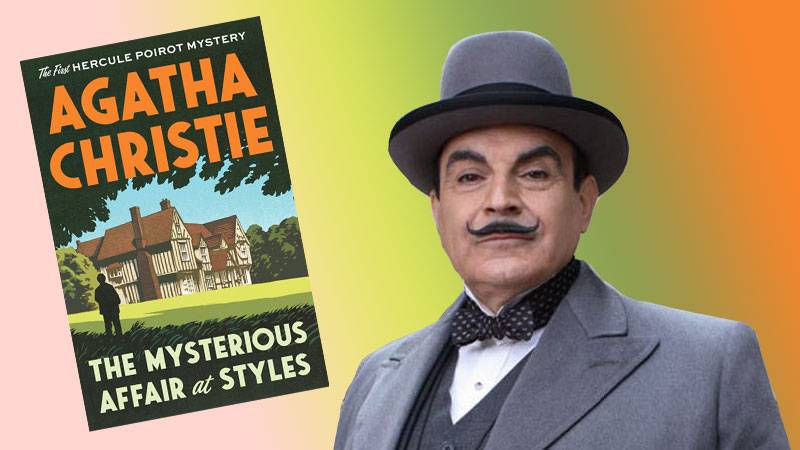
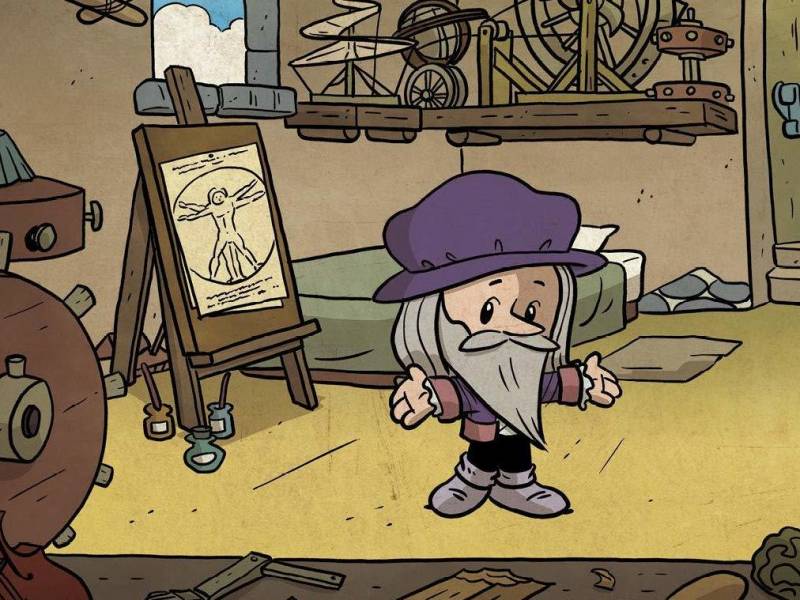
window.__IS_SSR__=true
window.__INITIAL_STATE__={
"attachmentsReducer": {
"audio_0": {
"type": "attachments",
"id": "audio_0",
"imgSizes": {
"kqedFullSize": {
"file": "https://ww2.kqed.org/news/wp-content/themes/KQED-unified/img/audio_bgs/background0.jpg"
}
}
},
"audio_1": {
"type": "attachments",
"id": "audio_1",
"imgSizes": {
"kqedFullSize": {
"file": "https://ww2.kqed.org/news/wp-content/themes/KQED-unified/img/audio_bgs/background1.jpg"
}
}
},
"audio_2": {
"type": "attachments",
"id": "audio_2",
"imgSizes": {
"kqedFullSize": {
"file": "https://ww2.kqed.org/news/wp-content/themes/KQED-unified/img/audio_bgs/background2.jpg"
}
}
},
"audio_3": {
"type": "attachments",
"id": "audio_3",
"imgSizes": {
"kqedFullSize": {
"file": "https://ww2.kqed.org/news/wp-content/themes/KQED-unified/img/audio_bgs/background3.jpg"
}
}
},
"audio_4": {
"type": "attachments",
"id": "audio_4",
"imgSizes": {
"kqedFullSize": {
"file": "https://ww2.kqed.org/news/wp-content/themes/KQED-unified/img/audio_bgs/background4.jpg"
}
}
},
"placeholder": {
"type": "attachments",
"id": "placeholder",
"imgSizes": {
"thumbnail": {
"file": "https://cdn.kqed.org/wp-content/uploads/2024/12/KQED-Default-Image-816638274-2000x1333-1-160x107.jpg",
"width": 160,
"height": 107,
"mimeType": "image/jpeg"
},
"medium": {
"file": "https://cdn.kqed.org/wp-content/uploads/2024/12/KQED-Default-Image-816638274-2000x1333-1-800x533.jpg",
"width": 800,
"height": 533,
"mimeType": "image/jpeg"
},
"medium_large": {
"file": "https://cdn.kqed.org/wp-content/uploads/2024/12/KQED-Default-Image-816638274-2000x1333-1-768x512.jpg",
"width": 768,
"height": 512,
"mimeType": "image/jpeg"
},
"large": {
"file": "https://cdn.kqed.org/wp-content/uploads/2024/12/KQED-Default-Image-816638274-2000x1333-1-1020x680.jpg",
"width": 1020,
"height": 680,
"mimeType": "image/jpeg"
},
"1536x1536": {
"file": "https://cdn.kqed.org/wp-content/uploads/2024/12/KQED-Default-Image-816638274-2000x1333-1-1536x1024.jpg",
"width": 1536,
"height": 1024,
"mimeType": "image/jpeg"
},
"fd-lrg": {
"file": "https://cdn.kqed.org/wp-content/uploads/2024/12/KQED-Default-Image-816638274-2000x1333-1-1536x1024.jpg",
"width": 1536,
"height": 1024,
"mimeType": "image/jpeg"
},
"fd-med": {
"file": "https://cdn.kqed.org/wp-content/uploads/2024/12/KQED-Default-Image-816638274-2000x1333-1-1020x680.jpg",
"width": 1020,
"height": 680,
"mimeType": "image/jpeg"
},
"fd-sm": {
"file": "https://cdn.kqed.org/wp-content/uploads/2024/12/KQED-Default-Image-816638274-2000x1333-1-800x533.jpg",
"width": 800,
"height": 533,
"mimeType": "image/jpeg"
},
"post-thumbnail": {
"file": "https://cdn.kqed.org/wp-content/uploads/2024/12/KQED-Default-Image-816638274-2000x1333-1-672x372.jpg",
"width": 672,
"height": 372,
"mimeType": "image/jpeg"
},
"twentyfourteen-full-width": {
"file": "https://cdn.kqed.org/wp-content/uploads/2024/12/KQED-Default-Image-816638274-2000x1333-1-1038x576.jpg",
"width": 1038,
"height": 576,
"mimeType": "image/jpeg"
},
"xxsmall": {
"file": "https://cdn.kqed.org/wp-content/uploads/2024/12/KQED-Default-Image-816638274-2000x1333-1-160x107.jpg",
"width": 160,
"height": 107,
"mimeType": "image/jpeg"
},
"xsmall": {
"file": "https://cdn.kqed.org/wp-content/uploads/2024/12/KQED-Default-Image-816638274-2000x1333-1-672x372.jpg",
"width": 672,
"height": 372,
"mimeType": "image/jpeg"
},
"small": {
"file": "https://cdn.kqed.org/wp-content/uploads/2024/12/KQED-Default-Image-816638274-2000x1333-1-672x372.jpg",
"width": 672,
"height": 372,
"mimeType": "image/jpeg"
},
"xlarge": {
"file": "https://cdn.kqed.org/wp-content/uploads/2024/12/KQED-Default-Image-816638274-2000x1333-1-1020x680.jpg",
"width": 1020,
"height": 680,
"mimeType": "image/jpeg"
},
"full-width": {
"file": "https://cdn.kqed.org/wp-content/uploads/2024/12/KQED-Default-Image-816638274-2000x1333-1-1920x1280.jpg",
"width": 1920,
"height": 1280,
"mimeType": "image/jpeg"
},
"guest-author-32": {
"file": "https://cdn.kqed.org/wp-content/uploads/2025/01/KQED-Default-Image-816638274-1333x1333-1-160x160.jpg",
"width": 32,
"height": 32,
"mimeType": "image/jpeg"
},
"guest-author-50": {
"file": "https://cdn.kqed.org/wp-content/uploads/2025/01/KQED-Default-Image-816638274-1333x1333-1-160x160.jpg",
"width": 50,
"height": 50,
"mimeType": "image/jpeg"
},
"guest-author-64": {
"file": "https://cdn.kqed.org/wp-content/uploads/2025/01/KQED-Default-Image-816638274-1333x1333-1-160x160.jpg",
"width": 64,
"height": 64,
"mimeType": "image/jpeg"
},
"guest-author-96": {
"file": "https://cdn.kqed.org/wp-content/uploads/2025/01/KQED-Default-Image-816638274-1333x1333-1-160x160.jpg",
"width": 96,
"height": 96,
"mimeType": "image/jpeg"
},
"guest-author-128": {
"file": "https://cdn.kqed.org/wp-content/uploads/2025/01/KQED-Default-Image-816638274-1333x1333-1-160x160.jpg",
"width": 128,
"height": 128,
"mimeType": "image/jpeg"
},
"detail": {
"file": "https://cdn.kqed.org/wp-content/uploads/2025/01/KQED-Default-Image-816638274-1333x1333-1-160x160.jpg",
"width": 160,
"height": 160,
"mimeType": "image/jpeg"
},
"kqedFullSize": {
"file": "https://cdn.kqed.org/wp-content/uploads/2024/12/KQED-Default-Image-816638274-2000x1333-1.jpg",
"width": 2000,
"height": 1333
}
}
},
"arts_13878359": {
"type": "attachments",
"id": "arts_13878359",
"meta": {
"index": "attachments_1716263798",
"site": "arts",
"id": "13878359",
"found": true
},
"parent": 13878355,
"imgSizes": {
"twentyfourteen-full-width": {
"file": "https://ww2.kqed.org/app/uploads/sites/2/2020/04/graphic-novel-composite-1038x499.jpg",
"width": 1038,
"mimeType": "image/jpeg",
"height": 499
},
"thumbnail": {
"file": "https://ww2.kqed.org/app/uploads/sites/2/2020/04/graphic-novel-composite-160x73.jpg",
"width": 160,
"mimeType": "image/jpeg",
"height": 73
},
"post-thumbnail": {
"file": "https://ww2.kqed.org/app/uploads/sites/2/2020/04/graphic-novel-composite-672x372.jpg",
"width": 672,
"mimeType": "image/jpeg",
"height": 372
},
"kqedFullSize": {
"file": "https://ww2.kqed.org/app/uploads/sites/2/2020/04/graphic-novel-composite.jpg",
"width": 1101,
"height": 499
},
"large": {
"file": "https://ww2.kqed.org/app/uploads/sites/2/2020/04/graphic-novel-composite-1020x462.jpg",
"width": 1020,
"mimeType": "image/jpeg",
"height": 462
},
"medium": {
"file": "https://ww2.kqed.org/app/uploads/sites/2/2020/04/graphic-novel-composite-800x363.jpg",
"width": 800,
"mimeType": "image/jpeg",
"height": 363
},
"medium_large": {
"file": "https://ww2.kqed.org/app/uploads/sites/2/2020/04/graphic-novel-composite-768x348.jpg",
"width": 768,
"mimeType": "image/jpeg",
"height": 348
}
},
"publishDate": 1586381714,
"modified": 1586382770,
"caption": "'Daytripper by Gabriel Ba and Fabio Moon, 'This One Summer' by Mariko and Jillian Tamaki, 'Y: The Last Man' by Brian K. Vaughan and Pia Guerra. ",
"description": "'Daytripper by Gabriel Ba and Fabio Moon, 'This One Summer' by Mariko and Jillian Tamaki, 'Y! The Last Man' by Brian K. Vaughan and Pia Guerra. ",
"title": "graphic novel composite",
"credit": null,
"status": "inherit",
"isLoading": false,
"fetchFailed": false
},
"arts_13878259": {
"type": "attachments",
"id": "arts_13878259",
"meta": {
"index": "attachments_1716263798",
"site": "arts",
"id": "13878259",
"found": true
},
"parent": 13878258,
"imgSizes": {
"twentyfourteen-full-width": {
"file": "https://ww2.kqed.org/app/uploads/sites/2/2020/04/godshot1-7427f4d5bd01323ec7fc8e8749727e70b47bef0d-1038x576.jpg",
"width": 1038,
"mimeType": "image/jpeg",
"height": 576
},
"thumbnail": {
"file": "https://ww2.kqed.org/app/uploads/sites/2/2020/04/godshot1-7427f4d5bd01323ec7fc8e8749727e70b47bef0d-160x120.jpg",
"width": 160,
"mimeType": "image/jpeg",
"height": 120
},
"post-thumbnail": {
"file": "https://ww2.kqed.org/app/uploads/sites/2/2020/04/godshot1-7427f4d5bd01323ec7fc8e8749727e70b47bef0d-672x372.jpg",
"width": 672,
"mimeType": "image/jpeg",
"height": 372
},
"kqedFullSize": {
"file": "https://ww2.kqed.org/app/uploads/sites/2/2020/04/godshot1-7427f4d5bd01323ec7fc8e8749727e70b47bef0d-e1586290546409.jpg",
"width": 1498,
"height": 1123
},
"large": {
"file": "https://ww2.kqed.org/app/uploads/sites/2/2020/04/godshot1-7427f4d5bd01323ec7fc8e8749727e70b47bef0d-1020x765.jpg",
"width": 1020,
"mimeType": "image/jpeg",
"height": 765
},
"medium": {
"file": "https://ww2.kqed.org/app/uploads/sites/2/2020/04/godshot1-7427f4d5bd01323ec7fc8e8749727e70b47bef0d-800x600.jpg",
"width": 800,
"mimeType": "image/jpeg",
"height": 600
},
"medium_large": {
"file": "https://ww2.kqed.org/app/uploads/sites/2/2020/04/godshot1-7427f4d5bd01323ec7fc8e8749727e70b47bef0d-768x576.jpg",
"width": 768,
"mimeType": "image/jpeg",
"height": 576
}
},
"publishDate": 1586290082,
"modified": 1586290574,
"caption": "'Godshot' by Chelsea Bieker.",
"description": "'Godshot' by Chelsea Bieker.",
"title": "'Godshot' by Chelsea Bieker.",
"credit": null,
"status": "inherit",
"isLoading": false,
"fetchFailed": false
},
"arts_13878067": {
"type": "attachments",
"id": "arts_13878067",
"meta": {
"index": "attachments_1716263798",
"site": "arts",
"id": "13878067",
"found": true
},
"parent": 13878051,
"imgSizes": {
"thumbnail": {
"file": "https://ww2.kqed.org/app/uploads/sites/2/2020/04/Mystery_COVERc-160x90.jpg",
"width": 160,
"mimeType": "image/jpeg",
"height": 90
},
"post-thumbnail": {
"file": "https://ww2.kqed.org/app/uploads/sites/2/2020/04/Mystery_COVERc-672x372.jpg",
"width": 672,
"mimeType": "image/jpeg",
"height": 372
},
"kqedFullSize": {
"file": "https://ww2.kqed.org/app/uploads/sites/2/2020/04/Mystery_COVERc.jpg",
"width": 800,
"height": 450
},
"medium": {
"file": "https://ww2.kqed.org/app/uploads/sites/2/2020/04/Mystery_COVERc-800x450.jpg",
"width": 800,
"mimeType": "image/jpeg",
"height": 450
},
"medium_large": {
"file": "https://ww2.kqed.org/app/uploads/sites/2/2020/04/Mystery_COVERc-768x432.jpg",
"width": 768,
"mimeType": "image/jpeg",
"height": 432
}
},
"publishDate": 1585854663,
"modified": 1585854674,
"caption": "Phoebe Judge reads 'The Mysterious Affair at Styles' and I picture detective Hercule Poirot as David Suchet played him.",
"description": "Phoebe Judge reads 'The Mysterious Affair at Styles' and I picture detective Hercule Poirot as David Suchet played him.",
"title": "Mystery_COVERc",
"credit": null,
"status": "inherit",
"isLoading": false,
"fetchFailed": false
},
"arts_13877987": {
"type": "attachments",
"id": "arts_13877987",
"meta": {
"index": "attachments_1716263798",
"site": "arts",
"id": "13877987",
"found": true
},
"parent": 13877940,
"imgSizes": {
"twentyfourteen-full-width": {
"file": "https://ww2.kqed.org/app/uploads/sites/2/2020/04/nwa-1038x576.jpeg",
"width": 1038,
"mimeType": "image/jpeg",
"height": 576
},
"thumbnail": {
"file": "https://ww2.kqed.org/app/uploads/sites/2/2020/04/nwa-160x107.jpeg",
"width": 160,
"mimeType": "image/jpeg",
"height": 107
},
"post-thumbnail": {
"file": "https://ww2.kqed.org/app/uploads/sites/2/2020/04/nwa-672x372.jpeg",
"width": 672,
"mimeType": "image/jpeg",
"height": 372
},
"kqedFullSize": {
"file": "https://ww2.kqed.org/app/uploads/sites/2/2020/04/nwa.jpeg",
"width": 1920,
"height": 1280
},
"large": {
"file": "https://ww2.kqed.org/app/uploads/sites/2/2020/04/nwa-1020x680.jpeg",
"width": 1020,
"mimeType": "image/jpeg",
"height": 680
},
"full-width": {
"file": "https://ww2.kqed.org/app/uploads/sites/2/2020/04/nwa-1920x1280.jpeg",
"width": 1920,
"mimeType": "image/jpeg",
"height": 1280
},
"medium": {
"file": "https://ww2.kqed.org/app/uploads/sites/2/2020/04/nwa-800x533.jpeg",
"width": 800,
"mimeType": "image/jpeg",
"height": 533
},
"medium_large": {
"file": "https://ww2.kqed.org/app/uploads/sites/2/2020/04/nwa-768x512.jpeg",
"width": 768,
"mimeType": "image/jpeg",
"height": 512
}
},
"publishDate": 1585784987,
"modified": 1585785049,
"caption": "Single art for N.W.A. \"Fuck tha Police.\"",
"description": "Single art for N.W.A. \"Fuck tha Police.\"",
"title": "nwa",
"credit": "N.W.A.",
"status": "inherit",
"isLoading": false,
"fetchFailed": false
},
"arts_13877968": {
"type": "attachments",
"id": "arts_13877968",
"meta": {
"index": "attachments_1716263798",
"site": "arts",
"id": "13877968",
"found": true
},
"parent": 13877967,
"imgSizes": {
"twentyfourteen-full-width": {
"file": "https://ww2.kqed.org/app/uploads/sites/2/2020/04/gettyimages-1198372862_custom-e8c1a245ba1d7ded54e2535a197ceee4c59f317e-1038x576.jpg",
"width": 1038,
"mimeType": "image/jpeg",
"height": 576
},
"thumbnail": {
"file": "https://ww2.kqed.org/app/uploads/sites/2/2020/04/gettyimages-1198372862_custom-e8c1a245ba1d7ded54e2535a197ceee4c59f317e-160x107.jpg",
"width": 160,
"mimeType": "image/jpeg",
"height": 107
},
"post-thumbnail": {
"file": "https://ww2.kqed.org/app/uploads/sites/2/2020/04/gettyimages-1198372862_custom-e8c1a245ba1d7ded54e2535a197ceee4c59f317e-672x372.jpg",
"width": 672,
"mimeType": "image/jpeg",
"height": 372
},
"kqedFullSize": {
"file": "https://ww2.kqed.org/app/uploads/sites/2/2020/04/gettyimages-1198372862_custom-e8c1a245ba1d7ded54e2535a197ceee4c59f317e-e1585769172587.jpg",
"width": 1920,
"height": 1279
},
"large": {
"file": "https://ww2.kqed.org/app/uploads/sites/2/2020/04/gettyimages-1198372862_custom-e8c1a245ba1d7ded54e2535a197ceee4c59f317e-1020x679.jpg",
"width": 1020,
"mimeType": "image/jpeg",
"height": 679
},
"full-width": {
"file": "https://ww2.kqed.org/app/uploads/sites/2/2020/04/gettyimages-1198372862_custom-e8c1a245ba1d7ded54e2535a197ceee4c59f317e-1920x1279.jpg",
"width": 1920,
"mimeType": "image/jpeg",
"height": 1279
},
"medium": {
"file": "https://ww2.kqed.org/app/uploads/sites/2/2020/04/gettyimages-1198372862_custom-e8c1a245ba1d7ded54e2535a197ceee4c59f317e-800x533.jpg",
"width": 800,
"mimeType": "image/jpeg",
"height": 533
},
"medium_large": {
"file": "https://ww2.kqed.org/app/uploads/sites/2/2020/04/gettyimages-1198372862_custom-e8c1a245ba1d7ded54e2535a197ceee4c59f317e-768x511.jpg",
"width": 768,
"mimeType": "image/jpeg",
"height": 511
}
},
"publishDate": 1585768136,
"modified": 1585768136,
"caption": null,
"description": "A man crosses an empty road in Wuhan, Hubei province, China, on Feb. 3, 2020.",
"title": "A man crosses an empty road in Wuhan, Hubei province, China, on Feb. 3, 2020.",
"credit": null,
"status": "inherit",
"isLoading": false,
"fetchFailed": false
},
"arts_13877897": {
"type": "attachments",
"id": "arts_13877897",
"meta": {
"index": "attachments_1716263798",
"site": "arts",
"id": "13877897",
"found": true
},
"parent": 13877896,
"imgSizes": {
"twentyfourteen-full-width": {
"file": "https://ww2.kqed.org/app/uploads/sites/2/2020/03/813azmd2nul-ee90eaa09fde61cb259e52c088ba75eb47a53bb0-1012x576.jpg",
"width": 1012,
"mimeType": "image/jpeg",
"height": 576
},
"thumbnail": {
"file": "https://ww2.kqed.org/app/uploads/sites/2/2020/03/813azmd2nul-ee90eaa09fde61cb259e52c088ba75eb47a53bb0-160x120.jpg",
"width": 160,
"mimeType": "image/jpeg",
"height": 120
},
"post-thumbnail": {
"file": "https://ww2.kqed.org/app/uploads/sites/2/2020/03/813azmd2nul-ee90eaa09fde61cb259e52c088ba75eb47a53bb0-672x372.jpg",
"width": 672,
"mimeType": "image/jpeg",
"height": 372
},
"kqedFullSize": {
"file": "https://ww2.kqed.org/app/uploads/sites/2/2020/03/813azmd2nul-ee90eaa09fde61cb259e52c088ba75eb47a53bb0.jpg",
"width": 1012,
"height": 759
},
"medium": {
"file": "https://ww2.kqed.org/app/uploads/sites/2/2020/03/813azmd2nul-ee90eaa09fde61cb259e52c088ba75eb47a53bb0-800x600.jpg",
"width": 800,
"mimeType": "image/jpeg",
"height": 600
},
"medium_large": {
"file": "https://ww2.kqed.org/app/uploads/sites/2/2020/03/813azmd2nul-ee90eaa09fde61cb259e52c088ba75eb47a53bb0-768x576.jpg",
"width": 768,
"mimeType": "image/jpeg",
"height": 576
}
},
"publishDate": 1585689351,
"modified": 1585689850,
"caption": "From 'I am Leonardo da Vinci,' by Brad Meltzer and Christopher Eliopoulos.",
"description": "From 'I am Leonardo da Vinci,' by Brad Meltzer and Christopher Eliopoulos.",
"title": "From 'I am Leonardo da Vinci,' by Brad Meltzer and Christopher Eliopoulos.",
"credit": null,
"status": "inherit",
"isLoading": false,
"fetchFailed": false
},
"arts_13877887": {
"type": "attachments",
"id": "arts_13877887",
"meta": {
"index": "attachments_1716263798",
"site": "arts",
"id": "13877887",
"found": true
},
"parent": 13877883,
"imgSizes": {
"twentyfourteen-full-width": {
"file": "https://ww2.kqed.org/app/uploads/sites/2/2020/03/https_2F2Fcdn.cnn_.com2Fcnnnext2Fdam2Fassets2F200330205622-dolly-parton-bedtime-stories-1038x576.jpg",
"width": 1038,
"mimeType": "image/jpeg",
"height": 576
},
"thumbnail": {
"file": "https://ww2.kqed.org/app/uploads/sites/2/2020/03/https_2F2Fcdn.cnn_.com2Fcnnnext2Fdam2Fassets2F200330205622-dolly-parton-bedtime-stories-160x90.jpg",
"width": 160,
"mimeType": "image/jpeg",
"height": 90
},
"post-thumbnail": {
"file": "https://ww2.kqed.org/app/uploads/sites/2/2020/03/https_2F2Fcdn.cnn_.com2Fcnnnext2Fdam2Fassets2F200330205622-dolly-parton-bedtime-stories-672x372.jpg",
"width": 672,
"mimeType": "image/jpeg",
"height": 372
},
"kqedFullSize": {
"file": "https://ww2.kqed.org/app/uploads/sites/2/2020/03/https_2F2Fcdn.cnn_.com2Fcnnnext2Fdam2Fassets2F200330205622-dolly-parton-bedtime-stories.jpg",
"width": 1200,
"height": 675
},
"large": {
"file": "https://ww2.kqed.org/app/uploads/sites/2/2020/03/https_2F2Fcdn.cnn_.com2Fcnnnext2Fdam2Fassets2F200330205622-dolly-parton-bedtime-stories-1020x574.jpg",
"width": 1020,
"mimeType": "image/jpeg",
"height": 574
},
"medium": {
"file": "https://ww2.kqed.org/app/uploads/sites/2/2020/03/https_2F2Fcdn.cnn_.com2Fcnnnext2Fdam2Fassets2F200330205622-dolly-parton-bedtime-stories-800x450.jpg",
"width": 800,
"mimeType": "image/jpeg",
"height": 450
},
"medium_large": {
"file": "https://ww2.kqed.org/app/uploads/sites/2/2020/03/https_2F2Fcdn.cnn_.com2Fcnnnext2Fdam2Fassets2F200330205622-dolly-parton-bedtime-stories-768x432.jpg",
"width": 768,
"mimeType": "image/jpeg",
"height": 432
}
},
"publishDate": 1585683721,
"modified": 1585683791,
"caption": "\"Goodnight With Dolly\" is a new 10-week series you can stream online, starting April 2.",
"description": "\"Goodnight With Dolly\" is a new 10-week series you can stream online, starting April 2.",
"title": "\"Goodnight With Dolly\" is a new 10-week series you can stream online, starting April 2.",
"credit": "YouTube",
"status": "inherit",
"isLoading": false,
"fetchFailed": false
},
"arts_13877765": {
"type": "attachments",
"id": "arts_13877765",
"meta": {
"index": "attachments_1716263798",
"site": "arts",
"id": "13877765",
"found": true
},
"parent": 0,
"imgSizes": {
"twentyfourteen-full-width": {
"file": "https://ww2.kqed.org/app/uploads/sites/2/2020/03/1024-composite-option-2-1024x576.jpg",
"width": 1024,
"mimeType": "image/jpeg",
"height": 576
},
"thumbnail": {
"file": "https://ww2.kqed.org/app/uploads/sites/2/2020/03/1024-composite-option-2-160x128.jpg",
"width": 160,
"mimeType": "image/jpeg",
"height": 128
},
"post-thumbnail": {
"file": "https://ww2.kqed.org/app/uploads/sites/2/2020/03/1024-composite-option-2-672x372.jpg",
"width": 672,
"mimeType": "image/jpeg",
"height": 372
},
"kqedFullSize": {
"file": "https://ww2.kqed.org/app/uploads/sites/2/2020/03/1024-composite-option-2.jpg",
"width": 1024,
"height": 819
},
"large": {
"file": "https://ww2.kqed.org/app/uploads/sites/2/2020/03/1024-composite-option-2-1020x816.jpg",
"width": 1020,
"mimeType": "image/jpeg",
"height": 816
},
"medium": {
"file": "https://ww2.kqed.org/app/uploads/sites/2/2020/03/1024-composite-option-2-800x640.jpg",
"width": 800,
"mimeType": "image/jpeg",
"height": 640
},
"medium_large": {
"file": "https://ww2.kqed.org/app/uploads/sites/2/2020/03/1024-composite-option-2-768x614.jpg",
"width": 768,
"mimeType": "image/jpeg",
"height": 614
}
},
"publishDate": 1585589323,
"modified": 1585611703,
"caption": "'Black Boy' by Richard Wright; 'Mastery of Love' by Don Miguel Ruiz and Janet Mills; 'Dear Girls' by Ali Wong",
"description": null,
"title": "1024 composite option 2",
"credit": "Harper Perennial Modern Classics/Amber-Allen Publishing/Penguin Random House LLC",
"status": "inherit",
"isLoading": false,
"fetchFailed": false
},
"arts_13877771": {
"type": "attachments",
"id": "arts_13877771",
"meta": {
"index": "attachments_1716263798",
"site": "arts",
"id": "13877771",
"found": true
},
"parent": 13877770,
"imgSizes": {
"thumbnail": {
"file": "https://ww2.kqed.org/app/uploads/sites/2/2020/03/91onutj7axl-7327ae34ec6f5125f96dd0258a1741f83057d3c1-160x120.jpg",
"width": 160,
"mimeType": "image/jpeg",
"height": 120
},
"post-thumbnail": {
"file": "https://ww2.kqed.org/app/uploads/sites/2/2020/03/91onutj7axl-7327ae34ec6f5125f96dd0258a1741f83057d3c1-672x372.jpg",
"width": 672,
"mimeType": "image/jpeg",
"height": 372
},
"kqedFullSize": {
"file": "https://ww2.kqed.org/app/uploads/sites/2/2020/03/91onutj7axl-7327ae34ec6f5125f96dd0258a1741f83057d3c1.jpg",
"width": 760,
"height": 570
}
},
"publishDate": 1585590730,
"modified": 1585590730,
"caption": null,
"description": "\u003cem>Tigers, Not Daughters\u003c/em>, by Samantha Mabry",
"title": "Tigers, Not Daughters, by Samantha Mabry",
"credit": null,
"status": "inherit",
"isLoading": false,
"fetchFailed": false
},
"arts_13877429": {
"type": "attachments",
"id": "arts_13877429",
"meta": {
"index": "attachments_1716263798",
"site": "arts",
"id": "13877429",
"found": true
},
"parent": 13877428,
"imgSizes": {
"twentyfourteen-full-width": {
"file": "https://ww2.kqed.org/app/uploads/sites/2/2020/03/Everything-is-beautiful-1038x576.jpg",
"width": 1038,
"mimeType": "image/jpeg",
"height": 576
},
"thumbnail": {
"file": "https://ww2.kqed.org/app/uploads/sites/2/2020/03/Everything-is-beautiful-160x99.jpg",
"width": 160,
"mimeType": "image/jpeg",
"height": 99
},
"post-thumbnail": {
"file": "https://ww2.kqed.org/app/uploads/sites/2/2020/03/Everything-is-beautiful-672x372.jpg",
"width": 672,
"mimeType": "image/jpeg",
"height": 372
},
"kqedFullSize": {
"file": "https://ww2.kqed.org/app/uploads/sites/2/2020/03/Everything-is-beautiful.jpg",
"width": 2364,
"height": 1463
},
"large": {
"file": "https://ww2.kqed.org/app/uploads/sites/2/2020/03/Everything-is-beautiful-1020x631.jpg",
"width": 1020,
"mimeType": "image/jpeg",
"height": 631
},
"full-width": {
"file": "https://ww2.kqed.org/app/uploads/sites/2/2020/03/Everything-is-beautiful-1920x1188.jpg",
"width": 1920,
"mimeType": "image/jpeg",
"height": 1188
},
"medium": {
"file": "https://ww2.kqed.org/app/uploads/sites/2/2020/03/Everything-is-beautiful-800x495.jpg",
"width": 800,
"mimeType": "image/jpeg",
"height": 495
},
"medium_large": {
"file": "https://ww2.kqed.org/app/uploads/sites/2/2020/03/Everything-is-beautiful-768x475.jpg",
"width": 768,
"mimeType": "image/jpeg",
"height": 475
}
},
"publishDate": 1585121815,
"modified": 1585121840,
"caption": null,
"description": null,
"title": "Everything is beautiful",
"credit": "Andrews McMeel Publishing",
"status": "inherit",
"isLoading": false,
"fetchFailed": false
},
"arts_13876869": {
"type": "attachments",
"id": "arts_13876869",
"meta": {
"index": "attachments_1716263798",
"site": "arts",
"id": "13876869",
"found": true
},
"parent": 0,
"imgSizes": {
"twentyfourteen-full-width": {
"file": "https://ww2.kqed.org/app/uploads/sites/2/2020/03/Booksmith_COVER-1-1038x576.jpg",
"width": 1038,
"mimeType": "image/jpeg",
"height": 576
},
"thumbnail": {
"file": "https://ww2.kqed.org/app/uploads/sites/2/2020/03/Booksmith_COVER-1-160x90.jpg",
"width": 160,
"mimeType": "image/jpeg",
"height": 90
},
"post-thumbnail": {
"file": "https://ww2.kqed.org/app/uploads/sites/2/2020/03/Booksmith_COVER-1-672x372.jpg",
"width": 672,
"mimeType": "image/jpeg",
"height": 372
},
"kqedFullSize": {
"file": "https://ww2.kqed.org/app/uploads/sites/2/2020/03/Booksmith_COVER-1.jpg",
"width": 1920,
"height": 1080
},
"large": {
"file": "https://ww2.kqed.org/app/uploads/sites/2/2020/03/Booksmith_COVER-1-1020x574.jpg",
"width": 1020,
"mimeType": "image/jpeg",
"height": 574
},
"full-width": {
"file": "https://ww2.kqed.org/app/uploads/sites/2/2020/03/Booksmith_COVER-1-1920x1080.jpg",
"width": 1920,
"mimeType": "image/jpeg",
"height": 1080
},
"medium": {
"file": "https://ww2.kqed.org/app/uploads/sites/2/2020/03/Booksmith_COVER-1-800x450.jpg",
"width": 800,
"mimeType": "image/jpeg",
"height": 450
},
"medium_large": {
"file": "https://ww2.kqed.org/app/uploads/sites/2/2020/03/Booksmith_COVER-1-768x432.jpg",
"width": 768,
"mimeType": "image/jpeg",
"height": 432
}
},
"publishDate": 1584404218,
"modified": 1584404295,
"caption": "The Booksmith on Haight Street.",
"description": "The Booksmith on Haight Street.",
"title": "Booksmith_COVER",
"credit": "Photo by Amy Stephenson",
"status": "inherit",
"isLoading": false,
"fetchFailed": false
},
"arts_13876796": {
"type": "attachments",
"id": "arts_13876796",
"meta": {
"index": "attachments_1716263798",
"site": "arts",
"id": "13876796",
"found": true
},
"parent": 13876785,
"imgSizes": {
"twentyfourteen-full-width": {
"file": "https://ww2.kqed.org/app/uploads/sites/2/2020/03/artsdesklist1_wide-191a183b8d90ad23257cd36aed28798e0c655469-s1100-c85-1038x576.jpg",
"width": 1038,
"mimeType": "image/jpeg",
"height": 576
},
"thumbnail": {
"file": "https://ww2.kqed.org/app/uploads/sites/2/2020/03/artsdesklist1_wide-191a183b8d90ad23257cd36aed28798e0c655469-s1100-c85-160x90.jpg",
"width": 160,
"mimeType": "image/jpeg",
"height": 90
},
"post-thumbnail": {
"file": "https://ww2.kqed.org/app/uploads/sites/2/2020/03/artsdesklist1_wide-191a183b8d90ad23257cd36aed28798e0c655469-s1100-c85-672x372.jpg",
"width": 672,
"mimeType": "image/jpeg",
"height": 372
},
"kqedFullSize": {
"file": "https://ww2.kqed.org/app/uploads/sites/2/2020/03/artsdesklist1_wide-191a183b8d90ad23257cd36aed28798e0c655469-s1100-c85.jpg",
"width": 1100,
"height": 618
},
"large": {
"file": "https://ww2.kqed.org/app/uploads/sites/2/2020/03/artsdesklist1_wide-191a183b8d90ad23257cd36aed28798e0c655469-s1100-c85-1020x573.jpg",
"width": 1020,
"mimeType": "image/jpeg",
"height": 573
},
"medium": {
"file": "https://ww2.kqed.org/app/uploads/sites/2/2020/03/artsdesklist1_wide-191a183b8d90ad23257cd36aed28798e0c655469-s1100-c85-800x449.jpg",
"width": 800,
"mimeType": "image/jpeg",
"height": 449
},
"medium_large": {
"file": "https://ww2.kqed.org/app/uploads/sites/2/2020/03/artsdesklist1_wide-191a183b8d90ad23257cd36aed28798e0c655469-s1100-c85-768x431.jpg",
"width": 768,
"mimeType": "image/jpeg",
"height": 431
}
},
"publishDate": 1584389381,
"modified": 1584389416,
"caption": null,
"description": null,
"title": "artsdesklist1_wide-191a183b8d90ad23257cd36aed28798e0c655469-s1100-c85",
"credit": "AP/Sigur Rós and Evan Agostini/Getty Images",
"status": "inherit",
"isLoading": false,
"fetchFailed": false
}
},
"audioPlayerReducer": {
"postId": "stream_live",
"isPaused": true,
"isPlaying": false,
"pfsActive": false,
"pledgeModalIsOpen": true,
"playerDrawerIsOpen": false,
"liveAudioPlayStartedAt": 0,
"liveAudioPlayContext": ""
},
"authorsReducer": {
"byline_arts_13878355": {
"type": "authors",
"id": "byline_arts_13878355",
"meta": {
"override": true
},
"slug": "byline_arts_13878355",
"name": "Adrian Spinelli ",
"isLoading": false
},
"byline_arts_13878258": {
"type": "authors",
"id": "byline_arts_13878258",
"meta": {
"override": true
},
"slug": "byline_arts_13878258",
"name": "Ari Shapiro",
"isLoading": false
},
"byline_arts_13877967": {
"type": "authors",
"id": "byline_arts_13877967",
"meta": {
"override": true
},
"slug": "byline_arts_13877967",
"name": "Melissa Block",
"isLoading": false
},
"byline_arts_13877896": {
"type": "authors",
"id": "byline_arts_13877896",
"meta": {
"override": true
},
"slug": "byline_arts_13877896",
"name": "Juanita Giles",
"isLoading": false
},
"byline_arts_13877770": {
"type": "authors",
"id": "byline_arts_13877770",
"meta": {
"override": true
},
"slug": "byline_arts_13877770",
"name": "Caitlyn Paxson",
"isLoading": false
},
"byline_arts_13876785": {
"type": "authors",
"id": "byline_arts_13876785",
"meta": {
"override": true
},
"slug": "byline_arts_13876785",
"name": "NPR Staff",
"isLoading": false
},
"shotchkiss": {
"type": "authors",
"id": "61",
"meta": {
"index": "authors_1716337520",
"id": "61",
"found": true
},
"name": "Sarah Hotchkiss",
"firstName": "Sarah",
"lastName": "Hotchkiss",
"slug": "shotchkiss",
"email": "shotchkiss@kqed.org",
"display_author_email": true,
"staff_mastheads": [
"arts"
],
"title": "Senior Editor",
"bio": "Sarah Hotchkiss is a San Francisco \u003ca href=\"http://www.sarahhotchkiss.com\">artist\u003c/a> and arts writer. In 2019, she received the Dorothea & Leo Rabkin Foundation grant for visual art journalism and in 2020 she received a Society of Professional Journalists, Northern California award for excellence in arts and culture reporting.",
"avatar": "https://secure.gravatar.com/avatar/bc662df144b3d27fd8b1b6f1c2a420d34e91e53154d411bb7ad353cc8b6cea8d?s=600&d=blank&r=g",
"twitter": null,
"bluesky": null,
"facebook": null,
"instagram": null,
"linkedin": null,
"sites": [
{
"site": "",
"roles": [
"editor"
]
},
{
"site": "arts",
"roles": [
"Contributor",
"administrator"
]
},
{
"site": "artschool",
"roles": [
"administrator"
]
},
{
"site": "news",
"roles": [
"editor"
]
},
{
"site": "pop",
"roles": [
"administrator"
]
},
{
"site": "bayareabites",
"roles": [
"editor"
]
},
{
"site": "spark",
"roles": [
"editor"
]
},
{
"site": "checkplease",
"roles": [
"editor"
]
}
],
"headData": {
"title": "Sarah Hotchkiss | KQED",
"description": "Senior Editor",
"ogImgSrc": "https://secure.gravatar.com/avatar/bc662df144b3d27fd8b1b6f1c2a420d34e91e53154d411bb7ad353cc8b6cea8d?s=600&d=blank&r=g",
"twImgSrc": "https://secure.gravatar.com/avatar/bc662df144b3d27fd8b1b6f1c2a420d34e91e53154d411bb7ad353cc8b6cea8d?s=600&d=blank&r=g"
},
"isLoading": false,
"link": "/author/shotchkiss"
},
"kqedarts": {
"type": "authors",
"id": "92",
"meta": {
"index": "authors_1716337520",
"id": "92",
"found": true
},
"name": "KQED Arts",
"firstName": "KQED",
"lastName": "Arts",
"slug": "kqedarts",
"email": "arts@kqed.org",
"display_author_email": false,
"staff_mastheads": [],
"title": "KQED Staff",
"bio": null,
"avatar": "https://secure.gravatar.com/avatar/321c9ebfeb7736f9e55366a6d3399ab0?s=600&d=blank&r=g",
"twitter": null,
"facebook": null,
"instagram": "https://www.instagram.com/kqed_arts/",
"linkedin": null,
"sites": [
{
"site": "arts",
"roles": [
"contributor"
]
},
{
"site": "pop",
"roles": [
"contributor"
]
},
{
"site": "science",
"roles": [
"author"
]
},
{
"site": "food",
"roles": [
"contributor"
]
}
],
"headData": {
"title": "KQED Arts | KQED",
"description": "KQED Staff",
"ogImgSrc": "https://secure.gravatar.com/avatar/321c9ebfeb7736f9e55366a6d3399ab0?s=600&d=blank&r=g",
"twImgSrc": "https://secure.gravatar.com/avatar/321c9ebfeb7736f9e55366a6d3399ab0?s=600&d=blank&r=g"
},
"isLoading": false,
"link": "/author/kqedarts"
},
"ralexandra": {
"type": "authors",
"id": "11242",
"meta": {
"index": "authors_1716337520",
"id": "11242",
"found": true
},
"name": "Rae Alexandra",
"firstName": "Rae",
"lastName": "Alexandra",
"slug": "ralexandra",
"email": "ralexandra@kqed.org",
"display_author_email": true,
"staff_mastheads": [],
"title": "Reporter/Producer",
"bio": "Rae Alexandra is a Reporter/Producer for KQED Arts & Culture, and the creator/author of the \u003ca href=\"https://www.kqed.org/arts/program/rebel-girls-from-bay-area-history\">Rebel Girls From Bay Area History\u003c/a> and \u003ca href=\"https://www.kqed.org/bizarrebayarea\">Bizarre Bay Area\u003c/a> series. Her debut book, \u003ca href=\"https://citylights.com/politics-current-events-history/unsung-heroines35-women-who-changed/\">Unsung Heroines: 35 Women Who Changed the Bay Area\u003c/a> was published by City Lights in March 2026. In 2023, Rae was awarded an SPJ Excellence in Journalism Award for Arts & Culture. Rae was born and raised in Wales and subsequently — even after two decades in Northern California — still uses phrases that regularly baffle her coworkers.",
"avatar": "https://secure.gravatar.com/avatar/edfee8176c80cc0a382b051190f5341997df378a934a5774dcb0977732dfd401?s=600&d=blank&r=g",
"twitter": null,
"bluesky": null,
"facebook": null,
"instagram": null,
"linkedin": null,
"sites": [
{
"site": "arts",
"roles": [
"subscriber"
]
},
{
"site": "news",
"roles": [
"subscriber"
]
},
{
"site": "pop",
"roles": [
"subscriber"
]
},
{
"site": "bayareabites",
"roles": [
"subscriber"
]
},
{
"site": "science",
"roles": [
"subscriber"
]
}
],
"headData": {
"title": "Rae Alexandra | KQED",
"description": "Reporter/Producer",
"ogImgSrc": "https://secure.gravatar.com/avatar/edfee8176c80cc0a382b051190f5341997df378a934a5774dcb0977732dfd401?s=600&d=blank&r=g",
"twImgSrc": "https://secure.gravatar.com/avatar/edfee8176c80cc0a382b051190f5341997df378a934a5774dcb0977732dfd401?s=600&d=blank&r=g"
},
"isLoading": false,
"link": "/author/ralexandra"
},
"nvoynovskaya": {
"type": "authors",
"id": "11387",
"meta": {
"index": "authors_1716337520",
"id": "11387",
"found": true
},
"name": "Nastia Voynovskaya",
"firstName": "Nastia",
"lastName": "Voynovskaya",
"slug": "nvoynovskaya",
"email": "nvoynovskaya@kqed.org",
"display_author_email": false,
"staff_mastheads": [
"arts"
],
"title": "Editor and reporter",
"bio": "Nastia Voynovskaya is a reporter, editor and host at KQED Arts & Culture. She's been covering the arts in the Bay Area for over a decade, with a focus on music, queer culture, labor issues and grassroots organizing. She has edited KQED story series such as Trans Bay: A History of San Francisco's Gender-Diverse Community, and co-created KQED's Bay Area hip-hop history project, That's My Word. Nastia's work has been recognized by the Society of Professional Journalists and San Francisco Press Club. She regularly appears on podcasts and radio programs, including NPR's All Songs Considered, and hosts live events where music, culture and conversation meet.",
"avatar": "https://secure.gravatar.com/avatar/5025ee460e5a85d69ca20ea6c6f2f80d7e17795c828f61ea3aecfcd924e9042e?s=600&d=blank&r=g",
"twitter": null,
"bluesky": null,
"facebook": null,
"instagram": "https://www.instagram.com/nananastia/",
"linkedin": null,
"sites": [
{
"site": "",
"roles": [
"editor"
]
},
{
"site": "arts",
"roles": [
"administrator"
]
},
{
"site": "news",
"roles": [
"editor"
]
},
{
"site": "pop",
"roles": [
"administrator"
]
},
{
"site": "bayareabites",
"roles": [
"editor"
]
},
{
"site": "podcasts",
"roles": [
"editor"
]
},
{
"site": "hiphop",
"roles": [
"editor"
]
}
],
"headData": {
"title": "Nastia Voynovskaya | KQED",
"description": "Editor and reporter",
"ogImgSrc": "https://secure.gravatar.com/avatar/5025ee460e5a85d69ca20ea6c6f2f80d7e17795c828f61ea3aecfcd924e9042e?s=600&d=blank&r=g",
"twImgSrc": "https://secure.gravatar.com/avatar/5025ee460e5a85d69ca20ea6c6f2f80d7e17795c828f61ea3aecfcd924e9042e?s=600&d=blank&r=g"
},
"isLoading": false,
"link": "/author/nvoynovskaya"
},
"imendoza": {
"type": "authors",
"id": "11673",
"meta": {
"index": "authors_1716337520",
"id": "11673",
"found": true
},
"name": "Isabeth Mendoza",
"firstName": "Isabeth",
"lastName": "Mendoza",
"slug": "imendoza",
"email": "imendoza@KQED.org",
"display_author_email": true,
"staff_mastheads": [
"news"
],
"title": "Engagement Producer",
"bio": "Isabeth \"Isa\" Mendoza is a former Engagement Producer for KQED's slate of podcasts. Isabeth is a bilingual audio journalist from Southeast Los Angeles and her interests are in wellness, social justice, lifestyle, arts and culture. Previously, she worked on Truth Be Told and as a freelancer for NPR’s Weekend Edition, Roxane Gay and Tressie McMillan Cottom’s Hear to Slay, KCRW's Bodies, and Feeling My Flo podcast. Isabeth is an NPR Next Generation Radio alum, an IWMF Gwen Ifill Fellow, and a previous NPR National Desk intern. She holds a Master’s in Public Health from Emory University and a Bachelor of Arts from UC Berkeley.",
"avatar": "https://secure.gravatar.com/avatar/122e7c21a0daf743684d9988238ef02f?s=600&d=blank&r=g",
"twitter": "IsabethKahlo",
"facebook": null,
"instagram": null,
"linkedin": null,
"sites": [
{
"site": "arts",
"roles": [
"contributor"
]
},
{
"site": "news",
"roles": [
"author"
]
},
{
"site": "podcasts",
"roles": [
"editor"
]
}
],
"headData": {
"title": "Isabeth Mendoza | KQED",
"description": "Engagement Producer",
"ogImgSrc": "https://secure.gravatar.com/avatar/122e7c21a0daf743684d9988238ef02f?s=600&d=blank&r=g",
"twImgSrc": "https://secure.gravatar.com/avatar/122e7c21a0daf743684d9988238ef02f?s=600&d=blank&r=g"
},
"isLoading": false,
"link": "/author/imendoza"
}
},
"pagesReducer": {
"arts_category_literature": {
"type": "terms",
"id": "arts_73",
"meta": {
"index": "terms_1716263798",
"site": "arts",
"id": "73",
"score": 12.797728
},
"featImg": null,
"name": "Books",
"description": null,
"taxonomy": "category",
"headData": {
"twImgId": null,
"twTitle": null,
"ogTitle": null,
"ogImgId": null,
"twDescription": null,
"description": null,
"title": "Books Archives | KQED Arts",
"ogDescription": null
},
"ttid": 74,
"slug": "literature",
"isLoading": false,
"title": "Books",
"pageMeta": {
"site": "arts",
"WpPageTemplate": "page-topic-editorial",
"currentPage": 55
},
"blocks": [
{
"blockName": "kqed/post-list",
"attrs": {
"layout": "cardArticle2",
"query": "posts/arts?category=literature",
"seeMore": false,
"paginated": true,
"page": 55
}
},
{
"blockName": "kqed/ad"
}
]
}
},
"pfsSessionReducer": {},
"postsReducer": {
"stream_live": {
"type": "live",
"id": "stream_live",
"audioUrl": "https://streams.kqed.org/kqedradio",
"title": "Live Stream",
"excerpt": "Live Stream information currently unavailable.",
"link": "/radio",
"featImg": "",
"label": {
"name": "KQED Live",
"link": "/"
}
},
"stream_kqedNewscast": {
"type": "posts",
"id": "stream_kqedNewscast",
"audioUrl": "https://www.kqed.org/.stream/anon/radio/RDnews/newscast.mp3?_=1",
"title": "KQED Newscast",
"featImg": "",
"label": {
"name": "88.5 FM",
"link": "/"
}
},
"arts_13878355": {
"type": "posts",
"id": "arts_13878355",
"meta": {
"index": "posts_1716263798",
"site": "arts",
"id": "13878355",
"score": null,
"sort": [
1586390439000
]
},
"parent": 0,
"labelTerm": {
"site": "arts"
},
"blocks": [],
"publishDate": 1586390439,
"format": "standard",
"title": "5 Escapist Graphic Novels to Transport You Into New Worlds",
"headTitle": "5 Escapist Graphic Novels to Transport You Into New Worlds | KQED",
"content": "\u003cp>\u003cspan style=\"font-weight: 400\">These days, graphic novels can be a welcome escape when we find ourselves questioning whether scrolling through Twitter and binge-watching Netflix are the best uses of time while sheltering in place. For me, they can be a way to get over the attention deficit hump of reading a book when I just can’t bring myself to relax and dive in.\u003c/span>\u003c/p>\n\u003cp>\u003cspan style=\"font-weight: 400\">The visual component heightens the reality of the story, and I find myself transported like a child enamored with a picture book. So let’s take a trip the only way we can right now—in our minds—and read these transcendent graphic novels. \u003c/span>\u003c/p>\n\u003cp>\u003cem>\u003cspan style=\"font-weight: 400\">All selections are available on Kindle, the digital comics site \u003ca href=\"https://www.comixology.com/\" target=\"_blank\" rel=\"noopener noreferrer\">ComiXology\u003c/a>, independent booksellers or your local library via the \u003ca href=\"https://www.overdrive.com/apps/libby/\" target=\"_blank\" rel=\"noopener noreferrer\">Libby\u003c/a> app.\u003c/span>\u003c/em>\u003c/p>\n\u003cp>\u003cb>\u003ci>Daytripper\u003c/i>\u003c/b>\u003cb> by Fábio Moon and Gabriel Bá \u003c/b>\u003c/p>\n\u003cp>\u003cspan style=\"font-weight: 400\">The best dreams feel so real that we want to return to them as soon as we open our eyes. In \u003c/span>\u003ci>\u003cspan style=\"font-weight: 400\">Daytripper\u003c/span>\u003c/i>\u003cspan style=\"font-weight: 400\">, obituary writer Bras is constantly trying to decide when to live out his dreams. As he tries to put someone else’s life into words, he struggles to make sense of his own. In each chapter, Brazilian twin brothers Fábio Moon and Gabriel Bá show us pivotal moments in their main character’s existence as Bras wonders which exact event might signal his true purpose in life. \u003c/span>\u003c/p>\n\u003cp>[ad fullwidth]\u003c/p>\n\u003cp>\u003cspan style=\"font-weight: 400\">It’s hard not to frequently get lost in the incredible depictions of Brazil throughout Bras’ lifetime in \u003c/span>\u003ci>\u003cspan style=\"font-weight: 400\">Daytripper\u003c/span>\u003c/i>\u003cspan style=\"font-weight: 400\">. He journeys into the mesa-lined valleys of Bahia, sips coffee amid downtown São Paulo’s post-colonial architecture and travels to the countryside getaway of his youth. This is a story about love, life, success, death and the moments of pause in between, told as one big, colorful dream. \u003c/span>\u003c/p>\n\u003cp>\u003ci>\u003cspan style=\"font-weight: 400\">\u003cstrong>Memorable quote:\u003c/strong> “If you travel too fast, all you’re gonna see is a blur and you’ll never really meet anyone interesting.”\u003c/span>\u003c/i>\u003c/p>\n\u003cfigure id=\"attachment_13878363\" class=\"wp-caption aligncenter\" style=\"max-width: 800px\">\u003cimg loading=\"lazy\" decoding=\"async\" class=\"size-medium wp-image-13878363\" src=\"https://ww2.kqed.org/app/uploads/sites/2/2020/04/daytripper-800x450.jpeg\" alt=\"\" width=\"800\" height=\"450\" srcset=\"https://cdn.kqed.org/wp-content/uploads/sites/2/2020/04/daytripper-800x450.jpeg 800w, https://cdn.kqed.org/wp-content/uploads/sites/2/2020/04/daytripper-160x90.jpeg 160w, https://cdn.kqed.org/wp-content/uploads/sites/2/2020/04/daytripper-768x432.jpeg 768w, https://cdn.kqed.org/wp-content/uploads/sites/2/2020/04/daytripper-1020x574.jpeg 1020w, https://cdn.kqed.org/wp-content/uploads/sites/2/2020/04/daytripper.jpeg 1280w\" sizes=\"(max-width: 800px) 100vw, 800px\">\u003cfigcaption class=\"wp-caption-text\">An illustration from ‘Daytripper’ by Gabriel Ba and Fabio Moon.\u003c/figcaption>\u003c/figure>\n\u003cp>\u003cb>\u003ci>Y: The Last Man\u003c/i>\u003c/b>\u003cb> by Brian K. Vaughan and Pia Guerra\u003c/b>\u003c/p>\n\u003cp>\u003cspan style=\"font-weight: 400\">Brian K. Vaughan and Pia Guerra’s seminal \u003c/span>\u003ci>\u003cspan style=\"font-weight: 400\">Y: The Last Man \u003c/span>\u003c/i>\u003cspan style=\"font-weight: 400\">is as addicting as a binge-worthy TV series. A Y chromosome-killing epidemic swiftly sweeps the Earth, and the world is suddenly ruled by women. All males are dead (people, animals—all of them) except for one: a quick-witted son of a high-ranking congresswoman named Yorick Brown, who fancies himself a Houdini-like escape artist. Oh and Yorick’s pet monkey, Ampersand, too. \u003c/span>\u003c/p>\n\u003cp>\u003cspan style=\"font-weight: 400\">Meanwhile, cloning specialist Dr. Allison Mann might be the only person who can get to the bottom of what sparked the epidemic and, you know, maybe save the world. Trouble is her lab in Boston was torched by either an extremist man-hating group called the Daughters of the Amazon or Israeli military operatives. The only hope? A cross-country journey to Dr. Mann’s back-up lab in San Francisco by Yorick, his government-appointed protector Agent 355, the doctor and Ampersand.\u003c/span>\u003c/p>\n\u003cp>\u003cspan style=\"font-weight: 400\">The long-rumored \u003c/span>\u003ci>\u003cspan style=\"font-weight: 400\">Y: The Last Man \u003c/span>\u003c/i>\u003cspan style=\"font-weight: 400\">TV show is supposedly slated to drop on FX sometime in 2020. \u003c/span>\u003cspan style=\"font-weight: 400\">This is your chance to read it first and brag to all your friends how “the books were way better!” \u003c/span>\u003c/p>\n\u003cp>\u003ci>\u003cspan style=\"font-weight: 400\">\u003cstrong>Bonus:\u003c/strong> After \u003c/span>\u003c/i>\u003cspan style=\"font-weight: 400\">Y\u003c/span>\u003ci>\u003cspan style=\"font-weight: 400\"> Concluded in 2008, co-creator Pia Guerra found her second calling as a sharp political cartoonist for the likes of \u003c/span>\u003c/i>\u003cspan style=\"font-weight: 400\">The New Yorker\u003c/span>\u003ci>\u003cspan style=\"font-weight: 400\">, \u003c/span>\u003c/i>\u003cspan style=\"font-weight: 400\">The Nib\u003c/span>\u003ci>\u003cspan style=\"font-weight: 400\"> and others. You can see some of her notable cartoons on her Instagram account \u003c/span>\u003c/i>\u003ca href=\"https://www.instagram.com/pia.guerra/?hl=en\" target=\"_blank\" rel=\"noopener noreferrer\">\u003ci>\u003cspan style=\"font-weight: 400\">here\u003c/span>\u003c/i>\u003c/a>.\u003c/p>\n\u003cfigure id=\"attachment_13878357\" class=\"wp-caption alignleft\" style=\"max-width: 800px\">\u003cimg loading=\"lazy\" decoding=\"async\" class=\"size-medium wp-image-13878357\" src=\"https://ww2.kqed.org/app/uploads/sites/2/2020/04/HabibiCover-800x1045.jpg\" alt=\"\" width=\"800\" height=\"1045\" srcset=\"https://cdn.kqed.org/wp-content/uploads/sites/2/2020/04/HabibiCover-800x1045.jpg 800w, https://cdn.kqed.org/wp-content/uploads/sites/2/2020/04/HabibiCover-160x209.jpg 160w, https://cdn.kqed.org/wp-content/uploads/sites/2/2020/04/HabibiCover-768x1004.jpg 768w, https://cdn.kqed.org/wp-content/uploads/sites/2/2020/04/HabibiCover-1020x1333.jpg 1020w, https://cdn.kqed.org/wp-content/uploads/sites/2/2020/04/HabibiCover-1920x2509.jpg 1920w, https://cdn.kqed.org/wp-content/uploads/sites/2/2020/04/HabibiCover.jpg 1959w\" sizes=\"(max-width: 800px) 100vw, 800px\">\u003cfigcaption class=\"wp-caption-text\">‘Habibi’ by Craig Thompson.\u003c/figcaption>\u003c/figure>\n\u003cp>\u003cb>\u003ci>Habibi\u003c/i>\u003c/b>\u003cb> by Craig Thompson\u003c/b>\u003c/p>\n\u003cp>\u003cspan style=\"font-weight: 400\">Craig Thompson is best known for his autobiographical coming-of-age graphic novel, \u003c/span>\u003ci>\u003cspan style=\"font-weight: 400\">Blankets\u003c/span>\u003c/i>\u003cspan style=\"font-weight: 400\">, which sees him growing out of his Midwestern hometown and shedding his Evangelical Christian identity. For \u003c/span>\u003ci>\u003cspan style=\"font-weight: 400\">Habibi, \u003c/span>\u003c/i>\u003cspan style=\"font-weight: 400\">he sought to better understand Islam while expressing the beauty of Arabic calligraphy and interpreting mystical numerology. The result is one of the finest expressions of the graphic novel medium\u003c/span>\u003ci>\u003cspan style=\"font-weight: 400\">. \u003c/span>\u003c/i>\u003cspan style=\"font-weight: 400\">The book’s gorgeous binding makes it easy to mistake for a sacred text, which is fitting for a saga that visually weaves in many stories of the Quran as major motifs. \u003c/span>\u003c/p>\n\u003cp>\u003cspan style=\"font-weight: 400\">A sweeping epic, \u003c/span>\u003ci>\u003cspan style=\"font-weight: 400\">Habibi\u003c/span>\u003c/i>\u003cspan style=\"font-weight: 400\"> tells the tale of a boy and girl who are raised in the vindictive worlds of slavery and child trafficking in a fictional Middle Eastern locale. The boy, Zam, and the girl, Dodola, meet early in life and forge a loving friendship that is torn apart by the circumstances in which their eventual captors marginalize their human value. While heartbreaking at times, the way Zam and Dodola’s lives diverge and converge throughout the incredibly drawn \u003c/span>\u003ci>\u003cspan style=\"font-weight: 400\">Habibi\u003c/span>\u003c/i>\u003cspan style=\"font-weight: 400\"> is reminiscent of \u003c/span>\u003ci>\u003cspan style=\"font-weight: 400\">Slumdog Millionaire\u003c/span>\u003c/i>\u003cspan style=\"font-weight: 400\">, without all the Hollywood fanfare. Although sometimes criticized for its Orientalism, the world that multiple Eisner Award winner Thompson creates in \u003c/span>\u003ci>\u003cspan style=\"font-weight: 400\">Habibi\u003c/span>\u003c/i>\u003cspan style=\"font-weight: 400\"> flows triumphantly like water through the burning desert, bustling medina and brutal cityscape of the fictional Wanatolia. \u003c/span>\u003c/p>\n\u003cp>\u003ci>\u003cspan style=\"font-weight: 400\">\u003cstrong>Memorable quote:\u003c/strong> “That city’s a rich man’s paradise. They waste their treasures.”\u003c/span>\u003c/i>\u003c/p>\n\u003cp>\u003cem>\u003cb>Note: \u003c/b>\u003cspan style=\"font-weight: 400\">While not available on Kindle or ComiXology, the stunning physical copy of \u003c/span>\u003cspan style=\"font-weight: 400\">Habibi \u003c/span>\u003cspan style=\"font-weight: 400\">just begs to be held as you escape into it. It’s available online through several Bay Area booksellers, including San Francisco’s \u003c/span>\u003ca href=\"https://bookshop.org/books/habibi-9780375424144/9780375424144\" target=\"_blank\" rel=\"noopener noreferrer\">\u003cspan style=\"font-weight: 400\">City Lights\u003c/span>\u003c/a>\u003cspan style=\"font-weight: 400\"> and Oakland’s \u003c/span>\u003ca href=\"http://www.waldenpondbooks.com/\" target=\"_blank\" rel=\"noopener noreferrer\">\u003cspan style=\"font-weight: 400\">Walden Pond\u003c/span>\u003c/a>, which also offers the option of a \u003cspan style=\"font-weight: 400\">“safe, sanitized pickup.”\u003c/span>\u003c/em>\u003c/p>\n\u003cp>\u003cb>\u003ci>Strange Planet\u003c/i>\u003c/b>\u003cb> by Nathan Pyle\u003c/b>\u003c/p>\n\u003cp>\u003cspan style=\"font-weight: 400\">While not quite a graphic novel, Nathan Pyle’s new \u003c/span>\u003ci>\u003cspan style=\"font-weight: 400\">Strange Planet\u003c/span>\u003c/i>\u003cspan style=\"font-weight: 400\"> book is a cute and hilarious collection of his webcomics about aliens getting accustomed to the mundane aspects of human life in their rudimentary alien vernacular. Think of a whole family of Robert Heinlein’s Valentine Michael Smith, a Martian who comes to Earth and tries to adapt to earthling customs in \u003c/span>\u003ci>\u003cspan style=\"font-weight: 400\">Stranger In A Strange Land\u003c/span>\u003c/i>\u003cspan style=\"font-weight: 400\">. \u003c/span>\u003c/p>\n\u003cfigure id=\"attachment_13878358\" class=\"wp-caption alignleft\" style=\"max-width: 800px\">\u003cimg loading=\"lazy\" decoding=\"async\" class=\"size-medium wp-image-13878358\" src=\"https://ww2.kqed.org/app/uploads/sites/2/2020/04/StrangePlanetCover-800x800.jpg\" alt=\"\" width=\"800\" height=\"800\" srcset=\"https://cdn.kqed.org/wp-content/uploads/sites/2/2020/04/StrangePlanetCover-800x800.jpg 800w, https://cdn.kqed.org/wp-content/uploads/sites/2/2020/04/StrangePlanetCover-160x160.jpg 160w, https://cdn.kqed.org/wp-content/uploads/sites/2/2020/04/StrangePlanetCover-768x768.jpg 768w, https://cdn.kqed.org/wp-content/uploads/sites/2/2020/04/StrangePlanetCover-1020x1020.jpg 1020w, https://cdn.kqed.org/wp-content/uploads/sites/2/2020/04/StrangePlanetCover.jpg 1600w\" sizes=\"(max-width: 800px) 100vw, 800px\">\u003cfigcaption class=\"wp-caption-text\">‘Strange Planet’ by Nathan Pyle.\u003c/figcaption>\u003c/figure>\n\u003cp>\u003cspan style=\"font-weight: 400\">Pyle’s characters refer to the parent aliens as “lifegivers”; cookies are “sweet disks”; high-fives are “elevated handslaps”; and an alien rationalizes the need to study for a test by proclaiming that “this information is best absorbed by diligent repetition!” This is a sweet series based off of Pyle’s incredibly popular \u003c/span>\u003ca href=\"https://www.instagram.com/nathanwpylestrangeplanet/?hl=en\">\u003cspan style=\"font-weight: 400\">Instagram account\u003c/span>\u003c/a>\u003cspan style=\"font-weight: 400\">, and will certainly help you appreciate life’s simple pleasures. \u003c/span>\u003c/p>\n\u003cp>\u003cstrong>\u003ci>Memorable quote: \u003c/i>\u003c/strong>\u003cspan style=\"font-weight: 400\">\u003cem>[Alien watching\u003c/em> Jeopardy!\u003cem>] \u003c/em>\u003c/span>\u003ci>\u003cspan style=\"font-weight: 400\">“I recalled trivial knowledge that none of these beings knew!” \u003c/span>\u003c/i>\u003c/p>\n\u003cp>\u003cb>\u003ci>This One Summer\u003c/i>\u003c/b>\u003cb> by Mariko Tamaki and Jillian Tamaki\u003c/b>\u003c/p>\n\u003cp>\u003cspan style=\"font-weight: 400\">What \u003c/span>\u003ci>\u003cspan style=\"font-weight: 400\">This One Summer\u003c/span>\u003c/i>\u003cspan style=\"font-weight: 400\"> does so well is depict the Canadian vacation town of Awago Beach through the eyes of Rose and Windy, two young girls who reunite each year with their families in the town. Author Mariko and illustrator Jillian Tamaki (who are cousins) totally nail the girls’ experience of adolescence. Rose is 12 years old and coming into her own as her parents struggle to keep their marriage together. Windy is 10 and constantly on a carefree sugar high, and is just really good at being a kid. [aside postid='arts_13877670,arts_13877940' label='More Book Recommendations']\u003c/span>\u003c/p>\n\u003cp>\u003cspan style=\"font-weight: 400\">The pair goes for swims, collects shells and pops into one of the town’s two stores to rent slasher films. We experience\u003c/span>\u003cspan style=\"font-weight: 400\"> Awago Beach most vividly when the words cease and we’re left with just Jillian Tamaki’s images of raindrops at twilight, ominous clodhoppers and the lake’s musk filling the dank air. The sense of escapism in \u003c/span>\u003ci>\u003cspan style=\"font-weight: 400\">This One Summer\u003c/span>\u003c/i>\u003cspan style=\"font-weight: 400\"> is powerful, and made me pine for the vacation town my family and I would steal away to when I was a kid. A deadly contention comes to light as the story presses on, and with every turn of the page, the world outside of Awago Beach might as well not even exist.\u003c/span>\u003c/p>\n\u003cp>[ad floatright]\u003c/p>\n\u003cp>\u003ci>\u003cspan style=\"font-weight: 400\">\u003cstrong>Memorable quote:\u003c/strong> “You’re not coming in?” “I’m gonna swim along the beach. Home.”\u003c/span>\u003c/i>\u003c/p>\n\n",
"stats": {
"hasVideo": false,
"hasChartOrMap": false,
"hasAudio": false,
"hasPolis": false,
"wordCount": 1354,
"hasGoogleForm": false,
"hasGallery": false,
"hasHearkenModule": false,
"iframeSrcs": [],
"paragraphCount": 27
},
"modified": 1705020919,
"excerpt": "With travel restricted right now, these books invite us to immerse ourselves in sci-fi adventures and dreamlike stories.",
"headData": {
"twImgId": "",
"twTitle": "",
"ogTitle": "",
"ogImgId": "",
"twDescription": "",
"description": "With travel restricted right now, these books invite us to immerse ourselves in sci-fi adventures and dreamlike stories.",
"title": "5 Escapist Graphic Novels to Transport You Into New Worlds | KQED",
"ogDescription": "",
"schema": {
"@context": "https://schema.org",
"@type": "Article",
"headline": "5 Escapist Graphic Novels to Transport You Into New Worlds",
"datePublished": "2020-04-08T17:00:39-07:00",
"dateModified": "2024-01-11T16:55:19-08:00",
"image": "https://cdn.kqed.org/wp-content/uploads/2020/02/KQED-OG-Image@1x.png"
}
},
"guestAuthors": [],
"slug": "5-escapist-graphic-novels-to-transport-you-into-new-worlds",
"status": "publish",
"templateType": "standard",
"nprByline": "Adrian Spinelli ",
"featuredImageType": "standard",
"sticky": false,
"path": "/arts/13878355/5-escapist-graphic-novels-to-transport-you-into-new-worlds",
"audioTrackLength": null,
"parsedContent": [
{
"type": "contentString",
"content": "\u003cdiv class=\"post-body\">\u003cp>\u003cp>\u003cspan style=\"font-weight: 400\">These days, graphic novels can be a welcome escape when we find ourselves questioning whether scrolling through Twitter and binge-watching Netflix are the best uses of time while sheltering in place. For me, they can be a way to get over the attention deficit hump of reading a book when I just can’t bring myself to relax and dive in.\u003c/span>\u003c/p>\n\u003cp>\u003cspan style=\"font-weight: 400\">The visual component heightens the reality of the story, and I find myself transported like a child enamored with a picture book. So let’s take a trip the only way we can right now—in our minds—and read these transcendent graphic novels. \u003c/span>\u003c/p>\n\u003cp>\u003cem>\u003cspan style=\"font-weight: 400\">All selections are available on Kindle, the digital comics site \u003ca href=\"https://www.comixology.com/\" target=\"_blank\" rel=\"noopener noreferrer\">ComiXology\u003c/a>, independent booksellers or your local library via the \u003ca href=\"https://www.overdrive.com/apps/libby/\" target=\"_blank\" rel=\"noopener noreferrer\">Libby\u003c/a> app.\u003c/span>\u003c/em>\u003c/p>\n\u003cp>\u003cb>\u003ci>Daytripper\u003c/i>\u003c/b>\u003cb> by Fábio Moon and Gabriel Bá \u003c/b>\u003c/p>\n\u003cp>\u003cspan style=\"font-weight: 400\">The best dreams feel so real that we want to return to them as soon as we open our eyes. In \u003c/span>\u003ci>\u003cspan style=\"font-weight: 400\">Daytripper\u003c/span>\u003c/i>\u003cspan style=\"font-weight: 400\">, obituary writer Bras is constantly trying to decide when to live out his dreams. As he tries to put someone else’s life into words, he struggles to make sense of his own. In each chapter, Brazilian twin brothers Fábio Moon and Gabriel Bá show us pivotal moments in their main character’s existence as Bras wonders which exact event might signal his true purpose in life. \u003c/span>\u003c/p>\n\u003cp>\u003c/p>\u003c/div>",
"attributes": {
"named": {},
"numeric": []
}
},
{
"type": "component",
"content": "",
"name": "ad",
"attributes": {
"named": {
"label": "fullwidth"
},
"numeric": [
"fullwidth"
]
}
},
{
"type": "contentString",
"content": "\u003cdiv class=\"post-body\">\u003cp>\u003c/p>\n\u003cp>\u003cspan style=\"font-weight: 400\">It’s hard not to frequently get lost in the incredible depictions of Brazil throughout Bras’ lifetime in \u003c/span>\u003ci>\u003cspan style=\"font-weight: 400\">Daytripper\u003c/span>\u003c/i>\u003cspan style=\"font-weight: 400\">. He journeys into the mesa-lined valleys of Bahia, sips coffee amid downtown São Paulo’s post-colonial architecture and travels to the countryside getaway of his youth. This is a story about love, life, success, death and the moments of pause in between, told as one big, colorful dream. \u003c/span>\u003c/p>\n\u003cp>\u003ci>\u003cspan style=\"font-weight: 400\">\u003cstrong>Memorable quote:\u003c/strong> “If you travel too fast, all you’re gonna see is a blur and you’ll never really meet anyone interesting.”\u003c/span>\u003c/i>\u003c/p>\n\u003cfigure id=\"attachment_13878363\" class=\"wp-caption aligncenter\" style=\"max-width: 800px\">\u003cimg loading=\"lazy\" decoding=\"async\" class=\"size-medium wp-image-13878363\" src=\"https://ww2.kqed.org/app/uploads/sites/2/2020/04/daytripper-800x450.jpeg\" alt=\"\" width=\"800\" height=\"450\" srcset=\"https://cdn.kqed.org/wp-content/uploads/sites/2/2020/04/daytripper-800x450.jpeg 800w, https://cdn.kqed.org/wp-content/uploads/sites/2/2020/04/daytripper-160x90.jpeg 160w, https://cdn.kqed.org/wp-content/uploads/sites/2/2020/04/daytripper-768x432.jpeg 768w, https://cdn.kqed.org/wp-content/uploads/sites/2/2020/04/daytripper-1020x574.jpeg 1020w, https://cdn.kqed.org/wp-content/uploads/sites/2/2020/04/daytripper.jpeg 1280w\" sizes=\"(max-width: 800px) 100vw, 800px\">\u003cfigcaption class=\"wp-caption-text\">An illustration from ‘Daytripper’ by Gabriel Ba and Fabio Moon.\u003c/figcaption>\u003c/figure>\n\u003cp>\u003cb>\u003ci>Y: The Last Man\u003c/i>\u003c/b>\u003cb> by Brian K. Vaughan and Pia Guerra\u003c/b>\u003c/p>\n\u003cp>\u003cspan style=\"font-weight: 400\">Brian K. Vaughan and Pia Guerra’s seminal \u003c/span>\u003ci>\u003cspan style=\"font-weight: 400\">Y: The Last Man \u003c/span>\u003c/i>\u003cspan style=\"font-weight: 400\">is as addicting as a binge-worthy TV series. A Y chromosome-killing epidemic swiftly sweeps the Earth, and the world is suddenly ruled by women. All males are dead (people, animals—all of them) except for one: a quick-witted son of a high-ranking congresswoman named Yorick Brown, who fancies himself a Houdini-like escape artist. Oh and Yorick’s pet monkey, Ampersand, too. \u003c/span>\u003c/p>\n\u003cp>\u003cspan style=\"font-weight: 400\">Meanwhile, cloning specialist Dr. Allison Mann might be the only person who can get to the bottom of what sparked the epidemic and, you know, maybe save the world. Trouble is her lab in Boston was torched by either an extremist man-hating group called the Daughters of the Amazon or Israeli military operatives. The only hope? A cross-country journey to Dr. Mann’s back-up lab in San Francisco by Yorick, his government-appointed protector Agent 355, the doctor and Ampersand.\u003c/span>\u003c/p>\n\u003cp>\u003cspan style=\"font-weight: 400\">The long-rumored \u003c/span>\u003ci>\u003cspan style=\"font-weight: 400\">Y: The Last Man \u003c/span>\u003c/i>\u003cspan style=\"font-weight: 400\">TV show is supposedly slated to drop on FX sometime in 2020. \u003c/span>\u003cspan style=\"font-weight: 400\">This is your chance to read it first and brag to all your friends how “the books were way better!” \u003c/span>\u003c/p>\n\u003cp>\u003ci>\u003cspan style=\"font-weight: 400\">\u003cstrong>Bonus:\u003c/strong> After \u003c/span>\u003c/i>\u003cspan style=\"font-weight: 400\">Y\u003c/span>\u003ci>\u003cspan style=\"font-weight: 400\"> Concluded in 2008, co-creator Pia Guerra found her second calling as a sharp political cartoonist for the likes of \u003c/span>\u003c/i>\u003cspan style=\"font-weight: 400\">The New Yorker\u003c/span>\u003ci>\u003cspan style=\"font-weight: 400\">, \u003c/span>\u003c/i>\u003cspan style=\"font-weight: 400\">The Nib\u003c/span>\u003ci>\u003cspan style=\"font-weight: 400\"> and others. You can see some of her notable cartoons on her Instagram account \u003c/span>\u003c/i>\u003ca href=\"https://www.instagram.com/pia.guerra/?hl=en\" target=\"_blank\" rel=\"noopener noreferrer\">\u003ci>\u003cspan style=\"font-weight: 400\">here\u003c/span>\u003c/i>\u003c/a>.\u003c/p>\n\u003cfigure id=\"attachment_13878357\" class=\"wp-caption alignleft\" style=\"max-width: 800px\">\u003cimg loading=\"lazy\" decoding=\"async\" class=\"size-medium wp-image-13878357\" src=\"https://ww2.kqed.org/app/uploads/sites/2/2020/04/HabibiCover-800x1045.jpg\" alt=\"\" width=\"800\" height=\"1045\" srcset=\"https://cdn.kqed.org/wp-content/uploads/sites/2/2020/04/HabibiCover-800x1045.jpg 800w, https://cdn.kqed.org/wp-content/uploads/sites/2/2020/04/HabibiCover-160x209.jpg 160w, https://cdn.kqed.org/wp-content/uploads/sites/2/2020/04/HabibiCover-768x1004.jpg 768w, https://cdn.kqed.org/wp-content/uploads/sites/2/2020/04/HabibiCover-1020x1333.jpg 1020w, https://cdn.kqed.org/wp-content/uploads/sites/2/2020/04/HabibiCover-1920x2509.jpg 1920w, https://cdn.kqed.org/wp-content/uploads/sites/2/2020/04/HabibiCover.jpg 1959w\" sizes=\"(max-width: 800px) 100vw, 800px\">\u003cfigcaption class=\"wp-caption-text\">‘Habibi’ by Craig Thompson.\u003c/figcaption>\u003c/figure>\n\u003cp>\u003cb>\u003ci>Habibi\u003c/i>\u003c/b>\u003cb> by Craig Thompson\u003c/b>\u003c/p>\n\u003cp>\u003cspan style=\"font-weight: 400\">Craig Thompson is best known for his autobiographical coming-of-age graphic novel, \u003c/span>\u003ci>\u003cspan style=\"font-weight: 400\">Blankets\u003c/span>\u003c/i>\u003cspan style=\"font-weight: 400\">, which sees him growing out of his Midwestern hometown and shedding his Evangelical Christian identity. For \u003c/span>\u003ci>\u003cspan style=\"font-weight: 400\">Habibi, \u003c/span>\u003c/i>\u003cspan style=\"font-weight: 400\">he sought to better understand Islam while expressing the beauty of Arabic calligraphy and interpreting mystical numerology. The result is one of the finest expressions of the graphic novel medium\u003c/span>\u003ci>\u003cspan style=\"font-weight: 400\">. \u003c/span>\u003c/i>\u003cspan style=\"font-weight: 400\">The book’s gorgeous binding makes it easy to mistake for a sacred text, which is fitting for a saga that visually weaves in many stories of the Quran as major motifs. \u003c/span>\u003c/p>\n\u003cp>\u003cspan style=\"font-weight: 400\">A sweeping epic, \u003c/span>\u003ci>\u003cspan style=\"font-weight: 400\">Habibi\u003c/span>\u003c/i>\u003cspan style=\"font-weight: 400\"> tells the tale of a boy and girl who are raised in the vindictive worlds of slavery and child trafficking in a fictional Middle Eastern locale. The boy, Zam, and the girl, Dodola, meet early in life and forge a loving friendship that is torn apart by the circumstances in which their eventual captors marginalize their human value. While heartbreaking at times, the way Zam and Dodola’s lives diverge and converge throughout the incredibly drawn \u003c/span>\u003ci>\u003cspan style=\"font-weight: 400\">Habibi\u003c/span>\u003c/i>\u003cspan style=\"font-weight: 400\"> is reminiscent of \u003c/span>\u003ci>\u003cspan style=\"font-weight: 400\">Slumdog Millionaire\u003c/span>\u003c/i>\u003cspan style=\"font-weight: 400\">, without all the Hollywood fanfare. Although sometimes criticized for its Orientalism, the world that multiple Eisner Award winner Thompson creates in \u003c/span>\u003ci>\u003cspan style=\"font-weight: 400\">Habibi\u003c/span>\u003c/i>\u003cspan style=\"font-weight: 400\"> flows triumphantly like water through the burning desert, bustling medina and brutal cityscape of the fictional Wanatolia. \u003c/span>\u003c/p>\n\u003cp>\u003ci>\u003cspan style=\"font-weight: 400\">\u003cstrong>Memorable quote:\u003c/strong> “That city’s a rich man’s paradise. They waste their treasures.”\u003c/span>\u003c/i>\u003c/p>\n\u003cp>\u003cem>\u003cb>Note: \u003c/b>\u003cspan style=\"font-weight: 400\">While not available on Kindle or ComiXology, the stunning physical copy of \u003c/span>\u003cspan style=\"font-weight: 400\">Habibi \u003c/span>\u003cspan style=\"font-weight: 400\">just begs to be held as you escape into it. It’s available online through several Bay Area booksellers, including San Francisco’s \u003c/span>\u003ca href=\"https://bookshop.org/books/habibi-9780375424144/9780375424144\" target=\"_blank\" rel=\"noopener noreferrer\">\u003cspan style=\"font-weight: 400\">City Lights\u003c/span>\u003c/a>\u003cspan style=\"font-weight: 400\"> and Oakland’s \u003c/span>\u003ca href=\"http://www.waldenpondbooks.com/\" target=\"_blank\" rel=\"noopener noreferrer\">\u003cspan style=\"font-weight: 400\">Walden Pond\u003c/span>\u003c/a>, which also offers the option of a \u003cspan style=\"font-weight: 400\">“safe, sanitized pickup.”\u003c/span>\u003c/em>\u003c/p>\n\u003cp>\u003cb>\u003ci>Strange Planet\u003c/i>\u003c/b>\u003cb> by Nathan Pyle\u003c/b>\u003c/p>\n\u003cp>\u003cspan style=\"font-weight: 400\">While not quite a graphic novel, Nathan Pyle’s new \u003c/span>\u003ci>\u003cspan style=\"font-weight: 400\">Strange Planet\u003c/span>\u003c/i>\u003cspan style=\"font-weight: 400\"> book is a cute and hilarious collection of his webcomics about aliens getting accustomed to the mundane aspects of human life in their rudimentary alien vernacular. Think of a whole family of Robert Heinlein’s Valentine Michael Smith, a Martian who comes to Earth and tries to adapt to earthling customs in \u003c/span>\u003ci>\u003cspan style=\"font-weight: 400\">Stranger In A Strange Land\u003c/span>\u003c/i>\u003cspan style=\"font-weight: 400\">. \u003c/span>\u003c/p>\n\u003cfigure id=\"attachment_13878358\" class=\"wp-caption alignleft\" style=\"max-width: 800px\">\u003cimg loading=\"lazy\" decoding=\"async\" class=\"size-medium wp-image-13878358\" src=\"https://ww2.kqed.org/app/uploads/sites/2/2020/04/StrangePlanetCover-800x800.jpg\" alt=\"\" width=\"800\" height=\"800\" srcset=\"https://cdn.kqed.org/wp-content/uploads/sites/2/2020/04/StrangePlanetCover-800x800.jpg 800w, https://cdn.kqed.org/wp-content/uploads/sites/2/2020/04/StrangePlanetCover-160x160.jpg 160w, https://cdn.kqed.org/wp-content/uploads/sites/2/2020/04/StrangePlanetCover-768x768.jpg 768w, https://cdn.kqed.org/wp-content/uploads/sites/2/2020/04/StrangePlanetCover-1020x1020.jpg 1020w, https://cdn.kqed.org/wp-content/uploads/sites/2/2020/04/StrangePlanetCover.jpg 1600w\" sizes=\"(max-width: 800px) 100vw, 800px\">\u003cfigcaption class=\"wp-caption-text\">‘Strange Planet’ by Nathan Pyle.\u003c/figcaption>\u003c/figure>\n\u003cp>\u003cspan style=\"font-weight: 400\">Pyle’s characters refer to the parent aliens as “lifegivers”; cookies are “sweet disks”; high-fives are “elevated handslaps”; and an alien rationalizes the need to study for a test by proclaiming that “this information is best absorbed by diligent repetition!” This is a sweet series based off of Pyle’s incredibly popular \u003c/span>\u003ca href=\"https://www.instagram.com/nathanwpylestrangeplanet/?hl=en\">\u003cspan style=\"font-weight: 400\">Instagram account\u003c/span>\u003c/a>\u003cspan style=\"font-weight: 400\">, and will certainly help you appreciate life’s simple pleasures. \u003c/span>\u003c/p>\n\u003cp>\u003cstrong>\u003ci>Memorable quote: \u003c/i>\u003c/strong>\u003cspan style=\"font-weight: 400\">\u003cem>[Alien watching\u003c/em> Jeopardy!\u003cem>] \u003c/em>\u003c/span>\u003ci>\u003cspan style=\"font-weight: 400\">“I recalled trivial knowledge that none of these beings knew!” \u003c/span>\u003c/i>\u003c/p>\n\u003cp>\u003cb>\u003ci>This One Summer\u003c/i>\u003c/b>\u003cb> by Mariko Tamaki and Jillian Tamaki\u003c/b>\u003c/p>\n\u003cp>\u003cspan style=\"font-weight: 400\">What \u003c/span>\u003ci>\u003cspan style=\"font-weight: 400\">This One Summer\u003c/span>\u003c/i>\u003cspan style=\"font-weight: 400\"> does so well is depict the Canadian vacation town of Awago Beach through the eyes of Rose and Windy, two young girls who reunite each year with their families in the town. Author Mariko and illustrator Jillian Tamaki (who are cousins) totally nail the girls’ experience of adolescence. Rose is 12 years old and coming into her own as her parents struggle to keep their marriage together. Windy is 10 and constantly on a carefree sugar high, and is just really good at being a kid. \u003c/p>\u003c/div>",
"attributes": {
"named": {},
"numeric": []
}
},
{
"type": "component",
"content": "",
"name": "aside",
"attributes": {
"named": {
"postid": "arts_13877670,arts_13877940",
"label": "More Book Recommendations "
},
"numeric": []
}
},
{
"type": "contentString",
"content": "\u003cdiv class=\"post-body\">\u003cp>\u003c/span>\u003c/p>\n\u003cp>\u003cspan style=\"font-weight: 400\">The pair goes for swims, collects shells and pops into one of the town’s two stores to rent slasher films. We experience\u003c/span>\u003cspan style=\"font-weight: 400\"> Awago Beach most vividly when the words cease and we’re left with just Jillian Tamaki’s images of raindrops at twilight, ominous clodhoppers and the lake’s musk filling the dank air. The sense of escapism in \u003c/span>\u003ci>\u003cspan style=\"font-weight: 400\">This One Summer\u003c/span>\u003c/i>\u003cspan style=\"font-weight: 400\"> is powerful, and made me pine for the vacation town my family and I would steal away to when I was a kid. A deadly contention comes to light as the story presses on, and with every turn of the page, the world outside of Awago Beach might as well not even exist.\u003c/span>\u003c/p>\n\u003cp>\u003c/p>\u003c/div>",
"attributes": {
"named": {},
"numeric": []
}
},
{
"type": "component",
"content": "",
"name": "ad",
"attributes": {
"named": {
"label": "floatright"
},
"numeric": [
"floatright"
]
}
},
{
"type": "contentString",
"content": "\u003cdiv class=\"post-body\">\u003cp>\u003c/p>\n\u003cp>\u003ci>\u003cspan style=\"font-weight: 400\">\u003cstrong>Memorable quote:\u003c/strong> “You’re not coming in?” “I’m gonna swim along the beach. Home.”\u003c/span>\u003c/i>\u003c/p>\n\n\u003c/div>\u003c/p>",
"attributes": {
"named": {},
"numeric": []
}
}
],
"link": "/arts/13878355/5-escapist-graphic-novels-to-transport-you-into-new-worlds",
"authors": [
"byline_arts_13878355"
],
"categories": [
"arts_73"
],
"tags": [
"arts_7584",
"arts_10278",
"arts_10629"
],
"featImg": "arts_13878359",
"label": "arts"
},
"arts_13878258": {
"type": "posts",
"id": "arts_13878258",
"meta": {
"index": "posts_1716263798",
"site": "arts",
"id": "13878258",
"score": null,
"sort": [
1586290770000
]
},
"guestAuthors": [],
"slug": "godshot-author-explains-how-fiction-helps-us-face-real-world-adversity",
"title": "'Godshot' Author Explains How Fiction Helps Us Face Real-World Adversity",
"publishDate": 1586290770,
"format": "standard",
"headTitle": "‘Godshot’ Author Explains How Fiction Helps Us Face Real-World Adversity | KQED",
"labelTerm": {
"term": 137,
"site": "arts"
},
"content": "\u003cp>Chelsea Bieker’s mother left when she was 9 years old. “Growing up, I was hungry for narratives that were tackling some of the things that I was experiencing and feeling,” she recalls. Whenever she found those stories, she says it felt healing, cathartic—a release.\u003c/p>\n\u003cp>“It didn’t feel like I was so isolated—it made my experience feel more universal,” she says.\u003c/p>\n\u003cp>In Bieker’s debut novel \u003ca href=\"https://books.catapult.co/products/godshot-a-novel-by-chelsea-bieker\" target=\"_blank\" rel=\"noopener noreferrer\">\u003cem>Godshot\u003c/em>\u003c/a>, a devastating drought in a fictional California town has led residents to seek answers in a charismatic cult leader. Narrator Lacey May is 14 years old when her mother abandons her.\u003cimg loading=\"lazy\" decoding=\"async\" class=\"size-full wp-image-13878264 alignright\" src=\"https://ww2.kqed.org/app/uploads/sites/2/2020/04/Screen-Shot-2020-04-07-at-1.17.25-PM.png\" alt=\"\" width=\"304\" height=\"463\" srcset=\"https://cdn.kqed.org/wp-content/uploads/sites/2/2020/04/Screen-Shot-2020-04-07-at-1.17.25-PM.png 304w, https://cdn.kqed.org/wp-content/uploads/sites/2/2020/04/Screen-Shot-2020-04-07-at-1.17.25-PM-160x244.png 160w\" sizes=\"(max-width: 304px) 100vw, 304px\">\u003c/p>\n\u003cp>Bieker understands that, at a time when readers are facing real world fears about coronavirus, it might feel like an odd moment to immerse oneself in a fictional world of drought, chaos and childhood trauma. But Bieker believes this difficult time of quiet and isolation is an invitation to look at ourselves in new ways.\u003c/p>\n\u003cp>“I believe that fiction asks us to turn toward the difficult parts in our own lives and our own selves to try to find some sort of grace …” she says. “Art can help me ask the difficult questions of myself and then try to answer them.”\u003c/p>\n\u003cp>[ad fullwidth]\u003c/p>\n\u003cp>Of course, there’s time to watch Netflix—we all have to find the balance that’s right for us. But “leaning in to some of the things that might be coming up during this time can be valuable, too,” Bieker says.\u003c/p>\n\u003chr>\n\u003ch3>Interview Highlights\u003c/h3>\n\u003cp>\u003cstrong>On the challenges she faced growing up\u003c/strong>\u003c/p>\n\u003cp>I was raised by two alcoholic parents and all of the trauma and stress that comes with that. But mainly when I was 9, my mother left and she didn’t come back. And so I was dealing with this grief of this really confusing loss. Because she didn’t die—it wasn’t like I could really have any closure with that grief. But she had just left and she was existing somewhere else. So around 9, I was kind of forced to reckon with this loss that I didn’t know how to categorize at the time. Now I know to call it grief and I have a language for it. But when I was a child, I wanted to find books that reflected that in some way.\u003c/p>\n\u003cp>\u003cstrong>On why she decided the characters in the book would belong to a cult\u003c/strong>\u003c/p>\n\u003cp>I wanted those characters to have to grapple with the devastation of the land in a very deep way. And the way these people are handling it is through spiritual outlets. They’re not looking to science. They’re not looking to facts to explain what’s happening around them. But they have this leader who’s promising that if they behave a certain way, if they do certain things, they are in control, somehow. They will please God and restore the land. So while on one hand, these characters are really ignoring climate change, and facts, and politics—they’re not in that space at all. [But] they’re also taking this really intense responsibility in their own way—however misguided. And they’re trying to make things right. …\u003c/p>\n\u003cp>People want to feel like they’re on the right track—that they’re doing something meaningful in their lives. … The promise of a future paradise is very alluring. And that’s definitely what the characters in this book are being drawn to.\u003c/p>\n\u003cp>\u003cstrong>On the women who live on the outskirts of town and operate a phone sex line—and why they are a lifeline for Lacey May\u003c/strong>\u003c/p>\n\u003cp>It’s her way out. It’s a window into another way of living. And it’s also a place that she learns about her body for the first time in a really practical way. These are women who are connected to their bodies. They are empowered in their bodies in different ways. And she’s seeing that really for the first time. She’s coming from a place of absolutely no sex education and being forced to kind of self-educate. And these women provide this other kind of door to this other way of thinking.\u003c/p>\n\u003cp>\u003cstrong>On Lacey May seeking out other mother-daughter relationships\u003c/strong>\u003c/p>\n\u003cp>I think Lacey May realizes after her mother leaves that she’s going to have to go on sort of a search for another sort of mothering. And she does find that through these sort of unlikely friendships with these other women throughout the book. And I think in turn, she’s able to understand her own mother in a different way through their lens—which is important because she begins to see her mother not only as her mother, who has failed her in many ways, but as a person who’s fallible and someone that there may be hope for, compassion for one day.\u003c/p>\n\u003cp>\u003cstrong>On whether that mirrors her own experience\u003c/strong>\u003c/p>\n\u003cp>My love for my mother never wavered through any of it. … When I look back over my experience—and the experience certainly isn’t over, it’s something I continue to process today, especially as a mother to my own children—but the love for my mother that I’ve had has grown and evolved in its own way and it’s really never left.\u003c/p>\n\u003cp>So I wanted the book to … characterize that. That despite all odds, there is still a remaining connection and love between this mother and daughter and the hope for it to restore in a traditional sense—where the mother comes back and life resumes happy as ever, that’s never going to happen—but there can be a hope toward another kind of experience.\u003c/p>\n\u003cp>\u003cstrong>On her current relationship with her mother\u003c/strong>\u003c/p>\n\u003cp>I do have a relationship with my mother. We never really stopped having one. … I’ve actually noticed since I had my own children six years ago, my mother and I are able to connect in a different way and I really enjoy our time talking when we’re able to have it. … I’ve been able to see the beauty in a really non-conventional connection and take what we can get, you know?\u003c/p>\n\u003cp>\u003cstrong>On what her novel says about blind obedience to charismatic leaders\u003c/strong>\u003c/p>\n\u003cp>I think part of what \u003cem>Godshot \u003c/em>is doing is that it’s prompting us to ask questions and not to accept a package solution that seems to be rooted in this big group think. I think that’s dangerous. And I think the characters in the book slowly realize that. And they do begin to question, they do begin to access their own curiosity, and find their own answers. And I think that’s important for all of us to do—to be critical thinkers and to not listen to just one voice.\u003c/p>\n\u003cp>[ad floatright]\u003c/p>\n\u003cp>\u003cem>Aubri Juhasz and Jolie Myers produced and edited this interview for broadcast. Beth Novey adapted it for the Web.\u003c/em>\u003c/p>\n\u003cdiv class=\"fullattribution\">\u003cem>Copyright 2020 NPR. To see more, visit \u003ca href=\"https://www.npr.org\" target=\"_blank\" rel=\"noopener noreferrer\">NPR\u003c/a>.\u003c/em>\u003cimg decoding=\"async\" src=\"https://www.google-analytics.com/__utm.gif?utmac=UA-5828686-4&utmdt=%27Godshot%27+Author+Explains+How+Fiction+Helps+Us+Face+Real-World+Adversity&utme=8(APIKey)9(MDAxOTAwOTE4MDEyMTkxMDAzNjczZDljZA004)\">\u003c/div>\n\n",
"blocks": [],
"excerpt": "\"Art can help me ask the difficult questions of myself,\" says Chelsea Bieker. In her debut novel, a devastating drought in a California town has led residents to put their faith in a cult leader.",
"status": "publish",
"parent": 0,
"modified": 1729111697,
"stats": {
"hasAudio": false,
"hasVideo": false,
"hasChartOrMap": false,
"iframeSrcs": [],
"hasGoogleForm": false,
"hasGallery": false,
"hasHearkenModule": false,
"hasPolis": false,
"paragraphCount": 25,
"wordCount": 1229
},
"headData": {
"title": "'Godshot' Author Explains How Fiction Helps Us Face Real-World Adversity | KQED",
"description": ""Art can help me ask the difficult questions of myself," says Chelsea Bieker. In her debut novel, a devastating drought in a California town has led residents to put their faith in a cult leader.",
"ogTitle": "",
"ogDescription": "",
"ogImgId": "",
"twTitle": "",
"twDescription": "",
"twImgId": "",
"schema": {
"@context": "https://schema.org",
"@type": "Article",
"headline": "'Godshot' Author Explains How Fiction Helps Us Face Real-World Adversity",
"datePublished": "2020-04-07T13:19:30-07:00",
"dateModified": "2024-10-16T13:48:17-07:00",
"image": "https://cdn.kqed.org/wp-content/uploads/2020/02/KQED-OG-Image@1x.png"
}
},
"sticky": false,
"nprByline": "Ari Shapiro",
"nprImageAgency": "Catapult",
"nprStoryId": "827856418",
"nprApiLink": "http://api.npr.org/query?id=827856418&apiKey=MDAxOTAwOTE4MDEyMTkxMDAzNjczZDljZA004",
"nprHtmlLink": "https://www.npr.org/2020/04/06/827856418/godshot-author-explains-how-fiction-helps-us-face-real-world-adversity?ft=nprml&f=827856418",
"nprRetrievedStory": "1",
"nprPubDate": "Mon, 06 Apr 2020 20:33:00 -0400",
"nprStoryDate": "Mon, 06 Apr 2020 16:56:00 -0400",
"nprLastModifiedDate": "Mon, 06 Apr 2020 17:58:16 -0400",
"nprAudio": "https://ondemand.npr.org/anon.npr-mp3/npr/atc/2020/04/20200406_atc_godshot_author_explains_how_fiction_helps_us_face_real-world_adversity.mp3?orgId=1&topicId=1033&d=315&p=2&story=827856418&ft=nprml&f=827856418",
"nprAudioM3u": "http://api.npr.org/m3u/1828303935-3b3dc5.m3u?orgId=1&topicId=1033&d=315&p=2&story=827856418&ft=nprml&f=827856418",
"templateType": "standard",
"featuredImageType": "standard",
"path": "/arts/13878258/godshot-author-explains-how-fiction-helps-us-face-real-world-adversity",
"audioUrl": "https://ondemand.npr.org/anon.npr-mp3/npr/atc/2020/04/20200406_atc_godshot_author_explains_how_fiction_helps_us_face_real-world_adversity.mp3?orgId=1&topicId=1033&d=315&p=2&story=827856418&ft=nprml&f=827856418",
"audioTrackLength": null,
"parsedContent": [
{
"type": "contentString",
"content": "\u003cdiv class=\"post-body\">\u003cp>\u003cp>Chelsea Bieker’s mother left when she was 9 years old. “Growing up, I was hungry for narratives that were tackling some of the things that I was experiencing and feeling,” she recalls. Whenever she found those stories, she says it felt healing, cathartic—a release.\u003c/p>\n\u003cp>“It didn’t feel like I was so isolated—it made my experience feel more universal,” she says.\u003c/p>\n\u003cp>In Bieker’s debut novel \u003ca href=\"https://books.catapult.co/products/godshot-a-novel-by-chelsea-bieker\" target=\"_blank\" rel=\"noopener noreferrer\">\u003cem>Godshot\u003c/em>\u003c/a>, a devastating drought in a fictional California town has led residents to seek answers in a charismatic cult leader. Narrator Lacey May is 14 years old when her mother abandons her.\u003cimg loading=\"lazy\" decoding=\"async\" class=\"size-full wp-image-13878264 alignright\" src=\"https://ww2.kqed.org/app/uploads/sites/2/2020/04/Screen-Shot-2020-04-07-at-1.17.25-PM.png\" alt=\"\" width=\"304\" height=\"463\" srcset=\"https://cdn.kqed.org/wp-content/uploads/sites/2/2020/04/Screen-Shot-2020-04-07-at-1.17.25-PM.png 304w, https://cdn.kqed.org/wp-content/uploads/sites/2/2020/04/Screen-Shot-2020-04-07-at-1.17.25-PM-160x244.png 160w\" sizes=\"(max-width: 304px) 100vw, 304px\">\u003c/p>\n\u003cp>Bieker understands that, at a time when readers are facing real world fears about coronavirus, it might feel like an odd moment to immerse oneself in a fictional world of drought, chaos and childhood trauma. But Bieker believes this difficult time of quiet and isolation is an invitation to look at ourselves in new ways.\u003c/p>\n\u003cp>“I believe that fiction asks us to turn toward the difficult parts in our own lives and our own selves to try to find some sort of grace …” she says. “Art can help me ask the difficult questions of myself and then try to answer them.”\u003c/p>\n\u003cp>\u003c/p>\u003c/div>",
"attributes": {
"named": {},
"numeric": []
}
},
{
"type": "component",
"content": "",
"name": "ad",
"attributes": {
"named": {
"label": "fullwidth"
},
"numeric": [
"fullwidth"
]
}
},
{
"type": "contentString",
"content": "\u003cdiv class=\"post-body\">\u003cp>\u003c/p>\n\u003cp>Of course, there’s time to watch Netflix—we all have to find the balance that’s right for us. But “leaning in to some of the things that might be coming up during this time can be valuable, too,” Bieker says.\u003c/p>\n\u003chr>\n\u003ch3>Interview Highlights\u003c/h3>\n\u003cp>\u003cstrong>On the challenges she faced growing up\u003c/strong>\u003c/p>\n\u003cp>I was raised by two alcoholic parents and all of the trauma and stress that comes with that. But mainly when I was 9, my mother left and she didn’t come back. And so I was dealing with this grief of this really confusing loss. Because she didn’t die—it wasn’t like I could really have any closure with that grief. But she had just left and she was existing somewhere else. So around 9, I was kind of forced to reckon with this loss that I didn’t know how to categorize at the time. Now I know to call it grief and I have a language for it. But when I was a child, I wanted to find books that reflected that in some way.\u003c/p>\n\u003cp>\u003cstrong>On why she decided the characters in the book would belong to a cult\u003c/strong>\u003c/p>\n\u003cp>I wanted those characters to have to grapple with the devastation of the land in a very deep way. And the way these people are handling it is through spiritual outlets. They’re not looking to science. They’re not looking to facts to explain what’s happening around them. But they have this leader who’s promising that if they behave a certain way, if they do certain things, they are in control, somehow. They will please God and restore the land. So while on one hand, these characters are really ignoring climate change, and facts, and politics—they’re not in that space at all. [But] they’re also taking this really intense responsibility in their own way—however misguided. And they’re trying to make things right. …\u003c/p>\n\u003cp>People want to feel like they’re on the right track—that they’re doing something meaningful in their lives. … The promise of a future paradise is very alluring. And that’s definitely what the characters in this book are being drawn to.\u003c/p>\n\u003cp>\u003cstrong>On the women who live on the outskirts of town and operate a phone sex line—and why they are a lifeline for Lacey May\u003c/strong>\u003c/p>\n\u003cp>It’s her way out. It’s a window into another way of living. And it’s also a place that she learns about her body for the first time in a really practical way. These are women who are connected to their bodies. They are empowered in their bodies in different ways. And she’s seeing that really for the first time. She’s coming from a place of absolutely no sex education and being forced to kind of self-educate. And these women provide this other kind of door to this other way of thinking.\u003c/p>\n\u003cp>\u003cstrong>On Lacey May seeking out other mother-daughter relationships\u003c/strong>\u003c/p>\n\u003cp>I think Lacey May realizes after her mother leaves that she’s going to have to go on sort of a search for another sort of mothering. And she does find that through these sort of unlikely friendships with these other women throughout the book. And I think in turn, she’s able to understand her own mother in a different way through their lens—which is important because she begins to see her mother not only as her mother, who has failed her in many ways, but as a person who’s fallible and someone that there may be hope for, compassion for one day.\u003c/p>\n\u003cp>\u003cstrong>On whether that mirrors her own experience\u003c/strong>\u003c/p>\n\u003cp>My love for my mother never wavered through any of it. … When I look back over my experience—and the experience certainly isn’t over, it’s something I continue to process today, especially as a mother to my own children—but the love for my mother that I’ve had has grown and evolved in its own way and it’s really never left.\u003c/p>\n\u003cp>So I wanted the book to … characterize that. That despite all odds, there is still a remaining connection and love between this mother and daughter and the hope for it to restore in a traditional sense—where the mother comes back and life resumes happy as ever, that’s never going to happen—but there can be a hope toward another kind of experience.\u003c/p>\n\u003cp>\u003cstrong>On her current relationship with her mother\u003c/strong>\u003c/p>\n\u003cp>I do have a relationship with my mother. We never really stopped having one. … I’ve actually noticed since I had my own children six years ago, my mother and I are able to connect in a different way and I really enjoy our time talking when we’re able to have it. … I’ve been able to see the beauty in a really non-conventional connection and take what we can get, you know?\u003c/p>\n\u003cp>\u003cstrong>On what her novel says about blind obedience to charismatic leaders\u003c/strong>\u003c/p>\n\u003cp>I think part of what \u003cem>Godshot \u003c/em>is doing is that it’s prompting us to ask questions and not to accept a package solution that seems to be rooted in this big group think. I think that’s dangerous. And I think the characters in the book slowly realize that. And they do begin to question, they do begin to access their own curiosity, and find their own answers. And I think that’s important for all of us to do—to be critical thinkers and to not listen to just one voice.\u003c/p>\n\u003cp>\u003c/p>\u003c/div>",
"attributes": {
"named": {},
"numeric": []
}
},
{
"type": "component",
"content": "",
"name": "ad",
"attributes": {
"named": {
"label": "floatright"
},
"numeric": [
"floatright"
]
}
},
{
"type": "contentString",
"content": "\u003cdiv class=\"post-body\">\u003cp>\u003c/p>\n\u003cp>\u003cem>Aubri Juhasz and Jolie Myers produced and edited this interview for broadcast. Beth Novey adapted it for the Web.\u003c/em>\u003c/p>\n\u003cdiv class=\"fullattribution\">\u003cem>Copyright 2020 NPR. To see more, visit \u003ca href=\"https://www.npr.org\" target=\"_blank\" rel=\"noopener noreferrer\">NPR\u003c/a>.\u003c/em>\u003cimg decoding=\"async\" src=\"https://www.google-analytics.com/__utm.gif?utmac=UA-5828686-4&utmdt=%27Godshot%27+Author+Explains+How+Fiction+Helps+Us+Face+Real-World+Adversity&utme=8(APIKey)9(MDAxOTAwOTE4MDEyMTkxMDAzNjczZDljZA004)\">\u003c/div>\n\n\u003c/div>\u003c/p>",
"attributes": {
"named": {},
"numeric": []
}
}
],
"link": "/arts/13878258/godshot-author-explains-how-fiction-helps-us-face-real-world-adversity",
"authors": [
"byline_arts_13878258"
],
"categories": [
"arts_73",
"arts_22351"
],
"tags": [
"arts_1407",
"arts_8501"
],
"affiliates": [
"arts_137"
],
"featImg": "arts_13878259",
"label": "arts_137"
},
"arts_13878051": {
"type": "posts",
"id": "arts_13878051",
"meta": {
"index": "posts_1716263798",
"site": "arts",
"id": "13878051",
"score": null,
"sort": [
1585854007000
]
},
"parent": 0,
"labelTerm": {
"site": "arts",
"term": 140
},
"blocks": [],
"publishDate": 1585854007,
"format": "standard",
"title": "Let the Most Soothing Voice in Podcasting Read You a Good Mystery",
"headTitle": "Let the Most Soothing Voice in Podcasting Read You a Good Mystery | KQED",
"content": "\u003cp>“Hi, it’s Phoebe,” the new podcast begins.\u003c/p>\n\u003cp>Why would these three words send a shiver of delight down my spine? If you’re asking that question, chances are you’re not on a first-name basis with Phoebe Judge. Let me explain.\u003c/p>\n\u003cp>Judge is the co-creator and host of \u003ci>\u003ca href=\"https://thisiscriminal.com/mystery\" target=\"_blank\" rel=\"noopener noreferrer\">Criminal\u003c/a>\u003c/i>, a podcast devoted to stories of people who’ve brushed up against the law: wrongdoers, the wronged and those caught between. In the ever-growing world of media delivering salacious true-crime stories (I see you, \u003ci>Tiger King\u003c/i>), \u003ci>Criminal\u003c/i> is quiet, respectful and incredibly human. And it’s Judge who provides the soothing, equanimous voice that imbues it with those rare qualities.\u003c/p>\n\u003cp>As we all find ways to fill our homebound time and take comfort where we can, Judge has created a new podcast to help you through these anxiety-filled weeks (months?) of sheltering in place. “One thing that’s been making me feel a little more at ease has been reading fiction,” she explains in the first episode of \u003ci>\u003ca href=\"https://thisiscriminal.com/mystery\" target=\"_blank\" rel=\"noopener noreferrer\">Phoebe Reads a Mystery\u003c/a>\u003c/i>. “I started reading Agatha Christie’s first published novel, \u003ci>The Mysterious Affair at Styles\u003c/i> and I thought, maybe I could read it to you. A chapter a day until we get to the end. No ads, just a good mystery.”\u003c/p>\n\u003cp>Christie wrote \u003ci>The Mysterious Affair at Styles\u003c/i> during World War I (another moment of global trauma) and it was published in 1920. It introduces my favorite detective, Hercule Poirot, the short-statured and mustachioed Belgian inspector indelibly captured by David Suchet in the long-running television show \u003ci>Agatha Christie’s Poirot\u003c/i>.\u003c/p>\n\u003cp>[ad fullwidth]\u003c/p>\n\u003cp>\u003c/p>\n\u003cp>\u003ci>The Mysterious Affair at Styles\u003c/i> has all the classic mystery tropes: a country manor, the sudden death of a wealthy matron, an eccentric cast of characters (all hiding something), plot twists and red herrings galore. Experiencing it as an audiobook is a true delight. We can only hope when this 13-chapter story reaches its all-is-revealed-in-the-library conclusion that Judge picks up another mystery and keeps reading to us.\u003c/p>\n\n",
"stats": {
"hasVideo": false,
"hasChartOrMap": false,
"hasAudio": false,
"hasPolis": false,
"wordCount": 357,
"hasGoogleForm": false,
"hasGallery": false,
"hasHearkenModule": false,
"iframeSrcs": [],
"paragraphCount": 8
},
"modified": 1705020957,
"excerpt": "Phoebe Judge reads Agatha Christie's 'The Mysterious Affair at Styles' one chapter at a time.",
"headData": {
"twImgId": "",
"twTitle": "",
"ogTitle": "",
"ogImgId": "",
"twDescription": "",
"description": "Phoebe Judge reads Agatha Christie's 'The Mysterious Affair at Styles' one chapter at a time.",
"title": "Let the Most Soothing Voice in Podcasting Read You a Good Mystery | KQED",
"ogDescription": "",
"schema": {
"@context": "https://schema.org",
"@type": "Article",
"headline": "Let the Most Soothing Voice in Podcasting Read You a Good Mystery",
"datePublished": "2020-04-02T12:00:07-07:00",
"dateModified": "2024-01-11T16:55:57-08:00",
"image": "https://cdn.kqed.org/wp-content/uploads/2020/02/KQED-OG-Image@1x.png"
}
},
"guestAuthors": [],
"slug": "let-the-most-soothing-voice-in-podcasting-read-you-a-good-mystery",
"status": "publish",
"templateType": "standard",
"featuredImageType": "standard",
"sticky": false,
"path": "/arts/13878051/let-the-most-soothing-voice-in-podcasting-read-you-a-good-mystery",
"audioTrackLength": null,
"parsedContent": [
{
"type": "contentString",
"content": "\u003cdiv class=\"post-body\">\u003cp>\u003cp>“Hi, it’s Phoebe,” the new podcast begins.\u003c/p>\n\u003cp>Why would these three words send a shiver of delight down my spine? If you’re asking that question, chances are you’re not on a first-name basis with Phoebe Judge. Let me explain.\u003c/p>\n\u003cp>Judge is the co-creator and host of \u003ci>\u003ca href=\"https://thisiscriminal.com/mystery\" target=\"_blank\" rel=\"noopener noreferrer\">Criminal\u003c/a>\u003c/i>, a podcast devoted to stories of people who’ve brushed up against the law: wrongdoers, the wronged and those caught between. In the ever-growing world of media delivering salacious true-crime stories (I see you, \u003ci>Tiger King\u003c/i>), \u003ci>Criminal\u003c/i> is quiet, respectful and incredibly human. And it’s Judge who provides the soothing, equanimous voice that imbues it with those rare qualities.\u003c/p>\n\u003cp>As we all find ways to fill our homebound time and take comfort where we can, Judge has created a new podcast to help you through these anxiety-filled weeks (months?) of sheltering in place. “One thing that’s been making me feel a little more at ease has been reading fiction,” she explains in the first episode of \u003ci>\u003ca href=\"https://thisiscriminal.com/mystery\" target=\"_blank\" rel=\"noopener noreferrer\">Phoebe Reads a Mystery\u003c/a>\u003c/i>. “I started reading Agatha Christie’s first published novel, \u003ci>The Mysterious Affair at Styles\u003c/i> and I thought, maybe I could read it to you. A chapter a day until we get to the end. No ads, just a good mystery.”\u003c/p>\n\u003cp>Christie wrote \u003ci>The Mysterious Affair at Styles\u003c/i> during World War I (another moment of global trauma) and it was published in 1920. It introduces my favorite detective, Hercule Poirot, the short-statured and mustachioed Belgian inspector indelibly captured by David Suchet in the long-running television show \u003ci>Agatha Christie’s Poirot\u003c/i>.\u003c/p>\n\u003cp>\u003c/p>\u003c/div>",
"attributes": {
"named": {},
"numeric": []
}
},
{
"type": "component",
"content": "",
"name": "ad",
"attributes": {
"named": {
"label": "fullwidth"
},
"numeric": [
"fullwidth"
]
}
},
{
"type": "contentString",
"content": "\u003cdiv class=\"post-body\">\u003cp>\u003c/p>\n\u003cp>\u003c/p>\n\u003cp>\u003ci>The Mysterious Affair at Styles\u003c/i> has all the classic mystery tropes: a country manor, the sudden death of a wealthy matron, an eccentric cast of characters (all hiding something), plot twists and red herrings galore. Experiencing it as an audiobook is a true delight. We can only hope when this 13-chapter story reaches its all-is-revealed-in-the-library conclusion that Judge picks up another mystery and keeps reading to us.\u003c/p>\n\n\u003c/div>\u003c/p>",
"attributes": {
"named": {},
"numeric": []
}
}
],
"link": "/arts/13878051/let-the-most-soothing-voice-in-podcasting-read-you-a-good-mystery",
"authors": [
"61"
],
"programs": [
"arts_140"
],
"categories": [
"arts_1",
"arts_73"
],
"tags": [
"arts_928",
"arts_3837",
"arts_585"
],
"featImg": "arts_13878067",
"label": "arts_140"
},
"arts_13877940": {
"type": "posts",
"id": "arts_13877940",
"meta": {
"index": "posts_1716263798",
"site": "arts",
"id": "13877940",
"score": null,
"sort": [
1585786184000
]
},
"guestAuthors": [],
"slug": "a-new-book-traces-gangster-rap-from-peoples-movement-to-commercial-force",
"title": "A New Book Traces Gangster Rap From People’s Movement to Commercial Force",
"publishDate": 1585786184,
"format": "standard",
"headTitle": "A New Book Traces Gangster Rap From People’s Movement to Commercial Force | KQED",
"labelTerm": {
"site": "arts"
},
"content": "\u003cp>At this year’s \u003ca href=\"https://www.kqed.org/arts/13873896/kobe-bryant-honored-throughout-the-62nd-grammy-awards\" target=\"_blank\" rel=\"noopener noreferrer\">Grammy Awards\u003c/a> (which, believe it or not, were only a couple months—and not decades—ago), YG, Roddy Rich, DJ Khaled, Meek Mill and John Legend paid homage to late icons Nipsey Hussle and Kobe Bryant in an uplifting choral performance in front of 18.7 million viewers. At various points throughout the segment, red and blue lights flooded the stage—an homage to YG’s Blood and Hussle’s Crip affiliations, both referenced proudly in their chart-topping songs.\u003c/p>\n\u003cp>How did Los Angeles gang culture, springing from the particular conditions of a city’s marginalization and violence, become such a defining feature of American pop culture and music? That’s a question San Francisco State University professor and historian Felicia Angeja Viator seeks to answer in her new book, \u003ca href=\"https://www.hup.harvard.edu/catalog.php?isbn=9780674976368\" target=\"_blank\" rel=\"noopener noreferrer\">\u003cem>To Live and Defy in L.A.: How Gangsta Rap Changed America\u003c/em>\u003c/a>, out now through Harvard University Press.\u003c/p>\n\u003cfigure id=\"attachment_13877988\" class=\"wp-caption alignright\" style=\"max-width: 800px\">\u003cimg loading=\"lazy\" decoding=\"async\" class=\"size-medium wp-image-13877988\" src=\"https://ww2.kqed.org/app/uploads/sites/2/2020/04/ToLiveandDefy-COVER-800x1208.jpg\" alt=\"\" width=\"800\" height=\"1208\" srcset=\"https://cdn.kqed.org/wp-content/uploads/sites/2/2020/04/ToLiveandDefy-COVER.jpg 800w, https://cdn.kqed.org/wp-content/uploads/sites/2/2020/04/ToLiveandDefy-COVER-160x242.jpg 160w, https://cdn.kqed.org/wp-content/uploads/sites/2/2020/04/ToLiveandDefy-COVER-768x1160.jpg 768w\" sizes=\"(max-width: 800px) 100vw, 800px\">\u003cfigcaption class=\"wp-caption-text\">‘To Live and Defy in L.A.’ by Felicia Angeja Viator. \u003ccite>(Harvard University Press)\u003c/cite>\u003c/figcaption>\u003c/figure>\n\u003cp>Rather than tell the stories behind Tupac and Snoop Dogg’s biggest hits, Viator takes a sociological approach, zeroing in on how economic devastation and militarized policing bred a subgenre whose extreme lyrics were fueled by indigence. In the late ’80s, the period the book spends the most time on, the earliest gangster rap was made for and by black youth who were vilified by the media, government and elders in their own communities.\u003c/p>\n\u003cp>“These kids who were making music in the ’80s, and may not be active in the gangs but are affiliated because they go to school with gang members, they live in neighborhoods with gang members, they’re stuck between a rock and a hard place. You’re compelled to socialize with gang culture, and then you’re demonized for it,” she says. “So you’re kind of doubly marginalized: you’re marginalized by outside society that sees you as a criminal, and you’re also marginalized within your own community.”\u003c/p>\n\u003cp>\u003cem>To Live and Defy in L.A.\u003c/em> explores how L.A.’s teen gangs became a media boogeyman, and how civil unrest during the 1992 Rodney King riots broadcasted black L.A.’s frustrations with police brutality and poverty to the rest of the country. Conditions became ripe for America to tune into what Los Angeles’ street poets had to say. Artists like Eazy-E, Ice Cube and Dr. Dre tapped into a longstanding fascination with L.A.’s criminal underbelly with PR cunning and business savvy, and gangster rap became an enormous commercial phenomenon.\u003c/p>\n\u003cp>[ad fullwidth]\u003c/p>\n\u003cp>Viator argues that it injected hip-hop with a new cultural relevance in the ’90s. At the time, early innovators lamented that, with Vanilla Ice and MC Hammer as the genre’s most visible faces, it had gone commercial and lost its edge. “I wanted to understand how you get to the point where an artist like Tupac becomes this celebrated hero when prior to ’91, not only do people think hip-hop is dead, but L.A. is softer than New York and can’t produce something viable,” she says.\u003c/p>\n\u003cfigure id=\"attachment_13877994\" class=\"wp-caption alignleft\" style=\"max-width: 800px\">\u003cimg loading=\"lazy\" decoding=\"async\" class=\"size-medium wp-image-13877994\" src=\"https://ww2.kqed.org/app/uploads/sites/2/2020/04/Viator-Profile-800x450.jpg\" alt=\"\" width=\"800\" height=\"450\" srcset=\"https://cdn.kqed.org/wp-content/uploads/sites/2/2020/04/Viator-Profile-800x450.jpg 800w, https://cdn.kqed.org/wp-content/uploads/sites/2/2020/04/Viator-Profile-160x90.jpg 160w, https://cdn.kqed.org/wp-content/uploads/sites/2/2020/04/Viator-Profile-768x432.jpg 768w, https://cdn.kqed.org/wp-content/uploads/sites/2/2020/04/Viator-Profile-1020x574.jpg 1020w, https://cdn.kqed.org/wp-content/uploads/sites/2/2020/04/Viator-Profile.jpg 1657w\" sizes=\"(max-width: 800px) 100vw, 800px\">\u003cfigcaption class=\"wp-caption-text\">Felicia Angeja Viator.\u003c/figcaption>\u003c/figure>\n\u003cp>Viator began ruminating on the ideas in \u003cem>To Live and Defy in L.A.\u003c/em> long before she had a PhD. The Oakland native started her career in the ’90s as a DJ, and performed in the Bay Area Sister Sound crew with the late \u003ca href=\"https://www.kqed.org/arts/13818092/pam-the-funkstress-pioneering-bay-area-dj-passes-away\" target=\"_blank\" rel=\"noopener noreferrer\">Pam the Funkstress\u003c/a>, an Oakland legend best known for her work with the Coup and Prince. In addition to spinning rap records, Viator wanted to read about them. She found that early academic writing on the subject focused primarily on New York. When they mentioned gangster rap, those texts spoke of it as more of a blight than a serious art form.\u003c/p>\n\u003cp>“Knowing how big L.A. rap was by the mid ’90s, I was shocked there was so little interest in it except to talk about gangster rappers as modern day minstrels or reference the big West Coast success stories as these parables about white industry villains and black victims,” she says. “There was this flat, simplistic way in which the early hip-hop scholars were talking about L.A. rap.”\u003c/p>\n\u003cp>To understand gangster rap’s earliest origins, Viator zooms out and takes a long view of California history. The histories of the Great Migration, policing and youth culture as a source of resistance are interwoven throughout \u003cem>To Live and Defy in L.A.\u003c/em>, making for a fast-paced and engaging read for music fans, history buffs and anyone with an interest in social justice. Throughout the book, social issues, politics and the art engaging with them are linked. We learn the advent of the battering ram—a six ton, tank-like vehicle LAPD used to break into suspected crack houses—became a catalyst for an early, influential underground hit of the genre, “\u003ca href=\"https://youtu.be/cm1Li2Wbqo4\" target=\"_blank\" rel=\"noopener noreferrer\">Batterram\u003c/a>” by Toddy Tee. [aside postid='arts_13877670']\u003c/p>\n\u003cp>The lyrics of “Batterram”—“I’m not the one slinging ’caine / I work nine to five and ain’t a damn thing changed”—give insight into the ways LAPD’s efforts to stamp out gang culture ensnared young people into a web of violence and trauma. And, as Viator points out, it paved the way for N.W.A.’s 1988 smash “\u003ca href=\"https://youtu.be/qZuxPKUVGiw\" target=\"_blank\" rel=\"noopener noreferrer\">Fuck tha Police\u003c/a>”—which, four years later, became the soundtrack of the L.A. riots.\u003c/p>\n\u003cp>With its focus on a fairly narrow geography and time period, \u003cem>To Live and Defy in L.A.\u003c/em> doesn’t give the complete story of gangster rap. But it’s an eye-opening, solid companion to resources like Slate’s third season of its podcast \u003cem>Slow Burn\u003c/em>, about \u003ca href=\"https://slate.com/podcasts/slow-burn/s3/biggie-and-tupac\" target=\"_blank\" rel=\"noopener noreferrer\">Biggie and Tupac\u003c/a>, which delves into cultural panic and censorship, and \u003ca href=\"https://www.kqed.org/forum/2010101856595/2010101856595\" target=\"_blank\" rel=\"noopener noreferrer\">Jeff Chang\u003c/a>’s book \u003cem>Can’t Stop Won’t Stop\u003c/em>, which traces hip-hop’s evolution from the chaos of the Bronx in the 1970s. \u003cem>To Life and Defy in L.A.\u003c/em> presents gangster rap as originally a people’s movement, albeit one with enough shock value and profit motive to make it ripe for commercialization.\u003c/p>\n\u003cp>[ad floatright]\u003c/p>\n\u003cp>“I feel like there are a lot of misconceptions about the trajectory of hip-hop and I think we really take for granted how powerful a cultural force it is,” Viator says. “This is the story that helps explain how that happens. I’m not saying the New York origin story doesn’t matter—it does—but we can’t see the whole trajectory of hip-hop through the lens of New York.”\u003c/p>\n\n",
"blocks": [],
"excerpt": "Historian Felicia Viator digs deep into how the Great Migration, policing and DIY culture shaped the influential genre.",
"status": "publish",
"parent": 0,
"modified": 1726763970,
"stats": {
"hasAudio": false,
"hasVideo": false,
"hasChartOrMap": false,
"iframeSrcs": [],
"hasGoogleForm": false,
"hasGallery": false,
"hasHearkenModule": false,
"hasPolis": false,
"paragraphCount": 14,
"wordCount": 1158
},
"headData": {
"title": "A New Book Traces Gangster Rap From People’s Movement to Commercial Force | KQED",
"description": "Historian Felicia Viator digs deep into how the Great Migration, policing and DIY culture shaped the influential genre.",
"ogTitle": "",
"ogDescription": "",
"ogImgId": "",
"twTitle": "",
"twDescription": "",
"twImgId": "",
"schema": {
"@context": "https://schema.org",
"@type": "Article",
"headline": "A New Book Traces Gangster Rap From People’s Movement to Commercial Force",
"datePublished": "2020-04-01T17:09:44-07:00",
"dateModified": "2024-09-19T09:39:30-07:00",
"image": "https://cdn.kqed.org/wp-content/uploads/2020/02/KQED-OG-Image@1x.png"
}
},
"sticky": false,
"templateType": "standard",
"featuredImageType": "standard",
"path": "/arts/13877940/a-new-book-traces-gangster-rap-from-peoples-movement-to-commercial-force",
"audioTrackLength": null,
"parsedContent": [
{
"type": "contentString",
"content": "\u003cdiv class=\"post-body\">\u003cp>\u003cp>At this year’s \u003ca href=\"https://www.kqed.org/arts/13873896/kobe-bryant-honored-throughout-the-62nd-grammy-awards\" target=\"_blank\" rel=\"noopener noreferrer\">Grammy Awards\u003c/a> (which, believe it or not, were only a couple months—and not decades—ago), YG, Roddy Rich, DJ Khaled, Meek Mill and John Legend paid homage to late icons Nipsey Hussle and Kobe Bryant in an uplifting choral performance in front of 18.7 million viewers. At various points throughout the segment, red and blue lights flooded the stage—an homage to YG’s Blood and Hussle’s Crip affiliations, both referenced proudly in their chart-topping songs.\u003c/p>\n\u003cp>How did Los Angeles gang culture, springing from the particular conditions of a city’s marginalization and violence, become such a defining feature of American pop culture and music? That’s a question San Francisco State University professor and historian Felicia Angeja Viator seeks to answer in her new book, \u003ca href=\"https://www.hup.harvard.edu/catalog.php?isbn=9780674976368\" target=\"_blank\" rel=\"noopener noreferrer\">\u003cem>To Live and Defy in L.A.: How Gangsta Rap Changed America\u003c/em>\u003c/a>, out now through Harvard University Press.\u003c/p>\n\u003cfigure id=\"attachment_13877988\" class=\"wp-caption alignright\" style=\"max-width: 800px\">\u003cimg loading=\"lazy\" decoding=\"async\" class=\"size-medium wp-image-13877988\" src=\"https://ww2.kqed.org/app/uploads/sites/2/2020/04/ToLiveandDefy-COVER-800x1208.jpg\" alt=\"\" width=\"800\" height=\"1208\" srcset=\"https://cdn.kqed.org/wp-content/uploads/sites/2/2020/04/ToLiveandDefy-COVER.jpg 800w, https://cdn.kqed.org/wp-content/uploads/sites/2/2020/04/ToLiveandDefy-COVER-160x242.jpg 160w, https://cdn.kqed.org/wp-content/uploads/sites/2/2020/04/ToLiveandDefy-COVER-768x1160.jpg 768w\" sizes=\"(max-width: 800px) 100vw, 800px\">\u003cfigcaption class=\"wp-caption-text\">‘To Live and Defy in L.A.’ by Felicia Angeja Viator. \u003ccite>(Harvard University Press)\u003c/cite>\u003c/figcaption>\u003c/figure>\n\u003cp>Rather than tell the stories behind Tupac and Snoop Dogg’s biggest hits, Viator takes a sociological approach, zeroing in on how economic devastation and militarized policing bred a subgenre whose extreme lyrics were fueled by indigence. In the late ’80s, the period the book spends the most time on, the earliest gangster rap was made for and by black youth who were vilified by the media, government and elders in their own communities.\u003c/p>\n\u003cp>“These kids who were making music in the ’80s, and may not be active in the gangs but are affiliated because they go to school with gang members, they live in neighborhoods with gang members, they’re stuck between a rock and a hard place. You’re compelled to socialize with gang culture, and then you’re demonized for it,” she says. “So you’re kind of doubly marginalized: you’re marginalized by outside society that sees you as a criminal, and you’re also marginalized within your own community.”\u003c/p>\n\u003cp>\u003cem>To Live and Defy in L.A.\u003c/em> explores how L.A.’s teen gangs became a media boogeyman, and how civil unrest during the 1992 Rodney King riots broadcasted black L.A.’s frustrations with police brutality and poverty to the rest of the country. Conditions became ripe for America to tune into what Los Angeles’ street poets had to say. Artists like Eazy-E, Ice Cube and Dr. Dre tapped into a longstanding fascination with L.A.’s criminal underbelly with PR cunning and business savvy, and gangster rap became an enormous commercial phenomenon.\u003c/p>\n\u003cp>\u003c/p>\u003c/div>",
"attributes": {
"named": {},
"numeric": []
}
},
{
"type": "component",
"content": "",
"name": "ad",
"attributes": {
"named": {
"label": "fullwidth"
},
"numeric": [
"fullwidth"
]
}
},
{
"type": "contentString",
"content": "\u003cdiv class=\"post-body\">\u003cp>\u003c/p>\n\u003cp>Viator argues that it injected hip-hop with a new cultural relevance in the ’90s. At the time, early innovators lamented that, with Vanilla Ice and MC Hammer as the genre’s most visible faces, it had gone commercial and lost its edge. “I wanted to understand how you get to the point where an artist like Tupac becomes this celebrated hero when prior to ’91, not only do people think hip-hop is dead, but L.A. is softer than New York and can’t produce something viable,” she says.\u003c/p>\n\u003cfigure id=\"attachment_13877994\" class=\"wp-caption alignleft\" style=\"max-width: 800px\">\u003cimg loading=\"lazy\" decoding=\"async\" class=\"size-medium wp-image-13877994\" src=\"https://ww2.kqed.org/app/uploads/sites/2/2020/04/Viator-Profile-800x450.jpg\" alt=\"\" width=\"800\" height=\"450\" srcset=\"https://cdn.kqed.org/wp-content/uploads/sites/2/2020/04/Viator-Profile-800x450.jpg 800w, https://cdn.kqed.org/wp-content/uploads/sites/2/2020/04/Viator-Profile-160x90.jpg 160w, https://cdn.kqed.org/wp-content/uploads/sites/2/2020/04/Viator-Profile-768x432.jpg 768w, https://cdn.kqed.org/wp-content/uploads/sites/2/2020/04/Viator-Profile-1020x574.jpg 1020w, https://cdn.kqed.org/wp-content/uploads/sites/2/2020/04/Viator-Profile.jpg 1657w\" sizes=\"(max-width: 800px) 100vw, 800px\">\u003cfigcaption class=\"wp-caption-text\">Felicia Angeja Viator.\u003c/figcaption>\u003c/figure>\n\u003cp>Viator began ruminating on the ideas in \u003cem>To Live and Defy in L.A.\u003c/em> long before she had a PhD. The Oakland native started her career in the ’90s as a DJ, and performed in the Bay Area Sister Sound crew with the late \u003ca href=\"https://www.kqed.org/arts/13818092/pam-the-funkstress-pioneering-bay-area-dj-passes-away\" target=\"_blank\" rel=\"noopener noreferrer\">Pam the Funkstress\u003c/a>, an Oakland legend best known for her work with the Coup and Prince. In addition to spinning rap records, Viator wanted to read about them. She found that early academic writing on the subject focused primarily on New York. When they mentioned gangster rap, those texts spoke of it as more of a blight than a serious art form.\u003c/p>\n\u003cp>“Knowing how big L.A. rap was by the mid ’90s, I was shocked there was so little interest in it except to talk about gangster rappers as modern day minstrels or reference the big West Coast success stories as these parables about white industry villains and black victims,” she says. “There was this flat, simplistic way in which the early hip-hop scholars were talking about L.A. rap.”\u003c/p>\n\u003cp>To understand gangster rap’s earliest origins, Viator zooms out and takes a long view of California history. The histories of the Great Migration, policing and youth culture as a source of resistance are interwoven throughout \u003cem>To Live and Defy in L.A.\u003c/em>, making for a fast-paced and engaging read for music fans, history buffs and anyone with an interest in social justice. Throughout the book, social issues, politics and the art engaging with them are linked. We learn the advent of the battering ram—a six ton, tank-like vehicle LAPD used to break into suspected crack houses—became a catalyst for an early, influential underground hit of the genre, “\u003ca href=\"https://youtu.be/cm1Li2Wbqo4\" target=\"_blank\" rel=\"noopener noreferrer\">Batterram\u003c/a>” by Toddy Tee. \u003c/p>\u003c/div>",
"attributes": {
"named": {},
"numeric": []
}
},
{
"type": "component",
"content": "",
"name": "aside",
"attributes": {
"named": {
"postid": "arts_13877670",
"label": ""
},
"numeric": []
}
},
{
"type": "contentString",
"content": "\u003cdiv class=\"post-body\">\u003cp>\u003c/p>\n\u003cp>The lyrics of “Batterram”—“I’m not the one slinging ’caine / I work nine to five and ain’t a damn thing changed”—give insight into the ways LAPD’s efforts to stamp out gang culture ensnared young people into a web of violence and trauma. And, as Viator points out, it paved the way for N.W.A.’s 1988 smash “\u003ca href=\"https://youtu.be/qZuxPKUVGiw\" target=\"_blank\" rel=\"noopener noreferrer\">Fuck tha Police\u003c/a>”—which, four years later, became the soundtrack of the L.A. riots.\u003c/p>\n\u003cp>With its focus on a fairly narrow geography and time period, \u003cem>To Live and Defy in L.A.\u003c/em> doesn’t give the complete story of gangster rap. But it’s an eye-opening, solid companion to resources like Slate’s third season of its podcast \u003cem>Slow Burn\u003c/em>, about \u003ca href=\"https://slate.com/podcasts/slow-burn/s3/biggie-and-tupac\" target=\"_blank\" rel=\"noopener noreferrer\">Biggie and Tupac\u003c/a>, which delves into cultural panic and censorship, and \u003ca href=\"https://www.kqed.org/forum/2010101856595/2010101856595\" target=\"_blank\" rel=\"noopener noreferrer\">Jeff Chang\u003c/a>’s book \u003cem>Can’t Stop Won’t Stop\u003c/em>, which traces hip-hop’s evolution from the chaos of the Bronx in the 1970s. \u003cem>To Life and Defy in L.A.\u003c/em> presents gangster rap as originally a people’s movement, albeit one with enough shock value and profit motive to make it ripe for commercialization.\u003c/p>\n\u003cp>\u003c/p>\u003c/div>",
"attributes": {
"named": {},
"numeric": []
}
},
{
"type": "component",
"content": "",
"name": "ad",
"attributes": {
"named": {
"label": "floatright"
},
"numeric": [
"floatright"
]
}
},
{
"type": "contentString",
"content": "\u003cdiv class=\"post-body\">\u003cp>\u003c/p>\n\u003cp>“I feel like there are a lot of misconceptions about the trajectory of hip-hop and I think we really take for granted how powerful a cultural force it is,” Viator says. “This is the story that helps explain how that happens. I’m not saying the New York origin story doesn’t matter—it does—but we can’t see the whole trajectory of hip-hop through the lens of New York.”\u003c/p>\n\n\u003c/div>\u003c/p>",
"attributes": {
"named": {},
"numeric": []
}
}
],
"link": "/arts/13877940/a-new-book-traces-gangster-rap-from-peoples-movement-to-commercial-force",
"authors": [
"11387"
],
"categories": [
"arts_73"
],
"tags": [
"arts_10278",
"arts_974"
],
"featImg": "arts_13877987",
"label": "arts"
},
"arts_13877967": {
"type": "posts",
"id": "arts_13877967",
"meta": {
"index": "posts_1716263798",
"site": "arts",
"id": "13877967",
"score": null,
"sort": [
1585771393000
]
},
"parent": 0,
"labelTerm": {
"site": "arts",
"term": 137
},
"blocks": [],
"publishDate": 1585771393,
"format": "standard",
"title": "What Literature, Old and New, Can Teach Us About Epidemics",
"headTitle": "What Literature, Old and New, Can Teach Us About Epidemics | KQED",
"content": "\u003cp>Professor Alice Kaplan has been scrambling to revise her lectures for the French literature class she teaches at Yale University.\u003c/p>\n\u003cp>On the syllabus, coincidentally, for her online class is \u003ca href=\"https://www.npr.org/books/titles/337135825/the-plague\" target=\"_blank\" rel=\"noopener noreferrer\">\u003cem>The Plague\u003c/em>,\u003c/a> Albert Camus’ 1947 novel about a plague epidemic that ravages a quarantined city in Algeria.\u003c/p>\n\u003cp>“I never imagined I would be teaching this novel in the midst of an epidemic,” Kaplan says. “I never imagined I’d need to give a trigger warning for teaching Camus’ \u003cem>The Plague\u003c/em>.”\u003c/p>\n\u003cp>Kaplan has students taking her class virtually from Hong Kong and from Wuhan, China, the city that was the early center of the global COVID-19 pandemic. “They’re really feeling this in a way that no other readers have ever felt this novel before,” Kaplan says.\u003c/p>\n\u003cp>She is one of many readers who are revisiting and rethinking literature about mass disease in the context of the coronavirus pandemic.\u003c/p>\n\u003cp>[ad fullwidth]\u003c/p>\n\u003cp>Sales of \u003cem>The Plague\u003c/em> have \u003ca href=\"https://www.theguardian.com/books/2020/mar/05/publishers-report-sales-boom-in-novels-about-fictional-epidemics-camus-the-plague-dean-koontz\" target=\"_blank\" rel=\"noopener noreferrer\">skyrocketed\u003c/a> in Europe as people search for \u003ca href=\"https://www.lefigaro.fr/vox/culture/pourquoi-nous-relisons-la-peste-de-camus-20200317\" target=\"_blank\" rel=\"noopener noreferrer\">meaning\u003c/a> in the midst of the outbreak. Coincidentally, Kaplan is writing the preface for a new translation of the novel. She spent December walking the streets of Oran, the Algerian city beset by plague in the book, and she’s just returned from France, where, she says, you can’t pick up \u003ca href=\"https://www.liberation.fr/debats/2020/02/28/l-epidemie-est-politique_1780041\" target=\"_blank\" rel=\"noopener noreferrer\">a newspaper\u003c/a> without seeing a reference to the novel.\u003c/p>\n\u003cp>“People are saying in the French press, what do you absolutely need to read in this time? You need to read \u003cem>The Plague\u003c/em>,” Kaplan says. “Almost as though this novel were a vaccine—not just a novel that can help us think about what we’re experiencing, but something that can help heal us.”\u003c/p>\n\u003cp>Camus used the plague as an \u003ca href=\"https://www.theguardian.com/books/2001/nov/17/albertcamus\" target=\"_blank\" rel=\"noopener noreferrer\">allegory for war\u003c/a>: a reflection on the Nazi occupation of France and the stubborn acts of resistance against it. His character Dr. Rieux explains his tenacious persistence in fighting the plague this way: “There’s no question of heroism in all this. It’s a matter of common decency. … I don’t know what it means for other people. But in my case, I know that it consists in doing my job.”\u003c/p>\n\u003cp>That “common decency” embodied in Dr. Rieux’s struggle against the plague has special resonance now. “We think about this when we see our health care workers today,” Kaplan says. “The love and the solidarity and the dedication through death and loss—that was very meaningful to Camus,” she says. “He was talking about resistance, and about how people can come together in a situation to resist.”\u003c/p>\n\u003cp>Kaplan sees echoes, too, in today’s global uncertainty about just how long the pandemic will last, and how long cities will be locked down. “After the Nazis invaded France, no one knew how long it would last,” she says. “Some people thought they needed to adapt to a whole new world where France would always be part of a German Nazi empire. And then other people thought it would be over in a couple of weeks.”\u003c/p>\n\u003cp>In Camus’ novel, the plague is more than a diabolical external force imposing its will. Camus writes, “Each of us has the plague within him; no one, no one on earth is free from it.”\u003c/p>\n\u003cp>As professor Kaplan sees it, “[Camus is] talking about our shadow. I think he’s talking about our capacity to do harm. He says at some point, ‘There’s more to admire in man than to despise.’ But, you know, it’s a contest.”\u003c/p>\n\u003cp>The final paragraph of the novel warns that the plague bacillus is always lurking, biding its time, waiting for the day, Camus writes, “when, for the bane and the enlightening of men, it would rouse up its rats again and send them forth to die in a happy city.”\u003c/p>\n\u003cp>“It’s a message of vigilance,” Kaplan concludes. “It’s a message against complacency.”\u003c/p>\n\u003cp>Bubonic plague is also the affliction at the center of the novel \u003ca href=\"https://www.npr.org/books/titles/137957691/year-of-wonders\" target=\"_blank\" rel=\"noopener noreferrer\">\u003cem>Year of Wonders\u003c/em>\u003c/a> by \u003ca href=\"http://geraldinebrooks.com/\" target=\"_blank\" rel=\"noopener noreferrer\">Geraldine Brooks\u003c/a>. Set in 1665, it draws on the \u003ca href=\"https://www.bbc.com/news/uk-england-35064071\" target=\"_blank\" rel=\"noopener noreferrer\">true story\u003c/a> of the tiny English village of Eyam (pronounced Eem). Brooks stumbled on the history during a ramble through the English countryside, when she saw a sign pointing to “\u003ca href=\"https://www.independent.co.uk/news/uk/home-news/coronavirus-latest-eyam-bubonic-plague-village-lessons-parallels-a9414306.html\" target=\"_blank\" rel=\"noopener noreferrer\">Plague Village\u003c/a>.”\u003c/p>\n\u003cp>“And that just intrigued me,” Brooks says. “It’s one of our most primal fears as human beings, the idea of this silent stalking killer.”\u003c/p>\n\u003cp>In her novel, Brooks describes the extraordinary action taken by the villagers of Eyam: They decided to voluntarily quarantine their town, keeping the plague inside. By some estimates, two-thirds of the villagers perished. They suffered ghastly deaths.\u003c/p>\n\u003cp>“It was a huge cost to the villagers,” Brooks says, “because a lot of those might have survived if they’d fled early in the outbreak. But on the other hand, that act of self-sacrifice meant that the plague did not spread beyond Eyam into the surrounding communities, and so many thousands, perhaps, of lives were saved.”\u003c/p>\n\u003cp>It’s that momentous moral choice—risking their own lives to protect others—that Brooks finds so provocative.\u003c/p>\n\u003cp>“How did this life and death decision come about?” she wonders. “What was the thing that moved people’s hearts? And then once you’ve made that decision, how do you live with the consequences of it, when day following day you lose another person that you love?”\u003c/p>\n\u003cp>Now, as the COVID-19 pandemic rages, Brooks finds herself asking this question: Who will \u003cem>I\u003c/em> be?\u003c/p>\n\u003cp>“Will I be my best self?” she asks. “Or will I become a selfish monster? Will I be the person pushing my neighbor away to grab the last roll of toilet paper, on a trivial level? I think it’s a challenge for us all.”\u003c/p>\n\u003cp>In her 2019 novel \u003ca href=\"https://www.npr.org/books/titles/686701225/the-dreamers\" target=\"_blank\" rel=\"noopener noreferrer\">\u003cem>The Dreamers,\u003c/em>\u003c/a> writer \u003ca href=\"http://karenthompsonwalker.com/\" target=\"_blank\" rel=\"noopener noreferrer\">Karen Thompson Walker\u003c/a> conjures up a mysterious virus: a deadly, highly-contagious sleeping sickness that descends on a college town in California.\u003c/p>\n\u003cp>Before the town is cordoned off by the military, there is one last wedding, with a bride who’s grown pale and woozy.\u003c/p>\n\u003cp>Walker writes, “Whoever shares her lipstick that day, whoever borrows her eyeliner, whoever kisses her cheek that night or dances too close or clinks her flute of champagne, whoever touches her hand to admire the ring, whoever catches the bouquet at the end of the night—all of them, every one, is exposed. This is how the sickness travels best: through all the same channels as do fondness and friendship and love.”\u003c/p>\n\u003cp>In parallel with today’s pandemic, the characters in Walker’s novel confront a shortage of face masks. There is a panicked run on supermarkets. Waves through a window to loved ones under quarantine. Talk of it all being a hoax. And, just as now, the impossibility of knowing what’s to come.\u003c/p>\n\u003cp>“That’s something that I’m interested in, in general, as a writer,” Walker says. “What it’s like for human beings to live with a kind of radical uncertainty. We never do know what’s going to happen, but there are certain times like the situation in my book or the situation we’re in now where that feeling of uncertainty is right at the forefront.”\u003c/p>\n\u003cp>As for the literature she’s turning to in this uncertain, troubled time, Walker says, it’s not books about disease and dystopia.\u003c/p>\n\u003cp>[ad floatright]\u003c/p>\n\u003cp>She’s been finding solace in the poetry of \u003ca href=\"https://www.poetryfoundation.org/poets/mary-oliver\" target=\"_blank\" rel=\"noopener noreferrer\">Mary Oliver.\u003c/a>\u003c/p>\n\u003cdiv class=\"fullattribution\">\u003cem>Copyright 2020 NPR. To see more, visit \u003ca href=\"https://www.npr.org\" target=\"_blank\" rel=\"noopener noreferrer\">NPR\u003c/a>.\u003cimg decoding=\"async\" src=\"https://www.google-analytics.com/__utm.gif?utmac=UA-5828686-4&utmdt=%27A+Matter+Of+Common+Decency%27%3A+What+Literature+Can+Teach+Us+About+Epidemics&utme=8(APIKey)9(MDAxOTAwOTE4MDEyMTkxMDAzNjczZDljZA004)\">\u003c/em>\u003c/div>\n\n",
"stats": {
"hasVideo": false,
"hasChartOrMap": false,
"hasAudio": false,
"hasPolis": false,
"wordCount": 1337,
"hasGoogleForm": false,
"hasGallery": false,
"hasHearkenModule": false,
"iframeSrcs": [],
"paragraphCount": 31
},
"modified": 1705020968,
"excerpt": "Authors explore questions of morality, evil, solidarity and survival in Albert Camus' 'The Plague,' 'Geraldine Brooks' 'Year of Wonders' and Karen Thompson Walker's 'The Dreamers.'",
"headData": {
"twImgId": "",
"twTitle": "",
"ogTitle": "",
"ogImgId": "",
"twDescription": "",
"description": "Authors explore questions of morality, evil, solidarity and survival in Albert Camus' 'The Plague,' 'Geraldine Brooks' 'Year of Wonders' and Karen Thompson Walker's 'The Dreamers.'",
"title": "What Literature, Old and New, Can Teach Us About Epidemics | KQED",
"ogDescription": "",
"schema": {
"@context": "https://schema.org",
"@type": "Article",
"headline": "What Literature, Old and New, Can Teach Us About Epidemics",
"datePublished": "2020-04-01T13:03:13-07:00",
"dateModified": "2024-01-11T16:56:08-08:00",
"image": "https://cdn.kqed.org/wp-content/uploads/2020/02/KQED-OG-Image@1x.png"
}
},
"guestAuthors": [],
"slug": "what-literature-old-and-new-can-teach-us-about-epidemics",
"status": "publish",
"nprApiLink": "http://api.npr.org/query?id=822579660&apiKey=MDAxOTAwOTE4MDEyMTkxMDAzNjczZDljZA004",
"templateType": "standard",
"nprByline": "Melissa Block",
"nprStoryDate": "Wed, 01 Apr 2020 09:00:47 -0400",
"nprLastModifiedDate": "Wed, 01 Apr 2020 09:43:44 -0400",
"featuredImageType": "standard",
"sticky": false,
"nprHtmlLink": "https://www.npr.org/2020/04/01/822579660/a-matter-of-common-decency-what-literature-can-teach-us-about-epidemics?ft=nprml&f=822579660",
"nprImageAgency": "Getty Images",
"nprStoryId": "822579660",
"nprRetrievedStory": "1",
"nprPubDate": "Wed, 01 Apr 2020 09:43:00 -0400",
"path": "/arts/13877967/what-literature-old-and-new-can-teach-us-about-epidemics",
"audioTrackLength": null,
"parsedContent": [
{
"type": "contentString",
"content": "\u003cdiv class=\"post-body\">\u003cp>\u003cp>Professor Alice Kaplan has been scrambling to revise her lectures for the French literature class she teaches at Yale University.\u003c/p>\n\u003cp>On the syllabus, coincidentally, for her online class is \u003ca href=\"https://www.npr.org/books/titles/337135825/the-plague\" target=\"_blank\" rel=\"noopener noreferrer\">\u003cem>The Plague\u003c/em>,\u003c/a> Albert Camus’ 1947 novel about a plague epidemic that ravages a quarantined city in Algeria.\u003c/p>\n\u003cp>“I never imagined I would be teaching this novel in the midst of an epidemic,” Kaplan says. “I never imagined I’d need to give a trigger warning for teaching Camus’ \u003cem>The Plague\u003c/em>.”\u003c/p>\n\u003cp>Kaplan has students taking her class virtually from Hong Kong and from Wuhan, China, the city that was the early center of the global COVID-19 pandemic. “They’re really feeling this in a way that no other readers have ever felt this novel before,” Kaplan says.\u003c/p>\n\u003cp>She is one of many readers who are revisiting and rethinking literature about mass disease in the context of the coronavirus pandemic.\u003c/p>\n\u003cp>\u003c/p>\u003c/div>",
"attributes": {
"named": {},
"numeric": []
}
},
{
"type": "component",
"content": "",
"name": "ad",
"attributes": {
"named": {
"label": "fullwidth"
},
"numeric": [
"fullwidth"
]
}
},
{
"type": "contentString",
"content": "\u003cdiv class=\"post-body\">\u003cp>\u003c/p>\n\u003cp>Sales of \u003cem>The Plague\u003c/em> have \u003ca href=\"https://www.theguardian.com/books/2020/mar/05/publishers-report-sales-boom-in-novels-about-fictional-epidemics-camus-the-plague-dean-koontz\" target=\"_blank\" rel=\"noopener noreferrer\">skyrocketed\u003c/a> in Europe as people search for \u003ca href=\"https://www.lefigaro.fr/vox/culture/pourquoi-nous-relisons-la-peste-de-camus-20200317\" target=\"_blank\" rel=\"noopener noreferrer\">meaning\u003c/a> in the midst of the outbreak. Coincidentally, Kaplan is writing the preface for a new translation of the novel. She spent December walking the streets of Oran, the Algerian city beset by plague in the book, and she’s just returned from France, where, she says, you can’t pick up \u003ca href=\"https://www.liberation.fr/debats/2020/02/28/l-epidemie-est-politique_1780041\" target=\"_blank\" rel=\"noopener noreferrer\">a newspaper\u003c/a> without seeing a reference to the novel.\u003c/p>\n\u003cp>“People are saying in the French press, what do you absolutely need to read in this time? You need to read \u003cem>The Plague\u003c/em>,” Kaplan says. “Almost as though this novel were a vaccine—not just a novel that can help us think about what we’re experiencing, but something that can help heal us.”\u003c/p>\n\u003cp>Camus used the plague as an \u003ca href=\"https://www.theguardian.com/books/2001/nov/17/albertcamus\" target=\"_blank\" rel=\"noopener noreferrer\">allegory for war\u003c/a>: a reflection on the Nazi occupation of France and the stubborn acts of resistance against it. His character Dr. Rieux explains his tenacious persistence in fighting the plague this way: “There’s no question of heroism in all this. It’s a matter of common decency. … I don’t know what it means for other people. But in my case, I know that it consists in doing my job.”\u003c/p>\n\u003cp>That “common decency” embodied in Dr. Rieux’s struggle against the plague has special resonance now. “We think about this when we see our health care workers today,” Kaplan says. “The love and the solidarity and the dedication through death and loss—that was very meaningful to Camus,” she says. “He was talking about resistance, and about how people can come together in a situation to resist.”\u003c/p>\n\u003cp>Kaplan sees echoes, too, in today’s global uncertainty about just how long the pandemic will last, and how long cities will be locked down. “After the Nazis invaded France, no one knew how long it would last,” she says. “Some people thought they needed to adapt to a whole new world where France would always be part of a German Nazi empire. And then other people thought it would be over in a couple of weeks.”\u003c/p>\n\u003cp>In Camus’ novel, the plague is more than a diabolical external force imposing its will. Camus writes, “Each of us has the plague within him; no one, no one on earth is free from it.”\u003c/p>\n\u003cp>As professor Kaplan sees it, “[Camus is] talking about our shadow. I think he’s talking about our capacity to do harm. He says at some point, ‘There’s more to admire in man than to despise.’ But, you know, it’s a contest.”\u003c/p>\n\u003cp>The final paragraph of the novel warns that the plague bacillus is always lurking, biding its time, waiting for the day, Camus writes, “when, for the bane and the enlightening of men, it would rouse up its rats again and send them forth to die in a happy city.”\u003c/p>\n\u003cp>“It’s a message of vigilance,” Kaplan concludes. “It’s a message against complacency.”\u003c/p>\n\u003cp>Bubonic plague is also the affliction at the center of the novel \u003ca href=\"https://www.npr.org/books/titles/137957691/year-of-wonders\" target=\"_blank\" rel=\"noopener noreferrer\">\u003cem>Year of Wonders\u003c/em>\u003c/a> by \u003ca href=\"http://geraldinebrooks.com/\" target=\"_blank\" rel=\"noopener noreferrer\">Geraldine Brooks\u003c/a>. Set in 1665, it draws on the \u003ca href=\"https://www.bbc.com/news/uk-england-35064071\" target=\"_blank\" rel=\"noopener noreferrer\">true story\u003c/a> of the tiny English village of Eyam (pronounced Eem). Brooks stumbled on the history during a ramble through the English countryside, when she saw a sign pointing to “\u003ca href=\"https://www.independent.co.uk/news/uk/home-news/coronavirus-latest-eyam-bubonic-plague-village-lessons-parallels-a9414306.html\" target=\"_blank\" rel=\"noopener noreferrer\">Plague Village\u003c/a>.”\u003c/p>\n\u003cp>“And that just intrigued me,” Brooks says. “It’s one of our most primal fears as human beings, the idea of this silent stalking killer.”\u003c/p>\n\u003cp>In her novel, Brooks describes the extraordinary action taken by the villagers of Eyam: They decided to voluntarily quarantine their town, keeping the plague inside. By some estimates, two-thirds of the villagers perished. They suffered ghastly deaths.\u003c/p>\n\u003cp>“It was a huge cost to the villagers,” Brooks says, “because a lot of those might have survived if they’d fled early in the outbreak. But on the other hand, that act of self-sacrifice meant that the plague did not spread beyond Eyam into the surrounding communities, and so many thousands, perhaps, of lives were saved.”\u003c/p>\n\u003cp>It’s that momentous moral choice—risking their own lives to protect others—that Brooks finds so provocative.\u003c/p>\n\u003cp>“How did this life and death decision come about?” she wonders. “What was the thing that moved people’s hearts? And then once you’ve made that decision, how do you live with the consequences of it, when day following day you lose another person that you love?”\u003c/p>\n\u003cp>Now, as the COVID-19 pandemic rages, Brooks finds herself asking this question: Who will \u003cem>I\u003c/em> be?\u003c/p>\n\u003cp>“Will I be my best self?” she asks. “Or will I become a selfish monster? Will I be the person pushing my neighbor away to grab the last roll of toilet paper, on a trivial level? I think it’s a challenge for us all.”\u003c/p>\n\u003cp>In her 2019 novel \u003ca href=\"https://www.npr.org/books/titles/686701225/the-dreamers\" target=\"_blank\" rel=\"noopener noreferrer\">\u003cem>The Dreamers,\u003c/em>\u003c/a> writer \u003ca href=\"http://karenthompsonwalker.com/\" target=\"_blank\" rel=\"noopener noreferrer\">Karen Thompson Walker\u003c/a> conjures up a mysterious virus: a deadly, highly-contagious sleeping sickness that descends on a college town in California.\u003c/p>\n\u003cp>Before the town is cordoned off by the military, there is one last wedding, with a bride who’s grown pale and woozy.\u003c/p>\n\u003cp>Walker writes, “Whoever shares her lipstick that day, whoever borrows her eyeliner, whoever kisses her cheek that night or dances too close or clinks her flute of champagne, whoever touches her hand to admire the ring, whoever catches the bouquet at the end of the night—all of them, every one, is exposed. This is how the sickness travels best: through all the same channels as do fondness and friendship and love.”\u003c/p>\n\u003cp>In parallel with today’s pandemic, the characters in Walker’s novel confront a shortage of face masks. There is a panicked run on supermarkets. Waves through a window to loved ones under quarantine. Talk of it all being a hoax. And, just as now, the impossibility of knowing what’s to come.\u003c/p>\n\u003cp>“That’s something that I’m interested in, in general, as a writer,” Walker says. “What it’s like for human beings to live with a kind of radical uncertainty. We never do know what’s going to happen, but there are certain times like the situation in my book or the situation we’re in now where that feeling of uncertainty is right at the forefront.”\u003c/p>\n\u003cp>As for the literature she’s turning to in this uncertain, troubled time, Walker says, it’s not books about disease and dystopia.\u003c/p>\n\u003cp>\u003c/p>\u003c/div>",
"attributes": {
"named": {},
"numeric": []
}
},
{
"type": "component",
"content": "",
"name": "ad",
"attributes": {
"named": {
"label": "floatright"
},
"numeric": [
"floatright"
]
}
},
{
"type": "contentString",
"content": "\u003cdiv class=\"post-body\">\u003cp>\u003c/p>\n\u003cp>She’s been finding solace in the poetry of \u003ca href=\"https://www.poetryfoundation.org/poets/mary-oliver\" target=\"_blank\" rel=\"noopener noreferrer\">Mary Oliver.\u003c/a>\u003c/p>\n\u003cdiv class=\"fullattribution\">\u003cem>Copyright 2020 NPR. To see more, visit \u003ca href=\"https://www.npr.org\" target=\"_blank\" rel=\"noopener noreferrer\">NPR\u003c/a>.\u003cimg decoding=\"async\" src=\"https://www.google-analytics.com/__utm.gif?utmac=UA-5828686-4&utmdt=%27A+Matter+Of+Common+Decency%27%3A+What+Literature+Can+Teach+Us+About+Epidemics&utme=8(APIKey)9(MDAxOTAwOTE4MDEyMTkxMDAzNjczZDljZA004)\">\u003c/em>\u003c/div>\n\n\u003c/div>\u003c/p>",
"attributes": {
"named": {},
"numeric": []
}
}
],
"link": "/arts/13877967/what-literature-old-and-new-can-teach-us-about-epidemics",
"authors": [
"byline_arts_13877967"
],
"categories": [
"arts_73"
],
"tags": [
"arts_10126",
"arts_4566"
],
"affiliates": [
"arts_137"
],
"featImg": "arts_13877968",
"label": "arts_137"
},
"arts_13877896": {
"type": "posts",
"id": "arts_13877896",
"meta": {
"index": "posts_1716263798",
"site": "arts",
"id": "13877896",
"score": null,
"sort": [
1585692196000
]
},
"parent": 0,
"labelTerm": {
"site": "arts",
"term": 137
},
"blocks": [],
"publishDate": 1585692196,
"format": "standard",
"title": "'Ordinary People' Books Can Help in This Extraordinary Time",
"headTitle": "‘Ordinary People’ Books Can Help in This Extraordinary Time | KQED",
"content": "\u003cp>Firstly, let me say this column started out quite differently. You see, I began writing it more than a week ago, and since then life has certainly changed in my house, as I am sure it has in yours. Frankly, things have changed so much, I wasn’t sure I would even get this column written, what with spring break and now school closures (I’m writing it in 10-minute increments, as it is). While my kids’ teachers work feverishly to prepare lessons to send home, I’ve been working on my own home-schooling plan—which, as a former teacher I take very seriously, and as you already-homeschool-parents know, is a heck of a lot of work (especially if you are as regimented and schedule-bound as I am).\u003c/p>\n\u003cp>But I had a revelation as I was working out the science experiments, fractions worksheets, diagramming worksheets (yes, diagramming. No one will ever stop me from loving it). I was still going to write a column about the same books, but for different reasons. You see, Brad Meltzer and Christopher Eliopoulos have two new books, but I’m not writing about them because they are new.\u003c/p>\n\u003cp>I’m writing about them because they are saving the day.\u003c/p>\n\u003cp>Every morning, after our nature walk, and math (let’s get that out of the way early) my kids have structured reading/history time, after which they have to give an oral report. Since they’re at different reading levels, it’s quite a challenge to find books that will engage them all and not require me to fuss at them, “one at a time, please, ONE AT A TIME!”\u003c/p>\n\u003cp>But the \u003cem>Ordinary People Change the World\u003c/em> series fits the bill to a T.\u003c/p>\n\u003cp>[ad fullwidth]\u003c/p>\n\u003cp>If you haven’t seen the Ordinary People books—\u003cem>I am Jane Goodall, I am Jackie Robinson, I am Jim Henson\u003c/em>, et. al., you are really missing out. When I was a kid, I devoured the Value Tales, and the Childhood of Famous Americans books; I mean, I can’t even count how many books I read about Helen Keller and Annie Oakley, not to mention Susan B. Anthony and Clara Barton—hey, would you look at that? All women, who knew? I had considered starting my kids on those, but looking back over them, I was worried they might not be particularly accurate, much less entertaining for kids reared on graphic novels.\u003c/p>\n\u003cp>But Meltzer and Eliopoulos had my back.\u003c/p>\n\u003cp>I knew they wanted kids to admire real people, not reality show or video game stars, or superheroes, people of character, not just fame. They wanted kids to know ordinary people of extraordinary character can change the world.\u003c/p>\n\u003cp>As an ordinary person, that mission speaks to me.\u003c/p>\n\u003cfigure id=\"attachment_13877901\" class=\"wp-caption aligncenter\" style=\"max-width: 800px\">\u003cimg loading=\"lazy\" decoding=\"async\" class=\"size-medium wp-image-13877901\" src=\"https://ww2.kqed.org/app/uploads/sites/2/2020/03/I-Am-books-800x400.jpg\" alt=\"Moments from the 'I Am Amelia Earhart' and 'I Am Jim Henson' books.\" width=\"800\" height=\"400\" srcset=\"https://cdn.kqed.org/wp-content/uploads/sites/2/2020/03/I-Am-books-800x400.jpg 800w, https://cdn.kqed.org/wp-content/uploads/sites/2/2020/03/I-Am-books-160x80.jpg 160w, https://cdn.kqed.org/wp-content/uploads/sites/2/2020/03/I-Am-books-768x384.jpg 768w, https://cdn.kqed.org/wp-content/uploads/sites/2/2020/03/I-Am-books-1020x510.jpg 1020w, https://cdn.kqed.org/wp-content/uploads/sites/2/2020/03/I-Am-books.jpg 1800w\" sizes=\"(max-width: 800px) 100vw, 800px\">\u003cfigcaption class=\"wp-caption-text\">Moments from the ‘I Am Amelia Earhart’ and ‘I Am Jim Henson’ books.\u003c/figcaption>\u003c/figure>\n\u003cp>When I was able to speak to Meltzer, he explained that he wanted a surefire winner for his first subject, a hero his kids couldn’t help but get excited about, someone guaranteed to be a real inspiration from the word “go.” He thought of his adventurous daughter, and settled upon Amelia Earhart. I mean, why not? How could the first woman to fly solo across the Atlantic Ocean be anything but a hit, right?\u003c/p>\n\u003cp>It wasn’t quite that simple.\u003c/p>\n\u003cp>Evidently, for modern kids, a woman flying across the ocean was not enough to elicit more than “oh, that’s cool.” So Meltzer dug deeper, determined to find the hook. It turns out that what excited his daughter about Amelia Earhart wasn’t the airplane she flew over the ocean as an adult, but rather the roller coaster she built in her backyard as a child (and the crash that followed).\u003c/p>\n\u003cp>Several decisions came from that Eureka! moment. First, cartoonist Christopher Eliopoulous (\u003cem>Misery Loves Sherman\u003c/em>), with his extraordinary ability to draw children, would be a co-creator of the series, and second, they would research every subject extensively so as not to miss what might be an incredibly interesting detail. (When I say extensively, I mean EXTENSIVELY—Meltzer was able to gain access to Walt Disney’s entire archive when he was working on \u003cem>I am Walt Disney\u003c/em>).\u003c/p>\n\u003cp>Another very important decision for me, worried about the accuracy of those books I read as a child, was that if one of Meltzer and Eliopoulos’ heroes were imperfect (and who isn’t), they wouldn’t hide it. Meltzer says they wanted every kid to know that imperfect—not just ordinary, but imperfect—people can do extraordinary things.\u003c/p>\n\u003cp>I am glad I knew about the Ordinary People series before we entered this crisis. My kids have loved the books for a long time, and when my son’s teacher asked me to come in and read a book about an important African American figure during Black History month, I knew I would read \u003cem>I am Harriet Tubman\u003c/em>. The fourth grade loved it. They just had to pass the book around and look at all the pictures, and they were devastated to learn that Harriet Tubman had to sell her underwear to finance her work (they were a little grossed out too—I mean, PERFECT for the fourth grade).\u003c/p>\n\u003cp>So as we face an extended period of time at home, we will continue to have our structured reading/history time with the Ordinary People series, even on top of all the work my kids’ teachers have sent home. And the new book, \u003cem>I am Leonardo da Vinci—\u003c/em>out in April—couldn’t have come at a better time. My kids look forward to it, and Meltzer and Eliopoulos have \u003ca href=\"https://www.ordinarypeoplechangetheworld.com/Activities/\" target=\"_blank\" rel=\"noopener noreferrer\">activity sheets\u003c/a> on their website that I can use, even an entire teacher’s guide for the series.\u003c/p>\n\u003cp>I hope that in this difficult time we can all find comfort in the ordinary people of extraordinary character who are doing so much to help, be they teachers, doctors, janitors, elder care workers, restaurant owners, administrators, or even our own parents (that one’s for you, my kids)—all the people who may not end up in an “I am” book, but are heroic all the same.\u003c/p>\n\u003cp>[ad floatright]\u003c/p>\n\u003cp>\u003cem>Juanita Giles is the founder and executive director of the Virginia Children’s Book Festival. She lives on a farm in Southern Virginia with her family.\u003c/em>\u003c/p>\n\u003cdiv class=\"fullattribution\">\u003cem>Copyright 2020 NPR. To see more, visit \u003ca href=\"https://www.npr.org\" target=\"_blank\" rel=\"noopener noreferrer\">NPR\u003c/a>.\u003cimg decoding=\"async\" src=\"https://www.google-analytics.com/__utm.gif?utmac=UA-5828686-4&utmdt=%27Ordinary+People%27+Books+Can+Help+In+This+Extraordinary+Time&utme=8(APIKey)9(MDAxOTAwOTE4MDEyMTkxMDAzNjczZDljZA004)\">\u003c/em>\u003c/div>\n\n",
"stats": {
"hasVideo": false,
"hasChartOrMap": false,
"hasAudio": false,
"hasPolis": false,
"wordCount": 1112,
"hasGoogleForm": false,
"hasGallery": false,
"hasHearkenModule": false,
"iframeSrcs": [],
"paragraphCount": 20
},
"modified": 1705020977,
"excerpt": "One former teacher reports that, stuck at home with her family, she's turned to a series by Brad Meltzer and Christopher Eliopoulos, for stories about relatable heroes.",
"headData": {
"twImgId": "",
"twTitle": "",
"ogTitle": "",
"ogImgId": "",
"twDescription": "",
"description": "One former teacher reports that, stuck at home with her family, she's turned to a series by Brad Meltzer and Christopher Eliopoulos, for stories about relatable heroes.",
"title": "'Ordinary People' Books Can Help in This Extraordinary Time | KQED",
"ogDescription": "",
"schema": {
"@context": "https://schema.org",
"@type": "Article",
"headline": "'Ordinary People' Books Can Help in This Extraordinary Time",
"datePublished": "2020-03-31T15:03:16-07:00",
"dateModified": "2024-01-11T16:56:17-08:00",
"image": "https://cdn.kqed.org/wp-content/uploads/2020/02/KQED-OG-Image@1x.png"
}
},
"guestAuthors": [],
"slug": "ordinary-people-books-can-help-in-this-extraordinary-time",
"status": "publish",
"nprApiLink": "http://api.npr.org/query?id=822840039&apiKey=MDAxOTAwOTE4MDEyMTkxMDAzNjczZDljZA004",
"templateType": "standard",
"nprByline": "Juanita Giles",
"nprStoryDate": "Tue, 31 Mar 2020 07:00:00 -0400",
"nprLastModifiedDate": "Tue, 31 Mar 2020 14:58:08 -0400",
"featuredImageType": "standard",
"sticky": false,
"nprHtmlLink": "https://www.npr.org/2020/03/31/822840039/with-the-i-am-books-you-are-a-hero-too?ft=nprml&f=822840039",
"nprImageAgency": "Dial Books",
"nprStoryId": "822840039",
"nprRetrievedStory": "1",
"nprPubDate": "Tue, 31 Mar 2020 14:58:00 -0400",
"path": "/arts/13877896/ordinary-people-books-can-help-in-this-extraordinary-time",
"audioTrackLength": null,
"parsedContent": [
{
"type": "contentString",
"content": "\u003cdiv class=\"post-body\">\u003cp>\u003cp>Firstly, let me say this column started out quite differently. You see, I began writing it more than a week ago, and since then life has certainly changed in my house, as I am sure it has in yours. Frankly, things have changed so much, I wasn’t sure I would even get this column written, what with spring break and now school closures (I’m writing it in 10-minute increments, as it is). While my kids’ teachers work feverishly to prepare lessons to send home, I’ve been working on my own home-schooling plan—which, as a former teacher I take very seriously, and as you already-homeschool-parents know, is a heck of a lot of work (especially if you are as regimented and schedule-bound as I am).\u003c/p>\n\u003cp>But I had a revelation as I was working out the science experiments, fractions worksheets, diagramming worksheets (yes, diagramming. No one will ever stop me from loving it). I was still going to write a column about the same books, but for different reasons. You see, Brad Meltzer and Christopher Eliopoulos have two new books, but I’m not writing about them because they are new.\u003c/p>\n\u003cp>I’m writing about them because they are saving the day.\u003c/p>\n\u003cp>Every morning, after our nature walk, and math (let’s get that out of the way early) my kids have structured reading/history time, after which they have to give an oral report. Since they’re at different reading levels, it’s quite a challenge to find books that will engage them all and not require me to fuss at them, “one at a time, please, ONE AT A TIME!”\u003c/p>\n\u003cp>But the \u003cem>Ordinary People Change the World\u003c/em> series fits the bill to a T.\u003c/p>\n\u003cp>\u003c/p>\u003c/div>",
"attributes": {
"named": {},
"numeric": []
}
},
{
"type": "component",
"content": "",
"name": "ad",
"attributes": {
"named": {
"label": "fullwidth"
},
"numeric": [
"fullwidth"
]
}
},
{
"type": "contentString",
"content": "\u003cdiv class=\"post-body\">\u003cp>\u003c/p>\n\u003cp>If you haven’t seen the Ordinary People books—\u003cem>I am Jane Goodall, I am Jackie Robinson, I am Jim Henson\u003c/em>, et. al., you are really missing out. When I was a kid, I devoured the Value Tales, and the Childhood of Famous Americans books; I mean, I can’t even count how many books I read about Helen Keller and Annie Oakley, not to mention Susan B. Anthony and Clara Barton—hey, would you look at that? All women, who knew? I had considered starting my kids on those, but looking back over them, I was worried they might not be particularly accurate, much less entertaining for kids reared on graphic novels.\u003c/p>\n\u003cp>But Meltzer and Eliopoulos had my back.\u003c/p>\n\u003cp>I knew they wanted kids to admire real people, not reality show or video game stars, or superheroes, people of character, not just fame. They wanted kids to know ordinary people of extraordinary character can change the world.\u003c/p>\n\u003cp>As an ordinary person, that mission speaks to me.\u003c/p>\n\u003cfigure id=\"attachment_13877901\" class=\"wp-caption aligncenter\" style=\"max-width: 800px\">\u003cimg loading=\"lazy\" decoding=\"async\" class=\"size-medium wp-image-13877901\" src=\"https://ww2.kqed.org/app/uploads/sites/2/2020/03/I-Am-books-800x400.jpg\" alt=\"Moments from the 'I Am Amelia Earhart' and 'I Am Jim Henson' books.\" width=\"800\" height=\"400\" srcset=\"https://cdn.kqed.org/wp-content/uploads/sites/2/2020/03/I-Am-books-800x400.jpg 800w, https://cdn.kqed.org/wp-content/uploads/sites/2/2020/03/I-Am-books-160x80.jpg 160w, https://cdn.kqed.org/wp-content/uploads/sites/2/2020/03/I-Am-books-768x384.jpg 768w, https://cdn.kqed.org/wp-content/uploads/sites/2/2020/03/I-Am-books-1020x510.jpg 1020w, https://cdn.kqed.org/wp-content/uploads/sites/2/2020/03/I-Am-books.jpg 1800w\" sizes=\"(max-width: 800px) 100vw, 800px\">\u003cfigcaption class=\"wp-caption-text\">Moments from the ‘I Am Amelia Earhart’ and ‘I Am Jim Henson’ books.\u003c/figcaption>\u003c/figure>\n\u003cp>When I was able to speak to Meltzer, he explained that he wanted a surefire winner for his first subject, a hero his kids couldn’t help but get excited about, someone guaranteed to be a real inspiration from the word “go.” He thought of his adventurous daughter, and settled upon Amelia Earhart. I mean, why not? How could the first woman to fly solo across the Atlantic Ocean be anything but a hit, right?\u003c/p>\n\u003cp>It wasn’t quite that simple.\u003c/p>\n\u003cp>Evidently, for modern kids, a woman flying across the ocean was not enough to elicit more than “oh, that’s cool.” So Meltzer dug deeper, determined to find the hook. It turns out that what excited his daughter about Amelia Earhart wasn’t the airplane she flew over the ocean as an adult, but rather the roller coaster she built in her backyard as a child (and the crash that followed).\u003c/p>\n\u003cp>Several decisions came from that Eureka! moment. First, cartoonist Christopher Eliopoulous (\u003cem>Misery Loves Sherman\u003c/em>), with his extraordinary ability to draw children, would be a co-creator of the series, and second, they would research every subject extensively so as not to miss what might be an incredibly interesting detail. (When I say extensively, I mean EXTENSIVELY—Meltzer was able to gain access to Walt Disney’s entire archive when he was working on \u003cem>I am Walt Disney\u003c/em>).\u003c/p>\n\u003cp>Another very important decision for me, worried about the accuracy of those books I read as a child, was that if one of Meltzer and Eliopoulos’ heroes were imperfect (and who isn’t), they wouldn’t hide it. Meltzer says they wanted every kid to know that imperfect—not just ordinary, but imperfect—people can do extraordinary things.\u003c/p>\n\u003cp>I am glad I knew about the Ordinary People series before we entered this crisis. My kids have loved the books for a long time, and when my son’s teacher asked me to come in and read a book about an important African American figure during Black History month, I knew I would read \u003cem>I am Harriet Tubman\u003c/em>. The fourth grade loved it. They just had to pass the book around and look at all the pictures, and they were devastated to learn that Harriet Tubman had to sell her underwear to finance her work (they were a little grossed out too—I mean, PERFECT for the fourth grade).\u003c/p>\n\u003cp>So as we face an extended period of time at home, we will continue to have our structured reading/history time with the Ordinary People series, even on top of all the work my kids’ teachers have sent home. And the new book, \u003cem>I am Leonardo da Vinci—\u003c/em>out in April—couldn’t have come at a better time. My kids look forward to it, and Meltzer and Eliopoulos have \u003ca href=\"https://www.ordinarypeoplechangetheworld.com/Activities/\" target=\"_blank\" rel=\"noopener noreferrer\">activity sheets\u003c/a> on their website that I can use, even an entire teacher’s guide for the series.\u003c/p>\n\u003cp>I hope that in this difficult time we can all find comfort in the ordinary people of extraordinary character who are doing so much to help, be they teachers, doctors, janitors, elder care workers, restaurant owners, administrators, or even our own parents (that one’s for you, my kids)—all the people who may not end up in an “I am” book, but are heroic all the same.\u003c/p>\n\u003cp>\u003c/p>\u003c/div>",
"attributes": {
"named": {},
"numeric": []
}
},
{
"type": "component",
"content": "",
"name": "ad",
"attributes": {
"named": {
"label": "floatright"
},
"numeric": [
"floatright"
]
}
},
{
"type": "contentString",
"content": "\u003cdiv class=\"post-body\">\u003cp>\u003c/p>\n\u003cp>\u003cem>Juanita Giles is the founder and executive director of the Virginia Children’s Book Festival. She lives on a farm in Southern Virginia with her family.\u003c/em>\u003c/p>\n\u003cdiv class=\"fullattribution\">\u003cem>Copyright 2020 NPR. To see more, visit \u003ca href=\"https://www.npr.org\" target=\"_blank\" rel=\"noopener noreferrer\">NPR\u003c/a>.\u003cimg decoding=\"async\" src=\"https://www.google-analytics.com/__utm.gif?utmac=UA-5828686-4&utmdt=%27Ordinary+People%27+Books+Can+Help+In+This+Extraordinary+Time&utme=8(APIKey)9(MDAxOTAwOTE4MDEyMTkxMDAzNjczZDljZA004)\">\u003c/em>\u003c/div>\n\n\u003c/div>\u003c/p>",
"attributes": {
"named": {},
"numeric": []
}
}
],
"link": "/arts/13877896/ordinary-people-books-can-help-in-this-extraordinary-time",
"authors": [
"byline_arts_13877896"
],
"categories": [
"arts_73"
],
"tags": [
"arts_928",
"arts_1683",
"arts_930",
"arts_10527"
],
"affiliates": [
"arts_137"
],
"featImg": "arts_13877897",
"label": "arts_137"
},
"arts_13877883": {
"type": "posts",
"id": "arts_13877883",
"meta": {
"index": "posts_1716263798",
"site": "arts",
"id": "13877883",
"score": null,
"sort": [
1585687312000
]
},
"parent": 0,
"labelTerm": {
"site": "arts",
"term": 140
},
"blocks": [],
"publishDate": 1585687312,
"format": "standard",
"title": "Dolly Parton Wants to Read Us Bedtime Stories, So Everything is Fine Now",
"headTitle": "Dolly Parton Wants to Read Us Bedtime Stories, So Everything is Fine Now | KQED",
"content": "\u003cp>Dolly Parton once said: “The way I see it, if you want the rainbow, you gotta put up with the rain.”\u003c/p>\n\u003cp>Now Dolly—apparently conscious of the monsoon-level shitstorm we find ourselves in—has figured out how to be a rainbow for the whole world. She’s going to read us bedtime stories on the internet.\u003c/p>\n\u003cp>https://www.youtube.com/watch?v=3ia-ozHDaLs&feature=emb_logo\u003c/p>\n\u003cp>Dolly Parton has been a champion of children’s literature ever since she founded the \u003ca href=\"https://imaginationlibrary.com/about-us/\" target=\"_blank\" rel=\"noopener noreferrer\">Imagination Library\u003c/a> in 1995. Since that time, the organization has sent over 133 million books to kids in five different countries, entirely free of charge.\u003c/p>\n\u003cp>Starting on April 2, she’ll be reading a book from the library every week for 10 weeks. Tune in via \u003ca href=\"https://www.youtube.com/user/imaginationlibrary\" target=\"_blank\" rel=\"noopener noreferrer\">YouTube\u003c/a>, \u003ca href=\"https://www.instagram.com/imaginationlibrary/\" target=\"_blank\" rel=\"noopener noreferrer\">Instagram\u003c/a>, \u003ca href=\"https://www.facebook.com/dollysimaginationlibrary/\" target=\"_blank\" rel=\"noopener noreferrer\">Facebook\u003c/a> or \u003ca href=\"https://twitter.com/dollyslibrary\" target=\"_blank\" rel=\"noopener noreferrer\">Twitter\u003c/a> this Thursday at 4pm for \u003cem>The Little Engine That Could. \u003c/em>(NB: It is perfectly acceptable to watch these videos whether you have kids or not. Dolly is incredibly soothing in times of woe, regardless of age.)\u003c/p>\n\u003cp>[ad fullwidth]\u003c/p>\n\u003cp>We’ll leave you with a tiny preview, in the form of this 2017 reading by Dolly of \u003cem>Coat of Many Colors. \u003c/em>Which, as you will see, she delivered while wearing a pink pantsuit clearly made of sunshine and magic.\u003c/p>\n\u003cp>Thank you, Dolly Parton.\u003c/p>\n\u003cp>https://www.youtube.com/watch?v=yO-eL8Q9nus\u003c/p>\n\u003cp>\u003c/p>\n\u003cp> \u003c/p>\n\n",
"stats": {
"hasVideo": true,
"hasChartOrMap": false,
"hasAudio": false,
"hasPolis": false,
"wordCount": 233,
"hasGoogleForm": false,
"hasGallery": false,
"hasHearkenModule": false,
"iframeSrcs": [],
"paragraphCount": 8
},
"modified": 1705020980,
"excerpt": "Every Thursday for the next 10 weeks, Dolly Parton will read a bedtime story from her library.",
"headData": {
"twImgId": "",
"twTitle": "",
"ogTitle": "",
"ogImgId": "",
"twDescription": "",
"description": "Every Thursday for the next 10 weeks, Dolly Parton will read a bedtime story from her library.",
"title": "Dolly Parton Wants to Read Us Bedtime Stories, So Everything is Fine Now | KQED",
"ogDescription": "",
"schema": {
"@context": "https://schema.org",
"@type": "Article",
"headline": "Dolly Parton Wants to Read Us Bedtime Stories, So Everything is Fine Now",
"datePublished": "2020-03-31T13:41:52-07:00",
"dateModified": "2024-01-11T16:56:20-08:00",
"image": "https://cdn.kqed.org/wp-content/uploads/2020/02/KQED-OG-Image@1x.png"
}
},
"guestAuthors": [],
"slug": "dolly-parton-wants-to-read-us-bedtime-stories-so-everything-is-fine-now",
"status": "publish",
"templateType": "standard",
"featuredImageType": "standard",
"sticky": false,
"path": "/arts/13877883/dolly-parton-wants-to-read-us-bedtime-stories-so-everything-is-fine-now",
"audioTrackLength": null,
"parsedContent": [
{
"type": "contentString",
"content": "\u003cdiv class=\"post-body\">\u003cp>\u003cp>Dolly Parton once said: “The way I see it, if you want the rainbow, you gotta put up with the rain.”\u003c/p>\n\u003cp>Now Dolly—apparently conscious of the monsoon-level shitstorm we find ourselves in—has figured out how to be a rainbow for the whole world. She’s going to read us bedtime stories on the internet.\u003c/p>\u003c/p>\u003cp>\u003cspan class='utils-parseShortcode-shortcodes-__youtubeShortcode__embedYoutube'>\n \u003cspan class='utils-parseShortcode-shortcodes-__youtubeShortcode__embedYoutubeInside'>\n \u003ciframe\n loading='lazy'\n class='utils-parseShortcode-shortcodes-__youtubeShortcode__youtubePlayer'\n type='text/html'\n src='//www.youtube.com/embed/3ia-ozHDaLs'\n title='//www.youtube.com/embed/3ia-ozHDaLs'\n allowfullscreen='true'\n style='border:0;'>\u003c/iframe>\n \u003c/span>\n \u003c/span>\u003c/p>\u003cp>\u003cp>Dolly Parton has been a champion of children’s literature ever since she founded the \u003ca href=\"https://imaginationlibrary.com/about-us/\" target=\"_blank\" rel=\"noopener noreferrer\">Imagination Library\u003c/a> in 1995. Since that time, the organization has sent over 133 million books to kids in five different countries, entirely free of charge.\u003c/p>\n\u003cp>Starting on April 2, she’ll be reading a book from the library every week for 10 weeks. Tune in via \u003ca href=\"https://www.youtube.com/user/imaginationlibrary\" target=\"_blank\" rel=\"noopener noreferrer\">YouTube\u003c/a>, \u003ca href=\"https://www.instagram.com/imaginationlibrary/\" target=\"_blank\" rel=\"noopener noreferrer\">Instagram\u003c/a>, \u003ca href=\"https://www.facebook.com/dollysimaginationlibrary/\" target=\"_blank\" rel=\"noopener noreferrer\">Facebook\u003c/a> or \u003ca href=\"https://twitter.com/dollyslibrary\" target=\"_blank\" rel=\"noopener noreferrer\">Twitter\u003c/a> this Thursday at 4pm for \u003cem>The Little Engine That Could. \u003c/em>(NB: It is perfectly acceptable to watch these videos whether you have kids or not. Dolly is incredibly soothing in times of woe, regardless of age.)\u003c/p>\n\u003cp>\u003c/p>\u003c/div>",
"attributes": {
"named": {},
"numeric": []
}
},
{
"type": "component",
"content": "",
"name": "ad",
"attributes": {
"named": {
"label": "fullwidth"
},
"numeric": [
"fullwidth"
]
}
},
{
"type": "contentString",
"content": "\u003cdiv class=\"post-body\">\u003cp>\u003c/p>\n\u003cp>We’ll leave you with a tiny preview, in the form of this 2017 reading by Dolly of \u003cem>Coat of Many Colors. \u003c/em>Which, as you will see, she delivered while wearing a pink pantsuit clearly made of sunshine and magic.\u003c/p>\n\u003cp>Thank you, Dolly Parton.\u003c/p>\u003c/p>\u003cp>\u003cspan class='utils-parseShortcode-shortcodes-__youtubeShortcode__embedYoutube'>\n \u003cspan class='utils-parseShortcode-shortcodes-__youtubeShortcode__embedYoutubeInside'>\n \u003ciframe\n loading='lazy'\n class='utils-parseShortcode-shortcodes-__youtubeShortcode__youtubePlayer'\n type='text/html'\n src='//www.youtube.com/embed/yO-eL8Q9nus'\n title='//www.youtube.com/embed/yO-eL8Q9nus'\n allowfullscreen='true'\n style='border:0;'>\u003c/iframe>\n \u003c/span>\n \u003c/span>\u003c/p>\u003cp>\u003cp>\u003c/p>\n\u003cp> \u003c/p>\n\n\u003c/div>\u003c/p>",
"attributes": {
"named": {},
"numeric": []
}
}
],
"link": "/arts/13877883/dolly-parton-wants-to-read-us-bedtime-stories-so-everything-is-fine-now",
"authors": [
"11242"
],
"programs": [
"arts_140"
],
"categories": [
"arts_73",
"arts_69"
],
"tags": [
"arts_1683",
"arts_4088",
"arts_930",
"arts_10416",
"arts_585"
],
"featImg": "arts_13877887",
"label": "arts_140"
},
"arts_13877670": {
"type": "posts",
"id": "arts_13877670",
"meta": {
"index": "posts_1716263798",
"site": "arts",
"id": "13877670",
"score": null,
"sort": [
1585681204000
]
},
"parent": 0,
"labelTerm": {
"site": "arts"
},
"blocks": [],
"publishDate": 1585681204,
"format": "standard",
"title": "11 Transformative Reads for Solace and Solitude",
"headTitle": "11 Transformative Reads for Solace and Solitude | KQED",
"content": "\u003cblockquote>\u003cp>“Words mean more than what is set down on paper. It takes the human voice to infuse them with deeper meaning.”—Maya Angelou\u003c/p>\u003c/blockquote>\n\u003cp>Over the past few weeks, the world has had to adapt to a new normal, including spending more time in solitude. But physical distancing doesn’t have to mean that we are disconnected or glued to our phones—this can also be a time for deep contemplation.\u003c/p>\n\u003cp>KQED Arts & Culture and the \u003cem>\u003ca href=\"https://www.kqed.org/podcasts/truthbetold\" target=\"_blank\" rel=\"noopener noreferrer\">Truth Be Told \u003c/a>\u003c/em>podcast team asked our readers and listeners, \u003cem>What books have shaped your life?\u003c/em> We wanted to know why these books had an impact and why they are still markers of a change—in heart, mind or understanding.\u003c/p>\n\u003cp>Here’s what we gathered from our staff and you.\u003c/p>\n\u003ch2>\u003cem>Black Boy\u003c/em> by Richard Wright\u003c/h2>\n\u003cp>I first read \u003cem>Black Boy\u003c/em>, a memoir by Richard Wright, in elementary school and my mind was blown! At that age, racism was an abstract concept, and this book changed that for me. In vivid detail, \u003cem>Black Boy\u003c/em> illustrates how racism degrades a black boy and lays out the role he must play in America. Because of this book, I remember feeling an immense amount of understanding for what I was seeing in my life as a young girl living in poverty in Detroit. The choices the boys in my life were making to survive the crime in our neighborhoods—it all became clear to me that this was a manifestation of what happens to the oppressed under the weight of racism.\u003c/p>\n\u003cp>This book was the turning point and a stepping stone towards my understanding of this country.—\u003cem>Tonya Mosley, \u003c/em>Truth Be Told\u003cem> host\u003c/em>\u003c/p>\n\u003cfigure id=\"attachment_13877759\" class=\"wp-caption alignleft\" style=\"max-width: 432px\">\u003cimg loading=\"lazy\" decoding=\"async\" class=\"wp-image-13877759 size-full\" src=\"https://ww2.kqed.org/app/uploads/sites/2/2020/03/640-henrietta-lacks.jpg\" alt=\"\" width=\"432\" height=\"640\" srcset=\"https://cdn.kqed.org/wp-content/uploads/sites/2/2020/03/640-henrietta-lacks.jpg 432w, https://cdn.kqed.org/wp-content/uploads/sites/2/2020/03/640-henrietta-lacks-160x237.jpg 160w\" sizes=\"(max-width: 432px) 100vw, 432px\">\u003cfigcaption class=\"wp-caption-text\">‘The Immortal Life of Henrietta Lacks’ by Rebecca Skloot \u003ccite>(Crown Publishing Group)\u003c/cite>\u003c/figcaption>\u003c/figure>\n\u003ch2>\u003cem>The Immortal Life of Henrietta Lacks\u003c/em> by Rebecca Skloot\u003c/h2>\n\u003cp>I read \u003cem>The Immortal Life of Henrietta Lacks\u003c/em> while in the hospital. The book broke down everything that was exploitative, neglectful and abusive about our medical system. Henrietta’s legacy paved the way for so many modern medical milestones; her body’s cells, HeLa cells, helped scientists create the polio and HPV vaccines, map the human genome, advance treatment for AIDS, cancer and autoimmune disease, and so much more. Why was her story never mentioned when I was in school? Many of us owe our individual and public health to Henrietta.\u003c/p>\n\u003cp>[ad fullwidth]\u003c/p>\n\u003cp>In the book, Skloot and the Lacks family illustrate ways the medical system profits off of and reinforces poverty, racism and sexism. This is the reality many people live in—a reality my family and I grew up with. Henrietta’s story is just as relevant, if not more so, today as our healthcare system leaves behind millions and keeps many more in poverty. It was both empowering to read about my connection to Henrietta’s history and sobering to know we have a long way to go.\u003cem>—Vida Kuang, KQED Arts & Culture intern\u003c/em>\u003c/p>\n\u003ch2>\u003cem>All About Love\u003c/em> by bell hooks\u003c/h2>\n\u003cp>A dear friend recommended this book after he read it himself and I was so nervous to read it. I wasn’t ready to digest how I learned about love and how it shaped my past and present. I was a college sophomore, and not in a romantic relationship, but I knew I had so many family triggers and traumas that informed whom I chose to date and who I was as a partner.\u003c/p>\n\u003cp>When I read the book, it definitely hit my core. I saw how my chosen family was a better reflection of how I wanted to be loved and by whom. I saw how I was being pulled between the familiar and what I desired for my future self. I learned more about how my personal relationships to the men and women in my family were rooted in culture and capitalism, in fear and love, and in pain and hope. hooks opened my eyes and made me take a real hard look at my relationship with myself, how I interpreted my own worth and what I gave inherent value.\u003c/p>\n\u003cp>It basically started my marathon of reading all of bell hooks’ work, which have all tended to a wound I refused to let heal.\u003cem>—Isabeth Mendoza, engagement producer for \u003c/em>Truth Be Told\u003c/p>\n\u003cfigure id=\"attachment_13877762\" class=\"wp-caption alignleft\" style=\"max-width: 449px\">\u003cimg loading=\"lazy\" decoding=\"async\" class=\"size-full wp-image-13877762\" src=\"https://ww2.kqed.org/app/uploads/sites/2/2020/03/640-mastry-of-love.jpg\" alt=\"\" width=\"449\" height=\"640\" srcset=\"https://cdn.kqed.org/wp-content/uploads/sites/2/2020/03/640-mastry-of-love.jpg 449w, https://cdn.kqed.org/wp-content/uploads/sites/2/2020/03/640-mastry-of-love-160x228.jpg 160w\" sizes=\"(max-width: 449px) 100vw, 449px\">\u003cfigcaption class=\"wp-caption-text\">‘The Mastery of Love’ by Don Miguel Ruiz and Janet Mills \u003ccite>(Amber-Allen Publishing)\u003c/cite>\u003c/figcaption>\u003c/figure>\n\u003ch2>\u003cem>The Mastery of Love\u003c/em> by Don Miguel Ruiz and Janet Mills\u003c/h2>\n\u003cp>I look back at the summer of 2019 as a tumultuous time when I struggled to connect with others and myself. Law school curtailed my time; and with quality time being my love language, it was hard to appreciate those I love and feel appreciated back. \u003cem>The Mastery of Love\u003c/em> has and continues to teach me to be free, willing and loving with myself and others. To not expect anything, to let go of fears from my past that have made me create barriers. It reminded me that happiness and love are within me—I create them. It is crucial to love and appreciate myself first instead of trying to find it in people or activities.\u003cem>—Sureyma Gonzalez\u003c/em>\u003c/p>\n\u003ch2>\u003cem>Borderlands/La Frontera\u003c/em> by Gloria E. Anzaldúa\u003c/h2>\n\u003cp>I grew up in the border cities of Calexico and Mexicali. I had never read a book by someone who had also grown up in a borderland. I had never read a book that used borderlands as a theoretical invitation to [explore how] borderlands are made by culture, ideology, institutions and systems. It educated me and expanded my notions of possibilities. It guides me (to this day) towards bridging, connection, healing and justice.\u003cem>—Ruben E. Canedo Sanchez\u003c/em>\u003c/p>\n\u003ch2>\u003cem>Assata: An Autobiography\u003c/em> by Assata Shakur\u003c/h2>\n\u003cp>\u003cem>Assata: An Autobiography\u003c/em> is so meaningful to me. I can pick up this book at any moment and be reminded of why social justice work is powerful and necessary! It reminds me to keep fighting for the change I want to see in the world because Assata never stopped imagining a liberated life, even while in prison. Assata is magic and the epitome of bravery. I keep her in mind when educating and organizing in my community always.\u003cem>—Stephanie Franco\u003c/em>\u003c/p>\n\u003cfigure id=\"attachment_13877755\" class=\"wp-caption alignleft\" style=\"max-width: 425px\">\u003cimg loading=\"lazy\" decoding=\"async\" class=\"wp-image-13877755 size-full\" src=\"https://ww2.kqed.org/app/uploads/sites/2/2020/03/640-dear-girls.jpg\" alt=\"\" width=\"425\" height=\"640\" srcset=\"https://cdn.kqed.org/wp-content/uploads/sites/2/2020/03/640-dear-girls.jpg 425w, https://cdn.kqed.org/wp-content/uploads/sites/2/2020/03/640-dear-girls-160x241.jpg 160w\" sizes=\"(max-width: 425px) 100vw, 425px\">\u003cfigcaption class=\"wp-caption-text\">‘Dear Girls’ by Ali Wong \u003ccite>(Penguin Random House LLC)\u003c/cite>\u003c/figcaption>\u003c/figure>\n\u003ch2>\u003cem>Dear Girls\u003c/em> by Ali Wong\u003c/h2>\n\u003cp>Ali Wong’s funny and touching \u003cem>Dear Girls\u003c/em> left a mark on me because I relate to so many parts of her. I read this book within a day because it was so amusing. Ali talks about her relationship with her mom and how it got better after she had her kids. She talks about her experience of going to Vietnam to study abroad as a college student. Ali’s mom met her in Vietnam and together they visited the village where her mom grew up. It made me think about my mom, when she was my age and what she was doing.\u003c/p>\n\u003cp>I called to ask her, and it led to an hour-and-a-half-long conversation about her life. When she was my age, she lived in downtown Los Angeles, worked three jobs to save up enough to sponsor her parents and one of her sisters, who came over from Vietnam. When I think about how much I’m not sure of, I remember that I am my mother’s daughter. If she could push herself to keep going, I can keep going and remind myself that I can achieve my goals.\u003cem>—Karen Ta\u003c/em>\u003c/p>\n\u003ch2>\u003cem>Anne of Green Gables\u003c/em> by Lucy Maud Montgomery\u003c/h2>\n\u003cp>\u003cem>Anne of Green Gables\u003c/em> introduced me to the concept that you can create your family from a cadre of friends or “kindred spirits.” This idea has shaped the way I view the people I’ve connected with throughout my life and the reasons we connect. I look at my “family” in awe: they are widely disparate in tastes, experiences and world views, but we connect on a different level as kindred spirits, which I hold dear to the center of what makes me who I am.\u003cem>—Sarah Davis\u003c/em>\u003c/p>\n\u003ch2>\u003cem>M. Butterfly\u003c/em> and \u003cem>Chinglish\u003c/em> by David Henry Hwang\u003c/h2>\n\u003cp>I stumbled upon David Henry Hwang’s \u003cem>M. Butterfly\u003c/em> as a theater arts minor at UC Santa Cruz. At the time, he was the only Asian American playwright I was aware of. I was intrigued by the particular scene of Rene Gallimard staying behind after Song Liling’s performance of \u003cem>Madame Butterfly\u003c/em>. Song Liling tears into Gallimard’s praise of “How it was a beautiful tragedy that a young Oriental girl sacrificed herself for a white man.” If it was the other way around, would it still be so beautiful?\u003c/p>\n\u003cp>Were these the only roles for Asian women? To be quiet, submissive and sacrificial for love? Song Liling’s character defies this. Reading this play led to my interest and advocacy for Asian American representation in all types of media.\u003c/p>\n\u003cp>Reading \u003cem>Chinglish\u003c/em> by David Henry Hwang, you will see English text, Chinese characters and Pinyin stacked on top of each other. As an American Born Chinese, I’m between two languages. I never considered Chinese to be my first language even though my parents spoke it to me, only because I speak English daily and fluently. After all these years, it has turned into “Chinglish.”\u003c/p>\n\u003cp>The plot of \u003cem>Chinglish\u003c/em> plays on the miscommunication between Chinese and English speakers. I think about how children of immigrants help their family members translate documents, how conversations are misconstrued due to misuse of words. \u003cem>Chinglish\u003c/em> is meaningful to me because although I don’t understand Chinese characters, the English text gives me context. I imagine how someone who cannot read English might feel the same way because of the Chinese characters. Even though there is a disconnect in the words said aloud, having them on paper in the same space connects us.\u003cem>—Anne Wong\u003c/em>\u003c/p>\n\u003cfigure id=\"attachment_13877760\" class=\"wp-caption alignleft\" style=\"max-width: 453px\">\u003cimg loading=\"lazy\" decoding=\"async\" class=\"wp-image-13877760 size-full\" src=\"https://ww2.kqed.org/app/uploads/sites/2/2020/03/640-what-happened-to-lani-garver.jpg\" alt=\"\" width=\"453\" height=\"640\" srcset=\"https://cdn.kqed.org/wp-content/uploads/sites/2/2020/03/640-what-happened-to-lani-garver.jpg 453w, https://cdn.kqed.org/wp-content/uploads/sites/2/2020/03/640-what-happened-to-lani-garver-160x226.jpg 160w\" sizes=\"(max-width: 453px) 100vw, 453px\">\u003cfigcaption class=\"wp-caption-text\">‘What Happened to Lani Garver’ by Carol Plum-Ucci \u003ccite>(Houghton Mifflin Harcourt Publishing Company)\u003c/cite>\u003c/figcaption>\u003c/figure>\n\u003ch2>\u003cem>What Happened to Lani Garver\u003c/em> by Carol Plum-Ucci\u003c/h2>\n\u003cp>The year was 2003, and I was 11 years old when it dawned on me: \u003cem>I’m gay. Oh shit.\u003c/em> At the time, I knew enough to know that society didn’t see this (and therefore me) as acceptable. For the next year, I waffled back and forth between deep shame and excitement whenever I found a boy cute because it meant that maybe my sexuality was a fluke and I was normal. And then one day I found this book, \u003cem>What Happened to Lani Garver\u003c/em>. I immediately devoured it. I remember it quieting me and enticing me and making me cry out in deep sorrow.\u003c/p>\n\u003cp>[ad floatright]\u003c/p>\n\u003cp>The book is about Lani, the new kid who pointedly assuages gender pronouns, and Claire, a teenager recovering from leukemia. It’s been over 15 years since I’ve last seen this book, but I remember it was the first step in me letting go of hating myself for being queer. I think it ultimately instilled in me an appreciation of advocacy and living your truth everyday, even if you’re met with violence. Looking back now, I can’t help but appreciate having a genderqueer role model to guide me from such a young age.\u003cem>—Lisa Pradhan\u003c/em>\u003c/p>\n\n",
"stats": {
"hasVideo": false,
"hasChartOrMap": false,
"hasAudio": false,
"hasPolis": false,
"wordCount": 1912,
"hasGoogleForm": false,
"hasGallery": false,
"hasHearkenModule": false,
"iframeSrcs": [],
"paragraphCount": 25
},
"modified": 1705020981,
"excerpt": "Sheltering in place means more time alone. Here are 11 books shaping our outlook and inspiring deep contemplation. ",
"headData": {
"twImgId": "",
"twTitle": "",
"ogTitle": "",
"ogImgId": "",
"twDescription": "",
"description": "Sheltering in place means more time alone. Here are 11 books shaping our outlook and inspiring deep contemplation. ",
"title": "11 Transformative Reads for Solace and Solitude | KQED",
"ogDescription": "",
"schema": {
"@context": "https://schema.org",
"@type": "Article",
"headline": "11 Transformative Reads for Solace and Solitude",
"datePublished": "2020-03-31T12:00:04-07:00",
"dateModified": "2024-01-11T16:56:21-08:00",
"image": "https://cdn.kqed.org/wp-content/uploads/2020/02/KQED-OG-Image@1x.png"
}
},
"guestAuthors": [],
"slug": "11-transformative-reads-for-solace-and-solitude",
"status": "publish",
"templateType": "standard",
"featuredImageType": "standard",
"sticky": false,
"path": "/arts/13877670/11-transformative-reads-for-solace-and-solitude",
"audioTrackLength": null,
"parsedContent": [
{
"type": "contentString",
"content": "\u003cdiv class=\"post-body\">\u003cp>\u003cblockquote>\u003cp>“Words mean more than what is set down on paper. It takes the human voice to infuse them with deeper meaning.”—Maya Angelou\u003c/p>\u003c/blockquote>\n\u003cp>Over the past few weeks, the world has had to adapt to a new normal, including spending more time in solitude. But physical distancing doesn’t have to mean that we are disconnected or glued to our phones—this can also be a time for deep contemplation.\u003c/p>\n\u003cp>KQED Arts & Culture and the \u003cem>\u003ca href=\"https://www.kqed.org/podcasts/truthbetold\" target=\"_blank\" rel=\"noopener noreferrer\">Truth Be Told \u003c/a>\u003c/em>podcast team asked our readers and listeners, \u003cem>What books have shaped your life?\u003c/em> We wanted to know why these books had an impact and why they are still markers of a change—in heart, mind or understanding.\u003c/p>\n\u003cp>Here’s what we gathered from our staff and you.\u003c/p>\n\u003ch2>\u003cem>Black Boy\u003c/em> by Richard Wright\u003c/h2>\n\u003cp>I first read \u003cem>Black Boy\u003c/em>, a memoir by Richard Wright, in elementary school and my mind was blown! At that age, racism was an abstract concept, and this book changed that for me. In vivid detail, \u003cem>Black Boy\u003c/em> illustrates how racism degrades a black boy and lays out the role he must play in America. Because of this book, I remember feeling an immense amount of understanding for what I was seeing in my life as a young girl living in poverty in Detroit. The choices the boys in my life were making to survive the crime in our neighborhoods—it all became clear to me that this was a manifestation of what happens to the oppressed under the weight of racism.\u003c/p>\n\u003cp>This book was the turning point and a stepping stone towards my understanding of this country.—\u003cem>Tonya Mosley, \u003c/em>Truth Be Told\u003cem> host\u003c/em>\u003c/p>\n\u003cfigure id=\"attachment_13877759\" class=\"wp-caption alignleft\" style=\"max-width: 432px\">\u003cimg loading=\"lazy\" decoding=\"async\" class=\"wp-image-13877759 size-full\" src=\"https://ww2.kqed.org/app/uploads/sites/2/2020/03/640-henrietta-lacks.jpg\" alt=\"\" width=\"432\" height=\"640\" srcset=\"https://cdn.kqed.org/wp-content/uploads/sites/2/2020/03/640-henrietta-lacks.jpg 432w, https://cdn.kqed.org/wp-content/uploads/sites/2/2020/03/640-henrietta-lacks-160x237.jpg 160w\" sizes=\"(max-width: 432px) 100vw, 432px\">\u003cfigcaption class=\"wp-caption-text\">‘The Immortal Life of Henrietta Lacks’ by Rebecca Skloot \u003ccite>(Crown Publishing Group)\u003c/cite>\u003c/figcaption>\u003c/figure>\n\u003ch2>\u003cem>The Immortal Life of Henrietta Lacks\u003c/em> by Rebecca Skloot\u003c/h2>\n\u003cp>I read \u003cem>The Immortal Life of Henrietta Lacks\u003c/em> while in the hospital. The book broke down everything that was exploitative, neglectful and abusive about our medical system. Henrietta’s legacy paved the way for so many modern medical milestones; her body’s cells, HeLa cells, helped scientists create the polio and HPV vaccines, map the human genome, advance treatment for AIDS, cancer and autoimmune disease, and so much more. Why was her story never mentioned when I was in school? Many of us owe our individual and public health to Henrietta.\u003c/p>\n\u003cp>\u003c/p>\u003c/div>",
"attributes": {
"named": {},
"numeric": []
}
},
{
"type": "component",
"content": "",
"name": "ad",
"attributes": {
"named": {
"label": "fullwidth"
},
"numeric": [
"fullwidth"
]
}
},
{
"type": "contentString",
"content": "\u003cdiv class=\"post-body\">\u003cp>\u003c/p>\n\u003cp>In the book, Skloot and the Lacks family illustrate ways the medical system profits off of and reinforces poverty, racism and sexism. This is the reality many people live in—a reality my family and I grew up with. Henrietta’s story is just as relevant, if not more so, today as our healthcare system leaves behind millions and keeps many more in poverty. It was both empowering to read about my connection to Henrietta’s history and sobering to know we have a long way to go.\u003cem>—Vida Kuang, KQED Arts & Culture intern\u003c/em>\u003c/p>\n\u003ch2>\u003cem>All About Love\u003c/em> by bell hooks\u003c/h2>\n\u003cp>A dear friend recommended this book after he read it himself and I was so nervous to read it. I wasn’t ready to digest how I learned about love and how it shaped my past and present. I was a college sophomore, and not in a romantic relationship, but I knew I had so many family triggers and traumas that informed whom I chose to date and who I was as a partner.\u003c/p>\n\u003cp>When I read the book, it definitely hit my core. I saw how my chosen family was a better reflection of how I wanted to be loved and by whom. I saw how I was being pulled between the familiar and what I desired for my future self. I learned more about how my personal relationships to the men and women in my family were rooted in culture and capitalism, in fear and love, and in pain and hope. hooks opened my eyes and made me take a real hard look at my relationship with myself, how I interpreted my own worth and what I gave inherent value.\u003c/p>\n\u003cp>It basically started my marathon of reading all of bell hooks’ work, which have all tended to a wound I refused to let heal.\u003cem>—Isabeth Mendoza, engagement producer for \u003c/em>Truth Be Told\u003c/p>\n\u003cfigure id=\"attachment_13877762\" class=\"wp-caption alignleft\" style=\"max-width: 449px\">\u003cimg loading=\"lazy\" decoding=\"async\" class=\"size-full wp-image-13877762\" src=\"https://ww2.kqed.org/app/uploads/sites/2/2020/03/640-mastry-of-love.jpg\" alt=\"\" width=\"449\" height=\"640\" srcset=\"https://cdn.kqed.org/wp-content/uploads/sites/2/2020/03/640-mastry-of-love.jpg 449w, https://cdn.kqed.org/wp-content/uploads/sites/2/2020/03/640-mastry-of-love-160x228.jpg 160w\" sizes=\"(max-width: 449px) 100vw, 449px\">\u003cfigcaption class=\"wp-caption-text\">‘The Mastery of Love’ by Don Miguel Ruiz and Janet Mills \u003ccite>(Amber-Allen Publishing)\u003c/cite>\u003c/figcaption>\u003c/figure>\n\u003ch2>\u003cem>The Mastery of Love\u003c/em> by Don Miguel Ruiz and Janet Mills\u003c/h2>\n\u003cp>I look back at the summer of 2019 as a tumultuous time when I struggled to connect with others and myself. Law school curtailed my time; and with quality time being my love language, it was hard to appreciate those I love and feel appreciated back. \u003cem>The Mastery of Love\u003c/em> has and continues to teach me to be free, willing and loving with myself and others. To not expect anything, to let go of fears from my past that have made me create barriers. It reminded me that happiness and love are within me—I create them. It is crucial to love and appreciate myself first instead of trying to find it in people or activities.\u003cem>—Sureyma Gonzalez\u003c/em>\u003c/p>\n\u003ch2>\u003cem>Borderlands/La Frontera\u003c/em> by Gloria E. Anzaldúa\u003c/h2>\n\u003cp>I grew up in the border cities of Calexico and Mexicali. I had never read a book by someone who had also grown up in a borderland. I had never read a book that used borderlands as a theoretical invitation to [explore how] borderlands are made by culture, ideology, institutions and systems. It educated me and expanded my notions of possibilities. It guides me (to this day) towards bridging, connection, healing and justice.\u003cem>—Ruben E. Canedo Sanchez\u003c/em>\u003c/p>\n\u003ch2>\u003cem>Assata: An Autobiography\u003c/em> by Assata Shakur\u003c/h2>\n\u003cp>\u003cem>Assata: An Autobiography\u003c/em> is so meaningful to me. I can pick up this book at any moment and be reminded of why social justice work is powerful and necessary! It reminds me to keep fighting for the change I want to see in the world because Assata never stopped imagining a liberated life, even while in prison. Assata is magic and the epitome of bravery. I keep her in mind when educating and organizing in my community always.\u003cem>—Stephanie Franco\u003c/em>\u003c/p>\n\u003cfigure id=\"attachment_13877755\" class=\"wp-caption alignleft\" style=\"max-width: 425px\">\u003cimg loading=\"lazy\" decoding=\"async\" class=\"wp-image-13877755 size-full\" src=\"https://ww2.kqed.org/app/uploads/sites/2/2020/03/640-dear-girls.jpg\" alt=\"\" width=\"425\" height=\"640\" srcset=\"https://cdn.kqed.org/wp-content/uploads/sites/2/2020/03/640-dear-girls.jpg 425w, https://cdn.kqed.org/wp-content/uploads/sites/2/2020/03/640-dear-girls-160x241.jpg 160w\" sizes=\"(max-width: 425px) 100vw, 425px\">\u003cfigcaption class=\"wp-caption-text\">‘Dear Girls’ by Ali Wong \u003ccite>(Penguin Random House LLC)\u003c/cite>\u003c/figcaption>\u003c/figure>\n\u003ch2>\u003cem>Dear Girls\u003c/em> by Ali Wong\u003c/h2>\n\u003cp>Ali Wong’s funny and touching \u003cem>Dear Girls\u003c/em> left a mark on me because I relate to so many parts of her. I read this book within a day because it was so amusing. Ali talks about her relationship with her mom and how it got better after she had her kids. She talks about her experience of going to Vietnam to study abroad as a college student. Ali’s mom met her in Vietnam and together they visited the village where her mom grew up. It made me think about my mom, when she was my age and what she was doing.\u003c/p>\n\u003cp>I called to ask her, and it led to an hour-and-a-half-long conversation about her life. When she was my age, she lived in downtown Los Angeles, worked three jobs to save up enough to sponsor her parents and one of her sisters, who came over from Vietnam. When I think about how much I’m not sure of, I remember that I am my mother’s daughter. If she could push herself to keep going, I can keep going and remind myself that I can achieve my goals.\u003cem>—Karen Ta\u003c/em>\u003c/p>\n\u003ch2>\u003cem>Anne of Green Gables\u003c/em> by Lucy Maud Montgomery\u003c/h2>\n\u003cp>\u003cem>Anne of Green Gables\u003c/em> introduced me to the concept that you can create your family from a cadre of friends or “kindred spirits.” This idea has shaped the way I view the people I’ve connected with throughout my life and the reasons we connect. I look at my “family” in awe: they are widely disparate in tastes, experiences and world views, but we connect on a different level as kindred spirits, which I hold dear to the center of what makes me who I am.\u003cem>—Sarah Davis\u003c/em>\u003c/p>\n\u003ch2>\u003cem>M. Butterfly\u003c/em> and \u003cem>Chinglish\u003c/em> by David Henry Hwang\u003c/h2>\n\u003cp>I stumbled upon David Henry Hwang’s \u003cem>M. Butterfly\u003c/em> as a theater arts minor at UC Santa Cruz. At the time, he was the only Asian American playwright I was aware of. I was intrigued by the particular scene of Rene Gallimard staying behind after Song Liling’s performance of \u003cem>Madame Butterfly\u003c/em>. Song Liling tears into Gallimard’s praise of “How it was a beautiful tragedy that a young Oriental girl sacrificed herself for a white man.” If it was the other way around, would it still be so beautiful?\u003c/p>\n\u003cp>Were these the only roles for Asian women? To be quiet, submissive and sacrificial for love? Song Liling’s character defies this. Reading this play led to my interest and advocacy for Asian American representation in all types of media.\u003c/p>\n\u003cp>Reading \u003cem>Chinglish\u003c/em> by David Henry Hwang, you will see English text, Chinese characters and Pinyin stacked on top of each other. As an American Born Chinese, I’m between two languages. I never considered Chinese to be my first language even though my parents spoke it to me, only because I speak English daily and fluently. After all these years, it has turned into “Chinglish.”\u003c/p>\n\u003cp>The plot of \u003cem>Chinglish\u003c/em> plays on the miscommunication between Chinese and English speakers. I think about how children of immigrants help their family members translate documents, how conversations are misconstrued due to misuse of words. \u003cem>Chinglish\u003c/em> is meaningful to me because although I don’t understand Chinese characters, the English text gives me context. I imagine how someone who cannot read English might feel the same way because of the Chinese characters. Even though there is a disconnect in the words said aloud, having them on paper in the same space connects us.\u003cem>—Anne Wong\u003c/em>\u003c/p>\n\u003cfigure id=\"attachment_13877760\" class=\"wp-caption alignleft\" style=\"max-width: 453px\">\u003cimg loading=\"lazy\" decoding=\"async\" class=\"wp-image-13877760 size-full\" src=\"https://ww2.kqed.org/app/uploads/sites/2/2020/03/640-what-happened-to-lani-garver.jpg\" alt=\"\" width=\"453\" height=\"640\" srcset=\"https://cdn.kqed.org/wp-content/uploads/sites/2/2020/03/640-what-happened-to-lani-garver.jpg 453w, https://cdn.kqed.org/wp-content/uploads/sites/2/2020/03/640-what-happened-to-lani-garver-160x226.jpg 160w\" sizes=\"(max-width: 453px) 100vw, 453px\">\u003cfigcaption class=\"wp-caption-text\">‘What Happened to Lani Garver’ by Carol Plum-Ucci \u003ccite>(Houghton Mifflin Harcourt Publishing Company)\u003c/cite>\u003c/figcaption>\u003c/figure>\n\u003ch2>\u003cem>What Happened to Lani Garver\u003c/em> by Carol Plum-Ucci\u003c/h2>\n\u003cp>The year was 2003, and I was 11 years old when it dawned on me: \u003cem>I’m gay. Oh shit.\u003c/em> At the time, I knew enough to know that society didn’t see this (and therefore me) as acceptable. For the next year, I waffled back and forth between deep shame and excitement whenever I found a boy cute because it meant that maybe my sexuality was a fluke and I was normal. And then one day I found this book, \u003cem>What Happened to Lani Garver\u003c/em>. I immediately devoured it. I remember it quieting me and enticing me and making me cry out in deep sorrow.\u003c/p>\n\u003cp>\u003c/p>\u003c/div>",
"attributes": {
"named": {},
"numeric": []
}
},
{
"type": "component",
"content": "",
"name": "ad",
"attributes": {
"named": {
"label": "floatright"
},
"numeric": [
"floatright"
]
}
},
{
"type": "contentString",
"content": "\u003cdiv class=\"post-body\">\u003cp>\u003c/p>\n\u003cp>The book is about Lani, the new kid who pointedly assuages gender pronouns, and Claire, a teenager recovering from leukemia. It’s been over 15 years since I’ve last seen this book, but I remember it was the first step in me letting go of hating myself for being queer. I think it ultimately instilled in me an appreciation of advocacy and living your truth everyday, even if you’re met with violence. Looking back now, I can’t help but appreciate having a genderqueer role model to guide me from such a young age.\u003cem>—Lisa Pradhan\u003c/em>\u003c/p>\n\n\u003c/div>\u003c/p>",
"attributes": {
"named": {},
"numeric": []
}
}
],
"link": "/arts/13877670/11-transformative-reads-for-solace-and-solitude",
"authors": [
"11673",
"92"
],
"categories": [
"arts_73"
],
"tags": [
"arts_928",
"arts_10278",
"arts_12987"
],
"featImg": "arts_13877765",
"label": "arts"
},
"arts_13877770": {
"type": "posts",
"id": "arts_13877770",
"meta": {
"index": "posts_1716263798",
"site": "arts",
"id": "13877770",
"score": null,
"sort": [
1585591282000
]
},
"parent": 0,
"labelTerm": {
"site": "arts",
"term": 137
},
"blocks": [],
"publishDate": 1585591282,
"format": "standard",
"title": "'Tigers, Not Daughters' Is Haunting—With Or Without A Ghost",
"headTitle": "‘Tigers, Not Daughters’ Is Haunting—With Or Without A Ghost | KQED",
"content": "\u003cp>National Book Award nominee Samantha Mabry returns with a ghostly tale of four Latinx sisters—three of them living, one dead.\u003c/p>\n\u003cp>The Torres sisters are a charismatic but prickly bunch, always straining against their widower father’s smothering grip and trying to figure out how to run towards something better. But when Ana, the eldest, falls to her death trying to sneak out her bedroom window one night, it shatters her sisters and leaves them alone with their regrets and fears.\u003c/p>\n\u003cp>Jessica lashes out and tries to become Ana, losing herself in the process. Iridian withdraws completely into Ana’s favorite books and the pieces of stories that Iridian scratches into notebooks. And Rosa turns to her faith and the obsessive belief that somehow, the wild animals in their neighborhood can tell her something important about Ana and her untimely death.\u003c/p>\n\u003cp>It’s true that Ana has a message for her sisters, but she’ll find her own way to communicate it. Writing appears on the wall, shadows flicker, and the laughter of a dead girl rattles the Torres household: Ana may be dead, but she’s not gone. Her ghost is haunting her sisters, trying to lead them, just like she did in life. But with each of them so buried in their own, unique way of experiencing grief, her message may only serve to push them further apart.\u003c/p>\n\u003cp>Like Mabry’s previous books, I found that \u003cem>Tigers, Not Daughters\u003c/em> is all about the atmosphere and feelings. The small town where the Torres sisters dwell feels so real that you can hear the patter of rain on the windshield of Jessica’s car as she drives around, and smell the funk of Iridian’s over-used blankets where she nests, depressed on the couch. Each sister is a portrait of the different ways to repress rage and grief, and all the healthy and unhealthy techniques we use to cope when things get terrible. The Torres sisters are very much like a pack of the titular tigers—caged, but still wild and searching for a way out … if they don’t tear each other to pieces first.\u003c/p>\n\u003cp>[ad fullwidth]\u003c/p>\n\u003cp>Mabry makes use of an interwoven framing narrative to show us these caged girls from an outside perspective. We sometimes see them through the eyes of a group of boys from the neighborhood, who note their highs and lows with a sort of awed reverence. These sections from the boys’ point of view are reminiscent of \u003cem>The Virgin Suicides\u003c/em>, a connection which Mabry notes in the acknowledgements. It never feels derivative of this, though, nor of \u003cem>King Lear\u003c/em>, another story about sisters with a problematic father (whence comes the title, \u003cem>Tigers, Not Daughters\u003c/em>). This book is its own piece of art — albeit one that feels in conversation with its inspirations. [aside postid='arts_13877402,arts_13877094,arts_13877597' label='More Culture Stories']\u003c/p>\n\u003cp>Mabry’s language and tone are both lush and poetic, but that doesn’t stop these tiger girls from having teeth. And they’re going to need them, because the men who orbit the Torres sisters are a disappointing mix of manipulators, screw-ups, and voyeurs. From their father to Jessica’s awful boyfriend to the impotent spy-boys next door, it’s no wonder that they are struggling to deal with their grief—they’re swimming in a soup of toxic masculinity. But not to worry—comeuppance and just desserts aplenty will be had when the walls of the cage come down.\u003c/p>\n\u003cp>Ghost stories can be a lot of different things. They can horrify, they can sadden, and they can even soothe an aching heart. Although \u003cem>Tigers, Not Daughters\u003c/em> is completely literal in its approach to the genre, there’s a sense that Ana would be manifest for her sisters even if the story didn’t dip its toes into the supernatural. Her clothes, her books, her boyfriend, her perfume — everything that made up Ana lingers around her sisters, creating the sense that a haunting doesn’t really require a ghost at all.\u003c/p>\n\u003cp>\u003c/p>\n\u003cp>\u003cem>Caitlyn Paxson is a writer and performer. She is a regular reviewer for NPR Books and\u003c/em> \u003ca href=\"http://www.quillandquire.com/\">Quill & Quire\u003c/a>.\u003c/p>\n\u003cdiv class=\"fullattribution\">Copyright 2020 \u003ca href=\"http://npr.org\">NPR\u003c/a>.\u003c/div>\n\n",
"stats": {
"hasVideo": false,
"hasChartOrMap": false,
"hasAudio": false,
"hasPolis": false,
"wordCount": 720,
"hasGoogleForm": false,
"hasGallery": false,
"hasHearkenModule": false,
"iframeSrcs": [],
"paragraphCount": 11
},
"modified": 1705020992,
"excerpt": "In Samantha Mabry's new novel, three prickly sisters are haunted by their fourth, who died in an accident. ",
"headData": {
"twImgId": "",
"twTitle": "",
"ogTitle": "",
"ogImgId": "",
"twDescription": "",
"description": "In Samantha Mabry's new novel, three prickly sisters are haunted by their fourth, who died in an accident. ",
"title": "'Tigers, Not Daughters' Is Haunting—With Or Without A Ghost | KQED",
"ogDescription": "",
"schema": {
"@context": "https://schema.org",
"@type": "Article",
"headline": "'Tigers, Not Daughters' Is Haunting—With Or Without A Ghost",
"datePublished": "2020-03-30T11:01:22-07:00",
"dateModified": "2024-01-11T16:56:32-08:00",
"image": "https://cdn.kqed.org/wp-content/uploads/2020/02/KQED-OG-Image@1x.png"
}
},
"guestAuthors": [],
"slug": "tigers-not-daughters-is-haunting-with-or-without-a-ghost",
"status": "publish",
"nprApiLink": "http://api.npr.org/query?id=821587156&apiKey=MDAxOTAwOTE4MDEyMTkxMDAzNjczZDljZA004",
"templateType": "standard",
"nprByline": "Caitlyn Paxson",
"nprStoryDate": "Thu, 26 Mar 2020 07:00:24 -0400",
"nprLastModifiedDate": "Thu, 26 Mar 2020 07:00:24 -0400",
"featuredImageType": "standard",
"sticky": false,
"nprHtmlLink": "https://www.npr.org/2020/03/26/821587156/tigers-not-daughters-is-haunting-with-or-without-a-ghost?ft=nprml&f=821587156",
"nprImageAgency": "Algonquin Books for Young Readers",
"nprStoryId": "821587156",
"nprRetrievedStory": "1",
"nprPubDate": "Thu, 26 Mar 2020 07:00:00 -0400",
"path": "/arts/13877770/tigers-not-daughters-is-haunting-with-or-without-a-ghost",
"audioTrackLength": null,
"parsedContent": [
{
"type": "contentString",
"content": "\u003cdiv class=\"post-body\">\u003cp>\u003cp>National Book Award nominee Samantha Mabry returns with a ghostly tale of four Latinx sisters—three of them living, one dead.\u003c/p>\n\u003cp>The Torres sisters are a charismatic but prickly bunch, always straining against their widower father’s smothering grip and trying to figure out how to run towards something better. But when Ana, the eldest, falls to her death trying to sneak out her bedroom window one night, it shatters her sisters and leaves them alone with their regrets and fears.\u003c/p>\n\u003cp>Jessica lashes out and tries to become Ana, losing herself in the process. Iridian withdraws completely into Ana’s favorite books and the pieces of stories that Iridian scratches into notebooks. And Rosa turns to her faith and the obsessive belief that somehow, the wild animals in their neighborhood can tell her something important about Ana and her untimely death.\u003c/p>\n\u003cp>It’s true that Ana has a message for her sisters, but she’ll find her own way to communicate it. Writing appears on the wall, shadows flicker, and the laughter of a dead girl rattles the Torres household: Ana may be dead, but she’s not gone. Her ghost is haunting her sisters, trying to lead them, just like she did in life. But with each of them so buried in their own, unique way of experiencing grief, her message may only serve to push them further apart.\u003c/p>\n\u003cp>Like Mabry’s previous books, I found that \u003cem>Tigers, Not Daughters\u003c/em> is all about the atmosphere and feelings. The small town where the Torres sisters dwell feels so real that you can hear the patter of rain on the windshield of Jessica’s car as she drives around, and smell the funk of Iridian’s over-used blankets where she nests, depressed on the couch. Each sister is a portrait of the different ways to repress rage and grief, and all the healthy and unhealthy techniques we use to cope when things get terrible. The Torres sisters are very much like a pack of the titular tigers—caged, but still wild and searching for a way out … if they don’t tear each other to pieces first.\u003c/p>\n\u003cp>\u003c/p>\u003c/div>",
"attributes": {
"named": {},
"numeric": []
}
},
{
"type": "component",
"content": "",
"name": "ad",
"attributes": {
"named": {
"label": "fullwidth"
},
"numeric": [
"fullwidth"
]
}
},
{
"type": "contentString",
"content": "\u003cdiv class=\"post-body\">\u003cp>\u003c/p>\n\u003cp>Mabry makes use of an interwoven framing narrative to show us these caged girls from an outside perspective. We sometimes see them through the eyes of a group of boys from the neighborhood, who note their highs and lows with a sort of awed reverence. These sections from the boys’ point of view are reminiscent of \u003cem>The Virgin Suicides\u003c/em>, a connection which Mabry notes in the acknowledgements. It never feels derivative of this, though, nor of \u003cem>King Lear\u003c/em>, another story about sisters with a problematic father (whence comes the title, \u003cem>Tigers, Not Daughters\u003c/em>). This book is its own piece of art — albeit one that feels in conversation with its inspirations. \u003c/p>\u003c/div>",
"attributes": {
"named": {},
"numeric": []
}
},
{
"type": "component",
"content": "",
"name": "aside",
"attributes": {
"named": {
"postid": "arts_13877402,arts_13877094,arts_13877597",
"label": "More Culture Stories "
},
"numeric": []
}
},
{
"type": "contentString",
"content": "\u003cdiv class=\"post-body\">\u003cp>\u003c/p>\n\u003cp>Mabry’s language and tone are both lush and poetic, but that doesn’t stop these tiger girls from having teeth. And they’re going to need them, because the men who orbit the Torres sisters are a disappointing mix of manipulators, screw-ups, and voyeurs. From their father to Jessica’s awful boyfriend to the impotent spy-boys next door, it’s no wonder that they are struggling to deal with their grief—they’re swimming in a soup of toxic masculinity. But not to worry—comeuppance and just desserts aplenty will be had when the walls of the cage come down.\u003c/p>\n\u003cp>Ghost stories can be a lot of different things. They can horrify, they can sadden, and they can even soothe an aching heart. Although \u003cem>Tigers, Not Daughters\u003c/em> is completely literal in its approach to the genre, there’s a sense that Ana would be manifest for her sisters even if the story didn’t dip its toes into the supernatural. Her clothes, her books, her boyfriend, her perfume — everything that made up Ana lingers around her sisters, creating the sense that a haunting doesn’t really require a ghost at all.\u003c/p>\n\u003cp>\u003c/p>\n\u003cp>\u003cem>Caitlyn Paxson is a writer and performer. She is a regular reviewer for NPR Books and\u003c/em> \u003ca href=\"http://www.quillandquire.com/\">Quill & Quire\u003c/a>.\u003c/p>\n\u003cdiv class=\"fullattribution\">Copyright 2020 \u003ca href=\"http://npr.org\">NPR\u003c/a>.\u003c/div>\n\n\u003c/div>\u003c/p>",
"attributes": {
"named": {},
"numeric": []
}
}
],
"link": "/arts/13877770/tigers-not-daughters-is-haunting-with-or-without-a-ghost",
"authors": [
"byline_arts_13877770"
],
"categories": [
"arts_73"
],
"tags": [
"arts_5221"
],
"affiliates": [
"arts_137"
],
"featImg": "arts_13877771",
"label": "arts_137"
},
"arts_13877428": {
"type": "posts",
"id": "arts_13877428",
"meta": {
"index": "posts_1716263798",
"site": "arts",
"id": "13877428",
"score": null,
"sort": [
1585170326000
]
},
"guestAuthors": [],
"slug": "hope-and-catharsis-in-everything-is-beautiful-and-im-not-afraid",
"title": "Hope and Catharsis in 'Everything is Beautiful, and I'm Not Afraid'",
"publishDate": 1585170326,
"format": "standard",
"headTitle": "Hope and Catharsis in ‘Everything is Beautiful, and I’m Not Afraid’ | KQED",
"labelTerm": {
"term": 140,
"site": "arts"
},
"content": "\u003cp>\u003ca href=\"https://publishing.andrewsmcmeel.com/book/everything-is-beautiful-and-im-not-afraid/\" target=\"_blank\" rel=\"noopener noreferrer\">\u003cem>Everything is Beautiful, and I’m Not Afraid\u003c/em>\u003c/a> is, on the face of it, a comic book about living as a Chinese immigrant in New York City, being queer, and facing rejection by family because of it.\u003c/p>\n\u003cp>But dig deeper into this philosophical and revealing collection, and you’ll find that 30-year-old illustrator Yao Xiao also coincidentally, and accidentally, captures the malaise and uncertainty many of us currently face in our collective coronavirus lockdown. More importantly, she offers ways to battle those feelings of isolation and insecurity and, thanks in part to her dreamy and sometimes surreal illustrations, the end result is thoroughly cathartic.\u003c/p>\n\u003cp>For every expression of fear or hurt, \u003cem>Everything is Beautiful\u003c/em> offers a self-care tip, or a reason to be grateful. For every dark moment (the artist, lonely, asking in vain to the universe for answers), there is an exercise in refocusing. (“Look at lots of art. Make lots of things. Love people and still fight.”) For every expression that “It’s important to be angry and lost,” there is a reminder that’s it’s also important “to carry on dreaming of what you love.”\u003c/p>\n\u003cp>And amongst all the book’s deep thoughts and philosophical feelings, there are also moments of feminist commentary, body positivity, pet adoration and, yes, humor. (The “What are you Afraid of? Bingo” page is a particular highlight.)\u003c/p>\n\u003cp>At its purest essence, \u003cem>Everything is Beautiful\u003c/em> is a book about love. The love we have for others and ourselves, and for the magical and confusing planet that we live on. It’s about fighting through all of the other messes and upsets in order to hang on to that core principle.\u003c/p>\n\u003cp>[ad fullwidth]\u003c/p>\n\u003cp>It’s also about hope. At one point, Xiao declares point blank: “Miracles are in fact real and, if you are very lucky, you might even see one.” Other than “Stay home” and “Wash your hands,” what better message could we possibly receive right now?\u003c/p>\n\u003cp>\u003c/p>\n\u003cp>Use it like a mantra in these uncertain times if you have to: Everything is beautiful, and I’m not afraid. If you repeat it for long enough, it starts to become real.\u003c/p>\n\n",
"blocks": [],
"excerpt": "Beneath the surface of Yao Xiao's comics is a message to keep our spirits up during lockdown. ",
"status": "publish",
"parent": 0,
"modified": 1769638182,
"stats": {
"hasAudio": false,
"hasVideo": false,
"hasChartOrMap": false,
"iframeSrcs": [],
"hasGoogleForm": false,
"hasGallery": false,
"hasHearkenModule": false,
"hasPolis": false,
"paragraphCount": 9,
"wordCount": 384
},
"headData": {
"title": "Hope and Catharsis in 'Everything is Beautiful, and I'm Not Afraid' | KQED",
"description": "Beneath the surface of Yao Xiao's comics is a message to keep our spirits up during lockdown. ",
"ogTitle": "",
"ogDescription": "",
"ogImgId": "",
"twTitle": "",
"twDescription": "",
"twImgId": "",
"schema": {
"@context": "https://schema.org",
"@type": "Article",
"headline": "Hope and Catharsis in 'Everything is Beautiful, and I'm Not Afraid'",
"datePublished": "2020-03-25T14:05:26-07:00",
"dateModified": "2026-01-28T14:09:42-08:00",
"image": "https://cdn.kqed.org/wp-content/uploads/2020/02/KQED-OG-Image@1x.png"
}
},
"primaryCategory": {
"termId": 73,
"slug": "literature",
"name": "Books"
},
"sticky": false,
"templateType": "standard",
"featuredImageType": "standard",
"path": "/arts/13877428/hope-and-catharsis-in-everything-is-beautiful-and-im-not-afraid",
"audioTrackLength": null,
"parsedContent": [
{
"type": "contentString",
"content": "\u003cdiv class=\"post-body\">\u003cp>\u003cp>\u003ca href=\"https://publishing.andrewsmcmeel.com/book/everything-is-beautiful-and-im-not-afraid/\" target=\"_blank\" rel=\"noopener noreferrer\">\u003cem>Everything is Beautiful, and I’m Not Afraid\u003c/em>\u003c/a> is, on the face of it, a comic book about living as a Chinese immigrant in New York City, being queer, and facing rejection by family because of it.\u003c/p>\n\u003cp>But dig deeper into this philosophical and revealing collection, and you’ll find that 30-year-old illustrator Yao Xiao also coincidentally, and accidentally, captures the malaise and uncertainty many of us currently face in our collective coronavirus lockdown. More importantly, she offers ways to battle those feelings of isolation and insecurity and, thanks in part to her dreamy and sometimes surreal illustrations, the end result is thoroughly cathartic.\u003c/p>\n\u003cp>For every expression of fear or hurt, \u003cem>Everything is Beautiful\u003c/em> offers a self-care tip, or a reason to be grateful. For every dark moment (the artist, lonely, asking in vain to the universe for answers), there is an exercise in refocusing. (“Look at lots of art. Make lots of things. Love people and still fight.”) For every expression that “It’s important to be angry and lost,” there is a reminder that’s it’s also important “to carry on dreaming of what you love.”\u003c/p>\n\u003cp>And amongst all the book’s deep thoughts and philosophical feelings, there are also moments of feminist commentary, body positivity, pet adoration and, yes, humor. (The “What are you Afraid of? Bingo” page is a particular highlight.)\u003c/p>\n\u003cp>At its purest essence, \u003cem>Everything is Beautiful\u003c/em> is a book about love. The love we have for others and ourselves, and for the magical and confusing planet that we live on. It’s about fighting through all of the other messes and upsets in order to hang on to that core principle.\u003c/p>\n\u003cp>\u003c/p>\u003c/div>",
"attributes": {
"named": {},
"numeric": []
}
},
{
"type": "component",
"content": "",
"name": "ad",
"attributes": {
"named": {
"label": "fullwidth"
},
"numeric": [
"fullwidth"
]
}
},
{
"type": "contentString",
"content": "\u003cdiv class=\"post-body\">\u003cp>\u003c/p>\n\u003cp>It’s also about hope. At one point, Xiao declares point blank: “Miracles are in fact real and, if you are very lucky, you might even see one.” Other than “Stay home” and “Wash your hands,” what better message could we possibly receive right now?\u003c/p>\n\u003cp>\u003c/p>\n\u003cp>Use it like a mantra in these uncertain times if you have to: Everything is beautiful, and I’m not afraid. If you repeat it for long enough, it starts to become real.\u003c/p>\n\n\u003c/div>\u003c/p>",
"attributes": {
"named": {},
"numeric": []
}
}
],
"link": "/arts/13877428/hope-and-catharsis-in-everything-is-beautiful-and-im-not-afraid",
"authors": [
"11242"
],
"programs": [
"arts_140"
],
"categories": [
"arts_73"
],
"tags": [
"arts_7584",
"arts_4675",
"arts_10629",
"arts_3226",
"arts_10416",
"arts_585"
],
"featImg": "arts_13877429",
"label": "arts_140"
},
"arts_13876849": {
"type": "posts",
"id": "arts_13876849",
"meta": {
"index": "posts_1716263798",
"site": "arts",
"id": "13876849",
"score": null,
"sort": [
1584465428000
]
},
"guestAuthors": [],
"slug": "bookstores-face-weeks-of-closure-just-as-readers-need-them-most",
"title": "Bookstores Face Weeks of Closure Just as Readers Need Them Most",
"publishDate": 1584465428,
"format": "standard",
"headTitle": "Bookstores Face Weeks of Closure Just as Readers Need Them Most | KQED",
"labelTerm": {
"site": "arts"
},
"content": "\u003cp>Like many small businesses deemed non-essential, Bay Area bookstores will close to the public on Tuesday, sending their staff home and sheltering in place by county or city mandate.\u003c/p>\n\u003cp>This is especially hard for booksellers, many of whom view their services as essential to the health of civic life, by keeping their customers informed, entertained and distracted during a global pandemic. \u003c/p>\n\u003cp>“We haven’t closed since the 1989 earthquake and that was only one day,” says Pete Mulvihill, co-owner of \u003ca href=\"https://www.greenapplebooks.com/\" rel=\"noopener noreferrer\" target=\"_blank\">Green Apple Books\u003c/a>, which currently has three locations and 40 staff. “That’s 52 years of uninterrupted bookselling.”\u003c/p>\n\u003cp>Of the shelter-in-place order, he says, “It’s a relief in some way because it takes it out of our hands. We weren’t sure what the best thing to do was.” He had planned to restrict the number of customers in the store and provide curbside pick-ups for online orders, but he admits that the pessimist in him saw these more drastic measures coming. \u003c/p>\n\u003cp>What he can’t predict is the future of his business during and after the shelter-in-place order. \u003c/p>\n\u003cfigure id=\"attachment_13876870\" class=\"wp-caption aligncenter\" style=\"max-width: 1200px\">\u003cimg loading=\"lazy\" decoding=\"async\" src=\"https://ww2.kqed.org/app/uploads/sites/2/2020/03/GreenApple_1200.jpg\" alt=\"\" width=\"1200\" height=\"1200\" class=\"size-full wp-image-13876870\" srcset=\"https://cdn.kqed.org/wp-content/uploads/sites/2/2020/03/GreenApple_1200.jpg 1200w, https://cdn.kqed.org/wp-content/uploads/sites/2/2020/03/GreenApple_1200-160x160.jpg 160w, https://cdn.kqed.org/wp-content/uploads/sites/2/2020/03/GreenApple_1200-800x800.jpg 800w, https://cdn.kqed.org/wp-content/uploads/sites/2/2020/03/GreenApple_1200-768x768.jpg 768w, https://cdn.kqed.org/wp-content/uploads/sites/2/2020/03/GreenApple_1200-1020x1020.jpg 1020w\" sizes=\"(max-width: 1200px) 100vw, 1200px\">\u003cfigcaption class=\"wp-caption-text\">Inside Green Apple on Clement Street; the bookstore has two additional locations, Green Apple Books on the Park and Browser Books. \u003ccite>(Courtesy of Green Apple Books)\u003c/cite>\u003c/figcaption>\u003c/figure>\n\u003cp>In recent years, independent bookstores have distinguished themselves by providing what online retailers like Amazon can’t: a sense of community. Now, that very advantage is a danger to their customers, many of whom are at higher risk for serious illness from the coronavirus.\u003c/p>\n\u003cp>[ad fullwidth]\u003c/p>\n\u003cp>“We’re in the business in bringing people together over literature and art,” says \u003ca href=\"https://www.silversprocket.net/\" rel=\"noopener noreferrer\" target=\"_blank\">Silver Sprocket\u003c/a> owner Avi Ehrlich. \u003c/p>\n\u003cp>Ehrlich just moved his indie comics shop from the Haight to a new location on Valencia Street at the beginning of February, ordering large quantities of books for the store’s grand opening party, which was meant to take place March 21.\u003c/p>\n\u003cp>“We’re already in the red,” Ehrlich says. “We were counting on the opening party to pay back all these credit cards we put the books on.”\u003c/p>\n\u003cp>https://www.instagram.com/p/B8R8jlAhKTu/\u003c/p>\n\u003cp>Bookstore employees, like other hourly workers, are facing weeks of uncertainty in the face of city restrictions on work and travel. Sarah Manolis, events manager and bookseller at \u003ca href=\"https://www.booksmith.com/\" rel=\"noopener noreferrer\" target=\"_blank\">The Booksmith\u003c/a>, says, “A lot of our staff are pretty anxious.”\u003c/p>\n\u003cp>Mulvihill says Green Apple’s priority in the coming weeks will be their staff. With what little money they have on hand, they will pay everyone through Friday and then exhaust their PTO for the year. After that, he says, “I truly don’t know how long we will be able to keep anybody.” \u003c/p>\n\u003cp>“My number-one hope is that my staff can eat and live and have their health taken care of,” Mulvihill says.\u003c/p>\n\u003cp>[aside tag='coronavirus' label='Related coverage']With San Francisco, Oakland and Berkeley Public Library locations closed to the public for the foreseeable future, people who want to momentarily transport themselves via a good book will need to turn to either digital services or purchasing books online. All local bookstores urge their patrons to frequent their online stores.\u003c/p>\n\u003cp>“Most local bookstores do not have the infrastructure and backend that places like Amazon have,” Manolis says. “When you are buying a book from a bookstore, the people you’re benefiting are the actual people in the store.” \u003c/p>\n\u003cp>“We hope you have enough books for your shelter-in-pace,” reads the “updates” section of The Booksmith’s homepage. “If not, we’ve curated lists of our current feature displays so you can browse and choose books the way you would in three dimensions.” Manolis say they’ll be adding the shelf talkers (bookseller testimonials) that so often convince customers to buy books as they build out The Booksmith’s site.\u003c/p>\n\u003cp>Ehrlich encourages people to listen when businesses and affected by the shelter-in-place order ask for help: “People are being direct about what they want.” At the same time, he says, he won’t be angry if anyone prioritizes groceries over comic books. \u003c/p>\n\u003cp>But, store owners say, we shouldn’t underestimate the health benefits of a good read.\u003c/p>\n\u003cp>\u003c/p>\n\u003cp>“We see print and books as a throughline or continuity that people can rely on when things get weird or it feels like the world is ending,” Booksmith manager Camden Avery says. “Books aren’t in a hurry.”\u003c/p>\n\n",
"blocks": [],
"excerpt": "Bookstores offer what online retailers can’t: a sense of community. Now, that very advantage is a danger.",
"status": "publish",
"parent": 0,
"modified": 1726764088,
"stats": {
"hasAudio": false,
"hasVideo": false,
"hasChartOrMap": false,
"iframeSrcs": [],
"hasGoogleForm": false,
"hasGallery": false,
"hasHearkenModule": false,
"hasPolis": false,
"paragraphCount": 20,
"wordCount": 784
},
"headData": {
"title": "Bookstores Face Weeks of Closure Just as Readers Need Them Most | KQED",
"description": "Bookstores offer what online retailers can’t: a sense of community. Now, that very advantage is a danger.",
"ogTitle": "",
"ogDescription": "",
"ogImgId": "",
"twTitle": "",
"twDescription": "",
"twImgId": "",
"schema": {
"@context": "https://schema.org",
"@type": "Article",
"headline": "Bookstores Face Weeks of Closure Just as Readers Need Them Most",
"datePublished": "2020-03-17T10:17:08-07:00",
"dateModified": "2024-09-19T09:41:28-07:00",
"image": "https://cdn.kqed.org/wp-content/uploads/2020/02/KQED-OG-Image@1x.png"
}
},
"sticky": false,
"templateType": "standard",
"featuredImageType": "standard",
"path": "/arts/13876849/bookstores-face-weeks-of-closure-just-as-readers-need-them-most",
"audioTrackLength": null,
"parsedContent": [
{
"type": "contentString",
"content": "\u003cdiv class=\"post-body\">\u003cp>\u003cp>Like many small businesses deemed non-essential, Bay Area bookstores will close to the public on Tuesday, sending their staff home and sheltering in place by county or city mandate.\u003c/p>\n\u003cp>This is especially hard for booksellers, many of whom view their services as essential to the health of civic life, by keeping their customers informed, entertained and distracted during a global pandemic. \u003c/p>\n\u003cp>“We haven’t closed since the 1989 earthquake and that was only one day,” says Pete Mulvihill, co-owner of \u003ca href=\"https://www.greenapplebooks.com/\" rel=\"noopener noreferrer\" target=\"_blank\">Green Apple Books\u003c/a>, which currently has three locations and 40 staff. “That’s 52 years of uninterrupted bookselling.”\u003c/p>\n\u003cp>Of the shelter-in-place order, he says, “It’s a relief in some way because it takes it out of our hands. We weren’t sure what the best thing to do was.” He had planned to restrict the number of customers in the store and provide curbside pick-ups for online orders, but he admits that the pessimist in him saw these more drastic measures coming. \u003c/p>\n\u003cp>What he can’t predict is the future of his business during and after the shelter-in-place order. \u003c/p>\n\u003cfigure id=\"attachment_13876870\" class=\"wp-caption aligncenter\" style=\"max-width: 1200px\">\u003cimg loading=\"lazy\" decoding=\"async\" src=\"https://ww2.kqed.org/app/uploads/sites/2/2020/03/GreenApple_1200.jpg\" alt=\"\" width=\"1200\" height=\"1200\" class=\"size-full wp-image-13876870\" srcset=\"https://cdn.kqed.org/wp-content/uploads/sites/2/2020/03/GreenApple_1200.jpg 1200w, https://cdn.kqed.org/wp-content/uploads/sites/2/2020/03/GreenApple_1200-160x160.jpg 160w, https://cdn.kqed.org/wp-content/uploads/sites/2/2020/03/GreenApple_1200-800x800.jpg 800w, https://cdn.kqed.org/wp-content/uploads/sites/2/2020/03/GreenApple_1200-768x768.jpg 768w, https://cdn.kqed.org/wp-content/uploads/sites/2/2020/03/GreenApple_1200-1020x1020.jpg 1020w\" sizes=\"(max-width: 1200px) 100vw, 1200px\">\u003cfigcaption class=\"wp-caption-text\">Inside Green Apple on Clement Street; the bookstore has two additional locations, Green Apple Books on the Park and Browser Books. \u003ccite>(Courtesy of Green Apple Books)\u003c/cite>\u003c/figcaption>\u003c/figure>\n\u003cp>In recent years, independent bookstores have distinguished themselves by providing what online retailers like Amazon can’t: a sense of community. Now, that very advantage is a danger to their customers, many of whom are at higher risk for serious illness from the coronavirus.\u003c/p>\n\u003cp>\u003c/p>\u003c/div>",
"attributes": {
"named": {},
"numeric": []
}
},
{
"type": "component",
"content": "",
"name": "ad",
"attributes": {
"named": {
"label": "fullwidth"
},
"numeric": [
"fullwidth"
]
}
},
{
"type": "contentString",
"content": "\u003cdiv class=\"post-body\">\u003cp>\u003c/p>\n\u003cp>“We’re in the business in bringing people together over literature and art,” says \u003ca href=\"https://www.silversprocket.net/\" rel=\"noopener noreferrer\" target=\"_blank\">Silver Sprocket\u003c/a> owner Avi Ehrlich. \u003c/p>\n\u003cp>Ehrlich just moved his indie comics shop from the Haight to a new location on Valencia Street at the beginning of February, ordering large quantities of books for the store’s grand opening party, which was meant to take place March 21.\u003c/p>\n\u003cp>“We’re already in the red,” Ehrlich says. “We were counting on the opening party to pay back all these credit cards we put the books on.”\u003c/p>\u003c/p>\u003c/div>",
"attributes": {
"named": {},
"numeric": []
}
},
{
"type": "component",
"content": "",
"name": "instagramLink",
"attributes": {
"named": {
"instagramUrl": "https://www.instagram.com/p/B8R8jlAhKTu/"
},
"numeric": []
}
},
{
"type": "contentString",
"content": "\u003cdiv class=\"post-body\">\u003cp>\u003cp>Bookstore employees, like other hourly workers, are facing weeks of uncertainty in the face of city restrictions on work and travel. Sarah Manolis, events manager and bookseller at \u003ca href=\"https://www.booksmith.com/\" rel=\"noopener noreferrer\" target=\"_blank\">The Booksmith\u003c/a>, says, “A lot of our staff are pretty anxious.”\u003c/p>\n\u003cp>Mulvihill says Green Apple’s priority in the coming weeks will be their staff. With what little money they have on hand, they will pay everyone through Friday and then exhaust their PTO for the year. After that, he says, “I truly don’t know how long we will be able to keep anybody.” \u003c/p>\n\u003cp>“My number-one hope is that my staff can eat and live and have their health taken care of,” Mulvihill says.\u003c/p>\n\u003cp>\u003c/p>\u003c/div>",
"attributes": {
"named": {},
"numeric": []
}
},
{
"type": "component",
"content": "",
"name": "aside",
"attributes": {
"named": {
"tag": "coronavirus",
"label": "Related coverage "
},
"numeric": []
}
},
{
"type": "contentString",
"content": "\u003cdiv class=\"post-body\">\u003cp>With San Francisco, Oakland and Berkeley Public Library locations closed to the public for the foreseeable future, people who want to momentarily transport themselves via a good book will need to turn to either digital services or purchasing books online. All local bookstores urge their patrons to frequent their online stores.\u003c/p>\n\u003cp>“Most local bookstores do not have the infrastructure and backend that places like Amazon have,” Manolis says. “When you are buying a book from a bookstore, the people you’re benefiting are the actual people in the store.” \u003c/p>\n\u003cp>“We hope you have enough books for your shelter-in-pace,” reads the “updates” section of The Booksmith’s homepage. “If not, we’ve curated lists of our current feature displays so you can browse and choose books the way you would in three dimensions.” Manolis say they’ll be adding the shelf talkers (bookseller testimonials) that so often convince customers to buy books as they build out The Booksmith’s site.\u003c/p>\n\u003cp>Ehrlich encourages people to listen when businesses and affected by the shelter-in-place order ask for help: “People are being direct about what they want.” At the same time, he says, he won’t be angry if anyone prioritizes groceries over comic books. \u003c/p>\n\u003cp>But, store owners say, we shouldn’t underestimate the health benefits of a good read.\u003c/p>\n\u003cp>\u003c/p>\n\u003cp>“We see print and books as a throughline or continuity that people can rely on when things get weird or it feels like the world is ending,” Booksmith manager Camden Avery says. “Books aren’t in a hurry.”\u003c/p>\n\n\u003c/div>\u003c/p>",
"attributes": {
"named": {},
"numeric": []
}
}
],
"link": "/arts/13876849/bookstores-face-weeks-of-closure-just-as-readers-need-them-most",
"authors": [
"61"
],
"categories": [
"arts_73"
],
"tags": [
"arts_2210",
"arts_928",
"arts_10126",
"arts_10278",
"arts_9598"
],
"featImg": "arts_13876869",
"label": "arts"
},
"arts_13876785": {
"type": "posts",
"id": "arts_13876785",
"meta": {
"index": "posts_1716263798",
"site": "arts",
"id": "13876785",
"score": null,
"sort": [
1584389502000
]
},
"parent": 0,
"labelTerm": {
"site": "arts",
"term": 137
},
"blocks": [],
"publishDate": 1584389502,
"format": "standard",
"title": "Here's How We Cope When We're Stressed: Ideas From NPR's Arts Desk",
"headTitle": "Here’s How We Cope When We’re Stressed: Ideas From NPR’s Arts Desk | KQED",
"content": "\u003cp>What helps you feel better when life is stressful and scary?\u003c/p>\n\u003cp>We asked members of the NPR Arts Desk, and their answers include a Norwegian knitting marathon,\u003cem> America’s Next Top Model, \u003c/em>British crime dramas and peanut soup.\u003c/p>\n\u003cp>Find 17 tried-and-true ideas below and stay tuned to the \u003ca href=\"https://www.npr.org/podcasts/510282/pop-culture-happy-hour\" target=\"_blank\" rel=\"noopener noreferrer\">Pop Culture Happy Hour podcast\u003c/a> for an episode about this very topic.\u003c/p>\n\u003cp>\u003cem>\u003cstrong>America’s Next Top Model\u003c/strong>\u003c/em>\u003cstrong>\u003cbr>\n\u003c/strong>I hesitate to truly recommend\u003cem> America’s Next Top Model\u003c/em>, because it is not good. But what I can promise is very low stakes. Rarely has the show resulted in a major career for anyone, so win or lose, mostly they’re there to participate in the show itself. And while I might not be able to relate to living on a desert island, I can relate to not liking a picture of yourself or being in distress over a terrible haircut. I cannot tell a lie: It’s one of my go-to comfort watches. (Available on \u003ca href=\"https://www.amazon.com/gp/video/detail/B018YLD706/ref=atv_dl_rdr\" target=\"_blank\" rel=\"noopener noreferrer\">Amazon Prime,\u003c/a> \u003ca href=\"https://www.hulu.com/series/302c282e-7c22-4a22-a97e-8c05f1958e86\" target=\"_blank\" rel=\"noopener noreferrer\">Hulu,\u003c/a> \u003ca href=\"https://itunes.apple.com/us/tv-season/finale-pt-2-americas-next-top-model-is/id1020461813?i=1064864722\" target=\"_blank\" rel=\"noopener noreferrer\">iTunes,\u003c/a> \u003ca href=\"https://www.youtube.com/playlist?list=ELesSZKEooraraxtcwMwIBCQ\" target=\"_blank\" rel=\"noopener noreferrer\">YouTube\u003c/a>)\u003cbr>\n—\u003cem> Linda Holmes, host, Pop Culture Happy Hour\u003c/em>\u003c/p>\n\u003cp>\u003cem>\u003cstrong>A Room With A View\u003c/strong>\u003c/em>\u003c/p>\n\u003cp>[ad fullwidth]\u003c/p>\n\u003cp>Helena Bonham Carter’s impressive hair extensions lead an all-star British cast that includes Dame Maggie Smith, Dame Judi Dench and—this movie is so old—Daniel Day-Lewis as an awkward third-tier love interest. This 1985 adaptation of E.M. Forster’s \u003ca href=\"https://www.npr.org/books/titles/815975027/room-with-a-view\" target=\"_blank\" rel=\"noopener noreferrer\">fabulous Edwardian novel\u003c/a> maintains its author’s decorous sensuality, particularly in a great all-male nude bathing scene that manages to be both riotously family friendly and also slyly cognizant of the author’s (repressed) queerness. “This is not what we were led to expect!” Truer words were never spoken. (Available on \u003ca href=\"https://www.amazon.com/gp/video/detail/B015IVLL7Q/ref=atv_dl_rdr\" target=\"_blank\" rel=\"noopener noreferrer\">Amazon Prime,\u003c/a> \u003ca href=\"https://play.google.com/store/movies/details?id=YAvGlWTYvLc\" target=\"_blank\" rel=\"noopener noreferrer\">GooglePlay,\u003c/a> \u003ca href=\"https://www.hulu.com/movie/a-room-with-a-view-1c6bf99d-7d1d-4a4e-91ee-2d50b50e2943?entity_id=1c6bf99d-7d1d-4a4e-91ee-2d50b50e2943\" target=\"_blank\" rel=\"noopener noreferrer\">Hulu, \u003c/a>\u003ca href=\"https://itunes.apple.com/us/movie/a-room-with-a-view/id1036043140\" target=\"_blank\" rel=\"noopener noreferrer\">iTunes,\u003c/a> \u003ca href=\"https://www.youtube.com/watch?v=YAvGlWTYvLc\" target=\"_blank\" rel=\"noopener noreferrer\">YouTube\u003c/a>)\u003cbr>\n—\u003cem> Neda Ulaby, reporter\u003c/em>\u003c/p>\n\u003cp>https://www.youtube.com/watch?v=JFIPjRFuaHA&has_verified=1\u003c/p>\n\u003cp>\u003cem>\u003cstrong>What’s Wrong With Secretary Kim?\u003c/strong>\u003c/em>\u003cstrong>\u003cbr>\n\u003c/strong>In times like these, I like to soothe myself with a soapy binge-watch. My aunts have included K-dramas in their self-care routines for years, so I recently decided to take the plunge. Now I can’t stop watching \u003cem>What’s Wrong With Secretary Kim?\u003c/em>, a South Korean series that has a calming mix of humor, romance and addictive soap opera melodrama. Loyal secretary Kim Mi-so tells her narcissistic boss Lee Young-joon that she’s quitting, which sets off a series of events that—of course—cause our leads to fall in love. Park Min-young and Park Seo-joon have electric chemistry, and what’s better than watching two unbelievably beautiful people navigate ridiculous obstacles to eventually fall in love? (Available on \u003ca href=\"https://www.hulu.com/series/62cf6cb0-3485-46ad-a0b6-75e542937f70\" target=\"_blank\" rel=\"noopener noreferrer\">Hulu\u003c/a>)\u003cbr>\n\u003cem>— Jessica Reedy, producer, Pop Culture Happy Hour\u003c/em>\u003c/p>\n\u003cp>\u003cstrong>“Route One” by Sigur Rós\u003cbr>\n\u003c/strong>You can turn to YouTube to watch people skateboard off rooftops, or you can turn to YouTube to travel 1,332 km around Iceland’s Ring Road while Sigur Rós music plays—it’s your choice, really. The latter will take you a mere 24 hours, a feat the band (with the help of the Icelandic National Broadcasting Service) accomplished through the use of generative music software; basically, they fed stems of Sigur Rós songs to the software to generate an ever-changing new composition. Titled \u003cem>Route One\u003c/em>, it’s truly hypnotic; the visuals are gorgeous and it’s easy to drop in and out while always hearing something new. Here are parts \u003ca href=\"https://www.youtube.com/watch?v=G54tllj-SKI\" target=\"_blank\" rel=\"noopener noreferrer\">1,\u003c/a> \u003ca href=\"https://www.youtube.com/watch?v=szbGc7ymFhQ\" target=\"_blank\" rel=\"noopener noreferrer\">2\u003c/a> and \u003ca href=\"https://www.youtube.com/watch?v=aV7YutDr5Nw\" target=\"_blank\" rel=\"noopener noreferrer\">3\u003c/a>.\u003cbr>\n—\u003cem> Stephen Thompson, panelist, Pop Culture Happy Hour and NPR Music editor\u003c/em>\u003c/p>\n\u003cp>https://www.youtube.com/watch?v=G54tllj-SKI\u003c/p>\n\u003cp>\u003ca href=\"https://tv.nrk.no/serie/national-knitting-eve\" target=\"_blank\" rel=\"noopener noreferrer\">\u003cstrong>“National Knitting Night”\u003c/strong>\u003c/a>\u003cstrong>\u003cbr>\n\u003c/strong>If 24 hours with Sigur Rós (see above) seems a tad … long (you know, whatever), you can also spend a fraction of those 24 hours watching a bunch of good-natured Norwegians try to produce a sweater—”from sheep’s back to human’s back”—in something short of the world-record time. (That’d be 4 hours, 51 minutes and 14 seconds, \u003cem>obviously\u003c/em>.) It’s called \u003ca href=\"https://tv.nrk.no/serie/national-knitting-eve\" target=\"_blank\" rel=\"noopener noreferrer\">“National Knitting Night,”\u003c/a> available through NRK TV, and it’s extraordinarily soothing company. And, when you think about it, kind of like sports!\u003cbr>\n—\u003cem> Stephen Thompson, panelist, Pop Culture Happy Hour and NPR Music editor\u003c/em>\u003c/p>\n\u003cp>\u003cstrong>\u003cem>Get A Life, Chloe Brown\u003c/em>\u003c/strong>\u003cstrong> by Talia Hibbert\u003cbr>\n\u003c/strong>Romance is possibly the most supremely comforting genre of them all—it is a rock-ribbed rule that a romance must have a Happy Ever After, so no matter which way the roller coaster twists you, you know you’ll come safely to a halt in the end. And \u003ca href=\"https://www.npr.org/books/titles/775206804/get-a-life-chloe-brown\" target=\"_blank\" rel=\"noopener noreferrer\">\u003cem>Get a Life\u003c/em>, \u003cem>Chloe Brown\u003c/em>\u003c/a> has plenty of twists and turns on the way to that happy ending. Chloe herself isn’t the type of heroine you often see in romance novels—she’s plus-size and dealing with serious chronic illness that Hibbert depicts with compassion and bone-aching realism. Chloe is also a computer nerd who loves to make lists, and after a near-miss car accident, she makes herself a “Get a Life” list. Will getting a life somehow involve her smokin’ hot apartment superintendent “Red” Morgan, who has long red hair, a motorcycle, and is secretly a talented painter? YOU BET. Chloe and Red have chemistry that practically burns up the page, the supporting cast (including Chloe’s sequel-bait sisters) are funny and well-rounded, and the conflicts and obstacles feel organic. This is one for the re-read pile.\u003cbr>\n—\u003cem> Petra Mayer, editor, NPR Books\u003c/em>\u003c/p>\n\u003cp>\u003cem>\u003cstrong>Parks and Recreation\u003c/strong>\u003c/em>\u003cstrong>\u003cbr>\n\u003c/strong>Lately, I’ve been thinking a lot about \u003cem>Parks and Recreation \u003c/em>and Amy Poehler’s character, the indefatigable Leslie Knope. Knope is a well-meaning bureaucrat, though not always the brightest bulb—who fervently believes that the government of her small Indiana town could make things better for everybody. Unfortunately, she is surrounded by a hapless crew of oddballs who keep making that task tougher and tougher. Bingeing old \u003cem>Parks and Rec\u003c/em> episodes not only gives you a look at ace performers like Chris Pratt, Nick Offerman, Aziz Ansari, Aubrey Plaza and Retta before they became superstars, it’s also a wonderful comedy centered on a super dysfunctional work family trying to make government a little better. And who doesn’t need a message like that today? (Available on \u003ca href=\"https://www.amazon.com/gp/video/detail/B01A3QX7X2/ref=atv_dl_rdr\" target=\"_blank\" rel=\"noopener noreferrer\">Amazon Prime,\u003c/a> \u003ca href=\"https://www.hulu.com/series/93dc18da-96d9-4841-b125-40f901f7e7eb\" target=\"_blank\" rel=\"noopener noreferrer\">Hulu,\u003c/a> \u003ca href=\"https://www.netflix.com/title/70143842?source=35\" target=\"_blank\" rel=\"noopener noreferrer\">Netflix,\u003c/a> \u003ca href=\"https://tv.youtube.com/browse/parks-and-recreation-UCaUnHzySKszH_UxJEfWEn0Q?utm_source=onebox\" target=\"_blank\" rel=\"noopener noreferrer\">YouTube\u003c/a>)\u003cbr>\n—\u003cem> Eric Deggans, TV critic\u003c/em>\u003c/p>\n\u003cp>https://www.youtube.com/watch?v=ActknnwERUs\u003c/p>\n\u003cp>\u003cem>\u003cstrong>Talking Heads\u003c/strong>\u003c/em>\u003cstrong> by Alan Bennett\u003cbr>\n\u003c/strong>Not the band (though their \u003ca href=\"https://www.youtube.com/watch?v=HldHtBxNK6k\" target=\"_blank\" rel=\"noopener noreferrer\">“Naïve Melody (This Must Be The Place)”\u003c/a> is a great song to listen to when you want to relax). No, these are a series of extended monologues by the British writer Alan Bennett, assayed by the likes of Maggie Smith, Julie Walters, Patricia Routledge, Eileen Atkins and Bennett himself. You can find them \u003ca href=\"https://www.youtube.com/playlist?list=PLxmwGyQNoPEKJ7gfk4QRMlZY0hQy4wbn5\" target=\"_blank\" rel=\"noopener noreferrer\">on YouTube\u003c/a>. Bennett is basically a worn, warm cardigan in human form, and his monologues feature unreliable narrators talking themselves into tiny epiphanies in their front rooms. They’re small and circumscribed but brilliantly specific and, often, bittersweet.\u003cbr>\n—\u003cem> Glen Weldon, panelist, Pop Culture Happy Hour\u003c/em>\u003c/p>\n\u003cp>\u003cstrong>“Rhapsody in Blue” by George Gershwin\u003cbr>\n\u003c/strong>In trying times, I always listen to George Gershwin’s “Rhapsody in Blue.” Its jolly rhythms and busy, beautiful variations on themes lift my spirits, absorb me out of present problems (as all great art is able to do), and take me back to my 8-year-old days in my parents’ apartment on 103rd Street and Broadway in Manhattan: I would stand on a hassock, pencil in hand, and conduct our 78 rpm recording of Paul Whiteman And His Orchestra with Gershwin as piano soloist, performing the “\u003ca href=\"https://www.youtube.com/watch?v=Cq3J6fCUfto\" target=\"_blank\" rel=\"noopener noreferrer\">Rhapsody.\u003c/a>” The feelings of power and pleasure in those moments come right back to me when I hear it in troubled times.\u003cbr>\n—\u003cem> Susan Stamberg, special correspondent\u003c/em>\u003c/p>\n\u003cp>\u003cstrong>“Brave Faces Everyone” by\u003c/strong> \u003cstrong>Spanish Love Songs\u003cbr>\n\u003c/strong>You know \u003ca href=\"http://klipd.com/watch/burn-after-reading/brad-pitt-treadmill-scene\" target=\"_blank\" rel=\"noopener noreferrer\">that scene\u003c/a> in \u003cem>Burn After Reading\u003c/em> where Brad Pitt is running on the treadmill with his headphones on and he’s pumping his fists and you’re supposed to think he’s a jackass? Well, joke’s on you; doing that actually rules and feels great—especially if you’re listening to the latest Spanish Love Songs record \u003ca href=\"https://open.spotify.com/album/7GP702lI6EeRJnruJPoznv\" target=\"_blank\" rel=\"noopener noreferrer\">\u003cem>Brave Faces Everyone\u003c/em>.\u003c/a> It’s an absolutely thrilling album about facing imminent doom (the second best chorus goes: “Don’t you know you were born to die poor, man”), the kind of doom that you can’t quite run away from because it’s everywhere, so you might as well pump your fists in the sky because it feels great—who cares if you look dumb.\u003cbr>\n\u003cem>— Andrew Limbong, reporter\u003c/em>\u003c/p>\n\u003cp>https://www.youtube.com/watch?v=HYbAW0JlwdQ\u003c/p>\n\u003cp>\u003cstrong>British TV crime dramas\u003cbr>\n\u003c/strong>Not exactly calming, but great escapism. \u003cem>Happy Valley, Bodyguard, Broadchurch,\u003c/em> \u003cem>Grantchester, Line of Duty\u003c/em>. Gritty realism might be a stretch, but the sharp writing, flawed-but-endearing characters, plots, cheeky humor and all-around suspenseful atmosphere of these shows make it easy to slip into their worlds and stay there for hours—or at least until their final seasons. Always start at the beginning. (\u003cem>Happy Valley\u003c/em> available on \u003ca href=\"https://www.amazon.com/gp/video/detail/B072LGV8ZV/ref=atv_dl_rdr\" target=\"_blank\" rel=\"noopener noreferrer\">Amazon Prime,\u003c/a> \u003ca href=\"https://play.google.com/store/tv/show?id=A7XQbRQ3mqM&cdid=tvseason-Gct2SdUGeF9fAI8Aug271A&gdid=tvepisode-fO33KL1rh0U\" target=\"_blank\" rel=\"noopener noreferrer\">Google Play, \u003c/a>\u003ca href=\"https://itunes.apple.com/us/tv-season/episode-6/id1227764545?i=1229965074\" target=\"_blank\" rel=\"noopener noreferrer\">iTunes,\u003c/a> \u003ca href=\"https://www.netflix.com/title/80007225?source=35\" target=\"_blank\" rel=\"noopener noreferrer\">Netflix,\u003c/a> \u003ca href=\"https://www.youtube.com/watch?v=fO33KL1rh0U\" target=\"_blank\" rel=\"noopener noreferrer\">YouTube;\u003c/a>\u003cem> Bodyguard\u003c/em> available on \u003ca href=\"https://www.netflix.com/title/80235864?source=35\" target=\"_blank\" rel=\"noopener noreferrer\">Netflix;\u003c/a> \u003cem>Broadchurch\u003c/em> available on \u003ca href=\"https://www.amazon.com/gp/video/detail/B074T38KHJ/ref=atv_dl_rdr\" target=\"_blank\" rel=\"noopener noreferrer\">Amazon Prime,\u003c/a> \u003ca href=\"https://play.google.com/store/tv/show?id=hjoALWXeBsM&cdid=tvseason-rs2aF4n1qrJeHBcpa4HIqw&gdid=tvepisode-GSu5ntBXZU4\" target=\"_blank\" rel=\"noopener noreferrer\">Google Play,\u003c/a> \u003ca href=\"https://itunes.apple.com/us/tv-season/episode-8/id1209491967?i=1209497002\" target=\"_blank\" rel=\"noopener noreferrer\">iTunes, \u003c/a>\u003ca href=\"https://www.netflix.com/title/70302484?source=35\" target=\"_blank\" rel=\"noopener noreferrer\">Netflix, \u003c/a>\u003ca href=\"https://www.youtube.com/watch?v=GSu5ntBXZU4\" target=\"_blank\" rel=\"noopener noreferrer\">YouTube;\u003c/a> \u003cem>Grantchester\u003c/em> available on \u003ca href=\"https://www.amazon.com/gp/video/detail/B07V96HMZG/ref=atv_dl_rdr\" target=\"_blank\" rel=\"noopener noreferrer\">Amazon Prime,\u003c/a> \u003ca href=\"https://play.google.com/store/tv/show?id=bUMWuin_wjo&cdid=tvseason-Ri3diUPY8F-x6w0Gt4sX7w&gdid=tvepisode-ftJ9TKX3wZs\" target=\"_blank\" rel=\"noopener noreferrer\">Google Play, \u003c/a>\u003ca href=\"https://itunes.apple.com/us/tv-season/episode-7/id1232011864?i=1248009358\" target=\"_blank\" rel=\"noopener noreferrer\">iTunes,\u003c/a> \u003ca href=\"https://www.pbs.org/wgbh/masterpiece/episodes/grantchester-s1-e1/\" target=\"_blank\" rel=\"noopener noreferrer\">PBS, \u003c/a>\u003ca href=\"https://www.youtube.com/watch?v=ftJ9TKX3wZs\" target=\"_blank\" rel=\"noopener noreferrer\">YouTube;\u003c/a> \u003cem>Line of Duty\u003c/em> available on \u003ca href=\"https://www.amazon.com/gp/video/detail/B07RRGPTVJ/ref=atv_dl_rdr\" target=\"_blank\" rel=\"noopener noreferrer\">Amazon Prime,\u003c/a> \u003ca href=\"https://play.google.com/store/tv/show?id=367W_LaDsj4&cdid=tvseason-WPoANXuJ_XVTCvLhvkKu7Q&gdid=tvepisode-t4VB8Mmt8ls\" target=\"_blank\" rel=\"noopener noreferrer\">Google Play,\u003c/a> \u003ca href=\"https://www.hulu.com/series/0efc0f95-c575-46da-b28f-a30a13d86b37\" target=\"_blank\" rel=\"noopener noreferrer\">Hulu,\u003c/a> \u003ca href=\"https://itunes.apple.com/us/tv-season/episode-6/id1239948393?i=1240562203\" target=\"_blank\" rel=\"noopener noreferrer\">iTunes,\u003c/a> \u003ca href=\"https://tv.youtube.com/browse/line-of-duty-UCaAelRWU4cE05Hojwt6pOiQ?utm_source=onebox\" target=\"_blank\" rel=\"noopener noreferrer\">YouTube\u003c/a>.)\u003cbr>\n—\u003cem> Elizabeth Blair, reporter\u003c/em>\u003c/p>\n\u003cp>\u003cstrong>Old school real-time strategy games\u003cbr>\n\u003c/strong>You start with a town center and a villager or two. You send them off to build, or chop down trees, or farm, or mine ore, and gradually (the \u003cem>gradually\u003c/em> is what makes it relaxing!) you can start building armies and navies and upgrading your town. You watch it all happen from above, and there’s something incredibly peaceful about pulling back and seeing so many industrious little workers toiling away happily. (If you’ve spent any time in management, I don’t need to tell you how joyous the sight of people \u003cem>just doing the damn jobs you told them to do \u003c/em>can be.) Inevitably, because even pixelated humans are human, war comes—enemy troops descend on you, or you descend on your enemies. Some delight in this later stage of the game, as they relish the strategy and tactics of combat—but me, I’m happiest when a new game begins, and a tiny little dude with a tiny little wheelbarrow looks up at me expectantly, just wanting to be \u003cem>of use\u003c/em>. (You can find games like Age of the Empires, Battle for Middle Earth and Starcraft on \u003ca href=\"https://store.steampowered.com/\" target=\"_blank\" rel=\"noopener noreferrer\">Steam\u003c/a>.)\u003cbr>\n—\u003cem> Glen Weldon, panelist, Pop Culture Happy Hour\u003c/em>\u003c/p>\n\u003cp>\u003cstrong>The music from \u003c/strong>\u003cem>\u003cstrong>City of Angels, Golden Boy\u003c/strong>\u003c/em>\u003cstrong> and\u003c/strong>\u003cem>\u003cstrong> Raisin\u003cbr>\n\u003c/strong>\u003c/em>Broadway musicals nurtured me in my youth. Though I’m now an unrepentant Sondheimite, I fondly remember the scores of other composers and lyricists that kept me going between his shows—especially the jazzily obscure musicals that never seem to get revived these days. The glory of the Web is that they’re all at your fingertips. Say, Cy (\u003cem>Sweet Charity\u003c/em>) Coleman’s swinging detective musical-noir in \u003ca href=\"https://www.youtube.com/watch?v=M5QhFKE2GO8&list=PL445ADD730F46C816\" target=\"_blank\" rel=\"noopener noreferrer\">\u003cem>City of Angels\u003c/em>,\u003c/a> or the sultry stylings that the creators of \u003cem>Bye Bye Birdie\u003c/em> fashioned for Sammy Davis Jr. in their boxing-ring musical \u003ca href=\"https://www.youtube.com/watch?v=OGqr3M-fajI&list=PLq01lsXqwzONpf-GYKwsgQrIqkwymyRGk\" target=\"_blank\" rel=\"noopener noreferrer\">\u003cem>Golden Boy\u003c/em>.\u003c/a> And I’ve a special sweet spot in my heart for the musical \u003ca href=\"https://www.youtube.com/watch?v=6TPt4NzZreg&list=OLAK5uy_njf_RNyAufq1YFmp4K6qHhK3LjAGgZb0w\" target=\"_blank\" rel=\"noopener noreferrer\">\u003cem>Raisin\u003c/em>,\u003c/a> based on Lorraine Hansberry’s \u003cem>A Raisin in the Sun\u003c/em>, that premiered at Washington’s Arena Stage and featured one of the the most delectable jazz scores I’ve ever heard.\u003cbr>\n\u003cem>— Bob Mondello, film critic\u003c/em>\u003c/p>\n\u003cp>\u003cem>\u003cstrong>Cheers\u003cbr>\n\u003c/strong>\u003c/em>Sure, we all know \u003cem>Cheers\u003c/em>, but that’s its appeal—sometimes you want to go \u003ca href=\"https://www.youtube.com/watch?v=h-mi0r0LpXo\" target=\"_blank\" rel=\"noopener noreferrer\">“Where everybody knows your name…”\u003c/a> I return to it time and again for its recognizable sitcom tropes and familiar comedic rhythms—you’d be hard-pressed to find a show as packed with still-hilarious set-pieces and pingponging patter. Whether you tuned in each week from 1982 to 1993, or during reruns, or, now in a many-seasons-long binge, you’ll come to care deeply about these Boston bar knuckleheads as your own surrogate family and friends. I can’t think of anything more comforting than that. (Plus, once you hit the end of its 11 seasons, just keep going—with another 11 seasons of its spinoff, \u003ca href=\"https://www.imdb.com/title/tt0106004/\" target=\"_blank\" rel=\"noopener noreferrer\">\u003cem>Frasier\u003c/em>\u003c/a>!) (Available on \u003ca href=\"https://www.amazon.com/gp/video/detail/B00CV36NKU/ref=atv_dl_rdr\" target=\"_blank\" rel=\"noopener noreferrer\">Amazon Prime,\u003c/a> \u003ca href=\"https://www.cbs.com/shows/cheers/video/DXMbCNIG050KaYm2Tl82QQAyP6WO8E65/cheers-one-for-the-road-part-3/?searchReferral=google\" target=\"_blank\" rel=\"noopener noreferrer\">CBS,\u003c/a> \u003ca href=\"https://www.hulu.com/series/6db3756a-27a8-4c55-a285-c695e28fd977\" target=\"_blank\" rel=\"noopener noreferrer\">Hulu,\u003c/a>\u003ca href=\"https://itunes.apple.com/us/tv-season/one-for-the-road-pt-3/id476989385?i=477043997\" target=\"_blank\" rel=\"noopener noreferrer\"> iTunes,\u003c/a> \u003ca href=\"https://www.netflix.com/title/70152640?source=35\" target=\"_blank\" rel=\"noopener noreferrer\">Netflix\u003c/a> and\u003ca href=\"https://www.youtube.com/watch?v=x8H4Xkb9qhU\" target=\"_blank\" rel=\"noopener noreferrer\"> YouTube\u003c/a>)\u003cbr>\n—\u003cem> Mike Katzif, producer, \u003c/em>Pop Culture Happy Hour\u003c/p>\n\u003cp>https://www.youtube.com/watch?v=ncc77oxnx5A\u003c/p>\n\u003cp>\u003cstrong>West African Peanut Soup\u003cbr>\n\u003c/strong>I was in college when Mark Bittman posted \u003ca href=\"https://cooking.nytimes.com/recipes/1012581-west-african-peanut-soup-with-chicken\" target=\"_blank\" rel=\"noopener noreferrer\">this recipe\u003c/a> for West African chicken stew. I cooked pretty much everything he wrote back then, and while most recipes have faded in my memory this one stuck because it is\u003cem> magic.\u003c/em> I cannot explain why this combination of things you likely already have in your kitchen (peanut butter, garlic, a can of tomatoes, a chicken thigh in the back of your freezer, maybe?) and a few fresh veggies (kale, sweet potatoes) has become one of my all time favorite comfort meals, but it has. I make this soup when people are sick, or are having babies. I make it when the news is scary. I make it when the kale looks nice at the farmer’s market. I make it when I just have nothing else to do. It’s gluten- and dairy-free, so it works for a variety of diets and restrictions. (I’m sure you could make it vegetarian—just leave out the chicken. Maybe add some chickpeas.) It feels healthy and it comes together fast. When I made it yesterday, I didn’t have peanuts, and I used Japanese white sweet potatoes and added fish sauce. Go crazy!\u003cbr>\n—\u003cem> Rose Friedman, editor\u003c/em>\u003c/p>\n\u003cp>\u003cem>\u003cstrong>Graveyard Keeper\u003c/strong>\u003c/em>\u003cstrong>\u003cbr>\n\u003c/strong>Really, any farming-type simulator game will do here—\u003cem>Stardew Valley, \u003c/em>granddaddy of them all \u003cem>Harvest Moon,\u003c/em> even \u003cem>Minecraft,\u003c/em> if the occasional zombie or spider doesn’t stress you out too much, and you like mining as much as farming—as long as it’s got soothingly repetitive action and lulling music. Plant endless crops? Yes! Dig lots of holes? Yes! Befriend local villagers? A thousand times yes! But what if you want that sweet, sweet farming sim action, and the times are just too grim to truly enjoy bringing endless sacks of flour to the Harvest Sprites? My friends, you need \u003cem>Graveyard Keeper.\u003c/em> You play as the maintenance man for a Medievalish graveyard, clearing stumps and weeds, improving your land, prettifying the graves, building relationships with the locals—all the activities common to farming sims. But also, you might be turning the regularly delivered bodies into mystery meat to sell at the tavern, and staging witch-burnings to get in good with the local inquisitor (while making a profit off mystery meat burgers you sell to the crowds). Fair warning—there are long periods in \u003cem>Graveyard Keeper\u003c/em> where you’re just grinding to get to the next level. But sometimes, that’s what you need to make the real world go away. And the music is \u003cem>really\u003c/em> soothing. (Available on \u003ca href=\"https://store.steampowered.com/app/599140/Graveyard_Keeper/\" target=\"_blank\" rel=\"noopener noreferrer\">Steam\u003c/a>, \u003ca href=\"https://www.microsoft.com/en-us/p/graveyard-keeper/c11gzgmkrtcv?activetab=pivot:overviewtab\" target=\"_blank\" rel=\"noopener noreferrer\">Xbox\u003c/a> and \u003ca href=\"https://www.nintendo.com/games/detail/graveyard-keeper-switch/\" target=\"_blank\" rel=\"noopener noreferrer\">Switch\u003c/a>)\u003cbr>\n—\u003cem> Petra Mayer, editor, NPR Books\u003c/em>\u003c/p>\n\u003cp>[ad floatright]\u003c/p>\n\u003cp>\u003cem>\u003cstrong>The Art of Solitude \u003c/strong>\u003c/em>\u003cstrong>by Stephen Batchelor\u003cbr>\n\u003c/strong>I can’t think of a better time to read about how artists and writers have approached the idea of solitude—a concept that can range from loneliness to ecstasy. In \u003ca href=\"https://www.npr.org/books/titles/816253306/the-art-of-solitude-a-meditation-on-being-alone-with-others-in-this-world\" target=\"_blank\" rel=\"noopener noreferrer\">this short book (or audiobook),\u003c/a> Batchelor, a longtime Buddhist teacher, mixes in his own stories of being alone and at ease.\u003cbr>\n—\u003cem> Ted Robbins, editor\u003c/em>\u003c/p>\n\u003cdiv class=\"fullattribution\">\u003cem>Copyright 2020 NPR. To see more, visit \u003ca href=\"https://www.npr.org\" target=\"_blank\" rel=\"noopener noreferrer\">NPR\u003c/a>.\u003cimg decoding=\"async\" src=\"https://www.google-analytics.com/__utm.gif?utmac=UA-5828686-4&utmdt=Here%27s+How+We+Cope+When+We%27re+Stressed%3A+Ideas+From+NPR%27s+Arts+Desk&utme=8(APIKey)9(MDAxOTAwOTE4MDEyMTkxMDAzNjczZDljZA004)\">\u003c/em>\u003c/div>\n\n",
"stats": {
"hasVideo": true,
"hasChartOrMap": false,
"hasAudio": false,
"hasPolis": false,
"wordCount": 2700,
"hasGoogleForm": false,
"hasGallery": false,
"hasHearkenModule": false,
"iframeSrcs": [],
"paragraphCount": 23
},
"modified": 1705021077,
"excerpt": "A Norwegian knitting marathon.'America's Next Top Model.' British crime dramas. Real-time strategy games. Peanut soup. These are some things that help us feel better—maybe they'll work for you, too?",
"headData": {
"twImgId": "",
"twTitle": "",
"ogTitle": "",
"ogImgId": "",
"twDescription": "",
"description": "A Norwegian knitting marathon.'America's Next Top Model.' British crime dramas. Real-time strategy games. Peanut soup. These are some things that help us feel better—maybe they'll work for you, too?",
"title": "Here's How We Cope When We're Stressed: Ideas From NPR's Arts Desk | KQED",
"ogDescription": "",
"schema": {
"@context": "https://schema.org",
"@type": "Article",
"headline": "Here's How We Cope When We're Stressed: Ideas From NPR's Arts Desk",
"datePublished": "2020-03-16T13:11:42-07:00",
"dateModified": "2024-01-11T16:57:57-08:00",
"image": "https://cdn.kqed.org/wp-content/uploads/2020/02/KQED-OG-Image@1x.png"
}
},
"guestAuthors": [],
"slug": "heres-how-we-cope-when-were-stressed-ideas-from-nprs-arts-desk",
"status": "publish",
"nprApiLink": "http://api.npr.org/query?id=815380618&apiKey=MDAxOTAwOTE4MDEyMTkxMDAzNjczZDljZA004",
"templateType": "standard",
"nprByline": "NPR Staff",
"nprStoryDate": "Mon, 16 Mar 2020 10:12:00 -0400",
"nprLastModifiedDate": "Mon, 16 Mar 2020 12:44:52 -0400",
"featuredImageType": "standard",
"sticky": false,
"nprHtmlLink": "https://www.npr.org/2020/03/16/815380618/heres-how-we-cope-when-we-re-stressed-ideas-from-npr-s-arts-desk?ft=nprml&f=815380618",
"nprStoryId": "815380618",
"nprRetrievedStory": "1",
"nprPubDate": "Mon, 16 Mar 2020 12:44:00 -0400",
"path": "/arts/13876785/heres-how-we-cope-when-were-stressed-ideas-from-nprs-arts-desk",
"audioTrackLength": null,
"parsedContent": [
{
"type": "contentString",
"content": "\u003cdiv class=\"post-body\">\u003cp>\u003cp>What helps you feel better when life is stressful and scary?\u003c/p>\n\u003cp>We asked members of the NPR Arts Desk, and their answers include a Norwegian knitting marathon,\u003cem> America’s Next Top Model, \u003c/em>British crime dramas and peanut soup.\u003c/p>\n\u003cp>Find 17 tried-and-true ideas below and stay tuned to the \u003ca href=\"https://www.npr.org/podcasts/510282/pop-culture-happy-hour\" target=\"_blank\" rel=\"noopener noreferrer\">Pop Culture Happy Hour podcast\u003c/a> for an episode about this very topic.\u003c/p>\n\u003cp>\u003cem>\u003cstrong>America’s Next Top Model\u003c/strong>\u003c/em>\u003cstrong>\u003cbr>\n\u003c/strong>I hesitate to truly recommend\u003cem> America’s Next Top Model\u003c/em>, because it is not good. But what I can promise is very low stakes. Rarely has the show resulted in a major career for anyone, so win or lose, mostly they’re there to participate in the show itself. And while I might not be able to relate to living on a desert island, I can relate to not liking a picture of yourself or being in distress over a terrible haircut. I cannot tell a lie: It’s one of my go-to comfort watches. (Available on \u003ca href=\"https://www.amazon.com/gp/video/detail/B018YLD706/ref=atv_dl_rdr\" target=\"_blank\" rel=\"noopener noreferrer\">Amazon Prime,\u003c/a> \u003ca href=\"https://www.hulu.com/series/302c282e-7c22-4a22-a97e-8c05f1958e86\" target=\"_blank\" rel=\"noopener noreferrer\">Hulu,\u003c/a> \u003ca href=\"https://itunes.apple.com/us/tv-season/finale-pt-2-americas-next-top-model-is/id1020461813?i=1064864722\" target=\"_blank\" rel=\"noopener noreferrer\">iTunes,\u003c/a> \u003ca href=\"https://www.youtube.com/playlist?list=ELesSZKEooraraxtcwMwIBCQ\" target=\"_blank\" rel=\"noopener noreferrer\">YouTube\u003c/a>)\u003cbr>\n—\u003cem> Linda Holmes, host, Pop Culture Happy Hour\u003c/em>\u003c/p>\n\u003cp>\u003cem>\u003cstrong>A Room With A View\u003c/strong>\u003c/em>\u003c/p>\n\u003cp>\u003c/p>\u003c/div>",
"attributes": {
"named": {},
"numeric": []
}
},
{
"type": "component",
"content": "",
"name": "ad",
"attributes": {
"named": {
"label": "fullwidth"
},
"numeric": [
"fullwidth"
]
}
},
{
"type": "contentString",
"content": "\u003cdiv class=\"post-body\">\u003cp>\u003c/p>\n\u003cp>Helena Bonham Carter’s impressive hair extensions lead an all-star British cast that includes Dame Maggie Smith, Dame Judi Dench and—this movie is so old—Daniel Day-Lewis as an awkward third-tier love interest. This 1985 adaptation of E.M. Forster’s \u003ca href=\"https://www.npr.org/books/titles/815975027/room-with-a-view\" target=\"_blank\" rel=\"noopener noreferrer\">fabulous Edwardian novel\u003c/a> maintains its author’s decorous sensuality, particularly in a great all-male nude bathing scene that manages to be both riotously family friendly and also slyly cognizant of the author’s (repressed) queerness. “This is not what we were led to expect!” Truer words were never spoken. (Available on \u003ca href=\"https://www.amazon.com/gp/video/detail/B015IVLL7Q/ref=atv_dl_rdr\" target=\"_blank\" rel=\"noopener noreferrer\">Amazon Prime,\u003c/a> \u003ca href=\"https://play.google.com/store/movies/details?id=YAvGlWTYvLc\" target=\"_blank\" rel=\"noopener noreferrer\">GooglePlay,\u003c/a> \u003ca href=\"https://www.hulu.com/movie/a-room-with-a-view-1c6bf99d-7d1d-4a4e-91ee-2d50b50e2943?entity_id=1c6bf99d-7d1d-4a4e-91ee-2d50b50e2943\" target=\"_blank\" rel=\"noopener noreferrer\">Hulu, \u003c/a>\u003ca href=\"https://itunes.apple.com/us/movie/a-room-with-a-view/id1036043140\" target=\"_blank\" rel=\"noopener noreferrer\">iTunes,\u003c/a> \u003ca href=\"https://www.youtube.com/watch?v=YAvGlWTYvLc\" target=\"_blank\" rel=\"noopener noreferrer\">YouTube\u003c/a>)\u003cbr>\n—\u003cem> Neda Ulaby, reporter\u003c/em>\u003c/p>\u003c/p>\u003cp>\u003cspan class='utils-parseShortcode-shortcodes-__youtubeShortcode__embedYoutube'>\n \u003cspan class='utils-parseShortcode-shortcodes-__youtubeShortcode__embedYoutubeInside'>\n \u003ciframe\n loading='lazy'\n class='utils-parseShortcode-shortcodes-__youtubeShortcode__youtubePlayer'\n type='text/html'\n src='//www.youtube.com/embed/JFIPjRFuaHA'\n title='//www.youtube.com/embed/JFIPjRFuaHA'\n allowfullscreen='true'\n style='border:0;'>\u003c/iframe>\n \u003c/span>\n \u003c/span>\u003c/p>\u003cp>\u003cp>\u003cem>\u003cstrong>What’s Wrong With Secretary Kim?\u003c/strong>\u003c/em>\u003cstrong>\u003cbr>\n\u003c/strong>In times like these, I like to soothe myself with a soapy binge-watch. My aunts have included K-dramas in their self-care routines for years, so I recently decided to take the plunge. Now I can’t stop watching \u003cem>What’s Wrong With Secretary Kim?\u003c/em>, a South Korean series that has a calming mix of humor, romance and addictive soap opera melodrama. Loyal secretary Kim Mi-so tells her narcissistic boss Lee Young-joon that she’s quitting, which sets off a series of events that—of course—cause our leads to fall in love. Park Min-young and Park Seo-joon have electric chemistry, and what’s better than watching two unbelievably beautiful people navigate ridiculous obstacles to eventually fall in love? (Available on \u003ca href=\"https://www.hulu.com/series/62cf6cb0-3485-46ad-a0b6-75e542937f70\" target=\"_blank\" rel=\"noopener noreferrer\">Hulu\u003c/a>)\u003cbr>\n\u003cem>— Jessica Reedy, producer, Pop Culture Happy Hour\u003c/em>\u003c/p>\n\u003cp>\u003cstrong>“Route One” by Sigur Rós\u003cbr>\n\u003c/strong>You can turn to YouTube to watch people skateboard off rooftops, or you can turn to YouTube to travel 1,332 km around Iceland’s Ring Road while Sigur Rós music plays—it’s your choice, really. The latter will take you a mere 24 hours, a feat the band (with the help of the Icelandic National Broadcasting Service) accomplished through the use of generative music software; basically, they fed stems of Sigur Rós songs to the software to generate an ever-changing new composition. Titled \u003cem>Route One\u003c/em>, it’s truly hypnotic; the visuals are gorgeous and it’s easy to drop in and out while always hearing something new. Here are parts \u003ca href=\"https://www.youtube.com/watch?v=G54tllj-SKI\" target=\"_blank\" rel=\"noopener noreferrer\">1,\u003c/a> \u003ca href=\"https://www.youtube.com/watch?v=szbGc7ymFhQ\" target=\"_blank\" rel=\"noopener noreferrer\">2\u003c/a> and \u003ca href=\"https://www.youtube.com/watch?v=aV7YutDr5Nw\" target=\"_blank\" rel=\"noopener noreferrer\">3\u003c/a>.\u003cbr>\n—\u003cem> Stephen Thompson, panelist, Pop Culture Happy Hour and NPR Music editor\u003c/em>\u003c/p>\u003c/p>\u003cp>\u003cspan class='utils-parseShortcode-shortcodes-__youtubeShortcode__embedYoutube'>\n \u003cspan class='utils-parseShortcode-shortcodes-__youtubeShortcode__embedYoutubeInside'>\n \u003ciframe\n loading='lazy'\n class='utils-parseShortcode-shortcodes-__youtubeShortcode__youtubePlayer'\n type='text/html'\n src='//www.youtube.com/embed/G54tllj-SKI'\n title='//www.youtube.com/embed/G54tllj-SKI'\n allowfullscreen='true'\n style='border:0;'>\u003c/iframe>\n \u003c/span>\n \u003c/span>\u003c/p>\u003cp>\u003cp>\u003ca href=\"https://tv.nrk.no/serie/national-knitting-eve\" target=\"_blank\" rel=\"noopener noreferrer\">\u003cstrong>“National Knitting Night”\u003c/strong>\u003c/a>\u003cstrong>\u003cbr>\n\u003c/strong>If 24 hours with Sigur Rós (see above) seems a tad … long (you know, whatever), you can also spend a fraction of those 24 hours watching a bunch of good-natured Norwegians try to produce a sweater—”from sheep’s back to human’s back”—in something short of the world-record time. (That’d be 4 hours, 51 minutes and 14 seconds, \u003cem>obviously\u003c/em>.) It’s called \u003ca href=\"https://tv.nrk.no/serie/national-knitting-eve\" target=\"_blank\" rel=\"noopener noreferrer\">“National Knitting Night,”\u003c/a> available through NRK TV, and it’s extraordinarily soothing company. And, when you think about it, kind of like sports!\u003cbr>\n—\u003cem> Stephen Thompson, panelist, Pop Culture Happy Hour and NPR Music editor\u003c/em>\u003c/p>\n\u003cp>\u003cstrong>\u003cem>Get A Life, Chloe Brown\u003c/em>\u003c/strong>\u003cstrong> by Talia Hibbert\u003cbr>\n\u003c/strong>Romance is possibly the most supremely comforting genre of them all—it is a rock-ribbed rule that a romance must have a Happy Ever After, so no matter which way the roller coaster twists you, you know you’ll come safely to a halt in the end. And \u003ca href=\"https://www.npr.org/books/titles/775206804/get-a-life-chloe-brown\" target=\"_blank\" rel=\"noopener noreferrer\">\u003cem>Get a Life\u003c/em>, \u003cem>Chloe Brown\u003c/em>\u003c/a> has plenty of twists and turns on the way to that happy ending. Chloe herself isn’t the type of heroine you often see in romance novels—she’s plus-size and dealing with serious chronic illness that Hibbert depicts with compassion and bone-aching realism. Chloe is also a computer nerd who loves to make lists, and after a near-miss car accident, she makes herself a “Get a Life” list. Will getting a life somehow involve her smokin’ hot apartment superintendent “Red” Morgan, who has long red hair, a motorcycle, and is secretly a talented painter? YOU BET. Chloe and Red have chemistry that practically burns up the page, the supporting cast (including Chloe’s sequel-bait sisters) are funny and well-rounded, and the conflicts and obstacles feel organic. This is one for the re-read pile.\u003cbr>\n—\u003cem> Petra Mayer, editor, NPR Books\u003c/em>\u003c/p>\n\u003cp>\u003cem>\u003cstrong>Parks and Recreation\u003c/strong>\u003c/em>\u003cstrong>\u003cbr>\n\u003c/strong>Lately, I’ve been thinking a lot about \u003cem>Parks and Recreation \u003c/em>and Amy Poehler’s character, the indefatigable Leslie Knope. Knope is a well-meaning bureaucrat, though not always the brightest bulb—who fervently believes that the government of her small Indiana town could make things better for everybody. Unfortunately, she is surrounded by a hapless crew of oddballs who keep making that task tougher and tougher. Bingeing old \u003cem>Parks and Rec\u003c/em> episodes not only gives you a look at ace performers like Chris Pratt, Nick Offerman, Aziz Ansari, Aubrey Plaza and Retta before they became superstars, it’s also a wonderful comedy centered on a super dysfunctional work family trying to make government a little better. And who doesn’t need a message like that today? (Available on \u003ca href=\"https://www.amazon.com/gp/video/detail/B01A3QX7X2/ref=atv_dl_rdr\" target=\"_blank\" rel=\"noopener noreferrer\">Amazon Prime,\u003c/a> \u003ca href=\"https://www.hulu.com/series/93dc18da-96d9-4841-b125-40f901f7e7eb\" target=\"_blank\" rel=\"noopener noreferrer\">Hulu,\u003c/a> \u003ca href=\"https://www.netflix.com/title/70143842?source=35\" target=\"_blank\" rel=\"noopener noreferrer\">Netflix,\u003c/a> \u003ca href=\"https://tv.youtube.com/browse/parks-and-recreation-UCaUnHzySKszH_UxJEfWEn0Q?utm_source=onebox\" target=\"_blank\" rel=\"noopener noreferrer\">YouTube\u003c/a>)\u003cbr>\n—\u003cem> Eric Deggans, TV critic\u003c/em>\u003c/p>\u003c/p>\u003cp>\u003cspan class='utils-parseShortcode-shortcodes-__youtubeShortcode__embedYoutube'>\n \u003cspan class='utils-parseShortcode-shortcodes-__youtubeShortcode__embedYoutubeInside'>\n \u003ciframe\n loading='lazy'\n class='utils-parseShortcode-shortcodes-__youtubeShortcode__youtubePlayer'\n type='text/html'\n src='//www.youtube.com/embed/ActknnwERUs'\n title='//www.youtube.com/embed/ActknnwERUs'\n allowfullscreen='true'\n style='border:0;'>\u003c/iframe>\n \u003c/span>\n \u003c/span>\u003c/p>\u003cp>\u003cp>\u003cem>\u003cstrong>Talking Heads\u003c/strong>\u003c/em>\u003cstrong> by Alan Bennett\u003cbr>\n\u003c/strong>Not the band (though their \u003ca href=\"https://www.youtube.com/watch?v=HldHtBxNK6k\" target=\"_blank\" rel=\"noopener noreferrer\">“Naïve Melody (This Must Be The Place)”\u003c/a> is a great song to listen to when you want to relax). No, these are a series of extended monologues by the British writer Alan Bennett, assayed by the likes of Maggie Smith, Julie Walters, Patricia Routledge, Eileen Atkins and Bennett himself. You can find them \u003ca href=\"https://www.youtube.com/playlist?list=PLxmwGyQNoPEKJ7gfk4QRMlZY0hQy4wbn5\" target=\"_blank\" rel=\"noopener noreferrer\">on YouTube\u003c/a>. Bennett is basically a worn, warm cardigan in human form, and his monologues feature unreliable narrators talking themselves into tiny epiphanies in their front rooms. They’re small and circumscribed but brilliantly specific and, often, bittersweet.\u003cbr>\n—\u003cem> Glen Weldon, panelist, Pop Culture Happy Hour\u003c/em>\u003c/p>\n\u003cp>\u003cstrong>“Rhapsody in Blue” by George Gershwin\u003cbr>\n\u003c/strong>In trying times, I always listen to George Gershwin’s “Rhapsody in Blue.” Its jolly rhythms and busy, beautiful variations on themes lift my spirits, absorb me out of present problems (as all great art is able to do), and take me back to my 8-year-old days in my parents’ apartment on 103rd Street and Broadway in Manhattan: I would stand on a hassock, pencil in hand, and conduct our 78 rpm recording of Paul Whiteman And His Orchestra with Gershwin as piano soloist, performing the “\u003ca href=\"https://www.youtube.com/watch?v=Cq3J6fCUfto\" target=\"_blank\" rel=\"noopener noreferrer\">Rhapsody.\u003c/a>” The feelings of power and pleasure in those moments come right back to me when I hear it in troubled times.\u003cbr>\n—\u003cem> Susan Stamberg, special correspondent\u003c/em>\u003c/p>\n\u003cp>\u003cstrong>“Brave Faces Everyone” by\u003c/strong> \u003cstrong>Spanish Love Songs\u003cbr>\n\u003c/strong>You know \u003ca href=\"http://klipd.com/watch/burn-after-reading/brad-pitt-treadmill-scene\" target=\"_blank\" rel=\"noopener noreferrer\">that scene\u003c/a> in \u003cem>Burn After Reading\u003c/em> where Brad Pitt is running on the treadmill with his headphones on and he’s pumping his fists and you’re supposed to think he’s a jackass? Well, joke’s on you; doing that actually rules and feels great—especially if you’re listening to the latest Spanish Love Songs record \u003ca href=\"https://open.spotify.com/album/7GP702lI6EeRJnruJPoznv\" target=\"_blank\" rel=\"noopener noreferrer\">\u003cem>Brave Faces Everyone\u003c/em>.\u003c/a> It’s an absolutely thrilling album about facing imminent doom (the second best chorus goes: “Don’t you know you were born to die poor, man”), the kind of doom that you can’t quite run away from because it’s everywhere, so you might as well pump your fists in the sky because it feels great—who cares if you look dumb.\u003cbr>\n\u003cem>— Andrew Limbong, reporter\u003c/em>\u003c/p>\u003c/p>\u003cp>\u003cspan class='utils-parseShortcode-shortcodes-__youtubeShortcode__embedYoutube'>\n \u003cspan class='utils-parseShortcode-shortcodes-__youtubeShortcode__embedYoutubeInside'>\n \u003ciframe\n loading='lazy'\n class='utils-parseShortcode-shortcodes-__youtubeShortcode__youtubePlayer'\n type='text/html'\n src='//www.youtube.com/embed/HYbAW0JlwdQ'\n title='//www.youtube.com/embed/HYbAW0JlwdQ'\n allowfullscreen='true'\n style='border:0;'>\u003c/iframe>\n \u003c/span>\n \u003c/span>\u003c/p>\u003cp>\u003cp>\u003cstrong>British TV crime dramas\u003cbr>\n\u003c/strong>Not exactly calming, but great escapism. \u003cem>Happy Valley, Bodyguard, Broadchurch,\u003c/em> \u003cem>Grantchester, Line of Duty\u003c/em>. Gritty realism might be a stretch, but the sharp writing, flawed-but-endearing characters, plots, cheeky humor and all-around suspenseful atmosphere of these shows make it easy to slip into their worlds and stay there for hours—or at least until their final seasons. Always start at the beginning. (\u003cem>Happy Valley\u003c/em> available on \u003ca href=\"https://www.amazon.com/gp/video/detail/B072LGV8ZV/ref=atv_dl_rdr\" target=\"_blank\" rel=\"noopener noreferrer\">Amazon Prime,\u003c/a> \u003ca href=\"https://play.google.com/store/tv/show?id=A7XQbRQ3mqM&cdid=tvseason-Gct2SdUGeF9fAI8Aug271A&gdid=tvepisode-fO33KL1rh0U\" target=\"_blank\" rel=\"noopener noreferrer\">Google Play, \u003c/a>\u003ca href=\"https://itunes.apple.com/us/tv-season/episode-6/id1227764545?i=1229965074\" target=\"_blank\" rel=\"noopener noreferrer\">iTunes,\u003c/a> \u003ca href=\"https://www.netflix.com/title/80007225?source=35\" target=\"_blank\" rel=\"noopener noreferrer\">Netflix,\u003c/a> \u003ca href=\"https://www.youtube.com/watch?v=fO33KL1rh0U\" target=\"_blank\" rel=\"noopener noreferrer\">YouTube;\u003c/a>\u003cem> Bodyguard\u003c/em> available on \u003ca href=\"https://www.netflix.com/title/80235864?source=35\" target=\"_blank\" rel=\"noopener noreferrer\">Netflix;\u003c/a> \u003cem>Broadchurch\u003c/em> available on \u003ca href=\"https://www.amazon.com/gp/video/detail/B074T38KHJ/ref=atv_dl_rdr\" target=\"_blank\" rel=\"noopener noreferrer\">Amazon Prime,\u003c/a> \u003ca href=\"https://play.google.com/store/tv/show?id=hjoALWXeBsM&cdid=tvseason-rs2aF4n1qrJeHBcpa4HIqw&gdid=tvepisode-GSu5ntBXZU4\" target=\"_blank\" rel=\"noopener noreferrer\">Google Play,\u003c/a> \u003ca href=\"https://itunes.apple.com/us/tv-season/episode-8/id1209491967?i=1209497002\" target=\"_blank\" rel=\"noopener noreferrer\">iTunes, \u003c/a>\u003ca href=\"https://www.netflix.com/title/70302484?source=35\" target=\"_blank\" rel=\"noopener noreferrer\">Netflix, \u003c/a>\u003ca href=\"https://www.youtube.com/watch?v=GSu5ntBXZU4\" target=\"_blank\" rel=\"noopener noreferrer\">YouTube;\u003c/a> \u003cem>Grantchester\u003c/em> available on \u003ca href=\"https://www.amazon.com/gp/video/detail/B07V96HMZG/ref=atv_dl_rdr\" target=\"_blank\" rel=\"noopener noreferrer\">Amazon Prime,\u003c/a> \u003ca href=\"https://play.google.com/store/tv/show?id=bUMWuin_wjo&cdid=tvseason-Ri3diUPY8F-x6w0Gt4sX7w&gdid=tvepisode-ftJ9TKX3wZs\" target=\"_blank\" rel=\"noopener noreferrer\">Google Play, \u003c/a>\u003ca href=\"https://itunes.apple.com/us/tv-season/episode-7/id1232011864?i=1248009358\" target=\"_blank\" rel=\"noopener noreferrer\">iTunes,\u003c/a> \u003ca href=\"https://www.pbs.org/wgbh/masterpiece/episodes/grantchester-s1-e1/\" target=\"_blank\" rel=\"noopener noreferrer\">PBS, \u003c/a>\u003ca href=\"https://www.youtube.com/watch?v=ftJ9TKX3wZs\" target=\"_blank\" rel=\"noopener noreferrer\">YouTube;\u003c/a> \u003cem>Line of Duty\u003c/em> available on \u003ca href=\"https://www.amazon.com/gp/video/detail/B07RRGPTVJ/ref=atv_dl_rdr\" target=\"_blank\" rel=\"noopener noreferrer\">Amazon Prime,\u003c/a> \u003ca href=\"https://play.google.com/store/tv/show?id=367W_LaDsj4&cdid=tvseason-WPoANXuJ_XVTCvLhvkKu7Q&gdid=tvepisode-t4VB8Mmt8ls\" target=\"_blank\" rel=\"noopener noreferrer\">Google Play,\u003c/a> \u003ca href=\"https://www.hulu.com/series/0efc0f95-c575-46da-b28f-a30a13d86b37\" target=\"_blank\" rel=\"noopener noreferrer\">Hulu,\u003c/a> \u003ca href=\"https://itunes.apple.com/us/tv-season/episode-6/id1239948393?i=1240562203\" target=\"_blank\" rel=\"noopener noreferrer\">iTunes,\u003c/a> \u003ca href=\"https://tv.youtube.com/browse/line-of-duty-UCaAelRWU4cE05Hojwt6pOiQ?utm_source=onebox\" target=\"_blank\" rel=\"noopener noreferrer\">YouTube\u003c/a>.)\u003cbr>\n—\u003cem> Elizabeth Blair, reporter\u003c/em>\u003c/p>\n\u003cp>\u003cstrong>Old school real-time strategy games\u003cbr>\n\u003c/strong>You start with a town center and a villager or two. You send them off to build, or chop down trees, or farm, or mine ore, and gradually (the \u003cem>gradually\u003c/em> is what makes it relaxing!) you can start building armies and navies and upgrading your town. You watch it all happen from above, and there’s something incredibly peaceful about pulling back and seeing so many industrious little workers toiling away happily. (If you’ve spent any time in management, I don’t need to tell you how joyous the sight of people \u003cem>just doing the damn jobs you told them to do \u003c/em>can be.) Inevitably, because even pixelated humans are human, war comes—enemy troops descend on you, or you descend on your enemies. Some delight in this later stage of the game, as they relish the strategy and tactics of combat—but me, I’m happiest when a new game begins, and a tiny little dude with a tiny little wheelbarrow looks up at me expectantly, just wanting to be \u003cem>of use\u003c/em>. (You can find games like Age of the Empires, Battle for Middle Earth and Starcraft on \u003ca href=\"https://store.steampowered.com/\" target=\"_blank\" rel=\"noopener noreferrer\">Steam\u003c/a>.)\u003cbr>\n—\u003cem> Glen Weldon, panelist, Pop Culture Happy Hour\u003c/em>\u003c/p>\n\u003cp>\u003cstrong>The music from \u003c/strong>\u003cem>\u003cstrong>City of Angels, Golden Boy\u003c/strong>\u003c/em>\u003cstrong> and\u003c/strong>\u003cem>\u003cstrong> Raisin\u003cbr>\n\u003c/strong>\u003c/em>Broadway musicals nurtured me in my youth. Though I’m now an unrepentant Sondheimite, I fondly remember the scores of other composers and lyricists that kept me going between his shows—especially the jazzily obscure musicals that never seem to get revived these days. The glory of the Web is that they’re all at your fingertips. Say, Cy (\u003cem>Sweet Charity\u003c/em>) Coleman’s swinging detective musical-noir in \u003ca href=\"https://www.youtube.com/watch?v=M5QhFKE2GO8&list=PL445ADD730F46C816\" target=\"_blank\" rel=\"noopener noreferrer\">\u003cem>City of Angels\u003c/em>,\u003c/a> or the sultry stylings that the creators of \u003cem>Bye Bye Birdie\u003c/em> fashioned for Sammy Davis Jr. in their boxing-ring musical \u003ca href=\"https://www.youtube.com/watch?v=OGqr3M-fajI&list=PLq01lsXqwzONpf-GYKwsgQrIqkwymyRGk\" target=\"_blank\" rel=\"noopener noreferrer\">\u003cem>Golden Boy\u003c/em>.\u003c/a> And I’ve a special sweet spot in my heart for the musical \u003ca href=\"https://www.youtube.com/watch?v=6TPt4NzZreg&list=OLAK5uy_njf_RNyAufq1YFmp4K6qHhK3LjAGgZb0w\" target=\"_blank\" rel=\"noopener noreferrer\">\u003cem>Raisin\u003c/em>,\u003c/a> based on Lorraine Hansberry’s \u003cem>A Raisin in the Sun\u003c/em>, that premiered at Washington’s Arena Stage and featured one of the the most delectable jazz scores I’ve ever heard.\u003cbr>\n\u003cem>— Bob Mondello, film critic\u003c/em>\u003c/p>\n\u003cp>\u003cem>\u003cstrong>Cheers\u003cbr>\n\u003c/strong>\u003c/em>Sure, we all know \u003cem>Cheers\u003c/em>, but that’s its appeal—sometimes you want to go \u003ca href=\"https://www.youtube.com/watch?v=h-mi0r0LpXo\" target=\"_blank\" rel=\"noopener noreferrer\">“Where everybody knows your name…”\u003c/a> I return to it time and again for its recognizable sitcom tropes and familiar comedic rhythms—you’d be hard-pressed to find a show as packed with still-hilarious set-pieces and pingponging patter. Whether you tuned in each week from 1982 to 1993, or during reruns, or, now in a many-seasons-long binge, you’ll come to care deeply about these Boston bar knuckleheads as your own surrogate family and friends. I can’t think of anything more comforting than that. (Plus, once you hit the end of its 11 seasons, just keep going—with another 11 seasons of its spinoff, \u003ca href=\"https://www.imdb.com/title/tt0106004/\" target=\"_blank\" rel=\"noopener noreferrer\">\u003cem>Frasier\u003c/em>\u003c/a>!) (Available on \u003ca href=\"https://www.amazon.com/gp/video/detail/B00CV36NKU/ref=atv_dl_rdr\" target=\"_blank\" rel=\"noopener noreferrer\">Amazon Prime,\u003c/a> \u003ca href=\"https://www.cbs.com/shows/cheers/video/DXMbCNIG050KaYm2Tl82QQAyP6WO8E65/cheers-one-for-the-road-part-3/?searchReferral=google\" target=\"_blank\" rel=\"noopener noreferrer\">CBS,\u003c/a> \u003ca href=\"https://www.hulu.com/series/6db3756a-27a8-4c55-a285-c695e28fd977\" target=\"_blank\" rel=\"noopener noreferrer\">Hulu,\u003c/a>\u003ca href=\"https://itunes.apple.com/us/tv-season/one-for-the-road-pt-3/id476989385?i=477043997\" target=\"_blank\" rel=\"noopener noreferrer\"> iTunes,\u003c/a> \u003ca href=\"https://www.netflix.com/title/70152640?source=35\" target=\"_blank\" rel=\"noopener noreferrer\">Netflix\u003c/a> and\u003ca href=\"https://www.youtube.com/watch?v=x8H4Xkb9qhU\" target=\"_blank\" rel=\"noopener noreferrer\"> YouTube\u003c/a>)\u003cbr>\n—\u003cem> Mike Katzif, producer, \u003c/em>Pop Culture Happy Hour\u003c/p>\u003c/p>\u003cp>\u003cspan class='utils-parseShortcode-shortcodes-__youtubeShortcode__embedYoutube'>\n \u003cspan class='utils-parseShortcode-shortcodes-__youtubeShortcode__embedYoutubeInside'>\n \u003ciframe\n loading='lazy'\n class='utils-parseShortcode-shortcodes-__youtubeShortcode__youtubePlayer'\n type='text/html'\n src='//www.youtube.com/embed/ncc77oxnx5A'\n title='//www.youtube.com/embed/ncc77oxnx5A'\n allowfullscreen='true'\n style='border:0;'>\u003c/iframe>\n \u003c/span>\n \u003c/span>\u003c/p>\u003cp>\u003cp>\u003cstrong>West African Peanut Soup\u003cbr>\n\u003c/strong>I was in college when Mark Bittman posted \u003ca href=\"https://cooking.nytimes.com/recipes/1012581-west-african-peanut-soup-with-chicken\" target=\"_blank\" rel=\"noopener noreferrer\">this recipe\u003c/a> for West African chicken stew. I cooked pretty much everything he wrote back then, and while most recipes have faded in my memory this one stuck because it is\u003cem> magic.\u003c/em> I cannot explain why this combination of things you likely already have in your kitchen (peanut butter, garlic, a can of tomatoes, a chicken thigh in the back of your freezer, maybe?) and a few fresh veggies (kale, sweet potatoes) has become one of my all time favorite comfort meals, but it has. I make this soup when people are sick, or are having babies. I make it when the news is scary. I make it when the kale looks nice at the farmer’s market. I make it when I just have nothing else to do. It’s gluten- and dairy-free, so it works for a variety of diets and restrictions. (I’m sure you could make it vegetarian—just leave out the chicken. Maybe add some chickpeas.) It feels healthy and it comes together fast. When I made it yesterday, I didn’t have peanuts, and I used Japanese white sweet potatoes and added fish sauce. Go crazy!\u003cbr>\n—\u003cem> Rose Friedman, editor\u003c/em>\u003c/p>\n\u003cp>\u003cem>\u003cstrong>Graveyard Keeper\u003c/strong>\u003c/em>\u003cstrong>\u003cbr>\n\u003c/strong>Really, any farming-type simulator game will do here—\u003cem>Stardew Valley, \u003c/em>granddaddy of them all \u003cem>Harvest Moon,\u003c/em> even \u003cem>Minecraft,\u003c/em> if the occasional zombie or spider doesn’t stress you out too much, and you like mining as much as farming—as long as it’s got soothingly repetitive action and lulling music. Plant endless crops? Yes! Dig lots of holes? Yes! Befriend local villagers? A thousand times yes! But what if you want that sweet, sweet farming sim action, and the times are just too grim to truly enjoy bringing endless sacks of flour to the Harvest Sprites? My friends, you need \u003cem>Graveyard Keeper.\u003c/em> You play as the maintenance man for a Medievalish graveyard, clearing stumps and weeds, improving your land, prettifying the graves, building relationships with the locals—all the activities common to farming sims. But also, you might be turning the regularly delivered bodies into mystery meat to sell at the tavern, and staging witch-burnings to get in good with the local inquisitor (while making a profit off mystery meat burgers you sell to the crowds). Fair warning—there are long periods in \u003cem>Graveyard Keeper\u003c/em> where you’re just grinding to get to the next level. But sometimes, that’s what you need to make the real world go away. And the music is \u003cem>really\u003c/em> soothing. (Available on \u003ca href=\"https://store.steampowered.com/app/599140/Graveyard_Keeper/\" target=\"_blank\" rel=\"noopener noreferrer\">Steam\u003c/a>, \u003ca href=\"https://www.microsoft.com/en-us/p/graveyard-keeper/c11gzgmkrtcv?activetab=pivot:overviewtab\" target=\"_blank\" rel=\"noopener noreferrer\">Xbox\u003c/a> and \u003ca href=\"https://www.nintendo.com/games/detail/graveyard-keeper-switch/\" target=\"_blank\" rel=\"noopener noreferrer\">Switch\u003c/a>)\u003cbr>\n—\u003cem> Petra Mayer, editor, NPR Books\u003c/em>\u003c/p>\n\u003cp>\u003c/p>\u003c/div>",
"attributes": {
"named": {},
"numeric": []
}
},
{
"type": "component",
"content": "",
"name": "ad",
"attributes": {
"named": {
"label": "floatright"
},
"numeric": [
"floatright"
]
}
},
{
"type": "contentString",
"content": "\u003cdiv class=\"post-body\">\u003cp>\u003c/p>\n\u003cp>\u003cem>\u003cstrong>The Art of Solitude \u003c/strong>\u003c/em>\u003cstrong>by Stephen Batchelor\u003cbr>\n\u003c/strong>I can’t think of a better time to read about how artists and writers have approached the idea of solitude—a concept that can range from loneliness to ecstasy. In \u003ca href=\"https://www.npr.org/books/titles/816253306/the-art-of-solitude-a-meditation-on-being-alone-with-others-in-this-world\" target=\"_blank\" rel=\"noopener noreferrer\">this short book (or audiobook),\u003c/a> Batchelor, a longtime Buddhist teacher, mixes in his own stories of being alone and at ease.\u003cbr>\n—\u003cem> Ted Robbins, editor\u003c/em>\u003c/p>\n\u003cdiv class=\"fullattribution\">\u003cem>Copyright 2020 NPR. To see more, visit \u003ca href=\"https://www.npr.org\" target=\"_blank\" rel=\"noopener noreferrer\">NPR\u003c/a>.\u003cimg decoding=\"async\" src=\"https://www.google-analytics.com/__utm.gif?utmac=UA-5828686-4&utmdt=Here%27s+How+We+Cope+When+We%27re+Stressed%3A+Ideas+From+NPR%27s+Arts+Desk&utme=8(APIKey)9(MDAxOTAwOTE4MDEyMTkxMDAzNjczZDljZA004)\">\u003c/em>\u003c/div>\n\n\u003c/div>\u003c/p>",
"attributes": {
"named": {},
"numeric": []
}
}
],
"link": "/arts/13876785/heres-how-we-cope-when-were-stressed-ideas-from-nprs-arts-desk",
"authors": [
"byline_arts_13876785"
],
"categories": [
"arts_73",
"arts_74",
"arts_69",
"arts_75",
"arts_990"
],
"tags": [
"arts_585"
],
"affiliates": [
"arts_137"
],
"featImg": "arts_13876796",
"label": "arts_137"
}
},
"podcastsReducer": {
"isFetching": false,
"fetchFailed": false,
"hasFetched": false,
"podcasts": {}
},
"radioProgramsReducer": {
"isFetching": false,
"fetchFailed": false,
"hasFetched": false,
"radioPrograms": {}
},
"radioSearchSegmentsReducer": {},
"programsReducer": {
"all-things-considered": {
"id": "all-things-considered",
"title": "All Things Considered",
"info": "Every weekday, \u003cem>All Things Considered\u003c/em> hosts Robert Siegel, Audie Cornish, Ari Shapiro, and Kelly McEvers present the program's trademark mix of news, interviews, commentaries, reviews, and offbeat features. Michel Martin hosts on the weekends.",
"airtime": "MON-FRI 1pm-2pm, 4:30pm-6:30pm\u003cbr />SAT-SUN 5pm-6pm",
"imageSrc": "https://cdn.kqed.org/wp-content/uploads/2024/04/All-Things-Considered-Podcast-Tile-360x360-1.jpg",
"officialWebsiteLink": "https://www.npr.org/programs/all-things-considered/",
"meta": {
"site": "news",
"source": "npr"
},
"link": "/radio/program/all-things-considered"
},
"american-suburb-podcast": {
"id": "american-suburb-podcast",
"title": "American Suburb: The Podcast",
"tagline": "The flip side of gentrification, told through one town",
"info": "Gentrification is changing cities across America, forcing people from neighborhoods they have long called home. Call them the displaced. Now those priced out of the Bay Area are looking for a better life in an unlikely place. American Suburb follows this migration to one California town along the Delta, 45 miles from San Francisco. But is this once sleepy suburb ready for them?",
"imageSrc": "https://cdn.kqed.org/wp-content/uploads/2024/04/American-Suburb-Podcast-Tile-703x703-1.jpg",
"officialWebsiteLink": "/news/series/american-suburb-podcast",
"meta": {
"site": "news",
"source": "kqed",
"order": 19
},
"link": "/news/series/american-suburb-podcast/",
"subscribe": {
"npr": "https://rpb3r.app.goo.gl/RBrW",
"apple": "https://itunes.apple.com/WebObjects/MZStore.woa/wa/viewPodcast?mt=2&id=1287748328",
"tuneIn": "https://tunein.com/radio/American-Suburb-p1086805/",
"rss": "https://ww2.kqed.org/news/series/american-suburb-podcast/feed/podcast",
"google": "https://podcasts.google.com/feed/aHR0cHM6Ly9mZWVkcy5tZWdhcGhvbmUuZm0vS1FJTkMzMDExODgxNjA5"
}
},
"baycurious": {
"id": "baycurious",
"title": "Bay Curious",
"tagline": "Exploring the Bay Area, one question at a time",
"info": "KQED’s new podcast, Bay Curious, gets to the bottom of the mysteries — both profound and peculiar — that give the Bay Area its unique identity. And we’ll do it with your help! You ask the questions. You decide what Bay Curious investigates. And you join us on the journey to find the answers.",
"imageSrc": "https://cdn.kqed.org/wp-content/uploads/2024/04/Bay-Curious-Podcast-Tile-703x703-1.jpg",
"imageAlt": "KQED Bay Curious",
"officialWebsiteLink": "/news/series/baycurious",
"meta": {
"site": "news",
"source": "kqed",
"order": 3
},
"link": "/podcasts/baycurious",
"subscribe": {
"apple": "https://podcasts.apple.com/us/podcast/bay-curious/id1172473406",
"npr": "https://www.npr.org/podcasts/500557090/bay-curious",
"rss": "https://ww2.kqed.org/news/category/bay-curious-podcast/feed/podcast",
"amazon": "https://music.amazon.com/podcasts/9a90d476-aa04-455d-9a4c-0871ed6216d4/bay-curious",
"stitcher": "https://www.stitcher.com/podcast/kqed/bay-curious",
"spotify": "https://open.spotify.com/show/6O76IdmhixfijmhTZLIJ8k"
}
},
"bbc-world-service": {
"id": "bbc-world-service",
"title": "BBC World Service",
"info": "The day's top stories from BBC News compiled twice daily in the week, once at weekends.",
"airtime": "MON-FRI 9pm-10pm, TUE-FRI 1am-2am",
"imageSrc": "https://cdn.kqed.org/wp-content/uploads/2024/04/BBC-World-Service-Podcast-Tile-360x360-1.jpg",
"officialWebsiteLink": "https://www.bbc.co.uk/sounds/play/live:bbc_world_service",
"meta": {
"site": "news",
"source": "BBC World Service"
},
"link": "/radio/program/bbc-world-service",
"subscribe": {
"apple": "https://itunes.apple.com/us/podcast/global-news-podcast/id135067274?mt=2",
"tuneIn": "https://tunein.com/radio/BBC-World-Service-p455581/",
"rss": "https://podcasts.files.bbci.co.uk/p02nq0gn.rss"
}
},
"californiareport": {
"id": "californiareport",
"title": "The California Report",
"tagline": "California, day by day",
"info": "KQED’s statewide radio news program providing daily coverage of issues, trends and public policy decisions.",
"imageSrc": "https://cdn.kqed.org/wp-content/uploads/2024/04/The-California-Report-Podcast-Tile-703x703-1.jpg",
"imageAlt": "KQED The California Report",
"officialWebsiteLink": "/californiareport",
"meta": {
"site": "news",
"source": "kqed",
"order": 8
},
"link": "/californiareport",
"subscribe": {
"apple": "https://podcasts.apple.com/us/podcast/kqeds-the-california-report/id79681292",
"amazon": "https://music.amazon.com/podcasts/26099305-72af-4542-9dde-ac1807fe36d5/kqed-s-the-california-report",
"npr": "https://www.npr.org/podcasts/432285393/the-california-report",
"stitcher": "https://www.stitcher.com/podcast/kqedfm-kqeds-the-california-report-podcast-8838",
"rss": "https://ww2.kqed.org/news/tag/tcram/feed/podcast"
}
},
"californiareportmagazine": {
"id": "californiareportmagazine",
"title": "The California Report Magazine",
"tagline": "Your state, your stories",
"info": "Every week, The California Report Magazine takes you on a road trip for the ears: to visit the places and meet the people who make California unique. The in-depth storytelling podcast from the California Report.",
"airtime": "FRI 4:30pm-5pm, 6:30pm-7pm, 11pm-11:30pm",
"imageSrc": "https://cdn.kqed.org/wp-content/uploads/2024/04/The-California-Report-Magazine-Podcast-Tile-703x703-1.jpg",
"imageAlt": "KQED The California Report Magazine",
"officialWebsiteLink": "/californiareportmagazine",
"meta": {
"site": "news",
"source": "kqed",
"order": 10
},
"link": "/californiareportmagazine",
"subscribe": {
"apple": "https://podcasts.apple.com/us/podcast/the-california-report-magazine/id1314750545",
"google": "https://podcasts.google.com/feed/aHR0cHM6Ly9mZWVkcy5tZWdhcGhvbmUuZm0vS1FJTkM3NjkwNjk1OTAz",
"npr": "https://www.npr.org/podcasts/564733126/the-california-report-magazine",
"stitcher": "https://www.stitcher.com/podcast/kqed/the-california-report-magazine",
"rss": "https://ww2.kqed.org/news/tag/tcrmag/feed/podcast"
}
},
"city-arts": {
"id": "city-arts",
"title": "City Arts & Lectures",
"info": "A one-hour radio program to hear celebrated writers, artists and thinkers address contemporary ideas and values, often discussing the creative process. Please note: tapes or transcripts are not available",
"imageSrc": "https://ww2.kqed.org/radio/wp-content/uploads/sites/50/2018/05/cityartsandlecture-300x300.jpg",
"officialWebsiteLink": "https://www.cityarts.net/",
"airtime": "SUN 1pm-2pm, TUE 10pm, WED 1am",
"meta": {
"site": "news",
"source": "City Arts & Lectures"
},
"link": "https://www.cityarts.net",
"subscribe": {
"tuneIn": "https://tunein.com/radio/City-Arts-and-Lectures-p692/",
"rss": "https://www.cityarts.net/feed/"
}
},
"closealltabs": {
"id": "closealltabs",
"title": "Close All Tabs",
"tagline": "Your irreverent guide to the trends redefining our world",
"info": "Close All Tabs breaks down how digital culture shapes our world through thoughtful insights and irreverent humor.",
"imageSrc": "https://cdn.kqed.org/wp-content/uploads/2025/02/CAT_2_Tile-scaled.jpg",
"imageAlt": "KQED Close All Tabs",
"officialWebsiteLink": "/podcasts/closealltabs",
"meta": {
"site": "news",
"source": "kqed",
"order": 1
},
"link": "/podcasts/closealltabs",
"subscribe": {
"apple": "https://podcasts.apple.com/us/podcast/close-all-tabs/id214663465",
"rss": "https://feeds.megaphone.fm/KQINC6993880386",
"amazon": "https://music.amazon.com/podcasts/92d9d4ac-67a3-4eed-b10a-fb45d45b1ef2/close-all-tabs",
"spotify": "https://open.spotify.com/show/6LAJFHnGK1pYXYzv6SIol6?si=deb0cae19813417c"
}
},
"code-switch-life-kit": {
"id": "code-switch-life-kit",
"title": "Code Switch / Life Kit",
"info": "\u003cem>Code Switch\u003c/em>, which listeners will hear in the first part of the hour, has fearless and much-needed conversations about race. Hosted by journalists of color, the show tackles the subject of race head-on, exploring how it impacts every part of society — from politics and pop culture to history, sports and more.\u003cbr />\u003cbr />\u003cem>Life Kit\u003c/em>, which will be in the second part of the hour, guides you through spaces and feelings no one prepares you for — from finances to mental health, from workplace microaggressions to imposter syndrome, from relationships to parenting. The show features experts with real world experience and shares their knowledge. Because everyone needs a little help being human.\u003cbr />\u003cbr />\u003ca href=\"https://www.npr.org/podcasts/510312/codeswitch\">\u003cem>Code Switch\u003c/em> offical site and podcast\u003c/a>\u003cbr />\u003ca href=\"https://www.npr.org/lifekit\">\u003cem>Life Kit\u003c/em> offical site and podcast\u003c/a>\u003cbr />",
"airtime": "SUN 9pm-10pm",
"imageSrc": "https://cdn.kqed.org/wp-content/uploads/2024/04/Code-Switch-Life-Kit-Podcast-Tile-360x360-1.jpg",
"meta": {
"site": "radio",
"source": "npr"
},
"link": "/radio/program/code-switch-life-kit",
"subscribe": {
"apple": "https://podcasts.apple.com/podcast/1112190608?mt=2&at=11l79Y&ct=nprdirectory",
"google": "https://podcasts.google.com/feed/aHR0cHM6Ly93d3cubnByLm9yZy9yc3MvcG9kY2FzdC5waHA_aWQ9NTEwMzEy",
"spotify": "https://open.spotify.com/show/3bExJ9JQpkwNhoHvaIIuyV",
"rss": "https://feeds.npr.org/510312/podcast.xml"
}
},
"commonwealth-club": {
"id": "commonwealth-club",
"title": "Commonwealth Club of California Podcast",
"info": "The Commonwealth Club of California is the nation's oldest and largest public affairs forum. As a non-partisan forum, The Club brings to the public airwaves diverse viewpoints on important topics. The Club's weekly radio broadcast - the oldest in the U.S., dating back to 1924 - is carried across the nation on public radio stations and is now podcasting. Our website archive features audio of our recent programs, as well as selected speeches from our long and distinguished history. This podcast feed is usually updated twice a week and is always un-edited.",
"airtime": "THU 10pm, FRI 1am",
"imageSrc": "https://cdn.kqed.org/wp-content/uploads/2024/04/Commonwealth-Club-Podcast-Tile-360x360-1.jpg",
"officialWebsiteLink": "https://www.commonwealthclub.org/podcasts",
"meta": {
"site": "news",
"source": "Commonwealth Club of California"
},
"link": "/radio/program/commonwealth-club",
"subscribe": {
"apple": "https://itunes.apple.com/us/podcast/commonwealth-club-of-california-podcast/id976334034?mt=2",
"google": "https://podcasts.google.com/feed/aHR0cDovL3d3dy5jb21tb253ZWFsdGhjbHViLm9yZy9hdWRpby9wb2RjYXN0L3dlZWtseS54bWw",
"tuneIn": "https://tunein.com/radio/Commonwealth-Club-of-California-p1060/"
}
},
"forum": {
"id": "forum",
"title": "Forum",
"tagline": "The conversation starts here",
"info": "KQED’s live call-in program discussing local, state, national and international issues, as well as in-depth interviews.",
"airtime": "MON-FRI 9am-11am, 10pm-11pm",
"imageSrc": "https://cdn.kqed.org/wp-content/uploads/2024/04/Forum-Podcast-Tile-703x703-1.jpg",
"imageAlt": "KQED Forum with Mina Kim and Alexis Madrigal",
"officialWebsiteLink": "/forum",
"meta": {
"site": "news",
"source": "kqed",
"order": 9
},
"link": "/forum",
"subscribe": {
"apple": "https://podcasts.apple.com/us/podcast/kqeds-forum/id73329719",
"google": "https://podcasts.google.com/feed/aHR0cHM6Ly9mZWVkcy5tZWdhcGhvbmUuZm0vS1FJTkM5NTU3MzgxNjMz",
"npr": "https://www.npr.org/podcasts/432307980/forum",
"stitcher": "https://www.stitcher.com/podcast/kqedfm-kqeds-forum-podcast",
"rss": "https://feeds.megaphone.fm/KQINC9557381633"
}
},
"freakonomics-radio": {
"id": "freakonomics-radio",
"title": "Freakonomics Radio",
"info": "Freakonomics Radio is a one-hour award-winning podcast and public-radio project hosted by Stephen Dubner, with co-author Steve Levitt as a regular guest. It is produced in partnership with WNYC.",
"imageSrc": "https://ww2.kqed.org/news/wp-content/uploads/sites/10/2018/05/freakonomicsRadio.png",
"officialWebsiteLink": "http://freakonomics.com/",
"airtime": "SUN 1am-2am, SAT 3pm-4pm",
"meta": {
"site": "radio",
"source": "WNYC"
},
"link": "/radio/program/freakonomics-radio",
"subscribe": {
"npr": "https://rpb3r.app.goo.gl/4s8b",
"apple": "https://itunes.apple.com/us/podcast/freakonomics-radio/id354668519",
"tuneIn": "https://tunein.com/podcasts/WNYC-Podcasts/Freakonomics-Radio-p272293/",
"rss": "https://feeds.feedburner.com/freakonomicsradio"
}
},
"fresh-air": {
"id": "fresh-air",
"title": "Fresh Air",
"info": "Hosted by Terry Gross, \u003cem>Fresh Air from WHYY\u003c/em> is the Peabody Award-winning weekday magazine of contemporary arts and issues. One of public radio's most popular programs, Fresh Air features intimate conversations with today's biggest luminaries.",
"airtime": "MON-FRI 7pm-8pm",
"imageSrc": "https://cdn.kqed.org/wp-content/uploads/2024/04/Fresh-Air-Podcast-Tile-360x360-1.jpg",
"officialWebsiteLink": "https://www.npr.org/programs/fresh-air/",
"meta": {
"site": "radio",
"source": "npr"
},
"link": "/radio/program/fresh-air",
"subscribe": {
"npr": "https://rpb3r.app.goo.gl/4s8b",
"apple": "https://itunes.apple.com/WebObjects/MZStore.woa/wa/viewPodcast?s=143441&mt=2&id=214089682&at=11l79Y&ct=nprdirectory",
"tuneIn": "https://tunein.com/radio/Fresh-Air-p17/",
"rss": "https://feeds.npr.org/381444908/podcast.xml"
}
},
"here-and-now": {
"id": "here-and-now",
"title": "Here & Now",
"info": "A live production of NPR and WBUR Boston, in collaboration with stations across the country, Here & Now reflects the fluid world of news as it's happening in the middle of the day, with timely, in-depth news, interviews and conversation. Hosted by Robin Young, Jeremy Hobson and Tonya Mosley.",
"airtime": "MON-THU 11am-12pm",
"imageSrc": "https://cdn.kqed.org/wp-content/uploads/2024/04/Here-And-Now-Podcast-Tile-360x360-1.jpg",
"officialWebsiteLink": "http://www.wbur.org/hereandnow",
"meta": {
"site": "news",
"source": "npr"
},
"link": "/radio/program/here-and-now",
"subsdcribe": {
"apple": "https://itunes.apple.com/WebObjects/MZStore.woa/wa/viewPodcast?mt=2&id=426698661",
"tuneIn": "https://tunein.com/radio/Here--Now-p211/",
"rss": "https://feeds.npr.org/510051/podcast.xml"
}
},
"hidden-brain": {
"id": "hidden-brain",
"title": "Hidden Brain",
"info": "Shankar Vedantam uses science and storytelling to reveal the unconscious patterns that drive human behavior, shape our choices and direct our relationships.",
"imageSrc": "https://ww2.kqed.org/radio/wp-content/uploads/sites/50/2018/05/hiddenbrain.jpg",
"officialWebsiteLink": "https://www.npr.org/series/423302056/hidden-brain",
"airtime": "SUN 7pm-8pm",
"meta": {
"site": "news",
"source": "NPR"
},
"link": "/radio/program/hidden-brain",
"subscribe": {
"apple": "https://itunes.apple.com/us/podcast/hidden-brain/id1028908750?mt=2",
"tuneIn": "https://tunein.com/podcasts/Science-Podcasts/Hidden-Brain-p787503/",
"rss": "https://feeds.npr.org/510308/podcast.xml"
}
},
"how-i-built-this": {
"id": "how-i-built-this",
"title": "How I Built This with Guy Raz",
"info": "Guy Raz dives into the stories behind some of the world's best known companies. How I Built This weaves a narrative journey about innovators, entrepreneurs and idealists—and the movements they built.",
"imageSrc": "https://ww2.kqed.org/news/wp-content/uploads/sites/10/2018/05/howIBuiltThis.png",
"officialWebsiteLink": "https://www.npr.org/podcasts/510313/how-i-built-this",
"airtime": "SUN 7:30pm-8pm",
"meta": {
"site": "news",
"source": "npr"
},
"link": "/radio/program/how-i-built-this",
"subscribe": {
"npr": "https://rpb3r.app.goo.gl/3zxy",
"apple": "https://itunes.apple.com/us/podcast/how-i-built-this-with-guy-raz/id1150510297?mt=2",
"tuneIn": "https://tunein.com/podcasts/Arts--Culture-Podcasts/How-I-Built-This-p910896/",
"rss": "https://feeds.npr.org/510313/podcast.xml"
}
},
"hyphenacion": {
"id": "hyphenacion",
"title": "Hyphenación",
"tagline": "Where conversation and cultura meet",
"info": "What kind of no sabo word is Hyphenación? For us, it’s about living within a hyphenation. Like being a third-gen Mexican-American from the Texas border now living that Bay Area Chicano life. Like Xorje! Each week we bring together a couple of hyphenated Latinos to talk all about personal life choices: family, careers, relationships, belonging … everything is on the table. ",
"imageSrc": "https://cdn.kqed.org/wp-content/uploads/2025/03/Hyphenacion_FinalAssets_PodcastTile.png",
"imageAlt": "KQED Hyphenación",
"officialWebsiteLink": "/podcasts/hyphenacion",
"meta": {
"site": "news",
"source": "kqed",
"order": 15
},
"link": "/podcasts/hyphenacion",
"subscribe": {
"apple": "https://podcasts.apple.com/us/podcast/hyphenaci%C3%B3n/id1191591838",
"spotify": "https://open.spotify.com/show/2p3Fifq96nw9BPcmFdIq0o?si=39209f7b25774f38",
"youtube": "https://www.youtube.com/c/kqedarts",
"amazon": "https://music.amazon.com/podcasts/6c3dd23c-93fb-4aab-97ba-1725fa6315f1/hyphenaci%C3%B3n",
"rss": "https://feeds.megaphone.fm/KQINC2275451163"
}
},
"jerrybrown": {
"id": "jerrybrown",
"title": "The Political Mind of Jerry Brown",
"tagline": "Lessons from a lifetime in politics",
"info": "The Political Mind of Jerry Brown brings listeners the wisdom of the former Governor, Mayor, and presidential candidate. Scott Shafer interviewed Brown for more than 40 hours, covering the former governor's life and half-century in the political game – and Brown has some lessons he'd like to share. ",
"imageSrc": "https://cdn.kqed.org/wp-content/uploads/2024/04/The-Political-Mind-of-Jerry-Brown-Podcast-Tile-703x703-1.jpg",
"imageAlt": "KQED The Political Mind of Jerry Brown",
"officialWebsiteLink": "/podcasts/jerrybrown",
"meta": {
"site": "news",
"source": "kqed",
"order": 18
},
"link": "/podcasts/jerrybrown",
"subscribe": {
"npr": "https://www.npr.org/podcasts/790253322/the-political-mind-of-jerry-brown",
"apple": "https://itunes.apple.com/us/podcast/id1492194549",
"rss": "https://ww2.kqed.org/news/series/jerrybrown/feed/podcast/",
"tuneIn": "http://tun.in/pjGcK",
"stitcher": "https://www.stitcher.com/podcast/kqed/the-political-mind-of-jerry-brown",
"spotify": "https://open.spotify.com/show/54C1dmuyFyKMFttY6X2j6r?si=K8SgRCoISNK6ZbjpXrX5-w",
"amazon": "https://music.amazon.com/podcasts/44420f75-3b0e-4301-ab3b-16da6b09e543/the-political-mind-of-jerry-brown"
}
},
"latino-usa": {
"id": "latino-usa",
"title": "Latino USA",
"airtime": "MON 1am-2am, SUN 6pm-7pm",
"info": "Latino USA, the radio journal of news and culture, is the only national, English-language radio program produced from a Latino perspective.",
"imageSrc": "https://ww2.kqed.org/radio/wp-content/uploads/sites/50/2018/04/latinoUsa.jpg",
"officialWebsiteLink": "http://latinousa.org/",
"meta": {
"site": "news",
"source": "npr"
},
"link": "/radio/program/latino-usa",
"subscribe": {
"npr": "https://rpb3r.app.goo.gl/xtTd",
"apple": "https://itunes.apple.com/WebObjects/MZStore.woa/wa/viewPodcast?s=143441&mt=2&id=79681317&at=11l79Y&ct=nprdirectory",
"tuneIn": "https://tunein.com/radio/Latino-USA-p621/",
"rss": "https://feeds.npr.org/510016/podcast.xml"
}
},
"marketplace": {
"id": "marketplace",
"title": "Marketplace",
"info": "Our flagship program, helmed by Kai Ryssdal, examines what the day in money delivered, through stories, conversations, newsworthy numbers and more. Updated Monday through Friday at about 3:30 p.m. PT.",
"airtime": "MON-FRI 4pm-4:30pm, MON-WED 6:30pm-7pm",
"imageSrc": "https://cdn.kqed.org/wp-content/uploads/2024/04/Marketplace-Podcast-Tile-360x360-1.jpg",
"officialWebsiteLink": "https://www.marketplace.org/",
"meta": {
"site": "news",
"source": "American Public Media"
},
"link": "/radio/program/marketplace",
"subscribe": {
"apple": "https://itunes.apple.com/WebObjects/MZStore.woa/wa/viewPodcast?s=143441&mt=2&id=201853034&at=11l79Y&ct=nprdirectory",
"tuneIn": "https://tunein.com/radio/APM-Marketplace-p88/",
"rss": "https://feeds.publicradio.org/public_feeds/marketplace-pm/rss/rss"
}
},
"masters-of-scale": {
"id": "masters-of-scale",
"title": "Masters of Scale",
"info": "Masters of Scale is an original podcast in which LinkedIn co-founder and Greylock Partner Reid Hoffman sets out to describe and prove theories that explain how great entrepreneurs take their companies from zero to a gazillion in ingenious fashion.",
"airtime": "Every other Wednesday June 12 through October 16 at 8pm (repeats Thursdays at 2am)",
"imageSrc": "https://cdn.kqed.org/wp-content/uploads/2024/04/Masters-of-Scale-Podcast-Tile-360x360-1.jpg",
"officialWebsiteLink": "https://mastersofscale.com/",
"meta": {
"site": "radio",
"source": "WaitWhat"
},
"link": "/radio/program/masters-of-scale",
"subscribe": {
"apple": "http://mastersofscale.app.link/",
"rss": "https://rss.art19.com/masters-of-scale"
}
},
"mindshift": {
"id": "mindshift",
"title": "MindShift",
"tagline": "A podcast about the future of learning and how we raise our kids",
"info": "The MindShift podcast explores the innovations in education that are shaping how kids learn. Hosts Ki Sung and Katrina Schwartz introduce listeners to educators, researchers, parents and students who are developing effective ways to improve how kids learn. We cover topics like how fed-up administrators are developing surprising tactics to deal with classroom disruptions; how listening to podcasts are helping kids develop reading skills; the consequences of overparenting; and why interdisciplinary learning can engage students on all ends of the traditional achievement spectrum. This podcast is part of the MindShift education site, a division of KQED News. KQED is an NPR/PBS member station based in San Francisco. You can also visit the MindShift website for episodes and supplemental blog posts or tweet us \u003ca href=\"https://twitter.com/MindShiftKQED\">@MindShiftKQED\u003c/a> or visit us at \u003ca href=\"/mindshift\">MindShift.KQED.org\u003c/a>",
"imageSrc": "https://cdn.kqed.org/wp-content/uploads/2024/04/Mindshift-Podcast-Tile-703x703-1.jpg",
"imageAlt": "KQED MindShift: How We Will Learn",
"officialWebsiteLink": "/mindshift/",
"meta": {
"site": "news",
"source": "kqed",
"order": 12
},
"link": "/podcasts/mindshift",
"subscribe": {
"apple": "https://podcasts.apple.com/us/podcast/mindshift-podcast/id1078765985",
"google": "https://podcasts.google.com/feed/aHR0cHM6Ly9mZWVkcy5tZWdhcGhvbmUuZm0vS1FJTkM1NzY0NjAwNDI5",
"npr": "https://www.npr.org/podcasts/464615685/mind-shift-podcast",
"stitcher": "https://www.stitcher.com/podcast/kqed/stories-teachers-share",
"spotify": "https://open.spotify.com/show/0MxSpNYZKNprFLCl7eEtyx"
}
},
"morning-edition": {
"id": "morning-edition",
"title": "Morning Edition",
"info": "\u003cem>Morning Edition\u003c/em> takes listeners around the country and the world with multi-faceted stories and commentaries every weekday. Hosts Steve Inskeep, David Greene and Rachel Martin bring you the latest breaking news and features to prepare you for the day.",
"airtime": "MON-FRI 3am-9am",
"imageSrc": "https://cdn.kqed.org/wp-content/uploads/2024/04/Morning-Edition-Podcast-Tile-360x360-1.jpg",
"officialWebsiteLink": "https://www.npr.org/programs/morning-edition/",
"meta": {
"site": "news",
"source": "npr"
},
"link": "/radio/program/morning-edition"
},
"onourwatch": {
"id": "onourwatch",
"title": "On Our Watch",
"tagline": "Deeply-reported investigative journalism",
"info": "For decades, the process for how police police themselves has been inconsistent – if not opaque. In some states, like California, these proceedings were completely hidden. After a new police transparency law unsealed scores of internal affairs files, our reporters set out to examine these cases and the shadow world of police discipline. On Our Watch brings listeners into the rooms where officers are questioned and witnesses are interrogated to find out who this system is really protecting. Is it the officers, or the public they've sworn to serve?",
"imageSrc": "https://cdn.kqed.org/wp-content/uploads/2024/04/On-Our-Watch-Podcast-Tile-703x703-1.jpg",
"imageAlt": "On Our Watch from NPR and KQED",
"officialWebsiteLink": "/podcasts/onourwatch",
"meta": {
"site": "news",
"source": "kqed",
"order": 11
},
"link": "/podcasts/onourwatch",
"subscribe": {
"apple": "https://podcasts.apple.com/podcast/id1567098962",
"google": "https://podcasts.google.com/feed/aHR0cHM6Ly9mZWVkcy5ucHIub3JnLzUxMDM2MC9wb2RjYXN0LnhtbD9zYz1nb29nbGVwb2RjYXN0cw",
"npr": "https://rpb3r.app.goo.gl/onourwatch",
"spotify": "https://open.spotify.com/show/0OLWoyizopu6tY1XiuX70x",
"tuneIn": "https://tunein.com/radio/On-Our-Watch-p1436229/",
"stitcher": "https://www.stitcher.com/show/on-our-watch",
"rss": "https://feeds.npr.org/510360/podcast.xml"
}
},
"on-the-media": {
"id": "on-the-media",
"title": "On The Media",
"info": "Our weekly podcast explores how the media 'sausage' is made, casts an incisive eye on fluctuations in the marketplace of ideas, and examines threats to the freedom of information and expression in America and abroad. For one hour a week, the show tries to lift the veil from the process of \"making media,\" especially news media, because it's through that lens that we see the world and the world sees us",
"airtime": "SUN 2pm-3pm, MON 12am-1am",
"imageSrc": "https://ww2.kqed.org/radio/wp-content/uploads/sites/50/2018/04/onTheMedia.png",
"officialWebsiteLink": "https://www.wnycstudios.org/shows/otm",
"meta": {
"site": "news",
"source": "wnyc"
},
"link": "/radio/program/on-the-media",
"subscribe": {
"apple": "https://itunes.apple.com/us/podcast/on-the-media/id73330715?mt=2",
"tuneIn": "https://tunein.com/radio/On-the-Media-p69/",
"rss": "http://feeds.wnyc.org/onthemedia"
}
},
"pbs-newshour": {
"id": "pbs-newshour",
"title": "PBS NewsHour",
"info": "Analysis, background reports and updates from the PBS NewsHour putting today's news in context.",
"airtime": "MON-FRI 3pm-4pm",
"imageSrc": "https://cdn.kqed.org/wp-content/uploads/2024/04/PBS-News-Hour-Podcast-Tile-360x360-1.jpg",
"officialWebsiteLink": "https://www.pbs.org/newshour/",
"meta": {
"site": "news",
"source": "pbs"
},
"link": "/radio/program/pbs-newshour",
"subscribe": {
"apple": "https://itunes.apple.com/us/podcast/pbs-newshour-full-show/id394432287?mt=2",
"tuneIn": "https://tunein.com/radio/PBS-NewsHour---Full-Show-p425698/",
"rss": "https://www.pbs.org/newshour/feeds/rss/podcasts/show"
}
},
"perspectives": {
"id": "perspectives",
"title": "Perspectives",
"tagline": "KQED's series of daily listener commentaries since 1991",
"info": "KQED's series of daily listener commentaries since 1991.",
"imageSrc": "https://cdn.kqed.org/wp-content/uploads/2025/01/Perspectives_Tile_Final.jpg",
"imageAlt": "KQED Perspectives",
"officialWebsiteLink": "/perspectives/",
"meta": {
"site": "radio",
"source": "kqed",
"order": 14
},
"link": "/perspectives",
"subscribe": {
"apple": "https://podcasts.apple.com/us/podcast/id73801135",
"npr": "https://www.npr.org/podcasts/432309616/perspectives",
"rss": "https://ww2.kqed.org/perspectives/category/perspectives/feed/",
"google": "https://podcasts.google.com/feed/aHR0cHM6Ly93dzIua3FlZC5vcmcvcGVyc3BlY3RpdmVzL2NhdGVnb3J5L3BlcnNwZWN0aXZlcy9mZWVkLw"
}
},
"planet-money": {
"id": "planet-money",
"title": "Planet Money",
"info": "The economy explained. Imagine you could call up a friend and say, Meet me at the bar and tell me what's going on with the economy. Now imagine that's actually a fun evening.",
"airtime": "SUN 3pm-4pm",
"imageSrc": "https://ww2.kqed.org/radio/wp-content/uploads/sites/50/2018/04/planetmoney.jpg",
"officialWebsiteLink": "https://www.npr.org/sections/money/",
"meta": {
"site": "news",
"source": "npr"
},
"link": "/radio/program/planet-money",
"subscribe": {
"npr": "https://rpb3r.app.goo.gl/M4f5",
"apple": "https://itunes.apple.com/us/podcast/planet-money/id290783428?mt=2",
"tuneIn": "https://tunein.com/podcasts/Business--Economics-Podcasts/Planet-Money-p164680/",
"rss": "https://feeds.npr.org/510289/podcast.xml"
}
},
"politicalbreakdown": {
"id": "politicalbreakdown",
"title": "Political Breakdown",
"tagline": "Politics from a personal perspective",
"info": "Political Breakdown is a new series that explores the political intersection of California and the nation. Each week hosts Scott Shafer and Marisa Lagos are joined with a new special guest to unpack politics -- with personality — and offer an insider’s glimpse at how politics happens.",
"airtime": "THU 6:30pm-7pm",
"imageSrc": "https://cdn.kqed.org/wp-content/uploads/2024/04/Political-Breakdown-2024-Podcast-Tile-703x703-1.jpg",
"imageAlt": "KQED Political Breakdown",
"officialWebsiteLink": "/podcasts/politicalbreakdown",
"meta": {
"site": "radio",
"source": "kqed",
"order": 5
},
"link": "/podcasts/politicalbreakdown",
"subscribe": {
"apple": "https://podcasts.apple.com/us/podcast/political-breakdown/id1327641087",
"amazon": "https://music.amazon.com/podcasts/e0c2d153-ad36-4c8d-901d-f1da6a724824/political-breakdown",
"npr": "https://www.npr.org/podcasts/572155894/political-breakdown",
"stitcher": "https://www.stitcher.com/podcast/kqed/political-breakdown",
"spotify": "https://open.spotify.com/show/07RVyIjIdk2WDuVehvBMoN",
"rss": "https://ww2.kqed.org/news/tag/political-breakdown/feed/podcast"
}
},
"possible": {
"id": "possible",
"title": "Possible",
"info": "Possible is hosted by entrepreneur Reid Hoffman and writer Aria Finger. Together in Possible, Hoffman and Finger lead enlightening discussions about building a brighter collective future. The show features interviews with visionary guests like Trevor Noah, Sam Altman and Janette Sadik-Khan. Possible paints an optimistic portrait of the world we can create through science, policy, business, art and our shared humanity. It asks: What if everything goes right for once? How can we get there? Each episode also includes a short fiction story generated by advanced AI GPT-4, serving as a thought-provoking springboard to speculate how humanity could leverage technology for good.",
"airtime": "SUN 2pm",
"imageSrc": "https://cdn.kqed.org/wp-content/uploads/2024/04/Possible-Podcast-Tile-360x360-1.jpg",
"officialWebsiteLink": "https://www.possible.fm/",
"meta": {
"site": "news",
"source": "Possible"
},
"link": "/radio/program/possible",
"subscribe": {
"apple": "https://podcasts.apple.com/us/podcast/possible/id1677184070",
"spotify": "https://open.spotify.com/show/730YpdUSNlMyPQwNnyjp4k"
}
},
"pri-the-world": {
"id": "pri-the-world",
"title": "PRI's The World: Latest Edition",
"info": "Each weekday, host Marco Werman and his team of producers bring you the world's most interesting stories in an hour of radio that reminds us just how small our planet really is.",
"airtime": "MON-FRI 2pm-3pm",
"imageSrc": "https://cdn.kqed.org/wp-content/uploads/2024/04/The-World-Podcast-Tile-360x360-1.jpg",
"officialWebsiteLink": "https://www.pri.org/programs/the-world",
"meta": {
"site": "news",
"source": "PRI"
},
"link": "/radio/program/pri-the-world",
"subscribe": {
"apple": "https://itunes.apple.com/us/podcast/pris-the-world-latest-edition/id278196007?mt=2",
"tuneIn": "https://tunein.com/podcasts/News--Politics-Podcasts/PRIs-The-World-p24/",
"rss": "http://feeds.feedburner.com/pri/theworld"
}
},
"radiolab": {
"id": "radiolab",
"title": "Radiolab",
"info": "A two-time Peabody Award-winner, Radiolab is an investigation told through sounds and stories, and centered around one big idea. In the Radiolab world, information sounds like music and science and culture collide. Hosted by Jad Abumrad and Robert Krulwich, the show is designed for listeners who demand skepticism, but appreciate wonder. WNYC Studios is the producer of other leading podcasts including Freakonomics Radio, Death, Sex & Money, On the Media and many more.",
"airtime": "SUN 12am-1am, SAT 2pm-3pm",
"imageSrc": "https://ww2.kqed.org/radio/wp-content/uploads/sites/50/2018/04/radiolab1400.png",
"officialWebsiteLink": "https://www.wnycstudios.org/shows/radiolab/",
"meta": {
"site": "science",
"source": "WNYC"
},
"link": "/radio/program/radiolab",
"subscribe": {
"apple": "https://itunes.apple.com/us/podcast/radiolab/id152249110?mt=2",
"tuneIn": "https://tunein.com/radio/RadioLab-p68032/",
"rss": "https://feeds.wnyc.org/radiolab"
}
},
"reveal": {
"id": "reveal",
"title": "Reveal",
"info": "Created by The Center for Investigative Reporting and PRX, Reveal is public radios first one-hour weekly radio show and podcast dedicated to investigative reporting. Credible, fact based and without a partisan agenda, Reveal combines the power and artistry of driveway moment storytelling with data-rich reporting on critically important issues. The result is stories that inform and inspire, arming our listeners with information to right injustices, hold the powerful accountable and improve lives.Reveal is hosted by Al Letson and showcases the award-winning work of CIR and newsrooms large and small across the nation. In a radio and podcast market crowded with choices, Reveal focuses on important and often surprising stories that illuminate the world for our listeners.",
"airtime": "SAT 4pm-5pm",
"imageSrc": "https://ww2.kqed.org/radio/wp-content/uploads/sites/50/2018/04/reveal300px.png",
"officialWebsiteLink": "https://www.revealnews.org/episodes/",
"meta": {
"site": "news",
"source": "npr"
},
"link": "/radio/program/reveal",
"subscribe": {
"apple": "https://itunes.apple.com/us/podcast/reveal/id886009669",
"tuneIn": "https://tunein.com/radio/Reveal-p679597/",
"rss": "http://feeds.revealradio.org/revealpodcast"
}
},
"rightnowish": {
"id": "rightnowish",
"title": "Rightnowish",
"tagline": "Art is where you find it",
"info": "Rightnowish digs into life in the Bay Area right now… ish. Journalist Pendarvis Harshaw takes us to galleries painted on the sides of liquor stores in West Oakland. We'll dance in warehouses in the Bayview, make smoothies with kids in South Berkeley, and listen to classical music in a 1984 Cutlass Supreme in Richmond. Every week, Pen talks to movers and shakers about how the Bay Area shapes what they create, and how they shape the place we call home.",
"imageSrc": "https://cdn.kqed.org/wp-content/uploads/2024/04/Rightnowish-Podcast-Tile-500x500-1.jpg",
"imageAlt": "KQED Rightnowish with Pendarvis Harshaw",
"officialWebsiteLink": "/podcasts/rightnowish",
"meta": {
"site": "arts",
"source": "kqed",
"order": 16
},
"link": "/podcasts/rightnowish",
"subscribe": {
"npr": "https://www.npr.org/podcasts/721590300/rightnowish",
"rss": "https://ww2.kqed.org/arts/programs/rightnowish/feed/podcast",
"apple": "https://podcasts.apple.com/us/podcast/rightnowish/id1482187648",
"stitcher": "https://www.stitcher.com/podcast/kqed/rightnowish",
"google": "https://podcasts.google.com/feed/aHR0cHM6Ly9mZWVkcy5tZWdhcGhvbmUuZm0vS1FJTkMxMjU5MTY3NDc4",
"spotify": "https://open.spotify.com/show/7kEJuafTzTVan7B78ttz1I"
}
},
"science-friday": {
"id": "science-friday",
"title": "Science Friday",
"info": "Science Friday is a weekly science talk show, broadcast live over public radio stations nationwide. Each week, the show focuses on science topics that are in the news and tries to bring an educated, balanced discussion to bear on the scientific issues at hand. Panels of expert guests join host Ira Flatow, a veteran science journalist, to discuss science and to take questions from listeners during the call-in portion of the program.",
"airtime": "FRI 11am-1pm",
"imageSrc": "https://cdn.kqed.org/wp-content/uploads/2024/04/Science-Friday-Podcast-Tile-360x360-1.jpg",
"officialWebsiteLink": "https://www.wnycstudios.org/shows/science-friday",
"meta": {
"site": "news",
"source": "npr"
},
"link": "/radio/program/science-friday",
"subscribe": {
"apple": "https://itunes.apple.com/WebObjects/MZStore.woa/wa/viewPodcast?s=143441&mt=2&id=73329284&at=11l79Y&ct=nprdirectory",
"tuneIn": "https://tunein.com/radio/Science-Friday-p394/",
"rss": "http://feeds.wnyc.org/science-friday"
}
},
"snap-judgment": {
"id": "snap-judgment",
"title": "Snap Judgment",
"tagline": "Real stories with killer beats",
"info": "The Snap Judgment radio show and podcast mixes real stories with killer beats to produce cinematic, dramatic radio. Snap's musical brand of storytelling dares listeners to see the world through the eyes of another. This is storytelling... with a BEAT!! Snap first aired on public radio stations nationwide in July 2010. Today, Snap Judgment airs on over 450 public radio stations and is brought to the airwaves by KQED & PRX.",
"airtime": "SAT 1pm-2pm, 9pm-10pm",
"imageSrc": "https://cdn.kqed.org/wp-content/uploads/2024/05/Snap-Judgment-Podcast-Tile-703x703-1.jpg",
"imageAlt": "KQED Snap Judgment",
"officialWebsiteLink": "https://snapjudgment.org",
"meta": {
"site": "arts",
"source": "kqed",
"order": 4
},
"link": "https://snapjudgment.org",
"subscribe": {
"apple": "https://podcasts.apple.com/us/podcast/snap-judgment/id283657561",
"npr": "https://www.npr.org/podcasts/449018144/snap-judgment",
"stitcher": "https://www.pandora.com/podcast/snap-judgment/PC:241?source=stitcher-sunset",
"spotify": "https://open.spotify.com/show/3Cct7ZWmxHNAtLgBTqjC5v",
"rss": "https://snap.feed.snapjudgment.org/"
}
},
"soldout": {
"id": "soldout",
"title": "SOLD OUT: Rethinking Housing in America",
"tagline": "A new future for housing",
"info": "Sold Out: Rethinking Housing in America",
"imageSrc": "https://cdn.kqed.org/wp-content/uploads/2024/04/Sold-Out-Podcast-Tile-703x703-1.jpg",
"imageAlt": "KQED Sold Out: Rethinking Housing in America",
"officialWebsiteLink": "/podcasts/soldout",
"meta": {
"site": "news",
"source": "kqed",
"order": 13
},
"link": "/podcasts/soldout",
"subscribe": {
"npr": "https://www.npr.org/podcasts/911586047/s-o-l-d-o-u-t-a-new-future-for-housing",
"apple": "https://podcasts.apple.com/us/podcast/introducing-sold-out-rethinking-housing-in-america/id1531354937",
"rss": "https://feeds.megaphone.fm/soldout",
"spotify": "https://open.spotify.com/show/38dTBSk2ISFoPiyYNoKn1X",
"stitcher": "https://www.stitcher.com/podcast/kqed/sold-out-rethinking-housing-in-america",
"tunein": "https://tunein.com/radio/SOLD-OUT-Rethinking-Housing-in-America-p1365871/"
}
},
"spooked": {
"id": "spooked",
"title": "Spooked",
"tagline": "True-life supernatural stories",
"info": "",
"imageSrc": "https://cdn.kqed.org/wp-content/uploads/2024/10/Spooked-Podcast-Tile-703x703-1.jpg",
"imageAlt": "KQED Spooked",
"officialWebsiteLink": "https://spookedpodcast.org/",
"meta": {
"site": "news",
"source": "kqed",
"order": 7
},
"link": "https://spookedpodcast.org/",
"subscribe": {
"apple": "https://podcasts.apple.com/us/podcast/spooked/id1279361017",
"npr": "https://www.npr.org/podcasts/549547848/snap-judgment-presents-spooked",
"spotify": "https://open.spotify.com/show/76571Rfl3m7PLJQZKQIGCT",
"rss": "https://feeds.simplecast.com/TBotaapn"
}
},
"tech-nation": {
"id": "tech-nation",
"title": "Tech Nation Radio Podcast",
"info": "Tech Nation is a weekly public radio program, hosted by Dr. Moira Gunn. Founded in 1993, it has grown from a simple interview show to a multi-faceted production, featuring conversations with noted technology and science leaders, and a weekly science and technology-related commentary.",
"airtime": "FRI 10pm",
"imageSrc": "https://cdn.kqed.org/wp-content/uploads/2024/04/Tech-Nation-Radio-Podcast-Tile-360x360-1.jpg",
"officialWebsiteLink": "http://technation.podomatic.com/",
"meta": {
"site": "science",
"source": "Tech Nation Media"
},
"link": "/radio/program/tech-nation",
"subscribe": {
"rss": "https://technation.podomatic.com/rss2.xml"
}
},
"ted-radio-hour": {
"id": "ted-radio-hour",
"title": "TED Radio Hour",
"info": "The TED Radio Hour is a journey through fascinating ideas, astonishing inventions, fresh approaches to old problems, and new ways to think and create.",
"airtime": "SUN 3pm-4pm, SAT 10pm-11pm",
"imageSrc": "https://ww2.kqed.org/radio/wp-content/uploads/sites/50/2018/04/tedRadioHour.jpg",
"officialWebsiteLink": "https://www.npr.org/programs/ted-radio-hour/?showDate=2018-06-22",
"meta": {
"site": "news",
"source": "npr"
},
"link": "/radio/program/ted-radio-hour",
"subscribe": {
"npr": "https://rpb3r.app.goo.gl/8vsS",
"apple": "https://itunes.apple.com/WebObjects/MZStore.woa/wa/viewPodcast?s=143441&mt=2&id=523121474&at=11l79Y&ct=nprdirectory",
"tuneIn": "https://tunein.com/radio/TED-Radio-Hour-p418021/",
"rss": "https://feeds.npr.org/510298/podcast.xml"
}
},
"thebay": {
"id": "thebay",
"title": "The Bay",
"tagline": "Local news to keep you rooted",
"info": "Host Devin Katayama walks you through the biggest story of the day with reporters and newsmakers.",
"imageSrc": "https://cdn.kqed.org/wp-content/uploads/2024/04/The-Bay-Podcast-Tile-703x703-1.jpg",
"imageAlt": "KQED The Bay",
"officialWebsiteLink": "/podcasts/thebay",
"meta": {
"site": "radio",
"source": "kqed",
"order": 2
},
"link": "/podcasts/thebay",
"subscribe": {
"apple": "https://podcasts.apple.com/us/podcast/the-bay/id1350043452",
"amazon": "https://music.amazon.com/podcasts/d800ea4c-7a2c-42f2-b861-edaf78a5db0b/the-bay",
"npr": "https://www.npr.org/podcasts/586725995/the-bay",
"stitcher": "https://www.stitcher.com/podcast/kqed/the-bay",
"spotify": "https://open.spotify.com/show/4BIKBKIujizLHlIlBNaAqQ",
"rss": "https://feeds.megaphone.fm/KQINC8259786327"
}
},
"thelatest": {
"id": "thelatest",
"title": "The Latest",
"tagline": "Trusted local news in real time",
"info": "",
"imageSrc": "https://cdn.kqed.org/wp-content/uploads/2025/05/The-Latest-2025-Podcast-Tile-703x703-1.jpg",
"imageAlt": "KQED The Latest",
"officialWebsiteLink": "/thelatest",
"meta": {
"site": "news",
"source": "kqed",
"order": 6
},
"link": "/thelatest",
"subscribe": {
"apple": "https://podcasts.apple.com/us/podcast/the-latest-from-kqed/id1197721799",
"npr": "https://www.npr.org/podcasts/1257949365/the-latest-from-k-q-e-d",
"spotify": "https://open.spotify.com/show/5KIIXMgM9GTi5AepwOYvIZ?si=bd3053fec7244dba",
"rss": "https://feeds.megaphone.fm/KQINC9137121918"
}
},
"theleap": {
"id": "theleap",
"title": "The Leap",
"tagline": "What if you closed your eyes, and jumped?",
"info": "Stories about people making dramatic, risky changes, told by award-winning public radio reporter Judy Campbell.",
"imageSrc": "https://cdn.kqed.org/wp-content/uploads/2024/04/The-Leap-Podcast-Tile-703x703-1.jpg",
"imageAlt": "KQED The Leap",
"officialWebsiteLink": "/podcasts/theleap",
"meta": {
"site": "news",
"source": "kqed",
"order": 17
},
"link": "/podcasts/theleap",
"subscribe": {
"apple": "https://podcasts.apple.com/us/podcast/the-leap/id1046668171",
"npr": "https://www.npr.org/podcasts/447248267/the-leap",
"stitcher": "https://www.stitcher.com/podcast/kqed/the-leap",
"spotify": "https://open.spotify.com/show/3sSlVHHzU0ytLwuGs1SD1U",
"rss": "https://ww2.kqed.org/news/programs/the-leap/feed/podcast"
}
},
"the-moth-radio-hour": {
"id": "the-moth-radio-hour",
"title": "The Moth Radio Hour",
"info": "Since its launch in 1997, The Moth has presented thousands of true stories, told live and without notes, to standing-room-only crowds worldwide. Moth storytellers stand alone, under a spotlight, with only a microphone and a roomful of strangers. The storyteller and the audience embark on a high-wire act of shared experience which is both terrifying and exhilarating. Since 2008, The Moth podcast has featured many of our favorite stories told live on Moth stages around the country. For information on all of our programs and live events, visit themoth.org.",
"airtime": "SAT 8pm-9pm and SUN 11am-12pm",
"imageSrc": "https://ww2.kqed.org/radio/wp-content/uploads/sites/50/2018/04/theMoth.jpg",
"officialWebsiteLink": "https://themoth.org/",
"meta": {
"site": "arts",
"source": "prx"
},
"link": "/radio/program/the-moth-radio-hour",
"subscribe": {
"apple": "https://itunes.apple.com/us/podcast/the-moth-podcast/id275699983?mt=2",
"tuneIn": "https://tunein.com/radio/The-Moth-p273888/",
"rss": "http://feeds.themoth.org/themothpodcast"
}
},
"the-new-yorker-radio-hour": {
"id": "the-new-yorker-radio-hour",
"title": "The New Yorker Radio Hour",
"info": "The New Yorker Radio Hour is a weekly program presented by the magazine's editor, David Remnick, and produced by WNYC Studios and The New Yorker. Each episode features a diverse mix of interviews, profiles, storytelling, and an occasional burst of humor inspired by the magazine, and shaped by its writers, artists, and editors. This isn't a radio version of a magazine, but something all its own, reflecting the rich possibilities of audio storytelling and conversation. Theme music for the show was composed and performed by Merrill Garbus of tUnE-YArDs.",
"airtime": "SAT 10am-11am",
"imageSrc": "https://cdn.kqed.org/wp-content/uploads/2024/04/The-New-Yorker-Podcast-Tile-360x360-1.jpg",
"officialWebsiteLink": "https://www.wnycstudios.org/shows/tnyradiohour",
"meta": {
"site": "arts",
"source": "WNYC"
},
"link": "/radio/program/the-new-yorker-radio-hour",
"subscribe": {
"apple": "https://itunes.apple.com/us/podcast/id1050430296",
"tuneIn": "https://tunein.com/podcasts/WNYC-Podcasts/New-Yorker-Radio-Hour-p803804/",
"rss": "https://feeds.feedburner.com/newyorkerradiohour"
}
},
"the-sam-sanders-show": {
"id": "the-sam-sanders-show",
"title": "The Sam Sanders Show",
"info": "One of public radio's most dynamic voices, Sam Sanders helped launch The NPR Politics Podcast and hosted NPR's hit show It's Been A Minute. Now, the award-winning host returns with something brand new, The Sam Sanders Show. Every week, Sam Sanders and friends dig into the culture that shapes our lives: what's driving the biggest trends, how artists really think, and even the memes you can't stop scrolling past. Sam is beloved for his way of unpacking the world and bringing you up close to fresh currents and engaging conversations. The Sam Sanders Show is smart, funny and always a good time.",
"airtime": "FRI 12-1pm AND SAT 11am-12pm",
"imageSrc": "https://cdn.kqed.org/wp-content/uploads/2025/11/The-Sam-Sanders-Show-Podcast-Tile-400x400-1.jpg",
"officialWebsiteLink": "https://www.kcrw.com/shows/the-sam-sanders-show/latest",
"meta": {
"site": "arts",
"source": "KCRW"
},
"link": "https://www.kcrw.com/shows/the-sam-sanders-show/latest",
"subscribe": {
"rss": "https://feed.cdnstream1.com/zjb/feed/download/ac/28/59/ac28594c-e1d0-4231-8728-61865cdc80e8.xml"
}
},
"the-splendid-table": {
"id": "the-splendid-table",
"title": "The Splendid Table",
"info": "\u003cem>The Splendid Table\u003c/em> hosts our nation's conversations about cooking, sustainability and food culture.",
"imageSrc": "https://cdn.kqed.org/wp-content/uploads/2024/04/The-Splendid-Table-Podcast-Tile-360x360-1.jpg",
"officialWebsiteLink": "https://www.splendidtable.org/",
"airtime": "SUN 10-11 pm",
"meta": {
"site": "radio",
"source": "npr"
},
"link": "/radio/program/the-splendid-table"
},
"this-american-life": {
"id": "this-american-life",
"title": "This American Life",
"info": "This American Life is a weekly public radio show, heard by 2.2 million people on more than 500 stations. Another 2.5 million people download the weekly podcast. It is hosted by Ira Glass, produced in collaboration with Chicago Public Media, delivered to stations by PRX The Public Radio Exchange, and has won all of the major broadcasting awards.",
"airtime": "SAT 12pm-1pm, 7pm-8pm",
"imageSrc": "https://ww2.kqed.org/radio/wp-content/uploads/sites/50/2018/04/thisAmericanLife.png",
"officialWebsiteLink": "https://www.thisamericanlife.org/",
"meta": {
"site": "news",
"source": "wbez"
},
"link": "/radio/program/this-american-life",
"subscribe": {
"apple": "https://itunes.apple.com/WebObjects/MZStore.woa/wa/viewPodcast?s=143441&mt=2&id=201671138&at=11l79Y&ct=nprdirectory",
"rss": "https://www.thisamericanlife.org/podcast/rss.xml"
}
},
"tinydeskradio": {
"id": "tinydeskradio",
"title": "Tiny Desk Radio",
"info": "We're bringing the best of Tiny Desk to the airwaves, only on public radio.",
"airtime": "SUN 8pm and SAT 9pm",
"imageSrc": "https://cdn.kqed.org/wp-content/uploads/2025/04/300x300-For-Member-Station-Logo-Tiny-Desk-Radio-@2x.png",
"officialWebsiteLink": "https://www.npr.org/series/g-s1-52030/tiny-desk-radio",
"meta": {
"site": "news",
"source": "npr"
},
"link": "/radio/program/tinydeskradio",
"subscribe": {
"rss": "https://feeds.npr.org/g-s1-52030/rss.xml"
}
},
"wait-wait-dont-tell-me": {
"id": "wait-wait-dont-tell-me",
"title": "Wait Wait... Don't Tell Me!",
"info": "Peter Sagal and Bill Kurtis host the weekly NPR News quiz show alongside some of the best and brightest news and entertainment personalities.",
"airtime": "SUN 10am-11am, SAT 11am-12pm, SAT 6pm-7pm",
"imageSrc": "https://cdn.kqed.org/wp-content/uploads/2024/04/Wait-Wait-Podcast-Tile-300x300-1.jpg",
"officialWebsiteLink": "https://www.npr.org/programs/wait-wait-dont-tell-me/",
"meta": {
"site": "news",
"source": "npr"
},
"link": "/radio/program/wait-wait-dont-tell-me",
"subscribe": {
"npr": "https://rpb3r.app.goo.gl/Xogv",
"apple": "https://itunes.apple.com/WebObjects/MZStore.woa/wa/viewPodcast?s=143441&mt=2&id=121493804&at=11l79Y&ct=nprdirectory",
"tuneIn": "https://tunein.com/radio/Wait-Wait-Dont-Tell-Me-p46/",
"rss": "https://feeds.npr.org/344098539/podcast.xml"
}
},
"weekend-edition-saturday": {
"id": "weekend-edition-saturday",
"title": "Weekend Edition Saturday",
"info": "Weekend Edition Saturday wraps up the week's news and offers a mix of analysis and features on a wide range of topics, including arts, sports, entertainment, and human interest stories. The two-hour program is hosted by NPR's Peabody Award-winning Scott Simon.",
"airtime": "SAT 5am-10am",
"imageSrc": "https://cdn.kqed.org/wp-content/uploads/2024/04/Weekend-Edition-Podcast-Tile-360x360-1.jpg",
"officialWebsiteLink": "https://www.npr.org/programs/weekend-edition-saturday/",
"meta": {
"site": "news",
"source": "npr"
},
"link": "/radio/program/weekend-edition-saturday"
},
"weekend-edition-sunday": {
"id": "weekend-edition-sunday",
"title": "Weekend Edition Sunday",
"info": "Weekend Edition Sunday features interviews with newsmakers, artists, scientists, politicians, musicians, writers, theologians and historians. The program has covered news events from Nelson Mandela's 1990 release from a South African prison to the capture of Saddam Hussein.",
"airtime": "SUN 5am-10am",
"imageSrc": "https://cdn.kqed.org/wp-content/uploads/2024/04/Weekend-Edition-Podcast-Tile-360x360-1.jpg",
"officialWebsiteLink": "https://www.npr.org/programs/weekend-edition-sunday/",
"meta": {
"site": "news",
"source": "npr"
},
"link": "/radio/program/weekend-edition-sunday"
}
},
"racesReducer": {},
"racesGenElectionReducer": {},
"racesGenElection2026Reducer": {},
"racesGenElection2026PresidentialReducer": {},
"radioSchedulesReducer": {},
"listsReducer": {
"posts/arts?category=literature": {
"isFetching": false,
"latestQuery": {
"from": 648,
"size": 12
},
"vitalsOnly": false,
"totalRequested": 12,
"isLoading": false,
"isLoadingMore": true,
"total": {
"value": 1928,
"relation": "eq"
},
"items": [
"arts_13878355",
"arts_13878258",
"arts_13878051",
"arts_13877940",
"arts_13877967",
"arts_13877896",
"arts_13877883",
"arts_13877670",
"arts_13877770",
"arts_13877428",
"arts_13876849",
"arts_13876785"
],
"complete": true
}
},
"recallGuideReducer": {
"intros": {},
"policy": {},
"candidates": {}
},
"savedArticleReducer": {
"articles": [],
"status": {}
},
"newslettersReducer": {
"isFetching": false,
"fetchFailed": false,
"hasFetched": false,
"newsletters": {},
"isSubscribing": false,
"isUnsubscribing": false,
"subscribedNewsletters": {}
},
"termsReducer": {
"about": {
"name": "About",
"type": "terms",
"id": "about",
"slug": "about",
"link": "/about",
"taxonomy": "site"
},
"arts": {
"name": "Arts & Culture",
"grouping": [
"arts",
"pop",
"trulyca"
],
"description": "KQED Arts provides daily in-depth coverage of the Bay Area's music, art, film, performing arts, literature and arts news, as well as cultural commentary and criticism.",
"type": "terms",
"id": "arts",
"slug": "arts",
"link": "/arts",
"taxonomy": "site"
},
"artschool": {
"name": "Art School",
"parent": "arts",
"type": "terms",
"id": "artschool",
"slug": "artschool",
"link": "/artschool",
"taxonomy": "site"
},
"bayareabites": {
"name": "KQED food",
"grouping": [
"food",
"bayareabites",
"checkplease"
],
"parent": "food",
"type": "terms",
"id": "bayareabites",
"slug": "bayareabites",
"link": "/food",
"taxonomy": "site"
},
"bayareahiphop": {
"name": "Bay Area Hiphop",
"type": "terms",
"id": "bayareahiphop",
"slug": "bayareahiphop",
"link": "/bayareahiphop",
"taxonomy": "site"
},
"campaign21": {
"name": "Campaign 21",
"type": "terms",
"id": "campaign21",
"slug": "campaign21",
"link": "/campaign21",
"taxonomy": "site"
},
"careers": {
"name": "Careers",
"type": "terms",
"id": "careers",
"slug": "careers",
"link": "/careers",
"taxonomy": "site"
},
"checkplease": {
"name": "KQED food",
"grouping": [
"food",
"bayareabites",
"checkplease"
],
"parent": "food",
"type": "terms",
"id": "checkplease",
"slug": "checkplease",
"link": "/food",
"taxonomy": "site"
},
"education": {
"name": "Education",
"grouping": [
"education"
],
"type": "terms",
"id": "education",
"slug": "education",
"link": "/education",
"taxonomy": "site"
},
"elections": {
"name": "Elections",
"type": "terms",
"id": "elections",
"slug": "elections",
"link": "/elections",
"taxonomy": "site"
},
"events": {
"name": "Events",
"type": "terms",
"id": "events",
"slug": "events",
"link": "/events",
"taxonomy": "site"
},
"event": {
"name": "Event",
"alias": "events",
"type": "terms",
"id": "event",
"slug": "event",
"link": "/event",
"taxonomy": "site"
},
"filmschoolshorts": {
"name": "Film School Shorts",
"type": "terms",
"id": "filmschoolshorts",
"slug": "filmschoolshorts",
"link": "/filmschoolshorts",
"taxonomy": "site"
},
"food": {
"name": "KQED food",
"grouping": [
"food",
"bayareabites",
"checkplease"
],
"type": "terms",
"id": "food",
"slug": "food",
"link": "/food",
"taxonomy": "site"
},
"forum": {
"name": "Forum",
"relatedContentQuery": "posts/forum?",
"parent": "news",
"type": "terms",
"id": "forum",
"slug": "forum",
"link": "/forum",
"taxonomy": "site"
},
"futureofyou": {
"name": "Future of You",
"grouping": [
"science",
"futureofyou"
],
"parent": "science",
"type": "terms",
"id": "futureofyou",
"slug": "futureofyou",
"link": "/futureofyou",
"taxonomy": "site"
},
"jpepinheart": {
"name": "KQED food",
"relatedContentQuery": "posts/food,bayareabites,checkplease",
"parent": "food",
"type": "terms",
"id": "jpepinheart",
"slug": "jpepinheart",
"link": "/food",
"taxonomy": "site"
},
"liveblog": {
"name": "Live Blog",
"type": "terms",
"id": "liveblog",
"slug": "liveblog",
"link": "/liveblog",
"taxonomy": "site"
},
"livetv": {
"name": "Live TV",
"parent": "tv",
"type": "terms",
"id": "livetv",
"slug": "livetv",
"link": "/livetv",
"taxonomy": "site"
},
"lowdown": {
"name": "The Lowdown",
"relatedContentQuery": "posts/lowdown?",
"parent": "news",
"type": "terms",
"id": "lowdown",
"slug": "lowdown",
"link": "/lowdown",
"taxonomy": "site"
},
"mindshift": {
"name": "Mindshift",
"parent": "news",
"description": "MindShift explores the future of education by highlighting the innovative – and sometimes counterintuitive – ways educators and parents are helping all children succeed.",
"type": "terms",
"id": "mindshift",
"slug": "mindshift",
"link": "/mindshift",
"taxonomy": "site"
},
"news": {
"name": "News",
"grouping": [
"news",
"forum"
],
"type": "terms",
"id": "news",
"slug": "news",
"link": "/news",
"taxonomy": "site"
},
"newsletters": {
"name": "newsletters",
"type": "terms",
"id": "newsletters",
"slug": "newsletters",
"link": "/newsletters",
"taxonomy": "site"
},
"perspectives": {
"name": "Perspectives",
"parent": "radio",
"type": "terms",
"id": "perspectives",
"slug": "perspectives",
"link": "/perspectives",
"taxonomy": "site"
},
"podcasts": {
"name": "Podcasts",
"type": "terms",
"id": "podcasts",
"slug": "podcasts",
"link": "/podcasts",
"taxonomy": "site"
},
"pop": {
"name": "Pop",
"parent": "arts",
"type": "terms",
"id": "pop",
"slug": "pop",
"link": "/pop",
"taxonomy": "site"
},
"pressroom": {
"name": "Pressroom",
"type": "terms",
"id": "pressroom",
"slug": "pressroom",
"link": "/pressroom",
"taxonomy": "site"
},
"quest": {
"name": "Quest",
"parent": "science",
"type": "terms",
"id": "quest",
"slug": "quest",
"link": "/quest",
"taxonomy": "site"
},
"radio": {
"name": "Radio",
"grouping": [
"forum",
"perspectives"
],
"description": "Listen to KQED Public Radio – home of Forum and The California Report – on 88.5 FM in San Francisco, 89.3 FM in Sacramento, 88.3 FM in Santa Rosa and 88.1 FM in Martinez.",
"type": "terms",
"id": "radio",
"slug": "radio",
"link": "/radio",
"taxonomy": "site"
},
"root": {
"name": "KQED",
"image": "https://ww2.kqed.org/app/uploads/2020/02/KQED-OG-Image@1x.png",
"imageWidth": 1200,
"imageHeight": 630,
"headData": {
"title": "KQED | News, Radio, Podcasts, TV | Public Media for Northern California",
"description": "KQED provides public radio, television, and independent reporting on issues that matter to the Bay Area. We’re the NPR and PBS member station for Northern California."
},
"type": "terms",
"id": "root",
"slug": "root",
"link": "/root",
"taxonomy": "site"
},
"science": {
"name": "Science",
"grouping": [
"science",
"futureofyou"
],
"description": "KQED Science brings you award-winning science and environment coverage from the Bay Area and beyond.",
"type": "terms",
"id": "science",
"slug": "science",
"link": "/science",
"taxonomy": "site"
},
"stateofhealth": {
"name": "State of Health",
"parent": "science",
"type": "terms",
"id": "stateofhealth",
"slug": "stateofhealth",
"link": "/stateofhealth",
"taxonomy": "site"
},
"support": {
"name": "Support",
"type": "terms",
"id": "support",
"slug": "support",
"link": "/support",
"taxonomy": "site"
},
"thedolist": {
"name": "The Do List",
"parent": "arts",
"type": "terms",
"id": "thedolist",
"slug": "thedolist",
"link": "/thedolist",
"taxonomy": "site"
},
"trulyca": {
"name": "Truly CA",
"grouping": [
"arts",
"pop",
"trulyca"
],
"parent": "arts",
"type": "terms",
"id": "trulyca",
"slug": "trulyca",
"link": "/trulyca",
"taxonomy": "site"
},
"tv": {
"name": "TV",
"type": "terms",
"id": "tv",
"slug": "tv",
"link": "/tv",
"taxonomy": "site"
},
"voterguide": {
"name": "Voter Guide",
"parent": "elections",
"alias": "elections",
"type": "terms",
"id": "voterguide",
"slug": "voterguide",
"link": "/voterguide",
"taxonomy": "site"
},
"guiaelectoral": {
"name": "Guia Electoral",
"parent": "elections",
"alias": "elections",
"type": "terms",
"id": "guiaelectoral",
"slug": "guiaelectoral",
"link": "/guiaelectoral",
"taxonomy": "site"
},
"arts_category_literature": {
"isLoading": true
},
"arts_73": {
"type": "terms",
"id": "arts_73",
"meta": {
"index": "terms_1716263798",
"site": "arts",
"id": "73",
"found": true
},
"relationships": {},
"featImg": null,
"name": "Books",
"description": null,
"taxonomy": "category",
"headData": {
"twImgId": null,
"twTitle": null,
"ogTitle": null,
"ogImgId": null,
"twDescription": null,
"description": null,
"title": "Books Archives | KQED Arts",
"ogDescription": null
},
"ttid": 74,
"slug": "literature",
"isLoading": false,
"link": "/arts/category/literature"
},
"arts_7584": {
"type": "terms",
"id": "arts_7584",
"meta": {
"index": "terms_1716263798",
"site": "arts",
"id": "7584",
"found": true
},
"relationships": {},
"featImg": null,
"name": "comic books",
"description": null,
"taxonomy": "tag",
"headData": {
"twImgId": null,
"twTitle": null,
"ogTitle": null,
"ogImgId": null,
"twDescription": null,
"description": null,
"title": "comic books Archives | KQED Arts",
"ogDescription": null
},
"ttid": 7596,
"slug": "comic-books",
"isLoading": false,
"link": "/arts/tag/comic-books"
},
"arts_10278": {
"type": "terms",
"id": "arts_10278",
"meta": {
"index": "terms_1716263798",
"site": "arts",
"id": "10278",
"found": true
},
"relationships": {},
"featImg": null,
"name": "featured-arts",
"description": null,
"taxonomy": "tag",
"headData": {
"twImgId": null,
"twTitle": null,
"ogTitle": null,
"ogImgId": null,
"twDescription": null,
"description": null,
"title": "featured-arts Archives | KQED Arts",
"ogDescription": null
},
"ttid": 10290,
"slug": "featured-arts",
"isLoading": false,
"link": "/arts/tag/featured-arts"
},
"arts_10629": {
"type": "terms",
"id": "arts_10629",
"meta": {
"index": "terms_1716263798",
"site": "arts",
"id": "10629",
"found": true
},
"relationships": {},
"name": "Graphic Novels",
"slug": "graphic-novels",
"taxonomy": "tag",
"description": null,
"featImg": null,
"headData": {
"title": "Graphic Novels | KQED Arts",
"description": null,
"ogTitle": null,
"ogDescription": null,
"ogImgId": null,
"twTitle": null,
"twDescription": null,
"twImgId": null
},
"ttid": 10641,
"isLoading": false,
"link": "/arts/tag/graphic-novels"
},
"arts_22351": {
"type": "terms",
"id": "arts_22351",
"meta": {
"index": "terms_1716263798",
"site": "arts",
"id": "22351",
"found": true
},
"relationships": {},
"name": "Climate",
"slug": "climate",
"taxonomy": "category",
"description": null,
"featImg": null,
"headData": {
"title": "Climate | KQED Arts",
"description": null,
"ogTitle": null,
"ogDescription": null,
"ogImgId": null,
"twTitle": null,
"twDescription": null,
"twImgId": null
},
"ttid": 22363,
"isLoading": false,
"link": "/arts/category/climate"
},
"arts_1407": {
"type": "terms",
"id": "arts_1407",
"meta": {
"index": "terms_1716263798",
"site": "arts",
"id": "1407",
"found": true
},
"relationships": {},
"featImg": null,
"name": "climate change",
"description": null,
"taxonomy": "tag",
"headData": {
"twImgId": null,
"twTitle": null,
"ogTitle": null,
"ogImgId": null,
"twDescription": null,
"description": null,
"title": "climate change Archives | KQED Arts",
"ogDescription": null
},
"ttid": 1419,
"slug": "climate-change",
"isLoading": false,
"link": "/arts/tag/climate-change"
},
"arts_8501": {
"type": "terms",
"id": "arts_8501",
"meta": {
"index": "terms_1716263798",
"site": "arts",
"id": "8501",
"found": true
},
"relationships": {},
"featImg": null,
"name": "religion",
"description": null,
"taxonomy": "tag",
"headData": {
"twImgId": null,
"twTitle": null,
"ogTitle": null,
"ogImgId": null,
"twDescription": null,
"description": null,
"title": "religion Archives | KQED Arts",
"ogDescription": null
},
"ttid": 8513,
"slug": "religion",
"isLoading": false,
"link": "/arts/tag/religion"
},
"arts_137": {
"type": "terms",
"id": "arts_137",
"meta": {
"index": "terms_1716263798",
"site": "arts",
"id": "137",
"found": true
},
"relationships": {},
"featImg": "https://ww2.kqed.org/app/uploads/sites/2/2014/04/logo-npr-lg1.png",
"name": "NPR",
"description": null,
"taxonomy": "affiliate",
"headData": {
"twImgId": null,
"twTitle": null,
"ogTitle": null,
"ogImgId": null,
"twDescription": null,
"description": null,
"title": "NPR Archives | KQED Arts",
"ogDescription": null
},
"ttid": 138,
"slug": "npr",
"isLoading": false,
"link": "/arts/affiliate/npr"
},
"arts_140": {
"type": "terms",
"id": "arts_140",
"meta": {
"index": "terms_1716263798",
"site": "arts",
"id": "140",
"found": true
},
"relationships": {},
"name": "The Do List",
"slug": "the-do-list",
"taxonomy": "program",
"description": null,
"featImg": "https://cdn.kqed.org/wp-content/uploads/sites/2/2015/11/The-Do-LIst-logo-2014-horizontal-015.png",
"headData": {
"title": "The Do List Archives | KQED Arts",
"description": null,
"ogTitle": null,
"ogDescription": null,
"ogImgId": null,
"twTitle": null,
"twDescription": null,
"twImgId": null
},
"ttid": 141,
"isLoading": false,
"link": "/arts/program/the-do-list"
},
"arts_1": {
"type": "terms",
"id": "arts_1",
"meta": {
"index": "terms_1716263798",
"site": "arts",
"id": "1",
"found": true
},
"relationships": {},
"featImg": null,
"name": "Arts",
"description": null,
"taxonomy": "category",
"headData": {
"twImgId": null,
"twTitle": null,
"ogTitle": null,
"ogImgId": null,
"twDescription": null,
"description": null,
"title": "Arts Archives | KQED Arts",
"ogDescription": null
},
"ttid": 1,
"slug": "arts",
"isLoading": false,
"link": "/arts/category/arts"
},
"arts_928": {
"type": "terms",
"id": "arts_928",
"meta": {
"index": "terms_1716263798",
"site": "arts",
"id": "928",
"found": true
},
"relationships": {},
"featImg": null,
"name": "books",
"description": null,
"taxonomy": "tag",
"headData": {
"twImgId": null,
"twTitle": null,
"ogTitle": null,
"ogImgId": null,
"twDescription": null,
"description": null,
"title": "books Archives | KQED Arts",
"ogDescription": null
},
"ttid": 946,
"slug": "books",
"isLoading": false,
"link": "/arts/tag/books"
},
"arts_3837": {
"type": "terms",
"id": "arts_3837",
"meta": {
"index": "terms_1716263798",
"site": "arts",
"id": "3837",
"found": true
},
"relationships": {},
"featImg": null,
"name": "podcasts",
"description": null,
"taxonomy": "tag",
"headData": {
"twImgId": null,
"twTitle": null,
"ogTitle": null,
"ogImgId": null,
"twDescription": null,
"description": null,
"title": "podcasts Archives | KQED Arts",
"ogDescription": null
},
"ttid": 3849,
"slug": "podcasts",
"isLoading": false,
"link": "/arts/tag/podcasts"
},
"arts_585": {
"type": "terms",
"id": "arts_585",
"meta": {
"index": "terms_1716263798",
"site": "arts",
"id": "585",
"found": true
},
"relationships": {},
"featImg": null,
"name": "thedolist",
"description": null,
"taxonomy": "tag",
"headData": {
"twImgId": null,
"twTitle": null,
"ogTitle": null,
"ogImgId": null,
"twDescription": null,
"description": null,
"title": "thedolist Archives | KQED Arts",
"ogDescription": null
},
"ttid": 590,
"slug": "thedolist",
"isLoading": false,
"link": "/arts/tag/thedolist"
},
"arts_974": {
"type": "terms",
"id": "arts_974",
"meta": {
"index": "terms_1716263798",
"site": "arts",
"id": "974",
"found": true
},
"relationships": {},
"featImg": null,
"name": "rap",
"description": null,
"taxonomy": "tag",
"headData": {
"twImgId": null,
"twTitle": null,
"ogTitle": null,
"ogImgId": null,
"twDescription": null,
"description": null,
"title": "rap Archives | KQED Arts",
"ogDescription": null
},
"ttid": 992,
"slug": "rap",
"isLoading": false,
"link": "/arts/tag/rap"
},
"arts_10126": {
"type": "terms",
"id": "arts_10126",
"meta": {
"index": "terms_1716263798",
"site": "arts",
"id": "10126",
"found": true
},
"relationships": {},
"featImg": null,
"name": "coronavirus",
"description": null,
"taxonomy": "tag",
"headData": {
"twImgId": null,
"twTitle": null,
"ogTitle": null,
"ogImgId": null,
"twDescription": null,
"description": null,
"title": "coronavirus Archives | KQED Arts",
"ogDescription": null
},
"ttid": 10138,
"slug": "coronavirus",
"isLoading": false,
"link": "/arts/tag/coronavirus"
},
"arts_4566": {
"type": "terms",
"id": "arts_4566",
"meta": {
"index": "terms_1716263798",
"site": "arts",
"id": "4566",
"found": true
},
"relationships": {},
"featImg": null,
"name": "literature",
"description": null,
"taxonomy": "tag",
"headData": {
"twImgId": null,
"twTitle": null,
"ogTitle": null,
"ogImgId": null,
"twDescription": null,
"description": null,
"title": "literature Archives | KQED Arts",
"ogDescription": null
},
"ttid": 4578,
"slug": "literature",
"isLoading": false,
"link": "/arts/tag/literature"
},
"arts_1683": {
"type": "terms",
"id": "arts_1683",
"meta": {
"index": "terms_1716263798",
"site": "arts",
"id": "1683",
"found": true
},
"relationships": {},
"featImg": null,
"name": "childrens books",
"description": null,
"taxonomy": "tag",
"headData": {
"twImgId": null,
"twTitle": null,
"ogTitle": null,
"ogImgId": null,
"twDescription": null,
"description": null,
"title": "childrens books Archives | KQED Arts",
"ogDescription": null
},
"ttid": 1695,
"slug": "childrens-books",
"isLoading": false,
"link": "/arts/tag/childrens-books"
},
"arts_930": {
"type": "terms",
"id": "arts_930",
"meta": {
"index": "terms_1716263798",
"site": "arts",
"id": "930",
"found": true
},
"relationships": {},
"featImg": null,
"name": "kids",
"description": null,
"taxonomy": "tag",
"headData": {
"twImgId": null,
"twTitle": null,
"ogTitle": null,
"ogImgId": null,
"twDescription": null,
"description": null,
"title": "kids Archives | KQED Arts",
"ogDescription": null
},
"ttid": 948,
"slug": "kids",
"isLoading": false,
"link": "/arts/tag/kids"
},
"arts_10527": {
"type": "terms",
"id": "arts_10527",
"meta": {
"index": "terms_1716263798",
"site": "arts",
"id": "10527",
"found": true
},
"relationships": {},
"featImg": null,
"name": "kids books",
"description": null,
"taxonomy": "tag",
"headData": {
"twImgId": null,
"twTitle": null,
"ogTitle": null,
"ogImgId": null,
"twDescription": null,
"description": null,
"title": "kids books Archives | KQED Arts",
"ogDescription": null
},
"ttid": 10539,
"slug": "kids-books",
"isLoading": false,
"link": "/arts/tag/kids-books"
},
"arts_69": {
"type": "terms",
"id": "arts_69",
"meta": {
"index": "terms_1716263798",
"site": "arts",
"id": "69",
"found": true
},
"relationships": {},
"featImg": null,
"name": "Music",
"description": null,
"taxonomy": "category",
"headData": {
"twImgId": null,
"twTitle": null,
"ogTitle": null,
"ogImgId": null,
"twDescription": null,
"description": null,
"title": "Music Archives | KQED Arts",
"ogDescription": null
},
"ttid": 70,
"slug": "music",
"isLoading": false,
"link": "/arts/category/music"
},
"arts_4088": {
"type": "terms",
"id": "arts_4088",
"meta": {
"index": "terms_1716263798",
"site": "arts",
"id": "4088",
"found": true
},
"relationships": {},
"name": "Dolly Parton",
"slug": "dolly-parton",
"taxonomy": "tag",
"description": null,
"featImg": null,
"headData": {
"title": "Dolly Parton | KQED Arts",
"description": null,
"ogTitle": null,
"ogDescription": null,
"ogImgId": null,
"twTitle": null,
"twDescription": null,
"twImgId": null
},
"ttid": 4100,
"isLoading": false,
"link": "/arts/tag/dolly-parton"
},
"arts_10416": {
"type": "terms",
"id": "arts_10416",
"meta": {
"index": "terms_1716263798",
"site": "arts",
"id": "10416",
"found": true
},
"relationships": {},
"featImg": null,
"name": "shelter in place",
"description": null,
"taxonomy": "tag",
"headData": {
"twImgId": null,
"twTitle": null,
"ogTitle": null,
"ogImgId": null,
"twDescription": null,
"description": null,
"title": "shelter in place Archives | KQED Arts",
"ogDescription": null
},
"ttid": 10428,
"slug": "shelter-in-place",
"isLoading": false,
"link": "/arts/tag/shelter-in-place"
},
"arts_12987": {
"type": "terms",
"id": "arts_12987",
"meta": {
"index": "terms_1716263798",
"site": "arts",
"id": "12987",
"found": true
},
"relationships": {},
"featImg": null,
"name": "radio",
"description": null,
"taxonomy": "tag",
"headData": {
"twImgId": null,
"twTitle": null,
"ogTitle": null,
"ogImgId": null,
"twDescription": null,
"description": null,
"title": "radio Archives | KQED Arts",
"ogDescription": null
},
"ttid": 12999,
"slug": "radio",
"isLoading": false,
"link": "/arts/tag/radio"
},
"arts_5221": {
"type": "terms",
"id": "arts_5221",
"meta": {
"index": "terms_1716263798",
"site": "arts",
"id": "5221",
"found": true
},
"relationships": {},
"featImg": null,
"name": "fiction",
"description": null,
"taxonomy": "tag",
"headData": {
"twImgId": null,
"twTitle": null,
"ogTitle": null,
"ogImgId": null,
"twDescription": null,
"description": null,
"title": "fiction Archives | KQED Arts",
"ogDescription": null
},
"ttid": 5233,
"slug": "fiction",
"isLoading": false,
"link": "/arts/tag/fiction"
},
"arts_4675": {
"type": "terms",
"id": "arts_4675",
"meta": {
"index": "terms_1716263798",
"site": "arts",
"id": "4675",
"found": true
},
"relationships": {},
"featImg": null,
"name": "graphic art",
"description": null,
"taxonomy": "tag",
"headData": {
"twImgId": null,
"twTitle": null,
"ogTitle": null,
"ogImgId": null,
"twDescription": null,
"description": null,
"title": "graphic art Archives | KQED Arts",
"ogDescription": null
},
"ttid": 4687,
"slug": "graphic-art",
"isLoading": false,
"link": "/arts/tag/graphic-art"
},
"arts_3226": {
"type": "terms",
"id": "arts_3226",
"meta": {
"index": "terms_1716263798",
"site": "arts",
"id": "3226",
"found": true
},
"relationships": {},
"name": "LGBTQ+",
"slug": "lgbtq",
"taxonomy": "tag",
"description": null,
"featImg": null,
"headData": {
"title": "LGBTQ+ | KQED Arts",
"description": null,
"ogTitle": null,
"ogDescription": null,
"ogImgId": null,
"twTitle": null,
"twDescription": null,
"twImgId": null
},
"ttid": 3238,
"isLoading": false,
"link": "/arts/tag/lgbtq"
},
"arts_2210": {
"type": "terms",
"id": "arts_2210",
"meta": {
"index": "terms_1716263798",
"site": "arts",
"id": "2210",
"found": true
},
"relationships": {},
"featImg": null,
"name": "Amazon",
"description": null,
"taxonomy": "tag",
"headData": {
"twImgId": null,
"twTitle": null,
"ogTitle": null,
"ogImgId": null,
"twDescription": null,
"description": null,
"title": "Amazon Archives | KQED Arts",
"ogDescription": null
},
"ttid": 2222,
"slug": "amazon",
"isLoading": false,
"link": "/arts/tag/amazon"
},
"arts_9598": {
"type": "terms",
"id": "arts_9598",
"meta": {
"index": "terms_1716263798",
"site": "arts",
"id": "9598",
"found": true
},
"relationships": {},
"featImg": null,
"name": "health",
"description": null,
"taxonomy": "tag",
"headData": {
"twImgId": null,
"twTitle": null,
"ogTitle": null,
"ogImgId": null,
"twDescription": null,
"description": null,
"title": "health Archives | KQED Arts",
"ogDescription": null
},
"ttid": 9610,
"slug": "health",
"isLoading": false,
"link": "/arts/tag/health"
},
"arts_74": {
"type": "terms",
"id": "arts_74",
"meta": {
"index": "terms_1716263798",
"site": "arts",
"id": "74",
"found": true
},
"relationships": {},
"featImg": null,
"name": "Movies",
"description": null,
"taxonomy": "category",
"headData": {
"twImgId": null,
"twTitle": null,
"ogTitle": null,
"ogImgId": null,
"twDescription": null,
"description": null,
"title": "Movies Archives | KQED Arts",
"ogDescription": null
},
"ttid": 75,
"slug": "movies",
"isLoading": false,
"link": "/arts/category/movies"
},
"arts_75": {
"type": "terms",
"id": "arts_75",
"meta": {
"index": "terms_1716263798",
"site": "arts",
"id": "75",
"found": true
},
"relationships": {},
"featImg": null,
"name": "Pop Culture",
"description": null,
"taxonomy": "category",
"headData": {
"twImgId": null,
"twTitle": null,
"ogTitle": null,
"ogImgId": null,
"twDescription": null,
"description": null,
"title": "Pop Culture Archives | KQED Arts",
"ogDescription": null
},
"ttid": 76,
"slug": "popculture",
"isLoading": false,
"link": "/arts/category/popculture"
},
"arts_990": {
"type": "terms",
"id": "arts_990",
"meta": {
"index": "terms_1716263798",
"site": "arts",
"id": "990",
"found": true
},
"relationships": {},
"featImg": null,
"name": "TV",
"description": null,
"taxonomy": "category",
"headData": {
"twImgId": null,
"twTitle": null,
"ogTitle": null,
"ogImgId": null,
"twDescription": null,
"description": null,
"title": "TV Archives | KQED Arts",
"ogDescription": null
},
"ttid": 1008,
"slug": "tv",
"isLoading": false,
"link": "/arts/category/tv"
}
},
"userPermissionsReducer": {
"wpLoggedIn": false
},
"eventsReducer": {},
"fssReducer": {},
"tvDailyScheduleReducer": {},
"tvWeeklyScheduleReducer": {},
"tvPrimetimeScheduleReducer": {},
"tvMonthlyScheduleReducer": {},
"userAccountReducer": {
"user": {
"email": null,
"emailStatus": "EMAIL_UNVALIDATED",
"loggedStatus": "LOGGED_OUT",
"loggingChecked": false,
"articles": [],
"firstName": null,
"lastName": null,
"phoneNumber": null,
"fetchingMembership": false,
"membershipError": false,
"memberships": [
{
"id": null,
"startDate": null,
"firstName": null,
"lastName": null,
"familyNumber": null,
"memberNumber": null,
"memberSince": null,
"expirationDate": null,
"pfsEligible": false,
"isSustaining": false,
"membershipLevel": "Prospect",
"membershipStatus": "Non Member",
"lastGiftDate": null,
"renewalDate": null,
"lastDonationAmount": null
}
]
},
"authModal": {
"isOpen": false,
"view": "LANDING_VIEW"
},
"error": null
},
"youthMediaReducer": {},
"checkPleaseReducer": {
"filterData": {
"region": {
"key": "Restaurant Region",
"filters": [
"Any Region"
]
},
"cuisine": {
"key": "Restaurant Cuisine",
"filters": [
"Any Cuisine"
]
}
},
"restaurantDataById": {},
"restaurantIdsSorted": [],
"error": null
},
"userAgentReducer": {
"userAgent": "Mozilla/5.0 AppleWebKit/537.36 (KHTML, like Gecko; compatible; ClaudeBot/1.0; +claudebot@anthropic.com)",
"isBot": true
},
"requestOutcomesReducer": {
"notFound": []
}
}