window.__IS_SSR__=true
window.__INITIAL_STATE__={
"attachmentsReducer": {
"audio_0": {
"type": "attachments",
"id": "audio_0",
"imgSizes": {
"kqedFullSize": {
"file": "https://ww2.kqed.org/news/wp-content/themes/KQED-unified/img/audio_bgs/background0.jpg"
}
}
},
"audio_1": {
"type": "attachments",
"id": "audio_1",
"imgSizes": {
"kqedFullSize": {
"file": "https://ww2.kqed.org/news/wp-content/themes/KQED-unified/img/audio_bgs/background1.jpg"
}
}
},
"audio_2": {
"type": "attachments",
"id": "audio_2",
"imgSizes": {
"kqedFullSize": {
"file": "https://ww2.kqed.org/news/wp-content/themes/KQED-unified/img/audio_bgs/background2.jpg"
}
}
},
"audio_3": {
"type": "attachments",
"id": "audio_3",
"imgSizes": {
"kqedFullSize": {
"file": "https://ww2.kqed.org/news/wp-content/themes/KQED-unified/img/audio_bgs/background3.jpg"
}
}
},
"audio_4": {
"type": "attachments",
"id": "audio_4",
"imgSizes": {
"kqedFullSize": {
"file": "https://ww2.kqed.org/news/wp-content/themes/KQED-unified/img/audio_bgs/background4.jpg"
}
}
},
"placeholder": {
"type": "attachments",
"id": "placeholder",
"imgSizes": {
"thumbnail": {
"file": "https://cdn.kqed.org/wp-content/uploads/2024/12/KQED-Default-Image-816638274-2000x1333-1-160x107.jpg",
"width": 160,
"height": 107,
"mimeType": "image/jpeg"
},
"medium": {
"file": "https://cdn.kqed.org/wp-content/uploads/2024/12/KQED-Default-Image-816638274-2000x1333-1-800x533.jpg",
"width": 800,
"height": 533,
"mimeType": "image/jpeg"
},
"medium_large": {
"file": "https://cdn.kqed.org/wp-content/uploads/2024/12/KQED-Default-Image-816638274-2000x1333-1-768x512.jpg",
"width": 768,
"height": 512,
"mimeType": "image/jpeg"
},
"large": {
"file": "https://cdn.kqed.org/wp-content/uploads/2024/12/KQED-Default-Image-816638274-2000x1333-1-1020x680.jpg",
"width": 1020,
"height": 680,
"mimeType": "image/jpeg"
},
"1536x1536": {
"file": "https://cdn.kqed.org/wp-content/uploads/2024/12/KQED-Default-Image-816638274-2000x1333-1-1536x1024.jpg",
"width": 1536,
"height": 1024,
"mimeType": "image/jpeg"
},
"fd-lrg": {
"file": "https://cdn.kqed.org/wp-content/uploads/2024/12/KQED-Default-Image-816638274-2000x1333-1-1536x1024.jpg",
"width": 1536,
"height": 1024,
"mimeType": "image/jpeg"
},
"fd-med": {
"file": "https://cdn.kqed.org/wp-content/uploads/2024/12/KQED-Default-Image-816638274-2000x1333-1-1020x680.jpg",
"width": 1020,
"height": 680,
"mimeType": "image/jpeg"
},
"fd-sm": {
"file": "https://cdn.kqed.org/wp-content/uploads/2024/12/KQED-Default-Image-816638274-2000x1333-1-800x533.jpg",
"width": 800,
"height": 533,
"mimeType": "image/jpeg"
},
"post-thumbnail": {
"file": "https://cdn.kqed.org/wp-content/uploads/2024/12/KQED-Default-Image-816638274-2000x1333-1-672x372.jpg",
"width": 672,
"height": 372,
"mimeType": "image/jpeg"
},
"twentyfourteen-full-width": {
"file": "https://cdn.kqed.org/wp-content/uploads/2024/12/KQED-Default-Image-816638274-2000x1333-1-1038x576.jpg",
"width": 1038,
"height": 576,
"mimeType": "image/jpeg"
},
"xxsmall": {
"file": "https://cdn.kqed.org/wp-content/uploads/2024/12/KQED-Default-Image-816638274-2000x1333-1-160x107.jpg",
"width": 160,
"height": 107,
"mimeType": "image/jpeg"
},
"xsmall": {
"file": "https://cdn.kqed.org/wp-content/uploads/2024/12/KQED-Default-Image-816638274-2000x1333-1-672x372.jpg",
"width": 672,
"height": 372,
"mimeType": "image/jpeg"
},
"small": {
"file": "https://cdn.kqed.org/wp-content/uploads/2024/12/KQED-Default-Image-816638274-2000x1333-1-672x372.jpg",
"width": 672,
"height": 372,
"mimeType": "image/jpeg"
},
"xlarge": {
"file": "https://cdn.kqed.org/wp-content/uploads/2024/12/KQED-Default-Image-816638274-2000x1333-1-1020x680.jpg",
"width": 1020,
"height": 680,
"mimeType": "image/jpeg"
},
"full-width": {
"file": "https://cdn.kqed.org/wp-content/uploads/2024/12/KQED-Default-Image-816638274-2000x1333-1-1920x1280.jpg",
"width": 1920,
"height": 1280,
"mimeType": "image/jpeg"
},
"guest-author-32": {
"file": "https://cdn.kqed.org/wp-content/uploads/2025/01/KQED-Default-Image-816638274-1333x1333-1-160x160.jpg",
"width": 32,
"height": 32,
"mimeType": "image/jpeg"
},
"guest-author-50": {
"file": "https://cdn.kqed.org/wp-content/uploads/2025/01/KQED-Default-Image-816638274-1333x1333-1-160x160.jpg",
"width": 50,
"height": 50,
"mimeType": "image/jpeg"
},
"guest-author-64": {
"file": "https://cdn.kqed.org/wp-content/uploads/2025/01/KQED-Default-Image-816638274-1333x1333-1-160x160.jpg",
"width": 64,
"height": 64,
"mimeType": "image/jpeg"
},
"guest-author-96": {
"file": "https://cdn.kqed.org/wp-content/uploads/2025/01/KQED-Default-Image-816638274-1333x1333-1-160x160.jpg",
"width": 96,
"height": 96,
"mimeType": "image/jpeg"
},
"guest-author-128": {
"file": "https://cdn.kqed.org/wp-content/uploads/2025/01/KQED-Default-Image-816638274-1333x1333-1-160x160.jpg",
"width": 128,
"height": 128,
"mimeType": "image/jpeg"
},
"detail": {
"file": "https://cdn.kqed.org/wp-content/uploads/2025/01/KQED-Default-Image-816638274-1333x1333-1-160x160.jpg",
"width": 160,
"height": 160,
"mimeType": "image/jpeg"
},
"kqedFullSize": {
"file": "https://cdn.kqed.org/wp-content/uploads/2024/12/KQED-Default-Image-816638274-2000x1333-1.jpg",
"width": 2000,
"height": 1333
}
}
},
"arts_13878558": {
"type": "attachments",
"id": "arts_13878558",
"meta": {
"index": "attachments_1716263798",
"site": "arts",
"id": "13878558",
"found": true
},
"parent": 13877715,
"imgSizes": {
"twentyfourteen-full-width": {
"file": "https://ww2.kqed.org/app/uploads/sites/2/2020/03/Cometbus-1038x576.jpg",
"width": 1038,
"mimeType": "image/jpeg",
"height": 576
},
"thumbnail": {
"file": "https://ww2.kqed.org/app/uploads/sites/2/2020/03/Cometbus-160x100.jpg",
"width": 160,
"mimeType": "image/jpeg",
"height": 100
},
"post-thumbnail": {
"file": "https://ww2.kqed.org/app/uploads/sites/2/2020/03/Cometbus-672x372.jpg",
"width": 672,
"mimeType": "image/jpeg",
"height": 372
},
"kqedFullSize": {
"file": "https://ww2.kqed.org/app/uploads/sites/2/2020/03/Cometbus.jpg",
"width": 1920,
"height": 1200
},
"large": {
"file": "https://ww2.kqed.org/app/uploads/sites/2/2020/03/Cometbus-1020x638.jpg",
"width": 1020,
"mimeType": "image/jpeg",
"height": 638
},
"full-width": {
"file": "https://ww2.kqed.org/app/uploads/sites/2/2020/03/Cometbus-1920x1200.jpg",
"width": 1920,
"mimeType": "image/jpeg",
"height": 1200
},
"medium": {
"file": "https://ww2.kqed.org/app/uploads/sites/2/2020/03/Cometbus-800x500.jpg",
"width": 800,
"mimeType": "image/jpeg",
"height": 500
},
"medium_large": {
"file": "https://ww2.kqed.org/app/uploads/sites/2/2020/03/Cometbus-768x480.jpg",
"width": 768,
"mimeType": "image/jpeg",
"height": 480
}
},
"publishDate": 1586557745,
"modified": 1586557798,
"caption": "Silke Tudor, in detail from the cover of Cometbus No. 59.",
"description": "Silke Tudor, in detail from the cover of Cometbus No. 59.",
"title": "Cometbus",
"credit": "Cometbus",
"status": "inherit",
"isLoading": false,
"fetchFailed": false
},
"arts_13878386": {
"type": "attachments",
"id": "arts_13878386",
"meta": {
"index": "attachments_1716263798",
"site": "arts",
"id": "13878386",
"found": true
},
"parent": 13878268,
"imgSizes": {
"twentyfourteen-full-width": {
"file": "https://ww2.kqed.org/app/uploads/sites/2/2020/04/engin-akyurt-KtYvqysesC4-unsplash-1038x576.jpg",
"width": 1038,
"mimeType": "image/jpeg",
"height": 576
},
"thumbnail": {
"file": "https://ww2.kqed.org/app/uploads/sites/2/2020/04/engin-akyurt-KtYvqysesC4-unsplash-160x107.jpg",
"width": 160,
"mimeType": "image/jpeg",
"height": 107
},
"post-thumbnail": {
"file": "https://ww2.kqed.org/app/uploads/sites/2/2020/04/engin-akyurt-KtYvqysesC4-unsplash-672x372.jpg",
"width": 672,
"mimeType": "image/jpeg",
"height": 372
},
"kqedFullSize": {
"file": "https://ww2.kqed.org/app/uploads/sites/2/2020/04/engin-akyurt-KtYvqysesC4-unsplash-e1586455681279.jpg",
"width": 1920,
"height": 1280
},
"large": {
"file": "https://ww2.kqed.org/app/uploads/sites/2/2020/04/engin-akyurt-KtYvqysesC4-unsplash-1020x680.jpg",
"width": 1020,
"mimeType": "image/jpeg",
"height": 680
},
"full-width": {
"file": "https://ww2.kqed.org/app/uploads/sites/2/2020/04/engin-akyurt-KtYvqysesC4-unsplash-1920x1280.jpg",
"width": 1920,
"mimeType": "image/jpeg",
"height": 1280
},
"medium": {
"file": "https://ww2.kqed.org/app/uploads/sites/2/2020/04/engin-akyurt-KtYvqysesC4-unsplash-800x533.jpg",
"width": 800,
"mimeType": "image/jpeg",
"height": 533
},
"medium_large": {
"file": "https://ww2.kqed.org/app/uploads/sites/2/2020/04/engin-akyurt-KtYvqysesC4-unsplash-768x512.jpg",
"width": 768,
"mimeType": "image/jpeg",
"height": 512
}
},
"publishDate": 1586455662,
"modified": 1586455712,
"caption": null,
"description": null,
"title": "engin-akyurt-KtYvqysesC4-unsplash",
"credit": "Engin Akyurt/ Unsplash",
"status": "inherit",
"isLoading": false,
"fetchFailed": false
},
"arts_13878194": {
"type": "attachments",
"id": "arts_13878194",
"meta": {
"index": "attachments_1716263798",
"site": "arts",
"id": "13878194",
"found": true
},
"parent": 13878154,
"imgSizes": {
"twentyfourteen-full-width": {
"file": "https://ww2.kqed.org/app/uploads/sites/2/2020/04/nostradamus-1038x576.jpg",
"width": 1038,
"mimeType": "image/jpeg",
"height": 576
},
"thumbnail": {
"file": "https://ww2.kqed.org/app/uploads/sites/2/2020/04/nostradamus-160x94.jpg",
"width": 160,
"mimeType": "image/jpeg",
"height": 94
},
"post-thumbnail": {
"file": "https://ww2.kqed.org/app/uploads/sites/2/2020/04/nostradamus-672x372.jpg",
"width": 672,
"mimeType": "image/jpeg",
"height": 372
},
"kqedFullSize": {
"file": "https://ww2.kqed.org/app/uploads/sites/2/2020/04/nostradamus.jpg",
"width": 1800,
"height": 1057
},
"large": {
"file": "https://ww2.kqed.org/app/uploads/sites/2/2020/04/nostradamus-1020x599.jpg",
"width": 1020,
"mimeType": "image/jpeg",
"height": 599
},
"medium": {
"file": "https://ww2.kqed.org/app/uploads/sites/2/2020/04/nostradamus-800x470.jpg",
"width": 800,
"mimeType": "image/jpeg",
"height": 470
},
"medium_large": {
"file": "https://ww2.kqed.org/app/uploads/sites/2/2020/04/nostradamus-768x451.jpg",
"width": 768,
"mimeType": "image/jpeg",
"height": 451
}
},
"publishDate": 1586211977,
"modified": 1586211977,
"caption": null,
"description": null,
"title": "nostradamus",
"credit": null,
"status": "inherit",
"isLoading": false,
"fetchFailed": false
},
"arts_13877942": {
"type": "attachments",
"id": "arts_13877942",
"meta": {
"index": "attachments_1716263798",
"site": "arts",
"id": "13877942",
"found": true
},
"parent": 13877930,
"imgSizes": {
"thumbnail": {
"file": "https://ww2.kqed.org/app/uploads/sites/2/2020/04/Key-Image-Windermere-Children_COVER-160x90.jpg",
"width": 160,
"mimeType": "image/jpeg",
"height": 90
},
"post-thumbnail": {
"file": "https://ww2.kqed.org/app/uploads/sites/2/2020/04/Key-Image-Windermere-Children_COVER-672x372.jpg",
"width": 672,
"mimeType": "image/jpeg",
"height": 372
},
"kqedFullSize": {
"file": "https://ww2.kqed.org/app/uploads/sites/2/2020/04/Key-Image-Windermere-Children_COVER.jpg",
"width": 960,
"height": 540
},
"medium": {
"file": "https://ww2.kqed.org/app/uploads/sites/2/2020/04/Key-Image-Windermere-Children_COVER-800x450.jpg",
"width": 800,
"mimeType": "image/jpeg",
"height": 450
},
"medium_large": {
"file": "https://ww2.kqed.org/app/uploads/sites/2/2020/04/Key-Image-Windermere-Children_COVER-768x432.jpg",
"width": 768,
"mimeType": "image/jpeg",
"height": 432
}
},
"publishDate": 1585762233,
"modified": 1585762266,
"caption": "Sala (Anna Maciejewska), Arek (Tomasz Studzinski), Juliusz (Lukasz Zieba), Ike (Kuba Sprenger), Sam (Marek Wrobelewski), Salek (Jakub Jankiewicz), Ben (Pascal Fischer) and Chaim (Kacper Swietek) in 'The Windermere Children.'",
"description": "Sala (Anna Maciejewska), Arek (Tomasz Studzinski), Juliusz (Lukasz Zieba), Ike (Kuba Sprenger), Sam (Marek Wrobelewski), Salek (Jakub Jankiewicz), Ben (Pascal Fischer) and Chaim (Kacper Swietek) in 'The Windermere Children.'",
"title": "Key-Image-Windermere-Children_COVER",
"credit": "Courtesy of Wall to Wall Media Limited",
"status": "inherit",
"isLoading": false,
"fetchFailed": false
},
"arts_13877637": {
"type": "attachments",
"id": "arts_13877637",
"meta": {
"index": "attachments_1716263798",
"site": "arts",
"id": "13877637",
"found": true
},
"parent": 13877570,
"imgSizes": {
"thumbnail": {
"file": "https://ww2.kqed.org/app/uploads/sites/2/2020/03/SoulBeat-160x87.jpg",
"width": 160,
"mimeType": "image/jpeg",
"height": 87
},
"post-thumbnail": {
"file": "https://ww2.kqed.org/app/uploads/sites/2/2020/03/SoulBeat-672x372.jpg",
"width": 672,
"mimeType": "image/jpeg",
"height": 372
},
"kqedFullSize": {
"file": "https://ww2.kqed.org/app/uploads/sites/2/2020/03/SoulBeat.jpg",
"width": 720,
"height": 393
}
},
"publishDate": 1585335057,
"modified": 1585335092,
"caption": "Commercials on SoulBeat TV now serve as a time capsule to the Oakland of the 1980s. ",
"description": "Commercials on SoulBeat TV now serve as a time capsule to the Oakland of the 1980s. ",
"title": "SoulBeat",
"credit": "SoulBeat",
"status": "inherit",
"isLoading": false,
"fetchFailed": false
},
"arts_13877363": {
"type": "attachments",
"id": "arts_13877363",
"meta": {
"index": "attachments_1716263798",
"site": "arts",
"id": "13877363",
"found": true
},
"parent": 13877186,
"imgSizes": {
"twentyfourteen-full-width": {
"file": "https://ww2.kqed.org/app/uploads/sites/2/2020/03/Elizabeth-Ashe-1038x576.jpg",
"width": 1038,
"mimeType": "image/jpeg",
"height": 576
},
"thumbnail": {
"file": "https://ww2.kqed.org/app/uploads/sites/2/2020/03/Elizabeth-Ashe-160x90.jpg",
"width": 160,
"mimeType": "image/jpeg",
"height": 90
},
"post-thumbnail": {
"file": "https://ww2.kqed.org/app/uploads/sites/2/2020/03/Elizabeth-Ashe-672x372.jpg",
"width": 672,
"mimeType": "image/jpeg",
"height": 372
},
"kqedFullSize": {
"file": "https://ww2.kqed.org/app/uploads/sites/2/2020/03/Elizabeth-Ashe.jpg",
"width": 1920,
"height": 1080
},
"large": {
"file": "https://ww2.kqed.org/app/uploads/sites/2/2020/03/Elizabeth-Ashe-1020x574.jpg",
"width": 1020,
"mimeType": "image/jpeg",
"height": 574
},
"full-width": {
"file": "https://ww2.kqed.org/app/uploads/sites/2/2020/03/Elizabeth-Ashe-1920x1080.jpg",
"width": 1920,
"mimeType": "image/jpeg",
"height": 1080
},
"medium": {
"file": "https://ww2.kqed.org/app/uploads/sites/2/2020/03/Elizabeth-Ashe-800x450.jpg",
"width": 800,
"mimeType": "image/jpeg",
"height": 450
},
"medium_large": {
"file": "https://ww2.kqed.org/app/uploads/sites/2/2020/03/Elizabeth-Ashe-768x432.jpg",
"width": 768,
"mimeType": "image/jpeg",
"height": 432
}
},
"publishDate": 1585077612,
"modified": 1636505251,
"caption": "Elizabeth Ashe meeting a nurse and baby at the American Red Cross nursing home near Paris, France during World War I. At the time she was acting as Chief of the Nursing Service of the Children's Bureau of the American Red Cross. ",
"description": "Elizabeth Ashe meeting a nurse and baby at the American Red Cross nursing home near Paris, France during World War I. At the time she was acting as Chief of the Nursing Service of the Children's Bureau of the American Red Cross. ",
"title": "Elizabeth Ashe meeting a nurse and baby at the American Red Cross nursing home near Paris, France during World War I. At the time she was acting as Chief of the Nursing Service of the Children's Bureau of the American Red Cross. ",
"credit": "Library of Congress/ American National Red Cross Photograph Collection/ ARC, R.C. Commission to France",
"status": "inherit",
"altTag": "A young nurse, in uniform, hands over a toddler and his teddy bear to an older lady wearing a formal black suit and small brimmed hat. In the background, women and young children gather and play in the grass, smiling.",
"isLoading": false,
"fetchFailed": false
},
"arts_13877121": {
"type": "attachments",
"id": "arts_13877121",
"meta": {
"index": "attachments_1716263798",
"site": "arts",
"id": "13877121",
"found": true
},
"parent": 13877054,
"imgSizes": {
"twentyfourteen-full-width": {
"file": "https://ww2.kqed.org/app/uploads/sites/2/2020/03/DSC8494-1038x576.jpg",
"width": 1038,
"mimeType": "image/jpeg",
"height": 576
},
"thumbnail": {
"file": "https://ww2.kqed.org/app/uploads/sites/2/2020/03/DSC8494-160x107.jpg",
"width": 160,
"mimeType": "image/jpeg",
"height": 107
},
"post-thumbnail": {
"file": "https://ww2.kqed.org/app/uploads/sites/2/2020/03/DSC8494-672x372.jpg",
"width": 672,
"mimeType": "image/jpeg",
"height": 372
},
"kqedFullSize": {
"file": "https://ww2.kqed.org/app/uploads/sites/2/2020/03/DSC8494.jpg",
"width": 1616,
"height": 1080
},
"large": {
"file": "https://ww2.kqed.org/app/uploads/sites/2/2020/03/DSC8494-1020x682.jpg",
"width": 1020,
"mimeType": "image/jpeg",
"height": 682
},
"medium": {
"file": "https://ww2.kqed.org/app/uploads/sites/2/2020/03/DSC8494-800x535.jpg",
"width": 800,
"mimeType": "image/jpeg",
"height": 535
},
"medium_large": {
"file": "https://ww2.kqed.org/app/uploads/sites/2/2020/03/DSC8494-768x513.jpg",
"width": 768,
"mimeType": "image/jpeg",
"height": 513
}
},
"publishDate": 1584654225,
"modified": 1584654334,
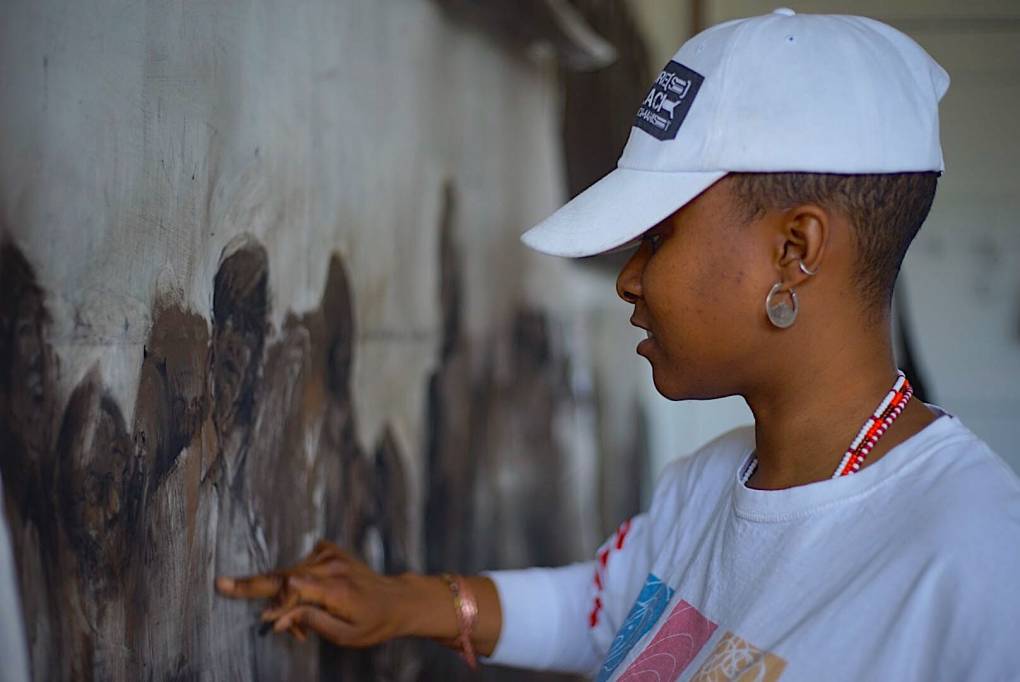
"caption": "Sydney Cain aka Sage Stargate, at work in her studio in San Francisco's Hunters Point Shipyard art studios",
"description": "Sydney Cain aka Sage Stargate, at work in her studio in San Francisco's Hunters Point Shipyard art studios",
"title": "Sydney Cain aka Sage Stargate, at work in her studio in San Francisco's Hunters Point Shipyard art studios",
"credit": "Pendarvis Harshaw",
"status": "inherit",
"isLoading": false,
"fetchFailed": false
},
"arts_13876068": {
"type": "attachments",
"id": "arts_13876068",
"meta": {
"index": "attachments_1716263798",
"site": "arts",
"id": "13876068",
"found": true
},
"parent": 13876066,
"imgSizes": {
"twentyfourteen-full-width": {
"file": "https://ww2.kqed.org/app/uploads/sites/2/2020/03/RS41902_15-qut-1038x576.jpg",
"width": 1038,
"mimeType": "image/jpeg",
"height": 576
},
"thumbnail": {
"file": "https://ww2.kqed.org/app/uploads/sites/2/2020/03/RS41902_15-qut-160x160.jpg",
"width": 160,
"mimeType": "image/jpeg",
"height": 160
},
"post-thumbnail": {
"file": "https://ww2.kqed.org/app/uploads/sites/2/2020/03/RS41902_15-qut-672x372.jpg",
"width": 672,
"mimeType": "image/jpeg",
"height": 372
},
"kqedFullSize": {
"file": "https://ww2.kqed.org/app/uploads/sites/2/2020/03/RS41902_15-qut.jpg",
"width": 1920,
"height": 1920
},
"large": {
"file": "https://ww2.kqed.org/app/uploads/sites/2/2020/03/RS41902_15-qut-1020x1020.jpg",
"width": 1020,
"mimeType": "image/jpeg",
"height": 1020
},
"full-width": {
"file": "https://ww2.kqed.org/app/uploads/sites/2/2020/03/RS41902_15-qut-1920x1920.jpg",
"width": 1920,
"mimeType": "image/jpeg",
"height": 1920
},
"medium": {
"file": "https://ww2.kqed.org/app/uploads/sites/2/2020/03/RS41902_15-qut-800x800.jpg",
"width": 800,
"mimeType": "image/jpeg",
"height": 800
},
"medium_large": {
"file": "https://ww2.kqed.org/app/uploads/sites/2/2020/03/RS41902_15-qut-768x768.jpg",
"width": 768,
"mimeType": "image/jpeg",
"height": 768
}
},
"publishDate": 1583465940,
"modified": 1583465970,
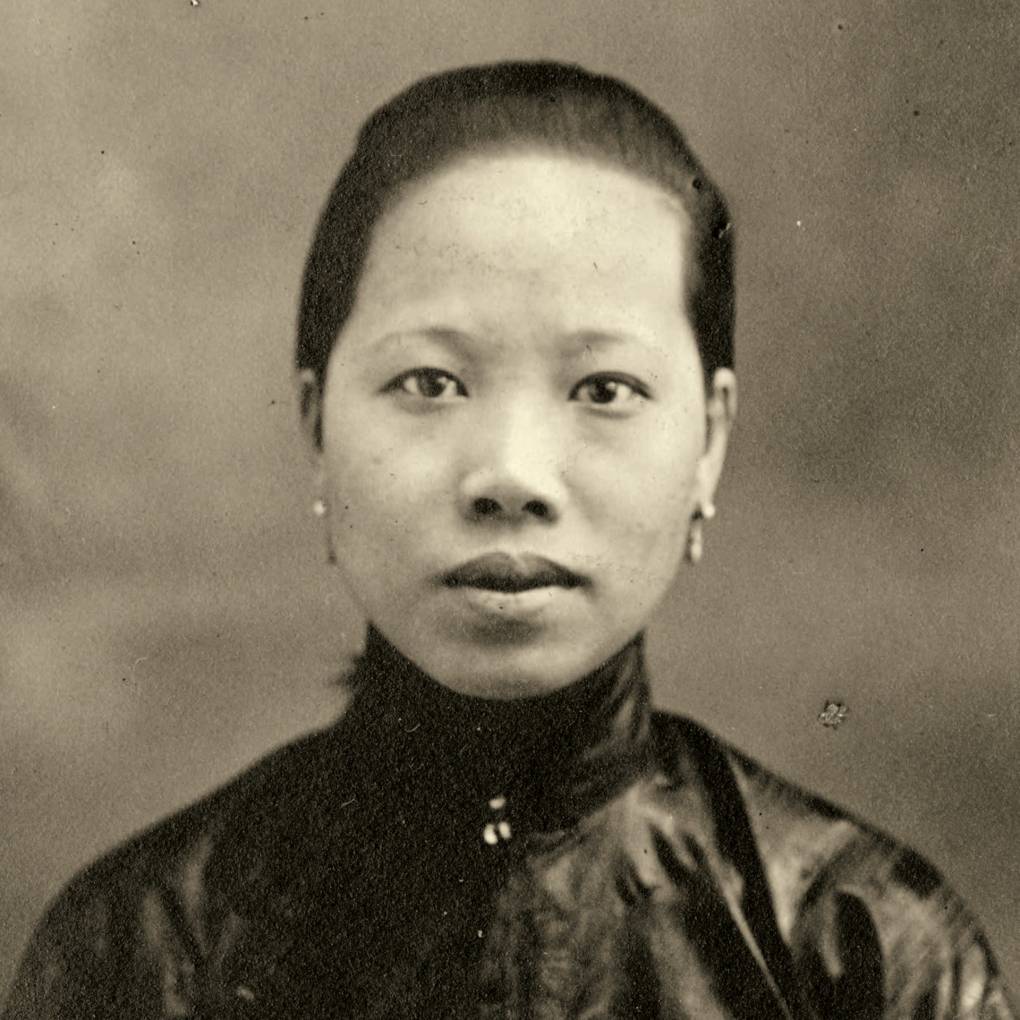
"caption": "This unidentified woman is one of 40 Gold Rush pioneers featured in \"Her Side of the Story: Tales of California Pioneer Women\" at the Arbuckle Gallery in History Park San Jose through June 28th, 2020.",
"description": "This unidentified woman is one of 40 Gold Rush pioneers featured in \"Her Side of the Story: Tales of California Pioneer Women\" at the Arbuckle Gallery in History Park San Jose through June 28th, 2020.",
"title": "RS41902_15-qut",
"credit": "Courtesy of the Society of California Pioneers",
"status": "inherit",
"isLoading": false,
"fetchFailed": false
},
"arts_13875859": {
"type": "attachments",
"id": "arts_13875859",
"meta": {
"index": "attachments_1716263798",
"site": "arts",
"id": "13875859",
"found": true
},
"parent": 13875857,
"imgSizes": {
"twentyfourteen-full-width": {
"file": "https://ww2.kqed.org/app/uploads/sites/2/2020/03/GettyImages-874704980-1024x576.jpg",
"width": 1024,
"mimeType": "image/jpeg",
"height": 576
},
"thumbnail": {
"file": "https://ww2.kqed.org/app/uploads/sites/2/2020/03/GettyImages-874704980-160x102.jpg",
"width": 160,
"mimeType": "image/jpeg",
"height": 102
},
"post-thumbnail": {
"file": "https://ww2.kqed.org/app/uploads/sites/2/2020/03/GettyImages-874704980-672x372.jpg",
"width": 672,
"mimeType": "image/jpeg",
"height": 372
},
"kqedFullSize": {
"file": "https://ww2.kqed.org/app/uploads/sites/2/2020/03/GettyImages-874704980.jpg",
"width": 1024,
"height": 654
},
"large": {
"file": "https://ww2.kqed.org/app/uploads/sites/2/2020/03/GettyImages-874704980-1020x651.jpg",
"width": 1020,
"mimeType": "image/jpeg",
"height": 651
},
"medium": {
"file": "https://ww2.kqed.org/app/uploads/sites/2/2020/03/GettyImages-874704980-800x511.jpg",
"width": 800,
"mimeType": "image/jpeg",
"height": 511
},
"medium_large": {
"file": "https://ww2.kqed.org/app/uploads/sites/2/2020/03/GettyImages-874704980-768x491.jpg",
"width": 768,
"mimeType": "image/jpeg",
"height": 491
}
},
"publishDate": 1583192422,
"modified": 1583192582,
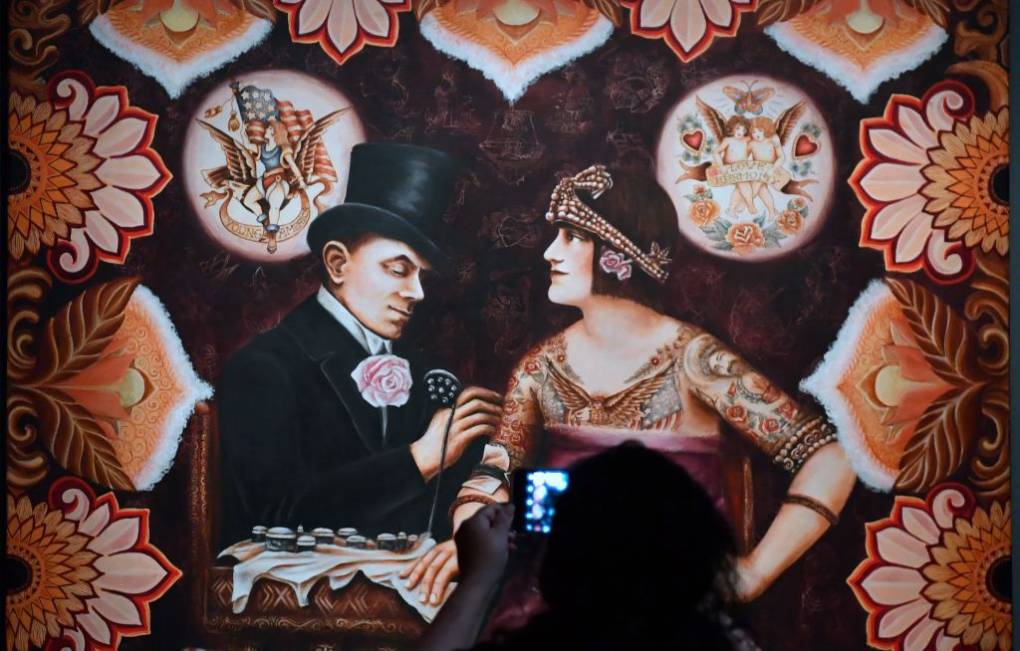
"caption": "A woman uses her cellphone to capture an image from the series \"Homage to Tattooing Icons\", Charlie Wagner, the American tattooer who patented the earliest tattoo machines, on display as part of the traveling exhibition \"Tattoo\" at the Natural History Museum in Los Angeles, November 2017. ",
"description": "A woman uses her cellphone to capture an image from the series \"Homage to Tattooing Icons\", Charlie Wagner, the American tattooer who patented the earliest tattoo machines, on display as part of the traveling exhibition \"Tattoo\" at the Natural History Museum in Los Angeles, November 2017. ",
"title": "A woman uses her cellphone to capture an image from the series \"Homage to Tattooing Icons\", Charlie Wagner, the American tattooer who patented the earliest tattoo machines, on display as part of the traveling exhibition \"Tattoo\" at the Natural History Museum in Los Angeles, November 2017.",
"credit": "FREDERIC J. BROWN/AFP via Getty Images",
"status": "inherit",
"isLoading": false,
"fetchFailed": false
},
"arts_13875531": {
"type": "attachments",
"id": "arts_13875531",
"meta": {
"index": "attachments_1716263798",
"site": "arts",
"id": "13875531",
"found": true
},
"parent": 13874853,
"imgSizes": {
"twentyfourteen-full-width": {
"file": "https://ww2.kqed.org/app/uploads/sites/2/2020/02/Leola-King-1038x576.jpg",
"width": 1038,
"mimeType": "image/jpeg",
"height": 576
},
"thumbnail": {
"file": "https://ww2.kqed.org/app/uploads/sites/2/2020/02/Leola-King-160x90.jpg",
"width": 160,
"mimeType": "image/jpeg",
"height": 90
},
"post-thumbnail": {
"file": "https://ww2.kqed.org/app/uploads/sites/2/2020/02/Leola-King-672x372.jpg",
"width": 672,
"mimeType": "image/jpeg",
"height": 372
},
"kqedFullSize": {
"file": "https://ww2.kqed.org/app/uploads/sites/2/2020/02/Leola-King.jpg",
"width": 1920,
"height": 1080
},
"large": {
"file": "https://ww2.kqed.org/app/uploads/sites/2/2020/02/Leola-King-1020x574.jpg",
"width": 1020,
"mimeType": "image/jpeg",
"height": 574
},
"full-width": {
"file": "https://ww2.kqed.org/app/uploads/sites/2/2020/02/Leola-King-1920x1080.jpg",
"width": 1920,
"mimeType": "image/jpeg",
"height": 1080
},
"medium": {
"file": "https://ww2.kqed.org/app/uploads/sites/2/2020/02/Leola-King-800x450.jpg",
"width": 800,
"mimeType": "image/jpeg",
"height": 450
},
"medium_large": {
"file": "https://ww2.kqed.org/app/uploads/sites/2/2020/02/Leola-King-768x432.jpg",
"width": 768,
"mimeType": "image/jpeg",
"height": 432
}
},
"publishDate": 1582678530,
"modified": 1636505417,
"caption": null,
"description": null,
"title": null,
"credit": null,
"status": "inherit",
"altTag": "A glamorous Black woman with bare shoulders, small earrings, and a stylish updo smiles at the camera from a stylish couch.",
"isLoading": false,
"fetchFailed": false
},
"arts_13875291": {
"type": "attachments",
"id": "arts_13875291",
"meta": {
"index": "attachments_1716263798",
"site": "arts",
"id": "13875291",
"found": true
},
"parent": 13875290,
"imgSizes": {
"twentyfourteen-full-width": {
"file": "https://ww2.kqed.org/app/uploads/sites/2/2020/02/pcPyuI0Q-1038x576.jpg",
"width": 1038,
"mimeType": "image/jpeg",
"height": 576
},
"thumbnail": {
"file": "https://ww2.kqed.org/app/uploads/sites/2/2020/02/pcPyuI0Q-160x114.jpg",
"width": 160,
"mimeType": "image/jpeg",
"height": 114
},
"post-thumbnail": {
"file": "https://ww2.kqed.org/app/uploads/sites/2/2020/02/pcPyuI0Q-672x372.jpg",
"width": 672,
"mimeType": "image/jpeg",
"height": 372
},
"kqedFullSize": {
"file": "https://ww2.kqed.org/app/uploads/sites/2/2020/02/pcPyuI0Q.jpg",
"width": 1800,
"height": 1286
},
"large": {
"file": "https://ww2.kqed.org/app/uploads/sites/2/2020/02/pcPyuI0Q-1020x729.jpg",
"width": 1020,
"mimeType": "image/jpeg",
"height": 729
},
"medium": {
"file": "https://ww2.kqed.org/app/uploads/sites/2/2020/02/pcPyuI0Q-800x572.jpg",
"width": 800,
"mimeType": "image/jpeg",
"height": 572
},
"medium_large": {
"file": "https://ww2.kqed.org/app/uploads/sites/2/2020/02/pcPyuI0Q-768x549.jpg",
"width": 768,
"mimeType": "image/jpeg",
"height": 549
}
},
"publishDate": 1582242747,
"modified": 1582242783,
"caption": "Nancy Whittle",
"description": "Nancy Whittle",
"title": "Nancy Whittle",
"credit": "Brandon Tauszik",
"status": "inherit",
"isLoading": false,
"fetchFailed": false
},
"arts_13875123": {
"type": "attachments",
"id": "arts_13875123",
"meta": {
"index": "attachments_1716263798",
"site": "arts",
"id": "13875123",
"found": true
},
"parent": 13928445,
"imgSizes": {
"twentyfourteen-full-width": {
"file": "https://ww2.kqed.org/app/uploads/sites/2/2020/02/DSC8425-1038x576.jpg",
"width": 1038,
"mimeType": "image/jpeg",
"height": 576
},
"thumbnail": {
"file": "https://ww2.kqed.org/app/uploads/sites/2/2020/02/DSC8425-160x107.jpg",
"width": 160,
"mimeType": "image/jpeg",
"height": 107
},
"post-thumbnail": {
"file": "https://ww2.kqed.org/app/uploads/sites/2/2020/02/DSC8425-672x372.jpg",
"width": 672,
"mimeType": "image/jpeg",
"height": 372
},
"kqedFullSize": {
"file": "https://ww2.kqed.org/app/uploads/sites/2/2020/02/DSC8425.jpg",
"width": 1616,
"height": 1080
},
"large": {
"file": "https://ww2.kqed.org/app/uploads/sites/2/2020/02/DSC8425-1020x682.jpg",
"width": 1020,
"mimeType": "image/jpeg",
"height": 682
},
"medium": {
"file": "https://ww2.kqed.org/app/uploads/sites/2/2020/02/DSC8425-800x535.jpg",
"width": 800,
"mimeType": "image/jpeg",
"height": 535
},
"medium_large": {
"file": "https://ww2.kqed.org/app/uploads/sites/2/2020/02/DSC8425-768x513.jpg",
"width": 768,
"mimeType": "image/jpeg",
"height": 513
}
},
"publishDate": 1582112214,
"modified": 1682966419,
"caption": "Dorothy Lazard, head librarian in the Oakland Public Library’s History Center.",
"description": "Dorothy Lazard, head librarian in the Oakland Public Library’s History Center.",
"title": "Dorothy Lazard, head librarian in the Oakland Public Library’s History Center.",
"credit": "Pendarvis Harshaw/KQED",
"status": "inherit",
"altTag": "An older Black woman with short hair wears glasses, a pink sweater and a light scarf, smiling in a library",
"isLoading": false,
"fetchFailed": false
}
},
"audioPlayerReducer": {
"postId": "stream_live",
"isPaused": true,
"isPlaying": false,
"pfsActive": false,
"pledgeModalIsOpen": true,
"playerDrawerIsOpen": false,
"liveAudioPlayStartedAt": 0,
"liveAudioPlayContext": ""
},
"authorsReducer": {
"jedalatpour": {
"type": "authors",
"id": "42",
"meta": {
"index": "authors_1716337520",
"id": "42",
"found": true
},
"name": "Jeffrey Edalatpour",
"firstName": "Jeffrey",
"lastName": "Edalatpour",
"slug": "jedalatpour",
"email": "jedalatpour@kqed.org",
"display_author_email": false,
"staff_mastheads": [],
"title": null,
"bio": "Jeffrey Edalatpour's first published article was a 1999 film review of Pedro Almodovar’s \u003ci>All About My Mother. \u003c/i>Since then, his writing about arts, food and culture has appeared in a variety of print and online publications, including: KQED Arts, \u003ci>Metro Silicon Valley, Interview Magazine, \u003c/i>Berkeleyside.com, The Rumpus and \u003ci>SF Weekly. \u003c/i>His favorite Iris Murdoch novels (in no particular order) are \u003ci>The Bell, An Unofficial Rose \u003c/i>and\u003ci>The Black Prince\u003c/i>\u003ci>. \u003c/i>In other words, his home library is an anglophile’s dream.",
"avatar": "https://secure.gravatar.com/avatar/ed59ec60f4980f3a45d0c3758c17a4d4?s=600&d=blank&r=g",
"twitter": "jsedalatpour",
"facebook": null,
"instagram": null,
"linkedin": null,
"sites": [
{
"site": "arts",
"roles": [
"Contributor",
"contributor"
]
},
{
"site": "about",
"roles": [
"contributor"
]
},
{
"site": "bayareabites",
"roles": [
"author"
]
}
],
"headData": {
"title": "Jeffrey Edalatpour | KQED",
"description": null,
"ogImgSrc": "https://secure.gravatar.com/avatar/ed59ec60f4980f3a45d0c3758c17a4d4?s=600&d=blank&r=g",
"twImgSrc": "https://secure.gravatar.com/avatar/ed59ec60f4980f3a45d0c3758c17a4d4?s=600&d=blank&r=g"
},
"isLoading": false,
"link": "/author/jedalatpour"
},
"gmeline": {
"type": "authors",
"id": "185",
"meta": {
"index": "authors_1716337520",
"id": "185",
"found": true
},
"name": "Gabe Meline",
"firstName": "Gabe",
"lastName": "Meline",
"slug": "gmeline",
"email": "gmeline@kqed.org",
"display_author_email": true,
"staff_mastheads": [
"arts"
],
"title": "Senior Editor, KQED Arts & Culture",
"bio": "Gabe Meline entered journalism at age 15 making photocopied zines, and has since earned awards from the Edward R. Murrow Awards, the Society for Professional Journalists, the Online Journalism Awards, the Association of Alternative Newsweeklies and the California Newspaper Publishers Association. Prior to KQED, he was the editor of the \u003cem>North Bay Bohemian\u003c/em> and a touring musician. He lives with his wife and daughter in his hometown of Santa Rosa, CA.",
"avatar": "https://secure.gravatar.com/avatar/5bebe57be0d8bc2dd318934feb47299e2d2d10cba28d09d8d7afb389a2ce2bdd?s=600&d=blank&r=g",
"twitter": null,
"bluesky": null,
"facebook": null,
"instagram": null,
"linkedin": null,
"sites": [
{
"site": "",
"roles": [
"editor"
]
},
{
"site": "arts",
"roles": [
"administrator"
]
},
{
"site": "artschool",
"roles": [
"editor"
]
},
{
"site": "news",
"roles": [
"author"
]
},
{
"site": "pop",
"roles": [
"editor"
]
},
{
"site": "bayareabites",
"roles": [
"editor"
]
},
{
"site": "food",
"roles": [
"editor"
]
},
{
"site": "forum",
"roles": [
"administrator"
]
},
{
"site": "liveblog",
"roles": [
"editor"
]
},
{
"site": "hiphop",
"roles": [
"editor"
]
}
],
"headData": {
"title": "Gabe Meline | KQED",
"description": "Senior Editor, KQED Arts & Culture",
"ogImgSrc": "https://secure.gravatar.com/avatar/5bebe57be0d8bc2dd318934feb47299e2d2d10cba28d09d8d7afb389a2ce2bdd?s=600&d=blank&r=g",
"twImgSrc": "https://secure.gravatar.com/avatar/5bebe57be0d8bc2dd318934feb47299e2d2d10cba28d09d8d7afb389a2ce2bdd?s=600&d=blank&r=g"
},
"isLoading": false,
"link": "/author/gmeline"
},
"rachael-myrow": {
"type": "authors",
"id": "251",
"meta": {
"index": "authors_1716337520",
"id": "251",
"found": true
},
"name": "Rachael Myrow",
"firstName": "Rachael",
"lastName": "Myrow",
"slug": "rachael-myrow",
"email": "rmyrow@kqed.org",
"display_author_email": true,
"staff_mastheads": [
"news"
],
"title": "Senior Editor of KQED's Silicon Valley News Desk",
"bio": "• I write and edit stories about how Silicon Valley power and policies shape everyday life in California. I’m also passionate about making Bay Area history and culture more accessible to a broad public. • I’ve been a journalist for most of my life, starting in high school with The Franklin Press in Los Angeles, where I grew up. While earning my first degree in English at UC Berkeley, I got my start in public radio at KALX-FM. After completing a second degree in journalism at Cal, I landed my first professional job at Marketplace, then moved on to KPCC (now LAist), and then KQED, where I hosted The California Report for more than seven years. • My reporting has appeared on NPR, The World, WBUR’s \u003ci>Here & Now\u003c/i>, and the BBC. I also guest host for KQED’s \u003ci>Forum\u003c/i>, as well as the Commonwealth Club in San Francisco. • I speak periodically on media, democracy and technology issues, and do voiceover work for documentaries and educational video projects. • Outside of the studio, you'll find me hiking Bay Area trails and whipping up Insta-ready meals in my kitchen. • I do not accept gifts, money, or favors from anyone connected to my reporting, I don't pay people for information, and I do not support or donate to political causes. • I strive to treat the people I report on with fairness, honesty, and respect. I also recognize there are often multiple sides to a story and work to verify information through multiple sources and documentation. If I get something wrong, I correct it.",
"avatar": "https://secure.gravatar.com/avatar/3ed8a3c5f26025e4a805ba634cda8cd764906b97438a6d9ce216b044e340da4e?s=600&d=blank&r=g",
"twitter": "rachaelmyrow",
"bluesky": null,
"facebook": null,
"instagram": null,
"linkedin": "https://www.linkedin.com/in/rachaelmyrow/",
"sites": [
{
"site": "arts",
"roles": [
"administrator"
]
},
{
"site": "news",
"roles": [
"edit_others_posts",
"editor"
]
},
{
"site": "futureofyou",
"roles": [
"editor"
]
},
{
"site": "bayareabites",
"roles": [
"editor"
]
},
{
"site": "stateofhealth",
"roles": [
"editor"
]
},
{
"site": "science",
"roles": [
"editor"
]
},
{
"site": "food",
"roles": [
"editor"
]
},
{
"site": "forum",
"roles": [
"editor"
]
},
{
"site": "liveblog",
"roles": [
"author"
]
}
],
"headData": {
"title": "Rachael Myrow | KQED",
"description": "Senior Editor of KQED's Silicon Valley News Desk",
"ogImgSrc": "https://secure.gravatar.com/avatar/3ed8a3c5f26025e4a805ba634cda8cd764906b97438a6d9ce216b044e340da4e?s=600&d=blank&r=g",
"twImgSrc": "https://secure.gravatar.com/avatar/3ed8a3c5f26025e4a805ba634cda8cd764906b97438a6d9ce216b044e340da4e?s=600&d=blank&r=g"
},
"isLoading": false,
"link": "/author/rachael-myrow"
},
"ralexandra": {
"type": "authors",
"id": "11242",
"meta": {
"index": "authors_1716337520",
"id": "11242",
"found": true
},
"name": "Rae Alexandra",
"firstName": "Rae",
"lastName": "Alexandra",
"slug": "ralexandra",
"email": "ralexandra@kqed.org",
"display_author_email": true,
"staff_mastheads": [],
"title": "Reporter/Producer",
"bio": "Rae Alexandra is a Reporter/Producer for KQED Arts & Culture, and the creator/author of the \u003ca href=\"https://www.kqed.org/arts/program/rebel-girls-from-bay-area-history\">Rebel Girls From Bay Area History\u003c/a> and \u003ca href=\"https://www.kqed.org/bizarrebayarea\">Bizarre Bay Area\u003c/a> series. Her debut book, \u003ca href=\"https://citylights.com/politics-current-events-history/unsung-heroines35-women-who-changed/\">Unsung Heroines: 35 Women Who Changed the Bay Area\u003c/a> was published by City Lights in March 2026. In 2023, Rae was awarded an SPJ Excellence in Journalism Award for Arts & Culture. Rae was born and raised in Wales and subsequently — even after two decades in Northern California — still uses phrases that regularly baffle her coworkers.",
"avatar": "https://secure.gravatar.com/avatar/edfee8176c80cc0a382b051190f5341997df378a934a5774dcb0977732dfd401?s=600&d=blank&r=g",
"twitter": null,
"bluesky": null,
"facebook": null,
"instagram": null,
"linkedin": null,
"sites": [
{
"site": "arts",
"roles": [
"subscriber"
]
},
{
"site": "news",
"roles": [
"subscriber"
]
},
{
"site": "pop",
"roles": [
"subscriber"
]
},
{
"site": "bayareabites",
"roles": [
"subscriber"
]
},
{
"site": "science",
"roles": [
"subscriber"
]
}
],
"headData": {
"title": "Rae Alexandra | KQED",
"description": "Reporter/Producer",
"ogImgSrc": "https://secure.gravatar.com/avatar/edfee8176c80cc0a382b051190f5341997df378a934a5774dcb0977732dfd401?s=600&d=blank&r=g",
"twImgSrc": "https://secure.gravatar.com/avatar/edfee8176c80cc0a382b051190f5341997df378a934a5774dcb0977732dfd401?s=600&d=blank&r=g"
},
"isLoading": false,
"link": "/author/ralexandra"
},
"ogpenn": {
"type": "authors",
"id": "11491",
"meta": {
"index": "authors_1716337520",
"id": "11491",
"found": true
},
"name": "Pendarvis Harshaw",
"firstName": "Pendarvis",
"lastName": "Harshaw",
"slug": "ogpenn",
"email": "ogpenn@gmail.com",
"display_author_email": false,
"staff_mastheads": [
"arts"
],
"title": "Community Engagement Reporter",
"bio": "Pendarvis Harshaw is an educator, host and writer with KQED Arts.",
"avatar": "https://secure.gravatar.com/avatar/972b77ee8e3f346ae2b00622661187fbfabd059b5693bbdc1475ea7a722fd4cd?s=600&d=blank&r=g",
"twitter": null,
"bluesky": null,
"facebook": null,
"instagram": "ogpenn",
"linkedin": null,
"sites": [
{
"site": "arts",
"roles": [
"administrator"
]
},
{
"site": "news",
"roles": [
"editor"
]
},
{
"site": "bayareabites",
"roles": [
"author"
]
},
{
"site": "hiphop",
"roles": [
"editor"
]
}
],
"headData": {
"title": "Pendarvis Harshaw | KQED",
"description": "Community Engagement Reporter",
"ogImgSrc": "https://secure.gravatar.com/avatar/972b77ee8e3f346ae2b00622661187fbfabd059b5693bbdc1475ea7a722fd4cd?s=600&d=blank&r=g",
"twImgSrc": "https://secure.gravatar.com/avatar/972b77ee8e3f346ae2b00622661187fbfabd059b5693bbdc1475ea7a722fd4cd?s=600&d=blank&r=g"
},
"isLoading": false,
"link": "/author/ogpenn"
}
},
"pagesReducer": {
"arts_category_history": {
"type": "terms",
"id": "arts_7862",
"meta": {
"index": "terms_1716263798",
"site": "arts",
"id": "7862",
"score": 12.208591
},
"featImg": null,
"name": "History",
"description": null,
"taxonomy": "category",
"headData": {
"twImgId": null,
"twTitle": null,
"ogTitle": null,
"ogImgId": null,
"twDescription": null,
"description": null,
"title": "History Archives | KQED Arts",
"ogDescription": null
},
"ttid": 7874,
"slug": "history",
"isLoading": false,
"title": "History",
"pageMeta": {
"site": "arts",
"WpPageTemplate": "page-topic-editorial",
"currentPage": 29
},
"blocks": [
{
"blockName": "kqed/post-list",
"attrs": {
"layout": "cardArticle2",
"query": "posts/arts?category=history",
"seeMore": false,
"paginated": true,
"page": 29
}
},
{
"blockName": "kqed/ad"
}
]
}
},
"pfsSessionReducer": {},
"postsReducer": {
"stream_live": {
"type": "live",
"id": "stream_live",
"audioUrl": "https://streams.kqed.org/kqedradio",
"title": "Live Stream",
"excerpt": "Live Stream information currently unavailable.",
"link": "/radio",
"featImg": "",
"label": {
"name": "KQED Live",
"link": "/"
}
},
"stream_kqedNewscast": {
"type": "posts",
"id": "stream_kqedNewscast",
"audioUrl": "https://www.kqed.org/.stream/anon/radio/RDnews/newscast.mp3?_=1",
"title": "KQED Newscast",
"featImg": "",
"label": {
"name": "88.5 FM",
"link": "/"
}
},
"arts_13877715": {
"type": "posts",
"id": "arts_13877715",
"meta": {
"index": "posts_1716263798",
"site": "arts",
"id": "13877715",
"score": null,
"sort": [
1586976078000
]
},
"guestAuthors": [],
"slug": "an-autopsy-of-diy-if-any-zine-can-pull-it-off-its-cometbus",
"title": "An 'Autopsy' of DIY? If Any Zine Can Pull It Off, It's Cometbus",
"publishDate": 1586976078,
"format": "standard",
"headTitle": "An ‘Autopsy’ of DIY? If Any Zine Can Pull It Off, It’s Cometbus | KQED",
"labelTerm": {
"site": "arts"
},
"content": "\u003cp>One of the effects of the coronavirus crisis has been widespread grassroots organizing, be it among restaurant staff, health care workers or supermarket employees. And few people know about the highs and lows of grassroots movements quite like Aaron Cometbus. He’s the creator of the zine \u003cem>Cometbus\u003c/em>, which has chronicled punkhouses, squats, collectives and the like for the past four decades.\u003c/p>\n\u003cp>Aaron’s latest issue is titled “Post-Mortem.” Its goal? To provide an autopsy on various underground movements: what went wrong, and what went right.\u003c/p>\n\u003cp>Aaron starts his series of interviews in the offices of Epitaph Records, who brought punk to the masses with the Offspring in the mid-1990s, then weaves his way through volunteer bookstores in San Francisco, independent publishers in Seattle, warehouses in New York and an art school in Vermont. (Aaron springs from the East Bay punk scene, and local institutions like Fat Wreck Chords and Thrasher magazine face his line of questioning, too.)\u003c/p>\n\u003cp>Along the way, an unflinching examination unfolds of financial irresponsibilities, reckless sexual liasons, getting harassed by police – and in Aaron’s storytelling, it’s sometimes hard to tell if these are liabilities or assets. Still, he delivers just as many inspiring success stories as he does sad eulogies, and paints DIY not as a relic of the past but as an ongoing continuum.\u003c/p>\n\u003cp>During the shutdown, reading Cometbus #59—with so much real-life, in-person action—is a hopeful reminder of what we’ll be getting back to someday. With bookstores and record stores closed, you’ll have to find \u003cem>Cometbus\u003c/em> #59 \u003ca href=\"https://store.silversprocket.net/products/cometbus-59-post-mortem-by-aaron-cometbus\" target=\"_blank\" rel=\"noopener noreferrer\">online\u003c/a>.\u003c/p>\n\u003cp>[ad fullwidth]\u003c/p>\u003cp>\u003c/p>\n",
"blocks": [],
"excerpt": "Aaron's latest is a reckoning of various underground movements: what went wrong, and what went right.",
"status": "publish",
"parent": 0,
"modified": 1726762170,
"stats": {
"hasAudio": false,
"hasVideo": false,
"hasChartOrMap": false,
"iframeSrcs": [],
"hasGoogleForm": false,
"hasGallery": false,
"hasHearkenModule": false,
"hasPolis": false,
"paragraphCount": 7,
"wordCount": 277
},
"headData": {
"title": "An 'Autopsy' of DIY? If Any Zine Can Pull It Off, It's Cometbus | KQED",
"description": "Aaron's latest is a reckoning of various underground movements: what went wrong, and what went right.",
"ogTitle": "",
"ogDescription": "",
"ogImgId": "",
"twTitle": "",
"twDescription": "",
"twImgId": "",
"schema": {
"@context": "https://schema.org",
"@type": "Article",
"headline": "An 'Autopsy' of DIY? If Any Zine Can Pull It Off, It's Cometbus",
"datePublished": "2020-04-15T11:41:18-07:00",
"dateModified": "2024-09-19T09:09:30-07:00",
"image": "https://cdn.kqed.org/wp-content/uploads/2020/02/KQED-OG-Image@1x.png"
}
},
"sticky": false,
"templateType": "standard",
"featuredImageType": "standard",
"path": "/arts/13877715/an-autopsy-of-diy-if-any-zine-can-pull-it-off-its-cometbus",
"audioTrackLength": null,
"parsedContent": [
{
"type": "contentString",
"content": "\u003cdiv class=\"post-body\">\u003cp>\u003cp>One of the effects of the coronavirus crisis has been widespread grassroots organizing, be it among restaurant staff, health care workers or supermarket employees. And few people know about the highs and lows of grassroots movements quite like Aaron Cometbus. He’s the creator of the zine \u003cem>Cometbus\u003c/em>, which has chronicled punkhouses, squats, collectives and the like for the past four decades.\u003c/p>\n\u003cp>Aaron’s latest issue is titled “Post-Mortem.” Its goal? To provide an autopsy on various underground movements: what went wrong, and what went right.\u003c/p>\n\u003cp>Aaron starts his series of interviews in the offices of Epitaph Records, who brought punk to the masses with the Offspring in the mid-1990s, then weaves his way through volunteer bookstores in San Francisco, independent publishers in Seattle, warehouses in New York and an art school in Vermont. (Aaron springs from the East Bay punk scene, and local institutions like Fat Wreck Chords and Thrasher magazine face his line of questioning, too.)\u003c/p>\n\u003cp>Along the way, an unflinching examination unfolds of financial irresponsibilities, reckless sexual liasons, getting harassed by police – and in Aaron’s storytelling, it’s sometimes hard to tell if these are liabilities or assets. Still, he delivers just as many inspiring success stories as he does sad eulogies, and paints DIY not as a relic of the past but as an ongoing continuum.\u003c/p>\n\u003cp>During the shutdown, reading Cometbus #59—with so much real-life, in-person action—is a hopeful reminder of what we’ll be getting back to someday. With bookstores and record stores closed, you’ll have to find \u003cem>Cometbus\u003c/em> #59 \u003ca href=\"https://store.silversprocket.net/products/cometbus-59-post-mortem-by-aaron-cometbus\" target=\"_blank\" rel=\"noopener noreferrer\">online\u003c/a>.\u003c/p>\n\u003cp>\u003c/p>\u003c/div>",
"attributes": {
"named": {},
"numeric": []
}
},
{
"type": "component",
"content": "",
"name": "ad",
"attributes": {
"named": {
"label": "fullwidth"
},
"numeric": [
"fullwidth"
]
}
},
{
"type": "contentString",
"content": "\u003cdiv class=\"post-body\">\u003cp>\u003c/p>\u003cp>\u003c/p>\n\u003c/div>\u003c/p>",
"attributes": {
"named": {},
"numeric": []
}
}
],
"link": "/arts/13877715/an-autopsy-of-diy-if-any-zine-can-pull-it-off-its-cometbus",
"authors": [
"185"
],
"categories": [
"arts_73",
"arts_7862",
"arts_69"
],
"tags": [
"arts_1779",
"arts_585",
"arts_914"
],
"featImg": "arts_13878558",
"label": "arts"
},
"arts_13878268": {
"type": "posts",
"id": "arts_13878268",
"meta": {
"index": "posts_1716263798",
"site": "arts",
"id": "13878268",
"score": null,
"sort": [
1586797235000
]
},
"parent": 0,
"labelTerm": {
"site": "arts"
},
"blocks": [],
"publishDate": 1586797235,
"format": "standard",
"title": "Mindblowing Tales From San Francisco's (Long) History With Epidemics",
"headTitle": "Mindblowing Tales From San Francisco’s (Long) History With Epidemics | KQED",
"content": "\u003cp>As we slowly trudge, un-showered and in sweatpants, towards the end of the first month of lockdown, mood swings are almost inevitable. Oscillating wildly between resignation, frustration and good old-fashioned anxiety has become the new normal.\u003c/p>\n\u003cp>It’s probably the perfect time, then, to point out that not only has the Bay Area been through epidemics before, it definitely handled things much, much worse the last time. And the time before that. Repeatedly. Especially in San Francisco.\u003c/p>\n\u003cp>The \u003ca href=\"https://www.influenzaarchive.org/cities/city-sanfrancisco.html#\" target=\"_blank\" rel=\"noopener noreferrer\">last time a health-related lockdown\u003c/a> began in the city, it was Friday, Oct. 18, 1918, when the San Francisco Board of Health voted to close all schools and “places of public amusement” in an effort to stem the spread of the dreaded influenza. This was followed one week later by an order that required everyone in the city to don face masks in public.\u003c/p>\n\u003cp>Which all would have been smart and appropriate and proper if only city residents hadn’t been such stubborn jerks about cooperating with the orders. So many folks continued leaving their faces uncovered, the city had to start charging people with disturbing the peace, and punishing them with either $5-10 fines or county jail time.\u003c/p>\n\u003cp>https://twitter.com/coolgrey/status/1234018471702384641\u003c/p>\n\u003cp>[ad fullwidth]\u003c/p>\n\u003cp>Then, once restrictions on venues were lifted after a 28-day lockdown, people rushed straight out to socialize, fearlessly packing dance halls and theaters with their germs. Apparently leading by example, this included \u003ca href=\"https://www.influenzaarchive.org/cities/city-sanfrancisco.html\" target=\"_blank\" rel=\"noopener noreferrer\">Mayor James Rolph\u003c/a>, who attended a boxing match between Fred Fulton and Willie Meehan at the Civic Auditorium on Nov. 16, and was caught flouting his own mask rule so flagrantly that the police chief fined him $50.\u003c/p>\n\u003cp>Five days later, on Nov. 21 at noon, a city-wide whistle blast signaled that it was “safe” to take masks off. But people simply tossed them in the air, ignoring health officials’ pleas to save the gauze for later. The \u003cem>San Francisco Chronicle\u003c/em> reported the following day that “sidewalks and runnels were strewn with the relics of a torturous month.”\u003c/p>\n\u003cp>Unsurprisingly, flu numbers flared up again after this premature move, and the city responded by sending out as much mixed messaging as humanly possible. Mayor Rolph told San Franciscans on Dec. 7 to put their masks back on, but an official ordinance from the Board of Supervisors didn’t come until Jan. 17, 1919.\u003c/p>\n\u003cp>To make matters worse, the fact that public places were still open and operating was apparently not enough to appease freewheeling San Franciscans. We know this because over 2,000 residents banded together in January to attend a rally organized by some geniuses calling themselves the \u003ca href=\"https://www.sfchronicle.com/bayarea/article/A-city-of-masks-When-the-flu-tore-through-San-6499265.php\" target=\"_blank\" rel=\"noopener noreferrer\">Anti-Mask League\u003c/a>. Mandatory mask use was lifted once again on Feb. 1 as the city grew tired of dealing with loudmouthed rebels flouting the law.\u003c/p>\n\u003cp>All told, the flu epidemic infected 45,000 San Franciscans, and killed 3,000 in the city, due to a deadly combination of mixed messaging from authorities and public resistance to restrictions.\u003c/p>\n\u003cfigure id=\"attachment_13878373\" class=\"wp-caption alignnone\" style=\"max-width: 512px\">\u003cimg loading=\"lazy\" decoding=\"async\" class=\"size-full wp-image-13878373\" src=\"https://ww2.kqed.org/app/uploads/sites/2/2020/04/AP18006852068959.jpg\" alt=\"Red Cross volunteer nurses tend to flu patients at the Oakland Municipal Auditorium in 1918. It was used as a temporary hospital during the epidemic.\" width=\"512\" height=\"396\" srcset=\"https://cdn.kqed.org/wp-content/uploads/sites/2/2020/04/AP18006852068959.jpg 512w, https://cdn.kqed.org/wp-content/uploads/sites/2/2020/04/AP18006852068959-160x124.jpg 160w\" sizes=\"(max-width: 512px) 100vw, 512px\">\u003cfigcaption class=\"wp-caption-text\">Red Cross volunteer nurses tend to flu patients at the Oakland Municipal Auditorium in 1918. It was used as a temporary hospital during the epidemic. \u003ccite>(Edward A. \"Doc\" Rogers/Library of Congress via AP)\u003c/cite>\u003c/figcaption>\u003c/figure>\n\u003cp>San Francisco’s uneven response to health crises wasn’t limited to the 1918 flu epidemic. In 1888, a \u003ca href=\"https://books.google.com/books?id=oB4LAAAAIAAJ&printsec=frontcover&source=gbs_ge_summary_r&cad=0#v=onepage&q&f=false\" target=\"_blank\" rel=\"noopener noreferrer\">\u003cem>Biennial Report\u003c/em>\u003c/a> by the California Department of Public Health reported that the entire Bay Area was, at that time, dealing with cases of smallpox, scarlet fever, typhoid, consumption, diphtheria and cholera.\u003c/p>\n\u003cp>Amazingly, \u003ca href=\"https://books.google.com/books?id=HwwPAAAAYAAJ&printsec=frontcover&dq=The+Cholera+Epidemic+of+1873+in+the+United+States&hl=en&newbks=1&newbks_redir=0&sa=X&ved=2ahUKEwi_l_b_9tvoAhUrGDQIHR7sD6AQ6AEwAHoECAMQAg#v=onepage&q=The%20Cholera%20Epidemic%20of%201873%20in%20the%20United%20States&f=false\" target=\"_blank\" rel=\"noopener noreferrer\">\u003cem>The Cholera Epidemic of 1873 in the United States\u003c/em>\u003c/a>, written by the U.S. Surgeon General’s Office in 1875, reports that cholera first landed in San Francisco as early as September 1850. This was due to the arrival of the S.S. Carolina—a steamer ship that had \u003ca href=\"https://www.maritimeheritage.org/passengers/SS-Carolina-7October1850.html\" target=\"_blank\" rel=\"noopener noreferrer\">lost 13 passengers\u003c/a> to the disease before it even docked—and exacerbated by an attitude to\u003ca href=\"http://www.sf-info.org/history/d4/gold-rush\" target=\"_blank\" rel=\"noopener noreferrer\"> sanitation\u003c/a> that can most kindly be described as \u003cem>laissez faire\u003c/em>.\u003c/p>\n\u003cp>The following description is from 1854’s \u003ca href=\"https://books.google.com/books?id=RKJFAQAAMAAJ&pg=PA419&dq=san+francisco+cholera&hl=en&newbks=1&newbks_redir=0&sa=X&ved=2ahUKEwio-vKP9tvoAhXwHjQIHRUaBRAQ6AEwBXoECAIQAg#v=onepage&q=san%20francisco%20cholera&f=false\" target=\"_blank\" rel=\"noopener noreferrer\">\u003cem>Annals of San Francisco\u003c/em>\u003c/a>:\u003c/p>\n\u003cblockquote>\u003cp>The streets were thickly covered with black rotten mud. These were the proper dunghills of the town and were made a general depot for all kinds of rubbish and household sweepings, offal and filth. Sometimes the rains came and scattered the abominable stuffs, carrying part of them into the bay. Rats—huge, fat, lazy things—prowled about at pleasure… Sickening stenches invaded every quarter.\u003c/p>\u003c/blockquote>\n\u003cp>Outbreaks of cholera in San Jose, Carson Valley and Sacramento \u003ca href=\"https://cdnc.ucr.edu/?a=d&d=DAC18651009.2.4&e=-------en--20--1--txt-txIN--------1\" target=\"_blank\" rel=\"noopener noreferrer\">quickly followed\u003c/a>—said to be made worse by the spread of the illness via “overland emigrants.” By the end of the 1850 cholera outbreak, over 1,000 residents had died in Sacramento alone, out of a population of 8,000.\u003c/p>\n\u003cp>It’s true that infrastructure, including plumbing, had a hard time catching up to the population boom born of the Gold Rush, but it’s also true that San Francisco, for the longest time, cared not what was docking in its Bay. Having failed to learn its lesson after the 1850 cholera outbreak, another infested ship (the \u003ca href=\"https://books.google.com/books?id=9DKe_xdeFpYC&pg=PA14&lpg=PA14&dq=san+francisco+cholera+1855+SS+Sam&source=bl&ots=FFTLixEywm&sig=ACfU3U2wt41EiQGLwc45cDcT1TVq5gK5Mw&hl=en&sa=X&ved=2ahUKEwjD-dbyjNvoAhWXGDQIHVoQCHkQ6AEwDHoECA0QKg#v=onepage&q=san%20francisco%20cholera%201855%20SS%20Sam&f=false\" target=\"_blank\" rel=\"noopener noreferrer\">S.S. Sam\u003c/a> this time) was permitted to enter the city just five years later which—you guessed it—caused another deadly cholera outbreak.\u003c/p>\n\u003cp>This time, the disease’s spread was assisted by both crappy sanitation \u003cem>and\u003c/em> makeshift living quarters. \u003ca href=\"https://www.sfgate.com/sfhistory/article/San-Francisco-1855-1856-incorporation-Gold-Rush-12958094.php\" target=\"_blank\" rel=\"noopener noreferrer\">The San Francisco Historical Museum\u003c/a> has since described the city of the period thusly:\u003c/p>\n\u003cblockquote>\u003cp>What a strange town was that, the San Francisco of 1856, its 30,000 people in speedy transition from a city of tents and shacks to one of brick and stone buildings, architecturally on a par with those of Atlantic seaboard cities, and its flimsy wooden and more pretentious sheet iron buildings filling in the spaces in between.\u003c/p>\u003c/blockquote>\n\u003cp>Remarkably, an 1883 copy of the \u003ca href=\"https://books.google.com/books?id=cy4gAQAAIAAJ&pg=PA327&dq=san+francisco+cholera&hl=en&newbks=1&newbks_redir=0&sa=X&ved=2ahUKEwio-vKP9tvoAhXwHjQIHRUaBRAQ6AEwAXoECAEQAg#v=onepage&q=san%20francisco%20cholera&f=false\" target=\"_blank\" rel=\"noopener noreferrer\">\u003cem>San Francisco Western Lancet\u003c/em>\u003c/a> medical journal suggests that, despite these outbreaks and dangerous habitations, sanitation in San Francisco remained in an abysmal state, even three decades later.\u003c/p>\n\u003cblockquote>\u003cp>The sewer on Fifth Street, having no bottom, continually filling with shifting sand, causes the sewage to collect and foul gasses to generate. One man recently met his death there because of the foul condition of the sewer… Just consider for a moment the condition of a municipal government which will allow a cesspool five miles long to exist in the heart of its jurisdiction. It is a criminal neglect of duty.\u003c/p>\u003c/blockquote>\n\u003cp>No surprise, then, that San Francisco was treated to an \u003ca href=\"https://en.wikipedia.org/wiki/San_Francisco_plague_of_1900%E2%80%931904\" target=\"_blank\" rel=\"noopener noreferrer\">outbreak of plague\u003c/a> (actual Bubonic Plague!) as late as 1900. The neighborhood affected most was Chinatown, but California’s Governor at the time, Henry Gage, denied the outbreak was happening for two full years. By the time George Pardee replaced Gage in 1902 and started prioritizing people over commerce, the disease had such a foothold that it took another two years to quash.\u003c/p>\n\u003cp>Compared to these moments in the city’s history, we’re blessed in 2020 to have leadership willing to make decisive calls for the sake of public safety. Let’s not forget that San Francisco was the \u003ca href=\"https://www.cnn.com/2020/03/17/us/us-coronavirus-san-francisco-lockdown/index.html\" target=\"_blank\" rel=\"noopener noreferrer\">first American city\u003c/a> to issue a stay-at-home order in this coronavirus crisis, and had zero qualms about \u003ca href=\"https://813dcad3-2b07-4f3f-a25e-23c48c566922.filesusr.com/ugd/84606e_8b76957fcc4b4bab8d6876f7c2793d18.pdf\" target=\"_blank\" rel=\"noopener noreferrer\">extending its stay-at-home order\u003c/a> until at least May 3.\u003c/p>\n\u003cp>[ad floatright]\u003c/p>\n\u003cp>One \u003ca href=\"https://www.history.com/news/spanish-flu-pandemic-response-cities\" target=\"_blank\" rel=\"noopener noreferrer\">2007 analysis\u003c/a> of the 1918 flu epidemic claimed that if lockdown measures had stayed in place in San Francisco until Spring 1919, 90% of deaths in the region could have been prevented. The lessons from history are clear: Stay inside, be grateful for good plumbing and, most importantly of all, don’t be a rebellious jerk.\u003c/p>\n\n",
"stats": {
"hasVideo": false,
"hasChartOrMap": false,
"hasAudio": false,
"hasPolis": false,
"wordCount": 1291,
"hasGoogleForm": false,
"hasGallery": false,
"hasHearkenModule": false,
"iframeSrcs": [],
"paragraphCount": 24
},
"modified": 1705020908,
"excerpt": "Think this lockdown is hard? You should hear how the last one went.",
"headData": {
"twImgId": "",
"twTitle": "",
"ogTitle": "",
"ogImgId": "",
"twDescription": "",
"description": "Think this lockdown is hard? You should hear how the last one went.",
"title": "Mindblowing Tales From San Francisco's (Long) History With Epidemics | KQED",
"ogDescription": "",
"schema": {
"@context": "https://schema.org",
"@type": "Article",
"headline": "Mindblowing Tales From San Francisco's (Long) History With Epidemics",
"datePublished": "2020-04-13T10:00:35-07:00",
"dateModified": "2024-01-11T16:55:08-08:00",
"image": "https://cdn.kqed.org/wp-content/uploads/2020/02/KQED-OG-Image@1x.png"
}
},
"guestAuthors": [],
"slug": "mindblowing-tales-from-san-franciscos-long-history-with-epidemics",
"status": "publish",
"templateType": "standard",
"excludeFromSiteSearch": "Include",
"featuredImageType": "standard",
"sticky": false,
"articleAge": "0",
"path": "/arts/13878268/mindblowing-tales-from-san-franciscos-long-history-with-epidemics",
"audioTrackLength": null,
"parsedContent": [
{
"type": "contentString",
"content": "\u003cdiv class=\"post-body\">\u003cp>\u003cp>As we slowly trudge, un-showered and in sweatpants, towards the end of the first month of lockdown, mood swings are almost inevitable. Oscillating wildly between resignation, frustration and good old-fashioned anxiety has become the new normal.\u003c/p>\n\u003cp>It’s probably the perfect time, then, to point out that not only has the Bay Area been through epidemics before, it definitely handled things much, much worse the last time. And the time before that. Repeatedly. Especially in San Francisco.\u003c/p>\n\u003cp>The \u003ca href=\"https://www.influenzaarchive.org/cities/city-sanfrancisco.html#\" target=\"_blank\" rel=\"noopener noreferrer\">last time a health-related lockdown\u003c/a> began in the city, it was Friday, Oct. 18, 1918, when the San Francisco Board of Health voted to close all schools and “places of public amusement” in an effort to stem the spread of the dreaded influenza. This was followed one week later by an order that required everyone in the city to don face masks in public.\u003c/p>\n\u003cp>Which all would have been smart and appropriate and proper if only city residents hadn’t been such stubborn jerks about cooperating with the orders. So many folks continued leaving their faces uncovered, the city had to start charging people with disturbing the peace, and punishing them with either $5-10 fines or county jail time.\u003c/p>\u003c/p>\u003c/div>",
"attributes": {
"named": {},
"numeric": []
}
},
{
"type": "component",
"content": "",
"name": "singleTwitterStatus",
"attributes": {
"named": {
"id": "1234018471702384641"
},
"numeric": []
}
},
{
"type": "contentString",
"content": "\u003cdiv class=\"post-body\">\u003cp>\n\u003cp>\u003c/p>\u003c/div>",
"attributes": {
"named": {},
"numeric": []
}
},
{
"type": "component",
"content": "",
"name": "ad",
"attributes": {
"named": {
"label": "fullwidth"
},
"numeric": [
"fullwidth"
]
}
},
{
"type": "contentString",
"content": "\u003cdiv class=\"post-body\">\u003cp>\u003c/p>\n\u003cp>Then, once restrictions on venues were lifted after a 28-day lockdown, people rushed straight out to socialize, fearlessly packing dance halls and theaters with their germs. Apparently leading by example, this included \u003ca href=\"https://www.influenzaarchive.org/cities/city-sanfrancisco.html\" target=\"_blank\" rel=\"noopener noreferrer\">Mayor James Rolph\u003c/a>, who attended a boxing match between Fred Fulton and Willie Meehan at the Civic Auditorium on Nov. 16, and was caught flouting his own mask rule so flagrantly that the police chief fined him $50.\u003c/p>\n\u003cp>Five days later, on Nov. 21 at noon, a city-wide whistle blast signaled that it was “safe” to take masks off. But people simply tossed them in the air, ignoring health officials’ pleas to save the gauze for later. The \u003cem>San Francisco Chronicle\u003c/em> reported the following day that “sidewalks and runnels were strewn with the relics of a torturous month.”\u003c/p>\n\u003cp>Unsurprisingly, flu numbers flared up again after this premature move, and the city responded by sending out as much mixed messaging as humanly possible. Mayor Rolph told San Franciscans on Dec. 7 to put their masks back on, but an official ordinance from the Board of Supervisors didn’t come until Jan. 17, 1919.\u003c/p>\n\u003cp>To make matters worse, the fact that public places were still open and operating was apparently not enough to appease freewheeling San Franciscans. We know this because over 2,000 residents banded together in January to attend a rally organized by some geniuses calling themselves the \u003ca href=\"https://www.sfchronicle.com/bayarea/article/A-city-of-masks-When-the-flu-tore-through-San-6499265.php\" target=\"_blank\" rel=\"noopener noreferrer\">Anti-Mask League\u003c/a>. Mandatory mask use was lifted once again on Feb. 1 as the city grew tired of dealing with loudmouthed rebels flouting the law.\u003c/p>\n\u003cp>All told, the flu epidemic infected 45,000 San Franciscans, and killed 3,000 in the city, due to a deadly combination of mixed messaging from authorities and public resistance to restrictions.\u003c/p>\n\u003cfigure id=\"attachment_13878373\" class=\"wp-caption alignnone\" style=\"max-width: 512px\">\u003cimg loading=\"lazy\" decoding=\"async\" class=\"size-full wp-image-13878373\" src=\"https://ww2.kqed.org/app/uploads/sites/2/2020/04/AP18006852068959.jpg\" alt=\"Red Cross volunteer nurses tend to flu patients at the Oakland Municipal Auditorium in 1918. It was used as a temporary hospital during the epidemic.\" width=\"512\" height=\"396\" srcset=\"https://cdn.kqed.org/wp-content/uploads/sites/2/2020/04/AP18006852068959.jpg 512w, https://cdn.kqed.org/wp-content/uploads/sites/2/2020/04/AP18006852068959-160x124.jpg 160w\" sizes=\"(max-width: 512px) 100vw, 512px\">\u003cfigcaption class=\"wp-caption-text\">Red Cross volunteer nurses tend to flu patients at the Oakland Municipal Auditorium in 1918. It was used as a temporary hospital during the epidemic. \u003ccite>(Edward A. \"Doc\" Rogers/Library of Congress via AP)\u003c/cite>\u003c/figcaption>\u003c/figure>\n\u003cp>San Francisco’s uneven response to health crises wasn’t limited to the 1918 flu epidemic. In 1888, a \u003ca href=\"https://books.google.com/books?id=oB4LAAAAIAAJ&printsec=frontcover&source=gbs_ge_summary_r&cad=0#v=onepage&q&f=false\" target=\"_blank\" rel=\"noopener noreferrer\">\u003cem>Biennial Report\u003c/em>\u003c/a> by the California Department of Public Health reported that the entire Bay Area was, at that time, dealing with cases of smallpox, scarlet fever, typhoid, consumption, diphtheria and cholera.\u003c/p>\n\u003cp>Amazingly, \u003ca href=\"https://books.google.com/books?id=HwwPAAAAYAAJ&printsec=frontcover&dq=The+Cholera+Epidemic+of+1873+in+the+United+States&hl=en&newbks=1&newbks_redir=0&sa=X&ved=2ahUKEwi_l_b_9tvoAhUrGDQIHR7sD6AQ6AEwAHoECAMQAg#v=onepage&q=The%20Cholera%20Epidemic%20of%201873%20in%20the%20United%20States&f=false\" target=\"_blank\" rel=\"noopener noreferrer\">\u003cem>The Cholera Epidemic of 1873 in the United States\u003c/em>\u003c/a>, written by the U.S. Surgeon General’s Office in 1875, reports that cholera first landed in San Francisco as early as September 1850. This was due to the arrival of the S.S. Carolina—a steamer ship that had \u003ca href=\"https://www.maritimeheritage.org/passengers/SS-Carolina-7October1850.html\" target=\"_blank\" rel=\"noopener noreferrer\">lost 13 passengers\u003c/a> to the disease before it even docked—and exacerbated by an attitude to\u003ca href=\"http://www.sf-info.org/history/d4/gold-rush\" target=\"_blank\" rel=\"noopener noreferrer\"> sanitation\u003c/a> that can most kindly be described as \u003cem>laissez faire\u003c/em>.\u003c/p>\n\u003cp>The following description is from 1854’s \u003ca href=\"https://books.google.com/books?id=RKJFAQAAMAAJ&pg=PA419&dq=san+francisco+cholera&hl=en&newbks=1&newbks_redir=0&sa=X&ved=2ahUKEwio-vKP9tvoAhXwHjQIHRUaBRAQ6AEwBXoECAIQAg#v=onepage&q=san%20francisco%20cholera&f=false\" target=\"_blank\" rel=\"noopener noreferrer\">\u003cem>Annals of San Francisco\u003c/em>\u003c/a>:\u003c/p>\n\u003cblockquote>\u003cp>The streets were thickly covered with black rotten mud. These were the proper dunghills of the town and were made a general depot for all kinds of rubbish and household sweepings, offal and filth. Sometimes the rains came and scattered the abominable stuffs, carrying part of them into the bay. Rats—huge, fat, lazy things—prowled about at pleasure… Sickening stenches invaded every quarter.\u003c/p>\u003c/blockquote>\n\u003cp>Outbreaks of cholera in San Jose, Carson Valley and Sacramento \u003ca href=\"https://cdnc.ucr.edu/?a=d&d=DAC18651009.2.4&e=-------en--20--1--txt-txIN--------1\" target=\"_blank\" rel=\"noopener noreferrer\">quickly followed\u003c/a>—said to be made worse by the spread of the illness via “overland emigrants.” By the end of the 1850 cholera outbreak, over 1,000 residents had died in Sacramento alone, out of a population of 8,000.\u003c/p>\n\u003cp>It’s true that infrastructure, including plumbing, had a hard time catching up to the population boom born of the Gold Rush, but it’s also true that San Francisco, for the longest time, cared not what was docking in its Bay. Having failed to learn its lesson after the 1850 cholera outbreak, another infested ship (the \u003ca href=\"https://books.google.com/books?id=9DKe_xdeFpYC&pg=PA14&lpg=PA14&dq=san+francisco+cholera+1855+SS+Sam&source=bl&ots=FFTLixEywm&sig=ACfU3U2wt41EiQGLwc45cDcT1TVq5gK5Mw&hl=en&sa=X&ved=2ahUKEwjD-dbyjNvoAhWXGDQIHVoQCHkQ6AEwDHoECA0QKg#v=onepage&q=san%20francisco%20cholera%201855%20SS%20Sam&f=false\" target=\"_blank\" rel=\"noopener noreferrer\">S.S. Sam\u003c/a> this time) was permitted to enter the city just five years later which—you guessed it—caused another deadly cholera outbreak.\u003c/p>\n\u003cp>This time, the disease’s spread was assisted by both crappy sanitation \u003cem>and\u003c/em> makeshift living quarters. \u003ca href=\"https://www.sfgate.com/sfhistory/article/San-Francisco-1855-1856-incorporation-Gold-Rush-12958094.php\" target=\"_blank\" rel=\"noopener noreferrer\">The San Francisco Historical Museum\u003c/a> has since described the city of the period thusly:\u003c/p>\n\u003cblockquote>\u003cp>What a strange town was that, the San Francisco of 1856, its 30,000 people in speedy transition from a city of tents and shacks to one of brick and stone buildings, architecturally on a par with those of Atlantic seaboard cities, and its flimsy wooden and more pretentious sheet iron buildings filling in the spaces in between.\u003c/p>\u003c/blockquote>\n\u003cp>Remarkably, an 1883 copy of the \u003ca href=\"https://books.google.com/books?id=cy4gAQAAIAAJ&pg=PA327&dq=san+francisco+cholera&hl=en&newbks=1&newbks_redir=0&sa=X&ved=2ahUKEwio-vKP9tvoAhXwHjQIHRUaBRAQ6AEwAXoECAEQAg#v=onepage&q=san%20francisco%20cholera&f=false\" target=\"_blank\" rel=\"noopener noreferrer\">\u003cem>San Francisco Western Lancet\u003c/em>\u003c/a> medical journal suggests that, despite these outbreaks and dangerous habitations, sanitation in San Francisco remained in an abysmal state, even three decades later.\u003c/p>\n\u003cblockquote>\u003cp>The sewer on Fifth Street, having no bottom, continually filling with shifting sand, causes the sewage to collect and foul gasses to generate. One man recently met his death there because of the foul condition of the sewer… Just consider for a moment the condition of a municipal government which will allow a cesspool five miles long to exist in the heart of its jurisdiction. It is a criminal neglect of duty.\u003c/p>\u003c/blockquote>\n\u003cp>No surprise, then, that San Francisco was treated to an \u003ca href=\"https://en.wikipedia.org/wiki/San_Francisco_plague_of_1900%E2%80%931904\" target=\"_blank\" rel=\"noopener noreferrer\">outbreak of plague\u003c/a> (actual Bubonic Plague!) as late as 1900. The neighborhood affected most was Chinatown, but California’s Governor at the time, Henry Gage, denied the outbreak was happening for two full years. By the time George Pardee replaced Gage in 1902 and started prioritizing people over commerce, the disease had such a foothold that it took another two years to quash.\u003c/p>\n\u003cp>Compared to these moments in the city’s history, we’re blessed in 2020 to have leadership willing to make decisive calls for the sake of public safety. Let’s not forget that San Francisco was the \u003ca href=\"https://www.cnn.com/2020/03/17/us/us-coronavirus-san-francisco-lockdown/index.html\" target=\"_blank\" rel=\"noopener noreferrer\">first American city\u003c/a> to issue a stay-at-home order in this coronavirus crisis, and had zero qualms about \u003ca href=\"https://813dcad3-2b07-4f3f-a25e-23c48c566922.filesusr.com/ugd/84606e_8b76957fcc4b4bab8d6876f7c2793d18.pdf\" target=\"_blank\" rel=\"noopener noreferrer\">extending its stay-at-home order\u003c/a> until at least May 3.\u003c/p>\n\u003cp>\u003c/p>\u003c/div>",
"attributes": {
"named": {},
"numeric": []
}
},
{
"type": "component",
"content": "",
"name": "ad",
"attributes": {
"named": {
"label": "floatright"
},
"numeric": [
"floatright"
]
}
},
{
"type": "contentString",
"content": "\u003cdiv class=\"post-body\">\u003cp>\u003c/p>\n\u003cp>One \u003ca href=\"https://www.history.com/news/spanish-flu-pandemic-response-cities\" target=\"_blank\" rel=\"noopener noreferrer\">2007 analysis\u003c/a> of the 1918 flu epidemic claimed that if lockdown measures had stayed in place in San Francisco until Spring 1919, 90% of deaths in the region could have been prevented. The lessons from history are clear: Stay inside, be grateful for good plumbing and, most importantly of all, don’t be a rebellious jerk.\u003c/p>\n\n\u003c/div>\u003c/p>",
"attributes": {
"named": {},
"numeric": []
}
}
],
"link": "/arts/13878268/mindblowing-tales-from-san-franciscos-long-history-with-epidemics",
"authors": [
"11242"
],
"categories": [
"arts_1",
"arts_2303",
"arts_7862"
],
"tags": [
"arts_2767",
"arts_10342",
"arts_10278",
"arts_1146",
"arts_10416"
],
"featImg": "arts_13878386",
"label": "arts"
},
"arts_13878154": {
"type": "posts",
"id": "arts_13878154",
"meta": {
"index": "posts_1716263798",
"site": "arts",
"id": "13878154",
"score": null,
"sort": [
1586214780000
]
},
"parent": 0,
"labelTerm": {
"site": "arts"
},
"blocks": [],
"publishDate": 1586214780,
"format": "standard",
"title": "Perhaps Nostradamus Predicted Coronavirus After All...",
"headTitle": "Perhaps Nostradamus Predicted Coronavirus After All… | KQED",
"content": "\u003cp>A couple weeks ago, a meme started doing the rounds on social media, claiming that Nostradamus had predicted the coronavirus.\u003c/p>\n\u003cfigure id=\"attachment_13878180\" class=\"wp-caption aligncenter\" style=\"max-width: 305px\">\u003cimg loading=\"lazy\" decoding=\"async\" class=\"size-full wp-image-13878180\" src=\"https://ww2.kqed.org/app/uploads/sites/2/2020/04/Screen-Shot-2020-04-06-at-1.44.25-PM.png\" alt=\"Everything written here is entirely false.\" width=\"305\" height=\"463\" srcset=\"https://cdn.kqed.org/wp-content/uploads/sites/2/2020/04/Screen-Shot-2020-04-06-at-1.44.25-PM.png 305w, https://cdn.kqed.org/wp-content/uploads/sites/2/2020/04/Screen-Shot-2020-04-06-at-1.44.25-PM-160x243.png 160w\" sizes=\"(max-width: 305px) 100vw, 305px\">\u003cfigcaption class=\"wp-caption-text\">Everything written here is entirely false.\u003c/figcaption>\u003c/figure>\n\u003cp>\u003ca href=\"https://www.snopes.com/fact-check/nostradamus-covid-19/\" target=\"_blank\" rel=\"noopener noreferrer\">Snopes\u003c/a> and \u003ca href=\"https://www.politifact.com/factchecks/2020/apr/06/facebook-posts/no-evidence-nostradamus-predicted-novel-coronaviru/\" target=\"_blank\" rel=\"noopener noreferrer\">Politifact\u003c/a> quickly stepped up to point out that the claims in the image are fabricated nonsense, and Facebook has since started flagging and obscuring the image with a “false information” tag.\u003c/p>\n\u003cp>Nostradamus was notoriously vague in many of the predictions he made in his 1555 book, \u003cem>Les Prophéties. \u003c/em>But even after nearly five centuries, humans still find themselves turning to his writings in times of woe—probably because of what he \u003cem>did\u003c/em> get right.\u003c/p>\n\u003cp>[aside postid='arts_13892672']Nostradamus victories include air travel (“People will travel safely through the sky”), the year of the great fire of London (“The blood of the just will be demanded of London burnt by fire in three times twenty plus six”) and the rise of Hitler (though Nostradamus referred to him as “Hister.”) It’s worth noting that the astrologer also wrote about something that bears a striking resemblance to 9/11. (“The sky will burn at forty-five degrees, fire approaches the great New City. Immediately a huge scattered flame leaps up.”)\u003c/p>\n\u003cp>In recent weeks, some Nostradamus fans, eager to find coronavirus content in \u003cem>Les Prophéties,\u003c/em> have pointed to passages that are aggravatingly non-specific. Like the one that references “\u003ca href=\"https://www.msn.com/en-sg/news/world/did-nostradamus-predict-the-coronavirus/ar-BBZDRa6?li=AAaGkVj\" target=\"_blank\" rel=\"noopener noreferrer\">The great plague of the maritime city\u003c/a>,” and the one that says “\u003ca href=\"https://www.express.co.uk/news/weird/1265043/Nostradamus-quatrains-prophecies-plague-coronavirus-prediction\" target=\"_blank\" rel=\"noopener noreferrer\">And diverse plagues will be upon mankind\u003c/a>.” But this morning I found one that appears to be a lot more specific.\u003c/p>\n\u003cp>[ad fullwidth]\u003c/p>\n\u003cp>\u003cem>The Prophecies of Nostradamus\u003c/em> by Erika Cheetham is a complete translation of the original text, first published in 1973. Naturally, I just happen to have a copy lying around for lockdown and today I found both a reference to “plague, lightning and hail at the end of March,” and, more importantly, this:\u003c/p>\n\u003cblockquote>\u003cp>In the feeble lists, great calamity through America and Lombardy. The fire in the ship, plague and captivity; Mercury in Sagittarius, Saturn warning.\u003c/p>\u003c/blockquote>\n\u003cp>We can all understand the references to “plague and captivity” at this point, but everything else in this passage lines up too. Assuming “the feeble lists” refer to the sick and the dead, America and Italy (Lombardy is a region in the north of the country) are in the \u003ca href=\"https://www.theguardian.com/world/2020/apr/06/coronavirus-world-map-which-countries-have-the-most-cases-and-deaths-covid-19\" target=\"_blank\" rel=\"noopener noreferrer\">top three\u003c/a> most infected countries so far, along with Spain.\u003c/p>\n\u003cp>\u003ca href=\"https://www.refinery29.com/en-us/2019/12/8977939/mercury-in-sagittarius-december-2019-astrology-meaning\" target=\"_blank\" rel=\"noopener noreferrer\">Mercury entered Sagittarius\u003c/a> in December 2019, which is when the \u003ca href=\"https://www.cdc.gov/media/releases/2020/p0121-novel-coronavirus-travel-case.html\" target=\"_blank\" rel=\"noopener noreferrer\">first cases of coronavirus\u003c/a> occurred, and \u003ca href=\"https://www.lovelanyadoo.com/monthly-horoscope/2020/2/24/march-2020\" target=\"_blank\" rel=\"noopener noreferrer\">Saturn moved into Aquarius\u003c/a> on March 21, right as New York City was going into lockdown.\u003c/p>\n\u003cp>[aside postid='arts_13894837']As for the fire in the ship, \u003ca href=\"https://www.cnn.com/travel/article/cruise-ships-stranded-coronavirus-trnd/index.html\" target=\"_blank\" rel=\"noopener noreferrer\">multiple cruise liners\u003c/a> have become stranded at sea during this crisis due to coronavirus emergencies on board. This includes the \u003ca href=\"https://www.usatoday.com/story/travel/cruises/2020/03/16/coronavirus-grand-princess-departs-oakland-lets-off-crew/5058788002/\" target=\"_blank\" rel=\"noopener noreferrer\">Grand Princess\u003c/a>, which docked in Oakland on March 9 with 21 confirmed coronavirus cases on board.\u003c/p>\n\u003cp>All of which suggests that Nostradamus did see this coming after all. It wouldn’t be the first time. The following passage is often interpreted as predicting World War I and the flu epidemic that killed over 50 million people directly afterwards:\u003c/p>\n\u003cblockquote>\u003cp>The dreadful war which prepared in the West, the following year the pestilence will come, so very horrible that young, nor old, nor animal (will survive).\u003c/p>\u003c/blockquote>\n\u003cp>Try not to feel too frustrated about our current predicament though. Things could always be worse. After all, Nostradamus has also predicted an imminent zombie apocalypse:\u003c/p>\n\u003cblockquote>\u003cp>The year of the great seventh number accomplished, it will appear at the time of the games of slaughter, not far from the age of the great millennium, when the dead will come out of their graves.\u003c/p>\u003c/blockquote>\n\u003cp>Something for us to look forward to in 2027?\u003c/p>\n\u003cp>\u003c/p>\n\u003cp>\u003cem>The text of this story was updated after several readers contacted KQED to confirm that Mercury entered Sagittarius in December.\u003c/em>\u003c/p>\n\n",
"stats": {
"hasVideo": false,
"hasChartOrMap": false,
"hasAudio": false,
"hasPolis": false,
"wordCount": 658,
"hasGoogleForm": false,
"hasGallery": false,
"hasHearkenModule": false,
"iframeSrcs": [],
"paragraphCount": 18
},
"modified": 1705020944,
"excerpt": "Social media is full of fake Nostradamus coronavirus predictions—but maybe we found a real one.",
"headData": {
"twImgId": "",
"twTitle": "",
"ogTitle": "",
"ogImgId": "",
"twDescription": "",
"description": "Social media is full of fake Nostradamus coronavirus predictions—but maybe we found a real one.",
"title": "Perhaps Nostradamus Predicted Coronavirus After All... | KQED",
"ogDescription": "",
"schema": {
"@context": "https://schema.org",
"@type": "Article",
"headline": "Perhaps Nostradamus Predicted Coronavirus After All...",
"datePublished": "2020-04-06T16:13:00-07:00",
"dateModified": "2024-01-11T16:55:44-08:00",
"image": "https://cdn.kqed.org/wp-content/uploads/2020/02/KQED-OG-Image@1x.png"
}
},
"guestAuthors": [],
"slug": "perhaps-nostradamus-predicted-coronavirus-after-all",
"status": "publish",
"templateType": "standard",
"excludeFromSiteSearch": "Include",
"featuredImageType": "standard",
"sticky": false,
"articleAge": "0",
"path": "/arts/13878154/perhaps-nostradamus-predicted-coronavirus-after-all",
"audioTrackLength": null,
"parsedContent": [
{
"type": "contentString",
"content": "\u003cdiv class=\"post-body\">\u003cp>\u003cp>A couple weeks ago, a meme started doing the rounds on social media, claiming that Nostradamus had predicted the coronavirus.\u003c/p>\n\u003cfigure id=\"attachment_13878180\" class=\"wp-caption aligncenter\" style=\"max-width: 305px\">\u003cimg loading=\"lazy\" decoding=\"async\" class=\"size-full wp-image-13878180\" src=\"https://ww2.kqed.org/app/uploads/sites/2/2020/04/Screen-Shot-2020-04-06-at-1.44.25-PM.png\" alt=\"Everything written here is entirely false.\" width=\"305\" height=\"463\" srcset=\"https://cdn.kqed.org/wp-content/uploads/sites/2/2020/04/Screen-Shot-2020-04-06-at-1.44.25-PM.png 305w, https://cdn.kqed.org/wp-content/uploads/sites/2/2020/04/Screen-Shot-2020-04-06-at-1.44.25-PM-160x243.png 160w\" sizes=\"(max-width: 305px) 100vw, 305px\">\u003cfigcaption class=\"wp-caption-text\">Everything written here is entirely false.\u003c/figcaption>\u003c/figure>\n\u003cp>\u003ca href=\"https://www.snopes.com/fact-check/nostradamus-covid-19/\" target=\"_blank\" rel=\"noopener noreferrer\">Snopes\u003c/a> and \u003ca href=\"https://www.politifact.com/factchecks/2020/apr/06/facebook-posts/no-evidence-nostradamus-predicted-novel-coronaviru/\" target=\"_blank\" rel=\"noopener noreferrer\">Politifact\u003c/a> quickly stepped up to point out that the claims in the image are fabricated nonsense, and Facebook has since started flagging and obscuring the image with a “false information” tag.\u003c/p>\n\u003cp>Nostradamus was notoriously vague in many of the predictions he made in his 1555 book, \u003cem>Les Prophéties. \u003c/em>But even after nearly five centuries, humans still find themselves turning to his writings in times of woe—probably because of what he \u003cem>did\u003c/em> get right.\u003c/p>\n\u003cp>\u003c/p>\u003c/div>",
"attributes": {
"named": {},
"numeric": []
}
},
{
"type": "component",
"content": "",
"name": "aside",
"attributes": {
"named": {
"postid": "arts_13892672",
"label": ""
},
"numeric": []
}
},
{
"type": "contentString",
"content": "\u003cdiv class=\"post-body\">\u003cp>Nostradamus victories include air travel (“People will travel safely through the sky”), the year of the great fire of London (“The blood of the just will be demanded of London burnt by fire in three times twenty plus six”) and the rise of Hitler (though Nostradamus referred to him as “Hister.”) It’s worth noting that the astrologer also wrote about something that bears a striking resemblance to 9/11. (“The sky will burn at forty-five degrees, fire approaches the great New City. Immediately a huge scattered flame leaps up.”)\u003c/p>\n\u003cp>In recent weeks, some Nostradamus fans, eager to find coronavirus content in \u003cem>Les Prophéties,\u003c/em> have pointed to passages that are aggravatingly non-specific. Like the one that references “\u003ca href=\"https://www.msn.com/en-sg/news/world/did-nostradamus-predict-the-coronavirus/ar-BBZDRa6?li=AAaGkVj\" target=\"_blank\" rel=\"noopener noreferrer\">The great plague of the maritime city\u003c/a>,” and the one that says “\u003ca href=\"https://www.express.co.uk/news/weird/1265043/Nostradamus-quatrains-prophecies-plague-coronavirus-prediction\" target=\"_blank\" rel=\"noopener noreferrer\">And diverse plagues will be upon mankind\u003c/a>.” But this morning I found one that appears to be a lot more specific.\u003c/p>\n\u003cp>\u003c/p>\u003c/div>",
"attributes": {
"named": {},
"numeric": []
}
},
{
"type": "component",
"content": "",
"name": "ad",
"attributes": {
"named": {
"label": "fullwidth"
},
"numeric": [
"fullwidth"
]
}
},
{
"type": "contentString",
"content": "\u003cdiv class=\"post-body\">\u003cp>\u003c/p>\n\u003cp>\u003cem>The Prophecies of Nostradamus\u003c/em> by Erika Cheetham is a complete translation of the original text, first published in 1973. Naturally, I just happen to have a copy lying around for lockdown and today I found both a reference to “plague, lightning and hail at the end of March,” and, more importantly, this:\u003c/p>\n\u003cblockquote>\u003cp>In the feeble lists, great calamity through America and Lombardy. The fire in the ship, plague and captivity; Mercury in Sagittarius, Saturn warning.\u003c/p>\u003c/blockquote>\n\u003cp>We can all understand the references to “plague and captivity” at this point, but everything else in this passage lines up too. Assuming “the feeble lists” refer to the sick and the dead, America and Italy (Lombardy is a region in the north of the country) are in the \u003ca href=\"https://www.theguardian.com/world/2020/apr/06/coronavirus-world-map-which-countries-have-the-most-cases-and-deaths-covid-19\" target=\"_blank\" rel=\"noopener noreferrer\">top three\u003c/a> most infected countries so far, along with Spain.\u003c/p>\n\u003cp>\u003ca href=\"https://www.refinery29.com/en-us/2019/12/8977939/mercury-in-sagittarius-december-2019-astrology-meaning\" target=\"_blank\" rel=\"noopener noreferrer\">Mercury entered Sagittarius\u003c/a> in December 2019, which is when the \u003ca href=\"https://www.cdc.gov/media/releases/2020/p0121-novel-coronavirus-travel-case.html\" target=\"_blank\" rel=\"noopener noreferrer\">first cases of coronavirus\u003c/a> occurred, and \u003ca href=\"https://www.lovelanyadoo.com/monthly-horoscope/2020/2/24/march-2020\" target=\"_blank\" rel=\"noopener noreferrer\">Saturn moved into Aquarius\u003c/a> on March 21, right as New York City was going into lockdown.\u003c/p>\n\u003cp>\u003c/p>\u003c/div>",
"attributes": {
"named": {},
"numeric": []
}
},
{
"type": "component",
"content": "",
"name": "aside",
"attributes": {
"named": {
"postid": "arts_13894837",
"label": ""
},
"numeric": []
}
},
{
"type": "contentString",
"content": "\u003cdiv class=\"post-body\">\u003cp>As for the fire in the ship, \u003ca href=\"https://www.cnn.com/travel/article/cruise-ships-stranded-coronavirus-trnd/index.html\" target=\"_blank\" rel=\"noopener noreferrer\">multiple cruise liners\u003c/a> have become stranded at sea during this crisis due to coronavirus emergencies on board. This includes the \u003ca href=\"https://www.usatoday.com/story/travel/cruises/2020/03/16/coronavirus-grand-princess-departs-oakland-lets-off-crew/5058788002/\" target=\"_blank\" rel=\"noopener noreferrer\">Grand Princess\u003c/a>, which docked in Oakland on March 9 with 21 confirmed coronavirus cases on board.\u003c/p>\n\u003cp>All of which suggests that Nostradamus did see this coming after all. It wouldn’t be the first time. The following passage is often interpreted as predicting World War I and the flu epidemic that killed over 50 million people directly afterwards:\u003c/p>\n\u003cblockquote>\u003cp>The dreadful war which prepared in the West, the following year the pestilence will come, so very horrible that young, nor old, nor animal (will survive).\u003c/p>\u003c/blockquote>\n\u003cp>Try not to feel too frustrated about our current predicament though. Things could always be worse. After all, Nostradamus has also predicted an imminent zombie apocalypse:\u003c/p>\n\u003cblockquote>\u003cp>The year of the great seventh number accomplished, it will appear at the time of the games of slaughter, not far from the age of the great millennium, when the dead will come out of their graves.\u003c/p>\u003c/blockquote>\n\u003cp>Something for us to look forward to in 2027?\u003c/p>\n\u003cp>\u003c/p>\n\u003cp>\u003cem>The text of this story was updated after several readers contacted KQED to confirm that Mercury entered Sagittarius in December.\u003c/em>\u003c/p>\n\n\u003c/div>\u003c/p>",
"attributes": {
"named": {},
"numeric": []
}
}
],
"link": "/arts/13878154/perhaps-nostradamus-predicted-coronavirus-after-all",
"authors": [
"11242"
],
"categories": [
"arts_2303",
"arts_7862"
],
"tags": [
"arts_9548",
"arts_2767",
"arts_10126",
"arts_10585",
"arts_10416"
],
"featImg": "arts_13878194",
"label": "arts"
},
"arts_13877930": {
"type": "posts",
"id": "arts_13877930",
"meta": {
"index": "posts_1716263798",
"site": "arts",
"id": "13877930",
"score": null,
"sort": [
1585767642000
]
},
"parent": 0,
"labelTerm": {
"site": "arts",
"term": 140
},
"blocks": [],
"publishDate": 1585767642,
"format": "standard",
"title": "In ‘The Windermere Children,’ Holocaust Survivors Find Hope and Healing",
"headTitle": "In ‘The Windermere Children,’ Holocaust Survivors Find Hope and Healing | KQED",
"content": "\u003cp>Surviving the Holocaust is not an experience that runs close or even parallel to COVID-19 confinement. The virus isn’t discriminating against individuals based on their religion, political beliefs or sexual orientation. It’s not singling out enemies of the state or locking anyone up by force. Nonetheless, the pandemic has engineered a frightening set of tensions in our private and public lives. We’re all watchful of the people we meet in the grocery store, wary of making one fatal misstep lest we catch the disease.\u003c/p>\n\u003cp>Although sheltering in place isn’t yet equivalent to living through a war, the sense of an ongoing, external threat does make it easy to identify with the characters in \u003ci>\u003ca href=\"https://www.pbs.org/show/windermere-children/\" target=\"_blank\" rel=\"noopener noreferrer\">The Windermere Children\u003c/a>\u003c/i>, premiering April 5 on PBS. Based on a true story, this affecting drama is set in the northwest part of England shortly after World War II.\u003c/p>\n\u003cp>The United Kingdom created a temporary sanctuary near the idyllic backdrop of Lake Windermere for nearly 1,000 children who lived through the Holocaust (the reasons why the U.K. did this are left largely unexplained in the film). \u003ci>The Windermere Children\u003c/i> begins in the middle of the night with a busload of new arrivals. For the sake of smart and economic storytelling, the film narrows its focus onto a small group of adolescent boys.\u003c/p>\n\u003cfigure id=\"attachment_13877932\" class=\"wp-caption aligncenter\" style=\"max-width: 936px\">\u003cimg loading=\"lazy\" decoding=\"async\" class=\"size-full wp-image-13877932\" src=\"https://ww2.kqed.org/app/uploads/sites/2/2020/04/Image-050919DSC1868-Windermere-Children-The.jpeg\" alt=\"\" width=\"936\" height=\"624\" srcset=\"https://cdn.kqed.org/wp-content/uploads/sites/2/2020/04/Image-050919DSC1868-Windermere-Children-The.jpeg 936w, https://cdn.kqed.org/wp-content/uploads/sites/2/2020/04/Image-050919DSC1868-Windermere-Children-The-160x107.jpeg 160w, https://cdn.kqed.org/wp-content/uploads/sites/2/2020/04/Image-050919DSC1868-Windermere-Children-The-800x533.jpeg 800w, https://cdn.kqed.org/wp-content/uploads/sites/2/2020/04/Image-050919DSC1868-Windermere-Children-The-768x512.jpeg 768w\" sizes=\"(max-width: 936px) 100vw, 936px\">\u003cfigcaption class=\"wp-caption-text\">Salek (Jakub Jankiewicz) in ‘The Windermere Children.’ \u003ccite>(Courtesy of Wall to Wall Media Limited)\u003c/cite>\u003c/figcaption>\u003c/figure>\n\u003cp>When they disembark, the camera closes in on the children’s mistrustful expressions. One says the process of lining up and filing into the barracks reminds him of the death camps. The main characters are Polish; their inability to speak or understand English contributes to their sense of disorientation. A boy named Salek (Jakub Jankiewicz) is too terrified to even leave the bus. It is only when Oscar (Thomas Kretschmann), the sanctuary’s director, takes a calm and caring approach with Salek, that we know the group is in good hands.\u003c/p>\n\u003cp>Rather than filling the screen with depraved Nazis, \u003ci>The Windermere Children\u003c/i> concentrates on the damaged psyches of the survivors. That damage is fully apparent in moments like the children’s first breakfast, when they grab frenziedly at the pieces of fresh bread on the table and stampede out of the dining hall, used to years of deprivation and fighting for the tiniest scraps of sustenance.\u003c/p>\n\u003cfigure id=\"attachment_13877933\" class=\"wp-caption aligncenter\" style=\"max-width: 936px\">\u003cimg loading=\"lazy\" decoding=\"async\" class=\"size-full wp-image-13877933\" src=\"https://ww2.kqed.org/app/uploads/sites/2/2020/04/Image-051419DSC6324-Windermere-Children-The.jpeg\" alt=\"\" width=\"936\" height=\"624\" srcset=\"https://cdn.kqed.org/wp-content/uploads/sites/2/2020/04/Image-051419DSC6324-Windermere-Children-The.jpeg 936w, https://cdn.kqed.org/wp-content/uploads/sites/2/2020/04/Image-051419DSC6324-Windermere-Children-The-160x107.jpeg 160w, https://cdn.kqed.org/wp-content/uploads/sites/2/2020/04/Image-051419DSC6324-Windermere-Children-The-800x533.jpeg 800w, https://cdn.kqed.org/wp-content/uploads/sites/2/2020/04/Image-051419DSC6324-Windermere-Children-The-768x512.jpeg 768w\" sizes=\"(max-width: 936px) 100vw, 936px\">\u003cfigcaption class=\"wp-caption-text\">Oscar (Thomas Kretschmann) and Marie (Romola Garai) in ‘The Windermere Children.’ \u003ccite>(Courtesy of Wall to Wall Media Limited)\u003c/cite>\u003c/figcaption>\u003c/figure>\n\u003cp>The four months of rehabilitation look like they’re taking place at an ordinary summer camp with soccer matches, jump rope and swims in the lake—but the underlying weight of trauma bears down on everyone, not just the survivors. In the classroom of officious child psychologist Marie (Romola Garai), children begin to express their inner turmoil with paint on paper. She is completely unprepared for the images that emerge and her own emotions crack through her professional demeanor.\u003c/p>\n\u003cp>[ad fullwidth]\u003c/p>\n\u003cp>While the children are slowly liberated by walks through the woods, bicycle rides, newfound camaraderie or handfuls of clean clothes, the audience is always aware of their scars.\u003c/p>\n\u003cp>Wojciech Szepel, the cinematographer responsible for the 2017 remake of \u003ci>Howards End\u003c/i>, captures the beauty and melancholy of the Cumbrian landscape around Lake Windermere. He does especially well with scenes set in the dark. The children can’t sleep; they frequently have nightmares. When one of the boys wakes at night and wanders outside in his bare feet, the filmmakers thoughtfully construct a scene devoid of extraneous, explanatory dialogue. Oscar is in the distance, smoking a cigarette, watching over his troubled, wandering charges. We understand that, despite their experiences and grievous losses, these children are truly being cared for.\u003c/p>\n\u003cfigure id=\"attachment_13877935\" class=\"wp-caption aligncenter\" style=\"max-width: 936px\">\u003cimg loading=\"lazy\" decoding=\"async\" class=\"size-full wp-image-13877935\" src=\"https://ww2.kqed.org/app/uploads/sites/2/2020/04/Image-051619DSC2508-Windermere-Children-The.jpeg\" alt=\"\" width=\"936\" height=\"624\" srcset=\"https://cdn.kqed.org/wp-content/uploads/sites/2/2020/04/Image-051619DSC2508-Windermere-Children-The.jpeg 936w, https://cdn.kqed.org/wp-content/uploads/sites/2/2020/04/Image-051619DSC2508-Windermere-Children-The-160x107.jpeg 160w, https://cdn.kqed.org/wp-content/uploads/sites/2/2020/04/Image-051619DSC2508-Windermere-Children-The-800x533.jpeg 800w, https://cdn.kqed.org/wp-content/uploads/sites/2/2020/04/Image-051619DSC2508-Windermere-Children-The-768x512.jpeg 768w\" sizes=\"(max-width: 936px) 100vw, 936px\">\u003cfigcaption class=\"wp-caption-text\">George (Philipp Christopher), Jock (Iain Glenn), Arek (Tomasz Studzinski) and Sala (Anna Maciejewska) in ‘The Windermere Children.’ \u003ccite>(Courtesy of Wall to Wall Media Limited)\u003c/cite>\u003c/figcaption>\u003c/figure>\n\u003cp>Set 75 years in the past, \u003ci>The Windermere Children\u003c/i> makes a brief nod to the contemporary persistence of xenophobia and anti-Semitism—and the moral necessity of combatting such hatred. The confrontation happens on a trip to a nearby town for ice cream, when a group of English teenagers begin to mock the foreign refugees. In a shocking moment, the teens even raise their arms in a Nazi salute. While the other chaperones usher the children inside the shop, Oscar approaches the locals with ice cream cone in hand, calmly shaming them into admitting their behavior was obscene.\u003c/p>\n\u003cp>It’s a heartening yet aspirational scene that points its finger directly at 2020 audiences. Who will stand up for the dignity of others and be the Oscar of our present moment?\u003c/p>\n\u003cp>\u003cimg loading=\"lazy\" decoding=\"async\" class=\"aligncenter size-full wp-image-12127869\" src=\"https://ww2.kqed.org/app/uploads/sites/2/2016/09/Q.Logo_.Break_.jpg\" alt=\"\" width=\"800\" height=\"78\" srcset=\"https://cdn.kqed.org/wp-content/uploads/sites/2/2016/09/Q.Logo_.Break_.jpg 800w, https://cdn.kqed.org/wp-content/uploads/sites/2/2016/09/Q.Logo_.Break_-400x39.jpg 400w, https://cdn.kqed.org/wp-content/uploads/sites/2/2016/09/Q.Logo_.Break_-768x75.jpg 768w\" sizes=\"(max-width: 800px) 100vw, 800px\">\u003c/p>\n\u003cp>\u003c/p>\n\u003cp>\u003ci>‘The Windermere Children’ premieres Sunday, April 5 at 10pm on KQED 9. \u003ca href=\"https://www.pbs.org/show/windermere-children/\" target=\"_blank\" rel=\"noopener noreferrer\">Details here\u003c/a>.\u003c/i>\u003c/p>\n\n",
"stats": {
"hasVideo": false,
"hasChartOrMap": false,
"hasAudio": false,
"hasPolis": false,
"wordCount": 806,
"hasGoogleForm": false,
"hasGallery": false,
"hasHearkenModule": false,
"iframeSrcs": [],
"paragraphCount": 14
},
"modified": 1705020971,
"excerpt": "The affecting PBS drama is based on the true story of children who found sanctuary in northwest England.",
"headData": {
"twImgId": "",
"twTitle": "",
"ogTitle": "",
"ogImgId": "",
"twDescription": "",
"description": "The affecting PBS drama is based on the true story of children who found sanctuary in northwest England.",
"title": "In ‘The Windermere Children,’ Holocaust Survivors Find Hope and Healing | KQED",
"ogDescription": "",
"schema": {
"@context": "https://schema.org",
"@type": "Article",
"headline": "In ‘The Windermere Children,’ Holocaust Survivors Find Hope and Healing",
"datePublished": "2020-04-01T12:00:42-07:00",
"dateModified": "2024-01-11T16:56:11-08:00",
"image": "https://cdn.kqed.org/wp-content/uploads/2020/02/KQED-OG-Image@1x.png"
}
},
"guestAuthors": [],
"slug": "pbs-the-windermere-children-holocaust-survivors-review",
"status": "publish",
"templateType": "standard",
"featuredImageType": "standard",
"sticky": false,
"path": "/arts/13877930/pbs-the-windermere-children-holocaust-survivors-review",
"audioTrackLength": null,
"parsedContent": [
{
"type": "contentString",
"content": "\u003cdiv class=\"post-body\">\u003cp>\u003cp>Surviving the Holocaust is not an experience that runs close or even parallel to COVID-19 confinement. The virus isn’t discriminating against individuals based on their religion, political beliefs or sexual orientation. It’s not singling out enemies of the state or locking anyone up by force. Nonetheless, the pandemic has engineered a frightening set of tensions in our private and public lives. We’re all watchful of the people we meet in the grocery store, wary of making one fatal misstep lest we catch the disease.\u003c/p>\n\u003cp>Although sheltering in place isn’t yet equivalent to living through a war, the sense of an ongoing, external threat does make it easy to identify with the characters in \u003ci>\u003ca href=\"https://www.pbs.org/show/windermere-children/\" target=\"_blank\" rel=\"noopener noreferrer\">The Windermere Children\u003c/a>\u003c/i>, premiering April 5 on PBS. Based on a true story, this affecting drama is set in the northwest part of England shortly after World War II.\u003c/p>\n\u003cp>The United Kingdom created a temporary sanctuary near the idyllic backdrop of Lake Windermere for nearly 1,000 children who lived through the Holocaust (the reasons why the U.K. did this are left largely unexplained in the film). \u003ci>The Windermere Children\u003c/i> begins in the middle of the night with a busload of new arrivals. For the sake of smart and economic storytelling, the film narrows its focus onto a small group of adolescent boys.\u003c/p>\n\u003cfigure id=\"attachment_13877932\" class=\"wp-caption aligncenter\" style=\"max-width: 936px\">\u003cimg loading=\"lazy\" decoding=\"async\" class=\"size-full wp-image-13877932\" src=\"https://ww2.kqed.org/app/uploads/sites/2/2020/04/Image-050919DSC1868-Windermere-Children-The.jpeg\" alt=\"\" width=\"936\" height=\"624\" srcset=\"https://cdn.kqed.org/wp-content/uploads/sites/2/2020/04/Image-050919DSC1868-Windermere-Children-The.jpeg 936w, https://cdn.kqed.org/wp-content/uploads/sites/2/2020/04/Image-050919DSC1868-Windermere-Children-The-160x107.jpeg 160w, https://cdn.kqed.org/wp-content/uploads/sites/2/2020/04/Image-050919DSC1868-Windermere-Children-The-800x533.jpeg 800w, https://cdn.kqed.org/wp-content/uploads/sites/2/2020/04/Image-050919DSC1868-Windermere-Children-The-768x512.jpeg 768w\" sizes=\"(max-width: 936px) 100vw, 936px\">\u003cfigcaption class=\"wp-caption-text\">Salek (Jakub Jankiewicz) in ‘The Windermere Children.’ \u003ccite>(Courtesy of Wall to Wall Media Limited)\u003c/cite>\u003c/figcaption>\u003c/figure>\n\u003cp>When they disembark, the camera closes in on the children’s mistrustful expressions. One says the process of lining up and filing into the barracks reminds him of the death camps. The main characters are Polish; their inability to speak or understand English contributes to their sense of disorientation. A boy named Salek (Jakub Jankiewicz) is too terrified to even leave the bus. It is only when Oscar (Thomas Kretschmann), the sanctuary’s director, takes a calm and caring approach with Salek, that we know the group is in good hands.\u003c/p>\n\u003cp>Rather than filling the screen with depraved Nazis, \u003ci>The Windermere Children\u003c/i> concentrates on the damaged psyches of the survivors. That damage is fully apparent in moments like the children’s first breakfast, when they grab frenziedly at the pieces of fresh bread on the table and stampede out of the dining hall, used to years of deprivation and fighting for the tiniest scraps of sustenance.\u003c/p>\n\u003cfigure id=\"attachment_13877933\" class=\"wp-caption aligncenter\" style=\"max-width: 936px\">\u003cimg loading=\"lazy\" decoding=\"async\" class=\"size-full wp-image-13877933\" src=\"https://ww2.kqed.org/app/uploads/sites/2/2020/04/Image-051419DSC6324-Windermere-Children-The.jpeg\" alt=\"\" width=\"936\" height=\"624\" srcset=\"https://cdn.kqed.org/wp-content/uploads/sites/2/2020/04/Image-051419DSC6324-Windermere-Children-The.jpeg 936w, https://cdn.kqed.org/wp-content/uploads/sites/2/2020/04/Image-051419DSC6324-Windermere-Children-The-160x107.jpeg 160w, https://cdn.kqed.org/wp-content/uploads/sites/2/2020/04/Image-051419DSC6324-Windermere-Children-The-800x533.jpeg 800w, https://cdn.kqed.org/wp-content/uploads/sites/2/2020/04/Image-051419DSC6324-Windermere-Children-The-768x512.jpeg 768w\" sizes=\"(max-width: 936px) 100vw, 936px\">\u003cfigcaption class=\"wp-caption-text\">Oscar (Thomas Kretschmann) and Marie (Romola Garai) in ‘The Windermere Children.’ \u003ccite>(Courtesy of Wall to Wall Media Limited)\u003c/cite>\u003c/figcaption>\u003c/figure>\n\u003cp>The four months of rehabilitation look like they’re taking place at an ordinary summer camp with soccer matches, jump rope and swims in the lake—but the underlying weight of trauma bears down on everyone, not just the survivors. In the classroom of officious child psychologist Marie (Romola Garai), children begin to express their inner turmoil with paint on paper. She is completely unprepared for the images that emerge and her own emotions crack through her professional demeanor.\u003c/p>\n\u003cp>\u003c/p>\u003c/div>",
"attributes": {
"named": {},
"numeric": []
}
},
{
"type": "component",
"content": "",
"name": "ad",
"attributes": {
"named": {
"label": "fullwidth"
},
"numeric": [
"fullwidth"
]
}
},
{
"type": "contentString",
"content": "\u003cdiv class=\"post-body\">\u003cp>\u003c/p>\n\u003cp>While the children are slowly liberated by walks through the woods, bicycle rides, newfound camaraderie or handfuls of clean clothes, the audience is always aware of their scars.\u003c/p>\n\u003cp>Wojciech Szepel, the cinematographer responsible for the 2017 remake of \u003ci>Howards End\u003c/i>, captures the beauty and melancholy of the Cumbrian landscape around Lake Windermere. He does especially well with scenes set in the dark. The children can’t sleep; they frequently have nightmares. When one of the boys wakes at night and wanders outside in his bare feet, the filmmakers thoughtfully construct a scene devoid of extraneous, explanatory dialogue. Oscar is in the distance, smoking a cigarette, watching over his troubled, wandering charges. We understand that, despite their experiences and grievous losses, these children are truly being cared for.\u003c/p>\n\u003cfigure id=\"attachment_13877935\" class=\"wp-caption aligncenter\" style=\"max-width: 936px\">\u003cimg loading=\"lazy\" decoding=\"async\" class=\"size-full wp-image-13877935\" src=\"https://ww2.kqed.org/app/uploads/sites/2/2020/04/Image-051619DSC2508-Windermere-Children-The.jpeg\" alt=\"\" width=\"936\" height=\"624\" srcset=\"https://cdn.kqed.org/wp-content/uploads/sites/2/2020/04/Image-051619DSC2508-Windermere-Children-The.jpeg 936w, https://cdn.kqed.org/wp-content/uploads/sites/2/2020/04/Image-051619DSC2508-Windermere-Children-The-160x107.jpeg 160w, https://cdn.kqed.org/wp-content/uploads/sites/2/2020/04/Image-051619DSC2508-Windermere-Children-The-800x533.jpeg 800w, https://cdn.kqed.org/wp-content/uploads/sites/2/2020/04/Image-051619DSC2508-Windermere-Children-The-768x512.jpeg 768w\" sizes=\"(max-width: 936px) 100vw, 936px\">\u003cfigcaption class=\"wp-caption-text\">George (Philipp Christopher), Jock (Iain Glenn), Arek (Tomasz Studzinski) and Sala (Anna Maciejewska) in ‘The Windermere Children.’ \u003ccite>(Courtesy of Wall to Wall Media Limited)\u003c/cite>\u003c/figcaption>\u003c/figure>\n\u003cp>Set 75 years in the past, \u003ci>The Windermere Children\u003c/i> makes a brief nod to the contemporary persistence of xenophobia and anti-Semitism—and the moral necessity of combatting such hatred. The confrontation happens on a trip to a nearby town for ice cream, when a group of English teenagers begin to mock the foreign refugees. In a shocking moment, the teens even raise their arms in a Nazi salute. While the other chaperones usher the children inside the shop, Oscar approaches the locals with ice cream cone in hand, calmly shaming them into admitting their behavior was obscene.\u003c/p>\n\u003cp>It’s a heartening yet aspirational scene that points its finger directly at 2020 audiences. Who will stand up for the dignity of others and be the Oscar of our present moment?\u003c/p>\n\u003cp>\u003cimg loading=\"lazy\" decoding=\"async\" class=\"aligncenter size-full wp-image-12127869\" src=\"https://ww2.kqed.org/app/uploads/sites/2/2016/09/Q.Logo_.Break_.jpg\" alt=\"\" width=\"800\" height=\"78\" srcset=\"https://cdn.kqed.org/wp-content/uploads/sites/2/2016/09/Q.Logo_.Break_.jpg 800w, https://cdn.kqed.org/wp-content/uploads/sites/2/2016/09/Q.Logo_.Break_-400x39.jpg 400w, https://cdn.kqed.org/wp-content/uploads/sites/2/2016/09/Q.Logo_.Break_-768x75.jpg 768w\" sizes=\"(max-width: 800px) 100vw, 800px\">\u003c/p>\n\u003cp>\u003c/p>\n\u003cp>\u003ci>‘The Windermere Children’ premieres Sunday, April 5 at 10pm on KQED 9. \u003ca href=\"https://www.pbs.org/show/windermere-children/\" target=\"_blank\" rel=\"noopener noreferrer\">Details here\u003c/a>.\u003c/i>\u003c/p>\n\n\u003c/div>\u003c/p>",
"attributes": {
"named": {},
"numeric": []
}
}
],
"link": "/arts/13877930/pbs-the-windermere-children-holocaust-survivors-review",
"authors": [
"42"
],
"programs": [
"arts_140"
],
"categories": [
"arts_7862",
"arts_990"
],
"tags": [
"arts_10278",
"arts_9830",
"arts_4565",
"arts_769",
"arts_585"
],
"featImg": "arts_13877942",
"label": "arts_140"
},
"arts_13877570": {
"type": "posts",
"id": "arts_13877570",
"meta": {
"index": "posts_1716263798",
"site": "arts",
"id": "13877570",
"score": null,
"sort": [
1585338224000
]
},
"guestAuthors": [],
"slug": "a-tribute-to-soul-beat-tv-the-black-owned-network-of-east-oakland",
"title": "A Tribute to Soul Beat TV, the Black-Owned Network of East Oakland",
"publishDate": 1585338224,
"format": "standard",
"headTitle": "A Tribute to Soul Beat TV, the Black-Owned Network of East Oakland | KQED",
"labelTerm": {
"term": 22314,
"site": "arts"
},
"content": "\u003cp>It’s week three of California’s shelter-in-place order due to the spread of COVID-19. How deep into your childhood memories are you by now?\u003c/p>\n\u003cp>Old photos. Ancient notebooks. Video games you haven’t played since the second grade. How about that TV show you used to watch back in the day?\u003c/p>\n\u003cp>Luckily for me, and many others of a certain age and locale, there’s an Instagram page paying homage to the old school Bay Area TV station that hosted shows, music videos and Oakland culture.\u003c/p>\n\u003cp>Soul Beat TV, one of the nation’s first African American-owned TV Networks—which ran from \u003ca href=\"https://www.sfgate.com/bayarea/article/Oaklanders-calling-for-return-of-Soul-Beat-2510067.php\" target=\"_blank\" rel=\"noopener noreferrer\">1978–2003\u003c/a>, and which was filmed and broadcast from East Oakland—has been revived \u003ca href=\"https://www.instagram.com/soulbeattv/\" target=\"_blank\" rel=\"noopener noreferrer\">in Instagram form\u003c/a>. Grainy videos from the early ’90s, cheesy commercials and comical crank calls from the era that I called a childhood have been made readily accessible.\u003c/p>\n\u003cp>https://www.instagram.com/p/B9b3SoNBM3J/\u003c/p>\n\u003cp>It couldn’t have come at a better time.\u003c/p>\n\u003cp>In early March, when the coronavius was something Americans were just starting to seriously prepare for, Rynell “Showbiz” Williams started the \u003ca href=\"https://www.instagram.com/soulbeattv/\" target=\"_blank\" rel=\"noopener noreferrer\">Soul Beat TV Instagram page\u003c/a>.\u003c/p>\n\u003cp>\u003ca href=\"https://www.instagram.com/DjBiz/\" target=\"_blank\" rel=\"noopener noreferrer\">Showbiz\u003c/a> is a longtime radio DJ, formerly with 94.9 KWILD, and currently a host on the morning show with 102.5 KDON. He’s also from East Oakland, and grew up watching Soul Beat TV on Channel 37.\u003c/p>\n\u003cp>“Soul Beat in Oakland was everything,” Showbiz says, over the phone. “It was (one of) the first black-owned television network(s)… Before BET. Before TV One. There was Soul Beat. And it was started by\u003ca href=\"https://www.eastbaytimes.com/2004/07/28/soul-beat-owner-chuck-johnson-dies/\" target=\"_blank\" rel=\"noopener noreferrer\"> Chuck Johnson\u003c/a>.”\u003c/p>\n\u003cp>Chuck Johnson was a former Marine who spent some time in Hollywood, where he worked on movies like \u003cem>Dolemite\u003c/em> before coming to Oakland and starting Soul Beat.\u003c/p>\n\u003cp>Although the production was sometimes low quality, the network’s appeal was immediate in making something for the people, by the people.\u003c/p>\n\u003cp>“It was black faces that you saw. It was black businesses that you saw,” says Showbiz. “The beauty was all about the Soul Beat commercials.”\u003c/p>\n\u003cp>https://www.youtube.com/watch?v=ySQmXtwz-AI\u003c/p>\n\u003cp>The \u003ca href=\"https://www.instagram.com/tv/B-Hkv4pg0Ew/?utm_source=ig_web_copy_link\" target=\"_blank\" rel=\"noopener noreferrer\">corny car commercial\u003c/a> where everyone waves on cue. The commercial for Harputs, an urban \u003ca href=\"https://www.youtube.com/watch?v=ajCwxC3s2Nc\" target=\"_blank\" rel=\"noopener noreferrer\">clothing store in San Francisco\u003c/a> that has since pivoted to more \u003ca href=\"https://thecollection.sbe.com/creators/gus-robin-harputs\" target=\"_blank\" rel=\"noopener noreferrer\">upscale fashion\u003c/a> . The \u003ca href=\"https://www.instagram.com/p/B-LHRqCgSbn/?utm_source=ig_web_copy_link\" target=\"_blank\" rel=\"noopener noreferrer\">S-Curl commercial\u003c/a> that shows the styles of the time.\u003c/p>\n\u003cp>At this point, it’s incredible that this footage has survived. If you lived it, you may or may not want to travel back then. But for me, it’s what the big homies always talked about—so I’m fascinated.\u003c/p>\n\u003cp>Not just by the commercials, but the commentary from Night Dog, whose no-holds-barred \u003ca href=\"https://youtu.be/kONpdG_hKpI?t=50s\" target=\"_blank\" rel=\"noopener noreferrer\">call-in talk show\u003c/a> was a Soul Beat TV staple. The music videos were the soundtrack to my childhood, with lyrics I didn’t fully understood until now. Even the background scenes of Oakland, in the music videos and commercials Soul Beat showed, is now rare documentary footage, what with all the changes that have occurred here. [ad floatright]\u003c/p>\n\u003cp>As far as music, Soul Beat had it covered in more ways than one.\u003c/p>\n\u003cp>“They made sure they showed all the videos. They broke a lot of artists,” says Showbiz. Soul Beat first introduced him to Too $hort, MC Hammer, En Vogue, Seagram, Tony! Toni! Toné! and more.\u003c/p>\n\u003cp>More important than the rotation of local artists was the fiscal impact. “Soul Beat would play an artist, and people would hear it and then go to a store called \u003ca href=\"https://www.complex.com/pop-culture/2011/02/rap-atlas-oakland/eastmontmall\" target=\"_blank\" rel=\"noopener noreferrer\">T’s Wauzi\u003c/a>,” said Showbiz. “Soul Beat was like the circle of life. They’d play the music and we’d go out and buy it.”\u003c/p>\n\u003cp>https://www.youtube.com/watch?v=T4RB41Dn9Vg\u003c/p>\n\u003cp>That’s how arts and culture spread throughout East Oakland, and the greater Bay Area, for the course of a few decades. And it wasn’t confined to local artists, either—SoulBeat broadcast early interviews with \u003ca href=\"https://www.youtube.com/watch?v=LRNk_U5telI\" target=\"_blank\" rel=\"noopener noreferrer\">Michael Jackson\u003c/a> and \u003ca href=\"https://www.youtube.com/watch?v=bPqs1SdZpMU\" target=\"_blank\" rel=\"noopener noreferrer\">Eazy-E\u003c/a>.\u003c/p>\n\u003cp>But Soul Beat has been defunct for nearly 20 years. Why start an Instagram account now?\u003c/p>\n\u003cp>Showbiz was simply having a conversation with Atlantic Records’ \u003ca href=\"https://www.eastbaytimes.com/2005/11/23/east-bay-man-breaks-into-thebiz-hopes-to-end-up-on-top/\" target=\"_blank\" rel=\"noopener noreferrer\">Yancey Richardson\u003c/a>, the co-executive producer of Raphael Saadiq’s album \u003cem>Jimmy Lee\u003c/em>, when he got inspired. Next thing he knew, he was scouring the internet for related content.\u003c/p>\n\u003cp>“I couldn’t find a lot of things about Soul Beat. So, I was like, let me put something together,” says Showbiz.\u003c/p>\n\u003cfigure id=\"attachment_13877705\" class=\"wp-caption aligncenter\" style=\"max-width: 800px\">\u003cimg loading=\"lazy\" decoding=\"async\" class=\"size-medium wp-image-13877705\" src=\"https://ww2.kqed.org/app/uploads/sites/2/2020/03/Showbiz-800x800.jpg\" alt=\"Rynell "Showbiz" Williams\" width=\"800\" height=\"800\" srcset=\"https://cdn.kqed.org/wp-content/uploads/sites/2/2020/03/Showbiz.jpg 800w, https://cdn.kqed.org/wp-content/uploads/sites/2/2020/03/Showbiz-160x160.jpg 160w, https://cdn.kqed.org/wp-content/uploads/sites/2/2020/03/Showbiz-768x768.jpg 768w\" sizes=\"(max-width: 800px) 100vw, 800px\" />\u003cfigcaption class=\"wp-caption-text\">Rynell “Showbiz” Williams, outside the Oakland Coliseum. \u003ccite>(Rynell \"Showbiz\" Williams)\u003c/cite>\u003c/figcaption>\u003c/figure>\n\u003cp>He found some old commercials online. After tracking down some footage of well-known comedian and actor Luenell, he was on to something. He paired that footage with some commercials, videos and footage of Night Dog. And then he got people to tap in.\u003c/p>\n\u003cp>“A lot of artists from the Bay started following the page,” says Showbiz. “First, you’ve got Raphael Saadiq following, then you’ve got his brother D’Wayne Wiggins … and then members from En Vogue.” He let off a roster of names including the entire Hiero crew, members of RBL Posse and more.\u003c/p>\n\u003cp>Showbiz says, “You got so many people following the page because people feel the same way I feel about SoulBeat, and now I feel like I have a responsibility to make this thing go.”\u003c/p>\n\u003cp>https://www.instagram.com/p/B9ackH-hXGr/\u003c/p>\n\u003cp>I let him know that the special thing for me wasn’t necessarily the retreat into better times, nostalgia being \u003ca href=\"https://www.nytimes.com/2020/03/24/arts/coronavirus-myst-nostalgia.html\" target=\"_blank\" rel=\"noopener noreferrer\">par for the course\u003c/a> for anyone going through what we’re going through. But instead, it’s the history lessons. The ability to understand what the older kids in the neighborhood would talk about back in the day, but that I hadn’t gotten the chance to digest. The commerce. The entrepreneurship. The staked claim of ownership in a town that has always been up for grabs.\u003c/p>\n\u003cp>Of course, it was out there all this time. I just hadn’t seen it curated in this manner, all in one place.\u003c/p>\n\u003cp>On that note, Showbiz tips his hat, and acknowledges that his Instagram page is simply a tribute, not an official page. He has nothing to do with the family or Soul Beat’s ownership. This is a passion project. But he still tries to reach out to people for content, and people reach out to him.\u003c/p>\n\u003cp>He says Charles Johnson (no relation to former owner Charles Johnson), former host of Soul Beat’s hip-hop show, has sent him some photos. Artists have reached out. And the community has been activated.\u003c/p>\n\u003cp>Like I said, it couldn’t have come at a better time.\u003c/p>\n\u003cp>“While we’re in this whole coronavirus time period,” Showbiz says, “maybe this can ease somebody’s mind for five or ten minutes. Help them think back to happier times.”\u003c/p>\n\u003cp>[ad fullwidth]\u003c/p>\n",
"blocks": [],
"excerpt": "Vintage footage from SoulBeat's commercials, music videos and talk shows has found its way to Instagram.",
"status": "publish",
"parent": 0,
"modified": 1726790286,
"stats": {
"hasAudio": false,
"hasVideo": true,
"hasChartOrMap": false,
"iframeSrcs": [],
"hasGoogleForm": false,
"hasGallery": false,
"hasHearkenModule": false,
"hasPolis": false,
"paragraphCount": 31,
"wordCount": 1190
},
"headData": {
"title": "A Tribute to Soul Beat TV, the Black-Owned Network of East Oakland | KQED",
"description": "Vintage footage from SoulBeat's commercials, music videos and talk shows has found its way to Instagram.",
"ogTitle": "",
"ogDescription": "",
"ogImgId": "",
"twTitle": "",
"twDescription": "",
"twImgId": "",
"schema": {
"@context": "https://schema.org",
"@type": "Article",
"headline": "A Tribute to Soul Beat TV, the Black-Owned Network of East Oakland",
"datePublished": "2020-03-27T12:43:44-07:00",
"dateModified": "2024-09-19T16:58:06-07:00",
"image": "https://cdn.kqed.org/wp-content/uploads/2020/02/KQED-OG-Image@1x.png"
}
},
"sticky": false,
"templateType": "standard",
"featuredImageType": "standard",
"excludeFromSiteSearch": "Include",
"articleAge": "0",
"path": "/arts/13877570/a-tribute-to-soul-beat-tv-the-black-owned-network-of-east-oakland",
"audioTrackLength": null,
"parsedContent": [
{
"type": "contentString",
"content": "\u003cdiv class=\"post-body\">\u003cp>\u003cp>It’s week three of California’s shelter-in-place order due to the spread of COVID-19. How deep into your childhood memories are you by now?\u003c/p>\n\u003cp>Old photos. Ancient notebooks. Video games you haven’t played since the second grade. How about that TV show you used to watch back in the day?\u003c/p>\n\u003cp>Luckily for me, and many others of a certain age and locale, there’s an Instagram page paying homage to the old school Bay Area TV station that hosted shows, music videos and Oakland culture.\u003c/p>\n\u003cp>Soul Beat TV, one of the nation’s first African American-owned TV Networks—which ran from \u003ca href=\"https://www.sfgate.com/bayarea/article/Oaklanders-calling-for-return-of-Soul-Beat-2510067.php\" target=\"_blank\" rel=\"noopener noreferrer\">1978–2003\u003c/a>, and which was filmed and broadcast from East Oakland—has been revived \u003ca href=\"https://www.instagram.com/soulbeattv/\" target=\"_blank\" rel=\"noopener noreferrer\">in Instagram form\u003c/a>. Grainy videos from the early ’90s, cheesy commercials and comical crank calls from the era that I called a childhood have been made readily accessible.\u003c/p>\u003c/p>\u003c/div>",
"attributes": {
"named": {},
"numeric": []
}
},
{
"type": "component",
"content": "",
"name": "instagramLink",
"attributes": {
"named": {
"instagramUrl": "https://www.instagram.com/p/B9b3SoNBM3J/"
},
"numeric": []
}
},
{
"type": "contentString",
"content": "\u003cdiv class=\"post-body\">\u003cp>\u003cp>It couldn’t have come at a better time.\u003c/p>\n\u003cp>In early March, when the coronavius was something Americans were just starting to seriously prepare for, Rynell “Showbiz” Williams started the \u003ca href=\"https://www.instagram.com/soulbeattv/\" target=\"_blank\" rel=\"noopener noreferrer\">Soul Beat TV Instagram page\u003c/a>.\u003c/p>\n\u003cp>\u003ca href=\"https://www.instagram.com/DjBiz/\" target=\"_blank\" rel=\"noopener noreferrer\">Showbiz\u003c/a> is a longtime radio DJ, formerly with 94.9 KWILD, and currently a host on the morning show with 102.5 KDON. He’s also from East Oakland, and grew up watching Soul Beat TV on Channel 37.\u003c/p>\n\u003cp>“Soul Beat in Oakland was everything,” Showbiz says, over the phone. “It was (one of) the first black-owned television network(s)… Before BET. Before TV One. There was Soul Beat. And it was started by\u003ca href=\"https://www.eastbaytimes.com/2004/07/28/soul-beat-owner-chuck-johnson-dies/\" target=\"_blank\" rel=\"noopener noreferrer\"> Chuck Johnson\u003c/a>.”\u003c/p>\n\u003cp>Chuck Johnson was a former Marine who spent some time in Hollywood, where he worked on movies like \u003cem>Dolemite\u003c/em> before coming to Oakland and starting Soul Beat.\u003c/p>\n\u003cp>Although the production was sometimes low quality, the network’s appeal was immediate in making something for the people, by the people.\u003c/p>\n\u003cp>“It was black faces that you saw. It was black businesses that you saw,” says Showbiz. “The beauty was all about the Soul Beat commercials.”\u003c/p>\u003c/p>\u003cp>\u003cspan class='utils-parseShortcode-shortcodes-__youtubeShortcode__embedYoutube'>\n \u003cspan class='utils-parseShortcode-shortcodes-__youtubeShortcode__embedYoutubeInside'>\n \u003ciframe\n loading='lazy'\n class='utils-parseShortcode-shortcodes-__youtubeShortcode__youtubePlayer'\n type='text/html'\n src='//www.youtube.com/embed/ySQmXtwz-AI'\n title='//www.youtube.com/embed/ySQmXtwz-AI'\n allowfullscreen='true'\n style='border:0;'>\u003c/iframe>\n \u003c/span>\n \u003c/span>\u003c/p>\u003cp>\u003cp>The \u003ca href=\"https://www.instagram.com/tv/B-Hkv4pg0Ew/?utm_source=ig_web_copy_link\" target=\"_blank\" rel=\"noopener noreferrer\">corny car commercial\u003c/a> where everyone waves on cue. The commercial for Harputs, an urban \u003ca href=\"https://www.youtube.com/watch?v=ajCwxC3s2Nc\" target=\"_blank\" rel=\"noopener noreferrer\">clothing store in San Francisco\u003c/a> that has since pivoted to more \u003ca href=\"https://thecollection.sbe.com/creators/gus-robin-harputs\" target=\"_blank\" rel=\"noopener noreferrer\">upscale fashion\u003c/a> . The \u003ca href=\"https://www.instagram.com/p/B-LHRqCgSbn/?utm_source=ig_web_copy_link\" target=\"_blank\" rel=\"noopener noreferrer\">S-Curl commercial\u003c/a> that shows the styles of the time.\u003c/p>\n\u003cp>At this point, it’s incredible that this footage has survived. If you lived it, you may or may not want to travel back then. But for me, it’s what the big homies always talked about—so I’m fascinated.\u003c/p>\n\u003cp>Not just by the commercials, but the commentary from Night Dog, whose no-holds-barred \u003ca href=\"https://youtu.be/kONpdG_hKpI?t=50s\" target=\"_blank\" rel=\"noopener noreferrer\">call-in talk show\u003c/a> was a Soul Beat TV staple. The music videos were the soundtrack to my childhood, with lyrics I didn’t fully understood until now. Even the background scenes of Oakland, in the music videos and commercials Soul Beat showed, is now rare documentary footage, what with all the changes that have occurred here. \u003c/p>\u003c/div>",
"attributes": {
"named": {},
"numeric": []
}
},
{
"type": "component",
"content": "",
"name": "ad",
"attributes": {
"named": {
"label": "floatright"
},
"numeric": [
"floatright"
]
}
},
{
"type": "contentString",
"content": "\u003cdiv class=\"post-body\">\u003cp>\u003c/p>\n\u003cp>As far as music, Soul Beat had it covered in more ways than one.\u003c/p>\n\u003cp>“They made sure they showed all the videos. They broke a lot of artists,” says Showbiz. Soul Beat first introduced him to Too $hort, MC Hammer, En Vogue, Seagram, Tony! Toni! Toné! and more.\u003c/p>\n\u003cp>More important than the rotation of local artists was the fiscal impact. “Soul Beat would play an artist, and people would hear it and then go to a store called \u003ca href=\"https://www.complex.com/pop-culture/2011/02/rap-atlas-oakland/eastmontmall\" target=\"_blank\" rel=\"noopener noreferrer\">T’s Wauzi\u003c/a>,” said Showbiz. “Soul Beat was like the circle of life. They’d play the music and we’d go out and buy it.”\u003c/p>\u003c/p>\u003cp>\u003cspan class='utils-parseShortcode-shortcodes-__youtubeShortcode__embedYoutube'>\n \u003cspan class='utils-parseShortcode-shortcodes-__youtubeShortcode__embedYoutubeInside'>\n \u003ciframe\n loading='lazy'\n class='utils-parseShortcode-shortcodes-__youtubeShortcode__youtubePlayer'\n type='text/html'\n src='//www.youtube.com/embed/T4RB41Dn9Vg'\n title='//www.youtube.com/embed/T4RB41Dn9Vg'\n allowfullscreen='true'\n style='border:0;'>\u003c/iframe>\n \u003c/span>\n \u003c/span>\u003c/p>\u003cp>\u003cp>That’s how arts and culture spread throughout East Oakland, and the greater Bay Area, for the course of a few decades. And it wasn’t confined to local artists, either—SoulBeat broadcast early interviews with \u003ca href=\"https://www.youtube.com/watch?v=LRNk_U5telI\" target=\"_blank\" rel=\"noopener noreferrer\">Michael Jackson\u003c/a> and \u003ca href=\"https://www.youtube.com/watch?v=bPqs1SdZpMU\" target=\"_blank\" rel=\"noopener noreferrer\">Eazy-E\u003c/a>.\u003c/p>\n\u003cp>But Soul Beat has been defunct for nearly 20 years. Why start an Instagram account now?\u003c/p>\n\u003cp>Showbiz was simply having a conversation with Atlantic Records’ \u003ca href=\"https://www.eastbaytimes.com/2005/11/23/east-bay-man-breaks-into-thebiz-hopes-to-end-up-on-top/\" target=\"_blank\" rel=\"noopener noreferrer\">Yancey Richardson\u003c/a>, the co-executive producer of Raphael Saadiq’s album \u003cem>Jimmy Lee\u003c/em>, when he got inspired. Next thing he knew, he was scouring the internet for related content.\u003c/p>\n\u003cp>“I couldn’t find a lot of things about Soul Beat. So, I was like, let me put something together,” says Showbiz.\u003c/p>\n\u003cfigure id=\"attachment_13877705\" class=\"wp-caption aligncenter\" style=\"max-width: 800px\">\u003cimg loading=\"lazy\" decoding=\"async\" class=\"size-medium wp-image-13877705\" src=\"https://ww2.kqed.org/app/uploads/sites/2/2020/03/Showbiz-800x800.jpg\" alt=\"Rynell "Showbiz" Williams\" width=\"800\" height=\"800\" srcset=\"https://cdn.kqed.org/wp-content/uploads/sites/2/2020/03/Showbiz.jpg 800w, https://cdn.kqed.org/wp-content/uploads/sites/2/2020/03/Showbiz-160x160.jpg 160w, https://cdn.kqed.org/wp-content/uploads/sites/2/2020/03/Showbiz-768x768.jpg 768w\" sizes=\"(max-width: 800px) 100vw, 800px\" />\u003cfigcaption class=\"wp-caption-text\">Rynell “Showbiz” Williams, outside the Oakland Coliseum. \u003ccite>(Rynell \"Showbiz\" Williams)\u003c/cite>\u003c/figcaption>\u003c/figure>\n\u003cp>He found some old commercials online. After tracking down some footage of well-known comedian and actor Luenell, he was on to something. He paired that footage with some commercials, videos and footage of Night Dog. And then he got people to tap in.\u003c/p>\n\u003cp>“A lot of artists from the Bay started following the page,” says Showbiz. “First, you’ve got Raphael Saadiq following, then you’ve got his brother D’Wayne Wiggins … and then members from En Vogue.” He let off a roster of names including the entire Hiero crew, members of RBL Posse and more.\u003c/p>\n\u003cp>Showbiz says, “You got so many people following the page because people feel the same way I feel about SoulBeat, and now I feel like I have a responsibility to make this thing go.”\u003c/p>\u003c/p>\u003c/div>",
"attributes": {
"named": {},
"numeric": []
}
},
{
"type": "component",
"content": "",
"name": "instagramLink",
"attributes": {
"named": {
"instagramUrl": "https://www.instagram.com/p/B9ackH-hXGr/"
},
"numeric": []
}
},
{
"type": "contentString",
"content": "\u003cdiv class=\"post-body\">\u003cp>\u003cp>I let him know that the special thing for me wasn’t necessarily the retreat into better times, nostalgia being \u003ca href=\"https://www.nytimes.com/2020/03/24/arts/coronavirus-myst-nostalgia.html\" target=\"_blank\" rel=\"noopener noreferrer\">par for the course\u003c/a> for anyone going through what we’re going through. But instead, it’s the history lessons. The ability to understand what the older kids in the neighborhood would talk about back in the day, but that I hadn’t gotten the chance to digest. The commerce. The entrepreneurship. The staked claim of ownership in a town that has always been up for grabs.\u003c/p>\n\u003cp>Of course, it was out there all this time. I just hadn’t seen it curated in this manner, all in one place.\u003c/p>\n\u003cp>On that note, Showbiz tips his hat, and acknowledges that his Instagram page is simply a tribute, not an official page. He has nothing to do with the family or Soul Beat’s ownership. This is a passion project. But he still tries to reach out to people for content, and people reach out to him.\u003c/p>\n\u003cp>He says Charles Johnson (no relation to former owner Charles Johnson), former host of Soul Beat’s hip-hop show, has sent him some photos. Artists have reached out. And the community has been activated.\u003c/p>\n\u003cp>Like I said, it couldn’t have come at a better time.\u003c/p>\n\u003cp>“While we’re in this whole coronavirus time period,” Showbiz says, “maybe this can ease somebody’s mind for five or ten minutes. Help them think back to happier times.”\u003c/p>\n\u003cp>\u003c/p>\u003c/div>",
"attributes": {
"named": {},
"numeric": []
}
},
{
"type": "component",
"content": "",
"name": "ad",
"attributes": {
"named": {
"label": "fullwidth"
},
"numeric": [
"fullwidth"
]
}
},
{
"type": "contentString",
"content": "\u003cdiv class=\"post-body\">\u003cp>\u003c/p>\n\u003c/div>\u003c/p>",
"attributes": {
"named": {},
"numeric": []
}
}
],
"link": "/arts/13877570/a-tribute-to-soul-beat-tv-the-black-owned-network-of-east-oakland",
"authors": [
"11491"
],
"series": [
"arts_22314"
],
"categories": [
"arts_7862",
"arts_69",
"arts_75",
"arts_990"
],
"tags": [
"arts_10493",
"arts_5016",
"arts_10342",
"arts_10278",
"arts_831",
"arts_924",
"arts_585",
"arts_19346",
"arts_2792"
],
"featImg": "arts_13877637",
"label": "arts_22314"
},
"arts_13877186": {
"type": "posts",
"id": "arts_13877186",
"meta": {
"index": "posts_1716263798",
"site": "arts",
"id": "13877186",
"score": null,
"sort": [
1585180822000
]
},
"guestAuthors": [],
"slug": "the-brave-nurse-who-fought-infectious-diseases-in-san-francisco-and-wwi",
"title": "The Brave Nurse Who Fought Infectious Diseases in San Francisco and WWI",
"publishDate": 1585180822,
"format": "standard",
"headTitle": "The Brave Nurse Who Fought Infectious Diseases in San Francisco and WWI | KQED",
"labelTerm": {},
"content": "\u003cp>On August 16, 1917, Elizabeth Ashe found herself in Northern France, close to the front lines of World War I, in the middle of an air raid.\u003c/p>\n\u003cp>“The Tocsin [siren] sounded and the fearsome took to the cellar,” the nurse wrote in a letter three days later. “I figured it is as dangerous as crossing Market Street…”\u003c/p>\n\u003cp>The casual bravery exhibited in that letter was present throughout Elizabeth’s life, and enabled her to transform innumerable other lives for the better. Whether taking care of the most disease-ridden communities in her native San Francisco, or helping impoverished new mothers and soldiers in France, Elizabeth’s life was spent in enthusiastic service of others. So enthusiastic, in fact, she spent three years \u003ca href=\"https://books.google.com/books?id=AuSEUamWbu0C&printsec=frontcover&dq=%E2%80%98A+Day+At+A+Time:+The+Diary+Literature+of+American+Women+From+1764+to+the+Present.%E2%80%99&hl=en&newbks=1&newbks_redir=0&sa=X&ved=2ahUKEwi2_Jvr6bHoAhXEpZ4KHdtDBxAQ6AEwAHoECAAQAg#v=onepage&q=elizabeth%20ashe&f=false\" target=\"_blank\" rel=\"noopener noreferrer\">persuading the Red Cross\u003c/a> to send her to France in the first place. (They had been hesitant to send a woman in her mid-40s to serve in such a dangerous region.) [aside postid='pop_103422']\u003c/p>\n\u003cp>Born in 1869, Elizabeth Haywood Ashe had bravery woven into her DNA. Her grandfather, North Carolina governor \u003ca href=\"https://en.wikipedia.org/wiki/Samuel_Ashe_(North_Carolina)\" target=\"_blank\" rel=\"noopener noreferrer\">Samuel Ashe\u003c/a> (whom Asheville is named after), served as a lieutenant in the American revolution. Her uncle was Civil War admiral \u003ca href=\"https://en.wikipedia.org/wiki/David_Farragut\" target=\"_blank\" rel=\"noopener noreferrer\">David Farragut\u003c/a>, a Southern Unionist who captured New Orleans in 1862. Her parents, Richard and Caroline, were pioneers who arrived in San Francisco in 1848, just in time for the gold rush.\u003c/p>\n\u003cp>Elizabeth became a community activist in her teens, while teaching Sunday School at what later became Grace Cathedral (then at the intersection of California and Stockton). During her classes, she got to know her neighbors from Telegraph Hill—mostly Irish, Italian, German and Latin American immigrants who frequently lived in overcrowded, unsanitary conditions without heat or plumbing. Elizabeth, born of privilege, found herself deeply concerned about those communities, particularly when it came to the number of unsupervised and sometimes working children she encountered.\u003c/p>\n\u003cp>[ad fullwidth]\u003c/p>\n\u003cp>When epidemics of diphtheria, tuberculosis, whooping cough and typhoid fever broke out, Elizabeth wasn’t discouraged from staying and working in the area. Instead, she and her friend Alice Griffith established the city’s first \u003ca href=\"https://en.wikipedia.org/wiki/Settlement_movement\" target=\"_blank\" rel=\"noopener noreferrer\">settlement house\u003c/a>—an organization designed to assist struggling families with healthcare, daycare and education. Elizabeth was just 21 at the time. (Today, the house lives on as the \u003ca href=\"https://www.telhi.org/\" target=\"_blank\" rel=\"noopener noreferrer\">Telegraph Hill Neighborhood Center\u003c/a>.)[aside postid='arts_13870056']\u003c/p>\n\u003cp>Elizabeth graduated from the School of Nursing at Presbyterian Hospital in New York just four years before the 1906 earthquake. Her work helping city residents recover from the fiery aftermath left such a grim and permanent impression on her that everything she did afterward seemed somehow manageable. In \u003ca href=\"https://books.google.com/books/about/Intimate_Letters_from_France.html?id=NUNDAAAAIAAJ\" target=\"_blank\" rel=\"noopener noreferrer\">\u003cem>Intimate Letters from France and Extracts from the Diary of Elizabeth Ashe, 1917-1919\u003c/em>\u003c/a>, one of Elizabeth’s war-time letters, to Alice Griffith from “Somewhere in France,” states:\u003c/p>\n\u003cblockquote>\u003cp>No other women have ever been so near the lines… We visited several demolished villages en route… Christ on his crucifix in many villages is the only thing erect, where women and little children by thousands must work in the fields under shell fire wearing gas masks to protect them… [It] did not make the dreadful impression on me I anticipated, it is not a circumstance to our fire.\u003c/p>\u003c/blockquote>\n\u003cp>During her time in France, Elizabeth tackled the country’s high infant mortality rate by educating new mothers everywhere, from Paris tenements to country farms. She taught them the best ways to care for babies, including prenatal hygiene, healthy feeding and infection avoidance. In the course of doing so, she helped establish a clinic in Paris, advised those working in “orphan asylums” and still somehow found the time to teach French children how to play leapfrog.\u003c/p>\n\u003cp>Remarkably, Elizabeth spent her days off during that time tending to injured soldiers at Neuilly’s American Military Hospital, \u003ca href=\"https://books.google.com/books?id=7zQLAAAAYAAJ&pg=PA112&dq=The+wounded+continue+to+pour+in+night+and+day,+it+is+impossible+to+handle+them+properly.+I+am+duty+in+the+receiving+ward+(a+big+garage+which+holds+about+100+stretchers,+packed+so+closely+together+you+cant+step+between.)&hl=en&newbks=1&newbks_redir=0&sa=X&ved=2ahUKEwiAlsTEv7LoAhWSuJ4KHdHxBMIQ6AEwAHoECAAQAg#v=onepage&q=The%20wounded%20continue%20to%20pour%20in%20night%20and%20day%2C%20it%20is%20impossible%20to%20handle%20them%20properly.%20I%20am%20duty%20in%20the%20receiving%20ward%20(a%20big%20garage%20which%20holds%20about%20100%20stretchers%2C%20packed%20so%20closely%20together%20you%20cant%20step%20between.)&f=false\" target=\"_blank\" rel=\"noopener noreferrer\">writing home\u003c/a> of the hellish conditions:\u003c/p>\n\u003cblockquote>\u003cp>The wounded continue to pour in night and day, it is impossible to handle them properly. I am duty in the receiving ward (a big garage which holds about 100 stretchers, packed so closely together you can’t step between.)\u003c/p>\u003c/blockquote>\n\u003cp>When Elizabeth’s fascinating collection of unedited wartime letters was released, it served two purposes: to raise money for further health education programs in France, and to give readers a bird’s-eye view of the horrors of war. When the \u003cem>San Francisco Chronicle\u003c/em> reviewed it, it declared the book “not only informative, but essentially human. One sees the routine life of the nurse both in base hospitals and nearer the firing line… Brave girl.” [aside postid='pop_110017']\u003c/p>\n\u003cp>One of the most notable things in Elizabeth’s letters was her ability to always find beauty, even in the midst of war and destruction. One, dated July 23, 1917, states: “Just how much I can tell you of yesterday’s attack, I don’t know, but we tumbled out at 7am, clad hastily… The firing lasted about thirty minutes. The shots went all over and around us, but except for a few broken windows, no damage was done.” Just two sentences later, she writes: “The coast is very lovely. With glasses we can see quaint houses and we smell the new mown hay.”\u003c/p>\n\u003cp>On her return to San Francisco in July 1919, Elizabeth went back to work at \u003ca href=\"http://wikimapia.org/7600881/Henry-E-Bothin-Youth-Center-Hill-Farm\" target=\"_blank\" rel=\"noopener noreferrer\">Hill Farm\u003c/a>—also known as the Bothin Convalescent Home for women and children—that she had established in 1903, and then \u003ca href=\"http://pcad.lib.washington.edu/building/20368/\" target=\"_blank\" rel=\"noopener noreferrer\">expanded in 1910\u003c/a> with the help of steel magnate and philanthropist, Henry E. Bothin.\u003c/p>\n\u003cp>Remarkably, just one year later in 1911, alongside Alice Griffith, Elizabeth also opened the Arequipa Sanitarium for tuberculosis patients. \u003ca href=\"http://pcad.lib.washington.edu/building/20368/\" target=\"_blank\" rel=\"noopener noreferrer\">The facility\u003c/a>, designed by San Francisco doctor Philip King Brown and prestigious architectural firm Bakewell and Brown, was established after Elizabeth and Alice managed to raise $20,000 from wealthy donors.\u003c/p>\n\u003cp>For decades, Arequipa had a long waiting list for admission, due in part to its state-of-the-art facilities and low costs for patients. However, as demand for its services dropped over the years due to medical advancements in the fight against TB, Elizabeth found new ways to use the space. In 1948, she gave a building to the San Francisco Girl Scouts for troop camping and, by 1959, the organization had taken over the entire property and added a swimming pool. The center was officially renamed the Henry E. Bothin Youth Center in 1963, and \u003ca href=\"https://camp.gsnorcal.org/summer-camp/camp-locations/bothin\" target=\"_blank\" rel=\"noopener noreferrer\">Camp Bothin\u003c/a>—which offers programs for kids of all ages—continues to operate there to this day.\u003c/p>\n\u003cp>Elizabeth Ashe died in 1954, but her legacy of community service remains scattered across San Francisco and the North Bay, with the continued existence of organizations she worked tirelessly to establish. There can be no doubt that this most generous woman would be thrilled to see the longterm impact she made.\u003c/p>\n\u003cp>In one letter dated Sunday July 22, 1917, Elizabeth—known to her closest friends as Betty—humbly wrote:\u003c/p>\n\u003cblockquote>\u003cp>Did I tell you that Miss Maxwell, in introducing me to a group of nurses, told them that I had humanized her training school, had showed them that all nurses did not have to be made after the same pattern?\u003c/p>\n\u003cp>I felt that I had not lived in vain.\u003c/p>\u003c/blockquote>\n\u003cp>\u003cimg loading=\"lazy\" decoding=\"async\" class=\"aligncenter size-medium wp-image-12127869\" src=\"https://ww2.kqed.org/arts/wp-content/uploads/sites/2/2016/09/Q.Logo_.Break_-800x78.jpg\" alt=\"\" width=\"800\" height=\"78\" srcset=\"https://cdn.kqed.org/wp-content/uploads/sites/2/2016/09/Q.Logo_.Break_.jpg 800w, https://cdn.kqed.org/wp-content/uploads/sites/2/2016/09/Q.Logo_.Break_-400x39.jpg 400w, https://cdn.kqed.org/wp-content/uploads/sites/2/2016/09/Q.Logo_.Break_-768x75.jpg 768w\" sizes=\"auto, (max-width: 800px) 100vw, 800px\">\u003c/p>\n\u003cp>\u003cem>For stories on other Rebel Girls from Bay Area History, click \u003ca href=\"https://www.kqed.org/rebelgirls\" target=\"_blank\" rel=\"noopener noreferrer\">here\u003c/a>. \u003c/em>\u003c/p>\n\u003cp>[ad floatright]\u003c/p>\n\u003cp>\u003cem>A book celebrating women from the Rebel Girls series, \u003ca href=\"https://citylights.com/politics-current-events-history/unsung-heroines35-women-who-changed/\">‘Unsung Heroines: 35 Women Who Changed the Bay Area,’\u003c/a> is available now from City Lights.\u003c/em>\u003c/p>\n\n",
"blocks": [],
"excerpt": "Elizabeth Ashe spent her life running towards disease and danger in the pursuit of helping others. ",
"status": "publish",
"parent": 0,
"modified": 1769720831,
"stats": {
"hasAudio": false,
"hasVideo": false,
"hasChartOrMap": false,
"iframeSrcs": [],
"hasGoogleForm": false,
"hasGallery": false,
"hasHearkenModule": false,
"hasPolis": false,
"paragraphCount": 25,
"wordCount": 1267
},
"headData": {
"title": "The Brave Nurse Who Fought Infectious Diseases in San Francisco and WWI | KQED",
"description": "Elizabeth Ashe spent her life running towards disease and danger in the pursuit of helping others. ",
"ogTitle": "",
"ogDescription": "",
"ogImgId": "",
"twTitle": "",
"twDescription": "",
"twImgId": "",
"schema": {
"@context": "https://schema.org",
"@type": "Article",
"headline": "The Brave Nurse Who Fought Infectious Diseases in San Francisco and WWI",
"datePublished": "2020-03-25T17:00:22-07:00",
"dateModified": "2026-01-29T13:07:11-08:00",
"image": "https://cdn.kqed.org/wp-content/uploads/2020/02/KQED-OG-Image@1x.png"
}
},
"primaryCategory": {
"termId": 1,
"slug": "arts",
"name": "Arts"
},
"source": "Rebel Girls",
"sourceUrl": "https://www.kqed.org/rebelgirls",
"audioUrl": "https://traffic.omny.fm/d/clips/0af137ef-751e-4b19-a055-aaef00d2d578/ffca7e9f-6831-41c5-bcaf-aaef00f5a073/c59cd89a-771a-4a99-b8d3-abfb012a5f28/audio.mp3",
"sticky": false,
"templateType": "standard",
"featuredImageType": "standard",
"excludeFromSiteSearch": "Include",
"articleAge": "0",
"path": "/arts/13877186/the-brave-nurse-who-fought-infectious-diseases-in-san-francisco-and-wwi",
"audioTrackLength": null,
"parsedContent": [
{
"type": "contentString",
"content": "\u003cdiv class=\"post-body\">\u003cp>\u003cp>On August 16, 1917, Elizabeth Ashe found herself in Northern France, close to the front lines of World War I, in the middle of an air raid.\u003c/p>\n\u003cp>“The Tocsin [siren] sounded and the fearsome took to the cellar,” the nurse wrote in a letter three days later. “I figured it is as dangerous as crossing Market Street…”\u003c/p>\n\u003cp>The casual bravery exhibited in that letter was present throughout Elizabeth’s life, and enabled her to transform innumerable other lives for the better. Whether taking care of the most disease-ridden communities in her native San Francisco, or helping impoverished new mothers and soldiers in France, Elizabeth’s life was spent in enthusiastic service of others. So enthusiastic, in fact, she spent three years \u003ca href=\"https://books.google.com/books?id=AuSEUamWbu0C&printsec=frontcover&dq=%E2%80%98A+Day+At+A+Time:+The+Diary+Literature+of+American+Women+From+1764+to+the+Present.%E2%80%99&hl=en&newbks=1&newbks_redir=0&sa=X&ved=2ahUKEwi2_Jvr6bHoAhXEpZ4KHdtDBxAQ6AEwAHoECAAQAg#v=onepage&q=elizabeth%20ashe&f=false\" target=\"_blank\" rel=\"noopener noreferrer\">persuading the Red Cross\u003c/a> to send her to France in the first place. (They had been hesitant to send a woman in her mid-40s to serve in such a dangerous region.) \u003c/p>\u003c/div>",
"attributes": {
"named": {},
"numeric": []
}
},
{
"type": "component",
"content": "",
"name": "aside",
"attributes": {
"named": {
"postid": "pop_103422",
"label": ""
},
"numeric": []
}
},
{
"type": "contentString",
"content": "\u003cdiv class=\"post-body\">\u003cp>\u003c/p>\n\u003cp>Born in 1869, Elizabeth Haywood Ashe had bravery woven into her DNA. Her grandfather, North Carolina governor \u003ca href=\"https://en.wikipedia.org/wiki/Samuel_Ashe_(North_Carolina)\" target=\"_blank\" rel=\"noopener noreferrer\">Samuel Ashe\u003c/a> (whom Asheville is named after), served as a lieutenant in the American revolution. Her uncle was Civil War admiral \u003ca href=\"https://en.wikipedia.org/wiki/David_Farragut\" target=\"_blank\" rel=\"noopener noreferrer\">David Farragut\u003c/a>, a Southern Unionist who captured New Orleans in 1862. Her parents, Richard and Caroline, were pioneers who arrived in San Francisco in 1848, just in time for the gold rush.\u003c/p>\n\u003cp>Elizabeth became a community activist in her teens, while teaching Sunday School at what later became Grace Cathedral (then at the intersection of California and Stockton). During her classes, she got to know her neighbors from Telegraph Hill—mostly Irish, Italian, German and Latin American immigrants who frequently lived in overcrowded, unsanitary conditions without heat or plumbing. Elizabeth, born of privilege, found herself deeply concerned about those communities, particularly when it came to the number of unsupervised and sometimes working children she encountered.\u003c/p>\n\u003cp>\u003c/p>\u003c/div>",
"attributes": {
"named": {},
"numeric": []
}
},
{
"type": "component",
"content": "",
"name": "ad",
"attributes": {
"named": {
"label": "fullwidth"
},
"numeric": [
"fullwidth"
]
}
},
{
"type": "contentString",
"content": "\u003cdiv class=\"post-body\">\u003cp>\u003c/p>\n\u003cp>When epidemics of diphtheria, tuberculosis, whooping cough and typhoid fever broke out, Elizabeth wasn’t discouraged from staying and working in the area. Instead, she and her friend Alice Griffith established the city’s first \u003ca href=\"https://en.wikipedia.org/wiki/Settlement_movement\" target=\"_blank\" rel=\"noopener noreferrer\">settlement house\u003c/a>—an organization designed to assist struggling families with healthcare, daycare and education. Elizabeth was just 21 at the time. (Today, the house lives on as the \u003ca href=\"https://www.telhi.org/\" target=\"_blank\" rel=\"noopener noreferrer\">Telegraph Hill Neighborhood Center\u003c/a>.)\u003c/p>\u003c/div>",
"attributes": {
"named": {},
"numeric": []
}
},
{
"type": "component",
"content": "",
"name": "aside",
"attributes": {
"named": {
"postid": "arts_13870056",
"label": ""
},
"numeric": []
}
},
{
"type": "contentString",
"content": "\u003cdiv class=\"post-body\">\u003cp>\u003c/p>\n\u003cp>Elizabeth graduated from the School of Nursing at Presbyterian Hospital in New York just four years before the 1906 earthquake. Her work helping city residents recover from the fiery aftermath left such a grim and permanent impression on her that everything she did afterward seemed somehow manageable. In \u003ca href=\"https://books.google.com/books/about/Intimate_Letters_from_France.html?id=NUNDAAAAIAAJ\" target=\"_blank\" rel=\"noopener noreferrer\">\u003cem>Intimate Letters from France and Extracts from the Diary of Elizabeth Ashe, 1917-1919\u003c/em>\u003c/a>, one of Elizabeth’s war-time letters, to Alice Griffith from “Somewhere in France,” states:\u003c/p>\n\u003cblockquote>\u003cp>No other women have ever been so near the lines… We visited several demolished villages en route… Christ on his crucifix in many villages is the only thing erect, where women and little children by thousands must work in the fields under shell fire wearing gas masks to protect them… [It] did not make the dreadful impression on me I anticipated, it is not a circumstance to our fire.\u003c/p>\u003c/blockquote>\n\u003cp>During her time in France, Elizabeth tackled the country’s high infant mortality rate by educating new mothers everywhere, from Paris tenements to country farms. She taught them the best ways to care for babies, including prenatal hygiene, healthy feeding and infection avoidance. In the course of doing so, she helped establish a clinic in Paris, advised those working in “orphan asylums” and still somehow found the time to teach French children how to play leapfrog.\u003c/p>\n\u003cp>Remarkably, Elizabeth spent her days off during that time tending to injured soldiers at Neuilly’s American Military Hospital, \u003ca href=\"https://books.google.com/books?id=7zQLAAAAYAAJ&pg=PA112&dq=The+wounded+continue+to+pour+in+night+and+day,+it+is+impossible+to+handle+them+properly.+I+am+duty+in+the+receiving+ward+(a+big+garage+which+holds+about+100+stretchers,+packed+so+closely+together+you+cant+step+between.)&hl=en&newbks=1&newbks_redir=0&sa=X&ved=2ahUKEwiAlsTEv7LoAhWSuJ4KHdHxBMIQ6AEwAHoECAAQAg#v=onepage&q=The%20wounded%20continue%20to%20pour%20in%20night%20and%20day%2C%20it%20is%20impossible%20to%20handle%20them%20properly.%20I%20am%20duty%20in%20the%20receiving%20ward%20(a%20big%20garage%20which%20holds%20about%20100%20stretchers%2C%20packed%20so%20closely%20together%20you%20cant%20step%20between.)&f=false\" target=\"_blank\" rel=\"noopener noreferrer\">writing home\u003c/a> of the hellish conditions:\u003c/p>\n\u003cblockquote>\u003cp>The wounded continue to pour in night and day, it is impossible to handle them properly. I am duty in the receiving ward (a big garage which holds about 100 stretchers, packed so closely together you can’t step between.)\u003c/p>\u003c/blockquote>\n\u003cp>When Elizabeth’s fascinating collection of unedited wartime letters was released, it served two purposes: to raise money for further health education programs in France, and to give readers a bird’s-eye view of the horrors of war. When the \u003cem>San Francisco Chronicle\u003c/em> reviewed it, it declared the book “not only informative, but essentially human. One sees the routine life of the nurse both in base hospitals and nearer the firing line… Brave girl.” \u003c/p>\u003c/div>",
"attributes": {
"named": {},
"numeric": []
}
},
{
"type": "component",
"content": "",
"name": "aside",
"attributes": {
"named": {
"postid": "pop_110017",
"label": ""
},
"numeric": []
}
},
{
"type": "contentString",
"content": "\u003cdiv class=\"post-body\">\u003cp>\u003c/p>\n\u003cp>One of the most notable things in Elizabeth’s letters was her ability to always find beauty, even in the midst of war and destruction. One, dated July 23, 1917, states: “Just how much I can tell you of yesterday’s attack, I don’t know, but we tumbled out at 7am, clad hastily… The firing lasted about thirty minutes. The shots went all over and around us, but except for a few broken windows, no damage was done.” Just two sentences later, she writes: “The coast is very lovely. With glasses we can see quaint houses and we smell the new mown hay.”\u003c/p>\n\u003cp>On her return to San Francisco in July 1919, Elizabeth went back to work at \u003ca href=\"http://wikimapia.org/7600881/Henry-E-Bothin-Youth-Center-Hill-Farm\" target=\"_blank\" rel=\"noopener noreferrer\">Hill Farm\u003c/a>—also known as the Bothin Convalescent Home for women and children—that she had established in 1903, and then \u003ca href=\"http://pcad.lib.washington.edu/building/20368/\" target=\"_blank\" rel=\"noopener noreferrer\">expanded in 1910\u003c/a> with the help of steel magnate and philanthropist, Henry E. Bothin.\u003c/p>\n\u003cp>Remarkably, just one year later in 1911, alongside Alice Griffith, Elizabeth also opened the Arequipa Sanitarium for tuberculosis patients. \u003ca href=\"http://pcad.lib.washington.edu/building/20368/\" target=\"_blank\" rel=\"noopener noreferrer\">The facility\u003c/a>, designed by San Francisco doctor Philip King Brown and prestigious architectural firm Bakewell and Brown, was established after Elizabeth and Alice managed to raise $20,000 from wealthy donors.\u003c/p>\n\u003cp>For decades, Arequipa had a long waiting list for admission, due in part to its state-of-the-art facilities and low costs for patients. However, as demand for its services dropped over the years due to medical advancements in the fight against TB, Elizabeth found new ways to use the space. In 1948, she gave a building to the San Francisco Girl Scouts for troop camping and, by 1959, the organization had taken over the entire property and added a swimming pool. The center was officially renamed the Henry E. Bothin Youth Center in 1963, and \u003ca href=\"https://camp.gsnorcal.org/summer-camp/camp-locations/bothin\" target=\"_blank\" rel=\"noopener noreferrer\">Camp Bothin\u003c/a>—which offers programs for kids of all ages—continues to operate there to this day.\u003c/p>\n\u003cp>Elizabeth Ashe died in 1954, but her legacy of community service remains scattered across San Francisco and the North Bay, with the continued existence of organizations she worked tirelessly to establish. There can be no doubt that this most generous woman would be thrilled to see the longterm impact she made.\u003c/p>\n\u003cp>In one letter dated Sunday July 22, 1917, Elizabeth—known to her closest friends as Betty—humbly wrote:\u003c/p>\n\u003cblockquote>\u003cp>Did I tell you that Miss Maxwell, in introducing me to a group of nurses, told them that I had humanized her training school, had showed them that all nurses did not have to be made after the same pattern?\u003c/p>\n\u003cp>I felt that I had not lived in vain.\u003c/p>\u003c/blockquote>\n\u003cp>\u003cimg loading=\"lazy\" decoding=\"async\" class=\"aligncenter size-medium wp-image-12127869\" src=\"https://ww2.kqed.org/arts/wp-content/uploads/sites/2/2016/09/Q.Logo_.Break_-800x78.jpg\" alt=\"\" width=\"800\" height=\"78\" srcset=\"https://cdn.kqed.org/wp-content/uploads/sites/2/2016/09/Q.Logo_.Break_.jpg 800w, https://cdn.kqed.org/wp-content/uploads/sites/2/2016/09/Q.Logo_.Break_-400x39.jpg 400w, https://cdn.kqed.org/wp-content/uploads/sites/2/2016/09/Q.Logo_.Break_-768x75.jpg 768w\" sizes=\"auto, (max-width: 800px) 100vw, 800px\">\u003c/p>\n\u003cp>\u003cem>For stories on other Rebel Girls from Bay Area History, click \u003ca href=\"https://www.kqed.org/rebelgirls\" target=\"_blank\" rel=\"noopener noreferrer\">here\u003c/a>. \u003c/em>\u003c/p>\n\u003cp>\u003c/p>\u003c/div>",
"attributes": {
"named": {},
"numeric": []
}
},
{
"type": "component",
"content": "",
"name": "ad",
"attributes": {
"named": {
"label": "floatright"
},
"numeric": [
"floatright"
]
}
},
{
"type": "contentString",
"content": "\u003cdiv class=\"post-body\">\u003cp>\u003c/p>\n\u003cp>\u003cem>A book celebrating women from the Rebel Girls series, \u003ca href=\"https://citylights.com/politics-current-events-history/unsung-heroines35-women-who-changed/\">‘Unsung Heroines: 35 Women Who Changed the Bay Area,’\u003c/a> is available now from City Lights.\u003c/em>\u003c/p>\n\n\u003c/div>\u003c/p>",
"attributes": {
"named": {},
"numeric": []
}
}
],
"link": "/arts/13877186/the-brave-nurse-who-fought-infectious-diseases-in-san-francisco-and-wwi",
"authors": [
"11242"
],
"series": [
"arts_22303"
],
"categories": [
"arts_1",
"arts_7862"
],
"tags": [
"arts_10278",
"arts_10443",
"arts_21841"
],
"featImg": "arts_13877363",
"label": "source_arts_13877186"
},
"arts_13877054": {
"type": "posts",
"id": "arts_13877054",
"meta": {
"index": "posts_1716263798",
"site": "arts",
"id": "13877054",
"score": null,
"sort": [
1584698447000
]
},
"guestAuthors": [],
"slug": "conjuring-the-ancestors-with-art",
"title": "Conjuring Our Ancestral Spirits Through Art",
"publishDate": 1584698447,
"format": "audio",
"headTitle": "Conjuring Our Ancestral Spirits Through Art | KQED",
"labelTerm": {
"term": 8720,
"site": "arts"
},
"content": "\u003cp>Sydney Cain uses her art to connect with her community, as well her ancestors.\u003c/p>\n\u003cp>By using a process of reduction, slowly moving her hands in a circular motion to move dust-sized pieces of elements, such as cobalt and graphite, around the surface of a canvas, she reveals lines, shapes and figures that tell a story of what used to be… and maybe still is in another realm.\u003c/p>\n\u003cp>Sydney, who also goes by \u003ca href=\"https://www.instagram.com/sagestargate/\">Sage Stargate\u003c/a>, is a third generation San Franciscan. She grew up in the Fillmore, and remembers it from before gentrification when it was a largely African American community.\u003c/p>\n\u003cp>https://www.instagram.com/p/BqdvclFBdp3/\u003c/p>\n\u003cp> \u003c/p>\n\u003cp>[ad fullwidth]\u003c/p>\n\u003cp>The images that appear in her artwork often harken back to that time, or to even earlier eras in her family’s history, like the Jim Crow South.\u003c/p>\n\u003cp>Sydney, who is one of the Museum of African Diaspora’s \u003ca href=\"https://www.moadsf.org/exhibition/moad-emerging-artists-presents-sydney-cain-refutations/\">Emerging Artists\u003c/a> this year, says her work has revealed images that look like ancestors she’s never met, but older family members see the figures and instantly recognize them. It’s almost like they’re still here– both the people, and the community.\u003c/p>\n\u003cp>Many would call Sydney’s work “art,” but it toes the line of what one might call a spiritual practice.\u003c/p>\n\u003cp>https://www.instagram.com/p/B7WyxGcBfjO/\u003c/p>\n\u003cp>\u003c/p>\n\u003cp>\u003cimg loading=\"lazy\" decoding=\"async\" class=\"aligncenter size-full wp-image-12127869\" src=\"https://ww2.kqed.org/app/uploads/sites/2/2016/09/Q.Logo_.Break_.jpg\" alt=\"\" width=\"800\" height=\"78\" srcset=\"https://cdn.kqed.org/wp-content/uploads/sites/2/2016/09/Q.Logo_.Break_.jpg 800w, https://cdn.kqed.org/wp-content/uploads/sites/2/2016/09/Q.Logo_.Break_-400x39.jpg 400w, https://cdn.kqed.org/wp-content/uploads/sites/2/2016/09/Q.Logo_.Break_-768x75.jpg 768w\" sizes=\"(max-width: 800px) 100vw, 800px\">\u003cbr>\n\u003cem>Rightnowish is an arts and culture podcast produced at KQED. Listen to it wherever you get your podcasts or click the play button at the top of this page.\u003c/em>\u003c/p>\n\n",
"blocks": [],
"excerpt": "Artist Sydney Cain uses art to reveal her connections to ancestors and community that are no longer here... or maybe they are, just in another realm.",
"status": "publish",
"parent": 0,
"modified": 1726764034,
"stats": {
"hasAudio": false,
"hasVideo": false,
"hasChartOrMap": false,
"iframeSrcs": [],
"hasGoogleForm": false,
"hasGallery": false,
"hasHearkenModule": false,
"hasPolis": false,
"paragraphCount": 9,
"wordCount": 257
},
"headData": {
"title": "Conjuring Our Ancestral Spirits Through Art | KQED",
"description": "Artist Sydney Cain uses art to reveal her connections to ancestors and community that are no longer here... or maybe they are, just in another realm.",
"ogTitle": "",
"ogDescription": "",
"ogImgId": "",
"twTitle": "",
"twDescription": "",
"twImgId": "",
"schema": {
"@context": "https://schema.org",
"@type": "Article",
"headline": "Conjuring Our Ancestral Spirits Through Art",
"datePublished": "2020-03-20T03:00:47-07:00",
"dateModified": "2024-09-19T09:40:34-07:00",
"image": "https://cdn.kqed.org/wp-content/uploads/2020/02/KQED-OG-Image@1x.png"
}
},
"audioUrl": "https://www.kqed.org/.stream/anon/radio/rightnowish/2020/03/RightnowishEp22Sage.mp3",
"sticky": false,
"path": "/arts/13877054/conjuring-the-ancestors-with-art",
"audioTrackLength": null,
"parsedContent": [
{
"type": "contentString",
"content": "\u003cdiv class=\"post-body\">\u003cp>\u003cp>Sydney Cain uses her art to connect with her community, as well her ancestors.\u003c/p>\n\u003cp>By using a process of reduction, slowly moving her hands in a circular motion to move dust-sized pieces of elements, such as cobalt and graphite, around the surface of a canvas, she reveals lines, shapes and figures that tell a story of what used to be… and maybe still is in another realm.\u003c/p>\n\u003cp>Sydney, who also goes by \u003ca href=\"https://www.instagram.com/sagestargate/\">Sage Stargate\u003c/a>, is a third generation San Franciscan. She grew up in the Fillmore, and remembers it from before gentrification when it was a largely African American community.\u003c/p>\u003c/p>\u003c/div>",
"attributes": {
"named": {},
"numeric": []
}
},
{
"type": "component",
"content": "",
"name": "instagramLink",
"attributes": {
"named": {
"instagramUrl": "https://www.instagram.com/p/BqdvclFBdp3/"
},
"numeric": []
}
},
{
"type": "contentString",
"content": "\u003cdiv class=\"post-body\">\u003cp>\u003cp> \u003c/p>\n\u003cp>\u003c/p>\u003c/div>",
"attributes": {
"named": {},
"numeric": []
}
},
{
"type": "component",
"content": "",
"name": "ad",
"attributes": {
"named": {
"label": "fullwidth"
},
"numeric": [
"fullwidth"
]
}
},
{
"type": "contentString",
"content": "\u003cdiv class=\"post-body\">\u003cp>\u003c/p>\n\u003cp>The images that appear in her artwork often harken back to that time, or to even earlier eras in her family’s history, like the Jim Crow South.\u003c/p>\n\u003cp>Sydney, who is one of the Museum of African Diaspora’s \u003ca href=\"https://www.moadsf.org/exhibition/moad-emerging-artists-presents-sydney-cain-refutations/\">Emerging Artists\u003c/a> this year, says her work has revealed images that look like ancestors she’s never met, but older family members see the figures and instantly recognize them. It’s almost like they’re still here– both the people, and the community.\u003c/p>\n\u003cp>Many would call Sydney’s work “art,” but it toes the line of what one might call a spiritual practice.\u003c/p>\u003c/p>\u003c/div>",
"attributes": {
"named": {},
"numeric": []
}
},
{
"type": "component",
"content": "",
"name": "instagramLink",
"attributes": {
"named": {
"instagramUrl": "https://www.instagram.com/p/B7WyxGcBfjO/"
},
"numeric": []
}
},
{
"type": "contentString",
"content": "\u003cdiv class=\"post-body\">\u003cp>\u003cp>\u003c/p>\n\u003cp>\u003cimg loading=\"lazy\" decoding=\"async\" class=\"aligncenter size-full wp-image-12127869\" src=\"https://ww2.kqed.org/app/uploads/sites/2/2016/09/Q.Logo_.Break_.jpg\" alt=\"\" width=\"800\" height=\"78\" srcset=\"https://cdn.kqed.org/wp-content/uploads/sites/2/2016/09/Q.Logo_.Break_.jpg 800w, https://cdn.kqed.org/wp-content/uploads/sites/2/2016/09/Q.Logo_.Break_-400x39.jpg 400w, https://cdn.kqed.org/wp-content/uploads/sites/2/2016/09/Q.Logo_.Break_-768x75.jpg 768w\" sizes=\"(max-width: 800px) 100vw, 800px\">\u003cbr>\n\u003cem>Rightnowish is an arts and culture podcast produced at KQED. Listen to it wherever you get your podcasts or click the play button at the top of this page.\u003c/em>\u003c/p>\n\n\u003c/div>\u003c/p>",
"attributes": {
"named": {},
"numeric": []
}
}
],
"link": "/arts/13877054/conjuring-the-ancestors-with-art",
"authors": [
"11491"
],
"programs": [
"arts_8720"
],
"categories": [
"arts_1",
"arts_7862",
"arts_21759"
],
"tags": [
"arts_2438",
"arts_1118",
"arts_1806",
"arts_4017",
"arts_1987",
"arts_6764",
"arts_10381",
"arts_1146",
"arts_901"
],
"featImg": "arts_13877121",
"label": "arts_8720"
},
"arts_13876066": {
"type": "posts",
"id": "arts_13876066",
"meta": {
"index": "posts_1716263798",
"site": "arts",
"id": "13876066",
"score": null,
"sort": [
1583590527000
]
},
"parent": 0,
"labelTerm": {
"site": "arts"
},
"blocks": [],
"publishDate": 1583590527,
"format": "audio",
"title": "Her Side of the Story: Tales of California Pioneer Women",
"headTitle": "Her Side of the Story: Tales of California Pioneer Women | KQED",
"content": "\u003cp>In an age that delights in ripping apart hackneyed origin stories, there remains the fact that the promise of gold really did launch an exodus from all over the world to a place the \u003ca href=\"https://www.kqed.org/news/92759/when-california-was-an-island\" target=\"_blank\" rel=\"noopener noreferrer\">Spanish\u003c/a> named California.\u003c/p>\n\u003cp>An estimated 300,000 people from the rest of the United States and abroad proverbially dropped their plows in the field, and left half-written sermons fluttering on church pulpits to join ships and wagon trains headed to a land where life-changing fortunes could be made.\u003c/p>\n\u003cp>Most of these bright-eyed fortune-seekers were men, but women came, too. They dragged with them trunks, sewing machines, laundry tubs, even wedding gowns half-way across the world in their zeal to start a new life in unfamiliar territory. A new exhibition tells \u003ca href=\"http://historysanjose.org/wp/exhibits-activities/hotel-gallery/\" target=\"_blank\" rel=\"noopener noreferrer\">\u003cem>Her Side of the Story: Tales of California Pioneer Women\u003c/em>\u003c/a> at History San Jose.\u003c/p>\n\u003cp>The California Gold Rush (1848–1855) began on January 24, 1848, when gold was found by James W. Marshall at Sutter’s Mill in Coloma. The exhibit, produced in collaboration with the \u003ca href=\"https://www.californiapioneers.org\" target=\"_blank\" rel=\"noopener noreferrer\">Society of California Pioneers\u003c/a> in San Francisco, features 30 first-person accounts from women who came to California prior to 1854. Also: 40 portraits of unidentified women, whose stories were not recorded at the time, taken by photographers we’ll never know either.\u003c/p>\n\u003cp>\u003cimg loading=\"lazy\" decoding=\"async\" class=\"aligncenter size-full wp-image-13876072\" src=\"https://ww2.kqed.org/app/uploads/sites/2/2020/03/OVERLAND-CHOLERA-SCURVEY.jpg\" alt=\"\" width=\"1800\" height=\"1800\" srcset=\"https://cdn.kqed.org/wp-content/uploads/sites/2/2020/03/OVERLAND-CHOLERA-SCURVEY.jpg 1800w, https://cdn.kqed.org/wp-content/uploads/sites/2/2020/03/OVERLAND-CHOLERA-SCURVEY-160x160.jpg 160w, https://cdn.kqed.org/wp-content/uploads/sites/2/2020/03/OVERLAND-CHOLERA-SCURVEY-800x800.jpg 800w, https://cdn.kqed.org/wp-content/uploads/sites/2/2020/03/OVERLAND-CHOLERA-SCURVEY-768x768.jpg 768w, https://cdn.kqed.org/wp-content/uploads/sites/2/2020/03/OVERLAND-CHOLERA-SCURVEY-1020x1020.jpg 1020w\" sizes=\"(max-width: 1800px) 100vw, 1800px\">As preparations were made to commemorate California’s Golden Jubilee in 1900, the Association of Pioneer Women of California collected reminiscences of women, many of whom arrived here as children alongside their mothers 50 years prior. These stories, more than 800 of them, form the basis for the exhibition at History San Jose.\u003c/p>\n\u003cp>[ad fullwidth]\u003c/p>\n\u003cp>What strikes me most reading them is the matter-of-fact way these women wrote about experiences most of us today would find traumatic. For instance, watching loved ones die on the way to California, or almost die.\u003c/p>\n\u003cblockquote>\u003cp>“Mother was so ill from seasickness and exposure that she had to be carried off the steamer. After leaving Gorgona she was strapped on the back of a mule, but the mule refused to move. After some coaxing, he trotted off, passed all others on the way, reaching Panama far in advance.” – Kathleen Cole, originally of Ireland\u003c/p>\u003c/blockquote>\n\u003cp>Rosa Reynolds Boyd came by steamer in 1853. The ship she was on got lost in heavy fog, and hit rocks off the coast of Marin County.\u003c/p>\n\u003cp>“My mother was the first to be lowered to the life boat. We spent two days and one night on the beach,” Boyd wrote.\u003c/p>\n\u003cfigure id=\"attachment_13876067\" class=\"wp-caption aligncenter\" style=\"max-width: 1800px\">\u003cimg loading=\"lazy\" decoding=\"async\" class=\"size-full wp-image-13876067\" src=\"https://ww2.kqed.org/app/uploads/sites/2/2020/03/WRECK-OFF-MARIN-COAST.jpg\" alt=\"Rosa Reynolds Boyd survived her journey to California, but just barely.\" width=\"1800\" height=\"1800\" srcset=\"https://cdn.kqed.org/wp-content/uploads/sites/2/2020/03/WRECK-OFF-MARIN-COAST.jpg 1800w, https://cdn.kqed.org/wp-content/uploads/sites/2/2020/03/WRECK-OFF-MARIN-COAST-160x160.jpg 160w, https://cdn.kqed.org/wp-content/uploads/sites/2/2020/03/WRECK-OFF-MARIN-COAST-800x800.jpg 800w, https://cdn.kqed.org/wp-content/uploads/sites/2/2020/03/WRECK-OFF-MARIN-COAST-768x768.jpg 768w, https://cdn.kqed.org/wp-content/uploads/sites/2/2020/03/WRECK-OFF-MARIN-COAST-1020x1020.jpg 1020w\" sizes=\"(max-width: 1800px) 100vw, 1800px\">\u003cfigcaption class=\"wp-caption-text\">Rosa Reynolds Boyd survived her journey to California, but just barely. \u003ccite>(Courtesy of The Society of California Pioneers)\u003c/cite>\u003c/figcaption>\u003c/figure>\n\u003cp>The party made it to shore, but just about everything other than the clothes on their backs sank with the steamer.\u003c/p>\n\u003cp>“The first step my mother made in S.F. was upon a bright shining silver quarter dollar, which she deemed an omen of good fortune. But not so. That very night, the Hotel we were in was burnt to the ground.”\u003c/p>\n\u003cp>White men have hogged the headlines for generations. If you think of Gold Rush era women at all, it’s typically as exotified prostitutes, or dutiful wives. Many did come bound to serve others, dying as constricted as they were in the places they started in.\u003c/p>\n\u003cp>But others took advantage of the opportunities presented by fast-burgeoning settlements in desperate need of talent, charm and business acumen. Women were saloon keepers, chefs, seamstresses, journalists and even \u003ca href=\"https://www.kqed.org/news/11700225/the-ghost-of-a-legend-how-a-san-francisco-civil-rights-icon-was-made-a-monster\" target=\"_blank\" rel=\"noopener noreferrer\">entrepreneurs\u003c/a> who made fortunes, when there were fortunes to be made.\u003c/p>\n\u003cfigure id=\"attachment_13876074\" class=\"wp-caption aligncenter\" style=\"max-width: 1920px\">\u003cimg loading=\"lazy\" decoding=\"async\" class=\"size-full wp-image-13876074\" src=\"https://ww2.kqed.org/app/uploads/sites/2/2020/03/RS41904_35-2-qut.jpg\" alt='This unidentified woman is one of 40 Gold Rush pioneers featured in \"Her Side of the Story: Tales of California Pioneer Women\" at the Arbuckle Gallery in History Park San Jose through June 28th, 2020.' width=\"1920\" height=\"1920\" srcset=\"https://cdn.kqed.org/wp-content/uploads/sites/2/2020/03/RS41904_35-2-qut.jpg 1920w, https://cdn.kqed.org/wp-content/uploads/sites/2/2020/03/RS41904_35-2-qut-160x160.jpg 160w, https://cdn.kqed.org/wp-content/uploads/sites/2/2020/03/RS41904_35-2-qut-800x800.jpg 800w, https://cdn.kqed.org/wp-content/uploads/sites/2/2020/03/RS41904_35-2-qut-768x768.jpg 768w, https://cdn.kqed.org/wp-content/uploads/sites/2/2020/03/RS41904_35-2-qut-1020x1020.jpg 1020w\" sizes=\"(max-width: 1920px) 100vw, 1920px\">\u003cfigcaption class=\"wp-caption-text\">This unidentified woman is one of 40 Gold Rush pioneers featured in “Her Side of the Story: Tales of California Pioneer Women” at the Arbuckle Gallery in History Park San Jose through June 28th, 2020. \u003ccite>(Courtesy of the Society of California Pioneers)\u003c/cite>\u003c/figcaption>\u003c/figure>\n\u003cp>They came from \u003ca href=\"https://www.kqed.org/news/11626850/for-chinas-gold-rush-prospectors-bone-scraping-was-the-last-way-home\" target=\"_blank\" rel=\"noopener noreferrer\">China\u003c/a>, Mexico, Chile, France, Italy and Ireland, as well as the Eastern Seaboard and the Midwest. My imagination yearns for the stories set down in languages other than English, or never set down at all.\u003c/p>\n\u003cp>We have today a wealth of newspapers, books, TV shows and movies to tell us the stories of the men who came to California, but those seeking enlightenment about women must sift through fragmentary evidence like untitled daguerreotypes and divorce records.\u003c/p>\n\u003cp>Artists like Bay Area composer \u003ca href=\"https://www.kqed.org/arts/13815647/girls-of-the-golden-west-is-nothing-like-your-high-school-history-book\" target=\"_blank\" rel=\"noopener noreferrer\">John Adams\u003c/a> have only just begun to mine the legacy, to reimagine our past from a perspective more sympathetic to and curious about women. His opera owes much to Louise Amelia Clappe, whose 1851-52 letters were published as \u003cem>The Shirley Papers\u003c/em>. Perhaps exploring these first-person accounts, you’ll be inspired to add to this genre, so rich with unrealized potential.\u003c/p>\n\u003cp>History San Jose’s exhibitions coordinator Dan Charm says \u003cem>Her Side of the Story\u003c/em> “represents a part of history that has been under-told.” To him, that’s the very best kind of history to tell now.\u003c/p>\n\u003cp>\u003cem>\u003cstrong>Her Side of the Story: Tales of California Pioneer Women \u003c/strong> runs March 5 – June 28, 2020 at History San Jose. For more information, click \u003ca href=\"http://historysanjose.org/wp/exhibits-activities/hotel-gallery/\" target=\"_blank\" rel=\"noopener noreferrer\">\u003cstrong>here\u003c/strong>\u003c/a>.\u003c/em>\u003c/p>\n\u003cp>\u003c/p>\n\u003cp>\u003cimg loading=\"lazy\" decoding=\"async\" class=\"aligncenter size-medium wp-image-12127869\" src=\"https://ww2.kqed.org/arts/wp-content/uploads/sites/2/2016/09/Q.Logo_.Break_-800x78.jpg\" alt=\"\" width=\"800\" height=\"78\" srcset=\"https://cdn.kqed.org/wp-content/uploads/sites/2/2016/09/Q.Logo_.Break_.jpg 800w, https://cdn.kqed.org/wp-content/uploads/sites/2/2016/09/Q.Logo_.Break_-400x39.jpg 400w, https://cdn.kqed.org/wp-content/uploads/sites/2/2016/09/Q.Logo_.Break_-768x75.jpg 768w\" sizes=\"(max-width: 800px) 100vw, 800px\">\u003c/p>\n\n",
"stats": {
"hasVideo": false,
"hasChartOrMap": false,
"hasAudio": false,
"hasPolis": false,
"wordCount": 859,
"hasGoogleForm": false,
"hasGallery": false,
"hasHearkenModule": false,
"iframeSrcs": [],
"paragraphCount": 21
},
"modified": 1705021142,
"excerpt": "A new exhibit at History San Jose explores first-hand accounts of the California Gold Rush from women.",
"headData": {
"twImgId": "",
"twTitle": "",
"ogTitle": "",
"ogImgId": "",
"twDescription": "",
"description": "A new exhibit at History San Jose explores first-hand accounts of the California Gold Rush from women.",
"title": "Her Side of the Story: Tales of California Pioneer Women | KQED",
"ogDescription": "",
"schema": {
"@context": "https://schema.org",
"@type": "Article",
"headline": "Her Side of the Story: Tales of California Pioneer Women",
"datePublished": "2020-03-07T06:15:27-08:00",
"dateModified": "2024-01-11T16:59:02-08:00",
"image": "https://cdn.kqed.org/wp-content/uploads/2020/02/KQED-OG-Image@1x.png"
}
},
"guestAuthors": [],
"slug": "her-side-of-the-story-tales-of-california-pioneer-women",
"status": "publish",
"audioUrl": "https://www.kqed.org/.stream/anon/radio/RDnews/2020/03/MyrowGoldRushWomen.mp3",
"sticky": false,
"path": "/arts/13876066/her-side-of-the-story-tales-of-california-pioneer-women",
"audioDuration": 95000,
"audioTrackLength": null,
"parsedContent": [
{
"type": "contentString",
"content": "\u003cdiv class=\"post-body\">\u003cp>\u003cp>In an age that delights in ripping apart hackneyed origin stories, there remains the fact that the promise of gold really did launch an exodus from all over the world to a place the \u003ca href=\"https://www.kqed.org/news/92759/when-california-was-an-island\" target=\"_blank\" rel=\"noopener noreferrer\">Spanish\u003c/a> named California.\u003c/p>\n\u003cp>An estimated 300,000 people from the rest of the United States and abroad proverbially dropped their plows in the field, and left half-written sermons fluttering on church pulpits to join ships and wagon trains headed to a land where life-changing fortunes could be made.\u003c/p>\n\u003cp>Most of these bright-eyed fortune-seekers were men, but women came, too. They dragged with them trunks, sewing machines, laundry tubs, even wedding gowns half-way across the world in their zeal to start a new life in unfamiliar territory. A new exhibition tells \u003ca href=\"http://historysanjose.org/wp/exhibits-activities/hotel-gallery/\" target=\"_blank\" rel=\"noopener noreferrer\">\u003cem>Her Side of the Story: Tales of California Pioneer Women\u003c/em>\u003c/a> at History San Jose.\u003c/p>\n\u003cp>The California Gold Rush (1848–1855) began on January 24, 1848, when gold was found by James W. Marshall at Sutter’s Mill in Coloma. The exhibit, produced in collaboration with the \u003ca href=\"https://www.californiapioneers.org\" target=\"_blank\" rel=\"noopener noreferrer\">Society of California Pioneers\u003c/a> in San Francisco, features 30 first-person accounts from women who came to California prior to 1854. Also: 40 portraits of unidentified women, whose stories were not recorded at the time, taken by photographers we’ll never know either.\u003c/p>\n\u003cp>\u003cimg loading=\"lazy\" decoding=\"async\" class=\"aligncenter size-full wp-image-13876072\" src=\"https://ww2.kqed.org/app/uploads/sites/2/2020/03/OVERLAND-CHOLERA-SCURVEY.jpg\" alt=\"\" width=\"1800\" height=\"1800\" srcset=\"https://cdn.kqed.org/wp-content/uploads/sites/2/2020/03/OVERLAND-CHOLERA-SCURVEY.jpg 1800w, https://cdn.kqed.org/wp-content/uploads/sites/2/2020/03/OVERLAND-CHOLERA-SCURVEY-160x160.jpg 160w, https://cdn.kqed.org/wp-content/uploads/sites/2/2020/03/OVERLAND-CHOLERA-SCURVEY-800x800.jpg 800w, https://cdn.kqed.org/wp-content/uploads/sites/2/2020/03/OVERLAND-CHOLERA-SCURVEY-768x768.jpg 768w, https://cdn.kqed.org/wp-content/uploads/sites/2/2020/03/OVERLAND-CHOLERA-SCURVEY-1020x1020.jpg 1020w\" sizes=\"(max-width: 1800px) 100vw, 1800px\">As preparations were made to commemorate California’s Golden Jubilee in 1900, the Association of Pioneer Women of California collected reminiscences of women, many of whom arrived here as children alongside their mothers 50 years prior. These stories, more than 800 of them, form the basis for the exhibition at History San Jose.\u003c/p>\n\u003cp>\u003c/p>\u003c/div>",
"attributes": {
"named": {},
"numeric": []
}
},
{
"type": "component",
"content": "",
"name": "ad",
"attributes": {
"named": {
"label": "fullwidth"
},
"numeric": [
"fullwidth"
]
}
},
{
"type": "contentString",
"content": "\u003cdiv class=\"post-body\">\u003cp>\u003c/p>\n\u003cp>What strikes me most reading them is the matter-of-fact way these women wrote about experiences most of us today would find traumatic. For instance, watching loved ones die on the way to California, or almost die.\u003c/p>\n\u003cblockquote>\u003cp>“Mother was so ill from seasickness and exposure that she had to be carried off the steamer. After leaving Gorgona she was strapped on the back of a mule, but the mule refused to move. After some coaxing, he trotted off, passed all others on the way, reaching Panama far in advance.” – Kathleen Cole, originally of Ireland\u003c/p>\u003c/blockquote>\n\u003cp>Rosa Reynolds Boyd came by steamer in 1853. The ship she was on got lost in heavy fog, and hit rocks off the coast of Marin County.\u003c/p>\n\u003cp>“My mother was the first to be lowered to the life boat. We spent two days and one night on the beach,” Boyd wrote.\u003c/p>\n\u003cfigure id=\"attachment_13876067\" class=\"wp-caption aligncenter\" style=\"max-width: 1800px\">\u003cimg loading=\"lazy\" decoding=\"async\" class=\"size-full wp-image-13876067\" src=\"https://ww2.kqed.org/app/uploads/sites/2/2020/03/WRECK-OFF-MARIN-COAST.jpg\" alt=\"Rosa Reynolds Boyd survived her journey to California, but just barely.\" width=\"1800\" height=\"1800\" srcset=\"https://cdn.kqed.org/wp-content/uploads/sites/2/2020/03/WRECK-OFF-MARIN-COAST.jpg 1800w, https://cdn.kqed.org/wp-content/uploads/sites/2/2020/03/WRECK-OFF-MARIN-COAST-160x160.jpg 160w, https://cdn.kqed.org/wp-content/uploads/sites/2/2020/03/WRECK-OFF-MARIN-COAST-800x800.jpg 800w, https://cdn.kqed.org/wp-content/uploads/sites/2/2020/03/WRECK-OFF-MARIN-COAST-768x768.jpg 768w, https://cdn.kqed.org/wp-content/uploads/sites/2/2020/03/WRECK-OFF-MARIN-COAST-1020x1020.jpg 1020w\" sizes=\"(max-width: 1800px) 100vw, 1800px\">\u003cfigcaption class=\"wp-caption-text\">Rosa Reynolds Boyd survived her journey to California, but just barely. \u003ccite>(Courtesy of The Society of California Pioneers)\u003c/cite>\u003c/figcaption>\u003c/figure>\n\u003cp>The party made it to shore, but just about everything other than the clothes on their backs sank with the steamer.\u003c/p>\n\u003cp>“The first step my mother made in S.F. was upon a bright shining silver quarter dollar, which she deemed an omen of good fortune. But not so. That very night, the Hotel we were in was burnt to the ground.”\u003c/p>\n\u003cp>White men have hogged the headlines for generations. If you think of Gold Rush era women at all, it’s typically as exotified prostitutes, or dutiful wives. Many did come bound to serve others, dying as constricted as they were in the places they started in.\u003c/p>\n\u003cp>But others took advantage of the opportunities presented by fast-burgeoning settlements in desperate need of talent, charm and business acumen. Women were saloon keepers, chefs, seamstresses, journalists and even \u003ca href=\"https://www.kqed.org/news/11700225/the-ghost-of-a-legend-how-a-san-francisco-civil-rights-icon-was-made-a-monster\" target=\"_blank\" rel=\"noopener noreferrer\">entrepreneurs\u003c/a> who made fortunes, when there were fortunes to be made.\u003c/p>\n\u003cfigure id=\"attachment_13876074\" class=\"wp-caption aligncenter\" style=\"max-width: 1920px\">\u003cimg loading=\"lazy\" decoding=\"async\" class=\"size-full wp-image-13876074\" src=\"https://ww2.kqed.org/app/uploads/sites/2/2020/03/RS41904_35-2-qut.jpg\" alt='This unidentified woman is one of 40 Gold Rush pioneers featured in \"Her Side of the Story: Tales of California Pioneer Women\" at the Arbuckle Gallery in History Park San Jose through June 28th, 2020.' width=\"1920\" height=\"1920\" srcset=\"https://cdn.kqed.org/wp-content/uploads/sites/2/2020/03/RS41904_35-2-qut.jpg 1920w, https://cdn.kqed.org/wp-content/uploads/sites/2/2020/03/RS41904_35-2-qut-160x160.jpg 160w, https://cdn.kqed.org/wp-content/uploads/sites/2/2020/03/RS41904_35-2-qut-800x800.jpg 800w, https://cdn.kqed.org/wp-content/uploads/sites/2/2020/03/RS41904_35-2-qut-768x768.jpg 768w, https://cdn.kqed.org/wp-content/uploads/sites/2/2020/03/RS41904_35-2-qut-1020x1020.jpg 1020w\" sizes=\"(max-width: 1920px) 100vw, 1920px\">\u003cfigcaption class=\"wp-caption-text\">This unidentified woman is one of 40 Gold Rush pioneers featured in “Her Side of the Story: Tales of California Pioneer Women” at the Arbuckle Gallery in History Park San Jose through June 28th, 2020. \u003ccite>(Courtesy of the Society of California Pioneers)\u003c/cite>\u003c/figcaption>\u003c/figure>\n\u003cp>They came from \u003ca href=\"https://www.kqed.org/news/11626850/for-chinas-gold-rush-prospectors-bone-scraping-was-the-last-way-home\" target=\"_blank\" rel=\"noopener noreferrer\">China\u003c/a>, Mexico, Chile, France, Italy and Ireland, as well as the Eastern Seaboard and the Midwest. My imagination yearns for the stories set down in languages other than English, or never set down at all.\u003c/p>\n\u003cp>We have today a wealth of newspapers, books, TV shows and movies to tell us the stories of the men who came to California, but those seeking enlightenment about women must sift through fragmentary evidence like untitled daguerreotypes and divorce records.\u003c/p>\n\u003cp>Artists like Bay Area composer \u003ca href=\"https://www.kqed.org/arts/13815647/girls-of-the-golden-west-is-nothing-like-your-high-school-history-book\" target=\"_blank\" rel=\"noopener noreferrer\">John Adams\u003c/a> have only just begun to mine the legacy, to reimagine our past from a perspective more sympathetic to and curious about women. His opera owes much to Louise Amelia Clappe, whose 1851-52 letters were published as \u003cem>The Shirley Papers\u003c/em>. Perhaps exploring these first-person accounts, you’ll be inspired to add to this genre, so rich with unrealized potential.\u003c/p>\n\u003cp>History San Jose’s exhibitions coordinator Dan Charm says \u003cem>Her Side of the Story\u003c/em> “represents a part of history that has been under-told.” To him, that’s the very best kind of history to tell now.\u003c/p>\n\u003cp>\u003cem>\u003cstrong>Her Side of the Story: Tales of California Pioneer Women \u003c/strong> runs March 5 – June 28, 2020 at History San Jose. For more information, click \u003ca href=\"http://historysanjose.org/wp/exhibits-activities/hotel-gallery/\" target=\"_blank\" rel=\"noopener noreferrer\">\u003cstrong>here\u003c/strong>\u003c/a>.\u003c/em>\u003c/p>\n\u003cp>\u003c/p>\n\u003cp>\u003cimg loading=\"lazy\" decoding=\"async\" class=\"aligncenter size-medium wp-image-12127869\" src=\"https://ww2.kqed.org/arts/wp-content/uploads/sites/2/2016/09/Q.Logo_.Break_-800x78.jpg\" alt=\"\" width=\"800\" height=\"78\" srcset=\"https://cdn.kqed.org/wp-content/uploads/sites/2/2016/09/Q.Logo_.Break_.jpg 800w, https://cdn.kqed.org/wp-content/uploads/sites/2/2016/09/Q.Logo_.Break_-400x39.jpg 400w, https://cdn.kqed.org/wp-content/uploads/sites/2/2016/09/Q.Logo_.Break_-768x75.jpg 768w\" sizes=\"(max-width: 800px) 100vw, 800px\">\u003c/p>\n\n\u003c/div>\u003c/p>",
"attributes": {
"named": {},
"numeric": []
}
}
],
"link": "/arts/13876066/her-side-of-the-story-tales-of-california-pioneer-women",
"authors": [
"251"
],
"categories": [
"arts_1",
"arts_7862",
"arts_235"
],
"tags": [
"arts_3649",
"arts_2272",
"arts_2640",
"arts_1677",
"arts_4642"
],
"featImg": "arts_13876068",
"label": "arts"
},
"arts_13875857": {
"type": "posts",
"id": "arts_13875857",
"meta": {
"index": "posts_1716263798",
"site": "arts",
"id": "13875857",
"score": null,
"sort": [
1583258769000
]
},
"parent": 0,
"labelTerm": {
"site": "arts",
"term": 140
},
"blocks": [],
"publishDate": 1583258769,
"format": "standard",
"title": "'Tattooed & Tenacious' Explores the History of Inked Californian Women",
"headTitle": "‘Tattooed & Tenacious’ Explores the History of Inked Californian Women | KQED",
"content": "\u003cp>In pop culture lore, the history of modern American tattooing started in the 1920s with Sailor Jerry, a man who worked hard to bring some respectability to the often-bawdy art form he’d fallen in love with in the Navy. It’s too often forgotten that old school tattoos were just as beloved by women.\u003c/p>\n\u003cp>Back in the 19th century, permanent body art had a female fan base that crossed social boundaries. Upper class women enjoyed discreet tattoos as far back as the 1880s, while working class \u003ca href=\"https://en.wikipedia.org/wiki/Tattooed_lady\" target=\"_blank\" rel=\"noopener noreferrer\">tattooed ladies\u003c/a> (including the likes of \u003ca href=\"https://www.thehumanmarvels.com/nora-hildebrandt-the-first-tattooed-lady/\" target=\"_blank\" rel=\"noopener noreferrer\">Nora Hildebrandt\u003c/a>, \u003ca href=\"https://vintagenewsdaily.com/the-original-tattooed-lady-portraits-of-irene-woodward-aka-la-belle-irene-in-the-late-19th-and-early-20-centuries/\" target=\"_blank\" rel=\"noopener noreferrer\">La Belle Irene\u003c/a> and \u003ca href=\"https://en.wikipedia.org/wiki/Betty_Broadbent\" target=\"_blank\" rel=\"noopener noreferrer\">Betty Broadbent\u003c/a>) were most commonly seen in circus sideshows.\u003c/p>\n\u003cp>Throughout this spring and summer, the Camron-Stanford house at Lake Merritt is using photos, historical testimonies and even a mannequin painted by contemporary female tattoo artists to uncover and explore the rich history of tattooed women in California. This includes the Native American girls for whom tattoos were a rite of passage, up to present day women, who are \u003ca href=\"https://www.reuters.com/article/us-tattoos-women/tattooed-women-outnumber-men-in-a-new-poll-idUSTRE8241SF20120305\" target=\"_blank\" rel=\"noopener noreferrer\">statistically more likely\u003c/a> to be tattooed than men.\u003c/p>\n\u003cp>Curated by \u003ca href=\"https://www.linkedin.com/in/amyecohen/\" target=\"_blank\" rel=\"noopener noreferrer\">Amy Cohen\u003c/a>, the \u003ci>Tattooed and Tenacious: Inked Women in California History\u003c/i> collection comes to Oakland after popular runs at the \u003ca href=\"https://static1.squarespace.com/static/55d50499e4b0b8db603593d1/t/561163ece4b02a15fa427a47/1443980268348/2015_06+Tattooed+and+Tenacious+Inked+Women+in+California%27s+History.pdf\" target=\"_blank\" rel=\"noopener noreferrer\">Hayward Area Historical Society\u003c/a> in 2015 and at \u003ca href=\"http://historysanjose.org/\" target=\"_blank\" rel=\"noopener noreferrer\">History San Jose\u003c/a> in 2016. \u003ci>–Rae Alexandra\u003c/i>\u003c/p>\n\u003cp>[ad fullwidth]\u003c/p>\u003cp>\u003c/p>\n",
"stats": {
"hasVideo": false,
"hasChartOrMap": false,
"hasAudio": false,
"hasPolis": false,
"wordCount": 219,
"hasGoogleForm": false,
"hasGallery": false,
"hasHearkenModule": false,
"iframeSrcs": [],
"paragraphCount": 6
},
"modified": 1705021178,
"excerpt": "An exhibit at Oakland's Camron-Stanford uncovers and explores the rich history of the state's tattooed women.",
"headData": {
"twImgId": "",
"twTitle": "",
"ogTitle": "",
"ogImgId": "",
"twDescription": "",
"description": "An exhibit at Oakland's Camron-Stanford uncovers and explores the rich history of the state's tattooed women.",
"title": "'Tattooed & Tenacious' Explores the History of Inked Californian Women | KQED",
"ogDescription": "",
"schema": {
"@context": "https://schema.org",
"@type": "Article",
"headline": "'Tattooed & Tenacious' Explores the History of Inked Californian Women",
"datePublished": "2020-03-03T10:06:09-08:00",
"dateModified": "2024-01-11T16:59:38-08:00",
"image": "https://cdn.kqed.org/wp-content/uploads/2020/02/KQED-OG-Image@1x.png"
}
},
"guestAuthors": [],
"slug": "tattooed-tenacious-explores-the-history-of-inked-californian-women",
"status": "publish",
"templateType": "event",
"venueName": "Camron-Stanford House",
"featuredImageType": "standard",
"sticky": false,
"startTime": 1584291600,
"endTime": 1600822800,
"startTimeString": "March 15–Sept. 22",
"venueAddress": "1418 Lakeside Dr., Oakland",
"eventLink": "https://cshouse.org/event/new-exhibit-tattooed-tenacious-inked-women-in-california-history/",
"path": "/arts/13875857/tattooed-tenacious-explores-the-history-of-inked-californian-women",
"audioTrackLength": null,
"parsedContent": [
{
"type": "contentString",
"content": "\u003cdiv class=\"post-body\">\u003cp>\u003cp>In pop culture lore, the history of modern American tattooing started in the 1920s with Sailor Jerry, a man who worked hard to bring some respectability to the often-bawdy art form he’d fallen in love with in the Navy. It’s too often forgotten that old school tattoos were just as beloved by women.\u003c/p>\n\u003cp>Back in the 19th century, permanent body art had a female fan base that crossed social boundaries. Upper class women enjoyed discreet tattoos as far back as the 1880s, while working class \u003ca href=\"https://en.wikipedia.org/wiki/Tattooed_lady\" target=\"_blank\" rel=\"noopener noreferrer\">tattooed ladies\u003c/a> (including the likes of \u003ca href=\"https://www.thehumanmarvels.com/nora-hildebrandt-the-first-tattooed-lady/\" target=\"_blank\" rel=\"noopener noreferrer\">Nora Hildebrandt\u003c/a>, \u003ca href=\"https://vintagenewsdaily.com/the-original-tattooed-lady-portraits-of-irene-woodward-aka-la-belle-irene-in-the-late-19th-and-early-20-centuries/\" target=\"_blank\" rel=\"noopener noreferrer\">La Belle Irene\u003c/a> and \u003ca href=\"https://en.wikipedia.org/wiki/Betty_Broadbent\" target=\"_blank\" rel=\"noopener noreferrer\">Betty Broadbent\u003c/a>) were most commonly seen in circus sideshows.\u003c/p>\n\u003cp>Throughout this spring and summer, the Camron-Stanford house at Lake Merritt is using photos, historical testimonies and even a mannequin painted by contemporary female tattoo artists to uncover and explore the rich history of tattooed women in California. This includes the Native American girls for whom tattoos were a rite of passage, up to present day women, who are \u003ca href=\"https://www.reuters.com/article/us-tattoos-women/tattooed-women-outnumber-men-in-a-new-poll-idUSTRE8241SF20120305\" target=\"_blank\" rel=\"noopener noreferrer\">statistically more likely\u003c/a> to be tattooed than men.\u003c/p>\n\u003cp>Curated by \u003ca href=\"https://www.linkedin.com/in/amyecohen/\" target=\"_blank\" rel=\"noopener noreferrer\">Amy Cohen\u003c/a>, the \u003ci>Tattooed and Tenacious: Inked Women in California History\u003c/i> collection comes to Oakland after popular runs at the \u003ca href=\"https://static1.squarespace.com/static/55d50499e4b0b8db603593d1/t/561163ece4b02a15fa427a47/1443980268348/2015_06+Tattooed+and+Tenacious+Inked+Women+in+California%27s+History.pdf\" target=\"_blank\" rel=\"noopener noreferrer\">Hayward Area Historical Society\u003c/a> in 2015 and at \u003ca href=\"http://historysanjose.org/\" target=\"_blank\" rel=\"noopener noreferrer\">History San Jose\u003c/a> in 2016. \u003ci>–Rae Alexandra\u003c/i>\u003c/p>\n\u003cp>\u003c/p>\u003c/div>",
"attributes": {
"named": {},
"numeric": []
}
},
{
"type": "component",
"content": "",
"name": "ad",
"attributes": {
"named": {
"label": "fullwidth"
},
"numeric": [
"fullwidth"
]
}
},
{
"type": "contentString",
"content": "\u003cdiv class=\"post-body\">\u003cp>\u003c/p>\u003cp>\u003c/p>\n\u003c/div>\u003c/p>",
"attributes": {
"named": {},
"numeric": []
}
}
],
"link": "/arts/13875857/tattooed-tenacious-explores-the-history-of-inked-californian-women",
"authors": [
"11242"
],
"programs": [
"arts_140"
],
"categories": [
"arts_1",
"arts_7862",
"arts_75"
],
"tags": [
"arts_3224",
"arts_1334"
],
"featImg": "arts_13875859",
"label": "arts_140"
},
"arts_13874853": {
"type": "posts",
"id": "arts_13874853",
"meta": {
"index": "posts_1716263798",
"site": "arts",
"id": "13874853",
"score": null,
"sort": [
1582916450000
]
},
"guestAuthors": [],
"slug": "the-queen-of-the-harlem-of-the-west-brought-glamour-and-stars-to-the-fillmore",
"title": "The Queen of the 'Harlem of the West' Brought Glamour and Stars to the Fillmore",
"publishDate": 1582916450,
"format": "standard",
"headTitle": "The Queen of the ‘Harlem of the West’ Brought Glamour and Stars to the Fillmore | KQED",
"labelTerm": {},
"content": "\u003cp>She was considered the Queen of the Fillmore, back when the neighborhood was still nicknamed the “Harlem of the West.” She was one of the \u003ca href=\"http://beyondchron.org/heard-fillmore-icon-leola-king-passes/\" target=\"_blank\" rel=\"noopener noreferrer\">first women of color\u003c/a> to ever own and run a Bay Area nightclub. And when the San Francisco Redevelopment Agency came for her crown, Leola King fought back, over and over again.\u003c/p>\n\u003cp>King arrived in San Francisco from Los Angeles in 1946, at the age of 27. She would call the Fillmore home for the next 64 years. Her most famous venture, the Blue Mirror Cocktail Lounge—famous for hosting jazz greats like Louis Armstrong and Dinah Washington—came only after King had brought people from all over the city to the Fillmore via her barbecue pit.\u003c/p>\n\u003cp>Oklahoma King’s was named for her birth state, lovingly constructed at 1601 Geary out of a log cabin, and featured a smoke pit that was visible to outside foot traffic. The \u003ca href=\"http://www.foundsf.org/index.php?title=A_Half_Century_of_Lies\" target=\"_blank\" rel=\"noopener noreferrer\">meat on King’s menu\u003c/a>, including smoked buffalo, deer and quail, was so popular that she often worked around the clock, sometimes opening at 10am and not closing until 4am the next day.\u003c/p>\n\u003cp>“I was busy all day, all night, lines outside,” she told the \u003ca href=\"https://tellingstories.org/fillmore/king_leola/index.html\" target=\"_blank\" rel=\"noopener noreferrer\">Oral History Archives Project\u003c/a> in 2007. “On Cathedral Hill, coming down the hill, I had a tall, about a 50-foot smoke stack that put the aroma in the air that was just terrific, and people would drive around trying to find the place where this beautiful smell was coming from.”\u003c/p>\n\u003cp>At the end of 1947, when the City Planning Commission submitted a \u003ca href=\"https://smartgrowth.org/how-urban-renewal-destroyed-the-fillmore-in-order-to-save-it/\" target=\"_blank\" rel=\"noopener noreferrer\">$52 million proposal\u003c/a> for rebuilding a 36-block zone enclosed by Van Ness, Webster, McAllister and Geary, King began to be regularly approached by the San Francisco Redevelopment Agency. By her own estimation, King told them the restaurant wasn’t for sale “three or four times.” One morning when she arrived to open up, she was greeted by the sight of a bulldozer—and an empty space where Oklahoma King’s used to be.\u003c/p>\n\u003cp>[ad fullwidth]\u003c/p>\n\u003cp>“They just come in and bulldoze it to the ground,” she recalled. “Took all my equipment, stuff that I’d paid for, and all of my foods and everything. I don’t know what happened to anything. When I go there, the lot is clear; there’s nothing on it. So that made me have to go to the hospital. I just was so upset.” King was later \u003ca href=\"https://www.harlemofthewestsf.com/fillmore-people/bios-interviews/leola-king/\" target=\"_blank\" rel=\"noopener noreferrer\">reimbursed\u003c/a> what she’d paid for the land, but not for the structure, equipment or business—in all, a fraction of what Oklahoma King’s was actually worth. [aside postid='pop_110017']\u003c/p>\n\u003cp>After the initial shock had subsided, King’s unbreakable tenacity drove her to open the Blue Mirror in 1953. “It was fantastic, a beautiful club,” \u003ca href=\"https://tellingstories.org/fillmore/king_leola/index.html\" target=\"_blank\" rel=\"noopener noreferrer\">she said\u003c/a>, “and it was hot, hot, hot.” The club, at 935 Fillmore Street, was smaller than the other popular neighborhood venues at the time—like \u003ca href=\"https://www.kqed.org/arts/13414955/without-charles-sullivan-thered-be-no-fillmore-as-we-know-it\" target=\"_blank\" rel=\"noopener noreferrer\">Charles Sullivan’s Fillmore Ballroom\u003c/a>—but attracted the same level of talent. Lena Horne, Ray Charles, Duke Ellington, Count Basie and Cab Calloway were just a few musicians that passed through, and she counted Josephine Baker, Nat “King” Cole, Elizabeth Taylor and boxing legend Sugar Ray Robinson as friends.\u003c/p>\n\u003cp>Bobbie Webb, a saxophonist who performed there with the likes of B.B. King and T-Bone Walker, \u003ca href=\"http://www.foundsf.org/index.php?title=A_Half_Century_of_Lies\" target=\"_blank\" rel=\"noopener noreferrer\">said in 2007\u003c/a> that it wasn’t just the luxurious decor and excellent music that attracted people to the Blue Mirror—it was King herself. “She didn’t only have a personality, she was a beautiful lady,” he reminisced. “All she had to do was stand there.”\u003c/p>\n\u003cp>After almost a decade of running one of the hottest clubs in town, \u003ca href=\"https://tellingstories.org/fillmore/king_leola/index.html\" target=\"_blank\" rel=\"noopener noreferrer\">King later claimed\u003c/a> she was warned by neighborhood police that the Redevelopment Agency was using unscrupulous means to acquire buildings. According to her, one day a man and a child arrived at the club, asking if the youngster could use the bathroom. After the bouncer allowed them in, the man bought an alcoholic drink and handed it to the child. “Well, we didn’t even know the kid was in the place,” King recalled. “So that’s how they took my license. They came in and padlocked my door and completely put me out of business.” [aside postid='pop_108474']\u003c/p>\n\u003cp>Against the odds, King bounced back yet again, opening the Bird Cage in 1964. The tavern, decked out in stained glass and bright colors, was open between the hours of 10am and 10pm at 1505 Fillmore Street. Like the Blue Mirror, the venue found popularity quickly, thanks in no small part to its lunch counter, famous for King’s fried chicken and fish.\u003c/p>\n\u003cp>Though King selected the location in the hope that it was deep enough in the neighborhood to remain untouched by redevelopment, after a decade of success, once again the agency bought her venue’s building and, in 1974, evicted all tenants. King refused to go quietly this time, having to be forcibly removed by the sheriff. She spent the next quarter century \u003ca href=\"http://www.foundsf.org/index.php?title=A_Half_Century_of_Lies\" target=\"_blank\" rel=\"noopener noreferrer\">fighting\u003c/a> the Redevelopment Agency over relocation terms.\u003c/p>\n\u003cp>Leola King eventually declared bankruptcy in the late ’90s, lost her mansion at 711 Scott St., and never quite managed to complete the opening of a new bar named Goldie’s. But her grace and poise in the face of relentless losses, her indomitable spirit, and the joy she brought to the neighborhood are the things people remember most about her.\u003c/p>\n\u003cp>As Lance Burton, founder of \u003ca href=\"https://planetfillmore.tv/\" target=\"_blank\" rel=\"noopener noreferrer\">Planet Fillmore Communications\u003c/a>, who grew up in the Fillmore and remembers King in her heyday \u003ca href=\"https://sfbayview.com/2015/02/legendary-queen-of-fillmore-leola-king-leaves-proud-legacy-of-struggle-against-redevelopment/\" target=\"_blank\" rel=\"noopener noreferrer\">wrote after her death\u003c/a> in 2015: “Mrs. King was like a big movie star to many of us, a star who brought some very bright moments to our community—maybe the most golden period of years ever to have been seen in San Francisco by black folks before or since… Mrs. King gave our people a chance to dress up and shine in a Sunday evening of glory.”\u003c/p>\n\u003cp>\u003cimg loading=\"lazy\" decoding=\"async\" class=\"aligncenter size-medium wp-image-12127869\" src=\"https://ww2.kqed.org/arts/wp-content/uploads/sites/2/2016/09/Q.Logo_.Break_-800x78.jpg\" alt=\"\" width=\"800\" height=\"78\" srcset=\"https://cdn.kqed.org/wp-content/uploads/sites/2/2016/09/Q.Logo_.Break_.jpg 800w, https://cdn.kqed.org/wp-content/uploads/sites/2/2016/09/Q.Logo_.Break_-400x39.jpg 400w, https://cdn.kqed.org/wp-content/uploads/sites/2/2016/09/Q.Logo_.Break_-768x75.jpg 768w\" sizes=\"auto, (max-width: 800px) 100vw, 800px\">\u003c/p>\n\u003cp>\u003cem>For stories on other Rebel Girls from Bay Area History, click \u003ca href=\"https://www.kqed.org/arts/program/rebel-girls-from-bay-area-history\" target=\"_blank\" rel=\"noopener noreferrer\">here\u003c/a>. \u003c/em>\u003c/p>\n\u003cp>[ad floatright]\u003c/p>\n\u003cp>\u003cem>A book celebrating women from the Rebel Girls series, \u003ca href=\"https://citylights.com/politics-current-events-history/unsung-heroines35-women-who-changed/\">‘Unsung Heroines: 35 Women Who Changed the Bay Area,’\u003c/a> is available now from City Lights.\u003c/em>\u003c/p>\n\n",
"blocks": [],
"excerpt": "In the Fillmore, Leola King was one of the first women of color to own and run a Bay Area nightclub.",
"status": "publish",
"parent": 0,
"modified": 1769720873,
"stats": {
"hasAudio": false,
"hasVideo": false,
"hasChartOrMap": false,
"iframeSrcs": [],
"hasGoogleForm": false,
"hasGallery": false,
"hasHearkenModule": false,
"hasPolis": false,
"paragraphCount": 18,
"wordCount": 1093
},
"headData": {
"title": "The Queen of the 'Harlem of the West' Brought Glamour and Stars to the Fillmore | KQED",
"description": "In the Fillmore, Leola King was one of the first women of color to own and run a Bay Area nightclub.",
"ogTitle": "",
"ogDescription": "",
"ogImgId": "",
"twTitle": "",
"twDescription": "",
"twImgId": "",
"schema": {
"@context": "https://schema.org",
"@type": "Article",
"headline": "The Queen of the 'Harlem of the West' Brought Glamour and Stars to the Fillmore",
"datePublished": "2020-02-28T11:00:50-08:00",
"dateModified": "2026-01-29T13:07:53-08:00",
"image": "https://cdn.kqed.org/wp-content/uploads/2020/02/KQED-OG-Image@1x.png"
}
},
"primaryCategory": {
"termId": 1,
"slug": "arts",
"name": "Arts"
},
"source": "Rebel Girls",
"sourceUrl": "https://www.kqed.org/rebelgirls",
"audioUrl": "https://traffic.omny.fm/d/clips/0af137ef-751e-4b19-a055-aaef00d2d578/ffca7e9f-6831-4[…]f-aaef00f5a073/a768e15f-7da2-456e-b0fd-ac990132c3d3/audio.mp3",
"sticky": false,
"templateType": "standard",
"featuredImageType": "standard",
"excludeFromSiteSearch": "Include",
"articleAge": "0",
"path": "/arts/13874853/the-queen-of-the-harlem-of-the-west-brought-glamour-and-stars-to-the-fillmore",
"audioTrackLength": null,
"parsedContent": [
{
"type": "contentString",
"content": "\u003cdiv class=\"post-body\">\u003cp>\u003cp>She was considered the Queen of the Fillmore, back when the neighborhood was still nicknamed the “Harlem of the West.” She was one of the \u003ca href=\"http://beyondchron.org/heard-fillmore-icon-leola-king-passes/\" target=\"_blank\" rel=\"noopener noreferrer\">first women of color\u003c/a> to ever own and run a Bay Area nightclub. And when the San Francisco Redevelopment Agency came for her crown, Leola King fought back, over and over again.\u003c/p>\n\u003cp>King arrived in San Francisco from Los Angeles in 1946, at the age of 27. She would call the Fillmore home for the next 64 years. Her most famous venture, the Blue Mirror Cocktail Lounge—famous for hosting jazz greats like Louis Armstrong and Dinah Washington—came only after King had brought people from all over the city to the Fillmore via her barbecue pit.\u003c/p>\n\u003cp>Oklahoma King’s was named for her birth state, lovingly constructed at 1601 Geary out of a log cabin, and featured a smoke pit that was visible to outside foot traffic. The \u003ca href=\"http://www.foundsf.org/index.php?title=A_Half_Century_of_Lies\" target=\"_blank\" rel=\"noopener noreferrer\">meat on King’s menu\u003c/a>, including smoked buffalo, deer and quail, was so popular that she often worked around the clock, sometimes opening at 10am and not closing until 4am the next day.\u003c/p>\n\u003cp>“I was busy all day, all night, lines outside,” she told the \u003ca href=\"https://tellingstories.org/fillmore/king_leola/index.html\" target=\"_blank\" rel=\"noopener noreferrer\">Oral History Archives Project\u003c/a> in 2007. “On Cathedral Hill, coming down the hill, I had a tall, about a 50-foot smoke stack that put the aroma in the air that was just terrific, and people would drive around trying to find the place where this beautiful smell was coming from.”\u003c/p>\n\u003cp>At the end of 1947, when the City Planning Commission submitted a \u003ca href=\"https://smartgrowth.org/how-urban-renewal-destroyed-the-fillmore-in-order-to-save-it/\" target=\"_blank\" rel=\"noopener noreferrer\">$52 million proposal\u003c/a> for rebuilding a 36-block zone enclosed by Van Ness, Webster, McAllister and Geary, King began to be regularly approached by the San Francisco Redevelopment Agency. By her own estimation, King told them the restaurant wasn’t for sale “three or four times.” One morning when she arrived to open up, she was greeted by the sight of a bulldozer—and an empty space where Oklahoma King’s used to be.\u003c/p>\n\u003cp>\u003c/p>\u003c/div>",
"attributes": {
"named": {},
"numeric": []
}
},
{
"type": "component",
"content": "",
"name": "ad",
"attributes": {
"named": {
"label": "fullwidth"
},
"numeric": [
"fullwidth"
]
}
},
{
"type": "contentString",
"content": "\u003cdiv class=\"post-body\">\u003cp>\u003c/p>\n\u003cp>“They just come in and bulldoze it to the ground,” she recalled. “Took all my equipment, stuff that I’d paid for, and all of my foods and everything. I don’t know what happened to anything. When I go there, the lot is clear; there’s nothing on it. So that made me have to go to the hospital. I just was so upset.” King was later \u003ca href=\"https://www.harlemofthewestsf.com/fillmore-people/bios-interviews/leola-king/\" target=\"_blank\" rel=\"noopener noreferrer\">reimbursed\u003c/a> what she’d paid for the land, but not for the structure, equipment or business—in all, a fraction of what Oklahoma King’s was actually worth. \u003c/p>\u003c/div>",
"attributes": {
"named": {},
"numeric": []
}
},
{
"type": "component",
"content": "",
"name": "aside",
"attributes": {
"named": {
"postid": "pop_110017",
"label": ""
},
"numeric": []
}
},
{
"type": "contentString",
"content": "\u003cdiv class=\"post-body\">\u003cp>\u003c/p>\n\u003cp>After the initial shock had subsided, King’s unbreakable tenacity drove her to open the Blue Mirror in 1953. “It was fantastic, a beautiful club,” \u003ca href=\"https://tellingstories.org/fillmore/king_leola/index.html\" target=\"_blank\" rel=\"noopener noreferrer\">she said\u003c/a>, “and it was hot, hot, hot.” The club, at 935 Fillmore Street, was smaller than the other popular neighborhood venues at the time—like \u003ca href=\"https://www.kqed.org/arts/13414955/without-charles-sullivan-thered-be-no-fillmore-as-we-know-it\" target=\"_blank\" rel=\"noopener noreferrer\">Charles Sullivan’s Fillmore Ballroom\u003c/a>—but attracted the same level of talent. Lena Horne, Ray Charles, Duke Ellington, Count Basie and Cab Calloway were just a few musicians that passed through, and she counted Josephine Baker, Nat “King” Cole, Elizabeth Taylor and boxing legend Sugar Ray Robinson as friends.\u003c/p>\n\u003cp>Bobbie Webb, a saxophonist who performed there with the likes of B.B. King and T-Bone Walker, \u003ca href=\"http://www.foundsf.org/index.php?title=A_Half_Century_of_Lies\" target=\"_blank\" rel=\"noopener noreferrer\">said in 2007\u003c/a> that it wasn’t just the luxurious decor and excellent music that attracted people to the Blue Mirror—it was King herself. “She didn’t only have a personality, she was a beautiful lady,” he reminisced. “All she had to do was stand there.”\u003c/p>\n\u003cp>After almost a decade of running one of the hottest clubs in town, \u003ca href=\"https://tellingstories.org/fillmore/king_leola/index.html\" target=\"_blank\" rel=\"noopener noreferrer\">King later claimed\u003c/a> she was warned by neighborhood police that the Redevelopment Agency was using unscrupulous means to acquire buildings. According to her, one day a man and a child arrived at the club, asking if the youngster could use the bathroom. After the bouncer allowed them in, the man bought an alcoholic drink and handed it to the child. “Well, we didn’t even know the kid was in the place,” King recalled. “So that’s how they took my license. They came in and padlocked my door and completely put me out of business.” \u003c/p>\u003c/div>",
"attributes": {
"named": {},
"numeric": []
}
},
{
"type": "component",
"content": "",
"name": "aside",
"attributes": {
"named": {
"postid": "pop_108474",
"label": ""
},
"numeric": []
}
},
{
"type": "contentString",
"content": "\u003cdiv class=\"post-body\">\u003cp>\u003c/p>\n\u003cp>Against the odds, King bounced back yet again, opening the Bird Cage in 1964. The tavern, decked out in stained glass and bright colors, was open between the hours of 10am and 10pm at 1505 Fillmore Street. Like the Blue Mirror, the venue found popularity quickly, thanks in no small part to its lunch counter, famous for King’s fried chicken and fish.\u003c/p>\n\u003cp>Though King selected the location in the hope that it was deep enough in the neighborhood to remain untouched by redevelopment, after a decade of success, once again the agency bought her venue’s building and, in 1974, evicted all tenants. King refused to go quietly this time, having to be forcibly removed by the sheriff. She spent the next quarter century \u003ca href=\"http://www.foundsf.org/index.php?title=A_Half_Century_of_Lies\" target=\"_blank\" rel=\"noopener noreferrer\">fighting\u003c/a> the Redevelopment Agency over relocation terms.\u003c/p>\n\u003cp>Leola King eventually declared bankruptcy in the late ’90s, lost her mansion at 711 Scott St., and never quite managed to complete the opening of a new bar named Goldie’s. But her grace and poise in the face of relentless losses, her indomitable spirit, and the joy she brought to the neighborhood are the things people remember most about her.\u003c/p>\n\u003cp>As Lance Burton, founder of \u003ca href=\"https://planetfillmore.tv/\" target=\"_blank\" rel=\"noopener noreferrer\">Planet Fillmore Communications\u003c/a>, who grew up in the Fillmore and remembers King in her heyday \u003ca href=\"https://sfbayview.com/2015/02/legendary-queen-of-fillmore-leola-king-leaves-proud-legacy-of-struggle-against-redevelopment/\" target=\"_blank\" rel=\"noopener noreferrer\">wrote after her death\u003c/a> in 2015: “Mrs. King was like a big movie star to many of us, a star who brought some very bright moments to our community—maybe the most golden period of years ever to have been seen in San Francisco by black folks before or since… Mrs. King gave our people a chance to dress up and shine in a Sunday evening of glory.”\u003c/p>\n\u003cp>\u003cimg loading=\"lazy\" decoding=\"async\" class=\"aligncenter size-medium wp-image-12127869\" src=\"https://ww2.kqed.org/arts/wp-content/uploads/sites/2/2016/09/Q.Logo_.Break_-800x78.jpg\" alt=\"\" width=\"800\" height=\"78\" srcset=\"https://cdn.kqed.org/wp-content/uploads/sites/2/2016/09/Q.Logo_.Break_.jpg 800w, https://cdn.kqed.org/wp-content/uploads/sites/2/2016/09/Q.Logo_.Break_-400x39.jpg 400w, https://cdn.kqed.org/wp-content/uploads/sites/2/2016/09/Q.Logo_.Break_-768x75.jpg 768w\" sizes=\"auto, (max-width: 800px) 100vw, 800px\">\u003c/p>\n\u003cp>\u003cem>For stories on other Rebel Girls from Bay Area History, click \u003ca href=\"https://www.kqed.org/arts/program/rebel-girls-from-bay-area-history\" target=\"_blank\" rel=\"noopener noreferrer\">here\u003c/a>. \u003c/em>\u003c/p>\n\u003cp>\u003c/p>\u003c/div>",
"attributes": {
"named": {},
"numeric": []
}
},
{
"type": "component",
"content": "",
"name": "ad",
"attributes": {
"named": {
"label": "floatright"
},
"numeric": [
"floatright"
]
}
},
{
"type": "contentString",
"content": "\u003cdiv class=\"post-body\">\u003cp>\u003c/p>\n\u003cp>\u003cem>A book celebrating women from the Rebel Girls series, \u003ca href=\"https://citylights.com/politics-current-events-history/unsung-heroines35-women-who-changed/\">‘Unsung Heroines: 35 Women Who Changed the Bay Area,’\u003c/a> is available now from City Lights.\u003c/em>\u003c/p>\n\n\u003c/div>\u003c/p>",
"attributes": {
"named": {},
"numeric": []
}
}
],
"link": "/arts/13874853/the-queen-of-the-harlem-of-the-west-brought-glamour-and-stars-to-the-fillmore",
"authors": [
"11242"
],
"series": [
"arts_22303"
],
"categories": [
"arts_1",
"arts_7862"
],
"tags": [
"arts_1806",
"arts_21841",
"arts_2996"
],
"featImg": "arts_13875531",
"label": "source_arts_13874853"
},
"arts_13875290": {
"type": "posts",
"id": "arts_13875290",
"meta": {
"index": "posts_1716263798",
"site": "arts",
"id": "13875290",
"score": null,
"sort": [
1582758017000
]
},
"guestAuthors": [],
"slug": "meet-the-civil-war-reenactor-upholding-harriet-tubmans-legacy",
"title": "Meet the Civil War Reenactor Upholding Harriet Tubman's Legacy",
"publishDate": 1582758017,
"format": "standard",
"headTitle": "Meet the Civil War Reenactor Upholding Harriet Tubman’s Legacy | KQED",
"labelTerm": {
"site": "arts"
},
"content": "\u003cp>\u003cspan style=\"font-size: 4.6875em;float: left;line-height: 0.733em;padding: 0.05em 0.1em 0 0;font-family: times, serif, georgia\">I\u003c/span>’m one of many lifelong students of Harriet Tubman University. I mean, she doesn’t have an actual college named in her honor, but why the hell not?\u003c/p>\n\u003cp>Tubman is one of the most important figures in the history of this country. She was enslaved, illiterate, and suffered from trauma—specifically brain damage, at the hands of her slave master. Despite that, she lived 90 years, full of achievements. She freed herself. She freed others. As a spy for the Union army, she was the first woman in U.S. history to lead a military expedition. She was buried with military honors.\u003c/p>\n\u003cp>\u003cimg loading=\"lazy\" decoding=\"async\" class=\"alignright size-thumbnail wp-image-13833985\" src=\"https://ww2.kqed.org/arts/wp-content/uploads/sites/2/2018/05/OGPenn.Cap_-160x184.jpg\" alt=\"\" width=\"160\" height=\"184\" srcset=\"https://cdn.kqed.org/wp-content/uploads/sites/2/2018/05/OGPenn.Cap_-160x184.jpg 160w, https://cdn.kqed.org/wp-content/uploads/sites/2/2018/05/OGPenn.Cap_.jpg 180w\" sizes=\"(max-width: 160px) 100vw, 160px\">\u003c/p>\n\u003cp>The concept behind Tubman University is all about finding freedom for oneself, and then assisting others. It’s a philosophy many ascribe to. Some even rock \u003ca href=\"https://www.phillymag.com/shoppist/2016/01/05/collegiate-sweatshirts-honoring-black-leaders/\">sweatshirts that bear the name\u003c/a>; evidence that I’m far from the only student in this school of thought.\u003c/p>\n\u003cp>At the head of this class is Nancy Whittle. She’s played the role of Harriet Tubman in Civil War reenactments throughout California for the past 30 years. I found out about her through \u003ca href=\"http://www.brandontauszik.com/\" target=\"_blank\" rel=\"noopener noreferrer\">Brandon Tauszik\u003c/a>, a friend and photographer, who showed me some images from \u003ca href=\"https://www.facebook.com/events/236169397547523/\">his upcoming exhibit\u003c/a>.\u003c/p>\n\u003cp>The photo of Whittle caught my eye. That stern face, the outfit from the antebellum era, a woman holding a walking stick that looks like the one Moses used. I thought: Who \u003cem>is\u003c/em> she?\u003c/p>\n\u003cp>The answer is that Nancy Whittle is a medical social worker, who lives in Fresno, California. And, sometimes, she’s Harriet Tubman.\u003c/p>\n\u003cp>She’s one of the few African Americans who participate in Civil War reenactments; sometimes flanked by reenactors playing the roles of \u003ca href=\"https://www.whitehousehistory.org/elizabeth-keckley\" target=\"_blank\" rel=\"noopener noreferrer\">Elizabeth Keckley\u003c/a> (seamstress, author and assistant to First Lady Mary Todd Lincoln) and\u003cspan style=\"font-weight: 400\">\u003ca href=\"https://www.womenshistory.org/education-resources/biographies/sojourner-truth\" target=\"_blank\" rel=\"noopener noreferrer\"> Sojourner Truth\u003c/a> (famed abolitionist, orator and activist). Elsewhere on the reenactment field, men often play the roles of African American soldiers and slaves.\u003c/span>\u003c/p>\n\u003cp>But these reenactments, which have been going on for decades, seem to have slightly changed as of late. And while Whittle isn’t one to place blame, she does note that it started happening sometime around the election of America’s current president.\u003c/p>\n\u003cfigure id=\"attachment_13875293\" class=\"wp-caption alignnone\" style=\"max-width: 800px\">\u003cimg loading=\"lazy\" decoding=\"async\" class=\"size-medium wp-image-13875293\" src=\"https://ww2.kqed.org/app/uploads/sites/2/2020/02/YQa93eEA-800x572.jpg\" alt=\"Nancy Whittle in her home in Fresno\" width=\"800\" height=\"572\" srcset=\"https://cdn.kqed.org/wp-content/uploads/sites/2/2020/02/YQa93eEA-800x572.jpg 800w, https://cdn.kqed.org/wp-content/uploads/sites/2/2020/02/YQa93eEA-160x114.jpg 160w, https://cdn.kqed.org/wp-content/uploads/sites/2/2020/02/YQa93eEA-768x549.jpg 768w, https://cdn.kqed.org/wp-content/uploads/sites/2/2020/02/YQa93eEA-1020x729.jpg 1020w, https://cdn.kqed.org/wp-content/uploads/sites/2/2020/02/YQa93eEA.jpg 1800w\" sizes=\"(max-width: 800px) 100vw, 800px\">\u003cfigcaption class=\"wp-caption-text\">Nancy Whittle in her home in Fresno \u003ccite>(Brandon Tauszik)\u003c/cite>\u003c/figcaption>\u003c/figure>\n\u003cp>\u003cspan style=\"font-size: 4.6875em;float: left;line-height: 0.733em;padding: 0.05em 0.1em 0 0;font-family: times, serif, georgia\">W\u003c/span>hittle never planned on getting this deep into Civil War reenactments. She went to school to be a journalist, and always enjoyed history and museums. But then Rose Caglia, former president of the Fresno Historical Society, asked if she wanted to be someone in the Civil War.\u003c/p>\n\u003cp>She started out playing a slave, and fittingly, the next year she was Harriet Tubman.\u003c/p>\n\u003cp>Suddenly she found herself part of a huge community. “It’s grown so big that they have people from Ireland coming, from France, from Spain,” says Whittle of the reenactments, during a phone call. “I mean, American history… it’s almost like an addiction, actually.”\u003c/p>\n\u003cp>She’s done reenactments in churches and at grade schools, in parks and at Stanford University. A quick look at upcoming events for the \u003ca href=\"https://ncwa1863.org/event-calendar/\">National Civil War Association\u003c/a> and the \u003ca href=\"https://www.acwa.org/events-1\">American Civil War Association\u003c/a> shows that there are reenactments scheduled throughout the year, and all over California.\u003c/p>\n\u003cp>Whittle, who works with the aforementioned groups as well as the the newer \u003ca href=\"http://www.bsmcu.com/\" target=\"_blank\" rel=\"noopener noreferrer\">Buffalo Soldier Mounted Calvary Unit\u003c/a>, says people take the reenactments seriously. Some ride horseback and play the role of well-known generals. Others have smaller roles, but still know not to break character. “You can have up to 2,000 people participating—soldiers, women, kids, all of that,” says Whittle.\u003c/p>\n\u003cp>With that comes the financial investment: the uniforms, the guns and the coordination of the events. “It costs a lot of money to be in it… making sure your character comes alive, it’ll cost,” says Whittle, who says she sometimes receives stipends for reenactments, but for the most part does the work as a volunteer.\u003c/p>\n\u003cfigure id=\"attachment_13875292\" class=\"wp-caption alignnone\" style=\"max-width: 800px\">\u003cimg loading=\"lazy\" decoding=\"async\" class=\"size-medium wp-image-13875292\" src=\"https://ww2.kqed.org/app/uploads/sites/2/2020/02/fcuZn98w-800x572.jpg\" alt=\"Civil War Reenactment\" width=\"800\" height=\"572\" srcset=\"https://cdn.kqed.org/wp-content/uploads/sites/2/2020/02/fcuZn98w-800x572.jpg 800w, https://cdn.kqed.org/wp-content/uploads/sites/2/2020/02/fcuZn98w-160x114.jpg 160w, https://cdn.kqed.org/wp-content/uploads/sites/2/2020/02/fcuZn98w-768x549.jpg 768w, https://cdn.kqed.org/wp-content/uploads/sites/2/2020/02/fcuZn98w-1020x729.jpg 1020w, https://cdn.kqed.org/wp-content/uploads/sites/2/2020/02/fcuZn98w.jpg 1800w\" sizes=\"(max-width: 800px) 100vw, 800px\">\u003cfigcaption class=\"wp-caption-text\">A Civil War reenactment. \u003ccite>(Brandon Tauszik)\u003c/cite>\u003c/figcaption>\u003c/figure>\n\u003cp>Whittle says her role is to mostly represent Tubman and tell her story. Others involved tell similar accounts of African Americans involved in the Civil War, including \u003ca href=\"https://prologue.blogs.archives.gov/2011/02/11/confederate-dirty-laundry-spies-and-slaves/\" target=\"_blank\" rel=\"noopener noreferrer\">Mrs. Dabney\u003c/a>, one of the first African American spies.\u003c/p>\n\u003cp>Children have had birthday parties on the reenactment field. And as volunteers get older, people die. (“One of the most popular and favored Lincolns died in the past two years,” says Whittle.)\u003c/p>\n\u003cp>Whittle says she enjoys it; not just the acting, but the sense of family. “The Confederate side, behind the scenes, because the soldiers like to cook—they’ll have a bakeoff and invite me,” says Whittle.\u003c/p>\n\u003cp>But as of late, Whittle says, “We noticed a change in the last—oh, I’d say, the last four years. Yeah, four years,” adding that “I think the political climate has a lot to do with it.”\u003c/p>\n\u003cp>She says there’s a different tone to some of the reenactments. “There are folks who say things that aren’t politically correct,” says Whittle, mentioning that it’s the 30- to 45–year-old group that gets “a little weird.”\u003c/p>\n\u003cp>She says that she’s even seen people selling confederate bumperstickers at the events. She’s had to fight to carry a gun from the 1800s, which is historically accurate for Tubman’s character. She’s also been cussed out after asking someone to not smoke at an event.\u003c/p>\n\u003cp>When asked if she checks them on their behavior, Whittle is stoic. “No,” she says, “I just use historical facts and stay in character.”\u003c/p>\n\u003cfigure id=\"attachment_13875294\" class=\"wp-caption alignnone\" style=\"max-width: 800px\">\u003cimg loading=\"lazy\" decoding=\"async\" class=\"size-medium wp-image-13875294\" src=\"https://ww2.kqed.org/app/uploads/sites/2/2020/02/h4VMGe-w-800x572.jpg\" alt=\"Union Soldiers, ready for war.\" width=\"800\" height=\"572\" srcset=\"https://cdn.kqed.org/wp-content/uploads/sites/2/2020/02/h4VMGe-w-800x572.jpg 800w, https://cdn.kqed.org/wp-content/uploads/sites/2/2020/02/h4VMGe-w-160x114.jpg 160w, https://cdn.kqed.org/wp-content/uploads/sites/2/2020/02/h4VMGe-w-768x549.jpg 768w, https://cdn.kqed.org/wp-content/uploads/sites/2/2020/02/h4VMGe-w-1020x729.jpg 1020w, https://cdn.kqed.org/wp-content/uploads/sites/2/2020/02/h4VMGe-w.jpg 1800w\" sizes=\"(max-width: 800px) 100vw, 800px\">\u003cfigcaption class=\"wp-caption-text\">Soldiers, ready for war. \u003ccite>(Brandon Tauszik)\u003c/cite>\u003c/figcaption>\u003c/figure>\n\u003cp>\u003cspan style=\"font-size: 4.6875em;float: left;line-height: 0.733em;padding: 0.05em 0.1em 0 0;font-family: times, serif, georgia\">W\u003c/span>hittle says Harriet Tubman isn’t some Walt Disney character. I agree. She’s more than that. She’s more than an image \u003ca href=\"https://thehill.com/homenews/news/483183-banks-black-history-month-debit-card-featuring-harriet-tubman-draws-backlash\" target=\"_blank\" rel=\"noopener noreferrer\">on the cover of debit card\u003c/a> striking the ‘Wakanda Forever’ pose, more than a face rumored to be on the new \u003ca href=\"https://www.npr.org/sections/thetwo-way/2015/05/13/406452142/harriet-tubman-wins-unofficial-contest-to-be-on-20-bill\" target=\"_blank\" rel=\"noopener noreferrer\">$20 bill\u003c/a>, and more than a character in \u003ca href=\"https://www.npr.org/2019/10/31/773403263/in-earnest-contrived-biopic-harriet-tubman-is-an-action-hero\" target=\"_blank\" rel=\"noopener noreferrer\">a Hollywood movie\u003c/a>.\u003c/p>\n\u003cp>Tubman was a force; a warrior who survived oppression and abuse. And, to this day, there are lessons to be absorbed from her tale.\u003c/p>\n\u003cp>“When I share about what Harriet Tubman went through, not only helping those slaves escape, but the whippings and the humiliation that she went through, and how she stuttered. It always amazes me how in schools, I have kids—young girls—who come up to me and share about the abuse they’re going through at home,” says Whittle.\u003c/p>\n\u003cp>Inspired by Whittle’s act, people share stories of neglect from their parents and how they got into gangs, Whittle says. “Even now her life affects people who have faced dire circumstances in their life, and they want to come out about it, but they need to know that there was somebody before them that did that. And that’s the goal: to empower people to think ‘just because I’m here now doesn’t mean I can’t go for my dreams.’”\u003c/p>\n\u003cp>With that in mind, Whittle says she tells young students to think about how much more they can do because they can read and write. “And you should see the little shoulders go back, and heads get lifted,” says Whittle. “That’s what it’s all about: empowering people who feel as though they’re second-class citizens. It doesn’t matter what their ethnicity is—I have so many stories, so many letters from school-aged children, teenagers, about how they felt empowered.”\u003c/p>\n\u003cp>When asked if she feels as if she’s channeling Tubman’s spirit, Whittle recalls her mom, who was from North Carolina, and the child of enslaved parents. Whittle says she learned the songs Harriet sang from her mom, “And I never stopped and asked how she learned that,” says Whittle.\u003c/p>\n\u003cp>“When I’m singing her songs, I feel like I’m not Nancy anymore—I’m really Harriet Tubman.”\u003c/p>\n\u003cp>\u003cimg loading=\"lazy\" decoding=\"async\" class=\"aligncenter size-medium wp-image-12127869\" src=\"https://ww2.kqed.org/app/uploads/sites/2/2016/09/Q.Logo_.Break_-800x78.jpg\" alt=\"\" width=\"800\" height=\"78\" srcset=\"https://cdn.kqed.org/wp-content/uploads/sites/2/2016/09/Q.Logo_.Break_.jpg 800w, https://cdn.kqed.org/wp-content/uploads/sites/2/2016/09/Q.Logo_.Break_-400x39.jpg 400w, https://cdn.kqed.org/wp-content/uploads/sites/2/2016/09/Q.Logo_.Break_-768x75.jpg 768w\" sizes=\"(max-width: 800px) 100vw, 800px\">\u003c/p>\n\u003cp>\u003cem>Photographer Brandon Tauszik’s exhibition ‘Pale Blue Dress’ opens Thursday, March 5, at the Book & Job Gallery in San Francisco. \u003ca href=\"https://www.facebook.com/events/236169397547523/\" target=\"_blank\" rel=\"noopener noreferrer\">Details here\u003c/a>.\u003c/em>\u003c/p>\n\u003cp>[ad fullwidth]\u003c/p>\n\u003cp>[ad floatright]\u003c/p>\n",
"blocks": [],
"excerpt": "Nancy Whittle has played the role of Harriet Tubman in Civil War reenactments for 30 years.",
"status": "publish",
"parent": 0,
"modified": 1726764249,
"stats": {
"hasAudio": false,
"hasVideo": false,
"hasChartOrMap": false,
"iframeSrcs": [],
"hasGoogleForm": false,
"hasGallery": false,
"hasHearkenModule": false,
"hasPolis": false,
"paragraphCount": 33,
"wordCount": 1400
},
"headData": {
"title": "Meet the Civil War Reenactor Upholding Harriet Tubman's Legacy | KQED",
"description": "Nancy Whittle has played the role of Harriet Tubman in Civil War reenactments for 30 years.",
"ogTitle": "",
"ogDescription": "",
"ogImgId": "",
"twTitle": "",
"twDescription": "",
"twImgId": "",
"schema": {
"@context": "https://schema.org",
"@type": "Article",
"headline": "Meet the Civil War Reenactor Upholding Harriet Tubman's Legacy",
"datePublished": "2020-02-26T15:00:17-08:00",
"dateModified": "2024-09-19T09:44:09-07:00",
"image": "https://cdn.kqed.org/wp-content/uploads/2020/02/KQED-OG-Image@1x.png"
}
},
"sticky": false,
"templateType": "standard",
"featuredImageType": "standard",
"path": "/arts/13875290/meet-the-civil-war-reenactor-upholding-harriet-tubmans-legacy",
"audioTrackLength": null,
"parsedContent": [
{
"type": "contentString",
"content": "\u003cdiv class=\"post-body\">\u003cp>\u003cp>\u003cspan style=\"font-size: 4.6875em;float: left;line-height: 0.733em;padding: 0.05em 0.1em 0 0;font-family: times, serif, georgia\">I\u003c/span>’m one of many lifelong students of Harriet Tubman University. I mean, she doesn’t have an actual college named in her honor, but why the hell not?\u003c/p>\n\u003cp>Tubman is one of the most important figures in the history of this country. She was enslaved, illiterate, and suffered from trauma—specifically brain damage, at the hands of her slave master. Despite that, she lived 90 years, full of achievements. She freed herself. She freed others. As a spy for the Union army, she was the first woman in U.S. history to lead a military expedition. She was buried with military honors.\u003c/p>\n\u003cp>\u003cimg loading=\"lazy\" decoding=\"async\" class=\"alignright size-thumbnail wp-image-13833985\" src=\"https://ww2.kqed.org/arts/wp-content/uploads/sites/2/2018/05/OGPenn.Cap_-160x184.jpg\" alt=\"\" width=\"160\" height=\"184\" srcset=\"https://cdn.kqed.org/wp-content/uploads/sites/2/2018/05/OGPenn.Cap_-160x184.jpg 160w, https://cdn.kqed.org/wp-content/uploads/sites/2/2018/05/OGPenn.Cap_.jpg 180w\" sizes=\"(max-width: 160px) 100vw, 160px\">\u003c/p>\n\u003cp>The concept behind Tubman University is all about finding freedom for oneself, and then assisting others. It’s a philosophy many ascribe to. Some even rock \u003ca href=\"https://www.phillymag.com/shoppist/2016/01/05/collegiate-sweatshirts-honoring-black-leaders/\">sweatshirts that bear the name\u003c/a>; evidence that I’m far from the only student in this school of thought.\u003c/p>\n\u003cp>At the head of this class is Nancy Whittle. She’s played the role of Harriet Tubman in Civil War reenactments throughout California for the past 30 years. I found out about her through \u003ca href=\"http://www.brandontauszik.com/\" target=\"_blank\" rel=\"noopener noreferrer\">Brandon Tauszik\u003c/a>, a friend and photographer, who showed me some images from \u003ca href=\"https://www.facebook.com/events/236169397547523/\">his upcoming exhibit\u003c/a>.\u003c/p>\n\u003cp>The photo of Whittle caught my eye. That stern face, the outfit from the antebellum era, a woman holding a walking stick that looks like the one Moses used. I thought: Who \u003cem>is\u003c/em> she?\u003c/p>\n\u003cp>The answer is that Nancy Whittle is a medical social worker, who lives in Fresno, California. And, sometimes, she’s Harriet Tubman.\u003c/p>\n\u003cp>She’s one of the few African Americans who participate in Civil War reenactments; sometimes flanked by reenactors playing the roles of \u003ca href=\"https://www.whitehousehistory.org/elizabeth-keckley\" target=\"_blank\" rel=\"noopener noreferrer\">Elizabeth Keckley\u003c/a> (seamstress, author and assistant to First Lady Mary Todd Lincoln) and\u003cspan style=\"font-weight: 400\">\u003ca href=\"https://www.womenshistory.org/education-resources/biographies/sojourner-truth\" target=\"_blank\" rel=\"noopener noreferrer\"> Sojourner Truth\u003c/a> (famed abolitionist, orator and activist). Elsewhere on the reenactment field, men often play the roles of African American soldiers and slaves.\u003c/span>\u003c/p>\n\u003cp>But these reenactments, which have been going on for decades, seem to have slightly changed as of late. And while Whittle isn’t one to place blame, she does note that it started happening sometime around the election of America’s current president.\u003c/p>\n\u003cfigure id=\"attachment_13875293\" class=\"wp-caption alignnone\" style=\"max-width: 800px\">\u003cimg loading=\"lazy\" decoding=\"async\" class=\"size-medium wp-image-13875293\" src=\"https://ww2.kqed.org/app/uploads/sites/2/2020/02/YQa93eEA-800x572.jpg\" alt=\"Nancy Whittle in her home in Fresno\" width=\"800\" height=\"572\" srcset=\"https://cdn.kqed.org/wp-content/uploads/sites/2/2020/02/YQa93eEA-800x572.jpg 800w, https://cdn.kqed.org/wp-content/uploads/sites/2/2020/02/YQa93eEA-160x114.jpg 160w, https://cdn.kqed.org/wp-content/uploads/sites/2/2020/02/YQa93eEA-768x549.jpg 768w, https://cdn.kqed.org/wp-content/uploads/sites/2/2020/02/YQa93eEA-1020x729.jpg 1020w, https://cdn.kqed.org/wp-content/uploads/sites/2/2020/02/YQa93eEA.jpg 1800w\" sizes=\"(max-width: 800px) 100vw, 800px\">\u003cfigcaption class=\"wp-caption-text\">Nancy Whittle in her home in Fresno \u003ccite>(Brandon Tauszik)\u003c/cite>\u003c/figcaption>\u003c/figure>\n\u003cp>\u003cspan style=\"font-size: 4.6875em;float: left;line-height: 0.733em;padding: 0.05em 0.1em 0 0;font-family: times, serif, georgia\">W\u003c/span>hittle never planned on getting this deep into Civil War reenactments. She went to school to be a journalist, and always enjoyed history and museums. But then Rose Caglia, former president of the Fresno Historical Society, asked if she wanted to be someone in the Civil War.\u003c/p>\n\u003cp>She started out playing a slave, and fittingly, the next year she was Harriet Tubman.\u003c/p>\n\u003cp>Suddenly she found herself part of a huge community. “It’s grown so big that they have people from Ireland coming, from France, from Spain,” says Whittle of the reenactments, during a phone call. “I mean, American history… it’s almost like an addiction, actually.”\u003c/p>\n\u003cp>She’s done reenactments in churches and at grade schools, in parks and at Stanford University. A quick look at upcoming events for the \u003ca href=\"https://ncwa1863.org/event-calendar/\">National Civil War Association\u003c/a> and the \u003ca href=\"https://www.acwa.org/events-1\">American Civil War Association\u003c/a> shows that there are reenactments scheduled throughout the year, and all over California.\u003c/p>\n\u003cp>Whittle, who works with the aforementioned groups as well as the the newer \u003ca href=\"http://www.bsmcu.com/\" target=\"_blank\" rel=\"noopener noreferrer\">Buffalo Soldier Mounted Calvary Unit\u003c/a>, says people take the reenactments seriously. Some ride horseback and play the role of well-known generals. Others have smaller roles, but still know not to break character. “You can have up to 2,000 people participating—soldiers, women, kids, all of that,” says Whittle.\u003c/p>\n\u003cp>With that comes the financial investment: the uniforms, the guns and the coordination of the events. “It costs a lot of money to be in it… making sure your character comes alive, it’ll cost,” says Whittle, who says she sometimes receives stipends for reenactments, but for the most part does the work as a volunteer.\u003c/p>\n\u003cfigure id=\"attachment_13875292\" class=\"wp-caption alignnone\" style=\"max-width: 800px\">\u003cimg loading=\"lazy\" decoding=\"async\" class=\"size-medium wp-image-13875292\" src=\"https://ww2.kqed.org/app/uploads/sites/2/2020/02/fcuZn98w-800x572.jpg\" alt=\"Civil War Reenactment\" width=\"800\" height=\"572\" srcset=\"https://cdn.kqed.org/wp-content/uploads/sites/2/2020/02/fcuZn98w-800x572.jpg 800w, https://cdn.kqed.org/wp-content/uploads/sites/2/2020/02/fcuZn98w-160x114.jpg 160w, https://cdn.kqed.org/wp-content/uploads/sites/2/2020/02/fcuZn98w-768x549.jpg 768w, https://cdn.kqed.org/wp-content/uploads/sites/2/2020/02/fcuZn98w-1020x729.jpg 1020w, https://cdn.kqed.org/wp-content/uploads/sites/2/2020/02/fcuZn98w.jpg 1800w\" sizes=\"(max-width: 800px) 100vw, 800px\">\u003cfigcaption class=\"wp-caption-text\">A Civil War reenactment. \u003ccite>(Brandon Tauszik)\u003c/cite>\u003c/figcaption>\u003c/figure>\n\u003cp>Whittle says her role is to mostly represent Tubman and tell her story. Others involved tell similar accounts of African Americans involved in the Civil War, including \u003ca href=\"https://prologue.blogs.archives.gov/2011/02/11/confederate-dirty-laundry-spies-and-slaves/\" target=\"_blank\" rel=\"noopener noreferrer\">Mrs. Dabney\u003c/a>, one of the first African American spies.\u003c/p>\n\u003cp>Children have had birthday parties on the reenactment field. And as volunteers get older, people die. (“One of the most popular and favored Lincolns died in the past two years,” says Whittle.)\u003c/p>\n\u003cp>Whittle says she enjoys it; not just the acting, but the sense of family. “The Confederate side, behind the scenes, because the soldiers like to cook—they’ll have a bakeoff and invite me,” says Whittle.\u003c/p>\n\u003cp>But as of late, Whittle says, “We noticed a change in the last—oh, I’d say, the last four years. Yeah, four years,” adding that “I think the political climate has a lot to do with it.”\u003c/p>\n\u003cp>She says there’s a different tone to some of the reenactments. “There are folks who say things that aren’t politically correct,” says Whittle, mentioning that it’s the 30- to 45–year-old group that gets “a little weird.”\u003c/p>\n\u003cp>She says that she’s even seen people selling confederate bumperstickers at the events. She’s had to fight to carry a gun from the 1800s, which is historically accurate for Tubman’s character. She’s also been cussed out after asking someone to not smoke at an event.\u003c/p>\n\u003cp>When asked if she checks them on their behavior, Whittle is stoic. “No,” she says, “I just use historical facts and stay in character.”\u003c/p>\n\u003cfigure id=\"attachment_13875294\" class=\"wp-caption alignnone\" style=\"max-width: 800px\">\u003cimg loading=\"lazy\" decoding=\"async\" class=\"size-medium wp-image-13875294\" src=\"https://ww2.kqed.org/app/uploads/sites/2/2020/02/h4VMGe-w-800x572.jpg\" alt=\"Union Soldiers, ready for war.\" width=\"800\" height=\"572\" srcset=\"https://cdn.kqed.org/wp-content/uploads/sites/2/2020/02/h4VMGe-w-800x572.jpg 800w, https://cdn.kqed.org/wp-content/uploads/sites/2/2020/02/h4VMGe-w-160x114.jpg 160w, https://cdn.kqed.org/wp-content/uploads/sites/2/2020/02/h4VMGe-w-768x549.jpg 768w, https://cdn.kqed.org/wp-content/uploads/sites/2/2020/02/h4VMGe-w-1020x729.jpg 1020w, https://cdn.kqed.org/wp-content/uploads/sites/2/2020/02/h4VMGe-w.jpg 1800w\" sizes=\"(max-width: 800px) 100vw, 800px\">\u003cfigcaption class=\"wp-caption-text\">Soldiers, ready for war. \u003ccite>(Brandon Tauszik)\u003c/cite>\u003c/figcaption>\u003c/figure>\n\u003cp>\u003cspan style=\"font-size: 4.6875em;float: left;line-height: 0.733em;padding: 0.05em 0.1em 0 0;font-family: times, serif, georgia\">W\u003c/span>hittle says Harriet Tubman isn’t some Walt Disney character. I agree. She’s more than that. She’s more than an image \u003ca href=\"https://thehill.com/homenews/news/483183-banks-black-history-month-debit-card-featuring-harriet-tubman-draws-backlash\" target=\"_blank\" rel=\"noopener noreferrer\">on the cover of debit card\u003c/a> striking the ‘Wakanda Forever’ pose, more than a face rumored to be on the new \u003ca href=\"https://www.npr.org/sections/thetwo-way/2015/05/13/406452142/harriet-tubman-wins-unofficial-contest-to-be-on-20-bill\" target=\"_blank\" rel=\"noopener noreferrer\">$20 bill\u003c/a>, and more than a character in \u003ca href=\"https://www.npr.org/2019/10/31/773403263/in-earnest-contrived-biopic-harriet-tubman-is-an-action-hero\" target=\"_blank\" rel=\"noopener noreferrer\">a Hollywood movie\u003c/a>.\u003c/p>\n\u003cp>Tubman was a force; a warrior who survived oppression and abuse. And, to this day, there are lessons to be absorbed from her tale.\u003c/p>\n\u003cp>“When I share about what Harriet Tubman went through, not only helping those slaves escape, but the whippings and the humiliation that she went through, and how she stuttered. It always amazes me how in schools, I have kids—young girls—who come up to me and share about the abuse they’re going through at home,” says Whittle.\u003c/p>\n\u003cp>Inspired by Whittle’s act, people share stories of neglect from their parents and how they got into gangs, Whittle says. “Even now her life affects people who have faced dire circumstances in their life, and they want to come out about it, but they need to know that there was somebody before them that did that. And that’s the goal: to empower people to think ‘just because I’m here now doesn’t mean I can’t go for my dreams.’”\u003c/p>\n\u003cp>With that in mind, Whittle says she tells young students to think about how much more they can do because they can read and write. “And you should see the little shoulders go back, and heads get lifted,” says Whittle. “That’s what it’s all about: empowering people who feel as though they’re second-class citizens. It doesn’t matter what their ethnicity is—I have so many stories, so many letters from school-aged children, teenagers, about how they felt empowered.”\u003c/p>\n\u003cp>When asked if she feels as if she’s channeling Tubman’s spirit, Whittle recalls her mom, who was from North Carolina, and the child of enslaved parents. Whittle says she learned the songs Harriet sang from her mom, “And I never stopped and asked how she learned that,” says Whittle.\u003c/p>\n\u003cp>“When I’m singing her songs, I feel like I’m not Nancy anymore—I’m really Harriet Tubman.”\u003c/p>\n\u003cp>\u003cimg loading=\"lazy\" decoding=\"async\" class=\"aligncenter size-medium wp-image-12127869\" src=\"https://ww2.kqed.org/app/uploads/sites/2/2016/09/Q.Logo_.Break_-800x78.jpg\" alt=\"\" width=\"800\" height=\"78\" srcset=\"https://cdn.kqed.org/wp-content/uploads/sites/2/2016/09/Q.Logo_.Break_.jpg 800w, https://cdn.kqed.org/wp-content/uploads/sites/2/2016/09/Q.Logo_.Break_-400x39.jpg 400w, https://cdn.kqed.org/wp-content/uploads/sites/2/2016/09/Q.Logo_.Break_-768x75.jpg 768w\" sizes=\"(max-width: 800px) 100vw, 800px\">\u003c/p>\n\u003cp>\u003cem>Photographer Brandon Tauszik’s exhibition ‘Pale Blue Dress’ opens Thursday, March 5, at the Book & Job Gallery in San Francisco. \u003ca href=\"https://www.facebook.com/events/236169397547523/\" target=\"_blank\" rel=\"noopener noreferrer\">Details here\u003c/a>.\u003c/em>\u003c/p>\n\u003cp>\u003c/p>\u003c/div>",
"attributes": {
"named": {},
"numeric": []
}
},
{
"type": "component",
"content": "",
"name": "ad",
"attributes": {
"named": {
"label": "fullwidth"
},
"numeric": [
"fullwidth"
]
}
},
{
"type": "contentString",
"content": "\u003cdiv class=\"post-body\">\u003cp>\u003c/p>\n\u003cp>\u003c/p>\u003c/div>",
"attributes": {
"named": {},
"numeric": []
}
},
{
"type": "component",
"content": "",
"name": "ad",
"attributes": {
"named": {
"label": "floatright"
},
"numeric": [
"floatright"
]
}
},
{
"type": "contentString",
"content": "\u003cdiv class=\"post-body\">\u003cp>\u003c/p>\n\u003c/div>\u003c/p>",
"attributes": {
"named": {},
"numeric": []
}
}
],
"link": "/arts/13875290/meet-the-civil-war-reenactor-upholding-harriet-tubmans-legacy",
"authors": [
"11491"
],
"categories": [
"arts_7862"
],
"tags": [
"arts_4096",
"arts_1118",
"arts_7723"
],
"featImg": "arts_13875291",
"label": "arts"
},
"arts_13875177": {
"type": "posts",
"id": "arts_13875177",
"meta": {
"index": "posts_1716263798",
"site": "arts",
"id": "13875177",
"score": null,
"sort": [
1582282819000
]
},
"guestAuthors": [],
"slug": "dorothy-lazard-rightnowish",
"title": "This Librarian Holds the Keys to Oakland's History",
"publishDate": 1582282819,
"format": "audio",
"headTitle": "This Librarian Holds the Keys to Oakland’s History | KQED",
"labelTerm": {},
"content": "\u003cp>[aside postID='news_11690787,arts_13867337' label='More on Oakland History']\u003c/p>\n\u003cp>Dorothy Lazard is head librarian in the Oakland Public Library’s History Center. She is the gatekeeper to a long list of books, periodicals, photos and other documents that tell the story of this city. Many of these items would be difficult to find anywhere else, such as “Blacks in Oakland 1852-1987,” written by Donald E. Hausler. This important piece of literature documents of a century’s worth of African American life in this major American city; and I wouldn’t have found the book without the help of Lazard.\u003c/p>\n\u003cp>I also appreciate that \u003ca href=\"https://www.kqed.org/arts/13839115/on-fifty-years-of-the-oakland-as\" target=\"_blank\" rel=\"noopener noreferrer\">Lazard\u003c/a> can speak about Oakland history from personal experience. She can tell you firsthand about climbing local fruit trees in the 1970s, skipping school to attend one of the Oakland A’s championship parades and going to star-studded local film festivals.\u003c/p>\n\u003cp>[pullquote size='large' align='right' citation='Dorothy Lazard, head librarian in the Oakland Public Library']‘So much of our history as African-Americans has been lost to history, not written down or recorded, and we’re happily in a period of time where we can reclaim history and share it broadly.’[/pullquote]\u003c/p>\n\u003cp>At a time when the city is in the midst of a changing population and rapid cultural shifts, Lazard plays the important role of a public servant who can supplement historical documentation with knowledge, wisdom and personal stories. Today on \u003cem>Rightnowish\u003c/em>, she shares just a few of her jewels.\u003c/p>\n\u003cp>\u003cimg loading=\"lazy\" decoding=\"async\" class=\"aligncenter size-full wp-image-12127869\" src=\"https://ww2.kqed.org/app/uploads/sites/2/2016/09/Q.Logo_.Break_.jpg\" alt=\"\" width=\"800\" height=\"78\" srcset=\"https://cdn.kqed.org/wp-content/uploads/sites/2/2016/09/Q.Logo_.Break_.jpg 800w, https://cdn.kqed.org/wp-content/uploads/sites/2/2016/09/Q.Logo_.Break_-400x39.jpg 400w, https://cdn.kqed.org/wp-content/uploads/sites/2/2016/09/Q.Logo_.Break_-768x75.jpg 768w\" sizes=\"(max-width: 800px) 100vw, 800px\">\u003c/p>\n\u003cp>\u003cem>Rightnowish is an arts and culture podcast produced at KQED. Listen to it wherever you get your podcasts or click the play button at the top of this page.\u003c/em>\u003c/p>\n\u003cp>[ad fullwidth]\u003c/p>\n\u003cp>\u003c/p>\n",
"blocks": [],
"excerpt": "When you want to research the history of your house, write a paper about a historical figure or make a movie about Oakland-- you go see Dorothy Lazard.",
"status": "publish",
"parent": 0,
"modified": 1726764264,
"stats": {
"hasAudio": false,
"hasVideo": false,
"hasChartOrMap": false,
"iframeSrcs": [],
"hasGoogleForm": false,
"hasGallery": false,
"hasHearkenModule": false,
"hasPolis": false,
"paragraphCount": 9,
"wordCount": 287
},
"headData": {
"title": "This Librarian Holds the Keys to Oakland's History | KQED",
"description": "When you want to research the history of your house, write a paper about a historical figure or make a movie about Oakland-- you go see Dorothy Lazard.",
"ogTitle": "",
"ogDescription": "",
"ogImgId": "",
"twTitle": "",
"twDescription": "",
"twImgId": "",
"schema": {
"@context": "https://schema.org",
"@type": "Article",
"headline": "This Librarian Holds the Keys to Oakland's History",
"datePublished": "2020-02-21T03:00:19-08:00",
"dateModified": "2024-09-19T09:44:24-07:00",
"image": "https://cdn.kqed.org/wp-content/uploads/2020/02/KQED-OG-Image@1x.png"
}
},
"source": "Rightnowish",
"sourceUrl": "https://www.kqed.org/podcasts/rightnowish",
"audioUrl": "https://www.kqed.org/.stream/anon/radio/rightnowish/2020/02/RightnowishEp18DorothyLazard.mp3",
"sticky": false,
"path": "/arts/13875177/dorothy-lazard-rightnowish",
"audioTrackLength": null,
"parsedContent": [
{
"type": "contentString",
"content": "\u003cdiv class=\"post-body\">\u003cp>\u003cp>\u003c/p>\u003c/div>",
"attributes": {
"named": {},
"numeric": []
}
},
{
"type": "component",
"content": "",
"name": "aside",
"attributes": {
"named": {
"postid": "news_11690787,arts_13867337",
"label": "More on Oakland History "
},
"numeric": []
}
},
{
"type": "contentString",
"content": "\u003cdiv class=\"post-body\">\u003cp>\u003c/p>\n\u003cp>Dorothy Lazard is head librarian in the Oakland Public Library’s History Center. She is the gatekeeper to a long list of books, periodicals, photos and other documents that tell the story of this city. Many of these items would be difficult to find anywhere else, such as “Blacks in Oakland 1852-1987,” written by Donald E. Hausler. This important piece of literature documents of a century’s worth of African American life in this major American city; and I wouldn’t have found the book without the help of Lazard.\u003c/p>\n\u003cp>I also appreciate that \u003ca href=\"https://www.kqed.org/arts/13839115/on-fifty-years-of-the-oakland-as\" target=\"_blank\" rel=\"noopener noreferrer\">Lazard\u003c/a> can speak about Oakland history from personal experience. She can tell you firsthand about climbing local fruit trees in the 1970s, skipping school to attend one of the Oakland A’s championship parades and going to star-studded local film festivals.\u003c/p>\n\u003cp>\u003c/p>\u003c/div>",
"attributes": {
"named": {},
"numeric": []
}
},
{
"type": "component",
"content": "‘So much of our history as African-Americans has been lost to history, not written down or recorded, and we’re happily in a period of time where we can reclaim history and share it broadly.’",
"name": "pullquote",
"attributes": {
"named": {
"size": "large",
"align": "right",
"citation": "Dorothy Lazard, head librarian in the Oakland Public Library",
"label": ""
},
"numeric": []
}
},
{
"type": "contentString",
"content": "\u003cdiv class=\"post-body\">\u003cp>\u003c/p>\n\u003cp>At a time when the city is in the midst of a changing population and rapid cultural shifts, Lazard plays the important role of a public servant who can supplement historical documentation with knowledge, wisdom and personal stories. Today on \u003cem>Rightnowish\u003c/em>, she shares just a few of her jewels.\u003c/p>\n\u003cp>\u003cimg loading=\"lazy\" decoding=\"async\" class=\"aligncenter size-full wp-image-12127869\" src=\"https://ww2.kqed.org/app/uploads/sites/2/2016/09/Q.Logo_.Break_.jpg\" alt=\"\" width=\"800\" height=\"78\" srcset=\"https://cdn.kqed.org/wp-content/uploads/sites/2/2016/09/Q.Logo_.Break_.jpg 800w, https://cdn.kqed.org/wp-content/uploads/sites/2/2016/09/Q.Logo_.Break_-400x39.jpg 400w, https://cdn.kqed.org/wp-content/uploads/sites/2/2016/09/Q.Logo_.Break_-768x75.jpg 768w\" sizes=\"(max-width: 800px) 100vw, 800px\">\u003c/p>\n\u003cp>\u003cem>Rightnowish is an arts and culture podcast produced at KQED. Listen to it wherever you get your podcasts or click the play button at the top of this page.\u003c/em>\u003c/p>\n\u003cp>\u003c/p>\u003c/div>",
"attributes": {
"named": {},
"numeric": []
}
},
{
"type": "component",
"content": "",
"name": "ad",
"attributes": {
"named": {
"label": "fullwidth"
},
"numeric": [
"fullwidth"
]
}
},
{
"type": "contentString",
"content": "\u003cdiv class=\"post-body\">\u003cp>\u003c/p>\n\u003cp>\u003c/p>\n\u003c/div>\u003c/p>",
"attributes": {
"named": {},
"numeric": []
}
}
],
"link": "/arts/13875177/dorothy-lazard-rightnowish",
"authors": [
"11491"
],
"programs": [
"arts_8720"
],
"categories": [
"arts_73",
"arts_7862",
"arts_21759"
],
"tags": [
"arts_4097",
"arts_1118",
"arts_2640",
"arts_1143",
"arts_6764"
],
"featImg": "arts_13875123",
"label": "source_arts_13875177"
}
},
"podcastsReducer": {
"isFetching": false,
"fetchFailed": false,
"hasFetched": false,
"podcasts": {}
},
"radioProgramsReducer": {
"isFetching": false,
"fetchFailed": false,
"hasFetched": false,
"radioPrograms": {}
},
"radioSearchSegmentsReducer": {},
"programsReducer": {
"all-things-considered": {
"id": "all-things-considered",
"title": "All Things Considered",
"info": "Every weekday, \u003cem>All Things Considered\u003c/em> hosts Robert Siegel, Audie Cornish, Ari Shapiro, and Kelly McEvers present the program's trademark mix of news, interviews, commentaries, reviews, and offbeat features. Michel Martin hosts on the weekends.",
"airtime": "MON-FRI 1pm-2pm, 4:30pm-6:30pm\u003cbr />SAT-SUN 5pm-6pm",
"imageSrc": "https://cdn.kqed.org/wp-content/uploads/2024/04/All-Things-Considered-Podcast-Tile-360x360-1.jpg",
"officialWebsiteLink": "https://www.npr.org/programs/all-things-considered/",
"meta": {
"site": "news",
"source": "npr"
},
"link": "/radio/program/all-things-considered"
},
"american-suburb-podcast": {
"id": "american-suburb-podcast",
"title": "American Suburb: The Podcast",
"tagline": "The flip side of gentrification, told through one town",
"info": "Gentrification is changing cities across America, forcing people from neighborhoods they have long called home. Call them the displaced. Now those priced out of the Bay Area are looking for a better life in an unlikely place. American Suburb follows this migration to one California town along the Delta, 45 miles from San Francisco. But is this once sleepy suburb ready for them?",
"imageSrc": "https://cdn.kqed.org/wp-content/uploads/2024/04/American-Suburb-Podcast-Tile-703x703-1.jpg",
"officialWebsiteLink": "/news/series/american-suburb-podcast",
"meta": {
"site": "news",
"source": "kqed",
"order": 19
},
"link": "/news/series/american-suburb-podcast/",
"subscribe": {
"npr": "https://rpb3r.app.goo.gl/RBrW",
"apple": "https://itunes.apple.com/WebObjects/MZStore.woa/wa/viewPodcast?mt=2&id=1287748328",
"tuneIn": "https://tunein.com/radio/American-Suburb-p1086805/",
"rss": "https://ww2.kqed.org/news/series/american-suburb-podcast/feed/podcast",
"google": "https://podcasts.google.com/feed/aHR0cHM6Ly9mZWVkcy5tZWdhcGhvbmUuZm0vS1FJTkMzMDExODgxNjA5"
}
},
"baycurious": {
"id": "baycurious",
"title": "Bay Curious",
"tagline": "Exploring the Bay Area, one question at a time",
"info": "KQED’s new podcast, Bay Curious, gets to the bottom of the mysteries — both profound and peculiar — that give the Bay Area its unique identity. And we’ll do it with your help! You ask the questions. You decide what Bay Curious investigates. And you join us on the journey to find the answers.",
"imageSrc": "https://cdn.kqed.org/wp-content/uploads/2024/04/Bay-Curious-Podcast-Tile-703x703-1.jpg",
"imageAlt": "KQED Bay Curious",
"officialWebsiteLink": "/news/series/baycurious",
"meta": {
"site": "news",
"source": "kqed",
"order": 3
},
"link": "/podcasts/baycurious",
"subscribe": {
"apple": "https://podcasts.apple.com/us/podcast/bay-curious/id1172473406",
"npr": "https://www.npr.org/podcasts/500557090/bay-curious",
"rss": "https://ww2.kqed.org/news/category/bay-curious-podcast/feed/podcast",
"amazon": "https://music.amazon.com/podcasts/9a90d476-aa04-455d-9a4c-0871ed6216d4/bay-curious",
"stitcher": "https://www.stitcher.com/podcast/kqed/bay-curious",
"spotify": "https://open.spotify.com/show/6O76IdmhixfijmhTZLIJ8k"
}
},
"bbc-world-service": {
"id": "bbc-world-service",
"title": "BBC World Service",
"info": "The day's top stories from BBC News compiled twice daily in the week, once at weekends.",
"airtime": "MON-FRI 9pm-10pm, TUE-FRI 1am-2am",
"imageSrc": "https://cdn.kqed.org/wp-content/uploads/2024/04/BBC-World-Service-Podcast-Tile-360x360-1.jpg",
"officialWebsiteLink": "https://www.bbc.co.uk/sounds/play/live:bbc_world_service",
"meta": {
"site": "news",
"source": "BBC World Service"
},
"link": "/radio/program/bbc-world-service",
"subscribe": {
"apple": "https://itunes.apple.com/us/podcast/global-news-podcast/id135067274?mt=2",
"tuneIn": "https://tunein.com/radio/BBC-World-Service-p455581/",
"rss": "https://podcasts.files.bbci.co.uk/p02nq0gn.rss"
}
},
"californiareport": {
"id": "californiareport",
"title": "The California Report",
"tagline": "California, day by day",
"info": "KQED’s statewide radio news program providing daily coverage of issues, trends and public policy decisions.",
"imageSrc": "https://cdn.kqed.org/wp-content/uploads/2024/04/The-California-Report-Podcast-Tile-703x703-1.jpg",
"imageAlt": "KQED The California Report",
"officialWebsiteLink": "/californiareport",
"meta": {
"site": "news",
"source": "kqed",
"order": 8
},
"link": "/californiareport",
"subscribe": {
"apple": "https://podcasts.apple.com/us/podcast/kqeds-the-california-report/id79681292",
"amazon": "https://music.amazon.com/podcasts/26099305-72af-4542-9dde-ac1807fe36d5/kqed-s-the-california-report",
"npr": "https://www.npr.org/podcasts/432285393/the-california-report",
"stitcher": "https://www.stitcher.com/podcast/kqedfm-kqeds-the-california-report-podcast-8838",
"rss": "https://ww2.kqed.org/news/tag/tcram/feed/podcast"
}
},
"californiareportmagazine": {
"id": "californiareportmagazine",
"title": "The California Report Magazine",
"tagline": "Your state, your stories",
"info": "Every week, The California Report Magazine takes you on a road trip for the ears: to visit the places and meet the people who make California unique. The in-depth storytelling podcast from the California Report.",
"airtime": "FRI 4:30pm-5pm, 6:30pm-7pm, 11pm-11:30pm",
"imageSrc": "https://cdn.kqed.org/wp-content/uploads/2024/04/The-California-Report-Magazine-Podcast-Tile-703x703-1.jpg",
"imageAlt": "KQED The California Report Magazine",
"officialWebsiteLink": "/californiareportmagazine",
"meta": {
"site": "news",
"source": "kqed",
"order": 10
},
"link": "/californiareportmagazine",
"subscribe": {
"apple": "https://podcasts.apple.com/us/podcast/the-california-report-magazine/id1314750545",
"google": "https://podcasts.google.com/feed/aHR0cHM6Ly9mZWVkcy5tZWdhcGhvbmUuZm0vS1FJTkM3NjkwNjk1OTAz",
"npr": "https://www.npr.org/podcasts/564733126/the-california-report-magazine",
"stitcher": "https://www.stitcher.com/podcast/kqed/the-california-report-magazine",
"rss": "https://ww2.kqed.org/news/tag/tcrmag/feed/podcast"
}
},
"city-arts": {
"id": "city-arts",
"title": "City Arts & Lectures",
"info": "A one-hour radio program to hear celebrated writers, artists and thinkers address contemporary ideas and values, often discussing the creative process. Please note: tapes or transcripts are not available",
"imageSrc": "https://ww2.kqed.org/radio/wp-content/uploads/sites/50/2018/05/cityartsandlecture-300x300.jpg",
"officialWebsiteLink": "https://www.cityarts.net/",
"airtime": "SUN 1pm-2pm, TUE 10pm, WED 1am",
"meta": {
"site": "news",
"source": "City Arts & Lectures"
},
"link": "https://www.cityarts.net",
"subscribe": {
"tuneIn": "https://tunein.com/radio/City-Arts-and-Lectures-p692/",
"rss": "https://www.cityarts.net/feed/"
}
},
"closealltabs": {
"id": "closealltabs",
"title": "Close All Tabs",
"tagline": "Your irreverent guide to the trends redefining our world",
"info": "Close All Tabs breaks down how digital culture shapes our world through thoughtful insights and irreverent humor.",
"imageSrc": "https://cdn.kqed.org/wp-content/uploads/2025/02/CAT_2_Tile-scaled.jpg",
"imageAlt": "KQED Close All Tabs",
"officialWebsiteLink": "/podcasts/closealltabs",
"meta": {
"site": "news",
"source": "kqed",
"order": 1
},
"link": "/podcasts/closealltabs",
"subscribe": {
"apple": "https://podcasts.apple.com/us/podcast/close-all-tabs/id214663465",
"rss": "https://feeds.megaphone.fm/KQINC6993880386",
"amazon": "https://music.amazon.com/podcasts/92d9d4ac-67a3-4eed-b10a-fb45d45b1ef2/close-all-tabs",
"spotify": "https://open.spotify.com/show/6LAJFHnGK1pYXYzv6SIol6?si=deb0cae19813417c"
}
},
"code-switch-life-kit": {
"id": "code-switch-life-kit",
"title": "Code Switch / Life Kit",
"info": "\u003cem>Code Switch\u003c/em>, which listeners will hear in the first part of the hour, has fearless and much-needed conversations about race. Hosted by journalists of color, the show tackles the subject of race head-on, exploring how it impacts every part of society — from politics and pop culture to history, sports and more.\u003cbr />\u003cbr />\u003cem>Life Kit\u003c/em>, which will be in the second part of the hour, guides you through spaces and feelings no one prepares you for — from finances to mental health, from workplace microaggressions to imposter syndrome, from relationships to parenting. The show features experts with real world experience and shares their knowledge. Because everyone needs a little help being human.\u003cbr />\u003cbr />\u003ca href=\"https://www.npr.org/podcasts/510312/codeswitch\">\u003cem>Code Switch\u003c/em> offical site and podcast\u003c/a>\u003cbr />\u003ca href=\"https://www.npr.org/lifekit\">\u003cem>Life Kit\u003c/em> offical site and podcast\u003c/a>\u003cbr />",
"airtime": "SUN 9pm-10pm",
"imageSrc": "https://cdn.kqed.org/wp-content/uploads/2024/04/Code-Switch-Life-Kit-Podcast-Tile-360x360-1.jpg",
"meta": {
"site": "radio",
"source": "npr"
},
"link": "/radio/program/code-switch-life-kit",
"subscribe": {
"apple": "https://podcasts.apple.com/podcast/1112190608?mt=2&at=11l79Y&ct=nprdirectory",
"google": "https://podcasts.google.com/feed/aHR0cHM6Ly93d3cubnByLm9yZy9yc3MvcG9kY2FzdC5waHA_aWQ9NTEwMzEy",
"spotify": "https://open.spotify.com/show/3bExJ9JQpkwNhoHvaIIuyV",
"rss": "https://feeds.npr.org/510312/podcast.xml"
}
},
"commonwealth-club": {
"id": "commonwealth-club",
"title": "Commonwealth Club of California Podcast",
"info": "The Commonwealth Club of California is the nation's oldest and largest public affairs forum. As a non-partisan forum, The Club brings to the public airwaves diverse viewpoints on important topics. The Club's weekly radio broadcast - the oldest in the U.S., dating back to 1924 - is carried across the nation on public radio stations and is now podcasting. Our website archive features audio of our recent programs, as well as selected speeches from our long and distinguished history. This podcast feed is usually updated twice a week and is always un-edited.",
"airtime": "THU 10pm, FRI 1am",
"imageSrc": "https://cdn.kqed.org/wp-content/uploads/2024/04/Commonwealth-Club-Podcast-Tile-360x360-1.jpg",
"officialWebsiteLink": "https://www.commonwealthclub.org/podcasts",
"meta": {
"site": "news",
"source": "Commonwealth Club of California"
},
"link": "/radio/program/commonwealth-club",
"subscribe": {
"apple": "https://itunes.apple.com/us/podcast/commonwealth-club-of-california-podcast/id976334034?mt=2",
"google": "https://podcasts.google.com/feed/aHR0cDovL3d3dy5jb21tb253ZWFsdGhjbHViLm9yZy9hdWRpby9wb2RjYXN0L3dlZWtseS54bWw",
"tuneIn": "https://tunein.com/radio/Commonwealth-Club-of-California-p1060/"
}
},
"forum": {
"id": "forum",
"title": "Forum",
"tagline": "The conversation starts here",
"info": "KQED’s live call-in program discussing local, state, national and international issues, as well as in-depth interviews.",
"airtime": "MON-FRI 9am-11am, 10pm-11pm",
"imageSrc": "https://cdn.kqed.org/wp-content/uploads/2024/04/Forum-Podcast-Tile-703x703-1.jpg",
"imageAlt": "KQED Forum with Mina Kim and Alexis Madrigal",
"officialWebsiteLink": "/forum",
"meta": {
"site": "news",
"source": "kqed",
"order": 9
},
"link": "/forum",
"subscribe": {
"apple": "https://podcasts.apple.com/us/podcast/kqeds-forum/id73329719",
"google": "https://podcasts.google.com/feed/aHR0cHM6Ly9mZWVkcy5tZWdhcGhvbmUuZm0vS1FJTkM5NTU3MzgxNjMz",
"npr": "https://www.npr.org/podcasts/432307980/forum",
"stitcher": "https://www.stitcher.com/podcast/kqedfm-kqeds-forum-podcast",
"rss": "https://feeds.megaphone.fm/KQINC9557381633"
}
},
"freakonomics-radio": {
"id": "freakonomics-radio",
"title": "Freakonomics Radio",
"info": "Freakonomics Radio is a one-hour award-winning podcast and public-radio project hosted by Stephen Dubner, with co-author Steve Levitt as a regular guest. It is produced in partnership with WNYC.",
"imageSrc": "https://ww2.kqed.org/news/wp-content/uploads/sites/10/2018/05/freakonomicsRadio.png",
"officialWebsiteLink": "http://freakonomics.com/",
"airtime": "SUN 1am-2am, SAT 3pm-4pm",
"meta": {
"site": "radio",
"source": "WNYC"
},
"link": "/radio/program/freakonomics-radio",
"subscribe": {
"npr": "https://rpb3r.app.goo.gl/4s8b",
"apple": "https://itunes.apple.com/us/podcast/freakonomics-radio/id354668519",
"tuneIn": "https://tunein.com/podcasts/WNYC-Podcasts/Freakonomics-Radio-p272293/",
"rss": "https://feeds.feedburner.com/freakonomicsradio"
}
},
"fresh-air": {
"id": "fresh-air",
"title": "Fresh Air",
"info": "Hosted by Terry Gross, \u003cem>Fresh Air from WHYY\u003c/em> is the Peabody Award-winning weekday magazine of contemporary arts and issues. One of public radio's most popular programs, Fresh Air features intimate conversations with today's biggest luminaries.",
"airtime": "MON-FRI 7pm-8pm",
"imageSrc": "https://cdn.kqed.org/wp-content/uploads/2024/04/Fresh-Air-Podcast-Tile-360x360-1.jpg",
"officialWebsiteLink": "https://www.npr.org/programs/fresh-air/",
"meta": {
"site": "radio",
"source": "npr"
},
"link": "/radio/program/fresh-air",
"subscribe": {
"npr": "https://rpb3r.app.goo.gl/4s8b",
"apple": "https://itunes.apple.com/WebObjects/MZStore.woa/wa/viewPodcast?s=143441&mt=2&id=214089682&at=11l79Y&ct=nprdirectory",
"tuneIn": "https://tunein.com/radio/Fresh-Air-p17/",
"rss": "https://feeds.npr.org/381444908/podcast.xml"
}
},
"here-and-now": {
"id": "here-and-now",
"title": "Here & Now",
"info": "A live production of NPR and WBUR Boston, in collaboration with stations across the country, Here & Now reflects the fluid world of news as it's happening in the middle of the day, with timely, in-depth news, interviews and conversation. Hosted by Robin Young, Jeremy Hobson and Tonya Mosley.",
"airtime": "MON-THU 11am-12pm",
"imageSrc": "https://cdn.kqed.org/wp-content/uploads/2024/04/Here-And-Now-Podcast-Tile-360x360-1.jpg",
"officialWebsiteLink": "http://www.wbur.org/hereandnow",
"meta": {
"site": "news",
"source": "npr"
},
"link": "/radio/program/here-and-now",
"subsdcribe": {
"apple": "https://itunes.apple.com/WebObjects/MZStore.woa/wa/viewPodcast?mt=2&id=426698661",
"tuneIn": "https://tunein.com/radio/Here--Now-p211/",
"rss": "https://feeds.npr.org/510051/podcast.xml"
}
},
"hidden-brain": {
"id": "hidden-brain",
"title": "Hidden Brain",
"info": "Shankar Vedantam uses science and storytelling to reveal the unconscious patterns that drive human behavior, shape our choices and direct our relationships.",
"imageSrc": "https://ww2.kqed.org/radio/wp-content/uploads/sites/50/2018/05/hiddenbrain.jpg",
"officialWebsiteLink": "https://www.npr.org/series/423302056/hidden-brain",
"airtime": "SUN 7pm-8pm",
"meta": {
"site": "news",
"source": "NPR"
},
"link": "/radio/program/hidden-brain",
"subscribe": {
"apple": "https://itunes.apple.com/us/podcast/hidden-brain/id1028908750?mt=2",
"tuneIn": "https://tunein.com/podcasts/Science-Podcasts/Hidden-Brain-p787503/",
"rss": "https://feeds.npr.org/510308/podcast.xml"
}
},
"how-i-built-this": {
"id": "how-i-built-this",
"title": "How I Built This with Guy Raz",
"info": "Guy Raz dives into the stories behind some of the world's best known companies. How I Built This weaves a narrative journey about innovators, entrepreneurs and idealists—and the movements they built.",
"imageSrc": "https://ww2.kqed.org/news/wp-content/uploads/sites/10/2018/05/howIBuiltThis.png",
"officialWebsiteLink": "https://www.npr.org/podcasts/510313/how-i-built-this",
"airtime": "SUN 7:30pm-8pm",
"meta": {
"site": "news",
"source": "npr"
},
"link": "/radio/program/how-i-built-this",
"subscribe": {
"npr": "https://rpb3r.app.goo.gl/3zxy",
"apple": "https://itunes.apple.com/us/podcast/how-i-built-this-with-guy-raz/id1150510297?mt=2",
"tuneIn": "https://tunein.com/podcasts/Arts--Culture-Podcasts/How-I-Built-This-p910896/",
"rss": "https://feeds.npr.org/510313/podcast.xml"
}
},
"hyphenacion": {
"id": "hyphenacion",
"title": "Hyphenación",
"tagline": "Where conversation and cultura meet",
"info": "What kind of no sabo word is Hyphenación? For us, it’s about living within a hyphenation. Like being a third-gen Mexican-American from the Texas border now living that Bay Area Chicano life. Like Xorje! Each week we bring together a couple of hyphenated Latinos to talk all about personal life choices: family, careers, relationships, belonging … everything is on the table. ",
"imageSrc": "https://cdn.kqed.org/wp-content/uploads/2025/03/Hyphenacion_FinalAssets_PodcastTile.png",
"imageAlt": "KQED Hyphenación",
"officialWebsiteLink": "/podcasts/hyphenacion",
"meta": {
"site": "news",
"source": "kqed",
"order": 15
},
"link": "/podcasts/hyphenacion",
"subscribe": {
"apple": "https://podcasts.apple.com/us/podcast/hyphenaci%C3%B3n/id1191591838",
"spotify": "https://open.spotify.com/show/2p3Fifq96nw9BPcmFdIq0o?si=39209f7b25774f38",
"youtube": "https://www.youtube.com/c/kqedarts",
"amazon": "https://music.amazon.com/podcasts/6c3dd23c-93fb-4aab-97ba-1725fa6315f1/hyphenaci%C3%B3n",
"rss": "https://feeds.megaphone.fm/KQINC2275451163"
}
},
"jerrybrown": {
"id": "jerrybrown",
"title": "The Political Mind of Jerry Brown",
"tagline": "Lessons from a lifetime in politics",
"info": "The Political Mind of Jerry Brown brings listeners the wisdom of the former Governor, Mayor, and presidential candidate. Scott Shafer interviewed Brown for more than 40 hours, covering the former governor's life and half-century in the political game – and Brown has some lessons he'd like to share. ",
"imageSrc": "https://cdn.kqed.org/wp-content/uploads/2024/04/The-Political-Mind-of-Jerry-Brown-Podcast-Tile-703x703-1.jpg",
"imageAlt": "KQED The Political Mind of Jerry Brown",
"officialWebsiteLink": "/podcasts/jerrybrown",
"meta": {
"site": "news",
"source": "kqed",
"order": 18
},
"link": "/podcasts/jerrybrown",
"subscribe": {
"npr": "https://www.npr.org/podcasts/790253322/the-political-mind-of-jerry-brown",
"apple": "https://itunes.apple.com/us/podcast/id1492194549",
"rss": "https://ww2.kqed.org/news/series/jerrybrown/feed/podcast/",
"tuneIn": "http://tun.in/pjGcK",
"stitcher": "https://www.stitcher.com/podcast/kqed/the-political-mind-of-jerry-brown",
"spotify": "https://open.spotify.com/show/54C1dmuyFyKMFttY6X2j6r?si=K8SgRCoISNK6ZbjpXrX5-w",
"amazon": "https://music.amazon.com/podcasts/44420f75-3b0e-4301-ab3b-16da6b09e543/the-political-mind-of-jerry-brown"
}
},
"latino-usa": {
"id": "latino-usa",
"title": "Latino USA",
"airtime": "MON 1am-2am, SUN 6pm-7pm",
"info": "Latino USA, the radio journal of news and culture, is the only national, English-language radio program produced from a Latino perspective.",
"imageSrc": "https://ww2.kqed.org/radio/wp-content/uploads/sites/50/2018/04/latinoUsa.jpg",
"officialWebsiteLink": "http://latinousa.org/",
"meta": {
"site": "news",
"source": "npr"
},
"link": "/radio/program/latino-usa",
"subscribe": {
"npr": "https://rpb3r.app.goo.gl/xtTd",
"apple": "https://itunes.apple.com/WebObjects/MZStore.woa/wa/viewPodcast?s=143441&mt=2&id=79681317&at=11l79Y&ct=nprdirectory",
"tuneIn": "https://tunein.com/radio/Latino-USA-p621/",
"rss": "https://feeds.npr.org/510016/podcast.xml"
}
},
"marketplace": {
"id": "marketplace",
"title": "Marketplace",
"info": "Our flagship program, helmed by Kai Ryssdal, examines what the day in money delivered, through stories, conversations, newsworthy numbers and more. Updated Monday through Friday at about 3:30 p.m. PT.",
"airtime": "MON-FRI 4pm-4:30pm, MON-WED 6:30pm-7pm",
"imageSrc": "https://cdn.kqed.org/wp-content/uploads/2024/04/Marketplace-Podcast-Tile-360x360-1.jpg",
"officialWebsiteLink": "https://www.marketplace.org/",
"meta": {
"site": "news",
"source": "American Public Media"
},
"link": "/radio/program/marketplace",
"subscribe": {
"apple": "https://itunes.apple.com/WebObjects/MZStore.woa/wa/viewPodcast?s=143441&mt=2&id=201853034&at=11l79Y&ct=nprdirectory",
"tuneIn": "https://tunein.com/radio/APM-Marketplace-p88/",
"rss": "https://feeds.publicradio.org/public_feeds/marketplace-pm/rss/rss"
}
},
"masters-of-scale": {
"id": "masters-of-scale",
"title": "Masters of Scale",
"info": "Masters of Scale is an original podcast in which LinkedIn co-founder and Greylock Partner Reid Hoffman sets out to describe and prove theories that explain how great entrepreneurs take their companies from zero to a gazillion in ingenious fashion.",
"airtime": "Every other Wednesday June 12 through October 16 at 8pm (repeats Thursdays at 2am)",
"imageSrc": "https://cdn.kqed.org/wp-content/uploads/2024/04/Masters-of-Scale-Podcast-Tile-360x360-1.jpg",
"officialWebsiteLink": "https://mastersofscale.com/",
"meta": {
"site": "radio",
"source": "WaitWhat"
},
"link": "/radio/program/masters-of-scale",
"subscribe": {
"apple": "http://mastersofscale.app.link/",
"rss": "https://rss.art19.com/masters-of-scale"
}
},
"mindshift": {
"id": "mindshift",
"title": "MindShift",
"tagline": "A podcast about the future of learning and how we raise our kids",
"info": "The MindShift podcast explores the innovations in education that are shaping how kids learn. Hosts Ki Sung and Katrina Schwartz introduce listeners to educators, researchers, parents and students who are developing effective ways to improve how kids learn. We cover topics like how fed-up administrators are developing surprising tactics to deal with classroom disruptions; how listening to podcasts are helping kids develop reading skills; the consequences of overparenting; and why interdisciplinary learning can engage students on all ends of the traditional achievement spectrum. This podcast is part of the MindShift education site, a division of KQED News. KQED is an NPR/PBS member station based in San Francisco. You can also visit the MindShift website for episodes and supplemental blog posts or tweet us \u003ca href=\"https://twitter.com/MindShiftKQED\">@MindShiftKQED\u003c/a> or visit us at \u003ca href=\"/mindshift\">MindShift.KQED.org\u003c/a>",
"imageSrc": "https://cdn.kqed.org/wp-content/uploads/2024/04/Mindshift-Podcast-Tile-703x703-1.jpg",
"imageAlt": "KQED MindShift: How We Will Learn",
"officialWebsiteLink": "/mindshift/",
"meta": {
"site": "news",
"source": "kqed",
"order": 12
},
"link": "/podcasts/mindshift",
"subscribe": {
"apple": "https://podcasts.apple.com/us/podcast/mindshift-podcast/id1078765985",
"google": "https://podcasts.google.com/feed/aHR0cHM6Ly9mZWVkcy5tZWdhcGhvbmUuZm0vS1FJTkM1NzY0NjAwNDI5",
"npr": "https://www.npr.org/podcasts/464615685/mind-shift-podcast",
"stitcher": "https://www.stitcher.com/podcast/kqed/stories-teachers-share",
"spotify": "https://open.spotify.com/show/0MxSpNYZKNprFLCl7eEtyx"
}
},
"morning-edition": {
"id": "morning-edition",
"title": "Morning Edition",
"info": "\u003cem>Morning Edition\u003c/em> takes listeners around the country and the world with multi-faceted stories and commentaries every weekday. Hosts Steve Inskeep, David Greene and Rachel Martin bring you the latest breaking news and features to prepare you for the day.",
"airtime": "MON-FRI 3am-9am",
"imageSrc": "https://cdn.kqed.org/wp-content/uploads/2024/04/Morning-Edition-Podcast-Tile-360x360-1.jpg",
"officialWebsiteLink": "https://www.npr.org/programs/morning-edition/",
"meta": {
"site": "news",
"source": "npr"
},
"link": "/radio/program/morning-edition"
},
"onourwatch": {
"id": "onourwatch",
"title": "On Our Watch",
"tagline": "Deeply-reported investigative journalism",
"info": "For decades, the process for how police police themselves has been inconsistent – if not opaque. In some states, like California, these proceedings were completely hidden. After a new police transparency law unsealed scores of internal affairs files, our reporters set out to examine these cases and the shadow world of police discipline. On Our Watch brings listeners into the rooms where officers are questioned and witnesses are interrogated to find out who this system is really protecting. Is it the officers, or the public they've sworn to serve?",
"imageSrc": "https://cdn.kqed.org/wp-content/uploads/2024/04/On-Our-Watch-Podcast-Tile-703x703-1.jpg",
"imageAlt": "On Our Watch from NPR and KQED",
"officialWebsiteLink": "/podcasts/onourwatch",
"meta": {
"site": "news",
"source": "kqed",
"order": 11
},
"link": "/podcasts/onourwatch",
"subscribe": {
"apple": "https://podcasts.apple.com/podcast/id1567098962",
"google": "https://podcasts.google.com/feed/aHR0cHM6Ly9mZWVkcy5ucHIub3JnLzUxMDM2MC9wb2RjYXN0LnhtbD9zYz1nb29nbGVwb2RjYXN0cw",
"npr": "https://rpb3r.app.goo.gl/onourwatch",
"spotify": "https://open.spotify.com/show/0OLWoyizopu6tY1XiuX70x",
"tuneIn": "https://tunein.com/radio/On-Our-Watch-p1436229/",
"stitcher": "https://www.stitcher.com/show/on-our-watch",
"rss": "https://feeds.npr.org/510360/podcast.xml"
}
},
"on-the-media": {
"id": "on-the-media",
"title": "On The Media",
"info": "Our weekly podcast explores how the media 'sausage' is made, casts an incisive eye on fluctuations in the marketplace of ideas, and examines threats to the freedom of information and expression in America and abroad. For one hour a week, the show tries to lift the veil from the process of \"making media,\" especially news media, because it's through that lens that we see the world and the world sees us",
"airtime": "SUN 2pm-3pm, MON 12am-1am",
"imageSrc": "https://ww2.kqed.org/radio/wp-content/uploads/sites/50/2018/04/onTheMedia.png",
"officialWebsiteLink": "https://www.wnycstudios.org/shows/otm",
"meta": {
"site": "news",
"source": "wnyc"
},
"link": "/radio/program/on-the-media",
"subscribe": {
"apple": "https://itunes.apple.com/us/podcast/on-the-media/id73330715?mt=2",
"tuneIn": "https://tunein.com/radio/On-the-Media-p69/",
"rss": "http://feeds.wnyc.org/onthemedia"
}
},
"pbs-newshour": {
"id": "pbs-newshour",
"title": "PBS NewsHour",
"info": "Analysis, background reports and updates from the PBS NewsHour putting today's news in context.",
"airtime": "MON-FRI 3pm-4pm",
"imageSrc": "https://cdn.kqed.org/wp-content/uploads/2024/04/PBS-News-Hour-Podcast-Tile-360x360-1.jpg",
"officialWebsiteLink": "https://www.pbs.org/newshour/",
"meta": {
"site": "news",
"source": "pbs"
},
"link": "/radio/program/pbs-newshour",
"subscribe": {
"apple": "https://itunes.apple.com/us/podcast/pbs-newshour-full-show/id394432287?mt=2",
"tuneIn": "https://tunein.com/radio/PBS-NewsHour---Full-Show-p425698/",
"rss": "https://www.pbs.org/newshour/feeds/rss/podcasts/show"
}
},
"perspectives": {
"id": "perspectives",
"title": "Perspectives",
"tagline": "KQED's series of daily listener commentaries since 1991",
"info": "KQED's series of daily listener commentaries since 1991.",
"imageSrc": "https://cdn.kqed.org/wp-content/uploads/2025/01/Perspectives_Tile_Final.jpg",
"imageAlt": "KQED Perspectives",
"officialWebsiteLink": "/perspectives/",
"meta": {
"site": "radio",
"source": "kqed",
"order": 14
},
"link": "/perspectives",
"subscribe": {
"apple": "https://podcasts.apple.com/us/podcast/id73801135",
"npr": "https://www.npr.org/podcasts/432309616/perspectives",
"rss": "https://ww2.kqed.org/perspectives/category/perspectives/feed/",
"google": "https://podcasts.google.com/feed/aHR0cHM6Ly93dzIua3FlZC5vcmcvcGVyc3BlY3RpdmVzL2NhdGVnb3J5L3BlcnNwZWN0aXZlcy9mZWVkLw"
}
},
"planet-money": {
"id": "planet-money",
"title": "Planet Money",
"info": "The economy explained. Imagine you could call up a friend and say, Meet me at the bar and tell me what's going on with the economy. Now imagine that's actually a fun evening.",
"airtime": "SUN 3pm-4pm",
"imageSrc": "https://ww2.kqed.org/radio/wp-content/uploads/sites/50/2018/04/planetmoney.jpg",
"officialWebsiteLink": "https://www.npr.org/sections/money/",
"meta": {
"site": "news",
"source": "npr"
},
"link": "/radio/program/planet-money",
"subscribe": {
"npr": "https://rpb3r.app.goo.gl/M4f5",
"apple": "https://itunes.apple.com/us/podcast/planet-money/id290783428?mt=2",
"tuneIn": "https://tunein.com/podcasts/Business--Economics-Podcasts/Planet-Money-p164680/",
"rss": "https://feeds.npr.org/510289/podcast.xml"
}
},
"politicalbreakdown": {
"id": "politicalbreakdown",
"title": "Political Breakdown",
"tagline": "Politics from a personal perspective",
"info": "Political Breakdown is a new series that explores the political intersection of California and the nation. Each week hosts Scott Shafer and Marisa Lagos are joined with a new special guest to unpack politics -- with personality — and offer an insider’s glimpse at how politics happens.",
"airtime": "THU 6:30pm-7pm",
"imageSrc": "https://cdn.kqed.org/wp-content/uploads/2024/04/Political-Breakdown-2024-Podcast-Tile-703x703-1.jpg",
"imageAlt": "KQED Political Breakdown",
"officialWebsiteLink": "/podcasts/politicalbreakdown",
"meta": {
"site": "radio",
"source": "kqed",
"order": 5
},
"link": "/podcasts/politicalbreakdown",
"subscribe": {
"apple": "https://podcasts.apple.com/us/podcast/political-breakdown/id1327641087",
"amazon": "https://music.amazon.com/podcasts/e0c2d153-ad36-4c8d-901d-f1da6a724824/political-breakdown",
"npr": "https://www.npr.org/podcasts/572155894/political-breakdown",
"stitcher": "https://www.stitcher.com/podcast/kqed/political-breakdown",
"spotify": "https://open.spotify.com/show/07RVyIjIdk2WDuVehvBMoN",
"rss": "https://ww2.kqed.org/news/tag/political-breakdown/feed/podcast"
}
},
"possible": {
"id": "possible",
"title": "Possible",
"info": "Possible is hosted by entrepreneur Reid Hoffman and writer Aria Finger. Together in Possible, Hoffman and Finger lead enlightening discussions about building a brighter collective future. The show features interviews with visionary guests like Trevor Noah, Sam Altman and Janette Sadik-Khan. Possible paints an optimistic portrait of the world we can create through science, policy, business, art and our shared humanity. It asks: What if everything goes right for once? How can we get there? Each episode also includes a short fiction story generated by advanced AI GPT-4, serving as a thought-provoking springboard to speculate how humanity could leverage technology for good.",
"airtime": "SUN 2pm",
"imageSrc": "https://cdn.kqed.org/wp-content/uploads/2024/04/Possible-Podcast-Tile-360x360-1.jpg",
"officialWebsiteLink": "https://www.possible.fm/",
"meta": {
"site": "news",
"source": "Possible"
},
"link": "/radio/program/possible",
"subscribe": {
"apple": "https://podcasts.apple.com/us/podcast/possible/id1677184070",
"spotify": "https://open.spotify.com/show/730YpdUSNlMyPQwNnyjp4k"
}
},
"pri-the-world": {
"id": "pri-the-world",
"title": "PRI's The World: Latest Edition",
"info": "Each weekday, host Marco Werman and his team of producers bring you the world's most interesting stories in an hour of radio that reminds us just how small our planet really is.",
"airtime": "MON-FRI 2pm-3pm",
"imageSrc": "https://cdn.kqed.org/wp-content/uploads/2024/04/The-World-Podcast-Tile-360x360-1.jpg",
"officialWebsiteLink": "https://www.pri.org/programs/the-world",
"meta": {
"site": "news",
"source": "PRI"
},
"link": "/radio/program/pri-the-world",
"subscribe": {
"apple": "https://itunes.apple.com/us/podcast/pris-the-world-latest-edition/id278196007?mt=2",
"tuneIn": "https://tunein.com/podcasts/News--Politics-Podcasts/PRIs-The-World-p24/",
"rss": "http://feeds.feedburner.com/pri/theworld"
}
},
"radiolab": {
"id": "radiolab",
"title": "Radiolab",
"info": "A two-time Peabody Award-winner, Radiolab is an investigation told through sounds and stories, and centered around one big idea. In the Radiolab world, information sounds like music and science and culture collide. Hosted by Jad Abumrad and Robert Krulwich, the show is designed for listeners who demand skepticism, but appreciate wonder. WNYC Studios is the producer of other leading podcasts including Freakonomics Radio, Death, Sex & Money, On the Media and many more.",
"airtime": "SUN 12am-1am, SAT 2pm-3pm",
"imageSrc": "https://ww2.kqed.org/radio/wp-content/uploads/sites/50/2018/04/radiolab1400.png",
"officialWebsiteLink": "https://www.wnycstudios.org/shows/radiolab/",
"meta": {
"site": "science",
"source": "WNYC"
},
"link": "/radio/program/radiolab",
"subscribe": {
"apple": "https://itunes.apple.com/us/podcast/radiolab/id152249110?mt=2",
"tuneIn": "https://tunein.com/radio/RadioLab-p68032/",
"rss": "https://feeds.wnyc.org/radiolab"
}
},
"reveal": {
"id": "reveal",
"title": "Reveal",
"info": "Created by The Center for Investigative Reporting and PRX, Reveal is public radios first one-hour weekly radio show and podcast dedicated to investigative reporting. Credible, fact based and without a partisan agenda, Reveal combines the power and artistry of driveway moment storytelling with data-rich reporting on critically important issues. The result is stories that inform and inspire, arming our listeners with information to right injustices, hold the powerful accountable and improve lives.Reveal is hosted by Al Letson and showcases the award-winning work of CIR and newsrooms large and small across the nation. In a radio and podcast market crowded with choices, Reveal focuses on important and often surprising stories that illuminate the world for our listeners.",
"airtime": "SAT 4pm-5pm",
"imageSrc": "https://ww2.kqed.org/radio/wp-content/uploads/sites/50/2018/04/reveal300px.png",
"officialWebsiteLink": "https://www.revealnews.org/episodes/",
"meta": {
"site": "news",
"source": "npr"
},
"link": "/radio/program/reveal",
"subscribe": {
"apple": "https://itunes.apple.com/us/podcast/reveal/id886009669",
"tuneIn": "https://tunein.com/radio/Reveal-p679597/",
"rss": "http://feeds.revealradio.org/revealpodcast"
}
},
"rightnowish": {
"id": "rightnowish",
"title": "Rightnowish",
"tagline": "Art is where you find it",
"info": "Rightnowish digs into life in the Bay Area right now… ish. Journalist Pendarvis Harshaw takes us to galleries painted on the sides of liquor stores in West Oakland. We'll dance in warehouses in the Bayview, make smoothies with kids in South Berkeley, and listen to classical music in a 1984 Cutlass Supreme in Richmond. Every week, Pen talks to movers and shakers about how the Bay Area shapes what they create, and how they shape the place we call home.",
"imageSrc": "https://cdn.kqed.org/wp-content/uploads/2024/04/Rightnowish-Podcast-Tile-500x500-1.jpg",
"imageAlt": "KQED Rightnowish with Pendarvis Harshaw",
"officialWebsiteLink": "/podcasts/rightnowish",
"meta": {
"site": "arts",
"source": "kqed",
"order": 16
},
"link": "/podcasts/rightnowish",
"subscribe": {
"npr": "https://www.npr.org/podcasts/721590300/rightnowish",
"rss": "https://ww2.kqed.org/arts/programs/rightnowish/feed/podcast",
"apple": "https://podcasts.apple.com/us/podcast/rightnowish/id1482187648",
"stitcher": "https://www.stitcher.com/podcast/kqed/rightnowish",
"google": "https://podcasts.google.com/feed/aHR0cHM6Ly9mZWVkcy5tZWdhcGhvbmUuZm0vS1FJTkMxMjU5MTY3NDc4",
"spotify": "https://open.spotify.com/show/7kEJuafTzTVan7B78ttz1I"
}
},
"science-friday": {
"id": "science-friday",
"title": "Science Friday",
"info": "Science Friday is a weekly science talk show, broadcast live over public radio stations nationwide. Each week, the show focuses on science topics that are in the news and tries to bring an educated, balanced discussion to bear on the scientific issues at hand. Panels of expert guests join host Ira Flatow, a veteran science journalist, to discuss science and to take questions from listeners during the call-in portion of the program.",
"airtime": "FRI 11am-1pm",
"imageSrc": "https://cdn.kqed.org/wp-content/uploads/2024/04/Science-Friday-Podcast-Tile-360x360-1.jpg",
"officialWebsiteLink": "https://www.wnycstudios.org/shows/science-friday",
"meta": {
"site": "news",
"source": "npr"
},
"link": "/radio/program/science-friday",
"subscribe": {
"apple": "https://itunes.apple.com/WebObjects/MZStore.woa/wa/viewPodcast?s=143441&mt=2&id=73329284&at=11l79Y&ct=nprdirectory",
"tuneIn": "https://tunein.com/radio/Science-Friday-p394/",
"rss": "http://feeds.wnyc.org/science-friday"
}
},
"snap-judgment": {
"id": "snap-judgment",
"title": "Snap Judgment",
"tagline": "Real stories with killer beats",
"info": "The Snap Judgment radio show and podcast mixes real stories with killer beats to produce cinematic, dramatic radio. Snap's musical brand of storytelling dares listeners to see the world through the eyes of another. This is storytelling... with a BEAT!! Snap first aired on public radio stations nationwide in July 2010. Today, Snap Judgment airs on over 450 public radio stations and is brought to the airwaves by KQED & PRX.",
"airtime": "SAT 1pm-2pm, 9pm-10pm",
"imageSrc": "https://cdn.kqed.org/wp-content/uploads/2024/05/Snap-Judgment-Podcast-Tile-703x703-1.jpg",
"imageAlt": "KQED Snap Judgment",
"officialWebsiteLink": "https://snapjudgment.org",
"meta": {
"site": "arts",
"source": "kqed",
"order": 4
},
"link": "https://snapjudgment.org",
"subscribe": {
"apple": "https://podcasts.apple.com/us/podcast/snap-judgment/id283657561",
"npr": "https://www.npr.org/podcasts/449018144/snap-judgment",
"stitcher": "https://www.pandora.com/podcast/snap-judgment/PC:241?source=stitcher-sunset",
"spotify": "https://open.spotify.com/show/3Cct7ZWmxHNAtLgBTqjC5v",
"rss": "https://snap.feed.snapjudgment.org/"
}
},
"soldout": {
"id": "soldout",
"title": "SOLD OUT: Rethinking Housing in America",
"tagline": "A new future for housing",
"info": "Sold Out: Rethinking Housing in America",
"imageSrc": "https://cdn.kqed.org/wp-content/uploads/2024/04/Sold-Out-Podcast-Tile-703x703-1.jpg",
"imageAlt": "KQED Sold Out: Rethinking Housing in America",
"officialWebsiteLink": "/podcasts/soldout",
"meta": {
"site": "news",
"source": "kqed",
"order": 13
},
"link": "/podcasts/soldout",
"subscribe": {
"npr": "https://www.npr.org/podcasts/911586047/s-o-l-d-o-u-t-a-new-future-for-housing",
"apple": "https://podcasts.apple.com/us/podcast/introducing-sold-out-rethinking-housing-in-america/id1531354937",
"rss": "https://feeds.megaphone.fm/soldout",
"spotify": "https://open.spotify.com/show/38dTBSk2ISFoPiyYNoKn1X",
"stitcher": "https://www.stitcher.com/podcast/kqed/sold-out-rethinking-housing-in-america",
"tunein": "https://tunein.com/radio/SOLD-OUT-Rethinking-Housing-in-America-p1365871/"
}
},
"spooked": {
"id": "spooked",
"title": "Spooked",
"tagline": "True-life supernatural stories",
"info": "",
"imageSrc": "https://cdn.kqed.org/wp-content/uploads/2024/10/Spooked-Podcast-Tile-703x703-1.jpg",
"imageAlt": "KQED Spooked",
"officialWebsiteLink": "https://spookedpodcast.org/",
"meta": {
"site": "news",
"source": "kqed",
"order": 7
},
"link": "https://spookedpodcast.org/",
"subscribe": {
"apple": "https://podcasts.apple.com/us/podcast/spooked/id1279361017",
"npr": "https://www.npr.org/podcasts/549547848/snap-judgment-presents-spooked",
"spotify": "https://open.spotify.com/show/76571Rfl3m7PLJQZKQIGCT",
"rss": "https://feeds.simplecast.com/TBotaapn"
}
},
"tech-nation": {
"id": "tech-nation",
"title": "Tech Nation Radio Podcast",
"info": "Tech Nation is a weekly public radio program, hosted by Dr. Moira Gunn. Founded in 1993, it has grown from a simple interview show to a multi-faceted production, featuring conversations with noted technology and science leaders, and a weekly science and technology-related commentary.",
"airtime": "FRI 10pm",
"imageSrc": "https://cdn.kqed.org/wp-content/uploads/2024/04/Tech-Nation-Radio-Podcast-Tile-360x360-1.jpg",
"officialWebsiteLink": "http://technation.podomatic.com/",
"meta": {
"site": "science",
"source": "Tech Nation Media"
},
"link": "/radio/program/tech-nation",
"subscribe": {
"rss": "https://technation.podomatic.com/rss2.xml"
}
},
"ted-radio-hour": {
"id": "ted-radio-hour",
"title": "TED Radio Hour",
"info": "The TED Radio Hour is a journey through fascinating ideas, astonishing inventions, fresh approaches to old problems, and new ways to think and create.",
"airtime": "SUN 3pm-4pm, SAT 10pm-11pm",
"imageSrc": "https://ww2.kqed.org/radio/wp-content/uploads/sites/50/2018/04/tedRadioHour.jpg",
"officialWebsiteLink": "https://www.npr.org/programs/ted-radio-hour/?showDate=2018-06-22",
"meta": {
"site": "news",
"source": "npr"
},
"link": "/radio/program/ted-radio-hour",
"subscribe": {
"npr": "https://rpb3r.app.goo.gl/8vsS",
"apple": "https://itunes.apple.com/WebObjects/MZStore.woa/wa/viewPodcast?s=143441&mt=2&id=523121474&at=11l79Y&ct=nprdirectory",
"tuneIn": "https://tunein.com/radio/TED-Radio-Hour-p418021/",
"rss": "https://feeds.npr.org/510298/podcast.xml"
}
},
"thebay": {
"id": "thebay",
"title": "The Bay",
"tagline": "Local news to keep you rooted",
"info": "Host Devin Katayama walks you through the biggest story of the day with reporters and newsmakers.",
"imageSrc": "https://cdn.kqed.org/wp-content/uploads/2024/04/The-Bay-Podcast-Tile-703x703-1.jpg",
"imageAlt": "KQED The Bay",
"officialWebsiteLink": "/podcasts/thebay",
"meta": {
"site": "radio",
"source": "kqed",
"order": 2
},
"link": "/podcasts/thebay",
"subscribe": {
"apple": "https://podcasts.apple.com/us/podcast/the-bay/id1350043452",
"amazon": "https://music.amazon.com/podcasts/d800ea4c-7a2c-42f2-b861-edaf78a5db0b/the-bay",
"npr": "https://www.npr.org/podcasts/586725995/the-bay",
"stitcher": "https://www.stitcher.com/podcast/kqed/the-bay",
"spotify": "https://open.spotify.com/show/4BIKBKIujizLHlIlBNaAqQ",
"rss": "https://feeds.megaphone.fm/KQINC8259786327"
}
},
"thelatest": {
"id": "thelatest",
"title": "The Latest",
"tagline": "Trusted local news in real time",
"info": "",
"imageSrc": "https://cdn.kqed.org/wp-content/uploads/2025/05/The-Latest-2025-Podcast-Tile-703x703-1.jpg",
"imageAlt": "KQED The Latest",
"officialWebsiteLink": "/thelatest",
"meta": {
"site": "news",
"source": "kqed",
"order": 6
},
"link": "/thelatest",
"subscribe": {
"apple": "https://podcasts.apple.com/us/podcast/the-latest-from-kqed/id1197721799",
"npr": "https://www.npr.org/podcasts/1257949365/the-latest-from-k-q-e-d",
"spotify": "https://open.spotify.com/show/5KIIXMgM9GTi5AepwOYvIZ?si=bd3053fec7244dba",
"rss": "https://feeds.megaphone.fm/KQINC9137121918"
}
},
"theleap": {
"id": "theleap",
"title": "The Leap",
"tagline": "What if you closed your eyes, and jumped?",
"info": "Stories about people making dramatic, risky changes, told by award-winning public radio reporter Judy Campbell.",
"imageSrc": "https://cdn.kqed.org/wp-content/uploads/2024/04/The-Leap-Podcast-Tile-703x703-1.jpg",
"imageAlt": "KQED The Leap",
"officialWebsiteLink": "/podcasts/theleap",
"meta": {
"site": "news",
"source": "kqed",
"order": 17
},
"link": "/podcasts/theleap",
"subscribe": {
"apple": "https://podcasts.apple.com/us/podcast/the-leap/id1046668171",
"npr": "https://www.npr.org/podcasts/447248267/the-leap",
"stitcher": "https://www.stitcher.com/podcast/kqed/the-leap",
"spotify": "https://open.spotify.com/show/3sSlVHHzU0ytLwuGs1SD1U",
"rss": "https://ww2.kqed.org/news/programs/the-leap/feed/podcast"
}
},
"the-moth-radio-hour": {
"id": "the-moth-radio-hour",
"title": "The Moth Radio Hour",
"info": "Since its launch in 1997, The Moth has presented thousands of true stories, told live and without notes, to standing-room-only crowds worldwide. Moth storytellers stand alone, under a spotlight, with only a microphone and a roomful of strangers. The storyteller and the audience embark on a high-wire act of shared experience which is both terrifying and exhilarating. Since 2008, The Moth podcast has featured many of our favorite stories told live on Moth stages around the country. For information on all of our programs and live events, visit themoth.org.",
"airtime": "SAT 8pm-9pm and SUN 11am-12pm",
"imageSrc": "https://ww2.kqed.org/radio/wp-content/uploads/sites/50/2018/04/theMoth.jpg",
"officialWebsiteLink": "https://themoth.org/",
"meta": {
"site": "arts",
"source": "prx"
},
"link": "/radio/program/the-moth-radio-hour",
"subscribe": {
"apple": "https://itunes.apple.com/us/podcast/the-moth-podcast/id275699983?mt=2",
"tuneIn": "https://tunein.com/radio/The-Moth-p273888/",
"rss": "http://feeds.themoth.org/themothpodcast"
}
},
"the-new-yorker-radio-hour": {
"id": "the-new-yorker-radio-hour",
"title": "The New Yorker Radio Hour",
"info": "The New Yorker Radio Hour is a weekly program presented by the magazine's editor, David Remnick, and produced by WNYC Studios and The New Yorker. Each episode features a diverse mix of interviews, profiles, storytelling, and an occasional burst of humor inspired by the magazine, and shaped by its writers, artists, and editors. This isn't a radio version of a magazine, but something all its own, reflecting the rich possibilities of audio storytelling and conversation. Theme music for the show was composed and performed by Merrill Garbus of tUnE-YArDs.",
"airtime": "SAT 10am-11am",
"imageSrc": "https://cdn.kqed.org/wp-content/uploads/2024/04/The-New-Yorker-Podcast-Tile-360x360-1.jpg",
"officialWebsiteLink": "https://www.wnycstudios.org/shows/tnyradiohour",
"meta": {
"site": "arts",
"source": "WNYC"
},
"link": "/radio/program/the-new-yorker-radio-hour",
"subscribe": {
"apple": "https://itunes.apple.com/us/podcast/id1050430296",
"tuneIn": "https://tunein.com/podcasts/WNYC-Podcasts/New-Yorker-Radio-Hour-p803804/",
"rss": "https://feeds.feedburner.com/newyorkerradiohour"
}
},
"the-sam-sanders-show": {
"id": "the-sam-sanders-show",
"title": "The Sam Sanders Show",
"info": "One of public radio's most dynamic voices, Sam Sanders helped launch The NPR Politics Podcast and hosted NPR's hit show It's Been A Minute. Now, the award-winning host returns with something brand new, The Sam Sanders Show. Every week, Sam Sanders and friends dig into the culture that shapes our lives: what's driving the biggest trends, how artists really think, and even the memes you can't stop scrolling past. Sam is beloved for his way of unpacking the world and bringing you up close to fresh currents and engaging conversations. The Sam Sanders Show is smart, funny and always a good time.",
"airtime": "FRI 12-1pm AND SAT 11am-12pm",
"imageSrc": "https://cdn.kqed.org/wp-content/uploads/2025/11/The-Sam-Sanders-Show-Podcast-Tile-400x400-1.jpg",
"officialWebsiteLink": "https://www.kcrw.com/shows/the-sam-sanders-show/latest",
"meta": {
"site": "arts",
"source": "KCRW"
},
"link": "https://www.kcrw.com/shows/the-sam-sanders-show/latest",
"subscribe": {
"rss": "https://feed.cdnstream1.com/zjb/feed/download/ac/28/59/ac28594c-e1d0-4231-8728-61865cdc80e8.xml"
}
},
"the-splendid-table": {
"id": "the-splendid-table",
"title": "The Splendid Table",
"info": "\u003cem>The Splendid Table\u003c/em> hosts our nation's conversations about cooking, sustainability and food culture.",
"imageSrc": "https://cdn.kqed.org/wp-content/uploads/2024/04/The-Splendid-Table-Podcast-Tile-360x360-1.jpg",
"officialWebsiteLink": "https://www.splendidtable.org/",
"airtime": "SUN 10-11 pm",
"meta": {
"site": "radio",
"source": "npr"
},
"link": "/radio/program/the-splendid-table"
},
"this-american-life": {
"id": "this-american-life",
"title": "This American Life",
"info": "This American Life is a weekly public radio show, heard by 2.2 million people on more than 500 stations. Another 2.5 million people download the weekly podcast. It is hosted by Ira Glass, produced in collaboration with Chicago Public Media, delivered to stations by PRX The Public Radio Exchange, and has won all of the major broadcasting awards.",
"airtime": "SAT 12pm-1pm, 7pm-8pm",
"imageSrc": "https://ww2.kqed.org/radio/wp-content/uploads/sites/50/2018/04/thisAmericanLife.png",
"officialWebsiteLink": "https://www.thisamericanlife.org/",
"meta": {
"site": "news",
"source": "wbez"
},
"link": "/radio/program/this-american-life",
"subscribe": {
"apple": "https://itunes.apple.com/WebObjects/MZStore.woa/wa/viewPodcast?s=143441&mt=2&id=201671138&at=11l79Y&ct=nprdirectory",
"rss": "https://www.thisamericanlife.org/podcast/rss.xml"
}
},
"tinydeskradio": {
"id": "tinydeskradio",
"title": "Tiny Desk Radio",
"info": "We're bringing the best of Tiny Desk to the airwaves, only on public radio.",
"airtime": "SUN 8pm and SAT 9pm",
"imageSrc": "https://cdn.kqed.org/wp-content/uploads/2025/04/300x300-For-Member-Station-Logo-Tiny-Desk-Radio-@2x.png",
"officialWebsiteLink": "https://www.npr.org/series/g-s1-52030/tiny-desk-radio",
"meta": {
"site": "news",
"source": "npr"
},
"link": "/radio/program/tinydeskradio",
"subscribe": {
"rss": "https://feeds.npr.org/g-s1-52030/rss.xml"
}
},
"wait-wait-dont-tell-me": {
"id": "wait-wait-dont-tell-me",
"title": "Wait Wait... Don't Tell Me!",
"info": "Peter Sagal and Bill Kurtis host the weekly NPR News quiz show alongside some of the best and brightest news and entertainment personalities.",
"airtime": "SUN 10am-11am, SAT 11am-12pm, SAT 6pm-7pm",
"imageSrc": "https://cdn.kqed.org/wp-content/uploads/2024/04/Wait-Wait-Podcast-Tile-300x300-1.jpg",
"officialWebsiteLink": "https://www.npr.org/programs/wait-wait-dont-tell-me/",
"meta": {
"site": "news",
"source": "npr"
},
"link": "/radio/program/wait-wait-dont-tell-me",
"subscribe": {
"npr": "https://rpb3r.app.goo.gl/Xogv",
"apple": "https://itunes.apple.com/WebObjects/MZStore.woa/wa/viewPodcast?s=143441&mt=2&id=121493804&at=11l79Y&ct=nprdirectory",
"tuneIn": "https://tunein.com/radio/Wait-Wait-Dont-Tell-Me-p46/",
"rss": "https://feeds.npr.org/344098539/podcast.xml"
}
},
"weekend-edition-saturday": {
"id": "weekend-edition-saturday",
"title": "Weekend Edition Saturday",
"info": "Weekend Edition Saturday wraps up the week's news and offers a mix of analysis and features on a wide range of topics, including arts, sports, entertainment, and human interest stories. The two-hour program is hosted by NPR's Peabody Award-winning Scott Simon.",
"airtime": "SAT 5am-10am",
"imageSrc": "https://cdn.kqed.org/wp-content/uploads/2024/04/Weekend-Edition-Podcast-Tile-360x360-1.jpg",
"officialWebsiteLink": "https://www.npr.org/programs/weekend-edition-saturday/",
"meta": {
"site": "news",
"source": "npr"
},
"link": "/radio/program/weekend-edition-saturday"
},
"weekend-edition-sunday": {
"id": "weekend-edition-sunday",
"title": "Weekend Edition Sunday",
"info": "Weekend Edition Sunday features interviews with newsmakers, artists, scientists, politicians, musicians, writers, theologians and historians. The program has covered news events from Nelson Mandela's 1990 release from a South African prison to the capture of Saddam Hussein.",
"airtime": "SUN 5am-10am",
"imageSrc": "https://cdn.kqed.org/wp-content/uploads/2024/04/Weekend-Edition-Podcast-Tile-360x360-1.jpg",
"officialWebsiteLink": "https://www.npr.org/programs/weekend-edition-sunday/",
"meta": {
"site": "news",
"source": "npr"
},
"link": "/radio/program/weekend-edition-sunday"
}
},
"racesReducer": {},
"racesGenElectionReducer": {},
"racesGenElection2026Reducer": {},
"radioSchedulesReducer": {},
"listsReducer": {
"posts/arts?category=history": {
"isFetching": false,
"latestQuery": {
"from": 336,
"size": 12
},
"vitalsOnly": false,
"totalRequested": 12,
"isLoading": false,
"isLoadingMore": true,
"total": {
"value": 397,
"relation": "eq"
},
"items": [
"arts_13877715",
"arts_13878268",
"arts_13878154",
"arts_13877930",
"arts_13877570",
"arts_13877186",
"arts_13877054",
"arts_13876066",
"arts_13875857",
"arts_13874853",
"arts_13875290",
"arts_13875177"
],
"complete": true
}
},
"recallGuideReducer": {
"intros": {},
"policy": {},
"candidates": {}
},
"savedArticleReducer": {
"articles": [],
"status": {}
},
"newslettersReducer": {
"isFetching": false,
"fetchFailed": false,
"hasFetched": false,
"newsletters": {},
"isSubscribing": false,
"isUnsubscribing": false,
"subscribedNewsletters": {}
},
"termsReducer": {
"about": {
"name": "About",
"type": "terms",
"id": "about",
"slug": "about",
"link": "/about",
"taxonomy": "site"
},
"arts": {
"name": "Arts & Culture",
"grouping": [
"arts",
"pop",
"trulyca"
],
"description": "KQED Arts provides daily in-depth coverage of the Bay Area's music, art, film, performing arts, literature and arts news, as well as cultural commentary and criticism.",
"type": "terms",
"id": "arts",
"slug": "arts",
"link": "/arts",
"taxonomy": "site"
},
"artschool": {
"name": "Art School",
"parent": "arts",
"type": "terms",
"id": "artschool",
"slug": "artschool",
"link": "/artschool",
"taxonomy": "site"
},
"bayareabites": {
"name": "KQED food",
"grouping": [
"food",
"bayareabites",
"checkplease"
],
"parent": "food",
"type": "terms",
"id": "bayareabites",
"slug": "bayareabites",
"link": "/food",
"taxonomy": "site"
},
"bayareahiphop": {
"name": "Bay Area Hiphop",
"type": "terms",
"id": "bayareahiphop",
"slug": "bayareahiphop",
"link": "/bayareahiphop",
"taxonomy": "site"
},
"campaign21": {
"name": "Campaign 21",
"type": "terms",
"id": "campaign21",
"slug": "campaign21",
"link": "/campaign21",
"taxonomy": "site"
},
"careers": {
"name": "Careers",
"type": "terms",
"id": "careers",
"slug": "careers",
"link": "/careers",
"taxonomy": "site"
},
"checkplease": {
"name": "KQED food",
"grouping": [
"food",
"bayareabites",
"checkplease"
],
"parent": "food",
"type": "terms",
"id": "checkplease",
"slug": "checkplease",
"link": "/food",
"taxonomy": "site"
},
"education": {
"name": "Education",
"grouping": [
"education"
],
"type": "terms",
"id": "education",
"slug": "education",
"link": "/education",
"taxonomy": "site"
},
"elections": {
"name": "Elections",
"type": "terms",
"id": "elections",
"slug": "elections",
"link": "/elections",
"taxonomy": "site"
},
"events": {
"name": "Events",
"type": "terms",
"id": "events",
"slug": "events",
"link": "/events",
"taxonomy": "site"
},
"event": {
"name": "Event",
"alias": "events",
"type": "terms",
"id": "event",
"slug": "event",
"link": "/event",
"taxonomy": "site"
},
"filmschoolshorts": {
"name": "Film School Shorts",
"type": "terms",
"id": "filmschoolshorts",
"slug": "filmschoolshorts",
"link": "/filmschoolshorts",
"taxonomy": "site"
},
"food": {
"name": "KQED food",
"grouping": [
"food",
"bayareabites",
"checkplease"
],
"type": "terms",
"id": "food",
"slug": "food",
"link": "/food",
"taxonomy": "site"
},
"forum": {
"name": "Forum",
"relatedContentQuery": "posts/forum?",
"parent": "news",
"type": "terms",
"id": "forum",
"slug": "forum",
"link": "/forum",
"taxonomy": "site"
},
"futureofyou": {
"name": "Future of You",
"grouping": [
"science",
"futureofyou"
],
"parent": "science",
"type": "terms",
"id": "futureofyou",
"slug": "futureofyou",
"link": "/futureofyou",
"taxonomy": "site"
},
"jpepinheart": {
"name": "KQED food",
"relatedContentQuery": "posts/food,bayareabites,checkplease",
"parent": "food",
"type": "terms",
"id": "jpepinheart",
"slug": "jpepinheart",
"link": "/food",
"taxonomy": "site"
},
"liveblog": {
"name": "Live Blog",
"type": "terms",
"id": "liveblog",
"slug": "liveblog",
"link": "/liveblog",
"taxonomy": "site"
},
"livetv": {
"name": "Live TV",
"parent": "tv",
"type": "terms",
"id": "livetv",
"slug": "livetv",
"link": "/livetv",
"taxonomy": "site"
},
"lowdown": {
"name": "The Lowdown",
"relatedContentQuery": "posts/lowdown?",
"parent": "news",
"type": "terms",
"id": "lowdown",
"slug": "lowdown",
"link": "/lowdown",
"taxonomy": "site"
},
"mindshift": {
"name": "Mindshift",
"parent": "news",
"description": "MindShift explores the future of education by highlighting the innovative – and sometimes counterintuitive – ways educators and parents are helping all children succeed.",
"type": "terms",
"id": "mindshift",
"slug": "mindshift",
"link": "/mindshift",
"taxonomy": "site"
},
"news": {
"name": "News",
"grouping": [
"news",
"forum"
],
"type": "terms",
"id": "news",
"slug": "news",
"link": "/news",
"taxonomy": "site"
},
"newsletters": {
"name": "newsletters",
"type": "terms",
"id": "newsletters",
"slug": "newsletters",
"link": "/newsletters",
"taxonomy": "site"
},
"perspectives": {
"name": "Perspectives",
"parent": "radio",
"type": "terms",
"id": "perspectives",
"slug": "perspectives",
"link": "/perspectives",
"taxonomy": "site"
},
"podcasts": {
"name": "Podcasts",
"type": "terms",
"id": "podcasts",
"slug": "podcasts",
"link": "/podcasts",
"taxonomy": "site"
},
"pop": {
"name": "Pop",
"parent": "arts",
"type": "terms",
"id": "pop",
"slug": "pop",
"link": "/pop",
"taxonomy": "site"
},
"pressroom": {
"name": "Pressroom",
"type": "terms",
"id": "pressroom",
"slug": "pressroom",
"link": "/pressroom",
"taxonomy": "site"
},
"quest": {
"name": "Quest",
"parent": "science",
"type": "terms",
"id": "quest",
"slug": "quest",
"link": "/quest",
"taxonomy": "site"
},
"radio": {
"name": "Radio",
"grouping": [
"forum",
"perspectives"
],
"description": "Listen to KQED Public Radio – home of Forum and The California Report – on 88.5 FM in San Francisco, 89.3 FM in Sacramento, 88.3 FM in Santa Rosa and 88.1 FM in Martinez.",
"type": "terms",
"id": "radio",
"slug": "radio",
"link": "/radio",
"taxonomy": "site"
},
"root": {
"name": "KQED",
"image": "https://ww2.kqed.org/app/uploads/2020/02/KQED-OG-Image@1x.png",
"imageWidth": 1200,
"imageHeight": 630,
"headData": {
"title": "KQED | News, Radio, Podcasts, TV | Public Media for Northern California",
"description": "KQED provides public radio, television, and independent reporting on issues that matter to the Bay Area. We’re the NPR and PBS member station for Northern California."
},
"type": "terms",
"id": "root",
"slug": "root",
"link": "/root",
"taxonomy": "site"
},
"science": {
"name": "Science",
"grouping": [
"science",
"futureofyou"
],
"description": "KQED Science brings you award-winning science and environment coverage from the Bay Area and beyond.",
"type": "terms",
"id": "science",
"slug": "science",
"link": "/science",
"taxonomy": "site"
},
"stateofhealth": {
"name": "State of Health",
"parent": "science",
"type": "terms",
"id": "stateofhealth",
"slug": "stateofhealth",
"link": "/stateofhealth",
"taxonomy": "site"
},
"support": {
"name": "Support",
"type": "terms",
"id": "support",
"slug": "support",
"link": "/support",
"taxonomy": "site"
},
"thedolist": {
"name": "The Do List",
"parent": "arts",
"type": "terms",
"id": "thedolist",
"slug": "thedolist",
"link": "/thedolist",
"taxonomy": "site"
},
"trulyca": {
"name": "Truly CA",
"grouping": [
"arts",
"pop",
"trulyca"
],
"parent": "arts",
"type": "terms",
"id": "trulyca",
"slug": "trulyca",
"link": "/trulyca",
"taxonomy": "site"
},
"tv": {
"name": "TV",
"type": "terms",
"id": "tv",
"slug": "tv",
"link": "/tv",
"taxonomy": "site"
},
"voterguide": {
"name": "Voter Guide",
"parent": "elections",
"alias": "elections",
"type": "terms",
"id": "voterguide",
"slug": "voterguide",
"link": "/voterguide",
"taxonomy": "site"
},
"guiaelectoral": {
"name": "Guia Electoral",
"parent": "elections",
"alias": "elections",
"type": "terms",
"id": "guiaelectoral",
"slug": "guiaelectoral",
"link": "/guiaelectoral",
"taxonomy": "site"
},
"arts_category_history": {
"isLoading": true
},
"arts_7862": {
"type": "terms",
"id": "arts_7862",
"meta": {
"index": "terms_1716263798",
"site": "arts",
"id": "7862",
"found": true
},
"relationships": {},
"featImg": null,
"name": "History",
"description": null,
"taxonomy": "category",
"headData": {
"twImgId": null,
"twTitle": null,
"ogTitle": null,
"ogImgId": null,
"twDescription": null,
"description": null,
"title": "History Archives | KQED Arts",
"ogDescription": null
},
"ttid": 7874,
"slug": "history",
"isLoading": false,
"link": "/arts/category/history"
},
"source_arts_13877186": {
"type": "terms",
"id": "source_arts_13877186",
"meta": {
"override": true
},
"name": "Rebel Girls",
"link": "https://www.kqed.org/rebelgirls",
"isLoading": false
},
"source_arts_13874853": {
"type": "terms",
"id": "source_arts_13874853",
"meta": {
"override": true
},
"name": "Rebel Girls",
"link": "https://www.kqed.org/rebelgirls",
"isLoading": false
},
"source_arts_13875177": {
"type": "terms",
"id": "source_arts_13875177",
"meta": {
"override": true
},
"name": "Rightnowish",
"link": "https://www.kqed.org/podcasts/rightnowish",
"isLoading": false
},
"arts_73": {
"type": "terms",
"id": "arts_73",
"meta": {
"index": "terms_1716263798",
"site": "arts",
"id": "73",
"found": true
},
"relationships": {},
"featImg": null,
"name": "Books",
"description": null,
"taxonomy": "category",
"headData": {
"twImgId": null,
"twTitle": null,
"ogTitle": null,
"ogImgId": null,
"twDescription": null,
"description": null,
"title": "Books Archives | KQED Arts",
"ogDescription": null
},
"ttid": 74,
"slug": "literature",
"isLoading": false,
"link": "/arts/category/literature"
},
"arts_69": {
"type": "terms",
"id": "arts_69",
"meta": {
"index": "terms_1716263798",
"site": "arts",
"id": "69",
"found": true
},
"relationships": {},
"featImg": null,
"name": "Music",
"description": null,
"taxonomy": "category",
"headData": {
"twImgId": null,
"twTitle": null,
"ogTitle": null,
"ogImgId": null,
"twDescription": null,
"description": null,
"title": "Music Archives | KQED Arts",
"ogDescription": null
},
"ttid": 70,
"slug": "music",
"isLoading": false,
"link": "/arts/category/music"
},
"arts_1779": {
"type": "terms",
"id": "arts_1779",
"meta": {
"index": "terms_1716263798",
"site": "arts",
"id": "1779",
"found": true
},
"relationships": {},
"featImg": null,
"name": "diy",
"description": null,
"taxonomy": "tag",
"headData": {
"twImgId": null,
"twTitle": null,
"ogTitle": null,
"ogImgId": null,
"twDescription": null,
"description": null,
"title": "diy Archives | KQED Arts",
"ogDescription": null
},
"ttid": 1791,
"slug": "diy",
"isLoading": false,
"link": "/arts/tag/diy"
},
"arts_585": {
"type": "terms",
"id": "arts_585",
"meta": {
"index": "terms_1716263798",
"site": "arts",
"id": "585",
"found": true
},
"relationships": {},
"featImg": null,
"name": "thedolist",
"description": null,
"taxonomy": "tag",
"headData": {
"twImgId": null,
"twTitle": null,
"ogTitle": null,
"ogImgId": null,
"twDescription": null,
"description": null,
"title": "thedolist Archives | KQED Arts",
"ogDescription": null
},
"ttid": 590,
"slug": "thedolist",
"isLoading": false,
"link": "/arts/tag/thedolist"
},
"arts_914": {
"type": "terms",
"id": "arts_914",
"meta": {
"index": "terms_1716263798",
"site": "arts",
"id": "914",
"found": true
},
"relationships": {},
"featImg": null,
"name": "zines",
"description": null,
"taxonomy": "tag",
"headData": {
"twImgId": null,
"twTitle": null,
"ogTitle": null,
"ogImgId": null,
"twDescription": null,
"description": null,
"title": "zines Archives | KQED Arts",
"ogDescription": null
},
"ttid": 932,
"slug": "zines",
"isLoading": false,
"link": "/arts/tag/zines"
},
"arts_1": {
"type": "terms",
"id": "arts_1",
"meta": {
"index": "terms_1716263798",
"site": "arts",
"id": "1",
"found": true
},
"relationships": {},
"featImg": null,
"name": "Arts",
"description": null,
"taxonomy": "category",
"headData": {
"twImgId": null,
"twTitle": null,
"ogTitle": null,
"ogImgId": null,
"twDescription": null,
"description": null,
"title": "Arts Archives | KQED Arts",
"ogDescription": null
},
"ttid": 1,
"slug": "arts",
"isLoading": false,
"link": "/arts/category/arts"
},
"arts_2303": {
"type": "terms",
"id": "arts_2303",
"meta": {
"index": "terms_1716263798",
"site": "arts",
"id": "2303",
"found": true
},
"relationships": {},
"featImg": null,
"name": "Commentary",
"description": null,
"taxonomy": "category",
"headData": {
"twImgId": null,
"twTitle": null,
"ogTitle": null,
"ogImgId": null,
"twDescription": null,
"description": null,
"title": "Commentary Archives | KQED Arts",
"ogDescription": null
},
"ttid": 2315,
"slug": "commentary",
"isLoading": false,
"link": "/arts/category/commentary"
},
"arts_2767": {
"type": "terms",
"id": "arts_2767",
"meta": {
"index": "terms_1716263798",
"site": "arts",
"id": "2767",
"found": true
},
"relationships": {},
"featImg": null,
"name": "commentary",
"description": null,
"taxonomy": "tag",
"headData": {
"twImgId": null,
"twTitle": null,
"ogTitle": null,
"ogImgId": null,
"twDescription": null,
"description": null,
"title": "commentary Archives | KQED Arts",
"ogDescription": null
},
"ttid": 2779,
"slug": "commentary",
"isLoading": false,
"link": "/arts/tag/commentary"
},
"arts_10342": {
"type": "terms",
"id": "arts_10342",
"meta": {
"index": "terms_1716263798",
"site": "arts",
"id": "10342",
"found": true
},
"relationships": {},
"featImg": null,
"name": "editorspick",
"description": null,
"taxonomy": "tag",
"headData": {
"twImgId": null,
"twTitle": null,
"ogTitle": null,
"ogImgId": null,
"twDescription": null,
"description": null,
"title": "editorspick Archives | KQED Arts",
"ogDescription": null
},
"ttid": 10354,
"slug": "editorspick",
"isLoading": false,
"link": "/arts/tag/editorspick"
},
"arts_10278": {
"type": "terms",
"id": "arts_10278",
"meta": {
"index": "terms_1716263798",
"site": "arts",
"id": "10278",
"found": true
},
"relationships": {},
"featImg": null,
"name": "featured-arts",
"description": null,
"taxonomy": "tag",
"headData": {
"twImgId": null,
"twTitle": null,
"ogTitle": null,
"ogImgId": null,
"twDescription": null,
"description": null,
"title": "featured-arts Archives | KQED Arts",
"ogDescription": null
},
"ttid": 10290,
"slug": "featured-arts",
"isLoading": false,
"link": "/arts/tag/featured-arts"
},
"arts_1146": {
"type": "terms",
"id": "arts_1146",
"meta": {
"index": "terms_1716263798",
"site": "arts",
"id": "1146",
"found": true
},
"relationships": {},
"featImg": null,
"name": "San Francisco",
"description": null,
"taxonomy": "tag",
"headData": {
"twImgId": null,
"twTitle": null,
"ogTitle": null,
"ogImgId": null,
"twDescription": null,
"description": null,
"title": "San Francisco Archives | KQED Arts",
"ogDescription": null
},
"ttid": 701,
"slug": "san-francisco",
"isLoading": false,
"link": "/arts/tag/san-francisco"
},
"arts_10416": {
"type": "terms",
"id": "arts_10416",
"meta": {
"index": "terms_1716263798",
"site": "arts",
"id": "10416",
"found": true
},
"relationships": {},
"featImg": null,
"name": "shelter in place",
"description": null,
"taxonomy": "tag",
"headData": {
"twImgId": null,
"twTitle": null,
"ogTitle": null,
"ogImgId": null,
"twDescription": null,
"description": null,
"title": "shelter in place Archives | KQED Arts",
"ogDescription": null
},
"ttid": 10428,
"slug": "shelter-in-place",
"isLoading": false,
"link": "/arts/tag/shelter-in-place"
},
"arts_9548": {
"type": "terms",
"id": "arts_9548",
"meta": {
"index": "terms_1716263798",
"site": "arts",
"id": "9548",
"found": true
},
"relationships": {},
"featImg": null,
"name": "astrology",
"description": null,
"taxonomy": "tag",
"headData": {
"twImgId": null,
"twTitle": null,
"ogTitle": null,
"ogImgId": null,
"twDescription": null,
"description": null,
"title": "astrology Archives | KQED Arts",
"ogDescription": null
},
"ttid": 9560,
"slug": "astrology",
"isLoading": false,
"link": "/arts/tag/astrology"
},
"arts_10126": {
"type": "terms",
"id": "arts_10126",
"meta": {
"index": "terms_1716263798",
"site": "arts",
"id": "10126",
"found": true
},
"relationships": {},
"featImg": null,
"name": "coronavirus",
"description": null,
"taxonomy": "tag",
"headData": {
"twImgId": null,
"twTitle": null,
"ogTitle": null,
"ogImgId": null,
"twDescription": null,
"description": null,
"title": "coronavirus Archives | KQED Arts",
"ogDescription": null
},
"ttid": 10138,
"slug": "coronavirus",
"isLoading": false,
"link": "/arts/tag/coronavirus"
},
"arts_10585": {
"type": "terms",
"id": "arts_10585",
"meta": {
"index": "terms_1716263798",
"site": "arts",
"id": "10585",
"found": true
},
"relationships": {},
"featImg": null,
"name": "psychics",
"description": null,
"taxonomy": "tag",
"headData": {
"twImgId": null,
"twTitle": null,
"ogTitle": null,
"ogImgId": null,
"twDescription": null,
"description": null,
"title": "psychics Archives | KQED Arts",
"ogDescription": null
},
"ttid": 10597,
"slug": "psychics",
"isLoading": false,
"link": "/arts/tag/psychics"
},
"arts_140": {
"type": "terms",
"id": "arts_140",
"meta": {
"index": "terms_1716263798",
"site": "arts",
"id": "140",
"found": true
},
"relationships": {},
"name": "The Do List",
"slug": "the-do-list",
"taxonomy": "program",
"description": null,
"featImg": "https://cdn.kqed.org/wp-content/uploads/sites/2/2015/11/The-Do-LIst-logo-2014-horizontal-015.png",
"headData": {
"title": "The Do List Archives | KQED Arts",
"description": null,
"ogTitle": null,
"ogDescription": null,
"ogImgId": null,
"twTitle": null,
"twDescription": null,
"twImgId": null
},
"ttid": 141,
"isLoading": false,
"link": "/arts/program/the-do-list"
},
"arts_990": {
"type": "terms",
"id": "arts_990",
"meta": {
"index": "terms_1716263798",
"site": "arts",
"id": "990",
"found": true
},
"relationships": {},
"featImg": null,
"name": "TV",
"description": null,
"taxonomy": "category",
"headData": {
"twImgId": null,
"twTitle": null,
"ogTitle": null,
"ogImgId": null,
"twDescription": null,
"description": null,
"title": "TV Archives | KQED Arts",
"ogDescription": null
},
"ttid": 1008,
"slug": "tv",
"isLoading": false,
"link": "/arts/category/tv"
},
"arts_9830": {
"type": "terms",
"id": "arts_9830",
"meta": {
"index": "terms_1716263798",
"site": "arts",
"id": "9830",
"found": true
},
"relationships": {},
"featImg": null,
"name": "Holocaust",
"description": null,
"taxonomy": "tag",
"headData": {
"twImgId": null,
"twTitle": null,
"ogTitle": null,
"ogImgId": null,
"twDescription": null,
"description": null,
"title": "Holocaust Archives | KQED Arts",
"ogDescription": null
},
"ttid": 9842,
"slug": "holocaust",
"isLoading": false,
"link": "/arts/tag/holocaust"
},
"arts_4565": {
"type": "terms",
"id": "arts_4565",
"meta": {
"index": "terms_1716263798",
"site": "arts",
"id": "4565",
"found": true
},
"relationships": {},
"featImg": null,
"name": "pbs",
"description": null,
"taxonomy": "tag",
"headData": {
"twImgId": null,
"twTitle": null,
"ogTitle": null,
"ogImgId": null,
"twDescription": null,
"description": null,
"title": "pbs Archives | KQED Arts",
"ogDescription": null
},
"ttid": 4577,
"slug": "pbs",
"isLoading": false,
"link": "/arts/tag/pbs"
},
"arts_769": {
"type": "terms",
"id": "arts_769",
"meta": {
"index": "terms_1716263798",
"site": "arts",
"id": "769",
"found": true
},
"relationships": {},
"featImg": null,
"name": "review",
"description": null,
"taxonomy": "tag",
"headData": {
"twImgId": null,
"twTitle": null,
"ogTitle": null,
"ogImgId": null,
"twDescription": null,
"description": null,
"title": "review Archives | KQED Arts",
"ogDescription": null
},
"ttid": 787,
"slug": "review",
"isLoading": false,
"link": "/arts/tag/review"
},
"arts_22314": {
"type": "terms",
"id": "arts_22314",
"meta": {
"index": "terms_1716263798",
"site": "arts",
"id": "22314",
"found": true
},
"relationships": {},
"name": "That’s My Word",
"slug": "thats-my-word",
"taxonomy": "series",
"description": null,
"featImg": null,
"headData": {
"title": "That’s My Word | KQED Arts",
"description": null,
"ogTitle": null,
"ogDescription": null,
"ogImgId": null,
"twTitle": null,
"twDescription": null,
"twImgId": null
},
"ttid": 22326,
"isLoading": false,
"link": "/arts/series/thats-my-word"
},
"arts_75": {
"type": "terms",
"id": "arts_75",
"meta": {
"index": "terms_1716263798",
"site": "arts",
"id": "75",
"found": true
},
"relationships": {},
"featImg": null,
"name": "Pop Culture",
"description": null,
"taxonomy": "category",
"headData": {
"twImgId": null,
"twTitle": null,
"ogTitle": null,
"ogImgId": null,
"twDescription": null,
"description": null,
"title": "Pop Culture Archives | KQED Arts",
"ogDescription": null
},
"ttid": 76,
"slug": "popculture",
"isLoading": false,
"link": "/arts/category/popculture"
},
"arts_10493": {
"type": "terms",
"id": "arts_10493",
"meta": {
"index": "terms_1716263798",
"site": "arts",
"id": "10493",
"found": true
},
"relationships": {},
"featImg": null,
"name": "1980s",
"description": null,
"taxonomy": "tag",
"headData": {
"twImgId": null,
"twTitle": null,
"ogTitle": null,
"ogImgId": null,
"twDescription": null,
"description": null,
"title": "1980s Archives | KQED Arts",
"ogDescription": null
},
"ttid": 10505,
"slug": "1980s",
"isLoading": false,
"link": "/arts/tag/1980s"
},
"arts_5016": {
"type": "terms",
"id": "arts_5016",
"meta": {
"index": "terms_1716263798",
"site": "arts",
"id": "5016",
"found": true
},
"relationships": {},
"featImg": null,
"name": "east oakland",
"description": null,
"taxonomy": "tag",
"headData": {
"twImgId": null,
"twTitle": null,
"ogTitle": null,
"ogImgId": null,
"twDescription": null,
"description": null,
"title": "east oakland Archives | KQED Arts",
"ogDescription": null
},
"ttid": 5028,
"slug": "east-oakland",
"isLoading": false,
"link": "/arts/tag/east-oakland"
},
"arts_831": {
"type": "terms",
"id": "arts_831",
"meta": {
"index": "terms_1716263798",
"site": "arts",
"id": "831",
"found": true
},
"relationships": {},
"featImg": null,
"name": "Hip Hop",
"description": null,
"taxonomy": "tag",
"headData": {
"twImgId": null,
"twTitle": null,
"socialTitle": "Fresh Off the Streets: Get Amped by the Bay's Hottest Hip-Hop Stories",
"ogTitle": null,
"ogImgId": null,
"twDescription": null,
"description": "Discover rising stars, hidden gems, and live events that'll keep your head nodding. Find your next favorite local hip hop artist right here.",
"metaRobotsNoIndex": "index",
"title": "Fresh Off the Streets: Get Amped by the Bay's Hottest Hip-Hop Stories",
"ogDescription": null
},
"ttid": 849,
"slug": "hip-hop",
"isLoading": false,
"link": "/arts/tag/hip-hop"
},
"arts_924": {
"type": "terms",
"id": "arts_924",
"meta": {
"index": "terms_1716263798",
"site": "arts",
"id": "924",
"found": true
},
"relationships": {},
"featImg": null,
"name": "R&B",
"description": null,
"taxonomy": "tag",
"headData": {
"twImgId": null,
"twTitle": null,
"ogTitle": null,
"ogImgId": null,
"twDescription": null,
"description": null,
"title": "R&B Archives | KQED Arts",
"ogDescription": null
},
"ttid": 942,
"slug": "rb",
"isLoading": false,
"link": "/arts/tag/rb"
},
"arts_19346": {
"type": "terms",
"id": "arts_19346",
"meta": {
"index": "terms_1716263798",
"site": "arts",
"id": "19346",
"found": true
},
"relationships": {},
"featImg": null,
"name": "tmw-featured",
"description": null,
"taxonomy": "tag",
"headData": {
"twImgId": null,
"twTitle": null,
"ogTitle": null,
"ogImgId": null,
"twDescription": null,
"description": null,
"title": "tmw-featured Archives | KQED Arts",
"ogDescription": null
},
"ttid": 19358,
"slug": "tmw-featured",
"isLoading": false,
"link": "/arts/tag/tmw-featured"
},
"arts_2792": {
"type": "terms",
"id": "arts_2792",
"meta": {
"index": "terms_1716263798",
"site": "arts",
"id": "2792",
"found": true
},
"relationships": {},
"featImg": null,
"name": "tv",
"description": null,
"taxonomy": "tag",
"headData": {
"twImgId": null,
"twTitle": null,
"ogTitle": null,
"ogImgId": null,
"twDescription": null,
"description": null,
"title": "tv Archives | KQED Arts",
"ogDescription": null
},
"ttid": 2804,
"slug": "tv",
"isLoading": false,
"link": "/arts/tag/tv"
},
"arts_22303": {
"type": "terms",
"id": "arts_22303",
"meta": {
"index": "terms_1716263798",
"site": "arts",
"id": "22303",
"found": true
},
"relationships": {},
"name": "Rebel Girls from Bay Area History",
"slug": "rebelgirls",
"taxonomy": "series",
"description": null,
"featImg": null,
"headData": {
"title": "Rebel Girls from Bay Area History | KQED Arts",
"description": null,
"ogTitle": null,
"ogDescription": null,
"ogImgId": null,
"twTitle": null,
"twDescription": null,
"twImgId": null
},
"ttid": 22315,
"isLoading": false,
"link": "/arts/series/rebelgirls"
},
"arts_10443": {
"type": "terms",
"id": "arts_10443",
"meta": {
"index": "terms_1716263798",
"site": "arts",
"id": "10443",
"found": true
},
"relationships": {},
"featImg": null,
"name": "France",
"description": null,
"taxonomy": "tag",
"headData": {
"twImgId": null,
"twTitle": null,
"ogTitle": null,
"ogImgId": null,
"twDescription": null,
"description": null,
"title": "France Archives | KQED Arts",
"ogDescription": null
},
"ttid": 10455,
"slug": "france",
"isLoading": false,
"link": "/arts/tag/france"
},
"arts_21841": {
"type": "terms",
"id": "arts_21841",
"meta": {
"index": "terms_1716263798",
"site": "arts",
"id": "21841",
"found": true
},
"relationships": {},
"featImg": null,
"name": "rebelgirls",
"description": null,
"taxonomy": "tag",
"headData": {
"twImgId": null,
"twTitle": null,
"ogTitle": null,
"ogImgId": null,
"twDescription": null,
"description": null,
"title": "rebelgirls Archives | KQED Arts",
"ogDescription": null
},
"ttid": 21853,
"slug": "rebelgirls",
"isLoading": false,
"link": "/arts/tag/rebelgirls"
},
"arts_8720": {
"type": "terms",
"id": "arts_8720",
"meta": {
"index": "terms_1716263798",
"site": "arts",
"id": "8720",
"found": true
},
"relationships": {},
"featImg": null,
"name": "Rightnowish",
"description": null,
"taxonomy": "program",
"headData": {
"twImgId": null,
"twTitle": null,
"ogTitle": null,
"ogImgId": null,
"twDescription": null,
"description": null,
"title": "Rightnowish Archives | KQED Arts",
"ogDescription": null
},
"ttid": 8732,
"slug": "rightnowish",
"isLoading": false,
"link": "/arts/program/rightnowish"
},
"arts_21759": {
"type": "terms",
"id": "arts_21759",
"meta": {
"index": "terms_1716263798",
"site": "arts",
"id": "21759",
"found": true
},
"relationships": {},
"featImg": null,
"name": "Podcast",
"description": null,
"taxonomy": "category",
"headData": {
"twImgId": null,
"twTitle": null,
"ogTitle": null,
"ogImgId": null,
"twDescription": null,
"description": null,
"title": "Podcast Archives | KQED Arts",
"ogDescription": null
},
"ttid": 21771,
"slug": "podcast",
"isLoading": false,
"link": "/arts/category/podcast"
},
"arts_2438": {
"type": "terms",
"id": "arts_2438",
"meta": {
"index": "terms_1716263798",
"site": "arts",
"id": "2438",
"found": true
},
"relationships": {},
"featImg": null,
"name": "African diaspora",
"description": null,
"taxonomy": "tag",
"headData": {
"twImgId": null,
"twTitle": null,
"ogTitle": null,
"ogImgId": null,
"twDescription": null,
"description": null,
"title": "African diaspora Archives | KQED Arts",
"ogDescription": null
},
"ttid": 2450,
"slug": "african-diaspora",
"isLoading": false,
"link": "/arts/tag/african-diaspora"
},
"arts_1118": {
"type": "terms",
"id": "arts_1118",
"meta": {
"index": "terms_1716263798",
"site": "arts",
"id": "1118",
"found": true
},
"relationships": {},
"featImg": null,
"name": "featured",
"description": null,
"taxonomy": "tag",
"headData": {
"twImgId": null,
"twTitle": null,
"ogTitle": null,
"ogImgId": null,
"twDescription": null,
"description": null,
"title": "featured Archives | KQED Arts",
"ogDescription": null
},
"ttid": 1135,
"slug": "featured",
"isLoading": false,
"link": "/arts/tag/featured"
},
"arts_1806": {
"type": "terms",
"id": "arts_1806",
"meta": {
"index": "terms_1716263798",
"site": "arts",
"id": "1806",
"found": true
},
"relationships": {},
"featImg": null,
"name": "fillmore",
"description": null,
"taxonomy": "tag",
"headData": {
"twImgId": null,
"twTitle": null,
"ogTitle": null,
"ogImgId": null,
"twDescription": null,
"description": null,
"title": "fillmore Archives | KQED Arts",
"ogDescription": null
},
"ttid": 1818,
"slug": "fillmore",
"isLoading": false,
"link": "/arts/tag/fillmore"
},
"arts_4017": {
"type": "terms",
"id": "arts_4017",
"meta": {
"index": "terms_1716263798",
"site": "arts",
"id": "4017",
"found": true
},
"relationships": {},
"featImg": null,
"name": "hunters point",
"description": null,
"taxonomy": "tag",
"headData": {
"twImgId": null,
"twTitle": null,
"ogTitle": null,
"ogImgId": null,
"twDescription": null,
"description": null,
"title": "hunters point Archives | KQED Arts",
"ogDescription": null
},
"ttid": 4029,
"slug": "hunters-point",
"isLoading": false,
"link": "/arts/tag/hunters-point"
},
"arts_1987": {
"type": "terms",
"id": "arts_1987",
"meta": {
"index": "terms_1716263798",
"site": "arts",
"id": "1987",
"found": true
},
"relationships": {},
"featImg": null,
"name": "Museum of the African Diaspora",
"description": null,
"taxonomy": "tag",
"headData": {
"twImgId": null,
"twTitle": null,
"ogTitle": null,
"ogImgId": null,
"twDescription": null,
"description": null,
"title": "Museum of the African Diaspora Archives | KQED Arts",
"ogDescription": null
},
"ttid": 1999,
"slug": "museum-of-the-african-diaspora",
"isLoading": false,
"link": "/arts/tag/museum-of-the-african-diaspora"
},
"arts_6764": {
"type": "terms",
"id": "arts_6764",
"meta": {
"index": "terms_1716263798",
"site": "arts",
"id": "6764",
"found": true
},
"relationships": {},
"featImg": "https://ww2.kqed.org/app/uploads/sites/2/2019/02/Rightnowish-Link-for-Social.jpg",
"name": "Rightnowish",
"description": "Art is where you find it. Each week, follow lifelong Oaklander, Pendarvis Harshaw, on a brief but memorable trip through the Bay Area’s creative hubs. ",
"taxonomy": "tag",
"headData": {
"twImgId": null,
"twTitle": null,
"ogTitle": null,
"ogImgId": null,
"twDescription": null,
"description": "Art is where you find it. Each week, follow lifelong Oaklander, Pendarvis Harshaw, on a brief but memorable trip through the Bay Area’s creative hubs.",
"title": "Rightnowish Archives | KQED Arts",
"ogDescription": null
},
"ttid": 6776,
"slug": "rightnowish",
"isLoading": false,
"link": "/arts/tag/rightnowish"
},
"arts_10381": {
"type": "terms",
"id": "arts_10381",
"meta": {
"index": "terms_1716263798",
"site": "arts",
"id": "10381",
"found": true
},
"relationships": {},
"featImg": null,
"name": "Sage Stargate",
"description": null,
"taxonomy": "tag",
"headData": {
"twImgId": null,
"twTitle": null,
"ogTitle": null,
"ogImgId": null,
"twDescription": null,
"description": null,
"title": "Sage Stargate Archives | KQED Arts",
"ogDescription": null
},
"ttid": 10393,
"slug": "sage-stargate",
"isLoading": false,
"link": "/arts/tag/sage-stargate"
},
"arts_901": {
"type": "terms",
"id": "arts_901",
"meta": {
"index": "terms_1716263798",
"site": "arts",
"id": "901",
"found": true
},
"relationships": {},
"featImg": null,
"name": "visual art",
"description": null,
"taxonomy": "tag",
"headData": {
"twImgId": null,
"twTitle": null,
"ogTitle": null,
"ogImgId": null,
"twDescription": null,
"description": null,
"title": "visual art Archives | KQED Arts",
"ogDescription": null
},
"ttid": 919,
"slug": "visual-art",
"isLoading": false,
"link": "/arts/tag/visual-art"
},
"arts_235": {
"type": "terms",
"id": "arts_235",
"meta": {
"index": "terms_1716263798",
"site": "arts",
"id": "235",
"found": true
},
"relationships": {},
"featImg": null,
"name": "News",
"description": null,
"taxonomy": "category",
"headData": {
"twImgId": null,
"twTitle": null,
"ogTitle": null,
"ogImgId": null,
"twDescription": null,
"description": null,
"title": "News Archives | KQED Arts",
"ogDescription": null
},
"ttid": 236,
"slug": "news",
"isLoading": false,
"link": "/arts/category/news"
},
"arts_3649": {
"type": "terms",
"id": "arts_3649",
"meta": {
"index": "terms_1716263798",
"site": "arts",
"id": "3649",
"found": true
},
"relationships": {},
"featImg": null,
"name": "galleries",
"description": null,
"taxonomy": "tag",
"headData": {
"twImgId": null,
"twTitle": null,
"ogTitle": null,
"ogImgId": null,
"twDescription": null,
"description": null,
"title": "galleries Archives | KQED Arts",
"ogDescription": null
},
"ttid": 3661,
"slug": "galleries",
"isLoading": false,
"link": "/arts/tag/galleries"
},
"arts_2272": {
"type": "terms",
"id": "arts_2272",
"meta": {
"index": "terms_1716263798",
"site": "arts",
"id": "2272",
"found": true
},
"relationships": {},
"featImg": null,
"name": "gold rush",
"description": null,
"taxonomy": "tag",
"headData": {
"twImgId": null,
"twTitle": null,
"ogTitle": null,
"ogImgId": null,
"twDescription": null,
"description": null,
"title": "gold rush Archives | KQED Arts",
"ogDescription": null
},
"ttid": 2284,
"slug": "gold-rush",
"isLoading": false,
"link": "/arts/tag/gold-rush"
},
"arts_2640": {
"type": "terms",
"id": "arts_2640",
"meta": {
"index": "terms_1716263798",
"site": "arts",
"id": "2640",
"found": true
},
"relationships": {},
"featImg": null,
"name": "history",
"description": null,
"taxonomy": "tag",
"headData": {
"twImgId": null,
"twTitle": null,
"ogTitle": null,
"ogImgId": null,
"twDescription": null,
"description": null,
"title": "history Archives | KQED Arts",
"ogDescription": null
},
"ttid": 2652,
"slug": "history",
"isLoading": false,
"link": "/arts/tag/history"
},
"arts_1677": {
"type": "terms",
"id": "arts_1677",
"meta": {
"index": "terms_1716263798",
"site": "arts",
"id": "1677",
"found": true
},
"relationships": {},
"featImg": null,
"name": "john adams",
"description": null,
"taxonomy": "tag",
"headData": {
"twImgId": null,
"twTitle": null,
"ogTitle": null,
"ogImgId": null,
"twDescription": null,
"description": null,
"title": "john adams Archives | KQED Arts",
"ogDescription": null
},
"ttid": 1689,
"slug": "john-adams",
"isLoading": false,
"link": "/arts/tag/john-adams"
},
"arts_4642": {
"type": "terms",
"id": "arts_4642",
"meta": {
"index": "terms_1716263798",
"site": "arts",
"id": "4642",
"found": true
},
"relationships": {},
"featImg": null,
"name": "Rachael Myrow",
"description": null,
"taxonomy": "tag",
"headData": {
"twImgId": null,
"twTitle": null,
"ogTitle": null,
"ogImgId": null,
"twDescription": null,
"description": null,
"title": "Rachael Myrow Archives | KQED Arts",
"ogDescription": null
},
"ttid": 4654,
"slug": "rachael-myrow",
"isLoading": false,
"link": "/arts/tag/rachael-myrow"
},
"arts_3224": {
"type": "terms",
"id": "arts_3224",
"meta": {
"index": "terms_1716263798",
"site": "arts",
"id": "3224",
"found": true
},
"relationships": {},
"featImg": null,
"name": "tattoos",
"description": null,
"taxonomy": "tag",
"headData": {
"twImgId": null,
"twTitle": null,
"ogTitle": null,
"ogImgId": null,
"twDescription": null,
"description": null,
"title": "tattoos Archives | KQED Arts",
"ogDescription": null
},
"ttid": 3236,
"slug": "tattoos",
"isLoading": false,
"link": "/arts/tag/tattoos"
},
"arts_1334": {
"type": "terms",
"id": "arts_1334",
"meta": {
"index": "terms_1716263798",
"site": "arts",
"id": "1334",
"found": true
},
"relationships": {},
"featImg": null,
"name": "the do list",
"description": null,
"taxonomy": "tag",
"headData": {
"twImgId": null,
"twTitle": null,
"ogTitle": null,
"ogImgId": null,
"twDescription": null,
"description": null,
"title": "the do list Archives | KQED Arts",
"ogDescription": null
},
"ttid": 1346,
"slug": "the-do-list",
"isLoading": false,
"link": "/arts/tag/the-do-list"
},
"arts_2996": {
"type": "terms",
"id": "arts_2996",
"meta": {
"index": "terms_1716263798",
"site": "arts",
"id": "2996",
"found": true
},
"relationships": {},
"featImg": null,
"name": "the fillmore",
"description": null,
"taxonomy": "tag",
"headData": {
"twImgId": null,
"twTitle": null,
"ogTitle": null,
"ogImgId": null,
"twDescription": null,
"description": null,
"title": "the fillmore Archives | KQED Arts",
"ogDescription": null
},
"ttid": 3008,
"slug": "the-fillmore",
"isLoading": false,
"link": "/arts/tag/the-fillmore"
},
"arts_4096": {
"type": "terms",
"id": "arts_4096",
"meta": {
"index": "terms_1716263798",
"site": "arts",
"id": "4096",
"found": true
},
"relationships": {},
"featImg": null,
"name": "black history month",
"description": null,
"taxonomy": "tag",
"headData": {
"twImgId": null,
"twTitle": null,
"ogTitle": null,
"ogImgId": null,
"twDescription": null,
"description": null,
"title": "black history month Archives | KQED Arts",
"ogDescription": null
},
"ttid": 4108,
"slug": "black-history-month",
"isLoading": false,
"link": "/arts/tag/black-history-month"
},
"arts_7723": {
"type": "terms",
"id": "arts_7723",
"meta": {
"index": "terms_1716263798",
"site": "arts",
"id": "7723",
"found": true
},
"relationships": {},
"featImg": null,
"name": "slavery",
"description": null,
"taxonomy": "tag",
"headData": {
"twImgId": null,
"twTitle": null,
"ogTitle": null,
"ogImgId": null,
"twDescription": null,
"description": null,
"title": "slavery Archives | KQED Arts",
"ogDescription": null
},
"ttid": 7735,
"slug": "slavery",
"isLoading": false,
"link": "/arts/tag/slavery"
},
"arts_4097": {
"type": "terms",
"id": "arts_4097",
"meta": {
"index": "terms_1716263798",
"site": "arts",
"id": "4097",
"found": true
},
"relationships": {},
"featImg": null,
"name": "black history",
"description": null,
"taxonomy": "tag",
"headData": {
"twImgId": null,
"twTitle": null,
"ogTitle": null,
"ogImgId": null,
"twDescription": null,
"description": null,
"title": "black history Archives | KQED Arts",
"ogDescription": null
},
"ttid": 4109,
"slug": "black-history",
"isLoading": false,
"link": "/arts/tag/black-history"
},
"arts_1143": {
"type": "terms",
"id": "arts_1143",
"meta": {
"index": "terms_1716263798",
"site": "arts",
"id": "1143",
"found": true
},
"relationships": {},
"featImg": null,
"name": "Oakland",
"description": null,
"taxonomy": "tag",
"headData": {
"twImgId": null,
"twTitle": null,
"ogTitle": null,
"ogImgId": null,
"twDescription": null,
"description": null,
"title": "Oakland Archives | KQED Arts",
"ogDescription": null
},
"ttid": 692,
"slug": "oakland",
"isLoading": false,
"link": "/arts/tag/oakland"
}
},
"userPermissionsReducer": {
"wpLoggedIn": false
},
"eventsReducer": {},
"fssReducer": {},
"tvDailyScheduleReducer": {},
"tvWeeklyScheduleReducer": {},
"tvPrimetimeScheduleReducer": {},
"tvMonthlyScheduleReducer": {},
"userAccountReducer": {
"user": {
"email": null,
"emailStatus": "EMAIL_UNVALIDATED",
"loggedStatus": "LOGGED_OUT",
"loggingChecked": false,
"articles": [],
"firstName": null,
"lastName": null,
"phoneNumber": null,
"fetchingMembership": false,
"membershipError": false,
"memberships": [
{
"id": null,
"startDate": null,
"firstName": null,
"lastName": null,
"familyNumber": null,
"memberNumber": null,
"memberSince": null,
"expirationDate": null,
"pfsEligible": false,
"isSustaining": false,
"membershipLevel": "Prospect",
"membershipStatus": "Non Member",
"lastGiftDate": null,
"renewalDate": null,
"lastDonationAmount": null
}
]
},
"authModal": {
"isOpen": false,
"view": "LANDING_VIEW"
},
"error": null
},
"youthMediaReducer": {},
"checkPleaseReducer": {
"filterData": {
"region": {
"key": "Restaurant Region",
"filters": [
"Any Region"
]
},
"cuisine": {
"key": "Restaurant Cuisine",
"filters": [
"Any Cuisine"
]
}
},
"restaurantDataById": {},
"restaurantIdsSorted": [],
"error": null
},
"userAgentReducer": {
"userAgent": "Mozilla/5.0 AppleWebKit/537.36 (KHTML, like Gecko; compatible; ClaudeBot/1.0; +claudebot@anthropic.com)",
"isBot": true
},
"requestOutcomesReducer": {
"notFound": []
}
}